The independent news provider for the global tissue business CHINA
Fierce competition, exports surge, new hubs emerging
REGIONAL REPORT: Middle East
Markets evolving rapidly
WORLD NEWS UPDATE
TW Miami latest
EXITISSUES
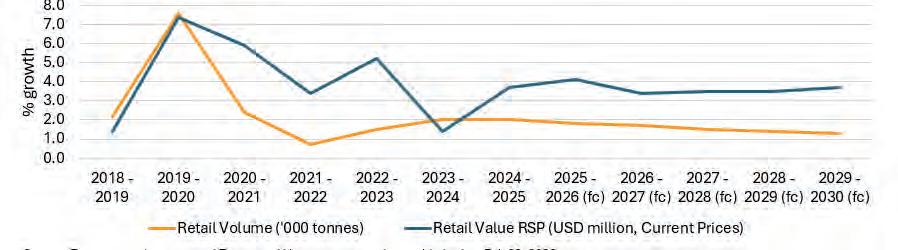
Can rising value growth be sustained?
YOUR SINGLE SOURCE FOR TISSUE
LEADER IN TISSUE
The Power of Leadership
Since 1976, Convermat has been the leading global supplier of parent rolls of tissue to more than 80 countries worldwide. Our unparalleled market intel and strong network of strategic alliances, resources, and insider knowledge can further grow and strengthen your business to achieve higher profts.
There When You Need Us
We consistently maintain capacity balance for many of the leading global tissue players. Our extensive network of global suppliers and customers enables us to deliver a continuous fow of tissue at the most competitive prices in any market condition and to any destination with speed, reliability, and integrity.
At Your Service
Our experienced team of seasoned professionals is equipped to handle all of your needs including inland and ocean transportation, import/export protocol, technical specifcations, testing lab facilities, proprietary product development, foreign currency management, credit risk, and all relevant sales services.
More Than Tissue
In addition to our complete line of tissue, towel, napkins, and specialty paper we supply a comprehensive line of nonwoven substrates for medical, wipes, automotive, fltration, hygiene applications, and more.
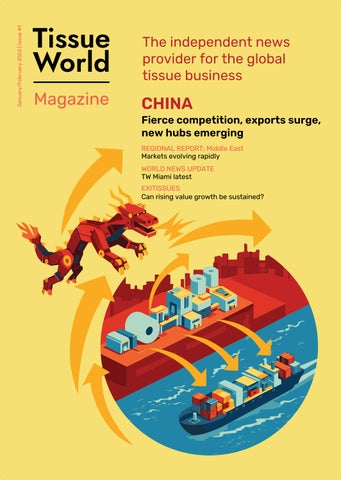
Image by Stefano Vuga, Founder, PurplePrint Creative, Spain/ Italy, www.purpleprint.eu
IN THIS ISSUE...
03 FRONTISSUES
04
Competition and renewal: China maintains its production pace and adds new regional hub production
MARKETISSUES
Competition and renewal: China’s ‘increasingly ferce’ market saw tissue machine exports achieve a “leapfrog” advance. As capacity growth slowed in traditional production hubs, new entrants are maintaining across the board, high-quality development. Report by China National Household Paper Industry Association (CNHPIA).
10
17
NEWS IN BRIEF
A roundup of news from across the global toilet paper and kitchen towel markets. To get the very latest news go to: www.tissueworldmagazine.com
MIDDLE EAST: REGIONAL REPORT
Middle Eastern tissue market diverges into prosperous versus confict zones. Disparity between affuent nations and less prosperous countries continues to widen as trends align with patterns seen in Asian markets during evolving development phase. Report by Bruce Janda, Senior Consultant, ResourceWise.
22
MIDDLE EAST: REGIONAL REPORT
Evolving Middle East retail tissue enters a new growth cycle in 2026. Urban expansion, demographic shifts and channel evolution reshape hygiene demand across the Gulf Cooperation Council. By Isam Arshad, Consultant, Euromonitor International.
27
CROWN PAPER MILL: OPERATIONS REPORT
A new tissue machine in the Kingdom of Saudi Arabia means UAE-headquartered Crown Paper Mill will almost double its capacity. TWM spoke to Sunny Amin, Procurement and Logistics Manager, about how tourism - a key pillar of Saudi Arabia’s Vision 2030 - is helping to drive tissue demand, and a reason for its latest milestone investment.
32
PACKAGING: TECHNICAL THEME
Palletising: coping with the wide variety of site challenges to maximise production. Report for TWM by Gregory Sense, Marketing/Inside Sales Manager, Infnity Machine and Engineering Corp. A TWM report.
36
PACKAGING: TECHNICAL THEME
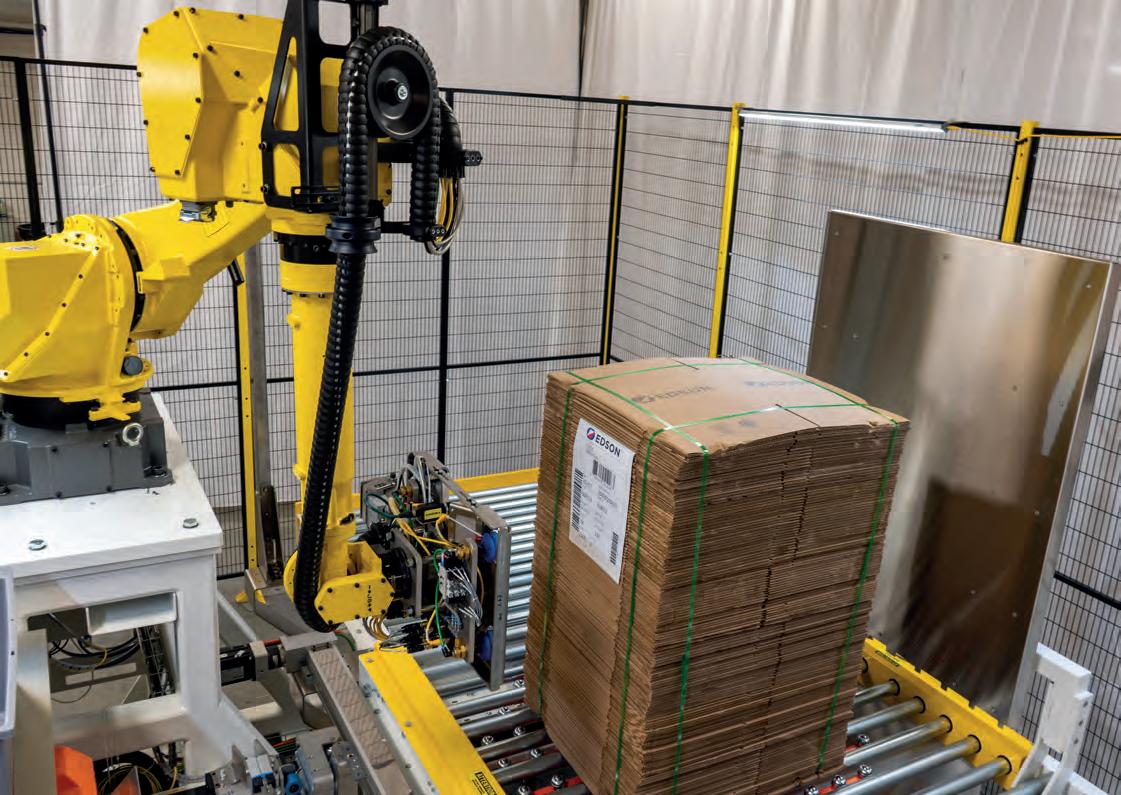
Tomorrow and beyond: long-term packaging solutions must look longer-term still. Seeing possibilities where others see limits. Rodney Fokkens, Aftermarket Manager at Edson, emphasises the virtues of a farsighted, fexible, and less standardised response to customers’ needs. A TWM report.
38
EXITISSUES
Tissue value growth - the critical questions.
Competition and renewal: China maintains its production pace and adds new regional hub production
Helen Morris, Senior Editor, Tissue World Magazine
EDITORIAL HEADQUARTERS
Informa Connect
240 Blackfriars Road, London, SE1 8BF, UK
Tel: +44 (0)20 7017 5000
Senior Editor
Helen Morris: helen.morris@informa.com
Portfolio Director & Special Projects
Ryan O'Donnell
Campaign Director
Roxanna Kashfi: oxanna.kashfi@infoma.com
Commercial & Strategy Director
Alan Kelly
Chief Executive
Andrew Mullins
ADVERTISING ENQUIRIES
Europe & North America
Silvio Arati
T: +39 02 4851 7853 sarati@studioarati.it
South and Central America
Selma Ugolini
T: +55(11)99904 5350 selma@gova.com.br
China, Hong Kong & Macau Doris Kong
T: +86 020 3895 1611 Doris.Kong@informa.com
TISSUE WORLD MAGAZINE
is published bi-monthly. The subscription price is US$400 per year for 6 issues. Subscription is free for qualified subscribers in the tissue industr. Please send address corrections to: Informa Connect
Subscription online at www.tissueworldmagazine.com
In Tissue World all measures are metric and all dollars ($) are US dollars, unless otherwise stated. Copyright 2024 by Informa Connect. All rights reserved. All materials printed in Tissue World Magazine is owned by Informa Connect and protected under the copyright act. No material may be reproduced in part or in whole without the prior written consent of Informa Connect.
The China National Household Paper Industry Association (CNHPIA) 2025 report reveals growth broadly maintained, and new pathways opening for further expansion. Prominent features are fiece competition, advancing technology, surging exports becoming less profitable. Older machinery and sites ae shutting down, new regional hubs being developed.
Last year the CNHPIA asked companies to invest “rationally” to ward off overcapacity. 2020 had represented a production peak, and was the obvious cause of concern over intensified price competition, deceased profitability an dramatically increased exports. Relative moderation prevailed.
2023 saw 68 new machines, 2024 saw 70, while 2025 saw 64 machines commissioned. A small decrease in capacity. Overall the industry is seeing intense competition, integration of pulp and paper companies, innovation, and a growing consumer awareness especially regarding hygiene adding significantl to output. CAGR of 7.19% is projected through to 2028. MarketIssues carries the full details. TWM’s March/April print and digital edition will carry a full global Projects Survey in which China will be prominent.
FOR RICHER FOR POORER … THE WIDENING GAP BETWEEN MIDDLE EASTERN NATIONS
Middle Eastern economies range from the fabulously prosperous … to conflic zones. The disparity continues to widen. The markets could be equated to Asian markets during their evolving development. TWM’s Regional Reports make clear how promising that is.
Euromonitor International points to a ‘resilient trajectory’ and a transition from broad-based expansion to more disciplined, strategically driven growth.
Gulf Cooperation Council markets in Saudi Arabia, the UAE, Qatar, Kuwait and Oman are increasing metropolitan development and economic diversification Retail consumption habits are developing to accommodate “busier routines, rising female workforce participation and higher per capita incomes.”
The most important structural shift is in the retail hygiene sector: “Hygiene habits across the region continue to evolve alongside metropolitan development. Consumers are increasingly blending global hygiene standards with local preferences.”
The Middle East accounts for 2.5% of global tissue consumption. With the wealthier countries cultivating a consumer tissue market comparable to European standards, the longer-term trajectory of tissue consumption - is upwards.
TISSUE VALUE GROWTH – THE CRITICAL CHOICE FACING THE INDUSTRY
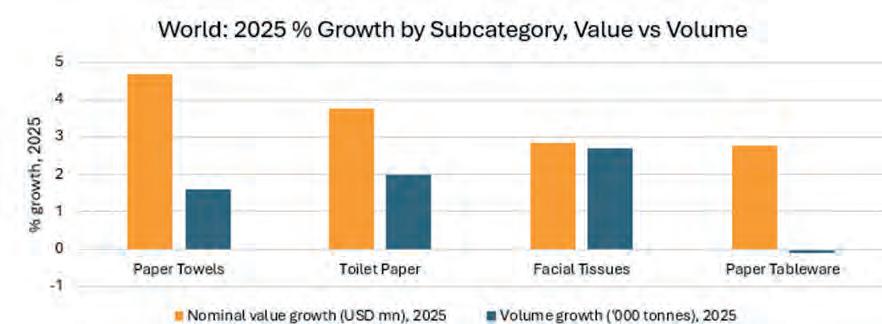
As volume growth remains modest, nominal value growth has accelerated sharply and is expected to continue in 2026. Markets are increasingly shaped by affordability gaps, premiumisation and uneven consumer trade-offs. What underpins tissue’s demand resilience, and where are the emerging risks? In ExitIssues Liying Qian, Euromonitor International’s Global Insight ManagerTissue and Hygiene, analyses the critical issues facing the industry
As capacity growth slowed in traditional production hubs, new entrants are maintaining across the board, high-quality development. Report by China National Household Paper Industry Association (CNHPIA).
D1 NEW PRODUCTION CAPACITY IN 2025
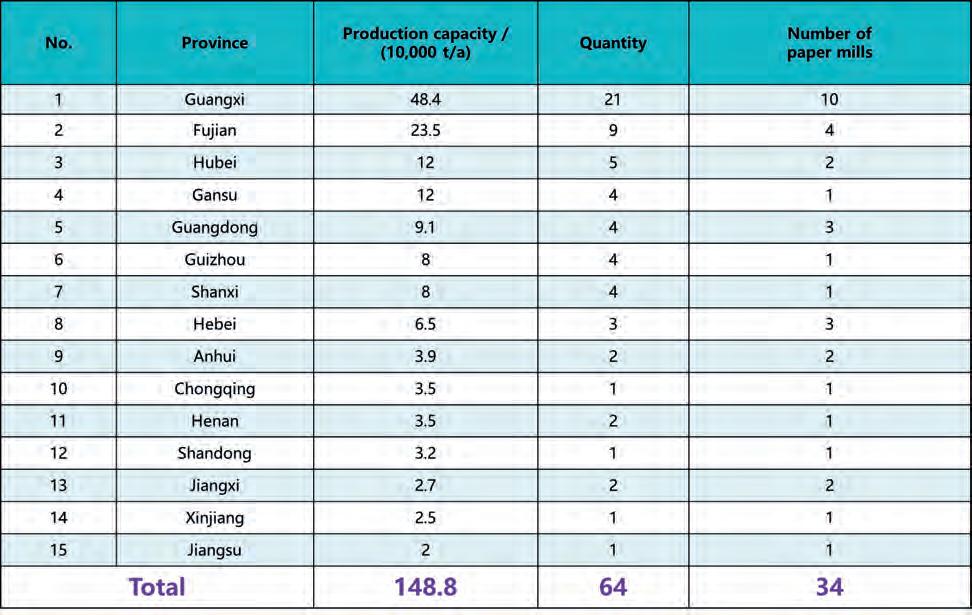
In 2025, the industry added approximately 1.488m tonnes per year of modern production capacity.
uring 2025, China’s tissue paper industry continued to invest in new production capacity, with ongoing innovations in products and improvements in quality. New technologies and equipment have been applied more widely, export scales have expanded further, and upstream and downstream enterprises in the industry have collaborated to explore potential opportunities and enhance efficienc. In an increasingly fiece market competition, the industry has navigated through challenges and striven for development.
Table 1: Ranking of regions with newly launched modern production capacity in the tissue paper industry for 2025.
The substantial introduction of new capacity has intensified competition within the industr.
The new production capacity spans 15 provinces, municipalities, and autonomous regions, with 34 enterprises collectively commissioned 64 paper machines. Of these, 57 were domestically manufactured, accounting for the majority. The newly added capacity is primarily concentrated in areas such as Guangxi, Fujian, Hubei, and Gansu.
Capacity growth has slowed in traditional production hubs like Hebei Province and emerging hubs like Shanxi. In 2025, Fujian Province saw 235,000 tonnes per year of new production capacity, mainly contributed by leading companies such as Hengan International Group and Fujian Botare Network Technology, as well as integrated pulp and paper enterprises like Lian Sheng Paper. Gansu Province added 120,000tpy of capacity, primarily from Gansu Yusen’s new production capacity at its Pingliang base, Gansu.
Integrated pulp and paper producers like Lee & Man Paper, Taison, Sun Paper, and Liansheng Paper continued to expand their capacity. Their newly added production capacity in 2025 was 490,000 tonnes per year. By the end of the year, the total capacity of these five companies eached 4.55m tpy. These enterprises have leveraged their integrated pulp and paper advantages to produce and sell tissue parent rolls, fostering synergies between brand companies and pulp enterprises in the industry chain and achieving complementary strengths and winwin cooperation. Additionally, Xianhe, a new entrant in the tissue industry, put four new crescent tissue machines into production in Jingzhou, Hubei, with a total capacity of 100,000 tonnes per year.
According to the 2024 Annual Report of China’s Paper-making Industry, China’s domestic wood pulp production in 2024 was 26.26m tonnes, with bamboo pulp production at 2.59m tonnes. From January to November 2025, the new domestic wood
pulp production capacity amounted to 2.411m tonnes per year, while the new bamboo pulp production capacity was 150,000tpy. Furthermore, in 2025 alone, publicly announced new construction or technological transformation projects for wood pulp and bamboo pulp have collectively added over 13m tonnes per year of new production capacity.
2 REVENUE PERFORMANCE OF LISTED COMPANIES
In the first half of 2025, the household paper and wet wipe business of Hengan, as well as the operating revenue achieved by Zhongshun Jierou in the first thee quarters of 2025, recorded growth.
In the first half of 2025, Hengan eported sales revenue of tissue paper and wet wipes up 3.2% year-on-year to RMB7.174bn. Sales revenue of tissue paper and wet wipes accounted for 60.8% of the group’s total revenue. Gross profit magin of tissue paper and wet wipes increased to 21.9%.
For Zhongshun Jierou, it reported operating revenue of RMB6.478bn the first thee quarters of 2025, representing a year-on-year increase of 8.78%.
3
PRICE CHANGES OF PULP AND TISSUE PARENT ROLLS
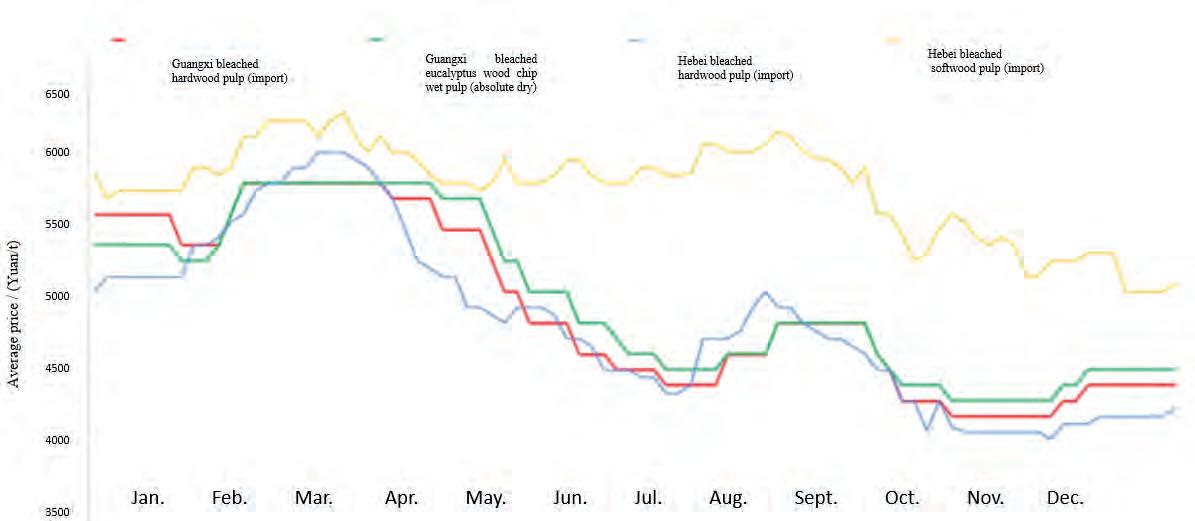
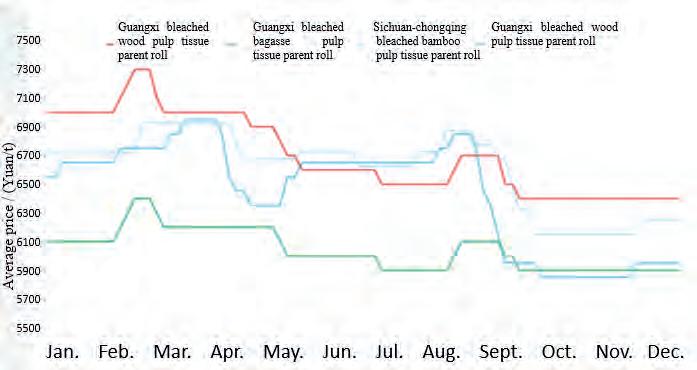
Here are the changes in average prices of pulp and tissue products from January 2024 to December 2025. From the data we have collected, the average spot price of commercial wood pulp in China’s market in 2025 is generally lower than that of 2024, especially the price of hardwood pulp. The average price of tissue parent rolls has declined. These price trends reflect the industry saw ample poduction capacity and fiece competition.
Figure 1:
4 PRODUCT UPGRADING AND INNOVATION
In 2025, tissue companies continued to upgrade their products, achieving differentiation and innovation in embossing, printing, moisturising ingredients, and packaging design, thereby enhancing market competency. Notably, this year saw more companies launching printed facial tissues, handkerchief tissues, and similar products. Furthermore, bottom-dispensing packaging was adopted for more product types, such as kitchen towels and lotion tissues.
5 THE APPLICATION OF NEW TECHNOLOGIES AND EQUIPMENT
Starting with tissue machines: the production capacity of globally advanced TAD and TAD-like tissue machines continues to rise. In 2025, Hengan International Group and Chongqing Longjing Paper both invested in TAD tissue machines; Zhongnan Paper (Henan Base) put into operation another TAD machine made in China.
Domestic hand towel machines now feature wider widths and improved flexibility; Shandong Xinhe Paper-Making Engineering has launched China’s first domestic 5.6m supe-wide hand towel machine at LOPIE Paper in Guigang, Guangxi; Baotuo Paper Machinery’s dual-cylinder crescent tissue machines are designed to produce tissue parent rolls for tissues and hand towels, allowing for flexible transitions. This machine has been put into operation at Hongzehu Paper.
Moreover, several new technologies for auxiliary equipment supporting tissue machines have been widely applied, further enhancing
the energy efficiency of tissue machines and reducing consumption.
The post-processing equipment has also been optimised and upgraded, incorporating new technologies such as ultra-wide width and internal half-fold techniques, which enhance production efficiency and impove product quality during the post-processing stage.
They included:
• High consistency refine
• Headbox cascade diffuser
• Soft boot press, double blanket independent boot press and other technologies
• Dual-breathing steam hood, steam condensate water, and hot air recovery system
• Performance upgrade of wire cloth
• White water resource recovery system
• The vacuum pump adopts magnetic levitation, air suspension, and permanent magnet variable frequency technology.
Equipment for processing, packaging, and warehousing
Additionally, further advancements were made in packaging and warehousing equipment, along with intelligent and inspection systems. They included: (1) Processing equipment (extrawide, multi-purpose, embossing, internal half-folding technology)
• The first facial tissue with half-folded technolog
Figure 2: Monthly average factory prices of tissue parent roll in major regions from Jan. 2024 to Dec. 2025.
(2) Packaging and warehousing equipment (multifunctional integration, high-precision control, and green efficiency
• Complete line solution from single package to palletising
• Laser marking and printing machine
• Satellite printing machine
• Paper bag packaging machine
• The three-dimensional warehouse system is equipped with intelligent software and hardware.
(3) Smart devices (deep integration of AI and automation technology)
• A process macro model that integrates industry knowledge with AIOT technology
• Intelligent inspection robot
• Collaborative palletising robot.
(4) Testing equipment (digitalidation, efficiency
• By connecting the detection equipment to the data processing workstation through QMS, realtime acquisition and integration of detection data can be achieved.
6
IMPORT AND EXPORT MARKETS
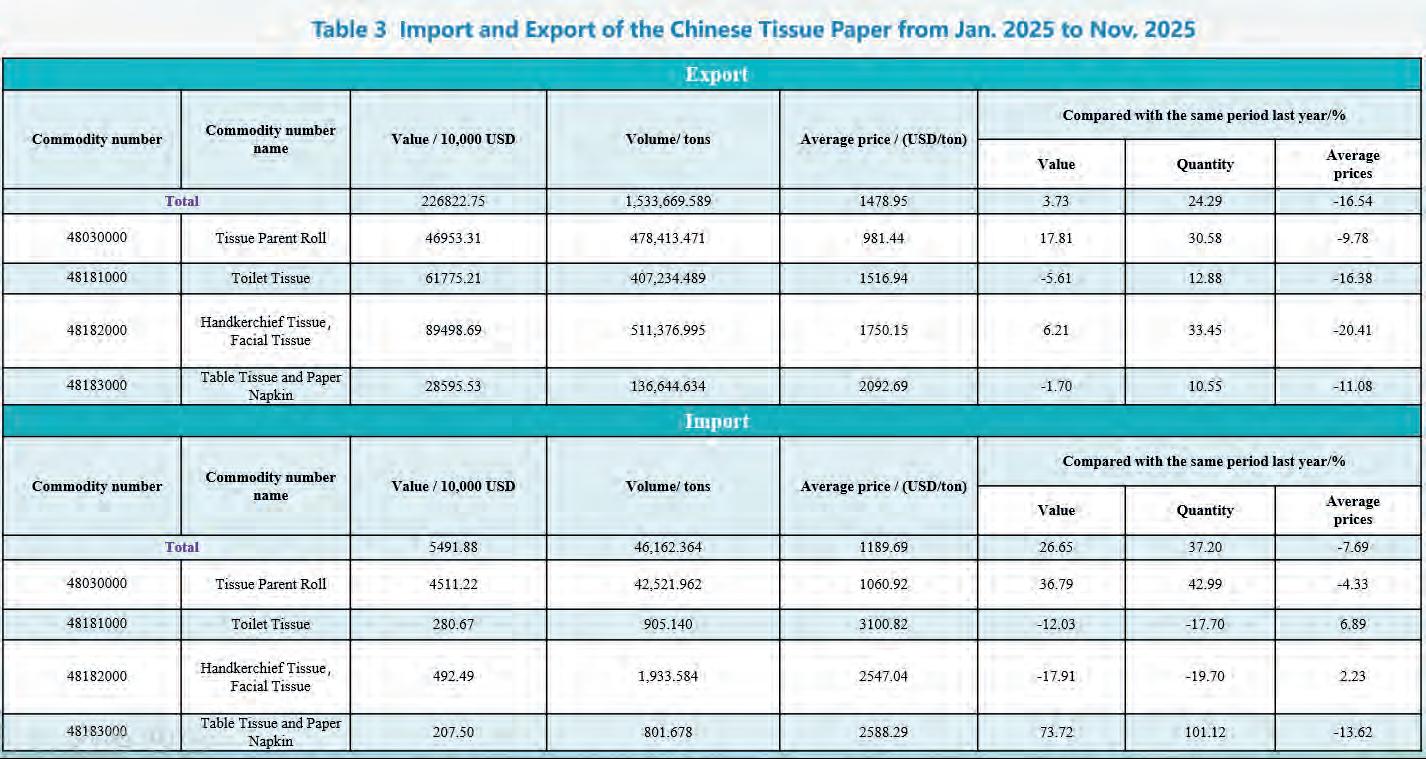
According to customs data, from January to September 2025, the export volume of tissues increased by 22.46% year-on-year, reaching 1.2148m tonnes. Exports were dominated by finished poducts, accounting for 68.75% of the total export volume. In terms of the destination countries and regions for China’s tissue exports, the volume exported to the United States decreased, while exports to countries such as Japan,
4.55m tpy
Lee & Man, Taison, Sun Paper, and Liansheng Paper’s total capacity by end 2025
1.21m tonnes
Export volume of tissues from January –September 2025
Table 2: Import and Export of the Chinese Tissue Paper from Jan. 2025 to Nov. 2025
Thailand, Malaysia, the Republic of Korea, the United Kingdom, the Philippines, and Vietnam all saw increases.
The import volume was small, merely 30,570 tonnes.
Despite the growing export volume, some aspects were not that optimistic, a less positive aspect was the year-on-year decrease in export value, indicating a decline in average unit prices. This data illustrates the average export price of exported products from 2014 to the first thee quarters of 2025, showing a downward trend since reaching its peak in 2019. This also indicates that competition in the export market is extremely fiece.
In 2025, the export performance of China’s tissue machines achieved a leapfrog advancement. According to the research and summary by the Secretariat of the Hygiene Products Specialty Committee, Baotuo Paper Machinery, Shandong Xinhe Paper-Making Engineering, Changda Machine, Shaanxi Bingzhi Machinery, KILA, Shandong Kaixin Paper Industry, and other equipment manufacturing companies collectively signed contracts to export 66 tissue machines throughout the year, with a total capacity of approximately 1.3m tonnes per year.
In 2025, the export of processing equipment for tissues from China exceeded 500 units/sets. The exported equipment mainly comprises both standalone machines and complete production lines, adapting to the needs of customers from different countries. Major export destinations include the Republic of Korea, Türkiye, Egypt, Jordan, and Saudi Arabia.
7 THE RELEASE AND IMPLEMENTATION OF INDUSTRY STANDARDS
The standards implemented in 2025 include:
• Hygienic Requirements for Disposable Sanitary Products, General Safety Technical Specification for Infants and Children Paper Products, Green Product Assessment—Paper and Paper Products, and The Norm of Energy Consumption Per Unit Product of Pulp and Paper. The standards under revision include:
• Bathroom Tissue (including Bathroom Tissue Base Paper), etc.
The national standards under revision include:
• Tissue Paper and Tissue Products – Part 13: Determination of Disintegration, Tissue Paper and Tissue Products – Part 14: Determination of Surface Friction, etc.
8
68.75% Percentage of finished product exports of total export volume
INDUSTRY ENERGY CONSERVATION AND EMISSION REDUCTION
In 2025, Photovoltaic (PV) systems saw wider adoption in the household paper industry, with most companies having installed solar power systems for energy conservation. At the same time, enterprises also had their water treatment systems upgraded, with improving water efficienc.
The Shandong Provincial Department of Industry and Information Technology released the list of “Top Performers” in water efficiency among key wateusing enterprises for 2025, with three companies – Vinda Paper (Shandong) Co., Asia-Pacific Senbo (Shandong) Pulp and Paper Co., and Shandong Kunsheng Environmental Protection Technology Co. – being shortlisted.
9 FULFILLING SOCIAL RESPONSIBILITY
In 2025, companies in the tissue industry continued to fulfil their social esponsibilities and engaged in various charitable activities.
Overall, in 2025 China’s modern production capacity and export volume of the tissue industry further increased. Companies in product manufacturing and equipment production continually pursued progress, resulting in improved product quality and advancements in intelligent manufacturing. They have achieved excellent results.
Moreover, enterprises actively carried out their social responsibilities, demonstrating a strong commitment to corporate social responsibility. With the collaborative efforts of both upstream and downstream companies, the tissue industry has taken new strides toward high-quality development.
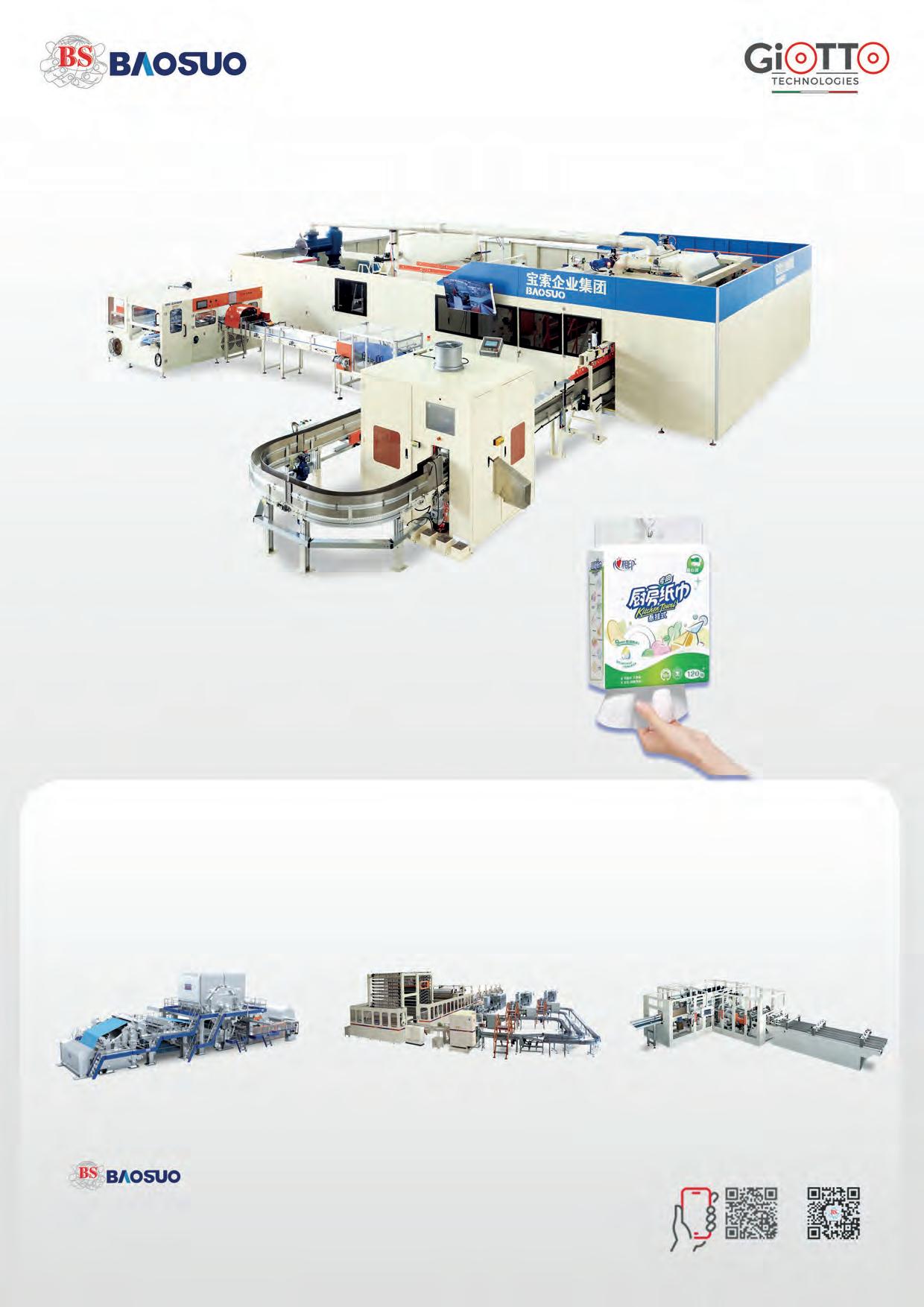
The premier name in tissue packaging machinery
peace of mind.
TISSUE WORLD MIAMI 2026 … THE COUNTDOWN IS ON!
The world’s leading exhibition and conference for the global tissue industry opens its doors in Miami in under two months’ time: speakers from E80 Group, Valmet, Toscotec, PerchPerspectives, ResourceWise – plus many more – announced!
Registration for Tissue World Miami 2026 has officiallyopened as conference speakers from Sofidel Cascades, Suzano, ST Paper, and Grupo Corporativo Papelera – plus many more! – are announced.
Held between 22 – 24 April at the Miami Beach Convention Center, the exhibition will once again welcome world-leading companies from across the global tissue and towel supply chains. Over 2,000+ senior executives, technical experts, and innovators have already registered – and just 10 exhibition booths remain for the taking. This year’s conference theme
– “From Disruption to Direction: Charting a Resilient and Innovative Path for Tissue” – will hear how senior industry leaders are adapting strategies in a landscape shaped by uncertainty, while identifying opportunities for growth. Two dedicated sessions will take place on Day One: the Senior Management Symposium (SMS) will discuss how, in today’s unpredictable environment, the tissue industry faces challenges on multiple fronts – from trade tensions, regional conflicts, egulatory shifts, and energy policy changes to raw material volatility, logistics disruptions, and evolving supplier relationships.
A technical session titled “Reimagining Manufacturing: From Process to Impact” will follow, and delegates will discover how leading manufacturers are driving efficienc, sustainability, and measurable impact through innovative approaches that set
new benchmarks for the industry. At the time of publishing, presentations and panel discussions on Day One include:
• Keynote speaker Luigi Lazzareschi, Sofidel Goup Chief Executive will open the conference on Wednesday 22 April.
• Jacob Shapiro, Director of Research, PerchPerspectives
• Trip Jobe, VP, Global Sales, Forest Value Chain, ResourceWise
• Marcello Collares, Director of Market Intelligence, TTOBMA
• Jérôme Porlier, Executive VP, Cascades
• Eduardo Soto Zanetta, General Director, Grupo Corporativo Papelera
• Andy Powell, Deputy Director, Port Arthur
• Mark Lewis, Chief Executive, Sustainable Fiber Technologies
• Mikko Viljamaa, Manager, Tissue Agreements and Global Support, Valmet
• Franz Harrer, Director Global R&D and Pilot Operations, Paper, Andritz
• William Nelson, President, E80 Group
• Gabriele Romanini, Sales Director, Toscotec
• Jussi Lahtinen, Sales Director, Runtech Systems
• Jia-Yu Wang, Staff Scientist, Nalco, an Ecolab Company.
On Thursday 23 April, speakers will discuss how, in a rapidly changing marketplace, the tissue industry must balance long-term sustainability goals with evolving consumer expectations. The two sessions will bring together senior leaders to explore how strategic visions are being transformed into practical, cost-saving solutions that strengthen resilience, while also examining how shifting consumer preferences are driving product innovation, branding, and retail strategies.
In the afternoon, the second technical session –“Precision in Process – Driving Tissue Innovation” – will hear from speakers discussing innovation in tissue manufacturing is increasingly defined by precision: cutting edge process control, advanced monitoring, and data driven optimisation are transforming production efficienc, product quality, and sustainability.
Industry experts will showcase practical applications and breakthrough technologies that enable manufacturers to fine tune operations, reduce variability, and unlock new levels of performance. Confirmed speakers so far include
• Jules Van Sant, Executive Director, TwoSides
• Liying Qian, Global Insight Manager, Tissue and Paper, Euromonitor
• Helena Abreu, R&D Specialist – BES, Suzano
• Jay Johnson, Senior Business Development Manager, Voith
• Luca Linari, Senior Sales and Technology Manager Air & Energy Systems, Paper & Tissue, Andritz
• Ronalds Gonzalez, Associate Profession, NCSU
• Gianni Gambini, Managing Director, Gambini America
• Alfredo Sarli, Air Systems Applications Specialist, Valmet
• Stefano Spinelli, Director Product Management, BW Converting
On Day Three, a collaborative session – “Joint Forum: Executive-Technical Exchange” – bridging leadership and technical expertise will explore strategic vision in the industry.
Addressing talent development, leadership evolution, and organisational culture as key enablers of resilience and innovation, the closing panel will ask: What’s next for tissue? Event organiser Informa Connect’s Tissue World events series is the world’s leading knowledge-hub for the global T&T business, consisting annually of exhibitions and conferences across all continents, six trade magazine editions, and bi-weekly newsletters that keep all sectors up-to-date with the very latest knowledge across the fastchanging industry.
Tissue World and Tissue World Magazine (TWM) remain the world’s key meeting points and source of market intelligence to help businesses across the supply chain navigate the challenges and
opportunities as markets respond and plan to grow. In the run up to Tissue World Miami, TWM will source leading-edge developments from your competitors, peers and delegates to gain unrivalled access to critical analysis, insider business planning, and technical advances:
March/April TWM (TW Miami distribution print and digital): a special edition on the American tissue market, the unique global ‘Projects Survey’ that lists all new and current tissue capacity being added during 2026 and expected to come on stream in 2027, and the ‘Paper Machine: Technical Theme’.
TISSUE WORLD MIAMI 2026: WHAT TO EXPECT
• 2,000+ Visitors
• 120+ Exhibitors
• 60+ Speakers
• 50+ Sessions
• 86 Countries represented
What’s on: connect with the entire tissue supply chain community face-to-face
Exhibition
130+ exhibitors, world-leading suppliers, gamechanging solutions. Your competitive edge starts here! Days 1, 2 and 3
Conference
This year’s conference theme explores the industry’s evolution from navigating disruption to shaping its future, highlighting strategies and innovations that foster knowledge-driven resilience, drive growth, and inspire proactive leadership. Days 1, 2 and 3
Tech Talks
Bite-sized sessions open to all badge types on the show floo. Days 1 and 2
Miami Beach Party
Kick off your Tissue World experience at the best party on Miami beach! The Ocean Drive evening reception with cocktails, DJ and entertainment until late. 21 April 2026: 7pm
Happy Hour
Unwind and catch up with your colleagues and peers after busy, productive opening days. Mix and mingle, share takeaways, and turn today’s momentum into tomorrow’s connections. Days 1 and 2, 5:30pm
NEWS IN BRIEF
A roundup of news from across the global tissue industry. To get the very latest news go to www.tissueworldmagazine.com
FRANCE
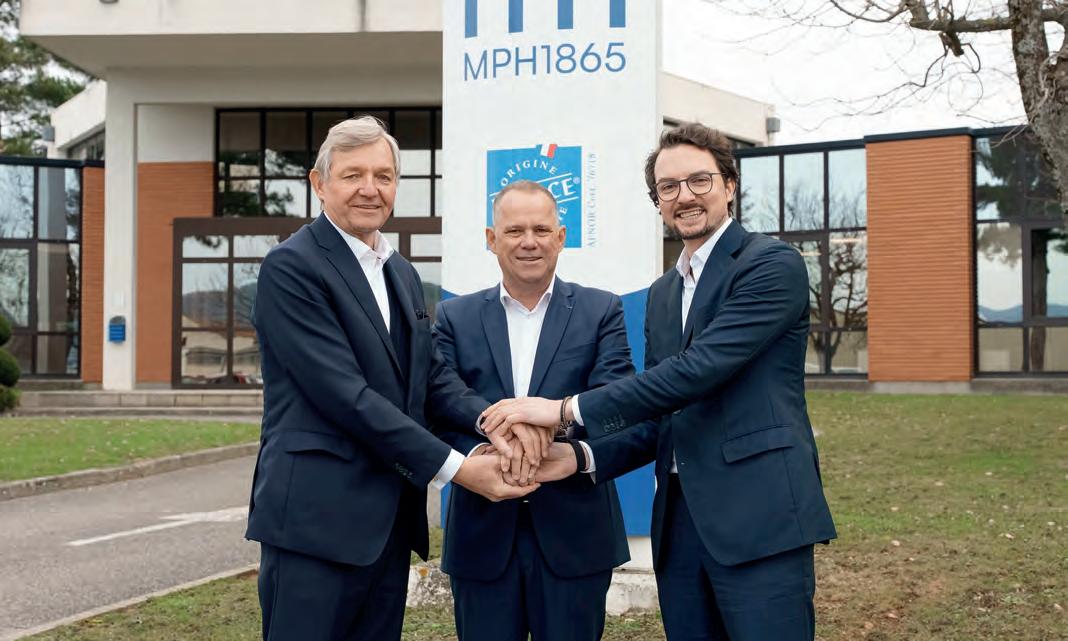
WEPA TO ACQUIRE MAJORITY OF SHARES IN FRANCE’S MPH1865
German-headquartered the WEPA Group is to boost its presence in the French AfH market after announcing plans to acquire a majority of the shares of MPH1865. Founded in 1865, family-owned MPH1865 is a leading French manufacturer of hygiene paper and soap, employing 260 people and producing 60,000tpy from facilities based in Ardèche and Drôme in southern France.
WEPA confirmed that MPH1865s industrial site network will be “fully maintained and further strengthened”, and all current employees will continue to be employed while Marc Miribel will remain President of the business.
It added that the planned acquisition “represents a long-term oriented step for both companies since joint forces will lead to international growth and a
strengthened market position in the French away from home market.”
Andreas Krengel, Chief Commercial Officer of the WEPA Group: “By joining forces with MPH1865 we will create additional value for our national and international customers: broader expertise and more innovative product solutions.
“This step will allow us to serve our markets with greater proximity, agility and reliability.”
Martin Krengel, Chief Executive of the WEPA Group, added: “We are looking forward to further grow in France and to expand our Franco-German co-operation.
“As family businesses, MPH1865 and WEPA share the same values and think beyond generations – it is a perfect fit.
Marc Miribel, President and Chief Executive of MPH1865, said: “This partnership is an important
From left: Martin Krengel, Chief Executive of the WEPA Group, Marc Miribel, President and Chief Executive of MPH1865 and Andreas Krengel, Chief Commercial Officer of the WEA Group.
step to ensure our company’s future: this way we can strengthen local production, secure industrial capacity, and further develop the professional hygiene market in France, while at the same time we will profit fom the experience and the European network of the WEPA Group.”
Closing of the acquisition is subject to obtaining all necessary approvals, including merger control.
GLOBAL
HENKEL TO ACQUIRE STAHL GROUP; BOOSTS ADHESIVE TECHNOLOGIES CAPABILITIES
Chemical and consumer goods company Henkel is to acquire Dutch-based Stahl Group for a purchase price of €2.1bn.
The move will boost the German-headquartered company’s presence in the high-performance specialty coatings for flexible materials markets Stahl’s portfolio includes performance coatings as well as high-performance paper packaging and graphics coatings.
Henkel Chief Executive Carsten Knobel said: “With the acquisition of Stahl, we will further strengthen our adhesive technologies business unit in line with our strategic agenda for purposeful growth. It will enable us to expand into the attractive adjacent category of specialty coatings with product offerings in core as well as in new end-markets, driving further growth in our adhesive technologies business unit. Together with the recently announced intention to acquire ATP Adhesive Systems, we have agreed to two significant M&A pojects, adding up close to one billion euros of sales and substantially advancing the growth potential for our world-class Adhesive Technologies business.”
The transaction is still subject to certain conditions. Stahl Group is majority-owned by French private equity firm endel.
MANAGEMENT TAKES OVER SAUERESSIG PACKAGING AND SURFACES
A newly founded Saueressig Group has been announced after a management buyout took place to acquire the Saueressig Packaging and Saueressig Surfaces divisions. Chief Executive Markus Pennekamp and the existing management team took over the two units on 16 December 2025. The newly founded holding company SAUERESSIG Group has locations in Europe and Asia. Pennekamp said: “We are taking on entrepreneurial responsibility with complete conviction – because we believe in our employees, our locations, and our customers. The management buyout is not just a
strategic step – it is a clear commitment to longterm partnerships, continuity, and future viability.”
From its headquarters in Vreden, Germany, the company confirmed that operations will remain unchanged.
ALGERIA
FADERCO GROUP TO DOUBLE TISSUE CAPACITY WITH TM INVESTMENT
Algerian tissue manufacturer WARAK, a subsidiary of the Faderco Group, has invested in a Valmetsupplied Advantage DCT 200TS tissue line combined with an extensive automation package.
The line will be installed at Faderco Group’s new mill in Mostaganem, and it is expected to double the company’s total tissue output, creating an additional 65,000tpy of high-quality tissue for domestic and export markets. Start-up is scheduled for the first quarter of 2027, it will have a width of 5.6m and a design speed of 2,200m/min.
Valmet’s scope of delivery will comprise a complete tissue production line featuring stock preparation system, the Advantage DCT 200TS tissue machine, two Focus rewinders and auxiliaries.
The delivery also includes an automation package covering Valmet DNA Automation System with process and machine controls. Complete mill engineering, installation supervision, training, startup and commissioning are also part of the delivery.
It is the company’s third tissue line order from Valmet, and the investment is expected to boost production capacity and “set new standards” for efficienc, sustainability, and quality in Northern Africa. Valmet’s scope of supply includes the latest stock preparation, tissue making and automation solutions.
Amor Habes, Chief Executive of Faderco Group, said: ““Energy and water efficiency ae critical in our region, and Valmet’s technology has already proven its performance across our previous installations.
“Our existing tissue machines operate with low water consumption, and the flexible Advantage ViscoNip press has demonstrated its ability to reduce energy use while enhancing paper quality.
“These technologies directly support our ambition to expand our international footprint, by enabling reliable, high-quality production for demanding export markets across Southern Europe, the UK, and Africa. We look forward to scaling these benefits with the new line.”
WARAK is a subsidiary of the Faderco Group, a leading Algerian industrial group specialising in hygiene and tissue products. Founded in 1986, Faderco Group employs approximately 2,800 people and operates six production sites with more than 65 production lines.
FINLAND
METSÄ TISSUE APPOINTS NEW MANAGEMENT TEAM
Metsä Tissue has appointed a new management team to accelerate profitable gowth. As of 1 January 2026, Sari Pajari-Sederholm is Chief Executive and Tobias Lüning is SVP Commercial. Additional appointments include:
• Joonas Kukkonen SVP Supply Chain
• Mikko Nieminen is SVP Operations
• Terhi Ilvonen Chief Financial Office
• Jukka Oinonen is SVP HR.
Timo Riikonen will continue to lead the Metsä Greaseproof Papers business. Pajari-Sederholm said: “Our new leadership team brings strong expertise and commitment to drive Metsä Tissue forward. Together, we will continue to build on our core strengths: utilising high quality fresh fibes as our main raw material, strengthening local production, and nurturing long-term customer relationships to create even more value for our customers and other stakeholders.”
UNITED KINDOM
NORTHWOOD ACQUIRES K-C’S PROFESSIONAL AND PERSONAL CARE SITES
British tissue manufacturer Northwood has acquired the complete mill and converting facility of Kimberly-Clark’s (K-C) Coleshill, England-based plant, as well as the Flint, Wales-based facility of K-C Personal Care. The completed agreement includes the purchase of the 98-acre site, its 30,000tpy tissue mill, a tissue converting plant for rolled and folded products, a National Distribution Centre and the Flint factory.
The move will expand Northwood’s capabilities in the AfH and consumer markets, enabling the business to extend its existing product ranges and widen its value chain. Operating as Northwood Tissue (Flint), the site will be integrated with Northwood’s AfH and Consumer Divisions.
Paul Fecher, founder and Chairman of Northwood, said: “This is another important acquisition and brings renewed opportunity for our businesses to expand in many traditional and new sectors. We look forward to populating the site and bringing it into full production under our UK management and ownership.”
With operations across the hygienic sector in the UK and Europe, Northwood supplies parent reels into the paper hygiene sector and is also one of the leading UK manufacturers in the paper hygiene market.
Members of British tissue manufacturer Northwood’s team – L-r: Northwood Director Marc Fecher, founder and Chairman Paul Fecher, Director Adam Fecher, and Chief Executive Paul King
POLAND
VELVET CARE BOOSTS PRODUCTION CAPACITY WITH TM START-UP; PAWEŁ BAJOREK APPOINTED CEO
Velvet Care has increased its production capacity by 40% after starting up its Valmet-supplied TM at its plant in Klucze. Launched on 18 December 2025, the factory now has four tissue machines that produce a total of over 210,000tpy.
The company has also announced that as of 1 February 2026, Paweł Bajorek will take over as Chief Executive of Velvet Care. Artur Pielak, previously Chief Executive, will move to the company’s supervisory board. Speaking of the start-up of TM9, Pielak said: “For 13 years, Velvet Care has been systematically investing in the future.
“The launch of this new production machine is another step in the company’s further development and is our response to the growing market demand for high-quality tissue paper and the best quality paper products for daily hygiene.
“We are strengthening our market leadership position – this is possible thanks to the ambition and professionalism of the crew at the Klucze plant.”
Of his new role, Bajorek added: “Looking at the impressive achievements of recent years, I see this moment not only as an honour but above all as a responsibility.
“Ambitious goals and an exciting stage of growth lie ahead. We plan to significantly expand production capacity, streamline key processes, enter new markets, and build partnerships with additional business collaborators. All of this is to reach an even wider audience of consumers. We are a champion in Central Europe, but this is only a milestone on our path to becoming a true European leader.”
CHINA
LEE & MAN BOOSTS PRODUCTION EFFICIENCIES WITH TM UPGRADES
Lee & Man Paper Manufacturing has invested in a rebuild project to upgrade five existing tissue machine shoe presses with Valmet’s Advantage ViscoNip press technology. The rebuilds will be carried out at mills in Chongqing, Jiangxi and Guangdong, with the decision for the upgrade driven by the need for higher machine efficienc.
The order includes an upgrade package and including services of five Advantage iscoNip presses to replace their current shoe presses in TM 3, 9, 10, 11 and 12. Lee & Man said the decision to upgrade is driven by the need for higher machine efficiency and lower need of maintenance. Harry Ng, Lee & Man Project Manager, said: “Lee & Man has chosen the ViscoNip technology based on first-hand experience from earlier machines.
“A main trigger for the replacement has been the uniformity created by the ViscoNip press, which ensures excellent moisture profiles, high runnability, and high-quality tissue paper, together with excellent belt lifetime. All five upgrades ae expected to be operational during 2026, further strengthening Lee & Man’s position as a leading tissue producer in the region. Lee & Man has nine Advantage DCT machines previously delivered by Valmet, all equipped with the ViscoNip technology.
The company was founded in 1994 and operates over ten bases in China and facilities in Vietnam, Malaysia, and with offices in Hong Kong, Macau, Europe, and the US. Annual production exceeds 9 million tons, including 1.3 million tons of tissue paper.
SAUDI ARABIA
SPG BOOSTS CAPACITY WITH PM5 START-UP
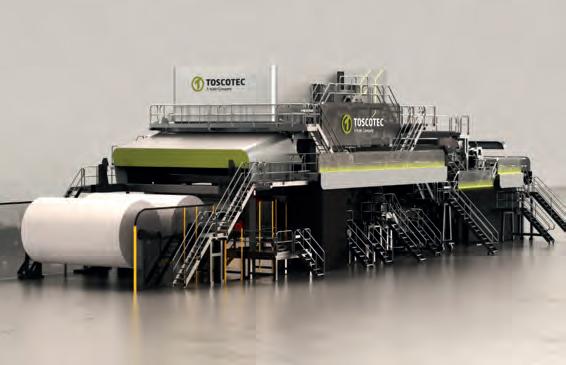
Saudi Paper Group (SPG) has officially started-up its Toscotec-supplied AHEAD 2.2L tissue machine. PM5 has a sheet trim width of 5.6m, a maximum speed of 2,200m/min, and an annual production capacity of over 60,000 tons. It is equipped with a TT NextPress innovative design shoe press, a state-ofthe-art design TT SYD Steel Yankee Dryer, and high efficiency TT Hood
Toscotec’s scope of supply also includes two OPTIMA2600L slitter rewinders engineered to preserve bulk and softness while ensuring optimal winding performance, the stock preparation plant provided with two separate lines, plant electrification and contols including Toscotec’s TT Brain DCS.
The line will produce mainly facial tissue as well as towel, napkin, and toilet paper. Mohamed Darwish, Group Operations Director of Saudi Paper, said: “The PM5 project represents a major leap forward for Saudi Paper Group, and we are proud to partner with Toscotec on a truly state-of-the-art tissue mill design. This machine brings together the latest advancements in energy efficienc, process automation, operational reliability, safety, and product quality.
“PM5 is not just a new production line – it is a modern benchmark for future tissue mills, combining smart design, optimized water and fibrE management, and world-class technology to support our long-term strategy of sustainable, high-performance manufacturing.”
The turnkey project follows the supply of a complete AHEAD 2.2S line in 2022.
Founded in 1989 in Dammam, Saudi Arabia, SPG is a leading tissue manufacturer in the GCC and Middle East.
Yankee Coating Solutions
Light Dry Crepe solutions help you extract more value from your creping process.
TAD+ Structured Tissue Yankee Coatings help you meet the demands of TAD and hybrid structured tissue machines.
Leverage maximum value creation with Buckman’s Yankee coating solutions.
Buckman brings a new level of quality and efficiency to your tissue operation with strong support for your entire Yankee creping operation including problem-solving that leads to a better tissue and more efficient tissue making.
Our LDC solutions can help you achieve a stable creping process that maximizes both production and quality. And our proprietary Yankee coating packages for both TAD and hybrid structured tissue platforms will help you meet today’s tissue manufacturing demands.
Learn more.
Find out all the ways Buckman expertise and innovation can be applied to help your organization extract more value from your Yankee creping process. Contact your Buckman representative or visit buckman.com.
MIDDLE EASTERN TISSUE MARKET DIVERGES INTO PROSPEROUS VERSUS
CONFLICT ZONES
Disparity between affluent nations and less prosperous countries continues to widen as trends align with patterns seen in Asian markets during evolving development phase. Report by Bruce Janda, Senior Consultant, ResourceWise.
We last visited the Middle East (here again excluding Türkiye for this report) with this column in mid-2023 and were hopeful that the end of the pandemic and absence of active wars would help the tissue economy in this region grow. Unfortunately, the conflicts have gown and several of the countries are in major turmoil. The prosperous gulf states are generally doing well but Iran, Lebanon, Syria, Yemen, and the Palestine Territories are in the conflict zones. Egypt is a middle-income country but still enjoys the tissue leadership position and
is the export leader for out of the region exports. Tissue capacity growth continues in the other non-conflict zones
Figure 1 highlights the tissue mills in the region, mainly located near coastal areas. Egypt’s mills, though geographically African, are included due to their proximity to Israel, Lebanon, and Syria. Green sites represent recycled fibe processing; dark squares indicate non-integrated virgin fibe production.
Table 1 provides an overview of the economic factors influencing tissue demand acoss all countries in the region. It is important to note several caveats
Figure 1: Middle East Tissue Production Map
regarding this data. The disparity between affluent nations, such as Israel and the oil-producing states, and less prosperous countries continues to widen. Ongoing and escalating conflicts have seveely impacted the economies of Iran, Syria, Lebanon, Yemen, and Palestine. As recently as mid-2023, it would have been challenging to anticipate the extent of these deteriorations.
The compilation of Table 1 relied on three primary data sources; however, limitations persist due to the inconsistent quality of data available from local governments, many of which operate under significant strain and may have motivations to misrepresent economic and trade information. Consequently, data from conflict-afected areas should be regarded as synthesised estimates derived from the best available references.
Overall, the findings indicate inceasing economic divergence within the region. Wealthier countries are cultivating a consumer tissue market comparable to European standards, while others are falling further
behind. Relying solely on regional averages can present a misleading perspective on the development of the tissue sector in the Middle East.
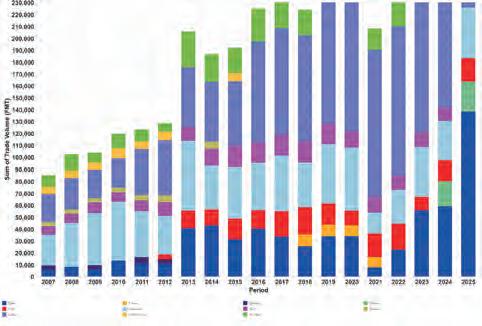
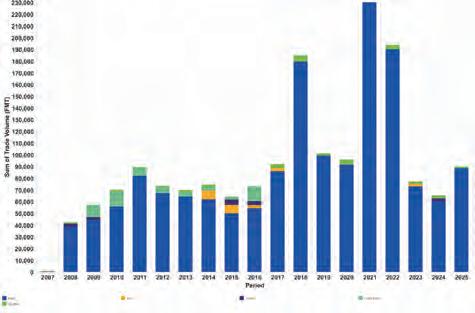
Figure 2 shows tissue import trends by exporting country over the past twenty years. Data from conflict regions are best estimates. Indonesia, Türkiye, and China are leading suppliers, with a significant incease in imports from China in 2025. Importing country reports show total volumes about 50% lower than exporter data – likely due to countries overstating exports and understating imports for political reasons. Major importers include Saudi Arabia, Qatar, and Jordan; Bahrain, Egypt, Kuwait, and Iran report smaller or infrequent amounts.
Figure 3 shows tissue exports by country of origin, excluding intra-regional trade. Egypt is the sole major exporter outside the region, mainly sending products to Africa, Europe, and the United States. There are frequent shipments to the United Kingdom, continuing a trend seen in past export reviews.
TABLE 1: MIDDLE EAST ECONOMIC STATISTICS TABLE (2024–2025)
Key Data Sources Used:
1. World Bank - MENA Economic Updates (October 2025, April 2025)
2. IMF - Regional Economic Outlook for Middle East & Central Asia (May 2025, October 2025)
3. National Statistical Agencies - Saudi GASTAT, UAE FCSC, and others
4. CIA World Factbook - December 2025 update
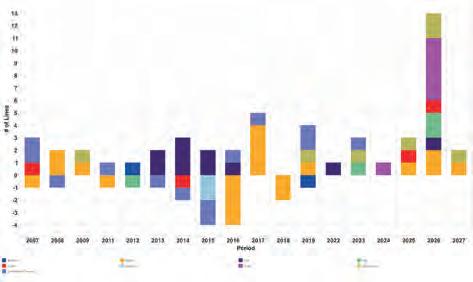
Changes in internal production capacity in the Middle East are reflected by the installation or emoval of tissue machines, as shown in Figure 4. Most countries added more machines than they decommissioned, with new equipment generally providing higher capacity. Egypt led replacements over the past twenty years, while the UAE and Saudi Arabia have recently expanded or planned additions. Qatar’s 2026 plans require further review, and data from conflict zones should be monitored for updates.
The region’s overall tissue capacity CAGR is 3.74%. Iran (13.17%), Saudi Arabia (6.05%), Iraq (4.73%), and Bahrain (4.42%) showed notable growth, whereas Syria, Jordan, Kuwait, Israel, and Lebanon had minimal or negative changes.
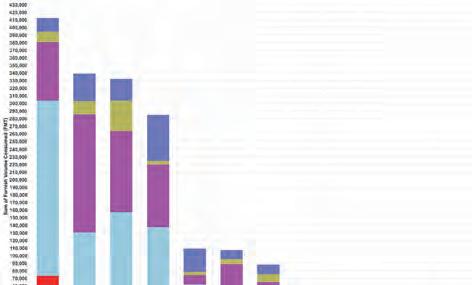
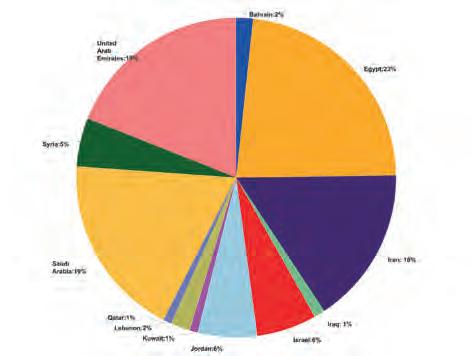
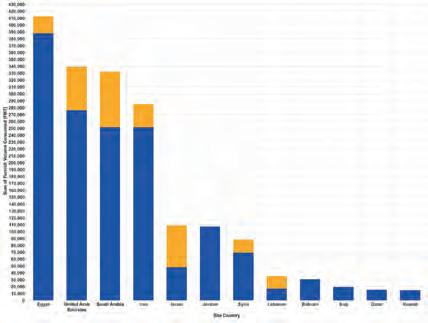
Figure 5 summarises tissue capacity across different countries in the region. Egypt, UAE, Saudi Arabia, and Iran account for 77% of this total capacity, reinforcing that Egypt continues to lead exports at present. There are about 62 tissue machines running in the Middle East at about 42 sites.
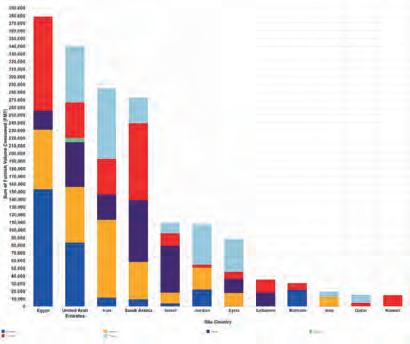
Figure 6 presents the types and quantities of tissue products produced by mills in each country. Egypt leads in total tissue output, with consumer bath tissue comprising 52% of its production. Approximately 20% of Egypt’s overall output is allocated to commercial tissue markets, likely reflecting Egypts position as a primary tissue exporter.
In most other countries, consumer bath tissue constitutes a smaller share of production. In the United Arab Emirates, facial tissue accounts for 46% of total production, and similar high levels of consumer facial tissue are observed among other producers. Commercial tissue grades represent a comparatively low volume for the majority of these markets. This may indicate that consumer facial tissue is favoured for its portability in small packages, catering to the need for tissue products outside the home. Such trends align with patterns seen in Asian markets during their development phase and suggest that tissue consumption culture continues to evolve in the Middle East.
Previous studies indicate that the Middle East experiences limitations in fibe recovery, which restricts the use of recycled fibe in tissue production. Figure 7 illustrates the proportion of recycled fibe utilised by each country, represented by the yellow bar segments. Among the producers, only Lebanon and Israel achieve approximately 50% recycled content.
Figure 8 presents production data by country, with an emphasis on the breakdown by furnish type. The blue bar stacks denote eucalyptus fibe imports. Egypt, UAE, Jordan, and Bahrain utilize a substantial proportion of eucalyptus fibe in their operations. The considerable quantities of tropical hardwoods indicated for UAE, Iran, Jordan, Syria, and Qatar are likely acacia pulp sourced from Indonesia.
Figure 7: Middle East Tissue Production by Country and Furnish Class
Figure 6: Middle East Tissue Production by Country and Product Format
Figure 8: Middle Tissue Production by Country and Furnish Origin
Figure 9: Middle East Tissue Machine Quality
Figure 3: Middle East Tissue Exports (by Exporting Country)
Figure 4: Middle East Tissue Machine Count Changes
Figure 5: Middle East Tissue Production by Company
Figure 2: Middle East Tissue Imports
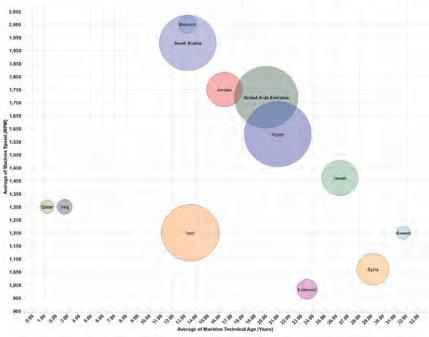
Figure 9’s bubble chart displays each country’s tissue machine quality, with bubble size indicating production capacity. The X-axis shows average technical age, and the Y-axis, average machine speed. Saudi Arabia, UAE, Bahrain, Jordan, and Egypt operate the fastest machines, while Qatar and Iraq, though small producers with the newest equipment, have narrow and slower machines. One of the machines in the United Arab Emirates is an advanced technology machine built in 2015 using Valmet NTT equipment.
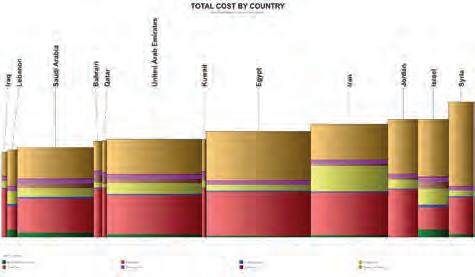
Figure 10 presents average tissue production costs by country, with cash cost per ton shown by bar height and capacity by bar width. Egypt sits in the middle for cash costs. Iraq, Lebanon, Saudi Arabia, Bahrain, and UAE have lower costs, while Jordan, Israel, and Syria are higher-cost. Iran leads in energy costs, followed by Israel. Freight and Duties make up the top portion of average cash costs.
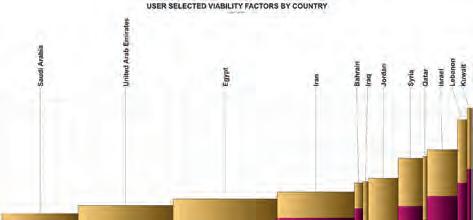
Figure 12 shows how the average viability of tissue machines compares across different countries. The FisherSolve Next algorithm considers factors such as estimated capital needs, cash production costs, machine size, technical age, local economic risk related to grade, internal company risk, manufacturing competitiveness, tons produced per unit trim, and export charges. By considering these elements, the analysis goes beyond current cash costs to assess overall viability for the next five years. Kuwait, Lebanon, Israel, Qata, and Syria have the worst viability scores in the region, mainly due to older tissue equipment and low productivity based on trim width. In contrast, Saudi Arabia, UAE, and Egypt score highest for tissue operations viability.
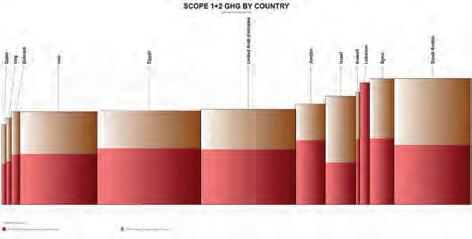
Figure 13 shows Scope 1 (on-site fuel) and Scope 2 (electricity) carbon emissions per ton of finished tissue. Saudi Arabia, Syria, Lebanon and Kuwait have the highest Carbon emissions per ton of tissue produced. Saudi Arabia, Syria, and Isreal all have very high scope 2 carbon emissions from purchased electricity. Qatar has the lowest overall carbon emissions followed by Iraq, Bahrain, Iran, Egypt, and the UAE.
SUMMARY
This report offers an in-depth analysis of the Middle East tissue industry, covering production data, machine quality, cash costs, operational viability, and carbon footprint for multiple countries. Key findings include
• Extensive use of eucalyptus fibe and acacia pulp in several nations.
• Notable variation in tissue machine speeds and technical ages across the region.
• Production costs differ, with Egypt and UAE showing competitive strengths.
• Saudi Arabia, UAE, and Egypt have the highest viability for tissue operations.
• Kuwait and Lebanon encounter challenges due to older machinery and lower productivity.
• Environmental impacts, particularly carbon emissions, range widely – Qatar and Iraq record the lowest emissions.
A detailed understanding of tissue producers and their individual machines is crucial for analysing the competitive landscape. This article presents an overview of the current tissue industry in the Middle East. Fluctuations in fibe prices, exchange rates, and environmental regulations create both opportunities and challenges for industry participants. Moreover, changes in ownership and consolidations are expected to persist among tissue mills in the Middle East, while investments in tissue-making capacity from neighbouring countries may impact imports and exports.
Figure 10: Middle East Tissue Production Cash Cost
Figure 11: Middle East Tissue Machine Viability
Figure 12: Middle East Tissue Production Carbon Footprint
EVOLVING MIDDLE EAST RETAIL TISSUE ENTERS A NEW GROWTH CYCLE
Urban expansion, demographic shifts and channel evolution reshape hygiene demand across the Gulf Cooperation Council. By Isam Arshad, Consultant, Euromonitor International.
As 2026 progresses, the Middle East tissue and hygiene sector continues its resilient trajectory, transitioning from broadbased expansion to more disciplined, strategically driven growth. Anchored by the Gulf Cooperation Council (GCC) markets of Saudi Arabia, the United Arab Emirates, Qatar, Kuwait and Oman, and supported by developing markets such as Iraq and Jordan, the region continues to benefit fom metropolitan development, economic diversification and rising hygiene awareness.
In 2025, the Middle East retail tissue and hygiene market has moved beyond its earlier transformation phase. The structural shifts that reshaped pricing, channel dynamics and consumer expectations are now embedded. The region has entered a more mature growth cycle defined by demographic realignment, digital channel penetration and increasingly structured retail execution. Retail value sales are expected to grow at around 3% year-onyear, pushing the market above $3bn.
Across Saudi Arabia, the United Arab Emirates, Qatar, Kuwait and Oman, retail tissue and hygiene continue to expand at steady rates. Saudi Arabia
Key Middle Eastern markets
The region is the fastest-growing market globally.
Source data: Euromonitor Passport Edition 2026
Source data: Euromonitor Passport Edition 2026
remains the region’s largest retail market, exceeding SAR5bn in value sales. The UAE follows as the most dynamic, surpassing AED2bn and recording the strongest recent growth among major GCC markets. Qatar, Kuwait and Oman continue to post stable expansion, supported by rising household formation, urban household consolidation and sustained hygiene awareness.
URBAN HOUSEHOLDS AND DIGITAL RETAIL REDEFINE PURCHASING PATTERNS
Expanding metropolitan lifestyles across Saudi Arabia and the UAE continue to reshape retail consumption habits. Busier routines, rising female workforce participation and higher per capita incomes are reinforcing demand for conveniencedriven categories such as paper towels, wipes and premium facial tissues.
Retail channels are evolving in parallel with these behavioural shifts. In the UAE, e-commerce now represents a meaningful share of tissue and hygiene value sales, while Saudi Arabia continues to record steady gains in digital penetration. Kuwait and Oman are accelerating from smaller bases, supported by improved logistics infrastructure and wider digital payment adoption.
This channel evolution is reshaping pricing architecture and pack strategy. Larger formats, multipacks and subscription-based purchasing models are gaining traction online. Retail competition is no longer confined to physical shelf space; digital presence now directly influences brand visibilit, pricing transparency and promotional effectiveness.
At the same time, private label development varies across markets. The UAE and Qatar exhibit stronger private label penetration, intensifying price competition at entry tiers. Saudi Arabia remains predominantly brand led, enabling established manufacturers to maintain stronger positioning within premium segments.
Retail growth in 2025 is therefore being shaped as much by channel dynamics as by underlying consumer demand.
INFLATION-LED VALUE
SENSITIVITY AND HEALTH EXPECTATIONS PROMPT PORTFOLIO SEGMENTATION AND VALUE-CREATION INNOVATIONS
With inflation easing in 2026, consumers ae balancing tighter budgets with continued health and hygiene priorities, prompting manufacturers to segment their portfolios more clearly across price tiers. In Saudi Arabia and the UAE, where affluent consumers continue to trade up, brands are reinforcing premium positioning through ecofriendly materials and hypoallergenic features that justify higher price points. For example, Fine
Hygienic Holding’s (FFH) FINE Green line, produced from 100% recycled paper, responds directly to growing sustainability awareness while addressing value considerations. Similarly, Napco’s Sanita Platinum range emphasises enhanced softness and comfort, supporting category premiumisation and portfolio diversification
In Oman and Kuwait, private label penetration stands at 2.0% and 10.2% respectively in 2025, encouraging retailers such as Majid Al Futtaim’s Carrefour to expand scented and skin-comfort variants while strengthening in-store visibility through strategic shelf placement. Qatar, with private label accounting for 13.0% of value sales, faces sharper entry-tier competition, prompting branded players to refine good-bette-best positioning strategies. This structured segmentation supports value growth across the GCC, even as moderating birth rates in markets such as Qatar place constraints on nappies volume expansion.
DEMOGRAPHICS SHIFT THE CATEGORY BALANCE
The most important structural shift across the GCC retail hygiene landscape is demographic and behavioural evolution.
Historically rooted in water-based traditions shaped by religion and cultural practice, hygiene habits across the region continue to evolve alongside metropolitan development. Consumers are increasingly blending global hygiene standards with local preferences, reinforcing demand for tissue products without abandoning cultural norms.
In 2026, digital retail is accelerating this transition. E-commerce penetration reached 6% in Saudi Arabia and 13% in the UAE in 2025, with continued upward momentum. Platforms such as Noon are expanding category reach through consumer reviews, bulk promotions and subscription models, particularly in wipes and paper towels. Retailers such as Lulu Hypermarket are leveraging digital analytics to refine poduct positioning and tailor promotions based on purchasing data.
Sustainability is increasingly important to consumers and is gaining measurable traction. In the UAE, 42% of consumers expect climate change to have a greater impact on their lives, while more than 25% actively seek to reduce environmental impact through everyday purchasing decisions. This growing awareness supports demand for recycled and responsibly sourced tissue innovations.
Although the Middle East accounts for roughly 2.5% of global tissue consumption, its combination of demographic growth, digital acceleration and rising sustainability awareness positions the region for steady long-term retail demand.
ADULT INCONTINENCE BECOMES THE STRUCTURAL GROWTH PILLAR AMID AGEING POPULATIONS
Adult incontinence is now the fastest growing hygiene category across several Gulf markets. Ageing populations in Kuwait, Qatar, Oman and Saudi Arabia are increasing category penetration, supported by improved product awareness and pharmacy distribution expansion.
LOCAL DRIVE FOR ECONOMIC DIVERSITY AND SUPPLY CHAIN RESILIENCE DRIVES PRODUCTION LOCALISATION
A push for localisation fortifies esilience in 2026, mitigating import risks in a volatile global landscape. The Middle East’s diversification agenda fuels domestic manufacturing investments, generating jobs and enabling custom fits to egional needs. FHH exemplifies this with enegy-efficient supply chains, boosting adaptability and cost savings. Such moves not only spur growth but align with sustainability, as in Hayat Kimya’s third-party verified “Papia” brand from responsible sources.
In the UAE and Saudi Arabia, online purchasing is further accelerating adoption by offering discretion and convenience.
In contrast, nappies growth is moderating in markets where birth rates have stabilised. This shift is gradually rebalancing retail hygiene portfolios. Manufacturers that historically relied on baby care as their primary growth engine are increasingly
investing in adult incontinence innovation and format diversification
The region’s demographic profile is eshaping category leadership.
AFH RECOVERY COMPLEMENTS
RETAIL STRENGTH
While retail remains the dominant value driver, away from home tissue demand is recovering across Saudi Arabia, the UAE and Qatar. Tourism expansion, large scale infrastructure projects and hospitality development are supporting demand for paper towels and boxed facial tissues in commercial spaces.
In summary, the defining gowth narrative in 2025 remains retail. Household purchasing behaviour, digital penetration and demographic change are driving most value development.
The Middle East tissue sector has matured. It is no longer characterised by rapid market expansion alone. It is now defined by structued retail growth, channel evolution and demographic alignment. Overall, the future of the tissue and hygiene sector in the Middle East will most likely be determined by a combination of customer preferences, digital and supply chain improvements, sustainability drive, and broader economic and cultural trends. The manufacturers that can adjust to these shifts and provide products that are in line with the everevolving requirements of their target audience are likely to find success in this fluid marke
Consumers are shifting to online purchases, focusing on quality and seeking better value
72%
Use technology to improve dayto-day life
43%
Prefer the use of sustainable packaging (refillable, recyclable, biodegradable or compostable)
36%
Visit discounted stores for house-hold essential purchases
48%
Prefer shopping online for Personal care essentials
35%
Prefer to spend money on health and wellness, rather than things
35%
Would rather buy fewer but higher-quality products
Source: Euromonitor International Voice of the Consumers: Lifestyle Survey, fielded February 2025. (n=40,337
A NEW TISSUE MACHINE IN THE KINGDOM OF SAUDI ARABIA MEANS
UAE-HEADQUARTERED CROWN PAPER MILL WILL REACH
160,000TPY CAPACITY IN 2026
Tissue World Magazine Senior Editor Helen Morris spoke to Sunny Amin, Procurement and Logistics Manager, about how tourism - a key pillar of Saudi Arabia’s Vision 2030 - is helping to drive tissue demand, and a reason for its latest milestone investment.
Saudi Arabia’s Saudi Vision 2030 – a government initiative launched on 25 April 2016 by the Saudi government and Crown Prince Mohammed bin Salman – has three main pillars: to make the country the heart of the Arab and Islamic worlds, to become a global investment powerhouse, and to transform the KSA’s location into a hub connecting Afro-Eurasia.
A knock-on-effect currently occurring is the opening-up of travel and tourism to the kingdom, resulting in the highest travel statistics the country has ever seen – by 2030, the kingdom aims to attract 100m visitors annually, positioning itself among the world’s leading tourist destinations.
This is having a transformative effect for the region’s tissue markets and is a key reason for UAE-headquartered Crown Paper Mill’s (CPM) latest tissue investment – a second Valmet-supplied Advantage DCT 200HS, and its first to be started up in the KSA.
As a leading producer of jumbo tissue rolls in the region, the Jubail – based TM4 will have a production capacity of 60,000tpy and adds CPM’s current capacity to reach 160,000tpy.
TWM first visited CPM in 2018, driving though the grand streets of the UAE’s capital and past towering glass skyscrapers, shopping malls, along the Sheikh Zayed Bridge to meet Managing Director Abdullah Al Khateeb at the company’s 50,000sqm
plant. Then, as now, the company’s sights were set firmly on becoming the lagest tissue manufacturer in the Gulf Cooperation Council. “There will be tough competition here in the next few years,” Al Khateeb had said. “We have a very clear strategy: to expand out of the Gulf, into the UK, the States, certain areas in Africa… wherever there are opportunities.”
Now in 2026, competition within the Middle Eastern tissue market has ramped up. As reported by ResourceWise, the region’s overall tissue capacity CAGR is 3.74%: Iran 13.17%, Saudi Arabia 6.05%, Iraq 4.73%, and Bahrain 4.42% showed notable growth, while Egypt has led replacements over the past twenty years. The UAE and Saudi Arabia have recently also expanded or planned additions, while Egypt, UAE, Saudi Arabia, and Iran account for 77% of the total tissue capacity.
Saudi Arabia in particular is a TM start-up hotspot including recent startup of Saudi Paper and Mepco.
Speaking in February over a Teams call, Sunny Amin, Procurement and Logistics Manager at Ittihad Paper Mill/ Crown Paper Mill LLC, paper division of Ittihad International Investment, a private holding and multi-disciplinary conglomerate, and parent company of CPM, explains how as the business celebrates its 20th anniversary, “a lot” has changed since 2018.
Investments over the years have specifically targeted the increasing demand for high-quality
tissue products that have been growing in popularity in the Middle Eastern market. CPM was acquired by Ittihad International Investment Group in 2015, taking on TM1 and PMT-supplied TM2.
In 2019, TM3 was commissioned – a Valmetsupplied Advantage DCT 200HS line with a production capacity of 65,000tpy in Abu Dhabi UAE, bringing the company’s total tissue production capacity to 100,000tpy.
In 2023, the company saw a growing demand in Saudi market: “A new tissue plant housing TM4 is expected to start-up by May/June 2026,” Amin says. “It will be the similar Valmet-supplied machine we have in the UAE but with further new advanced technologies and features, and once this machine starts up our total annual capacity will go from 100,000tpy to 160,000tpy.
“We see the Saudi Arabian market as a very important market and have been and will continue to grow in the tissue business. We are also expanding our group tissue converting line a company called Metropolic Paper Industries also in Saudi Arabia, for example. A lot of new mills have started up in the KSA in the past three years, and yet still the demand was not met by the local manufacturers. We saw a gap in the market and took the decision of starting up in Saudi Arabia.”
He says the business expects tissue growth to remain at 4% year-on-year in Saudi Arabia: “This is being driven because they have opened their tourism and a lot of business opportunities, especially after Covid, we saw a big increase in the population there. Their GDP is also doing very well and their economy is strong, so we expect relatively stronger growth in coming years.”
His confidence in the gowth of KSA’s tissue market is so strong he says we are already studying a start-up a second tissue machine in the country: “There is the probability of another machine in Saudi Arabia by 2028/2029, to match the local demand,” he says. “Looking at per capita consumption in the whole GCC region, KSA is one of the biggest consumers of tissue. This is driven by its large population, high hygiene standards, and Saudi Vision 2030. And, hopefully, we will have another tissue machine to fulfil this demand in the futue.”
Having been with the business since 2012, Amin says the company’s key advantage is its procurement of pulp: “We are the biggest pulp buyer in the GCC market, importing around 450,000tpy and a major user of UAE ports both in terms of import and export. This gives us a competitive advantage to negotiate better shipping contracts compared to others in the region and makes our product competitive over others.”
In terms of energy costs and sustainability, he adds that the Valmet machines are “very energy efficient in conserving water and electricity compared to the other operating tissue machines in the region”: “We are also recycling the water and working on solar energy projects at our sites. Our products use FSC-certified souces fibes, and we are also working on the recycling grades,” he adds.
One of the “standout features” of the company’s new mill is the integration of Valmet’s state-ofthe-art machinery, which he says offers “numerous advantages such as higher production efficienc, minimised chemical usage, and optimised raw material use. By embracing these next-generation manufacturing technologies, we are not only
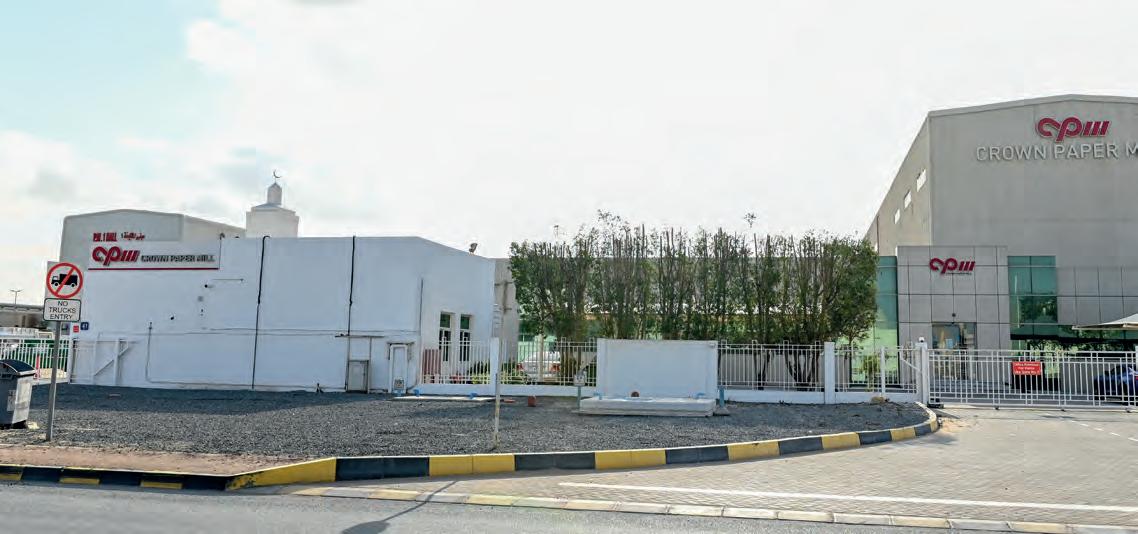
CPM’s Abu Dhabi-based headquarters: investments have targeted the increasing demand for high-quality tissue products across the region
increasing efficiency but also positioning ourselves as a pioneer in sustainable tissue production.”
Are customers in the region asking for these types of products? “Yes, it’s becoming more mainstream. If you compare the market from five to 10 years ago, that was not what the customer was asking for. However, now it’s becoming increasingly common. Customers are asking about the sustainable sources of what and where they’re buying, it’s becoming much more important in the region.”
Because of the regional growth in tissue that the company has seen, Amin adds the business can forecast how the tissue market will likely continue to grow in Saudi Arabia: “With the ease of having e-visa portals for residents and tourists to travel across GCC, and also new residency initiatives such as the Golden visa in the UAE which is attracting investments in our area, this is all promoting tourism which is having a big impact on the tissue market. Before it was not the case, it was much more closed. It was not easy for someone from the UAE to travel to Saudi Arabia. They’re now introducing new unified visa for GCC tourist so if you have that one you can travel across GCC. It was announced last year and is probably coming into effect hopefully by end of 2026 or early 2027.”
It will help the business, he says, bringing more travellers and more tourism: “Especially in the KSA, increased tourism through Vision 2030 is really the force behind this.”
Some 80-90% of TM4’s 60,000tpy will stay in the Saudi marketplace, and he adds that by the time the second line (which is still in discussion) is potentially up and running to cover market requirements in KSA.
“Our idea is to focus from the UAE mill into the export markets in different parts of the world, such as the European market, African markets and USA. In addition to that, if the situation normalises in places such as Syria and Iraq which has a great potential of growth, this is another opportunity for us to grow our business.”
Another advantage of the Saudi Arabian market is that it is “a very well protected market” for the local manufacturers: “The way the region is going is very promising. One of the major reasons why we are going to Saudi Arabia are the customs tariff benefits of when you ae importing between the two countries. They promote local manufacturers by implementing anti-dumping duties/custom duties on products which are manufactured locally and sufficient for market.
AfH and private label products are both increasing in the region. Amin is seeing larger supermarkets increasingly wanting private label for their tissues, while AfH “is also increasing”, mainly because of the tourism. “If you look at the number of visitors to Saudi Arabia this year, it’s a record, the highest number ever of people visiting the country.”
PM3 was commissioned in 2019: the company’s Valmet-supplied Advantage DCT 200HS line has a production capacity of 65,000tpy.
Join the USA’s largest tissue industry trade show in April 2026!
Tissue World Miami is back! Reconnect with tissue professionals, explore the latest insights, and network with leading figures. Discover cutting-edge innovations from over 130 exhibitors on the exhibition floor.
The conference theme, “From Disruption to Direction: Charting a Resilient and Innovative Path for Tissue,“ will showcase how leading companies not only survive but thrive in the current climate.
Sign up now to secure your spot!
Portfolio:Official Magazine:
During summer 2025, over 32m tourists visited the Kingdom – a 26% increase from summer 2024.
After Covid, people are also becoming more interested in hygiene, he adds: “They think more about the products they are using in the hygiene side, and this is also driving tissue demand in the country. For example, if you go back even just five years, the UAE’s total demand was 110,000tpy and this has now increase to 150,000tpy in 2025. This is mainly being driven by increases in population, 9.5m in 2021,11.5m in 2025, and it’s an increase of 1.5m people in just five years aound 15%, increases in per capita consumption, GDP growth is also reflecting on that because incomes ae increasing and so people are spending more on hygiene products, their spendings are going more there.”
While CPM is growing with investments, the company is also working on local investments in machine technologies and R&D across the sector: “We are intended to grow in tissue industry by investing in greenfield pojects and acquisitions. When we have the 160,000tpy fully started-up, we will be the one of the biggest tissue manufacturers in the GCC.”
As a business, he adds the company is working on diversification of its poducts: “This is how our operation is working and if you look at the industry overall, this is what is happening, companies are growing downstream of supply chain. Major pulp manufacturers are getting into hygiene production,
such as Suzano and Kimberly-Clark’s joint venture, and that’s the new norm in the industry which we will see more of in the coming five to 10 years.
“We have also seen an increase in imports coming into the area, mainly from Indonesia and China,” he adds. “Especially after the tariff situations across world. That side is also getting more competitive because everyone sees the Middle East as a very attractive market in terms of pricing and product.”
As CPM, he emphasises the company is targeting the high-quality end of the market: “The specification in the egion if you look at the market in the last five years has changed in terms of qualit. Customers are looking for high spec tissue and we aim to deliver best quality with best service to our customers.”
“Key advantages for the business remain pulp, the quality of our products and service. We are the biggest pulp importer in the region with over 450,000tpy imported during 2025. This is one of key advantages for us to be competitive in both the paper and tissue businesses and it is something which our competitors don’t have. We have the advantage of the capacity to deliver both.
“We don’t see it as a difficult market going into Saudi Arabia because we have strong customers base established in KSA. Since 2007 our business has been established there, when we were exporting around 50-60% of our UAE-made tissue.”
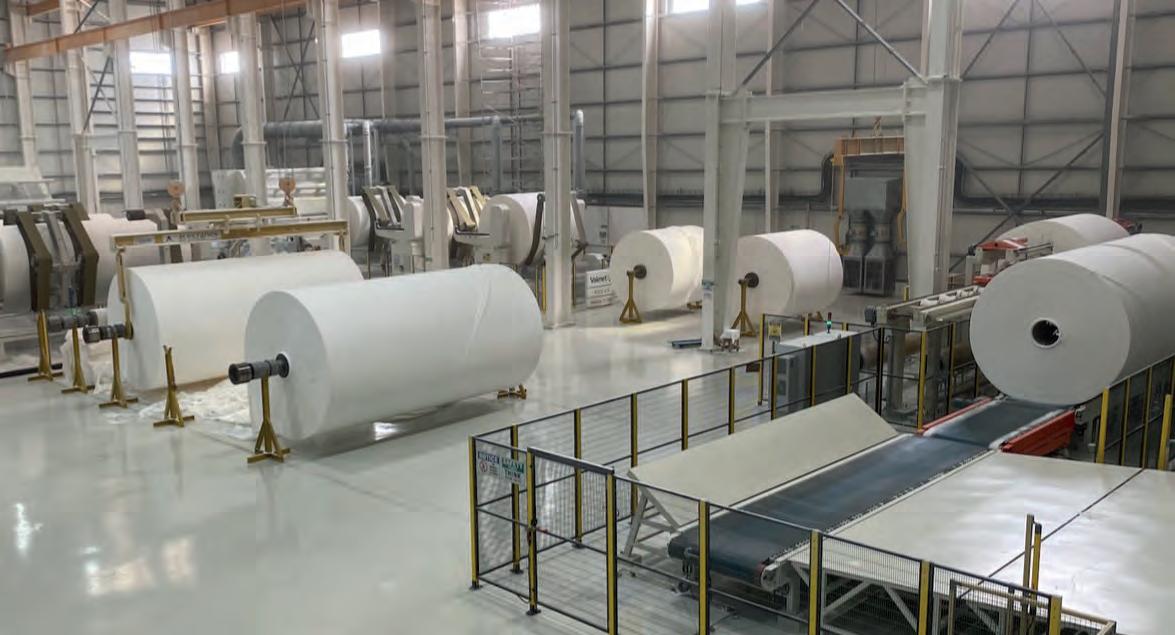
A leading regional jumbo tissue roll producer: once CPM’s Dammam-based PM4 starts production, capacity will almost double
PALLETISING: COPING WITH THE WIDE VARIETY OF SITE CHALLENGES TO MAXIMISE PRODUCTION
Report for TWM by Gregory Sense, Marketing/ Inside Sales Manager, Infinity Machine an Engineering Corp.
In the modern converting facility, palletisers are no longer a luxury - they have become as essential to production as an unwinder.
While palletisers have been ubiquitous among large and mid-size converters, increasing labour pressures have led to widespread adoptions across smaller independent converters as well.
While the need for cost efficient, eliable palletising is universal across converters, the challenges they face are often unique. Even individual mills within the same company can have wildly different facility limitations and barriers to efficienc.
With the tissue industry full of distinctive needs that often vary depending on the converter, mill, or
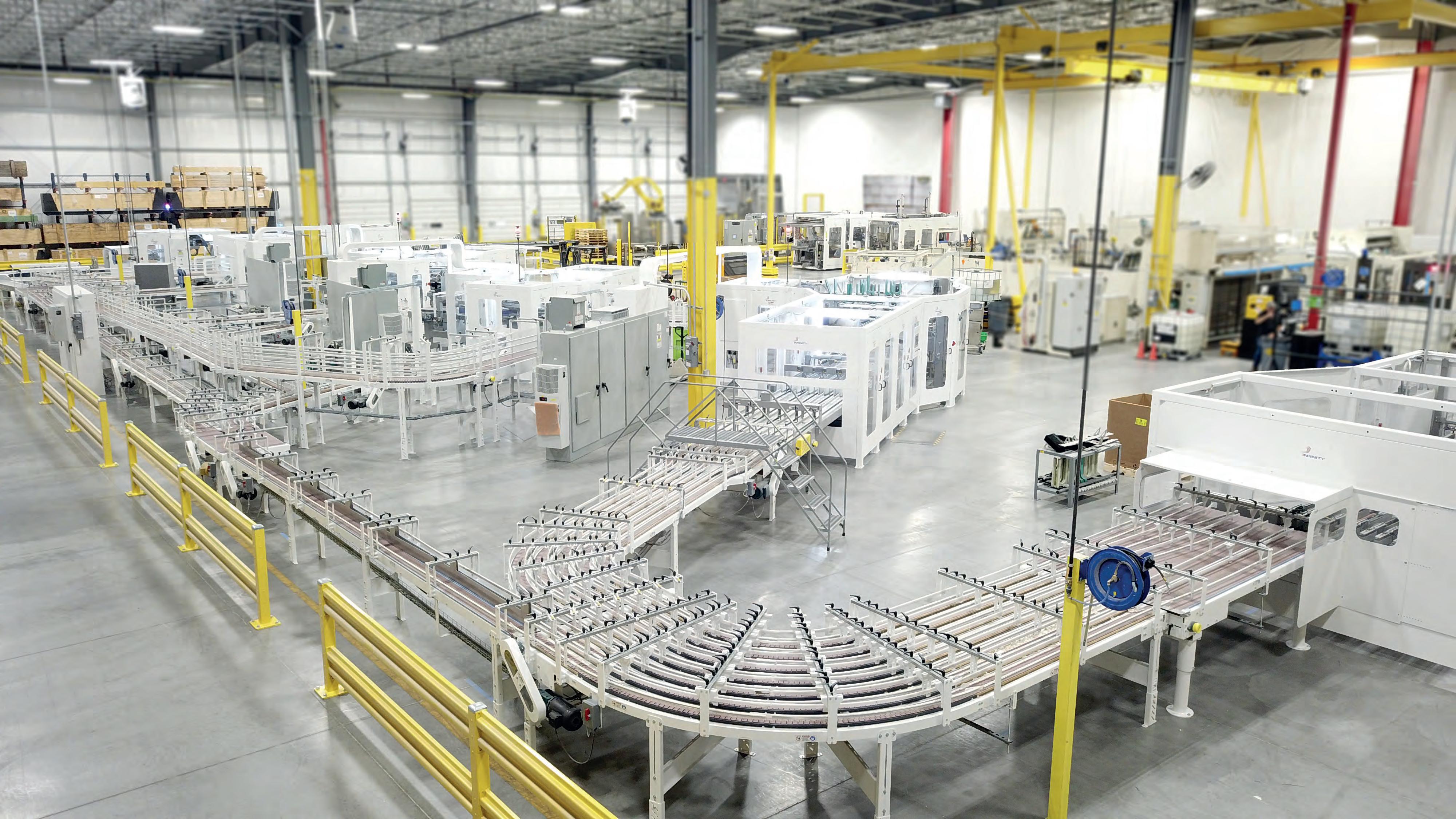
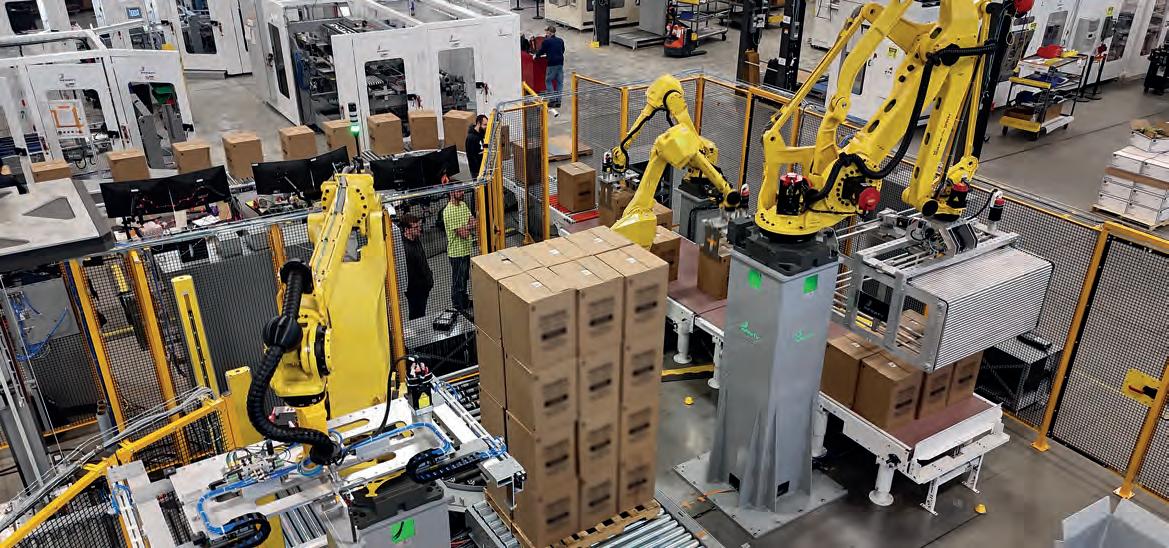
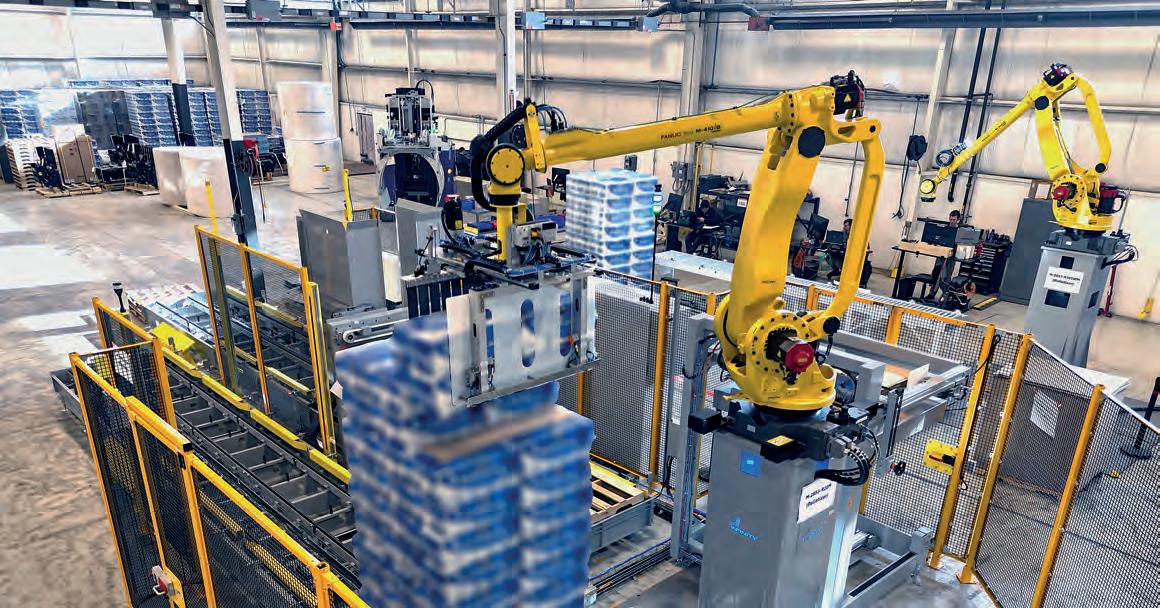
High throughput applications: Infinity palletisers can be equipped with multiple sorting arms, loading arms and build station
Display Ready Pallets: servo gripper and vacuum end effectors give Infinity palletisers the versatility to stack cases as well as bundles
even line, palletisation cannot be a one size fits all solution
When Infinity Machine & Engineering Corp. began conceptualising its expansion into palletising solutions, the variance throughout the industry was at the forefront of the design process.
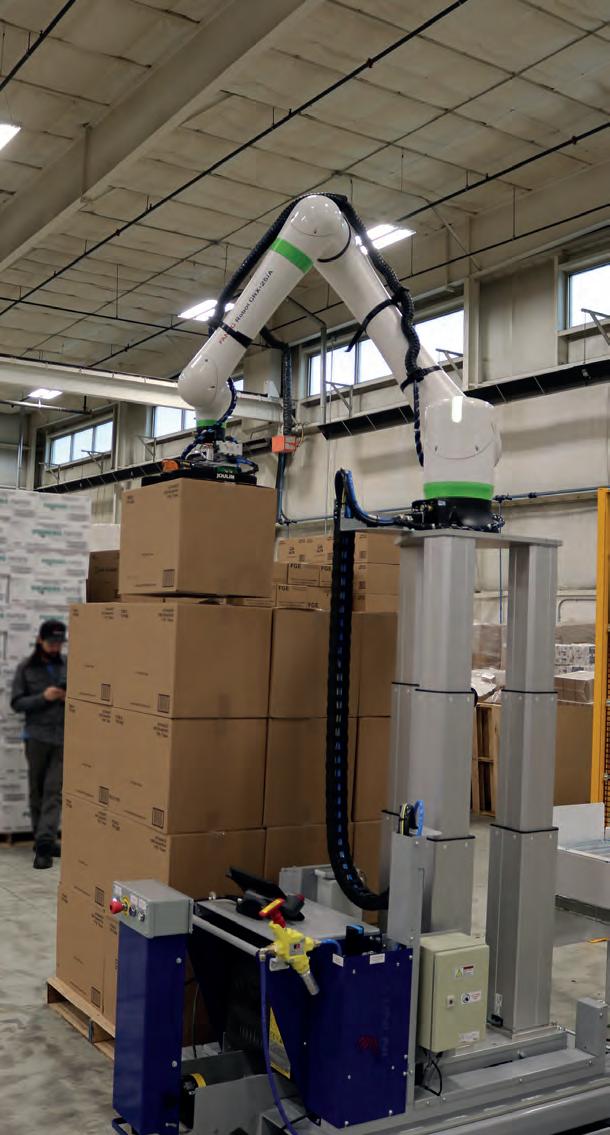
To best serve the industry, Infinity has developed a heavy duty, standard palletiser, as well as a flexible cobot palletise.
Infinitys standard palletiser was designed from the ground up to accommodate the needs of a variety of converters. Made up of modular sections that can be arranged into countless different layouts, Infinity palletisers can be optimised for everything from single product lines to large scale, multi-line operations.
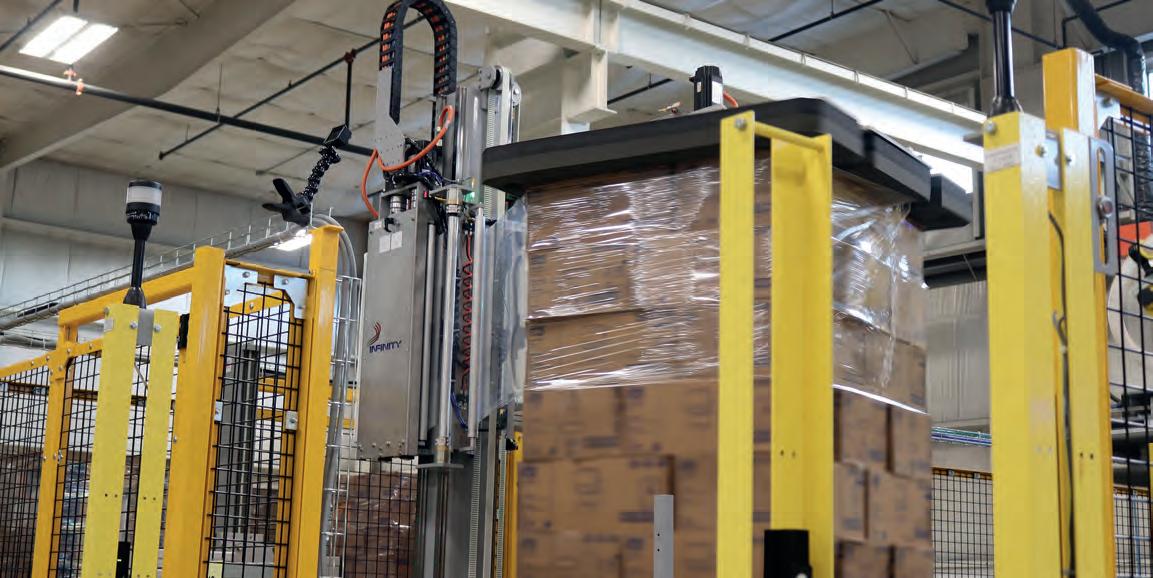
The comprehensive range of palletiser sections offered by Infinity includ : a pallet squaring unit, automatic slip sheet placement, pallet dispenser, and fully automatic, fully servo stretch wrapping.
These units can be set up in different layouts, ensuring Infinity palletisers adhee to desired production requirements within facility limitations.
Depending on the needs of the converter, Infinity palletisers can be equipped with multiple loading arms, sorting arms, and build stations. This enables some units to operate at speeds up to 60 packs a minute on the in-feed.
Infinity palletisers can further be efined to the needs of their customers as they can be
To best serve the industry, Infinity has developed a heavy duty, standard palletiser, as well as a flexible cobot palletiser.
equipped with both vacuum and servo gripper end effectors, giving them the versatility to stack cases as well as bundles for Display Ready Pallets.
While standard Infinity palletisers ae great for converters that have high production volumes, require the fastest speeds possible, and need robust lifting capabilities, other converters need different features to maximise production.
Many smaller scale converters require palletising solutions that can be deployed quickly and integrated with existing equipment. Infinitys cobot palletiser is the perfect fit for these converters
The cobot palletiser has a compact footprint and can easily be manoeuvred via integrated casters or built-in forklift pockets. This simplifies its installation and enables dynamic repositioning of the cobot to different lines as production demands change.
This functionality is made possible because the machine doesn’t require any guarding or additional safety devices. Equipped with a sophisticated system of proximity sensors, Infinity cobot palletisers can detect if a person or object enters the palletizing arm’s range of motion. If something is detected, the palletiser automatically slows to a crawl and if the cobot makes contact it immediately freezes in position.
Combine this comprehensive safety system with the cobot’s two standard build stations and operators can remove completed pallet stacks from the inactive build station while the machine is still in motion, allowing for optimal efficiency in the pallet building process.
Whether your production requires a robust machine that can handle the highest throughput possible, or a highly adaptable, space saving solution, Infinity has a palletiser that will seamlessly fit your operational equirements.
This article was written for TWM by Gregory Sense, Marketing/Inside Sales Manager, Infinity Machine and Engineering Corp.
Designed for continuous operation: operators can safely work alongside Infinitys cobot, without the need for guarding or other additional safety devices
TOMORROW
AND BEYOND: -TER A A UT U T ER-TER T
Seeing possibilities where others see limits. Rodney Fokkens, Aftermarket Manager at Edson, emphasises the virtues of a farsighted, flexible,and less standardised response to customers’ needs. A TWM report.
In the ever-evolving world of packaging, equipment must continually take on new challenges to progress. It isn’t enough to adapt to where packaging is currently. Rather, there is a necessity to anticipate where it’s going in the future.
There are the constants, the recurring demands of improved safety, greater efficiency and less down-time, but then there are the other areas which are less clear.
By what means will product be delivered to the consumer in the near and distant future? What environmental and health policies will steer corporations’ product development and their packaging? What will the industry workforce look like?
As equipment manufacturers, with the goal of satisfying all that the tissue industry requires for tomorrow and beyond, the approach must be as much collaborative as innovative. Packaging machinery offerings must be flexible to customer production and marketing plans, making them less standardised and more a contoured solution.
A packaging machinery provider with decades of experience constantly improves on standard equipment, but also provides highly innovative and custom designed solutions. Crucial is understanding what the tissue industry needs and seeing opportunities instead of obstacles.
Automated solutions: Edson’s innovations have extended to infeed laning
Collaboration is key and the free-form flow of information and ideas between customer and OEM pushes automation innovation, strengthens connection and ultimately maximizes success.
Creating avenues where such collaboration can exist and thrive, and by not constraining a customer with cookie-cutter solutions opens up opportunities for development both for the customer on how they can market/produce, and the provider in developing appropriate technological advancements.
Edson has established itself as a reliable partner that has historically worked closely with our customers to ensure our equipment aligns with their goals.
Years ago, reduced inventory/warehousing drove the need for more rapid change-over. Along with that came demands for high-speed case packers where maximising speed coincided with minimising footprint. More recently SKU quantity and variability have increased to satisfy big-box store to e-commerce requirements and everything in between. Throughout has been the changing workforce where increasingly the customer preference is for equipment operators to be more
versatile across several machines instead of being experts of one particular asset.
All these areas continue to be addressed through understanding what the challenges are, determining how our strengths align, and asking what else is needed to get the desired outcome for our customers.
It is vital to be at the forefront of automated change-over. High-speed is our specialty and a constant driver for our design. Versatility has always been a strength, which equates to equipment that can handle a very large range of product sizes and orientations. Our automation solutions have extended to Infeed De-banding, KDF Management and Upstream Product Orientation Technology, each of which was driven by needs within the industry that either didn’t exist, or what was available didn’t meet customer requirements.
It’s about seeing possibilities where others see limits. Our customer-focused design and innovative spirit can be the catalyst for achieving your future packaging goals.
This article was written for TWM by Rodney Fokkens, Aftermarket Manager, Edson.
Versatility is a strength: KDF De-Strapping example
TISSUE VALUE R TH THE CRITICAL QUESTIONS
As it accelerates sharply, the way value is created, defended and contested is changing rapidly.
Liying Qian, Euromonitor International, Global Insight Manager - Tissue and Hygiene asks what underpins tissue’s demand resilience and where are the emerging risks?
Despite persistent cost inflation and economic uncertainty, consumer tissue demand proved resilient in 2025. Global volume growth remained modest and broadly in line with 2024, but nominal value growth accelerated sharply, reinforcing a structural shift toward price- and mix-led expansion rather than incremental usage. This value-driven growth pattern is expected to intensify in 2026, signalling a market increasingly shaped by affordability gaps, premiumization and uneven consumer trade-offs.
This shift raises a critical question for the industry: what underpins tissue’s demand resilience and where are the emerging risks? Structural fundamentals such as population growth and income expansion continue to anchor long-term demand, but the way value is created, defended and contested is changing rapidly.
THE STAYING POWER OF ASIA
Many of these forces are most visible in emerging markets, where demand resilience is both reinforced and tested. In 2025, emerging economies accounted for 45% of global tissue value sales, up from 42% in 2020, led by China, Brazil and Mexico. While rising incomes and population growth continue to support baseline demand, heightened price sensitivity is creating sharper divergence in how consumers define and access value
Asia Pacific stands out as the most influentia region, representing 43% of global tissue volume but only 31% of value in 2025. Expanding middle class consumption from a low per capita base presents meaningful upside, yet competition is
intense. E-commerce accounted for 28% of APAC tissue sales, well above the global average, and players outside the top five epresented nearly 70% of regional retail tissue value. This fragmentation underscores how local brands and digital routes to market are eroding traditional multinational scale advantages.
As a result, growth in emerging markets is increasingly driven by localization, simplified propositions and sharp price per use positioning, with e-commerce accelerating trial, brand discovery and speed to scale.
WELLNESS-TIED AND TASKS-DRIVEN TISSUE TYPES LEAD GROWTH
Beneath overall demand stability, tissue category performance is becoming more uneven. Growth is less about increasing usage frequency and more about how consumers trade between formats, pack sizes and quality tiers, reinforcing a shift from volume expansion toward mix-driven value creation.
Toilet paper continues to anchor volume in absolute term through habitual usage and expanding population and penetration in emerging markets, but growth is structurally constrained in developed economies. By contrast, paper towels and selected facial tissue formats are outperforming, benefitting fom perceived multifunctionality, hygiene reassurance and convenience across both at-home and on-the-go occasions.
In Asia, facial tissues receive an additional lift from wellness- and skin-care-led positioning, reflecting stringent beauty standards and rising incidence of allergies, colds and seasonal illness. Meanwhile,
more discretionary or occasion-dependent segments, such as napkins in some markets, face substitution pressure and softer demand.
TISSUE COMPETITION SHARPENS AS SCALE, VALUE AND INTEGRATION REDEFINE THE LEADERBOARD
As growth becomes increasingly mix driven rather than volume led, competitive intensity is rising, with share gains coming primarily from redistribution rather than category expansion. Private label and value oriented local brands continue to strengthen their foothold in commoditized tissue segments by pairing aggressive price per use propositions with improving perceived quality and faster adaptation to local usage needs.
Innovation has become more selective and execution focused. Instead of breakthrough functionality, activity centres on format optimisation, pack and sheet engineering, durability cues and incremental premium signals such as softness, ply structure or absorbency. Sustainability claims are more visible, but in most markets remain supportive rather than decisive, particularly when they introduce clear price premiums.
The result is a more polarised competitive landscape. Scale, efficiency and cost discipline
increasingly define success at the coe, while targeted premiumisation and branding are used selectively to defend value. Softys stands out among global leaders by consistently gaining tissue share through scale driven execution rather than innovation, leveraging acquisitions, notably in Brazil, to expand capacity and geographic reach, and aligning strong local manufacturing with value focused brands. Recent consolidation reinforces this structural shift: RGE’s acquisition of Vinda secures full pulp-to-issue integration in Asia, while KimberlyClark’s international tissue exit via the Suzano joint venture signals a pivot toward regional integration and volatility management.
WHAT COMES NEXT
These dynamics point to a decisive moment for the tissue industry, as value creation shifts toward precision: what it takes to win in an increasingly fragmented, value led market?
At Tissue World Miami 22-24 April, Euromonitor International will explore the key forces shaping consumer tissue demand and competitive strategy: from evidence-backed value propositions and experiential wellbeing to hypersegmentation and sustainability.
Fig. 1: Carbon Footprint for market pulps delivered to the Southeast US: Brazilian BEK, Canadian NBSK, and Chinese BBK.
Fig. 1: Carbon Footprint for market pulps delivered to the Southeast US: Brazilian BEK, Canadian NBSK, and Chinese BBK.
Baosuo Hi Helenwww.baosuo.comOFC Buckman www.buckman.com 16
www.chromascape.com 25
www.convermat.com IFC
ADVERTISER'S INDEX SUBSCRIPTION
Tissue World Magazine is free to qualified members of the tissue industry. Please visit the following link to subscribe to the printed magazines: www.tissueworldmagazine.com/printsubscription/ Sign up to the bi-monthly Tissue World Newsletter and six annual Digital Magazines here: www.tissueworldmagazine.com/ newsletter/
Connect with your future customers
Unprecedented Growth. Unmissable Opportunity.
Showcase your innovations, explore the latest advancements, and gain valuable insights from industry leaders. Connect with the perfect partners to drive your business forward.
Take advantage of exhibition and sponsorship opportunities, including cost-effective booths, private meeting spaces, access to senior-level visitors, exclusive networking events, and a customized conference program.