November/December 2025 | Issue #6
The independent news provider for the global tissue business
ASEAN The 660m+ market JAPAN Country Report Land of the rising young MARKETISSUES TW HO CHI MINH CITY report EXITISSUES Bamboo carbon footprint up to 32% higher, study reveals SPECIAL FEATURE: ANNUAL REPORT Ready for market conditions to improve
YOUR SINGLE SOURCE FOR TISSUE Bath Tissue | Facial Tissue | Napkins | Kitchen Towel | Industrial Towel | Center Pull Towel | TAD Bath and Towel | NTT Bath and Towel | Carrier and Specialty Tissue | Airlaid | Nonwovens | and more
THE GLOBAL LEADER IN T I S S U E The Power of Leadership Since 1976, Convermat has been the leading global supplier of parent rolls of tissue to more than 80 countries worldwide. Our unparalleled market intel and strong network of strategic alliances, resources, and insider knowledge can further grow and strengthen your business to achieve higher profits.
There When You Need Us We consistently maintain capacity balance for many of the leading global tissue players. Our extensive network of global suppliers and customers enables us to deliver a continuous flow of tissue at the most competitive prices in any market condition and to any destination with speed, reliability, and integrity.
At Your Service Our experienced team of seasoned professionals is equipped to handle all of your needs including inland and ocean transportation, import/export protocol, technical specifications, testing lab facilities, proprietary product development, foreign currency management, credit risk, and all relevant sales services.
More Than Tissue In addition to our complete line of tissue, towel, napkins, and specialty paper we supply a comprehensive line of nonwoven substrates for medical, wipes, automotive, filtration, hygiene applications, and more.
www.convermat.com T: 516.487.7100 F: 516.487.7170
Tissue World Magazine | Contents
IN THIS ISSUE...
03
FRONTISSUES
04
MARKETISSUES
Tissue World Ho Chi Minh City 2027 confirmed after the 2025 trailblazer highlights the rising ASEAN tissue region.
Tissue World Ho Chi Minh City 2025 “created remarkable impact within the pulp and paper industry – strengthening business connections, inspiring innovation, and affirming Vietnam’s growing position on the global industrial map.” As a return event is confirmed for 2027, the Vietnam Pulp and Paper Association hails the outstanding success of the Vietnam event which attracted global tissue leaders.
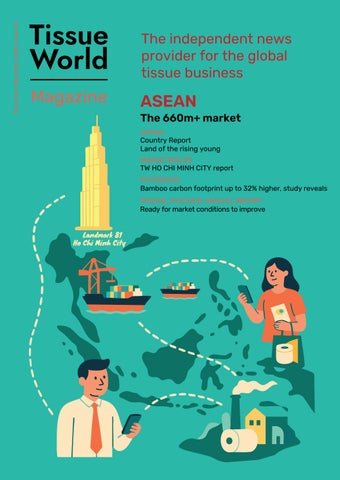
Cover image: Ho Chi Minh City’s Landmark 81 skyscraper (pictured top left) is the tallest building in Vietnam and the second tallest in Southeast Asia, symbolising the potential of the 660m+ tissue market across the ASEAN region. Image by Stefano Vuga, Founder, PurplePrint Creative, Spain/ Italy, www.purpleprint.eu
06
FOCUS ON I: VPPA The BANI era: the age of tissue - and Vietnam’s strong growth. Mr. Hoang Trung Son, General Director of Dong Tien Paper Company, and Chairman of Vietnam Pulp and Paper Association (VPPA), assesses the challenges and opportunities for Vietnam and Asia’s tissue and towel industries.
12
FOCUS ON II: AFRY Evaluating Shifting Dynamics Across Booming APAC market. Report by Somnath Ray, Principal, AFRY Management Consulting.
14
FOCUS ON III: EUROMONITOR
21 26
NEWS IN BRIEF
Retail Tissue in APAC: Navigating Regional Trends in a Global Landscape. Report by Natalia Bezrebra, Senior Analyst at Euromonitor International.
A roundup of world news. To get the very latest news go to www.tissueworldmagazine.com
JAPAN: COUNTRY REPORT Tissue demand still increasing despite shrinking population. Long-term growth at almost 3%. Per capita consumption at 21.5kg - among the highest globally. An economy ranked fifth worldwide. All with fewer people to buy. By ResourceWise.
31
JAPAN: COUNTRY REPORT Japan’s highly competitive mature market focusses on innovation and high-quality tissue. Retail value sales to continue rising as companies shift their strategies to offset fundamental cultural changes and population decline set to reach 9% by 2039. Report by Euromonitor International’s Senior Consultant Aya Suzuki.
36
ANNUAL REVIEW 2025: SPECIAL FEATURE Companies outline their ‘Spirit of Agility’ ready for fluctuating market conditions to improve. As 2025 draws to a close, TWM asks figures from across tissue’s global supply chain for their retrospectives on the year … and predictions for 2026.
40
EXITISSUES Bamboo: carbon footprint up to 32% higher than conventional wood-based alternatives, research finds. First comprehensive study reveals gap between marketing promises on sustainability and the measurable environmental impact. Report for TWM by North Carolina State University’s Naycari Forfora, Isabel Enriquez, Hasan Jameel, Richard Venditti, Luana Desbessel, Qingshi Tu, Erlantz Lizundia, Ronalds Gonzalez.
48
AD INDEX
www.tissueworldmagazine.com
Nov/Dec | 1
The premier name in tissue packaging machinery
Throughout our over 20-year history we have been a company committed to continuous refinement. We pride ourselves in offering tissue packaging machinery built with steel frames and robust internal components, designed to give you the most from your investment. Our extensive list of customers speaks to the trust we have earned and continue to maintain as Infinity machinery can be found in over 25 countries across six different continents. Simply put, when you have machinery from Infinity, you have peace of mind.
Tissue World Magazine | FrontIssues
Tissue World Ho Chi Minh City 2027 confirmed after the 2025 trailblazer highlights the rising ASEAN tissue region Helen Morris, Senior Editor, Tissue World Magazine
EDITORIAL HEADQUARTERS Informa Connect 240 Blackfriars Road, London, SE1 8BF, UK Tel: +44 (0)20 7017 5000 Senior Editor Helen Morris: helen.morris@informa.com Event Director & Publisher Gerry Dunphy: gerry.dunphy@informa.com Campaign Director Roxanna Kashfi: roxanna.kashfi@informa.com Commercial & Strategy Director Alan Kelly Chief Executive Andrew Mullins
ADVERTISING ENQUIRIES Europe & North America Silvio Arati T: +39 02 4851 7853 sarati@studioarati.it
South and Central America Selma Ugolini T: +55(11)99904 5350 selma@gova.com.br China, Hong Kong & Macau Doris Kong T: +86 020 3895 1611 Doris.Kong@informa.com
TISSUE WORLD MAGAZINE
is published bi-monthly. The subscription price is US$400 per year for 6 issues. Subscription is free for qualified subscribers in the tissue industry. Please send address corrections to: Informa Connect 240 Blackfriars Road, London, SE1 8BF, UK Tel: +44 (0)20 7017 5000 info@tissueworld.com Subscription online at www.tissueworldmagazine.com In Tissue World all measures are metric and all dollars ($) are US dollars, unless otherwise stated. Copyright 2024 by Informa Connect. All rights reserved. All materials printed in Tissue World Magazine is owned by Informa Connect and protected under the copyright act. No material may be reproduced in part or in whole without the prior written consent of Informa Connect.
It is not often that the word “skyrocket” is applied to projected tissue growth. Here are some of the figures which support Mr. Hoang Trung Son, Chairman of Vietnam Pulp and Paper Association, in his forecast: GDP increased eight times in 20 years; average annual growth of 6-7%, this year 8.5%; a strong recovery postCovid-19 pandemic with CAGR 8.03%; target for the next decade 10%. Rapidly increasing tissue production is set to see centrally located Vietnam play a key role in the 660m+ population ASEAN region. In 2024 Asia Pacific accounted for a third of global retail tissue sales with Vietnam fifth in value sales. Competition is strong with production giant neighbour China. Vietnam’s investment in tissue paper production is booming - overcapacity may become an issue. MarketIssues carries the comprehensive report of the success of TW Ho Chi Minh City.
JAPAN - TISSUE DEMAND STILL INCREASING DESPITE SHRINKING POPULATION
A ResourceWise analysis in Country Report suggest today’s Japanese tissue market may be the future for other countries. The definition of a mature market, it has the added challenge of growth in a seriously declining population. Just how resilient the market is shows in the figures: long-term growth almost 3%; per capita consumption at 21.5kg, among the highest globally; an economy ranked 5th worldwide; 18-year tissue production increasing by 2.75% CAGR. Technical and marketing innovation is advanced. Just as the population overall is declining and ageing, so is its mill machinery.
JAPAN MOVES TOWARDS AUTONOMOUS LOGISTICS
Japan’s interest in driverless trucks follows new safety regulations restricting drivers’ hours. Various other countries are already trialling them to counter rising fuel and warehousing costs, supply chain disruption, driver and labour shortages and increasing customer expectations for speed. In excess of 1,000 are on the road globally with the US and China leading the way, a miniscule number given driver driven trucks – Germany alone had 3,827,663 trucks registered on 1 January 2025. If this revolution is happening, it’s not yet out of first gear.
WILL RESEARCH INTO BAMBOO CHECK THE EMERGING TREND?
A team at North Carolina State University in the US has carried out the first comprehensive research into bamboo fibre in tissue production. The results reveal ‘a clear deviation from prevailing assumptions.’ The report suggests the carbon footprint of bamboo is up to 32% higher than conventional wood-based alternatives, and that “technological efficiency and energy infrastructure exert a far greater influence on overall environmental performance than raw fibre type.” ExitIssues carries the detailed analysis. The finding shouldn't discourage the use of bamboo - rather, it should redirect attention to the factors that determine its environmental impact.
www.tissueworldmagazine.com
Nov/Dec | 3
MARKETISSUES: TISSUE WORLD HO CHI MINH CITY 2025 Tissue World Vietnam “created remarkable impact within the pulp and paper industry – strengthening business connections, inspiring innovation, and affirming Vietnam’s growing position on the global industrial map.” Vietnam Pulp and Paper Association
A
s a return event is confirmed for 2027, the Vietnam Pulp and Paper Association hails the outstanding success of the Ho Chi Minh City event which attracted global tissue leaders. Tissue World - the world’s leading platform for the global tissue and towel industries – has successfully welcomed tissue colleagues to its exclusive exhibition and conference held in Ho Chi Minh City, Vietnam. In the stylish setting of the Equatorial Hotel between 25-26 November 2025, the two-day event focused on the ASEAN T&T markets and hosted market-leading exhibitors and conference speakers from around the world. With a theme of The Rise of Asian Tissue: Cultivating Sustainable Growth Across Fast-Moving Markets,
4 | Nov/Dec
the conference’s Senior Management Symposium sessions included keynote speakers:
• Mr. Hoang Trung Son, General Director of Dong Tien Paper Company, and Chairman of Vietnam Pulp and Paper Association (VPPA)
• Somnath Ray, Principal, AFRY Management Consulting
• Natalia Bezrebra, Senior Research Analyst, Euromonitor International.
Technical talks included presentations from:
• Luca Linari, General Manager, Andritz • Grant Downham, Global Tissue Market Manager, BTG
www.tissueworldmagazine.com
Tissue World Magazine | MarketIssues
The return of Tissue World Ho Chi Minh City: event organiser Informa Connect announces the exhibition will again take place in 2027
• Giuseppe Alberti, Regional Sales Manager, APAC, TS Machines - Global Product Sales, Valmet
• Andrea Tomei, Area Sales Manager, Maflex • Vu Tan Phuong, Director, Vietnam Forest Certification Office (VFCO)
• Cathy Liu, Sales Manager, OK Science and Technology Co. • Xiaosong Huang, Marketing Manager, Solenis • Gianni Gambini, Managing Director of Gambini
Manager, PACKAGES
• Jarmo Ropponen, Head of Asia-Pacific, Head of
Tissue and CEO Malaysia at Tieto Pulp, Paper and Fibre Industry
• Xingxian (Tyler) Mei, Manager, Technical
Marketing and Service (APAC), UPM Pulp.
Held in partnership with the Vietnam Pulp and Paper Association (VPPA), Tissue World Ho Chi Minh City was the first Tissue World to be held in Asia since Tissue World Bangkok 2018.
• Ivan Joedy, Head of Business and Application
Event organiser Informa Connect - the world leading business that delivers content-led live and on demand events, training and specialist content to businesses and professionals globally – announced that the success of Tissue World Ho Chi Minh City ensures that it will return to the city in 2027.
• Patarapol Limchitti, Regional Sales Manager at ABB Process Industries – Southeast Asia Cluster
For those who couldn’t attend, here TWM summarises a handful of key topics raised at the event.
America, Gambini America
• Nicola Romagnani, Marketing & Product Manager, Gambini
Development, Kemira
• Sarah Zubair, Marketing & Channel www.tissueworldmagazine.com
Nov/Dec | 5
Tissue World Magazine | Focus On
THE BANI ERA: THE AGE OF TISSUE - AND VIETNAM’S STRONG GROWTH Mr. Hoang Trung Son, General Director of Dong Tien Paper Company, and Chairman of Vietnam Pulp and Paper Association (VPPA)
Vietnam’s economy and development goals: 20 years of rapid growth
Experts forecast Vietnam’s GDP growth in 2025 to be between 8.2-8.5%.
Vietnam has experienced two decades of remarkable development, becoming one of the most dynamic economies in Asia.
VIETNAM TOURISM: RECOVERY AND PROSPECTS
GDP GROWTH
GDP size has increased more than eight times in 20 years. Average growth of 6 - 7% annually, which is amongst the highest in Asia. Vietnam’s GDP scale (2005–2025)
Before the pandemic, Vietnam recorded a peak of 18.0m international visitors (2019). Recovery after the pandemic in 2023 was 12.6m international visitors. In 2024, the country then returned to peak levels, recording 17.6 million international visitors in 2024. The target for 2023 is aimed at 20 million international visitors.
Expected GDP 2025 - $510bn
International tourist arrivals are forecast to grow steadily at 6 - 8% per year in 2025 – 2030.
Vietnam has experienced a strong recovery after the Covid-19 pandemic: from 2020 – 2025 (CAGR +8.03%).
E-COMMERCE: A DRIVER FOR DIGITAL GROWTH
Vietnam’s national target for the next decade: annual GDP growth of 10% or more.
(VECOM / PaymentsCMI / Mordor Intelligence)
SOUTHEAST ASIA’S TISSUE AND TOWEL MARKETS: VIETNAM’S STRONG GROWTH
Vietnam’s GDP has risen to 32nd place in the world and fourth in the ASEAN region. HSBC Bank has raised its forecast for Vietnam’s GDP growth in 2025 to 7.9% (previously it was forecast at 6.6%).
6 | Nov/Dec
Large market - 2024 revenue was $24–28bn.
Rapid Growth - growing >20% per year over the past 10 years. Top five in Southeast Asia. 2030 Target - Forecast to reach around $60–65bn. (VECOM / PaymentsCMI / Mordor Intelligence)
www.tissueworldmagazine.com
Tissue World Magazine | Focus On
KEY DRIVERS: A YOUNG POPULATION, HIGH INTERNET SPEEDS, AND SMARTPHONE PENETRATION
Over the past five years, the VPPA has implemented many programmes and initiatives aimed at sustainable development and emission reduction such as promoting circular economy, orienting sustainable investment, training to improve technology innovation capacity, inventory and reduction of greenhouse gas emissions.
1/ DIGITAL TRANSFORMATION
For the Vietnamese tissue and paper industries to develop sustainably it is necessary to join the hands and efforts of all association members and related parties to create strong steps forward in Green and Digital transformation.
National goals on digital transformation and green transformation include:
1.1. Target 2030
Total factor productivity (TFP) contributes over 55% to GDP growth; Digital economy accounts for at least 30% of GDP; over 40% of enterprises have innovation activities; International position: Top three in Southeast Asia, Top 50 globally in digital competitiveness. Investment in science and technology: spending on R&D reaches 2% of GDP; socialisation accounts for > 60%; annual state budget spending on science and technology - digital transformation ≥ 3%.
1.2. Target 2045
DIGITAL TRANSFORMATION IN PAPER MILLS 1. Monitoring energy, performance, maintenance, quality and environment using IoT (Internet of Things)
2. Digitalising production and operations 3. Optimising with AI and data analytics 4. Proactive maintenance and
Digital economy ≥ 50% of GDP
equipment management
Top 30 globally in innovation and digital transformation.
5. Supply chain management and green logistics 6. Water circulation and smart processing
2/ GREEN TRANSFORMATION
Implemented in parallel with digital transformation (ESG practice); Currently, there are 2,166 enterprises under Decision 13/2024/QD-TTg issued by the Prime Minister that must conduct greenhouse gas inventories, of which the Paper and Pulp industry alone has 80 enterprises.
DIGITAL TRANSFORMATION AND GREEN TRANSFORMATION WITH VIETNAM’S PAPER INDUSTRY: CURRENT STATUS OF VIETNAM’S PAPER INDUSTRY ON DUAL TRANSFORMATION • High energy consumption, but with great savings potential;
• Large waste generation (wastewater, exhaust gas, paper sludge);
• Automation of many factories is not
7. Optimising steam and heat energy
For the Vietnamese tissue and paper industries to develop sustainably it is necessary to join the hands and efforts of all association members and related parties to create strong steps forward in Green and Digital transformation.
yet synchronised;
• Pressure to reduce emissions and cut production costs is increasing.
www.tissueworldmagazine.com
Nov/Dec | 7
Tissue World Magazine | Focus On
Showfloor: the two-day event attracted guests from across Asia, Europe and America
Digital Twin:
Domestic consumption: not affected by Covid-19 and has maintained good growth momentum so far, with average tissue consumption reaching 4.2kg per person (estimated 2025).
• Digital line simulation • Connecting ERP – MES – SCADA – IoT -> Comprehensive optimisation
CURRENT STATUS OF GHG EMISSIONS IN VIETNAM’S PAPER INDUSTRY Total GHG emissions of enterprises in the paper industry (1,000 tons)
Exports: rapid growth, with an average compound annual growth rate (CAGR) of 26%/year, reflecting the steady expansion of the export market. Imports: fastest growth, with an average CAGR of up to 60% per year, as imports in 2024 increase by more than 2.1 times compared to 2023, mainly from Indonesia and China.
EMISSION REDUCTION SOLUTIONS FOR THE VIETNAMESE PAPER INDUSTRY
MAIN PRODUCTION MATERIALS (VIRGIN PULP)
TISSUE PAPER IN VIETNAM BY 2025 (UNIT: 1,000 TONS)
PULP SUPPLY IN 2025
Solar energy - Energy efficiency – Biomass - Residue heat recovery - Thermal energy storage
Production: increase by about 9.0% per year from 2021-2023. In 2024 this decreased sharply due to many factories being closed. However, after 2025 it recovered to almost the same level as in 2023. It is expected that in 2026 it will skyrocket to more than 850,000tpy.
8 | Nov/Dec
Consumption – Production – Import and Export of Pulp (Unit: 1,000 tons)
Consumption: nearly 650,000tpy (9M/2025), higher than the whole year of 2024 and up to more than 20% compared to the whole year of 2022. Domestic production: 178,000tpy (9M/2025), meeting 27% of demand - the rest must be imported.
www.tissueworldmagazine.com
www.toscotec.com
Maximum efficiency, minimum consumption. Simply AHEAD.
Tissue World Magazine | Focus On
Import: more than 500,000tpy, US (24%), Indonesia (30%), Brazil (25%) -> 79% of total imports. The growth driver of Vietnam’s pulp consumption is mainly tissue paper and, in the future, high-quality coated paper.
WOOD CHIP EXPORTS 2020-2024
Wood chip exports totalled 18.3m tons during the period, equivalent to a value of 2.7bn.
WHY IS VIETNAM’S TISSUE MARKET GROWING RAPIDLY? High income, strong urbanisation
This change is evident in cities with improved living standards and is influenced by global consumption trends. Consumers tend to use high-quality tissue and paper towels.
Healthier consumers
Especially after the Covid-19 pandemic and recent global health issues, Vietnamese people are increasingly paying attention to personal health care, which has led to increased use of toilet paper.
Online shopping and supermarkets
Expanding access to tissue products to consumers thanks to improved delivery services, shoppers are invited and easily find a variety of quality products.
Tourism and hotels, restaurants
The increase in domestic and international tourists in Vietnam, along with the government and businesses’ efforts to improve the quality of hotels and restaurants, has contributed to the increase in demand for tissue paper, especially in the AfH sector.
MARKET TRENDS AND DEVELOPMENTS
Higher quality products and changing tastes. Higher incomes are helping consumers choose higher quality tissue paper (100% from virgin pulp). Brands are responding by launching a diverse product line, in line with customer trends and desires. Moving more towards green consumption and production: consumers are increasingly concerned about the environment and green production - but are not (yet) ready to pay more.
10 | Nov/Dec
This also causes more difficulties and pressure for manufacturers because the cost of green conversion is not small.
Improve delivery and supply chain
Currently, the distribution channel of tissue paper in Vietnam is still largely traditional, so it is not effective; it is necessary to build smart warehouses and distribution systems, apply digital transformation, etc., to help deliver goods quickly and save costs.
VIETNAM – KEY EXPORT CENTRE 5x Expanding production scale
Vietnam’s tissue paper output has increased five times since 2007. Expected average growth of over 10% per year in the next decade.
12.6t Sales value
In 2024, the Vietnamese tissue paper market is forecast to reach VND12.6 trillion in revenue.
660M+ ASEAN community
The ASEAN region has more than 660 million people. This means there is a large common market for tissue paper products. With its central location in ASEAN, combined with rapidly increasing production capacity, Vietnam is expected to play a key role in the region’s tissue paper market and become an ideal location for export activities. However, Vietnam needs to quickly invest in developing pulp production from wood chips and integrating pulp and paper production to improve competitiveness.
OPPORTUNITIES, CHALLENGES, AND DEVELOPMENT ORIENTATIONS: VIETNAM’S TISSUE PAPER SECTOR
The Vietnamese government is determined to innovate institutions, remove barriers for businesses, and attach importance to the role of the private economy with the expectation of sustainable GDP growth, averaging over 10% in the next decade; Tourism and e-commerce are growing strongly with GDP, and, accordingly, the demand for packaging paper and toilet paper is expected to grow by double digits; Green/circular economy, the digital transformation and AI are considered inevitable trends of the country, in which the paper industry is a natural fit for the circular economy, and has been making efforts for dual transformation;
www.tissueworldmagazine.com
Tissue World Magazine | Focus On
The workforce is quite young with increasingly high knowledge and skills, but the cost is still low; Infrastructure (especially transportation and energy) is receiving strong investment from the government to meet the country’s development needs, helping to reduce the currently very high logistics costs and energy security.
DEVELOPMENT ORIENTATION
To continue to grow strongly and become the leading paper exporter in the region, Vietnam needs to focus on the following factors:
• improve technology and supply chain • invest in building and perfecting the supply
chain to quickly bring products to consumers at the lowest cost. Improve technology, apply integrated models in pulp and paper production to reduce costs and improve product quality.
Great opportunities for investment in pulp production and the pulp-paper integration model to take advantage of wood chip sources and replace imported pulp products, contributing to enhancing sustainable competitive advantages.
• green transformation and innovation
The world economy is entering a fragile and challenging BANI (Brittle, Anxious, Non-linear, and Incomprehensible) era, with rapid, unexpected, and unpredictable fluctuations; especially the US MAGA policy and geopolitical competition;
Vietnam has set national goals on innovation, green transformation, and digital transformation by 2030 and a vision to 2045. Vietnamese tissue paper manufacturers need to promote activities in line with national orientation.
Vietnam is being competed against by strong developments in terms of scale, technology, and production integration of China’s paper industry, as well as Indonesia’s Asia Pulp & Paper (APP) and also India’s, which is expected to grow in the years to come;
Improve consumer understanding
Investment in tissue paper production in Vietnam is booming, mostly on a small and medium scale, without pulp-paper integration. This will soon lead to the risk of oversupply, along with a lack of sustainable competitiveness;
Vietnam’s accession to the AEC is a great opportunity for tissue paper exports thanks to trade agreements, close cooperation with countries in the region is key to maintaining and expanding export activities.
Requirements on CBAM, ESG, carbon emission reduction, supply chain transparency, etc, to enter major export markets such as the EU, the US ... are increasingly strict; Transportation and logistics costs in Vietnam are currently much higher than in other countries in the region; Mobilising investment capital is still difficult because most Vietnamese paper enterprises have not yet IPO and the view that they must have collateral, as well as concerns about risks of the Commercial Banking system;
It is necessary to help consumers improve their understanding of the quality, types, and advantages of specialised tissue paper to change consumer behaviour.
Close cooperation with countries in the region
CONCLUSION
With the above opportunities and challenges, the Vietnamese paper industry in general and the tissue paper sector in particular are forecast to grow strongly and sustainably in the next decade. Vietnam is making efforts to transform green and digitally, towards sustainable development and innovation, including the paper industry. What will be the next step for Vietnam’s tissue and paper industries? What can Vietnam - and the regional tissue paper markets - do to promote sustainable growth?
www.tissueworldmagazine.com
Nov/Dec | 11
Tissue World Magazine | Focus On
EVALUATING SHIFTING DYNAMICS ACROSS BOOMING APAC MARKET Somnath Ray, Principal, AFRY Management Consulting
Growth in personal care and food service are dominant drivers of tissue demand. Personal care and beauty segments growing steadily:
Fibre and energy are the most significant components of tissue production cost, hence the source of competitiveness.
• World +7% • Asia +9%
FOCUSING ON IMPROVING COST EFFICIENCIES GIVES THE COMPETITIVE EDGE
• North America +3% • Europe +2.5%
Key assumptions:
• And the food service segment is expanding… • World +3%
• Actual consumption of other variable goods
(e.g., chemicals) may differ to reach a particular specification, also depending on grade mix at the site
• Europe +9.7% The At-Home (Consumer) segment dominates converted product usage, with toilet paper with the larger share.
GLOBAL MARKETS BY SEGMENT 2024 • 45.4MT in 2024
12 | Nov/Dec
HW share is 10/90.
downtime, or a downgrade of the product
• North America +12%
• AfH: 23%
• Modelled consumption figure is 1.040; The SW/ • AFRY’s model assumes 100% operating rate, no
• Asia +12%
• At-home: 77%
Share of AH and AfH tissue differs by regions, driven by regional consumer habits ... Future demand growth will continue to be led by China.
• Actual unit prices for variable goods may be a bit different depending on specific contracts with suppliers
• Specific contracts agreements in other
manufacturing costs (packaging items, felts and wires, maintenance) which AFRY have modelled based on industry standards.
• Allocation of other manufacturing costs may differ
www.tissueworldmagazine.com
Tissue World Magazine | Focus On
DYNAMIC MARKET SITUATION REQUIRES BALANCE BETWEEN SEVERAL COMPETITIVENESS DRIVERS Raw materials: volatile pulp price impact – alternative fibres
• Diminishing pulp price peaks • Shorter upcycles China pulp integration
Trade and logistics: friend shoring, supply chain vulnerability, transportation costs
• New options to imports • Domestic wood supply unlocked
Market dynamics: consolidation-induced entry barriers, price competition in fragmented market
• Substantial pulp project pipeline
Demand volatility and consumer behaviour: AfH segment recovery uneven, rise of e-commerce, innovative and high-quality product
• Potential for improved margins
Sustainability and environmental compliance: sustainability requirements, energy and compliance risks
Integration feasibility
• Tough thresholds to enter Converting
• Automation and operational excellence important in lack of fibre integration.
Operational challenges: technology and efficiency, skilled labour shortage ... which results in the key competitiveness focus areas of:
+7%
• Improving efficiencies • Compliance with Environment/sustainability goals • Fibre integration • Friend-shoring.
Personal care and beauty segment global growth
Integration offers cost benefits in tissue paper production, although challenge of scale differences remains.
COMPETITIVENESS BY INTEGRATION Key limitations:
• Fibre availability • Wood fibre prices • Scale differences • Economies of scale of a pulp line Automation and Operational Excellence in converting gains importance in case of lack of fibre integration.
+12%
Food service segment expansion in Asia
Integration to fibre supply and improving efficiencies will drive competitiveness in dynamic tissue market.
Pulp prices:
• Persistent volatility
www.tissueworldmagazine.com
Nov/Dec | 13
Tissue World Magazine | Focus On
RETAIL TISSUE IN APAC: NAVIGATING REGIONAL TRENDS IN A GLOBAL LANDSCAPE Natalia Bezrebra, Senior Analyst at Euromonitor International
RETAIL TISSUE AND HYGIENE: UNDOUBTEDLY ESSENTIAL
By looking at where retail tissue and hygiene ranks within overall consumer spending across the industries data analytics company Euromonitor International explores (we use constant value data, that excludes inflation), we can focus on real demand by removing the impact of pe changes.
Unsurprisingly, food remains in the lead. While some industries have seen strong growth in recent years, others have been more stagnant. Global uncertainty and geopolitical tensions have encouraged many consumers to prioritise well-being and emotionally driven purchases. As a result, we see healthy growth in travel, for example.
Networking drinks reception: exhibitors and visitors at the Equitorial Hotel’s networking events
14 | Nov/Dec
www.tissueworldmagazine.com
Tissue World Magazine | Focus On
Ribbon-cutting ceremony: Stavian Tissue and colleagues celebrate on the showfloor
Retail tissue and hygiene is not among the largest ones but shows positive dynamics: as these products are widely considered essential by consumers, and increasingly appeal with convenience, they are being driven by innovations and consumer focus on hygiene.
RETAIL TISSUE AT A GLANCE IN 2024: ASIA PACIFIC IN THE LEAD
Western Europe experienced a negative performance of – 1%, largely due to significant declines in some countries including Greece, Türkiye, the UK and France. Other regions maintained positive momentum, with per capita consumption of retail tissue continuing to rise.
Global retail tissue sales reached $105bn in 2024. The industry grew by 1% in constant terms, which is slower than the 3% growth recorded in 2023.
MACROECONOMIC FACTORS OF INFLUENCE IN 2025
In current terms, the industry was up by 5%, slowing down compared to nearly 8% of 2023.
Taking a look at the macroeconomic backdrop shaping consumer demand, including in retail tissue, 2025 has been another tough year for manufacturers, what with the cost-of-living crisis worsened by tariffs and geopolitical tensions.
In 2024, Asia Pacific accounted for around a third of global retail tissue sales. It posted 2% growth at constant prices, supported by rising demand in markets such as Sri Lanka, Philippines, and Pakistan. North America had flat dynamics, also slowing compared with 2023, and reached $28bn. Demand was stronger in Canada, while in the US the category faced challenges such as higher supply costs and shrinkflation, which led to a less dynamic current value growth than in 2023.
In a world of instability, what does the consumer hold onto?
Early in the year, economic uncertainty surged following policy changes as Donald Trump returned to the US presidency. New tariffs on multiple countries took effect on 7 August, signalling a major shift in global trade and raising the risk of a trade war. Geopolitical conflicts and the war in Ukraine and the Middle East continue to threaten stability,
www.tissueworldmagazine.com
Nov/Dec | 15
Tissue World Magazine | Focus On
disrupt supply chains, and push inflation higher, slowing growth. Extreme weather events add further risks.
Our latest survey indicates that in 2025, more than 30% of participants expressed concern about their current financial situation. Fewer people feel financially secure, and fewer can save regularly.
These developments are prompting consumers to rethink and adjust their lifestyles to feel more secure in a changing world.
At the same time, more individuals are relying on financial support from family, friends, or government programmes.
Navigating tough times: the consumer’s financial landscape
This cautious mind-set is directly influencing consumer behaviour, including demand for retail tissue products.
• 36% of consumers in APAC are able to save a portion of their income vs 32% globally
• 33% of consumers in APAC are comfortable with their financial situation (30% – global results)
• 33% of APAC respondents expressed concern about their financial situation, in line with global results.
As a result of ongoing economic pressures, many people feel uncertain about the future. They are becoming more cautious with their spending, often avoiding purchases that are not considered essential. To better understand these shifts, we conduct annual Voice of the Consumer surveys.
Retail tissue in Asia Pacific: growing and dominated by toilet paper When we look at the broader performance of retail tissue in Asia Pacific, value sales show stable and uninterrupted growth. Retail tissue products have become highly essential, supported by ongoing developments in the industry, particularly new product innovations and a strong focus on convenience, which continue to drive demand. Toilet paper and boxed facial tissues remain the most popular products among consumers, thanks to their universality and ease of use.
Regional growth: Asia Pacific accounted for around a third of global retail tissue sales in 2024
16 | Nov/Dec
www.tissueworldmagazine.com
Tissue World Magazine | Focus On
China: the biggest top-10 contributor within Retail Tissue in APAC
• 3.5% – CAGR in Asia Pacific over 2019-2024 • 6.2% – The most dynamic historic CAGR in Vietnam
• 1.6% – The least dynamic historic CAGR in Japan Looking at specific countries in the region, China continues to show the highest demand for retail tissue. In 2024, both volume and value grew steadily, supported by essential use in households, lower pulp prices, reduced cost pressures, and evolving consumer preferences. For comparison, Vietnam ranks fifth in terms of value sales. Retail tissue value sales grew strongly in 2024, supported by rising incomes and improved living standards. Consumers are increasingly opting for specialised products such as facial tissues and napkins. Among Asia Pacific markets, Vietnam posted the most dynamic growth, while Japan saw the weakest performance, with a historic CAGR of +1.6% in constant terms. Japan continued its downward trend in volume terms being influenced by factors such as population decline, less time spent at home, and lower pollen levels compared with 2023.
BOXED FACIAL TISSUES MUCH FAVOURED IN ASIA PACIFIC
Comparing global retail tissue by category, we see that toilet paper generates approximately the same share both globally and regionally, at around 60% of retail sales value. A contrasting difference comes from paper towels and boxed facial tissues use. Globally, paper towels is the second most popular category whereas in Asia Pacific it contributes only 4% of the category’s sales value. In contrast, in Asia Pacific boxed facial tissues has a much stronger appeal, in charge of 30% of the total value sales, compared to 15% of the global sales value. Boxed facial tissues are favoured for their addedvalue, more recently enhanced with innovations in facial tissues with lotion and skin-friendly materials. Overall, boxed facial tissues is the most dynamically growing category, with historic CAGR of 6.8% over 2019-2024.
towels use is expected to expand as currently they appeal for kitchen cleaning, baby care, and travel, apart from other purposes. Manufacturers attract launching new products designed for specific purposes, eg, harder cleaning tasks.
Snapshot of Vietnam’s retail tissue market
• 6.2% – CAGR over 2019-2024
• 7.6% – The most dynamic historic CAGR in toilet paper
• 5.2% – CAGR over 2024-2029 • 7.2% – The most dynamic forecast CAGR in napkins
RETAIL TISSUE IN VIETNAM
The category continues to enjoy stable and healthy growth. Its historic CAGR in constant terms comprised 6%. Toilet paper dominates, in line with global trends. It is a household essential for maintaining basic hygiene and, in some rural areas, often substitutes other tissue types due to its affordability, wide availability, and versatility for various household uses. It is also commonly sold in bulk, making it a cost-effective option for families. Napkins is the most dynamic in 2024 and over the forecast period. Its strong performance has been driven by growing consumer awareness of the importance of using specialised tissues for dining. As hygiene and convenience become priorities during meals, more consumers are choosing napkins designed specifically for eating. Retail tissue preserves health growth potential in future, and the forecast dynamics are anticipated to be not so much lower than the historic one, at 5% CAGR by 2029.
APAC CONSUMER REALITIES: WHAT SHAPES TISSUE BUYING TODAY Looking at what is shaping consumer demand on tissue products, and the key trends of modern consumers of retail tissue are:
• Critically minded and cautious about the future • Educated and curious • Digitally engaged
Paper towels has also been booming recently – it follows boxed facial tissues with 6.4% CAGR. Paper
www.tissueworldmagazine.com
Nov/Dec | 17
Tissue World Magazine | Focus On
APAC CONSUMERS IN 2025: KEY INSIGHTS FROM THE LIFESTYLE SURVEY
How can we describe modern consumers? They are critically minded and cautious about the future. Current financial and environmental uncertainties shape their purchasing decisions and brand loyalty. We conduct annual consumer surveys and our findings showed that in 2025 72% of global consumers are concerned that the cost of everyday items they buy is going up. Some 51% believe that in five years they will be better off financially than now, down from 55% in 2024. Consumers are also educated and curious – they are values learning and open to exploring new formats, innovations and sustainable alternatives. As our survey suggests, 56% of consumers extensively research products and services they consume.
FROM LOCAL BRANDS TO ONLINE BASKETS: TISSUE BUYING BEHAVIOURS IN ASIA PACIFIC Demographic shifts and rising living standards:
• 68% are looking for ways to simplify their life • Local brand loyalty and untapped private label potential:
• 53% only buy from companies and brands that they trust completely
Digitalised lifestyles and the rise of online Retail Tissue shopping:
• 69% shop online not less than once a month • Innovations as a catalyst with premiumization and sustainability in focus:
Additionally, they are digitally engaged: as part of their online activities, 35% of respondents buy an item or service 1-2 times a week, and 28% – 1-2 times a month.
• 56% like to try new products and services.
Digitally engaged consumers use online platforms to compare, review, and purchase tissue products, especially in urban APAC markets.
1. Consumer demand for retail tissue in Asia
APAC CONSUMERS OF RETAIL TISSUE IN 2025 ARE ALSO: HEALTH AND WELLBEING FOCUSED
Today’s APAC consumers are aspiring to highquality lifestyles and convenience-oriented. They are also health and wellbeing focused – 26% of our respondents choose time for themselves as the core life priority and 75% value real world experiences. They prioritise hygiene, skin sensitivity, and wellness-enhancing features. High quality lifestyles and strive for convenience have been increasingly chased too. Consumers prefer products that simplify routines and are quick and convenient to use, store, and dispose of. Aiming to save time, 52% of consumers are willing to spend money, and 34% are not ready to compromise on quality of household essentials. Modern consumers are also environmentally conscious: they are concerned about ecological impact and are interested in recyclable packaging, reduced plastic, and ethical sourcing.
18 | Nov/Dec
Within retail tissue purchasing patterns, several key trends stand out.
Pacific is evolving due to demographic shifts and rising living standards. Urbanisation, ageing populations, and a growing middle class are reshaping household needs, driving demand for higher-quality products and more diverse formats. Our survey shows that 68% of consumers in the region seek ways to simplify their lives and look for products that help them achieve this.
2. Then, the region is marked by strong consumer
loyalty to local brands. Some 53% of consumers buy only from companies they trust completely. Familiar local brands remain preferred, while private labels are still underdeveloped in many APAC markets.
3. Digitalised lifestyles and the rise of online
retail tissue shopping is another trend. As digital adoption accelerates, more consumers turn to e-commerce for everyday essentials, including tissue. 69% of consumers shop online at least once a month. Online platforms are reshaping distribution, offering convenience, personalisation, and wider access.
4. And, last but not least, is innovation: 56% of
consumers like to try new products and services. Innovation is driving category growth, with premium features such as softness, strength, and skin-friendliness gaining traction. Sustainability is also becoming a key differentiator, as
www.tissueworldmagazine.com
Tissue World Magazine | Focus On
eco-friendly packaging and responsibly sourced materials increasingly influence purchase decisions. Longer lives, higher incomes and social media fuel lifestyle upgrades across APAC: the average Vietnamese consumer, as an example To fully understand consumer trends, it’s important to pair them with local insights. For example, in highly urbanised markets, consumers value functional, space-saving products with added features. Designing tissue for specific age groups also supports personalisation trends and preferences in packaging and design. Retail Tissue fragmented in Asia Pacific with local companies highly competitive
• 6% share gain by Royal Golden Eagle in 2024 • 49% share of others, encompassing smaller brands
• 3% generated by private label, with no strong success achieved
dynamically growing channel overall but its share in Asia Pacific is much closer to supermarkets. Despite the return of in-store shopping, the convenience of online purchases remains undeniable. Popularity of e-commerce is driven by convenience, wide assortments, competitive pricing, and growing digital engagement. Livestreaming and social commerce are booming in Asia Pacific, combining storytelling, education, and entertainment to attract consumers. Companies are also adopting e-commerce strategies and forming private-label partnerships. For example, JD partnered with Sichuan Lam Pure Group in China to launch customer-to-manufacturer (C2M) “reverse customisation” private-label products. Therefore, in today’s digital age, retailers must respond quickly to emerging technologies, which simultaneously influence consumer purchasing preferences. Lately, innovations have been a driving force in retail tissue. These products are no longer perceived as trite but rather as solutions which can help people with diverse functions, adding value, compactness, and a pleasing aesthetic look.
WHICH COMPANIES ARE LEADING IN ASIA PACIFIC?
New product development has been active in recent years. To note just a few examples: coreless toilet paper, boxed facial tissues with lotion, multi-ply kitchen towels.
In 2024, Hengan, APP, and Royal Golden Eagle were the top three. Essity is with a sharp decline, giving way to Royal Golden Eagle, which captured 6% of retail value sales in 2024, having acquired Vinda International from Essity.
We can group innovations development under several categories. First, while consumers are looking for ways to save, there are clear premiumisation signs in private label. Babo kitchen towels from Vanov Group are here to illustrate the trend as they are durable, non-toxic, sustainable and eco-friendly.
Local players hold strong positions, and the market remains fragmented.
Private label ranks among the top players but holds only a 3% share, reflecting the strong appeal of local brands. Still, private label is gaining traction as affordability becomes critical in the current global situation. Retailers are investing in marketing and product development, introducing premium options to compete with name brands. For example, in China, Sam’s Club, Aldi, Freshippo, and Costco are advancing premium yet affordable private-label lines. Innovation and responsiveness to shifting consumer needs remain key to success in Asia Pacific’s retail tissue market. Looking at the retail distribution landscape, supermarkets remain the largest channel for retail tissue in Asia Pacific, consistent with global trends. E-commerce ranks second in both, being the most
Retail tissue products are increasingly functional and multi-functional. Kleenex Supreme’s soft toilet paper from Yuhan-Kimberly enhances softness with aloe and shea butter lotion. Bamboo kitchen towels from Chongqing Donsea is one of multiple samples picking on sustainability as another actively evolving trend. Extra-convenience is also very important, especially since urbanisation is in place and more people are keen on travelling. People need more space at their homes and more compact storage for basic necessity products. Designer solutions, including packaging serving as design elements, and packaging for travelling formats, are further explored.
www.tissueworldmagazine.com
Nov/Dec | 19
Tissue World Magazine | Focus On
LOOKING AHEAD – SO WHAT’S NEXT FOR RETAIL TISSUE?
The future of retail tissue will depend on numerous factors, and they will continue to exert influence throughout the forecast period. Overall, the industry is expected to deliver positive growth, rising at a CAGR of 2% between 2024 and 2029. In Vietnam, growth dynamics are anticipated to be even stronger, with a 5% CAGR. Key focus areas for the future include demographic trends, particularly population ageing and household structure, alongside ongoing urbanisation. As shown in the age pyramid, by 2040 the share of consumers aged over 40 will increase compared to 2025, while younger age groups will continue to decline. Manufacturers must adapt with personalised offers such as easy-to-tear off products, added skin-care benefits, and value-focused private labels. Shrinking household sizes and fewer children will also impact product formats. Bulk packs may need downsizing, while premium and customised options such as unique designs, improved texture, scents and colours will appeal to single-person households. Future of retail tissue: China leads in sales, Indonesia forecasted as the fastest-growing market among top-10
MAJOR FORECAST TRENDS
Future demand for retail tissue will be driven by several key trends:
• Consumers will continue to view these products as essential but will increasingly consider aimed value they get for their money.
• Choices will vary by task and comfort level: for
tough cleaning, premium quality will matter; for skin care, functional products with added benefits will dominate.
• Expanding product functionality and assortments for specific tasks will be critical.
• Personalisation will grow in importance,
requiring segmentation by age, income, and lifestyle. Consumer surveys in specific countries would be of help for learning more about their specific needs.
• Innovation will enable efficient responses to
evolving needs, as technology advances tissue quality, durability, and functionality.
• Finally, sustainability will become a standard expectation rather than an added feature, reflecting rising environmental concerns.
Countries-wise, China will be in the top position in the region, maintaining a slow and steady growth, driven by increasing hygiene awareness and the diversification of product categories, also innovations. In Japan, retail tissue has reached a mature stage and will be affected with the projected long-term population decline so that retail volume sales are expected to fall. Smaller and emerging markets are viewed as key growth engines for the future. The opportunities lie not only in the volume growth expected given favourable demographic trends, but also in greater demand for value-added functional and premium products as disposable incomes rise. Indonesia, Thailand, and Vietnam are assigned with much healthier growth dynamics where both volume and value sales growth opportunities exist. Demand in such countries overall is underpinned by a growing, youthful population, urbanisation, a positive economic outlook and lifestyle shifts.
20 | Nov/Dec
www.tissueworldmagazine.com
Tissue World Magazine | News in Brief
NEWS IN BRIEF A roundup of news from across the global tissue industry. To get the very latest news go to www.tissueworldmagazine.com
Production boost: Suzano starts production at its Aracruz tissue paper mill, increasing its installed tissue paper capacity to 340,000tpy
FRANCE
GLOBAL
SOFIDEL IMPROVES ENERGY EFFICIENCIES WITH TM REBUILD AT ROANNE PLANT
ESSITY ANNOUNCES HIGHER MARGINS IN Q3 RESULTS; LAUNCHES ORGANISATIONAL CHANGE
Sofidel has completed a major rebuild of its Toscotec-supplied PM1 tissue machine at its Roanne mill. The start-up follows a modernisation project to increase the site’s energy efficiencies. Davide Mainardi, Sofidel’s Chief Technical Officer, said: “Operations unfolded as intended. “The revamping is aimed at improving production efficiency and reducing the plant’s environmental footprint, with an estimated annual reduction of approximately 1,200 tons of CO₂ emissions.” This rebuild includes a new TT SYD Steel Yankee Dryer and TT NextPress shoe press. The dry section’s upgrade also includes new hoods, a steam and condensate system, and an air system, featuring a TT Swing System. A new TT Headbox that is suitable for working with the current twin wire configuration has also been supplied.
Essity has announced “favourable” third quarter results as it launches a cost savings programme across the business to create better conditions for profitable growth. Net sales decreased 4.5% to SEK 34,638m (36,274) in its third quarter results, while excluding currency translation effects net sales increased SEK 322m. EBITA increased to SEK 5,152m (5,130) and profit for the period, total operations, increased to SEK 3,358m (3,329). Ulrika Kolsrud, President and Chief Executive, said: “Our efforts to drive growth and reduce costs have yielded results and the third quarter developed favourably in continued challenging market conditions. In parallel, we are today launching measures aimed at creating better conditions for profitable growth – an organisational change and a cost savings programme.” All business areas reported positive organic growth. Growth remained strong in Incontinence Products Retail, Feminine Care and Medical Solutions. However, Consumer Tissue noted negative growth, driven by lower volumes in
www.tissueworldmagazine.com
Nov/Dec | 21
Tissue World Magazine | News in Brief
Europe. The company’s gross margin improved as a result of higher volumes and prices, in addition to lower costs of goods sold, including cost savings. We have reduced sales and administration costs compared with the second quarter of this year, and are delivering a strengthened margin of 14.6%, profit of more than SEK 5bn and strong cash flow. Kolsrud said: “Today, I am launching measures that create better conditions for Essity to increase its growth rate going forward. With the aim of increasing our growth rate, and considering the current economic climate, we are launching a number of measures today to faster achieve the company’s financial targets: Essity announces organisational change In parallel, a cost savings programme has been launched, mainly encompassing sales and administration costs excluding marketing costs. It is expected to generate annual cost savings of approximately SEK1bn, with full effect by the end of 2026. The organisational change will contribute to reducing costs. The savings will mainly be invested in profitable volume growth. This program is in addition to our annual savings in costs of goods sold of SEK0.5–1bn. These measures will contribute to our goal of reaching more people with our leading hygiene and health products, capturing market shares and maximizing the potential of our product portfolio. Kolsrud added: “We’re launching measures to create better conditions for Essity to increase its growth rate going forward and to faster achieve our targets. The new organisation will consist of the business areas Health & Medical, Personal Care, Consumer Tissue, and Professional Hygiene, with clear overall responsibility in each business area for innovation, production, marketing and sales. The current Consumer Goods business area will be split into Personal Care and Consumer Tissue. Essity’s global units Global Marketing & Innovation and Global Supply Chain will be integrated into the four business areas. Tuomas Yrjölä, President Global Marketing & Innovation, has been appointed President Personal Care. Volker Zöller, President Consumer Goods EMEA, has been appointed President Consumer Tissue. Anand Chandarana and Pablo Fuentes have been appointed President Health & Medical and President Professional Hygiene, respectively, also in the new organisation. The changes will apply as of 1 January 2026.
for broader monitoring, the new analyser provides key measurements for stabilising wet end processes. Valmet add that a stable wet end improves product quality and process efficiency through consistent sheet formation, optimised chemical use, and reduced water and energy consumption. Bogdan Pavlovic, Business Manager, Board and Paper Analysers, Automation Solutions, Valmet, said: “This innovation in pulp and paper process control bridges a critical gap in controlling both quality and runnability. “Building on decades of expertise, the new analyser integrates fibre morphology measurement to quantify the impact of chemical dosing on furnish properties. By expanding measurement capabilities, Valmet not only enhances operational efficiency, but also supports more environmentally responsible production practices, fully aligned with our mission to unlock resource efficiency.”
VALMET LAUNCHES NEXTGENERATION WET END ANALYSER
CHILE
Valmet has launched its latest innovation into the global tissue market – the Valmet Wet End Analyser. The company said the next-generation wet end analyser targets improved process stability, superior product quality, and reduced operating costs. With new measurements and more sampling points
22 | Nov/Dec
NORTH AMERICA SOFIDEL ANNOUNCES 75,000TPY TAD INVESTMENT IN AMERICA Sofidel has invested in a Valmet TAD paper machine with an annual production capacity of 75,000 metric tons, along with related converting lines for the manufacture of finished products. The location of the new investment – intended to be within one of Sofidel’s existing American facilities – has not yet been finalised. Start-up is scheduled for the second quarter of 2028, and once up and running it will meet the growing demand the company is seeing in the North American market. Luigi Lazzareschi, Sofidel Chief Executive, said: “With this new, significant investment, we are putting down even stronger roots in the United States, improving our ability to meet customer demand and further enhancing our capacity to supply first-quality products through TAD technology.” The Sofidel Group now operates 14 production sites across 11 US states – Idaho, Nevada, Arizona, Oklahoma, Minnesota, Illinois, Mississippi, Florida, Ohio, South Carolina, and North Carolina – and has a corporate office in Horsham, Pennsylvania. In just over 10 years, the Group has become the fourthlargest tissue producer in the North American market and one of the leaders in the private label sector.
FPC TISSUE SIGNS TWO-YEAR SERVICE AGREEMENT WITH VALMET Chile’s FPC Tissue mill has signed a two-year automation service agreement with Valmet. The agreement aims to ensure optimal performance of process control and product quality
www.tissueworldmagazine.com
Tissue World Magazine | News in Brief
on the mill’s tissue machine TM 1. Marco Monsalvez López, FPC Tissue’s Operations Manager, said: “Partnering with Valmet through this service agreement is a strategic step in ensuring the reliability and efficiency of our tissue production. With Valmet’s expertise and proactive support, we can maintain high product quality and optimise performance across the entire line.” The scope of supply includes comprehensive services for the Valmet DNA Distributed Control System (DCS) and Valmet IQ Quality Control System (QCS) on TM 1, covering maintenance, 24/7 remote and on-site technical support, operator and engineering training, as well as performance monitoring based on key performance indicators. The value of the order will not be disclosed. FPC Tissue Spa is located in Chile’s Biobío region and was founded in 2013, beginning operations in 2015.
KRUGER PRODUCTS TARGETS “FASTGROWING US” FOR LATEST TAD INVESTMENT; REPORTS “PROFITABLE SALES” IN Q3 RESULTS
Kruger Products is to boost its ultra-premium tissue capacity and expand its presence across North America after investing in a 75,000tpy state-ofthe-art TAD tissue plant. Announced in its third quarter results, the company said production of the TAD tissue facility – with the supplier currently confidential – and its related converting lines was estimated to start-up in 2028, in the west coast of America. Location selection is in its final stages, and once up and running it is expected to have an annual production capacity of 75,000 metric tons. Reporting its results for the third quarter, the company said revenue was up 7.7% to $561.1m compared with $521.1m in Q3 2024, while net income was $14.6m compared with $18.0m in Q3 2024. Dino Bianco, KP Tissue’s Chief Executive, said the company “accelerated profitable sales growth” in the third quarter of 2025, resulting in Adjusted EBITDA improving 30.4% year-on-year to $85.7m: “We are particularly pleased with share gains in the paper towel and facial tissue categories, which grew over a 52-week period on the strength of heightened brand support and innovations in the premium product segment. In terms of our AfH segment, sales and profitability increased both yearon-year and sequentially, bolstered by consumer brands like Scotties and Cashmere selling well in the commercial market. Our expanded in-sourcing of paper also contributed to generating double-digit Adjusted EBITDA growth for this business.” He added the business is on its way to delivering a third consecutive year of strong financial results. “In addition, we have significantly deleveraged our balance sheet to prepare for the next phase of investment in support of our growth focus,” he said. “Accordingly, we are proud to announce the
construction of a new, modern TAD tissue facility.” Since 2018, Kruger Products has invested over $1bn in Canada to increase tissue capacity and accelerate the growth of its business. The latest facility will join the company’s existing Memphis plant and nine Canadian plants.
SWEDEN METSÄ GROUP STARTS-UP €370M INVESTMENT IN MARIESTAD
Metsä Tissue has started full-scale production at its expanded and modernised tissue paper mill in Mariestad. The €370m investment doubles the mill’s annual tissue paper capacity to 145,000 tonnes, significantly strengthening the local supply of high-quality tissue products for consumers and professional customers across Scandinavia. The company said the investment is “one of the largest in the tissue business in Europe”, consisting of the addition of the Valmet-supplied paper machine and three new converting lines. With the expanded local production and modernised technology, the renewed Mariestad mill enhances tissue availability in the region, reduces reliance on imports and improves security of supply for everyday hygiene needs. The TM is supported by three converting lines for rolled and folded tissues, boosts capacity and efficiency to serve Scandinavian consumer and professional tissue markets. Sari Pajari-Sederholm, CEO of Metsä Tissue, said: “We’re proud to lead the way in high-quality and resource-efficient tissue production. Leading local manufacturing plays a vital role in advancing the region’s self-sufficiency in essential hygiene tissues, under all circumstances.”
FINLAND METSÄ GROUP CONCLUDES STATUTORY NEGOTIATIONS AMID “VERY CHALLENGING” MARKET
Metsä Group has completed statutory negotiations as part of its €300m cost savings and profit improvement programme. The move will result in the termination of 540 permanent positions in Finland, with a maximum of 440 redundancies. Reductions at Metsä Board in Finland are included in these figures, and statutory negotiations outside of Finland are still partly continuing. Jussi Vanhanen, President and Chief Executive of Metsä Group, said: “This is a very sad moment for our entire committed work community. However, it is an indispensable part of the profit turnaround we are aiming for. Our operating environment has changed significantly, and the market situation continues to be very challenging.”
www.tissueworldmagazine.com
Nov/Dec | 23
Tissue World Magazine | News in Brief
BRAZIL SUZANO REPORTS NET PROFIT OF R$2BN IN Q3 RESULTS
Pulp and tissue giant Suzano has reported increased operational efficiency with sales of 3.6m tonnes of pulp and paper combined – up 20% on the same quarter last year – in its third quarter results. It said the result was driven by operations at its Ribas do Rio Pardo pulp mill, and by the integration of paper production from assets acquired in America in October 2024. The cash cost of pulp production (excluding downtime) was R$801 per tonne, a 7% reduction compared to 3Q24. Suzano said the results reflected “the continuation of the downward trend in production costs and the ongoing improvement in structural competitiveness.” Net revenue for the quarter totalled R$12.2bn, broadly flat year-on-year. Adjusted EBITDA totalled R$5.2bn and operating cash generation was R$3.4bn, a result it said of lower pulp prices and a weaker exchange rate for exports. Net profit totalled R$2bn. Suzano Packaging also delivered its first positive Adjusted EBITDA from the US operations acquired in October 2024. Beto Abreu, Chief Executive of Suzano, said: “Even in challenging market conditions, we continued to improve our competitiveness and we remain strongly cash generative, boosted by the exceptional efficiency of our new Ribas do Rio Pardo mill. We remain focused on further strengthening our competitiveness, deleveraging the company and unlocking value from the capital allocations made to date. The solid progress toward establishing the joint venture with Kimberly-Clark, along with the learnings and positive momentum from our packaging operations in the United States, indicate we are on the right path.”
ALGERIA FADERCO INCREASES CONVERTING CAPACITY WITH INVESTMENT
Tissue manufacturer Faderco is to boost its premium tissue production capacity after investing in two Gambini-supplied tissue converting lines A consumer Flex 600 line and an AfH ProFlex 600 machine will be installed at the company’s site in Sétif. Both lines – entirely designed and built in Lucca, Italy – are scheduled to start-up in the late spring of 2026. They will allow Faderco to produce a wide range of premium tissue products with remarkable flexibility, energy efficiency and performance consistency.
24 | Nov/Dec
Mehdi Habes, Industrial Director at Faderco, said: “We are proud to establish this partnership with Gambini. These new lines are a strategic investment for us: they will help us respond faster to the evolving needs of our customers across North Africa and beyond”. Giovanni Gambini, President of Gambini, said: “Faderco is a remarkable company that combines ambition with a strong sense of industrial vision. “We share the same belief that technology must serve both efficiency and excellence. “With these two lines in Sétif, we are proud to contribute to their growth and to the advancement of the tissue industry in the region.”
ITALY LUCART TO ACQUIRE CARTINDUSTRIA EUROCARTA
Lucart is to strengthen its presence across Europe after signing an agreement to acquire control of Cartindustria Eurocarta, one of Europe’s leading independent converters in the professional hygiene market. It marks a significant step in enhancing Lucart Group’s presence in the AfH channel. In 2024, Cartindustria Eurocarta recorded a turnover of €78.5m, converting over 40,000 tonnes of product. Sales distribution is 44% in Italy and 56% in other markets. Francesco Pasquini, Chief Executive of Lucart, said: “A long-standing customer of our semi-finished products, Cartindustria Eurocarta is the ideal partner to continue our Group’s growth strategy in the AfH channel. Its production flexibility and customercentric approach align with Lucart’s value proposition, enabling us to more comprehensively meet the needs of the European professional market. Moreover, the common ground with the Agati Family and the trust in the current management made this partnership a natural step, one that will strengthen both Eurocarta and our Group. With this operation, Lucart further consolidates its leadership in the Italian AfH market and its position as the second largest producer of professional products in Europe.” Established in 1993, Cartindustria Eurocarta has over thirty years of experience, a wide and customised range of products, and a well-established presence in the Italian and French markets. Paolo Agati, Founder and Chairman of the Board of Cartindustria Eurocarta, said: “Lucart’s entry into our corporate structure marks a pivotal milestone for our company. This strategic move ensures continuity, sustainability, and strength in the growth journey we have undertaken over the past decade, enhancing our ability to compete on a European scale.”
www.tissueworldmagazine.com
Tissue World Magazine | ResourceWise
A AN - TISSUE DE AND STI IN EASING DES ITE S IN ING O U ATION Long-term growth at almost 3%. Per capita consumption at 21.5kg - among the highest globally. An economy ranked fifth worldwide. All with fewer people to buy. Report by Bruce Janda, ResourceWise’s Senior Consultant.
Figure 1: Japan tissue locations
J
apan’s shrinking and ageing population is several decades ahead of most other highly developed countries and Japan has also seen decades of very slow economic growth. Many of the tissue consumption trends seen in Japan could be expected to appear in other developed countries as population growth slows and goes into decline.
The country is known for the invention of the automated automatic all-in-one toilet with an automatic
26 | Nov/Dec
wash and dry cycle that eliminates the need for toilet paper. These toilets can be found in homes and highend hotels. Now this trend has spread to Europe, which already had a culture of bidets. Automated toilets are also produced in the United States as this trend spreads to upscale homes in North America. This probably won’t become a replacement for toilet paper in high-traffic restrooms as the several extra minutes of sitting though wash and dry cycles would tend to slow toilet access.
www.tissueworldmagazine.com
Tissue World Magazine | ResourceWise
Figure 2: Japan Population and GDP/Capita (PPP)
Figure 3: Japan Inflation and Unemployment Trend
Figure 4: Japan Tissue Imports Trend
Figure 5: Japan Tissue Exports Trend
Japan’s tissue mills are spread across the Japanese Islands as shown in Figure 1. Note the proximity of South Korea, Taiwan, and Vietnam with Indonesia and the Philippines just below the map area shown. Japan’s population decreased by -0.43% in 2024, ranking 218th out of 236 countries. Only a few other developed nations like Poland, Estonia, Latvia, and Lithuania are shrinking faster. Japan’s median age is 49.9, the third highest globally, making it a model for ageing societies. Despite demographic decline, Japan’s wealth and GDP continue to rise, with real GDP per capita (PPP) showing strong growth. Japan ranks fifth worldwide in total real GDP. Inflation and unemployment both affect tissue consumption. Figure 3 displays Japan’s inflation as a blue line, showing recovery after deflation and a postpandemic increase. Unemployment, at about 2.6%, is low; youth unemployment was 3.9% in 2024 - much lower than in the US or Europe. With rising per capita tissue consumption outpacing population decline, Japan’s economy looks strong for continued domestic demand growth. Figures 4 and 5 compare Japan’s tissue imports and exports. In 2024, imports exceeded exports by 20:1, up from 4:1 in 2007. Despite rising production, imports
still far surpass domestic output. Per capita tissue consumption in 2024 was about 21.5kg, ranking among the highest globally. Most imports come from China and Indonesia, with smaller quantities previously sourced from Vietnam, Malaysia, Canada, and the US. Exports mainly go to China, Hong Kong, Indonesia, Malaysia, and the Philippines. Japan has nearly 190 tissue machines across about 80 sites, with major fleet changes occurring before the pandemic. From 2007 to 2025, total Japanese tissue production grew at a CAGR of 2.75%. Commercial tissue usage increased at 4.7%, outpacing consumer tissue’s growth below 2.5%. Although commercial tissue demand is rising with GDP per capita, it remains a smaller portion of overall consumption compared to North America and Europe. Japan’s tissue market is fragmented, with no firm holding more than 13% share and many companies having just 1-2%. Figure 8 shows that 60% of Japan’s tissue sites use recycled fibre from recovered paper, 7% are virgin integrated, and 32% are non-integrated. Figure 9 displays the types of fibres used in different Japanese tissue products. Most production focuses on consumer bath tissue, which uses eucalyptus, southern
www.tissueworldmagazine.com
Nov/Dec | 27
Tissue World Magazine | ResourceWise
Figure 6: Japan Tissue Machines Count Changes
Figure 7: Japan Tissue Producing Company Relative Share
Figure 8: Japan Tissue Site Integration
Figure 9: Japan Tissue Product Formats by Fibre Source
hardwood, southern softwood, and a substantial amount of recovered fibre. Consumer facial tissue is the next largest category, mainly consisting of eucalyptus fibre. Japan’s tissue machines were benchmarked against those from China, Indonesia, Taiwan, South Korea, Vietnam, and the United States. Figure 10 shows that China’s machines are newest; Indonesia, South Korea, and Taiwan operate at higher speeds than China. Although older, US machines are fastest on average. Japan’s lower average machine speed suggests less advanced technical capability. Figure 11 compares average tissue production costs by country, showing cash cost per ton (bar height) and tissue capacity (bar width). Indonesia, Vietnam, and South Korea have the lowest costs, while Japan’s high energy expenses place its average cost above China but below the US and Taiwan. Figure 12 illustrates the relative average viability of the comparison country set of tissue machines. The FisherSolve Next algorithm utilises estimated capital requirements, cash production costs, machine size, technical age, grade risk in the local economy, internal company risk, manufacturing competitiveness of the area, tons per unit trim, and export destination charges. Japan has significantly lower viability scores
28 | Nov/Dec
Although commercial tissue demand is rising with GDP per capita, it remains a smaller portion of overall consumption compared to North America and Europe. Japan’s tissue market is fragmented, with no firm holding more than 13% share and many companies having just 1-2%.
www.tissueworldmagazine.com
7-9 April 2027
Tissue World is heading to Lisbon! The next European edition of Tissue World will take place in Lisbon, Portugal – a brand-new destination for the tissue industry’s leading event. Why Lisbon?
ffi i l
Portfolio:
Well-connected & costeffective A major European hub with excellent transport links, premium yet affordable hotels, and world-class venues
A rising player in the tissue industry Portugal has a strong manufacturing base, with a growing focus on sustainable forestry and paper production
Unrivalled networking opportunities A city known for its hospitality, vibrant culinary scene, and exceptional settings for hosting clients
Innovation & sustainability at its core The Portuguese paper sector is leading in circular economy initiatives, aligning with the industry's drive for efficiency and eco-conscious production
i
r
i
r
r
i
:
Tissue World Magazine | ResourceWise
Figure 10: Japan Tissue Machine Quality Comparison
Figure 11: Japan Comparison Cash Cost per Ton
Figure 12: Japan Tissue Machine Viability Comparison
Figure 13: Japan Comparison Carbon Emissions/Ton Scopes 1&2
for their tissue capacity followed by Taiwan and South Korea. Indonesia, Vietnam, and the United States hold the most viable positions, followed by China. Japan’s high technical tissue machine age is a major issue. Figure 13 shows Scope 1 (on-site fuel) and Scope 2 (electricity) carbon emissions per ton of finished tissue. Japan’s emissions are low, slightly higher than Indonesia’s, mainly due to different sources: Indonesia has lower on-site fuel emissions, while Japan benefits from a cleaner power grid. China and the United States have the highest emissions per ton.
to elevated energy expenses; Japan’s cost is above China but below the US and Taiwan. • Viability scores of Japanese tissue machines are lower than those in most other countries, largely because of ageing infrastructure; Indonesia, Vietnam, and the US are most viable, followed by China. • Japan maintains relatively low carbon emissions per ton of finished tissue, slightly higher than Indonesia, thanks to a cleaner power grid; China and the US have the highest emissions per ton.
SUMMARY • Japan’s tissue demand continues to grow despite
A detailed understanding of tissue producers and their individual machines is crucial for analysing the competitive landscape. This article presents an overview of the current tissue industry in Japan. Fluctuations in fibre prices, exchange rates, and environmental regulations create both opportunities and challenges for industry participants. Moreover, changes in ownership and consolidations are expected to persist among tissue mills in Japan, while investments in tissue-making capacity from neighbouring countries may impact imports and exports.
a shrinking population. Gains in personal income continue to drive tissue consumption rates. • The document compares Japan’s tissue industry with competitors and customers in China, Indonesia, Taiwan, South Korea, Vietnam, and the US. • Japan’s tissue machines are older and run at lower average speeds, indicating less advanced technical capability. • Production costs in Japan are higher than in Indonesia, Vietnam, and South Korea, mainly due
30 | Nov/Dec
www.tissueworldmagazine.com
Tissue World Magazine | Euromonitor International
JAPAN’S HIGHLY COMPETITIVE MATURE MARKET FOCUSSES ON INNOVATION AND HIGH QUALITY TISSUE Retail value sales to continue rising as companies shift their strategies to offset fundamental cultural changes and population decline set to reach 9% by 2039. Report by Euromonitor International’s Senior Consultant Aya Suzuki.
R
etail and AfH tissue and hygiene in Japan both maintained solid growth in current value terms in 2024. Value growth was driven largely by inflationary price increases, and an emphasis on high value-added products, which led to rises in unit prices within the market. A notable example of a value-added product with a higher price is Karada Omoino Toilet Roll, launched by Oji Nepia in July 2024. This toilet roll features four layers, boasting an absorption capacity 1.5 times greater than traditional products. In addition, it reduces friction and is designed with a silkytouch finish, which is gentle on sensitive skin. Such innovations demonstrate a shift in strategy amongst companies towards improving profitability and margins through selective focus and concentration on high-quality offerings.
Growth for AfH tissue in 2024 was also driven by growth in the tourism industry in Japan, which has seen a marked recovery following the disruptions caused by the Covid-19 pandemic. According to Euromonitor’s Travel data, the number of inbound arrivals significantly declined in 2020 and 2021 due to various pandemic-related barriers. However, from 2022 onwards recovery began to take shape, with a significant resurgence in 2023, when Japan reclassified Covid-19 as a less risky infectious disease. By 2024, inbound arrivals had already surpassed the pre-pandemic (2019) level, and projections indicate further growth.
2024 KEY TRENDS
Retail tissue remained the largest category within retail tissue and hygiene in 2024 and saw the strongest current value growth, thanks to high and rising sales of toilet paper and facial tissues. Despite rising prices, consumers did not immediately shift to cheaper product lines or private label. Instead, they continued to choose higher-priced products that emphasised convenience and softness. The convenience and comfort trends have also been seen in menstrual care, with standard towels continuing to lose share to slim/thin/ultra-thin towels in 2024. As people are spending more time outside the home, demand for lighter, less bulky towels has surged. Slimmer towels with a minimalistic design are convenient for various activities and provide a comfortable feel. An increasing number of consumers are therefore switching to slim/thin/ultra-thin towels for daytime use, while continuing to use standard towels at night for extra protection.
www.tissueworldmagazine.com
Nov/Dec | 31
Tissue World Magazine | Euromonitor International
RETAIL DEVELOPMENTS
The “2024 Problem” refers to challenges within the logistics industry due to stricter regulations on overtime for truck drivers, which took effect from April 2024. This reform is aimed at improving the historically long working hours of truck drivers by imposing limits on overtime. However, the logistics industry was already grappling with a severe shortage of drivers, exacerbated by an ageing workforce and a lack of younger recruits. In addition, the low wages relative to the demanding long-distance and long-hour work have further intensified the labour shortage. With the new labour regulations, companies now face the task of managing the same volume of work within reduced hours, While the intention behind the reform is positive, it highlights structural issues, which are creating significant challenges. Since April 2024, there have already been reports of increased transportation costs, rising prices for goods in stores, and delays in deliveries. Concern remains that the flow of goods will be disrupted, and various industries are struggling to implement effective countermeasures, which do not address the root causes of the problem. Consumers are beginning to feel the impact on their daily lives. In response to these challenges, companies such as P&G Japan and Daio Paper are implementing innovative strategies to adapt to the 2024 Problem. P&G has leveraged an AI demand forecasting system to accurately predict demand at individual retail locations, optimising truck allocation and stabilising load capacities. It is also collaborating with retailers for joint deliveries to enhance transport efficiency. Meanwhile, Daio Paper is turning to the use of autonomous trucks to improve logistics efficiency, driven by the dual pressures of driver shortages and rising logistics costs. It is also promoting collaborative delivery efforts with both industry peers and companies from other industries, seeking solutions to the ongoing challenges posed by the evolving landscape of logistics and supply chain management.
32 | Nov/Dec
Health and beauty specialists remained the dominant distribution channel within overall tissue and hygiene in Japan in 2024, with a stable share of sales. Intensifying competition is being seen in this highly competitive channel. Since the merger of Matsumotokiyoshi Holdings Co. and Cocokara Fine in 2021, forming MatsukiyoCocokara & Co., the expanded store network has not only provided greater reach, but has also enhanced the development and competitiveness of private label products. This has resulted in a high brand penetration rate amongst consumers and sustained price competitiveness. To further differentiate itself from other drugstores, it has created experience spaces focused on health and beauty, as well as offering various services to strengthen customer loyalty. In addition, investments in marketing strategies and digitalisation have contributed to maintaining its competitive edge. Meanwhile, in 2024 Sugi Holdings Co. acquired the pharmacy I&H, while Tsuruha Co. and Welcia Holdings Co. announced plans for a merger, aiming for 2025. Sugi’s acquisition of I&H aims to strengthen its pharmacy business and leverage synergy effects for revenue growth, setting it apart from competitors. This move is expected to enhance its presence in the industry by surpassing Sundrug Co. in terms of scale. On the other hand, the merger between Tsuruha and Welcia is designed to pursue economies of scale, enhance logistics and purchasing power, and reduce costs, establishing a competitive advantage in the overall retail industry. These developments are likely to further accelerate the mergers and integrations that have been ongoing within the industry, exacerbating the competitive environment within drugstores, which serves as the most critical channel in tissue and hygiene in Japan. As companies adapt and evolve, the landscape will become increasingly challenging. Historically, consolidation has been pursued for expansion and synergies, but distinct strategies and innovative approaches will be essential to maintain competitiveness in the future. However, the most dynamic distribution channel in tissue and hygiene in 2024 for yet another year was retail e-commerce. Tissue products are bulky but low-priced, which means many e-commerce platforms price their products high, as they are not keen to sell and deliver such products. Nevertheless, retail adult incontinence and nappies/ diapers/pants had relatively high shares of sales via retail e-commerce in 2024. This shows that when the situation is right, for instance when consumers value the discretion or convenience of home delivery, they may choose to buy online, despite drugstores usually having a lower price tag.
www.tissueworldmagazine.com
Tissue World Magazine | Euromonitor International
are therefore expected to reshape the tissue and hygiene industry. In response to these trends, companies are looking towards the growth of business-to-business (B2B) sales. Given Japan’s ageing population, solutions tailored for the care of older people are anticipated to exhibit high growth potential. Meanwhile, the continued influx of inbound tourists is expected to drive substantial demand for AfH tissue and hygiene. As tourism flourishes, the demand for high-quality tissue products will also rise, which will encourage companies to innovate and enhance their product lines.
WHAT NEXT FOR TISSUE AND HYGIENE?
EXECUTIVE SUMMARY • Retail value sales grow by 5% in current terms in
Both retail and AfH tissue and hygiene are expected to continue growing in Japan in the forecast period in current value terms. However, some categories are anticipated to struggle to achieve volume growth. According to Euromonitor’s Consumers data, Japan’s population is projected to decrease by 3% from 2024 to 2029, with a further decline of 6% expected over the next decade. This demographic trend is exacerbated by a conservative culture that prioritises marriage before having children, coupled with a notable reduction in marriages, which fell by over 20% between 2019 and 2024, therefore limiting the birth rate. The Japanese government has reported that 2024 will see the lowest number of births and total fertility rate since records began in 1899. The decline, worsened by the pandemic, shows no signs of rebounding even as the effects of Covid-19 disappear. In fact, the number of births, which surpassed one million in 2014, is projected to drop below 700,000 in 2024. Categories such as retail tissue and menstrual care are expected to see volume decline due to the overall population decline. Meanwhile, nappies/diapers/pants is specifically expected to be impacted by the falling birth rate. Meanwhile, Japan continues to experience significant ageing of its population. The proportion of individuals aged 65+ has risen from less than 20% in 2004 to over 29% in 2024. In addition, the population aged 75+ increased from 9% to 17% during the same period. Euromonitor’s data indicate that this trend will continue, with the number of people aged 65+ expected to increase both in absolute terms and as a percentage of the total population until 2029. The population aged 75 and over is also projected to grow by 8% during this time. This trend is anticipated to drive continued growth for both retail and AfH adult incontinence in the forecast period. These demographic shifts towards population decline, a low birth rate, and an ageing society, combined with ongoing price increases and a focus on high value-added products,
2024 to JPY491bn
• Facial tissues is the best performing category in
2024, with retail value sales increasing by 7% in current terms to JPY207bn • Retail sales are set to increase at a current value CAGR of 3% (2024 constant value CAGR of 1%) over the forecast period to JPY557bn
2024 DEVELOPMENTS
Adapting to inflation with a focus on quality and innovation
Retail tissue in Japan continued its downward trend in retail volume terms in 2024, influenced by factors such as population decline, reduced time spent at home, and lower pollen levels compared with 2023. Nevertheless, sales increased in retail current value terms. Over the last three decades, Japan experienced relatively stable inflation rates, with a few exceptions. However, in 2022 inflation rose by 2.5%, followed by 3.3% in 2023, and another increase of over 2% in 2024. This marked a notable shift, as Japan faced continuous inflation for the first time in 30 years. Despite previous concerns that price increases could lead to a loss in market share, companies had to undertake measures to raise prices and reduce product sizes, resulting in solid value growth. Retail tissue products are particularly sensitive to promotional campaigns from manufacturers and retailers. However, despite ongoing inflation in 2024, consumers did not immediately shift to cheaper product lines or private label lines. Even as societal behaviours returned to pre-pandemic norms, there remained a heightened awareness of infectious diseases, such as influenza, which meant that consumers moved towards valuing quality over quantity where possible, and this drove value growth for essential hygiene products such as toilet paper and facial tissues, with the latter seeing the strongest value growth in 2024. Consumers also continued to choose higher-priced products that emphasised convenience and softness, especially
www.tissueworldmagazine.com
Nov/Dec | 33
Tissue World Magazine | Euromonitor International
in the largest category, toilet paper. For example, in July 2024 Oji Nepia launched a new toilet roll under the Nepia brand, Karada Omoino Toilet Roll, literally meaning “toilet roll caring for the body”, featuring four layers with 1.5 times the absorbency of traditional products. This innovation reduces friction and incorporates a silky touch finish which is gentle on sensitive skin, demonstrating the potential for high-value products to maintain share amidst economic challenges.
PROSPECTS AND OPPORTUNITIES
Demand for premium products set to grow despite demographic decline
Retail tissue in Japan has reached a mature stage, and with long-term population decline likely to be unavoidable, retail volume sales are expected to continue to fall. According to Euromonitor’s Consumers data, Japan’s total population is projected to decrease by 3% from 2024 to 2029, with an estimated decline of 6% over the next decade. Coupled with the conservative cultural norm of having children only after marriage, and a decrease of over 20% in marriages from 2019 to 2024, the outlook for population growth appears bleak. Nevertheless, retail current value sales are anticipated to continue to rise. Despite the challenges, there is a notable trend towards higher value retail tissue products, such as those with a gentle touch and added fragrance. In addition, events such as the Noto Peninsula earthquake in January 2024 have heightened awareness of the need for disaster preparedness, leading to increased demand for stockpiling essential items such as toilet paper. The Ministry of Economy, Trade and Industry has also been active in promoting household stockpiling of toilet paper, which suggests steady value demand. Looking ahead to 2025, both Daio Paper and Oji Nepia have announced plans to revise manufacturer shipment prices for retail tissue products, including tissue paper, toilet paper, and kitchen towels, by more than 10%. This indicates a continuation of the upward trend in product pricing, driven by the need to adapt to the changing market conditions. While the overall category may face challenges achieving volume growth due to demographic shifts, the demand for high-value, essential products is expected to remain robust. Although toilet paper is expected to remain the largest category, pocket handkerchiefs expected to see particularly strong growth from a low base.
34 | Nov/Dec
EDUCATIONAL INITIATIVES TO BUILD BRAND LOYALTY
As the domestic market faces a long-term decline in demand for retail tissue products due to the decreasing birth rate and the shrinking population, Oji Nepia has taken proactive steps to enhance brand recognition and secure its future customer base through educational initiatives. These awareness programmes not only assist consumers in understanding the appropriate use of products and fostering healthy lifestyle habits but also contribute to building a loyal customer foundation and increasing brand visibility. Furthermore, through its social contribution activities, the company aims to enhance its corporate image while pursuing sustainable growth. In August 2024, Oji Nepia, in collaboration with the non-profit organisation Japan Toilet Labo, relaunched its Unchi Kyoushitsu (Poop Classroom) programme after five years – with the last time it was run being before the pandemic outbreak. This initiative focuses on teaching children the importance of bowel health in a fun and engaging way, whilst also promoting awareness of environmental considerations associated with toilet paper usage. Through these efforts, Oji Nepia is committed to nurturing the next generation of consumers and reinforcing the relevance of its brand in a changing market.
www.tissueworldmagazine.com
Yankee Coating Solutions
Light Dry Crepe solutions help you extract more value from your creping process.
TAD+ Structured Tissue Yankee Coatings help you meet the demands of TAD and hybrid structured tissue machines.
Leverage maximum value creation with Buckman’s Yankee coating solutions. Buckman brings a new level of quality and efficiency to your tissue operation with strong support for your entire Yankee creping operation including problem-solving that leads to a better tissue and more efficient tissue making. Our LDC solutions can help you achieve a stable creping process that maximizes both production and quality. And our proprietary Yankee coating packages for both TAD and hybrid structured tissue platforms will help you meet today’s tissue manufacturing demands.
Learn more. Find out all the ways Buckman expertise and innovation can be applied to help your organization extract more value from your Yankee creping process. Contact your Buckman representative or visit buckman.com.
© 2025 Buckman Laboratories International, Inc. All rights reserved.
Tissue World Magazine | Annual Review 2025
COMPANIES OUTLINE THEIR ‘SPIRIT OF AGILITY’ READY FOR FLUCTUATING MARKET CONDITIONS TO IMPROVE As 2025 draws to a close, TWM asks figures from across tissue’s global supply chain for their retrospectives on the year … and predictions for 2026.
Franck Bancarel, International Duni – USA – IMEA – Asia Pacific, Mergers & Acquisitions Director, Duni Group 2025 was a year of continued progress, where opportunities came from building on earlier strategic investments. Through the integration of acquisitions such as SETI, Poppies Europe, Linepack and ByGreen we strengthened our core, diversified our portfolio and enhanced our sustainability profile. At the same time, efficiency gains in our sales and marketing organisation improved cost control and operating results. Equally important, sustainability and product innovation remained central to how we compete and create value. Advancing fossil-free materials and circular solutions were not separate from growth - it was part of how we delivered on customer expectations and long-term goals. Finally, our cross-functional way of working and clear strategic direction created engagement and strengthened
36 | Nov/Dec
delivery capability across the organization. Together, customer proximity, regional agility, efficiency and sustainability defined how Duni Group moved forward with clarity and confidence. In terms of challenges, 2025 was marked by significant volatility, with tariffs reshaping supply chains, economic uncertainty weighing on European consumption, and geopolitical tensions influencing demand. Currency fluctuations and rising raw material prices added further pressure, creating a business environment that demanded resilience and agility. For Duni Group, these developments reinforced the importance of refining our go-to-market approach to local realities, while at the same time driving efficiency across the business. Navigating these challenges also underscored the need to continue advancing sustainable innovation at scale, ensuring competitiveness and positioning the company to capture growth as market conditions improve.
Growth potential in 2026 and beyond
In 2026 we see clear potential in hospitality and retail, sectors that benefit directly from stronger consumption and tourism. Southern Europe remains a growth region, driven by tourism and dining culture, while Southeast Asia continues to show robust demand both from tourism and everyday consumption. With regional supply chains in place and market-specific strategies established, Duni Group is well positioned to benefit from these structural drivers of growth. We see that continued volatility in the global environment - from economic uncertainty to shifting demand patterns - makes proximity to customers and end-users more important than ever. Whether through tailored supply chain setups or new forms of collaboration, our strength lies in adapting structures and approaches to local realities.
www.tissueworldmagazine.com
Tissue World Magazine | Annual Review 2025
At the same time, sustainability continues to shape expectations and industry development. Circular solutions and reduced environmental impact are integral to how we compete and differentiate. By combining responsiveness with sustainability, Duni Group is prepared to meet shifting demands and to drive the transition toward more responsible consumption.
Abizer Jani, Director, Paperlink International FZCO This year was a pivotal year for Jani Sales Tissue Mill, marking our first full operational cycle since commencing production in October 2024. It provided us with significant opportunities to reinforce our presence in both domestic and export markets. One of our strongest opportunities was the rapid expansion into the Middle East, where we dedicated 50% of our production to exports. The region’s demand for premium, affordable, and reliable tissue products aligns perfectly with our strengths - and India’s logistical advantage, with shipments reaching the Gulf in just one week, gives us a clear competitive edge. A major technical milestone came from our successful production of 11.5gsm facial tissue, a grade very few mills globally can manufacture consistently. This allowed our customers to reduce material consumption, lower costs, and gain a competitive advantage in an increasingly pricesensitive and quality-demanding market. These achievements were enabled by our longstanding commitment to high-quality products at affordable prices, supported by unmatched quality control, a strong after-sales service framework, and our company-wide total customer satisfaction approach. To strengthen this further, we are implementing an advanced ERP system to enhance
communication, traceability, and operational transparency for customers, suppliers, and internal teams. Our journey in 2025 also reflects our 46-year legacy, rooted in our origins in 1979 under Saifee Jani and later expansion into trading, waste paper supply, and global exports under the secondgeneration leadership of Abiali Jani, Abizer Jani and Abilfazal Jani. This deep industry foundation continues to present opportunities for innovation and growth. As a newly commissioned mill, stabilising operations in 2025 presented several challenges. Raw material cost fluctuations, unpredictable freight dynamics, and energy volatility required disciplined operational management. Another challenge was meeting the stringent specifications demanded by export customers especially when producing lightweight, premium grades like 11.5gsm facial tissue. Achieving this consistently required extensive process fine-tuning, fibre optimisation, and precise quality monitoring. However, the successful launch of this grade turned an early challenge into a defining market win. Adapting to new segments is part of our DNA. Our history includes a transformative moment in 2020 when the Covid-19 crisis forced us to re-engineer a tissue machine to produce highstrength, low-GSM kraft paper - helping us successfully penetrate the booming e-commerce packaging segment. That same spirit of agility helped us navigate the challenges of 2025 and emerge stronger. Finally, as a sustainability-driven business working with 100% recycled fibre, ensuring steady access to quality waste paper remains a continuous challenge—but one we address through our longestablished global waste paper trading operations.
Opportunities for 2026 and beyond
The Middle East is our strongest export market and it continues to be our most promising export destination. Historically dependent on Europe and the USA, customers in the region increasingly turn to India for faster deliveries, competitive pricing, and reliable supply. With weekly vessels and just a one-week transit time, Indian mills enjoy a clear logistical advantage, allowing us to serve customers with exceptional responsiveness. Likewise the AfH sector in India - hospitals, hospitality chains, airports, and corporate establishments - are elevating hygiene standards, driving demand for premium tissue products. Our ability to offer high-quality, affordable solutions perfectly positions us in this fast-growing segment. Tier-II / Tier-III retail growth: rising urbanisation and modern retail penetration are accelerating tissue adoption beyond metros, creating significant
www.tissueworldmagazine.com
Nov/Dec | 37
Tissue World Magazine | Annual Review 2025
opportunities for consumer tissues, kitchen towels, and napkins. New and emerging export markets: with the commissioning of PM3 in 2026, we anticipate strong growth in South Asia, East Africa, and selective European markets seeking stable suppliers of lightweight, premium-grade parent reels. As for key trends in 2026, we expect to see an increase in capacity growth and premium tissue demand. The market is expanding rapidly, and suppliers with scale will be well positioned. In response, we have finalised the investment in PM3/TM3, a state-of-the-art 80TPD / 3,000MT per month tissue machine scheduled to begin production in May 2026. With this addition, our total annual scheduled production capacity will increase to 82,000tpy combining: PM-1 MG Machine PM-2 Tissue Machine PM-3 (New Tissue Machine) We are also seeing increasing demand for lightweight, cost-efficient grades. Lightweight, premium-quality products that help customers reduce their costs are in high demand. Our response is that we are among the very few mills capable of consistently producing 11.5gsm facial tissue, giving our customers a cost advantage and improved competitiveness. PM3 will further enhance our ability to supply such advanced grades. Customer-centric business models are also a growing trend. Manufacturers that provide strong support beyond supply will lead the future. We offer unmatched quality control, robust aftersales service, and operate with a total customer satisfaction philosophy, which has historically been ignored by many mills but remains central to our culture. We are also seeing the advancing of digitalisation and intelligent operations. The future of manufacturing lies in data-driven efficiency and real-time visibility. For our business, we are implementing a modern ERP system to enhance communication, traceability, order management, and supplier coordination - bringing transparency and responsiveness to every interaction. Demands for sustainable, recycled products also continues to rise globally. We operate on 100% recycled fibre, reinforcing our long-standing commitment to circularity and environmental responsibility. As Abiali Jani has emphasised: “Paper is not the enemy; it’s part of the solution.” Our approach is backed by decades of experience in global waste paper trading.
38 | Nov/Dec
Grant Downham, BTG Global Market Manager 2025 was an excellent year for BTG’s Tissue segment. Despite being the historic and global leader in creping blades and related solutions, BTG was able to increase our volume and market share significantly in all regions, showing double digit volume growth. The tissue market has continued to be an expanding, consistent growth market in all regions with both mature and developing markets continuing to show investment and growth, allowing BTG to support these investments in both current and new customers. The inflationary environment for consumers with the continued growth in demand has continued to lead to tissue producers needing to differentiate their product to stay ahead and gain their desired market share, where consumers are becoming more selective for best value. Opportunities arose throughout the globe where continual competition in the retail segment, in both branded and private label requiring a continual push for incremental improvements in product specifications to stay ahead. This was particularly evident in the number of BTG projects to assist manufacturers in improving their product bulk or caliper. Ultimately, the further emphasised need for tissue producers to be extremely efficient whilst further improving the final product quality to differentiate themselves has been a great opportunity for BTG. We have been able to assist our customers to meet these needs through our years of experience and continued market leading innovation in creping. Despite a great year, there are always challenges for both our customers and BTG. One of the most impactful challenges or disruptions in 2025 for our customers and BTG was the implementation of tariffs and the related cost and supply chain implications. The instability and uncertainty were especially impactful, requiring continual communication and planning for different scenarios throughout the
Tissue World Magazine | Annual Review 2025
year to ensure we met our customers’ needs while ensuring viability for both us and our customers and supporting them through the tariff impacts dependent on their situation. The situation seems more stable going into 2026 and we are hopeful that impacts are reduced as we move forward. A continued challenge in the industry has been the attraction, retention and replacement of talent, as well as the difficulty in ensuring rapid knowledge transfer to those entering the industry. AI and digitalisation are great opportunities to improve efficiencies in the industry, however the need for hands-on understanding, competencies and excellence continues to be needed in tissue. It is a challenge for all to keep the best available people where the demand for talent is integral in enabling a company to be a leader in this industry. For 2026 and beyond we see continued growth and potential in all regions. China, although over capacity, continues to install new capacity and this will continue to lead to further competition in this region and the need for customers to be as efficient as possible. Both Latin America, the rest of Asia and eastern Europe are showing great potential and growth with opportunity for increased penetration of BTG solutions and expertise, while North America and Western Europe show excellent potential despite being such mature markets. This is especially true with continued new investments in TAD machines in North America, and significant investments and growth occurring in the UK as it becomes more selfsufficient to supply the local demand after Brexit. Digitalization and AI will continue to remain a topic and focus into 2026 with the industry leveraging this for improved efficiencies and to maximize their return on investments as well as their personnel. BTG is well positioned to assist our customers directly or indirectly with this, with our dataPARC and MACS software, as well as online analysers and are starting to see some real potential for virtual sensors and other similar quality and efficiency projects to assist our customers. The focus on sustainability and energy optimization, although different in its intensity by region, is an ongoing trend that manufactures and suppliers will need to continue to work on both in 2026 and beyond. BTG continues to focus on our customers’ efficiency of production as the biggest impact we can have in both these areas. It is expected that consolidation in the market will continue, with ongoing mergers and acquisitions and investments of new machines in all regions. This along with the increased competition in the retail market will continue in 2026, requiring optimum efficiency and quality from manufacturers in both branded and private label. BTG will continue to focus our efforts in 2026 on optimising the efficiency and maximising the quality of our customers’ outputs through innovative products, services and tools.
Giulio Bignami, President of Microline The year of Microline’s 25th anniversary was characterised by important new opportunities in the packaging and end-of-line automation segments. The AL80 Maxi launch aroused strong interest on account of its extended handling range, higher capacity and waste-free approach, that is perfectly compatible with the growing demand for efficient and sustainable wrapping processes. We saw an increase in requests for integrated projects combining shrink wrapping, bundling, case packing and pallet-stacking steps. Customers are handling an ever-greater variety of products and collation patterns while operating within limited spaces and with existing equipment that must remain operational, which requires packaging machinery to be more compact, easier to integrate and capable of fast and repeatable changeovers. The move toward thinner, more sustainable films also requires precise and stable wrapping performance, while the shortage of skilled operators increases the need for simple interfaces and strong remote support. Our MRA – Microline Remote Assistance system played a key role in this setting, by providing immediate diagnostics and reducing downtime as a result. In 2026, we expect continued growth in Europe and South America, where tissue producers are upgrading their packaging and end-of-line operations to manage higher volumes and a broader product mix. South America remains particularly dynamic and is being supported by several successful installations that have highlighted the reliability and straight-forward operation of our systems. We are also seeing an increase in the opportunities in household and personal care packaging applications. Sustainability will continue to drive investment, as manufacturers strive to reduce film usage and adopt recyclable materials.
www.tissueworldmagazine.com
Nov/Dec | 39
Tissue World Magazine | ExitIssues
BAMBOO: CARBON FOOTPRINT UP TO 32% HIGHER THAN ON ENTIONA OODBASED ALTERNATIVES, RESEARCH FINDS First comprehensive study reveals gap between marketing promises on sustainability and the measurable environmental impact. Report for TWM by North Carolina State University’s Naycari Forfora (pictured), Isabel Enriquez, Hasan Jameel, Richard Venditti, Luana Desbessel, Qingshi Tu, Erlantz Lizundia, Ronalds Gonzalez (pictured).
O
nce a niche product, bamboo tissue paper now sits at the centre of the sustainability conversation in the $50bn US hygiene market. Its packaging purports a compelling story – “tree-saving,” “eco-friendly,” “carbon-neutral.” The message is clear: bamboo grows fast, so it must be better for the planet, with claims of three-to-seven-year maturity cycles compared to 65 years for northern softwoods. For many consumers – especially younger generations – those promises are enough to justify paying more for what appears to be the greener choice (Vivas et al., 2024).
The scientific article reveals a clear deviation from prevailing assumptions: Chinese bamboobased tissue exhibits a cradle-to-grave carbon footprint up to 32% higher than that of US wood-based tissue products manufactured with eucalyptus fibre from Brazil and softwood fibres from Canada. Importantly, the study highlights that technological efficiency and energy infrastructure exert a far greater influence on overall environmental performance than raw fibre type – a nuance frequently missing from industry sustainability claims.
However, new research from North Carolina State University (NCSU) reveals a disparity between claims for sustainability and the reality of impact on the environment. In a comprehensive life cycle assessment (LCA) study, NCSU researchers evaluated the full cradleto-grave carbon footprint of Chinese bamboobased consumer bath tissue (CBT) and compared it with US-manufactured tissue made from Brazilian bleached eucalyptus kraft and Canadian northern bleached softwood kraft (Ortega et al., 2024). The results challenge long-standing assumptions about bamboo’s environmental superiority.
WHY BAMBOO’S ENVIRONMENTAL PROMISE FALLS SHORT
40 | Nov/Dec
Bamboo’s appeal as a fibre source is understandable. This fast-growing grass matures in three to seven years compared to eucalyptus at seven years and managed northern softwoods at 65 years (working forests). Its rapid growth rates require less land than softwood forests. These characteristics have fuelled narratives that emphasise bamboo’s environmental superiority. China dominates global bamboo pulp production, with substantial capacity that primarily produces kraft bleached bamboo pulp. Initially, bamboobased tissue paper entered the US market as finished
www.tissueworldmagazine.com
Tissue World Magazine | ExitIssues
Brazilian BEK
503
Canadian NBSK
61
656
Chinese BBK
95
796
0
200 Production
400
121
600
800
1,000
Transportation
Fig. 1: Carbon Footprint for market pulps delivered to the Southeast US: Brazilian BEK, Canadian NBSK, and Chinese BBK.
products imported from China. However, market expansion has made importing bamboo tissue jumbo rolls for tissue manufacturing or market pulp for US domestic processing increasingly feasible for integrated mills with converting facilities. Despite bamboo’s growing market presence, quantitative environmental comparisons had remained absent until now. Marketing claims relied on generalised assumptions about rapid growth and low input requirements without a comprehensive LCA to support them. This data gap left procurement managers, sustainability officers, and consumers making decisions based on incomplete information.
transported to the US The analysis used process simulation for kraft pulping, industry databases for operational conditions, and comprehensive LCA software. Multiple mills across Canada, China, and Brazil were analysed to represent regional production conditions through productivity-weighted averages.
THE DATA SPEAKS: WHY TECHNOLOGY OUTSHINES FIBRE TYPE:
METHODOLOGY: ESTABLISHING CLEAR COMPARISONS
The NCSU research team conducted a cradle-tograve carbon footprint analysis encompassing market pulp production (performed following detailed engineering principles of mass and energy balances and process simulation), tissue manufacturing, transportation, and end-of-life disposal. The study compared five scenarios across different furnish compositions and production technologies: US Production (Non-integrated mills): • Traditional furnish: 70% Bleached Eucalyptus Kraft (BEK) and 30% Northern Bleached Softwood Kraft (NBSK) • Bamboo-containing furnish: 70% Bamboo Bleached Kraft (BBK) and 30% BEK • Both furnishes were evaluated using Light Dry Creped (LDC) and Creped Through Air Drying (CTAD) tissue manufacturing technologies • Chinese Production (Virgin-integrated mills): • 70% BBK / 30% BEK using LDC technology,
Bamboo’s appeal as a fibre source is understandable. This fast-growing grass matures in three to seven years compared to eucalyptus at seven years and managed northern softwoods at 65 years
www.tissueworldmagazine.com
Nov/Dec | 41
Tissue World Magazine | ExitIssues
3,000 2,739 2,531
Carbon Footprint (kg CO2eq/ADt)
2,500
2,399
2,041 2,000
1,824
1,500
1,000
500
0 Manufacturing country: Manufacturing country: Manufacturing country: US; Furnish: 70% BEK, US; Furnish: 70% BBK, China; Furnish: 70% BBK, 30% NBSK 30% BEK 30% BEK Consumer bath tissue product LDC
CTAD
Fig. 2: Carbon Footprint for consumer bath tissue manufactured using light dry creped (LDC) and creped through air drying (CTAD) technologies.
Market pulp: where geography beats fibre selection
The carbon footprint analysis of market pulps revealed critical insights about production efficiency and energy sources. Canadian NBSK production registers a GWP (Global warming potential) of 656 kg CO2eq per air-dry ton (ADt) at the mill gate, whereas Chinese BBK shows 796 kg CO2eq/ADt— 23% higher than NBSK. Brazilian BEK demonstrates the lowest footprint at 503 kg CO2eq/ADt. Fig. 1 presents the carbon footprint of pulps delivered to the Southeast US. The primary driver behind BBK’s higher impact is China’s energy infrastructure. BBK mills show lower power self-sufficiency and rely heavily on coal-dominated electricity grids. Fossil fuel combustion at pulp mills – particularly coal use – accounts for a substantial portion of total emissions across all market pulps. Regional grid composition dramatically affects outcomes. If Chinese BBK mills operated in provinces with cleaner electricity grids, their carbon footprint could decrease by approximately 22%. This finding underscores that geography and infrastructure – not inherent fibre properties – drive environmental performance. Canadian NBSK mills achieve higher power self-sufficiency, with renewable capacity playing a significant role in electricity supply. This advantage, combined with the use of natural gas rather than coal, significantly reduces their carbon footprint, despite softwood’s longer bleaching sequences and higher chemical requirements due to its higher lignin content.
42 | Nov/Dec
Finished Products: The 39% Technology Gap When market pulps are converted to finished tissue paper rolls, the technology choice emerges as the dominant factor in environmental impact: GWP of LDC Products (Medium Quality): • US traditional (70% BEK/30% NBSK): 1,824 kg CO2eq/ADt • US bamboo-containing (70% BBK/30% BEK): 2,041 kg CO2eq/ADt (+12%) • Chinese bamboo-based (70% BBK/30% BEK): 2,400 kg CO2eq/ADt (+32% vs US traditional) • GWP of CTAD Products (Premium Quality): • US traditional (70% BEK/30% NBSK): 2,531 kg CO2eq/ADt • US bamboo-containing (70% BBK/30% BEK): 2,739 kg CO2eq/ADt (+8%)
The results demonstrate that CTAD technology increases carbon footprint by 39% compared to LDC for comparable furnish compositions. This substantial increase is attributed to CTAD’s significantly higher energy consumption, which is a result of the superior drying requirements that enhance softness and absorbency for premium products. Tissue machine technology’s overwhelming influence means that selecting LDC over CTAD reduces carbon footprint more than switching from bamboo to wood fibres. Chinese bamboo-based CBT produced with LDC technology exhibits lower emissions (2,400 kg CO2eq/ADt) compared to US wood-based CTAD products (2,531 kg CO2eq/ADt), although this comparison involves different quality tiers (Fig. 2).
www.tissueworldmagazine.com
MJN-PL Bottom Pulling N-fold Kitchen Towel Production Line
BaoSuo Enterprise Provide You The Turnkey Solution For Tissue Production
Tissue Machine
Converting Machine
Packing Machine
Baosuo Paper Machinery Manufacture Co., Ltd. Tel:+86-757-86777529 E-mail:master@baosuo.com YouTube channel:Baosuo Group
giottotechnologies.com
www.baosuo.com
Tissue World Magazine | ExitIssues
Wood based - CTAD - US product Bamboo based - LDC - Chinese product Bulk (cm3/g)
100 80 60 40
Softness (1/dB)
Water Absorbency (g/g)
20 0
Tensile Strength (kNm/kg) Fig. 3: Properties comparison of selected commercial wood and bamboo tissue products.
PRODUCTS PERFORMANCE
Besides, the mechanical properties of selected commercial wood and bamboo tissue products differ considerably (Fig. 3). US products, characterised by wood furnish and CTAD technology, exhibit higher bulk and water absorbency. Moreover, softness is the property with the greatest difference, with LDC products roughly half as soft as CTAD products. Therefore, increases in product quality led to a higher carbon footprint.
Beyond carbon: eight environmental categories where bamboo underperforms
Beyond carbon footprint, the comprehensive assessment across ten impact categories revealed that Chinese bamboo-based production shows higher impacts in eight categories (Fig. 4), including: • Smog formation • Respiratory effects • Acidification • Non-carcinogenic effects • Ecotoxicity These impacts are directly attributed to China’s dependence on coal in its electricity grids and on-site fuel choices. Traditional US furnish (70% BEK/30% NBSK) exhibits higher ozone depletion and fossil fuel depletion, primarily due to upstream sawmill processing of softwood chips. Water consumption also favours wood-based production. Chinese BBK products consume 45.7 m³ per ADt—24% higher than comparable US bamboo-containing products and 16% higher than traditional US products.
44 | Nov/Dec
Soil carbon and biogenic considerations
The research team conducted supplementary analyses on soil organic carbon (SOC) sequestration potential and biogenic global warming potential (GWPbio) factors to address the purported advantages of bamboo, specifically its shorter rotation periods.
SOC SEQUESTRATION
Including SOC sequestration reduced carbon footprints by 2.6-18.2% for BEK/NBSK products and 4.4-21.8% for bamboo-containing products. Bamboo’s higher root biomass provides some
Beyond carbon footprint, the comprehensive assessment across ten impact categories revealed that Chinese bamboobased production shows higher impacts in eight categories.
www.tissueworldmagazine.com
Tissue World Magazine | ExitIssues
B)
A)
Process water
Smog
Smog
Respiratory effects
Respiratory effects
Ozone depletion
Ozone depletion
Environmental category
Environmental category
Process water
Non carcinogenics Global warming Fossil fuel depletion
Non carcinogenics Global warming Fossil fuel depletion
Eutrophication
Eutrophication
Ecotoxicity
Ecotoxicity
Carcinogenics
Carcinogenics
Acidification
Acidification 20
40
60
80
100
20
40
60
80
100
Normalized environmental impact (%)
Normalized environmental impact (%)
(70% BBK, 30% BEK) - China
(30% BEK, 70% BBK) - US
(30% BEK, 70% BBK) - US
(70% BEK, 30% NBSK) - US
(70% BEK, 30% NBSK) - US Fig. 4: Normalised environmental categories. A) LDC products. B) CTAD products.
For the standard 100-year timeframe, bamboo products maintained higher carbon footprints when produced with identical technology.
relative benefit. However, even accounting for SOC, the ranking remained unchanged: US-manufactured tissue using BEK and NBSK exhibited the lowest environmental impact. These calculations assume that non-saturated degraded land is converted to biomass production – a theoretical comparison that has not been validated under all field conditions. Real-world SOC dynamics depend heavily on management practices, soil composition, climate, and whether multiple rotations occur without the occurrence of natural disasters.
BIOGENIC CARBON TIMING
The GWPbio analysis revealed significant variability across different time horizons. For the standard 100-year timeframe, bamboo products maintained higher carbon footprints when produced with
www.tissueworldmagazine.com
Nov/Dec | 45
Tissue World Magazine | ExitIssues
identical technology. However, a 20-year time horizon dramatically amplified impacts for longrotation softwood, as 65-year northern softwood forests cannot recapture CO2 emissions within this shortened timeframe. This analysis assumes immediate revegetation after harvest and excludes stochastic events, such as wildfires or pest outbreaks, that could disrupt the carbon balance—limitations acknowledged in the research methodology.
FOR POLICYMAKERS AND ECO-LABELLING PROGRAMMES
WHAT THIS MEANS FOR THE INDUSTRY
For manufacturers and procurement managers:
The findings provide clear direction for carbon footprint reduction strategies: 1. Technology optimisation matters most. Mills using CTAD technology should prioritize energy efficiency improvements, enhanced heat recovery, and renewable energy adoption over feedstock switching. 2. Energy infrastructure is critical. The carbon footprint difference between bamboo and wood fibres largely disappears if production occurs in regions with clean electricity grids. Investment in on-site renewable generation or power purchase agreements offers greater environmental benefit than fibre substitution. 3. Integrated operations provide advantages. Virgin-integrated mills producing pulp on-site avoid market pulp drying and redissolution, though these gains can be negated by poor energy choices. 4. Furnish optimisation requires nuanced analysis. Replacing NBSK with bamboo in US production increases carbon footprint by 10-12%, but replacing BEK would show different results. Each furnishing adjustment requires a specific environmental assessment.
For marketing and sustainability communications:
The research exposes critical knowledge gaps between marketing narratives and measurable environmental performance: 1. Single-attribute claims are insufficient. Promoting bamboo as “eco-friendly” solely on the basis of its growth rate overlooks production realities that often lead to higher carbon footprints and increased water consumption. 2. Geographic context matters. Bamboo’s environmental profile depends entirely on where and how it’s processed. Chinese production conditions – not bamboo itself – drive observed impacts.
46 | Nov/Dec
3. Quantification is essential. Environmental product declarations should specify measurable metrics (e.g., kg CO2eq per ton) rather than rely on qualitative descriptors such as “sustainable” or “tree-free.” 4. Greenwashing risk is substantial. Without comprehensive LCA backing, sustainability claims leave companies vulnerable to scrutiny from regulators and informed consumers.
These findings suggest that effective environmental policy must move beyond material-based preferences: 1. Performance-based criteria outperform prescriptive standards. Rather than preferring specific fibre types, procurement guidelines should establish carbon footprint thresholds per ton of product, incentivising process improvements regardless of feedstock. 2. Production transparency matters. Ecolabelling schemes should require disclosure of manufacturing location, energy sources, and mill efficiency—factors that ultimately determine environmental impact more than fibre selection. 3. Regional grid decarbonization has an outsized impact. Policy supporting the adoption of renewable energy in tissue-producing regions would improve environmental performance across all fibre types more effectively than feedstock mandates. 4. Third-party verification is critical. As sustainability claims proliferate, independent LCA verification becomes essential to maintain market credibility and prevent greenwashing.
LOOKING AHEAD
As the tissue industry confronts intensifying sustainability pressures, this research provides a critical reality check. The prevailing narrative that bamboo automatically equals superior environmental performance doesn’t withstand rigorous analysis under current production conditions. Geography, technology, and energy infrastructure drive outcomes more than fibre properties alone. This finding shouldn’t discourage the use of bamboo – rather, it should redirect attention to the factors that determine its environmental impact. Bamboo produced in facilities powered by renewable energy, with efficient processes and optimised technologies, could indeed offer environmental advantages as the attributes of short rotation times could be exploited. Similarly, woodbased products from inefficient mills with poor
www.tissueworldmagazine.com
Tissue World Magazine | ExitIssues
energy choices will underperform regardless of fibre type. For manufacturers, the opportunity is clear. Rather than competing on unsubstantiated fibre claims, industry leaders can differentiate through measurable environmental performance improvements – investments in clean energy, process efficiency, and verified carbon footprint reductions. These tangible actions build lasting competitive advantages while genuinely advancing sustainability. The path forward requires replacing assumptions with data, marketing claims with measurements, and simplified narratives with nuanced understanding. Only through this evidence-based approach can the tissue industry meet consumer expectations for sustainability while maintaining the credibility essential for long-term market success.
CONCLUDING REMARKS • Under current Chinese production conditions,
bamboo-based CBT shows 12-32% higher carbon footprint than traditional US wood-based products, depending on the technology used. • Tissue production technology (LDC vs CTAD) influences carbon footprint (39% increase) more than fibre source selection in most scenarios. However, tissue properties differ considerably between technologies. • Energy infrastructure and fuel choices at pulp mills account for 26-38% of total emissions— the primary environmental hotspot across all fibre types. • Regional electricity grid composition dramatically affects outcomes: clean energy could reduce the Chinese bamboo product footprint by ~22% for pulp production and ~37% for tissue production. • Including soil organic carbon sequestration provides moderate benefits (2.6-21.8% reduction) but doesn’t change relative rankings under current production conditions. • Water consumption is 16-24% higher for Chinese bamboo-based products compared to US alternatives. • Environmental product claims require comprehensive LCA verification; singleattribute marketing (growth rate, “treefree”) inadequately represents actual environmental performance. • Performance-based procurement criteria (carbon footprint per ton) would incentivise genuine sustainability improvements more effectively than fibre-type preferences. • The cultivation and processing of bamboo in countries such as the USA and Brazil might lead to lower environmental impacts. However, the technical feasibility is still to
be demonstrated. This report is based on research published in the Journal of Cleaner Environmental Systems (https://doi.org/10.1016/j.cesys.2025.100337). The Sustainable & Alternative Fibers Initiative (SAFI) at NC State University’s Department of Forest Biomaterials conducts research advancing sustainable fiber utilization in pulp and paper applications.
REFERENCES
Ortega, R., Forfora, N., Urdaneta, I., Azuaje, I., Vivas, K. A., Vera, R. E., Franco, J., Frazier, R., Abbati, C., Saloni, D., Jameel, H., Venditti, R., & Gonzalez, R. (2024). Life Cycle Assessment of Brazilian Bleached Eucalyptus Kraft Pulp: Integrating Bleaching Processes and Biogenic Carbon Impacts. Cleaner Environmental Systems, 100234. https:// doi.org/10.1016/J.CESYS.2024.100234 Vivas, K., Vera, R., Dasmohapatra, S., Marquez, R., Van Schoubroeck, S., Forfora, N., Azuaje, A. J., Phillips, R. B., Jameel, H., Delborne, J. A., Saloni, D., Venditti, R. A., & Gonzalez, R. (2024). A Multi-Criteria Approach for Quantifying the Impact of Global Megatrends on the Pulp and Paper Industry: Insights into Digitalization, Social Behavior Change, and Sustainability. Logistics, 8(2). https://doi.org/10.3390/logistics8020036
Rather than competing on unsubstantiated fibre claims, industry leaders can differentiate through measurable environmental performance improvements – investments in clean energy, process efficiency, and verified carbon footprint reductions.
www.tissueworldmagazine.com
Nov/Dec | 47
ADVERTISER'S INDEX Baosuo
www.baosuo.com
43
Infinity
www.infinitymec.com
2
Buckman
www.buckman.com
35
Tissue World Lisbon
www.tissueworld.com
29
BW Converting
www.bwconverting.com
OBC
Tissue World Miami
www.tissueworld.com
IBC
Chromascape
www.chromascape.com
25
Toscotec
www.toscotec.com
9
Convermat
www.convermat.com
IFC
SUBSCRIPTION Tissue World Magazine is free to qualified members of the tissue industry. Please visit the following link to subscribe to the printed magazines: www.tissueworldmagazine.com/printsubscription/
48 | Nov/Dec
Sign up to the bi-monthly Tissue World Newsletter and six annual Digital Magazines here: www.tissueworldmagazine.com/ newsletter/
www.tissueworldmagazine.com
Get involved:
The USA’s largest industry trade show Your gateway to tissue industry success in the Americas! Position your brand in front of 1,800+ key buyers Network and do business with senior industry executives Build strategic partnerships that drive your business forward Learn from tissue industry experts es o e e i itor a d s o sors i ac a es ow a aila le. et i touc
tissueworld.com/miami
Portfolio:
ffi i l
i
tissueworldmiami i orma.com
r
i
rr
i
:
The Future of Tissue is Here Discover your future with the most comprehensive machinery and services for converting, packaging, end-of-line automation and folding equipment.
CONVERTING
PACKAGING
END-OF-LINE
Visit us at Tissue World Miami 22-24 April | Booth E10
EMBOSSING