
To assist parents in choosing their children's schools for the next year, we provide this helpful guide to some of the area's A-rated learning facilities and offer profiles on a select few.

To assist parents in choosing their children's schools for the next year, we provide this helpful guide to some of the area's A-rated learning facilities and offer profiles on a select few.
BY JOE MCHUGH
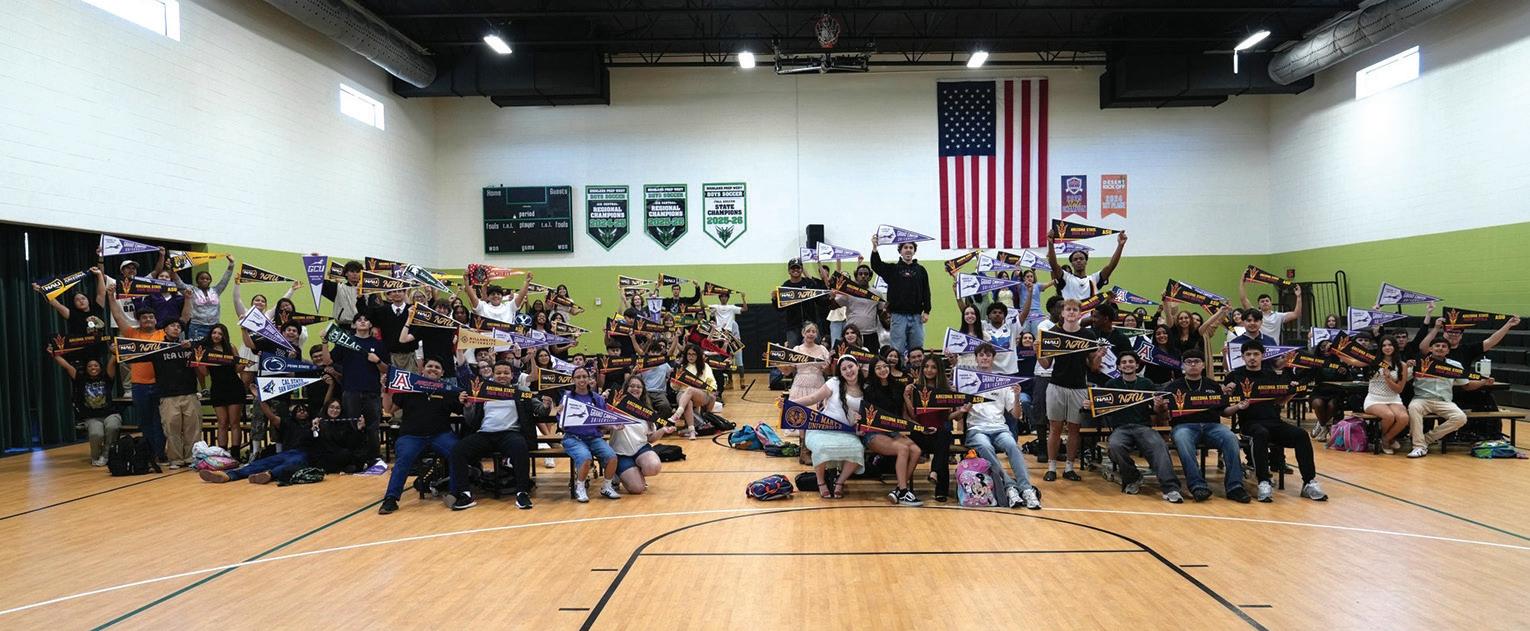
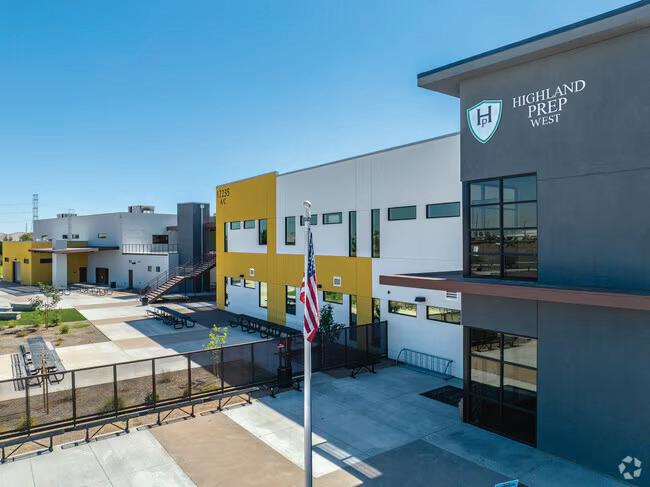
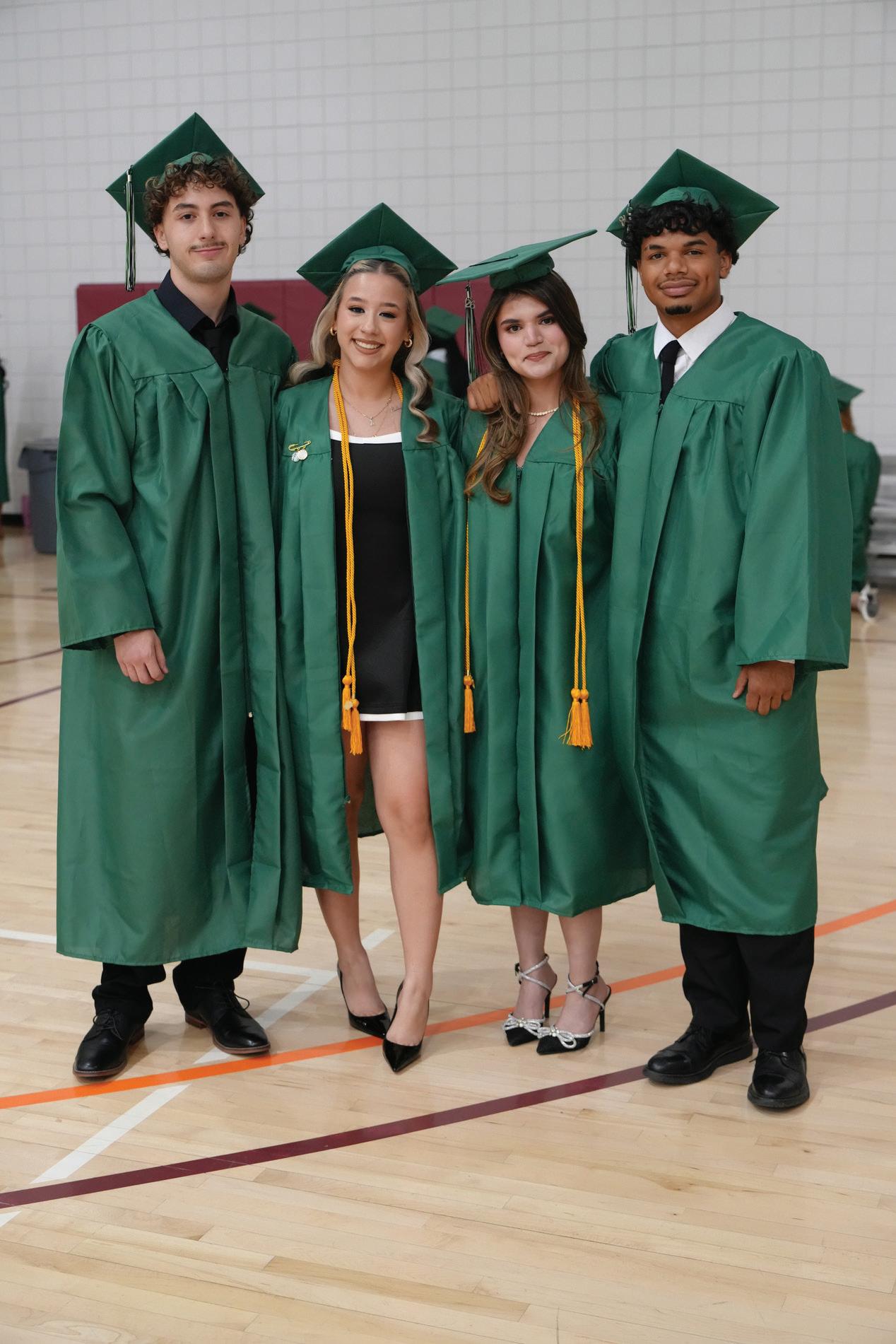
Four years ago, Highland Prep West opened its doors in Avondale with a handful of freshmen and 10 staff members. This week, it graduates its first class of 134 seniors — every single one of them accepted into a fouryear college or university.
That 100% acceptance rate is more than a milestone. For Principal Sharon Pozzi, it’s proof that the school’s approach works.
“I promise parents that once their students enroll at Highland Prep West, they will get into a four-year university,” Pozzi said. “We ensure that success through a close partnership between the student, the family and our school.”
Those acceptances span some of
the most competitive schools in the country, including Duke, Vanderbilt, Rice, UC Berkeley, NYU, the University of Pennsylvania and the University of Texas at Austin. Several students are also set to attend Embry Riddle Aeronautical University.
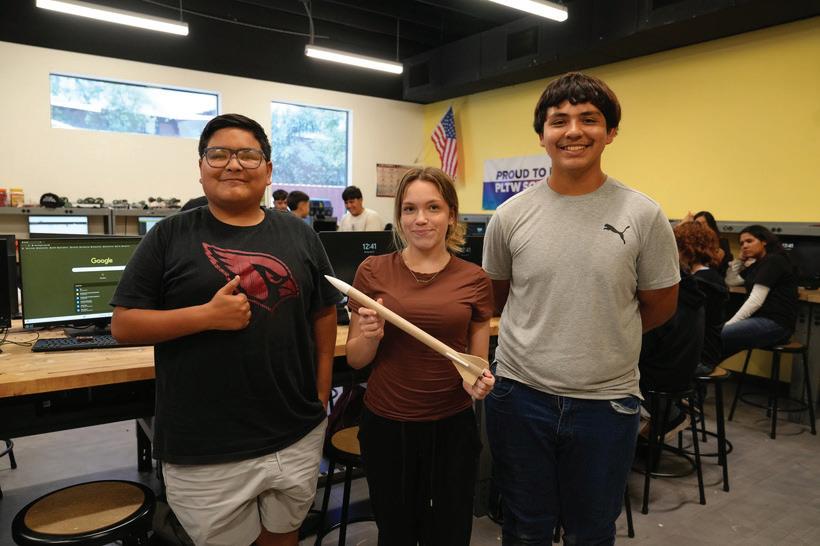
As a public charter school with deep roots in STEM education, Highland Prep West is built around college preparation with an engineering emphasis. Students take a minimum of three college-level engineering courses, alongside AP and dualenrollment classes, giving them a head start on the advanced academics they’ll study in college.
What truly sets Highland Prep West apart lies beyond the classroom. Through competitive engineering clubs, students gain a creative outlet to apply their skills, and the school’s
teams consistently win big.
The school’s VEX Robotics team has been a consistent competitor across Arizona, while its REC Aerial Drone Racing program has earned awards at multiple events. Most impressively, the school’s SeaPerch Robotics team — which builds and races underwater robotics — has qualified for nationals three years in a row and will be headed to Maryland again this spring.
“Not every student is an athlete,” Pozzi said. “This provides an alternative pathway for them to compete, showcase their talents, and succeed in their own way.”
On the athletic side, the school’s boys’ soccer team won the AIA state championship this year, defeating Sedona Red Rock, 2-0.
Next school year, Highland Prep West will introduce three new pro -
grams: welding and fabrication, an artificial intelligence course and an aviation pathway. Through a partnership with Embry-Riddle Aeronautical University, this aviation program fulfills nearly all the requirements for a pilot’s license, allowing students to potentially earn their wings before graduating from high school.
With just under 600 students, Highland Prep West is smaller than surrounding district schools — a choice Pozzi says is entirely by design.
“We give a truly personal education,” she said. “Every single one of our 600 students matter to us, and we refuse to let them fail. It’s just not an option.”
For West Valley families looking for a unique educational experience, Highland Prep West is currently enrolling. Learn more and apply today at highlandprepwest.org.






Engaging all students in world-class, future-focused learning.













BY JOE MCHUGH
When West Valley families search for a school that fits their child’s unique strengths and interests, many find what they’re looking for without leaving their community — and some drive past their neighborhood district to find it.
The Avondale Elementary School District serves students in preschool through eighth grade across nine award-winning schools, reaching families in both Avondale and a large portion of Goodyear. The district has earned repeated recognition as being among the best in the West Valley, and its reach extends beyond its own borders. Families from Buckeye, Phoenix and surrounding communities choose to enroll their children in AESD, drawn by the district’s academic programs and culture of belonging.
“It creates for us a tremendous sense of responsibility,” said Dr. Eric Dueppen, who is completing his first year as superintendent. “To ensure that we’re providing the very best, and that we’re always offering services worthy of the choices our community makes.”
At the heart of that culture is a philosophy the district calls Kids at Hope — a belief that every child is capable of success, without exception.
“We want all students to see themselves as having limitless futures,” Dueppen said. “Regardless of which program a child is in, they are in a school setting where we know and believe that every child is capable of success.”
That belief shapes everything from how students are greeted at the door to how they’re supported throughout the school day.
Linda Jeffries, director of commu -
nications and public relations, said students don’t just benefit from the culture — they help build it.
“Our students know about goal setting, and they know about their growth,” Jeffries said. “They’re setting their own goals and monitoring their own learning. Those are important skills as we prepare them for high school, college and careers.”
Student leadership is woven throughout the district through student councils, National Junior Honor Society chapters and the Avondale Hope Ambassadors — a student advisory group in grades 4 through 8. This year, Hope Ambassadors contributed input on strategic goals, helped select new math instructional materials and created the May Matters attendance campaign,
writing original messages encouraging their peers to stay engaged through the end of the school year.
The district’s specialized programs are among its most distinctive offerings. Desert Thunder houses a dual-language immersion program developing biliteracy in English and Spanish. Copper Trails offers an artsenriched curriculum with opportunities in dance, performance and music. Wildflower Accelerated Academy serves advanced learners, and Centerra Mirage STEM Academy anchors a dedicated STEM program. Neighborhood schools throughout the district round out the options, ensuring every family has a path that fits.
The district’s commitment to community begins early. The ACE pre -
school program serves children as young as 3, and ACE before- and after-school care gives working families reliable support throughout the day.
AESD is also one of the region’s largest employers — among the top six in the Southwest Valley — and regularly earns recognition as one of the best places to work. The district recently celebrated an employee marking 45 years of service.
“Because of our sincere desire to be connected to our community, we are able to support one another and, most importantly, support our students on their learning journey,” Dueppen said.
For more information about the Avondale Elementary School District, visit chooseaesd.org .








BY JOSHUA FENTY
Superintendent Jeremy Calles likens the Tolleson Union High School District to an airport in the sense that it is not a student’s destination, rather it is the place that helps guide students to where they want to go. For the superintendent, that philosophy shapes the district’s decisions — all intended to help students discover the path that best suits them.
“We know that our focus here is to help them get to their destination,” Calles said. “I tell everyone here, it’s like we’re the airport — we’re the people who help you get to your destination.”
The Tolleson Union High School District (TUHSD) offers various resources to help remove financial barriers for students, including free meals, laptops and other supplies. Educational tools that would otherwise cost more than $1,000 are provided free to students to use over their four-year journey. Additionally, students across the district receive free meals regardless of their family’s income.
“We’ve done our best to try to eliminate costs for our parents when they attend our school system,” Calles said. “You’re not paying for fees, you’re not paying for meals — we want to remove as many barriers as possible for students to participate.”
Calles said the district also provides as much as it can to ensure that extracurricular programs and opportunities remain accessible to students — from musical instruments for the bands, to NFL-grade helmets with concussiondetection technology for the football teams. In addition to offering various traditional athletic programs across the district, this year marks the first time TUHSD has participated in AIA Unified Sports — bringing students with and without intellectual disabilities together through athletics. The West Point High School unified flag football team won the state championship.
TUHSD consists of seven comprehensive high schools across Avondale, Glendale, Tolleson and Phoenix — Copper Canyon, La Joya Community, Sierra Linda, Tolleson Union, West Point and Westview — as well as University High School, a college-preparatory schoolwithin-a-school located on the Tolleson Union campus, an online Distance Learning Academy and two special programs. Construction is currently underway on its eighth comprehensive school, Estrella Vista Academy, which will include a career and technical education pathway focused on electric vehicles in partnership with Phoenix Raceway.
Currently, West Point, University and La Joya Community high schools have all earned A letter grades and are reflec-

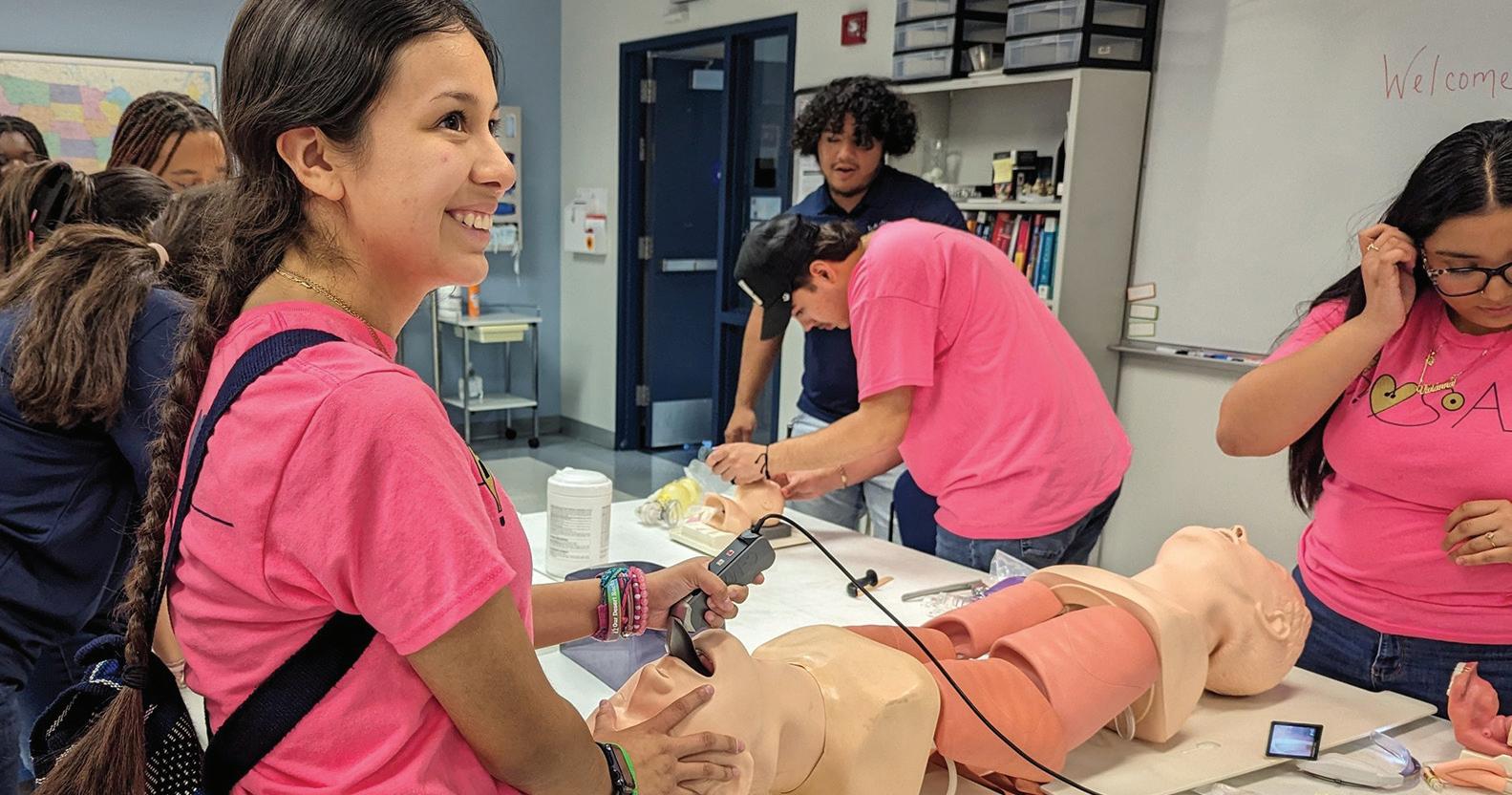
Students in Tolleson Union High School District career pathway programs receive hands-on experience designed to prepare them for future careers and higher education opportunities. (Tolleson Union High School District/Submitted)
tive of the district’s academic growth.
According to Calles, two University High School students each earned more than $2 million in scholarship offers this year — highlighting the district’s growing academic opportunities and college-readiness efforts.
Various college and technical education pathway programs, advanced placement courses and other academic opportunities can be found across the district. According to the superintendent, La Joya Community High School will start an International Baccalaureate program in the next academic year, Sierra Linda plans to include an African American studies course in its Advanced Placement lineup and West Point offers a Mandarin Chinese program as well. For parents whose students enjoy cutting-edge learning opportunities, Calles recommends they explore Westview High School’s Dreamscape Virtual Reality Education program and Copper Canyon’s esports teams.
According to the superintendent, the celebration of diversity and inclusion lies at the core of TUHSD’s values — reflected at community events across every campus.
“If you just wanted to walk in and just feel a great vibe on campus, attend any Unified Sports event — the program has created a lot of positive energy on campuses,” he said. “We honor diver-
sity, we honor inclusion and we respect everyone — everybody can be a part of Tolleson.”
The Tolleson Union High School District is nearing its 100th anniversary and has planned multiple projects for the future. Calles said he has hopes that voters will approve the construction of full-size, competitive gyms for Tolleson Union and Westview campuses — the district’s oldest schools — to benefit various extracurricular and athletics programs. He said that the district has forged new partnerships with organizations to strengthen the educational opportunities available to students — including Mastery Prep, which offers ACT readiness. Conversations among district officials, school principals, teachers, staff and students will continue as well to help provide the best experience possible down to the food items available on the menu.
For Calles, the students and staff are what make the Tolleson Union High School District a special place. In the years to come, he said the district’s goal will remain helping students discover who they are and where they hope to go next.
“It’s easy to tell a student, ‘You can be anything you want to be,’ and it’s a whole other thing to show them how to be it,” Calles said. “I just want to be that conduit that allows people to unlock and reach their potential.”











BY SAMANTHA REA
The majority of educators across the country receive little or no formal guidance about using artificial intelligence tools, according to a recent study from the Walton Family Foundation and Gallup.
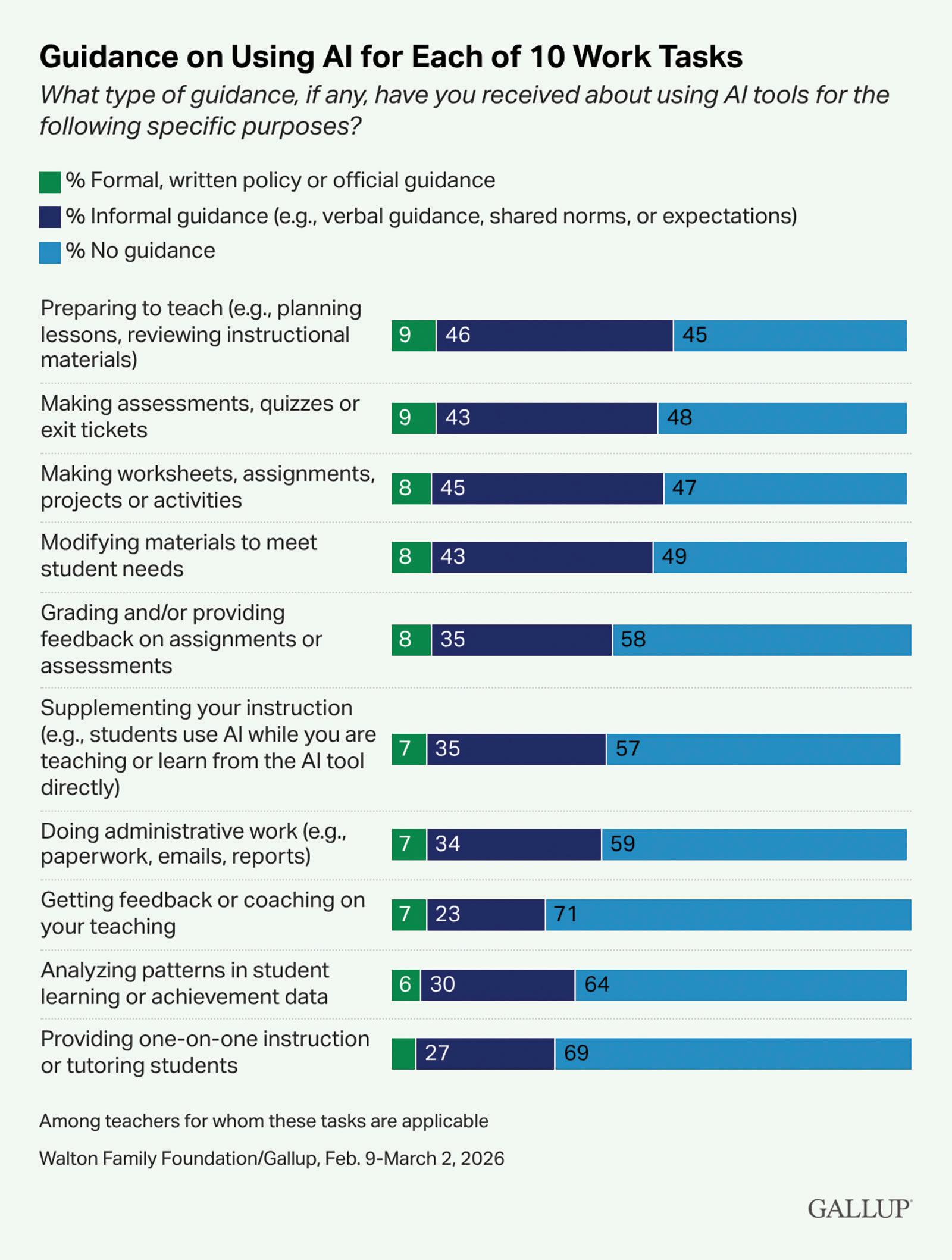
While a 2025 study by the same organizations showed nearly a third, or 32%, of surveyed K-12 educators using AI weekly, their most recent study — “Teaching for Tomorrow: Closing the Expectations Gap” — found nearly half (48%) of educators reported receiving only informal guidance on AI use, while 34% said they had received no guidance at all.
The findings are based on a national web survey conducted Feb. 9 to March 2 of 2,069 public K-12 teachers recruited through the RAND American Teacher Panel, a nationally representative group of educators.
The survey found that only 18% of teachers report receiving any type of formal guidance — including written policies or official guidance — from school administrators on how AI tools should be used.
Educators were surveyed on 10 tasks that they might use AI for, including:
• getting feedback or coaching on teaching;
• providing one-on-one instruction or tutoring students;
• analyzing patterns in student learning or achievement data;
• administrative work such as paperwork, emails and reports;
• grading and providing feedback on assignments or assessments;
• supplementing instruction, such as student use during instruction;
• modifying materials to meet student needs;
• making assessments, quizzes or exit tickets;
• making worksheets, assignments, projects or activities; and
• preparing to teach, such as planning lessons or reviewing instructional materials.
The four areas in which educators reported receiving the most guidance — whether formal or informal — were using AI to prepare lessons, create assignments and activi-
see AI page 16
Many K-12 teachers are turning to AI tools without formal guidance from administrators. (Gallup/Submitted)






The award winning Arizona Autism Charter Schools network is the only tuition-free, autism-focused charter in Arizona! We offer best practice programming for students at all levels of the autism spectrum. State of the art campuses in Phoenix, Peoria and a new campus in Mesa. We offer elementary, middle, and high school grades. Online learning options are also available through our accredited Online School.

BY JIMMY VAN WICKLER
As Arizona families prepare for the upcoming school year, Legacy Traditional Schools continues to expand its footprint across the state while maintaining a focus on traditional academics, character development and community engagement.
Founded in 2007, Legacy Traditional Schools now operates 22 campuses across Arizona — including an online academy — serving more than 22,000 students in grades K-8 with more than 915 teachers statewide. The tuition-free public charter school network spans communities throughout Maricopa, Pinal and Pima counties.
According to Superintendent Mia Vega, Legacy’s educational philosophy centers on a back-to-basics approach rooted in reading, writing and mathematics while also helping students become well-rounded individuals.
“We are a traditional school, so our themes through that are direct instruction,” Vega said. “We believe the teacher is the expert in the classroom and guides that instruction.”
Vega said Legacy schools currently hold A and B ratings from the Arizona Department of Education based on academic achievement data.
In addition to core academics, Legacy
incorporates civics education and patriotism into daily campus life, helping students understand government, citizenship and community responsibility.
“We think it’s important for students to understand who they are and how they can contribute to their community around them,” Vega said. “They don’t have to be an adult to give back and be contributing members.”
Schools regularly invite veterans, law enforcement officers, first responders and community leaders onto campuses to interact with students. Vega said those relationships help students build connections with community members while learning about service and leadership.
Legacy also emphasizes what school leaders refer to as a three-legged stool approach to education: motivated students, highly effective teachers and cooperative parents.
“You can’t really teach a well-rounded child without all three of those components being equal contributors,” Vega said.
The network offers a variety of enrichment opportunities designed to complement academics and help students explore their interests and talents. Beginning in third grade, students can participate in specialized tracks, including:
• Momentum Fitness, focused on athletics, health and physical education


• Mozart Performing Arts, which includes music theory, piano, choir and instrumental instruction
• Masterpiece Visual Arts, featuring ceramics, painting and other visual arts
• Masterminds STEM, emphasizing science, technology, engineering and mathematics
Students also have access to clubs, competitive athletics, school musicals and extracurricular activities ranging from esports to track and field.
“We understand that academics are vital to a student’s success, but we also understand the needs of students evolve,” Vega said. “We want them well prepared when they enter high school and beyond.”
Legacy campuses also integrate technology into the classroom through a one-to-one student device program while continuing to teach traditional skills such as cursive handwriting.
Vega said creating a positive school culture remains a major priority.
“We want students to feel welcome, and we want them to feel safe,” Vega said. “We want families to feel that it was the right decision to bring them to our school.”
Communication between schools and families is maintained through
newsletters, social media, parent surveys and the ParentSquare platform, which allows teachers and administrators to share updates and communicate directly with parents.
Legacy also partners with Vertex Education, which provides operational and administrative support for the charter network.
“Vertex is an amazing partner for Legacy,” Vega said. “They handle a lot of the back-of-house operations so our principals and teachers can focus on students and instruction.”
As the school year ends, Legacy campuses are preparing for summer community events, including Splash Into Legacy, a June series featuring water slides, games and activities open to families and community members.
Vega encouraged families interested in Legacy to visit campuses, attend tours and explore school social media pages to learn more about the culture and programs offered.
“We hope families feel welcomed and safe when they walk through our doors,” Vega said. “We hope they feel an energy that excites them for learning.”
Visit LegacyTraditional.org to learn more or begin the enrollment process.

Legacy builds a strong foundation starting in kindergarten, focusing on early literacy and math skills, which are proven to help your child succeed across all subjects throughout their education.
• Accelerated academics focused on fundamental skills in reading and math.
• Art, music, and P.E. to give students a well-rounded education.
• Frequent events and strong parent involvement make your family feel right at home from the first day of school.
• Full-day kindergarten with affordable before- and after-school care options for active parents.
With civics and patriotism ingrained in daily learning, our students learn to be good citizens and upstanding members of the community.
Start your child’s education journey with a foundation for success. Visit legacytraditional.org TUITION-FREE GRADES K – 8






BY JOSHUA FENTY
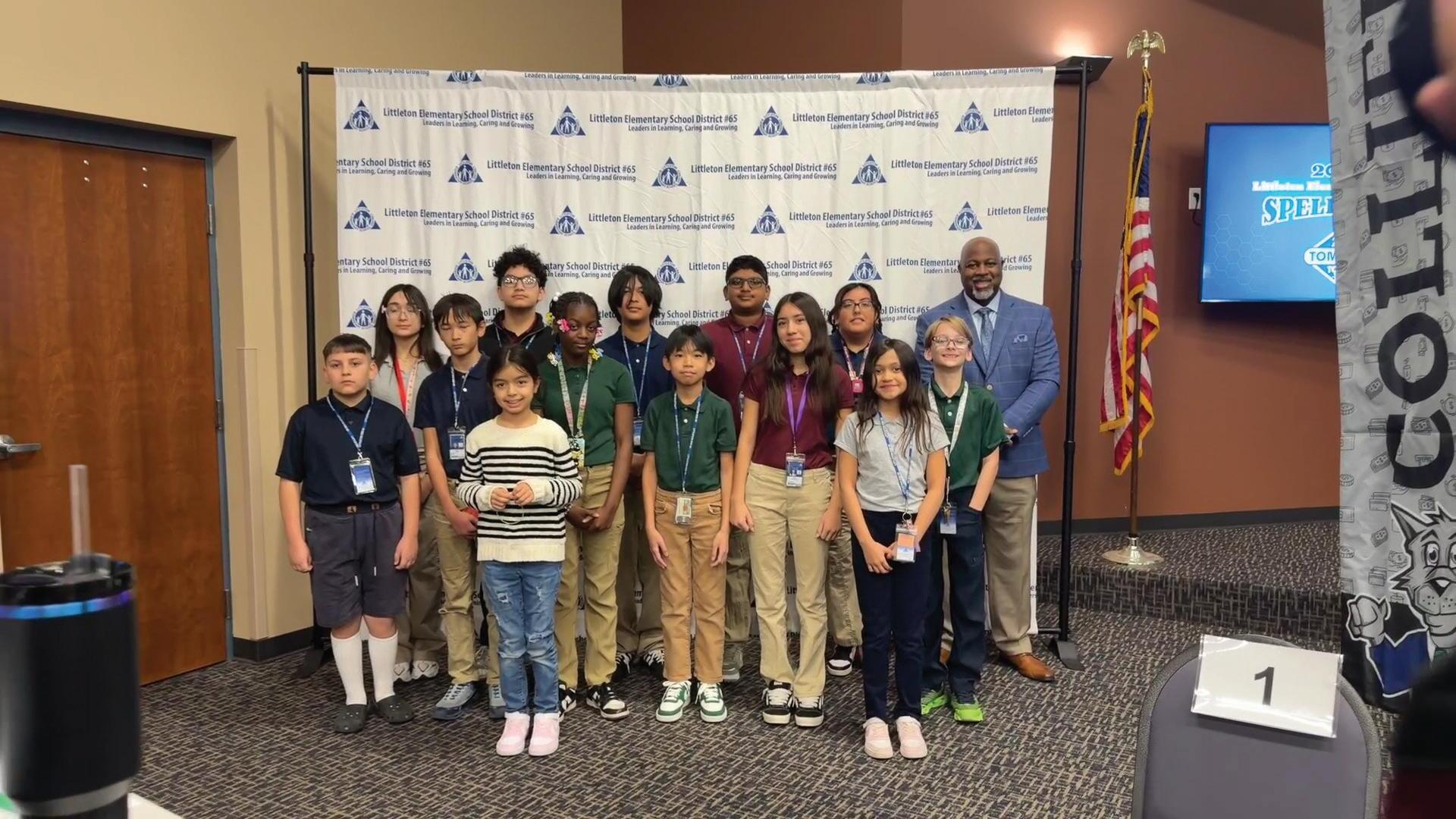
For Superintendent Louis Laffitte, the Littleton Elementary School District is a historic, community-based, family-oriented organization driven by the community. A high-quality education, paired with experiences for growth, development and discovery, are among the opportunities Laffitte said he guarantees students will have.
“We want every child to have opportunities, experiences and exposure that help them discover who they are
and what they can become,” Laffitte said. “Our schools all have different identities, but they share the same mission — helping students succeed and preparing them for the future.”
The Littleton Elementary School District is home to eight campuses and an online learning academy — each with its own academic focus.
The Collier Business Academy, the superintendent explained, emphasizes financial literacy for its students and their parents alike, while the Littleton STEM Academy seeks to develop the software developers, data analysts and cybersecurity

specialists of tomorrow. The superintendent noted that Littleton STEM has been one of its highest-achieving campuses — earning a letter grade of A two years in a row and an A-plus this year.
“At Littleton, Principal Eric Atuahene started there before the COVID-19 pandemic,” Laffitte said. “He turned it around and got them moving from lower achievement to one of the highest achieving schools in the state.”
Laffitte said that Estrella Vista STEM Academy also earned an ‘A’ this year after previously struggling academically before Principal Samantha Armstrong’s leadership guided its turnaround. Focusing more on engineering, the school has a partnership with Phoenix Raceway that offers students the opportunity to visit the track for various educational activities and an inside look at careers in the field.
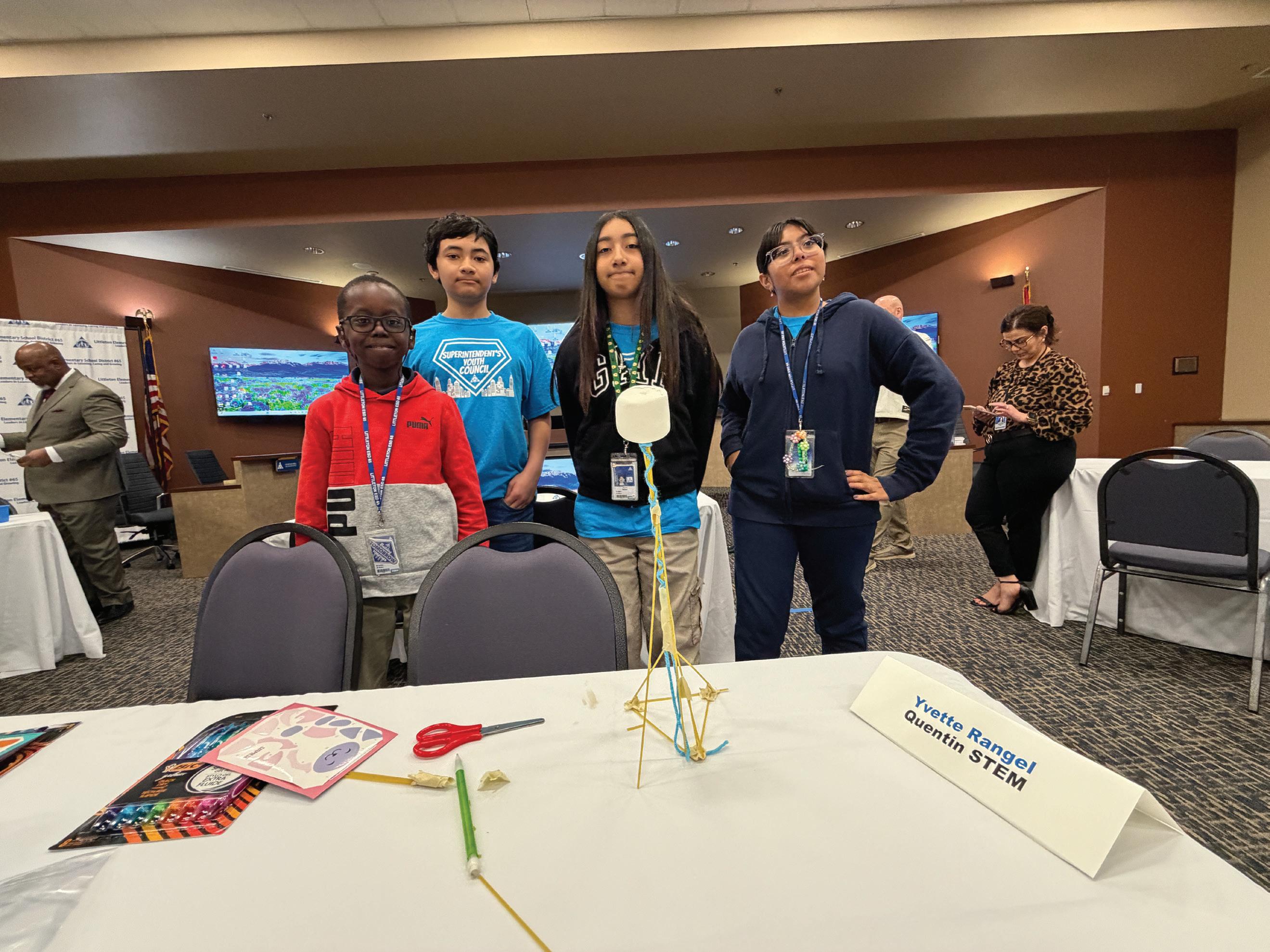
Quentin STEM Academy spotlights health services and partners with West-MEC, the American Red Cross and other educational and health organizations to educate students who aspire to work in health care.
The remaining four campuses are focused more on the humanities, social sciences and civics. At Country Place Leadership Academy, the curriculum focuses on leadership skill development for future presidents, governors, mayors, judges and legislators. Tres Rios Service Academy focuses on teaching students the skills necessary to impact their communities through various public service careers — partnering with the Maricopa County Sheriff’s Office, Phoenix Fire Department and Luke Air Force Base to enhance the experience.
Lakin Prep Academy, Laffitte said, is the newest member of the LESD family and offers an immersive lan -
guage experience. As an International Baccalaureate-accredited institution, classes are taught in both English and Spanish to encourage fluency in both languages regardless of students' home language. Finally, Freeman Fine Arts Academy weaves music, dance, theater, visual art and sculpture into its curriculum.
“A lot of our students are thriving there — the artistic outlet helps them connect all of the dots academically,” the superintendent said.
Because each school possesses its own academic focus, Laffitte explained, students are able to discover their passions through exposure to future career options. To support its academy model and ensure that students have access to the campus best suited to their needs, interests and aspirations, Laffitte said the district offers cross-district transportation. At the center of everything the Littleton Elementary School District stands for, Laffitte explained, is community. Many of the events the district holds — including the recent Community Festival — are intended to foster connection and engagement. He said the students are a reflection of the immense support they receive from families and residents throughout the district.
Looking to the future, Laffitte said the district is anticipating growth and steadily improving academic performance. As the next academic year approaches, the superintendent said he hopes parents and students find their home and community there.
“We want kids to come to school excited about learning, excited about their future and excited about being part of something,” Laffitte said. “If students can find their passion, build friendships and feel connected to their campus, then we’ve done our job.”






ties, create assessments or exit tickets, and modify materials for student needs.
While 37% of teachers surveyed in 2025 reported using AI at least monthly to prepare to teach, 45% of teachers surveyed in 2026 reported receiving no guidance on using AI for the task. Only 9% reported receiving some formal guidance.
Creating worksheets, assignments, projects and classroom activities was another common use for AI tools, with 33% of educators in the 2025 survey reporting they used AI for the task at least monthly. But in the 2026 survey, just 8% said they had received formal guidance from administrators on how AI should be used for that purpose. Forty-five percent reported receiving informal guidance, while 47% said they had received none.
Only 9% of educators surveyed in the recent study reported receiving formal guidance on using AI to make assessments, quizzes or exit tickets, despite one-fourth (25%) of educators surveyed in 2025 reporting they use AI for the task at least monthly. Forty-three percent reported receiving some informal guidance, while 48% reported receiving no guidance.
When it comes to modifying materials to meet student needs, 28% of teachers surveyed in 2025 reported using AI for the task. However, in 2026, 49% of educators reported receiving no guidance on doing so, while 43% report receiving some informal guidance.
Educators received even less guidance on more sensitive or individualized uses of AI tools, according to the study.
Fifty-eight percent of teachers reported receiving no guidance on using AI for grading and providing feedback on assignments or assessments, while 69% said they had received no guidance on using AI in one-onone instruction or tutoring students.
Among teachers who did report receiving some guidance, researchers found most of it was informal rather than through official district policies or written expectations. “For many teachers, decisions about if, when and how to use AI are being made individually, in the absence of clear institutional expectations,” the study report said.
The study also found that teachers in higher-needs schools were less likely to

receive guidance than those in wealthier schools, especially when it comes to how they should apply AI tools to the creation of student materials.
Fifty-nine percent of teachers in the wealthiest schools received some type of guidance on how to use AI tools in making worksheets and assignments — 10 percentage points more than the highest-need schools.
Even when educators reported receiving guidance on AI use in the classroom, many said it stopped short of giving clear direction. According to the report, most teachers who received some form of guidance said it neither encouraged nor discouraged AI use.
However, among the less ambiguous guidance teachers reported, the study found that schools were most likely to encourage AI use for instructional preparation tasks, including modifying student materials, creating worksheets and assignments, and preparing lessons. However, schools were less likely to encourage AI use for tasks involving direct student interaction, such as one-on-one instruction or tutoring.
Discouragement was relatively uncommon overall, though 1 in 10 teachers who
received guidance on AI-assisted grading said they had been discouraged from using the technology for that purpose.
Arizona lawmakers introduced multiple bills this legislative session related to AI in schools, including legislation focused on AI instruction, school policies and statewide education programs — though none made it to the governor’s desk this session.
One proposal, House Bill 4005, would require Arizona public school districts to provide instruction on the ethical, moral and educational uses of AI beginning in the 2027-28 school year. However, none of the proposals appear to focus specifically on providing formal AI guidance or training for K-12 educators.
As AI tools become more common in classrooms, the findings from the Walton Family Foundation and Gallup study suggest many educators continue to navigate the technology largely on their own, often without formal policies or consistent guidance from schools and administrators.
This story is made possible through grant funding from the Arizona Local News Foundation’s Arizona Community Collaborative Fund.




BY JOSHUA FENTY
For Superintendent Dr. Steve Bebee, the Buckeye Union High School District feels like a closeknit, hometown community. Block scheduling, expansive career and technical education, and an array of extracurricular programs are part of what helps students discover where they fit and prepare for life after graduation, he said.
“When you walk onto any one of our campuses, it feels like the hometown high school,” Bebee said. “Every student should be able to find their niche here — whatever their interests are, we have something to offer them to enhance their high school experience.
“We’re going to give students every opportunity to experience just about anything they would like to experience in school.”
For the past two years, all campuses in the Buckeye Union High School District (BUHSD) have been A-rated schools — Buckeye Union, Youngker and Estrella Foothills. According to the superintendent, the district also has a graduation rate of more than 90%. That success, the superintendent said, is largely attribut-
able to the efforts of the staff members who work there. “That doesn’t happen by accident — it’s the product of a lot of people working very hard,” Bebee said.
“It’s not just our teachers, it’s our paraprofessionals, our support staff and our administration.
“We are blessed to have some outstanding individuals who truly care about kids and want to make a difference in the lives of children every day.”
One of the ways the district approaches student success is by implementing block scheduling across its campuses. Rather than six classes in one day, BUHSD students take four 90-minute classes daily. The benefit of the structure, Bebee explained, is that it allows teachers and students alike more time to engage with course materials. Having more instructional time also allows students to take a different set of classes each semester — which ultimately means that students can take up to 16 elective courses in their four years. Additionally, the flexibility afforded by block scheduling, Bebee explained, allows the district to offer 21 CTE programs, including 11 at Estrella Foothills, 13 at Youngker and 15 at Buckeye Union.

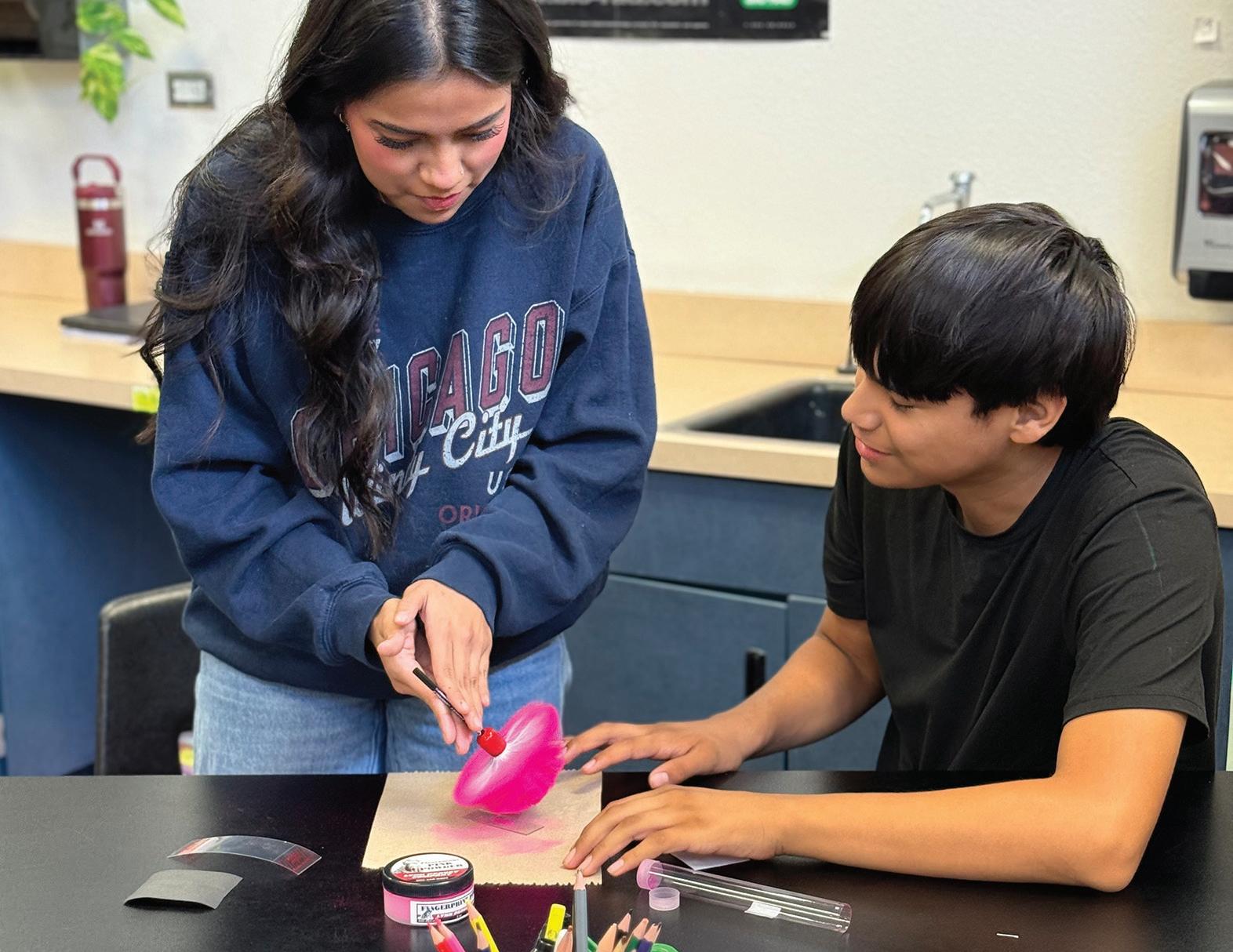
One of the distinctive courses offered in the district is the Future Ready class — designed to teach students essential life skills. According to Bebee, students learn about personal finance, resume writing, job applications and interviewing skills. The combination of the CTE courses and the Future Ready class is intended to ensure students are ready for life after high school — whether they are looking to attend a four-year university or enter the workforce.
Beyond academics, the superintendent said that the district also places a strong emphasis on extracurricular activities for students. Multiple athletics programs and fine arts are available across all three campuses. The Buckeye Union High School District is one of very few school districts across the state to offer unified sports — athletic programs that bring
together students with and without physical or intellectual disabilities.
“The peer partners probably get just as much out of it as the athletes do,” Bebee said. “It’s really cool to see and it makes a difference for all of those kids.”
For the superintendent, the most defining characteristic of the Buckeye Union High School District is the sense of community shared across each campus. He said students from more than 120 districts open-enroll in BUHSD for its academic and extracurricular opportunities. With each graduating class, Bebee said his greatest joy is when the students return to share stories about their lives.
“I don’t think families will find a more welcoming and caring environment,” Bebee said. “We work really hard to make sure students graduate ready for whatever their next step in life might be.”