Cook Out: Elevate Your Home’s Outdoor Kitchen
BY ASHLEY BREEDING | PHOTOGRAPHS BY TK
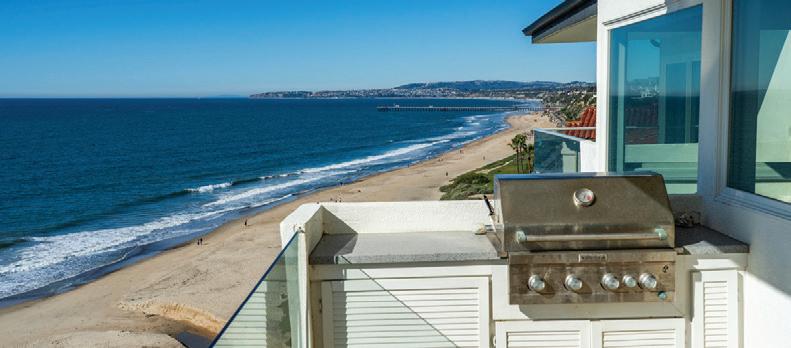
In Southern California, mild climes beckon outdoor living year-round: hiking and mountain biking in the canyons; exploring the waves by board or paddle boat; and cooking and dining al fresco in your own backyard.
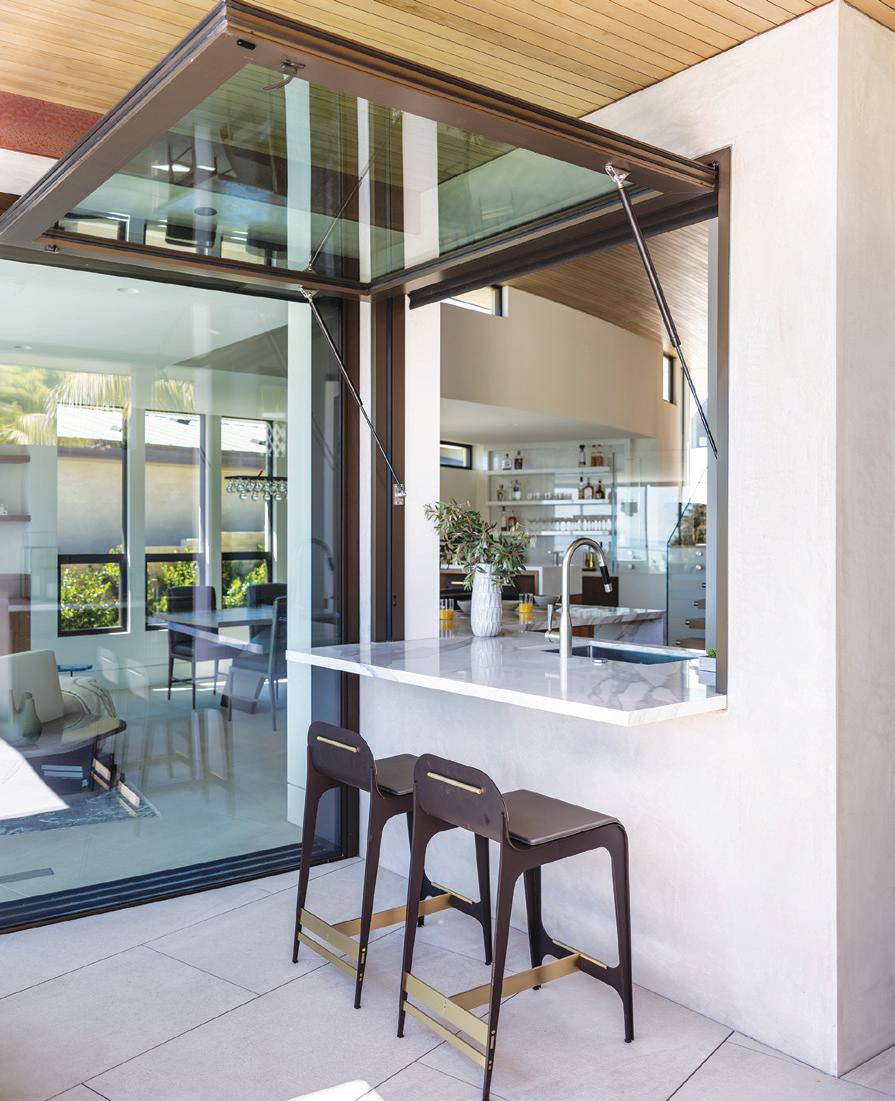
Incorporating an outdoor kitchen further blurs the line between indoors and out, and extends your home’s square footage for both intimate family dinners and entertaining friends.
Michael Fullen, founder of Fullen Enany Design Group (fullenenany.com), says you don’t even need a capacious yard to enjoy this luxury.
“Outdoor kitchens can be designed to fit in small or large spaces, [but] there are some key objectives to consider,” he says, noting style, types of appliances, and outdoor seating that accommodate your lifestyle. “You’ll also need to consider cir-
culation in the work area, seating requirements, ventilation and, of course, the [appliance] requirements like the electrical and gas or other utilities.”
Eye on design
While a Mediterranean-inspired kitchen — natural stone, terracotta, decorative tile — SoCal’s historic Spanish Colonial houses, Fullen sees “a move toward more contemporary or transitional design,” he says, even for homes that are more on the traditional side. For a contemporary outdoor kitchen, he points to characteristics like “integrated drawer and cabinet pulls, bold colors, and unique surface materials with strong veining. A transitional outdoor kitchen could [include] decorative hardware, softer colors for the cabinetry
(Cont. on page 16)
(Cont. from page 12)
finish, and visually quieter work surfaces.”
Deana Duffek, CEO and principal designer at Pure Design House (puredesignhouse. com), focuses first and foremost on “nontoxic, clean living and building materials,” she says, noting a personal struggle with mold toxicity that influenced her design ethos. Beyond healthy living, Duffek prioritizes a beautiful aesthetic for her luxury clients. That starts with a seamless transition.
“When building an outdoor [living] area, we carry the design of the interior to the exterior of the house to create continuity,” she explains. “You don’t want to see a bunch of stainless steel appliances.”
One way Duffek marries two adjacent spaces is by partnering with Moya Living (moyaliving.com), which specializes in custom powder coating stainless steel and aluminum cabinetry that she says elevates the design and protects against coastal elements like salt air. (A dry powder, charged with static electricity, is sprayed onto the surface and then baked at high temperature.)
“For instance, if you have a yellow kitchen, we can use that same color palette on the outdoor kitchen equipment,” explains Duffek, who is currently designing an interior kitchen in Laguna Beach with white oak and copper that’s she’ll “bring straight across to the outdoor kitchen, so it looks
seamless,” she says.
Moya Living founder, Moya O’Neill, works with some the area’s most notable architects and designers primarily on oceanfront properties. While many of her Palm Springs clients prefer their outdoor kitchens to pop in shades of tangerine and sunshine-yellow against a blue desert sky, coastal clients are more, well, coastal, she says. “Blues and greens are in high demand. …The colors are beautiful and will last 100 years.”
Julie Laughton, another local designer, agrees all colors should match, indoors and out. Her beach clients, however, are warmer and more subdued. Also inspired by a beach palette, she focuses more on “grains of sand — taupe, brown, natural shades,” she says.“Colors of the ocean and sky come in accents only — movable things like furniture cushions and other items you can change over time.”
Duffek, who has designed outdoor kitchens on both small and large scales (she’s working on both a 16,000 squarefoot-house with all the outdoor-cooking accoutrements, as well as a modest beach cottage where she’s installed Fleetwood doors between the home and yard to visually open up the space), says that in addition to the kitchen itself, she leans to -
(Cont. on page 14)
“Jennifer and Amysue were amazing to work with and really went the extra mile to help our
(for more than asking). If you're looking for a hands on and personable experience look no further.”
ward natural materials—stone, wood— that mimic a home’s interior.
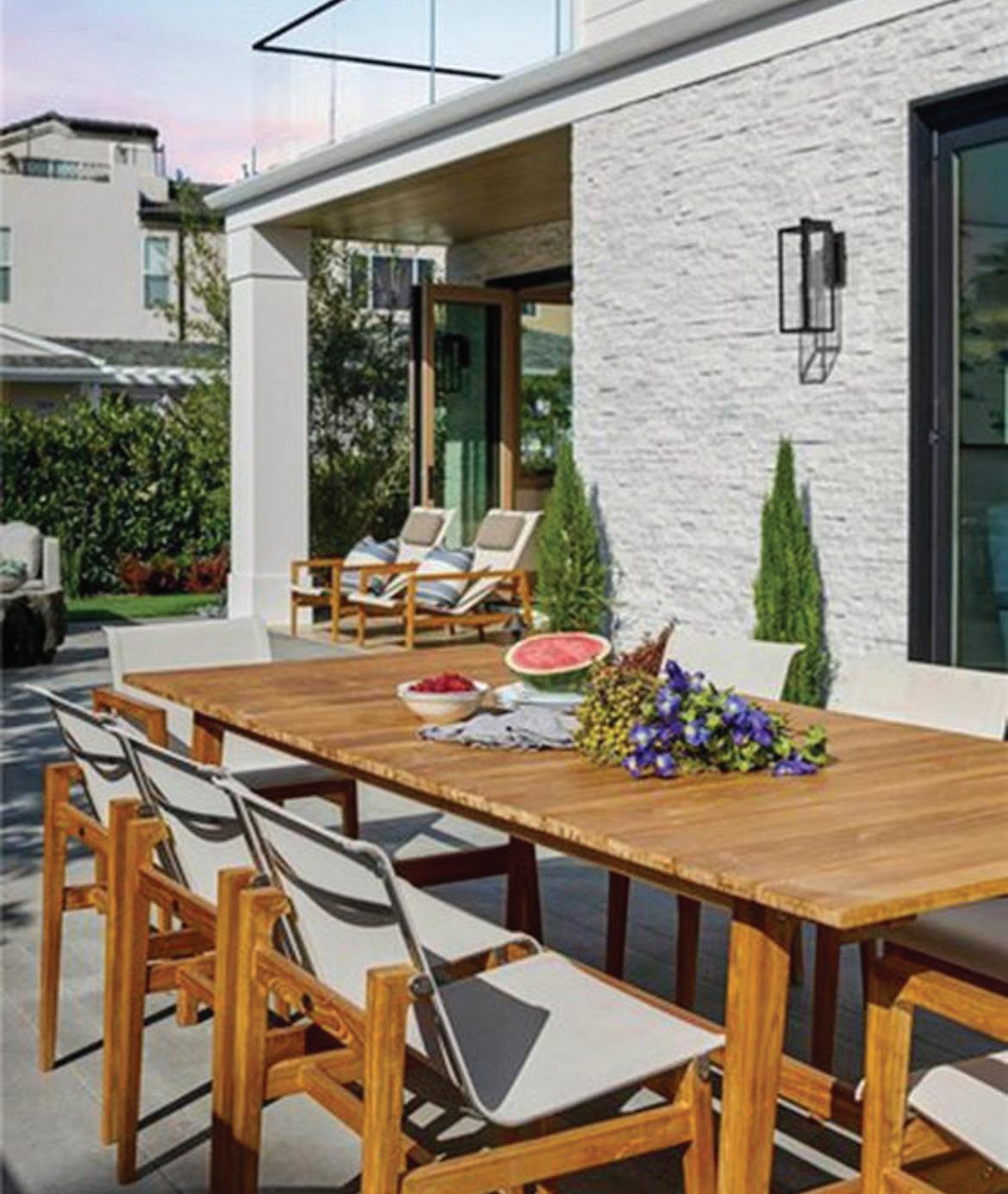
If there’s room for a dining table, she likes to install a pergola (with ceiling fans) to provide shade and create a cozy vignette. Equally important to choosing appliances and cabinets that withstand the elements, she opts for quality furniture (teak wood, upcycled rice hulls from Modern Mill) and fabrics (organic hemp, canvas) that will do the same.
Laughton likes to “continue all creature comforts” from the inside, outdoors too. Beneath the pergola, she’ll include luxuries like space heaters and surround sound to play music, that further enhance the space. Within the kitchen, refrigerators, wine storage, and even ice makers are a must.
Chef favorites
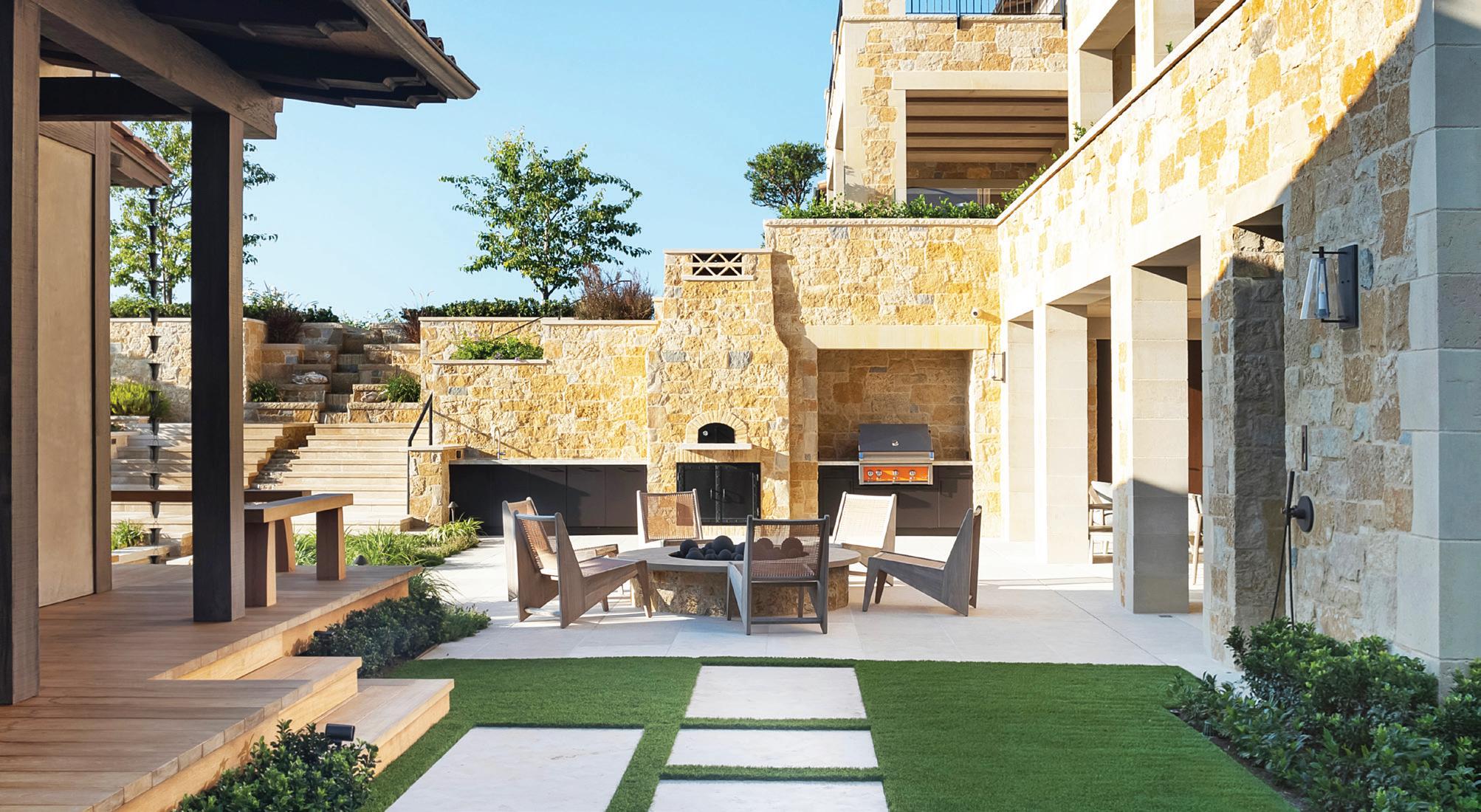
When designing an outdoor kitchen, Fullen considers what his clients plan to prepare. “We are seeing a lot of demand for barbecues that use a variety of fuel medium, like charcoal, pellets, or wood,” he says. “Flat-top griddles, which are great for burgers or teppanyaki, plus pizza ovens, rotisseries, and smokers are also common requests by outdoor chefs.
Mike Pyle, founder of an eponymous design firm, (mikepyledesign.com) who formerly owned a landscaping business (and hosted two seasons of HGTV’s “Inside Out”) takes a more
simplistic design approach to outdoor-kitchen design. While he echoes the concept of connecting interior and exterior design, he prefers to invest more in items that actually do the cooking.
“Once you start [installing] sinks and refrigerators out there, it tends to junk up over time,” he points out. “Plus, an outdoor [cooking area] is typically close in proximity to the kitchen inside the home, so you don’t need a whole lot. I would rather invest that money in a higher-end outdoor grill.”
Like Pyle, many of his clients want to incorporate multiple styles of cooking outdoors. For versatility, he recommends a pizza oven (he personally prefers the Gozney Dome, which he uses at his own home); a smoker or barbeque for meats, poultry, seafood, and vegetables; and a gas or electric flat grill, which Pyle says can be used to prepare “anything from stir fry to tacos to smash burgers.” It’s an oft overlooked but highly functional addition, he says.
Pyle likes to keep the aesthetic unfussy, too. Currently in the process of launching his own prefab line, called Prism by Mike Pyle, he focuses on customizable finished concrete that’s lightweight and offers ample storage—essential for all the outdoor cooking accoutrements.
“The idea is less maintenance, more function and purposefulness,” he says. Something else to note: “Scale is huge,” he says, noting that about 5 or 6 feet of space around each area is ideal.
4
| 3 BA | 2,800 SF | .14 AC
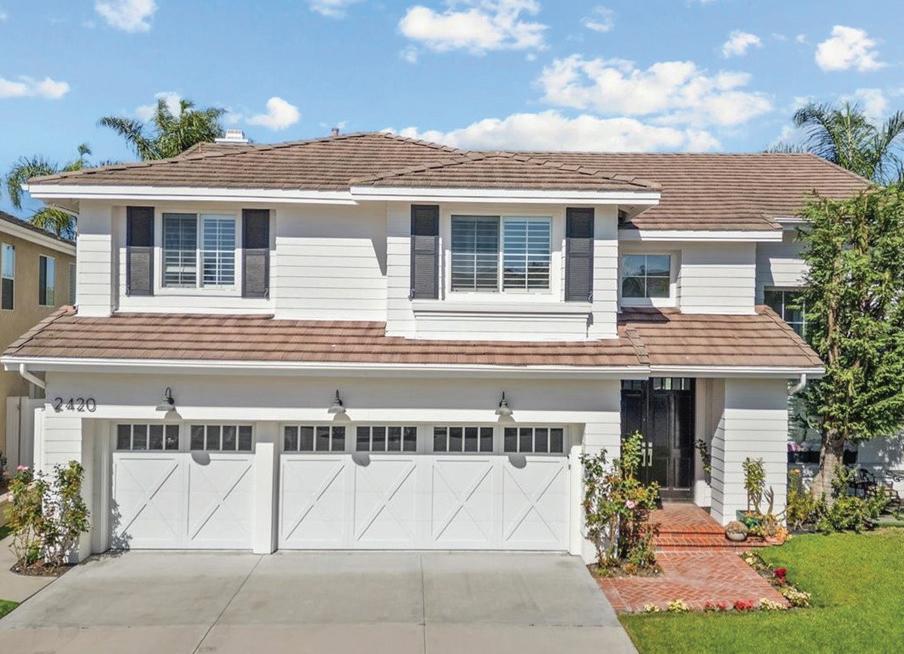
Turnkey modern farmhouse in guardgated Marblehead with panoramic ocean, Catalina, and city-light views. Nearly $1M in upgrades, a designer chef’s kitchen, mainlevel guest suite, spa-like primary retreat, and entertainer’s backyard with fire pit and jacuzzi.