HOW CALIFORNIA GUN LAWS FAILED TO DISARM WHCA SHOOTING SUSPECT
TOTAL NON-RESIDENT CARRY BANS ARE GONE WHAT COMES NEXT?

HOW CALIFORNIA GUN LAWS FAILED TO DISARM WHCA SHOOTING SUSPECT
TOTAL NON-RESIDENT CARRY BANS ARE GONE WHAT COMES NEXT?
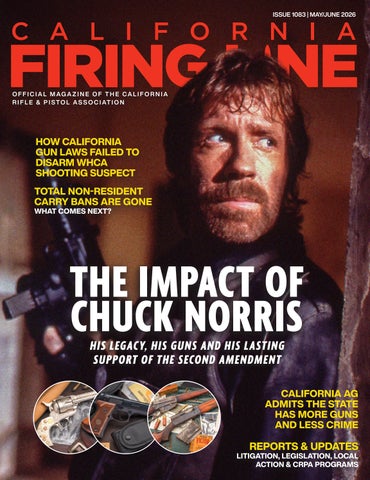
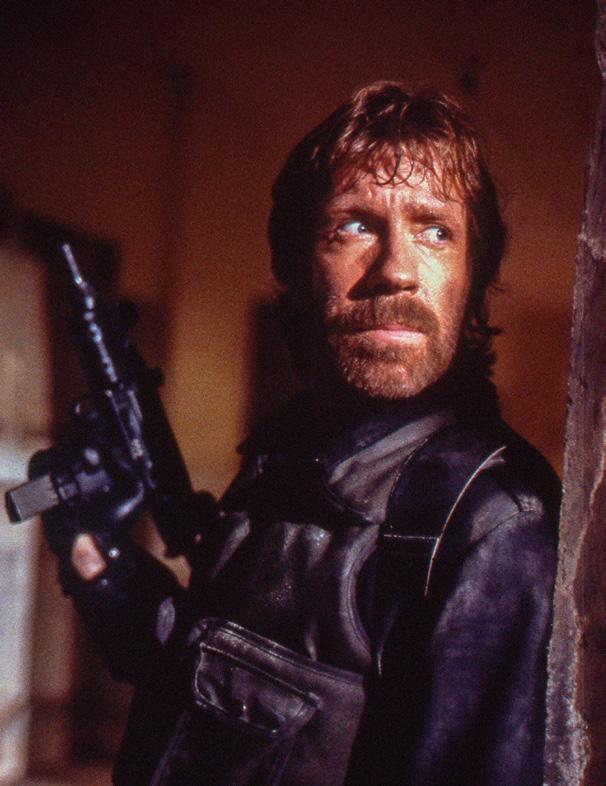
HIS LEGACY, HIS GUNS AND HIS LASTING SUPPORT OF THE SECOND AMENDMENT


CALIFORNIA AG ADMITS THE STATE HAS MORE GUNS AND LESS CRIME




ISSN 2689-0046 (print)
ISSN 2689-0062 (online) California Firing Line, copyright ©2026 by the California Rifle & Pistol Association, Inc., is published bimonthly (6 times per year) in January, March, May, July, September and November.
SUBSCRIPTION and CRPA MEMBERSHIP
INQUIRIES: California Firing Line is sent to all CRPA members as a membership benefit. The magazine may also be purchased at the subscription rate of $35 per year or $8.95 for a single copy. Inquire at contact@crpa.org or (714) 992-2772.
ADVERTISING INQUIRIES: Contact us at advertising@firebrandmediainc.com
COPYRIGHT NOTICE: The entire contents of this magazine are copyrighted, and all rights are reserved. In accordance with Title 17 U.S.C. Section 107, any copyrighted work in this publication is distributed under Fair Use without profit or payment to those who have expressed a prior interest in receiving the included information for non-profit research and educational purposes only. law.cornell.edu/uscode/text/17/107
PERMISSION TO REPRODUCE: No portion of the magazine may be reproduced in whole or in part without written consent.
DISCLAIMER: Caution: All technical data in this publication may reflect the limited experience of individuals using specific tools, products, equipment and components under specific conditions and circumstances not necessarily herein reported, over which the California Rifle & Pistol Association, Inc. has no control. The data has not been tested or verified by the CRPA. The CRPA membership, its Board of Directors, Agents, Officers, Employees and Publisher accept no responsibility for the results obtained by persons using such data and disclaim all liability for any consequential injuries or damages.
Opinions expressed herein are those of the writers and are not to be construed as those of the Publisher nor as the official views of the CRPA or any of its agencies, unless otherwise made manifest by writers or spokespersons acting on behalf of the foregoing. Advertising of products and services herein does not imply endorsement or approval by the Publisher or CRPA
POSTMASTER: Send address changes to California Firing Line c/o California Rifle & Pistol Association, Inc., 271 E. Imperial Highway, Suite #620, Fullerton, CA 92835 or email the CRPA at contact@crpa.org. Periodical postage paid at Fullerton, CA and additional mailing offices.


California Rifle & Pistol Association, Inc. 271 E. Imperial Highway, Suite 620 Fullerton, CA 92835 (714) 992-2772 CRPA.org
The California Rifle & Pistol Association, Inc. (CRPA) is a nonprofit association governed by an independent Board of Directors. CRPA’s mission is to promote civilian marksmanship and qualifying state championship competitions; educate the public about firearms and the right to keep and bear arms; protect the right to choose to own a gun to hunt, for sport and to defend yourself and your family; and promote the shooting sports.
EXECUTIVE EDITOR Chuck Michel, CRPA President
CONTRIBUTORS
Don Barnes
Lloyd Billingsley
Sean Brady
Chris Cheng
Tiffany D. Cheuvront
Jerry Clark
Matthew D. Cubeiro
Brian Fitzpatrick
Alex Frank
Kevin Small
Thomas E. Gift, MD
Steve Helsley
Sarah Keller
Daonald Kilmer
Konstadinos Moros
David Kopel
William McLaughlin
Chuck Michel
Sam Paredes
Robert B. Young, MD
Guy Smith
Craig Stowers
Rick Travis
Nick Villa
Ryan Watts
Josh Wayner
Knox Williams
Doris Wise
Dan Gifford
Tarryn Small
BY C.D. MICHEL / CRPA PRESIDENT & GENERAL COUNSEL
IF YOU FOLLOW CRPA’S WORK, EVEN CASUALLY, YOU’VE LIKELY NOTICED ONE THING, OUR LITIGATION IS FRONT AND CENTER. THAT’S NOT BY ACCIDENT.
Court battles are where many of the most visible fights for our rights take place. They are measurable. They generate headlines. And in a state like California, where the Legislature seems determined to test the outer limits of constitutional overreach, they are absolutely necessary.
But here’s what often gets missed: CRPA is not just a litigation organization. And if we were, we would lose. The fight for the Second Amendment in California is not just about what happens in a courtroom. It is about what happens at the range, in families, in communities, and most importantly, with the next generation.
The Other Front in the Fight
There is a broader strategy at play from anti-gun policymakers in this state. It is not just about regulating firearms. It is about regulating the culture around them. If you cannot ban something outright, the next best option is to make it socially isolated, generationally disconnected, and culturally irrelevant.
Over time, that erodes participation. And when participation drops, so does
political resistance. That is not speculation. It is strategy. And that is why CRPA’s work extends far beyond litigation.
CRPA has invested heavily in programs that do something far more important than winning a single case. We build and sustain California’s shooting culture. That includes youth shooting programs, women’s outreach and training initiatives, competitive shooting support, firearms education and safety programs, community-based range engagement, and local CRPA grassroots chapters across the state. Those grassroots chapters are especially important. They connect CRPA directly to communities, organize local engagement, and ensure that advocacy is not just happening at the state level, but on the ground where it matters most. These programs do not always make headlines, but they are foundational. If you do not bring new people into the shooting sports, especially young people, you are not preserving rights, you are managing a slow decline.
Nowhere is this more evident than in our youth programs. Introducing young people to the shooting sports is not just about recreation. It is about discipline, responsibility, safety, confidence, and respect for the law. For many families, it is also about tradition, passing down skills
BY CHUCK MICHEL / CRPA PRESIDENT & GENERAL COUNSEL
and values from one generation to the next.
That is precisely why these programs have become a target.
That brings us to one of the most important recent victories CRPA has secured, Junior Shooting Sports v. Bonta. In that case, California attempted something unprecedented, a ban on marketing lawful firearm-related activities to minors.
On its face, it was framed as a consumer protection measure. In reality, it was an attempt to cut off the pipeline. No outreach. No visibility. No introduction to the shooting sports for the next generation.
If allowed to stand, the long-term effect would have been clear, fewer young shooters, fewer future gun owners, and ultimately, a diminished culture that is easier to regulate out of existence.
CRPA, alongside its partners, challenged that law and prevailed. The court recognized what should have been obvious. You cannot preserve constitutional rights by systematically preventing the next generation from even learning about them.
This case was not just about advertising. It was about whether the state can isolate minors from lawful activities, restrict the flow of information, and effectively engineer cultural decline through regulation.
If that strategy had succeeded, it would not have stopped with youth shooting. It would have expanded. Once the principle is accepted that the state can suppress participation by suppressing exposure, the rest becomes a matter of time.
Litigation Alone Is Not Enough
This is why CRPA’s broader mission matters so much. Winning cases is critical, but it is not sufficient. You can win every lawsuit and still lose the culture. You can preserve a right on paper and watch it disappear in practice if no one exercises it, teaches it, or passes it on.
That is the gap CRPA fills. We do not just fight to stop bad laws, we work to ensure there is something worth protecting when we win.
There are many organizations engaged in the fight for the Second Amendment. Some focus on litigation. Some focus on lobbying. Some focus on education.
In California, CRPA is unique because we do all of it. We take cases to court and win them.
We engage legislatively where it matters. We build programs that grow participation. We support ranges and competitive shooting. We invest in youth and women, the future of the community. We maintain an active network of grassroots chapters that keep our efforts connected to communities across the state.
That comprehensive approach is not incidental. It is necessary. The challenges we face in this state are not one-dimensional, and our
response cannot be either.
CRPA is not just preserving what exists. We are actively building for the future.
As part of that effort, CRPA is moving into a new headquarters facility designed to expand our capabilities across every aspect of our mission. This is not just office space. It will include state-of-theart training facilities, expanded capacity for firearms education and safety programs, dedicated space for youth and women’s training initiatives, and modern production capabilities to support digital outreach.
In today’s environment, communication is as important as litigation. Through platforms like CRPA TV on YouTube, we are reaching new audiences, educating the public, and countering misinformation in real time. The new facility will allow us to significantly expand that effort, producing high-quality content that informs, engages, and grows the community.
If the opposition is trying to shrink the culture, we have to be equally committed to expanding it.
Preserving More Than Rights
At the end of the day, this is not just about the Second Amendment as an abstract legal principle. It is about something more tangible, the ability to take your son or
daughter to the range, the ability to introduce a new shooter to the sport, and the ability to maintain traditions that have existed for generations.
Those things do not survive on court decisions alone. They survive because people care enough to participate, teach, and defend them.
The effort to restrict, marginalize, and ultimately eliminate gun culture in California is not going away. If anything, it is becoming more sophisticated.
That means our response has to remain just as comprehensive. CRPA will continue to litigate. We will continue to win. But just as importantly, we will continue to build.
Because preserving the Second Amendment in California is not just about stopping bad laws. It is about ensuring that future generations still have a reason, and a desire, to exercise the rights we are fighting to protect today.
And if we fail to do that, if we allow the culture to be eroded one generation at a time, no court victory will be enough to save it. The opposition understands that. That is why they are targeting the culture itself.
We understand it too. That is why CRPA is committed not only to defending your rights, but to ensuring they remain alive, exercised, and passed on.
No other pro-2A association is more scrupulous about avoiding financial improprieties than CRPA and its sister, The CRPA Foundation. Donations and membership dues are closely monitored, budgeted, and reinvested into fighting for the rights of California gun owners. The CRPA has a Finance Committee that oversees bookkeeping and expenses, a fully informed Board of Directors, and accountants that scrutinize bookkeeping and expenses. CRPA also has a conflict-of-interest disclosure and review policy, a vendor fraud prevention policy, an expenses review and limitation policy and review process, and multiple other safeguards in place to make sure every donation is spent wisely and frugally. CRPA’s volunteer President, Chuck Michel, is paid nothing for his many hours of work because he believes in the cause and donates all of that time. Any legal work for the CRPA or CRPA Foundation is done at significantly reduced, hourly, non-profit rates.
Because rights that are not used, not taught, and not valued will not survive, no matter what the courts say.
BY CAM EDWARDS / COURTESY BEARINGARMS.COM
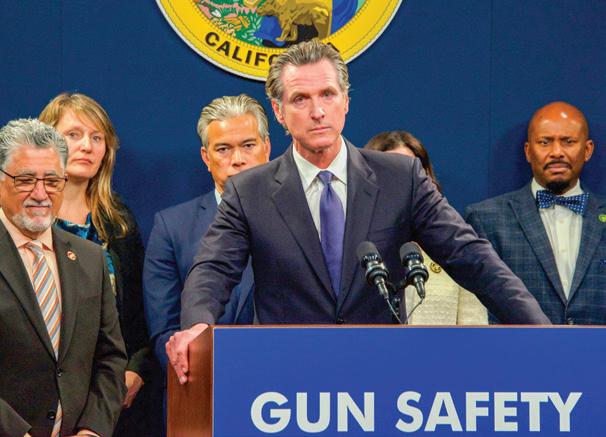
California Gov. Gavin Newsom has been quick to point the finger at Republican politicians when a high-profile shooting takes place in a red state, most recently blaming Louisiana lawmakers (and the gun lobby) for the mass shooting in Shreveport last weekend.
Newsom hasn’t had much to say about the attempted shooting at the White House Correspondents Association dinner in D.C. last night, even though the suspect in the attack is a California resident who apparently was able to lawfully acquire the guns he used despite all of the Golden State’s gun control laws.
Allen — who was seen on surveillance video charging through metal detectors outside the ballroom where the dinner was taking place — had a record of firearm ownership. He purchased the shotgun used in Saturday’s shooting in August 2025, according to two law enforcement sources. He also owned another semiautomatic pistol, purchased in 2023, they said.
The suspect had lived at multiple residences in the Los Angeles area from November 2010 to March 2026, according to the sources. He spent most of those years in Torrance, but also had an address in the city of San Gabriel between early 2018 and late 2019.
According to Newsom the shooting in Shreveport, which was committed by someone unable to legally possess firearms who allegedly obtained his murder
weapon through theft, is the fault of pro-2A Republicans. By that same logic, then, why shouldn’t we blame California Democrats for failing to stop Cole Tomas Allen from getting the guns he used to try to assassinate members of the Trump administration, and perhaps President Trump himself?
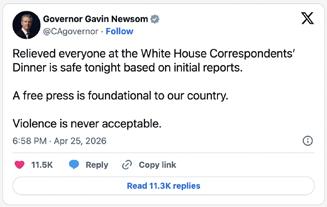
Newsom’s only reaction to last night’s events was a boilerplate post on X that insinuated Allen’s targets were members of the media in attendance at the WHCA dinner and not administration officials.
So when will Newsom excoriate his fellow Democrats for not
imposing gun laws that would have stopped Allen from legally purchasing firearms, and what laws will he demand in response? The state already allows for licensing regimes to require concealed carry applicants to undergo a psychological screening. Will Newsom ask the legislature to impose that same requirement on anyone seeking to purchase a firearm? Maybe expand the state’s 10-day waiting period to 10 months instead?
I don’t actually blame California’s gun laws for Allen’s ability to acquire a handgun and a shotgun over the course of two years, but then, I don’t hold Louisiana lawmakers responsible for the murderous actions of a convicted felon who was willing to kill his own children with an allegedly stolen firearm either.
The simple truth is that if someone is really committed to carrying out an attack like what we saw in D.C., or in Shreveport, they’re not going to be stopped by any gun control laws that are in place. If they can’t get their hands on a gun legally, they’ll turn to the black market or steal a gun themselves.
What stops these individuals is one or more people being able to fight back, and if those folks have a gun of their own, the odds of successfully preventing an attack increases dramatically. The suspect in last night’s shooting lived in one of the most gun-controlled states in the Union and traveled to a place that is almost as unfriendly to the right to keep and bear arms in
order to carry out his attack. It was the Secret Service that stopped him, not California or D.C. gun laws.
The WHCA dinner was an actual “sensitive place” because of the president’s attendance; folks were required to pass through a metal detector and a security checkpoint before they could get inside the ballroom, and there was plenty of armed security on hand who could engage any would-be killer who tried to shoot his way inside.
Many mass shootings, though, take place in locations that are sensitive in name only; “gun-free zones” that don’t have any added security measures to truly protect those inside, only a sign on the wall telling people that guns aren’t
allowed. Those signs offer the same amount of protection that a waiting period law or “assault weapon” ban does... none at all, despite what Gavin Newsom and other anti-gunners say when they see the chance to exploit a tragedy in order to erode our right to selfprotection with a firearm.
Editor’s Note: The radical Left will stop at nothing to enact their radical gun control agenda and strip us of our Second Amendment rights.
ART NOTE: USE AS A PQ: What stops these individuals is one or more people being able to fight back, and if those folks have a gun of their own, the odds of successfully preventing an attack increases dramatically.
Sunday, July 26, 2026




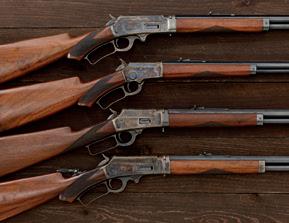




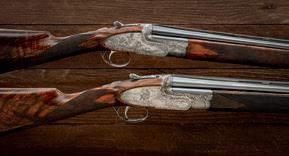
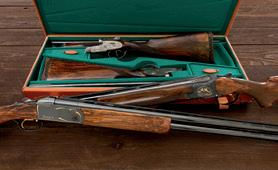


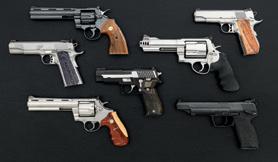

Now accepting consignments for our July 26 and Nov. 22 auctions.

Auction begins at 10am. Online bidding available via Proxibid and iCollector. Absentee and Phone Bids accepted. California Bond #100166176
BY JAKE FOGLEMAN, COURTESY THERELOAD.COM
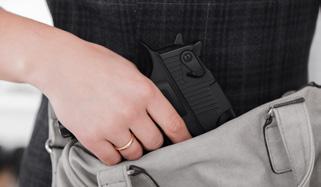
It is now a legal possibility for a gun owner to concealed carry in all 50 states. Gun-rights advocates have more work to do before that becomes a practical reality for most people, though.
As we’ve previously noted, one of the most consistent bright spots for gun-rights litigants since the Supreme Court’s 2022 New York State Rifle and Pistol Association v. Bruen decision has been in challenges to statelevel non-resident gun-carry bans. In just the last two years, a series of lawsuits against California, Louisiana, and New York each resulted in settlement agreements or legislative responses creating new nonresident permitting options. As we pointed out, this left Hawaii as the sole remaining state without any reciprocity agreement or non-resident permit option for out-of-state visitors seeking to exercise their Second Amendment rights. We predicted Hawaii’s law was unlikely to remain legally tenable for much longer.
Now that prediction has panned out.
A month after we published that article, the Hawaii Rifle Association sued the state over
its ban. And in just a few short weeks, the government of Hawaii has already folded. According to a stipulated final judgment filed Wednesday in Solinksy v. Lopez, state officials have agreed to stop enforcing the ban against the plaintiffs who challenged the law and to pay $35,000 for their attorneys’ fees.
“Defendant (as well as her officers, agents, servants, employees, and all persons in active concert or participation with them who receive actual notice of this injunction) is hereby permanently enjoined from enforcing, against Plaintiffs and Plaintiff Hawaii Rifle Association’s members, Hawai‘i Revised Statutes (HRS) § 1349(a)(5), as currently written,
to the extent that it prohibits non-residents of the State of Hawai‘i from obtaining a license to carry a pistol or revolver and ammunition concealed on the individual’s person on the basis of their residency,” the filing reads.
While relatively narrow (at least for now), the order marks a significant milestone. For perhaps the first time in the modern era, at least some civilian gun owners now have a theoretical avenue to lawfully carry throughout the entirety of the country.
But that milestone also comes with a catch. For all intents and purposes, the path to actually doing so will remain far too convoluted, costly, and timeconsuming for virtually anyone to
achieve it. That’s because, even though total state-level nonresident carry bans have now been relegated to the dustbin of history, many states still can and do erect plenty of barriers to carrying across their borders.
Some states, like Massachusetts, impose onerous restrictions and make non-resident permits less useful than their
non-resident permit applications from existing permit-holders living in Arkansas, Idaho, Mississippi, Nevada, Texas, and Virginia. Still others, like Colorado, continue to recognize a fair number of out-of-state permits for the time being, but also refuse to issue any nonresident permits whatsoever. Taken together, this variety of
While relatively narrow (at least for now), the order marks a significant milestone. For perhaps the first time in the modern era, at least some civilian gun owners now have a theoretical avenue to lawfully carry throughout the entirety of the country.
in-state offerings. The nonresident application process involves mandatory in-person components and often takes months to process, while only being valid for one year at a time, five years less than a standard instate license.
Other states, like Oregon and Illinois, refuse to recognize permits from any other jurisdiction and severely limit the states from which they allow non-resident applicants to apply. Oregon, for instance, only allows residents of states directly adjacent to it to apply, while Illinois only accepts
overlapping restrictions and qualifications across jurisdictions makes it a heroic undertaking to unlock the legal right to carry in all 50 states. As one social media user amusingly pointed out in the wake of the Hawaii settlement, the only gun owners currently even eligible to thread the needle for doing so are those with the resources and inclination, and who specifically live in Idaho.
That means gun-rights advocates looking to continue expanding the portability of Second Amendment carry rights still have their work cut out for
them. That likely involves new kinds of non-resident carry lawsuits targeting states with restrictive out-of-state permitting rules or stingy reciprocity agreements.
Gun-rights groups are actively suing Massachusetts over its more restrictive non-resident carry system, for instance, though an initial ruling has not yet been delivered. Meanwhile, a panel of three Republican-appointed judges in the conservativeleaning Eighth Circuit Court of Appeals recently heard oral arguments in a challenge against Minnesota’s limited carry permit reciprocity. Unfortunately for gun-rights advocates, however, they each appeared highly skeptical that the Second Amendment compelled states to recognize out-of-state permits when they already offer individual non-resident carry permit options.
Time will ultimately tell if gunrights advocates are able to have the same type of success in those pursuits. But, as we predicted, they have defeated the last of the total non-resident carry bans.
Jake Fogleman is a contributing writer for The Reload and policy director for the Independence Institute, a Denver-based think tank.

BY CAM EDWARDS
The fundamental premise of the gun control movement is that more guns inevitably results in more crime. The only way to make the U.S. safer, then, is to reduce the number of firearms in circulation. That means making it more difficult to purchase firearms, but also going after the guns that are already in the hands of legal owners; either through attrition, or as we’re seeing in Rhode Island this session, through prohibiting the continued possession of firearms that were lawfully purchased.
As Dr. John Lott covered in his seminal work, “More Guns, Less Crime,” the fundamental premise of the gun control movement is a lie. Crime trends in the United States rise and fall over time, while the number of guns in circulation has climbed steadily over the decades. Since 2020, for instance, we’ve witnessed a huge surge in both gun sales and violent crime, but over the past couple of years crime has plunged across the country, while there are still more than 1-million firearms being sold each and every month.
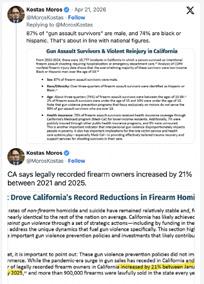
California Attorney General Rob Bonta touted the state’s crime figures this week, boasting that last year the Golden State had the fewest number of homicides, suicides, and “firearm deaths” since 1968. What Bonta didn’t highlight during his press conference, however, was that California has far more
firearms than it did just a few years ago.
That factoid is buried in Bonta’s new report entitled “A Strategic Plan to Sustain California’s Record Progress Against Gun Violence,” which calls for things like expanding the use of “red flag” orders, going after “ghost gun factories,” and lavishing money on community violence intervention programs... and, of course, keeping all of California’s restrictive gun laws in place.
firearms and ammunition hasn’t been the revenue generator lawmakers were expecting.
While Bonta acknowledges that the number of legallyowned firearms in California has increased by 21% since 2020, his boast about that figure proving that the state’s gun laws have not impeded the lawful commerce in arm is dead wrong. Elsewhere in his report, Bonta admits that the state’s new 11% excise tax on
Yes, when you tax something you get less of it, but the fact that the revenue raised from the Second Amendment sin tax is far below projections is also evidence that the state’s gun control regime is impeding lawful commerce in arms; even more than what legislators anticipated. It’s not just the 11% tax that’s keeping
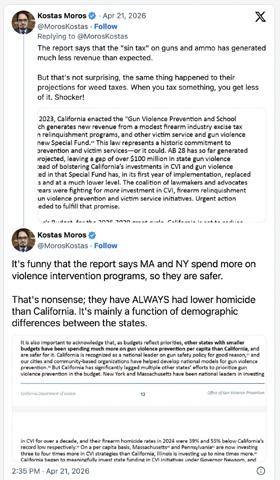


some Californians from exercising their right to keep and bear arms. It’s the entire structure of California’s gun laws; unreasonable and unreliable background checks on ammunition sales, prohibiting gun shows on state-owned property, keeping many popular firearms off-limits to residents because they don’t include “safety features” mandated by the state, and a host of other draconian regulations in between.
Those laws haven’t eradicated gun ownership or halted all gun sales, but the numbers would be even higher if the state didn’t make it so expensive, time consuming, and legally dangerous to exercise our Second Amendment rights. Those infringements are suppressing lawful gun ownership to some degree, and as Bonta’s report shows, there’s simply no reason to believe that fewer guns (and fewer gun owners) is necessary to reduce “gun violence.”
Editor’s Note: The radical left will stop at nothing to enact their radical gun control agenda and strip us of our Second Amendment rights.
Cam Edwards has covered the 2nd Amendment for 20 years as a broadcast and online journalist, as well as serving on the board of directors for the Citizens Committee for the Right to Keep and Bear Arms. He lives outside of Farmville, Virginia with his family, three dogs, two barn cats, a flock of chickens, and an undisclosed number of firearms for their protection.

REPRINTED WITH PERMISSION FROM ROCK ISLAND AUCTION COMPANY. ARTICLE BY CALEB DANIELS, AUTHOR OF LICENSED TROUBLESHOOTER: THE GUNS OF JAMES BOND. PHOTOS COURTESY OF ROCK ISLAND AUCTION COMPANY
Today, we reflect on the life and legend that is Carlos Ray Norris—better known to the world as the pinnacle of badassery and a martial arts legend, Chuck Norris.
Let’s be clear. Chuck Norris used guns on screen, not because he needed them…but because it made it a fairer fight for the other guy. Norris’ life was one filled with a passion for small arms in addition to his incredible martial arts and film career. Between his robust personal collection of small arms, an amazing catalog of film, and a lifetime of ardent support of the Second Amendment—even as a spokesman for Glock—Norris leaves behind a massive legacy in our industry. He never minced words when speaking on his values, from faith to self-defense.

“I have a lot of guns on my
ranch. I don’t use them for hunting. I’m not a hunter. It’s for protection. The Second Amendment was designed for tyranny.” - Chuck Norris
My friend Jack Carr knew Norris well, having met the legendary martial artist and actor while Jack was still in the military. Norris would later blurb Jack’s first novel without hesitation upon the beginning of his new chapter as an author. Jack has written a beautiful article in memory of Norris, encapsulating his life, career, and memory from the perspective of a fan and friend.
Take the time to read that: https://www.officialjackcarr. com/god-bless-chucknorris/?ref=rockislandauction.com
Today we remember a legend. Martial artist, actor, unapologetic man of faith, and toppler of communism. Literally.
If you’re unfamiliar with the documentary “Chuck Norris vs Communism,” be sure to check it out. The short story is simple— Romania of the 1980s was an incredibly oppressive state, which went as far as banning Hollywood films. Operations to successfully

smuggle VHS tapes into the nation, including an assortment of Norris’ greatest hits, made incredible cultural waves inside the country.
Documentarian Ilinca Calugareanu was quoted saying, “(Chuck Norris) was one of the most popular action stars in the VHS films smuggled into Romania. He was a good icon for American films. His films gave a clear concept between good and bad, and that fascinated people.”
The impact of the movies was staggering—going as far as being called “more effective than CIA propaganda” by the New York Post.

His films are undoubtedly some of the most iconic action movies to ever grace the silver screen. Norris’ movies are laden with some of the greatest small arms that made 80s movies so special.

In a world where every film seems to be starring the next iteration of Glock (will they or won’t they have finger grooves this generation, we wait with bated breath) Norris was constantly armed with epic shooting irons.
From “Lone Wolf McQuade” to “Invasion USA,” Norris has taken out bad guys with every flavor of Uzi to the M60, rocket launcherequipped motorcycles, and when that all fails, a well-placed slowmotion roundhouse kick. As we remember Norris’ legendary life and career, we are thrilled to share with you some of the best guns wielded by Chuck Norris to look out for while you binge-watch his greatest hits.

“No one ever thought it could happen here.”
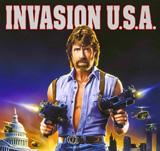
An army of international terrorists plots to conquer the United States. One man haunts their leader’s dreams: the man who was required under orders to spare his life—now retired CIA agent Matt Hunter (Chuck Norris). Before launching their invasion, it’s decided that Hunter’s life must be ended. Ironically, Hunter has been encouraged to come out of retirement to put an end to this terrorist, but declined. His war was over. He was wrong. After his suburban home is attacked in a botched assassination attempt, instead killing a friend, Hunter stages a one-man war against their invasion.

holster, Hunter arms himself with dual micro Uzis to take on the swarms of communist invaders. Norris’ arsenal is robust throughout this film, but nothing is quite as memorable from 1985’s “Invasion U.S.A” than this set. Norris completes the ensemble with two spare magazines shoved into his double-denim kit’s waistband. After a few rounds of burst fire, he methodically reloads, burns both fresh magazines down, and then sets them aside carefully, recovering weapons from the dead, continuing his war.


A documented Action Arms
prototype Micro Uzi machine
Available this May.
Chuck Norris. Lee Marvin. A plane full of hostages in Beirut. And a smattering of Uzis.
“The Delta Force.” Keeping up with the trend of
80s movies tropes, Norris plays a disaffected member of the Delta Force, who resigns in disgust after a botched mission—one that only happened thanks to the politicians and military leadership wanting to score points. Like every good action film, he’s called back into the fold in order to rescue the hostages.

Filming took place primarily in Israel, making access to the 1980s favorite submachine gun even easier than in Hollywood proper. The Mini Uzi would be the dedicated weapon of Major Scott McCoy (Norris) and the rest of the team. “The Delta Force” would

servicemen are still being held captive, goes on a rogue mission to bring the boys home.

be the last film to star Lee Marvin, who would pass in the following year. The film would spawn two sequels, “Delta Force 2: The Colombian Connection,” and “Delta Force 3: The Killing Game.”
“The war’s not over until the last man comes home.”
“Missing in Action” revisits the POW/MIA issue of the Vietnam War in 1984 through the eyes of Col. James Braddock (Norris)—a former POW himself, who is convinced that American troops are still being held captive. He’s commissioned to join a group back to Vietnam investigate, and upon discovering that

Rising from the water in peak 1980s action aesthetics, Norris wields an M60 during the film’s titular POW rescue mission. The M60 of course, being an icon of the Vietnam War, was a fitting choice for “Missing in Action,” and in addition to being used in the film’s most legendary moments, is also the central piece of the movie’s poster, with an illustrated Chuck Norris defiantly wielding the light machine gun. Norris dedicated his performance in “Missing in Action,” and the subsequent two sequels to the memory of his brother, Wieland, who was killed in action in June of 1970.
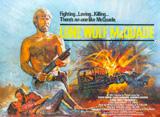
Arguably one of Norris’ best films, “Lone Wolf McQuade” would set the stage for Norris as a Texas Ranger, a role he would later take on once again in his show “Walker, Texas Ranger.” Unfortunately, in that television show, a Taurus masquerading as a Beretta was the hero gun for Walker. The good news, however, is that “Lone Wolf McQuade” is absolutely loaded with epic small arms.
McQuade is the quintessential lone wolf cop of all stereotypical movies, with a younger partner forced upon him because he doesn’t fit the “style” of the modern Texas Rangers. Behind the wheel of his Dodge Ramcharger and armed to the teeth, working within the confines of the law, but only just—”Lone Wolf McQuade” is one of the best movies of the 1980’s, especially if you’re fond of cool guns.
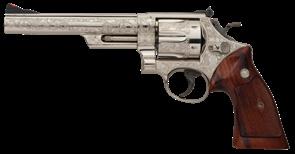
McQuade’s dedicated sidearm is a custom engraved and nickel finished Wesson Model 29-2 cross draw holster, slung loose on a gun belt. Aside from being run hard in all the action sequences in the movie, McQuade takes a break from roundhouse kicking criminals to do a full shooting/ training sequence with the .44 Magnum against an assortment of dummies and targets on his home range while his pet wolf watches on. And once that runs dry, he grabs his favorite shotgun.

If you’re going to have a backup to a .44 Magnum, it might as well be a cut-down Browning Auto5 (or Remington Model 11—Norris shoots this one from the hip and makes identification difficult). The “Whippet” of classic gangster era fame works just as well in the hands of a renegade Texas Ranger raiding a criminal compound to rescue his daughter from the film’s villain.
Jake and Eli from “1911 Syndicate” take a firsthand look at the Whippet shotgun.
Chuck Norris will always be remembered as a Texas Ranger thanks to his starring roles as both McQuade and Walker. Norris would be named an honorary Texas Ranger in


2010 at the age of 70. The honor was bestowed to Norris’ brother, Aaron, who also served as a producer and stunt coordinator for the actor, as both through their television series significantly impacted the public perception and image of the Texas Rangers in their incredible television run. Then-Governor Perry, upon conferring the honor, said that the two “helped elevate our Texas Rangers to truly mythical status. Like Norris’ Walker character, the Texas Rangers have carried a diverse arsenal of firearms throughout their storied history. Rock Island Auction Company’s May 8-10 Premier is once again laden with beautiful and welldocumented Texas Ranger guns, including a Colt Government Model inscribed to Jay Banks, the model for the famous statue that once stood at Dallas Love Field, which was titled “One Riot, One Ranger.”


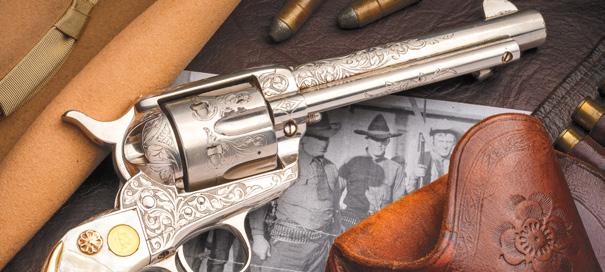
the stunning Colt Single Action Army revolver pictured below.
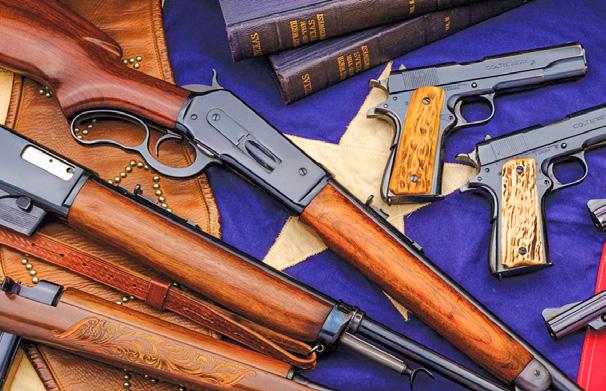
In addition to Colt pistols carried by noted Texas Rangers like Major Jeff T. Collins, Lt. Joe Hutson, and Ranger George “Gomez” Frasier, May’ lineup includes everything from a Texas Rangercarried AR-15, a Winchester Model 94 carbine, a Smith & Wesson K-38 Masterpiece, and
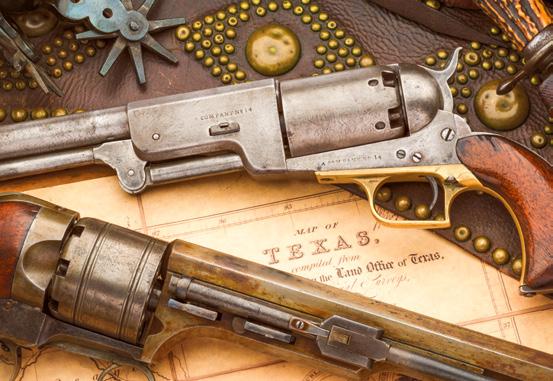
And of course, no discussion of Texas Ranger arms would be complete without mention of the Colt Walker, the formidable wheelgun designed and named for Captain Samuel Hamilton Walker. Developed in collaboration with Samuel Colt, the massive six-shot black powder revolver saw distinguished service during the Mexican-American War and remains an enduring symbol of frontier firepower.
In the series, Chuck Norris’ character Cordell Walker shared not only the name of his legendary predecessor, he represented the spirit of the Texas
spirit remains stronger than ever today—as does the legacy of Mr. Carlos Ray “Chuck” Norris, a true American icon.
Author Caleb Daniels is a firearms enthusiast from Kansas City, Missouri. For seven years, he worked in the firearms industry, growing up in that world.
Commando Bond was founded in 2020 as a passion project to bridge the gap between pop culture and the world of firearms.

Author Caleb Daniels (center) holding Bond’s screen used WA2000 with the owner of Walther Arms, Wulf-Heinz Pflaumer (left) and the Managing Partner of Umarex & Walther Arms, Eyck Pflaumer (right.). Read his previous articles on the WA2000, the PPK, and the guns of James Bond. You can check out his book on the latter topic here as well
(Top) A rare, documented A Company No. 14 U.S. Colt Walker Model 1847 revolver, of the signature weapons of the Texas Rangers. (Bottom) A rare Patent Arms Mfg. Co. Colt Paterson Second Model No. 2 ring lever revolving rifle. The Paterson served the Rangers in their frontier struggle against the Comanche and became the basis for the Walker revolver.
BY RICK TRAVIS, LEGISLATIVE DIRECTOR
In the halls of Sacramento, the California Rifle & Pistol Association (CRPA) continues its unwavering fight to protect and expand the rights of law-abiding hunters, shooters, and families across the Golden State. This legislative session, CRPA is at the forefront of efforts to open new doors for the next generation of hunters while strengthening concealed carry rights and reinforcing the fundamental right to self-protection—both against human threats and dangerous wildlife. Three priority areas highlight our work: expanding youth hunting opportunities through SB 1021 and AB 2207, broadening concealed carry access via AB 1912 and AB 1948, and bolstering self-defense protections with AB 2584 and AB 1722.
the Next Generation: Youth Hunting Opportunities Take Center
CRPA has long championed hunting as a cornerstone of conservation, responsible firearms use, and family tradition. This year, we are aggressively support ing two bills that will make the outdoors more accessible to California’s youth—especially those facing extraordinary challenges.
Senate Bill 1021, introduced by Senator Steven Choi (R-Irvine), directs the California Fish and Game Commission to establish, by January 1, 2028, a dedicated program increasing fishing and hunting opportunities for resident youth under 18 with life-threatening illnesses (defined as a prognosis of five years or
less). The program also extends to youth who have lost a parent in service to the state or country. It covers big game, wild pigs, upland game birds, and migratory game birds. Importantly, the bill requires consultation with the Department of Fish and Wildlife (CDFW) and nonprofit partners, maintains all hunter education requirements, and ensures no negative impact on existing tag allocations. CRPA views SB 1021 as a compassionate, science-based way to create life-changing experiences, recruit future conservationists, and honor the North American Model of Wildlife Conservation.
Assembly Bill 2207, authored by Assemblymember Heather Hadwick (R-Alturas), creates practical tools to get more young people into the field. The bill establishes a hunting tag transfer
program allowing licensed hunters to transfer unused tags to their child or grandchild (age 17 or younger) who holds a valid hunting license—provided the youth is accompanied by an eligible adult. It also allows tag donations to qualified IRS-recognized nonprofit hunting organizations, which can then allocate them to youth with life-threatening illnesses or permanent physical disabilities, or to disabled veterans. All participants must be accompanied during the hunt. AB 2207 directly addresses tag scarcity barriers and opens doors for families and nonprofits to share California’s hunting heritage.
Together, these bills signal a strong commitment to youth recruitment and retention— priorities that CRPA has advanced through our Hunter Education courses, Youth Hunt Camps, Pheasant Hunts, and shooting programs. We are proud to stand with lawmakers who understand that the future of hunting depends on giving every young Californian a fair shot at these traditions.
Expanding Concealed Carry Rights: Real Relief for LawAbiding Californians CRPA has fought relentlessly against arbitrary restrictions on
the right to bear arms for selfdefense. This session brings two meaningful victories in the works for concealed carry license (CCW) holders and hunters.
Assembly Bill 1912, also led by Assemblymember Hadwick, modernizes archaic restrictions by allowing any licensed hunter to carry a concealable firearm for personal protection while participating in the archery deer season. Current law bars anyone except active or retired peace officers from possessing a firearm during bow-and-arrow-only hunts— leaving archery hunters vulnerable in remote backcountry areas where mountain lions, bears, or human threats can appear suddenly. AB 1912 explicitly preserves the prohibition on using a firearm to take deer; it simply restores the right to defend oneself. The bill passed the Assembly Water, Parks, and Wildlife Committee unanimously and advances self-defense rights without compromising safety or fair chase standards.
Assembly Bill 1948, introduced by Assemblymembers James Ramos and Avelino Valencia, delivers practical relief to the hundreds of thousands of Californians who hold CCW permits. CRPA has led the charge on this legislation, which extends the validity of new CCW licenses from two years to three years and provides even longer renewal periods for qualified holders. The bill also includes provisions that ease administrative burdens on law enforcement agencies. For the first time in years, CCW holders will enjoy longer intervals between renewals—reducing costs, paperwork, and inconvenience while maintaining rigorous background checks and training
standards. As CRPA Legislative Director Rick Travis has noted in CRPA TV updates, AB 1948 represents real, tangible progress born from years of persistent advocacy.
These measures prove that responsible expansion of carry rights enhances public safety and personal security—values CRPA has defended for over 150 years.
Self-defense is a natural human right, yet California law has too often tilted the scales toward criminals or left law-abiding citizens exposed. CRPA is pushing back hard with two critical bills.
Assembly Bill 2584, the Preemptive Self Defense Act of 2026, authored by Assemblymember Heath Flora, clarifies and strengthens California’s self-defense statutes. It ensures that individuals who reasonably perceive an imminent threat of bodily harm may use proportional resistance to stop a public offense—and that such resistance must cease once the threat ends. The bill directly counters previous attempts (such as AB 1333) to erode “no duty to retreat” principles and disadvantage victims. CRPA has spotlighted AB 2584 as essential legislation that puts victims first and criminals on notice.
Assembly Bill 1722, again from Assemblymember Hadwick, brings common-sense selfdefense protection to the California Endangered Species Act (CESA). Under current law, Californians who act in good faith to protect themselves, their families, or others from imminent harm by a protected species (such as mountain lions or other large predators) could still face
civil, administrative, or criminal penalties. AB 1722 creates an explicit defense: no penalties apply if the defendant proves by a preponderance of evidence that the action was taken in reasonable self-defense. The bill aligns state law with the federal Endangered Species Act and recognizes that “coexistence does not mean helplessness.” For hunters, hikers, and rural residents, this is vital protection against real-world wildlife encounters.
The Road Ahead: Your Voice Matters
CRPA’s legislative team, in coordination with allied lawmakers and grassroots support ers, is driving these bills forward through committee hearings and floor votes. Progress in the Water, Parks, and Wildlife Committee and beyond shows that persistence and member engagement pay off.
But the fight is far from over. We urge every CRPA member, hunter, shooter, and Second Amendment support er to visit CRPA’s OneClick Politics portal, contact your legislators, and amplify these efforts. Join or renew your CRPA membership today—because the rights we defend today are the freedoms our children and grandchildren will inherit tomorrow.
Together, we are not only protecting our traditions—we are expanding them. Stay informed, stay engaged, and keep fighting for California’s sporting heritage and the right to self-defense. For the latest updates on these bills and CRPA’s full legislative agenda, visit crpa.org or follow us on social media. Firing Line will continue to track these critical measures as they move through the 2025-2026 session.
BY RICK TRAVIS
AB 1615 - FIREARMS: UNSAFE HANDGUNS.
Position – Monitor
Status: 4/8/2026-In committee: Set, first hearing. Referred to APPR. suspense file.
Location: 4/8/2026-A. APPR. SUSPENSE FILE
Legislator – Nguyen – D
Brief - This bill would authorize a peace officer employed by a county probation department and using an unsafe handgun as a service weapon to satisfy the above-described training requirement by completion of the firearm portion of a training course prescribed by POST and who qualifies with the handgun, as specified, at least every 3 months.
Position – Monitor
Status : 3/24/2026-Re-referred to Com. on APPR.
Location: 3/18/2026-A. APPR.
Legislator – Gipson - D
Brief – This bill would revise and recast those requirements by, among other things, (A) instead requiring those local
educational agencies to inform parents or guardians of each enrolled pupil of the importance of practicing secure firearm storage for all homes in which firearms are present through a notice entitled “Secure Firearm Storage Notification“ that contains, among other things, a description of the risks of children accessing unsecured firearms in the home and California’s child access prevention laws and laws relating to the safe storage of firearms, (B) for all local educational agencies that maintain a website, requiring the notice to be additionally be posted, and annually updated, on the local educational agency’s internet website, as specified, (C) requiring the department, on or before July 1, 2027, to provide formatting and content options for local educational agencies to post the notice on their respective internet websites and for posting other relevant information and resources about secure firearm storage using other internet-based communication options, and (D) requiring the
department to encourage each local educational agency to adopt a policy and practice of providing the notice to parents, guardians, and caregivers when otherwise providing notice to parents, guardians, or caregivers of disciplinary actions or support s given related to threats against other pupils or threats of self-harm.
Position – OPPOSE
Status: 4/22/2026-In committee: Set, first hearing. Referred to APPR. suspense file. Location: 4/22/2026-A. APPR. SUSPENSE FILE
Legislator – Wicks - D
Brief - This bill would clarify that the information be available to any town, city, or county, any state government agency, a California community college or California State University, or the University of California, under guidelines set forth by the Attorney General, for academic and policy research purposes, and would require the Attorney
General to make this information available, upon request by any of these specified entities, in a format conducive to the requester’s needs.
AB 1753 – PROTECTIVE ORDER: FIREARMS AND AMMUNITION.
Position – OPPOSE
Last Amend: 4/16/2026
Status: 4/22/2026-Coauthors revised. From committee: Do pass and re-refer to Com. on APPR. (Ayes 9. Noes 1.) (April 21). Re-referred to Com. on APPR.
Location: 4/21/2026-A. APPR.
Legislator – Stefani - D
Brief – This bill would make clarifying and conforming changes to the procedures relating to the protective or restraining orders described above by explicitly requiring the restrained person to relinquish, in addition to any firearm, any ammunition in that person’s immediate possession or control. The bill would additionally apply the prehearing firearm search and recordkeeping requirements described above to civil harassment restraining orders, workplace violence restraining orders, postsecondary school restraining orders, and elder or dependent adult abuse restraining orders.
AB 1810 – FIREARMS: CENTRALIZED LIST.
Position – OPPOSE
Last Amend: 3/16/2026
Status: 4/15/2026-From committee: Do pass and re-refer to Com. on APPR. (Ayes 7. Noes 2.) (April 14). Re-referred to Com. on APPR.
Location: 4/15/2026-A. APPR.
Legislator – Berman - D
Brief – This bill would require the department to remove from the list a person who fails to comply with the requirements to be on the list and authorize the department to remove a person from the list who fails to remedy specified violations discovered as a result of the abovedescribed inspections. The bill would subject a person removed from the list for these 2 reasons to a fine and make that person ineligible to be placed on the list for a period of 2 years.
Position – OPPOSE
Last Amend: 4/9/2026
Status: 4/20/2026-Read third time. Passed. Ordered to the Senate. In Senate. Read first time. To Com. on RLS. for assignment.
Location: 4/20/2026-S. RLS.
Legislator – Stefani - D
Brief – This bill would authorize a law enforcement agency, as defined, to create a voluntary firearm storage program that allows a person to voluntarily transfer custody of their firearm to the local law enforcement agency for temporary safekeeping purposes to prevent firearm violence, suicide, and other injury. The bill would authorize a law enforcement agency adopting this program to provide clear instructions on the procedure to voluntarily transfer custody of a firearm and to provide explicit instructions on the process for requesting return of the firearm, as specified.
PRINTING BLOCKING TECHNOLOGY.
Position – Oppose
Status: 4/15/2026-From committee: Do pass and re-refer to Com. on APPR. (Ayes 9. Noes 3.) (April 14). Re-referred to Com. on APPR.
Location: 4/14/2026-A. APPR.
Legislator – Bauer-Kahan - D
Brief – This bill would require the Department of Justice or other relevant state agency to engage in an investigation of known firearm blueprint design files and existing firearm blueprint detection algorithms, as defined. The bill would require, on or before July 1, 2027, the department or other relevant state agency to publish written guidance on performance standards for persons or entities engaged in the creation of firearm blueprint detection algorithm to be certified for use by 3-dimensional printer manufacturers, as specified. The bill would require the department or other relevant state agency that prepared the written guidance on performance standards to accept applications for certification of firearms blueprint detection algorithms and begin issuing certifications of algorithms that meet or exceed the performance standards on or before January 1, 2028, and would specify the grounds for revocation of certification pursuant to these provision.
AB 1589 - FIREARMS: SILENCERS.
Position – Support
Status: 3/5/2026-Read second time. Ordered to third reading. Location: 3/5/2026-A. THIRD READING
Legislator – Chen - R
Brief - This bill would further exempt from the prohibition on possessing silencers specified level I reserve peace officers.
AB 1701 - RECALL AND RESENTENCING: SCHOOL SHOOTINGS. FAILED
AB 1948 – FIREARMS: CONCEALED CARRY LICENSES.
Position – SUPPORT
Last Amend: 3/19/2026
Status: 3/26/2026-Read third time. Passed. Ordered to the Senate. (Ayes 71. Noes 0.) In Senate. Read first time. To Com. on RLS. for assignment.
Location: 3/26/2026-S. RLS.
Legislator – Ramos - D
Brief – This bill would extend the duration of those licenses to 2 years from the date of the new license and 4 years from the date of the license for renewal.
AB 2584 – SELF DEFENSE.
Position – SUPPORT
Last Amend: 3/26/2026
Status: 4/28/2026-In committee: Set, first hearing. Testimony taken.
Location: 3/25/2026-A. JUD.
Legislator – Flora - R
Brief – This bill, the Preemptive Self Defense Act of 2026, would clarify that a party who reasonably perceives an imminent threat of bodily harm may make lawful resistance to the commission of a public offense and that the resistance authorized is required to be proportional to the reasonably perceived threat and to cease when the threat is no longer present. The bill would prohibit a party’s background, training, and professional fighting skills from being taken into account when determining whether a party
has taken reasonable defensive action. This bill contains other related provisions and other existing laws.
SB 948 - FIREARMS: SAFETY CERTIFICATES.
Last Amend: 3/18/2026
Status: 4/13/2026-April 13 hearing: Placed on APPR. suspense file.
Location: 4/13/2026-S. APPR. SUSPENSE FILE
Legislator – Arrequin - D
Position – Oppose
Brief – This bill would also require that personal firearm importer to obtain a valid firearm safety certificate and include a copy of the valid firearm safety certificate within the report. The bill would prohibit a person from bringing a firearm into this state without obtaining a valid firearm safety certificate within 60 days, except as specified.
NOTE: Repeat of last session’s bill by Assemblymember Rodriguez AB1187.
SB 1220 – FIREARMS: PROHIBITED PERSONS.
Position – Oppose
Status: 4/20/2026-April 20 hearing: Placed on APPR. suspense file.
Location: 4/20/2026-S. APPR. SUSPENSE FILE
Legislator – Hurtado - D
Brief - This bill would prohibit a person, who is convicted on or after January 1, 2027, of the above prohibition, from owning, purchasing, receiving, or having in their possession or under their custody or control any firearm within 10 years of the conviction. By expanding the scope of an existing crime, the bill would create a state-mandated local
program.
AB 1673 - COUNTY FISH AND WILDLIFE PROPAGATION FUND: EXPENDITURE.
Position – Support
Last Amend: 4/9/2026
Status: 4/23/2026-Read third time. Passed. Ordered to the Senate. (Ayes 74. Noes 0.) In Senate. Read first time. To Com. on RLS. for assignment.
Location: 4/23/2026-S. RLS.
Legislator – Hadwick – R
Brief – This bill would additionally authorize expenditures from a county fish and wildlife propagation fund for costs incurred by a county sheriff for investigating, issuing citations, or making arrests for a civil or criminal violation relating to fish and wildlife, by a county for land use planning, design, and construction necessary to mitigate a specific environmental impact to a particular fish or wildlife species, and for wildlife coexistence programs to prevent human-wildlife conflict.
AB 1722 – CALIFORNIA ENDANGERED SPECIES ACT: TAKE PROHIBITION: SELF-DEFENSE.
Position – SUPPORT
Last Amend: 4/16/2026
Status: 4/22/2026-From committee: Do pass and re-refer to Com. on APPR. (Ayes 11. Noes 0.) (April 21). Re-referred to Com. on APPR.
Location: 4/21/2026-A. APPR.
Legislator – Hadwick - R
Brief - This bill would prohibit the imposition of a civil,
administrative, or criminal penalty for a violation of the take prohibition if the defendant committed the act based on a good faith belief that they were acting to protect themselves, a member of their family, or any other individual from bodily harm from an animal listed under the act.
Position – SUPPORT
Last Amend: 3/25/2026
Status: 4/16/2026-Read third time. Passed. Ordered to the Senate. (Ayes 68. Noes 0.) In Senate. Read first time. To Com. on RLS. for assignment.
Location: 4/16/2026-S. RLS.
Legislator – Hadwick - R
Brief – This bill would instead authorize any person to carry a firearm capable of being concealed on their person while engaging in taking or attempting to take a deer with a bow and arrow, as specified.
Position – SUPPORT
Last Amend: 3/25/2026
Status: 4/13/2026-Read third time. Passed. Ordered to the Senate. (Ayes 76. Noes 0.) In Senate. Read first time. To Com. on RLS. for assignment.
Location: 4/13/2026-S. RLS.
Legislator – Aguiar-Curry - D
Brief Summary: This bill would authorize the department to enter into contracts or other agreements for the management and operation of the department-managed lands for the purposes of administrating hunting or other public use
programs.
Position – SUPPORT
Last Amend: 4/6/2026
Status: 4/15/2026-From committee: Do pass and rerefer to Com. on APPR. with recommendation: To Consent Calendar. (Ayes 13. Noes 0.) (April 14). Re-referred to Com. on APPR.
Location: 4/15/2026-A. APPR.
Legislator – Hadwick - R
Brief Summary: The bill would require the department to establish a hunting tag transfer program that authorizes a person to transfer a tag issued for the take of one of those species to their child or grandchild, subject to specified conditions. In addition, the bill would require the department to establish a hunting tag transfer program that authorizes a person to transfer a tag issued for the take of one of those species to a nonprofit hunting organization for that organization to provide a hunting opportunity with that tag to a child with a life-threatening medical condition or permanent physical disability, subject to specified conditions..
SB 1135 – HUMAN AND WILDLIFE COEXISTENCE.
Position – Oppose
Last Amend: 3/23/2026
Status: 4/27/2026-April 27
hearing: Placed on APPR. suspense file.
Location: 4/27/2026-S. APPR. SUSPENSE FILE
Legislator – Blakespear - D
Brief – Would state the intent of the Legislature to reestablish and enact a statewide program to manage and promote human and wildlife coexistence.
SB 1152 – FISH AND WILDLIFE.
Position – Oppose – SPOT BILL (WOLVES)
Status: 2/26/2026-Referred to Com. on RLS.
Location: 2/18/2026-S. RLS.
Legislator – McGuire - D
Brief – This bill would state the intent of the Legislature to enact subsequent legislation relating to fish and wildlife.
SB 1305 – WILDLIFE: BEARS.
Position – Oppose
Last Amend: 4/16/2026
Status: 4/24/2026-Set for hearing May 4.
Location: 4/7/2026-S. APPR.
Legislator – Richardson - D
Brief – This bill would require the department to develop and make publicly available a roadmap for the reintroduction of grizzly bears in California and would require the roadmap be developed consistent with, and include, among other things, a scientific assessment based on the best available data, as specified, and a consultation with California Native American tribes, as specified. The bill would also require the department, by June 30, 2028, to submit the roadmap document to relevant budget and policy committees of the Legislature, the Legislative Analyst’s Office, and the Fish and Game Commission. The bill would prohibit reintroduction of the grizzly bear in the state until the department or others have carried out various actions,
including, among other things, a scientific determination regarding the biological and ecological viability of establishing a self-sustaining grizzly population in the state, and a consultation with California Native American tribes and engagement with communities, as specified.
SB 893 - STATE PARKS: FACILITIES PASS: GOLD STAR FAMILY MEMBERS. MARCH 24 SEN NR
Status: 4/24/2026-Set for hearing May 4.
Location: 4/20/2026-S. APPR.
Legislator – Seyarto - R
Position – Support
Brief - Would require an eligible Gold Star Family member, as defined, upon presentation of proof to the Department of Parks and Recreation, to be issued a pass for use of all facilities, including boat launching facilities, in units of the state park system.
SB 1021 – FISHING AND HUNTING: YOUTH PROGRAM.
Position – SUPPORT
Last Amend: 4/7/2026
Status: 4/20/2026-April 20 hearing: Placed on APPR. suspense file.
Location: 4/20/2026-S. APPR. SUSPENSE FILE
Legislator – Choi - R
Brief - Would require the Fish and Game Commission to establish a program to increase opportunities to fish, and to hunt big game, upland game birds, and migratory game birds, for youth with life-threatening illnesses. The bill would require the commission, in developing the program, to consult with the Department of Fish and Wildlife and certain interested nonprofit organizations.
SB
Position – SUPPORT – SPOT
Status: 3/4/2026-Referred to Com. on RLS.
Location: 2/19/2026-S. RLS.
Legislator – Alvarado-Gil - R Brief - This bill would make a no substantive change to that take authorization.
Position – SUPPORT
Status: 4/27/2026-April 27 hearing: Placed on APPR. suspense file.
Location: 4/27/2026-S. APPR. SUSPENSE FILE
Legislator – Alvarado-Gil - R Brief – This bill would require the department to maintain, enhance, and expand its humanmountain lion conflicts program in order to protect public health and safety, including by exercising its authority to authorize nonlethal procedures. The bill would require the department to continue and expand its scientific research effort to develop and evaluate methods to deter mountain lions from entering communities and to prevent habituation to humans. In implementing these programs, the bill would require the department to engage in specified public outreach activities. The bill would repeal these provisions on January 1, 2033. This bill contains other related provisions and other existing laws.
























BY TIFFANY CHEUVRONT
Defending Gun Rights: A New Era in the Fight for the Second Amendment
This report highlights just a few of the ongoing efforts to protect the rights of gun owners in California—and beyond. While litigation remains a cornerstone in defending the right to keep and bear arms, it’s only one piece of a much larger effort. Across California and the nation, countless individuals and organizations are engaged at every level to safeguard the Second Amendment.
In California alone, this fight stretches across all 58 counties, 482 municipalities, and the many state and local agencies tasked with interpreting and enforcing an ever-growing web of gun laws. It’s a massive undertaking requiring significant resources, coordination, and constant vigilance.
There’s been a noticeable shift in the legal landscape, especially in the federal courts. Cases that have been delayed for years are now gaining momentum—largely sparked by developments in Duncan v. Bonta which is still awaiting Supreme Court review but also from a shift in the federal
government support of many of our cases. The newly formed Second Amendment section of the U.S. DOJ has already made big strides under Harmeet Dhillon in supporting our rights and filing amicus briefs in many current matters.
One of the most significant updates is the progress in Duncan v. Bonta, which is before the Supreme Court for consideration, and we wait to see if the Court will take it up for review. This is one of the most complete cases out there given the history and the amount of briefing that has gone into the 10-year-old case. This could be the moment SCOTUS has been waiting for. We hope to hear soon.
Additionally, the Duncan decision has restarted movement in Boland v. Bonta, CRPA’s ongoing challenge to California’s restrictive handgun roster. That case, which had been paused since August 2023, is now back in action, with supplemental briefings ordered in light of the recent ruling.
There’s also major progress in the right to carry. Thanks to a preliminary injunction secured by CRPA in CRPA v. LASD. While new legislation may attempt to reverse
or limit this right, the current court order remains in place and defendants will be paying plaintiffs a settlement while bringing LASD into compliance on shorter wait times.
We get many questions on the challenge to the California Excise Tax and yes, we are fighting to eliminate this in the court. The case on this challenge has changed names and is now known as Poway Weapons and Gear v. CDTFA. We will keep you informed as developments happen.
Additionally, we just had oral argument in the Ninth Circuit on the Richards v. Newsom case dealing with video and audio recording every transaction at a California FFL, even home-based FFLs.
With over 100 gun rights cases making their way through lower courts and several major decisions on the horizon, it’s clear we’ve entered a pivotal era for the Second Amendment. The tide is shifting, and gun owners across the country are fighting back against unconstitutional laws and policies. CRPA remains committed to leading this charge—from the courtroom to the Capitol, and everywhere in between.
Boland v. Bonta
Renna v. Bonta Does California’s Unsafe Handgun Act (the Roster) violate the Second Amendment?
Rhode v.
Becerra Does California’s law requiring background checks for ammunition violate the Second Amendment?
United States District Court
Central District of California
9th Circuit
United States District Court
Southern District of California
9th Circuit
The court granted the plaintiffs’ motion for preliminary injunction on March 20, 2023 in Boland, enjoining the microstamping, loaded chamber indicator, and magazine disconnect requirements.
California appealed, and the 9th Circuit stayed the ruling, except for the microstamping requirement.
Judge Benitez ruled in favor of Plaintiffs, kicking off an ammunition “freedom week”.
The Ninth Circuit stayed the injunction however, so now the regulations are back in effect for the time being.
The 9th Circuit heard oral arguments on August 23, 2023, but then vacated the oral argument it heard to instead hold the decision pending Duncan.
After Duncan, the panel ordered supplemental briefing, the CRPA briefing was submitted in April and the State’s briefing in May. We are waiting for more from the court.
CRPA was handed a big win in Rhode after almost a decade of litigating!
WIN In Ninth Circuit!
Waiting on court to rule on en banc request from the state.
Rupp v. Becerra Does California’s Assault Weapons prohibition violate the Second Amendment?
United States
Duncan v. Bonta Does California’s prohibition on large-capacity magazines violate the Second Amendment?
United States
District Court
Central District of California
The trial court entered summary judgment in favor of the State, and Plaintiffs have appealed.
District Court
Southern District of California
9th Circuit
Supreme Court
Judge Benitez ruled in favor of CRPA for a second time, case appealed.
The Ninth Circuit, unsurprisingly, reached the exact same 7-4 result as last time.
The 9th Circuit had stayed this matter pending Duncan. A joint status report is was filed and we will ask the court to remove the stay in light of the Duncan ruling.
CRPA is waiting for the Supreme Court review of the long-running case.
It could take several months to hear if the Supreme Court will decide to take up the case in the fall session.
PWGG (formerly Jones) v. Bonta
Miller v. Bonta
Junior Sports Magazines v. Bonta
Does California’s under-21 firearm prohibition violate the Second Amendment?
Does California’s assault weapons prohibition violate the Second Amendment?
Does California’s new law prohibiting the marketing of firearms products to youth violate various constitutional principles, including the 1st Amendment?
United States District Court
Southern District of California
United States District Court Southern District of California 9th Circuit
United States District Court
Central District of California 9th Circuit
The District Court issued summary judgment to the State.
Currently on appeal in the Ninth Circuit. Reply brief filed December 2025.
Judge Benitez again struck down the California “assault weapons” ban.
9th circuit ruled for plaintiffs, overturning the district court. California then petitioned for en banc review.
En banc review was denied, so the matter went back to the district court for issuance of a preliminary injunction.
The 9th Circuit heard oral argument, but then immediately stayed the matter pending Duncan v. Bonta.
B&L Productions v. Newsom (Southern District)
B&L Productions v. Newsom (Central District)
Does the ban on gun shows at the Del Mar Fairgrounds violate the First and Fourteenth Amendments?
Does the ban on gun shows at the Orange County Fairgrounds and Statewide violate the First, Second, and Fourteenth Amendments?
United States District Court Southern District of California 9th Circuit
United States District Court
Plaintiffs appealed the district court’s motion to dismiss, but the Ninth Circuit affirmed the District Court.
Central District of California 9th Circuit District Court ruled in favor of the Plaintiffs on October 30, 2023, gun shows ordered to resume.
The Ninth Circuit reversed the District Court.
The Ninth Circuit handed us a win regarding a challenge to the lower court refusing to issue an injunction against the state. Now we go back to the lower court to get that injunction which will stop the enforcement of AB 2571.
WIN on Injunction!
Currently in Settlement.
Plaintiffs petitioned the Supreme Court for certiorari, but unfortunately, the petition was denied.
(Connected to the next case)
Plaintiffs petitioned the Supreme Court for certiorari, but unfortunately, the petition was denied.
The case now goes back to the Central District. Amended Complaint to be filed.
Baird v. Bonta Does California’s ban on open carry violate the Second Amendment?
United States District Court for the Eastern District of California
9th Circuit
Plaintiffs lost their preliminary injunction at the district court, but on September 7, 2023, a 9th circuit panel remanded the case back because the district court made serious errors in its analysis.
The district court, in a lengthy ruling, upheld the law.
Plaintiffs have appealed and completed their briefing.
Oral Arguments held on June 24, 2025.
Supplemental authority filed September 2025.
January 2026 Petition for en banc was filed with Ninth Circuit
May v. Bonta Carralero v. Bonta May California ban carry, even with a CCW permit, in almost all public places?
United States District Court for the Central District of California
9th Circuit
CRPA vs. LASD
Nguyen v. Bonta
A number of issues related to CCW permits including:
• Long wait times
• High fees.
• Psychological examination
• Suitability determinations
• Interstate reciprocity
Federal Second Amendment constitutional challenge to California’s ban on purchasing more than one firearm in a 30day period.
Jaymes et al v. Maduros
Refiled and Renamed
Poway
Weapons v. CDTFA
Blank v. County of Santa Clara
Challenge to California’s new 11% tax on guns and ammunition.
United States District Court for the Central District of California
Plaintiffs achieved an injunction as to every place they challenged where California attempted to ban carry.
The 9th Circuit partially affirmed and partially reversed that injunction.
The Judge issues a mixed ruling as to Plaintiffs’ motion for preliminary injunction, granting relief to the plaintiffs as to the long wait times and forcing California to issue permits to nonresidents.
Plaintiffs will pursue final judgment in the district court.
In June 2025 was combined with a related case of Carralero v. Bonta.
Trial is set for 2026.
United States District Court for the Southern District of California
9th Circuit
Superior Court of California, County of San Diego
Plaintiffs prevailed in the district court, with judgment entered in their favor, but stayed the ruling for 30 days so the State could try and get a stay from the Ninth Circuit.
Plaintiffs dismissed this complaint due to a procedural issue, and will re-file it following exhaustion of administrative remedies.
Plaintiffs will pursue a final judgment in the district court. Discovery has begun. Second Amended Complaint filed in August 2025.
U.S. DOJ also filed lawsuit against LASD.
Currently in settlement discussions and agreement that the wait times will come into compliance.
In a surprise move, the 9th Circuit lifted the stay after oral argument, indicating its ruling will be favorable.
State has requested extension for filing petition for rehearing.
Supplemental briefs filed.
Refiled and renamed with new plaintiffs due to standing issues.
CRPA will be supporting this case.
Challenge to the high fees for CCWs and other requirements.
Filed in Northern District of CA San Jose Division of the federal court September 2025
Defendants filed a Motion to Dismiss. Plaintiffs opposing with that motion to be heard in February 2026.
Wolford v. Lopez Does Hawaii State’s postBruen permit issuance program violate Bruen, particularly by making nearly everywhere in the State a “sensitive place” where carry is forbidden?
Teter v. Lopez Is Hawaii’s ban on butterfly knives constitutional?
Antonyuk v. Hochul (a number of similar cases also filed and being heard jointly on appeal)
United States District Court District of Hawaii
9th Circuit
Koons v. Platkin
United States District Court District of Hawaii
9th Circuit
The district court granted a temporary restraining order, and the 9th circuit refused to stay that order for now, but may reconsider after the district judge rules on a motion to stay.
The 9th Circuit issued its ruling, which was a split decision.
Supreme Court heard oral arguments and took the case under submission.
9th Circuit rules that Hawaii statute banning butterfly knives, or balisongs, was inconsistent with the nation’s historical tradition of regulating weapons, and thus violated the Second Amendment.
Case ruled moot under new statute and vacated the District Court’s judgement. The Court left open the possibility of residual claims under the new law.
Does New York State’s postBruen permit issuance program violate Bruen, particularly by making nearly everywhere in the State a “sensitive place” where carry is forbidden?
United States District Court Northern District of New York
The Judge ruled mostly in Plaintiffs’ favor.
In a December ruling, the Second Circuit upheld most of the law but struck down a couple of pieces of it, including the private property default rule.
Plaintiffs filed a petition for certiorari with the Supreme Court, which was granted, and the Court remanded the matter back to the 2nd Circuit for further consideration in light of Rahimi, after which the Second Circuit issued essentially the same ruling once again.
Supreme Court denied review, so the case heads back down for final judgment. Briefing occurring.
Does New Jersey State’s post-Bruen permit issuance program violate Bruen, particularly by making nearly everywhere in the State a “sensitive place” where carry is forbidden?
United States District Court District of New Jersey
The Judge ruled mostly in Plaintiffs’ favor.
The case is now on appeal.
Oral arguments heard on October 25, 2023. Still awaiting a ruling well over a year later.
Plaintiffs petitioned for en banc rehearing in October 2025.
The case terminated and then Plaintiffs filed an emergency notice to reopen the case for filing of Amended Complaint
Maryland Shall Issue v. Montgomery County
Ghost Gun Challenge
United States District Court District of Maryland Court denied motion for preliminary injunction.
Appeal pending. CRPA filed an amicus brief in support of plaintiffs in their appeal.
Appeal is being held pending the resolution of a state court action regarding the same dispute.
Case has been consloidated
Dunn v. Glass Waiting Times 11th Circuit Complaint filed in Aug 2025.
United States v. Daniels
As of January 2026 waiting on Answer to be filed after time extension.
Is the federal law that prohibits marijuana users from having firearms constitutional?
United States District Court for the Southern District of Mississippi
5th Circuit Court of Appeal
United States Supreme Court
After losing in the district court, Plaintiffs appealed to the Fifth Circuit, which reversed and ruled in favor of the Plaintiffs that the prohibition on firearm ownership merely for using marijuana is unconstitutional.
Federal government filed for certiorari with the Supreme Court. Instead, the Supreme Court remanded the matter back down for further proceedings in light of Rahimi.
Federal Firearms Licensees of Illinois v. Jay Robert Pritzker (consolidated with Barnett v. Raoul and a number of other cases dealing with state and local assault weapon bans in Illinois)
Is Illinois’ Assault Weapons Ban Constitutional under Bruen?
United States District Court
District of Illinois
7th Circuit
United States Supreme Court
The court granted Plaintiffs’ motion for preliminary injunction on April 28, 2023, but the Seventh Circuit reversed in November. The 7th Circuit denied en banc review.
Trial completed in September, and Plaintiffs prevailed with Judge McGlynn issuing a final judgment. The matter now goes up for appeal in the 7th Circuit.
Oral Arguments took place in September. Second Amended Complaint filed.
BY TIFFANY D. CHEUVRONT

The Local Advocacy Project actively monitors all of California’s 58 counties and 482 municipalities to support or oppose any proposed ordinance, law, or policy likely to impact Second Amendment rights. Local efforts include developing and working with a network of professionals, citizens, local government officials and law enforcement professionals to effectively oppose local threats to California gun owners. These efforts also serve as the foundation for litigation efforts against municipalities that enact anti-gunowner legislation.
GUN SHOWS
STATEWIDE PUBLIC RECORD REQUESTS
For years CRPA has fought along side promoters to keep gun shows in California. Gun Shows are more than just a place to purchase firearms and beef jerky, they are a cultural experience of like-minded people coming together to discuss politics and their freedoms. CRPA regularly seeks and obtains public records in connection with any anti-gun efforts in California. Such efforts include proposed anti-gun ordinances, gun buyback programs and other anti-gun regulatory enforcement issues.
After a long wait from the Orange County Court, the judge enjoined the state ban on gun shows (no selling firearms, ammunition, or parts on state property) This WIN covered the state-wide law and the specific law for Orange County.
The state has now appealed the case to the Ninth Circuit and the OC and State law cases have now been joined with our challenge to the AB 893 out of San Diego. Both cases will be heard together in March 2024 oral argument.
The gun shows returned to the Orange County Fairgrounds in January to record crowds of people happy to welcome them back!
This case is now back in the district court and is moving forward. We have requested that the court allow an amended complaint. Stay tuned for more information
Responses to these requests often yield valuable results, such as which members of a local government entity are working with anti-gun groups, sources of funding and other important information.
Ongoing. CRPA attorneys monitor and review thousands of pages of public records requests each month.
*Public Records Requests have been submitted for the DOJ leak of gun owner information.
Currently we are waiting on a renewed public records request from the state regarding an arbitrary rule that gun raffles and auctions are somehow banned from state property. This is not a current law or regulation and was not part of the original B & L Productions (Crossroads of the West Gun Shows) lawsuit.
We are also waiting on public records for wait times with LAPD CCW Process.
CRPA COALITION WORK
The CRPA has been working with other groups across the state for years to influence and advance pro-2A work in the state. We believe in leveraging our combined strength to get things done.
Coalitions are built from other non-profit groups with similar missions coming together. We work with local chapter leaders, elected officials and legislative teams to push support and protection of the Second Amendment.
Watch for joint letters from coalition groups to fight harmful legislation in the state and for work with other groups during this election cycle.
To sign up for the Range Coalition, send an email to ranges@crpa.org.
To become a CRPAF Alliance Partner or a CRPA Business Affiliate with a 2A Action Center for your customers, email us at contact@crpa.org
CCW Issuance Issues
We understand that there are issues with jurisdictions having enough training classes and issuance of CCWs
CRPA is working with jurisdictions to make sure that the regulations imposed are followed.
CRPA is working with trainers to get them the correct information to meet the new standards.
It is not a requirement of the law that a coworker be listed as a reference. We know that some police departments are trying to force this issue in the application process. If you run into this, go through your county Sheriff instead. If you still are getting the same requirement, please let us know at contact@ CRPA.org
County of Los Angeles- Still under lawsuit by CRPA and U.S. DOJ over long wait times. They refuse to use an outside group to process due to concerns about union workers.
City of Santa Clara- currently being sued by CRPA for high fees and psychological exam requirements.
More information at https://crpa.org/ccwissues-in-california/
Ghost Gun Bans
CALL FOR PLAINTIFFS
Gun Control groups are busy pushing to try to get local jurisdictions to pass restrictions on the possession, sale, transfer, or manufacturing of “ghost guns” including precursor parts
San Diego, Los Angeles, and San Francisco have all passed the same basic ordinance in the last few weeks. The problem with these ordinances is that they address areas of concern that are controlled by the state AND there is no clear definition of what a precursor part is at the moment- these cities just made every piece of metal illegal to own and created criminals out of citizens with lawful products overnight.
CRPA is currently fighting in the courts on this issue. Please follow CRPA news for more information.
Fight for Catalina Deer
If you are a CRPA member, we need you!
CRPA has been working with other conservation groups in an epic battle to save the herd on Catalina and manage it responsibly.
When local ordinance issues do not go well, we have to fight for your rights in court. We need members just like you who are negatively affected by these unconstitutional laws to step up as named plaintiffs in the
Members and elected officials have responded in support of our efforts but we are fighting against Newsom, bad science, and big money on the island with the Wrigley family heiress attempting total eradication of the herd
If you are interested in serving as a plaintiff in any of our upcoming litigation, please contact us at potentialplaintiffs@ michellawyers.com.
Please follow on YouTube and Facebook for updated information and reports as they happen.
BY KEVIN SMALL
The recent primary election in Texas sent a message that caught the attention of gun owners nationwide. Brandon Herrera, a Second Amendment advocate known for his outspoken support of firearms rights and his large grassroots following, defeated incumbent Congressman Tony Gonzales in a closely watched race. While Texas politics are often viewed through a different lens than California’s, the underlying lesson is universal: voter engagement at the local level matters, and organized communities can shape the political future in meaningful ways.
Herrera’s win wasn’t driven by bigcity consultants or national committees. It was powered by motivated individuals who were paying attention, talking to their neighbors, and getting involved early in the process. What happened in Texas is a reminder that elections, especially primaries, are often won by those who show up, stay organized, and remain connected to the people running for office.
That’s where CRPA’s Chapter Program is making a real difference here in California. Chapters have grown into some of the most active and visible parts of the association, and this year they’re helping lead Brandon herrera
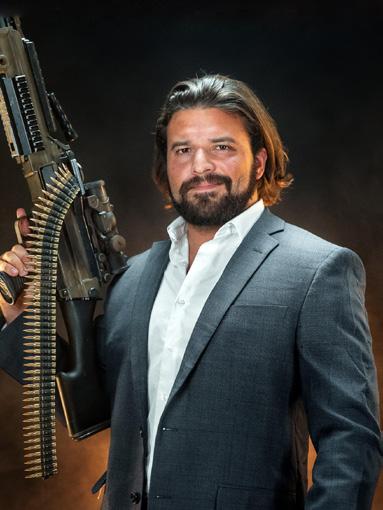
the charge as California heads into another critical election cycle. Across the state, CRPA chapters are stepping up by organizing candidate forums designed to give voters direct access to the individuals seeking to represent them at the local, state, and federal levels. These forums aren’t scripted, highgloss productions run by political
or Congress, chapters are helping local voters make sense of the choices in front of them.
And the truth is, these events work best when the community is active and involved.
California’s political environment is challenging, and it can be easy to feel discouraged or disconnected. But the Chapter Program exists
“Across the state, CRPA chapters are stepping up by organizing candidate forums designed to give voters direct access to the individuals seeking to represent them at the local, state, and federal levels.”
strategists—they’re community events where members can ask real questions, hear real answers, and evaluate candidates facetoface.
For many attendees, it’s the first time they’ve ever had an opportunity to meet a candidate in person. For the candidates, it’s often the first time they’ve been in a room full of knowledgeable gun owners able to articulate the issues that matter to them. This kind of interaction helps build accountability. It gives candidates a chance to understand the concerns of lawful firearm owners, and it gives voters a chance to see which candidates are willing to show up and listen.
Every chapter has its own personality, but the purpose behind hosting these forums is the same statewide: to give CRPA members and their communities a platform to stay informed and engaged. Whether the race is for city council, county supervisor, the state legislature,
to combat exactly that feeling. Chapters provide a home base for members who want to stay connected, stay informed, and stay involved. They’re places where people can bring their questions, their concerns, their ideas, and their experience. They are where newcomers find mentors, volunteers find purpose, and communities find their voice.
The chapter network has expanded rapidly in recent years, and that growth has allowed CRPA to build influence in regions where gun owners have long felt underrepresented. From the northern counties to the desert communities of the south, chapters are proving that a strong local presence can change the tone of the conversation. They’re forming partnerships with ranges, clubs, businesses, and civic groups. They’re hosting trainings, educational meetings, outreach events, youth programs, and town halls. The candidate forums
are just one example of what happens when members take ownership of their local chapter.
If you’ve never attended a chapter meeting, or if it’s been a while, this election season is the perfect time to get involved. Chapters are stronger when their members bring their voices, their questions, and their perspectives to the table. When more people participate, chapters can host larger events, bring in more candidates, and represent their communities more effectively. Getting involved doesn’t require a major time commitment. It can be as simple as attending a monthly meeting, helping set up a forum, inviting a friend, or volunteering for a single event. Some members choose to take on leadership roles, while others pitch in occasionally as their schedules allow. Every level of participation helps, and every contribution strengthens the statewide effort to defend and advance the rights of California gun owners.
Elections aren’t decided by strangers—they’re decided by engaged citizens willing to take the time to be heard. The Texas primary showed what can happen when motivated voters organize locally and refuse to sit on the sidelines. California gun owners have that same potential, and CRPA chapters are the place to turn that potential into real influence.
This year, make the decision to get involved. Attend a meeting. Bring a friend. Join a committee. Volunteer for an event. Help your chapter grow, and help shape the future of California’s firearm community.
Your local chapter is waiting— and your voice matters, and now is the time.
BY DAVE ROTI & DAVID CHAVEZ, COASTAL CONSERVATION ASSOCIATION OF CALIFORNIA, SAN DIEGO
Sometimes success seems like it will be determined by events completely beyond your control.
Other times, our faith is bolstered by factors also beyond your control but seemingly within reach. Supportive responses and group efforts lead you to a “full steam ahead, let’s do this thing” mindset.
Throughout the early part of this waterfowl season, our entire region experienced historic low numbers of migrating birds. Discouraging from the perspective of planning year end Veterans / Active Military Personnel (V.A.M.P.) and Youth hunts at Barrett Lake but ducks did begin to show up more as we moved toward 2026. Undeterred, organizers were committed and determined to succeed.
Key individuals like Gary Brennan were fundamental to this idea even getting started. Gary is a retired Navy Lieutenant (Mustang) who now serves as President of the San Diego County Wildlife Federation and who is also active with several other conservation and outdoor organizations such as the Safari Club International-San Diego Chapter and the California Rifle & Pistol Association (CRPA). Gary’s reputation and relationships within these organizations have been invaluable in garnering support in the form of financial and product donations to sponsor
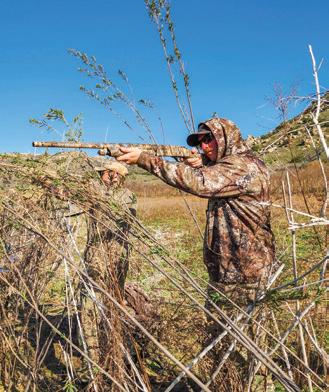
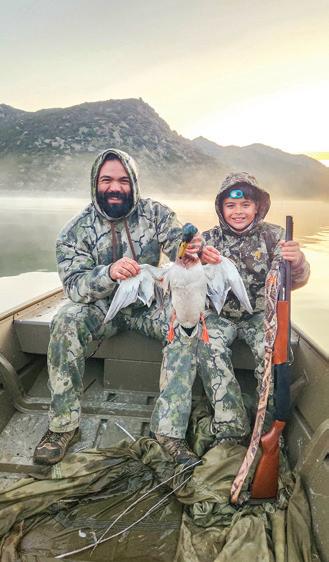
these V.A.M.P. & Youth hunts. The over-arching goal continues to be gaining recognition and support for the Waterfowl Hunting program at this San Diego City managed reservoir, as budget cuts and reductions of access are a frequent topic under review.
Main organizer David Blackston and friend George Sawaya have spent decades hunting ducks at Barrett Lake and have done a remarkable job of developing relationships & building the program. For example, (17) Hunt Mentors were required to assist
hunters. It only took (18) phone calls to fill the spots. This is crucial, because boat transportation to the shoreline blinds and setting them up is all done in the predawn darkness and familiarity is essential. The enthusiastic response is a testimony to David’s tireless long-term efforts, as he and George have helped these Mentors in numerous ways over the years to develop their own skills & achieve success.
The responses to the invitation to participate as a V.A.M.P. or Youth Hunter were equally impressive. The inaugural V.A.M.P. Hunt was filled within a day of the email being sent and the Youth Hunt (2nd year) was filled within 3 hours. Coordination for the hunts was conducted at the pre-event Mentor/Volunteer briefing & thank you dinner held at Buckboards BBQ & Brew in El Cajon.
Upon arrival, each hunter was given a waterproof Avery blind bag filled with a variety of CWA
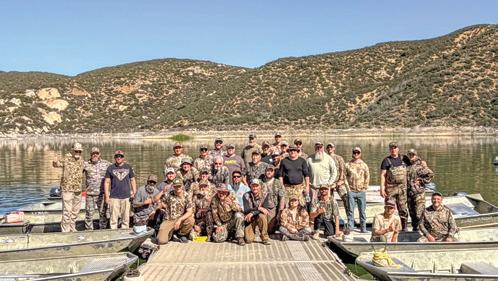
merchandise. Sincere thanks are extended by both hunt groups to California Waterfowl for their support in obtaining these swag bags and for the CWA membership. Each hunter was also offered a 1-year membership to the Coastal Conservation Association of CA (courtesy of the San Diego Anglers Foundation for the V.A.M.P. group), with the Youth also receiving a CCA STAR Tournament entry.
Hunters traveled from Riverside, Ridgecrest, Fort Irwin and even Half Moon Bay to join the locals and participate. Even the San Diego County locals came from afar, with many driving 2-plus hours to arrive by the 3:00 a.m. check-in.
Spirits were high and everything went smoothly during the prehunt briefing & blind selection process. Post hunt back at the dock, success was defined differently for each group. For the V.A.M.P hunters, there were fewer shooting opportunities
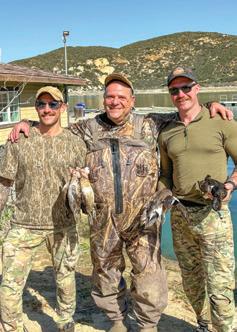
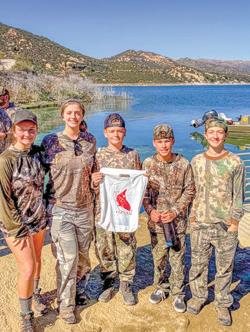
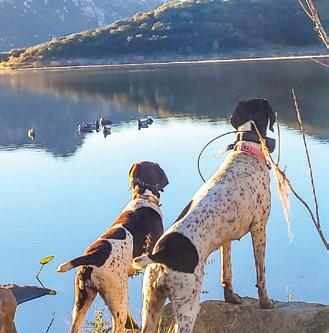
than were hoped for, but few opportunities were missed with a good selection of ducks being taken. A week later for the Youth hunt, they experienced by far the best flight of the season. Each Youth had shots at ducks with most connecting on a wide variety including green-winged teal, cinnamon teal, gadwall, wigeon, ruddy, shoveler, mallard, ringneck, bluebill and canvasback. What a fitting conclusion to the season as the Youths (and adults) were rewarded with a truly memorable morning and experience overall. The excitement continued with the raffle, which included an assortment of quality hunting, fishing and all-purpose gear procured by David Blackston & Gary Brennan. The Youth grand prize of a duck mount donated by Paul Eichberger of Eichbergerwerks
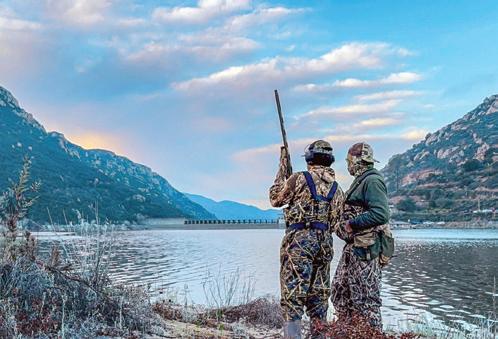
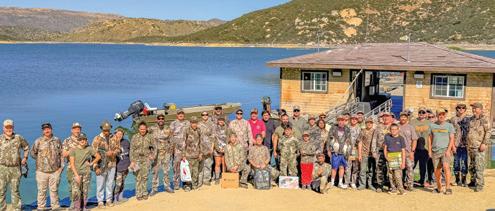
Special mirrored commemorative plaques, made by Todd Burton of TB Metal Art and coordinated by the CCA Cal-SD Chapter, were won by Army Captain John Schaaf – Fort Irwin and Kane Larter, shown with event organizer David Blackston.
We received many affirming comments, such as this representative sentiment from Matt Lynch, who is the Port Ops Director of Waterfront Operations – Commander Navy Region Southwest; “Outstanding job by all involved!
Really appreciate the blind bag goodies, am willing to help support future events”
Thanks, Matt, we may just take you up on that next year!
Thanks also the Barrett Lake Staff, the City of San Diego, the host of volunteers and mentors

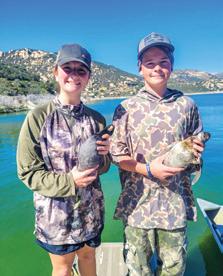
for making these hunts successful. To all the active-duty and military veterans, we appreciate your service to our country. Lastly, to the parents who brought their children to participate in the
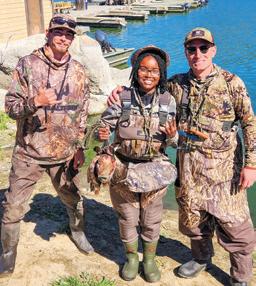
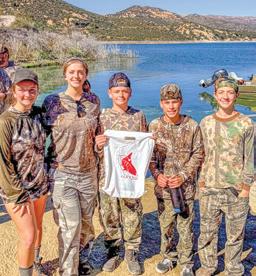
youth hunt, thanks for passing on the tradition of hunting to your children. They are the future of our heritage.
For more information on the Barrett Lake duck hunting program, visit sandiego.gov/ reservoirs-lakes/fishing-hunting/ waterfowl. David Blackston is also available to answer related questions at davidb@dawhitacre. com or 619-572-5696.






ALL NEW CRPA members of every level receive these benefits:
■ Subscription to CRPA’s California Firing Line magazine
■ CRPA membership card with Know Your Rights notice
■ CRPA decal or sticker
■ Legislative & litigation updates and information bulletins
■ Exclusive access to timely and informative webinars, podcasts and other resources
Upgraded members receive additional benefits as listed below. To sign up for membership, please visit crpa.org.
■ Student 1-Year Membership: $30 / Year
■ 1-Year General Membership: $55 / Year
■ 5-Year General Membership: $225 ($5 savings a year on annual membership)
■ 2A Sustaining Membership: $17.91 / month
CRPA LIFE MEMBERSHIPS*
■ Life Member Hat
■ Life Member Velcro Patch
■ CRPA Life Member Decal or Sticker
■ Pocket Constitution
■ CRPA Challenge Coin
*Active military and veterans get a 10% discount on 1year, 5-year, and full lifetime membership (not on discounted or enhanced life memberships) Please choose the Veteran Options upon checkout.”
■ Life Member: $1000
■ Senior Life Member (65 and older): $550
ENHANCED LIFE MEMBERSHIPS
CRPA’s Enhanced Life Members are 2A supporters, hunters and shooters committed to the CRPA’s mission and success. In addition to ALL the above-listed member benefits, CRPA Enhanced Life Members also receive:
■ Defender Life Member: $1000 upgrade for CRPA Life Members
■ CRPA Defender Life Member Hat
■ CRPA Defender Life Member Lapel Pin
■ CRPA Custom-Engraved Defender Life Member Buck Knife
■ Defender Life Member Certificate
■ Invitations to Exclusive VIP Events, Briefings and Tours
■ Personal Recognition from CRPA President
■ Activist Life Member (Silver/Patron): $1500 upgrade for CRPA Defender Life Members
■ Activist Life Member Embroidered Patch
■ Activist Life Member Outerwear / Jacket
■ Activist Life Member Hat
■ Activist Life Member Lapel Pin
■ CRPA Custom Engraved Life Membership Buck Knife
■ Activist Life Member Certificate
■ Invitations to Exclusive VIP Events, Briefings and Tours
■ Personal Recognition from CRPA President
■ Patriot Life Member (Gold/Benefactor): $1500 upgrade for CRPA Activist Life Members
■ Custom Engraved Pistol (For First 50 Members)
■ CRPA Patriot Life Member Hat
■ CRPA Patriot Life Member Lapel Pin
■ CRPA Custom Engraved Life Member Buck Knife
■ CRPA Patriot Life Member Challenge Coin
■ Special Patriot Life Member Recognition Wall Plaque
■ Patriot Life Member Certificate
■ Invitations to Exclusive VIP Events, Briefings and Tours
■ Personal Recognition from CRPA President
■ Custom logo jacket
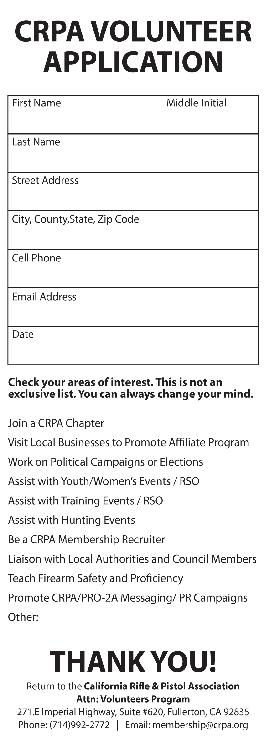
May 2nd 2026
CRPA SHOTGUN INSTRUCTOR
Santa Ana, CA
May 2nd 2026
CRPA YOUTH CUP / RIFLE At Raahauges
May 9th 2026
CRPA RIFLE SHOOTING BASICS
Santa Ana, CA
May 16th 2026
CRPA CHIEF RANGE SAFETY OFFICER
Santa Ana, CA
May 30th 2026
RAAHAUGES YOUTH ADVENTURE DAY At Raahauges
June 6th 2026
CRPA YOUTH CUP / SHOTGUN At Prado
June 13th 2026
CRPA PISTOL SAFETY BASICS
Santa Ana, CA
June 10th 2026
STOP THE BLEED
Santa Ana, CA
June 20th 2026
CRPA RIFLE SHOOTING BASICS
Santa Ana, CA
June 24th 2026
STOP THE BLEED
Santa Ana, CA
June 27th 2026
CRPA SHOTGUN SHOOTING BASICS
Santa Ana, CA
July 8th 2026
STOP THE BLEED
Santa Ana, CA
July 11th 2026
PISTOL SHOOTING BASICS
Santa Ana, CA
July 18th 2026
CRPA PERSONAL PROTECTION IN THE HOME
Santa Ana, CA
July 22nd 2026
CRPA GUIDE TO FIREARMS OWNERSHIP
Santa Ana, CA
July 25th 2026
CRPA PISTOL INSTRUCTOR COURSE
Santa Ana, CA
July 29th 2026
STOP THE BLEED
Santa Ana, CA
AUGUST
August 1st 2026
CRPA PERSONAL PROTECTION
INSIDE THE HOME INSTRUCTOR
Santa Ana, CA
August 8th 2026
CRPA PERSONAL PROTECTION
OUTSIDE THE HOME INSTRUCTOR
Santa Ana, CA
August 12th 2026
STOP THE BLEED
Santa Ana, CA
August 15th 2026
CRPA SHOTGUN SHOOTING BASICS
Santa Ana, CA
August 22nd 2026
CRPA CHIEF RANGE SAFETY OFFICER
Santa Ana, CA
August 26th 2026
CRPA GUIDE TO FIREARMS OWNERSHIP
Santa Ana, CA
September 9th 2026
STOP THE BLEED
Santa Ana, CA
September 12th 2026
CRPA PISTOL SHOOTING BASICS
Santa Ana, CA