Letter critical of CUSD erroneous SRP’s monthly fees on solar customers unfair, unjustified
The SanTan Sun News’ Saturday, March 21, edition contained an Opinion piece authored by Jan Pfahl, titled, “Education needs fewer dollars.” The letter appeared in the Opinion section. I fully respect the right of every individual to have and express their opinion; however, I feel opinions should be generated based on facts and reality. Ms. Pfahl’s letter was long on false generalizations, factual misstatements and poor logic.
I want to address the overriding generalization that she and many others seem to hold as true that public education is failing. This is just plain wrong. Using the Chandler Unified School District (CUSD) as an example (was wrong). We can find many examples where the district is doing a marvelous job of providing a top-rate education to all of its students. It is true that CUSD, along with the other districts in Arizona, have faced numerous financial challenges. CUSD is funded at a rate that is 36 percent below the national average, and no other state slashed education by a higher percentage than Arizona did between 2008 and 2012. Despite these cuts, CUSD produced a graduating class last year that earned a total of $91 million in scholarship offers, which averages out to more than $30,000 per graduate.
Hamilton High alone produced three Flinn scholarship winners. Chandler High offers the state’s longest-running IB (International Baccalaureate) program. Perry High School offers the STEM program. In 2012, CUSD placed first in the state in AIMS testing for high school sophomores in every category, CUSD had the No. 1 middle school in the state for AIMS testing. So yes, I take umbrage at her claim that public schools are teaching “junk science” and graduating illiterates. The facts prove this wrong. I also need to address the most glaring exaggeration in the last issue’s Opinion piece. Ms. Pfahl claims, “Christian and Catholic schools can turn out students who are far better educated than public school students and do it for far less money.” She cites Seton Catholic as an example. Tuition for this coming fall at Seton Catholic is $14,310. According to the latest
Arizona state’s auditor general report, CUSD received $6,644 per student. My public education tells me that $6,644 is slightly less than half of $14,310. I have nothing against private schools, and I support the right of every family that chooses this path; however, they must do it without public tax subsidies. If a private education is as wonderful as the author claims, then they should be able to compete on their own using the principles of the free market. Private schools are allowed to create their own curriculum and agenda that is beyond public scrutiny; therefore, they should not receive public tax dollars to educate in the manner they see fit. Public schools must answer to the needs of the public and adhere to standards and goals set by the government. We ultimately own our public schools. A private school is free to teach whatever courses it desires. It can even teach people that $6,644 is more than $14,310. Public schools must answer to the public. If the public is dissatisfied with the job a district is doing, they can express their grievances to the school board who they elect. In addition to the semi-monthly school board meetings, CUSD hosts annual budget meetings that are open to the public. At the meetings, every line item is scrutinized. In addition, you will find that every high school in CUSD offers a wider range and number of advanced placement courses than Seton or any private school does.
Public schools in Arizona continue to provide a wide range of quality education opportunities to every student. This is why 90 percent of parents choose public schools. All this is done at cut rate funding. Imagine, if you will, what our schools could produce if they were funded a level closer to the national average. It makes no logical sense to, on one hand, claim public schools are failing and therefore they need fewer dollars. This logic will hurt Arizona’s future, that future is determined by how well we educate today’s children. Please support public education, it benefits every member of society.
Julie Craig Chandler Unified School District parent

MAILING ADDRESS: PO Box 23 Chandler, AZ
85244-0023
TELEPHONE: (480) 732-0250
FAX: (480) 883-8714
©2015 SanTan Sun News
For News Tips, Editorial Articles, Opinion or Classifieds, email is preferred.
NEWS EMAIL ADDRESS: news@santansun.com
ADS EMAIL ADDRESS: ads@santansun.com
WEBSITE ADDRESS: www.santansun.com

BY SEAN GALLAGHER
All Arizonans should have the choice to use solar and other technologies to meet their own power needs on their own property. But Salt River Project’s (SRP) decision to single out customers who generate their own power and hit them with a new charge averaging $50 each month seriously jeopardizes the future of rooftop solar on homes, farms, businesses, churches, schools and military bases in the Greater Phoenix area. The charges are so high that some customers would actually pay more after installing solar than before—which is simply not right.
Solar is the fastest-growing source of renewable energy in America, employing nearly 175,000 American workers and pumping $15 billion a year into the U.S. economy. The 1,929 megawatts (MW) of solar energy currently installed in Arizona ranks the state second in the country in installed solar capacity and is enough to power 271,000 homes. The Arizona solar industry employs 9,170 workers at 637 establishments throughout the state and is ranked No. 3 in solar jobs nationally. In 2013, $1.2 billion was invested in Arizona to install solar for home, business and utility use, providing them with clean energy and helping them reduce their utility bills.
The Solar Energy Industries Association (SEIA) doesn’t object to investigating the costs and benefits of solar generation and net energy metering, or to ensuring everyone who benefits from the grid pays for those benefits. We do object to the imposition of charges that seem punitive, and that don’t take all of the facts into consideration. Despite its rhetoric suggesting that solar customers shift utility costs onto others, SRP failed to back up its assertions with facts. SEIA objects to the broad assumption that any differential in payments by customers necessarily reflects an unjustified “cost shift.” Retail utility rates often include cost shifts—such as setting the same rates for rural and urban utility customers of all types (urban customers are typically less costly to serve due to population density)—that functionally serve as cross-subsidies. These cost shifts are justified by a variety of public purposes, both practical and policy-driven. It’s neither logical nor fair to rewrite ratemaking rules for one set of customers or one policy initiative, while ignoring similar effects of
Deadline
EDITORIAL & ADVERTISING:
5 P.M. THURSDAY, APRIL 9, FOR THE SATURDAY, APRIL 18, ISSUE 35,000
Total Circulation 27,250+ Driveways
Fifty square mile coverage area from Price/101 to Greenfield and from Frye to Hunt Highway.
other rates and policies.
Unfortunately, SRP’s rate increase would have the practical effect of stymying—if not killing—the growth of rooftop solar in its service territory, hurting thousands of its own customers who understandably want to use their rooftops to generate their own energy, using Arizona’s abundant sunlight. Although SRP agreed to lastminute changes, mostly protecting the thousands of families, businesses and churches that have already installed solar from being hit with unfair charges, new solar customers face the full brunt of the new charges. These new solar customers are being asked to bear costs that are disproportional to the value they are receiving—and that ignore the benefits they are actually providing to the grid.
Before SRP proposed its rate hike in late 2014, the Arizona Republic reported that more than 600 customers a month were adding solar power, most through leases, and without the utility providing any incentives as it had in years past. But only about 20 customers have requested to interconnect solar arrays since the Dec. 8 deadline to avoid the new fees. Why the slowdown?
SRP says their new charges represents the solar customer paying for their connection to the grid, but numbers produced by SRP do not add up.
The SRP proposal says new customers will have a tiered demand charge as well as a facilities charge, which together will hit the average new solar customer with a $50 a month increase on their bill.
The new charges would be in addition to the regular SRP monthly basic service charge.
The charges are so high that some customers would actually pay more after installing solar than before.
The board approved the plan even though hundreds of customers showed up at meetings to denounce it.
Whether it was by design or by accident, we believe SRP’s rate decision is fatally flawed. We strongly urge SRP to go back to the drawing board, and we are ready to help SRP develop a plan that is fair and that reflects the benefits to both solar customers and the grid provided by rooftop solar.
Sean Gallagher is the vice president of state affairs for the Solar Energy Industries Association (SEIA)
Proud member of the
PUBLISHER
Steve T. Strickbine
PUBLISHER EMERITUS
Laurie Fagen
ACCOUNT EXECUTIVES
Tracy Walsh
Tracey Wilson
WEBSITE MAINTAINED BY Susan Kovacs, n-ergizing
EXECUTIVE EDITOR Christina Fuoco-Karasinski
ASSOCIATE EDITORS Ken Abramczyk Curt Blakeney
WRITERS
Lynette Carrington
Alison Stanton
SECTION EDITOR
Meghan McCoy
AD
Paul Braun
Share your opinion with SanTan Sun News!
We know you have an opinion! Share it with the SanTan Sun News. Please keep your Letters to the Editor around 200-300 words, or they may be edited for length. Include your first and last name, community or development name in Southern Chandler (Cooper Commons, Ocotillo, Sun Groves, etc.) or ZIP code and daytime phone number for verification. Anonymous letters are not typically accepted. Email is the preferred submission method, to Letters@SanTanSun. com. All submitted Letters to the Editor and Community Commentaries become the property of the SanTan Sun News and may be reprinted in part, quoting the letters’ authors, or in their entirety. Your submission to the SanTan Sun News is considered your permission to print your written opinion. Opinions expressed in Community Commentaries, Letters to the Editor or cartoons are those of the author, and not that of the SanTan Sun News.
Community Commentary
Kudos to ‘Disability Awareness Month’ honorees
BY COUNCILWOMAN NORA ELLEN
Every year, as part of the “Disability Awareness Month” in March, the mayor and council were honored to celebrate the achievements of people with disabilities and those who support them.
The recipients of the Disability Awareness Recognition Awards were invited to a council meeting where they were recognized in public. I join the members of the Mayor’s Committee for People with Disabilities in congratulating this year’s winners. I am proud of each one of you!
The “Student of the Year” award was granted to Sydney Hinkel from Santan Junior High. Sydney is an eighth-grade student who was nominated by one of her teachers. Her nomination refers to her as a very engaged and hard-working student who does not allow any limitation to negatively affect her life. Sydney is known for her love of acting and singing and she was recently involved in a school play. Her drama teacher stated, “Sydney was one of my best actors, as she was always on task, listened carefully to every direction and even became a leader for the other


actors to look up to. I have no doubt she will soar to greater heights as an adult.” Congratulations, Sydney.
The “Educator of the Year” award went to Andrew Valuikas. Andrew is recognized for his contributions to improve the lives of students and individuals with disabilities throughout the community. He volunteers countless hours facilitating activities that promote inclusion at the Chandler High School campus. He has been instrumental in creating a culture of acceptance and respect, and he is greatly admired.
The Chandler Mayor’s Committee for People with Disabilities has chosen Jesus Perez as the “Volunteer of the Year.” Jesus volunteers in a self-contained classroom for students with autism at Santan Junior High School. This year, he has demonstrated many positive traits as a peer helper. He has volunteered many hours to help with fundraisers for the special education program and is taking initiatives to recruit more volunteers. In addition, Jesus is helping to build a bridge between general education and special education. He is a great role model to his peers and an inspiration to all who get to know him.
Created 25 years ago, the Mayor’s Committee for People with Disabilities plays an important role as a liaison between individuals with disabilities in the community and/or those who serve them and the City Council. It advises the City Council on policies and regulations relating to accessibility, education and employment.
Moreover, the committee administers a Scholarship and Stipend Program for qualified residents and supports leisure activities and events for individuals with physical, mental, emotional or social disabilities through the City’s Therapeutic Recreation Program. The annual fundraiser for the scholarship program is a golf challenge that is scheduled for Friday, Nov. 13. Sponsors and donations for raffle prizes are always welcome.
To learn more about this event and the work of the Committee, visit www. chandleraz.gov/therapeutic or call Collette Prather at (480) 782-2709.
All of this year’s award recipients, along with the members of the Committee, can take great pride in all they have done for the City of Chandler.
Finally, the “Employer of the Year” was given to the Chandler Police Department for the opportunity given to Steve Hunter. For more than 13 years, Steve has been able to increase his socialization skills through new friendships and his increase in confidence accomplishing administrative duties. The Chandler Police Department has given Steve the chance to have meaningful employment by allowing him to learn and grow.
Nora Ellen is a councilwoman in Chandler.



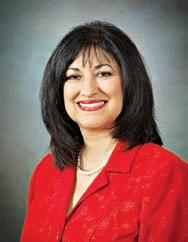
Nora Ellen. Submitted photo