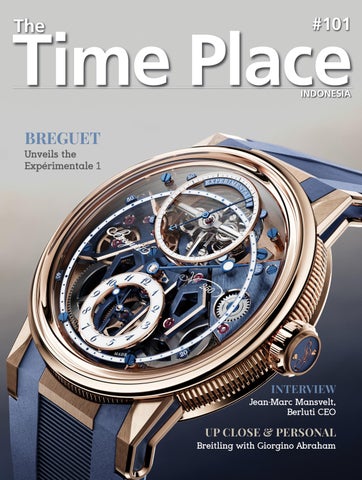
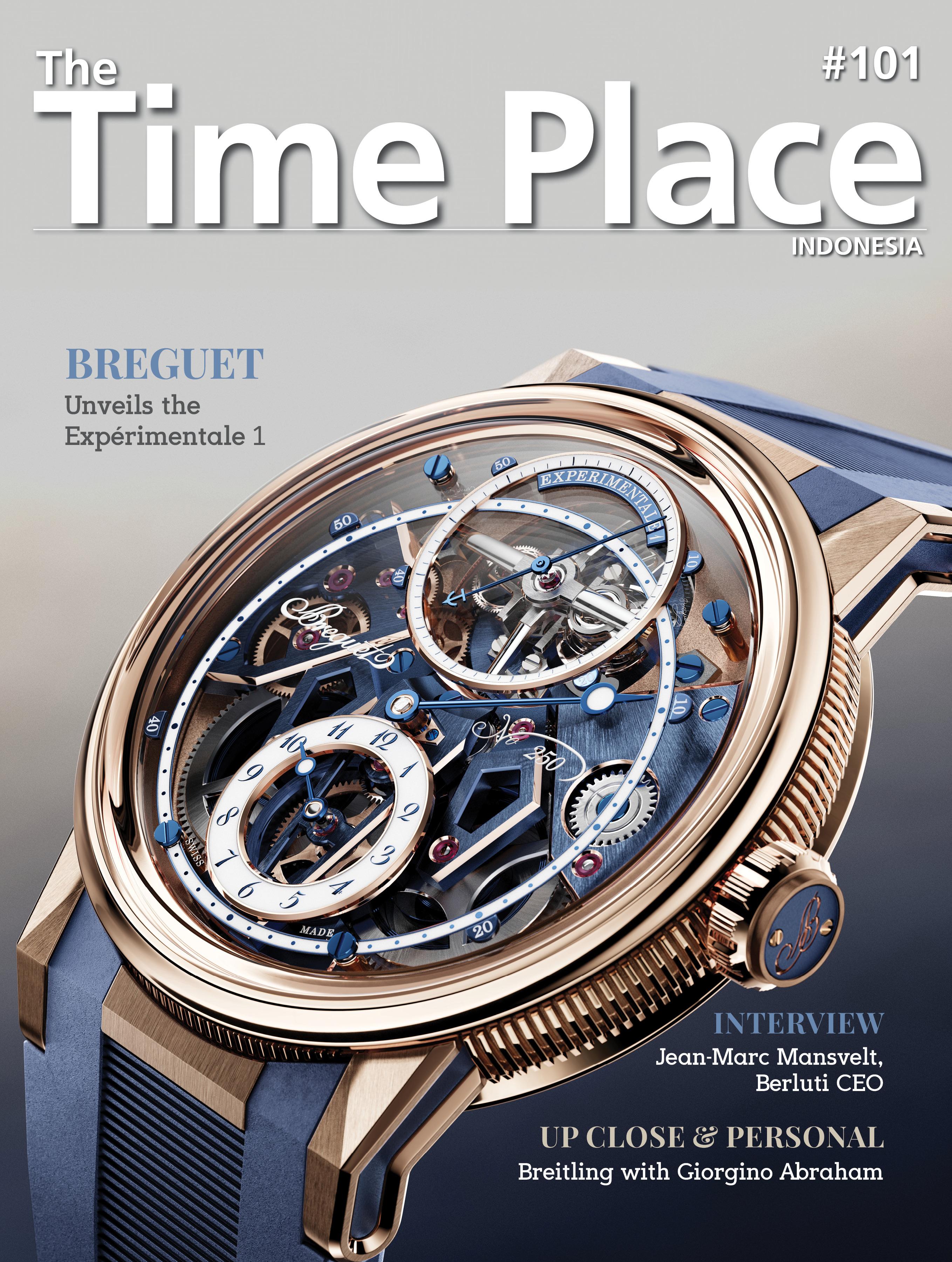
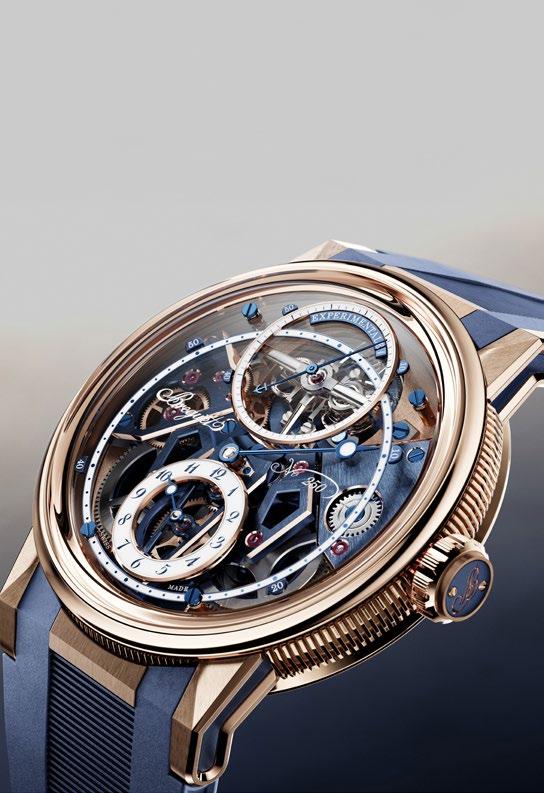
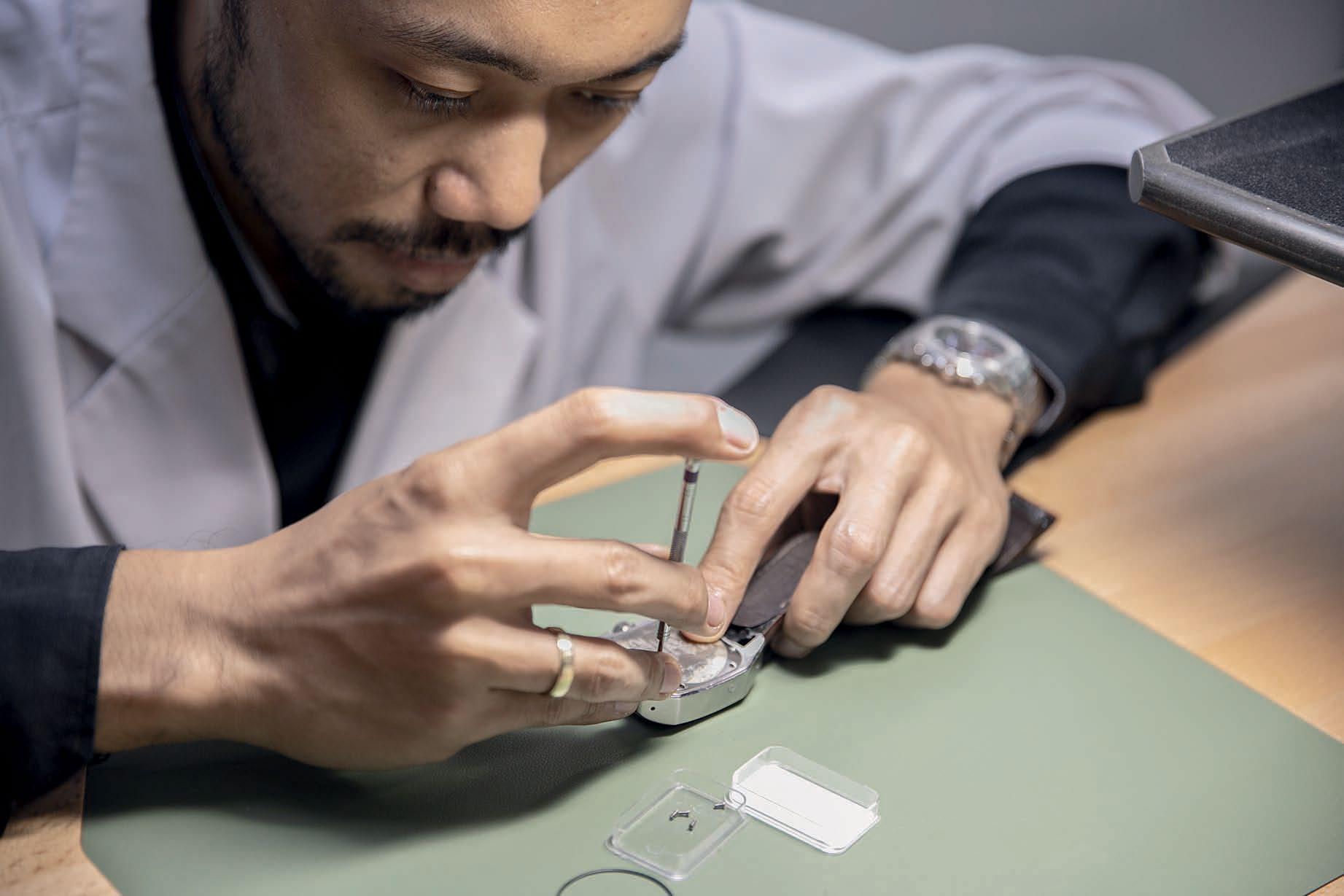
Our cover this issue is particularly notable, highlighting Breguet’s unveiling of the Expérimentale 1. The timepiece marks the introduction of a dedicated Research and Development line, a natural progression for a Maison whose history has long been defined by invention. As Breguet concludes its 250th anniversary, the inaugural Expérimentale stands as both a celebration of the past and a considered commitment to the future.
We also reflect on the momentum of the season with the LVMH Watch Week 2026 in Milan, where the Group’s watchmaking maisons gathered to present their latest creations and reaffirm their shared commitment to innovation and craftsmanship.
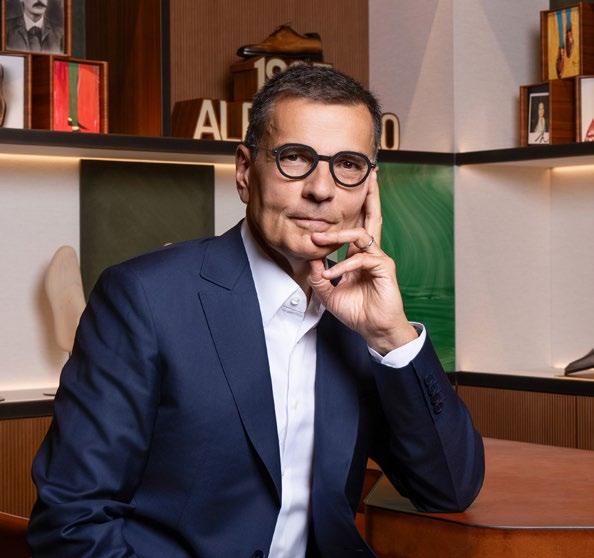
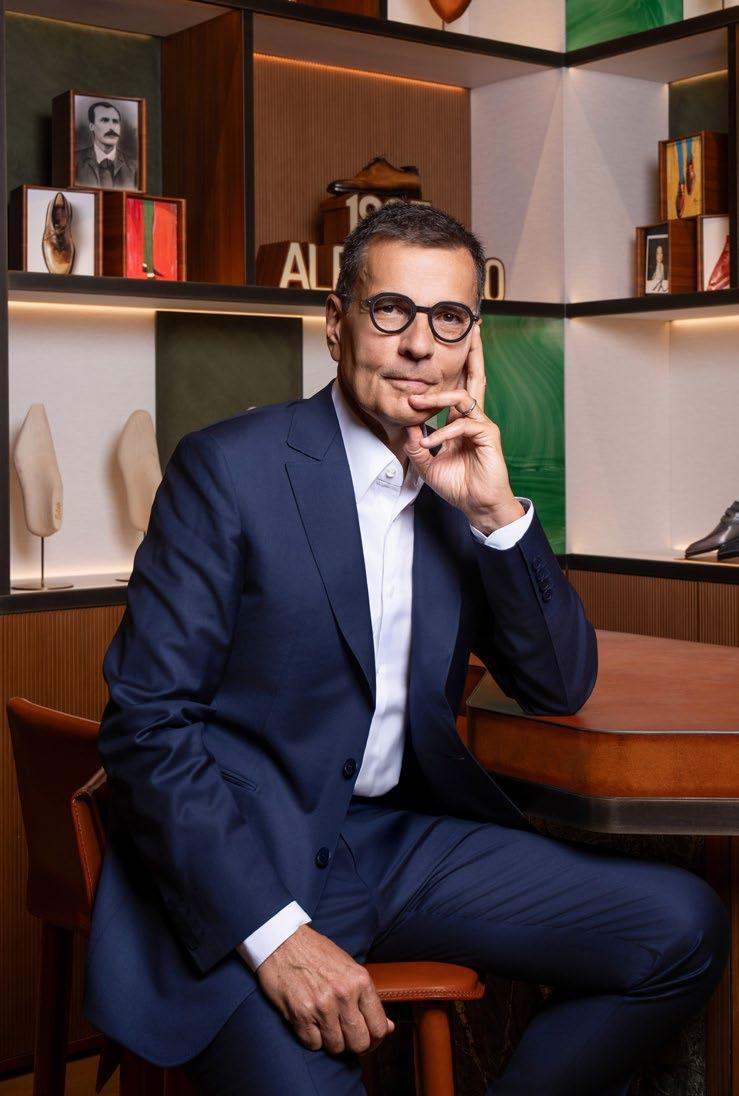
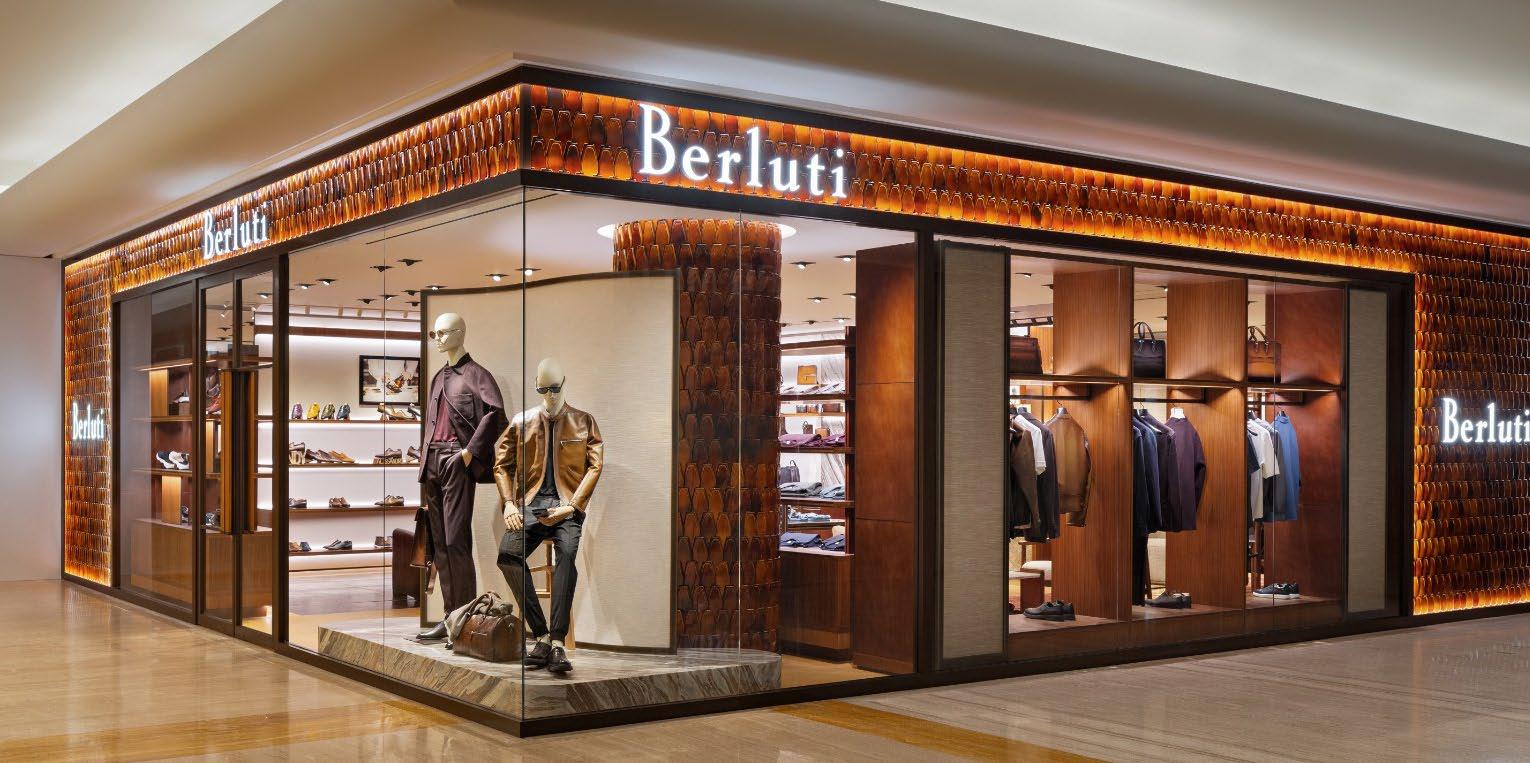
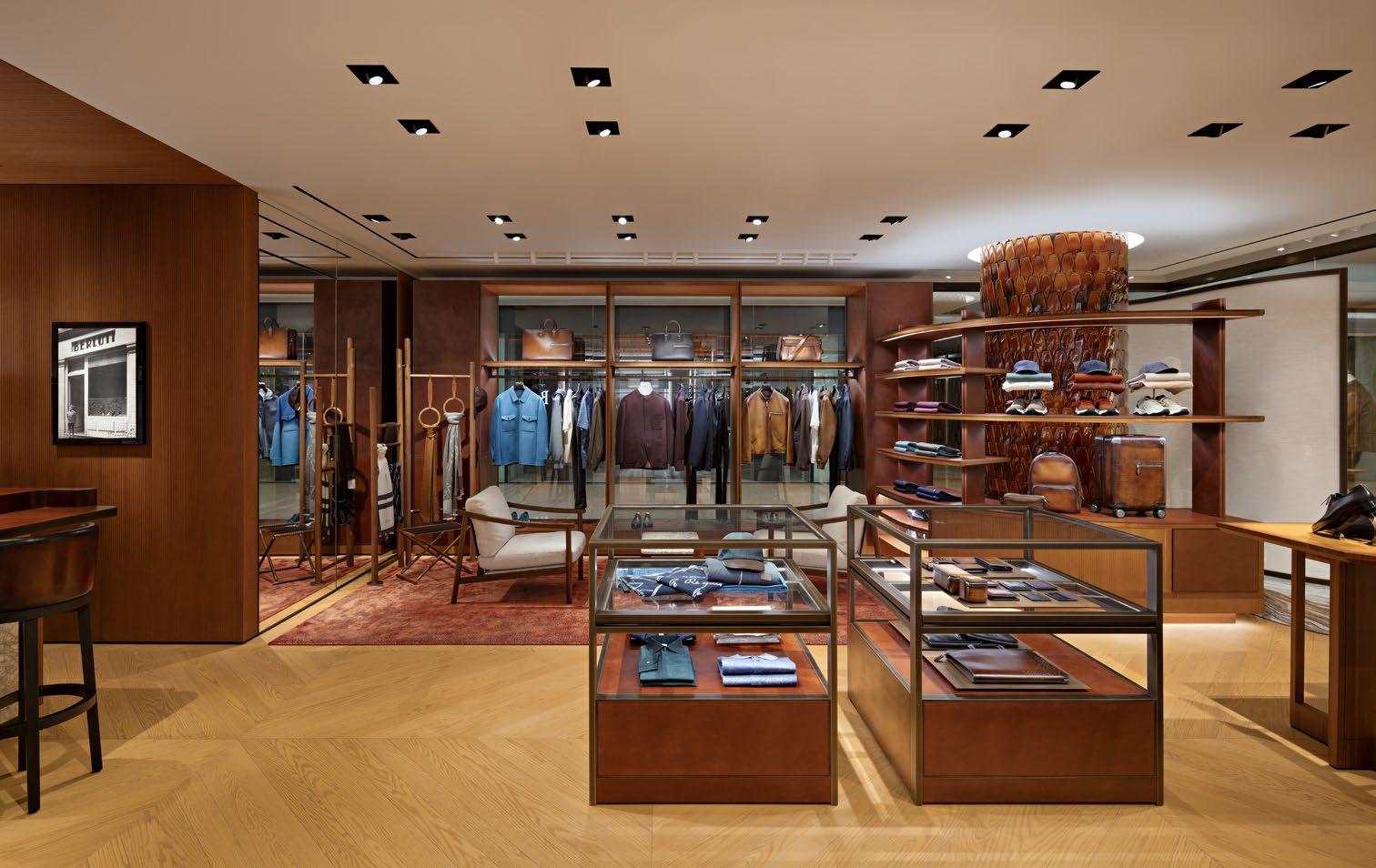
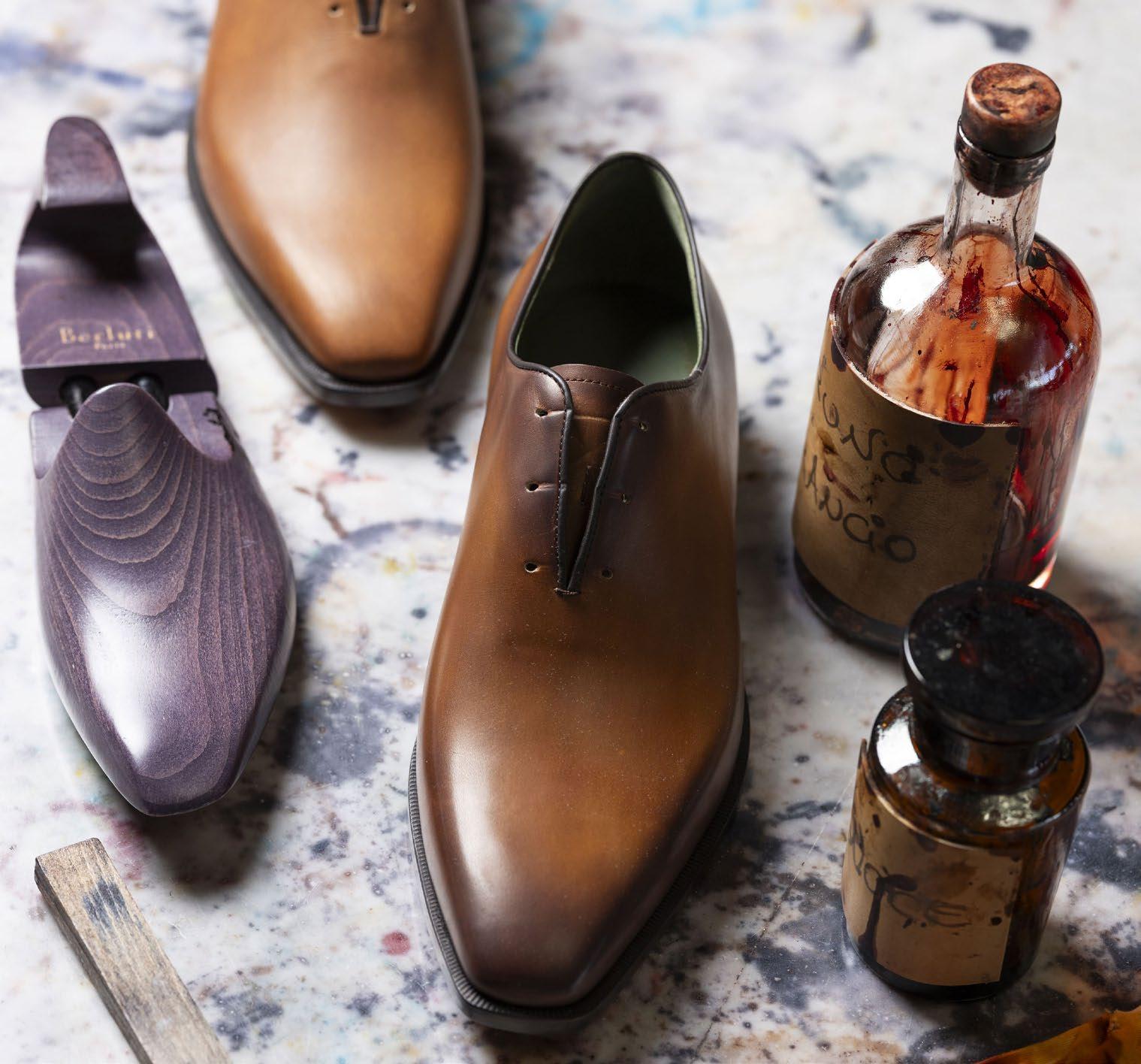
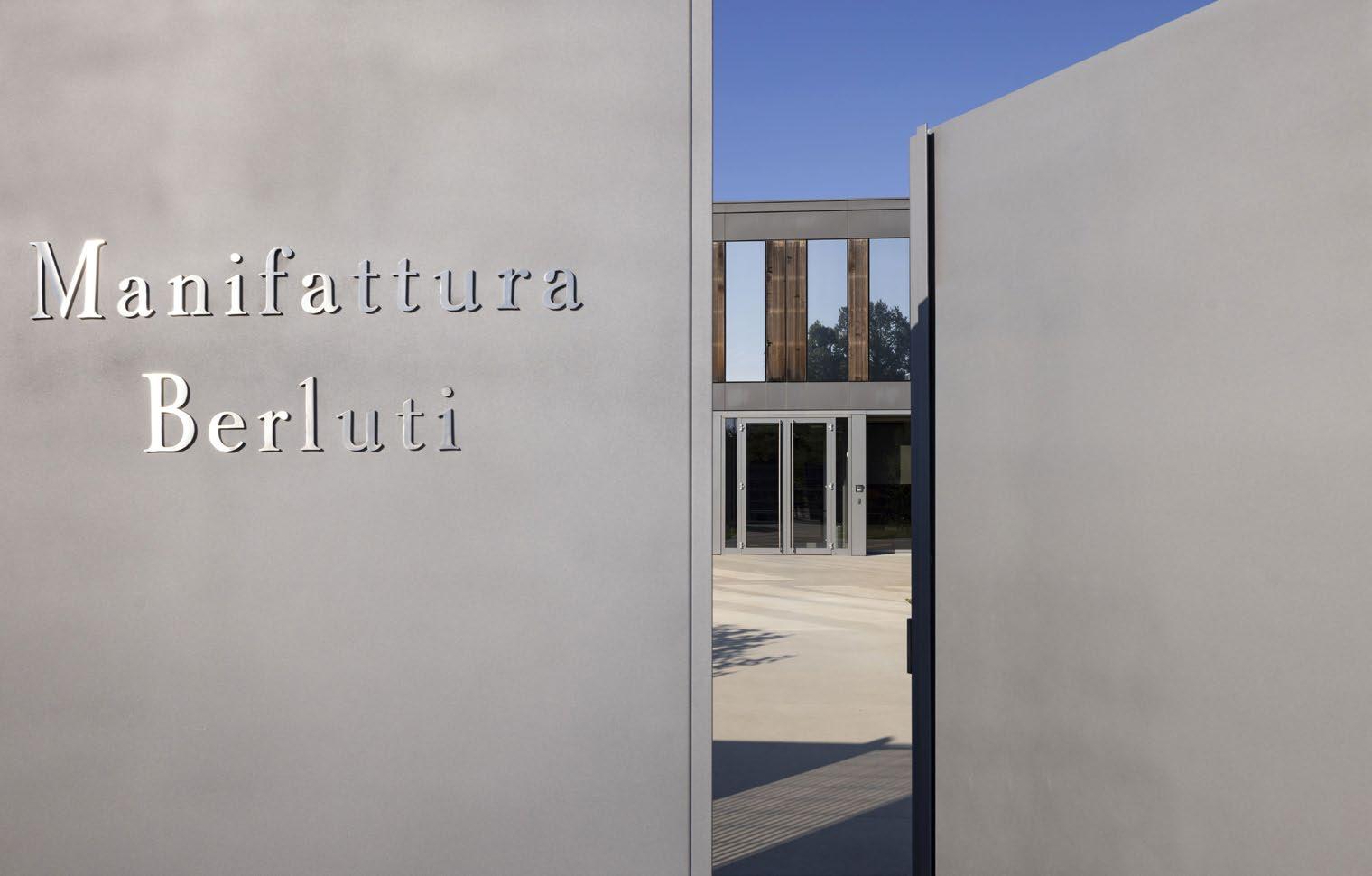
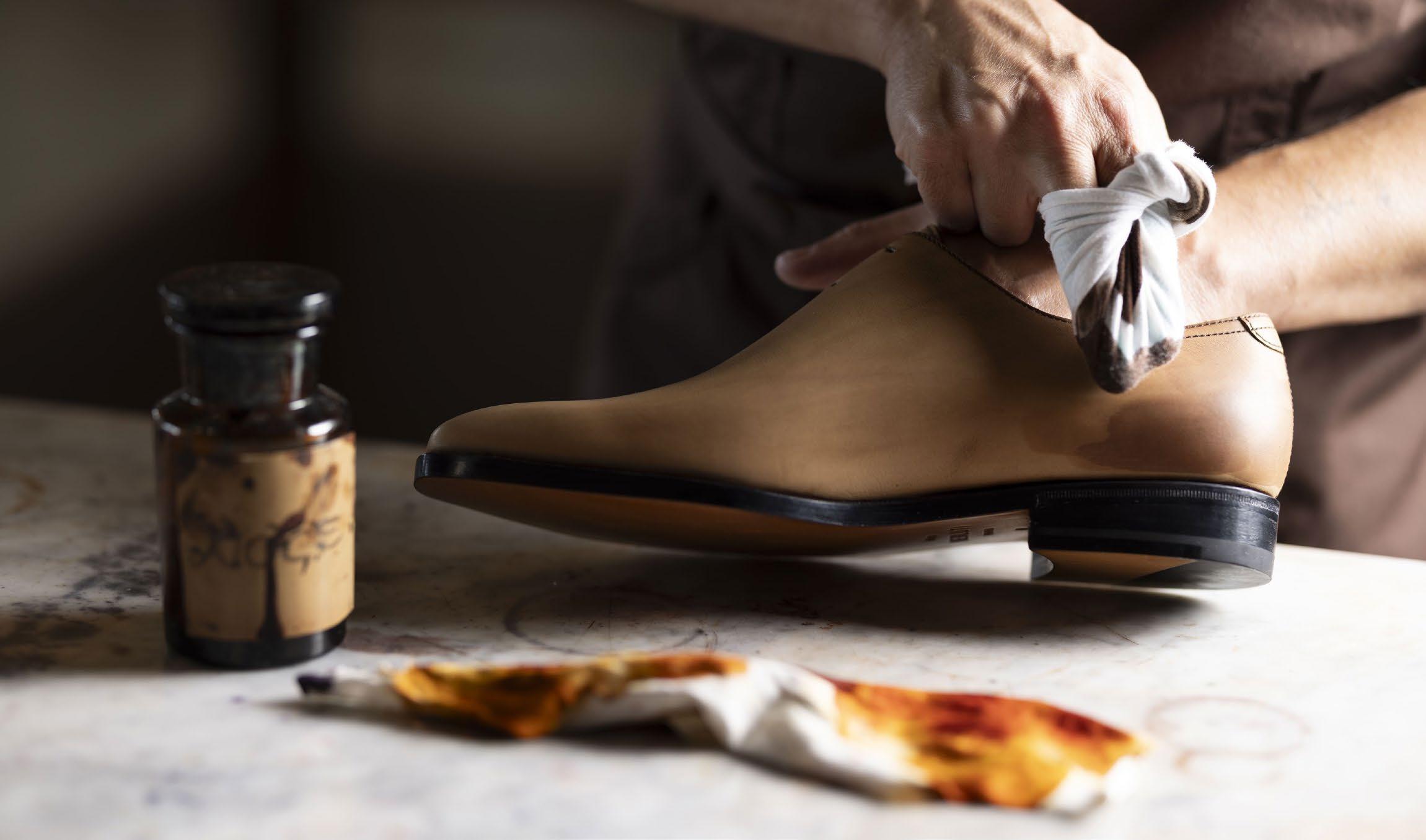
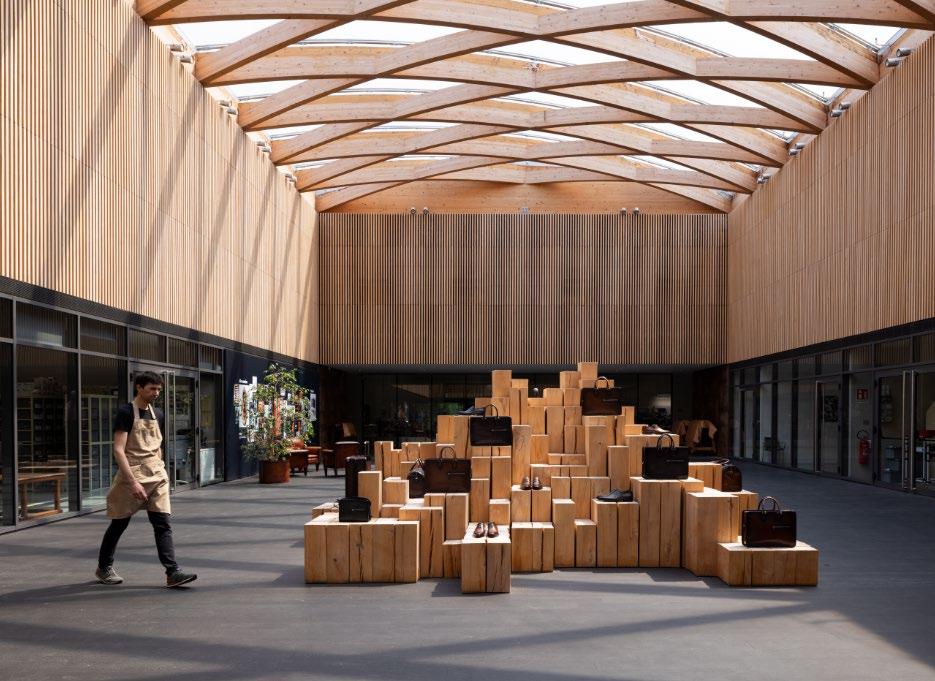
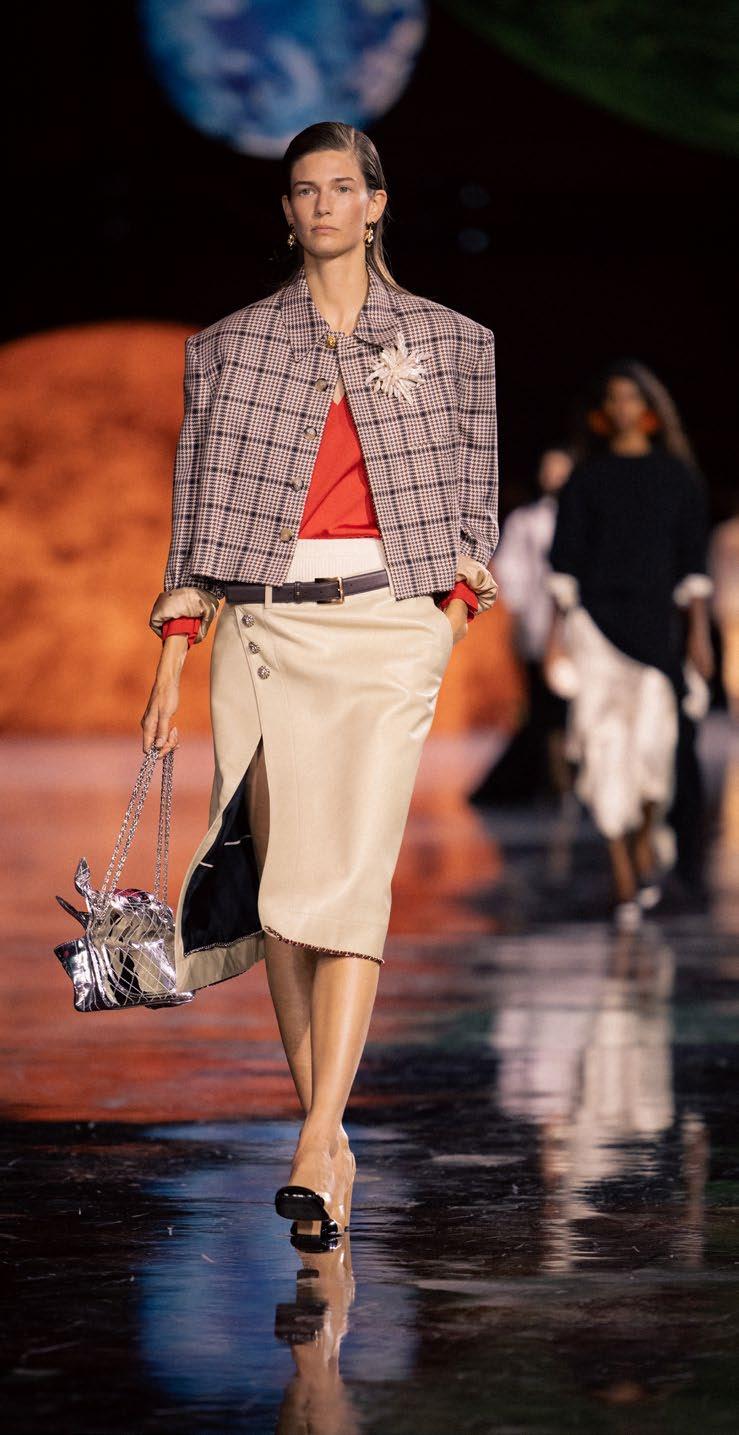
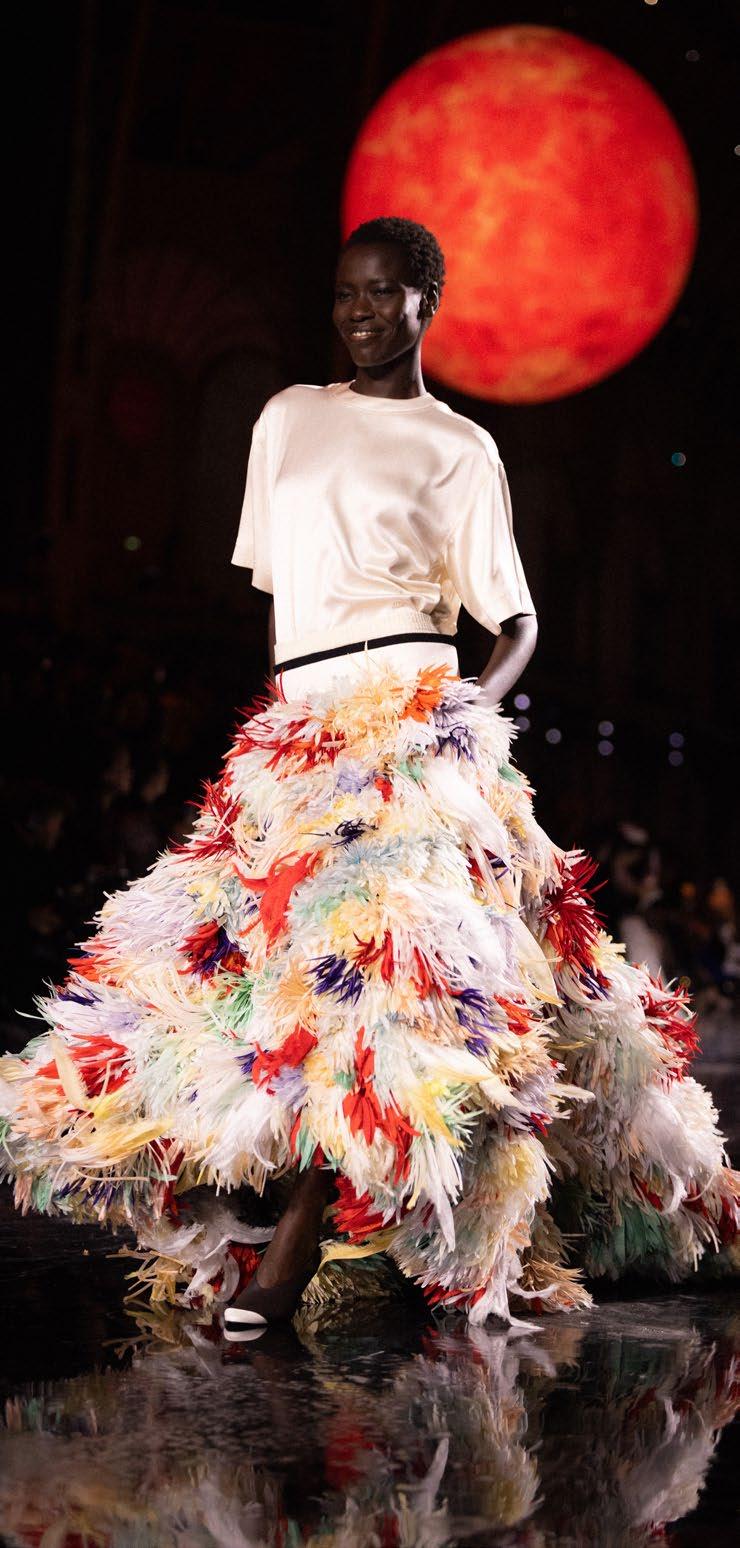
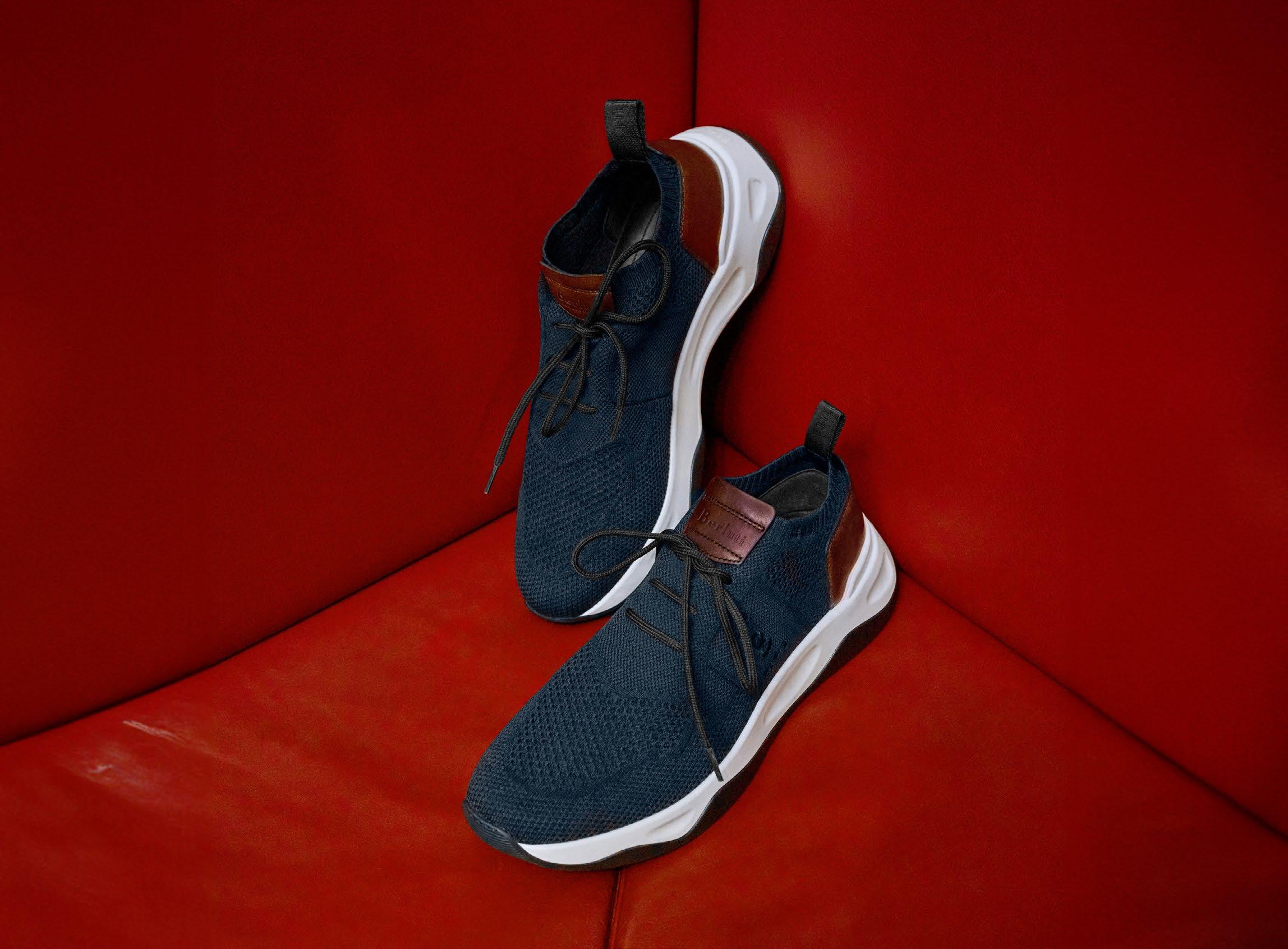
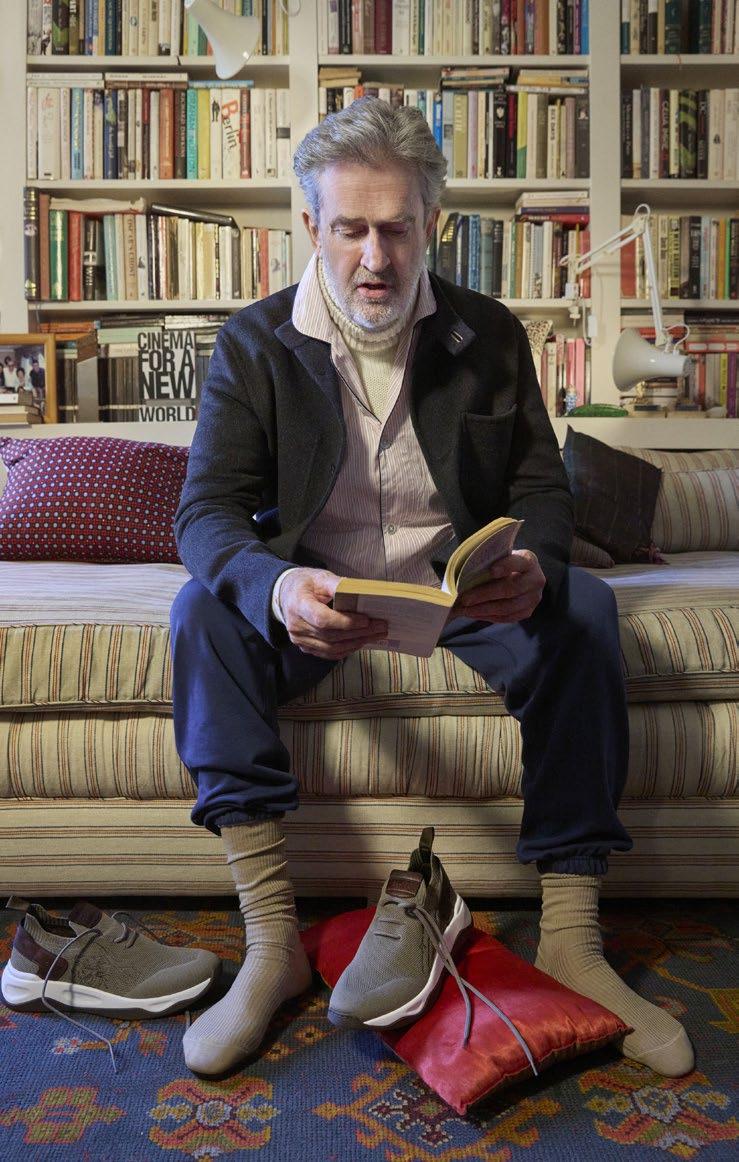
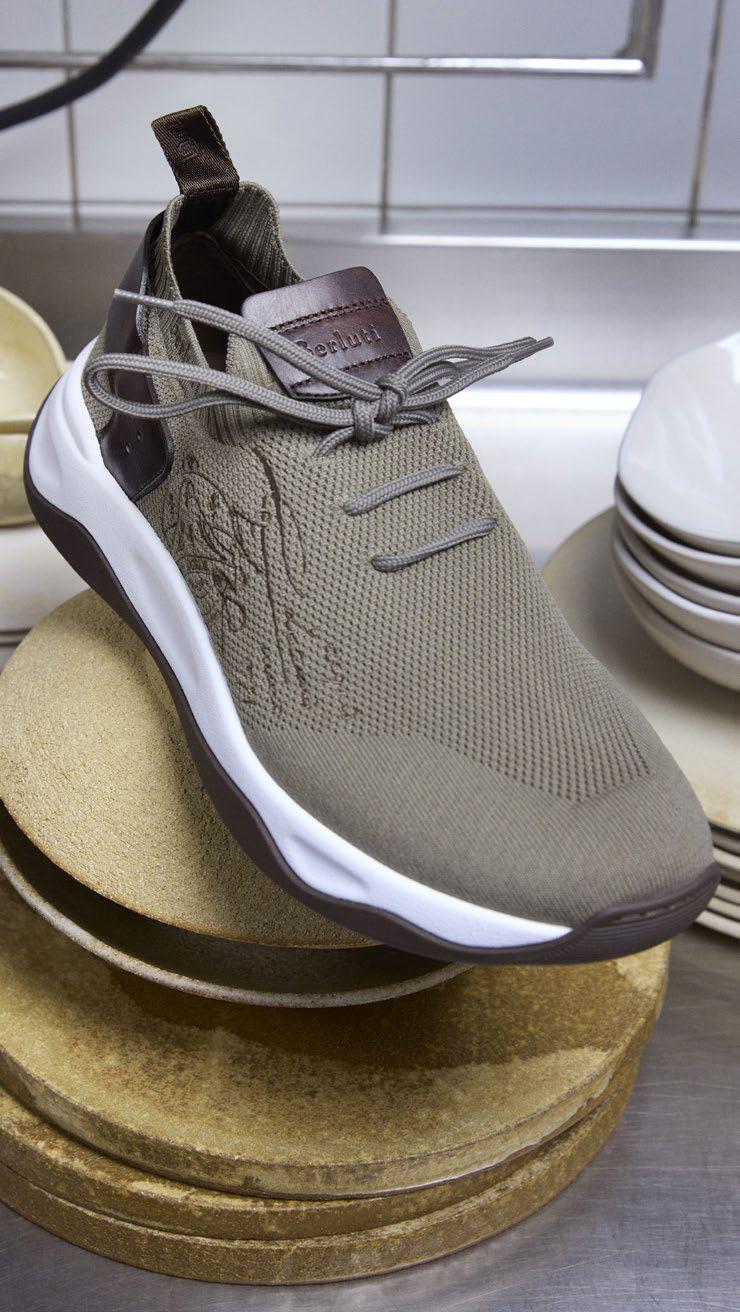
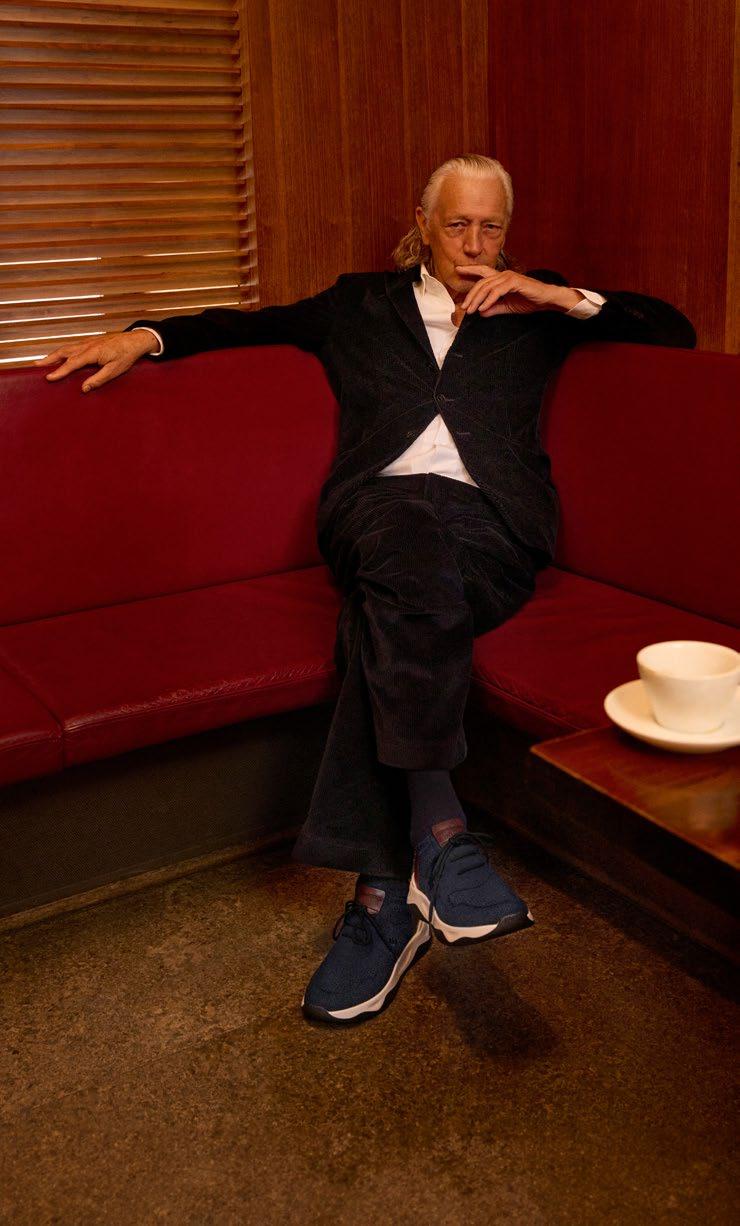
Moreover, we present an exclusive interview with Jean-Marc Mansvelt, Chief Executive Officer of Berluti. With the reopening of the Berluti boutique at Plaza Indonesia and a stronger focus on ready-to-wear in Southeast Asia, he shares insights into the Maison’s dedication to craftsmanship and the expectations of today’s discerning clients.
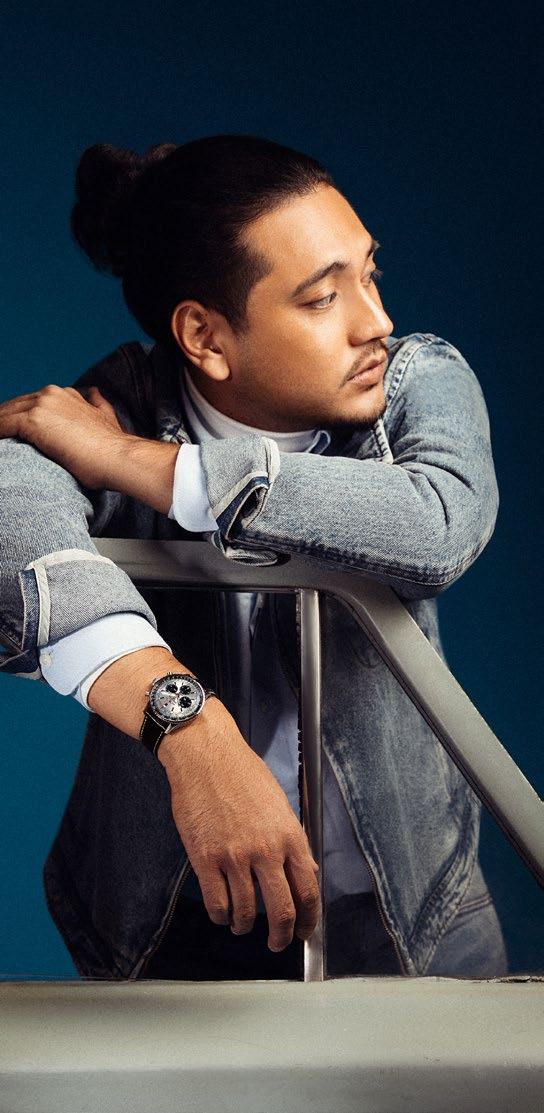
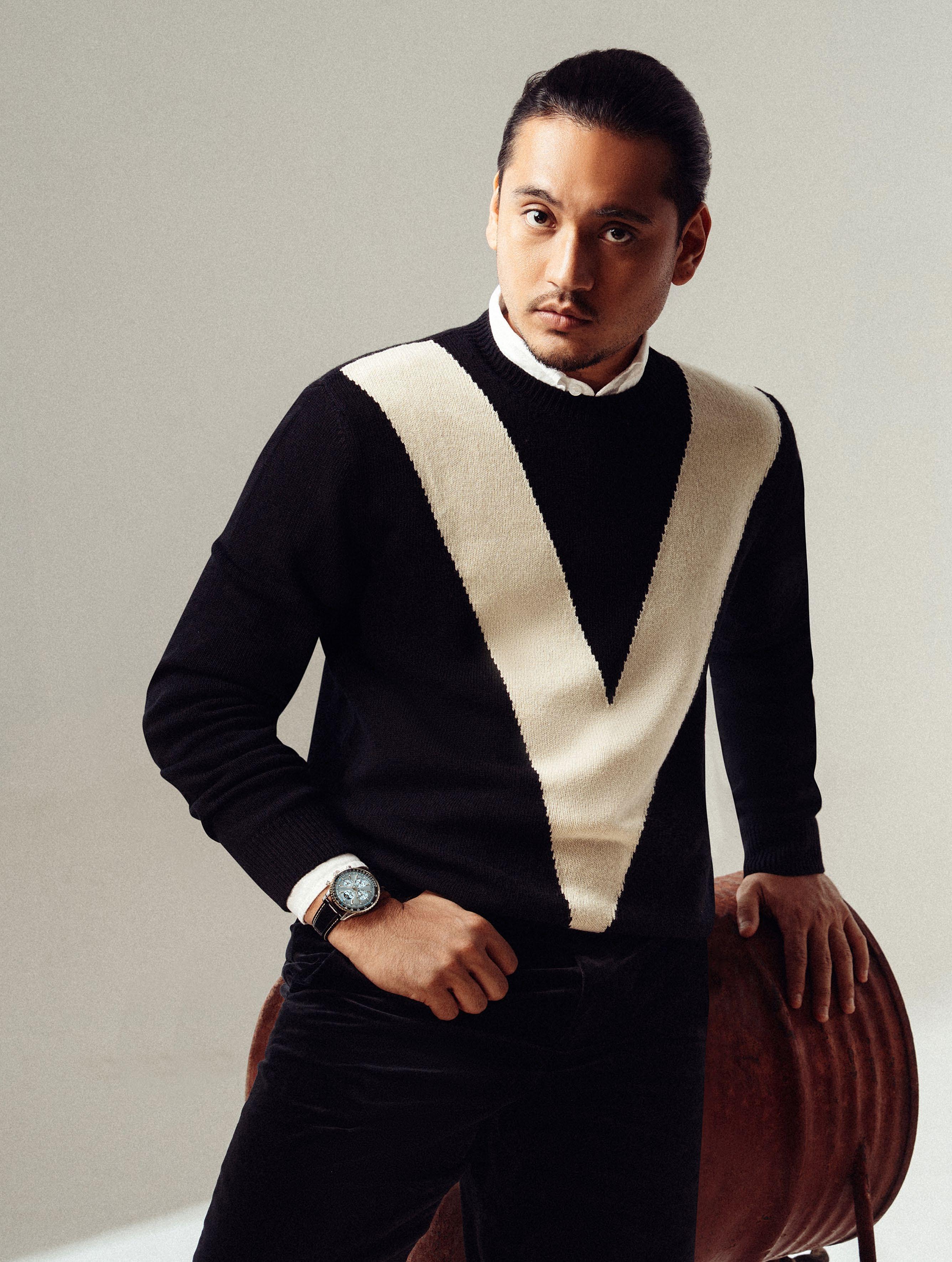
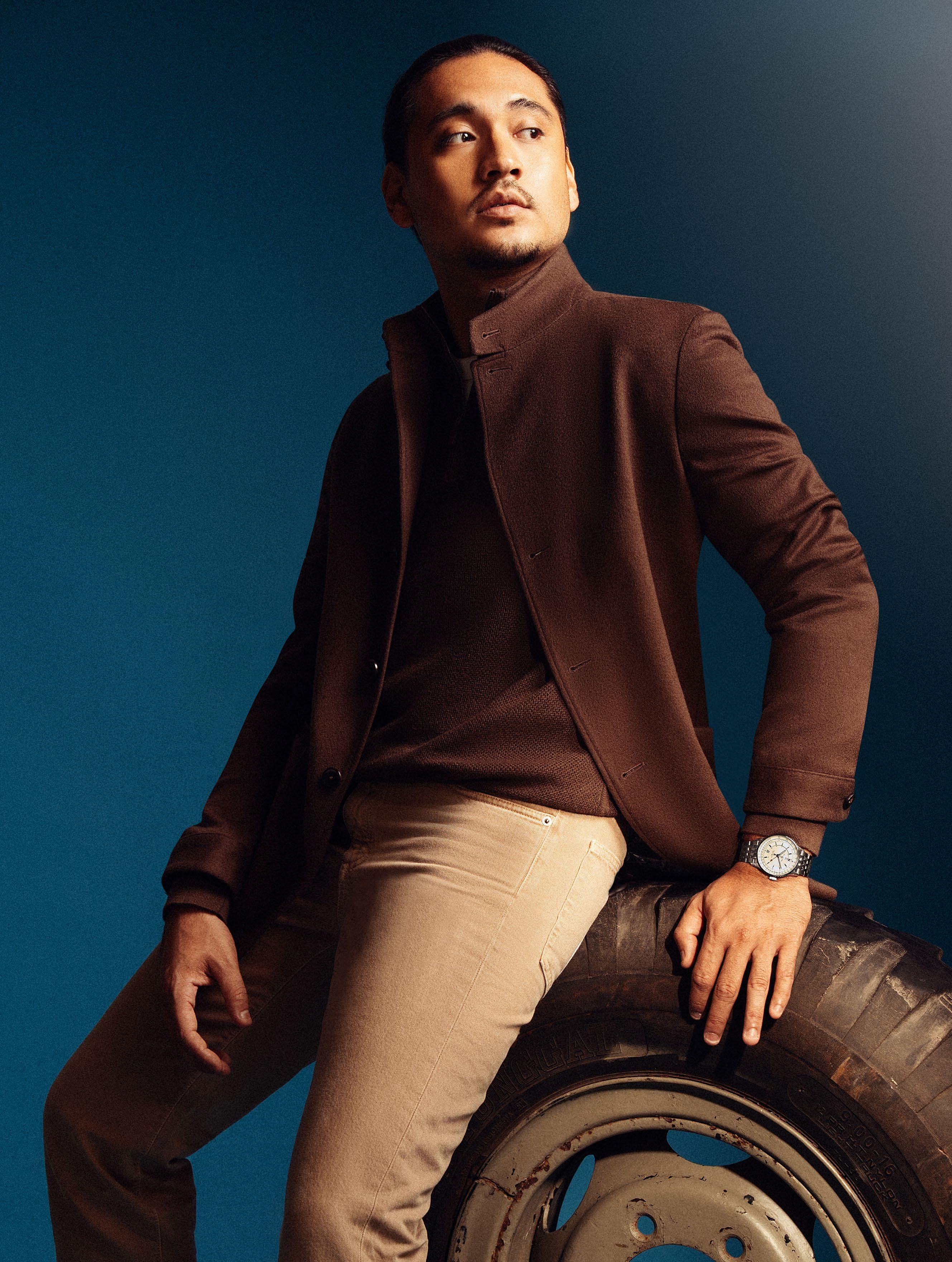
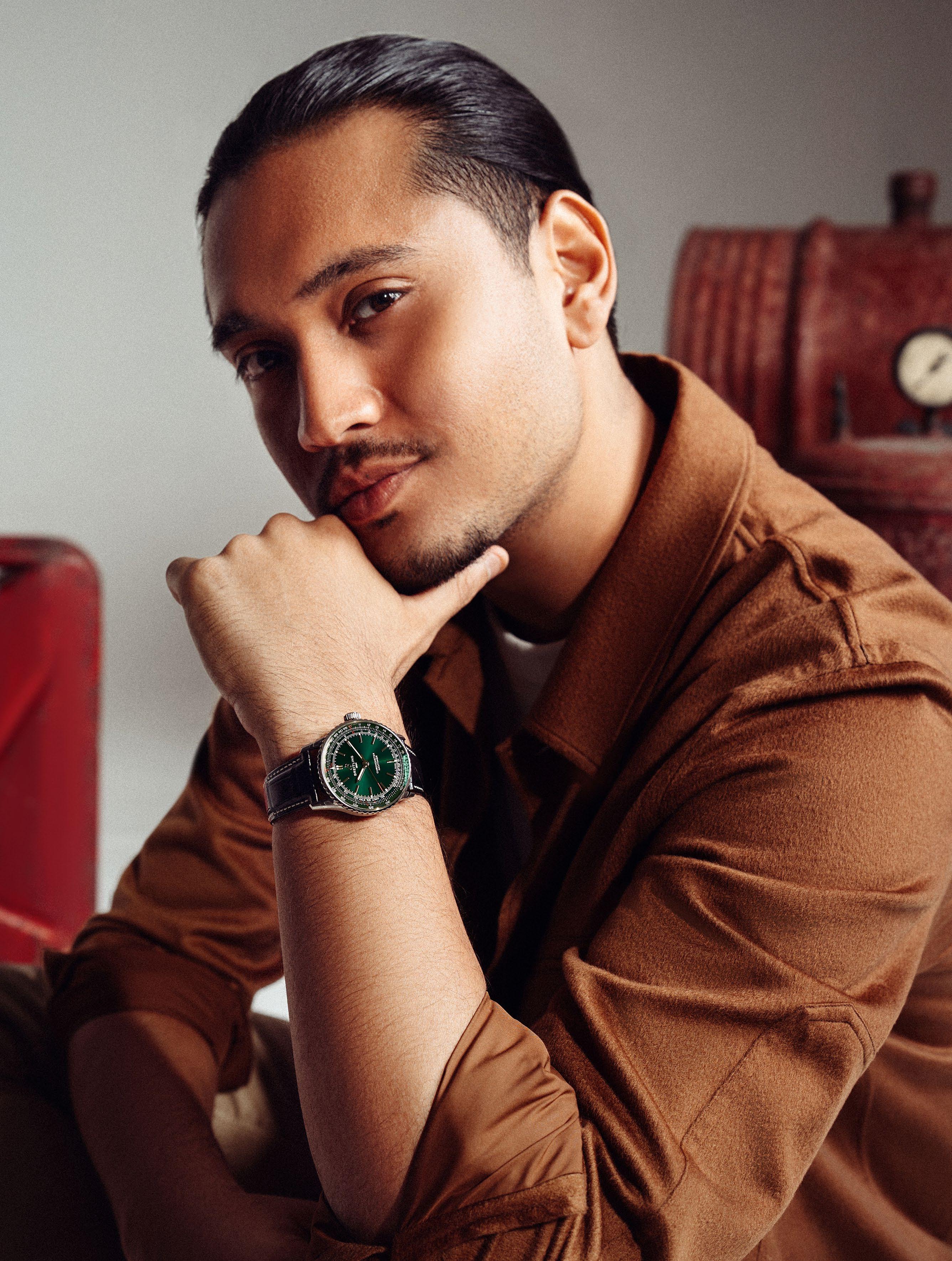
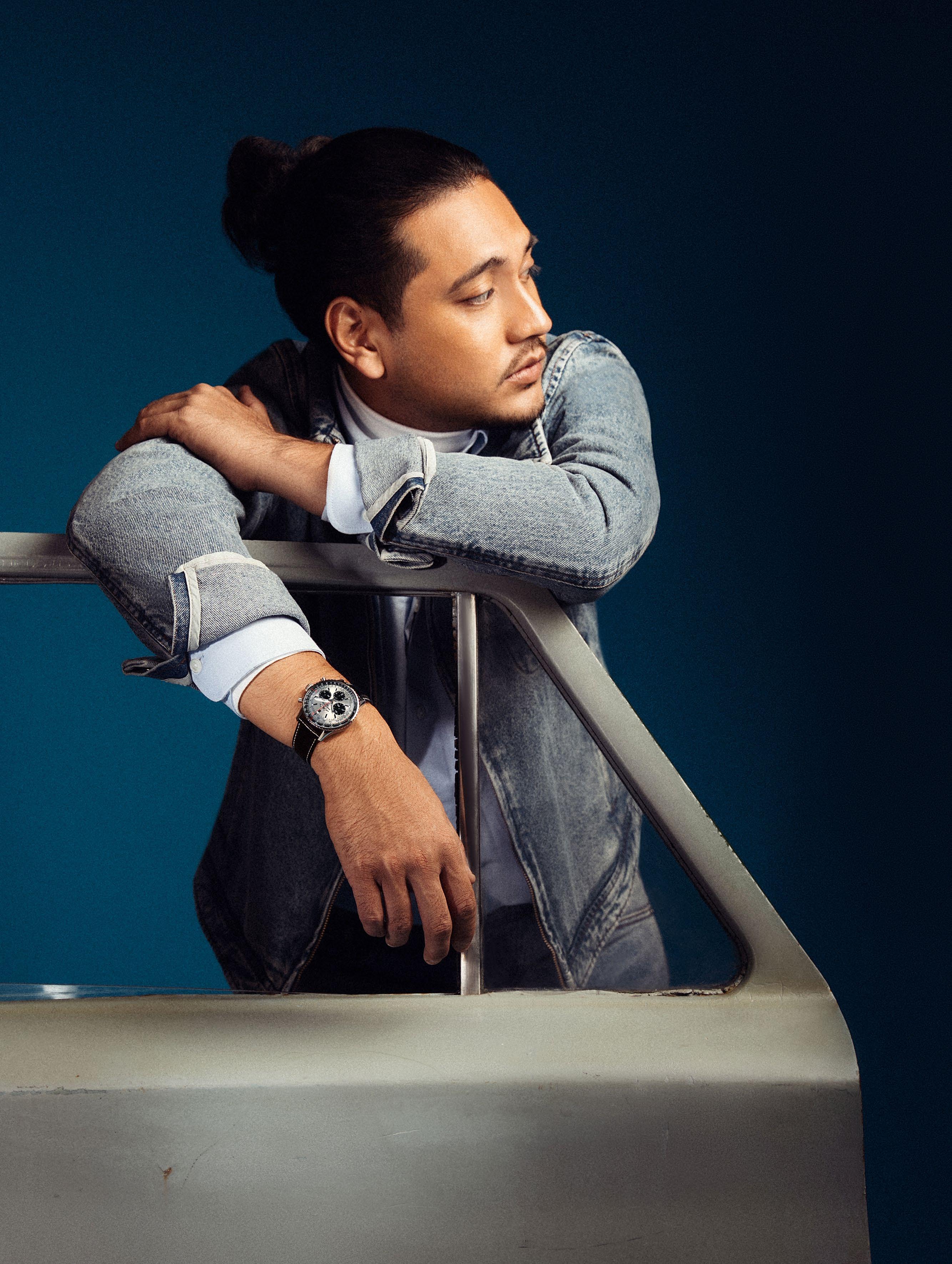
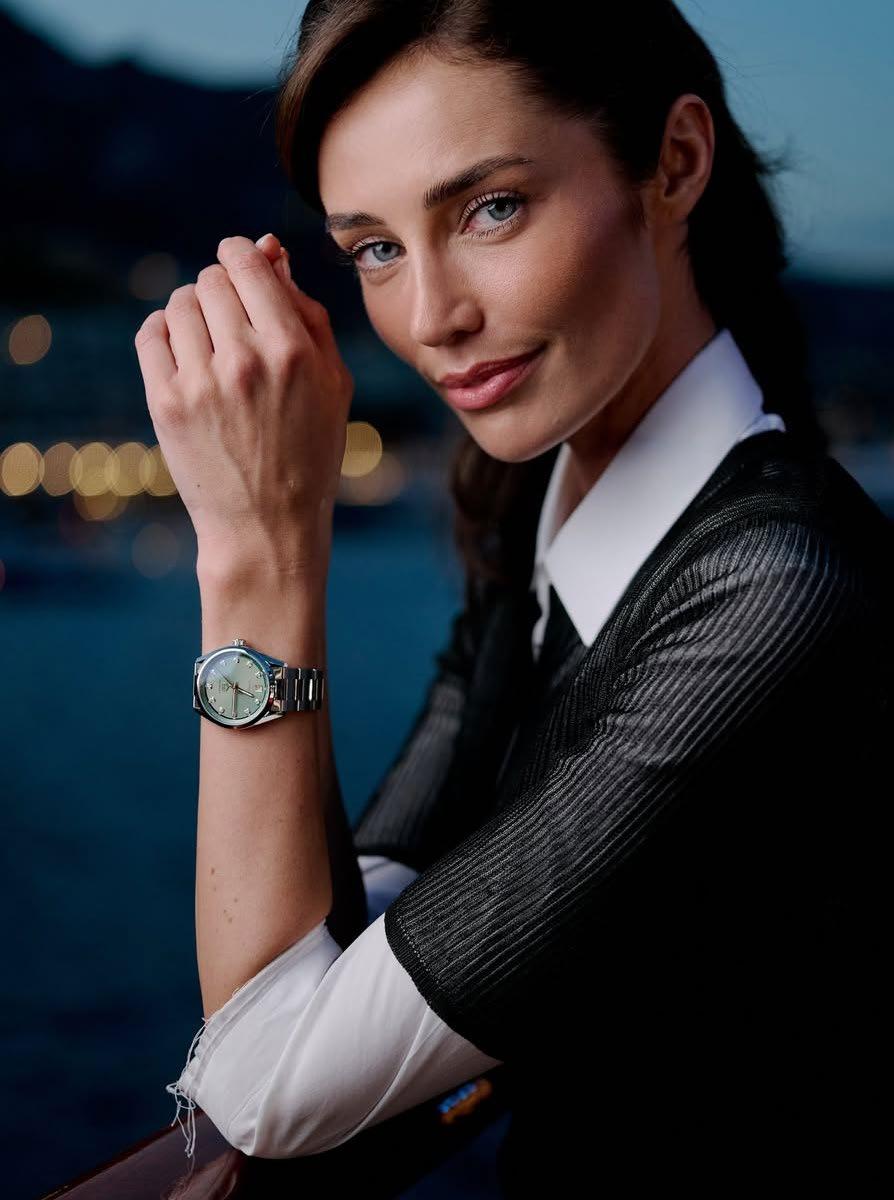
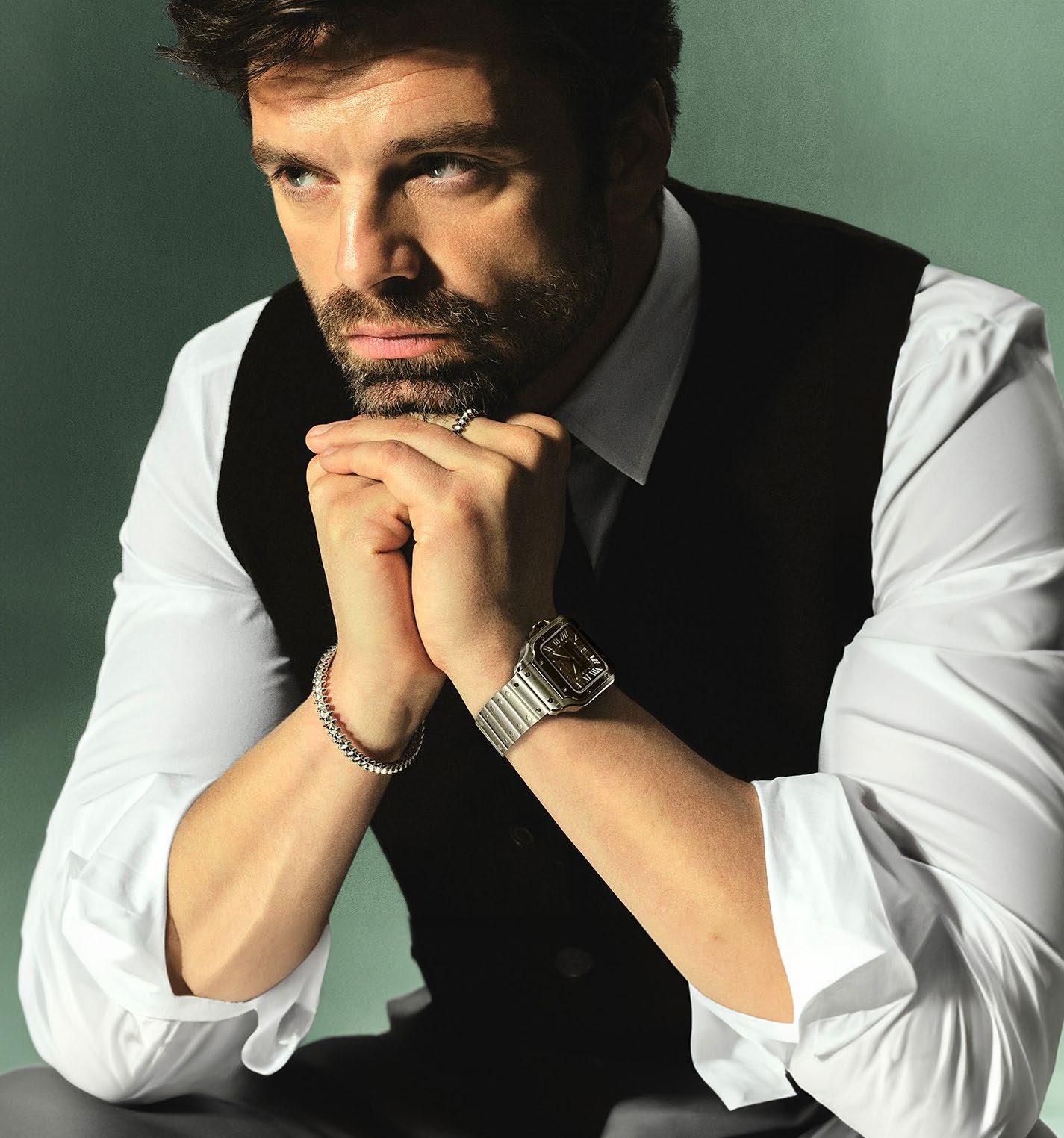
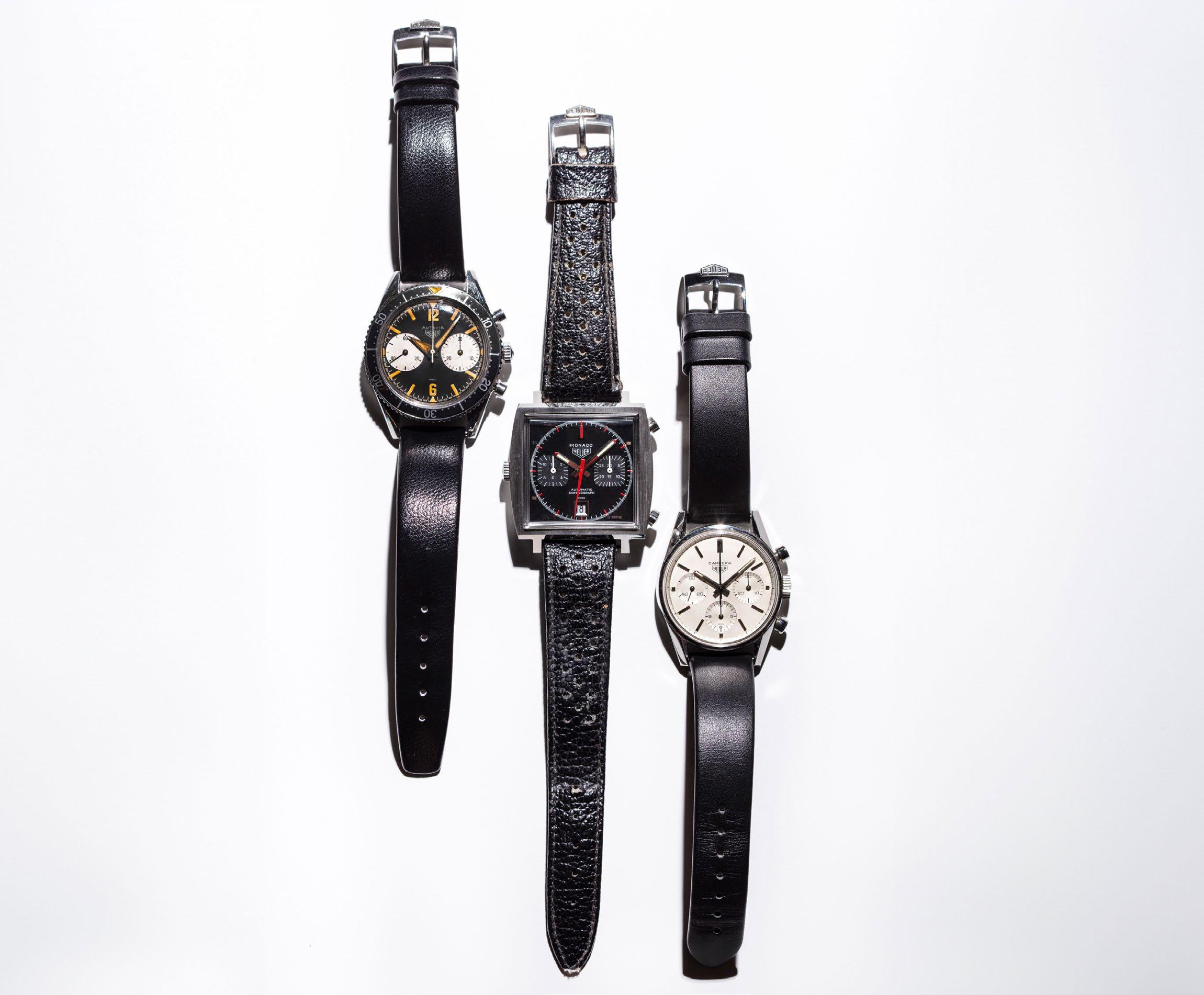
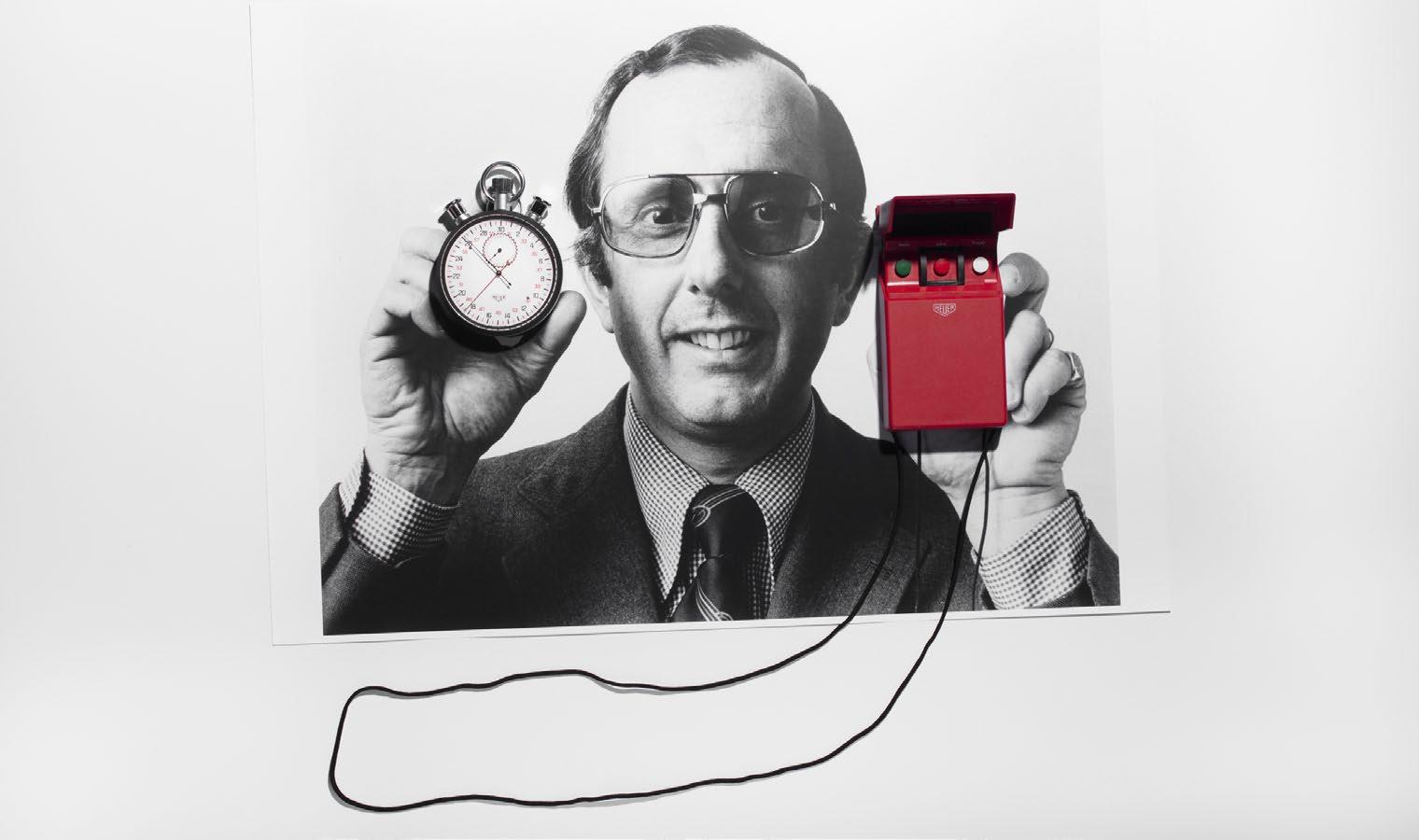
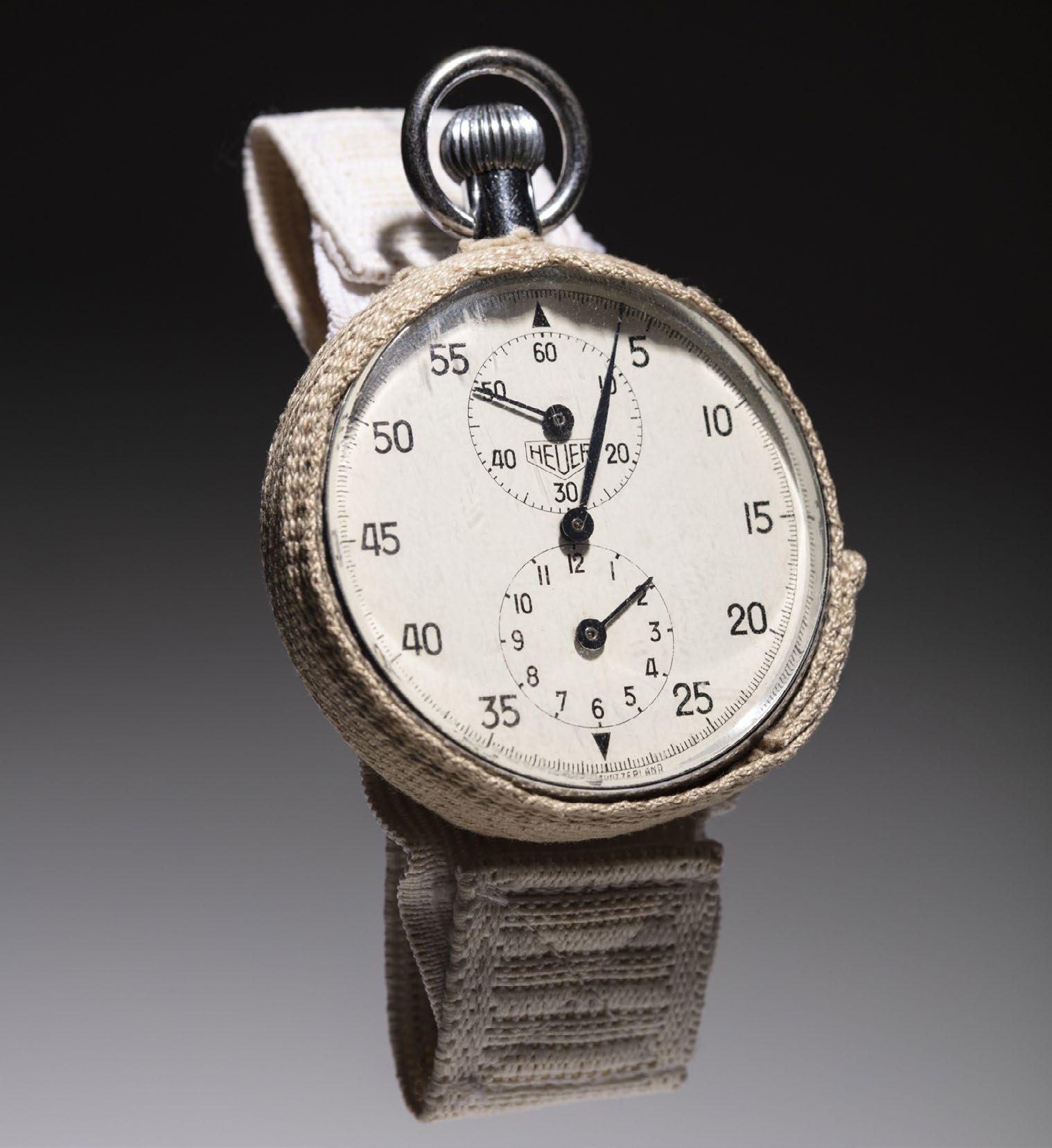
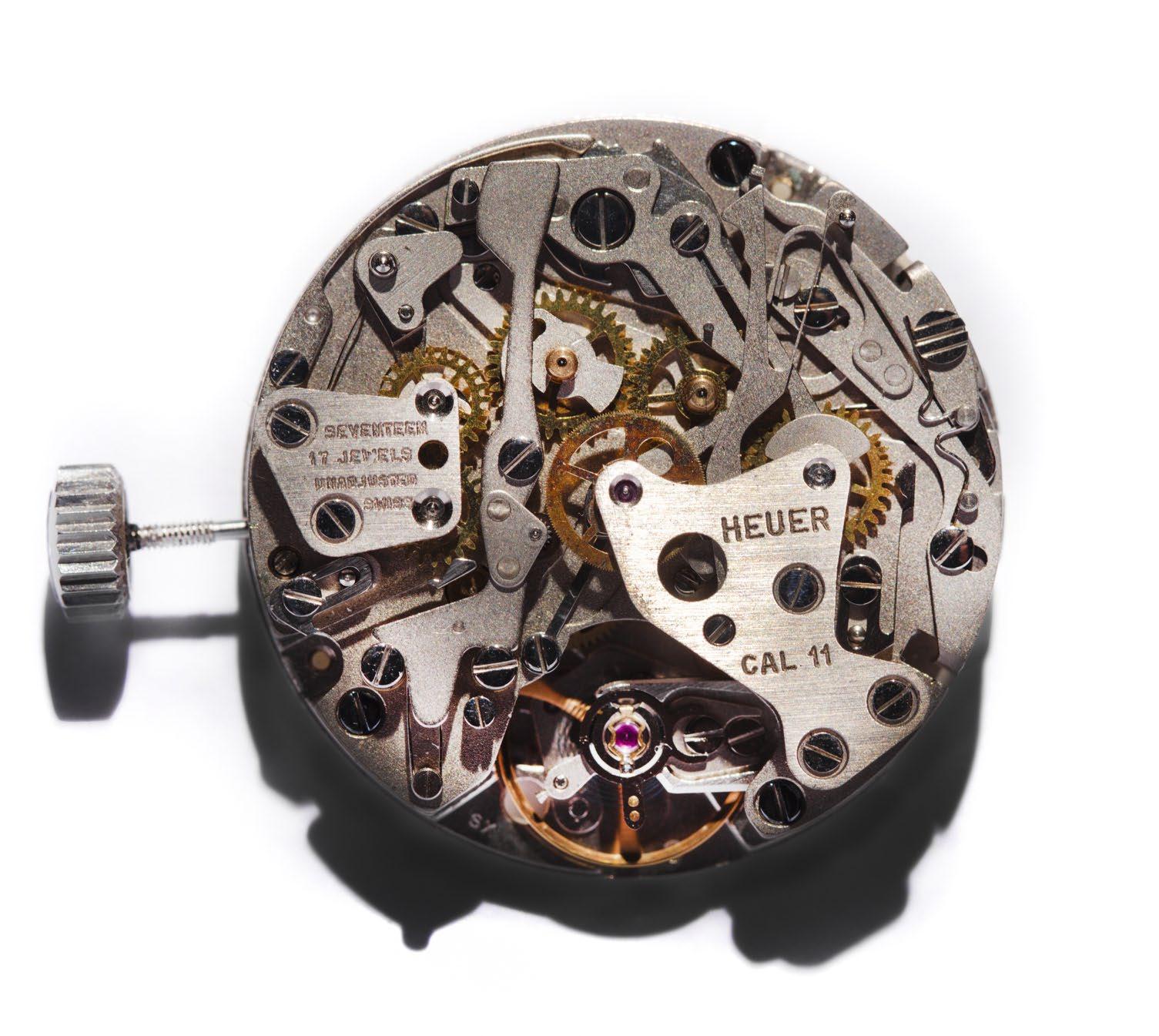
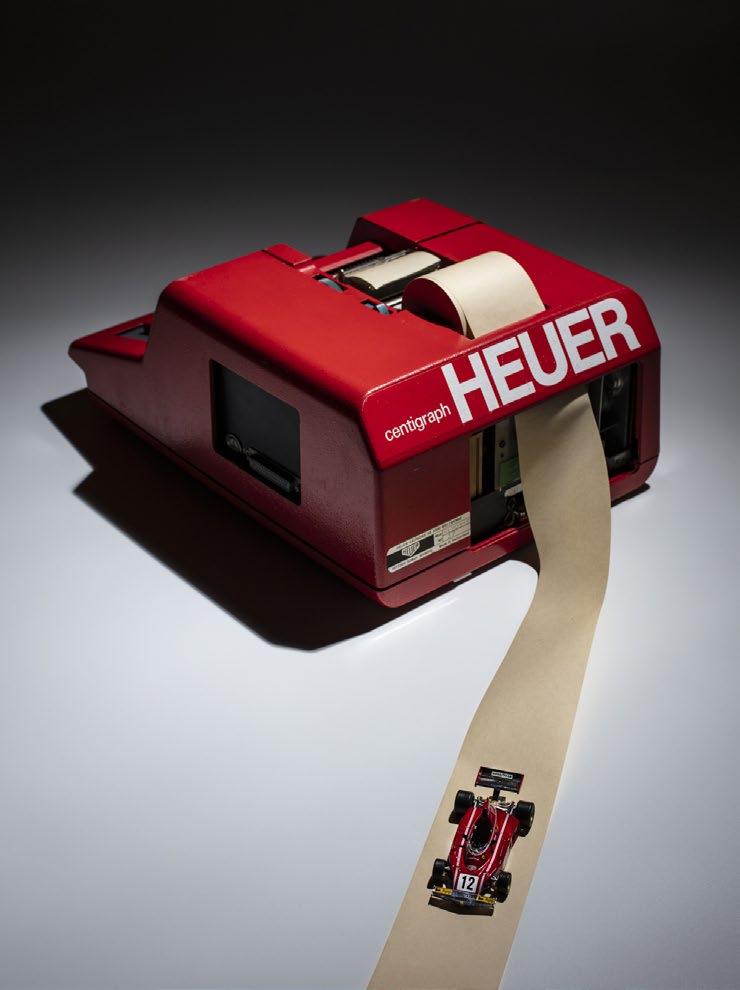
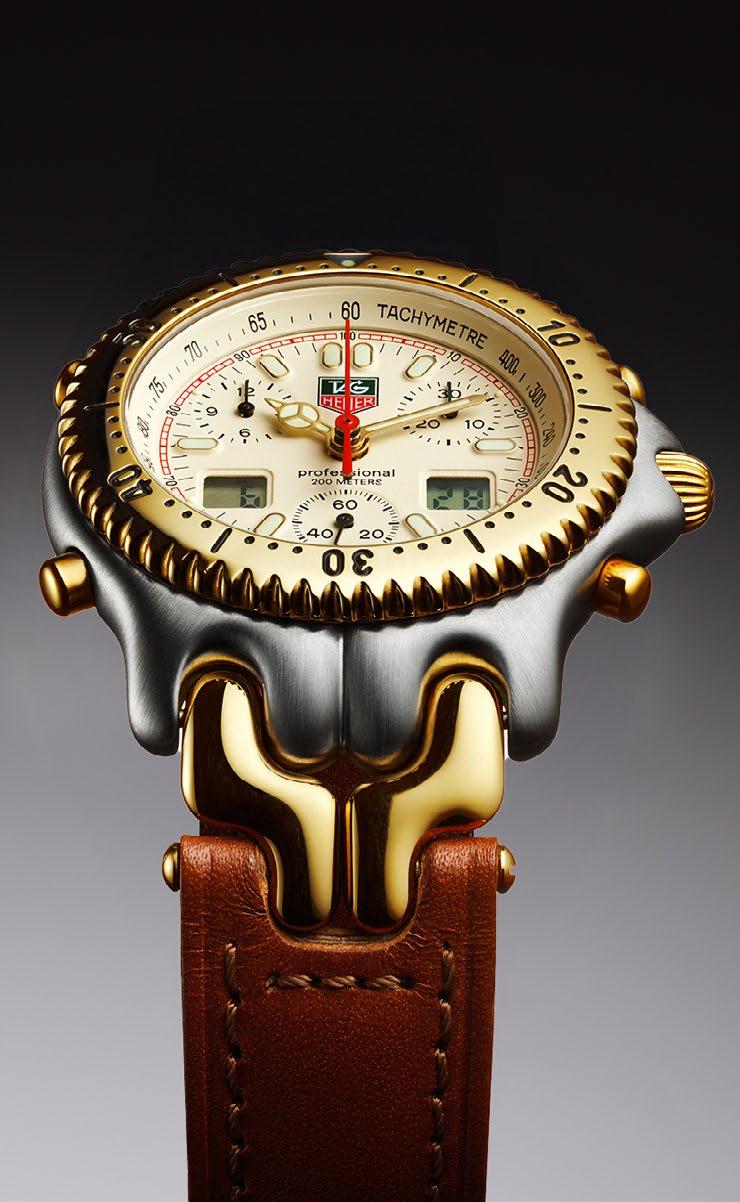
Our Up Close and Personal feature brings together Breitling and Indonesian actor Giorgino Abraham in a conversation about exploration and purpose. In our Reborn section, we revisit the enduring legacy of TAG Heuer in what we call the Year of the Chronograph, highlighting the brand’s long-standing pursuit of precision and its continued evolution of this defining complication.
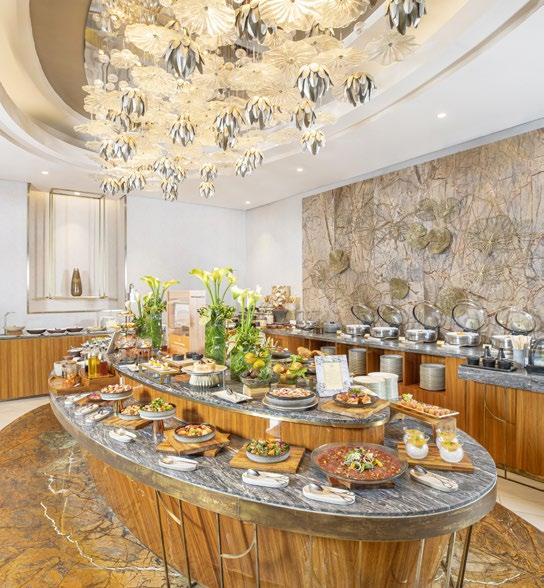
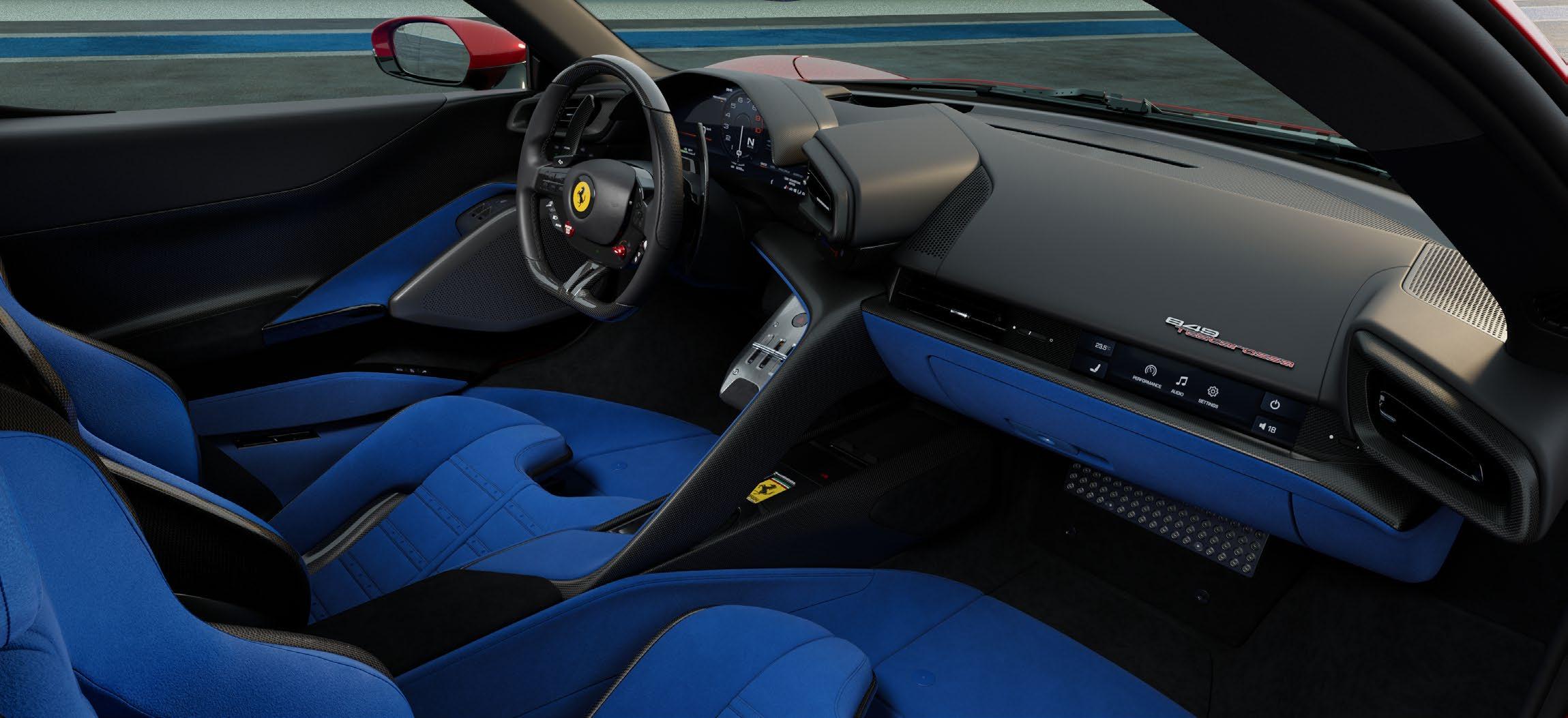
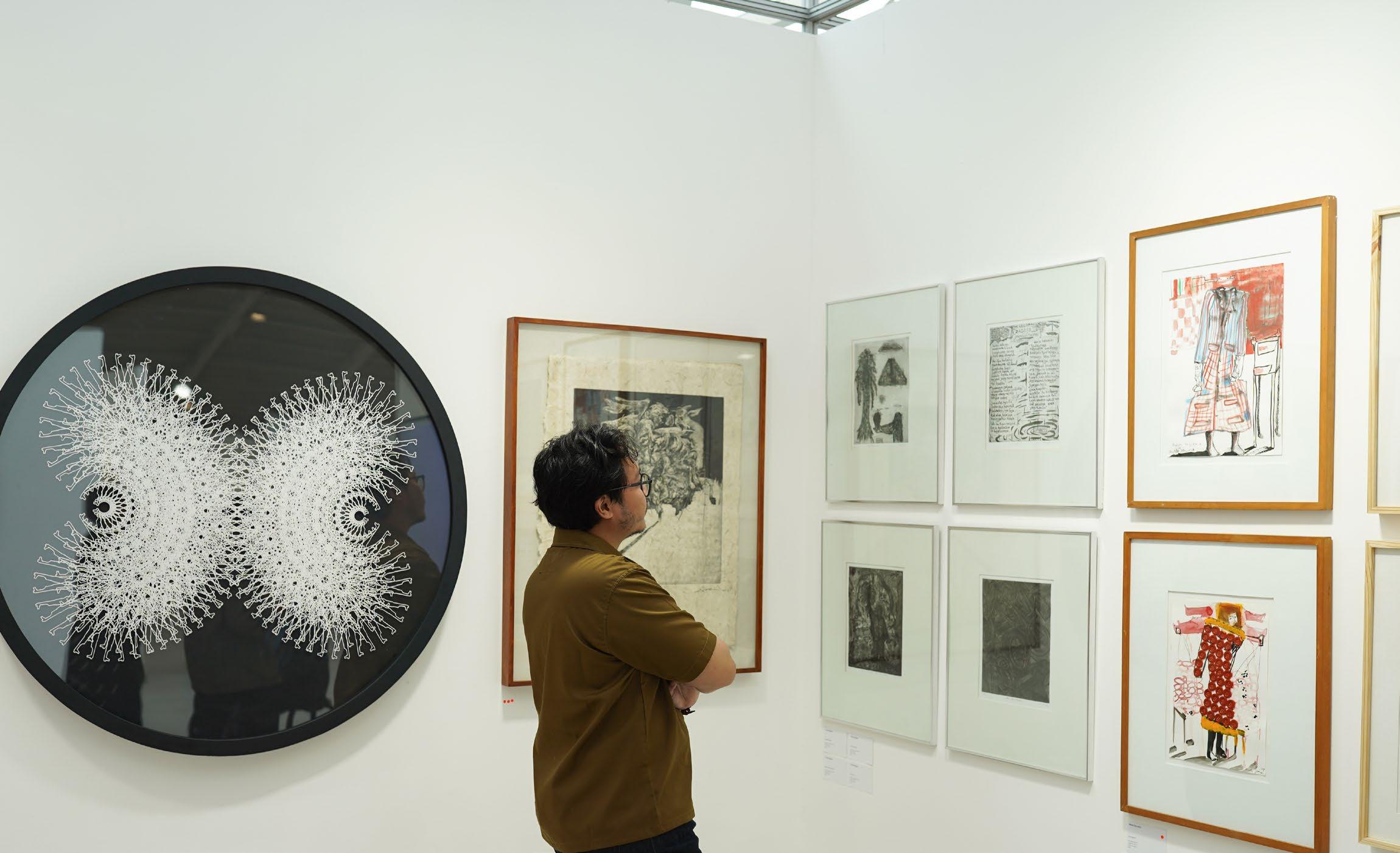
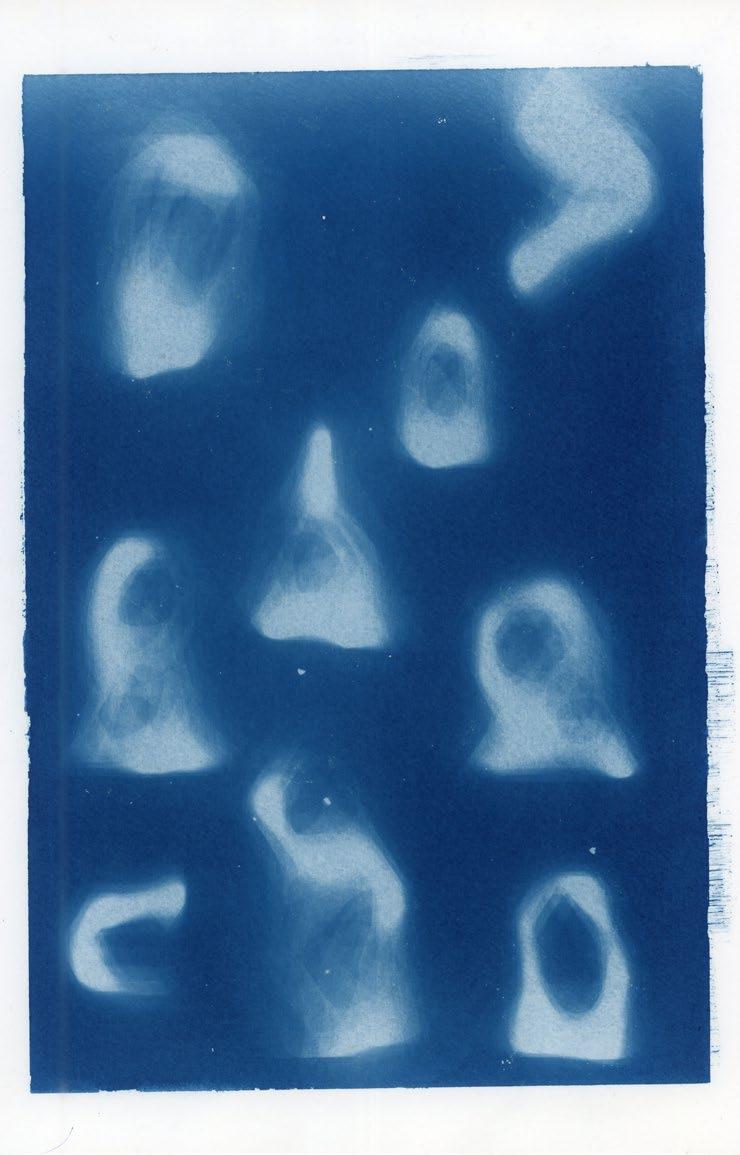
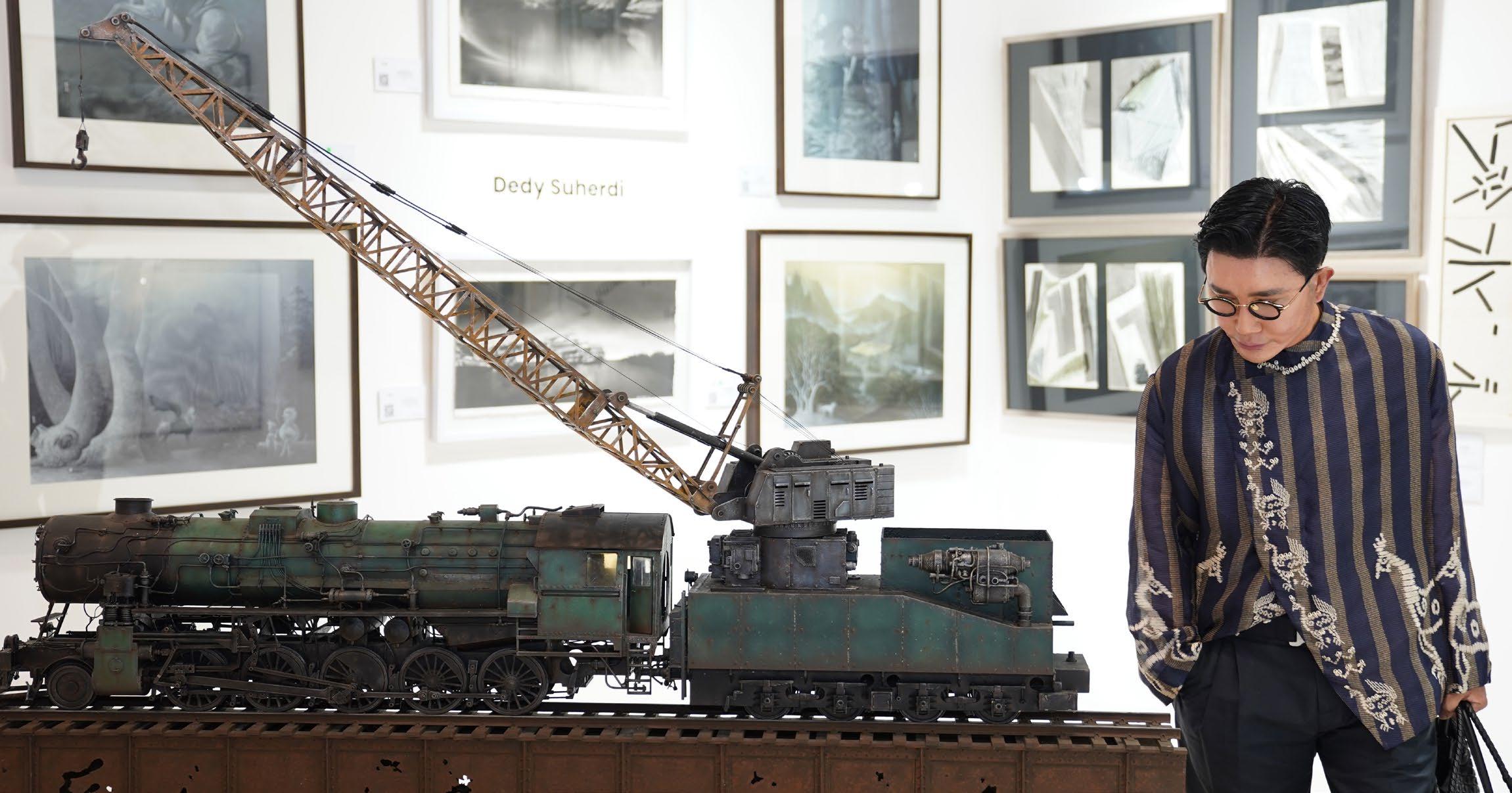
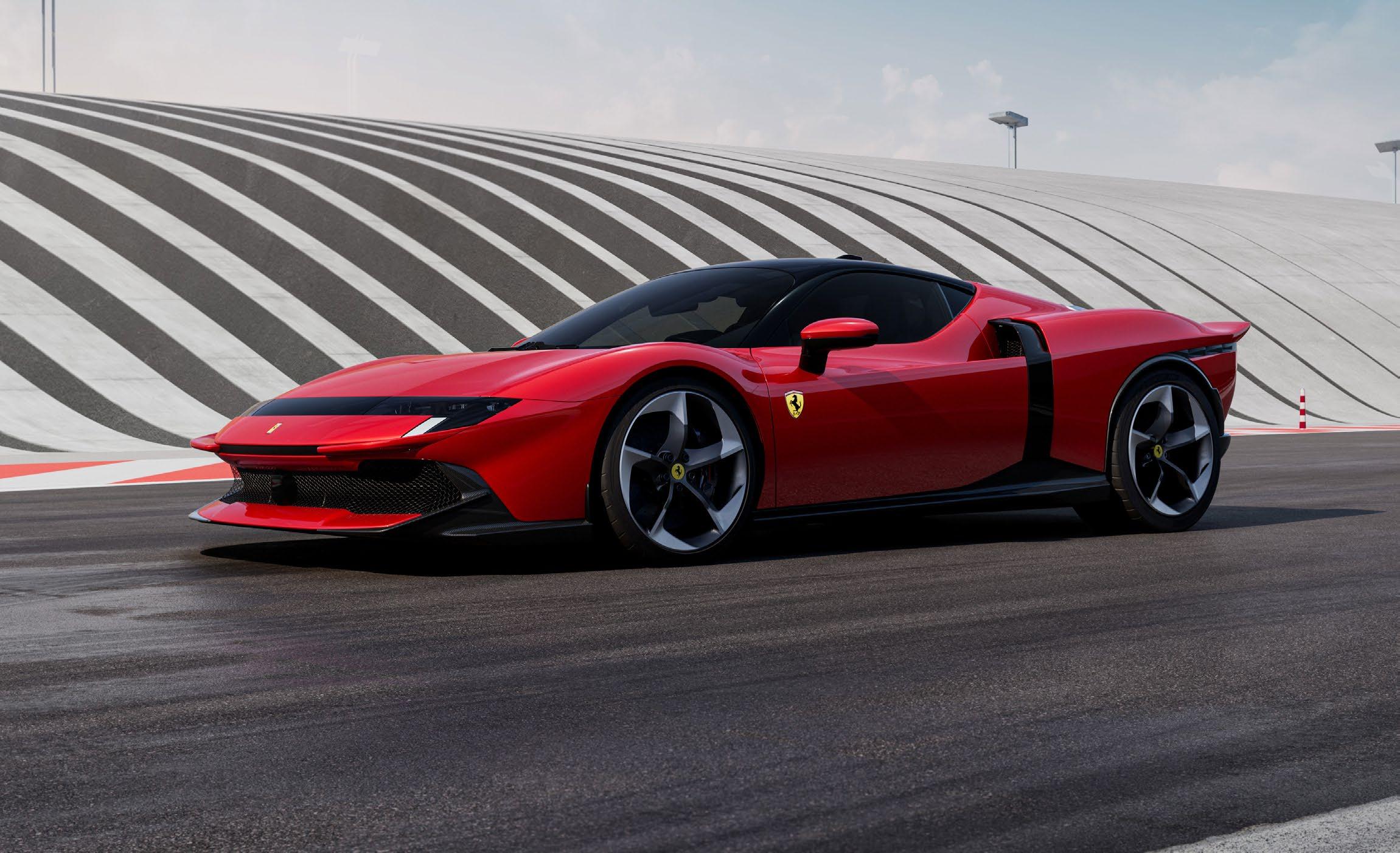
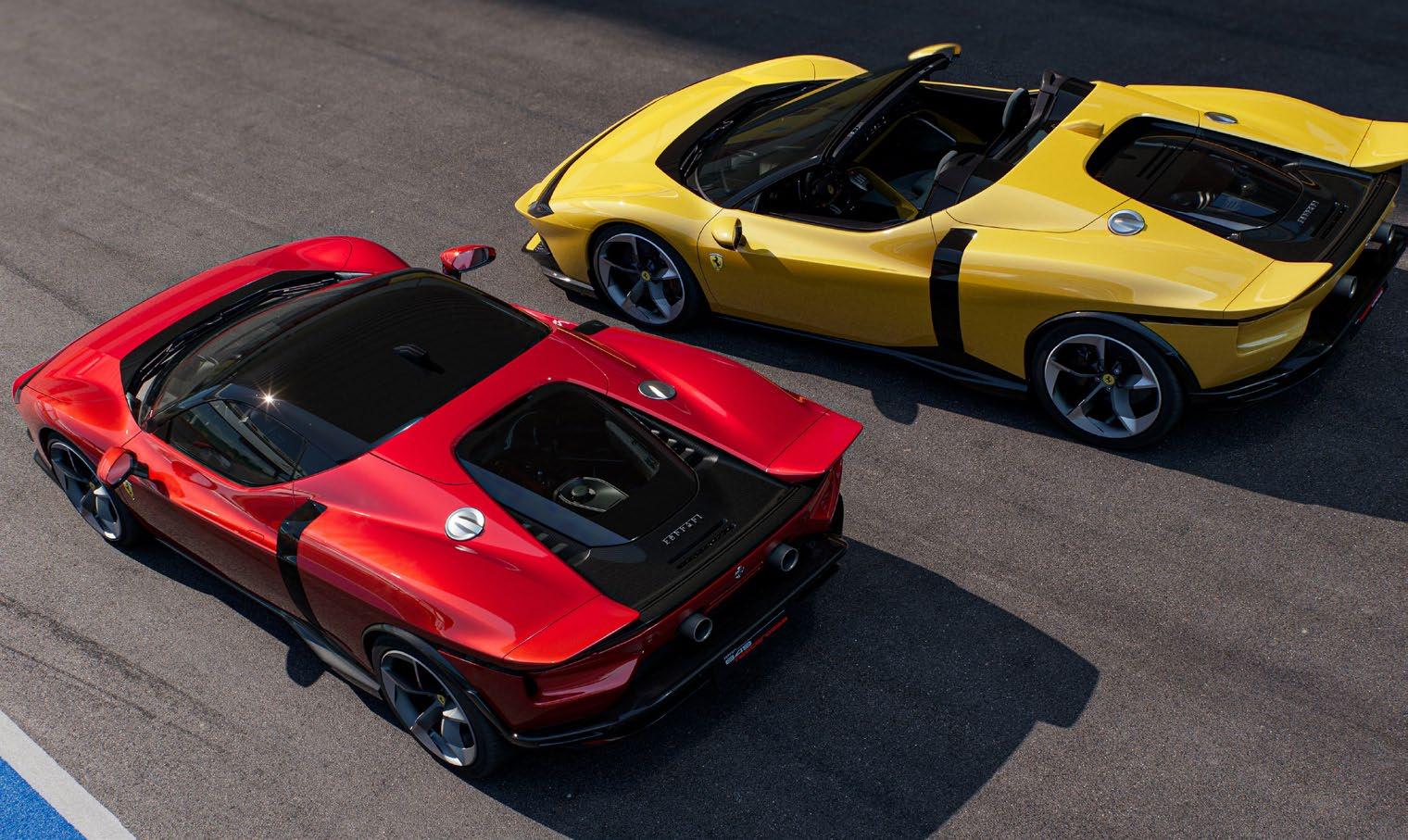
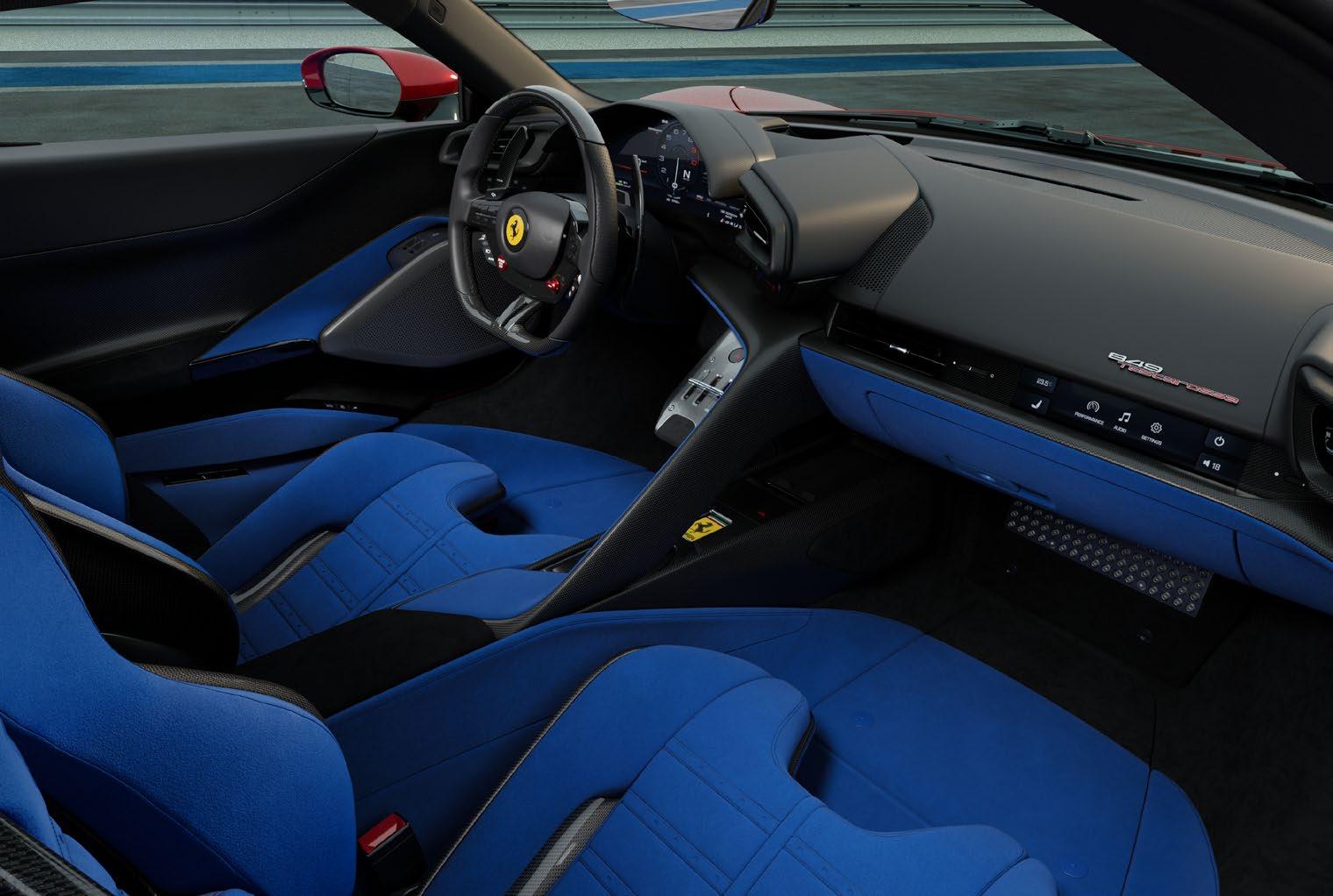
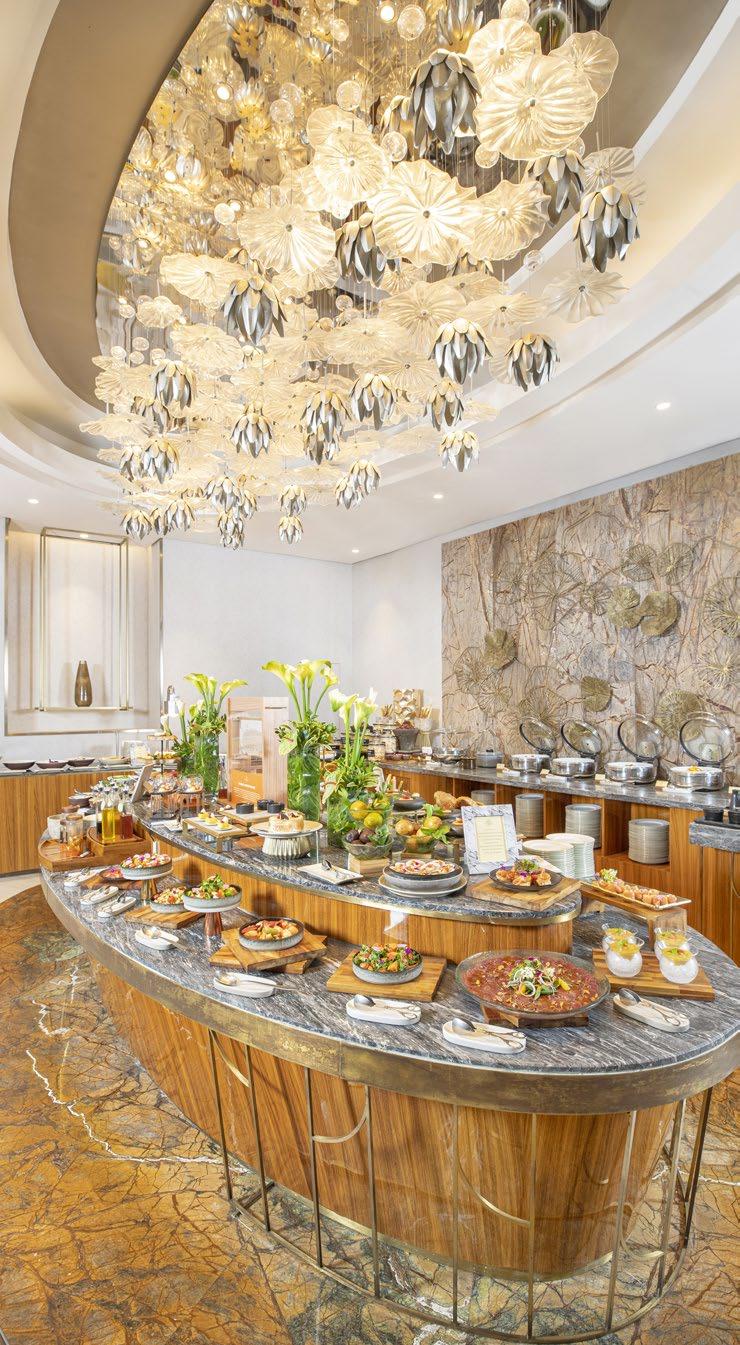
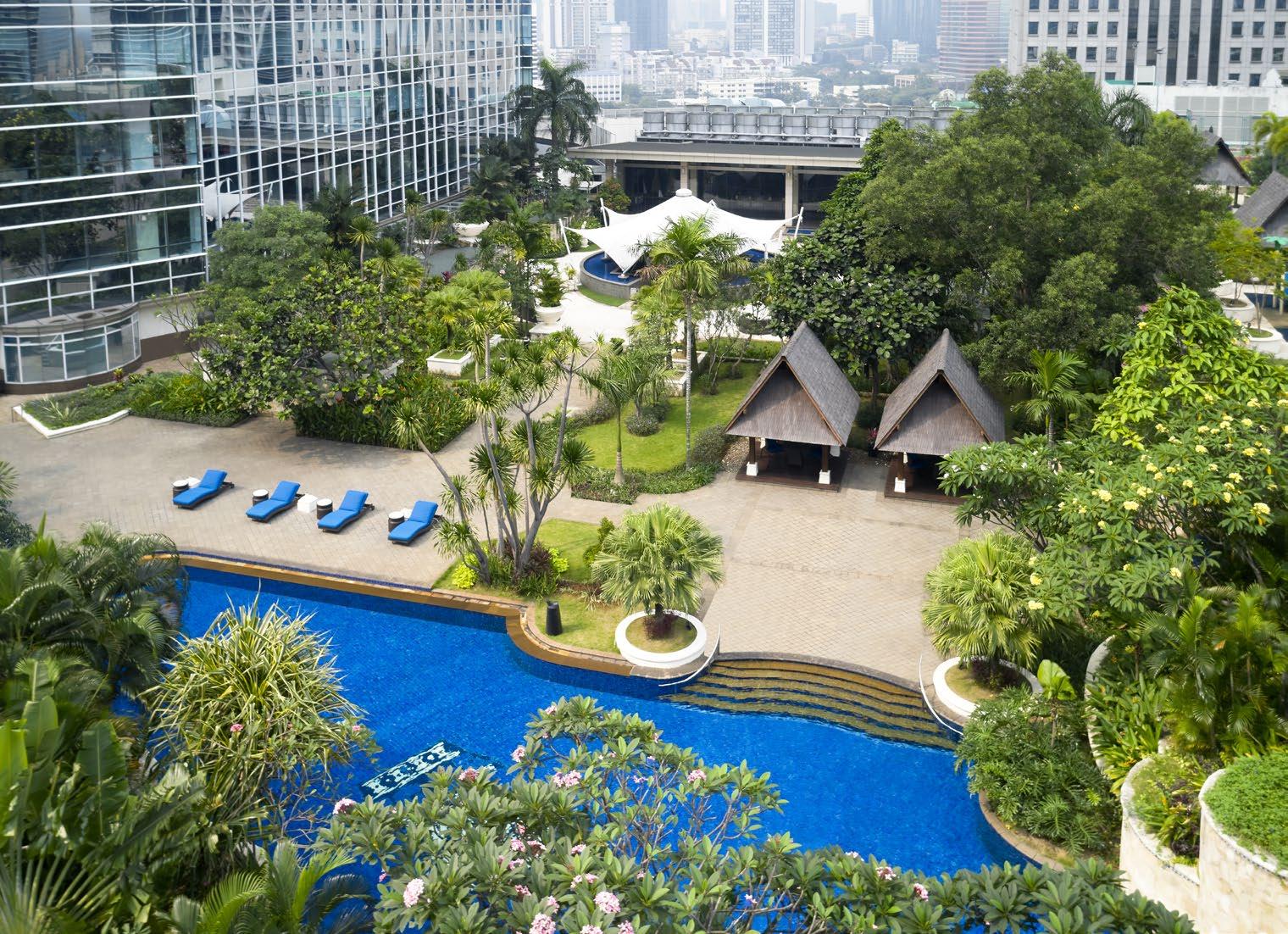
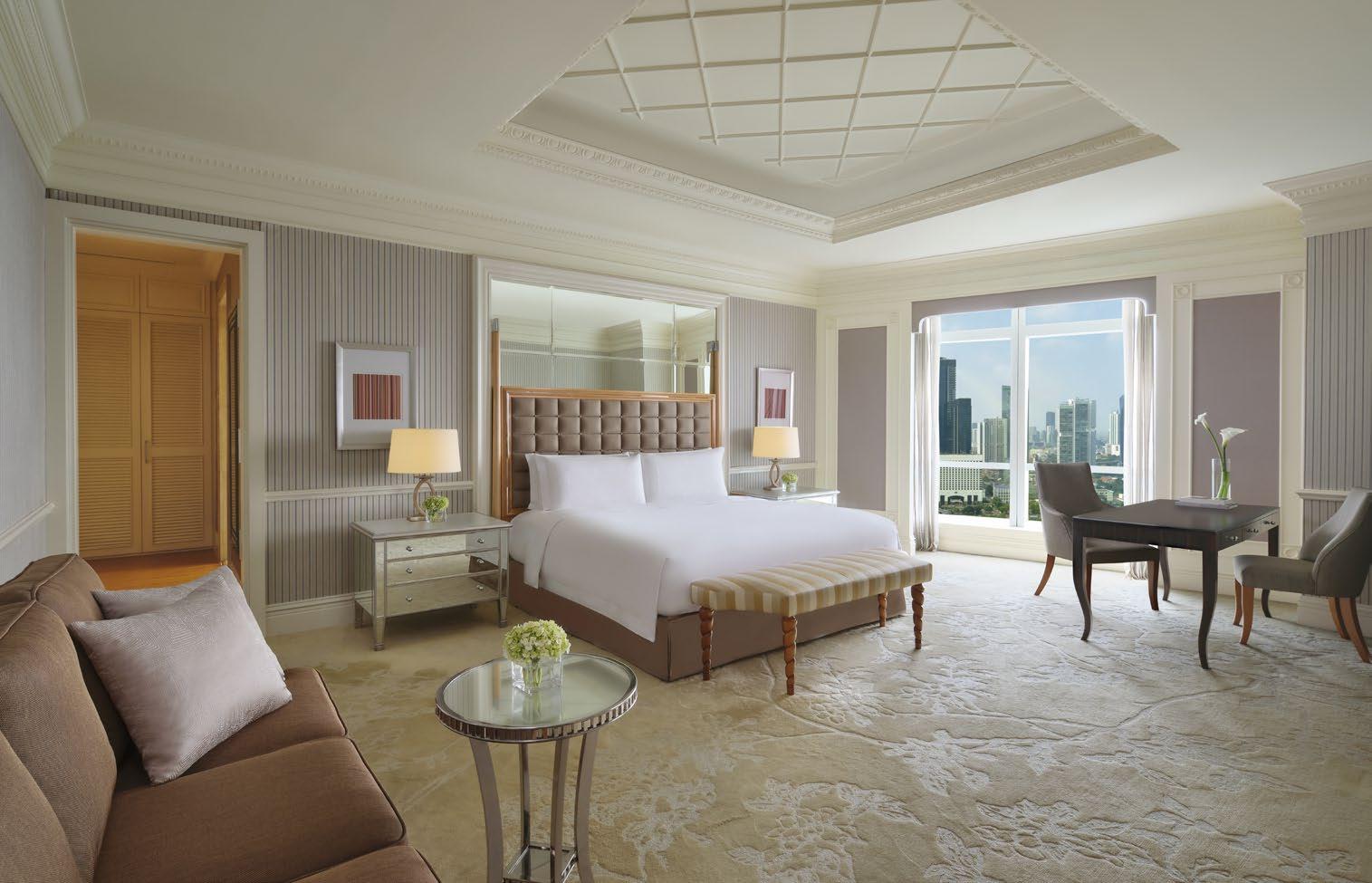
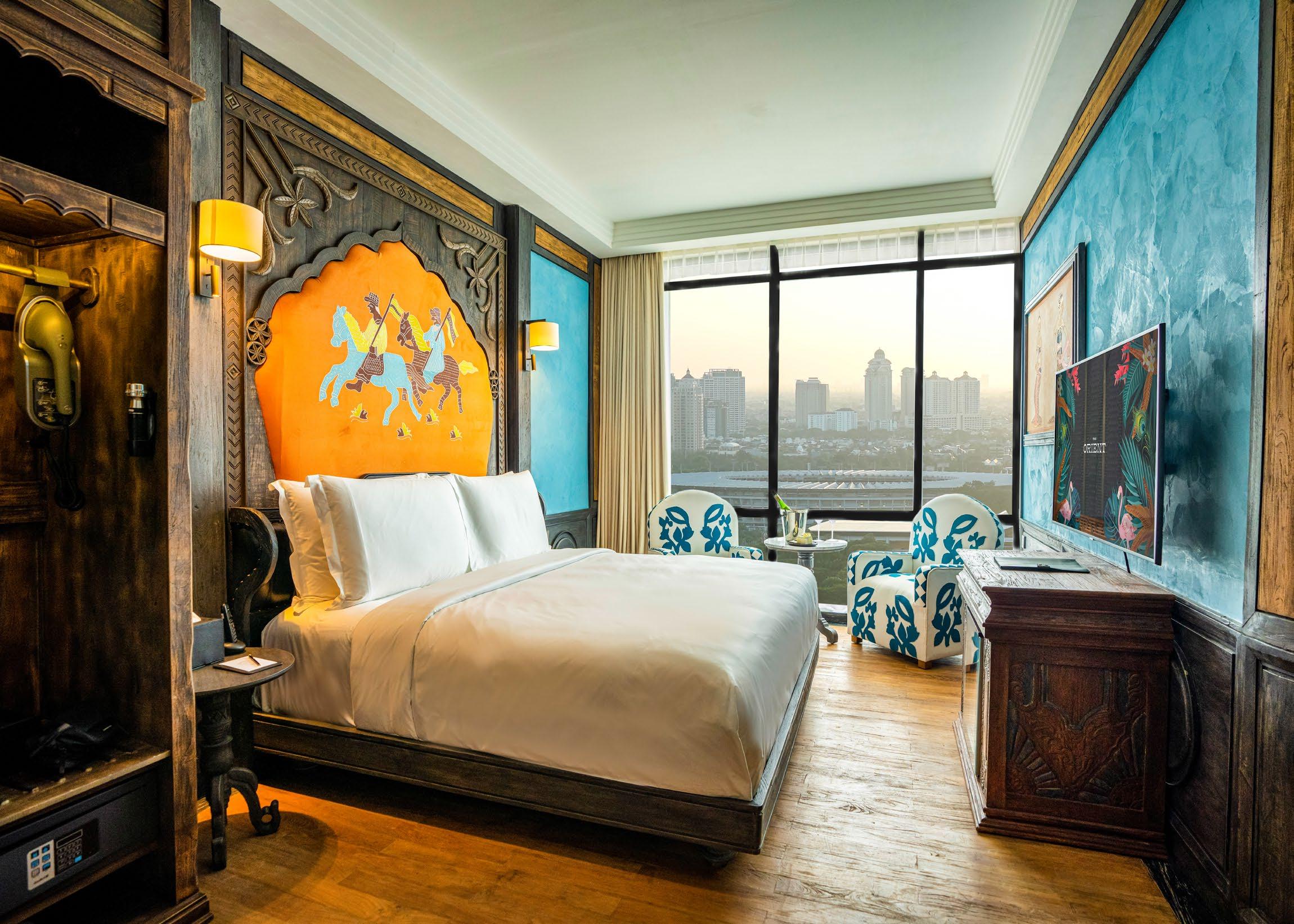
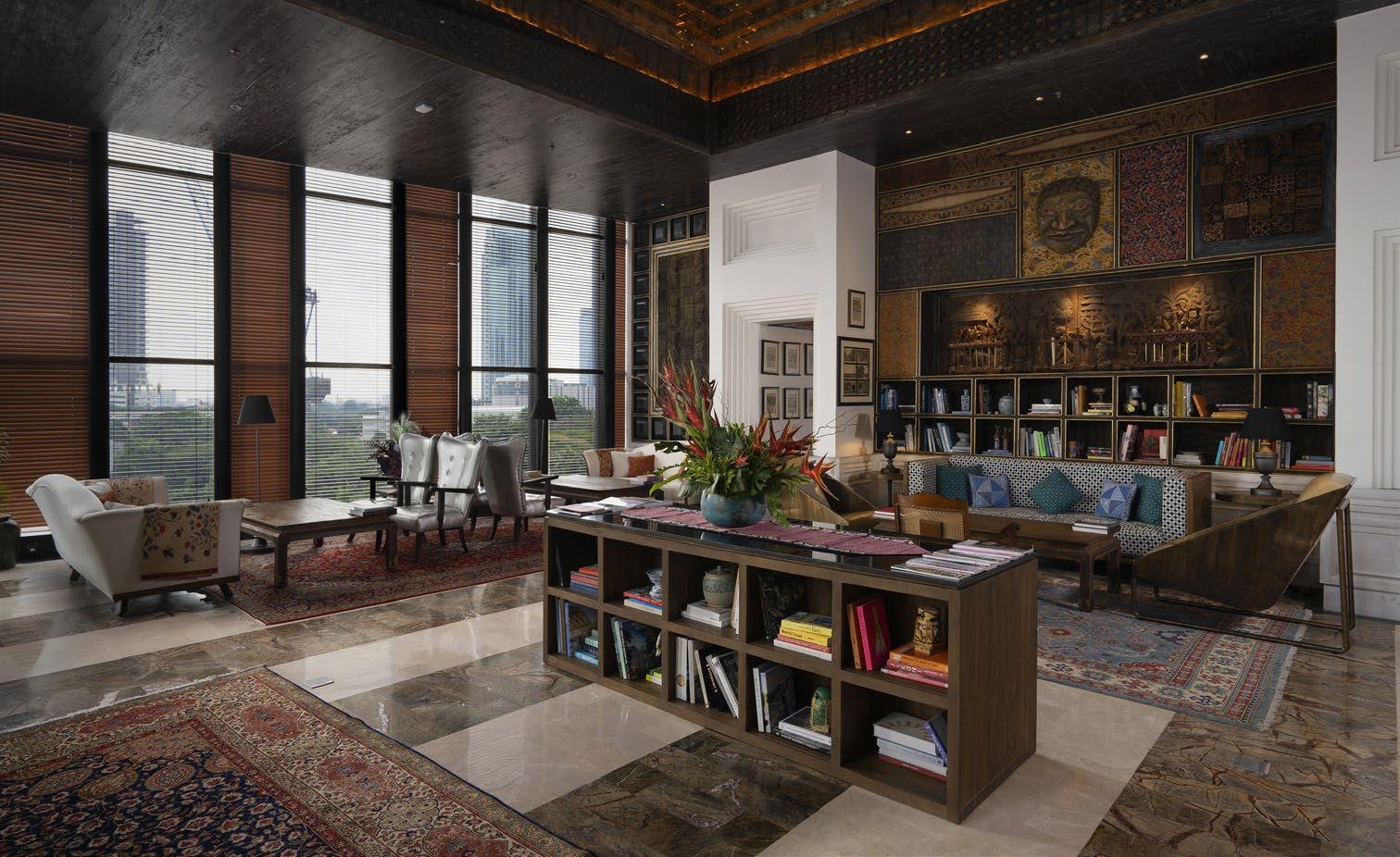
Beyond horology, this issue embraces broader cultural and lifestyle pursuits, from Art Jakarta Papers and the premiere of the Ferrari 849 Testarossa, to refined hospitality experiences at Plataran Borobudur and The Ritz-Carlton Jakarta, Pacific Place.
As always, we hope you enjoy this issue as much as we enjoyed bringing it to life. See you in the next one!
Irwan Danny Mussry Editor-In-Chief and Publisher @irwanmussry
The Time Place Magazine, Edition 101
All rights reserved, copyright 2026 by PT Komunikasi Perkasa International Reproduction in whole or part without permission is prohibited
Editor-in-Chief and Publisher: Irwan Danny Mussry
Chief Editorial Advisor: Shannon Hartono
Managing Editor: Maria Zarah Gregorio Viado
Production Manager: Erika Tania Dessyandra
Production Associate: Charlene Atalie
Social Media Executive: Athirah Nurflizah
Creative Multimedia: Kristy Gabriella, Erik Umar, Matthew Hartono
Please contact Netanya Gabrielle at netanya.gabrielle@time.co.id or +62 877 8899 1080
To subscribe, please contact us at magazine.thetimeplace@time.co.id Printed by: Gramedia
thetimeplace.magazine thetimeplace.magazine
ANASTASIA WINAYANTI WIBOWO
Writer
Coming from a background far from media, Anastasia has spent a greater part of her diverse career journey as a part-time writer and translator. After a couple of years in an editorial role at one of Indonesia’s high society magazines, she honed her writing skills during a one-year freelance stint at two local luxury online publications while working full-time in the financial services sector.
FAHITA ADVANI Writer
Fahita is a freelance writer for renowned media outlets and a musician who plucks strings and words with equal precision. Her background in intergovernmental organisations quietly informs her writing on culture, society, and public life. She approaches each subject with clarity and balance, grounded in both research and lived experience.
KARINA SAPHIERA WITJAKSONO Writer
During her years in the media industry, Karina has taken on a variety of roles ranging from editorial to business-oriented duties. Together with other country representatives, she was also appointed co-editor of a regional publication for Southeast Asia. As an aesthete, Karina’s appreciation for craftsmanship can easily be seen in her writings, especially when it comes to intricate timepieces.
ALLESTISAN CITRA DEROSA Writer
Alles writes about people, non-people, and the quiet patterns that shape everyday life. A full-timer at a branding agency, she also contributes to Jakarta’s oldest English-language newspaper. Her curiosity now extends to the world of luxury and fashion, exploring how identity and intention take form through style.
Arimbi is a highly skilled professional makeup artist with more than eight years of experience in the fashion and commercial industries. She holds a CIBTAC Diploma in Photography and Fashion Makeup. With a deep understanding of cosmetics, beauty techniques, and trends, Arimbi aims to provide clients with exceptional beauty and makeup services.
Sidky Muhamadsyah started in fashion as an editor and has always been close to styling as part of the creative process. He’s drawn to whimsical, imaginative editorials and enjoys using fashion as a quiet way to tell stories through photographs.
Stylist
With over a decade of experience as a photographer, Zaky Akbar’s artistic vision and exemplary composition skills have carried him through a successful career of working with various renowned brands and magazines nationally and internationally. In 2020, he founded his own studio called Studio Amban.
SIDKY MUHAMADSYAH
ARIMBI Makeup Artist
ZAKY AKBAR Photographer
New Chapter
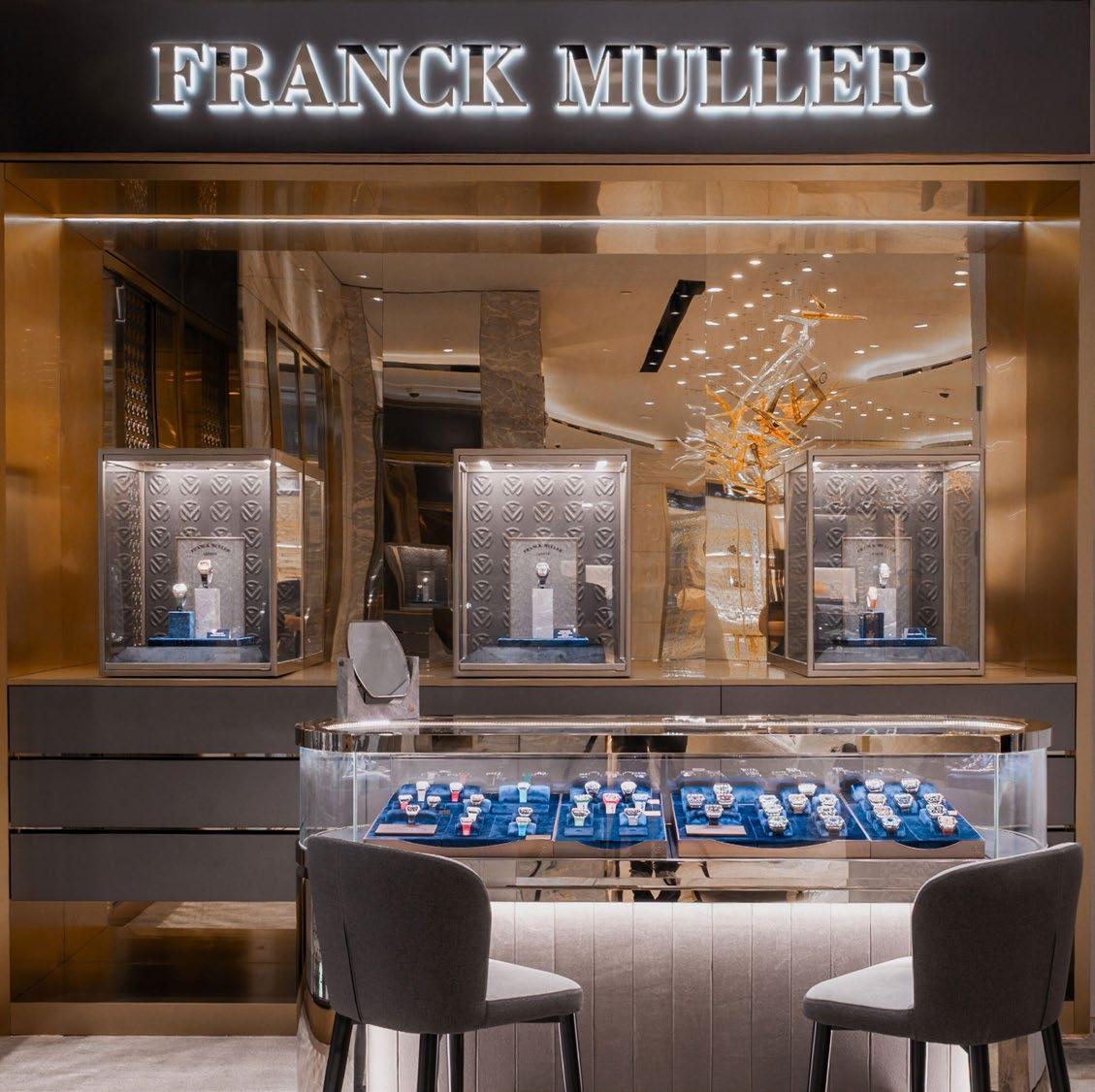
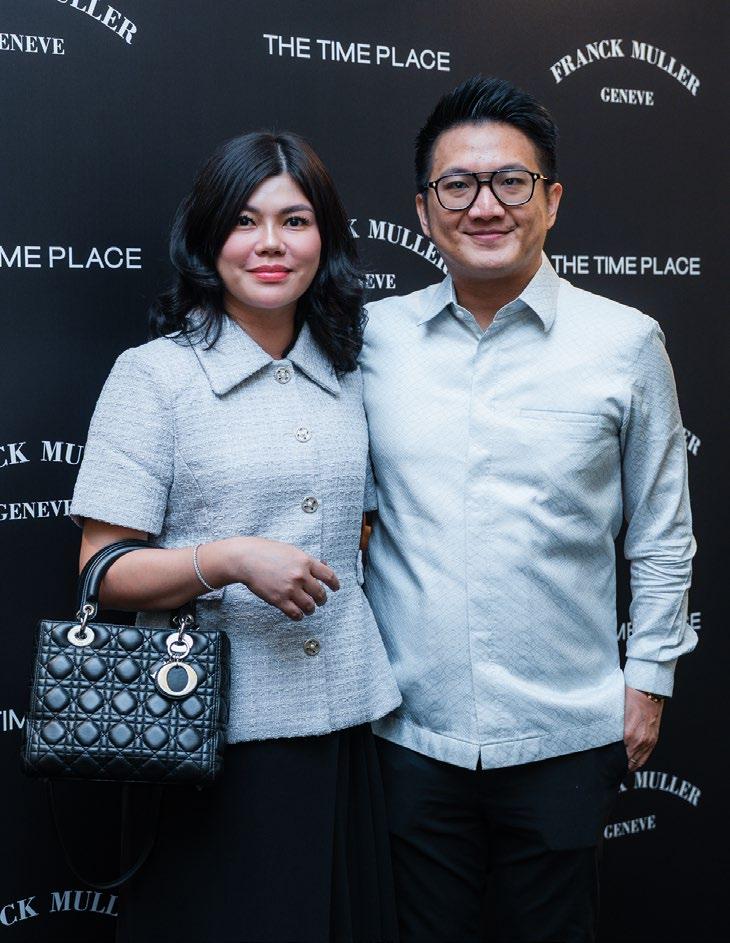
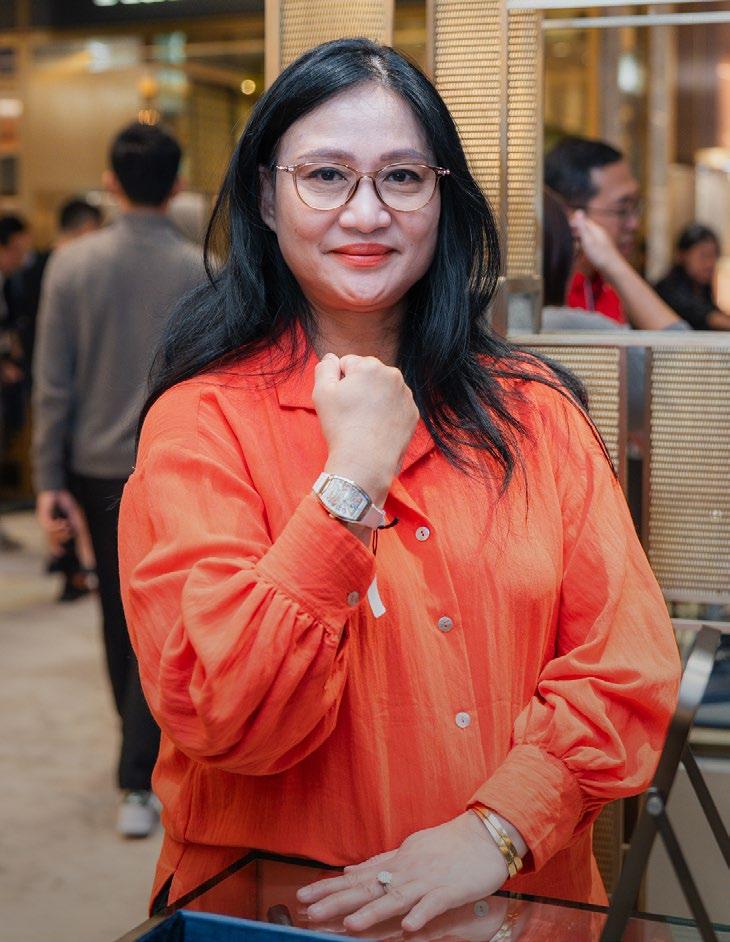
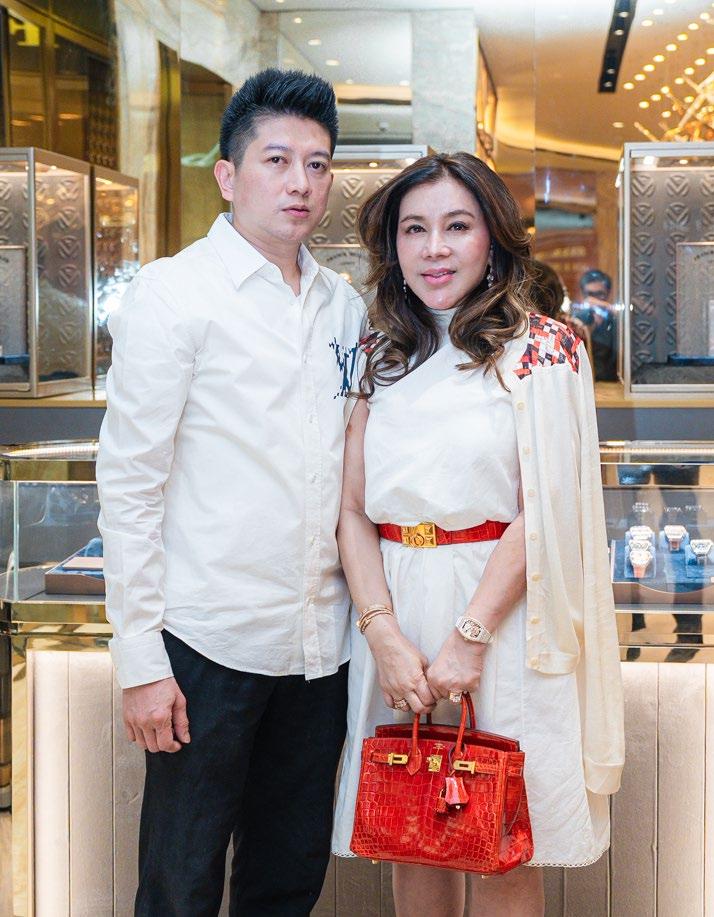
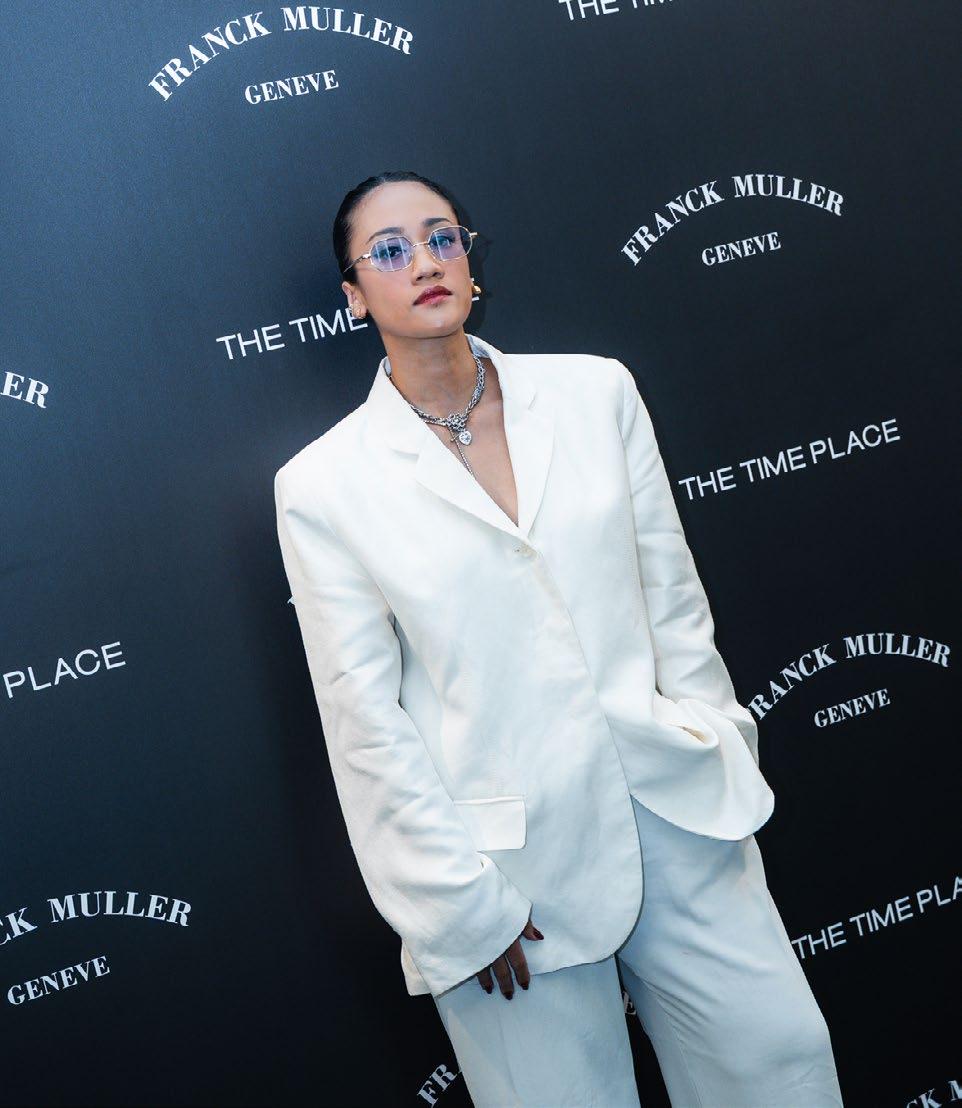
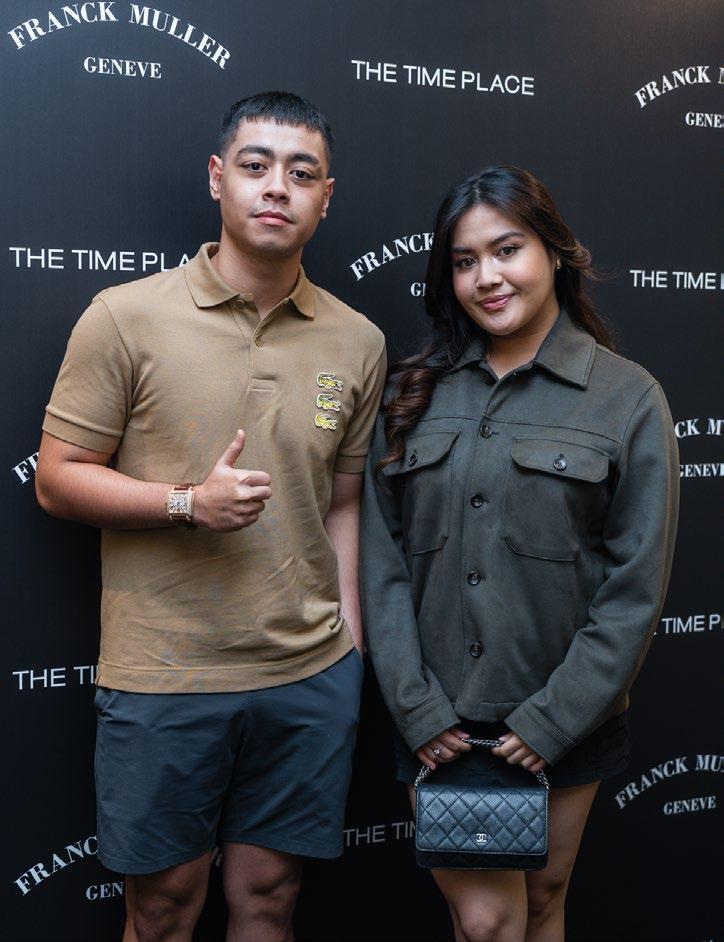
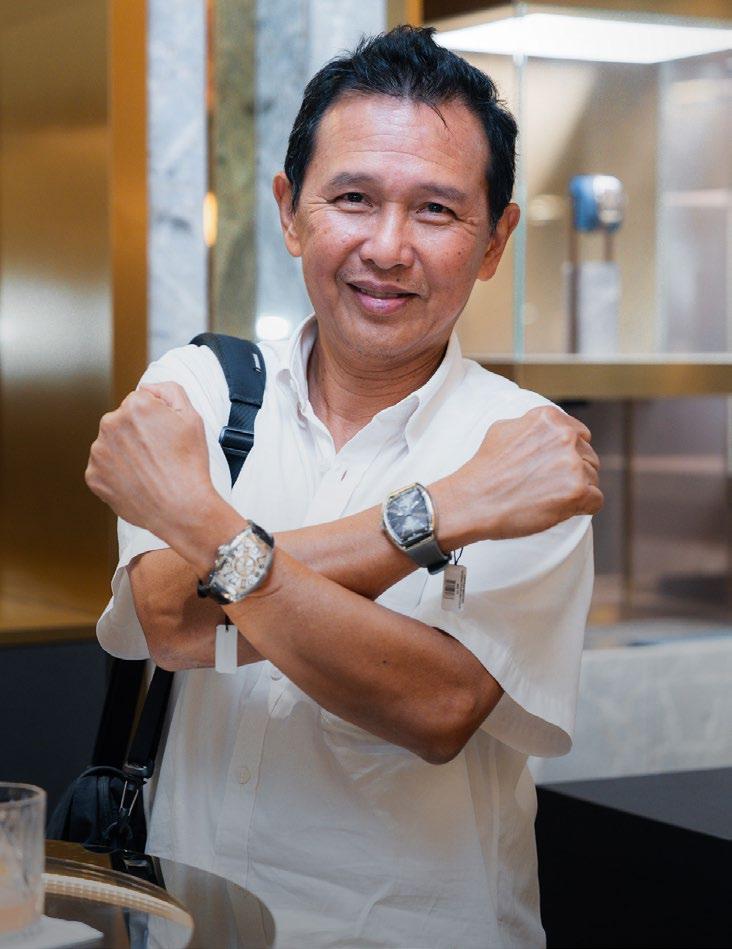
Franck Muller celebrates a new milestone with the opening of its curated corner at The Time Place boutique in Plaza Indonesia. The showcase highlights the brand’s iconic creations, including the Asia Pacific-exclusive
Vanguard releases, the #FR2NCK MULLER Vanguard Beach Limited Edition, the Vanguard Sfumato Slim, and the Vanguard Crazy Hours Jisbar. Guests experienced the exquisite craftsmanship up close, joined a ceremonial toast, enjoyed vibrant music played by a DJ, and received personalised accessories, marking an intimate celebration of innovation, artistry, and contemporary watchmaking excellence all in one event.
Michella & Eddy Putra
Raymond Hendrawan & Benny Janah
DJ CNM
Nayar Rodes & Aliyah Sharvath Rodes
Arief Eka Djaja
Ireny Taroreh
A Precision Affair
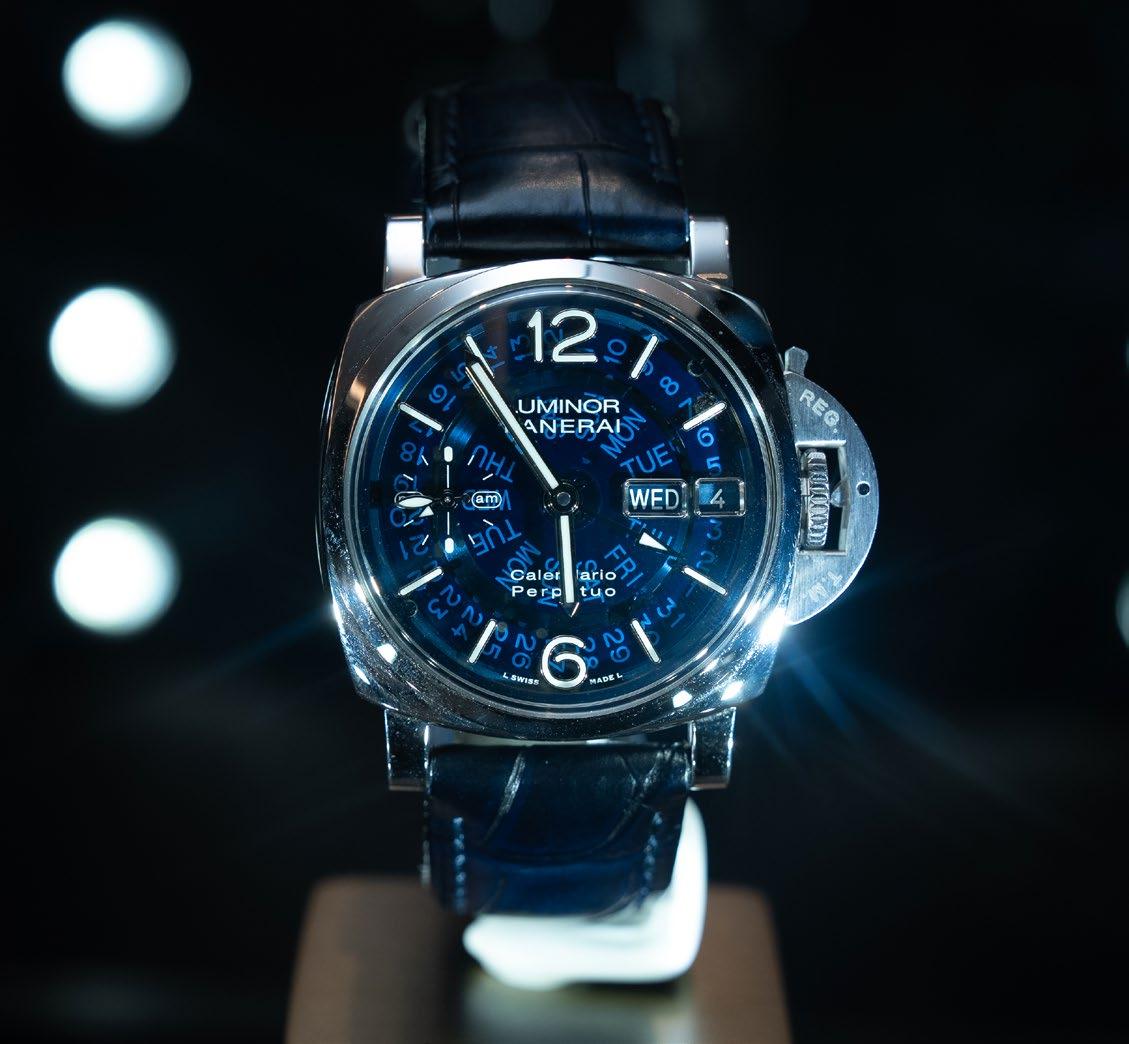
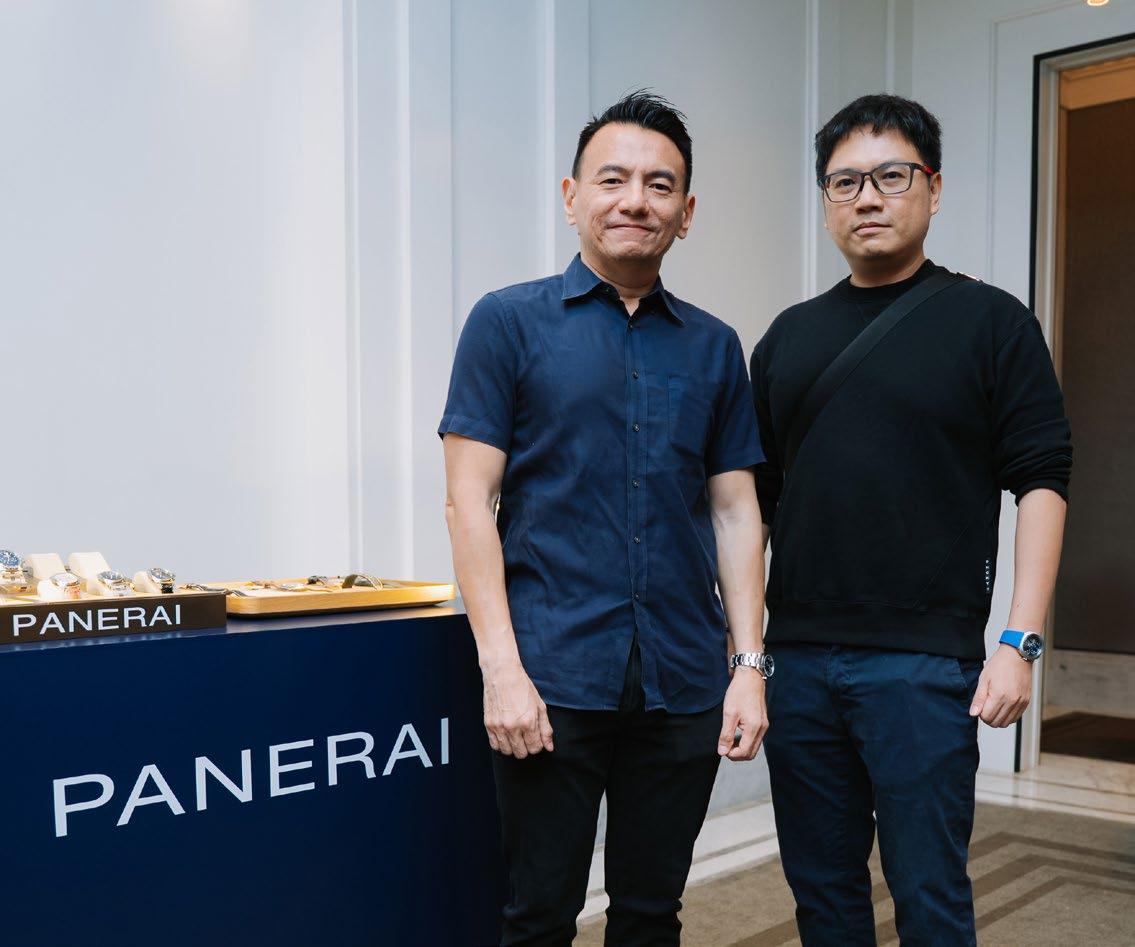
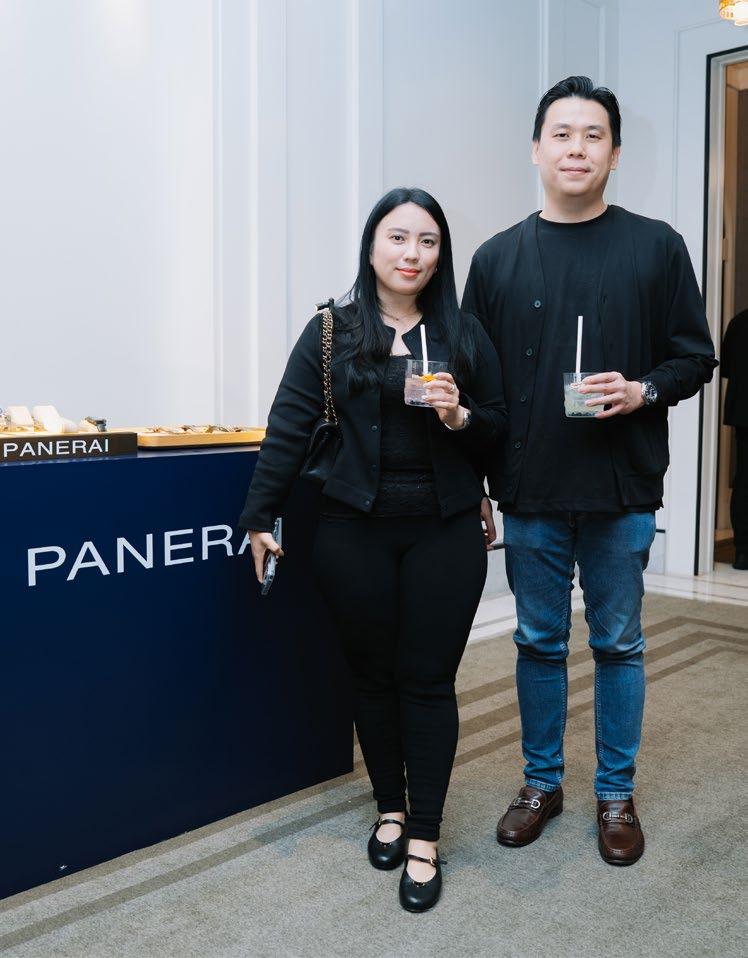
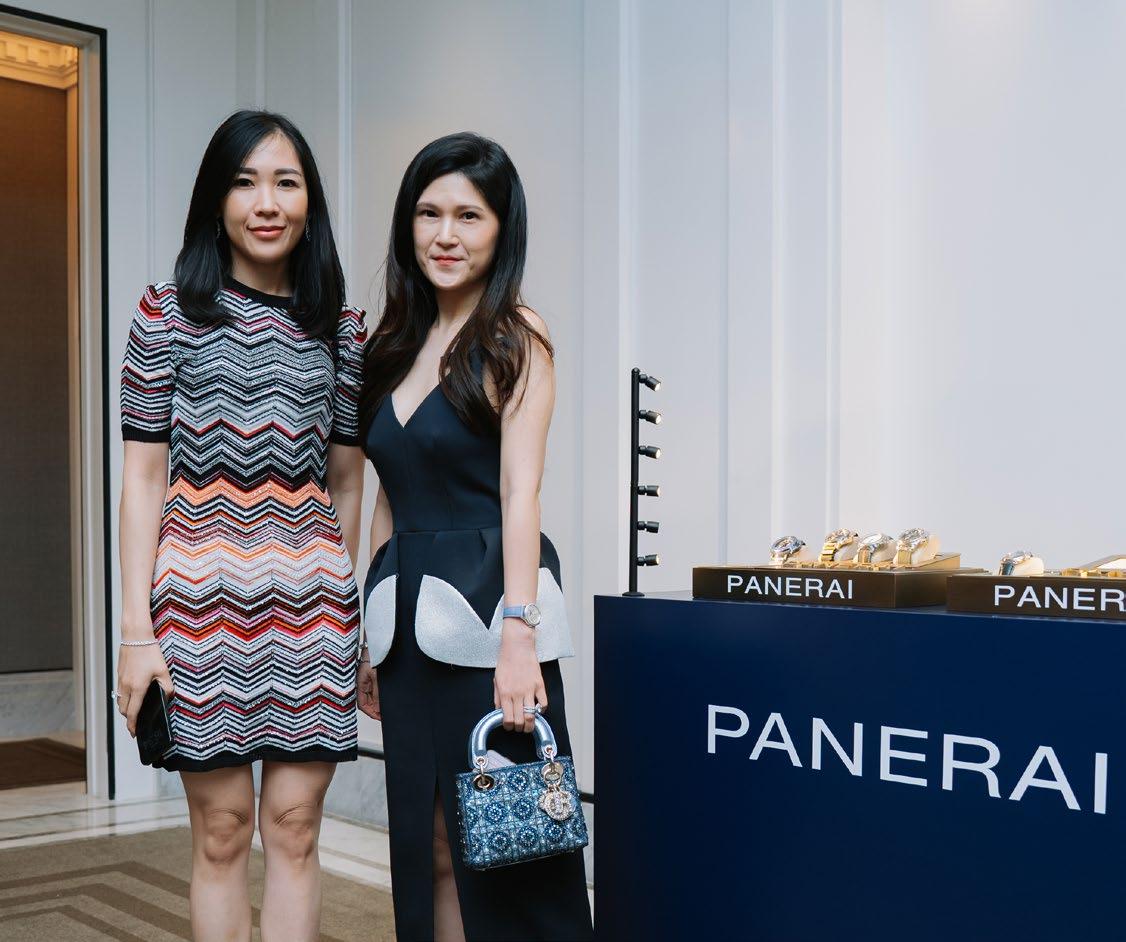
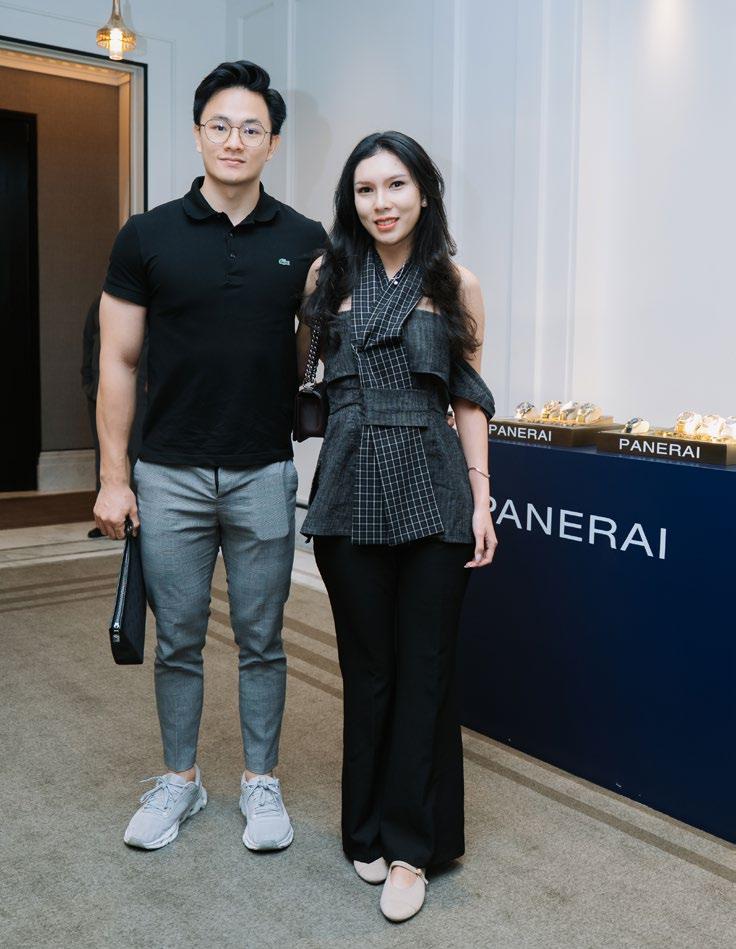
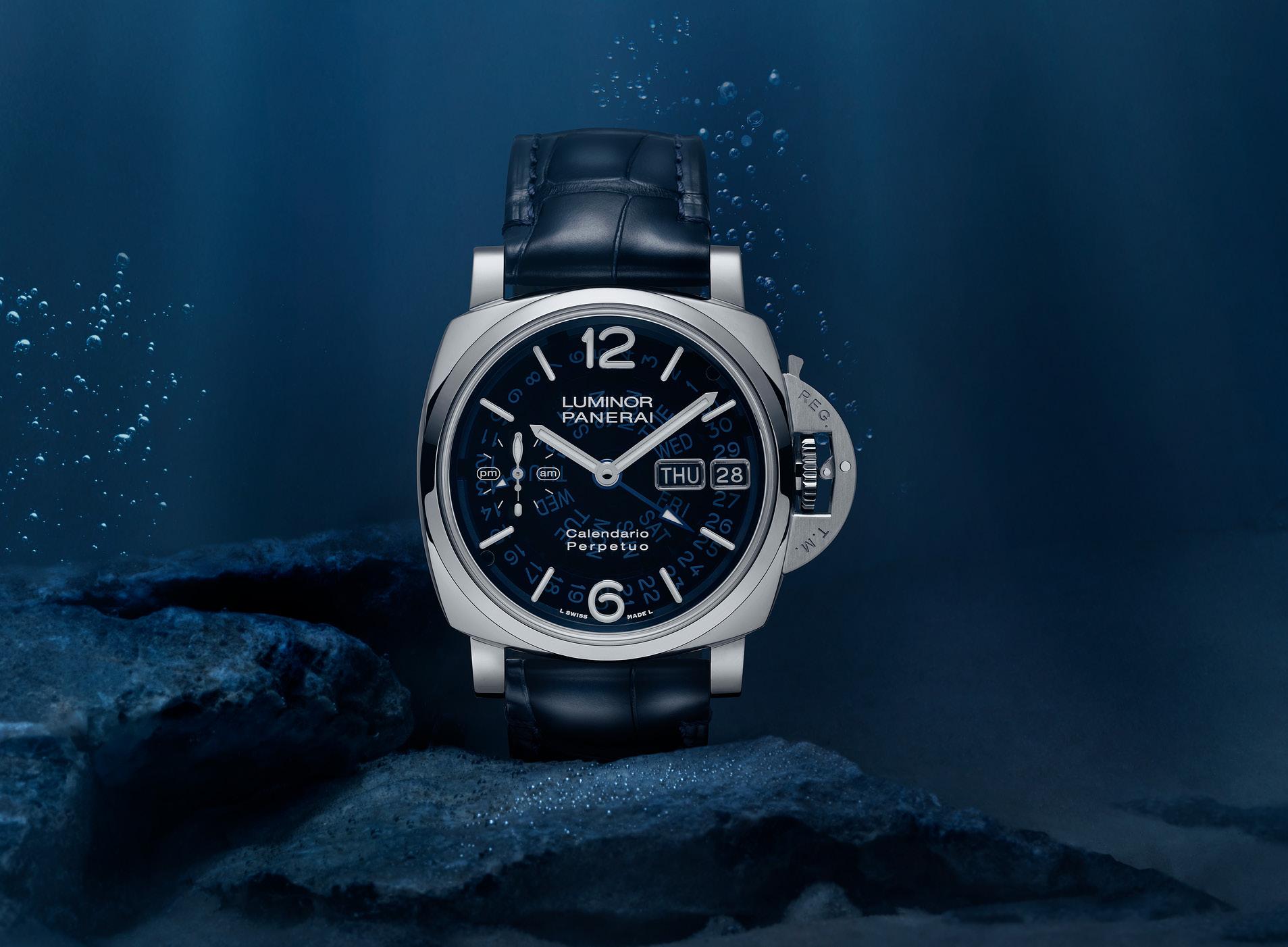
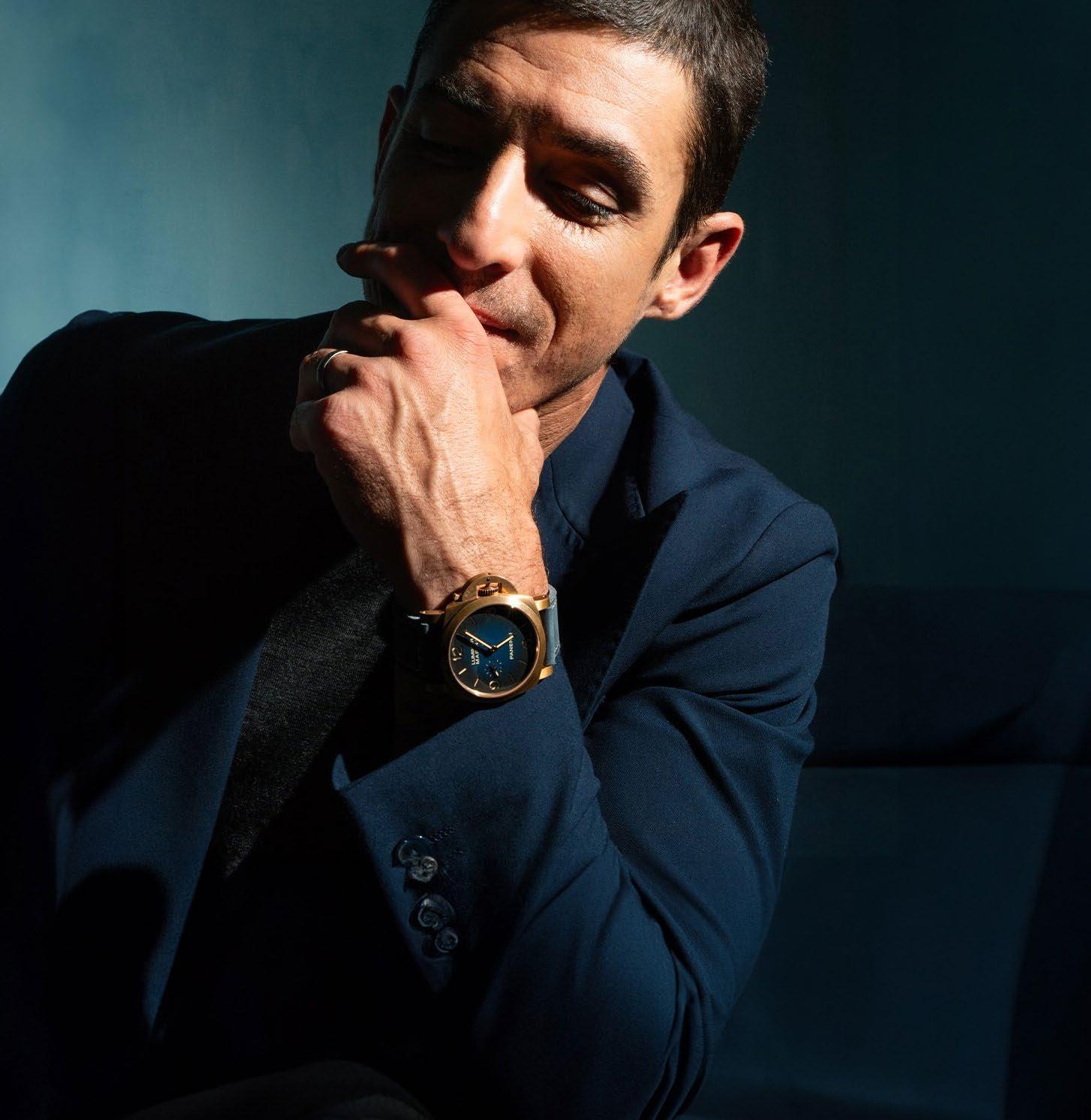
It was an elegant evening at the Langham Jakarta, where VIP clients celebrated Panerai’s mastery of highcomplication watchmaking, highlighted by the unveiling of the Luminor Perpetual Calendar GMT Platinumtech™.
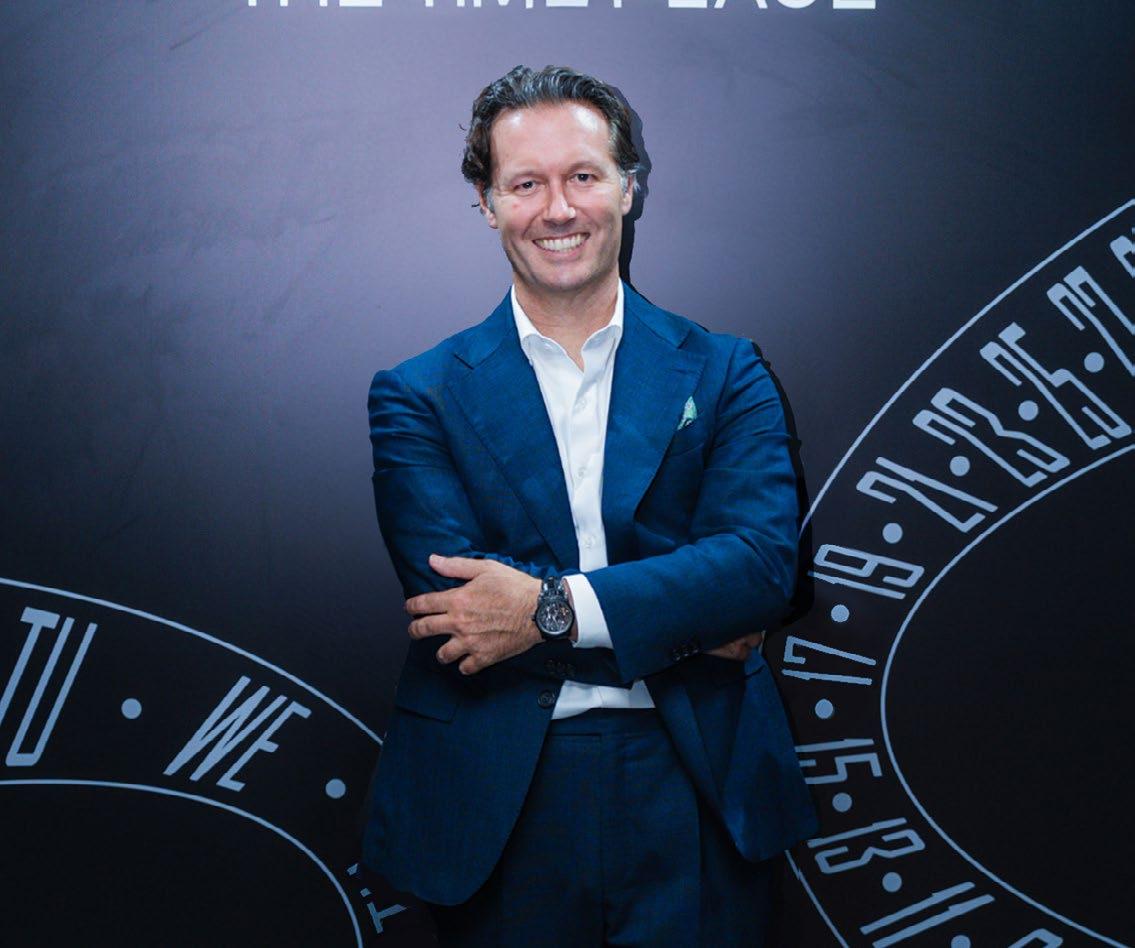
Guests were welcomed with opening remarks from Time International Division Head of Luxury Watches and Jewellery, Rinto Pirngadi, followed by insights into Panerai’s latest innovations presented by the brand’s Managing Director for Southeast Asia and Oceania, Lesley Co. The event unfolded with an intimate dinner, accompanied by Janita Gabriela’s soulful jazz and nostalgic ’90s melodies, delighting guests throughout the special night.
Panerai’s innovations include the Luminor Perpetual Calendar GMT Platinumtech™
Jessica Yaury & Sylvia Kartika
Hendra & Ryan Torinaga
Morris Wijaya Salim & Kin Ellisca Andriana
Debby & Lilie
Natalia Kencana & Michael Kelvin
Excalibur Evening
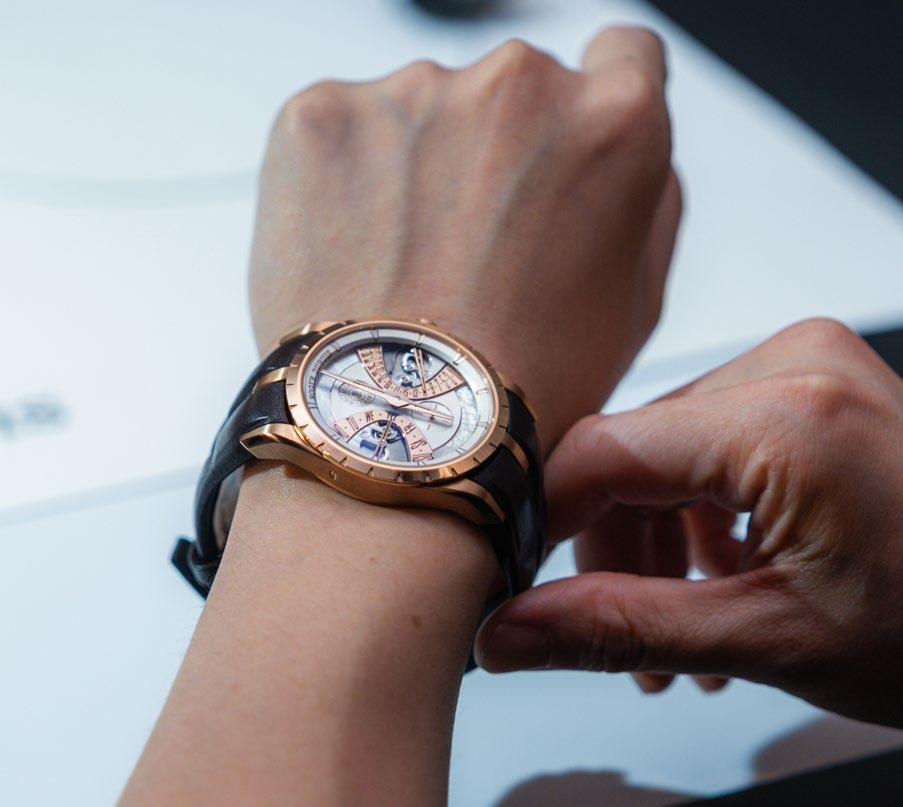
Roger Dubuis invited their VIP clients to an exclusive fine dining event at JinJoo fine dining Korean restaurant in South Jakarta. The guests in attendance had an opportunity to learn more about the Excalibur Biretrograde Calendar.
Edouard Guibert, Roger Dubuis Managing Director of South Asia & Oceania, presented the timepiece’s intricate details. The evening featured an open-kitchen experience by JinJoo, an immersive exploration of the Vision Lab, and concluded with Savoir-Faire—an interactive mini watchmaking workshop introducing guests to the art of horology.
Guests explored the art of horology with the Roger Dubuis Excalibur Biretrograde Calendar
Stevanus R. & Rheny
Willy Mindjaja
Hendratno Gunawan & Winy Tanusli
Edouard Guibert
Calvin Lowelno & Gabriella Jauwanto
Holiday Ready
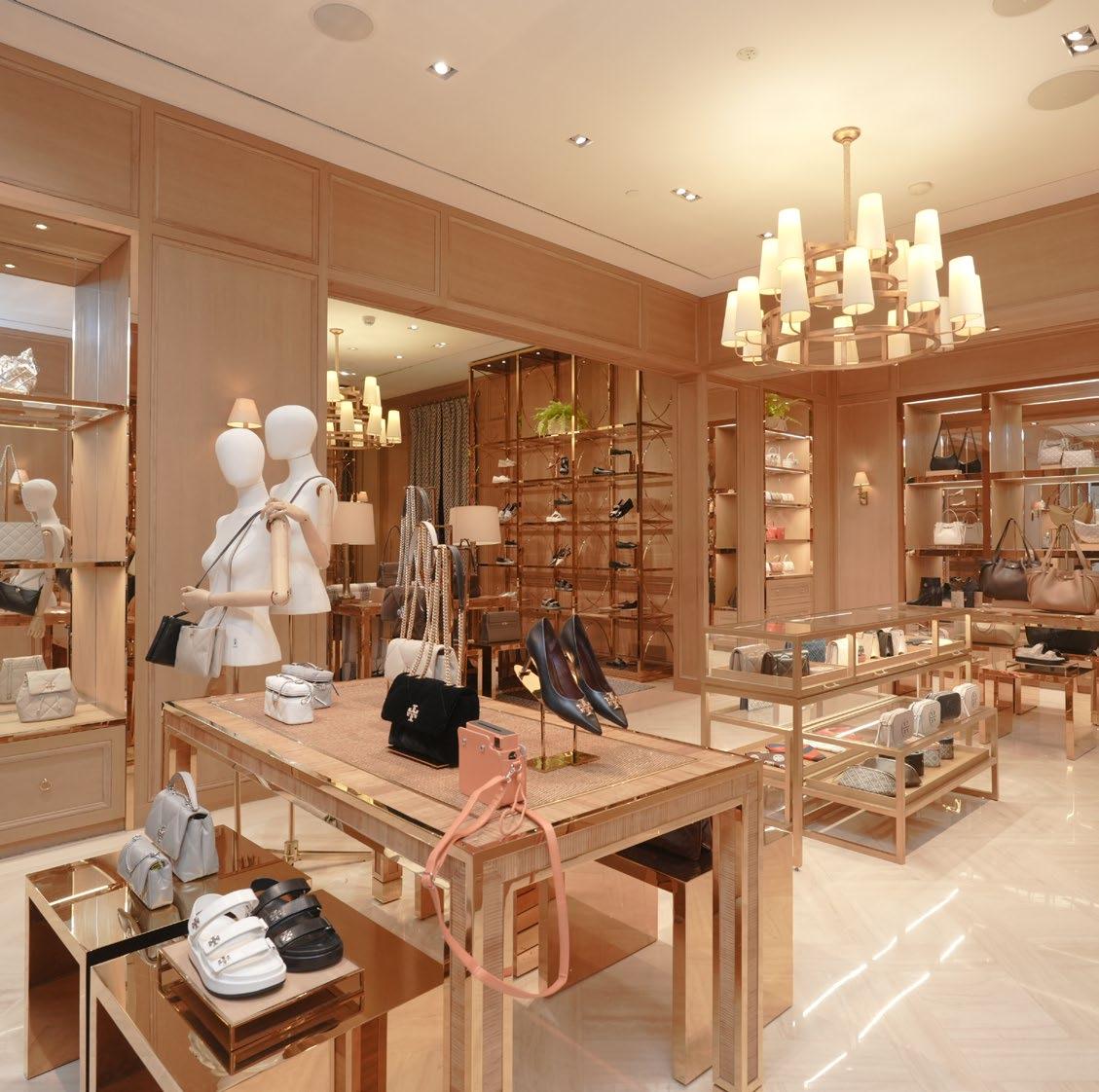
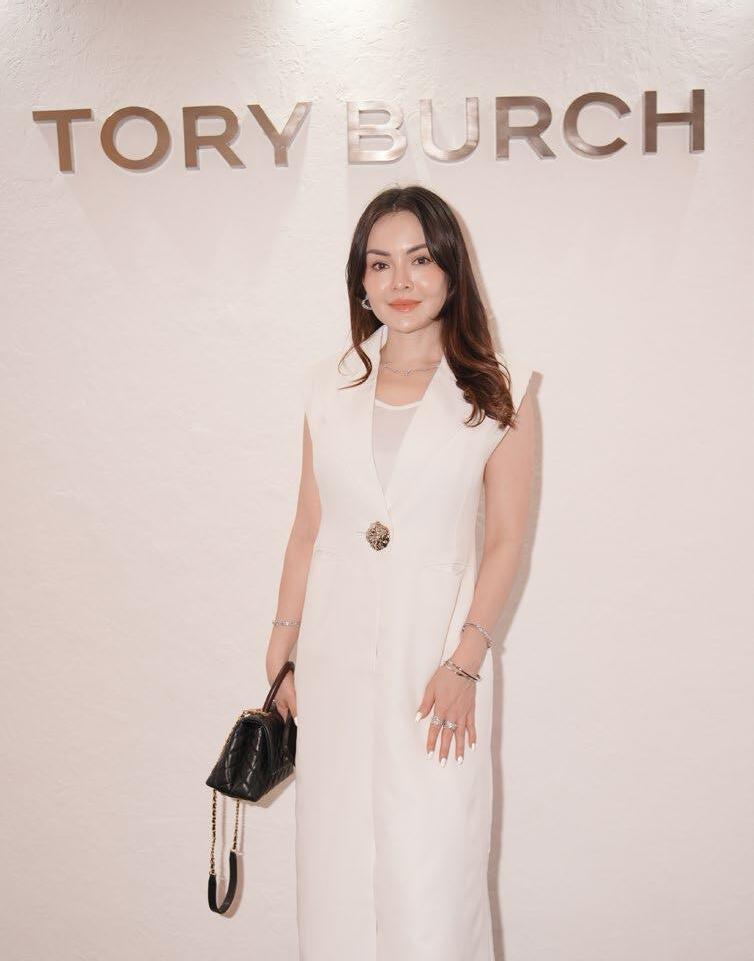
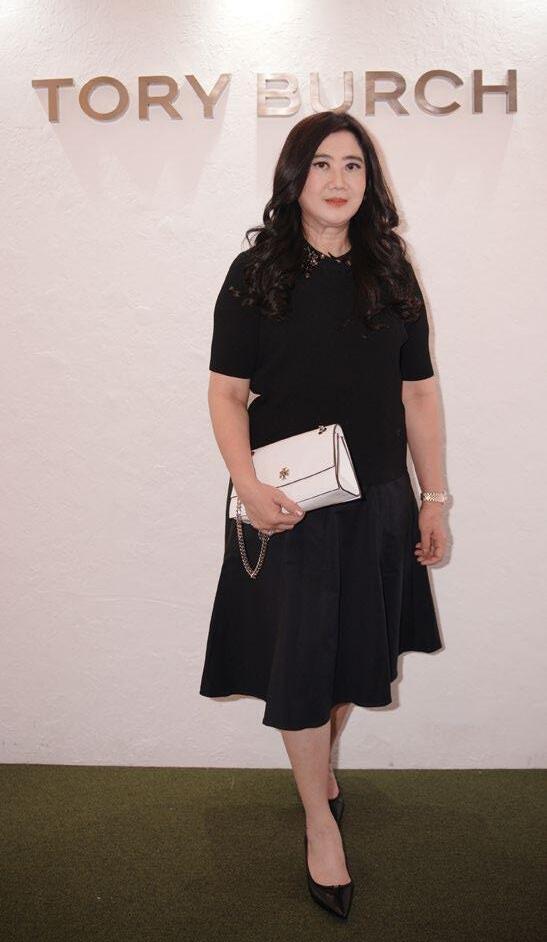
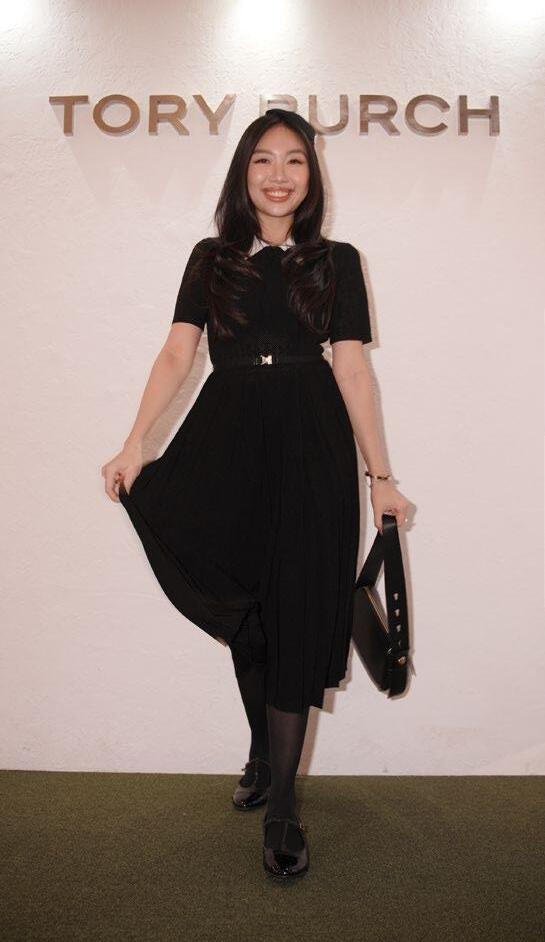
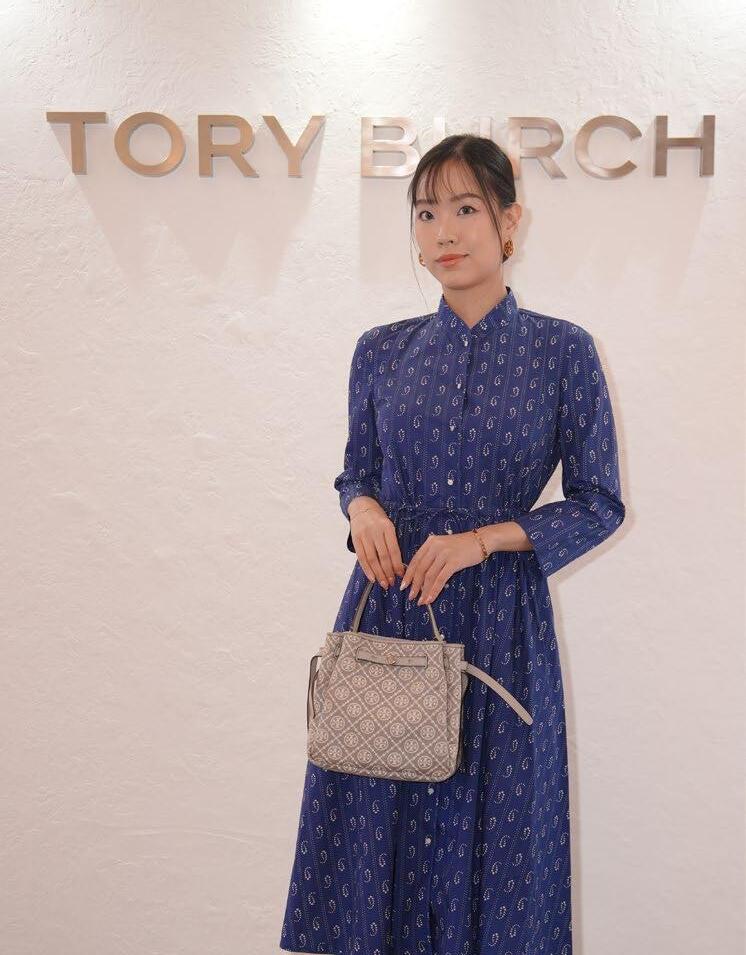
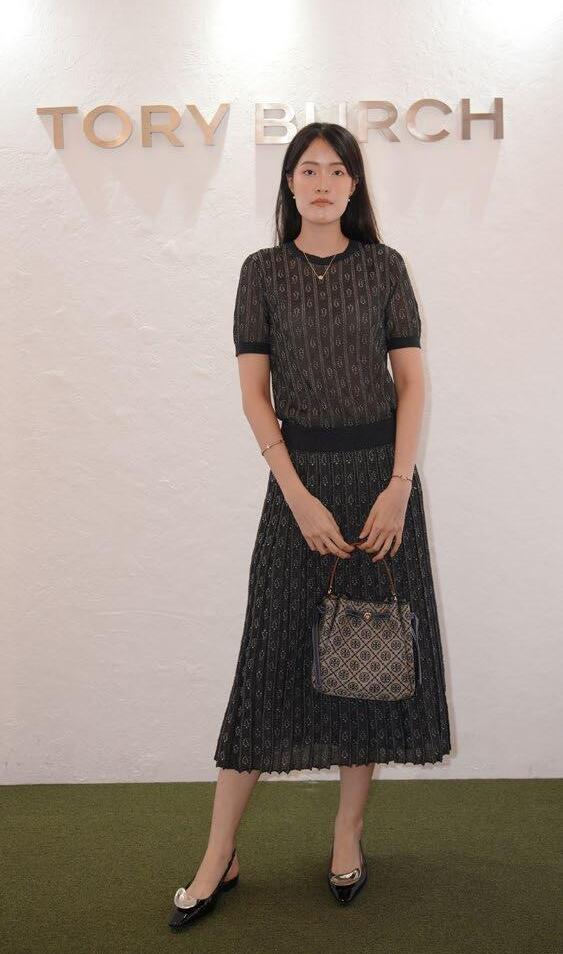
To celebrate the arrival of its Readyto-Wear (RTW) and Holiday 2025 collection, the Tory Burch boutique at Tunjungan Plaza IV in Surabaya recently invited a selected group of clients and influencers to an exclusive
in-store preview session. The well-heeled ladies, who were elegantly dressed in their monochromatic attires, were seen happily mingling with one another while avidly watching the mini trunk show prepared for the occasion. Those in attendance also participated in the styling session where they had a chance to try on some of the new pieces and play mix-and-match with the brand’s stylish offerings.
Christina Brennan
Gillian Geraldine
Angie Rose
Vonna Vania
Helena Sachiko
Jennywati
Jasmine Calista
Flower Power
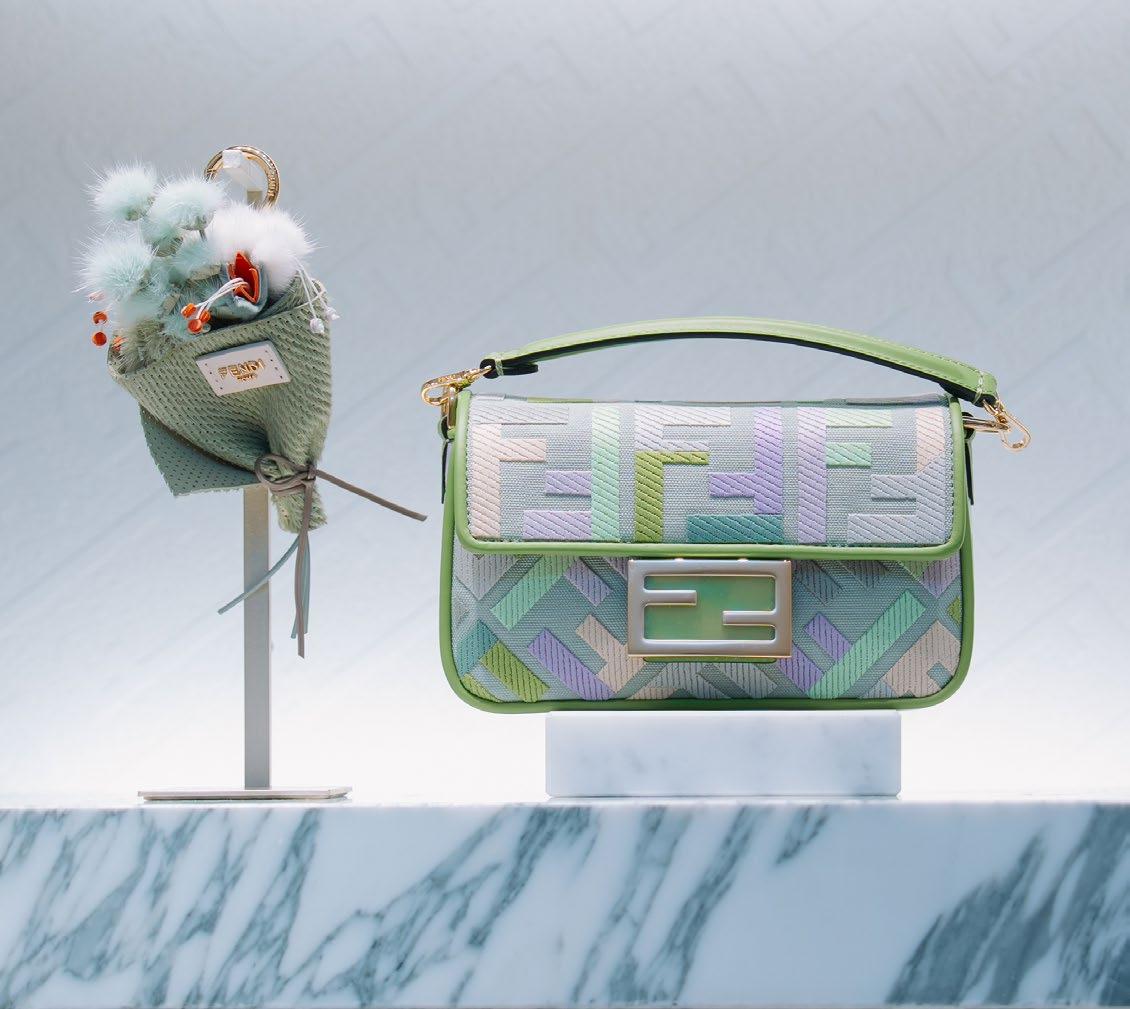
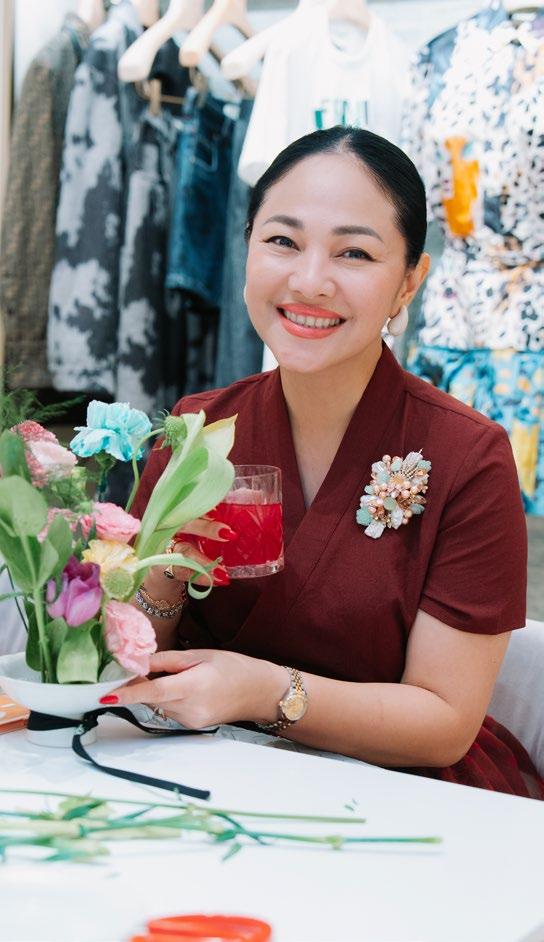
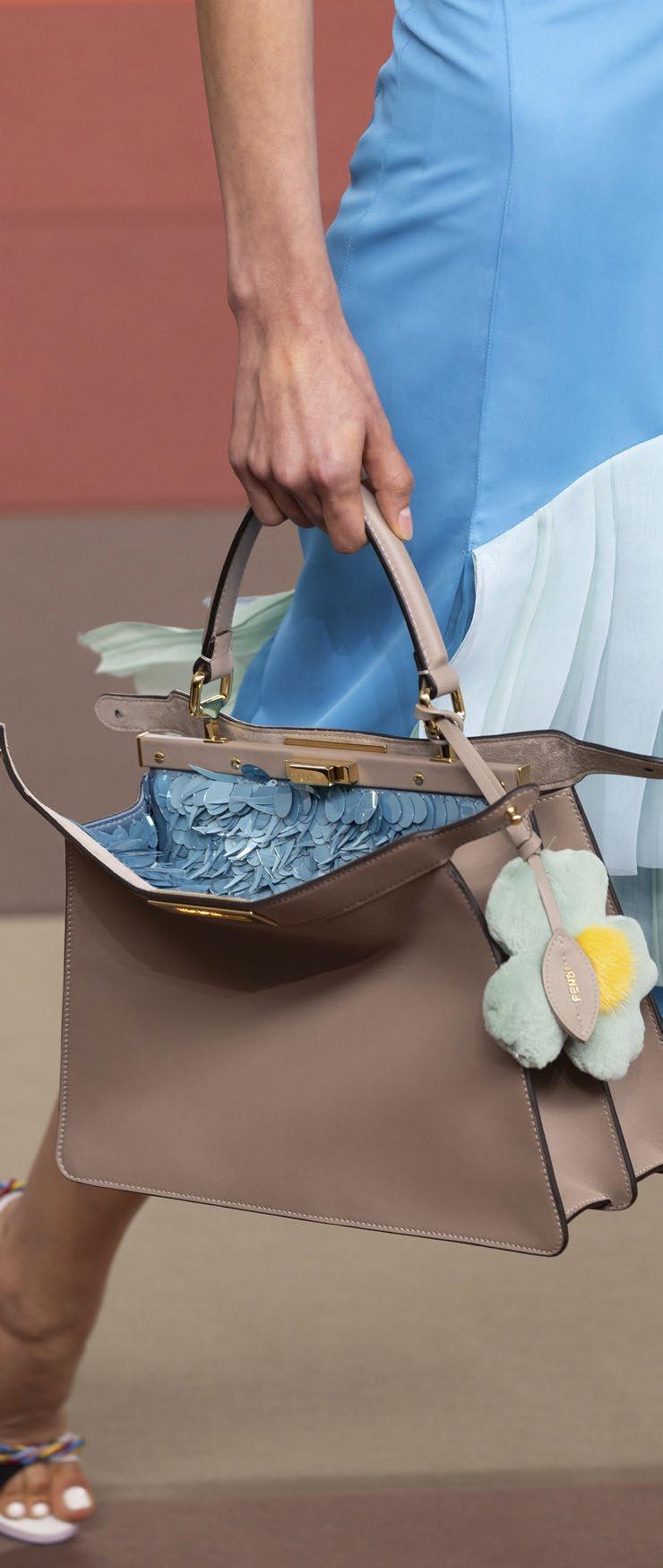
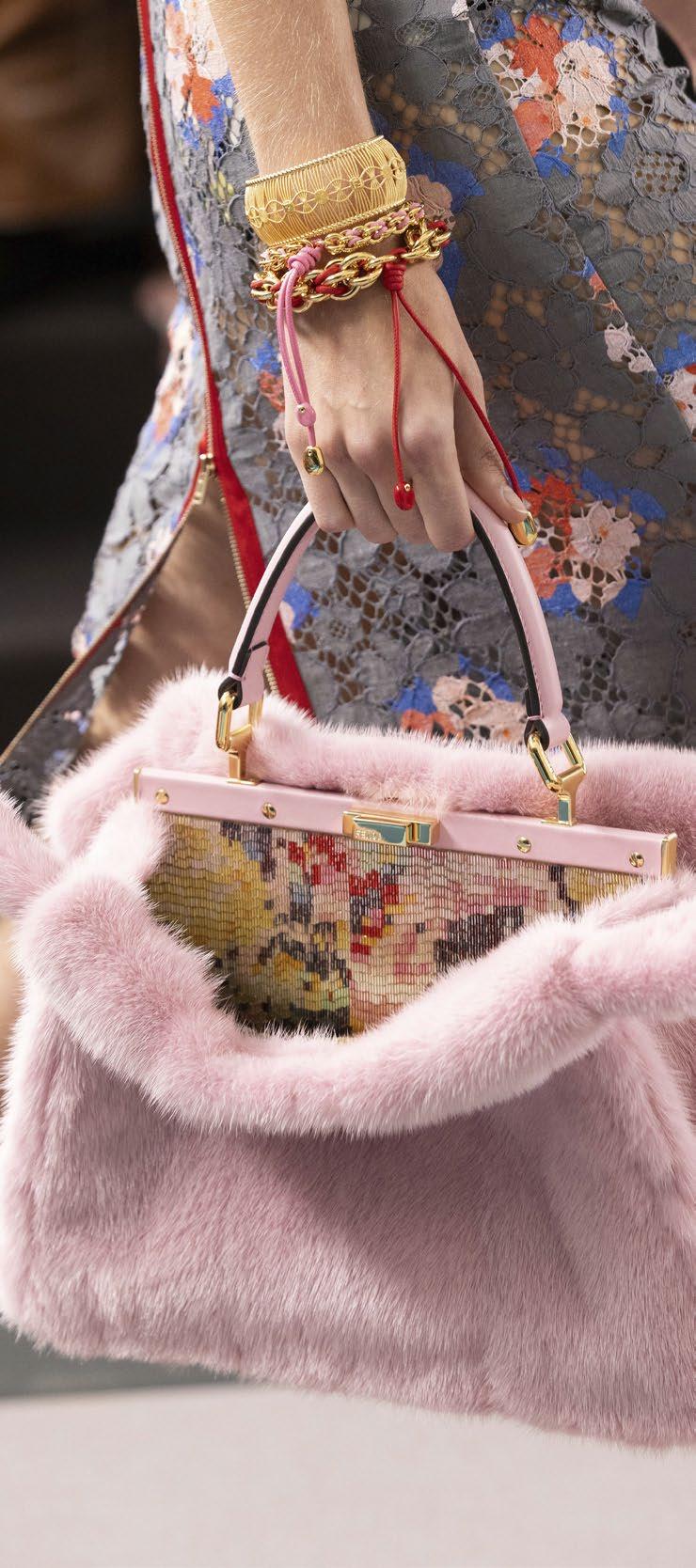
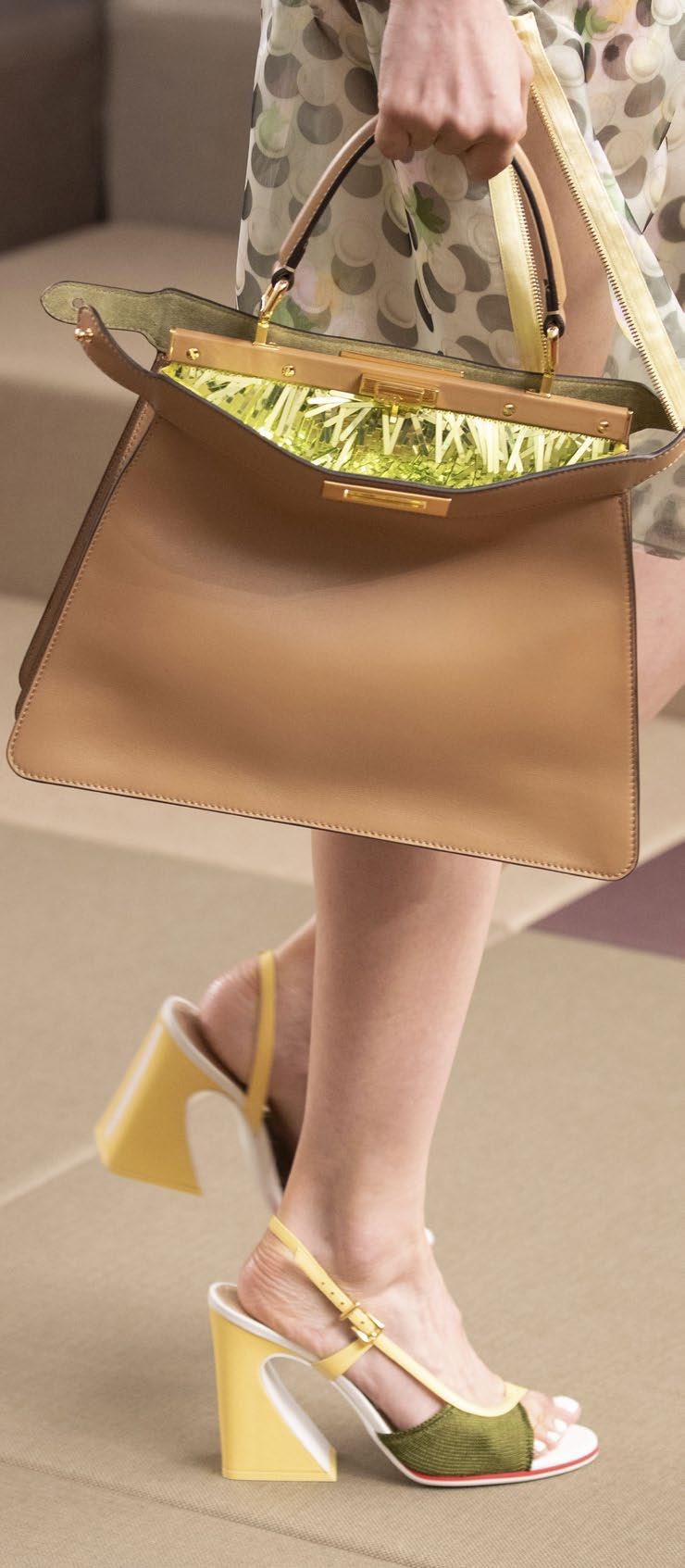
In celebration of Valentine’s Day, the FENDI boutiques in Jakarta held a special ladies’ event for its loyal clientele. Guests were invited to the two boutiques—on February 12 for the Plaza Senayan store, and February 13
DISCOVER MORE for the Plaza Indonesia boutique—both of which were transformed into a beautiful garden, to participate in an exclusive ikebana flower workshop, where they were able to create special floral arrangements inspired by the vibrant colours of the FENDI Spring/Summer 2026 Collection. Guests happily participated in the fun and wholesome activity. While enjoying their mocktails, those in attendance also had the opportunity to explore the Maison’s latest collection in store.
The garden theme was magnified by the Mini Baguette Multicolour FF Embroidery and the FENDI Flower Bouquet Charm
Novi Permatasari
Lina Anwar
Aulia Syahnaz F.
Yunita Chandra
Rita Efendy
Fayza Maharani
Lenda Lucia Panambuan
Susie Limarta
Ever present in every arena of endurance racing, Rolex is the Title Sponsor of the Rolex 24 At DAYTONA
CHAMPIONING THE TRACK
ROLEX MAKES ITS MARK IN THE FAST-PACED WORLD OF MOTOR SPORT WITH ITS ENDURING TIES TO DAYTONA
The love for speed and racing has always been an indelible part of motor sport.
Drawn by the unparalleled courage racing drivers possess, Rolex, guided by the pioneering spirit of its visionary founder, Hans Wilsdorf, began a relationship with motor sport in the 1930s. And it all began in Daytona Beach, Florida.
Renowned for its long, firm stretch of white sand, Daytona was the world capital of racing, hosting 14 World Land Speed Records between 1904 and 1935. Among those determined to go faster was the ‘King
of Speed,’ Sir Malcolm Campbell, who sported a Rolex Oyster on his wrist. Having been invented a few years earlier, the Oyster was the world’s first waterproof wristwatch. A reliable timepiece which has endured through the years, the Oyster accompanied the race car driver to the finish line and marked a revolutionary moment in history.
Rolex’s first motor sport Testimonee, Sir Malcolm Campbell certainly had many racing achievements under his belt. In 1933, behind the wheel of his car Bluebird, he reached a speed of 272 mph (438 km/h) on Daytona
Beach and jubilantly endorsed the watch’s capabilities, reporting back in a telegram: “Rolex watch worn during the record attempt and still going splendidly notwithstanding rough usage received.” A mere two years later, he became the first to break the 300 mph (483 km/h) barrier at Bonneville Salt Flats, Utah and ultimately became instrumental in forging a special bond between Rolex and the pursuit of speed that continues to inspire the world of motor racing today.
Rolex Testimonee Jenson Button had his Rolex 24 At DAYTONA debut in 2024, finishing third overall
By Maria Zarah Gregorio Viado
In 1959, sand gave way to tarmac with the opening of the Daytona International Speedway®. Several years later, the Oyster Perpetual Cosmograph Daytona was born. Designed to cater to the needs of drivers, the timepiece was also a reflection of the Swiss watchmaker’s motor sport heritage. A true partnership was formalised in 1992, when Rolex became the Title Sponsor of the Rolex 24 At DAYTONA. Having extended support for racing and the speedway from the get go, it also provided drivers with an additional incentive for winning the race, as the ultimate prize was a specially engraved Daytona watch.
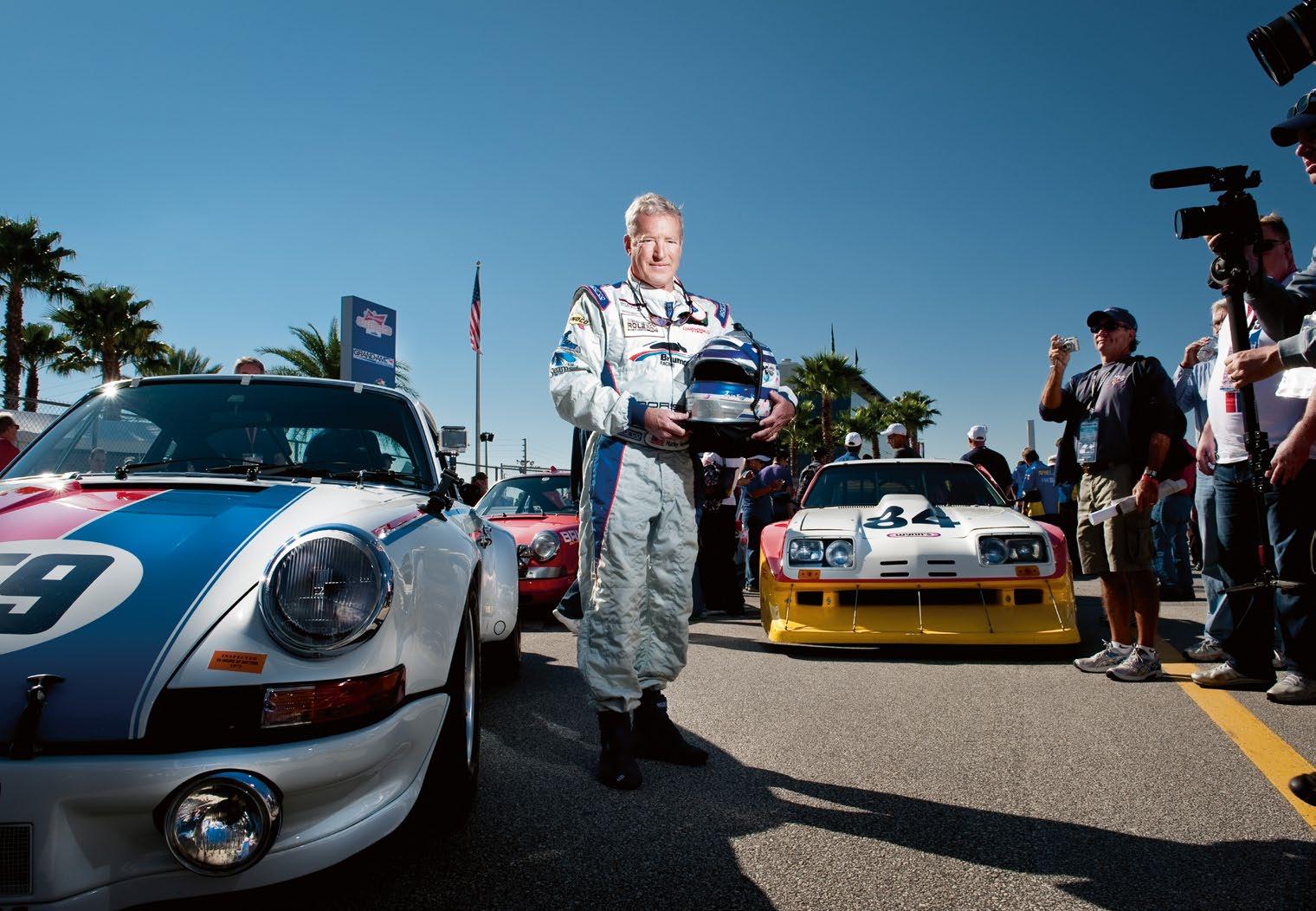
As the century unfolded, more of the world’s greatest driving talents were drawn to the twice-around-the-clock challenge, including famed Hollywood actor Paul Newman. Known for racing with his Daytona strapped to his wrist, inscribed with “Drive Carefully Me”, Newman shared the track with young driver Hurley Haywood. His love for speed, racing, and his male machismo would make him an enduring symbol in the history of the sport and the watch. Meanwhile, Haywood would continue to race at Daytona for several decades, retiring from the track at 63 with a record five overall wins.
A Rolex Testimonee himself, Haywood shares great admiration for the Swiss watchmaker’s unwavering ties to the race, saying: “Rolex’s relationship has spanned many years and with each passing year, the intensity of the race increases. With Rolex’s support the race has become so symbolic and to take home the
Daytona is the ultimate victory. Drivers from all forms of racing come to compete in the Rolex 24 for one reason, to win this watch.”
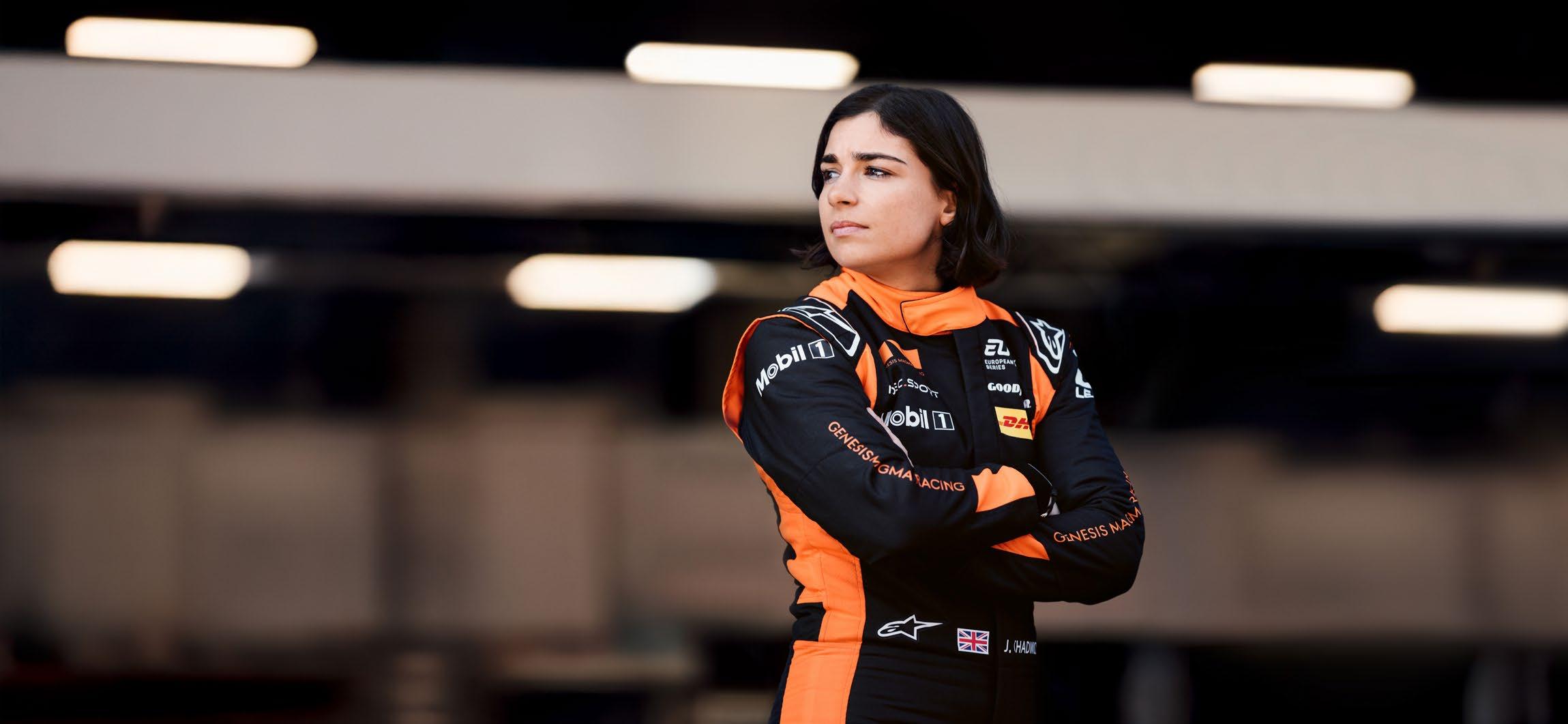
Following in Haywood’s tracks, Testimonee Scott Pruett matched his record in 2013, while Rolex Testimonees Jenson Button and Jamie Chadwick share in the Swiss watchmaker’s enduring bond with the event. Button made his Rolex 24 At DAYTONA debut in 2024, finishing third overall, while Chadwick served as Grand Marshal in 2025, triumphantly becoming the first woman in recent history to hold the honour.
For almost a century, Rolex’s affinity with motor sport has been defined by precision, resilience and innovation—the very qualities instilled by its pioneering founder since 1905. Rolex’s legacy in racing extends beyond Daytona, as next year the brand enters its second year as the Official Timepiece of the International Motor Sports Association (IMSA), while its wider commitment to endurance racing is marked by milestones in 2026: a decade of achievements in the FIA World Endurance Championship (WEC) and 25 years of partnership with the 24 Hours of Le Mans.
Rolex Testimonee Hurley Haywood at the Rolex 24 At DAYTONA in 2013
Rolex Testimonee Jamie Chadwick served as Grand Marshal of Rolex 24 At DAYTONA in 2025
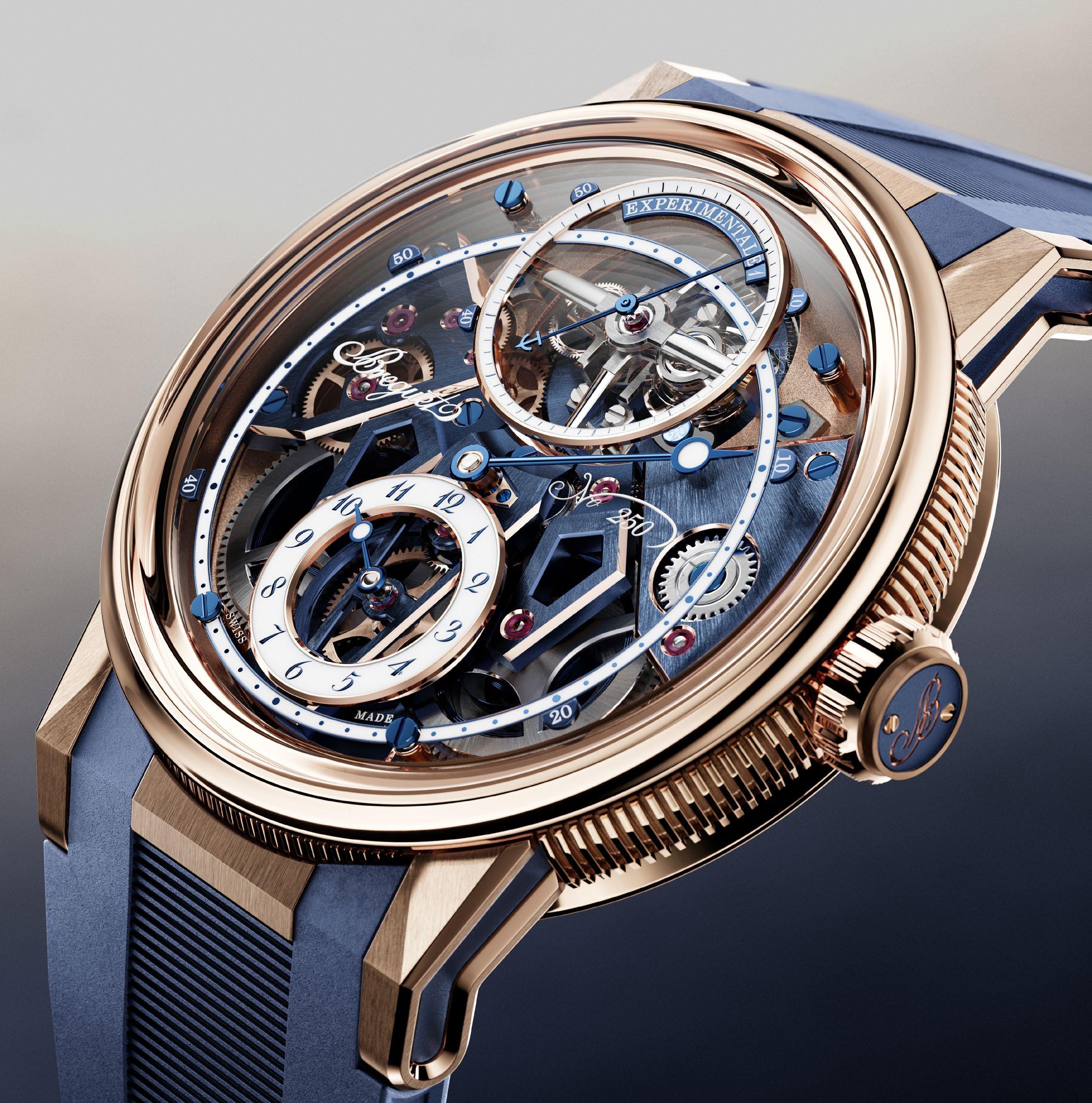
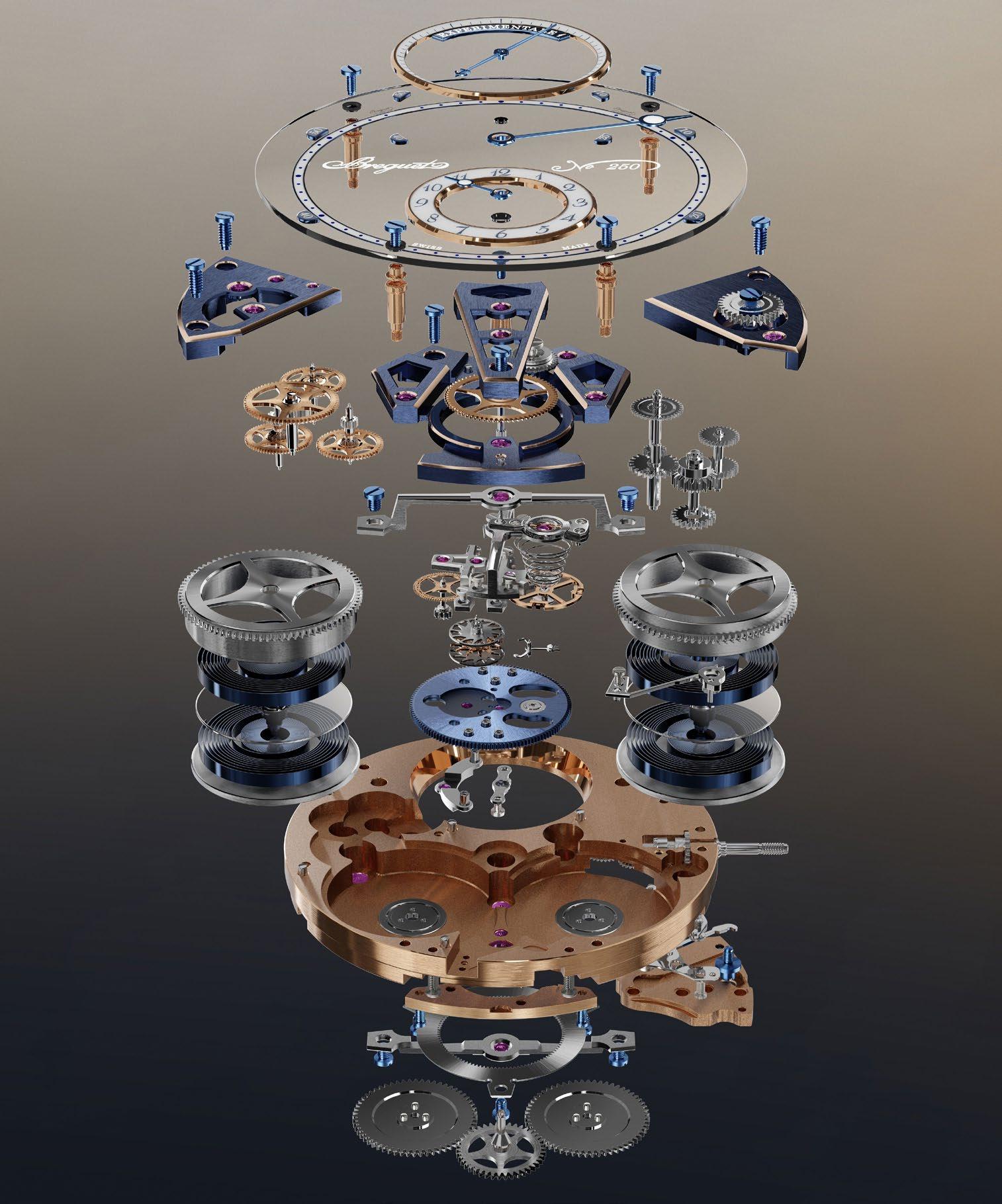
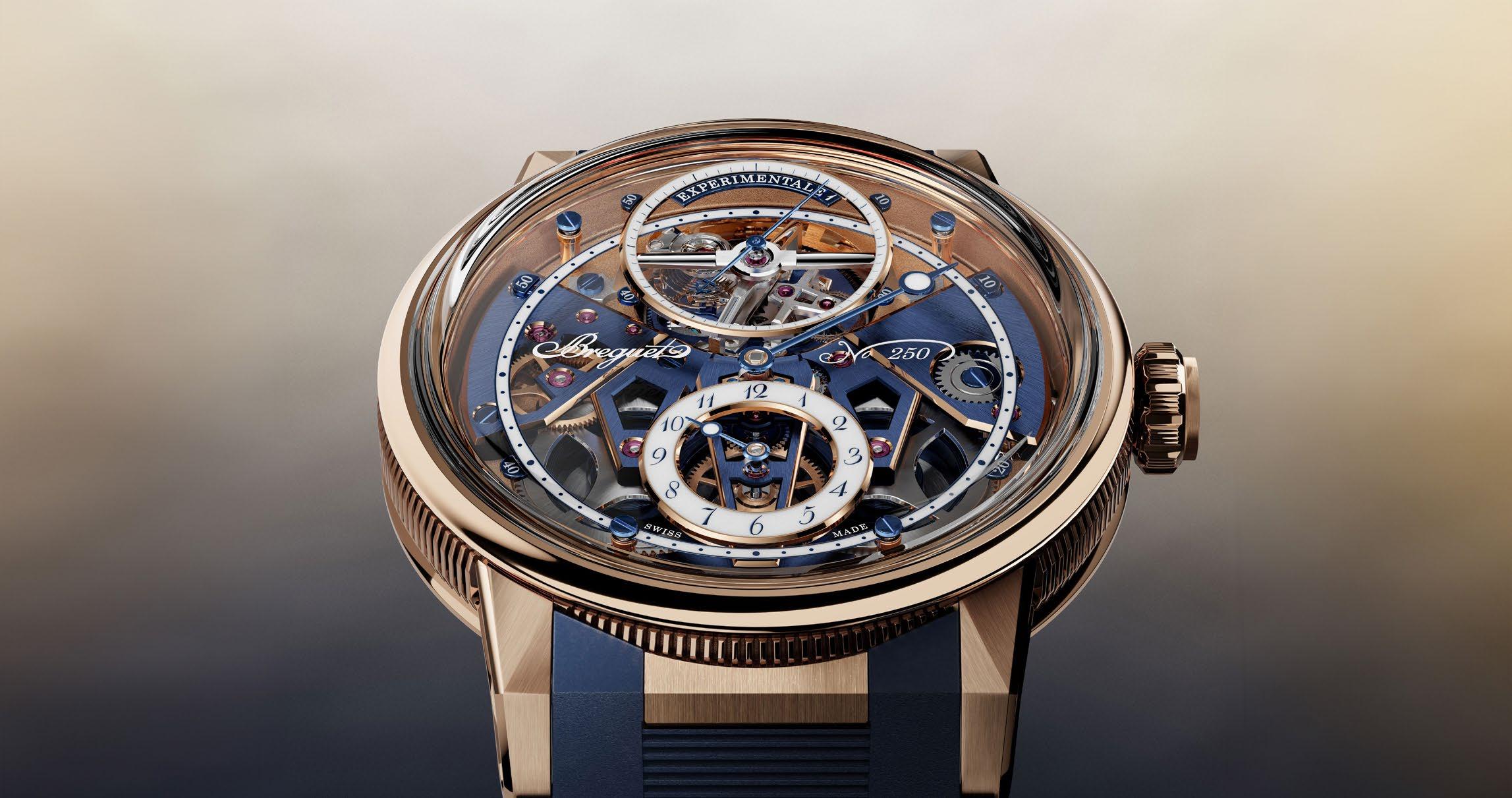
Breguet brings its research and development prowess to the forefront with the Expérimentale 1
A PIONEERING NATURE
THE EXPÉRIMENTALE 1 IS AN UNDENIABLE SYMBOL OF BREGUET’S CUTTING-EDGE SCIENTIFIC EXPLORATION AND UNPARALLELED ARTISTIC INVENTION
By Fahita Advani
Breguet introduces Expérimentale 1 as an inaugural release in its new exploratory Research and Development focused line. Crafted in Breguet gold, the marine-inspired wristwatch embodies the brand’s latest technical innovations. The timepiece is distinguished by Breguet’s first 10Hz high-frequency tourbillon, paired with a magnetic escapement that maintains constant energy to the balance. As
a testament to its precision and craftsmanship, the timepiece bears the Breguet hallmark.
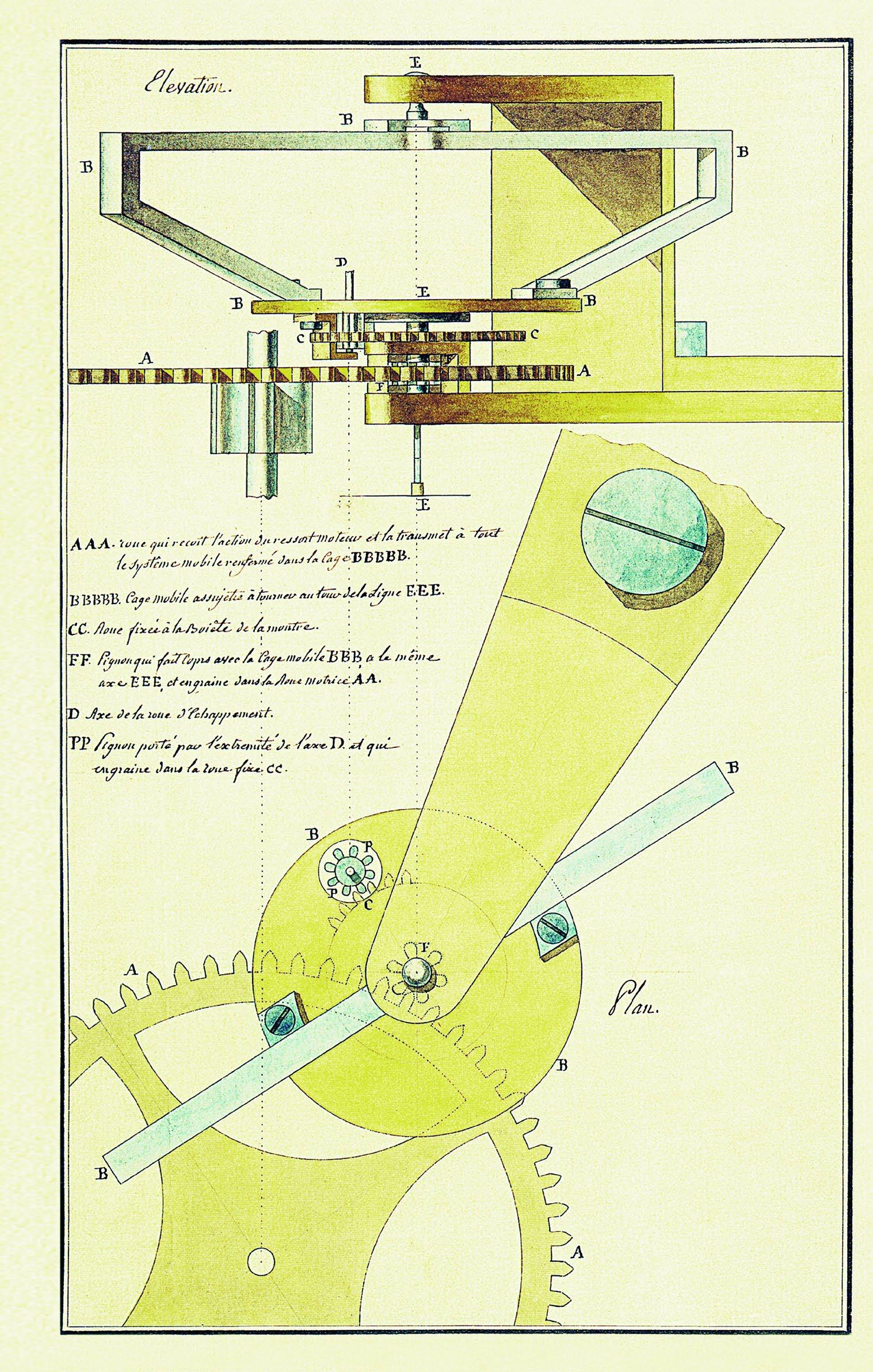
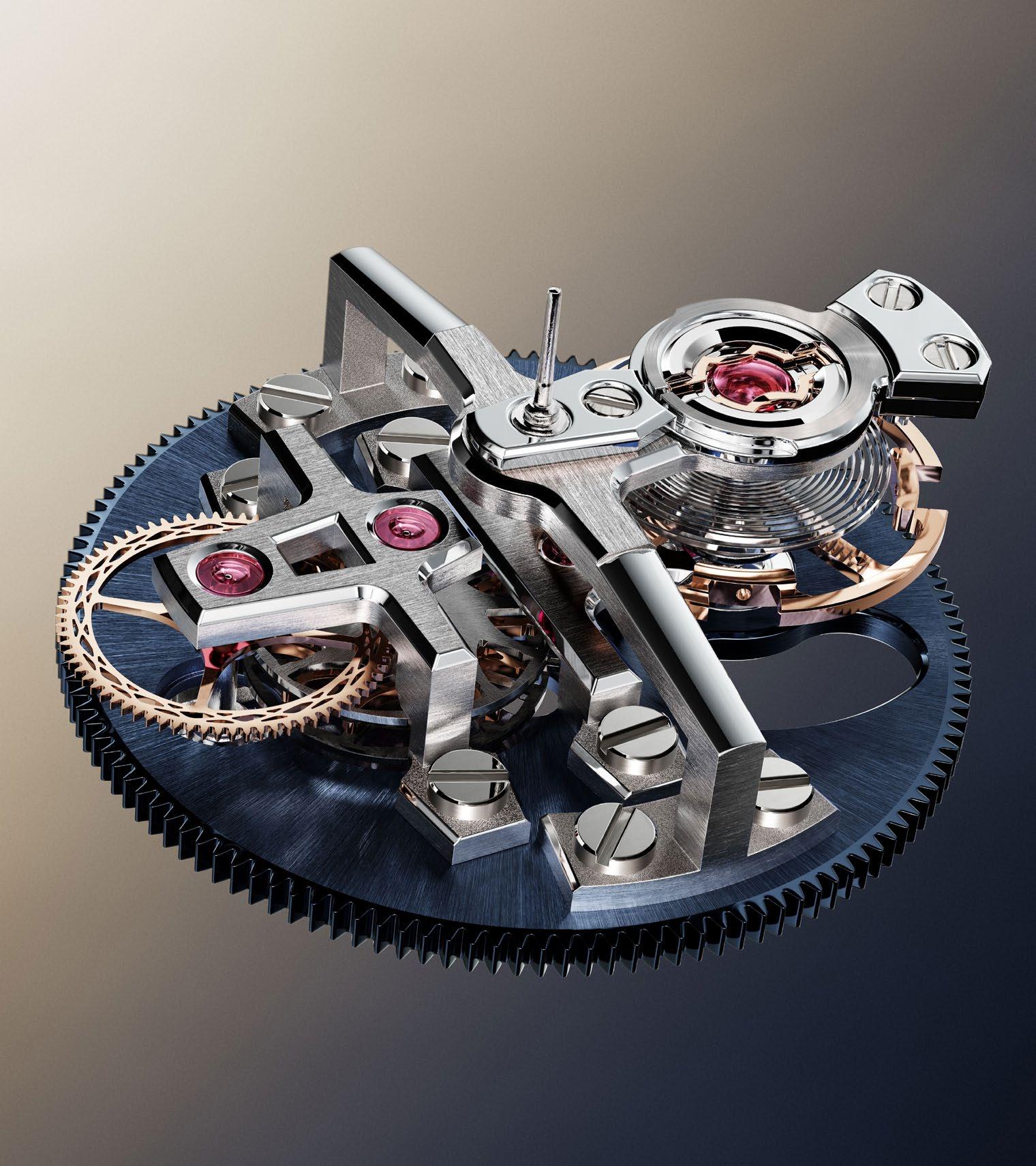
For over 250 years of its horological venture, Breguet’s creations have been moulded by relentless Research and Development (R&D). This legacy was set in motion by AbrahamLouis Breguet, whose pioneering work redefined the art of watchmaking. Among his numerous breakthroughs are the tourbillon,
A rendering of the tourbillon, one of Abraham-Louis Breguet’s innovative breakthroughs
the perpétuelle watch, the natural and constant-force escapements, the “observation” seconds counter that led to the birth of the chronograph, the shock protection, the Breguet balance spring with terminal curve, the gong spring for striking watches, and the first wristwatch, amongst others.
This spirit of continual progress led the Manufacture to introduce the Expérimentale collection alongside its existing lines. Comprising a series of exceptional timepieces, it pays tribute to A.-L. Breguet’s creations, each of which began as an experimental pursuit.
The line highlights Breguet’s most advanced technical and aesthetic research while offering glimpses to the future of the Maison’s watchmaking. It grants collectors privileged early access to innovations in strictly limited editions, prior to their refinement in later collections.
The debut of the Expérimentale 1 as the first timepiece in the new collection figuratively brings Breguet’s 250th anniversary celebrations to a close, while simultaneously ushering in a new chapter. As the inaugural creation, it sets the trajectory for the Maison’s future.
The advent of the Expérimentale 1 is far from a short-term endeavour. It stands as the culmination of many years of dedication and extensive R&D. This very foundation underpins Breguet’s contemporary watches, notably the Classique, Tradition, Marine and Type XX collections.
In its quest to seamlessly bridge scientific exploration and design, the Expérimentale
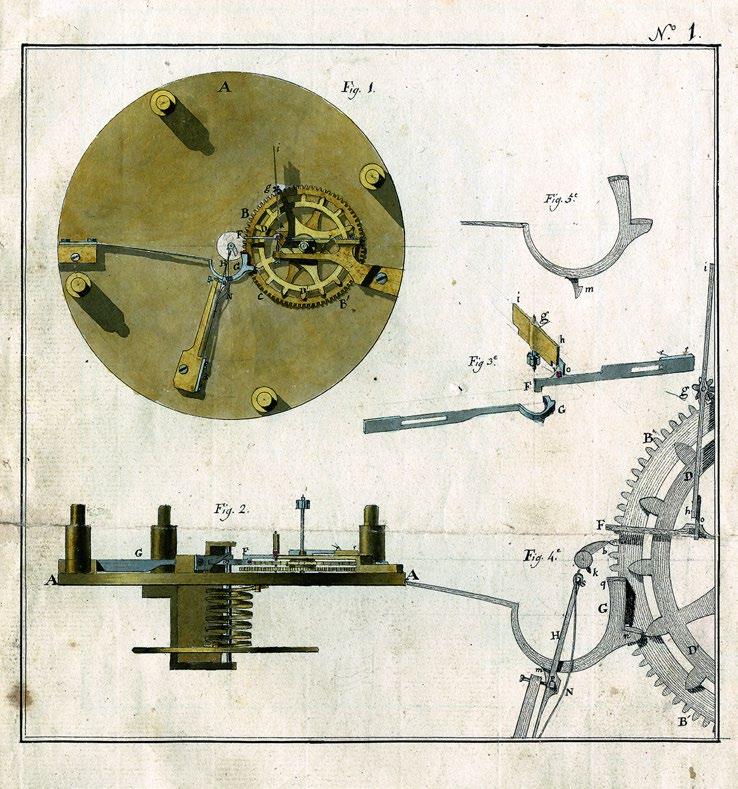
Sketch of the constant-force escapement
programme reveals the length and breadth of Breguet’s R&D. It illuminates the entire horological spectrum, from materials and electromagnetism to vibratory mechanics and acoustics; it is a genuine embodiment of artistic invention driven by rigorous scientific research.
The maiden release was driven by two objectives. First and foremost, the pursuit of precision as the fundamental principle at the very core of its innovation. The second lies in forging a connection between heritage and the future. This approach aligns with the
Maison’s 250th anniversary celebrations, which is also embodied by the historical significance of the Expérimentale 1. The link is articulated through the watch’s inclusion in the Marine collection. This evokes the pivotal year of 1814 when A.-L. Breguet was appointed to the Paris Bureau des Longitudes and granted the title of Horloger de la Marine Royale or Watchmaker by Appointment to the Royal Navy, by King Louis XVIII.
The recognition was regarded as the pinnacle of achievement for a watchmaker,
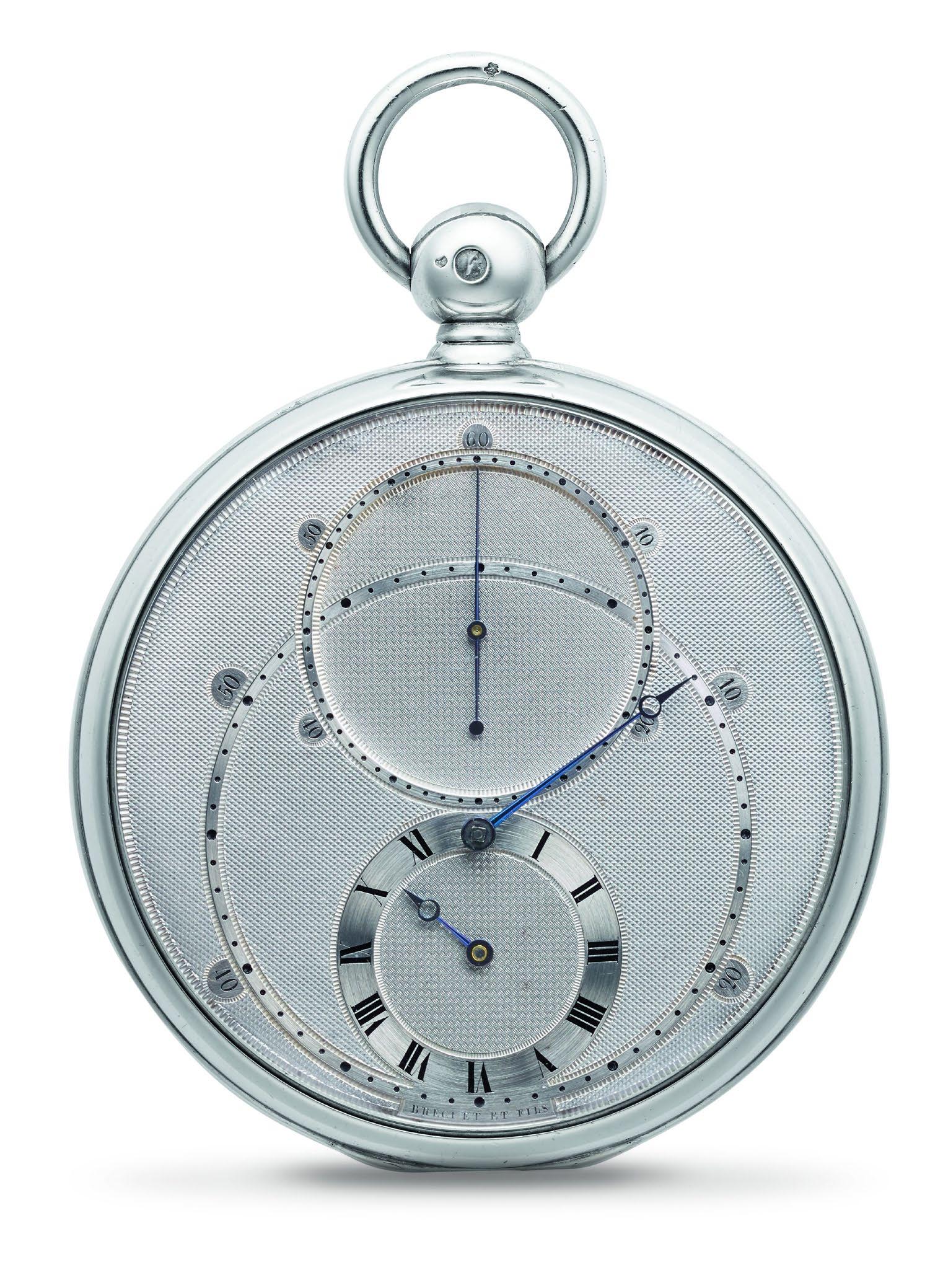
Breguet Reference 3448 serves as the aesthetic and technical foundation of the Expérimentale 1
given the exceptional scientific discipline demanded by maritime horology. The Expérimentale 1 sustains this tradition as it unveils technical innovations that define the future of haute horlogerie.
The Expérimentale 1 is founded on a set of complementary aesthetic principles that interact to form a unified whole. Conceived as the first piece of the collection, designers drew their inspiration from the Marine collection while incorporating its signature elements: a sporty case, closely set central lugs, an interchangeable rubber strap, and enhanced legibility through luminous details.
It pays historical homage to the aesthetic codes of Reference 3448 in both dial layout and movement architecture. It echoes the 1997 Reference 1747, created for A.-L. Breguet’s 250th birth anniversary. This forges a natural connection with the Expérimentale 1, launched in 2025 to commemorate the 250th anniversary of the eponymous brand that has borne the founder’s name since 1775. It is also considered to be a legitimate successor to the 1747, which was the first wristwatch to feature a regulator display in Breguet’s recent history.
This lineage extends back to the authentic Marine Chronometer No. 104 by A.-L. Breguet, who was then exiled during the French Revolution. A temporary workshop in Le Locle witnessed the birth of the No.104. Akin to the chronometer, the Expérimentale 1 also marks a first: Breguet’s debut R&D model. The No.104 held the distinction of being the first to employ Arabic numerals, now revived in the Expérimentale 1.
Precision lies at the very core of the Expérimentale 1, serving as the catalyst for Breguet’s technical innovations. For A.-L. Breguet, accuracy was not merely an objective; it was the cornerstone of a lifetime devoted to horology. Though a few in number, two of his patents eventually proved to be decisive, with a lasting impact in the realm of watchmaking. One devoted to constant force, the other to the protection of the tourbillon and registered in 1801.
Two centuries later, the manufacture continues this pursuit by carrying the legacy forward, incorporating them into modern research by further refining the tourbillon and constantforce escapement.
Chronometric accuracy is usually attributed to the multiple variables acting simultaneously and therefore cannot be reduced to a single factor. The first factor influencing accuracy is the struggle of maintaining a constant balance amplitude, despite the declining torque delivered by the mainspring over the power reserve. The second factor relates to the earth’s gravitational influence, which affects the regulating organ and can disrupt performance depending on the watch’s position. The final factor concerns shock resistance, including impacts and accelerations. Each disturbance, however brief, may possibly impair regular timekeeping and compromise precision.
The Expérimentale 1 unites a 10 Hz tourbillion and a magnetic constant-force escapement to deliver consistent energy, rapid balance recovery and enhanced timekeeping stability by averaging gravitational errors.
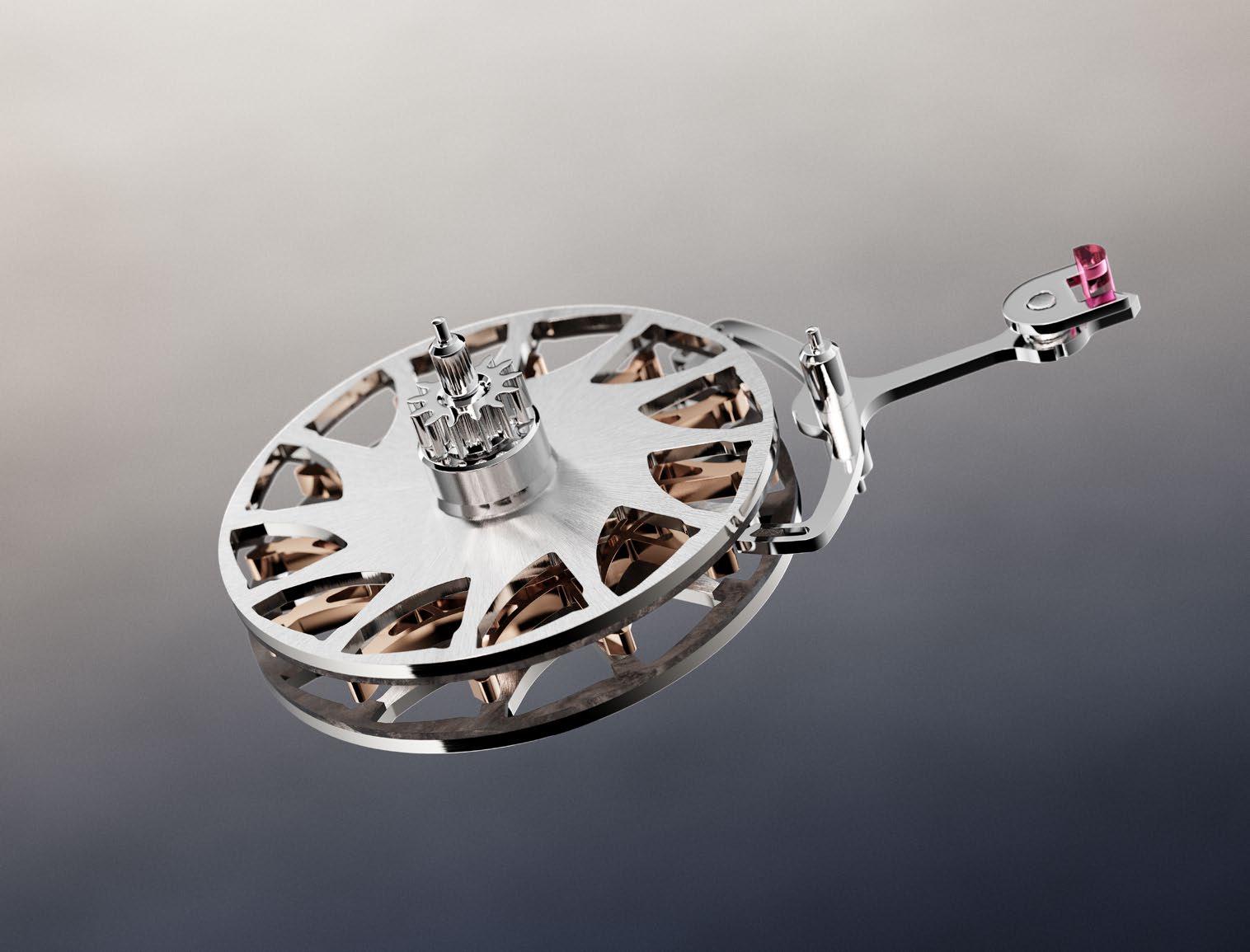
Since the early 2010s, Breguet has redefined its expertise in magnetic fields that now extends to the escapement. The fundamental principle of precisely controlled magnetic interaction remains unchanged. The system employs two escape wheels, both incorporating magnetic tracks that drive a pallet lever fitted with magnetic pallets. This results in a constantforce escapement. Below a specified torque level, the tourbillon halts quickly; above it, the balance oscillates at full amplitude.
This escapement further separates the impulses transmitted to the balance from the rotation of the escape wheel and gear train. In contrast to a Swiss lever escapement, the inertia of the tourbillon cage plays a minor role. This separation enabled Breguet to realise a compact 10 Hz tourbillon—significantly higher than the 2.5 Hz standard tourbillon. This construction enhances stability and accuracy, notably allowing the balance to be positioned away from the cage’s rotational centre. The magnetic escapement ensures continuous impulse delivery devoid of unwanted interruptions.
Non-magnetic materials were employed to avoid interference, along with advanced components such as the silicon balance spring, titanium and nivagauss elements, which contribute to optimal performance, allowing the tourbillon to surpass conventional standards to ensure scientific accuracy.
The constant-force escapement employs two escape wheels, both incorporating magnetic tracks that drive a pallet lever fitted with magnetic pallets
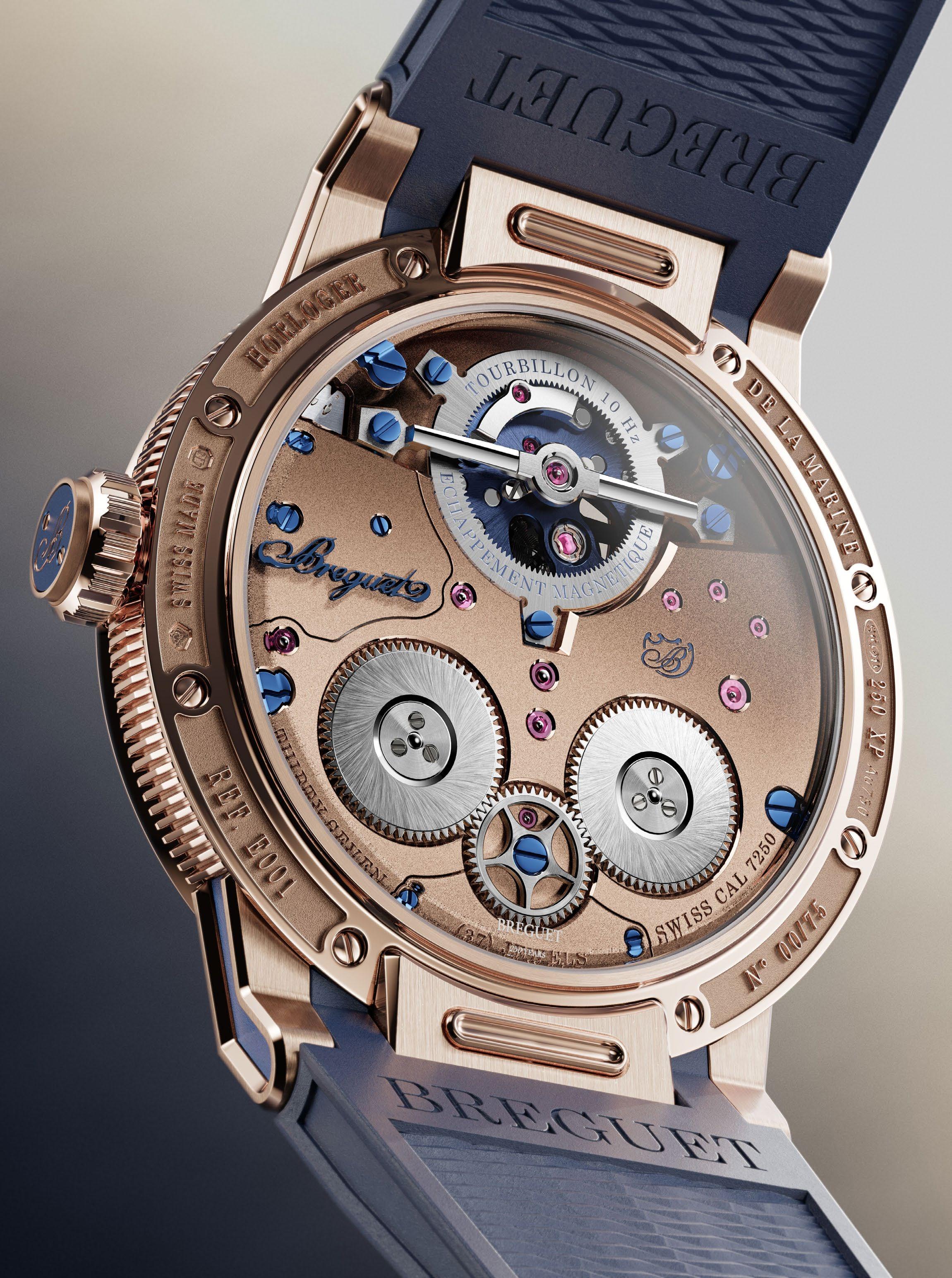
Calibre 7250, a movement certified with the Breguet hallmark in the Scientific category, furnishes the Expérimentale 1 with a 72-hour power reserve
The Expérimentale 1 is driven by the Maison’s first ever 10Hz tourbillon with constant-force magnetic escapement
The Expérimentale 1 is presented in a 43.5 mm Breguet gold case with proportions inspired by the Marine collection. Its design takes cues from pocket watch No. 3448, which adopts a regulator-like display and a symmetrical architecture. The sapphire dial grants one an unobstructed view of the entire movement. The regulator-type display places hours at 6 o’clock, offset minutes and seconds, and the tourbillon at 12 o’clock, a layout devised by A.-L. Breguet, to enhance legibility and chronometric precision.
A patented twin-barrel system inspired by its predecessor pairs two series coupled barrels, separated by sapphire spacers at 3 and 9 o’clock to maximise efficient power transmission within the case. Breguet’s hallmark elements persist with the doublestepped fluted caseband, six close-set lugs, multi-finish surfaces, open-tipped blued hands with Super-LumiNova®, and a discreet signature on the sapphire dial, preserving the Maison’s aesthetic heritage with contemporary undertones.
Softly contoured, solid gold bridges define the architecture, balancing structural rigour and aesthetic harmony. To emphasise the watch’s contemporary expression, the peripheral minutes track encircle the chapter ring at 6 o’clock, while the tourbillon appears to escape from its confines, sitting freely at 12 o’clock.
A
representation of
in
craftsmanship,
beautiful
Breguet’s prowess
precision and
the Expérimentale 1 defines the future of haute horlogerie for the Maison
The fruition of Breguet’s 250 years in watchmaking, the watch incorporates components that not only strengthen the Maison’s innovations, but also bring real added value to the timepiece
REMARKABLE FUSION
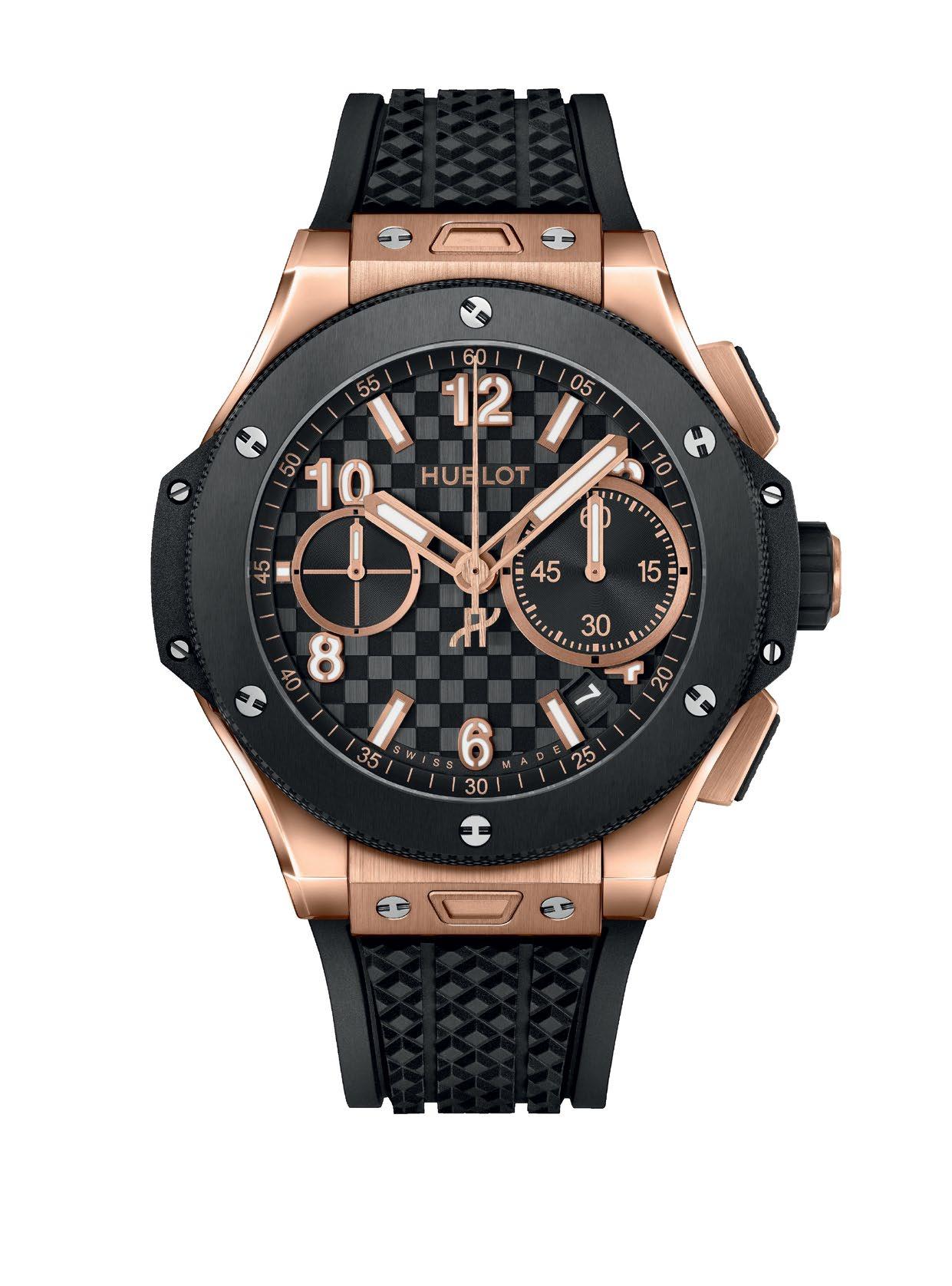
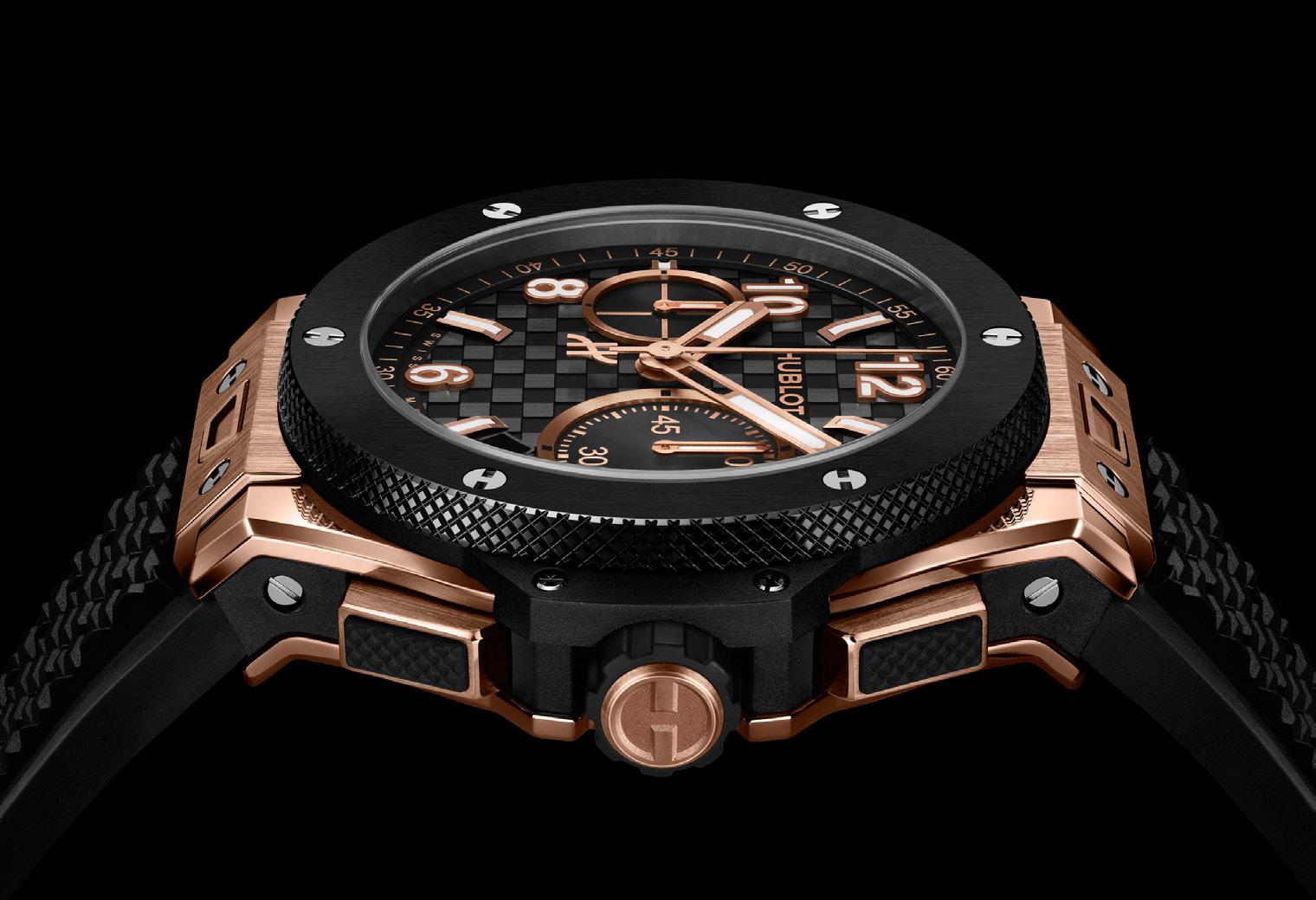
HUBLOT MARKS THE 20TH YEAR OF THE BIG BANG COLLECTION WITH THE BIG BANG ORIGINAL UNICO
More than just inertia, renowned haute horologist Hublot continues to surpass the expectations of its clientele with new discoveries that few could ever imagine. Founded in 1980, nearly half of the Swiss haute horologist’s existence was focused on the development of the Big Bang model. Twenty years after the launch of its first Big Bang, Hublot boldly reveals a thrilling Big
Bang Original Unico that embraces both past and present into one.
The commemorative 43 mm Big Bang Original Unico pays homage to the original muse that shaped the explosive course of the Big Bang collection. In the words of Hublot’s CEO Julien Tornare, the Big Bang Original Unico strikes the perfect balance of heritage and
By Karina Saphiera Witjaksono
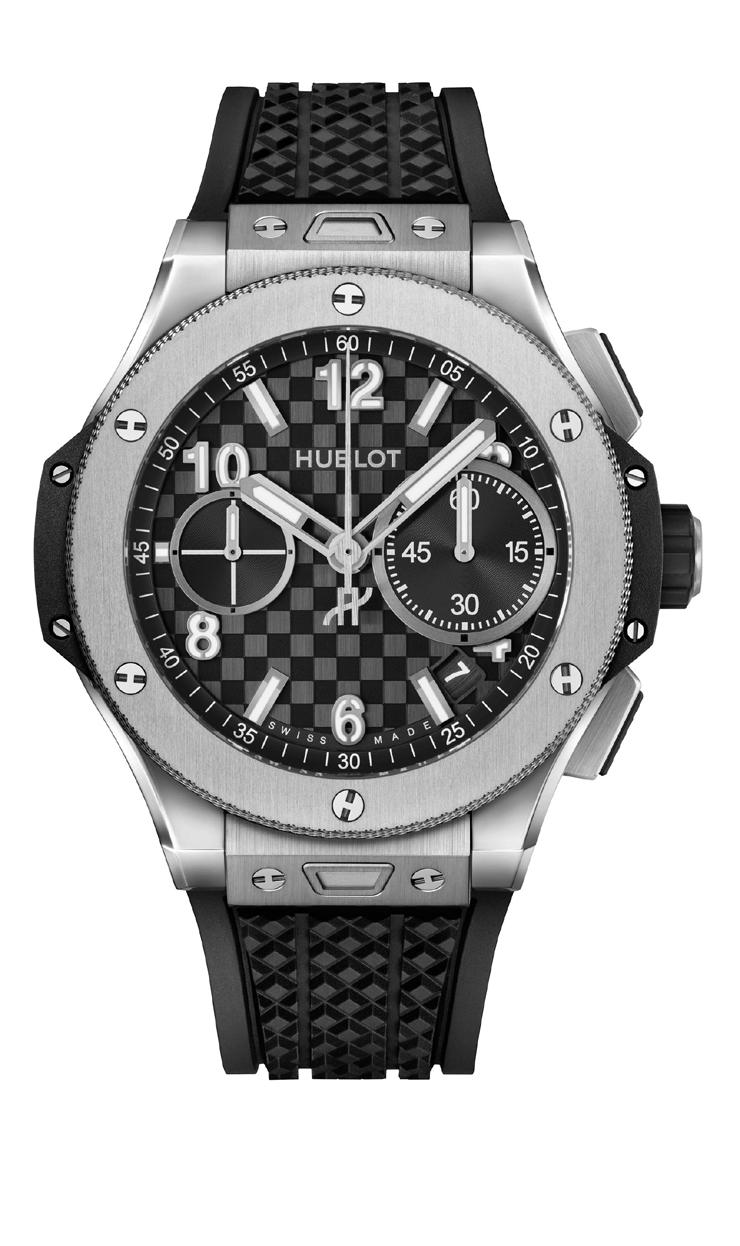
The Big Bang Original Unico Titanium showcases a satin-finished and polished Titanium case and bezel
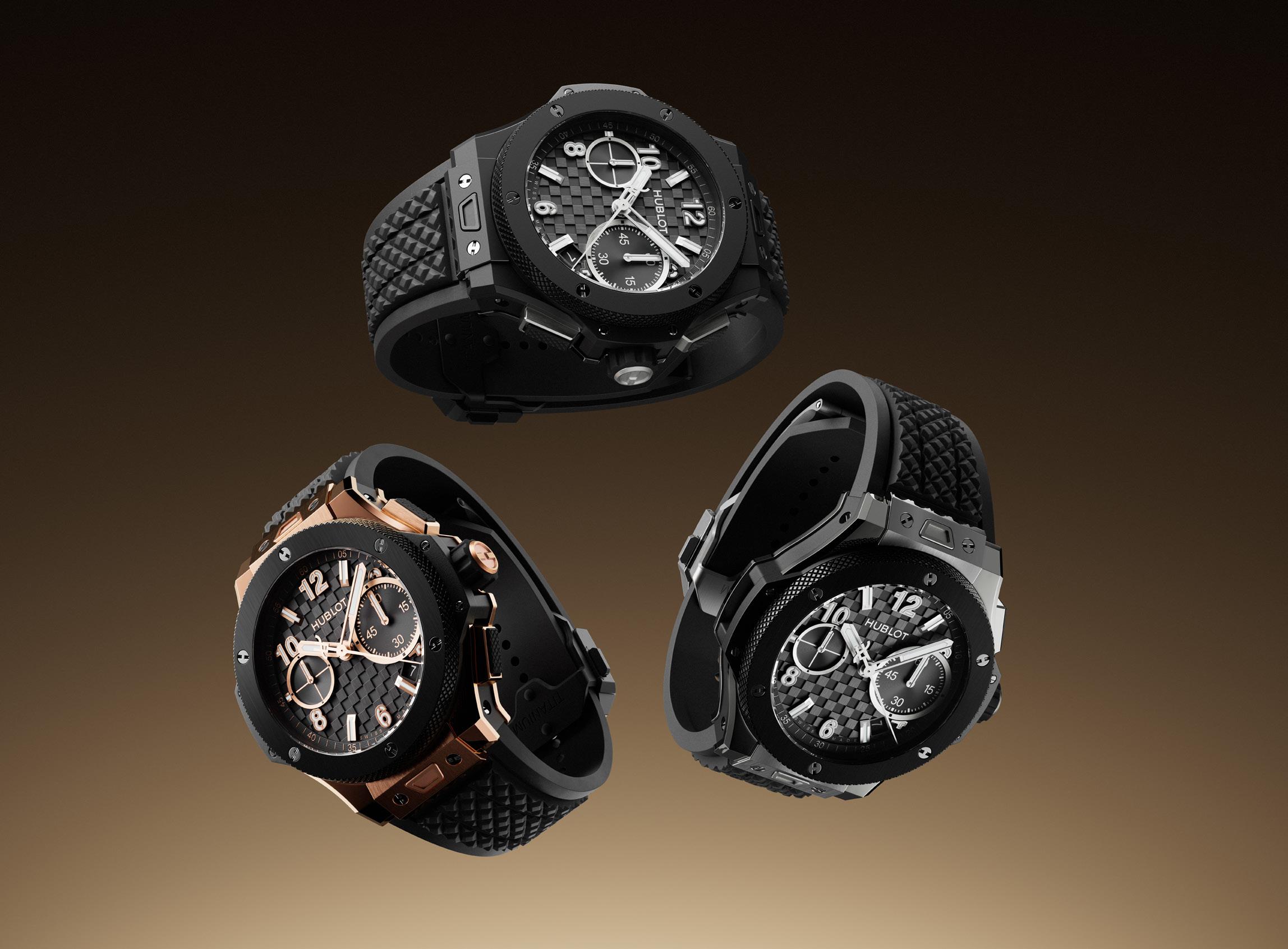
Hublot celebrates two decades of the Big Bang with the new Big Bang Original Unico
metamorphosis. With details that have been “rethought, refined, and re-engineered,” it would be difficult to find any flaws in the modern timepiece.
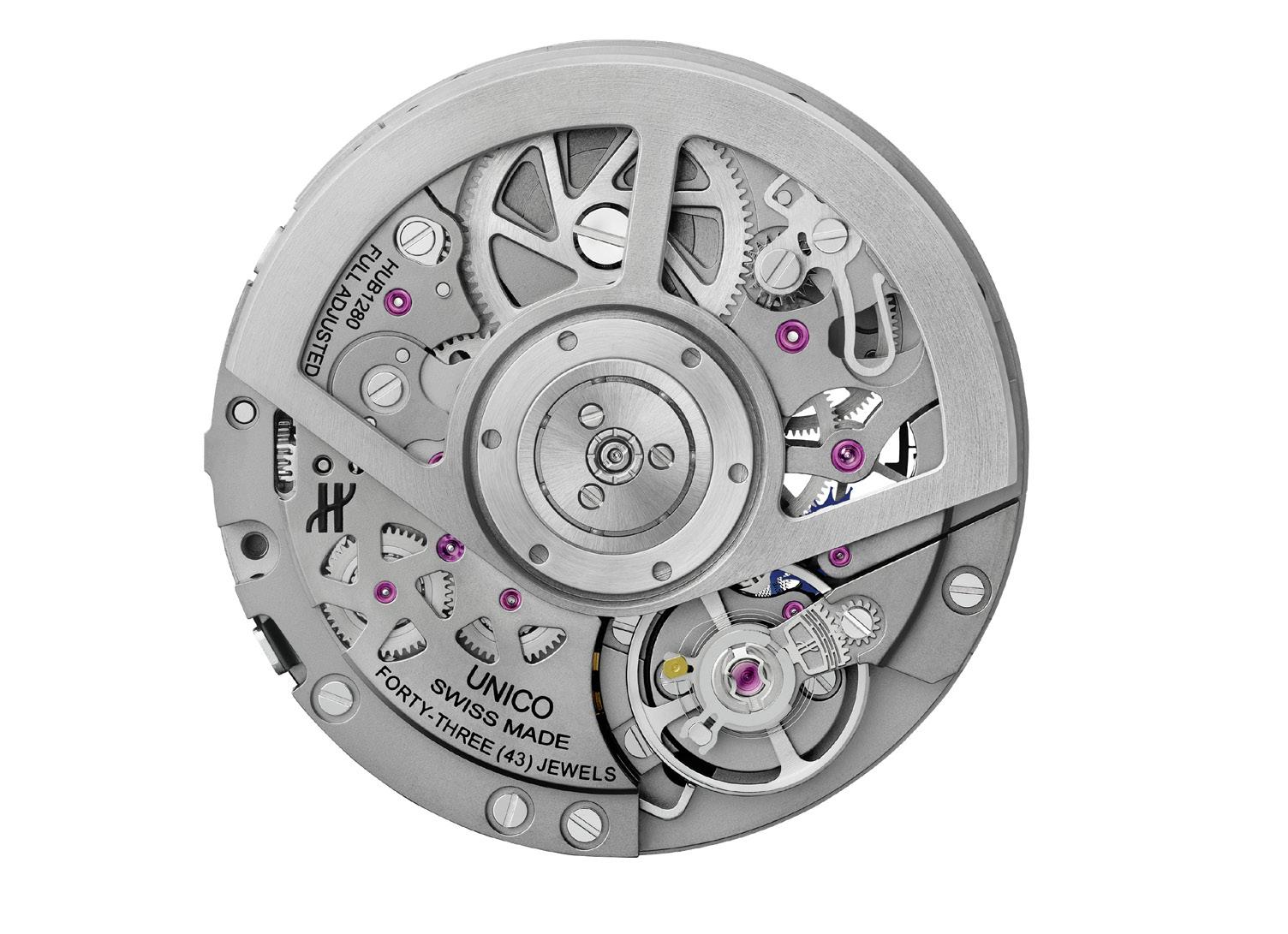
First to be reinvented, of course, is the movement that powers the Big Bang Original Unico. Whilst its original model certainly was the talk of its time, this commemorative timepiece bears the MHUB1280 UNICO—a robust self-winding movement that boasts some of Hublot’s patented features. The MHUB1280 UNICO is equipped with an astounding chronograph flyback function that allows wearers to restart and reset the wristwatch without losing much time in the process. Crafted to accommodate a 1/8th of a second precision, the movement’s -2/+4 seconds per day accuracy is arguably as dependable as the watch’s robustness. This winning feature was made entirely possible by Hublot’s technological breakthroughs that make up the movement, which include the dual oscillating clutches, “zero friction” ratchet wheel blocker, and anti-trembling system, among others.
Apart from the innerworkings of the timepiece, Hublot also lends “something old” to its case. For the new timepiece, the haute horologist prepared a sleek yet sporty façade that is made available in the pillars of the Big Bang: Black Magic, Titanium, Titanium Ceramic, and King Gold Ceramic. Each integral pillar that has formed the Big Bang’s DNA is now used for the watch case, the first line of defence for Hublot’s new masterpiece. The Big Bang Original Unico
The MHUB1280 UNICO Manufacture movement powers the Big Bang Original Unico models
THE BIG BANG ORIGINAL UNICO ENCAPSULATES 20 YEARS OF NONSTOP INNOVATION, PROVING THE UNSTOPPABLE MOMENTUM OF HUBLOT’S DISCOVERIES IN HAUTE HORLOGERIE
Black Magic, for example, proudly wears micro blasted and polished black ceramic as its suit of armour. While it comfortably stays on the darker side of the colour wheel, Hublot brightens the palette for the Big Bang Original Unico Titanium with its satin-finished and polished Titanium case. Wedged between the two is the Titanium Ceramic variation, which features a satin-finished and polished Black Ceramic bezel on the Titanium case. Last, but not least, is the King Gold Ceramic variation, whose warmth contradicts that of the Titanium Ceramic. Holding the bezel in place are six charming screws that have become the brand’s trademark.
Underneath the sapphire crystal, a memorable “carbon effect” dial is the perfect background for the new timepiece. Its checkerboard-like motif seamlessly merges the Big Bang Original Unico’s overall aesthetics, even the structured black rubber strap that comes with each watch. While three of the variations are adorned with cool-toned décor, such as hour appliques, needles, and subdial outlines, the King Gold Ceramic variation stays true to its theme and features golden details. From its movement to embellishments, the Big Bang Original Unico encapsulates 20 years of non-stop innovation, proving the unstoppable momentum of Hublot’s discoveries in Haute Horlogerie.
The Big Bang Original Unico King Gold Ceramic combines the rich beauty of King Gold with the stealthy appeal of ceramic
CHALLENGING CONVENTIONS
ZENITH UNVEILS NEW DEFY MASTERPIECES THAT REDEFINE CONTEMPORARY WATCHMAKING AT LVMH WATCH WEEK 2026
Held in the global design capital of Milan from 20 to 22 January 2026, LVMH Watch Week provides the ultimate backdrop for Zenith to unveil the latest evolution of its avant-garde DEFY collection. Deeply rooted in the Manufacture’s heritage since 1865, yet radically inspired by the pulse of the modern city, these new timepieces represent a coherent intersection of mechanical watchmaking and contemporary design. Moving beyond
previous iterations, these updated models emphasise metropolitan contrasts, capturing dynamic interplays of light and shadow through monolithic geometric forms as well as advanced material innovations.
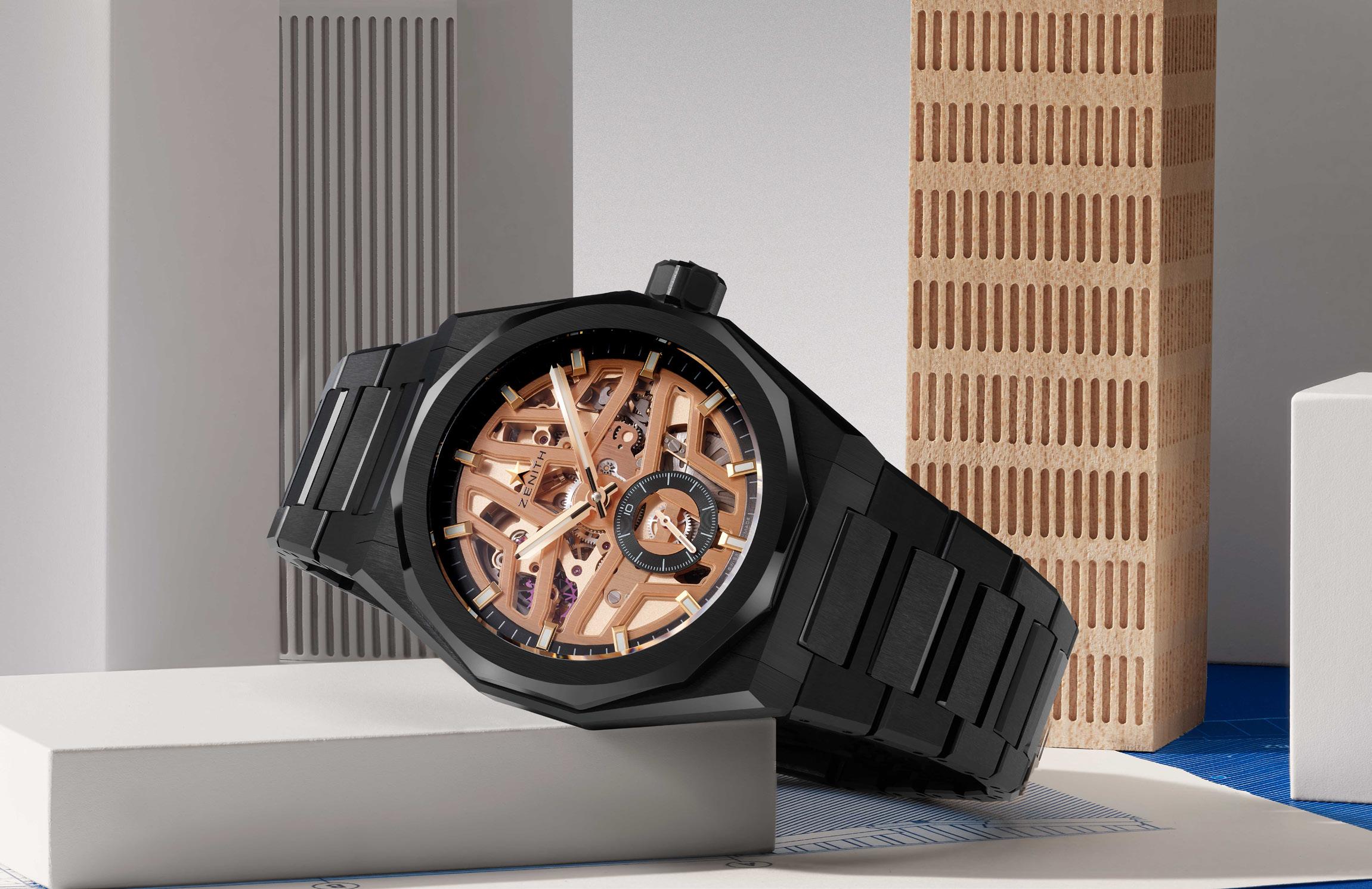
Leading this modern renaissance is the DEFY Skyline Skeleton, a timepiece that boldly pairs a 41 mm black ceramic case, waterresistant to 10 ATM, with a striking goldtoned openworked dial. The watch reveals the
By Anastasia
W. Wibowo
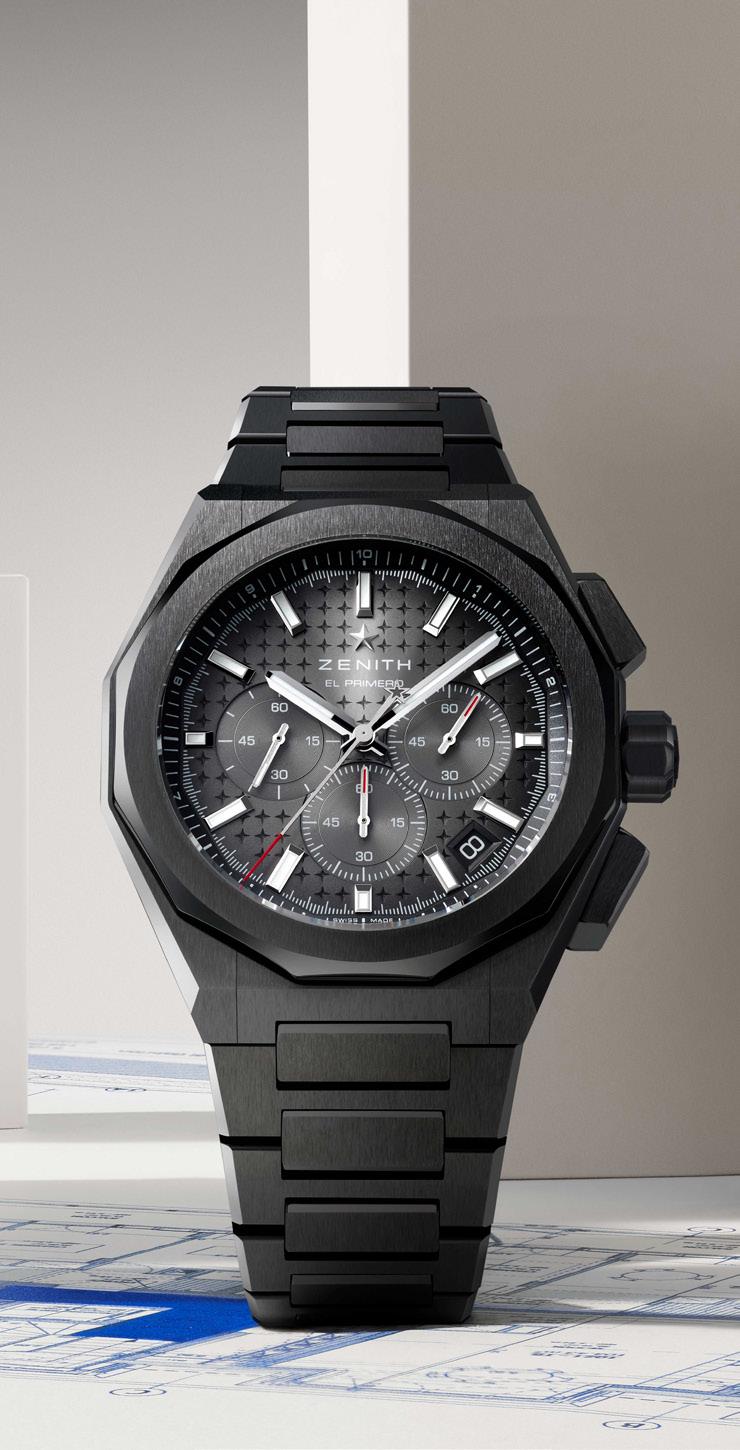
The DEFY Skyline Chronograph, in black ceramic, provides highfrequency timing
Part of the new additions to the DEFY collection, Zenith introduces the DEFY Skyline Skeleton
architectural beauty of the El Primero 3620 SK automatic movement, beating at a high frequency of 36,000 VpH (5 Hz) with a 55hour power reserve. Gold-plated, faceted hour markers and hands, generously coated with Super-LumiNova SLN C1, ensure legibility alongside hours, minutes, and a mesmerising 1/10th of a second counter at 6 o’clock. This monumental piece is secured by an integrated black ceramic bracelet with a double folding clasp, alongside an interchangeable black rubber strap.
Continuing the pursuit of dark elegance, the DEFY Skyline Chronograph offers a sophisticated take on high-frequency timing, encased entirely in highly durable, scratchresistant black ceramic. At 42 mm, this 10-ATM resistant chronograph houses the revered El Primero 3600 automatic calibre, offering a 60-hour power reserve and a 36,000 VpH frequency that drives the 1/10th of a second display. The gradient grey starry sky dial is adorned with rhodium-plated markers and hands, perfectly balancing the sub-dials for small seconds at 9 o’clock and the date at 4:30.
Possibly the most technically expressive piece is the DEFY Skyline Tourbillon Skeleton, the first tourbillon within the Skyline collection.
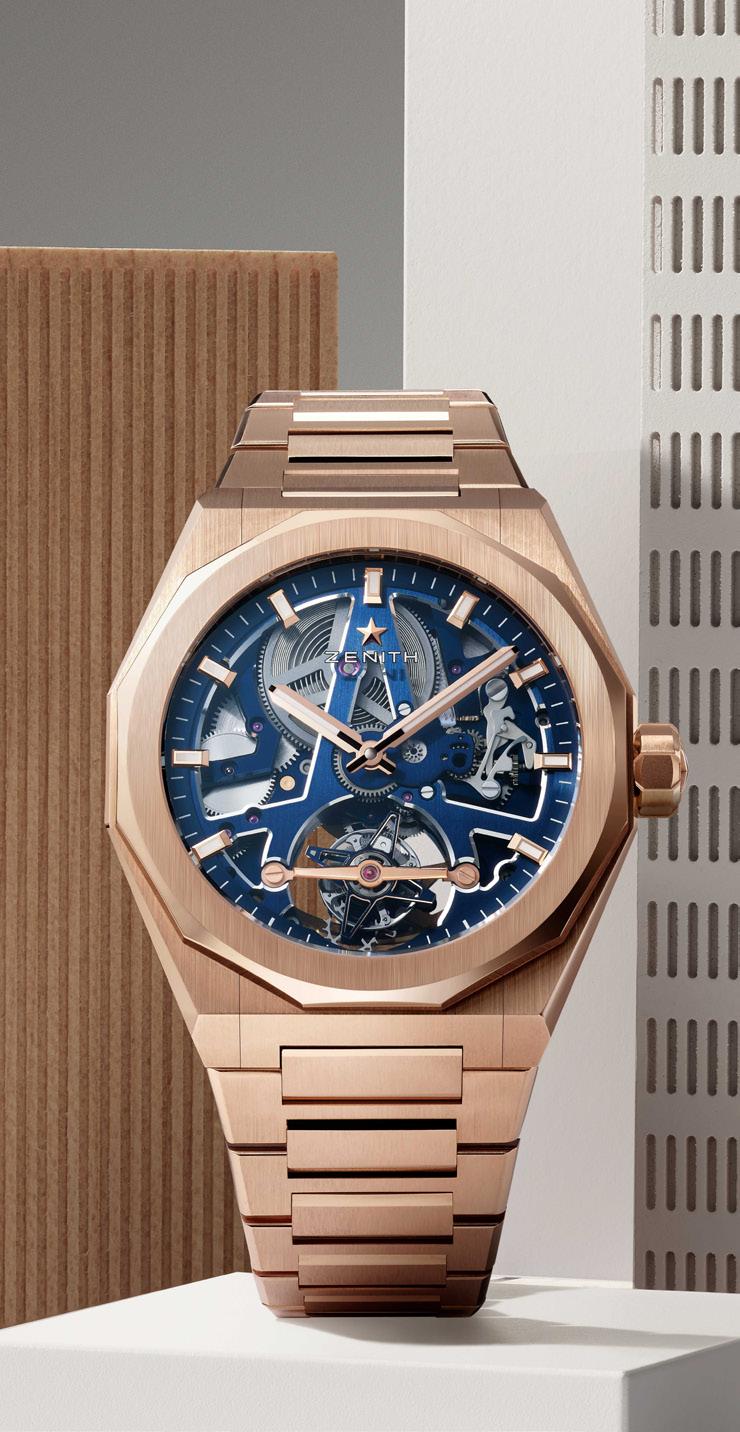
Crafted in rose gold and limited to 50 pieces, it showcases the automatic El Primero 3630 SK in vivid blue. Skeletonised around the Zenith star, the one-minute tourbillon oscillates at 5 Hz, delivering a 50-hour power reserve. The absence of a conventional dial allows the peripheral flange to carry hour markers, while polished chamfers, PVD-treated bridges, and contrasting finishes heighten depth. The 41 mm case is water-resistant to 100 metres and paired with a rose gold bracelet or blue rubber strap with folding clasp.
Shifting to refined, everyday elegance, the DEFY Skyline 36 introduces a universally appealing 36 mm stainless steel case. Driven
by the Elite 670 automatic movement— beating at 28,800 VpH (4 Hz) with a 50-hour power reserve and a star-shaped oscillating weight—it displays central functions and a date indication at 3 o’clock. The silver-toned sunray dial gleams with rhodium-plated finishes. For those seeking extra radiance, the luxurious DEFY Skyline 36 with diamonds elevates this exact technical profile by setting the twelve-sided bezel with 52 VVS brilliantcut diamonds, totalling approximately 1.00 carat. The models are available with steel bracelets and black rubber straps adorned with a starry-sky pattern.
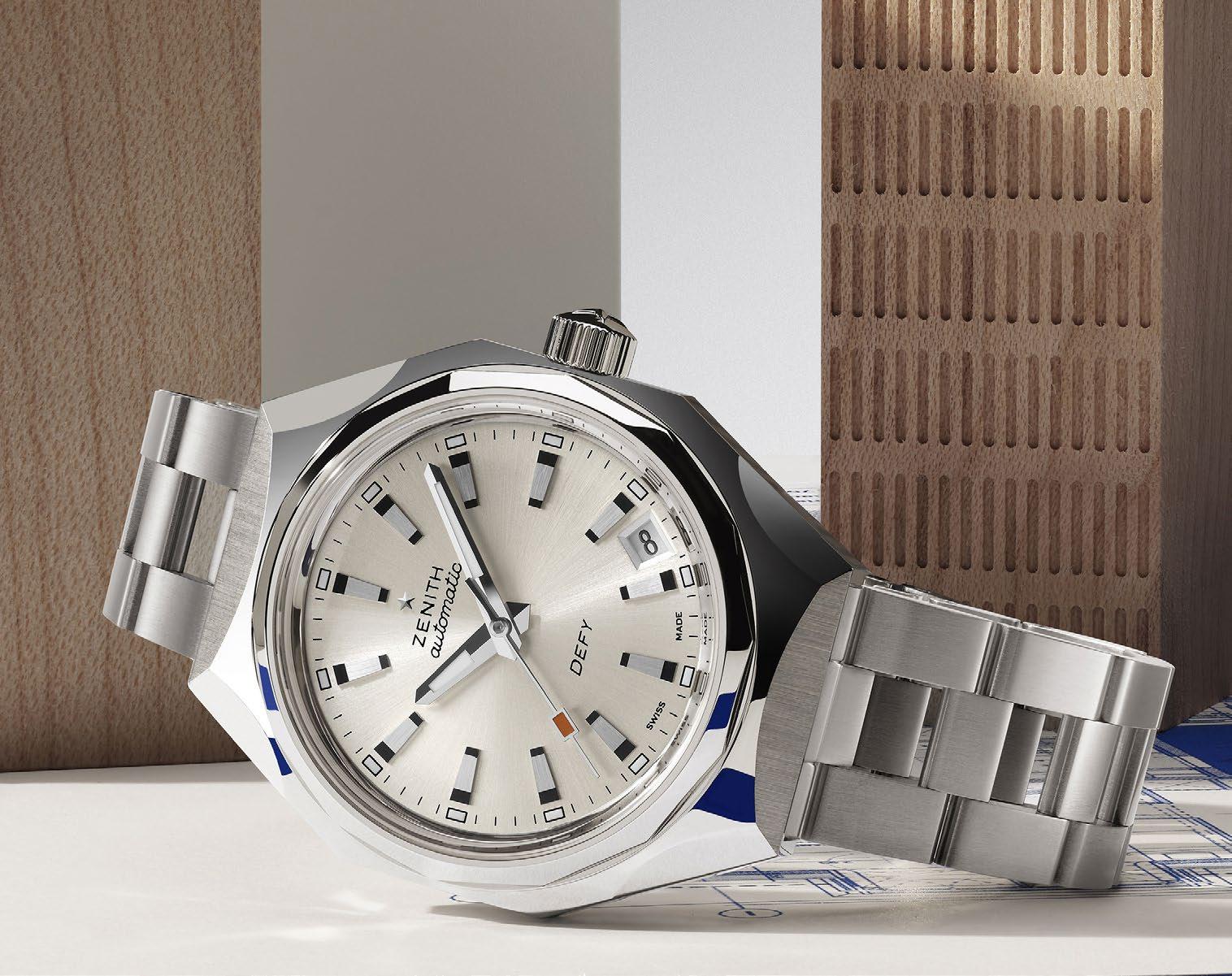
Finally, Zenith pays homage to one of the earliest DEFY models from 1969 with the DEFY Revival A3643. This modern reinterpretation preserves the compact proportions, faceted steel case, and bold ladder bracelet of the original reference, while updating it with contemporary manufacturing and reliability. Its clean, legible dial and vintage-inspired hands reinforce Zenith’s ability to translate heritage into a modern context without nostalgia overload. Defined by its rugged 37 mm octagonal steel case and iconic 14-sided bezel, this model boasts an impressive 30 ATM water resistance. Beneath the sunray silver dial, the Elite 670 movement beats at 4 Hz and has a 50-hour power reserve.
All in all, the latest DEFY collection showcases a convergence of high-frequency mechanics, modern materials, and architectural design which are confidently urban, unmistakably Zenith.
The DEFY Revival A3643 pays homage to one of the earliest DEFY models from 1969
The DEFY Skyline Tourbillon Skeleton is an exceptional expression of Zenith’s watchmaking mastery
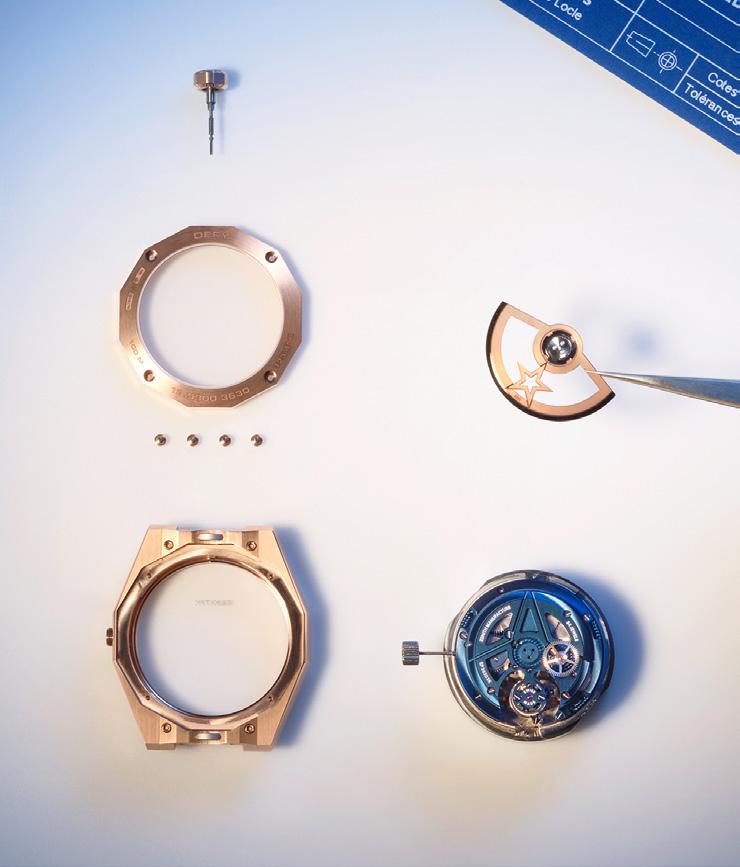
Zenith’s craftsmen skillfully assemble the DEFY Skyline Tourbillon Skeleton
CARRERA RELOADED
TAG HEUER TAKES ITS CHRONOGRAPH MASTERY TO NEW HEIGHTS AT THE LVMH WATCH WEEK 2026
Held from 20 to 22 January 2026 in Milan, LVMH Watch Week once again set the tone for the year ahead, gathering the Group’s most influential watchmaking Maisons in the heart of Europe. Among the nine showcasing brands, TAG Heuer stole the spotlight with a triumphant celebration of its 2026 theme, “Master of Chronograph.”
Deeply rooted in Jack Heuer’s original vision from 1963, the TAG Heuer Carrera
was created for motorsport timing, defined by legibility, balance, and modern design. Inspired by the legendary Carrera Panamericana road race, the Carrera remains the ultimate canvas for precision timing, now refined through new dimensions, complications, and materials.
The 2026 novelties represent a powerful evolution of the beloved “glassbox” design introduced in 2023. Unlike previous iterations, these latest timepieces push
By Anastasia
W. Wibowo
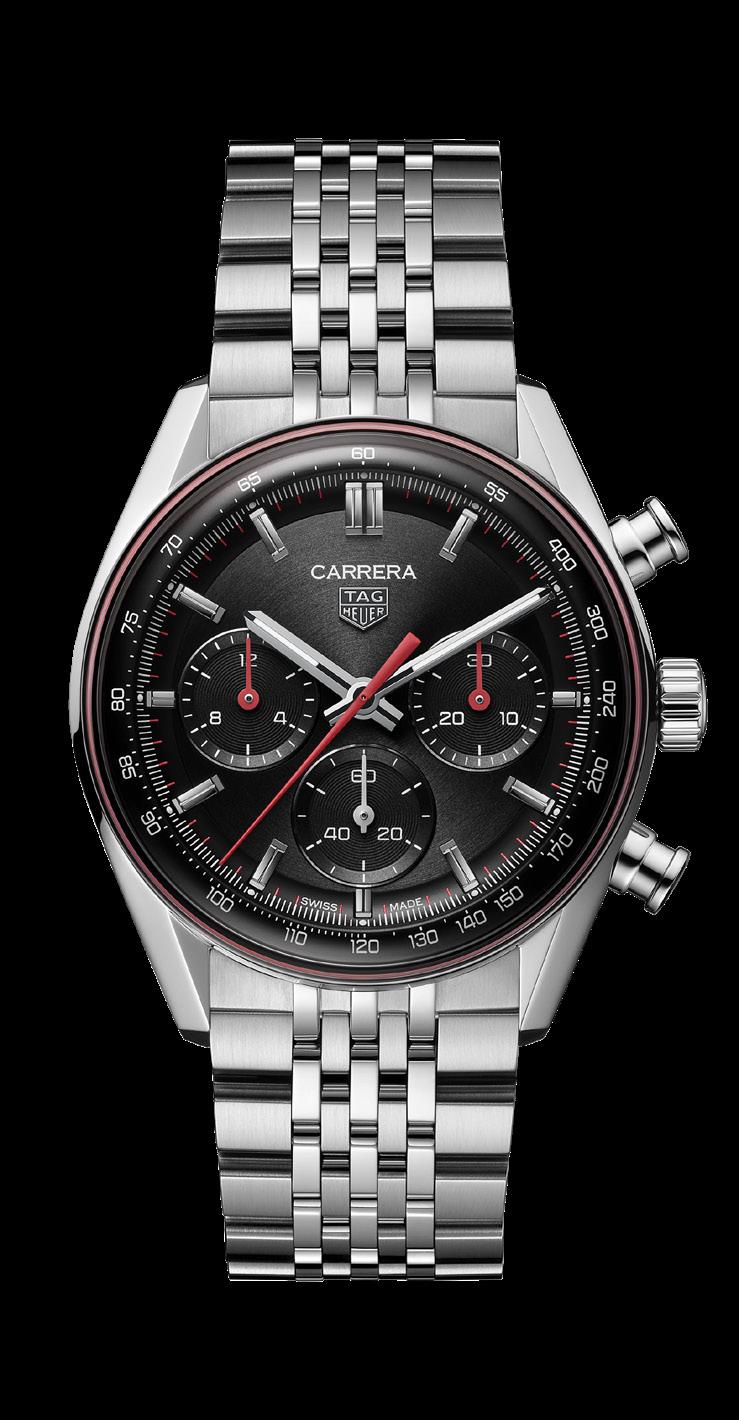
TAG Heuer Carrera Chronograph with black dial adorned with racing-inspired red accents
One of TAG Heuer’s highlights for LVMH Watch Week 2026 is the Carrera Glassbox Chronograph
boundaries with newly expanded sizes, rare heritage-inspired maritime complications, and the Maison’s first-ever foray into high horology split-seconds mechanisms.
Across the collection, the update is cohesive. The signature domed sapphire “glassbox” crystal enhances legibility by flowing seamlessly into the dial flange, while in-house movements with column wheels, vertical clutches, and long power reserves underscore the Maison’s chronograph authority. Compared with previous generations, these Carreras feel more architectural, more tactile, and unmistakably more technical.
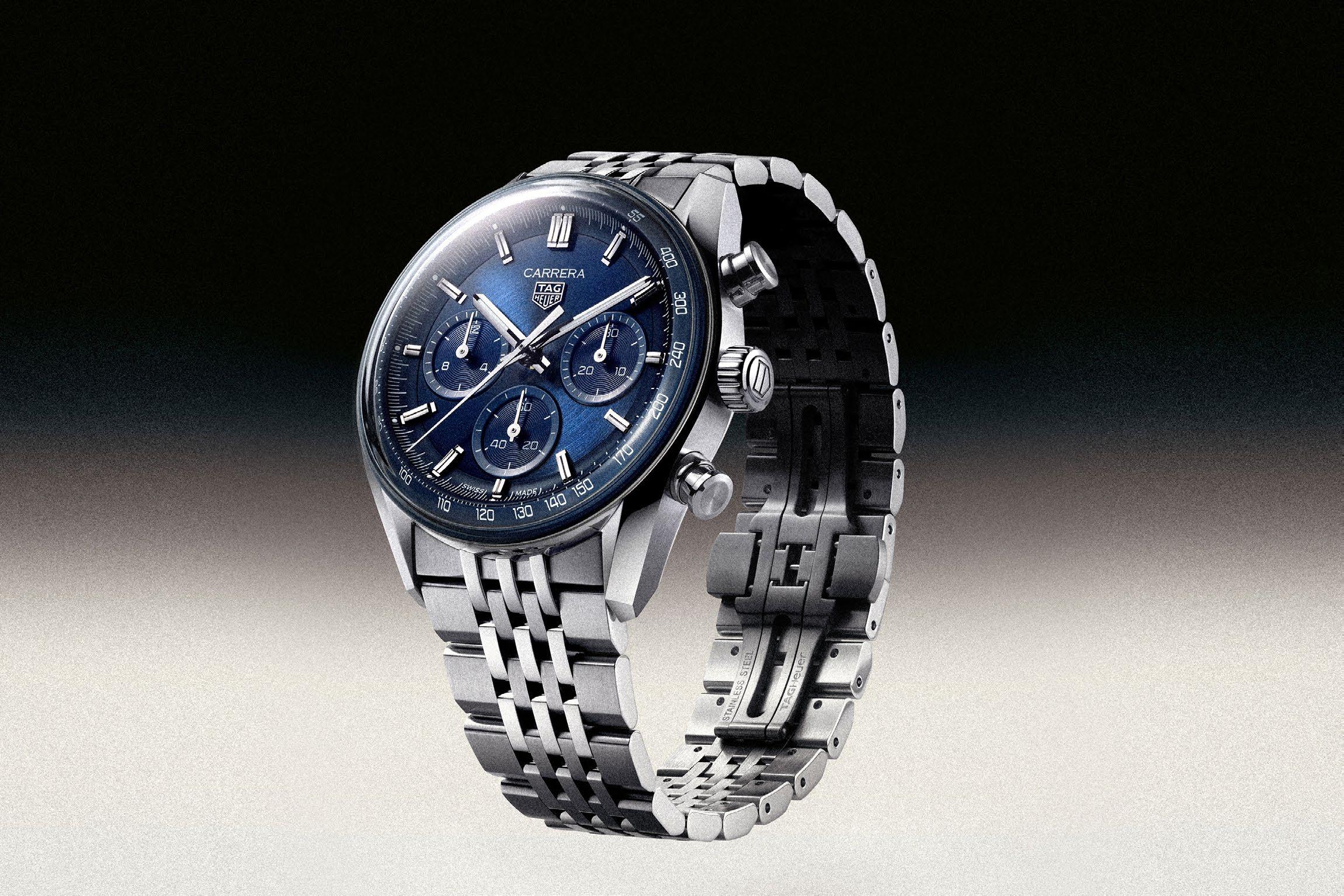
Stepping up from the connoisseur-favoured 39 mm, the new TAG Heuer Carrera Chronograph debuts in a contemporary 41 mm size, offering a fresh dimension and heightened presence. The signature sculptural sapphire crystal flows seamlessly over the dial, eliminating the bezel to maximise light and legibility. Inside beats the inhouse Calibre TH20-01 automatic movement, which features a vertical clutch and column wheel for flawless engagement, delivering an impressive 80-hour power reserve.
Housed in fine-brushed and polished steel, the case features a subtle “Victory Wreath” engraved on the lug, connecting the owner to TAG Heuer’s rich motorsport legacy. The clean, date-free dial is available in three striking monochromatic versions: a sophisticated signature blue, a rich teal green (the brand’s new signature hue), and a daring
black with racing-inspired red accents. Each model is secured by a comfortable seven-row steel bracelet, a sophisticated reinterpretation of the classic “beads-of-rice” design.
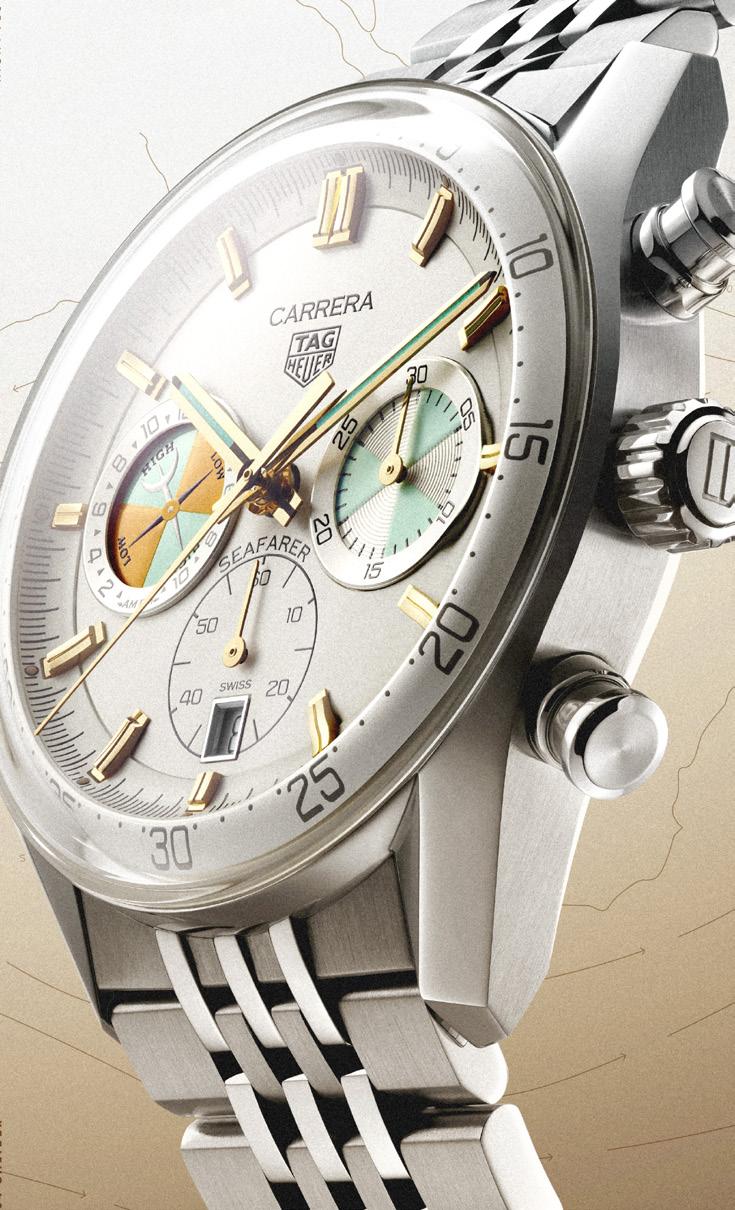
Sailing back into maritime history, the Carrera Seafarer revives the spirit of the famous 1949 “Seafarer” tide watch. This 42 mm steel tool watch features the new Calibre TH20-04 movement, engineered specifically to integrate
a tide indicator. A dedicated pusher at 9 o’clock adjusts the tide disc, which rotates fully every 29.53 days to accurately display high and low tides for optimal harbour navigation.
Aesthetically, the opaline champagne dial is accented with Intrepid Teal and yellow tones—codes borrowed from vintage regatta timers—while gold-plated hands and indexes ensure warmth and contrast. An 80-hour power reserve, sapphire case back engraved with the “Victory Wreath,” and the seven-row steel bracelet with an additional nautical-inspired fabric strap position the Seafarer as both a functional instrument and a heritage statement.
DEEPLY ROOTED IN JACK HEUER’S ORIGINAL VISION FROM 1963, THE TAG HEUER
CARRERA WAS CREATED FOR MOTORSPORT TIMING
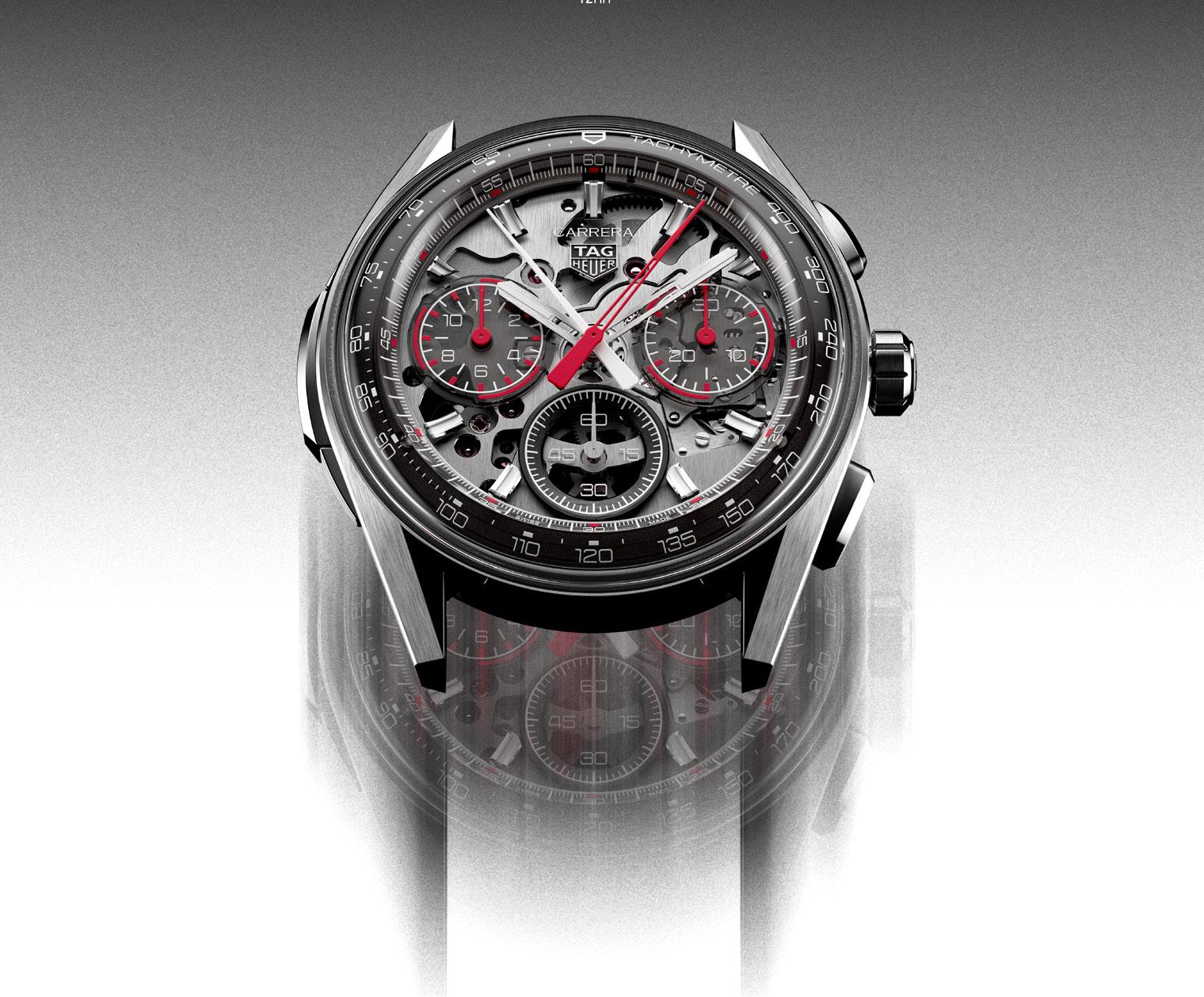
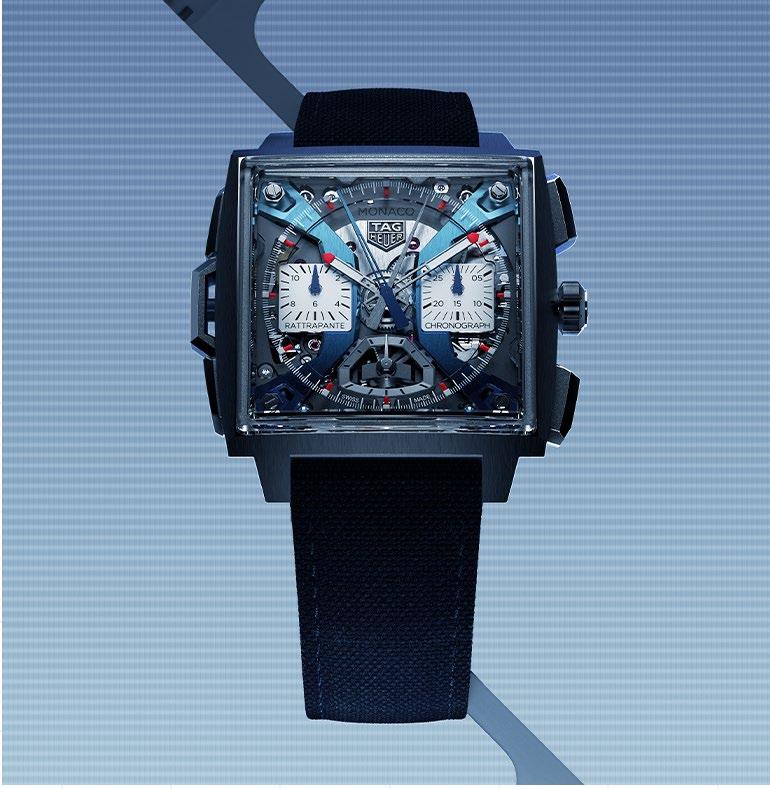
Reaching the pinnacle of avant-garde watchmaking, the Carrera Split-Seconds Chronograph premieres the arrival of the coveted rattrapante (split-seconds) complication to the Carrera collection. The 42 mm grade-5 titanium case preserves the line’s peaked lugs while integrating a sleek pusher at 9 o’clock to activate the split-seconds function.
The mechanical heart, Calibre TH81-01, beats at a high frequency of 5 Hz and boasts a 65-hour power reserve. The translucent sapphire dial and sub-dials reveal the movement’s architecture, while red lacquered chronograph hands heighten legibility and drama. Finished with a black rubber strap with textile embossing and red stitching, this Carrera elevates the collection into true haute horlogerie territory.
With these upgrades, TAG Heuer proves that the Carrera is not merely evolving— it is accelerating, confidently mastering chronograph innovation in every dimension.
The TAG Heuer Carrera Split-Seconds Chronograph is the first model in the line equipped with the split-seconds complication
TAG Heuer Carrera Seafarer with an opaline champagne dial accented with Intrepid Teal and yellow tones
UNEXPECTED FLAMBOYANCE
ROLEX EQUIPS THREE OF ITS ICONIC MODELS WITH NEW DIALS THAT MAGNIFY THEIR AURA DISCOVER MORE
Truly one of the world’s foremost watchmakers, Rolex excels in the art of innovation. Driven by the pursuit of excellence, Rolex continues to develop its repertoire of watches, including those that have achieved world renown. Most recently, the esteemed brand turned its attention to
three of its most iconic and beloved timepieces: the Oyster Perpetual Cosmograph Daytona, GMT-Master II, and Sky-Dweller.
Legendary in their own right, the watches receive entirely new dials that elevate their allure and sophistication. First up is the
By Maria Zarah Gregorio Viado
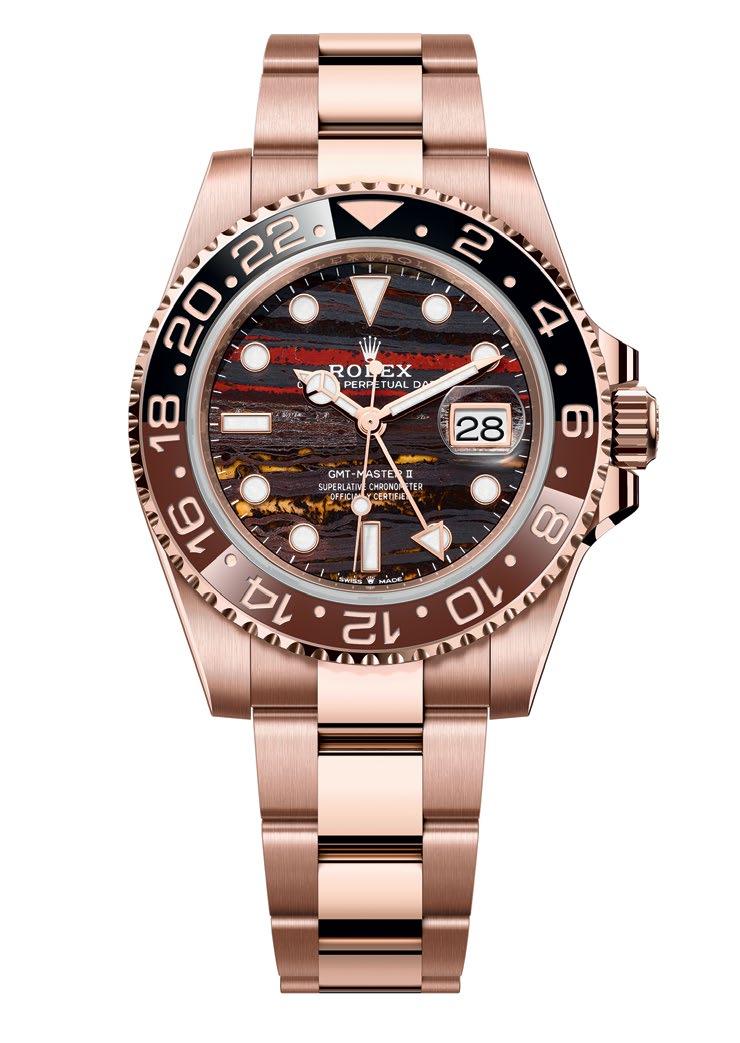
Oyster Perpetual GMT-Master II in 18 ct Everose gold with a tiger iron dial
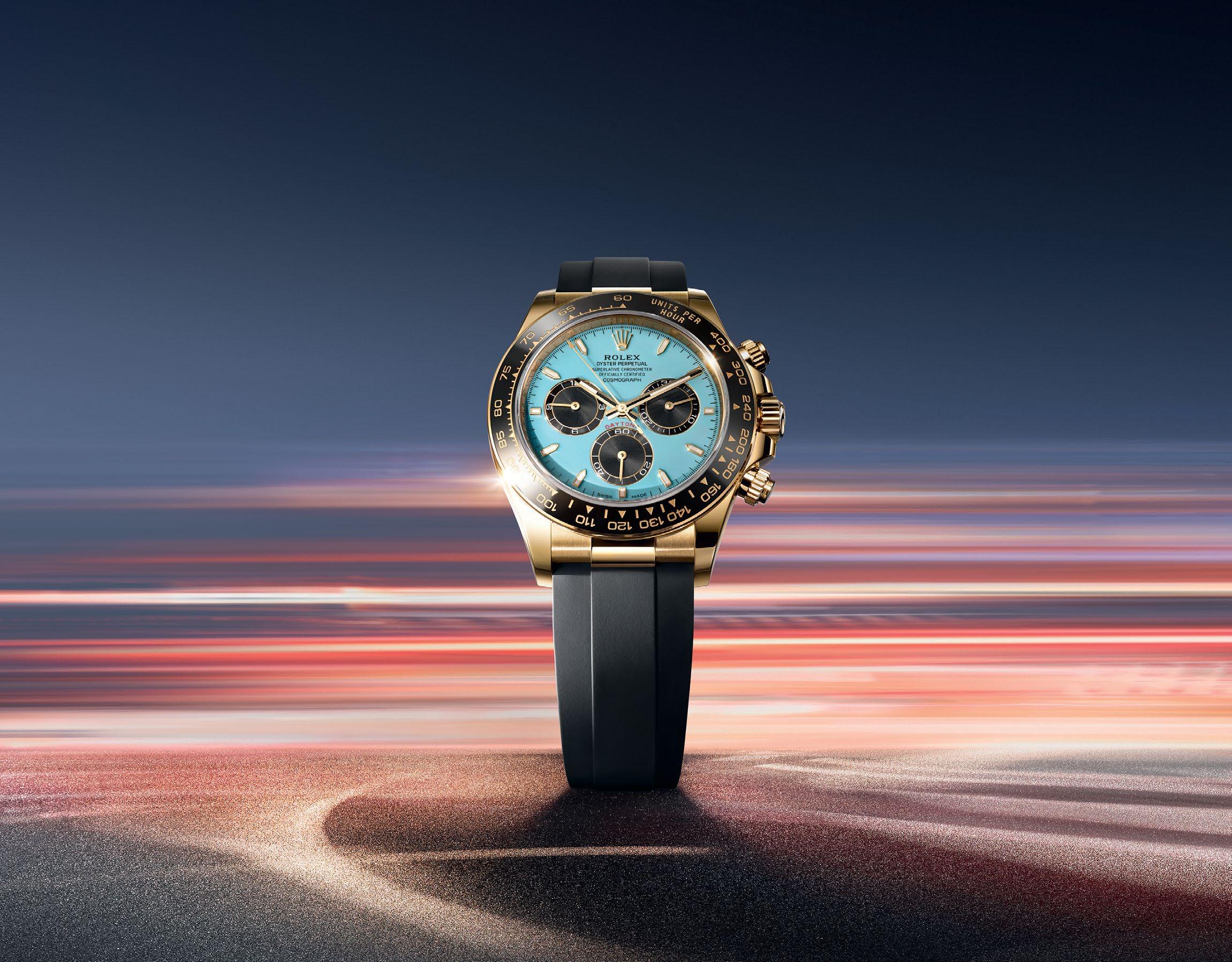
Oyster Perpetual Cosmograph Daytona in 18 ct yellow gold with a turquoise blue lacquer dial
Oyster Perpetual Cosmograph Daytona. Distinguished for its indelible link to the world of motor sport and the measurement of elapsed time, the timepiece is adorned with a resplendent turquoise blue lacquer dial punctuated by bright black counters. Crafted in 18 ct yellow gold, the new watch comes complete with a black Cerachrom bezel that showcases the celebrated tachymetric scale, an identifying feature of the distinct model. At its heart is calibre 4131, first released in 2023, which allows the watch to measure intervals of time via the chronograph function, in addition to displaying the hours, minutes and seconds. It comes with an Oysterflex bracelet, furnished with the Rolex Glidelock extension system, which is secured on the wrist with an Oysterlock safety clasp.
The Oyster Perpetual GMT-Master II, on the other hand, benefits from a new dial made from tiger iron. A natural stone containing
a combination of tiger’s eye, red jasper and hematite, tiger iron has a fascinating hybrid appearance that draws the eye and gives the timepiece exceptional beauty. Replete with a dual time zone function that makes the popular watch a useful companion when travelling, the GMT-Master II is presented in 18 ct Everose gold with a brown and black Cerachrom bezel insert. It is fitted with calibre 3285, which provides the model with the date function and an additional time zone in 24-hour format, as well as the hours, minutes and seconds. An Oyster bracelet secures the timepiece. Fitted with the Oysterlock safety clasp to prevent accidental opening, the bracelet also features the Easylink comfort extension link, developed by the brand, which allows it to be easily lengthened by approximately 5 mm.
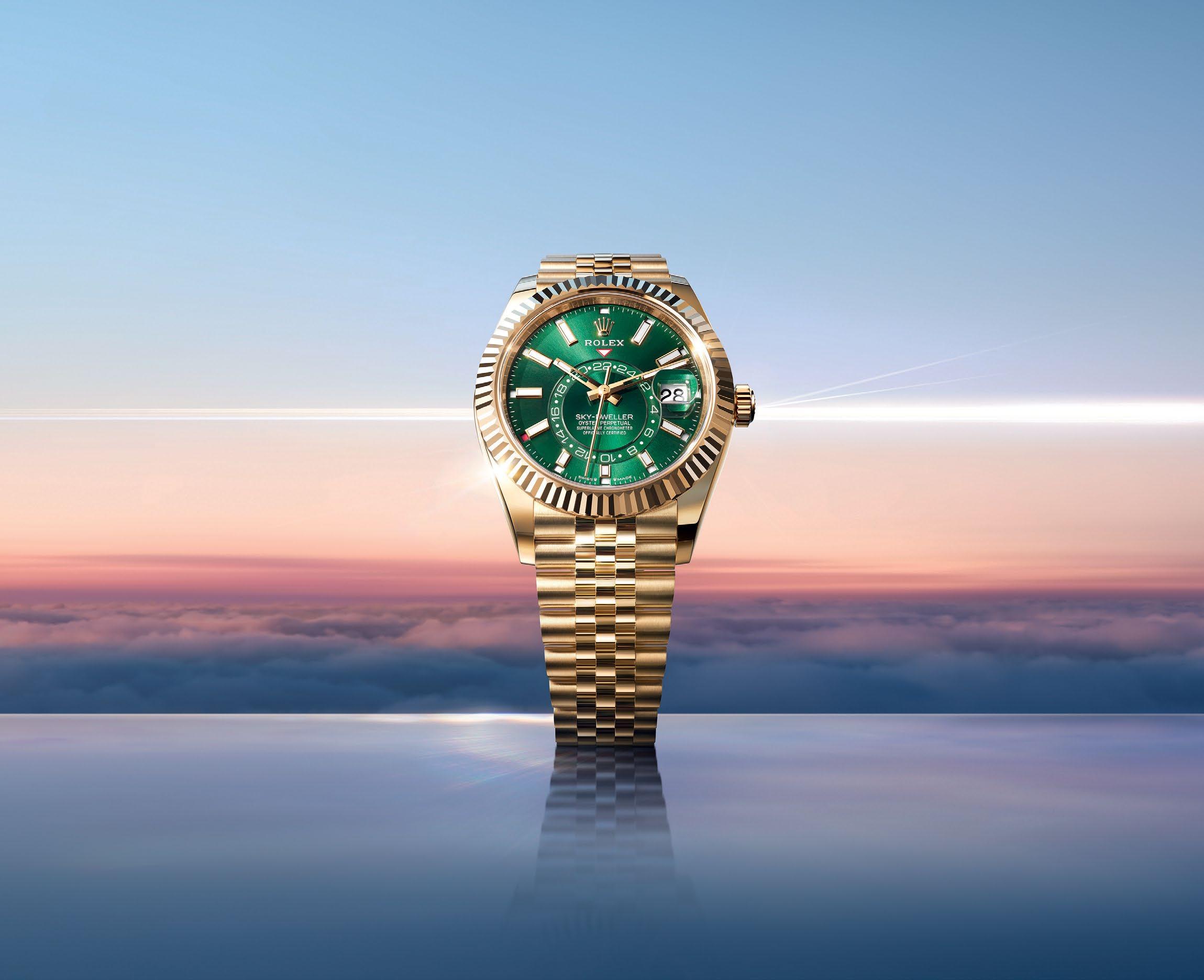
Lastly, the Oyster Perpetual Sky-Dweller has been a constant companion to travellers the world over since its creation. Now rendered in
18 ct yellow gold, the sophisticated and elegant timepiece dons a sunray-finished dial in bright green, an intense hue that marries beautifully with the colour of the watch. Powering it is calibre 9002, which furnishes it with an annual calendar—date and month—and an additional time zone in 24-hour format, together with the hours, minutes and seconds. Completing the unparalleled refinement of this model is the 18 ct yellow gold Jubilee bracelet fitted with a folding Oysterclasp, as well as the Easylink comfort extension link, developed by the brand.
Adorned with their colourful new dials, the timepieces exude exquisite flair and incomparable appeal. Like all Rolex watches, they carry the brand’s Superlative Chronometer certification, which ensures excellent performance on the wrist. Symbolised by the green seal that comes with every Rolex watch, it is coupled with an international fiveyear guarantee.
Oyster Perpetual Sky-Dweller in 18 ct yellow gold with a sunray-finished dial in bright green
WINNING GRAND SLAMS
HUBLOT CAPTURES THE TENNIS PRO’S UNSTOPPABLE STREAK WITH THE BIG BANG TOURBILLON NOVAK DJOKOVIC GOAT EDITION
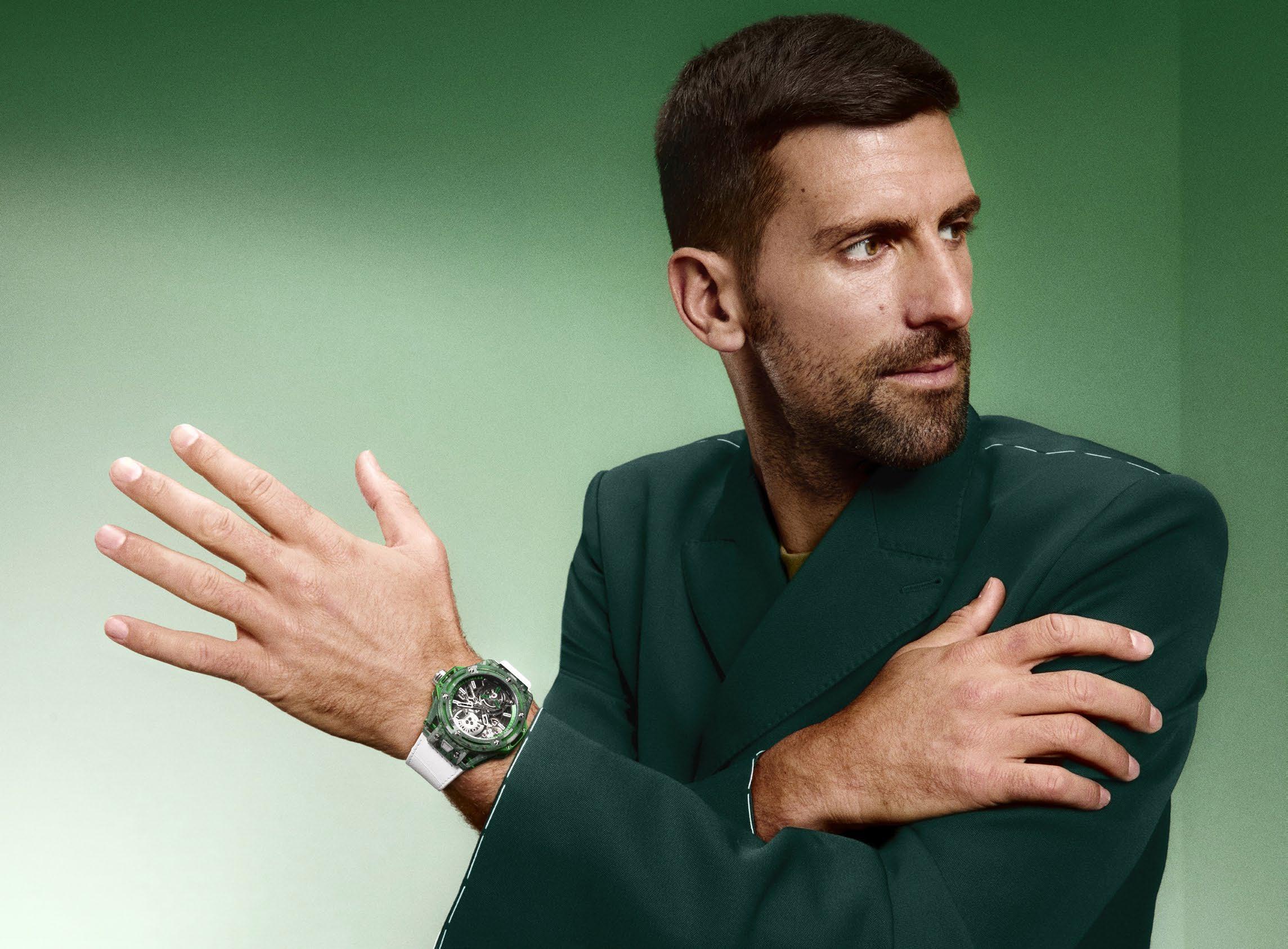
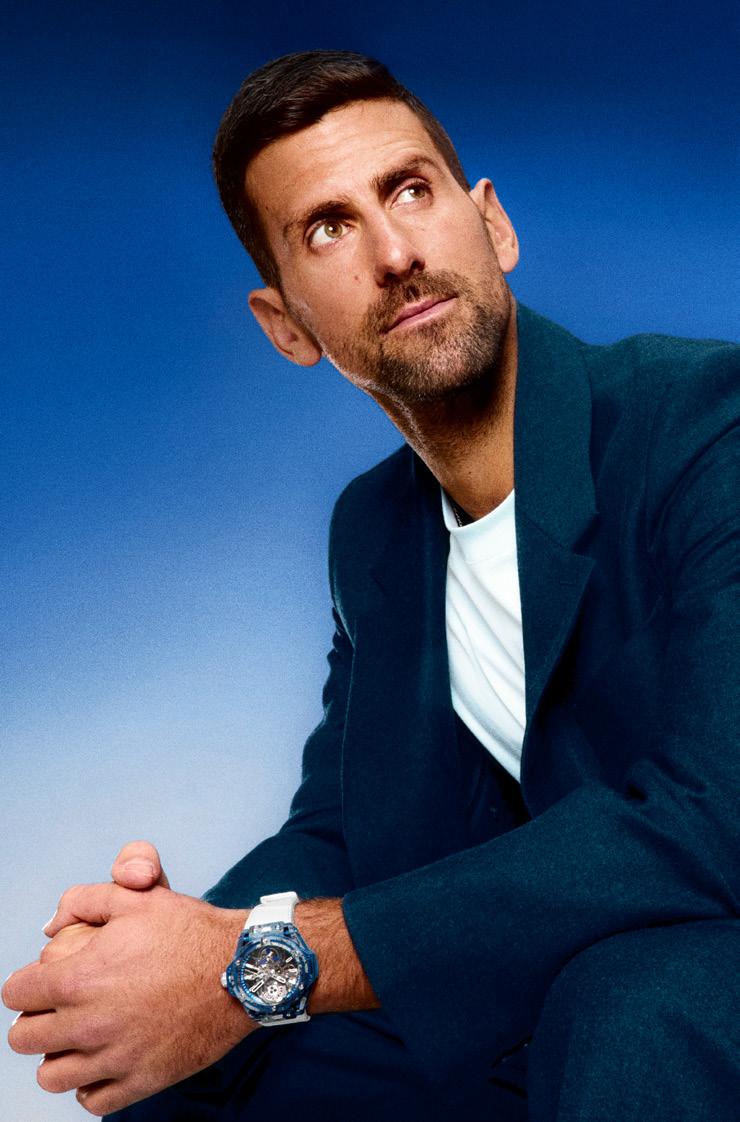
The recognisable face of Novak Djokovic, tennis champion and Hublot Ambassador, appears in his most recent campaign with Hublot. Held In line with this, the Swiss haute horologist unveils the Big Bang Tourbillon Novak Djokovic GOAT Edition to immortalise the unstoppable sportsman’s triumphs.
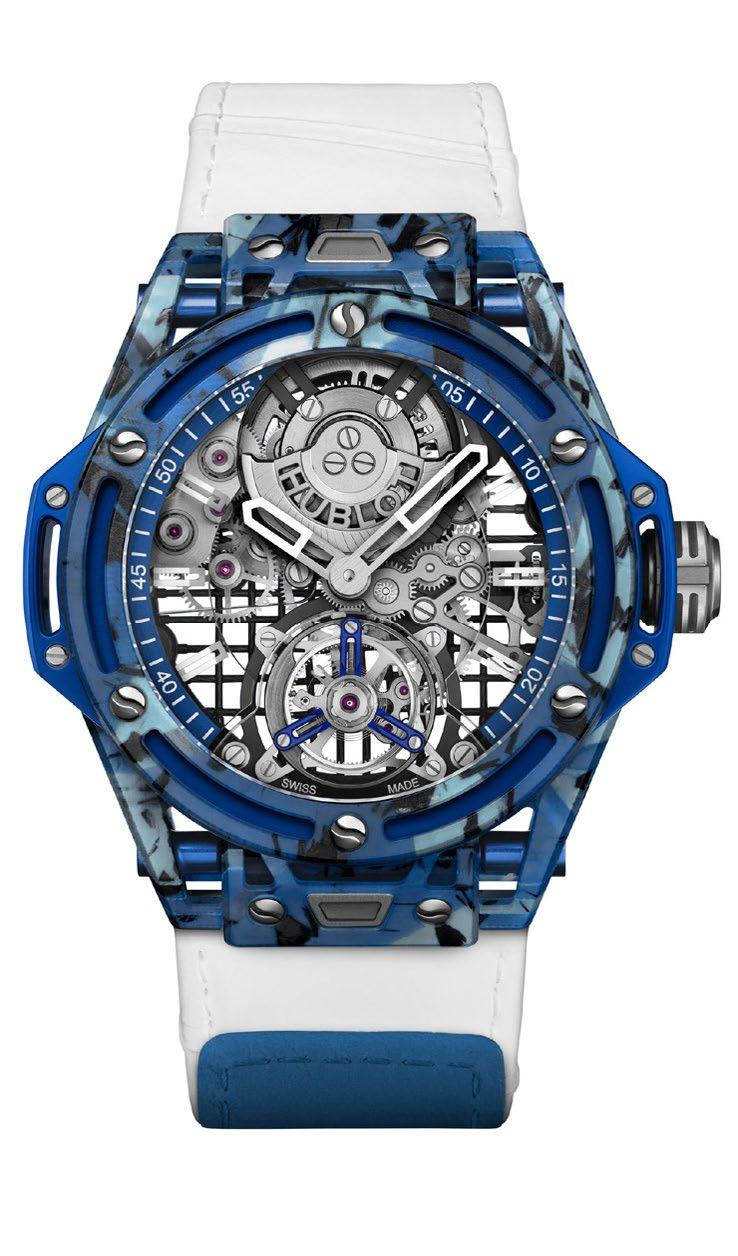
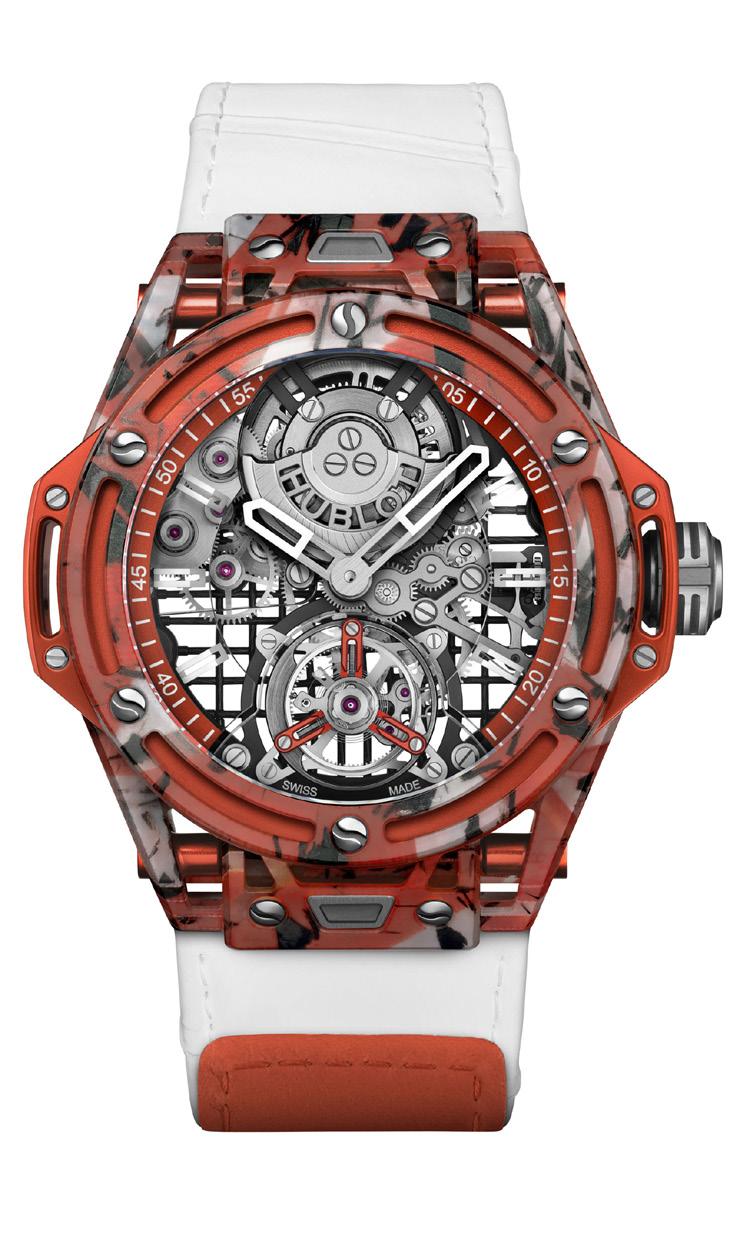
The familiar hues of the tennis court are represented in Hublot’s new 44 mm timepiece, which are made available in three variations: blue for hard courts, orange for clay courts, and green for grass courts. Akin to the luscious surface of Wimbledon and other ATP tour grass courts, the green variation transports one to unforgettable summers in
By Karina Saphiera Witjaksono
The blue iteration represents Djokovic’s 72 wins on the hard court
Hublot pays tribute to one of the world’s greatest tennis players with the Big Bang Tourbillon Novak Djokovic GOAT Edition
the Northern Hemisphere. Against the green composite case, the timepiece’s white strap bears a striking resemblance to the court’s baseline, as if inviting its keeper to prepare for the next match. The vibrant cases of all three variations set the stage for the grand reveal of the Big Bang Tourbillon Novak Djokovic GOAT Edition’s centrepiece.
On top of the iconic court colours, Hublot’s newly unveiled timepiece is crafted out of technological advancements special to this watch. Its 44 mm case is made from a unique composite from Lacoste polos and Head tennis racquets, both of which have a special place in Novak Djokovic’s life. The durable yet lightweight material, which supports long-term wear, was first debuted in the 2024 edition of the Big Bang Unico Novak Djokovic. Further personalising the timepiece to its muse, Hublot turns its signature bezel screws into tennis ball-shaped screws.
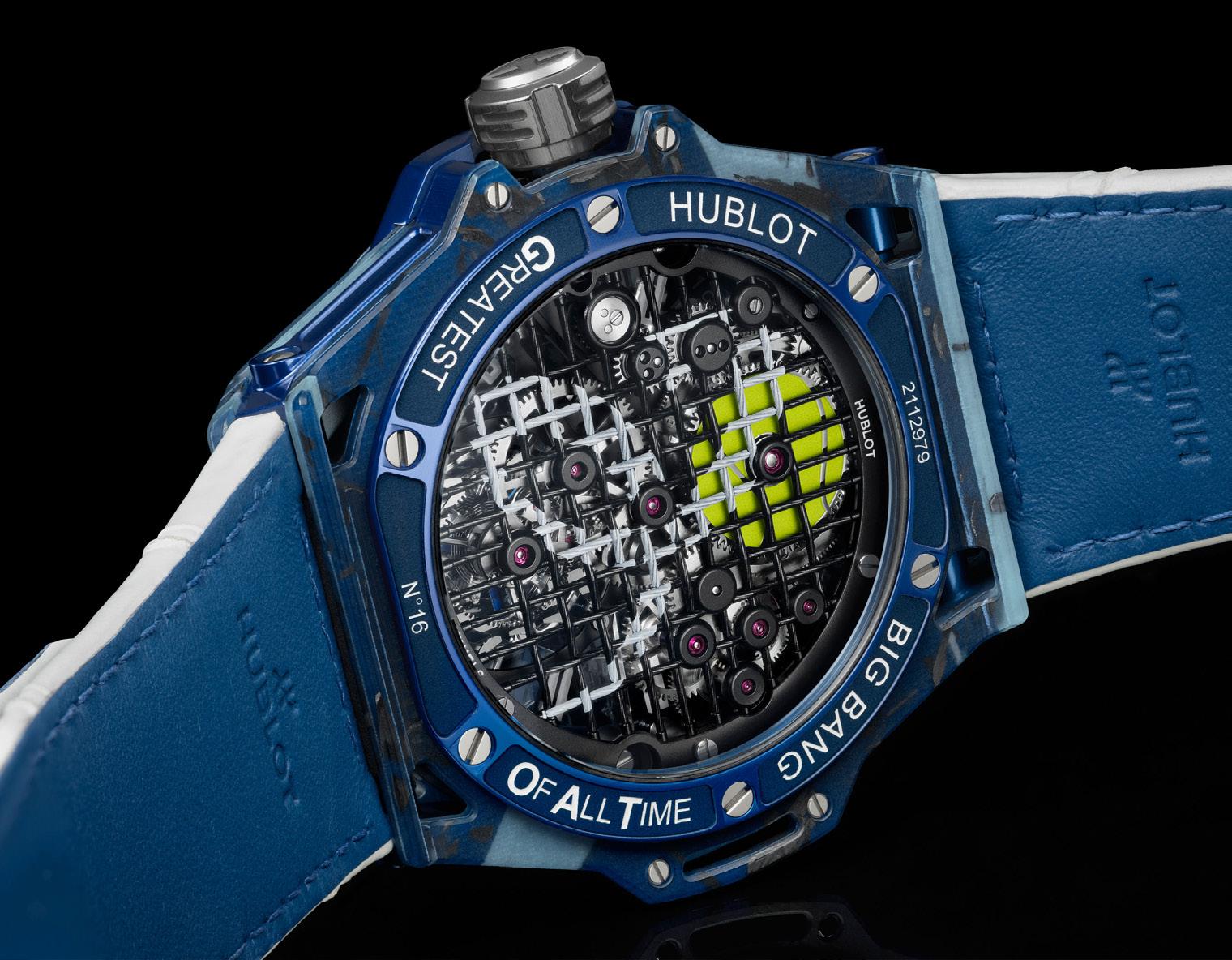
The bright case of the Big Bang Tourbillon Novak Djokovic GOAT Edition juxtaposes the intricacy of its openwork dial. Powered by the HUB6035 Automatic Tourbillon movement, the watch operates at 3Hz and has a 72-power hour reserve. The mechanics are displayed atop this unique tennis racket string pattern kindred to Djokovic’s own tennis racket. The 0.55 mm strings are intricately “woven” on the dial to replicate the worn tennis racket of the world champion mid-game. While certainly mesmerising, the haute horologist in fact achieves this illusion by laserengraving each string onto the sapphire crystal. Also seen on this “racket” is the world champion’s “ND1” logo.
As the tip of the hour and minute needles orbit around the dial, its gears get to work. Whilst at 6 o’clock it displays a tourbillon cage made in the same colour of the case, the top half of the watch bears the 22-carat red gold microrotor that features the Hublot logo. Peeking
from underneath the racket is the heart of the watch—the HUB6035’s mainspring-filled barrel that is also made in the image of a tennis ball. While the final product is memorable, the ingenuity of the barrel could only be captured in its making. Hublot’s engineers began the process by applying rhodium polish to the distinct S-shaped curves before laserengraving the entire surface to achieve the lifelike texture of the tennis ball and applying yellow-green polish all over. The entirety of the barrel can be better seen on the backside of the Big Bang Tourbillon Novak Djokovic GOAT Edition, wedged between the warm jewels. The extraordinarily elaborate dial balances the simple yet unique grip-tape-like white calfskin strap or alternative white rubber strap.
All in all, the Big Bang Tourbillon Novak Djokovic GOAT Edition and its movement took a total of 293 components and 26 jewels. While the watches themselves are not limited, Hublot nevertheless immortalises its Ambassador’s victories by numbering the timepiece in
accordance with his wins on each court type. Having claimed 101 wins in total, there are 72 Big Bang Tourbillon Novak Djokovic GOAT Editions in blue to represent his hard court victories, 21 of the orange variation to represent his wins on the clay court, and 8 of the green version for his triumphs on the grass. Having developed a familial relationship with its Ambassador, Hublot is also committed to adding even more pieces to celebrate Novak Djokovic’s future victories.
The orange model symbolises Djokovic’s 21 wins on clay
A view of the case back showcases a novel tennis racket string pattern that commemorates the tennis champ’s skill on the court
With 101 wins so far, the Hublot ambassador is sure to add even more victories to his impressive track record
SCINTILLATING RADIANCE
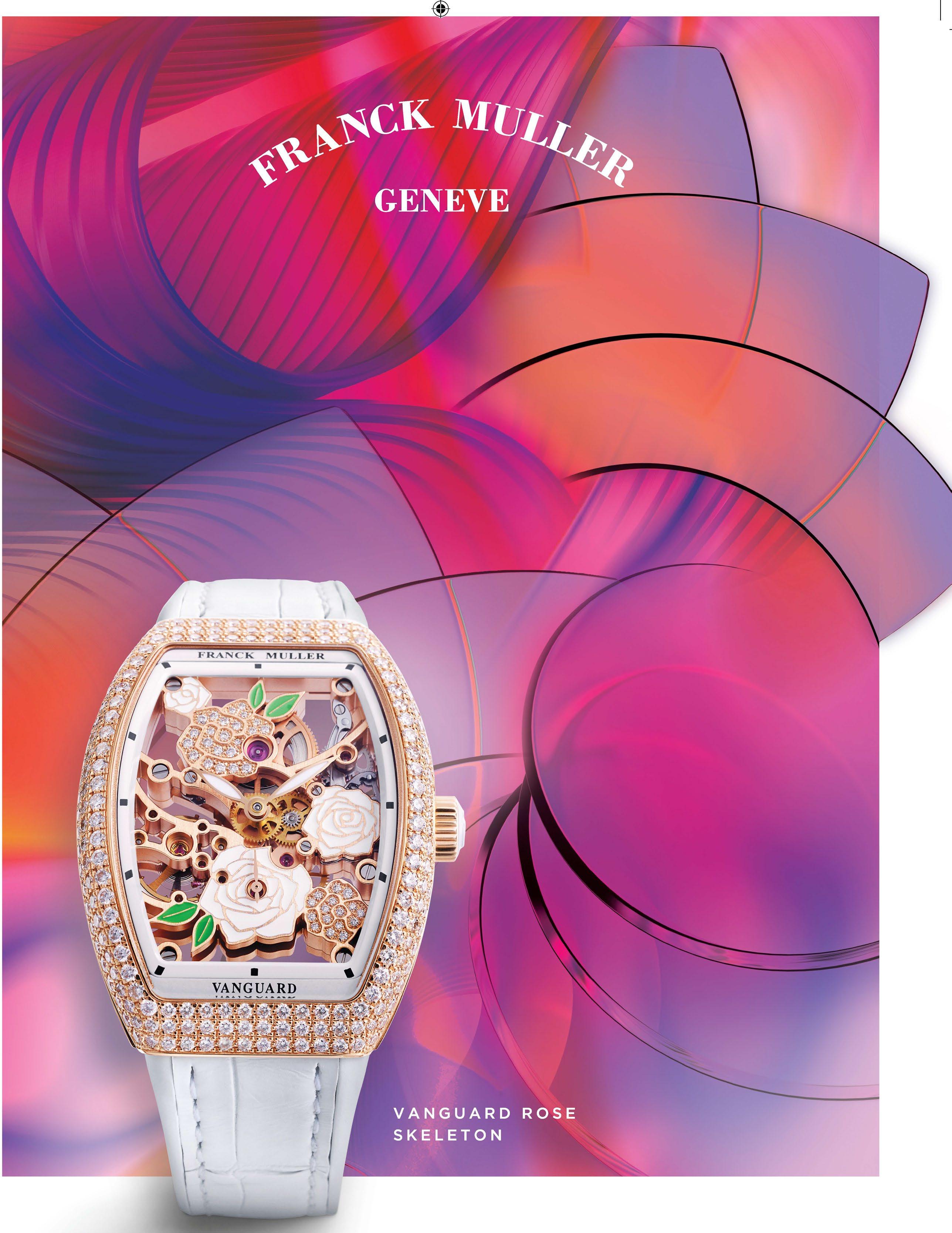
FRANCK MULLER’S BRILLIANT PLAY ON LIGHT AND SHADOW SEALS THE WINNING ALLURE OF THE NEW VANGUARD
When precision meets grandeur, what was historically impossible in time-telling turns into endless probabilities. Pioneering its way to the frontier of watchmaking, Franck Muller has proven this to be true since the exceptional complication master Franck Muller and jeweller Vartan Sirmakes joined hands in 1991. Among many of its breakthroughs and silhouettes, the Cintrée Curvex has become a defining feature of many of the haute horologist’s creations. Now adopted for the new Vanguard, Franck
Muller’s latest timepiece tests the bounds of light and shadow, akin to chiaroscuro in an illustrious painting.
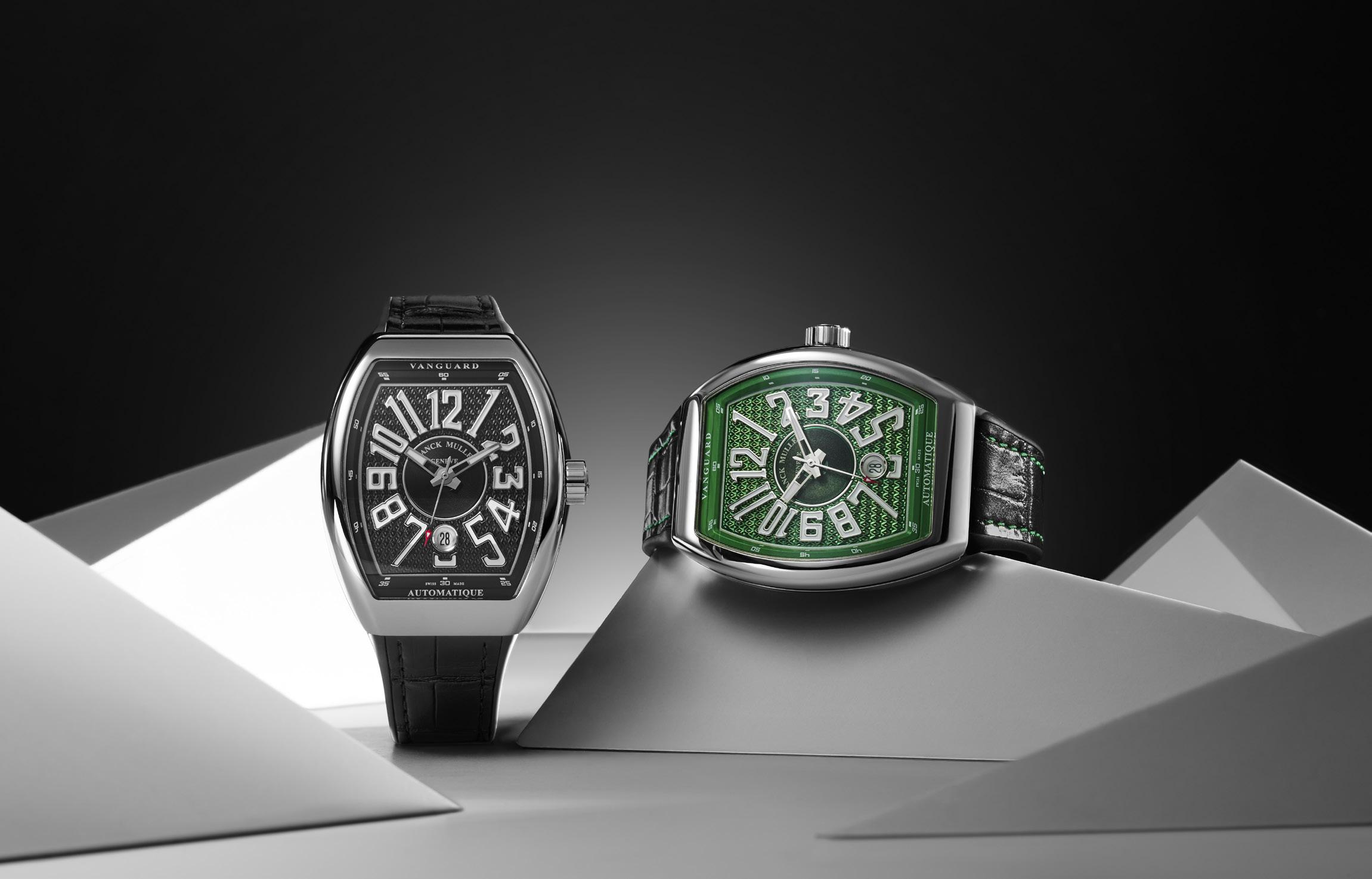
Just like its predecessors, the stainless steel case of the latest Vanguard is welded into the classic tonneau silhouette of the Cintrée Curvex. Measuring 42.5 mm x 52.7 mm, with a thickness of 9.3 mm, the case houses a captivating dial that screams understated luxury. The intentional placement of its white larger-than-life hour appliques and
By Karina Saphiera Witjaksono
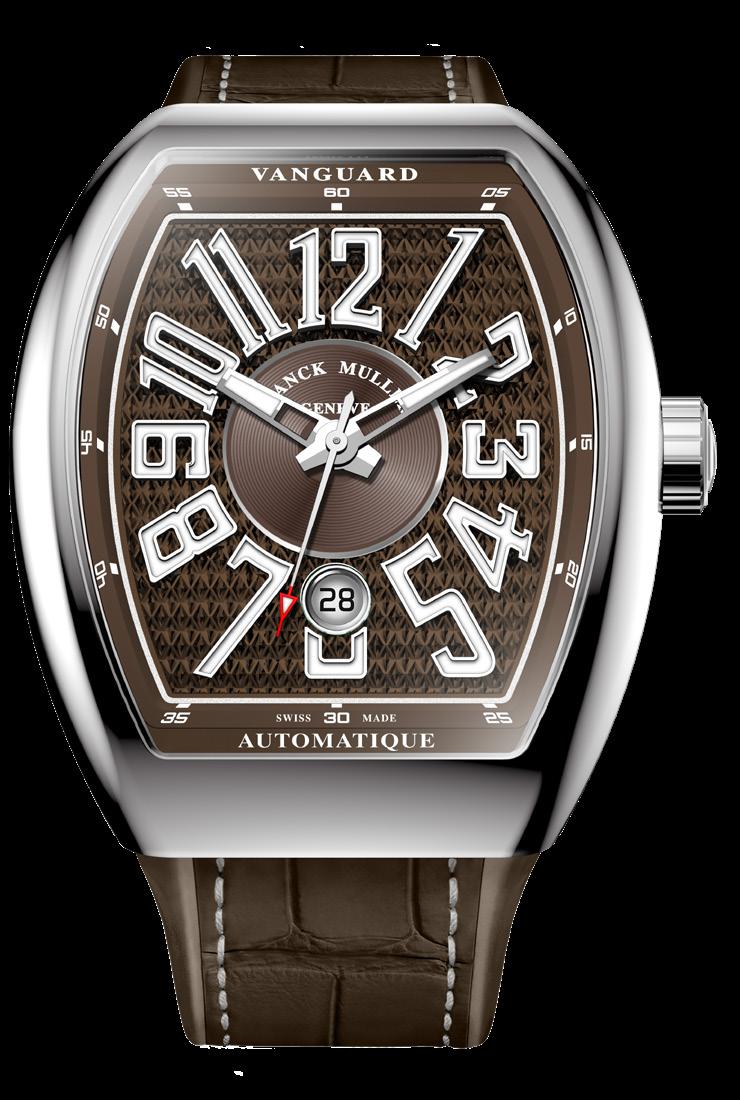
Available in five different dial colours, the new Vanguard is shown here with a brown dial
the exaggerated widths of the stainless steel case give the model a unique fisheye effect.
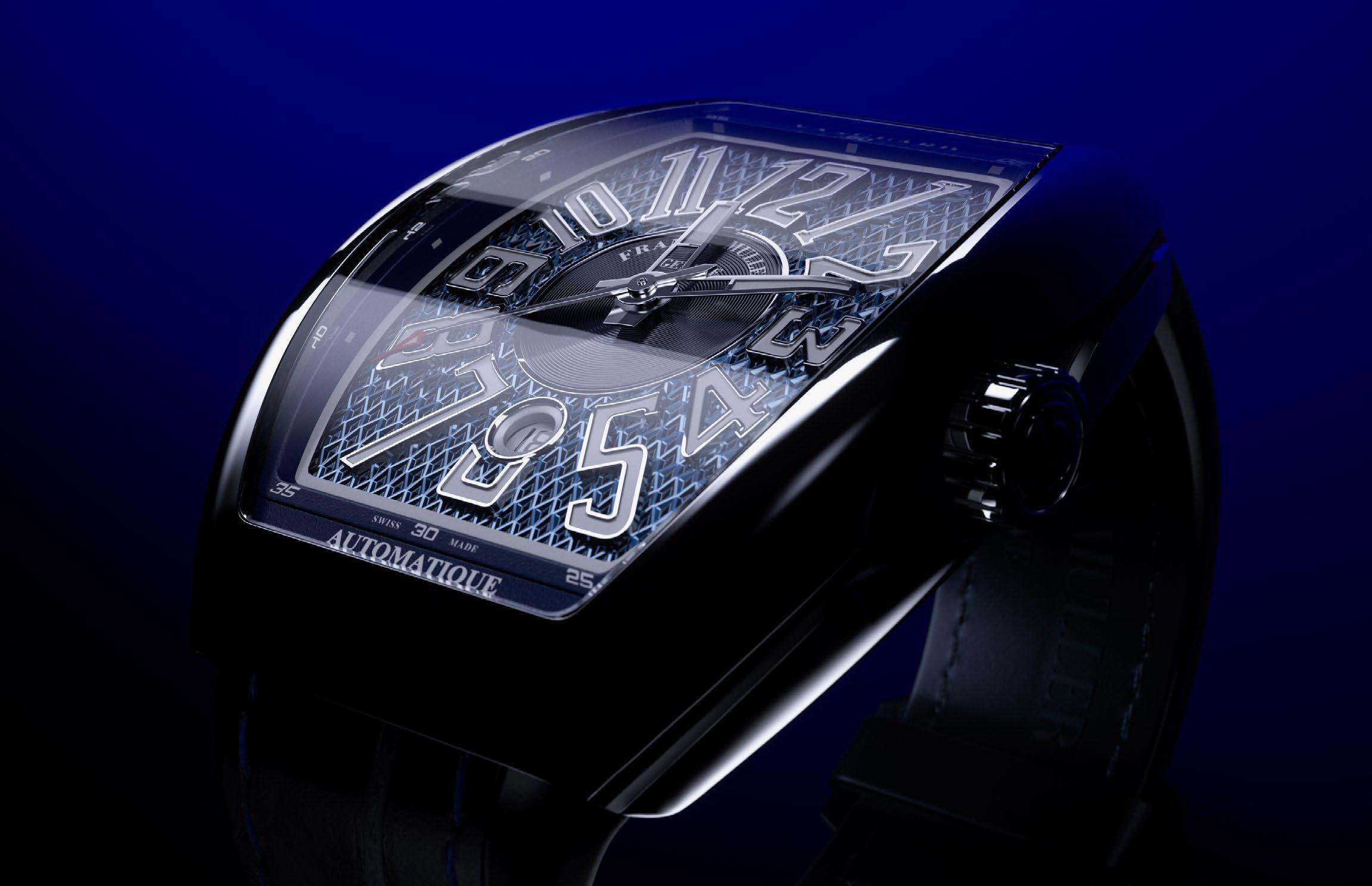
Franck Muller’s Vanguard integrates a new tantalising dial brought to life through a multi-stage stamping process
Against the bold-toned dial, the simple white numerals and hands ensure maximum readability. Whilst the stylish hour numerals do catch one’s attention, it is actually what lies beneath that the brand prides itself in.
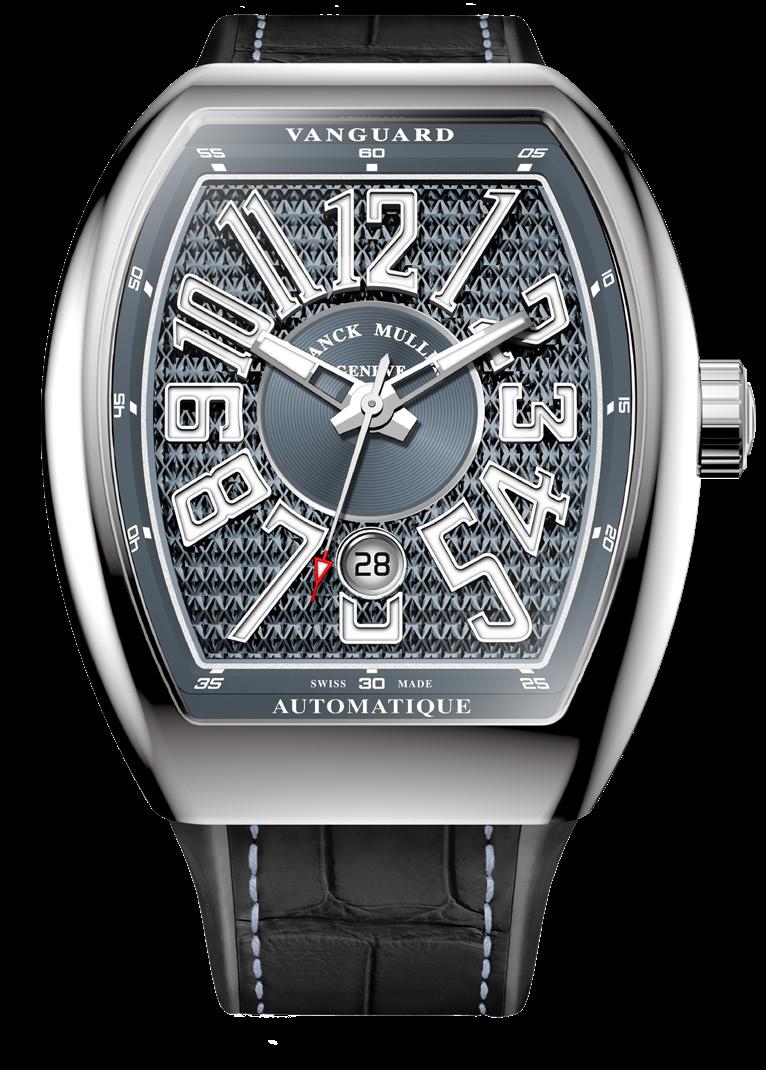
After much anticipation, Franck Muller integrates a new tantalising dial for its Vanguard collection. The guilloché pavé de losanges dial leverages a seemingly endless diamond motif to capture light in an indescribable way. Well-versed in crafting state-of-the-art pieces, Franck Muller’s craftsmen brought such an intricate dial to life using a thorough multi-stage stamping process only they can achieve. While the choice of geometric shape emboldens the look of the new Vanguard in green, its expression completely shifts in the other equally compelling variations in grey, navy, black and brown.
As the guilloché pavé de losanges dial does its job in refracting light, the haute horologist balances its complexity with a micro-blasted sunburst orb at the heart of the watch. It is from here that the modern hour and minute hands stay rooted, mere millimetres away from the Franck Muller name. Beneath the sunburst plate at 6 o’clock is a simple date window that completes the Vanguard’s functions. The entirety of the dial is framed by a slim white
The new Vanguard, powered by an automatic movement, is also available with a grey dial
border that separates it from the bead-blasted matt bezel, which displays the 60-minute/ second marks, the collection name, and its automatique and Swiss made marks. Each variation is paired with a sleek alligator strap
with hand-sewn stitching that matches the shade of its dial.
To drive the Vanguard, Franck Muller embeds the robust MVT 2536-SCDT bidirectional automatic movement at its core. Boasting a 42hour power reserve, the ultra-thin movement vibrates at 28,800 vph. Crafted out of 191 components, it is adorned with high quality finishings and décor executed by the haute horologists’ exceptional craftsmen. In addition to the Côtes de Genève on its bridges and rotor plate, perlage and bevelling were also used in other components of the movement.
Beyond the Vanguard collection, the Franck Muller name has been much talked about among watch collectors since its inception in 1991. The eponymous brand was established by Franck Muller and Vartan Sirmakes in their pursuit for fine watches and complications. The partnership between haute horlogerie and haute joaillerie experts resulted in groundbreaking discoveries. Over a decade after its establishment, Franck Muller became the first in the world to develop a tri-axial tourbillon when it unveiled the Revolution 3. The complication was followed by the unveiling of the Cintrée Curvex silhouette, its own esteemed watch fair, and much more.
The latest timepiece features large white hour appliques on an intricate diamond motif dial
MODERN MASTERPIECE
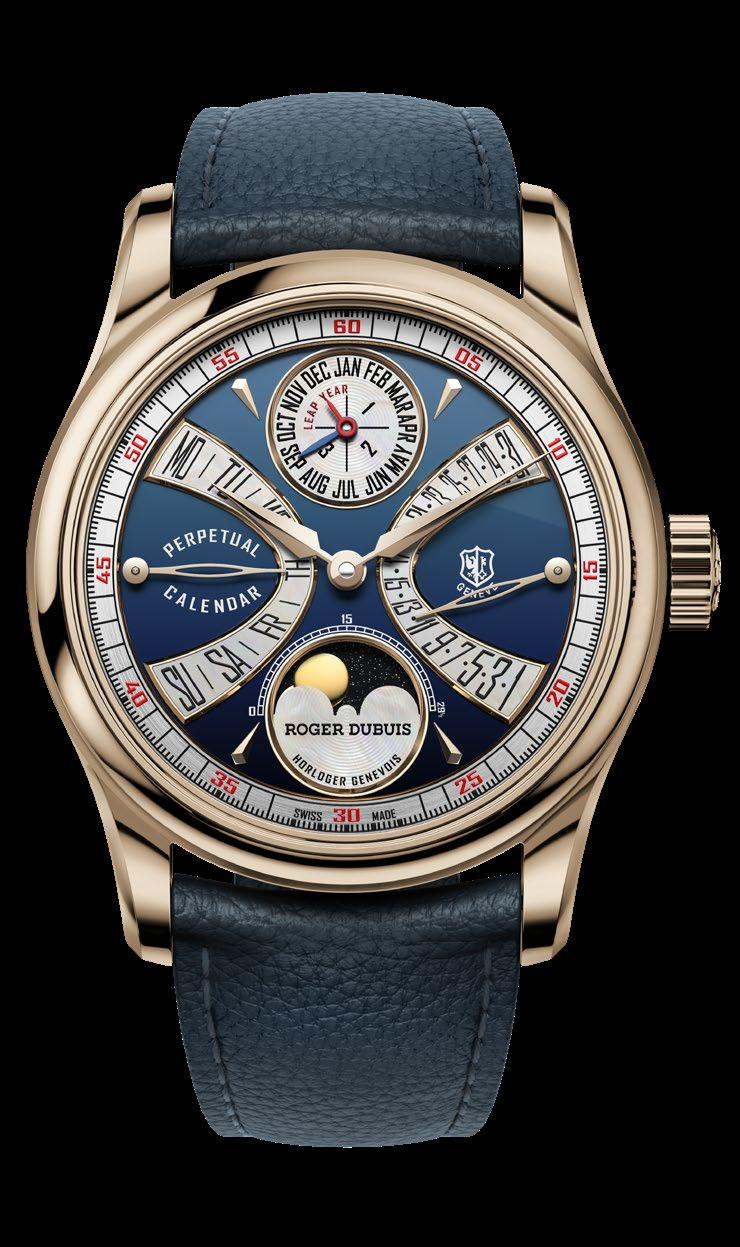
ROGER DUBUIS CELEBRATES 30 YEARS OF HOROLOGICAL SAVOIRFAIRE WITH THE EXQUISITELY LAYERED HOMMAGE LA PLACIDE
Founded in 1995 by master watchmaker Roger Dubuis, the Geneva Maison has always stood at the crossroads of expressive design and uncompromising horology. From the very beginning, Roger Dubuis championed fully in-house calibres, traditional finishing elevated to contemporary extremes, and an unwavering commitment to the Poinçon de Genève. To mark its 30th anniversary, the Maison revives the Hommage La Placide, a limited edition of
just 28 pieces conceived as both a tribute and a modern revival.
Tracing back its history, the background of this release is deeply personal. The original Hommage collection, launched in 1996, honoured the mentors and watchmakers who shaped Roger Dubuis’ career. Three decades on, the Hommage La Placide reverses that lens, celebrating the watchmaker himself. Its name references “Placide,” Roger Dubuis’
By Anastasia
W. Wibowo
The Maison celebrates three decades of excellence with the 28-piece limited edition
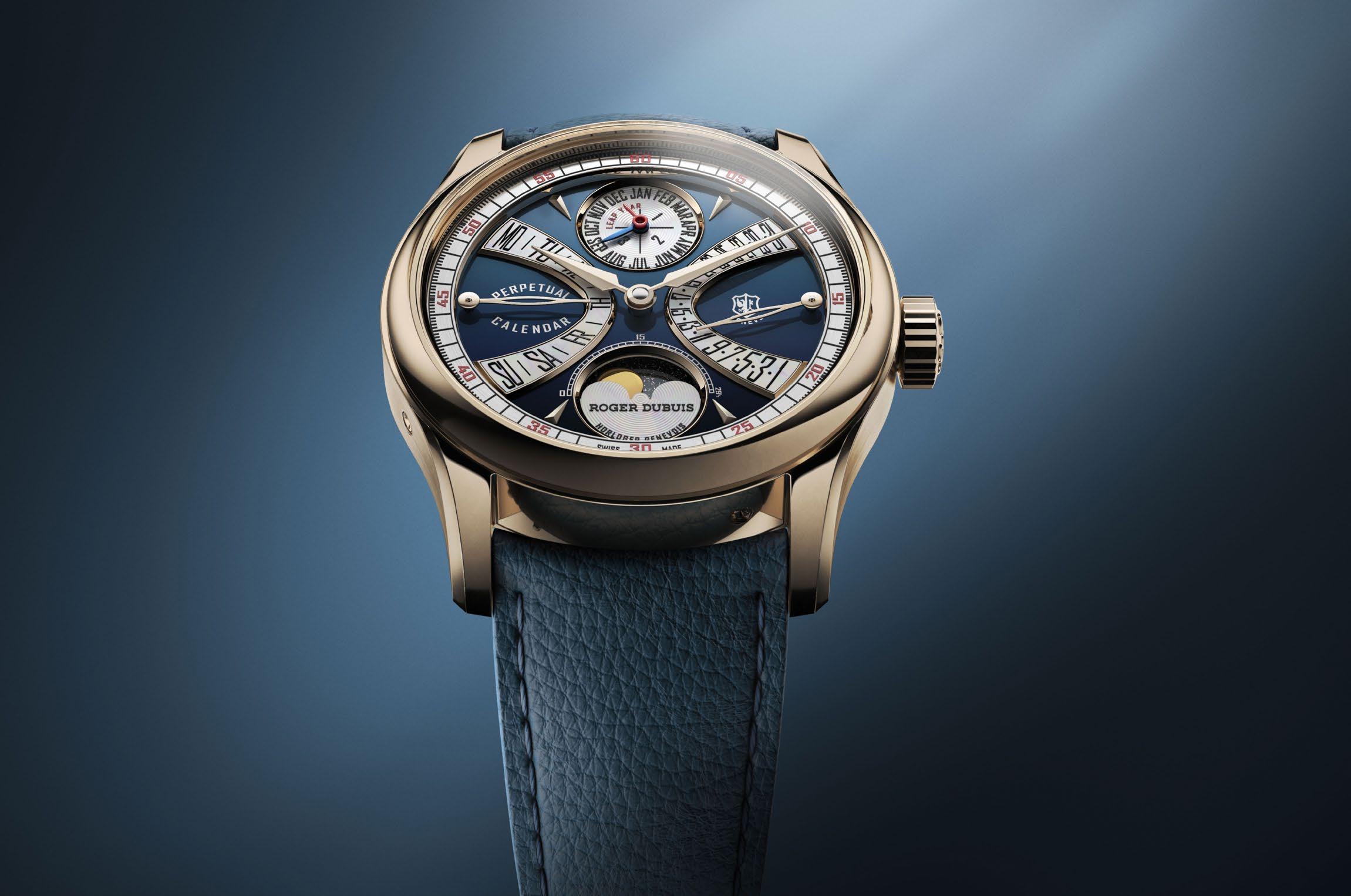
Roger Dubuis bridges the past with the present in the Hommage La Placide
childhood scout nickname, a reflection of his calm, thoughtful character—an ethos subtly woven into the watch’s restrained elegance and layered complexity.
At the heart of this anniversary piece lies a rare mechanical dialogue between past and present. The journey begins with the RD14, the Maison’s first in-house automatic calibre. Originally introduced in the early 2000s, each surviving RD14 movement has been meticulously restored, recalculated, and re-engineered. Its traditional swan neck regulator—valued for precision adjustment and shock resistance—returns alongside original Roger Dubuis balance springs, a historic element that once secured the brand’s status as an official manufacture. Subtle yet significant updates, including a complete repositioning of the gear-train axes, enhance performance without erasing its historical soul.
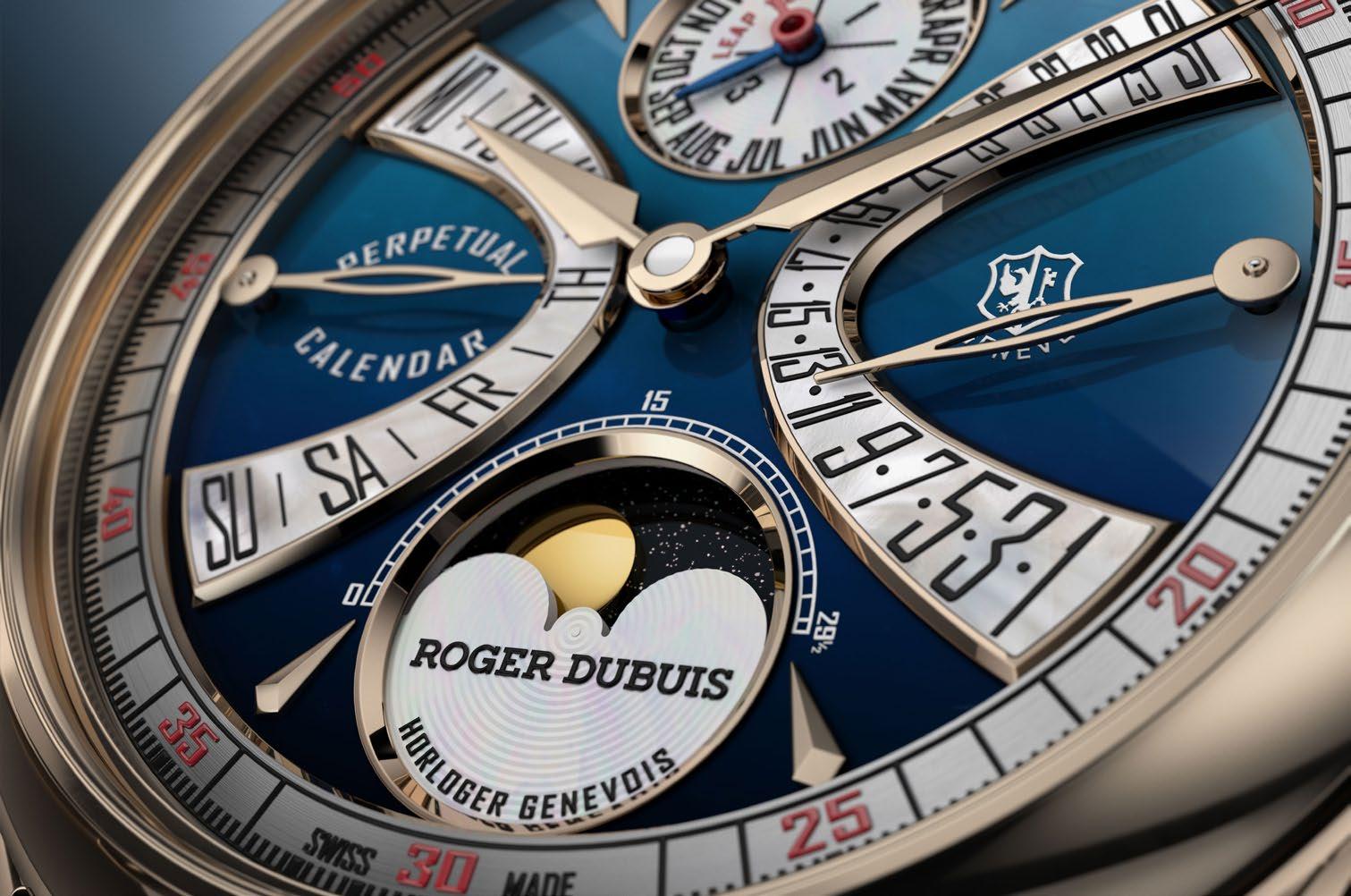
Layered onto this foundation is the RD72 module, first introduced in 1999 and chosen here for its symbolic weight. A perpetual calendar was Roger Dubuis’ favourite complication, and the RD72 delivers it with elegance: day, date, month, leap year, and moonphase displayed through a signature biretrograde mechanism. Ingeniously, month and leap year are read on a single counter via two co-axial hands driven by star wheels with 12 and 48 teeth, ensuring smooth, intuitive transitions across the calendar cycle.
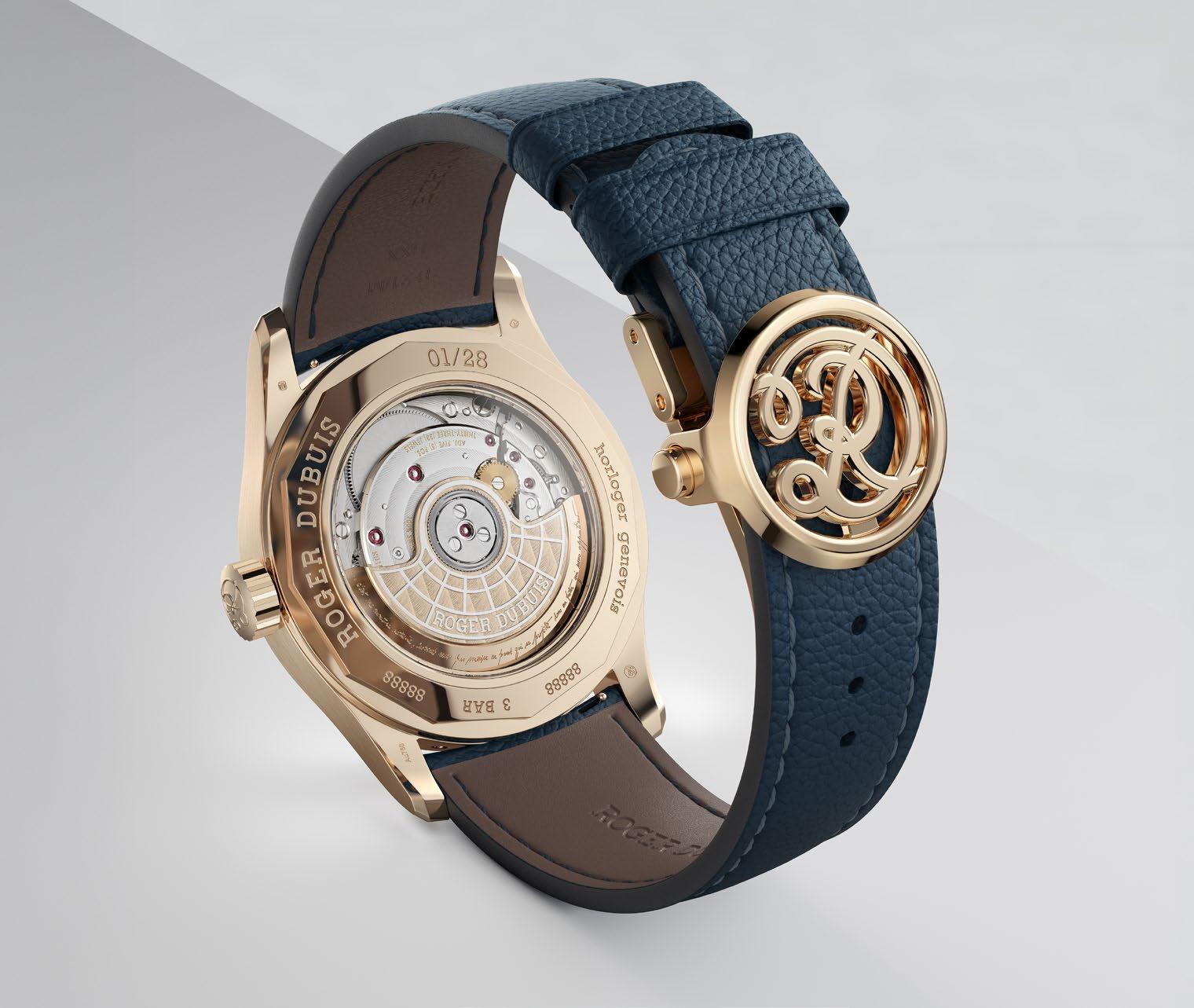
The union of these two movements forms the RD1472 calibre—a modern revival produced for only the second time. Automatic and selfwinding, it beats at 4 Hz (28,800 vibrations per hour), delivers a 48-hour power reserve, and comprises 307 components and 33 jewels. A newly crafted 18-carat pink gold rotor crowns the movement, which is finished with no fewer than 15 decorative techniques, from Geneva stripes to mirror polishing and handdrawn bevelling. Most importantly, the calibre is adjusted and assembled to meet today’s stringent Poinçon de Genève standards, now applied to the entire watch rather than the movement alone.
The dial is visual poetry. Constructed in five distinct layers, it exemplifies Roger Dubuis’ talent for expressive architecture. A rhodiumcoated, circular-brushed flange frames the display, while mother-of-pearl calendar segments add softness and depth. The main plate appears in “Leman Blue,” a lacquered hue inspired by Lake Geneva, punctuated by applied hour markers and lunar inscriptions. Mother-of-pearl counters and a moonphase
set against blue aventurine, adorned with domed 18-carat yellow gold moons, complete the composition—each layer revealing another facet of complexity.
Encased in a 38 mm 18-carat pink gold case, the Hommage La Placide balances classical proportions with modern presence. It is water-resistant to 30 metres and is paired with a blue interchangeable calf leather strap that is secured to the wrist by a pink gold triple-
folding buckle engraved with the Roger Dubuis emblem. Each timepiece is presented in a dedicated collector box, complete with a push corrector, magnifier, as well as certificates of authenticity and Poinçon de Genève.
More than just a commemorative object, the Hommage La Placide is a quiet manifesto: a reminder of Roger Dubuis’ vision and work as a master watchmaker who dedicated his life to the art of timekeeping.
Exquisitely crafted, the Hommage La Placide boasts a five-layer dial complete with a stunning moonphase display
Powering the watch is the RD1472 calibre, which combines two movements from the Maison’s rich past
TIMELESS COMPLEXITY
PANERAI REDEFINES HIGH COMPLICATIONS WITH INNOVATIVE MECHANICS IN THE NEW LUMINOR PERPETUAL CALENDAR MODELS
Founded in Florence in 1860, Panerai began as a workshop, boutique, and watchmaking school before becoming a trusted supplier of precision instruments to the Italian Navy. For decades, its creations were bound by military secrecy, designed for underwater missions where legibility, robustness, and reliability were
paramount. When Panerai finally stepped onto the civilian stage in the 1990s, it did so with a distinctive visual language—bold proportions, luminous sandwich dials, and the iconic crown-protecting device. That philosophy still defines the brand until today, even as Panerai ventures into the rarefied territory of high complications.
By Anastasia W. Wibowo
Powered by the P.4100 calibre, the watch has a three-day power reserve
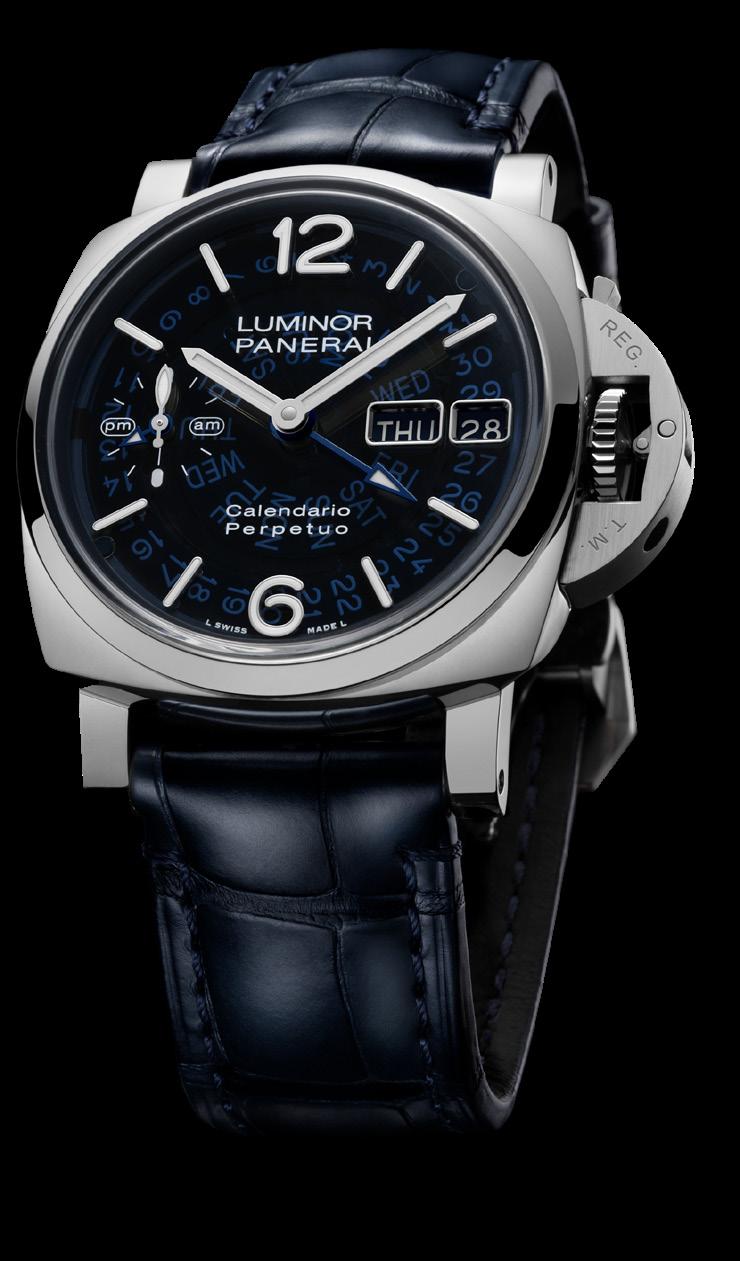
Panerai showcases innovative mechanics in the new Luminor Perpetual Calendar models, including the Luminor Perpetual Calendar GMT Platinumtech™ (PAM01575)
Platinumtech™ (PAM01575) represents the most contemporary expression of the concept. Crafted from a 950% platinum alloy treated to increase hardness by approximately 40% compared to standard platinum, the heavier and more scratch-resistant material provides the case with a discreet sense of gravitas. It features a rich sapphire dial that reveals the
The Luminor Perpetual Calendar collection marks a decisive evolution. Here, Panerai managed to rethink such a high complication through the lens of usability. At the heart of the new generation is the P.4100 calibre, an automatic in-house movement developed over more than a decade by Panerai’s Laboratorio di Idee. Measuring just 7 mm thick despite its complexity, the movement features a three-day power reserve and beats at 28,800 vibrations per hour (44 Hz).
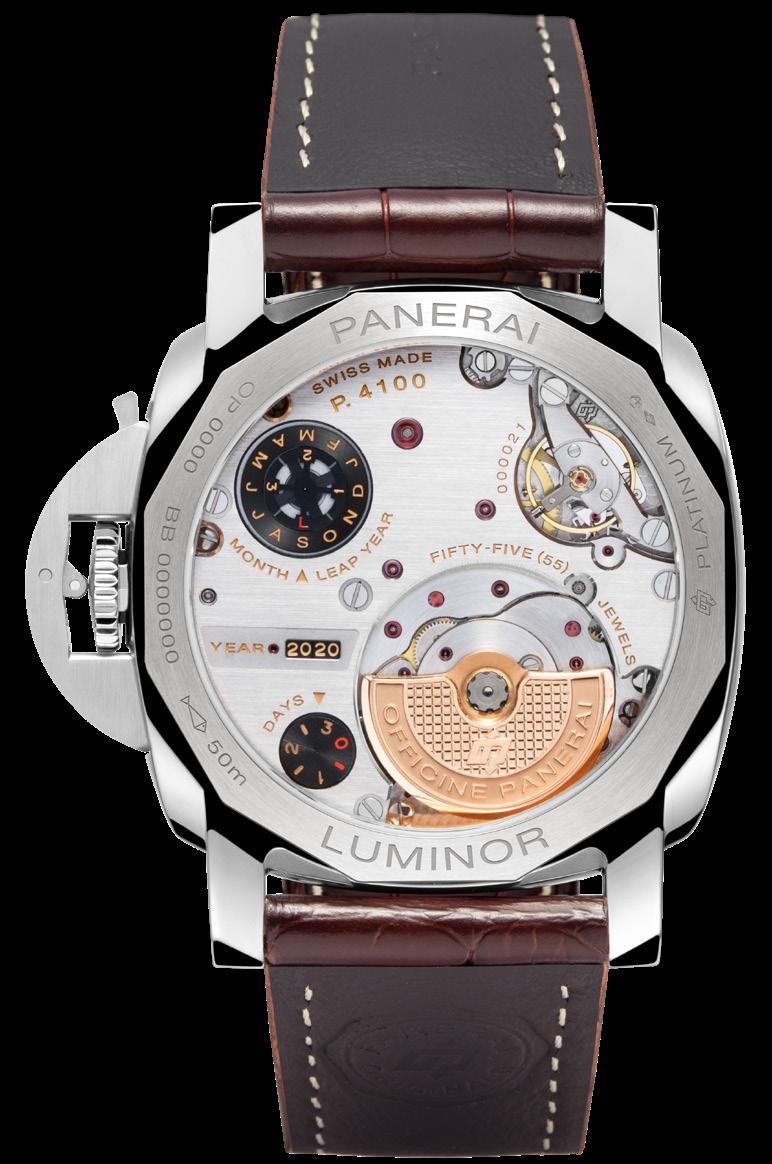
Visually, Panerai preserves its hallmark clarity. The dial displays only essential information—hours, minutes, small seconds, date, and GMT—while the deeper mechanics of the perpetual calendar are revealed through the sapphire case back. The month, year, leap year, and power reserve are hidden in plain sight for those who choose to look closer seeking these details, making the display simple and clutter-free.
One of the Maison’s standout innovations is the intuitive adjustment system, a userfriendly approach which allows the wearer to modify the day, date, month, and leap year settings using only the crown. Within this framework, each of the highlighted references expresses a distinct personality.
Premiered at Watches and Wonders 2025, the Luminor Perpetual Calendar GMT
calendar discs beneath, creating a layered, almost architectural depth. Enhanced SuperLumiNova® X2 ensures superior nighttime legibility, and patented upgrades—such as a shock-protected date mechanism and a reinforced GMT spring—underscore Panerai’s focus on real-world durability. The watch comes on a dark blue alligator strap with a vintage patina finish and is water-resistant to 50 metres.
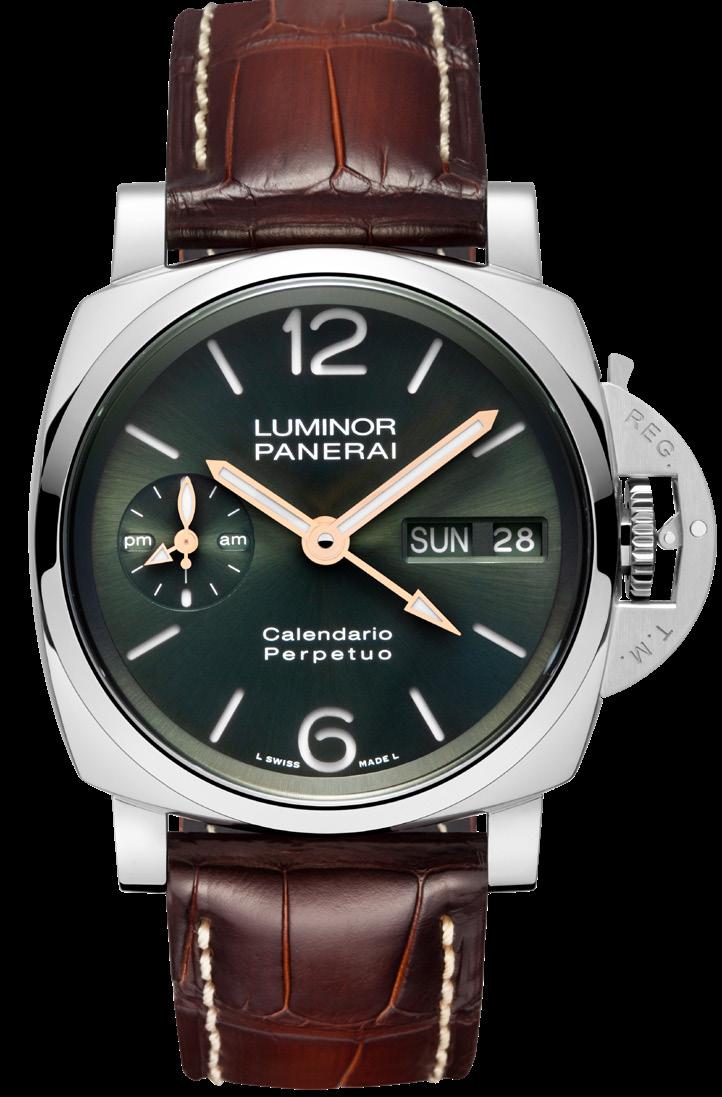
The Luminor Perpetual Calendar Platinumtech™ (PAM00715), on the other hand, also uses Panerai Platinumtech™ for its watch case. While sharing the same Platinumtech™ case and P.4100 calibre, the timepiece showcases a green sun-brushed dial that adds depth and contrast while preserving Panerai’s signature legibility. Also waterresistant to 50 metres, this model is delivered on a dark brown patina alligator strap with a white gold buckle and is limited to just 100 pieces worldwide.
Across the two references, Panerai demonstrates a rare balance: a perpetual calendar that is mechanically sophisticated, visually restrained, and genuinely practical. By stripping away unnecessary complexity while preserving horological depth, the Luminor Perpetual Calendar collection stands as a modern benchmark for functional high watchmaking.
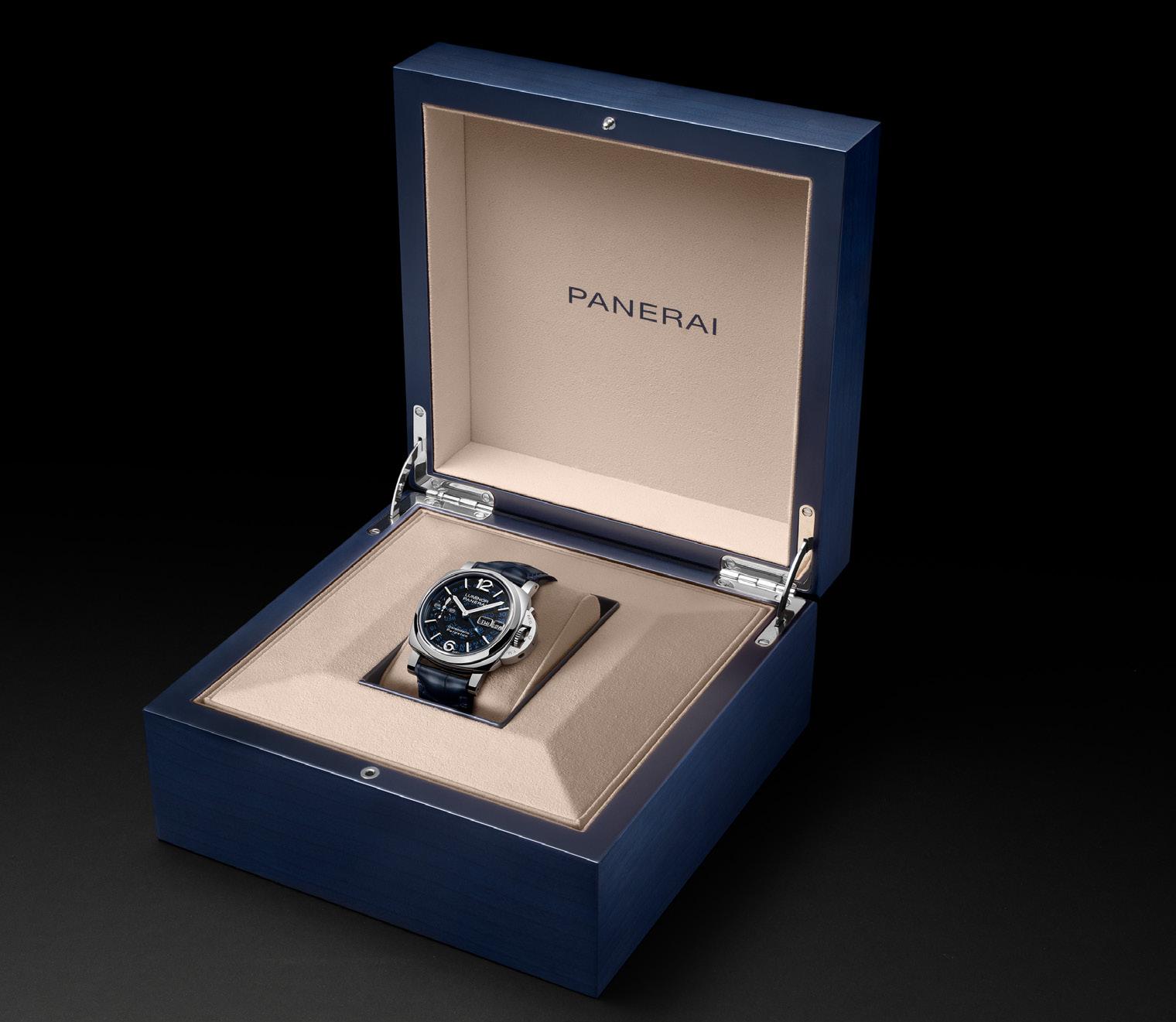
The Luminor Perpetual Calendar GMT Platinumtech™ (PAM01575) comes in an elegant box and is available exclusively in Panerai boutiques
The case back of the Luminor Perpetual Calendar Platinumtech™ (PAM00715) provides a glimpse into the inner workings of the P.4100 calibre
The Luminor Perpetual Calendar Platinumtech™ (PAM00715) features a green sun-brushed dial
VITREOUS ELEGANCE
BELL & ROSS DISTILLS DESIGN, MATERIAL, AND LIGHT INTO A MODERN HOROLOGICAL SCULPTURE
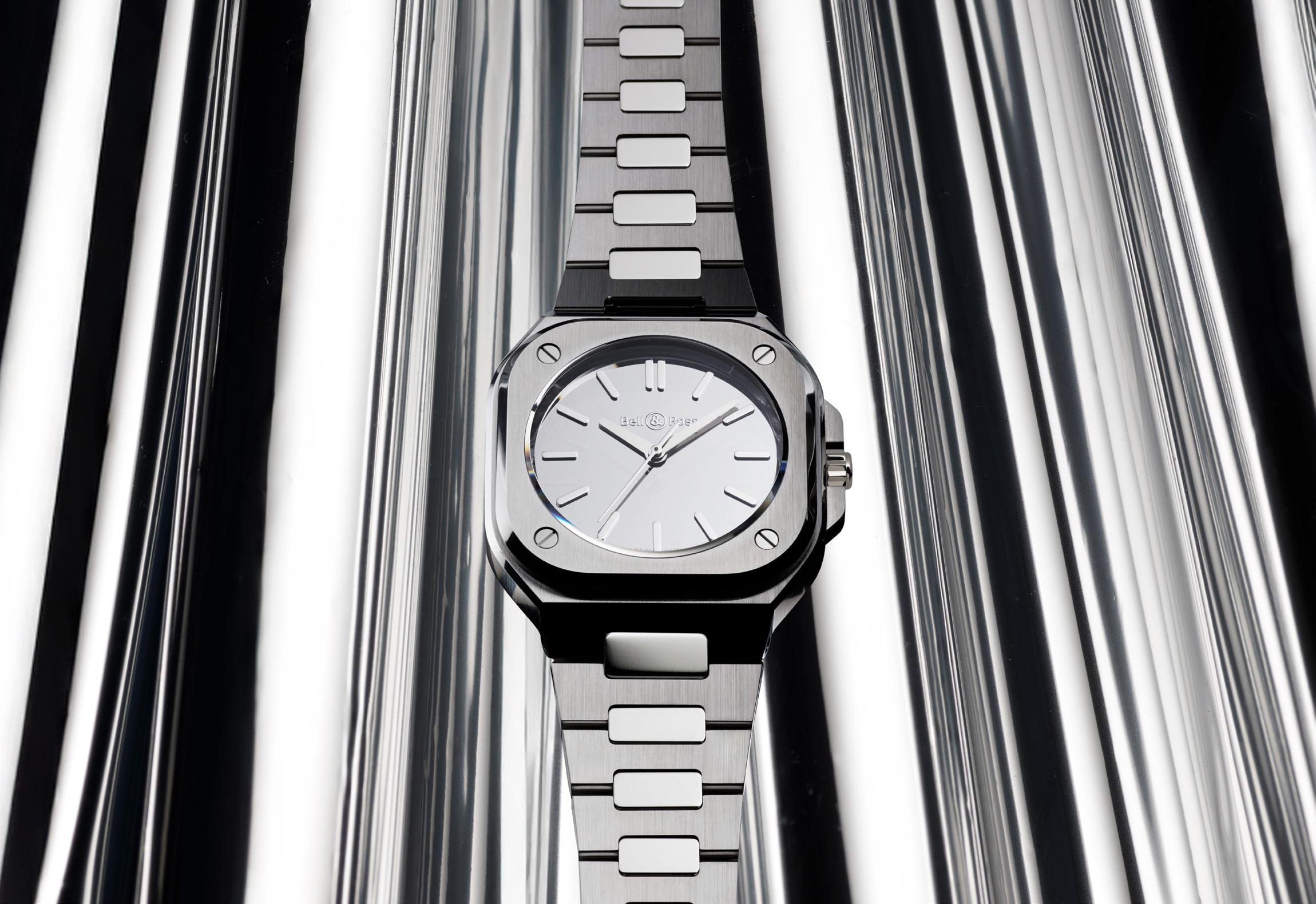
Reflection has always been central to watchmaking—not only as a physical phenomenon, but as a philosophical one. Time reflects life; the present mirrors the past; modernity constantly reconsiders its own image. With the BR-05 Grey Mirror Steel, Bell & Ross steps beyond embellishment and explores reflection as an idea. Steel becomes
surface, light becomes language, and the watch itself becomes a horological creation that both measures time and contemplates it.
At first glance, the sport-chic timepiece manifests as almost immaterial. Its mirrorpolished rhodium-plated dial, indices, and hands dissolve into one another, forming
By
Allestisan Citra Derosa
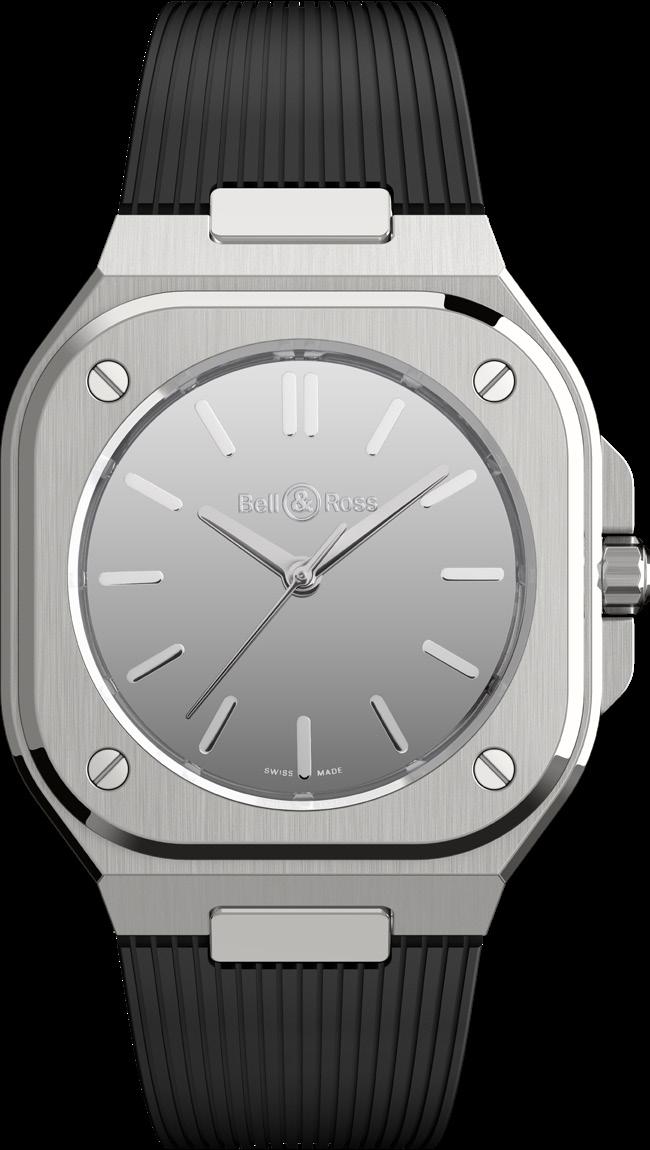
The BR-05 Grey Mirror Steel is also offered with a black rubber strap
Bell & Ross presents steel in a whole new light with the BR-05 Grey Mirror Steel
an abstract, sculptural composition. Reliefs appear and disappear depending on the light, forging a play of perception that feels alive.
The lustrous hands—likened by Bell & Ross to droplets or threads of mercury—seem to float above the dial, reinforcing the sense that the watch is less an assembly of parts than a single reflective volume. There is no date window to interrupt this visual harmony; the omission allows purity and legibility to take precedence.
This commitment to absolute coherence—one colour, one material, one vision—continues to define the BR-05 Grey Mirror Steel. Constructed mainly from steel, the watch presents itself as a true monobloc of pure metal: case, bezel, bracelet, and dial unified through satin and mirror polishing.
Steel here is not merely functional. Long prized in mechanical craft for its robustness, corrosion resistance, and hypoallergenic qualities, it is reimagined as a medium of expression—capable of depth, brilliance, and nuance. Adopting the vitric appeal of glass, the watch achieves
a luminosity that transcends its industrial origins. As it settles on the wearer’s wrist, the monochrome object is at once restrained and powerful—minimal, yet quietly commanding.
The art of mirror polishing sits at the heart of this edition. Its demanding finishing technique historically associated with fine silversmithing, jewellery, and high-end watchmaking, commands surgical precision. Steel’s hardness leaves no room for error; a single imperfection compromises the entire surface. In the BR-05 Grey Mirror Steel, this mastery is evident across every component, alchemising technical difficulty into stunning visual serenity.
Beneath this refined exterior, the ingenious mechanical substance satisfies even the most discerning watch enthusiast. The 40 mm steel case, measuring just 10.5 mm in thickness, houses the automatic mechanical movement BR-CAL.321-1. Offering a 54-hour power reserve, the movement is visible through a sapphire case back, where the oscillating rotor completes a full 360-degree rotation.
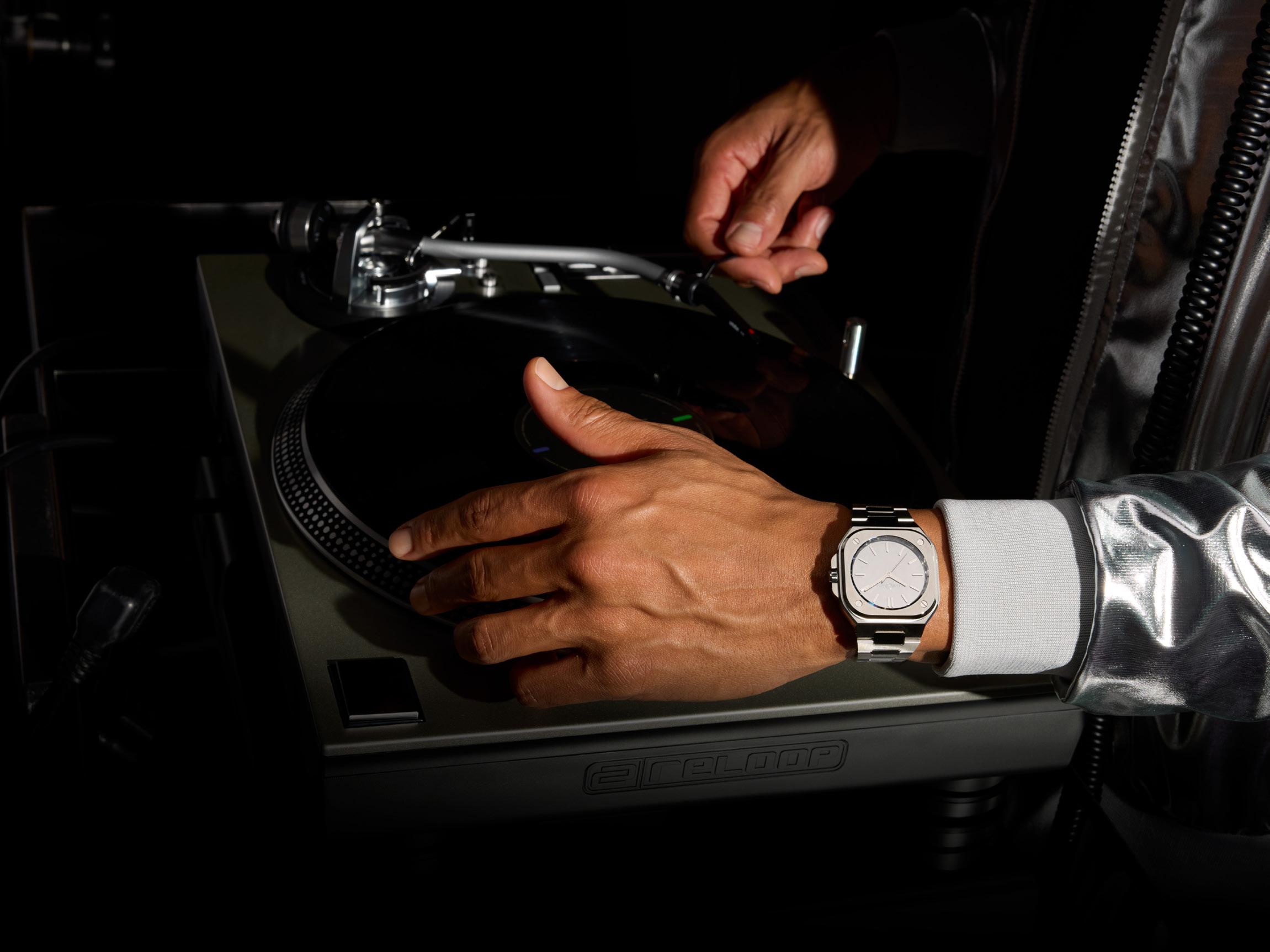
Sapphire crystal with anti-reflective coating protects the dial, while water resistance to 100 metres ensures everyday versatility. The watch is offered with either a polished and satinfinished steel bracelet or a sturdy black rubber strap, both secured by a folding steel buckle.
Produced as a 250-boutique-only piece, the BR-05 Grey Mirror Steel marks a significant moment in Bell & Ross’s trajectory. Since its founding in 1994 by Bruno Belamich and Carlos A. Rosillo, the Franco-Swiss Maison has drawn inspiration from aviation instruments, translating cockpit dashboards into wrist-worn tools defined by their clarity and function.
The iconic “circle within a square,” introduced with the BR 01, became a visual signature of professional utility. With the BR-05 collection, first unveiled in 2019, that language was reinterpreted for the city—urban, integrated, and architectural. The Grey Mirror Steel edition represents the apex of this evolution, transforming the aeronautical watch into a refined, modern companion, where performance and style exist in equilibrium.
A limited edition of 250 pieces, the watch is a Bell & Ross boutique exclusive
AT FULL GALLOP
LONGINES WELCOMES THE YEAR OF THE HORSE WITH A MASTERFUL BLEND OF ART AND MECHANICS
Founded in 1832 in Saint-Imier, Switzerland, Longines has spent nearly two centuries cultivating a reputation built on tradition, elegance, and performance. A significant chapter of this history is defined by the brand’s deep-rooted connection to the equestrian world, a passion dating back to the late 19th century that has seen the watchmaker
serve as the official timekeeper for prestigious competitions worldwide. In a fitting homage to this enduring bond and the arrival of a new lunar cycle, Longines has unveiled a striking new timepiece: the Longines Master Collection: Year of the Horse Edition. This special release is designed to celebrate the vitality and drive that characterise the zodiac
By Anastasia
W. Wibowo
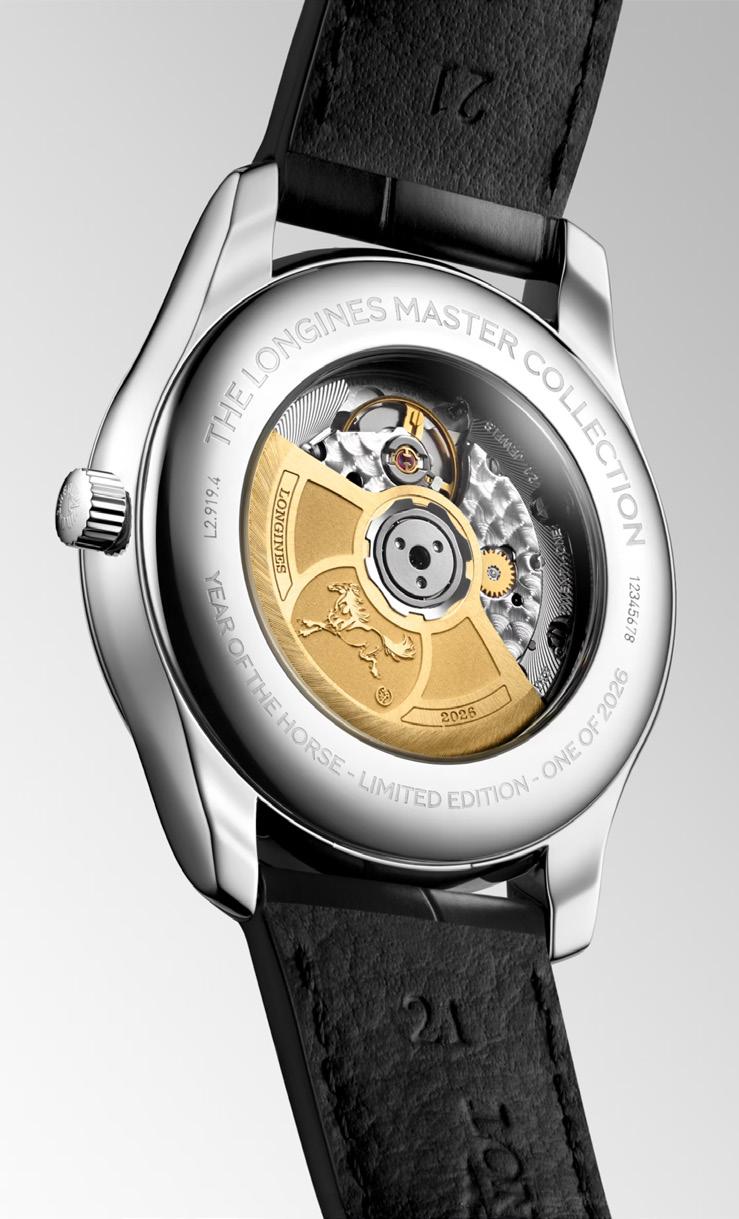
A look at the case back shows an engraved horse derived from Peon Xu’s celebrated painting
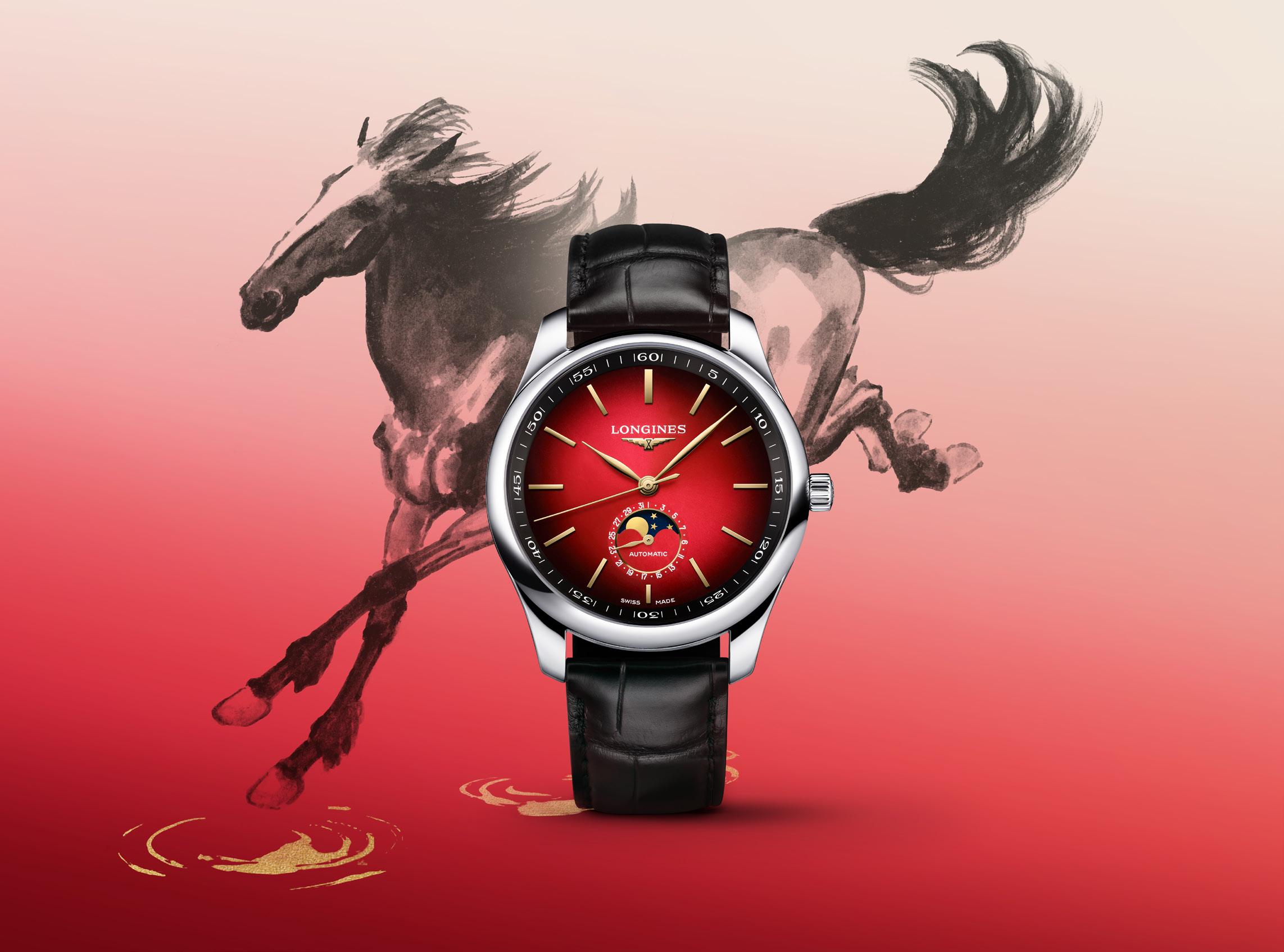
The Longines Master Collection: Year of the Horse Edition ushers in the Lunar New Year in style
animal, uniting the grace of the horse with the brand’s centuries-old watchmaking expertise.
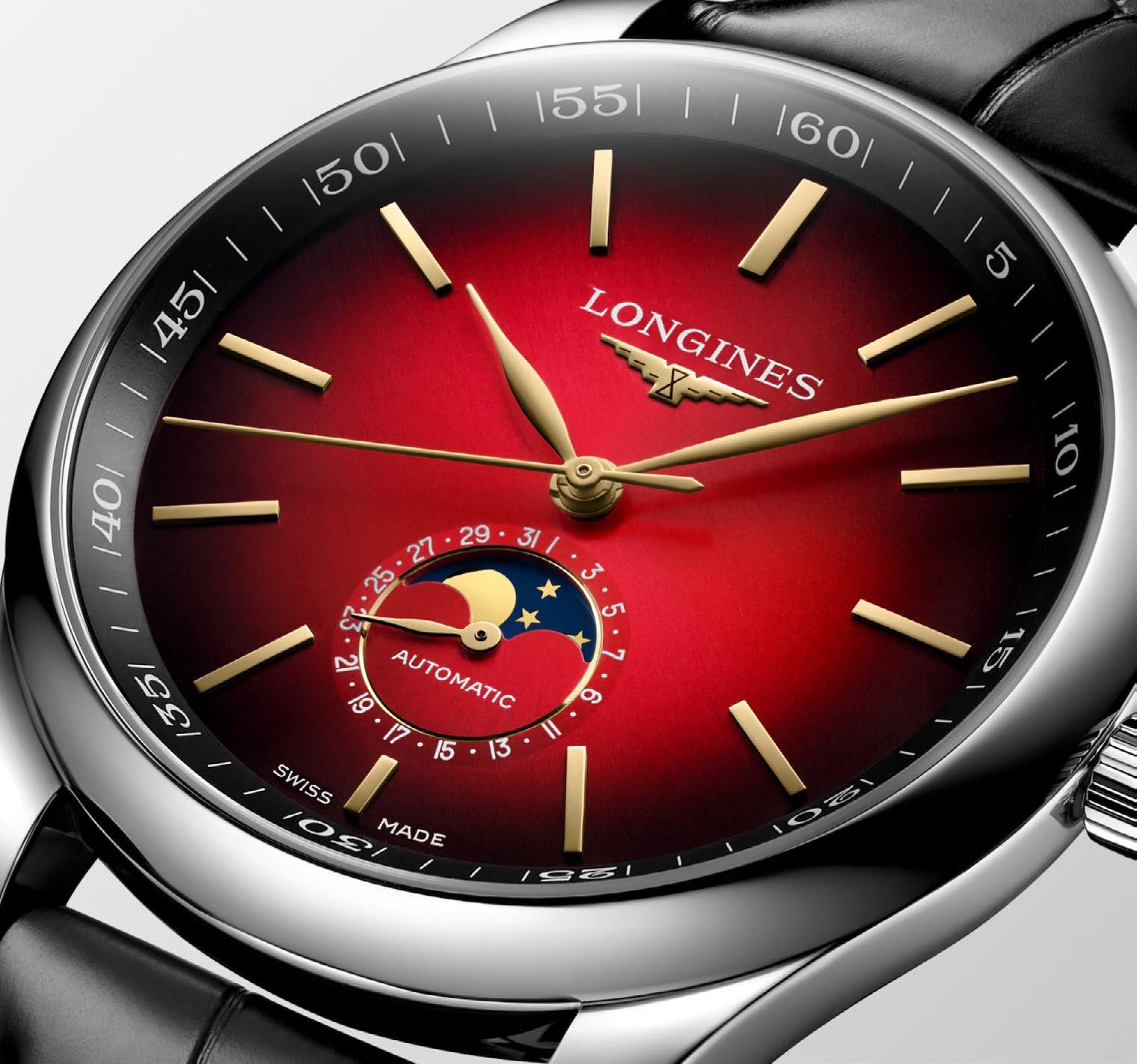
At a glance, the watch communicates its purpose with confidence. The rich gradient red dial—radiating from a darker perimeter to a luminous centre—evokes the glow of sunrise, a powerful metaphor for new beginnings. Red, long regarded as an auspicious colour in Chinese culture, anchors the watch firmly in the spirit of the Lunar New Year, while remaining unmistakably Longines in its restraint and refinement. Applied gilt hour markers and polished gilt hands bring warmth and clarity, creating a visual harmony that feels celebratory without excess.
The aesthetic soul of this limited edition lies in a unique artistic collaboration with the Peon Art Museum in China. The design draws inspiration from the renowned modern Chinese painter Peon Xu, who revolutionised traditional art by fusing Western techniques with Chinese realism. For this timepiece, the iconic motif from Xu’s celebrated painting, “Galloping Horse,” has been meticulously engraved onto the movement’s gilt rotor. As the wearer moves, the rotor animates the artwork, making the horse appear to gallop forward in a display of momentum and freedom. This powerful imagery is complemented by calligraphy by Qingping Xu, the artist’s son and esteemed calligrapher, which signifies the irresistible force of a horse in full stride seizing a favourable moment of breakthrough and success.
Beneath the artistic exterior lies a robust technical heart. Housed in a 42 mm stainless steel case with a thickness of 11.20 mm, the watch is powered by the exclusive Longines L899.5 self-winding mechanical movement. This calibre is equipped with a silicon balance-
spring, a material chosen for its resistance to magnetic fields and temperature variations, ensuring superior precision. The movement beats at 25,200 vibrations per hour and offers a generous power reserve of up to 72 hours.
Water-resistant up to 3 bar or 30 metres, the transparent sapphire case back allows owners to admire the custom-engraved rotor and the intricate mechanics within. A moonphase display, framed by a date indicator at 6 o’clock, adds a layer of technical sophistication to the clean layout. Limited to just 2,026 pieces worldwide, each watch features the engraving “YEAR OF THE HORSE – LIMITED EDITION – ONE OF 2026” on the case back, marking it as a rare tribute to the spirit of courage and perseverance.
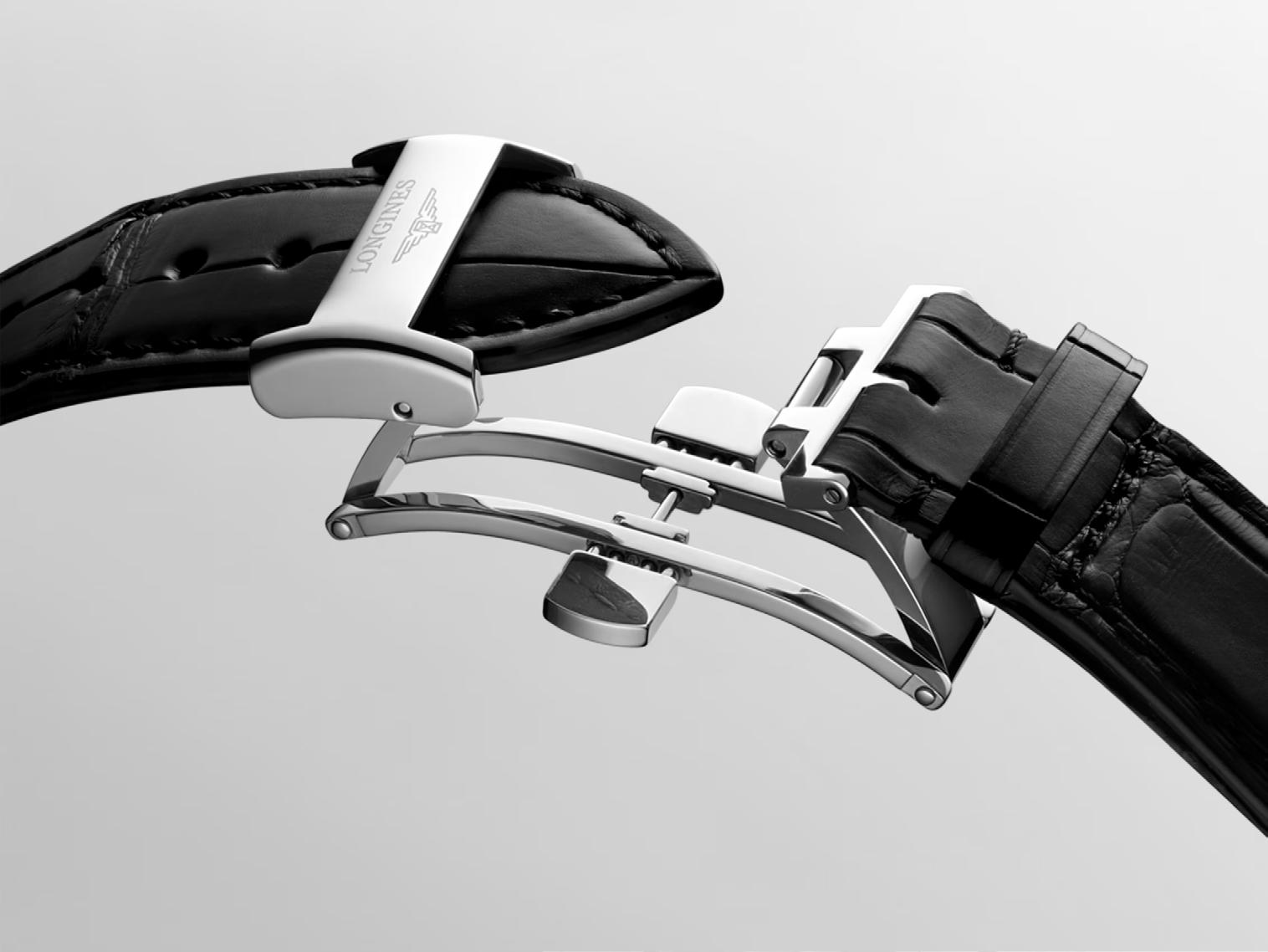
Completing the design is an elegant black alligator leather strap secured by a stainless steel triple-safety folding clasp, lending a formal finish that underscores the watch’s collectible character. In its entirety, the Longines Master Collection: Year of the Horse Edition is more than a commemorative release—it is a dialogue between heritage and art, mechanics and meaning, where the spirit of the horse gallops eternally in time.
The timepiece is secured on the wrist with a stainless steel triple-safety folding clasp
A rich gradient red dial features gilt-shaped numerals and an elegant moonphase display
LIKE NO OTHER
CHANEL STARTS THE NEW YEAR WITH NEW COCO CRUSH PIECES AND A THRILLING CAMPAIGN WITH JENNIE AND GRACIE ABRAMS
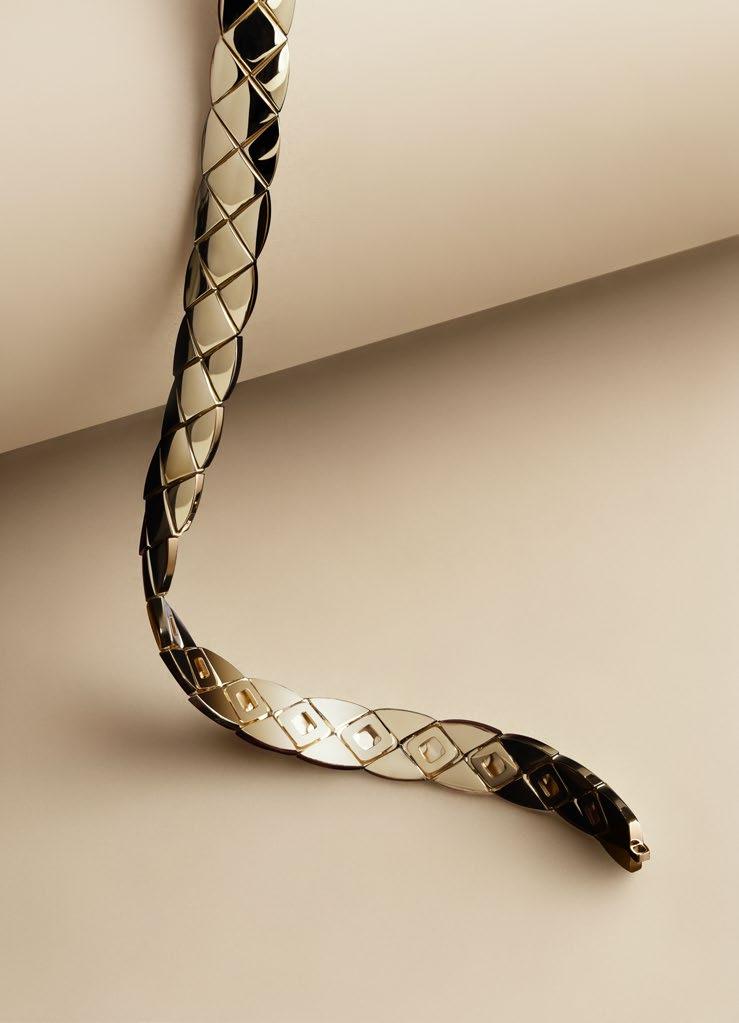
Regarded as the face of modern-day luxury, CHANEL COCO CRUSH has taken a life of its own since its first debut in 2015. Created at the CHANEL Fine Jewelry Creation Studio, the original collection
was created as an ode to founder Gabrielle Chanel, whose 2.55 bag had the similar quilted pattern COCO CRUSH has today. To ring in the New Year, the Maison surprises the world with a new supple take on the COCO CRUSH
collection in addition to a star-studded film campaign entitled, “Hide and Seek.”
The “Hide and Seek” campaign takes on a sense of adventure that comes from discovering, or rediscovering, hidden gems. To bring this vision to life, CHANEL put its trust on director Gordon Von Steiner, who orchestrated a thrilling film campaign that suits the arrival of a new year. The campaign features singers Gracie Abrams and Jennie. As Gracie, the hider, treads the Chateau Marmont, the ravishing new COCO CRUSH vividly glistens against her skin. Clad with her own stacks of CHANEL Fine Jewelry, the seeker Jennie uses her sharp senses to find Gracie. Joining in on the fun is a statuesque cast comprised of models Mona Tougaard, Lulu Tenney, Mathilda Gvarliani, Akon Changkou, and Qun Ye. As they run through the halls, each turn takes the ladies to unknown rooms that further electrifies the chase.
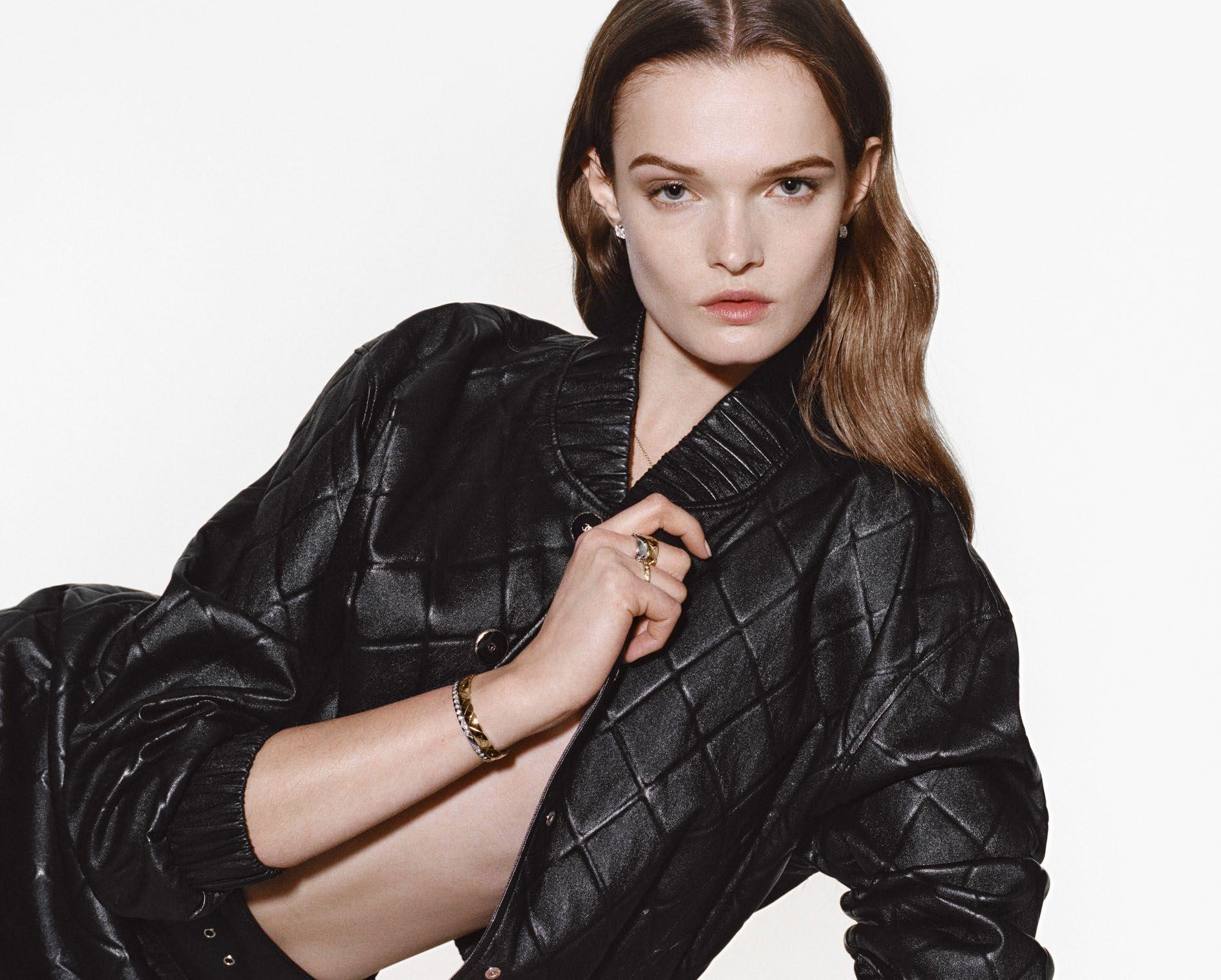
The stirring film campaign embodies the unforgettable experience of discovering something new, which may well be in line with unboxing a new set of COCO CRUSH in 2026. The campaign is paired with a set of powerful stills that provide a closer look to each jewelry piece. Like her role in “Hide and Seek,” Jennie looks as if she has found Gracie’s hiding spot, her sharp gaze enhancing the delicate 18K beige gold COCO CRUSH short supple necklace gracefully sitting just above her collarbones. In contrast, Gracie dons the yellow gold COCO CRUSH short supple choker that stuns with her black outfit. While
different in flair, both necklace and choker can easily elevate any attire in their 18K beige gold, yellow gold, or white gold and diamonds form. Naturally, the new collection also retains the COCO CRUSH necklace in varying types of
gold that have been perfectly moulded for everyday wear.
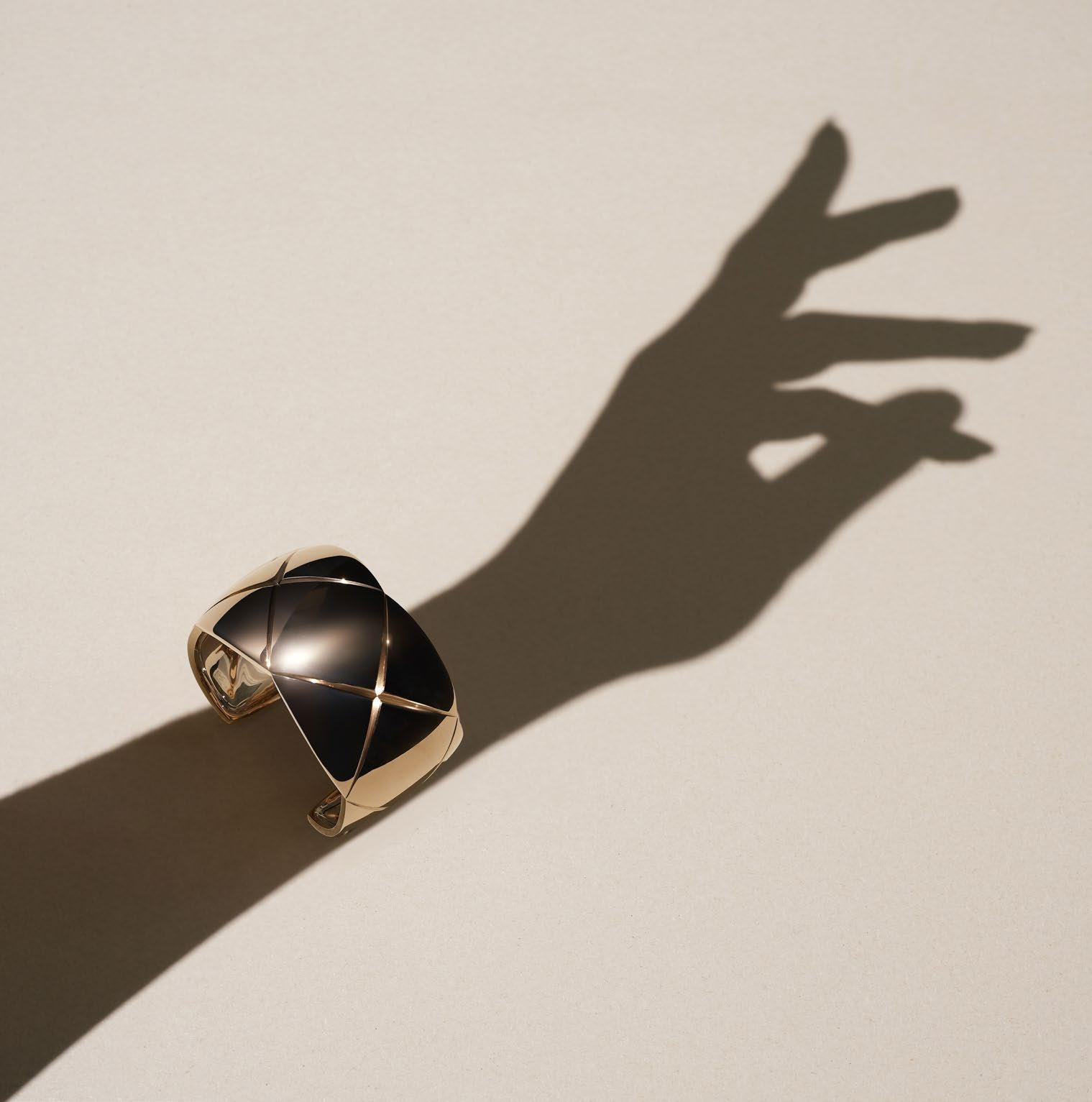
With her signature tresses tucked behind her ears, Gracie’s powerful side-profile reveals a two-piece earring in 18K beige gold and diamond-set white gold. Its addition to the collection balances the classic COCO CRUSH earring as well as another breathtaking piece. Named the COCO CRUSH transformable supple earrings, CHANEL’s latest diamondstudded earrings can easily morph into a stunning mix between COCO CRUSH earrings and drop earrings. Much like the remainder of the collection, the stellar invention proves the CHANEL artisan’s dexterity and keen attention to detail. Further exhibiting the line’s elements, the bold COCO CRUSH cuff provides a better view of the hypnotising creases that form the quilted motif. While it is made of 18K gold, both its silhouette and motif offer an entirely different picture—too supple to be precious metal yet too strong to be fabric. Its enlarged character contradicts that of the slimmer yet still refined COCO CRUSH bracelet as well as the dainty COCO ring. Akin to the “Hide and Seek” film campaign, CHANEL’s attempt at adding suppleness to its Fine Jewelry reaches a depth and artistry like no other.
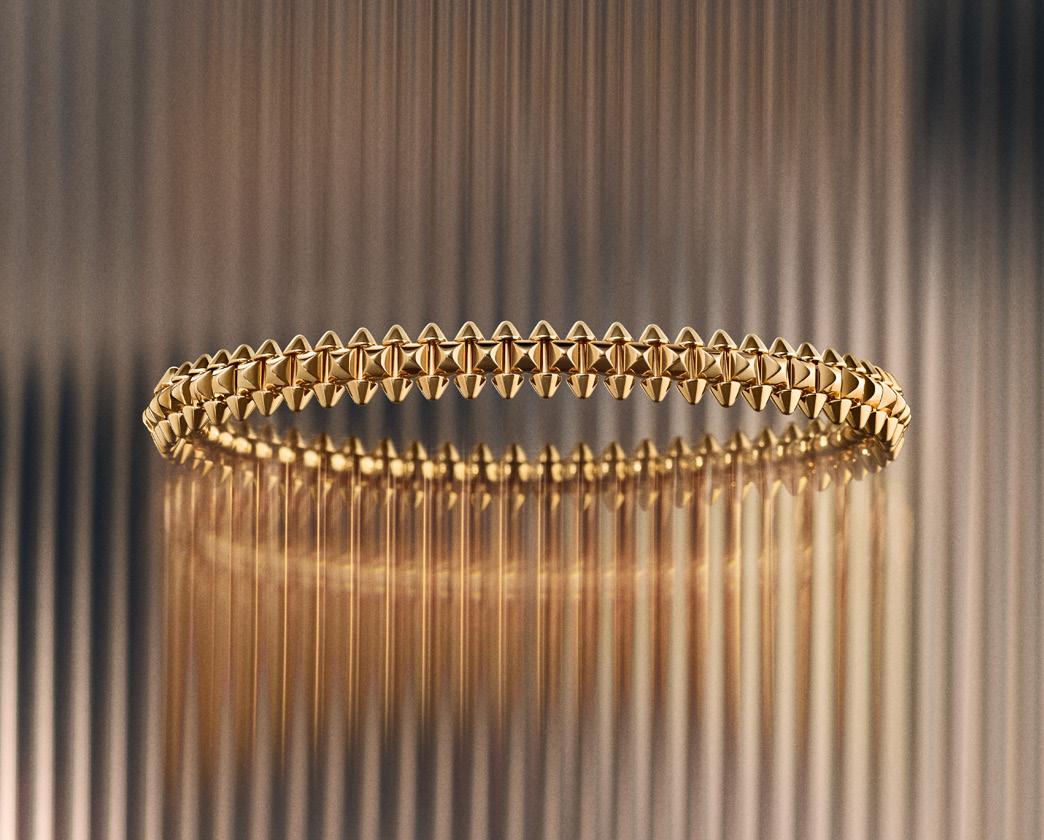
WHEN PUNK ATTITUDE MEETS HAUTE PRECISION IN CARTIER’S NEW CREATIVE ADDITIONS
Since the early 20th century, Cartier has built its identity not through mere embellishment, but opposition. The Maison has long introduced industrial motifs into precious objects, allowing studs, beads, and sharp geometry to punctuate watches, accessories, and jewels. Art at Cartier, has
never been polite. Its depiction of beauty has always flirted with disruption.
Clash de Cartier makes that tension its central thesis. The collection is conceived as a clash of design codes: softness against sharpness, heritage against modernity, artistry against
mechanics. All the distinct pieces feel simultaneously punk in spirit and impeccably exquisite in execution.
By Allestisan Citra Derosa
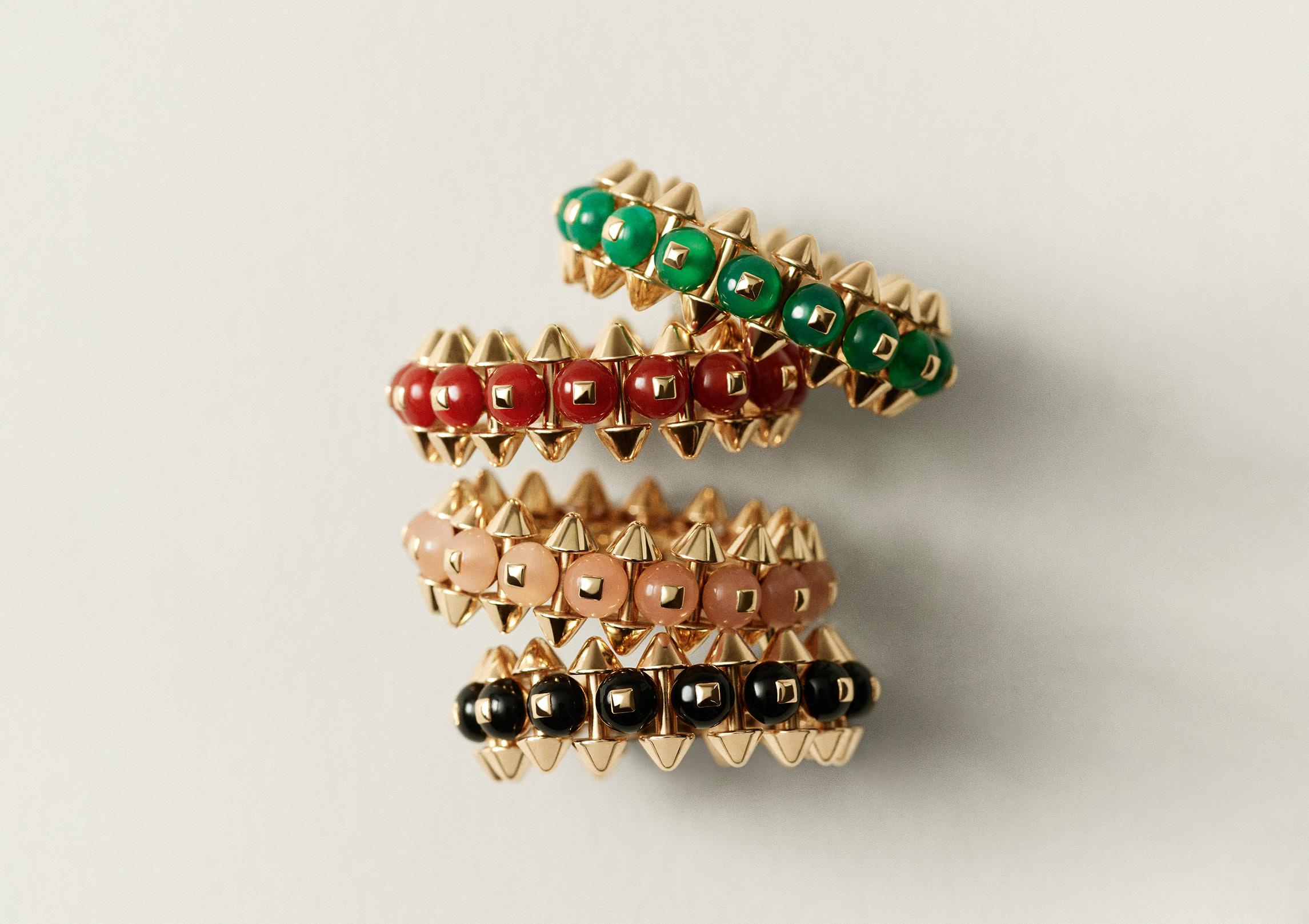
The new Clash de Cartier rings embrace colour in the form of onyx, red-dyed agate, green-dyed agate, and pink chalcedony
Clash de Cartier necklace, flexible, extra-large model, yellow gold, onyx
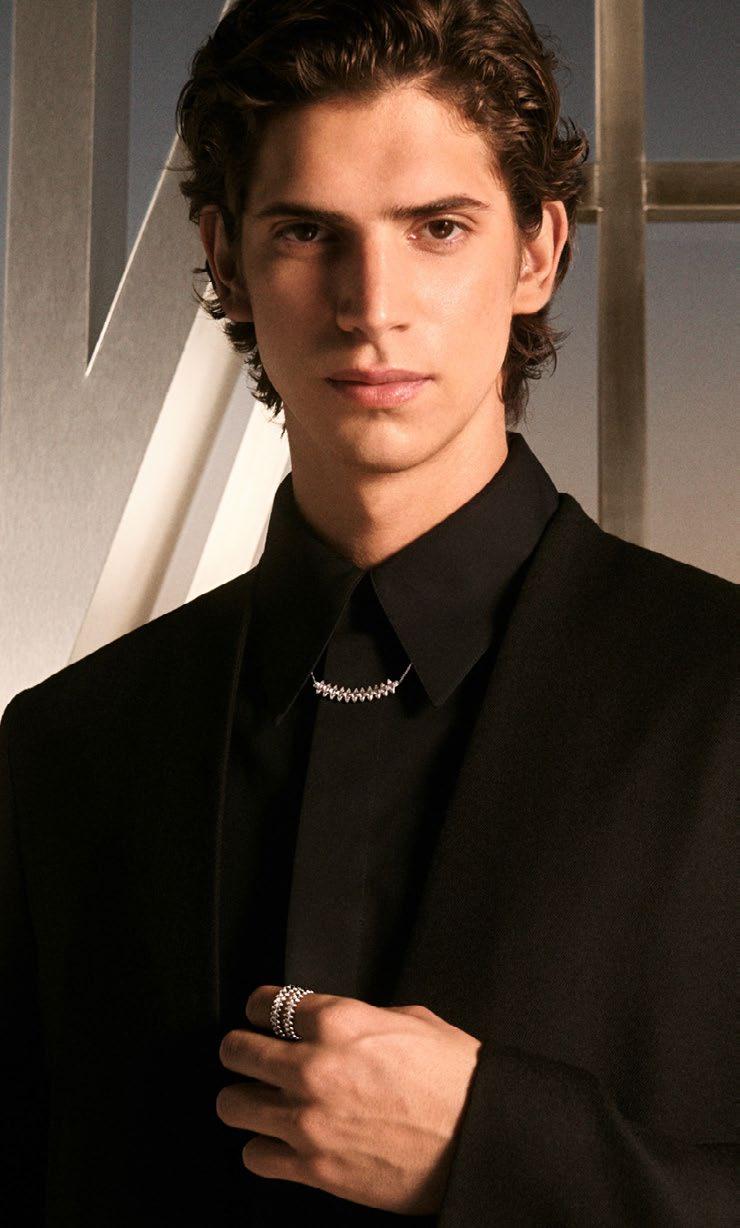
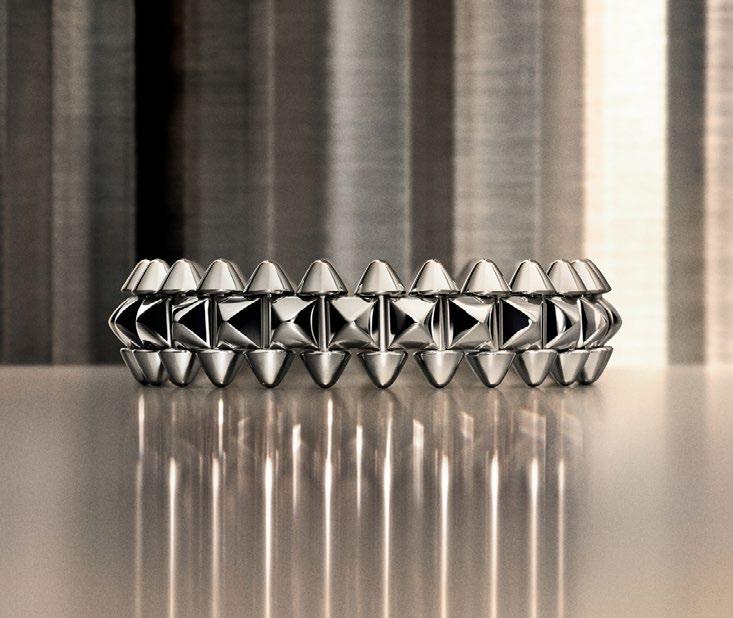
Anchoring the collection is a distinctive studded mesh, composed of three historic elements. Rounded picots bring softness and rhythm; smooth boules introduce volume; angular clous carrés inject a graphic edge, each belonging to a different visual and cultural lexicon. Fused together, they form a single, cranté structure—powerful, architectural, and unmistakably Cartier.
The clash extends beyond appearance into construction. Defined by movement, necklaces, bracelets, rings, and earrings are entirely flexible, engineered from hundreds of individual components, numbering up to 600 in some pieces. All elements remain connected yet free to move, allowing the jewellery to follow the body rather than constrain it.
To achieve this, Cartier draws on dual forms of expertise. Traditional lost-wax casting grounds the collection in high jewellery savoirfaire, while high-precision machining ensures absolute accuracy during assembly. Polished by hand, each element carries comfort and durability. When worn, the jewellery generates a subtle delicate vibration—and even a faint sound—carefully calibrated during the creation process.
This is where the punk attitude of Clash de Cartier reveals its true sophistication. The studs suggest defiance, yet the sensation on the skin is soft. The visual aggression of spikes
is countered by a supple, almost sensual wear. It’s a trick of the senses that gives the illusion of masterful rebellion.
The latest iterations of the collection deepen this dialogue through material and scale. For the first time, entirely flexible necklaces and bracelets are rendered in yellow gold, introducing warmth and classic preciousness to the collection’s industrial vocabulary.
worn—on the front and back of the ear or solely on the front—allowing the wearer to modulate the piece’s attitude. Luxury, here, is defined by freedom.
Rooted in Cartier’s experiments of the 1920s and 1930s, Clash de Cartier does not quote the Maison’s past but re-engineers it. Studs and beads once used as decorative punctuation are transformed into a moving system, one
Colour enters the conversation with equal consciousness. Onyx, red-dyed agate, green-dyed agate, and pink chalcedony are integrated as hard-stone beads, interspersed with rose gold studs. Each bead is aligned to the millimetre and graded according to strict colour charts to ensure harmony within contrast. Pierced and secured with clou de Paris nails, these versions contain twice as many components as their all-gold counterparts—amplifying both technical complexity and visual impact.
Volume, too, becomes a form of expression. Extra-large designs widen the mesh and intensify the presence of the studs, particularly in bracelets, necklaces, and three-finger rings. Despite their scale, flexibility remains paramount. Even at its boldest, Clash de Cartier prioritises comfort and wearability.
This philosophy extends to adjustability and multi-wear design. Earrings in rose or white gold are composed of two flexible lines that transform depending on how they are
that speaks to a contemporary, urban, and gender-fluid approach to jewellery.
True to the Masion’s spirit, punk is not noise, but intent. Through a deliberate clash of codes, Cartier creates jewellery that is at once assertive and refined—objects that move, resonate, and challenge the idea of what luxury is meant to be.
Clash de Cartier necklace, medium model, white gold and Clash de Cartier ring, small model, white gold
Clash de Cartier ring, small model, white gold
Clash de Cartier bracelet, medium model, yellow gold
THE SHAPE OF ICE
CHOPARD REIMAGINES ICE FROM PURE GEOMETRY INTO SCULPTED LIGHT THAT MOVES WITH YOU
We reach for ice instinctively. To cool down. To reset. To bring clarity when things feel overheated. But ice, by nature, surrenders to the air. Chopard’s Ice Cube does the opposite.
Since 1999, the Ice Cube Haute Joaillerie collection has stood apart for its minimalist
square shape that felt radical amid more organic jewellery styles. Over decades, the Bauhaus-esque pieces are repeated, stacked, and refined, becoming an archetype of Chopard’s contemporary design identity.
In 2024, the Swiss Maison elevated Ice Cube into high jewellery for the first time. Now,
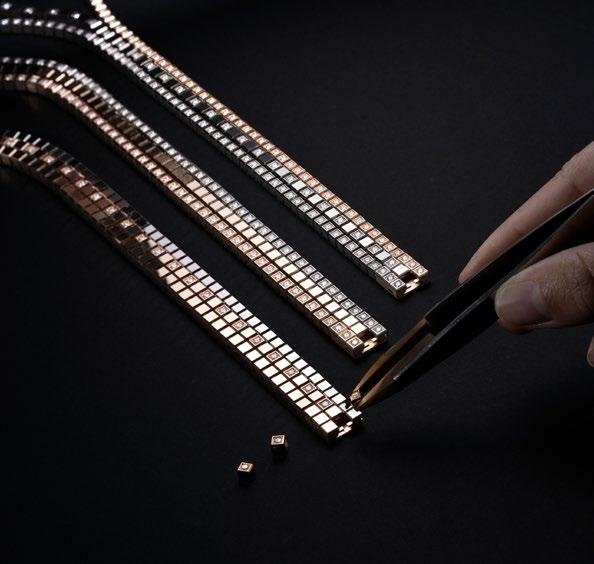
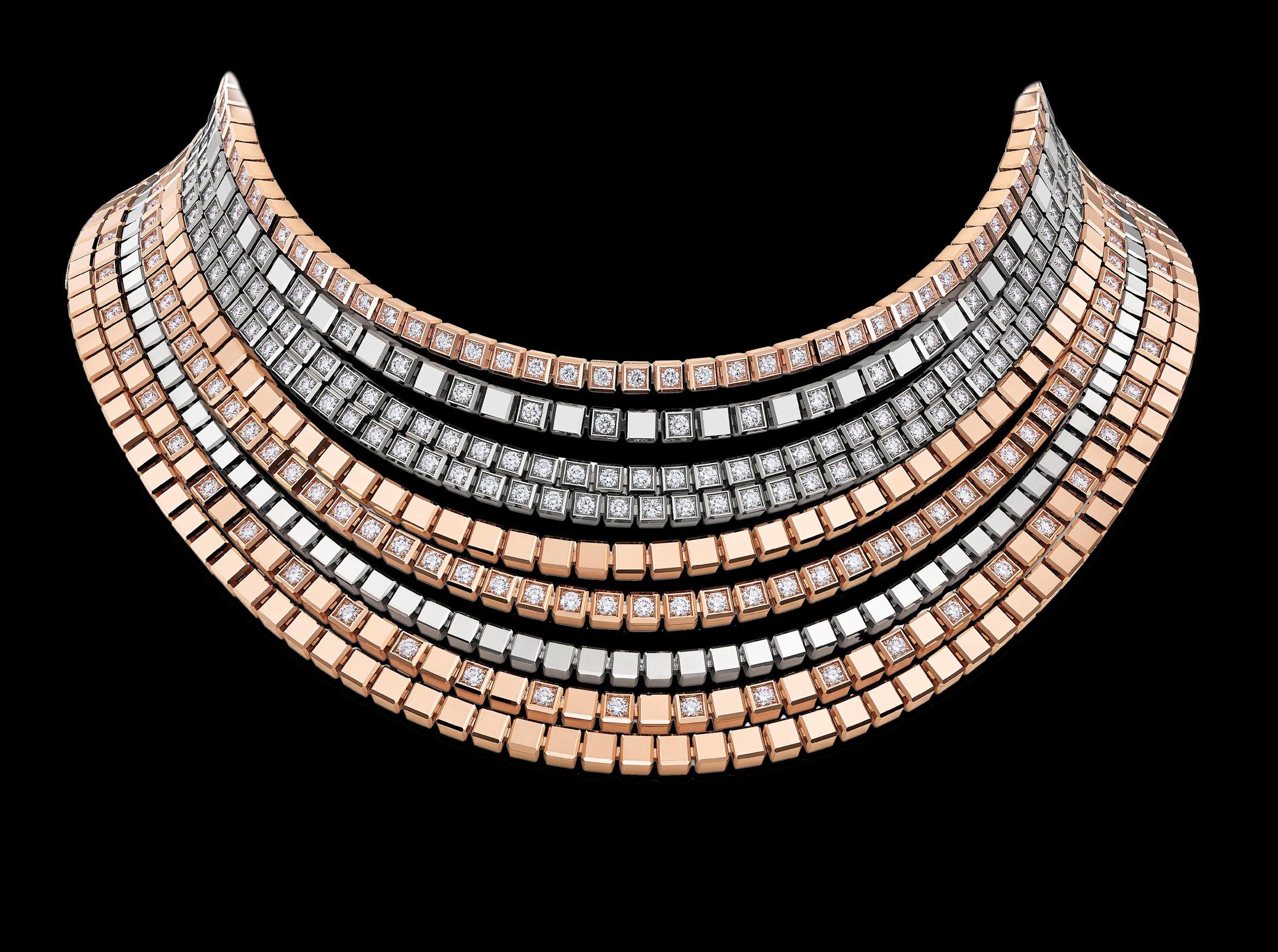
Chopard presents its new Ice Cube Haute Joaillerie collection, at the heart of which is a one-of-a-kind modular necklace in ethical rose and white gold
in its 2025 interpretation, the collection moves decisively into sculptural territory. Reimagined at a larger scale, it becomes a study in proportion, light, and movement. Its appeal lies in simplicity: sleek, sharp, and distinctly architectural.
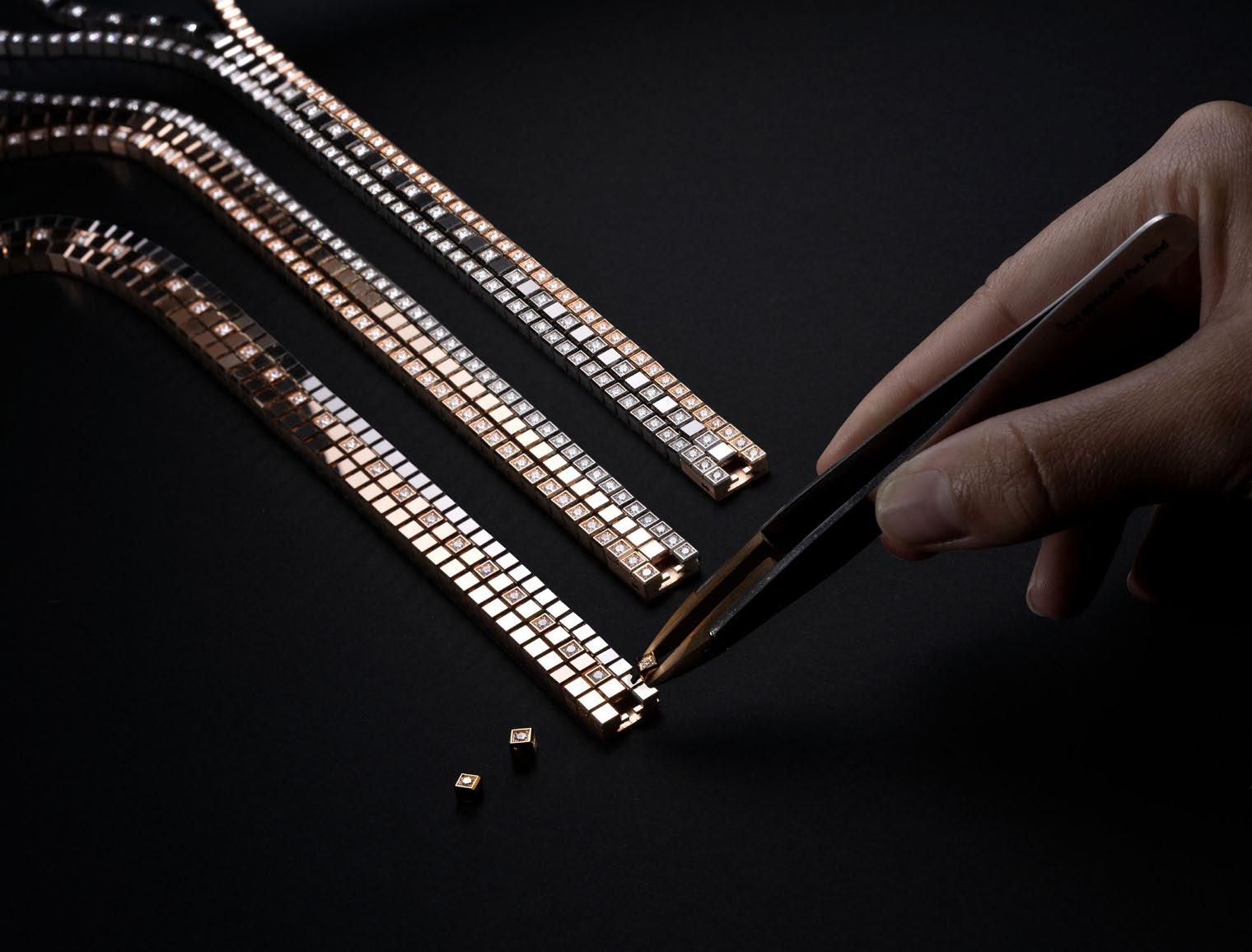
Leading the line-up is the modular necklace that anchored the collection’s launch at New York Fashion Week, a cocktail evening held on the 55th floor of One Vanderbilt. Crafted with nine articulated rows in ethical rose and white gold, the piece flexes around the body with effortless fluidity. The rows can be worn together or detached in sets of three, allowing versatility according to mood or moment. Variations in gold tones, sizes, and surface, some cubes are mirror-polished, others paved with diamonds, create a look reminiscent of skyscrapers reflecting the sunset.
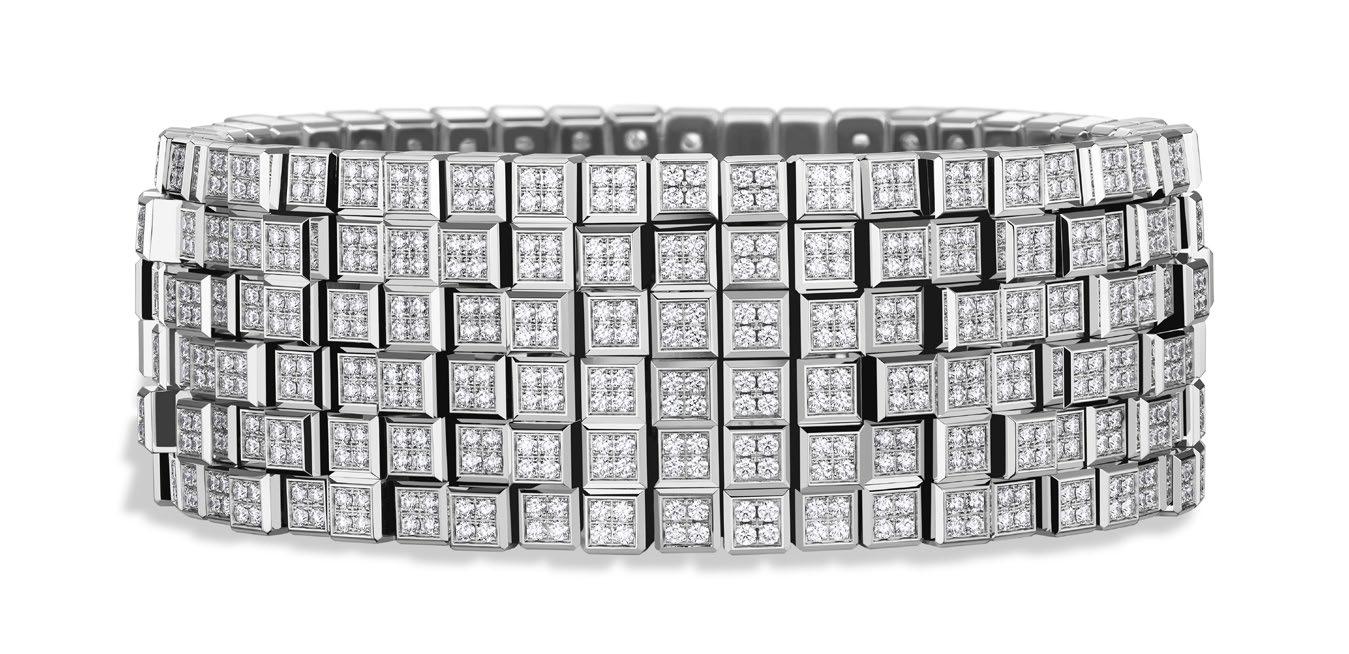
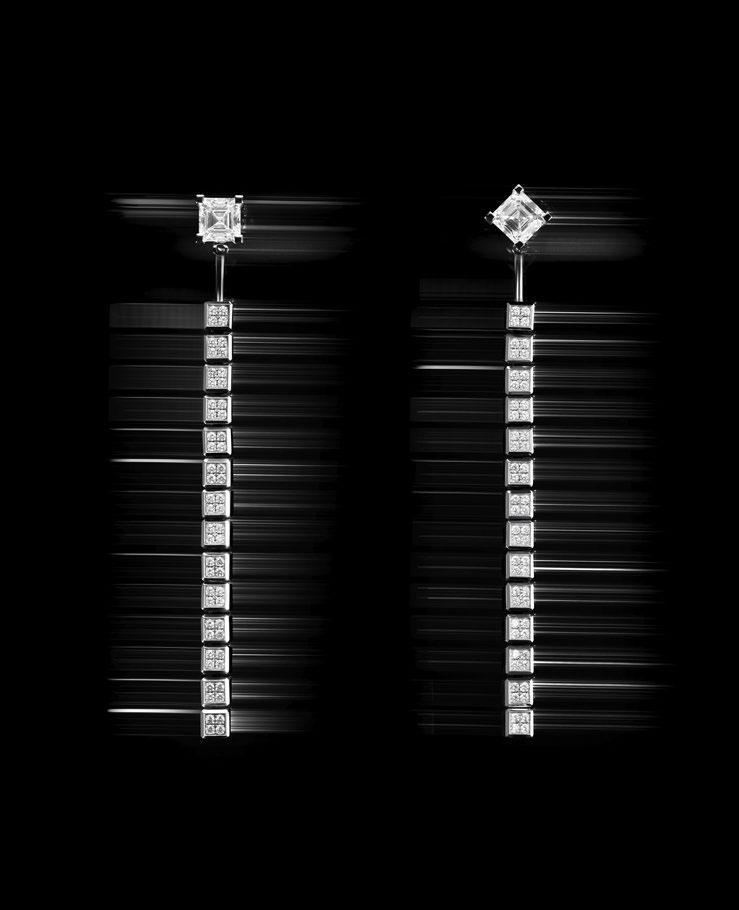
This fascination with geometry and light continues throughout the collection. Bracelets rise and fall like city towers catching the morning sun, their uneven cube heights showcasing Chopard’s remarkable artisanal command of their polishing techniques. Rings, earrings, and versatile pins extend the architectural language further, offering designs that feel graphic yet never static.
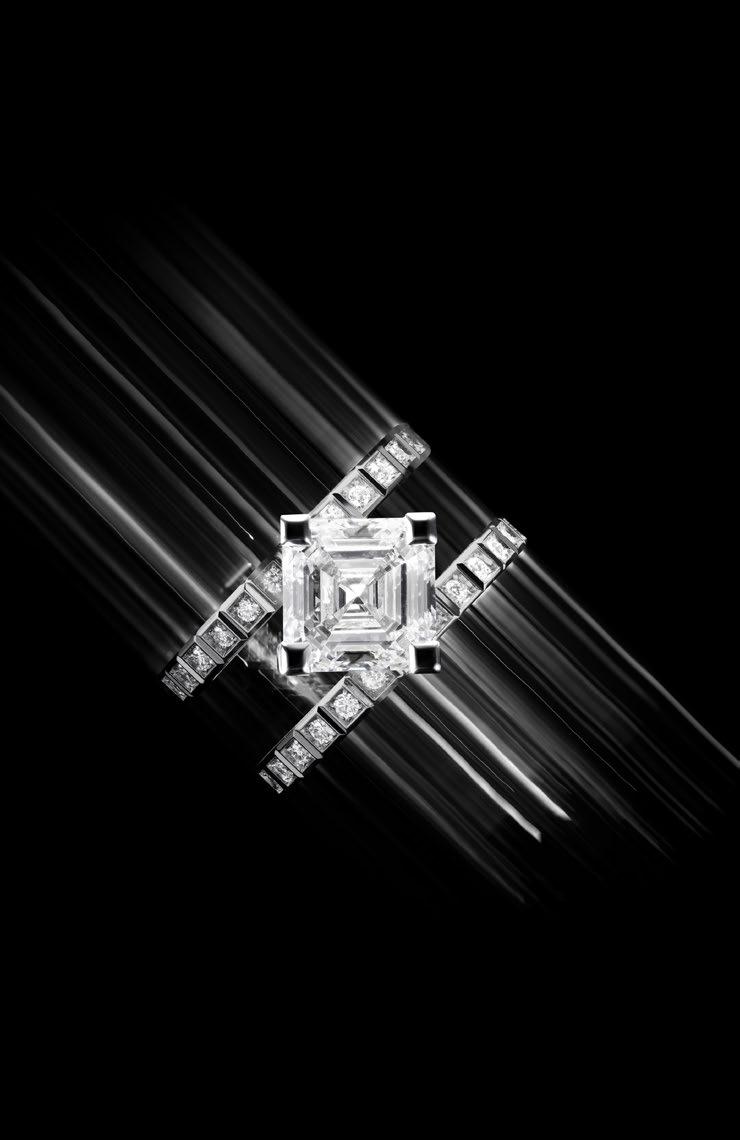
Art Deco influences emerge in select creations, most notably a ring that reinterprets the collection’s iconic multi-band silhouette. Its centre shines with a striking 3-carat Asscher-cut diamond, set diagonally across two parallel bands of ethical white gold, each traced with diamond brilliants.
Reflecting this elegance is a pair of earrings with 1.2-carat diamond solitaires, framed by a fluid line of 14 diamond-set cubes. Designed for versatility, these elements can be removed on one or both sides, allowing a seamless shift between asymmetry and individuality.
Across the collection, Ice Cube is no longer a motif, but a sculptural idea brought fully into form. “Ice Cube has always represented purity and precision,” says Caroline Scheufele, CoPresident and Artistic Director of Chopard. “But here, we pushed its language even further into volume, movement, and expression. I wanted the pieces to feel wearable yet unexpected, like modern art for the body.”
Beyond design, what makes the collection compelling is its insistence that sustainability belongs at the highest echelon of fine jewellery. Crafted from 100% ethical gold, the Maison believes that responsible sourcing and high artistry must coexist, especially in its most prestigious creations.
That ethos resonates with supermodel Bella Hadid, the face of the Sculpted by Light 2024 campaign, whose relationship with Chopard is rooted in shared values rather than spectacle. “I’ve been a longtime admirer of Chopard given their gorgeous craftsmanship and commitment to sustainability. Their designs are so empowering and always give me a sense of confidence whenever I’m lucky enough to wear one of their pieces.”
Shot by Charlotte Wales, the campaign unfolds against a nocturnal cityscape where twinkling lights and sharp silhouettes echo Ice Cube’s reflectivity. Each piece is shown refracting the world with confidence, never excess. In a fastmoving world that frays easily, Chopard has mastered the clarifying essence of ice, made to last. Once again, the Maison offers something increasingly rare: clarity that cools, structure that holds, and beauty that endures.
Luxury customers know quality speaks first, and Berluti has long exemplified that: its shoes, leather goods and apparel stand apart because the house insists on meticulous craftsmanship, exquisite materials and precise construction. The Maison mines its archives for inspiration, ensuring every category reflects Berluti’s singular aesthetic and remarkable allure. With the newly reopened Berluti boutique at Plaza Indonesia and the inclusion of readyto-wear, the brand is directing more attention to Southeast Asia. The Time Place Magazine was fortunate to secure an exclusive interview
with Jean-Marc Mansvelt, Berluti’s CEO, who shared clear insights into the Berluti DNA, the behaviour of luxury shoppers and the brand’s plans for the region.
When you first joined Berluti as CEO at the beginning of 2024, what surprised you the most about the Maison, and reinforced your conviction in its potential?
Upon joining Berluti in 2024, I was most profoundly struck by two elements. Firstly, the dedication of our artisans; their skills, passion and precision are truly inspiring.
Secondly, and equally powerful, is the deep emotional connection our clientele shares with the Maison. This loyalty, this profound attachment, is what makes Berluti unique. Our rich history and unparalleled Savoir-Faire in shoemaking prove that Berluti has its place among the leading luxury menswear brands. We do not aim to be the biggest one, but to excel in our craft and continue to amaze our existing clients and win new audiences, who are equally drawn to Berluti’s artistry and refined elegance. I am confident Berluti will continue to distinguish itself by cherishing its rich past while confidently embracing the
The Berluti boutique in Plaza Indonesia reopened in September 2025 and now offers an immersive brand experience
By Charlene Atalie
DISCOVER MORE
future, fostering that intimate connection with clients who choose a culture, a unique Maison balancing tradition and contemporaneity, recognising the investment value in what we offer through our creations.
The end of 2025 was an especially exciting one for Berluti in Southeast Asia, with the reopening of the Jakarta boutique. What opportunities and insights do you see in the Indonesian market, and how do they align with Berluti’s global strategy?
The reopening of our Jakarta boutique last September is a pivotal moment for Berluti in Southeast Asia. Our boutique at Plaza Indonesia offers an immersive brand experience, and features, for the first time, our ready-to-wear offer in Indonesia—a long-expected client wish we’re delighted to realise. We see significant opportunities in the Indonesian market, driven by a dynamic and growing luxury client base that increasingly appreciates refined craftsmanship and sophisticated design. With Time International, we can rely on a strong business partner, who supports us with its expertise and local insights.
Berluti has long been celebrated for its mastery in leather and footwear, but its ready-to-wear has since become an integral part of the Maison. How do you see RTW shaping the modern Berluti man?
Yes, our heritage is deeply rooted in footwear, as we have developed our expertise for over 130 years now. Over the past two decades, Berluti has naturally expanded its Savoir-Faire to leather goods and apparel as our clients continuously expressed their wish to fully dress in Berluti. In fact, Berluti is today the only menswear brand to offer fully bespoke creations from head to toe, or as we prefer to call it, “from toe to head”. Our ready-to-wear offer, which we just introduced in Indonesia, provides a complete wardrobe that extends our clients’ personal style. I would call it a holistic expression of self, offering sophisticated, versatile, and impeccably crafted pieces that embody the timeless elegance and distinction of Berluti. We empower our clients to compose a truly “remarkable allure” through their considered and assumed choices, ensuring every item reflects a profound aesthetic, while being a beautifully crafted object with character.
What considerations went into bringing the complete Berluti offerings with RTW
included in Indonesia, and how do you see the city’s sophisticated clientele responding to it?
Our decision to introduce the complete Berluti offerings, including ready-towear, in Indonesia was made with a deep understanding of Jakarta’s sophisticated
clientele. We meticulously considered their evolving tastes and their appreciation for a comprehensive luxury lifestyle. We anticipate a very positive response, as this expansion allows our clients to fully immerse themselves in the Berluti lifestyle. It provides them with the opportunity to embrace everything from our iconic footwear to our refined apparel,
Berluti’s ready-to-wear line is now available at its Plaza Indonesia boutique
The Alessandro is one of Berluti’s iconic products. Photo by Matteo Carassale for Berluti
offering a complete sartorial solution that caters to their exacting standards and desire for distinctive elegance.
You’ve spoken about exceptional client loyalty and passion for Berluti. What are some of the key experiences or services you are prioritising to deepen this loyalty,
particularly in growing markets like Southeast Asia?
The level of loyalty, passion, and attachment to Berluti is indeed exceptional, and it is something we are incredibly proud of. To deepen this loyalty, particularly in dynamic markets like Southeast Asia, we prioritise
highly personalised experiences. We have, for instance, a colourist based in Jakarta who is able to locally execute our signature embellishments, such as the patina or tattoos. These initiatives are deeply rooted in our DNA and foster a profound sense of community and connection with the Maison. It is important for us to offer this level of service across our international boutique network. We aim to cultivate and amplify this intimate relationship over time, recognising that our clients are choosing not just products, but a culture, a sense of belonging to the Maison that connects an exclusive circle of people with exquisite taste.
Sustainability and transparency of sourcing and manufacturing are increasingly central to luxury consumers. Berluti makes its footwear in Ferrara, Italy. How do you articulate the Maison’s position on craftsmanship and sustainability?
Berluti has a sustainable approach: we create high-quality products that are meant to last for years and years. We articulate our position by emphasising the longevity, durability, and enduring value of our products. We advocate
Crafted from a single piece of leather, the Alessandro possesses a purity of design inspired by the brand’s long line of footwear, dating back to 1895. Photo by Matteo Carassale for Berluti
Renowned for its mastery in leather and footwear, Berluti creates its exceptional products at its manufacture in Ferrara, Italy
for a philosophy of conscious luxury, where investing in a Berluti piece is an investment in timeless style and quality, honouring both our rich heritage and our commitment to sustainability. Our Manifattura in Ferrara is at the heart of this philosophy, where our 400 skilled artisans craft the magic of Berluti. Having our own manufacturing site allows us to maintain the most stringent quality control, preserve invaluable artisanal skills, and ensure ethical sourcing practices for our leathers.
As you look to the future, what would you identify as the next frontier for Berluti in terms of innovation, customer experience or geographical expansion?
Of course, we always look ahead and work hard to push our limits with the ambition to offer our clients the best possible products and services. Also, here, we are not looking for “the next big thing”, following trends, but we look at long-term enhancements that are true to us
and the experience our loyal clients know and love about Berluti.
In terms of innovation, we will continue to explore cutting-edge materials and sustainable practices to further enhance the longevity and performance of our creations. Client experience is indeed at the heart of Berluti, as from the very beginning, we placed the client at the heart of everything we do. This means further enhancing personalisation, expanding our bespoke services to new markets, and ensuring every interaction deepens their connection with the Maison. Our ambition is to cultivate and amplify this intimate relationship over time, ensuring each client experiences Berluti as a house of luxury and creation. Geographically, we follow the same principle; I would not talk about expansion but rather enhancement of our existing retail network. We have 60 boutiques across the globe, in which we aim to further elevate client experience. An excellent example of it
is Jakarta, but we are also undertaking this in Shanghai, as well as in our Taipei store, which we reopened last summer.
If you had to sum up in one sentence what “luxury” means for Berluti in 2026, what would that sentence be?
I would say that Berluti’s definition of luxury does not change from one year to another, but it is a constant principle we have been following since our foundation. For Berluti, luxury means a unique blend of artisanal excellence, profoundly personalised creations, and timeless elegance that authentically enriches the lives of our clients. We see luxury as a thoughtful choice of culture and way of life, a sense of belonging we offer our sophisticated and discerning clients by creating a truly intimate and long-lasting connection with them, when they come to our boutique, of course, but most importantly, every moment they spend wearing our creations.
Berluti’s 400 skilled artisans are behind the Maison’s unparalleled craftsmanship. Photo by Matteo Carassale
CHEF MARIO Head Chef of CÁRNE Ristorante
THE PERFECT CUT
Tucked inside a restored Dutch-era house, CÁRNE Ristorante was built on brotherhood, born from a vision shared by childhood best friends Chef Mario and Razvy Popescu. The partners have quietly built CÁRNE as one of Jakarta’s most respected Italian dining destinations. For his part, Chef Mario, who has nearly two decades of experience across Europe, South America, and the United States, knows a thing or two about turning great ingredients into something memorable. At CÁRNE, premium dry-aged cuts take centre stage, but it’s the easy balance of warmth and refinement that truly defines the experience. In an exclusive interview with The Time Place Magazine, Chef Mario talks about all things meat, craft, and what makes a steak worth coming back for.
CÁRNE Ristorante is focused on premium meats and dry-aged beef. What makes a great steak, in your opinion?
A great steak starts long before the pan. It’s the breed, the feed, the ageing, the butcher’s cut, and then the cooking. Technique is important, but restraint is even more important. Good salt, good fire, proper resting. Don’t overcomplicate it. When the meat is excellent, your job is simply not to ruin it.
There’s something very emotional about Italian food. The cuisine feels personal, comforting, even nostalgic. How do you bring that feeling into a fine dining setting without losing authenticity?
For me, it’s about keeping the soul of the dish. You can refine the plating or elevate the technique, but the flavour must still feel like home. If a guest tastes it and it reminds them of their grandmother or childhood, then you’ve
succeeded. Fine dining shouldn’t remove emotion—it should deepen it.
CÁRNE blends Romanian roots, Italian tradition, and Jakarta’s energy. How do you keep that cultural mix cohesive instead of confusing?
I don’t think about fusion. I think about honesty. These cultures are part of my life, so they come naturally. Romanian warmth, Italian simplicity, and Jakarta’s vibrancy— they all meet at the table. As long as every dish has a clear story and purpose, it feels cohesive, not forced.
In fine dining, details matter. What is one small detail at CÁRNE that most guests may not notice, but means a lot to you?
By
Charlene Atalie
DISCOVER MORE
The restaurant specialises in premium meats and dry-aged beef, particularly steak
CÁRNE Ristorante presents Rome’s culinary traditions in a warm and inviting atmosphere
The resting time of the steak. We never rush it. Many people don’t realise it, but those extra minutes make the difference between a good steak and a perfect one. That patience, the restraint, shows respect for the product.
If you could describe your cooking philosophy in three words today, what would they be, and how have those words changed from when you first started your career?
In the present day, those three words will be “Made With Love.” When I was younger, it was more about technique and proving myself. Now it’s about emotion and clarity. Less ego, more soul.
How do you build a strong, calm culture in your own kitchen at CÁRNE?
By leading with respect. No shouting, no fear. A kitchen should be disciplined but calm. When the chef is calm, the team is calm. I want my cooks to feel proud, not stressed. Good food comes from positive energy.
In today’s dining scene, presentation often competes with flavour for attention. When you design a dish, what comes first for you?
Taste always comes first. Always. If it doesn’t taste amazing, nothing else matters. But in the end, what really matters is how it makes someone feel. Food is emotion—presentation is just the invitation, an introduction to the dish.
You’ve spent years mastering steak in some of the world’s most competitive cities. What still excites you about
cooking meat today? Is there still something new to discover?
Absolutely. Meat is alive—every cut behaves differently. Fire behaves differently every day. Even after years, no two steaks are identical. That challenge keeps me sharp. I’m still learning, still refining. That’s what makes it exciting.
Razvy Popescu and Chef Mario are behind the success of CÁRNE Ristorante
CÁRNE Ristorante offers a true taste of Italy in the heart of Menteng
CÁRNE Ristorante has several dining areas, as well as a bar, where guests can order specialty drinks alongside the dishes on offer
STEADY IN MOTION
AS AN ACTOR SHAPED BY THE RELENTLESS RHYTHM OF INDONESIAN TELEVISION, GIORGINO ABRAHAM HAS BUILT HIS CAREER IN AN INDUSTRY THAT RARELY SLOWS DOWN. MOVING BETWEEN INSTINCT AND RESPONSIBILITY, AMBITION AND REALITY, HE HAS COME TO UNDERSTAND THAT GROWTH IS NOT ABOUT SPEED ALONE. IT IS ABOUT FINDING A PACE THAT FEELS HONEST, SUSTAINABLE, AND ENTIRELY HIS OWN.
Breitling Navitimer B19
Chronograph 43
Perpetual Calendar
OUTFIT
Valentino Wool Jumper with Inlaid V, Black Cotton Velvet Trousers
When Giorgino Abraham describes acting as his life’s calling, he doesn’t frame it as a grand childhood dream. It was simply where he felt most like himself. In primary school, he naturally gravitated to drama class. “I liked performing. I liked being in the spotlight,” he says openly with candour. “I like building a character from my perspective, understanding how they think and why they react.”
His early professional years were shaped by sinetron, the fast-paced television series that forms the backbone of Indonesian TV. Scripts can arrive only half an hour before filming, and scenes shift quickly. Emotional arcs move from intense to light within the same day. “Sometimes you get the script 30 minutes before shooting. You read it, understand the tone, and go,” he explains. The rhythm is demanding, but it sharpened his instincts. He learned to trust his first emotional response, stay present even when tired, and treat each scene with care, whether it was episode 10 or episode 800.
In the beginning, there wasn’t much room to choose the projects he would like to take. “If I was offered one, I had to snatch it fast,” he recalls. Acting started becoming more about working, learning, staying visible, and supporting himself. As his name grew, so did his options. When considering projects now, he weighs several factors: a character he has not explored before, a story that offers something new, or a project with strong commercial appeal. “Reality and expectations don’t always meet. You still have responsibilities. Bills don’t wait for your dreams,” he says with a small laugh. The industry is creative, but it is also practical. “Sometimes I take a more popular project because I know that’s what the audience wants. That’s part of the job.”
Before the COVID-19 pandemic, he had already started thinking about slowing down his pace. After years of daily sinetron, he was looking toward films and series that offered more time for preparation. When he was offered “Love Story The Series” (2021), he didn’t say yes
straight away. At that point, he was considering film projects and wondering whether returning to another long-running television series was the direction he wanted.
Then the pandemic shifted everything. Film projects were postponed, cinemas closed, and plans that once felt clear were put on hold. The film opportunities he had been considering were no longer certain. In that context, “Love Story The Series” (2021), a project he had previously been unsure about, became a practical and timely decision. He remembers the hesitation. “At first I was thinking, is this the right move?” he admits. But the situation required flexibility. Continuing to work felt more important than waiting for ideal circumstances to arise.
“Love Story The Series” (2021) eventually ran for nearly 800 episodes. While many productions paused, this one continued, and he remained steadily at work. The schedule was intense, something he was already used to, but it provided consistency when much of the industry was adjusting. “A project that I hesitated on became the one that gave me the most blessings,” he says. The experience reinforced something he had already begun to understand: expectations and reality do not always align, but that does not diminish the value of the outcome. Sometimes what seems uncertain at first turns out to be exactly what one needs in the grand scheme of things.
More than a decade into his career, he is less concerned with how things look from the outside. What matters more is whether he is still expanding, growing. That same principle carries into his musical career. It began privately, in the most casual way imaginable, singing in the bathroom. “At first it was just for fun,” he laughs. “For me, music is more personal,” he says. Acting requires him to inhabit someone else’s emotional world; music allows him to remain fully in his own. Eventually, he decided to take formal vocal lessons, even though he struggled at first. “I didn’t know my tone. I was off-key a lot,” he says, half amused at the memory. “But I enjoyed the process.” For Giorgino, that
willingness to begin imperfectly mattered more than getting it right from the start.
Giorgino’s first live performance was simple and slightly nerve-wracking. On a random night, he decided to sing with a band at a crowded bar. There was no real plan behind it. “I just wanted to try. I wanted to face the fear and see if I could do it,” he says. The next time felt slightly easier. Then the next. The fear didn’t disappear. He just stopped letting it decide for him.
He eventually signed with Warner Music Indonesia and released songs. When his music was later used in short projects, it brought a quiet sense of achievement, seeing something personal find its place in a broader context. He then began exploring DJ sets, something he had been interested in since 2014. Recently, he started taking on more regular gigs in Jakarta and Bali, fitting them around filming schedules. “I’ve always liked music, and becoming a DJ felt natural to me,” he says. “It’s about reading the room, responding, and building up energy.”
Across these pursuits, what stands out is not dramatic reinvention but a pattern of testing himself. Giorgino does not announce new versions of who he is. It is simply a way for him to stay honest with himself. The way he dresses follows the same logic. He likes to play with colour and texture, but never overthinks it. The silhouette stays relaxed. Pieces have to feel wearable, not precious.
Watches fall into that same category. He leans toward understated, wearable designs he can put on without worrying too much. “As long as I enjoy it, feel comfortable, and it feels like me, that’s what matters,” he says. That’s why Breitling makes sense in his world. The brand has history and technical credibility, but it isn’t designed to sit still. It is made to be worn, to move, to keep up. There’s a sense of exploration and purpose to it, without the need to announce itself. Much like Giorgino, it reflects a way of living that values freedom and exploration, staying grounded while remaining open to what’s next.
ZEGNA
Oasi Cashmere Il Conte Jacket, Oasi Cashmere Zip Mock Neck, Roccia Pants
ZEGNA Oasi Cashmere Alba Overshirt
Ami Paris
Blue Cotton Contrasted Ami De Coeur Zipped Jacket, Embossed ADS Boxy Shirt, Blue Cotton Classic Fit Jeans
Creative Director: Erika Tania D. Photographer:
Zaky Akbar Fashion Stylist: Sidky Muhamadsyah
Stylist Assistant: Jane Angelina
Makeup Artist: Arimbi
LIN XIAOJUN
Hublot
In 2018, Lin Xiaojun made global headlines when he brought home medals from the Winter Olympics. The South Korean-born Chinese athlete won gold at the short track speed skating Men’s 1,500m and bronze at the Men’s 500m event. Preparing for his return to the ice following a hiatus, the athlete and Hublot brand ambassador was seen wearing the Hublot Square Bang Unico Sapphire 42 mm on his wrist.
By Anastasia W. Wibowo
Cuban actor Alberto Guerra piqued viewers’ interest after starring opposite Sofia Vergara in “Griselda” (2024). Prior to his role in the mini-series, the mysterious actor starred in the American crime drama TV series “Narcos: Mexico” (2018), and other films. When he’s not in character, the friend of Panerai enjoys the finer things in life, including the Luminor Marina Bronzo PAM01678.
Wearing her TAG Heuer Carrera Date, Rebecca Donaldson has always had a clear view of who she wanted to become. Debuting at 17, the Scottish beauty’s schedule never stopped her from juggling modelling and other duties. When she isn’t shining on the covers of top-tier magazines, she could be seen on the Formula 1 racetracks supporting her boyfriend, Carlos Sainz.
Romanian-born actor Sebastian Stan matches his talent with a watch of astounding calibre, the new black dial Santos de Cartier. Following his role as Bucky/The Winter Soldier in the MCU, he has delved into other film genres, such as “A Different Man” (2024), which earned him a Golden Globe Best Actor award, and “The Apprentice” (2024), which garnered him an Oscar nod.
Li Gengxi won her first ever award for “A Little Reunion” (2019) just one year after her debut in 2018. Today, the Chinese actress has accumulated over 10 wins and remains the youngest Golden Rooster Best Actress (2024) for “Viva La Vida” (2024). Now leaning into her new role as Chopard’s ambassador, the young actress stuns the crowd with the Chopard L’Heure du Diamant.
ALBERTO GUERRA - PANERAI
REBECCA DONALDSON – TAG HEUER
SEBASTIAN STAN - CARTIER
LI GENGXI - CHOPARD
Over the years, TAG Heuer has proven itself as a true pioneer of precision timekeeping. Pictured here are the Carrera, Monaco and Autavia
MASTER OF CHRONOGRAPHS
TAG HEUER CELEBRATES ITS RICH HISTORY IN PRECISION TIMEKEEPING WITH THE ICONIC CHRONOGRAPH
For more than 165 years, TAG Heuer has been on a quest to record time in the most accurate and reliable way. Through the decades, it has patented chronograph innovations and cuttingedge technologies, becoming a witness to
watchmaker of firsts for the chronograph, TAG Heuer commemorates particular periods in its history that led to its modern moniker of master of chronographs.
A groundbreaking innovator, the company was initially established in 1860 as Heuer by Edouard Heuer and was focused on innovations, to craft watches that were more reliable and precise than other watchmakers. Fully committed to its cause, the Swiss brand forged on, armed with an innovative spirit that has defined its legacy in watchmaking.
From its inception, its eponymous founder was focused on setting the manufacture apart. He did this primarily by using patented technologies, allowing him to redefine the industry, establishing Heuer as a pioneer and specialist of the chronograph. In 1887, it patented the oscillating pinion, and
moments of time when super-performers have outperformed themselves. It has recorded the feats of astronaut John Glenn, daring engineer Auguste Piccard, as well as the legendary racing speeds of drivers Ayrton Senna and Max Verstappen, just to name a few. The By
Maria Zarah Gregorio Viado
Jack Heuer served as the driving force behind Heuer’s development of the chronograph
The Sphygmometer was one of Heuer’s patented breakthroughs, 1908
introduced other patented breakthroughs such as a moisture-proof case and a keyless winding system. In 1908, the Sphygmometer was released and included all these features. Three years later, the first dashboard-mounted chronograph was presented. Dubbed “Time of Trip,” it was designed to be installed on car dashboards, not only to display the time on the main dial, but also to record the duration of the journey. A revolutionary invention, “Time of Trip” was considered a great success in aviation and motor circles.
In the early 20th century, Heuer revolutionised precision timekeeping with the launch of the Mikrograph, the first stopwatch capable of
measuring 1/100th of a second. This stateof-the-art invention quickly became the standard in sports timing. This was followed by the Autavia, launched in 1933, which quickly became a cockpit and car essential. A product of the brand’s success with its early dashboard timers, the Autavia—the name of which is derived from the blending of two words, “AUTOMOBILE” and “AVIATION”— was paired with the Hervue eight-day clock.
Eventually, the focus of timekeeping moved out of the airplane or the car and on to the wrist. Heuer introduced the arrival of the utilitarian wristwatch in the 1940s, setting the foundations of the modern sports chronograph. Rendered in larger cases, complete with luminous dials, bigger crowns
Time of Trip advertisement, 1911
The first utilitarian wristwatch preceding the modern chronograph, 1940s
and pushers, improved legibility, usability, and durability, these predecessors define the design codes we see on watches today. This was followed by a substantial shift in Heuer in the 1950s, as it opted to stop making timeonly models and focused on chronographs in a bid to strengthen its reputation as a leader in timekeeping. Along with this change, the brand also presented a new, modern design language and technical improvements, some of which served as a foundation for its future watchmaking icons.
The 1960s was a particularly busy one for Heuer as it created the first Swiss watch in space, a Heuer stopwatch (ref. 2915A), worn by American astronaut John Glenn, during his Mercury flight. In 1963, Jack Heuer, scion of the Heuer family, unveiled the Heuer Carrera, a timepiece whose name was inspired by the legendary Carrera Panamericana race. With its clear design that allowed drivers to see the time and their speed at a glance, the model enabled drivers to perform well during their defining moments.
Guided by the legacy of its founding family and ever intent on further developing accuracy, the brand revealed the Heuer Microtimer, the first entirely electronic timer giving direct read-out of the time in 1/1000th of a second, in 1966. As it slowly mastered the precise art of timekeeping, Heuer also began
Heuer Mikrograph, the first stopwatch capable of measuring 1/100th of a second, 1916
Heuer stopwatch (ref. 2915A), worn by astronaut Scott Glenn, on his Mercury flight in 1962
Calibre 11 movement, the first automatic chronograph, 1969
collaborating with high performance sports to push the limits of time even further. The Swiss manufacture formed a relationship with Scuderia Ferrari to equip its test track with the most advanced timing technology of the era, the Le Mans Centigraph, capable of 1/1000th-second precision. Whether at Ferrari’s Fiorano test track or travelling the world with timing specialist, Jean Campiche,
the Le Mans Centigraph was proof that Heuer pioneered an instrument that could surpass the limits of motorsport.
In 1969, Heuer marked the creation of Calibre 11, which revolutionised watchmaking as the first automatic chronograph. Powering the Heuer Monaco (ref. 1133B), as immortalised by Steve McQueen in the racing movie “Le Mans,” Calibre 11 ushered in the first automatic chronographs and marked a veritable turning point in haute horlogerie. Driven by the Heuer scion’s love for racing and armed with the objective to break the limits of motorsport, Jack Heuer created the brand’s first 18-carat gold Carrera (ref. 1158 CHN). With its lavish gold design and Calibre 11 movement, the timepiece served as a symbol of success and accomplishment, as it was given by the affable CEO to Ferrari drivers in the early 1970s.
Following the achievement of measuring time to 1/100th-second accuracy, Heuer was inspired to envision a more personal application by bringing this precision to the wrist with the Chronosplit, effectively miniaturising professional timekeeping for athletes everywhere. This accomplishment greatly changed the landscape of watchmaking as it harnessed human potential not only to read the time, but also to manage it, control it. With the Chronosplit, Heuer brought the challenge to athletes, allowing them to hone
their skills while effectively managing time, even mastering it, completely on their own.
The year 1985 was an important one as it was when Heuer was renamed as TAG Heuer. In addition, it was around this time that the brand presented the TAG Heuer Formula 1 collection. As an extension of its ties with the world of racing, the line expanded with a chronograph version and inevitably became a cultural symbol, famously worn by the McLaren Formula 1® team, most notably by Ayrton Senna in 1991. However, this was not the only timepiece associated with the famed F1 driver. In 1989, Senna was seen sporting the S/EL chronograph (ref. S25.706C), with S/EL standing for Sport/Elegant, a two-tone 1/10th of a second split-seconds watch chronograph. Because of this the S/EL became a global icon of mental strength, performance and style.
By 1992, TAG Heuer further cemented its ties with motor racing by becoming the Official Timekeeper of Formula 1®, extending more than a century of expertise to the sport’s ultimate stage. In the same year, the Swiss watchmaker unveiled the Series 6000, which was worn by champions including none other than Michael Schumacher. This momentous era not only showcased TAG Heuer’s prowess in watchmaking, it also served as proof that the brand’s chronographs do more than measure time—they embody excellence, resilience and
Heuer equipped Scuderia Ferrari with the most advanced timing technology of that era, the Le Mans Centigraph, 1971
TAG Heuer S/EL chronograph (ref. S25.706C), 1989
REBORN
the daring required to win at the highest level. In 2025, TAG Heuer officially returned as the Official Timekeeper of Formula 1®.
TAG Heuer’s mastery of timekeeping is now not only focused on motorsport, it has since extended to numerous other sports including running, skiing, equestrian sports, and sailing, just to name a few. In 2003, the Aquagraph became the first chronograph designed to be fully functional underwater. Engineered for professional divers, the watch featured uncompromising water resistance and pushers that could be safely operated at substantial depths. The next year, the brand once again took precision to an entirely new level by capturing and officially recording an astonishing 1/10,000th of a second at one of the world’s greatest sporting events, the Indy 500.
Eight years later, in 2012, TAG Heuer exceeded expectations once more with the first mechanical wristwatch to record 5/10,000th of a second. A wonderful achievement, with an unbeaten record, the timepiece dubbed the Mikrogirder operates an extraordinary 7,200 vibrations per hour. Its exceptional precision can be attributed to the replacement of the traditional balance wheel with a groundbreaking oscillating blade, vibrating at a tiny angle of deflection to achieve such speed. Because of its unparalleled innovative nature, the Mikrogirder was awarded the Grand Prix d’Horlogerie de Genéve’s highest honour.
Redefining what is possible, TAG Heuer continues to develop chronograph performance through constant innovation in movements and materials. This is evident in the products that come out of the TAG Heuer LAB, such as the TAG Heuer Monaco SplitSeconds Chronograph, which is made out of TH-Titanium, a proprietary lightweight alloy. This new timepiece is equipped with the THCarbonspring, an oscillator that significantly improves environmental resistance and long-term stability of the watch. The result of a decade of research and development, the model is powered by Calibre TH81-00, an ultra-light automatic movement with 365 components. Made entirely of titanium, the movement weighs a mere 30 grams, making it one of the lightest and most precise chronographs ever created.
Truly a pioneer of chronographs, TAG Heuer is intent on creating ever more accurate watches that will no doubt enhance human potential. With its more than a century expertise in precision watchmaking, the avant-garde brand has actively shaped the past, present and future of high-performance timekeeping.
Since the 19th century, TAG Heuer has championed the creation and development of the chronograph
The TAG Heuer Monaco Split-Seconds Chronograph, 2024
#TIMEFASHION
LOVE, LIBERATED
MATTHIEU BLAZY’S DEBUT WEAVES COCO CHANEL’S LOVE STORY INTO A BOLD, AGILE FUTURE FOR THE HOUSE
In the lexicon of fashion history, few names carry the weight of Gabrielle “Coco” Chanel. She did not merely design clothes; she dismantled the cage of 19th-century femininity and replaced it with a wardrobe of freedom. From the moment she borrowed jersey from the male wardrobe to the introduction of the Little Black Dress,
Chanel was the original trendsetter. Her genius lay in a radical pragmatism—she pilfered the wardrobes of her lovers, most notably the English polo player Arthur “Boy” Capel, to create a style that was equal parts seductive and sensible. It is this legacy of “borrowed” power and romantic utility that forms the beating heart of the brand’s newest chapter.
By Anastasia
W. Wibowo
Matthieu Blazy delivers a line derived from the founder’s own story and inspirations for Spring/Summer 2026
It was Monday night in Paris, and CHANEL was the last major show at the Paris Fashion Week. Celebrities, muses, clients and industry icons, all gathered inside the recently renovated Grand Palais, which had been transformed into a planetarium symbolising the “Universe of CHANEL.” The air was thick with anticipation as Matthieu Blazy unveiled his debut Ready-to-Wear collection for CHANEL Spring/Summer 2026. At around 8:14 p.m., audiences finally got to see what Blazy has been working on these past 10 months.
Following his appointment in December 2024, the fashion world has waited to see how Blazy’s reputation for “quiet luxury” and artisanal craft would translate to the Rue Cambon. Blazy, who is the fourth official creative director in the history of the 115-year-old brand, has unveiled a three-part collection entitled “Une Conversation”—a dialogue not with the archives, but with the founder herself.
Blazy’s debut stands out for its refusal to settle for “cut-and-dried monotony,” embracing instead a universe where
time and space dissolve into an idea of freedom. The collection opens with a striking nod to the House’s origins: the “Paradox” of feminine power won through masculine tailoring. We saw shirts and trousers, historically borrowed by Gabrielle from Boy Capel, reimagined for the modern woman. The crisp white shirt, a collaboration with the historic French shirtmaker Charvet, anchored the runway, weighted by signature CHANEL chains yet adhering to traditional male proportions. These versatile pieces were paired with suit jackets featuring raw-edged cuts—a daring move that made the iconic tweed feel agile, pressed, and purposefully imperfect.
What truly sets this collection apart is the palpable sense of “lived-in” luxury. Blazy’s CHANEL woman does not preserve her clothes in a museum; she lives in them. The legendary 2.55 bag appeared on the runway “crashed, crushed and cherished,” with its burgundy leather lining exposed, evoking the familiarity of an heirloom passed down through generations. This tactile approach extended to the knitwear, where crumpled camellias became integral to the structure of silk suits rather than mere decoration.
Blazy successfully channelled the DNA of CHANEL by exploring the duality of Gabrielle’s life: the time for work and the time for love. The workwear was sharp and graphic, with clean black and white lines echoing Art Deco and the precision of CHANEL packaging. Yet, as the show transitioned to “Le Jour” and “L’Universel,” the silhouette softened. Abstract florals unfurled across silk garments, and the rigid grids of tweed dissolved into hand-knotted knits and transparencies that laid bare the architecture of the suit.
The collection concluded with a vision of “borderless blending,” a universal dress code that feels less like a costume and more like a second skin. By grounding his debut in the love story that birthed the brand, Blazy has managed to make CHANEL feel dangerously personal again. As model Awar Odhiang closed the show in an ivory silk T-shirt paired with an oversized petalfeathered multicoloured skirt, it is evident that Blazy has proven that the inheritance of the House belongs not just to one woman, but to all CHANEL women.
FAITHFUL SHADOW
BERLUTI REDEFINES MODERN MASCULINITY THROUGH ITS REIMAGINED SHADOW SNEAKER
Founded in Paris in 1895, Berluti has long stood as a paragon of shoemaking excellence. Built by four generations of artisans, the Maison earned its reputation through handcrafted leather goods and a devotion to craftsmanship. From bespoke masterpieces to a complete ready-to-wear
collection, Berluti has continually evolved throughout the years.
When the Shadow sneaker debuted in 2019, it marked a pivotal chapter in that evolution. Conceived as a natural extension of Berluti’s shoemaking savoir-faire and transition into
By Anastasia W. Wibowo
Berluti presents the new Shadow sneaker as worn by award-winning British actor, writer, and director, Rupert Everett; French chef Mory Sacko, who helms his Michelin-starred restaurant MoSuke; and Charles Schumann, the legendary founder and bartender of Munich’s Schumann’s American Bar
a more relaxed wardrobe, the Shadow quickly became the Maison’s most emblematic sneaker, celebrated for its seamless union of elegance and ease.
In 2026, Berluti unveils a reimagined Shadow—more agile, more expressive, and more technically advanced than ever. At the heart of its transformation lies a completely redesigned sole, engineered with a new-generation EVA midsole that enhances bounce, flexibility, and shock absorption. Lighter and more dynamic, the sneaker delivers heightened performance without sacrificing refinement. In fact, a pair weighs little more than two apples—an almost poetic testament to its featherlight construction.
The upper, meticulously knitted with over 375,000 stitches, forms a supple, breathable structure that moulds fluidly to the foot. This technical precision coexists with unmistakable house codes: a three-eyelet lacing system subtly echoing Berluti’s iconic Alessandro shoe, delicate embroideries, and patinated leather accents that pay tribute to its boot-making heritage.
The collection expands across 15 models in nine colours, from Saint-Émilion and navy, to bright white and deep black adorned with the Scritto motif, affirming its versatility across wardrobes and seasons. Available in durable nylon, refreshing linen or knit, and even cashmere, the Shadow adapts effortlessly from summer lightness to winter warmth. Compared to its predecessor, this new generation is totally re-engineered.
To mark this evolution, Berluti launches a striking new campaign directed by Beda Achermann and photographed by Roe Ethridge. The exclusive preview took place during the Men’s Paris Fashion Week earlier this year, offering a first look at a project where contemporary vision meets timeless sophistication.
Conceived as an exploration of the Shadow as an alter ego, the campaign examines the intimate bond between shoe and wearer. Each portrait unfolds within a deeply personal setting, spaces where its protagonists live, create, and reflect, underscoring the sneaker’s role as an everyday companion rather than a mere accessory.
The cast brings together three exceptional men whose lives unfold in distinct yet
complementary registers. Rupert Everett, award-winning British actor, writer, and director, is photographed in the intimacy of his home, surrounded by books and quiet contemplation. Known for breakout roles ranging from “Another Country” to “The Happy Prince,” Everett’s career spans
decades of stage and screen brilliance. In this simple and understated setting, the Shadow’s inherent comfort accompanies him without compromising his genuine self.
In dynamic contrast stands Mory Sacko, whose Michelin-starred restaurant MoSuke has redefined contemporary French gastronomy. Of Senegalese and Malian heritage, Sacko blends French technique with African flavours and Japanese influences, crafting a cuisine in constant motion. Captured in his kitchen, he embodies innovation, fluidity, and the Shadow mirrors his swift, instinctive gestures, underscoring its technical agility.
Completing the trio is Charles Schumann, the legendary founder and bartender of Munich’s Schumann’s American Bar. A modern dandy with a cosmopolitan aura, Schumann is portrayed within his iconic bar, where sophistication and ease coexist. On him, the Shadow becomes instinctive, it becomes an element of composed elegance that travels seamlessly from Munich to Tokyo.
Under Achermann’s refined direction and Ethridge’s disruptive lens, the campaign elevates the Shadow beyond footwear. It emerges as a symbol of modern masculinity— nuanced, individual, and quietly assured. Rather than seeking attention, the reimagined sneaker moves with discretion, a faithful ally that evolves alongside the men who wear it.
ETHEREAL BEAUTY
VALENTINO’S CRUISE 2026 CAMPAIGN EXPLORES THE LIMINAL BEAUTY OF THE NIGHT IN A STAR-STUDDED HOTEL
There is a particular hour when the world softens—when the noise of the day exhales and the quiet allure of the night sets in. It is this fragile, poetic threshold that Valentino Garavani inhabits in “Nocturne”, the Cruise 2026 advertising campaign envisioned by Creative Director Alessandro Michele. Set within the hushed anonymity of a hotel, Nocturne unfolds like a
To understand the meaning of this campaign, one must look back to the Maison’s origins. Founded in Rome in 1960 by Valentino Garavani, the House of Valentino quickly became a symbol of unparalleled Italian couture. From the invention of the iconic
Dakota Johnson, Valentino’s global brand ambassador, stars in the Nocturne advertising campaign
“Valentino Red” to dressing global royalty and Hollywood icons, the brand has always stood for a sophisticated, almost architectural femininity. Today, Michele honours this legacy of opulence while injecting his signature poetic eclecticism— transforming the brand into a vessel for deep, emotional storytelling.
For Nocturne, Michele assembles a cast of cultural luminaries who embody parallel solitudes. At the centre is Dakota Johnson, an actress and producer celebrated for her quiet magnetism and nuanced performances, from “The Lost Daughter” to “Suspiria.” Johnson, who has just recently been named as the Maison’s global brand ambassador, embodies the campaign’s “quiet hush,” captured in a moment of private reflection.
She is joined by fashion and film icon Marisa Berenson, the legendary “It-girl” of the 1970s and granddaughter of Elsa Schiaparelli. With a filmography that includes “Cabaret” and “Barry Lyndon,” her appearance anchors Nocturne in history, bridging past and present with serene authority.
The campaign’s artistic depth is further amplified by Anne Imhof, the German
performance artist and Golden Lion winner known for her visceral work “FAUST” and Devon Teuscher, a Principal Dancer of American Ballet Theatre, whose refined physicality and control evoke unparalleled discipline and grace.
Music shapes the campaign’s emotional rhythm through Dev Hynes (Blood Orange). A British musical polymath and genre-defying artist, Hynes embodies nocturnal sensitivity— his work deeply rooted in memory, intimacy, and introspection.
Rounding out the cast with pop stardom is Tate McRae, the Canadian singer-songwriter behind the multi-platinum hit “you broke me first” and chart-topping albums “THINK LATER” and “So Close To What.”
Visually, Nocturne is pared back yet rich in detail. Styled by Jonathan Kaye, the standout piece is undoubtedly the red chiffon minidress worn by Dakota Johnson—a nod to the house’s heritage hue, updated with offthe-shoulder draping, daring cutouts, and knotted sashes that balance structure with fluidity. Paired with sheer white floral tights and turquoise Drip Rose sandals, it captures a 1970s cinematic appeal that is not only nostalgic but also sharply modern.
Favouring softness over spectacle, the collection leans into “nightgown-esque” silhouettes and softly structured tailoring. Accessories also take centre stage, particularly the Panthea bag, a chevronpatterned nappa leather tote that serves as the season’s ultimate “It bag,” resting beside the talents like a travel companion.
The film, directed by Renell Medrano, deepens this atmosphere. Set to the haunting melody of Chopin’s “Nocturne in E Flat”, it depicts a “human hive” where lives barely touch yet share the same ritual of rest. Moving from room to room, it captures individuals surrendering to stillness, united by music, time, and breath. The hotel becomes a metaphor for contemporary life: proximity without contact, connection without intrusion.
Through the lens of photographer Marili Andre, we see these isolated gestures transfigure into a collective intimacy—a visual reminder that even in our most private moments, we are connected by the shared vulnerability of sleep.
In Nocturne, Valentino does not shout. It whispers. And in that whisper, it reminds us that night is not an ending—but a shared beginning.
STRIKING SMILES
FENDI WONDERFULLY LIFTS ITS CLIENT’S SPIRITS WITH ITS DARING YET PLAYFUL SPRING/SUMMER 2026 PEEKABOO HANDBAGS
In a world where trends come and go, one luxury handbag has maintained its status as both style icon and trendsetter. Eighteen years following its initial release, FENDI’s Peekaboo has just undergone a major makeover in time for the warmer seasons.
Catered towards the bright Spring/Summer 2026 palette, the Maison’s spirited twist to its highly coveted handbag was designed to brighten up anyone’s day or even night. Carrying secrets of their own, only few get to share the secret smiles of the new Peekaboos,
whose smile now includes vibrant paillettes to intricate embroidery.
From the outside, the new Peekaboo retains the original’s refined and almost secretive allure. Its structured silhouette that hangs on a
By Anastasia
W. Wibowo
FENDI presents a stunning array of new Peekaboo handbags for Spring/Summer 2026
slim handle makes it the ideal companion for any occasion. Depending on its size, the larger Peekaboos are known to provide ample space that could prove useful for either business meetings or even parties. The gentle curves of the luxury handbag’s base are complemented by the trademark belt-like rim, where a single turnlock hardware lies at its centre. When clasped, the turnlock keeps the Peekaboo’s secrets safely tucked away and leaves many to wonder what lies behind its sleek demeanour.
FENDI’s new line of Peekaboo handbags come in a variety of surprises that contrast with
the otherwise classic persona of the original. A single turn of their locks reveals their hidden personalities, each carrying an artwork of its own. Upon unclasping, the seemingly firm leather softly unfolds to create its signature smile, though this time it opens to reveal an unforeseen twist of studs, shimmers, and more.
First to be introduced at the runway debut are a series of lively variations embellished with bright paillettes in turquoise, purple, and other vibrant colours. Against the darker leather,
the glimmering asymmetrical or elongated paillettes are a surefire way to surprise any passerby. The duality of the new Peekaboo emulates not only FENDI’s lighthearted approach to fashion but also the impeccable skills of its craftsmen. On top of crafting such a dependable structure that identifies the Peekaboo, each paillette requires 40 hours of manual work at a minimum. Pouring its heart into its craft, FENDI takes it even further in the making of one variation: a stylish Peekaboo handbag in pink mink.
An amusing embodiment of spring itself, the rare pink mink Peekaboo pairs the luscious mink with a magnetic floral embroidery. The mosaic embroidery, which reveals itself through the trademark smile, is arranged in such a way to ensure optimal reflection under sunlight. Taking over 200 hours of
work, the stunning embroidery is one of the few floral-themed Peekaboos that can be spotted in the collection. Another handbag in sunshine yellow is adorned with threedimensional flower-shaped studs, whilst one mahogany brown Peekaboo proudly wears its floral crystal motif. Whether one opts for the paillettes or the floral-themed variation, the new season has just become more fun with the playful array of Peekaboos FENDI has unveiled.
While it has certainly basked in the global reception of the Peekaboo handbag, FENDI’s elite status in the luxury fashion industry was achieved far before the 21st century. Founded by Adele Casagrande and Edoardo Fendi in 1925, the revered fashion house started its journey as a fur and leather goods workshop. It was four decades later that Karl Lagerfeld helped propelled its dominance, partly by introducing the iconic FF logo. Today, the brand continues to explore creative pursuits that perpetuate its rich heritage and unparalleled craftsmanship.
GARDEN OF ORIGINS
Before the fashion industry learned to speak the language of sustainability, ZEGNA was already living it. In the Italian Alps, the vast expanse of Oasi Zegna—a 100-square-kilometer territory envisaged by founder Ermenegildo Zegna— has long served as the brand’s earliest atelier.
It is here that the brand’s philosophy was formed: luxury does not dominate nature; it grows in dialogue with it.
For Spring 2026, ZEGNA returns to this meaningful origin through the Winter Garden, a campaign that reframes contemporary
menswear through the lens of architectural harmony and material intelligence.
The setting itself carries meaning. Designed in collaboration with renowned 20th-century landscape architect Pietro Porcinai, the Winter Garden in Trivero was conceptualised as a space without rigid boundaries—neither fully interior nor exterior. Glass, light, water, and greenery coexist, creating environments where intimate family life, social exchange, and even business unfolded with the surrounding natural landscape.
This philosophy now informs the visual and material language of the collection. Beyond seasonal trends, ZEGNA positions clothing as an extension of place and lifestyle. The result is a wardrobe that feels refined, functional, and deeply attuned to its environment, echoing the way Porcinai’s gardens invited nature inside rather than holding it at a distance.
The meaningful Oasi Zegna serves as inspiration for ZEGNA’s Spring 2026 campaign, which stars the brand’s global ambassador, Mads Mikkelsen
Central to the season is Vellus Aureum, the house’s rarest wool fibre and the pinnacle of its research into natural materials. Sourced from a highly selective group of growers worldwide, it is lightweight, precise, and exceptional without overt display. The fabric speaks to the belief that excellence should be felt before it is seen.
This approach continues through SECONDSKIN leather, a ZEGNA innovation engineered for exceptional softness and
fluidity. In pieces such as the Il Conte jacket, leather is stripped of rigidity and reimagined as a responsive surface—structured yet supple, tailored yet natural. It adapts to the wearer over time, advancing the idea that garments should evolve with the body, much like the beautiful landscapes that inspired them.
Accessories further reinforce this balance between performance and refinement. The iconic Triple Stitch™ shoe appears as a functional signature, translating ZEGNA’s
heritage of craftsmanship into a contemporary form that prioritises comfort, durability, and understated elegance. Across the collection, silhouettes are relaxed and fluid, shaped to follow the body. Jackets move with ease, trousers fall naturally, and each piece reflects effortless confidence.
The campaign’s casting of global ambassador Mads Mikkelsen deepens the narrative of mature, intellectual masculinity. His portrayal speaks to a man defined by authenticity and experience, where true style emerges organically, shaped by environment and lived reality.
The Winter Garden is ultimately a reminder of the brand’s historical continuity. Founded in 1910, ZEGNA has long captured a vision of luxury that extends beyond clothing— commissioning artists, architects, and designers, developing infrastructure, and investing in the landscape surrounding its factories and communities. Oasi Zegna stands as one of the primary examples of this holistic interpretation, where environmental responsibility and cultural ambition were never treated as separate pursuits.
More than a campaign, the Winter Garden reaffirms that nature was never an external inspiration for ZEGNA; it was the first workshop, the first laboratory, and the first expression of the brand’s singular idea of luxury.
INTERTWINED SOULS
AMI PARIS MERGES ELEGANCE WITH SULTRY SILHOUETTES IN ITS NEW SPRING/SUMMER 2026 INTIMATE CELEBRATION
As February lurks around the corner, love begins to bloom in the backyard of many homes, one of which includes Ami Paris. With a pen in hand, its gifted founder Alexandre Mattiussi begins to spin a tale of such fervour that inspires the Spring/Summer 2026 collection. From casual attires to evening looks, the line
offers an array of attires that one would want to find in the streets of Paris or in the pages of a romance novel.
The new Ami Paris collection, entitled “Intimate Celebration,” evokes fond memories of warm moments between two souls. Led by founder Alexandre Mattiussi, Intimate
By Karina Saphiera Witjaksono
Alexandre Mattiussi spins a captivating love story within the Ami Paris Spring/Summer 2026 collection
Celebration treads carefully between modern sophistication and seventies glamour. Evident in its editorial debut, viewers could almost imagine a story unfolding right before their very eyes with the way that each attire has been meticulously crafted.
The story begins with a serendipitous meeting between two fated souls. Under the dimly lit streets of Paris, their coated figures draw closer towards each other, not knowing whether it is their outerwear or the adrenaline that surges through them that keeps them warm despite the chill air. Characterised by the oversized shoulder and luxe material, the Ami Paris coat is as charming as it is effortless, but becomes the first to be shed the next time they meet. Unveiling the remainder of their date night outfits, the two bond over dinner at a quaint restaurant in the idyllic streets of France.
To make a lasting first date impression, or for any important occasion for that matter, Ami Paris designs a dapper all-black suit and crisp button-down shirt that would easily make any gentleman look sharp. Its feminine equivalent, the black long halter dress, was designed to perfectly accentuate one’s body. While the dress may be fitted, its long neck sash that drapes over one shoulder further dramatises one’s silhouette.
The same neck sash used in the dress also makes an appearance on a sultry Spring/ Summer 2026 bodysuit. Paired with golden jewellery and tights, the intimate attire truly lives up to the collection’s name. The highly coveted Carrousel bag also reappears and accompanies the couple throughout their romantic encounters, as it is functional and timeless enough to be brought to any venue.
Far from just offering evening looks, however, Alexandre Mattiussi sprinkles the same amorous magic onto the collection’s dayto-day wear. For one, its all-denim attires in blue or white puts a modern twist to seventies
fashion. While comfortable for a casual stroll, the collection’s classic hoodie and t-shirt can also be worn during cosy nights at home.
The versatile Intimate Celebration collection is designed to accompany one through various moments in life, from the powerful black dress and suit combo to more casual retro attires. Akin to the feeling of curling against a familiar shoulder or even slow dancing across one’s room, Intimate Celebration is the kind of slow burn love anyone would crave for, and only the distinguished brand could accomplish.
In 2011, Alexandre Mattiussi’s love for fashion drove him to establish Ami Paris. Set in the heart of France, the Paris-based fashion boutique offered high quality menswear and womenswear that would quickly turn into a global phenomenon. Rooted in its values of love and inclusivity, the brand has since caught the attention of renowned names such as Zhou Yiran, Choi Woo Shik, and Diane Kruger, among others. Its clean lines and cinematic silhouettes immortalise Alexandre Mattiussi’s signature style, which he developed through years of training in Paris’ most esteemed fashion houses.
GLOBAL SENSIBILITY
TORY BURCH HONOURS 2026 WITH CULTURALLY DISTINCT, EXCLUSIVE COLLECTIONS FOR LUNAR NEW YEAR AND RAMADAN
Since 2004, Tory Burch has built its reputation on effortless elegance— where classic American sportswear meets global sensibility and thoughtful craftsmanship. From its New York roots, the brand has consistently balanced polish with practicality, creating pieces that feel both timeless and relevant. In 2026, that worldview takes on a more intimate, culturally resonant
tone through two special releases: the Year of the Horse Special Collection and the Ramadan Capsule Collection—each designed to honour meaningful moments through modern design.
To welcome Lunar New Year 2026, Tory Burch unveils the Year of the Horse Special Collection, a dynamic tribute to the elegance and independence of the zodiac horse. For
the campaign, Chinese supermodel Li Hejia embodies the collection’s spirit, stepping into 2026 with modern sophistication.
The Year of the Horse Special Collection channels the symbolism of the zodiac
By Anastasia
W. Wibowo
Tory Burch ushers in 2026 with its Year of the Horse Special Collection and Ramadan Capsule Collection
horse—strength, independence, and forward motion—into a wardrobe that feels festive yet refined. Rich burgundy, vibrant pink, and nuanced neutrals dominate the palette, offering a deeper, more tactile expression than previous Lunar New Year offerings.
This season, Tory Burch leans heavily into texture and storytelling. Jacquard knitwear features dynamic contrasts that suggest movement, while accessories reinterpret house icons through a celebratory lens. Horse motifs appear as subtle charms, jewellery accents, and bag details crafted from enamel, leather, and pavé crystals—playful but polished, festive without being excessive.
New accessories, such as the sculptural Suede Pony Bag becomes a centrepiece, its silhouette echoing the energy of a horse in stride. Classic styles such as the Kira and Lee Radziwill bags return in updated finishes—quilted leathers, dimensional stitching, and tonal depth that feel especially attuned to the New Year spirit. In particular, the Kira Shoulder Bag arrives in a deep, auspicious burgundy, updated with dimensional chevron stitching and dual T logos that add a subtle radiance to the quilted silhouette. Meanwhile, the burgundy Lee Radziwill Shoulder Bag is crafted from
supple leather with clean, refined lines. Rich in tone and restrained in form, it evokes festive warmth while carrying wishes of good fortune for the year ahead.
Transitioning from the vibrant energy of the Lunar New Year to a mood of serene elegance, the Ramadan Capsule Collection offers a masterclass in modest luxury. Originally conceived with the Middle East and Southeast Asia in mind, particularly to celebrate Eid al-Fitr, this exclusive capsule collection is available in select international locations, including Indonesia.
While the Year of the Horse collection focuses on structural dynamism, the Ramadan Capsule Collection is defined by its refined palette and effortless silhouettes. The collection features a sophisticated trio of hues—black, purple, and ivory—applied to a curated selection of handbags, footwear, ready-to-wear and jewellery pieces.
A key differentiator for this capsule is the introduction of a unique floral print, which adorns silk shirts, pants, and effortless dresses. In a thoughtful design touch, this print carries through to the packaging created specifically for the collection, creating a cohesive and immersive luxury experience. The look is anchored by the elegant Mini Lee Radziwill Top-Handle Bag and the LeeLee Skinny Mule, offering a polished aesthetic that complements the season’s vibe of grace and versatility.
Through these collections, Tory Burch demonstrates a nuanced understanding of her global audience. Whether channelling the strength of the horse or the serene elegance of Ramadan, they illustrate Tory Burch’s evolving design language in 2026: fashion that honours tradition, embraces modernity, and finds beauty in meaningful moments.
LEE BYUNG-HUN - ZEGNA
Actor Lee Byung-hun was recently seen in head-to-toe ZEGNA amidst news of his Golden Globes nomination. The seasoned South Korean actor who starred in “G.I. Joe: The Rise of Cobra” (2009) and “Squid Game” (2021), was wearing a ZEGNA outfit, including a Vellus Aureum coat, Oasi cashmere v-neck top, Vellus Aureum polo shirt and mélange wool pants.
LEE SOO-HYUK – TORY BURCH
Spotted with the Tory Burch Romy Hobo Bag, Lee Soo-hyuk exudes effortless cool. The multi-talented South Korean actor, who starred in “Tomorrow” (2022) and “Doom at Your Service” (2021), has just wrapped work for “S Line” (2025). Aside from acting, Lee Soo-hyuk is an equally renowned model who has worked alongside international luxury brands.
ALISHA BOE – AMI PARIS
The television series “13 Reasons Why” (2017) has drastically changed Norwegian-American actress Alisha Boe’s life. Though she made her debut in 2008, it was her role as Jessica Davis that opened more doors. Off set, the friend of Ami Paris is seen in the Brown Wool Midi Checked Wrapped Skirt, Black Sleeveless Raw Edge Details Top, and Black Leather Carrousel Bag.
CHI LING LIN - VALENTINO
No stranger to the limelight, Chi Ling Lin dazzled onlookers with her allblack attire and Valentino Garavani Panthea Bag. The Taiwanese actress began her career by working as a model and TV host before landing a role in “Red Cliff” (2008). Since then, she has been recognised for her acting, particularly for her work in “Ci ling” (2011) and “Beijing, Niuyue” (2016).
By Anastasia
W. Wibowo
LUXURY PURSUITS
VALUING CONCEPTS
ART JAKARTA PAPERS FOREGROUNDS PROCESS, MATERIAL INTELLIGENCE, AND THOUGHT
Over the years, Art Jakarta has continued to recalibrate how contemporary art is presented, experienced, and discussed, whether through virtual viewing rooms during the pandemic, the open-air intimacy of Art Jakarta Gardens, or the return of its flagship fair as a regional meeting point for artists, galleries, and collectors. In 2026, the trajectory sharpens with the introduction of Art Jakarta Papers, a fair that places paper— long treated as peripheral—squarely at the centre of attention.
Taking place from 5–8 February 2026 at City Hall, Pondok Indah Mall 3, Art Jakarta Papers brought together 28 galleries from Indonesia
and across Asia, all centred on practices rooted in paper. The initiative emerged from a simple but pointed observation: within art fairs, hierarchy is often dictated by scale. Monumental canvases and imposing installations draw the eye, while works on paper—drawings, prints, photographs, artists’ books, archival and research-based practices— are treated as secondary, preparatory, or supplementary. To counter this imbalance, Art Jakarta Papers rewrites the hierarchy of mediums by giving paper a space to stand on its own, complete and uncompromised.
Rather than separating paper as a niche category, the fair positioned it as a living,
expansive field. Here, paper was flaunted in its own visual language, intellectual depth, and material presence. Internationally, paperbased works have gained visibility across fairs, biennales, and institutions, alongside a more mature collector base attuned to their conceptual and material value.
By Allestisan Citra Derosa
The fair’s approach was reinforced through solo presentations by Indonesian artists and a series of curated talks that examined paper from multiple angles, including conservation in tropical climates, experimentation, restoration, and international market circulation. Together, they underlined paper as a practice in motion, one that is responsive, investigative, and continuously evolving.
The role of paper was further articulated through the fair’s lead partners, such as in myBCA presents myBCA Space, featuring a monolithic installation by Rudy Atjeh composed entirely of hand-cut paper. Using the metaphor of a tree, the work traces the journey of human life: roots as foundational principles, a trunk as inner resilience, and branches as phases shaped over time. Visitors were invited to contribute through an origami activity, allowing the installation to grow throughout the exhibition.
Sucor AM Corner by Sucor Asset Management unveiled an interactive installation developed with artist Naufal Abshar. Drawing on chess as a metaphor for investment strategy, six papier-mâché sculptures representing chess pieces occupied the space as distinct yet interdependent characters. Visitors engaged directly in live matches across three levels of difficulty, each corresponding to different investment risk profiles.
Complementing these presentations, EDISII brought a selection of limited edition fine art prints by Indonesian contemporary
artists, produced through close collaboration between artist and publisher. The presentation highlighted paper’s role in translating artistic intent with clarity and care, while reinforcing its place within both artistic and market ecosystems.
Art Jakarta Papers also reflected on the breadth of paper-based practice across the region. Participating galleries from cities including Jakarta, Bandung, Yogyakarta, Surabaya, Bali, Semarang, Kuala Lumpur,
Bangkok, Seoul, and Taipei, underscored the medium’s relevance across geographies and contexts. The fair’s SPOT section further integrated large-scale curated installations by Iwan Effendi, presented by ara contemporary, and the photography collective Ruang MES 56, presented by kohesi Initiatives, situating paper-based practices within a wider exhibition dialogue.
As the opening chapter of Art Jakarta’s 2026 programme—followed by Art Jakarta Gardens and the flagship fair at JIExpo Kemayoran— Art Jakarta Papers signals a realignment. By placing paper at the centre, it affirms that scale does not determine significance, and that material intelligence, process, and thought remain essential to how contemporary art is seen, valued, and sustained.
1. A complementary event to its larger counterparts, Art Jakarta Papers was held at City Hall, Pondok Indah Mall III. The inaugural event, which focused on paper as an art medium, brought together 28 different galleries from Indonesia and all over Asia
2. “Lembam” (2026). Papier-mâché, washi, charcoal, soft pastel, wood, fabric, marble, and aluminum. 200 x 180 x 290 cm. Image courtesy of Iwan Effendi & ara contemporary
3. Bayangan Benda & Jejak Cahaya. Image courtesy of Ruang MES 56 & kohesi Initiatives
4. Art Jakarta Papers 2026 brought the unlimited potential of paper as a medium to the forefront
LIVING FRAGMENTS
IN “BIOPHILIA: EXQUISITE CORPSE,” THE AUDIENCE FINDS A COLLECTIVE REFLECTION ON EARTH, MEMORY, AND SURVIVAL IN UNCERTAIN TIMES
From 14 February to 16 April 2026, ISA Art Gallery in Jakarta presents “Biophilia: Exquisite Corpse,” a biannual exhibition dedicated to environmental resistance. Borrowing its title from the surrealist drawing game where artists create a single body in fragments, this edition treats the exhibition itself as a living organism—built piece by piece, voice by voice. The meaning grows collectively, like tree rings or ripples spreading across water.
Biophilia opens with the idea of “Ibu Bumi” (Mother Earth) as a living presence who sustains, remembers, and responds. Teguh Ostenrik’s “Domus Anguillae” (House of Eels) embodies this spirit. Presented through video documentation, the underwater sculpture doubles as an artificial reef off the coast of Bali. Built from steel tunnels, the structure invites coral and marine life to inhabit it over time. Sculpture here becomes shelter, proving that art can function as ecological care.
Anang Saptoto’s “Jimat Anti Tuyul” brings the conversation into the domestic sphere. Developed from the long-term project “Panen Apa Hari Ini” (Pari), the work traces the history of Saptoto’s grandmother’s food stall and her cooking practices between 1956 and 2013.
By Anastasia
W. Wibowo
Here, he revisits the tradition of keeping a small talisman inside a cash drawer to protect the family’s livelihood. The work reframes this everyday ritual as a form of ecological thinking—where food, belief, and survival are deeply connected.
The tone shifts as the exhibition enters the theme of extraction. Studio Birthplace’s film “Earth Defender” highlights Dayak communities who protect their land from corporate violence. The short film positions the earth not as property but as a living relative. When land is destroyed, culture and life are endangered too. This shows that protecting the environment is inseparable from protecting people.
Fitri DK expands this resistance through a series of powerful works inspired by the Kendeng farmers’ protests against cement mining. She showcased three artworks: “Mantra Ibu Bumi,” which reminds viewers that environmental damage has consequences; “Selamatan Bumi,” which is inspired by Kupatan Kendeng, a Javanese ritual of apology to the Earth; and lastly, “Tenda Perjuangan,” a life-sized batik tent, recalling the protest camps set up by villagers.
Arahmaiani’s works, “Air, Bumi, and Tanah,” are painted on recycled drum lids. Bright, direct, and multilingual, the words float across industrial surfaces once tied to global production. By reusing these materials, she connects language, faith, and ecology, arguing that cultural coexistence and environmental care are inseparable.
The final section, “After Earth,” reflects on what remains after damage has been done. Reza Kutjh’s “Periphery of the Wind” series documents the changing coastline of southern Java, affected by airport development and land conversion. Through fabric prints and photographs such as “Sand, Steel, and Those Who Remain” and “The Oblique Rays of the Afternoon Sun,” he captures landscapes marked by absence.
Elsewhere, Mater Design Lab reimagines waste as possibility. Through “Stream Lights,” the collective transforms tofu wastewater from home industries in Serandakan, Bantul into biodegradable soya paper lamps.
Cynthia Delaney Suwito’s “Potted Tower” installations stack empty flower pots into vertical structures that resemble urban apartment blocks. Instead of living plants, photographic cut-outs simulate growth. The piece quietly reflects on urban life, where
nature is contained and replicated rather than rooted in soil.
Finally, Dabi Arnasa’s painting “Mirror and the Fire Lily” closes the exhibition with introspection. A figure faces a mirror that reflects only their back. Around them, a fractured landscape stretches outward. From this scarred terrain, a fire lily blooms—a flower that grows after flames. Renewal is possible, but it carries the memory of loss.
These works form a fragmented yet deeply human whole, inviting visitors to see themselves within fragile ecosystems. The exhibition poses a simple yet urgent question: if we are part of the earth, how do we care for it—and for one another—differently?
1. Dedicated to environmental resistance, “Biophilia: Exquisite Corpse” asks the audience to take an active part in caring for the Earth. Shown here is Fitri DK’s “Selamatan Bumi #2,” 2025, Batik 200 cm x 125 cm and “Tenda Perjuangan,” 2021, Batik 233 cm x 210 cm x 263 cm
2. Anang Saptoto, “Jimat Anti Tuyul,” 2025, Photography print on transparent acrylic, sticker 240 x 715 cm, Edition of 5
3. Arahmaiani “Bumi,” 2026, Enamel on drum, Ø 50 cm; “Tanah,” 2026, Enamel on drum, Ø 50 cm; “Air,” 2026, Enamel on drum, Ø 50 cm
4. Teguh Ostenrik “Domus Anguillae” (House of Eels), 2022, Collected by Evelyn Halim, Abigail Hakim, Wiyu Wahono; “Dance with the Wind,” 2026, Kuningan with a patina finish, 68,5 x 34,5 x 34,5 cm, Edition of 8; “Song of the Flow,” 2026, Kuningan with a patina finish, 110 x 12.5 x 82.5 cm
A LEGACY REBORN
FERRARI MARKS THE RETURN OF THE TESTAROSSA AT ITS SOUTHEAST ASIA PREMIERE IN BANGKOK
There are launches, and then there are moments in time—occasions when heritage, place, and anticipation converge into something unforgettable. The Southeast Asia premiere of the Ferrari 849 Testarossa at The Pinnacle Hall, ICONSIAM, Bangkok, was firmly the latter. Walking into the venue, one could sense a collective pause, with guests gathering not merely to see a new Ferrari, but to witness the return of a name that carries decades of history.
ICONSIAM itself, recently ranked among the Top Three Most Influential Retail Property
Projects of the Past 30 Years at the MAPIC Awards 2025, proved an inspired setting. Overlooking the Chao Phraya River, the hall radiated modern grandeur, a fitting stage for Ferrari’s latest masterpiece to make its first appearance before Southeast Asian Ferraristi.
Few names in automotive history carry the weight of Testa Rossa. First introduced in the 1950s, the name, meaning “red head” in Italian, referred to Ferrari’s iconic redpainted cylinder heads, a visual signature of performance and racing pedigree. From the dominant 250 Testa Rossa of late-1950s
motorsport to the unmistakable wedgeshaped icon of the 1980s, the Testarossa has long been synonymous with desire, drama, and innovation.
Be that as it may, the Ferrari 849 Testarossa is not a nostalgic echo. It is a bold reinterpretation
By
Netanya Gabrielle
that acknowledges the past while anchoring itself firmly in Ferrari’s vision of the future. This new chapter reflects Maranello’s most ambitious engineering effort yet: creating a car that honours the emotional purity of Ferrari’s heritage while meeting the demands of modern performance and global regulations.
When the 849 Testarossa finally revealed itself, it commanded immediate attention, not through excess, but through presence. At its core lies a heavily re-engineered V8 twinturbo engine evolved from a lineage that has garnered multiple International Engine of the Year awards. Producing 830 cv and revving to an astonishing 9,500 rpm, it is formidable even before the hybrid system enters the equation.
Derived directly from Ferrari’s Formula 1 expertise, the hybrid configuration integrates three electric motors—two at the front and one at the rear—delivering a combined output exceeding 1,050 cv. Power is channelled through a Variable All-WheelDrive system with torque vectoring, resulting in a driving experience that promises both ferocity and finesse.
Ferrari has also fitted the largest turbochargers ever installed on a production model, enhancing responsiveness while preserving the unmistakable Ferrari soundtrack. Complementing this are advanced systems such as brake-by-wire with ABS Evo, alongside a newly developed suspension setup that sharpens agility without sacrificing composure.
Despite its immense capability, the 849 Testarossa maintains a kerb weight comparable to the SF90 Stradale, a testament to Ferrari’s relentless pursuit of efficiency and balance.
Visually, the 849 Testarossa is a study in restrained drama. Inspired by 1970s Ferrari sports prototypes, its mid-engined Berlinetta silhouette is sculpted with intent. Every line serves aerodynamics, generating 415 kg of downforce at 250 km/h while improving cooling efficiency by 15 percent.
Inside, the cockpit is unmistakably Ferrari: intimate, driver-focused, and emotionally charged. The central sail, crowned by a gated gear selector inspired by the F80 concept, functions as both a control interface and a
sculptural statement. A new steering wheel replaces touch-sensitive controls with physical buttons, restoring tactility and instinct to the driving experience. The iconic engine start button remains, a small detail that continues to heighten the moment of ignition.
Ferrari’s latest Human-Machine Interface further refines the connection between driver and machine, ensuring technology enhances rather than distracts from the joy of driving.
For those present at ICONSIAM, the premiere offered a rare insight into Ferrari’s evolution. The 849 Testarossa looks ahead while remaining grounded in a name shaped by decades of history.
Throughout the introduction, the focus stayed firmly on the car itself. Surrounded by Ferraristi and members of the Southeast Asian press, the 849 Testarossa made its impression through engineering, proportion, and presence. The launch felt assured, confident in its identity, and free from the need for any explanation.
1. The new Ferrari 849 Testarossa proudly honours Ferrari’s rich legacy while fulfilling the demands of modern performance and global regulations
2. The new Testarossa was unveiled at The Pinnacle Hall, ICONSIAM, Bangkok last November
3. Boasting significantly optimised thermal performance and increased downforce, the Ferrari 849 Testarossa is the boldest Ferrari ever
4. Unmistakably Ferrari, the cockpit features a central sail crowned by a gated gear selector inspired by the F80 concept
URBAN GRANDEUR
DISCOVER JAKARTA’S MOST ICONIC “ALL-CLUB” HOTEL WHERE LUXURY, SCALE, AND LEGENDARY SERVICE MEET
Few names in global hospitality resonate as powerfully as The Ritz-Carlton. Born from the vision of César Ritz in the early 20th century, the brand has long been the gold standard of luxury accommodations, celebrated for its refined elegance and deeply personalised service delivered by its famed Ladies and Gentlemen. With a presence in the world’s most prestigious destinations, The Ritz-Carlton is not simply a hotel brand—it is
a promise of timeless sophistication, intuitive care, and experiences designed to linger long after departure.
In Jakarta, that promise is magnificently realised at The Ritz-Carlton Jakarta, Pacific Place. Established in 2007 and perched atop Pacific Place Mall in the heart of Sudirman Central Business District (SCBD), the hotel occupies one of the city’s most coveted
By Anastasia
W. Wibowo
addresses. With direct access to upscale retail, dining, and entertainment, as well as immediate proximity to Jakarta’s financial and corporate epicentre, the property is perfectly positioned for both global business travellers and discerning leisure guests. Yes, location is key, but it is the hotel’s distinctive character—grand in scale, intimate in service—that sets it apart.
Unlike most city hotels, The Ritz-Carlton Jakarta, Pacific Place offers an exclusive allclub concept with just 62 expansive rooms and suites. From Guest Rooms to the Presidential Suite, each accommodation is designed with understated elegance, generous proportions, and thoughtful details that balance luxury with comfort. All guests enjoy access to the Club Lounge on Level 21, where five daily culinary presentations—from breakfast and afternoon tea to evening cocktails and desserts—are served against sweeping city views, creating an experience that feels both indulgent and effortlessly personal.
The hotel’s reputation as Jakarta’s premier venue for landmark events is anchored by its extraordinary event facilities. Its Grand Ballroom, located on Level 4, is the largest hotel ballroom in Jakarta, capable of hosting up to 8,000 guests in a breathtaking, pillarless space. With soaring nine-metre ceilings, opulent chandeliers, and refined gold accents, the ballroom has become the setting of choice for international conferences, statelevel gatherings, and some of the city’s most spectacular weddings. For more intimate occasions, The Glass House on Level 8 offers
a sophisticated blend of indoor elegance and outdoor charm, surrounded by lush greenery as well as Jakarta’s urban skyline.
Culinary experiences at the hotel are equally compelling. PA.SO.LA, the all-day dining destination, is renowned for its refined international cuisine and its much-loved Mediterranean Brunch. Guests can enjoy lavish lunch and dinner buffets, thoughtfully curated à la carte selections, afternoon tea, signature cocktails, and an extensive wine list, while three private dining rooms provide an added layer of exclusivity for business or celebratory gatherings.
Wellness is seamlessly woven into the guest experience through The Spa & Health Club on
Level 8. Designed as a serene urban sanctuary, the facility offers rejuvenating treatments using organic and locally inspired products, alongside sauna and steam rooms, cold plunge pools, a state-of-the-art fitness centre, and an outdoor swimming pool complete with a walking track—an oasis of calm amid the city’s energy.
The hotel’s commitment to excellence has been widely recognised on the global stage. In 2024, it was named one of the Top 10 Hotels in Southeast Asia and honoured as one of the Best City Hotels in Indonesia by the Travel + Leisure Luxury Awards Asia Pacific 2024, affirming its status as a true benchmark of luxury hospitality.
At every turn, The Ritz-Carlton Jakarta, Pacific Place delivers more than a stay. It offers a sense of occasion—where business feels effortless, celebrations become iconic, and luxury is expressed not just through grandeur, but through care, precision, and impeccable service.
1. A true benchmark of luxury hospitality, The Ritz-Carlton Jakarta, Pacific Place is an oasis in the cityscape of Jakarta
2. The hotel’s esteemed guests can indulge in delectable gastronomy at PA.SO.LA Restaurant
3. Enjoy a much needed respite at Level 8 where the swimming pool, as well as the Spa & Health Club are located
4. With an all-club concept, The Ritz-Carlton Jakarta, Pacific Place offers expansive rooms including the Presidential Suite
CULTURAL HIDEAWAY
THE ORIENT JAKARTA OFFERS
A BENSLEY-DESIGNED SANCTUARY, REPOSE, AND SKYLINE DINING ALL IN THE HEART OF THE CITY
In a city shaped by constant proximity— to traffic, to screens, to schedules—a true escape requires a complete shift in atmosphere. At The Orient Jakarta, a Royal Hideaway Hotel on Jalan Sudirman, that shift begins the moment guests step inside.
Architect, landscape designer, and interior visionary Bill Bensley—whose studios in Bali and Bangkok have shaped some of the world’s most celebrated resorts—imprints his
signature interplay of luxury and heritage here. Two monumental rattan chairs flanked by sculptural seashell lamps set a dramatic tone in the lobby. Throughout the property, oversized Javanese and Balinese batik motifs are reimagined with a pop-art sensibility, while carved cupboards and wood-panelled floors create a richly textured, rustic maximalism.
This aesthetic extends to all 153 thoughtfully designed rooms, where a signature detail
ensures no two chambers are alike: each is distinguished by a unique, hand-painted door depicting Indonesian flora, fauna, or folklore. Inside, this indigenous narrative is paired with a handcrafted batik headboard, ensuring a deeply personal sense of arrival. Every room is oriented towards sweeping city views—a vantage point set above the tempo of the streets, framed by the gleaming towers of SCBD, Kuningan, and Bundaran HI.
The escape continues beyond the chamber. A press of the button for the fifth floor delivers guests to the heart of the hotel’s indulgent offerings. Here, the Library Lounge invites quiet contemplation among rows of beloved books, while the infinity pool opens directly onto Jakarta’s cityscape, complete with a pool bar for lingering cocktails.
For restoration, Sandjong Wellness redefines traditional Chinese and Peranakan therapies through a contemporary lens, focusing on
By Allestisan Citra Derosa
balance and renewal. A fully equipped Fitness Centre caters to those inclined towards a more active reset. The hotel’s dedication to curated experience finds its ultimate expression at the table, presenting two distinct venues for culinary discovery.
Café Cali offers an escape within an escape. Departing from The Orient’s dark, moody high-art interiors, this rooftop day club unveils a sun-drenched, mirage-like oasis. Defined by high chalk-white walls, tall ceilings, and vast windows, the space opens onto a terrace dotted with palm trees and cream daybeds.
This 360-degree panorama—a view many would reserve for a special occasion—unfolds around the terrace. A curated DJ set provides the soundtrack to a menu journeying through laidback Pan-American flavours, perfect for sun-soaked afternoons that dissolve into golden-hour moments above the skyline.
As night falls, the mood draws guests to the serious, refined hedonism of Caspar. The restaurant speaks fluently in the language of Spanish gastronomy, offering a modern interpretation of time-honoured dishes with unwavering credibility and consistency.
In a setting that balances warmth with refinement, guests savour delicately crafted cocktails and a convivial spirit, which on some nights is accompanied by the strum of a Spanish acoustic guitar or a live band performance.
By weaving together artful design, cultural resonance, and sensory gastronomy into a single, immersive experience, The Orient Jakarta orchestrates a total atmospheric reset from the city’s pace.
In turning a short stay into a meaningful urban interlude, we are reminded that the most profound getaways are often found not in miles travelled, but in worlds entered.
1. The Orient Jakarta, a Royal Hideaway Hotel, offers a sanctuary steeped in luxury and heritage right in the heart of Jakarta
2. Retreat from the hustle and bustle of the city to the Library Lounge, where books and a cosy atmosphere provide a much-needed reprieve
3. Leave all your cares behind while you relax at the infinity pool and take in the unprecedented views of the Jakarta cityscape
4. Take a gastronomic journey to Spain and enjoy sumptuous Spanish fare at Caspar
MEANINGFUL ESCAPE
PLATARAN BOROBUDUR BRINGS TOGETHER NATURE, CULTURE, AND FLAVOURS IN THE TRADITIONAL SPIRIT OF JAVA
Many beautiful destinations in the world take your breath away, yet very few make you lose track of time. With our eyes as witnesses, Plataran Borobudur assuredly belongs to that rare group. Tucked into the folds of the Menoreh Hills and facing the silhouette of Borobudur Temple, it holds a kind of peace that feels
architectural and everlasting. Being there made us breathe a little deeper and listen closer, to the land, to the past, and at times, to ourselves.
We arrived in Magelang from Jakarta, and immediately the air felt clean and soft. A welcome massage with a distant view of the
temple helped us shed the rush of travel and ease into a gentler tempo. At lunch, we ate at Tiga Dari Restaurant, where Indonesian dishes felt comforting and true to the region. Later, we wandered deeper into the grounds and discovered the private retreat known as Founder’s Home, the private residence of Yozua Makes, the founder of Plataran Indonesia. The space felt distinctly his, with old teak, curated art, rare books, and a livedin vintage charm. With its private pool, roomy living areas, and direct views of Borobudur, the villa felt both secluded and welcoming.
In the afternoon, we visited Beranda Eyang, a traditional joglo-style house that exudes the
By Charlene Atalie
warmth of a Javanese home, with birdsong and the gentle sway of trees. Dressed in traditional Javanese attire, we settled in for tea and local snacks while mist drifted across the greenery. We coloured leather puppets, crafted keychains to bring home, and discovered wayang’s reflections on life, death, and moral struggle, stories that left us utterly enraptured. As night fell over the hills, we gathered for an intimate candlelit dinner at Citrakara. Midway through the meal, a local family performed a fire dance, their movements blazing and hypnotic under the stars. The moment pulled us entirely into the present, and we stopped talking, stopped thinking, and simply watched, feeling connected to the spirit of the place.
At dawn the next day, we enjoyed a sunrise picnic on the rooftop of Tiga Dari with the temple rising through the morning mist.
A local storyteller named Marco shared histories and myths about the famed temple, making the moment feel like a brief encounter with the past. We continued to Borobudur for the Pilgrimage Ritual. The early hour gifted us a quiet, almost untouched temple, and we circled it clockwise past all 72 stupas until we reached the top, feeling the weight of centuries beneath our feet. Up nearer to the clouds, a guide led us through meditation and offered reflections on Buddhism and life, his words staying with us as we made our way down.
Returning hungry, lunch at Stupa Restaurant reminded us why the cuisine at every Plataran property has such a strong reputation. The flavours were rich, balanced, and deeply familiar, comforting in the way Indonesian cuisine shines when it is done well. We reordered the Lumpia Bebek Kemangi because it was unanimously agreed that it was too good to be enjoyed only once. After letting the food settle, we headed to Padma Spa, welcomed with a refreshing drink before an hour of Javanese traditional massage. The aromatic oils, the sweeping views of the Menoreh Hills and rice paddies, and the
calm, practised touch of the therapist made it impossible not to drift into a serene halfsleep. We eventually ended the night at Prego, a private Italian restaurant tucked into a snug library with a karaoke corner. Intimate yet lively, the food was impeccably executed by Chef Iqbal Batubara, Plataran’s executive chef, who is worldly and experienced, and our conversation slipped easily into the night.
Morning settled gently over Joglo Putri Dewi, a 150-year-old structure that sits on a hillside overlooking forests and valleys. There, we practised brief yoga and meditation, aligning breath with the view. Afterwards, we rode a double-decker car to visit local shops supported through Plataran’s community partnerships. One stop was a home workshop where coconut sugar is made by hand, the mixture stirred slowly over steady heat. It was heartening to watch Plataran Borobudur support the local community, offering guests
insight into everyday life and helping small businesses gain visibility and support.
Before our flight back to Jakarta, a winding bus ride brought us to Enam Langit by Plataran. From that high point, we watched Gunung Merapi, Merbabu and Sumbing stand like silent guardians over Central Java. While enjoying the breathtaking view, we shared the Enam Langit Signature Platter, a one-metre feast of dendeng batokok, gurame kremes, sate ayam, udang saus padang and more. It was impossible not to reach for seconds.
In closing, our time at Plataran Borobudur was transformative. What made it extra special was the Plataran Borobudur team’s ability to tailor experiences to guests’ tastes and guide us toward moments we will remember. From gardens to a mini zoo, playgrounds and sports courts, from sunrise yoga and jamumaking to breathing sessions, batik kawung
and wayang suket workshops, traditional costume portraits and gamelan lessons, everything felt intentionally designed for curious wanderers in search of unexpected thrills. The place lingers like a fairytale: its culture, nature, and local flavours seep into our senses, grounding us profoundly. We leave carrying not just unforgettable memories, but small, surprising pieces of a world we did not know we longed for.
1. Tucked away in verdant surroundings, Plataran Borobudur provides visitors with an unforgettable stay steeped in culture and history
2. Not to be missed is the Pilgrimage Ritual to the Borobudur Temple and its 72 stupas
3. A Sunrise Breakfast on the rooftop of Tiga Dari is the perfect start to a day of exploration
4. Yoga and meditation can be enjoyed at Joglo Putri Dewi, with stunning views to accompany you every step of the way