TIKO NOW
Quarter 1, 2026
Insights, data, and stories from
Quarter 1, 2026
Insights, data, and stories from
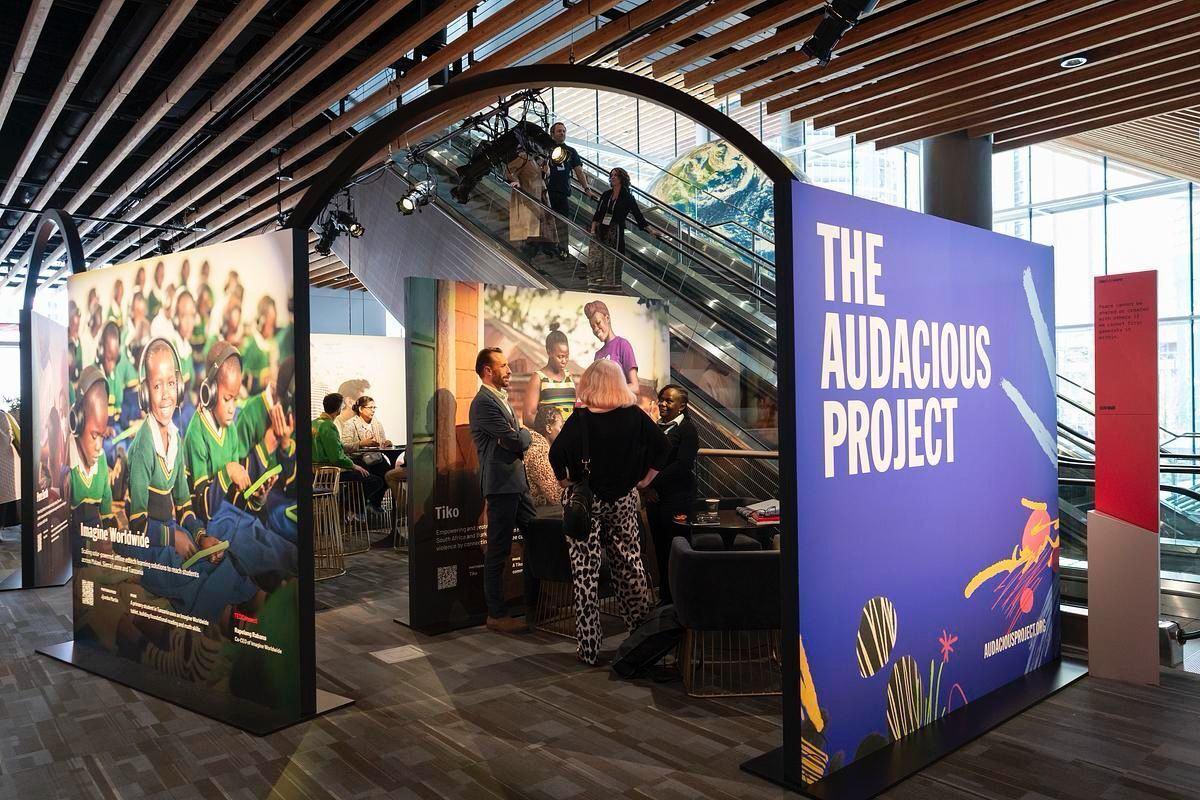
Coming away from our time in Vancouver for TED and the Audacious gathering, we continue to feel gratitude, optimism, and responsibility. Meeting many of you in person and hearing your perspectives and motivations for supporting adolescent girls, reinforced our belief in how deeply this work is grounded in a shared dedication to ensuring girls should be able to shape their own futures.
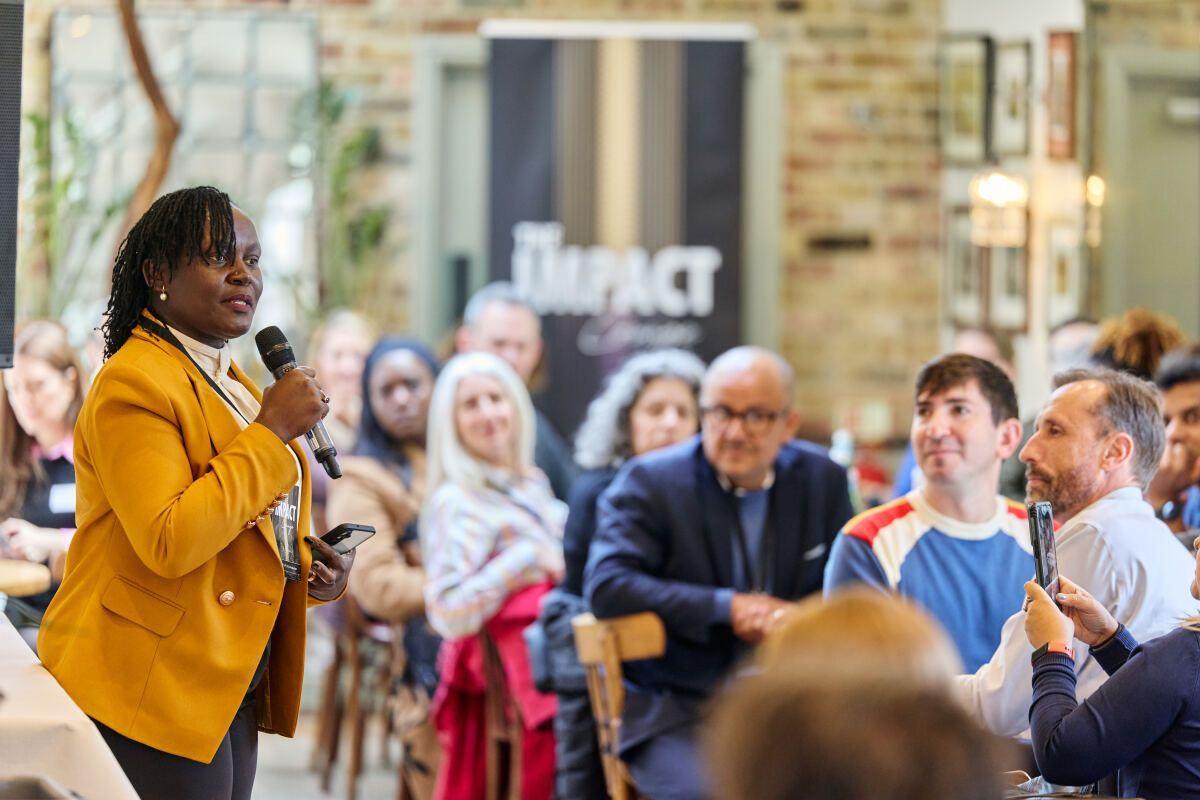
Vancouver reminded us that there is a global community that is committed to improving outcomes for girls through bold, evidence-based, and locally led solutions. We left feeling energized and deeply humbled by the trust you have placed in us.
This first quarterly update offers a glimpse into the momentum already underway. We are excited to share both our progress and the lessons we are learning along the way.
We look forward to building the next chapter together.
Warmly,
Serah and Benoit Co-CEOs of Tiko
SGBV screenings are highly personal and sensitive. This has required us to think carefully about how to encourage girls to open up to share their stories.
We have learned a “hybrid” approach is highly effective: we provide girls with the option of talking to mobilisers, often in their neighbourhoods, or with healthcare providers, usually in clinics. Some girls feel safest confiding in a trusted peer or “older sister” figure within their community, while others prefer the authority of a doctor or nurse.
Giving girls the ability to choose how and with whom they engage helps create a greater sense of trust, privacy, and safety when disclosing trauma and sensitive needs.
Tiko has trained both peer mobilisers and healthcare providers to deliver and administer its SGBV screening tool. The impact has already been substantial—in Q1, Tiko conducted more than 145,000 screenings, nearly matching the number completed across all of 2025.
We are proud to be creating safer, more accessible entry points for girls facing sexual violence and other forms of vulnerability.
In many countries where we work, the public sector is facing significant headwinds. In Q1, nurses on strike in Kenya slowed services in the public sector. Furthermore, medical stock-outs made it harder for Tiko girls to access some family planning necessities, including short-acting contraceptive methods.
We are committed to working within public systems when we can. However, when such unforeseen issues occur, Tiko’s model is highly adaptive to ensure we can still serve the girls who rely on us.
In Kenya, this required Tiko to temporarily shift a greater share of referrals toward private sector providers to ensure girls could continue accessing services without disruption. As a result, the proportion of services delivered through public facilities declined from 25% to 20% from the previous quarter, even as the total number of services delivered nearly doubled overall.
This underscores the power of Tiko’s flexible delivery model, allowing us to rapidly adapt across sectors and continue reaching girls when health systems come under strain.
We built a fully functional case management software in just three weeks using Claude.
In February, Tiko’s team visited a rehabilitation center for SGBV survivors in Addis Ababa, Ethiopia. This particular center admits about 400 girls for six months at a time, during which time they move beyond drug dependence, receive mental health treatment, or complete training for livelihoods beyond transactional sex.
Despite the center’s transformative work, the Tiko team observed some inefficiencies. In particular, intake and case management were largely done using clunky spreadsheets and paper trails.
We had 21 days until the next cohort arrived. We started gathering context from the center’s social workers, used Claude for the build, and within 11 days, were 80% of the way there. We gathered more feedback and continued iterating, and successfully launched the platform before the next cohort arrived.
Using AI gave us the ability to rapidly build exactly what social workers needed. More importantly, it showed how Tiko can use AI to accelerate problem solving and adaptation, continuously improving how we serve vulnerable girls.
Girls impacted
Girls impacted
In Q1, we reached nearly 400,000 girls across our geographies. Kenya continues to be our largest market, and we have made huge strides to grow our footprint in our other countries. In particular, Nigeria is our fastest growing market where we saw a near doubling of our reach compared to the previous quarter.
In Q1, we reached nearly 400,000 girls across our geographies. Kenya continues to be our largest market, and we have made huge strides to grow our footprint in our other countries. In particular, Nigeria is our fastest growing market where we saw a near doubling of our reach compared to the previous quarter.
Tiko girls per country in Q1 2026
Tiko girls per country in Q1 2026
Total number of Tiko girls, Q1 2026
Total number of Tiko girls, Q1 2026
394,626
394,626
We saw sizable growth in Q1 for HIV services, with girls’ demand for testing in particular having doubled from the previous quarter. And as demand for SGBV screening grows, we hope to connect everyone who screens positive to services including biomedical services, trauma counselling, legal support, safe housing, and resilience support as needed. Girls continue to prioritise family planning services, with a notable preference for short-term methods.
We also saw sizable growth in Q1 for HIV services, with girls’ demand for testing in particular having doubled from the previous quarter. Finally, as demand for SGBV screening grows, we hope to connect everyone who screens positive to services including biomedical services, trauma counselling, legal support, safe housing, and resilience support as needed.
Tiko girls accessing services by type in Q1 2026 (in thousands)
Tiko Girls Accessing Services by Type in Q1 2026 (in thousands)
T ko’s ecosystem comprises community-based organisations, who hire peer mobilisers; public and private healthcare facilities; pharmacies; and retailers.
T ko’s ecosystem comprises community-based organisations, who hire peer mobilisers; public and private healthcare facilities; pharmacies; and retailers.
Together, they offer integrated healthcare for Tiko girls. Our ecosystem is at the backbone of our model
Together, they offer integrated healthcare for Tiko girls. Our ecosystem is at the backbone of our model
We are working on optimising the Girls per actor ratios, which tell us how many girls each type of ecosystem actor was able to serve.
We are working on optimising the Girls per actor ratios, which tell us how many girls each type of ecosystem actor was able to serve.
There is currently a productivity gap between the private and public sectors.
To that end, we are working closely with the public sector to improve the quality of youth-friendly services by reducing provider biases, waiting times, stock outs, the lack of privacy and other issues.
There is currently a productivity gap between the private and public sectors. To that end, we are working closely with the public sector to improve the quality of youth-friendly services by reducing provider biases, waiting times, stock outs, the lack of privacy and other issues.
At the moment, nearly 70% of our services are delivered via the private sector. While we believe girls should always have a choice, our long-term goal is to deliver more services via public sector facilities, as a
SAM = ShortActing Method
LARC = Long-Acting Reversible Contraceptive
PrEP = Pre-Exposure Prophylaxis
ART = Antiretroviral Therapy
LARC = Long-Acting Reversible Contracept ive PrEP = PreExposure Prophylaxis
SGBV = Sexual and Gender-Based Violence
ART = Antiretroviral Therapy
SGBV = Sexual and GenderBased
At the moment, nearly 70% of our services are delivered via the private sector. While we believe girls should always have a choice, our long-term goal is to deliver more services via public sector facilities, as a pathway for sustainability.
Addis Ababa, Ethiopia, has an estimated 100,000–150,000 girls engaged in transactional sex or survival sex. Tiko has, in response, launched the DILI (Dignified Livelihoods) program.

Feddy Ongola, a partnerships officer with Tiko's Kenya team, shakes hands with Grace Osewe, the executive committee member of health for Kenya's Homa Bay County, marking a new partnership.
DILI will provide comprehensive support to 70,000 of these girls by 2031, with the goal of helping them exit survival sex. We will provide them with Triple Threat services, including psychological first aid and trauma counselling.
After that, there are several pathways girls can take. Younger girls will be given bursaries to continue schooling, while older girls may enrol in higher education, vocational training, or enterprise programs. Some will move to a safe house whilst in the program.
DILI will rewrite the stories of thousands of Ethiopian girls.
Tiko imagines a world in which most services that Tiko offers will be folded into government budgets, instead of being funded by external donors.
To this end, we signed two major co-financing agreements in Q1 with local governments in Kenya, including in Kisumu County and Homa Bay County. These agreements solidify our partnership with the government, further refine our alignment with local priorities, and ensure long-term sustainability.
Specifically, these co-financing agreements will secure budgets for health facilities and healthcare workers, guarantee sexual and reproductive health commodities where Tiko girls need them, and support the set up of infrastructure for SGBV survivors, including SGBV clinics and safe houses. These commitments act as blueprints for Tiko to enter into similar arrangements in other counties in Kenya.
Lenacapivir, also known as LEN, is a breakthrough method of preventing HIV. Instead of taking daily pills (oral PrEP), clients can inject LEN once every six months. For people at risk of contracting HIV, there are obvious benefits with LEN regarding privacy and convenience.
LEN is slowly being rolled out across African markets, and some Tiko girls are among the people who have received their first doses. Over the next quarter, we will be working with governments to ensure vulnerable girls are prioritised, and with peer mobilisers and providers to ensure that Tiko girls are made aware of LEN as an option for them.
Kisumu, Kenya
“Young survivors of sexual assault face many barriers,” says Yvonne Atieno Nyawa, a project officer at Women's Concern Center in Kisumu, located in western Kenya. “One of the barriers is transport, as well as waiting time. We need people to support them until the end, to have someone walk with them.”
Nyawa, who serves as a case manager for Tiko girls in and around Kisumu, has seen firsthand the difference it makes to help with basics such as transit fare.
She related the story of a girl who has gone to court monthly since last October, and will continue to do so for the next 2-3 months. “During that time, many survivors are not motivated,” she says. In addition to the visits themselves sometimes being difficult emotionally, the costs of getting to the courthouse, as well as lost wages during that time, offer easy excuses to move on with life.
With the inclusion of transportation and other basic logistical support, Tiko partners can be a true companion of girls at a vulnerable, difficult moment. As Nyawa has seen, this support encourages girls to seek the justice and healing they deserve.
Through Tiko, survivors of SGBV in western Kenya have been able to seek justice in the courts.

Kampala, Uganda
When Joseph Makawa was a pharmacist-in-training, he realised the large gap in quality, reliable services at community pharmacies.
Today, he is the lead pharmacist at MasaPharm, which is located in the neighborhood of Kawaala in Kampala, Uganda—and a Tiko partner. In many low-income communities like these, people prefer visiting pharmacies before hospitals for both small and large ailments.
To be a partner, the pharmacy completed training with guidance on how to make pharmacies more friendly for girls, including ensuring privacy and a lack of judgment by providers.
As a result of the partnership, Makawa says that many teenage girls benefit from Tiko services at his pharmacy free of charge. In an examination room in the back, his team tests and counsels clients for HIV, as well as administers injectable contraceptives. Many of these girls end up recommending services to their peers, which has led to even more walk-ins.
“With the training we get [as pharmacists], we are equipped with the knowledge to assess a client and give holistic care/services and guidance. This is what I impart to my team: that you're not here to just dish out drugs as though you were in a shop, but to offer quality, holistic healthcare.”
Joseph Makawa, Pharmacist at MasaPharm
“Make girls feel comfortable enough to share their stories”
Gbagalape, Nigeria
In Gbagalape, a village on the outskirts of Abuja, Nigeria, 25-year-old Maryann John Sotaya spends much of her time talking with girls in her community.
Sometimes the conversations begin casually. A greeting on the street. A quick chat after a long day. But often, those conversations reveal deeper worries.
“Many girls here lack the right information and support,” Maryann says. “They are not confident enough to talk about what they are going through.”
Maryann is one of Tiko’s peer mobilisers, working closely with girls in her community to help them access the health services and support available through the platform. Her role begins with something simple yet powerful: listening.
In Gbagalape, many girls grow up without reliable information about their health. As they enter adolescence, curiosity and peer pressure can sometimes lead them into situations they do not fully understand, including unplanned pregnancies, sexually transmitted infections and untreated health concerns.
Maryann approaches girls not as an authority figure, but as someone they can trust.
She introduces them to the services available through Tiko and supports them as they seek care from trusted providers. For many girls, it is the first time they feel comfortable enough to ask questions about their health.
So far, Maryann has supported more than 500 girls in her community to access services through Tiko.
“Be approachable,” she advises other mobilisers. “Be friendly. Don’t judge them,” she says. “Make them feel comfortable enough to share their stories.”
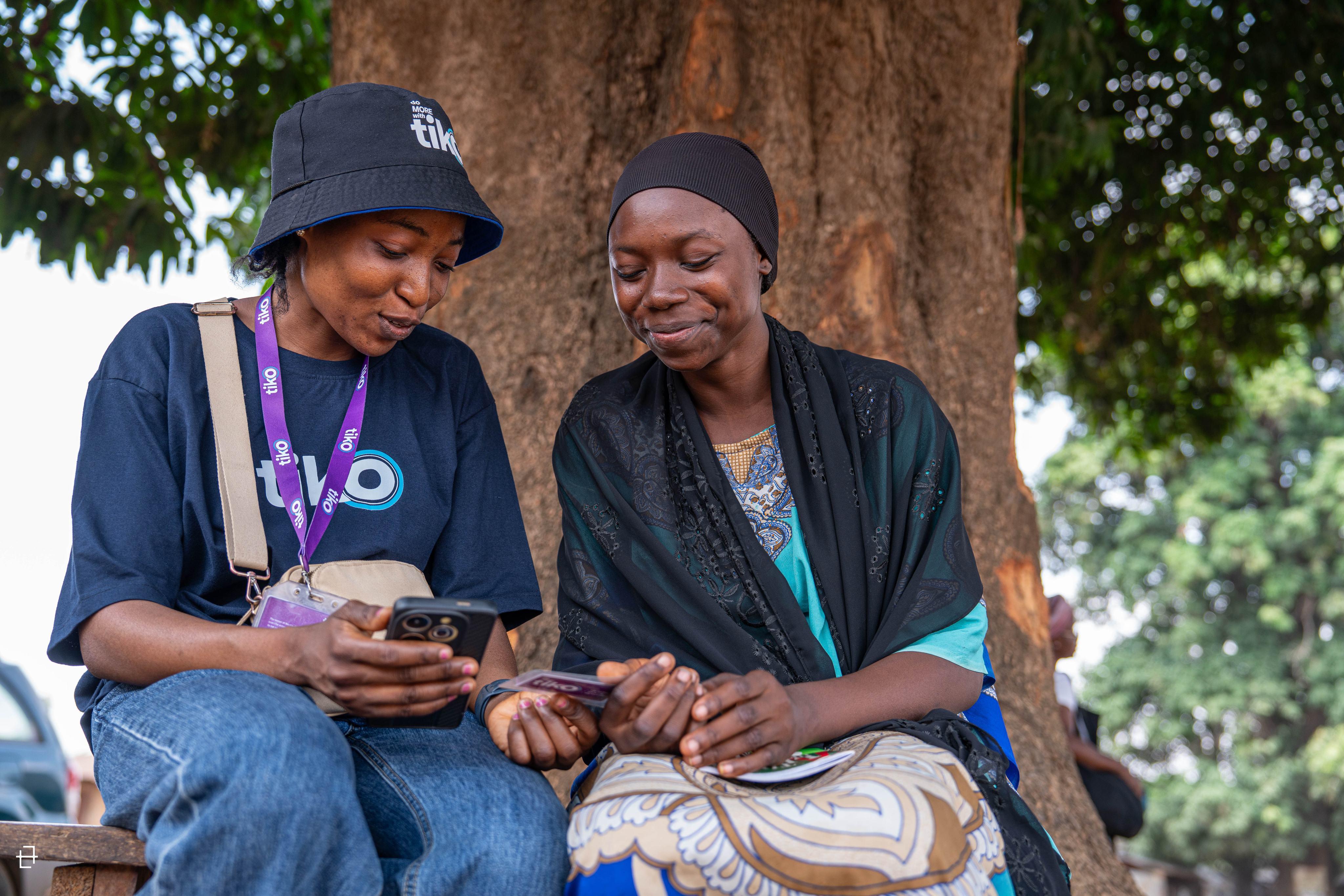
Maryann John Sotaya (pictured left) shares a moment with a girl in her community.
Follow Tiko's journey:
LinkedIn: @tikoafrica
Instagram: @tikokenya tiko.org