Empowering students to think critically and creatively since 1913
VOLUME 112, ISSUE 8
APRIL 30, 2026
OPINION IN THIS ISSUE
Tiger spotlights the importance of going
Empowering students to think critically and creatively since 1913
VOLUME 112, ISSUE 8
APRIL 30, 2026
Tiger spotlights the importance of going
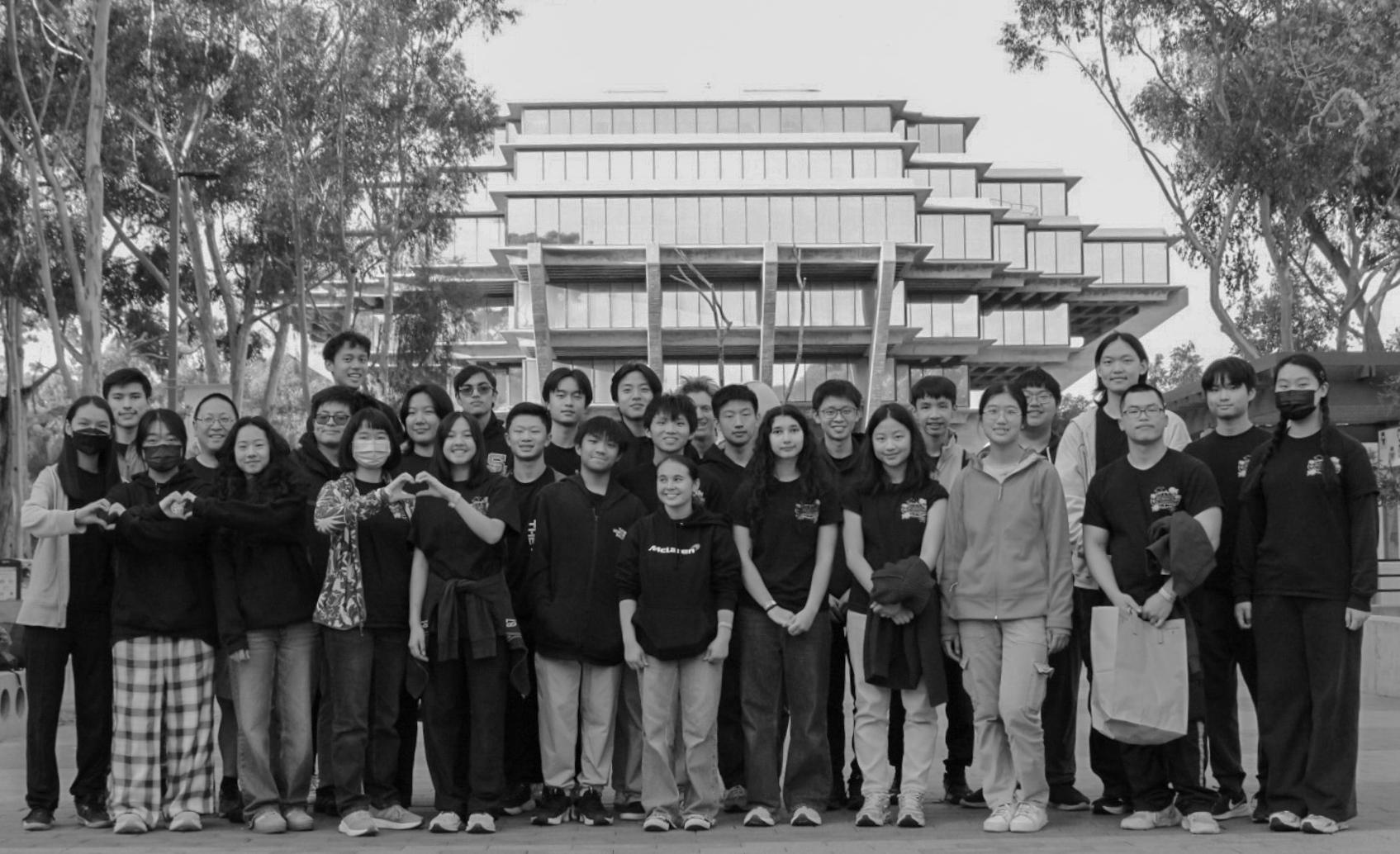
As the season comes to a close, the science olympiad team reflects on their year
STORY
ANNA MCDONNELL
PHOTO Courtesy of Science Olympiad
T he South Pasadena Science Olympiad team competed in state at the California Institute of Technology on Saturday, March 28. Previously, they went to regionals and qualified for state where they placed tenth out of 32 teams.
“Science Olympiad provides an opportunity for students to apply and dive deeply into the science they learn in class, as well as learn about the subjects beyond what is taught in the classroom,” Science Olympiad club advisor Benjamin Ku said.
SPHS’s Science Olympiad teams are chosen at the beginning of every year. First, in the first week of school, there are two informational meetings with the school’s science club.
They talk about what the goals and expectations are of SciOly that year. Next, in mid-September, there is one more meeting that selects a total of 30 students who will make up the two teams to represent South Pasadena in all the competitions throughout the year.
The leadership for these teams were chosen in September, it was decided that Lucca Huang, Milo Young, Gihan Vankerhove, and Wings Zhang were to lead the two teams.
There is an increase in participation within the five year old program. The 2025–26 year team included various freshmen and sophomores, Aria Reymolds, Sara Rodriguez, Sienna Shang, Alan Liu, Alec Nudo, Brett Chang, Christopher Lau, Deborah Chong, Lanah Kim, and Riley Zeewho represent the future for the program as a whole.
The team has been to the state four years in a row, and after starting out with only one team competing, they now have two.
To get to the state level, teams must place highly in regionals. In the next few years, the overall goal is to get the team to nationals and the way to do that is to win state.
The awareness and participation in the program makes for more competitions and accessibility to resources.
Not only do students learn in depth the topics they are given for the Science Olympiad, they learn how to apply ideas, study, manage their time, and work well under time pressure.
“I got to meet people that I’ll know for life, incredibly smart people, and it’s super rewarding to be able to work with them,” senior Science Olympiad member Kai Tilley said.
There are a total of 24 events being astronomy, anatomy and physiology,
The annual Hartsough assembly will take place in the Anderson Auditorium on Friday, May 1 to honor SPHS staff.
boomilever, bungee drop, chemistry lab, circuit lab, codebusters, designer genes, disease detectives, dynamic planet, electric vehicle, entomology, engineering CAD, experimental design, forensics, helicopter, hovercraft, machines, material science, remote sensing, robot tour, rocks, stones, and minerals, and water quality.
When applying for Science Olympiad, students pick a few events to try out for, one of the more popular ones is Chemistry Lab. The more popular an event is, the more difficult it is to get into it and compete.
For study events, participants can access study binders of everything they will need to know. They are required to memorize everything in the binder and figure out how to apply it to any given situation. In the competition they will take a test that will assess their knowledge.
Build events are different. For instance, if the topic was helicopters, the team would be asked to build the best helicopter within certain parameters. Additionally, code buster events where teams must crack a code that they are given.
The final type of event is a hybrid event which mixes different build events and tests. The events works on their problem-solving skills, study skills, and overall work ethic.
EXAMS AP exams are approaching: first day of testing starts Monday, May 4 and concludes Friday, May 15. ANNUAL PROM Prom will take place on Saturday, May 9 from 7 p.m. to 11 p.m. at Wallis Annenberg Building.
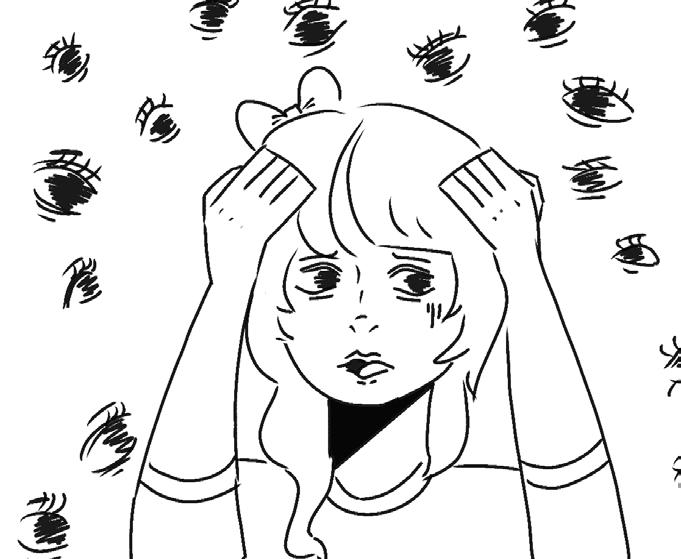
STORY RAFA ESTOLANOSRIDHARAN ILLUSTRATION JAYDEN ZUMBA
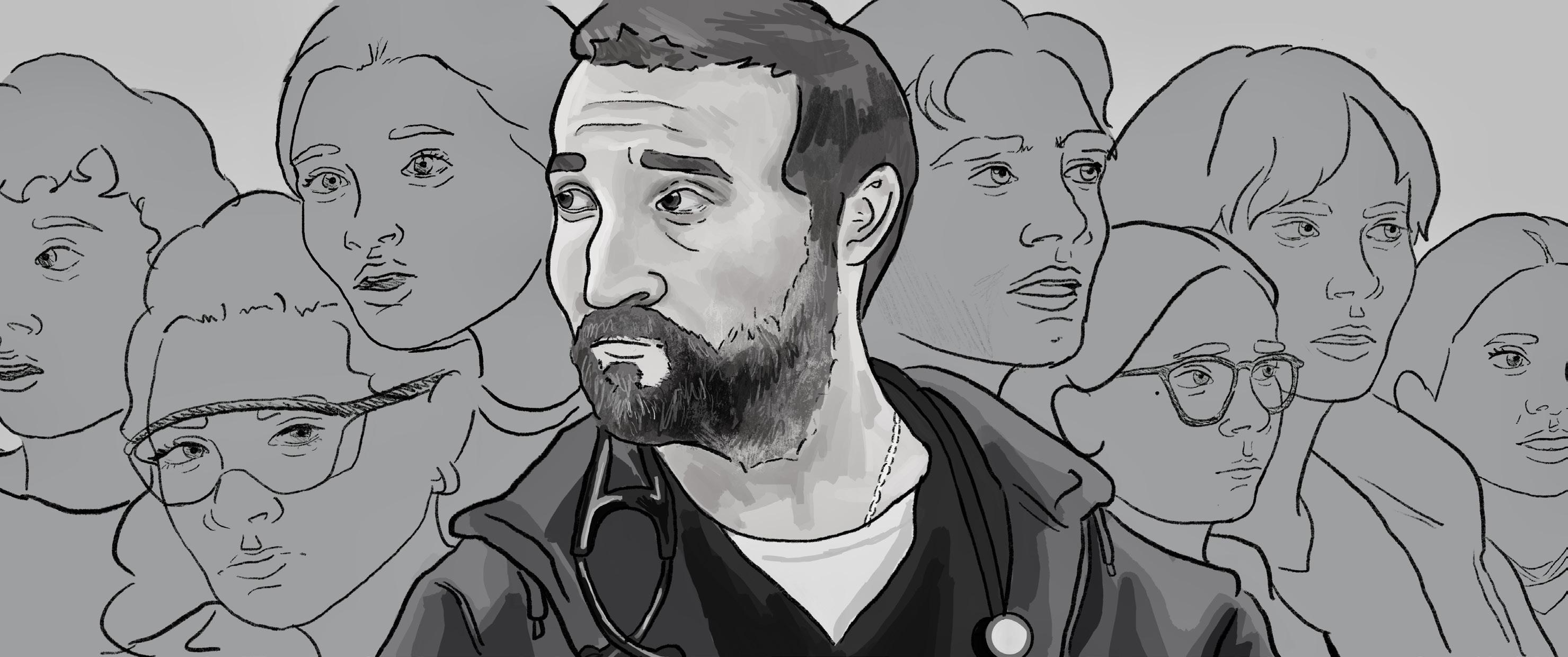
America is facing a mental health crisis. Suicide is the 11th leading cause of death in America, a statistic that becomes increasingly dire when looked at through the lens of a younger demographic — for those aged 10 to 19, it is the second leading cause. Last year, 1.5 million Americans attempted suicide and 49,316 died by suicide. Despite the crucial nature of this crisis, America’s private healthcare system is unable to rise to the occasion. Crippled by widespread lack of insurance coverage, high out-of-pocket costs, and a shortage of mental health professionals, the average American has effectively been abandoned.
Continued on Page 7
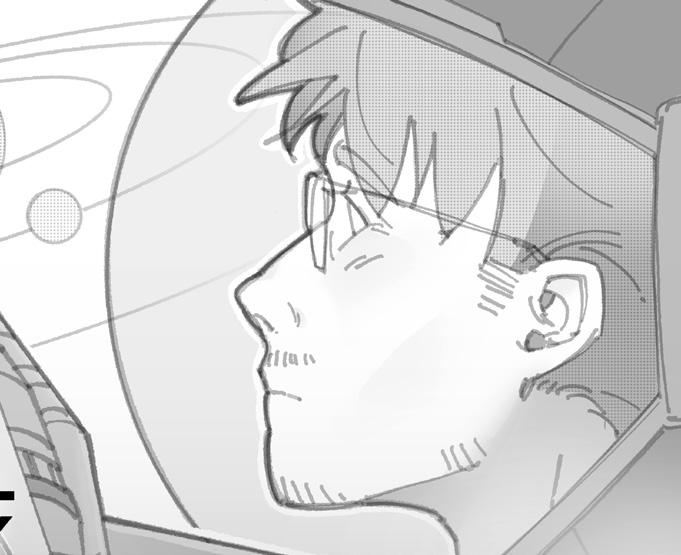
STORY ANNA MCDONNELL ILLUSTRATION LANAH KIM
Project Hail Mary, a new sci-fi movie, was released in theatres on March 20, 2026, receiving lots of positive reactions and sweeping box offices. It is a uniting film directed by Phil Lord and Christopher Miller. The movie originated from the book by Andy Weir, surrounding the popular plotline of a doomed galaxy and a “Hail Mary” plan to save it. The movie’s admiration is well deserved; it explores refreshing viewpoints of equality, bravery, humanity, and friendship, and is an emotional, inspiring, and entertaining watch.
Ryland Grace, the protagonist played by Ryan Gosling, is an enthusiastic yet washed-up middle school science teacher. Before that, he was considered a scientific
Continued on Page 12
T
he Congressional Art Competition encourages student creativity while supporting civic engagement since its establishment in 1982. Since 2009, the Congressional Institute has supported the competition by providing guidance to congressional offices and hosting the annual Winners’ Celebration in the U.S. Capitol.
The House of Representatives launches the nationwide Congressional Art Competition to discover and celebrate high school artists and their work. The Congressional Co-Chairs, Rep. Stephanie Bice and Rep. Joe Morelle, are working with the Congressional Institute to host the competition. The competition is supported by members of Congress from both parties and remains one of the most widely viewed student art exhibitions in the country, with millions of visitors each year.
Every high schooler in the South Pasadena area submitted their artwork to Judy Chu, the Democratic U.S. Representative for California’s 28th congressional district. House Members may honor one high school student from their districts by selecting a piece of artwork for inclusion in the U.S. Capitol each year. Every student’s art pieces will be included in the show, and the jury is currently determining the finalists.
The winning piece of the competition will be displayed in the Cannon Tunnel of the United States Capitol for approximately 11 months. The grand prize winner will receive a round trip travel for themselves and a guest to Washington, D.C. for an awards ceremony.
“I made three pieces to submit to the Congressional Art Awards Competition. What inspired my first piece, ‘Left Behind’, was the feeling of neglect and replacement put
The competition gives students a chance to showcase their art at the US Capitol.
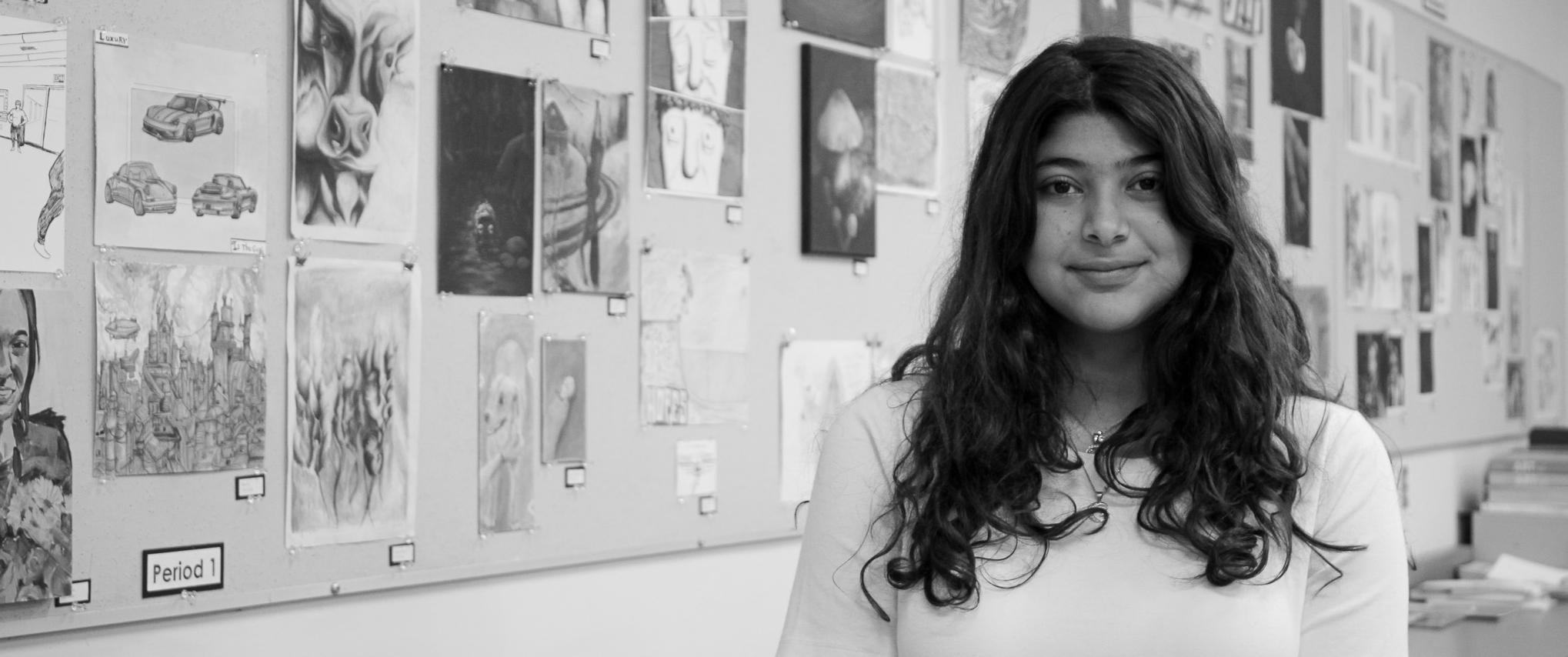
into art. My second piece, ‘Run Wild’, was [about] the idea of creativity,” freshman Sarah Soufi said.
Soufi’s goal as an artist is to keep drawing and to express herself more in her art, rather than drawing to get better.
“My third piece, ‘Let Me In’, was honestly just horror games and I thought that I could make a pretty scary drawing,” Soufi said.
Soufi’s art pieces reflect what she’s thinking about in the moment and parts of her personality. She used to draw in a cartoonish manner, but recently, she has started to draw using more realism. She has learned to express herself through her art, and make it up to the viewer to interpret.
“I think that art programs really help students express themselves in any way, shape, or form. I especially like
our program at the school because our art teacher is very accepting of any art, and is honestly a very good teacher,” Soufi said.
Submissions will be judged by a panel of local artists and art experts, with the winner announced at the Congressional Awards Ceremony in May.
Junior David Kim has advanced as a finalist in the competition from SPHS. He submitted a total of four artworks and placed in the top 10;, however, his exact placement within the 10 is still undetermined.
“I love doing art, so the Congressional Art [Competition] was a fun thing for me to try. It’s honestly scary, but I know if I don’t get in, then it’s okay because it’s one of my first art contests,” Soufi said.
STORY
PHOTO SEBASTIAN GUTIERREZ
The South Pasadena based organization, South Pas Active, advocates for safer streets and paths for cyclers and pedestrians alike. The most recent project is named “Fremont for Students,” and it plans to planned to add a new physically protected, two-way bicycle path on Fremont Avenue and Huntington Boulevard.
The bike paths would not be separated from cars by paint as most bike lanes are. Instead, curbs or landscaping would be added in order to create a buffered bike path, to ensuringe pedestrian safety.
One goal of the bike path on Fremont is to make the street safer for pedestrians, especially students. The bike path willis set to go past SPHS and aroundnear SPMSSouth Pasadena Middle School. The path will connectconnects to a network of Metro bike lines across the rest of Los Angeles, allowing people without cars to get around easier. The network goes to Downtown Los Angeles and Old Town Pasadena.
“[The state has] built our cities around the assumption that everyone can drive everywhere they want to go, and park their car wherever they want to park it and go as fast as they want to go,” South Pas Active member Casey Law said. “And I think that has a lot of consequences in terms of safety, air quality, and climate change. And also the quality of life,” The project has been progressing for several years, with the first call tofor action madedone by SPHS students
in 2020. The students created a petition for protected bike lanes that received around 500 signatures from students and residents.
South Pasadena was issued a grant of approximately $42 million from Metro to build street infrastructure. The infrastructure does not only include bike paths, but additionally wider pedestrian walkwaysspaces and more trees around South Pasadena. The grant from Metro was then given to South Pasadena and city council meetings have
been held regardingin regards to plans for the project. On Wednesday April 15, 2026, the first city council meeting was held to discuss the designs for the “Fremont for Students” project.
“We wanted to make sure that the designs for the street, the designs the city chose for these streets, would allow everyone, [of] all ages [and], all abilities, to get across town easily, whether that’s walking or biking or however,” South Pas Active member Michael Siegel said.
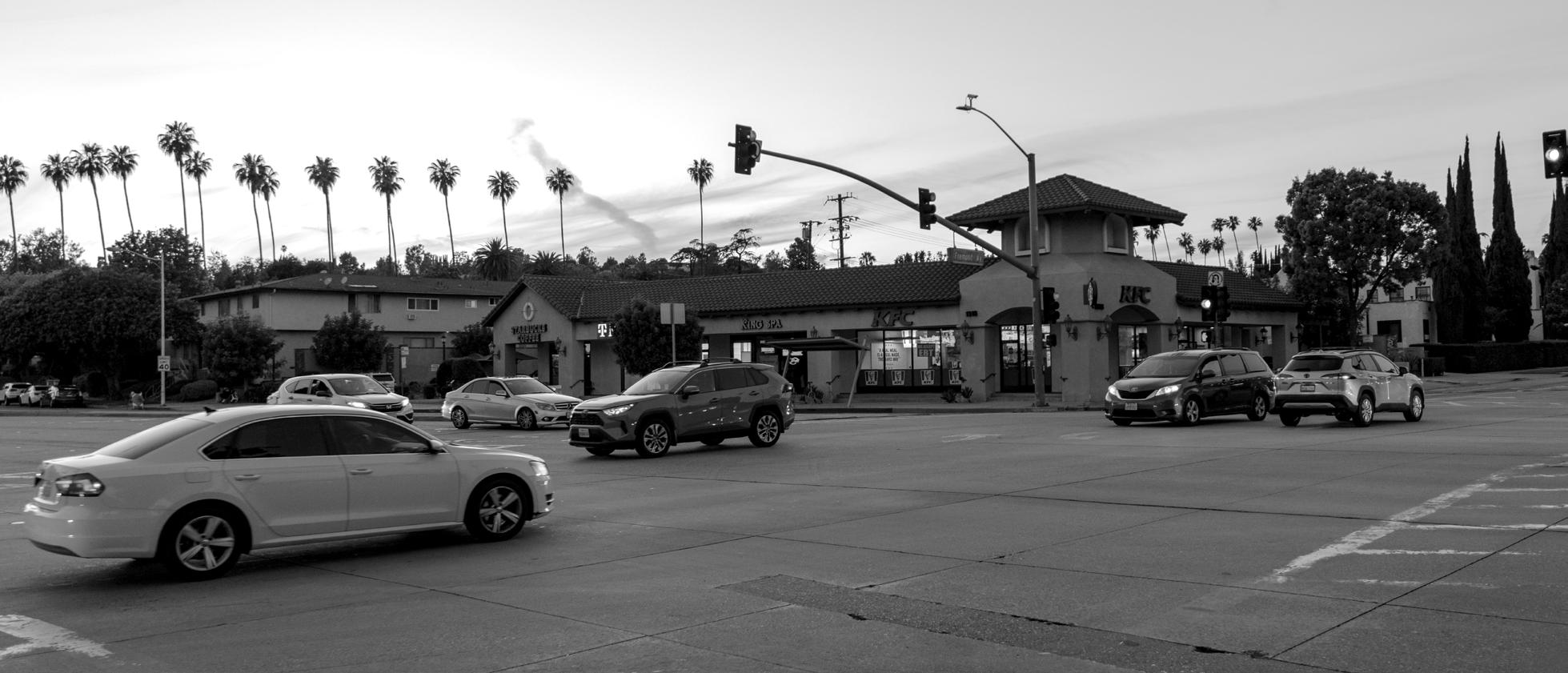
Traffic passing through Huntington Drive and Fremont Avenue intersection.
National Aeronautics and Space Administration’s (NASA) Orian spacecraft launched at the Kennedy Space Center in Florida as a part of the Artemis II mission on Wednesday, April 1, 2026 at 6:35 p.m. Eastern Daylight Time. Reid Wiseman, Victor Glover, Christina Koch, and Canadian Space Agency astronaut Jeremy Hansen were on board the Orian as a part of the Artemis II mission.
The mission is a part of NASA’s Artemis program. The Artemis II was the first crewed mission of the program. The goal of the mission was to carry four astronauts on a journey around the Moon and back to Earth for the first time in over half a century.
The Orion spacecraft embarked on a ten day journey around the Moon including launch, a lunar flyby, and finally, the splash down, which happened at 8:07 p.m. on Friday, April 10 in the Pacific Ocean off the coast of San Diego, California.
The second Artemis mission builds on the first, continuing to test the capabilities of the Orion spacecraft and its European Service Module. The module is fitted with life
support systems to keep the crew aboard the Orian safe and healthy. The Astronomy Club is an SPHS club on campus for students who are interested in astronomy and space. They observe celestial objects and events as well as host events for the community.
The club’s supervisor is Mr. Ku, but the club has been around since before COVID. The club’s current president is senior Wings Zhang and the vice president is senior Alexa Chang.
“[The club] used to be active under Mr. Papadaki, but after COVID, I think it was inactive for a while, so last year, me and Wings started it back up together.” said Chang.
One event the club hosts is the annual Telescope Night where club members show elementary and middle schoolers the sky, Moon, planets, and meteor showers with the use of telescopes.
“We’ve had some telescope nights to show younger students, like elementary schoolers, middle schoolers, the sky, the Moon, Jupiter, planets, stuff like that, and then we also have some field trips to watch meteor showers,”
Chang said. The club meets on Wednesdays during lunch every other week. During meetings, the club has lectures where the members discuss different topics. The most recent topic they covered was nuclear pasta, which is matter found within the crusts of neutron stars.
The club also plays games and does other outside of lectures and discussions. They plan upcoming events and field trips as well as play games such as astronomy trivia.
“We have things like fun games, like astronomy, trivia, and then we talk about like upcoming field trips and events, like the telescope nights, and meteor shower watching,” Chang said.
The astronomy club is planning to take a field trip to the Mount Wilson Observatory where the largest aperture telescope, the Hooker telescope, in the world is housed. The club is planning on renting the observatory and hiring a guide to show them the telescope.
“We were talking about going up to Mount Wilson, and there’s a big observatory up there. It’s a 60 foot telescope or something like that. And we’re thinking about renting it out for the night, and they have a guide to tell you about all the stuff that you can see in their huge telescope. But I don’t know if it’s confirmed or not,” Chang said.
Voice Box presents Open Mic for the third time this school year, featuring a large variety of students.
STORY ELLIE SONG
PHOTO LUCINDA ERNST
L iterary magazine also known as Voice Box, is a club at SPHS, where the contributors create their very own magazine established in the 2023–24 school year. The club’s goal is to encourage creative student voices at SPHS by allowing them to present their work into the magazine which they release near the end of the school year.
SPHS’s LitMag will host the third annual Open Mic Night in the Little Theater on Thursday, April 30.
Open mic is an opportunity to experience live student performances or talks. Anyone can attend, and anyone is allowed to perform.
Students sign up at the Little Theater door to perform or even to perform later in the evening.
The club will distribute the majority of the magazines they have made over the past school years afterwards. The magazines are shared to contributors and more are sold to the other students.
Lit Mag gathers together every week on Thursdays during lunch in room 312 to collect student art and writing. They then publish the student’s work into a magazine to display the artistic talent at SPHS.
“I’ve learned a lot of things from my time in the Lit Mag, honestly I wouldn’t be doing many of the things I do now if I didn’t join the club in the first place,” junior Sadie Fleagane said. “ ... My confidence in my work has also grown, and I really owe that to the supportive community that surrounds the club.”
Fleagane has always had a love for art, but when she first joined the club, she began to explore other hobbies she may enjoy, such as writing.
“I remember seeing the booth at Club Rush, where Ethan, our club president, pitched the idea of a studentrun magazine at the school. I thought it was really cool, so I joined the club,” Fleagane said. At the beginning of the school year, the current members of the club open submissions through a Google Form at the beginning
of the school year, and close around the months of November and December. The submission form is available to all students on campus, and the members encourage everyone to submit.
After they have gathered student submissions, the editors select the works which will eventually be printed in the magazine. Once the work is selected, all of the formatting is done in the app InDesign.
The magazine is then formatted, and LitMag sends it over to the printer, which then leads to the final product.
“I wouldn’t be playing my music live if it weren’t for the
encouragement of our first open mic … My confidence in my work has also grown, and I really owe that to the supportive community that surrounds the club,” Fleagane said. A majority of the editorial staff learn how to handle responsibility, along with how to collaborate with others.
“Voice box has never really felt like a typical school club, but more of a gathering of people all passionate about art and writing who all want to support each other … It’s because of this support that I do much of what I do now, such as play original music for others or apply to art opportunities,” Fleagane said.

STORY JULIA GILDERSLEEVE
ILLUSTRATION KRISTEL HOUNG
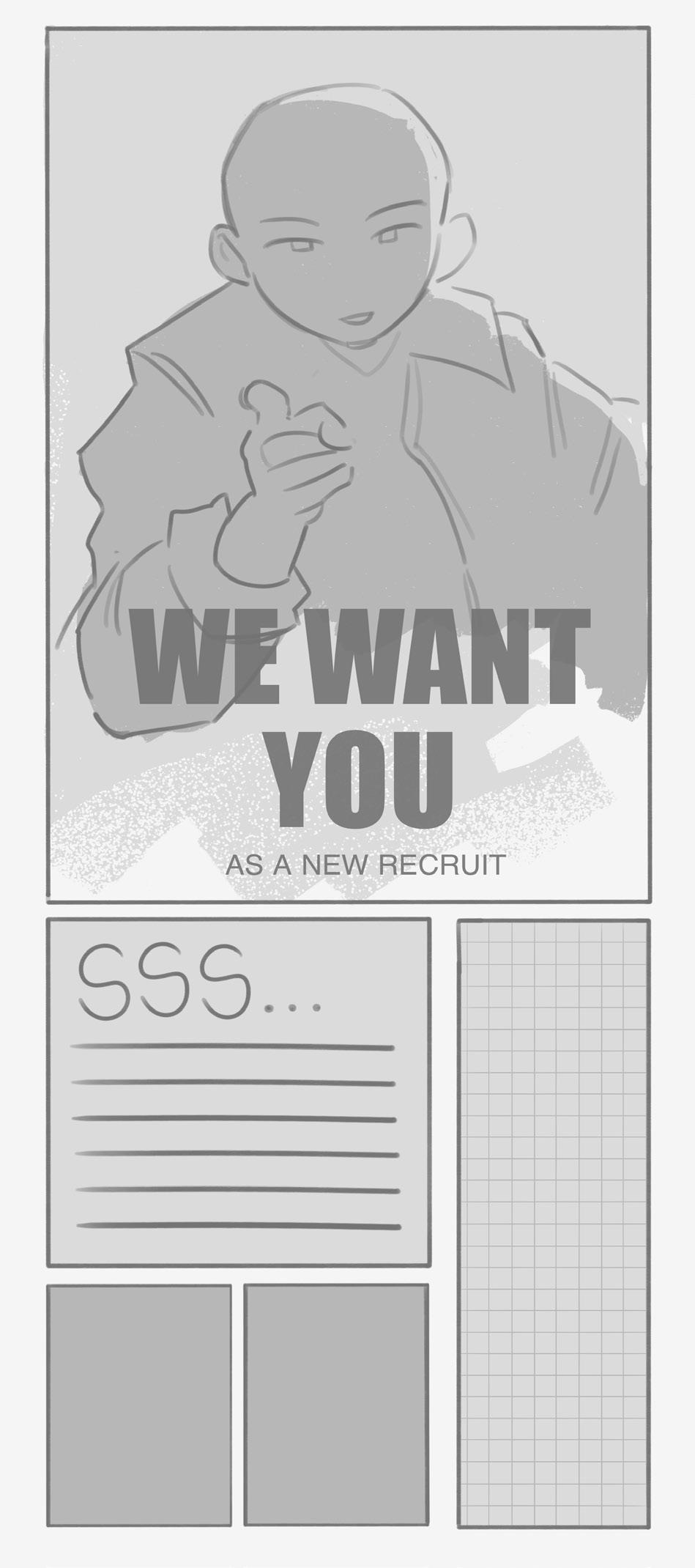
The Selective Service System (SSS) is an independent agency of the U.S. government that maintains a database of registered male U.S. citizens and other U.S. residents subject to the military draft.
The SSS was awarded $6 million by the Technology Modernization Fund (TMF) at the end of fiscal year (FY) 2025 for use in FY 2026-28 to enable this goal.
South Pasadena High School upperclassmen are affected by automatic registration. It is tied to school records or driver’s license applications, allowing registration to occur without direct action from students.
Automatic registration ensures compliance and cooperation with the law but can also raise awareness or concerns among students about potential military obligations.
The United States has not had a draft since the Vietnam War, and military service has been voluntary since 1973. Registration is not a draft, but a database of men available if Congress and the President authorize a conscription.
“If I’m drafted I would be really scared because I don’t want to get injured,” freshman Wooyoung Chae said.
Federal law requires nearly all male U.S. citizens and male immigrants to register at age 18. Women, non-immigrant men on valid student or visitor visas, and active-duty military personnel are not required to register for the Selective Service. U.S. citizens who Automatic registration was mandated in December 2025 as part of the fiscal 2026 National Defense Authorization Act.
“I got a physical [letter] in the mail that said that it wants to recruit me for the military and
register me as a voter because I turned 18. But then I made a phone call to cancel it because you have to be a citizen of the United States,” senior Toby Gu said. “Basically the first thing you have to answer when you get the phone call is that they ask you if you are a citizen. If you say no, then the call ends.”
The organization permits males up to 25 years of age to complete their registration with the SSS. Also, SPHS students have varying opinions about the draft.
“I feel like this draft is very unnecessary because even though we are at war, our country doesn’t need more combat manpower,” sophomore Justin Jee said. “This will impact the country definitely, but I don’t believe it will [by] much because of our large population, since this [would] only [be] a minor draft.”
The change was meant for the government to conserve money by transferring responsibility for registration to the SSS through integration with federal data sources.
Currently, the proposed rule is under review from the OLRA’s regulatory affairs office and awaiting finalization.
“I think it’s going to be good for the country since we will have more people in the army to defend the country. But it would cost the whole generation to have a bunch of younger soldiers and fewer professionals,” freshman student Marco Yeh said.
Automatic registration for the United States military draft will begin by December of 2026 as an effort to save money and streamline the previous process of self-registration.
“I’m a little scared, [but] it’s been my dream to go to the military to keep my family safe,” freshman Oscar Hernandez said. “I have five siblings, four of them are boys and one is my sister, and I would join to defend my family.”
In April, SPHS students attended two types of Coachella. The Coachella music festival is an event featuring influencers, outfits, performers, and concerts, while the Coachella of books at USC invited various authors to meet readers.
Coachella is one of the worlds most famous and largest music festival in the world. It’s separated into two weekends, which took place this year on April 10-12, and 17-19.
There was a variety of live performances from artists, pop up stores with free giveaways, and lots of food vendors in the Empire Polo Club in Indio, California. Mainly, those attending the festival camped near the area to help with traveling, and the close proximity added to their experience.
Weeks leading up to the event consisted of many online influencers picking outfits, some even going as far as to hire a stylist to help them.
Coachella has been known for its fashion culture and the highly styled outfits. Many brands even take advantage of this, and use the week to help advertise and grow their business.
For those who did not go to the festival, they saw through the lenses of various influencers who filmed their experiences, whether they were camping or in a nearby Airbnb. These influencers would often film themselves receiving giveaways, meeting celebrities, and picking out extravagantt outfits.
Those performing at Coachella often have unexpected collabs, and this year was no exception. During both weekends, Sabrina Carpenter, Justin Bieber, and Karol G were featured, with many other artists like KATSEYE, Central Cee, Addison Rae, and Olivia Rodrigo making an appearance.
However, sophomore Marlow Slattery pointed out the reality that many influencers don’t show, stating, “I feel like a lot of the influencers are in the VIP and artist section, so they get a lot of amenities that the general admission doesn’t get you. So it’s definitely a lot less chaotic for the influencers.”
Videos posted from the performances have brought many opinions that talk about how the crowds look “dead,” and more low energy when an artist is singing.
Slattery touched on this saying, “It depends what set you go to. Some of them have a pretty dead crowd … but I feel like if you’re towards the front [of the crowd], it’s probably where all the fans are, and they’re having a really good time, but, if you’re really far back, people probably aren’t as interested in the artist.”
Another large LA event took place during the same weekend as Coachella. The Los Angeles Festival of Books, or the “Coachella of books,” is the nation’s largest literary and cultural festival and was held from April 18 to 19 at the USC University Park campus.
This event features hundreds of author panels, book signings, poetry readings, and musical performances with over 500 authors and 350 exhibitors promoting their works.
The event, which was free admission, began from 10:00 a.m. and lasted till 6:00 p.m. Throughout the day, people could attend many activities, including food demos, live performances, and shop for books and merchandise. Many booths, like the Goodwill


booth, sold used books of all genres for a lower price, while other booths focused on a single genre of books. Although there were many stalls selling books and literary works, others sold their own artworks, like paintings and handcrafted designs, as well as jewelry and candles.
There were eight outdoor stages, each focusing on a different topic: the L.A. Times Stage, the De Los Stage, the Children’s Stage, the YA Stage, the Poetry Stage, the USC Stage, the L.A. Times Food Stage, and the Audiobook & Podcast Stage.
The L.A. Times Stage included many major headline conversations with celebrity guests like actress Sarah Jessica Parker and fashion designer Tina Knowles, while the De Los Stage was a Spanish-focused program.
The Children’s stage had many kid-friendly performances and family activities, and the Poetry stage had live readings and discussions.
The YA Stage focused on the experiences of young adult authors and how they saw trends in what teens were interested in reading. Speakers included Emiko Jean, author of Tokyo Ever After; Leah Johnson, author of You Should See Me in a Crown; Aracely D. Menendez, author of In the Key of Us; and Trung Le Nguyen, author of The Magic Fish.
At the L.A. Times Food Stage, live cooking demonstrations were featured, and chefs including Cassandra Peterson and Cassie Yeung shared recipes and stories behind their cookbooks.
NSPA FIRST CLASS 2025
NSPA FIRST CLASS 2024
CSPA GOLD MEDALIST 2023
CSPA SILVER CROWN 2022
CSPA SILVER CROWN 2021
CSPA GOLD MEDALIST 2019
CSPA SILVER CROWN 2018
CSPA GOLD MEDALIST 2017
CSPA CROWN AWARD 2016
CSPA GOLD MEDALIST 2015
EDITOR-IN-CHIEF
SONYA SHIMPOCK
MANAGING EDITORS
ZOE CHEN, Print
EMIKO ESSMILLER, Online
RUBY FOUDY, Associate
NEWS
CLAIRE MAO, Editor
OPINION
RAFA ESTOLANO-SRIDHARAN, Editor
FEATURE
RUBY FOUDY, Editor
SPORTS
GAVIN BARTOLOME, Editor
DESIGN
OLIVIA CHIN, Editor
LANAH KIM, Editor
PHOTOGRAPHY
HELENA EASTERBY, Editor
COPY
OWEN HOU, Editor
SOLANA SINGER, Editor
STAFF WRITERS
UMA CHAKRABORTY
EVELYN DIAZ
MIRIAM ELGHEFARI
JULIA GILDERSLEEVE
HARRIET GODSON ETHAN KWAK
LEIGHTON KWOK
ANNA MCDONNELL
MAXINE MESSINEO ELLIE SONG KHLOE YUEN
STAFF PHOTOGRAPHERS
LUCINDA ERNST
SEBASTIAN GUTIERREZ
MAC SHROPSHIRE
STAFF ILLUSTRATORS KRISTEL HOUNG
DIANA LOPEZ
JAYDEN ZUMBA
PAGE DESIGNERS
GABBY FERRI PAISLEY PARK
ALISON SCHRADER
VIDEOGRAPHER
THEO THOMPSON
BUSINESS AND ADS MANAGER PASCALE WILLIAMS
SOCIAL MEDIA SPECIALIST ISABELLA JONASEN
FACULTY ADVISOR KAREN HAMES
VOL. 112 NO. 8 DISTRIBUTED ON APRIL 30, 2026
DISTRIBUTION: 1460 STUDENTS; 70 COMMUNITY. 1200 COPIES PRINTED. DISTRIBUTED BY TIGER STAFF FREE OF CHARGE.
TIGER IS PRODUCED BY THE ADVANCED JOURNALISM NEWSPAPER CLASS AT SOUTH PASADENA HIGH SCHOOL, 1401 FREMONT AVE, SOUTH PASADENA, CA 91030. LAYOUT AND PHOTO IMAGING ARE COMPLETED
SIGNED ARTICLES APPEARING IN TIGER REPRESENT THE WRITER’S OPINIONS AND DO NOT NECESSARILY
REFLECT THE VIEWS OF THE STAFF, STUDENT BODY, FACULTY OR ADMINISTRATION OF SPHS. ORIGINAL STORIES WILL CARRY BYLINES, ALTHOUGH STORIES REWRITTEN BY ANYONE OTHER THAN THE ORIGINAL
CONTACT THE PUBLICATIONS OFFICE AT (626) 4415820 EXT. 2615 BETWEEN 8:00 A.M. AND 4:00 P.M. FOR ADVERTISING RATES AND SUBSCRIPTIONS. TIGER
WELREBUTTALS FOR PUBLICATION IN THE PRINT AND ONLINE EDITIONS. ALL LETTERS MUST BE SIGNED AND VERIFIABLE, BUT NAMES WILL BE WITHHELD UPON TIGER’S MISSION IS TO PROVIDE A RELIABLE NEWS OUTLET FOR SPHS AND THE LOCAL COMMUNITY.
THROUGH A VARIETY OF COVERAGE, TIGER EMPOWERS/ENABLES STUDENTS TO THINK CRITICALLY AND CREATIVELY, COMMUNICATE EFFECTIVELY, SOLVE PROBAND INDEPENDENTLY AS RESPONSIBLE CITIZENS. TIGER IS A FORUM FOR STUDENT FREE SPEECH, IN ACCORDANCE WITH CALIFORNIA ED CODE 48907. ALL REMAINING CURRENT TIGER NEWSPAPER POLICIES ARE ONLINE AT TIGERNEWSPAPER.COM INCLUDING:
CONFLICT OF INTEREST, LETTERS TO THE EDITOR, CORRECTIONS, AND SOCIAL MEDIA.

The pathway system can limit students’ experiences of different career paths
Many SPHS students have gone through the process of selecting a pathway. In freshman year, the counselors speak in freshman study halls about joining as many advanced classes and extracurriculars as possible.
They talk about the college search process and potential career options. It can leave some students confused, stressed, or overwhelmed with the amount of information and the checklist of classes they believe they must enroll in. Some students claim that the counselors do not explore alternative options, such as taking a gap year before college. To some students, it feels as if there is only one right option that will provide them with success, but that is not true.
Many may have set ideas of what they want to do for the rest of their lives from a moment early in childhood. They may want to be an astronaut, an author, a lawyer, or a doctor.
These ideas can develop into a lifelong passion or fizzle out after a couple of years. Whatever it may be, they may pursue it throughout their education only to come across some new passion in one of their classes. When they enter high school, they might take a class that changes their perspective on what they want to do.
The kid who always wanted to be an author might discover their passion for medicine or biology, and then they are set on a new path. This does not just happen in high school, but later in life too.
When students are subjected to one idea, it can limit the thoughts one has about their future and push them into a path without receiving all of the information possible. School can sometimes feel like a place for students to prepare to enter the workforce, not learn and explore new ideas. This idea is not completely harmful; it is important for students to be fully prepared when they eventually go out into the world.
However, it can make it so that those students feel scared to make mistakes, such as choosing what they believe to be the “wrong” classes. In reality, high school courses do not determine the rest
of one’s life. Even so, it builds up an unnecessary level of stress that they should not have to take on at that age.
Some students believe that the stress of choosing their career pathway from the age of 14 comes from a variety of different sources.
However, others believe that the counselors are simply helping students understand their course programming and postcollege options. The resources given to high schoolers are helpful, but it is also important for students to do their own research in the process.
Teenagers’ brains are still developing, and the frontal lobe, which is the part of the brain in charge of decision-making, does not fully develop until age 25.
Because of this, some students believe they should not have to decide their major or career path while still in high school, because they may change their minds later on, or hyper focus on a certain trajectory and be undereducated on other subjects.
It gives everyone a fear of being behind. Some parents always tell their kids to take as many electives and different courses as possible, so that they can get a clear idea of what they like without the burden of needing to take four years of something to secure a job position the student may not even want in five years.
Starting as early as middle school, some students can become so fixated on their future that they block out all other options. Sometimes, students focus not on something they are passionate about, but on what they think will make them the most successful, rich, or famous.
While it is important for individuals to begin thinking about their futures while still in high school, individuals should not feel the need to commit to any specific pathway. In doing so, students can lose sight of the purpose of high school.
Tiger’s cheers and jeers for the month of April
BOO to sodium. I was gonna make a boo about it, but na.
BOO to Bieberchella. YouTube premium plug
BOO to Megan Thee Stallion’s ex-boyfriend. He doesn’t know ball.
BOO to dogs. They can’t operate an MRI machine, but catscan.
BOO to AP exams. I think that one is self-explanatory.
BRAVO to Steve Bannon’s bladder. Gopiss girl BRAVO to elementary school. My peak…
BRAVO to the Madwoman video. Coachella for bisexuals BRAVO to Mean Girls. So fetch.
The costs of college, long an issue, is simply too high, forcing many to attend schools they do not desire
STORY EVELYN DIAZ
ILLUSTRATION KRISTEL HOUNG
Applying to colleges can be one of the most nervewracking times for a senior in high school. Stressors include the inordinate amount of essays, years of extracurriculars one has done in the past four years, and the grades one gets from freshman year to senior year.
Students have put in a large amount of hard work and focus these past four years of their lives to get into their dream school.
Most students apply to the University of California (UCs) and California State Universities (Cal States), such as the University of California, Los Angeles (UCLA) or San Diego State University (SDSU). The average tuition for a UC is $15,588 per year compared to $6,450 for Cal States for
in-state students, not including the cost of housing and other essentials.
“If I attend a college that has a higher tuition, what will I gain from graduating to justify the cost?” senior Erin Sohn asked.
Free Application for Federal Student Aid (FAFSA) determines a student’s eligibility for several types of financial aid, such as grants, work-study, which is federal funding for part-time jobs while enrolled in school, and state and institutional aid.
The amount a student receives from FAFSA is mainly determined by the Student Aid Index (SAI), which represents how much money the government believes a
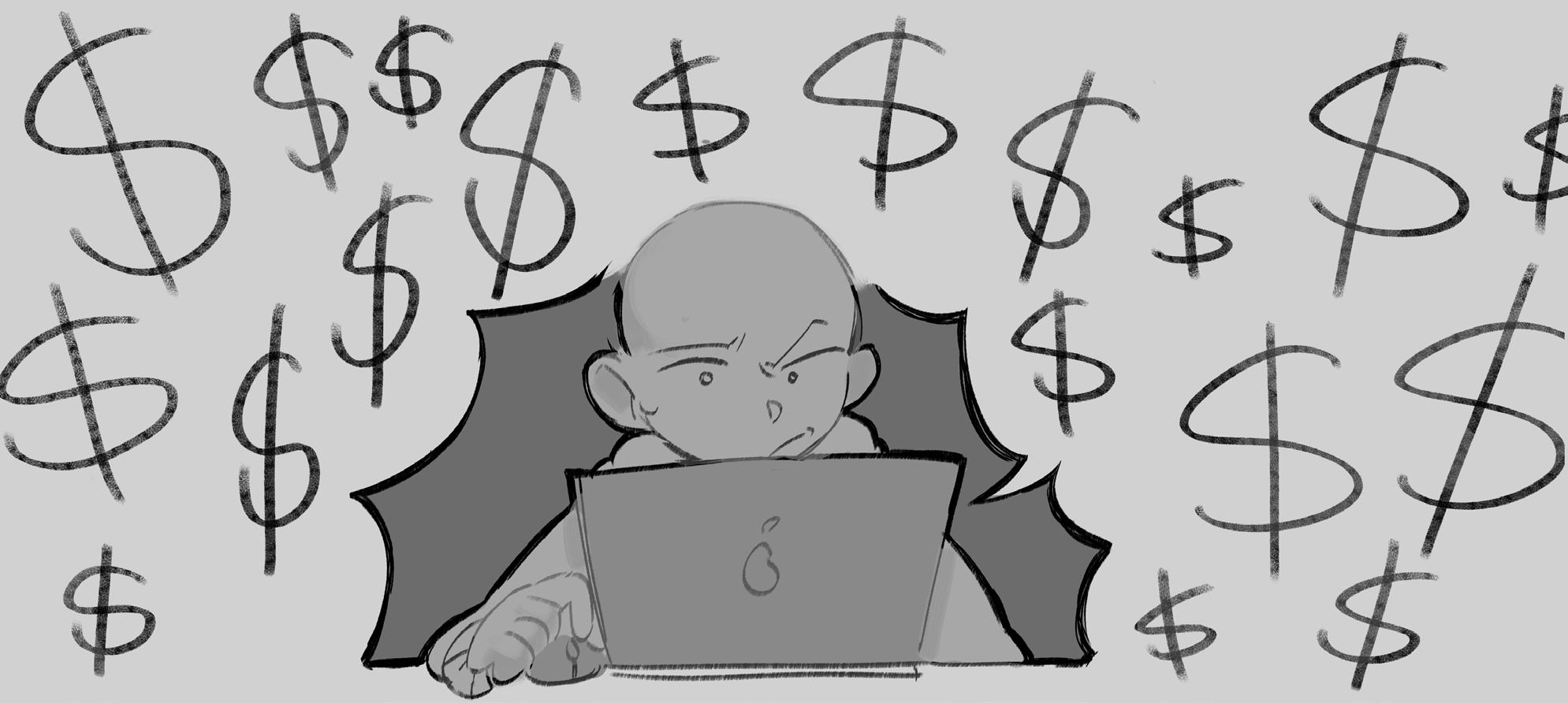
student can afford to contribute to college costs. A lower Student Aid index leads to more financial aid, while a generally higher one results in less help.
Applying for scholarships is another very important process for students to help get enough money to cover some tuition. There is no limit on how much money students can get from a scholarship, but most students receive an average of a few thousand dollars. One flaw in the scholarship system is unequal access. Some students have better support from schools or counselors, while others don’t know where to find scholarships or how to apply. This makes it harder for lower-income students to have a fair chance.
Another issue is how time-consuming and competitive the process is. Applications often require essays and recommendations, and many students apply for the same awards. Even then, the money given is sometimes small and doesn’t cover much of the total cost.
“With higher tuition, you’re going to have to work harder, not just academically but also financially,” Sohn added.
Currently, in 2026, the total student loan debt in the US has reached about $1.84 trillion, making it the second-largest category of household debt after mortgages. This weight is shared with around 42.8 million federal borrowers. It’s heartwrenching for high school seniors to not attend the school they desire. Many students have worked incredibly hard throughout the years, and knowing some won’t be able to afford to attend is deeply disheartening.
“If a school doesn’t offer as many opportunities, and I’m just going to be working instead of experiencing college life, is it really worth it [if] I don’t get that good of an outcome?” Sohn said.
As AI becomes more and more skilled at creating images and writing stories, there has been an increase in AI-generated books for kids. While also pushing real artists and authors out of jobs, children’s books being made and published by AI can have harmful effects on young children’s development.
Many popular AI platforms like ChatGPT, Gemini, and Sora AI ingest massive datasets gathered from different websites and sources and find patterns within them to create an outcome that feels familiar .
For example, if AI were asked to create an image in an art style similar to a children’s book, it would scour the internet and analyze thousands of artwork related to the prompt, and then design something in a similar style. This means that real artists who upload their work onto the internet could be contributing to AI without their consent.
The same thing goes for authors and their writing; AI uses their work to learn, and then pushes real authors out of jobs. Once a book is created, there are many inconsistencies and mistakes. Stories are spit out within seconds, and without any person reading over and editing it, mistakes can go uncaught.
Many children’s books contain writing and then a picture. AI cannot feel or perceive emotion the way humans do, meaning that it often interprets situations differently than people would. For example, if in the storyline there is something

Last month, I went to Kaldi with my friend Aislinn. While my friends and I immediately went on Instagram while waiting for our drinks, she started reading Tiger, jokingly telling me she was trying to become a “luddite” (referring to 19th century English textile workers who were opposed to modern technology).
I initially laughed this off, but her sentiment stuck with me. Although sources vary, the average American spends about 44 years of their life on a screen. While technology has become a necessary part of modern life, there definitely
particularly sad or troubling, AI may create an image that portrays someone happy or joyful. While this may not seem like a major issue, children mainly learn through visual cues in their early years, and constantly seeing a happy face paired with words with the opposite emotion can be confusing. Having people scan and look over AI-generated books before they are published can make a huge difference and may solve a number of these problems. However, the biggest issue that
still arises is AI using artists’ and authors’ work without their consent to pick up certain styles of artwork or writing.While completely banning or boycotting AI-generated books may not be the solution, people could work more collaboratively with AI rather than entrusting it with the entire job.
Regulations around what AI can use to learn should be tighter, and authors and illustrators that contributed to AI should be properly recognized and credited.

are major consequences, like missing out on life. Thus, my friends, Silas, Aislinn, and I took the problem into our own hands by competing in a screen time challenge.
To start off, Silas created a Google Sheet where we monitored our screen time daily. We decided that, based on the level of necessity, different activities would lead to different amounts of points that added up to a total score.
Our categories consisted of the 1x multipliers, such as social media, 0.5x multipliers, like movies, games, and texting, and 0.25x multipliers for essentials, like homework.
The point of the challenge wasn’t to completely deprive ourselves of technology, but to use technology sparingly.
We started the challenge on a Sunday. I decided the best thing to do for myself was to put my phone in a cabinet, to avoid checking it. However, I ran into another problem: my computer.
I found myself regrettably putting the letter “i” into the search bar throughout the day, going to Instagram for what
I told myself would be a quick scroll, but inevitably be an additional 30 minutes to my score.
However, as the week went on, avoiding technology became easier. I decided to go to the library to pick up some CDs to use instead of using Spotify, and a book to read rather than straining my eyes in the wee hours of the night on AO3.
Around this time, I also started to notice how addicted my peers were to technology. This realization helped improve my screen time, and interact with my friends more, rather than talk to them in surface-level conversations blemished by our crippling phone addictions.
Eventually, the week ended. Aislinn ended up winning, which was expected, since her average phone screen time was already only 25 minutes per day. I managed to cut my screen time in half, from four hours to two.
While I’m not ready to be full luddite, the challenge made me more conscious of how I choose to spend my time, and more focused on staying in the moment rather than resorting to technology.
Private health insurance is not able to meet the growing mental health needs of an America already in crisis
STORY RAFA ESTOLANO-SRIDHARAN ILLUSTRATION JAYDEN ZUMBA
Continued from Page 1
One in five adults in America have experienced mental illness, and one in 20 have experienced serious mental illness. This crisis does not just affect America’s adult population, either. In October of 2021, the American Academy of Pediatrics, the American Academy of Child and Adolescent Psychiatry, and the Children’s Hospital Association declared child and adolescent mental health a national emergency. And from 2010 to 2020, suicide death rates among adolscents increased 62 percent. This crisis is real and it is dangerous.
But even as this crisis looms, access to mental health care is in a dire state. In 2024, only half of adults and adolescents with mental illness received treatment. This is due to a number of factors. A primary one is that America is experiencing a shortage of mental health providers.
As of 2021, 123.9 million Americans are living in one of over 5000 federally designated mental health care professional shortage areas. These Americans are not able to access
mental health care in their area or do not have many options. And even when geographically accessible, insured patients have a hard time finding in-network providers and end up paying high out-of-pocket costs for out-of-network providers.
This roadblock often stops people from seeking treatment. In 2020, of those who reported having mental illness and unmet needs pursuant to said mental illness, 30 percent reported not receiving care because of lack of insurance coverage or insurance coverage not paying enough of the cost of treatment. This number was similar for those with serious mental illness.
On top of a lack of coverage, insurance companies consistently engage in specific practices that impede access to mental health care and worsen the care that is received. Insurance coverage for mental healthcare is often dependent on an arbitrary standard of medical necessity which blocks many Americans with mental illness from receiving care.
Insurance companies will deem people’s mental illness not serious or dire enough and refuse to cover care
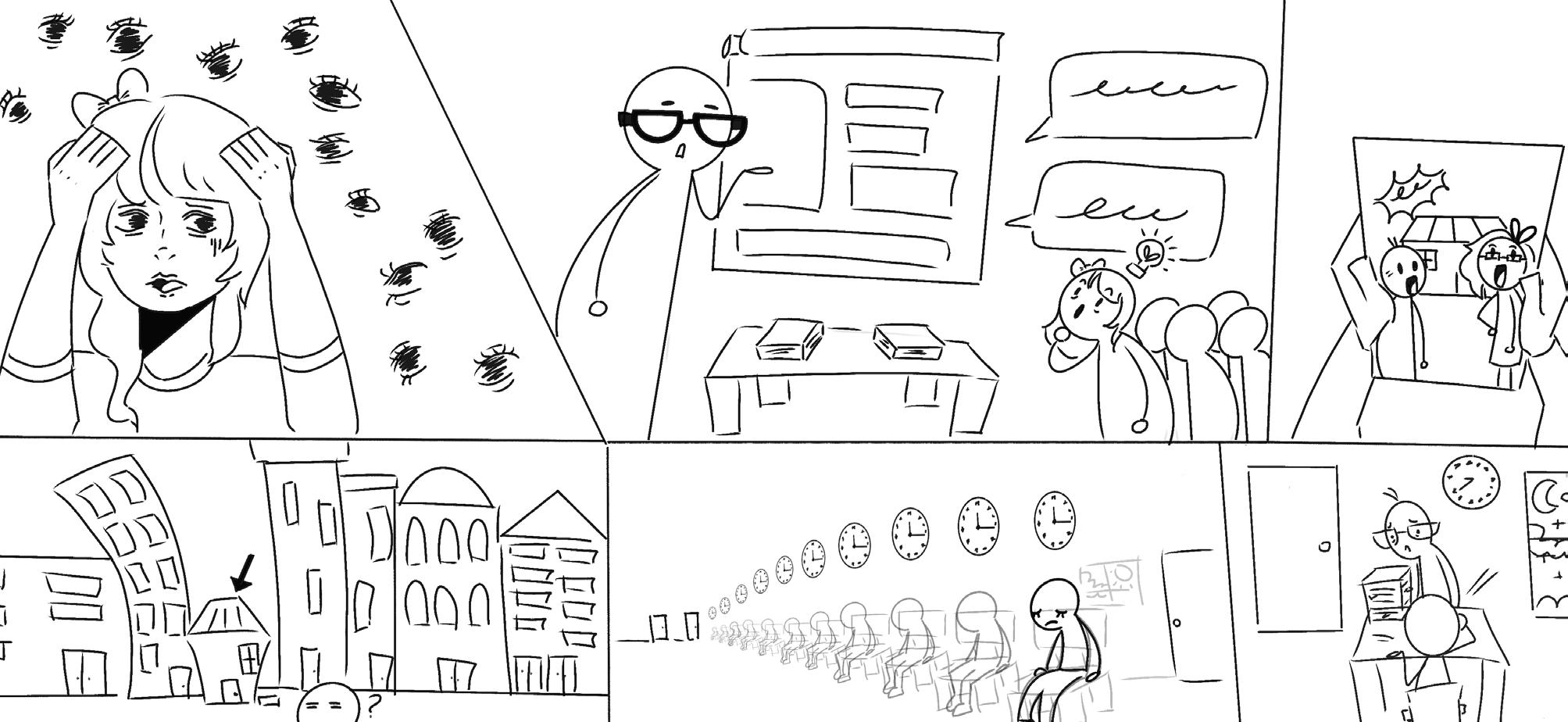
for that reason. Further, providers that are listed in insurance networks often are not taking new patients, are not actually in the network, or sometimes, do not even exist.
Many insurance companies also use a fail-first model of care. This means that they refuse to pay for more expensive treatment until the cheaper options have failed.
Consequently, even if patients are able to secure care, they must go through unnecessary rounds of treatment that does not work before they are able to get the care that they really need, creating a worse standard of care.
If patients are able to receive treatment, it is often of poor quality. Psychiatric hospitals specifically are deeply uncompassionate places. Psych hospitals are often dirty and cold, bleak environments.
Psych hospitals, by their nature, care for a vulnerable patient population that often cannot advocate for themselves adequately and consequently are rife with staff on patient abuse.
Neglect, physical abuse, and psychological abuse are the most common, but there is a lack of data on the safety of inpatient psychiatric care making it difficult to hold these providers accountable for abuse. Due to these factors, following mental health hospitalizations patients are more likely to engage in suicide or self-harm behaviors.
It is clear that America’s mental health needs are not being met adequately, and the blame lays squarely at the feet of private insurance.
Medicare for all, the proposed single-payer national health insurance which would cover mental health care is the clear way forward.On top of being less expensive for Americans, this eliminates the problems presented by private insurance.
Further, mental health care should take a more compassionate, holistic, and patient-centered view of treatment. The solution is clear, and Americans must advocate for it and force legislators to implement it.
STORY LEIGHTON KWOK
ILLUSTRATION
KRISTEL HOUNG
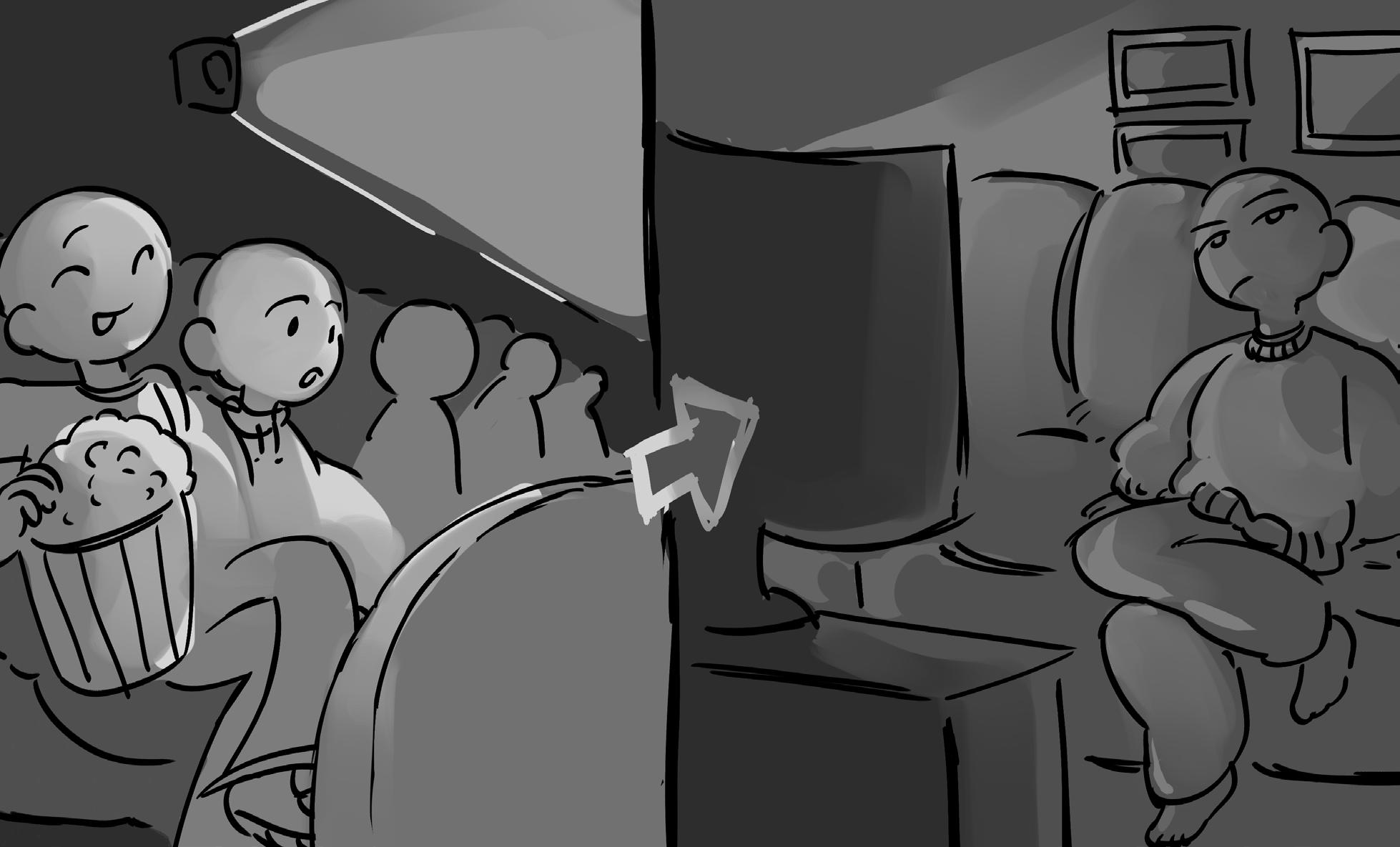
Ever since the pandemic, the number of people attending cinemas has been steadily declining. What used to be an easy hangout spot with friends and family has now become a once-in-a-while event. With dependence on platforms like Netflix, Hulu, and Disney+, people no longer feel the need to leave their homes. As streaming platforms dominate and the cost of a night out with friends rises, the tradition of watching films on the big screen is fading, with many worrying that it may disappear forever.
According to a survey conducted by The Harvard Gazette, 75 percent of Americans prefer to stream a movie at home rather than watch one in the theater. A more recent study from the Pew Research Center revealed that only 50 percent of respondents visited a cinema to watch a new film in the past 12 months. Also, seven percent of respondents said that they had never seen a movie in a theater at all.
There are a few reasons why going to the movies has been falling in recent years, with one of the biggest factors being the rise of streaming platforms. Instead of getting dressed, and buying tickets and snacks, people can just turn on their TV and watch the newest film instantly. Many have begun to settle for the convenient, default option of at-home entertainment.
Another large reason is the cost of going to the movies. Due to the drop in ticket sales over the past few years, tickets and concession stand prices have increased in order to compensate for the lower turnout. With the majority of tickets now starting at $20, it is no wonder people do not want to go to the cinema anymore. Snack prices have skyrocketed, and are sometimes even more expensive than the ticket itself. This makes a normal trip to a movie too expensive for many teens and families.
After COVID-19 pandemic in 2020, people have shied away from movie-going, which changed people’s habits and how the entertainment industry operates. Streaming platforms are now hoping to get movies out of the box office as quickly as possible, with the average movie staying in theaters for only 45 days.
Movies go to theaters for the opportunity to receive prestigious awards, such as an Oscar or a Golden Globe. After viable time for it to win an award, the movie is released onto platforms for streaming. However, this defeats the purpose of it being in the theater in
the first place if it is too expensive for the general public to view.
Despite these challenges, it is still worth going to the movies; it is necessary to preserve the experience of going to the cinema. Cinemas are there to provide an escape from real life. With the dark interior and large screen, it transports individuals to different worlds and immerses them in the plot. Watching from home may be comfortable, but watching movies in a theater is a true experience. When at home, many distractions make one want to push pause on the movie. But in the theater, individuals focus only on the screen.
The University College London (UCL) argues that taking trips to the cinema is actually better for your well-being. “Cinema and other cultural events provide space to concentrate and practice focusing. At the cinema specifically, there is nothing to do except immerse yourself.”
Incredibly, when watching movies in theaters, individuals’ heart rates rise depending on the
progression of the movie. Movies provide people with a heart rate that the British Heart Foundation calls the “healthy heart zone.”
Two unique elements of the cinema experience drove the findings: the focused activity and the shared social focus. These elements have proven long-term benefits on our overall brain function, memory, focus, and productivity,” Professor Joseph Devlin, a faculty member at UCL’s Brain Sciences School said.
The cinema allows people to connect through a shared, immersive experience.
At the cinema, one makes memories; only at the cinema do you spend the time after the movie feverishly discussing the plot of the movie with your friends or family. There is a human connection that simply cannot be made while watching a movie alone on a laptop.
Although prices may be rising, going to the movies is a healthy investment towards a fun and memorable time.
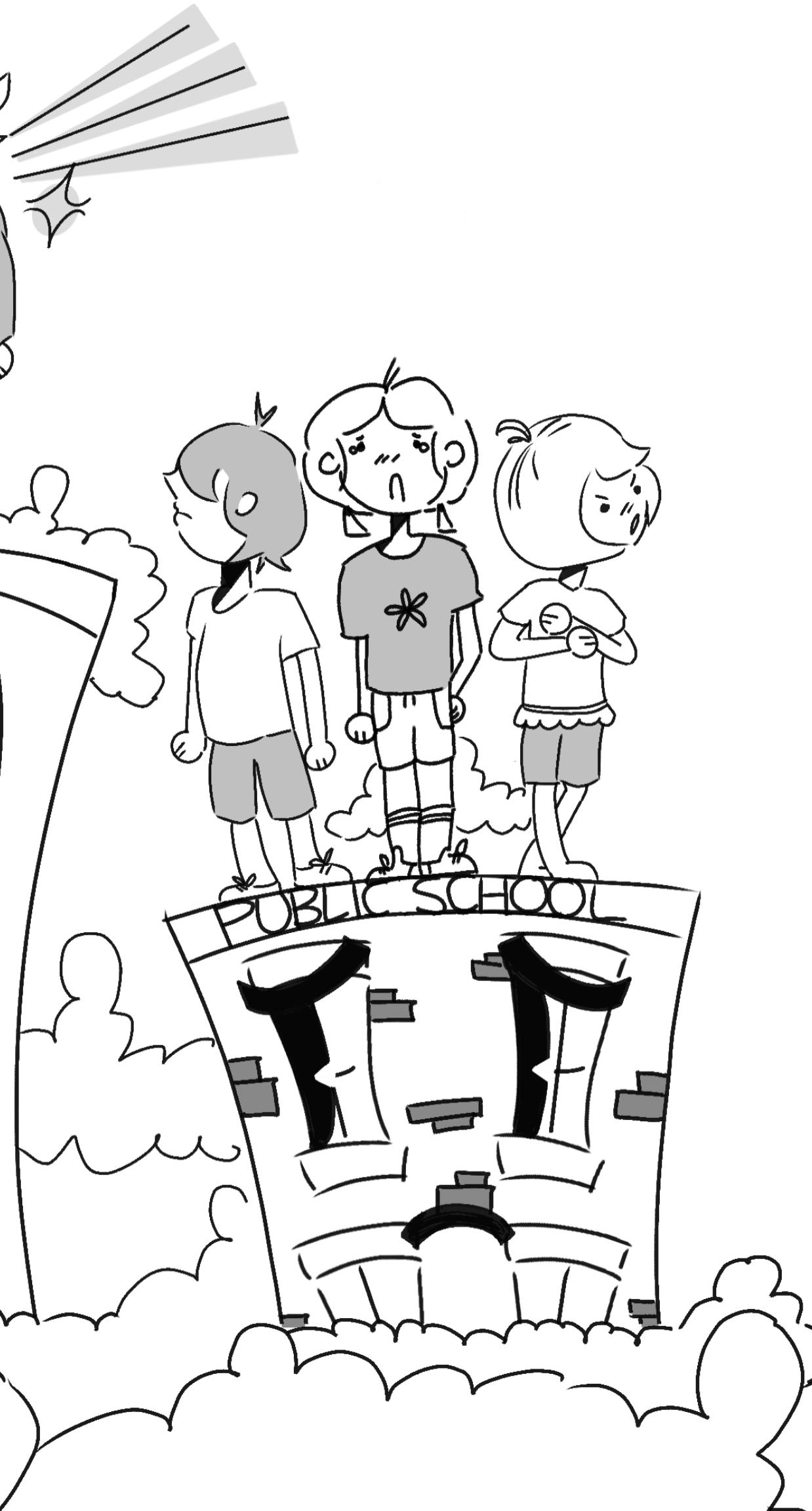
I
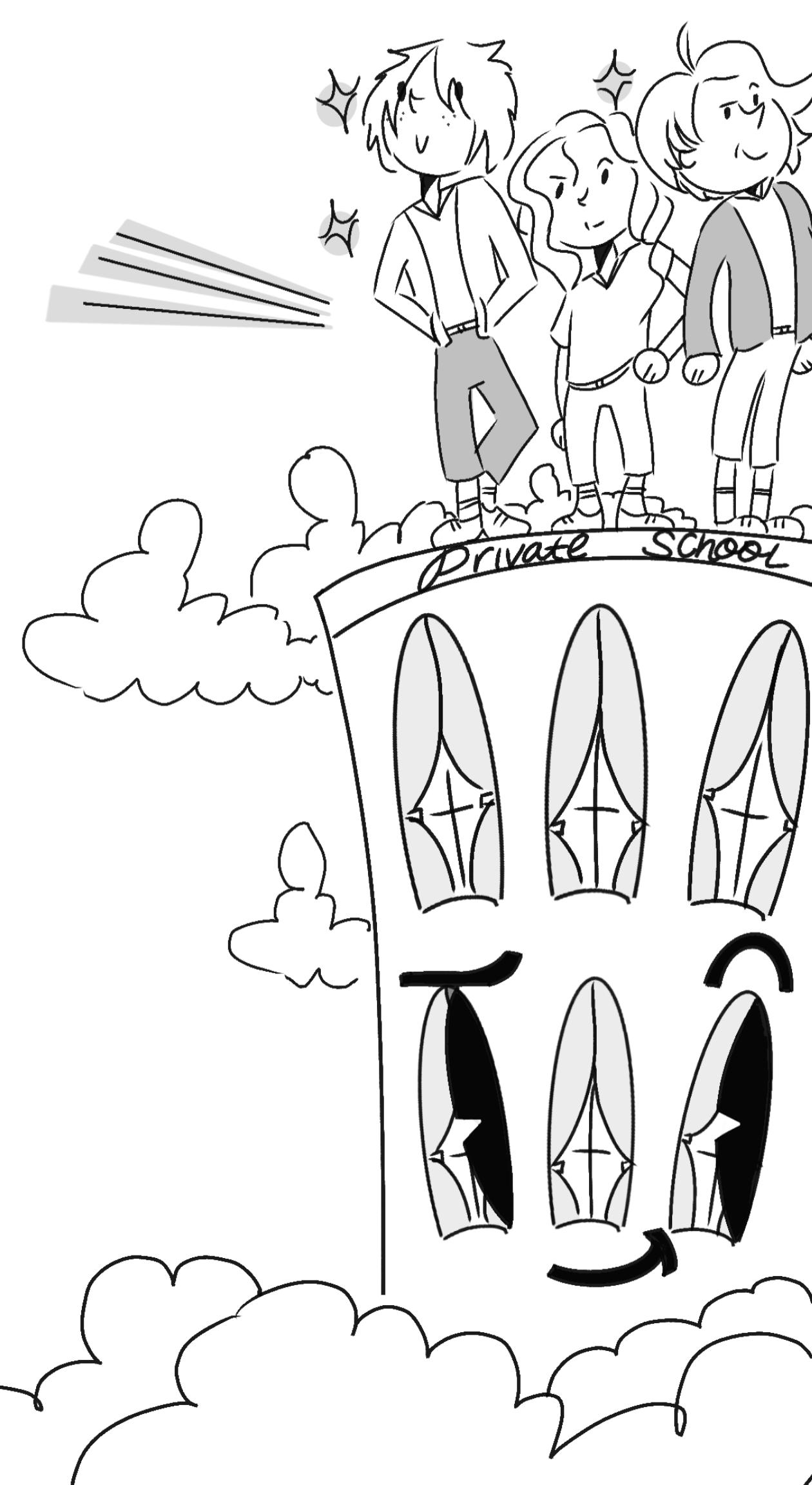
n California, private schools educate about 494,000 out of 6.6 million students receiving a preschool, elementary, or secondary education. There are 5.8 million students in public schools, 175,000 in homeschool settings, and 165,000 in preschool programs. According to the California Legislature, California has 2,958 private elementary and secondary schools, where around 70 percent of the students in attendance are enrolled in religiously affiliated private schools, with Catholic institutions making up about 37 percent of enrollment.
Most private schools are located in urban areas, but nearly all counties in the state have at least one private school. The majority of private school students attend nonprofit schools, but some schools are organized for profit. Nonprofit organizations are required to reinvest their leftover funds into facilities and staff, while for-profit schools are able to distribute profits to owners.
The U.S. Constitution prohibits states from funding religious organizations, including religiously affiliated schools, and schools outside of the public school system. However, California does exempt nonprofit private schools from income taxes and local property taxes, so the schools can use those funds for other purposes.
Private schools operate with minimal state regulation, since the state does not certify or monitor private schools. Private schools have much more autonomy than school districts or charter schools, and they generally operate as long as they can attract students willing to pay tuition. For example, private schools develop their own curriculum and goals for their students, including graduation requirements and required testing. However, they are still expected to keep track of student attendance and fill out student and parent contact information.
State law also establishes several rules related to health and safety. Both public and private schools
must background check employees who will interact with students, meet fire and earthquake safety standards for their buildings, and ensure students are vaccinated.
Though supplemented by fundraising and donations, private schools generate most of their revenue from tuition. Data from the Legislative Analyst’s Office (LAO) highlights that private school tuition in California averages about $17,000 per year for elementary schools and $23,000 per year for high schools. However, tuition varies widely, with many schools charging less than average (High Point Academy in Pasadena charges $12,650 a year) and some charging more than twice the average (Polytechnic School in Pasadena charges between $38,500 to $48,900 a year).
Also, roughly one in three students attending a private school receives some type of tuition discount, generally based on financial need or having a sibling enrolled at the same school. In addition to tuition, many private schools ask students to pay for books and supplies.
A school’s level of funding is deeply tied to its students’ mental health. Private school funding allows more money to be directed to wellness programs. This translates to increased counseling and mental health services directly targeted to students and more widely available than what may be offered at underfunded public state schools. However, this increased presence of mental health resources can often be lessened by an “exclusive” private school culture that can increase student stress, anxiety, and depression. Exacerbating this, private schools can also increase financial stress. For families who may not be able to comfortably afford private school tuition, money can create an additional burden on students and family dynamics.
Ultimately, the main difference between California’s private and public schools comes down to the different standards and baselines of funding and tuition.
...oftentimes our goals overlap and similar internships or opportunities are limited which fosters a need to be better than other people, “
”
Everyone is more open-minded and less judgemental of your art and how you express yourself, Maggie, LACHSA freshman
Maggie, LACHSA freshman
The teachers and administrators are so supportive. There’s this one teacher who I think I’ve seen her at every single [soccer] game,
…[private
Prep freshman
school] definitely has a little bit of a different environment because people have different priorities,
Westridge freshman
schools students are also more
STORY LEIGHTON KWOK
Los Angeles is known as the home of A-list and B-list celebrities, tech giants, and endless opportunities, making it a highly desirable place to live in the United States. Naturally, many families assume that reputation extends to its schools. But for students who relocated from outof-state private schools, the comparison is not as dramatic as expected when it comes to class rigor and curriculum.
Rather, they have observed that the culture of private schools is vastly dependent on the state it is located in. With Los Angeles being the hub for entertainment, attending school in LA comes with its perks.
One major detail that both types of private schools, in state or out of state, have the privilege of experiencing is educational trips outside of the United States. Calista Timmins, a junior at The Overlake School, a private high school in Redmond, Washington, stated that her curriculum is taken outside of the classroom throughout the year.
“In the week before spring break, everyone goes on a non-academic project, ranging from building a tiny house, baking for the week, camping, or traveling,” Timmins said. “I went on a really special one where I went to Italy for two weeks.”
Similarly, students at Loyola High School, an allboys private Jesuit school in Los Angeles, take an annual trip to New Zealand to study visual storytelling and photography immersion. Schoolsanctioned trips are available to students across the US private school system.
When it comes to cultural differences, one needs to consider location. With the privilege of always-sunny California, the majority of public and private schools are outside. This means that California prioritizes naturebased campuses, not worrying about potential climate protection. But, in other states, schools tend to rely more heavily on indoors-based instructional facilities.
Izzy Kifer, who attends school at Bishop Guertin, shared that she “can’t even picture going to school outside.”
“I think we definitely have less of what I see on TV where you’re hanging out outside, on the grass, there’s not really outdoor areas where people hang out,” Kifer said.
In some states, schools are built around the cities that they are located in. For Angie Wilkins, who attends Marymount School in New York, her school relies largely on existing New York infrastructure.
“We don’t have any sports fields or anything like that. We just have a gym and a dance room,” Wilkins said. “But we have Central Park, which is … specific to New York City schools. The area I grew up in was just single buildings, [like] three or four flights.”
However, Los Angeles schools tend to edge out other private schools across the country when it comes to industry opportunities. As a highly tech-driven and diverse city, Los Angeles private school students have greater access to real-world engagements.
“My journalism class got to go on a trip to the CBS news headquarters, where they film all their news segments,” Sophie Bilu, who attends Mayfield Senior School, a Los Angeles private school, said. “Not really an opportunity that people in other cities would get to have because in LA, especially, there are a lot of industries like that. LA holds a lot of opportunities for everyone.”
Bilu also highlights another advantage to attending private school in Los Angeles: the diversity of its students. As one of the most multicultural cities in the country, students are able to enjoy exposure to other cultures, lifestyles, and beliefs.
“LA is really diverse. That plays a big role in having diversity in the school, especially since it is very important. The demographic that people of LA bring is super important to the school’s environment,” Bilu said.
Although curriculum and educational opportunities may be similar across state lines, what makes each school special is the spirit and surrounding culture that is brought by its students and teachers. Because of the locations of private schools, students are given different experiences that they would not get in any other state.
STORY SONYA SHIMPOCK
A s each class promotes from South Pasadena Middle School, a mass exodus occurs. Students make the ultimate decision to either attend South Pasadena High School or depart from the district to enter into one of the highly competitive and elite private schools in the broader Los Angeles Area.
These private schools are widely believed to be “feeder institutions” — the children of wealthy parents flock to these schools to attempt to gain admission to a competitive college once their high school career draws to a close. In Los Angeles, schools like Harvard-Westlake and Polytechnic High School boast high matriculation rates to America’s highest-ranking institutions.
To achieve these matriculation rates, private school students are often pushed harder than they would be at a public school. This increased workload can translate into students seeking out relief through alcohol or illicit substances. As private school students are traditionally in a higher income bracket, students are able to leverage their wealth to obtain drugs or fake IDs that enable substance abuse at a young age.
A study conducted by Arizona State University found that “privileged students” who attended elite private schools are “more likely to end up with drug and alcohol addictions in later life.” The study noted that
students who attend elite private schools and hail from upper-class families are “at a high risk of turning to cannabis, cocaine, ecstasy … as well as being more prone to alcohol abuse.”
Researchers theorize that this tendency toward substance abuse may be private school students’ only escape from a “pressure cooker” academic environment that places severe emphasis on academic-based achievement. ASU psychology professor Suniya Luthar proposes a solution to this high-stress environment: “showing the kids there are role models of adults who did not go to an elite university, but who picked a college because it felt right for them and who were highly successful in life.” She elaborates that making “pupils aware of alternative life paths would also help to reduce such problems.”
Furthermore, the culture developed within private schools can be detrimental to students. A comparative study examining the sexual attitudes and behavior of private and public school students found that “despite the enormous amount of faculty energy expended to prevent it, the sexual activity of the [private] school student, both in amount and degree of sophistication, is significantly greater than is found in public school students.” The study further found that “in terms of sex-related drug use, exploitiveness, female self-image, homophobia and sexism, [private school students] do not compare favorably with public school students.”
This difference in attitude and behavior may be explained by the variations in state-mandated education guidelines. Decisions about sexual education are made on a state and local level; because of this, there is no way to compel private schools that are not state-affiliated to adhere to a specific curriculum of sexual education. Consequently, many religious private schools focus on themes of abstinence, exclude LGBTQ+ education, and gloss over information about reproductive health and sexuality. These programs are largely ineffective, and can even be actively detrimental to students.
The Guttmacher Institute details how “an HHSfunded analysis found that abstinence-only programs do not affect the incidence of pregnancy, HIV or other STIs in adolescents.” Rather, the more these programs are emphasized, the “higher the incidence of adolescent pregnancies and births.” Guttmacher also highlights that “abstinence-only programs are often heteronormative and portray LGBTQ+ students as deviant. Stigma and discrimination against LGBTQ+ students increase their risk of HIV infection, substance use disorder, suicide and experiencing violence.”
Ultimately, cultural differences between private schools and public schools are stark. While it can be argued that private schools provide individualized attention that will propel students to more successful careers, it is important to recognize irreconcilable cultural differences that may follow private school students for the rest of their lives.
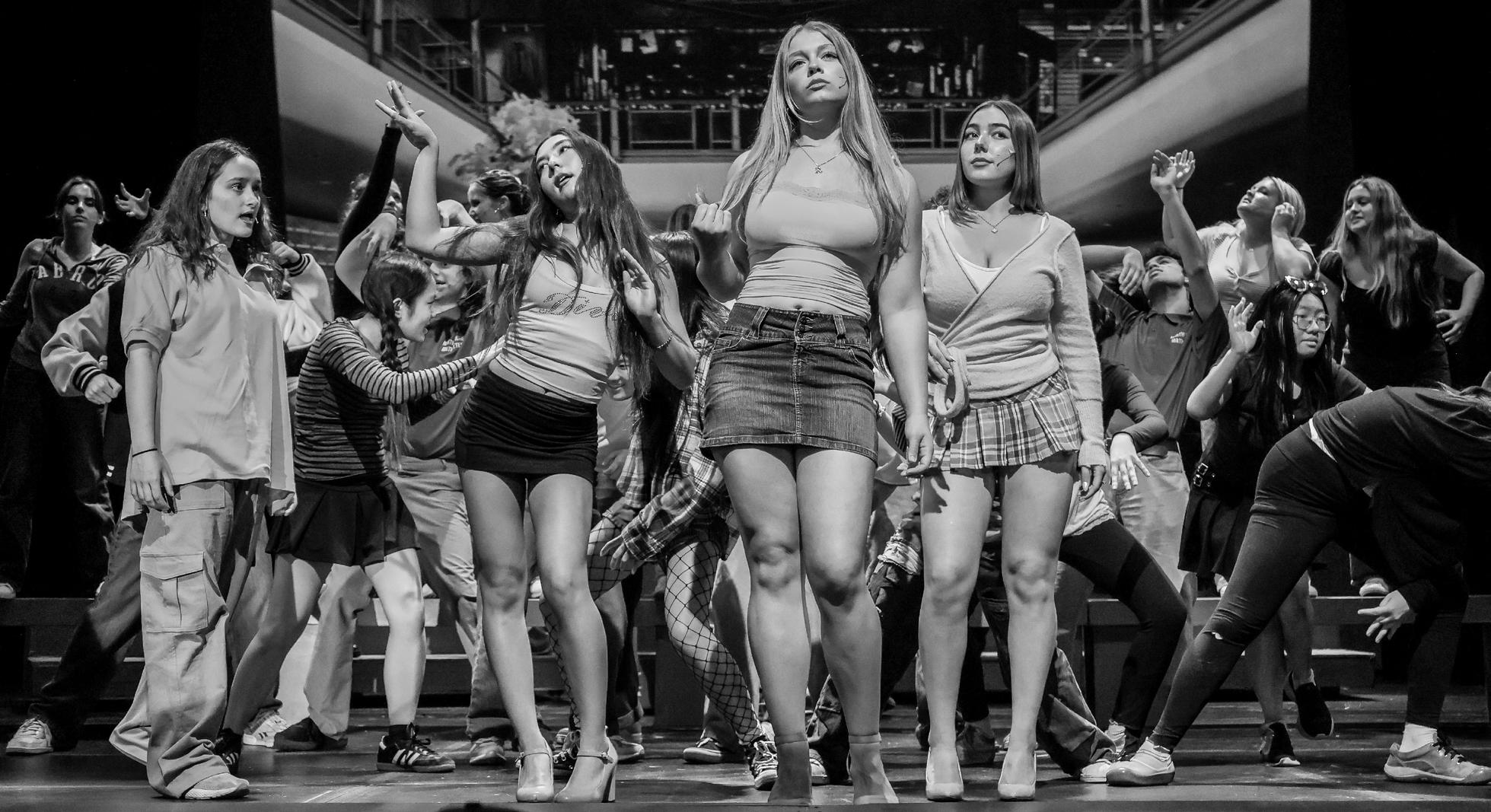
This year’s performance brought laughter, tears, and memories to those in attendance.
has shown real care about the production and the result of that is very clear.”
RUBY FOUDY
Passing it off (not that well)
I’m convinced that anyone who claims that ADHD can be a “superpower” or has “hidden advantages” doesn’t actually have ADHD, or is just on some really good meds. ADHD can really suck. Unfortunately, it is not just a personality trait, but something that affects how I perceive and am able to interact with the world around me.
What bothers me most about ADHD isn’t the stigma or executive dysfunction (and believe me, those things bother me), but the feeling that something is wrong with me. I’ve been trying to shake that feeling for a while now. Once I became aware of others’ behavior, particularly how I couldn’t match or understand it, I became obsessed with fitting in. I knew what ADHD was from an early age, not necessarily by name or diagnosis, but from observation of those around me.
The children who were diagnosed from such an early age had obvious hyperactivity and were often troublemakers. I would rather have died than be thought of in that way, so I suppressed traits I knew would make me seem “bad”.
From Friday, April 24 to Sunday, April 26, the SPHS Drama program put on a performance of Mean Girls: The Musical. Adapted from a book by Tina Fey and with music by Jeff Richmond, the spring musical has drawn attention from both students and faculty alike.
SPHS has a very strong drama program, led by Nick Hoffa. This year’s spring musical was brought to SPHS by a wide array of talented students and faculty, being choreographed by Courtney Cheyne (who leads the SPHS Dance Program) and musically directed by Wylder Reinmann (SPHS’s head of choir).
Mean Girls follows Cady Heron, a teenage girl who experiences American high school culture after growing up homeschooled in Africa. Cady befriends Janis and Damian, two social outcasts. The trio works together to infiltrate the “Plastics” – Regina George, Karen Smith, and Gretchen Wieners, who depict the “popular mean girls.” Since its 2018 debut on Broadway, the musical has been nominated for 12 Tony Awards and performed by programs around the world. Mean Girls is a story of friendship and finding one’s identity.
The performance itself was a beautiful display of the many facets of SPHS’s performing arts programs. The elaborate set design and contrasts made every scene immersive. Many students participated, not just as actors, but as part of the backstage crew. The musical was witty, hilarious, and surprisingly raunchy. Brief language and innuendo (that did not go unnoticed by any of the audience members) made Mean Girls memorable in all the right ways.
Notable casting includes seniors Riis Dickey as Regina George, Belen Belavek as Gretchen Wieners, June Barthelemy as Karen Smith, and Mina Mannal as Cady Heron.
When asked what has contributed the most to the success of this year’s musical, junior Moxxie Ross said, “Mr. Hoffa
Editorial Cartoon
Hoffa himself spoke about his pride in this year’s class. One of the leading factors he mentioned in the success of the musical has been “the students’ energy. [It has] carried from the first rehearsal up through the final week.”
Many of the cast members noted their memorable experiences during the production. For senior Annie DeMaine, who played characters Caitlyn Caussin, Lil’ Bippy Lee, and ensemble, Mean Girls was her second-ever high school production.
“[Mean Girls] was definitely the most fun I’ve ever had working with a cast. At the cast party, we all declared that it was the best thing ever. We were all in agreement that it was a really good group of people,” DeMaine said.
Kiana Caniga, who played several ensemble characters, including a sexy Eleanor Roosevelt, shares the production’s attendance was especially impressive.
“I grew up doing musicals, and family members and your close friends would come, but I think the big difference with Mean Girls — and this was my first SPHS production — was that people just came to see it and enjoy it, even if they don’t have a relationship with anyone in the cast,” Caniga said. “I think [this] is [a] really notable thing, and I think it’s very, very cool.”
So much effort was put in by the cast and production crew alike to make the show what it was, and a strong community was built along the way. Ultimately, Mean Girls is a show about identity, conformity, and friendship, all topics that many SPHS students grapple with themselves. It was an amazing production that handled all these themes in an entertaining, touching, and laugh-out-loud funny way.
As Hoffa wrote in the playbill, “In a world that often rewards plastic perfection, being real can be a radical thing to do.”
I developed tactics to seem well-behaved: pressing my nails into my arms when I wanted to interrupt, swinging my feet instead of leaving my seat, and staring near the teacher while I zoned out. I still cling to these habits today, and for good reason–they worked. Teachers called me “a joy to have in class” and praised my attentiveness, even when I wasn’t listening. I had separated myself from the “problem” kids, but I didn’t feel any more normal.
As it turns out, ADHD is classified as a disorder for a reason, and pretending I didn’t have any symptoms didn’t make them magically disappear. Unsurprisingly, operating under the impression that I was just lazy or stupid for 15 years without any medication, validation, or accommodations was a struggle.
That feeling of inferiority, like there was something fundamentally wrong with me, clung to me; I just couldn’t shake it off. Once I got to high school, the carefully strategized coping skills that I didn’t know were coping skills flew out the window. I had too many things to juggle at once, and my best efforts could only take me so far. There it was again–that feeling that something was wrong with me.
I felt it during uncomfortable family dinners after I lashed out when asked about schoolwork. I felt it when I had to reread the same sentence without it ever sticking. Most of all, I felt it in the silence I could not fill with other people’s presence, wondering why everything felt so hard. It was suffocating.
Things are much better now. I have a diagnosis, accommodations, and medication. More importantly, I’ve accepted that there isn’t something wrong with me. If we’re talking on a chemical level, sure, but it doesn’t affect my value as a person. Neurodivergence can make things harder, but it doesn’t make me less capable; it’s just part of who I am.

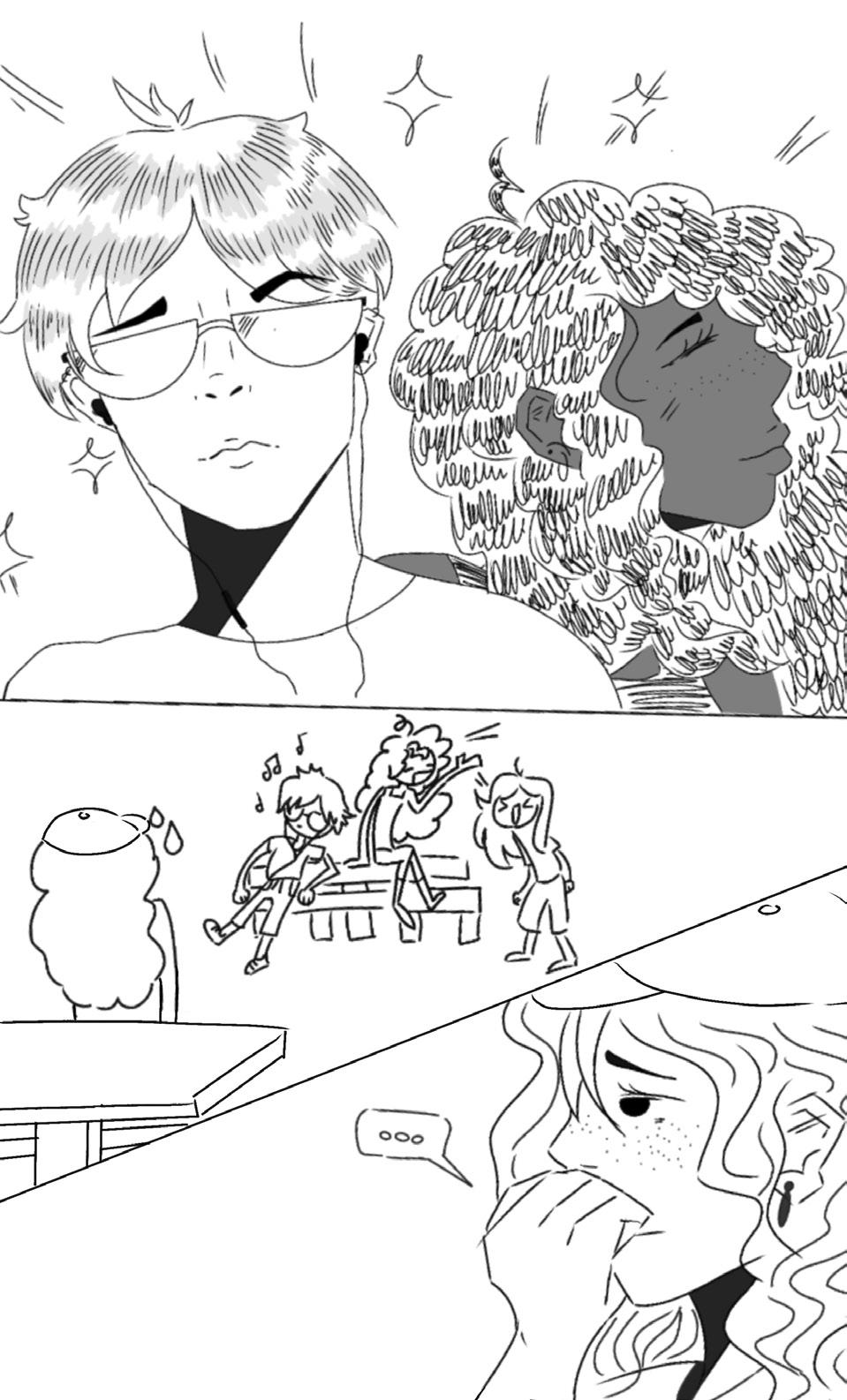
Whether seen in media or real life, the concept of popularity has an undeniable effect on the lives of high schoolers.
STORY ELLIE SONG ILLUSTRATION JAYDEN ZUMBA
Popularity can be defined as a variety of things, whether it be a standard or a social force that arises in many different environments. The media often portrays the side of fear when it comes to popularity. Students at SPHS sometimes see it as a certain standard they have to meet in order to feel confident in themselves. The developments of these standards affect the mindsets of the students throughout their time in elementary, middle, and high school.
“I think in middle school, especially around eighth grade, I started to care more about what people thought and started really depending on how people around me saw me. Then I switched friend groups, and that was a better transition,” senior Rose Vandevelde said. “Now I’m independent, but I also do care what my friends think, because I value what they have to say.”
Many kids grow from not caring about appearances and perceptions to being hyper-aware of how they look to others. While popularity can often be perceived as harmful, it can also be a confidence booster and validate the “popular” individual. Having many positive social connections is not an inherently bad thing. Especially in high school, students feel the need to fit in, and they tend to care more about what others think of them.
“I really enjoy being able to say hi to my peers [without feeling judged], being able to learn about how other people are doing, and just getting to know more perspectives on things, especially in communities where I do know more people,” Vandevelde said.
Sometimes, more “popular” individuals tend to have more confidence, which allows them to feel more open in their own space and with their peers. Yet, these individuals can also feel the need to keep their appearance and behavior consistent to maintain their status.
Though being popular can have different implications in different contexts, it has an overwhelmingly negative perception in books, movies, and shows. The “popular
mean girl” trope dates back to the 1970s, in which teenage girls were often depicted as cruel and complex in various media. This trend is still being reflected in today’s culture. This iconic stereotype can alter one’s perception of what being popular means, especially to younger audiences. Younger demographics can sometimes be influenced by this and believe that being mean is a key aspect of popularity, but as individuals grow and emotionally develop, this view can be shed.
“I think the idea of popularity becomes overwhelming because it is so advertised and stressed on young teens. From movies and TV shows to real life, teens are told that popularity is vital for having a social life, or the “best” high school experience, and should be prioritized,” freshman Jayda Ou said.
When some individuals are seen as popular, they may feel expected to fit a particular mold, and certain traits, for example, following trends or behaving a certain way, become expected of them. Those considered popular sometimes have a greater influence on their peers, which can lead to peer pressure. Students who want to fit in may feel the need to conform to a group’s norms in order to be accepted. This can vary from feeling the urge to vape, attend parties, drink, and more. The popular clique can vary from different groups, but a common way for individuals to become popular is by who they are included by and associate with.
“When I started drifting away from those connections [with my old friends], I gradually felt more of a need to be ‘popular.’ Yet I realized that at those times in my life, I was never satisfied. From being close with friends who were explicitly labeled as popular, I can safely say that they were not the happiest either,” Ou said.
Popularity is a nuanced concept. It is something often sought by teens, but also portrayed negatively in the media. Ultimately, it is an important part of a set social structure that comes with positives and negatives, which could make or break an individual’s high school experience.
STORY RAFA ESTOLANO-SRIDHARAN ILLUSTRATION
DIANA LOPEZ
Lauded as one of the most accurate medical dramas of all time, The Pitt’s first season took home five Emmy awards for its mix of incredible writing and acting. To say the least, season two had big shoes to fill. Season one followed Dr. Michael Robinavitch, referred to as Robby, and his team of residents and nurses over the course of one intense day in the emergency department of the Pittsburgh Trauma Medical Center.
Season two of The Pitt takes place on the Fourth of July as Dr. Robby prepares to take a three-month vacation. Replacing him for the duration of that sabbatical is Dr. Baran Al-Hashimi. There is an immediate tension that develops over the course of the season, in which AlHashimi and Robby constantly butt heads.
Mental health is a large throughline in the second season of The Pitt. Almost every character is suffering from burnout. Characters also struggle with a range of other problems, from self-harm to post-traumatic
stress disorder. The writers handle these issues with great sensitivity, approaching them with a wellrounded, holistic approach.
Although it can be heavy-handed at times, with characters having conversations that feel designed only to further a message, the writers of The Pitt aim to tackle heavy issues impacting the medical field. These include the safety of nurses, highlighted by a scene of a drunken patient putting a brand-new nurse in a chokehold, burnout, and systemic inequities in healthcare, seen when a deaf patient is unable to communicate with her doctors or when a Black patient’s pain is not taken seriously.
Part of what makes all of these complex themes work is the incredible performances delivered by the entire cast. Noah Wyle shines in a powerful depiction of a man on the brink. Supriya Ganesh delivers a powerful performance as a deeply tired doctor who cannot escape the drama of her family. Isa Briones’ palpable anger and deep sadness is incredibly powerful. The list just goes on and on.
The Pitt did not just receive critical acclaim; it has also enjoyed massive popularity on the internet. The show is highly rated on the review platform IMDb, and countless fans have taken to social media to praise the show as well as discuss its complexities and fan theories.
Another key aspect of The Pitt’s fanbase, especially among younger fans, is the desire for onscreen romance, which is not present in the show. The fandom of The Pitt is infamous for its ships — the act of fans supporting a relationship between two characters, regardless of whether that relationship is an actual part of the media. Some of the ships may feel more ridiculous than others, but they are all an important part of the fan culture of the show.
The Pitt is a well-rounded medical drama, deserving of its support and positive feedback. The acting is incredible, and the writing is even better. The realistic, fast-paced plotline builds the viewer’s attention and is a breath of fresh air from classic medical drama tropes. Season two of The Pitt did not disappoint and is what all great television should aspire to.
STORY UMA CHAKRABORTY
PHOTO MAC SHROPSHIRE
When senior Mina Mannal steps onto the stage and the lights hit her, she feels a rush from the excitement and joy of performing. Theater is her passion; she has been doing it almost all of her life and plans to carry it into college.
“My dad is an actor, and he’s a theater teacher, and so I’ve been doing theater all my life. I started when I was very little and I was maybe three in preschool,” Mannal said. “I [have] just been doing theater for a very long time, like over the summer, during the school year. I’ve been in plays, musicals, auditions, [but] I really started focusing in on theater during high school.”
While Mannal enjoys singing the most individually, she has had experience in dancing and acting as well, and enjoys bringing all three together in a musical.
“I love the rush of being on stage, performing to an audience, and making them laugh, making them cry. I find it very fun to be there and entertain them. I put in a lot of work in order for them to feel a specific way towards what I’m presenting in front of them,” Mannal said.
Mannal used to be more of a shy performer, but as she has gotten older, she has become less reserved on stage.
Mannal explained, “I think I’ve gotten a lot more outgoing and energetic and more committed to my work as I’ve gone on throughout high school. I still have a lot of work to do, but when I was little, I was definitely more of a shy performer.”
Mina Mannal is an avid participant in the SPHS drama program and has starred in many musicals and plays. Some of her productions include the musicals Bright Star and Spamalot, as well as plays like A Midsummer Night’s Dream and Too Much Light Makes the Baby Go Blind. She also played the lead Cady Heron in SPHS’s 2026 spring musical production, Mean Girls
Not only is she a part of the drama program, but she is part of the dance one as well. She is in Dance III, and performs at many of the school’s assemblies and events.
Many students from younger classes, such as freshmen and sophomores in Drama I and II look up to Mannal. She is an inspiration and a model of what many students aspire to be.
One major accomplishment for Mannal was during her junior year, when she was one of the 11 finalists out of a pool of nearly 150 applicants and received a scholarship for A Noise Within’s annual monologue festival.
Mannal has committed to Bates College in Lewiston, Maine, and plans to double major in theater and another undecided field. Bates College is quite selective, with an acceptance rate of only 13 to 15 percent. The theater program has many different opportunities, ranging from dozens of annual performances to directing.
When most people envision theater majors, they imagine an actor, but there are many different jobs that can be classified in that field, such as choreographing dance numbers and writing new productions to perform. While
still not set in stone, Mannal is looking to the theater industry for a career.
“I’m looking to … not really be a performer necessarily, but work in the theater industry off stage. I’d want to be more involved with managing other actors [or] performers and broadening opportunities for young adults to be a part of musical theater and performance,” Mannal said.
Deciding what to do after high school is a big and thoughtful decision. Many people struggle with choosing a career path they will enjoy and do for the rest of their lives, but in Mannal’s case it was different. Theater has always been a strong and prominent part of her life, so making the decision to pursue a field in it came easily.
“I’ve always come back to [theater], and I’ve tried lots of things. I’ve tried sports, visual arts … and being more academic, but theater just kind of makes sense for who I am,” Mannal said. “It fits in my life naturally, so that’s how I always know it’s right for me.”
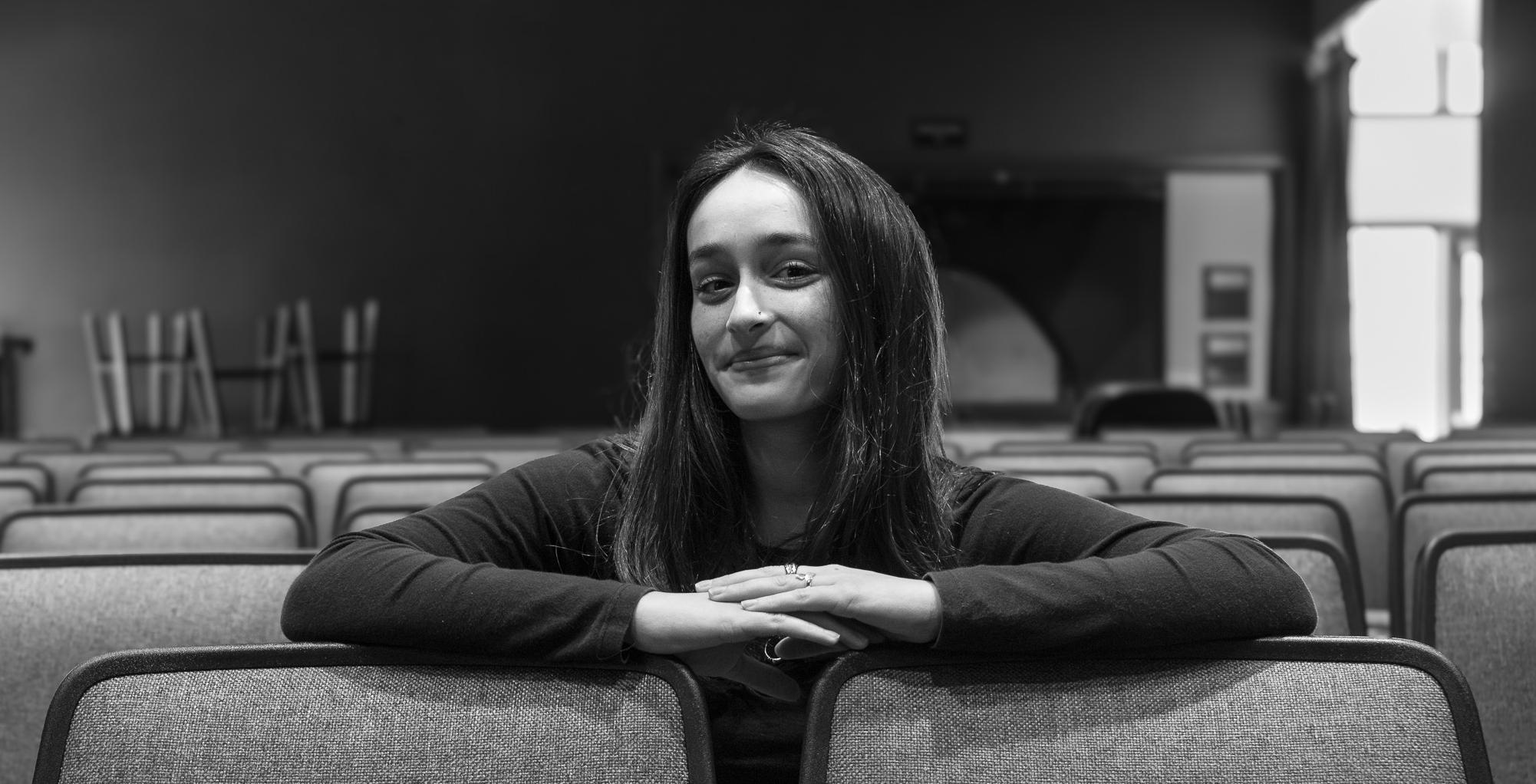
STORY ANNA MCDONNELL
ILLUSTRATION LANAH KIM
Project Hail Mary, a new sci-fi movie, was released in theatres on March 20, 2026, receiving lots of positive reactions and sweeping box offices. It is a uniting film directed by Phil Lord and Christopher Miller. The movie originated from the book by Andy Weir, surrounding the popular plotline of a doomed galaxy and a “Hail Mary” plan to save it. The movie’s admiration is well deserved; it explores refreshing viewpoints of equality, bravery, humanity, and friendship, and is an emotional, inspiring, and entertaining watch.
Ryland Grace, the protagonist played by Ryan Gosling, is an enthusiastic yet washed-up middle school science teacher. Before that, he was considered a scientific genius, but his controversial theories and, at times, unprofessional behavior led to him losing his job. Through a turn of events, he is roped into the “Hail Mary” project and placed on the spaceship, Mary.
His mission is to figure out why the sun, as well as countless other stars, are getting eaten by an interstellar algae called astrophage, and how he might fix it. Only one planet, Tau Ceti, is not being destroyed by astrophage, and the mission aims to discover why in hopes of saving Earth. The catch is, there is not enough fuel for a round trip, so he will not be able to return home.
The film opens with Grace waking up from an induced coma, only to have severe amnesia. The two other crewmates he was supposed to make the journey with did not make it through the coma, so he is left to figure out who he is, why he is there, and how he can still save the world. Throughout the course of the movie, the audience gets flashbacks of who he was and how he ended up on the ship as his memory and past slowly become clear.
On his journey, he meets Rocky, an alien from planet Erid, closely resembling a rock. Both Erid and Earth

are facing the same problem, to save their stars, leading Grace and Rocky to work together.
The pair quickly become best friends after learning how to communicate; they devise a plan to help each other with the mission, risking their lives for each other in the process.
Many heartwrenching problems arise during the movie that ultimately drive the plot to a fulfilling ending. Not only does this movie provide faith in a more unified universe, but it also puts into perspective what is possible for science in the future.
As technology evolves, these previously unrealistic additions to movies are slowly coming into the picture. Movies and books like these inspire and drive new generations to explore and harness their imaginations. It gives people the idea that everyone is valuable, no matter who you are; we all live in the same universe.
There are many standout parts about this movie, like its humor, suspense, and overall lovable characters. Another notable aspect of Project Hail Mary is the soundtrack. The song Two of Us by The Beatles played during a key scene between Grace and Rocky, adding to the overall message of friendship in the film.
Sign of the Times by Harry Styles was also included in a memorable karaoke scene before the Hail Mary crew took off, cementing the moment in viewers’ minds. The song has also become a symbol for the film online. Accompanied by stunning visuals and creative shots, the soundtrack elevates the movie’s impact.
The film is also receiving positive feedback for its wellexecuted adaptation from the book. Though many movies that were originally based off of a book can fall flat, Project Hail Mary maintained the book’s plot and theme, while still condensing it into a more watchable format. Some parts, like the glimpse into Earth’s future at the end and the karaoke scene, were not in the novel, but praised by audiences nevertheless.
Project Hail Mary is a sensational movie that highlights the importance of humanity and connection, and is optimistic despite dire circumstances. The combination of an enticing storyline, striking cinematography, and well-rounded characters creates an overall beautiful film, deserving of all its praise.


3 4
On Sunday, April 19, I went on a quest to Ernest E. Debs Regional Park for a quick and convenient hike. The drive to Debs Park was about 10 minutes from South Pasadena, making it an easy place to hike, paint, or even fish.
I had heard of this place from my friends on the cross country team, who had told me about the difficult training they had to do on the uphill trails. Thankfully, I did not spot any sweaty kids running up a hill on my journey. As I arrived at the front of the park, I drove up the slim driveway, where I saw a variety of elegant trees. Cars filled the parking lot to the brim, and I was not sure if I was going to be able to find a spot. However, I found a slim spot, hidden by a massive silver truck.
As I walked out of my car, I saw a large sign hanging from a gray pole above the car that stated to beware of coyotes in the area, to supervise children, to leash dogs, and not to feed animals. I scanned the sign but devoted more attention to which trail I should take.
I was stuck between the total of nine trails; there were far too many options for me to make a decision, so I pulled out my phone to the Wheel of Names. I wrote in the different trails: City, Lake, Valley View, Summit Ridge, and Jay Loop. Jay Loop is described as a loop with moderate difficulty ratings. I also considered the Jay Scrub Trail, which is known to be one of the steeper trails, but decided I was much too out of shape to conquer the hill.
My mom then pointed out on the map a trail called Wild Mustard Loop, which instantly intrigued us, due to the unique name. There were six other trails, which did not sound as exciting, so I went with the Wild Mustard Loop.
The Wild Mustard Loop was a long and steady uphill climb to a darling pond. As I made my way up the steep hill, I was stopped by a fork in the trail. One side was a hot and exposed path, the other a shaded pathway. The formation of trees on the shaded pathway created a small, igloo-like crawl space, which I explored. After examining the wondrous cave, I made my way back on the trail, which eventually led to a more open pathway.

I dug my feet into the gravel below me and pushed my way up the hill, to eventually find myself with an abundant amount of snails on plants guiding me to the end of the trail. I suspected that it was a snail farm because every branch was taken over by at least three snail shells, making it a fascinating sight as I walked up the tiring and long climb.
When I had almost given up on taking a break, I arrived at a small divide in the trail, trees leading me to a decently sized pond. I sat at the edge of the pond where a surprising number of kids were fixed on the bank with fishing poles.
I stared into the murky water and spotted a small orange fish darting towards me. Startled, I took a step away and instantly took out my camera. Once my camera was out, the creature had made its way back into hiding. I was disappointed and decided to walk around the pond to discover more fish.
Dragonflies flew around me, and on plants surrounding the pond, along with a grand number of animals and insects, it surprised me that this much wildlife actually existed in LA. I then discovered a turtle family, huddled in a corner of rocks by plants, making them almost impossible to see.
The turtles were a boring sight once I had seen a slight movement of one of the smaller turtles getting pushed into the water by a much older and wiser turtle. I then made my way to the back side of the pond and saw a boy fishing. Although the pond was filled with very few individuals, most were watching the water sway, painting, and fishing.
Once it was time to leave, I gathered my belongings and walked back down the hill. Just as I was about to leave the site, I saw beautiful scenery beyond the trees. There I saw the large city of Los Angeles, and decided to take a few pictures.
With the little time I had, I walked back down the trail, wishing I had time to complete the other eight. Overall, the hike was a wonderful and quick detour, with steep hills, snails, turtles, and a grand sight at the end.

5


Sophomores Kambria Owens and Hannah Chan have been dancing together since they were young.
STORY MAXINE MESSINEO
PHOTO THEO THOMPSON
Sophomores Kambria Owens and Hannah Chan have been dancing since they were toddlers. Owens was two and Chan was three when they began their dancing journey. The two now dance in SPHS’s Dance III.
Both were influenced by close family members, as Owens was enrolled in classes by her mom and Chan was given the opportunity by her aunt.
“My aunt had this coupon to the dance studio I go to now, and at family reunions, I’d always just sit in a straddle position [with her], so she just gave me the [coupon] to go to the studio,” Chan said.
The two dancers met when they were around four at their dance studio in San Marino, and have been close friends since then, with Owens saying that dancing brought them together.
“I have this really vivid memory of [Owens] in [her] purple Sofia the First leotard,” Chan said.
Owens and Chan have taken their dancing talents to great heights, performing at several SPHS events including the 2025 Winter Dance Concert. Behind their immense efforts, both agree that the highlight is always the breathtaking feeling that comes over them after performing onstage. Chan and Owens have been dancing for a significant amount of their lives, and their passion for the art comes from the feeling they get while performing in front of an audience. The two performers practice both together and separately for up to six hours a day.
“The feeling of [dancing], and the athletic side of it, feeling like I’ve exercised — my body feels good after that, but also dancing in the moment feels good to me. I like both sides of [dancing],” Owens said.
Chan shared Owens’ connection to the sport, tying it back to her childhood.

“The feeling of being on stage is just … I don’t really know how to compare it to something. Also, being proud of my younger self and seeing the growth that I’ve had is also really rewarding, and you [get to] see your progress over time,” Chan said.
Chan and Owens share a similar view surrounding competitions and accomplishments, saying that they value the art and friendship of the sport rather than the physical awards.
“I don’t always count [accomplishments] as the awards that I get, but the people that I meet, because at the end of the day, it’s just a piece of metal,” Owens said.
Chan continued, sharing her view that since dancing is an art, and art is subjective, how one person views a performance is different from someone else’s interpretation, so the awards she wins do not mean as much.
“Dance is not like math; it’s not super straight. There’s not an exact way to judge someone on it. It’s subjective to how you see it, and how one person takes it is different from someone else. So, I say, what I’m proud of is just continuing to show up every day,” Chan said.
Throughout Owens’ and Chan’s many years of dancing, they have faced challenges in their careers, with Owens facing a recent shoulder injury and Chan finding it difficult to stay motivated. Chan says that she overcomes feeling demotivated by working out and practicing with Owens. Owens felt similarly, finding joint practice an essential part of her career; even if the two face a difficult challenge, they face it together.
“I feel like doing something with your friend is always so much better, even if it’s a struggle. Struggling together bonds you … Doing the same ab workout together is like ‘Oh, everyone’s so tired together,’” Owens said.
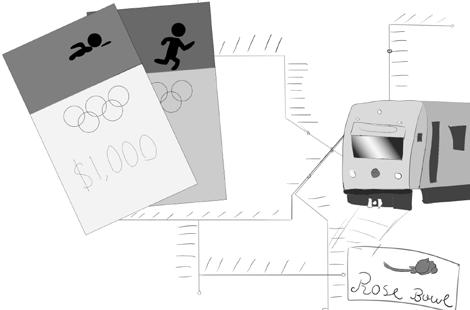
STORY HARRIET GODSON ILLUSTRATION HELENA EASTERBY
With the 2028 Olympic and Paralympic Games — dubbed LA28 by organizers — Los Angeles will become the third city in the history of the world to host the Summer Olympics three times. Los Angeles Mayor Karen Bass shared in a recent press release that the Games will spread to “all corners of our city like never before — from the Sepulveda Basin to the iconic shores of Venice Beach, our world-famous neighborhoods as well as our hidden gems will be on full display for all to experience and enjoy.” Bass highlighted how LA’s position as host city will “help small businesses, create local jobs and implement lasting environmental and transportation improvements that will leave a legacy in our city for generations to come.”
Hosting the Olympic Games has consistently been an economic burden for the host country, due to the scale
of such an event. However, the last time that LA hosted the Olympic Games, in 1984, was the most profitable Games in history. This was largely due to the existing infrastructure in LA, which includes some of the most iconic stadiums in the world. The history and culture of LA is interwoven with music and sports, leading to the popularity of locations such as The Kia Forum, Dodger Stadium, and Rose Bowl Stadium, all of which are set to host the games. Consequently, the city is at an advantage economically, because additional construction needed for the Games is more minimal.
Underscoring this advantage, LA28 Chief Executive Officer Reynold Hoover emphasized the use of “some of the world’s top-tier existing stadiums and arenas, famous beaches, and purpose-built temporary structures” for the Games. He detailed that “the 2028 Olympic venue plan invites communities from across the region to celebrate the Games coming to their backyard.” In South Pasadena
High School’s own backyard, Santa Anita Park will host equestrian events on its 90-year-old historic racetrack, the only of its kind in Los Angeles County. The equestrian games were also hosted here during the 1984 Olympics.
The one thing LA desperately lacks is public transportation. Unlike other large cities around the world, LA’s public transportation is infamous for being slow, unreliable, and unsafe. The reasons for this vary, including the urban sprawl of the city, but together, they make it harder to build lines and contribute to its carreliant history.
Former Mayor Eric Garcetti took advantage of the Olympics in order to set the initiative, 28 by 28, in motion in 2017, with the goal of enhancing LA’s public transportation in time for the Olympics. The plan will focus on metro systems, highways and bike paths. Seventeen of these projects were already set to finish before 2028, funded by Measure M. The other eleven projects require accelerated funding in order to finish before the Olympic games. Hopefully, the advanced public transportation system will ease the environmental impact increased tourism to Los Angeles will create.
Adding to LA28’s commitment to sustainability, organizers of the Games have published the Impact and Sustainability Plan, “developed to inspire action ahead of 2028 and create a lasting legacy for Los Angeles and beyond.” The plan details “direct and indirect opportunities for local and small businesses;” a $160 million investment in PlayLA, an organization that works to make it possible for wider participation in youth sports regardless of socioeconomic background; and “three strategic [environmental] objectives: radical reuse, resilience[,] and natural resource stewardship.”
The “locals only” presale for Olympic tickets went live on April 2 and continued through April 6. Customers were given a 48-hour window to purchase up to 12 tickets, with pricing starting at just $28. To many residents’ dismay, the prices quickly rose to well over $500, with opening and closing ceremony tickets well over $1000. Consequently, despite the fervent comments about a dedication to Los Angeles’s citizen population, it is unclear how many Angelenos will actually be financially able to attend the Games occurring in their city.
The annual 2026 Masters Tournament has brought inspiration and excitement to SPHS’s golf teams.
STORY KHLOE YUEN
PHOTO SEBASTIAN GUTIERREZ
The 2026 Masters Tournament was held from April 9 to 12 at Augusta National Golf Club in Augusta, Georgia. For four days, elite golfers from all over the world came to Augusta to compete for the iconic Masters Green Jacket and a spot in Masters history.
Golfers Sam Burns, Rory McIlroy, and Patrick Reed climbed to the top of the leaderboard after 18 holes on day one. Burns was off to a good start, hitting 11 out of 14 fairways and six birdies, and tying with McIlroy at 5-under for first. Reed followed close behind, tying for second, just two strokes behind.
“The first round was a great kickoff to the tournament. It was no surprise to see McIlroy shooting a solid 5-under.
Sam Burns also came out with the same score, so that was pretty interesting,” sophomore Abigail Cruz said.
In contrast to the previous year at the Masters, where he tied for fifth at 7-under, LIV Golf League captain Bryson DeChambeau did not have a promising start. At the end of the first day, Dechambeau was already at a +4 and tied for 56th, mainly because of a disastrous triple bogey at the eleventh hole, where he hit three shots from the bunker.
On day two, McIlroy maintained his spot at an impressive 12-under at a six-shot lead, while Burns and Reed tied for second with the score of 6-under.
Dechambeau was three over on the eighteenth hole and desperately needed a bogey to make the cut. His tee shot landed in the pine straw, where he hit his

UPCOMING GAMES
next shot to the bunker. After hitting two shots in the bunker, Dechambeau watched his ball roll off the green, ultimately leading to a triple bogey.
“I think he needs to work on his bunker game, and he would have made the cut if he didn’t get a triple bogey on the last hole. I wanted him to win, so his missing the cut was really disappointing,” said freshman Bella Vanichsombat.
After round two of the Masters, world number one Scottie Scheffler tied for twenty-fourth place at even par. However, on day three, he climbed the leaderboard to tie for seventh place at 7-under after a 7-wood to a sixfoot putt for Eagle.
As Masters Sunday came around, SPHS girls’ golf players got together to watch the tournament finale. McIlroy had a rough start to the round when he hit his first two tee shots into the fairway bunkers.
Scheffler kept up his performance and had an outstanding round on Sunday, becoming the first golfer since 1942 to play the final 36 holes without a bogey.
“I thought he played really well and made a good comeback. He made a lot of clutch birdies at the end,” Vanichsombat said.
McIlroy had a rocky start with a double bogey on the fourth hole, but he quickly recovered with four birdies, winning the 2026 Masters Tournament on April 12, 2026, just one stroke over Scheffler. This win marked his second consecutive Masters Green Jacket, and he became the fourth golfer to win back-to-back Masters titles, following his win in 2025.
“I’ve been looking forward to the Masters, and even watched in class. I was rooting for Rory McIlroy to win because he’s shown major improvement in his game recently, and I wanted him to win back-to-back. I was overjoyed when he won and got motivated to go out and play golf too,” freshman Alex Molina said.
WEDNESDAY, MAY 6TH @ 3:30 PM, SOFTBALL VS. BLAIR AT HOME
WEDNESDAY, MAY 6TH @ 4:00 PM, SENIOR NIGHT BASEBALL VS. PASADENA AT HOME
STORY EVELYN DIAZ
ILLUSTRATION OWEN HOU
Pickleball is a sport that was founded in the summer of 1965 on Bainbridge Island, Washington. Pickleball was created by three fathers — Joel Pritchard, Bill Bell, and Barney McCallum to entertain their families when they lacked equipment for badminton.
“Pickleball, at least at the amateur level, is not harder than it looks. If you’re good at ping pong or tennis, you’re probably not bad at pickleball too,” senior Tendo Williams said.
The goal of pickleball is to hit a plastic ball over the net and keep it in bounds until the opponent makes a “fault,” or an error. Points can only be scored by the team that is currently serving. Most pickleball games are played to 11 points, and the victor must win by at least two points.
“I would describe pickleball as a faster paced version of tennis, where you feel like you have more control. Since the paddle is lighter than a tennis racket, and the court is much smaller than a tennis court, pickleball lets you feel ‘big,’” Williams said.
Pickleball is mainly played in the U.S., primarily in states with warm climates to play year-round, such as Florida, California, Texas, Arizona, and Utah. Florida is known for “The Pickleball Capital,” specifically in the city of Naples.
“It has a similar thrill to tennis while being less physically demanding, and almost anyone can be competitive with some practice,” Williams said.
Pickleball is one of the fastest growing sports in the United States because it is easy to learn and fun for all ages.
“I think pickleball is getting so popular because of the fast paced games and because it’s welcoming [and] easy

for newer players to begin playing. I would describe pickleball as much like tennis, but it requires a faster reaction time because it’s much faster paced,” senior Silvestre Quiroz said.
Over time, pickleball has grown from a simple backyard game into a popular community activity. Many schools and neighborhoods now have courts, and the sport continues to bring people together through friendly competition and social interaction.
“What keeps me coming back to pickleball are the tournaments, because pickleball tournaments are very fun, energetic, and competitive,” Quiroz said.
Pickleball has also developed a strong competitive side, with organized tournaments and professional leagues
growing across the country. What started as a backyard game is now played at a high level, with skilled players using quick reflexes, precise placement, and strategy to win points. This growth has helped bring more attention and legitimacy to the sport.
South Pasadena has its own share of pickleball, with several courts in the Arroyo Seco Valley, in addition to iTennis South Pasadena, a Racquet club that has eight lighted championship tennis courts open to the public.
“It’s a very nice place and has a great energetic environment. They have tennis pickleball and racket ball courts with coaches and staff to help you improve your game,” Quiroz said.

STORY GAVIN BARTOLOME ILLUSTRATION LANAH KIM
T
he National Football League (NFL) is a powerhouse in terms of United States sports viewership; last season, it averaged around 18.7 million viewers per game. According to a 2025 S&P Global survey, no matter what drew people in, 43 percent of surveyed internet adults watched the NFL. As reported, its seasonal US viewership is higher than that of the Winter and Summer Olympics.
“I think the NFL has its seasons, and entertainment can vary. When the Chiefs were on their three-peat run it definitely was not the most exciting thing I’ve ever watched,” junior Emi DeFelice said.
The NFL is making waves months before its first game kicks off in September 2026. To keep up with the happenings, Tiger launched a survey to a sample group of SPHS students to see what their thoughts are. Out of 24 students who responded, 55 percent were casual or diehard fans of the sport, while the remaining 44 percent barely followed. From what got them into the sport to what they would like to see more of in the NFL, these students’ fiery passion is spilled on their responses.
“I think a lot of people don’t care about football because they either don’t understand it or they think it’s a dudebro sport, if you know what I mean. I think if people realized football can be a good way to bond with people, then I think people would watch it more,” sophomore Zachary Kao said.
Yet, many people’s fan-fanatic obsession with the NFL came from simple roots. In one question asking how students first came to know the sport, students either loved it for the community or the brutal violence that comes out on the field.
“My dad would always watch games, so eventually I kind of just followed along,” junior Ian Wang said.
Following the players and teams, 45 percent of students follow the team they were born into or the one their
family currently follows, joining a family thousands strong, all rooting for the same players.
“I have an older brother, and my dad is a very big football fan… I’ve grown up with Sunday night football in the background,” DeFelice said. “It also helps that my dad is from upstate New York, so the Bills’ Mafia has been generational … My dad’s a Bills fan, my dad’s dad is a Bills fan, there’s definitely a lineage.”
Meanwhile, 15 percent found their team through the communities around them; for Los Angeles, that would be the Chargers or the Rams. Notably, while many students value a sense of community and culture, as many as 30 percent admitted to being bandwagoners.
Outside of practice and games, many players and teams have also made a name for themselves online. Responders each supported their own player, speaking to the diversity of the sport. In the survey, 52 percent stated that the player and teams’ social media accounts play a considerable role in who the individual likes. It is not just about the player’s gameplay that builds their fanbase, but their personality and presence online.
“Bo Nix is [awesome] and will take the Broncos to the Super Bowl. His ability to escape a closing pocket and throw one deep to Marvin Mims is unmatched,” senior Baron Shroff said. “In addition, his ability to use his legs to secure first downs and goals makes him a serious threat on the Broncos offense.”
Ultimately, while many high schoolers enjoy watching the NFL, coverage of the league is mainly steered towards adults. Among SPHS students, thoughts on the matter vary.
“Some students don’t care about football because they are worried about head injuries, they don’t care about ‘sportsball’ and larp as an intellectual, they like college football, or they just don’t like sports or football,” Shroff said. “Watch parties could make the NFL more interesting for high school students as well as pamphlets with the rules on them to introduce more people into the sport.”

Recently, I have become really fascinated by the joy of the word whimsical. It has become my new comfort word to describe things that are playful, magical, and unserious. When I was talking to my friends in Tiger Newspaper about our magical excursion to a psychic, it made me realize, “Why don’t people embrace the whimsy anymore?”
Nowadays, things that go mainstream are often given a negative connotation, as if it’s so “last year” to keep up with or enjoy trends. This leaves the people who genuinely like these things in the dust and with a feeling that they need to hide them, even if their joys are considered a household name. For example, I am a major Laufey, book, and chai enjoyer. But, I feel like I will be terrorised for liking what is “performative” if I tell others. And maybe I am performative … So what? Does that make me a terrible person?
Everything now comes with the need to be labeled and psychoanalyzed like an almond mom in a grocery store looking for the fat-free peanut butter (seriously, what is powdered peanut butter? I am scared). No matter how genuinely cool something is, it is coined as strange. When did life become so serious that people cannot be open about what makes them happy? We all need to shed the little boxes that we put things in and become whimsical.
Now that I am embarking on my final month as a junior, I can safely say, “When did life become so serious?” It feels like just yesterday I was spending my time scrolling on Pinterest and not feeling ashamed of being excited about my future high school career. The shift from believing college was a million years away to feeling like you are racing against a clock needs to be studied.
Looking back on 2016 social media trends, people used to lip-sync silly songs with flower crowns on their heads, send each other Snapchats with the dog filter on, and wear chokers like their lives depended on it. One thing that reigned true during that time was that people were open and allowed to be themselves.
If the statement is true that “2026 is the new 2016,” there needs to be more improvements to our society. Not that we have to go back to VSCO Girl times, but we need to embrace the weird and the performative, not being afraid to show our true selves. For a generation that is rudely unserious when drastic events happen as a coping mechanism, we are terrible at embracing when something is genuinely fun.
I have now decided to leave things up to fate and celebrate the very sketchy tarot readings, the colorful outfits, and leaving the feeling of needing to conform to what other people like behind. You should be able to laugh with your friends at your lunch table and talk about the things that you enjoy without getting the Rob Raush from Love Island eyeroll. So, embrace the whimsical world of the universe with me, and remember why people call 2016 the “easier time.”