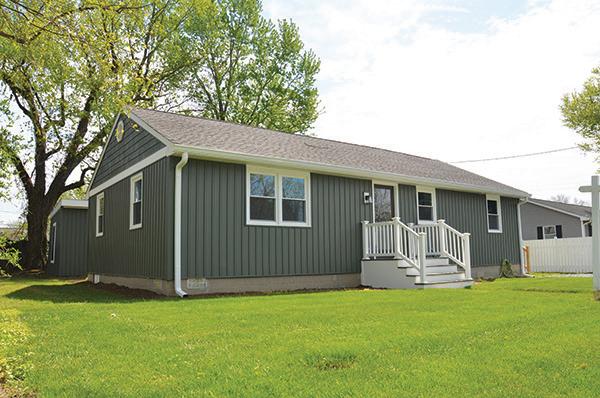
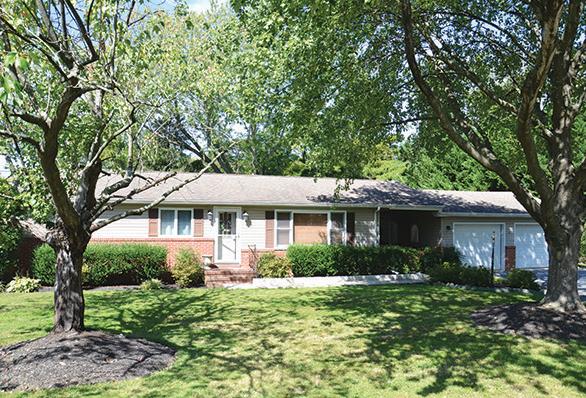
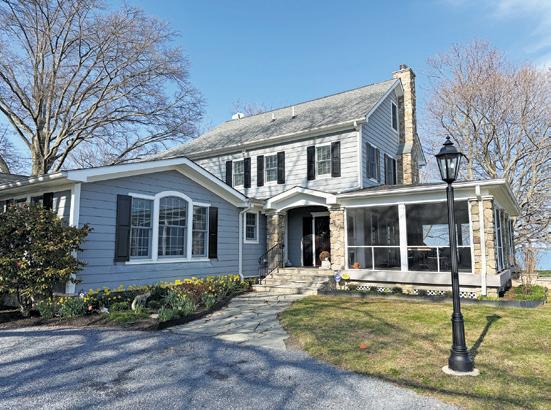
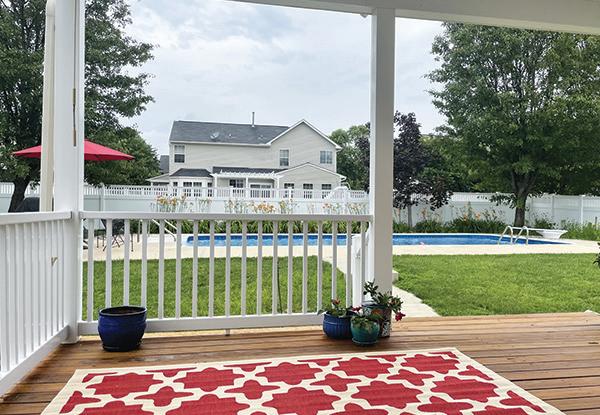
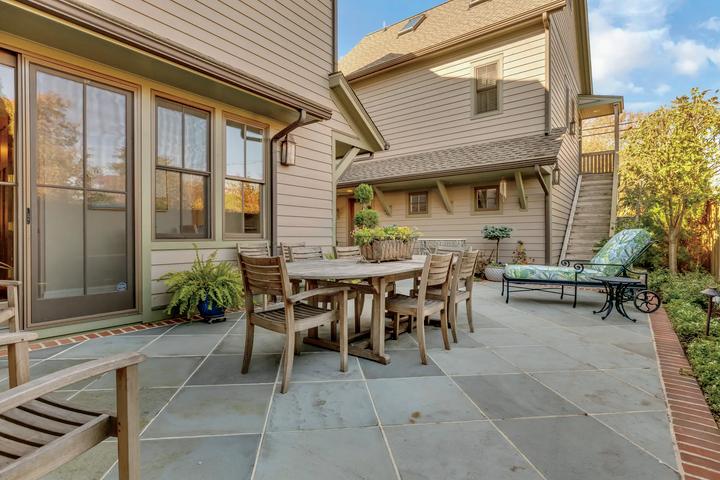
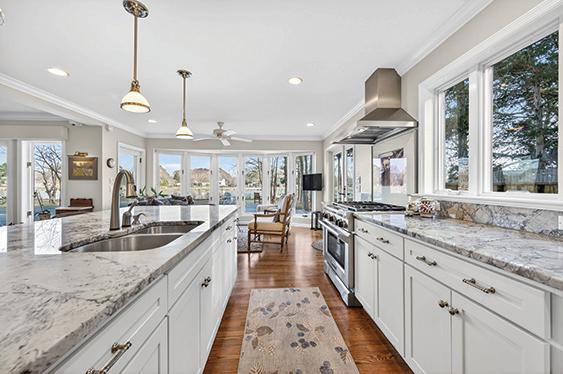
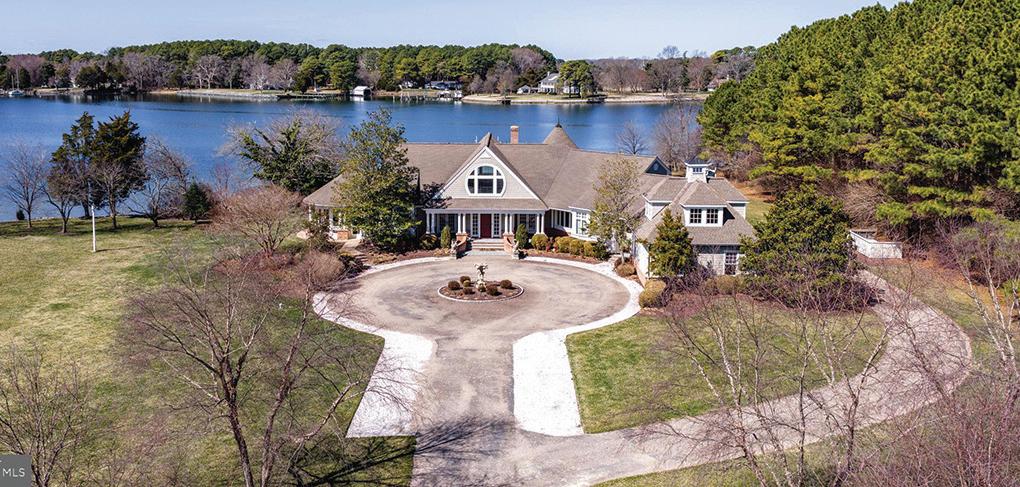
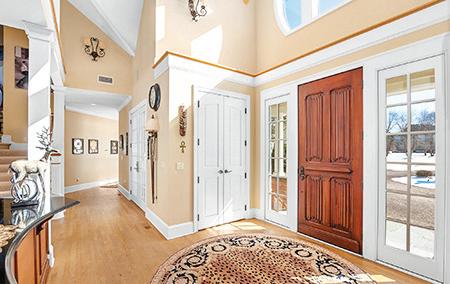
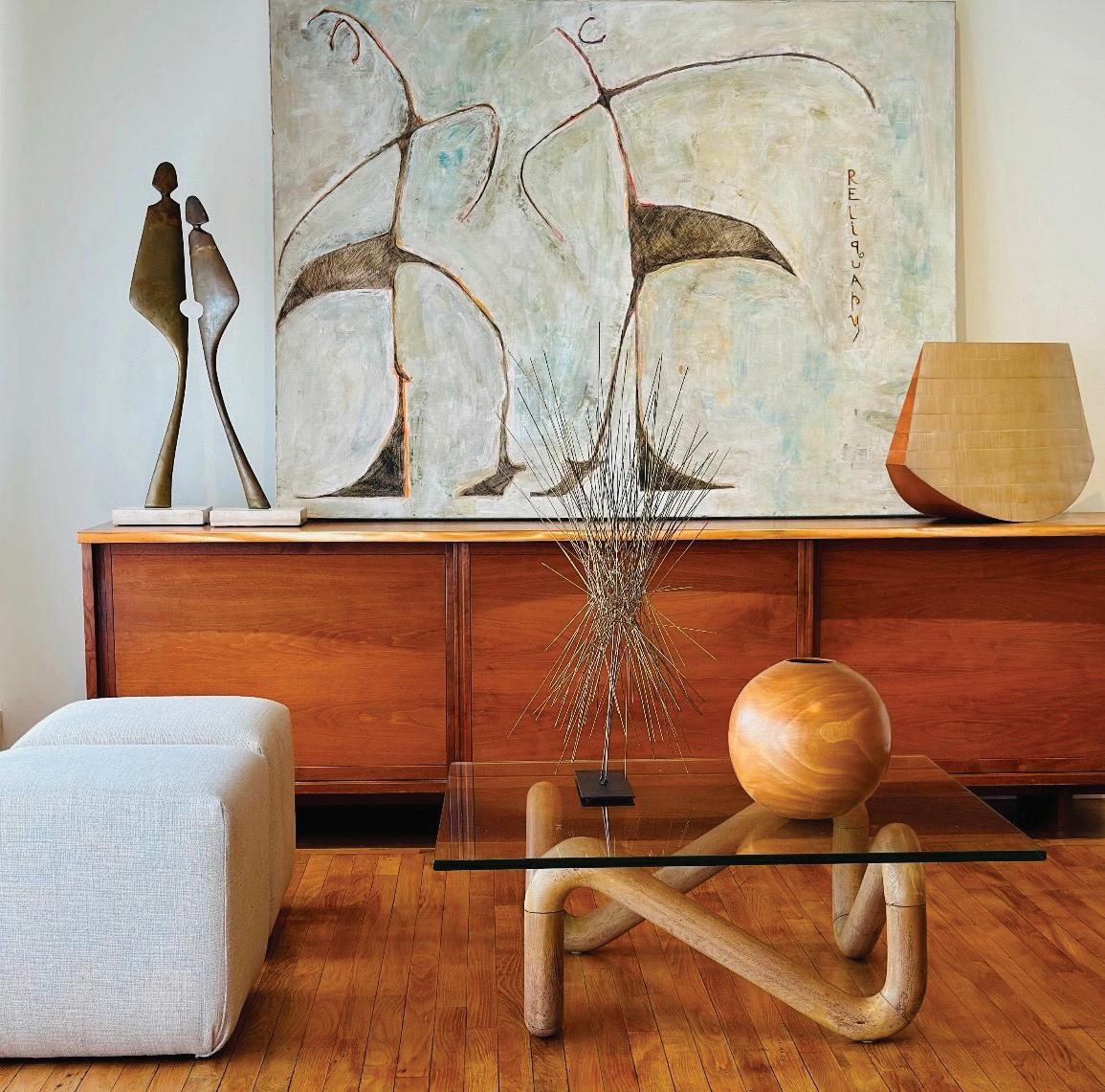
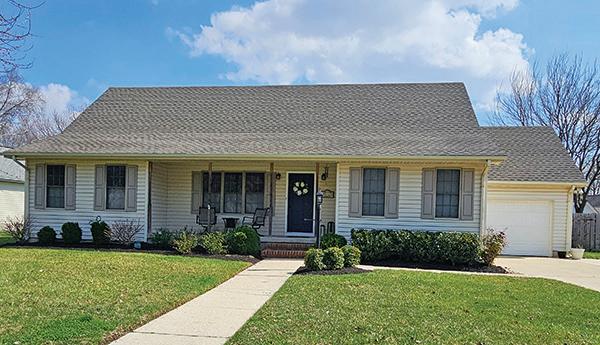
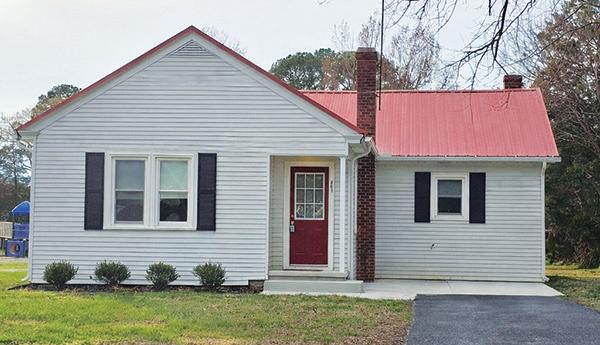
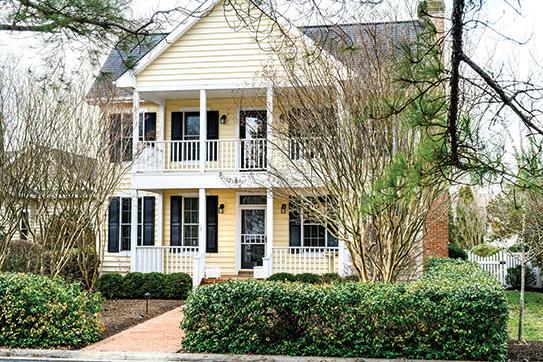
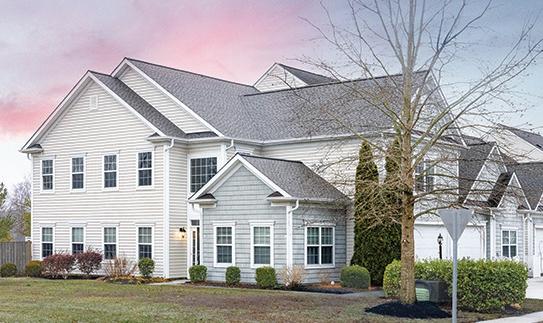
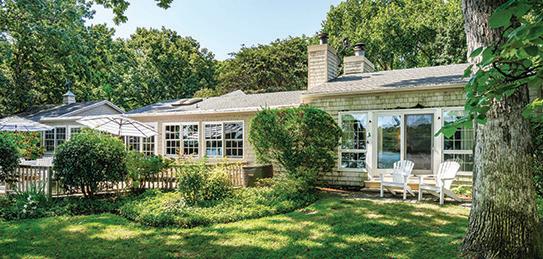
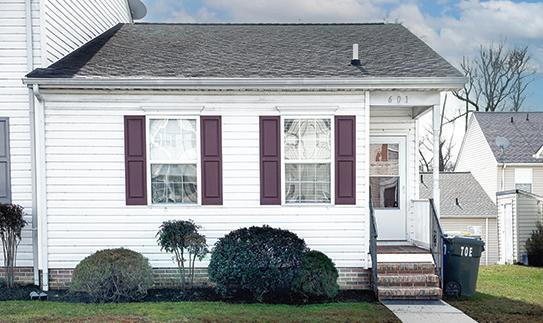
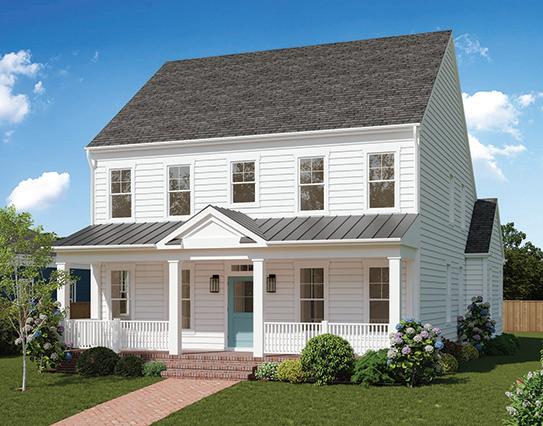
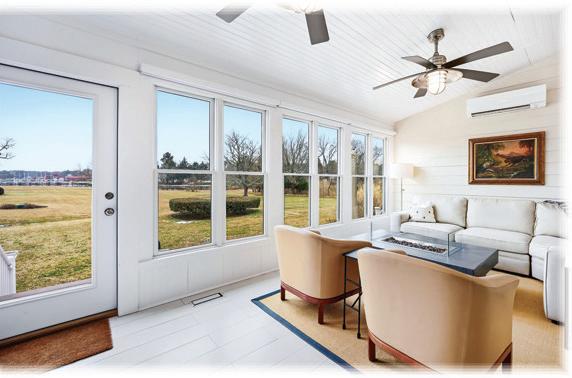
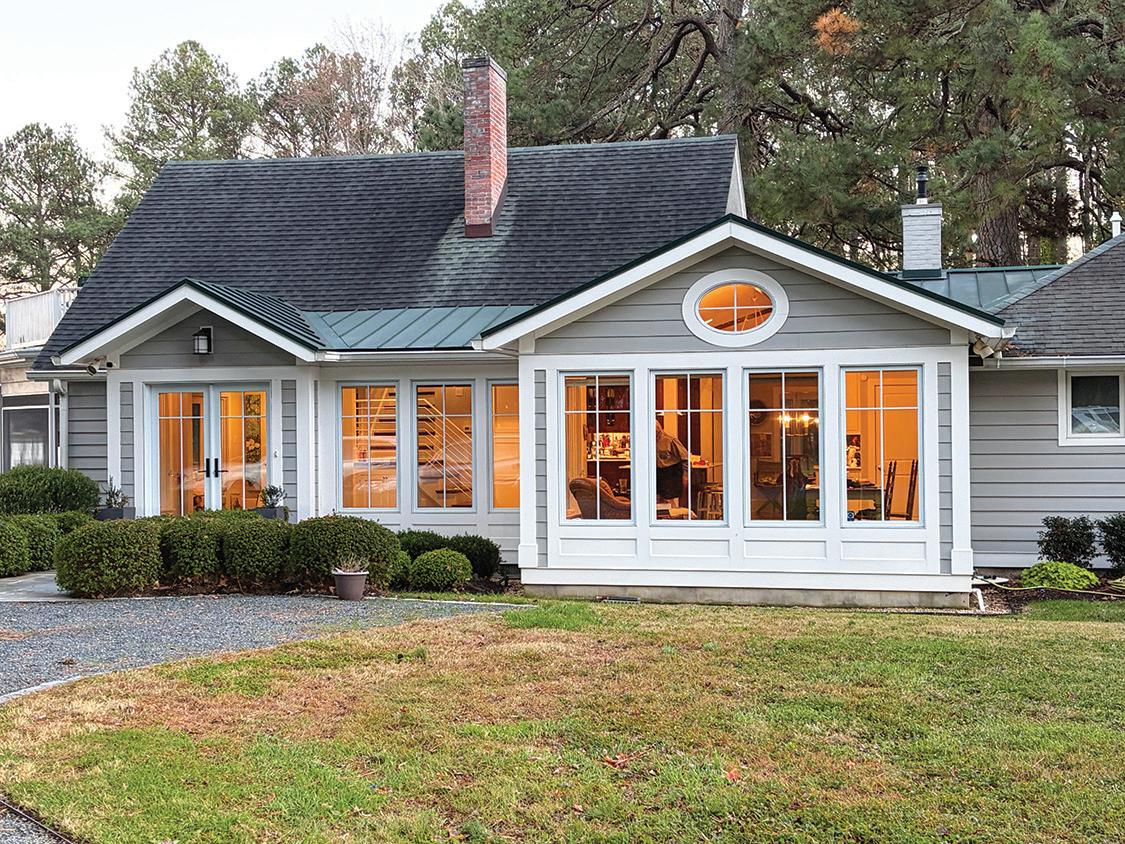
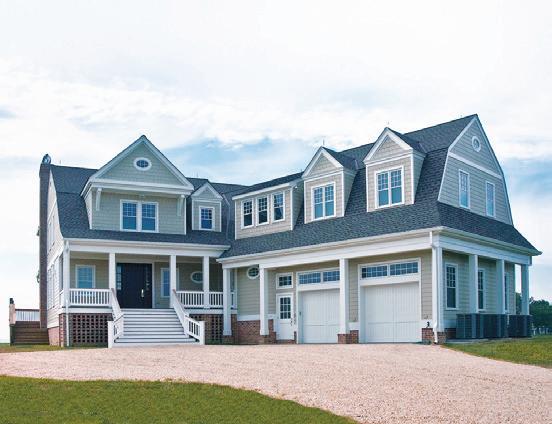
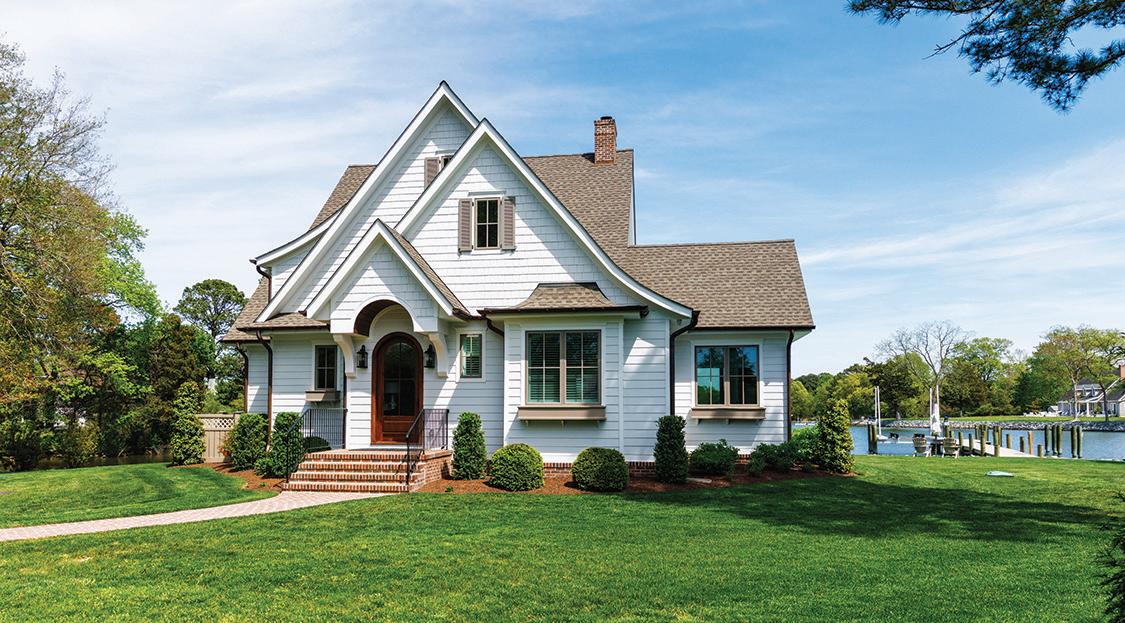
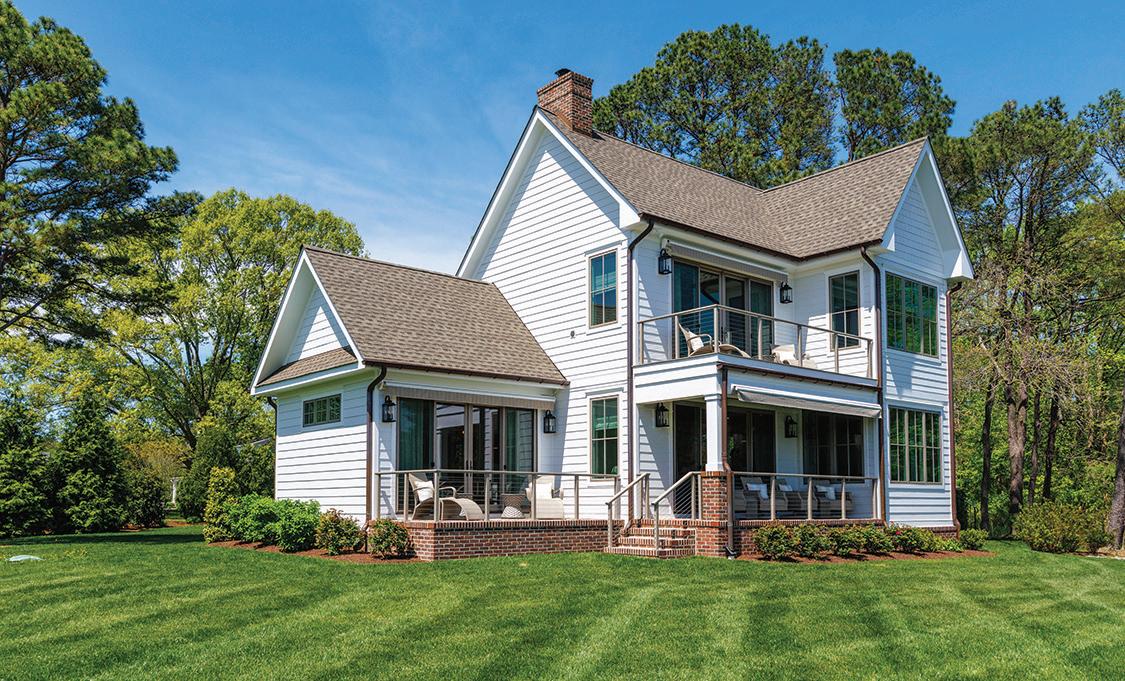
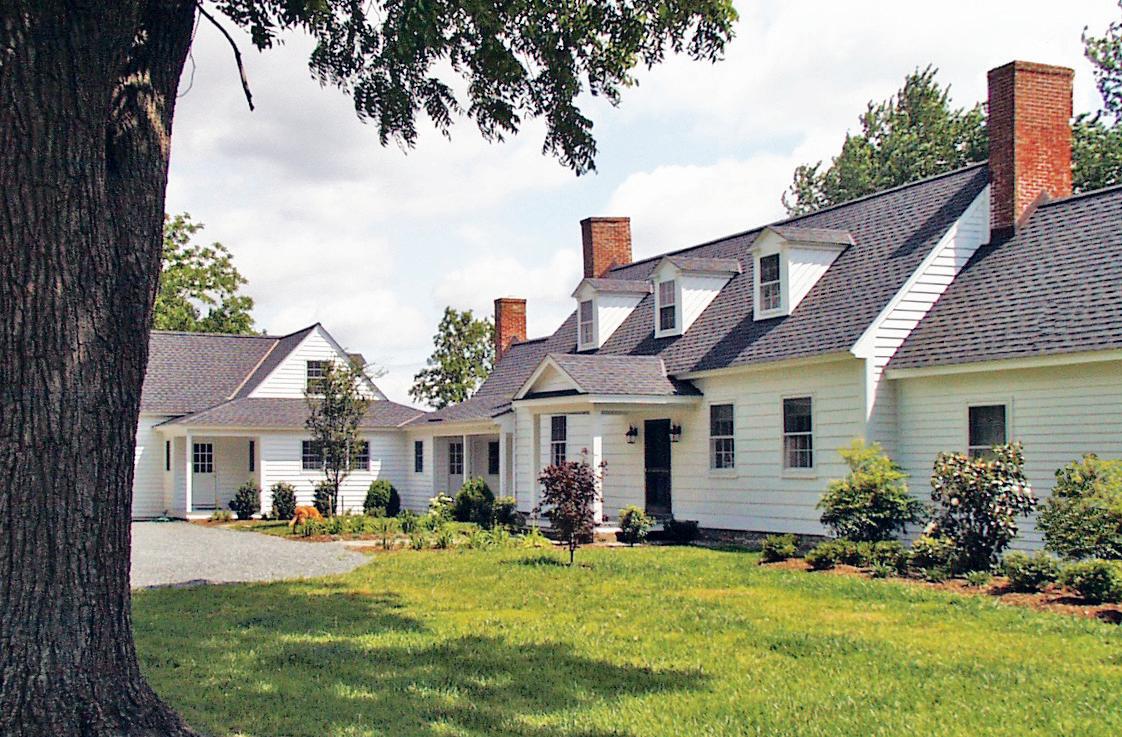
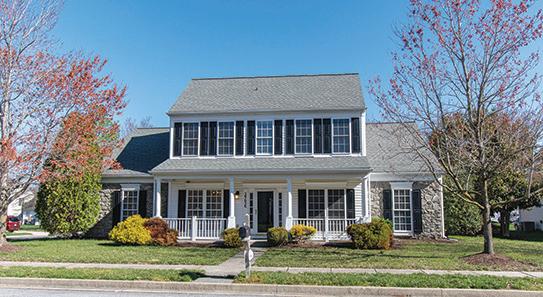
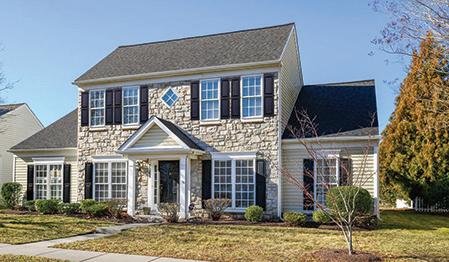
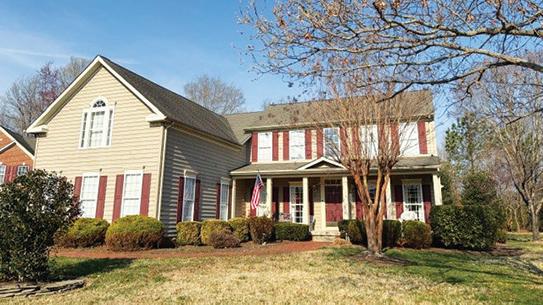
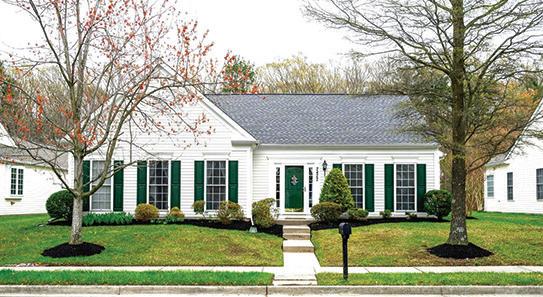
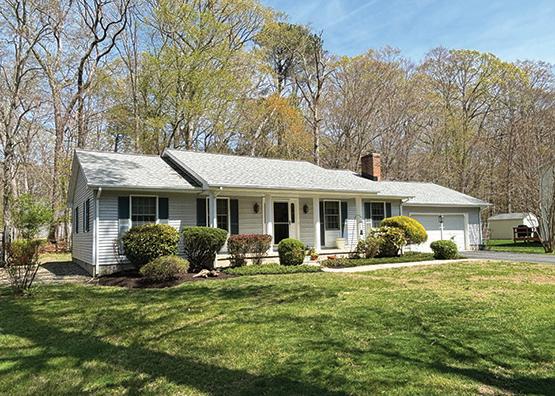
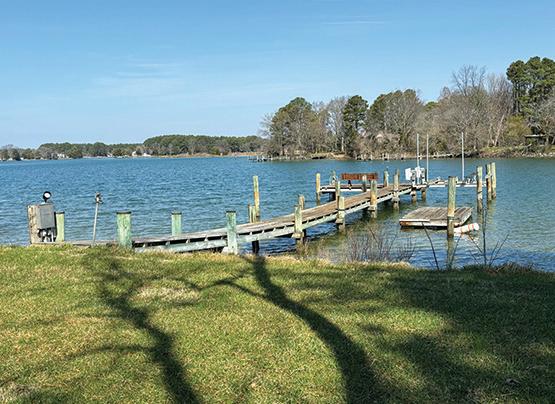
Just completely renovated, this attractive rancher shows like a brand new house! Close to all of the town’s attractions, sited on a large lot with a workshop in the back.
$435,000
EASTON
Impeccably maintained 3-BR, 2-BA rancher w/family room in the Doncaster community between Easton and St. Michaels. Private back yard w/ swimming pool and covered tiki bar. Must see to appreciate! $515,000
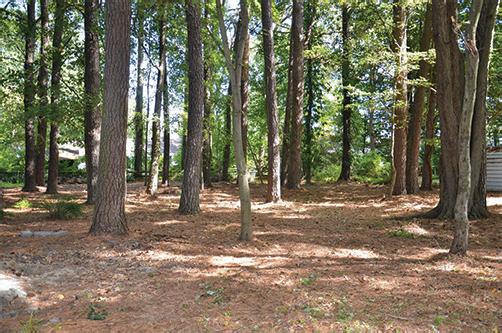
BUILDING LOT
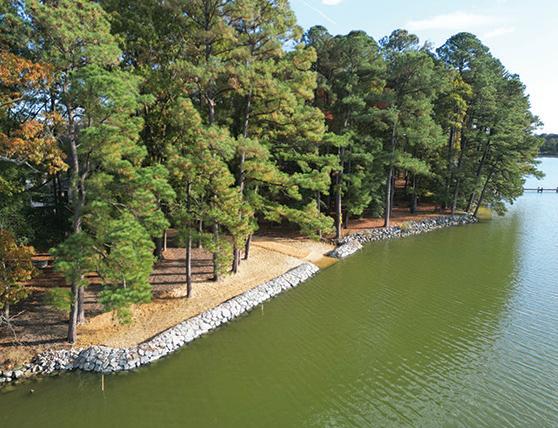
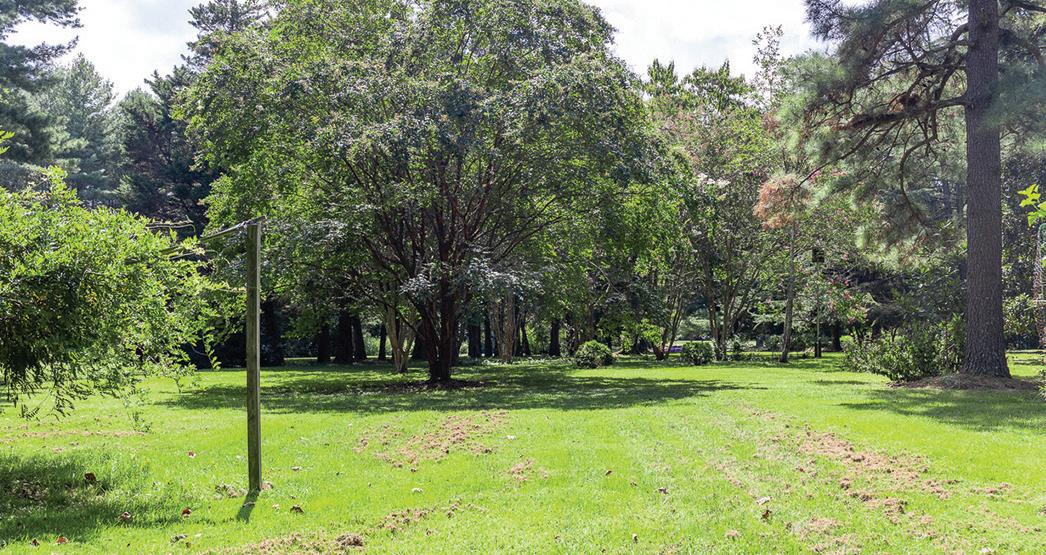
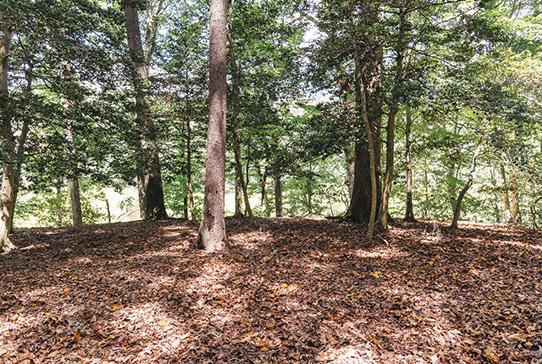
Ready for your new home. Wooded lot in the Bentley Hay area, just outside St. Michaels’ Town limits. Public water/sewer. No town taxes! $219,000
Publishers’ Note
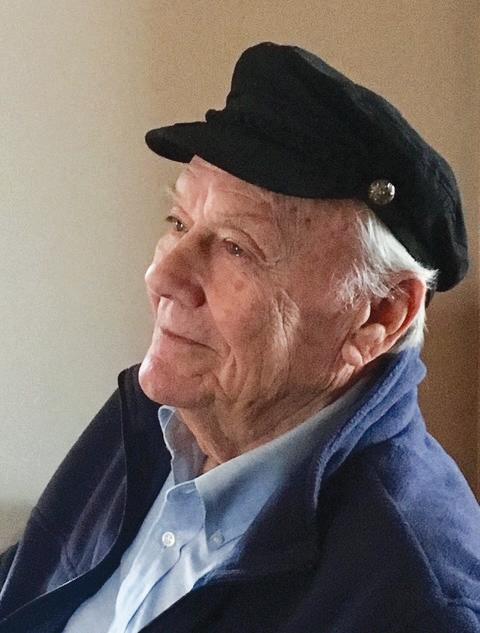
As we approach out 75th anniversary of publication, I thought I should take a moment to talk about our history - or more specifically, about my history with Tidewater Times. I began working part time with the magazine back in 1972 when my dad, Hugh Bailey, became the Editor. I was just 11 years old at the time, so I was limited to helping with subscriptions and deliveries.
Fast forward to 1983 when I was freshly graduated from Washington College and Tidewater Times became my career. Even from my earliest time with the magazine, my focus has been to celebrate the history of this magical area.
My grandparents lived off the bounty of the Chesapeake - Grand-
pop as a waterman and Grandma working her garden. The people and traditions of this Mid-Shore community are unique. Our history harkens back to the very beginnings of this country.
The Chesapeake region was built on the backs of farmers, watermen and small businessmen and women. As we begin celebrating the country’s 250th birthday, it makes John and I very grateful that for 75 of those years, Tidewater Times has been a staple. We look forward to the next 75 years and wish to thank all of our readers, advertisers and writers. Our goal is to shine a spotlight on what makes our community unique, and so very special.
~ Anne Farwell
In celebration of America 250, visitors taking the Talbot County Tour of the Maryland House & Garden Pilgrimage will experience an array of stellar homes, gardens and nationally significant historic sites on Saturday, May 9 from 10 a.m. to 5 p.m., rain or shine.
The tour provides rare access to iconic private properties that showcase the unique beauty, waterfront settings and rich history of Maryland’s Eastern Shore: Wye House, Plimhimmon, Emerson Point and Harleigh Farm . Bonus sites to discover en route
Emerson Point - built in the 1930s.
include Third Haven Friends (Quaker) Meeting House (1682) and the Talbot Historical Society. Noting that 2026 marks the 365th anniversary of Talbot County’s founding, visitors will receive exclusive access to audio drive-bys of Colonial period historic sites in the charming towns of Oxford (est. 1633) and St. Michaels (est. 1677).
The Talbot County Garden Club, which organizes the tour, has participated in the Maryland House & Garden Pilgrimage since its inception in 1937. As a fundraiser, this year’s Tour will help support the repointing of brickwork on the
House and Garden
Talbot Historical Society’s Neall House (1804).
Advance tour tickets at $50 and are available until May 8 at MHGP. org/talbotcounty. Day-of tour tickets are available on May 9 at the Historical Society at all tour sites. For more information about the tour and a delicious box lunch (must be ordered by May 1), visit https://MHGP.org/talbotcounty . Direct questions to Talbot County Tour co-chairs Louise Peterson ( louisehollandpeterson5@gmail. com) or Camille Massie (camille. massie501@gmail.com /703-6080477).
Here are insights into each of the tour sites—all sure to regale you with beguiling floral arrangements indoors and exquisite spring gardens outdoors:
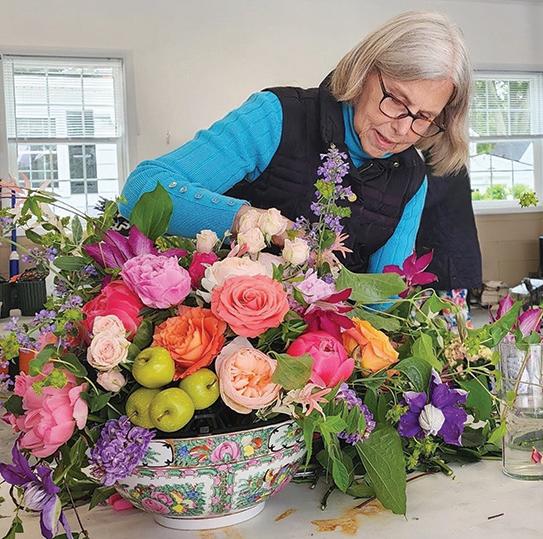
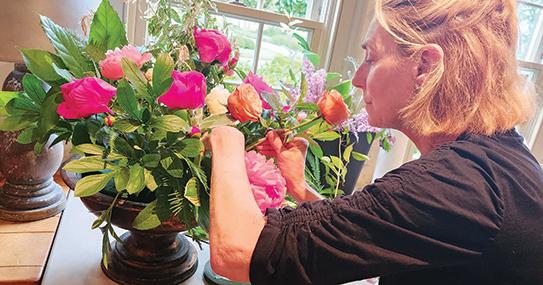
Ingrid Blanton working on one of the magnificent floral designs.
The Talbot Historical Society campus features a main building at 25 S. Washington St. in Easton with historic collections and area history exhibits. Visitors are welcome to tour the adjacent brick James Neall House and Garden . In the garden, which is designed and maintained by the Talbot County Garden Club, you will discover the Mary Jenkins House (1783), the oldest frame house in Easton, and Joseph’s Cottage (1797), moved from a nearby location and recently restored. Both brothers, Joseph and James, were cabinetmakers. James was also known to be a Quaker and early abolitionist.
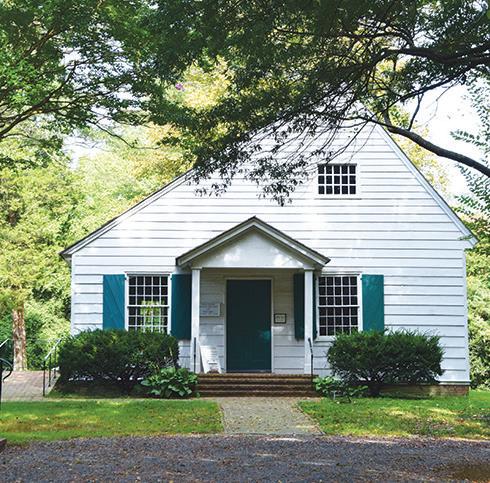
Third Haven Friends Meeting House is the oldest surviving frame house of worship in the country and a key landmark of Quaker influence on Maryland’s Eastern Shore. Measuring about
Third Haven Friends Meeting House
House and Garden
40 by 60 feet and constructed of cypress wood, Third Haven symbolizes not only America’s early religious freedom, but also the enduring Quaker traditions of simplicity and equality. In continuous use for more than 340 years, it remains an active worship center and community hub. It is listed in the National Register of Historic Places.
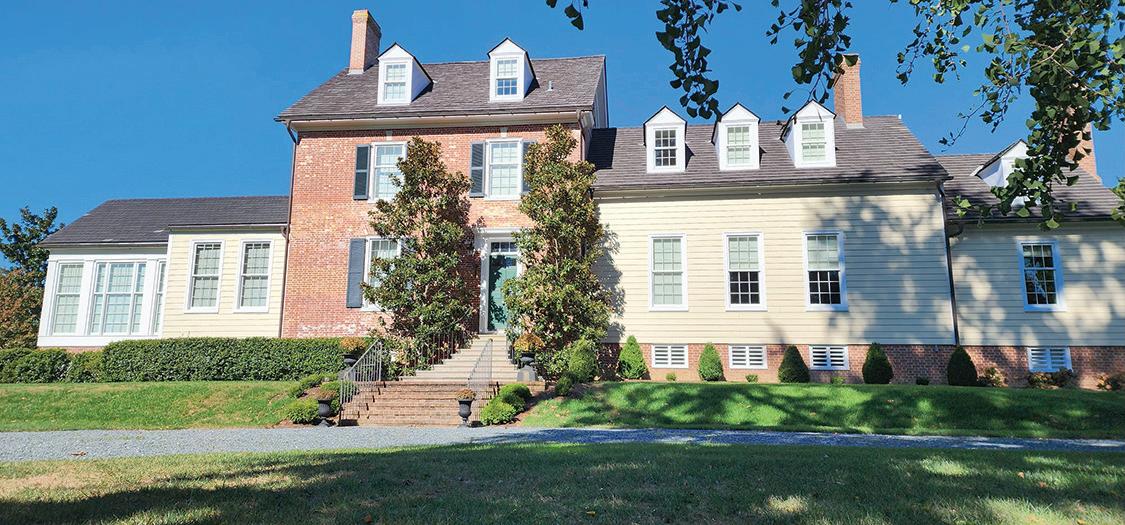
Harleigh Farm Garden and Grounds: Since the early 1800s, Harleigh has been a celebration of landscape and legacy, with the house built in the telescope architectural style of its time. The estate’s pea-gravel paths wander
past early dependencies—a smokehouse, summer kitchen and washhouse, farm offices and studio. The garage, a lively gathering place
Harleigh
House and Garden
sporting two huge fireplaces, will offer visitors an exhibit of aerial images taken by photographer H. Robins Hollyday in the 1920s.
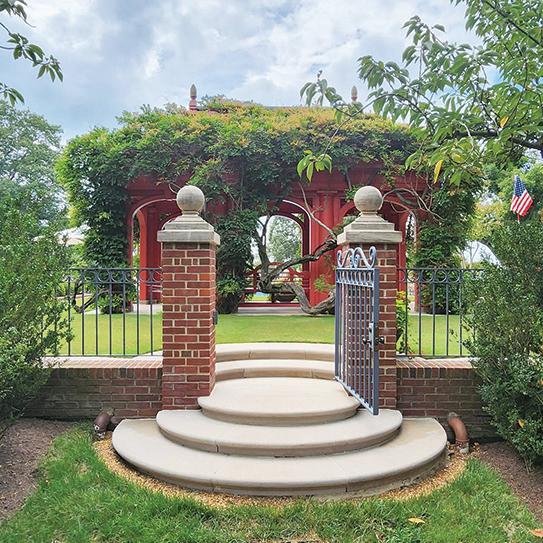
Harleigh’s current owners modeled their floral and kitchen gardens after Thomas Jefferson’s at Monticello. Ornamental gates transition from one vista to another, including a whimsical pergola draped in wisteria. A fairytale boathouse adorns the Trippe Creek shoreline, while meadows and wildlife habitat extend beyond. The formal garden, brimming with peonies and heritage roses, was designed by Rosalind de la Fontaine. “Hic Hortus Inclusus Edificatus Est 1922 AD”—“Here is the enclosed garden, built in 1922” is inscribed on its walls.
Plimhimmon’s original 600acre parcel was granted in 1659.
The mid-18th century house was bought by Matthew Tilghman, Delegate to the Continental Congress, for his daughter Anna Maria. Following the death of her husband, Revolutionary War hero and George Washington’s aidede-camp Col. Tench Tilghman, she lived at Plimhimmon for 50 years and hosted the Marquis de Lafayette here in 1824.
The historic central portion of the house features a polished walnut staircase, elegant arched doorways and decorative mold-
Plimhimmon
Camille Massie
ings. Renovations (2008–2015) enhanced period details with charcoal-gray baseboards, custom wallpaper hand-painted with Chesapeake flora and fauna and modern amenities, including geothermal HVAC and an elevator. Outbuildings include a carriage house, lofted garage and historic smokehouse, set amid 200 acres of farmland, fields and woodlands. The landscape is anchored by specimen trees—copper beech, ginkgo, magnolia, walnut, pecan and a willow weeping over Town Creek—affirming Plimhimmon as one of Talbot County’s Georgian masterpieces.
Wye House is one of Maryland’s most historic homes and one of the few privately held National Historic Landmarks in the country. It is located along the Wye River on land acquired by Edward Lloyd in 1659. His descendants served as a Delegate to the Continental Con-
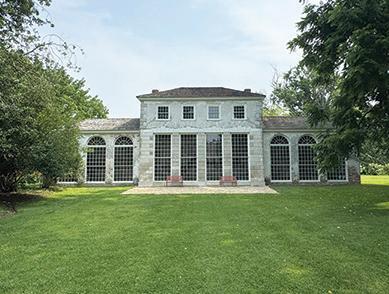
The Orangery
gress, a Governor, a U.S. Congressman, and U.S. and State Senators. The current house was constructed between 1784 and 1790 by Edward Lloyd IV and is currently occupied by the 12th generation of the Lloyd family to live on the property.
The Palladian-style house is often referred to as the finest example of late 18th century Palladian architecture in the United States. Many original furnishings and objects remain in the house. The 18th century Orangery (greenhouse) predates the house and is the most complete surviving structure of its kind in the country. The property contains numerous early 19th century outbuildings, including a stable, smoke house, dairy, carriage house, icehouse and overseer’s house. The Lloyd family cemetery is located behind the Orangery, with its earliest grave dated 1684.
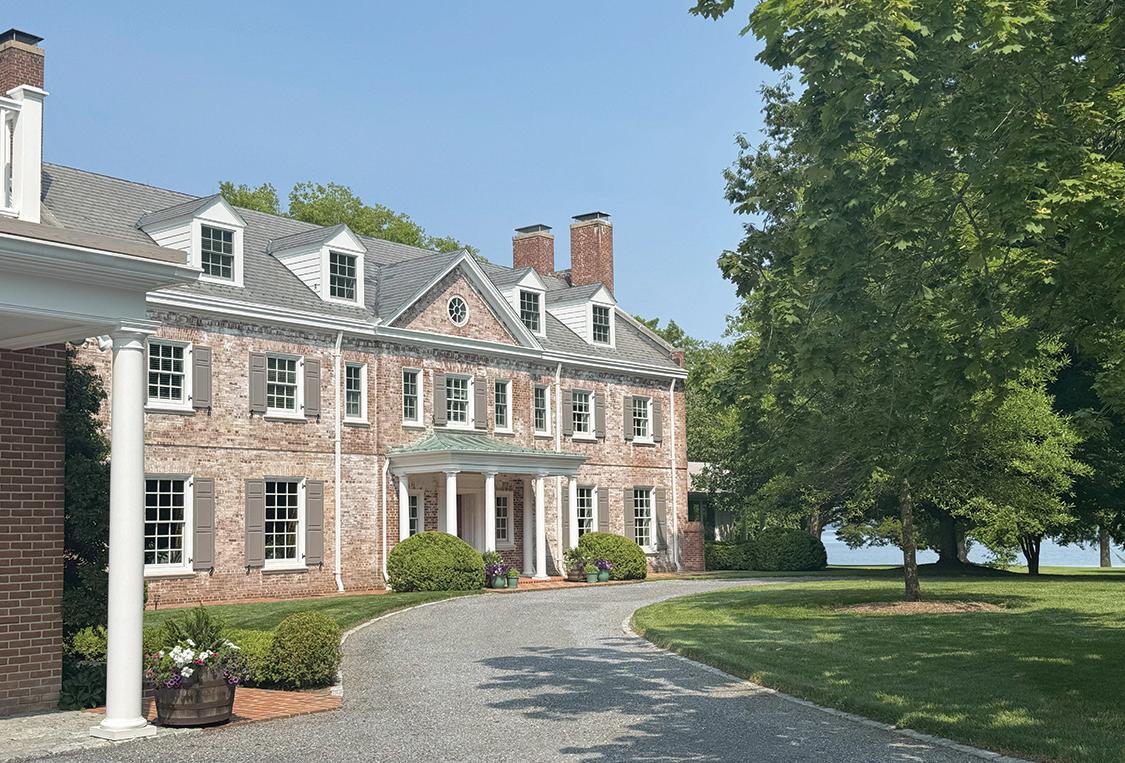
Emerson Point , a 220-acre retreat on the Miles River, blends timeless beauty with thoughtful preservation. Built in the 1930s in Georgian style upon the site of
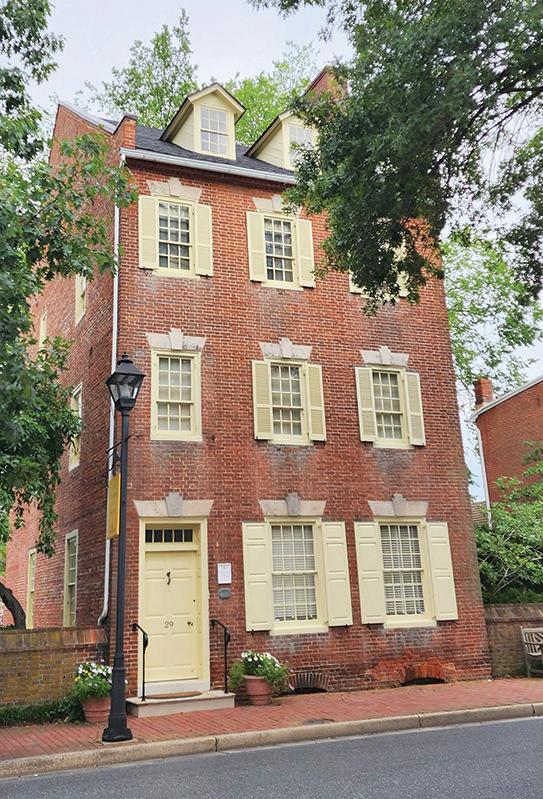
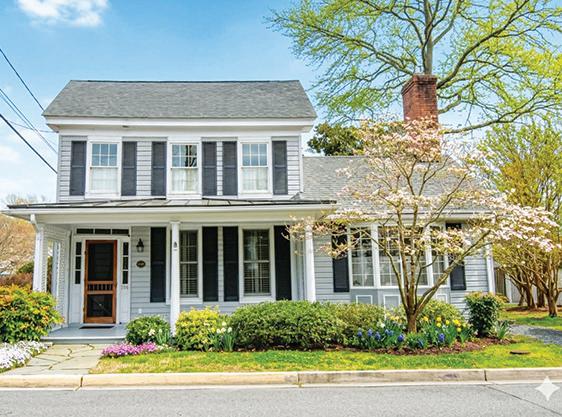
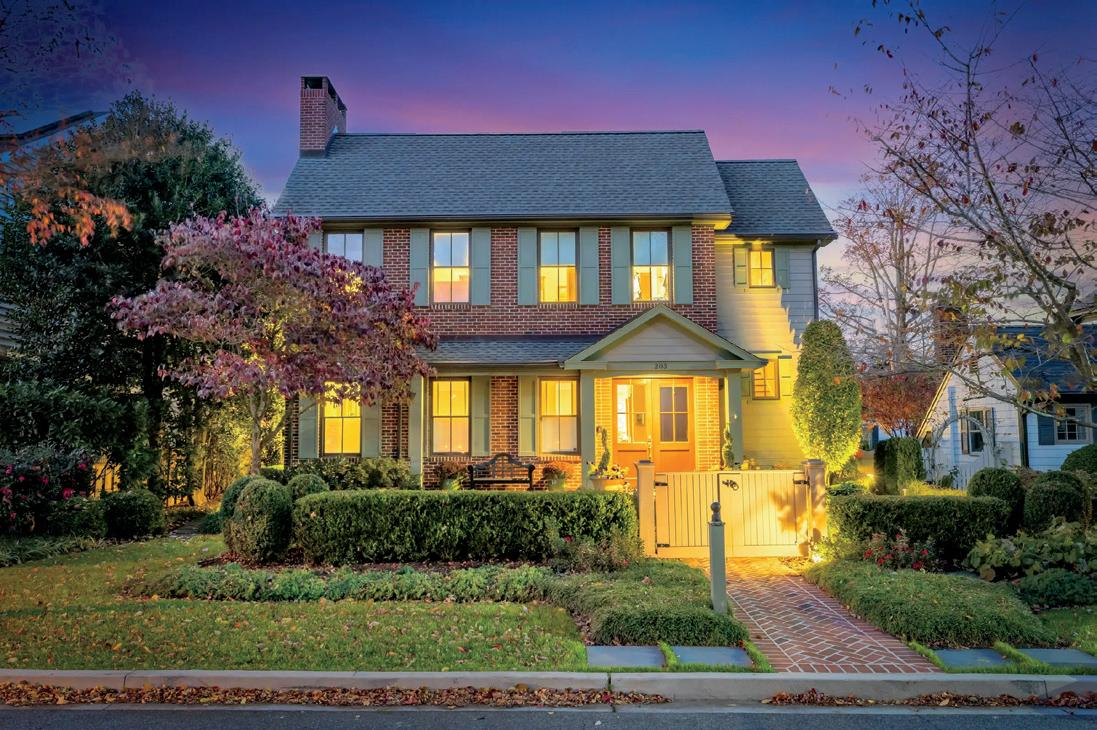
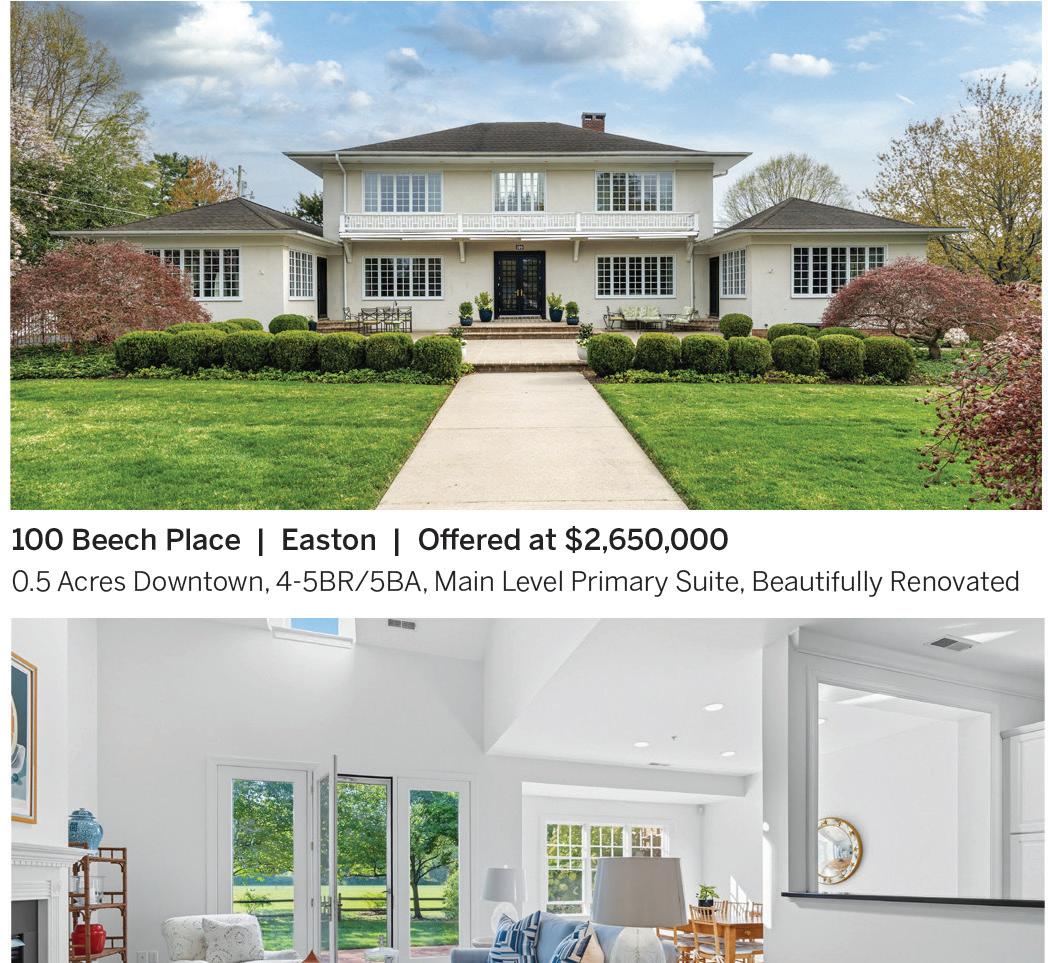
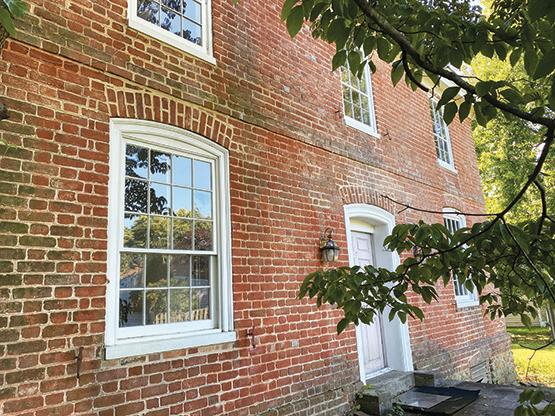
The George E. Shockley House (c. 1890) is a beautifully preserved historic home in the heart of St. Michaels, just moments from the harbor, shops, dining, and scenic trails. Thoughtfully improved, it blends timeless character with modern comfort. The main level features a primary suite, updated kitchen with island, and multiple inviting living spaces. Upstairs offers two bedrooms and a full bath. Fenced yard with patio and detached studio/office. $1,250,000
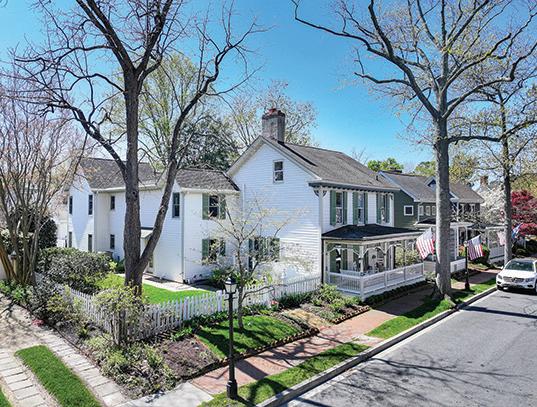
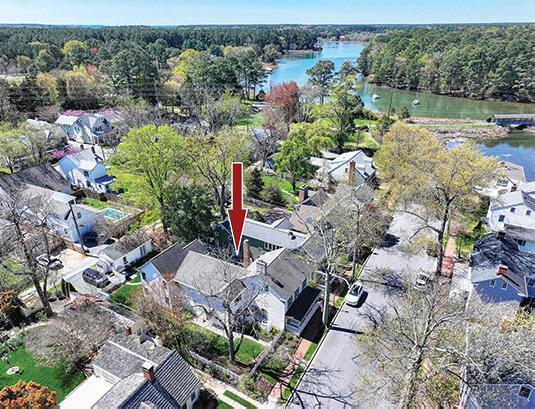
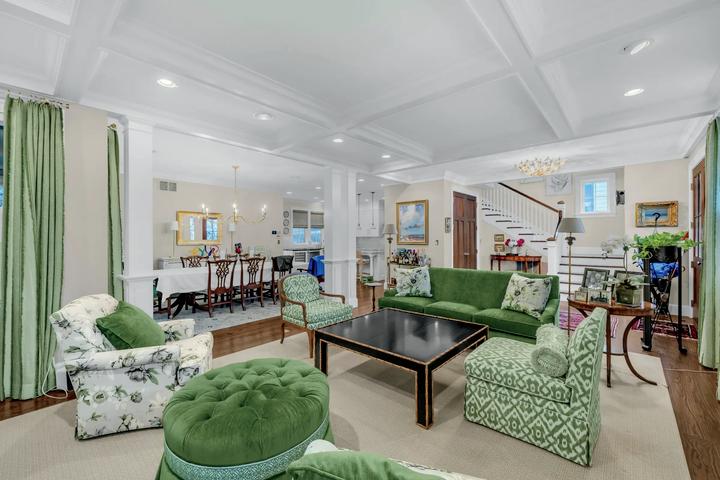
Premier St. Michaels location just ½ block from the waterfront, walking trail, park, kayak launch, shops, and restaurants. Gracious 3-story home with front porch, hardwood floors, multiple living areas, and 4 wood-burning fireplaces. 4 bedrooms, 4½ baths, private office, built-ins, and abundant storage. Landscaped fenced yard with detached studio/workshop. Off-street parking and exceptional in-town value. $1,350,000
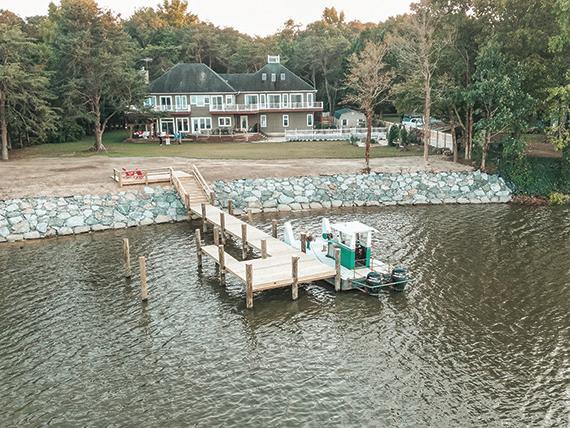
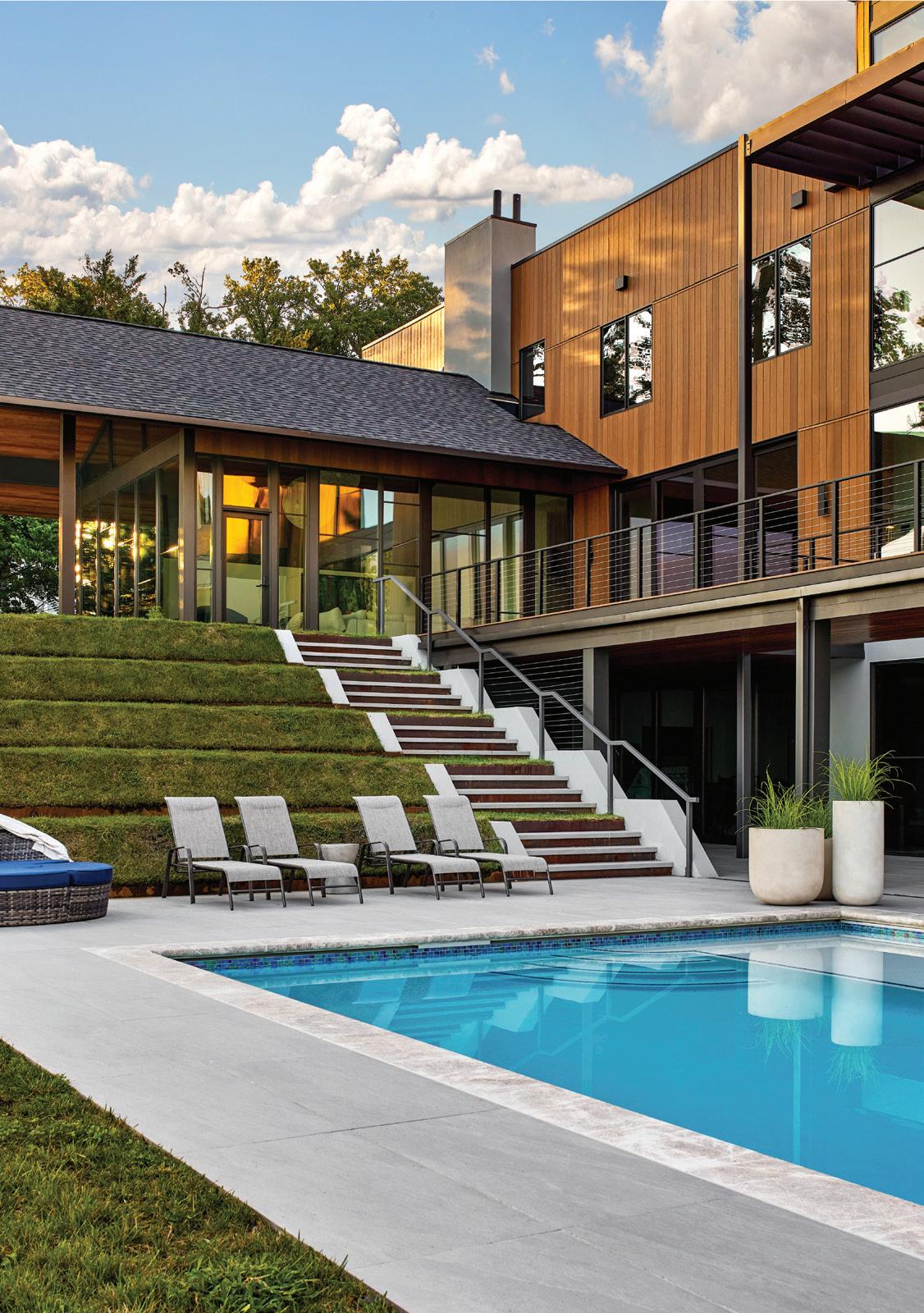
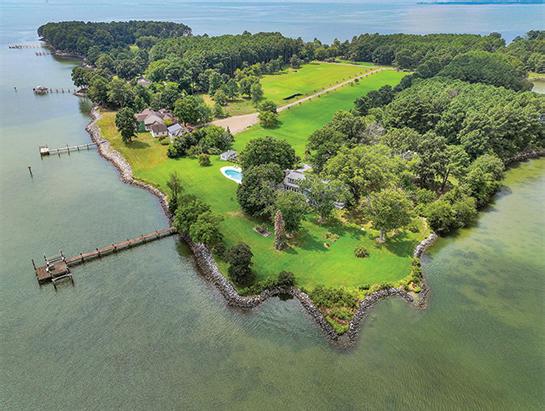
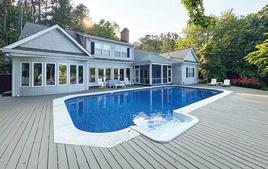
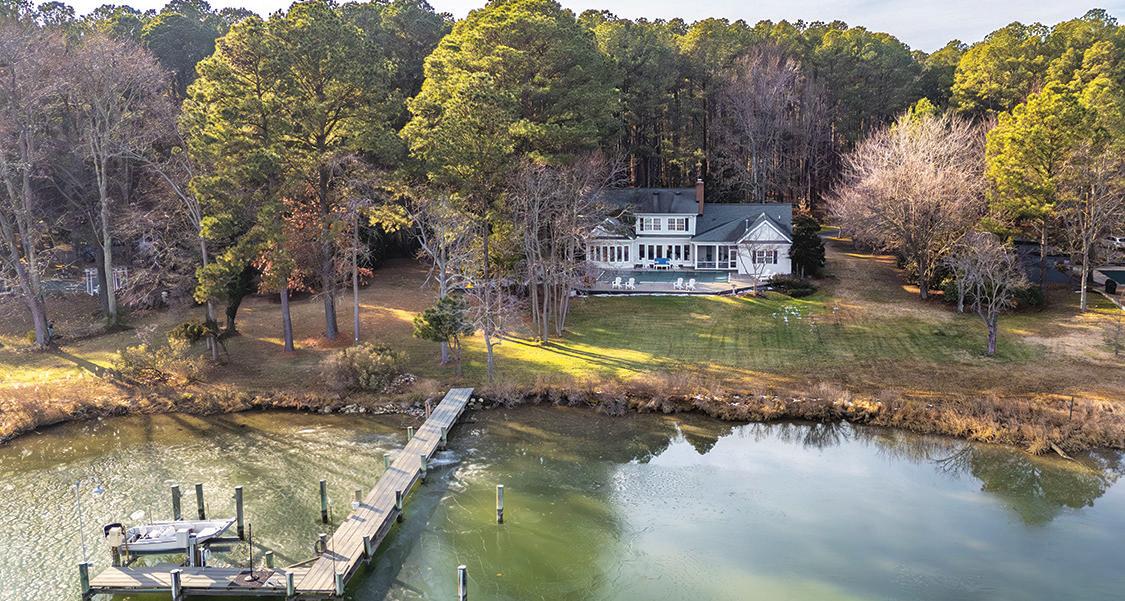
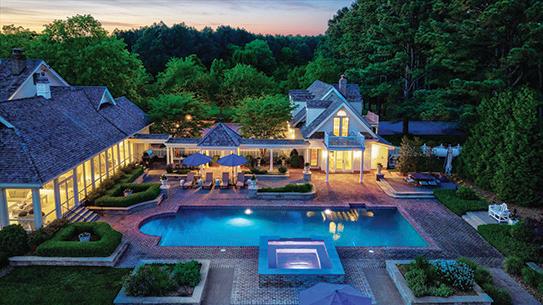
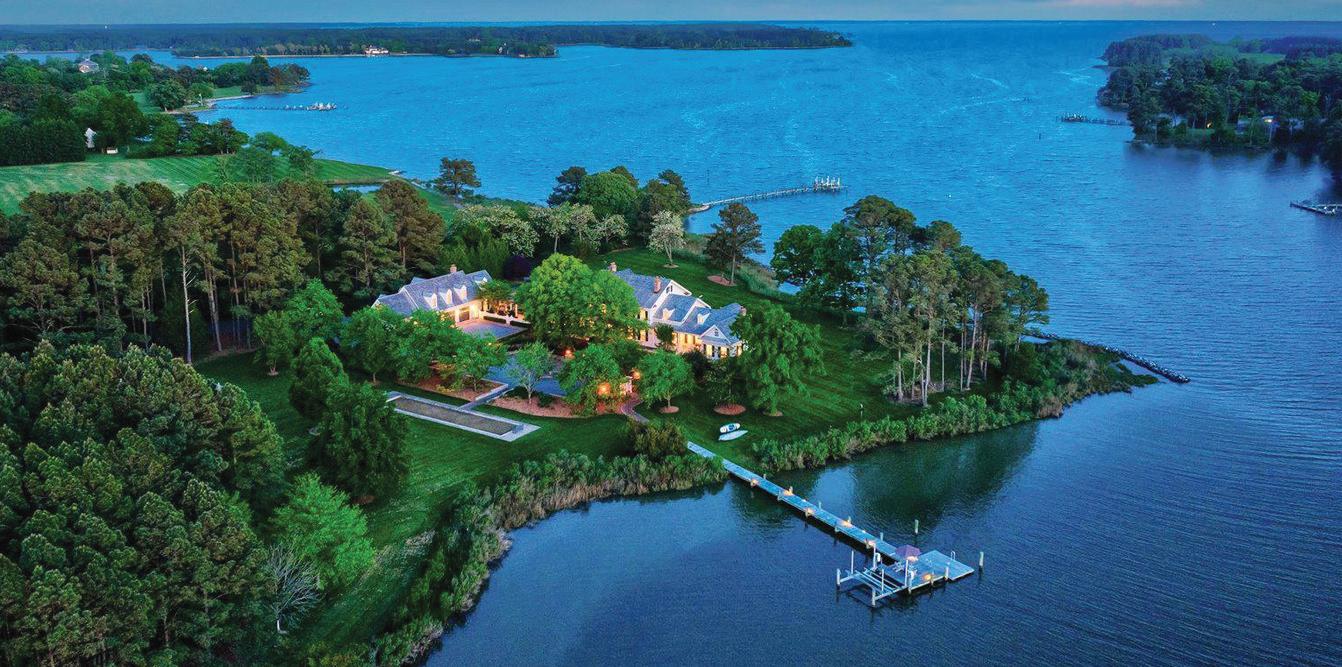
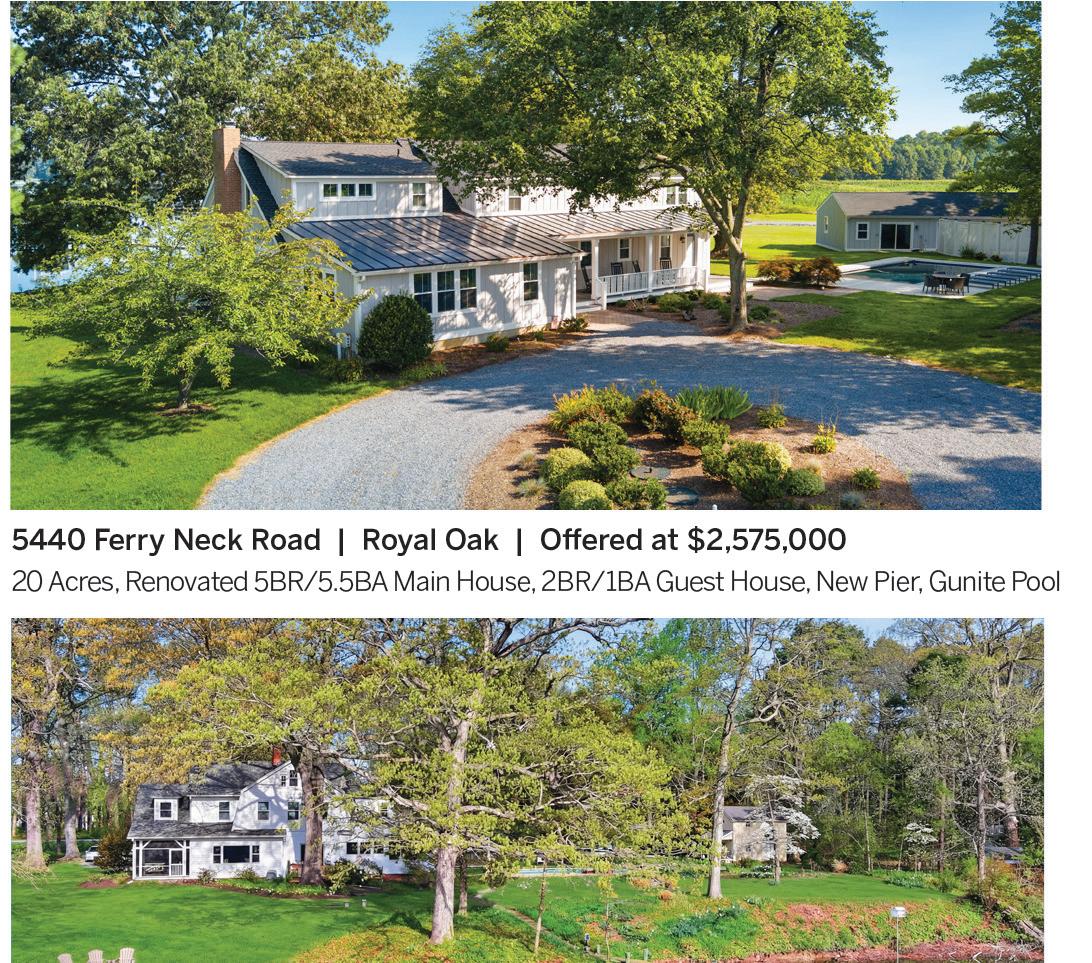
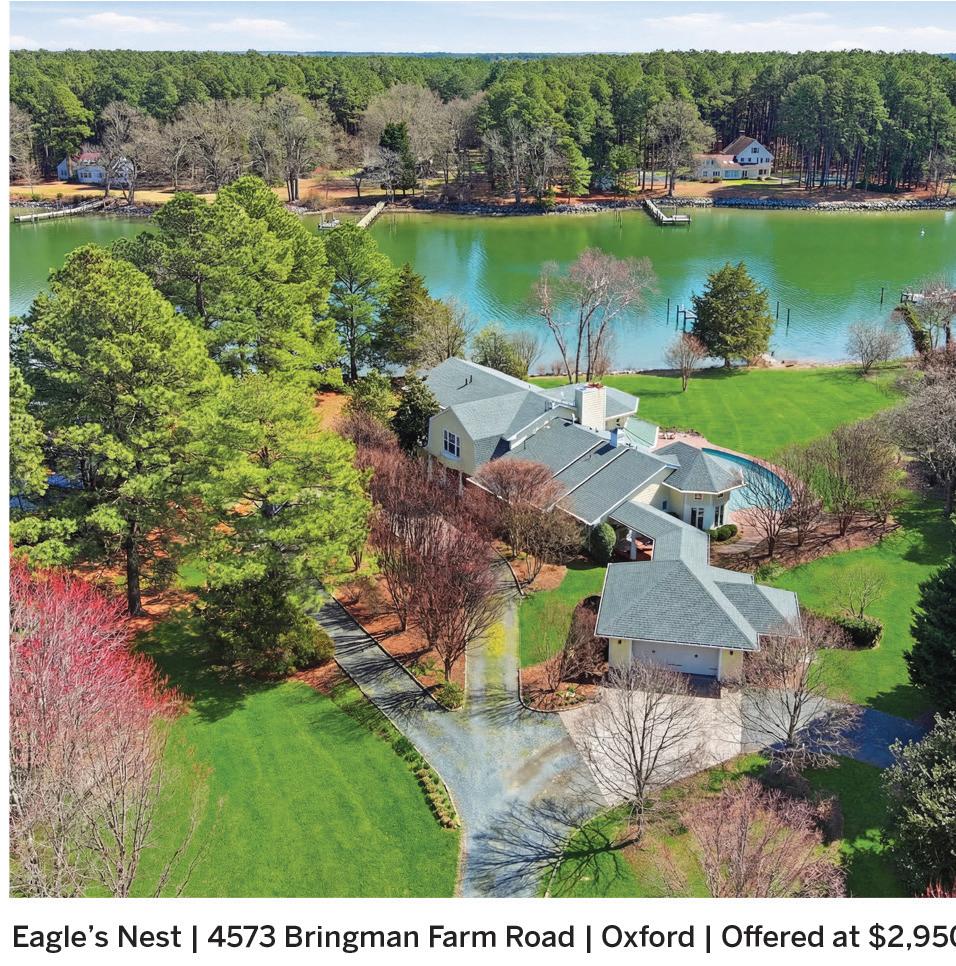
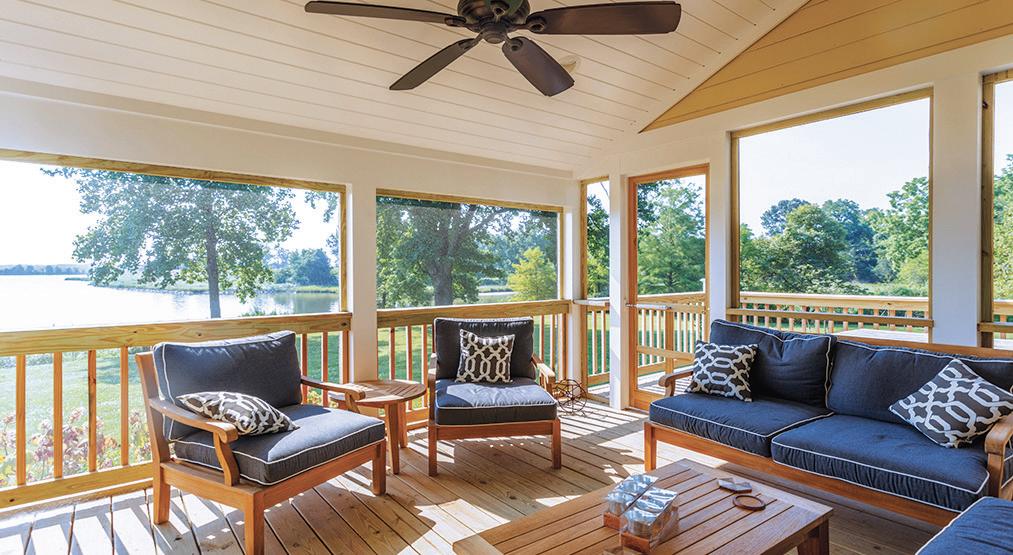
Waterfront Retreat on 9.62 private acres with 800+ ft of protected shoreline and stunning broad water views. Approximately 4,800 sq. ft. on three levels with wood floors, kitchen with island, and separate living and dining rooms. Five bedrooms, upper-level den/office, and third-floor craft room. Game room, wine room, three fireplaces, and abundant storage. Screened porch, in-ground pool, detached garage, outbuildings, and pier with two lifts. $3,295,000
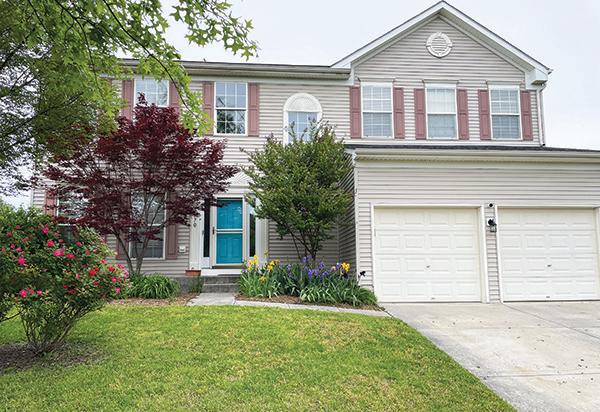
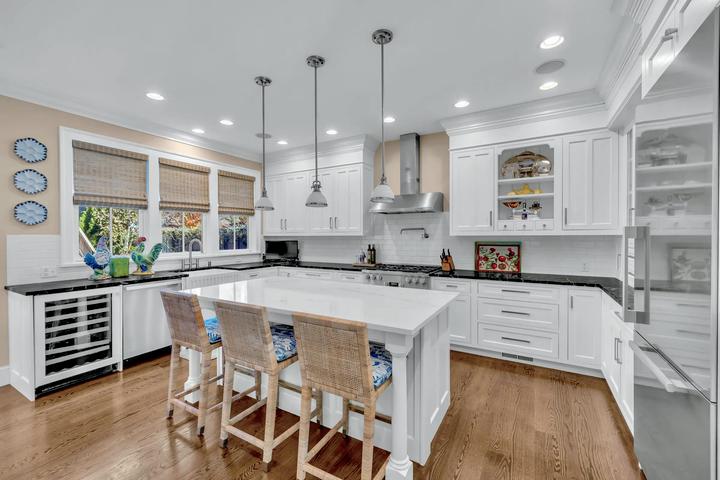
Summer is around the corner - enjoy it in this 4-bedroom home near Easton with peaceful pond views. The open-concept kitchen, dining, and family room with gas fireplace create an inviting gathering space. Step outside to a fenced backyard with deck and in-ground pool. The spacious primary suite offers a walk-in closet and en suite bath. Three additional bedrooms, upper-level laundry, and a two-car garage complete the home.
$500,000
House and Garden
an earlier farmhouse, the estate once belonged to the Hambleton and Dawson families, rooted here since the 1700s. Recent renovations upgraded essential infrastructure and restored exquisite elements such as library paneling, mahogany doors and original shutters. Terraces and windows yield to scenic wetlands, sandy beach and magnificent trees.
Lined with cedars and cryptomeria, the drive reveals lustrous magnolias, Japanese zelkova and an American beech allée. A row of oaks, grown from seedlings of the legendary Wye Oak, leads to the boathouse. Midway between house
and water stands the “Wedding Tree” whose boughs have sheltered couples plighting their troth. A family cemetery and lore of Frederick Douglass’s visits infuse the estate with reverence, uniting architectural grace and lyrical landscape with our enduring human story.
On Tour, we hope that visitors will pause and take time to also experience the charm and history of the towns of Oxford and St. Michaels via brief narrated driving tours that highlight the citizens, sites and stories from important eras of America’s past. Exclusive tour access will be provided to all who purchase tickets.
Exceptional Harris Creek Waterfront Living!
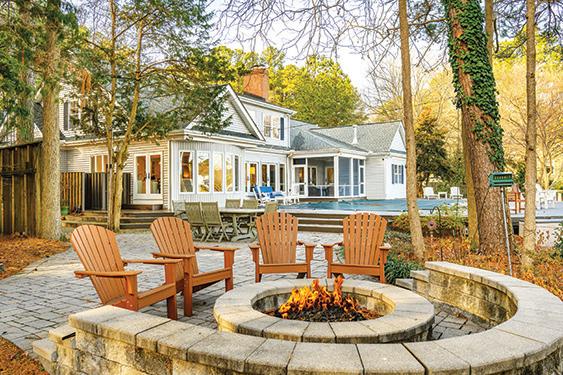
Custom 5 bedroom waterfront home on Harris Creek offering effortless Eastern Shore living. Light-filled interiors feature hardwood floors, open floor plan, multiple fireplaces, chef’s kitchen with oversized island and main level waterside primary suite and guest suite. Outdoor living includes a saltwater pool, extensive deck, fire pit patio, screened porch and pier. $2,195,000
Passing Down the Profession of Smiles
by
Tracey F. Johns
Kyle
If you’ve lived on the Mid-Shore long enough, you come to recognize the names that seem to carry across generations. In a place where community ties run deep, those names often become part of your own story.
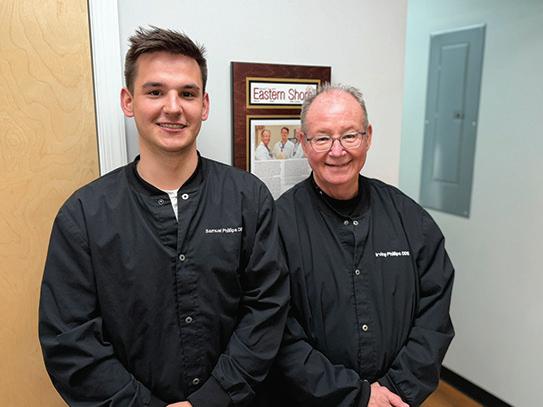
That’s certainly true for me. When I moved to the Eastern Shore in the late 1990s, I became a patient of Dr. Irv Phillips. Decades later, I now sit in the chair of his son, Dr. Sam Phillips, someone I have remembered since his mother, Jane, carried him 27 years ago.
So, when I found myself back in the office this year with yet another cracked tooth, I started to notice something I had taken for granted:
the same names appearing not just in one practice but in neighboring practices as well. It raised a simple question. What draws sons to follow their fathers into the same profession, and even work alongside them?
On the Mid-Shore, the answer is shaping more than careers. It is shaping legacies.
Two local dental families are living that answer every day.
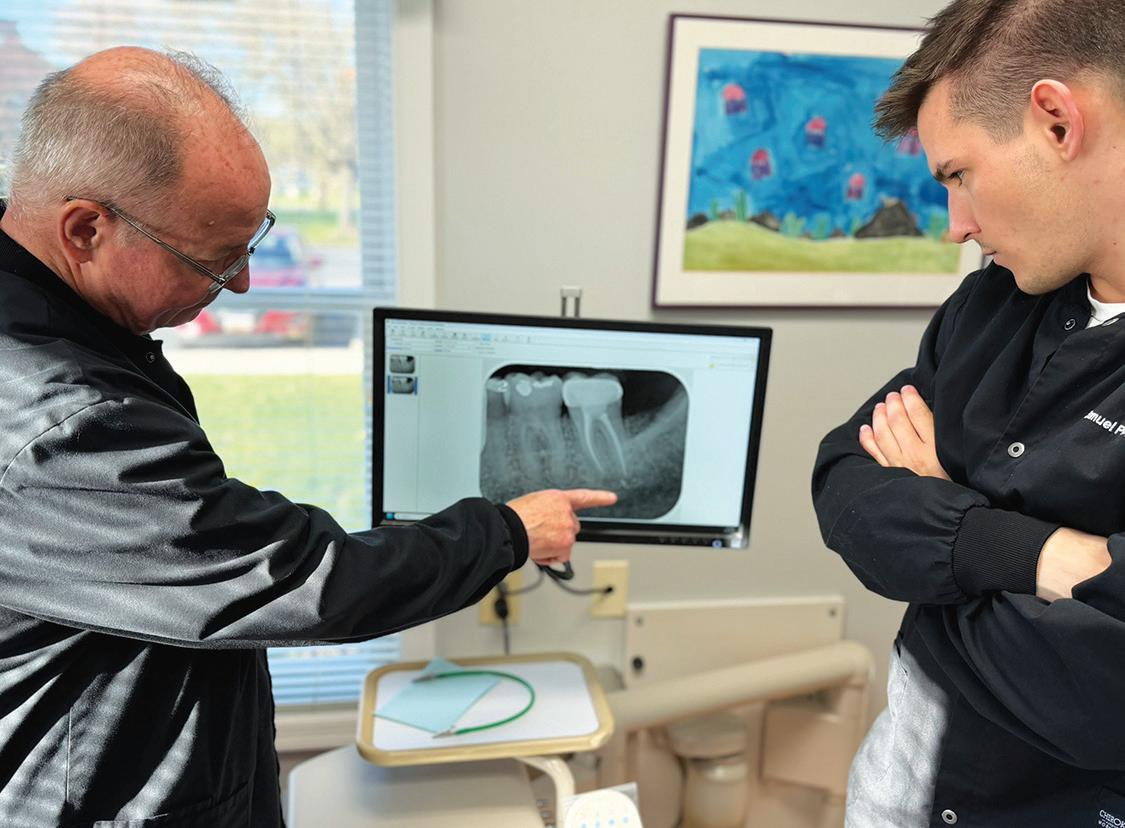
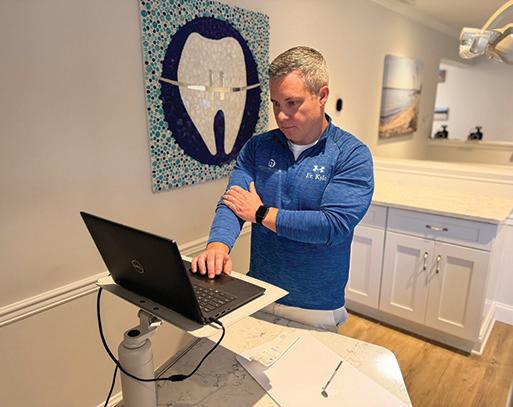
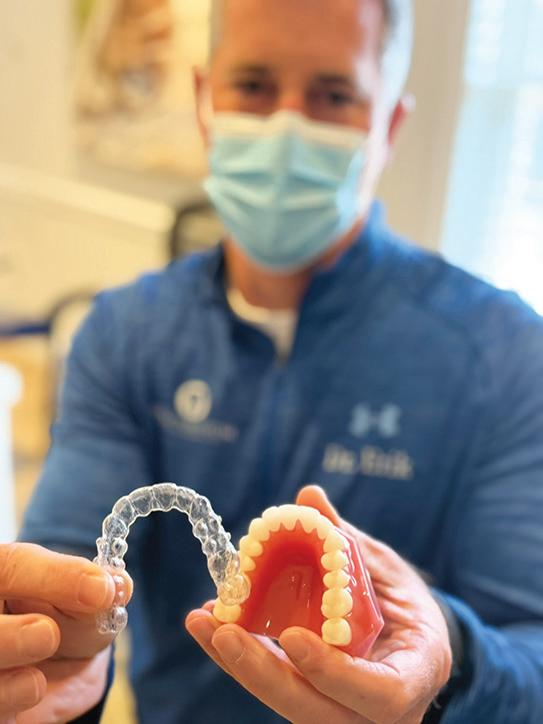
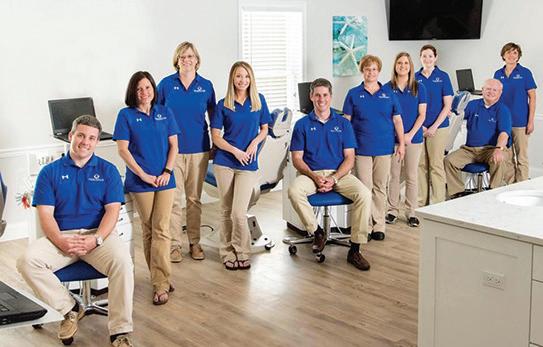
At one practice, brothers Dr. Erik Higginbottom and Dr. Kyle Higginbottom are building on the orthodontic foundation their father, Dr. Mark Higginbottom, established decades ago. Next door, Dr. Irv Phillips and his son, Dr.
Erik and
Higginbottom
Sam and Irv Phillips
BENSON & MANGOLD REAL ESTATE Chuck Mangold Jr. - Associate Broker
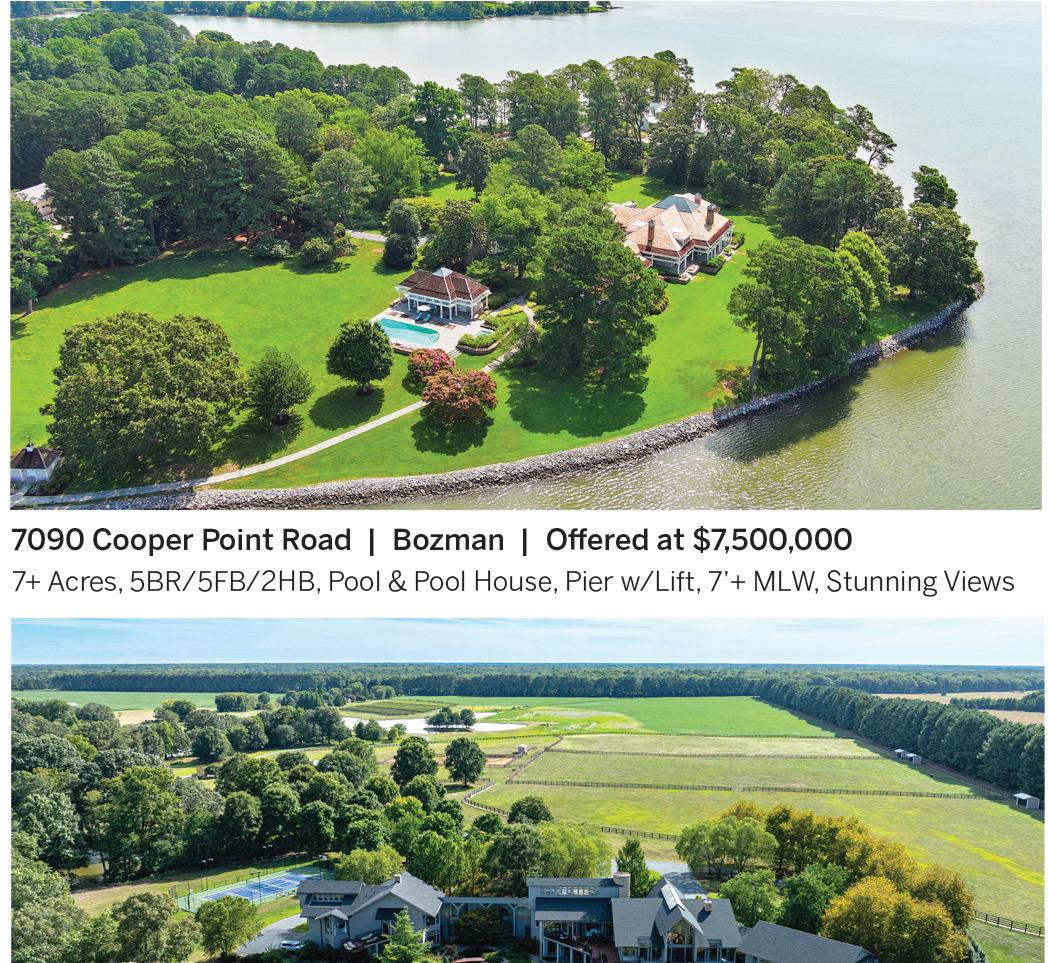
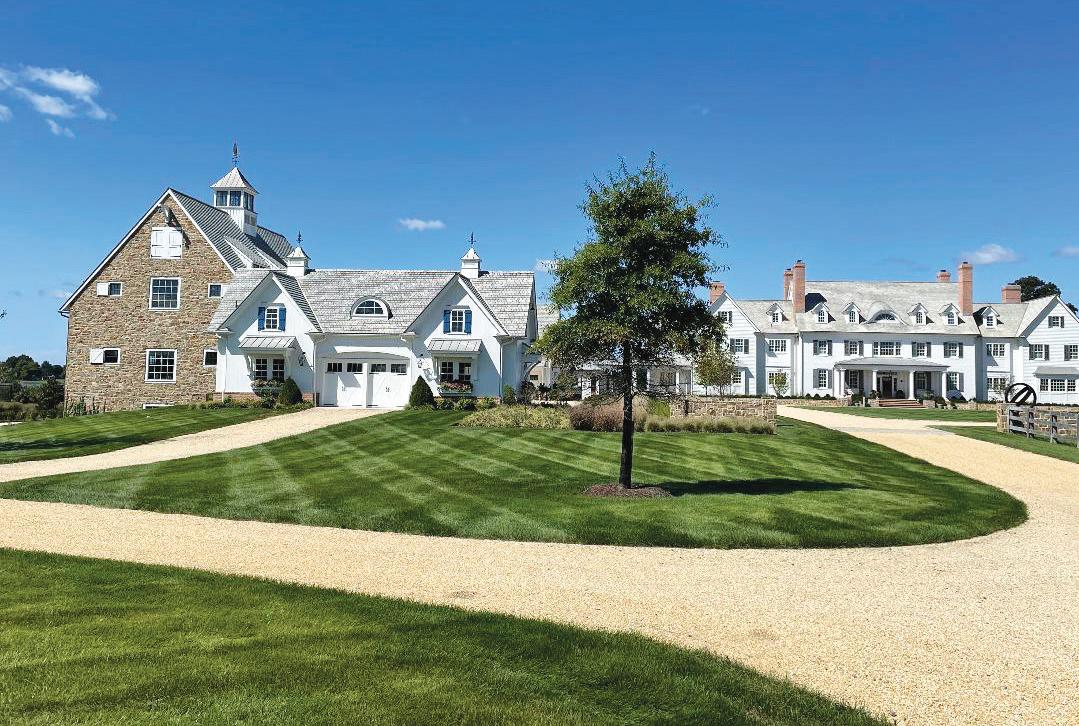
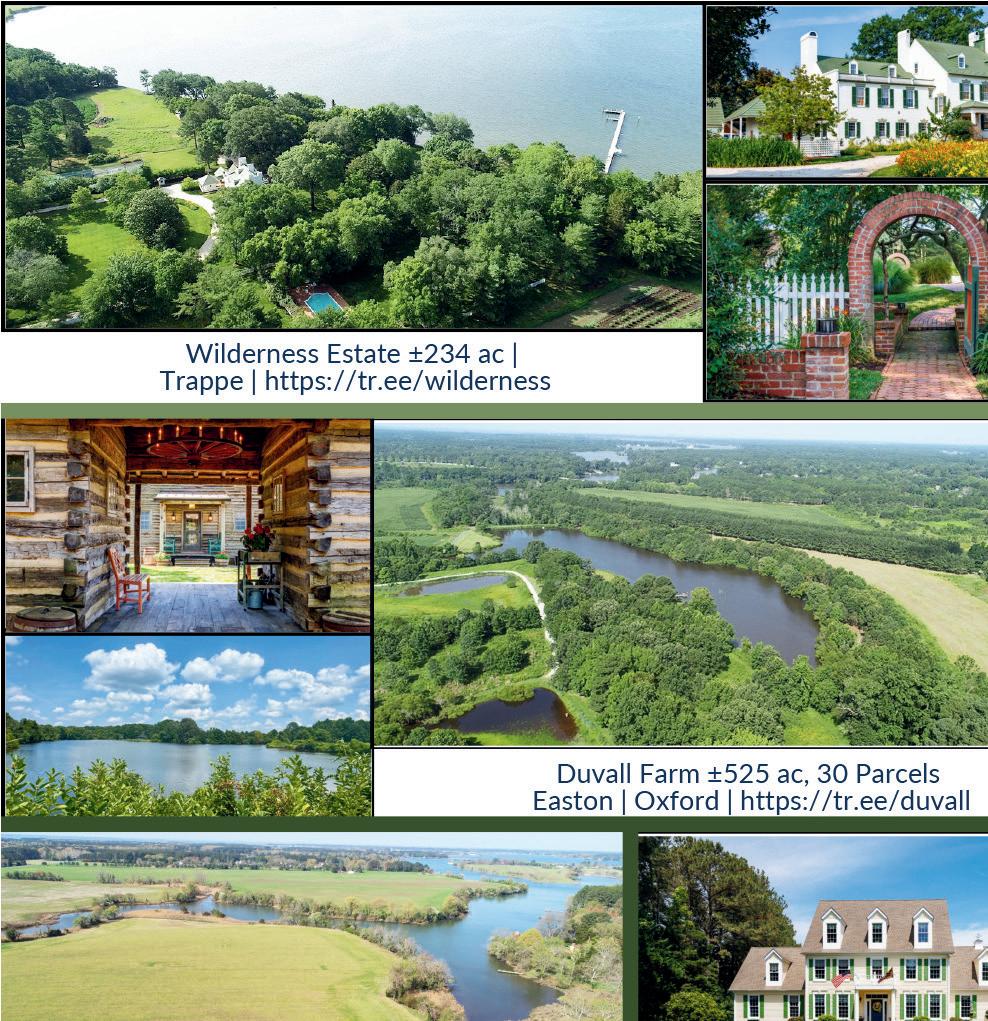
Island Creek Estate - rare total privacy, deep water dockage, meaningful architecture, and superb build quality all intersect at this remarkable, truly one-of-a-kind waterfront offering. Set on approximately 6 acres of park-like grounds with 500+- feet of shoreline and 6’+- MLW, the property offers exceptional water access along the peaceful expanse of Island Creek. The setting is serene and private, with a gracious approach that complements the estate’s architectural presence. Impeccably built with careful attention to detail, the residence offers 4 bedrooms and 3.5 baths within a thoughtfully designed floor plan that maximizes natural light and water views. The living room, kitchen, and dining area flow comfortably together, creating a spacious central gathering area framed by expansive windows overlooking the creek and anchored by a fireplace. The kitchen is generously sized, featuring a substantial island, quality finishes, and an inviting eat-in area suited for both everyday living and entertaining. Outdoor living is equally compelling, with a screened porch overlooking the water and an in-ground pool set against sweeping creek views. The private pier provides deep water dockage, ideal for boating enthusiasts seeking immediate access to the Chesapeake Bay watershed. A finished rec room above the attached garage offers flexible use as a media room, office, or fitness space. In addition to the attached two-car garage, the property features a substantial detached multi-bay garage equipped with a hydraulic vehicle lift, air compressor, and rough-in for a future bath -- an exceptional amenity for car collectors, hobbyists, or workshop space. This exceptional Island Creek estate combines craftsmanship, privacy, and premier waterfront living in a setting that is both refined and enduring.
TRAPPE | $3,495,000 | 4346SouthsideLane.com
Chuck Mangold Jr. - Associate Broker
BENSON & MANGOLD REAL ESTATE
Set along more than 1,000 +/- feet of pristine, navigable waterfront on Irish Creek, this remarkable 22.14 +/- acre waterfront estate captures the very essence of luxury living on Maryland’s Eastern Shore. Surrounded by sweeping southwest-facing water views and unspoiled natural beauty, the property is just minutes from Easton and St. Michaels. Inside, refined interiors feature rich hardwood flooring, extensive crown molding, custom built-ins, and four wood-burning fireplaces. The main level is thoughtfully designed for hosting and everyday living, with gracious formal and informal spaces that flow effortlessly together. A formal dining room, expansive living and family rooms, and a well-appointed kitchen with island and pantry create the perfect setting for gatherings with family and friends. The main-level primary suite offers a peaceful retreat with its own fireplace, walk-in closet, and spa-inspired bath. Upstairs, three additional bedrooms and two full baths comfortably accommodate guests for extended weekends on the Shore. Outdoors, the estate unfolds as a private waterfront retreat. Spend warm summer days by the Gunite pool and outdoor spa, gather around the built-in fire pit at sunset, or enjoy a friendly match on the bocce court. A tranquil pond and expansive grounds enhance the sense of serenity, while the vaulted three-season porch provides the perfect vantage point for watching boats drift by and taking in the breathtaking evening sunsets over Irish Creek. The property is exceptionally well-suited for hosting, with a charming pool house and a separate two-bedroom guest apartment above the detached four-car side-entry garage - ideal for visiting family, weekend guests, or extended stays.
Passing Down Smiles
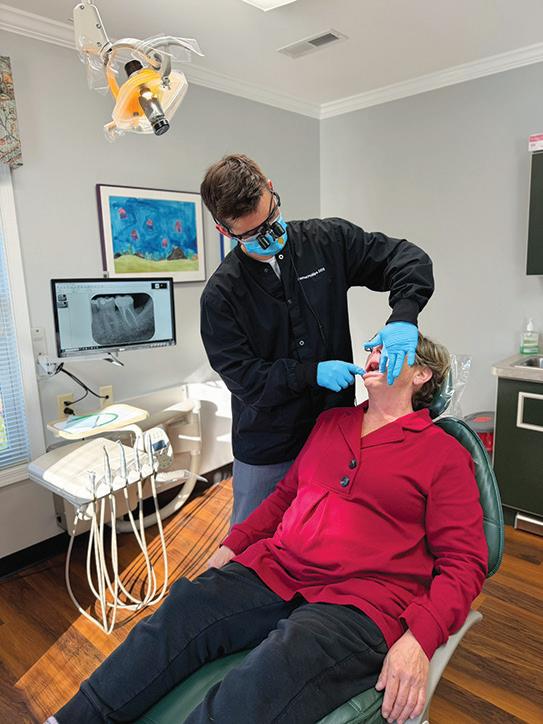
Sam Phillips, work side by side in general dentistry at Dental Choice, alongside Dr. Wade Dressler.
Together, their practices reflect a rare continuity, one in which fathers and sons not only share a profession but also a commitment to their patients and their community.
Growing Up in the Office
For both families, dentistry was never just a job. It was part of daily life.
Erik Higginbottom remembers a childhood shaped by balance. “One of the good things that dad did was
to separate work from home life,” he said. “He would come home from work, and more attention was given to us than to what happened during his day.”
Still, the office was never far away. By their early teens, Erik and Kyle spent summers helping out, learning the basics from sterilizing instruments to assisting the team.
“We were always in the office, whether it was after school,” Kyle said. “Just getting comfortable with being in the office at a young age was good exposure.”
Sam Phillips had a similar experience. His earliest memories include tagging along with his brothers, exploring the office, and
Passing Down Smiles
seeing his drawings framed in one of the operatories.
“We’d go sometimes before or after school and just hang out,” he said. “I can’t remember a time when I didn’t want to be a dentist either. It’s always been my goal.”
That familiarity mattered. It turned what could have been an intimidating profession into something approachable and, eventually, meaningful.
No Pressure, Just an Example
Despite their shared career paths, none of the sons describe being pushed into dentistry.
In fact, the opposite was true.
“He never honestly pressured us to go into the dentistry field,” Kyle said of his father, who is still involved in the practice today. “He was always, ‘you do what you want, I’ll support it.’”
Erik echoed that sentiment. “There was no, ‘Hey, you have to go
down this pathway.’ None of that was there.”
For Irv Phillips, the journey into dentistry was also a personal choice. Initially set on going into medicine, he shifted direction after a formative experience.
After observing dentistry, he had an a-ha moment early in his training. While still being able to perform dental surgeries, dentistry was a career that allowed him to be present for his family.
“I wanted to be the coach and scouting leader. I wanted to be there,” he said.
That decision would shape not only his own life, but also his son’s.
“I appreciate his lifestyle,” Sam said. “I want to do the same thing that he does.”
Building on a Foundation
Both practices grew from modest beginnings into multi-generational community staples.
Irv Phillips joined the practice of Seese and Taylor in 1983, a dental practice that has been in existence since the 1950’s, and started in a small house on Aurora Street before expanding twice into the current facility.
Today, the practice in Easton serves families across generations, many of whom have been patients for decades.
The Higginbottom orthodontic practice traces its roots to 1976. Over the years, it has treated not
Passing Down Smiles
just individuals, but entire family trees.
“There have been five or six generations of a single family that have gotten their teeth straightened by this practice,” Erik said.
That continuity is more than a point of pride. It shapes how both families approach their work.
“We treat our patients like they’re family,” Kyle said. “What would I do to treat your daughter? I would do exactly what I would do to my daughter.”
Evolution of the Profession
While the values have remained consistent, dentistry itself has changed dramatically.
In orthodontics, Erik points to a shift toward patient choice.
“Previously, it was, ‘Hey, the only option we had was braces,’” he said. “Now, clear aligners like Invisalign give patients more autonomy.”
Technology has also improved efficiency. What once took an entire day can now be done in under an hour.
“In one day, you may put one set of braces on,” said Kyle. “Now we can put a set of braces on in an hour.”
In general dentistry, Irv has witnessed even more sweeping changes.
“Now everything is digital, from radiographs to designing and fabricating crowns and bridges in a day.”
Advances in tools and materials have also transformed patient care, making procedures faster, quieter, and more comfortable.
Yet, despite these innovations, both generations emphasize that the core of dentistry remains unchanged.
“It’s about the relationships,” Irv said, reflecting on decades of practice.
Learning Goes Both Ways
Working alongside family brings its own dynamic, one built on trust, collaboration, and mutual respect.
At Dental Choice, Irv and Sam regularly exchange ideas, blending experience with new techniques.
“Being a recent graduate in the
Passing Down Smiles
Our correspondents go the extra mile for their stories...
practice, we’ve had many chats about ensuring the practice is current in procedures and technology,” said Sam
Sometimes, the lessons are small but meaningful.
“He changed my life, updating us with a different type of cement,” Irv said with a laugh.
The Higginbottom brothers share a similar partnership. While each doctor manages their own patients, they collaborate frequently, discussing cases and approaches.
“We do spend a fair amount of time together, and we collaborate,” Erik said.
Their relationship extends beyond the office. They vacation together, raise their children together, and maintain the same sense of family that defined their upbringing.
“That’s what makes this possible,” Erik said.
A Community Connection
Dentistry is not just a service. It is a relationship.
Patients often know their dentists outside the office, at the grocery store, on the sidelines of a game, or at a community event.
That visibility comes with accountability, but also with connection.
“I very much like meeting patients who know our family,” Sam said. “It feels like I’ve known them most of my life.”
For the Higginbottoms, that connection reinforces their commitment to comfort and communication.
“Choose a practice that makes you comfortable,” Erik advises patients.
It is a philosophy rooted not in marketing, but in lived experience.
Looking to the Future
With children already spending time in the office, the possibility of a third generation is real for both families.
Still, the approach remains the same: exposure without expectation.
“The choice is always going to be
TIDE TABLE OXFORD,
MD MAY 2026
HIGH LOW
1. Fri.
2. Sat.
3. Sun.
4. Mon.
5. Tues.
6. Wed.
7. Thurs.
8. Fri.
9. Sat.
10. Sun.
11. Mon.
12. Tues.
13. Wed.
14. Thurs.
15. Fri.
16. Sat.
17. Sun.
18. Mon.
19. Tues.
20. Wed.
21. Thurs.
22. Fri.
23. Sat.
24. Sun.
25. Mon.
26. Tues.
27. Wed.
28. Thurs.
29. Fri.
30. Sat.
31. Sun. AM AM PM PM 4:26 5:06 5:47 6:29 7:14 8:00 8:49 9:40 10:33
his,” Erik said of his son. “I’ll support him in whatever that choice is.”
Kyle agrees, noting that early interest should be taken lightly but encouraged.
“You take it with a grain of salt, but you support it,” he said.
For Irv, watching his son join the practice has already fulfilled a lifelong hope.
“It’s a blessing,” he said, reflecting on their partnership.
More than a Profession
In an era when many industries face constant change, these two families offer a reminder of what endures.
For them, dentistry is not just about procedures or technology. It is about trust, relationships, and the quiet satisfaction of helping others.
It is about fathers who chose family, sons who followed not out of obligation but out of inspiration, and patients who return, generation after generation.
On the Mid-Shore, that legacy is visible in every smile, including mine, my now-adult children’s, and my grandchild’s.
And for the Higginbottoms and the Phillips family, it is one they are proud to continue together.
Tracey Johns has worked in communications, marketing and business management for more than 30 years, including non-profit leadership. Tracey’s work is focused on public and constituent relations, along with communication strategies, positioning and brand development and project management.
Shorely Beautiful
3109 Ocean Gateway Cambridge, MD
Travel Dreams Come True Memories of Adventures in All 50 States
Part 2 by Bonna L.
Nelson
O beautiful for spacious skies, For amber waves of grain, For purple mountain majesties
Above the fruited plain! America! America!
God shed his grace on thee And crown thy good with brotherhood From sea to shining sea!
~ From America the Beautiful by Katherine Lee Bates
Some people set a goal to see all 50 states of our beautiful America before they turn a milestone age like 30, or 50 (the 50 before 50 achievers) or 60. For us the goal was achieved
much later in life. We didn’t set an age goal but just a wish to complete the “all 50” journey while we were healthy enough to do so.
Some people set a goal to visit all
Travel Dreams
50 states by car, or RV, or motorcycle or on tours. Some people set a goal to visit all 50 state capitals or all national parks across the country. Some people hope to camp, hike, paddle, play golf, run marathons or fish in all 50 states. The options are endless.
Not us. We just wanted to set foot in every state with the hopes of visiting some capitals, some national parks, some natural wonders, some cultural icons, some presidential libraries, some ancient sites, some historic sites, some architectural wonders, some botanical gardens
and some museums. We also wanted to sample the foods popular in a particular state or region. And we wanted to experience the landscapes, the people and the aesthetics of each state in America the beautiful.
We are often asked about the best time of year to travel, how we planned and accomplished the mission and what we saw. Living on the Eastern Shore of Maryland with its beauty, landscapes, waterscapes, history, culture, festivals, food and fun-loving people makes it a hard place to leave. We most often completed our state travels in the fall after spring and summer fun on the Shore, and when it is mostly temperate across America.
We planned our trips in the heat of Maryland’s summers. When it was too hot to go out on the boat, fish or go to the pool, we planned our fall excursion. We grouped states to try to enjoy multiple states on one trip, which saved on travel expenses such
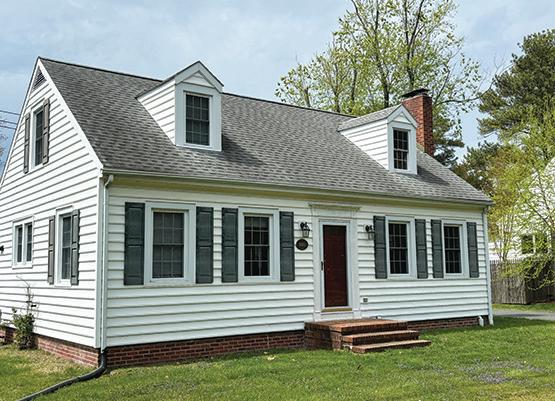
3 BR and 2 full baths with open LR/DR/Kitchen, Sunroom with vaulted ceiling leading to the deck overlooking the fenced yard. Separate laundry room. New roof in 2022. NO HOA fees!
$525,000 Owner/Agent
Make this 4BR, 2.5 bath home with a pool your new address. Summer will be here before you know it!
$595,000
Travel Dreams
as flights and car rentals.
Examine a map of America and determine what you have seen and what you want to see. Every state is worth visiting. Notice the regions for planning purposes: Northeast, Southeast, Midwest, Southwest, Pacific Northwest or Atlantic, Pacific and Gulf coasts or the Sunbelt and Great Lakes. Notice state borders.
For example, we were able to see four states around the Great Lakes on one trip when we flew and rented a car. We enjoyed a fly/drive trip to the mid/Southwest, experiencing six states in nine days whose borders align north to south along the Missouri River. On a fly/drive trip to the South, we spent time in three states aligned along the Gulf of Mexico. We drove through multiple states on our quest to experience the thundering Niagara Falls. This type
of exploration is not for everyone, but it suited us.
Touring with groups allowed us to see more of the country, parks and sights with experienced, informed and entertaining tour guides and with all the planning and arrangements made for us. On a trip with a university geology professor, we visited the “Four Corners” states – Arizona, Colorado, New Mexico and Utah – which meet in a single geographic intersection in the southwestern United States.
The grand adventure included the amazing, memory-making sights of multiple National Parks, including the Grand Canyon, one of the seven natural wonders of the world, walking down some trails into the Canyon and taking a float trip on the Colorado River to see cave drawings. At Bryce Canyon NP, we observed the incredible red, orange and pink limestone spirals, and at Zion NP we saw the wonderland of rock monoliths.
We also experienced the wonders of the ancient Pueblo cliff dwellings at Mesa Verde NP, Navajo Nation
Travel Dreams
people and markets, Meteor Crater National Landmark and the water wonders of Lake Powell and Hoover Dam. Our journey took us to the art centers of Sedona and today’s entertainment wonder – the dazzling Las Vegas strip with its sights and sounds.
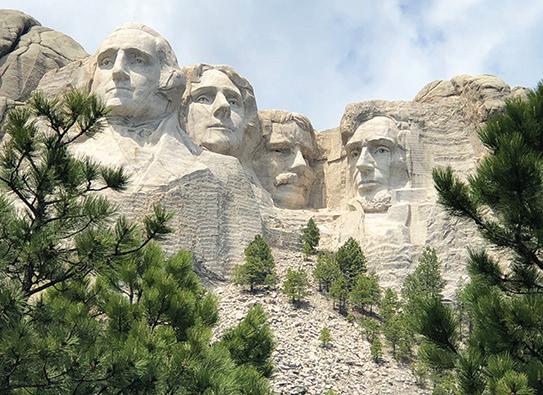
We experienced more astounding National Park sights with the highly recommended Caravan Americas motorcoach tours. One trip allowed us to visit five states in one trip. That excursion included some of America’s greatest and most iconic sights. The sculpted faces of Mt. Rushmore gazed down at us, as did the nearby Crazy Horse Native American Memorial bathed by the sun and backed by a brilliant blue sky.
In Yellowstone NP, we stayed in the 122-year-old park inn overlooking Old Faithful geyser, with its magnificent eruptions of boiling water and steam every 90 minutes. Nature revealed her best, sharing elk, bears, moose, bison, antelope and eagles with us as we drove and
walked beside rivers, pools, geysers, waterfalls, hot springs, valleys, forests and mountains. America the beautiful! On the same excursion we took a float trip on the Snake River, swollen with snow melt, through Grand Teton National Park.
We preceded the Caravan tour with a tour of our own to the otherworldly Badlands NP with friends who live in South Dakota. The Badlands is a 244,000-acre landscape of fascinating, striking eroded buttes, pinnacles and spires. Scattered among the rugged reddish rock structures are undisturbed grass prairies, home to bison, bighorn sheep and prairie dogs, all of whom graciously roamed near the roads we traveled for great photo ops. The Badlands are also one of the world’s richest fossil beds with some on exhibit at the visitor center. To me, the Badlands feel otherworldly. I would visit again in a flash.
Another Caravan tour took us to stunning mountain and lake scenery in Glacier National Park in Montana as well as on a tour of the Canadian Rockies.
Travel Dreams
On cruises we enjoyed the fall foliage of the New England states, including Acadia National Park, leaving from New Jersey with overnight stops that included Quebec City. Alaska was a favorite cruise/ land tour with friends, enabling us to see the coast, bays, rivers, waterfalls, glaciers, snow-covered mountains, lush forests and the iconic Denali glacier in Denali NP. The extraordinary odyssey included cruise ship, motorcoach and van tours to scenic wonders. On a cruise through the Panama Canal, we left from California after spending a few days in that state. Motorcoach tours and cruises were an incredible way for us to experience more of America.
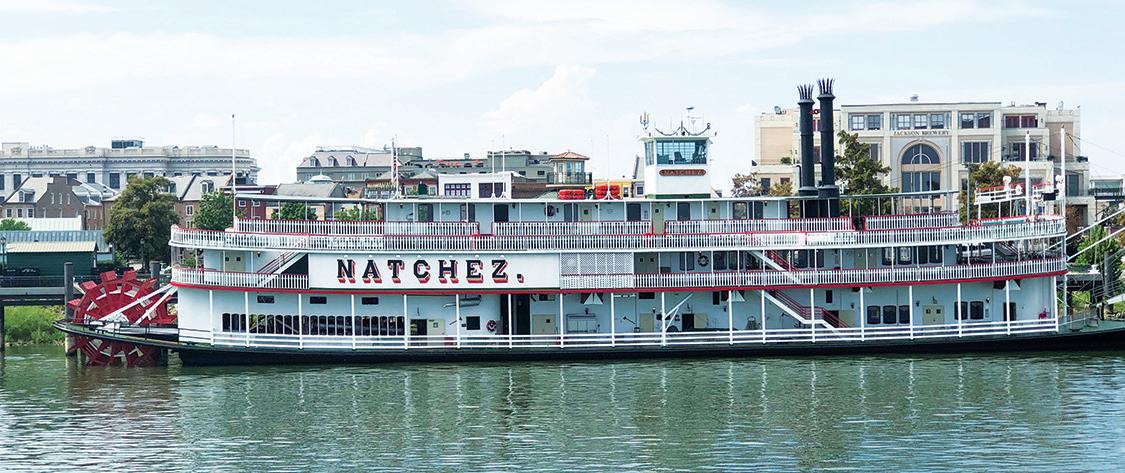
Excursions within states included a paddleboat cruise of the Mississippi River from one of our favorite food and music towns, New Orleans. Taking a cruise across Lake Michigan on the 64-year-old Beaver Islander Ferry saved us miles of
driving around the lakes on the return trip. Taking a horse-drawn wagon train ride through a park in Pennsylvania saved us major hikes up and down hills.
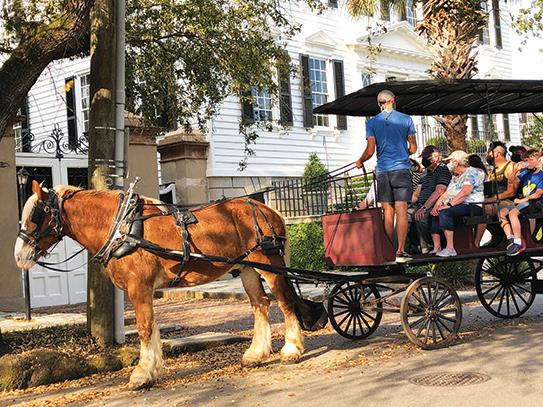
A train ride through the blue-gray, misty Smoky Mountains of North Carolina revealed forests, rivers and creeks with lunch and entertainment on board. A Charleston harbor boat tour and later a horsedrawn carriage plantation tour in Spanish mossdraped South Carolina revealed historic sites not easily accessible otherwise.
Flying to Hawaii we visited two islands, staying on Oahu at the gor -
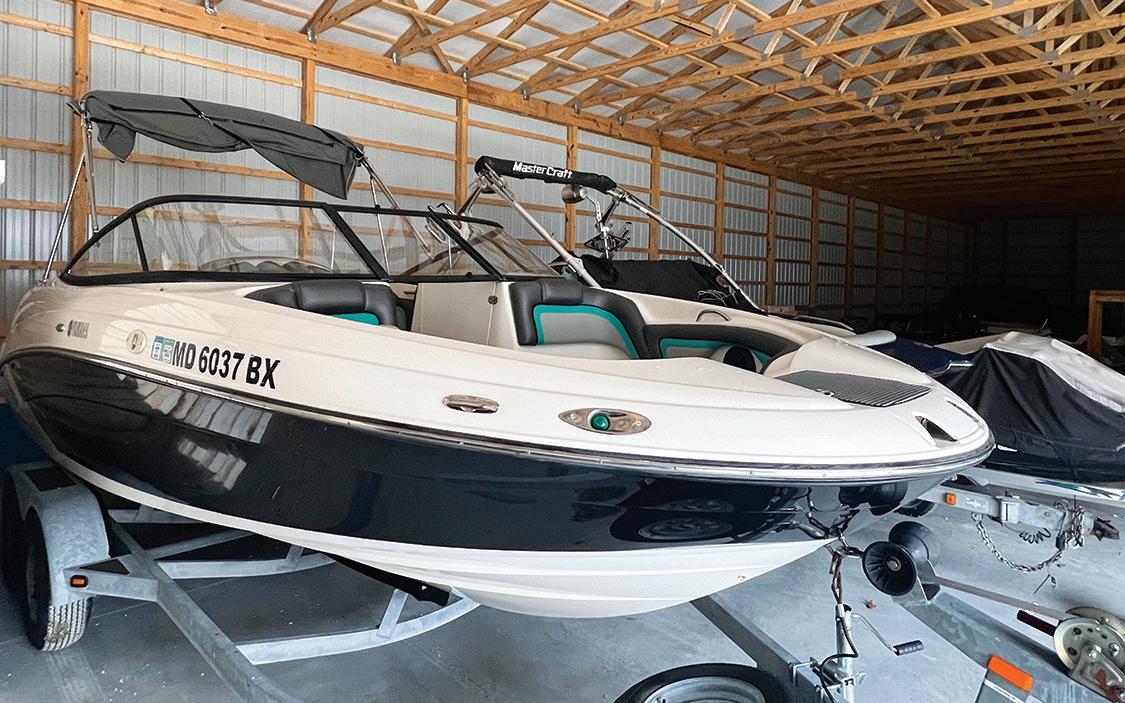
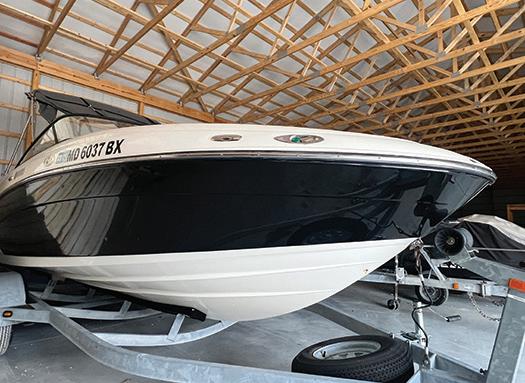
2010 21 ft. Yamaha 212SS in immaculate condition. Well maintained by dealer. Boat has 149 original hours. Starboard engine has 149 hours. Port engine has 1 hour - the port engine had starting issues and a new engine and new catalytic exhaust were installed late last summer. Hull is in exceptional condition with like-new luster. Interior upholstery was completely replaced with factory spec and a Sunbrella Bimini with SS frame installed in 2021. Double axel trailer with brakes, swing away tongue and mounted spare tire. Clear title.
Asking $25,995 Ron@
Travel Dreams
geous beach of Waikiki, visiting the capital of Honolulu and touring the island by motor coach. A short plane hop took us to the island of Hawaii and the immense, magnificent Volcanoes National Park with its vast simmering volcanic terrain, lava tubes craters and coastlines.
What can go wrong? It’s life, so everything and sometimes nothing. Memories that we can laugh at now include sleepless nights at hotels/ motels near airports, including one where we suspected that drug deals were being conducted in the next room due to the vehicle and walking traffic at that neighboring site. Or the hotel with the partiers in the room
next to ours. Loud drunken voices and loud music went on all night, and our calls to the front desk resulted in the attendant being laughed at by our neighbors on both visits to their room.
Flight delays are to be expected these days, but on two of our trips we ended up sleeping on cots in a
410-924-0901
gymnasium-like room at the airport alongside people of all ages, including crying babies and noisy sleepers. On the plane, my husband likes the window seat and I like the aisle. We always hope for the best that no one will book the middle seat, and frequently they don’t, but occasionally we fi nd ourselves squished by a giant middle seat mate.
We can laugh at these little setbacks now because the overwhelming experience of seeing America was pure joy! We created a masterpiece of memories of our immense, diverse country to savor forever.
I thank my husband and fellow traveler, John, for making our dream to explore America come true. He dedicated time, effort, resources, good humor and love to our many adventures. We hope that you, too, can make more memories in more states. What is next for us? Plans are in place to see more of Europe, which is considered to have between 44–50 countries depending on who is counting, the United Nations or the European Union, or other official
groups. We have already visited a few European countries and know that at our age we won’t possibly see them all, but we will defi nitely make new memories on each trip. We have the dream.
By the way, our favorite state is our home state of Maryland, where we were both born and have lived most of our lives.
Visit the Tidewater Times website to access and read multiple stories about our 50 state discoveries by clicking on the writers icon and then my name.
Bonna L. Nelson is a Bay-area writer, columnist, photographer and world traveler. She resides in Easton with her husband, John.
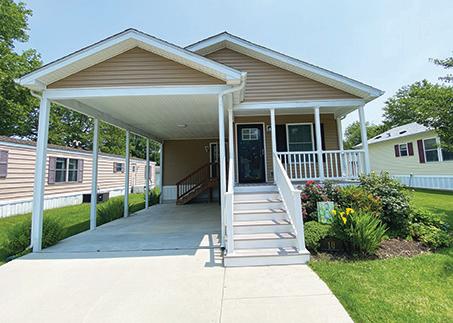
FOR SALE beautiful, spacious, manufactured home, like new, move-in ready in Hyde Park an active 55+ community.
Big Jake by William S. Dial
I love stories. You might have noticed. Stories are people, and I’ve been blessed over my eight decades to know and learn from some amazing people—and amazing stories. Let me share a recent one with you.
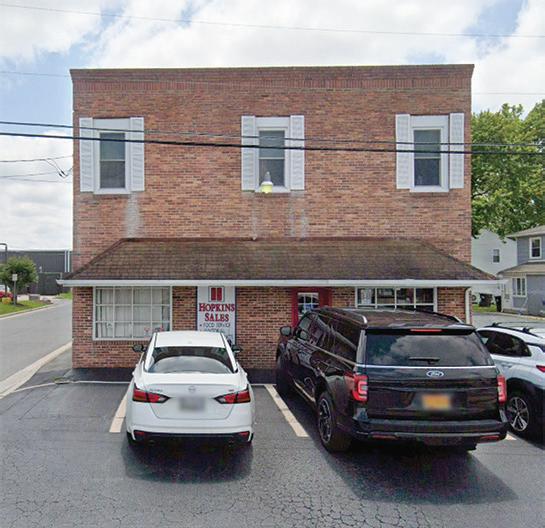
Ever do business with Hopkins Sales on Lomax Street in Easton? Bet you have. My informal survey among acquaintances almost always gets me an “Oh, yeah, we get (fill in the blank) there.” We fill in the blank around Christmas time. My adult leadership buys those little clear plastic bags she puts Christmas cookies in, the cookies we share with friends and family. I go with her for these forays and explore Hopkins. Those folks have got darn near anything in industrial/facility supplies you can think of: toilet bowl cleaner to light bulbs and those little dishes caterers put relish in. I get my annual jug of Italian seasoning there: I’m the cook in this household, and I use a lot of Italian seasoning.
There is a fast-food establishment on Ocean Gateway that serves a breakfast sandwich that my adult leadership and I enjoy. We enjoy the sandwich, but not the establishment. I’m not fussy, but when
the store’s staff is always rude, you can’t help but notice. Well, Bunky, that ain’t Hopkins. First of all, the staff is always friendly, says hello and genuinely wants to help. Those little plastic bags are always hard to find among the bazillion items of inventory. Usually, while my wife is dealing with her bag acquisition, I’m exploring. Hark if you will back to the relish dishes. Who wudda thunk it? Now I know what those are and a few dozen other items of
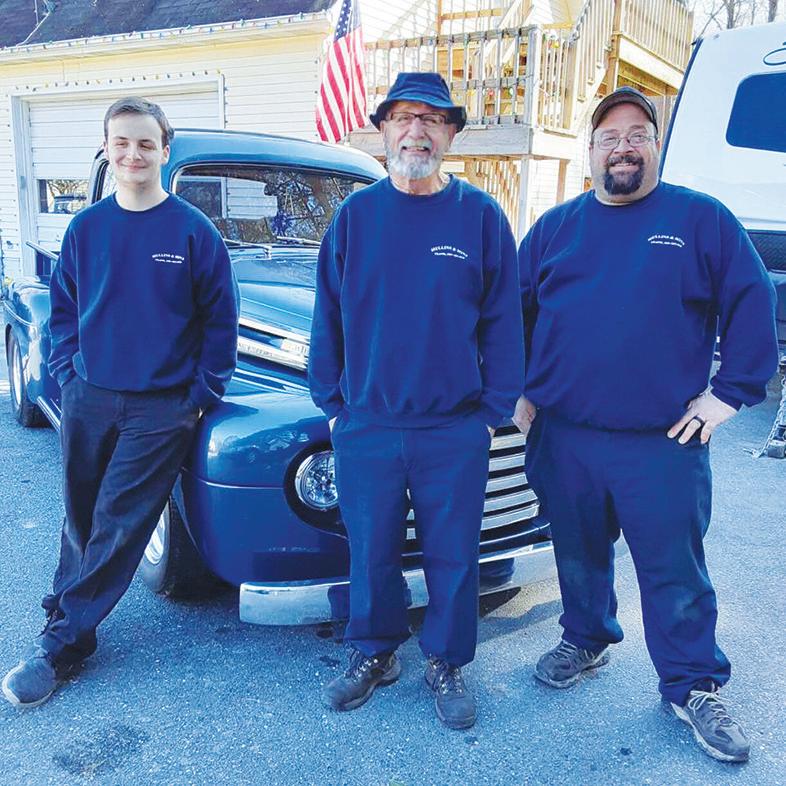
“Big Jake” Schmidt
Big Jake
that ilk. The very nice staff of Hopkins always entertains my dumb questions with a smile. When transactions are done, genuine thank yous. You folks in the fastfood establishment take note.
Which leads us back to my opening: interesting people. Enter “Big Jake.” In 1974, Jake Schmidt, Big Jake, bought Hopkins Sales from, ta-da, Mr. Hopkins. Mr. Philip Hopkins established the business in 1958 as a grocery wholesaler.
I’m going to tell you a bunch about Jake, but this is a good time to tell you how Jake bought the business—a squeegee. Jake lived in a big house with a bunch of windows facing the Sassafras River. After a bit of looking, he found the squee-
8129 Easton Village Drive, Easton $869,000
Carrigan Homes introduces our newest model, the “Talbot”, a custom home packed with generous standard features, to be built to your specifications. Buy now, make every selection and color choice and move in by the end of 2026! First Floor Primary Suite *Gourmet Kitchen and Butler’s Pantry *4 bedrooms, large closets *2nd floor Bonus Family room *Oversized garage *Energy-saving Features. Easton Village amenities include a community pier on the Tred Avon River, boat slips, extensive walking trails, an outdoor pool, kayak storage and launch, and close proximity to the Towns of Easton, St. Michaels and Oxford.
Big Jake
gee he needed at Hopkins—remember, in 1974, Amazon was still just a river. Now Jake says, Mr. Hopkins remembered Jake because he bought a squeegee: that’s Jake’s story. Well, Jake may have hinted to Mr. Hopkins if he ever wanted to sell… After spending some time with Jake, I’ll bet you Mr. Hopkins had a pretty good idea of Jake Schmidt—obviously a good idea, he sold the business to him.
I know from a lot of experience and more education than a person ought to have in business what is needed to be a successful salesperson. I reckon if I needed to make a list of one to ten of what I thought a good salesperson would be like, Jake would ace it and go for fifteen. That man could sell darn near anything—and has. Then there’s the “Upright Scaffolding Company.” We will start there. This ain’t your
pipes upside the house scaffolding, no siree, this is scaffolding at the Supreme Court building. This is scaffolding of Biblical proportions—the “Tower of Babel?” From what Jake says, they could have done it. Of course, Jake is only ninety-one, so Babel might have been sold by somebody else in the company. Antennas for the Army, towers on mountain tops for space programs, platforms on the rooftops of buildings that rival Babel in height: Jake sold it. He doesn’t like heights, though, so installation was not his department.
Then there is the recreational vehicle sales: trade show circuit. I’m still a bit sore from laughing. Jake grew up in Baltimore. His pop, also Jake—there are currently four Jakes—was a shipwright for General Ship Repair on Key Highway in Baltimore. Jake, born in 1935, was just a pup when World War II started. He recalls being
228 Perry Cabin Drive in St. Michaels, MD, a rare 6BR, 6BA custom double townhome in a premier waterfront setting adjacent to the renowned Inn at Perry Cabin. Light-filled interiors, gourmet kitchen, and a main-level primary suite with enclosed porch and spa bath. Fully owned solar panels with backup batteries. Two deep-water boat slips just steps away. Designed for effortless entertaining.
Big Jake
under the kitchen table while his parents listened to President Roosevelt’s message announcing that the United States was at war—and the tears. His dad was kept busy repairing the Victory and Liberty ships being built in Baltimore by the Bethlehem-Fairfield shipyard: 384 Liberty ships; 94 Victory ships. Jake rightly points out that these cargo ships were not very well built, since speed of construction was the priority. His pop repaired them and others. Jake also talks about his father being exempt from the draft because, as a shipwright, he was considered essential. However, that didn’t stop him from be -
ing scrutinized by the sneaky spy types who thought a German name like Schmidt might indicate disloyalty to the war effort. Jake says his pop was often followed by these skulking types.
If you really want Jake to tell stories, ask about his family. He lights up like a string of those LED bulbs he sells. Acquiring Hopkins Sales was a family affair, with practically everybody, particularly his brother, pitching in. Jake is quick to point out that they were repaid. I suspect that was never a concern. Jake had five brothers. That’s a family.
With any family, there is heartbreak, and Jake’s is no different. His first wife died of illness. “Dew-
High
Banks Buildable Lot
Build the home of your dreams on this picturesque lot in the sought after High Banks community. Nestled just outside of town, the 2.49 acre lot overlooks scenic Turkey Creek with its frequent ducks, deer and squirrels. An approved Perk and recorded plat, this High Banks lot offers privacy and tranquil living. This section of High Banks has a lot with access to a private community boat ramp for boating and fishing. Annual HOF fees are presently $40.00. There is also a public boat ramp nearby on Kingston Landing.
Big Jake
Naomi “Dewie” Schmidt
ie,” as Jake lovingly called her, is the mom of the delightful Lori, who is the boss at Hopkins Sales now. Her deference to her pop is smileworthy. She loves that old dude, and it shows. Being an old dude myself, that makes me smile as well.
I could have spent the whole day with Mr. Jake, Big Jake, Schmidt. His stories were incredible and captivating. One Sunday when he was a kid, his pop woke him up and said, “Come on, I need your help, there’s a barge, a car float, sinking in the Inner Harbor.” See what I mean. It was a barge loaded with railcars. Jake didn’t say if the cars were full of bananas, but he did mention that those car floats came into the harbor to be offloaded at United Fruit. He went down into the
barge, which he described as nasty and full of rats, to help his dad patch a hole that was letting water gush in. Clearly, they were successful. Did your pop ever drag you out of bed on a Sunday morning to keep a barge loaded with railcars full of bananas from sinking? Mine either.
Pop-Pop Jake, father of the current Big Jake, Lori points out, as a shipwright, in 1964, built the Motor Vessel J.C. Widener, an ice breaker/ buoy tender for the Maryland Department of Natural Resources.
It is not lost on me that my job is a good one. I enjoy the heck out of listening to stories from genuine people. Go by Hopkins Sales. Go buy some of those little relish trays—great for paper clips. Say hi to Lori; she’s right there. Ask her if Big Jake is around. If he is, I’ll bet you he would love to talk. Tell him I sent you.
Hopkins Sales is located at 800 Lomax Street, Easton. 410-8223121.
William Stephen Dial achieved Masters Degrees in International Affairs and National Security Studies. Bill’s 31 years in the navy started as a Seaman Recruit and finished in June 1994 as a Captain. Bill has been a certified SCUBA Instructor, a Accredited Marine Surveyor, a Certified Emergency Manager and an Emergency Medical Technician. Bill is married to Susie and has 11 grandchildren.
Oxford Fine Arts
MAY 15, 2026 MAY 2026
AS WE CELEBRATE 42 YEARS OF GORGEOUS ART AND THE ARTISTS WHO CREATE IT!
PREVIEW PARTY
FRIDAY EVENING AT 6PM
MAY 15, 2026 • $100 PER PERSON
Enjoy cocktails & hors d'oeuvres Award ceremony
First opportunity to see and purchase the art
Live music, sip and stroll among friends Meet the artists
EXHIBITION AND SALE
Saturday, May 16, 10-5, $5
Sunday, May 17, 10-4, $5
(Gala Preview guests may attend the show all weeken d)
For Tickets and More Visit
Betty Papson - “Among the Lillies”
Chesapeake Chamber Music Festival to Perform Several Enduring Masterpieces in June
by James Carder
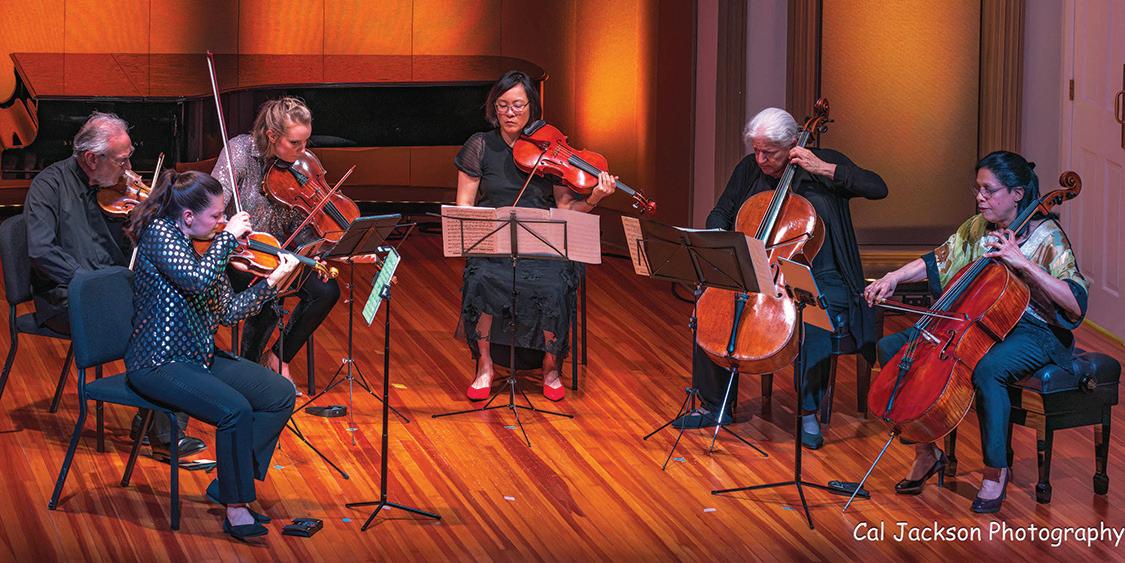
If a symphony is a towering cathedral, then chamber music is an elegant, intimate room that fosters the art of a musical conversation among friends. This year’s Chesapeake Chamber Music Festival and its artistic directors, Marcy Rosen and Catherine Cho, have programmed several masterpieces that amply demonstrate this fact. Stretching from the refined grace of Mozart to the sweeping passion of Tchaikovsky, these works are more than just chamber music staples.
They are masterpieces, residing at the pinnacle of the chamber music genre.
The festival’s “Opening Extravaganza!” on June 12 features Antonin Dvořák’s second piano quintet, often cited as the “perfect piano quintet.” Dvořák treats the piano and strings like a seasoned debating team, where the musicians have the chance to voice almost every emotion from haunting melancholy to pure, ecstatic joy. The opening work at the June 13 concert is Wolf-
Artistic Directors Marcy Rosen and Catherine Cho performing alongside the Juilliard String Quartet at the 40th anniversary Chesapeake Chamber Music Festival in 2025
Chamber Music
gang Amadeus Mozart’s Violin Sonata in E Minor. Among Mozart’s dozens of sonatas, this one is an outlier. It is his only violin sonata in a minor key and was written around the time of the death of his beloved mother. It is a stark, intimate, even tragic work. As one critic has written, this violin sonata “proves that greatness doesn’t require a hundred-piece orchestra; two instruments are enough to break a heart.”
A well-known and beloved masterpiece is programmed for the June 18 concert: Franz Schubert’s famous Piano Quintet in A Major, “The Trout.” This sunny, joyful
work includes a set of variations on Schubert’s own song, Die Forelle (The Trout). The unusual addition of a double bass relieves the cello from having to be the lowest voice in the ensemble, freeing it to exploit its higher register and create a shimmering sound that perfectly mirrors the bubbling waters in the song.
Two masterpieces close the festival on June 20: Johannes Brahms’s “Horn Trio” (Trio in E-flat Major for Horn, Violin and Piano) and Pyotr Ilyich Tchaikovsky’s “Souvenir de Florence” (String Sextet in D Minor). Brahms’s “Horn Trio” is a deeply personal, albeit noble work, written following the death of his
Chamber Music
mother. In his “Souvenir de Florence,” composed after a visit to Italy, Tchaikovsky pushes the six strings to their limits, creating a wall of sound that rivals a symphony. The piece fuses Italian melodic sweetness with the muscular, rhythmic drive of Russian music and is a powerhouse of energy (especially the Finale).
The festival programming includes other important works of the standard chamber music canon. Brahms’s String Sextet No. 1 (June 14) and String Quartet No. 2 (June 18) are revered for their classical structural perfection. Brahms was a perfectionist who famously destroyed dozens of compositions before he felt he had reached the “greatness” of Beethoven. The festival’s three works by Brahms are therefore the survival of the fittest – music that was labored over until every note served a purpose. Schubert’s String Trio in B-flat Major (June 19) is an unfinished gem of brev-
ity that is light and elegant. In contrast, Mozart’s Horn Quintet in E-flat Major (June 18) is almost a mini horn concerto, unusually employing two violas that create a mellow, dark backdrop for the horn. Cellist Marcy Rosen will partner with pianist Robert McDonald (June 14) in a performance of Beethoven’s Cello Sonata No. 5 in D Major, often described as a defiant masterpiece that pushes the cello to its expressive limits, most notably through its complex, technically difficult concluding fugue.
These classical masterpieces are not great simply because they have become “standards” in the repertoire. They are great because the musicians engage in powerful and emotionally vulnerable “conversations” with each other. Come to the Chesapeake Chamber Music Festival and experience this for yourself as it unfolds in the intimacy of the beautiful Ebenezer Theater in Easton, Maryland. Detailed information on the festival concerts, including programs,
dates, times and ticket availability, can be found at chesapeakemusic.org.
Chesapeake Chamber Music Festival
June 12–20, 2026
June 12 at 7:30 p.m.
Festival Opening Extravaganza!
June 13 at 7:30 p.m.
Music of Four Nations
June 14 at 4 p.m.
Heritage and Home
June 18 at 7:30 p.m.
Bridging the Eras
June 19 at 7:30 p.m.
Competition Winners and More
June 20 at 7:30 p.m.
Festival Finale
2 Free and Open rehearsals:
June 10 and June 17 at 10 a.m.
Chesapeake Music offers a limited number of free tickets to students, educators, and Talbot County First Responders, as well as a “buyone-get-one” option for fi rst-time patrons of Chesapeake Music and a new “$35 for 35 and under” offer. Based in Easton, Maryland, Chesapeake Music is a 501(c)(3) nonprofit organization that brings renowned musicians to delight, engage, and surprise today’s audiences, and educate, inspire, and develop tomorrow’s. For tickets and more information, visit chesapeakemusic.org.
Caroline County – A Perspective
Caroline County is the very definition of a rural community. For more than 300 years, the county’s economy has been based on “market” agriculture.
Caroline County was created in 1773 from Dorchester and Queen Anne’s counties. The county was named for Lady Caroline Eden, the wife of Maryland’s last colonial governor, Robert Eden (1741-1784).
Denton, the county seat, was situated on a point between two ferry boat landings. Much of the business district in Denton was wiped out by the fire of 1863.
Following the Civil War, Denton’s location about fifty miles up the Choptank River from the Chesapeake Bay enabled it to become an important shipping point for agricultural products. Denton became a regular port-ofcall for Baltimore-based steamer lines in the latter half of the 19th century.
Preston was the site of three Underground Railroad stations during the 1840s and 1850s. One of those stations was operated by Harriet Tubman’s parents, Benjamin and Harriet Ross. When Tubman’s parents were exposed by a traitor, she smuggled them to safety in Wilmington, Delaware.
Linchester Mill, just east of Preston, can be traced back to 1681, and possibly as early as 1670. The mill is the last of 26 water-powered mills to operate in Caroline County and is currently being restored. The long-term goals include rebuilding the millpond, rehabilitating the mill equipment, restoring the miller’s dwelling, and opening the historic mill on a scheduled basis.
Federalsburg is located on Marshyhope Creek in the southern-most part of Caroline County. Agriculture is still a major portion of the industry in the area; however, Federalsburg is rapidly being discovered and there is a noticeable influx of people, expansion and development. Ridgely has found a niche as the “Strawberry Capital of the World.” The present streetscape, lined with stately Victorian homes, reflects the transient prosperity during the countywide canning boom (1895-1919). Hanover Foods, formerly an enterprise of Saulsbury Bros. Inc., for more than 100 years, is the last of more than 250 food processors that once operated in the Caroline County region.
Points of interest in Caroline County include the Museum of Rural Life in Denton, Adkins Arboretum near Ridgely, and the Mason-Dixon Crown Stone in Marydel. To contact the Caroline County Office of Tourism, call 410-479-0655 or visit their website at www.tourcaroline.com .
Easton
Map and History
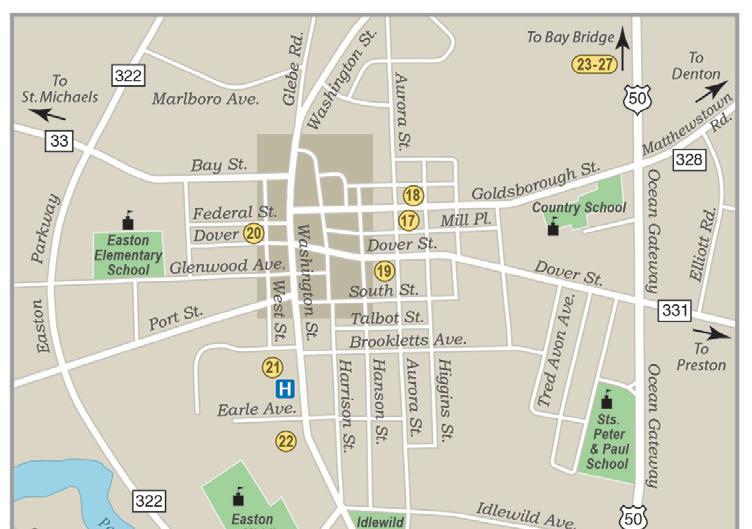
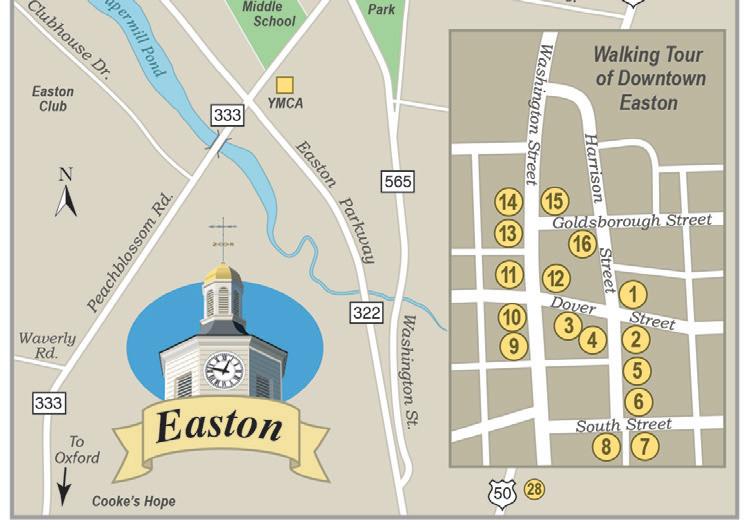
The County Seat of Talbot County. Established around early religious settlements and a court of law, Historic Downtown Easton is today a centerpiece of fine specialty shops, business and cultural activities, unique restaurants, and architectural fascination. Treelined streets are graced with various period structures and remarkable homes, carefully preserved or restored. Because of its historical significance, historic Easton has earned distinction as the “Colonial Capitol of the Eastern Shore” and was honored as number eight in the book “The 100 Best Small Towns in America.” With a population of over 16,500, Easton offers the best of many worlds including access to large metropolitan areas like Baltimore, Annapolis, Washington, and Wilmington. For a walking tour and more history visit https:// tidewatertimes.com/travel-tourism/easton-maryland/.
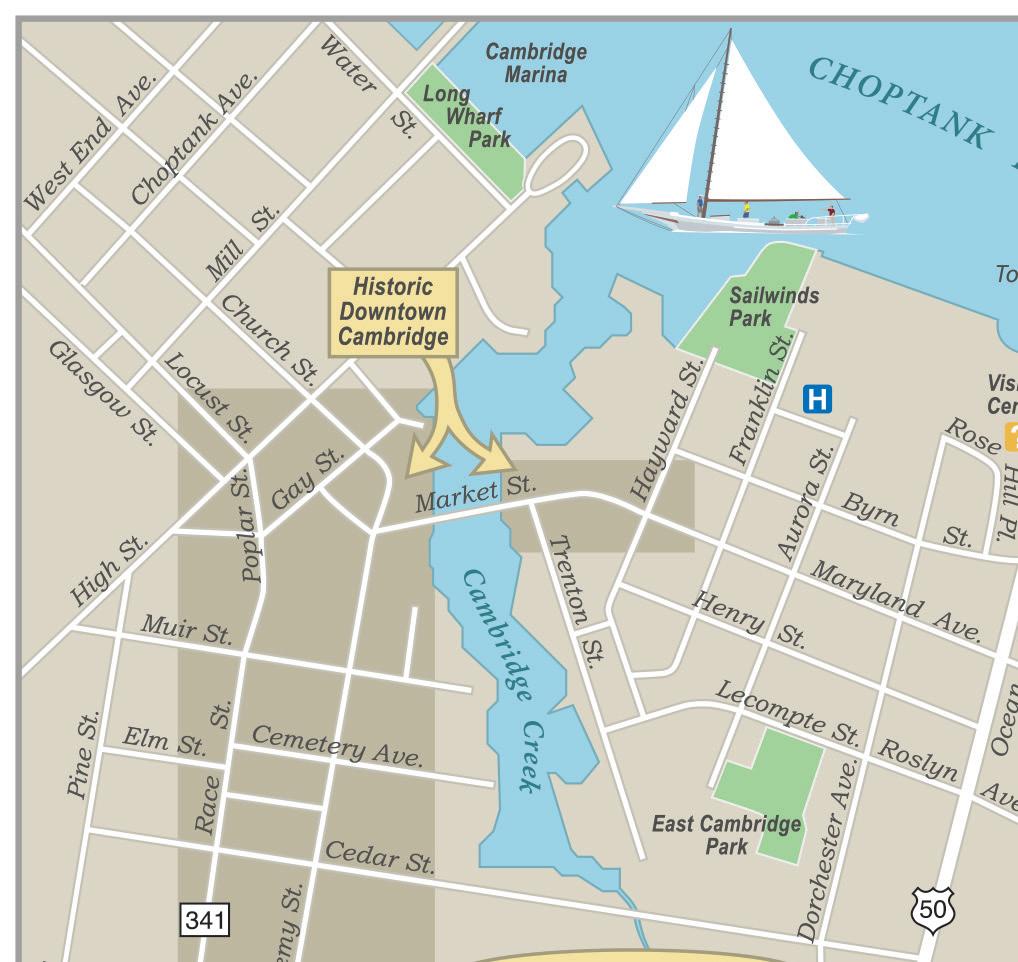
Dorchester Map and History
Dorchester County is known as the Heart of the Chesapeake. It is rich in Chesapeake Bay history, folklore and tradition. With 1,700 miles of shoreline (more than any other Maryland county), marshlands, working boats, quaint waterfront towns and villages among fertile farm fields – much still exists of what is the authentic Eastern Shore landscape and traditional way of life along the Chesapeake.
For more information about Dorchester County visit https://tidewatertimes.com/travel-tourism/dorchester/.
TIDEWATER GARDENING
by K. Marc Teffeau, Ph.D.
May - The Gateway to Summer
Greetings, fellow gardeners!
Happy May! The 19th-century American poet Emily Dickinson once wrote a poem about celebrating a flower in May – the May Flower - “a modest spring flower that is small, fragrant, and initially concealed in April but open and honest in May.” May Flower - “May-Flower, Pink—small—and punctual—Aromatic, low, Covert in
April, Candid in May, Dear to the moss, Known by the knoll, Next to the robin In every human soul. Bold little beauty, Bedecked with thee, Nature forswears Antiquity.” It humors me that she also wrote the poem - A Bird Came Down the Walk – the first stanza - “A bird came down the walk: He did not know I saw; He bit an angle-worm in halves And ate the fellow, raw.” I
guess the robin in the May Flower poem must also eat.
Fortunately for us gardeners, our gardening activities are not as traumatic as with the robin and the worm, but I have sliced up more than a few worms while digging. Hopefully, the last of the cold
FRANK E.DAFFIN, INC.
Quality Builders Since 1936
weather has passed, though we can get some freezing weather in May. Be prepared to cover and protect cold temperature-sensitive plants if that occurs.
You can now set out the marigolds, petunias, ageratums, salvia and other annual flowers in the flower beds. Be sure that these plants get as much sun as possible to encourage prolific flowering. If you have shady areas, impatiens is the best annual for use in the semishady landscape, while begonias, coleus, ageratums and vinca will do well in light shade (5 to 6 hours of sunlight). You can also set petunia plants among fading tulips or daffodils to hide the unsightly wilting leaves. After the spring bulb foliage begins to fade, you can tie the leaves in gentle knots to neaten them, but don’t remove them until they have dried completely.
If you are looking for plants that flower each year, require little care and are rarely bothered by pests or disease, try some of these perennials: coneflower, bleeding heart, coralbells, daylily, geum, Hosta,
Bergenia, Virginia bluebell and veronica. Don’t forget to add some native flowering perennials to your flower beds. A listing of Maryland native plants that are easy to grow includes Asclepias tuberosa (but-
terfly weed), Monarda didyma (beebalm), Echinacea purpurea (purple coneflower), and Solidago rugosa (rough goldenrod). You can also add additional season-long color to the flower beds by planting summer-flowering bulbs like dahlias, tuberous begonias, lilies, cannas and gladiolus.
If you can, plant your tomato, pepper and eggplant transplants as well as annual flower transplants on a cloudy, calm day. This will expose them to less stress when they are set out. Unfortunately, gardeners may need to transplant regardless of the weather. Strong sun and wind are hard on new transplants, so set out plants in the late afternoon when the wind comes down
Tidewater Gardening
and give the plants overnight to acclimate. Provide shade and wind protection with berry baskets, small crates or screens. Mulching helps since it lowers the rate at which water evaporates from the soil and controls the soil temperature.
It is important to pinch the blooms off flower and vegetable transplants before you set them out. I know this is a hard practice to follow – “but I want to see the flowers or the tomato developing” – but pinching out the flowers will help direct the plants’ energy to root development and result in more productive plants.
Gently break up the circling roots of root-bound transplants at planting time. If you are planting transplants grown in peat pots, be sure the top lip of the pot is planted below ground level. An exposed lip or edge will allow water to be wicked out of the plant’s root ball. Also, gently tear the peat pot itself, especially the bottom, so that the
Tidewater Gardening
roots can grow out of the pot. Give the transplants a little “boost” with a liquid fertilizer application. I recommend using a liquid houseplant fertilizer at half-strength to give the plants a shot of extra nutrients, help them recover from transplant shock and get established. This fertilizing practice also applies to annual flower transplants that you may place in the flower bed.
It’s also time to start seeding green beans, the various types of squash and cucumbers and an early planting of sweet corn and okra. If you plant sweet corn, to ensure pollination, plant several rows together in a block, rather than in one long row. Sweet corn is a heavy nitrogen feeder, so side-dress with 3 tablespoons of 10-10-10 per 10 feet of row when the emerging stalks are 12-18” high. Green bean seedlings need to be thinned to 4 to 6 inches apart after they have emerged. When thinning beans, watch for “snake heads,” seed-
lings that have lost one or both of their cotyledons and produce poor, weak sprouts. Also, watch for “bald heads.” seedlings that have the growth point damaged so severely that they cannot develop. Both types will be weak and delayed in growth and should be removed.
If you are growing herbs and gourds in the vegetable garden, save the mesh bags that oranges come in and use them this summer to dry them. You can use old pantyhose to enclose individual veggies, such as melons, corn, cabbage, cucumbers and small pumpkins to protect them from birds and insects. Tie the pantyhose off at both ends of the veggie to keep insects out. The pantyhose will stretch as the vegetable grows and dry off quickly after rain.
Did you plant shade trees or shrubs in April? Regularly water newly planted trees and shrubs during the first year or two after planting to help establish a good root system. They need at least 1 inch of water each week. It is bet-
ter to water deeply once a week than to water lightly every day; the former practice encourages deep, drought-resistant roots, while the latter encourages surface roots that may suffer during dry spells.
Be careful, however, on heavy clay soils. Sometimes, with soils that have poor drainage, you can kill the newly planted tree or shrub with kindness by overwatering. It is also important to mulch to conserve moisture and control weeds, but PLEASE, no “volcano” mulch, where the mulch is piled up 7 or 8 inches against the tree’s stem. You can still plant trees and shrubs in May, just make sure they are tended to during the summer.
What to do with that potted amaryllis bulb that you forced to flower inside? As soon as the danger of frost is over, it can be placed outdoors for the summer. The potted bulb should be placed in a shaded location and fertilized with
Tidewater Gardening
1 teaspoon of 5-10-10. Bring it back indoors before frost and let the soil dry completely so the bulb enters dormancy. After leaving it in a cool, dark place for 8 weeks, bring it back into the light and resume watering. In another eight weeks, your amaryllis should bloom again.
In the ornamental landscape, the rhododendrons have flowered and need a little attention. To keep the plants flowering at their best, it is important to remove spent flowers immediately. The old clusters should be snapped off when partly dry but removed with care to avoid reducing or preventing bloom next year. Remove the spent lilac flower clusters so that the plant’s energy can go to foliage growth and producing next year’s flowers, rather than producing seeds. Do some renewal pruning to get them back into shape by removing dead stems and the older wood in the center of the plant.
That spirea that has spread all over the place needs some serious cutting to get it back to a manageable size. The general rule of
thumb is not to take more than onethird of the plant out at any one cutting, but some of our more common spring-flowering shrubs can be severely pruned if need be. Azaleas, pines and other conifers can be kept to a compact size by pinching off the new growth ‘candles’ at this time.
In the lawn care area, May is not the time to fertilize cool-season turf-like tall fescue. I know there are commercial programs that encourage this, but all you end up doing is getting faster grass growth and more mowing. The best time to fertilize cool-season turf in our area is in the mid- to late fall. Do a soil test first to determine the correct fertilizer and lime needs of the soil. It is very important to mow your turf correctly. Make sure that the mower blade is sharp, as a dull blade will tear rather than leave a clean cut. This ragged grass-blade edge gives the turf a brown appearance and creates opportunities for disease to infect the grass blade.
Make sure that you mow at the correct height. For tall fescue lawns, the mowing height
Tidewater Gardening
should be at least 2 inches, preferably higher. There is a tendency among homeowners to “scalp” their lawns. This not only damages the grass plant and stresses it by removing too much of the grass blade at once but also opens the lawn to crabgrass invasion. Want to keep crabgrass out of the lawn? Mow high instead of putting down an herbicide. Crabgrass seed needs light to germinate. By shading the soil surface with tall grass blades, the germination percentage of crabgrass seeds will drop significantly.
In May, of course, we celebrate Mother’s Day. Have you been wondering what to get your mom and grandmother for Mother’s Day? Well, she might enjoy receiving a tree or shrub for the landscape around her home. Trees and shrubs are excellent gifts and have lasting memories. Probably there is a special flowering plant that
she has always wanted but hesitated to buy.
Plants make unique gifts because, as they grow, their value in the landscape appreciates. Now it is an excellent time of year to plant ornamental trees and shrubs, and the selection is better than ever. Nurseries and garden centers have a wider selection of plant varieties and sizes than ever before. But as summer approaches, their selection will decrease, and so will the chances of survival, because the longer you delay planting, the harder it is on the plants. By the way, don’t just say “Happy Mother’s Day—here’s your azalea.”
Make it a real Mother’s Day and offer to plant it for her!
Happy Gardening!
Marc Teffeau retired as Director of Research and Regulatory Affairs at the American Nursery and Landscape Association in Washington, D.C. He now lives in Georgia with his wife, Linda.
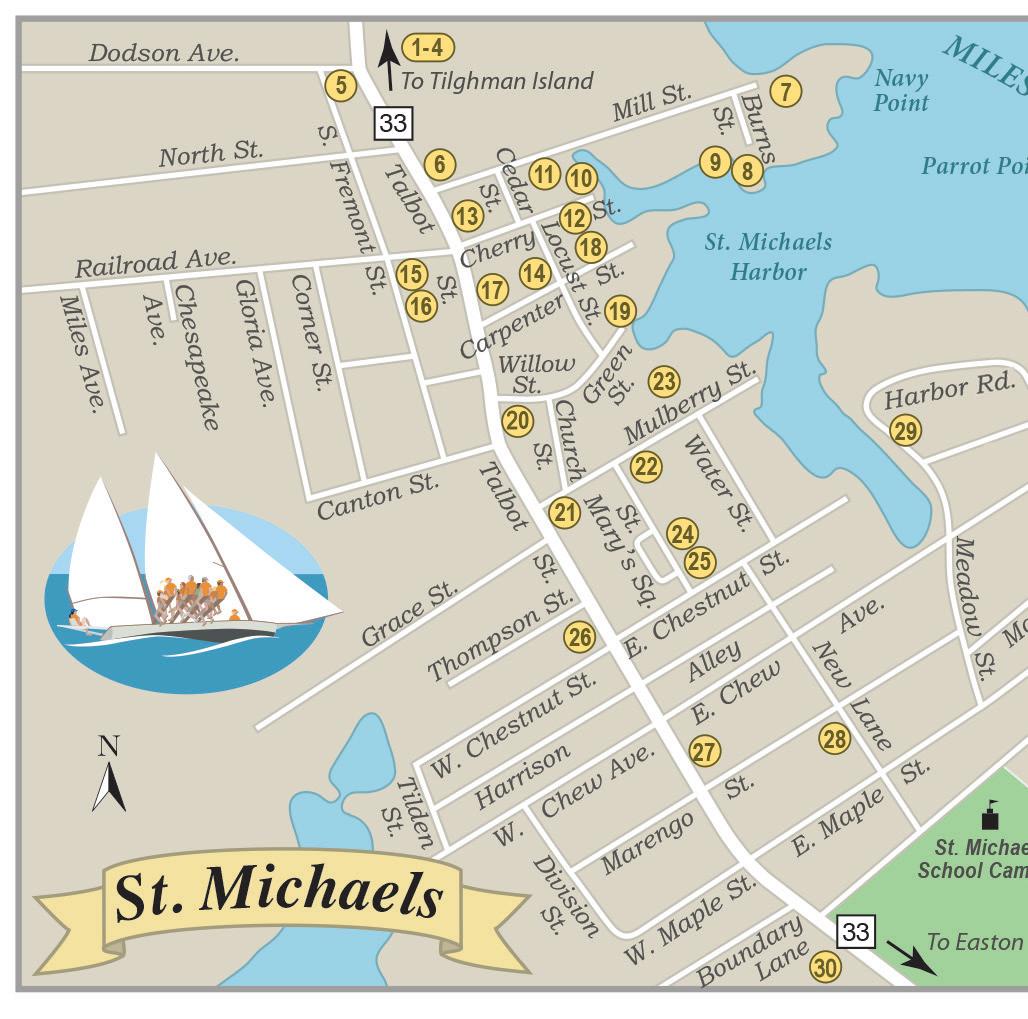
St. Michaels Map and History
On the broad Miles River, with its picturesque tree-lined streets and beautiful harbor, St. Michaels has been a haven for boats plying the Chesapeake and its inlets since the earliest days. Here, some of the handsomest models of the Bay craft, such as canoes, bugeyes, pungys and some famous Baltimore Clippers, were designed and built. The Church, named “St. Michael’s,” was the first building erected (about 1677) and around it clustered the town that took its name.
For a walking tour and more history of the St. Michaels area visit https://tidewatertimes.com/travel-tourism/st-michaels-maryland/.
Memorial Day by A.M. Foley
Memorial Day will soon be here— the unofficial first day of summer. In more formal times, it meant ladies might properly wear white shoes, gentlemen top off with Panama hats or straw boaters. Nowadays it’s every woman and man for her- or himself. People can be heard wishing each other “Happy Memorial Day.” Nice, but a bit contradictory. In my grandmother’s time, my family observed the holiday by driving her and a trunkful of floral cem -
etery wreathes sixty miles: from Washington, D.C., to Morrisville, Virginia. Twice widowed, “Ma” had buried two husbands there behind the Methodist Church, as well as two sons—one a young adult, and his twin, less than one day old. A space awaited Ma, between my mother’s father and stepfather. On these visits, I was too young to have developed empathy. The tragedy of Ma’s life was never mentioned. Years passed before it dawned on
Memorial Day
me how much she had suffered and survived.
Born in 1877, Estelle Haley Elgin Embrey Ricker had first been engaged to a young Virginian who was killed in the Spanish-American War. His name is lost to us. Presumably he lies somewhere in Cuba. She remained unmarried until the age of twenty-nine, quite an old maid by the standard of that era. She and several of her five sisters migrated from rural Virginia to the city to work as seamstresses, a skill they’d learned by necessity on their parents’ farm. Frugal as they were, the young women walked miles from their residence
Closed Tuesdays
in Southwest Washington, across the Mall, to reach their employment in Georgetown. Somewhere along the way, Ma met a handsome young policeman.
When Officer Arthur Embrey began to court my grandmother, he learned he was four years her junior and wisely claimed a few extra years for himself. They married in 1906. Nine months later, she gave birth to extremely premature twin boys, one dying his first day. At a time when incubated preemies could be viewed in sideshows at Coney Island, she somehow managed to nurse her surviving son, Leslie, into life. Her mother-in-law, my great-grandmother Kate Embrey, had a reputation for working won -
Oxford Map and History
Oxford is one of the oldest towns in Maryland. Although already settled for perhaps 20 years, Oxford marks the year 1683 as its official founding, for in that year Oxford was first named by the Maryland General Assembly as a seaport and was laid out as a town. In 1694, Oxford and a new town called Anne Arundel (now Annapolis) were selected the only ports of entry for the entire Maryland province. Until the American Revolution, Oxford enjoyed prominence as an international shipping center surrounded by wealthy tobacco plantations. Today, Oxford is a charming tree-lined and waterbound village with a population of just over 700 and is still important in boat building and yachting. It has a protected harbor for watermen who harvest oysters, crabs, clams and fish, and for sailors from all over the Bay. For a walking tour and more history visit https://tidewatertimes. com/travel-tourism/oxford-maryland/.
Memorial Day
ders in home care. She likely came up from Morrisville to help.
Within a couple years, with my mother on the way, they learned Arthur had tuberculosis. His city doctor could offer no treatment. The best medical advice available was to
leave the urban police force to live somewhere among pine trees. Luckily Morrisville fit the prescription. He, Ma and Leslie went home to the family farm. An old picture shows my grandfather Arthur afield with his father, Rufus Justinius Embrey. Three-year-old Leslie stands between them, holding a toy shotgun. No one is smiling, but that wasn’t customary then under any circumstances. For the photographer, my Grandfather Arthur lowered a kerchief from his face. He was still a handsome young man. He lived to see my mother, but died before she was old enough to remember him. She only knew what she’d been told: as an infant she’d lain on the foot of his bed—at a safe distance.
Tidewater Residential Designs since 1989
In the era of our family excursions to Morrisville, Memorial Day was commonly call Decoration Day. The custom of strewing graves with flowers dated back at least to ancient Rome. Designating a specific day to tend and decorate a loved one’s resting place evolved organically. In the wake of the Civil War, numerous towns North and South laid claim to being first to declare a special spring day to gather in tribute to their fallen. If first matters, the Ladies Memorial Association of Columbus, Georgia, may have the honor of first place, having asked in 1866 that the public gather to wreathe graves of “our martyred dead” and that April 26 be set aside, “handed down through time as a
religious custom of the country.” Other burial scenes were similarly commemorated, usually designating North and South or Black and White honorees. May 30 became the customary day to honor Union dead in 1868 by proclamation of the Grand Army of the Republic, a Union veterans’ organization. After the nation reunited, recurrent wars expanded Decoration Day to include the Mexican and SpanishAmerican Wars.
After losing her fiancé in the Spanish-American War and her husband to illness, a widow with two surviving children, Ma caught the attention of the town doctor, Charles Ricker, a widower with a young son. They hadn’t been mar -
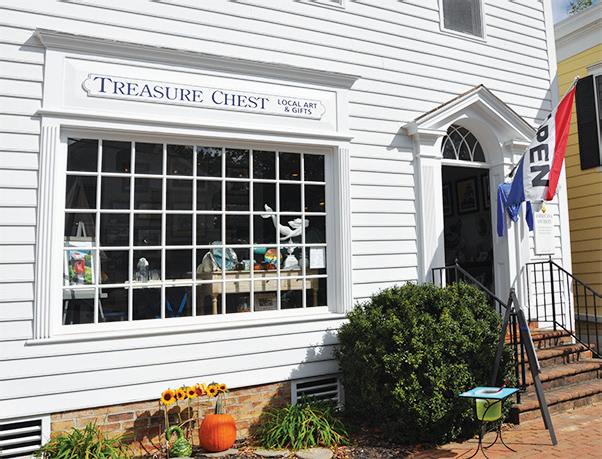
The Treasure Chest
Memorial Day
ried long when he enlisted in the army and was posted to Texas. Ma found herself living in an adobe house on an army post near the Rio Grande River. During Pancho Villa’s border raids, she stood guard over three youngsters sheltered under the kitchen table. (Reputedly, she handled a shotgun as well as she handled a sewing needle.) When her husband was transferred to France, she took the children home to Virginia.
Before global wars required numbering, the unprecedented horrors of World War I made it the “Great War,” the “War to End Wars.” In 1921, unidentifiable remains were brought from France for interment at Arlington National Cemetery, to represent all unaccounted-for
“doughboys.” Fortunately or unfortunately, Major Charles Ricker, MC, USA, had been accounted for. He was running a field hospital near the front line when it came under a German gas attack. While evacuating his patients, he suffered prolonged exposure to mustard gas. He survived and returned to the United States on a hospital ship, then suffered for months in Walter Reed Army Hospital before dying.
Another doctor serving “over there,” Canadian Lieutenant Colonel John McCrea, penned a poem the day after presiding at the burial of his close friend, Lieutenant Alexis Helmer. It’s said Doctor McCrea composed the verse while sitting in the back of an ambulance, then discarded it. If so, someone must have retrieved a crumpled paper and read:
IN FLANDERS FIELDS
In Flanders fields, the poppies grow
Between the crosses, row on row, That mark our place and in the sky The larks, still bravely singing, fly Scarce heard amid the guns below.
We are the Dead. Short days ago
We lived, felt dawn, saw sunset glow, Loved and were loved, and now we lie, In Flanders fields.
Take up our quarrel with the foe:
Memorial Day
To you from failing hands we throw
The torch; be yours to hold it high. If ye break faith with us who die We shall not sleep, though poppies grow
In Flanders fields.
Five years after the unknown WWI soldier was buried in Arlington, Congress authorized the funds necessary to erect a tomb honoring those “known but to God.” The Tomb was completed in 1931, eight years before the next global war broke out in Europe. Two adjoining crypts were added later to accommodate unidentified fatalities from World War II and Korea. A third crypt, intended to honor Vietnam’s fallen, is now vacant. In 1984, President Ronald Reagan had attended the solemn burial of a victim of Vietnam. By 1998, mankind had become so advanced that DNA testing could identify the pilot interred there:
First Lieutenant Michael Blassie, USAF. He was disinterred, returned to his family in St. Louis, Missouri, and reburied at Jefferson Barracks National Cemetery. Research by Ted Sampley, a veteran and POW/MIA activist, had led to testing and positive identification by a reluctant Department of Defense. No reluctance attends servicemen and women who guard the Tomb in all weather, aroundthe-clock, every day of the year. The sentinels selected for this elite platoon are only a fraction of those who volunteer. Successful applicants, members of the 3rd Infantry Regiment “Old Guard,” undergo extensive training in the protocols and history of Arlington
National Cemetery. On Memorial Day, presidents traditionally honor the nation’s fallen by laying a wreath at the Tomb of the Unknowns.
The day of remembrance became standardized as Memorial (not Decoration) Day in 1971, when Congress’ Uniform Monday Holiday Act took effect. Rather than May 30, all who had given their lives for the country would be honored the last Monday of May. Subsequent three-day weekends proved convenient for retailers and bargain hunters, second only to sales on Presidents Day, which replaced George Washington’s February 22 Birthday.
As for long ago May 30ths in Morrisville, I can’t begin to imagine what thoughts and images passed through my stoic grandmother’s mind. If I remember correctly, after wreaths were distributed among family tombstones, I
stood quietly with Ma, my parents, and my brother Michael. He was two years older and wiser than I. Maybe I took my cue from him and did behave myself. I do know what was going through both our minds. Michael and I gloated that we had the day off from school, while our country cousins were in class. At that time, Virginia schools closed on Lee-Jackson Day as their Confederate Memorial Day.
Forty-some years ago, A.M. Foley swapped the Washington, D.C. business scene for a writing life on Elliott Island, Maryland. Tidewater Times kindly publishes Foley’s musings on regional history and life in general.
The Boat Kitchen Cook Anywhere • Eat Well • Even on the Water Kitchen Coach by Pamela
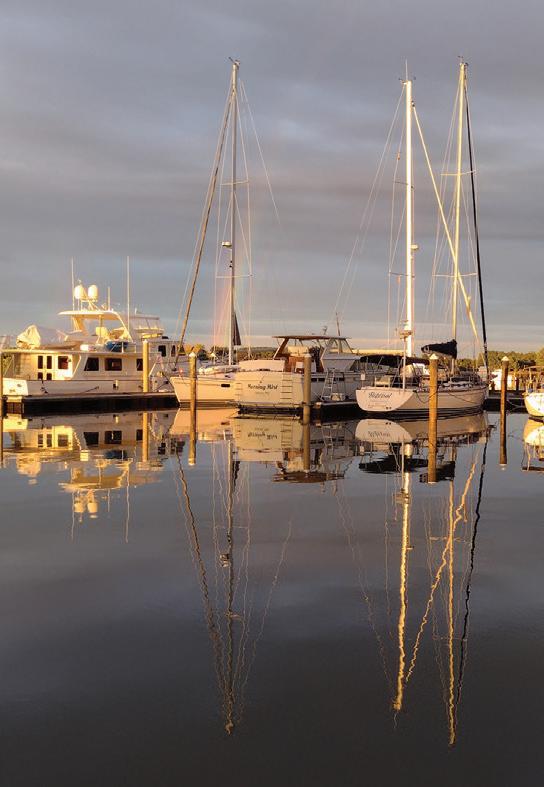
There’s something about being on the water that brings you back to what matters. The pace slows, the air softens, and food becomes simpler—in the best way.
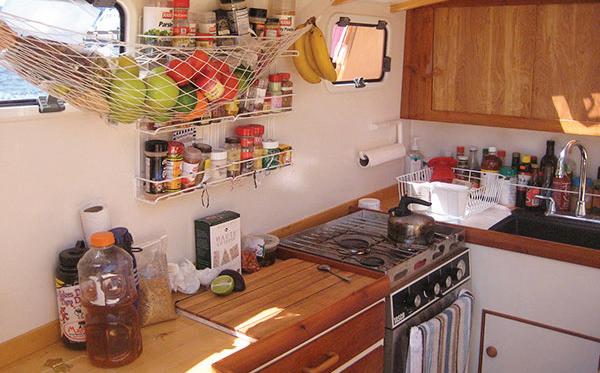
A boat kitchen—no matter how small—is still a kitchen. And with a little intention, it can be a place of nourishment, connection and ease. This isn’t about perfect meals. It’s about the kind you can pack, share and enjoy without missing the moment.
“Simple food, shared on the water, always tastes better.”
Tidewater Kitchen
Day Trip or Week Away
For a day trip, think fully prepped, ready-to-eat meals— cooler-friendly and effortless. For a week on the water, bring a mix of prepped ingredients and simple proteins you can cook or assemble. The rhythm becomes easy: prep once, enjoy often.
Stock Simply
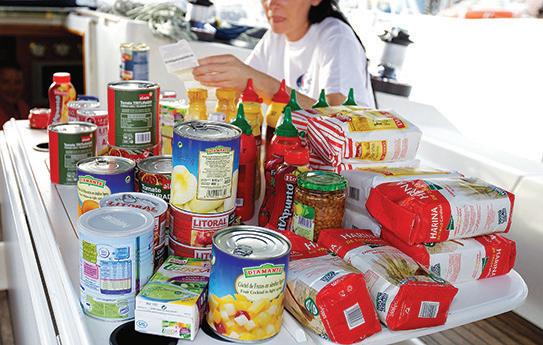
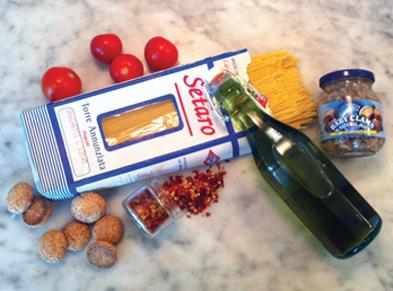
A well-stocked cooler replaces a full kitchen: fresh greens, cut vegetables, cooked grains, simple proteins and pantry staples like olive oil, lemon and sea salt. Add fresh herbs or a simple vinaigrette to elevate everything.
“You don’t need more space— just better intention.”
Boat-Ready Menu
Prep Ahead • Pack Smart
Serve Beautifully Drinks
Limeade (Serves 6)
1½ cups fresh lime juice
6 tbsp. honey or superfine sugar
4 cups cold water
¼ cup fresh mint leaves
Ice for serving
Stir lime juice and sweetener until dissolved. Add water and lightly crushed mint. Chill well and transfer to a thermos. Serve over ice.
Blend watermelon and juices until smooth. Strain if desired. Stir in water and sweetener. Place in thermos. Chill and serve over ice.
Light & Fresh Starters
Chilled Cucumber Avocado
Soup with Tomato Salsa (Serves 4–6)
Prep Ahead: Fully prepare and chill
Soup:
2 large cucumbers, peeled and chopped
2 ripe avocados
1 cup Greek yogurt
½ cup each fresh dill and parsley
2 tbsp. lemon juice
1 garlic clove
½ cup cold water
1 tsp. salt
½ tsp. pepper
Tomato Salsa:
1 cup cherry tomatoes, diced
2 tbsp. red onion, finely chopped
1 tbsp. olive oil
1 tbsp. fresh basil Pinch of salt
Blend soup ingredients until smooth. Chill. Mix salsa separately. Serve soup topped with salsa.
Lemon Chickpea Salad (Serves 4)
Prep Ahead: Improves with time
1 (15 oz.) can chickpeas, drained
2 tbsp. reserved chickpea liquid Juice of 1 lemon (about 2 tbsp.)
2 tbsp. olive oil
½ tsp. salt
¼ tsp. pepper
2 tbsp. chopped parsley
½ cup chopped cucumber or celery
A Taste of Italy
www.piazzaitalianmarket.com
Tidewater Kitchen
Toss everything together until lightly creamy. Chill or serve at room temperature.
Easy Meals & Sides
Chef Mark Salters’
Fresh Corn Salad (Serves 4–6)
Prep Ahead: Fully make ahead
4 ears corn, cooked and cut off cob (about 3 cups)
½ red or yellow pepper, diced
¼ cup onion
¼ cup chopped diced asparagus
3 tbsp. olive oil
1 tbsp. honey
2 tbsp. apple cider vinegar
1 tsp. Dijon mustard, optional
½ tsp. cumin
½ tsp. salt
¼ tsp. pepper
Whisk up the olive oil, honey &
Tidewater Kitchen
apple cider vinegar, mustard if using, cumin, salt and pepper. Mix all ingredients together with vinaigrette. Chill.
Chopped Niçoise-Style Salad (Serves 4)
Prep Ahead: Components separate
2 cups chopped romaine
1 cup green beans, blanched
1 cup cherry tomatoes
1 cup cooked potatoes, diced
2 hard-boiled eggs, chopped
1 (5 oz.) can tuna
¼ cup olives, chopped
Dressing:
3 tbsp. olive oil
1 tbsp. Dijon mustard
1 tbsp. lemon juice
½ tsp. salt ¼ tsp. pepper
Combine salad ingredients. Toss with dressing just before serving.
Mason Jar Grain Bowls (Serves 4)
Prep Ahead: Layer and store
Ingredients (Flexible)
1 cup cooked grains (quinoa, rice or farro)
1 cup cooked protein (beans, chicken or tuna)
1 cup chopped vegetables
2 cups greens
¼ cup vinaigrette
Divide vinaigrette into jars. Layer grains, protein, vegetables, and greens. Shake before eating.
Herbed Tuna and White Bean Mix (Serves 4)
Prep Ahead: Fully mix ahead
1 (5 oz.) can tuna
1 (15 oz.) can white beans, drained 2 tbsp. olive oil
1 tbsp. lemon juice
1 garlic clove, minced
2 tbsp. fresh herbs
½ tsp. salt
¼ tsp. pepper
Mix gently and chill. Serve with crackers or greens.
Simple Proteins
Pork Brochettes with Peanut Sauce (Serves 4–6)
Prep Ahead: Marinate & skewer
1½ lbs. pork tenderloin, cubed
2 tbsp. soy sauce
2 tbsp. olive oil
2 garlic cloves, minced
1 tbsp. honey
Peanut Sauce:
½ cup peanut butter
2 tbsp. soy sauce
1 tbsp. lime juice
1 tbsp. honey
2–4 tbsp. warm water
Since
Marinate pork 4–24 hours. Skewer and grill 10–12 minutes.
Whisk sauce until smooth. Serve alongside.
Lemon Garlic Herbed Chicken (Serves 4)
Prep Ahead: Marinate overnight
4 chicken breasts or thighs
¼ cup olive oil
Juice of 2 lemons (about ¼ cup)
3 garlic cloves, minced
2 tbsp. chopped herbs
1 tsp. salt
½ tsp. pepper
Marinate 8–24 hours. Grill or bake until cooked through (165°F). Slice and serve.
Tidewater
Warm Simple Sides
Grilled Asparagus (Serves 4)
Prep Ahead: Trim ahead
1 bunch asparagus
1 tbsp. olive oil
½ tsp. salt
¼ tsp. pepper
Lemon wedges
Toss asparagus with oil, salt and pepper. Grill 5–8 minutes. Finish with lemon.
Potato
Leek Frittata (Serves 6)
Prep Ahead: Fully cook
6 eggs
1 cup cooked potatoes, diced
1 leek, sautéed
½ cup cheese
½ tsp. salt
¼ tsp. Pepper
Whisk eggs and combine with ingredients. Bake at 375°F for 25 minutes until set. Cool and slice.
Simple Sweets
Mixed Berry Bundt Cake (Serves 8–10)
Prep Ahead: 1–2 days (or freeze)
2½ cups flour
1 cup sugar
1 cup yogurt or sour cream
3 eggs
½ cup oil
1 tsp. vanilla
1½ cups mixed berries
½ tsp. salt
1½ tsp. baking powder
Mix wet ingredients, then stir in dry. Fold in berries. Bake at 350°F for 45–55 minutes. Cool completely before slicing.
Lemon Raspberry Squares (Serves 12)
Prep Ahead: Chill before cutting
Crust: 1½ cups flour
cup sugar
cup butter Filling: 4 eggs
1½ cups sugar
½ cup lemon juice
¼ cup flour
1 cup raspberries
Bake crust at 350°F for 15 minutes. Add filling and raspberries. Bake 25 minutes more. Cool, chill, and cut.
Easy Add-On Fresh Snack Box (Serves 4)
2 cups sliced fruit
2 cups raw vegetables
1 cup hummus
½ cup nuts
1 cup crackers
1 cup cheese
Arrange everything in a container or board for easy grazing.
Boat Kitchen Tips
When packing for the boat, simplicity and intention make all
the difference. Use stackable containers to keep everything organized, and prep ingredients ahead so meals are ready without extra effort. Mason jars work beautifully for layered salads and chilled soups, keeping ingredients fresh and contained. Labeling containers helps avoid unnecessary searching, and choosing foods that can be served at room temperature reduces the need for reheating—so you can spend less time managing meals and more time enjoying the water.
“Less time in the kitchen, more time on the water.”
Food on the boat isn’t about impressing anyone. It’s about feeling good, being prepared—but not overworked—and enjoying something simple in the sun. You don’t need a full kitchen to eat well. Just a little intention—and a willingness to keep things easy.
Kitchen Coach Note
Start small. Pack one good meal and one snack, and build from there. The grounded kitchen isn’t a place—it’s a way of cooking, wherever you are.
Pamela Meredith, formerly Denver’s NBC Channel 9 Children’s Chef, has taught both adult and children’s cooking classes.
For more of Pam’s recipes, visit the Story Archive tab at tidewatertimes.com.
Events for May 2026
FRI. 5/1 - Let’s Sing Taylor - Live Band Experience - Avalon - 7 p.m.
SAT. 5/2 - Multicultural Festival - Idlewild Park - 10 a.m.-2 p.m.
SAT. 5/2 - Dan Rodriguez - Stoltz - 7 p.m.
WED. 5/6 - “Sentenced” Documentary on Childhood Literacy Sponsored by Talbot Mentors and Read Alliance - Avalon - 6 p.m.
FRI. 5/8 - The Robert Cray Band - Avalon - 7 p.m.
SAT. 5/9 - Conversations with Craig Fuller: Jonathan Karl - Avalon - 2:30 p.m.
SAT. 5/9 - Josh Christina & The Revivals - Avalon - 7 p.m.
SAT. 5/16 - Kaki King - Stoltz - 8 p.m.
SUN. 5/17 - Kim Richey - Stoltz - 7 p.m.
WED. 5/20 - Creatures of the Chesapeake & The Long Shore: An MPT Film of the Chesapeake Series - Avalon - 6 p.m.
FRI. 5/22 - Danger Bird - Tribute to Neil Young - Avalon - 7 p.m.
SAT. 5/23 - Behind the Lines: a 9/11 Story featuring trumpeter Dominick Farinacci - Avalon - 1:30 p.m.
SAT. 5/30 - The Met: Live in HD - El Último Sueño De Frida Y Diego by Frank and Cruz - Avalon - 1 p.m.
SAT. 5/30 - Jamie Mclean Band - Avalon - 7 p.m.
Easton Farmer’s Market Every Saturday from 8-12 - 114-126 N. Harrison St.
Little Alleluias: Share What Excites You
by Michael Valliant
“Come look at this!” That’s the good stuff. When someone wants to share something that caught their eye. On a recent morning, on her way out the door to work, my wife Holly called me over to the front door. Sitting in the driveway, opposite one another, seeming to be engaged in a conversation were a mourning dove and a rabbit. If we were in a Disney movie, words would have flowed between the two. A bit later when I left for work,
the same rabbit and dove flew and ran away in the same direction. Had Holly not called me over, I would have missed this moment. Music producer and creative guru Rick Rubin says, “Share What Excites You.” That’s what the church calls evangelism, being so excited that you want to share the good news with other people. Sharing what excites us seems almost revolutionary during a time when people seem like they would rather yell
Little Alleluiahs
or complain about what upsets us than get others excited about something we love.
Poet and essayist Ross Gay takes “share what excites you” to an existential conclusion in his foreword to the collection “How to Love the World: Poems of Gratitude and Hope” when he writes that we make the world in our witnessing of it: “…how we witness makes our world. This is why attending to what we love, what we are astonished by, what flummoxes us with beauty, is such crucial work. Such rigorous work.”
If what we witness, if what we take in, and what we share with
others creates the world we live in, how we experience the world, then everything is at stake. What kind of world do you want to live in? Part of that is up to you.
All I can do for the moment is share what excites me lately and ask and hope to hear what excites other people I encounter. Here are a few of mine.
Backyard Coff ee and Happy Hour
As the weather has warmed, I love to take my coffee and morning reading out back, either on the porch or to sit in an Adirondack chair around the firepit. We have three baby squirrels who have been training to be grown-ups on two
trees just beyond the fence, and their acrobatics, play and chatter are joy encased in fur and motion.
We have two ponds in the backyard, which have been adopted by two frogs, a large bullfrog and a smaller frog who seem to switch back and forth. Going out back invites any of us to try to find the frogs, along the lines of the character “Goldbug” in the old Richard Scarry children’s books. There is joy in scanning the ponds to locate the frogs.
The flipside of backyard reverie includes the night sky, a fire, favorite happy hour beverages, music
and conversation sitting around the fire, lit or unlit.
Festival of Faith and Writing
I’ve been writing in some way, shape or form for 30 years. We had a writer’s group that met for a few years, which started in the fall of 1998, and that upped the ante.
I started writing, journaling and blogging more consistently in the fall of 2009. Faith has evolved from a thread to the main thread of my writing since then. This spring, I head to Grand Rapids, Michigan, for a three-day “Festival of Faith
QUALITY STROKES PAINTING
ART INSPIRED BY NATURE
2026 Featured Artists
Ray Brown, Southern California
Randy Conner, ew ork
Paul Rhymer, Maryland
Mark your calendars for the the event of the year! Since 1971, the festival has supported our mission.
Each art work sold supports wetland restoration, youth environmental programs, and local nonprofits.
In this way, art becomes action: visitors leave with nature-inspired treasures while helping protect wildlife and habitats for generations to come.
Nov. 13-16, 2026
For more information: waterfowlfestival.org
Ray Brown “Bonnie and Clyde”, charcoal on board
Little Alleluiahs
and Writing,” put on by the Calvin Center for Faith and Writing. In the time I have been writing, I’ve never attended anything like this. Among the presenters are absolute favorite writers of mine, including Ross Gay, Episcopal priest Barbara Brown Taylor, and botanist and author Robin Wall Kimmerer, to name just a few. These are writers who, by sharing what excites them, have inspired and moved me to do the same. I am sure I will have much more to say about this experience.
Wednesday Morning Healing Service
Becoming an Episcopal deacon and then priest introduced me to some of the most meaningful, purposive and fun work I have ever done. For the past couple years, I have helped lead Christ Church Easton’s Wednesday morning healing service. There are about 20 of us. We meet at 10 a.m. each Wednesday in the church. There
Elizabeth Kelly CID, NCIDQ, CLIPP
Little Alleluiahs
are some readings and a short homily that includes some open-ended questions for a brief discussion. We pray all the names on our prayer list. We gather in a circle to anoint and pray for peace, grace, joy, hope and health for all who ask. We laugh a lot. Then we share Communion together. The service is informal and intimate. It has far fewer people than our weekend services and no music. The laughter, vulnerability and intimacy help foster a community that cares for each other. We recently celebrated a 90th birthday party for one of our healing service family. It’s a high point of my week, each week.
Spring And Summer Reading
One of the things I have learned working at a church for the last nine years is that there is no off-season. Of course, Advent, Christmas, Lent and Easter are highly visible and active times, but with pastoral care, programs, classes, weddings and funerals, it’s busy year-round. Saying that, I have found summer is a time when I can add some fic-
tion and other kinds of books to my reading list. A friend recently sent me Theo of Golden by Allen Levi. I have become low-key infatuated by the Painted Porch Bookshop in Bastrop, Texas, both their curated book recommendations and the writing of owner Ryan Holiday, who brings stoic philosophy into the modern world. Dungeon Crawler Carl by Matt Dinniman was a recent book club selection, and Holiday’s Wisdom Takes Work: Learn, Apply, Repeat are both on my summer reading list.
Honeymoon Dreaming and Planning
Holly and I have been together for more than eight years. We’ve taken some great weekends away and an epic trip RV’ing the Kenai Peninsula in Alaska. Work and parenting have kept us busy. After getting married last summer, we knew I was going to be ordained in the fall and we had a new rector coming to Christ Church, so we started looking at fall 2026 as a better time to think about doing something fun for a honeymoon.
We’re both drawn to the Pacific Northwest, redwoods, coastal landscapes, and National Parks. A friend has turned me on to the inns and open walking trails of the Dingle Way in Ireland. Tucked away in my soul, there is still the notion of a train trip across scenic parts of the country.
Honeymoon dreaming has been both fun and elusive and soon we move from dreaming to planning, neither of our strong suits, but the fun of turning dreams into reality is one of the things that excites me in the present.
Poet Mary Oliver called her writings, “little alleluias.” Merriam Webster says that alleluias “serve
as shouts of praise, thanksgiving, or celebration.” Little alleluias were Oliver’s way of sharing what excited her, what astonished her.
That’s part of the work we are charged with, work that we get to do: to share what excites us, share our joys, to live our witness to the worlds we create by living. Let’s be intentional about it. What excites you?
Michael Valliant is the Assistant for Adult Education and Newcomers Ministry at Christ Church Easton. He has worked for non-profit organizations throughout Talbot County, including the Oxford Community Center, Chesapeake Bay Maritime Museum and Academy Art Museum.
Best Mother’s Day Gi EVER
Make sure Mom’s car is running right for her big day!!
but not
Pecometh a short story by B.
P. Gallagher
A week in a child’s life is a saga. Time sprawls out when you haven’t had that much of it,and children’s lives carry a lacquer of novelty that loses its luster in adulthood. Every hour a new discovery. A week at summer camp, then, seems like an adventure of epic proportions. Little did I know that mine would also be a moment of self-discovery, disillusionment, and a step towards a lifetime of ideological wandering. Camp Pecometh occupies ten acres on the banks of the Chester River in Maryland. It comprises a meetinghouse, a dining hall, a swimming pool, and a series of bunkhouses with names like St. Luke’s and John Wesley Cabin.
There are river activities. Pecometh is a portmanteau. I can’t recall what the Pe-Co parts refer to, but the Meth is for Methodist. That I know for sure. The camp is a ministry, its mission baked into each day’s activities.
This is meaningless to a tenyear-old, of course. To me, the worship songs and prayers at mealtimes were just part of the deal. On the far side of these perfunctory gestures lay kayaks, river tubes, and a massive inflatable mountain anchored to the riverbed by rusted steel cables that would doubtless occasion a second glance from safety-conscious parents nowadays. And for the young
Camp Pecometh
socialite, kids from other schools.
On day one of camp, I fell hard for the first girl who smiled at me. At that age, it didn’t take much for me to develop a full-blown crush. Plus, the time crunch. A week is long in kid terms, but it’s still finite, and I was a hopeless romantic even then.
In a strange way, the atmosphere fed my crush. I think misattribution of emotion was at play. The power of a roomful of voices raised in song, of collective recitations, of group recreation, of bunkbeds— of watersports. All impactful for anyone, let alone kids. Potent indoctrinators. I’m told the military employs a similar scheme.
The ambience built throughout the week, and my crush with it. Stolen glances at dinner, where boys and girls naturally sat apart. Sidling up during song-time to show off my prepubescent pipes. Slick dance moves at what the counselors called, rustically, ‘the hoedown.’
The culmination of the week’s events was a candlelit ceremony held on the riverbank at the foot of a cross of weathered timber. All the pieces were set in place: the tea candles melted to paper plates, lit in solemn procession. The buzz of insects. The crackle of the firepit. The scent and sting of smoke. The surge of water. The lilt of the sermon. The religious iconography: the cross and, silhouetted like Mt. Sinai against the purple sky, the SplashDown! TM inflatable mountain. The capacity of children to believe anything, very hard. And the strength of a faith I would soon forsake, was forsaking even then.
I looked across the firepit and saw my camp crush crying tears of youthful rapture, and some spell was broken. Not by her tears, but by what suddenly seemed a scene set to extract them. A demonstration of the power of situation, of atmosphere. Others may feel differently.
When the prayer ended I joined the flock in the shallows, where we
set our candles adrift on the river. In the years that followed I drifted too, away from the faith I was raised in and religion altogether. My fascination with this experience has changed shape, become secular and academic. But I still remember its potency, its clarion call, and I still see its siren spell on
others, benevolent and malevolent. These groundswells of emotion.
Sometimes I think of time unspooling like those candles bobbing away in the current and puttering, puttering out, and I wonder what waits in the dark.
On that, I remain decidedly agnostic.
B. P. Gallagher’s fi ction has appeared in Roi Faineant Press, Flash Fiction Magazine, Meniscus Literary Journal, and elsewhere. He is a 2013 graduate of Easton High School, holds a Ph.D. in Social/ Personality Psychology and is currently Assistant Professor of Psychology and Culture at Nazareth University.
Bug-Eyed for Bugeyes
by James Dawson
The Chesapeake Bay certainly has some unusual names for many of its distinctive working boats. Of course, there is skipjack, which I wrote about in a recent article. But let’s not forget the pungy, the Crisfield sharpie, Crisfield flattie, the barcat and the punt, among others. But perhaps the most unusual name is for the two-masted oyster dredge boat, the bugeye.
The bugeye was built from right af-
ter the Civil War up until about 1918, when it was displaced by the smaller, but more nimble one-masted skipjack, which was easier and cheaper to build and maintain and needed a smaller crew to work.
The Chesapeake Bay Maritime Museum in St. Michaels has the Edna E. Lockwood, built in 1889, the last surviving bugeye in original condition.
As for the origin of the name
The Edna E. Lockwood - shot head on.
Bug-Eyed
bugeye, Wikipedia just throws up its figurative hands and says that “the origin of the name is obscure.”
The naval historian Robert Burgess wrote that “The origin of the name ‘bugeye’ is obscure; it may be a corruption of the Scotch word for oyster, ‘buckie’” (Burgess, Chesapeake Bay Sailing Craft, 1966).
In his Chesapeake Bay Log Canoes and Bugeyes from 1963, nautical historian M.V. Brewington devotes a chapter in the appendix to Origin of the Word ‘Bugeye.’ To summarize this, he details five possibilities:
1. the shape of the hull to a horse chestnut, which is also called a buckeye.
2. corruption of other words into bugeye: the contenders being the Scotch word ‘bucklar,’ a type of boat used for smuggling in the 18th century; the Scotch word ‘buckie,’ which meant oyster shell, or possibly from an unknown African word for a boat.
3. the combination knights-head and hawse holes for the anchors on the bow looked like bugs’ eyes.
4. watermen who had a horse and buggy on land and also called their boat a buggy.
5. stories that Chesapeake watermen painted eyes on their boats or that the boat had a tight turning radius that it could turn in a “bug’s eye.”
Brewington has problems with and dismisses all of these theories
for various reasons. 1. an open canoe looks more like a buckeye than a decked bugeye. 2. interesting, but no proof. 3. other boats had the same hawse holes. 4. who knows? and 5. it was never a Chesapeake tradition to paint eyes on boats, and the long bugeye was not known for having a short turning radius.
And I can add that none of the dozen or so African words for a boat or canoe that I checked looked even remotely like bugeye.
Brewington notes that while the bugeye was built as early as 1867, the name did not appear in print until some years later. “Buckeye” is another word that could have been corrupted into bugeye, which fi rst appeared in print in a U.S. Coast and
He o Summer!
C LEANING S ERVICE
Bug-Eyed
Geodetic Survey report in 1878 and in 1882 in Benjamin’s The Evolution of the American Yacht was called a “Baltimore buckeye.” It was also named a “Bug Eye Schooner” in an 1880 carpenter’s certificate. Brewington wrote that although “buckeye” has priority in print over “bugeye,” the Marylanders’ spoken “bugeye” probably sounded like “buckeye” and was mistaken for “buckeye” to some.
To add to that, the earliest date that the Oxford English Dictionary found for “bugeye” was 1881 in Ingersoll’s Oyster Industry (p. 142): “A bugeye is always decked over and has a cabin aft.”
However, I think I found the earli-
est mentions of bugeye the boat in print in 1872:
“The Independence , owned by Capt. Thos. Marshall, won the cup offered for the fastest sailing canoe in the regatta, [at Crisfield] and the W.H. Hutchinson the first prize offered to the bug-eyes” (Wilmington Daily Commercial, Sept. 4, 1872).
1874:
“The building of “bug-eyes” (large scrape canoes) has been made active at St. Michaels by the Choptank oyster law.” (Delaware Tribune and the Delaware State Journal , Apr. 23, 1874).
Note: a scrape was another name for an oyster dredge.
Island Creek Bugeye
And two 1879 Baltimore Sun articles:
“Crisfield, Md…The schooner, or bug-eye, called the “Crisfield Leader,” owned by Wm. J. Lewis of this place, was sunk on Saturday by the running ice, and is a total loss” (Baltimore Sun; Jan. 21, 1879); and “The oyster season has been over for the dredgers for some days, and the supplies for the limited trade at this season are brought by the “bug-eye” boats of the tongsmen and scrapers” (Baltimore Sun Apr. 28, 1879).
In my opinion, Brewington’s numbers 1, 2, 4 and 5 are likely midtwentieth century inventions. So let’s go back and look at what was said at the time:
1892: “The bug eye of the Chesapeake is said to get its name from the two hawse holes that used to pierce its prow and to give it a fancied resemblance to a buck swimming head on, with eyes fixed upon the object it was approaching. Buck eye was corrupted to bug eye, and the latter name stuck. Small bug eyes are often true canoes, hollowed from the trunk of a single tree, and larger ones often made by putting together several hollow logs. The boats are made very narrow and provided with centreboards. They are safe, staunch, and swift” (New York Herald, N.Y., N.Y.; Oct. 8, 1892).
1901: “The hulls of the bugeyes are solid logs dug out upon which the
EASTERN SHORE TITLE COMPANY
e Mid-Shore’s Leader in Real Estate Title Services
“Why settle for less when you can settle with the best!”
Melissa Grimes-Guy Photography
Bug-Eyed
planking rises to form the top sides. This makes a staunch craft, which can ground without serious injury. In small bugeyes the log sides extend well above the light water line, so large were the trees from which the hull had been shaped. The bugeye can sail closer to the wind than any working vessel built, a sailing quality that relegates even the pungy to the rear.
There is no doubt of the bugeye being an evolution of the Chesapeake “cunner” – canoe – the sailing qualities of which is known wherever thought is given to harnessing the wind for speed under canvas.
“Bugeye” is a name that was coined by someone, but its exact derivation is not known. It has been said that the first bugeyes carried their sidelights in the eyes of the boat on each side of the stemhead, which gave them an appearance, when approaching, of a monster with a red and green eye. But the sailor will ask what would be the color of the lights after the bugeye took one good dive into a head sea.
‘Buckeye’ is said to have been the original name of the type of craft, and that it was corrupted into ‘bugeye’ as canoe was converted into ‘cunner.’ Philogists who have been making new dictionaries every few years, each with several thousand more new words than its prede -
cessor, have ignored the bugeye, even those who dictate on marine architecture. In none has there yet appeared an explanation of the bugeye or how it came by its name” (Types of Bay Craft ; Baltimore Sun , Dec. 8, 1901).
A photo I took of the bugeye Edna E. Lockwood coming straight at me ( beginning of the story) doesn’t look like she has a buck’s eye or a bug’s eye. or that she has any eyes. Burgess has photos of the bows of several bugeyes in his book, which don’t look like buck’s eyes except for the photo on p. 20 of the Brown Smith Jones (how’s that for a name!) where the molding around the two hawse holes had been painted a dark color that, against the white hull and framework, do look like eyes.
But then, as a friend who doubts the bugeye’s theory pointed out, it has a bowsprit, too, yet no one thought that it looked like a woodpecker.
This fascinating article from 1901 gives a different origin story to the bugeye and even claims to know who built the first one:
1901 “[Special Correspondent to the Baltimore Sun]
“Crisfield, MD. Dec. 30 – Stephen G. McCready, of Crisfield, a member of the marine railway firm of McCready & Nelson gives the following history of the boat known
as the bugeye. He has acquaintance with all kinds of Chesapeake Bay craft for the past fifty years, and says: ‘Captain Clement Sterling built the first bugeye that sailed on the Chesapeake Bay. Captain Sterling was building a canoe from
three logs, and as he had plenty of time, it occurred to him to use two more logs and put on a deck. On his first trip to Baltimore with this peculiar craft he was hailed many times by passing vessels, whose captains invariably asked what was the name of the queer vessel. To each inquiry Captain Sterling replied: ‘It’s a bug’s eye.’ If Captain Sterling were alive at the present time it is doubtful if he could give an explanation of his answer, beyond saying that it was pleasantry. The name stuck to the craft, and it has been known ever since as the bug-eye. The first vessel of this class was called a punt, and was made from one log hollowed out; then came the canoe, and finally,
C. ALBERT MATTHEWS
Where Integrity Meets Innovation
Edna Lockwood
Bug-Eyed
the most complete vessel of all—the bugeye.
“The bugeye is now the most popular vessel among oystermen in Somerset County, and at least 100 new vessels of this type are built every year. Some of them are at least of ten feet beam, and cost $1200. They are very strong, being built of the best logs” (Baltimore Sun; Baltimore, Md. Dec. 31, 1901).
But look what I found in this 1869 article about a so called “bugeye language” spoken by natives of Somerset Co.:
“Annamessex “Something About The Habits and Customs of The People
“The people inhabiting that part of Somerset county, Maryland, known as Annamessex, the topography of which we spoke in a former letter speak a peculiar language or dialect. Particularly is this the case with those who are ‘to the manor born,’ and even those who are termed ‘furreners’ by the ‘natives,’ seem to slide into the same mode of expression. It seems to be a mixture of Anglo-Saxon, African, of the Virginia type, toned down with the Eastern Shore idiom. The A is almost invariable substituted for E and I ‘Length’ is pronounced Langth. ‘Sterling’ is called Starling – ‘strength’ is denoted by the word
Strangth, &c. The Letter E is of but very little use to these people, as it is ever silent, ‘Before’ is, with them befo’– ‘more’ is mo,’ and similar words share the same fate-that is, have their ‘latter end’ cut off.
“One gentleman of considerable native wit, and, as they would say there, ‘right-smart’ of sense, who has recently taken up his abode at Crisfield, calls their manner of speaking ‘the bug eye’ language, and proposes to form a class for the purpose of instructing new comers to speak the ‘bug-eye’ language. Some of the ‘natives’ consider the proposition a compliment instead of a burlesque. He also talks of compiling a dictionary of the ‘bug-eye’ language, which, if published, would doubtless have an extensive sale in that locality…”
“Nearly every man of a marriageable age is ambitious of owning real estate…Of personal property the article most highly appreciated, and of which the most care is taken, is the canoe-or in the ‘bug eye’ tongue, the ‘cunner, ( Delaware Tribune, and the Delaware State Journal ) Wilmington, Del.; Dec. 2, 1869).
Annamessex is the name of two Somerset Co. rivers and a bay. Perhaps “bugeye” was the back country Somerset Co. way of pronouncing “buckeye” which since according to the O.E.D. in 1822 meant the frontier, i.e., “Bug-eye” Language meant “Buck-eye Language,” but
if you have a better theory, I’d love to hear it. I did hear that in Ohio, the Buckeye state, buckeye (horse chestnut) is sometimes pronounced bugeye.
David Hackett Fisher discusses the origin of the name bugeye in his African Founders How Enslaved People Expanded American Ideals published in 2022. He makes the argument that the name bugeye came not from an African word but from an ancient African emblem, used on fishing boats, which was a very old maritime tradition in West Africa, North Africa, the Mediterranean and North America of painting round circles called “oculi” on their bows which had a deep spiritual meaning to African boatmen.
“On Chesapeake vessels, prominent hawse holes were added on each bow for an anchor cable. For some people they may have combined that material function with an old spiritual purpose. Their appearance brought to mind bugs’ eyes” (p. 667).
That said, as Brewington noted, painted eyes on boats was never a Chesapeake tradition, nor why oculi would be thought of as bug’s eyes which does not seem to be very spiritual, though a friend tells me that painting eyes on vessels so that the boats can see where they’re going is still done in the Mediterranean.
Here are some slang uses of “bug eye” that I found going as far back as 1859:
“Old Brown is keen as a bug’s eye and saw his awful fix at a glance…” The Weekly, Vincennes Western Sun (Vincennes, Ind.), May 21, 1859.
“Democratic Pole Raising and Obsequies….He held forth in his natural oily frothy style, his chief aim seeming to be to vindicate Seymour’s loyalty, which he established to a bug’s eye, from the fact as stated by him…” Western New-Yorker Oct. 8, 1868.
“Water Rent Leins…Senator Cooper says the “bug eye” (single light) houses in East Baltimore cannot afford hydrants unless used in common, would soon be sold, as they are already overburdened with ground rents, taxes and other charges.” Baltimore Sun Jan. 12, 1880.
And, of course, it can be someone or something with bulging eyes, and there is the expression bug-eyed with amazement.
And lastly, let us not forget the bug-eyed monsters from outer space in 20th century science fiction. They occurred so often in stories that they even had their own abbreviation: B.E.M. for an extra-terrestrial monster with bulging eyes.
Remember the 1901 article that said that a bugeye boat with red and green running lights shining through the hawse holes looked like a red- and green-eyed monster
Bug-Eyed EASTERN SHORE REAL ESTATE Specialist
XCEEDING EXPECTATIONS:
Lona has lived on the beautiful Eastern Shore her entire life. Her local knowledge and connections make her an expert in the area. Lona has a reputation for putting her client’s needs rst which she believes is at the heart of her success. Providing customer service with honesty and integrity is important to her. She also understands that buying and selling a home is more than just a transaction; it is a life-changing experience.
coming at you? That must surely have been the fi rst B.E.M., or a bugeyed-eyed-monster.
My best guess for how the bugeye got its name is that as the article mentioned the “bug-eyed language” in Somerset Co., Md. in 1869, which is about the same time that the bugeye boat first appeared. This was not so much of a language difference but a pronunciation diff erence. So that 1901 article that claimed that Capt. Sterling (or would it have been pronounced Starling?) made the fi rst bugeye, or at least one of the fi rst, and to the question from another vessel as to what kind of a boat it was, then answered in the “bug-eye language,” not completely understood by the outsider, which could have been something like “Don’t know, but she sails like a bug’s eye,” or “She’s the bug’s eye”. Or even if the question was “What kind of damned boat is that?” The not so pleasant answer might have been “Bug off ! I made it!” which over the noise of wind and waves could have sounded like “Bug…I.”
Of course, I was kidding about that last one, but still…maybe the speculation is more interesting than the actual knowing.
James Dawson is the owner of Unicorn Bookshop in Trappe.
Nellie Ruth A Story of Guardianship
by Dan Hoyt
I don’t remember being born, not really.
I remember warmth. Soft fur. Ten little bodies pressed around me like puzzle pieces. And the steady heartbeat of the big dog we all smelled like—Mama.
They called me Opal because my siblings and I were all gems. They called me “Orange” because the humans tied a little orange thing around my neck. I didn’t know colors yet, but it felt bright. It felt like me.
From the beginning, I had work to do.
Wrestle. Pounce. Climb. Remind everyone I was alive and important and here. They said I was “the naughty one.”
Really, I was just…energized. Then one day, two humans came.
A soft-voiced woman with kind hands. A calm man with gentle eyes and a tiredness he carried deep inside.
Nellie Ruth
They didn’t look at me fi rst. They looked at Ruby—sleepy, polite Ruby. But something in my puppy chest said, No. Those are mine.
I scrambled up the gate on shaky legs and stared at them with all the determination I had.
The woman saw me.
“Oh,” she whispered, “look at this one.”
She picked me up, and I tucked my face into her shoulder.
Warm. Safe. Right.
The man touched my head and said, “She picked us.”
Yes. I did.
Later I learned their names. She was Mom.
Tues-Sat: 10 a.m. - 4 p.m.
He was Dad.
A few sleeps after choosing day, while I wrestled my brothers and
Nellie Ruth
stole food at Bowl Time, something else was happening far away.
My humans were naming me.
I didn’t know it then—I was busy chewing Pearl’s ear—but I would learn the story. They loved music, the kind that made hearts sway and toes tap, and there was a human named Willie Nelson who sang like warm sun on long roads. They also loved Ruth Bader Ginsburg, a tiny lady with giant strength who had just left the world but not their hearts.
So they mixed the names together.
A little music. A little bravery. A whole lot of love.
They made a name for a little dog who wasn’t even theirs yet:
Nellie Ruth. Me.
The Orange One with a name built from kindness and courage. A couple of weeks later, they came back to take me home.
They brought toys that smelled like Mama.
The owl was my favorite—stuffed with her scent like a secret they’d captured. My mom said it was a gift from my cousin dogs Todd and Clark. It kept me brave in the car and when everything familiar faded behind us.
Their house was big. Quiet. Mine.
Night came fast. That’s when everything felt strange.
New air. New shadows. No siblings.
They put me in a small kennel with my owl, but my paws wouldn’t stay.
My heart was loud and confused. The dark was too big.
Then Dad laid down on the floor beside me.
Not near me.
Not watching from across the room.
Right next to me, eye - level, like a dog.
He held a tiny treat in his hand and let me sniff it.
Then he put another a little closer to the kennel.
Another at the edge.
Finally, one inside.
I stepped in.
Stepped out. Stepped in again. Looked at him.
He didn’t push or rush. He just waited with those soft, tired eyes. Then he picked up the owl, held it gently and placed it inside.
Mama smell. I walked in.
Stayed.
Felt the quiet settle inside me. He whispered, “Good girl,” and closed the kennel door.
I didn’t cry.
I didn’t worry.
Because he stayed on the floor until my breathing slowed and the dark turned warm again. I slept the whole night. I thought the world was perfect.
When the Air Changed (Diagnosis)
A week later, the world cracked. Mom and Dad left one day, and a human man named Nick came to spend the morning with me. He let me pounce on his socks and pretend I was fearsome. When Mom and Dad returned, Dad’s scent
changed—heavier, sadder. There were whispers. Tears humans tried to hide.
That day - a Friday - Dad learned the thing making his eyes so tired had a name: AML (Acute Myeloid Leukemia).
I didn’t know what letters were, but I knew the air got tight around the edges.
All weekend, Mom and Dad spoke softly into glowing rectangles. They called everyone.
Sometimes they cried.
Sometimes they didn’t, which felt even heavier.
Then the door kept opening. The adult kids came.
And their littles—fast feet, big hearts, snacks on their fingers. They
Calico Critters Sleepy Dream
Siblings. Aren’t they cute?
Nellie Ruth
filled the rooms with love and noise and the kind of bravery small hands carry. I let them pet my ears and licked the tiniest fingers because they tasted like crackers and hope.
In the middle of all that love, I learned words like “treatment” and “chemo,” but mostly I learned the shape of the unknown.
Four days after Friday, Dad had to go.
Not for a nap.
For a 38 - day stay at a place where humans wear badges and the air smells too clean.
On Monday morning—the day before he had to leave—two steady humans arrived with overnight bags and quiet courage.
Carmen and Dennis.
I called him Papa, because he breathed calm like a secret only dogs can hear.
I learned that she was Mimi, because Carmen’s hands were sunrise; her voice was gentle and sure. And that’s what everyone called her. They came to stay with me so Mom could be with Dad.
They said, “We’ve got her,” and Mom’s shoulders dropped a little— as if she’d been holding up the roof and someone finally brought a ladder.
The next day, Dad left for real.
Thirty-Eight Days (Hospital Season)
For a while, he couldn’t come home.
A sickness called COVID was still in the world, making rules that kept humans apart even when their hearts were breaking. Mom could visit him once a day—from 3 to 7—and he was an hour and a half away.
She went every single day.
Papa and Mimi became my world.
They fed me.
Played with me.
Taught me how to be brave when Mom and Dad weren’t right there.
Papa taught me the palms - up magic: he’d lean forward, open both hands and waited.
I would melt, step between his feet and settle.
Carmen taught me soft pats and patient praise, how to listen with my whole body.
And then, every night, Mom
came home. Always after dark. Always after crying a little or a lot in the van. Always carrying the weight of the unknown like a backpack full of stones.
The moment she walked in, she didn’t go to the kitchen or the couch or anywhere else.
She went straight to her recliner—the soft, familiar one that smelled like comfort and long days. And I went straight to her.
I climbed into her lap without asking. That was our rule: she didn’t have to call me, and I didn’t have to wait.
I curled against her chest. Her arms folded around me like she was afraid of losing even one more thing she loved.
We offer a great selection of E-Bikes!
Sometimes her tears fell into my fur. Sometimes her heart thumped hard against my side. Sometimes she just breathed into the top of my head until she stopped shaking.
I didn’t understand AML or hospitals or why Dad couldn’t come home or why Mom always smelled like hand sanitizer and sadness.
But I understood this: Mom needed me.
Even though Papa and Mimi kept me safe, even though they gave Mom the freedom to go be with Dad, I knew my real work started every night in that recliner.
I stayed until her breathing slowed. Until the shaking stopped. Until the quiet felt soft instead of sharp.
Townie Go! has re-entered the chat with a fresh, new look and more power. It still features the legendary comfort and control of a Townie, but now with a throttle. Rolling to the park with your kiddo? Heading to happy hour with friends? Tackling your daily commute like a boss? Make getting there the fun part. The New Townie Go! S
Nellie Ruth
Then one day, the door opened. And Dad came back.
My dad—but changed.
He smelled like sharp air and sadness and something fighting inside him.
But he was still mine.
I rocketed toward him, tail spinning like a helicopter blade.
He laughed in that glass -fragile way humans do when they’ve been hurting too long.
That night, he sat forward and opened both hands—palms up.
My breath caught.
He knew the gesture.
He spoke the Papa language. I walked to him slowly and fit myself between his legs, just like Papa taught me.
Only this time, it meant something bigger:
You’re home. I missed you. I’m here. Stay.
The Waiting Days
Humans say dogs don’t understand time.
Maybe they’re right.
But I understand waiting.
After the day Dad came home smelling like sharp air and glass, the house learned a new rhythm.
There were softer voices. Longer hugs. A tired that didn’t go away when the lights went out.
Dad came home after thirty eight days away. He was here—but
different. Humans call it recovery.
He wore a strange thing on his face. A mask. N95.
At first, it confused me. Dad voice was still Dad voice. Dad hands still smelled like Dad hands. But the mouth part… the face part… was wrong.
I sniffed. I pawed his knee. I tilted my head so far it almost fell off.
He laughed—softly, carefully.
“It’s okay, Baby girl. I have to wear this now.”
So I learned. I learned that the mask meant protection. I learned that outside meant mask.
And when he forgot, I would sit by the door and stare at it until he remembered.
Dogs don’t use words. But we can remind.
Those first weeks felt like walking across a room on a boat.
Nothing stood still.
We took short walks—yard to edge and back—slow steps, careful breaths. When Dad sat, I tucked myself against his feet.
When he napped, I napped.
When he woke in the night, I lifted my head and matched his breathing until the room felt steady again.
Mom’s days changed too. Less driving for errands. More driving for doctors.
There were appointments—every week—sometimes more.
Follow ups. Labs. Conversations
that required listening closely.
The house learned the sound of calendars filling with small square promises.
Some days, I didn’t go with them.
Dennis and Carmen were far away in Florida, so the village came closer.
Logan and Nick helped when they could, but they had two enormous responsibilities of their own—Todd and Clark, Saint Bernards who filled space the way love does when it has nowhere else to go.
So other hands stepped in.
Sally and Jeff—Hoss—took me often.
I’d spend the day with my cousin Belle, a German Shorthair close to my age.
We ran. We wrestled. We rested in the same patches of sun.
Tim and Dianne helped too, whenever they could.
Nellie Ruth
I learned that family doesn’t always look like the same house. Sometimes it looks like a car ride and a familiar smell waiting at the end.
In the evenings, Mom still curled into her recliner.
And I curled into her.
Habit became ritual.
Ritual became how we remembered who we were while everything else was new.
Then Ren arrived.
A tiny human wrapped in warmth and tomorrow.
The house changed when she came in—brighter, softer, more full.
She smelled like milk and sleep and promise.
I didn’t need teaching.
My body just knew.
I lowered my head.
I stepped like I was carrying a fragile cloud.
I curled nearby but never touched without permission.
When she cried, I hummed a quiet whine back, just in case she understood she wasn’t alone.
The humans whispered things like,
“She’s so gentle,” “She just knows.”
They were right.
Little humans need guarding. And guarding is part of loving. We measured those three months in small things.
A full glass of water.
A short walk that didn’t feel long. Another appointment finished. Another night without the bad kind of tired.
A laugh that sounded less breakable than the day before.
Dad grew stronger—and quieter—like he was listening to something inside himself that told him
what came next.
Sometimes he rested his hand on my back and said,
“Not yet, Baby girl. But soon.”
I didn’t know the word.
But I knew soon.
I knew it when Mom folded clothes into a suitcase and didn’t call it packing.
I knew it when the calendar filled and made her sigh.
I knew it when Dad sat very still and breathed like he was practicing being brave.
We had learned how to wait.
How to hold.
How to be a family made of soft places and strong hearts.
So when the next leaving day came—the one that would take
Dad back for the thing humans call a transplant—I pressed my shoulder into his leg and licked the place between his eyes, right where the worry lived.
He smiled that careful smile.
“Thank you,” he whispered.
Dogs don’t understand time.
But we understand this:
The minutes matter.
The people matter.
And love is a job you do with your whole body, every single day.
I am Nellie Ruth.
I was born to guard the small and steady the shaken.
And I am ready.
Dan Hoyt lives with his wife Dawn in Moline, Illinois.
Tidewater Times July 2026 Cover Painting Contest
Rules and Plein Air Criteria:
◆ Plein Air Painting must pertain to the Mid-Shore
◆ Portrait/Vertical Orientation
◆ Room at the top for the Name and Date (Tidewater Times · July 2026)
◆ Deadline for Submission is June 1st to info@tidewatertimes with high res photo of your painting and “Cover Contest” in the subject line.
The Chesapeake Film Festival October 8-10
The Chesapeake Film Festival, CFF, has announced several exciting developments as it begins preparations for its 2026 festival season -- This year’s announcement also highlights the generous support of two significant and prestigious grants—from the Mid-Shore Community Foundation through its Artistic Insights Fund, and the Shared Earth Foundation. “We are deeply honored to receive support from both the Mid-Shore Community Foundation through its Artistic Insights Fund and the Shared Earth Foundation,” said Cid Collins Walker, Executive Director. “These prestigious grants not only affirm the strength and relevance of our programming, but also enable us to expand our reach, elevate diverse voices, and deepen our engagement with the community. As we open submissions and invite local sponsors to join us, we look forward to
welcoming audiences back to Easton this October for what promises to be an inspiring and impactful festival.” The main festival events will return to Easton from October 8–10.
Rooted on the shores of the Chesapeake Bay, the Festival emphasizes films that explore environmental stewardship, the protection of our waterways, and urgent challenges facing our natural world, while also amplifying stories that celebrate women’s achievements, social justice, and the richness of human experience. By bringing artists, audiences, and thought leaders together, the Chesapeake Film Festival fosters creativity, encourages understanding, and inspires action.
The 2026 Chesapeake Film Festival is now open for submissions from filmmakers around the world through the popular industry platform FilmFreeway. The festival welcomes feature-length and short
Film Festival
fi lms in several categories -- including narrative, documentary, and environmental fi lms, as well as student productions and animation. The regular submission deadline is June 1, 2026, with an extended deadline of June 21, 2026. Early entries benefit from an increased timeline for consideration by the Festival’s programming committee. Last year, CFF’s call for submissions attracted more than 300 entries from emerging and established fi lmmakers alike. Submit your fi lm: Filmmakers interested in participating in the 2026 festival can learn more and submit their fi lms here: https:// filmfreeway.com/chesapeakefilmfestival.
Call for sponsors -- Festival organizers are also inviting businesses, foundations, and community leaders to become sponsors of the 2026 Chesapeake Film Festival season. Sponsorship support plays a vital role in sustaining the festival’s programming, fi lmmaker engagement, and educational initiatives, while providing valuable visibility and recognition for participating organizations. Become a sponsor -- To explore sponsorship opportunities and benefits, please visit: https://chesapeakefilmfestival.com/sponsors/
In its 19th season, Chesapeake Film Festival continues its mission to bring thought-provoking independent fi lm, international voices,
and emerging creative talent to audiences on Maryland’s Eastern Shore. Each year the festival welcomes fi lmmakers and audiences for screenings, conversations, and special events that celebrate the power of storytelling through fi lm. CFF will return to historic downtown Easton, Maryland this Fall, October 8-10, continuing its tradition of presenting dynamic programming in partnership with leading cultural institutions and community organizations.
For additional information about submissions, sponsorships, or festival programming, please visit www. chesapeakefilmfestival.com.
CFF programming is brought to you by our generous sponsors Bluepoint Hospitality, the Shared Earth Foundation, Mid-Shore Community Foundation/Artistic Insights Fund, Maryland State Arts Council, Talbot Arts, Maxine Millar, Talbot County Free Library, The Nature Conservancy, Laser Letters, Easton Utilities Commission, Philip and Karen Morrison, Richard and Beverly Tilghman, Thomas and Bill Lucks, Black Opal Productions, Red Zeppelin Productions, Martin Zell, Gayle Matthei and by generous patrons like you. For further information about becoming a sponsor for the 2026 Chesapeake Film Festival or to become a Volunteer, please email: artisticdirector@chesapeakefilmfestival.com .
CHAMBER MUSIC FESTIVAL 202 6
The Ebenezer Theater, Easton, Maryland presents
JUNE
12–20
MUSICAL MEMORIES
This six-concert series features renowned artists and Rising Stars performing works from Mozart, Schubert, Boccherini and Brahms to Tchaikovsky, Shostakovich, Soper, and Ravaei.
For further details, and to purchase tickets, please visit ChesapeakeMusic.org
Experience the Extraordinary
MAY 2026 CALENDAR OF EVENTS
“Calendar of Events” notices: Please e-mail to info@tidewatertimes.com. The deadline is the 1st of the month preceding publication (i.e., May 1 for the June issue).
Every Thurs.–Sat. Amish Country Farmer’s Market, 101 Marlboro Ave., Easton. An indoor market offering fresh produce, meats, dairy products, furniture and more. For more info. tel: 410-822-8989.
Apr. 27-2 Restaurant Week continues in downtown Easton.
1-2 May Day - Enjoy Downtown Easton’s stores decorated in flowers, the newest spring fashions, and special events during two days in May!
1 First Friday in downtown Easton. Art galleries offer new shows and have many of their artists present throughout the evening. Tour the galleries, sip a drink and explore the fine talents of local artists. 5–8 p.m.
2 Ordinary Objects, Extraordinary Night, a dazzling party celebrating Rauschenberg 100: New Connection, at the Academy Art Museum, Easton 6 p.m. academyartmuseum.org
2-July 30 Shorelines of Time: Celebrating Talbot250 is an art exhibition by the Working Artists’ Forum exploring the landscapes, traditions, and people that shape Talbot County’s story. At The Market at Dover Station, Easton.
2-3 Boater Safety Course and the Chesapeake Bay Maritime Museum, St. Michaels. Sat, 9 a.m. - Sun, 1 p.m. $30, with 20% discount for CBMM members. Visit cbmm.org.
round. 114 North Harrison Street, Easton. 410-924-7279.
2,9,16,23,30 St. Michaels Farmers Market – Saturday 8:30 – 11:30 a.m. 206 S. Talbot Street, St. Michaels.
9 Six Pillars Century Bike Ride from 7 a.m. to 4 p.m. beginning at Gerry Boyle Park at Great Marsh, Cambridge. For more info. 410228-1955.
9 Maryland House & Garden Pilgrimage Tour - Talbot County. 10 a.m. to 5 p.m. The tour will showcase significant historic sites in Talbot County. For info. and tickets visit MHGP.org.
9 BAAM Fest 2026 from noon to 4 p.m. at Moton Park Easton. Hosted by BAAM – Building African American Minds, this exciting festival brings together families, local organizations, artists, and businesses for an afternoon of entertainment, food, and community resources. Free.
9 Saturday in the Park outside of the fire department in Easton. 2 to 6 p.m. Enjoy live music, crafts and vendors. 31A Creamery Ln., Easton.
9 St. Michaels Second Saturday Art
Night Out – Art galleries are alive with special events. Talbot Street, St. Michaels.
9 Cambridge Second Saturday and Art Walk free art gallery receptions and specials. 5 p.m. Downtown Cambridge.
10 Mother’s Day
15-17 42nd Oxford Fine Arts Fair at the Oxford Community Center (200 Oxford Rd., Oxford, MD). This three-day exhibition and sales event highlights outstanding local and regional artists while supporting the year-round cultural programming of the Community Center. Admission: $5 at the door. Gala reservations are $90 per guest. Visit oxfordcc.org.
16-17 Talbot Kids Grief Camp sponsored by Talbot Hospice. Our children's bereavement camp was created for children who have experienced the death of someone close to them regardless of whether their loved one was served by Talbot Hospice. The camp is offered free of charge thanks to our generous donors. Any child in Grades 1-8 on the Mid-shore who has experienced the death of a loved one. Sat. 9 a.m. - 3 p.m. and Sun., 9 a.m. - 2 p.m. at the Talbot Agriculture and Education Center, 106539 Hiners Lane, Easton.
SLOT DOCK
Perfect for Kayaks and Paddleboards
• Kayak Docks
• Re-Decking
• Pressure Wash & Seal
• Boat Lifts, PWC Lifts
• Gangways
• Solar Dock Lighting
• Floating Piers
• Rowing Docks
• Kayak Racks
• Ladders
• Dock Boxes
• Piling Caps
May Calendar
23-24 Cambridge Classic Powerboat Races 2026 from 10 a.m. to 5 p.m. at Gerry Boyle Park at Great Marsh, Cambridge. The country’s longest-running powerboat races happen right here in Dorchester County! cpbra.com
23-24 Behind the Lines: a 9/11 Story is a live storytelling, music, and theatre performance set against the tragedy of the September 11 attacks and the war that followed. The production will debut at the Avalon Theatre in Easton ahead of a national tour and in recognition of the 25th anniversary of 9/11. Saturday 6:30 p.m. and Sunday
1:30 p.m. To purchase tickets, visit bit.ly/BehindtheLines911.
27 Concert: William Beckman at the Ebenezer Theatre, Easton. 8 p.m. For more info. visit https://www. pragerarts.com/event-details/ william-beckmann.
29 Spring “Witness House” Soiree from 5 p.m. to 8 p.m. The Nanticoke Historic Preservation Alliance and Janet Hannsz cordially invite you to the Spring “Witness House” Soiree at historic Glasgow Manor, c. 1760, 1500 Hambrooks Blvd., Cambridge. For reservations, restorehandsell.org.
VOTE FOR JOHN FARWELL
TRAPPE TOWN COMMISSIONER
Wednesday, May 13, 2026 at the Council Meeting Room of the Town Office from 9 a.m. to 6 p.m.
Chesapeake by Del Webb. Popular 2-story Wittman model. Great room with gas fireplace, office, kitchen with center island, granite countertops and breakfast nook. Sunroom, enclosed porch overlooking your own private fenced in-ground pool. Primary bedroom suite, guest bedroom and hall bath. 2nd floor features a loft, guest bedroom and bath. Central air (2025) and newer roof (approx. 7 years old). Attached 2-car garage, patio and irrigation system. 55+ agerestricted section. Community amenities. $500,000
Chesapeake by Del Webb - Popular 2-story Wittman model. Great room with gas fireplace, dining room, eat-in kitchen with center island and breakfast nook, sunroom, office, 1st floor primary suite, guest bedroom, full bath and laundry. 2nd floor features a loft, bedroom and bath. 2 car garage, patio and lawn irrigation. Improvements include roof, water heater and HVAC. 55+ age restricted section. Community amenities. $495,000
Easton Club - Open layout with a great room with vaulted ceiling, completely remodeled kitchen (Kitchen Creations), breakfast area and morning room with Palladian windows, formal dining room, 1st floor primary suite, office/5th bedroom and full bath. 2nd floor has 3 bedrooms and 2 baths and a family/game room. Attached 2-car garage, screened porch, deck, lawn irrigation system and private backyard. Community pool and tennis/ pickleball court. $850,000
Chesapeake by Del Webb - This well maintained one-level home has a great room with gas fireplace and cathedral ceiling, formal dining room, sunroom, kitchen with island and breakfast area, primary suite, guest bedroom and hall bath with newly installed walk-in shower. Wood flooring throughout. Rear patio overlooking Seth Forest. 2-car rear loading garage. Roof (2021). Bryant HVAC (2021). 55+ agerestricted section. Community amenities. $465,000
Built in 1763, the Jenkinson House has original Georgian woodwork, but requires new HVAC and plumbing. Suitable only for an old house lover. Magnolia tree, one-half acre lot. $279,000.
Easton rental, close to Idlewild Park and the “Y”. First floor BR, updated K, LR, DR. second story guest BR, home Office or Library. Hardwood floors. Longterm lease available. $2,300/mo x 12.
“Roughwater Farm” Sixty acre estate offering 5 mlw on Chamberlaine Cove of Island Creek. The 3800 sq one-story residence is set on high ground with rip rapped shoreline. Dog yard. Large implement
0% APR for 36 Months* *with approved credit. Ask for details. Sale ends May 30th