
Tidewater Times
June 2026
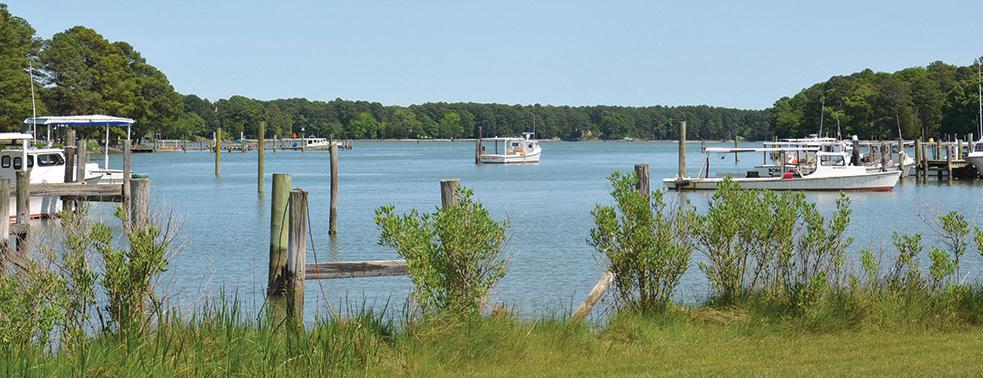
RARE WATERFRONT BUILDING LOT
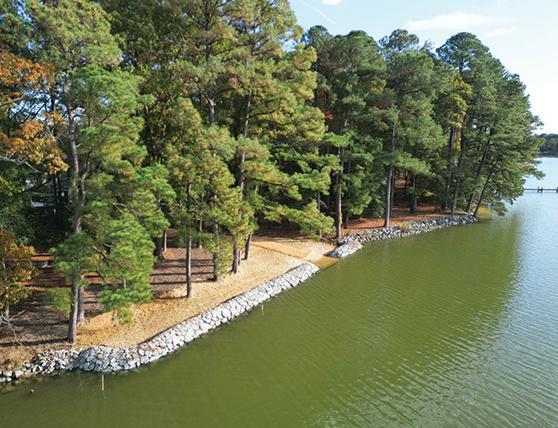
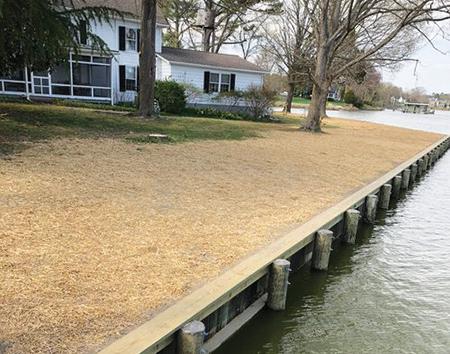
Just minutes outside St. Michaels, this 2.85-acre lot with over 600’ of shoreline provides exceptional views looking directly down the waters of Grace Creek. Prime building site. Public sewer coming soon! $550,000
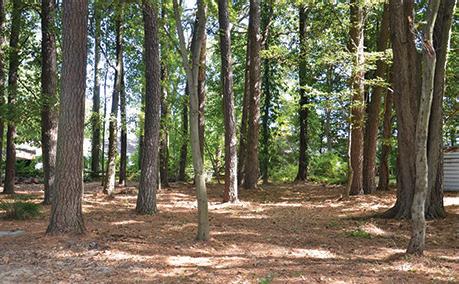
BUILDING LOT
Ready for your new home. Wooded lot in the Bentley Hay area, just outside St. Michaels’ Town limits. Public water/sewer. No town taxes!
$219,000
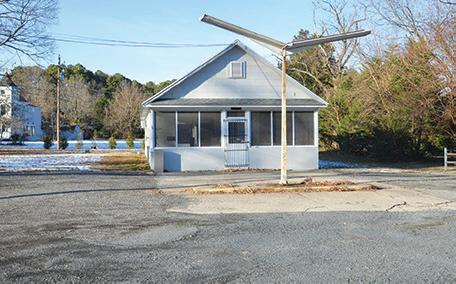
BOZMAN
e former Bozman Store. So many possibilities. Re-open the store; Contractor/sub-contractor o ce; Workshop; Convert to a residence.
$149,000






















The Marmalade Malefactor Gang: William S. Dial
Tidewater Gardening K. Marc Teffeau
Len and Lefty: A.M. Foley
Tidewater Kitchen: Pamela Meredith
and Busters: James





About the Cover Photographer Michelle Dawkins
Michelle Dawkins is a professional photographer who specializes in dog photography. With six years behind the lens, she creates stunning images of dogs in motion against the beauty and magic of the Chesapeake Bay and surrounding areas. Her multi-award-winning background and passion for photographing energetic, water-loving dogs shine through in every image. You can find Michelle working in the waters of the Bay early in the
morning or late in the evening, photographing all kinds of playful dogs on Kent Island and around Annapolis, Maryland. Her photography is all about capturing dogs having the time of their lives—running, jumping, and splashing in the water.
You can see more of Michelle’s work at www.michelledawkinsphotography.com and for social @michelledawkinsphotography.



Seeds, Shorelines and New Roots

by Tracey F. Johns
The future of the Chesapeake Bay is already taking root in four newly constructed greenhouses, each stretching 160 feet across Talbot County farmland.
Rows of native grasses and wetland plants are pushing up through carefully tended soil, each one part of a larger vision. For Environmental Concern (EC), the seeds being sown today are more than inventory. They are the next generation of living shorelines, restored habitats, and healthier waterways across the Eastern Shore.
EC is home to the nation’s first
wetland native plant nursery. For decades, it was synonymous with its longtime home in St. Michaels, Md., where the nonprofit built a reputation as a leader in wetland restoration, native plant horticulture, and environmental education.
When that property was sold to the town a few years ago, many assumed the nonprofit had quietly shuttered its operations. Despite what some community members may have assumed, that work never stopped.
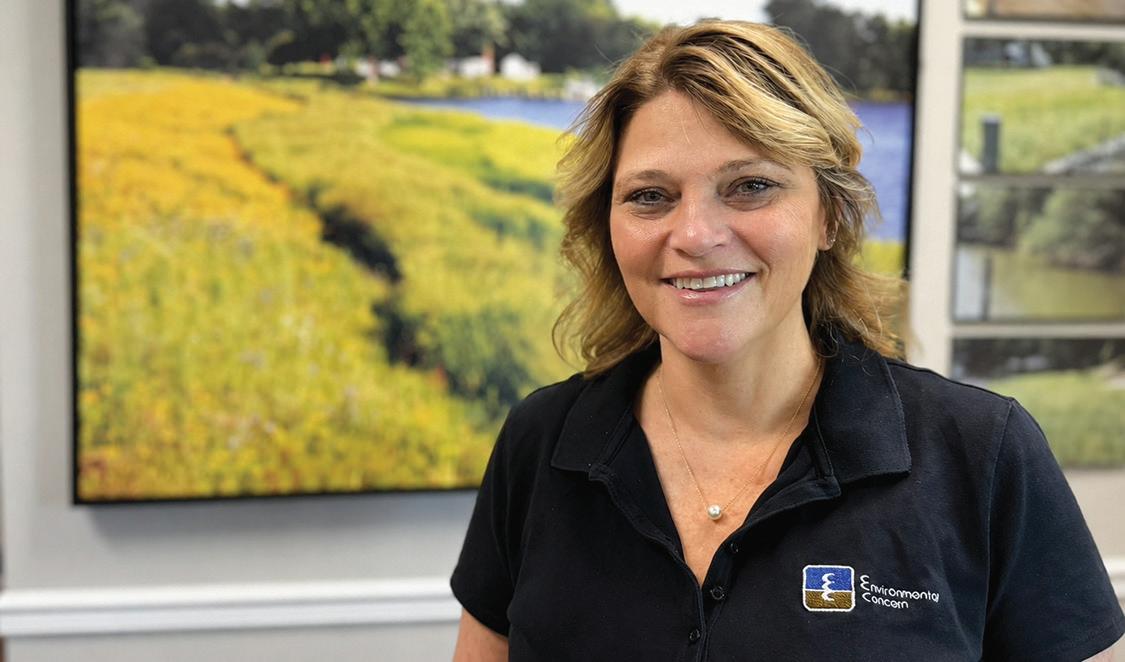
“We have never closed,” said Paige Cahall, who stepped into the
Seeds and Shoreline

“Blue
by Betty Huang

role of president after more than a decade with the organization.
“EC has continued to operate throughout our move and transition and remains committed to improving water quality and creating habitat through the propagation of native plant species, restoration of wetlands and living shorelines, and our education and outreach programs,” she says. “We were pleased to have the Town of St. Michaels purchase the Boundary Lane property to not only house the town offices, but to offer one of the few public parks in Talbot County with water access.”
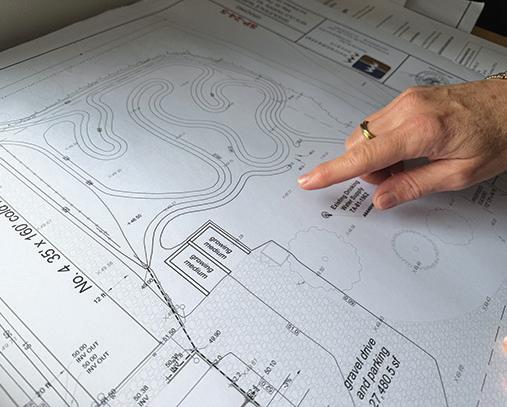
The proceeds from that property allowed the organization to invest in a new, nearly five-acre site on Old Trappe Road in Trappe, where four large greenhouses now anchor a growing nursery operation. Administrative offices moved to Easton, while the hands-on work of growing, collecting, and propa-
Majesty”
Seeds and Shoreline
gating native plants shifted to the new location.
The result is not a closure, but a reinvention.
Today, the nursery is still under construction, with final buildings and infrastructure expected to be completed in the next few months.
Seeds, Systems, and Shoreline Resilience
The nursery is more than a place to grow plants. It is the foundation for everything EC does.
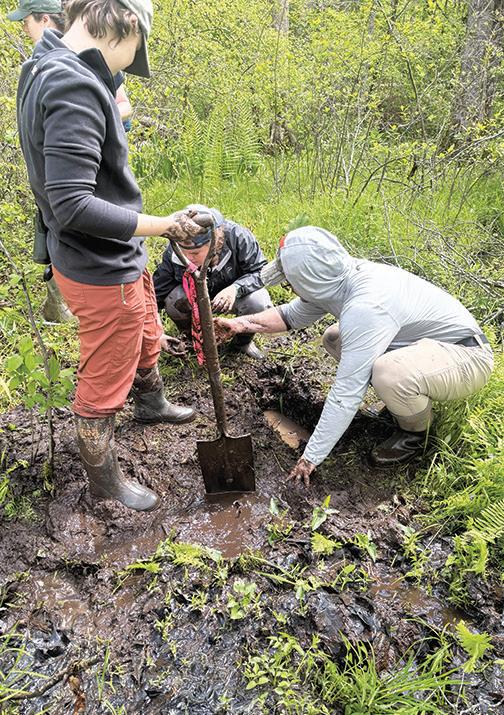
Each fall, EC staff collect native seeds from across the region. Those seeds are cleaned, stratified, and prepared for propagation. In






Step into Summer with Lizzy Dee

Seeds and Shoreline
the spring, they are sown into trays that will eventually supply restoration projects, wholesale buyers, and residents looking to plant native species.
That cycle mirrors the natural systems the organization works to protect.
In the wild, wetlands depend on the slow, steady spread of native plants to stabilize soil, filter water, and provide habitat. In the nursery, that same process is accelerated and scaled to meet growing demand.
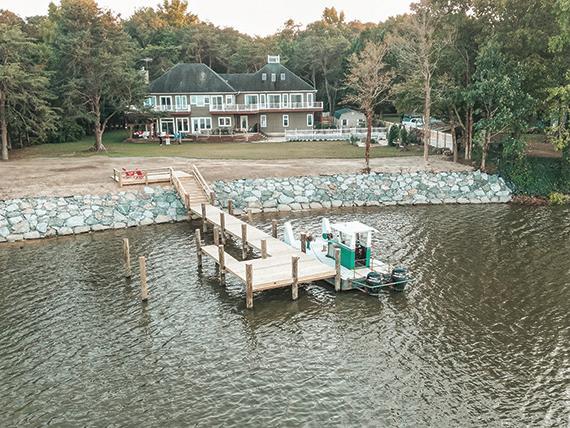
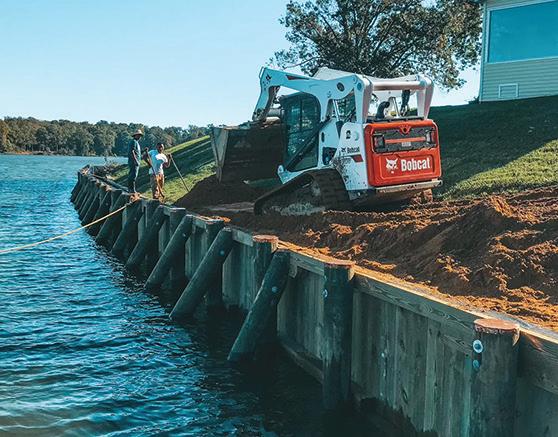
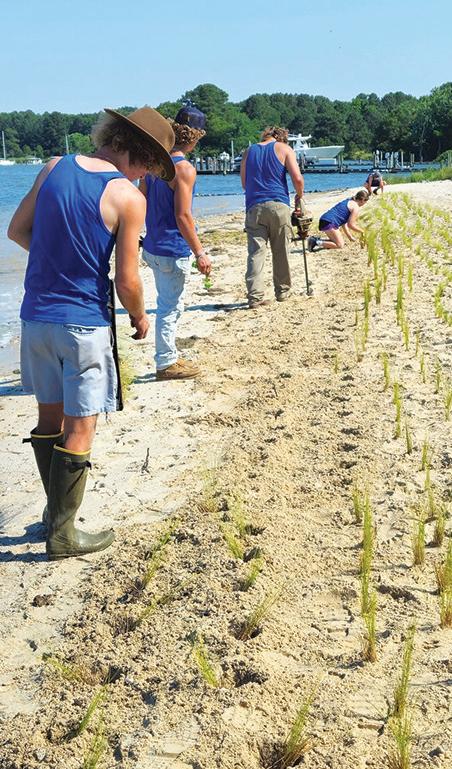
Those plants play a critical role in projects like living shorelines, which have been replacing traditional bulkheads and riprap along the Chesapeake Bay and its tributaries.
Unlike hardened structures, living shorelines use native vegetation and carefully designed stone sills to absorb wave energy, reduce



erosion, and create habitat for fish, birds, and other wildlife.
The roots of native plants, often extending several feet underground, interlock to hold soil in place. Over time, they form a resilient, self-sustaining system that protects both land and water.
A Growing Demand for Native Solutions
As awareness of environmental issues grows, so does demand for native plants and sustainable landscaping solutions.
EC has positioned its new nursery to meet that demand, focusing on wholesale sales to landscapers, restoration contractors, and other nurseries. At the same time, the organization continues to offer retail opportunities for homeowners, typically through spring and fall plant sales or by appointment.

“We are fortunate to have two nursery managers, Lyndsey Pollock and Nick Sparacino, who bring more than a decade of expertise in horticulture,” Cahall said. “Lyndsey and Nick are dedicated to EC’s ongoing operations and nursery expansion and have been instrumental in planning the new nursery facility.”
Customers can purchase everything from a handful of plants for a backyard rain garden to large quantities for shoreline projects. And interest is rising.
Native plants are not only better suited to local conditions, requiring less maintenance and fewer inputs, but they also support pollinators, improve soil health, and contribute to overall ecosystem balance.
That shift toward native landscaping reflects a broader cultural


change, one EC has helped shape for decades.
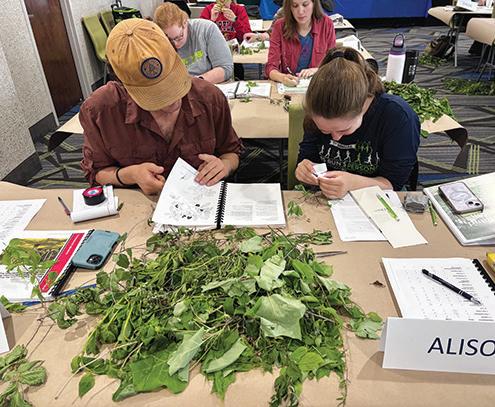
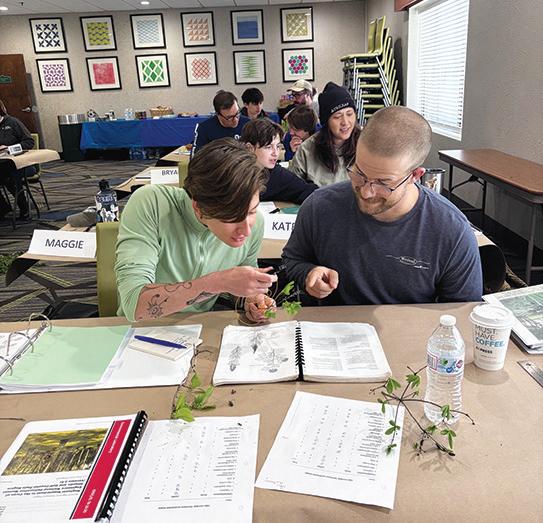
Seeds and Shoreline professional training courses, including wetland delineation, native plant identification, and hydric soil evaluation, as well as public programs such as seed-cleaning workshops.
A Small Team with a Wide Reach
Despite its impact, EC remains a relatively small organization.
Cahall describes the team as “small but mighty,” with staff members wearing multiple hats to manage nursery operations, restoration projects, education programs, and administrative work.
That includes Vice President Joe Miller, an ecologist and landscape architect who leads site assessments, designs, and project planning for living shorelines and other restoration efforts.
Together, the team handles projects for both private landowners and public entities, addressing issues such as erosion, stormwater management, and habitat loss.
In recent years, much of that work has focused on private shoreline restoration, as property owners seek sustainable solutions to protect their land.
At the same time, the organization continues to expand its services, which include surveys, site assessments, design, permitting, and plant installations.
Education remains a core mission as well.
Through partnerships with regional organizations, EC offers
Those workshops teach participants how to collect and prepare seeds for propagation, empowering them to contribute directly to native plant restoration.
“It’s a way to create more plants, educate the community, and get them involved,” Cahall said.
Leadership Rooted in Experience
Cahall’s leadership comes at a pivotal moment for the organization.
After 13 years with EC, she stepped into the president’s role last year, guiding the nonprofit through its transition and into its next phase of growth.
Her approach reflects both continuity and forward momentum.
She emphasizes building rela-



Seeds and Shoreline
tionships, expanding the organization’s reach, and strengthening its financial foundation, all while staying true to its mission.
That includes increasing wholesale nursery sales, growing restoration services, and investing in marketing to raise awareness.
It also means addressing a longstanding challenge.
“Although we are a non-profit, we have never had a large base of donors,” Cahall said.
A Call to Support the Next Generation
As a 501(c)(3) nonprofit, EC relies on a combination of earned revenue and donations to sustain its work.
The new nursery represents both an opportunity and a need.
While the organization funded the property purchase through the sale of its St. Michaels site, additional resources are needed to complete the facility, including the installation of irrigation systems, greenhouse, and production equipment.
Cahall estimates that up to $250,000 could significantly accelerate that process, and even smaller contributions could make a meaningful difference.
For the public, there are multiple ways to get involved.
Residents can purchase native
plants for their own properties, supporting both their landscapes and the broader ecosystem. They can participate in educational programs to learn how to propagate plants and manage natural spaces.
And they can make tax-deductible donations, whether through annual giving, legacy gifts, or other financial contributions.
Each action, like each seed, contributes to a larger outcome.
A restored shoreline. A thriving wetland. A healthier Chesapeake Bay.

Historic in-town residence in the heart of St. Michaels o ering timeless charm and convenient access to the harbor, parks, trails, shops, and restaurants. Features include hardwood oors, multiple living areas, 4 wood-burning replaces, 4 BRs, 4.5 BAs, o ce, custom built-ins, and exible living spaces. Landscaped fenced yard with spacious patio, detached cottage/ studio, and o -street parking. A rare opportunity. $1,350,000
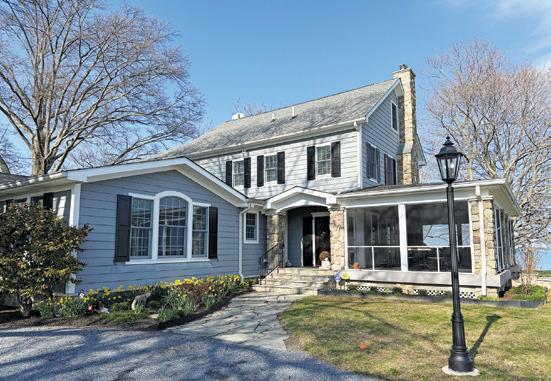
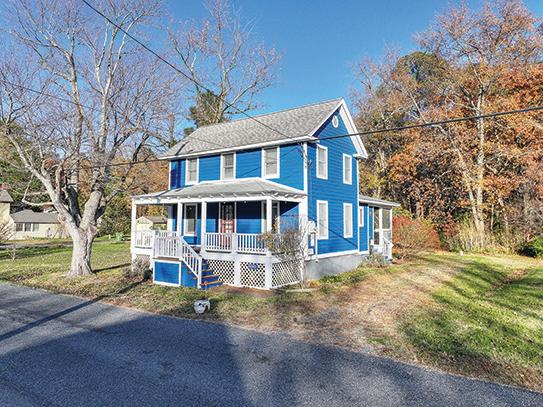
Charming and light- lled cottage near St. Michaels with easy access to a public landing and park. Thoughtfully restored by a master carpenter, showcasing exposed beams, wood oors, and unique architectural details throughout. Features multiple living areas, 2 bedrooms, 2 o ce spaces, screened porch, abundant storage, and numerous recent upgrades including HVAC and appliances. $375,000
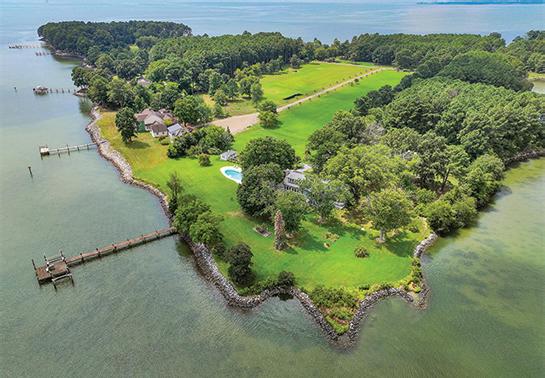
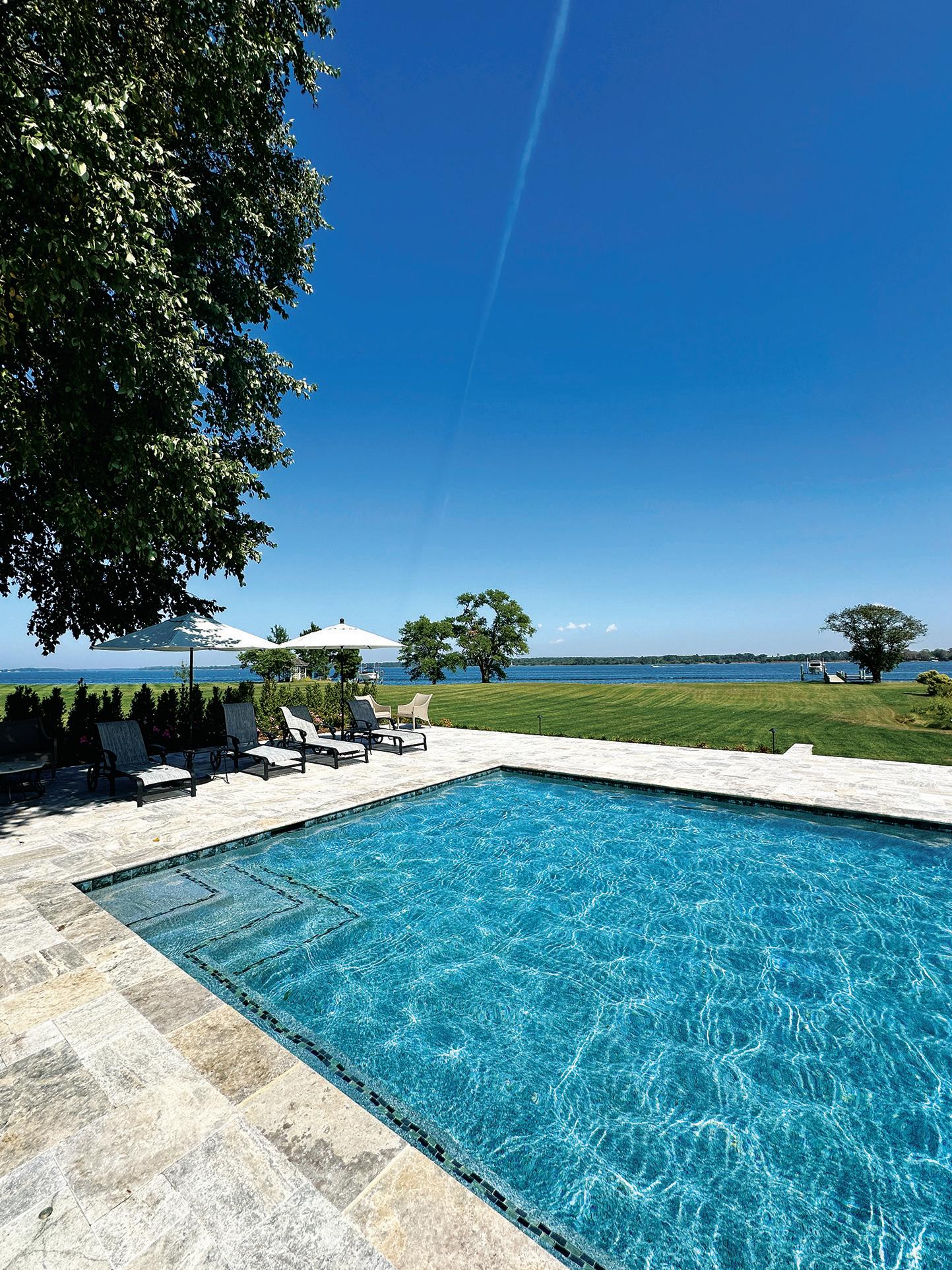
Privately sited on 9.62 acres with 800+ feet of protected waterfront, this exceptional retreat offers breathtaking broad water views and approximately 4,800 sq. ft. of living space on three finished levels. Features include wood floors, a spacious kitchen with island, separate living and dining rooms, 5 bedrooms, upper-level office/den, and third-floor craft room. Three fireplaces and abundant storage throughout. Outdoor amenities include a screened porch, in-ground pool, detached garage, multiple outbuildings, and private pier with two lifts. $3,295,000





Seeds and Shoreline
Looking Ahead
As construction continues and the nursery nears completion, EC is focused on the future.
The organization aims to expand its production capacity, reach new customers, and deepen its impact across the region.
At the same time, it is working to correct the misconception that it ever disappeared.
The truth is simpler and more hopeful.
EC did not close. It adapted. It took the resources from its past and planted them into something new. And now, in rows of greenhouses in Talbot County,
those investments are beginning to grow.
Like the wetlands it seeks to protect, the organization is rooted in resilience.
And with the right support, it will continue to flourish, one seed at a time.
Tracey Johns has worked in communications, marketing and business management for more than 30 years, including non-profit leadership. Tracey’s work is focused on public and constituent relations, along with communication strategies, positioning and brand development and project management.




Haywire Heart by Bonna
L. Nelson
Start each day with a grateful and healthy heart. ~ Anonymous
I recently found out that my heart is going haywire, and when a friend asked, “What are you writing about next?” I answered, “My heart.” I want to share my heart journey and what I learned with readers, the same as I shared my breast cancer, super aging, eye surgery, hearing aids, and dental implant journeys.
My cardiologist said that after sharing my diagnosis I would begin to discover friends and acquain -
tances with the same problem or worse. Sure enough, the first friend that I confided in said with a casual shrug, “Welcome to the club! Something is going to take you; it might be your heart!” But in fact, she is doing quite well with her diagnosis and treatment.
When I shared my concerns with our social group, they asked with concern, “What’s going on with your heart?” I responded, “I am under -

Haywire Heart
going cardiac testing after having some discomfort and then following up with a cardiologist about the results.”
Sure enough, two of our guy friends shared their experiences with cardiac testing. One received all normal test results, and one had surgery for blockages and is taking medication for atrial fibrillation. Both seemed healthy and at ease. Both warned me about finding a local cardiologist, which was difficult for


them because some practices could not accept new patients.
I was lucky. I am grateful for so many things on my cardiac journey. Just like taking a journey to another country, taking a health journey requires planning, time, attention, patience, knowledge, research, listening, specialists’ support and luck.
My heart adventure began unexpectedly. I had some mid-chest tightness and a bit of lightheadedness during a period, like we all have, with an overflowing plate, and resulting anxiety. I brushed it off at first, but after another episode in my weekly YMCA workout class, I checked into the local Urgent Care. They performed some tests, which were normal, but some blood markers for


Townie Go! has re-entered the chat with a fresh, new look and more power. It still features the legendary comfort and control of a Townie, but now with a throttle. Rolling to the park with your kiddo? Heading to happy hour with friends? Tackling your daily commute like a boss? Make getting there the fun part.





Haywire Heart

heart damage had them concerned, and they sent me to the hospital emergency room on my own, not via ambulance. I am grateful for their quick response and caution.
You might laugh, but not knowing what to expect at the hospital, I wanted to change clothes, freshen up and grab my iPad, so I drove home fi rst. When I arrived, my husband, John, was cool and calm about the news but insisted on driving me to the hospital and staying. I am so grateful for his support and care. I would need his wisdom later related to decisions to be made at the hospital.
The ER hospital staff checked me in immediately, performed more tests and hooked me up to an IV to provide fluids. The EKG was normal. From later research on the Cleveland Clinic website, I learned that an electrocardiogram (EKG or ECG) is a quick, noninvasive test that records your heart’s electrical activity. Typically, the EKG is done in a medical facility and only tracks your heart’s
electrical activity for a short period. This is sometimes called a standard 12-lead EKG.
You might be tested while lying down and resting or sitting up, as I was. A medical provider attaches 12 electrodes with adhesive pads on your chest and limbs. The sensors send information through wires or leads, thus a 12-lead EKG. You may also undergo an EKG as part of a stress test, as I also did in the weeks to come.
Some heart rhythm problems only happen once in awhile. This means that some heart rhythm problems don’t show up on a standard EKG. I like this explanation from the Cleveland Clinic: “It’s like when your internet acts up but it seems fine when someone comes to repair it.”
An EKG takes about ten minutes to attach the electrodes and complete the resting EKG test. But the actual recording only takes 10 seconds!
An EKG as part of a stress test may take longer.




BENSON & MANGOLD REAL ESTATE

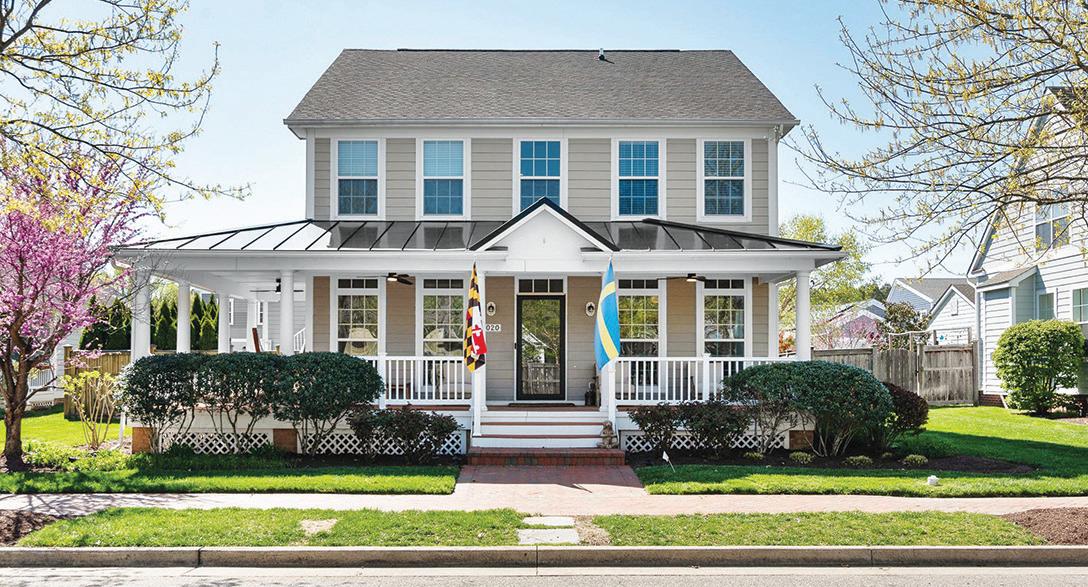
Effortless Lifestyle -Deeded Boat Slip with Lift in Easton Village - Tucked into one of Talbot County’s most coveted waterfront community, 8020 Easton Village Drive delivers what Eastern Shore buyers search for: a deeded boat slip with electric lift on the Tred Avon, a turn-key home, and close proximity to historic downtown Easton. This 5-bedroom, 3.5-bath Colonial offers a wraparound covered porch and hardwood floors throughout the main level. The open kitchen features granite counters, butcher-block island, stainless appliances, gas cooking, and a coffee bar. A formal dining room, gas-fireplace family room, main-level bonus room (5th bedroom or office), and powder room complete the first floor. Upstairs, the primary suite has vaulted ceilings, two walk-in closets, soaking tub, and double vanity, plus three additional bedrooms and two full baths. The detached two-car garage includes a private guest suite with full bath above -- ideal for in-laws or visitors. Major systems include a whole-house standby generator, Rinnai tankless water heater, whole-house alarm system, as well as natural gas forced air, central A/C, and central vacuum. The home has been thoughtfully updated with an improved kitchen, along with new lighting and ceiling fans. The fenced backyard features extensive stone hardscape, a gazebo, and built-in stone grill. The rare and sought-after deeded boat slip with electric lift gives direct access to the Oxford and St Michaels’ marinas via the scenic Tred Avon River. Easton Village is known for its top-notch amenities which include an in-ground pool, the clubhouse, a fitness center, kayak launch, trails, and so much more.
EASTON | $895,000 | 8020EastonVillageDrive.com
Chuck Mangold Jr. - Associate Broker
BENSON & MANGOLD REAL ESTATE



Set along more than 1,000 +/- feet of pristine, navigable waterfront on Irish Creek, this remarkable 22.14 +/- acre waterfront estate captures the very essence of luxury living on Maryland’s Eastern Shore. Surrounded by sweeping southwest-facing water views and unspoiled natural beauty, the property is just minutes from Easton and St. Michaels. Inside, refined interiors feature rich hardwood flooring, extensive crown molding, custom built-ins, and four wood-burning fireplaces. The main level is thoughtfully designed for hosting and everyday living, with gracious formal and informal spaces that flow effortlessly together. A formal dining room, expansive living and family rooms, and a well-appointed kitchen with island and pantry create the perfect setting for gatherings with family and friends. The main-level primary suite offers a peaceful retreat with its own fireplace, walk-in closet, and spa-inspired bath. Upstairs, three additional bedrooms and two full baths comfortably accommodate guests for extended weekends on the Shore. Outdoors, the estate unfolds as a private waterfront retreat. Spend warm summer days by the Gunite pool and outdoor spa, gather around the built-in fire pit at sunset, or enjoy a friendly match on the bocce court. A tranquil pond and expansive grounds enhance the sense of serenity, while the vaulted three-season porch provides the perfect vantage point for watching boats drift by and taking in the breathtaking evening sunsets over Irish Creek. The property is exceptionally well-suited for hosting, with a charming pool house and a separate two-bedroom guest apartment above the detached four-car side-entry garage - ideal for visiting family, weekend guests, or extended stays.
A computer creates a picture on graph paper or a screen of the electrical impulses traveling through your heart. The impulses form a wave pattern of your heart’s electrical activity that your healthcare provider analyzes to determine how much activity there is and how regular and strong the heart is. My results were normal twice! Good news. Healthy heart?
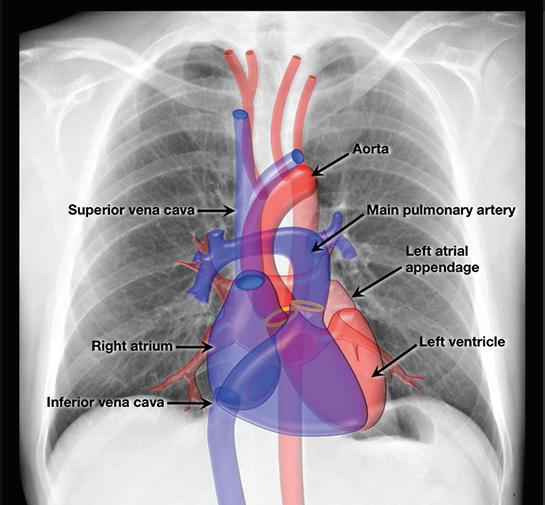
While in Urgent Care, I also had a chest X-ray. The Cleveland Clinic explains that chest X-rays produce images of your heart, lungs, blood vessels, airways, and the bones of the chest and spine. Chest X-rays can also reveal fluid in or around your heart or lungs.


When you go to urgent or emergency room care with chest discomfort, you will typically get a chest X-ray. Among many other things, the image can help determine whether you have heart problems. It shows the structure of the heart, the size and outline. Changes in the size and shape of your heart may indicate heart failure.
My chest X-ray image revealed a normal heart structure. Good news!
Healthy heart?
Puzzled, the ER staff wanted to keep me for observation and more testing, but it was a Friday, Monday was a holiday, testing would not have continued until Monday or Tuesday. There was no bed, and I would need to stay in the ER space with other extremely sick folks, and I felt fine.
So, on John’s agreement, I elected to go home. They prescribed nitroglycerin, a quick-acting medicine that increases blood flow to the heart, treats chest pain and can treat or prevent heart attacks, just in case…



Haywire Heart
A few days after my visits and tests at urgent and emergency care, leaving no stone unturned, my excellent primary caregiver, Shirely Seward, CRNP contacted me and prescribed more heart-related tests to help solve the crazy heart mystery. Next on the agenda was a stress test.
Back to the Cleveland Clinic website for education, I learned that the stress test is a very commonly performed test to determine how well your heart pumps blood, whether it is receiving an adequate blood supply, how it performs during physical activity, and if your original symptoms can be reproduced. The test results can help identify certain heart issues
involving the heart muscle, valves, blood supply and stability during rest and exercise and if you need additional, more invasive testing.
Interestingly, I did not have to walk on a treadmill or ride a bike. Instead, I had a nuclear stress test whereby the cardiology technician injected me with a radioactive substance that causes an increased workload on the heart, chemically induced stress, while in a seated position, and pictures of the heart are taken before and after!
Responses to either type of stress test helps to assess how your heart manages the workload by measuring blood pressure, heart rate, oxygen levels, electrical activity and how hard the heart works compared to



Haywire Heart
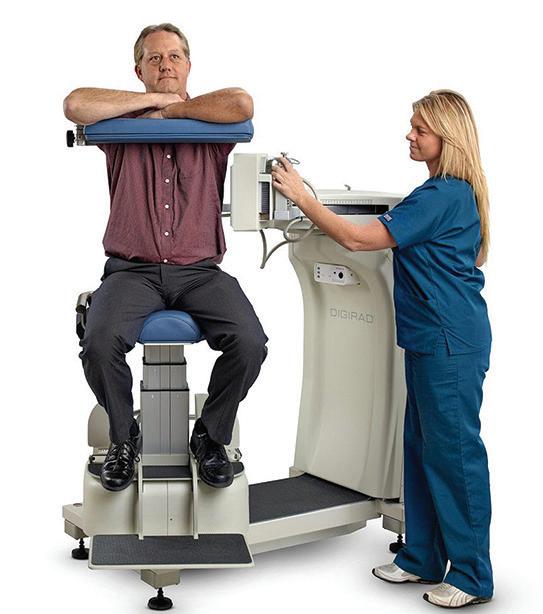
others of the same age and sex. Good news! Healthy heart!?
A few days later, I completed an echocardiogram, or echo, which is an ultrasound test for the heart. It uses high-frequency sound waves to create moving pictures of the heart as it beats and shows the heart structure and pumping ability as well as blood flow through the heart, including the valves. A transducer, which looks like a wand, is moved over the heart by a cardiology specialist after a gellike substance is applied to the area.
The transducer sends sound waves through the chest that bounce off heart tissue, making echoes that are sent back to a computer. Computer software uses echoes to make heart pictures, which shows the specialist how the heart beats and the blood flows. Good news! Healthy heart!?
And last, but not least, Ms. Seward prescribed a cardiac event monitor (heart monitor) for me to wear for two weeks. The monitor can provide more valuable heart information over a period of time, including information on activity that doesn’t occur every day, only periodically, such as electrical activity.

The ZIO brand monitor arrived by mail a bit before I had the echo. It is about a 3-inch by 1½-inch size device that is placed on a clean, shaved area above the heart. It has a strong adhesive, enough to last the two weeks that I needed to wear it, and the area had to be kept dry, so showering and hair washing were tricky.
The battery-powered device collects and sends data to a recording instrument called a gateway, which is about the size of a cell phone and must be kept within ten feet of you



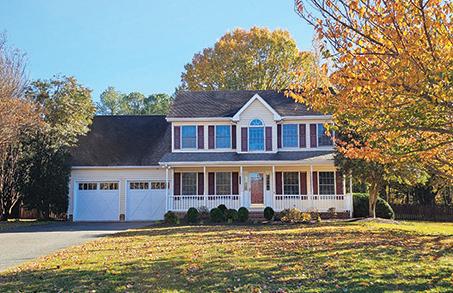
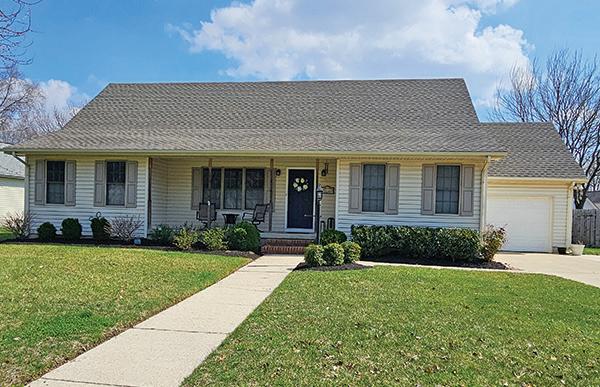
316 SPRING DRIVE - EASTON Make this 4BR, 2.5 bath home with a pool your new address. Summer will be here before you know it! $595,000 DELIGHTFUL EASTON RAMBLER
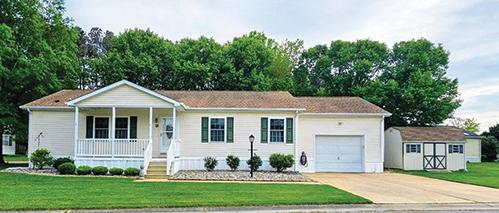
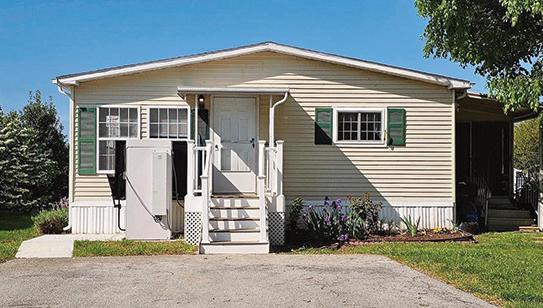
3 BR and 2 full baths with open LR/DR/Kitchen, Sunroom with vaulted ceiling leading to the deck overlooking the fenced yard. Separate laundry room. New roof in 2022. NO HOA fees! $495,000 Owner/Agent
Haywire Heart
and your monitor. The wearer is instructed to press the button on the center of the monitor when a symptom is felt such as lightheadedness or palpitations, and to record the date, length of time, what is occurring and activity in a notebook or on the provider’s app. I probably pressed the button only 5 or 6 times when I felt something in the heart area or other symptom before removing the device after 13 days, 23 hours and returning it by mail for data analysis and evaluation.
The heart monitor recorded my heart rate and rhythm for two weeks to look for abnormal heart rhythms, strength of heart’s electrical signals and how fast my heart is beating. It records events that don’t happen often enough to be picked up by other “one moment in time” tests like the EKG.
I like this Cleveland Clinic description: “Think of it like this: When your car is making a sound that concerns you, it might not make that sound when you take it to the mechanic. In a similar way, your heart might not have an abnormal rhythm” when you have other short, in-the- moment tests or your provider listens to your heart.
Finally, the day came for an answer. All the tests were completed and the results were in. Healthy heart? The Easton cardiology group gave me an appointment with a car -
diologist, after having been seen in the ER and having undergone other cardiology tests.
Dr. David-Allen Lindsey listened carefully and with interest to the story of my heart’s health journey before explaining to John and me that yes, I do have a haywire heart. The two-week long monitoring revealed that I have, drum roll please, a modest burden of paroxysmal atrial fibrillation, also called PSVT. What?
PSVT is paroxysmal (starting and ending abruptly) supraventricular (above the ventricles, the heart’s lower chambers) tachycardia (fast heartbeat). It is a type of arrhythmia (irregular heartbeat) that causes a fast heart rate. Symptoms include heart palpitations, dizziness, chest pressure and shortness of breath or no symptoms.
The heart monitor detected multiple episodes of what is also called paroxysmal atrial fibrillation. So, I am part of the AFib Club. It is the most common heart rhythm disorder in adults of a certain age. My AFib type comes and goes.
The Mayo Clinic website explains that atrial fibrillation (AFib) is an irregular and often very rapid heart rhythm called an arrhythmia (when the electrical signals that tell the heart to beat don’t work properly). AFib can lead to clots in the heart and is a risk for stroke, heart failure and other heart-related complications. During AFib, the heart’s upper chambers, called the atria, beat


Haywire Heart
chaotically and irregularly. They beat out of sync with the lower heart chambers, called the ventricles. AFib may cause a fast, pounding heartbeat, shortness of breath or lightheadedness.
Some people don’t notice all or any of the symptoms, which, apparently, I did not while wearing the monitor. Dr. Lindsay cited several instances from the heart monitor test results when there were long periods of time during which my heart rate was as abnormally high at 174 beats per minute (100 is the normal high), and I did not press the monitor button, therefore did not detect the craziness of the heart situation. AFib sounds scary because it results in the heart not pumping blood to the body or lungs. Yikes!
Cause and treatment? Cause for me could stem from breast cancer radiation and chemotherapy treatments, or genetics, or age, or? Treatments, for me now, are medications, not surgery. Big sigh of relief. The fi rst quite common line of treatment is a blood thinner to reduce the risk of strokes and prevent clots and a beta blocker to slow down the heart rate to below 100 beats per minute when it starts dancing around. Beta blockers reduce the number of chaotic electrical signals from the upper heart chambers.
I have not had a reoccurrence of the chest tightness and fogginess
that sent me on this heart journey, but I am glad that I addressed the issue and received prompt medical attention. I am handling the new medicines without side effects and will follow up with Dr. Lindsay in a few months. I feel superfi ne!
How to maintain a healthy heart?
Dr. Lindsay told me to keep doing what I am doing. Stay active. Caffeine is okay, yay! Basic healthy heart advice is the same as healthy body and super aging advice. We all know the mantra: eat healthy foods, exercise, socialize, challenge your brain, no smoking, limit alcohol, everything in moderation.
My heart may be a bit haywire and occasionally dancing but it is still ticking and full of gratitude, love and caring for the medical professionals at the University of Maryland Shore Regional Health (UM SRH), Urgent Care and Emergency Care, Easton, MD; UM Shore Medical Group (SMG), Easton, Primary Care Provider, Shirley Seward, CRNP; UM SMG Cardiology at Easton cardiology testing professionals, and David-Allen Lindsay, MD, cardiologist who supported my heart mystery journey. My heart may be haywire, but it is dancing with joy, and I plan to keep dancing until I reach the age of at least 100 or maybe 110?
Bonna L. Nelson is a Bay-area writer, columnist, photographer and world traveler. She resides in Easton with her husband, John.












































TIDE TABLE
OXFORD, MD
JUNE 2026
1. Mon.
2. Tues.
3. Wed.
4. Thurs.
5. Fri.
6. Sat.
7. Sun.
8. Mon.
9. Tues.
10. Wed.
11. Thurs.
12. Fri.
13. Sat.
14. Sun.
15. Mon.
16. Tues.
17. Wed.
18. Thurs.
19. Fri.
20. Sat.
21. Sun.
22. Mon.
23. Tues.
24. Wed.
25. Thurs.
26. Fri.
27. Sat.
28. Sun.
29. Mon.
30. Tues.
SHARP’S IS. LIGHT: 46 minutes before Oxford
TILGHMAN: Dogwood Harbor same as Oxford
EASTON POINT: 5 minutes after Oxford
CAMBRIDGE: 10 minutes after Oxford
CLAIBORNE: 25 minutes after Oxford
ST. MICHAELS MILES R.: 47 min. after Oxford
WYE LANDING: 1 hr. after Oxford
ANNAPOLIS: 1 hr., 29 min. after Oxford
KENT NARROWS: 1 hr., 29 min. after Oxford
CENTREVILLE LANDING: 2 hrs. after Oxford
CHESTERTOWN: 3 hrs., 44 min. after Oxford
3 month tides at www.tidewatertimes.com 5:08 5:42 6:18 6:56 7:37 8:20 9:05 9:53 10:44 11:37 12:46 1:39 2:32 3:25 4:18 5:12 6:06 7:00 7:53 8:45 9:35 10:24 11:13 12:34 1:27 2:15 2:57 3:36 4:12 4:47



The Marmalade Malefactor Gang
by William S. Dial
Now that I have your attention, this is not about orange jam. No, ma’am or sir, it is about an orange cat. Okay, you may not be a cat person, or “allergic” to cats, but bear with me. I have a tale to tell.
My adult leadership and I believe in rescuing animals. But…! We lost two rescue kitties, both of whom were deeply embedded in our hearts, much sooner than we
expected. If you are a pet person, you know exactly what I mean. Losing a pet is tough. The loss of these two kitties was deeply felt.
Now that that is out of the way, we get back to the orange cat, a little circuitously. Adult leadership had always fancied a Maine coon cat. However, adhering to the “kitties should be rescued” philosophy, we found our kitties at the shelter,

Marmalade
except this time. We had rescued two kitties in a row from the shelter, and both had suffered fatal illnesses. Not wishing to repeat that experience, we chose to acquire a kitty from a breeder. We’ve had three rescue kitties, and the first lived to be twenty-five. It’s like a box of chocolates. Such is the law of randomness…nothing else. Except when you are greatly saddened, and then the laws of whatever do not apply. Enter the Maine coon cat…cats.
A little more background. Residing in our house with our kitties is Shamus. Shamus is a big, I mean big, Labrador retriever, like

So soft and lovable!

a hundred pounds big. Shamus is the most loving creature that ever walked this celestial orb. But he ain’t wired right. I do not believe he will ever be in contention for a Nobel Prize. He loves his kitties, though. More about this relationship later.
Being the loving husband that I am, I realized the depth of sadness in my adult leadership following the death of our sweet Caitlin, a five-pound, mostly Himalayan, little rescue kitty. I started looking for a Maine coon. A little sidebar: please do not lecture me on the need to rescue kitties. See above. That having been said, my search for a Maine coon cat began. I found one right away. The picture showed a beautiful gray kitten: immediate availability. It was only one state away and half the cost of the other Maine coon kittens I had seen. If that little tidbit doesn’t hike your hackles, you, my friend, are in danger of being scammed. I was. There



Mental health challenges can feel overwhelming and isolating, but with the right support, healing and clarity are possible.
I am a seasoned Doctor of Psychiatry specializing in the diagnosis of Depression, Anxiety & Mood Disorders, OCD, ADHD, PTSD, and Bipolar Disorder in adolescents and adults. I have experience in clinic, hospital and school settings. Trained at the University of Maryland Psychiatric Institute. Some positions I have held include Staff Psychiatrist at Fort Howard Veterans Administration, Chief of Psychiatry for U.S. Bureau of Prisons, Staff Psychiatrist at The Sheppard & Enoch Pratt Hospital and Staff Psychiatrist at the Eastern Shore Hospital Center.
While in some cases medicine may be necessary, I believe that talk therapy is always the first line of defense. Face to Face 50-minute therapy sessions, the most effective for success - priced on a sliding scale. Let’s Talk...

are times when sweet Shamus is smarter than me. There were lots of back-and-forth messaging and all sorts of assurances about the health and quality of the kitty in question. I was convinced. Of course, being the romantic that I am, I was doing this surreptitiously, hoping a surprise kitty might ameliorate the sadness of dear Caitlin’s demise. I went to my bank to arrange a fund transfer. The seller required me to use a method I knew nothing about. The bank, in nice professional terms, paraphrasing, said, “You dummy, you’re being scammed.” Apparently, the required mode of funds transfer was the scammer’s preferred method because, after the transfer, the buyer was without recourse. I quickly, electronically, said, “Send me a picture of the kitty and the front page of today’s newspaper, juxtaposed.” Well, after a few comments from the seller regarding the legality of my parents’ marriage, that episode ended.
While I was busy with all my kitty stuff, my dear stepson acquired a Maine coon kitty. He likes cats, too. Best of all, he dealt with a responsible cattery, which the cognoscenti call a cat breeder. After the near-scam misadventure, I figured it was time to let the “cat out of the bag” (sorry about that)
about my pursuit of a Maine coon kitty. It was a relief to share this adventure, believe me. There had been a real risk of my picking the wrong cat. Enter Katie.
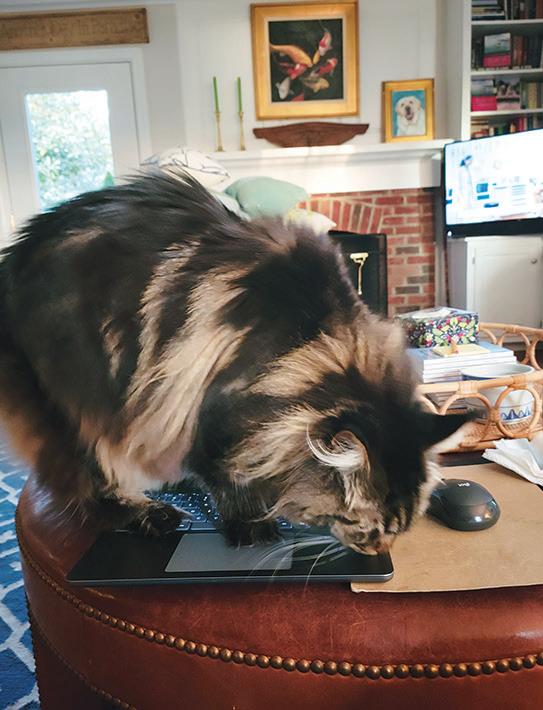
My sweet spouse immediately connected with a very nice lady in Bear, Delaware. That was a new place to me: Bear, Delaware? Nice town. Lots of tank cars: Dupont nearby. Katie was a tiny little girl. Black-and-brown tabby. It was hard to imagine that little thing becoming a twenty-pound Maine Coon cat, but she did.
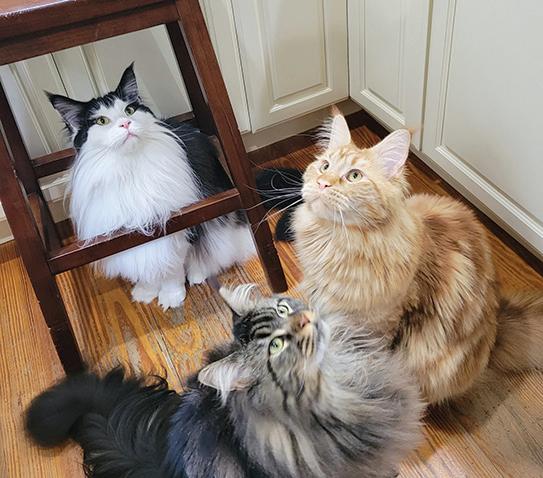
Turns out acquiring Maine coon cats is like the old cliché about eating potato chips: one is not enough. Enter Keegan and Kelsey. Next in line after Katie was Keegan. Keegybear is a “tuxedo” cat, black and white, as if


Marmalade
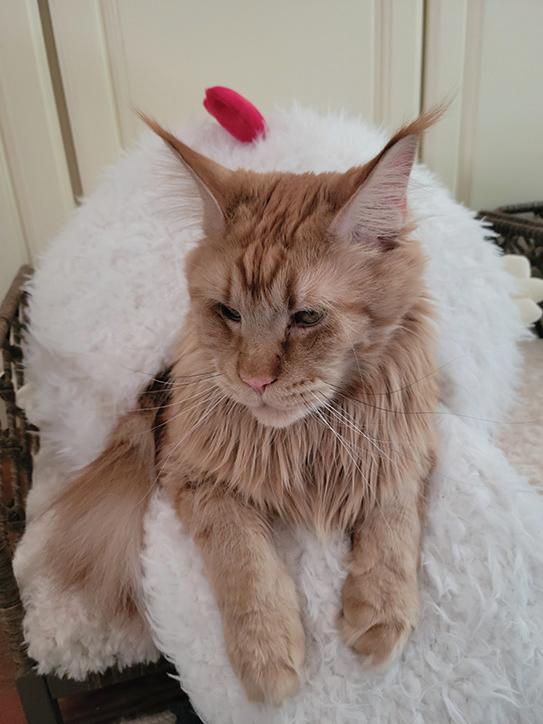
he’s dressed for the opera. After Keegan: Kelsey. Kelsey is an orange cat, also called a ginger, a red, or…a marmalade.
Finally, you say, we are back to the orange jam. Have you ever noticed that cartoon cats are almost always orange? Garfield, Heathcliff, Puss in Boots: see what I mean? Ever wonder why? It’s okay, Bunky, I didn’t either. And then Kelsey arrived. He was, like Katie, a tiny little thing. Looking at that almost mouse-sized baby cat, you wouldn’t know that inside that orange fur was a demented animal. It’s a trait. That’s why cartoon cats are orange.
I don’t want to slight anyone,
so I’ll say quickly that Katie and Keegan are sweethearts. They both love their mommy and spend a lot of time in her lap. They acknowledge my presence, especially when they want to be fed, but that’s it. That said, they are part of a gang in which the kingpin, Kelsey, rules, and they get into trouble because of that relationship.
Kelsey was the last of the three Maine Coons to take up residence in our house. His rookie status didn’t amount to a hill of kibble. As soon as he was big enough, he took control. The hierarchy was clear: Kelsey didn’t ask for loyalty. He expected it. The tabby followed him with skepticism. The blackand-white followed him to see what he would do next. I, on the other hand, acquired five squirt bottles from Waldos and strategically placed them around the house.
The squirt bottles established me as the opposing force. Every day, because Maine Coons have considerably more hair than necessary, my wife brushes them. It’s an adventure. We call Katie the hissy bitch: she doesn’t like brushing. Keegan, the black-and-white, doesn’t like it either, but he isn’t as nasty as Katie. Kelsey: doesn’t say a thing. It’s like he says, “Bring it on. Give me your best shot.” Defiance among cats is an interesting study. All I do is squirt… and I get


the cold shoulder. Mommy gets a superheated lap.
Kitchen counters and tabletops are exclusion zones. I don’t want surfaces that come into contact with my edibles to be touched by paws that have recently shuffled litter in the cat toilet. Bring out the squirter. Katie and Keegan: the mere sight of the squirter is enough to deter them. The orange terror: will look me in the eye and dare me to squirt. Understand, this is just water I’m squirting. After three or four squirts, he may decide to take his terror elsewhere, but he believes it’s his decision. Of course, I’m inclined to say, in
rather loud terms, that he needs to obey me. Adult leadership says, “Don’t yell at the cats.”
We have a cute little saying about the cats’ purring: it’s their “purr motor.” Sorry about your nausea. Keegan and Katie have purr motors you can hear across the room. Kelsey, the marmalade miscreant, refuses to purr. He has a purr. He shares it when he is inclined. Grandson is a cat whisperer. Kelsey will purr for him.
Kelsey is fond of heights. Most of the heights he likes are also offlimits and highly squirt-worthy. I have a ship model in our family room, in a glass case. I love my ship model. So does Kelsey. It is the highest point in the room,

Marmalade
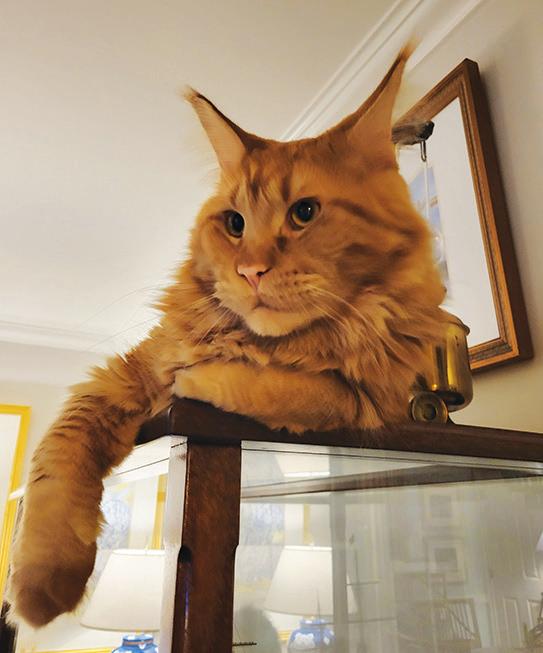
except for the built-in bookcases, which he is also fond of. He knows the ship is verboten. He knows he will get squirted. He doesn’t give a tinker’s damn. He will climb up there and dare me to squirt. The case has a glass top, and I’m concerned the little monster will break it. Then it’s Katie bar the door…not our Katie.
Well, you get the picture. The little guy and his friends are good entertainment. They race around the house, knocking over anything in their path. They lose their little toy mice under the sofa and, as a trio, try to figure out how to get them back. When it’s time for chow, they sound like some otherworldly ensemble. And they love Shamus.
Shamus, the rug sized Lab, is their gentle giant. Katie and Keegan sleep against him and give him kisses. But Kelsey…Kelsey has an unusual relationship with him. He nurses on Shamus’s ears and kneads biscuits on his head. Shamus looks at me with pleading eyes that say, “Please intervene.” I do. I squirt. Kelsey flees, then returns the moment I look away. I tell Shamus to use his big dog roar. Nothing. Eventually, Kelsey curls under Shamus’s tail and sleeps — apparently immune to the fumes. Shamus is…aromatic.
Last spring, after major surgery, I spent weeks in a rented recliner. A lingering cough kept me miserable. One day, Kelsey — the marmalade miscreant who never purrs — climbed into my lap and turned on his purr motor at full throttle.
And in that moment, how could I stay mad at him?
William Stephen Dial achieved Masters Degrees in International Affairs and National Security Studies. Bill’s 31 years in the navy started as a Seaman Recruit and finished in June 1994 as a Captain. Bill has been a certified SCUBA Instructor, a Accredited Marine Surveyor, a Certified Emergency Manager and an Emergency Medical Technician. Bill is married to Susie and has 11 grandchildren.




Nellie Ruth - A Story of Guardianship (Part 2)
by Dan Hoyt
Learning the New Dad
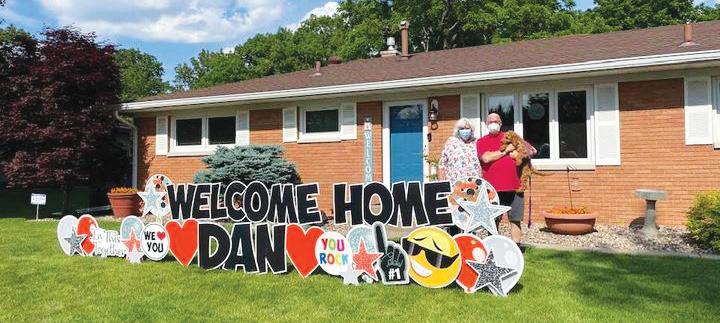
The day Dad finally came home for good, the world felt like a held breath.
I heard the garage door first. Then the door.
Then the slow, careful inhale on the other side of the door—like you breathe when you’re stepping back into a life that didn’t stop while you were gone.
When the door opened, everything in me lifted at once. He smelled… different.
Not sharp like before. Not sad.
Not heavy.
He smelled like someone who had walked through a storm and come
out the other side—wet leaves, tired hope, and a kind of bravery humans don’t brag about.
I waited, shaking so much my tail had its own heartbeat.
Then he looked at me.
He sat down slowly, the kind of slow that says every bone remembers something painful.
He leaned forward, opened both hands, palms up.
The world clicked into place. I pressed myself between his legs, gently, carefully, like my body understood the rules of fragility even if my brain didn’t.
I felt his exhale roll over my back like wind settling after a storm.
This wasn’t the same Dad who
Nellie Ruth
lay on the floor teaching me about kennels.
This wasn’t the same Dad who left smelling like sadness. This was my recovering Dad. A new Dad. But still mine.
There were new rules now: When Dad sits, sit with him. When Dad sleeps, watch the door. When Dad walks slow, walk slower.
When Dad laughs, celebrate with tail.
Sometimes he leaned forward, opened his hands, and I filled the space before he finished the motion. Other times he forgot, and I nudged his knee until he remembered.
Some languages don’t need teaching.
They only need love. And love was a thing I had plenty of.
The Seasons of Hurt and Healing
Humans have a word for stretches of time when everything keeps going wrong: “Years.”
Dogs don’t use that word. We call them seasons. The next season was full of watching.
Watching Dad hurt. Watching Dad heal.

Watching him hurt again.
Just when he started to smell strong, something new would happen.
First came the gallbladder—four days in the hospital, then home again.
I matched his slow steps with slower ones.
Then the word humans fear: cancer.
Thyroid this time.
A total thyroidectomy.
I didn’t know the word, but I knew the sharp clean scent of surgery and the soft ache of trying to be brave.
Then his eye frightened everyone—a burst blood vessel, a partial retina separation, surgery, more quiet days.
Then another thing humans don’t



Events for June 2026
WED. 6/3 - Film: Log Canoes of the Chesapeake - Avalon - 6 p.m.
THURS. 6/4 - Melissa Ferrick - Avalon - 7 p.m.
FRI. 6/5 - Newmyer Flyer Presents: The Beach Boys
Pet Sounds & Revolver - A Tribute - Avalon - 8 p.m.
THURS. 6/11 - Sam Morrow- Stoltz - 7 p.m.
FRI. 6/12 - The 5th Annual Pride Drag Show - Avalon - 7 p.m.
SAT. 6/13 - Comedy with Shaunak Godkhindi - Stoltz - 7 & 9 p.m.
SUN. 6/14 - Andy McKee (solo) - Stoltz - 4 p.m.
THURS. 6/18 - Davina & the Vagabonds - Avalon - 7 p.m.
FRI. 6/19 - Antonia Bennett - Avalon - 7 p.m.
THURS. 6/25 - Julie Parsons Project - Avalon - 7 p.m.
FRI. 6/26 - Ethan Lipton and his Orchestra - Avalon - 7 p.m.
SAT. 6/27 - Words of the Prophets - A Tribute to Rush - Avalon - 8 p.m.
Easton Farmer’s Market Every Saturday from 8-12 - 114-126 N. Harrison St.
Nellie Ruth
say loudly—prostate—and more surgery.
It all happened in what humans call two years.
I call it staying.
I stayed pressed to him for all of it.
A shoulder. A heartbeat. A presence.
Sometimes my job was just putting my chin on his knee and breathing with him.
A dog can hold more than she can carry.
Then came two good years.
Sun years.
Dad laughed more.
Walked stronger.
Mom smiled in the kitchen without the quiet tears.
The grandkids kept multiplying like joy does.
We were almost normal—99%, by Dad’s math.
And then the air changed again.
Papa—Dennis—started to smell different.
Not the way Dad did.
A Florida kind of different.
Far away worry.
Plans shifted.
Phones hurried.
And we went south.
I didn’t know it yet, but we were heading into the season where I’d finish what Papa started in me when I was very small:

Guard the ones you love. Gently. Fiercely. Always.
The Long Road South (Caregiving)
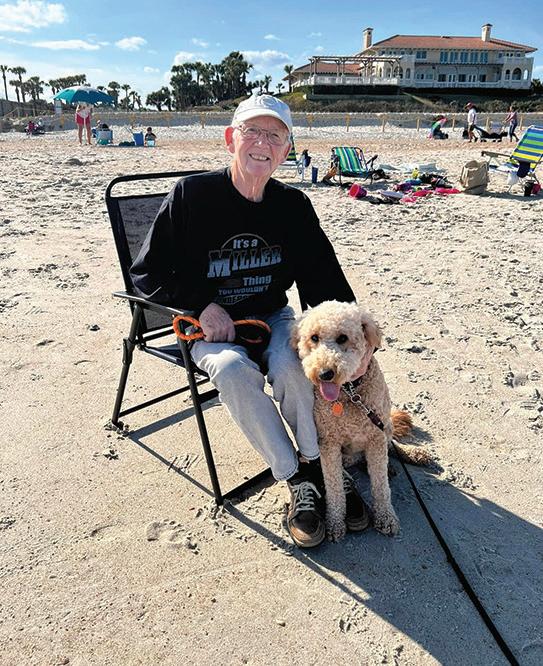
I always thought of Papa and Mimi as my far -away pack. They lived in Florida—a word that smelled like warm air, ocean blankets, and sunshine in people’s hair. Their last trip north was bright and easy. Nobody smelled worried. Papa still scratched the spot behind my ear that makes my back leg thump. He laughed with that tiny beat-pause that meant you’d better be paying attention. A perfect “last normal,” and none of us knew it. Then one day, phone calls turned into hurry.


Nellie Ruth
Mom moved fast—faster than most humans. She found a flight, grabbed a bag, and flew out that night to Florida.
I stayed with Dad.
He scratched my chest and said, “We’ll join Mom soon, Baby-girl. We’ll drive down.”
So I waited by the door for many sleeps while Dad worked, packed, called, planned.
Then, in the first week of November, he opened the van and patted the seat.
“Let’s go, Nels.”
We drove south together—me and Dad—mile after mile until the air turned warm and the world smelled like Florida. When we reached Papa and Mimi’s house, I ran to Mom first and put my paws on her.
Found you.
Then I walked inside, and the smells told me the rest: Medicine.

Soap.
Sea air sneaking through door seams.
Love trying so hard it made the walls strong.
This time, we weren’t visiting. We were moving in to help.
Mom became everywhere at once—hands steady, voice gentle, eyes counting what needed doing.
She learned the medicine rhythms, the appointment rhythms, the overnight rhythms. She gathered passwords, built spreadsheets for bills, wrote everything down. She took a house made of routines Papa used to carry in his head and placed them where Mimi could reach them.
Her care smelled like lavender and resolve.
Dad did the quiet heavy things. He lifted. Steadied. Held. Turned. Fetched. Fixed.
He redesigned the backyard so Mimi’s steps would be easier—yardwork at a minimum.
He gathered family, cleaned, trimmed, made the house gentle to live in.
Inside, he and Aunt Kim replaced the switches and outlets—the old ivory ones that didn’t match anymore—with white matte that made the rooms brighter. The little clicks felt like hope.
Papa noticed all of it, and I watched the worry slide off his shoulders just enough for rest to fit.
Early on, Dad knelt beside me
and said,
“Take care of Papa, Baby-girl. He’s sick.”
So I did.
I learned Papa’s breathing—when it was deep and easy, and when it stuttered.
When people came close, I placed myself between—not to keep love away, but to keep safety close.
Even Mimi’s hand, sometimes.
Not because I didn’t love her. I do.
But because guarding is how I say I understand he’s fragile.
When Papa rested in the bed or the chair, I laid my chin so the blanket dipped just a little with my weight—just enough to say I’m here.
At night, when the house got very



still, I listened.
If a new sound crept in, I lifted my head.
If the quiet stayed kind, I slept again.
Hospice came.
Voices softened.
Schedules shifted to comfort.
Papa still tucked humor into the air—tiny sparks that warmed everyone.
Jokes are a kind of medicine humans make themselves.
Papa was good at medicine.
The room held invisible souvenirs— golf pictures in Dad’s voice, poker-night clicks I could almost hear, fi shing breezes caught in old caps that smelled like the ocean and a good cigar.





Nellie Ruth
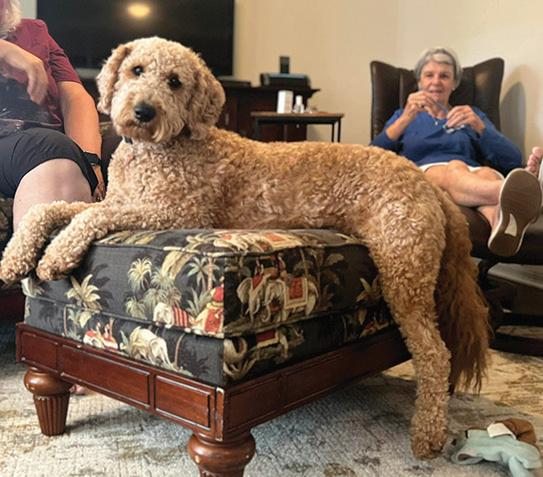
As the days stacked up, he did less standing.
First a cane.
Then a walker.
Then a wheelchair. Then the bed.
And through all of it, we became a pack on purpose:
Mimi’s tenderness.
Mom’s steadiness.
Dad’s strength in soft hands.
My watchfulness.
We lived this way for four months—a season that stretched, folded, and taught us how love changes shape when it needs to.
Then came the quiet day that felt different.
Mom lifted my paws gently onto the bed so I could say what dogs say with our bodies when words are too small.
I pressed my nose into Papa’s hand.
His fingers moved just enough to
tell me he knew.
I did not cry.
I did not whine.
I did not guard anymore.
I stayed.
Thirty minutes later, the house changed its breathing.
People moved like they were carrying something sacred and invisible.
They set me in my kennel—not away, but within—so I could be held safe inside the moment.
Dad came in with me, the way he did the very first night of my life with them.
He took my face in his hands.
“Papa’s gone, Baby-girl.
You need to switch roles now.
You need to protect Mimi… and you need to take care of Mom too.
She just lost her dad.”
My ears heard the sounds.
My heart heard the meaning.
I leaned my head into his palms.
I made a promise the way dogs promise: I will.
I will protect Mimi the way he taught me to be gentle.
I will watch over Mom as she learns the shape of missing her dad.
I will stand between and beside.
I will keep the house soft.
Because that’s how you honor a Big Guy— by guarding what he loved most.
The House Learns a New Sound

Nellie Ruth
After a great love leaves, a house doesn’t turn empty. It turns aware.
Florida felt the same to my paws—warm, bright—but it sounded different to my ears. The right side of the sofa held a hollow that memory kept trying to fill. The air carried the shape of a laugh that needed a second to catch. Even the light switches—those white matte ones—clicked like a small blessing when Mimi turned them on each morning.
My job changed overnight, but the tools were the same:
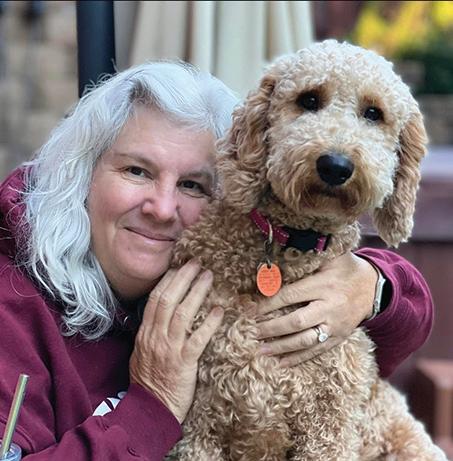
Stay. Watch. Keep the house soft. I followed Mimi and Mom room to room. If they washed dishes, I laid close to their feet so the floor could hold both of us. If they sat
in the quiet, I rested my chin on their knee and listened with them. If they stopped moving because memories were too heavy, I leaned my shoulder against their calf and made a wall they could lean back on.
Sometimes they talked to Papa out loud, and I watched the air like I could see him listening. Dogs don’t need to see to know.
Mom kept caretaking, but the shape shifted: papers, calls, arrangements, lists that put the world back into order one spreadsheet at a time. Her voice stayed steady so Mimi’s could tremble and then steady too.
Dad fixed the things sorrow can’t—he checked handles, tightened small rattles, made the yard tidy, kept the house’s bones strong so grief could sit down without everything else wobbling. Visitors came.
Some cried. Some laughed. Some did both at the same time.
When they sat in Papa’s sofa seat, I climbed into their laps. A few looked surprised. But rules are rules. The snuggle throne belongs to love, and anyone who sits in it must be held.
At night, the house was quieter, but not alone.
Mimi’s steps made a new rhythm. I matched it.
When it was time to go outside, I waited by the door like always, then looked back to check for ev-



Nellie Ruth
eryone—old habit, new meaning. The yard that Dad and the family had shaped for Mimi looked like a soft path freshly drawn. I walked it with her, slow, patient, listening to the tree leaves gossip.
Sometimes the humans told stories.
Fishing tales that smelled like fish.
Poker nights where quarters clicked like happy teeth.
Cars—so many cars—cared for like they were living things.

Respect—how Papa taught it, protected it, practiced it.
Carmen and Dennis’s sixty five years of choosing each other on purpose, every day.
I didn’t understand everything, but I understood the way the stories worked:
They kept Papa here in his home without making him stay where it hurts.
They turned grief into gratitude, sadness into presence.
Humans talk about the end like a reward for a life lived well.
I think dogs know that already. We don’t count years. We count returns.
How many times you come back from the door and sit down and open your hands—palms up.
How many times you let someone tuck themselves into the space you made for them.
That’s how I will count Papa.
In open hands.
In a sofa seat kept warm for whoever needs it next.
In the treats he gave me for being a good girl and going potty.
In Mimi’s steps that I match, one soft footfall at a time.
When we go back north, I will carry Florida on my fur.
When we return to Florida, I will bring the Midwest on my paws.
Packs stretch and return.
That’s how we go on.
If Dad forgets our gesture, I’ll remind him.
If Mimi or Mom forgets to eat, I’ll nose their elbow until they smile.
If the house forgets to breathe, I’ll sigh very loudly and make everyone laugh at how dramatic dogs can be.
I am Nellie Ruth—named for music and a tiny giant of a woman. I was Opal, the Orange One, a color I wore before we knew the battles we’d fight.
I chose my people when I was very small.
And in this new season, I choose them again. Every morning. Every night. Keep Dad safe. Keep Mom safe. Keep Mimi safe. Keep this love safe.
That is my work. That is my joy.
That is how a dog carries the weight of a life well lived—not as a burden, but as a gift she’ll never set down.
Epilogue — From Me
I didn’t set out to write a story about illness, or fear, or loss.
I didn’t set out to write about caretaking, or hospital rooms, or the quiet hours when you wonder what the next sun will bring. What I wanted—what I still want—is to remember.
Not the sickness.
Not the surgeries.
Not the worry that stacked itself on my chest in the dark.
But the love.
The hands that held me when I shook.
The voices that steadied me when I couldn’t steady myself.
The dog who crawled into every broken space and refused to let it stay empty.
Nellie came into my life before I knew the storm was coming.
She arrived wearing an orange ribbon and a determination that seemed too big for her tiny frame.
I didn’t know then that she would become my anchor, my shadow, my reminder that even the hardest seasons still have soft places.
She watched me leave for the


Nellie Ruth
hospital more times than any dog should ever have to.
She learned the sound of recovery, the scent of caution, the rhythm of a body trying hard to stay alive.
She matched her breathing to mine when it was all I could do.
She learned to slow her steps when mine faltered.
She learned to listen for what I didn’t say.
And when I got strong enough to walk without looking back, she still stayed close—just in case.
I’ve had more battles than I expected in this life.
AML. Surgery after surgery. The long quiet wait for good news.
But I also had the miracle of a stem cell transplant, the strength to keep going, the laughter of grandkids filling rooms that once held only worry.
And I had Nellie.
My Baby-girl.
My Nels.
The dog who learned my gestures before I spoke them.
Then came the season where we traded roles again—not for me this time, but for someone who mattered just as much.
Carmen and Dennis opened their door—and their hearts—to us long before Florida called us south.
They cared for me when I couldn’t stand on my own.
They filled our home with steadi -
Move Beyond Your Expectations
Buyer activity is picking up, inventory is improving and well-prepared homes are attracting strong interest. With the right pricing strategy, marketing plan and negotiating expertise, Sellers are seeing results. If you have been waiting for the “right time,” the market is showing encouraging signs-and opportunity is knocking. So, if you are thinking of making a move, now is the time to prepare. More than ever, it’s important to work with an experienced, knowledgeable and trusted agent who understands local trends, pricing
and how to position your home for maximum value.


ness when fear tried to empty it. Their love was the net beneath my fall.
So when Dennis—our Papa— needed us, we came.
And Nellie came too.
She carried what we couldn’t say. She guarded him gently.
She softened the space around his leaving.
And when the house shifted into the quiet that follows loss, she turned herself toward Mimi and toward my wife—who had just lost her dad— and she kept them upright with nothing but her presence.
This is a story of illness, yes— but more than that, it tells the story of care.
Of a daughter caring for her father.
Of a wife caring for her husband.
Of a mother carrying her family.
Of a man learning to lean, even when leaning was hard.
Of a dog teaching all of us what loyalty feels like in its purest form.
If this story has a lesson, it’s this: Love is the work we choose every day.
And sometimes the smallest creatures carry the biggest pieces of it.
Nellie didn’t just walk beside me—she walked me back to myself.
And when Papa’s time came, she walked him home with the same gentleness.
Dogs don’t get long lives.
But they give us something better: the reminder that life is counted not in years, but in the moments we return to one another.
I survived because people loved me.
I endured because my family refused to let go.
And I healed because a dog sat by my side and said, without a single word:
I’m here. I’m staying. You’re not alone.
This is our story.
Nellie’s and mine.
And it is the greatest gift I’ll ever carry.
Dan Hoyt lives with his wife Dawn in Moline, Illinois.



The Dolphins Quartet to Perform at the Chesapeake Chamber Music Festival
by James Carder
Young, fun-loving, communityminded and – yes – exceptionally talented, the musicians of The Dolphins Quartet return to The Ebenezer Theater in Easton on June 19 at 7:30 p.m. as part of the 41st Chesapeake Chamber Music Festival. The Quartet’s return comes on the heels of its recent big win at the Chesapeake Chamber Music Competition, where the Dolphins – as
the members like to be called – both awed the judges and won over the audience and went home with the $10,000 Lerman Gold First Prize and the $1,000 Audience Choice Prize.
The New York City-based Dolphins Quartet members – violinists Luke Henderson and Isaac Park, violist James Preucil and cellist Ian Maloney – all trained at The

Chamber Music
Juilliard School where they met, became close friends and discovered that when playing chamber music together they had what is often called a “quartet chemistry.” In 2022, they formed The Dolphins Quartet. Since then, they have both embraced the classical canon (especially, Beethoven, Mozart and Bartók), championed contemporary works and developed original compositions. Their ever-growing success is due in large part to their ability to find balance and harmony as an ensemble and to make chamber music vibrant, daring and deeply human.
Their concert at the festival will feature Beethoven’s String Quartet No. 10, “The Harp,” and four pieces from their own 2023 composition, The Dolphin Miniatures, a seven-movement piece chronicling their early experiences and adventures. Their programming of the
Beethoven quartet with The Dolphin Miniatures aligns with their belief that a work like the Beethoven can serve as a bridge for the audience between the classical canon and the contemporary work. Moreover, this bridge allows their programming to be both adventurous and accessible. By placing Beethoven alongside The Dolphin Miniatures, they invite the audience to hear both the established and the “living, breathing” possibilities of the string quartet medium. For them, a Beethoven quartet programmed alongside a contemporary work can evince varied emotional sound worlds that allow them to showcase the same level of imagination and storytelling in the Beethoven that they bring to their own composition.
The Dolphins are also committed to educational outreach, serving as the Arts Leadership Ensemble for Project: Music Heals Us, where they help lead Music for the Future, an initiative bringing Juil-

liard’s composition curriculum to correctional facilities nationwide. Last year, they launched their own Young Composers Program that motivates pre-college students to compose for a string quartet. This culminated in eleven world premieres by middle and high schoolaged student composers. The Dolphins recently released their debut album, Dolphins at Play, featuring their original compositions.
The dynamic Dolphins Quartet has very rapidly ascended as a powerhouse on the chamber music scene, distinguishing itself not only through technical brilliance, but also through a profound dedication to the accessibility and enjoyment of music. Moreover, its members are committed to the living art of composition and to educational outreach outside the usual confi nes of the classical music world. The Dolphins Quartet’s June 19 performance will give the Chesapeake Music audience the opportunity of an early, “ground-floor” preview of this highly accomplished, technically adept and socially conscious ensemble, one that is very likely to become a “must-see” string quartet in the very near future.
Be a part of this year’s Chesapeake Chamber Music Festival and experience The Dolphins Quartet performance and all of the festival’s extraordinary music, performed in an intimate setting. Detailed information on the festival concerts, in-
cluding programs, dates, times and ticket availability, can be found at chesapeakemusic.org.
Chesapeake Chamber Music Festival
June 12–20, 2026
June 12 at 7:30 p.m.
Festival Opening Extravaganza!
June 13 at 7:30 p.m.
Music of Four Nations
June 14 at 4 p.m.
Heritage and Home
June 18 at 7:30 p.m.
Bridging the Eras
June 19 at 7:30 p.m.
Competition Winners and More June 20 at 7:30 p.m.
Festival Finale
2 Free and Open rehearsals: June 10 and June 17 at 10 a.m.
Chesapeake Music offers a limited number of free tickets to students, educators, and Talbot County First Responders, as well as a “buyone-get-one” option for fi rst-time patrons of Chesapeake Music and a new “$35 for 35 and under” offer. Based in Easton, Maryland, Chesapeake Music is a 501(c)(3) nonprofit organization that brings renowned musicians to delight, engage, and surprise today’s audiences, and educate, inspire, and develop tomorrow’s. For tickets and more information, visit ChesapeakeMusic. org.


Caroline County – A Perspective
Caroline County is the very definition of a rural community. For more than 300 years, the county’s economy has been based on “market” agriculture.
Caroline County was created in 1773 from Dorchester and Queen Anne’s counties. The county was named for Lady Caroline Eden, the wife of Maryland’s last colonial governor, Robert Eden (1741-1784).
Denton, the county seat, was situated on a point between two ferry boat landings. Much of the business district in Denton was wiped out by the fire of 1863.
Following the Civil War, Denton’s location about fifty miles up the Choptank River from the Chesapeake Bay enabled it to become an important shipping point for agricultural products. Denton became a regular port-ofcall for Baltimore-based steamer lines in the latter half of the 19th century.
Preston was the site of three Underground Railroad stations during the 1840s and 1850s. One of those stations was operated by Harriet Tubman’s parents, Benjamin and Harriet Ross. When Tubman’s parents were exposed by a traitor, she smuggled them to safety in Wilmington, Delaware.
Linchester Mill, just east of Preston, can be traced back to 1681, and possibly as early as 1670. The mill is the last of 26 water-powered mills to operate in Caroline County and is currently being restored. The long-term goals include rebuilding the millpond, rehabilitating the mill equipment, restoring the miller’s dwelling, and opening the historic mill on a scheduled basis.
Federalsburg is located on Marshyhope Creek in the southern-most part of Caroline County. Agriculture is still a major portion of the industry in the area; however, Federalsburg is rapidly being discovered and there is a noticeable influx of people, expansion and development. Ridgely has found a niche as the “Strawberry Capital of the World.” The present streetscape, lined with stately Victorian homes, reflects the transient prosperity during the countywide canning boom (1895-1919). Hanover Foods, formerly an enterprise of Saulsbury Bros. Inc., for more than 100 years, is the last of more than 250 food processors that once operated in the Caroline County region.
Points of interest in Caroline County include the Museum of Rural Life in Denton, Adkins Arboretum near Ridgely, and the Mason-Dixon Crown Stone in Marydel. To contact the Caroline County Office of Tourism, call 410-479-0655 or visit their website at www.tourcaroline.com .




Easton
Map and History
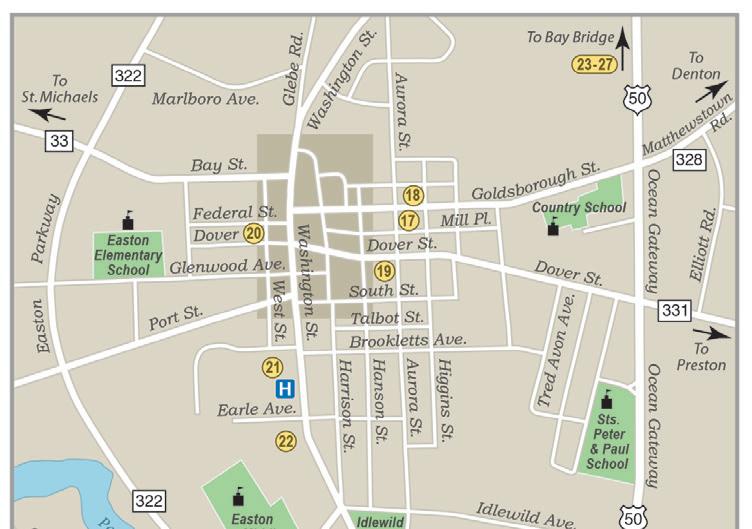
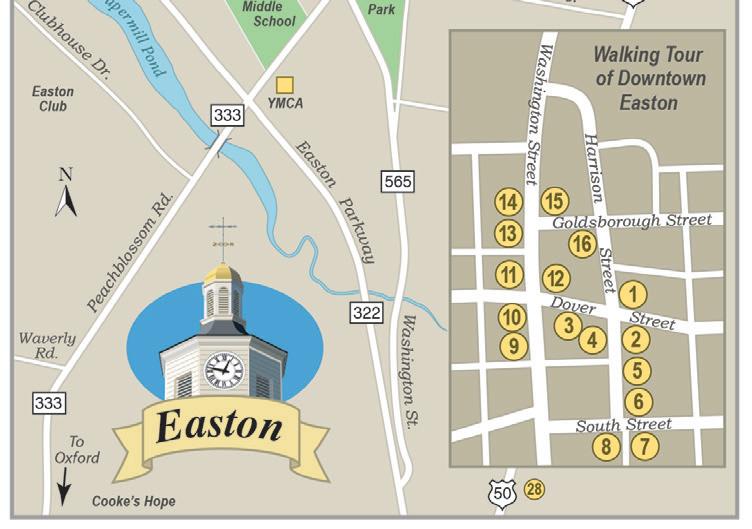

The County Seat of Talbot County. Established around early religious settlements and a court of law, Historic Downtown Easton is today a centerpiece of fine specialty shops, business and cultural activities, unique restaurants, and architectural fascination. Treelined streets are graced with various period structures and remarkable homes, carefully preserved or restored. Because of its historical significance, historic Easton has earned distinction as the “Colonial Capitol of the Eastern Shore” and was honored as number eight in the book “The 100 Best Small Towns in America.” With a population of over 16,500, Easton offers the best of many worlds including access to large metropolitan areas like Baltimore, Annapolis, Washington, and Wilmington. For a walking tour and more history visit https:// tidewatertimes.com/travel-tourism/easton-maryland/.






Dorchester Map and History
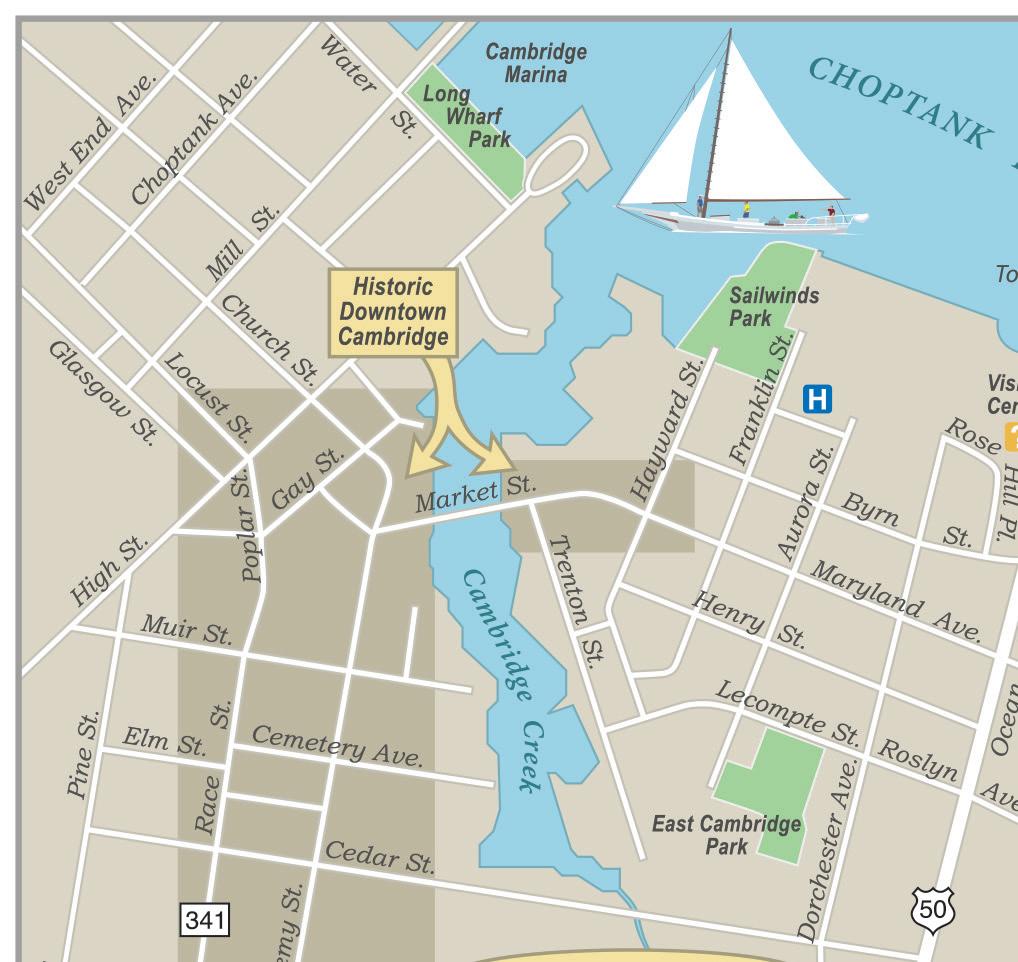



Dorchester County is known as the Heart of the Chesapeake. It is rich in Chesapeake Bay history, folklore and tradition. With 1,700 miles of shoreline (more than any other Maryland county), marshlands, working boats, quaint waterfront towns and villages among fertile farm fields – much still exists of what is the authentic Eastern Shore landscape and traditional way of life along the Chesapeake.
For more information about Dorchester County visit https://tidewatertimes.com/travel-tourism/dorchester/.


TIDEWATER GARDENING
by K. Marc Teffeau, Ph.D.
June is Pollinator Month
This year, gardeners celebrate Pollinator Week June 22–28. This is a great time to support bees, butterflies and other pollinators. Planting native flowers, shrubs and trees and reducing pesticide use can help create a thriving pollinator population. Pollinator Week was initiated and is managed by Pollinator Partnership. In 2008, the U.S. Senate unani -
mously approved a designation of a week in June as “National Pollinator Week.” The theme for 2026 Pollinator Week is “Life on a Leaf: Celebrating Caterpillars and Host Plants:
According to the Pollinator Partnership ( pollinator.org/pollinator-week),
“Pollinator Week is an annual celebration in support of pollina -


FRANK E.DAFFIN,

tor health that was initiated and is managed by Pollinator Partnership. It is a time to raise awareness for pollinators and spread the word about what we can do to protect them. The great thing about Pollinator Week is that you can celebrate and get involved any way you like! Popular events include planting for pollinators, hosting garden tours, participating in online bee and butterfly ID workshops, and so much more. Pollinator Week 2026 is a celebration of the vital role that pollinators play in our ecosystems, economies, and agriculture.
June is a transition month in the landscape. Our Shore gardens hit full stride—long days, warm nights and rapid growth. We need to focus on correct watering, disease and insect damage prevention and succession planting of certain vegetable crops.
Spring-flowing trees and shrubs have finished blooming. Daylilies are starting to flower in abundance, and many perennials are starting to bud and flower. Plant transition time is also in the vegetable garden.
The early edible pod peas you

planted in the garden should be ready for harvest, along with greens like lettuce and spinach. If you have not done so already, it is time to plant warm-season crops like peppers, tomatoes, eggplants, cucumbers, sweet corn and squash. I always have a problem with squash vine borer in the zucchini, even though I spray with an organic repellent. To compensate for some damage, make additional squash plantings about 3 weeks apart through mid-July. This planting schedule works well if you have Cole crops like broccoli, cauliflower and Brussels sprouts in the vegetable garden. When you finish harvesting these plants and they start to bolt (flower), pull them
out and replant them with zucchini or yellow-necked squash, or do a seeding of green snap or bush beans.
Do successive plantings of green beans every two weeks until the middle of July. This will give you a continued harvest before the first frost. To enhance the growth





Tidewater Gardening
of green beans, coat them with a pea and bean bacteria inoculant. Beans are legumes and can “fix” atmospheric nitrogen from the air if rhizobium bacteria are present in the bean roots. Using an inoculant of rhizobium bacteria will increase yields, especially in soils where beans have not been grown before.
Packages of bean and pea inoculant can be usually found where vegetable seeds are sold, or you can order it online from seed catalogs. Coat the bean seed with the inoculant before planting. Follow the directions on the package for best results. When thinning the emerging bean seedlings to the recom-
mended 3” spacing, watch for “snake heads,” seedlings that have lost one or both of their cotyledons and produce poor, weak sprouts. Also watch for “bald heads,” seedlings that have the growth point damaged so severely that they cannot develop. Both types of seedling will be weak and delayed in growth and should be removed.
If you have an asparagus bed, stop cutting the stalks in mid- or late June when the spears become thin. After the last cutting is made, fertilize by broadcasting a 10-1010 formula at the rate at 2 lbs. per 100 sq. ft. Allow the tops to grow during the summer to store food in the crowns (roots) for the crop next spring.





Tidewater Gardening
Vegetable crops need a steady supply of water and nutrients for the best production. For a very efficient, steady feeding of vegetables, sink a large can or bucket with many holes in its sides into the soil and fill it about 2/3 full of rotted manure or compost. Rain or occasional watering will keep a rich supply of nutrient seeping out to feed plants in a circle several feet wide. This is also a great use for plastic milk jugs. Punch holes in the sides of a jug about 2” apart. Bury the jug, leaving the neck protruding from the soil. Fill the jug with water (solutions of liquid fertilizer may be used to water and feed at the same time) and screw on the cap. The water will seep out, providing a slow, deep irrigation for plants.
Sweet corn is wind-pollinated. To ensure its pollination, plant several rows together in a block rather than in a single long row. This practice will help reduce the number of partially filled cobs. Sweet corn is

also a heavy nitrogen feeder. Sidedress with 3 Tbsp. of 10-10-10 per 10 feet of row when the corn plants are 12–18” high.
Tomato leaf diseases like early blight will start to show up in late June. To reduce early blight problems, do not water the tomato plant foliage, as the disease is spread by water. Early blight is a soil-borne fungus that infests the lower plant leaves by being splashed on the foliage by rainfall or irrigation. Place a thick layer of newspaper mulch under tomatoes to cut back on early blight infestation. Remove and trash any lower yellow and blightinfested leaves to prevent the disease from moving up the plant. At the end of the growing season, dispose of the newspaper mulch in the trash.
Remember that the time of day when vegetables are harvested can influence the taste and texture. For sweetness, pick peas and corn late in the day. That’s when they contain the most sugar, especially if the day was cool and sunny. Other vegetables, such as lettuce and cucumbers, are crisper and tastier if you harvest them early in the morning before the day’s heat has a chance to wilt and shrivel them.
Yellow crook neck or straight neck squash tastes best when 4 to 7 inches long. Pick when pale yellow (rather than golden) and before skin hardens. Scalloped (patty pan) squash is best when grayish
or greenish white (before it turns ivory white) and is still small, even silver dollar size.
Cucumbers have a noticeably short “vine storage time”; under warm, humid conditions, fruits on the vine may remain in prime condition for less than 12 hours. For the best tasting cukes, pick early and often. The fruits can be stored for up to two weeks at 45 to 50 degrees F and 95 percent relative humidity. Lower temperatures cause chilling damage, and higher temperatures encourage yellowing. Yellowing is also accelerated if cucumbers are stored with tomatoes or apples. Remove cucumbers by turning fruits parallel to the vine and giving a quick snap. This pre-
vents vine damage and results in a clean break. If you have trouble mastering this, take a sharp knife to the garden for harvesting. Cut or pull cucumbers, leaving a short stem on each fruit.
After they have finished flowering, German iris can be divided and replanted. Cut back the leaves by about a third and divide the clumps into single plants with one or two sections of healthy rhizome. Discard any diseased plants with mushy rhizomes. If disease has been a problem with your iris, it may be wise to try a new location for them. To control the iris borer, apply a systemic insecticide to the fans.
Dutch irises, sometimes call the “year-round iris” because of its

Tidewater Gardening
availability as a cut flower, is also a great garden performer. Dutch irises are hybrids whose parentage can include many species. The garden variety Dutch irises bloom much later than the earlier spring-flowering dwarf iris and add rich color to the “transition” garden. Reaching around two feet tall, they should now be showering well-planned gardens with their blue, yellow, white, deep purple and now some two-color blossoms.
After Dutch irises have finished blooming, leave the foliage in place. The leaves will gather sunlight and provide nourishment for next year’s show. Water as needed during active growth periods. Dutch irises prefer not to be watered while dormant. At the end of the summer, the leaves will become yellow and die back as the plant slips into dormancy. Foliage may be removed at this point. Your iris will rest for a few months before beginning the next growing cycle.
In the perennial bed, don’t forget to divide spring and early summer flowering perennials such as lilies after their blooms fade. Instead of severing the clump in half, try jiggling the roots apart with two sharp spading forks. This takes more time but damages fewer roots than cutting the clump apart. Delphiniums bloom this month. To encourage more flowers, feed the plants af-

ter bloom, cut back spent stalks to 1 foot and then remove stalks entirely when new growth is 6 inches or so tall. Unless you like leaning delphiniums, be sure to stake them before they grow tall. Lightly side dress perennials, including spring bulbs, with a 5-10-10 or 10-10-10 fertilizer, being careful to avoid placing the fertilizer in the center or crown of the plant. When the foliage of the spring-flowering bulbs yellows, you can cut it out and dispose of it.
If you are growing chrysanthemums, June is the time to disbud the flowers if you want to secure large, beautiful blooms on straight, strong stems. To disbud, remove the small side buds that form in the angles of the leaves along the stems. This allows all food reserves to be used for one large flower rather than many smaller ones. It is still not too late to divide the chrysanthemum plants to







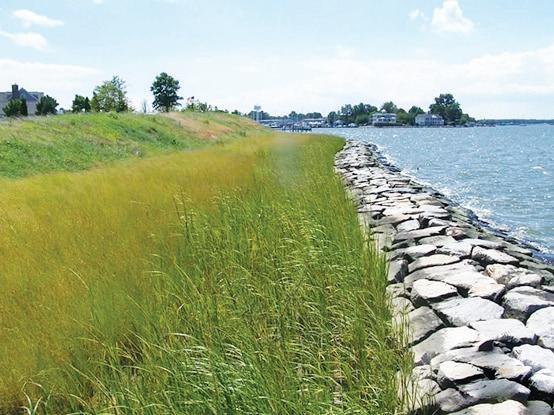
Tidewater Gardening
produce more plants in the garden. Carefully lift the clumps and divide out the individual plants. Replant them in the landscape where you want to expand your planting. After transplanting, give the plants a watering with a liquid fertilizer at half strength to give them a little “kick” and help them recover from transplant shock. If they have gotten too tall, they can be cut back by about one-half now to reduce their fall height.
When the early summer heat starts to take out the cool-season pansies, snapdragons and any ornamental cabbage and kale that might have overwintered, replace them with summer annuals, such as nicotiana, portulaca, zinnia, impatiens or celosia. Before planting, rework and enrich the soil with compost. If you haven’t already, remove all old flower heads from your rhododendrons and lilacs. The flower heads of rhododendron are best broken out by hand. Do this now to increase growth and the development of next year’s flower buds. I recommend pruning out the spent lilac flower heads rather than breaking them off. Prune off sprouts that are growing from the base of crape myrtles. June is also when you can selectively prune or thin spring-flowering shrubs to get fuller plants. Do not prune these plants after the middle of July.
Watch for bagworms in June, especially on cedar trees and other narrow-leaved evergreens. They typically hatch around the beginning of the month. Each bag hanging from a tree may contain 200 to 1,000 eggs if it was made by a female bagworm. Control is most effective when the larvae are newly hatched because they become harder to manage with insecticides as they grow.
The best “organic” control method for this pest is hand picking and destroying the bags before June 1st. For the bags you can’t reach and remove, treat them with an insecticide. Early in the hatch, spraying the plant with Bt, or Bacillus thuringiensis, is the best control. Sold under the trade names Dipel, Bt or Biotrol, this naturally occurring bacterium is effective for caterpillars in the early stages of growth. Keep an eye out for aphids and other insects on roses. Spray if necessary. Begin spraying to control blackspot at least twice a month. By removing and replacing last year’s mulch under roses in the spring, this practice will cut down greatly on black spot problems.
Happy Gardening!
Marc Teffeau retired as Director of Research and Regulatory Affairs at the American Nursery and Landscape Association in Washington, D.C. He now lives in Georgia with his wife, Linda. greatly



St. Michaels Map and History
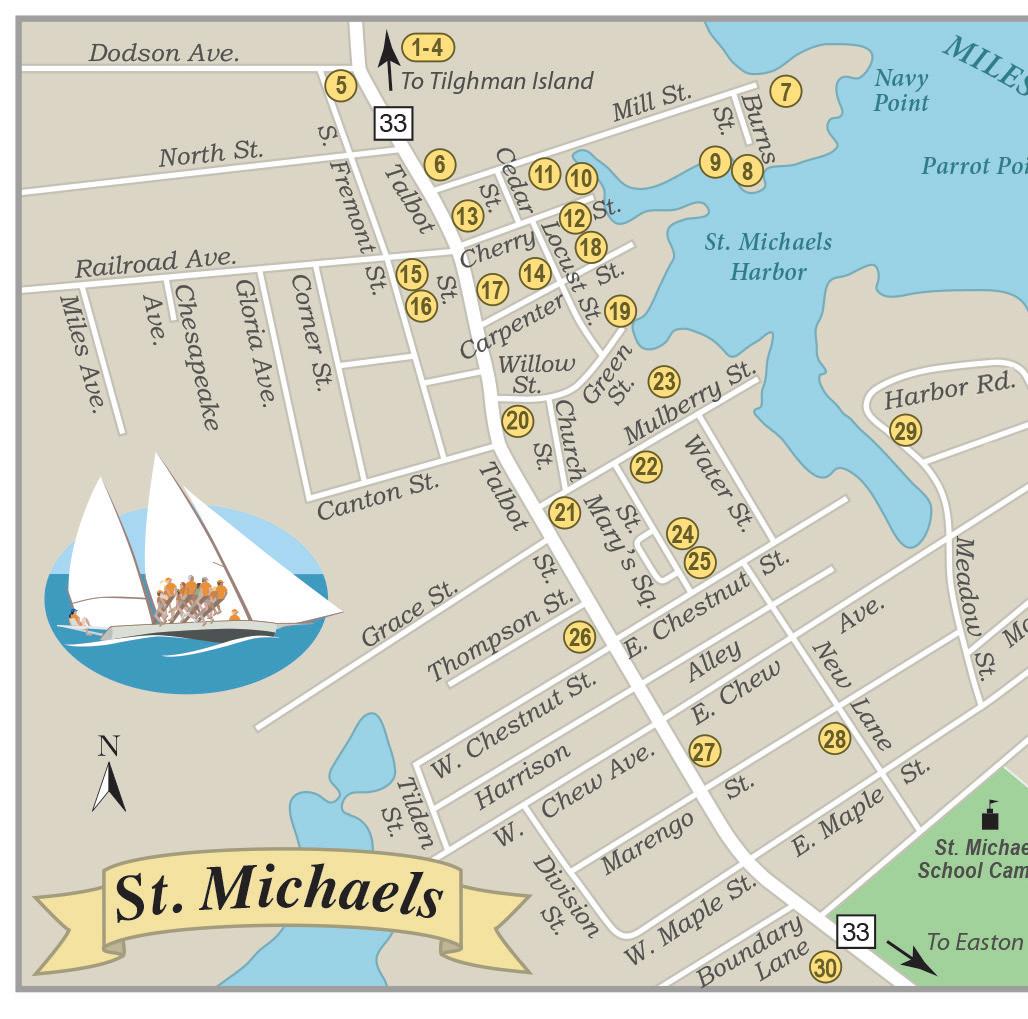


On the broad Miles River, with its picturesque tree-lined streets and beautiful harbor, St. Michaels has been a haven for boats plying the Chesapeake and its inlets since the earliest days. Here, some of the handsomest models of the Bay craft, such as canoes, bugeyes, pungys and some famous Baltimore Clippers, were designed and built. The Church, named “St. Michael’s,” was the first building erected (about 1677) and around it clustered the town that took its name.
For a walking tour and more history of the St. Michaels area visit https://tidewatertimes.com/travel-tourism/st-michaels-maryland/.

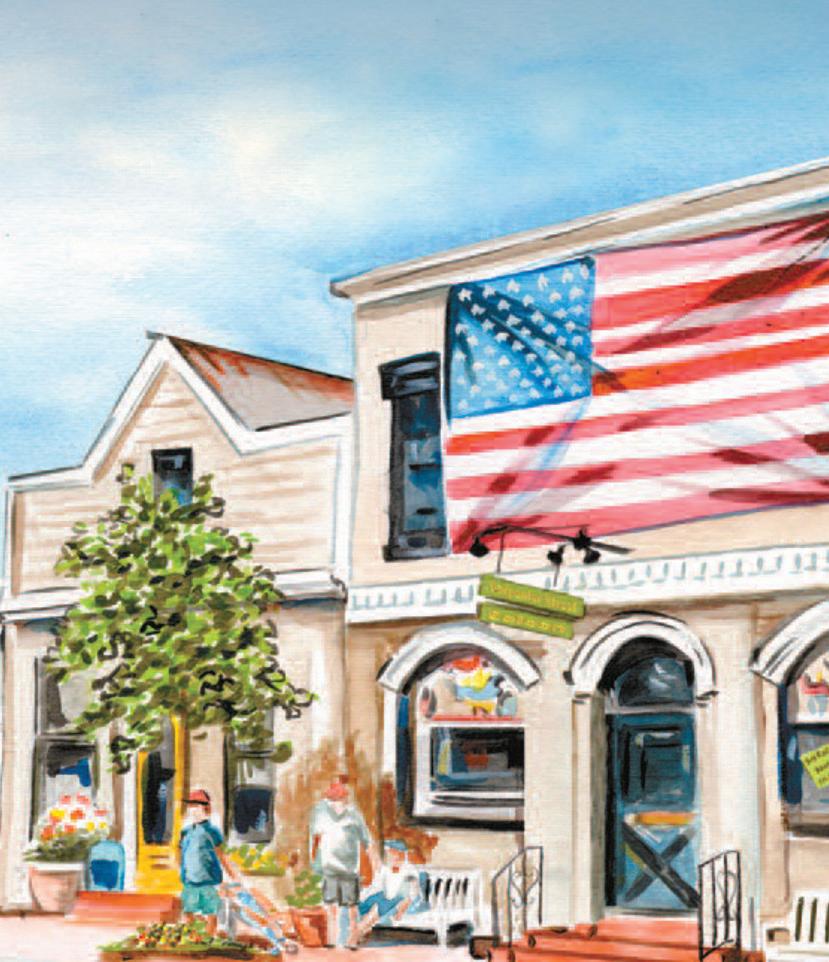




Len and Lefty by A.M. Foley
Where were you forty years ago, when you heard Len Bias had died? As well as they remember JFK’s assassination, Maryland basketball fans remember hearing the unbelievable word that Leonard Bias was dead. Two days earlier, the star of Terrapin basketball was the second player selected in the National Basketball Association draft. The Boston Celtics traded up in NBA draft rotation to sign him, to pair with superstar Larry Bird. Anticipating how well they would mesh, Bird volunteered to report early with the
rookies, in order to work out with Bias. But it wasn’t to be.
As Maryland Coach Lefty Driesell said, Bias made a tragic mistake: celebrating his achievements by using cocaine. As far as near friends and family knew, this was his first experience with a drug that was becoming widely acceptable but little understood. Certainly, lack of experience would explain how usage could cause sudden death in a uniquely fit young man—one who’d just capped a college career with his dream-come-true. Coach Driesell

Len and Lefty
had touted Bias to his friend, Red Auerbach, GM of the world champion Celtics. Len and his father, James Bias, flew to New York for the June 17, 1986, draft ceremony. The first selection went to Brad Daugherty, a seven-foot center. Then Boston chose Bias. The next day, he and his father visited Reebok to complete a lucrative shoe contract and receive enough complimentary athletic shoes to gratify family and teammates.
Over decades of Coach Driesell’s triumphs and defeats, losing Len Bias the night he returned from Reebok was the gravest tragedy. Win or lose, without presuming to
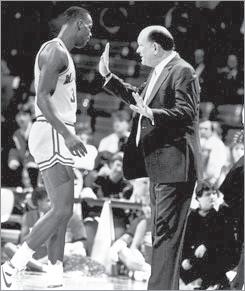
preach, the coach reacted from the perspective of a believer. When the game ball bounced against his team,
Closed Tuesdays

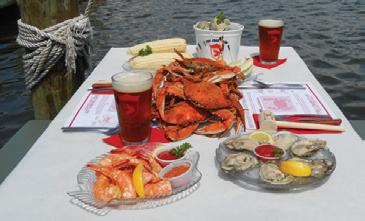

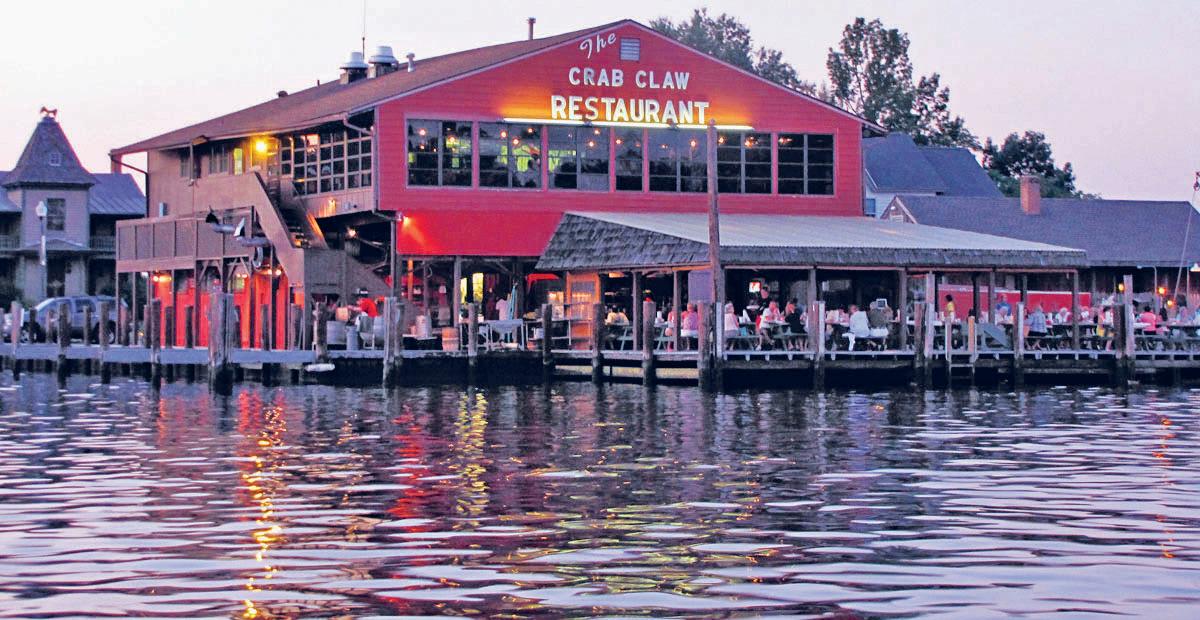
in his Tidewater Virginia drawl, he’d tell a postgame interviewer, “I guess the good Lord didn’t want us to win that one.” Following Bias’s death, his coach left the grieving Bias family in Leland Memorial Hospital to meet a horde of microphones. Teary-eyed and choking, he managed to say only, “I love you, Leonard, and I miss you. I’ll see you again one day in heaven.” (The day came decades later for a 92-yearold Driesell on February 17, 2024.)
Other coaches were more expansive than he back in 1986, quick to say that such an event could never occur in their programs. How they would control adults behind closed doors was unclear. Duke’s coach Mike Krzyewski singularly dared to admit coaches couldn’t do the impossible. Lefty was vulnerable, though, being something of an outrider among Atlantic Coast Conference coaches. The typical demeanor among his competitors tended to be buttoned-down, perhaps taking a cue from University of North Carolina coach Dean Smith. Folks along basketball’s Tobacco Road seemed to believe Dean Smith, not Dr. Naismith, invented the game of basketball. Lefty was more downto-earth, wearing his heart on his sleeve.
One year after Bias’s autopsy and numerous other investigations, Driesell participated at the University of Rhode Island in a conference on drug abuse among athletes. Coach
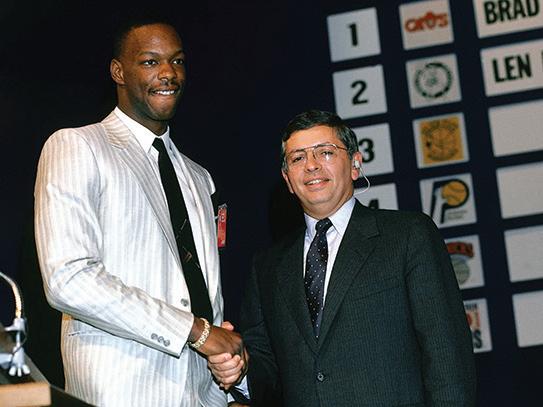
Draft pick Len Bias (left) with NBA commissioner David Stern (right) after he was selected second overall by the Boston Celtics in the NBA draft on June 1, 1986.
called Bias “one of the nicest young men I’ve ever known. The thought of him putting cocaine up his nose is just terrible beyond belief. I didn’t even think he drank beer. When he died I was convinced it was a heart attack.” The autopsy attributed death to cardiac arrhythmia, caused by using nearly-pure powdered cocaine. By the conference’s opening date, several prominent ACC players had admitted to using cocaine, including two from University of North Carolina and one from North Carolina State. If Dean Smith ever had a nickname, no evidence survives him. Gary Williams, who coached Maryland’s Terps to the national title that had eluded Driesell, said, “When you said “Lefty,” you didn’t have to say anything else. Everybody knew who you were talking about. When
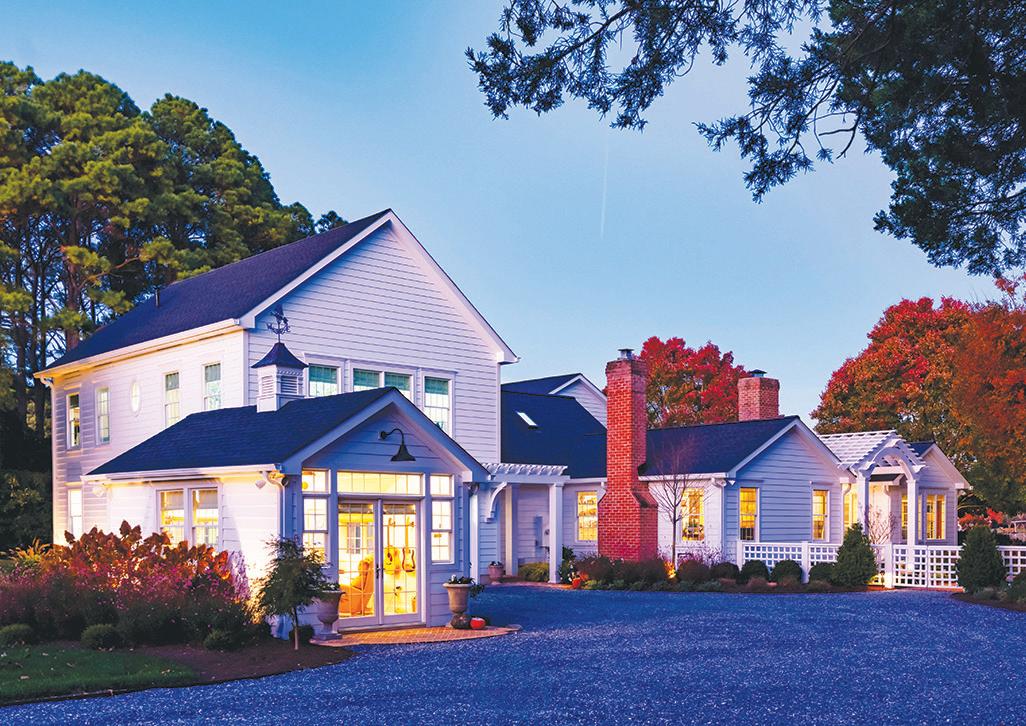

Oxford Map and History
Oxford is one of the oldest towns in Maryland. Although already settled for perhaps 20 years, Oxford marks the year 1683 as its official founding, for in that year Oxford was first named by the Maryland General Assembly as a seaport and was laid out as a town. In 1694, Oxford and a new town called Anne Arundel (now Annapolis) were selected the only ports of entry for the entire Maryland province. Until the American Revolution, Oxford enjoyed prominence as an international shipping center surrounded by wealthy tobacco plantations. Today, Oxford is a charming tree-lined and waterbound village with a population of just over 700 and is still important in boat building and yachting. It has a protected harbor for watermen who harvest oysters, crabs, clams and fish, and for sailors from all over the Bay. For a walking tour and more history visit https://tidewatertimes. com/travel-tourism/oxford-maryland/.
they write the book on basketball, he’s gonna have a couple chapters.”
Lefty’d created a celebration to initiate the start of each season, Mid-
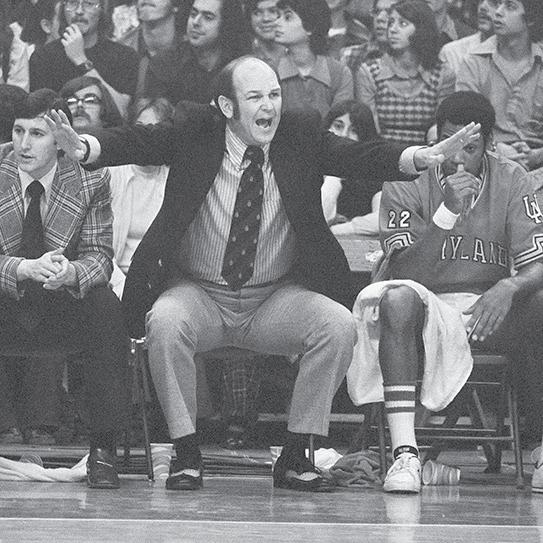
night Madness, since spread from Maryland to universities nationwide. His coaching of a Terps loss in the 1972 ACC championship game, one of the greatest ever played, led to expansion of the NCAA Tournament into the major event it is today. Alas, the book will also have to include Lefty losing his coaching post in the fallout following Bias’s death. Many considered the coach an innocent scapegoat—victim of pressure from the university’s chancellor. Copious investigations found no fault with Lefty. Nevertheless, he was gone when the next season began in the fall.
As Terp fans of the genial Len Bias grappled with shock and grief, the general public learned more
Tidewater Residential Designs since 1989
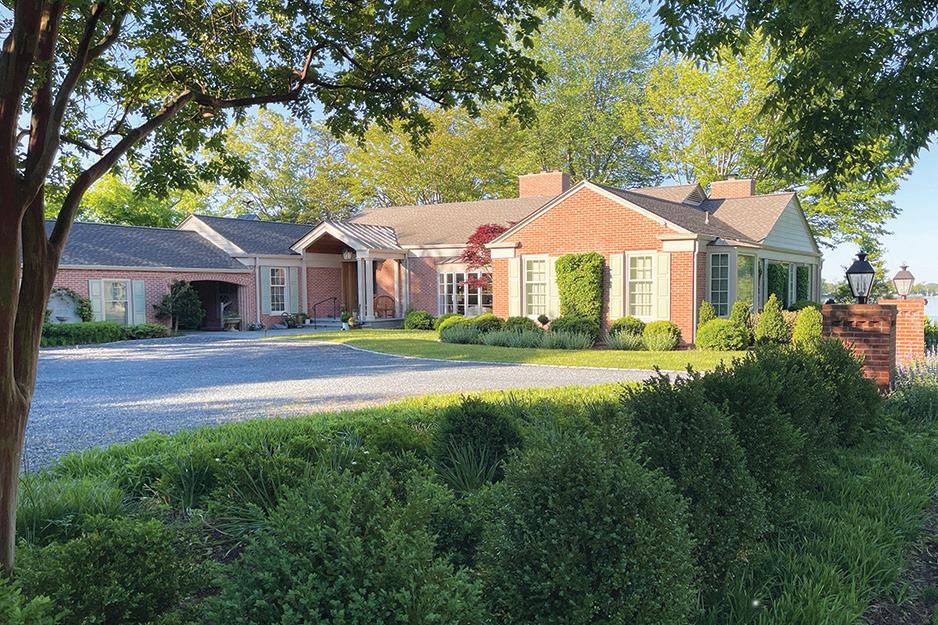
than they wanted to know about potential hazards in cocaine’s growing popularity, both in powder form and smoked as crack. The ripple effects spread for decades, from family to teammates, athletic programs, universities and legislation. An anti-drug law—unofficially referred to as the Len Bias law—sped through Congress in time for the 1986 election.
House Speaker Tip O’Neal introduced the bill, backed by President Ronald Reagan. Future President Joe Biden facilitated its swift passage, for which he later apologized. Imposition of “mandatory minimum” sentences for possession caused federal prisons to explode into overpopulation. Ironically, ra-
cial bias lay at the heart of the Len Bias bill. It punished possession of crack cocaine much more severely than possession of powdered cocaine. While crack generally was an inner-city problem, the powder that killed Bias was widely acceptable among Yuppie suburbanites. Quantitatively, mandatory sentences for grams of crack possession were 100-to-1.
Meanwhile, in the world of basketball, after crafting his roster around Bias, Auerbach coped with a long period of Celtics decline. Fans of that era were deprived of watching championship contests that surely would have pitted Len against his contemporary, Michael Jordan, who was lifting the Chi-
The Treasure Chest

Open 7 Days a Week for the Summer 6/10-9/7/26


S. Morris St., Oxford MD 410-924-8817 Wed. ~ Mon. 10 AM to 5 PM, closed Tues. · treasurechestofoxford@gmail.com
cago Bulls to new heights. Bias had soared, with a 44-inch vertical leap. Before the term became current, he was “chiseled.” Jordan only gained additional muscle in order to compete more effectively after turning pro. When the two had played faceto-face in ACC games, at six-footeight Bias held a two-inch height advantage and could out-muscle and out-leap Jordan. (Were competitiveness measurable, the two were probably equal in “refuse-tolose.”)
Speaking of her son’s dedication to his craft, Dr. Lonise Bias would say that Len was competitive without being arrogant. Somehow she found the courage to turn her

loss into a force for good, addressing school groups and motivating youths to make positive choices. Over years of national speaking engagements, she often met people who told her, “Your son’s death saved my life.” When Dr. Bias herself died earlier this year, condolences included many from people whose lives were changed by her faith-driven motivational message.
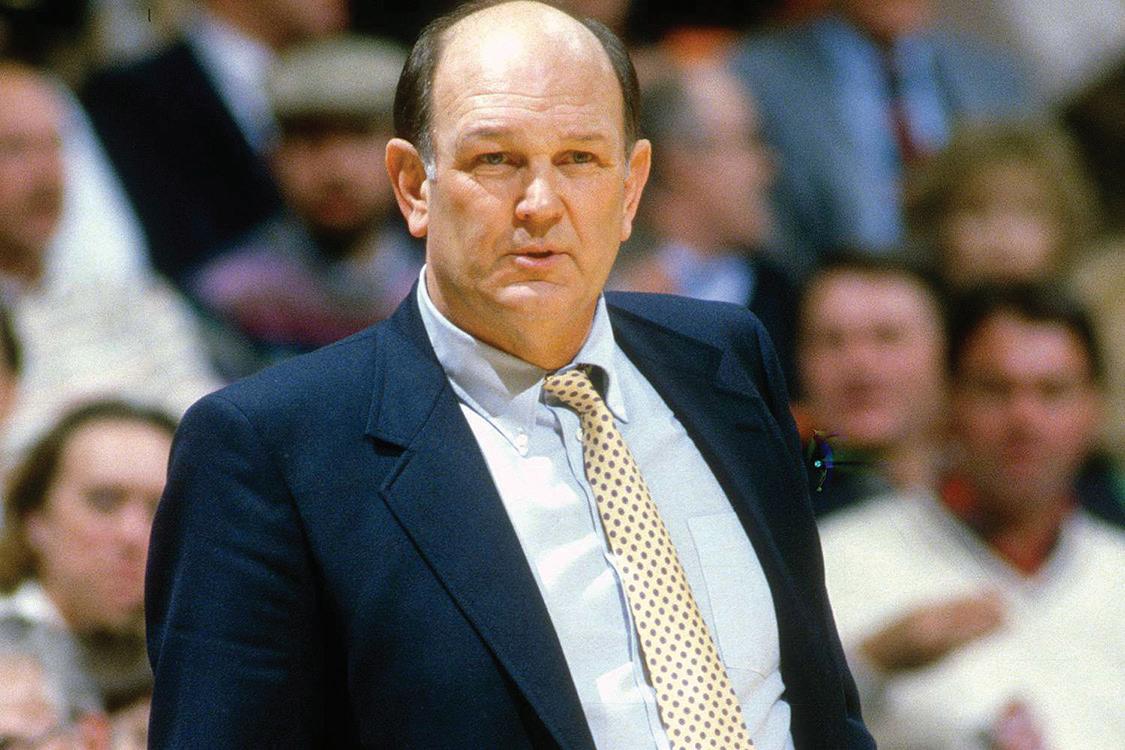
Dr. Lonise may have been unique in creating anything positive out of the tragedy of Len’s death.
A certain stigma seemed to attach to everything and everyone in College Park at the time, from the university itself to teammates in the dorm wing, who knew nothing of drug use behind closed doors. Terps players who’d competed successfully at the highest college level were bypassed by NBA teams. To stay in the game, they had to take their talents abroad to European teams while former competitors were selected in NBA drafts. Maryland, a founding member of the ACC, left the conference for the Big Ten in 2014. As recently as the 2025 NCAA Tournament, a Carolina athletic di-
rector was heard to say, “Maryland was never a real ACC team anyway.” Thirteen years before Bias’s death, the ACC had been happy to claim Driesell when he inspired the NCAA to create an Award of Valor, acknowledging “courageous action or noteworthy bravery by persons involved with intercollegiate athletics.”
Between seasons, Lefty and Joyce Driesell enjoyed a house on the Delaware coast. He and two other men were surf fi shing early one morning off Bethany Beach when he noticed fl ames shooting from a townhouse complex behind them. Dropping his rod, he sped to the door. Getting no response, he broke the door down and rushed in. A woman, unaware her house was

on fi re, ran out screaming about an intruder. Afterwards Driesell said, “Don’t build me up as any kind of hero. All we did was try to get the kids out. It was just lucky we were fi shing right in front of the houses.”
An eyewitness, who happened to be a circuit court judge, contradicted that testimony: “Let’s face it, Driesell was a hero. There were no injuries and it was a miracle, because fi remen didn’t come for at least thirty minutes.” By that time, ten children had been rescued from four consumed townhouses.
Nominated (not for the first time) in 2018 by Coach K., the Naismith Basketball Hall of Fame






fi nally acknowledged Lefty’s contributions to the game. Aided by a walker, the 86-year-old inductee reached the lectern and gratified the audience with a classic Lefty acceptance speech, declaring it “the happiest day of my life…something I prayed about.” Among many accomplishments, he was the only coach ever to score over 100 wins while elevating the status of four different Division I universities.



The fi nal Maryland season for both Len and Lefty was 1985-86. Maryland University’s Athletics Hall of Fame inducted Lefty in 2002; Bias in 2014. Lefty had coached in College Park for seventeen years without a losing season. Len had led all-time basketball players in scoring and fourteen other records and had twice been selected ACC Player of the Year.
Forty-some years ago, A.M. Foley swapped the Washington, D.C. business scene for a writing life on Elliott Island, Maryland. Tidewater Times kindly publishes Foley’s musings on regional history and life in general.
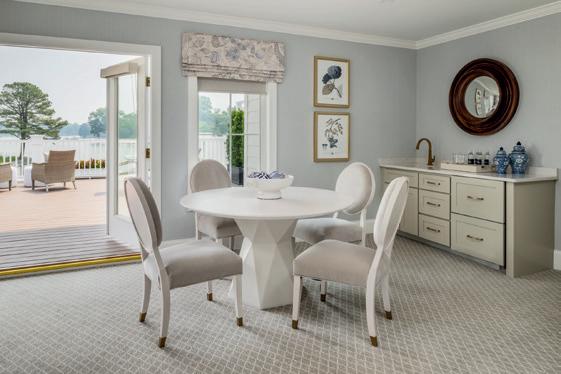

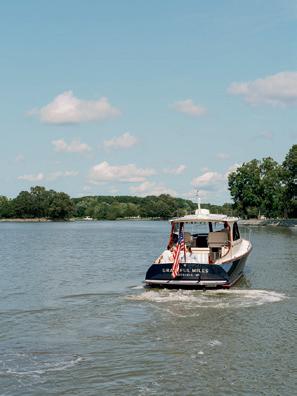
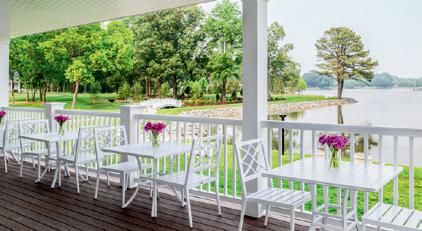





Scoops of Summer - Recipes to Share
There’s something about June that invites a slower pace—bare feet on warm grass, late sunsets, and the unmistakable pull of something cold and sweet in your hand. Ice cream isn’t just a treat this time of year; it’s an experience. It’s the swirl of bittersweet chocolate sauce over creamy vanilla, the slow drizzle of golden caramel catching the light, the cloud of whipped cream that never quite stays put. It’s the bright pop of raspberry, the crunch of a homemade waffle cone and the quiet creativity of mixing flavors
you didn’t know belonged together—until they did.
This season, we’re not just scooping ice cream—we’re building it. Layer by layer, flavor by flavor. From rich classics like chocolate and vanilla to unexpected favorites like pretzel salad ice cream, cashew berry cream creations, ginger peach sorbet and lemon ginger frozen yogurt, each combination tells a story. Some are nostalgic, some surprising and some—like the ones you’ll discover at the end of this article—are rooted in a passion

Tidewater Kitchen
that turns simple ingredients into something unforgettable.
This month’s celebration of ice cream was inspired by a small, family-owned shop that just opened last year in Dorchester County— Chilly Billy’s —a place quickly becoming known for its creativity, community feel and unforgettable scoops. That spirit of building, layering, and playing with flavor is exactly what summer cooking is all about. Simple ingredients come alive when you give them a little attention, a little creativity and the freedom to become something new. The recipes below are meant to be just that—flexible, fun and full of possibility. A classic vanilla base that welcomes mixins. Sauces to drizzle warm or cool depending on your mood. Bright fruit blends, creamy textures and a few unexpected twists along the way. Think of it less as following rules—and more as creating your own summer scoop.
Build Your Own
Summer Sundae
Think of this as your summer rhythm—simple, flexible and rooted in what you love. Start with a Base: Chocolate, vanilla or something a little different— like cashew cream or frozen yogurt. Add a Drizzle: Bittersweet chocolate sauce, warm caramel or bright raspberry. Layer in Texture:
Homemade waffle cone pieces, crushed pretzels, toasted nuts, or granola. Bring in the Unexpected: A scoop of ginger peach sorbet alongside vanilla. A salty-sweet twist like pretzel salad ice cream. Something that surprises you. Finish Softly: Whipped cream, a light dusting of cocoa or even a touch of citrus zest. There’s no perfect formula—just balance, curiosity and a willingness to try something new.

(Makes about 1 quart)
2 eggs
1 cup sugar
1 cup whole milk
2 cups whipping cream
1 teaspoon vanilla extract
Combine eggs, sugar and milk using a mixer. Stir in cream and vanilla. Pour into an ice cream maker and churn. Note: Once the ice cream is thick enough to coat
Classic Vanilla Ice Cream


Tidewater Kitchen
the back of a spoon, add your mixins. This is a fun and easy base for endless variations.

Easy Butterscotch Sauce
3 tablespoons butter
½ cup brown sugar (light or dark)
¼ cup heavy cream
Combine all ingredients in a small saucepan. Simmer for 5 minutes. Let cool slightly—it will thicken as it sits. Serve warm or cold. Especially wonderful over coffee ice cream.
Chocolate Fudge Sauce
2 cups powdered sugar
1 cup half & half
1 cup semi-sweet chocolate chips
½ cup unsalted butter
1 teaspoon vanilla
Combine all ingredients (except vanilla) in a saucepan. Cook over medium heat, stirring constantly

until it boils. Remove from heat and stir in vanilla. Store in refrigerator up to 5 days. Reheat gently before serving.
Sweetened Whipped Cream
½ cup cold whipping cream
1 tablespoon powdered sugar
Beat on high speed until soft peaks form.
Raspberry Sauce
2-½ cups frozen raspberries (thawed)
A drizzle of honey or maple syrup
1 tablespoon lemon juice
Mix all ingredients until smooth. Strain through a fine mesh sieve to remove seeds. Store in a squeeze bottle if desired. Can be made up to 5 days ahead.
Mix-Ins & Variations (Using Vanilla Base)
• Mint Chocolate Chip: 1 tsp. mint extract, ¾ cup mini chocolate chips, 1 drop green coloring
• Cookies & Cream: ¾ cup crushed cookies
• Heath Bar Crunch: 4 chopped candy bars (add during last 5 minutes of churning)
• Kahlua Almond Fudge: ¼ cup Kahlua, ¾ cup almonds, fudge topping
• Coffee: 1–2 tbsp. instant coffee dissolved in hot water
• Cinnamon: Warm cream with cinnamon + apple pie spice, then mix in
• Toasted Coconut: Use coconut milk + toasted coconut flakes
• Ginger: Fresh ginger + candied ginger added at end
• Green Tea: Steep tea in milk and substitute

2 cups plain Greek yogurt
1 ½ cups buttermilk
½ cup lemon juice
1 tsp. zest
1 tsp. fresh ginger
½ cup maple syrup or honey or sweetness to your liking
Whisk, chill, churn and freeze until firm
Peach Ginger Sorbet Bright, juicy, and sunshine filled.
4 ripe peaches
½ cup sugar or honey
½ cup water
2 tsp. fresh grated ginger
1 tbsp. fresh lemon juice
Make syrup, blend, chill, churn
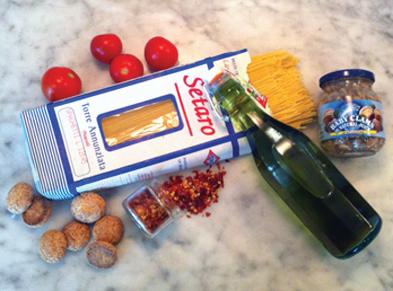
www.piazzaitalianmarket.com
Tidewater
Kitchen or freeze and stir.
1 tbsp. maple syrup
½ tsp. vanilla pinch sea salt

Cashew Berry Cream
Rich, soft-serve style without heaviness.
1 cup frozen berries
½ cup cashew or soy milk
Blend until thick and creamy. Serve immediately.
Simple Dark Chocolate
Ice Cream
Deep, rich, and not overly sweet. 4 cups heavy cream
1 cup whole milk
1 pound semisweet chocolate, melted
1 cup sugar
¼ cup Kahlua or coffee, optional
1 Tbsp. vanilla
1 tsp. cinnamon
Put heavy cream into a mixing bowl and whip until slightly stiff. Slowly add the sugar, cooled











melted chocolate mixture, cinnamon and vanilla. Continue to beat 1 more minute. Pour into an ice cream maker and churn.
Tip: Homemade frozen desserts are creamiest right after churning. For a firmer scoop, freeze for about 4 hours to allow them to set and “ripen” for the best flavor and texture.
Don’t Stress the Cone
Waffle cones are one of those kitchen moments that look fancy —but they don’t have to be perfect to be delicious. If you have a waffle cone maker or a pizzelle iron, wonderful. If not, a simple nonstick skillet works just fine. The batter spreads thin, cooks quickly, and turns into something warm and golden no matter which tool you use. The real secret is not the equipment—it’s timing. Once the

batter hits the heat, everything moves fast. As soon as it comes off the pan, it’s soft and flexible, which is your window to shape it. Roll it gently around a spoon handle, a small cup, or even just your hands. It only needs a few seconds to hold its form. And if it doesn’t look perfect? That’s okay too. Broken cones, uneven edges and “practice ones” still taste just as good. You can even break them into pieces and use them as crunchy toppings over ice cream. Because in the end, homemade doesn’t mean perfect— it means made with care.
2 egg whites
½ cup sugar
1/3 cup melted butter
½ cup flour
¼ cup milk
½ tsp. vanilla
Step-by-Step Instructions:
1. Make the Batter—Whisk egg whites and sugar until slightly frothy (not stiff). Stir in melted butter, milk and vanilla. Add flour and mix until smooth. Let the bat-

Tidewater Kitchen
ter rest for 5–10 minutes.
2. Cook the Cones If using a waffle cone maker: Preheat and lightly grease. Add about 2 Tbsp. batter. Cook until golden (about 1–2 minutes). If using a pizzelle iron: Add a small amount of batter (it spreads a lot). Cook until lightly golden and thin. If using a skillet (no special tools): Heat a nonstick pan over medium. Spread 2 tablespoons batter into a very thin circle (like a crepe). Cook 1–2 minutes per side until golden.
3. Shape Quickly (This is the key!)—As soon as it comes off the heat, it will be soft and flexible. Gently lift with a spatula Place on a clean towel (to protect your hands) Roll into a cone shape immediately
4. Let It Set Hold for 10–20 seconds until firm. It will crisp as it cools.
To Serve: Scoop your favorite ice cream into a bowl or cone. Drizzle with warm sauce. Add whipped cream. Finish with raspberry sauce or a sprinkle of crunch.
The Heart Behind the Scoop
At the heart of every memorable scoop is a story—and sometimes, those stories are closer to home than we think. That’s exactly what you’ll find at Chilly Billy’s, a small, locally owned family ice cream shop rooted in community,

care and a genuine love for bringing people together. With ties to a local Dorchester County resident, this isn’t just a place to grab dessert—it’s a place where connection and tradition meet. What makes it special begins with the quality. The ice cream is sourced from a sustainable creamery in Bridgeville, Delaware, known for its farm-forward approach and commitment to real ingredients. “This creamery was featured on Shark Tank and later recognized by investor Lori Greiner…”—a reflection of both its innovation and heart. Using natural ingredients and fruit grown right from the farm, each scoop feels thoughtful, fresh and full of flavor. With over 24 flavors to choose from, there’s something for everyone—and every need. Options are clearly marked for gluten-free and dairyfree guests, including refresh -

ing sorbets, and even a rotating sugar-free selection, like their current strawberry offering that changes throughout the summer. And it doesn’t stop at ice cream.
Chilly Billy’s brings back the joy of simple, old-fashioned treats— root beer floats, Coke floats, milkshakes and snow cones—all made to be shared, savored, and remembered. Among the many flavors, a few have quickly become local favorites: Strawberry Pretzel Salad, Bourbon Brickle (gluten-free), Chocolate (gluten-free), Banana Pudding, Mint Chocolate Chip
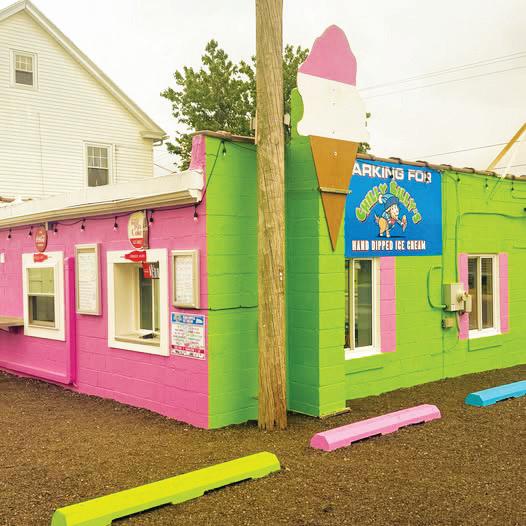

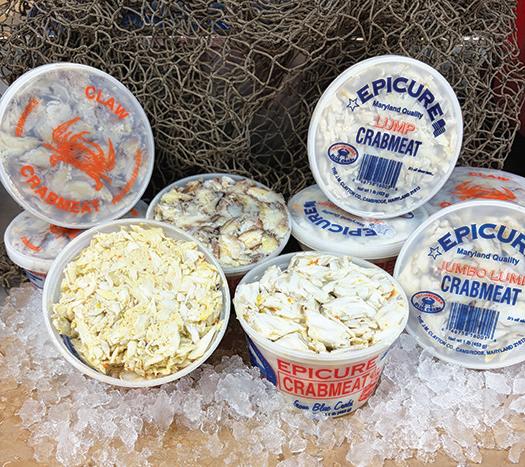


Tidewater Kitchen
(gluten-free) or Salted Caramel It’s a lineup that perfectly reflects what Chilly Billy’s does best—balancing the nostalgic with the unexpected.
If you find yourself nearby, you can stop in and experience it for yourself at 600 Roslyn Ave, Cambridge, MD 21613, or reach them at 443-205-5170. They are currently open Wednesday through Sunday from noon to 8 p.m. As summer approaches, they plan to extend their evening hours and add more days throughout the week. You can stay tuned for updates by following Chilly Billy’s Ice Cream on Facebook and Ins-
tagram (@chilly.billys.icecream). But what truly makes it special isn’t just what’s on the menu. It’s the care behind each scoop. The pride in supporting local. The way every detail—from ingredients to experience—feels intentional. Because in the end, it’s never just about ice cream. It’s about the people, the place and the simple beauty of sharing something made with heart.
Pamela Meredith, formerly Denver’s NBC Channel 9 Children’s Chef, has taught both adult and children’s cooking classes.
For more of Pam’s recipes, visit the Story Archive tab at tidewatertimes.com.






Emus in Flight by
B. P. Gallagher
Best I can recall, the emus were liberated from a petting zoo somewhere up the road. I may be fudging that particular detail, but the emus themselves are irrefutable fact, etched in the annals of Eastern Shore history. I can only speculate why someone would unleash a pair of giant flightless birds on Cordova, Maryland; I can, however, attest that they did so about a mile up the road from my house.
I’m also pretty sure my mom was the first to encounter them. Mom has run multiple marathons and generally maintains a cardio regimen that puts most twenty-somethings to shame. On the day the emus arrived at the end of our road, she was out for her morning run. Farm fields line both sides of our road and the corn was at its height, still green but yellowing at the tips from the early-

Emus
autumn sun. Cornsilk spilled from each ear, fair-headed offspring swaddled in cornhusk and nestled against stalk after stalk for row after row. Run down those rows and you’d come out the other side with a series of fine cuts scoring your forearms, or face if you didn’t bother shielding it with your arms.
Today the corn was rustling. The Cordova countryside teems with deer that use the crops for cover, so Mom didn’t think much of it at first. Not until the first long-necked, beaked monstrosity stepped from the corn onto the road not twenty paces from her, closely followed by its mate. Needless to say, this
development cut Mom’s morning run short. I was eating cereal when she called Dad on her flip phone to come pick her up, and I distinctly remember catching the word ‘dinosaur.’ Apt enough. Dad told her the emus were probably more scared of her than she was of them, but she was having none of that argument.
Adult emus can reach heights of nearly six feet and weights of eighty pounds or more, and for all that they’re omnivores that prefer morsels of the creepy-crawly variety, they carry themselves like predators. And as my mom can tell you, getting stalked by not one, but two of the sharp-eyed giants while out for a jog tends to give one the same impression. For days their





piercing cries echoed through the woods behind our house, much like how I imagine their ancestors the velociraptor sounded. After several days roaming the woods, the emus moved off in the direction of Cordova’s greater claim to fame: Frederick Douglass’s birthplace, about a mile from our house. That’s where my family’s bit part in their saga ends.
I tell myself a story where I track the emus down in the woods and observe them trying to make sense of this foreign environment. Trace the mottled grey of their downy Outback plumage against the verdant foliage and brownscale back-


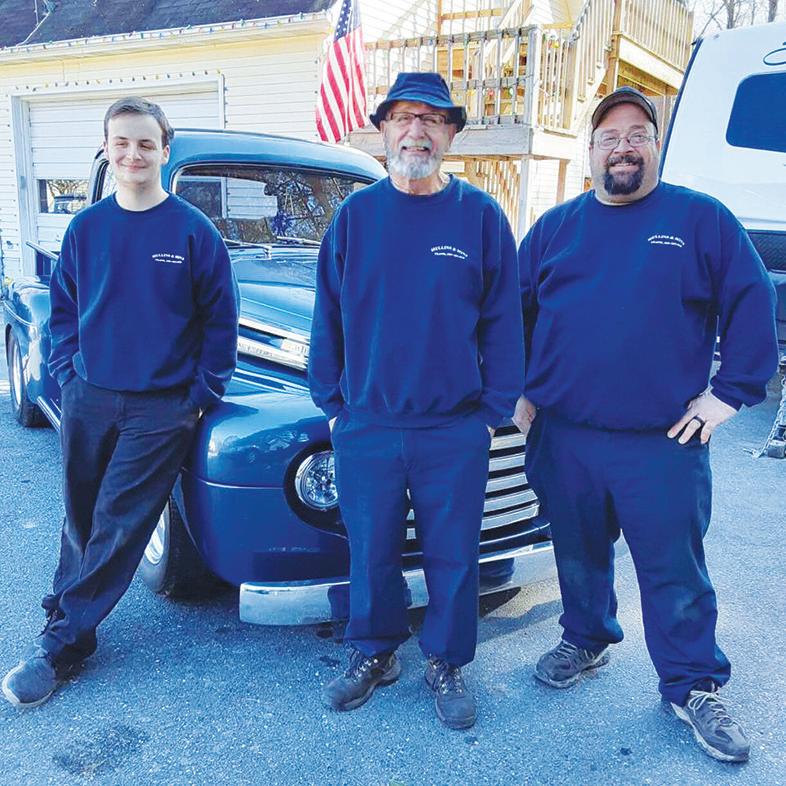
Father’s Day
Make sure Dad’s ride is running right for his big day!! Happy Father’s Day


drop of tree bark and matted fallen leaves. Spy them planting their powerful legs in the creek-bed clay and dipping their beaks to drink and fixing their fierce yellow eyes ever-vigilant above the waterline. It’s not so far-fetched. I spent much of my youth running around those woods. Maybe, probably someday soon, I’ll write that fiction. But I never did lay eyes on them, only heard them. What really happened is this:
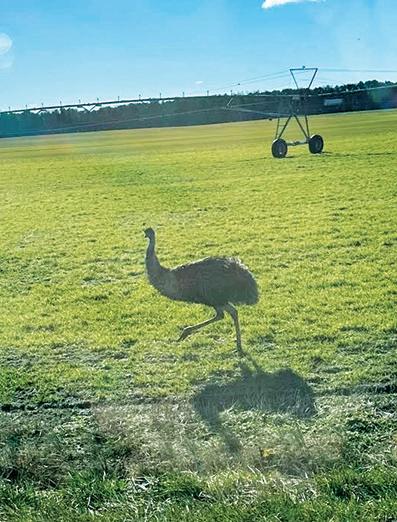
After shrieking like banshees in the woods behind our house for a few days, the emus wandered toward town and there met their extinction. Best I can recall, one was struck and killed by a car—imagine that insurance appraisal—and the other was put down by state police after repeatedly disrupting traffic on Route 50. Best I can recall, that saurian remnant, distant descendant of the mighty theropods, made it less than a week before the Chesapeake Bay Watershed wiped them out all over again.

B. P. Gallagher’s fiction has appeared in Roi Faineant Press, Flash Fiction Magazine, Meniscus Literary Journal, and elsewhere. He is a 2013 graduate of Easton High School, holds a Ph.D. in Social/ Personality Psychology and is currently Assistant Professor of Psychology and Culture at Nazareth University.
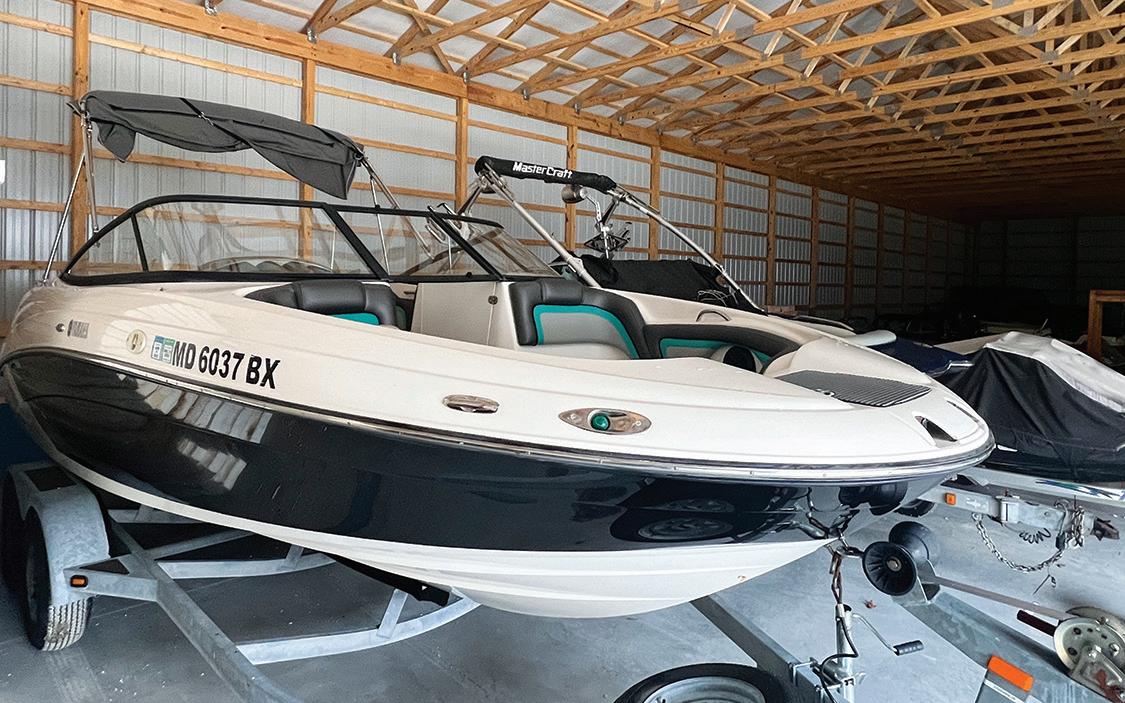
2010 21ft twin jet engines Yamaha 212SS in immaculate condition. Well maintained by dealer. Boat has 149 original hours. New catalytic exhaust. Hull is in exceptional condition with like-new luster.
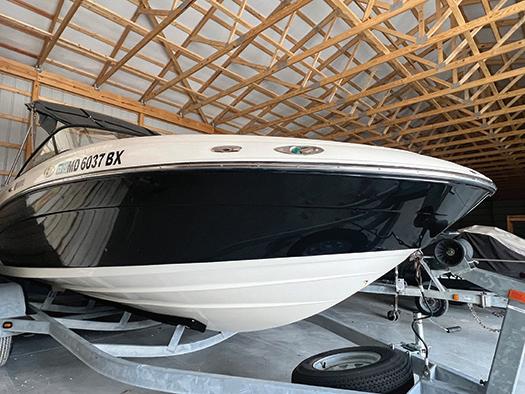
Interior upholstery was completely replaced with factory spec and a Sunbrella Bimini with SS frame installed in 2021. Mooring cover and double axel trailer with brakes, swing away tongue and mounted spare tire are included. Clear title. Sea Trial Offered. Ready for the season!
Asking $22,995 Ron
Boats and Busters
Some Chesapeake Word Origins
by James “Jimmie” Dawson
Many different types of boats were used on the Chesapeake Bay. This article is more about the origins of their names than the actual boats themselves. So, from sharpies to flatties and barques to xebecs, we have: Baltimore Clipper: fast boats about 100 feet in length with heart-
Pride of Baltimore II
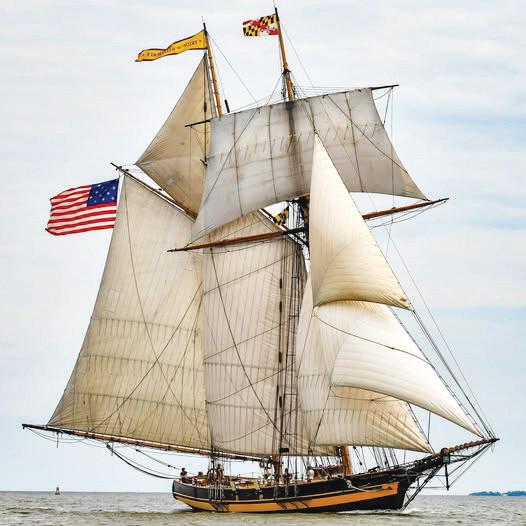
Boats and Busters
shaped midsections, short keel and raked stern developed in Baltimore and the Chesapeake area in the late 1700s. They were used as privateers in the War of 1812. They were called clippers because they had a sharp clipped bow and stern post with raked masts and sailed at a fast clip. The Oxford English Dictionary has the earliest mention of clipper as 1830, but I found an earlier one for the Baltimore clipper in the Daily National Intelligencer and Washington Enquirer (how’s that for a name!) for May 16, 1815. The Pride of Baltimore is a clipper.
Barge: originally a large rowboat, then a sailboat to carry
freight, not the flat trash-carrying barge we know. Also called a lighter. The name evolved from the barque. The earliest mention of a sailing barge in print I’ve found here is in the Maryland Gazette for Nov. 11, 1756, but the name goes back to the 1400s in Europe.
Barque: from the Latin barca , which was a small boat. Barque derived from the earlier barica or the Greek baris . Later it entered Middle English and Middle French as barque . Then there is the Coptic baare, barc or the Egyptian word, which I don’t have symbols for. The earliest mention of a barque in Maryland is in the Baltimore Sun for Dec. 19, 1839. Also spelled bark and barke and morphed into barge.






Boats and Busters
Bateau or batteau ( bateau is the French word for boat): generally a flat-bottomed boat, narrow, but with flared sides. Skipjacks were sometimes called bateaus. A fishing batteau was mentioned in
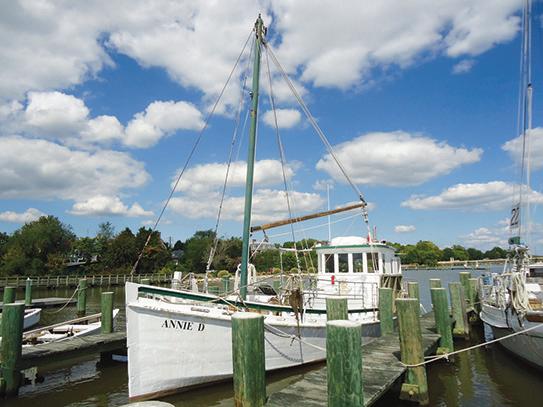

the Maryland Gazette from Annapolis on April 9, 1818.
Brogan: from the Gaelic for strength and dependability. The boat is a small, cruising sailboat or also a sturdy scow. The brogan was the intermediate step from the log canoe to the bugeye. An early mention of the brogan as an oyster boat was in the Star Democrat for Oct. 1, 1878. Also a boot.
Bugeye: see my May 2026 Tidewater Times article. Origin of name not certain.
Buy-boat or buyboat: does exactly that, a boat with a crane to load, unload and buy oysters directly from the dredgers while they are out working so they don’t have to stop to go to the buyer to unload. Earliest
EASTERN SHORE TITLE COMPANY
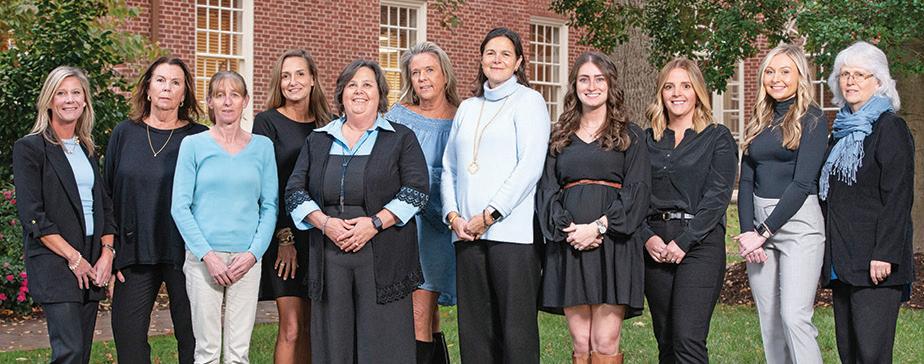
Melissa Grimes-Guy Photography
The buyboat Annie D.


CHAMBER MUSIC FESTIVAL 202 6
The Ebenezer Theater, Easton, Maryland presents
JUNE
12–20

MUSICAL MEMORIES
This six-concert series features renowned artists and Rising Stars performing works from Mozart, Schubert, Boccherini and Brahms to Tchaikovsky, Shostakovich, Soper, and Ravaei.
For further details, and to purchase tickets, please visit ChesapeakeMusic.org

Experience the Extraordinary
Boats and Busters
appearance in print Baltimore Sun , Feb. 11, 1891.
Canoe: from the Spanish canoa or the Native American kanawa or kenu mentioned by Columbus.
Deadrise: not the Apocalypse as the name might suggest, but the angle that the hull and sides rise from the keel. The deadrise is from dead meaning straight (i.e., dead on, dead straight), so a sharp bow to a V-shaped hull. Originated in the Chesapeake Bay in the late 1800s.
One of the first mentions of the deadrise as a boat in print was in the poem “The Chesapeake Deadrise” by Folger McKinsey, “The Bentztown Bard,” in the Baltimore
Sun , Aug. 22, 1913.
The Chesapeake Deadrise
Knock away, rock away, haul tight or slack,
Up the bay and down the bay, cross the bay and back,
Nothing like the deadrise, close haul or luff,
Wind across the quarter and the channel turning rough!…
Down where the Choptank rolls to the bay,
Down where Patuxent sings all day,
Up where the Elk flows, over the grass
Or the sweet-singing tide of the fair Sassafras, Light flies the deadrise skipping the foam,

crabbing skiff, sharpie and log canoe.
Boats-
As fleet as a bird on her winged way home.
Ho! for the deadrise, the Chesapeake deadrise…
McKinsey wrote another deadrise poem that appeared in the Baltimore Sun on June 20, 1947.
Dinghy: originally a small flatbottomed, double-ended boat, but later with a regular bow and stern. Rowed, sailed or powered by an outboard motor. According to the O.E.D., is said to have originated from the Bengali dingi and the Hindu diemgi , words that were imported into English in about 1810, when the British were in India. Or maybe it was the Sanskrit drona , which means a wooden trough.
Draketail: a powered workboat where the stern tapers like a duck’s butt. The earliest mention I’ve seen in print for draketail the boat, and not draketail the popular 1940s haircut, is in the Salisbury Times for March 24, 1941.
Flattie or flatty: a sharpie skiff with a flatter bottom, also called a
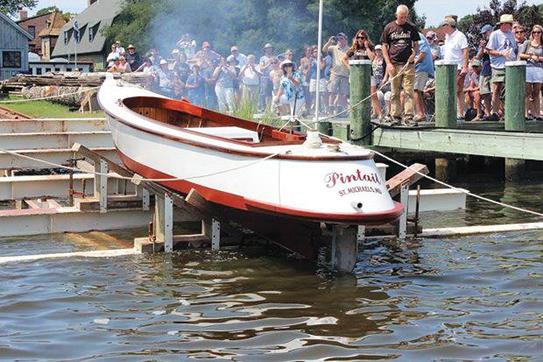

The Draketail Pintail
flatiron skiff because the bottom is shaped like a flat iron. The first appearance in print I found was in the Saint Mary’s Beacon for June 17, 1886. See sharpie .
Log canoe: originally a dugout canoe hand hewn from one log; made by Native Americans in prehistoric times. Larger log canoes were made from several logs hand hewn and pinned together. The earliest I’ve found it in print was in Massachusetts in 1806. They were used by oyster tongers on the Chesapeake. Now the few that are left are raced.
Boats and Busters and fishing since the early 1700s. The name, from the Latin word from Roman times, was ponto for that type of boat. It became punt in Old English. It was often used in shallow waters and propelled by punting, or pushing the boat along with a long pole. Punt also meant to push, so presumably one would be punting a punt. The first appearance in print I found was in the Baltimore Sun on Jan. 9, 1908.
Push boat: does exactly what its name says—supplies auxiliary power for a sailboat, usually a skipjack. The first appearance in print I found is in the Baltimore Sun for Nov. 1, 1925. See yawl .
Pungy: a fast, two-masted schooner developed in the Chesapeake Bay. It was named for the Pungoteague region of Accomack County, Virginia, where it originated. Pungoteague was the Algonquin for “sand fly river,” for the prevalence of insects in that area. The O.E.D. says 1880, but the earliest pungy schooner reference I’ve found in print is in the Baltimore Sun for June 23, 1840.
Punt: a small flat-bottomed, square-ended boat used for hunting
Ram: the O.E.D. defines the ram as the distance from the catheads to the hawseholes. Clear as mud! Or, to put it another way, ram is the overall length of a boat. The Ram Schooner was basically a long, bald-headed schooner used for carrying heavy freight like lumber and road building materials. Baldheaded meant that it carried no top masts. It was developed about 1870 and used on the Chesapeake and Delaware Bays. The only surviving ram,
QUALITY STROKES PAINTING


“The Victory Chimes,” has the masts and is about 130’ long. It was built in Bethel, Delaware, in 1900.
Schooner: a fast fore-and-aft rigged boat originally with two masts and later with as many as four that became very popular. Schooner, or skooner, the word dates from the early 1700s. The O.E.D. says that legend has it that when the fi rst one was being launched in Gloucester, Mass. about 1713, a bystander remarked, “Oh, how she scoons,” and the builder, Andrew Robinson, answered, “A scooner let her be.” Scoon is another word for skim.
Scow: there were several types. Length was 40’ to 65’ with a 13’ to 20’ beam. Doubtful origin, the Dutch was schouw for a boat that
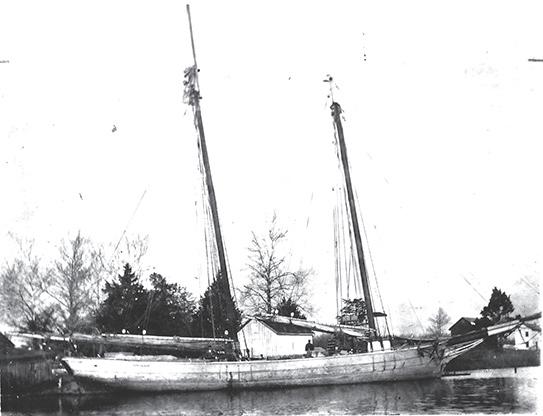
was pushed along by a pole.
Sharpie: a boat with a sharp bow and a fl at bottom used for recreation and oystering. Pete Lesher, Chief Historian & Ambassador at Large for the Chesapeake Bay Maritime Museum, writes to me that according










The schooner W. A Kirby
Boats
and Busters of the bugeye and the skipjack. Bay sloops were built on Taylors Island in the 1880s. The name originated from the Middle Dutch slupen, which meant “to glide.” The Dutch had a presence on the Chesapeake Bay in the 1600s.
to watermen, a sharpie has a bottom that is flat from side to side while a flattie would have a little bit of a V in the bottom at the stern. So, the sharpie has a flatter bottom than a flattie! The sharpie was in use since Colonial times and is thought to be the forerunner of the bateau and the skipjack. The O.E.D. gives 1864 for the first appearance of its name in print. Made on Tangier Island in the 1880s. See flattie .
Skiff: 16th century, probably from the Proto-Germanic skipa , Middle French word esquif and the Middle English word skipa, meaning boat. Also related to the word ship. It meant a small boat in 1675. In his American Small Sailing Craft, Howard Chapelle mentions there were 14 different types of sailing skiffs developed between 1890 and 1920. Thousands were made. Types included the sharpie and the flattie, the sturgeon skiff, the gill-net skiff, the gunning skiff and the Chesapeake Bay crabbing skiff, which was first mentioned in the Evening Capitol on April 2, 1885.
Skipjack: see my Tidewater Times article for March 2026. It got its name from the way it leaped through the waves.
Sloop: a small one-masted, foreand-aft rigged vessel. The sloop rig was imported from the Netherlands and used on the Chesapeake since the 1650s and became the ancestor
Snow: a small sailboat resembling a brig, mentioned in print in 1676 when it was called a snaw. No clue why it’s called a snow. O.E.D. says the name is of doubtful origin, probably an Anglicized version of similar words: the Dutch snaauw and French senaauw. Gesundheit!
Workboat: used on the Bay yearround by watermen. Usually a deadrise hull about 40’ long with a small cabin, open canopy and an engine. Hull shapes of a workboat could be the tuck stern or the fantail, which improved the boat’s aerodynamics, or rather its water-dynamics.
As a word: hyphenated work-boat Milwaukee Journal Sentinel, May 4, 1890; as workboat with no hyphen, Baltimore Sun, June 18, 1895.
Xebec (pronounced zee-beck): the design came from the Barbary States Morocco and Algiers and was used by pirates in the 18th century, made it to America and were even built in the Chesapeake Bay area. Unfortunately, it was also used by slavers. The design influenced the Baltimore clipper, the pungy and the bugeye. It generally had three masts, a round-bellied hull and a rounded turtle deck. First use in print in Maryland was in the Maryland Ga-
zette, Annapolis, Oct. 27, 1785.
Yawl: originally a small, open rowboat carried by a larger boat and used to go ashore. Later, in the 20th century, it was powered, often by an automobile engine, and used as auxiliary power on skipjacks and schooners. O.E.D. says 1670 from similar sounding words, the French yole, Dutch jolle. Early English spellings were yaule and yawle.
For more about boats used on the Chesapeake see Chesapeake Bay of Yore by Frederick Tilp, Chesapeake Bay Foundation, 1982
Now for Mr. Jimmie and Mrs. Sook Crab.
There are numerous words for the various stages of blue crab: jim-


mies (male crabs), sallys (immature females), sooks (mature females), doublers (crabs having sex), sponge crab (mature female with eggs), green crabs and peelers (crabs just about to molt), buster (molting), soft crab (just molted—that is, shed its old hard shell with a new soft shell
C. ALBERT MATTHEWS
Where Integrity Meets Innovation

Jimmie
Boats and Busters
that has not hardened yet), and paper shell, which is a soft crab one or two hours after molting, so it’s halfway between a soft crab and a hard crab). Also called a buckram.
The bigger, more vicious male crabs were jimmies, and the smaller, more timid female crabs were sooks. Jimmy was also slang for a great coat, and when you think about it, jimmie crabs do wear a coat, or rather a shell. The Scottish definition of sook is a weak or timid person or animal.
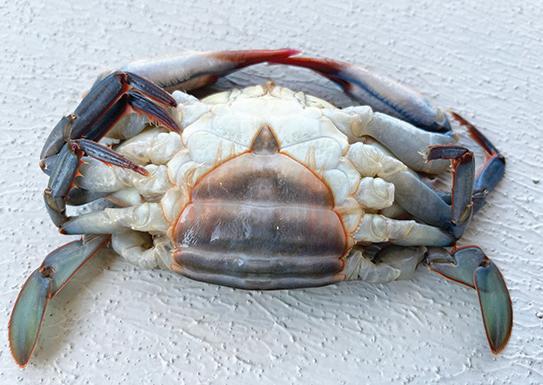
Crabbing With A Bay Expert, Learns About Trot Lines, Jimmies And Sooks” by Lee McCardell.
“…What Are Peelers?”
“Peelers are crabs that will shed their shells within the next few days. The first indication of a ‘peeler’ is a white line around the inside of its fins. That’s a new shell, forming under the semi-transparent old shell. When the white line becomes pink, it means that the crab will become a ‘buster’ within a few days, split its shell and back out, a soft crab.
‘Peelers’ stayed in the box, those with blue claws were ‘jimmies’ or male crabs, I.T. explained. The smaller ones, with red claws were ‘sooks’ or females. Of the two, the ‘jimmies’ were more desirable for commercial purposes” [Baltimore Evening Sun , July 14, 1937].
And an earlier Sunday Sun article from June 16, 1935, mentions green crabs, busters, buckrams and peelers.
“Eastward Ho! City Guy Goes Sook
For the earliest appearance of sook in print, the O.E.D. has the Baltimore Sun , Oct. 10, 1950, but I found an earlier article from July 14, 1937, for sooks and an article from a June 16, 1935, Baltimore Sun article that mentions peelers and green crabs. (Imagine a green blue crab, how strange is that!)
Also for an unusual name, when you are cleaning crabs, you remove the lungs (actually the gills), which are called dead man’s fingers. The first appearance in print I’ve found is in the Newport, Virginia, Daily Press on May 14, 1997, but it was used colloquially years before that.
One way to catch crabs is by use of a trot line—a line in the water that is fixed at each end and with bait suspended at intervals along its length. A waterman in his boat tends the line by running back and

Why Tracy?
She knows the area.
Presented by Tracy Wagner of Meredith Fine Properties
Raised in a family deeply rooted in agriculture, Tracy experienced the best the Eastern Shore has to offer — farming and life on the Bay. From an early age, she learned to navigate both power and sailboats, developing an intimate understanding of the waterways that make the Eastern Shore so special. Before launching her real estate career, she owned and operated a successful trucking company for 20 years, gaining an extensive knowledge of the region’s roadways and communities.
She knows the business, inside and out. In addition to her business expertise, Tracy has designed, built, and renovated numerous properties for herself and her clients. This hands-on experience gives her a unique perspective on the process of buying and selling homes, allowing her to guide her clients with confidence, insight, and care.
“People do not care how much you know until they know how much you care.” -
Tracy Wagner
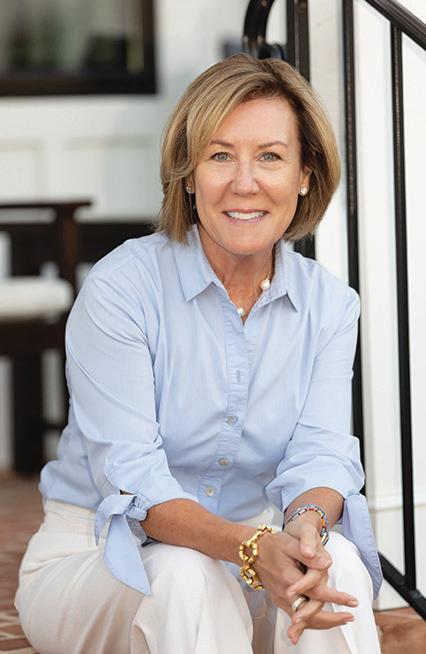

This 4,200 sqft, 4-bedroom custom home was built for luxury and convenience. All furnishings are included, making the home and the lifestyle it offers ready to enjoy at the turn of a key. Call me today for a private showing.




Boats and Busters
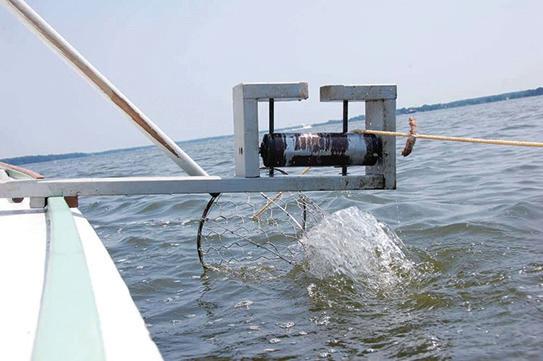
forth the length of the line, dipping up the crabs with his crab net. The O.E.D. has the earliest use of the fi shing trot line as 1883. But I found several instances for the fishing trot line from different parts of the country from 1816. It was also used to catch eels and catfi sh.

The name might have come from an actual trot line or trot rope where a horse would be tied to a ring that slid along a rope pegged at both ends on the ground to give the horse more freedom to graze, if you ever wondered why a trot line is called a trot line when the waterman is floating in a boat and not riding a trotting horse, this might be why. The other option is that trot can mean making quick motions in a limited space, which would describe fi shing a trot line. Also, in the 1920s, there were dances like the Turkey Trot and the Fox Trot, so I guess this would be the Crab Trot.
James Dawson is the owner of Unicorn Bookshop in Trappe.

SLOT DOCK
Perfect for Kayaks and Paddleboards
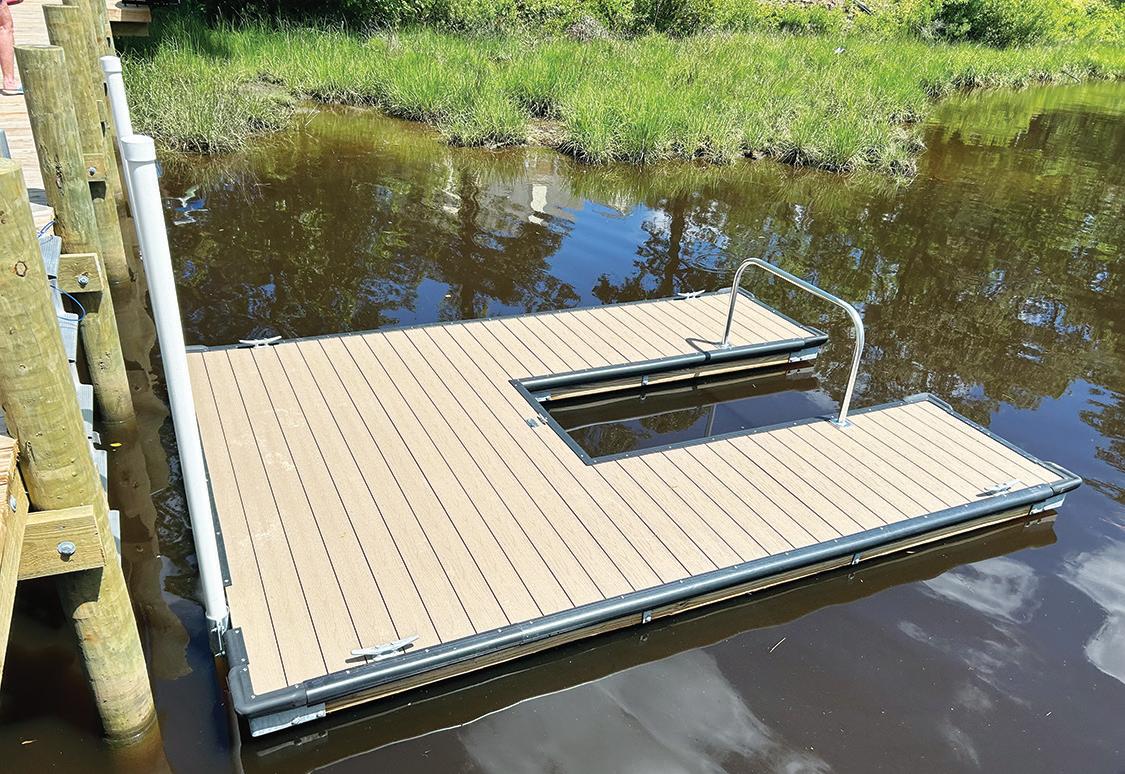
• Kayak Docks
• Re-Decking
• Pressure Wash & Seal
• Boat Lifts, PWC Lifts
• Gangways
• Solar Dock Lighting
• Floating Piers
• Rowing Docks
• Kayak Racks
• Ladders
• Dock Boxes
• Piling Caps



Of Fathers and Fishing by
Michael Valliant
I need to go fishing more. Fishing is something my father, my grandfather, and I would do together growing up. Going fishing on the Bay and the Choptank River are some of my best memories with my grandfather, who was a man of few words when it came to kids, but who could talk about fishing all day. Fishing was family time. My girls don’t know how to fish. Because I never took them. Not that I was going without them, I
just haven’t been fishing, except spottily, randomly, from an invitation or opportunity with rods and a river nearby. For the girls and I, stand-up paddleboarding is the water activity we have shared together as they’ve grown up on the Shore.
My latest reminder that I need to go fishing came from Fr. Pete Nunnally, an Episcopal priest in Washington, DC, who I’d like to be when I grow up, though I sus -

Fathers and Fishing
pect he is either younger than I am or roughly the same age. Fr. Pete is the founder of Water and Wilderness Church, which is “a sustainable outdoor church and watershed community of spiritual and religious seekers who worship, read, study, and retreat together in the wild places of God’s abundant creation.”
Another core childhood memory for me is spending days in the marsh across the street from us, blazing trails, getting stuck in mud and shore grasses, fishing and chicken-necking off a neighbor’s dock, canoeing around our cove, and ultimately as a teenager be-

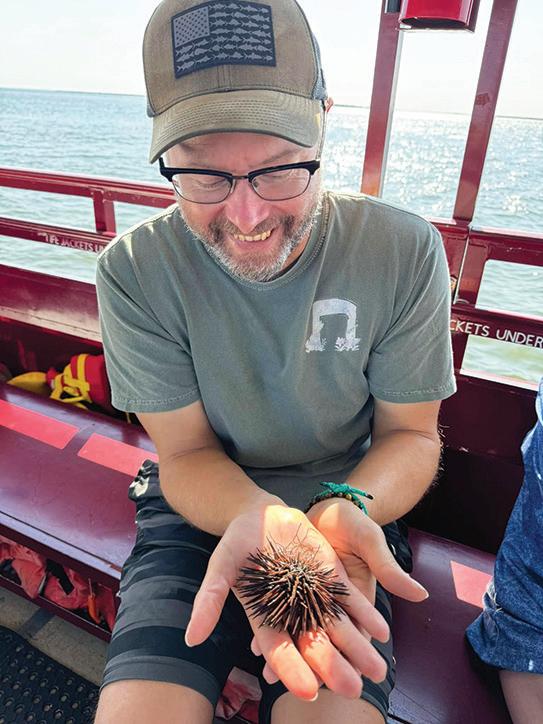


















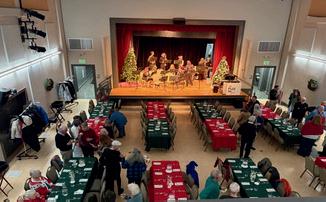
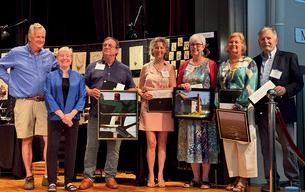
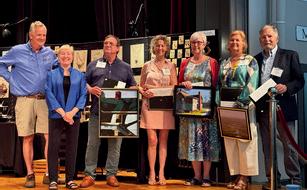
Fr. Pete Nunnally
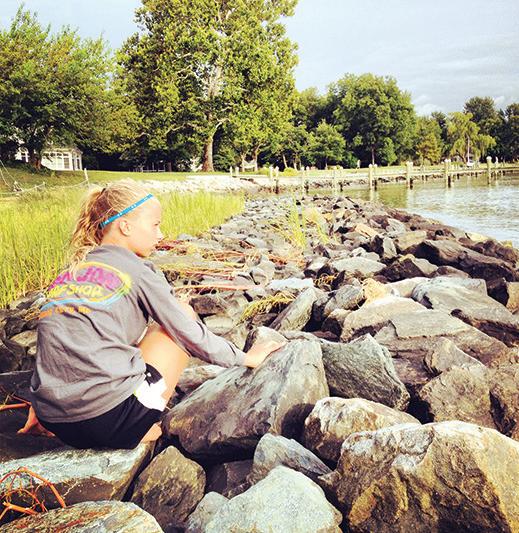
Anna searching the shoreline.
ing turned loose on the Tred Avon River in a 13-foot Boston Whaler. I have always connected to God and the universe in the wonder of creation.
Howard Thurman was an author, minister, theologian, and civil rights leader. Among his many famous quotes is the idea, “Don’t ask what the world needs. Ask what makes you come alive, and go do it. Because what the world needs is people who come alive.”
In his just released book, “Catching Hope: the Hidden Spiritual Wisdom of Fishing,” Fr. Pete recounts the feeling of coming alive when helping a girl learn to fish and he builds on Thurman’s notion of what the world needs:
“This is what makes me come alive. Helping others come alive by encountering the wild mystery of God outside of the building and outside our stodgy ways of doing things. I am someone who teaches

Fathers and Fishing
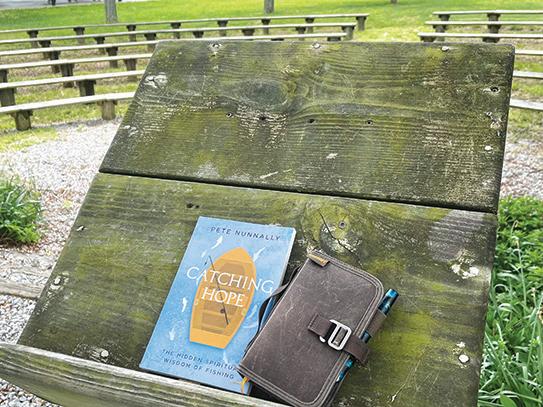
other people how to fish for fish, and through that, fish for what their soul is yearning for: to come alive.”
Coming alive by encountering the wild mystery of God and creation outside has been at the heart of who I am since I was little and has grown in intensity every year, ultimately leading to a call to ordination. When I am not outside
experiencing God in creation, I am less myself, I am less alive. I need to go fishing.
My grandfather always named his boats, “Whitecap.” As he got older, he and my father shared boats—there were four successive “Whitecaps,” on which we would leave the marina in Oxford and head up the Choptank towards the Chesapeake Bay, listening on the marine radio for where other boats were catching fish and possibly what bait they were using. Fishing for us was loose and opportunistic, though when my grandfather fished by himself, he kept detailed logbooks of where he fished, what the conditions were, what bait he used, and how many fish he caught. He culled the knowledge he acquired over time to discern where and when the fish would be.
The fishing days I remember
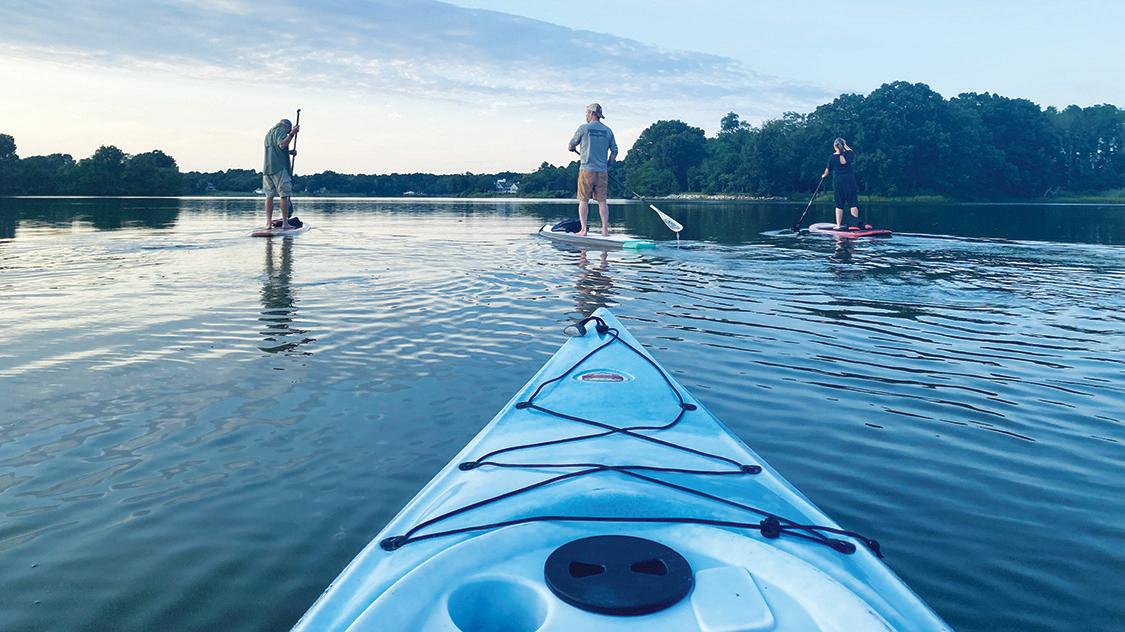








Fathers and Fishing
most vividly involved trolling around the Sharp’s Island Lighthouse for rockfish or bluefish. I still remember reeling in my first fish on a line my grandfather set for me. After days on the water, my Dad and I came home and cleaned what we decided to keep and my Mom would fry up dinner. She doesn’t like fish, but she knew what those days were about.
My daughters and I would load paddleboards in the back of my truck and head to one of a couple beaches in Oxford to spend time floating, paddling, splashing, laughing, and watching the water. For a few years we were fortunate enough to live walking distance to the water. A memory I hold dear is paddling out of the same cove I grew up on with my daughter Anna and going out for a few hours on a calm creek and river, talking about her school year that had just finished, about life, laughing, and just being outside together.
These days we have paddleboards and kayaks at the ready
on the Choptank River in Denton, but we don’t use them enough. We need to go fishing. And/or paddleboarding.
Water is a big reason people love living on the Eastern Shore. My connection to the water comes from my father and my grandfather and great grandfather and further back. I’ve never known anyone in my family to describe this connection in spiritual terms, but I feel it that way, into my bones and soul.

In “Catching Hope,” Fr. Pete describes an experience being lost on his Jon Boat on the Northern Neck of Virginia at nightfall. He is panicked and uncertain and then has an experience of small fish jumping everywhere around his boat:
“…little fish had surrounded my boat with the calming sound of gentle water. Fright and panic gave way to a wide, warm wonder, and the little splashes began to sound like music. My breath slowed and deepened, and I could feel my muscles relax. I looked around the water and up and the stars and I did not feel alone anymore but somehow, felt surprisingly enfold -


Fathers
and Fishing

ed into the embrace of this place.”
This is a feeling I find frequently when I am on or near the water. I feel it under the stars at night, at
sunrise or sunset. I feel it lying on a paddleboard in leaning back in a kayak, or running or hiking outside. It’s a feeling of being at home. At home in creation. At home in the universe. It’s a feeling for me that began with being outside, of fishing with my father. Which I’ve come to realize was also fishing with our Father/Creator. It’s a feeling, as a father, that I want to share with my daughters. It’s a feeling not only as a priest, but as a human being, that I want to share with the world.
I need to go fishing.
Michael Valliant is the Assistant for Adult Education and Newcomers Ministry at Christ Church Easton. He has worked for non-profit organizations throughout Talbot County, including the Oxford Community Center, Chesapeake Bay Maritime Museum and Academy Art Museum.
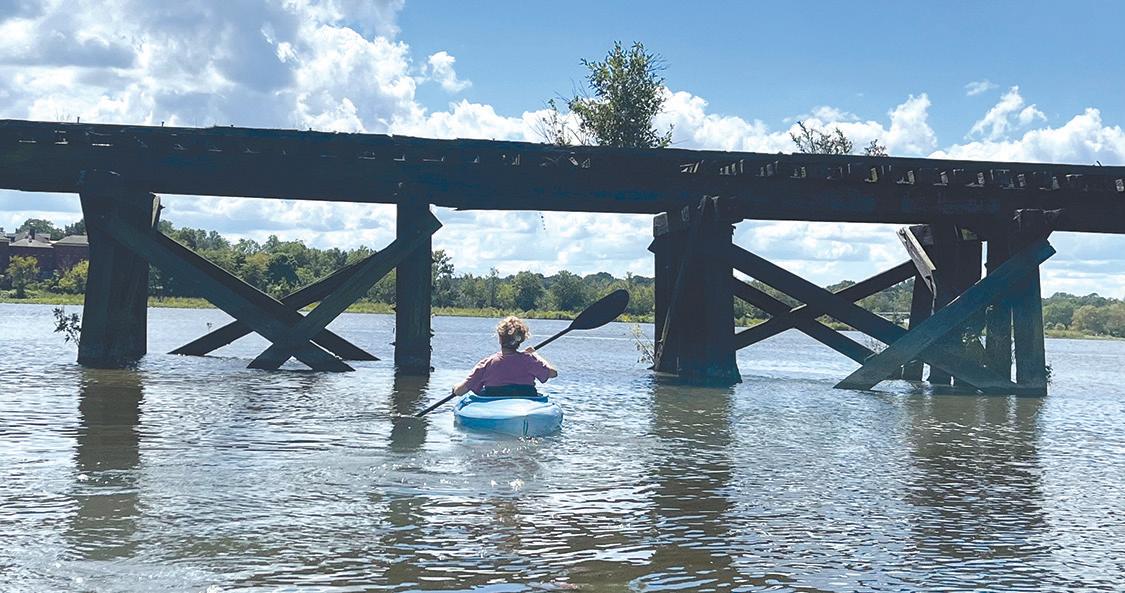




Kent County and Chestertown at a Glance
Kent County is a treasury of early American history. Its principal towns and back roads abound with beautiful old homes and historic landmarks.
The area was first explored by Captain John Smith in 1608. Kent County was founded in 1642 and named for the shire in England that was the home of many of Kent’s earliest colonists. When the first legislature assembled in 1649, Kent County was one of two counties in the colony, thus making it the oldest on the Eastern Shore. It extended from Kent Island to the present boundary.
The first settlement, New Yarmouth, thrived for a time and, until the founding of Chestertown, was the area’s economic, social and religious center.
Chestertown, the county seat, was founded in 1706 and served as a port of entry during colonial times. A town rich in history, its attractions include a blend of past and present. Its brick sidewalks and attractive antiques stores, restaurants and inns beckon all to wander through the historic district and enjoy homes and places with architecture ranging from the Georgian mansions of wealthy colonial merchants to the elaborate style of the Victorian era.
Second largest district of restored 18th-century homes in Maryland, Chestertown is also home to Washington College, the nation’s tenth oldest liberal arts college, founded in 1782. Washington College was also the only college that was given permission by George Washington for the use of his name, as well as given a personal donation of money.
The beauty of the Eastern Shore and its waterways, the opportunity for boating and recreation, the tranquility of a rural setting and the ambiance of living history offer both visitors and residents a variety of pleasing experiences. A wealth of events and local entertainment make a visit to Chestertown special at any time of the year.
For more information about events and attractions in Kent County, contact the Kent County Visitor Center at 410-778-0416, visit www. kentcounty.com or e-mail tourism@kentcounty.com . For information about the Historical Society of Kent County, call 410-778-3499 or visit www.kentcountyhistory.org/geddes.php . For information specific to Chestertown visit www.chestertown.com .

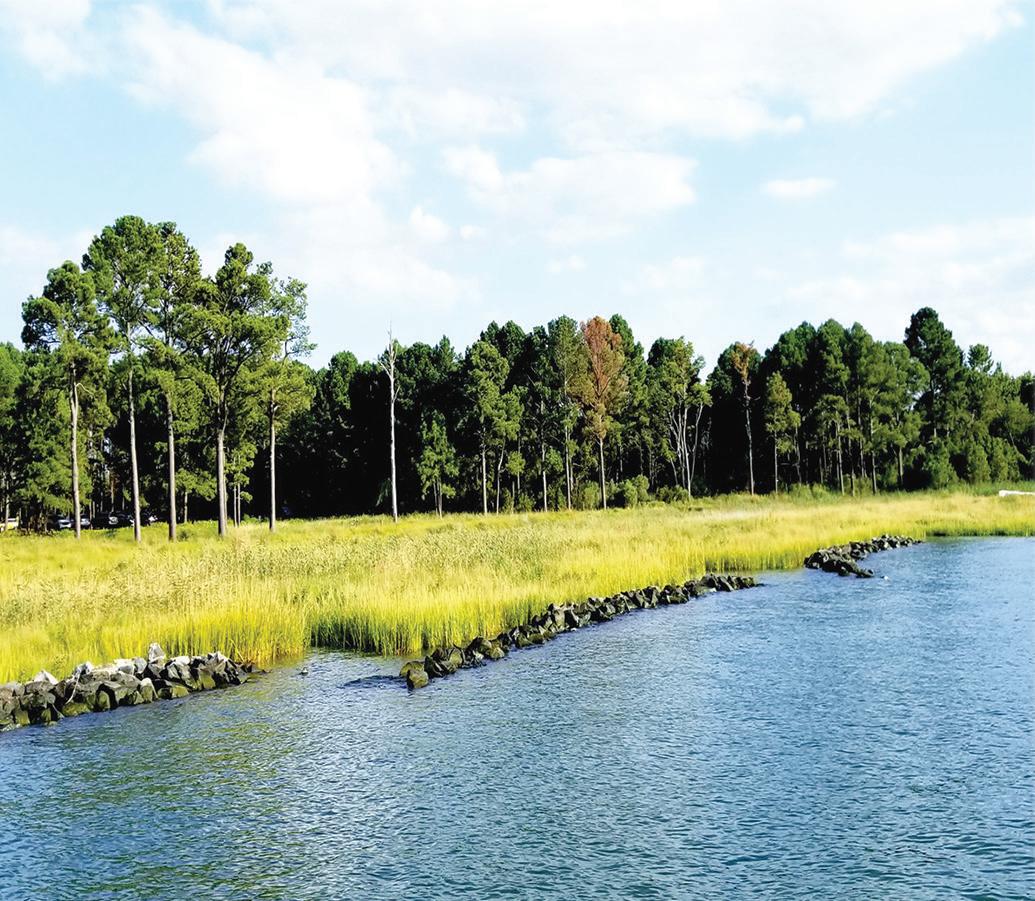





Queen Anne’s County
The history of Queen Anne’s County dates back to the earliest Colonial settlements in Maryland. Small hamlets began appearing in the northern portion of the county in the 1600s. Early communities grew up around transportation routes, the rivers and streams, and then roads and eventually railroads. Small towns were centers of economic and social activity and evolved over the years from thriving centers of tobacco trade to communities boosted by the railroad boom. The county is named for Queen Anne of Great Britain, who reigned when the county was established in 1706.
Queenstown was the original county seat when Queen Anne’s County was created, but that designation was passed on to Centreville in 1782. It’s location was important during the 18th century, because it is near a creek that, during that time, could be navigated by tradesmen. A hub for shipping and receiving, Queenstown was attacked by English troops during the War of 1812.
Construction of the Federal-style courthouse in Centreville began in 1791 and is the oldest courthouse in continuous use in the state of Maryland. Today, Centreville is the largest town in Queen Anne’s County. With its relaxed lifestyle and tree-lined streets, it is a classic example of small town America.
The Stevensville Historic District, also known as Historic Stevensville, is a national historic district in downtown Stevensville, Queen Anne’s County. It contains roughly 100 historic structures, and is listed on the National Register of Historic Places. It is located primarily along East Main Street, a portion of Love Point Road, and a former section of Cockey Lane.
The Chesapeake Heritage and Visitor Center in Chester at Kent Narrows provides and overview of the Chesapeake region’s heritage, resources and culture. The Chesapeake Heritage and Visitor Center serves as Queen Anne’s County’s official welcome center.
Queen Anne’s County is also home to the Chesapeake Bay Environmental Center (formerly Horsehead Wetland Center), located in Grasonville. The CBEC is a 500-acre preserve just 15 minutes from the Chesapeake Bay Bridge. Over 200 species of birds have been recorded in the area.
Embraced by miles of scenic Chesapeake Bay waterways and graced with acres of pastoral rural landscape, Queen Anne’s County offers a relaxing environment for visitors and locals alike.
For more information about Queen Anne’s County, visit www.qac.org .

JUNE 2026 CALENDAR OF EVENTS
“Calendar of Events” notices: Please e-mail to info@tidewatertimes.com. The deadline is the 1st of the month preceding publication (i.e., June 1 for the July issue).
Thru July 30 Shorelines of Time: Celebrating Talbot250 is an art exhibition by the Working Artists’ Forum exploring the landscapes, traditions, and people that shape Talbot County’s story. At The Market at Dover Station, Easton.
Every Thurs.–Sat. Amish Country Farmer’s Market, 101 Marlboro Ave., Easton. An indoor market offering fresh produce, meats, dairy products, furniture and more. For more info. tel: 410-822-8989.
4 Concerts in the Park series every Thursday beginning at 6 p.m. at Muskrat Park in St. Michaels
5 First Friday in downtown Easton. Art galleries offer new shows and have many of their artists present throughout the evening. Tour the galleries, sip a drink and explore the fine talents of local artists. 5–8 p.m.
5 Muppet Treasure Island - Outdoor Movie Night (Sponsored by Soistman Family Dentistry). 8:30 PM - 10:30 p.m. 629 Diamond Street, Easton.
2 Complimentary open-air movie nights on Linden Lawn on select summer evenings, with films beginning at 8 p.m. Bring a blanket or lawn chair, settle in under the stars, and enjoy movie-style concessions with a Perry Cabin twist available for purchase. In the event of rain, screenings will be held the following evening. *Showings may be adjusted due to weather.
6,13,20,27 Easton Farmers’ Market – Saturday 8 a.m. – noon year round. 114 North Harrison Street, Easton. 410-924-7279.
6,13,20,27 St. Michaels Farmers Market – Saturday 8:30 – 11:30 a.m. 206 S. Talbot Street, St. Michaels.
6 Tour de Talbot from 8 a.m. to 4:30 p.m. Three SAG-supported distance rides are available—30, 40, or 62.5 miles—all of which include three rest stops where volunteers will help with an array of snacks, fruit, and beverages. More info. at president@whiteclaybicycleclub.org.
6-7 Chesapeake Bay Motoring Festival: The roar of vintage engines, gleaming classic boats, and the thrill of Formula 1 racing will converge on Maryland’s Eastern Shore as the 10th annual Chesapeake Bay Motoring Festival returns to Kent Island Yacht Club's waterfront lawn. For tickets visit kiyc.org/event-details/chesapeake-bay-motoring-festival-2.
13 Declaration of Independence Flag Day Walking Tour of St. Michaels, from the Talbot County Free Library, St. Michaels. 10 a.m. to 3 p.m. Opening ceremony on Fremont St. at 10 a.m. will of-
ficially start the towns Flag Day Celebrations. Brought to you by the MidShore Constitution Alliance and Signing the Promised, powered by 51 Steps to Freedom.
13 Saturday in the Park outside of the fire department in Easton. 2 to 6 p.m. Enjoy live music, crafts and vendors. 31A Creamery Ln., Easton.
13 St. Michaels Second Saturday Art Night Out – Art galleries are alive with special events. Talbot Street, St. Michaels.
13 Cambridge Second Saturday and Art Walk free art gallery receptions and specials. 5 p.m. Downtown Cambridge.
14 Flag Day Boat Parade Skipjack Sail from, 12:30-2:30 p.m. at the Chesapeake Bay Maritime Museum. $35 per passenger for CBMM members & $45 for non-members. For more info. visit cbmm.org.
18 Flower Show: Nine Eastern Shore garden clubs will take part in a National Garden Club (NGC) Standard Flower Show at the historic Packing House in Cambridge on June 18 from 1-4 p.m. You are invited to stroll through and enjoy this colorful free event. For more info. tel: 301-237-3197
19-21 Antique and Classic Boat
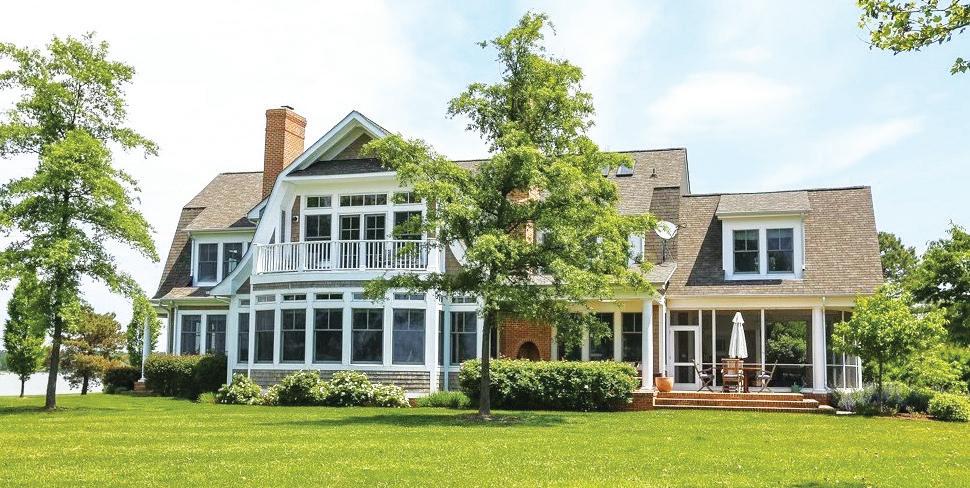


Festival and Coastal Arts Fair at the Chesapeake Bay Maritime Museum, St. Michaels. 1- a.m. to 3 p.m. For more info. visit cbmm.org.
20 18th annual Juneteenth celebration, a free, daylong event honoring the voices, history, and lived experiences of Easton’s historic Hill Community—one of the oldest free African American neighborhoods in the United States, at the Academy Art Museum, Easton. 10 a.m. to 6 p.m. For more info. visit facebook.com/ events/1726287248735333/.
27 3rd annual Frederick Doug-

lass Unity Day Crab Feast at the Easton VFW, Glebe Road, Easton. 1 p.m. All you can eat Crabs, Chicken and Fried Catfish. Beer and Mixed Drinks provided by The VFW of Easton. For more info. visit fdhill.org.
27 Harbor Lights Soirée: A Cocktail Benefit for the Chesapeake Film Festival. CFF invites the community to an elegant gathering - an evening of cocktails, seasonal cuisine, and celebration in support of independent fi lm. 5 to 7 p.m. at the Eastern Shore Conservation Center,114 S. Washington St., Easton. $100. For more info. visit chesapeakefilmfestival.com.

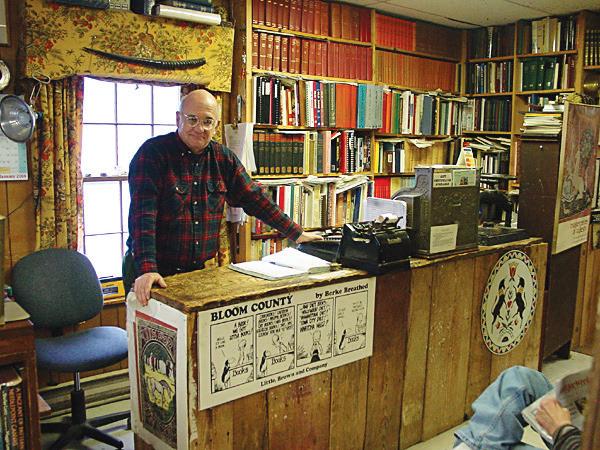





EASTON CLUB - T his 2000 sq. ft singlestory home features an open floor plan. Living room with new gas fireplace, family room or possible 3rd bedroom, dining area, primary suite with remodeled bath with walk-in shower, remodeled guest bath, remodeled kitchen, screened porch and one car garage. Wood flooring in main living areas. Lawn irrigation, newer roof and gutter guards. Community pool and tennis/ pickleball court. $595,000
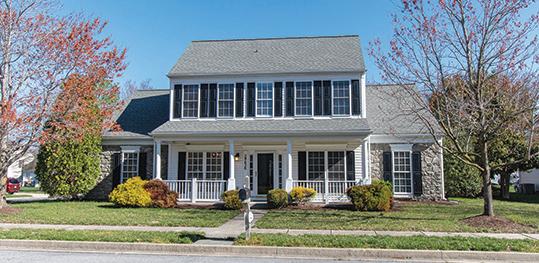
CHESAPEAKE BY DEL WEBB. Popular 2-story Wittman model. Great room with gas fireplace, office, kitchen with center island, granite countertops and breakfast nook. Sunroom, enclosed porch overlooking your own private fenced in-ground pool. Primary bedroom suite, guest bedroom and hall bath. 2nd floor features a loft, guest bedroom and bath. Central air (2025) and newer roof (approx. 7 years old). Attached 2-car garage, patio and irrigation system. 55+ age-restricted section. Community amenities. $500,000


EASTON VILLAGE - Desirable waterfront community located minutes from downtown Easton, St. Michaels and Oxford. Community pier, clubhouse and pool. Custom built, one owner home. Living/dining room combo, family room with gas fireplace and built-ins, gourmet kitchen, primary suite, guest bedroom or office. 2nd floor loft, 2 guest bedrooms and bath. 2 car garage, screened porch, patio, fenced backyard and irrigation system. $830,000
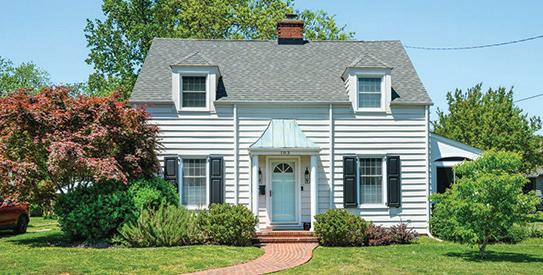
CAMBRIDGE HISTORIC DISTRICT - Charming home with limited water views of the Choptank River at the end of the street. Minutes to downtown Cambridge with shopping, restaurants, marinas and Great Marsh Park. Great room with gas fireplace, dining room or office, kitchen with upgraded appliances and countertops and tile backsplash. 2nd floor has 3 bedrooms and a fully remodeled bath. Side porch enclosed for year-round sunroom. 2 story workshop, roof approx. 2019. $415,000




Nestled in the heart of the charming waterfront village of Bellevue, 5658 Gates Street presents a rare opportunity to own a classic home rich in historic charm. This thoughtfully maintained residence blends timeless character with everyday comfort, offering approximately 1,480 square feet, 3 bedrooms, and 2 bathrooms. Inside, you’ll find beautifully preserved hardwood floors and the peace of mind of a recently updated roof. The true highlight, however, is the setting. Located in the quaint Bellevue community, this home is surrounded by the natural beauty and unhurried pace that defines Maryland’s Eastern Shore. Just moments away, enjoy access to the scenic Tred Avon River, nearby public landings, parks, and the iconic Oxford-Bellevue Ferry. Whether you’re savoring peaceful evenings, biking to the water, or taking a short drive to Saint Michaels or Easton for dining, shopping, and local events, this location offers an ideal blend of tranquility and convenience. Perfect as a full-time residence or weekend retreat, 5658 Gates Street captures the true essence of Eastern Shore living.



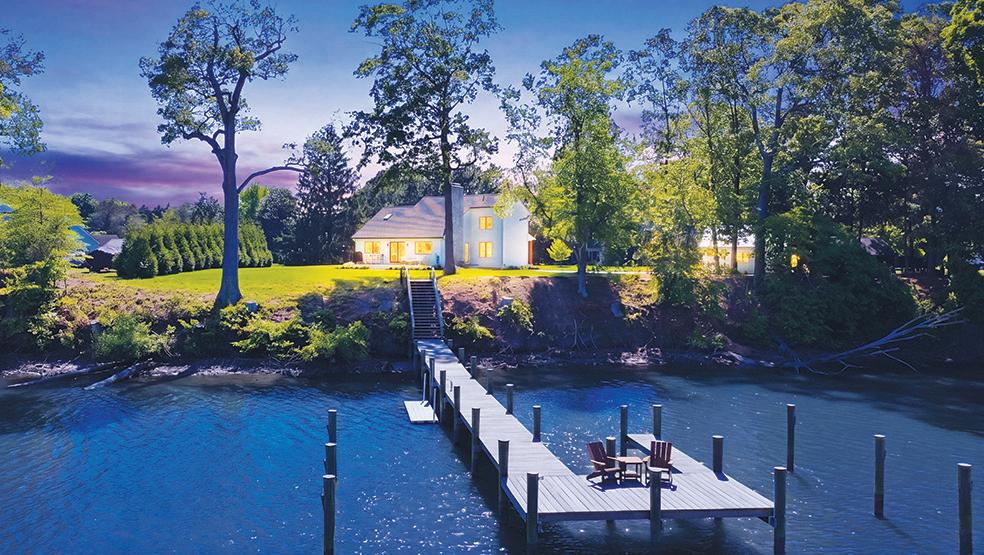


Modern waterfront farmhouse on Maryland’s Eastern Shore, thoughtfully renovated with elevated finishes, Viking appliances and private pier with approximately 4+ feet MLW. Set on a beautifully landscaped high-bank waterfront lot just minutes from downtown Easton, offering refined indoor-outdoor living with expansive lawn, mature trees and exceptional boating access. $1,795,000