
Tidewater Times
February 2026



















Love Is as Love Does: Mike Valliant
Tidewater Gardening K. Marc Teffeau
Charles the Emigrant: A.M. Foley
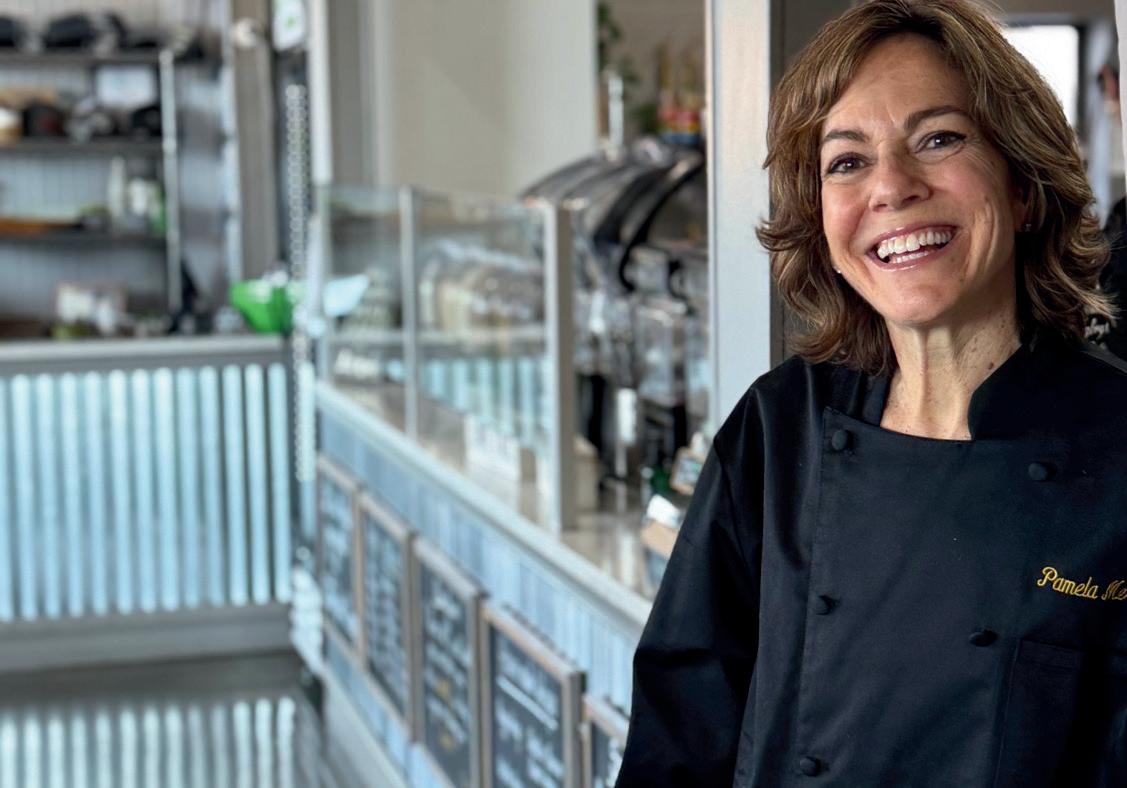
Tidewater Kitchen: Pamela Meredith
When Freedom Came - Nace Hopkin's Return : James Dawson




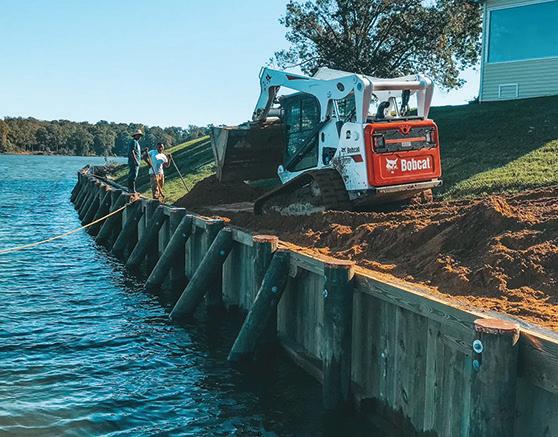



About the Cover Photographer Lori R. Bramble
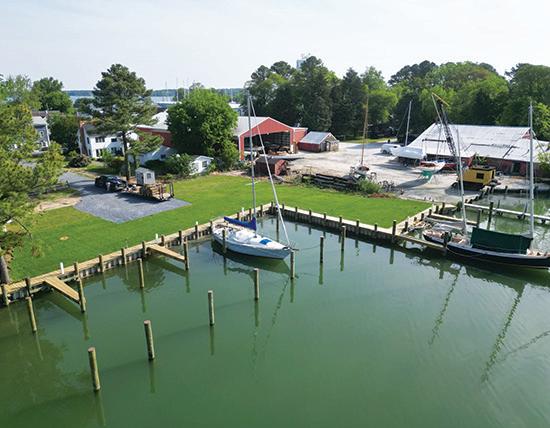
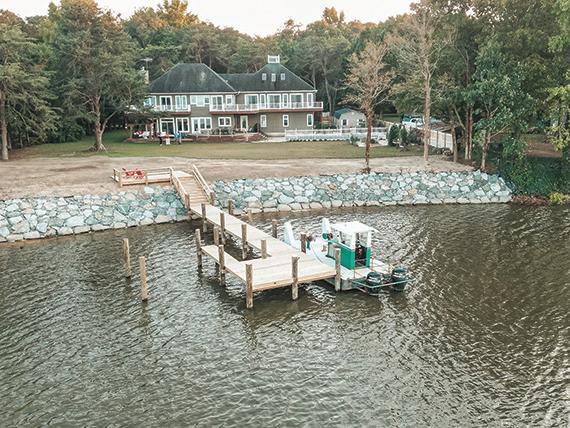
A Dorchester County native, Lori lives on Ross Neck Road in the Dorchester neck district. She has been an amateur photographer for almost 39 years and enjoys nature photography and living on the Eastern Shore.
Like most photographers, she started with taking photos of her family. She then began photographing local scenes around the water. She has continued to do this every year for Christmas cards.
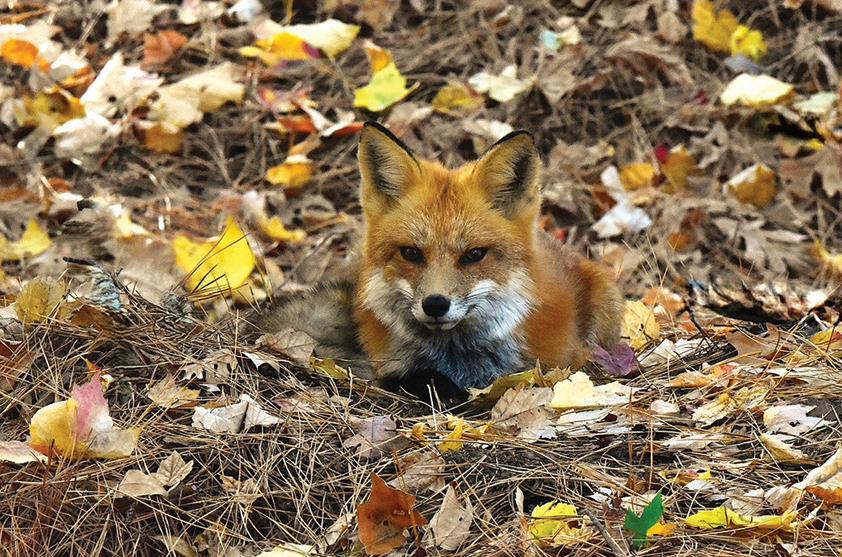
Lori’s focus is nature photography, wildlife and scenery around the Mid-Shore. The two things she enjoys photographing most are sun-
flowers and the great blue heron, and she cherishes the opportunity to share those photos with others. As she likes to say, “nothing beats life on the Shore.”
Lori’s photos have been published in Tidewater Times, Birds & Blooms Magazine, the Department of Natural Resources Magazine and Attraction magazine, as well as on the Facebook pages for all three magazines.
You can follow her photography on Instagram @lrbramble to view her collection of “Life on the Shore Photos.”

New Location Opening Soon

Girl Sleuths of the Golden Age
by Helen Chappell
I was about eight when I first became a library patron. And the first book I checked out was a Nancy Drew. The Secret of the Old Clock was my first taste of the wonders of the golden-haired sleuth who could do no wrong.
Living with her widowed father, famous attorney Carson Drew, Nancy, who seemed to be fresh out of high school, rode around the countryside in her blue roadster, with loyal, if slightly wimpy, boyfriend Ned Nickerson, and her two BFF’s, butch George and timorous Bess. Nancy didn’t work and didn’t go to college. Her father treated her like a cross between a spoiled puppy and a mature adult. The absence of a mother or anything like a chaperone gave Nancy all the freedom in the world to solve her mysteries. Ned, in the sexually non-threatening way preteen girls like, was there to provide the date and the muscle. Bess and George were there simply to sing backup to Nancy’s lead. Nancy was perfect, from the tip of her blonde head to the soles of her designer shoes, which made me sort of irritated with her. Turns out it also made a lot of other young girls irritated, too.
But Nancy Drew mysteries were

like potato chips. You couldn’t stop with just one tale of Nancy tracking down a lost will or an evil diamond smuggler. Every Friday I returned the last Nancy to the library and checked out the next one.
They came in blue covers, and the artwork dated the books to the ’30s, which made them positively quaint by the late ’50s. In the black and white ink illustrations, the initial
Girl Sleuths young girls still read them, all over the world. They’re published in more than twenty languages.
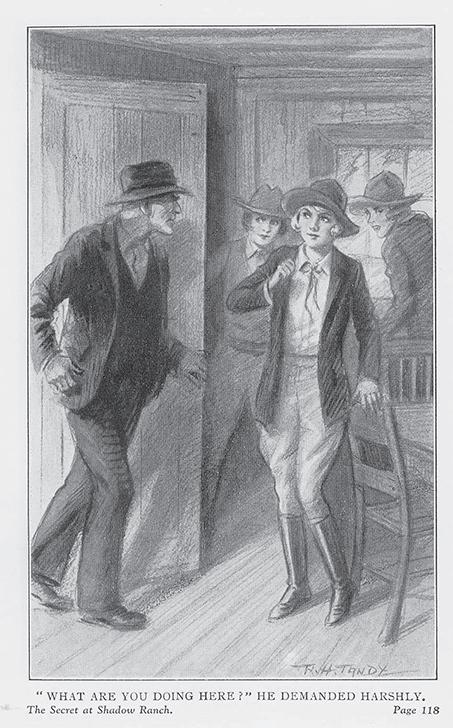
incarnation of Nancy looked more like Faye Dunaway as Bonnie of Bonnie and Clyde fame than an ingénue in an innocent girl’s mystery series. By the time I’d grown out of the series, the books had been updated with more modern illustrations and racial, gender, and other gaffes of an earlier time scrubbed as clean and fresh as Nancy’s peaches and cream cheeks.
According to Wiki, there are more than 175 books in the series, which has morphed over the years to keep up with the times. And yes,
Nancy Drew author Carolyn Keene would have to be grinding out pulp at the ripe old age of 150 if she were alive, which she never was.
Carolyn Keene was the pen name of a number of authors over the years. It wasn’t until I started doing syndicate books for the late Grosset and Dunlap myself that I figured that one out. Of course, the series I helped to hack out for a couple of years was nowhere as cool or as interesting as Nancy Drew, but it paid the bills and put me in an earnwhile-you-learn situation early in
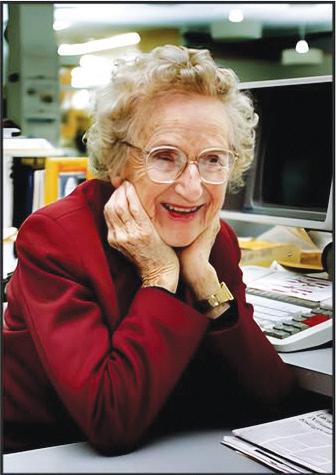
Mildred Augustine Wirt Benson, the first “Carolyn Keene.”
Girl Sleuths
my career. My books didn’t sell like hotcakes, but they weren’t Nancy Drews, either. In fact, they were novelizations of television scripts and they were so awful I’m not going to tell you what TV show it was. If I did, I’ve had to turn in my serious student of television card.
In contrast to the ever-perfect Nancy, and why there isn’t a Nancy Drew Barbie seems to be a tragic lost marketing opportunity, for which I want a royalty when the plastic starts molding in China ~ where was I? Oh, right.
In contrast to the ever-fl awless Nancy Drew, other publishing houses set up other girl sleuths.
I was especially fond of Judy Bolton. For one thing, my favorite cousin was named Judy, and for another, auburn-haired Judy Bolton could solve the mystery, and it didn’t matter if her hair was out of place. Whether being gassed at camp in The Ghost Parade or being knocked unconscious, Judy was considerably grittier, and more sympathetic. She had to work to solve her mysteries, and she was much more human and less of a Barbie than Nancy.
True, Judy’s father was a doctor, and halfway through the series of thirty some books, she married her high school honey, but neither affluence nor a wedding band slowed her down when there was danger afoot. Like Nancy Drew, she was created


















in the ’30s, but Margaret Sutton’s fictional sleuth seemed to have more depth of character. And Margaret Sutton, like Carolyn Keene, was of course the pen name of several authors.
Sadly, Judy was never as popular as Nancy Drew, and the series was closed in the 1970s. Late editions of Judy Boltons, according to Wiki, are quite collectible, so watch those yard sales. Again, in later editions, all offensive references to race, gender stereotyping and such were scrubbed out, and a good thing too.
Trixie Belden, who lived on a farm and was a little more rustic, came in third. Various writers Girl Sleuths
SHORELY BEAUTIFUL



hacked out some forty books under the name Kathryn Kenny.
Trixies were fun to read, but a little lightweight compared to Nancy and Judy.
Of course, trying to read these now is often weak sauce. Often, I can guess the plot, divine the villain and predict the denouement by page 10. But I can do that on most television series. One hack always recognizes the well-worn plot devices of another. We’ve all been to that well once too often, and it’s a good thing people, in this case, preteen girls, like to be entertained and escape for a few hours into a nicely satisfying puzzle.
The girl sleuths might have been




juvenile entertainment squeaky clean and freshly polished before S.E. Hinton and Judy Blume’s considerably more realistic literature, but they were great fun. And at a time when young women were being told to shut up, sit down and be decorative, these girl sleuths were out there getting it done. So perhaps in a way, they planted a seed for generations of women who could solve the puzzle for themselves.


Helen Chappell is the creator of the Sam and Hollis mystery series and the Oysterback stories, as well as The Chesapeake Book of the Dead . Under her pen name, Rebecca Baldwin, she has published a number of historical novels.

































Adventures in the U.S. Pacific Northwest from the Mountains to the Coast Washington State, Part 1
by Bonna L. Nelson
I’m sure it comes as no surprise that the state of Washington was so designated in honor of President George Washington and that it is the only state named after a president. We recently flew into Seattle, Washington’s most populous city, to begin our exploration of the wonders and attributes of our nation’s Pacific Northwest (PNW) beginning with its 42nd state.
The 18th-largest state in the U.S. has an area of 71,362 square miles and shares a northern international border with the Canadian province of British Columbia and a southern border with Oregon, which we would visit next. The Pacific Ocean laps at its western border, and Idaho is its eastern neighbor.
Nicknamed the “Evergreen State,” Washington has it all: tem-


perate rainforests, snow-capped alpine mountain ranges, glaciers, volcanoes, high desert, semi-arid basin (agricultural region), sweeping beaches, undulating ocean coastline and vibrant cities and towns. The state’s unofficial moni-
ker of “Evergreen” represents its year-round green forests of Douglas fir, western hemlock and red cedar, which retain their lush foliage throughout the year.
We planned and executed our PNW adventure around a scenic mountain-to-ocean loop, beginning in Seattle, then to the southeast along the Cascade Mountains to Mt. Rainier National State Park. Driving south, our next stop was the Columbia River Gorge on the border of WA and Oregon (OR), followed by the Mt. Hood Scenic Byway, OR. We made a brief stop in Portland, OR’s capital, and then headed west across OR to the Pacific coast.
We stayed in Seaside near the famous Cannon Beach, OR, then
SANCTUARY INTERIORS
Timeless Design
Let’s bring simplicity & love into your spaces through color, texture, harmony, contrast, scale and balance

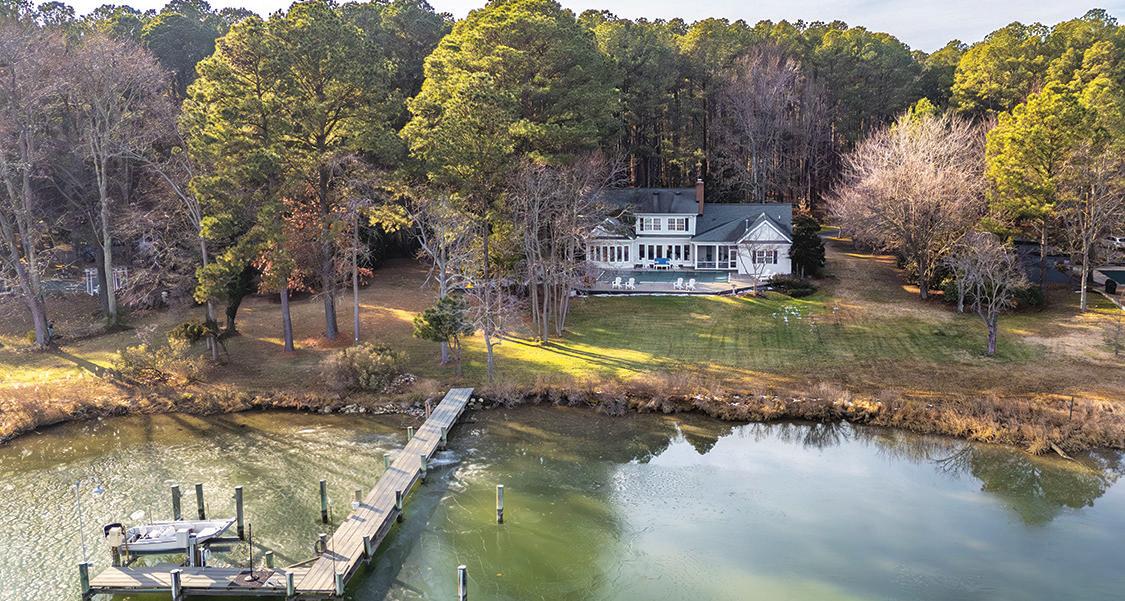
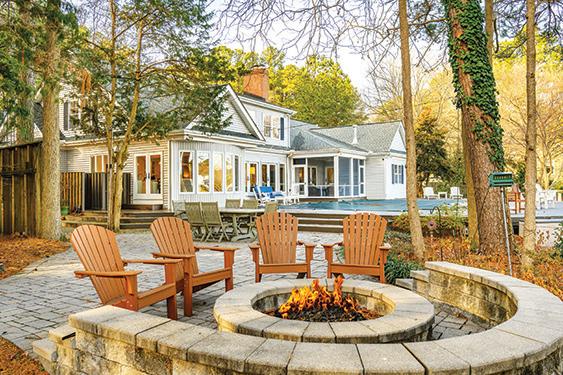

Exceptional Harris Creek Waterfront Living!
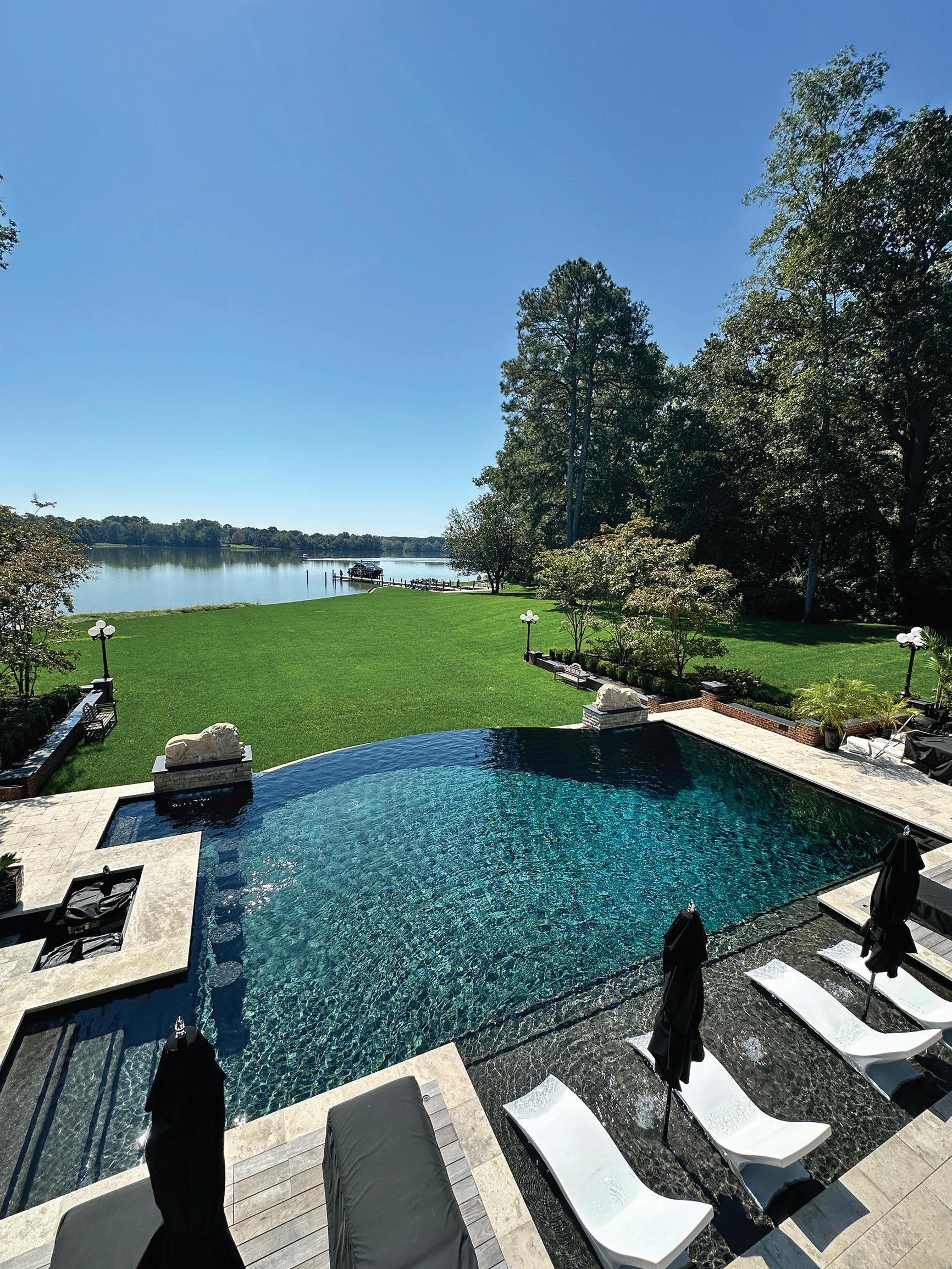
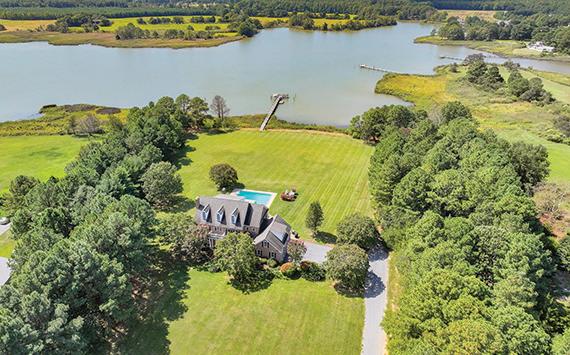
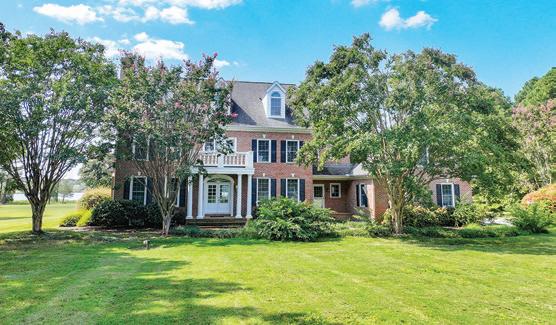
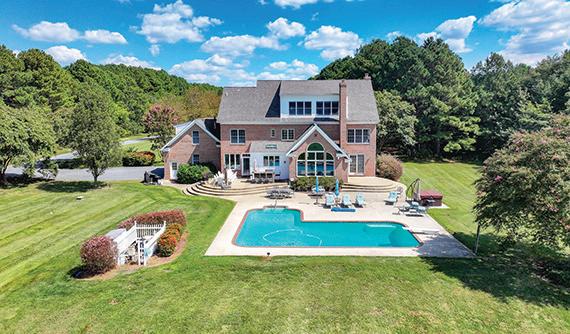
Custom 5 bedroom waterfront home on Harris Creek offering effortless Eastern Shore living. Light-filled interiors feature hardwood floors, open floor plan, multiple fireplaces, chef’s kitchen with oversized island and main level waterside primary suite and guest suite. Outdoor living includes a saltwater pool, extensive deck, fire pit patio, screened porch and pier. $2,195,000




BENSON & MANGOLD REAL ESTATE

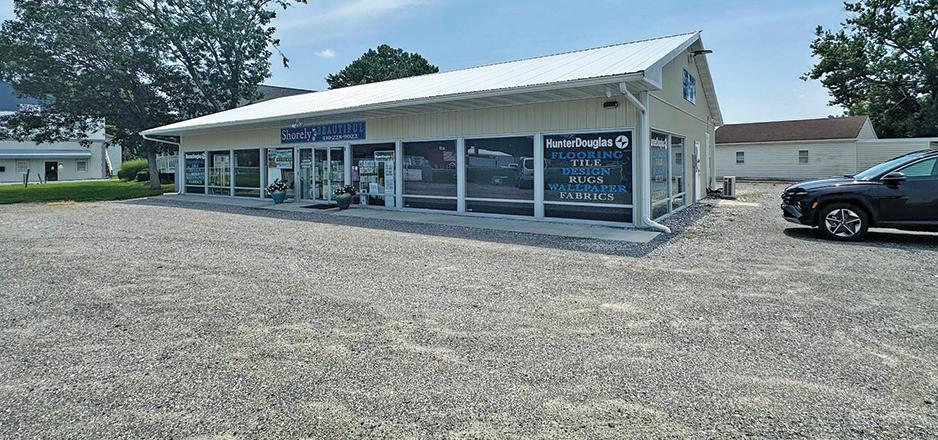
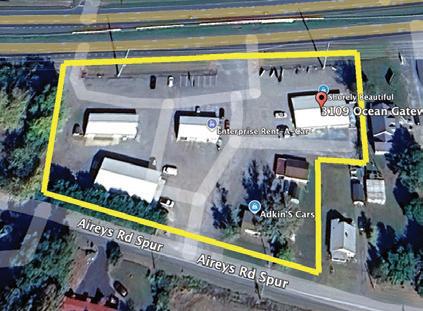
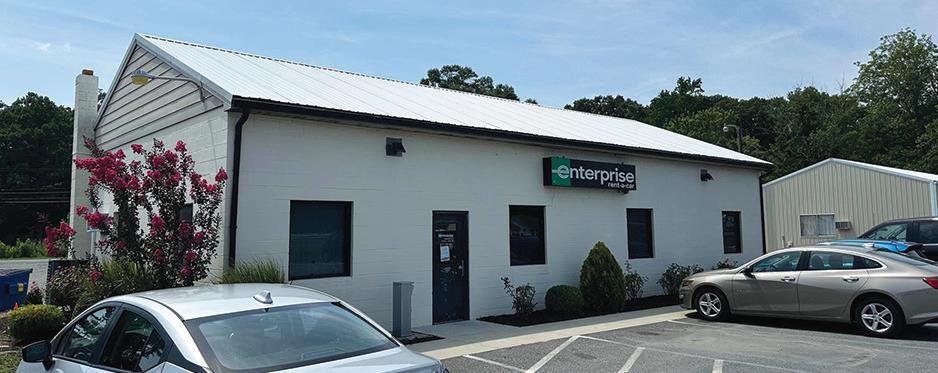
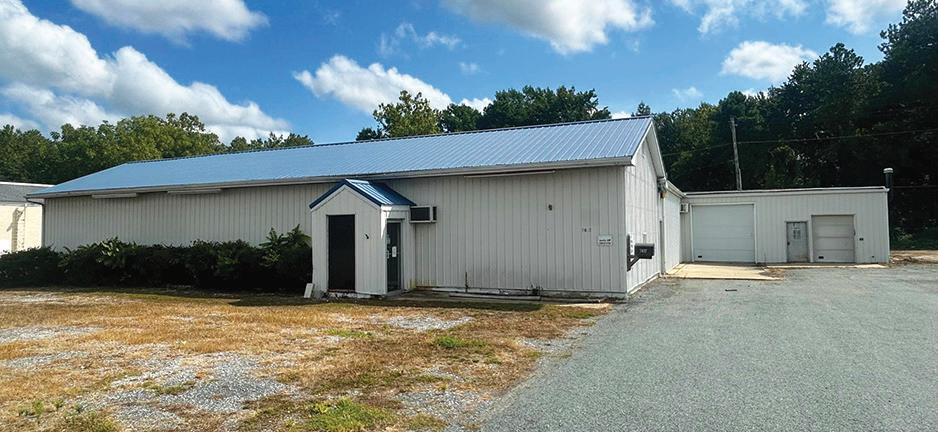
Versatile multi-unit investment in a well-situated location, featuring five fully leased units, including a residential space on Aireys Road. All tenants are long-term and wellestablished, providing consistent income and minimal turnover for a truly hands-off ownership experience. Included in the offering is an additional residential parcel, also tenant-occupied, adding further stability and income to the investment. The property offers convenient access to major routes, connecting the area to surrounding Eastern Shore communities and beyond, while maintaining a quiet, stable setting that appeals to tenants. With a proven rental history and strong occupancy, this is a dependable addition to any portfolio, blending stability, location, and long-term potential.
Washington State
headed north to Long Beach on WA’s Pacific coast. We wandered a bit in WA’s capital of Olympia, east of the coast, before heading back north to the airport in Seattle and home. Two states filled with natural wonders in nine days, and our last of all fifty states.
We began our PNW loop in Se -


attle, the state’s center for transportation, business and industry. Located on Puget Sound, the inlet of the Pacific Ocean consists of numerous islands, fjords and bays carved out by glaciers. Most of the state’s population of just under 8 million live in the Seattle area.

We felt that 8 million after we took our favorite means of exploration of a new area, the Hop On Hop Off (HOHO) bus tour of Seattle and then drove south on its trafficjammed expressways. It took us hours of driving in our rental car in bumper-to-bumper, frustrating traffic, on a midafternoon weekday, to get out of metropolitan Seattle and reach our next destination for the night.
Like WA state, Seattle has a “green” nickname, the “Emerald City,” for its lush year-round greenery from abundant trees, parks and natural beauty. We were happy to be touring Seattle via a red, warm, mostly dry HOHO bus on a typical misty, drizzly, cloudy Seattle day. We boarded the bus on the street across from the famous
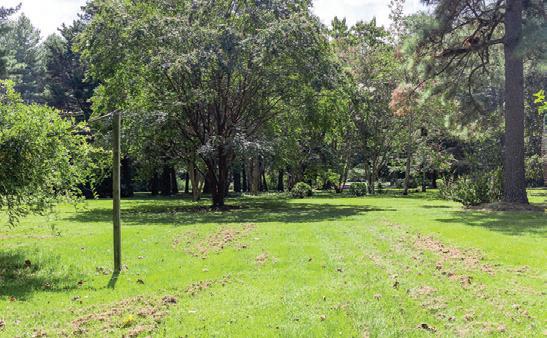

High Banks Buildable Lot
Build the home of your dreams on this picturesque lot in the sought a er High Banks community. Nestled just outside of town, the 2.49 acre lot overlooks scenic Turkey Creek with its frequent ducks, deer and squirrels. An approved Perk and recorded plat, this High Banks lot o ers privacy and tranquil living. is section of High Banks has a lot with access to a private community boat ramp for boating and shing. Annual HOF fees are presently $40.00. ere is also a public boat ramp nearby on Kingston Landing.

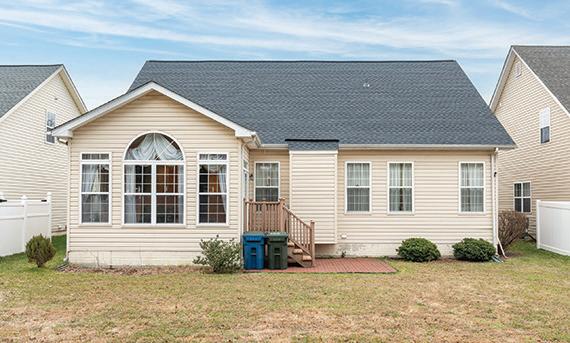
209 Tubman Drive, Easton
Former Builders Models Home with Many Upgrades! New Roof in December 2025! Tray ceilings, crown molding, chair railings, 9 foot ceilings, an o ce/library, recessed lighting, hardwood oors and more. is 3 bedroom, 2.5 bathroom home has a comfortable layout. e updated kitchen has granite counter tops and 42’ cabinets, leads into a bright sunroom/breakfast room with large windows overlooking the spacious backyard. Beautiful hardwood ooring carries throughout the foyer, o ce/sitting room, the large dining room and family room with replace. e main oor primary bedroom suite has hardwood ooring, a full bathroom with double vanities, soaking tub, shower and walk-in closet. e second oor has 2 bedrooms, a rec room and full bathroom. 2-car garage with built-in storage. Conveniently located across from the George Murphy community pool, schools, hospital and the Easton Point Marina.




Space Needle, known for its rotating glass floor and panoramic views of the city from a height of 520 feet, which we did not ascend due to my acrophobia.
We were surprised at how hilly the city was. The two-hour tour took
us from the Needle to the beautiful Seattle waterfront with its promenades, park areas, event piers, shops, eateries and aquarium. We passed the Pioneer Square historic district with parks and art galleries, and the Chinatown historic gate. We glimpsed bustling markets, museums, breweries and shopping districts. We passed numerous business headquarters, including Amazon and Starbucks.
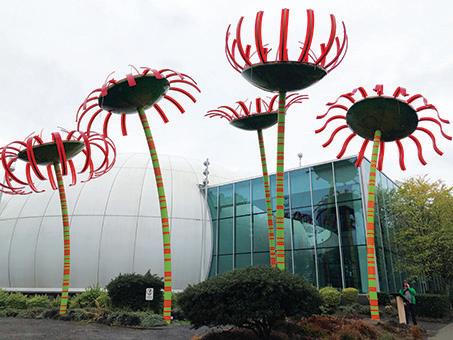
I have always admired the fine artist Dale Chihuly’s glass creations and was thrilled to tour his Chihuly Garden and Glass museum at the end of the tour at Seattle Center. There we found magnificent elements of his work, including iconic, colorful glass creations, large,


Washington State
complex glass architectural installations, and personal collections, as well as a gift shop. The exhibit features a comprehensive collection of 40-years of Chihuly’s experimentation with intense, vibrant color, fluid organic shapes and light, all in glass.

Once we emerged from the busyness of Seattle’s downtown and expressways, we headed south into the wilderness of the Cascade Mountain Range, driving under mesmerizing tree canopies of up to 300-foot-tall pines. We passed isolated homesteads and random small farms and the dried up, tree stump-filled Lake Alder, a symbol of the drought and the reason for the “Risk of Forest Fire High” signage.
Three hours and 80 miles later, we arrived at our charming, rustic accommodation, the Alexander’s Lodge, in Ashford, WA. The town was at the Nisqually entrance to Mt. Rainer National Park (MRNP),
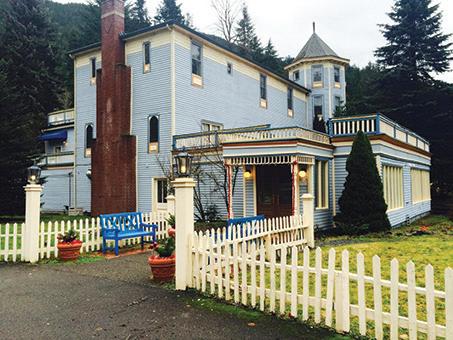
our destination in the morning. Our friendly lodge host, Jarrett, walked us to the cozy Glacier cabin and gave us breakfast kits for two days with fresh fruit, juice, breakfast sandwiches and cheese sticks, which we stored in the mini fridge, heated in the microwave and enjoyed with provided tea and coffee.
Mt. Rainier ascends 14,411 feet above sea level and stands as an icon in the Washington state landscape. An active stratovolcano, Mt. Rainier is the state’s highest elevation and the most glaciated peak in the contiguous U.S. Nearly 10,000 people a year attempt to reach its summit. Wildflower meadows ring the icy



Washington State volcano, and ancient forests cloak its lower slopes.
We were gifted with a brilliant blue sky and sun-filled day in MRNP, where nearly two million visitors a year enjoy its fantastic scenery and panoramic views. Stunning Mount Rainier came into view, rising to the sky from many stops along the park roads, well planned and designed in advance of construction to take advantage of mountain vistas. Maps and information about sites, roads, hikes, and views were abundant at the Wilderness Information Center, Longmire Museum and Historic District (Longmire was the park’s first settlement) and Jackson Memorial Visitor Center.
We drove past creeks, lakes, rivers, wildflower meadows and glacial flood plains with Pacific silver and noble fir trees lining the byway of narrow two-lane switchbacks in the Cascade mountains. We admired the magnificent fall show of colors that included huckleberry, vine maple and mountain ash and other deciduous trees and shrubs in shades of burgundy, orange, scarlet and gold. Glacial waters tumbled down Narada Falls, a perfect photo op.
At Paradise Visitor Center, we watched a video about the park and viewed exhibits. We learned that the old-growth forest on the mountains is over 1,000 years old and that owls, deer, coyote, bear, marmots, squirrels and mountain goats make their home in the an -





Washington State
cient mountains. Also, although the land is managed by the MRNP, Indigenous Peoples remain as caretakers devoted to the landscape of their ancient homeland.
My husband, John, did a bit of hiking while I did a bit of meditating while immersed in the holy, tranquil and breathtaking beauty of Mount Rainier, the snow-dusted peaks, the evergreen forests, the waterfalls, the wildflowers. We were blissed out in nature. On our drive back to the lodge, we passed a young, black-tailed deer with a mahogany brown body staring at us from the forest. Perfect ending to a perfect day in MRNP.
Jarrett recommended the Wildberry Restaurant down the road for dinner, and what a surprise and treat it was. The special restaurant is owned by a Nepalese Sherpa, who holds a world record for the fastest summit of Mount Everest! The dining room is decorated as a mini museum of his adventures, including climbing garments, gear, photographs, articles and other artifacts.
We savored traditional Sherpa Himalayan Nepalese food prepared and served by his family and friends to a packed restaurant with folks waiting for seats. Who would expect to dine on Nepalese food at Mt. Rainier? Kukhura thali presented as a platter of boneless chicken curry 10:30-5:30


Washington State

cooked in Nepali gravy and spices, bhatti (rice), daal (spilt pea lentil soup) and steamed veggies with hot spicy tea. We completed our savory, scrumptious Nepalese cuisine with another treat, a local favorite, marionblackberry (queen of blackberries) pie a la mode. Heaven!
The next day we drove south to the astounding Columbia River Gorge and Oregon, all of which will be revealed in the next issue. For now, we will continue our WA adventures on the Pacific Coast at Cape Disappointment and Long Beach and then head north to the capital, Olympia.
We crossed the Columbia River, traversed by the Lewis and Clark expedition to reach the Pacific Ocean at President Jefferson’s request, by way of the I-5 Interstate Bridge connecting OR to WA. Views of the Columbia River, the mountains and the ocean were a gift to the eyes. Fishing vessels dotted the coastline and rested in ports along the coast.

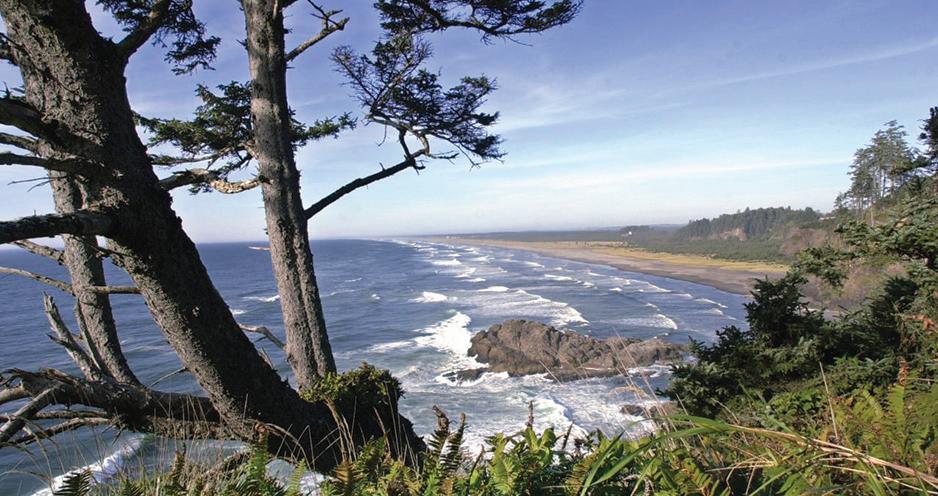
Cape Disappointment State Park, a massive headland jutting out into the Pacific 200 feet above the Columbia River, is located on the Long Beach Peninsula, fronted by the Pacific Ocean and looking into the mouth of the Columbia River on the southernmost coastal point of WA. The 2,023-acre camping park includes Fort Canby, the Lewis & Clark Interpretative Center and the Cape Disappointment and North Head Lighthouses. Unfortunately, roads to some of those sites were closed for the winter. We drove on the few open roads to see amazing views of nature in every direction.
I was disappointed not to see the center, as we had visited Lewis and Clark sites on travels to other states including Missouri, and WA was where their journey ended. The center exhibits are about the entire 1803–06 westward expedition from St. Louis to the Pacific coast with sketches, paintings, artifacts and film. Another time, perhaps?
We did explore Fort Canby, a former U.S. military installation built to defend the mouth of the



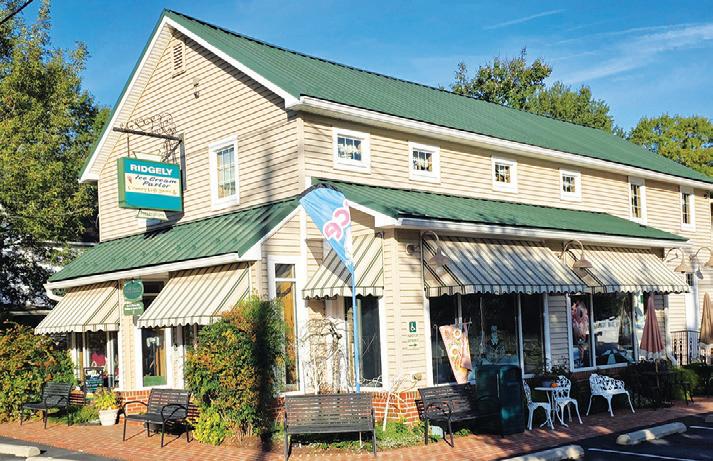
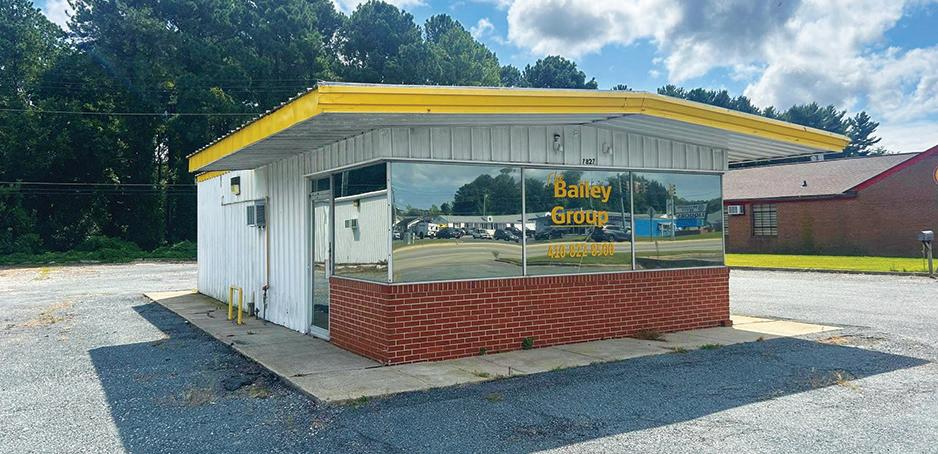
Excellent condition with desirable C-2 zoning, offering flexible mixed-use potential. Formerly home to a pharmacy, gift shop, and ice cream parlor, the building features handicap accessibility, a detached storage garage, and a 12-space paved parking lot—ideal for a variety of business or redevelopment opportunities.
Washington State
Columbia River, active from the Civil War through World War II. Now in a part of the state park, remnants of its artillery emplacements and grounds are accessible via hiking trails, affording dramatic coastal views.
Heading north along the Pacific Ocean, we reached Long Beach, listed as one of WA’s seven wonders. Long Beach is the “World’s Longest Continuous Peninsula Beach.” It stretches 28 miles along WA’s southeast coast starting close to where the Columbia River meets the Pacific Ocean. Visitors love to fly kites, stroll and drive on the caramel-colored sandy beach as well as enjoy the usual beach activities.
After deeply breathing in the salty ocean air, we were ready for lunch nearby. Drop Anchor Seafood and Grill provided us with the tasty seafood that the area is known for.
We savored the briny, well-seasoned clam chowder, grilled local scallops and lightly fried oysters.
Heading north along the Pacific Highway, we again were impressed by the natural beauty of the state, with its dazzling coastline, evergreen forests and lofty mountains. The turn to the northwest took us to WA’s approachable and attractive capital of Olympia, situated on the southernmost point of Puget Sound.
We marveled at the beauty of the Washington State Capital Campus. The dome of the Capitol makes it the tallest in the U.S. The Legislative Building and Temple of Justice are magnificent and certainly rival our country’s capital’s structures in resplendence and dignity. The small city with a population of 55,000 is known for its natural beauty, art scene and recreation. To us, Olympia looks clean and green and feels fresh.
We wandered down to Olympia’s





WINTER SERVICESpecial


Washington State
stunning, bustling Puget Sound Harbor with its boardwalks, wetland refuge, parks, markets, marinas and waterfront dining. Kayaks and sailboats skimmed across the glistening water as sundown neared. We spotted Anthony’s Hearthfire Grill with its unobstructed views of Puget Sound and decided that it was the place for our last dinner in WA.
I had to try more local seafood, and the Columbia River steelhead (rainbow) trout, chargrilled with roasted apple-ginger butter, cornbread pudding and seasonal vegetables fit the bill. Melt in your mouth! An amazing, fresh mix of fl avors. John enjoyed a juicy, tender steak from a nearby ranch. We were satisfied and happy, yet we needed one more taste of fresh local berries for dessert. This took the form of wild huckleberry jar pie with cheesecake on the bottom, layered with fresh huckleberries and jam and topped with fresh whipped cream.
We made a toast to our last night in WA, a gorgeous wonder of the best nature has to offer from the mountains to the sea with welcoming cities, towns and people. I put it on my list of places to return. Next up, Oregon.
Bonna L. Nelson is a Bay-area writer, columnist, photographer and world traveler. She resides in Easton with her husband, John.









TIDE TABLE
OXFORD, MD FEBRUARY 2026
1. Sun.
2. Mon.
3. Tues.
4. Wed.
5. Thurs.
6. Fri.
7. Sat.
8. Sun.
9. Mon.
10. Tues.
11. Wed.
12. Thurs.
13. Fri.
14. Sat.
15. Sun.
16. Mon.
17. Tues.
18. Wed.
19. Thurs.
20. Fri.
21. Sat.
22. Sun.
23. Mon.
24. Tues.
25. Wed.
26. Thurs.
27. Fri.
28. Sat.
SHARP’S IS. LIGHT: 46 minutes before Oxford
TILGHMAN: Dogwood Harbor same as Oxford
EASTON POINT: 5 minutes after Oxford
CAMBRIDGE: 10 minutes after Oxford
CLAIBORNE: 25 minutes after Oxford
ST. MICHAELS MILES R.: 47 min. after Oxford
WYE LANDING: 1 hr. after Oxford
ANNAPOLIS: 1 hr., 29 min. after Oxford
KENT NARROWS: 1 hr., 29 min. after Oxford
CENTREVILLE LANDING: 2 hrs. after Oxford
CHESTERTOWN: 3 hrs., 44 min. after Oxford
3 month tides at www.tidewatertimes.com 2:28 3:21 4:13 5:04 5:55 6:46 7:39 8:33 9:29 10:28 11:27 12:25pm12:54 1:42 2:27 3:10 3:54 4:38 5:24 6:13 7:05 8:01 9:03 10:10 11:2212:24






Chesapeake Fire and Ice is Back for 2026!
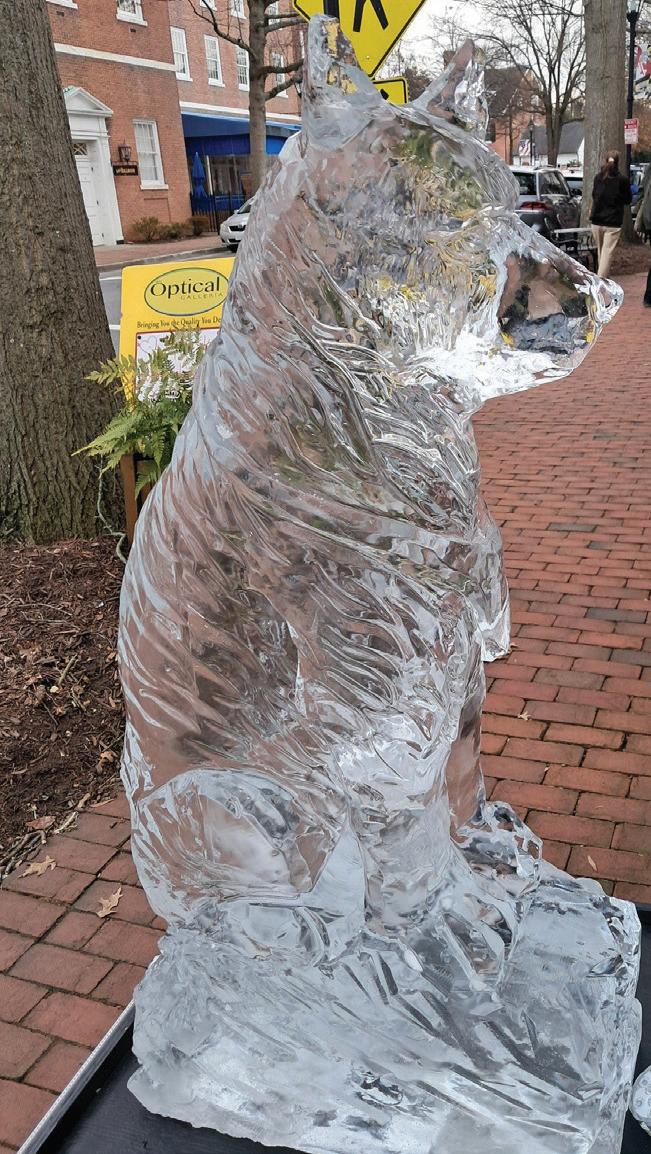
The Easton EDC is thrilled to announce Chesapeake Fire & Ice, presented by Preston Automotive Group, the two-day, spectacular family-friendly ice carving festival on Friday, February 20th & Saturday, February 21st, 2026.
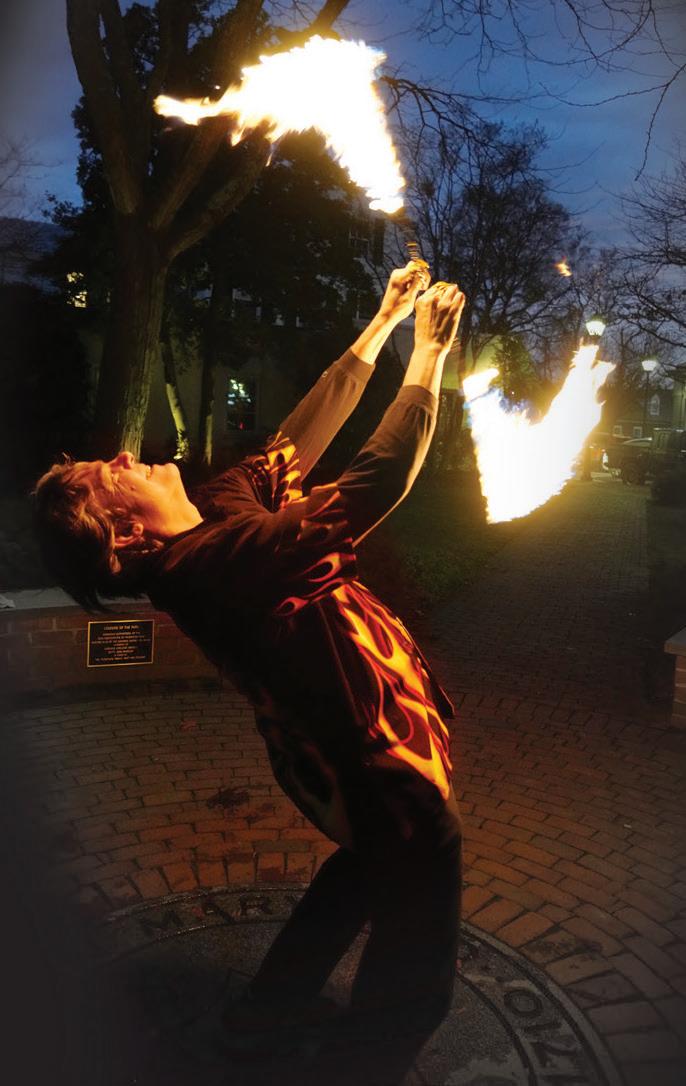
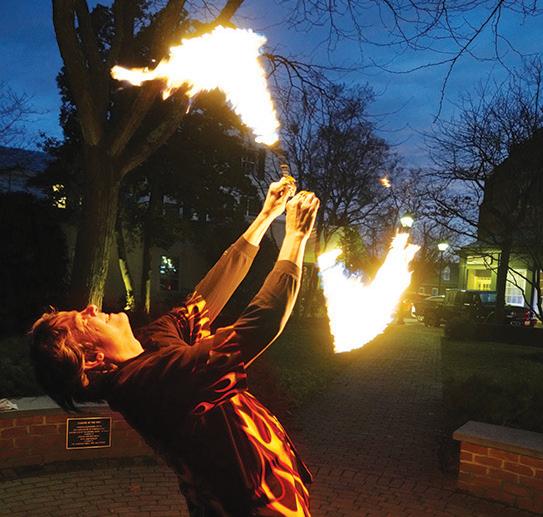
This free event will feature interactive, larger-than-life ice sculptures, live music, seasonal sales, restaurant specials, lodging specials, and more family-friendly entertainment. Cascading Carlos will also return to wow audiences with fire juggling and other tricks on Friday night and Saturday afternoon at Thompson Park. The fire trail will be a tasty trek filled with delicious bites, warm drinks, tasting sessions, and shopping. For more details and maps, visit the festival’s webpage at www. discovereaston.com/fireandice or stop by the Easton Visitors Center at 11 South Harrison Street, Easton, MD.
“Chesapeake Fire & Ice is a fantastic event that showcases downtown at its winter best,” stated Tom Maglio, Marketing & Events Manager of the Easton EDC. “So many people come together to make this event better and better each year, and we are excited to celebrate artistry and community.”
Get in on the fun with a sponsorship! To sponsor an ice sculpture or other festival event feature, please contact Tom Maglio, Marketing & Events Manager for Easton EDC, via email at tom@eastonedc.com or call 410-690-7348.
For details on all activities, please visit: www.DiscoverEaston.com or email welcome@discovereaston. com. If you are interested in becoming a sponsor or participating in this event, please contact tom@ eastonedc.com.
Easton EDC fosters economic vitality and community development by encouraging investment, promoting tourism, and positioning Easton, Maryland, as a premier destination to live, work, visit, and do business.




Turning Potential into Promise Confidence Takes Root at
the Foundation of HOPE
by Tracey F. Johns
At the corner of Washington and South in Easton, a long-vacant lot is poised to become something the town has never had before: a permanent home dedicated to building confidence, skills and opportunity for adolescent young women at one of the most vulnerable stages of their lives.
Foundation of HOPE’s future HOPE Center represents both a physical expansion and a critical turning point for an organization
that has quietly shaped the lives of dozens of middle school young women since 2017. For founder, president and CEO Keasha Haythe, the new brick-and-mortar facility is about one thing above all others: capacity.
“We’re at the point where the work has outgrown borrowed space and one-person operations,” Haythe said. “If we’re serious about serving more students and doing it well, we have to finish this.”

The Foundation of HOPE (Helping Others Prosper and Excel) was incorporated in 2013 and began implementing its Economic Development and Empowerment Program four years later, with a clear focus on sixth-grade students navigating the social, emotional and academic upheaval of early adolescence.
Research and lived experience told Haythe that age 12 is a critical inflection point, when self-esteem often falters and external pressures intensify. Her answer was a structured after-school program rooted in economic empowerment, leadership and real-world exposure.

Each cohort is small by design, capped at 15 female students, and the program is free. Participants receive homework help, mentoring, snacks and weekly sessions








Foundation of HOPE
that cover topics ranging from bullying and social media to financial literacy, entrepreneurship and workforce development. The emphasis is practical and forwardlooking, grounded in the belief that adolescent young women should see themselves early as capable contributors to their communities and the future workforce.
Haythe knows the terrain personally. Born and raised in Talbot County, she attended Easton Middle School and Easton High School and was raised by her grandmother in Trappe. She has spoken openly about the challenges she faced growing up, including bullying and struggles with self-confidence. Haythe created the Foundation of HOPE with that experience in mind, incorporating elements she believes could have helped her navigate those years with more confidence.
“That’s really where this comes from,” she said. “It’s giving these young women something I wish I had when I was their age.”
Professionally, Haythe brings more than two decades of experience in economic development, including leadership roles in Queen Anne’s, Dorchester and Anne Arundel counties. She has helped secure more than $100 million in funding for public and private projects, launched business incubators and built countywide marketing campaigns. In 2022, she left her full-time government role to lead the Foundation of HOPE exclusively.
She is also serving her first term on the Talbot County Council and is the first African American woman elected to that body. While the foundation operates independently of her public office, Haythe said her council role gives her an unfiltered view of the pressures
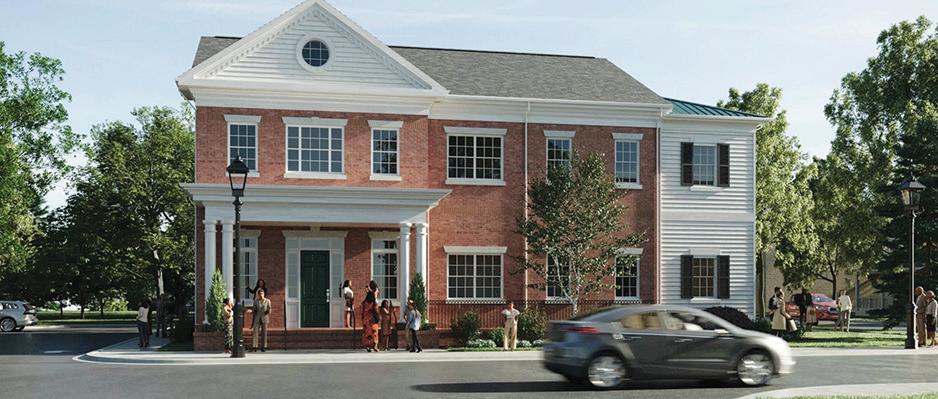
Rendering of what the Foundation of HOPE will look like upon completion.

Foundation of Hope
facing families and young people across the county.
“I see what middle school students are dealing with right now because I’m in the schools, I’m in the classrooms and I’m hearing it directly from them,” she said.
Until now, Foundation of HOPE has operated out of a home office with programs inside Easton Middle School and, more recently, St. Michaels Middle High School. That arrangement has allowed the organization to grow cautiously, but it has also limited expansion, staffing and programming.
The planned 5,200-square-foot center will change that equation. The facility will include classrooms, offices and community meeting space. Three small offices will be available for rent to nonprofits or small businesses, cre -
ating a modest but steady earned revenue stream to support operations. In addition to expanding programming for middle school girls, the building will also host entrepreneurship training, community events and partnerships with local organizations. A teaching kitchen is planned, with sponsorship opportunities available.
The capital campaign to build and support operations at the center totals $3 million. To date, approximately $2.2 million has been raised through a combination of individual donations, foundation support and public funding, including grants from the U.S. Department of Agriculture, the State of Maryland and local partners.
Groundbreaking took place this past October, and construction is expected to begin this year, with completion targeted for 2027.
What remains is the final


Foundation of HOPE
stretch, and that is where Haythe is focusing on her appeal.
“We’re asking our major donors to consider both capital and operating gifts,” she said. “A building alone doesn’t serve more students. Staff, programming and long-term sustainability do.”
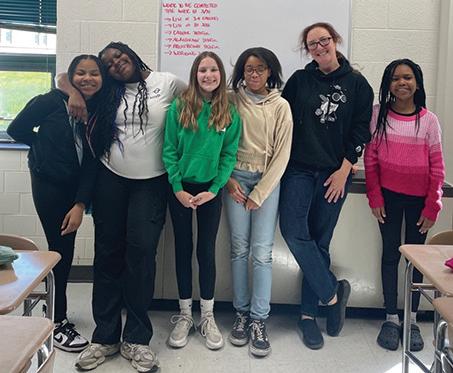
The need is not theoretical. Haythe, currently the Foundation’s sole employee, facilitates every session herself. She tracks academic progress, works with teachers, mentors and participants and stays connected with families. Alumnae from early cohorts are now in college, some of whom are returning to speak with current participants about how the program shaped their confidence and decision-making.
Parents, Haythe said, often share stories of daughters who entered the program anxiously or withdrawn and emerged more self-assured and engaged. These
female students learn to budget, speak up, resolve conflict and envision careers they may never have encountered otherwise.
“The Foundation of HOPE equips our young women to be equipped for real life,” Haythe said. “Ultimately, we want our graduates to be prepared for financial, spiritual and lifelong success.”
Haythe says that, in following that example, the new center is designed to grow the organization responsibly. Plans include expanding mentorship opportunities, adding seventh- and eighthgrade programming once the building opens and hiring staff to support increased enrollment. For donors, the investment is tangible. Contributors to the

capital campaign will be recognized on a HOPE Tree inside the building, symbolizing their role in creating the center. More broadly, Haythe said, the return is measured in lives stabilized, confidence built and potential unlocked.
“This is about helping others prosper and excel,” she said, referencing the foundation’s name. “That’s not abstract. You can see it in the girls we serve.”
She says as student needs continue to evolve, the HOPE Center aims to anchor opportunity at a corner that has long stood empty.
For Haythe, finishing the campaign is not just about completing a building. It is about honoring

the promise made to every young woman who has walked into the program believing, perhaps for the first time, that she matters and that her future is worth investing in.
To learn more or to make a contribution, go to www.foundationofhopemaryland.org/.
Tracey Johns has worked in communications, marketing and business management for more than 30 years, including non-profit leadership. Tracey’s work is focused on public and constituent relations, along with communication strategies, positioning and brand development and project management.

































Is Phil a Phraud or is Groundhog Meteorology Humbuggery?
by Bill Dial
We will get back to Phil in a bit. The Phil about whom I’m speaking is that overlarge rodent from Pennsylvania. The corpulent meteorological rat that garners so much attention on February second: movies, documentaries, etc. You know the one!
In his “Poor Richard’s Almanack,” Benjamin Franklin said, “Some of us are weather-wise, some are otherwise.” I’m a big fan of Franklin. For one thing, he en-
joyed a good pun: see the quote above. Another was his interest in the weather. His works include observations on a bunch of stuff, lightning not the least: remember the kite and the key. But for today’s discussion, let’s consider the quote. The weather-wise are those whose interests are either scientific or those of serious amateurs. The “otherwise” are those who really do ponder the brown bands on the woolly bear caterpillar in the fall.

Is Phil a Phraud?

I consider myself among the “weather-wise.” But I’m interested in the folklore that makes up the “otherwise.”
I want to take a parenthetical moment here. I remarked to my adult leadership that I really don’t like the month of February. For one

thing, it’s my natal month: I’m going on 80. I don’t need dad-burned birthdays anymore. The other is that the weather in February is almost always gloomy. My seasonal affective disorder is activated, and I have difficulty fi nding the bright side of most anything. My adult leadership, on the other hand, reminds me that in February is Val-

entine’s Day and the Presidents’ birthday holiday, and I should be happy that I still have birthdays. As usual, she prevails. That’s why she’s my adult leadership.
A few years ago, I was involved in a project that employed a mathematician. The one we had was a “good’un.” He had previously been employed by the National Weather Service studying chaos theory. Chaos theory, in brief (thank you, Wikipedia), is the science of predicting the behavior of “inherently unpredictable” systems, of “extracting beautifully ordered structures

from a sea of chaos.” Weather, he said, is so chaotic that you cannot determine all the variables that influence weather systems: literally thousands of variables. He said, for example, “a flatulent mouse in the Sahara Desert could influence the formation of a hurricane off the Azores.” Does mouse flatulence influence weather systems? Beats me, and he didn’t know, either. But his point was that maybe some small events we aren’t aware of do affect the weather. Are the brown bands on a woolly bear caterpillar a cause or an effect? I don’t have a clue.
There is a saying: “For every foggy morning in August, there will be a snowfall in winter.” That sweet lady Alexa, who works for Amazon, says we had 13 foggy days in Oxford in August 2025. There it is: get out



Is Phil a Phraud?
your mukluks and snow shovels. Get back to me in the spring, will you, and tell me if the folks in Appalachia, to whom this prediction is attributed, are correct.
Several times a week, I drive by the cow pasture at Cookes Hope and see the Oreo cows. Belted Galloways, I’m told, they are. The thickness of the hair on the nape of a cow’s neck can predict the severity of winter. Had I just looked, I might have known to order that woolen jumper with the Fair Isle pattern that seems to be in vogue this year. My bad!
Another predictor of bad winter weather is the presence of bright bands and thick tails on raccoons. Shoot, I see raccoons almost every day along Oxford Road. Most of them are squashed, but you could probably discern the brightness of their stripes and the thickness of their tails if you got close and stayed upwind.
Farmers’ Almanac is a great read. It’s been around in various forms since the 18th century. My grandparents were farmers, and the Almanac was near biblical in reverence. My grandfather’s planting schedule followed closely the advice he gleaned from the publication. The older iterations of the Almanac were big on cats’ prognostic abilities. Yeppers: cats! True confession: three Maine Coon cats live at

my house. Correction: I live at the home of three Maine Coon cats. If you know cats, you can appreciate the distinction. Two of the kitties are sweet; one, an orange one, is deranged. Mostly, they sleep. But lately, after reading about their meteorological prowess, I’m watching them more closely. The almanacs say:
• Rain coming: If a cat sneezes, busily washes its ears, or grooms its fur against the grain, break out the bumbershoot;
• Cold snaps and frost: When a cat sleeps with all four paws tucked beneath its belly. Maine Coons are tails with attached cats. Can’t see their paws because that tail is like a fur boa wrapped tightly around the cat’s body;
• Wind and storms: Unusually frisky and clawing at carpets and curtains. Well, the orange cat is predicting a hurricane—all the time. The other two just sleep.
• Late winter: Look out, groundhog, the cat is on your turf. “If a cat lies in the sun in February, she will ‘creep’ behind the stove in March, “suggesting a long, cold spring.”


Is Phil a Phraud?
Well, we have heat pumps: the three all hog the floor registers. So much for that one. The groundhog is safe. Thank you, Wikipedia, my source for old Almanacs.
Turns out there is some science behind the kitties’ actions. Not least of these is the theory that the cats’ inner ears are fi nely tuned to detect sudden drops in air pressure, which can make them restless or lead them to hide before a storm (Wikipedia).
This one will get me hate mail, but I can deal with it. I detest squirrels. They steal the apples off my tree and raid my bird feeders. I have no proof, but I’m pretty sure
they are vectors of hideous diseases. Maybe they do have at least one redeeming quality: they predict bad winter weather. Look for thick tails and nests built higher than usual in trees. Of course, that only applies to squirrels that manage to make it across the street without joining the raccoons from Oxford Road. Indecisiveness seems to be a char-





acteristic of squirrels. Equivocating squirrels cannot be depended upon to prognosticate the weather.
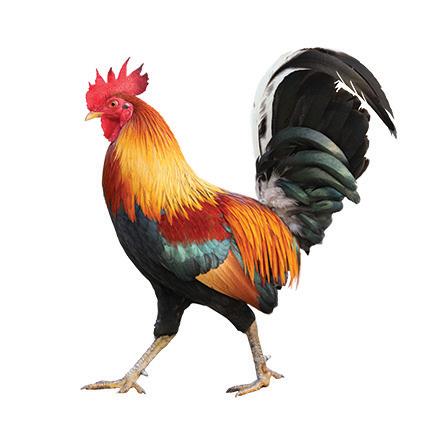
Then there is Phil. I promised to get back to the groundhog. He resides in Punxsutawney, Pennsylvania. I had to look it up. The spelling of that town is a challenge, of native American origin. Groundhog
Day in Gobbler’s Knob, a suburb of Punxsutawney, is a big deal. Folks come from all over. Confession, I’m not a big fan of rodents: see squirrels above. Phil is a big rodent. Did you know that groundhogs are also called “whistle pigs”? Neither did I. Seems they whistle to warn their colony of predators. Since we are discussing rodentia, woodchucks and groundhogs are the same critters. Yep! Are you amazed? I’ll bet you Phil would rather be trying to determine how much wood he could chuck than predicting the weather. On February second, a bunch of folks dressed in morning attire, top hats and tails, drag this poor little critter from his somnolence and parade him around. I think the













tubby little fella is scared to death. I would be if a bunch of folks dressed like undertakers dragged me from my bed. A ceremony of sorts is performed, and a declaration is made. If poor Phil sees his shadow, six more weeks of winter. No shadow: early spring. Alexa reports that Phil sees his shadow 60% of the time. Here’s the rub: March twentieth is the last day of winter: February second to March twentieth—six weeks. Shadow or not, there will be six more weeks of winter. No, it’s not Phil who is fraudulent. It’s those dudes dressed like penguins. Exploiting that poor rodent. But one must admit, the whole rigamarole
surrounding Phil’s observations is a lot of fun.
Well, the sky looks like the belly of a mackerel, and the air smells like cucumbers, so I think we’ll have a bit of snow in the next 12 to 24 hours. Stay warm!
William Stephen Dial achieved Masters Degrees in International Affairs and National Security Studies. Bill’s 31 years in the navy started as a Seaman Recruit and finished in June 1994 as a Captain. Bill has been a certified SCUBA Instructor, a Accredited Marine Surveyor, a Certified Emergency Manager and an Emergency Medical Technician. Bill is married to Susie and has 11 grandchildren.





Love Is as Love Does by
Michael Valliant
February is a month with love dropped right in the middle of it. I have never cared for Valentine’s Day. While it may be helpful to the greeting card, chocolate and flower businesses, it never seems to get us closer to being more loving as people, or as a community or society. What if we took the month of February and looked a little deeper at love and how to be more loving to each other?
Love sounds like a great idea. A lot of the major world religions proclaim love as the path, the answer and our purpose. In Christianity, Jesus tells us that all we need to remember is to love God with all our heart, mind, strength and soul and to love our neighbor as ourselves, and we’ve got it covered.
But what do we mean when we talk about love? One of the writers I turn to, who has written, spoken and taught creatively, clearly and helpfully about love is bell hooks, who has taught at Yale University, Oberlin College and written more than 17 books. Her book “All About Love” would do well as required reading for humanity.
hooks writes: “Mostly (movies, magazines and

popular culture) tell us that everyone wants love but that we remain totally confused about the practice of love in everyday life… It is far easier to talk about loss than it is to talk about love. It is easier to articulate the pain of love’s absence than to describe its presence and meaning in our lives.”
Part of our complicated relationship with love is that love seems to always involve loss. People we love die. Or go through something heartbreaking. Or a relationship ends. Songs about losing love seem to resonate and top the pop charts more than songs about finding it. In part because when we lose love, we need to find words to give voice
Love Is
to it and/or it helps us to know that someone else has experienced this kind of loss.
Then there is how we see love actually lived or talked about in our culture.
hooks writes:
“Everywhere we learn that love is important, and yet we are bombarded by its failure. In the realm of the political, among the religious, in our families, and in our romantic lives, we see little indication that love informs decisions, strengthens our understanding of community, or keeps us together. This bleak picture in no way alters the nature of our longing. We still hope that love
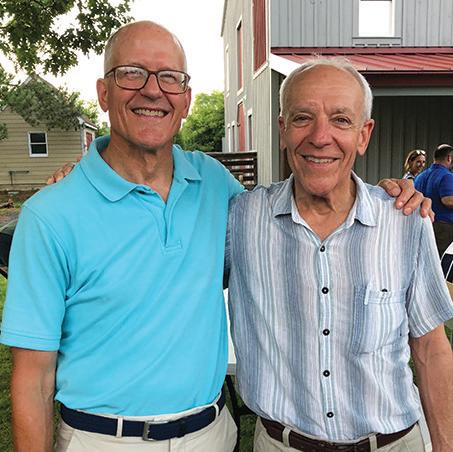
Love is the late John Ford and John Miller who volunteered teaching countless literature courses for the Academy of Lifelong Learning (now Chesapeake Forum) to share their love of learning with others.





Love Is
will prevail. We still believe in love’s promise.”
We are a society that talks about love, that puts it on a pedestal, that makes it a goal, but in most places we look—politics, religion, community—we don’t see love in action at all. A guiding principle these days that people like to quote is “mess around and find out,” to go with a kinder version of that saying. That’s a stark contrast to loving your neighbor. Yet some of the people who love to use that quote call themselves Christians.
If we are in a daily habit of treating people poorly, come Valentine’s Day, buy all the flowers, chocolate and make our dinner reservations if we want, but love is not a guiding force in our lives.
How might we get to making love a bigger part of our lives? hooks suggests that having a definition of love, instead of just saying, we know it when we see it, could help us get there. She mentions M. Scott Peck’s definition from his book “The Road Less Traveled.”
Peck says that love is:
“the will to extend one’s self for the purpose of nurturing one’s own or another’s spiritual growth… Love is as love does. Love is an act of will—namely, both an intention and an action. Will also implies choice. We do not have to love. We choose to love.”
“Spiritual” might be on off-putting word here. For Peck, the word spiritual refers to “that dimension of our core reality where mind, body, and spirit are one.” It’s all encompassing. It includes all the different
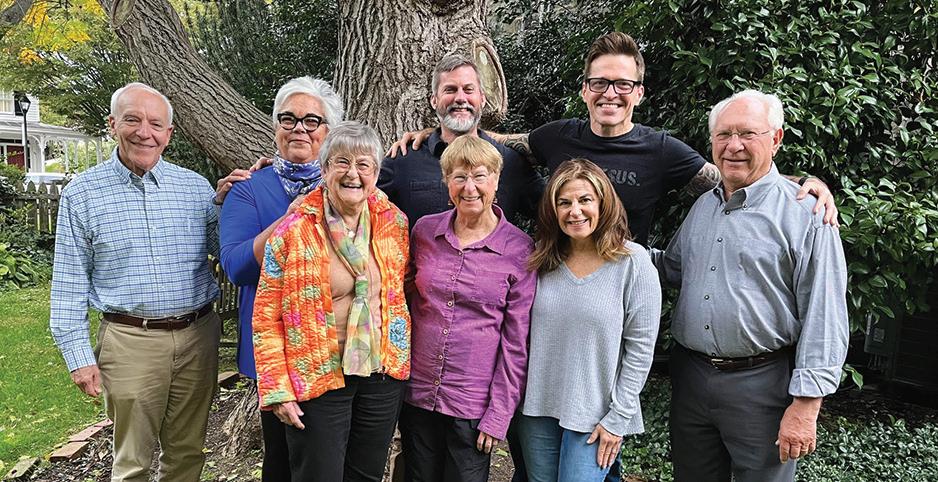
Love is friends serving on a committee to help me discern a calling to the priesthood.
Love Is
parts of our lives.
When we sit with a friend who has lost a loved one. When someone brings us a meal or takes us out for coffee when we are struggling. When a friend or family member takes a genuine interest in something we enjoy simply because we enjoy it. Peck’s definition of extending ourselves for the purpose of nurturing our own or someone else’s growth is a good start to understanding that love is bigger than any one of us.
Paul’s First Letter to the Corinthians might be overquoted when it comes to love, but there is a reason it is looked to so often:
“Love is patient; love is kind; love is not envious or boastful or arrogant or rude. It does not insist on its own way; it is not irritable; it keeps no record of wrongs; it does not rejoice in wrongdoing but rejoices in the truth. It bears all things, believes all things, hopes all things, endures all things.”
Love is as love does. We choose to love. And we understand it bet-

Love is being there to support a friend who is skateboarding 100 miles to raise money for suicide prevention and awareness.
ter when we think of love as a verb, as something we do, rather than as something we have or don’t have. When we think of love as something we do, then our actions take on a new light.
hooks says:
“To begin by always thinking of love as an action rather than a feeling is one way in which anyone using the word in this manner automatically assumes accountability and responsibility… If we were constantly remembering that love is as love

does, we would not use the word in a manner that devalues and degrades its meaning. When we are loving we openly express care, affection, responsibility, respect, commitment, and trust.”
Love assumes accountability and responsibility. Those are aspects of love we could think more about. Openly expressing care, affection, responsibility, respect, commitment and trust. Is that what we think about when we think about love?
If February is a month with love in the middle of it, let’s make it a month to be more loving. Let’s make it a month to show love to people who need it. Everyone needs it, especially people who are dealing with a loss of love or not feeling it from anyone.
Go with cards, flowers and dinner out, but let’s not limit ourselves to one day and one person when we think about love—let’s expand our circles, let’s include our neighbors near and far, those who don’t look, act or think like we do, so that love might actually be seen and felt more than loss.
Love is as love does. Who and how will we be?
Michael Valliant is the Assistant for Adult Education and Newcomers Ministry at Christ Church Easton. He has worked for non-profit organizations throughout Talbot County, including the Oxford Community Center, Chesapeake Bay Maritime Museum and Academy Art Museum.













Easton
Map and History
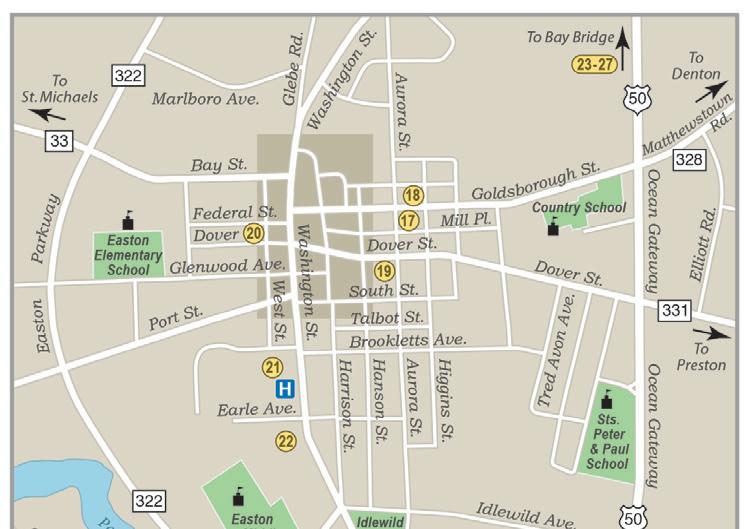
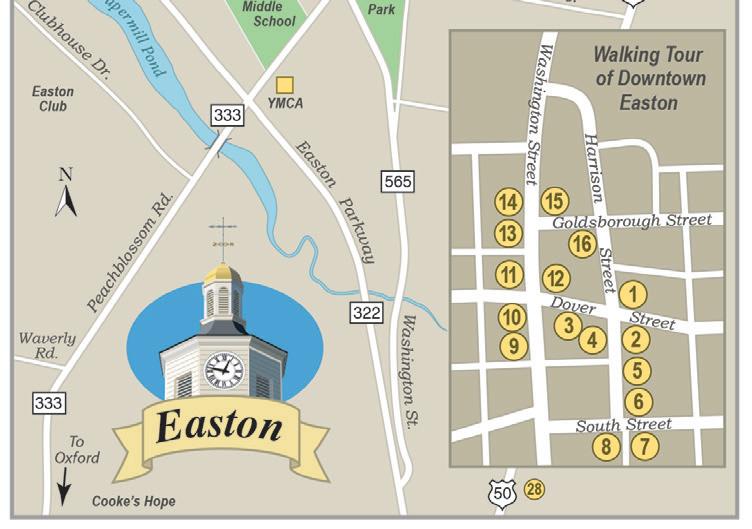

The County Seat of Talbot County. Established around early religious settlements and a court of law, Historic Downtown Easton is today a centerpiece of fine specialty shops, business and cultural activities, unique restaurants, and architectural fascination. Treelined streets are graced with various period structures and remarkable homes, carefully preserved or restored. Because of its historical significance, historic Easton has earned distinction as the “Colonial Capitol of the Eastern Shore” and was honored as number eight in the book “The 100 Best Small Towns in America.” With a population of over 16,500, Easton offers the best of many worlds including access to large metropolitan areas like Baltimore, Annapolis, Washington, and Wilmington. For a walking tour and more history visit https:// tidewatertimes.com/travel-tourism/easton-maryland/.






Dorchester Map and History
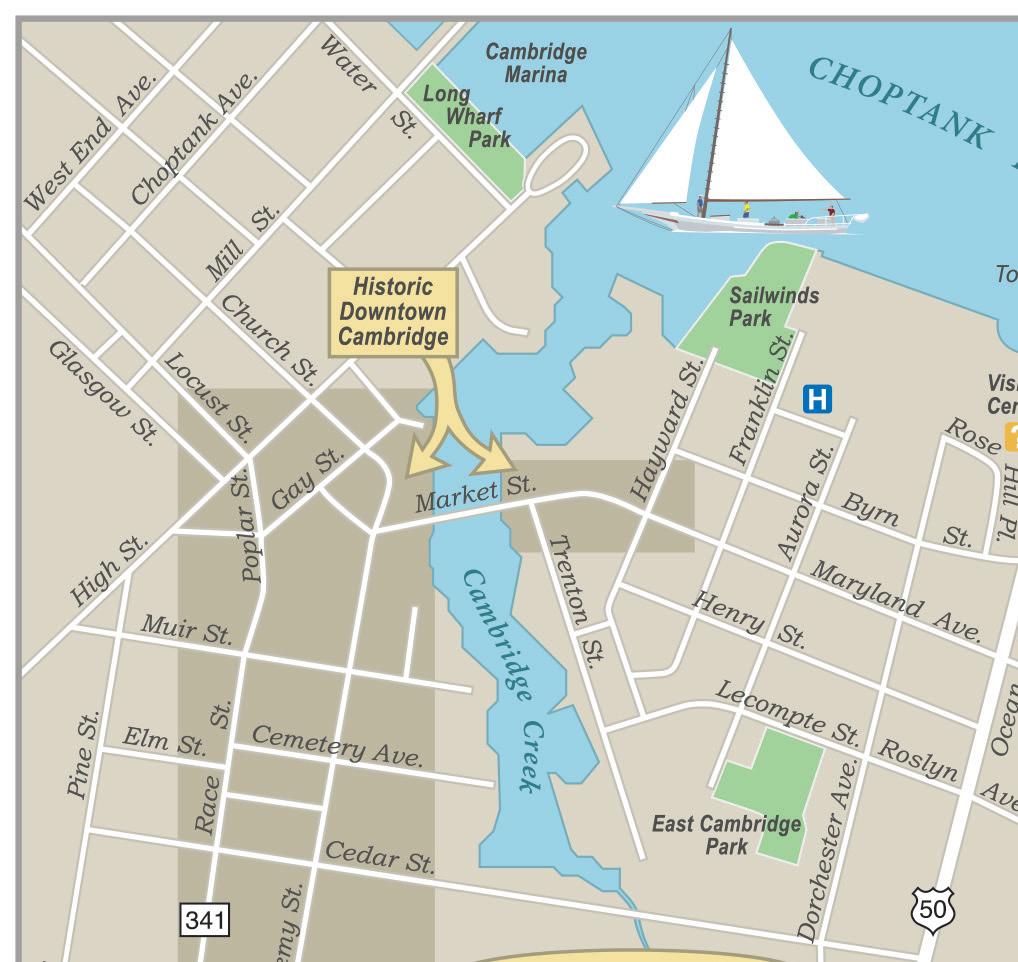



Dorchester County is known as the Heart of the Chesapeake. It is rich in Chesapeake Bay history, folklore and tradition. With 1,700 miles of shoreline (more than any other Maryland county), marshlands, working boats, quaint waterfront towns and villages among fertile farm fields – much still exists of what is the authentic Eastern Shore landscape and traditional way of life along the Chesapeake.
For more information about Dorchester County visit https://tidewatertimes.com/travel-tourism/dorchester/.

TIDEWATER GARDENING
by K. Marc Teffeau, Ph.D.
February - The Short Month
The good news about February is that it is the shortest month, and the promise of spring is just around the corner. If you can motivate yourself on some of the milder February days, there are gardening activities to be done both indoors and outdoors. Think of these quiet activities that will pay off in April.
One activity is ordering vegetable and flower seeds from catalogs. Right after Christmas, the catalogs start to arrive, bidding us to sit down and leaf through, dreaming of the burst of color or the mouthwatering veggies we will grow. How to decide what vegetable cultivars would be best for your

Tidewater Gardening
garden? There are a couple of points to consider as you put the pen to the order sheet. These include the specific use (fresh use, canning, freezing), mature size, growth habit, yield, vigor, adaptability to our area and resistance to insect and disease problems and pests.
Some cultivars are best for immediate use, while others are better for preserving in either canned or frozen form. Some onion cultivars, for example, are better “keepers” than others. If you have a small garden or limited space, try growing space-saver cultivars such as bush beans or compact (non-vin-
FRANK E.DAFFIN, INC.
Quality Builders Since 1936
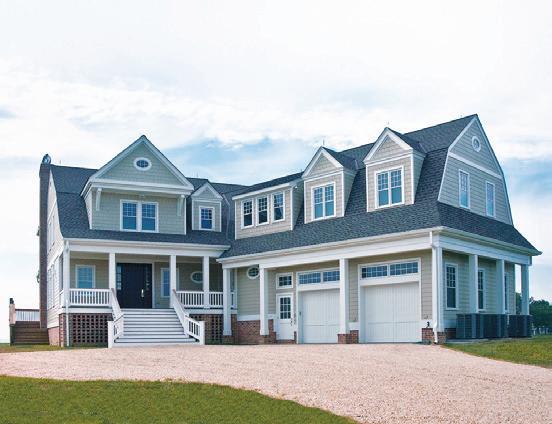
We make construction work and renovations to your home fun and exciting, as well as easy and stress-free.

ing) forms of cucumbers, squash, cantaloupes or watermelons.
Hybrid cultivars, labeled F1, are usually more vigorous and produce higher yields than the standard cultivars. Of course, growing conditions, water and soil fertility all play a part in the plants’ vigor and productivity.
When ordering seeds, we also keep in mind the adaptability of the cultivars selected to our soil types and climate. Types that do well either in the northern or southern U.S. usually have problems in our mid-Atlantic area. Often, the catalog will tell you which zones the specific cultivars are adapted to. Practice the principles of IPM (Integrated Pest Management) and reduce pesticide use in the garden by growing insect- and disease-

resistant cultivars. Wilt-resistant tomato cultivars, green beans resistant to mosaic and mildews, and cucumbers resistant to scab are all available to reduce your dependence on chemical use in the garden.
If you are like me, you have a supply of vegetable seeds that are a couple of years old. Vegetable seeds typically don’t last long, losing their viability after just one or two years, particularly if they have been kept in locations like sheds or garages. Short-stored seeds that will not be viable after a year or two include sweet corn, onions, okra, beans, parsnips and peppers. I have also found that both garden peas and “sugar” peas lose their viability after about three years. I had some older sugar snap peas that I mixed with fresh pea seed and planted last year. The older ones did not germinate, or, if they did, they succumbed very quickly to damping-off disease.




Tidewater Gardening

The best advice is to use vegetable seed packed for the 2026 season and toss any seed that is two years old or older. You must handle the seed packets carefully. Rubbing the outside of the packet to determine how many seeds are inside can break the protective seed coats. This will result in a reduction in the percentage germination of the seeds.
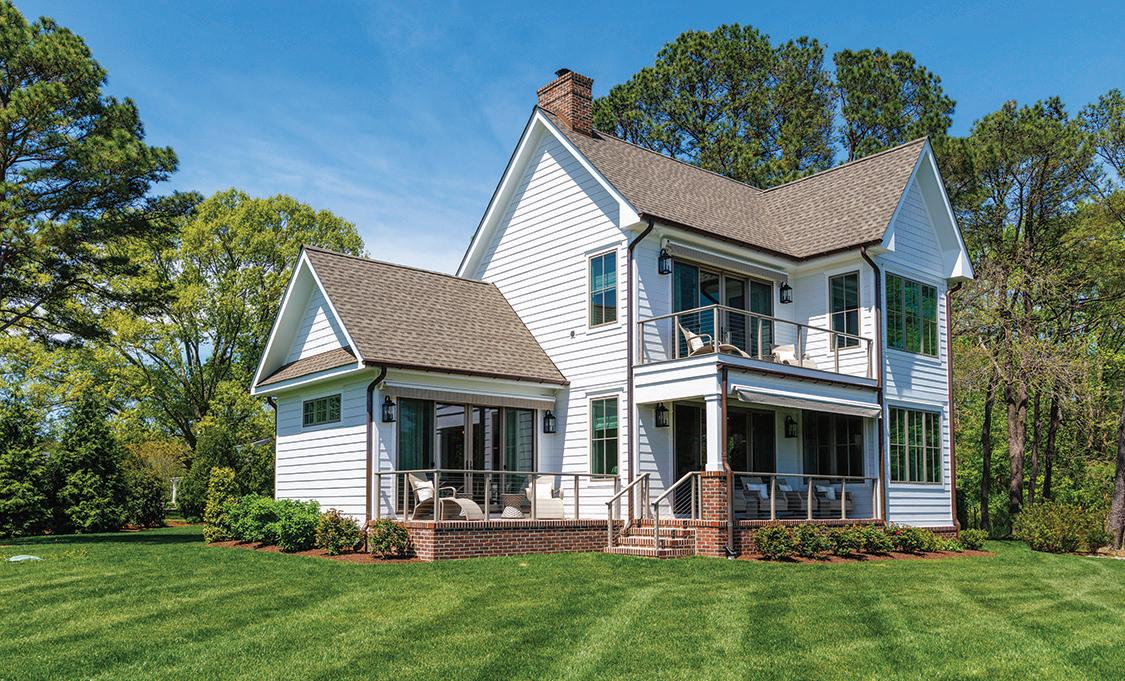
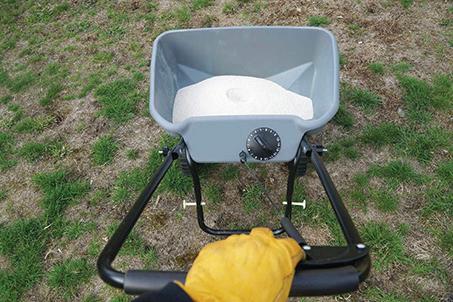
One practice that you can do in February, if there is no snow on the ground, is to lime the lawn and garden if you did not get to it last fall—lime based upon your soil test results. If the ground dries out a bit, you can still take soil samples and send them to a commercial soil test lab in February, though





Tidewater Gardening
the results will be a little slower to get back to you because of testing backups.
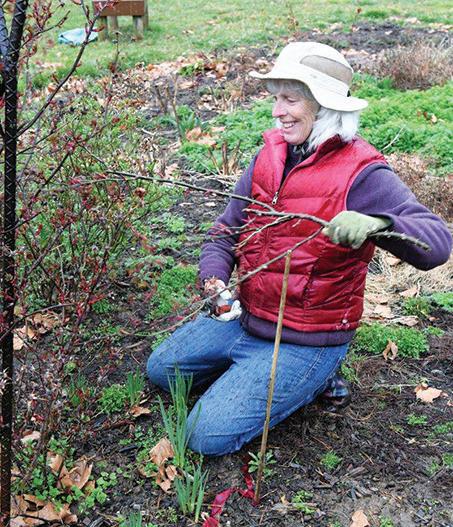
If you did not get it done earlier, you can prune hybrid tea roses now, removing old canes and lowering the plants to a height of 12 to 15”. Apply a drop of white glue or place a thumb tack at the end of the fresh cut canes to prevent borers from laying their eggs on the cut. Also, apply a dormant spray of lime-sulfur and dormant oil before active growth appears.
Clean up rose beds, discard old foliage and cane pieces, and remove old mulch with weeds. Reapply a fresh layer of mulch to the rose beds. Another outside pruning activity is to prune ornamental grass clumps before new growth appears. Tie the large clumps with rope and cut them down to the correct height with a hedge trimmer.
If you use hay and manure in the garden, one way to make old hay and manure weed free is to spread it on the soil in late winter, water
well and cover with black plastic. After several days of warm weather, weed seeds begin to sprout, but they are destroyed by frost and limited daylight. Now is also a suitable time to hang or clean out bluebird houses before the birds start looking for a home.
Want to get ahead this spring? You can brighten your winter home by forcing several spring-blooming

shrub branches. Generally, it takes two or three weeks to bring to blossom such items as pussy willow, forsythia, Japanese quince, flowering almond, azalea, magnolia, European birch and red maple. February is the time to start plants indoors for setting out later in the spring. Good examples include tuberous begonias set outdoors for summer-long flowering in pots, beds or hanging baskets. Start the tubers indoors during late February or early March. Sprout the tubers by placing them hollow side up, reasonably close together, in shallow, well-drained pans. Use a mix of equal parts perlite, sphagnum, peat moss and vermiculite, or chopped sphagnum moss and per-

lite. Keep this slightly moist (not wet) in a shaded window, maintaining temperatures in the low 60s. Move tubers to pots or baskets when growth begins, usually after 3 weeks. Place outside only after all frost threats have passed. Also start slow germinating seeds such as alyssum, coleus, dusty miller, geranium, impatiens, marigold, petunia, phlox, portulaca, salvia, vinca and verbena in January or February.
If you have children at home and they are going a little stir crazy during the winter, an enjoyable indoor gardening activity for them is to grow plants from fruit seeds. Oranges, grapefruits, lemons, tangerines and pomegranates may
ART IN THE GARDEN

Tidewater Gardening

have viable seed. Try germinating them in a light potting soil mixture containing half peat moss. Keep seeds well-watered and in a warm location. If seedlings fail to appear in six weeks, try again with new seeds. Citrus plants grown from seed rarely flower or fruit, but they have glossy, attractive leaves. Let’s also not forget the sweet potato vine. Sweet potatoes usually sprout easily, but some are treated with chemicals to stop them from sprouting during storage. This means it can take a few tries to find one that grows vines successfully.
If you have bramble plantings, February is a suitable time to prune. Brambles include red, black and purple raspberries as well as blackberries, whether they have thorns or not. To understand the pruning practices for your brambles, it is first necessary to understand their growth habits.
Brambles have perennial crowns and roots with only biennial canes (live for two growing seasons). The

vegetative shoots that come from the crowns are called primocanes during their first growing season. In late summer, flower buds form on the primocanes and remain dormant through the winter. During the second growing season, these buds flower, fruit and then die.
This two-year pattern is typical of all brambles, except for fall-fruiting raspberries such as Heritage. In fall-fruiting raspberries, the cane growth and fruiting are similar, but are compressed so that fruiting begins during the first growing season. The flower buds are initiated on the top third of the primocane, and the flowers bloom in late July, with fruiting starting in August. These can finish fruiting with the first frost.
With fall-fruiting raspberries, after they have finished fruiting in fall, you can cut out all the canes because they will produce new fruiting primocanes in the spring. For the regular brambles, carefully prune out the dead canes in the plants now and leave the fruiting canes for this year’s production.
In late February, watch for signs of growth in early spring bulbs. When the foliage is one inch high, gradually begin removing mulch. Cloudy days are best for exposing leaves to strong sunlight, which can burn tender foliage. Pinch off early buds from developing pansies to encourage branching and more bud formation.
Do not remove mulch from perennials too early. A warm day may make you think spring is almost here, but there may be colder weather yet to come. Also, remember to avoid walking on frozen grass and ground covers during the winter. Ajuga can die back, leaving bare spots for the spring. The frozen leaves are brittle and easily
damaged. Even though there might be rain or snow, the soil dries out against a house under the eaves, where rain rarely reaches. Be sure to water thoroughly during a thaw to prevent plant loss. Remember that plants require water during the winter to replace water lost due to wind desiccation and lack of rain
or snow
Happy Gardening!
Marc Teffeau retired as Director of Research and Regulatory Affairs at the American Nursery and Landscape Association in Washington, D.C. He now lives in Georgia with his wife, Linda.









St. Michaels Map and History
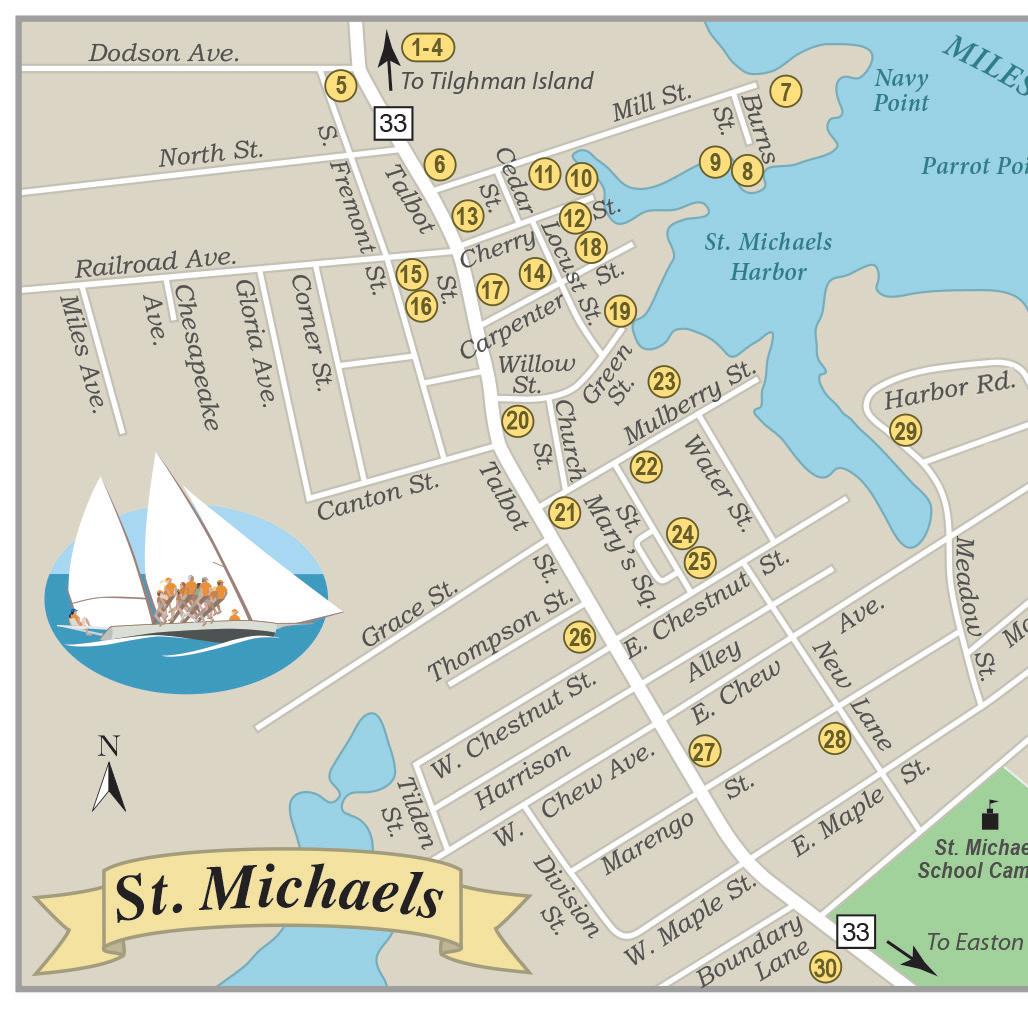


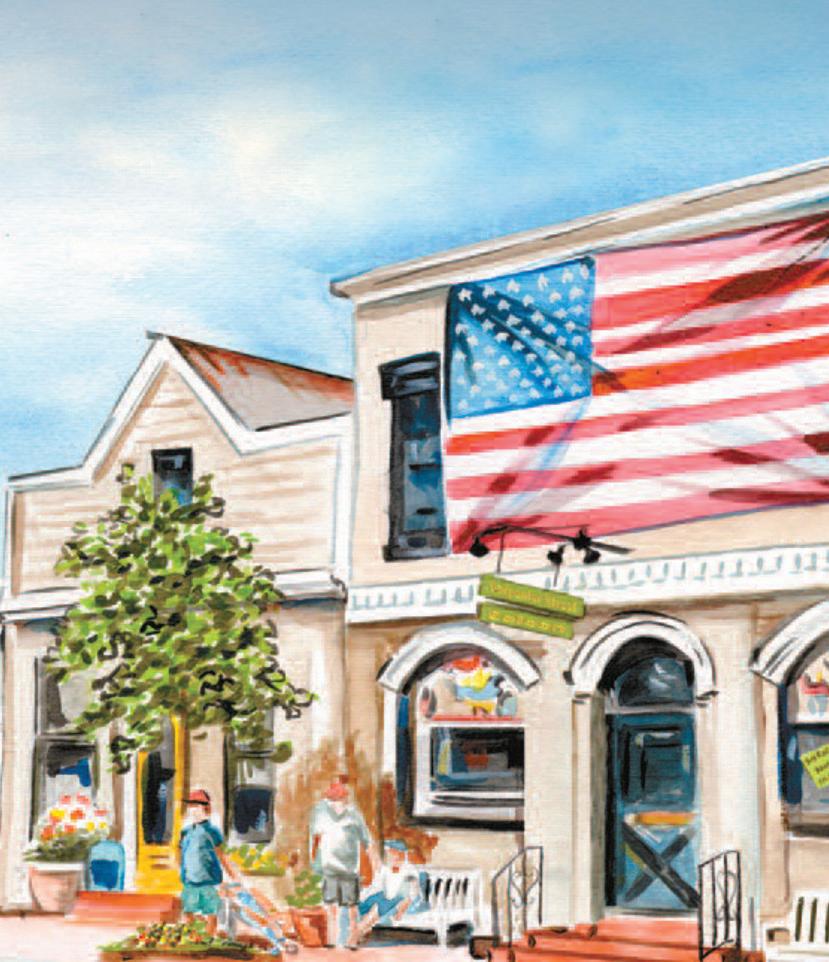
On the broad Miles River, with its picturesque tree-lined streets and beautiful harbor, St. Michaels has been a haven for boats plying the Chesapeake and its inlets since the earliest days. Here, some of the handsomest models of the Bay craft, such as canoes, bugeyes, pungys and some famous Baltimore Clippers, were designed and built. The Church, named “St. Michael’s,” was the first building erected (about 1677) and around it clustered the town that took its name.
For a walking tour and more history of the St. Michaels area visit https://tidewatertimes.com/travel-tourism/st-michaels-maryland/.





Charles the Emigrant by A.M. Foley
Without getting too far into the weeds, let me sort out some generals surnamed Lee. A number of Generals Lee served in the Revolutionary and Civil wars. Most of them adorned the family tree rooted in Richard Lee’s emigration to Jamestown in 1639. “Richard the Emigrant,” a former London tobacco merchant, amassed 13,000 acres of Virginia. Descendants of his ten children accumulated more. Revolutionary descendant Gen-
eral Henry “Light-Horse Harry” Lee, father of Robert E., should not be confused with non-general Francis Lightfoot Lee, patriot and Signer. Revolutionary General Charles Lee (1732-1782) was unrelated, the surname being common in England, where Charles was born to a mother with ties to royalty and a father who was a colonel in the British army. Father and son were both influenced by the Enlightenment and inclined to credit
Charles the Emigrant

at least some men with “unalienable rights.”
Charles was the antithesis of Robert E., who originally made history as a West Point cadet, graduating without incurring a single demerit. Charles, on the other hand, joined his father’s regiment as a 15-year-old ensign, then developed into a profane, pugnacious officer with a reputation for high living. Charles first visited America as a lieutenant during the French and Indian War, when the 44th Regiment of Foot marched under General Edward Braddock to dislodge France from Ohio country. His first taste of action was a debacle. Braddock led British troops and American militiamen toward Fort

Perfect for Kayaks and Paddleboards
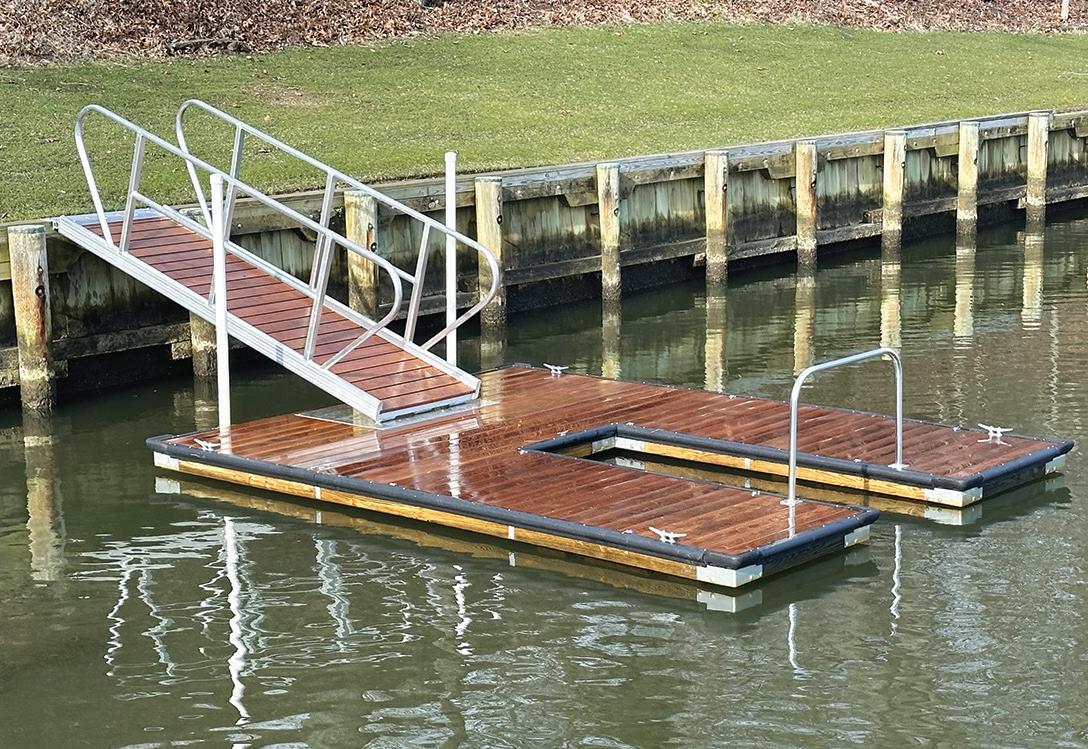
Slot Dock
12’ x 16’
• Kayak Docks
• Re-Decking
• Pressure Wash & Seal
• Boat Lifts, PWC Lifts
• Gangways
• Solar Dock Lighting
• Floating Piers
• Rowing Docks
• Kayak Racks
• Ladders
• Dock Boxes
• Piling Caps




Oxford Map and History
Oxford is one of the oldest towns in Maryland. Although already settled for perhaps 20 years, Oxford marks the year 1683 as its official founding, for in that year Oxford was first named by the Maryland General Assembly as a seaport and was laid out as a town. In 1694, Oxford and a new town called Anne Arundel (now Annapolis) were selected the only ports of entry for the entire Maryland province. Until the American Revolution, Oxford enjoyed prominence as an international shipping center surrounded by wealthy tobacco plantations. Today, Oxford is a charming tree-lined and waterbound village with a population of just over 700 and is still important in boat building and yachting. It has a protected harbor for watermen who harvest oysters, crabs, clams and fish, and for sailors from all over the Bay. For a walking tour and more history visit https://tidewatertimes. com/travel-tourism/oxford-maryland/.
Charles the Emigrant
Duquesne (Pittsburgh). Colonel George Washington commanded Virginia’s militia and served as aide to Braddock. The Virginians had experience skirmishing native-style in rugged terrain, but uninitiated British forces panicked when intercepted by French and their Native American allies. Washington described the British, accustomed to rigid formations, “so disconcerted and confused, so as to fall into irreversible discord.” Many fell—from “friendly” as well as enemy fire—and the scalping began. The resultant screams taught Charles that European-styled warfare was ill-suited for American
wilderness. Braddock, mortally wounded, asked cool-headed Colonel Washington to arrange him an intact burial.
Lee survived, to become enamored of America’s majestic forests and rich promise. In the city, Philadelphia women attracted him as “extremely pretty” and “passionately fond of red coats…which is for
Tidewater Residential Designs since 1989
us most fortunate.” Subsequently at Albany, New York, he added Iroquoian to his fluency in several European languages. He took up with a Seneca chief’s daughter, who bore him twins, but he returned to Europe alone with no apparent pangs of conscience.
Idled in Britain between wars, with advancement impossible, he joined Portugal’s army against Spain, then served Polish King Stanislaus II in the Russo-Turkish War. In battle he demonstrated military acumen and courage, but his arrogance led to misadventures. He dueled one Italian officer twice, losing a pair of fi ngers in the fi rst, killing his opponent in the second. Outspoken criticism of superiors, and of monarchies in general, blocked further advancement, so he left for America, arriving in 1773.
The following year, Lee published a pamphlet favoring independence. As a former Polish general, he wrote authoritatively, outlining vulnerabilities of Britain’s army. When fighting broke out, he judged himself best qualified for command of the Continental army. Inexplicably to him, Congress opted for the even-tempered native son he’d known as a militia colonel at the Battle of the Monongahela. Given to back-biting, Lee called George Washington “not fit to command a sergeant’s guard.” General Washington accepted Lee as his second-in-command.
Washington described Lee as “fickle,” a muted term others found inadequate. John Adams called Lee an “oddity” and a “queer creature.” Iroquois named him Ounewaterika , Boiling Water. He himself referred to “rash humour which my mother gave me.” Lee seems to have suffered bipolar disorder, with low periods sometimes lingering for months. Despite moodiness and sub-par manners and dress, Lee’s breadth of knowledge and ability to gossip about European royalty generally made him socially acceptable.
Apparently, he assumed that invitations included his everpresent dogs, which dozed under hosts’ dining tables. John Adams









Charles the Emigrant
disparaged Lee and his dogs in a letter, which became embarrassingly public. In reaction, Lee wrote Adams, “Spanda [a Pomeranian] sends his love to you, and declares in most intelligible language, that he has fared much better since your allusion to him, for he is caressed now by all ranks, sexes and ages.” On a subsequent occasion, Abigail Adams was seated near Lee when he “placed a chair before me into which he ordered Mr. Spander to mount and present his paw to me for better acquaintance. I could not do otherways but to accept.”
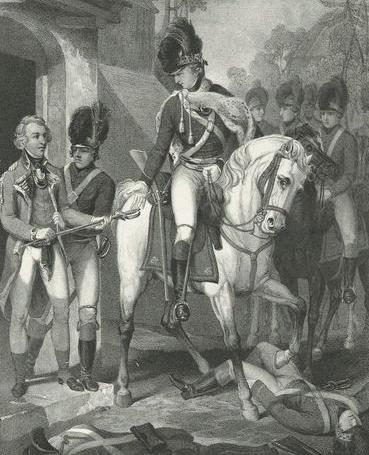
In December 1776, the Continental army was forced from two Hudson River forts named in honor of Washington and of Lee. They retreated separately across New Jersey. At the Delaware River, Washington anxiously awaited uniting with Lee’s larger force. Misjudging the distance from pursuing British and Hessian troops, Lee left thousands of his division encamped while he rode several miles with a light guard in order to overnight indoors at Widow White’s tavern.
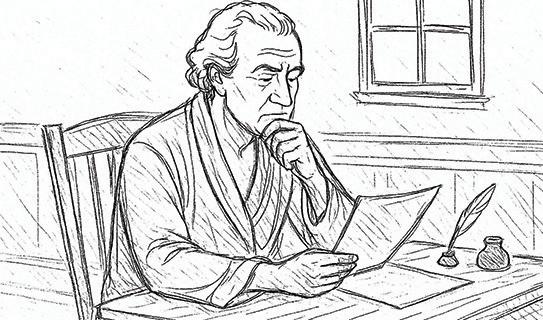
Lee was notorious among British military as a turncoat. Several in pursuit had personally known and served with him in Europe. Told next morning of his exact whereabouts, a troop of dragoons galloped to Widow White’s, where Lee was writing a letter to Hora -
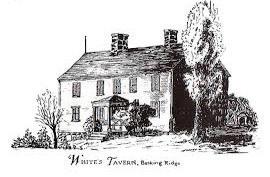
On December 13, 1776, American General Charles Lee leaves his army, riding in search of female sociability at Widow White’s Tavern in Basking Ridge, New Jersey.
tio Gates, another ex-British officer serving as a Continental. Lee complained to his friend of mistreatment by Washington. (“Entre nous , a certain great man is most damnably deficient.”). Not yet in uniform at ten o’clock, Lee had just finished writing when shots sounded. Dragoons surrounded the tavern and threatened to set it ablaze. His situation hopeless, Lee surrendered. He was bound, wrapped in a blanket, set on the first available horse, and triumphantly led away. His aide remained, to shock the encampment with the unthinkable
news. General John Sullivan took command of the demoralized men. He sent a party in futile pursuit of Lee, then decamped and united with Washington, as they had been ordered. On Christmas Day, the army would recross the Delaware and score America’s much-needed first victory at Trenton.
Lee was held captive in New York. He sent an inventory requesting belongings left in camp, describing richly decorated uniforms he’d worn for three non-British countries. Around the first of February 1777, he asked for Washington’s personal help in getting him the dogs. (“I never stood in greater need of their company than at present.”) While negotiating unsuccess -
fully for Lee’s release, Washington forwarded him funds supplied by financier Robert Morris. Eventual-
SIP Style
and
FEBRUARY 26 AT 5:30PM

ly Lee enjoyed some celebrity and privileges in three-room confinement. His manservant, Giuseppi Minghini, joined him. Lee passed some time by drawing a proposed battle plan for the British, which they declined. Meanwhile, authorities held a trans-Atlantic debate: Was he or wasn’t he subject to being hanged in London as a traitor?
Charles the Emigrant and artillery. Their 1,500 baggage wagons alone strung out over twelve miles in temperatures nearing 100 degrees. Characteristically, Lee disagreed with Washington’s plan. He doubted patriots would stand up to British bayonets. Ignoring the insubordination, Washington said he’d assign command to Lafayette instead. Lee quickly changed his mind.
It was finally decided that Lee shouldn’t be hanged because of his earlier resignation from the British army. Exchanged, he rejoined Washington after seventeen months, in May 1778, having missed two winter encampments: Morristown and Valley Forge. At the end of June, Washington assigned him to lead an attack as British headquarters moved from Philadelphia to New York. Washington planned for a third of the army to raid the enemy’s rear as they trudged in a heat wave across New Jersey with arms, provisions

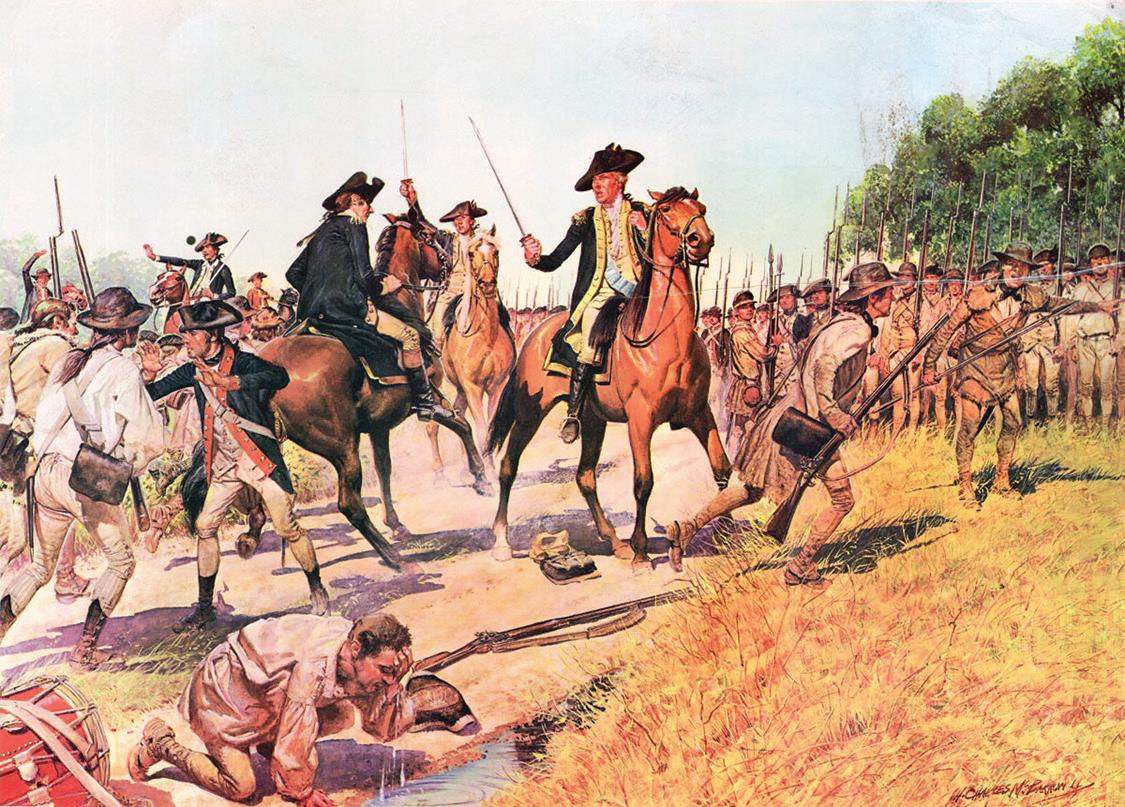
Fighting began near Monmouth Court House. Washington followed three miles behind the vanguard, in position to reinforce if needed. Alexander Hamilton, of course, was on hand “where it happened.” Washington sent him ahead to survey attack force progress. Hamilton found them in disorderly retreat, a decision Lee’d failed to report. Alerted to the very situation Lee predicted, Washington spurred his white charger forward and rallied fleeing men by force of will. When heat felled his white steed, he quickly mounted another. His deft orders and inspiring presence awed the likes of Lafayette and Hamilton. Lafayette thought Washington’s performance “superb.” Hamilton wrote that Washington “instantly took maneuvers for checking the enemy advance” with “coolness and firmness.” In his biography of Hamilton, historian Ron Chernow describes Washington, in a rare fit of profanity, calling Lee a “damn poltroon” (coward). One witness said, the
general swore “till the leaves shook on the trees.”
The Continental army inflicted more damage than it suffered. Though not decisive, the attack demonstrated American military professionalism had reached a par with Britain’s. And it solidified Washington’s position as the man rightly in command. Lee was later convicted by court martial of several charges, suspended in 1778 and dismissed in 1780.
Lee wrote Gates of returning to his Prato Rio estate in western Virginia to “learn to hoe tobacco.” Actually, he bred horses and dogs. He had burned through substantial wealth by gambling on America and by living extravagantly.
He developed a chronic cough and was advised to sell his estate. Sale to a Marylander fell through. He was engaged with another buyer in Philadelphia when he fell ill, likely from terminal tuberculosis. In his room at an undistinguished inn, his last days were attended by his manservant and his dogs. A number of dignitaries attended his funeral at Christ Church and his burial with military honors.
Forty-some years ago, A.M. Foley swapped the Washington, D.C. business scene for a writing life on Elliott Island, Maryland. Tidewater Times kindly publishes Foley’s musings on regional history and life in general.




Food is Love - A February Reflection
Food has always spoken to my soul. Some of my earliest memories live in the kitchen. When I was in third grade, every Christmas meant baking cookies with my cousin Elizabeth. Flour-dusted countertops, laughter in the air and the feeling that something magical was happening—even before the oven door opened. That was also the year my sweet Uncle
Aaron made me my very first rolling pin. I still have it to this day. It’s worn, familiar and full of stories— just like the recipes passed down through generations.
From that moment on, cooking became a thread woven through my life. It has always been more than preparing a meal. Food has been a way to connect, to love, to nurture and to gather people together
Tidewater Kitchen
around a table. It’s where memories are made, souls are nourished and healthy habits begin.
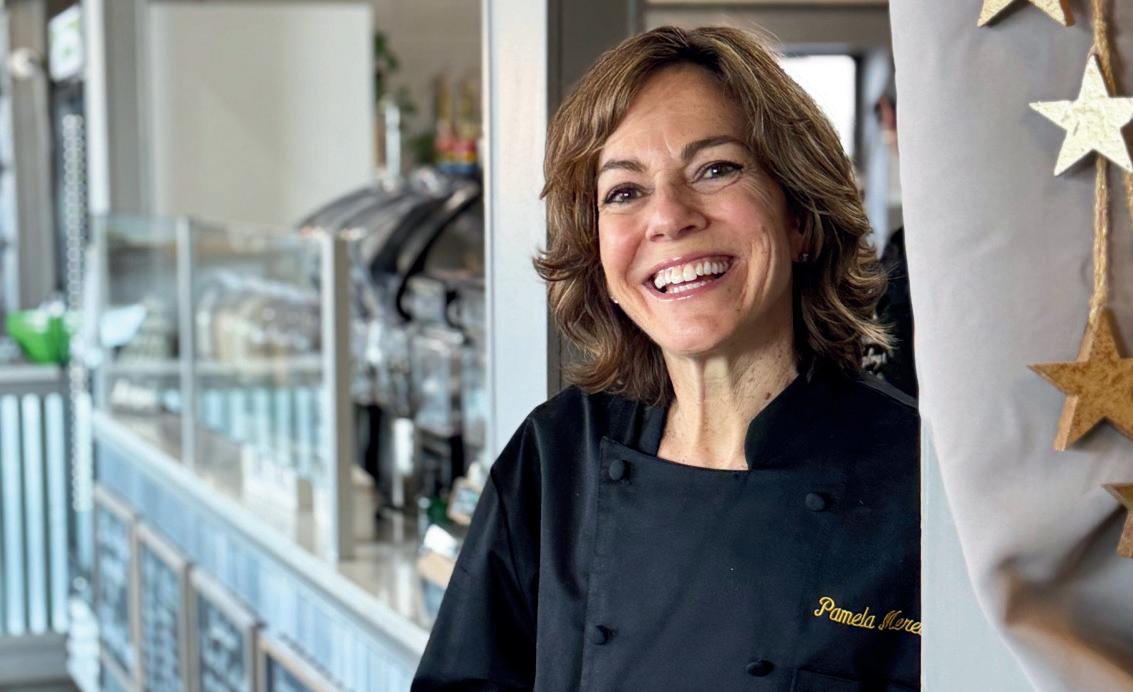
I began my professional cooking journey in Oxford, Maryland, while teaching physical education at The Country School in Easton. My love for my students—and my desire to help them understand food, movement and wellness— sparked the idea for my very own cooking school. “Pudding on the Ritz” started humbly in my parents’ kitchen and quickly grew into something far bigger than I ever imagined: a 1,500-square-foot culinary center filled with learning, laughter and life skills that extended well beyond the stove.
After six incredibly fulfilling years running my cooking school in Oxford, I followed new and exciting culinary opportunities to Denver, Colorado. There, I became the children’s food anchor for NBC’s 9News in Denver. That experience opened doors I never expected, including national television appearances and working with the QVC Network as a featured collaborator on In the Kitchen with David . Eventually, family called me home. When it was time to settle down and raise my son, I moved to the South Shore of Massachusetts. Once again, I found myself embraced by a close-knit town community. With the added moti -
vation of educating my own child, I returned to working with children and created another cooking program—one I proudly ran for 13 years in Scituate.
Throughout my career, whether teaching children, coaching adults or cooking on television, my approach has remained the same: professional yet personal, structured yet joyful. I believe cooking is a life skill, but it’s also an art. When students learn to love the process, they gain confidence that carries into every part of their lives.
I’ve been fortunate to cook alongside and for remarkable individuals, including Jackie Kennedy Onassis, Joan Rivers, Kevin Garnett, Paul Pierce and former President Bill Clinton. Yet no matter the setting—whether a television studio, a classroom or a family
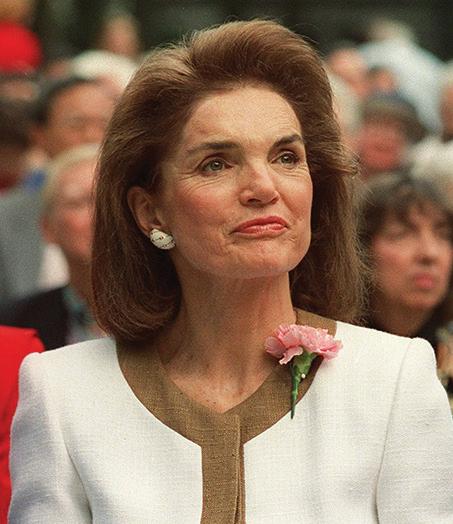
kitchen—my mission has always been rooted in the same belief: food is love.
Today, I’m living in Salisbury, North Carolina, working as a traveling kitchen coach. I love being on the road, teaching, connecting and then returning to my roots in Easton—serving the community and catering for friends and family. It is truly an honor to be the food editor of Tidewater Times , a magazine that has celebrated this region for over 70 years. I feel incredibly blessed to be surrounded by such beautiful, locally sourced ingredients and make a conscious effort to highlight them in all of my recipes.
When I’m not working, you’ll find me practicing Pilates or yoga at the Y, reading a good book, spending time with my son and—of course—cooking.
With Valentine’s Day arriving in February, I’m reminded once again that food is more than sustenance. It’s the memories, the moments and the connections we create when we share a meal. Every dish tells a story—from who made it to why it was chosen. It’s about care, intention and love woven into each bite. Food nourishes the body, warms the heart and brings people together in ways nothing else quite can.
When we cook, we aren’t just feeding ourselves—we’re feeding relationships. We’re building community. Cooking for others is an
act of kindness, gratitude and generosity. Whether you’re cooking with someone or for someone, it’s a powerful way to say, “You matter.”
I often say that life is like a cookbook. There are recipes that teach us what to learn—but the most meaningful ones are the recipes we create ourselves. They carry our stories, our heritage and our love forward.
This February, I invite you to slow down, gather around the table and cook from the heart. Because food, in its purest form, is love.
A Valentine’s Meal Made with Love: Chicken Celeste
This chicken has a gourmet flavor and is so easy to prepare. After
www.piazzaitalianmarket.com
Tidewater Kitchen
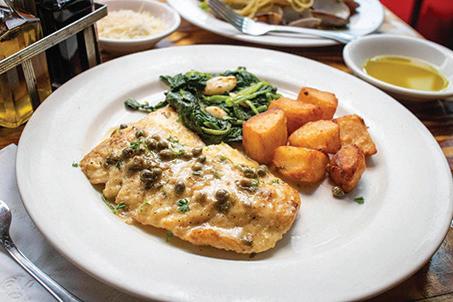
you’ve fixed it a few times, you’ll find yourself making your own version of it. Everything but making the sauce can be done the night before. Take care not to boil the sauce or make the sauce too far in advance of serving, as the cream will curdle from the chicken liquids be -
ing added or from being held at too high a temperature. Add a simple green salad or warm bread, light a candle and you have a Valentine’s meal that feeds both the body and the heart. Serves 4 to 6, depending on how many chicken breasts you choose.
4–6 chicken breasts
¼ cup shortening
1 medium onion, chopped
½ cup sherry
1 teaspoon salt
¼ cup water
⅛ teaspoon pepper
½ cup mayonnaise
½ teaspoon paprika
¼ cup sour cream
2 tablespoons minced parsley










Tidewater Kitchen
Clean chicken; dust with flour that has been seasoned with salt, pepper and paprika.
Melt shortening in a heavy skillet or Dutch oven; brown chicken on both sides.
Add onion, sherry and water, cover and simmer until tender, about 1 hour. Chicken breast check after 10 minutes.
Remove chicken to hot platter and keep warm.
Add mayonnaise, and sour cream to liquid in skillet, blending until smooth; add parsley and additional seasoning, if desired. Pour over chicken. Serves 4–6 people.
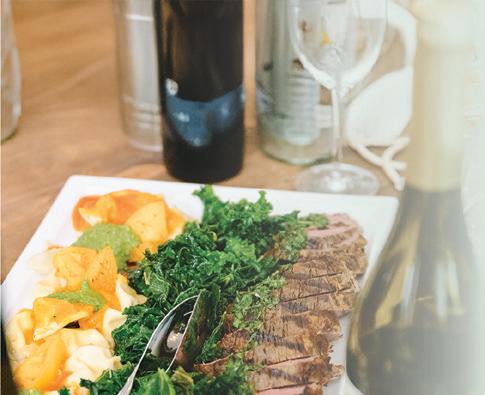

Kid-Only Valentine Pizza Hearts
A fun, hands-on recipe made with love.
Cooking is one of the best ways kids can say, “I love you.” This Valentine’s recipe is all about creativity, confidence and coming together



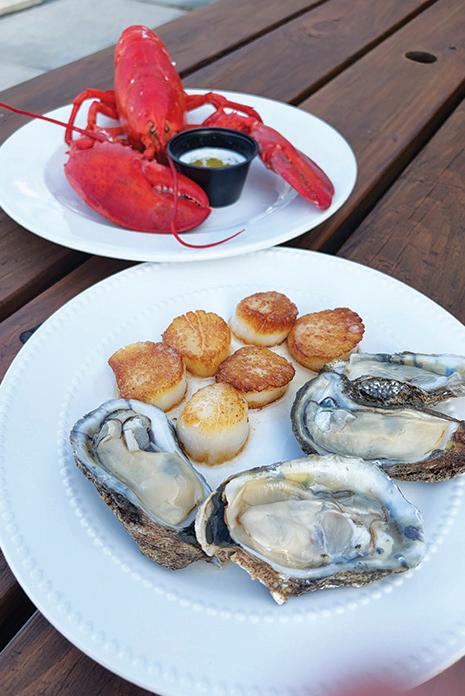

Tidewater Kitchen
in the kitchen. Kids get to make their own meal, choose their toppings and share something they’re proud of—whether it’s for family, friends or themselves.
Serves 2–4 little chefs
Kid-friendly | Great for ages 5+
1 store-bought pizza dough or 2 flatbreads/naan
½ cup pizza sauce
1–1½ cups shredded mozzarella cheese
Toppings (let kids choose!):
Cherry tomatoes (halved)
Bell peppers
Olives
Pepperoni or cooked chicken
Fresh spinach or basil
Olive oil spray or brush
Preheat oven to 400°F.
On a lightly floured surface, help kids gently roll or press the dough flat. Using a knife (or clean hands), help shape it into a heart.
Place dough on a baking sheet. Lightly brush edges with olive oil. Spread pizza sauce gently, leaving a small border. Sprinkle cheese over the sauce.
Add toppings and make it colorful! Encourage kids to create patterns or smiley faces.
Bake for 12–15 minutes, until cheese is bubbly and crust is golden. Cool slightly, slice and share.
Kitchen Coach Tips for Kids
• Wash hands before cooking
• Use a calm “cooking voice”
• Clean as you go
• Most important rule: Have fun and cook with love
Simple Salad
Two heads romaine lettuce
2 cups cherry tomato, halved
1 cup coarsely grated Swiss cheese
2/3 cup slivered almonds, toasted
1/3 cup freshly grated Parmesan cheese
¼ pound bacon, cooked and diced
Wash, dry and tear romaine in a bowl. Toss with tomato, Swiss cheese, almonds, Parmesan cheese and bacon.
KITCHEN COACH

Dressing—let sit at room temperature for 3 hours
Juice of one lemon
Three cloves garlic, crushed
Salt and pepper
¾ cup extra virgin olive oil
Mix lemon juice, garlic, and salt.
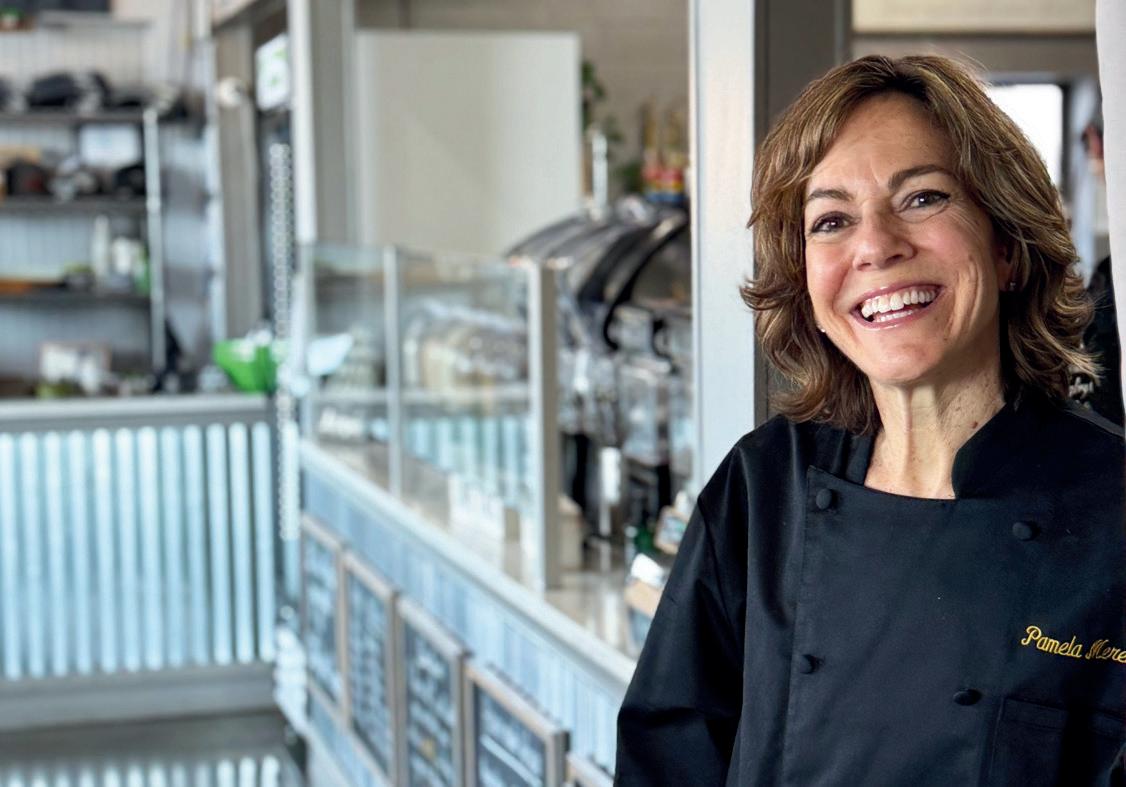



Tidewater Kitchen
Add olive oil in a stream, beating with fork. Add pepper to taste.
Orange Brownies
We all favor brownies as a good all-around cookie. Try this for something different. Who doesn’t love chocolate, especially at Valentine’s Day. Cooking for others is one of the kindest ways to say, “I love you.”
2 1-ounce squares unsweetened chocolate
½ teaspoon vanilla
½ cup butter
1 teaspoon grated orange peel
2 eggs
½ cup flour, sifted

1 cup sugar
1 cup chopped walnuts, optional
Melt chocolate and butter. Beat eggs; beat in sugar gradually. Beat butter and chocolate, vanilla and orange peel. Stir in flour, salt and nuts. Pour into buttered 8-inch pan. Preheat oven to 350 degrees for 20 minutes. Do not over bake. Once cooled, cut into squares. Makes about one dozen.
Pamela Meredith, formerly Denver’s NBC Channel 9 Children’s Chef, has taught both adult and children’s cooking classes. For more of Pam’s recipes, visit the Story Archive tab at tidewatertimes.com.
EASTERN SHORE
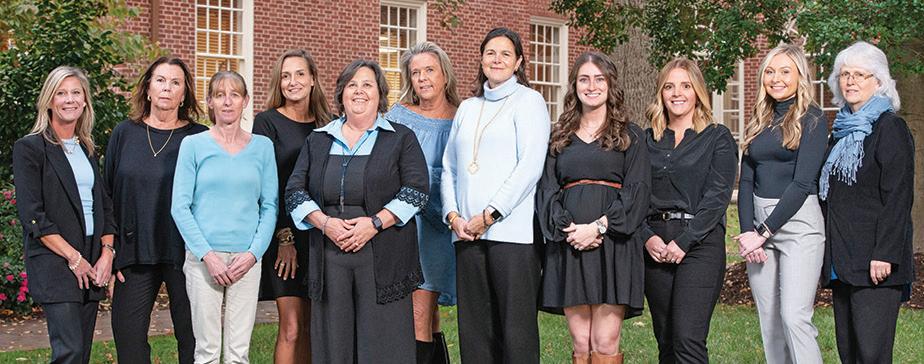
Melissa Grimes-Guy Photography




Queen Anne’s County
The history of Queen Anne’s County dates back to the earliest Colonial settlements in Maryland. Small hamlets began appearing in the northern portion of the county in the 1600s. Early communities grew up around transportation routes, the rivers and streams, and then roads and eventually railroads. Small towns were centers of economic and social activity and evolved over the years from thriving centers of tobacco trade to communities boosted by the railroad boom. The county is named for Queen Anne of Great Britain, who reigned when the county was established in 1706.
Queenstown was the original county seat when Queen Anne’s County was created, but that designation was passed on to Centreville in 1782. It’s location was important during the 18th century, because it is near a creek that, during that time, could be navigated by tradesmen. A hub for shipping and receiving, Queenstown was attacked by English troops during the War of 1812.
Construction of the Federal-style courthouse in Centreville began in 1791 and is the oldest courthouse in continuous use in the state of Maryland. Today, Centreville is the largest town in Queen Anne’s County. With its relaxed lifestyle and tree-lined streets, it is a classic example of small town America.
The Stevensville Historic District, also known as Historic Stevensville, is a national historic district in downtown Stevensville, Queen Anne’s County. It contains roughly 100 historic structures, and is listed on the National Register of Historic Places. It is located primarily along East Main Street, a portion of Love Point Road, and a former section of Cockey Lane.
The Chesapeake Heritage and Visitor Center in Chester at Kent Narrows provides and overview of the Chesapeake region’s heritage, resources and culture. The Chesapeake Heritage and Visitor Center serves as Queen Anne’s County’s official welcome center.
Queen Anne’s County is also home to the Chesapeake Bay Environmental Center (formerly Horsehead Wetland Center), located in Grasonville. The CBEC is a 500-acre preserve just 15 minutes from the Chesapeake Bay Bridge. Over 200 species of birds have been recorded in the area.
Embraced by miles of scenic Chesapeake Bay waterways and graced with acres of pastoral rural landscape, Queen Anne’s County offers a relaxing environment for visitors and locals alike.
For more information about Queen Anne’s County, visit www.qac.org .


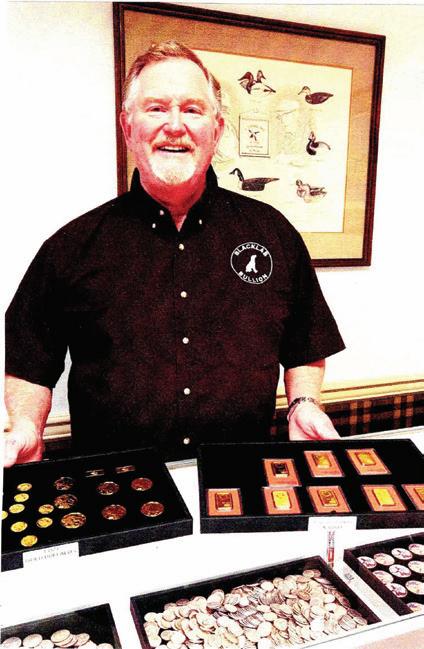
Caroline County – A Perspective
Caroline County is the very definition of a rural community. For more than 300 years, the county’s economy has been based on “market” agriculture.
Caroline County was created in 1773 from Dorchester and Queen Anne’s counties. The county was named for Lady Caroline Eden, the wife of Maryland’s last colonial governor, Robert Eden (1741-1784).
Denton, the county seat, was situated on a point between two ferry boat landings. Much of the business district in Denton was wiped out by the fire of 1863.
Following the Civil War, Denton’s location about fifty miles up the Choptank River from the Chesapeake Bay enabled it to become an important shipping point for agricultural products. Denton became a regular port-ofcall for Baltimore-based steamer lines in the latter half of the 19th century.
Preston was the site of three Underground Railroad stations during the 1840s and 1850s. One of those stations was operated by Harriet Tubman’s parents, Benjamin and Harriet Ross. When Tubman’s parents were exposed by a traitor, she smuggled them to safety in Wilmington, Delaware.
Linchester Mill, just east of Preston, can be traced back to 1681, and possibly as early as 1670. The mill is the last of 26 water-powered mills to operate in Caroline County and is currently being restored. The long-term goals include rebuilding the millpond, rehabilitating the mill equipment, restoring the miller’s dwelling, and opening the historic mill on a scheduled basis.
Federalsburg is located on Marshyhope Creek in the southern-most part of Caroline County. Agriculture is still a major portion of the industry in the area; however, Federalsburg is rapidly being discovered and there is a noticeable influx of people, expansion and development. Ridgely has found a niche as the “Strawberry Capital of the World.” The present streetscape, lined with stately Victorian homes, reflects the transient prosperity during the countywide canning boom (1895-1919). Hanover Foods, formerly an enterprise of Saulsbury Bros. Inc., for more than 100 years, is the last of more than 250 food processors that once operated in the Caroline County region.
Points of interest in Caroline County include the Museum of Rural Life in Denton, Adkins Arboretum near Ridgely, and the Mason-Dixon Crown Stone in Marydel. To contact the Caroline County Office of Tourism, call 410-479-0655 or visit their website at www.tourcaroline.com .
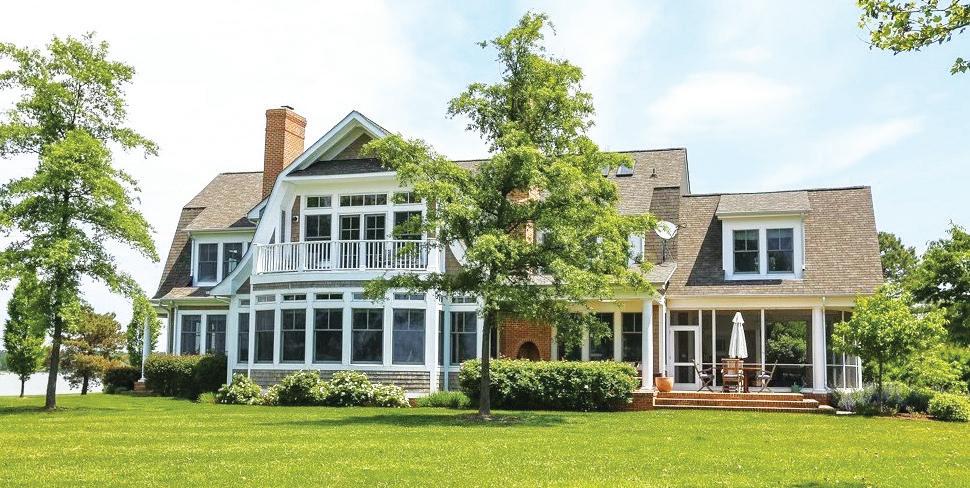


Kent County and Chestertown at a Glance
Kent County is a treasury of early American history. Its principal towns and back roads abound with beautiful old homes and historic landmarks.
The area was first explored by Captain John Smith in 1608. Kent County was founded in 1642 and named for the shire in England that was the home of many of Kent’s earliest colonists. When the first legislature assembled in 1649, Kent County was one of two counties in the colony, thus making it the oldest on the Eastern Shore. It extended from Kent Island to the present boundary.
The first settlement, New Yarmouth, thrived for a time and, until the founding of Chestertown, was the area’s economic, social and religious center.
Chestertown, the county seat, was founded in 1706 and served as a port of entry during colonial times. A town rich in history, its attractions include a blend of past and present. Its brick sidewalks and attractive antiques stores, restaurants and inns beckon all to wander through the historic district and enjoy homes and places with architecture ranging from the Georgian mansions of wealthy colonial merchants to the elaborate style of the Victorian era.
Second largest district of restored 18th-century homes in Maryland, Chestertown is also home to Washington College, the nation’s tenth oldest liberal arts college, founded in 1782. Washington College was also the only college that was given permission by George Washington for the use of his name, as well as given a personal donation of money.
The beauty of the Eastern Shore and its waterways, the opportunity for boating and recreation, the tranquility of a rural setting and the ambiance of living history offer both visitors and residents a variety of pleasing experiences. A wealth of events and local entertainment make a visit to Chestertown special at any time of the year.
For more information about events and attractions in Kent County, contact the Kent County Visitor Center at 410-778-0416, visit www. kentcounty.com or e-mail tourism@kentcounty.com . For information about the Historical Society of Kent County, call 410-778-3499 or visit www.kentcountyhistory.org/geddes.php . For information specific to Chestertown visit www.chestertown.com .

When Freedom Came Nace Hopkin’s Return
by James Dawson
November 1, 2025 was remarkable in that Trappe, Maryland’s own Nathan “Nace” Hopkins, the ex-slave and early civil rights activist, came back home and gave a speech. In 1867, Hopkins started Trappe’s “Nace’s Day,” an Emancipation Day parade down Main Street that continues to this day. He also started two schools and helped build a church and, despite the fact
that he was illiterate, was known as a very effective speaker. Since Hopkins died in 1900, it wasn’t exactly Nace Hopkins himself in 2025. It was actor Darius Wallace who did a convincing and impressive portrayal of Nace.
Nace Hopkins was born about 1834 in Talbot County and was enslaved there until Maryland freed its slaves by an act of state
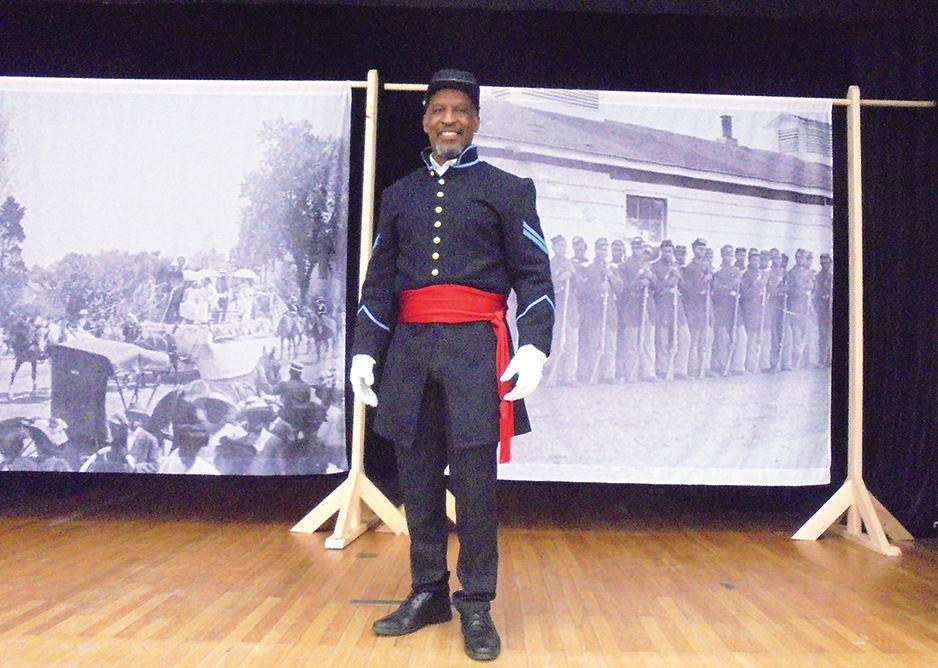
Nace Hopkin's Return
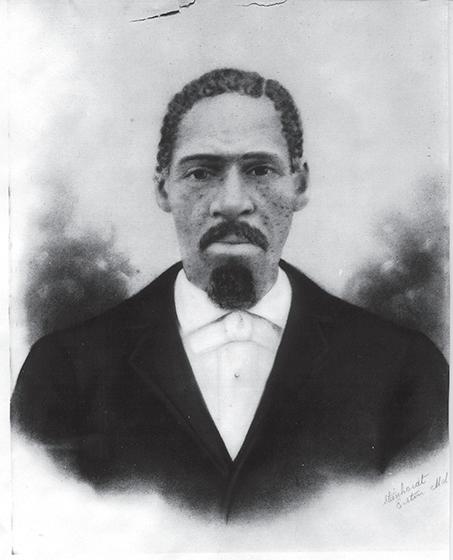
legislature in its new Constitution on November 1, 1864. Lincoln’s Emancipation Proclamation only freed slaves in the Confederate states and so wasn’t in effect in Maryland. More than 600 African Americans from Talbot County fought for the Union in the Civil War, the largest number from any Maryland county. And many died.
Wallace’s one-man Nace Hopkins show was outstanding and even more effective because it was held in Scott’s Church, which was the church that Hopkins helped build. Wallace is an actor, speaker and storyteller, and his powerful words, powerful voice and powerful dramatics filled the room. It was grand and unforgettable. History personified.
After the annual Nace’s Day parade, Darius/Nace was introduced by Dale Brown, the great-greatgreat-grandson of Nace Hopkins, and Paul Callahan, from the board of directors of the Talbot Historical Society, whose idea it was to have this performance. Darius also did Talbot’s own Frederick Douglass, Nace’s Aunt Audy and there was even a guest appearance by Abraham Lincoln.
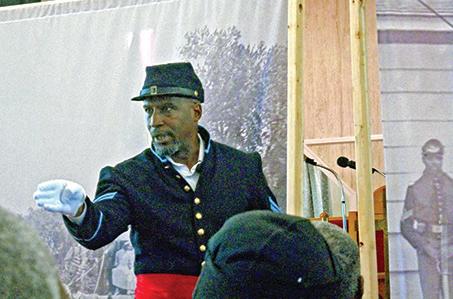
I could easily have been convinced that Darius was channeling both Hopkins and Frederick Douglass. His only props were a Union Army uniform, a sword and a scarf. There was some recorded musical accompaniment, and Darius also sang snatches of spirituals at various times in the show.
“Oh! Freedom. Oh, Oh, Freedom! Oh, Freedom over me. And before I’ll be a slave I’ll be buried in my grave. And go home to my Lord and be free.”

Nace Hopkin's Return
The show has many memorable lines, a few being:
“It was like thunder rolled down from heaven and cracked my chest open…to stand for something bigger than chains…but when I slipped that army jacket on—it felt like armor…for the first time—we weren’t property…my heart beat as strong as any drum in that camp…but I didn’t walk back the same man… and in those churches we found something stronger than chains… Freedom ain’t just words on paper, it needs a Day…may the Lord bless this march…may our footsteps echo through time…one drum, one beat. Like the heart of a new nation within a nation…Line up, Talbot County! Walk proud!…This ain’t no funeral march—this is Freedom’s Day!…We was born in chains, but we fought in uniforms…And still that drum kept beatin’. Even now… you hear it, don’t you?…Freedom ain’t a one-time thing…And promises live longer than men…you carry the flag straight, child…this ain’t just cloth, this is history…You see, Emancipation opened the door, but education—education—that’s what walked us through it.”
This last line received a standing ovation. There was also the story of the eagle that thought it was a chicken. And I liked the clever way the music changed to modern at the finish of the show.
This show was also given at Polaris Village Academy in Easton and the Oxford Community Center. And it should be noted that two of our local veterans’ organizations, VFW Post 5118 and American Legion Posts 77 and 91, donated heavily so this organization’s important history could be given to the community free of charge.
Recently I interviewed Darius, who is also a voice and performance coach.
How did you become interested in Nace Hopkins?
I was introduced to Nace Hopkins through Paul Callahan. I was invited to do Frederick Douglass in Tahoe by Richard Holman for Constitution Day. Paul was involved with this event and after seeing my performance, he wanted me to see
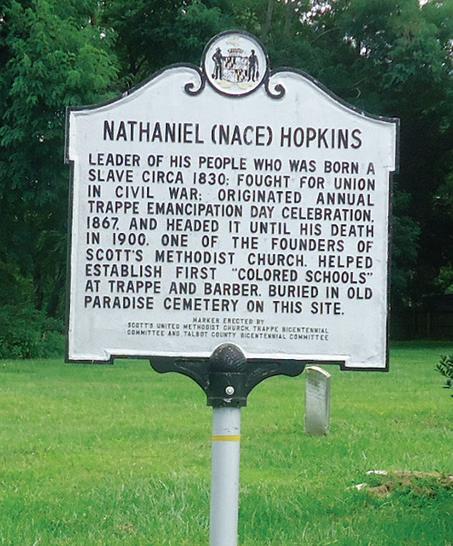





















Nace Hopkin's Return
his exhibit at the Talbot Historical Society on the U.S. Colored Troops in the Civil War. I went and I really enjoyed it.
Hopkins was known as a gifted speaker, but since he was illiterate and left no papers or writings how did you prepare the script?
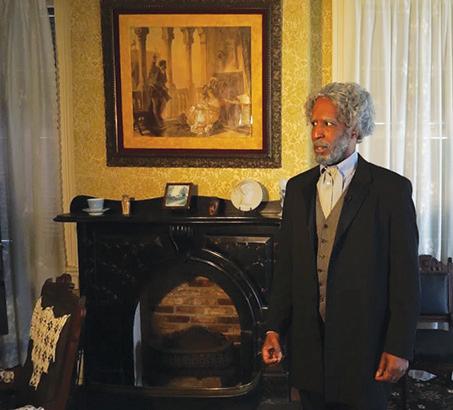
I enjoyed learning about Nace Hopkins, and all the things he achieved as well as the United States Colored Troops. Several days later, Paul Callahan called me about the November 1 Nace’s Day event and wondered if it would be possible for me to create a show on Nace Hopkins. Though this may sound impossible, I was so enthused about it. I made a decision to say yes, mind you this is in the midst of my directing a feature length movie we were shooting over 10 days later.

February - Lego Time!!
Darrius Wallce as Frederick Douglass
Nevertheless, I took it on and relied on you, Jim Dawson, as the premier Trappe historian as well as Paul Callahan and the descendants of Uncle Nace to help with his story and its accuracy. I began to go to work on creating the show and by the time we finished shooting the movie, I had time to work on the show as an actor. In the midst of that, Paul was raising money as well as finding wardrobe and spaces for me to perform within a month’s time, so I found myself back in Talbot County getting fitted in a Union Army uniform.
This is all quite magical and powerful, and I believe the Nace
Hopkins story was my inspiration to really dive into it, as is an amazing and phenomenal story.
Are you physically and emotionally drained after a performance, or do you draw energy from them? Though I am physically and emotionally drained after performing in general, especially in a one-man show, I have grown to be in shape and have gained a lot of stamina that has given me the energy to see it through.
What other related one man shows do you do? I believe you do Frederick Douglass. Can you tell me a little about that?
Yes, I also do the Rev. Dr. Martin Luther King Jr., Malcolm X, the poet, Langston Hughes, and the
founder of Black history month, Carter G. Woodson. All of these characters, like Frederick Douglass, were inspired by the transformational power of the spoken word, and all had their individual way of being transformed by the power of words and have used the power of words to transform the lives of others.
Do you plan on spreading the word about Nace Hopkins? He is virtually unknown outside of Trappe and deserves a wider audience. It is my hope that your one-man Nace Hopkins show can be shown on Maryland Public Television and other venues.
I do hope to spread the story of Nathaniel Hopkins throughout the state of Maryland, and as it
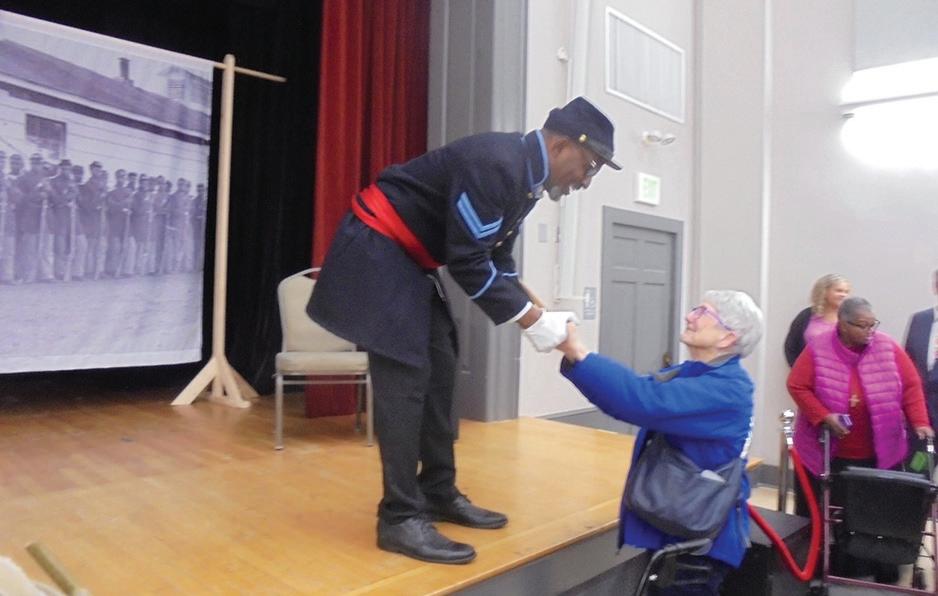

Nace Hopkin's Return
becomes more popular throughout the nation and the world, I believe it’s very important for the world to know about the beauty of what this man achieved in the 19th century. I also believe it’s important for young people to know what he achieved in the realization that the great things that he did, they also can do in their own way and make a tremendous difference in their lives and the lives of those they love.
How is Nace Hopkins relevant to us today?
The relevancy of Nace Hopkins is an example for us today in bringing people together as one nation under God. His example is not just with words but action. A glorious example for us all!
And, from Darius’ online bio: Darius is no stranger to stories. He has been in several Hollywood movies (Nothing but the Truth, Brian Banks and the World We Make). He is a founding company


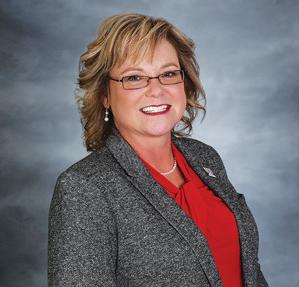
member of Tennessee Shakespeare in Memphis, and he has performed all over the country in thousands of schools, universities, theaters and libraries as Frederick Douglass. He also has been the TEDx Memphis coach for seven years. He is a practitioner of Tai Chi/Chi Gong and teaches methods of selfimprovement through meditation.
Even though Darius has all of these achievements, there was a time when Darius was broke and broken. He struggled with anxiety, depression, fear, limiting beliefs and suicidal thoughts. He was born in Flint, Michigan, during the time that G.M. automotive shops were closing, which left families without jobs. When he was thir -



Nace Hopkin's Return
teen years old, he found himself involved with the mean streets of Flint, which led him to being in a street gang. One day there was miraculous intervention when the vice principal of the school gave him an alternative. The destiny of jail or the destiny of his dream. Darius chose his dream when he was introduced to his high school theater teacher, who taught him the power of communication through storytelling as an actor.
Note: TEDx stands for independent and locally organized speeches on Technology, Entertainment and Design.


Darius can be reached at dariuswallace.com
Note: The Talbot Historical Society, in cooperation with the descendants of Nathaniel Hopkins and through the generous sponsorship of our local veterans’ organizations and other historical benefactors, will provide this performance during Black History month to our local schools in Talbot, Caroline and Dorchester counties. They also hope to present free performances to the general public in the MidShore region as well during the last week in February.
James Dawson is the owner of Unicorn Bookshop in Trappe.
C. ALBERT MATTHEWS
Where Integrity Meets Innovation INC.

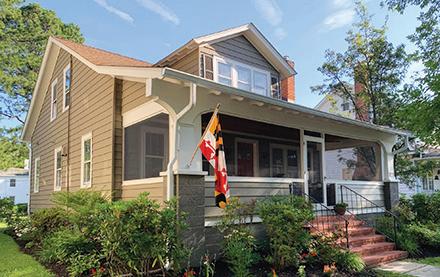

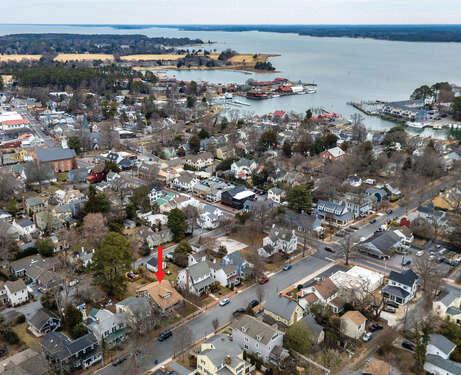

107 W. Chestnut Street, St. Michaels

Your picture-perfect St. Michaels Bungalow on the coveted W. Chestnut Street. The owners completed a full renovation in 2023. Designer finishes throughout. Attention to detail, light placement and thoughtful preservation of its original style. The screened front porch welcomes you in with it’s beautiful woodwork and sets the pace for this Chic, move-in ready Shore Home. Situated on a double lot with room for a pool. Fenced rear yard for room to run. One block to the Community pier on San Domingo Creek, kayak racks and walking path. Full details on the whole renovation are in the documents file. $1,350,000
Waterfowl 55 Clay Shoot


$150 per shooter or $500 team of 4
Please register by April 1 to secure your spot! Scan QR code for online registration Pri es for best tea best o erall score April 17, 2026
8:00 AM – 1:00 PM The Point at Pintail 511 Pintail Point Farm Lane, Queenstown, MD
Becoming a Grandmother by
Kim Basta
When I first discovered that I was going to become a grandmother, the thought actually shook me up a bit. Me, a grandmother? I was excited to have a new little one running around, but I have to admit, it made me feel a little old. It is startling enough to know that I qualify for a senior discount at the grocery store, and that I am an active AARP member, but now I was going to be a grandmother. Not only was I going to be a grandma, but my husband was going to be a “Pop-Pop.” How in the world did
this happen? Where did the time go? My husband and I didn’t feel old. I thought “Hey, I still have lots of color left in my hair!” Then I got realistic. I realized that the color is only there thanks to my hairdresser, and maybe the years have passed more quickly than I’ve realized. Slowly the shock was starting to wear off, and I started to get excited. My own grandparents went by the titles of “Nanny” and “Mom Mom,” and both grandfathers were lovingly known as “Pop-Pop.” There is certainly nothing wrong with those
Becoming Grandma
names, but they just didn’t seem to fit us.
I know that some of our friends don’t have traditional grandparent titles, so I thought we didn’t have to either. I took off to the internet to look up some cool and trendy names that would feel right for the two of us. So, I read through all of the suggestions for myself first, but none felt right. Suddenly I remembered a cute little restaurant we passed in the Florida Keys called “Kiki’s Sandbar and Grill.” We never got to go there, but the name made me laugh and it stuck in my head. My given name at birth is Kimberly Ann. I didn’t even get an “e” in my middle name. I always thought my parents could have been a bit more creative. My name certainly wasn’t unique, it wasn’t like “Stevie” or “Carly” or “Shania,” for

sure. I actually had three girls named “Kim” in my small firstgrade class. How cool would it be to have the name “Kiki”? This was my chance. Just for fun, I wondered if “Kiki” was a possible grandmother name. So back to my internet search, and there it was! It was as big as day! The website informed me that “Kiki” was a unique and fun choice for a grandmother name and also a cute nickname for women named “Kimberly.” So, thank you, Mom and Dad! Kiki would be my official grandmother name. It was meant to be!
meant


I was so excited, I called my friend to tell her the name I had chosen as my grandmother title. When she answered her phone, I exclaimed my wonderful news. “Kiki is my new grandmother name!” Her response was less than enthusiastic. She repeated the name back to me in the form of an odd question “Kiki?” “Yes,” I said “isn’t it just wonderful?” She still didn’t sound very con-

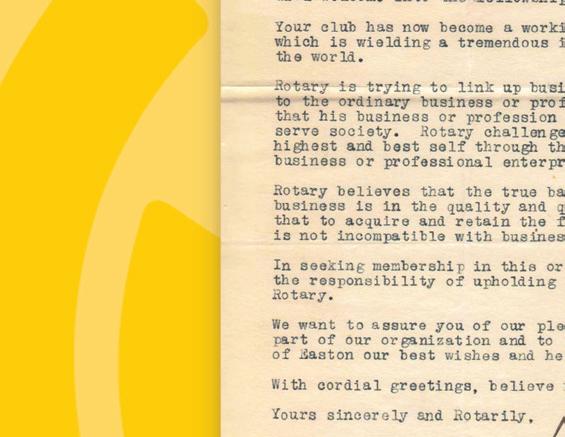


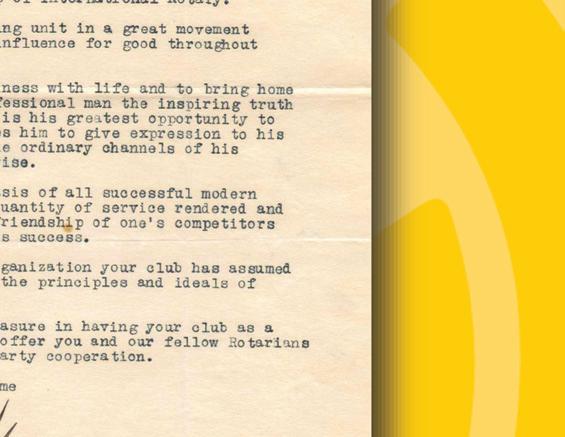



Becoming Grandma
vinced, so I asked her “What do your grandchildren call you?” She proudly responded “Mimi!” I immediately laughed out loud and said “Really, you are judging me for ‘Kiki’ and you’re ‘Mimi’?” We both started laughing, and she agreed that it was a good name for me. I proclaimed my new title to my husband and family, and everyone loved it. Now we needed to find a unique name for my husband. He chose the name “Nonno,” which means grandfather in Italian, and with our Italian heritage, it was just perfect for him. Of course, with my Baltimore accent, I must admit I had to work on it. I didn’t want the poor child to think we were screaming “no no” at her all the time, and then later in life she would need to seek therapy for it.
Eventually I got the accent down right. Now our little granddaughter is going to be two years

old in a few months. When she came to visit us recently, she ran over to both of us and yelled “Kiki” and “Nonno” and gave us a big hug. Our hearts just melted. Just to hear our little granddaughter say our new names out loud is absolutely awesome. In all honesty, our granddaughter could actually call us anything she wanted, because we just love having this little sweetheart in our lives.
So, I will end my story here with a very valuable lesson I just learned. Your grandparent title really isn’t that important. The important thing is that you now have a second chance in life to get to love and spend time with another little person after your own children are grown. This time, we know how important it is to cherish every moment because little ones are only little for so long. The absolute best part is we can spoil her all we want! My husband and I love our new role as grandparents. We realize now that being a grandparent really doesn’t make you feel old at all. It just makes you feel extremely blessed.
Kim Basta and her husband moved here Queen Anne’s County after a successful 35-year career in real estate.


Elegant Custom Homes for Sale in Easton, Maryland
MOVE IN READY ON SANDY LANE
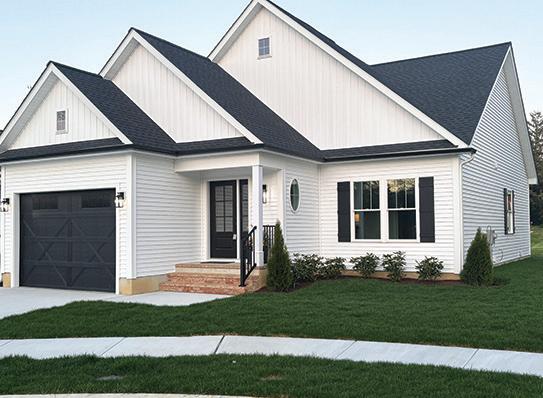
14 Sandy Lane $459,000
Looking for a full or part-time Easton landing spot? is beautiful one-story Aidan model on lot 3 at Sandy Lane is ready to go! Sparkling new high-quality construction with a primary suite and two additional bedrooms, living and dining room open to a beautiful kitchen with custom cabinetry and natural quartz countertops, premium ooring, garage and rear patio. Encapsulated crawl space, concrete driveway, fully sodded and landscaped yard.
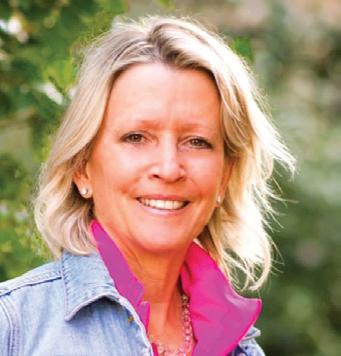
Call for a tour for more information!
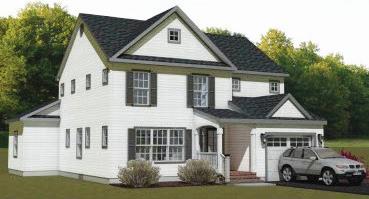
Lot 5 $699,000 (under construction) e two story “Liam”, a new Sandy Lane design with a 1st oor primary suite, kitchen, dining area, living room, laundry and garage plus a 2nd oor with 2 bedrooms, full bath and a 320 sq. . nished family/bonus room. Rear patio, front porch and concrete drive.

Lot 9 $659,000 (under construction)
To be built the largest “Ryan” models featuring of the one-story a primary suite and two additional bedrooms, open design with kitchen, living and dining areas plus laundry and garage. Large front porch, rear patio, concrete drive. is is a premium lot that backs to landscaped open area and woods.
Janet Larson, Associate Broker Benson and Mangold | 211 Talbot St. N.,
MD
O: 410-745-0415 C: 410-310-1797 | jlarson@bensonandmangold.com BENSONANDMANGOLD.COM


Chrome Alert by B. P. Gallagher
It is good to be back behind the wheel.
It judders in my grip like a thing alive, the thrum of the diesel engine mingled with the throaty rumble of tires chewing asphalt. Road signs flash by in blurry jumbles of letters: junctions, exits, interstate. I aim for the big swath of wide, open road promised by the latter and head north up the coast.
This wasn’t the plan. There is no plan. The older I get, the more my impulse control goes the way of my vision and hearing. Age steals everything from a man if he lets it, his autonomy most of all. Today, I claw a small sliver of my freedom back.
Mindy and the kiddos will have noticed my absence by now. At this very moment they’ll be asking the pertinent questions of one another back at the rest stop:
Have you kids seen your granddad?
I haven’t.
Courtney? You haven’t seen him either?
I wasn’t watching him, I thought he was with Kyle!
I had to go to the bathroom too! What, was I supposed to drag him in there with me?

He’s not in the car. I just checked. Well he can’t have gone far, can he? Spread out and look for him! Goddammit, Dad. I was afraid of something like this.
This last I imagine Mindy muttering to herself under her breath. And somewhere from the pell-mell of concerned adults and grandkids arises the most pertinent question of all:
Hey! Who the hell took my truck?
Any moment now they’ll connect the dots, put two and two together. But by then I’ll have fifty miles on them and if you think you can haul Granddad down to Florida like a load of freight, good luck boy, you got another think coming!
Chrome Alert
This, I understand, is my last hurrah. I know and am at peace with the fact. My final charge down the lonely highway of a life welllived, astride a purebred steed of chrome and American-wrought steel. Some stunt to pull on the way out. Reckless? Sure. There’s that waning impulse control for you. But when the chance for one more go at the wheel of a big rig presented itself, how could I say no? I’ve always been a drifter at heart, never happier than while caught in the flow of freight, the undertow of traffic.
No self-respecting trucker leaves his keys in the ignition. A guy like that, well—I’m doing his employer a favor removing him from the talent pool. As for the truck, they’ll recoup their losses in no time. Starting with the salary my incompetent, indeliberate benefactor would otherwise have been owed. The thought brings a twinge of guilt. Then I step on the accelerator and lose myself again in the road. I keep to the right lane and match my speed to the trucks around me, or try to. My limbs aren’t as steady as they once were, and it’s hard to keep uniform pressure on the gas pedal. But I’ve never trusted cruise control, and the newfangled tech staring back at me from the dashboard is too inscrutable to try even were I so inclined.
I pass two speed traps that I notice—probably more that elude my impaired peripheral vision—but no one flags me down or tries to pull me over. Until word of my abscondence jumps county to county, I’m just another trucker headed home after a long haul. Without a trailer, I’m not even obliged to stop at weigh stations—not that I would were I so encumbered. I move now with the implacable inertia of age. In the cab, at the wheel of this red and chromium machine, a marvelous change occurs. I am young anew.
When Mindy first sat me down like a child and told me it was time to think about assisted living, I agreed with her. A strange role reversal, lectured by your eldest daughter. And although it felt uncomfortably like cuckoldry to admit that I was no longer man enough—no longer able enough—to care for myself, the evidence had mounted until it became undeniable. There was, too, the small matter of the spreading shadow in my lung.
So I agreed to sell my house, and to tour the assisted living facilities in Florida that Mindy picked out. A road trip, she called it. An opportunity to spend more time with my grandkids. While you still have the chance, went the unspoken subtext.
Never mind that at their age the kids are more likely to remem -











ber how often my swollen prostate begged for the restroom, or how often I retold the same stories, or how often and loudly they needed to repeat themselves to be heard. Tweens are neurotic by nature, and old people make poor travel companions.
But behind the wheel of this big rig, its chrome grille grinning like my own face, I shed the years. I am smiling and crying in equal measure.
I drive for over an hour before I see the first warning, blared in twofoot-tall letters from a digital road sign on the overpass.
SILVER
ALERT:
RED PETERBILT SEMI TK; MN LICENSE #…
In a passing minivan, two children, a boy and a girl, make the universal hand signal for a good time. Why not? I think, and reach up to tug the handle. The horn blares once, twice. The kids go to pieces, gleeful. I smile.
The kids’ parents look over and their expressions change from startled to dumbfounded. In the front passenger seat, Mom glances at the LED alert, then back at me. She pulls out her cell phone and starts to dial.
I step on the gas and switch lanes, smooth as butter.
A pair of state police cruisers pull out behind me as I blow past another overpass. Their lights switch on,
red and blue and white in my rearview. I don’t stop, don’t slow down. Don’t speed up either. They’ve got me pegged for a senile old coot, and maybe I am. But if that’s so, I’ll be damned if I don’t lean into it.
The staties flank me to either side, and out of the corner of my eye I can make out their blurry shapes gesticulating at me to pull over. I fix my eyes straight ahead and ignore them like I haven’t got a care in the world. At this point, I don’t. Even when they start bleating and buzzing at me with their sirens, I play deaf and plough on ahead.
Just then, a voice speaks from the static nether: “Driver, if you can hear this, pull over the vehicle at the next opportunity.”
The voice of God?
“Do you copy? Over.”
No, not God, at least not yet. It’s the ‘over’ that jogs my memory, draws my hazy attention to something far more terrestrial: the CB radio, or whatever the equivalent is these days. Internal communication.
“You must be almost out of gas now, driver,” the level male voice on the radio intones. “Either surrender on your own terms, or putter out and get swarmed by cops, and nobody wants that. Your call, copy? Over.”
I glance at the dashboard, which I’ve somehow forgotten to do until this point in the drive. The gas light glares back at me, a baleful yellow


eye. It occurs to me for the fi rst time that the trucker might have stopped at that rest stop not just to relieve himself, but to fuel up.
I grab the overhead mic, click the button and say into it, “Copy, operator. This is Bryce Dugan. Over.”
There is a pause, then: “You used to be a trucker, Mister Dugan? Over.”
“That’s right, sir. Twenty-five years for Milton and Sons. Until the company went under. Over.”
“Then you know we can’t afford to lose that rig, Mister Dugan. Over.”
“No, I suppose not.”
“So, I need you to pull over, sir. With all due respect, you’re a liability out here. Over.”
“I’m afraid I can’t do that,” I say.
The three-lane highway narrows to two lanes as I pass over state lines into Pennsylvania, headed north. The cop cars dogging me are forced to fall back, joined by a growing pack of emergency vehicles.
Granite Quarry, 2 mi, reads a sign, with an arrow pointing off to the left.
The radio operator blabbers away, trying to talk me down, talk me off the road. Appeals to my veteran trucker sensibilities fall on deaf ears.
The engine starts to sputter and cough, running on fumes.
Granite Quarry, 1 mi.
The voice on the radio is talking
me onto an emergency off-ramp. A mile and a half up on your right, big gravel landing strip. Can’t miss it. Coast into home plate, and everyone goes home alive and happy.
Alive maybe, but free?
First they take away your license to drive, then the years rob you of your license to do all else. If I let it, the shadow in my chest and the treatments thereof will rob me of all remaining vitality, condemn me to a long, bedridden death. Drown now or drown later, suffocated in your own phlegm.
I pick a turn and take it.
Even the cops pull back now, alarmed by my recklessness.
Ah well, I think as I barrel without slowing through a gate, a chainlink fence, another gate. A life well lived.
As the gleaming red-chrome cab of the semi-truck sails over the brink of the old quarry, I grip the wheel and watch the horizon like a shroud drawn over my life.
Below, water sparkles in the failing sun, turquoise and jade.
B. P. Gallagher’s fiction has appeared in Roi Faineant Press, Flash Fiction Magazine, Meniscus Literary Journal, and elsewhere. He is a 2013 graduate of Easton High School, holds a Ph.D. in Social/ Personality Psychology and is currently Assistant Professor of Psychology and Culture at Nazareth University.


Chesapeake by Del Webb - 2-story Wittman model. Great room with gas fireplace, dining room, kitchen with center island and breakfast nook, sunroom, office, 1st floor primary suite plus guest bedroom and hall bath. 2nd floor with loft, bedroom and bath. 2-car garage, patio and irrigation system. New roof (2020), water heater (2019) and HVAC (2016). 55+ age restricted section. Community amenities. $505,000
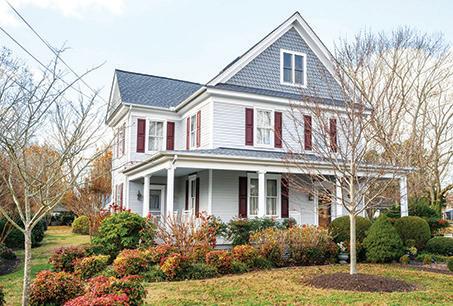
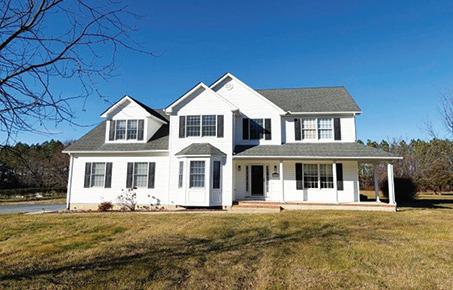
Country Living - This 2 story home features living room, dining room, family room with gas fireplace, open kitchen, new stainless LG appliances, breakfast nook, powder room, 4 bedrooms including primary suite, bonus room or 5th bedroom and hall bath. 2 car garage. Wood floors in downstairs living areas and tile in kitchen. 2 heat pumps. Sited on 2 acres close to Easton and Cambridge. Trappe White Marsh Elementary school district. $595,000
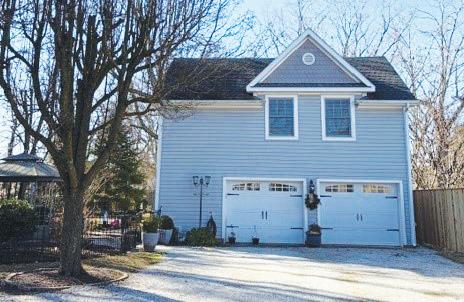
Trappe - This unique and well maintained home is located in the heart of town and has a lot to offer. Main home features formal living and dining areas, family room, kitchen, screened porch, laundry and 1.5 baths on the first floor. 2nd floor has 3 spacious bedrooms and bath. Wood floors throughout home. All new windows (2025). Warm radiator oil heat and mini-split units heat and cool the home. In the rear of the lot there is a large detached 2-car garage with 2nd floor studio apartment/office with kitchenette and bath, heat pump and wood flooring. The .54 acre lot is lavishly landscaped with 2 garden sheds, gazebo and patio area. $550,000



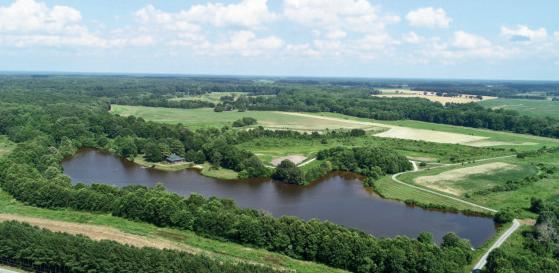
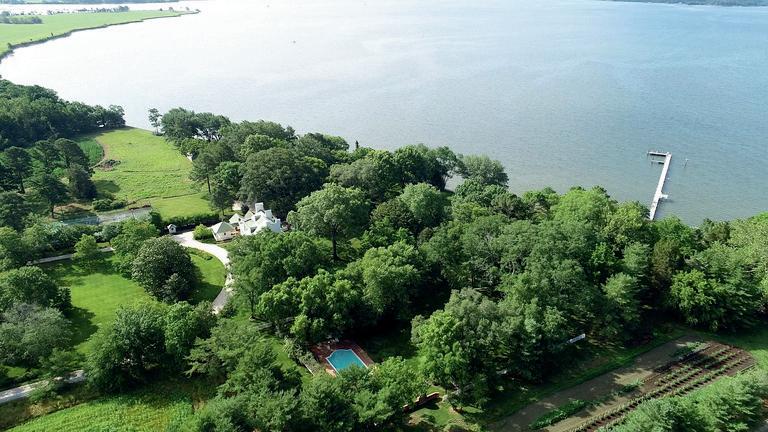
Estate ±234 ac | Trappe | https://tr.ee/wilderness
2 full 2 half BA | 300 Dixon St Easton | https://tr.ee/dixonsq Deep Neck Farm Ln ±33 ac Royal Oak | https://tr.ee/deepneck

Farm ±525 ac, 30 Parcels Easton | Oxford | https://tr.ee/duvall
3
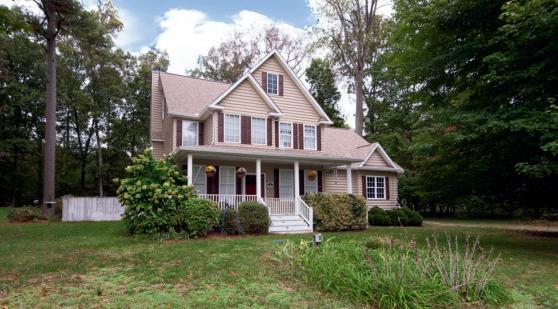
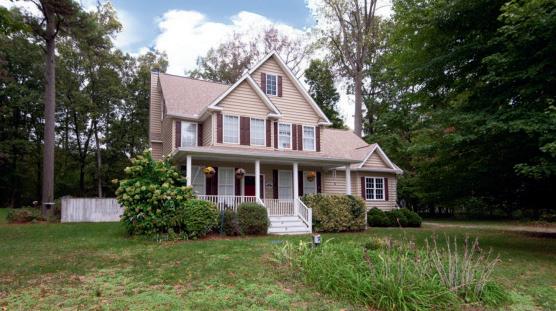
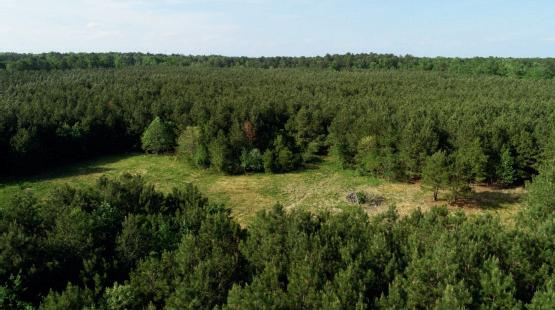
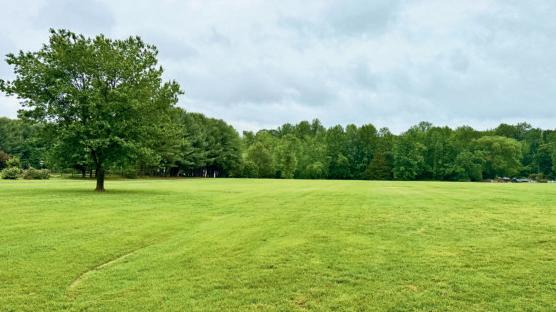


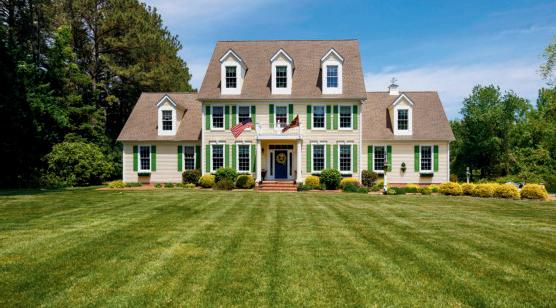
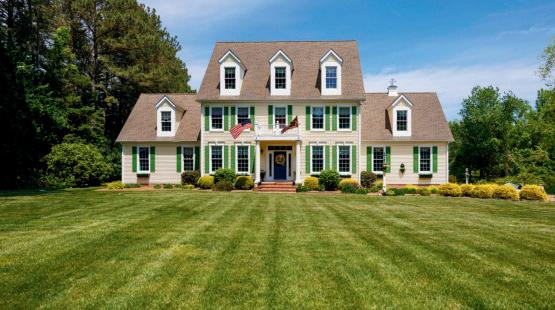

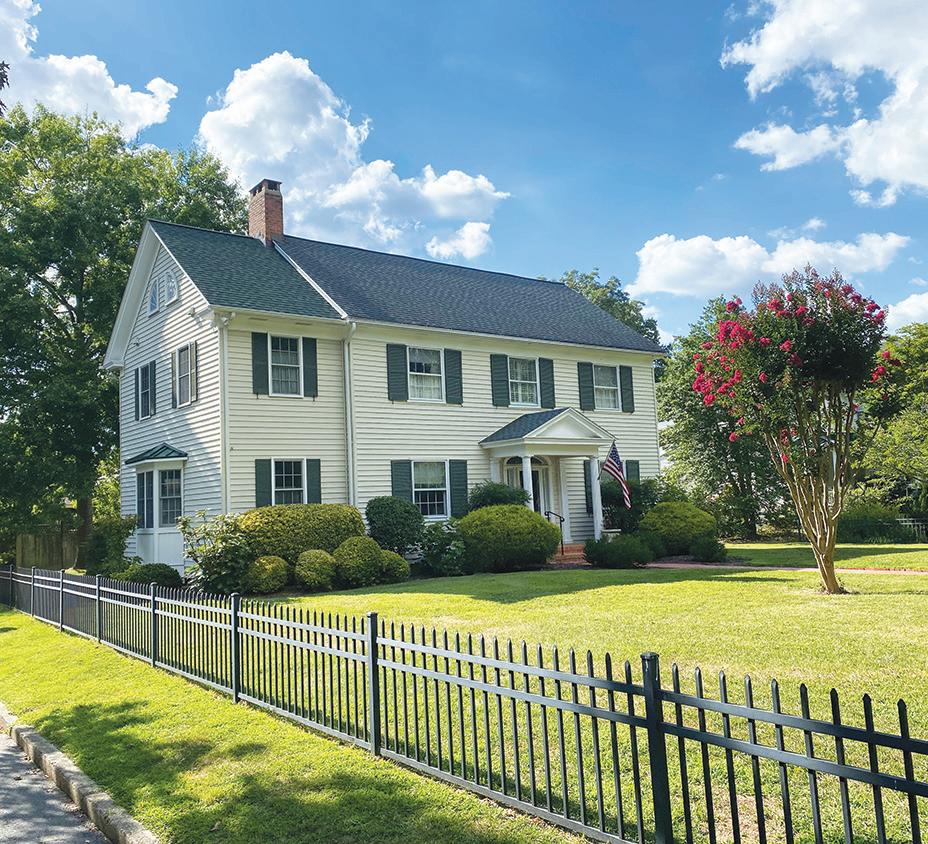
SOUTH HARRISON STREET, EASTON
Traditional center-hall colonial located only three blocks from the amenities of downtown Easton and three blocks from Idlewild Park and the YMCA. Living room with fireplace, formal dining room, eat-in kitchen, and sunroom. 3 or 4 bedrooms, 2-1/2 baths. Third story can be utilized as a large home office or as a dormitory. Central A/C. Hardwood floors. Screened porch. Detached garage, beautiful flower garden within a fenced yard. $1,100,000