
FEBRUARY 2026 NEWSLETTER

Page 1


FEBRUARY

Straight from the Crate: Lynette Yiadom-Boakye

Lynette Yiadom-Boakye (b. 1977) is a British painter known for her depictions of imagined Black figures painted from memory rather than life. Based in London, she works primarily in oil on canvas, producingfigurativecompositionsthatresistnarrative, portraiture, and historical specificity. Yiadom-Boakye studied at Central Saint Martins and the Royal Academy Schools in London. Her work has been the subjectofmajorinstitutionalexhibitions,includingFly in League With the Night at Tate Britain (2022–23) and No Twilight Too Mighty at the Guggenheim Museum Bilbao (2023), and is held in numerous internationalpubliccollections.

Yiadom-Boakye paints figures untethered from specific time, place, or individual identity. Although herworkisoftendiscussedinrelationtoportraiture,it resists categorisation. There is no sitter to identify, no narrative to reconstruct, and no historical moment being staged. Painting from imagination, she centers her practice on invention, repeatedly stating that the figures she paints are fictional and that painting, for her,isnotaboutrepresentationbutabouttheactitself. In doing so, she removes the expectation that the viewer should search for biography, symbolism, or explanation.

LynetteYiadom-Boakye,VernacularWarnings, 2024

This position carries particular weight within the longer history of figurative painting, where Black subjects have frequently been framed through documentation, ethnography, or narrative obligation. Yiadom-Boakyedoesnotattempttorevisethishistory through counter-narrative. Instead, she steps away fromitaltogether,allowingherfigurestoexistwithout illustrative purpose. Meaning is not imposed through storyorreference,butheldinsuspension.

In her practice, the figures she paints are not drawn from life, photographs, or archives. They are invented. Yiadom-Boakyehasexpressedthatsheavoidspainting people she knows and resists translating lived experience directly into image. By removing reference material,theworkisnolongeranchoredtobiography or verification. The figures exist only within the internal logic of the painting itself. Invention, for Yiadom-Boakye, keeps the image open rather than explanatory.

This openness is reinforced by her method. Her paintings are made quickly, often completed within a single day. She has spoken about working at speed to preserve clarity and prevent overworking. This approach is visible on the surface of the canvas: brushstrokes remain open, edges unresolved, and expressions deliberately restrained. Figures are frequently shown seated or at rest, alone or in small groups. Relationships are suggested through posture andproximityratherthanaction.

VernacularWarnings(2024)extendsthisapproach.The painting does not announce itself as a statement. Instead, it presents situations that prioritise stillness, grouping, and restraint. The emphasis is on states of being rather than events, aligning with YiadomBoakye’sstatedinterestinpaintingmomentsthatdonot resolve into story. Meaning emerges through repetition andarrangementratherthannarrativeprogression.

The term “vernacular” operates here in a social rather than linguistic sense. It refers to informal, shared ways of inhabiting space, how people sit, lean, engage or gather without conscious performance. Yiadom-Boakye resists the idea that her paintings depict encounters or relationships that can be explained. She has spoken instead about wanting the work to remain open, allowing viewers to spend time with the image rather than extract meaning from it. This refusal of narrative closure has been noted consistently in critical writing onherpractice.

In Vernacular Warnings, four figures sit closely together on a patterned surface, arranged in a compact grouping that suggests proximity without defining relationship. There is no identifiable setting, no temporal marker, and no implied action. The title introducesthepossibilityofarrivalortransition,butthe image itself remains composed and still. The figures appear settled rather than provisional, resisting any senseofmovementorprogression.

The white garments worn by the figures punctuate the darker ground, directing attention toward form rather than individual identity. Faces are loosely articulated, withholding emotional specificity and shifting focus to bodily orientation and spatial relationship. The brushwork is confident and physical; Yiadom-Boakye typically paints without gesso on herringbone canvas, allowing the texture of the surface to remain active withinthecomposition.Transitionsbetweenfigureand groundareleftdeliberatelyunresolved.

The patterned surface beneath the figures introduces rhythm and visual texture, functioning as a stabilising plane rather than a symbolic ground. It anchors the composition while reinforcing repetition and order. Thereisnodominantfocalpoint;instead,theeyemoves laterally across the group, mirroring the shared, nonhierarchicalspacethefiguresoccupy.Theoveralleffect is controlled and sustained, encouraging prolonged lookingratherthanimmediateresolution.

Through imagined figures, measured composition, and an absence of narrative instruction, Vernacular Warnings foregrounds presence over description. Meaning is not located in event or biography, but in arrangement, proximity, and shared space. Rather than offeringascenetobeinterpreted,theworkestablishesa condition to be observed. This balance between control and openness underpins the authority of the painting and situates it firmly within Yiadom-Boakye’s broader contributiontocontemporaryfigurativepainting.

VernacularWarningswillbeonviewaspartofPresent Tension at the Speed Art Museum, Louisville, KY from mid-March.

TIA COLLECTION COLLECTS

Carrie Mae Weems, Playing Harmonica (from Kitchen Table Series), 1990

Gelatin silver print
27.8 by 28 inches (70.5Ă—71cm)

Christina Kimeze, Pursuit, 2024

Oil paint, acrylic, oil stick and pastel on suede matboard 79.13 by 66.93 inches (201 x 170 cm)

Tracey Emin DBE, The Crucifixion, 2025

Acrylic on canvas

79.81 by 110.38 by 1.38 inches (202.8 x 280.4 x 3.5 cm)

IntheStudiowith MandyEl-Sayegh

This month, we turn our gaze to Mandy El-Sayegh, the MalaysianBritish artist whose multi-layered canvases splice together fragments of text, maps, advertisements, calligraphy, and grids into dense, bodily surfaces. Working directly on the floor of her studio in London, El-Sayegh approaches painting as a form of “suturing,” binding together the medical, the psychoanalytic, the political, and the personal. Her works invite us to enter spaces that feel like skins, scarred, collaged, and vulnerable, where meaning emerges through layering,erasure,andrepetition.

We’re thrilled to spotlight Net-Grid (Julia Overwritten by Maher) (2021) from Tia Collection, a work overwritten by her father’s Arabic calligraphy, which embodies the dialogue, tension, and inheritance centraltoherpractice.

TC: When you arrive in your studio, how do you begin? Do you have a ritual before you touch the canvas?

MES: For studio sessions, I need to be in good condition to enter a flow state. I have rituals that take up a lot of time. Hours before, I’ll arrange and tidy the space, set the agenda and mentally prepare. Then, in the studio I’ll eat a high protein, high fiber dinner (it’s alwaysroughlythesamething),turnonmusicandbegin.

TC: You describe your process as “suturing.” Can you walk us through how a painting comes together, step by step?

MES: The paintings are made up of collaged elements within the linen or canvas, which span different temporalities. There’s a laying out and setting up of conditions that allow for cross-contamination and combinations to come together, depending on the conversations I’m having at the time. It’s quite intuitive, there isn’t a particular step-by-stepprocess.

Suturing is a reference to flesh rather than collage—collage is associated more with paper and ephemera. I look at the treatment of fragments as building new bodies out of previously obfuscated historicalmaterialandmatter.

Net-Grid (Julia Overwritten by Maher), 2021

Oil and mixed media on linen with silkscreened collaged elements 92.5 by 88.5 inches (235 x 225 cm)

TC: Your early fascination with skin conditions drew you to the body. What is it about surface instability that continues to hold your attention?

MES: It’s more about the palette of the flesh; its transparency, tones, and how it’s susceptible to wounds. I explore how this layering—of muscle, fat, connective tissues, capillaries—produces flesh and how injuries can disrupt the cohesion of layers. Flesh disrupts a clear understanding of what a surface is, because there’s a thickness to it that makes you think about figure-ground relations in a more abstractway.

TC: You once did a residency in a morgue. What compelled you to seek that environment, and how did it shape the way you think about the body in your practice?

MES: At the time, I was studying at the Royal College of Art and wasn’t relating much to the history of painting or the discourses around it. I went to a life drawing class at the college, along with other artists who felt disenchanted. It was held by two women who did pathology sculptures in hospitals and museums. We were invited to go to Antwerp at first. That gave me the bug—they were trialling new body preservation techniques that didn’t use formaldehyde, keeping the tissues pliable and the colours vivid for longer periods. It taught me that the closer you look at something, the more literal it is and the less you understand it. I thought that the closer you observe the body, the more you understand it. But this experience produced theoppositeeffect:itshapedmypracticetoletmecreatespaceforan unknown.

Until that point, I had been methodically documenting the body. This need to capture, to preserve—it was an impossible endeavor. I found that dying is about living. To include that space of unknowing and that void, to accept failure in the work, allows even the most figurative body to be abstract. This impossibility to capture led me to seek out other ways of documenting flesh, which in turn led me to themorgueresidency.

TC: Your Net-Grid canvases are always bound by a fixed format (225 x 235 cm). Why did you set that parameter, and how does working within it shape your rhythm?

MES: I set parameters for myself and my body in many areas of my life, because I spread out a lot in space. Many artists are tangential thinkers who need to clip and prune their ideas, otherwise they spill over into everything. It’s a self-imposed practice to help with structure, the body—otherwise it would be a splayed-out corpse. Although it gives structure, these self-imposed rules also allow for atypeoffreedomwithinrestraint.

TC: What themes do you find yourself always returning to, no matter how your work shifts?

MES: My practice is rooted in part-whole relations. Whether a painting, installation, performance or video, each work explores the breakdown of systems of order. I use assemblage to unify disparate fragments into a coherent whole; an impossible task, which instead creates alternate systems of order—be they bodily, linguistic or political. Such systems can be mapped onto bodies, for instance statelesssubjects,whichformnewsubjectivities.

Mandy El-Sayegh is an artist based in London whose practice is rooted in assemblage. Executed in a wide range of media–including paintings, sculpture, and installation, as well as performance, sound, and video–her works investigate the formation and break-down of systems of order, be they bodily,linguistic,orpolitical.

El-Sayegh’s public mural This is a Sign: Notes on Assembly at The Showroom, London is on view until 15 August 2026. Her forthcoming solo exhibition at SpaceK,Seoulwillbeonviewfrom18March–21June2026.

Recent presentations of her work include Depot of Museum Boijmans Van Beuningen, Rotterdam (2025–26); The Gateway Exhibition, Abu Dhabi (2024–25); Art Basel Parcours, Basel (2024); Overbeck-Gesellschaft –Kunstverein Lübeck (2023); Centre Pompidou, Paris (2022); Biennale Matter ofArt,Prague(2022);andBritishArtShow9,UK(2021–22).

Her monograph The Makeshift Body was published in 2023 by Black Dog Press.El-Sayegh’sworkisinpublicandprivatecollections,includingLACMA, LosAngeles;Tate,London;andSharjahArtFoundation,Sharjah.

COLLECTION LENDING PROGRAM

Lynda Benglis, Pi, 1973

Acrylic paint and glitter on cotton bunting and plaster over an aluminum screen

31.5 by 11.5 by 11 inches (80.0 x 29.2 x 27.9 cm)

Encounters: Giacometti x Lynda Benglis

Barbican Centre, London, UK

2/12/2026 - 5/31/2026

Shown together for the first time, the works of contemporary artist Lynda Benglis and those of Alberto Giacometti form the third exhibition in the Encounters: Giacometti series presented at the Barbican Centre in London.

Since the 1960s, the American artist Benglis has been known for her free and ecstatic forms, at once playful and visceral, organic and abstract. Alberto Giacometti is one of the most important European sculptors of the 20th century, renowned for his characteristic elongated figures that probe the human form.

Also on loan from Tia Collection is Benglis’ ceramic Acuyé (2013).

Yinka Shonibare CBE, Sanctuary City, 2024

Wood, paint, Dutch wax printed cotton, and LED lights

Dimensions Variable

Yinka Shonibare: Sanctuary

Rose Art Museum, Waltham, MA 2/11/2026 - 1/3/2027

Yinka Shonibare: Sanctuary presents the U.S. debut of Sanctuary City (2024), a major installation by the BritishNigerian artist. The installation comprises 18 scaled-down replicas of historical and contemporary buildings that have served as sites of refuge for persecuted and vulnerable individuals across centuries. Displayed in a darkened gallery, each black-painted structure glows from within, its interior illuminated and lined with Shonibare’s signature Dutch wax textiles, transforming the space into a constellation of sanctuary havens that appear as beacons of light and hope.

Emmi Whitehorse, Twin Lakes, 1989

Mixed media on paper mounted to canvas 72 by 102 inches (182.88 x 259.08 cm)

Emmi Whitehorse: Intimate Landscapes

Wheelwright Museum of the American Indian, Santa Fe, NM 2/21/2026 - 6/15/2026

Emmi Whitehorse: Intimate Landscapes is an atmospheric portrait of an artist whose voice and vision are increasingly vital to both national and international art discourse. The exhibition unfolds over two parts in a retrospective format, featuring 40 works: Part I: Light and Space (1980–2000s) and Part II: Line and Form (1990–2020s). This dual structure invites viewers to trace this compelling biography through color and time, which chronicles Whitehorse’s artistic evolution from 1980 through 2026.

About Tia Collection

Founded in 2007, Tia Collection is a global art collection with a mission to support artists and institutions by acquiring and loaning works of art. Tia fosters dialogue, stewardship and scholarship of art through its lending program, partner exhibitions and publications.

For more information, contact us at info@tiacollection.com

IMAGE CREDITS:

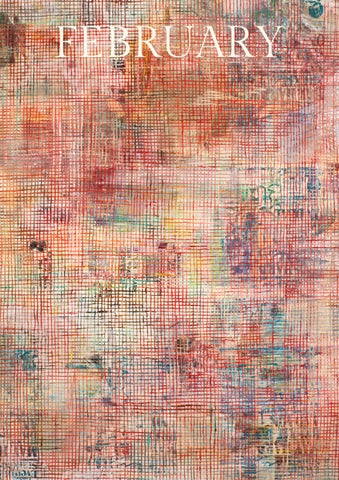
Cover: Mandy El-Sayegh, Net-Grid (Julia Overwritten by Maher), 2021. © Mandy El-Sayegh. Tia Collection. Courtesy Thaddaeus Ropac. Photo: James Hart Photography.

Page 3: Mandy El-Sayegh, Net-Grid (Julia Overwritten by Maher), 2021 (detail). © Mandy El-Sayegh. Tia Collection. Courtesy Thaddaeus Ropac. Photo: James Hart Photography.

Page 4: Portrait of Lynette Yiadom-Boakye. Photo: Anton Corbijn.

Page 6, 8-9: Lynette Yiadom-Boakye, Vernacular Warnings, 2024. © Lynette Yiadom-Boakye. Tia Collection. Image courtesy the Artist, Corvi-Mora, London, and Jack Shaman, New York

Page 12-13: Tracey Emin DBE, The Crucifixion, 2025. © Tracey Emin. Tia Collection. All rights reserved, DACS 2025. Photo © Prudence Cuming Associates Ltd.

Page 14-15: Carrie Mae Weems, Playing Harmonica (from Kitchen Table Series), 1990. © Carrie Mae Weems. Tia Collection. Image courtesy of the Artist and Jack Shainman Gallery, NewYork.

Page 16-17: Christina Kimeze, Pursuit, 2024. © Christina Kimeze. Tia Collection. Image courtesy of the artist. Photo by Matthew Hollow.

Page 18-19: Tracey Emin DBE, The Crucifixion, 2025. © Tracey Emin. Tia Collection. All rights reserved, DACS 2025. Photo © Prudence Cuming Associates Ltd.

Page 20: Portrait of Mandy El-Sayegh. Courtesy the Artist. Photo: Abtin Eshraghi

Page 22: Mandy El-Sayegh, Net-Grid (Julia Overwritten by Maher), 2021. © Mandy El-Sayegh. Tia Collection. Courtesy Thaddaeus Ropac. Photo: James Hart Photography.

IMAGE CREDITS

CONTINUED:

Page 24/26: Mandy El-Sayegh, Net-Grid (Julia Overwritten by Maher), 2021 (detail). © Mandy El-Sayegh. Tia Collection. Courtesy Thaddaeus Ropac. Photo: James Hart Photography.

Page 27: Portrait of Mandy El-Sayegh. Courtesy the Artist. Photo: Abtin Eshraghi

Page 28-29: Emmi Whitehorse, Twin Lakes, 1989. © Emmi Whitehorse. Tia Collection. Image courtesy of James Trotta-Bono.

Page 30: Lynda Benglis, Pi, 1973. © Lynda Benglis. Tia Collection. Photo: James Hart Photography.

Page 32: Yinka Shonibare, Sanctuary City - Notre-Dame, 2024. © Yinka Shonibare. Tia Collection. Courtesy of Goodman Gallery, London, UK.

Page 34: Emmi Whitehorse, Twin Lakes, 1989. © Emmi Whitehorse. Tia Collection. Image courtesy of James Trotta-Bono.

Turn static files into dynamic content formats.
Create a flipbook