




Your questions and concerns about your health matter. Ascension Seton care teams are here to empower you and your family by listening, respecting your experiences, and creating a care plan that works for you. You deserve to be seen and heard. That‘s why our doors are always open to provide health and healing, for the whole you — body, mind and spirit. To us, you are more than a patient. And together, we are a community.
TEXAS COACH - (ISSN 0040-4241) - Copyright 2025 Texas High School Coaches’ Association, Inc.
PUBLISHER
TEXAS HIGH SCHOOL COACHES ASSOCIATION, INC.
PUBLISHING/EDITORIAL OFFICES:
2553 N INTERSTATE 35 FRONTAGE RD
SAN MARCOS, TX 78666-5924
web: www.thsca.com
Subscriptions: Annual subscription to TEXAS COACH for members of the Texas High School Coaches Association is $20.00, which is included in the THSCA membership dues. For non-members, digital versions of the magazine may be accessed for free at www.thsca.com. Single copies are $5.00 per current volume. TEXAS COACH is published monthly except in June, July, and August and is dated the first of the publication month, although it is mailed around the 10th of the publication month.
Change of address: Request for change of address must reach us 30 days before the date of issue with which it is to take effect. Duplicate copies cannot be sent to replace those undelivered through failure to send advance notice. Email change of address to info@thsca.com or members can go online and make the change in your member portal profile at www.thsca.com.
Periodicals Postage Paid at San Marcos, TX & additional entries. “All rights reserved”. (USPS 540-600).
POSTMASTER Send address change to:
TEXAS HIGH SCHOOL COACHES ASSOCIATION P.O. DRAWER 1138
SAN MARCOS, TX 78667-1138
Printed by Integ in Austin, Texas.
EXECUTIVE DIRECTOR
JOE MARTIN joemartin@thsca.com
ASSISTANT EXECUTIVE DIRECTOR
GLEN WEST glenwest@thsca.com
Chief Operating Officer of THSCA BRIAN POLK brianpolk@thsca.com
Chief Operating Officer of THSCEF
LIBBY PACHECO libbypacheco@thsca.com
Director of Publications & Technology
BECKY ADAMS beckyadams@thsca.com
Director of Administration
MARGARET BEYER margaretbeyer@thsca.com
Director of Media & Marketing
ANNA BUCKALEW annabuckalew@thsca.com
Director of Exhibits & Sponsorships MOLLY FLY mollyfly@thsca.com
Director of Membership
ALLIE HERRMANN allieherrmann@thsca.com
Director of Finance & Accounting
KEVIN SMITH kevinsmith@thsca.com
Director of Hotels & Hospitality CHELSEA MILLER chelseamiller@thsca.com
Director of Public Relations & Awards
TYLER WATTS tylerwatts@thsca.com



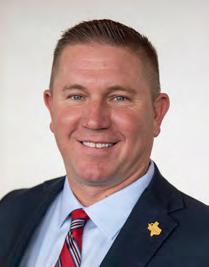
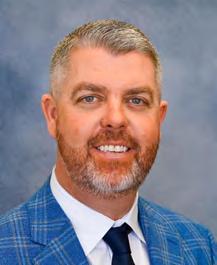
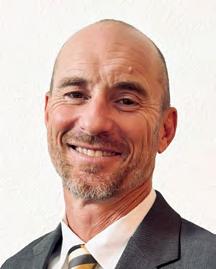
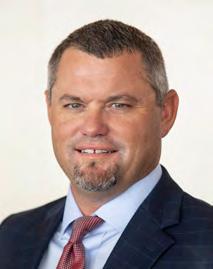
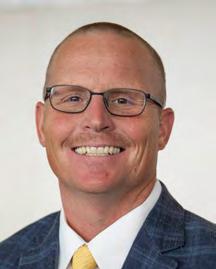
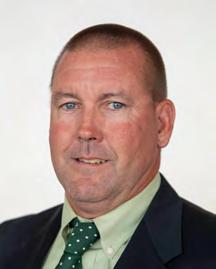
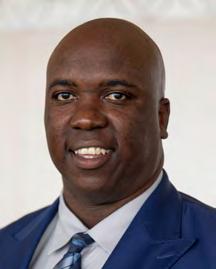
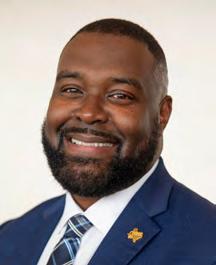
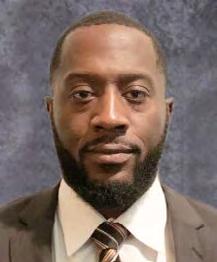

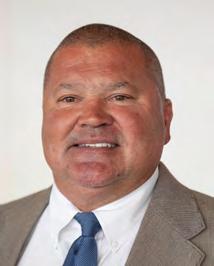
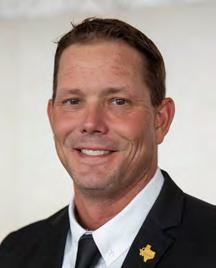

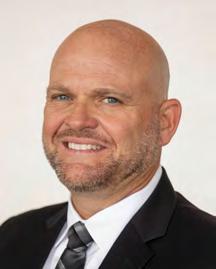

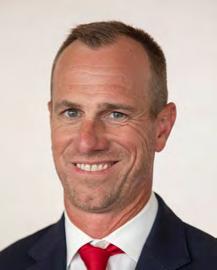
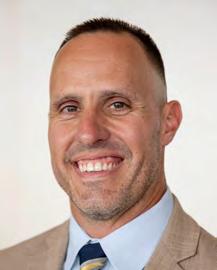
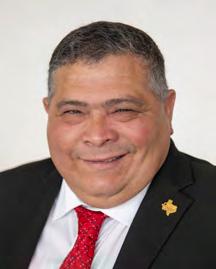
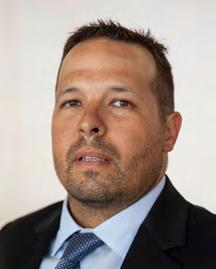


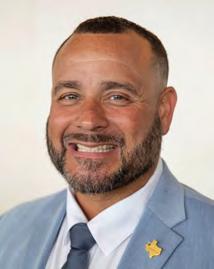


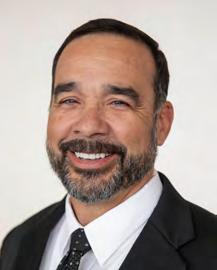
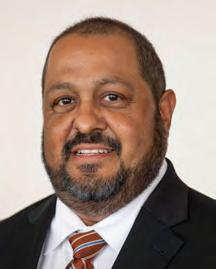

Finance: Brent Davis, Chip Darden, Sterling Doty, Clint Hartman, Marvin Sedberry Jr., *John Snelson, Drew Sanders
Bylaws: Chris Cochran, *B.J. Gotte, Joe Hubbard, Shaun McDowell, Leo Mireles, Rachel Torvik
Ethics: *LaQueisha Dickerson, Clint Fuller, Don Hyde, Casey Pearce, Marcus Shavers
Policy: Ben Bitner, Brian Randle, *Aaron Roan, Jason Richards, Antonio Wiley, Heather Woodman
Magazine: Andy Cavalier, *Jeff Ellison, Reuben Farias, Juan Morales, Mike Pry, Eddie Salas
Hall of Honor: *Dub Farris, Charlie Johnston, Gary Joseph, Allen Wilson
DIRECTOR-ELECTS
*Denotes Chair
R1 – Jason Richards, Frenship Memorial; R2 – Mike Reed, Gordon; 3 – Marcus Shavers, North Forney; R4 – Frank Maldonado, Midland Legacy; R5 – Rick LaFavers, Ridge Point; R6 – Clint Fuller, Kilgore; R7 – David Sanchez, Laredo United; R8 – Tony Salazar, Westlake
1ST ALTERNATES
R1 – Aaron Dunnam, Dumas; R2 – Mitch Ables, Hawley; R3 – Antonio Wiley, Coppell; R4 – Vance Washington, Permian; R5 – Travis Reeve, El Campo; R6 – Shane Tolleson, Waxahachie; R7 – JC Ramirez Jr., Veterans Memorial; R8 – Amanda Wolf-Schramm, Smithson Valley
2nd ALTERNATES
R1 – Rodney Vincent, Shallowater; R2 – Jake Escobar, Comanche; R3 – Riley Dodge, Southlake Carroll; R4 – Thad Fortune, Midland High; R5 – Kevin Berneathy, La Porte; R6 – Doug Wendel, Midlothian; R7 – Mark Chester, Gregory Portland; R8 – Galen Zimmerman, Dripping Springs

ATHLETIC DIRECTORS
R-1 Mike Meeks, Lubbock
R-2 Jake Escobar, Comanche
R-3 Jeff Smith, Prosper
R-4 Jaime Boswell, Andrews
R-5 Lance Carter, Katy
R-6 Don Drake, Ennis
R-7 Mike Troutman, Sinton
R-8 Becky Craig, Leander
ATHLETIC TRAINERS
R-1 Isaac Wimberley, Lubbock Cooper
R-2 Billy Abbe, Abilene
R-3 *Mike Harrison, Allen
R-4 Steven Ortiz, Midland Lee
R-5 Aimee Williams, Fort Bend
R-6 Greg Goerig, Midlothian
R-7 Benjamin Garcia, Harlingen
R-8 Chad Hennessey, Georgetown
At-Large Ally Furey, Dell Children's
AQUATICS
R-1 Dakota Tefertiller, Lubbock
R-2 Casey Pacheco, Abl. Wylie
R-3 Tony Arbogast, Flower Mound
R-4 Jessica Minjarez, Pecos
R-5 Ty Halford, Clear Creek
R-6 Dan Marlin, Waco Midway
R-7 Yvonne Moran, Harlingen CISD
R-8 Kari Brothers, Northside
At-Large *Michael Waldmann, Andrews
BASEBALL
R-1 Jed Anderson, Canyon
R-2 Allen McGee, Graham
R-3 Mike Smith, Lake Ridge
R-4 *Juan Orozco, EP Coronado
R-5 Jacob Hooker, El Campo
R-6 Matthew Anderson, Franklin
R-7 Adrian Alaniz, Sinton
R-8 Tom Alfieri, SA Churchill
BOYS BASKETBALL
R-1 Tony Wagner, Estacado
R-2 Justin Reese, Abilene
R-3 Matt Wester, Plano East
R-4 Jason Archibald, Wink
R-5 David Montano, Stafford
R-6 Colten Gober, Venus
R-7 Brandon Bourg, Flour Bluff
R-8 Andrew Brewer, Alamo Heights
At-Large *C.J. Villegas, Frenship Memorial
GIRLS BASKETBALL
R-1 Tate Lombard, Canyon
R-2 *Kenni Patton, Electra
R-3 Monesha Allen, Denton Ryan
R-4 Cynthia Hernandez, Burges
R-5 Christy Westbrooks, Atascocita
R-6 Marcus Willis, La Vega
R-7 Ashley McHugh, Sinton
R-8 Christina Camacho, Antonian
At-Large Brooke Brittain, Mansfield
BOYS CROSS COUNTRY
R-1 Jarrod Thomas, Littlefield
R-2 Glenn Griffin, Holliday
R-3 Landon Wren, Coppell
R-4 Alonzo Samaniego, Presidio
R-6 John Capron, Midway
R-7 *John (Eric) Miller, CC Veterans Mem.
R-8 Kelly Thompson, Leander Rouse
GIRLS CROSS COUNTRY
R-1 Luke Buckner, Shallowater
R-2 Loy Triana, Burkburnet
R-3 Zach Morgan, Rock Hill
R-4 Corina Marrufo, Del Valle
R-5 Josh Hill, Cy-Fair
R-6 Edward DeLaCruz, Waxahachie
R-7 Daniel De La Rosa, McAllen
R-8 *Rachel Freeman, SA Reagan
6-Man Josh Stanaland, Jayton
R-1 Jason Richards, Muleshoe
R-2 Kyle Atwood, Holliday
R-3 *Joe Castillo, Frisco Centennial
R-4 Thad Fortune, Midland
R-5 Rick LaFavers, Ridge Point
R-6 Sam Wells, Troup
R-7 Travis Chrisman, Ingleside
R-8 Brad Molder, New Braunfels
BOYS GOLF
R-1 Justin Wilborn, Lubbock Cooper
R-2 Mitch Aston, Abilene Cooper
R-3 Owen Clifton, Glen Rose
R-4 Mark Burgen, Andrews
R-5 Jason Jezek, FB Clements
R-7 Celso Gonzalez, McAllen Mem.
R-8 Michael Rome, Westlake
At-Large Paige Martin, Southlake
GIRLS GOLF
R-3 Kerry Gabel, FM Marcus
R-4 Shelbye Hill, Odessa
R-5 *Angela Chancellor, Kingwood Park
R-6 Liz Gray, Springhill
R-7 Jennifer Rangel, McAllen
R-8 Russell Aki, SA Reagan
At-Large Brent McCuiston, Alamo Heights
BOYS SOCCER
R-2 Tony Vu, San Angleo Central
R-3 Alexi Upton, Royce City
R-5 *Ben Powell, Bellville
R-6 Hector Peralez, Kilgore
R-7 Julian Robles, Harl. South
R-8 Juan Romero, SA Southwest
At-Large Jason Meekins, Katy Jordan
GIRLS SOCCER
R-2 Alexis Mosqueda-Walker, Brownwood
R-3 Kelly Thompson, Allen
R-4 Stephanie Sazo, EP Del Valle
R-5 *Evelyn Torres, Ridge Point
R-6 Andrew Procell, Corsicana
R-7 Matthew Kaiser, McAllen Memorial
R-8 Corey Elrod, Leander Rouse
*DENOTES CHAIR
SOFTBALL
R-1 Styler Haddock, Canyon
R-2 Jenna Aguirre, Abilene
R-3 *Kathy Schoettle, Allen
R-4 Carol Vaughn, Andrews
R-5 Katie Roberts, Brenham
R-6 Jordan Williams, Midway
R-7 Audra Troutman, Sinton
R-8 Maggi Welham, East Central
At-Large Jason Keller, Shiner
TENNIS
R-1 Darby Norman, Canyon Randall
R-2 *Carrie Castleberry, Vernon
R-3 Sylvia Sims, Frisco Heritage
R-4 Ray Perez, Midland Lee
R-5 Daniel Marshall, A&M Consol.
R-7 Eddie Marquez, Roma
R-8 Adnrew Duong, Comal Canyon
At-Large David DeLeon, Canyon
BOYS TRACK & FIELD
R-1 Jon Murphy, Stratford
R-2 Levi Keith, Abilene Cooper
R-3 *Janson Head, Denton Ryan
R-4 Brien Burchett, Greenwood
R-5 Jason Haddock, Wharton
R-6 Josh Rankin, Longview
R-7 Bob Bechtold, McAllen
R-8 Daryl Jones, Taylor
GIRLS TRACK & FIELD
R-1 Crista Jones, Lub. Monterey
R-2 *Jeremiah Butchee, Stephenville
R-3 Ashley Broom, Sunnyvale
R-4 Robert Ontiveroz, Monahans
R-5 Shelton Ervin, Summer Creek
R-6 Jordan Johnson, Midway
R-7 Stacy Zamzow, Goliad
R-8 Jen McHugh, SA Reagan
R-1 Kelly Lozada, Lubbock Monterey
R-2 Shay Fanning, Stephenville
R-3 Jennifer Chandler, Northwest
R-4 Heather Archibald, Wink
R-5 *Jenny Adcock, Stratford
R-6 Arden Johnson, Troup
R-7 Ariana Bermea-Mendoze, Alexander
R-8 Kayla Allen, Anderson
At-Large Kristina Finger, D'Hanis
BOYS WRESTLING
R-1 Dalton Clear, Canyon
R-2 Brock Payne, Vernon
R-3 *Kyle Stevens, Anna
R-4 Oscar Norez, EP Montwood
R-5 Vinnie Lowe, Katy
R-6 Collin Stroner, Midlothian Heritage
R-7 Donald "Ed" Arvin, CC Veterans Mem.
R-8 David Burdick, Vista Ridge
GIRLS WRESTLING
R-1 Tyler Frausto, Canyon
R-3 Tiffany Mangini, Flower Mound
R-4 Stephen Scott, EP Franklin
R-5 *Nicholas Johnson, Cy-Woods
R-7 Ronald Pratt, Rio Grande City

To the best coaches in the nation,

February 2026
This May, I’ll watch my last child walk across the stage at Vandegrift High School. It is crazy to even type that. For most of my career, I was the young coach—or the new head coach. A few years pass, and suddenly I’m what they politely call “experienced.”
As much as I’m excited for the celebration, the graduation party, and all that comes with it, I’d be lying if I said it wasn’t bittersweet. This also marks the end of having all my kids in the house and getting to be a dad—daily, in person. Recently, an offensive coach and I were talking about balancing the pull of being an elite coach and a great dad. I shared a few things I’ve learned along the way.
So today’s column is about being a great parent while still pursuing excellence in coaching. Here are three rules I believe help.
Rule #1: Always be available.
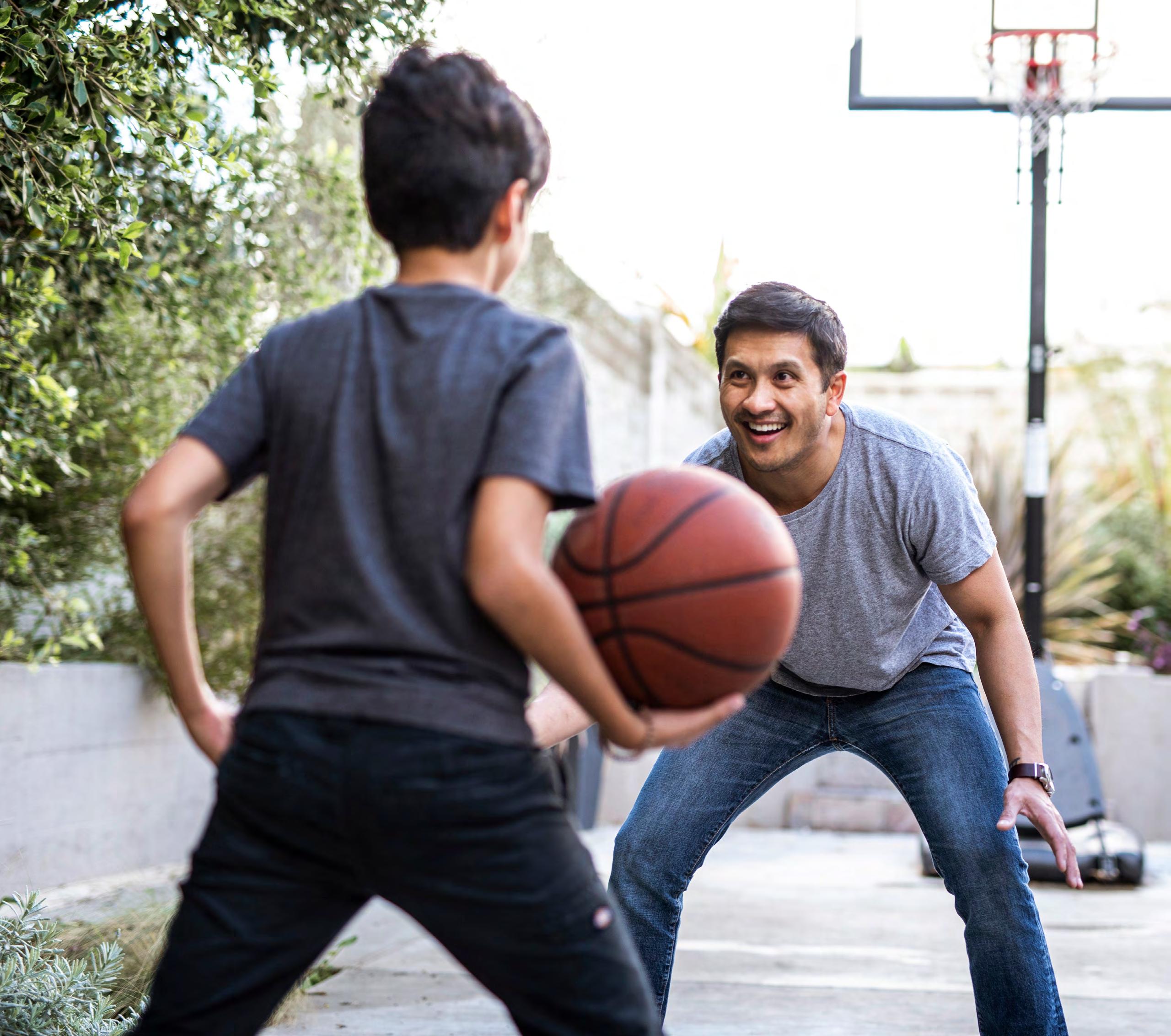
When your child asks you to play, say yes. No matter what. District championship week. Coming off a loss. Say yes.
Now that my kids are grown, it’s funny what they remember—random games of catch or building Legos. Not the “big days.” I once asked my older sons what they remembered about the time I took out a second mortgage on my house and took them to Disney. Unfortunately, their response was, “Not much.”
So stop. Sit down. Look them in the eye. Play Barbies. Wrestle. You won’t regret it—and it might be the mental break that gives you your next great idea. It doesn’t have to be long. Just be there.
Rule #2: Involve your family in your work.
When I was at Travis High School, my wife would bring our boys up to campus, and we’d eat lunch together or meet at Chick-fil-A. Just an hour on a busy in-season day—but it made a huge difference for all of us.
Head coaches, allow your coaches to bring their kids up during the summer. It’s a simple way to show you care. Kids remember those moments, so do everything you can to make it happen, regardless of your role.
Rule #3: Work less on the weekends.
Football coaches—this one’s for you. Just because something was done a certain way doesn’t mean it’s the best way. We don’t drive Model T’s or talk on BlackBerrys anymore. Times change, and usually we move forward.
Since 2017, our staff hasn’t worked in the office on Saturdays, and we’ve had the most successful run in school history. Coaches get their work done—on their schedule. Soccer games, naps, family time—no permission needed. Just get your work done. All of us “experienced” coaches know we’ve accidentally taken a nap during a Saturday game-planning session anyway, so let’s be more efficient and support our coaches’ families at the same time.
Try it. You and your staff won’t go back. Coaching is hard enough. Let’s not make it harder than it has to be. You can be a great parent and a great coach.
Moving on to THSCA news—thank you to all the coaches who made time for our Regional Meetings. Important things happen when we come together. Congratulations to our R.O.C.K. Class of 2026—you’re in for an incredible journey. Boys & Girls Basketball and Wrestling Academic All-State nominations are due March 1.
Don’t forget about the Texas Coaches Leadership Tour at texasleadershiptour.com. Registration for Coaching School and membership renewal opens March 1—let’s get to 30,000 members. Super-Elite teams and Coach of the Year nominations for wrestling, swim/dive, and basketball are coming up soon.
Thank you for taking the time to read this—and more importantly, thank you for who you are and what you do. You matter to your families, your athletes, and this great state. Keep improving. Keep serving. Keep making a difference—one kid at a time.

Drew Sanders, THSCA President



Elevate your team culture with sportsYou: the free, secure messaging platform built for coaches, not classrooms. sportsYou streamlines athletic communication across every team, all in one place – saving you time so you can focus on what matters most: your athletes.

sportsYou is 100% Americanowned. All data is stored and encrypted in the US
sportsYou does not sell individual user data
Communication settings are customizable to support your school/district policies


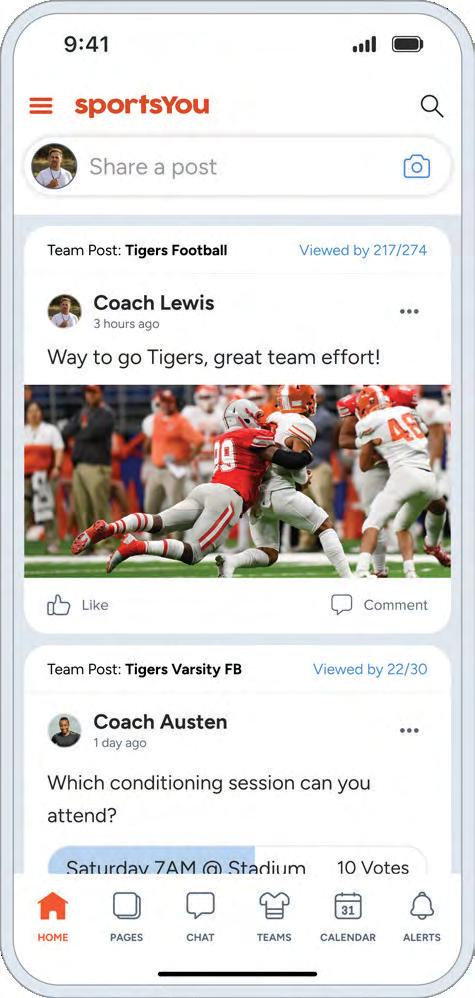
Districts own + can access communication history
sportsYou will review your DPA upon request
sportsYou will support you through the approval process + help you navigate HB 1481 and HB 4623
Meet with us: go.sportsyou.com/approval


To report a coach that is Retiring or On the Move to a new HEAD Coaching Job, (FOR ANY SPORT), login to your THSCA Member Portal and find "Report a Coach On the Move" under the Member Services tab.
Mike Burget from Weslaco East, announced his retirement after 13 seasons with the Wildcats.
Craig Charlton, who led CC Ray for eleven seasons announces his retirement just before Thanksgiving.
Craig Chesser, who led Stony Point for 22 seasons, announced his retirement, posting a 124-114 overall record. He led the Tigers to three consecutive state semifinal appearances from 2008-2010.
Drew Cox, who posted a 24-3 record in two seasons leading the Refugio Bobcats announced his retirement
Bill Elliott, who led Celina to a state title in 2024 and a state runner-up in 2015 retires after 33 years in Celina ISD. He served as head coach 15 seasons compiling a 150-38 record.
Dave Henigan announces his retirement from coaching after a stellar twelve year run where he posted a 141-23 record, leading Denton Ryan to the 2020 5A-Division I state title. Ryan was a state finalist in 2019, and they made four other state semifinal appearances.
Chris James from Arlington Sam Houston, announces his retirement after 14 seasons with the Texans.
Mark Kirchhoff announced his retirement after a 33-year career as a head coach with two stops at Falls City, Eden, Iraan, and Harper. He posted a 283-122 record with a 2010 state title at Falls City.
Robert Little goes back into retirement after leading the Riesel Indians for three seasons.
Trey Sissom from Fort Bend Travis announced his retirement after 11 seasons with the Tigers.
Brett Sniffin, who started the program at Fort Bend Ridge Point and then moved onto Belton, spent 14 seasons as a head coach with a 110-54 overall record, announced his retirement.
Craig Stump, who led Atascocita to the state semifinals in 2016 and six other regional final appearances, announces his retirement on January 9.
Courtney Allen, previous HFC at Mesquite Horn and North Crowley, to HFC at Mansfield Legacy.
Jack Alvarez from AD/HFC at Marshall to HFC at Center.
Elzie Barnett moves from HFC to Campus Coordinator only at Wilmer-Hutchins.
Chris Birdwell moves from HFC to Admin role at Hooks ISD.
Luke Blakewell moves from AD/HFC to Admin role at Mineola ISD.
Eli Boxell promoted from DC to HFC at Refugio.
Jacob Campsey from DC at Bandera to HFC at Devine.
Cody Carney promoted from Asst. to HFC at Van Vleck.
Willie Carter from OC at Arlington Bowie to HFC at Waco Connally.
Brian Cope from HFC at Lake Belton to HFC at New Caney West Fork.
Trevor Cordova moves from AD/Head Baseball Coach to AD/HFC at Tulia.
Carlos Cuellar promoted from OC to HFC at Weslaco East.
Jonathan Darby promoted from DC to HFC at Texarkana Pleasant Grove.
Devon Dorris from HFC at Azle to AD at Wichita Falls ISD.
Benny Ellison from DC at Brownsville Veterans Memorial to HFC at Laredo Cigarroa.
Andrew Fellows from HFC at McCamey to Admin role for Snyder ISD.
JB Frontz promoted from OC to HFC at EP Eastlake.
Terry Gerik moves from HFC to outright AD at Waco Connally.
Phillip Gibson from HFC at Frost to HFC at Holland.

Brett Gilchrist from OC at Frisco Lone Star to HFC at Whitehouse.
Josh Gregory from AD only to AD/HFC at China Spring.
DeMarcus Harris promoted from DC to HFC at North Crowley.
Brian Herman from Asst. HC at Georgetown to HFC at CC Ray.
Scott Hermes from HFC at RR McNeil to HFC at Leander Glenn.
Peter Hopkins from OC at Humble to HFC at Manor.
Darby House from HFC at Nacogdoches to AD/HFC at Smithville.
Jerry De La Huerta promoted from DC to HFC at Austin Akins.
Stephen Jackson from HFC at West Mesquite to HFC at Lancaster.
Brandon Jones promoted from Asst. to AD/HFC at Monahans.
Blake Joseph from OC at Guyer to HFC at Bryan.
Will Kirchoff from AD/HFC at Lovelady to AD/HFC at Falls City.
Jody Littleton from DC at RR Cedar Ridge to HFC at Burkburnett.
Joel Lopez, former HFC at Zapata and Laredo Alexander, hired as HFC at Laredo Maritn.
Cleo Love from DC at Dallas White to HFC at Waxahachie Life.
Matt Lovorn promoted from OC to HFC at Canyon.
Jeremy Males, former Asst. at Lake Dallas, promoted to AD/HFC.
Josh Mann from HFC at Leander Rouse to HFC at Belton.
Reno Moore, former HFC at New Caney Porter, to HFC at Hughes Springs.
Matthew Moose from OC at Brownsville Lopez to HFC at Donna North.
Leon Paul, former Lancaster HC, hired as HFC at Wilmer-Hutchins.
Dustin Pleasant from OC at Hutto to HFC at RR Stony Point.
Scott Ponder from HC at Mount Enterprise to AD/HFC at Alto.
Kevin Reaves from Asst HFC at Jefferson to HFC at Queen City.
Wilson Rigg from Asst. HC/OC at Anna to HFC at Azle.
Candelario Rivera from OC at Sinton to HFC at Beeville Jones.
Eddie Salas from HFC at SA Harlan to HFC at Comal Pieper.
Joey Saxe from HFC at Austin Akins to Asst. AD at Corpus Christi ISD.
Kevin Sherrill from HFC at Vernon to AD/HFC at Blooming Grove.
Jeff Smith from HFC at Stinnett West Texas to HFC at Floydada.
Marlon Taplin-McMillan promoted from OC to HFC at Houston Waltrip.
Tanner Thiel from HFC at San Angelo Grape Creek to HFC at White Oak.
Shane Tolleson from HFC at Waxahachie to HFC at Denton Ryan.
Jusitn Velasquez from Mesquite to HFC at Brazosport.
Terry Ward returns to the AD/HFC role at Tenaha.
Bobby Watkins from DC at West Mesquite to HFC at Arling. Sam Houston.
Jabara Williams promoted from DC to HFC at Crosby.
James Williams from HFC at FB Marshall to start a new program as HFC at Tomball West.
Jeremy Williams from HC at SA Sam Houston to HFC at West Mesquite.
Derek Winn promoted from OC to HFC at Petrolia.
Michael Woodard returns to the AD/HFC role at McCamey after two seasons in Admin.
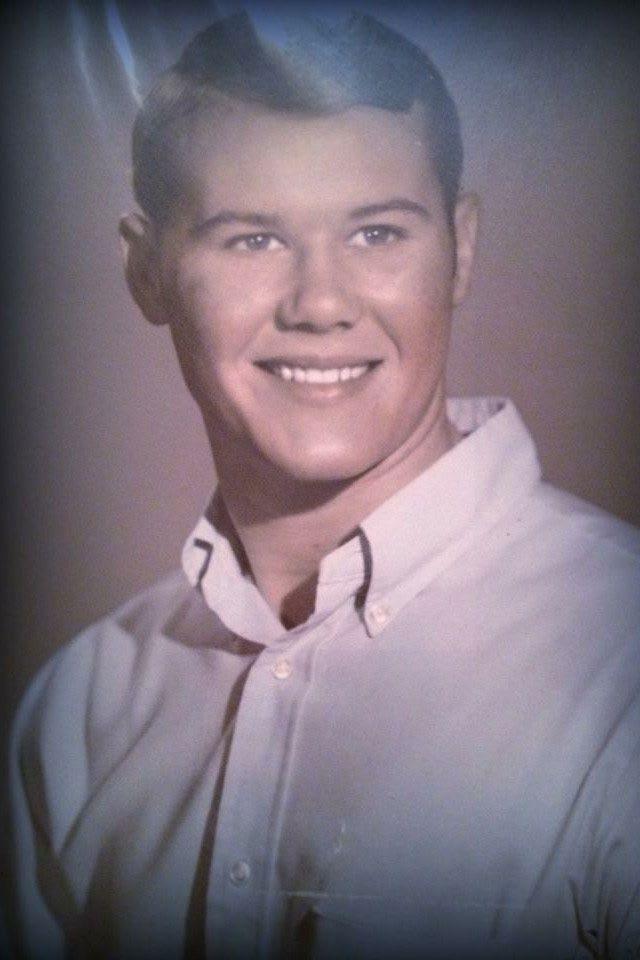

Coach Chuck Cotton’s youngest daughter, Colby Leigh Cotton of Austin, along with her two sons, Dalton & Dylan Cotton are offering their Annual Scholarship to a child athlete of a coach!
Applications will be accepted February 1, 2026 -- April 15, 2026 The 2025 - 2026 winner will be announced on May 15, 2026

See rules and download the application at www.CoachCotton.org info@CoachCotton.org (512) 577.7952





Coach Mike Johnston, the legendary head football coach of Katy High School and a beloved mentor, leader, and man of faith, passed away on January 10, 2026. For decades, Coach Johnston served the Katy community with distinction, leaving a legacy defined not only by championships, but by character, discipline, and an unwavering belief in the young men that he coached.
Eugene Michael (Mike) Johnston was born on June 28, 1947, in Huntsville, Texas, and raised in Galena Park. He developed a strong work ethic and love for football early in life. As a student-athlete at Galena Park HS, he was a member of the school’s football team that reached the 1964 state finals, an experience that shaped his competitive spirit and lifelong respect for teamwork and perseverance. He went on to play football at Stephen F. Austin State University, competing as a linebacker and center, while learning from mentors who influenced his own coaching philosophy.
After graduation, Coach Johnston launched his career in high school football at Hull-Daisetta HS and later included coaching positions at Nacogdoches, Beaumont Forest Park, and Abilene. In 1980, he joined Katy HS as an assistant coach, and in 1982 he was named head football coach and campus athletic coordinator. At that time, the Katy football program was seeking direction and consistency. Through discipline, belief, and tireless effort, Coach Johnston transformed the Katy Tigers into one of the most respected high school football programs in the state of Texas.
Over 22 seasons leading the Katy football team (1982–2003), Coach Johnston ended a years-long playoff drought and led the Tigers to three Texas state championships (1997, 2000, 2003), five state championship game appearances, numerous district titles, and more than 200 career victories. The culture of excellence that he established at Katy HS continues today.
Shortly after retiring from Katy in 2003, Coach Johnston became the head football coach at Houston Christian HS, where he continued establishing lifelong friendships with athletes. Many of those relationships endured long after he stopped coaching football in 2011.
While his accomplishments on the field were extraordinary, Coach Johnston believed his greatest responsibility was to mold his athletes into young men of character. He was a devoted man of faith who was never afraid to share God’s message with his players, whether during team meetings, practices, or quiet one-on-one conversations. He taught his teams and staff that faith, integrity, humility, and accountability mattered more than the final score & his influence is still felt in the lives of former players and coaches.
Known for his trademark red suspenders and commanding presence on the sideline, Coach Johnston led with compassion, conviction, and heart. Coach Johnston's leadership, however, extended beyond Katy High School, as he served as president and director of the THSCA and was inducted into its Hall of Honor. In recognition of his extraordinary impact on Katy ISD and the broader community, the playing surface at Legacy Stadium proudly bears his name — Mike Johnston Field — a permanent tribute to a coach whose influence will endure for generations.
Larry Clay Pullin passed away in San Antonio, TX, on January 20, 2026, at the age of 79. He was born on September 16, 1946, to Alvy and Ethel Pullin in San Antonio, Texas. He married the love of his life, Cynthia Ann Wilson, in 1966. They were married for 59 years.
Larry graduated from Nixon High School in 1964, where he excelled in all sports. He started his collegiate athletic career on a basketball scholarship to Southwest Texas State University. After one year, he transferred to Texas A&I University in Kingsville, where he was a member of the Javelina football team. He was a defensive back and punt returner. His punt returner prowess resulted in many records being set at Texas A&I.

Larry began coaching as an assistant at Kingsville High School. He then moved to Lubbock Estacado from 1970-1975. His head football coaching career began in 1975 with the Floresville Tigers, compiling a record of 28-20-2. His teams were very competitive, but this was during a time when only one team made the playoffs. In 1980, he became the Head Football coach of the Cuero Fighting Gobblers. In his six seasons at Cuero, he compiled a record of 51-19, capping off his last season with a trip to the State Finals in 1985. In 1986, his next stop was with the Abilene High Eagles. His teams compiled a record of 17-29, all while playing in the “Little Southwest Conference”. His last stop as a Head Football Coach began in 1991 in San Antonio with the John Jay Mustangs, which lasted for 13 seasons. He led the Mustangs to a record of 69-66-1 during his tenure, and his teams instilled a source of pride in the Jay community. Larry retired after the 2003 season, shortly thereafter returning to work part-time at the Northside Athletic Offices, until his full retirement in 2021. As most coaches do, Larry spent numerous hours at the fieldhouse with his coaching staff and players. He treated his staff and players as family. Many today still consider him a role model and “father-figure” in their lives. Many of Larry’s players continued their football career at the collegiate level. He also had players reach the NFL level, such as Brad Goebel and Sammy Morris; and he enjoyed following their success.
During his coaching years, Larry was a member of the Texas High School Coaches Association, serving on the Board of Directors. He was inducted into the THSCA Hall of Honor in 2013. Other awards Larry received for his playing and coaching accomplishments include being inducted in the Texas A&I Hall of Fame in 1987, receiving San Antonio Coach of the Year in 1992, and being inducted into the Greater San Antonio Football Coaches Foundation Hall of Honor in 2013.
Larry enjoyed all of his coaching accolades, but his proudest accomplishment was coaching his son in Cuero. Later in life, his greatest joy was being “Pops” to his granddaughters, Clayre and Carly. He could always be found at their many activities growing up. He loved watching all their sporting events as Lady Gobblers, and usually shared a few coaching tips with them during and after their games.
In his free time, Larry could be found on a golf course. He loved traveling with his golfing buddies on numerous outings, all while enjoying an expensive cigar, or two.
Obituary
Gary “Coach” Culpepper, 80, of San Saba, TX, passed into the loving arms of the Lord on January 13, 2026 .surrounded by his family at Goldthwaite Health and Rehab. A funeral service for Gary will be held 1:00 p.m., Saturday, January 31, 2026, at New Hope Presbyterian Church in Sloan Community, San Saba, TX, and will be officiated by Rev. Bill Proctor. Interment will take place at New Hope Cemetery following the funeral service. Arrangements are under the direction of Blaylock Funeral Home in San Saba, Tx.
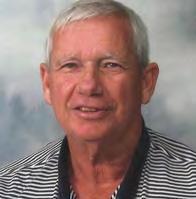
Gary was born on May 23, 1945, in Cisco, Texas. He graduated from Coahoma High School and received a Bachelor’s degree from Angelo State College. He was a high school coach and teacher for over 30 years, having served all over Texas, including Kress, McCamey, Monahans, and Pfulgerville.
Gary is now with his beloved wife Linda, who passed away almost exactly one year before his death. Linda and Gary were married for 61 years, and lived in San Saba for the last 20 years after he retired from coaching. Gary bought a piece of land in San Saba; and he spent his days raising longhorn cattle, hunting, fishing, and showing four grandchildren how to live life, give glory to God, and care for everyone. Gary and Linda were members of New Hope Presbyterian Church.


“You cannot swim for new horizons until you have courage to lose sight of the shore.”
William Faulkner
“Success is not final, failure is not fatal: it is the courage to continue that counts.”
Winston Churchill
“Courage doesn’t always roar. Sometimes courage is the quiet voice at the end of the day saying, ‘I will try again tomorrow.’”
Mary Anne Radmacher
“Life shrinks or expands in proportion to one’s courage.”
Anais Nin
“Bravery is being the only one who knows you’re afraid.”
Franklin P. Jones
"Courage is grace under pressure."
Ernest Hemingway
“The greatest discovery of my generation is that a human being can alter his life by altering his attitude.”
William James
“A positive attitude causes a chain reaction of positive thoughts, events, and outcomes.”
Wade Boggs
“Our attitude toward life determines life’s attitude toward us.”
Earl Nightingale
“Ability is what you’re capable of doing. Motivation determines what you do. Attitude determines how well you do it.”
Lou Holtz
“Weakness of attitude becomes weakness of character.”
Albert Einstein
“Excellence is not a skill, it’s an attitude.”
Ralph Marston

The THSCA Super Elite Teams consist of high school players nominated by members of the Texas High School Coaches Association. The player must meet the THSCA award criteria to be nominated. The award recognizes student athletes across the state of Texas for their exemplary athletic achievement in their respective sport. (Do you have highlights of athletes you think are Super Elite? We would love to see you post them on social media and tag us @THSCAcoaches and #SuperEliteTeam.)
All eligible nominations will be collected and sent to the the S.E.T. (Super Elite Teams) Committees to be evaluated. The S.E.T. Committee will submit the finalists to the THSCA Advisory Committee for their respective sport for final approval and decision on who has made the Super Elite team in each classification. Super Elite teams will be recognized after the state championships have been announced. See the chart below for nomination windows for each sport.
1. Be of good moral character
2. Varsity sports only
3. Have been a member of the team in good standing at the time of nomination
4. Player has excelled as an elite member in their respective sport
► There will be 101 Super Elite Teams covering all 23 sports throughout the state.
► There will be over 1,800 student-athletes recognized on the Super Elite Teams.
► We will have 808 Coaches (on S.E.T. Committees) that will select the Super Elite Teams.





THSCA along with our partners at Texas Farm Bureau Insurance, want to give recognition to our Texas high school coaches for their accomplishments on and off the field/court. We will be presenting head coach and assistant coach of the year awards in every sport and every THSCA region. Awards will include:

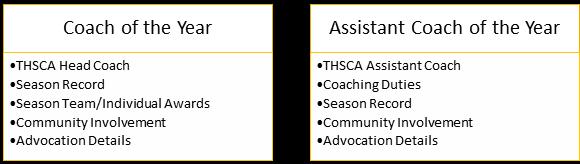
The nomination process will be open to every member of THSCA after the state championships in each sport. Each THSCA member is offered a chance to nominate a head coach and/or assistant coach to submit through the member portal. Nominations will cease after two weeks. Nominations will then be handed over to the Awards Committee for scoring (by region). * Indicates nomination window applies for both boys and girls teams in that particular sport.

Fifty years ago, Sam Walton handpicked the town of Mount Pleasant for its first Texas-based Walmar t. It’s not just about building stores and clubs it’s about investing in associates, backing Texas manufacturing, par tnering with teachers, suppor ting local businesses and giving back to communities from El Paso to Texarkana, Amarillo to Brownsville and more than 500 other locations in between.
Learn how we’re making a difference in the Lone Star State at Walmar t.com/Texas.


BY BRANDON BOURG THSCA ADVISORY COMMITTEE
BOYS

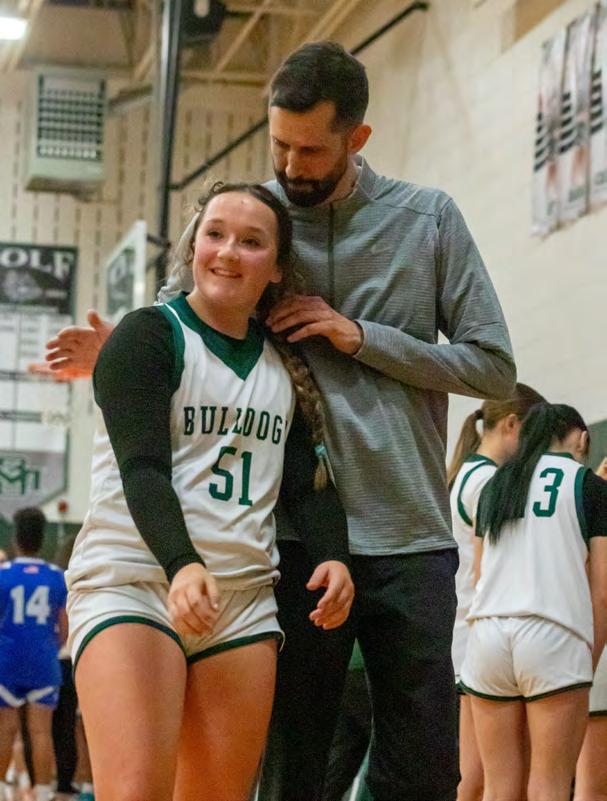
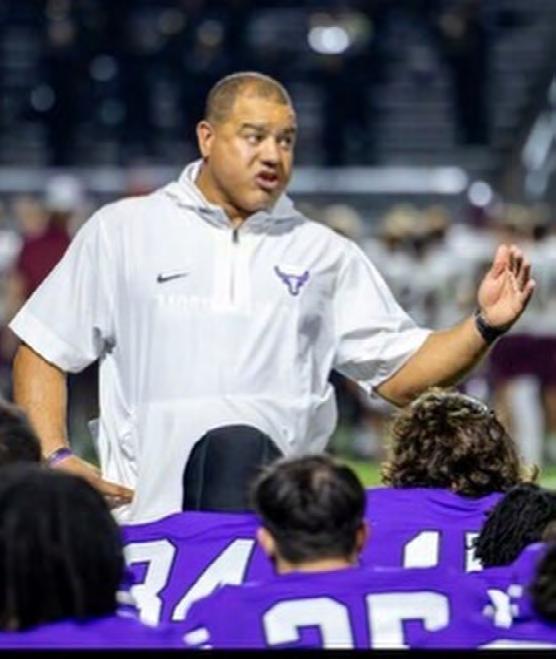
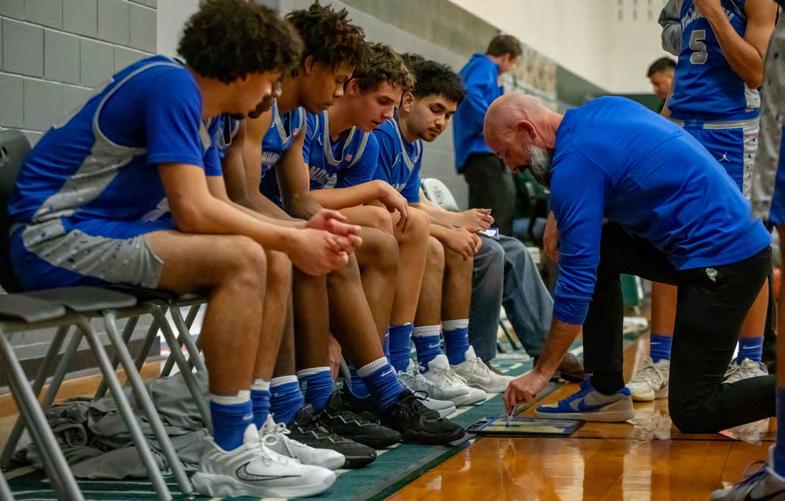
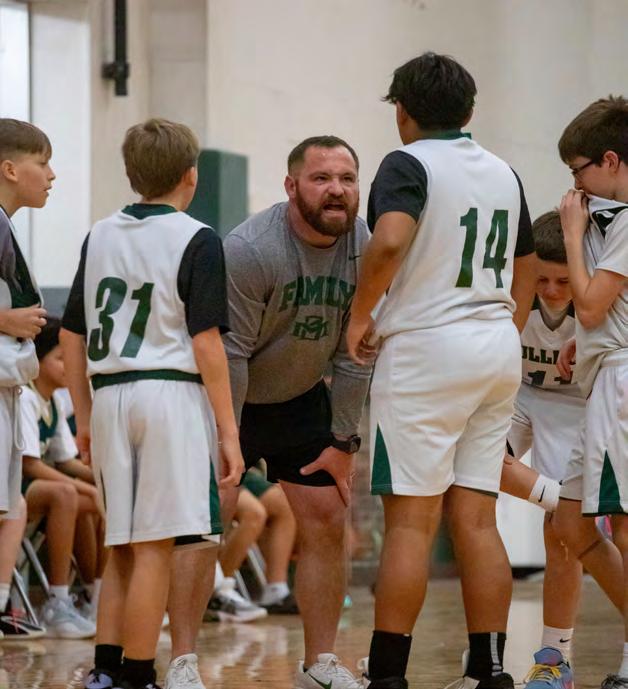
In every coach’s mind, the scoreboard looms large. Wins and losses are tracked, compared, and discussed endlessly among coaching staffs and peers. Careers are built—and sometimes broken—by numbers that flash for only a few hours on game night. However, the most successful programs that I’ve studied and been around share a common belief: don’t chase wins, chase your program culture, and wins will have a way of finding you.
Chasing wins often leads coaches down a familiar road. We look for quick fixes—talent over trust, plays over principles, results over relationships. The pressure to win now can quietly erode your program standards or the standards that you set for yourself as a Texas high school coach. A late practice gets shortened. Accountability becomes selective. A star player
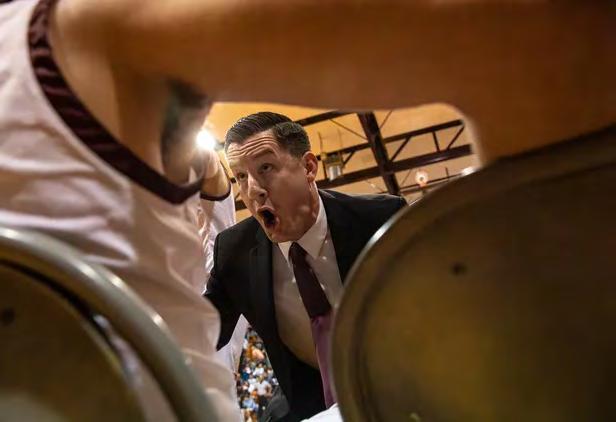
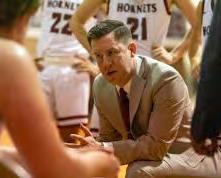
gets a pass because, “We need him on Friday.”
Those shortcuts may work in the short term, but they always send a message. Other players see it. Assistant coaches see it. Over time, the program becomes dependent on talent, luck, or a favorable matchup, rather than who the team truly is.
Culture, on the other hand, doesn’t offer shortcuts. It demands consistency, patience, and courage—especially when winning would be easier without it.

In my first year as a head boys’ basketball coach in 2015-2016, I wanted to be as successful as possible on the scoreboard, as fast as possible. I placed more emphasis on wins rather than the “other things” that it takes to win. I thought winning on the scoreboard would validate me as the right choice to lead the program, and my peers would view me as a “good coach.” I focused on X’s and O’s more than accountability and mental toughness. I let the scoreboard results dictate my attitude and self-worth. I was wrong. We won five games the entire season. Needless to say, not the Win-Loss results that I was hoping for.
After some internal processing and selfreflection, it was apparent that I, as the newly appointed leader of this basketball program, chased the wrong things. My coaching staff and I laid out a strong offseason and summer workout plan for our returning program members. We placed emphasis on attendance,
grades, mental toughness, consistency in the weight room, fundamental basketball skills, and volunteer opportunities for our program on and off campus. We didn’t touch team X’s and O’s until the beginning of October of the following season.
The results paid off. Yes, we returned a decent group of players with varsity experience. Yes, our freshmen team was talented (and the incoming group of freshmen behind them was also talented). Our team of largely the same studentathletes from 2015-16 won 21 games in 201617. Our following groups won 25 and 29 games in 2017-18 & 2018-19, respectively, culminating in a district championship and a top-25 ranking by the Texas Association of Basketball Coaches (TABC). It’s not that we coached that much better or demanded that much more on the court; rather, we demanded more accountability off the court, and we allowed our team culture to carry out our successes on the court.
Chasing your team culture means intentionally pursuing the behaviors, habits, and standards you want your program to be known for—every day, regardless of the scoreboard.
It means:
● Valuing effort, attitude, and toughness as non-negotiables.
● Holding everyone to the same standard; from the best player to the last one on the roster.
● Teaching young people how to compete, not just how to win.
● Making the locker room a place where accountability is normal and excuses are not.
● Creating a player-led team instead of a coach-led team.
Culture is built on what you tolerate and what you reinforce. There is an old coaches saying,
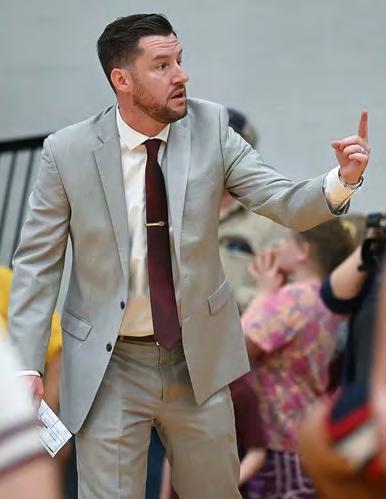
“You either coach it or you allow it.” Culture shows up in how your team practices when no one is watching, how they respond after a loss, and how they treat each other when adversity hits.
Wins are fragile. An unfortunate bounce of the ball, an injury, or a debatable call by an official can flip a result. Culture is resilient.
Teams with strong culture:

● Compete the same way when they’re up 20 or down 20.
● Don’t panic when momentum swings.
● Trust each other under pressure.
● Grow stronger through adversity instead of splintering.
When culture is solid, adversity doesn’t define the team—it refines it. Players learn to respond,
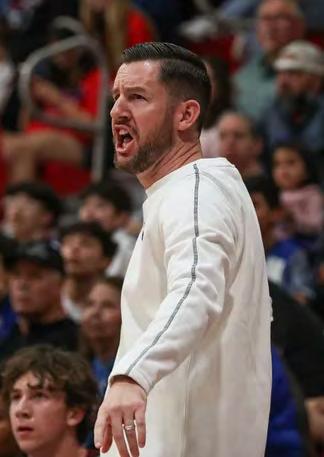
adjust, and recommit. Over time, that response is what turns close losses into future wins.
One of the biggest differences between winchasing teams and culture-chasing teams is ownership.

When coaches chase wins, players often wait to be motivated, corrected, or inspired. When coaches chase culture, players begin to lead it. They correct each other. They protect the standard. They understand that the program belongs to them, not just the staff. The coachled team turns into the player-led team.
That ownership can’t be instilled with a speech or through motivational quotes on the walls of the locker room. It’s earned through daily actions that match the words on the wall.
The teams most obsessed with winning are often the least prepared to handle losing. The teams obsessed with culture are prepared for both—and that preparation is exactly why they
win more often in the long run, on the court and in the field of play, as well as off the court and in life.
Chasing culture doesn’t guarantee championships. Nothing does. But it guarantees something more important: a program that stands for something, develops people, and competes with integrity.
The scoreboard will always matter. We’re competitive people. We are in this coaching world because of that competitiveness. We should want to win. Don’t let wins be the driving factor in why you chose this profession. Let the wins be the byproduct of your culture.
One of the best coaches, regardless of sport, that I have been fortunate enough to study and talk to is Danny Henderson. Coach Henderson has won multiple state championships at multiple classification levels. A quote that I heard him say that stuck with me is, “See the picture. Paint the picture. Then sell the picture.” This quote applies to your program culture: See your culture; Paint your culture; and sell your culture to every member that comes through your program. Chase your culture relentlessly, and protect it every single day.
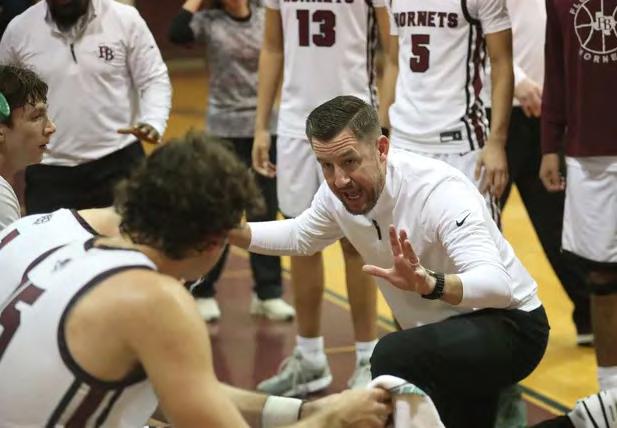
When you do, you will look up one day and realize the wins you were chasing have been running after you all along.

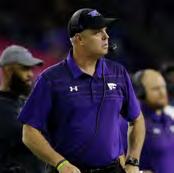
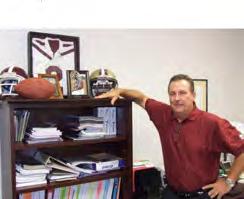
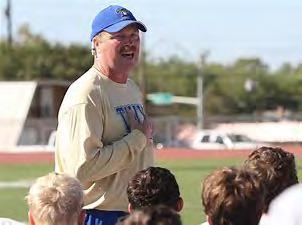
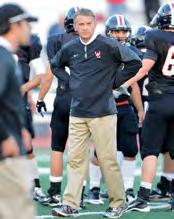




































February 2026
Dear Coaches’ Wives,
WOW, time flies! What an incredible summer we shared in San Antonio at our annual Coaching School and Convention. A heartfelt THANK YOU to everyone who joined us. It was a joy to gather together—sharing conversations, laughter, and the kind of fellowship that only this remarkable group of women can create. I am deeply grateful to every THSCWA member who poured encouragement, wisdom, and love into one another throughout the weekend.
A special thank you goes to our dedicated THSCWA officers, regional directors, assistant directors, and volunteers. Your hard work, planning, and passion were evident in every detail of this year’s convention. You truly made it a success. Thank you to our past president, Justine Palmer, for your leadership, dedication and service to THSCWA!
We also extend our warmest congratulations to this year’s THSCWA Woman of the Year, Cynthia Griffing. Her kindness, unwavering service, and radiant spirit make her a true example and inspiration to all who know her. Cynthia, we celebrate you and the heart you bring to our community.
Another round of congratulations is in order for our 2025 THSCWA Scholarship Recipients: Colt Keys, New Home High School, Erin Nunez, Barbers Hill High School, Delaney Poe, Pottsboro High School, Kade Story, Arlington High School. We are incredibly proud of each of you. Your achievements speak volumes about your character and dedication, and we cannot wait to see the bright futures ahead. A huge thank you to Erin Smith and the scholarship committee for the thoughtful and difficult work of selecting our 2025 recipients.
As a reminder, the purpose of the THSCWA is to support and stand beside the Texas High School Coaches Association in upholding the highest standards in athletics and the coaching profession. Our mission remains powerful and simple: “Standing beside our husbands, on and off the field.”
If you are not yet a member of the THSCWA, I encourage you to join us by visiting www. thscwa.org. Now is the perfect time to begin making plans for next year’s Coaching School and Convention in Houston, July 19–21, 2026, where we will celebrate our 40th Anniversary of THSCWA! The support, friendships, and encouragement you’ll experience are truly unmatched. Wishing each of you a wonderful rest of the year.
With gratitude,
Clara Simmons txcoacheswives@gmail.com
THSCWA will award a minimum of two (2) $2,000 scholarships to children of active THSCWA members who are graduating seniors Selection of the recipients will be based on the following criteria:
1 2026 Graduating Senior who has maintained a “B” or better average throughout high school
2 Participant in a school sponsored activity during his/her high school career
3. Not a recipient of a full scholarship
4 Recipient must use the scholarship towards an accredited college or university, trade or vocational school
5 Mother must be a current member of THSCWA
6. The essay MUST respond to the prompt to be considered by the committee
Applicants should be prepared to submit the following information with the items (PDF format) listed below:
Name: Phone(s):
Personal (not school) Email address:
Address: City, Zip
High School: Class Rank of Mother ’s Name: Father ’s Name:

Submit your information with PDF versions of the following:
Resume (Including: Educational & Career Goals, Awards & Recognitions, Extracurricular Involvement-activity and years of participation)
Official transcript (including Fall 2025 grades)
Essay
Student ’s picture (to be used for THSCWA media)
Mother ’s current THSCWA membership card
Selection will be made by the THSCWA Scholarship Committee
All applicants will be notified when selections have been made
Submit all information on Google Form (scan QR)
Only applications submitted on the Google Form will be considered for selection.
All applications must be submitted no later than 11:59 p.m. on April 30, 2026.
Any applications submitted after this point will not be accepted.


Any questions can be directed to THSCWAScholarship@gmail.com
*Recipient ’s checks will be sent directly to the school on the recipient ’s behalf once enrollment has been verified.


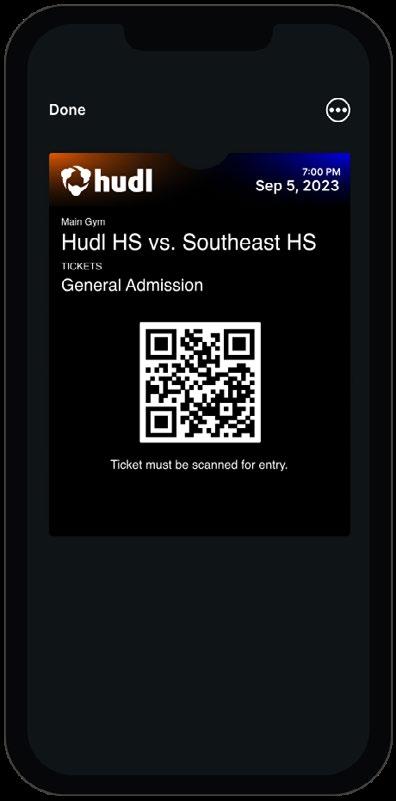
DIGITAL TICKETING IS NOW PART OF THE FAN ENGAGEMENT SUITE.

Fan-friendly and easy to manage. Meet Hudl Tickets.
Everything in one place.
Fans can watch live games and highlights, see schedules, and now buy tickets, all in one place.
Completely customizable.
Choose your pricing, ticket types, capacity and single or multi-game ticketing.
No added cost.
It’s free to add Hudl Tickets to your organization.
More efficient entry.
Each ticket holds a QR code that fans scan at the gate, giving them direct entry in seconds and reducing lines. No minimums.
There are no minimums on tickets sold. Sell as many or as few as you’d like.
Let Hudl do the setup.
Let us know which events you want to offer digital ticketing and we’ll set it up for you.
Better reporting and security.
Digital sales simplify the accounting, security, and reporting process. Get a real-time look at who purchased tickets, tickets sold, and revenue generated.
Make


As we settle into the spring semester, with the 2026–2028 realignment now behind us, many of us are doing what coaches have always done—looking ahead. We are planning for the future of our programs, our kids, and our communities. At the same time, the public school landscape in Texas is changing rapidly, and it is changing in ways that demand our attention.
Beginning with the 2026–2027 school year, families in Texas will be presented with educational choices that did not previously exist on this scale. For the first time, vouchers will be issued in our state. Alongside traditional public schools, parents will be offered nontraditional educational options that include remote learning, microschools, Alpha schools, sportcentric academies, and expanded homeschool pathways.
At THSCA, we believe it is critical for coaches and administrators to understand what these changes could mean—not just for public education, but for educationbased athletics in Texas.
For more than 100 years, Texas has taken great pride in a community-based, education-based model of high school athletics under the UIL umbrella. Our athletic programs are deeply woven into the fabric of our towns and cities. Friday nights under the lights, packed gyms in February, and spring afternoons at the ballpark are more than events—they are shared experiences that rally schools and communities together. In many districts, athletics truly are the front porch of the ISD.
That model now faces a real and growing challenge.
Sport-centric academies and nontraditional school models are emerging with a narrow focus on athletic performance. These programs often recruit athletes away from their community schools while placing academics, social development, and longterm student wellbeing in the background. We view this shift as
a direct threat to the future of community-based, education-based athletics in Texas.
For generations, coaches and administrators have never had to actively promote or defend the value of what we do. In fact, many of us were taught to do the opposite—to avoid being boastful, to stay humble, and to let our work speak for itself. That approach worked when public schools were not competing for students in the same way they soon will be.
That world is changing.
As public schools enter a competitive educational environment, and as we work to preserve community pride, UIL eligibility integrity, and the holistic development of student-athletes, we believe it is time for a unified call to action. This is the heart of the Educate. Excel. Play. campaign.
First, we must be intentional about what we legitimize.
Do not legitimize sport-centric academies. Scheduling games or tournaments against them places these programs on the same level as UIL public schools. When we compete against them, we allow comparisons, provide exposure to our athletes, and open the door to recruiting relationships.
We also urge schools to reconsider renting facilities or providing ISD access. Many sport-centric programs lack facilities and depend on public schools for access— facilities often built through community bonds and taxpayer support. Providing that access creates an uneven playing field, and eventually, community pushback. Refusing access creates hardship and sends a clear, unified message about where your district stands.
Second, we must educate parents.
Help families understand the risks of sport-only models and the benefits of public schools. Many non-traditional education programs rely on facilitators rather than certified teachers, shortened school days, and limited face-to-face instruction. Reduced social interaction and narrow peer groups can limit communication skills and emotional development.
There is also an important reality check. The NCAA landscape is changing rapidly. Scholarship opportunities are shrinking, NIL resources are uneven, and future models may further limit opportunities— particularly outside of football and men’s basketball. A singular focus on elite athletic development leaves many students vulnerable if athletics do not unfold as planned.
Public schools educate the whole child— academically, athletically, emotionally, and socially. Student-athletes are coached by certified professionals who are educators first. Public school athletes benefit from access to athletic trainers, counselors, intervention specialists, and certified athletic administrators, and data consistently shows they are better prepared for life after high school.
Third, we must promote our programs—intentionally and consistently.
The impact of education-based athletics is not just anecdotal—it is measurable. Research conducted by EverRise highlights the positive relationship between participation in school athletics, academic performance, and attendance. See the following pages for more information
Tell your story before someone else tells it for you. Work with your ISD PR department. Utilize booster clubs and campus personnel for regular updates. Celebrate team and individual success on the field and in the classroom. Highlight Academic All-State honorees, district and state awards, THSCA Super Elite teams, and milestones that reflect excellence beyond wins and losses.
Just as important, celebrate your coaches. Introduce them to your community. Highlight certifications, continuing education, coaching school participation, and professional honors. Communities trust programs when they know the quality of educators leading them. Promotion should extend beyond competition.
Showcase community service, involvement with middle school and youth programs, camps, and outreach efforts. These stories resonate with parents and reinforce why public school athletics matter.
Fourth, we must be active advocates in the recruiting process.
Be involved. Be informed. Be present. Communicate with college recruiters. Maintain a straight-line recruiting approach. Advocate for athletes at every level—Division I, Division II, Division III, NAIA, and junior college.
Help families navigate NIL, the transfer portal, contracts, and agents. Educate parents on the pros and cons of representation and serve as a steady conduit between athletes, families, college coaches, and agents.
Most importantly, show parents and players that staying in public schools opens real doors. Playing for your community school creates lifelong pride, loyalty, and opportunity. Alumni athletes carry their school identity into adulthood, where community leaders are eager to mentor, support, and hire those who represent what public school athletics instill.
Educate. Excel. Play. is a shared message—and a shared responsibility.
This campaign is endorsed by every major coaches association in Texas, representing every sport and every corner of the state. That unity sends a powerful message: this is not about one program, one sport, or one district. Educate. Excel. Play. is not about resisting change for the sake of tradition. It is about protecting what has made Texas high school athletics special for more than a century—and ensuring that it remains strong for the next generation.
At THSCA, our mission is simple and unwavering— helping coaches help kids. Every call to action outlined here is rooted in that belief. When we educate families, promote our programs, protect community-based athletics, and advocate for student-athletes, we are doing exactly that.
Public schools and education-based athletics do more than develop athletes. They develop leaders, teammates, and citizens who are prepared for life beyond the scoreboard. By standing together and embracing Educate. Excel. Play., we protect not only the future of Texas high school athletics—but the kids we serve and the communities we represent.
Use this checklist as a quick reference for protecting education-based athletics in your school and community.
☐ Protect the Integrity of Public School Athletics


☐ Do not schedule games, scrimmages, or tournaments with sport-centric academies
☐ Do not legitimize non-UIL programs by treating them as equals to public schools
☐ Refuse facility rentals or ISD access to sport-centric academies
☐ Communicate district expectations clearly and consistently
☐ Educate Parents and Guardians
☐ Explain the risks of sport-only and non-traditional education models
☐ Share how certified teachers and coaches support the whole child
☐ Discuss social, emotional, and academic benefits of public schools
☐ Provide realistic context on scholarships, NIL, and post-high school outcomes
☐ Promote Your Program Intentionally
☐ Work with your ISD PR team to tell your story year-round
☐ Celebrate athletic and academic success equally
☐ Highlight Academic All-State, All-District, All-State, and THSCA honors
☐ Publicly recognize and celebrate your coaching staff
☐ Share community service, youth involvement, and camps
☐ Advocate for Your Student-Athletes
☐ Maintain open, consistent communication with college recruiters
☐ Support recruiting at all levels (DI–DIII, NAIA, JC)
☐ Stay informed on NIL, portal rules, agents, and contracts
☐ Help families navigate recruiting decisions with clarity and integrity
☐ Reinforce the Value of Staying in Public Schools
☐ Promote community pride and lifelong alumni connections
☐ Highlight leadership development beyond the scoreboard
☐ Show parents and athletes how education-based athletics open real doors



Student-athletes miss 7 fewer days of school per year
Student-athletes have 35% less absences per year
Student-athletes see a +0.61 GPA increase (3.02 to 3.63)

When Texas coaches score above 80% on both the following questions, the impact on GPA, attendance and absences is amplified. +
“My coach understands when I am overwhelmed.”
“My coach encourages me to grow beyond my comfort zone.”
Student-athletes miss 16 8 fewer days of school per year. 16.8
Student-athletes have 81% less absences per year. 81%
Student-athlete average GPA is 3.81 on a 4.0 scale 3.81
When coaches have a high understanding of when student-athletes are overwhelmed and also push them outside their comfort zones at the right level, their student-athletes outperform their non-athlete peers in all three core academic outcome measurements.
Dr
Joshua Childs
University of Texas at Austin


Fire up athletes, fans, and sponsors with a scoring and entertainment system from Watchfire. We engineer and build our own football scoreboards from the ground up. That's why our videoboards outhustle and outlast, making your program shine season after season. Visit
Co - op pricing
Marketing tools
Adver tising par tner s F U N D I N G
Fre

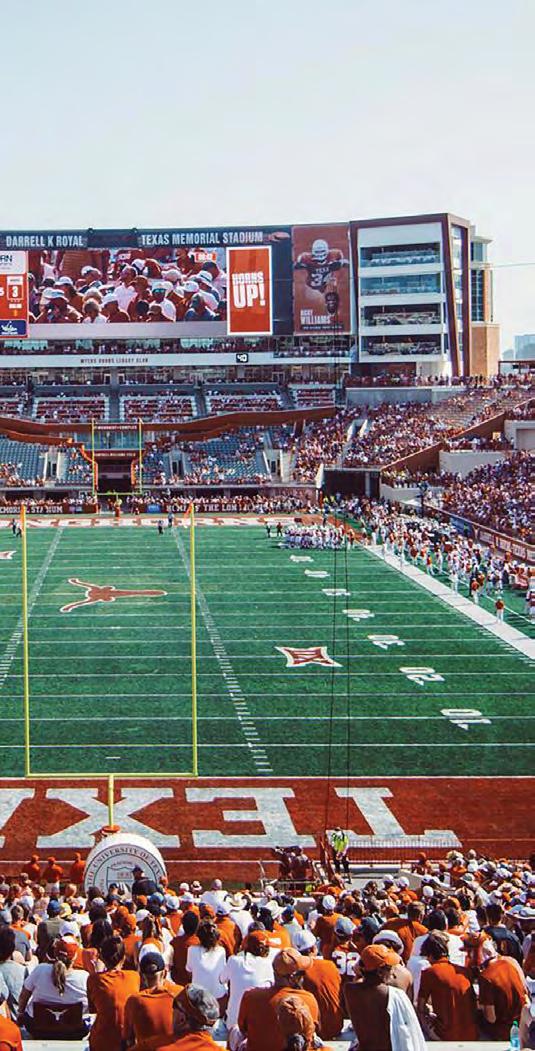
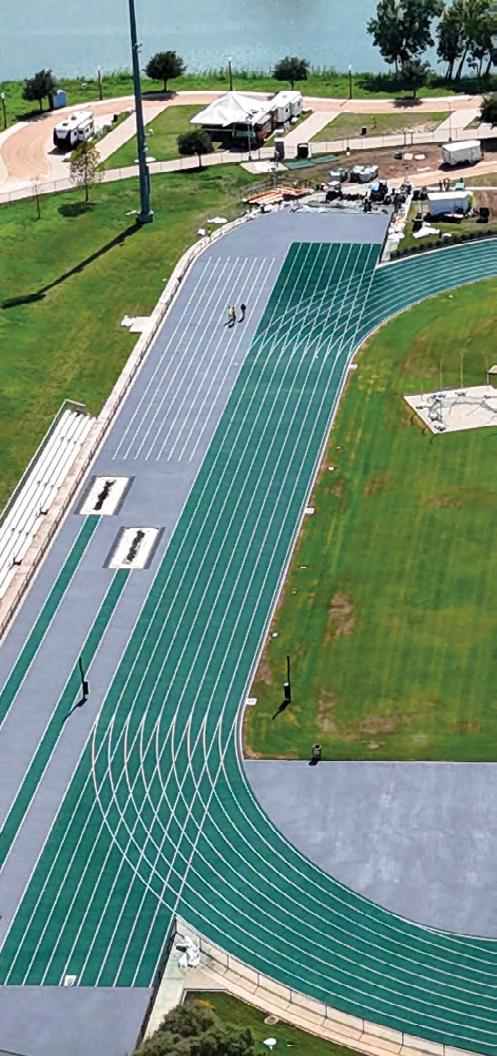
ARTIFICIAL TURF TRACK & COURT SURFACING
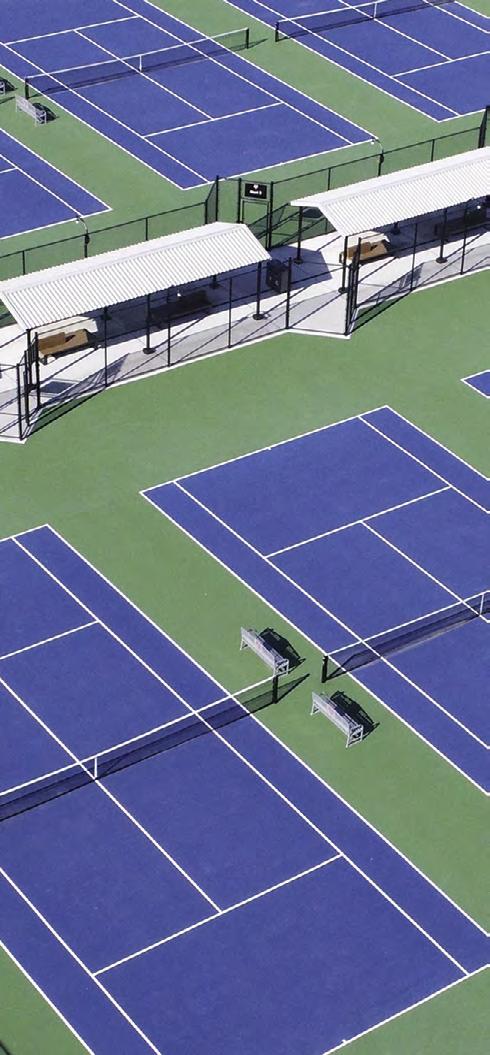
POST-TENSION CONCRETE COURTS
PROUD SPONSOR

INDOOR ATHLETIC SURFACING
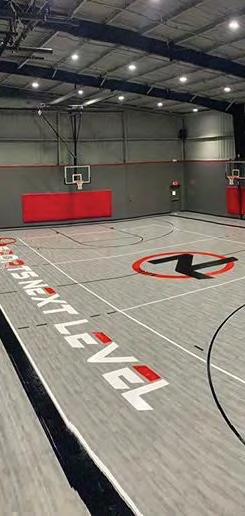

DESIGN & CONSTRUCTION
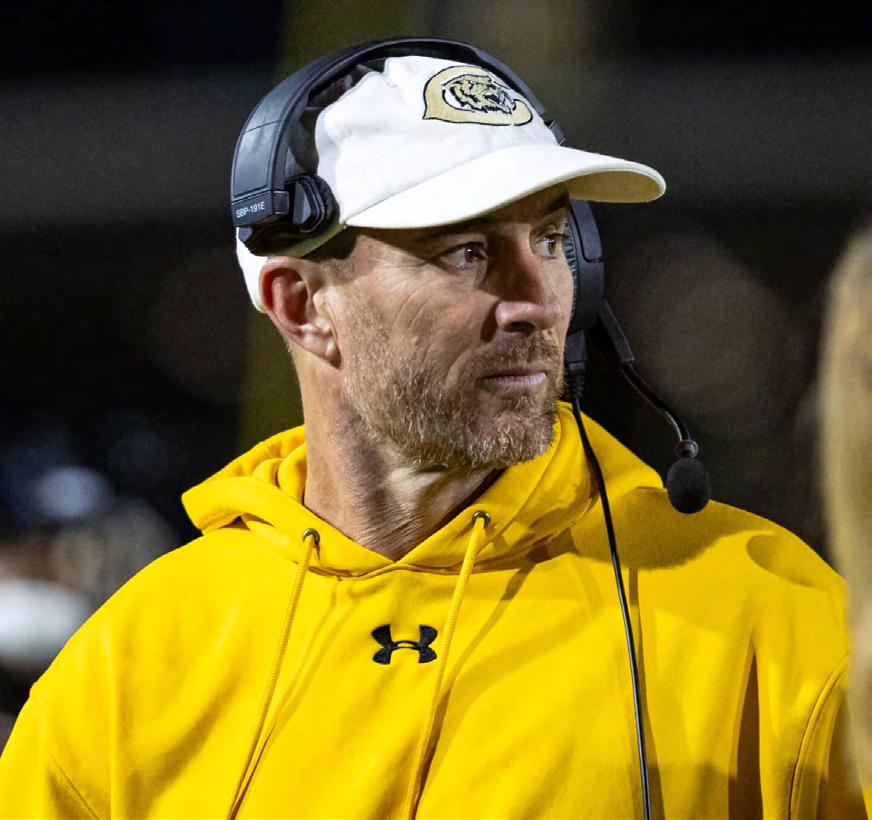

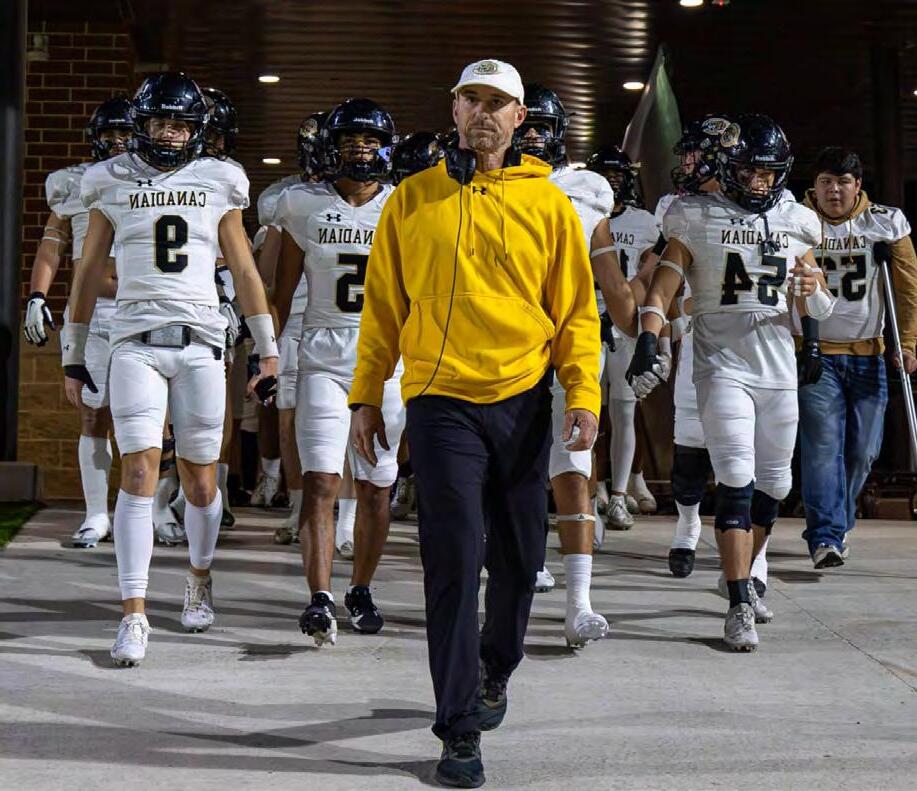
BY ANDY CAVALIER head football coach/athletic director - canadian high school thsca board member - region 1
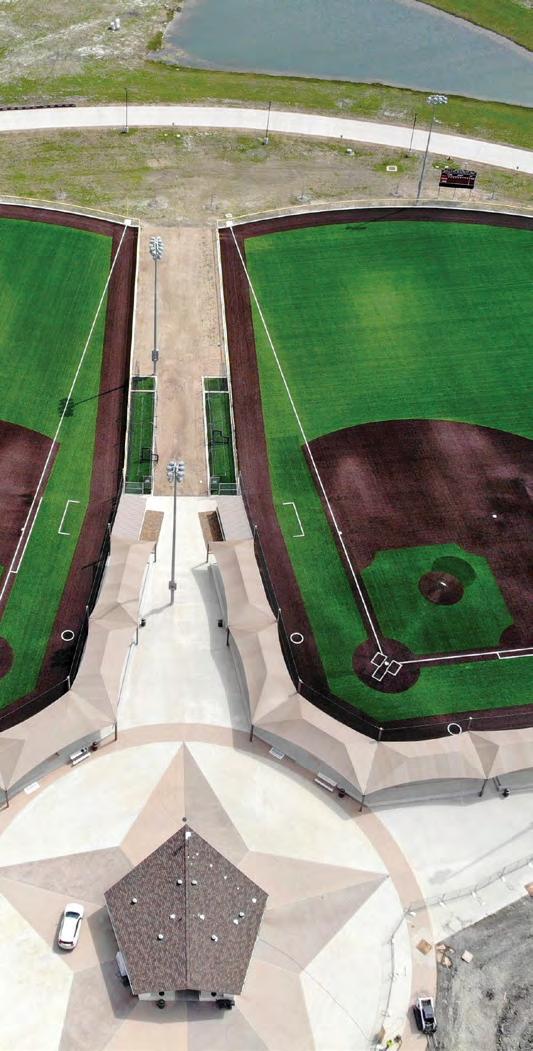
Just a bit about our place… In Canadian we are a 3A-D2 high school that turned in 249 this year. We have 8 football coaches that all coach our varsity, JV, and MS teams. We are on an 8-period day with our MS athletes in 1st period, our freshmen in 7th period, and our 10th-12th graders in 8th period. All of our coaches teach 4 class periods a day, and have 3 athletic periods. Because of our numbers, we often have to use our JV players as our scout team for our varsity.
We begin on Monday with a 6:00AM workout for our Varsity and sophomore JV football players. This always starts with several of our coaches greeting our kids at the front door of our weightroom and welcoming them to the day. Part of the reason we begin at this time is that our football facilities and weightroom are across town from our high school. Because of this, we start a little earlier and give everybody time to go home and shower/eat before heading to school for 1st period.
Our in-season weightroom workouts consist of a jump-rope/bodyweight warmup that takes about five minutes, and then the workout itself takes us about 35 minutes. All of our workouts are total-body, and include several multi-joint movements. Our Monday workouts specifically are built around a variation of the squat.
Once this workout is completed, we first make sure we have the weightroom all put back together and everything is in its place; and then we head to our meeting room for a short Monday morning meeting. In this meeting we watch our weekly character development video, talk about our weekly schedule, go over anything unique, and try to do a good job of setting the tone for the week. Everybody leaves this meeting with a weekly assignment in hand, consisting of a few questions in regards to the character development video.
We have our freshmen in a 7th period athletic-period that is from 2:00-2:45.
On Monday, we use this period to run our freshmen through the same in-season workout that our older kids do before school.
Our 8th period athletic period is from 2:50-3:35.
Everyday starts with a couple of our coaches in the training-room taping, while the rest of us are greeting our kids and getting them in and out of the locker-room.
On Monday, the first event we have is a Special Teams meeting lead by our special teams coordinator. In this meeting,
we introduce all our pertinent special teams information in reference to this week’s opponent. From there, we move into a quick general meeting, where we talk about what we see as our Weekly Offensive keys, Defensive keys, and Specials keys.
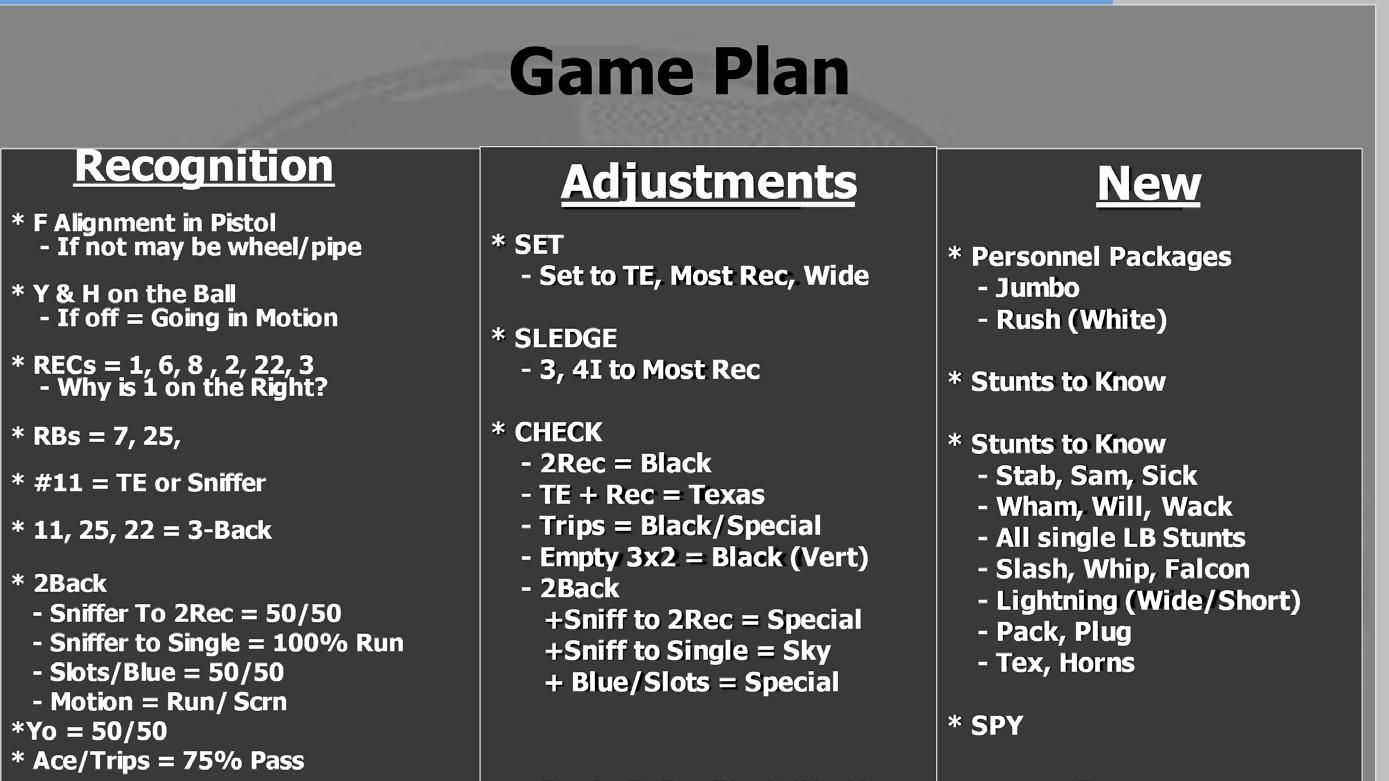
Next, we move into a defensive game-plan introduction. In this meeting, we start with our whole team together and cover our opponent’s offensive tendencies. We generally focus on formation tendencies, and try to give them a good feel for what their identity is as an offense. Once we finish with the tendencies, we split up into two groups: D-Line and Back End. This is where we start to get into specifics and go over our plan for this week’s opponent. The PowerPoint slide below is an example of the type of information we are going over, and we also usually watch several game clips from their previous games.
We typically finish the defensive intro by reviewing a few game clips of our weekly opponent.Sometimes on Monday we spend a few minutes during this period going over offensive things also, before we head out to practice. (We do have a 25-minute “homeroom” period in our school day where we are able to meet with most of our varsity team, and try to go over offensive information in this meeting”.)
26
27
28
30
Reminders: 212 - One Extra Degree is the Difference
* 2 Words last week: Donnie, Cael, Trenton
* 2 Words assignment is due Wednesday… TOUGH LOVE
* Brian @ 7:00AM tomorrow?
* JV Parent Note by Wednesday? Who plans on riding the bus.
* Varsity - WE WILL MEET FOR FLUSHOUT AND VIDEO THIS SATURDAY.
* Locker Room Detail - Braden and Daniel
On Tuesday, we do nothing with our players before school. We do, however, video every practice; and our coaches work to have put player-notes on it before we get too far into the school day. Some of our coaches do this in the evening after practice, and others do it in the morning the next day. Typically, most of our players have watched it and read the notes before they show up for the athletic period the next day.
On Tuesday, we use 7th period to watch video with our freshmen. We usually watch video of our weekly opponent, as we do not video their team sessions in practice.
On Tuesday we use 8th period primarily as a defensive video day, especially with our back-end players. We are split up into our two groups again (D-Line and Back-End). We watch practice video from the previous day and usually go over all noted plays. Given time, we will flip over and spend a few minutes reviewing offensive practice video also. With our linemen group, we almost always spend time reviewing video from both sides of the ball; but with our back-end group, it is not as common.
30
* 2 Words: TOUGH LOVE
* On the Wall… 212 - One Extra Degree is the Difference
* JV Parent Note by TOMOTTOW? Who plans on riding the bus.
* Varsity - WE WILL MEET FOR FLUSHOUT AND VIDEO THIS SATURDAY.
* Locker Room Detail - Braden and Daniel
On Wednesday, we hit our 2nd 6:00AM lift of the week. Our workout follows the same format, with the exact same warm-up, and a similar routine. The biggest difference in the two workouts is just the exercises we are performing. Wednesday’s workout is built around an Olympic movement and an upper-body horizontal press. The weekly character development assignment is due on Wednesday. We have our players split up into groups, each coach has a group, and this coach is to whom they turn in their assignment.
On Wednesday, we use 7th period for our freshmen to complete Wednesday’s workout.
On Wednesday, we use 8th period as a primary offensive video day. We do, however, start the day by going over our weekly goals from the previous game. We give helmet stickers for meeting the majority of our goals for each phase of the game (offense, defense, specials), and a few individual stickers. We then split up into our two groups and begin watching video. We begin by showing a few game clips of our weekly opponent, and then begin reviewing practice video and notes from the previous day.
Post-Practice on Wednesday we do individual specials for about 10-15 minutes (snapping, holding, kicking, punting, catching kicks and punts, etc.)
Thursday
On Thursday, we do nothing in the morning with our players. Like all of you, Thursday is typically the day where our MS and JV teams are playing. For us that consists of one 7th grade team, one 8th grade team, and one JV team. Our varsity
coaching staff is the same staff that coaches these teams, so we all split up to coach these Thursday night games.
On Thursday, we typically use 7th period to set up our field for games and/or are loading up to travel for our JV game. If our JV team is not traveling and we have time, we might review more video with them.
On Thursday, until our sub-varsity seasons are over, we use 8th period to start practice immediately. Once our subvarsity seasons are over, we use this period to review practice video from Wednesday.
- Kick the field: This is where we work on transitioning in and out of our different special teams situations, and review any weekly tendencies one last time.
- Offense: We just do team offense, and always finish on the goal-line.
- Defense: Usually on Thursday, we may review our stunts and then just review our weekly plan.
Of course, several of our coaches are already on the road during this practice to our sub-varsity game. After practice we review our Friday itinerary and make sure we have our Thursday chain-crews all set. Once this practice is concluded, we make sure bags are packed if we are on the road this week, head-phones are plugged in, and equipment is all ready to go for Friday.
Friday morning, we have several players assigned to greet our elementary students as they arrive at school and participate in their morning assembly. If we are still in town for 8th period, our players report to the elementary for our Wildcat Buddies mentoring program, where they are each assigned to an elementary class. While there they play, read, talk, help, etc…
Our Friday night games typically kickoff at 7:00PM, and our pre-game activities begin at 4:15.
On Saturday, depending on travel and how late we arrived home, we like to bring our players in at 10:00AM for a short flush-out workout. This workout primarily includes mobility exercises, full range of motion movements, and is our 3rd full-body workout of the week. Next, we begin our game video review in this order… Special Teams, Defense, and then Offense.
Once our game video review is complete, we release our players, have a staff lunch, and then begin our weekly scouting process. On Saturday, we primarily work independently with group conversations throughout the afternoon.
On Sunday, we begin with a 2:00 staff meeting. By this time, we have done all of our video break-down and most of our scout card drawing. First order of business is a short general staff meeting, where we go over any concerns from the previous week, our weekly agenda, and anything unique about the week. Then we work on our offensive game plan, followed by our defensive game plan. Once our plans are pretty much finalized, we each wrap up a few chores and build a few documents to present to our kids. Now we are ready for Monday.










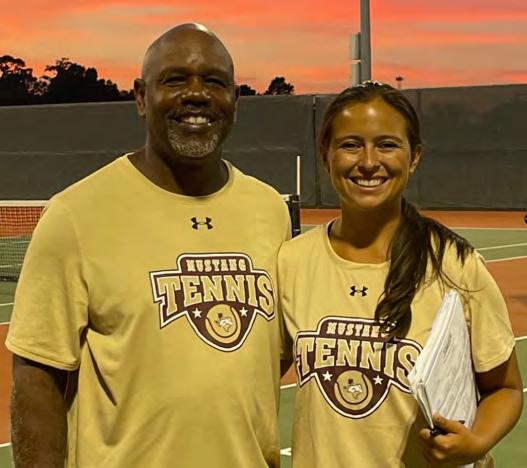


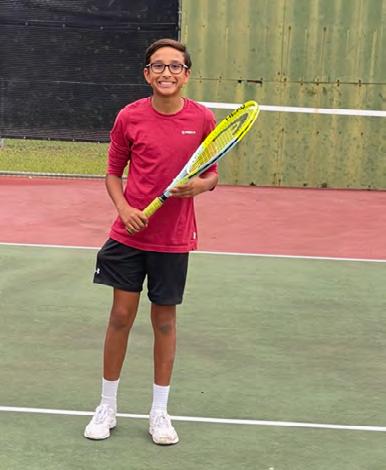
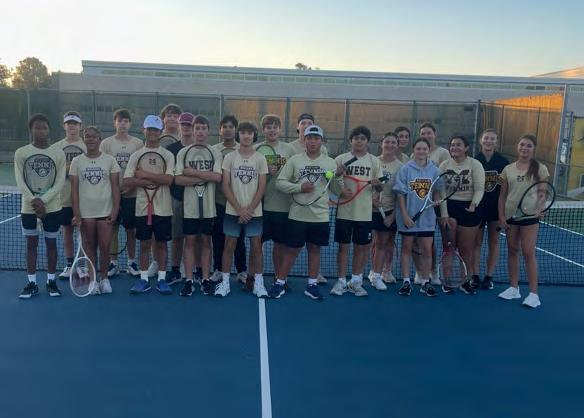
By Vern Swisher MA


These tips are designed to help coaches help their players get better faster.
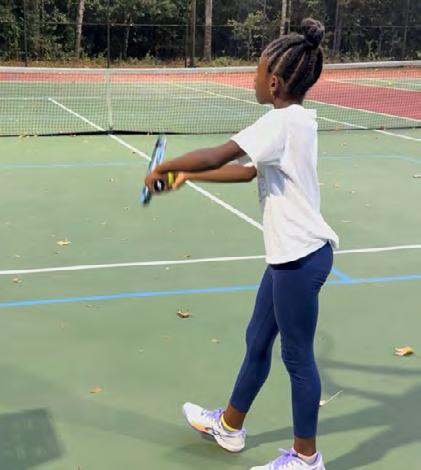
Get ready by waiting in the ready position. This will help them prepare to hit the ball on either side of their body. Here is the breakdown of the ready position: Your player’s feet should be at least shoulders width apart with their knees slightly bent. Their racquet should be held in front of their body with their player’s dominant hand on the bottom of the grip. Your player’s non-dominant hand should be held at the throat of the racquet.
Most beginners struggle with this because they stand and stay in the middle of the court (No Mans' Land). We often see new or inexperienced players run from shot to shot without recovering to the correct position. If you want your players to get to the ball and become a good mover, they will need to recover to the correct position after they hit each shot. To get them to correctly position themselves, they should return just crosscourt of the ball from the baseline and just in front of the ball if they are at the net. Work with them to get to the right position so they can get to the ball earlier and put more pressure on their opponents to hit better shots.
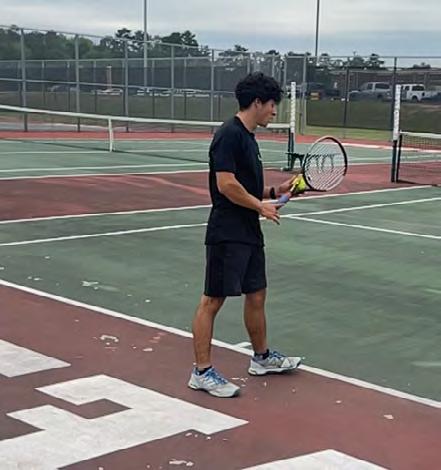
Teach your players to hit a spin serve for the second serve instead of just tapping it in. The slice (spin) serve is the best choice for the second serve because the spin turns the ball, which gives it more margin. Once your player understands this serve, it makes it easier for him or her to have a more reliable serve. Here’s how to hit it: First, shake hands with the grip. This is the continental grip (second bevel). Toss the ball in front of your hitting shoulder and brush the side of the ball. If your player is right-handed, they will brush the right side of the ball. If your player is left-handed, that will brush the left side of the ball. This is the slice serve.




By James Duprie Yorktown High SChool
One of the most important decisions a head coach makes rarely shows up on Friday nights. It happens months earlier—in staff meetings, interview rooms, and conversations about roles, expectations, and trust. Wins and losses are often a reflection of staff alignment long before they are a reflection of talent.
My hiring philosophy revolves around Warren Buffett’s hiring process. You want someone who is intelligent, has energy, and has integrity. If they don’t have the last one, the other two don’t matter. In fact, if someone lacks integrity and is on your staff, you would rather them be dumb and lazy. This ties directly into my own belief: hire good people first. If they need to be trained up, that is part of your responsibility as a head coach or athletic director.
When I look to fill my staff, there are a few steps I don’t believe you can skip. First, if you do not know the candidate personally, you must pick up the phone and check references. References are usually more candid over the phone, and the last thing you want is to hire someone only to later run into a mutual acquaintance who says, “Well, I could have told you that he or she would have been a problem.” Generally, character can be assessed with two questions:
1. Would you hire them again (and for what position or level)?
2. If you have children, would you want them coaching your kids?
If both questions can be answered positively, then it is time to bring the candidate in for an interview.
When you bring someone in for an interview, be prepared. Coaches must have a clear understanding of their role and expectations within the program. If the position includes serving as an assistant in one sport and a head coach in another, both roles must be clearly defined. This includes responsibilities during the off-season and summer, as well as expectations for their athletes both in and out of season. Once those expectations are clear and follow-up questions are answered, it is important to put the candidate on the board and evaluate their knowledge of Xs and Os. A playbook is helpful, but what matters most is what they can recall and explain on the spot: how they plan practice, what drills they use, and how they run them. Be sure to prepare questions that address current needs and concerns within your program.
If a coach already on staff applies for an opening, I believe it is important to give them the opportunity to interview. They should be evaluated with the same rigor as outside candidates; and regardless of the outcome, they should receive feedback. I strongly believe in developing coaches and promoting from within when possible. Coaches already in your program should understand expectations and culture, and you likely already have a sense of their work ethic. Promoting from within also provides stability for both athletes and staff.
However, one word of caution: be careful when promoting assistants from programs that are not winning. This can sometimes elevate coaches who undermine their head coach in hopes of taking their position, or those who are not contributing in ways that help the program succeed. Assistants should be doing everything in their power to help their head coach win. When they do, they position themselves to advance in the profession prepared and with integrity.
Once your coaches are on staff, evaluation becomes an ongoing responsibility. You need to observe them coaching in practice and competition and provide consistent feedback. Each interaction should be documented in that coach’s file. Encourage coaches to attend clinics and continue developing their craft, and share your own expertise when appropriate. At the end of the year, a formal evaluation should take place after their final sport has concluded. This meeting does not need to be lengthy, but it should address growth, concerns, and future coaching intentions. If the fit is not right, this is the appropriate time to address it. While letting coaches go is never easy, it is sometimes necessary for the health of the program. These conversations should be brief, respectful, and professional, allowing both parties to move forward.
Ultimately, successful programs are built by people, not plays. A clear hiring philosophy provides direction, consistency, and accountability for both assistants and athletes. Hiring and managing assistants is the foundation of a solid and sustainable program.











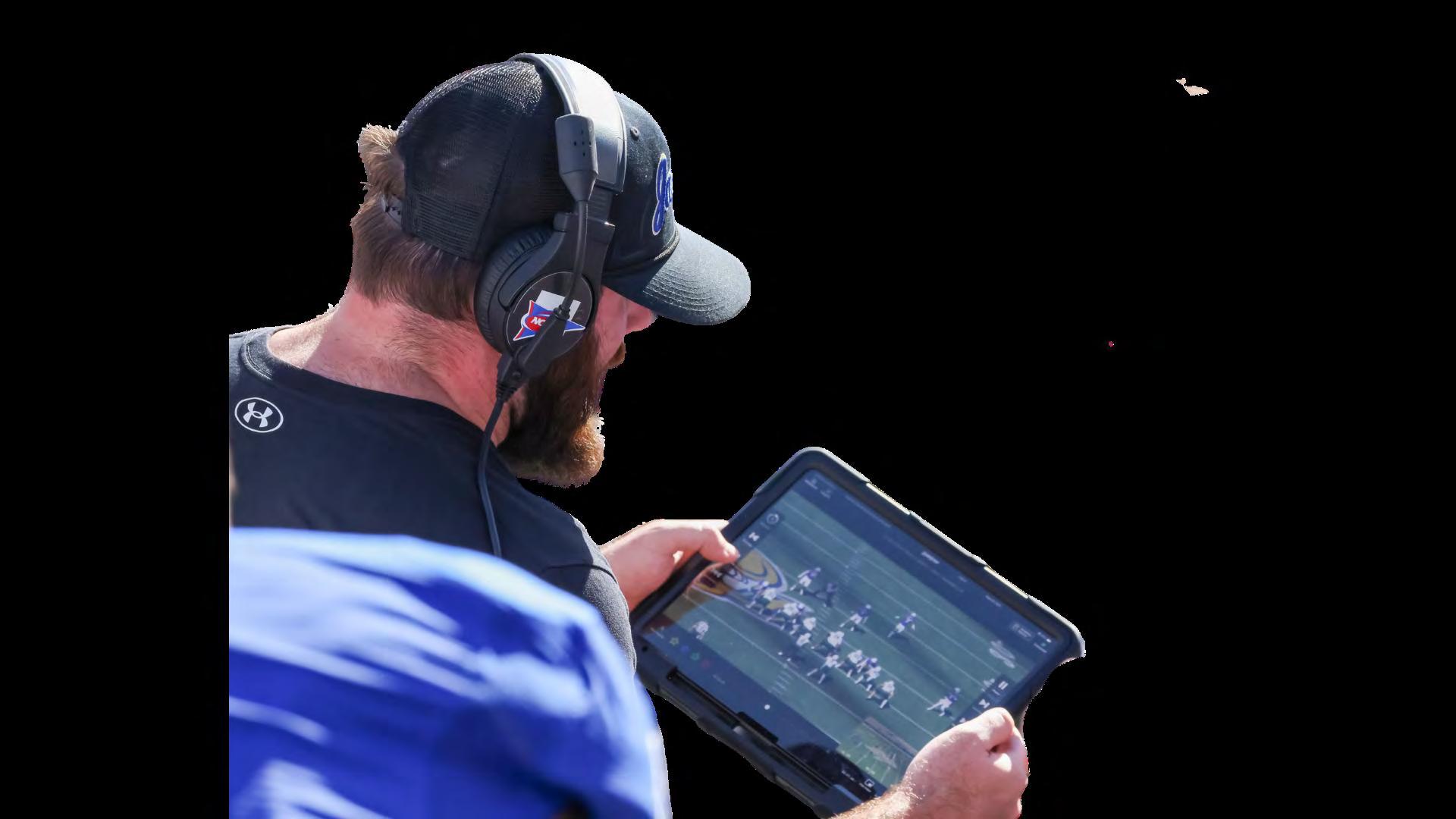
• Analyze plays in the coaches’ booth
• Use our favorites and data to optimize your halftime strategy
• Videos are stored locally on iPads, allowing you to easily watch in the locker room and on the bus ride home

“SkyCoach allows our staff to see what is happening in between series and make needed in-game adjustments on the fly.”
-
Ian Nichols, Mill Valley Assistant Coach

Struggling with your current replay system?
It’s NOT too late to sign up with SkyCoach!

As the popularity of high school girls flag football grows in the United States, the Dallas Cowboys are working with school communities across Texas to provide girls an opportunity to use the game of flag football as a fun and exciting way to be healthy, to learn values taught through sport, and potentially further their education with scholarships to collegiate intitutions now playing flag football at a higher level.

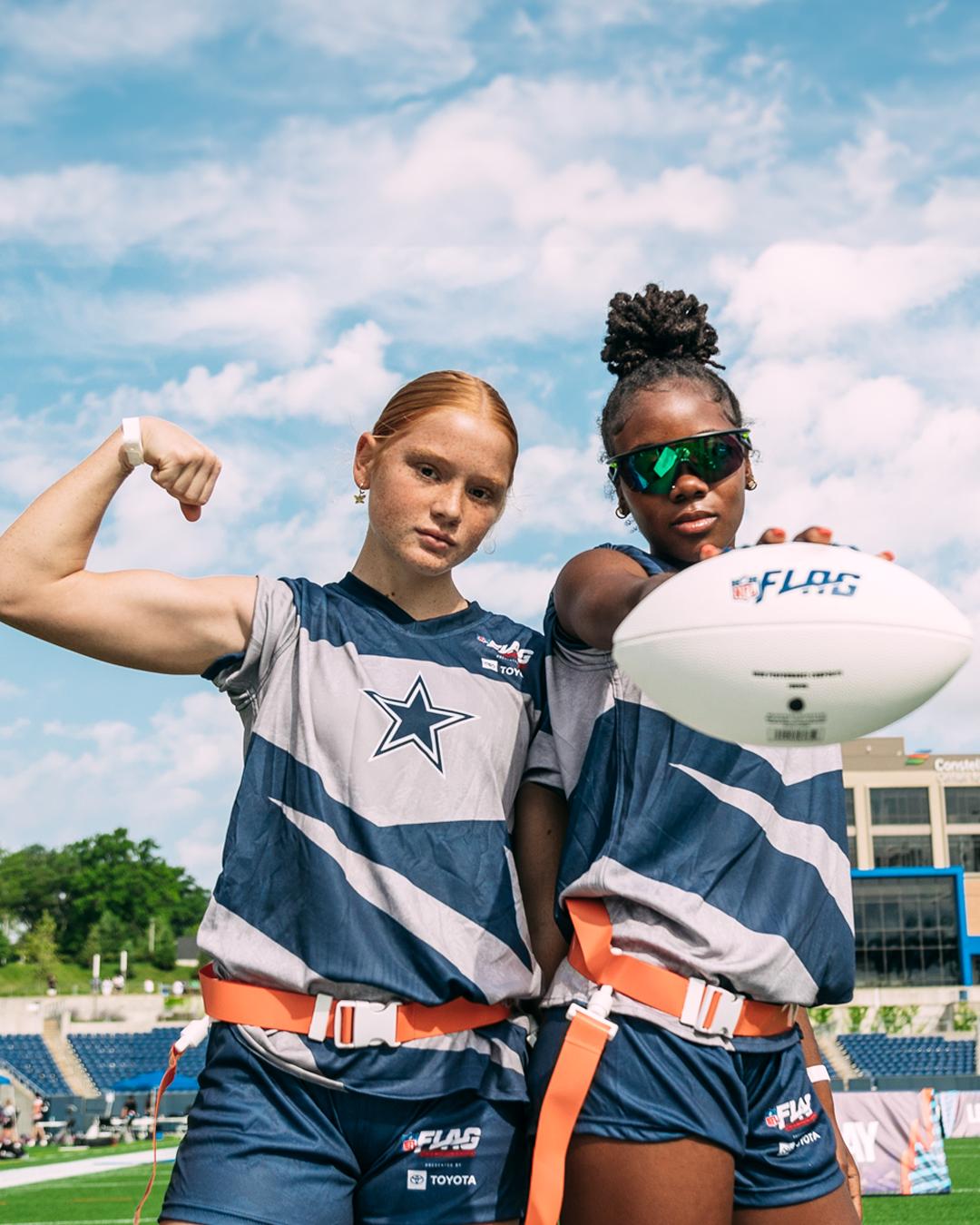
For more information or to discuss partnering with the Dallas Cowboys on this effort, contact YouthFootball@DallasCowboys.net.
By: Brittany McCue | MAT, LAT, ATC, PES (Dell Children’s)
In the 2024-2025 season, females made up 43% of the total high school athletic population.1 Since the 1970s female sport participation at the high school level has increased by 1003%.1 Given the significant rise in female sports participation, it is crucial that coaches and athletic trainers are properly equipped to support the unique needs of the female athlete. Biological females have physical and psychological attributes that differ from biological male athletes, due to the menstrual cycle.2 Biological females have been found to have lower levels of testosterone, lower muscle mass, differences of bone mineral density, and have a greater risk of reduction of iron store.2–6 Specifically, female athletes have an increased risk for Relative Energy Deficiency in Sport (REDs) and/or Low Energy Availability (LEA). REDs is a model that outlines the health and performance outcomes of athletes that have low energy availability. REDs can cause issues with all systems of the body. In particular, REDs cause the female athlete triad, which is a cluster of symptoms related to low energy availability. The triad contains nutritional disorders, menstrual dysfunction and low bone mineral density.7 These facts are important to keep in mind when reviewing the current nutritional standards. Most of the nutritional standards were created by studying predominantly male participants. Current research into optimizing nutrition for health and performance remains insufficiently tailored to specific female physiology, highlighting a critical need for advancement in this area. To better support female athletes in their athletic competition, they require a thoughtfully designed nutrition plan that is customized to the individual athlete’s needs. Having a well-rounded plan that focuses on maintaining a healthy relationship with food, while enhancing athletic performance, is the key to fully supporting our female athletes.
Carbohydrates are a key macronutrient for prolonged exercise. If carbohydrate is reduced, it negatively affects exercise in two ways: more fatigue accumulated, which can cause a decrease in performance intensity, and lower carbohydrate levels can cause CNS impairment affecting cognition.8 The current recommendation for both male and female athletes is 8-12 g/kg of body weight per day. It has been found that female athletes can store similar amounts of carbohydrates as male athletes. Recent studies have found that carbohydrate storage in females is 12~25% lower in the mid-follicular phase vs the mid luteal phase.2 With this finding it is suggested that females may benefit from prioritizing carbohydrate during particular phases of the menstrual cycle. Carbohydrates can be utilized before and after activity for improved performance. Typically it is recommended to consume 30-60 g/h of carbohydrates for 1.5-2 hour of exercise.8
Similar to carbohydrates, protein requirements for females are comparable to male athletes; the American College of Sports Medicine (ACSM) recommends 1.2-2g per kg a day. Hormonal fluctuations across the menstrual cycle may influence protein metabolism in females. Specifically, the mid-follicular phase is associated with a higher estrogen-to-progesterone ratio, which may have a protein-sparing effect and be advantageous for female athletes not using oral contraceptives.2 Due to recent research in female protein requirements, it has been found that during the follicular phase, females that exercise at least 1.5 h/day should be consuming at least 1.6 g per kg.8 These higher protein requirements are due to higher rates of protein catabolism.
Fats are another key macronutrient needed for performance. In the daily diet, athletes are encouraged to consume at least 20% of their calories with fats in order to prevent deficiencies in essential fatty acids and vitamins A, D, E, and K.8 While there has been no negative effect of increased fat intake, it is widely known that decreased fat intake can lead to higher rates of injury in female runners.8
Micronutrients are essential components of dietary requirements, they help facilitate a wide range of biochemical functions and are essential to facilitate normal metabolic regulation of the body.9 Iron is one of the top most important micronutrients for female athletes. It is reported that over 35% of female athletes have an iron deficiency.2 The current recommendations by USDA for girls 14-18 years of age is 15 mg per day, and for women 19-50 years old, the recommendation is 18 mg per day. This recommendation can change based on menstrual blood losses and bleeds from oral contraceptives. If iron is reduced, there can be impairments in performance and anemia. It is important to note that estrogen can have an iron-sparing effect by downregulating the hormone hepcidin during the late follicular phase, but similar to all findings, iron has not been manipulated in the research setting to see the potential effect of iron intake on female athletes.2 Other critical micronutrients are calcium and vitamin D. Calcium should be consumed at least 1500 mg per day to optimize bone health. Additionally, calcium can not be absorbed more than 500 mg at once, similar to macronutrient consumption, calcium intake should be spread throughout the day.8 Vitamin D is a micronutrient that can aid in the absorption of calcium, maintaining skeletal muscle health, improving immunity and preventing injuries.8 Vitamin D is primarily obtained through synthesis of sunlight exposure, but in supplementation, it is recommended with 1000-2000 IU vitamin D3.8
Hydration is another key aspect of maintaining proper fueling in performance. Similar to other aspects of female fueling, there is a lack of female specific physiology in the study of hydration with the effect of the hormones on sodium and fluid handling. When discussing the female hydration, it is important to note that females who menstruate have an increase in basal body temperature 0.5-1.0 degrees C during the luteal phase, but current evidence does not suggest a change in hydration or a greater risk for heat illness.8 It is important to note that there is increased fluid retention during the luteal phase. Current recommendations of hydration is 2.7 L per day, typically 2.2 L as liquids and the other half of a liter from food.8 If a female is not properly hydrated it puts them at a greater risk for heat illness.
When recommending nutrition to the female athlete, all of these requirements can be overwhelming to manage. It is important to provide resources to help educate the
athlete regarding nutrition. Depending on the setting, this can be achieved as simply as an informational flyer or a support staff such as a registered dietitian. In the high school setting, many coaches and athletic trainers are the first point of contact an athlete can turn to for help. It is important to support the athlete in the most appropriate way possible; for example, readily available nutritional snacks can be helpful in supporting nutritional needs for athletes. The snacks can be easy on-the-go items, such as nutritional shakes, granola bars, and fruit snacks. These items can be bought in bulk at a low cost and typically do not require refrigeration. While these snacks won’t completely replace an athlete’s fuel needs, they represent a small but important piece of the overall nutritional puzzle to better support the athlete.
Female athletes have distinct nutritional needs shaped by physiological differences, particularly the hormonal fluctuations of the menstrual cycle. These factors can increase the risk of low energy availability and can highlight the importance of intentional consistent fueling strategies. Supporting female athletes goes beyond meeting basic dietary guidelines; it requires fostering internal motivation to fuel for health and performance. While current nutritional recommendations provide a sturdy foundation, they only represent one part of the solution. Research needs to be continued to better understand and fully support the nutritional demands of female athletes.
References
1. NFHS. Participation in High School Sports Hits Record High with Sizable Increase in 2024-25. September 9, 2005. Accessed November 20, 2025. https://nfhs.org/stories/participation-in-high-school-sportshits-record-high-with-sizable-increase-in-2024-25
2. Sygo J. FUELING THE FEMALE ATHLETE: BRIDGING THE GAP FROM RECOMMENDATIONS TO CHANGING BEHAVIOR.
3. Baker BS, Chen Z, Larson RD, Bemben MG, Bemben DA. Sex differences in bone density, geometry, and bone strength of competitive soccer players. J Musculoskelet Neuronal Interact. 2020;20(1):62-76.
4. West DWD, Burd NA, Churchward-Venne TA, et al. Sex-based comparisons of myofibrillar protein synthesis after resistance exercise in the fed state. J Appl Physiol (1985). 2012;112(11):1805-1813. doi:10.1152/japplphysiol.00170.2012
5. Janssen I, Heymsfield SB, Wang ZM, Ross R. Skeletal muscle mass and distribution in 468 men and women aged 18-88 yr. J Appl Physiol (1985). 2000;89(1):81-88. doi:10.1152/jappl.2000.89.1.81
6. Peeling P, Dawson B, Goodman C, Landers G, Trinder D. Athletic induced iron deficiency: new insights into the role of inflammation, cytokines and hormones. Eur J Appl Physiol. 2008;103(4):381-391. doi:10.1007/s00421-008-0726-6
7. Grabia M, Perkowski J, Socha K, Markiewicz-Żukowska R. Female athlete triad and relative energy deficiency in sport (REDs): nutritional management. Nutrients. 2024;16(3):359.
8. Holtzman B, Ackerman KE. Recommendations and nutritional considerations for female athletes: health and performance. Sports medicine. 2021;51(Suppl 1):43-57.
9. Shergill-Bonner R. Micronutrients. Paediatrics and Child Health. 2017;27(8):357-362.







KB3 SPORTS APP has allowed us to streamline our stats & maxes for inseason & offseason as well as given us the ability to promote our players across the country.
James Clancy HFC, Klein Cain HS
MAXES & MEASURABLES can be entered by a player or coach and will be added to a player’s profile page.
TEAM PROFILE PAGE
Your teams’ profile page is publicly accessible to parents, players, media and recruiters with links to each player’s profile page.
PLAYER TRACKING
Download a Team Stat File to keep track of team stats by player or team totals.
Download a Game Summary File to view play-by-play game recap.
Automatically generate a Player Stat File to view per game and cumulative player stats as well as in-season and off-season maxes and measurables.
RECRUITING
College coaches can access your players test scores, stats, maxes & measurables.
College Coaches can DM with coaches and players via our IN-APP MESSAGING.
Get Started!
Download the free app for Android or Apple, join now!

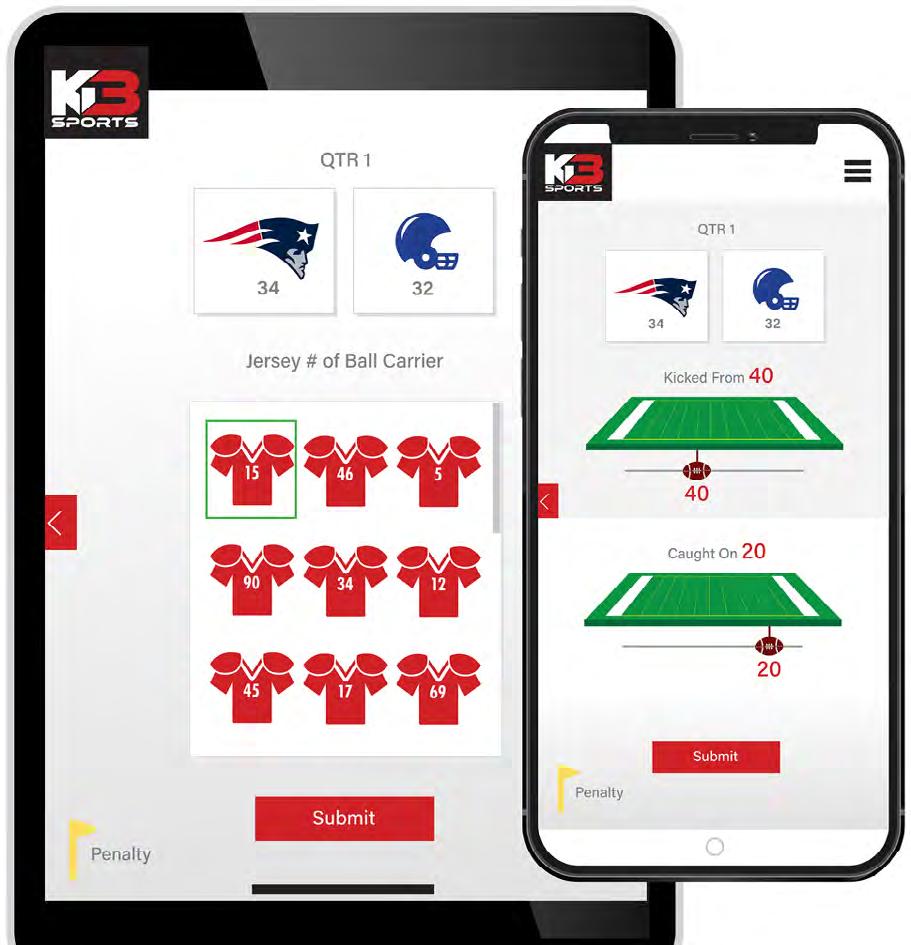

BY ELISE COX
PEARLAND HIGH SCHOOL | HEAD GIRLS' SOCCER
First touch is something we consistently work on in training, yet it often doesn’t translate into games. If we practice first touch every day, why does it still break down under game pressure?
The answer is simple: working on first touch alone is not enough. When players do not scan the field or have a plan before receiving the ball, their first touch is more likely to be poor, forcing them to react instead of play proactively.
Players must constantly scan the field. They need to know where the space is, which teammates are available, and where defenders are positioned so they can decide what to do before the ball arrives. Too often, players wait until after they receive the ball to make a decision—and by then, it’s too late.
So how do we train scanning so it becomes second nature in games? It’s not enough to isolate the skill. There are two main ways to address this with players. The first is to ensure scanning is practiced in game-like situations. I believe in emphasizing fundamentals and progressively layering them throughout a session, adding difficulty and complexity each time.
This practice session is designed to help players develop the habit of checking their shoulders, scanning the field, and making quick, effective decisions under realistic conditions.
This is the first warm-up drill I like to use to help players improve their first touch and ball control while building the habit of checking their shoulders.
Players work in groups of three with two soccer balls. Each group sets up a grid that is 20 yards long and 5–10 yards wide. Two players with balls start on opposite end lines, while the third player starts in the middle as the working player.
The player in the middle checks toward one partner at an angle. As they make their run, they must check their shoulders. The partner plays a pass, and the working player has two touches to play the ball back. Immediately after the pass, the middle player turns and checks to the other partner to repeat the action.
The middle player works for 1–1:30 minutes before rotating with one of the players on the end line.
Each round focuses on a different skill: first touch and pass (two touch), one touch passing, thigh trap to pass (on the ground), chest trap to pass (on the ground), defensive headers (heading the ball up), and attacking headers (heading the ball down).
After completing these skills, the groups switch to one ball. The middle player checks to receive again, but this time receives on the half-turn with their back foot, opening up to see the field. After receiving the ball, they switch it to the opposite teammate, then check away before checking back to the other partner.
Throughout the warm-up, I emphasize keeping the head on a swivel. This drill helps players develop the habit of checking their shoulders and scanning the field before receiving the ball.
Sequence 1: Keep
The next drill is a simple pattern-play setup that helps players improve decision-making and movement off the ball.
For this setup, you’ll need seven cones in a 20 x
30 yard grid. On one end line, place a single cone in the middle of the line (10 yards from each sideline). On the opposite end line, place three cones: one on each sideline and one in the middle.
In the middle of the grid (15 yards from each end line), place three more cones: one on each sideline and one in the middle. I prefer to place the two sideline cones about five yards closer to the end line with the single cone. These cones help guide the players’ movement and checking runs.
Players work in groups of six. The ball starts at the end line with the single cone with Player A. Players B and C start at the middle cone in the center of the grid. Player D starts at the middle cone on the far end line.
To begin the sequence, Players B and C both check back and wide toward the sideline cones (these cones are optional and used as visual guides). As they make their runs, players are encouraged to check their shoulders.
Player A plays the ball to Player B, then moves off their cone to provide support underneath. As the ball travels to Player B, Player C adjusts their run to become a second supporting option.
For the first sequence, Player B receives the ball on the half-turn. As Player B receives, Player D makes a run to the cone positioned down the line from Player B. Player B then plays the ball down the line to Player D. Player D turns with the ball and dribbles down the line with speed for approximately five yards.
After the dribble, Player D brings the ball back to the starting position. The players then rotate: Player B moves to Player D’s spot, Player C moves to Player B’s spot, and Player A moves to Player C’s spot. Continue the pattern for approximately three minutes.
Emphasize to Player B that they are keeping the ball because they have time and space to turn. This sequence can also be adjusted so that Player B keeps the ball and dribbles down the line instead of passing to Player D.
The second sequence begins the same as Sequence 1, but the decision changes once Player B receives the ball.
Instead of opening up on the half-turn, Player B plays the ball back to Player C, who is making a supporting run. As Player B receives the ball, Player D initially moves off their cone to check down the line. When Player B lays the ball off to Player C, Player D must quickly readjust their run and move to the cone on Player C’s line.
Player C then plays the ball to Player D. As the ball travels to Player D, Player B makes a run down the line. Emphasize that Player B should not pass Player D during this run.
Player D plays the ball back and wide to Player B. Player B then dribbles down the line at speed. The first touch should be bigger to attack space quickly, and the receiving foot should be the outside foot (the foot closest to the sideline).
Player rotation remains the same as in Sequence 1.
Emphasize to Player B that they are passing the ball because they have a defender on them that won’t let them turn and is cutting off the option down the line.
These sequences are excellent for getting players to move, readjust their runs, and recognize different receiving and passing options. However, without defenders, players may simply go through the
motions and complete passes because the pattern tells them what to do.
To make this more realistic and force decisionmaking, add a defender.
For Sequence 3, add one defender who starts on the same cone as Players B and C. The sequence begins the same way, with Player B receiving the first pass.
As the ball is played to Player B, the defender must choose to either: cut off the pass down the line or cut off the layoff pass back to Player C.
Player B must read the defender’s movement and decide whether to keep the ball or pass it based on what the defender takes away. The sequence then continues as before. The defender can win the ball if Player B takes too long to make a decision or attempts to pass into the option the defender has already cut off.
Player rotation stays the same. Rotate the defender after approximately one minute.
There are several ways to progress or modify this drill. I typically run all three sequences before switching the direction of the first pass to the opposite side. The drill can be adjusted so players move the ball up the field and finish with a shot or a cross. You can also add a second defender, change the passing sequence, or limit the number of touches.
As a coach, it’s important to connect the drill to real game situations. Continually remind players to scan the field before and after receiving the ball so they understand their next action. For players off the ball, emphasize that their movement is just as important as the player in possession. Even if they do not receive the ball, their runs create space and options for teammates. Players must also be willing to adjust their runs as the play develops.
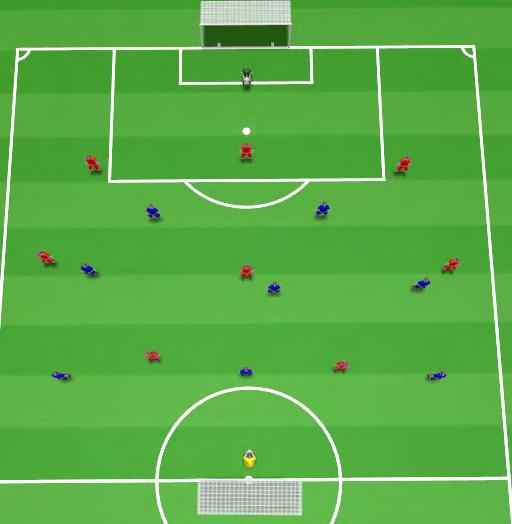
With the focus of this session being scanning and decision-making, the practice ends with a two-ball game.
Set up a half-field scrimmage, 8v8 plus goalkeepers. The game is played like a normal half-field scrimmage, with one key difference: there are always two balls in play.
To start, each goalkeeper plays a ball out to their team. If a goal is scored or a ball goes out over the end line, play immediately restarts with a new ball from the goalkeeper. Goalkeepers may delay restarting play if the opposing team is in a clear shooting situation. If a ball goes out over the sideline, play restarts with a throw-in from the spot where it went out.
Play for eight minutes, then break for water. During the break, each team will meet to discuss what adjustments they need to make to be more successful in the second half. Teams then switch sides of the field and play another eight-minute round.
This game is high intensity and fast-paced, forcing players to scan the field and think before receiving the ball.
Possible variations and progressions for this game are offense verse defense, expanding the number of players, adding neutral players, and limiting touches.
Coaching points during this game include players keeping their head on a swivel, awareness of both balls at all times, maintaining game realism (it should not look like two separate games), and clear communication, especially from the goalkeepers.
This practice session is designed to help players think before they receive the ball and begin playing two or three steps ahead. It builds habits— scanning, decision-making, and awareness— that are essential in the modern game. However, a training session is only one piece of player development.
The second way to reinforce decision-making is by helping players become students of the game. That starts with watching soccer. Too many players are not doing this. Watching high-level college/professional matches allows players to see how the game is played at its highest level. They can observe field positioning, recognize different off-the-ball runs, and, most importantly, see how elite players are constantly scanning the field before they receive the ball.
During major tournaments like the World Cup, I have my players track matches and break down at least three games using guided packets I create for them. These worksheets help focus their attention on specific moments and decisions within the game, rather than passively watching.
In addition to studying professional matches, players must analyze their own performances. Watching personal game film help players identify what they did well, where they need to improve, and what decisions they could have made differently. Because film analysis can be overwhelming, I provide guided worksheets to give structure and purpose to the process.
I also break the team into positional groups and have them review film together, with worksheets tailored to their specific roles. Each group selects a clip to share, which we then use during full-team film sessions.
When intentional training is combined with purposeful game study, players begin to truly understand the game. That understanding is what allows skills developed in practice to consistently show up on game day.






ATHLETIC WEBSITES
Unite your community through seamless communication. Engage provides a free, easy-to-use website for athletic and activity programs. Integrate tickets, schedules, rosters, announcements, and more.
Proud Sponsor of




Easily sell tickets, check in attendees, and access revenue faster than ever. Streamline operations with season passes, custom seat maps, and secure gate entry, while reducing the need for staffed windows and cash handling.
Simplify ticketing, fundraising, and more with Hometown's digital solutions.
Learn more at hometown.com
ONLINE FUNDRAISING
Access a fee-free fundraising platform designed to help you raise more and keep more. Our intuitive, district-friendly solution makes running fundraisers effortless, rallying donors with less work and stress.


COVERAGE A - LIABILITY INSURANCE
Up to $2,000,000 per insured per occurrence/$ 3,000,000 per occurrence, plus the cost of defense, investigation and legal fees
•Applies in the event a member is alleged to have caused injury or damage to others while performing his/her professional duties
•Errors and omissions insurance for claims for damages arising out of a member’s duties as a professional educator, including all defense cost
Note: The duty of the insurer to defend extends even to groundless, false and frivolous suits and accusations.
COVERAGE B - REIMBURSEMENT OF ATTORNEY FEES
Up to $10,000 per insured per occurrence
•The policy provides reimbursement of attorney fees in a broad range of situations not included under Coverage A. This includes allegations of criminal and/or sexual misconduct and employment related actions
other professional rights and duties.
or resignation, the matter in dispute must be resolved in favor of the member to qualify for the full reimbursement of $10,000. However, $2,000 of this amount is available for initial consultation and research, whether or not the member prevails, to determine if there exists a reasonable chance of the case being resolved in the member’s favor.
COVERAGE C - BAIL BONDS
Up to $2,000 premium on bail bonds
COVERAGE A: Up to $2,000,000 per insured per ccurrence/$3,000,000 per occurrence, plus the cost of defense, investigation and legal fees.
COVERAGE B: Up to $10,000 per claim per Insured. Coverage for criminal proceedings and /or sexual misconduct limited to $10,000 aggregate per policy term.
COVERAGE C: Up to $2,000 premium on bail bonds.
COVERAGE FEATURES:
Criminal/Sexual Misconduct Allegations
The policy provides reimbursement of attorney fees up to $10,000 under Coverage B if the educator is acting in the scope of his/her duties.
Corporal Punishment
Corporal punishment is covered under Coverage A (Liability) if administered according to the rules of the jurisdiction in which the school is located.
As long as the educator is within the scope of his/her professional duties, the policy covers liability for injury to students and others while the educator is conducting visits to industrial and commercial establishments, entertainment automobile, watercraft, & aircraft exclusions
Coverage B
Reimbursement of Attorney Fees - Such reimbursement as is afforded the professional rights and duties is assured under the policy and is not contingent on the approval of a board or review committee, as might be the case where the only available assistance is from a defense fund.
The Texas High School Coaches Association offers a Coaches Professional Liability Insurance option to eligible members with coverage beginning July 1, 2025. The THSCA has chosen the John A. Barclay Agency, Inc. to provide this coverage to our members. This plan was devised to offer liability insurance and legal assistance to THSCA members. In order to be eligible for this coverage you must meet the following criteria:
•
• Your THSCA Membership must be current for the school year in which the coverage is effective – 7/1/25 - 6/30/26
•PROFESSIONAL, AFFLIATE and LIFE members are eligible only if they meet the criteria above. This insurance is not available to STUDENT or RETIRED members.
If you choose to purchase this insurance coverage and do not meet the criteria for eligibility, this coverage will not be valid. This coverage will be in effect July 1, 2025 through June 30, 2026. Insurance purchased after July 1, 2025 will commence on the payment received date. This insurance coverage is not retroactive.
Payment should be made directly to the THSCA. The total 25/26 annual premium for the insurance coverage will be $65.00 per member.
Eligible members will be able to purchase the Coaches Professional Liability Insurance on the THSCA website, or by selecting to purchase the coverage on the THSCA membership application form and submitting it by fax, email or mail to the THSCA Office with payment
NOTE: In order to be eligible to purchase the coverage your membership must be current for the same year of policy coverage. (7/1/25-6/30/26) )
Doyouhavethefinancialabilitytodefendyourselfintheevent of claim?
Doyouhavetheexpertisetofindthebestlegalcounselforyour situation?
THIS IS NOTA CERTIFIED COPY OF THE POLICY BUTA SUMMARY AND IS PROVIDED FOR REFERENCE ONLY. ALL COVERAGE PROVIDED UNDER THE TERMS OF THE POLICY IN THE EVENT OF A LOSS OR OCCURRENCE IS SUBJECT TO THE EXCLUSIONS AND CONDITIONS CONTAINED IN THE MASTER POLICY ON FILE WITH THE POLICYHOLDER, INCLUDING ALL AMENDMENTS, ENDORSEMENTS, AND ADDITIONS. QUESTIONS REGARDING SPECIFIC INSURANCE POLICY COVERAGE SHOULD BE ADDRESSED TO: The John A. Barclay Agency, Inc. 512.323 6566
Largest football equipment manufacturer of helmets and shoulder pads.
Largest reconditioner of football equipment in the world. Market leader in football head protection technology. The industry leader in smart helmet technology.
Riddell is proud to sponsor the Texas High School Coaches Association For more information, contact your Riddell sales representative or call 1.800.275.5338