MAGAZINE
Resilience
in Motion: Law, Strategy, and Resilience in a Dynamic
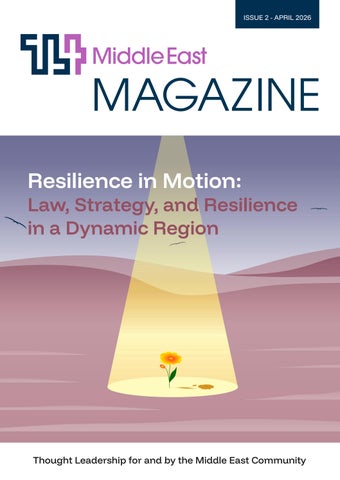
in Motion: Law, Strategy, and Resilience in a Dynamic
“We cannot direct the wind, but we can adjust the sails.”
Welcome to Issue 2 of the TL4 Middle East Magazine: Resilience in Motion.
In a region defined by its remarkable capacity for transformation, resilience is a hallmark of its continued growth. As the Middle East moves through today’s evolving dynamics, this issue curates the balance between agility and the long-term foresight required to drive progress. We capture the 'motion' of this era: the calculated expertise and steady hands that continue to shape the region’s landscape.
We extend our sincere thanks to our Corporate Partners and contributors whose insight, expertise, and continued support make this publication possible.


Chris Leese Founder/Chief Commercial Officer 020 7101 4151
email Chris
Paul Barford Founder/ Managing Director 0203 398 8510
email Paul
Melody Mok Conference Portfolio Manager 020 3997 8527
email Melody
Yelda Ismail Group Marketing Lead 020 3398 8551
email Yelda




Katie Bonfrer, Collas Crill Trust & Corporate Services
Dan Toft, Praxis
Darren Toudic, Praxis
Asel Omorova, Praxis
Joseph Jawad, GSB
Steven Ireland, Evolution Consulting GCC, UAE FTA
Emil McKenzie, The Progeny Group
Daniel Pacic, Ogier Global, Dubai
Ross Collins, Ogier Global, Jersey
Dina Hudson, Byfield
Valentina Kurnosova, Perun Consultants
Irina Astakhova, Perun Consultants
Victor Radnaev, Brevia Law Offices
Danushka De Alwis
Founder/Chief Operating Officer 020 7101 4191
email Danushka
Jamie Biggam
Strategic Partnership Executive 020 3398 8592
email Jamie
Ben Sullivan Commercial Director 020 3965 4386
email Ben
Rachael Dinneen Strategic Partnership Manager - Private Client 020 3398
Adam Nalgiev, Brevia Law Offices
Mihir Govande, Singularity Legal
Prateek Bagaria, Singularity Legal
Rana Sha’sha’a, PwC Middle East
Fouad Aoun, PwC Middle East
Shireen Kapoor, Ask Consultancy
Natasha Dzameh, Selborne Chambers
Yulia Barnes, Barnes Law
Shantanu Mukherjee, Ronin Legal
Sean Yates, Outer Temple Chambers
Alan Baiju, Ronin Legal
Georgette Adonis, Adonis Advisory Group
Sonia Saranti, Saranti and Partners
Alastair Tomson, 4 Stone Buildings

Authored by: Katie Bonfrer (Group Managing Director) - Collas Crill Trust & Corporate Services
As intergenerational wealth in the Middle East continues to grow, affluent families are increasingly turning to sophisticated structures to preserve and transition assets across generations.
Recent events in the region have also served as a reminder of the importance of thoughtful long-term planning.
Periods of uncertainty, wherever they occur, often encourage families to reflect on governance, succession and the protection of family assets for future generations. In this context, carefully structured wealth arrangements can provide clarity, continuity and stability across generations.
Among the most favoured jurisdictions for this purpose are Jersey and Guernsey, renowned for their robust trust laws, case law, political stability, and deep expertise in private wealth management.
Over the years we have seen a steady increase in the use of Private Trust Company (PTC) and Private Trust Foundation structures being used by Middle Eastern clients for their international assets.
trustee allowing for enhanced oversight and alignment with the family’s values, governance practices, and succession goals.
What is a Private Trust Company?
A PTC is a bespoke, privately-owned corporate trustee established to act as trustee for one or more trusts, typically for a single family. Unlike a professional trustee company serving multiple clients, a PTC is controlled, directly or indirectly, by the family it serves, alongside the professional
Why Middle Eastern
choose PTCs in the Channel Islands
1. Cultural Alignment and Control
Family and tradition play a central role in Middle Eastern culture. A PTC allows family members, advisors, or trusted associates to sit on the board of the
trustee company. This aligns decisionmaking with family values and ensures continuity of governance in a way that an outsourced trustee arrangement may not.
This level of involvement is particularly important in Islamic families who may wish to integrate Shariah-compliant principles into their succession planning. The Channel Islands provide sufficient flexibility to accommodate these requirements while maintaining internationally-recognised fiduciary standards.
Jersey and Guernsey are internationally recognised for their mature and transparent legal systems. They offer modern robust trust legislation that supports tailored, flexible structures which is essential when managing complex, multi-jurisdictional family wealth.
The Jersey and Guernsey courts and regulators have a strong track record of supporting the proper operation of trusts and PTCs, providing confidence to families who may be wary of the legal uncertainties in their home jurisdictions.
The Channel Islands offer a tax-neutral environment, ensuring that the trust or PTC does not attract additional layers of taxation on assets already taxed in their country of origin. For Middle Eastern families with global assets, this neutrality simplifies compliance and planning.
Additionally, privacy is a key concern. Unlike some other jurisdictions, the Channel Islands do not maintain public registers of beneficial ownership for trusts or PTCs, allowing families to preserve confidentiality while maintaining compliance with international transparency standards.
Families with members residing across multiple jurisdictions - common among Middle Eastern families with children educated or living abroad - require wealth structures that are internationally portable and adaptable.
A PTC allows a family to manage diverse assets (including UK property, US securities, Middle Eastern businesses and offshore portfolios) within a single governance framework, making succession planning more efficient and secure.
PTCs also mitigate the disruption often caused by generational change. Unlike individual trustees who may die or become incapacitated, the PTC endures, providing a stable trustee that can evolve with the family’s needs.
The Channel Islands are home to a highly developed fiduciary and legal services industry, with expertise in managing wealth for clients from the GCC countries and beyond. Firms based in Jersey and Guernsey are wellversed in regional cultural and religious sensitivities.
This familiarity allows for the creation of nuanced structures that not only comply with global best practices but also resonate with family values and traditions, including succession principles based on Islamic inheritance law.
Rather than a PTC?
Foundations in Jersey and Guernsey are not owned by anyone (unlike companies, which have shareholders). This makes them ideal for long-term or perpetual planning, especially for family wealth preservation or philanthropic purposes.
A PTC is a company and must register directors/shareholders, even if held through nominee structures. A foundation however is governed by a council and has no shareholders, enhancing privacy and reducing risks tied to ownership structures. It also prevents the need to have purpose trust above the PTC.
Like a purpose trust, foundations can be established for a specific charitable or non-charitable purpose, or to benefit a class of beneficiaries (like a family). This purpose is set out in the foundation’s charter, making it well-suited to act as a trustee.
The convergence of privacy, control, legal certainty, and global expertise makes the Channel Islands and their PTC offering especially appealing to Middle Eastern families seeking to structure and preserve their wealth.
For many families in the GCC and across the wider region, longterm planning is not only about wealth management but also about stewardship, ensuring that assets, values and governance frameworks endure across generations. In times when global or regional developments may create uncertainty, these considerations often come into sharper focus and the PTC and PTF stand out as flexible, culturally sensitive, and enduring solutions.
By centralising control while maintaining professional oversight in leading international financial centres, families can ensure their wealth is not only protected but stewarded in a way that reflects their vision for future generations.



For lawyers and advisers working with Middle Eastern clients, cross-border structuring is no longer defined by where assets are held, but by how governance, control and succession operate across jurisdictions over time.
Families are increasingly mobile, assets are more international, and regulatory approaches, while aligned in principle, continue to diverge in practice. In the Middle East, cross-border structuring is therefore shaped by regulatory divergence, international family residency and an increasingly complex geopolitical backdrop.
The result is a structural tension between governance, assets and beneficiaries, who are often located in different jurisdictions yet need to operate as a coherent whole.
The key question is therefore where control should sit relative to asset location and family residence - and how that balance can be maintained as circumstances evolve.
In this context, advisers are increasingly looking for a jurisdiction that can anchor governance without constraining the flexibility of the wider structure.
Jersey is rarely used as a standalone solution in this context. More often, it acts as a jurisdiction through which governance can be stabilised while other elements remain flexibleparticularly in mandates involving GCC families with globally held assets and internationally dispersed beneficiaries. In practice, it enables the following outcomes.
• Neutral governance between regimes: For GCC families with assets and beneficiaries across multiple jurisdictions, Jersey offers a politically and legally neutral platform for centralising fiduciary oversight and decision-making.
• Separation of control and asset location: Governance can sit in Jersey, while operating assets remain in higher-growth or strategically important regions such as the Middle East, Europe or Asia.
• Operational recognition across borders: Jersey’s trusts, foundations and private fund structures are widely recognised by international institutions and regulators, reducing friction in banking, reporting and administration.
• Flexibility in succession frameworks: Structures can be adapted to reflect common law, Shari’a principles, or hybrid approaches.
• Structures can evolve over time: Jersey structures can adapt to changes in family circumstances, residency and asset location without requiring wholesale reorganisation.
Taken together, this positions Jersey as an effective anchoring point for governance within a broader, multijurisdictional structure, providing stability without limiting flexibility as circumstances evolve.
In this context, resilience is less about avoiding risk and more about managing it. Jersey’s role is to provide a stable point within that framework. Structures anchored in Jersey benefit from a jurisdiction unlikely to introduce volatility of its own, allowing advisers to focus on managing risks associated with underlying assets, jurisdictions, and family dynamics.
Assets were held personally by the patriarch across the UK, US and Europe, with no formal succession framework in place. The objective was to introduce intergenerational planning while adhering to Shari’a inheritance principles and maintaining control over the operating business.
While transparency and compliance standards continue to converge globally, their implementation remains uneven. Advisers are therefore balancing two competing pressures: meeting international regulatory expectations and ensuring structures remain practical across multiple jurisdictions.
Jersey’s approach - aligned with global standards yet proportionate in application - enables structures to meet regulatory requirements without introducing unnecessary complexity at the governance level.
A Jersey structure was established comprising:
• a foundation acting as a Private Trust Foundation
• underlying Jersey law trusts aligned to Shari’a inheritance principles
• Jersey holding vehicles for investment and asset ownership
Each trust holds a proportion of the shares in the European trading business, alongside separate investment structures. The foundation enables continued family involvement in governance, while trustee decision-making remains centralised.
The structure creates a single, coherent governance framework across jurisdictions, allowing:
• succession to follow Shari’a principles
• ongoing oversight of operating assets
A common misconception is that trusts are inherently incompatible with Shari’a due to their common law origins. In practice, Jersey trusts are frequently structured to operate in a fully Shari’a-compliant manner.
More broadly, the same framework can be adapted to follow Shari’a principles in full, apply conventional common law succession planning, or adopt a hybrid approach.
For example, on death, assets can be allocated into beneficiary “pots” in Shari’a shares but remain on trust, with guardrails (e.g., limits on early realisation) to help preserve family wealth. Where a settlor wants a different outcome for specific assets, that can also be built in through the drafting and governance arrangements.
For advisers, this places greater emphasis on early-stage design. It includes aligning legal, tax and fiduciary input from the outset, determining where control should sit, and ensuring governance frameworks can accommodate changes in residency, regulation and family dynamics.
Structures designed with these considerations in mind tend to remain effective, while those introduced retrospectively can bring unnecessary complexity, cost and risk.
Effective cross-border structuring increasingly depends on early, coordinated design. Where governance, control and succession are aligned from the outset, structures are far more likely to remain strong as circumstances evolve.
Praxis brings over 50 years of experience in Jersey supporting international families and their advisers, as well as a decade-long presence in the GCC.
A Saudi family owns a large trading group operating across the GCC and Europe. The family includes two wives, each with two children.
• preservation of family wealth across generations
This approach avoided the need to relocate underlying assets while introducing a robust governance framework aligned with both family expectations and regulatory considerations.
As the first trustee licensed by the ADGM Financial Services Regulatory Authority in 2016, Praxis supports consistent governance across jurisdictions, coordinated offshore and onshore administration, and structures aligned with both international standards and regional considerations.


What is the most significant trend in your practice today?
Digital transformation and rising global regulatory demands are among the most significant trends. Enhanced technology platforms now play a critical role - not only by streamlining onboarding, strengthening compliance processes, and enabling real-time reporting, but also by helping firms adapt to increasingly complex and rapidly evolving regulatory requirements. Together, these advancements drive greater operational efficiency and deliver a more seamless client experience.
What is one important skill that you think everyone should have?
Adaptability seems to be one of the most important skills in today’s world of constantly changing circumstances. It enables people to stay resilient and positive, while also allowing them to potentially turn uncertainty into opportunity.
If you could give one piece of advice to aspiring practitioners in your field, what would it be?
You can achieve anything you desire if you truly believe in it. I’m a big fan of meditation, because it helps you stay centered, clear-minded, and grounded. When you pair that inner clarity and control with genuine belief in your goals, you naturally start attracting the right opportunities, people, and outcomes.
Where has been your favourite holiday destination and why?
I love travelling and exploring new countries and cultures, but my favourite holiday destination must be the Maldives. It is one of the few places where I can truly disconnect and recharge. The natural beauty is breathtaking, and the absence of excessive noise and distractions makes it easy to slow down, be present, and enjoy genuine quality time on my own and my loved ones.
What was the last book you read?
The last book I read was the self-help book The Monk Who Sold His Ferrari by Robin Sharma, which I re-read very recently. I never get tired of it - every time I pick it up, it serves as a powerful reminder of how to live with more intention, balance, and purpose.
What has been the best piece of advice you have been given in your career?
The best piece of advice I have received in my career came from my manager when I had just started working: “The world is not perfect.” Coming straight out of university, I wanted everything to be detailed, structured, and flawlessly executed. I believed perfection was the standard, but he reminded me that the world does not operate that way and that this imperfection is actually what makes it interesting. That advice helped me become more flexible, patient, and resilient. It taught me to focus on progress, adapt when things change, and appreciate the process rather than expecting everything to go exactly as planned.
What personality trait do you most attribute to your success?
I believe dedication has played the biggest role in my success. I have always been someone who follows through, takes responsibility, and keeps pushing until things are done properly. That mindset has helped me build trust, manage complex situations, and deliver results even in a fast-paced and challenging environment. Dedication is not about big gestures – it is about the everyday commitment to doing things well and staying true to my goals.
What does your perfect holiday look like?
My perfect holiday is simply being away with my family - whether it is a relaxing beach holiday or a city trip. As long as we’re together, enjoying quality time and creating memories, that’s the ideal getaway for me. In today’s hectic world, it is important to keep your priorities in mind and truly live your life. For me, that means being present with the people I love the most.
Authored by: Joseph Jawad (Senior Partner) - GSB
Even to the casual observer, it is clear that the GCC has become markedly more sophisticated. Digital-forward governments, sustained inflows of skilled and wealthy migrants, particularly to the UAE, and visible long-term strategic planning all point to a region competing confidently on the world stage.
Once viewed as a quiet corner of the world where a small number of prominent families preserved wealth through allocations to Western property or Swiss bank accounts, the region has become a capital destination in its own right. That shift has driven the development of:
1. Economic free zones
2. Modern trust and foundation regimes
3. Legal differentiation in personal status and succession
4. Institutionalised family governance
5. Cross-border structuring capabilities
As a result, the GCC jurisdictions are now capable of servicing most of the needs of even highly complex ultrahigh-net-worth local and international families. This evolution has been reinforced by an increase in liquidity events, historically inheritance-related, but now increasingly arising from substantial corporate transactions.
Intergenerational transition, long discussed but often deferred, is now actively under way. Family office numbers have grown sharply, together with demand for advisers capable of structuring wealth on a global basis. In short, we are witnessing a shift from entrepreneurial wealth to structured capital.
The UAE has positioned itself as the jurisdiction of choice for structuring, with healthy competition between ADGM and DIFC, each offering regulatory credibility and English common law environments.
Foundation registrations have risen materially, used to hold non-trading assets such as real estate as well as shares in operating businesses within and beyond the UAE.
A typical architecture might involve a foundation at the apex, a holding company beneath it, and operating entities across the UAE and other GCC states. This arrangement consolidates ownership and governance, ring-fences liabilities and creates a clear channel for dividend flows and capital allocation. Where tax efficiency is relevant, it is addressed, but the greater value lies in the control and governance framework such structures provide.
Increasingly, the GCC holding company is not merely a passive receptacle for shares. It serves as the coordinating body for regional investments, joint ventures and capital deployment, reflecting a more deliberate approach to stewardship.
Further evidence of this evolution can be seen in the introduction of the Variable Capital Company structure within the DIFC. The VCC offers families and private offices a flexible
vehicle through which to consolidate multiple investment strategies within a single legal entity, segregating assets and liabilities between sub-funds while maintaining centralised governance. For families increasingly allocating to private equity, venture capital and regional co-investments, the ability to house distinct pools of capital under one umbrella reflects a more institutional approach to deployment. It also reduces structural fragmentation and provides a framework better aligned with how sophisticated families now operate: as disciplined, long-term allocators of capital rather than passive investors.
Greater sophistication inevitably brings complexity. Economic substance requirements, treaty access, controlled foreign company rules and the tax residence of family members all require careful thought. For recent arrivals from higher-tax jurisdictions, legacy exposure must be managed alongside new GCC structures.
Liquidity strategy is also relevant. How much capital should remain within the region? How much should sit offshore? These questions are no longer purely tax-driven but linked to risk management, asset protection and flexibility.
At the higher end, the distinction between GCC and international families is narrowing. Both deploy layered structures, combine private client planning with corporate finance discipline and allocate capital across private markets with institutional intent. Many now behave less like traditional family businesses and more like longterm capital allocators.
For decades, much structuring for wealthy families, particularly outside the region, was tax-led.
The proposition was simple: incur modest cost today to minimise tax tomorrow. Liberal global regimes encouraged this focus, often at the expense of durable governance.
Many of those historic structures, though efficient on paper, have proved fragile at the point of succession. In some cases they have produced disputes that are complex, public and damaging.
A more assertive posture from Western tax authorities has accelerated a reassessment. Families are reviewing legacy structures and placing governance at the centre of planning. Family charters, clearly articulated succession plans, local wealth structures and, where applicable, Sharia considerations, are increasingly integrated rather than treated as afterthoughts. The emphasis has shifted from ownership to stewardship.
Recent geopolitical tensions have added another dimension. Prudent families now consider practical exit strategies, not only for their wealth but, if necessary, for family members themselves. In my experience, we are seeing a gradual but noticeable increase in the separation of trading operations from long-term family wealth. That discipline remains uneven, but the direction of travel is clear.
With wealth comes expectation, and increasingly GCC families resemble their global counterparts. Education, residency and business interests often span multiple jurisdictions. That reality demands structures flexible enough to operate across several legal and tax systems.
Scrutiny is rising, both domestically and internationally. OECD transparency initiatives and automatic information exchange regimes mean that informal arrangements are no longer sustainable. Structures must be coherent, defensible and capable of adaptation without wholesale redesign.
When implemented properly, this approach avoids repeated restructuring costs and embeds flexibility from the outset. We increasingly see complementary or hybrid arrangements: GCC entities holding regional assets and separate vehicles, sometimes offshore, holding non-GCC investments. These frameworks often integrate Sharia heirship principles where relevant and take treaty positioning into account.
GCC structuring options have evolved in response to several converging pressures:
• More assertive global tax authorities
• The globalisation of family footprints
• Rapid development of local legal frameworks
• Increasingly sophisticated investment and succession needs
More regional wealth is now structured locally than in the past, and less wealth is held abroad solely for tax mitigation. Supported by an increasingly specialised professional ecosystem, families are embracing principles long embedded in older Western centres of wealth: clarity of purpose, robust governance and implementable succession planning.
Local nuance will always create differences. Yet from a distance, welldesigned GCC structures increasingly resemble their Western equivalents in depth and discipline. The enduring challenge will not be establishing such structures, but ensuring they remain fit for purpose as families evolve and the world around them continues to change.

It is a region-specific platform uniting cross-disciplinary expertise Built for a collaborative, crossborder professional landscape
Designed to reflect the Middle East’s unique, evolving needs
It offers an inclusive, focused, and forward-looking space to gather, network and share knowledge
Flagship events in key regional hubs like Dubai, Riyadh, and Doha
Curated roundtables and networking sessions
Insightful content and thought leadership tailored to the region
A trusted network of peers, mentors, and collaborators
Regional insights in our TL4 Middle East in Focus newsletter
Navigating Civil Law vs Common Law in UAE 14 October 2026 | Dubai, UAE
Private Client Middle East Circle 15-16 October 2026 | The Ritz-Carlton, Ras Al Khaimah, Al Wadi Desert
The 6th Annual Fraud, Insolvency, Recovery, Enforcement - Middle East 9 November 2026 | Dubai, UAE
The migration of capital and enterprise from the United Kingdom to the United Arab Emirates has evolved beyond transient tax arbitrage into a structural realignment of global wealth. Rising regulatory pressures, increasing corporate taxation, and the dismantling of nondomiciled regimes in traditional western hubs have positioned the Middle East (particularly Dubai and Abu Dhabi) as a primary domicile for private clients, family offices, and high-growth enterprises.
For UK-based entrepreneurs and high-net-worth individuals, relocating a business is often the first step in a broader wealth preservation strategy. Moving an operating entity is merely the engine of wealth creation; the chassis requires sophisticated structuring, robust compliance, and long-term succession planning. This guide outlines the strategic horizons for private clients transitioning from the UK to the Middle East, detailing the shift from simple relocation to holistic wealth structuring.
While the 0% personal income tax environment remains attractive, deeper drivers include stability, connectivity, and regulatory maturity. The UAE offers a dual-system advantage, combining a civil law federal framework with common law financial free zones such as the Dubai International Financial Centre (“DIFC”) and Abu Dhabi Global Market (“ADGM”). This provides UK nationals with a familiar legal environment for contracts, trusts, and dispute resolution, mitigating legal friction in cross-border relocation.
The introduction of the UAE Corporate Tax regime has strengthened the jurisdiction’s appeal. By aligning with OECD BEPS standards, the UAE has shed the tax haven stigma, allowing
compliant wealth to be booked, managed, and deployed globally without banking friction.
Phase 1: Jurisdictional Selection and Corporate Architecture
Selecting the right legal structure is central to asset protection. The choice of jurisdiction dictates liability, foreign ownership rights, and the ability to repatriate capital. Mainland entities are suitable for trading businesses requiring local market access, but private clients often focus on Free Zone entities. These offer 100% foreign ownership and allow the creation of Special Purpose Vehicles (SPVs) to hold global assets, including real estate, intellectual property, and investments.
For UK expats accustomed to trusts, the UAE offers a Foundation in ADGM, DIFC, and RAK ICC. Foundations allow legal ownership to be separated from beneficial enjoyment, providing a robust shield against fragmentation of assets. Unlike a trust, a Foundation is a legal entity with its own personality, enabling it to hold assets such as real estate directly. Foundations are increasingly used to house shares of relocated UK businesses, ensuring continuity beyond the founder’s lifetime.
and individual is essential. The UAE participation exemption regime allows dividends and capital gains from qualifying subsidiaries to be exempt from Corporate Tax, facilitating wealth accumulation at the holding company level.
The UAE banking landscape has matured, offering not just operating accounts but cross-border private banking solutions. Institutions enforce strict Know Your Customer and Anti-Money Laundering protocols. Relocating clients must provide clear source-of-wealth and source-of-funds documentation, typically supported by UK audit trails.
Once established, the UAE serves as an efficient booking centre. HNWIs increasingly move portfolio management to UAE accounts, leveraging the US Dollar peg and the country’s time-zone position to trade across Asia, Europe, and the US in a single day.
The UAE is not entirely tax-free, and understanding the corporate tax and substance requirements is critical.
The standard Corporate Tax rate is 9% on profits above AED 375,000, highly competitive relative to the UK.
Economic substance rules require genuine operational activity, including premises, qualified staff, and local decision-making, to benefit from UAE treaties and avoid UK tax residency based on management and control tests.
Entrepreneurs must also consider UK exit taxes on unrealised gains and the Statutory Residence Test. Timing the relocation of both business
UAE residency now provides a longterm lifestyle and wealth proposition. The 10-year Golden Visa decouples residency from employment, granting stability to investors, entrepreneurs, and families. It allows principal investors to establish UAE tax residency while offering a secure base for family members. Integrating UAE residency with other passports or citizenship programs supports global mobility while maintaining a low-tax domicile.
Relocation is also an ideal time to draft a Family Charter, which governs familybusiness relationships, employment of family members, dividend policies, and conflict resolution. Combined with a Foundation, this ensures the relocated business can continue as a legacy asset without falling victim to generational fragmentation.
Transferring wealth to the next generation is a critical horizon. Without proper planning, UAE assets are subject to Sharia law inheritance, which may not align with UK expats’ wishes. The DIFC Wills Service Centre allows non-Muslims to register wills under common law principles, ensuring testamentary freedom for Dubai-held assets.
Relocating from the UK to the UAE is a significant undertaking, but it presents an opportunity for structural optimisation. The UAE has evolved from a merchant hub into a global financial centre. By combining competitive corporate taxation, common law frameworks, and high-quality lifestyle infrastructure, it offers fertile ground for both business operations and long-term wealth preservation.
For strategic investors, the move is not an escape from the UK but an entry into a jurisdiction actively shaping the future of global wealth management. Success relies on robust structuring, genuine economic substance, and comprehensive legacy planning.
Authored by: Emil McKenzie (Financial Planner) - The Progeny Group
The Middle East – particularly the GCC countries, have become some of the most significant centres for internationally mobile private capital. Over the past decade, the region has attracted a growing population of High-Net-Worth (HNW) and UltraHigh-Net-Worth (UHNW) individuals, entrepreneurs, family offices, and globally mobile families seeking economic opportunity, safety, and sophisticated financial infrastructure.
This inflow of wealth has shifted the focus of private-client advisory work in the region. The conversation has moved beyond simple residency or tax considerations towards long-term, multi-jurisdictional wealth structuring – balancing investment opportunity, succession planning, high levels of governance, asset protection, and tax compliance across borders. The Middle
East is constantly changing and has evolved into a world-class home for families looking to combine the lifestyle they desire with world renowned schooling, ease of global travel and excellent infrastructure.
For Private Wealth advisers, the Middle East now represents not just a destination for holiday travel or short-term relocation, but a structuring opportunity within a global private wealth framework for families that are increasingly choosing to stay for the long term and into retirement.
Unlike traditional private wealth centres, such as London or Switzerland, the Middle East does not operate under
a single, harmonised tax or trust-law system, instead it combines:
• Onshore civil-law jurisdictions
• Common Law financial free zones (such as the DIFC and ADGM)
• A wide expatriate population with complex domicile, residency, and asset footprints
This creates both opportunity and complexity. Many clients resident in the UAE, for example, remain subject to Inheritance, tax, or reporting obligations elsewhere, often in the UK, Europe, or North America. Effective wealth structuring therefore requires Private Wealth advisers to think beyond residency, taking a holistic approach to how assets are owned, controlled, and transferred across generations.
Historically, structuring conversations in the region focused heavily on taxefficient growth. While this remains relevant – particularly for internationally mobile families – the agenda has broadened materially. Today’s private clients are increasingly concerned with:
• Succession: Certainty with families spread across multiple jurisdictions and generations
• Asset consolidation and governance: Particularly following significant life events such as death of a family member, divorce or growing families due to marriage or birth
• Protection from geopolitical, creditor or family risk
• Intergenerational engagement, education, and knowledge sharing
• Regulatory transparency These objectives require structures and planning that is robust and flexible – not only tax-driven but, considering the many needs, wants and objectives of multiple generations.
consequences for tax, reporting, and succession outcomes.
In the context of the Middle East, this often involves balancing:
• Offshore investment platforms and custodians
• Insurance-based wrappers (such as offshore bonds)
• Property assets locally against property held abroad
• Direct ownership of shares vs mutual funds or pooled investments
• Alternative investment holdings such as commodities
For internationally mobile families, structuring must also account for future options – including potential relocation, changes in tax residency, or family members living in different jurisdictions.
From a governance perspective, investment structures should align with the family’s broader objectives, ensuring clarity around control, liquidity, and risk management, rather than simply optimising for short-term efficiency or gains.
Perhaps the defining feature of effective wealth structuring in the Middle East is the need for true inter-disciplinary collaboration. No single adviser, whether lawyer, tax specialist, or investment professional – can address the full complexity of modern privateclient wealth needs in isolation, and this becomes even more prevalent for globally mobile citizens and expats.
The most successful outcomes are typically achieved where:
• Wealth managers coordinate investment strategy in line with legal and tax frameworks and implemented alongside other advisory professionals
Investment strategy and wealth structuring are inseparable.
Decisions around where assets are held, how they are owned, and which wrappers are used can have material
• Lawyers design structures informed by real-world asset flows and residency conditions
• Tax advisers stress-test arrangements across current and future jurisdictions, considering any planned future relocation
• Fiduciaries and trustees are engaged early not retrospectively
This integrated approach is particularly important for UK connected clients, where interactions with domicile, residency, inheritance tax (IHT), and trust rules require careful forward planning.
The Middle East’s role in global private wealth is likely to deepen further. Continued inflows of entrepreneurial and family capital, coupled with an increasingly sophisticated local infrastructure, suggest that the region will remain central to international wealth planning discussions.
For private clients, the horizon is clear: long term planning, governance, adaptability, and flexibility will matter more than short term optimisation and returns. For advisers, success will depend on the ability to operate across multiple disciplines and jurisdictions, translating complexity into clarity and transparency for families navigating an increasingly interconnected world.
In this environment, wealth structuring is no longer a static exercise, more a moving framework that adapts alongside families, markets, and regulatory landscapes.
The Middle East, with its unique blend of opportunity and complexity, sits firmly at the centre of that evolution.

When debtors don’t voluntarily satisfy court judgments or arbitration awards, creditors are forced to commit further capital and internal resources to pursuing enforcement. Burford Capital’s market-leading team provides capital and expertise to help clients enforce high-value judgments and awards.
With a proven track record of recovering hundreds of millions of dollars for clients, we help you move past obstacles and realize value.
HOW WE HELP
• Capital to cover day-to-day enforcement costs including legal fees and other expenses
• Immediate liquidity through advance capital against the value of judgments and awards
• Capital unlocked through the purchase of judgments and awards, with enforcement fully managed
• Non-recourse financing— no repayment unless there’s a successful recovery
• In-house experts trace assets of individual, corporate or sovereign debtors informing enforcement strategy across jurisdictions
HANNAH HOWLETT Senior Vice President
Authored by: Daniel Pacic (Managing Director)
The Middle East is entering a period of significant wealth transition. As families diversify globally and assets become more complex, effective structuring is no longer limited to local holdings. Today’s private clients are seeking solutions that protect wealth, support succession and provide long-term governance across jurisdictions.
Wealth in the region increasingly spans multiple asset classes and geographies. Alongside local real estate, families often hold:
• International property portfolios
• Listed equities and private market investments
• Operating businesses and private equity interests
• Multi-currency bank accounts and investment portfolios
• Alternative assets such as precious metals or collectibles
Cross-border ownership introduces legal, tax and operational complexity. Carefully designed holding structures, including companies, trusts and foundations in established international finance centres such as the Channel Islands, can help consolidate ownership, improve administration and support long-term planning.
Succession in a Shariah-sensitive environment
Succession planning remains a key concern for Middle Eastern families.
The region is expected to see one of the world’s largest intergenerational wealth transfers, yet many family businesses still lack formal succession or governance frameworks. Families must also navigate the interaction between:
• Local inheritance rules, including Shariah principles
• Personal wishes regarding control and distribution
• The location and governing law of international assets
Differences in how Shariah is applied across GCC jurisdictions, combined with the absence of harmonised estate frameworks, can create uncertainty when planning across borders.
Appropriate structures can provide clarity, support family governance and, where appropriate, help manage potential areas of conflict by establishing clear ownership, decisionmaking and distribution mechanisms.
Asset protection is another priority. Holding structures can help:
• Separate personal and business assets
• Ringfence liabilities from operating businesses or investment activities
• Facilitate financing or co-investment arrangements
• Ensure continuity of ownership during periods of transition
This is particularly relevant for familycontrolled enterprises, where ownership stability is critical to long-term value.
Local and international structuring: a complementary approach
The structuring landscape in the Middle East is evolving. Domestic options such as DIFC or ADGM foundations and other regimes within these financial free zones now sit alongside established international solutions. Many families use a combination of local and offshore structures to balance familiarity, regulatory comfort and global flexibility.
Jurisdictions such as Jersey and Guernsey remain widely used for their political stability, strong regulatory frameworks and long track record in trust, foundation and corporate administration.
With assets and family members often spread internationally, coordinated structuring and ongoing administration are essential to maintaining control and visibility.
As Middle Eastern families continue to expand their global footprint and adapt to new complexities, proactive planning and structuring play a vital role in preserving family wealth and supporting effective succession. Balancing local sensitivities with international best practices enables families to protect their assets, foster long-term governance and ensure smooth transitions across generations. By taking a thoughtful and forward-looking approach, private clients in the region can navigate evolving challenges and secure enduring legacies for the future.
As family needs become more sophisticated, expectations of advisers are shifting. Families increasingly look for:
• Integrated legal, fiduciary and administrative support
• Cross-border expertise and multijurisdictional coordination
• Governance frameworks that support next-generation engagement
• Long-term partnership rather than transactional advice
Authored by: Dina Hudson (Lead Consultant, Disputes and Investigations) - Byfield
For most businesses, geopolitical risk feels abstract until it suddenly isn’t.
The unfolding crisis in the Strait of Hormuz is a reminder of how quickly global politics can collide with commercial reality. When one of the world’s most strategically important shipping lanes becomes unstable, the consequences are immediate. Supply chains stall, energy markets react, and companies operating in the region find themselves making operational decisions in an environment defined by uncertainty.
Yet behind the headlines about naval movements and oil prices lies a quieter but equally significant development.
Moments like this rarely remain purely geopolitical. They quickly generate legal disputes, contractual tension and heightened scrutiny of corporate decision-making. In that environment, communications strategy is not an afterthought; it becomes part of the dispute itself.
The Strait of Hormuz carries around a fifth of global oil supply. Any disruption therefore has an obvious economic impact. For companies operating in the shipping and energy sectors, however, the immediate questions tend to be contractual rather than political.
What happens when a vessel can no longer safely transit a route that sits at the heart of global trade? If a ship diverts or delays its journey, who ultimately carries the cost? At what point does a security threat become serious enough to trigger force majeure?
These issues sit at the centre of maritime law and charterparty agreements. As legal commentary on the current crisis has noted, disputes are likely to arise around safe port obligations, war risk clauses and insurance coverage. Decisions taken in the name of safety or operational prudence can quickly become the subject of legal disagreement once financial consequences emerge.
A geopolitical crisis therefore has a tendency to evolve into something else entirely: a complex disputes environment where legal arguments and commercial pressures intersect.
Disputes triggered by geopolitical crises rarely unfold quietly.
They tend to develop in parallel across several arenas. Media coverage intensifies as markets react. Investors look for reassurance that companies are managing risk responsibly. Governments and regulators may begin asking questions, particularly where sanctions, security concerns or critical infrastructure are involved.
In that context, operational decisions take on a different meaning.
A shipping company that diverts a vessel may see the decision as a straightforward safety measure. A counterparty might frame the same action as an unnecessary breach of contract. In volatile markets, commercial competitors or political actors may add their own interpretation.
Narratives can form quickly in these circumstances. Once they do, they often influence how stakeholders interpret the dispute that follows.
For companies operating in sensitive geopolitical environments, the challenge is no longer limited to legal exposure. The reputational framing of events can shape the dispute itself.
This is where crisis and disputes communications begins to play a strategic role.
One of the most common risks during fast-moving crises is a disconnect between legal positioning and public messaging. Statements made in the early stages of a crisis – about safety
concerns, operational constraints or the reasons behind a particular decision –may later sit uneasily alongside legal arguments advanced in arbitration or litigation.
The challenge is compounded by the range of audiences that expect answers. Insurers will want clarity around risk exposure. Commercial partners may seek reassurance that contracts will be honoured. Investors are often focused on financial implications and operational resilience.
Managing these expectations requires careful judgement.
Silence can allow speculation to fill the gap, but poorly calibrated messaging can just as easily create problems further down the line.
In practice, the most effective responses tend to emerge when legal teams and communications advisers work together from the outset, rather than approaching the crisis from separate directions.
arbitration proceedings or courtrooms. The surrounding narrative whether in the media, among regulators or within financial markets, can have a material impact on how those disputes evolve.
That reality requires a more integrated approach, where legal strategy and communications planning are developed alongside one another rather than sequentially.
The Strait of Hormuz may appear to be an extreme example of geopolitical risk. But the underlying lesson is not confined to maritime disputes.
In an increasingly unstable geopolitical environment, commercial disagreements are more likely to unfold under public scrutiny. Decisions taken for operational or legal reasons can quickly become part of a wider narrative about responsibility, risk or corporate conduct.
For businesses operating in complex international environments, the objective is therefore not simply to manage the legal dispute. It is to ensure that the story surrounding it does not spiral beyond their control.
The situation in the Strait of Hormuz reflects a broader trend.
Global trade is increasingly shaped by geopolitical tension.
Shipping routes, energy infrastructure and supply chains are now embedded within strategic competition between states. As a result, disputes arising in these sectors often carry political and reputational implications that extend well beyond the immediate commercial disagreement.
Companies operating in these environments cannot assume that disputes will remain confined to
When a client is involved in a dispute or investigation, managing public and stakeholder interest is critical.
We are specialists in Disputes & Investigations communications. Our team is instructed by claimants and defendants in high profile domestic and international cases, including in the Middle East, across a wide range of business sectors. Clients call on Byfield’s specialist expertise to support their legal strategy, or to provide alternative solutions that help them achieve their objectives.




Authored by: Valentina Kurnosova (Director) & Irina Astakhova (Manager) - Perun Consultants
The Middle East today represents one of the most dynamic project economies globally.
National transformation agendas, such as Saudi Vision 2030 and the UAE’s Net Zero 2050, are driving unprecedented investment into infrastructure, energy, and sustainable development. From giga-projects like NEOM in Saudi Arabia to large-scale transport systems such as the Riyadh Metro, and renewable energy assets like the Mohammed bin Rashid Al Maktoum Solar Park in the UAE.
But what makes the region particularly interesting from a dispute’s perspective is not just the size of these projects, it is the way they are structured. These are typically sovereign-backed entities, international contractors, layered financing, and tight timelines, all interacting at once.
In that environment, even relatively minor deviations in execution, such as delays of several months, marginal underperformance of assets, or incremental cost overruns, can translate into substantial quantum claims on losses.
In arbitration, loss is often framed through familiar categories: additional costs incurred, lost profits, unjust enrichment, or damage to assets. Yet in large infrastructure disputes, these categories rarely operate in isolation.
A delay, for example, rarely remains just a timing issue. What starts as a shift in schedule can quickly translate into:
• liquidated damages under the contract
• extended financing costs as the project takes longer to complete
• continued spending on resources that are not yet generating value
• the deferral or loss of expected revenue streams.
At the same time, the counterparty may benefit through avoided costs, retained revenues, or improved market positioning raising questions of unjust enrichment. In large transport projects, for example, delays can also defer farebased revenues and broader economic benefits tied to usage assumptions. In energy projects, even a short delay can shift cash flows in a way that materially affects project valuation.
That is why, in these types of disputes, no single method captures this complexity. In practice, loss quantification in these projects usually involves looking at the issue from several angles - costs incurred, income lost, and how value may have shifted between the parties - to arrive at a position that can be supported and explained.
Several features of the regional project landscape make disputes - and their quantification - more complex in practice.
First, these projects are almost always multi-jurisdictional. Contractors, investors, lenders, and subcontractors are often spread across different regions, which makes it harder to obtain consistent data and align different accounting and reporting approaches.
Second, many projects involve sovereign or quasi-sovereign stakeholders. This adds another layer, as regulatory decisions, policy changes, and broader strategic priorities can all influence how a project develops and how its performance should be interpreted.
Third, financing structures tend to be complex. Capital often comes from a mix of sources such as sovereign wealth funds, private equity, export credit agencies, and commercial lenders - each with their own expectations and constraints.
The operating environment also plays a role. Climate conditions, labour availability, supply chain disruptions, and geopolitical developments can all affect timelines, costs, and financing conditions.
Another recurring challenge (particularly in renewable energy and ESG-driven projects) is the limited availability of reliable historical data.
Many of these sectors are still evolving, which means fewer comparable projects and less established performance benchmarks.
In such situations, the analysis typically relies on a combination of proxy benchmarks, scenario-based modelling, and comparisons with adjacent sectors. This makes judgement more important, and places greater emphasis on ensuring that assumptions are consistent, well-supported, able to withstand scrutiny.
In the Middle East, large infrastructure and energy disputes frequently require a detailed quantum assessment. A central part of that exercise is establishing what would have happened in the absence of the disputed eventthe “But-For” scenario.
In practice, building that scenario is rarely straightforward. It cannot be derived by simply projecting historical performance. Instead, it requires understanding how the project was expected to operate in this dynamic reality.
For large-scale MENA projects, this often becomes a complex exercise in its own right. It is therefore important to approach such cases holistically rather than in isolation. A combination of methods is applied, including:
• testing project assumptions against available benchmarks and comparable assets (where possible)
• modelling cash flows across multiple scenarios rather than relying on a single projection
• ensuring consistency between financial outputs, contractual terms, and technical parameters.
The role of sovereign or quasi-sovereign stakeholders is also difficult to separate from the analysis in such disputes. Both direct and implicit support mechanisms are often built into how projects are structured and expected to perform, and therefore need to be carefully considered when assessing outcomes.
Typical disputes in large infrastructure and energy projects across the Middle East rarely come down to a single issue. More often, they develop gradually, as a combination of interrelated problems.
A common scenario involves an EPC project with a long-term offtake structure. Delays begin -often linked to supply chain disruptions or external pressures. As timelines tighten, additional issues emerge: design inefficiencies, coordination gaps, execution challenges. By commissioning, asset is both late and underperforming.
Dispute then expands across multiple fronts:
• timing (delays and penalties)
• revenue (late or reduced cash flows)
• performance (capacity and efficiency shortfalls)
• cost (how spending was incurred and managed).
Viewed individually, each element is manageable. Taken together, they reflect a broader shift in the project’s economic profile. In this context, analysis cannot be done in isolation. It typically draws on a mix of approaches - benchmarking, scenario modelling, and alignment with contractual and technical frameworks, while also considering regional factors such as sovereign involvement and market structure.
Experience in this space is still developing. No standard template applies, and each case requires a balanced view of how global methodologies and local realities intersect.
In these disputes, numbers on their own are rarely enough. Even a wellconstructed model has limited value unless it can be clearly explained - how it was built, what assumptions were used, and how those assumptions reflect the reality of the project.
This is particularly important in the Middle East, where many projects are relatively new in scale and structure, and practice is still developing. In a more context-driven and relationshiporiented environment, clarity and consistency of the analysis become critical. As a result, the focus is not just on calculation, but on presenting a coherent and supportable view of how the project evolved and what that means in financial terms.
As projects in the Middle East continue to grow in scale and complexity, so does the sophistication of disputes and the approaches used to address them. Despite the challenges, such as data limitations, evolving sectors, and cross-border complexity, the practice is developing rapidly, drawing on both global methodologies and regional experience. This creates a space that is demanding, but also uniquely dynamicwhere flexibility, judgement, and practical understanding play an increasingly important role.







As an independent, owner-managed fiduciary group Fairway is committed to delivering client-centric solutions that endure. Headquartered in Jersey, with offices in Dubai, Kuwait, Singapore and Madeira, we offer seamless, director-led services across Private Client, Corporate, Funds, and Pensions. Our award-winning team combines innovative solutions with administrative and technical excellence, ensuring each client's unique needs are met with precision and care.






Consciously independent.







For our Private Clients, we offer bespoke services tailored to manage and transfer family wealth across generations. Our offerings include Trust, Company and Foundation Incorporation and Administration, Directorship Services, Family Office Solutions, and Private Trust Companies. Our director-led team delivers tailored, long-term solutions for effective family wealth management and generational wealth transfer.














MENA is on the path of becoming a global hub for international arbitration. Parties choose it for modern, up-to-date, flexible rules and institutional framework which allow for speedy resolution of disputes with reasonable fees.
Russian parties are no exception and increasingly choose MENA arbitration institutions.1 Notably, in January this year, DIAC obtained a license from the Russian Ministry of Justice to act as a permanent arbitration institution in Russia.2 This will broaden the statutory scope of disputes DIAC can administer, as well as increase chance of successful enforcement of DIAC awards in Russia.
The increased interest from Russian parties can be explained not only by competitive benefits of MENA arbitral institutions but also by external developments and global shifts in geopolitics. Western sanctions made major European arbitration institutions practically inaccessible for Russian parties, including some of the world’s largest corporations in various fields (most notably, energy and natural resources), which have been historically and traditionally major users of arbitration industry.
For decades Russian parties chose the West as a destination for their commercial disputes. Most contracts contained arbitration clauses providing
1 DIAC 2024 Annual Report mentions “a growing interest from China, India and Russia,” p. 33.
2 Alison Ross, DIAC recognised as “permanent arbitral institution” by Russia, GAR, 15 January 2026
3 See LCIA, Registrar’s Report 2015, p. 2; Registrar’s Report 2021, p 13.
for London, Stockholm or Paris as a seat of arbitration and Western institutions as administering bodies.
The result for those legal markets was quite impressive. LCIA statistics indicate that, since 2010, Russia has consistently ranked among the top five nationalities by party representation. Case numbers showed a steady increase from 2015 to 20213. However, in a study done by Y. Krivoy, as of 2017, approximately one third of disputes administered by LCIA involved a Russian/CIS party or a party ultimately controlled by a Russian/CIS entity.4 That means that the official statistics by LCIA (and other institutions) often (if not always) understate the “Russian share” due to wide network of Russiancontrolled companies incorporated
4 Yarik Kryvoi, Arbitration in the CIS Region: from Soviet Roots to Modern Arbitration Laws, Kluwer Arbitration Blog (15 November 2017).
in various European, Caribbean and other low-tax jurisdictions. There is no surprise, that at the 2021 SaintPetersburg International Legal Forum, a biggest annual legal conference in Russia, one of the panels was discussing “the importance of London as a top venue for the resolution of international disputes, particularly popular for disputes involving Russian parties or interests.”5
The same holds true for other Western arbitration institutions, such as SCC and ICC, with their caseload traditionally maintaining a significant share of Russia-related disputes.6
Indeed, non-Russian parties prevailing in arbitration against Russian opponents were largely confident that they will be able to enforce the award in Russia. Russian courts routinely recognized and enforced awards issued by major Western arbitration institutions against Russian parties.
The finest example is Stankoimport vs Reibel referred to the Court of Justice of the European Union by Swedish Svea Court of Appeal. As early as February this year, the CJEU Attorney General opined regarding the effect of “no claims” provision in respective sanctions saying that an EU-seated arbitral tribunal cannot “satisfy” claims of Russian (and other) parties affected by sanctions other than via declaratory awards or via postponing the enforcement until lifting of the relevant sanctions. If otherwise, that would be contrary to the EU public policy. The next logical step would be obviously a suggestion that EU nationals in arbitral tribunals seated everywhere else in the world are subject to the same, i.e., as a matter of their lex personalis they simply are prohibited to render enforceable awards in favour of Russian parties where sanctions are in play.
It is very unlikely that anti-Russian sanctions will be removed in the foreseeable future. In turn, arbitral awards linked to legacy contracts and rendered in the EU, the UK, or Switzerland will be received coldly by Russian courts, while Russian legislation will keep counter-sanctions measures, akin to “Lugovoy Law”10
However, all of this now is history. Because of the sanctions the Russian parties have experienced difficulties in paying arbitration fees, de-lawyering7 , hiring local counsel, and, at times, in physically reaching the venue of hearings. Various exemptions8 and licenses9 which are purported to ensure access to justice cannot dispel all the concerns and sometimes are simply belated.
In 2019, HKIAC became the first nonRussian institution to obtain a license to act as a permanent arbitration
5 Around 4,900 viewers tune in to ‘London as a Forum for Disputes’, LCIA (3 June 2021).
institution.11 Later the same license was granted to SIAC.12
Indeed, in 2023, Russia-related cases administered by HKIAC accounted for HK$18 billion (US$2.3 billion)13, while Russia is in top 10 nationalities of the parties in the HKIAC-administered disputed in 2025.14 The progress is impressive, and, among other factors, is fueled by increasing role of China for Russian export and import operations although the statistics is silent regarding the share of non-China related cases.
SIAC’s penetration into the Russian market had been hampered by a decision of the Singaporean Government to introduce its own sanctions against Russia in 2022. The very fact of that led the Russian Government to classify Singapore as an “unfriendly jurisdiction”. Furthermore, practical difficulties to conduct arbitration proceedings in Singapore have been recently witnessed in DRL v DRK [2026] SGHC 32, where the Singapore High Court upheld termination of the arbitral proceedings in light of sanctions imposed against the Russian respondent.
There are structural reasons why MENA arbitration institutions will be increasingly sought-after and influential in Russia-related disputes in the years to come.
First, the tax factor, which made Cyprus, BVI, the Netherlands, and some other jurisdictions crucial for Russian business in 2000s, is in play. Namely, in November 2025, the UAE and Russia signed the Agreement for the Elimination of Double Taxation on Income and Capital and the Prevention of Tax Avoidance. Similar treaties already exist with Egypt,15 Qatar,16
6 For instance, according to SCC statistics, in 2010-2019, Russia ranked second only to Sweden in terms of party nationality. Similarly, ICC statistics show that in 2014, Russia was the fourth most represented nationality in the North & West Europe region (27 cases); in 2018, it was the second most represented in Central and Eastern Europe (25 cases), subsequently ranking third in 2022 (21 cases).
7 See, for example, Bloomberg. Sidley Austin, Venable Drop Russian Bank Clients Amid Sanctions//https://news.bloomberglaw.com/business-and-practice/sidleyaustin-venable-drop-russian-bank-clients-amid-sanctions.
8 See, e.g. Article 5n(5) of Regulation No 833/2014 and Article 4(1)(a) of Regulation No 269/2014.
9 See, e.g. Regulation 64(2)(a) of The Russia (Sanctions) (EU Exit) Regulations 2019.
10 “Lugovoy Law”, being a part of the Russian Commercial Procedural Code, endows Russian courts with exclusive jurisdiction over disputes concerning sanctions or involving sanctioned entities. According to Russian courts’ jurisprudence arbitration institutions and/or arbitrators from sanctioning states constitute an irrebuttable presumption of denial of justice to Russian parties. This, in turn, allows Russian courts to assert exclusive jurisdiction and issue anti-arbitration and anti-suit suit injunctions.
11 HKIAC Becomes First Foreign Institution Accredited to Hear Russian Corporate Disputes, by Herbert Smith Freehills (April 2019).
12 See SIAC, “SIAC Licensed to Administer Disputes in Russia” (Press Release, 18 May 2021).
13 Natasha Teja, In Search of ‘Neutral’ Arbitration Centers, Russian Dispute Cases Move to Asia and the Middle East, 12 November 2024.
14 See 2025 Statistics, HKIAC. In 2024 there was an example where a Russian district commercial court refused to uphold Hong Kong as a neutral jurisdiction and stay the parallel Russian litigation. However, that case had certain peculiarities which made the case of limited importance.
15 Agreement between the Government of the Russian Federation and the Government of the Arab Republic of Egypt for the Avoidance of Double Taxation and the Prevention of Fiscal Evasion with respect to Taxes on Income and on Capital (signed 23 September 1997) (in Russian).
16 Agreement Between The Government Of The State Of Qatar And The Government Of The Russian Federation For The Avoidance Of Double Taxation With Respect To Taxes On Income.
Kuwait,17 Oman18 and some other MENA countries. Russian businesses will inevitably gravitate to MENA.
Second, trade between Russia and MENA countries is intensive already and will certainly intensify further.
For example, in the recent years, the volumes of trade between the UAE and Russia have been everincreasing, reaching $9 billion in 2022 and $11.5 billion in 2024,19 while the UAE companies continue to invest in infrastructure projects in Russia20.
Third, having no sanctions as a matter of national law in MENA means that awards against Russian parties rendered in the region will not face policy-based obstacles to enforcement in Russia. Indeed, starting in 2023, overwhelming majority of awards recognized by Russian courts have emanated from awards rendered in proceedings in neutral countries21
In addition to that, DIFC, ADGM, and some other jurisdictions are widely influenced by English law and enjoy topnotch courts and legal professionals who fully support the ambitions of the UAE to act as a global financial and logistic hub.
On top of that advantage, MENA countries have well-known arbitration institutions, which are gaining more and more attention, like DIAC, recently established arbitrateAD, or Saudi Center for International Arbitration. Last, in February 2026 the Russian Ministry of Justice granted DIAC a license of a permanent arbitration institution under Russian law22 making it eligible to administer all disputes seated in Russia. Essentially, the combination of these factors means that DIAC and some other leading MENA institutions will be likely received in Russia as LCIA or ICC before 202223
At the same time, enhanced debt recovery mechanisms available to foreign parties in Russia further strengthen the enforceability landscape, making post-award enforce-ment a far less uncertain prospect.
Naturally, an increase in commercial contracts, in the span of 3 to 5 years, always leads to an increase in disputes and, in the span of 5 to 7 years, to an increase in enforcement proceedings. In that sense Russia has something to suggest – a powerful tool to pursue the counterparties who avoid repayment or try stripping businesses of valuable assets. Where the debtor under the arbitral award became insolvent that is not the end of enforcement process. Through insolvency proceedings in Russia, a creditor may seek for debt recovery from the assets of the UBOs. For the last decade, Russian courts have developed an extensive and far-reaching case law on liability of persons controlling insolvent debtors (so-called “subsidiary liability”). As is demonstrated by statistics, subsidiary liability is applied quite effectively in Russia supplying creditors with a leverage in negotiating settlements with Russian debtors24
MENA arbitration centres offer a practical and increasingly attractive solution for contracts involv-ing Russian counterparties. Trade and mutual investment between Russia and the Gulf states con-tinue to grow, supported by government initiatives and recent developments in tax regulation frameworks. Arbitral awards issued by institutions in the region are generally viewed favourably by Russian courts, providing a reliable basis for recognition and enforcement. Having learned their lessons in European fora, Russian counterparties are now pivoting eastward and are increasingly receptive to arbitration clauses referring disputes to institutions such as DIAC, and other rapidly developing regional centres.
17 Agreement between the Russian Federation and the State of Kuwait for the Avoidance of Double Taxation and the Prevention of Fiscal Evasion with respect to Taxes on Income and on Capital (signed 9 February 1999) (in Russian).
18 Agreement Between The Government Of The Sultanate Of Oman And The Government Of The Russian Federation For The Elimination Of Double Taxation With Respect To Taxes On Income And The Prevention Of Tax Evasion And Avoidance.
19 UAE-Russia ties enter a new era of strategic cooperation, by Gulf News (August 2025).
20 UAE-Russia trade to double by 2030 in ‘next phase’ of economic co-operation, by The National (December 2025).
21 In 2023 and 2024 Russian courts occasionally enforced even awards issued under the rules of “unfriendly” SCC and SIAC. See KIAP Law Firm, “Statistics on Recognition and Enforcement of Foreign Judgments and Arbitral Awards in Russia: 2019–2025” (2025), pp. 13-14.
22 Alison Ross, DIAC recognised as “permanent arbitral institution” by Russia, GAR, 15 January 2026.
23 See Russian Arbitration Association, “The Application of the New York Convention in Russia (2008–2017)” (2018), pp. 5, 15 (noting that more than 80% of the foreign award were enforced in 2008-2017, while significant number of cases for recognition and enforcement arose out of award rendered by the LCIA (17 cases) and the ICC (13 cases)).
24 More than 50% applications for subsidiary liability are granted by courts; the total amount to recovery in 2025 was more than $6,6 billion. See, Statistical bulletin on bankruptcy by the end of 2025 (Official Federal Registry for Mandatory Disclosure) (in Russian), p. 25, 27.


Offshore regimes provide distinctly unique frameworks for cross-border insolvency. These regimes in the British Virgin Islands (“BVI”), the Dubai International Financial Centre (“DIFC”), and the Abu Dhabi Global Market (“ADGM”) are particularly instructive. The decision of the High Court of the British Virgin Islands (“BVI HC”) in AICO v Al Aggad (“AICO”)1 is the first reported judgment in which Section 163 of the BVI Insolvency Act 2003 (“BVI IA”) was invoked to wind up a foreign (Bahraini) company already dissolved in its place of incorporation (Bahrain). Interestingly, this is also reflected in the offshore insolvency regimes of the ADGM, and the DIFC, albeit with each having its own distinct thresholds.
The dispute arose between the siblings of a Bahraini family who owned a Bahraini company, following the demise of their father. The majority shareholders (being 3 of 4 siblings) liquidated the Bahraini company, whose principal asset was shares in a BVI-incorporated entity. During the liquidation, those shares were transferred without consideration to another BVI company controlled by one of the shareholders. The company was dissolved in Bahrain without any meaningful distribution of assets to
relevant shareholders, including the fourth sibling, the applicant.
Following dissolution, no effective remedy was available in Bahrain to investigate or reverse the impugned transactions. The applicant initiated action in the BVI where the shares were located – obtaining provisional liquidation orders and seeking the appointment of a liquidator over the Bahraini company to recover the transferred shares.
upon the applicant after her father’s death, she had a sufficient interest to qualify her to apply for the appointment of a liquidator over the foreign company. Therefore, since she was someone to whom shares in a BVI company had been transferred or transmitted by law, she was not a mere beneficial owner of these shares and was a valid member of the foreign company within the meaning of Section 162(2)(c).
On the second issue, the BVI HC emphasised the relatively low threshold in Section 163(2)(a) and accepted the evidence that the Bahraini company appeared to have beneficially owned shares in the BVI company prior to its dissolution demonstrated a sufficient connection to the BVI to satisfy the test in Section 163(2)(a).
The BVI HC considered 3 key issues: (i) the applicant’s standing as a “member” under Section 162(2)(c) to bring an application for appointment of a liquidator; (ii) whether the Bahraini company had demonstrated a sufficient connection to the BVI by retaining assets in the jurisdiction under Section 163(2)(a); and (iii) whether it ought to exercise its general discretion under Section 163 to appoint a liquidator over AICO Bahrain.
On the first issue, the BVI HC found that as a result of certain shares that had vested automatically by operation of law
On the third issue, the BVI HC found that the applicant had demonstrated a good arguable case that the exercise of discretion under Section 163(1) was warranted even to serve the interest of justice or where it sought to remedy serious fraud on members of the foreign company.
The BVI HC found that the interests of justice would not be served by allowing what appeared to be a serious and high-value fraud to remain un-investigated and unchallenged.
AICO is novel for establishing that BVI courts may intervene even where the primary liquidation process has concluded or been manipulated, provided assets in the BVI remain potentially recoverable and statutory thresholds are met.
The BVI HC frames the test in Section 163(2)(a) of the BVI IA by which a foreign company must demonstrate a connection to the BVI if it has or appears to have assets in the jurisdiction, expansively and does not require a final determination of proprietary rights. This prevents complex factual disputes from collapsing at the jurisdiction stage.
Similarly, the BVI HC’s broad-based approach to appointing a liquidator “in the interests of justice” in cases of alleged serious fraud like AICO, is reflected in its reasoning that it would be wrong to accord greater weight to those who appeared to have perpetrated an alleged fraud than to the putative victims.
The DIFC differentiates between a foreign company registered in the DIFC under the DIFC Companies Law (Law No. 5 of 2018), referred to as a “Recognised Company” and one that has not. The latter, called a “Foreign Company” is defined as a body corporate incorporated in any jurisdiction other than the DIFC.2
Article 119(1)(c) of the DIFC Insolvency Law, similar to Section 163(1)(d) of the BVI IA, expressly permits the DIFC Courts to wind up a Recognised Company if, among other reasons, it “has been dissolved or deregistered in its place of origin.”
In contrast there is no explicit provision permitting the DIFC Courts to wind up Foreign Companies dissolved in their place of origin. It is likely by this omission itself that the drafters of the DIFC Insolvency Law did not intend for the DIFC Courts to possess the discretion to wind up a dissolved Foreign Company.
However, Article 117(1) permits the DIFC Courts to assist with a foreign main proceeding. This creates an intriguing situation where the DIFC courts may be called upon to assist courts of the jurisdiction of incorporation of a Foreign Company subject to three conditions: (i) such assistance can only be sought while the Foreign Company is undergoing insolvency proceedings before the courts of its jurisdiction of incorporation; (ii) such assistance might only be offered after a request from the court of the jurisdiction of incorporation was made; and (iii), the Foreign Company must maintain assets in the DIFC.
AICO presents an intriguing parallel for the international commercial courts of the DIFC and the ADGM.
Given the DIFC’s popularity, it is interesting to consider how a relief like that in AICO will play out here. Although the DIFC Insolvency Law No. 1 of 2019 (“DIFC Insolvency Law”) contains expansive powers, it is necessary to consider the distinction between foreign companies in the DIFC.
Chapter 1 of Part 6 of the ADGM Insolvency Regulations, 2022 (“ADGM IR”) deals with the winding up of non-ADGM companies. These “Unregistered Companies” include an association or a non-Abu Dhabi Global Market Company registered pursuant to the ADGM Commercial Licensing Regulations 2015, but do not include a “Company” within the meaning of the ADGM Companies Regulations 2020.3 A Company is defined as a company formed or registered under the Companies Regulations, 2020 (whether or not incorporated under the Companies Regulations, 2020).4
Section 266(5) of the ADGM IR allows for an Unregistered Company to be wound up if it “is dissolved or has ceased to carry on business or is carrying on business for purpose of winding-up its affairs”. This is similar to Section 163(1)
(d) of the BVI IA as well as to Article 119(1)(c)(i) of the DIFC Insolvency Law.
However, this is subject to the 3 mandatory conditions in Section 266(4) (a)-(c) of the ADGM IR:
Under Section 266(4)(a), the Unregistered Company must have a sufficient connection to ADGM, which may (but does not necessarily have to) include ownership over assets located in ADGM. This is broader than its equivalent Section 163(2)(a) of the BVI IA, which requires a foreign company to have or appear to have assets in the BVI.
Under Section 266(4)(b), like Section 163(2)(c) of the BVI IA, there must exist a real prospect that winding up the Unregistered Company will benefit the party applying for this.
Uniquely, under Section 266(4)(c), if the ADGM Courts have jurisdiction over one or more persons interested in the distribution of assets of the Unregistered Company. This requirement of in personam jurisdiction is unique to the ADGM and stricter than its counterpart legislations in the BVI and the DIFC.
This renders the ADGM the most stringent of the three jurisdictions discussed in this insight. It is worth noting that, should the dispute between Rana and her siblings in AICO have unfolded before the ADGM Courts (instead of in the BVI), Rana, as a Saudi citizen resident in Canada, would likely not have been able to demonstrate that she fell within the in personam jurisdiction of the ADGM Courts.
Nonetheless, AICO highlights why offshore jurisdictions such as the BVI, DIFC, and ADGM play a critical role in modern asset-recovery frameworks. In comparison to its DIFC and ADGM counterparts, the BVI regime emerges as the most expansive in terms of its cross-border insolvency reach. The DIFC appears to adopt a more compliancefocused, recognition-based approach and curtails the replication of the relief in AICO to those dissolved, foreign companies that are registered in the DIFC. The ADGM regime narrows this relief in AICO even further by requiring applicants to fulfil three cumulative jurisdictional requirements. Despite the varying breadth and impact of this relief across the BVI, the DIFC and the ADGM, each recognises the need to protect assets and stakeholders connected to their respective jurisdictions.
Cross-border disputes and investigations are no longer the exception in global business: they are becoming the default.
The real question is: are organisations prepared for how quickly these issues now emerge and escalate across jurisdictions?
As capital, supply chains, and corporate structures continue to globalise, disputes increasingly span multiple jurisdictions. What is changing now is not only the scale, but the speed and complexity with which these matters emerge and escalate.
Disputes are increasing not only in volume, but also in complexity.
Commercial relationships today are inherently cross-border. Joint ventures, infrastructure projects, and financing arrangements routinely involve stakeholders operating across different legal systems, regulatory regimes, and governance frameworks.
Set against a backdrop of disruption, including logistics instability, cost
volatility, and supply constraints, the result is clear: disputes and fraud risks are emerging faster, escalating more rapidly, and spanning multiple jurisdictions.
Contractual stress is becoming more visible. Force majeure claims, contract renegotiations, and disputes linked to procurement challenges and supply chain disruptions are increasing, particularly across infrastructure, energy, and large-scale projects.
At the same time, these pressures are heightening exposure to fraud and misconduct risks. Accelerated procurement cycles, reliance on lessvetted third parties, and breakdowns in established controls create opportunities for fraud, corruption, and financial irregularities, often with a cross-border dimension.
Disruption is also exposing vulnerabilities in structured financing arrangements, including trade finance and receivables-based structures. Inflationary pressures, counterparty stress, and supply chain instability can affect underlying cash flows and amplify second-order risks, leading to complex recovery challenges.
What may begin as an operational challenge can quickly become a legal, financial, and investigative matter.
The Middle East is increasingly central to this shift.
As a hub for global capital, infrastructure investment, and trade flows, the region sits at the intersection of disputes involving stakeholders from Europe, Asia, Africa, and North America.
Large-scale projects, sovereign investment activity, and multinational corporate structures mean that disputes with a Middle Eastern dimension rarely remain confined to one jurisdiction. They often extend across courts, arbitration forums, and regulatory authorities.
This reflects the region’s growing role in the global economy and its position as a focal point for complex cross-border disputes and investigations. Legal
and dispute resolution centres such as the Dubai International Financial Centre (DIFC) and Abu Dhabi Global Market (ADGM) also continue to gain recognition for handling complex multi-jurisdictional matters, reinforcing the region’s importance in the global disputes landscape.
Organisations are increasingly managing investigations and regulatory engagement that unfold across multiple jurisdictions from the outset, often involving both international enforcement bodies and regional regulators. Organisations are no longer dealing with a single regulator or authority. Instead, investigations increasingly involve parallel scrutiny across multiple jurisdictions, often combining global enforcement bodies with regional regulators.
Asset tracing is becoming more complex as financial flows evolve.
Where do you start when assets are no longer held in traditional forms?
In periods of uncertainty, assets are often restructured, transferred, or repositioned across jurisdictions at speed. At the same time, ownership structures are becoming more layered and less transparent.
Beyond traditional banking channels and corporate structures, investigations increasingly need to consider:
• digital assets, including cryptocurrencies
• virtual asset service providers
• layered and multi-jurisdictional ownership structures
Asset dissipation is no longer straightforward, and neither are the investigative techniques required to respond.
Itmeans managing overlapping regulatory expectations, navigating data across borders, and responding quickly as issues escalate.
Disruption has also heightened exposure to risks that frequently carry a cross-border dimension, including:
• third-party and supply chain risks
• procurement-related pressures
• sanctions compliance
• broader financial crime risks
At the same time, data is often dispersed across jurisdictions, creating additional complexity around access, privacy, and legal privilege.
In this environment, success depends not only on access to information, but on the ability to combine global intelligence with local insight to drive effective outcomes.
Modern forensic investigations require more advanced capabilities, combining financial analysis, digital tracing tools, and cross-border legal coordination. While access to information is increasingly globalised, real advantage lies in interpretation and execution: bringing together technology, AI-enabled analytics, human intelligence, and deep local expertise to preserve and recover value.
Given its role as a global investment hub, the Middle East often features in these complex financial flows, further increasing the need for coordinated cross-border strategies.
Regulatory frameworks across the region are evolving in step with these developments.
Authorities are increasing enforcement activity while continuing to align with international standards and expectations. This is happening alongside heightened global focus on sanctions compliance, trade restrictions, and cross-border regulatory coordination.
The direction is clear. Robust governance and compliance frameworks are no longer optional; they are becoming essential.
The implication for leadership teams is clear: cross-border disputes and investigations are no longer purely legal events; they are strategic business risks.
The key question is not whether organisations will face them, but whether they are prepared when they do.
Those that respond only after a matter has escalated are often at a disadvantage. By contrast organisations that are better positioned tend to share a common set of capabilities:
• strong governance and contract discipline
• proactive risk identification across supply chains and third parties
• readiness to manage multijurisdictional investigations
• ongoing monitoring of complex financial exposures, including structured and trade finance
• access to globally integrated legal, forensic, and financial expertise, supported by strong local knowledge and regulatory insight
In this environment, preparation is not simply about risk mitigation. It is a marker of resilience and, increasingly, a source of competitive advantage.
Cross-border disputes are set to remain a defining feature of
international business.
The combined effects of globalisation and geopolitical disruption are reinforcing this trajectory, increasing both the likelihood and complexity of such matters.
For organisations operating across borders, particularly those with exposure to the Middle East, the issue is no longer whether disputes and investigations will arise, but how prepared they are to manage them.
In an increasingly interconnected global economy, the organisations that will be best positioned are those that treat disputes and investigations not as isolated legal events, but as a core test of resilience, readiness, and strategic discipline.
Over the past decade, the Middle East has emerged as one of the world’s most dynamic economic regions.
Major infrastructure projects, ambitious diversification strategies, and a rapidly evolving regulatory landscape have attracted global businesses, investors, and entrepreneurs.
Yet recent global events have demonstrated that economic opportunity and uncertainty often move together. Geopolitical tensions, supply chain disruptions, and shifting regulatory frameworks have created an environment where adaptability has become essential.
In this new landscape, resilience is no longer limited to financial strength or operational flexibility. Increasingly, resilience is built through legal strategy. The way businesses structure contracts, manage risk, and prepare for unexpected disruptions has become a defining factor in their ability to operate successfully in the region.
The global business environment has become significantly more complex. Events occurring thousands of kilometers away can quickly affect supply chains, financial transactions, and contractual obligations.
Companies operating in the Middle East must now consider a wider spectrum of risk. Commercial relationships may be affected by geopolitical developments, transportation disruptions, sanctions regimes, or sudden market volatility.
These realities have led businesses to rethink how they approach legal planning. Rather than viewing legal frameworks as reactive tools used only when disputes arise, many organisations now treat them as strategic instruments that support long-term stability.
Contracts have always been the foundation of commercial relationships, but their role has evolved considerably.
Where once contractual provisions were often standardized, companies are now investing far greater attention in how agreements address uncertainty. Provisions governing unforeseen events, performance obligations, and termination rights are being drafted with greater precision.
Businesses increasingly recognize that well-structured contracts can provide flexibility during periods of disruption. They create mechanisms for adjusting obligations, renegotiating terms, or temporarily suspending performance when circumstances change dramatically.
This shift reflects a broader understanding that contracts are not merely legal documents. They are strategic frameworks that allow businesses to navigate complex and unpredictable environments.
Supply chains represent another area where legal and commercial strategy intersect.
The Middle East continues to play a central role in global trade, connecting markets across Asia, Europe, and Africa. However, recent disruptions have highlighted the importance of diversification and coordination within supply networks.
Businesses are responding by strengthening contractual alignment across the supply chain. Agreements between contractors, suppliers, and subcontractors are being designed to ensure that responsibilities and protections remain consistent throughout the network.
This approach reduces the likelihood that a disruption affecting one part of the chain will create disproportionate liability for another.
Another defining feature of the modern business environment is the increasing importance of regulatory compliance.
Companies operating in the Middle East frequently engage with partners, financial institutions, and investors across multiple jurisdictions. This interconnected structure creates both opportunity and complexity.
International sanctions, financial regulations, and anti-money laundering requirements have expanded significantly in recent years.
Businesses are therefore strengthening their compliance frameworks and conducting more comprehensive due diligence before entering into new relationships.
Legal advisors play a crucial role in helping companies navigate these regulatory environments while maintaining efficient commercial operations.
Experience has also reinforced the importance of clear and comprehensive documentation.
Industries such as construction and real estate—sectors that continue to drive growth throughout the region—often involve long-term projects with multiple stakeholders. In such environments, maintaining accurate records of communications, timelines, and operational decisions becomes essential.
When disputes arise, well-maintained documentation often determines how efficiently those disputes can be resolved.
More importantly, disciplined documentation practices frequently prevent conflicts from escalating in the first place.
Governments have introduced modern regulatory frameworks, strengthened financial centers, and invested heavily in infrastructure designed to support international business.
These initiatives have helped create an environment where companies can operate with a high degree of legal certainty, even during periods of global volatility.
For many global businesses, the Middle East is no longer simply an emerging market. It has become a strategic hub for international operations and investment.
Looking ahead, resilience will remain a central theme for businesses operating in the region.
Companies that succeed will be those that integrate legal strategy into their broader operational planning. Rather than responding to disruptions after they occur, resilient organisations design frameworks that anticipate risk and provide mechanisms for adaptation.
In the Middle East’s evolving economic landscape, legal planning has become more than a protective measure. It has become a critical component of competitive advantage.
In an interconnected world where uncertainty is inevitable, resilience is not merely about stability. It is about the ability to adapt, innovate, and continue moving forward.
Despite global uncertainty, the Middle East continues to demonstrate remarkable resilience.
The region has consistently responded to economic challenges with reform, innovation, and long-term planning.


P r i v a t e C l i e n t M i d d l e E a s t C i r c l e
p r i v a t e c l i e n t a n d H N W a d v i s o r s f r o m a c r o s s t h e r e g i o n R e t u r n i n g f o r i t ' s s e c o n d y e a r , t h i s C i r c l e i s g u i d e d b y o u r d i s t i n g u i s h e d A d v i s o r y B o a r d : M u s t a f a H u s s a i n ( A c c u r o ) , D i p a l i M a l d o n a d o ( A l T a m i m i & C o ) , J a m e s P r i c e ( S t e w a r t s ) , R i m a M r a d ( B S A L a w ) , B e n j a m i n L i s t e r ( T a y l o r W e s s i n g ) , a n d A h m a d S e r g i eh ( H a d e f & P a r t n e r s ) . T h i s C i r c l e i s k i n d l y s u p p o r t e d b y : 1 4 O c t o b e r 2 0 2 6 t o 1 6 O c t o b e r 2 0 2 6 T h e R i t z - C a r l t o n , R a s A l K h a i m a h , A l W a d i D e s e r t
T h e P r i v a t e C l i e n t M i d d l e E a s t C i r c l e i s a n e x c l u s i v e , i n v i t a t i o n - o n l y g a t h e r i n g o f u p t o 4 0 l e a d i n g



A t t e n d a n c e , B o o k i n g s & P a r t n e r s h i p s : P l e a s e c o n t a c t R a c h a e l M o w l e , B D & P a r t n e r s h i p s D i r e c t o r o n + 4 4 ( 0 ) 2 0 3 3 9 8 8 5 6 0 o r e m a i l r a c h a e l @ t h o u g h t l e a d e r s 4 c o m

What has been a work highlight for you in 2025?
A highlight was a high-value commercial chancery trial with a roughly 5,000-page bundle and a last-minute fraud application that meant an extra witness had to give evidence by video. The preparation was intense, but the trial itself was technically demanding and great fun. It sharpened how I manage complex disclosure and witness evidence, which is of particular benefit to clients in cross-border fraud and asset-tracing disputes.
What is one work related goal you would like to achieve in 2026?
In 2026 I want to continue growing my offshore practice in commercial and civil fraud, taking on more complex cross-border matters for clients in the Caribbean and the Gulf, particularly UHNW individuals and family offices. My aim is to turn technical legal complexity into practical, enforceable results.
What book have you read this year that you would recommend everyone to read, and why?
I read less for pleasure since practising as a barrister, but often return to fantasy, mythology and historical fiction, particularly writers such as Bernard Cornwell. Strong storytelling sharpens how you think about narrative and persuasion, which matters just as much in litigation as it does in literature.
What has been the best piece of advice you have been given in your career?
Listen more than you speak and learn from everyone around you. It
keeps you grounded and prevents theatrical mistakes in court.
What cause are you passionate about?
Supporting women’s success and independence, and ensuring talented women can thrive without facing unfair barriers or expectations.
Dead or alive, which famous person would you most like to have dinner with, and why?
If historical figures count as famous, I’d choose Japan’s first “Great Unifier”, Oda Nobunaga. I would be fascinated to hear his views on leadership and strategy, and to learn more about his relationship with Yasuke who some say was the first African samurai. I would bring a translator and a good bottle of sake.
If you could start all over again, what if anything would you do differently?
I would follow the same path but start sooner. Solo travel broadened my perspective and shaped how I approach people and problems, and earlier mentorship would have accelerated both personal and professional growth.
What does your perfect holiday look like?
I’ve spent several months in Japan and visited almost every prefecture, so I’d spend a holiday finishing the list while staying in ryokans with scenic onsens and sampling great umeshu. If time allows, a short hop to South Korea for hanwoo, makgeolli and a visit to a jjimjilbang would be the perfect finish.
What’s the most important quote you’ve heard that you have adopted to your personal or professional life?
I try to follow Seneca’s guidance that life is long enough if well invested. For me that means working with focus on complex matters while deliberately making time to reflect and recharge.
What would you be doing if you weren’t in this profession?
I suspect I would work in the food, travel or gaming industries. In other words, fields that combine creativity, strategy and tangible results.
Do you have a New Year’s Resolution, and if so, how do you plan to keep it?
No formal resolutions, but I have been thinking about getting back to the gym, partly for the deltoids and mostly for the energy and focus. The plan is small, consistent steps and the occasional stern reminder from a friend.

The quality of barristers makes me return to using them again and again.
Chambers, UK Bar Guide
An absolutely excellent set of chambers where responsiveness is superb.
Chambers, UK Bar Guide
Selborne Chambers is a leading commercial chancery set of barristers based in London with extensive expertise in:
Asset Recovery Insolvency
Their barristers provide advice and advocacy in domestic and international cases and arbitrations and are highly regarded for handing complex, high-value, and often crossborder cases in these areas Selborne is praised for providing clear, practical and innovative advice and is always mindful of clients’ commercial considerations.

The current geopolitical environment has accelerated a shift in how businesses, advisors and high-net-worth (HNW) individuals operate across the Middle East. Rather than responding to isolated events, market participants are adjusting to conditions in which geopolitical risk forms a more consistent part of commercial decision-making.
This is not a departure from the region’s long-term growth trajectory. However, it does require a more disciplined approach to risk, structure and operational resilience.
and global energy supply. Market reactions have reflected this sensitivity, with volatility in pricing and investor sentiment linked closely to geopolitical developments.
For businesses operating in or through the region, the impact has been practical. Supply chains have required adjustment, cost assumptions have shifted in certain sectors and operational continuity has become a more immediate consideration. What was previously a stable operating environment now requires more active management.
This is not a structural weakness. It is a shift in operating conditions that requires a corresponding shift in approach.
Recent developments have reinforced the strategic importance of the Middle East within global markets.
Disruption to key trade routes, including the Strait of Hormuz, has underlined the interdependence of regional stability
The most visible response has been a move away from purely efficiency-driven models. Cost optimisation alone is no longer sufficient where disruption risk is elevated.
These include diversifying suppliers, reassessing logistics routes and building appropriate contingency into workforce planning. Investment in infrastructure, including digital systems and cybersecurity, has become central to maintaining continuity.
There is also a legal dimension. Pressure on existing commercial arrangements is increasing, particularly where market conditions have shifted materially from those assumed at the time of contracting. This is driving greater focus on contractual flexibility, termination rights and dispute risk.
Adaptability is therefore not conceptual. It is reflected in operational and legal execution.
Expectations placed on advisors are evolving accordingly. The focus is no longer limited to execution. There is an increased emphasis on identifying structural weaknesses and assessing whether existing arrangements remain appropriate in current conditions.
This is particularly relevant where structures were developed in a more stable environment. Concentration risk, whether by asset class or jurisdiction, is now being examined more closely. Portfolios and ownership arrangements that are heavily weighted towards a single market are, by definition, more exposed.
From a legal perspective, this is a period in which assumptions are being tested. Contractual frameworks and cross-border structures are not necessarily flawed, but they were not designed for sustained geopolitical disruption. The issue is therefore one of resilience rather than validity.
Advisors are, in that context, increasingly expected to provide critical analysis rather than simply facilitate transactions.
For HNW individuals and family offices, the current environment presents a different challenge. The issue is not the absence of capital, but the absence of clear direction.
In these conditions, decision-making is less focused on deploying new strategies and more on understanding existing exposure. Where the trajectory of geopolitical developments remains uncertain, immediate repositioning carries its own risks.
The priority is therefore assessment. Investors are examining which assets and investments are most likely to be affected, whether directly or through secondary impacts. This includes consideration of concentration risk, liquidity and cross-border dependencies.
The difficulty is not simply analytical. It is interpretative. Without a clear forward path, decisions require a high degree of judgement, supported by experience and detailed understanding of both regional and global dynamics.
In practice, many family offices are focused on monitoring and stabilising existing positions. Significant structural changes are less common where outcomes remain uncertain. It is a demanding process, requiring careful consideration rather than reactive decision-making.
The current environment has also brought renewed focus to contractual risk allocation, particularly force majeure and related doctrines.
As recent analysis under English law demonstrates, the existence of conflict alone is not sufficient. A party must establish a clear causal link between the event and its inability to perform.
The distinction between impossibility and increased difficulty remains critical, and courts continue to apply that threshold rigorously.
This has practical consequences. Disruption in transit, rerouting of supply chains or increased costs will not necessarily relieve contractual obligations. Parties are typically required to demonstrate that performance was genuinely prevented and that reasonable mitigation steps were taken.
At the same time, the current environment is exposing how force majeure clauses have been drafted in practice.
More broadly, this is a point at which contractual flexibility matters. The ability to exit, suspend or restructure arrangements, where contractually available, has become a key consideration. Where it is not, parties may find themselves locked into structures that are difficult to adapt.
The “new normal” is best understood as a change in how risk is incorporated into decision-making, rather than a change in the region’s underlying trajectory. There is no single, settled view of how current conditions will evolve. A diversity of perspectives remains, reflecting the complexity of the situation and the range of possible outcomes. What is clear is that a return to previous assumptions cannot be taken for granted.
Resilience has become a primary metric, alongside growth and performance. This is also a period in which resilience is actively tested, as existing structures, strategies and assumptions are required to perform under more dynamic conditions.
In that context, flexibility is critical. The ability to adjust, exit or restructure arrangements within a reasonable timeframe, where possible, can materially affect outcomes. Equally, planning across multiple scenarios is no longer optional. It is a necessary part of disciplined decisionmaking in an environment that remains inherently unpredictable.
At the same time, confidence in the region’s long-term outlook remains strong. Planning therefore requires balance: maintaining that confidence while ensuring that structures are sufficiently robust to accommodate a range of potential outcomes.
From a legal perspective, it is often in these conditions that the strength of existing arrangements becomes most apparent.
Adaptability in the current environment is not straightforward. It requires decisions to be taken in circumstances where outcomes remain uncertain and, in some cases, unknowable.
For businesses, this means operating with greater flexibility while recognising that not all risks can be mitigated in advance. For investors and family offices, the emphasis is shifting. In place of continued expansion as a primary objective, there is a more immediate focus on the protection and preservation of existing assets and structures, particularly where exposure is not yet fully understood.
This does not reflect a loss of confidence in the region. Rather, it reflects a disciplined response to uncertainty. Where visibility is limited, preservation becomes a necessary precursor to future investment.
There is no single approach that will apply across all sectors or asset classes. A diversity of views will persist, reflecting different risk appetites, time horizons and levels of exposure. What is consistent, however, is the need for careful analysis, measured decisionmaking and a willingness to revisit assumptions as conditions evolve.
The challenge is not one of opportunity, but of navigating uncertainty with sufficient care, judgement and flexibility to respond as events develop.



Our Circle events are bespoke, invitation-only experiences fashioned for senior legal practitioners. Curated by a committee of expert advisors, each Circle brings together a complementary mix of 40 handpicked delegates to participate in Chatham House style discussion over one and a half days. Welcome to TL4 Circle, where exceptional experiences await.
Find out more: https://thoughtleaders4.com/circle/





Authored by: Shantanu Mukherjee (Managing Partner) & Alan Baiju (Associate) - Ronin Legal
While most countries spent the last decade debating how to regulate cryptocurrency, the UAE took a different approach and began building its framework early. What emerged is one of the more architecturally distinct virtual asset regimes in the world: multiple regulators, each governing a defined slice of the market, operating in parallel rather than under a single unified rulebook.
As of early 2026, four principal regulatory frameworks govern virtual asset activity in the UAE. This piece sets out how each framework operates and where the lines between them fall.
The UAE is a federation of seven emirates, within which designated
financial free zones, most notably the Abu Dhabi Global Market (ADGM) and the Dubai International Financial Centre (DIFC), operate as legally autonomous jurisdictions with their own courts and regulatory authorities rooted in English common law.
This structure makes virtual asset regulation pluralistic by design. The federal mainland has its own regulator. Dubai has a dedicated specialist authority. The two major financial free zones each have independent frameworks. And the Central Bank sits across all of them with authority over one specific category of digital asset. Different parts of the market, with different risk profiles and audiences, are governed by frameworks tailored to their specific characteristics rather than a single overarching regime.
Dubai’s Virtual Assets Regulatory Authority, established under Dubai Law No. 4 of 2022, holds the distinction of being the world’s first standalone regulator created exclusively for virtual assets. Its mandate is broad, spanning retail exchanges, decentralised finance platforms, token issuance, custody, and lending.
The authority operates a tiered licensing model allowing new entrants to begin with a restricted testing phase before progressing to full commercial authorisation. Smaller firms may operate under the oversight of an alreadylicensed entity, lowering the barrier to entry without compromising standards.
In May 2025, VARA updated its core rulebooks to introduce stricter standards around margin trading, custody arrangements, and collateral management, reflecting a continued focus on regulatory substance over accessibility alone.
The Capital Market Authority (CMA) took over from its predecessor, the Securities and Commodities Authority, at the start of 2026. Its mandate extends across the UAE mainland and most economic free zones, with ADGM and DIFC carved out. Where VARA’s focus is broad and consumer-facing, the CMA’s emphasis is on investmentoriented virtual assets and the platforms through which they are traded.
A cooperation agreement between VARA and the CMA allows firms already licensed in Dubai to register with the CMA for mainland operations without a full separate licensing process, providing a degree of regulatory continuity across jurisdictional lines.
Abu Dhabi Global Market’s Financial Services Regulatory Authority introduced one of the world’s earliest comprehensive virtual asset regimes in 2018, years before most jurisdictions had moved beyond cautious observation. It has since
built a reputation as a prudentially rigorous, institution-facing jurisdiction, attractive to exchanges, custodians, and stablecoin issuers operating at scale.
In June 2025, ADGM shifted from regulator-approved token listings to a model in which authorised firms conduct their own documented assessments against seven defined criteria, covering traceability, network security, market liquidity, governance, exchange connectivity, innovation, and technological functionality. The journey from initial contact to operational launch typically ranges from twelve to twenty-four months.

The Dubai Financial Services Authority regulates virtual asset activities within the DIFC through a licence category model. In January 2026, it moved away from a centrally maintained approved token list in favour of firm-led suitability assessments, with ongoing documentation and monthly reporting obligations.
Privacy tokens, privacy devices, and algorithmic tokens are explicitly prohibited. Annual supervision fees are calibrated to trading volume, aligning the cost of regulation with the scale of market activity. [enlarge]
Running across all four frameworks is the Central Bank’s authority over virtual assets used as a means of payment. Its Payment Token Services Regulation distinguishes between Dirham Payment Tokens, dirham-pegged stablecoins subject to full licensing, and Foreign Payment Tokens, non-dirham stablecoins requiring registration. Issuers of the former must maintain full reserves at face value in segregated accounts at UAE-licensed banks, ensuring any digital representation of the dirham is backed by assets of equivalent value.
The four frameworks reflect four distinct regulatory objectives rather than a unified national strategy delivered through different channels. VARA serves the full spectrum of virtual asset businesses operating in or from Dubai. ADGM targets large-scale institutional operations. The DIFC offers a common law environment familiar to international financial institutions. The CMA provides federal coverage across the mainland.
What is worth noting is the underlying approach. Rather than adapting existing financial regulation to accommodate digital assets, each framework was constructed around the characteristics of the market it was designed to govern. Whether that model holds as the asset class continues to evolve remains to be seen, but for now it represents a reasonably coherent attempt to regulate a fragmented market on its own terms.
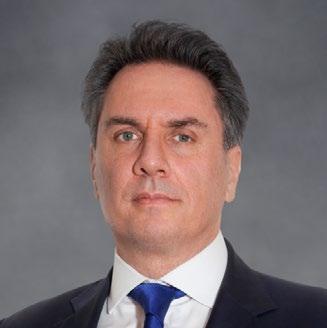
What is the most significant trend in your practice today?
The use of artificial intelligence in legal practice is increasing, not merely as a research aid but as a tool shaping strategy, drafting, and client expectations. The real issue is no longer whether AI should be used, but how it should be used responsibly. We must now assess reliability, confidentiality risks, and the extent to which outputs can be trusted or require independent verification. The competitive advantage lies in understanding where AI adds value and where professional judgement must prevail.
What is one important skill that you think everyone should have?
Active listening. Many practitioners listen only to respond, rather than to understand. Effective advocacy and advisory work depend on absorbing not only what is said, but also what is implied, omitted, or misunderstood. Listening first enables a more precise and persuasive response, whether addressing a client, a witness, a tribunal, or opposing counsel.
What songs are included on the soundtrack to your life?
I prefer distinctive music to mainstream, particularly from the 1980s, but my foundations are orchestral. Playing timpani in the county youth orchestra meant living with certain works through repeated rehearsal and performance, which left a lasting impression, notably Tchaikovsky’s Fifth, Mahler’s Second, Rimsky-Korsakov’s Scheherazade, and Bizet’s Carmen. That same preference for character and originality carries through to artists such as A-ha, The Waterboys, and The Pixies.
If you could give one piece of advice to aspiring practitioners in your field, what would it be?
Prioritise experience over immediate financial reward or promotion. Early roles should expose you to real responsibility, varied work, and strong mentors. Technical ability develops through doing, not by observing. Positions that accelerate learning, even if less lucrative at first, tend to yield greater long-term returns. Also, be open to practising in areas of law you never expected to.
Where has been your favourite holiday destination and why?
Vancouver stands out for its blend of natural beauty and accessibility. The proximity of mountains, forests, and the coastline creates a setting that feels unspoilt yet practical. It offers both tranquillity and activity, without the sense of overdevelopment that affects many comparable destinations.
What was the last book you read?
I tend to have more than one book on the go. Having read English at university, I have a continuing appetite for literature that I need to satisfy. I regularly dip into À la recherche du temps perdu by Marcel Proust, a long-standing ambition, and have recently explored Hungarian writers, including Satantango by László Krasznahorkai. Alongside that, I read more contemporary work such as Flesh by David Szalay, and poetry, particularly Three Poems by Hannah Sullivan.
What has been the best piece of advice you have been given in your career?
My pupil master told me to rely on memory rather than on notes. Mastery of the material, rather than dependence on written prompts, enhances confidence, flexibility, and
responsiveness. In advocacy, the ability to engage without constant reference to documents is often decisive.
What personality trait do you most attribute to your success?
A willingness to understand opposing perspectives. Seeing the other side clearly is essential in both advocacy and negotiation. It enables one to anticipate arguments, identify weaknesses, and find points of resolution that might otherwise be missed.
What does your perfect holiday look like?
The ideal holiday combines novelty with adventure. A destination should offer opportunities to explore, learn, and engage with a different environment, whether through culture, cuisine, or landscape. Passive relaxation has its place, but a memorable holiday for me usually involves active discovery.
What has been your most memorable experience during your career so far?
Building and developing an in-house team and watching its members grow in skill and confidence. Contributing to others’ progress provides a different, often more lasting, form of satisfaction than individual achievement alone.


For partnership enquiries, contact Ben Sullivan at +44 (0) 20 3965 4386 or email ben@thoughtleaders4.com Join key Asset Recovery professionals from across the Middle East, encompassing Fraud, Insolvency, Recovery & Enforcement at this unique 6 Annual event. th
Authored by: Georgette Adonis (Managing Partner) - Adonis Advisory Group
March 2026 tested institutional resilience across the Gulf.
Iranian strikes targeted regional energy infrastructure, including UAE facilities. Dubai International Airport experienced temporary flight suspensions. The Strait of Hormuz faced severe disruption. Traditional safe-haven assumptions failed as markets responded unpredictably.
As counsel advising UAE-based family offices, I observed that clients with properly structured digital asset custody maintained operational capability when traditional infrastructure experienced stress. The difference came down to legal structures established before crisis conditions emerged.
The UAE’s digital asset regulatory framework—VARA in Dubai, ADGM’s FSRA, and federal oversight through the SCA and UAE Central Bank— demonstrated institutional authority value during uncertainty.
VARA-licensed platforms operating under Dubai’s Virtual Assets Law continued services throughout March. Compliance infrastructure VARA established—mandatory capital adequacy, operational controls, cybersecurity standards, regular audits—created resilience. Licensed entities maintained business continuity specifically because regulation mandated preparation.
ADGM custodians maintained operations. The FSRA’s Virtual Asset Framework, established in 2018 as the first comprehensive global regime for spot digital assets, provided institutional oversight for custody, brokerage, and exchange functions. FSRA-supervised firms serviced clients without material interruption.
The distinction between regulated and unregulated platforms became apparent. UAE-supervised entities maintained banking relationships and capability. Unlicensed platforms experienced bank terminations as institutions reduced unregulated counterparty exposure amid heightened compliance scrutiny.
Multi-jurisdictional custody provided redundancy. UAE family offices maintaining positions through qualified custodians in both ADGM and external jurisdictions maintained access when single-jurisdiction concentration created vulnerability.
Clear documentation mattered. Holdings documented through custody agreements specifying bankruptcyremote segregation, title retention, and rehypothecation prohibition provided legal certainty. VARA’s Custody Services Rulebook, finalized March 2025, established strict requirements including ninety-five percent cold storage minimums and client asset segregation. Platforms meeting these standards demonstrated clearer standing.
Insurance and liability allocation proved important. ADGM-regulated custodians maintained coverage and documented liability allocation. Clear contractual frameworks addressing technical failures, access delays, and force majeure provided recourse mechanisms absent in informal arrangements.
Custodians with UAE banking relationships maintained fiat currency conversion. Converting digital assets to AED or other currencies without delay proved valuable. Licensed platforms with partnerships through Zand Bank, MBank, and RAK Bank maintained conversion capability.
Stablecoin infrastructure functioned as designed. AED-backed stablecoins under UAE Central Bank regulation, including AE Coin issued under CBUAE oversight, maintained pegs and settlement functionality. The Payment Token Services Regulation framework established reserve requirements ensuring backing during stress.
Regulatory reporting capabilities reduced compliance friction. Platforms with AML/CFT infrastructure and blockchain analytics continued processing while maintaining sanctions screening. Manual processes experienced delays; automated systems maintained throughput.
Proof of funds verification intensified. UAE institutions accepting large digital deposits demanded enhanced due diligence. Holders with comprehensive acquisition documentation, custody chain records, and beneficial ownership proof completed verification efficiently.
Digital custody within UAE regulatory frameworks provides operational resilience when properly implemented. The qualifier “within UAE regulatory frameworks” is essential. Platforms lacking VARA, ADGM, or DIFC licensing created exposure, not resilience.
Diversification of qualified custody reduces single points of failure. Maintaining custody through multiple licensed entities—combining VARA platforms with ADGM custody—creates redundancy. Single-institution or singlejurisdiction concentration introduces fragility.
Stablecoins matured into legitimate UAE treasury infrastructure. UAE Central Bank Payment Token framework and ADGM Fiat-Referenced Token regulations provide legal foundations. Properly licensed stablecoins with transparent reserves offer liquidity traditional banking cannot match during stress.
Ongoing legal maintenance remains essential. Service provider licensing requires continuous verification—VARA maintains a public licensed VASP registry. Custody agreements need periodic review as regulations evolve.
Sanctions compliance complexity increased. Emergency measures required real-time compliance infrastructure. VARA and FSRA licensees with established programs and blockchain intelligence adapted more readily than manual-process platforms.
Regulatory coordination across UAE jurisdictions proved valuable. Understanding which regulator—VARA, FSRA, DFSA, or federal authorities— maintained oversight prevented compliance gaps. The September 2024 VARA-SCA cooperation agreement clarified protocols: Dubai VASPs obtain VARA licenses and automatically register with SCA for UAE-wide operations.
Work exclusively with licensed entities. VARA-licensed platforms under Dubai’s Virtual Assets Law, ADGM entities under FSRA, or DIFC firms under DFSA provide infrastructure functioning under oversight. Unregulated alternatives introduce unnecessary risk.
Implement comprehensive documentation. Custody agreements must address segregation, specify title retention, establish bankruptcy remoteness, and prohibit rehypothecation absent written consent.
Documentation requires UAE digital asset law counsel review.
Maintain multi-jurisdictional qualified custody. Holdings across multiple licensed custodians in different UAE jurisdictions prevent localized issues from creating complete access loss.
As of February 2026, ADGM hosts over forty licensed digital asset entities.
Establish documented governance. Investment policies should address digital management during stress, including rebalancing thresholds, authorized actions, and decision authority. Pre-established procedures prevent rushed volatility decisions.
Verify ongoing compliance. Licensing status, regulatory updates, and enforcement actions occur continuously.
VARA issued fines totaling AED 7.5 million in June 2025 for marketing violations.
Monitoring regulatory developments is not optional.
March 2026 demonstrated that when regional stress impacts traditional infrastructure, properly structured digital custody within UAE regulatory frameworks maintains functionality. This is not speculation advocacy but recognition that institutional-grade digital custody under VARA, ADGM, or federal UAE supervision provides operational resilience.
The infrastructure exists. VARA’s rulebook system, ADGM’s institutional framework, and UAE Central Bank stablecoin regulations create legal certainty. Frameworks functioned under pressure.
Building crisis-resilient wealth structures requires engagement with qualified UAE legal counsel and licensed UAE custodians before the next crisis. Those engaging thoughtfully with UAEregulated infrastructure gain meaningful resilience. Those relying on unregulated alternatives accept unnecessary risk.


Commercial Litigation , International Arbitration & Mediation
A specialist community connecting private practice lawyers, barristers and industry experts involved in complex, crossborder commercial litigation and international arbitration.

The global Asset Recovery community bringing together key practitioners across contentious insolvency, fraud litigation and international enforcement.
Contentious , Non -contentious , Tax , HNW Divorce
With decades of expertise and a network spanning 38+ jurisdictions, we specialise in exclusive, high-impact events for the private client wealth industry. Our mission is to foster crossborder referrals, collaboration, and growth through trusted networking and insightful content.

A unique community connecting practitioners from both Competition Law and Litigation.
Commercial Litigation , Asset Recovery, Private Client HNW Divorce
A Unified Community for Legal, Financial & Advisory Professionals in the Middle East
Non-performing loans (“NPLs”) are a perennial challenge for financial stability, reflecting both macroeconomic stress and the strength of a jurisdiction’s legal and regulatory architecture. Defined broadly as loans overdue by more than 90 days or where repayment is otherwise doubtful, NPLs tie up bank capital, distort credit allocation, and undermine investor confidence.
In the Middle East, the post-pandemic and post-rate-hike environment has placed new pressure on borrowers. While Gulf Cooperation Council (“GCC”) banking systems generally remain well capitalised, the broader region— including Egypt, Jordan, and Lebanon— faces more acute asset-quality concerns. As policymakers strengthen legal and institutional frameworks for banking recovery, Europe’s recent experience with large-scale NPL resolution provides valuable lessons for the Middle East.
The challenge of resolving NPLs in the Middle East is not purely financial—it is fundamentally legal. Recovery
rates depend on the ability of lenders to enforce security, restructure debt, and resolve insolvency efficiently. Historically, several jurisdictions have faced procedural delays, weak collateral enforcement, and insufficient secondary markets for distressed debt.
In many Middle Eastern economies, banks have long preferred informal workouts or state-mediated restructurings rather than judicial enforcement. Moreover, the region’s significant share of Islamic-finance assets introduces complexity: structures such as murabaha and ijara contracts can blur the line between debtor and asset ownership, complicating foreclosure or asset transfer.
Reform momentum is nevertheless visible. The UAE has overhauled its insolvency framework, introducing structured preventative settlement and reorganisation mechanisms. Saudi
Arabia’s Bankruptcy Law of 2018 established formal reorganisation and liquidation procedures aligned with international best practice, including plan-based restructurings and creditor voting mechanics. Egypt and Jordan have modernised insolvency and credit-information regimes. However, enforcement remains uneven, timelines remain long, and investor appetite for distressed assets remains constrained.
Europe’s sovereign-debt crisis left several banking systems burdened with unsustainable NPL ratios. The subsequent response was not limited to bank recapitalisation, but focused on building scalable market infrastructure for NPL disposal. While some GCC reforms mirror Europe’s toolkit in direction—restructuring procedures, enforcement reform, digitalisation— the most transferable European lesson lies in the creation of regulated secondary markets. This approach was consolidated at EU level through Directive (EU) 2021/2167 on credit servicers and credit purchasers.
By 2016, Greece’s NPL ratio exceeded 45 per cent. of total loans.
The resolution strategy combined state support, market discipline, and procedural reform:
The Hellenic Asset Protection Scheme (“HAPS” or “Hercules”), modelled on Italy’s GACS framework, provided state guarantees on senior tranches of NPL securitisations, conditional on genuine risk transfer through the sale of mezzanine and junior tranches to private investors. This created a repeatable, bankable execution channel for large portfolios.
A regulated servicing ecosystem was scaled rapidly, with licensed servicers assuming responsibility for loan management and recovery, effectively removing NPLs from bank balance sheets without reliance on outright nationalisation.
Enforcement reforms-including nationwide electronic auctions and procedural acceleration-reduced execution risk and timeline uncertainty.
This combination proved decisive. By the mid-2020s, Greece had reduced NPL ratios to single-digit levels, restoring market access and investor confidence.
The Middle East is now entering a similar phase of reform.
In the GCC, regulators have tightened prudential standards and promoted modern recovery mechanisms. The UAE’s financial-free-zone jurisdictions— such as the DIFC and ADGM—operate English-law-inspired insolvency regimes with creditor-friendly enforcement, serving as regional benchmarks. Saudi Arabia’s reorganisation procedures under its bankruptcy law are gaining use, and the Kingdom’s Vision 2030 emphasises transparency and investor protection.
Beyond the Gulf, Egypt has implemented credit-bureau systems and modern insolvency legislation. Lebanon, by
contrast, remains constrained by the absence of a comprehensive bankresolution framework. In practice, any credible clean-up would require both (i) enforceable resolution legislation and (ii) an asset-segregation mechanism— whether an AMC or equivalent—mirroring Europe’s separation of non-core ‘work-out assets’ from viable banking operations.
Several jurisdictions are exploring asset-management companies (“AMCs”) as regional analogues to European ‘bad banks’. Europe offers clear comparators: Cyprus’s KEDIPES as a state-linked AMC, and Greece’s Hercules scheme as a securitisationbased alternative that industrialised portfolio transfers through state-backed senior notes.
Digitalisation is another frontier. Electronic collateral registries, fintech-enabled auction platforms (as implemented in Greece), and judicial specialisation or fast-track procedures have shortened enforcement cycles without requiring wholesale institutional redesign.
Regulatory alignment attracts capital. Consistent NPL definitions, provisioning standards, and capital-relief treatment facilitate regional and international participation.
Shari’a-compliant structuring is essential. Enforceable, Shari’a-aligned, securitisation and restructuring tools are necessary for credibility in Islamicfinance-heavy markets.
Professional servicing capacity is nonnegotiable. Europe’s recovery depended on licensed, supervised servicers operating under clear conduct rules.
At EU level, NPL resolution ultimately became a market-infrastructure project. Directive (EU) 2021/2167 institutionalised this shift by harmonising servicer authorisation and borrower protection, transforming NPLs into a scalable, investable asset class rather than an ad hoc workout exercise.
Europe’s experience provides a coherent blueprint for the Middle East’s next phase of NPL reform:
Risk transfer mechanisms matter. AMCs or securitisation frameworks that remove distressed assets from bank balance sheets are critical to restoring lending capacity.
Legal certainty and speed are decisive. Europe relied on statutory enforcement timelines, electronic execution, and functional judicial specialisation rather than creating new institutions.
Market transparency enables scale. Harmonised disclosure and conduct standards-culminating in Directive (EU) 2021/2167-made cross-border NPL investment viable. A GCC-wide minimum data template and borrowertreatment framework would serve a similar function.
The management of non-performing loans sits at the intersection of law, finance, and policy. The Middle East’s banking sectors have proven resilient, yet the next test will come from how effectively legal systems can absorb, restructure, and dispose of distressed assets.
Europe’s post-crisis experience— particularly Greece’s combination of securitisation, servicers, and enforcement reform—demonstrates that decisive, technically coherent, action can convert systemic stress into market opportunity.
For Middle Eastern regulators and practitioners, the challenge is to replicate this success through predictable, investor-friendly frameworks adapted to local legal and Shari’a realities. Doing so will not only reduce NPLs but also strengthen regional financial stability, attracting global capital and deepening trust in Middle Eastern banking systems.