The 2026 Offshore Edition
Cross-Border Wealth, Trust Governance & Succession
Cross-Border Wealth, Trust Governance & Succession
We are delighted to present the 2026 Offshore Edition of our HNW Litigation & Advisory Magazine, exploring the evolving world of offshore private wealth and the key legal, regulatory, and commercial developments shaping the sector. This edition features expert insights on trust governance, succession planning, cross-border taxation, international wealth structures, and other emerging issues affecting the private wealth landscape, alongside interviews with a selection of our Corporate Partners. Additionally, we have included our HNW Litigation & Advisory Wordsearch, fill in to redeem a 15% discount to one of our HNW events. *excluding Circles




Paul Barford
Founder / Managing Director 020 3398 8510
email Paul
Danushka De Alwis
Founder / Chief Operating Officer 020 3580 5891
email Danushka
Yelda Ismail Group Marketing Lead 020 3398 8551 email Yelda
Dan Sullivan
Business Development & Partnership Manager 020 3059 9524 email Dan
Jonathon Buesnel, Fairway
Dominique Burnett, Fairway
Matthew Franks, Payne Hicks Beach
Emma Cooper Hedges, Withers
Charlie Tee, Withers
Charles Richardson, Sinclair Gibson
Oliver Bishop, Sinclair Gibson
Daniel Bogomolnyi-Moulin, Sinclair Gibson
Natasha Oakshett, Withers
Kate Taylor, Withers
Daniel Wren, Withers
Katie Douglas, Highvern
Anthony Carter, Stuart Leach Associates
Silvia Devecchi, Kingsley Napley
Alfred Ip, Hugill & Ip
Fenner Moeran KC, Wilberforce Chambers
Roxane Reiser, Wilberforce Chambers
Jack Brister, International Wealth Tax Advisors




Chris Leese
Founder / Chief Commercial Officer 020 3398 8554
email Chris
James Baldwin-Webb
Director, Private Client Partnerships 07739 311749
email James
Rachael Dinneen
Strategic Partnership Manager - Private Client 020 3398 8560 email Rachael
Jamie Biggam
Strategic Partnership Executive 020 3398 8592 email Jamie
Kerrie Le Tissier, KLT Consulting
Josh Lewison, Radcliffe Chambers
James Sheedy, Collas Crill
Victoria Yates, Collas Crill
Maxine Bodden Robinson, IMG Trust
Matthew Paton, 5 Stone Buildings
Norson Harris, Reckon Financial Services
Paul Whitehead, Maurice Turnor Gardner
Steve Gully, Alex Picot Trust
Greta Pender, Collas Crill
Kevin Loundes, Abacus Trust Group
Marcel Jalloh, Independent
Andrea Moja, SLCLEX
Luca Bisconti, SLCLEX
Filippo Turato, Capital Trustees AG
Arnaboldi, Capital
AG
Raffaella M. Colombo, Capital Trustees AG





Authored by: Jonathon Buesnel (Client Director, Private Client) - Fairway
In an era defined by geopolitical instability, rapid regulatory evolution, and the largest intergenerational wealth transfer in history, private wealth is no longer static. Ultra high net worth (UHNW) families are quickly restructuring, reassessing long standing arrangements, and seeking jurisdictions that can offer stability without losing sophistication. This change has allowed Private Trust Companies (PTC) to emerge as the preferred governance vehicle for families who require more control, agility, and long term continuity across borders and generations.
However, the profile of global wealth is also shifting.
Nextgenerationbeneficiaries are stepping into leadership roles with expectations shaped by digital fluency, global citizenship, and an increased focus on transparency and purpose driven investing.
Families are no longer simply looking for a place to hold wealth; they are looking for a jurisdiction that can future proof it.
Jersey has stood out as the jurisdiction of choice in this landscape. Its political stability, internationally respected regulatory framework, and forward thinking approach to digital assets position it as a jurisdiction capable of supporting complex, globally mobile families. As wealth becomes more international, more diversified, and more scrutinised, Jersey’s PTC regime offers a blend of flexibility, credibility, and substance that few International Finance Centres (IFCs) can match.
As current world events cause uncertainty in the market, UHNW families are reevaluating where their structures sit. Political risk, mistrust of governments and tax regimes are all playing a part in where families restructure.
There is also a drive in digital-first expectations as next-gen beneficiaries take the lead. Traditional fiduciary models are being challenged by demands for real time reporting, ESG alignment, and structures capable of holding both conventional and digital assets. With Jersey’s investment in fintech infrastructure and regulated digital asset service providers, it is well positioned to meet these new expectations.
As digital assets enter mainstream wealth planning, the need to find a neutral, sophisticated jurisdiction to coordinate global holdings is rapidly increasing. Families are looking for secure, well regulated jurisdictions to hold and structure digital wealth and shareholders are looking to Jersey due to its political stability and recognised regulatory framework. Jersey’s clear regulatory approach to virtual assets provides confidence where other IFCs remain ambiguous, making it a preferred jurisdiction for assets in motion.
UHNW families are increasingly seeking greater control and continuity across borders, particularly as global mobility rises and intergenerational wealth transfers accelerate at scale.
Jersey’s flexible PTC regime, which in many cases has no requirement for licensing, offers a pragmatic, cost effective environment for families seeking tailored oversight. As PTCs continue to evolve, they are increasingly viewed not just as governance vehicles but as strategic family institutions.
Their ability to integrate professional advisers, embed family values into decision making, and adapt to changing asset classes makes them uniquely suited to the modern wealth landscape. For globally mobile families navigating succession, regulatory complexity, and cross border investment, the PTC offers a level of resilience and long term stability that traditional structures struggle to match, reinforcing why they are rapidly becoming the default choice for sophisticated UHNW families.
Jersey’s ecosystem further enhances the effectiveness of PTC structures by combining regulatory clarity with a mature fiduciary environment, enabling families to build governance models that are both flexible and resilient.
As global regulatory expectations continue to tighten, UHNW families are increasingly aware that offshore structuring now demands far more than technical compliance. International initiatives such as the Common Reporting Standard (CRS), economic substance requirements, and enhanced AML frameworks have shifted the landscape toward greater transparency and clear governance. Families are therefore prioritising jurisdictions that can offer not only tax neutrality but also credibility, legal certainty, and a proven commitment to international cooperation.
In this context, Jersey’s regulatory consistency and engagement with international standards provides a level of assurance that is increasingly important for families structuring crossborder wealth
For globally mobile families navigating an increasingly complex compliance landscape, Jersey offers a rare combination; a jurisdiction where substance is embedded, governance is robust, and regulatory expectations are clear. This credibility, paired with its stability and sophistication, is a key reason why families continue to look to Jersey for their long-term wealth planning.
As global wealth continues to diversify and regulatory expectations intensify, the demand for structures that combine flexibility, transparency, and long term resilience will only grow. Families will increasingly seek jurisdictions that can demonstrate both substance and innovation, particularly as digital assets, cross border mobility, and next gen governance priorities reshape the private wealth landscape. Jersey is well placed to remain at the forefront of this evolution, offering the stability, expertise, and forward thinking regulatory environment needed to support the next generation of globally mobile UHNW families.

What has been the best piece of advice you have been given in your career?
Having a conversation is key – finding that common ground, whether it’s a client, an intermediary or a colleague. Get the communication right and the progress follows.
What motivates you most about your work?
Finding solutions to problems. Whether it’s a client who needs help finding their way through a generation transfer, or a colleague who wants to talk through a situation, I enjoy figuring out how to make things work.
What is the most significant trend in your practice today?
Trying to future-proof structurally and jurisdictionally in this uncertain world.
Where has been your favourite holiday destination and why?
Melbourne: I loved its laidback vibe, cool museum, quirky suburbs and the largest chocolate éclair I’ve ever encountered while snacking in a Greek/Turkish bakery.
What does the perfect weekend look like?
That would be a blend of routine and trying something new. So having a family brunch in our local café then heading out to see an exhibition or go to a film we all want to see. Eating features heavily in our favourite things to do, which makes living in Singapore ideal!
What would you be doing if you weren’t in this profession?
Teaching English literature to undergraduates.
What advice would you give to your younger self? Say yes to the things that scare you.
What cause are you passionate about?
Ensuring continued funding for public libraries; they are a source of free education for all, and one of the few places in modern life that you don’t have to pay to exist in.
What is one important skill that you think everyone should have?
The ability to put yourself in others’ shoes. It’s too often talked about as if it is innate, but it is developed through practice.
What has been your most memorable experience during your career so far? My first trip to Shanghai. Everything about the city was remarkable: the size, the scale, the ambition and mix of old and new in everything, from buildings to food and culture. I was told Shanghai is not just a city for the Chinese, but a city for the world, and it certainly felt that way to me.







As an independent, owner-managed fiduciary group Fairway is committed to delivering client-centric solutions that endure. Headquartered in Jersey, with offices in Dubai, Kuwait, Singapore and Madeira, we offer seamless, director-led services across Private Client, Corporate, Funds, and Pensions. Our award-winning team combines innovative solutions with administrative and technical excellence, ensuring each client's unique needs are met with precision and care.






Consciously independent.







For our Private Clients, we offer bespoke services tailored to manage and transfer family wealth across generations. Our offerings include Trust, Company and Foundation Incorporation and Administration, Directorship Services, Family Office Solutions, and Private Trust Companies. Our director-led team delivers tailored, long-term solutions for effective family wealth management and generational wealth transfer.














Whether by virtue of historic family ties to other countries or as a result of newly-acquired wealth, many people are now fortunate enough to own property in more than one jurisdiction. This can be both a pleasure and a pain. Cross-jurisdictional asset ownership provides scope for confusion in predeath succession and tax planning and also for unintended family inheritance disputes post-death; however, these can be avoided easily with the aid of some joined-up advice.
Take the example of a long-term UK resident with real property and a bank account in a jurisdiction which is part of the Commonwealth and the inheritance laws of which are based on English Common Law – call it Laputa – and all his other assets in the UK. The
individual wishes to leave the Laputan real property to his daughter who is based in Laputa, as his other children and their descendants (all now based in the UK) will have no use for it.
In this situation the individual may wish to execute two Wills: one dealing with his UK assets, and another dealing just with his Laputan assets and appointing executors from the Laputan side of his
family. UK executors often find that they must leap several administrative and procedural hurdles before they can deal with assets in other jurisdictions. With particular regard to real property – which may need inspecting, maintaining, and selling – it can be useful to appoint a trusted family member as an executor ‘on the ground’ who can deal more efficiently with third parties in the foreign jurisdiction.
If different executors are chosen for different jurisdictions, the person making the Wills should ensure that the individuals appointed are aware of each other’s appointment and that their relationship is cordial enough for them to co-operate rather than obstruct one another when administering separate parts of his estate.
Individuals should take care that their Wills are specific – and mutually exclusive – as to which assets are to be administered under which Will. Uncertainty may result after death if the Laputan Will in the scenario above states that it covers all of the individual’s assets in Laputa, but is partly superseded by a later English Will which states that it has effect over the individual’s movable property worldwide, which would include the Laputan bank account and chattels within the Laputan house itself.
As in the UK, Laputan grants of probate do not distinguish between immovable (real) property and movable property, so our testator’s Laputan executor has the ability to administer to all of his Laputan assets. After his death, if the Laputan executor distributes the money in the Laputan bank account in the mistaken belief that it is hers to distribute, the beneficiaries under the English Will (if different from those under the Laputan Will) will be put at a disadvantage unless the English executor is able either to recover the absent funds or to make adjustments in favour of the disadvantaged beneficiaries.
is a long-term UK resident, UK inheritance tax will need to be paid in respect of his worldwide assets, including the Laputan house. If the Laputan house is left by his Laputan Will to his daughter in Laputa, his UK executor (who is liable for paying inheritance tax in the first instance) has the right under English law to recover the inheritance tax due on the Laputan house from her. This could be problematic if she is left only with an illiquid asset such as a house and receives no other inheritance. In that case she may need to sell the house, possibly against her wishes, in order to reimburse the UK executor for a large inheritance tax liability. Her inheritance, poorly structured, thus becomes a nuisance rather than a meaningful benefit to her. (Note (i) that in practice, recovery of IHT from non-UK beneficiaries may be difficult to enforce, and (ii) that relief from IHT may be available if tax is payable on the same assets in Laputa, either by way of unilateral relief or by virtue of a double tax treaty.)
Imagine a different scenario, where an individual leaves the UK for Laputa and loses her long-term resident status but retains a UK house for some years after her departure. This house (alone among her assets) will still be subject to UK inheritance tax on her death. She may opt to prepare only a Laputan Will, but her executors will still need to bear in mind the possibility that they may need to pay UK inheritance tax (and will certainly need to fulfil compliance obligations with HM Revenue & Customs even if none is payable) on her death. This could be the case whether she dies with the UK house still in her estate or whether she makes a gift of it in the seven years prior to her death.
Another neglected consideration is the burden of any inheritance tax on foreign property. As the individual in our scenario
The scenarios above show that, when an individual requires multiple Wills or simply holds assets in multiple jurisdictions, it is essential that their advisers in different jurisdictions work together. If our testator in the first scenario above instructs an English solicitor to prepare a new Will for him several years after his Laputan solicitor prepared a Laputan Will, he should pass a copy of his existing Laputan Will to his English solicitor, and, if at all possible, put his two legal teams in contact so that the resulting documents will dovetail rather than clash.
Estate planning can be expensive and complex, but if carried out as an allinclusive, intentional exercise – instead of a series of piecemeal, spur-of-themoment decisions – individuals may prevent their succession plans for their foreign property from becoming castles in the sky. In the process a great deal of money and even more trouble can be saved.
A distinguished full-service law firm providing tailored legal advice and litigation services for domestic and international high-net-worth individuals, families, family offices, and commercial clients.

ESTATE & SUCCESSION PLANNING
UK & OFFSHORE TAX ADVICE
CONTENTIOUS TRUSTS & PROBATE
FAMILY, CHILDREN, DIVORCE & SURROGACY
Payne Hicks Beach LLP is a firm of solicitors who take pride in building strong client relationships based on trust, integrity and the vision to succeed.

Private Client Summer School
26 - 28 August 2026 | Downing College, Cambridge, UK
The Transatlantic Tax & Wealth Planning Forum - 5 Annual th 15 September 2026 | Carpenters’ Hall, London
HNWs in Disputes: Retreat
23 - 25 September 2026 | Hilton London Syon Park Hotel & Spa, UK
Offshore Trusts Disputes Forum - ConTrA
29 - 30 September 2026 | The Royal Yacht Hotel, Jersey, Channel Islands
Contentious Probate & Inheritance Claims Circle
8 October 2026 | The NoMad, London, UK
Private Client Middle East Circle
14 - 16 October 2026 | The Ritz-Carlton, Ras Al Khaimah, Al Wadi Desert, UAE
Private Client Circle of Trust UK
4 - 6 November 2026 | Royal Berkshire Luxury Country Hotel - Ascot, Berkshire, UK
HNW Divorce Litigation Flagship Conference - 6 Annual th 19 November 2026 | One Whitehall Place, Central London
High Conflict Children Disputes Circle
26 - 27 November 2026 | Hanbury Manor Hotel & Country Club, England
HNW Tax: The New Era
3 - 4 December 2026 | Pennyhill Park Hotel & Spa, Bagshot, UK
HNW Divorce Circle
4 - 5 March 2027 | Hanbury Manor Hotel & Country Club, England



In addition to the public benefit that comes with it, charitable giving can be a strategic element of personal tax planning. Understanding the intricacies of UK tax rules is, however, crucial for individuals seeking to enhance their charitable impact whilst minimising their personal tax exposure or that of their estate.
The UK offers some important tax breaks for charitable giving. Of these, three are considered particularly valuable. First, elimination of capital gains tax (‘CGT’) (gains realised on gifts to charities being, broadly, CGT exempt). Second, reduction of income tax (this may be delivered by way of gift aid or payroll giving in respect of cash donations or via the reliefs available for gifts of ‘qualifying investments’ or land). Third, a reduction in inheritance tax (‘IHT’) (gifts to charity are IHT exempt and a lower rate of IHT, 36% instead of 40%, is available to testators who leave 10% or more of their net estate to charity).
While the decision to give can be a simple one, deciding how to implement this in practice can be difficult. It is important to consider (i) what you want to accomplish with your charitable giving, (ii) what types of assets are suitable for donation given your personal position and tax profile,
(iii) what are the tax and financial implications of your donation, both in the UK and abroad, (iv) whether income tax or CGT relief should be prioritised and (v) when is the optimal time to take action.
Lifetime planning should be done on a case-by-case basis to identify whether it is most efficient for you to gift the asset directly to the charity, or first sell the asset and then gift the proceeds. This is because gift aid relief and relief for gifts of assets to charity operate differently. Where assets are standing at a loss, you may want to consider ‘harvesting’ the loss by selling the asset before gifting the proceeds to charity so as to prevent the loss from being eliminated. Should you have appreciated investments that have exceeded the target allocation, it may be possible to combine charitable giving with investment portfolio rebalancing.
Cross-border issues also need to be considered carefully.
Taxpayers need to be mindful that the definition of qualifying charities for UK tax purposes was restricted with effect from 15 March 2023.
Each jurisdiction has its own tax relief regime and particular care is needed should you be exposed to tax in more than one country. Donations to USbased charities, for example, are unlikely to qualify for tax relief in the UK unless they have been established on a ‘dual-qualified’ basis. Where this is not an option, you may need to consider alternatives, such as utilising a dualqualified donor advised fund (‘DAF’).
Non-cash gifts during lifetime may offer a tax efficient opportunity to further the charitable aims of a number of taxpayers and address issues otherwise arising in relation to ‘problem’ assets such as illiquid assets which have appreciated substantially or assets where there is a mismatch in the tax treatment in the UK and abroad (LLC interests being a prime example). Carefully planned charitable donations may kill two birds with one stone –maximising your charitable impact whilst simplifying your tax profile going forward. Donors making gifts of business interests do, however, need to ensure that they do not fall foul of rules regarding qualifying investments or the tainted donations rules, which disapply the usual tax reliefs if donors obtain a financial benefit for themselves from making a donation to charity.
Before accepting any privately held assets, charities will need to examine whether the assets earmarked for donation fall within their gift acceptance policies and confirm a path to liquidity. A review is likely to be required of transfer restrictions and any contingent liabilities (amongst other things). DAFs may serve as useful vehicles to receive assets with some potential liquidity in the near future and then distribute the sale proceeds to a group of charities recommended by the donors, thereby simplifying the donation process for both donors and charities.
Your charitable legacy can continue long after your passing with appropriate estate planning.
A testator can make gifts to charities in several ways. You may wish to consider charitable provision by including specific legacies in your Will, providing for specified charities to take a share of your residuary estate or including charities as potential beneficiaries of a discretionary trust (assuming the trustees exercise their discretionary powers within 2 years of your death in favour of a named charity). Alternatively, you may wish to consider establishing a charitable vehicle within the Will itself.
Implementing planning to secure the reduced rate of IHT can be highly effective from a tax perspective, whether via the drafting of the original Will or a post-death variation. A variation is particularly attractive where the original gift to charity represents c.5-9% of the net estate. In these circumstances, increasing the charitable gift to 10% will, in fact, increase the receipts in the hands of your noncharitable beneficiaries.
Charitable giving can be an important tax planning tool. But it’s not always plain sailing. Restrictions do apply and it will be important to instruct a tax advisor to help you navigate the choppy waters. Withers can advise you on the nuances of charitable giving in a variety of jurisdictions and help you identify a tax smart approach to maximise your charitable impact both during lifetime and after death.
This document (and any information accessed through links in this document) is provided for information purposes only and does not constitute legal advice. Professional legal advice should be obtained before taking or refraining from any action as a result of the contents of this document.
We are trusted advisors to families, and more than this, to governments,


What is the best film of all time?
I’m the wrong person to ask - I rarely start or finish films these days. That said, I’ll always sit down with my children for My Neighbour Totoro, largely for Joe Hisaishi’s music, which reminds me I must book the West End production!
What do you see as the most important thing about your job?
Doing the right thing for clients, first and always, while increasingly setting the right internal example.
What advice would you give to your younger self?
Many would love to be in the position you’re in. Treat that as a responsibility and live up to it.
What motivates you most about your work?
I’m a functional perfectionist. I enjoy precision, even knowing there’s rarely a “perfect” answer. The real satisfaction lies in finding an elegant solution – one that fits a client’s life and quietly improves it.
What is one work-related goal for the next five years?
Having recently moved to join Sinclair Gibson, I’d like to become part of the fabric of the firm, contributing to shared success and enjoying the process along the way. This is actually my second stint at the firm; my first was 18 years ago as a paralegal - one of our secretaries recently dug out a payment chit I signed on 30 July 2008 to prove it!
Who has been your biggest role model in the industry?
I’ve been fortunate to learn from many people, taking a little from each. The calm, measured practitioners tend to leave the deepest impression. Two stand out: Alexandra Sarkis at Hunters Law for her consistently excellent approach to everything; and Sandra Paul at Kingsley Napley, one of the leading criminal lawyers, whose calm reassurance in her clients’ most stressful moments –overheard when our departments used to share working areas on Fridays –was truly awe-inspiring.
What is one important skill everyone should have? Write things down, properly. A good notebook, used well, is still hard to beat.
Favourite holiday destination and why?
I’m not especially intrepid, but Namibia still stands out (even if it was more than 20 years ago), with Sri Lanka a close second. Vast, varied, and quietly remarkable – it offered a rare sense of perspective and space to think.
What is the most important trend in your practice today?
Several forces are converging - AI, client mobility, and legislative change. Together they’ve brought private client work into sharper focus, particularly for younger clients who might otherwise delay planning.
What would you be doing if you weren’t in this profession?
I’d like to say sport, but I suspect the life of a professional would test me. More realistically, something involving strategy, problemsolving and discipline, which, on reflection, sounds a lot like private client law…
by: Oliver
A little over a year ago, on 6 April 2025, the significance of domicile in UK tax law was drastically diminished. It has been replaced with the new concept of “long term residence”.
Unsurprisingly, the consequent headlines and analysis predominantly focused on those non-domiciled individuals who are now deemed UK long term resident and subject to a much harsher regime of UK taxation. However, there are groups of other internationally mobile persons for whom the new tax regime has also proved highly consequential.
This article focuses on one of those groups: persons born in the UK with a UK domicile of origin and who have been resident outside the UK for the past decade or more (perhaps for overseas work purposes). These persons may now enjoy a better UK
tax position than previously, particularly in the event of a return to the UK. We might call these persons ‘returning expats’.
Under the old regime, upon returning to the UK ‘returning expats’ fell into a category of persons called ‘Formerly Domiciled Residents’ or ‘FDR’ – a form of deemed domicile that brought their worldwide assets back into the UK IHT tax net from the start of their second UK tax year.
However, with the Formerly Domiciled Resident regime abolished from April 2025, the UK tax status of these returning expats is now considered with reference to their number of years of residence.
If (broadly speaking) a returning expat has been non-UK resident for more than ten of the last 20 years, upon returning to the UK he or she can now enjoy up to ten years of a more advantageous IHT regime under which UK IHT is imposed only on UK situs assets. Any assets held outside of the UK will not be subject to UK IHT for that period.
It is therefore worthwhile for these individuals to consider changing their asset base to switch from UK situs assets to non-UK situs, and
consequently mitigate their UK IHT exposure.
Moreover, these individuals are now able to settle highly advantageous excluded property trusts (trusts holding non-UK situs assets which are exempt from UK IHT). These will continue to be excluded property trusts for so long as the settlor remains non long term resident – i.e. up to ten years. Particularly for elderly returning expats, it may be worth considering settling assets into trust whilst they are non-long term resident: should they die prior to collecting sufficient years to become UK long term resident, those trusts will continue on after death with the preferential treatment of being outside of the scope of UK inheritance tax.
Returning expats will also potentially be able to utilise the new ‘FIG’ regime, which grants freedom from UK income tax and capital gains tax on most income and capital gains received or realised overseas for a period of four years. Moreover, the assets deriving from this income and capital gains can actually be brought into the UK free of UK tax. This is a notable benefit compared to the prior remittance
regime, where tax was charged when foreign income or capital gains were brought into or enjoyed in the UK. Of course, the availability of the new FIG regime, at four years, is much shorter than that of the remittance regime, which was available for up to 15 years.
The eligibility is stricter than the test for being non long term resident for IHT purposes, and requires an individual to have been non-UK resident for ten consecutive tax years prior to becoming UK resident. However, the remittance basis was of course not available to Formerly Domiciled Residents –whereas such persons can now utilise the new FIG regime.
that distributions may be subject to UK IHT within the beneficiary’s personal ownership.
Finally, distributions from non-resident trusts which would otherwise be taxable can also be received tax free under this regime. The benefit of receiving tax free distributions from non-resident trusts should be weighed with the fact
Individuals born in the UK and with a UK domicile of origin, who now are considering returning (or may have recently returned to the UK) after spending significant time abroad, ought to check their UK tax status and the potential opportunities for them under the new regime. They might be pleasantly surprised.




As significant wealth passes from one generation to the next, families are increasingly focused on how they structure and pass on their assets. Transferring wealth from one generation to the next is likely to trigger material inheritance taxes if left until death. Lifetime gifting can mitigate this cost and family investment companies and family limited partnerships have become increasingly popular structures for clients who want to transfer wealth to the next generation, but are worried about making that wealth readily accessible to younger family members before they are ready. Both structures separate the ownership and control of those assets, but do so in different ways.
For the family investment company, control can be retained through the make-up of the board, which is
responsible for operational matters of the company and whether dividends should be declared. A lot of flexibility can also be built in for the shareholders. For instance, shares with full voting rights but just 1% of the economic value in the company and no access to dividends can be held by the parents, with another class of shares which provide no voting rights but 99% of the economic rights can be issued to the next generation. The voting rights retained by the parents will enable them to influence the make-up of the board and other key shareholder level decisions.
For a family limited partnership, the parents can act as the General Partner, retaining management over the structure and when distributions are made, while the next generation come in as Limited Partners, holding economic rights. The partnership agreement can then be tailored to ensure control is retained by the General Partner and restrict the actions of Limited Partners.
Both structures are used effectively for inheritance tax planning, but a key difference between company and partnership structures is the income and capital gains tax treatment.
If the family investment company is managed and controlled in the UK, it will be subject to UK corporation tax on all income and gains. As UK corporation tax is currently lower than the highest rates of income tax holding income producing investments in a company can be more tax efficient than holding them personally. Given the capital gains tax rate is slightly lower than the corporation tax rate, gains from investments will incur slightly higher tax in the company structure, but the tax liability is, of course at the company level not on the individual, which may alone be attractive. When extracting
value from the company, if dividends are being declared there may be additional UK tax charges so a family investment company is best used as an income tax deferral vehicle where there is no immediate need to extract liquidity.
And it should be borne in mind that due to the various anti-avoidance rules which apply to companies, Family Investment Companies can present greater tax complexity compared to Family Limited Partnerships however; such risk can be managed through careful planning and proper advice.
By contrast, the family limited partnership is fully tax transparent: partners are taxed personally on their share of partnership profits as they arise, regardless of whether those profits are distributed. This avoids the two layers of taxation you have with the company option, however if the structure generates a lot of income, UK resident partners will suffer the higher UK income tax cost (of up to 45%).
Privacy is often a key consideration for clients setting up asset-holding vehicles. Family Limited Partnerships set up outside the UK can offer greater privacy for the individual partners involved, even if they are resident in the UK. On the other end of the spectrum, a family investment company incorporated in the UK would need to regularly update Companies House with information on its directors and persons with significant control, which will be publicly available. However privacy can be managed through the use of unlimited companies or nominee shareholders.
The choice of jurisdiction for the structure is key for both an asset protection perspective and privacy. Both family limited partnerships and family investment companies can be established outside the UK, and certain jurisdictions provide a degree of asset protection through firewall legislation and non-recognition of
foreign court rulings. There will also be different reporting requirements in different jurisdictions. As the legal, tax and regulatory framework also varies from jurisdiction to jurisdiction, we often compare a range of suitable jurisdictions for clients to consider when setting up a new structure.
Because a partnership can, in some cases, fall within the definition of a collective investment scheme, it is crucial to consider the regulatory position when setting up a family limited partnership. Fortunately, in the vast majority of cases, the regulatory issues can be managed for family limited partnership. However, Family investment companies do not share this regulatory exposure, so that’s one less thing to think about for the family investment company.
on foreign companies (including the UK), which can restrict the portability and flexibility of a structure if the family relocates. This is a key factor to take into account when setting up a longterm succession planning vehicle where family members are internationally mobile.
In short, both companies and partnerships offer flexible and robust structures for tax and succession planning. There’s no one-size-fits-all solution: the right choice of entity and jurisdiction for a new structure comes down to the family’s asset matrix, the jurisdictions involved and long-term goals - and that’s exactly what we help clients navigate.
Partnership structures may suit certain individuals who would, if they used a company, suffer unfavourable tax implications in a second jurisdiction. Some jurisdictions impose exit taxes
This document (and any information accessed through links in this document) is provided for information purposes only and does not constitute legal advice. Professional legal advice should be obtained before taking or refraining from any action as a result of the contents of this document.





















Authored by: Katie Douglas (Client Director) - Highvern
Trustees have always faced difficult decisions. What has changed is the level of scrutiny applied to those decisions.
Across Jersey, other offshore jurisdictions and the UK, courts continue to see blessing applications, mistake applications, disputes and challenges to trustee decision-making. At the same time, modern trust structures are operating in an increasingly complex environment. Families are more internationally mobile, family dynamics are often more complicated, asset classes have become more sophisticated, and tax and regulatory regimes have to be considered across multiple jurisdictions.
Many trusts established twenty or thirty years ago now find themselves operating in a world very different from the one in which they were created.
As second and third generation beneficiaries mature, they often seek greater transparency, question historic decisions and challenge assumptions
that may never previously have been tested. Trustees are therefore increasingly required to justify decisions that may have been taken many years earlier by different trustees, corporate trustee directors, advisers or office holders.
In practice, many disputes are not driven by whether a trustee reached the “right” decision. They arise because the trustee cannot demonstrate how it reached that decision.
When a court reviews a trustee’s actions, a lot of focus is given to the decision making process and how the trustee reached the outcome. What information was available? What enquiries were undertaken? What advice was obtained? Were relevant considerations taken into account? Were irrelevant considerations disregarded?
In many cases, the trustee’s contemporaneous records become its strongest protection.
Most contentious trust matters tend to arise from a relatively familiar group of trustee decisions.
These include:
• significant distributions;
• unequal treatment of beneficiaries;
• the addition and exclusion of beneficiaries;
• decisions not to benefit a particular beneficiary;
• restructuring or sale of family assets;
• investment decisions;
• trustee appointments, retirements and removals; and
• decisions taken in response to tax, regulatory or family developments.
These decisions are not necessarily inherently problematic. Indeed, they are often central to the proper administration of a discretionary trust.
The challenge arises when beneficiaries later question why a decision was made or whether relevant information was properly considered.
The trustee’s ability to demonstrate a robust decision-making process is frequently as, or more important than, demonstrating the decision itself was objectively correct, as two different trustees with a similar set of circumstances could reach different decisions.
One of the most common weaknesses exposed during contentious proceedings is inadequate contemporaneous evidence.
A minute recording that a distribution was approved provides limited assistance years later if there is no evidence of the considerations that informed the decision.
Trustees should ensure that their records demonstrate:
• the issue being considered;
• the powers being exercised;
• the information available at the time;
• the advice received;
• the factors considered both for and against the proposed course of action;
• any risks identified; and
• the reasons for the eventual decision.
A well-documented file should allow an independent reader to understand not only what happened but why it happened.
This is particularly important in relation to significant or potentially contentious decisions where beneficiaries may later challenge the trustee’s reasoning.
Modern trust administration often requires extensive engagement with beneficiaries.
Beneficiaries may provide information regarding financial needs, health
concerns, educational requirements, business activities, tax residence or future plans. Equally, trustees may receive competing narratives from different branches of a family.
Where such information forms part of the trustee’s deliberations, it should be properly recorded.
Trustees should also be cautious about accepting assertions at face value where they are material to a proposed decision. If a beneficiary alleges that another beneficiary has financial difficulties, substance abuse issues or has previously received assurances from a former trustee, for example that a loan would not have to be repaid, the trustee should consider what enquiries or evidence are required before placing reliance on those assertions.
The objective is not to conduct an investigation into every family disagreement. Rather, it is to demonstrate that relevant matters were considered appropriately and that decisions were based on evidence rather than assumption.
Wishes, it should be comfortable that the document remains relevant to current circumstances.
Years later, contemporaneous evidence of the trustee’s understanding of the settlor’s intentions may prove invaluable if decisions are challenged.
a Trustee’s
In today’s environment, trustees routinely require legal, tax, accounting, valuation, investment and regulatory advice.
However, simply obtaining advice is not enough.
Trustees should ensure they are receiving advice from the appropriate adviser, that the adviser has been properly instructed and that the assumptions underpinning the advice are correct.
Just as importantly, trustees should ensure the advice is advice upon which they are entitled to rely.
This issue often arises where advice has been obtained by a settlor, family office, beneficiary or underlying company rather than by the trustee itself. Trustees should be cautious about adopting third-party advice without understanding its scope, purpose and limitations.
Letters of Wishes often play a central role in understanding the purpose of a trust and the settlor’s intentions.
However, a Letter of Wishes written twenty years ago may not accurately reflect current family circumstances.
Children become adults. Families expand. Businesses are sold. Beneficiaries relocate. Tax regimes evolve.
Trustees should therefore treat Letters of Wishes as living documents rather than static historical records.
Where appropriate, discussions with settlors regarding changes in family circumstances should be documented and updated Letters of Wishes obtained. If a trustee intends to place significant reliance upon a Letter of
Incoming trustees should be particularly vigilant during onboarding. Historic advice may have been entirely appropriate when originally obtained but may no longer reflect current legislation, family circumstances or tax and regulatory/reporting requirements.
One of the most common risks in longterm trust administration is reliance on historic advice, particularly given the number of significant tax and legal changes over recent years.
Trustees should regularly revisit whether previous advice remains valid and whether the assumptions on which it was based continue to apply.
This is particularly important in crossborder structures where changes in residence, domicile, tax legislation or reporting obligations can materially alter the risk profile of a transaction or structure.
A good trustee’s records should demonstrate not only the advice received but also the assumptions, uncertainties and risks considered as part of the decision-making process.
Even the best advice provides limited protection if it is implemented incorrectly.
Many disputes arise not because advice was unavailable, but because the transaction ultimately undertaken differed from the one originally advised upon or because key implementation steps were overlooked.
Trustees should therefore ensure there is a clear audit trail linking the advice received, the decision taken and the actions ultimately implemented.
No trustee can eliminate the possibility of challenge. Modern trusts involve increasingly complex assets, evolving family dynamics and ever-changing legal and fiscal landscapes.
What trustees can do is ensure that their decision-making process is robust, informed and properly documented.
Good records demonstrate that relevant information was considered. They evidence engagement with beneficiaries. They record settlor wishes, advice received, assumptions made and risks identified. They show that the trustee exercised its discretion properly and for the purpose for which its powers were granted.
Ultimately, when a trustee decision is scrutinized years later, the question is often not whether a different decision could have been made but whether the trustee can demonstrate how it reasonably reached the decision it did.
In an era of increasing scrutiny and challenge, good records remain one of the trustee’s most effective forms of protection.

CORPORATE FUNDS PRIVATE CAPITAL

Authored by: Anthony Carter (Consultant) - Stuart Leach Associates
The digital revolution put once enterprise-level tools in the hands of anyone who has the will and knowledge to use them; though the latter requirement diminishes as AI continues to evolve. An internet connection is now the sole barrier to becoming an amateur graphic designer, software engineer – or investigative journalist.
The ability to research, write and selfpublish has led to an oversaturation of coverage and opinions on current events. Conversely, news breaks and gathers momentum from the most unlikely of sources – be it a niche Substack, or a single well-placed tweet.
A classic example is the bank-run and eventual collapse of crypto exchange FTX which can be traced back to a single tweet by Changpeng Zhao, founder of rival exchange Binance, on 6 November 2022.
When others are the first to learn of a breaking crisis, the space for an initial response becomes limited to non-existent. With self-published investigations, there is no editorial input, no legal check, and no opportunity for a ‘right to reply’ - a cornerstone of traditional journalism. That key window, which once provided a grace period in which to consult the crisis team, construct a comprehensive strategy, and deploy a structured response, is not guaranteed.
This danger has become more prevalent in litigation, where reputational impact is becoming as critical to clients as the financial and legal outcome. Threats arising from media exposure must be considered in tandem with the legal strategy. Yet, reputational risks can diverge from legal ones – a positive outcome in the course of a legal process may involve a critical disclosure that draws public attention and scrutiny. In other cases, a seemingly benign submission can lead to enormous public uproar.
Take the example of the ‘Disney lawsuit’, where following a woman’s allergyrelated death at Disneyworld Orlando, Disney’s lawyers made a submission to the court, claiming that the deceased’s husband could not file a public lawsuit, and would have to go through “individual-binding arbitration” – as per the terms and conditions of his Disney+ subscription. Whilst the submission was legally sound, its dissemination in the media resulted in a reputational catastrophe for the company.
Such cases will serve to embolden adverse parties, already looking to harness any minor advantage in a dispute, to further weaponise opinions outside the courtroom. Previously, minor details lying outside the public interest would have failed to gain the attention of serious journalists. Now, they can rapidly be deployed through social media, catch the eye of content-hungry influencers and instantly go viral.
In this new environment, risk mitigation has become a proactive game, where staying on the front foot is paramount. Key narratives and critical responses must be disseminated at the very outset of a breaking crisis. A reactionary approach threatens to leave key messaging lost in a spiralling cacophony of influencer and blogger hot-takes, forcing comms teams to put out endless fires, rather than promote and reinforce a single unified response.
This is best accomplished via a thorough analysis of the reputational risks that can arise from, and exist beyond the legal filings. Such a ‘reputation audit’ involves an exhaustive investigation into the public-facing elements of an individual or entity, conducted through the lens of a investigative reporter or potential adverse party. This serves to not only identify key risks that can –independently or tangentially – bloom into full blown crises, it can also show certain apparent risks to be benign, from a reputational perspective. Once these risks are established they can be tackled proactively or responsively.
A strong responsive approach can involve producing pre-approved, bespoke responses to potential reputational risks, should they ever surface publicly.
Having these messages to hand can save significant time at the critical initial juncture, killing a story before it can gestate, gain traction and go viral. Conversely, some risks will inevitably come to light, and are best faced head on: handled through proper communications channels, the narrative can be controlled, and the danger neutralised.
However, the optimal response may not be the one which secures the most coverage. At this junction, traditional PR deviates from specialised, strategic communications – with the latter being rooted in the core principles of advertising. Critically, any strategy must serve a precise and clearly defined objective: who exactly are you trying to influence, and to what end?
Often, this will not be the public at large. Your target audience may not go beyond your shareholders; or a few select, high-level decision makers –persons who are unlikely to see hardsecured coverage in a national level publication. Precision also provides additional space for nuance: your messaging can be considerably more targeted, and tailored to the exact aim you are looking to accomplish.
As in sport, a cohesive and structured defence provides more freedom for a creative and devastating attack. Don’t let your foolproof argument be ruined by an avoidable crisis.


What do you see as the most important thing about your job?
Discretion, without question. My clients entrust me with not just their finances, but the most intimate aspects of their personal lives. I cherish that relationship and never take it for granted, always striving to treat it with the utmost respect. From that foundation, everything else follows -the technical excellence and the compassion required to guide them through complex situations.
What advice would you give to your younger self?
Don’t rush to prove yourself in every room. Confidence comes with time, and so does judgment. Early in my career, I sometimes equated speed with success - now I understand that thoughtful, measured advice is far more valuable, and well worth waiting for.
What motivates you most about your work?
The small victories you achieve every day when working closely with a client and your team. Helping clients emerge from one of the most turbulent periods of their lives with clarity, dignity, and a sense of control is enormously rewarding. In matrimonial law, the stakes are often life defining, and getting it right genuinely changes futures. Equally, helping colleagues become the best version of their professional selves - and trusting them to do so - is deeply motivating.
What is the best film of all time?
I’m not naturally a “best of all time” kind of person. I tend to see too many sides to any given question to settle on just one answer - it wouldn’t be very me.
What is one work-related goal you would like to achieve in the next five years?
I would like to contribute meaningfully to shaping more effective and authentic interactions in international family law - grounded in genuine understanding and true communication. Too often, there is a tendency to pay lip service to complexity rather than fully engage with it, or to focus narrowly on one aspect of people’s lives. That is not how modern lives operate, and we need better frameworks that reflect that reality.
Who has been your biggest role model in the industry?
I’m fortunate to work with them every day. My fellow partners combine formidable intellect with remarkable composure. They remind me that strength in this field is not about aggression, but about control - of the facts, the narrative, and oneself. And, importantly, they always find a way to share a genuine laugh at the end of the day.
What is one important skill that you think everyone should have?
The ability to listen without judgment. True listening - not simply waiting to respond - is rare and extraordinarily powerful. When you remove judgment, you create space to understand what is really driving a situation, beyond what is being said.
Where has been your favourite holiday destination and why?
Sardinia. It offers a perfect contrast to the intensity of my work - beauty, simplicity, and a slower pace that encourages you to be fully present. It’s one of the few places where I can genuinely switch off. It is also sufficiently varied to circumvent the aforementioned ‘best of’ conundrum! You can have 10 holidays in one.
What is the most significant trend in your practice today?
The increasing international movement of clients and the evolving complexity of modern wealth, alongside new business challenges such as the impact of AI. Matters now often involve international assets, digital wealth, and private equity structures. Combined with a growing preference for private dispute resolution, the work is becoming both more technical and more discreet.
What would you be doing if you weren’t in this profession?
I would likely have remained in journalism, which was my first qualification. It shares many of the same foundations - curiosity, communication, and an interest in people. At its core, my work has always been about understanding and navigating human relationships under pressure.



Our Family and Divorce team has a wealth of experience dealing with complex trust structures in the context of divorce. We are adept at predicting and dealing with the complexities which can arise.
Careful consideration is essential from the outset to ensure the correct strategy is adopted for our client, whether that is the divorcing beneficiary, non-beneficiary spouse, trustees, or other beneficiaries who may be impacted. For more information, please scan the QR code or give us a call.

Authored by: Alfred Ip (Partner) - Hugill & Ip
Ownership passes cleanly. Authority, expectations, and family harmony rarely do. Here is what your succession plan is still missing.
There is a peculiar optimism that afflicts successful founders. Having built an enterprise from nothing, they sign a Will, perhaps layer in a discretionary Trust, and consider the future secured. It is a comforting thought. In the context of a living family business, it is also dangerously incomplete.
A Will answers one question with admirable precision: who gets what when you die. What it cannot do — and was never designed to do — is tell your children who runs the company, whether profits get reinvested or distributed, or what happens when one sibling works eighty-hour weeks while another contributes nothing beyond an expectation of quarterly dividends. These are not theoretical concerns. They are the fault lines along which family business empires fracture. That is why business families need a Family Constitution.
The urgency is not abstract.
According to the Financial Services and the Treasury Bureau, Hong Kong was home to 3,384 single family offices by the end of 2025 –a 25% increase in just two
years. More than 75% of those families continue to own and actively operate their legacy businesses, and 40% already have secondgeneration members in leadership positions.
In Hong Kong’s ecosystem of listed family-controlled issuers and complex offshore trust structures, intergenerational transition is no longer a distant planning exercise. It is the defining reality of the private wealth landscape right now. The question is not whether wealth will pass. Competent lawyers and accountants have largely solved that equation. The harder question – the one that keeps founders awake – is whether authority, expectations, and responsibility will transfer in any kind of orderly fashion, or whether the family will spend the next decade proving the old proverb right: shirtsleeves to shirtsleeves in three generations.
A Will can transfer shares with perfect legal precision and still leave the family in chaos. Imagine a founder who divides the business equally among three children. Child A runs the company full-time. Child B plays no active role but expects regular income. Child C wants to exit entirely and cash out.
The Will has done its job. The family, however, now has three shareholders with incompatible objectives and no agreed framework for resolving them.
This is the mistake families make most often and most expensively: they assume that legal succession of ownership is the same as orderly succession of power. It is not. A Will distributes assets. It does not govern relationships, and relationships are where the real disputes live.
A Family Constitution is a governance framework that addresses the intersection between family relationships, ownership, and business stewardship. However, a crucial distinction must be made: the Constitution itself is typically a statement of intent – a soft-law moral compass. It is not a legally binding contract in its own right.
If the Constitution dictates a specific policy, it is the underlying legal architecture that gives it teeth. The Constitution is the instrument that makes those binding documents work coherently together rather than pulling in different directions.
To be useful, a Constitution must be concrete. Returning to our three children: a well-drafted Constitution solves their dilemma by mandating a clear dividend policy to satisfy Child B, establishing a structured, pre-agreed buyout mechanism (perhaps funded by company profits or insurance) for Child C, and reserving management authority for Child A, allowing them to operate without interference.
Furthermore, it addresses the issues where families most reliably divide: how future leaders are identified and assessed, what qualifications a family member needs before joining
the payroll, and what the mandatory Alternative Dispute Resolution (ADR) process is – such as tiered mediation or family council arbitration – before a disagreement escalates into formal litigation.
One of the most important points for any client to understand is that a Family Constitution cannot float free of the legal structure beneath it. If the Constitution says one thing and the Shareholders’ Agreement says another, the family has not resolved their problem. They have simply provided both sides with better ammunition.
The Constitution sets out the family’s philosophy and expectations. The Shareholders’ Agreement and Articles of Association give transfer restrictions and voting rules their binding legal enforceability.
Similarly, while a Trust Deed and Letter of Wishes embed stewardship principles into the fiduciary architecture, clients must remember that a Letter of Wishes is non-binding on trustees. For families requiring absolute certainty regarding business continuity, the Constitution should guide the implementation of more robust mechanisms, such as Private Trust Companies (PTCs) or reserved powers under specific trust legislation, allowing the family to retain definitive control over key business decisions.
The facilitated family meetings required to draft a Constitution – where grievances are aired, values are aligned, and consensus is painstakingly forged – serve as the ultimate stresstest for family governance. This negotiation process prepares the next generation for the weight of stewardship far more effectively than the final signature on the page.
In contentious Trust and Estate work, the visible dispute – the Will challenge, the ownership battle, the application for accounts – is almost always the final expression of a much older failure. Beneath the legal filings lies a familiar pattern: years of ambiguity about roles, unmet expectations, and perceived entitlement that nobody addressed while the founder was still in a position to do so.
Families routinely spend substantial resources on tax planning and asset protection while avoiding the far more difficult conversation about how the family will make decisions together. That hesitation is understandable. It is also expensive. Most family disputes arise not from a shortage of wealth, but from a complete absence of agreed rules.
A carefully structured Family Constitution bridges the gap between inheritance planning and living governance. It reduces ambiguity and makes it considerably less likely that private family tension becomes very public, and very costly, litigation.
The best time to build that architecture is while the founder is still alive, authoritative, and willing to have the hard conversation. After that, the options narrow considerably. If you are relying solely on a Will to secure your family business, your succession plan is incomplete. Now is the time to consult with specialized legal counsel to audit your existing architecture and begin the vital process of drafting a comprehensive Family Constitution.
Perhaps the most significant oversight families make is viewing the Family Constitution simply as a document to be drafted and signed. In practice, the true value lies in the process of creating it.
The English court’s jurisdiction to vary a nuptial settlement in financial remedy proceedings under section 24(1)(c) of the Matrimonial Causes Act 1973 has often been described as “broad” and “unfettered”. Consistent with this description, the recent decision of Kroupeeva v Kroupeev 2026 EWFC 85 reaffirms that the court’s variation powers under s24(1)(c) MCA 1973 can extend through corporate holding structures to underlying assets. However, the decision also highlights the court’s reluctance to make variation orders where such orders are likely to prove worthless.
S 24(1)(c) MCA 1973 gives the English court the power to vary a nuptial settlement upon divorce. A settlement is “nuptial” if it is made upon the husband in the character of husband or in the
in the character of wife, or upon both in the character of husband and wife.
There is nothing new (at least at first instance) in the principle that a nuptial settlement may include both a corporate structure holding the underlying asset(s), and the underlying asset(s) themselves (see eg. Ben Hashem v Shayif & Anor [2008] EWHC 2380 (Fam) and N v N and F Trust [2005] EWHC 2908 (Fam)). Indeed, that is so even if the company is itself held by a trust of which one or both spouses are beneficiaries (see DR v GR at 16 and NR v AB & Ors 2016 EWHC 277 (Fam)).
This flexibility arises out of the fact that the term “settlement” under s24(1) (c) – although not defined in the MCA itself – bears a very wide meaning. In Brooks v Brooks 1996 AC 375, Lord Nicholls stated that “settlement” is not a term of art with one specific or precise meaning, and that its meaning depends on the context in which it is used. The main criterion is that “the disposition must be one which makes some form of
continuing provision for both or either of the parties to a marriage with or without provision for their children” (391).
There are good policy reasons why the court should, in appropriate circumstances, be able to reach through such structure. As Mr Justice Mostyn stated in DR v GR [2013] EWHC 1196 (Fam), the court’s jurisdiction under s24(1)(c) would be “totally emasculated” if the imposition of a company between a trust and its underlying asset was an impediment to making a variation order disposing of underlying assets, bearing in mind that in the great majority of cases there is an interposed company and it is usually offshore.
In Kroupeeva v Kroupeev [2026] EWFC 85, James Ewins KC, sitting as a Deputy High Court Judge, held that an offshore discretionary trust (the Rossini Trust) and its wholly owned offshore company (Waterford) comprised a nuptial settlement capable of variation under s.24(1)(c) Matrimonial Causes Act 1973 (“MCA 1973”).
The court did not, however, order any a variation, preferring to transfer to the wife all liquid non-trust assets (namely five properties worth c. £40.5m), coupled with a lump sum £60m (giving the wife c. 33% of the total visible assets). The wife’s variation application was adjourned with liberty to restore as a means of enforcement in the event of non-payment by the husband.
The parties, both of Russian origin and dual Russian-British nationals, married in 1988, moved to London in 1993 and separated in 2023 after a 35-year marriage. The husband built substantial wealth through investments in the energy sector. Waterford was established as the principal holding vehicle for those investments. The Rossini Trust was settled in 1995. Waterford’s entire shareholding was settled into the Rossini Trust in 2003. Both the Rossini Trust and Waterford were originally set up in Guernsey but later migrated to the Seychelles.
Waterford’s assets included a controlling stake in Gulfsands Petroleum Plc and a minority shareholding in a Turkish company, Serra, which owned a villa complex that included a holiday property used by the family during the marriage.
The trust made substantial loans to the husband, derived from Waterford’s assets and profits. The husband accepted that those funds financed family expenditure and property acquisitions throughout the marriage.
The wife argued that the Rossini Trust and/or Waterford constituted a nuptial settlement. She sought variation orders transferring to her the Turkish villa, part of the Gulfsands shareholding and substantial lump sums to be paid out of the trust/company assets.
The court found (87) that the Rossini Trust made continuing provision for the husband, the wife and the children during the marriage and was accordingly a nuptial settlement. The court also found that the husband’s non-disclosure as to whether and how the specific underlying assets of the Rossini Trust played a part in the arrangement by which the continuing provision had been made was so poor that the court was justified in drawing adverse inferences against the husband, namely that the entire trust structuring including all its directly owned and underlying assets formed part of the nuptial settlement.
Accordingly, the trust and its underlying assets were capable of variation under s.24(1)(c). The court however declined to make any variation orders, stating “I
consider that such provision may prove to be, if not worthless in her hands, nonetheless of significantly impaired value” (115).
Possibly the most interesting part of the case is how it dealt with the entire holding structure as being a nuptial settlement, and therefore subject, at least potentially, to the court’s powers of variation under s.24(1)(c) MCA.
The judge noted that there was no appellate authority on the question of whether a court could deploy its powers of variation to extend through a corporate holding structure. He reviewed a number of first instance decisions, from which he extracted the proposition that the nuptiality of the settlement is derived from the ongoing provision made by the underlying assets.
He stated that (60) the court could define the nuptial arrangement to include both the nuptial asset(s) (or right(s) over the nuptial asset(s)) and the holding structure, and vary it accordingly. But in doing so, the court cannot impute nuptiality to any part of a settlement or arrangement that extends more widely than that which is making continuing (nuptial) provision. This illustrates the importance of ascertaining precisely what the relevant arrangement is and what property, company or contractual rights flow from it.
This reasoning is consistent with earlier authorities (Ben Hashem; DR v GR etc. above). The decision also reflects the broad meaning given to the term “settlement” per Lord Nicholls in Brooks v Brooks.
The court stressed that court’s power to look through a corporate holding structure when exercising its powers under s.24(1)(c) does not displace the principles in Prest v Petrodel [2013] UKSC 34. Per James Ewins KC, it the requirement that there should be a finding of nuptiality in respect of the arrangement as a whole, which distinguished the power “from those which are subject to the prohibition against ‘cutting across the statutory schemes of company and insolvency law’ (…) which are essential for the protection of those dealing with a company’” quoting Lord Sumption in Prest (at 41).
While the nuptiality requirement and the broad meaning of settlement do distinguish cases like Kroupeeva v Kroupeev from those like Prest where no such statutory gateway to variation exists, as the judge hinted, it would be wrong to think that Prest has no relevance to a variation application under s24(1)(c) where a holding company is involved. In particular, Lord Sumption’s dictum that “Courts exercising family jurisdiction do not occupy a desert island in which general legal concepts are suspended or mean something different.” (37) remains particularly relevant.
The wife’s claim to the Turkish villa illustrates the point. Waterford held only a minority shareholding in the company that owned the villa complex. The evidence did not establish that the trust’s minority shareholding in Serra gave the trust or the husband any proprietary right and/or contractual right of occupation to the villa itself.
The judge stated (80) “I find that the shares in Serra (…) gave H the ability to occupy the villa (…). However, I have no details or evidence as to the contractual or other basis by which the right of occupation was conferred and concluded that while H may have a “right”, his ability to occupy the villa (…) may fall somewhat short of an enforceable right to do so.”. In declining to make variation orders in respect of the Villa, the judge further stated that such orders would be “if not worthless in her hands, nonetheless of significantly impaired value” (115).
The decision highlights the court’s increasing emphasis on ensuring the effectiveness of its orders. Even where the court finds that a nuptial settlement includes a corporate holding entity and its underlying asset, the court may nonetheless decline to order any variation if the proposed relief is unlikely to produce a meaningful benefit.
Authored by: Jack Brister (Managing Member & Founder) - International Wealth Tax Advisors
The recent implementation of Form 708 (January 2026) and final regulations under Internal Revenue Code (IRC) §2801 (December 2025) have transformed what was long a largely theoretical regime into an operational reporting and tax system directed squarely at U.S. recipients of gifts and inheritances from “covered expatriates.”[4] IRC §2801 imposes a transfer tax, at the highest estate tax rate, on “covered gifts” and “covered bequests” received by U.S. persons from covered expatriates.[1]
This article focuses on legal and technical issues that are particularly salient for trust and estate practitioners. In addition, for KYC purposes, practitioners must know whether the origination of any gifts, bequests, funding, or distributions is associated with a U.S. covered expatriate.
Recent reports since the enactment of these rules indicate that almost seven thousand U.S. persons are expatriating
annually. This estimate is thought to be low, and not all these persons may be “covered expatriates.” The numbers may not be staggering, but the U.S. tax rules for being a “covered expatriate” are significant.
So are the responsibilities of professional trust and estate practitioners servicing international private clients, because these rules not only affect the covered expatriates but potentially their entire family. A brief review of the key definitions is in order.
A “covered expatriate” is generally an individual who relinquishes U.S. citizenship or long-term lawful permanent residence (green card holder) and meets one of the objective net-worth or tax-liability tests, or fails certain certification requirements, as defined in §877A(g)(1).[1][2] Section 2801 applies to gifts and bequests from covered expatriates made after June 16, 2008.[1]
“Covered gifts” and “covered bequests” encompass transfers, direct or indirect, from a covered expatriate to a U.S. person that are not otherwise subject
to U.S. estate or gift.[1] The §2801 tax is imposed on the U.S. recipient at the highest estate tax rate in effect for the year (currently 40%), after reduction by an annual exclusion and applicable foreign tax credits.
The inheritance tax regime of IRC §2801 applies broadly to:
• U.S. citizen and resident individual recipients.[1]
• U.S. trusts.[3]
• U.S. beneficiaries of foreign trusts if the trust has not elected to be treated as domestic for purposes of §2801.[3]
The §2801 analysis is performed at the level of the U.S. recipient—whether that is an individual, a domestic trust, or a U.S. beneficiary of a foreign trust. The IRC §2801 tax is a stand-alone tax not encompassed within the U.S. estate and gift tax regime. The filing of Form 708 does not displace any other required reporting, such as Forms 3520, 3520-A, 709, or 706/706-NA.
Form 708, United States Return of Tax for Gifts and Bequests Received From Covered Expatriates, is the return on which U.S. recipients report and pay the inheritance tax imposed by the IRC §2801 tax.[4] It is required if the aggregate value of covered gifts and bequests received in a calendar year exceeds the annual exclusion threshold (indexed; $20,116 for 2025).
As many, if not all, of us have experienced—regardless of the difficulty in obtaining information—the U.S. Internal Revenue Service (IRS) is not empathetic. They require and strictly enforce the rules with the attitude that all offshore activity is a scheme to avoid U.S. taxation.
You should also be aware that the U.S. Congress enacted a presumptive rule. It is presumed that the receipt of a gift, inheritance, or distribution to a U.S. person from a foreign person or structure is considered a covered gift or bequest unless sufficient evidence proves otherwise. Accordingly, the rules allow for the filing of a protective Form 708 where the practitioner may believe §2801 may not apply but wishes to start the statute of limitations.
Information required to prepare Form 708 includes: identification of the transferor and demonstration of expatriate status, characterization and value of each covered transfer, allocation between the trust and its U.S. beneficiaries, tracing of distributions,[4] [3] and a protective statement for protective filings.
[1] IRC § 2801, 26 U.S.C. § 2801.
[2] IRC § 877A(g)(1), 26 U.S.C. § 877A(g)(1).
For direct transfers—for example, a cash gift from a covered expatriate parent to a U.S. child, or a bequest under the expatriate’s will—the U.S. recipient is the taxpayer for §2801 purposes.[2] The more complex cases for practitioners involve indirect transfers: to a domestic trust which benefits a U.S. person(s), additions by a covered expatriate to an existing foreign trust with U.S. beneficiaries, and funding of foreign corporations, partnerships, or foundations that in turn benefit U.S. persons.
The regulations include tracing rules to determine if a trust or other distribution is attributable to a covered gift or bequest.[3] For foreign trusts, this can create a long-term “taint” of the trust corpus and require continuing tracking of §2801 exposure.
Where a domestic trust receives a covered gift or bequest, the trust itself is treated as the U.S. recipient and bears the §2801 liability.[3] Practitioners must still consider income tax consequences. [2] If a covered expatriate transfers property to a foreign trust and the trust does not elect to be treated as a U.S. trust, the U.S. beneficiaries are subject to the §2801 liability.[3]
A foreign trust may elect to be treated as domestic for §2801 purposes, in which case it, rather than the U.S. beneficiaries, bears the tax.[1] The foreign trust reporting Forms 3520 and 3520-A and related rules under
§§679 and 6048 remain relevant for income tax purposes as §2801 operates separately.
Where a trust with both U.S. and non-U.S. beneficiaries is funded by a covered expatriate, the allocation of §2801 liability can be particularly tricky. For domestic trusts, the trust-level tax will be borne proportionately by the beneficiaries under the trust’s expenseallocation provisions.
[3] T.D. 10027, Tax on Gifts and Bequests from Covered Expatriates, 89 Fed. Reg. 2,234 (Jan. 12, 2024); 26 C.F.R. §§ 28.2801-1–28.2801-7 (2024).
[4] IRS Form 708, United States Return of Tax for Gifts and Bequests Received from Covered Expatriates, Rev. 1-2026 (released Jan. 2026).






Authored by: Kerrie Le Tissier (Founder) - KLT Consulting
Private wealth disputes rarely begin when proceedings are issued. More often, the seeds are planted years earlier, through incremental changes to roles, records, relationships and assumptions.
A trust may have been well drafted, properly established under advice and competently administered for many years, yet still become vulnerable if its governance has not evolved with the structure itself.
This is particularly relevant in established international financial centres such as Guernsey, where many private wealth structures are now mature, multi-generational and substantially more complex than when they were first set up. What was once a
relatively straightforward discretionary trust with one holding company may now involve protector committees, private trust company layers, family office involvement, diverse assets and beneficiaries with very different expectations.
The structure may remain legally sound, but the vulnerability (and risk) lies elsewhere: in the gap between design and practice.
Governance drift is the distance between how a structure was intended to operate, how the documents say it should operate, how the parties assume it operates, and how decisions are actually made.
It often develops slowly and can go unnoticed for years. A protector
appointed as a safeguard begins to act as a family or settlor representative. A private trust company board becomes too accustomed to the views of one branch of the family. Regular distributions become treated as entitlements. Conflicts are recorded at the outset, then not revisited as circumstances change. Minutes become shorter as familiarity increases.
Governance drift is not usually caused by dishonesty, negligence or bad faith. Rather, it is often the product of longevity, familiarity and incremental change. Long-running structures breed habits, and those habits may work perfectly well during stable periods so nobody sees them as issues to be fixed. However, they can look very different after a death, divorce, loss of capacity, liquidity event, trustee or protector change, or beneficiary challenge.
Litigation changes the way governance is read. A trustee may remember a careful discussion; but the court will read the minute. A protector may believe they understood their role; whereas the documents, correspondence and conduct will be examined to see whether that belief was justified. A distribution may have felt routine and reasonable at the time; but a disappointed beneficiary may later ask whether the trustee exercised discretion at all.
The focus in a dispute is often on governance and the decision-making process: who held the power? what role were they performing? what information was considered? were conflicts identified and managed? was appropriate professional advice taken? is the rationale clear from the record?
A decision that was reasonable in substance can be weakened by governance drift and poor process. A difficult and controversial decision can be strengthened by robust governance and a clear, disciplined process.
Recent offshore trust cases show how, once a structure is challenged, attention may turn to the aspects of governance that tend to drift over time: roles, records, independence, conflicts and working relationships.
The Privy Council decision in A and 6 others v C and 13 others [2026] UKPC 11, commonly referred to as the X Trusts case, illustrates the risk of role drift.
The case concerned discretionary trusts containing protector consent powers. The issue was whether the protectors’ role was “narrow”, limited to
reviewing the legality of the trustees’ proposed decision, or “wider”, requiring the protectors to exercise their own independent fiduciary discretion. The Privy Council held that, on the construction of the relevant trust instruments, the wider role applied.
This case is significant because the scope of a protector’s role can often become blurred in practice. A protector may be treated as a family sounding board, a settlor’s proxy, or a procedural sign-off point, even where the trust instrument requires something more substantive. Trustees, protectors and families may operate for years on an assumption that has never been tested against the trust instrument.
Other cases highlight the importance of good record-keeping and robust decision-making processes. For example, in In the Matter of the LKM Discretionary Trust (Guernsey Judgment 34/2016), a blessing application case, the fact that the trustee had prepared detailed minutes, outlining its reasoning, assisted the Court in making its decision to approve the trustee’s decision to make a substantial distribution.
However, where minutes are thin on detail or short, templated resolutions replace reasoning, a decision that may have been carefully considered becomes harder to defend or support in litigation or a blessing application, because the record does not show the process by which it was reached.
The recent Guernsey decision in Bernheim v Krummenacher and ors [2025] GRC 060, also referred to as the Billevese Trust case, shows a different form of governance drift. The case concerned a dispute between the sole beneficiary of a Guernsey trust and certain protectors who resisted a restructuring of investment management arrangements in which they had a personal interest. The Royal Court ordered removal of those protectors.
Billevese is interesting from a governance perspective because the problem was not simply disagreement. It involved investment-related conflicts of interest, a breakdown in trust and confidence, and protectors whose continued involvement was said to obstruct proper administration. A role designed to provide oversight had become vulnerable because independence, conflicts and working relationships had not been carefully reviewed and managed.
Taken together, the cases point towards a practical governance question: does the structure still operate in a way that supports independent, informed and well-evidenced decision-making?
Mature structures benefit from being stress-tested before they are challenged. That testing is different from a narrow legal review of the trust instrument and different again from a forensic review after a dispute has crystallised. It looks at how the structure actually operates in practice.
Are fiduciary powers mapped? Are trustee, protector, private trust company and family office roles understood? Do minutes record reasoning, not just resolutions? Are conflicts revisited as circumstances change? Could the structure cope with death, incapacity, trustee retirement, protector deadlock or divorce?
These questions are easier to ask while the administration of the structure is running smoothly and relationships remain intact. They are harder to answer when a dispute arises and the records are being read backwards by beneficiaries, advisers and the court.
In mature private wealth structures, resilience often depends on whether those involved can explain not only what was decided, but who made the decision, in what capacity, on what information, with what conflicts, and why the decision was considered appropriate at the time.
Are equitable remedies available in contentious probate claims? A recent case, MacDougall v. Thomas [2026] EWHC 1142 (Ch), is notable for many reasons, among them an attempt to rescind a will for equitable mistake. The court rejected the attempt, but may have been wrong to do so, at least as a matter of law.
The traditional heads of claim in contentious probate cases are well known and go to the common law validity of a will. Thus, capacity, knowledge and approval, undue influence (to which we will return), fraud and due execution are all common law pleas.
The focus on the common law, and the absence of equity in contentious probate cases is largely the result of the pre-1875 structure of the courts, under which there were common law courts and courts of equity and the two jurisdictions were divided.
The validity of wills (which dealt with land) was a matter for the Court of King’s or Queen’s Bench, while the validity of testaments (which dealt with goods) were dealt with by the Ecclesiastical Court. That is why Banks v.Goodfellow was heard before a jury in the Court of Queen’s Bench, and why some of the principles were laid down by the Privy Council, the final court of appeal in Ecclesiastical cases (and many of them appear in Moore’s Privy Council Reports – Moo. P.C.).
A series of reorganisations of the court system saw the creation of the Court of Probate under an Act of 1857, which abolished the testamentary jurisdiction of the Ecclesiastical Court. The Court of Probate was abolished and its jurisdiction absorbed into the newly created High Court in 1873. Probate business was initially allocated to the Probate, Divorce and Admiralty Division,
before reallocation to the Chancery Division in 1970.
Thus, when the principles of contentious probate were being worked out, the law was developed in courts that applied only the common law and granted common law remedies: the will (or parts of it) could be proved or not. Those courts were not entitled to grant equitable remedies.
In modern times, there have been at least two hints before MacDougall that equity has some part to play in contentious probate business. They have been dropped in the context of undue influence and rectification.
Undue influence has long been seen as a potential gap in the way that the court handles will disputes. The court sets a high bar for a successful plea. The classic statements are from Hall v. Hall (1868) L.R. 11 P.&D. 481 (“Pressure of
whatever character … if so expressed as to overpower the volition without convincing the judgment”) and Wingrove v. Wingrove (1885) 11 P.D. 81 (“in a word – coercion”). The common law test is widely seen as more stringent than the test for equitable undue influence, because no presumption of undue influence is available, even where a will raises suspicion.
The more recent case of Rae v. Rae [2024] EWCA Civ 169 illustrates how hard it is to prove undue influence at common law.
The Law Commission’s much-discussed consultation paper and final report included a consideration of the law of undue influence in relation to wills. Ultimately, the Law Commission decided that it was too hard to prove undue influence and that the law should be reformed. However, they rejected a change in the law to apply the equitable rules, describing such an adoption as “neither workable nor appropriate”. Instead, the Commission has proposed a new statutory framework at clause 15 of their draft bill.
In Hubbard v. Scott [2011] EWHC 2750 (Ch), Proudman J included this tantalising paragraph in her judgment: “Although there may be room in a higher court for arguing that there should be no distinction between the equitable doctrine of undue influence and the probate doctrine of undue influence, [counsel] for the claimants made it clear in opening that this is not an appropriate case to advance such an argument and she does not intend to do so.”
Administration of Justice Act 1982 was met: had there been a “clerical error”? But there were two other relevant points.
First, the Supreme Court heard argument about (although did not address) the probate equivalent of rectification: the court’s ability to omit words from probate. Second, Lord Neuberger expressed the view that the court would have had a power to rectify a will as it would any other document and noted that “no convincing reason for the absence of such a power [had] been advanced.” Although he referred to that being a “common law” jurisdiction, the wider context indicates that the reference was to the equitable power.
A dip into one of the old cases offers the answer, building on the structure of the common law courts and the courts of equity. Allen v. M’Pherson (1847) 1 H.L. Cas. 191 was a case of undue influence and is one of the foundational cases for fraudulent calumny. What is interesting for this article is the case’s path through the courts.
House had to say. The majority held that a Court of Equity could intervene where the Court of Probate could afford no adequate or proper remedy. Indeed, there might be some cases in which the Court of Probate was bound to grant probate precisely so that the matter could come before a Court of Equity where justice could be done.
MacDougall is thus a welcome effort to open the door to the operation of equity in probate cases, and it is to be hoped that future efforts will continue.
A second hint about equity comes from Marley v. Rawlings [2015] A.C. 129. In that case, a husband and wife had accidentally signed each other’s will. The central question was whether the statutory test under s. 20 of the
The challenge to the will had started in the Ecclesiastical court, but that court had refused to entertain any objections unless they affected the whole will –thus rejecting common law probate rectification. The challenger had then gone to Chancery to seek relief. On the eventual appeal to the House of Lords from Chancery, it was held that he should instead have appealed to the Privy Council, and that Chancery thus had no jurisdiction on the facts of that case. But that was not all that the
The way trusts are drafted, in terms of their clarity and use of everyday language has improved immeasurably over the decades. Nevertheless, trusts established as a governance framework for assets that are intended to last decades inevitably come under strain when faced with unforeseen developments.
Some of the themes we, as professional advisers to trustees, are encountering in our reviews of older trust instruments include out-dated, inflexible and inadequate drafting for the modern world, that leave trustees unclear about their obligations and structures vulnerable to risk and disputes.
Mental capacity is becoming a central feature on the landscape of private wealth disputes.
According to the World Health Organization, around 60 million people are living with dementia, with nearly 10 million new cases added annually. Cases are projected to rise to over 80 million by 2030 and over 150 million by 2050.
Unless mental capacity is assessed regularly, when faced with a capacity challenge, it can be difficult to assess its strength. How are trustees realistically expected to do that?
Capacity issues in trusts manifest themselves when trustees, settlors or power-holders (such as protectors) lose
capacity to perform their duties, or to properly convey their wishes. This can lead to a paralysis in the administration of the trust, and potentially risk to trust investments. Even the suggestion of a want of capacity (falling well short of a formal determination of a lack of capacity) can lead to deadlock or to disputes.
Trustees and protectors are bound, as fiduciaries to give due consideration and adequate deliberation to all material factors affecting their decisions. The capacity of individual beneficiaries (both in terms of its impact on their material needs as well as on their ability to convey their wishes) is a highly material factor for fiduciaries to have regard to in their decision making.
Decision making that doesn’t take these properly into account is vulnerable to legal challenge.
The potential difficulties with capacity are amplified by the fact that international families are often not based in the jurisdiction of the trust.
Both the legal test and the mechanism by which a lack of capacity is established and dealt with is an intensely jurisdiction specific issue with very little by way of cross-border harmonisation of laws and approaches.
A settlor with reserved powers who becomes incapacitated in the UAE, for example, may not be deemed to be incapacitated for the purposes of giving their consent to a power of appointment under a trust governed by Jersey law.
The task for those who help high-networth (HNW) and ultra-high-net-worth (UHNW) individuals and families to structure their wealth using trusts is to plan with the prevalence of capacity issues clearly in mind.
For settlors and families willing to give their trustee’s latitude to take into account their personal wishes and goals when it comes to decisions about trust assets are invested a bespoke drafting solution that can achieve something very similar to in the new law in Bermuda.
Clear drafting can provide both legal certainty and a clearer framework to act in line with the trustee’s fiduciary obligations and accommodate the everevolving expectations of the families they serve.
For wealth creators and their beneficiaries, it is possible to create a structure that aligns the trust administration with their family legacy, succession planning and their values.
The beneficial class in many offshore trusts and wills will often be defined by reference to the relationship of ‘children or remoter issue of X’.
In recent years there has been an intense focus on sustainability, ethical or ‘impact’ investing and environmental, social, and governance (ESG) as a counterpoint to the traditional duties on trustees to seek to generate and maximise a financial return from trust assets.
These concepts are all concerned with incorporating criteria other than financial performance into the duties of trustees, to align the management of asset portfolios with personal views and values or broader societal goals.
Trustees have been looking at their trust instruments to find a way to try and square their traditional duties to preserve, and so far as is reasonable, to enhance the value of the trust assets with these concepts to seek to satisfy the desires and needs of the families they serve.
Bermuda has recently modified (by way of the Trustee Amendment Act 2025) the traditional duties of trustees from ‘preserving and enhancing’ to allow trustees to adopt so called ‘responsible’ or ‘sustainable’ investing approaches that can also reflect the settlor’s and beneficiaries’ wishes on broader social, environmental and other impacts.
Who counts as a child is obviously is important to trustees who may be presented – maybe unexpectedly - with a person claiming to be a beneficiary of a trust by reason of that status.
The landscape of modern family life has become increasingly complex, with many different permutations of how a parent-child relationship can arise that weren’t contemplated decades ago.
Unless the intention, as expressed in the trust instrument is crystal clear, who counts as a child can be a complex and sensitive one to navigate.
It is unsafe to assume what a settlor means by an apparently simple phrases like ‘my children’ is the same definition provided for in the general law in jurisdictions like Jersey, Guernsey, Cayman (ie where a trust is established).
Depending on the their background and culture, settlor’s may have a very different expectation of what they mean.
For those involved in wealth structuring for international families, it is important to be aware of the potential differences the legal regimes when anchoring an entitlement to wealth by reference to family relations that may not easily translate across borders.
The office of protector is a common feature in many offshore trusts. A protector is a person or entity appointed in the trust instrument to monitor the trustee’s administration and to hold various powers of oversight, co-consent or veto over the powers capable of being exercised by trustees. Typically, a protector was a trusted adviser to the settlor or the family for whom the trust assets were held.
The office of protector fulfilled the role of a supervisor or ‘watchdog’ who would approve or reject decisions of the trustees on an ad hoc basis as required by the particular trust instrument.
The proper role of protectors in the mechanics of offshore trusts has become more complicated and can become the subject of judicial scrutiny.
A divergence of judicial opinion in different offshore jurisdictions has emerged about whether a protector’s role should be construed narrowly or widely. ~Under the ‘narrow’ view, the protector should only interfere with a trustee’s decision where it is irrational or tainted by conflict (akin to the court’s role in a blessing application). The ‘wider’ view, is that the protector has full discretion to consider the trustee’s decision afresh (or, put another way, the power confers on protectors an independent decision-making discretion).
The recent decision of the Privy Council in A v Others [2026] UKPC 11 has resolved that the default position, absent restrictions on the protector’s role to the contrary, is that a protector’s powers should be construed widely.
Uncertainty has arisen because many historic trust instruments were not drafted with this distinction in mind - increasing the potential for conflict between trustee and protector about the protector’s proper role. Following the A v Others decision, many trustees are consulting their advisers whether to amend their trust instruments.



The Privy Council’s decision in A and 6 others v C and 13 others [2026] UKPC 11 has attracted considerable attention across the trust industry. Many have described it as a landmark ruling on protector powers.
The case addressed a question that has long sat in the background of trust administration. When a trust deed requires a protector’s consent, is the protector simply checking that the trustee has acted lawfully, or is the protector expected to exercise an independent judgment of their own?
The Privy Council had little difficulty answering that question. Unless the trust instrument says otherwise, a protector exercising consent powers is expected to act as a fiduciary and exercise independent judgment.
The decision will become required reading for trustees, protectors and
drafting lawyers. What is less clear is why the outcome has been treated by some as a surprise.
At IMG, the judgment feels less like a change in direction and more like confirmation of what many practitioners have long understood the role of a protector to be.
The case concerned a group of substantial discretionary trusts governed by English, Bermuda and Jersey law.
The protectors held powers requiring their consent to certain appointments of capital and dealings in specified assets. In 2017, the trustees proposed a restructuring that required protector approval. The protectors indicated that they would not consent, and litigation followed.
The issue before the courts was straightforward. Was the protector’s role limited to checking that the trustees had acted legally, rationally and within their powers? Or could the protector consider the proposal independently and refuse consent even where the trustees had acted properly?
The Bermuda courts adopted the narrower approach. The Privy Council disagreed.
The judgment starts with a simple proposition. The role of a protector is determined by the trust deed.
Where the deed is silent, there is no reason to assume that a protector has a restricted supervisory function. Instead, the protector exercises the powers granted under the deed subject to ordinary fiduciary duties. Those duties include acting in good faith, avoiding conflicts of interest and exercising powers for proper purposes.
The Board rejected the suggestion that a narrow role should be implied simply because the office is described as a protector. Nor did it accept that a protector’s role should be confined to reviewing the legality of trustee decisions.
A protector may reach a different conclusion from the trustees. A protector may withhold consent. A protector may take a different view of what is in the beneficiaries’ interests.
None of that is inconsistent with acting as a fiduciary.
That is perhaps the most interesting aspect of the judgment.
The protectors in the X Trusts were fiduciaries. Once that point is accepted, it becomes difficult to see how their role could have been reduced to little more than a procedural review of trustee decision-making.
A protector who is expected only to confirm that trustees have acted lawfully adds very little to the decision-making process. Trustees are already under duties to act within their powers and for proper purposes.
The value of a protector lies elsewhere. It lies in bringing an additional layer of judgment, experience and oversight to decisions that the settlor regarded as sufficiently important to require consent.
That has always been the practical reality of the role, particularly where professional protectors are involved.
The Privy Council’s decision recognises that reality.
The X Trusts case will be cited for years to come. It is now the leading authority on the powers of protector consent.
Yet its lasting contribution may be its confirmation of something many practitioners already assumed. A protector exercising fiduciary powers is expected to exercise judgment.
For those who have always viewed protectors as active participants in the administration of a trust rather than passive observers, the decision is not revolutionary.
The judgment does not create new powers. Nor does it alter the basic nature of the protector role.
What it does provide is clarity.
Protectors should approach consent powers as genuine decisionmaking responsibilities rather than administrative formalities. They should engage with proposals properly, request information where necessary and be prepared to explain their reasoning if challenged.
Trustees should expect protectors to ask questions, test assumptions and occasionally disagree. Where consent is required, protectors must be given sufficient information to form their own view.
The decision also carries a clear drafting lesson. If a settlor intends a protector to perform only a limited supervisory function, the trust deed should say so expressly. Courts are unlikely to imply restrictions that are not found in the wording of the instrument.
It is a statement of the obvious, now backed by the highest level of judicial authority.
Authored by: Matthew Paton (Barrister) - 5 Stone Buildings
The Privy Council1 recently handed down its judgment in Re the X Trusts, settling a question that had divided practitioners and courts for nearly two decades: where a trust instrument requires a protector’s consent before the trustees may exercise a power, but is silent on how the protector should exercise consent, what is the protector’s default role?
Two answers had acquired settled labels. On the “Narrow Role”, the protector merely reviews the lawfulness of the trustees’ proposal — whether they hold the power, have used it for a proper purpose, and reached a decision a reasonable body of trustees could reach — consenting if it is lawful. On the “Wider Role”, the protector exercises an independent discretion, forms its own view of the merits, and may refuse consent to a lawful decision it considers contrary to the beneficiaries’ interests.
The distinction is far from academic: it determines whether a protector is a mere watchdog or an independent governance actor. Allowing the appeal, the Board held that the Wider Role prevailed, overturning both Bermuda courts below and aligning with PTNZ v AS2 and the Royal Court of Jersey in the Piedmont and Riviera Trusts.3
The “X Trusts” are discretionary trusts established by Mr X in the 1950’s and now held principally for two branches of the family — the “A Branch” and “B Branch” — worth several billion pounds. The trustees are Bermudaresident trust corporations; the trusts are governed by English, Bermudian and (in one case) Jersey law. Commonform protector provisions were introduced across almost all of them when administration moved offshore in the 1990s under “Operation Protector”. The protectors — Jersey companies
acting as paid professional fiduciaries — held two principal consent powers: over appointments of capital to the beneficiaries, and over dealings with “Specified Securities”, chiefly a large corporate shareholding.
The dispute crystallised in 2017, when the trustees proposed dividing the trust property between the branches on an unequal basis. Aspects required the protectors’ consent, and the protectors — assuming they held the Wider Role — considered the scheme did not serve the beneficiaries’ interests and signalled that consent was unlikely. The trustees sought a declaration on the scope of the consent powers. Kawaley AJ held the role was Narrow, and the Court of Appeal agreed, treating the protector as a “watchdog” whose independent discretion would usurp the trustees’ paramount role and risk deadlock.
The parties had invited the court to choose between the two predefined roles, assuming the settlor must have intended one or the other. The Board refused the binary framing. The correct question, it held, was not which role was specified but what constraints, if any, the instrument imposed on the consent power, read in context and together with any imported by the general law.
The Board found that the requirement to obtain another’s consent places the consenting party under no inherent constraint beyond, perhaps, good faith — as with a landlord’s consent to assignment of a lease, which, absent a “not to be unreasonably withheld” qualification, is unconstrained, carrying no inbuilt “lawfulness review only” limitation. Applying Barnardo’s v Buckinghamshire,4 any limitation must be found in the express or implied terms construed in context; the Board then dismantled the arguments for reading one in.
“Protector” is not a term of art; unlike “trustee” it imports no settled role, and a veto is “protective” on either view. That the powers were expressly fiduciary did not narrow it: the protector owed the no-conflict, no-profit and properpurpose duties,5 but those operate within the Wider Role, not confining it to the Narrow one. As the Board put it, “the nature of a fiduciary duty… is moulded by, and to, the function which the fiduciary has undertaken to perform, not the other way round.”
Several features positively supported the Wider Role: a power to waive the consent requirement sat awkwardly with a compulsory legality “watchdog”; a provision letting the trustees proceed, where joint protectors disagree, after merely consulting them; and a requirement confined to specific
major decisions rather than all trustee decisions. Nor was there room for an implied Narrow Role term: on Marks and Spencer v BNP Paribas and Belize Telecom,6 the inference from silence is that “nothing is to happen”, and such a term was neither necessary nor obvious. Objections of cost, delay and deadlock were given short shrift.
Crucially, the Board qualified the Wider Role. The protector is not a joint decision-maker: the substantive decision remains the trustees’, and the protector decides only whether to consent to what they propose, not to dictate the trustees’ choice or reach matters outside the consent power. There was, the Board concluded, “simply no peg on which to hang the Narrow Role”. The appeal was allowed.
For trustees, the decision recalibrates the relationship. A Wider Role protector can lawfully refuse consent to a rational, lawful proposal on its own view of the merits, so demonstrating legality no longer secures it. The lesson — endorsed by the Board and by Piedmont — is to engage the protector early and iteratively, treating consent as the product of genuine dialogue. Where a protector oversteps, the properpurpose duty and the court remain safeguards.
For protectors, the judgment is doubleedged, confirming real power but also real exposure. A Wider Role protector exercises a genuine discretion and must do so as a fiduciary — selflessly, for proper purposes and, as a paid professional, with due care — engaging with the merits and documenting its reasoning, while respecting that it is a gatekeeper, not a co-trustee. Protectors should revisit their engagement terms, procedures and any indemnity or insurance.
For lawyers and drafters, the default has changed — and can be displaced. A Narrow Role must now be spelled out in clear, express language; silence will be read as the Wider Role. Drafters should consider expressly defining the standard of review, the scope of matters subject to consent, deadlock-resolution mechanisms, and exoneration and remuneration provisions. Existing instruments in similar form across all offshore jurisdictions should be reviewed, as many will now carry a
wider role than was originally intended.
For beneficiaries, the result is a more robust check on trustee decision-making, but a more complex governance structure. A protector can act as a genuine counterweight, refusing consent to lawful decisions it judges contrary to their interests, including “pick and choose” appointments. Dissatisfied beneficiaries can still hold the protector to account and seek the court’s intervention if necessary.
Re the X Trusts is a decision on construction, but its reasoning is of general application and will be highly persuasive wherever English trust principles apply. Three steps follow: review existing structures to assess, with advice, whether common-form consent powers now confer the Wider Role and whether that accords with the settlor’s intentions; draft deliberately, defining the role and any mechanism needed to give it efficacy rather than leaving it to interpretation; and operate accordingly, embedding early consultation, information-sharing and contemporaneous recordkeeping. Consent is now, by default, a substantive fiduciary judgment, not a mere legality check.
The role of protector has been unbound, and with that freedom comes a correspondingly greater responsibility for all governance actors.
4 Barnardo’s v Buckinghamshire [2018] UKSC 55.
5 citing Rukhadze v Recovery Partners GP Ltd [2025] UKSC 10 and, on proper purpose, Eclairs Group Ltd v JKX Oil & Gas plc [2015] UKSC
v Wong [2022] UKPC 47).
6
Authored by: Norson Harris (Director) - Reckon Financial Services
Contentious trust structures are no longer exceptional. They are now a consistent feature of fiduciary practice. Trustees are increasingly appointed into situations defined by dispute, regulatory scrutiny, or breakdown in stakeholder alignment, rather than into stable, longterm arrangements.
This reflects a wider shift across the industry. Transparency has increased. Regulatory expectations have tightened. Structures span multiple jurisdictions and legal regimes. Beneficiaries are more informed and more willing to challenge outcomes. In this environment, the role of the trustee has evolved in substance.
The trustee is no longer a passive office holder. The role requires active judgement, exercised under pressure and often with incomplete information.
A contentious structure is best defined by its operating conditions. It is a structure where the trustee must act within tension. This may involve active or threatened litigation, fractured
relationships between beneficiaries or with protectors, allegations of breach of trust, or regulatory attention. In some cases, the focus is on historic decisionmaking that is now subject to challenge.
These are not necessarily poorly administered structures. Many have been competently managed. The issue is that circumstances have shifted. Relationships deteriorate. External pressures emerge. Decisions that were previously accepted are revisited through a different lens.
record keeping, asset protection, and routine distributions remain necessary but are no longer sufficient. The trustee must assess risk in real time, balance competing interests, and take decisions that may later be scrutinised by a court or regulator.
This requires a broader capability. The trustee operates as decisionmaker, risk manager, and, at times, strategic coordinator. Legal advice remains central, but it does not displace the trustee’s obligation to exercise independent judgement. The ability to engage with legal risk without becoming driven by it is essential.
Within this context, the trustee’s role moves beyond administration and into judgement. Traditional functions such as
Regulatory expectations reinforce this position. The Jersey Financial Services Commission (JFSC) and comparable regulators have moved beyond a narrow focus on technical compliance. Trustees are expected to demonstrate active oversight, clear governance, and a structured decision-making process. It is not sufficient to reach a decision. The trustee must be able to evidence how and why that decision was taken.
In a contentious structure, each material decision carries the prospect of later review. It may be examined by the court, challenged by beneficiaries, or considered in a regulatory context. This requires discipline in both process and execution.
Professional trustees are frequently appointed into these environments as a stabilising mechanism. Such appointments are rarely neutral. They arise where there has been a loss of confidence in existing governance, or where the structure requires independent intervention.
The role in these circumstances is not continuation. It is control and stabilisation. The incoming trustee must obtain a clear and rapid understanding of the structure, its history, and its areas of exposure. Immediate risks must be identified and prioritised. Decisionmaking protocols need to be established at an early stage. Engagement with legal and other advisers must be structured in a way that supports, rather than replaces, the trustee’s independent judgement.
Reconstruction of historical decisionmaking is often central. In many contentious structures, the primary issue is whether past actions can be defended. This requires a detailed review of records, an understanding of the rationale applied at the time, and an assessment of potential exposure. The work is forensic in nature and demands both technical competence and sound judgement.
Conflict management is an inherent part of the role. Contentious structures often involve stakeholders with competing objectives and, at times, entrenched positions. Pressure may be applied directly or indirectly. The trustee must remain independent.
Independence in this context is not passive neutrality. It is the ability to take reasoned, defensible decisions, notwithstanding external pressure. This must be supported by robust governance. Conflicts must be identified and recorded. Board processes must be formal and disciplined. Engagement with advisers must be structured and documented. Trustees must be prepared to decline directions or requests that are inconsistent with their duties.
Documentation is a critical component of this framework. In a non-contentious environment, records often serve an administrative function. In a contentious structure, they form part of the trustee’s protection. Board minutes must reflect substantive discussion. The options considered should be clearly set out. The rationale for decisions should be recorded in a way that demonstrates a proper exercise of judgement.
Where decisions are challenged, the record will be scrutinised. It will be used to assess whether the trustee acted properly, took appropriate advice, and exercised independent judgement. A well-documented process does not remove risk, but it materially strengthens the trustee’s position.
The direction of travel is clear. Disputes are increasing in both frequency and complexity. Regulatory scrutiny continues to intensify. Structures are becoming more sophisticated and more exposed to cross-border pressures.
Trustees who recognise this shift and adapt their approach will remain effective. Those who continue to approach the role as primarily administrative will face increasing risk. The modern trustee must be comfortable operating in uncertain conditions, managing competing pressures, and taking decisions that can withstand legal and regulatory examination.
The role has evolved. It now sits firmly within the domain of judgement, control, and accountability.












What’s changed most in private client work since you started out?
Complexity – this goes not just for private client work, but in law and life generally. An example is that when I started out there were two books (the “yellow” book and the “orange” book) containing pretty much all the UK’s tax legislation, statutory instruments, Revenue guidance and press releases. Now there are seven books (five yellow and two orange) each bigger than the originals – and I think the pages are thinner too! Even when they purport to simplify the tax rules it just seems to get longer and more complex! But it certainly keeps us busy.
Communication has also changed immeasurably and is a double edged sword – on the one hand it is helpful to be able to get hold of people, but it does make it harder to truly get away. An additional result is a pressure on responding quickly and turn around times. Thinking time is under-valued!
What still surprises you about the job?
Variety. No day is the same and there are always new rules (especially in tax) to get to grips with, new people to engage with, and new problems to try to solve.
What’s one judgement call that shaped how you think as a lawyer?
To be honest I think it goes all the way back to choosing to study law as a degree at university – everything flowed fairly naturally from there. I enjoyed the course, found it interesting and then moved to London to do Articles. On qualifying, I only wanted to specialize in private client and tax work, which I think has suited me and which I have undertaken now for around 35 years.
PARTNER
What do clients really value (but rarely say out loud)?
Making complex matters understandable and giving clients genuine options with clear outcomes – rather than just tell them what the law is.
What advice would you give your 30-year-old self?
Embrace tech! I was a generation that did not have computers in schools and was about two years qualified when everyone got a PC on their desks. There were no mobile phones, and communication was by letters, faxes and landlines. My first PA still had a typewriter! I feel I can do enough to function reasonably effectively, but know that being far more tech savvy is just going to get more and more important in the future. And if anything goes wrong with the computer…
What’s on the soundtrack to your life?
I am not musical but love music. My absolute favourite artist was/is David Bowie and I’ve been lucky enough to see him live twice. He has done so many great songs with so much variety. My favourite individual song of his is Ashes to Ashes, but for these purposes if I had to choose one as a “soundtrack to my life” (at least at this stage of it) I think I would go for Golden Years.
What was the last book that actually stayed with you?
I mainly read fiction to relax, but probably the most memorable and impressive book I’ve read in the last two or three years is An Immense World by Ed Jong. It’s an astonishing book about animals (including humans), their senses and how they use them – covering the obvious ones like smell, taste, sight, touch, but also how animals use such things as electricity, bio-luminescence, and echolocation (including a blind person who uses it). Amazing!
What trait do you rely on most when things get difficult?
I try to pause, take a step back, put things in perspective, think things through and work out how to deal with the issue in the most positive way. I don’t always succeed but this is my methodology. Talking things through with a colleague or close friend can also help.
After 30+ years, what still keeps the job interesting?
The people. I’ve met so many interesting people from all over the world over the years, who are very dynamic and entrepreneurial – they make things happen!
As you step into the Senior Partner role, what are you most looking forward to?
We are so lucky at MTG to have not just really talented lawyers and support – but they are truly likeable too. Continuing to work with them and, hopefully, help their careers and the success of the firm is my aim.


Tackling tricky legal questions, complex transactions and difficult conversations for over 300 years.
With confidence. With consideration.
With care.
www.hunterslaw.com
Authored by: Steve Gully (Director) - Alex Picot Trust
In an increasingly interconnected world, global wealth is more exposed than ever to geopolitical, economic, and regulatory developments. Globalisation led to established and trusted trading blocks between nations and over time confidence developed in these supply chains.
Nation states have now become willing to use force as part of their efforts to achieve their aims as well as pivoting towards an approach of economic nationalism. This is a vast shift in approach and one that has now exposed how fragile supply chains are. In short, economic stability for established regions is now more under pressure than ever during the working lifetime of current professional practitioners.
Tensions in the Middle East (including relations between GCC member countries) and shifting political and economic conditions highlighted how quickly external events can impact individuals, families, and businesses. It is against this backdrop that the importance of international planning and the selection of a stable jurisdiction for wealth structures has become more evident.
When structuring wealth for protection, preservation and transfer, the choice of jurisdiction is a key strategic decision. While tax efficiency, expertise, and service quality remain important, jurisdictional stability is increasingly recognised as a critical factor in sustaining long-term planning objectives.
A well-regulated International Finance Centre provides confidence that wealth structures operate within a secure legal, political, and regulatory framework. This continuity helps preserve the integrity of structures designed to manage and protect assets across generations.
These features are essential for multi-generational planning that need jurisdictions with consistency in law, regulation, and adherence to international standards.
with greater certainty, even during periods of global disruption.
While jurisdictional stability is essential, it should not be viewed as a tick-box exercise. It is also about choosing the right service providers within that jurisdiction. Firms who have operated through different economic conditions and shown resilience can offer an added layer of continuity and stability to wealth structures.
In a world of ongoing change, the focus for many clients has shifted toward resilience and long-term security. Stability in the chosen jurisdiction is therefore no longer just a background consideration, but a core element of effective wealth planning and preservation.
As wealth becomes increasingly global, families and entrepreneurs often hold assets across multiple countries and currencies. A stable International Finance Centre can provide a centralised and reliable environment for overseeing these interests, helping to ensure continuity regardless of external developments.
Leading International Finance Centres are typically distinguished by their stability, well-established legal system, robust regulation and a commitment to international standards. These characteristics are not developed quickly, but over time, and they contribute to an environment in which private wealth structures can operate
Jersey’s recent election result has reflected confidence in a pro-business, pro-growth approach and the continued focus on maintaining the strength and competitiveness of the Island’s financial and related professional services sectors.
“Recent geopolitical events have reinforced the value of stable International Finance Centres,” says Steve Gully, Director at Alex Picot Trust. “When uncertainty rises, so too does the need for reassurance that wealth structures are supported by a stable and well-regulated jurisdiction. Ultimately, stability remains one of the key foundations of effective long-term wealth planning in an increasingly complex world.”


Authored by: Greta Pender (Managing Director) - Collas Crill
Passion assets, including art, classic cars, jewellery and watches, fine wine, yachts, and aircraft, represent a unique segment of private wealth.
Despite the diversity of these asset types, the challenges associated with their ownership are often similar. For clients, these assets are not purely about financial return; they can embody personal interest, heritage, and lifestyle, cultural identity and family legacy. Yet, for professional intermediaries in Guernsey advising on these assets, the complexity arises in balancing passion with prudence, and enjoyment with preservation.
Art and wine demand precise environmental conditions, including regulated temperature and humidity, to prevent deterioration. Proper storage and handling are therefore critical not only for asset preservation but also to ensure their insurability and long-term value retention.
Insurance for passion assets often necessitates bespoke policies. Standard asset coverage rarely accommodates the idiosyncratic risks associated with yachts, aircraft, or rare collectibles. Trustees and clients must work with insurers familiar with the sector to ensure appropriate coverage for damage, theft, or loss, including considerations for temporary exhibitions, charter arrangements or international transit.
Certain passion assets have highly specific storage requirements. Yachts and aircraft require appropriate berths or hangars, with location considerations that may also trigger tax implications.
Movement of these assets often involves cross-border considerations. VAT, import/ export costs, and ensuring the receipt of ‘good title’ are key concerns. Specialist logistics, from secure transport of artwork to the delivery of vintage wines, are integral to mitigating operational and regulatory risk.
Owning passion assets frequently requires expert operators. Yachts and aircraft need qualified crew and maintenance teams. Art collections
may need curators, conservators, or climate-controlled storage facilities. Without the right expertise, the risk of asset depreciation, underinsurance and operational inefficiency increases.
A clear understanding of usage is also critical. If assets are used privately, there may be tax implications, such as the provision of a benefit in kind. If the asset generates income, whether through chartering, exhibitions, or licensing, appropriate contracts and documentation are essential. Effective structuring can also help reconcile personal passion with fiduciary obligations, particularly for assets held within trusts or family offices.
Passion assets can serve as alternative investments that offer diversification benefits. They often demonstrate lower correlation with traditional markets, providing a potential hedge against inflation and currency fluctuations, and acting as a store of value during periods of geopolitical instability.
However, some asset classes can show high volatility in value and can be extremely illiquid. Whilst lending against these assets can provide liquidity or an additional revenue stream, professional advice is essential to balance risk and reward.
For art and collectibles, motivations may extend beyond financial gain. Clients may seek to reflect heritage or support cultural initiatives, facilitate museum loans or sponsor emerging artists. These objectives can influence ownership structures and philanthropic strategies, enhancing the social and cultural impact of the assets.
As families, assets and advisers become increasingly international, the planning context also becomes more complex. Tax planning, regulatory compliance, and logistics for international collections require sophisticated planning. Ownership structures can provide a centralised platform for administration, compliance, and strategic oversight, helping to reduce fragmentation and operational risk.
for future generations. This approach also enables trustees or directors to appoint curators, advisors, and other specialists, formalising management and safeguarding value.
Trustees face particular challenges when investing in luxury assets. Depending on the specifics of the governing law of the trust and the nature of the fiduciary duties involved, trustees may need to consider the implications of whether they can preserve the asset value, and/or generate a financial return. For example, wine or art may appreciate over time, while yachts typically depreciate. Including specific provisions in trust instruments or obtaining indemnities from settlors or adult beneficiaries can provide clarity and legal protection.
Purpose trusts or foundations are increasingly preferred vehicles for highvalue, non-traditional assets, particularly where trustees might otherwise be hesitant to hold passion assets in a standard discretionary trust. SPVs also offer a flexible alternative for direct ownership. For International Finance Centres, like Guernsey, their strengths and excellent reputation come from their expert professional service providers, offering a range of flexible structures.
Given the complexities outlined, ownership through appropriate structures can help to address administrative, succession, and protection challenges. In established fiduciary centres such as Guernsey, the value often lies not in the structure alone, but in the quality of governance, administration and specialist oversight that sits around it.
Structures such as trusts, foundations, or special purpose vehicles (SPVs) allow professional management of operational responsibilities. They can assist with insurance, logistics, and compliance, freeing the ultimate beneficial owner from day-to-day administrative burdens.
Passion assets often carry emotional and cultural significance. A well-drafted structure can help ensure continuity across generations, even when heirs may not share the same enthusiasm. Trusts or foundations can maintain collections intact, formalise exhibition agreements, and codify cultural or philanthropic objectives, reducing the risk of fragmentation or mismanagement.
Ownership structures may also offer protection against external risks, such as political instability. Assets held within a trust or foundation can be ring-fenced, securing their preservation
For any structure, the key is to consider the requirements of each specific scenario and reflect this in the governance framework. Taxrelated considerations, operational requirements, financing arrangements, asset management, succession planning and personal objectives should all be addressed. Proper drafting of constitutive documents ensures that social, cultural, or financial objectives are respected, regardless of the underlying asset class.
For international families, jurisdictions with a mature private wealth sector and an established professional services ecosystem, like Guernsey, can provide a useful platform for coordinating trustees, directors, insurers, tax advisers, logistics providers and asset specialists. This is particularly important where assets, beneficiaries and advisers are located across multiple jurisdictions.
The widely discussed ‘great wealth transfer,’ projected at over US$100 trillion (although estimates vary!) largely from Baby Boomers to Millennials, raises questions about the future role of passion assets. Emotional attachment, divergent tastes, and differing priorities among heirs can create challenges for the continuity and stewardship of collections. Structures can mediate these risks, allowing assets to be preserved or managed in line with the original intent, while providing mechanisms for balancing enjoyment, investment, and social impact.
Increasingly, the next generation of high-net-worth clients evaluate passion assets through the lens of responsible stewardship and impact. Collectibles, art, or investments may be assessed not only for financial performance but also for their cultural or social contribution. Structures can codify these objectives, ensuring that collections and investments reflect broader family values.
Digital adoption is also reshaping luxury asset investment. Tokenisation can offer an alternative route for investment, allowing fractional ownership where this may be useful, but also utilising the advantages of blockchain technology to record ownership and transaction history.
While still in its nascent stage from a trust and private client perspective, this trend is expected to grow rapidly. Proper legal and operational frameworks are essential to manage rights, valuation, and succession, particularly as regulatory clarity evolves.
Passion assets present both challenges and opportunities. Ownership structures such as trusts, foundations, and SPVs offer practical solutions to these challenges, enabling efficient administration, succession planning, and asset protection.
Emerging trends, including generational wealth transfer, tokenisation, valuesfocused investment, and cross-border complexities, are shaping the landscape for the next generation of investors. By leveraging appropriate structures and staying attuned to these trends, intermediaries can help clients achieve both passion and prudence, ensuring that these unique assets are preserved and enjoyed.








































Authored by: Kevin Loundes (Managing Director) - Abacus Trust Group
For high-net-worth individuals, families, and family offices, a private fund offers an alternative to companies, trusts, and foundations as a tool for effective wealth management.
They are well-established, flexible, and cost effective, particularly popular for holding investments, property, and luxury assets.
The vehicle for a private fund in the Isle of Man is an exempt scheme. It is an attractive option for small groups of connected parties and has become known as a “Friends & Family” arrangement.
Designed for small groups of connected investors, it offers flexibility, confidentiality, and broad investment options without the regulatory burdens of a fully regulated fund.
The Isle of Man is a well-established, stable environment for funds and a jurisdiction that offers the confidence and credibility global investors demand.
• Private arrangement: Not marketed to the public and available only to a select group of investors.
• Limited investors: Maximum of 49 participants, ensuring exclusivity.
• No minimum subscription: There is no prescribed initial regulatory minimum investment required.
• Flexible legal structures: Can be structured as a Unit Trust, Open-Ended Investment Company, or Limited Partnership.
• Minimal regulatory oversight: Exempt schemes are subject to limited regulation with no requirement for pre-approval by the regulator, mandatory audits, or strict reporting standards.
• Regulatory licensing: Isle of Man functionaries providing services, including administrators and custodians, licensed by the Isle of Man Financial Services Authority (FSA).
An exempt scheme is not subject to rigid controls on asset classes or investment limits, enabling investors to tailor their portfolios. Common asset classes include:
• Real estate: Residential developments and commercial properties.
• Art and collectibles: Valuable artworks, antiques, and rare collectibles.
• Luxury assets: Yachts, private jets, and other highvalue personal assets.
• Traditional and alternative investments: Equities, bonds, hedge funds, commodities, and exchange traded funds.
• Private equity and venture capital: Early-stage investments, private company acquisitions, and strategic holdings.
• Infrastructure: Transportation systems, utilities, and large-scale development projects.
• Currencies (Forex): Foreign exchange investments and currency-based funds.
• Intellectual Property (IP): Patents, trademarks, copyrights, and licensing arrangements.
• Quick and efficient establishment: With fewer regulatory hurdles, an exempt scheme can be launched rapidly by a licensed fund administrator.
• Unrestricted investment scope: Unlike many regulated investment vehicles, an exempt scheme can invest in almost any asset class.
• Estate planning and asset protection:
Consolidating multiple asset types under a single fund enhances wealth preservation strategies.
• Customised portfolio management: Investments can be tailored to suit investors’ risk appetite and financial goals.
• Cost-effective structure: Lower compliance costs compared to regulated funds.
• No requirement for offering documents: There is no obligation to produce a placement memorandum.
• No set functionary requirements: There is no requirement for a custodian, although frequently one is utilised.
• Enhanced confidentiality: The private nature of exempt schemes ensures high levels of discretion, appealing to HNWIs and family offices.
• Tax efficiency: The Isle of Man offers a highly attractive tax regime, including:
0% corporate tax
No capital gains tax
No inheritance tax
No withholding tax on dividends paid to non-residents.
A geographically dispersed, multigenerational, high-net-worth family with a diverse asset portfolio sought a centralised structure to manage their wealth. Their holdings included a luxury yacht, a fleet of rare classic cars, shares in private and blue-chip companies, and real estate across multiple jurisdictions.
The family established an Isle of Man exempt scheme to consolidate and efficiently manage these assets. The structure allowed different family members to participate proportionally while preserving wealth for future generations.
• Efficient asset pooling: The exempt scheme enabled seamless management of diverse assets under one umbrella.
• Confidentiality and security: The private nature of the scheme ensured discretion in ownership and transactions.
• Estate planning advantages: Clear succession planning was implemented, ensuring a smooth transition of assets.
• Custom investment strategies: The holdings within the scheme can be adjusted to meet the family’s needs and to respond to market conditions and investment opportunities.
The Isle of Man is a self-governing dependent territory of the British crown. Tynwald, the Island’s 1,000-year-old parliament, makes its own laws and oversees all internal administration, fiscal, and social policies.
The Manx legal system is closely based on English law but has been developed to meet the Island’s special circumstances, particularly with regard to taxation, company law, and financial supervision.
The jurisdiction has worked hard on building its reputation as a wellregulated, innovative international finance centre with access to global markets.
The Isle of Man offers a tax neutral regime, with no tax at fund level and no withholding tax on shareholders.
This briefing is provided for general information only and does not constitute legal, tax or financial advice. Professional advice should always be obtained before acting on any of the information provided.
Abacus Trust Company Limited is licensed by the Isle of Man Financial Services Authority.
Abacus Financial Services Limited is licensed by the Isle of Man Financial Services Authority.
Abacus Tax Limited is registered as a designated business with the Isle of Man Financial Services.
For many years, cross-border estate planning operated on a relatively stable assumption: that while families and their assets might be global, the legal and regulatory frameworks governing them were gradually converging. That assumption is becoming increasingly difficult to sustain.
Today, advisers are navigating a far more fragmented landscape. Jurisdictions are not only diverging in their approach to taxation, transparency and governance, but in some cases moving in entirely different directions. For internationally mobile families, this creates a new set of challenges that go well beyond traditional succession planning.
At the centre of this shift lies a simple tension: wealth is increasingly global, but regulation remains firmly local.
The past two decades saw a steady move towards greater alignment, particularly in areas such as tax transparency and anti-money laundering. Initiatives like CRS and FATCA introduced a degree of consistency in how information is shared and reported.
However, more recent developments suggest a different trajectory. In many respects, this shift is already visible in the data. The OECD’s Global Forum now includes over 160 jurisdictions participating in exchange of information
frameworks, yet implementation and enforcement levels continue to vary significantly. At the same time, the scale of cross-border wealth remains substantial, with estimates suggesting that a significant proportion of private wealth is held outside an individual’s country of residence.
This combination—globalised wealth alongside uneven regulatory application— illustrates the core challenge advisers are increasingly facing.
While transparency remains a common objective, jurisdictions are taking distinct approaches to how it is implemented and balanced against other priorities, such as privacy, economic competitiveness, or capital attraction.
For example, the European Union has moved towards increasingly strict disclosure regimes, including the expansion (and subsequent recalibration) of beneficial ownership registers. At the same time, other jurisdictions—such as the UAE—have positioned themselves as flexible yet compliant environments, combining regulatory oversight with a degree of structural adaptability.
This divergence does not necessarily reflect inconsistency, but rather different policy choices. From a planning perspective, however, it introduces complexity. Structures that are effective in one jurisdiction may be less suitable— or even problematic—in another.
One of the most visible areas of tension is the balance between transparency and confidentiality. Over the past decade, the direction of travel has clearly been towards greater disclosure. The automatic exchange of financial information has, in many respects, shifted the default from secrecy to visibility.
That said, the position is not entirely settled. Recent legal developments have shown that transparency measures are not immune from challenge, particularly where they are perceived to go beyond what is necessary or proportionate. This has led to a degree of recalibration, rather than a reversal, of the transparency agenda.
From a client perspective, this creates a more nuanced environment. While full anonymity is no longer a realistic expectation, there remains a legitimate interest in maintaining a degree of privacy, particularly for high-net-worth families with security or commercial concerns.
In practice, advisers are increasingly required to navigate this middle ground—ensuring compliance with reporting obligations while structuring affairs in a way that does not expose clients to unnecessary risk.
From a practical standpoint, this has also changed client behaviour. Where structures were previously designed with a degree of confidentiality in mind, the focus has shifted towards defensibility and transparency. Clients are generally less concerned with whether information is reported, and more concerned with how that information may be interpreted across different jurisdictions.
Beyond regulatory considerations, fragmentation has a direct impact on how families manage and govern their wealth. This is particularly relevant where family members, assets, and business interests are spread across multiple jurisdictions.
In these situations, governance becomes just as important as ownership. Questions arise around decision-making, control, and the long-term stewardship of assets. These issues are often most visible in the context of family businesses, where succession planning intersects with operational continuity.
Different legal systems may also impose conflicting rules. Civil law jurisdictions, for example, often include forced heirship provisions, which can limit the extent to which assets can be distributed freely. This can sit uneasily alongside structures designed to preserve control or concentrate ownership in specific individuals.
As a result, what might appear to be a straightforward succession plan can quickly become more complex when viewed across borders. Aligning family intentions with legal reality requires careful structuring and, in many cases, a degree of compromise.
In some cases, families themselves have become more internationally dispersed than the structures that hold their wealth. It is not uncommon to see family members residing across Europe, the Middle East and Asia, each subject to different tax and succession regimes. This can create situations where a structure that works well in one jurisdiction produces unintended consequences in another.
In response to these challenges, structuring remains a central tool. Trusts, foundations, and holding vehicles continue to play an important role in managing cross-border wealth, offering mechanisms for control, succession, and, to some extent, asset protection.
However, it is becoming increasingly clear that no structure operates in isolation. The effectiveness of any arrangement depends not only on the law of the jurisdiction in which it is established, but also on how it is recognised and treated elsewhere.
This is particularly relevant in civil law contexts, where trust concepts may not be fully aligned with domestic legal principles. While foreign structures can still be used, they require careful consideration, particularly from a tax and enforceability perspective.
In practice, the focus has shifted away from finding a “perfect” structure, and towards building robust and defensible arrangements that can operate across multiple legal systems.
The changing landscape has also had a noticeable impact on the role of advisers. Technical knowledge remains essential, but it is no longer sufficient on its own. Increasingly, the value lies in the ability to interpret how different regimes interact in practice, rather than in isolation.
This often requires a more holistic approach, combining legal, tax, and practical considerations. In many cases, the role of the adviser has shifted from structuring transactions to managing complexity—ensuring that arrangements remain workable across jurisdictions and over time.
There is also a greater emphasis on communication. As structures become more complex, it becomes more important that clients understand not only how they operate, but also their limitations. This is particularly relevant
in a fragmented environment, where outcomes may depend on factors outside any single jurisdiction.
Looking forward, it seems unlikely that the current trend towards fragmentation will reverse in the near term. If anything, geopolitical developments and regulatory competition may reinforce it.
At the same time, new asset classes—particularly digital assets— are introducing additional layers of complexity. These assets do not fit neatly within existing frameworks, and their treatment varies significantly between jurisdictions.
For advisers, this means that flexibility is becoming just as important as technical expertise. Structures need to be capable of adapting to changing rules, rather than relying on a fixed legal environment.
Cross-border estate planning is entering a phase where certainty is harder to achieve, and where the traditional assumptions of convergence no longer fully apply. For internationally mobile families, this requires a shift in mindset.
Rather than seeking a single, optimal solution, the focus should be on creating structures that are balanced, adaptable, and capable of withstanding scrutiny across jurisdictions.
In that sense, governance is no longer just about legal ownership. It is about managing complexity, aligning expectations, and ensuring that wealth can be preserved and transferred in an increasingly fragmented world.
Ultimately, the success of any structure will depend not only on its legal design, but on whether it remains workable in practice—across borders, across generations, and over time.
In that sense, the role of governance is evolving. It is no longer simply about transferring wealth efficiently, but about ensuring that structures remain resilient in the face of legal, regulatory and geopolitical change.





































































Authored by: Andrea Moja (Managing Partner) & Luca Bisconti (Associate) - SLCLEX
On 19 March 2026 the Privy Council handed down A and 6 others v C and 13 others1. This is not a point of English law alone: as a ruling of the Privy Council — the apex court for much of the offshore world — it reshapes the protector’s role across the Commonwealth and the Crown Dependencies, from Bermuda and the Cayman Islands to the BVI, Jersey and Guernsey. Unless the deed says otherwise, a fiduciary protector who holds a consent power must now judge the merits of the trustee’s decision, not merely check that it is lawful. He may block a decision he disagrees with, even a reasonable one. A figure that once looked purely supervisory has become an active participant in the trust — and, for any structure connected to Italy, a live tax exposure for the trust and for the protector himself. Every deed touching Italy now needs to be read again.
The Board declined to read a limited role into a deed that was silent. Where the deed does not restrict the protector, his consent power is treated, by default, as a power to decide on the merits — the so-called “wider” role — bounded only by his duties as a fiduciary: good faith, no conflict, and proper purpose. Silence is not a gap for the court to fill:
the burden has shifted, and it is now for the deed to cut the protector down, not for the protector to justify breadth. The case binds Bermuda and runs with the grain of the Royal Court of Jersey in Piedmont2. Its working assumption now holds everywhere — an undefined protector power will be read in the widest sense.
Until now, an independent protector — even one resident in Italy — was treated by the Italian authorities largely as a watchdog. His Italian residence mattered for reporting and monitoring; it did not, on its own, pull the trust’s residence into Italy, because he supervised rather than managed. A v C changes that premise. A wider-role protector weighs the merits and can
veto reasonable trustee decisions: he no longer supervises, he co-decides. To the Italian Revenue Agency that makes him look like the person who really controls the trust — in substance, a de facto co-trustee. The exposure is sharpest where other Italian links exist — an Italian-resident settlor or beneficiaries, or assets in Italy — and it takes several forms:
• The trust becomes Italian-resident. If the trust is in fact directed from Italy through the protector, its place of administration is in Italy and it can be taxed there on its worldwide income.3
• The trust is disregarded. Italian practice has long taxed the person who truly controls a trust, treating the structure as interposed where the trustee’s management is conditioned by another’s will; a March 2026 ruling did exactly that.4 After A v C, that argument is far easier to run against an undefined protector.
• Beneficial owner and monitoring. The protector is normally outside foreign-asset monitoring (the “RW” return) and the beneficial-owner register — save in the “pathological” cases where his role amounts to control of the assets. A wider-role protector is precisely such a case.5
• Personal, joint liability. Treated as a co-trustee, the protector can himself fall within the trust’s Italian filing obligations and, if they are not met, be held jointly liable — out of his own assets — for the trust’s unpaid taxes. The wider the powers the deed gives him, the harder this is to resist.
This matters on two fronts. In a dispute, a court will now hold the trust to the precise words of the deed; in day-to-day practice, those words must be put right before any dispute arises. The response is the same either way — draft and place the protector with care. Two steps are now essential.
The deed must state, in plain terms, the degree of the protector’s role — whether he merely checks legality or may also weigh substance, and against what criteria. Classify each power; do not leave discretions uncontrolled, because making a power purely personal may escape fiduciary review but usually trades one problem for a worse one; make sure the protector takes his own a dvice and keeps a proper record of his reasons; and plan expressly for deadlock — a casting vote, a fixed time limit, mediation, or a reasoned power for the trustee to proceed. Deadlock is not merely operational: a frozen structure can miss tax-critical deadlines, and a protector locked in a merits dispute only sharpens the “active control” the Agency is looking for. Throughout, the powers should serve the settlor’s wishes, not let the protector impose his own.
This is an epochal change in the protector’s role, and for any trust with an Italian connection it makes a review of the deed not optional but essential. A vague protector clause is no longer a drafting nicety: it is a latent tax liability, for the structure and for the protector personally. Run the review now, with specialist Italian advice — find the undefined powers, calibrate them, and close the gaps before the Revenue Agency reads the silence for you. Getting it wrong can cost the trust its foreign tax treatment, and leave the protector facing tax that was never meant to be his.
Where the protector is an individual, his personal residence must be assessed. Where a corporate protector or private trust company is used, what matters is where that entity is actually managed and where its directors sit: Italianresident directors, or an Italian place of effective management, can attract Italian tax to the protector vehicle and, through it, to the trust. The deed and the operational reality must both keep the trust’s mind and management out of Italy.
3 Trust residence: Article 73(3) of the TUIR (Italian Income Tax Code). On the indicators of interposition and control, see Agenzia delle Entrate, Circular No. 61/E of 27 December 2010 and Circular No. 34/E of 20 October 2022.
4 Agenzia delle Entrate, ruling no. 81 of 18 March 2026: a foreign trust treated as fiscally interposed for lack of genuine divestment of the assets. On the attribution of a trust’s income to the person who actually holds it, see Article 37(3) of Presidential Decree No. 600/1973.
5 Circular No. 34/E of 20 October 2022, § 5 (settlor, trustee and protector generally outside foreign-asset monitoring, save in “pathological” cases). Beneficial owner: Legislative Decree No. 231/2007, Article 22.
Filippo
Within the set of fiduciary duties, trustees are required to act in the best interests of the beneficiaries in administering the trust assets. Where the trust fund consists of or includes investable assets, trustees must not only preserve those assets but also manage them productively, which may include growing the fund over time. Subject to the provisions of the trust deed and the governing law, trustees usually retain discretion over investment allocation, portfolio diversification criteria, the scale of exposures, and the decision to delegate investment functions to specialist professionals.
In the majority of trust jurisdictions, trustees are conferred broad discretionary powers over investment decisions. Such powers may be restricted or extended by the provisions of the trust deed, pursuant to which the settlor may prescribe specific investment strategies or risk parameters to be observed by the trustees.
Notwithstanding this discretion, trustees remain bound by general investment principles widely recognized across trust jurisdictions, as well as by overarching fiduciary obligations, including the duty to avoid and manage conflicts of interest.
Trustees must exercise their investment powers with the care, skill, and diligence that a person of ordinary prudence would be expected to exercise when managing investments on behalf of others to whom they owe fiduciary duties1. This standard, widely codified as the “prudent investor rule”2, requires trustees to manage trust assets prudently, preserving the fund through a balanced portfolio that mitigates risk and seeks reasonable returns3. The rule discourages speculation, though its application must depend on the specific circumstances of the trust.
Indeed, when assessing potential investments, trustees must set risk and return objectives consistent with the trust’s purpose, the nature of the
1 Learoyd v Whiteley (1887) 12 App Cas 727; Re Whiteley (1886) 33 Ch D 347.
2 Corresponding to the “bonus pater familias” principle of civil law jurisdictions.
3 Restatement (Third) of Trusts: Prudent Investor Rule (ALI, 1992).
fund, and the profile and needs of the beneficiaries, evaluating each decision in the context of the portfolio as a whole. This is usually reflected in an Investment Policy Statement (IPS), which sets out investment guidelines, time horizon, objectives and criteria for the selection of financial instruments.
Trustees must also maintain ongoing oversight, including monitoring performance, keeping proper records, controlling costs, and considering tax implications, and, where investment functions are delegated, this must be to qualified professionals under appropriate supervision. Where uncertainty arises, particularly where trustee duties may conflict with the terms of the trust, trustees may seek directions from a court. The trust deed may also modify the prudent investor rule, either disapplying it entirely or limiting the trustee’s liability for losses arising from investment decisions.
Professional and corporate trustees are held to a higher, objective standard under the prudent investor rule than lay trustees, reflecting both their own
expertise and the competence expected of a professional trust administrator4 Where no exclusion clause applies, they may be liable for losses arising from failure to apply the specialist skills they held out when accepting the appointment, as they are expected to engage actively with investment, identify risks, and evaluate investment advice independently rather than defer to it5
While trustees may delegate investment functions where appropriate, doing so does not absolve them of responsibility. They are not guarantors of investment performance and underperformance alone does not constitute a breach6, but they must maintain ongoing oversight of any delegated investment functions, remaining responsible for supervising the investment manager, assessing strategy appropriateness, and intervening when needed7
The duty to invest prudently cannot be considered in isolation from the trustee’s obligation to avoid and manage conflicts of interest. The existence of a conflict does not in itself constitute a breach: such situations are not uncommon in professional trust structures and may arise in otherwise legitimate arrangements. The critical question is whether the conflict is properly identified, disclosed and managed so as to preserve the trustee’s ability to act independently in the beneficiaries’ interests8
This obligation is particularly demanding where the trustee is affiliated with the appointed investment manager. In such structures, the trustee’s duty to prioritise the beneficiaries’ financial interests9 may be undermined by the commercial interests of the affiliated institution. The selection of any investment manager, and especially a connected one, should be conducted transparently, and any remuneration flowing to affiliated
4 Lewin on Trusts, 19th ed., 29-167.
5 Freeman v Ansbacher Trustees (Jersey) [2009] JLR 1. 1
6 Nestlé v National Westminster Bank [1993] 1 WLR 1260.
entities must be disclosed and justified. A trustee must not derive personal or institutional benefit from its position without the beneficiaries’ informed consent, a principle recently confirmed at the highest level10
Structural conflicts of this kind require more than internal governance procedures to be effectively managed. As illustrated by recent case law11, processes operated within the same corporate group may be insufficient to neutralise a conflict where a financial benefit continues to flow to that group. Appropriate safeguards may include independent oversight through a cotrustee or protector, clear separation of decision-making, and periodic review of whether the arrangement continues to serve the beneficiaries’ interests.
A trustee who fails to meet the standards examined above, whether in the management and supervision of investments or in the handling of conflicts of interest, commits a breach of trust. Where a breach is established, the trustee may be held liable for resulting losses, and the court may order restitution, equitable compensation, or removal from office. Trustees are also under a duty to pursue available claims
7 Lewin on Trusts, 20th ed., 29-050; Daniel v Tee [2016] EWHC 1538 (Ch)
8 Robilliard, J.A. (2006) ‘Managing trustee conflicts of interest’, Trusts & Trustees, March 2006, pp. 11–13.
9 Rukhadze v Recovery Partners GP Ltd [2025] UKSC 10.
10 Irwin Mitchell Trust Corporation v PW [2024] EWCOP 16; Credit Suisse Trust Ltd v Ivanishvili [2024] SGCA(I) 5.
11 Irwin Mitchell Trust Corporation v PW [2024] EWCOP 16; Credit Suisse Trust Ltd v Ivanishvili [2024] SGCA(I) 5.
12 Lewin on Trusts, 20th ed., 29-050.
13 Nestlé v National Westminster Bank [1993] 1 WLR 1260.
14 Spread Trustee v Hutcheson [2011] UKPC 13; Walker v Stones [2001] 2 WLR 623.
15 Letterstedt v Broers (1884) 9 App Cas 371; Credit Suisse Trust Ltd v Ivanishvili [2024] SGCA(I) 5.
on behalf of the trust, and failure to do so may itself constitute a breach12
That said, trustees are not liable for mere errors of judgment. Courts assess the prudence of the decisionmaking process, not the outcome, and beneficiaries bear the burden of proving both that a breach occurred and that it caused a measurable loss13 Where a trustee acted in good faith and documented its reasoning, liability may be limited; however, exclusion clauses, even if broadly drafted, cannot exclude liability for fraud, gross negligence, or conduct that amounts to a conscious disregard of the beneficiaries’ interests14
Where the breach arises from an unmanaged conflict of interest, the consequences may be more severe. A trustee that subordinates the beneficiaries’ interests to those of an affiliated institution, whether by rubberstamping investment decisions, failing to disclose remuneration, or concealing relevant information, risks not only liability for losses but also compulsory removal, as the breakdown of trust and confidence that typically follows such conduct is difficult to repair15. The integrity of the fiduciary relationship, once compromised, is not easily restored.
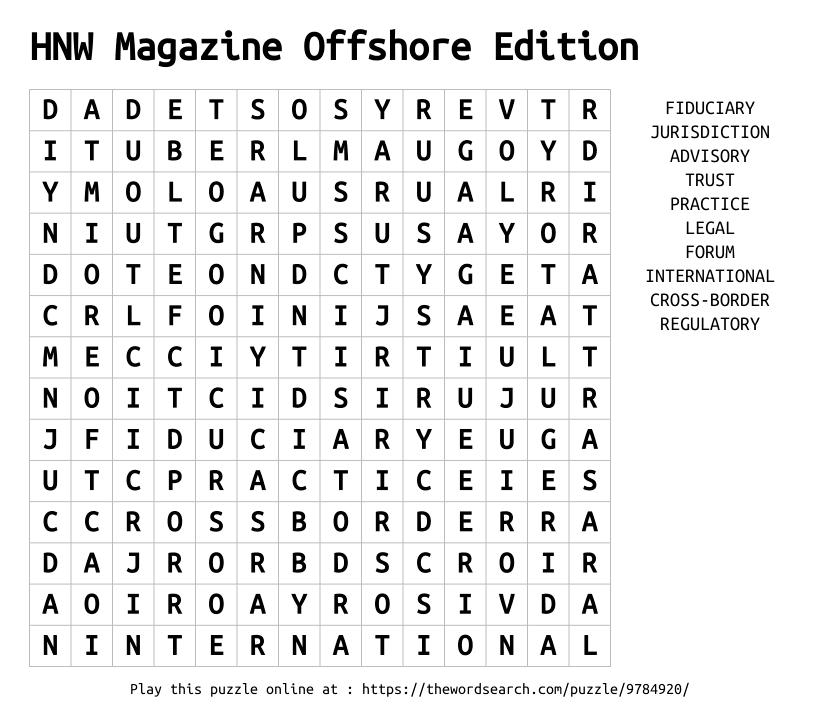

Paul Barford Founder / Managing Director 020 3398 8510
email Paul

Chris Leese Founder / Chief Commercial Officer 020 3398 8554 email Chris


Danushka De Alwis Founder / Chief Operating Officer 020 3580 5891 email Danushka James Baldwin-Webb Director, Private Client Partnerships 07739 311749 email James

Yelda Ismail Group Marketing Lead 020 3398 8551 email Yelda




Rachael Dinneen Strategic Partnership ManagerPrivate Client 020 3398 8560 email Rachael Seth Fleming Conference Producer Associate 020 3433 2282 email Seth Dan Sullivan Business Development & Partnership Manager 020 3059 9524 email Dan Jamie
Through our members’ focused community, both physical and digital, we assist in personal and firm wide growth. Working in close partnership with the industry rather than as a seller to it, we focus on delivering technical knowledge and practical insights. We are proud of our deep industry knowledge and the quality of work demonstrated in all our events and services. Become a member of ThoughtLeaders4 High Net Worth and...
• Join a community of experts, referrers and peers
• Attend events in all formats
• Interact using our digital Knowledge Hub







• Learn and share expertise through the Community Magazine
• Grow your network and business
• Build relationships through a facilitated Membership directory