

INTRODUCTION
“What we do today determines who we become tomorrow.”
- Anonymous
Welcome to the Year in Review Edition of the HNW Divorce Magazine, Issue 23. In this Edition, we proudly showcase the winning and runner-up essays from the HNW Divorce Next Gen Essay Competition. We also take a reflective look back at the key developments of 2025. Finally, we cast our gaze forward into 2026, exploring the trends, challenges, and opportunities that lie ahead. Additionally, we have included our HNW Divorce Trivia, fill in to redeem a 15% discount to one of our HNW events.
The ThoughtLeaders4 HNW Divorce Team




Paul Barford Founder/Managing Director 020 3398 8510
email Paul
Danushka De Alwis Founder/Chief Operating Officer
020 3580 5891
email Danushka


Chris Leese Founder/Chief
Commercial Officer 020 3398 8554
email Chris
Maddi Briggs Strategic Partnership
Senior Manager 020 3398 8545
Rachael Dinneen
Strategic Partnership Manager - Private Client 020 3398 8560
email Rachael
Dan Sullivan
Business Development & Partnership Manager 020 3059 9524
email Dan


Seth Fleming Conference
Associate 020 3433 2282
email Seth
Jamie Biggam
Strategic Partnership Executive 020 3398 8592
email Jamie
CONTRIBUTORS
Lauren Brolly, Sinclair Gibson
Nevin Rosenberg, Kingsley Napley
Rachael Noble, Brodies
Matthew Booth, Payne Hicks Beach
Isabella Savill, Payne Hicks Beach
Cate Maguire, Kingsley Napley
Nadine Thorpe, Kingsley Napley
Olivia Stiles, Kingsley Napley
Joseph Steadman, Wilberforce
Chambers
Roxane Reiser, Wilberforce
Chambers
Mandy Tanner, 1KBW
Jessica Johnson, Mishcon de Reya
Natasha Methven, Mishcon de Reya
Emma Diack, Clarence Family Law
David Hardstaff, BCL Solicitors
Ellen Jones, Forsters
Sofia Santos, Westgate Chambers
Catharine Langley, Westgate
Chambers
Amber Kennedy, Tees Law
Lauren Guiler, Birketts
Harriet Hole, Birketts
Anna D. Vladau, Bonnard Lawson
Vivienne Middleton, Lodders
Sarah Whitelegge, Myerson
Solicitors
HNW DIVORCE LITIGATION – 5TH ANNUAL FLAGSHIP CONFERENCE
We were delighted to welcome members of the HNW community to the 5th Annual HNW Divorce Litigation Flagship Conference, hosted this year at the Hilton London Tower Bridge. The event opened with remarks from our esteemed co-chairs, Jane Keir and Jonathan Hilliard KC, who set the tone for a day of thoughtful discussion and expert analysis. Our keynote address was delivered by Romance Fraud Expert Becky Holmes, who captivated the audience with her engaging session, “Scamming the Scammers.”
We extend our sincere thanks to our partners including: Wilberforce, Birketts, Brodies, EY, Maltin PR, Seddons GSC & Turcan Connell.
THE NON-COURT DISPUTE RESOLUTION FORUM
We officially welcomed the HNW community to the Non-Court Dispute Resolution Forum held at The Hallam Conference Centre.
We would like to thank our co-chairs Claire Blakemore and Harry Oliver KC for their opening remarks which paved the way for a range of thought-provoking sessions.
A big thank you to all our speakers and participants for driving such engaging debate and insight throughout the event!
THE 3RD ANNUAL HNW DIVORCE NEXT GEN SUMMIT
The 3rd Annual HNW Divorce Next Gen Summit commenced with a series of enriching morning sessions and concluded with a series of exceptional and truly thought-provoking sessions in the afternoon, led by our esteemed panel of speakers. We ended the evening on a celebratory note by extending our special thanks to Maltin PR for helping facilitate our drinks reception.
We would like to once again extend a huge thank you to our amazing co-chairs, Jennifer Dickson and Max Turnell, as well as our event partners Birketts LLP, EY, Evelyn Partners, Pump Court Chambers, The Soke, Seddons GSC, 7IM and Maltin PR, for all their amazing support! We are looking forward to welcoming you all back next year for the 4th annual summit!
THE INTERNATIONAL HNW DIVORCE & CHILDREN SUMMIT
The second and final day of The International HNW Divorce & Children Summit in Cascais concluded this afternoon with a farewell luncheon following a morning of insightful, crossdisciplinary discussion.
Set once again in the stunning surroundings of the Grande Real Villa Itália Hotel, today’s sessions focused on critical intersections between international family law, trusts, immigration, and childrelated proceedings.



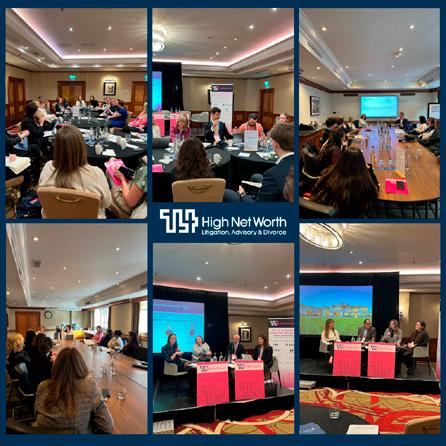

We extend our sincere thanks to our speakers, delegates, and partners including; Hall Brown Family Law, Birketts LLP, Maltin PR and Turcan Connell for making this summit an enriching and collaborative experience. We are grateful to our CoChairs for their leadership and to all who contributed to two exceptional days of dialogue and connection.

Upcoming Events

For event and partnership enquiries please contact Seth on +44 (0) 20 3433 2282 or email seth@thoughtleaders4.com

For event and partnership enquiries please contact Rachael on +44 (0) 20 3398 8560 or email rachael@thoughtleaders4.com
Trusts in Divorce: The 3rd Annual Practitioner’s Forum
10 February 2026 | Central London, UK
HNW Divorce Circle
5 - 6 March 2026 | Royal Berkshire Hotel, Ascot, UK
Private Client Circle of Trust Europe
11 - 13 March 2026 | Le Mirador Resort & Spa, Vevey, Switzerland
The 4th Annual HNW Divorce Next Gen Summit
12 March 2026 | Central London, UK
Contentious Trusts Circle Europe
22 - 24 April 2026 | Le Mirador Resort & Spa, Vevey, Switzerland
Private Client Middle East Circle
29 April - 1 May 2026 | The Ritz-Carlton Ras Al Khaimah, Dubai, UAE
The HNW Tax and RIG Regime Forum
19 May 2026 | Central London, UK
Transatlantic Tax & Estate Planning Circle
4 - 5 June 2026 | UK
Private Client Advisory and Litigation Forum: Paris
10 - 12 June 2026 | Waldorf Astoria, Versailles, Paris, France
The International HNW Divorce & Children Summit
July 2026 | Portugal
Private Client Summer School
August 2026 | Cambridge, UK
Transatlantic Tax & Estate Planning
September 2026 | Central London, UK
HNWs in Disputes: Retreat
23 - 25 September 2026 | Hilton London Syon Park Hotel & Spa
FUTURE THOUGHT LEADERS ESSAY COMPETITION 2025
OUR STORY
ThoughtLeaders4 are serious about providing opportunities to up-and-coming practitioners specialising in HNW Divorce. We strongly believe that the next generation of practitioners should be writing, speaking at, and attending events to build their network and advance their careers.
With this in mind, we proudly hosted the 3rd HNW Divorce NextGen Future Thought Leaders Essay Competition. Assessed by an illustriously experienced and wide-ranging panel of practitioners, the competition offered participants the chance to showcase their thinking, elevate their profile, and mark themselves as ones to watch.
This edition presents the winning essays, selected for their insight, originality, and relevance to the evolving world of HNW Divorce. We are delighted to share their perspectives with the wider Litigation, Advisory, and Divorce Community.
THE BRIEF
As wealth becomes more complex and global, how should prenuptial and postnuptial agreements evolve to remain fair, effective, and enforceable?
In the run-up to our HNW Divorce Conference on 20th November 2025 in London, we invited submissions from next-gen practitioners on this topical debate.
The essays featured in this magazine represent the most compelling, creative, and wellresearched responses to this timely issue shaping the future of divorce practice.
JUDGING PANEL

Kate Clark Partner
Mishcon de Reya

Kate is a Partner and Head of the firm’s Family team. She specialises in all aspects of family law with a particular emphasis on high value financial disputes, acting for HNW and UHNW individuals often involving complex offshore structures, trusts and business interests. Kate has a reputation for being straighttalking and pragmatic, and always seeks to find a resolution out of court where possible.

Kate Brett Partner
Hughes Fowler Carruthers
Kate specialises in all aspects of family law and in particular acting for international high net worth and highprofile individuals in financial and children matters. Kate has had extensive experience in a wide range of cases including a number of reported cases in the High Court and Court of Appeal. Her cases have included high value financial cases often with an international element and complex cases involving children such as relocation from the jurisdiction and cases involving substance abuse.

Katharine Landells Partner Withers
Philip Marshall KC MCIArb
Barrister
1KBW
Philip is consistently ranked as a leading practitioner (silk) in the field of matrimonial finance and divorce, having appeared in both White v White and Miller; McFarlane in the House of Lords. He represented the appellant wife in Owens v Owens before the Supreme Court. His cases typically involve complex jurisdictional disputes and very high net worth disputes often involving offshore corporate and trust structures.



Sital Fontenelle Partner
Kingsley Napley
Sital is a partner and head of the Kingsley Napley family team, where she specialises in complex financial matters within a divorce, including international jurisdictional cases, negotiating and drafting pre-nuptial and post-nuptial agreements as well as every aspect of private children law cases. Sital is an active member of the Resolution Cohabitation committee and has considerable experience in dealing with claims arising for cohabiting couples and their children.

Dynamic and creative, Katharine has huge energy which she puts to use in making positive progress for her clients in some of the most complex and challenging cases. Described by the legal directories as having the ‘killer combination’ of a ‘sense of humour and a razor sharp intellect’, Katharine has 20 years’ experience in the industry and is singled out among her peers for her ability to design and drive a broad strategy whilst overseeing and honing in on the crucial detail.
Alex Carruthers Partner
Hughes Fowler Carruthers
Alex is a founding partner at Hughes Fowler Carruthers. He specialises in complex divorce and financial work and children’s work, in particular in international cases. His clients are high net worth individuals with complex legal issues including trusts and jurisdictional disputes.
AS WEALTH BECOMES MORE COMPLEX AND GLOBAL, HOW SHOULD PRENUPTIAL AND POSTNUPTIAL AGREEMENTS EVOLVE TO REMAIN FAIR, EFFECTIVE, AND ENFORCEABLE?


Authored by: Lauren Brolly (Associate) – Sinclair Gibson
Introduction
The romantic relationships of today’s high-net-worth individuals (HNWI’s) are increasingly becoming more complex, fluid and international.
A leading global bank found that 73% of their ultra HNWIs and families now live across more than one country, with the global average having risen to 45%.1
The traditional notion of HNWI’s wealth being limited to land, businesses and inheritance has now been usurped by digital assets, startup equity, carried interest, and dynamic multi-national portfolios. It is against this backdrop that the English legal system is having to assess how pre-nuptial and post-nuptial agreements can and/or should evolve to become fit for purpose in the modern world.
This essay argues that the English legal system needs to continue to evolve to enhance fairness, strengthen enforceability (both domestic and abroad), and reflect the social and economic realities of today’s HNWIs. It does so by reviewing the current legal framework, identifying some of the key challenges, and proposing potential reforms.
The Current Legal Framework
Although pre/post nuptial agreements are still not automatically enforceable, the landmark decision of Radmacher v Granatino2 established that a nuptial agreement freely entered into with a full appreciation of its implications should carry “decisive weight” unless it would be unfair to hold the parties to it. The justices in Radmacher stressed that both parties should have entered into the agreement of their own free will without undue influence, fraud and misrepresentation, and the ‘fairness’ of upholding any particular agreement should be considered on a case-bycase basis.
Subsequent cases have further refined how pre/post nuptial agreements are treated by the English courts. KA v MA (Pre-Nuptial Agreement: Needs)3 established that a nuptial agreement freely entered into with full appreciation of its implications should be upheld unless unfair in the circumstances.
1 Kitidis, C., & Franks, J. (2023). The unorganised state of ultra high net worth wealth. HSBC Private Banking. Available at: https://www.privatebanking.hsbc.com/entrepreneurs/ global-entrepreneurial-wealth-report/the-unorganised-state-of-ultra-high-net-worth-wealth/
2 [2010] UKSC 42, [2011] AC 534.
3 [2017] EWHC 499 (Fam)
Whilst HD v WB4 highlighted the court’s obligation to look at all the circumstances in the case to assess whether they render the agreement sufficiently unfair and justify a degree of court intervention. AH v BH5 was further concerned with the meaning of ‘predicament of real need’ (per Radmacher, paragraph [81]) and how that comes into assessing fairness.
Despite this raft of cases to draw upon when advising clients, it is still clear that the English courts rely predominantly on judicial discretion, and when advising clients on the efficacy of their nuptial agreement, saying “it depends on the judge” is never received particularly reassuringly.
foreign marital property regimes nor a codified regime for recognition of prenups drafted abroad. Whilst in Europe, the Matrimonial Property Regulation7 was introduced in 2016 to simplify matrimonial property regimes in the European Union, and to help provide solutions to divorcing parties’ conflicts on, for example, jurisdiction, applicable law and the recognition and enforcement of decisions. Cases like Versteegh v Versteegh8, BI v EN9, and GS v L (financial remedies: preacquired assets: needs)10 exemplify the uncertainty that international couples can face whilst settling their financial matters within the English courts.
In terms of cross-border recognition and enforcement, I would argue that there should be an increasing utilisation of mirror agreements and choice of law clauses. Clients should also be encouraged to consult with legal experts in each relevant jurisdiction. If a mirror agreement(s) is not entered into, the client should at the very least be aware of local requirements so they can be complied with as far as possible. Clients should also be encouraged to review and update agreements if an international issue arises, such as relocating or acquiring assets abroad.
Key Challenges Created by Today’s Wealth
Effectiveness: complex and dynamic assets
HNWI’s wealth now often encompasses everything from founders’ shares to carried interest, to crypto-assets, or even intellectual property. For example, in BN v MA6 the court had to contend with deferred remuneration and unvested bonus rights. It is therefore becoming increasingly more difficult for parties and the court to not only ascertain what the marital assets comprise of, but also what their intrinsic values are, both at the start and end of the marriage
Enforceability: cross-border jurisdictions
Unlike many civil legal systems, England and Wales do not have a statutory acknowledgement of
4 [2023] EWFC 2
5 [2024] EWFC 125
6 [2013] EWHC 4250
7 (Regulation 2016/1103)
8 [2018] EWCA Civ 1050
9 [2024] EWFC 200 (Fam)
10 [2011] EWHC 1759 (Fam) 11
Of course, in order to have even greater certainty, legislation introducing reciprocal agreements or mutual recognition treaties (similar to the Hague Convention) would help ensure that the nuptial agreements are explicitly recognised and would enhance predictability whilst reducing forumshopping and inconsistent outcomes for global couples. Although the reality of this happening is unlikely, so multijurisdictional legal planning is key.
Wealth Generated During the Marriage
Practitioners will be well versed in dealing with nuptial agreements that focus on protecting assets acquired before the marriage, or inheritance or lifetime gifts that are likely to fall in during the marriage.
However, as wealth becomes more complex and global, significant wealth is often generated during the marriage. For example, consider a spouse who is a fund manager for a private equity firm and has interests in various funds which are at various stages of their life cycle. The funds could yield significant amounts of deferred income. Detailed planning and having a nuptial agreement with clear provisions as to how these assets would be shared would help avoid contentious and potentially very expensive litigation on divorce.
The complexity of such ‘modern’ wealth generated is compounded by globalisation. In a PE fund, it would not be unusual to see the LLP based in London, the co-investments held in Guernsey, the carry in the Cayman, all within a Swiss trust structure. This reinforces the need to consider the international aspects referred to above.
This is further compounded by the growing emphasis on identifying and apportioning the (non-)matrimonialised elements of wealth, particularly in light of the decision in Standish v Standish11
To meet these challenges and ensure modern prenups remain fair, effective, and enforceable, modern nuptial agreements should clearly define marital and separate property and consider issues such as deferred income. It would also be sensible to agree valuation mechanisms for illiquid or uncertain assets such as carry, IP, and startups.
Social Attitudes and the Rise of Postnups
Nuptial agreements were once viewed with scepticism (and for many, they still are). They were seen as unromantic or mistrustful.
Attitudes have now shifted. With higher divorce rates, dual income households, and entrepreneurship, many individuals now view nuptial agreements as financial planning tools. I believe this is especially true for HNWI’s who are from younger generations (Millennials and Gen Z).
Practitioners should embrace the change in social attitudes and promote nuptial agreements as being about respect, clarity and shared goals.
Postnuptial agreements are an especially useful tool to address evolving circumstances within a marriage. For example. lifetime gifts being made by wealthy parents as a result of tax changes may cause the recipient and their partner to reflect on their wealth; and with a rise in the number of blended families, estate planning may become more complex. The postnup offers flexibility and adaptability to married couples and allows them to respond to life events without the pressure of an upcoming wedding.
As they become more common, practitioners should apply the same standards of fairness and have in mind the steps outlined in this essay to ensure they are effective and are enforced.
Balancing Protection with Fairness
Despite their growing popularity, nuptial agreements remain largely concentrated among wealthier individuals and are often deployed in circumstances where only one party holds the majority of the assets. As Lady Hale observed in Macleod v Macleod12, this creates an “inequality of bargaining power”, which heightens the latent risk of coercion (whether subtle or overt). The recent decision in PN v SA13 illustrates how coercive control and undue influence can create challenges for the validity of prenups. In that case, notwithstanding formalities being observed, including legal advice and disclosure, the court found that the wife had entered into the agreement under psychological pressure and isolation.
This, along with many other nuptial cases (i.e. AH v NH14, and Cummings v Fawn15) highlight the difficulty the courts face in assessing the ‘predicament of real need’, especially when the disadvantaged party may have been induced to accept terms that in fact fail to meet their genuine needs. As wealth structures become more complex and emotional manipulation more nuanced and prevalent (in fact, the FCA reports that around 9 million people in the UK have experienced financial abuse from their intimate partner16), the challenge for the courts is to balance respect for autonomy with protection against exploitation, ensuring that nuptial agreements reflect not just procedural fairness but substantive justice. This must be had in mind when drafting nuptial agreements. They must be fair and equitable if they are going to be effective and enforced.
To achieve this, practitioners should always note:
• Full financial disclosure is essential. Concealing assets is likely to invalidate agreement but not fully thinking about potential assets on divorce and legislating for them in the prenup could also be fatal. For instance, an ambitious fund manager may wish to disclose her anticipated future carry, or an entrepreneur, her IP.
• Independent legal advice for both parties must be obtained.
Conclusion
Nuptial agreements should no longer be viewed as unromantic or mistrustful; they are instruments of clarity, fairness, and responsible wealth planning. To maximise their potential the English legal system must establish a coherent framework grounded in legal certainty, procedural safeguards, and substantive fairness.
Beyond this, given that a couple’s wealth and lives are constantly evolving, an effective nuptial agreement should be able to do the same. Therefore, practitioners should do away with static asset schedules, and instead, there should be an adoption of more flexible approaches, such as formula-based valuations and review clauses. It should become standard practice that review clauses are drafted to be triggered by
events such as: the birth of a child, bankruptcy, sale of businesses, loss of value in assets or businesses. If there are such significant changes to a party’s wealth, then perhaps entirely separate post-nuptial mirror agreements should be necessitated by the original agreement. Such adaptive mechanisms preserve both predictability and fairness in today’s dynamic and complex financial ecosystem.
Reform?
Legislative reform or authoritative guidance needs to provide clear parameters for how courts will assess and enforce nuptial agreements. Without such clarity, practitioners are left relying on judicial discretion, which can vary significantly and undermine confidence in the process. Codifying principles would empower practitioners to advise clients with greater confidence and consistency, ensuring that agreements are treated predictably by the courts.
Ultimately, reform should aim to empower individuals with autonomy while safeguarding against inequality and coercion. By doing so, the English legal system can not only be the ‘divorce-capital’ of the world but can be leaders in enforceable and equitable nuptial agreements that are fit for the complexities of modern wealth and relationships.
12 [2008] UKPC 64, at paragraph [42]
13 [2025] EWFC 141
14 [2024] EWFC 125
15 [2023] EWHC 830 (Fam), [2024] 1 FLR 117
16 Legg, J. (2024, May 17). The hidden cost of domestic financial abuse: Working together to improve outcomes. Financial Conduct Authority. Available at: https://www.fca.org.uk/ news/blogs/hidden-cost-domestic-financial-abuse-working-together-improve-outcomes
GROWING PAINS: THE ADOLESCENCE OF NUPTIAL AGREEMENTS IN ENGLAND & WALES
When Freddie asked his fiancée Catherine to sign a prenup mere weeks before their wedding, it did not go down well. Catherine was upset that he would suggest something so cold and transactional; her friends concluded that Freddie must be “a bit controlling”. Never mind that Freddie managed an undertaking business which had existed in his family for generations, or the fact that he owned a property which he intended to pass to his siblings. After all, Freddie and Catherine had a solid relationship, meeting and getting engaged in the most traditional of ways – as two contestants on Love is Blind UK, a Netflix “reality” show. How could Freddie dare to insist on a prenuptial agreement to the woman he’d known for three whole weeks, even if he had decent reasons for doing so? Suffice it to say, the couple did not say “I do” at the altar, and some of the claims made about prenuptial agreements during the episode were alarming to a Family lawyer viewer1
15 years on from Radmacher2, one might expect nuptial agreements to be more widely endorsed by the public. But has there actually been a societal embrace of nuptial agreements, or are they still perceived as the purview of the uber wealthy, on a par with trusts and offshore bank accounts? I contacted a few friends for their unfiltered thoughts and most came to the same conclusion: these were contracts exclusively for the 1% and to be viewed rather cynically at that. My conclusion: for nuptial agreements to mature successfully beyond their teenage years, they need to be better understood.
At their best, nuptial agreements provide protection for the financially stronger party, security for the financially weaker party and clarity for both parties so that their divorce, if it happens, can be handled in a streamlined way. Provided that nuptial agreements are drafted to a high standard with a healthy respect for procedural safeguards and sufficiently generous financial provision for both parties, they are capable of
1 I wish that I could claim that I watched this episode purely for “research purposes”.
2 Radmacher (formerly Granatino) v Granatino [2010] UKSC 42
remaining fair, effective and enforceable even as the society in which they operate evolves.
Older, Wiser and Wealthier?
More couples in England and Wales are getting married later in life than ever before.3
3 In 2022, the median age for an opposite-sex marriage (and first legal partnership) was 32.7 years for men and 31.2 years for women, and 9 out of 10 of those couples lived together prior to their marriage. For same-sex marriages, the median ages for men and women (36.2 and 32.6 years respectively) and the percentages of pre-marital cohabitation were even higher - see Office for National Statistics (ONS), released 20 June 2024, ONS website, statistical bulletin, Marriages in England and Wales: 2021 and 2022
Authored by: Nevin Rosenberg (Associate) – Kingsley Napley
They are therefore more likely to have greater wealth to protect, whether self-made or inherited, by the time they marry. Frank discussions around finances should be encouraged for couples in committed relationships. However, it is tempting to conclude that nuptial agreements are likely to be a means of perpetuating the stark wealth gap between men and women, rather than a helpful tool for wealth protection. Family law has come a long way from joint lives maintenance orders and millennial women have been raised on a diet of “you can (and arguably should) do and have it all”. However, nuptial agreements usually limit sharing which otherwise occurs during a marriage and on divorce. One of my (non-lawyer) friends thought that a prenup had the potential to be “coercive” if it contained increasing financial awards based on marriage length and number of children. If nuptial agreements are to remain fair, effective and enforceable, it is essential that they achieve a more positive reputation in the collective consciousness.
Être bon, c’est facile, ce qui est difficile, c’est d’être juste4
I am not idealistic enough to suggest that nuptial agreements are capable of being reformulated as a way of addressing the economic imbalance between the sexes. But if nuptial agreements are to be a growing feature of English marriages, then they should at least be fair, both procedurally and substantively. Of course, the concept of ‘fairness’ is elastic, informed by societal trends and dependent on individual circumstances, and there is an inherent tension between fairness and the ‘certainty’ of written agreements. The key question is how a legal system should balance individuals’ autonomy against the need for an outcome which is fair to all parties, even if that outcome contradicts the agreement terms. English Family law judges have wrestled with this issue each time a nuptial agreement is before them, from cases prior to Radmacher5 to the present day6
While Baroness Deech is right to bemoan the lack of legislative action since the Law Commission’s report7 11 years ago, in practice, this void has been filled by caselaw. We have established procedural steps which should (although do not necessarily need8) to be followed: (the opportunity to take) independent legal advice, an absence of duress or undue pressure and an exchange of financial disclosure. For any clients wishing to be crafty with this last requirement, Entwistle v Helliwell9 should serve as a deterrent.
Negotiating agreements which are signed uncomfortably close to the wedding is not a scenario conducive to rational decision-making by our clients. For a civil ceremony in England and Wales, couples must give at least 29 days’ notice of their intention to marry at their local registry office. In that context, it makes even more sense to insist upon the 28-day timeframe set out by the Law Commission’s report10 Fairness does not necessarily demand equality, but to make the process as equitable as possible in future, these safeguards need to be recorded in legislation to iron out any imbalances in negotiating power. In turn, this will improve the general reputation of nuptial agreements across society.
on the negatives. The latest figures suggest that around 16,500 millionaires will leave the UK by the end of 202511 in favour of more tax-friendly jurisdictions, the London property market is stagnating, and there will be further upheaval from the Autumn Budget.
For Family lawyers, it is not all doom and gloom. There is renewed talk about divorce tourism following the latest decision in Potanina v Potanin12 After all, an English domicile of origin is hard to shed; individuals can acquire and retain jurisdictional ties even if they are not tax resident here. The prestige of an English public school education will continue to attract HNWIs who are unlikely to be dissuaded by a 20% price increase. London remains an important global centre, and the English judiciary will continue to decide cases concerning international nuptial agreements, including those signed abroad and subsequently being relied upon and/or challenged during English proceedings. It is therefore imperative that the extensive knowledge regarding nuptial agreements is collated and disseminated in order to spread greater awareness about them across society and codify the way in which they are drafted and litigated.
Parlez-vous Prenup?
Cross-Border Considerations
Five years on from Brexit (au revoir Brussels II), 15 months into a new Labour government and in a world still grappling with the impact of the Covid pandemic and ravaged by global conflicts, it would be easy to focus
4 Victor Hugo: “It is easy to be good; what is difficult is to be fair”
5 See for example Crossley v Crossley [2007] EWCA Civ 1491 and MacLeod v MacLeod [2008] UKPC 64
6 FO v PN [2025] EWFC 327 (B)
7 Law Commission, Matrimonial Property, Needs and Agreements (Law Com No 342, 2014)
8 BN v MA [2013] EWHC 4250 (Fam), [30]
9 [2025] EWCA Civ 1055
10 Law Commission: Matrimonial Property, Needs and Agreements (Law Com No 342, 2014)
I recently advised a French national who was horrified to learn that her relationship (she had entered into a PACS in France) had been upgraded to a civil partnership, with the same legal rights as a marriage, all by virtue of the couple moving from Paris to London13. A short trip on the Eurostar and a plethora of unforeseen financial consequences later, we drafted a post-civil partnership agreement which reaffirmed the nature of the PACS while also giving a nod (more like a hearty handshake) to the English legal system, lest an English judge was required to address her relationship breakdown in future.
This is a prime example of the clash between common and civil law jurisdictions, which extends far beyond the mistranslation of a PACS into a
11 Henley & Partners, The Henley Private Wealth Migration Report 2025 (24 June 2025) < https://www.henleyglobal.com/publications/henley-private-wealth-migration-report-2025 > accessed 13 October 2025
12 [2025] EWCA Civ 1136
13 As a French ‘Pacte Civil de Solidarité’ is one of the qualifying ‘overseas
civil partnership. European marriage contracts are vastly different creatures to English prenuptial agreements. While marriage contracts can be tailored to individuals, they are typically based on matrimonial property regimes enshrined in statute. They can be signed close to the wedding with little to no legal advice or financial disclosure beyond what is discussed during an appointment with a notary. English judges have ascribed varying weight to these agreements14 and, given London’s endurance on the world stage, more must be done to ensure that our clients’ foreign nuptial agreements are capable of being sensitively handled by the judiciary. Given the degree of international collaboration which occurs at a high level of Family law, the leaders in our field should publish a handbook on nuptial agreements around the world, so a baseline of knowledge is more widely accessible.
One benefit of AI may be to democratise access to legal documents. Under the guidance of a Family lawyer with access to a secured LLM, a couple with more modest assets could produce a template agreement based on their financial circumstances at the time of the marriage, using AI to draft terms based an agreed set of principles which would in turn generate illustrative examples of the outcome – a hybrid between an elegantly drafted Word document and a financial model in Excel. Then, as their marriage progressed, the couple could update the value of their Separate Property, Joint Property and respective salaries, and would revisit the agreed principles at key moments such as a birth of a child15, the purchase of a family home, an unexpected collapse of an investment or a move abroad. Their ‘intelligent’, living document would illustrate the updated outcome based on the agreed principles, allowing both parties to have a ‘full appreciation’ and ownership of the consequences of their agreement.
lawyers/judges from key jurisdictions to thrash out a set of agreed principles which could then form the basis for an international treaty on the recognition and enforcement of nuptial agreements. On a domestic front, with the rise of court-mandated NCDR, more couples would benefit from a model where they could engage one lawyer/mediator to guide them through the key legal principles of nuptial agreements in England and Wales, leaving them to negotiate the exact terms directly in order to save on costs16
Outside of the HNW Family lawyer bubble, nuptial agreements are still viewed with a degree of scepticism. As newly divorced “Peter” commented in the FT, “prenups in the UK are worthless…[they] are like [its] parliament: evolving, unclear and shaped by outdated traditions.17” While I am more enthusiastic about nuptial agreements and their future, I concede that for your average citizen, nuptial agreements may be dismissed as irrelevant due to lack of wealth, wildly unromantic or unreliable due to their legal status. To successfully evolve and mature over the next 15 years, nuptial agreements will require codification, collaboration and education to ensure they are better understood and more palatable to the public. Only then will Freddie have a chance at protecting his undertaking business the next time he proposes to someone after three weeks of dating.
Chat GPT: Draft Me a Prenup
It would be remiss to ignore the role that AI (specifically Large Language Models) might play in the drafting of nuptial agreements. A growing number of clients may balk at lawyers’ fee estimates and decide instead to use Chat GPT directly or buy an LLM prompt specifically designed to produce a draft prenup. The onus is on us Family lawyers to succinctly explain why legal advice is crucial to the drafting process and emphasise the degree to which public LLMs do not respect privacy or confidentiality.
Conclusion - What Next for Nuptial Agreements?
Throughout this essay I have hinted at ways in which nuptial agreements could be improved in terms of substance, form and reputation. There is a need for greater education about nuptial agreements across society, and not just in the FT. The wealth of experience across the Family law profession needs to be disseminated by way of judicial training (ensuring a more consistent approach to cases involving nuptial agreements across the jurisdiction) and training of private client advisors so that more accurate knowledge about nuptial agreements is injected into the public consciousness. At an international level, I would advocate for a forum on nuptial agreements involving leading Family
14 See for example, Versteegh v Versteegh [2018] EWCA Civ 1050, AD v BD [2020] EWHC 857 (Fam) and BI v EN [2024] EWFC 200
15 Particularly where mothers lose over £65,000 on average across the first five years of their first child’s life - Office for National Statistics (ONS), released 3 October 2025, ONS website, statistical bulletin, The impact of motherhood on monthly employee earnings and employment status, England: April 2014 to December 2022
16 See, for example, the ‘Wenup’ platform which charges £1,380 to provide an agreement plus one hour of independent legal advice per person from a third-party lawyer.
17 Lucy Warwick-Ching, ‘Prenups: is it time we changed the law?’ Financial Times (London, 2 August 2025)
AS WEALTH BECOMES MORE COMPLEX AND GLOBAL, HOW SHOULD PRENUPTIAL AND POSTNUPTIAL AGREEMENTS EVOLVE TO REMAIN FAIR, EFFECTIVE, AND ENFORCEABLE?
Authored by: Rachael Noble (Senior Associate) – Brodies
Prenuptial and Postnuptial Agreements in Scotland
The Family Law (Scotland) Act 19851 (FLSA 1985) appears, at first glance, formulaic in its approach to division of net assets on divorce. However, there is in fact great scope for judicial discretion so as to attempt to achieve “fairness” (albeit our contacts in England & Wales would rarely concede that our legislation produces fair outcomes, particularly when acting for the economically weaker party). Assets which would not otherwise have been matrimonial (such as an inheritance) may fall into the “pot” for division if they change form during the marriage (this is similar to the concept of ‘matrimonialisation’ which was the subject of the recent Standish v Standish2 decision). In those circumstances, a “special circumstances” argument can be advanced, seeking account to be taken of the fact that the source of funding for
1
this converted asset derives from a nonmatrimonial source3. It is, however, unlikely that the entire value of the converted asset will be excluded from the calculation of matrimonial property. Scottish prenuptial agreements would accordingly ordinarily be drafted so as to safeguard against such conversion. The scope of a prenuptial agreement will, however, vary depending on the wishes of the parties.
A postnuptial agreement may be entered into seeking to alter the terms of a prenuptial agreement or to regulate a particular transaction which is to take place during the course of the marriage.
Under Scots Law, cohabitants may also have the ability to make claims4 if either party to the cohabiting relationship is Scots domiciled. Scots lawyers are regularly instructed to prepare cohabitation agreements (even where cohabitants are no longer residing in Scotland), regulating what is to happen in the event of the relationship coming to an end by death or otherwise.
Enforceability Under Scots Law
Since the introduction of the FLSA 1985 which regulates financial provision on divorce, the Scottish courts have not produced a decision regarding the binding nature of a prenuptial or postnuptial agreement. It was held in the case of Thomson v Thomson5 that parties can freely contract to include a discharge of rights on divorce if they wish. The Scottish courts are reluctant to disturb an individual’s right to enter into a contract and pre and postnuptial agreements have therefore always been binding under Scots Law.
Provided that the agreement is set up correctly and at arm’s length, it will be enforceable. It can, however, be challenged under any of the usual contractual grounds ( extortion, fraud, facility and circumvention, undue influence, error and misrepresentation), or on the basis that it was “not fair and reasonable at the time that it
was entered into”6. This emphasis on the “time that it was entered into” is important. An agreement which may appear unfair/unreasonable at the date of signature may well be unfair at the point of separation, but no element of crystal ball gazing is required.
If a pre or postnuptial agreement is to be challenged on the basis of fairness or reasonableness, the five stage test set out in the case of Gillon v Gillon7 requires to be considered. The principles set out in Gillon are as follows:
• The agreement being challenged must be looked at from the point of view of both fairness and reasonableness.
• Examination of the agreement must include all relevant circumstances at the time the agreement is signed, including the nature of any legal advice given to either party.
• If there is evidence that one party has taken unfair advantage of the other party during the negotiation process this will be taken into account.
• The court should not be unduly ready to overturn agreements validly entered into.
• The fact that an agreement leads to an unequal division of assets does not necessarily give rise to an inference that the agreement was unfair or unreasonable at the time it was entered into.
Even if there is a significant departure from the terms of the FLSA 1985 or the party later regrets entering into the agreement8 that does not give rise to an inference that the agreement was neither fair nor reasonable at the time of it being entered into.
Clarkson v Clarkson9 added a sixth principle to the Gillon10 principles. The Sheriff’s view was that an agreement could be set aside in the event of a party establishing either that an agreement was unfair or unreasonable. The party challenging the agreement does not require to establish both; however, the onus would be on the
party relying on the agreement to show that it was both fair and reasonable when it was entered into.
Evolution of Prenuptial and Post Nuptial Agreements
Notwithstanding that under Scots Law, pre and post nuptial agreements have always been binding, agreements of this nature still appear to carry some social stigma. There is a perception that entering into such a document is setting the marriage up to fail and that it undermines trust in the relationship. Societal norms are, however, shifting and the number of couples entering into such agreements is likely to continue to rise11. This may be as a result of individuals marrying later in life, having already accrued wealth or having already experienced the financial fallout of a relationship breakdown either personally or through a friend or family member. If there is significant family wealth, a party may be encouraged by parents to enter into an agreement. Despite this, it is the writer’s view that pre and postnuptial agreements remain underutilised, which can result in drastic financial consequences. As part of the evolution of these agreements, education on the benefits of these agreements is crucial to ensure that they become part of the ‘norm’ when entering into a marriage so as to provide greater financial certainty.
Matters may evolve to the point where, as part of the requirements to enter into a marriage, parties would either choose to “opt in” or “opt out” of entering into a prenuptial agreement, with those seeking to “opt in” being signposted to where they can obtain separate legal advice. Provided that any such agreements were entered into on the basis that they comply with the existing requirements outlined above, there ought to be no reason why they would not be regarded as being fair, effective and enforceable.
It may be that in the future, parties could also choose to regulate the division of their assets on divorce using a particular legal regime which departs from the provisions of the FLSA 1985. There could, for instance, be a regime involving parties ringfencing all current wealth and that generated by either of them during the marriage, so that in effect, their finances are kept entirely separate. Other regimes could be more moderate. Establishing a regime which effectively separates out the parties’ finances would go significantly further than Scots Law currently provides and in terms of the current legislation, would likely be regarded as unfair. This would not provide sufficient protection to the financial weaker spouse who may have made significant non-financial contributions during the marriage. If there were to be an ‘opt in’ or ‘opt out’ arrangement, or indeed different regimes, there would require to be substantial changes to the current legislation. There is an argument that this approach, would, however, be in some ways fairer as parties often fail to appreciate the legal rights that they acquire on marriage and the financial consequences of this on divorce.
There will continue to be potential difficulties with individuals preparing agreements themselves thanks to the ongoing advances in AI. There are, of course, dangers with this and more so where multiple jurisdictions are involved.
6 Family Law (Scotland) Act 1985, s16 (1)(b)
7 Gillon v Gillon (No.3) 1995 SLT 678
8 Bradley v Bradley [2017] SAC (Civ) 29
9 Clarkson v Clarkson 2008 SLT (Sh Ct) 2
10 Gillon v Gillon (No.3) 1995 SLT 678
11 Although there are no official statistics on prenuptial agreements, recent data has provided an insight into their prevalence. Co-op Legal Services reported that the number of prenuptial agreement sales had increased by 60% compared with the number of agreements sold in 2022. It also reported that 21% of married people in Britain had a marital agreement in place. It also reported that 21% of married people in Britain had a marital agreement in place. A 2023 YouGov survey found that 42% of British people viewed them as a “good idea”, compared to 13% who considered them a “bad idea”. A similar 2003 poll found that 35% of respondents would sign a prenuptial agreement, while 36% would not. https://lordslibrary.parliament.uk/law-relating-to-prenuptial-agreements/#:~:text=Although%20there%20are%20no%20official,a%20marital%20agreement%20in%20place.
Global Wealth
It is not uncommon for couples to have links to, and hold wealth in, multiple jurisdictions. Currently, the Domicile and Matrimonial Proceedings Act 1973 (DMPA 1973) governs the circumstances in which Scotland has jurisdiction in relation to a divorce action12
A jurisdiction clause in a pre or postnuptial agreement in favour of Scottish jurisdiction cannot override the terms of the DMPA 1973.
A clause prorogating jurisdiction to the Scottish courts can, however, be a statement of intent that the parties intend any dispute on divorce to be dealt with by the Scottish courts, even if another country may have jurisdiction. The inclusion of a jurisdiction clause in an agreement may be persuasive if an action is raised by one party in a competing jurisdiction. Such clauses will therefore continue to be a necessary component of any agreement especially where wealth is held globally. Where parties are entering into a pre or postnuptial agreement under Scots Law and there are links to multiple jurisdictions, advice should be obtained from lawyers in each of those jurisdictions regarding the enforceability of the Scots Law agreement in that jurisdiction should divorce be dealt with there. Specific wording may require to be included to strengthen the prospect of that jurisdiction ceding jurisdiction to a Scottish court. In some cases, a ‘mirror’ agreement in each of the jurisdictions may be necessary as a ‘belt and braces’ approach.
The use of multi-jurisdictional pre and postnuptial agreements may provide a solution in some cases, with each advisor inputting into one document to ensure, so far as possible, that the client’s objectives will be achieved whichever jurisdiction ultimately deals with the divorce (albeit a ‘primary’ jurisdiction requires to be identified within the agreement). In the writer’s view, there are drawbacks in this approach. There may be risk management issues for the lawyers involved. A solicitor practicing under Scots Law can only advise regarding the Scottish elements of the
agreement13. Where that advice ends and that of another jurisdiction begins requires to be clearly set out prior to any advisor signing off on any such agreement; however, there is likely to be some degree of overlap with may create difficulties. The laws in various jurisdictions may conflict to a significant extent, resulting in difficulties in streamlining all matters into one agreement. If an agreement were to be challenged, how this is dealt with in each jurisdiction is likely to differ. What is regarded as ‘unfair’ in one jurisdiction, may not be unfair another. Any such agreements therefore require careful drafting.
Enforceability may well be an issue. Whilst a ‘primary’ jurisdiction which is to govern the divorce will be identified in the agreement, if that court or another court were asked to adjudicate on such a multi-jurisdictional agreement, it would require to be considered as a whole. This will inevitably have time and cost implications for clients and make agreements of this nature less effective.
It is anticipated that clients will, however, expect a more streamlined approach to pre and post nuptial agreements where there is wealth globally and use of multi-jurisdictional pre and postnuptial agreements is likely to become more prevalent moving forward. Practitioners will require to work together effectively to minimise the associated risks.
Crypto assets and the difficulty in tracing these assets will continue to have the potential to create challenges for family lawyers. Careful consideration requires to be given as to how this will be dealt with within pre and post nuptial agreements and in practice more generally.
NCDR
The proactive encouragement of Non Court Dispute Resolution (“NCDR”) including its incorporation into new parts of the FPR1 is perhaps (to put it another way) the Family Justice system’s most recent attempt to discourage parties from litigation. Some might say, cynics of course, that this policy is driven by the dire funding issues which beset the Justice system more generally and the reality is that HMCTS simply does not have the resources to fulfil its role. Those same cynics might go on to ask if is not the singular purpose of the Courts to resolve matters on behalf of individuals (including, if necessary, imposing a decision) who may otherwise be incapable of reaching a consensus. Is this not why we have all of the legal paraphernalia long cherished as integral to an enlightened state? Some might go so far as to say that the apparent reluctance of the Family Court to do its job; i.e. conduct contested litigation and determine disputes, is an abnegation of its broad purpose in society, rather akin to medics standing outside a hospital refusing entry and encouraging would be patients to resolve their maladies in some alternative (less expensive) forum. Is this not all simply a
manifestation of the long woefully under resourced institutions of the state?
That is not to say that NCDR is a bad thing. On the contrary, in the right circumstances, it is to be encouraged. But it is not a panacea. And, nor should it be (or become by stealth) a de-facto compulsory process for all. It is not always, pace Mrs Justice Knowles, safe or appropriate.
Of course, what was formerly known as Alternative Dispute Resolution (“ADR”) has been around for many years, especially in the commercial context where mediation and arbitration have long been part of the litigation landscape. And it is right to say that those same alternatives to litigation have found increasing popularity in the resolution of family law disputes, in circumstances where the competing parties do still have the ability to agree something, if only to settle on the forum and the identity of their mediator or arbitrator.
Resolving family law disputes outside Court is nothing new for those who wish to do so.
In the year 2000 an estranged married couple (one a doctor and the other a musician) attended a handful of sessions of mediation in an unglamorous building in Finchley, just around the corner in fact from the Barnet Family Court. With their respective solicitors in the background and with the assistance of two mediators; one a solicitor mediator and one with a therapeutic background (the redoubtable Suzy Power), that couple resolved their (admittedly rather straightforward) financial affairs and, more importantly, the living arrangements for their young daughter. No attendance at Court was required.
Authored by: Matthew Booth (Partner) – Payne Hicks Beach
In January 2024 that musician, by then a family lawyer, was sitting next to his client in the High Court when Mrs Justice Knowles took the opportunity at what was a post-FDR Directions Appointment to make a significant ruling in a judgment published anonymously as Re X (Financial Remedy: Non-Court Dispute Resolution) [2024] EWHC 538 (Fam).
In paragraph 1 of her ruling, Mrs Justice Knowles said this:
The adversarial court process is not always suited to the resolution of family disputes. These are often best resolved by discussion and agreement outside of the court arena, as long as that process can be managed safely and appropriately.
She goes on (at paragraph 5) to say this:
The parties participated in an FDR in July 2023 which regrettably did not settle their dispute. I learned today that the parties never engaged in any form of non-court dispute resolution before issuing either financial remedy or children proceedings. I regard their failure to do so as utterly unfathomable.
Mrs Justice Knowles was, it seems, inspired by the example being set by the Court of Appeal in civil proceedings2 which has now held that the Court has the power to compel parties in civil proceedings to engage in NCDR and/ or stay proceedings to allow for such a process to take place.
It is one thing, perhaps, for there to be compulsion in civil proceedings but are not the travails of litigants in the Family Division inevitably of a more emotive and personal nature? Is there no room there to fathom why, perhaps, certain parties are simply unable to engage in NCDR?
But, of course, an important part of the private FDR process is that it apes what would otherwise happen in Court. The parties are (typically) fully represented by solicitors and specialist Counsel. If necessary, the parties may thus be shielded from one another. And both parties hear simultaneously from an independent tribunal and objective account of how matters may likely be resolved and, with more certainty the continuing costs and uncertainty of litigation. This can often prove to be conducive to compromise.
to make concessions and compromise to reach an agreement. But this is not always the case and that it why the Family Court must remain open for business and available to all who need it.
As that former musician turned family lawyer, I know this because I have seen, first hand, both sides of the coin.
There is no doubting the success of the private FDR as a means to resolve many matrimonial disputes. But even this requires a measure of agreement to even convene. Who shall be the tribunal? Where shall it take place? Who will pay for it?
As noted by Mrs Justice Knowles, the parties in Re X had already attended a FDR in the High Court which did not result in settlement and that they had never otherwise engaged in NCDR. One wonders why that might be. And, it is here that one has to question her exhortations and the otherwise superficially laudable sentiments she expresses in her ruling. Of course there should be incentives to litigate reasonably. But as a practitioner, one recognises that some cases, inhabited by the (often deeply contrasted) personalities of the parties simply do not lend themselves to parley. One (or both) of the parties may be utterly intractable. One of the parties may have all of the control and resources. That individual may possess a more domineering and pugnacious personality and perhaps have spent the relationship controlling and bullying the other party, who now seeks and needs the assistance of the Court to identify a ‘fair’ outcome. It is neither edifying nor reasonable for judges to expect that person to shrug off what may potentially be a lifetime of oppression and be expected to attend, say, mediation with their former partner.
After twenty years in practice, it seems to me that those people who will engage with NCDR will chose to do so anyway. It is a self-selecting process. Why? Because those individuals will (both) be reasonable and not scared of one another. There will be a certain ‘equality of arms’ and they will both understand the reality that they will likely each need
2 Churchill v Merthyr Tydfil County Borough Council and Others
Specialist Legal Services
A distinguished full-service law firm providing tailored legal advice and litigation services for domestic and international high-net-worth individuals, families, family offices, and commercial clients.

ESTATE & SUCCESSION PLANNING
UK & OFFSHORE TAX ADVICE
CONTENTIOUS TRUSTS & PROBATE
FAMILY, CHILDREN, DIVORCE & SURROGACY
Payne Hicks Beach LLP is a firm of solicitors who take pride in building strong client relationships based on trust, integrity and the vision to succeed.

What is one work related goal you would like to achieve in the next five years?
I would love to become better known for adoption and surrogacy work. Being donor-conceived myself, I find it particularly fulfilling helping other individuals embark on this journey, navigating the complexities of the process and enabling them to start and grow their own families.
What cause are you passionate about?
Supporting any cause that fights cancer. It is the most beastly illness which can derail your whole world in an instant. I have seen too many people suffer, and so any charity researching cures, treatments and/or how to help those affected deserve our wholehearted backing.
What does the perfect weekend look like?
I have a 1-year-old son. So, the perfect weekend would involve him sleeping through the night (!), a relaxed and slow morning with a strong coffee (or two), followed by a pub lunch, stroll around the local area and trip to the playground. After that, bath and bedtime for my son before having friends over for dinner. My husband is a brilliant and adventurous cook whereas I am usually in charge of the cocktails, so we make quite the double act and love to host.
What has been the best piece of advice you have been given in your career?
It is better to be a big fish in a small pond, than a small fish in a big pond. While I would not say
60 SECONDS WITH... ISABELLA SAVILL SENIOR ASSOCIATE PAYNE HICKS BEACH
Payne Hicks Beach is ‘small’ (it has hugely grown in the 11 years I have been there), it is a size where individuals can stand out and thrive. None of us are a faceless cog in a large corporate machine, rather we are all an important part of a team in which we can be ourselves and play to our strengths, allowing us to flourish and achieve individual as well as collective success.
What is the best film of all time?
I am sure I should be saying something highbrow… But I think Moulin Rouge is hard to beat! I have always been a big fan of the soundtrack and love Baz Luhrmann. I guess pointing out the fact the film is apparently based on La Bohème can in some way elevate my answer…
What do you see as the most rewarding thing about your job?
Hard work paying off. You are only as good as your instructions and so you and your client are a team. When that teamwork results in a consensual resolution with which the client is happy (allowing them to exit their marriage amicably and cost effectively) that feels like a massive win. However, when that is not possible such that a case proceeds to a trial, you spend months (and sometimes years!) carefully building and structuring the case, evaluating the importance of even the smallest details and needing to retain an almost encyclopaedic memory of all that has gone before. When that presentation finds favour with the judge such that you feel your client has achieved success and a positive
outcome down to your efforts, it is immensely rewarding.
How do you deal with stress in your work life?
Anyone who pretends this job is not stressful is kidding themselves (and others)! I have made many good friends within the industry. Being able to sit down with your supposed competitors, swap horror stories, share tips and just be honest and realistic is enormously beneficial.
What is one important skill that you think everyone should have?
The ability to parallel park (a skill I am yet to master myself)
What book do you think everyone should read, and why?
I am not sure there is one! So, being biased, I am just going to say that everyone should read “Everyday Rococo: Madame de Pompadour and Sèvres Porcelain” which was written by my late mother, Rosalind Savill, of whom I am and will always be so very proud.
What’s your go to relaxing activities to destress after a long day at work?
Things are clichéd for a reason. Getting to pick my son up from nursery and see his beaming face is the perfect antidote to a stressful day. Then, when he is sound asleep and when work allows, my husband and I love to relax with a good TV series and a (preferably large) glass of red.
LIVING TOGETHER, BUT LEGALLY APART
WILL THAT CHANGE IN 2026?
Cohabitation continues to rise in the UK.
Recent statistics from the Office for National Statistics (ONS) show that the proportion of people aged 16 and over who are married or in a civil partnership decreased from 51.5% in 2014 to 49.5% in 20241.
There are various reasons behind this shift, but one of the key concerns among family lawyers, and a key talking point in the industry in 2025 remains is the lack of legal protection for cohabiting couples. Currently, couples who are neither married nor in a civil partnership have no automatic rights regarding property, finances, or inheritance upon separation or death.
Earlier this year, the Labour government pledged in its 2024 manifesto to strengthen the rights and protections of women in cohabiting relationships.
However, as the year comes to an end, the details of this proposed reform remain unclear. This delay is concerning, as countries like Australia and Canada, already offer legal protections to cohabiting couples.
Legal Protections: a Patchwork Approach
Until reform is introduced, unmarried couples must rely on a patchwork of legal mechanisms to protect themselves. These include:
• Cohabitation Agreements
• Wills
• Lasting Powers of Attorney (LPAs)
• Declarations of Trust (particularly when purchasing property)
However, this fragmented approach can be costly, time-consuming, and requires regular updates to remain effective.
Cohabitation Agreements:
The most common form of legal protection for cohabiting couples is a Cohabitation Agreement—a contract that outlines what should happen in the event of separation. These agreements are tailored to the couple’s specific circumstances and must meet the following criteria to be legally binding:
• Entered into voluntarily
• Executed as a deed
• Signed by both parties
Unlike the continuous legal protections afforded by marriage, cohabitation agreements must be updated whenever
1 Office of National Statistics, ‘Population estimates by marital status and living arrangements, England and Wales: 2024’ <https://www.ons.gov.uk/peoplepopulationandcommunity/ populationandmigration/populationestimates/bulletins/populationestimatesbymaritalstatusandlivingarrangements/2024> accessed 20 October 2025
Authored by: Cate Maguire (Senior Associate) & Nadine Thorpe (Trainee Solicitor) – Kingsley Napley
circumstances change, or they risk becoming unenforceable.
Although likely to be enforceable in court if relevant conditions are met, family lawyers often highlight the limitations of cohabitation agreements. Unlike prenuptial agreements where more extensive safeguards apply to ensure that neither party is left in need, courts will assess the terms of cohabitation agreements without taking into account the fairness of the outcome resulting from them. The court’s concerns are limited to matters that could serve to invalidate the agreement itself, such as claims of duress or undue influence. This can disproportionately disadvantage women, as broader contextual factors may be overlooked.
For married couples, particularly those who have not entered into a prenuptial agreement, the courts have even greater freedom to ensure that the parties’ needs are met and to make a wide range of orders under the Matrimonial Causes Act 1973 (MCA 25) based on the judge’s assessment of the appropriate outcome. This disparity emphasises the need for reform.
Property Ownership: A Common Pitfall
Property is often the area where cohabiting couples are most vulnerable. Living in a property and contributing to its running costs does not automatically confer legal rights. If the property is not held as joint tenants—which allows for one party’s interest in the property to pass to the other by survivorship upon death —then ownership rights may be limited.
If the property is owned solely by one party or held as tenants in common, the non-owning partner typically is in real difficulties pursuing any legal claims unless they can prove:
• A financial contribution to the deposit or mortgage
• A significant financial commitment (e.g., funding major renovations) with the understanding of shared ownership
Inheritance and Financial Planning
Inheritance is another area where cohabiting couples face significant challenges. While a lasting power of attorney can be used during someone’s lifetime to manage finances or health decisions if they lose capacity, they offer no protection upon death. If a cohabitee dies without a will, their partner has no automatic right to inherit any of their partner’s assets—regardless of the length of the relationship—unless they are able to make a claim under the Inheritance (Provision for Family and Dependants) Act 1975. Even then, the outcome is uncertain and may take considerable time to resolve.
Without such evidence, the non-owning partner may have no right to remain in the property after separation or inherit it upon death. A Declaration of Trust setting out the parties’ intentions as to the ownership of the property is therefore essential, as it records each party’s financial interest and outlines what should happen in various scenarios.
The Myth of Common Law Marriage
A major concern when it comes to the public perception of cohabitant’s rights is the widespread misconception of “common law marriage.” Many cohabiting couples mistakenly believe they have legal rights similar to married couples, which simply isn’t the case. This misunderstanding can lead to serious consequences, especially during separation or bereavement.
To protect themselves, cohabiting couples must proactively arrange cohabitation agreements, LPAs, wills and declarations of trust, which can be an expensive and emotionally draining process.
The Case for Reform
Cohabitation is now the fastest-growing family type in the UK, making legal reform increasingly necessary.
According to recent data, the proportion of people cohabiting without being married or in a civil partnership rose from 11.9% in 2014 to 12.9% in 20242.
[Enlarged] Despite this shift, cohabiting couples in England still lack the legal protections afforded to those who are married or in a civil partnership.
Some family lawyers argue that England should consider adopting a framework similar to Scotland, where cohabiting couples are granted certain legal rights upon separation—albeit not identical to those of married couples. What matters however, is that some level of protection exists, and individuals are not penalised for their decision not to marry.
It is widely accepted that reform is needed to close the current gaps in protection, particularly in relation to separation, death, and property ownership. A more cohesive and accessible legal framework would reflect the realities of modern relationships and provide security for cohabiting couples.
It will be interesting to see any changes which begin to emerge as we enter into 2026.



COMPLEX REMUNERATION STRUCTURES
Divorce proceedings involving complex remuneration structures can be daunting, especially when partnership arrangements, bonuses, stock options, and other incentive packages are involved Clients navigating these issues often need clear, informed guidance to ensure every element is properly understood and fairly represented.
At Kingsley Napley, we take time to understand each client’s unique financial landscape. Our Family Law and Employment teams work collaboratively, offering tailored, tax-aware advice with discretion and care. With extensive experience in high-net-worth cases, we support clients in securing strategic settlements that protect their interests and future financial wellbeing - when it matters most.
For more information, please scan the QR code to visit our webpage or give us a call.

+44 (0)20 7814 1200

What has been a standout highlight or achievement for you in 2025?
I know I only have 60 seconds, but may I have two? I’ll keep it snappy…
- Completing my training as a mediator; and
- Launching ‘Separable’ our brand new fixed-fee streamlined divorce service. It’s perfect for clients who want top quality legal advice and certainty on fees. What was one challenge you faced this year, and how did you overcome it?
One which will resonate with many others: delays at court and the bleak uncertainty it creates for clients, many of whom have waited patiently to issue proceedings (as a last resort) only to discover they face yet further months of delay and hardship.
Did you learn any new skills, habits, or lessons in 2025 that you’re proud of?
Everything in Atomic Habits by James Clear, but mostly the idea that small but consistent improvements (the ‘1% improvement principle’) compound over time to produce breakthrough results. If you can be 1% better each day for a year, then Clear reckons you’ll be 37 times better by the end of that year and who doesn’t want that?
60 SECONDS WITH... OLIVIA STILES SENIOR ASSOCIATE KINGSLEY NAPLEY
What’s a moment or memory from 2025 that you’ll never forget?
Not work-related but taking my Lego-obsessed 6 year old to the original Legoland in Denmark and watching his eyes light up when he realised we were staying in a Ninjago themed cabin under the watchful gaze of Master Wu. If you know, you know… If you could describe your 2025 in three words, what would they be and why?
Reflective – Mediation training will make you think differently about your cases, your clients and your approach.
Techy – Hello AI! Learning to ‘live, laugh, love’ all things artificial intelligence.
Quick – I know I sound like my mother, but where did the time go?
Who or what has inspired you the most this year?
Seeing Child Inclusive Mediation in action – when it’s done right it has such a hugely positive and transformative impact on the children, the parents and the family dynamic.
What are you most grateful for looking back on 2025?
I’m worried this will sound like an Oscar acceptance speech and I’m not remotely red carpet ready, but all of the lovely, kind and inspirational people in my life who support me and keep the wheels turning; family, friends, colleagues – the whole village!
What are your goals or resolutions for 2026?
I’ve been fortunate enough to make links with lots of brilliant international family lawyers this year and I’m keen to expand that network further next year.
On a personal level, my step count on WFH days is embarrassingly low and so I’ve invested in a walking pad to keep me moving and stop my smart watch from telling me off for being too sedentary. What has been the most significant trend in your practice this year?
Almost every divorce case I have dealt with this year has had some form of pre or postnuptial agreement in the mix. Increasingly, nuptial agreements are becoming a feature of our cases and we are advising clients on defending or challenging them on divorce. Given the rising popularity of nuptial agreements, I think it is a trend that is set to stay.
What are you most looking forward to in 2026 — personally or professionally?
I have a significant birthday at the end of this year and in true diva fashion, I intend to stretch out the celebrations well into next year!
SUPREME COURT HANDS DOWN JUDGMENT IN STANDISH V STANDISH
IMPLICATIONS FOR TRUSTS IN MATRIMONIAL FINANCE WORK
On 2 July 2025, the Supreme Court handed down judgment in Standish v Standish [2025] UKSC 26. The purpose of this article is to go beyond the family law questions considered in the judgment – the identification of “matrimonial” and “non-matrimonial” assets, and the application of the “sharing principle” to the former but not the latter – and to consider the implications for private client practitioners.
In particular, the decision highlights the need for careful thought before advising on – or entering into – transactions involving assets which might be considered to be characterised as non-matrimonial. There is a risk of inadvertently causing such assets to be “matrimonialised” and thus rendered vulnerable to sharing claims.
Matrimonial Finance
Principles: A Refresher for Private Client Practitioners
Before turning to what was decided in Standish, it is convenient first to summarise the way that the courts
approach the exercise of their powers to make financial orders following a divorce.1
In overview, and glossing over some important points of detail, the following principles are considered by the courts with the overall aim of achieving a fair outcome.2
(a) where it is possible and fair to do so, the court should ensure that the needs of the parties and any children are met (the “needs principle”);
(b) subject to that, there should be compensation to a spouse who has given up valuable opportunities by marrying (the “compensation principle”);
(c) in “big money” cases – those where on any view there are sufficient matrimonial assets to satisfy the “needs principle” and “compensation principle” – the matrimonial assets should be shared, and this is usually (but not invariably) on an equal basis (the “sharing principle”); and
(d) in deciding how the matrimonial assets should be shared, the courts will not discriminate between a spouse who has been the principal wage-earner at the expense of a spouse who has been the principal home-maker and/or child-carer (the “non-discrimination principle”).
Authored by: Joseph Steadman (Barrister) & Roxane Reiser (Barrister) - Wilberforce Chambers
The courts have long recognised a distinction between:
(a) assets which each spouse owned in his or her own right prior to the marriage, or by inheritance or gift from an external source during the marriage, which have been termed “non-matrimonial property”; and
(b) assets that are earned or gained during the course of, and as a result of, the marriage, which have been termed “matrimonial property”.
Non-matrimonial property can be invaded to satisfy the “needs principle” and/ or the “compensation principle” but – unlike matrimonial property – is not normally considered available to meet a claim based on the “sharing principle”.
However, prior to Standish:
(a) the courts had been reluctant firmly to lay down a hard-and-fast rule to that effect;3 and
(b) there had been no consideration at the highest appellate level of the circumstances in which non-matrimonial property could become matrimonial property, through a process termed “matrimonialisation”.4
The stage was thus set for a case which addressed those issues. Enter Standish.
The Decision in Standish
It had been almost 20 years since our highest court (then the House of Lords) last considered the general approach to the division of assets following a divorce.5 That alone would have made the Supreme Court’s decision noteworthy. But it also upheld the largest ever reduction in a financial remedy award (£20m) in favour of the husband.
The essential question before the Supreme Court, as identified in paragraph [6], was:
How does the sharing principle apply where, a relatively short time before the divorce, the husband made a transfer of assets (the “2017 Assets”), worth some £80m, to the wife for the purpose of setting up trusts to negate inheritance tax and where, at the date of the divorce, the wife had not set up the trusts and retains the assets?
The bulk of the 2017 assets had been generated by the husband before the marriage. They were transferred by the husband to the wife in order to prevent a potential future inheritance tax liability from arising in respect of his estate if he died while deemed domiciled in the UK (she herself was non-UK domiciled). It was intended that the wife would in due course settle the assets upon discretionary trusts for the benefit of the children of the marriage.
At first instance Moor J found that the transfer to the wife resulted in the assets becoming matrimonial property. The husband had to give up all interest in the assets for the tax saving scheme to work. In those circumstances, the only possibility was that they became matrimonial property and thus that the sharing principle applied. However, this did not mean that the funds were to be divided equally. Moor J concluded that the appropriate division should be 40% to Mrs Standish and 60% to Mr Standish—a departure from equality to account for Mr Standish’s pre-marital endeavour.
In a unanimous decision, the Court of Appeal allowed Mr Standish’s appeal, finding that the transfer did not “matrimonialise” the non-matrimonial portion of the 2017 assets. Moylan LJ (with whom King LJ and Philips LJ agreed) stated that the source of an asset – and not title – is the critical factor. To hold otherwise would be deeply discriminatory. Ownership was not a good guide to fairness. Mrs Standish’s award was accordingly reduced from £45m to £25m. However, Moylan LJ emphasised in paragraphs [162] to [163] that the concept of matrimonialisation should be applied narrowly so as not to undermine the clarity of the sharing principle.
The Supreme Court unanimously upheld the Court of Appeal’s decision. Lord Burrows and Lord Stephens (with whom the other justices agreed):
(a) reaffirmed the important conceptual distinction between matrimonial property – representing the fruits of the marriage – and non-matrimonial property;
(b) made clear once and for all that non-matrimonial property is not subject to the sharing principle, silencing judicial dicta in earlier authorities to the effect that it was at least theoretically possible for the principle to apply;
(c) disagreed with the Court of Appeal that the concept of matrimonialisation should be applied narrowly: it was neither “narrow nor wide”; and
(d) articulated a fresh test for matrimonialisation, namely whether – over time – the parties have been treating the asset as shared between them.
3 The Court of Appeal in Charman v Charman (No 4) [2007] EWCA Civ 503 expressly rejected such a rule, instead stating that the sharing principle applied to all the parties’ property but that “there is likely to be a better reason for departure from equality” in respect of non-matrimonial property
4 See footnote 7, below.
5 The two leading cases, as summarised in paragraphs [30] to [45] of the Supreme Court’s judgment, were White v White [2001] 1 AC 596 and Miller v Miller; McFarlane v McFarlane [2006] 2 AC 618.
Applying those principles to the facts in Standish, Lord Burrows and Lord Stephens found at [56] that the transfer to the wife had not matrimonialised the 2017 assets (emphasis added):
In relation to a scheme designed to save tax under which one spouse transfers an asset to the other spouse, the parties’ dealing with the asset, irrespective of the time period involved, do not normally show that the asset is being treated as shared between them. Rather the intention is simply to save tax.
Thus, further “compelling evidence” would be required before the parties would be regarded as treating the transferred assets as shared between them.
While it will be reassuring to many private client and tax advisors that capital transfers between spouses will not, without more, result in the relevant assets becoming matrimonialised – and thus presumptively shared equally upon divorce – the spectre of matrimonialisation remains.
A tax saving transaction between spouses may be driven by several reasons, some of which could be regarded as consistent with a sharing intent. A sharing intent could also be inferred from the way in which the assets is dealt with after the tax saving transaction has taken place (e.g. where the relevant asset becomes part of the marital economy).
Claims of Matrimonialisation Post-Standish
What consequences may flow from the Supreme Court’s bright line distinction between non-matrimonial property and matrimonial property?
One possibility – since the “sharing principle” now unambiguously does not apply – may be a renewed focus on the “needs principle” and the “compensation principle” in order to gain access to the non-matrimonial property (including, for example, property held on pre-existing trusts).
Clarity or Complexity?
The decision is being hailed by many as providing much needed clarity on the application of the sharing principle. That view is overstated for three reasons:
(a) The possibility of non-matrimonial assets being subject to the sharing principle was so remote pre-Standish that the lingering uncertainty on this point was hardly problematic.6
(b) The Supreme Court’s guidance on matrimonialisation widens the application of the concept while providing little guidance on the sort of facts which will lead to the conclusion that nonmatrimonial assets have become matrimonialised beyond established categories.7 The result is likely to be more evidential and legal disputes about the way in which nonmatrimonial assets have been dealt with during the marriage.
(c) Important questions remain concerning the role of the parties’ intentions in determining whether non-matrimonial assets have been “treated as shared” and how such intentions are to be ascertained.
Moreover, the risk of matrimonialisation is relevant not just to transfer between spouses, but also (a) transfers from third parties to one spouse (eg. an advance inheritance or “Bank of Mum and Dad” contribution) and (b) transfers into trusts or other structures.
Some fear that the decision may lead HMRC to look more closely at capital transfers between spouses. They point to the apparent contradiction between a statement to HMRC that an asset has been gifted to an individual’s spouse and the conclusion that said asset remains non-matrimonial and therefore immune to the application of the sharing principle upon divorce. The contradiction can readily be explained by the fact that the court exercising its discretion under section 25 of the Matrimonial Causes Act 1973 is not guided by title but by fairness. In other words, the fact that a spouse may arguably be entitled upon divorce to a sharing claim in respect of a particular asset is separate from the question of who owns that asset legally and/or beneficially. Further any entitlement to a particular asset only crystalises upon divorce once a final financial remedy order has been made. Any renewed scrutiny of inter-spousal transfers by HMRC on account of Standish alone therefore appears speculative.
Another may be fresh arguments that non-matrimonial assets – including those held in trust and other structures – have been matrimonialised based on their use or “treatment” over time for the benefit of the spouses or the family as a whole. In relation to assets held within trust or other structures, those arguments may in turn give rise to further issues. For example:
(a) What will amount to the “treatment” of assets as shared between the parties? Must there be payments out from the structure, or is it enough for there to be a possibility of them benefiting?
(b) What weight should be attributed to such “treatment” as opposed to the terms of the trust deed and any letter of wishes? For instance, a power to add either spouse as a beneficiary, or another trust being settled simultaneously for the benefit of the spouses as part of a wider tax planning scheme, could shed light on whether the parties intended to treat the assets as shared. Similarly, the treatment of an asset (e.g. as a family home or family holiday home) may be inconsistent declarations contained in a trust deed that the assets settled on trust should not be considered matrimonial.
(c) How do the intentions of the parties interact with the intentions of the trustees or other fiduciaries involved? Must they share the parties’ intention to treat the assets as shared?
6 Mostyn J had memorably said that a case where it would be appropriate to apply the sharing principle to non-matrimonial property “would be as rare as a white leopard”: JL v SL (No 2) [2015] EHC 360 (Fam) at [22].
7 The leading examination of matrimonialisation before Standish was in K v L [2011] EWCA Civ 550 at [18] by Wilson LJ as he then was. Three categories of matrimionialisation were identified, namely (a) where over time matrimonial property of such value has been acquired as to diminish the significance of any non-matrimonial contribution (b) where nonmatrimonial property and matrimonial property have become mingled and where either (i) the contributor of non-matrimonial property can be said to have accepted that the asset would be shared or (ii) distinguishing between non-matrimonial and matrimonial property has become evidentially too difficult and (c) where non-matrimonial property is used to purchase a matrimonial home. The Supreme Court in Standish stated at [52] that these categories were not expressed to be exclusive.
These sorts of arguments may well join the usual arsenal of claims against trust assets in matrimonial proceedings: (a) resource arguments, (b) arguments about the validity or true nature of the trust (e.g. shams, bare trusts etc) and (c) variation of nuptial settlement.
Matrimonialisation and Nuptialisation
In Standish the 2017 assets were intended to be settled into discretionary trusts in Jersey for the benefit of the parties’ two children. The husband’s evidence was that he had received advice that he could be added as a beneficiary of the trusts after they had been established but not at inception. This assertion was received sceptically by Moor J (at [61]) who stated that he did not see how the husband could be added later unless it was with the intention of misleading HMRC. Because the husband failed to call his Jersey advisers to give evidence, Moor J concluded that there was no evidence that the husband could have been a beneficiary of the trusts. The wife had been advised that she could be a discretionary beneficiary or a life tenant so long as she remained non-domiciled, however she had no appetite to return to her country of origin.
Had the trusts been established before the proceedings – and had either spouse been at least capable of benefiting from it, even by being the object of a power to add beneficiaries – the Supreme Court may well have found that the assets had been matrimonialised and were thus subject to the sharing principle.
This analysis brings to mind the controversial concept of “nuptialisation” of settlements so as to make them susceptible to variation under section 24(1)(c) of the Matrimonial Causes Act 1973.
(a) In Quan v Bray [2015] 2 FLR 546 Coleridge J suggested that regular distributions from the trust to the parties in their capacities as spousal beneficiaries for their benefit could be evidence of a pre-existing intention to benefit them notwithstanding whatever the instrument said on its face. Such intention might render the trust a post-nuptial settlement, capable of variation.
(b) By contrast, in Joy v Joy Morancho and Others (No 3) [2016] 1 FLR 815 at [109], Sir Peter Singer considered that the nuptial element must be present at the outset. “Were it otherwise”, he stated, “every truly dynastic settlement, bereft of nuptial character at the outset but providing benefits for an individual who subsequently becomes either a husband or a wife would arguably become variable under s24(1)(c) of the MCA 1973 as soon as that individual, once married, received any benefits.”
(c) These two conflicting first instance decisions have not been the subject of consideration at appellate level. The question whether a pre-existing settlement can be “nuptialised” – and if so whether the test is the same as that which apples to non-matrimonial assets being “matrimonialised” –remains an open one.
(d) A similar open question is whether – if assets can be “matrimonialised” by being settled on a new trust where the spouses are the objects of a power to add beneficiaries –such trusts are nuptial from the outset. Must the spouses be named beneficiaries, or is it sufficient that they are capable of benefiting?8
In light of Standish, there is every possibility that these debates would be revisited if the issue came before the courts.
or carefully drafted trust deeds – before entering into potentially matrimonialising transactions. Any provision made for the spouses, including any potential benefit as the object of a power to add beneficiaries, may make the assets vulnerable to the sharing principle.
8 This point is touched upon in Lewin on Trusts at [51-032].
The Future
There remain many unanswered questions following the Supreme Court’s decision. In the coming years –and perhaps decades – we can expect to see more interesting developments as the consequences of the decision are worked through, and the boundaries of matrimonialisation further charted.
Meanwhile, parties would do well to make their intentions explicit – whether by way of pre-/post-nuptial agreements
The views expressed in this material are those of the individual author(s) and do not necessarily reflect the views of Wilberforce Chambers or its members. This material is provided free of charge by Wilberforce Chambers for general information only and is not intended to provide legal advice. No responsibility for any consequences of relying on this as legal advice is assumed by the author or the publisher; if you are not a solicitor, you are strongly advised to obtain specific advice from a lawyer. The contents of this material must not be reproduced without the consent of the author.




What has been a standout highlight or achievement for you in 2025?
I think I’ve had a really good year professionally. Given our cases are mainly in private it’s hard to speak about particular achievements without giving away information that isn’t yours to give I was incredibly happy with the outcome of a trial I undertook a few months ago which resulted in a resounding victory and a very large costs award.
What was one challenge you faced this year, and how did you overcome it?
I think that in the course of my practice every few years the work will “level up” like a 00s Tamagotchi. This has been one of those years for me as the cases I have dealt with have become noticeably more complex cases - both legally and structurally. I’ve dealt with it by working harder and trying to bend my head quickly around more complex business structures in unusual jurisdictions.
Did you learn any new skills, habits, or lessons in 2025 that you’re proud of?
The most important has been to ensure that I am thoughtful about my work levels. I have a 2 year old daughter and ensuring a balance between the work I love and spending precious time with her takes increasingly more thought. I’ve found that looking
60 SECONDS WITH... MANDY TANNER BARRISTER
forward in my diary and having good communication with my excellent clerks about work loads means that is broadly achievable.
What’s a moment or memory from 2025 that you’ll never forget?
It hasn’t happened yet but I’ve managed to get Radiohead tickets. They have been on my bucket list since I was about 12 so I anticipate that’ll be a memory I don’t forget.
If you could describe your 2025 in three words, what would they be and why?
Just keep swimming –sometimes there’s a lot to juggle and I think Dory from Finding Nemo had it right.
Who or what has inspired you the most this year?
I think that prior to having a child I was always quite dismissive of the impact that a lack of childcare could have on one’s ability to function day to day in the work place. A perfect storm meant that this year we briefly had limited childcare. It may be a broad point but as a result the people who inspired me most this year are all the other working parents I have encountered.
What are you most grateful for looking back on 2025?
I am most grateful to my amazing clerking team. They support and encourage me, help me obtain opportunities whilst also ensure I’m not my own
worst enemy with work levels. We’re very lucky at 1KBW to have such an excellent team working away both behind the scenes and in full view!
What are your goals or resolutions for 2026?
I consider myself to be lucky to be in a chambers I love doing the work I love. I think I achieved my goal in 2023 when I both joined 1KBW and had my daughter. My goal for 2026 is to enjoy both work and home life and be grateful for it.
What has been the most significant trend in your practice this year?
There is a continued upward trend in cases involving third party interests in property. I think there is rarely a case I deal with anymore that doesn’t involve a third party. Though that may say more about my practice personally than a broader trend! What are you most looking forward to in 2026 — personally or professionally?
Professionally, I’m looking forward to a number of interesting hearings I have on the horizon next year. This is particularly with regard to intervener cases which are a mainstay in my practice and tend to throw up interesting legal points – I will enjoy unknotting those.
Personally, probably my ski trip.
PART III: POTANIN V POTANINA:
NAVIGATING INTERNATIONAL DIVORCE IN THE WAKE OF A LANDMARK CASE
Overview of Potanin v Potanina
Part III of the Matrimonial and Family Proceedings Act 1984 (“MFPA”) provides a framework permitting divorced spouses to apply to the English court for financial relief following a foreign divorce. Last year’s Supreme Court decision in Potanin v Potanina [2024] UKSC 3 and subsequent decision of the Court of Appeal in the same case ([2025] EWCA Civ 1136) has brought this legal framework into the spotlight.
When the case was initially brought, both parties were in their late 50s, they had three adult children, and it was a marriage of over 24 years. The parties, both Russian nationals, had spent the entirety of their marriage in Russia, in which time the husband (H) amassed wealth of approximately $20 billion. Their divorce was finalised by the Russian courts in 2014. It was recorded that the Russian court had awarded the wife (W) approximately $40m. W’s position was that significant amounts of H’s assets were excluded from the division as they were held through corporate and trust structures where H was the beneficiary but not the
legal owner. W’s award was therefore described as a “tiny fraction” of the matrimonial wealth and said to be less than 1% in total.
In 2014, W obtained a UK investor visa and purchased a house in London. W claimed that she started living in London in 2016. In 2018, W applied to the English Courts for financial provision under Part III claiming England was her permanent home. To be granted leave, W needed to evidence a “solid” ground for the application, which needed to be determined by consideration of all factors in the case.
Initially, in 2019, W was granted leave to apply for financial relief, however her application was issued without notice to H (as was then standard practice) and he applied to set that permission aside. At a hearing later in 2019, Mr Justice Cohen agreed with H – he considered W had misled the court in respect of her connection with England and set aside permission, refusing to grant it afresh. W appealed.
The Court of Appeal decided that the Judge was wrong to set aside W’s application. It applied the test then in place, that H was required to show a “compelling reason” for set-aside that
had to be demonstrated by a “knock-out blow” and as they found the Judge had not been materially misled, he should not have set aside the order that had granted W permission.
H appealed that decision to the Supreme Court, which gave judgment in January 2024. H’s appeal was allowed.
The Supreme Court confirmed that when an order is made without notice, the party without notice has the right to challenge that granting of permission.
The respondent does not have to demonstrate a “compelling” reason, or a “knock-out blow”. Instead, the burden would still be on the applicant to demonstrate that permission should be given. The Supreme Court did not dismiss W’s case entirely, and the case returned to the Court of Appeal.
In September 2025, the Court of Appeal gave judgment on W’s appeal of the set-aside decision and whether it was incorrect for the Judge at first instance
Authored by: Jessica Johnson (Managing Associate) & Natasha Methven (Associate) – Mishcon de Reya
to dismiss her application. Whilst previous appeals focused on procedure, this Judgment focused on the threshold test (a merits-based test) for leave to be granted with consideration to the relevant sections of the MFPA. The Court of Appeal clarified that:
• There are two stages to determining whether permission should be granted. Unless an applicant can satisfy the jurisdictional test set out in s.15 of MFPA (namely through habitual residence, domicile or the presence of a family home here), the application will not proceed further.
• Once jurisdiction has been established, s.13 of the MFPA sets out that leave shall not be granted unless there is “substantial ground” for making of an application for such an order.
• “Substantial ground” meant that the ground should be “solid”, and a range of factors can be considered when deciding this having regard to the factors set out s.16 (2) of the MFPA. These include connection to England and any other country, the financial benefit received, or order already made by a court in another country and the extent to which this has been complied with and the enforceability of any order made in this jurisdiction.
• In respect of the factors listed at s.16 (2) of the MFPA, the court confirmed there is no hierarchy and there is not a statutory need for the parties’ connection to England & Wales to be “substantial” however a stronger connection may well lead to a stronger application.
• When considering the appropriateness of the court making an order, the court should take into account all circumstances. While there is no requirement to prove injustice or hardship if an order is not made, these factors may well be relevant.
• In terms of timings, the connection to England & Wales is to be considered at the time of the application hearing, rather than at the date of the application. In that respect, the court should have regard to the likelihood that there will be more evidence in respect of the “connection” by a final hearing of the substantive application.
• The court further clarified that there is a requirement to show a “real prospect of success in the substantive claim” and that the case must not be hopeless or without merit, however,
the threshold is not as high as there needing to be a “good arguable case”.
The Court of Appeal found W “had substantial, solid, ground for making an application for financial relief…”. She had a meaningful connection to England: she moved here in 2017, had been habitually resident here for at least a year before the application, held an Investor visa since 2014, owned property in England, and her links to Russia were almost completely severed.
W’s appeal succeeded, meaning that after nearly seven years of litigation, her claim can proceed.
The Procedural Impact
of the Potanin Decision on Part III Applications at the Permission Stage – Is It the End of Without Notice Leave Applications?
As well as clarifying the position on the threshold for permission to bring a Part III application, the case has provided clarity on the use of without notice applications. As mentioned above, before the Potanin decision, without notice applications were standard.
As a result of the Supreme Court’s decision, courts are, in practice, frequently listing Part III leave applications on notice to the respondent. This avoids the cost and delay of a further set-aside hearing, as the merits will be considered in full at the initial hearing.
In the rare circumstance that the permission stage of the application is granted without notice to the respondent, the respondent no longer needs to demonstrate a “knockout blow” or a compelling reason to set aside a grant of permission to make a Part III application. Instead, if the respondent seeks to set aside permission that has already been granted, the court will reconsider the application afresh (in a rehearing), hearing arguments from both sides.
The applicant must justify the grant of leave, rather than the respondent having to prove why it should be set aside.
The Supreme Court in Potanin identified two circumstances where a without notice application may be considered:
(1)
Clearly unmeritorious applications:
If a Judge takes the view that the application is so lacking in merit that it should be considered (and likely dismissed) without notice so that the respondent is not put to unnecessary expense;
(2) Impracticability of service:
Where it is genuinely difficult or impracticable to give notice, the court may allow the application to proceed without notice and attempt service afterwards. This is highly unusual, and applicants can request permission from the court for alternative methods of service (e.g. email, SMS, WhatsApp) if necessary.
However, the Supreme Court noted that there may be other reasons for a Judge to think it preferable to hear an application without notice. One example may be where the applicant is seeking a without notice injunctive order as part of their application.

Asset Protection and Injunctions Pending the Outcome of a Part III Application:
While applications will generally tend to be listed on notice, lawyers may still wish to consider whether there are grounds to request that it be listed without notice, particularly if there is a possibility that a respondent may take steps to dispose of assets once notified.
An injunction made under s.23 of the Matrimonial and Family Proceedings Act 1984, which prevents a party from taking steps to defeat a financial relief application, broadly mirrors s.37 of the Matrimonial Causes Act 1973. An order under s.23 can only be sought once leave has been granted. On occasion, an applicant may have justifiable concern that giving notice of an intention to bring a Part III claim
might cause the respondent to act in a way that would serve to defeat that claim. In such circumstances, it may be argued that it would still be appropriate for the court to hear an application for permission to bring a Part III application without notice, with the s.23 application to be heard immediately afterwards.
In particular, where the s.23 application includes a request to set aside a disposition, it may make more sense from a case management perspective to hear the permission and injunctive aspects of the application without notice, with directions for the set-aside element of the s.23 application and any application for set-aside of permission to be considered at a further hearing on notice.
However, an application under s.23 is not the only way to seek to preserve assets. For example:
• a freezing order under s.37 of the Senior Courts Act 1981 may be obtained prior to issuing a Form A, and the same principles would apply prior to obtaining permission to bring a Part III application.
• Where there is real property located in this jurisdiction, the court may also make an order under s.46(1) of the Land Registration Act 2002, requiring the registrar to enter a restriction in the register, as was utilised in JK v LM [2024] EWHC 1442 (Fam).
Either of these applications may be brought without notice, should the circumstances justify it and the proper procedural safeguards be met. It would therefore be possible, in appropriate circumstances, to make a without notice injunction application, while applying for permission to bring a Part III application on notice. We anticipate that the courts will in due course give us guidance as to the most appropriate approach.
Potanin v Potanina has once again brought Part III into the spotlight, together with London’s status as the ‘Divorce Capital’ of the world. The decision by the Court of Appeal has confirmed that the bar to obtaining permission to bring an application is lower than previously understood to be the case, with no need to demonstrate a “substantial” connection to England and Wales before being granted permission, making it more likely that an application will succeed in obtaining permission.
Family lawyers will be interested to see the progress of this case and whether Ms Potanina receives a substantial financial award at the end of the proceedings; if so, London may retain its status as the world’s premier destination for divorces.
London’s Reputation as The ‘Divorce Capital’ of the World


WEDDING LAW REFORM
THE BIGGEST OVERHAUL IN OVER 200 YEARS
Authored by: Emma Diack (Associate) – Clarence Family Law
Marriage remains one of the most enduring and celebrated social institutions in England and Wales. Yet, the legal framework underpinning it has remained largely unchanged since the Victorian era. Rooted in 19th-century legislation, the current system has long been criticised as outdated, overly prescriptive, and ill-suited to the diverse realities of modern society.
On 02 October 2025, the Ministry of Justice announced plans for the most significant reform of Wedding Law in England and Wales since the 19th century. Following the Law Commissions recommendations in 2022 for a modern, inclusive system of marriage, the Government confirmed that a public consultation will take place in early 2026 before legislation is introduced to Parliament. These reforms represent a decisive step towards creating a more inclusive, flexible, and equitable system of marriage.
The Current Legal Framework
At present, the law regulating marriage in England and Wales is based on the Marriage Act 1836 and subsequent legislation. The key features are:
1. Licensed Premises: Weddings / civil partnerships must take place in a register office, a place of worship, or a venue specifically licensed for civil marriages. Outdoor weddings are only permitted if they occur within the grounds of an approved venue. Religious marriages must be conducted in a place of worship.
2. Officiants: Civil ceremonies are conducted by registrars and religious ceremonies are led by authorised officiants (e.g., ministers, imams, rabbis) recognised by law.
This framework has been criticised for its rigidity, particularly in limiting where and how couples may legally marry.
A Modernised System of Marriage
Under the proposed reforms, couples will be able to marry in almost any location deemed ‘appropriate and dignified.’ This marks a decisive shift away from Victorian-era rules that restrict weddings to licensed buildings or religious premises. This shift reflects a broader recognition that the meaning of marriage lies not in the venue but in the solemnity of the commitment itself.
The changes aim to:
1. Simplify the process of getting married
2. Remove outdated and discriminatory barriers
3. Reduce costs for couples
4. Ensure modern relationships are legally recognised and protected
5. Preserve the dignity and solemnity of marriage

Recognition of Religious and Humanist Ceremonies
Currently, many couples – particularly within Muslim, Sikh, Hindu and Buddhist communities – must hold both a religious and separate civil ceremony to secure legal recognition. This duplication has not only imposed additional costs but has also left some individuals vulnerable, particularly in cases where one partner mistakenly assumed their religious marriage was legally binding. The reforms will ensure that these religious ceremonies are recognised in law, thereby granting couples immediate access to the same rights and protections as any other married pair.
Equally significant is the recognition of non religious ceremonies, particularly Humanist weddings. While Scotland and Northern Ireland have already extended legal recognition to Humanist marriages, couples in England and Wales have been denied this option, despite a 2020 High Court ruling that the current law is discriminatory. The proposed reforms would finally address this inequality, acknowledging the growing number of people who seek to celebrate their commitment outside of traditional religious or civil frameworks.
Greater Freedom of Venue
The focus will shift from regulating premises to regulating officiants. As long as an approved celebrant oversees the marriage, couples will have far greater freedom to choose their location.
Popular options expected to open up include:
1. Beaches and coastal settings
2. Historic castles and stately homes
3. Gardens and outdoor venues
4. Heritage sites and cultural landmarks
This flexibility reflects a modern understanding of marriage as a deeply personal commitment, deserving of a setting that reflects the couple’s values and identity.
Economic Impact
The Government estimates that the reforms will:
1. Increase the number of weddings in England and Wales by around 3%
2. Deliver a £535m boost to the economy over the next decade;
3. Create up to 12,000 new jobs, supporting around 1,800 wedding businesses.
For the wedding industry, this represents a major opportunity for growth, particularly as new venues such as beaches and heritage sites and cultural landmarks become available for legally binding ceremonies.
Protecting Rights and Safeguards
Nevertheless, the reforms are not without challenges. The Law Commission has stressed that safeguards will remain in place to prevent sham or forced marriages and to protect those unable to give legal consent. The responsibility placed on officiants to ensure that ceremonies are conducted in safe and dignified settings reflects the balance the reforms seek to strike: expanding choice while preserving the solemnity and integrity of marriage.
Ultimately, the proposed wedding law reform represents more than a technical adjustment to outdated legislation. It is an acknowledgement that marriage, as a social institution, must evolve to reflect the diverse ways in which people choose to express commitment in the 21st century. By modernising the law, the Government seeks not only to remove barriers and inequalities but also to reaffirm marriage as a tradition that is both dignified and inclusive.
Minister for Family Law, Baroness Levitt KC said
‘Marriage is one of our country’s most celebrated traditions and our plans will allow couples to have the wedding day of their dreams.’
What Happens Next
While the reforms promise sweeping change, they are not yet in effect. Couples currently planning their weddings must still use licensed venues or registry offices for their legal ceremonies. Yet the reforms signal a future in which marriage law is no longer bound by Victorian constraints but instead reflects the realities, values, and aspirations of modern society.




CONTROLLING OR COERCIVE BEHAVIOUR AT TEN: THE CASE FOR COOPERATION BETWEEN JURISDICTIONS
Authored by: David Hardstaff (Partner) – BCL Solicitors
2025 represented a significant milestone: the legal concept of controlling or coercive behaviour in an intimate or family relationship reached the ripe old age of ten. A decade on since section 76 of the Serious Crime Act 2015 introduced us to the idea of non-violent domestic abuse as amounting to criminality, this article considers some of the successes and failures of CCB and explores the ways that family and criminal teams can cooperate in the interests of their mutual clients.
More than any offence before it, CCB has blurred the lines between family and criminal law, requiring discerning advisors to consider which forum is most likely to achieve their client’s objectives. ‘Objectives’ in this context can mean anything from protection from harm, punishment of the alleged wrongdoer, or simply recognition of a victim’s experience. For individuals falsely accused of CCB, the implications of being subject to a lengthy investigation and potential prosecution can be devastating, resulting in longlasting harm to relationships with children and irreparable damage to reputation. For high net worth (HNW) families, the offence presents distinctive
legal, social, and financial dynamics, requiring advisors to consider longerterm strategy and consequences.
Legal Framework and Evolution
The introduction of CCB in 2015 marked a pivotal shift in the domestic abuse landscape in England and Wales. It recognised that abuse can be nonphysical, cumulative, and insidious, and that harm often lies in a pattern of conduct. Early reported prosecutions invariably involved some sort of theme running through the abuse, such as an obsession with a partner’s appearance and fitness, or a desire to completely isolate a partner by cutting them off from their friends and family. Since 2015, the offence has evolved through case
law, legislative augmentation (including the Domestic Abuse Act 2021), and charging practice.
Section 76 creates an offence where a person repeatedly or continuously engages in behaviour towards a partner or family member that is controlling or coercive, that has a serious effect on the victim (causing them to fear violence on at least two occasions or causing serious alarm or distress with a substantial adverse effect on day to day activities), and where the perpetrator knew or ought to have known that the behaviour would have that effect.
Key developments since 2015 include:
• Recognition of economic abuse as a core modality of CCB, now expressly encompassed by the Domestic Abuse Act 2021 definition of domestic abuse. While section 76 predates that Act, prosecutorial guidance acknowledges financial control, deprivation of resources, coerced debt, and enforced economic dependency as relevant behaviours.
• Clarification of evidential approaches, including reliance on digital communications, financial records, home CCTV systems, and third party
evidence to demonstrate patterns over time. Courts have accepted that a mosaic of seemingly benign acts can, cumulatively, satisfy the statutory test.
• Expansion beyond cohabitation. Amendments extended the offence to post separation abuse and removed some technical residence limitations, recognising that coercion frequently continues after relationship breakdown, including through litigation tactics and financial pressure.
• Sentencing guidance highlighting the gravity of sustained campaigns of control, aggravated where abuse is sophisticated, involves third parties, exploits professional or financial power, or seeks to frustrate justice.
Application in HNW relationships
HNW relationships often feature complex asset structures, private corporate vehicles, international mobility, and professionalised household management. These features can shape both the form of abuse and the evidential landscape. The same features can also lead to a reluctance on the part of the police to take genuine allegations seriously in circumstances where the family in question is seemingly ‘comfortable’ or objectively ‘wealthy’.
In HNW cases, control may be exerted through trusts, family offices, director or trustee positions, and the gatekeeping of liquidity. Someone might live in a £10mil house but unless they have cash to live life - coffee, food, travel, for example - the outward trappings of wealth might start to feel rather hollow, if not like a personal form of prison
Typical patterns include restricting access to personal funds and conditioning basic expenditures on compliance. A backdrop of objective wealth might be there, but the legal test remains focused on “substantial adverse effect” on day to day activities; inability to access funds for ordinary living, childcare, or independent legal advice can meet that threshold.
Privacy and surveillance may be weaponised and used as tools of control. HNW households often deploy sophisticated security systems, GPS enabled vehicles, and integrated smart home technology. These can be adapted for surveillance, restriction of movement, or intimidation. Conversely,
forensic retrieval from such systems can corroborate patterns of behaviour for prosecution or defence purposes.
International families, with dual residences, offshore banking, and international schooling can complicate jurisdiction, service, and evidence gathering. Nonetheless, conduct occurring in England and Wales—and some extraterritorial conduct impacting a victim here—may be justiciable. Mutual legal assistance and cross border disclosure become practically significant, although technically and legally challenging.
the longer the delay between the end of the offending conduct and its report to the police. It is also important to remember that the section 76 offence is not retrospective, meaning a prosecution for CCB pre-2015 is not possible. Earlier conduct may still be evidence in support of a prosecution for later offences, however.
After considering these issues, several options may present themselves, ranging from reporting the suspect to the police and supporting a prosecution, to focusing on family law remedies, such as an application for a nonmolestation order or occupation order (the criminal equivalents, such as Domestic Abuse Protection Notices and Orders are under-used). There is no one-size-fits-all approach, hence why early advice from both jurisdictions is key to making an informed decision as to how best to proceed.
Crossing the Divide and the Need for Better Cooperation
Whether your client is the victim of CCB or has been accused of the offence, early engagement with criminal lawyers is key and can pay dividends. As a criminal specialist, I am frequently asked whether an alleged course of conduct meets the threshold required to amount to an offence of CCB. Several key considerations apply, and most of them are common to both jurisdictions: What evidence is there of the conduct in question? Is it admissible in a criminal court, where there are different rules of evidence? What evidence is there of the impact of the conduct on the victim? What might the other side have up their sleeve to turn the tables, or worse still, make a credible counter allegation?
Timing is also key. CCB is an ‘either way’ offence, meaning it is not timebarred after six months like most summary only offences (NB: the Police, Crime, Sentencing and Courts Act 2022 provides that despite being summary only, common assault or battery may now be prosecuted within a 2-year window of the offence taking place provided that proceedings are commenced within 6 months of the complaint being made to police). However, the reality is that less serious and borderline cases often struggle to get traction with police and prosecutors
From the perspective of an individual falsely accused of CCB in family proceedings, early criminal advice can be key to avoiding the loss of potentially vital evidence, avoiding an arrest and up to 24 hours in police custody, and getting ahead of an investigation by proactively engaging with the police. Taking a proactive approach can change the dynamic of an investigation. For example, avoiding an arrest means avoiding onerous bail conditions that can remain in place for many months and create all manner of logistical and legal barriers to child contact and the continuance of something closer to ordinary life.
Once an investigation is up and running, or at least, a complaint has been lodged, it is sometimes necessary to take stock and assess whether the police require further support or direction. Given the high pressure on scant police resources, it is hardly surprising that allegations of CCB relating to HNW families can be deprioritised, whether intentionally or otherwise. Criminal support can ensure that the police are provided with exactly what they need to progress
an investigating and to evidence a complaint. When the police fail in their duties, criminal lawyers are generally better placed to hold them to account, whether through written submissions in support of Victim Right to Reviews, formal complaints, or, in extreme cases, judicial review.
From a criminal defence perspective, input from family teams is invaluable. Aside from the fact that much of the work completed and already paid for by the client can be repurposed for use in a criminal case (e.g. a client’s position statement in family proceedings, repurposed to form the basis of their proof of evidence to criminal counsel), family lawyers are usually first on the ground and have a detailed appreciation of the background to the case and the parties involved. This is often the case in HNW matters where the same legal team might have been involved with the family for many years.
Criminal lawyers also often need direction from the family team in relation to issues of privacy and disclosure of material generated through divorce, children, and financial proceedings. I.e. what material can the criminal team access, and how do they go about securing the necessary permissions to use it? Culturally, criminal lawyers come from a long tradition (and legal requirement) of open justice; or to put it another way, if it has been aired in court and isn’t subject to restrictions, it’s fair game. Understanding the private nature of most family proceedings doesn’t always come naturally to us, even with the looming threat of contempt proceedings for getting it wrong.
Parting Thoughts from a Criminal Lawyer
Several of these issues equally apply to a wide range of conduct which might be the subject of family and/ or criminal courts, including violence, sexual offences, and harassment. The need for close collaboration is arguably greatest in the context of CCB, both from a victim and defence perspective. The need is arguably greater again in HNW cases where the consequences of an allegation of serious abuse can have huge ramifications for a family’s physical and financial security.
CCB has fundamentally reframed domestic abuse by targeting patterns of control rather than discrete violent incidents. In HNW cases, the same legal principles apply, but the facts are often embedded within elaborate financial and organisational structures, with intensified privacy, reputational, and crossborder dimensions. The police may also be slow to recognise that being HNW and a potentially vulnerable victim of abuse are not mutually exclusive. Effective representation demands early safeguarding, rigorous evidence gathering, and integrated family criminal strategy.
Authored by: Ellen Jones (Associate) - Forsters
15 years have passed since the Supreme Court confirmed that parties to a nuptial agreement should expect it to be upheld when the court is determining their financial claims on divorce, provided certain procedural safeguards were met during negotiations and the prevailing effect of its terms are ‘fair’. To this end, Radmacher v Granatino [2010] UKSC 42 provided welcome clarity about the court’s willingness to uphold and enforce nuptial agreements. Yet, despite its promise of certainty for practitioners and clients , the judgment has sparked debate in countless financial cases since. What does it mean to have “freely entered into” a nuptial agreement? What constitutes a “full appreciation” of its implications? And how do we determine whether an outcome is “fair”?
In 2025, the court has provided some welcome clarification in respect of these questions. This article analyses three high profile judgments and explores the extent to which they have – or are likely to – influence drafting, negotiation, and litigation “on the ground”.
WHEN NUPTIAL NEGOTIATIONS GO WRONG LESSONS FROM CASE LAW IN 2025
PN v SA [2025] EWFC 141
On 23 May 2025, the family court handed down a landmark judgment which awarded the wife £230.78 million – thought to be the third-largest divorce settlement in English legal history –disregarding entirely the terms of a separation agreement which it found to have been procured as a result of coercive and controlling behaviour.
Facts and judgment
The husband (“H”) and wife (“W”), were born and raised, and met, in Country A. They married there in 2005. Upon marriage, the parties became bound by the ‘partial’ community of property regime (“CPR”) of Country A. In February 2021, for tax reasons, the parties obtained an order in Country
A which severed the CPR. They simultaneously entered into a postnuptial agreement (“2021 PNA”), which essentially replicated the effect of the CPR, providing for the parties’ property before and after the PNA to be divided equally between them in the event of marital breakdown. H subsequently settled a significant proportion of the assets in complex trust structures.
The parties separated in 2022 and W started financial proceedings. In April 2023, the parties entered into a separation agreement (“2023 SA”) in their first language. They then signed an English version in June 2023, which contained some materially different clauses to the 2023 SA. W received no legal advice in respect of the 2023 SA, or the subsequent agreement, before signing. In November 2023, W applied for notice to show cause in respect of the 2021 PNA. In December 2023, H applied for notice to show cause in respect of the 2023 SA.
Both parties accepted that the 2021 PNA had been drafted, negotiated and signed properly. H’s position was that the 2023 SA effectively implemented, and in any event replaced, the 2021 PNA. W’s position was that the 2023
PNA represented an entirely different agreement, and that she had been placed under undue pressure by H to enter into both the 2023 SA and the subsequent English agreement. W submitted that H deployed a number of scare tactics to frighten her into submission and pressurised her to sign before she received legal advice on its terms.
The court held that the 2023 SA should not be upheld, finding that:
1. The 2023 SA was not a concluded agreement.
2. H placed W under undue pressure to enter into the 2023 SA such that her will was “overborne”, having used his dominant position in the relationship to secure an unfair advantage and frighten W into agreeing to his proposals; having taken deliberate steps to ensure lawyers were not involved until the 2023 SA had been signed; and having sought deliberately to isolate W from her solicitor.
3. In any event, the 2023 SA was not a Xydhias agreement. H did not attach sufficient importance to, or act upon, the 2023 SA in the months after signing.
4. The incongruity between the 2023 SA and H’s open proposals made for a “puzzlingly inconsistent” position and an “incurable lack of coherence” in H’s arguments.
The court upheld the 2021 PNA, awarding W 44.4% of the marital assets.
Learning points
Discussions about this case have focussed on the court’s finding of undue pressure, and the various behaviours/ facets of the case which, together, caused W’s will to be “overborne”. The court looked closely at the power dynamic between the parties (H having a propensity to exploit his dominant position, and W lacking the emotional resources to defend herself) – as well as the specific “tactics” deployed by H to get the 2023 SA executed. As noted by Cobb J: “undue pressure is not generally identifiable by an isolated exchange, event, interaction or moment in time. More often than not, undue pressure is the result of a build up of persistent and attritional conduct over a period of time which ultimately erodes the target person’s freewill” [65]. This judgment reminds practitioners that:
• It is not just conduct during nuptial agreement negotiations which is relevant. The wider context to the parties’ relationship: the power dynamic between them, their comparative levels of confidence, and their understanding of/ role in managing the family finances could all be relevant when considering whether one party has exercised undue influence during the negotiation of the agreement.
• Independent legal advice is not decisive, but access to it is informative. A party without the freedom to receive legal advice in respect of a nuptial agreement is very much less likely to appreciate its implications.
Helliwell v Entwistle [2025] EWCA Civ 1055
On 31 July 2025, the Court of Appeal handed down a decision which serves to remind parties and practitioners alike of the importance of disclosure in nuptial agreement negotiations.
were c£2.4m). At first instance, Francis J upheld the PNA, finding that H knew W was wealthy and that he had taken advice on the PNA. He made an additional £400,000 lump sum order to assist H in meeting his short-term needs.
Facts and judgment
The husband (“H”) and wife (“W”) began cohabiting in 2017 and married in 2019. On their wedding day, they signed a PNA, which provided that the parties should each retain the assets which they brought into the marriage, and share only in the assets they would generate/ acquire jointly during the marriage. The PNA recited that the parties had exchanged “full and frank” financial disclosure and that such disclosure was “substantially complete” in “all material respects” (recitals (R) and (S)).
In 2022, the parties’ marriage broke down and H started financial proceedings. H argued that the terms of the PNA should not be enforced. At trial, he submitted that he received only preliminary legal advice; that W had failed to provide full and frank financial disclosure (having disclosed just c£18m of the c£60-70m of assets in her name); and that, in any event, the PNA failed to meet his financial needs (which, initially, he valued at c£10m but which, by the date of the trial, he accepted
The Court of Appeal reiterated that, pursuant to Radmacher, a nuptial agreement must be subject to a twostage analysis by the court. At the first stage, the court must consider whether any of the “standard” vitiating factors are present: duress, fraud, or misrepresentation. The Court of Appeal found that Francis J failed to carry out this stage one analysis fully and instead skipped to stage two, which requires the court to consider whether, if there are no vitiating factors, it would be fair to hold the parties to their nuptial agreement.
Revisiting stage one, the court found that W’s non-disclosure of the majority of her assets was “undoubtedly deliberate”, made worse by the inclusion of recitals (R) and (S) in the PNA and the fact that H received no legal advice after receiving W’s incomplete disclosure. This amounted to fraudulent non-disclosure, which vitiated the PNA.
Learning points
In her judgment, King LJ emphasised that “the law is unchanged”: “it should not be thought that there has been some sort of seismic…shift in the court’s approach to non-disclosure” [121]. Her judgment reminds practitioners:
• Financial disclosure is not essential in nuptial agreement negotiations, but where it is recorded that disclosure has been “full and frank”, disclosure which bears no resemblance to a party’s true financial circumstances will amount to fraudulent misrepresentation.
• The signing of a nuptial agreement at the eleventh hour is not, in and of itself, enough to vitiate a nuptial agreement, but it could point to the presence of a vitiating factor.
• Stage one analysis is a necessary precursor to a stage two analysis of
the fairness of a nuptial agreement. Where there is a vitiating factor, a nuptial agreement should be set aside before fairness is examined.
• Where findings of fraudulent nondisclosure have been made, the burden shifts to the fraudulent party to prove that, even if the other party had all the material information, this would not have altered their decision to enter into the nuptial agreement.
FO v PN [2025] EWFC 327 (B)
Published in October 2025, HHJ Hess’s judgment provides clarity about the importance and weight of the procedural ‘safeguards’ recommended by the court and by the Law Commission (in its 2014 report, Law Com No 343).
Facts and judgment
The husband (“H”) and wife (“W”) married in June 2012, having cohabited since November 2010. In May 2012, the parties entered into a pre-nuptial agreement (“PNA”), after receiving independent legal advice.
1. W procured the DOR by deliberate and cynical manipulation having pre-determined to terminate the marriage. This, H claimed, amounted to misrepresentation;
2. W asserted undue pressure on H to enter into the DOR;
3 As a matter of general fairness, the fact that the marriage ended so soon after the DOR was signed and its effect would be so substantially different to what the court would order in its absence, the DOR should be disregarded.
HHJ Hess found that contemporaneous emails and text messages directly contradicted H’s first argument, showing that W very much wanted the marriage to work after the DOR was signed. HHJ Hess found that W showed a commitment to couples’ therapy and that the parties continued to cohabit, shared a bed and travelled together until their separation in September 2022.
On H’s second argument, HHJ Hess found that H had made an informed decision to enter into the DOR, and had not been subject to undue pressure. HHJ Hess echoed W’s counsel: “a difficult choice is still a choice”.
Conclusion
Together, these decisions serve to emphasise the importance of parties adhering to the guidance provided by the Supreme Court and the Law Commission when entering into a nuptial agreement. They highlight the court’s willingness to set aside a nuptial agreement where there is clear evidence of a “vitiating factor”, but, at the same time, remind us that the threshold for a factor to be “vitiating” (given it is not the court’s prerogative to be “paternalistic and patronising”) is high.
In 2021, after a challenging period in their marriage, W communicated to H her unhappiness with the PNA, discontent with what she considered to be the unfairness of the PNA which provided for an unequal division of assets in H’s favour. The parties both took independent legal advice and, in April 2022, entered into a deed of revocation (“DOR”) which revoked the PNA and provided for an equal division of the parties’ assets (the majority of which were H’s pre-marital assets) in the event of divorce.
Just months later, the marriage broke down. W initiated financial proceedings in 2023, arguing that the DOR should have decisive weight. H sought to persuade the court that it should be given no weight and that the parties should be held to the terms of the PNA. H’s argument was threefold:
Finally, HHJ Hess found that to accept H’s third argument would be “paternalistic and patronising”, and would ignore the Supreme Court’s comments about the importance of the court respecting “individual autonomy” especially where there was no suggestion that H’s needs would not be met if the DOR was implemented.
Learning points
The judgment serves as a reminder that:
• A vitiating factor must be “pretty fundamental”. A party who willingly enters into a nuptial agreement –before or during the marriage – will, in all likelihood, be held to its terms; regretting one’s decision to do so is not sufficient.
• Unreasonable litigation conduct has costs consequences. HHJ Hess made a costs order of £100,000 against H after finding that H’s presentation of the case, which majored on accusing W of “deliberate misrepresentation”, should not have been pursued once W’s (strong) case was presented in her statements.


Tackling tricky legal questions, complex transactions and difficult conversations for over 300 years.
With confidence. With consideration. With care.
www.hunterslaw.com
The purpose of pre-nups has long been recognised as a legal contract to protect assets from being included in the marital pot upon divorce. The aim of a pre-nup is to have a clear plan for the division of assets in the event that parties are to separate.
Whilst prenups are often marketed as a form of protection of both parties’ non-matrimonial assets, it is a contractual agreement. It is imperative that both parties, in particular if there is a financially weaker party, understand what entitlements they may be giving up by agreeing to sign a pre-nup. Section 25 of the Matrimonial Causes Act 1925 provides for the division of assets upon divorce. A pre-nup is not automatically legally binding in the UK but will be given significant weight if the Radmacher criteria has been observed: no undue influence or pressure, the option of independent legal advice and material financial disclosure. The absence of these factors or evidence of undue influence or pressure may invalidate such a pre-nup. The argument remains, If couples wish to enter a contract
ALL’S FAIR IN LOVE AND PRE-NUPS
to preserve their wealth, they must carefully consider that they may still be governed by the MCA 1925 if the court determines that it must depart from such an agreement.
More recently, in PN v SA [2025] EWFC 141 the husband used scare tactics to coerce the wife into agreeing to the prenup, which included telling her she would be left with nothing, and would end up working on the tills at Tesco’s, he described the relationship as ‘war’ between them. This case also comments upon the power imbalance; the wife was solely dependent upon the husband financially. This is of important consideration when looking at the emotional state of the parties.
Undue Influence and Pressure
In light of Traharne v Limb [2022] EWFC 27, consideration ought to be given to the past relationships of the parties and any potentially controlling dynamics. A vulnerable party, who has been in coercive and controlling relationships previously, may lack emotional permission to refuse a prenup. Even if there is no such coercive or controlling behaviour present in their current relationship, the dynamics of the relationship could lead to performative answers when exploring the suitability of a prenup, belying their true reservations.
Legal Advice
PN v SA [2025] EWFC 141 emphasises the importance of both parties having the opportunity of legal scrutiny over a prenup document before signing. However, if a party had the opportunity to take legal advice and this was not
Authored by: Sofia Santos & Catharine Langley (Barrister) – Westgate Chambers
taken, it will not necessarily be grounds to overturn a prenup as highlighted in HD v WB [2023] EWFC 2, [2023] 2 FLR 395.
Material Financial Disclosure
The test for disclosure prior to signing a prenup is ‘material financial disclosure’ and is not to be confused with the test of ‘full and frank disclosure’ under s25 MCA. In Z v Z (No. 2) 2012 1 FLR 1100, Mostyn J stated ‘there was no need for disclosure as both parties knew the financial position of the other.’ He acknowledged that the wife may not have known the full details of the husband’s carried interest and coinvestment schemes, but held that it sufficed that she ‘knew he was doing well at VCF and making ever greater amounts of money’.
The guidance in Radmacher makes clear that it is sufficient that a party is fully aware of the implications of a prenuptial agreement and there need not be disclosure of the detailed particulars of the other party’s assets [69].
In Entwistle v Helliwell [2025] EWCA Civ 1055, the Court of Appeal determined that the wife’s material non-disclosure (of assets worth £47.8m) had been deliberate and, therefore, fraudulent. The non-disclosure by the wife was a vitiating circumstance which negated the effect of the prenup [124]. The husband’s needs, therefore, were to be fully re-assessed.
A summary of the guidance is as follows:
(i) a nuptial agreement cannot be allowed to prejudice the reasonable requirements of any children of the family
(ii) there should be respect for individual autonomy
(iii) the preservation of non-matrimonial property may be justified
(iv) where circumstances evolve as to make it unfair to hold the parties to their agreement they should not be. It is the principle of need which will most readily render it unfair to hold parties to an agreement. Therefore, in sharing cases (where needs are met) the terms of the prenup agreement will prevail.
In AH v PH (Scandinavian Marriage Settlement) [2013] EWHC 3873 (Fam) the couple entered into a prenup to protect the husband’s wealth. The agreement was silent on spousal and child maintenance. The court found that the wife did not have a full appreciation of the implications of the agreement and departed from its terms to make provision for such, by invading the husband’s inherited capital.
In Luckwell v Limata [2014] EWHC 502 (Fam) the court held that the pre-nup was a valid agreement and significant weight would ordinarily be given to it. However, the wife had substantially greater assets while the husband had only debt and was in real need. The court concluded that it must depart from the terms of the agreement to meet the husband’s needs.
Fairness
Radmacher makes clear the court should give effect to a nuptial agreement that is freely entered into by each party with a full appreciation of its implications unless in the circumstances prevailing it would not be fair to hold the parties to their agreement.
In conclusion, parties are free to enter into any agreement they see fit. It is not the role of the court to scrutinise every aspect of the prenuptial agreement parties wish to make. A prenup will be considered to be effective as a validly entered contract, provided the Radmacher criteria are followed. Failure to do so may be considered a vitiating factor which will negate the agreement. Parties, however, must be alert to the fact that, if there are needs that are not met, the court may depart from the terms of the prenup to achieve a fair outcome.
THE RESOLUTION CODE IN FOCUS
Authored by: Amber Kennedy (Solicitor) - Tees Law
As we reflect on 2025 in family law, aside from the numerous landmark legal judgements we have received, one phrase stands out: “The Year of the Code.” This year, the Resolution Code of Practice has moved from a guiding framework to a central force reshaping how family law professionals approach their work.
What is the Resolution Code of Practice?
The Resolution Code of Practice is a set of guidelines developed by Resolution, a national association of family law professionals. Its purpose is clear: to ensure that family law disputes are handled in a way that minimises conflict, prioritises the best interests of children, and fosters constructive resolutions –something all family law practitioners should strive to do.
I attended the National YRes conference in London last November, hearing for the first time that Resolution were dubbing 2025 the “Year of the Code.” The message was clear, Resolution were aiming for the Code not only to be a guideline and framework that we consider, but to galvanise the entire profession around a cultural shift. The goal? To deepen the Code’s impact
in daily work and encourage lawyers to embrace its principles wholeheartedly. Placing the Code at the centre of our focus aims to embed its values into routine practice, making them the norm rather than the exception.
As a reminder, the Resolution Code of Practice requires its members to:
• Reduce or manage any conflict and confrontation; for example, by not using inflammatory language.
• Support and encourage families to put the best interests of any children first.
• Act with honesty, integrity and objectivity.
• Help clients understand and manage the potential long-term financial and emotional consequences of decisions.
• Listen to and treat everyone with respect and without judgment.
• Use their experience and knowledge to guide clients through the options available to them.
• Continually develop my knowledge and skills.
• Use the Resolution Guides to Good Practice in my day-to-day work.
A YEAR OF CHANGE
The Power of the Language We Use
One of the most tangible and meaningful shifts during the “Year of the Code” has been in the language we use as professionals. The Resolution Code of Practice encourages a constructive and respectful approach, and this begins with the words we choose.
In practice, I have noticed a welcome move away from the use of formal, impersonal salutations such as “Dear Sirs” and instead, addressing each other by name. The recent update to the Diversity and Inclusion Guidance from The Law Society asking that “Dear Sirs” no longer be used in correspondence demonstrates the unified thinking across all levels of the legal profession.
While it’s essential for family professionals to advocate for their clients, the way they communicate can either escalate conflict or help pave the way toward resolution. Referring to our respective clients by their names instead of “my client” or “your client” humanises the process and really brings to focus that we are dealing with individuals with their own unique lives and personalities and reduces unnecessarily hostility. This small shift aligns directly with the Codes aim of reducing and managing conflict.
The Family Solutions Group has been a driving force in raising awareness about the impact of language in family law, urging a shift away from adversarial terminology to promote greater cooperation and more positive outcomes for families. The five core principles they set out in their “Language Matters” paper perfectly encapsulate the ethos of the Code: plain English, personal, proportionate, problem-solving and positive futures. These principles encourage us to use language that is clear, empathetic, and solution-focusedessential qualities when guiding families through difficult times and something which should be prioritised.
NCDR and the Code
NCDR continues to grow and be an integral part of the family law landscape, aligning seamlessly with the Code’s objectives. Family practitioners now more so than ever before are using their understanding to guide clients through the range of options available to resolve disputes. In many cases, non-court routes such as mediation, collaborative law, or arbitration can offer a more constructive, cost-effective, and less adversarial way forward.
The family justice system is progressively incorporating noncourt dispute resolution as a preferred pathway to settlement. Actively encouraging collaborative processes and carefully considering the appropriateness of NCDR at each stage of a case exemplifies the Code’s emphasis on fairness and long-term wellbeing.
Clarity and Accessibility in a Changing Landscape
Using plain and clear English ensures that legal advice and processes are understandable, not intimidating. As the cost of living continues to rise, more people are navigating family disputes without full legal representation, either representing themselves or seeking occasional advice. In the context of the Year of the Code, clear communication is more important than ever. It supports access to justice, reduces misunderstandings, and helps ensure that everyone involved in a matter can engage meaningfully with the legal process.
The language we now use captures the spirit of the Code, emphasising respect, compassion, and solution-oriented thinking.
Final Thoughts
Reflecting on the Code of Practice in 2025, it is clear that this year has been transformative and a success. The Code has moved from theory to practice, shaping behaviours and expectations across the family law profession. As we look ahead to the future, it is essential that we continue to build on this momentum. The Code remains a vital tool in ensuring that family law remains focused on the long-term welfare of children and the well-being of families.
For separating couples, the choice of lawyer can shape not only the outcome of the case but also how the entire process feels. Instructing a Resolution lawyer means choosing someone committed to finding constructive solutions - someone who values fairness over confrontation and works to support long-term family wellbeing.
As 2025 draws to a close, the Year of the Code leaves a lasting legacy: a family law profession more deeply committed to prioritising empathy, clarity, and constructive resolution.
LOVE IS BLIND…
BUT THE LAW
ISN’T: WHAT HAPPENS WHEN REALITY
TV MARRIAGES GET REAL
What do you get when you mix whirlwind romance, a wall between two strangers, and a legally binding wedding ceremony? Apparently, a Love Is Blind marriage - and a legal headache. With Season 9 of the U.S. version and Season 2 of Love Is Blind UK recently hitting our screens, many viewers (myself included) assumed the weddings were just for show. But it turns out, they’re the real deal, legally binding and all (apparently!).
That revelation raises a fascinating legal dilemma: what happens when a couple who met in a pod, got engaged without ever seeing each other, and married within weeks, decide it’s not working out? Especially when the law says you can’t even apply for a divorce until you’ve been married for a full year.
The One-Year Rule: A Legal Reality Check
Under English law, couples must be married for at least one year before they can apply for a divorce. This rule, unchanged by the 2022 introduction of no-fault divorce, often comes as a surprise, even to those who have legally tied the knot. For Love Is Blind couples who realise shortly after the honeymoon phase (or even before the reception ends) that they’ve made a mistake, this presents a legal hurdle.
So, what are their options?
1. Annulment: Was the Marriage Ever Valid?
An annulment is a legal declaration that a marriage was either void (never valid) or voidable (valid but can be annulled). Grounds include:
• Void marriages: e.g., one party was already married, underage, or closely related to the other.
• Voidable marriages: e.g. lack of consummation (for oppositesex couples), lack of consent, or
undisclosed STIs or pregnancy by another person.
However, annulments are not always straightforward. They require specific legal grounds and can be more complex than a standard divorce. Clearly an investigation into whether a marriage is voidable could feel rather medieval.

2. Judicial Separation: A Formal Pause
Judicial separation allows couples to legally separate without ending the marriage. It’s often used for religious reasons or, relevant here, when the couple hasn’t yet reached the one-year threshold for divorce.
It involves a court process and can include financial orders, but it does not allow either party to remarry. It’s a useful interim step for couples who
Authored by: Lauren Guiler (Associate) and Harriet Hole (Trainee Solicitor) – Birketts
need legal clarity but aren’t yet eligible, or ready, for divorce.
3. Separation Agreements: Informal but Influential
A separation agreement is a private contract between spouses outlining how they’ll handle finances, property, and (if applicable) children during their separation. While not automatically enforceable, courts often give them weight, especially if both parties had legal advice and disclosed their finances.
This can be a practical solution for Love Is Blind couples who want to move on amicably while waiting out the one-year requirement.
4. Pre-Nuptial Agreements: A Missed Opportunity?
Given the whirlwind nature of Love Is Blind relationships, one might assume the couples don’t have time to consider pre-nuptial agreements. But they should.
While not legally binding in England and Wales, pre-nups carry significant weight following the landmark case of Radmacher v Granatino [2010] UKSC 42. The Supreme Court held that courts should uphold a nuptial agreement freely entered into with full understanding, unless it would be unfair to do so. Further support for the recognition of such agreements comes from the Law Commission’s 2014 report, Matrimonial Property, Needs and Agreements. The report recommended the introduction of “qualifying nuptial agreements” contracts that would be legally binding provided certain safeguards are met, such as independent legal advice and full financial disclosure. While these recommendations have not yet been implemented into legislation, they provide a clear framework for best practice and continue to influence judicial attitudes toward pre-nuptial agreements.
For HNW individuals entering highrisk marriages (whether on reality TV or not) pre-nups remain a vital tool for asset protection and clarity. However, there may not be time to enter into a pre-nup that complies with the Law Commission’s recommendations given the constraints of the TV show. Couples may therefore wish to consider a postnup.
Conclusion: When the Cameras Stop Rolling
The Love Is Blind franchise may be a social experiment, but its legal consequences are very real. As family lawyers, we’re increasingly seeing clients who marry quickly, whether through reality TV or whirlwind romance, only to find themselves legally entangled before they’ve even unpacked their wedding gifts. Covid also encouraged couples to move in together quicker than they may have done, and to have children. Some of these couples subsequently separated when the pandemic ended.
This year has reminded us that while love may be blind, the law is not. And for those navigating the fallout of a short-lived marriage, understanding the legal landscape is essential.

SWISS TAX IMPLICATIONS OF DIVORCE FOR HIGH NET WORTH INDIVIDUALS: KEY CONSIDERATIONS
1. Introduction
Divorce is inherently complex, but for high net worth individuals (HNWI) in Switzerland, the process involves far more than emotional challenges. With assets often spread across multiple jurisdictions, intricate financial portfolios, and substantial wealth at stake, the tax implications of divorce can profoundly affect the financial future of both parties. Switzerland, home to over 1 million millionaires, presents unique challenges for HNWI navigating divorce proceedings.
For divorce attorneys, a deep understanding of the Swiss tax landscape is not just advantageous—it is essential. A single misstep in tax planning can lead to unexpected liabilities, erode wealth, and even prolong legal disputes.
This article examines the critical tax considerations attorneys must address when representing HNWI clients in Swiss divorce cases. From the division of assets and pension funds to alimony arrangements and international tax implications, we explore the nuances that can determine the success or failure of a financial settlement.
2. Overview of Swiss Tax System Relevant to Divorce
Switzerland’s tax system is renowned for its complexity, particularly for HNWI undergoing divorce, due 26 cantons with 26 differents tax laws and practices. For example, wealth tax rates and deductions differ: in Zurich, a net worth of CHF 400’000 may incur a marginal wealth tax rate of 0.22%, while in Zug, the same net worth is taxed at just 0.07%. These variations can profoundly influence the after-tax value of assets divided in a divorce, making cantonal tax planning a priority for attorneys. Understanding the foundational principles of Swiss taxation is, thus, essential for attorneys advising clients on the financial implications of marital dissolution.
Swiss tax-resident individuals are subject to taxation on their worldwide income and wealth, while non-residents are only taxed on Swiss-sourced income and assets. For HNWI, this distinction is critical, as it affects the tax treatment of global portfolios, foreign real estate, and international investments during divorce proceedings.
The first step is as always to determine the tax domicile, as it determines the scope of taxation. A person is tax domiciled if he lives in Switzerland with the means of staying permanently, or his stay exceeds 30 days (gainful activity) or 90 days (no gainful activity). In practical terms, it will be the place of the so-called center of vital interests determined by the objective facts. The notion of interests is based upon case law and analysed case-by-case. It encompasses family ties, professional activity, house’s location, doctors’ appointments, club membership, etc. The choice of the domicile has tax consequences as the tax rates vary importantly between cantons and communes.
To add some complexity, non-Swiss HNWI clients often benefit from the lump-sum taxation regime, a special system for foreign nationals who do
Authored by: Anna D. Vladau (Partner) – Bonnard Lawson
not engaged gainful employment in Switzerland. It allows eligible individuals to be taxed based on their annual living expenses in Switzerland, rather than their worldwide income or wealth.
Additionally, an often forgotten Swiss tax is the 35% withholding tax on interest and dividend income from Swiss sources, which is deducted at the source. For HNWI with substantial investment portfolios, this tax can significantly reduce the net value of assets transferred during divorce, especially if assets are held through a company.
The Swiss tax system’s intricacies— from cantonal differences to evolving marital taxation—demand careful navigation during divorce. For HNWI, the financial stakes are high, and proactive tax planning can preserve wealth and avoid costly surprises.
3. Division of
Assets:
Tax Considerations
Divorce triggers several taxable events, including the transfer of assets, the division of pension funds, and the payment of alimony or child support. The tax treatment of transfers due to divorce— whether tax-neutral or subject to capital gains tax—depends on the type of asset and the canton of residence.
If there has been a election of law by contracting a marital agrement, Swiss law is applicable under which there are 3 marital property regimes : (i) community of property – all assets and debts acquired during the marriage are jointly owned and divided equally upon divorce; (ii) separation of property – each spouse retains ownership of their own assets and debts, with no automatic division; and (iii) participation in acquired property (by default) – each spouse retains their own assets, but the value of assets acquired during the mariage is shared equally upon divorce.
The applicable regime determines, which assets are subject to division and, consequently, their tax treatment.
In a nutshell, the following assets are generally taxed as follows :
• Real Estate: Transfers of Swiss real estate between spouses during
divorce are generally exempt from capital gains tax if the property was the marital home. However, if the property is sold to a third party, capital gains tax may apply, depending on the canton and the holding.
• Investments and Securities: Transfers of securities (e.g., stocks, bonds) between spouses are typically tax-neutral at the time of transfer. However, future sales by the receiving spouse may trigger capital gains tax, depending on the canton and the type of asset.
• Business Interests: Dividing business interests can be complex, especially for family-owned enterprises. Transfers of shares or ownership stakes may be subject to stamp duties or other taxes, depending on the corporate structure and canton.
• Pension Funds and Vested Benefits: Pension assets accumulated during the marriage are split equally between spouses upon divorce. Each spouse is entitled to half of the other’s vested benefits in the Swiss pension system. The transfer of pension assets is generally tax-neutral at the time of division, but future withdrawals or payouts are subject to income tax.
Last but not least there is general anti-tax avoidance provision if one spouse receives more than his legal right, some cantons subject the additional payment to gift tax.
In many case, the best option is to request a tax ruling on the draft of the divorce agreeement to be signed to ensure the tax treatment in Switzerland.
4. Alimony and Child Support: Tax Treatment
Alimony (spousal maintenance) and child support are central elements of divorce settlements, particularly for the tax treatment of these payments can significantly impact the financial outcomes for both the payer and the recipient.
Alimony payments are generally taxdeductible for the paying spouse at the federal level and in most cantons. This deduction reduces the payer’s taxable income, potentially lowering their overall tax burden. They are taxable as income for the recipient. It is important to be aware that the alimony paid for the children are only deductible until the 18th birthday of the child.
Given the differing tax treatments, attorneys should carefully structure
settlements to maximize tax efficiency. For example, allocating more of the financial support as alimony (taxdeductible) rather than child support (non-deductible) may benefit the payer, provided it aligns with legal requirements and the recipient’s needs.
5. Tax Planning Strategies for HNWI Clients
The timing of asset transfers is key to minimize tax liabilities. For instance, transferring assets before a planned sale can avoid triggering capital gain tax as a gift to a spouse is tax exempted.
Structuring assets through trusts or foundations can provide tax efficiencies outside of Switzerland, particularly for international assets or when dealing with complex family structure. However, the taxation for trust is a complex topic, which different cantonal practices.
Swiss tax treaties and double taxation agreements (DTAs) may influence how foreign assets are treated. Attorneys should ensure that cross-border transfers comply with both Swiss and foreign tax laws to avoid unexpected liabilities.
6. Conclusion
Divorce proceedings for high net worth individuals in Switzerland are fraught with complex tax implications that demand expert navigation. From determining tax domicile and leveraging cantonal variations to structuring asset division and alimony payments, every decision can have significant financial consequences.
For divorce attorneys, proactive tax planning is not just a recommendation— it is a necessity. By understanding the nuances of Swiss tax law, collaborating with tax attorneys, and structuring settlements strategically, attorneys can help their HNWI clients achieve fair, compliant, and tax-efficient outcomes. In a landscape where financial stakes are high, precision and foresight are the keys to protecting wealth and securing a stable financial future post-divorce.
40 YEARS OF THE FAMILY LAW (SCOTLAND) ACT 1985
This year marks 40 years of the Family Law (Scotland) Act 1985 (“the Act”). This is a significant milestone and has caused the writer to reflect on some of the key provisions of the Act and its application. The Act continues to provide clear guidance as to how assets are divided on divorce or dissolution of a civil partnership in Scotland, following a relatively formulaic approach, with scope for discretion in order to achieve overall fairness.
An Overview of the Act
In calculating the extent and value of the matrimonial property to be divided, firstly, the date of separation ( or “relevant date”) requires to be determined. This is usually the date on which the parties ceased to cohabit.
The extent of the matrimonial property then requires to be established. This means all the property belonging to the parties or either of them at the relevant date which was acquired by them or by one of them (otherwise than by way of succession or gift from a third party);
(a) before the marriage/ registration of the partnership for use by them as a family home or as furniture or plenishings for such a home; or
(b) during the marriage/ partnership but before the relevant date.
Assets in sole names are valued at the relevant date, with assets in joint names being valued at the current date.
The matrimonial property is to be shared fairly between the parties, which usually means equally, albeit there can be arguments to deviate from this where ‘special circumstances’ exist (section 10 (6) of the Act). There is a non- exhaustive list of the situations which may give rise to arguments of this nature. Two such situations are considered below.
Destruction, Dissipation Or Alienation In Terms Of Section 10 ( 6)( C)
The Act does not specifically define “destruction, dissipation or alienation”. In section 11 (7), however, the Act provides that conduct that has adversely affected the parties’ financial resources can be taken into account. It seems clear from this (and some of the case law referred to below) that section 10 (6) (c) is intended to provide a remedy for spouses who find themselves in a situation where the family finances have been adversely affected by the conduct of the other spouse, such that this impacts on the overall financial position. If there has been deliberate conduct, this argument tends to be more likely to succeed; however, each case does turn on its own facts and the court has a wide discretion in relation to this matter. It is difficult to advise with any certainty the weight that will be placed on such an argument.
There are some themes that can be taken from the case law in this area.
Authored by: Rachael Noble (Senior Associate) - Brodies
In G v G [2016] CSOH 32 the court held that in a case where the parties had assets amounting to £1.5 million, gifts made by the husband to his daughters of around £200,000 were not “dissipation” as this did not have a significant impact on the parties’ living standards.
In that case, the judge commented that “excessive spending grossly out of proportion to the resources within the matrimonial commonwealth or monies lost by gambling might be examples of ‘dissipation’. To test this another way, the idea of dissipation carries with it an adverse impact on the resources or living standards of those dependent upon the resources said to have been dissipated.” The judge also confirmed that the “ordinary” meaning is to be given to the word “dissipation”, namely “to squander” or “to waste”.
In the case of McMahon v McMahon [2025] CSOH 83, where a husband took steps to deliberately reduce the value of a company in which the parties were joint owners, this was held to be dissipation. By contrast, in the case of Park v Park 1988 S.C.L.R. 584, the court did not agree that a failure to make mortgage payments amounted to dissipation, notwithstanding that the family home in that case was ultimately repossessed. The judge did, however, make reference to the fact that the mortgage was in joint names and the requirement to repay the mortgage was therefore a joint obligation.
Where, for instance, a spouse or civil partner has taken steps to move assets overseas or into the name of a family member in an attempt to defeat the other party’s claims, an argument could be advanced under this section.
any of the matrimonial or partnership property did not derive from the income or efforts of the parties during the marriage or civil partnership.
If, for instance, a party owns an asset prior to the marriage or civil partnership (such that that asset would not form part of the matrimonial or partnership property) and subsequently sells that asset to purchase a new asset during the marriage or civil partnership, that new asset forms part of the assets to be divided on divorce. In those circumstances, an argument can be advanced that account should be taken of the fact that the new or ‘converted’ asset derived from a non- matrimonial or partnership source. The extent to which account should be taken of the source of the funding of that converted asset will turn on the facts and circumstances of each case and will ultimately be a matter for the discretion of the court.
On the face of it, the concept of conversion is analogous to the English law concept of ‘matrimonialisation’ referred to in the recent Standish v Standish (UKSC/2024/0089) case. In that case, the Supreme Court set out five principles relevant to the sharing principle and provided new guidance as to the circumstances in which nonmatrimonial property may become ‘matrimonialised’ and therefore subject to the sharing principle. This case may be persuasive in Scots Law cases involving conversion of assets and source of funds arguments; however, fundamentally the Standish decision is a decision under English law which sets it apart from any case that is determined using the principles under the Act. It is clear that had Standish been a Scottish case, the assets which had been transferred to the wife would have been matrimonial as a starting point.
Minimising The Risk of Conversion
Source of Funds
Used to Acquire Any of the Matrimonial or Partnership Property in Term of Section 10 (6) (B)
A special circumstances argument can also be advanced where the source of the funds or assets used to acquire
In order to minimise the risks associated with conversion, it is prudent for parties to enter into a prenuptial or postnuptial agreement, both of which are binding under Scots Law. In either a prenuptial or postnuptial agreement, the assets owned by the parties prior to the marriage or civil partnership can be ringfenced to make clear that they (and any conversion of them) would not become matrimonial property to be shared between the parties in the event of divorce or dissolution. There is always the risk that there will be disagreement as to the extent to which assets generated during the marriage
derived from non-matrimonial assets (making the “paper trail” supporting the conversion of the non-matrimonial assets important), but a document of this nature provides protection where significant assets were held prior to the marriage.
Ongoing Support
Another fundamental element of the Act is the encouragement for parties to achieve a ‘clean break’ on divorce. Whilst there can be an element of post-divorce maintenance this will generally be for a short period ( typically no more than three years) in order to achieve that objective. This is in contrast with the approach taken in other jurisdictions, including England & Wales. This is a matter that requires to be considered where there are cross jurisdictional elements to a case, and if in doubt, advice ought to be obtained in both jurisdictions.
The Act has certainly stood the test of time and continues to be fit for purpose of all those going through divorce or dissolution of civil partnership. Having such a comprehensive piece of legislation helps to alleviate the stress and uncertainty created when a relationship comes to an end. It is open to practitioners to ‘push the boundaries’ of the Act, given the inbuilt flexibility. This can be particularly useful, where, for instance, the parties have business interests together and this also requires to be resolved as part of the divorce or dissolution process.


DIVORCE IN FARMING FAMILIES: KEY CONSIDERATIONS
Authored by: Vivienne Middleton (Acting Head and Partner) - Lodders
Dealing with a farm during a divorce can be complex, particularly when the farm has been in the same family for generations and may be the primary source of income for both parties. This complexity has been further compounded by the changes announced in Rachel Reeves’ Budget, prompting many farmers and landowners to reconsider their financial circumstances from a personal and business perspective. As a result, some are considering significant decisions, such as gifting and transferring assets to the next generation, as a means of mitigating potential inheritance tax liabilities. Naturally, there are considerations arising from this step, should the next generation enter relationships, or marriages, which sadly break down.
Why Farming Divorces are Different
In cases that do not involve farms or businesses, we are typically concerned with residential property, savings/ investments and pensions, and individuals who have an employed, regular income. In those cases, it may be possible for the outcome to
be agreed without the need for expert evidence and often without going to court. Providing the reasonable income and capital needs of both parties and the children are met, now and in the future, a fair outcome may often be achieved by a 50/50 division.
Divorces involving farms are often more complex than other cases, largely because of the nature of the assets involved. Farms are homes and business. They often have significant capital value tied up in land, buildings, machinery, and live and deadstock, but relatively low income compared to other businesses.
Ownership structures can be complicated too. A farm might be run as a family partnership, a limited company, or involve third-party ownership or trusts. Inheritance is also a common factor to consider in farming divorces, especially when land or property has been passed down through the family. The court must take all these factors into account when reaching a fair settlement.
Valuing a Farm in Divorce
No two farming families’ circumstances are the same. Some common issues
arising upon divorce tend to arise early on, including the need to involve experts to provide valuation reports. In most cases, single joint expert professional valuations will be necessary to assess the farm’s worth, consider liquidity, taxation and future maintainable income.
The nature of a farm’s assets can make valuations particularly sensitive. It is essential to consider the full picture –not just the land and buildings, but also machinery, stock, subsidies, grants, business and any third-party interests.
Other Considerations
In addition to the usual section 25 Matrimonial Causes Act 1973 criteria, with farming divorces it is also essential, amongst other issues, to address:
• The origin of the farm and if relevant, its generational nature;
• How the farm is owned and whether there are any existing business structures in place, such as partnerships or limited companies;
• Land ownership, and whether any restrictive covenants or easements exist over the land and its use
• Are there any overage agreements, tenancies or trusts affecting the land and assets?
• Do the land registry records and plans match the parties understanding of the land owned? Is any part of the land unregistered?
• What, if any, opportunities exist to maximise the value of the land? Can any lapsed planning permission be renewed?
• Are there any outlying fields / parcels of land which are not intrinsic to the running of the farm, be made available to sell, towards funding the cost of a divorce settlement?
• What development potential or diversification or change of land use be available?
• Third party interests – it is very common for farms to be owned by multiple members of the family, whose interests must be respected and protected in law;
• Can any willing third parties assist with funding a financial settlement, to help ensure the farm remains in the family?
• Potential tax implications of any proposed settlement;
• Can any assets held in trust be extracted and made available to fund a divorce settlement? If so, what are the tax consequences? Is it appropriate for the trust to be terminated and the assets distributed/ transferred to the beneficiaries? The existence of any pre- or post-nuptial agreements;
• The contributions each party has made to both the farming business, the family home and to the marriage;
• Income produced by the farm and any additional income streams;
• The financial needs of the parties and any dependent children.
Achieving a Fair Outcome
Because farms are often passed on through the generations, the court will have regard to the origin of the wealth and assess the extent, if any, of the “marital” nature of the farm. There are emotional and financial factors to consider. Indeed, there is often a shared desire to preserve the farm and land for future generations. The focus in those cases is to find a way to raise cash to
meet the departing spouse’s financial needs and entitlement without having to sell the farm, to preserve its legacy for the future. The needs of any children of the marriage are always the court’s priority.
The court has broad, wide ranging, discretionary power upon divorce to divide the assets between the parties to reach a fair outcome. This may include the sale or transfer of property and shares and other assets, including the farm. Those powers can be utilised creatively to retain all or part of the farm intact, while still ensuring that a fair and balanced outcome is reached for everyone involved.
Nuptial Agreements
When the next generation is being brought into the farming business, parents and grandparents might have concerns about protecting the wealth brought into that relationship through gifts or transfers of shares. A pre- or post-nuptial agreement can help with this.
When reviewing business structures and putting assets into the farming business, a trust may assist. A preor post-nuptial agreement may be appropriate to “ring-fence” assets outside of the sharing principle upon divorce.
Cohabitation Agreements
Unlike the law for married couples, legislation for cohabiting partners is less clear and can be far more complex to navigate should the relationship end.
Even if the relationship has lasted for 30 years, if only one party owns the property, the pension provision, and the business, it can be extremely difficult for a cohabitee (particularly where there are no dependent children) to secure a financial award.
To avoid the risk of financial claims in the event of separation, a cohabitation agreement can define the ownership of assets. They can specify precisely what will happen should the relationship fail, which may include the sale of property/ assets and payment of a lump sum.
Farms often rely on livestock and working animals, but differentiating between working animals and pets is important on divorce. Whilst pets are treated in law as “chattels or belongings”, many divorcing couples disagree about their future ownership.
Pet-Nuptial Agreements
Farm animals technically count as either business stock or as capital assets for taxation purposes and may qualify for capital allowances. They form part of the farm’s assets. This includes sheepdogs. However, family pets fall outside of these brackets.
Pet-nups can set out who should have the family pet in the event of a divorce to avoid a potential dispute and define how the animals care (e.g. food, daily care, vet bills etc) should be dealt with.
Final Thoughts
With significant changes expected next April, many farmers may feel uncertain about the future of their farming businesses. Considering nuptial or cohabitation agreements could provide them with greater clarity and protection for their farm and future generations
DIVORCE AND DISABLED CHILDREN: ENSURING LONG-TERM WELFARE IN FINANCIAL REMEDY PROCEEDINGS
Authored by: Sarah Whitelegge (Legal Director, Family) - Myerson Solicitors
The Importance of the Child’s Welfare in Cases Involving Disability
As per Section 25 of the Matrimonial Causes Act 1973, the court must give first consideration to the welfare of any minor child of the family. While this principle applies universally, its significance is particularly pronounced in cases involving children with disabilities. In such matters, the standard approach to needs and equality often yields to more nuanced considerations, with the child’s welfare assuming paramount importance, often overriding the “yardstick of equality” espoused in White v White [2001] 1 AC 596.
Housing and the Importance of Continuity
In practice, housing frequently becomes the central issue in financial settlements involving disabled children. Where a family home has been specifically adapted to meet the child’s needs, for instance, through the installation of ramps, widened doorways, hoists, or sensory environments, there is often
a compelling argument for the primary caregiver to retain the property.
Courts are acutely aware that relocating a disabled child to an un-adapted property may not only compromise their welfare but could, in some circumstances, pose significant safety risks. While the housing needs of both parents are considered, judicial discretion frequently allows for a departure from equal division, particularly where financial resources are limited. In such cases, it is not uncommon for the court to allocate disproportionate housing provision to the child’s primary residence, recognising the necessity of maintaining a safe and stable environment.
Financial Provision Beyond the Age of Majority
It is a common misconception that financial obligations towards a child cease at the age of 18. However, where a child is disabled, ongoing financial responsibility may persist well into adulthood.
Pursuant to Schedule 1 of the Children Act 1989, as well as under section 2(1)(b) of the Matrimonial Causes Act 1973, the court retains jurisdiction to make financial orders for children beyond the age of majority in “special circumstances”, a criterion under which disability clearly falls.
This may include extended periodical payments, lump sum orders for capital expenditure, or provision for specialist care and equipment. Unlike standard
cases governed by the Child Support Act 1991, which generally limits judicial intervention, the court’s inherent jurisdiction is preserved in the context of disability, enabling more tailored and sustainable financial arrangements.
Nesting Arrangements: Stability Versus Practicality
Some separating families explore the concept of “nesting”, wherein the child remains in a single residence and the parents’ alternate occupancy. This approach can offer substantial benefits to a disabled child, particularly in maintaining continuity of care and avoiding the logistical challenges associated with transporting medical or assistive equipment.
However, from both a financial and emotional standpoint, nesting arrangements are often unsustainable in the long term. Legal advisers must manage client expectations accordingly and clearly communicate the likely short-term nature of such arrangements, especially when resources are strained or parental cooperation is limited.
even prejudicial. Instead, practitioners should consider more robust structures such as lifetime maintenance orders or structured lump sum orders designed to safeguard the child’s welfare well into adulthood.
Key Considerations
When advising clients and formulating financial proposals, practitioners should continually evaluate whether the proposed settlement adequately addresses the unique and enduring needs of a disabled child. Key questions include:
• Does the settlement provide adequate long-term financial security for the child?
• Does the housing provision meet both the current and anticipated future needs of the child?
• How can the financial autonomy and future planning of the parents be balanced against the child’s lifelong dependency?
Conclusion
Financial remedy cases involving disabled children require practitioners to move beyond traditional paradigms of “needs versus sharing”. While the statutory framework offers sufficient judicial discretion to accommodate exceptional circumstances, it is incumbent upon legal advisers to utilise these tools with foresight and sensitivity. Above all, the enduring principle that the child’s welfare is the court’s first consideration must be the guiding force, not only at the point of settlement but in anticipation of a lifetime of care.
Transition to Adulthood: Anticipating Future Needs
The transition from childhood to adulthood presents distinct legal and practical challenges for disabled individuals and their families. While legislative frameworks such as the Care Act 2014 and the Children and Families Act 2014 provide for Education, Health and Care Plans (EHCPs), personal budgets, and ongoing support until the age of 25, the reality is that statutory services often diminish significantly once a child reaches 18.
Family law practitioners must therefore approach settlement negotiations with a long-term perspective. Provisions that seek to effect a clean financial break at 18 may be inappropriate or
WHAT ARE 3 WORDS FOUND IN THE WORDSEARCH OF THE HNW DIVORCE MAGAZINE ISSUE 22? 1
2
HOW MANY PEOPLE DO YOU ESTIMATE ATTENDED THE HNW DIVORCE LITIGATION - 5TH ANNUAL FLAGSHIP CONFERENCE?
WHAT ARE TWO BENEFITS OF BECOMING A NETWORKER+ MEMBER? 3
WHAT PRIZE DID THE WINNER OF THE HNW DIVORCE ESSAY COMPETITION RECEIVE? 4
WHICH CORPORATE PARTNERS ARE ON THE PANEL IN THE FINAL 2025 WEBINAR FOR THE HNW COMMUNITY? 5