![]()


Dear Jetsetter,

Let’s whisk away to the enchanting Nordic region where the infectious magic of Sweden, Norway, and Denmark awaits! As the semester winds down, we are taking you on the perfect escape to explore the art of togetherness and simplicity, preparing you for the holiday season. Imagine the buttery richness of gravlax, the heartiness of Swedish meatballs, and the sweetness of Danish pastries, staples that have been perfected over generations.
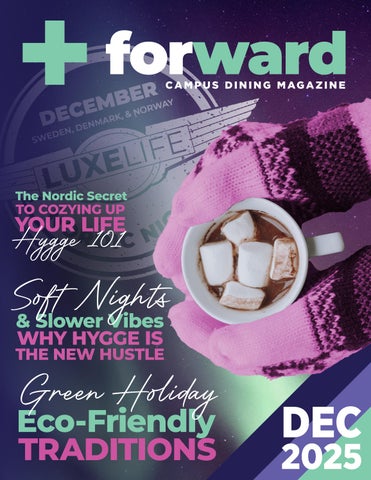
Beyond delicious food, the Nordic region provides a blueprint for balanced living, learning about the “”hygge”” concept, which translates to enjoy. “Hygge” is the Nordic art of creating comfort and wellness through life’s simple pleasures, including hearty meals, perfect for communal and family gatherings. As we usher into the holiday season, we embrace the “hygge” concept, placing sustainability center stage, focusing on minimizing waste and preserving natural resources to promote personal and environmental harmony.
As the semester winds down and finals season ramps up, take a moment to slow down and find comfort in the Nordic tradition of Hygge: the art of coziness, warmth, and well-being. Inspired by the wellness practices of the Nordic region, this month’s theme encourages you to embrace simple joys, mindful moments, and restorative self-care during the busiest time of the year. From nourishing foods and calming rituals to cozy environments that promote relaxation, discover how to stay grounded, focused, and refreshed. Wrap yourself in warmth, sip something soothing, and let the spirit of Hygge carry you through the season!
Campus Dining by Thompson Hospitality


“Comfortable in my skin, Cozy with who I am. I love myself.” (Beyonce, Cozy)
Being cozy and comfortable is not just a Beyonce song or a luxury, it’s a way of life, especially for natives of the Nordic region. The Nordic regions include Sweden, Norway and Denmark. These regions take coziness, simplicity and life’s pleasure to a different standard, they even came up with their own name for their lifestyle—Hygge.
Hygge, pronounced “hoo-ga,” is a lifestyle concept that the Danish natives invented back in the early 1800’s; it is derived from the Norwegian word “velvære” which means “Well-being”. For Danish natives or Danes, Hygge is a lifestyle. The Hygge lifestyle consists of feeling cozy contentment and well-being through enjoying the simple things in life. In 2017, the cozy, simple lifestyle gained media attention. Pinterest predicted it would be “hottest home décor trend”. On Instagram, there are over 4 million posts tagged #Hygge or #Hyggelifestyle; the lifestyle has also been discussed on X (formerly known as Twitter) discussing what makes something Hygge or not.


In Denmark, Danes consider Hygge simple things that bring joy to your life. Danes even use Hygge as a descriptive word. According to the Country Living website, Sweatpants or loosefitting trousers could be considered Hyggebukser on a cold December afternoon; Buskser meaning loose-fitting, informal trousers worn by men or women. Burning candles are also big in the Hygge lifestyle. Burning candles, most times, gives the atmosphere a cozy, well-being feel, especially if its scented with your relaxing or favorite smell. Homemade sweets, comfort food or warm drinks are considered Hygge too! Imagine traveling home from school to find that your relative made your favorite apple pie or your high school friend has offered to take you out for some warm, soothing drinks.
In Sweden, the natives have their own twist of Hygge. To Sweden citizens, Mysa is a way of living a simple, cozy life. Mysa, pronounced “Mee-sah” could be considered the new Scandinavian way of life. But to the citizens, its more than getting cozy on a rainy or cold morning; it is taking the time out from stress and “must-do’s”, spending time with loved ones or enjoying all five of our senses. An example of this could be enjoying a BBQ at the park with friends and hearing the birds or other families talking in the background. Enjoying the first bite of a juicy burger or char-grilled hotdog(taste), smelling freshly cut grass or smoke from the BBQ pit, feeling the earth or grass beneath your feet and seeing your friends all in good spirts and enjoying their time with each one another.


In Norway, the Norwegians take Hygge a step further and of, course they have their own term. Koselig, pronounced “koosh-lee” is a Norwegian word that translates to cozy or pleasant. It is often used as an adjective, describing the feeling of comfort and a sense of well-being. In contrast, most people despise the colder months because of SAD (Seasonal Affective Disorder) however, Norwegians welcome this time. Norwegians use this time to celebrate darkness and isolation because they feel “they provide the need for their relief” CNN Heath. An example of this could be lighting a fireplace and letting the embers from the fire be the main source of light in a room.

In America, simple life pleasures could be described as taking a specific day out of the week to enjoy time for themselves or it could be a beloved pet running to them after a long, stressful day at work. Incorporating Hygge, Mysa and Koselig concept into your everyday life can be as simple as taking a longer route to class to smell the fresh air or seeing something on campus that you wouldn’t have noticed. These lifestyles can be enjoyed by yourself or with others; this can look like going to Milked and enjoying a delicious shake with friends or washing laundry with lavender scented fresheners.


This month, take some time to enjoy life’s simple pleasures. Find your happy place, spend time with friends or family, or watch your favorite movie in your coziest PJs with your comfort meal or snack. Remember, embracing a Hygge lifestyle isn’t about screen time or buying things to make your space cozy; it’s a reminder that simple, cozy moments can genuinely enhance your well-being. Create that feeling with life’s simplest pleasures.

Most people are happiest at home or happiest when they are enjoying their favorite food or even their favorite activity. But did you know that most people have a favorite country which could be considered their happy place? According to the World happiness report, Finland is ranked #1, for eight years in a row, as the Worlds happiest place (Denmark came very close in 2nd place). You may be thinking why is Finland the happiest country in the world? There are several life lessons that can be applied to your everyday life to make it feel like you are in the happiest place in the world.
But first, why IS Finland the happiest place in the world?
While many factors contribute to Finland being the happiest place in the world, the biggest element that contributes is the native’s deep connection to nature. About 75% of Finland is covered in Nature and natural landscapes and the natives of Finland make it their business to get out there in enjoy it; they actually prioritize it. Regardless of whether it’s really warm or very cold, Finns don’t mind the seasons, it’s just an invitation to dress accordingly. Engaging with Nature, whether it’s a scenic walk, hiking, bird watching or participating in winter sports, for them is about developing a connection and a relationship with nature that truly makes the natives and the country the happiest place on
So, what can we learn from the Finns to enhance our own well-being? Their lifestyle offers valuable insights into fostering a happier, more balanced existence.


A key factor that contributes to Finland being the worlds happiest country is their sense of having a work-life balance. Finns welcome and exercise this concept to the max. For them, this looks like taking breaks in the work setting and emphasizing the importance of personal time and leisure; this is priority for them when maintaining their personal life. In addition, balancing work and pleasure can significantly reduce stress, improve mental health and overall boost their well-being.
Finland has the highest level of social trust which contributes to them ranking #1 as the happiest country in the world. Finns trust the people around them, even strangers! This kind of trust is not easy to build, but in Finland its second nature. The best advice from Finns on social trust, is to “let it build over time” (Forbes.com). This can begin in simple, small ways such as letting someone, male or female, open the door for you, helping your neighbor, or even giving someone the benefit of the doubt such small steps collectively strengthen your immediate village, which in turn reinforces the broader community.
Stop and take time to enjoy when there is nothing on your calendar, when you can exist and just be you with no obligations or priorities for the day. Understand that the world won’t collapse if you aren’t constantly contributing to the day. It’s ok to rest, relax and recharge to be the best you for everyone around you. This is when you’re the most powerful! Appreciating your free time is essential for recovering from work or stressful days. Feeling like you always need to be “on the move” can be stressful and provide more misery to your life, but taking some time on that random day in the week or weekend can be just the boost you need!
Finland natives also have a strong sense of social and community relations with the people around them. It is very rare that you see a Finn by themself, unless of course they are on the way to a social gathering and even then, they most likely won’t be leaving by themselves. Finland prioritizes regularly social gatherings, participation and sense of belonging to something. Having these types of interactions can boost morale and help natives avoid negative situations and offer them a sense of community and security when they are in social gatherings.
Some people may say “We are visitors on earth” because the animals and nature were here way before we were. Finns think like that too. One of the simplest ways to increase your overall being like the Finns is to get out in nature and enjoy it. Seeing green is linked to improving blood pressure and lowering stress levels, so a short walk can boost your overall well-being in huge ways. Getting out in nature can contribute to your energy levels and can give you a sense of rejuvenation after spending some time there.


The Nordic regions enjoy their holiday sweet treats, and they have a lot to choose from. There are specific pastries, candies and desserts that are more popular than others in each country. Let’s take a look at each Nordic region and learn about their most popular sweet treat and why it’s popular in their country.
Denmark The Flaky Danish Kringle is a yeast bread that has flaky layers of tender dough and flavored almond paste that is baked inside. This treat also is topped with sugar cookie crumb crumbles that adds the perfect amount of sweetness and the perfect holiday treat.
Aebleskiver, pronounced “ay-bluh-skwee-vuh is described as a pancake ball, a tasty one at that! These tasty, round treats can be found in most pastry shops or street markets in Denmark. This treat can also be made Christmas morning as a simple breakfast item before enjoying holiday festivities.
Pecan Kringle Sticks are much like the Flaky Danish Kringle but if you are shape person, then this is the perfect treat for you. These sticks are perfect to add to any holiday cookie platter. Most natives say this treat isn’t very sweet, but the dough does melts in your mouth wishing you had more.
Sweden Silvia cake is a traditional Swedish cake perfect for enjoying with family at holiday times. This moist, sponge-like cake is topped with butter base. Silvia cake is also named after the late Queen Silvia of Sweden.
Chocolate lovers, this treat is for you! In Sweden, a popular holiday cake is Kladdkaka, pronounced “klad-kah-kah”. This dish is described as Swedish sticky cake. Swedish natives reference this cake as the easiest to make as well as compared to brownies because of the crispy top and gooey bottom.
Norway Julekake is traditional Norwegian cake that is similar to Fruitcake. Julekake is bread filled with candied fruit and is super popular in Norway around the holiday times. This bread can be enjoyed as a snack or a warm treat. It can also be enjoyed on its own or with a butter spread.
Norwegian Krumkake cookies are another holiday staple in Norway. These cookies are rolled waffle cookies that are fragile but filled with sugar. These cookies can be rolled by hand or made with a Krumkake iron, similar to a waffle iron.
Berlinerkranser is a traditional holiday cookie that is much better gifted. In Norway, these cookies are a beloved gem and most citizens anticipate receiving it as a gift. These delicious butter cookies are made with hard-boiled yolks, rather than raw egg yolks to give it that tender, crumbly texture that the citizens come to know and love.


#NoDaysOff #EverydayImHustling #WhatIsSleep. There are many of those types of hustle mindset hashtags floating around on social media. The push for constant productivity, often demanding back-to-back shifts or the abandonment of rest or relaxation, has become deeply embedded in the American consciousness. These mindsets combined with America countless ways to make a living, what we’ve come to call “hustle culture” could be perceived as a workaholism rebranded.
“Hustle culture” is a term used to describe the mentality that one should be working hard to pursue their dreams. It also can be described as a temporary state of working to achieve a specific goal. Hustle culture mentality isn’t necessarily a bad mindset and can keep you focused on what’s ahead of you and what you are striving to receive. Most Americans in society have the “hustle mindset” and have seen great rewards from it. There are also Americans that have to result to hustle culture because of financial obligations or achiever fever, which is defined as “the state of mind we get ourselves into when we tie our self-worth and happiness to our accomplishments.” as stated on Livehappy.com.
Some people can tolerate hustle culture and live it every day, but for others this mentality can lead to negative factors. These factors can look like feeling the need to always overachieve, comparing one’s success to the next or constantly being exhausted (Burnout). These types of factors can lead to work-life imbalance and could increase the risk of mental, physical or psychological health issues. According to the World Health Organization (WHO), they recognize work life imbalance as Burnout and is a syndrome; not a medical condition, resulting from chronic workplace stress that has not been successfully managed. It is characterized by three dimensions:
ب Feelings of energy depletion or exhaustion.
ب Increased mental distance from one’s job, or feelings of negativism or cynicism related to one’s job.
ب Reduced professional efficacy.
Understanding that the hustle culture can lead to serious effects if not done in moderation or with some type of balance is not as easy as taking a bubble bath or watching your favorite show for relief. There are few life tips that can be taken from the natives of Denmark to balance work and life’s pleasures. In Denmark, there is a life concept called Hygge, this is how the Danes relax, enjoy being present and indulge. Being like the Danes could also improve your mental, physical or psychological health and here are some simple ways it can be done:
ب Sleeping with soft blankets with no light or dim lights can improve sleep quality.
ب Having a positive mindset about situations can increase overall well-being.
ب Making self-care and relaxation a priority and not an option can lower stress and physical stress, like muscle tension.
ب Slowing down and being present in situations can promote mindfulness and reduce the risk of anxiety.
These type of lifestyle changes can help balance hustle culture and have a more positive impact on life. Life is not about getting rich quick, outdoing your peers or underachieving. However, life is about strengthening connections, being comfortable and doing your best in whatever you choose to do. Hustle culture was designed to be temporary and not permanent, focus on the little things that bring you joy in this holiday season.
Luxe Lab LIVE
A Culinary Experience Through the Digital Lense
ELEVATED
Luxe Table Talk
Jet Stream: What’s Hot & What’s Next
Wrapping Up in Style
The Culture Cabin Festive Flashbacks!
The Luxe Lounge
Behind the Scenes with the THS Team

Sky High Wellness
Winter Wellness Guide
Dear Luxe Leader
Relishing in Your Victories
CLICK


With the climate of the economy and sometimes the uncertainty of the world, celebrating the holiday season may be in the back of your mind. However, there are many eco-friendly traditions that can be done to keep the spirits high and the holidays a time for reflection, togetherness and family traditions.
This can be a fun tradition that can start as early as Halloween! Around October and November stores are putting out most winter holidays material due to the seasons changing. Buying multiple decorations can get expensive quickly and can lead to plastic pollution, reducing landfill waste and raising our carbon footprint. To avoid this, picking up a few items leading up to the Christmas holiday and constructing the items together for holiday décor can be a great, sustainable way to protect the earth.
Planning a family holiday call via video conference platforms is another great, eco-friendly option. Choosing this option could significantly reduce your family’s carbon footprint and you’ll be able to enjoy all of your family’s shenanigans from the comfort of your home. In addition, most video conferencing platforms have fun themes, music and background screens to enjoy and play around with. Further, you could incorporate some games to play on video so that it doesn’t feel tedious.

Giving gifts should not be the cost of your everyday bills, its ultimately about giving gifts from the heart or giving something to someone that brings them joy. A sustainable gift for your cousin that loves scarves can be something you made from repurposed items or natural materials, such as wool, silk or cotton. If you aren’t an artsy person, gifting digital cards is an option too. The point of sustainability is to cause little to no damage to the environment and as a result, healthy and thriving environments are sustained.


Families enjoy going out to the store and searching for that perfect tree. But instead of going to a retail store, consider going to a local tree lot. This contributes to the environment by avoiding plastic fibers from the tree and disposing it in a trash bin. Some tree lots will even let you bring back the purchased tree to them so they can properly dispose of it, which in turn can be compacted into mulch, another Christmas tree or compost for parks.

Buying plasticware (plastic pots and pans, if we could) for the holidays seems like the easiest option to have a stress-free holiday, but using glass or ceramic dishes is a good, eco-friendly option. Plastic utensils, uneaten food, gift wrap and so many other factors contribute significantly to waste, especially around the holiday season. Seaside Sustainability, a website whose purpose is to Advocate, educate, and deliver tangible solutions to advance environmental stewardship stated there is a 25% increase of waste between Thanksgiving and New Years Day. This could be translated to about one ton of garbage each week. Using more sustainable items can help reduce waste, which can have a huge impact on the environment.
There are many more sustainable options available that you can do at home. Being eco-friendly doesn’t have to be a boring task and most can be done with friends and family. Most tasks can also be tailored to fit the needs of your household, there are many ways to contribute to keeping the earth healthy and safe for everyone to live.


Ingredients

ب 1 cup (240 ml) oat milk
ب 1 shot (30-40 ml) of espresso (or ¼ cup strong brewed coffee)
Directions
ب 1 tablespoon honey (or to taste)
ب ½ teaspoon ground cinnamon (plus extra for garnish)
1. Prepare Espresso: Brew a shot of espresso or make ¼ cup of strong coffee. Set aside.
2. Heat the Milk: In a small saucepan, warm the oat milk over medium heat. Stir occasionally to prevent scorching.
3. Mix in Flavorings: Once the milk is warm, stir in the honey and ground cinnamon until fully dissolved.
4. Combine: Pour the espresso or coffee into a mug, then slowly add the warm cinnamon honey oat milk.
5. Garnish and Serve: Sprinkle a pinch of cinnamon on top and enjoy immediately!
6. Optional Tips & Additions: Use a frother or whisk to create foam for a creamy texture. Whipped oat cream or foam can be used as a topping.


Marketing Contacts
Daniela-Gabrielle Smallwood, Vice President of Marketing and Programming
daniela.smallwood@thompsonhospitality.com (571) 446–7430
Stacey Gibson, Director of Retail Marketing stacey.gibson@thompsonhospitality.com (571) 524–8566
Editorial Staff
Gina Godwin, Creative Director
Yolanda Waters, Chief Editor
Heaven Smallwood, Editor
Jacquii A. Tilley, Contributing Writer
Tess Mazzucchelli, Graphic Designer