
AT MARJAN BEACH, RAS AL KHAIMAH
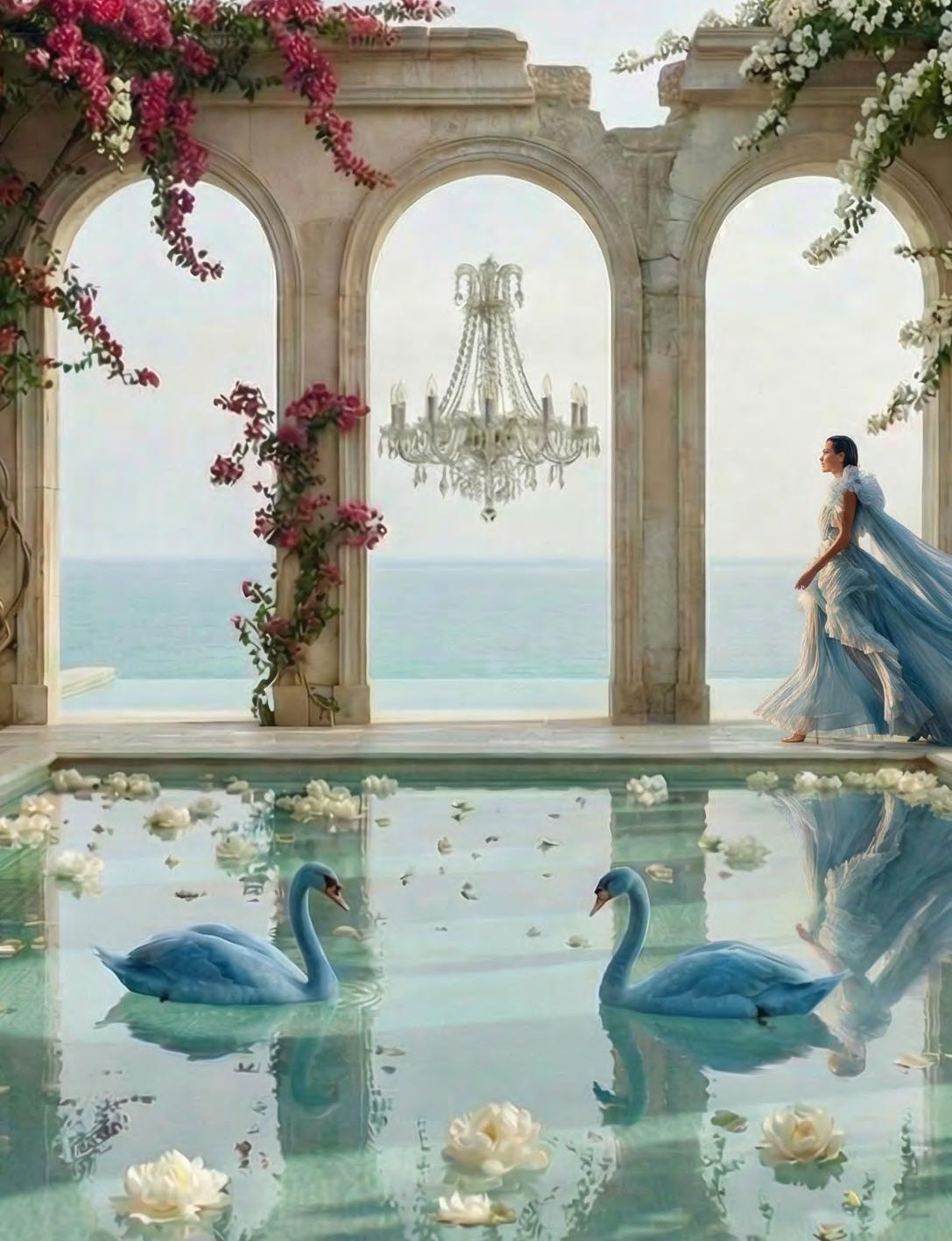
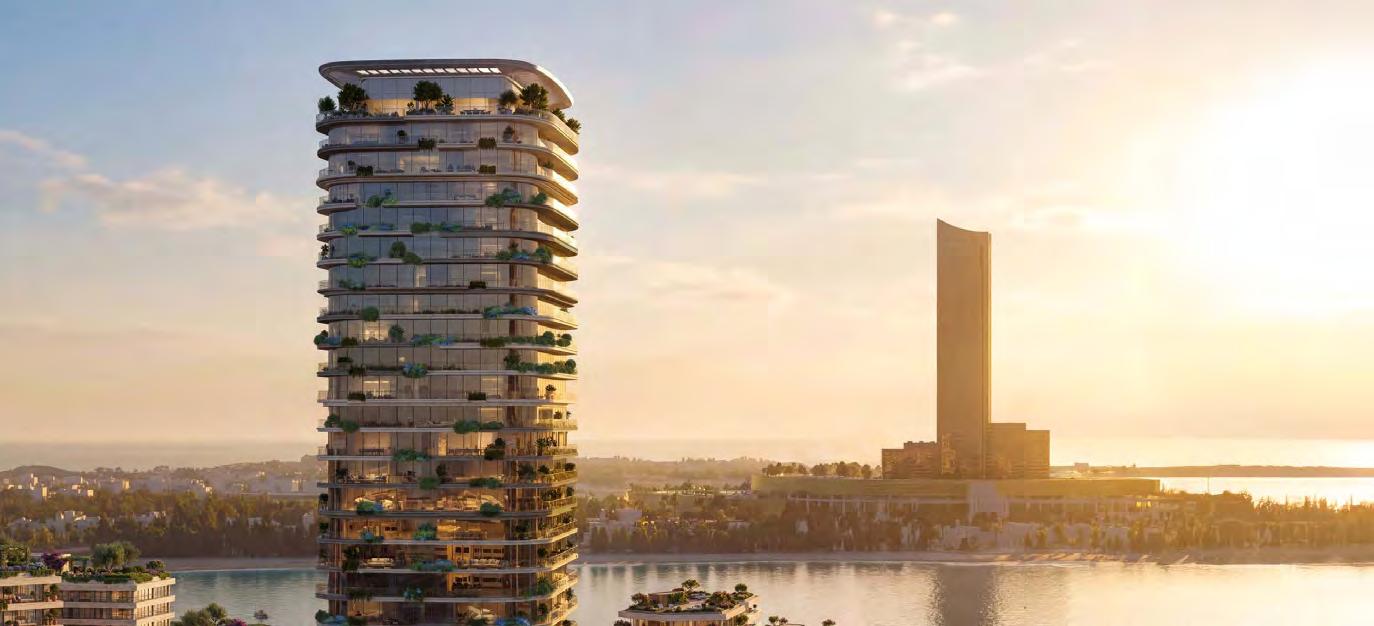
Positioned within EVERMORE, BEYOND Developments’ Frenchinspired waterfront masterplan on Marjan Beach in Ras Al Khaimah, Le Château introduces a refined expression of coastal living, directly facing the landmark Wynn Al Marjan Island.
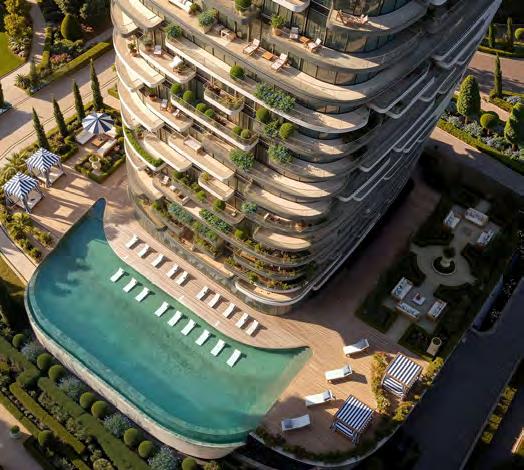
Inspired by the architectural language of French classical estates and reimagined for contemporary waterfront life, the residence balances symmetry, proportion, and sculptural detailing with expansive glazing and uninterrupted sea views.
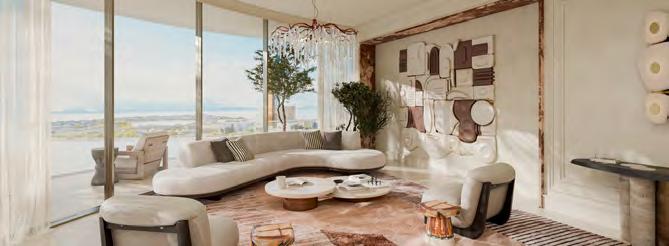

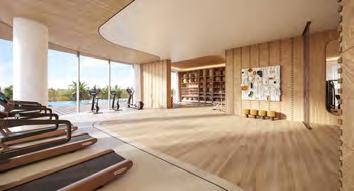
A curated collection of residences, ranging from 1 to 3-bedroom residences, is designed to maximise light, privacy, and indoor-outdoor flow, offering homes that feel both timeless and deeply connected to their natural surroundings.
Set within EVERMORE’s visionary masterplan, residents are immersed in a fully pedestrian coastal district anchored by a central botanical garden, 4.6 kilometres of beachfront, hospitality and branded residences, a festival plaza, botanical souks, and curated F&B experiences, shaping a self-sustained destination where lifestyle, wellness, leisure, and nature converge.
There was a version of this letter I imagined writing months ago.
It was lighter. Celebratory. A reflection on four years of building YUNG – on what we have created, and the people we’ve created it with.
But this issue came together in a moment that feels anything but light.
To speak about home right now – about belonging, identity, memory – feels heavier than we expected. More complicated. More urgent. And, in many ways, more necessary.
“Four Names for Home” was never meant to arrive at a single definition. Bayt. Dar. Watan. Manzil.
Each word carries a different weight. A different intimacy. A different kind of truth. Together, they reflect something we’ve always understood at YUNG: home is not fixed. It shifts. It fragments. It rebuilds itself through people, through memory, through what we create.
And sometimes, it exists in absence.
YUNG itself is a home-grown brand, built in Dubai – a city I’ve called home for over two decades. A place that exists in its own in-between. Not always where we’re from, but very much where we’ve become. Shaped by movement, by layered identities, by constant reinvention.
This issue became a response to that tension.
Between what home is, what it was, and what it might become.
Between where we are, and where we wish we could be.
Across these pages, you’ll find people living inside that question. Musicians, actors, models and artists – each carrying their own version of home. Not as something stable, but as something they build, protect, and redefine through what they make.
The covers reflect this in different ways.
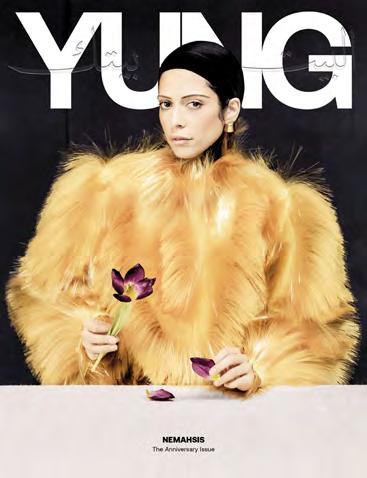
Nemahsis writes with a clarity that holds identity, displacement, and resistance without losing softness.
Rilès moves between music, performance, and image, creating work that feels controlled and exposed at the same time. Rosaline Elbay approaches performance as something layered – shaped by language, heritage, culture, and memory.
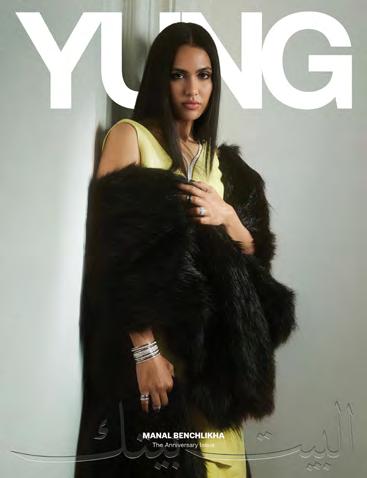
Manal Benchlikha builds a world through sound and visuals that moves between the regional and the global without asking permission.
Lella Fadda works through space and atmosphere, creating something intimate and grounded.
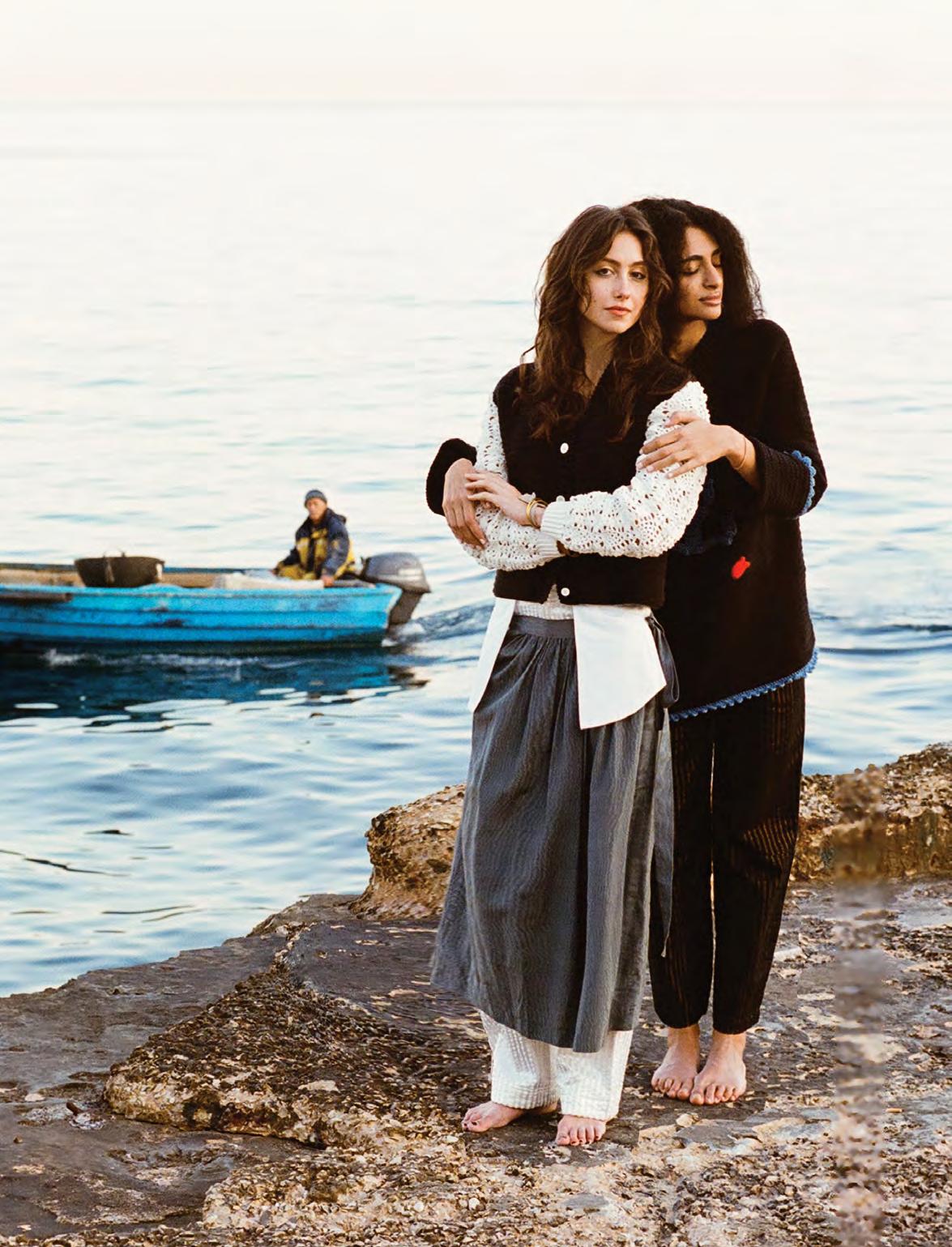
Models Meriam Turki and Shahed Elnakhlawy represent a generation redefining visibility, not just being seen, but being understood. Meriam, Tunisian, and Shahed, of Jordanian, Palestinian, and Egyptian heritage, are shaping how culture is carried across borders.
Together, they point to a generation that is not interested in fitting into existing narratives, but in reshaping them.
Fashion, across it all, becomes more than aesthetics. It becomes language. A way of holding onto identity when place feels uncertain. A way of building something that cannot be easily taken away.
Four years into YUNG, what remains constant is this: we exist to document this moment honestly. Without smoothing it out. Without pretending things are simpler than they are.
This issue is not the celebratory one we first imagined.
But it feels more honest.
And maybe that, in itself, is something worth marking.
Founder and Editor in Chief - YUNG
founder and editor in chief SANDRA YEGHIAZARIAN
creative director SAIF HIDAYAH
managing editor NADINE KAHIL
art director ATHINA SYMEONIDOU
senior editor LOUIS PARKS
senior producer LAMIS JOUDAH
creative content manager MAYA MAGED
social media content manager ZOU ELJORFI
creative project manager OMAIA JALLAD
creative contributor ALI KIBLAWI
graphic design HEY PORTER!
contributors
MENNA SHANAB
MARIANA BAIÃO SANTOS
MAI EL MOKADEM YASMINA BITAR
SUBMISSIONS AND INQUIRIES hello@thisisyung.com PRINTING
PUBLISHED BY THIS IS YUNG LLC
Sharjah Media City hello@thisisyung.com www.thisisyung.com
All rights reserved. No part of this publication may be reproduced in whole or part without permission from the publishers. YUNG Magazine welcomes new contributors but can assume no responsibility for unsolicited photographs or illustrations. Every effort has been made to contact the copyright owners of the images and text in this issue.
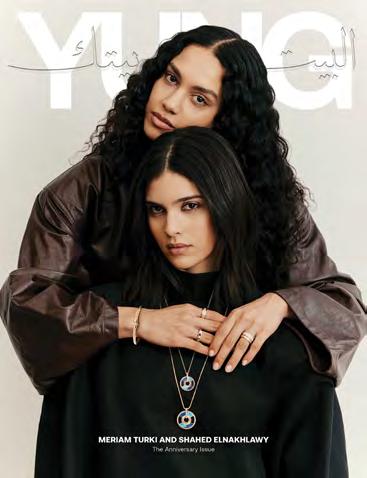
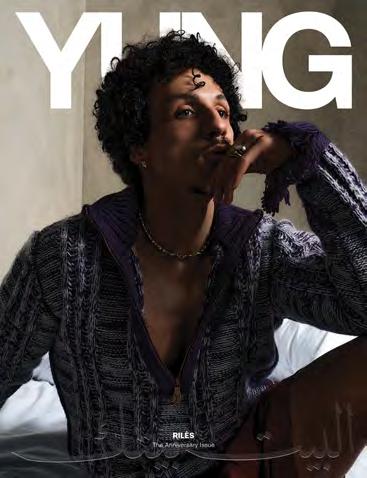
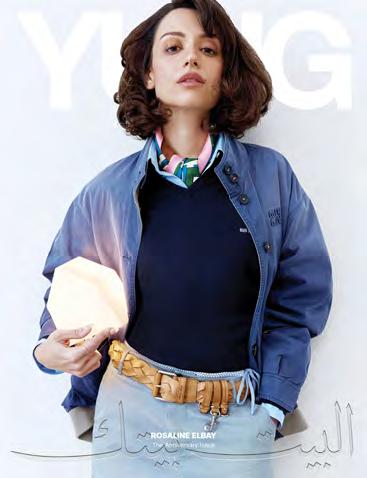
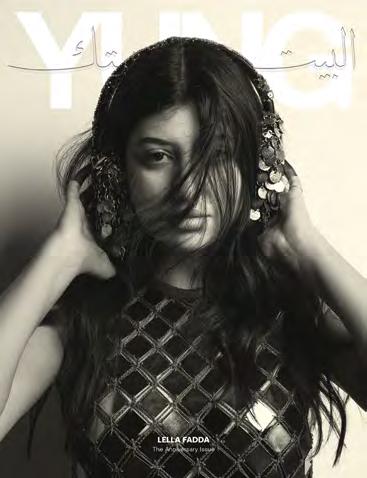
ANDREW KIMBER / ANDREY
MOHAMMED / ANTIM GELEW
BEE / BOHDAN ROHULSKYI
WAKABAYASHI / CURTIS
/ DANILA KONSTANTINOV / ELENA SANTOLAYA / FOUAD
GEORGE KASHCHÉEV / GRACE / INES / IVAN KUZ / JANE TINNEY
LANA ALBEIK / LANA SHASH / KHOSHABA / LUKA BOOTH /
BALIN / MERIAM TURKI / MICHAEL KONOV / MICHEL KIWARKIS /
/ MUHAMMED AKBAR / PO
RORO MROUE / SACHIN GOGNA
WHITESIDE / SHAHED ALNAKHLAWY / SINA BRAETZ / SINCLAIR BRYAN
CHIPPER / JANA TEUS / JOSÉ
ANDREY BARSUKOV / ANNUM
GELEW / BARNEY ARTHUR / BETTY / BORIS EDROSA / CHIHARU
SWEET / DALIBOR VRTINA
DINA D / ELDA KASTRATI / TADROS / FRANCESCA GILL / GRACE
/ IGNACIO
TINNEY / KYOSUKE TANZAWA / / LERA POLIVANOVA / LILYANA / MAHLIA SENARATNE / MAX
MICHAEL BRUNT / MICHAEL
MICHELE NAY / MISHA HUSAK
TSUN LIN / POLINA / RIHA / GOGNA / SAM SPARROW / SARAH
ALNAKHLAWY / SHARBEL HASBANY
BRYAN / TARIK BENNAFLA / JACK
JOSÉ CUEVAS / YASMINA BITAR
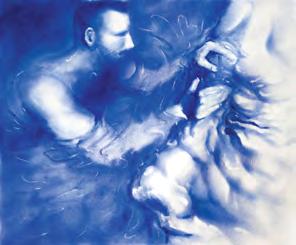
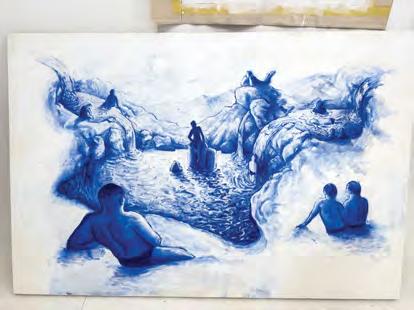
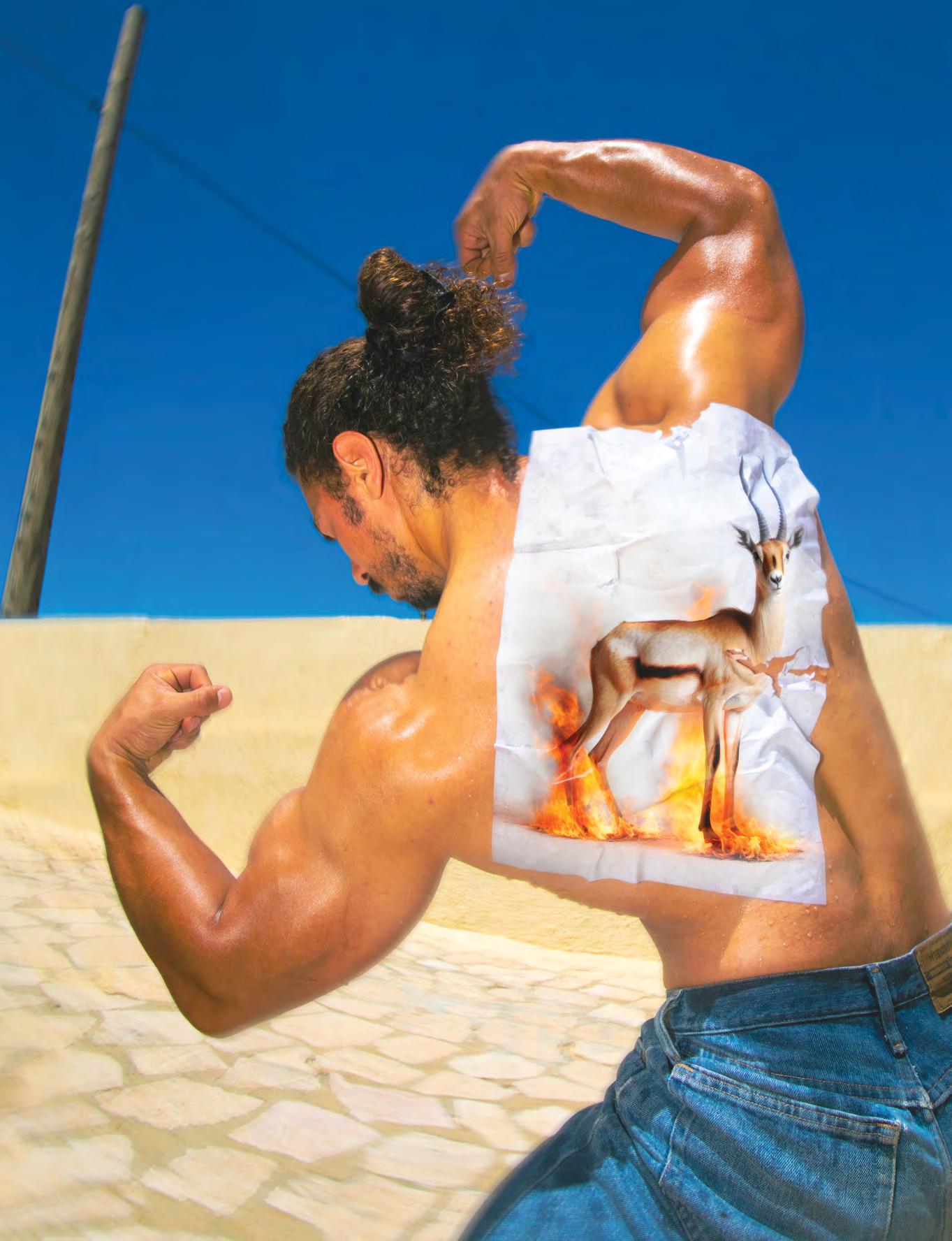
Omar Sha3 approaches image-making as a slow form of observation. The Palestinian artist moves across photography, painting, and design to create scenes that feel both imagined and deeply familiar. His work is saturated with colour, softness, and subtle humour, often built from intimate details, personal objects, and landscapes that carry emotional weight. Drawing from Levantine environments, family memory, and a painter’s sensibility, Sha3 constructs images rather than simply capturing them. Each frame is carefully composed, allowing reality to gently shift into something more poetic. His practice is driven by a desire to preserve what is fragile, moments, places, feelings, before they fade.
What’s your earliest memory of photography?
I first picked up a camera to understand light and perspective, mainly to improve my painting. Photography quickly became a way of training my eye, teaching me how small shifts in distance, framing, or light could completely change the emotional weight of a scene. That early curiosity still shapes how I see the world today, as something fluid, intimate, and constantly redefined by where you choose to stand.
Your work often features bold colours, props, and striking compositions. How do you decide which elements will bring a scene to life?
I usually try to collect intimate elements that remind me of a memory, like a small ceramic duck or an object that helps me imagine something about the future. I keep these elements close, sometimes even travelling with them, and wait for the moment when they naturally belong in an image.
Many of your images capture the otherworldly beauty of SWANA landscapes. What draws you to these locations? Our region is beautiful, intimate, and tender. I feel an urgency to capture these places as they exist now, as a form of care and documentation, before development or neglect alters their character.
Portraits play a central role in your practice. How do you approach capturing the personality, mood, or spirit of your subjects?
Most of the people I photograph are close friends. I focus on building genuine trust and spending time together before the camera comes out.
Colour and whimsy are central to your imagery. How do you balance playful, vibrant aesthetics with deeper emotional or cultural resonance?
Playfulness is often my entry point, but it is never superficial. Bold colour and gentle humour invite people in, while deeper emotional and cultural layers sit quietly beneath the surface. Whimsy becomes a soft way of speaking about memory, intimacy, and place without becoming heavy-handed.
Your work has a surreal, painterly quality. How do you blend photography with this almost gallery-like aesthetic?
Coming from a painting background strongly shapes how I approach photography. I’m less interested in capturing a moment quickly and more drawn to constructing an image slowly, with intention. By treating the photograph as an object rather than a record, I allow space for mood, texture, and stillness, qualities that feel closer to how a painting is encountered.
How does your process balance reality and imagination?
For me, there isn’t a clear separation between reality and imagination. Everything I photograph already exists in front of me, the people and the environments. The imaginative part comes from how I frame it, what I choose to include, and what I leave out. By slightly shifting perspective or context, reality reveals something quieter and more poetic without needing to invent anything new.
What do you hope viewers feel or take away from your work?
I hope viewers feel lighter when encountering the work, encouraged to smile, slow down, and enjoy discovering small Easter eggs hidden within the piece, moments that reward attention.
by
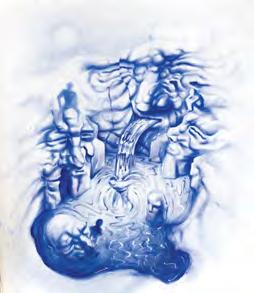
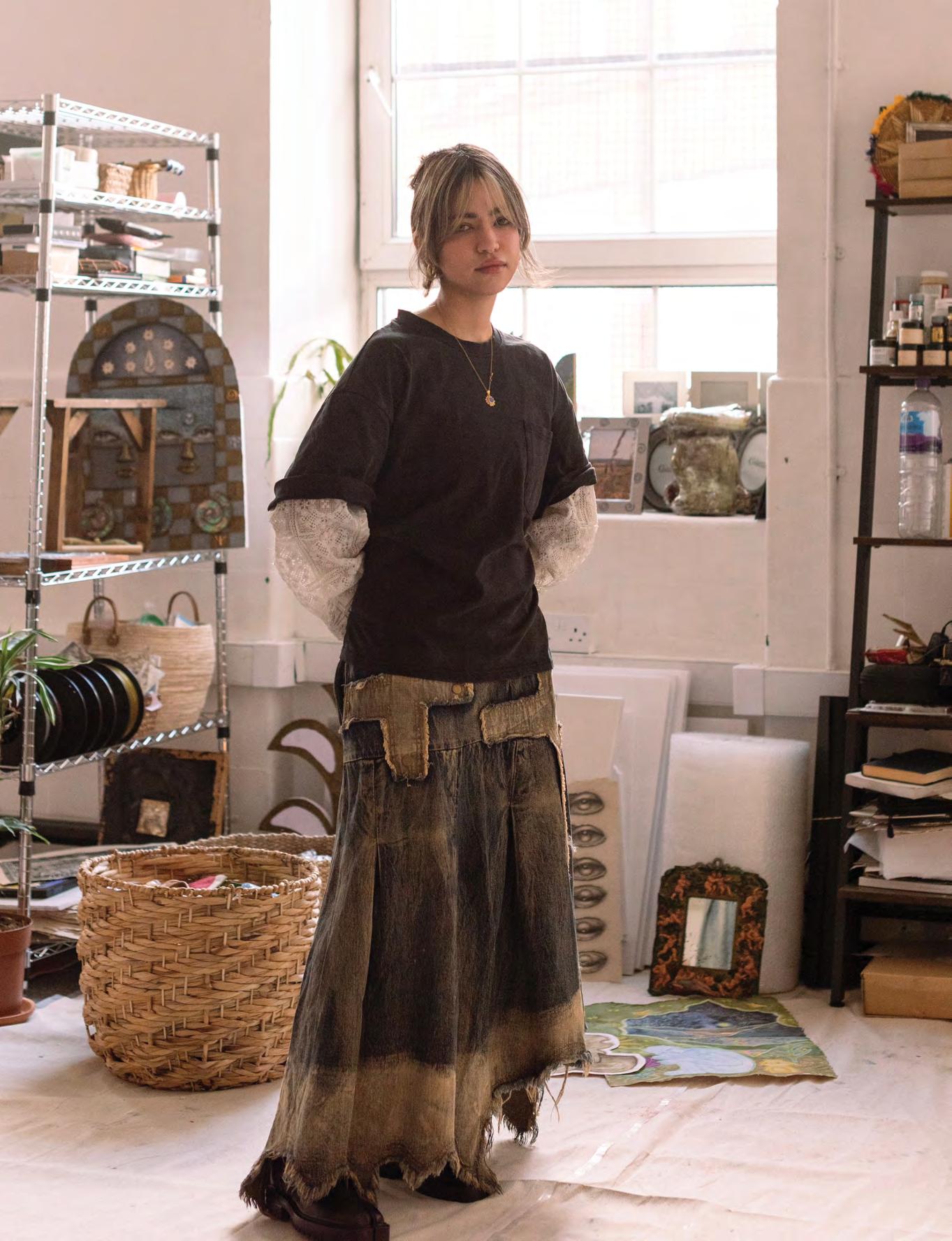
Zayn Qahtani works as both maker and archivist, building a visual language that feels unearthed rather than authored. The Bahraini, London-based artist moves between drawing, painting, and sculpture to assemble what she describes as a personal, synesthetic archaeology. Her works read like fragments from an alternate lineage; objects that suggest a life before, and beyond, the hand that shaped them. Material is central to this illusion of discovery. Papers made from Bahraini date palms, bioplastics derived from sugarcane, and pigments sourced from plants, metals, crystals, and earth merge into animistic forms that hover between relic and invention. Rather than offering fixed narratives, Qahtani builds worlds of suggestion, where memory, myth, and imagination quietly coexist.
How did your practice first begin, and what led you to move between drawing, painting, and sculpture?
I first began as many do - drawing on the margins of school notebooks, all over my arms - I found the need to create was quite difficult to repress.
As for keeping a multidisciplinary practice, it is extremely natural to me. It is like a secret language that I can decipher by painting on this and forming on thateventually an entire vocabulary forms.
Your work feels archival, almost as if it existed before you found it. Tell us about your process. The materials I use lend quite a natural, time-worn feeling to the works. Through the process of alchemy, these fibres or pigments that once lived full livesperhaps on a tree or underneath the earth - are now lending this lived-in quality to a newer work.
I also love to use repurposed materials from found objects - prying the bells off of a wind chime or using the front-face of an antique frame. It’s almost like a patchwork of memory.
Gold and silver metals appear often in your work. How do these materials shape the story or mood of your pieces?
The bioplastics I use often give off an air of trompe-l’œil, mimicking spiritual artefacts and ancient relics using contemporary means. Work that sits in that liminal
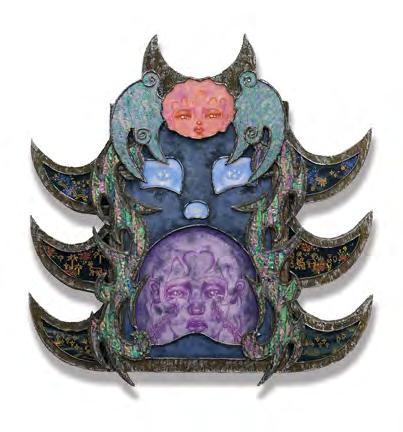
space often can mean that no matter how venerative the work feels, it can also feel equally as illusory, or “made up”. They are definitely the structural, containing element to many of my works, building what I like to call the “spiritual architecture” for the works to sit in.
Your objects feel almost alive, as if they have their own energy. How do you approach giving life to materials that are, by nature, inanimate?
The materials are animate! Many times, they are derived from sources of life - a plant soil, a crystal, the ocean - and I roleplay a sort of Dr. Frankenstein, welding this bit to that bit until an animistic quality becomes apparent to me.
Many of your works hint at stories without fully revealing them. How do you decide what to leave open or unresolved?
It’s a constant dance between what to say and what says enough on its own - I try to follow my inner intuition, and stop when I feel like I’m about to force a narrative.
Your work blurs the line between what’s real and imagined. How do you decide which elements to leave familiar and which to distort?
I think the uncanny valley feeling or distortion comes from viewing traditionally decipherable imagery through imagined context - floating body parts, an overly saturated landscape, natural materials in unnatural formations - it all works together to create a dialogue between what already is and what is yet to be expressed.
Andrea Bouez is the founder behind Un Peu Fou, one of Beirut’s most intimate dining spots, a Gemmayze-based restaurant rooted in seasonality, local produce, and soulful simplicity. Un Peu Fou celebrates Lebanese ingredients through a refined yet approachable lens, where food feels thoughtful without feeling distant. Bouez builds from instinct, memory, and an unwavering belief in the power of local. She approaches cooking as an emotional language, shaped by people, place, and everyday rituals.
Un Peu Fou translates to “a little crazy.” What’s behind the name? When my partners and I decided to work on Un Peu Fou, “crazy” came to our minds, whether it’s the Lebanese people, for standing on their feet after everything they’ve been through. Or the identity of the menu, which is far from typical. Or the operation, very few restaurants make everything from scratch so it seemed a bit crazy to my partners at first because we have a very small kitchen. But it was mainly because the five of us are truly crazy.
The philosophy “Local with Soul” is at the heart of everything you do. What does that phrase truly mean to you?
It means exactly what it sounds like. We are a bunch of locals who put our soul into everything we do. Whether in the kitchen, day to day operation, parties, identity and even finance and accounting. The producers we work with are so passionate about what they do individually that it keeps our drive going.
Lebanese cuisine is deeply rooted in tradition. How does your menu honour it? Some dishes are better left untouched and others can be played with without changing their identity too much. In my menus, I try to either incorporate a traditional ingredient into a foreign dish, or rework a regional dish whilst trying to keep its root intact.
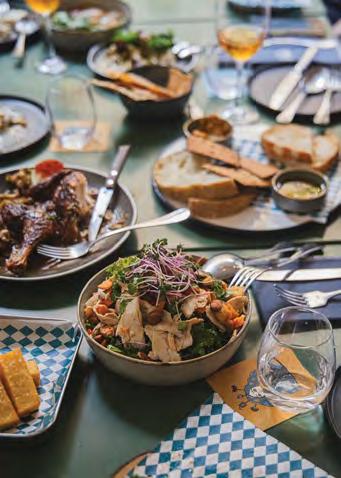
How does working so closely with local, seasonal produce challenge your creativity? It’s challenging on a daily basis because the demand is very small, so the producers have a limited amount they can supply which leads to shortages and you sometimes need to adapt and find solutions very quickly. I usually see what they have to offer and then build dishes around it or work with them on new ingredients. The aspect of using local produce is still very small in Lebanon, the majority of restaurants prioritize using imported ingredients for operational reasons, understandably so.
You’re launching bespoke at-home catering. What excites you most about bringing the experience into people’s homes?
The thing I like most about at-home catering is the freedom of planning a menu with the host. They trust me and let me go a bit crazier with some dishes, something you cannot always do at a restaurant to maintain a specific identity. We launched our catering in order to be able to accommodate guests at home by having a different menu and experience to offer, whether it’s a small six-course meal, a buffet for 50, or a BBQ in the garden.
What’s one dish at Un Peu Fou that feels most “you”?
Dada’s warak enab. Dada raised my mother and then me and my siblings. Growing up, I used to spend all my time in the kitchen with her rolling vine leaves and watching her cook. She taught me everything about Lebanese cuisine. We all say our mother or grandmother has the best warak enab, until you’ve tried Dada’s. The best compliment I can get at Un Peu Fou is when a guest tells me it tastes just like home.
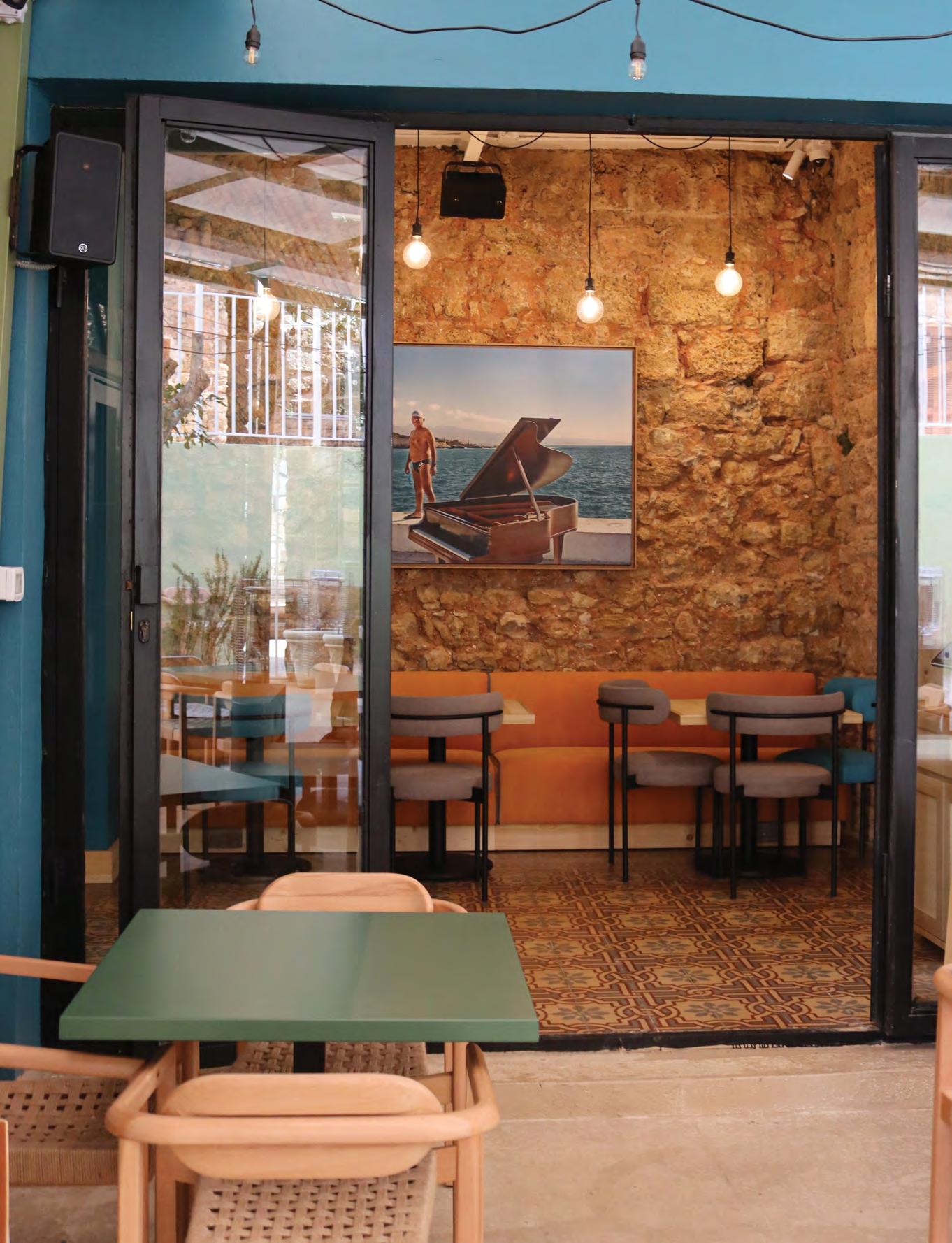
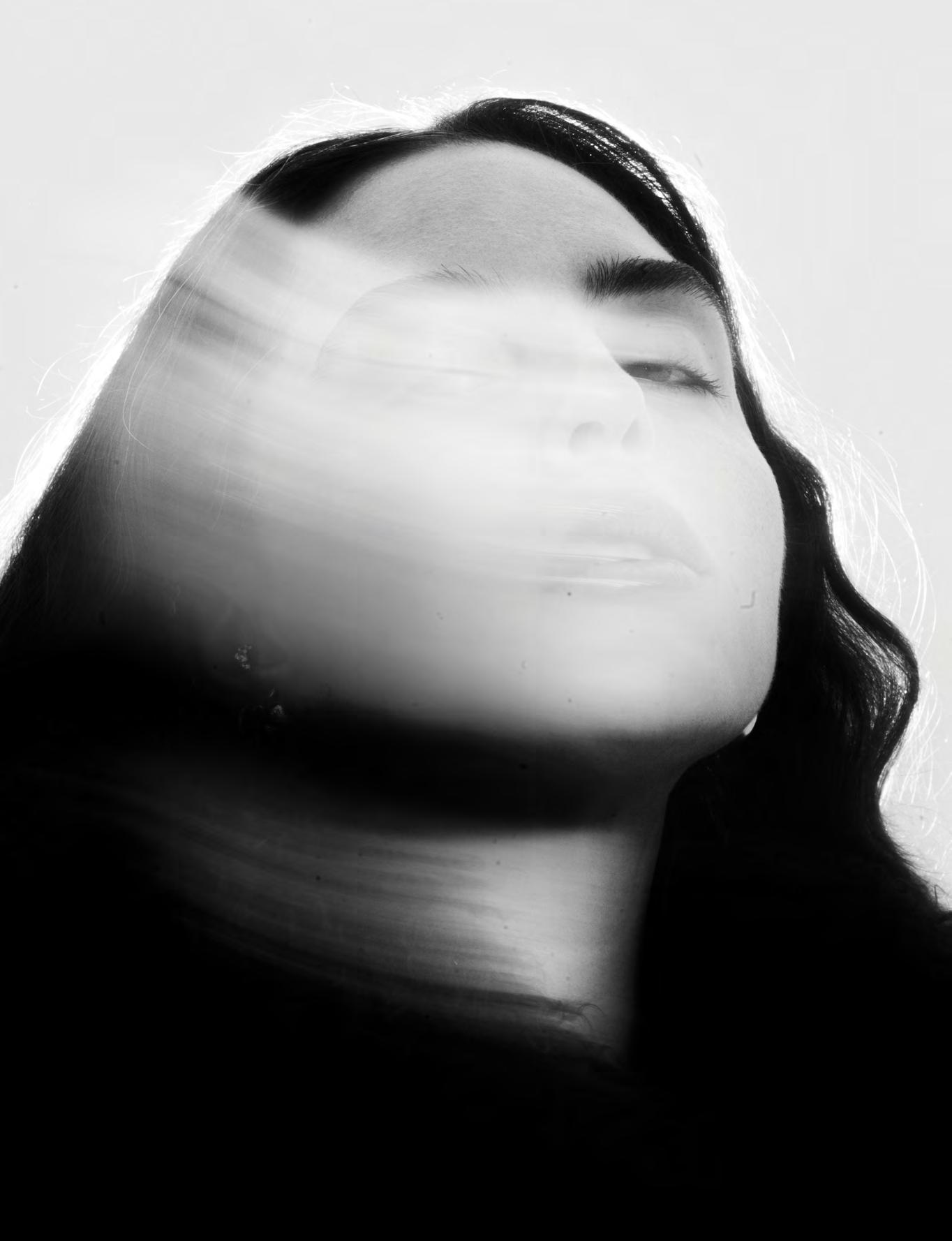
Raya Kassasieh approaches making as a way of staying with what is unresolved. Working between Amman and London, the multidisciplinary artist builds sculptures, installations, and material environments that move through grief, care, and endurance as lived conditions rather than themes. Her practice is shaped by Palestinian lineage, bodily knowledge, and a deep attention to labour, scale, and pressure. Moving between materials, Kassasieh’s works hold vulnerability and resistance side by side.
How does your Palestinian heritage influence your work?
My Palestinian heritage is not something I step into for the work. It is fact and lineage, and it is a complex position to live within. I believe its shaped the lens of grief through which I move and perceive the world. I live with the dissonance of being safe and resourced while witnessing ongoing violence enacted on people and land tied to my forefathers, tied to my flesh. That tension sits in my body and informs how I pay attention, where my curiosity begins, and why the work refuses easy resolution.
Your grandmother, Claudette, plays a meaningful role in a lot of your work. How does she inspire you?
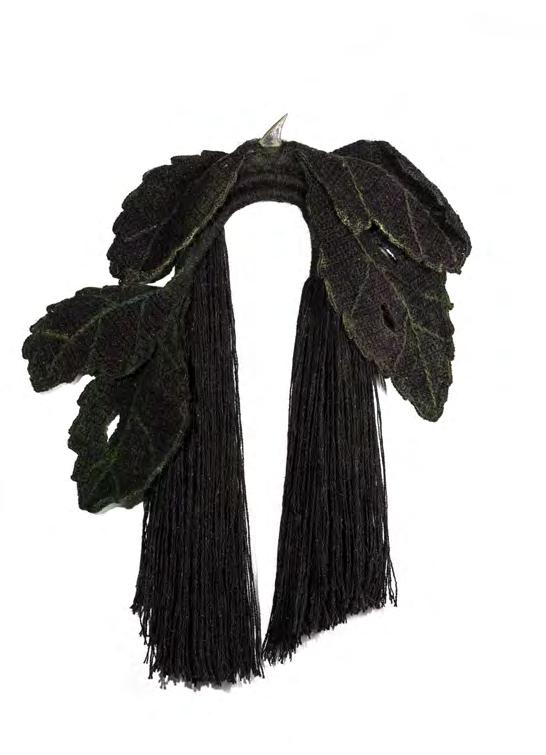
My grandmother has become not only a sentimental figure for me. She now represents a kind of attachment that is unfinished, a sense of home that cannot be returned to. Her absence brought anger as much as grief. Losing her exposed how fragile continuity is to me, and how quickly care, routine, and safety can disappear. Her death shifted the scale and urgency of my work. It pushed me toward working with hard materials and making as a way of staying with loss rather than softening it. What emerged was a need to transmute anger and fear into endurance, to work through what cannot be repaired. She taught me, indirectly, that what we fear will arrive regardless, and that there is a responsibility to continue making without consolation.
You work across soft and hard materials. How does this shift the register of a piece? I choose materials for how they ask the body to behave. Steel demands endurance, repetition. It removes performance and leaves only effort. Soft materials invite proximity, touch. They bring in the interior and domesticity. Moving between them allows me to play with how vulnerability and resistance are not opposites but companions. Material shifts the emotional register by altering pace and labour, and the political register by foregrounding whose bodies are allowed to work, endure, or soften.
Grief, care, and vulnerability often appear in your practice as spatial or ecological conditions. How do you translate these experiences into the physical? I think of grief as something atmospheric, I think grief shapes the rhythm of daily life, whether we name it or not. It circulates rather than sits. I think translating it into form means working with the state of the world. I am interested in making works that ask viewers to slow down, to feel pressure or tenderness through proximity. I believe vulnerability is present when the work does not seek resolution, when it remains open to erosion, change, and reactivation over time.
Your work frequently exists between softness and resistance, structure and collapse. Do you see these thresholds as fragile moments, or as sites of possibility and transformation?
I do not see these thresholds as fragile, I see them as charged. They are moments where form has not settled, where tension is still active and alive. I am interested in that point just before something resolves, when steel is under heat or fibre is under pull and neither has fully given in. Collapse for me is not failure. It is part of structure. Living between geographies and inheritances has taught me that stability is often temporary, so I work within that awareness. I try to hold contradiction rather than smooth it out. Those in between states feel honest.
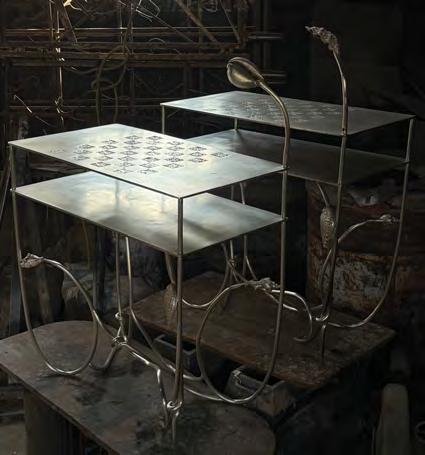
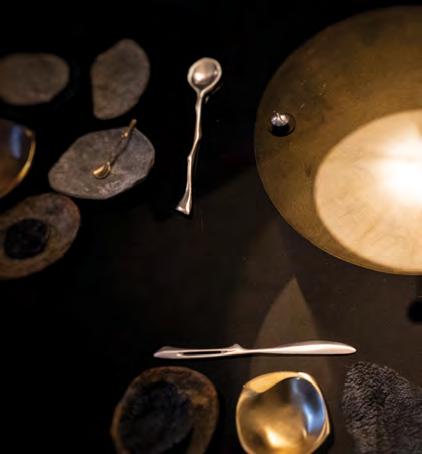
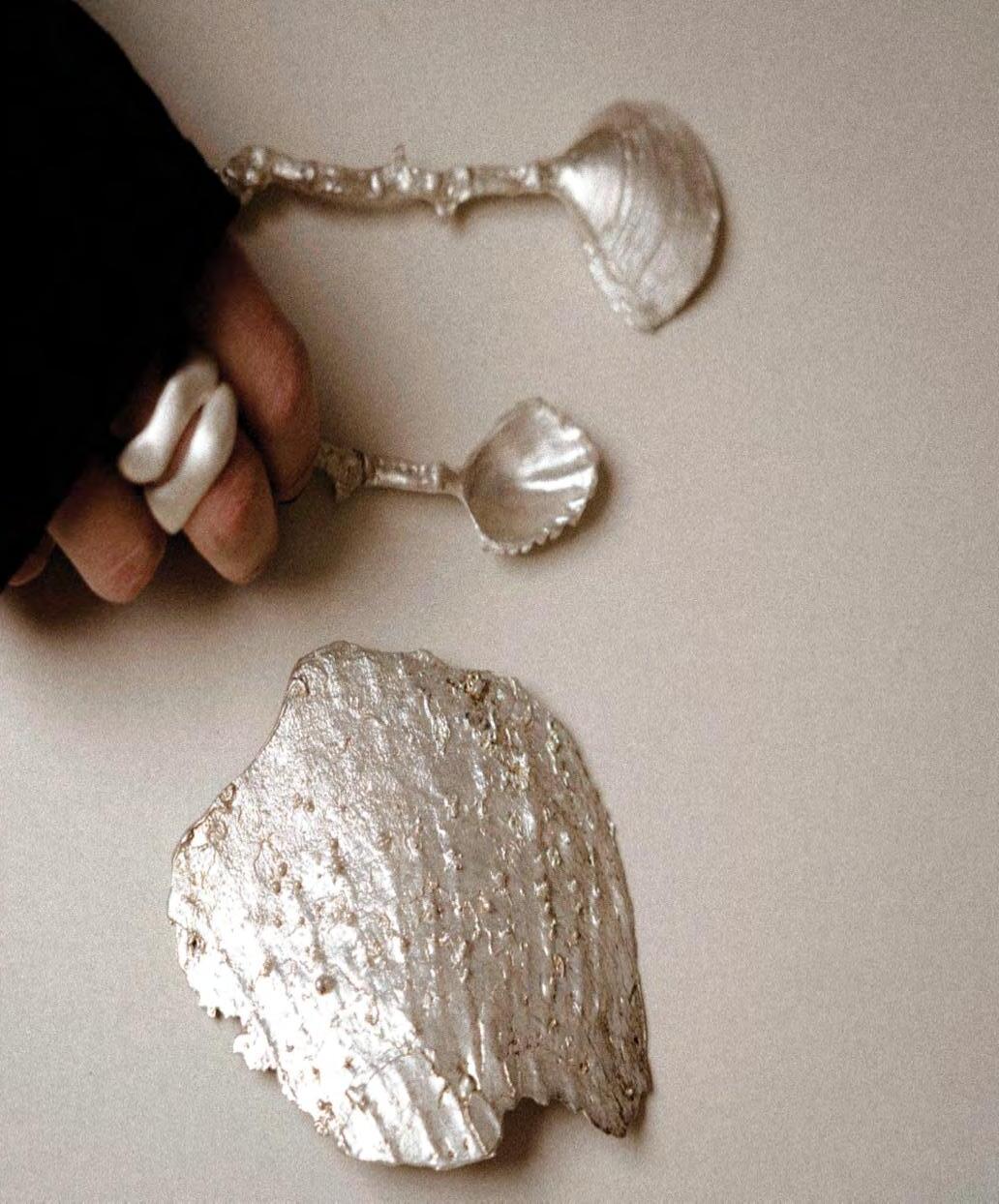
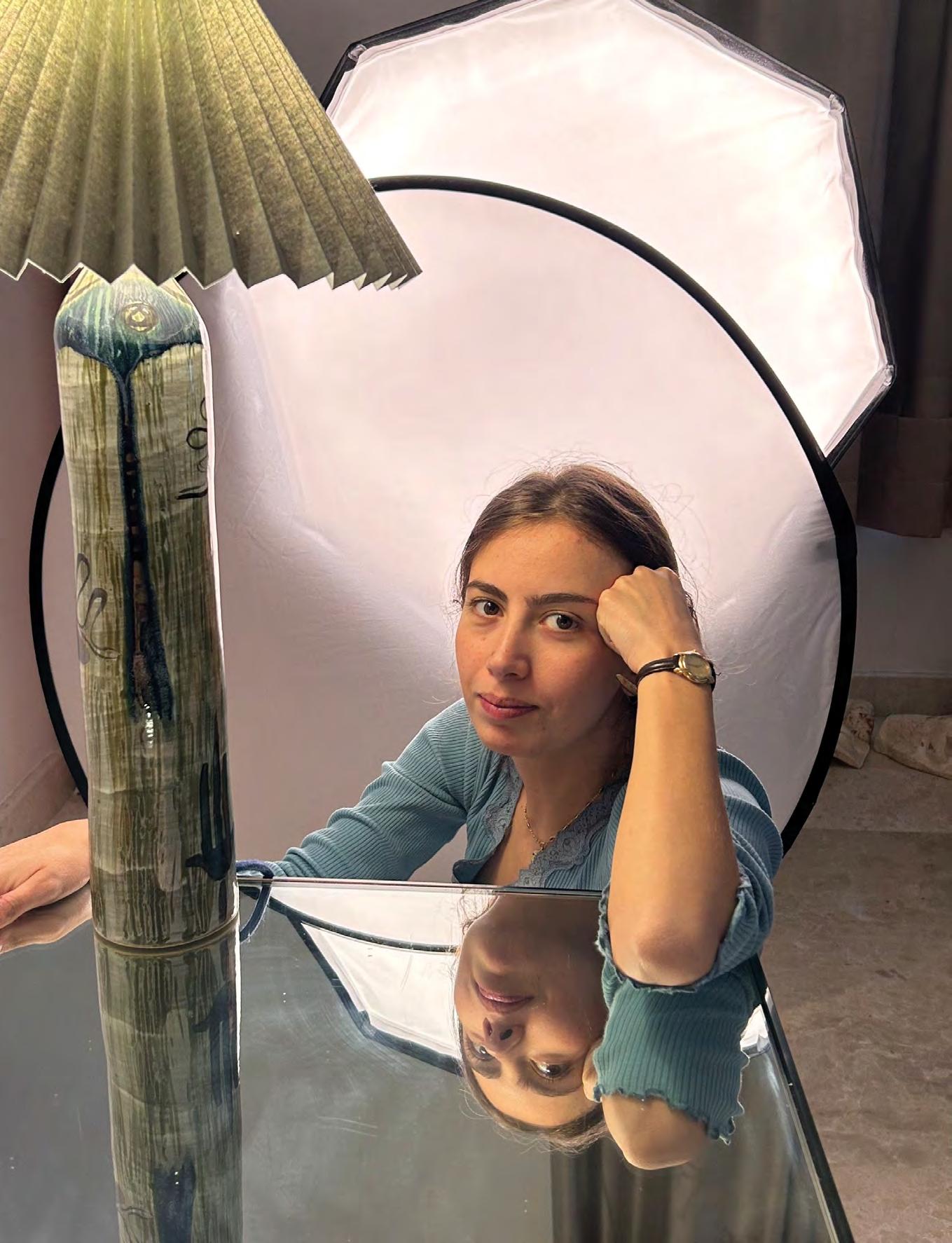
Lebanese creative Shaha Raphael approaches design as a tactile form of thinking. Trained as an architect, her practice moves fluidly between objects, furniture, jewellery, and space, guided by an ongoing dialogue between material, process, and use. Rather than starting with typology or scale, she begins with action; carving, bending, cutting, shaping, allowing form to emerge through the hand. Working between digital tools and artisanal techniques, Raphael treats technology and craft as complementary modes of expression. Her work draws from geological processes, material transformation, and quiet natural forces, creating pieces that feel both precise and elemental.
How did you first start as an architect and maker, and what drew you to blending architecture with craft?
I studied architecture at the Architectural Association, where architecture was understood as fluid and intuitive, learned through the body and through making. Workshops played a central role, allowing ideas to be tested directly through materials and tools. This shifted my understanding of architecture from a fixed discipline to a way of thinking and feeling. Craft became a natural extension of that mindset, offering a slower and more direct engagement with structure, resistance, and form.
How do natural forces inspire your designs and choices of materials?
I’m interested in natural forces as long-term processes rather than visual references. Moving between wood, stone, and metal allows me to learn from transformations such as fossilisation, petrification, and material replacement. Casting and translating forms between materials becomes a way of thinking through these shifts. Nature moves across scales and states, and my practice mirrors this, allowing ideas to evolve rather than remain fixed.
Your pieces combine digital precision with artisanal expertise. How do you navigate this balance between technology and handcraft?
I see digital tools and handcraft as different modes of expression rather than opposing approaches. They operate as a feedback loop, where one informs the other continuously. Looking back at craft, using technology, and moving forward are part of the same process. Whether physical or digital, these tools allow forms to circulate, be tested, and be released into the world, which I find deeply generative.
Many of your works are designed to provoke ritual. What role does ritual play in your creative process and in the way people interact with your work? Ritual, for me, is about making everyday gestures more intentional. I think about how an object is approached or activated and how this can slow the body down. In my metal candelabras, weight and balance require a deliberate movement, turning the act of lighting a candle into a focused moment. Ritual emerges through use rather than symbolism.
Texture, density, and flow are recurring elements in your designs. How do you approach these qualities during conception and making?
These qualities emerge through direct engagement with material. Density is felt through weight, texture through tooling, and flow through how surfaces guide movement. This is visible in the carpets developed with Iwan Maktabi, where patterns derive from sedimentation processes. Variations in thickness and weave allow the surface to register movement rather than decorate it.
Your work often reflects a harmony between the crafted and the geological. Can you describe how this tension shapes your pieces?
I allow crafted gestures to sit alongside material histories rather than erase them. In stone, this often means carving in response to existing veins, fossils, or fractures. The geological is not something I imitate, but something I work with. Craft becomes a way of adding a layer while acknowledging what is already present.

by
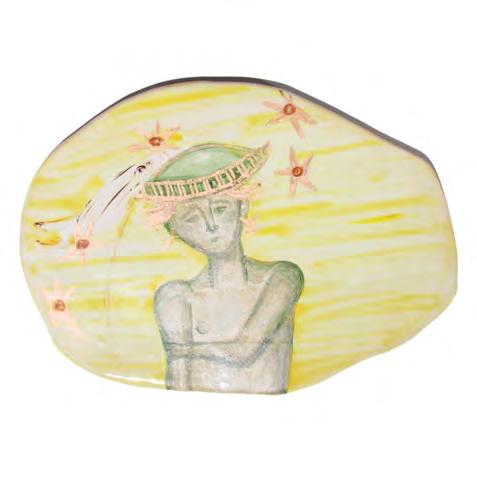
Nessma Djouhri’s relationship with clay is rooted in quiet rituals, memory, and the invisible histories carried by objects. The Algerian, Dubai-based ceramic artist works between function and sculpture, using everyday forms as vessels for fragmented narratives and personal mythologies. Her practice moves through imagined worlds shaped by dreams, archetypes, and oral histories; spaces where meaning is not fixed, but slowly accumulated. Drawn to the alchemical nature of ceramics, Djouhri embraces process, uncertainty, and transformation, allowing each firing to become an act of speculation.
Can you tell us how you first started working with ceramics?
I first started working with ceramics in 2015. At the time, I was very taken by coffee cup readings and the quiet rituals these objects carry. Around the same period, I visited the Musée du Bardo in Algiers while it was empty; the absence of any artefacts made the building, covered with tiles on every surface, feel like one monumental artefact. These experiences propelled me toward ceramics. Clay felt like a material that could hold many forms and tell many different kinds of stories and so I began making my own coffee cups and tiles.
You explore the stories embedded in everyday objects. How do you choose which forms or shapes to work with?
Working with everyday objects becomes a way to both reveal and amplify storytelling potential. The forms I work with are quite simple; I’m more interested in giving myself expansive surfaces but at times, there’s an architectural sensibility in these forms, echoing ideas of being lived in and moved through.
What is it about clay that allows you to express ideas or emotions?
I think it’s the process that keeps bringing me back. I experience the firing process as entirely alchemical, it requires trust and imagination. That uncertainty propels the work toward an improvisational and imaginative approach. The process itself aligns closely with my impulse to make imagery.
How do you decide what to reveal and what to leave open for interpretation in your work?
Fragmentation doesn’t obscure meaning for me, but [is] a way to be honest about how experience and memory operate. I rarely begin with a complete narrative; instead, I work with fragments like images,
symbols, and gestures that surface intuitively, often drawn from dreams, personal mythologies, or collective archetypes. The gaps are intentional, they function as thresholds, inviting projection, memory, and interpretation. And so in that sense, meaning isn’t delivered; it’s co-created.
How does reflection or imagination guide the worlds you create with clay?
I’m not sure this began consciously, but over time I found myself making a body of work that became a blueprint of my own psyche. References from my personal dreams expanded into a larger terrain for reflection and imagination, eventually forming a clear and legible language within my practice. This made me curious about what it means to create worlds that are open-ended and speculative, rather than conclusive or definitive.
Your work draws on archetypal imagery and universal themes. How do personal experiences intersect with these broader ideas in your pieces? Personal experience is the point of departure. I begin with images that are intimate, drawn from dreams, memory, or imagery from books, but I’m less interested in autobiography than in what those experiences touch collectively. Archetypes offer a way to move from the specific to the shared, allowing private imagery to resonate beyond itself. Rather than illustrating universal themes directly, they emerge through repetition, distortion, and reappearance. As they circulate through the work, specificity is loosened to take on a more symbolic charge. In that way, the personal becomes a vessel to accessing broader ideas without fixing meaning.
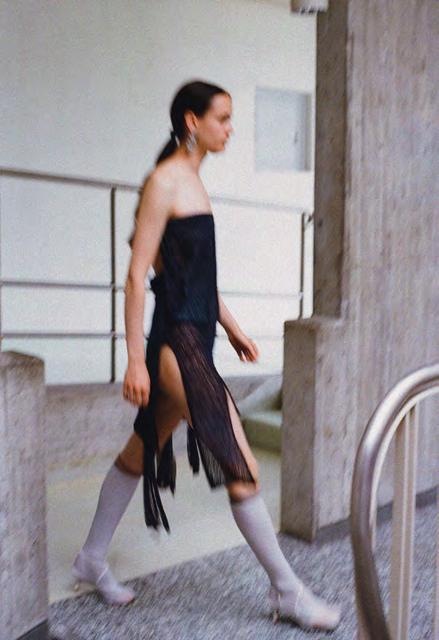
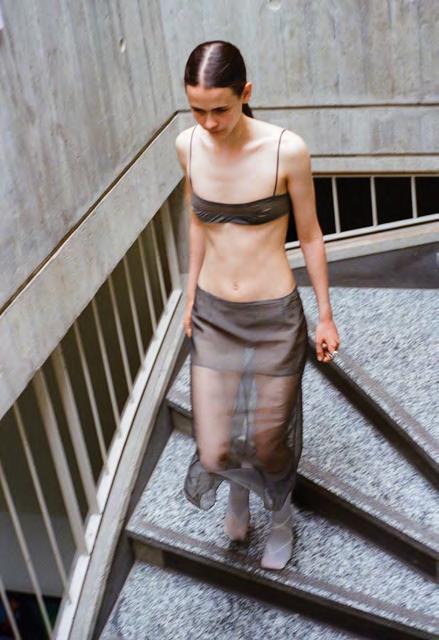
For Fashion Trust Arabia’s 2025 Debut Talent, Alaa Alaradi, fashion began with movement. Growing up between Bahrain and Switzerland, she would ask her mother for “weeee dresses” pieces that spun, lifted, and came alive with the body. Long before she understood fashion as an industry, she was instinctively drawn to how clothing feels, how it holds you, and how it moves. This sensibility comes through in her graduate collection, Further Deeper Softer Closer, where sculptural yet fluid silhouettes explore a femininity that is strong, grounded, and self-assured.
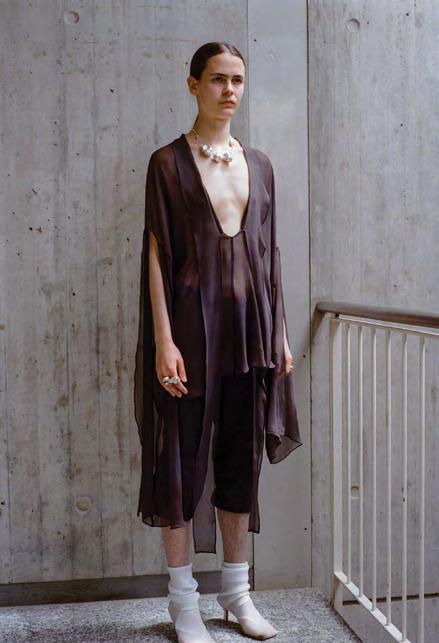
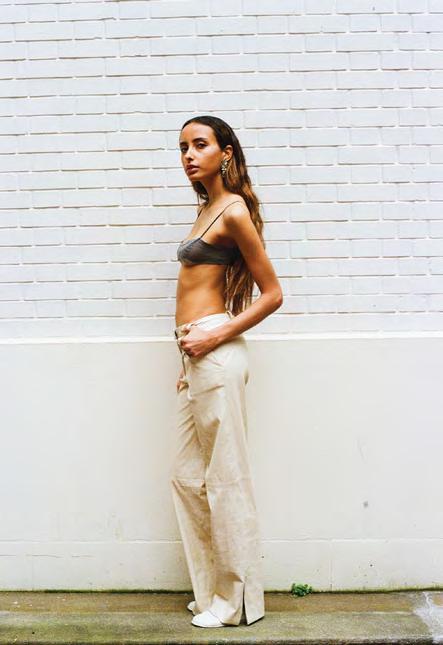
photography by HP
What is your earliest memory of fashion, and when did you realise it was the path you wanted to pursue?
Dressing was an activity in itself. I used to call them “weeee” dresses, my way of telling my mum I wanted a dress that moved. Drawing and sketching was prime activity, I knew how to entertain myself. It was far from ‘editorial fashion’ I didn’t know fashion in that way, I didn’t own fashion magazines or know any designers, it was truly just admiring clothes for clothes in a naive way.
You were born in Bahrain and grew up between the Gulf and Switzerland. How has navigating these different cultural landscapes shaped your identity and design language?
I often felt alienated in both places, not Arab enough in Bahrain and not Swiss in Switzerland. Moving between cultures made me appreciate their qualities: Switzerland for its neutrality, my anonymity and freedom, Bahrain for its values. Being between both gave me the freedom to create my own identity while home always reminded me of my roots and heritage.
Your older sister Noor played a pivotal role in supporting your journey into fashion. How did that early encouragement shape your confidence and creative freedom?
Noor had to figure things out early, she was independent by 17, working hard to support herself alone in Switzerland. When she had the space, she always made room for me by her side. She set an example of strength and resilience that gave me the confidence and freedom to follow my own path regardless of expectations and financial circumstancesshe gave me a home, and even when things were hard she made sure that I never missed out on an opportunity. She is the strongest woman I know.
Your graduate collection established a clear design DNA. What emotions or ideas were you hoping to capture through that body of work?
I wanted the collection to feel light, feminine, raw and strong. It was important to me that femininity was portrayed beautifully without being mistaken for softness. I wanted strength and femininity to coexist.
There is a recurring balance in your designs between strength and lightness. How do you approach building silhouettes that hold both qualities at once?
It takes a lot of styling and ongoing conversations during fittings, constantly asking how it feels when worn and what she needs. It’s about refining that balance until the silhouette feels complete.
How do you imagine the wearer interacting with your pieces in real life?
The way a garment holds you can actually lift you, that’s done through how it fits, moves and feels on the body. I want the wearer to feel good more so than look good.
How has the Fashion Trust Arabia recognition influenced the way you think about the future of your brand?
FTA was an immediate launch into thinking on a much larger scale. Until now, everything has been one-of-a-kind and made entirely by me. This recognition is opening up new conversations, new opportunities for growth but most importantly, marks a beginning.
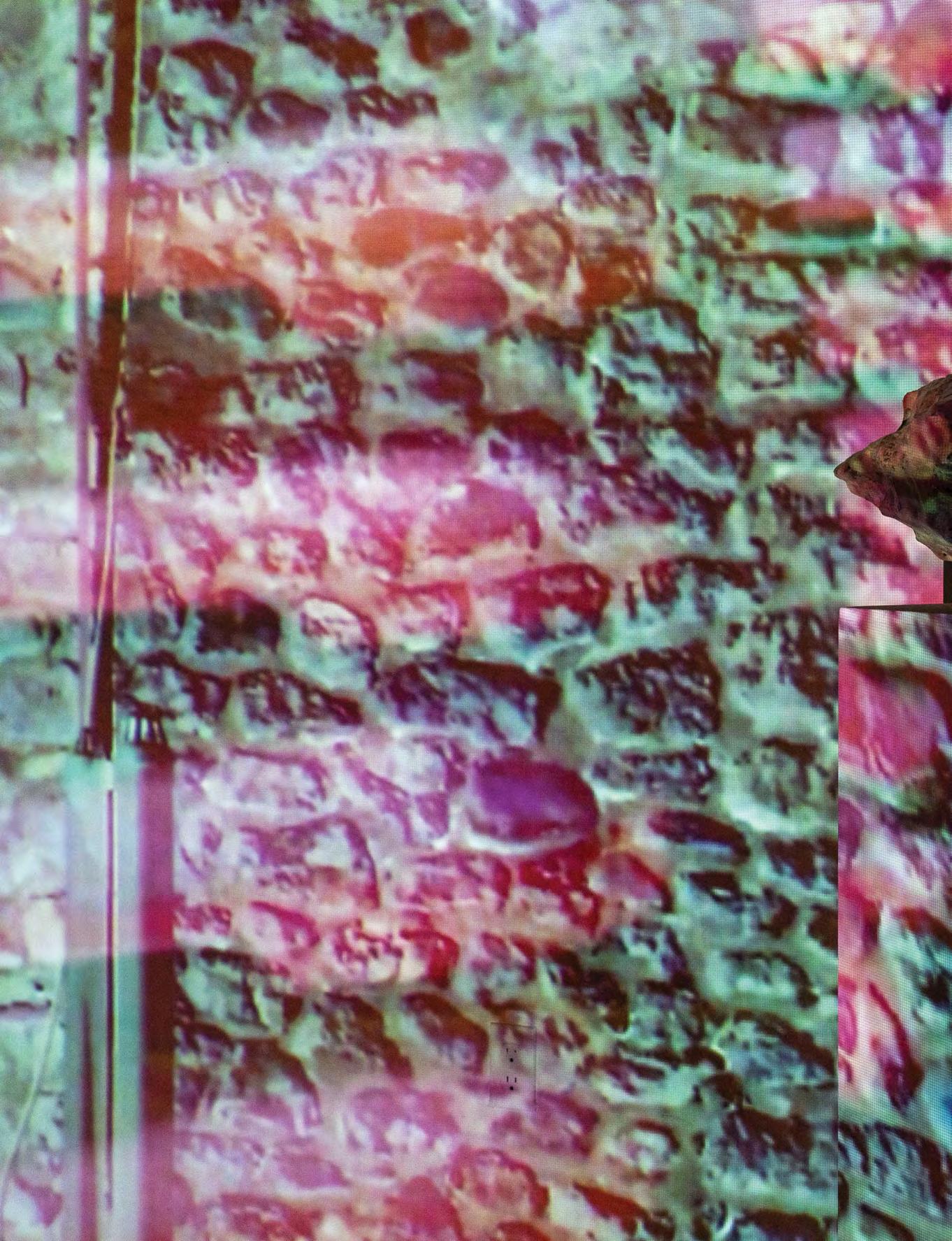
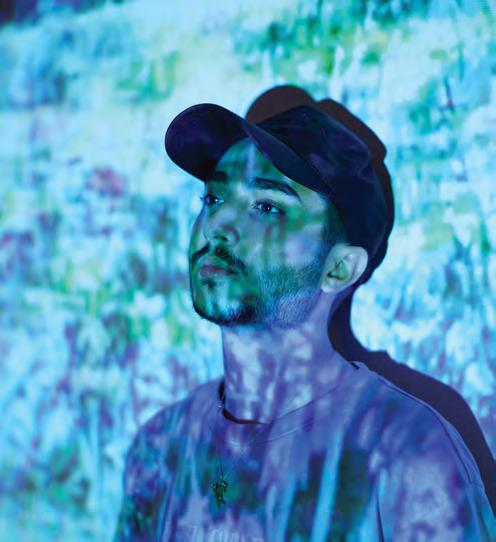
Installation
Courtesy
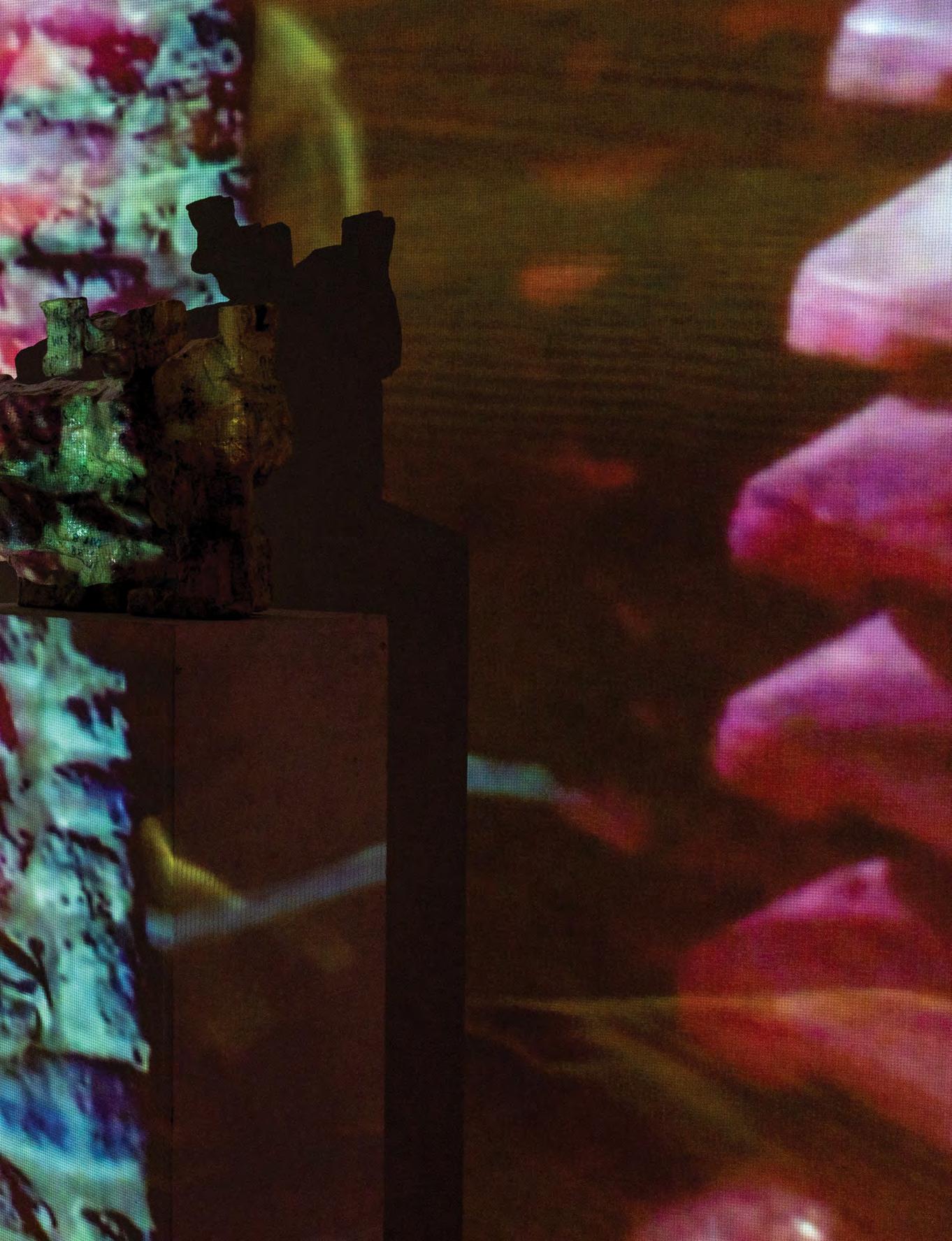
Talal Al Najjar works in the gaps between artefact and glitch. The Emirati artist, based between Los Angeles and Dubai, builds interdisciplinary worlds shaped by research, archiving, and distortion. His practice moves fluidly across sculpture, video, sound, CGI, painting, and installation, assembling fragments of ancient history, internet debris, speculative futures, and everyday visual culture into unstable constellations. Rather than treating media as a fixed category, Al Najjar works through behaviour; allowing objects to loop, misbehave, or contradict themselves. The familiar becomes strange, the digital turns bodily, and humour sits alongside unease.
How did you first start as an artist? Was there a moment or experience that set you on this path?
I grew up with an artist mother and architect father, who always encouraged art-making and placed a real importance on it. I was always drawn to making, and sort of accepted that I would pursue being an artist very early on. I first exhibited at 16, and that reassured me in what I wanted to do. Soon after, I pursued my undergraduate and graduate studies both in Fine Art, in Chicago and later Los Angeles.
Your practice spans sculpture, video, sound, CGI, painting, and installation. How do you choose the medium best suited for a particular idea?
I think in terms of behaviour rather than medium. Some ideas want to loop, some want to sit uncomfortably in a room, some want to feel half-functional. I’m drawn to moments where a medium starts to contradict itself, when a digital object feels bodily, or a sculpture behaves like an image. That friction creates compelling contention for me.
Archiving, collecting, and distorting are central to your process. How do these methods evolve into finished artworks?
I constantly collect images, files, objects, and notes without knowing what they’ll become. Even just spontaneous screenshots while doomscrolling (22,000 to date, apparently). Distortion happens when these materials are revisited, then compressed, mistranslated, re-rendered, or physically altered to become something new. Spanning ancient artefacts to medieval armour, modern philosophy, to contemporary imagery like memes, I frankenstein them into something together, forcing confrontation and contention, and of course further manipulating and recontextualising them, whether by hand or digital means.
Defamiliarization and the uncanny are recurring in your work. How do you define the uncanny, and what role does it play?
It’s the psychological effect of the familiar made strangely alien and thus unsettling. I use it as a way to disrupt passive recognition, so the viewer can’t rely on immediate consumption or cultural preconceptions. It opens a space where attention becomes more physical and less automatic. In my work, the uncanny often comes from small violations: an artefact behaving like a character, a familiar landscape acting like a stage set, a “real” texture becoming suspiciously digital.
Absurdity and irony appear throughout your practice. How do humour and the absurd help communicate complex ideas about culture, history, or technology?
Absurdity mirrors the logic of the systems we’re already living inside. Practically, I also employ it as a tool of exaggeration and persuasion. It also lowers the defences (and preconceptions) of a viewer, creating a gap where critical ideas can slip through without announcing themselves or crashing into a wall of stubbornness. Humour is a way for difficult or heavy ideas to remain accessible without flattening them. Trying to talk about technology or history seriously, without also acknowledging the absurdity, feels dishonest.

by
For Tala Barbotin Khalidy, craft is not a reference point; it is the foundation. The Lebanese–French designer works between Paris and Beirut, building a practice that places Middle Eastern embroidery and textile techniques at the core of contemporary fashion. Collaborating closely with local Lebanese and Syrian artisans, she creates garments that are structurally informed by heritage rather than simply decorated by it. A Parsons graduate, Barbotin Khalidy approaches clothing with conceptual clarity and technical precision. She treats embroidery as architecture, understanding where textile meets symbolism, and where tradition meets modern ready-to-wear pieces.
Your first inspiration came from wandering around your grandmother’s Beirut shop as a child. Can you share a memory from that space that still resonates with you today?
Hiding in baskets and draping myself in silk scarves. I was always drawn to materiality, to feeling different textures and weights of fabrics. My grandmother’s shop was this sensory world made of textiles: clothing, upholstery, accessories, vintage fabrics. That feeling of being wrapped in something precious still guides what I make.
How did your grandmother’s passing influence your return to Levantine crafts and textiles during your time at Parsons?
It created urgency. Grief makes you reach for what’s tangible, and for me that meant returning to the textures and techniques I was introduced to as a child, that she was championing, and designing with. It was a way to reconnect to her, and to a creative world that partially shaped me and that she was a central figure in!
What drew you specifically to Middle Eastern embroidery techniques, and what about them spoke to you creatively?
I’d always been surrounded by them, but working in the fashion industry made me realize what was missing in the hamster wheel of constantly making new collections: intention. These techniques carry centuries of meaning in every stitch, and they demand slowness. I worked in smart textiles too, which is a convergence of textile technology, materials science, and electronics for health and wellness applications. I was interested in materiality, sustainability and all aspects of textiles, but I think we seldom look at traditional craftsmanship as a means to innovation. In a fashion system obsessed
with speed and novelty, taking a closer look at an undermined wealth of cultural knowledge felt radical and honest.
Your brand merges contemporary clothing with traditional craft. How do you balance modern design with heritage techniques? There is a world of wisdom in how things are traditionally made. Is a craft decorative or practical? For instance, in a shirt, when the chest stretches against fabric, it creates a point of tension, so stitching an embroidery motif there reinforces the fabric. This is why we have many chest decorative panels with tatreez, on both dresses and shirts. Sometimes subversion has its place in a design, but understanding true craftsmanship allows you to make informed decisions about what to reinterpret and what to preserve.
You work closely with local artisans in Lebanon. How do these collaborations shape your collections and your perspective on cultural preservation?
The artisans shape my work as much as I shape theirs. Preservation isn’t about freezing traditions. It’s about creating a context where these textile techniques can thrive, and resonate with others simultaneously. I bring designs to my artisans and they weigh in based on their technical expertise, so it’s not just an individual endeavour. The process involved in creating a contemporary ready-towear piece is informed by many aspects: concept, technicality, stitching, silhouette, and in my case, specialised textiles. When you pay someone fairly for mastery that took decades to develop, you’re not “saving” a craft. You’re participating in its future.

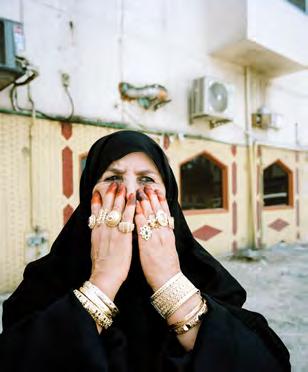
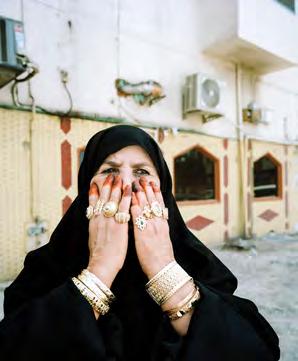
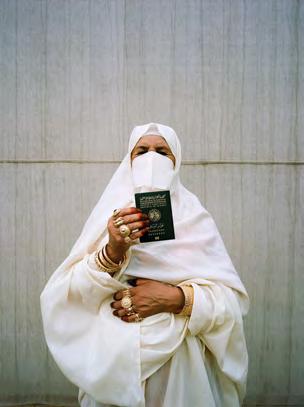
Born in the Parisian suburbs to an Algerian family, Moz approaches image-making through instinct. What began as a way of observing his surroundings gradually became a language; one holding both emotion and memory. Directing followed photography as an extension of his desire to shape atmosphere and narrative. Rooted in lived experience and cultural duality, his work moves between documentary realism and quiet visual poetry that focuses on fragile, in-between moments, leaving both an aesthetic impression and an emotional trace.
How did you get into photography and directing?
I started very instinctively, without any clear plan. At first, it was simply a way of documenting what was around me, my close circle, the places I grew up in. Then one day, I realised that images could carry much more than memory: they could translate emotion. From that moment on, photography became a language, and directing a natural extension of that.
Growing up in the Parisian suburbs with Algerian roots, how has your background shaped your perspective?
It gave me a strong sensitivity to contrasts, between cultures, generations, silence and intensity. There’s a kind of raw poetry in these environments, a powerful energy that often remains invisible. My roots also shaped my relationship to memory, transmission, and simple gestures. I think my work often tries to create a dialogue between these worlds, without turning them into clichés.
Cinema plays a central role in your work. Which directors or films have influenced you the most?
Paolo Sorrentino for his sense of composition and the emotional power of his images. I’m also drawn to films that leave space for silence and imperfection. One film that deeply marked me is The Colour of Pomegranates,

by Sergei Parajanov. Every frame feels like a moving photograph. And of course Xavier Dolan, especially Mommy; the purity of emotion, the precision of the performances and dialogue, and that powerful moment when the aspect ratio suddenly opens up.
You often shoot on film. What draws you to analogue photography?
Film forces me to slow down, to be more present and attentive. Every frame carries weight. There’s also a texture, a depth, and a sense of unpredictability that makes the image feel more alive, at least to me.
Your images move between documentary realism and visual poetry. How do you find that balance?
I always start from reality, a face, a place, a situation. Then I naturally allow a layer of framing, rhythm, or subtle staging to enter. Poetry often emerges in that slight shift, when something very simple becomes almost strange or suspended.
You work from instinct and emotion rather than trends. How do you nurture that?
By staying curious, observing constantly, and looking at the world more than at social media. Intuition grows from lived experience, emotion, but also from silence and slowness. On set, I try to stay open to what’s really happening instead of imposing a fixed idea.
How do you see the relationship between intimacy and scale in your work?
In every space, I’m always searching for a point of human fragility, a gaze, a posture, a breath.
Which moments in life do you feel compelled to shoot?
Fragile moments, transitions, the in between, when something is shifting but not yet fully expressed. Silences, waiting, simple gestures that often speak louder than major events.
When someone discovers your work, what would you like them to feel?
I’d like them to feel a sense of closeness, almost like borrowing someone else’s memory. That the image leaves an emotional trace, not just an aesthetic one. Something calm, yet intense. ■

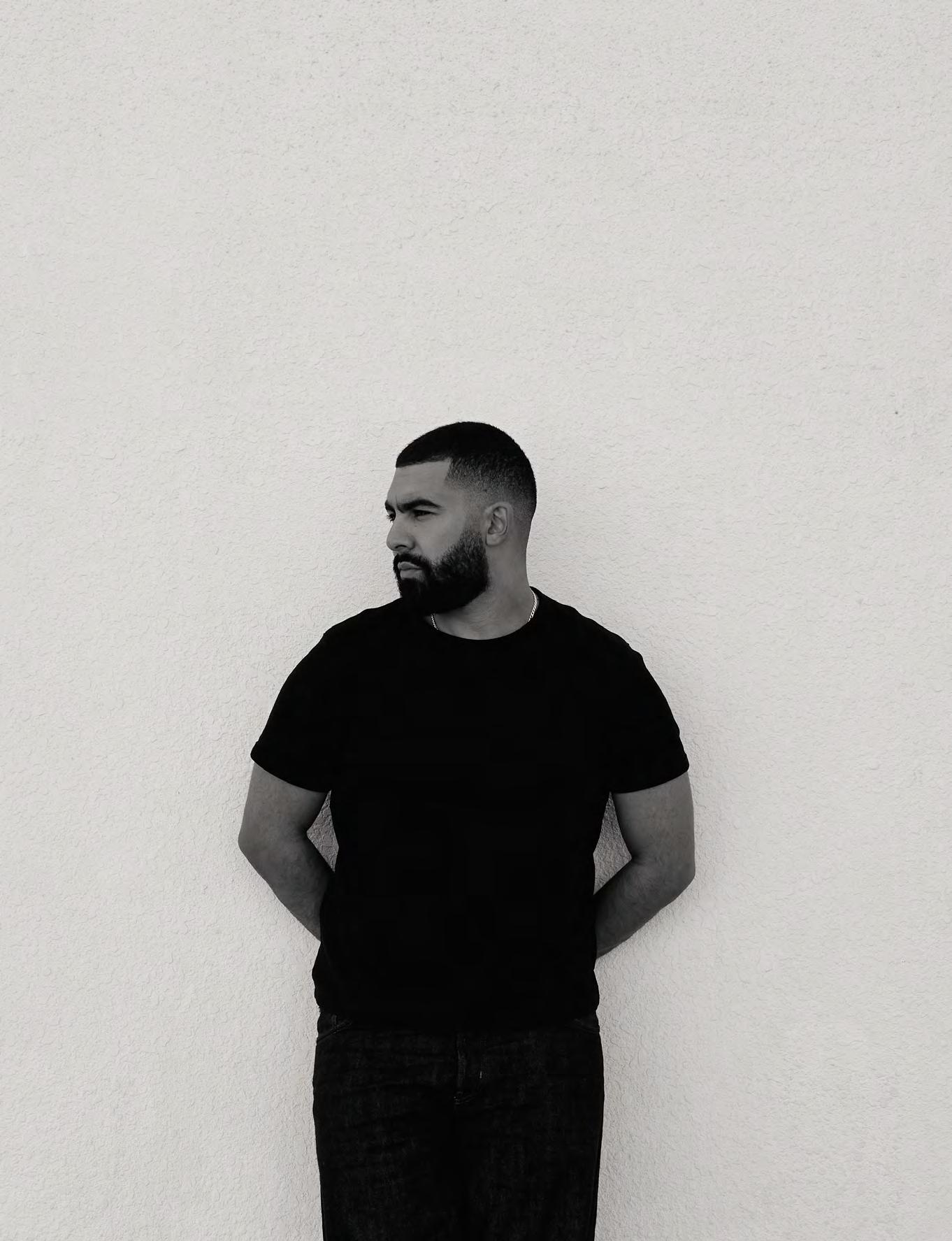
by MOZ
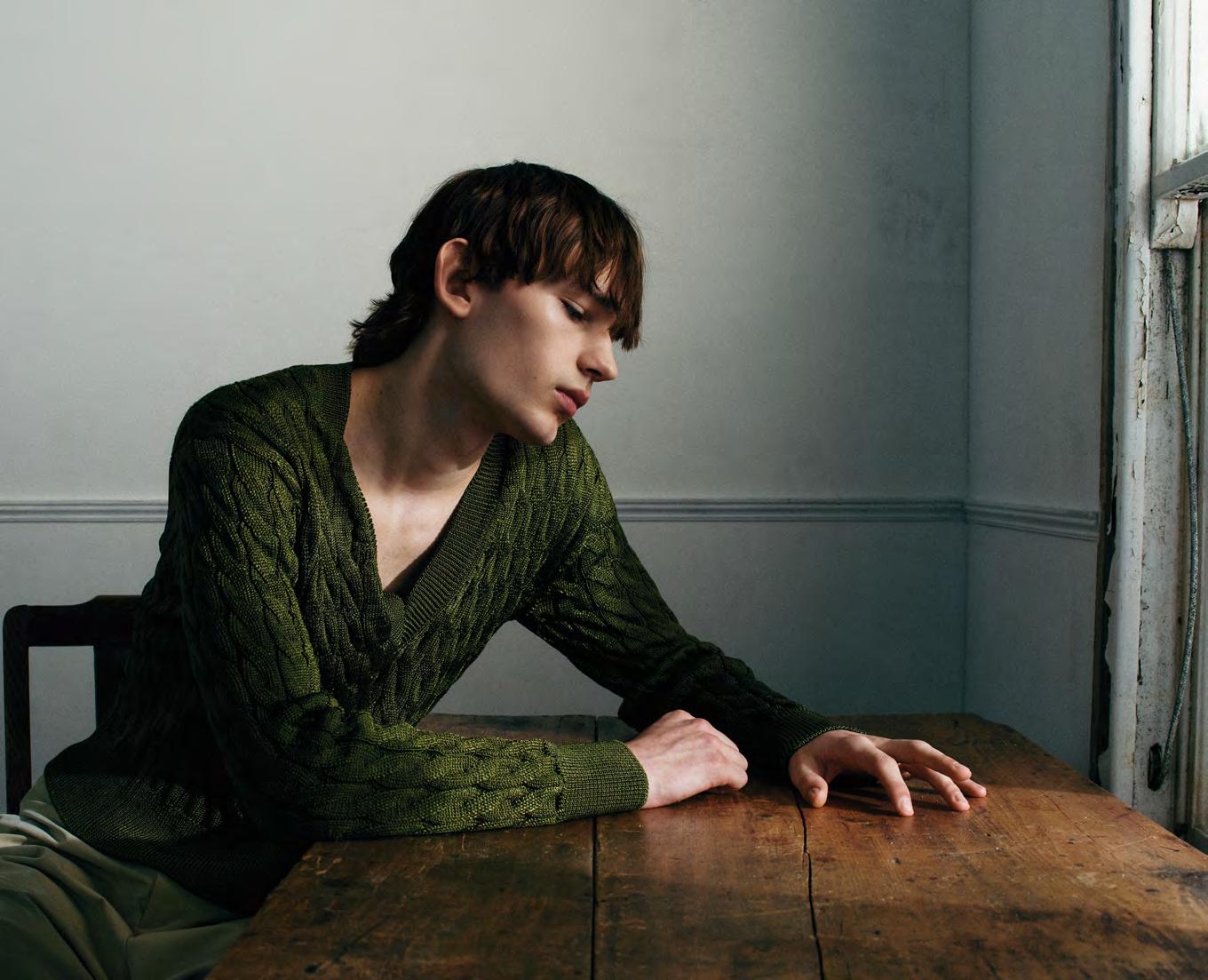

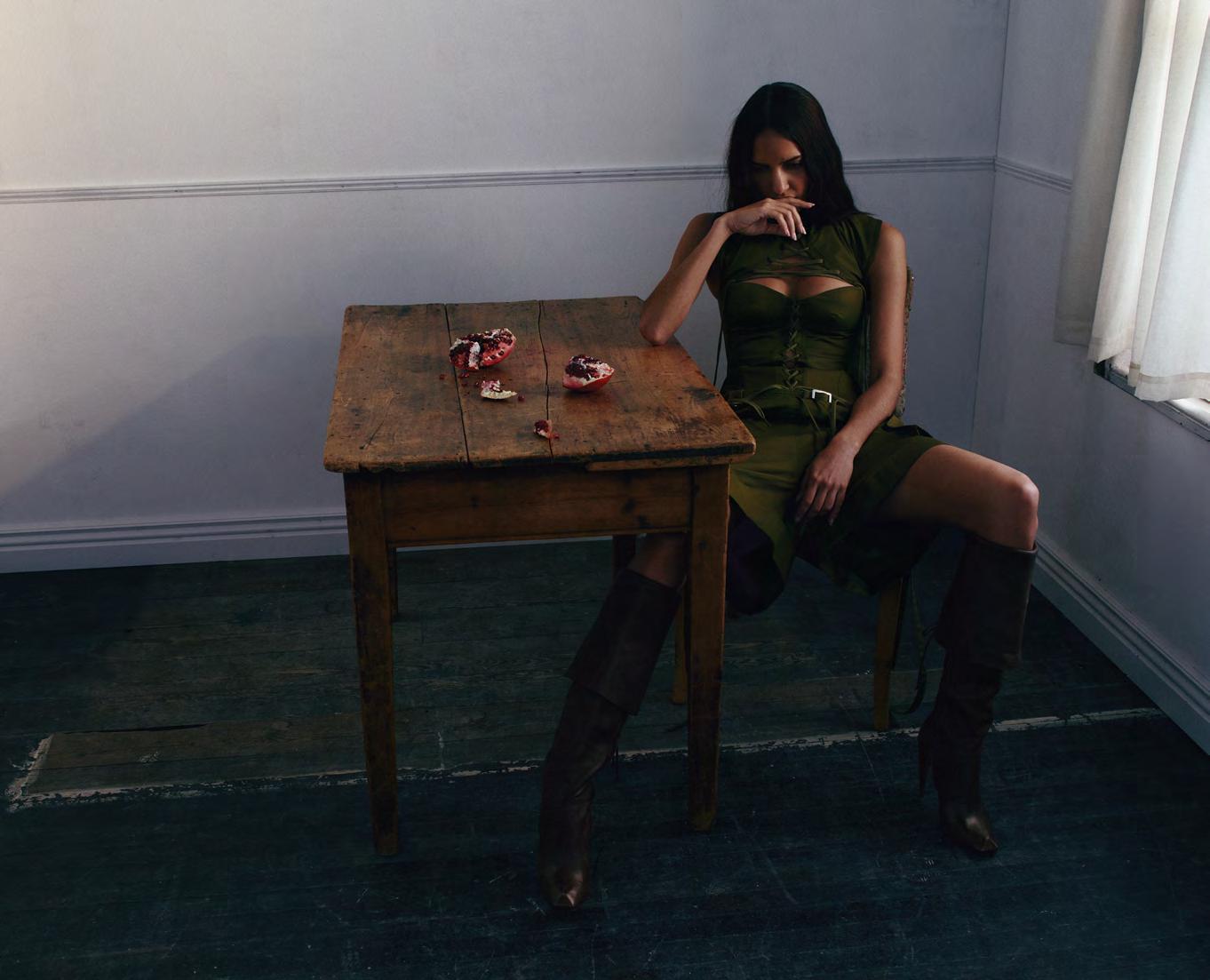
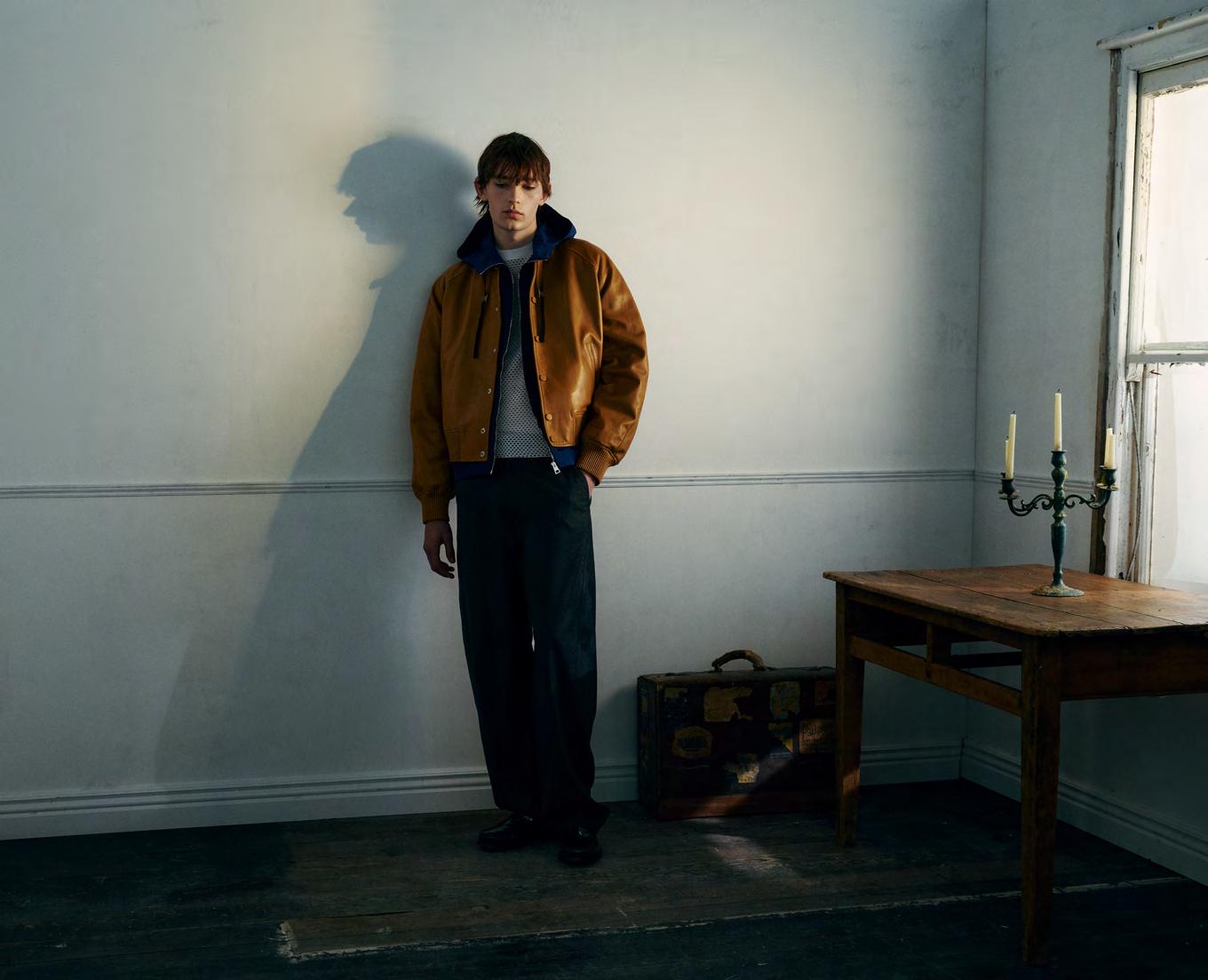
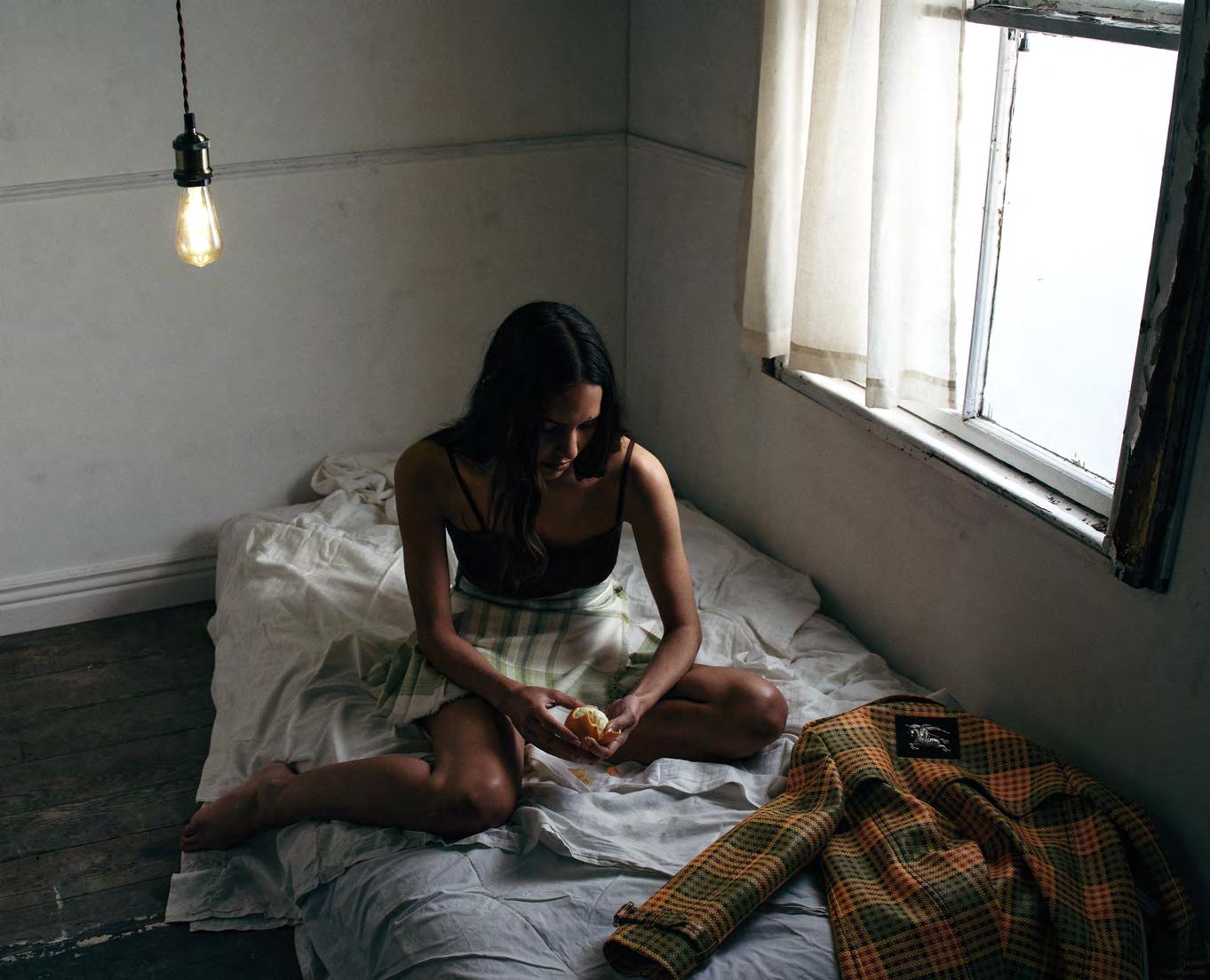
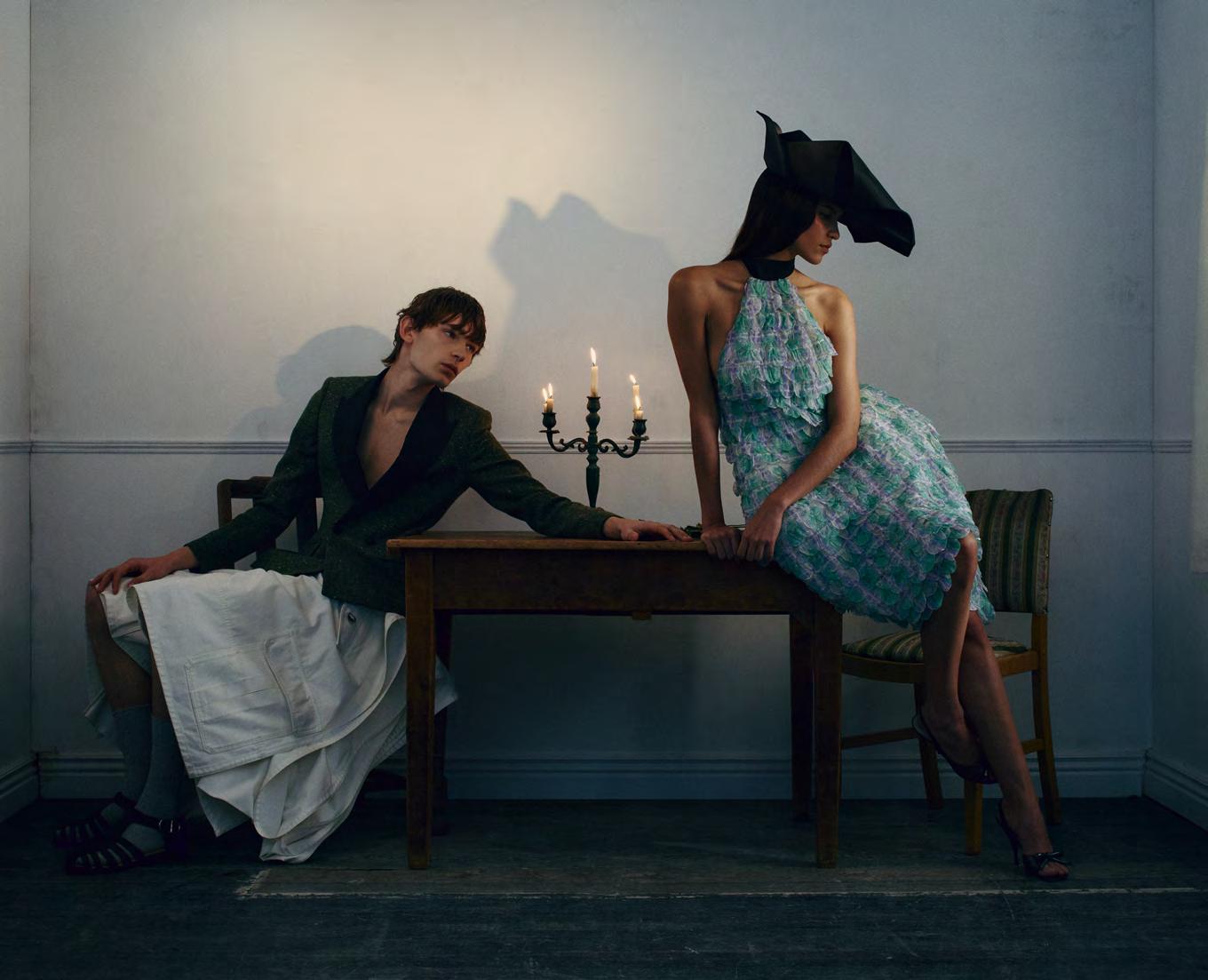
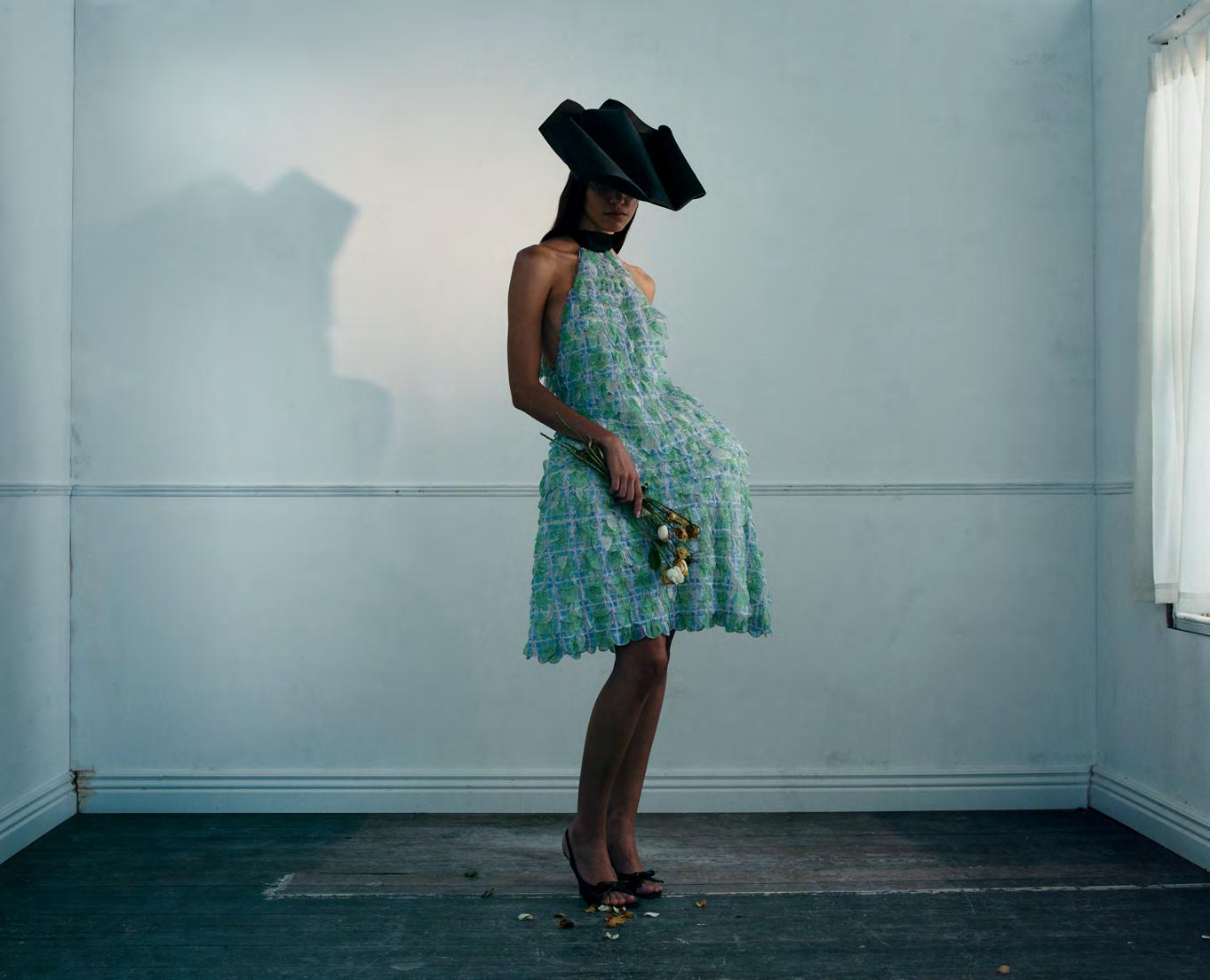
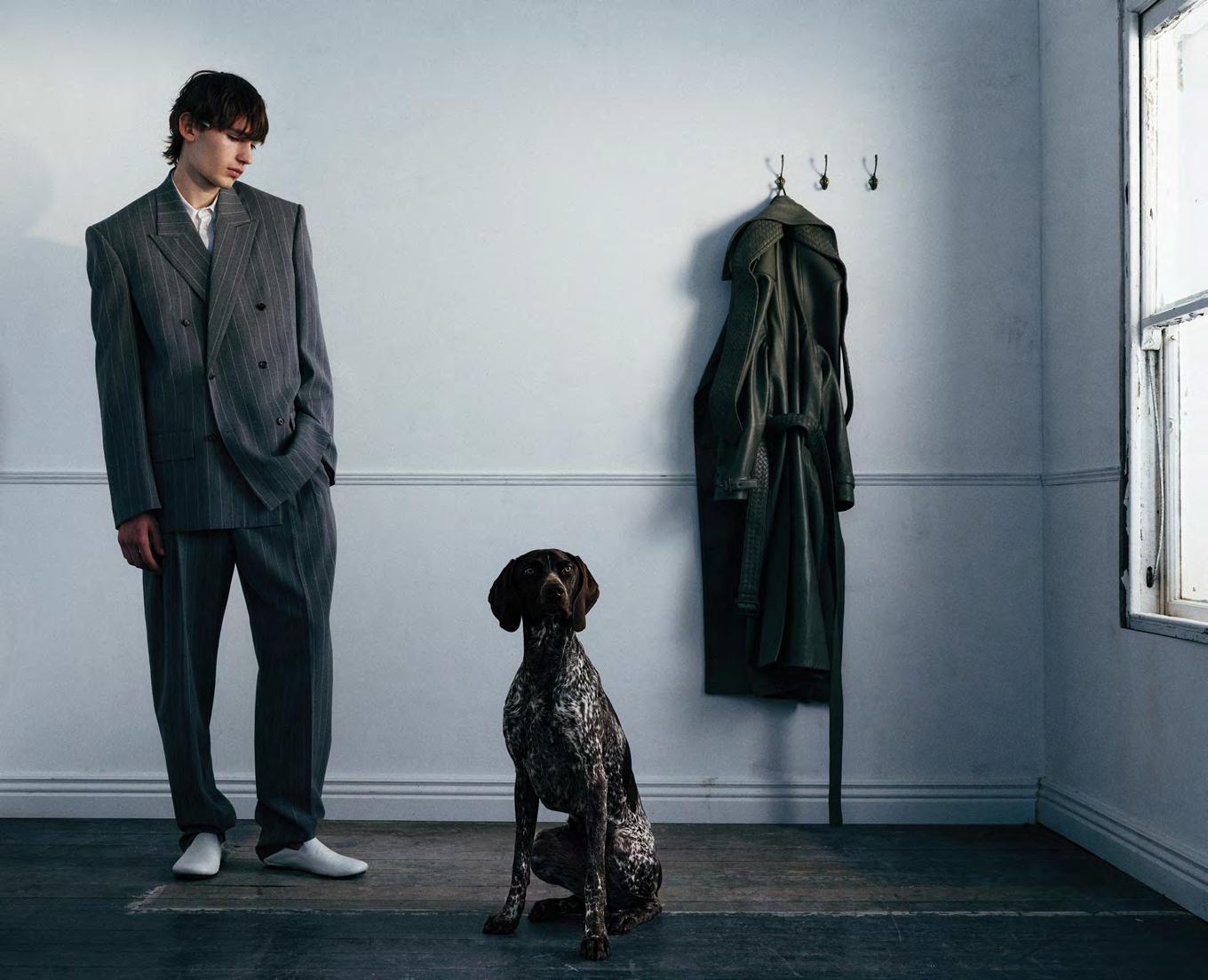
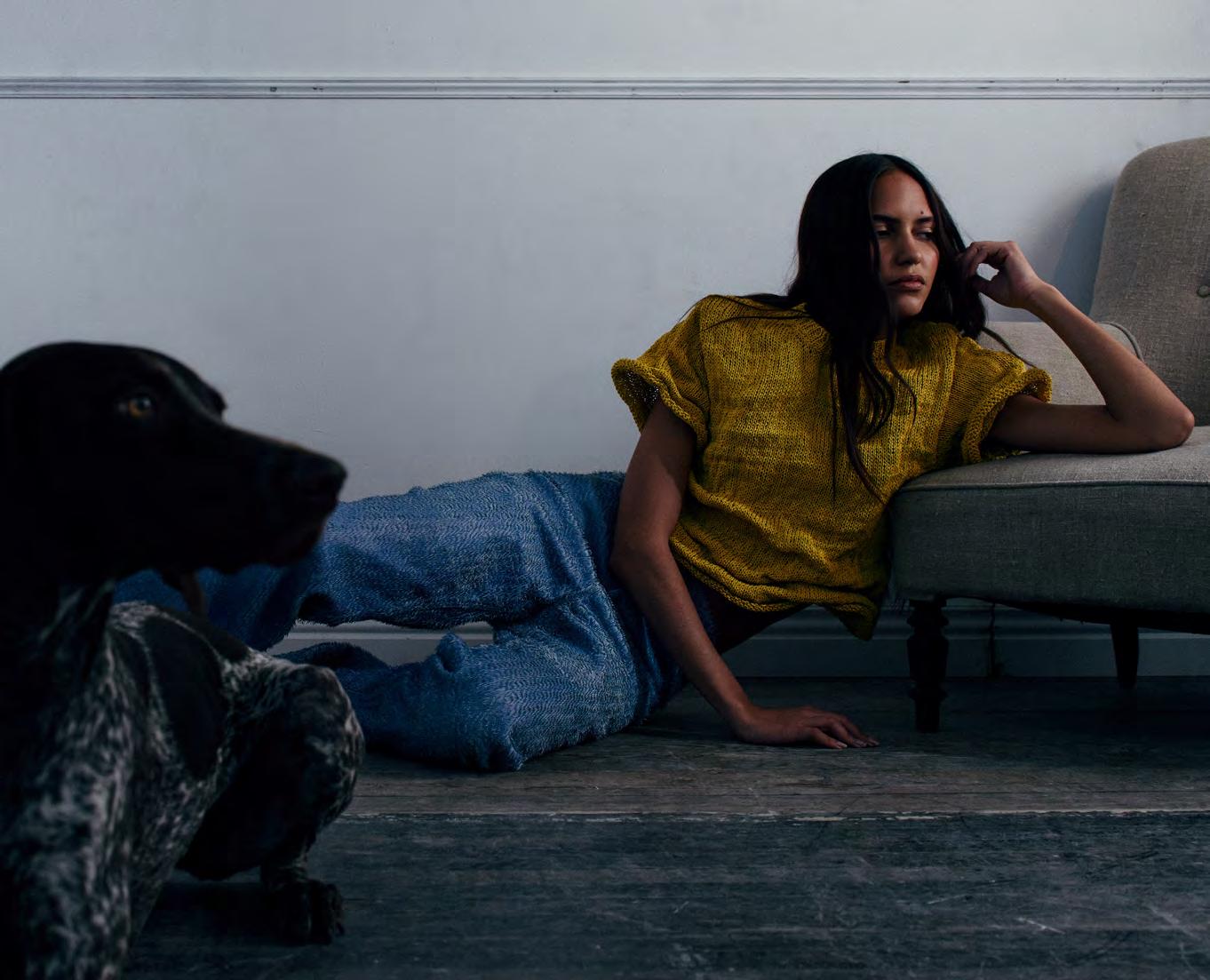
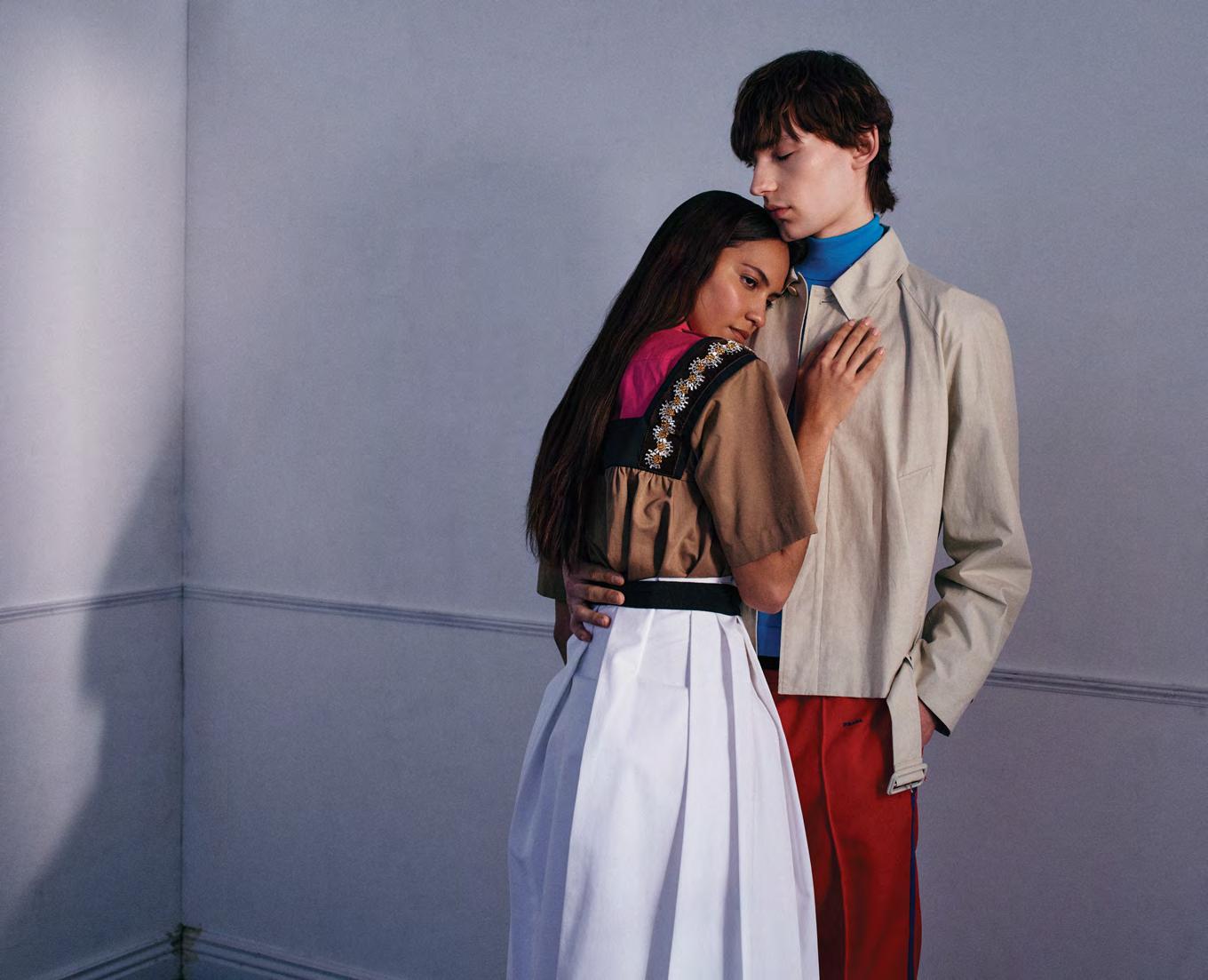

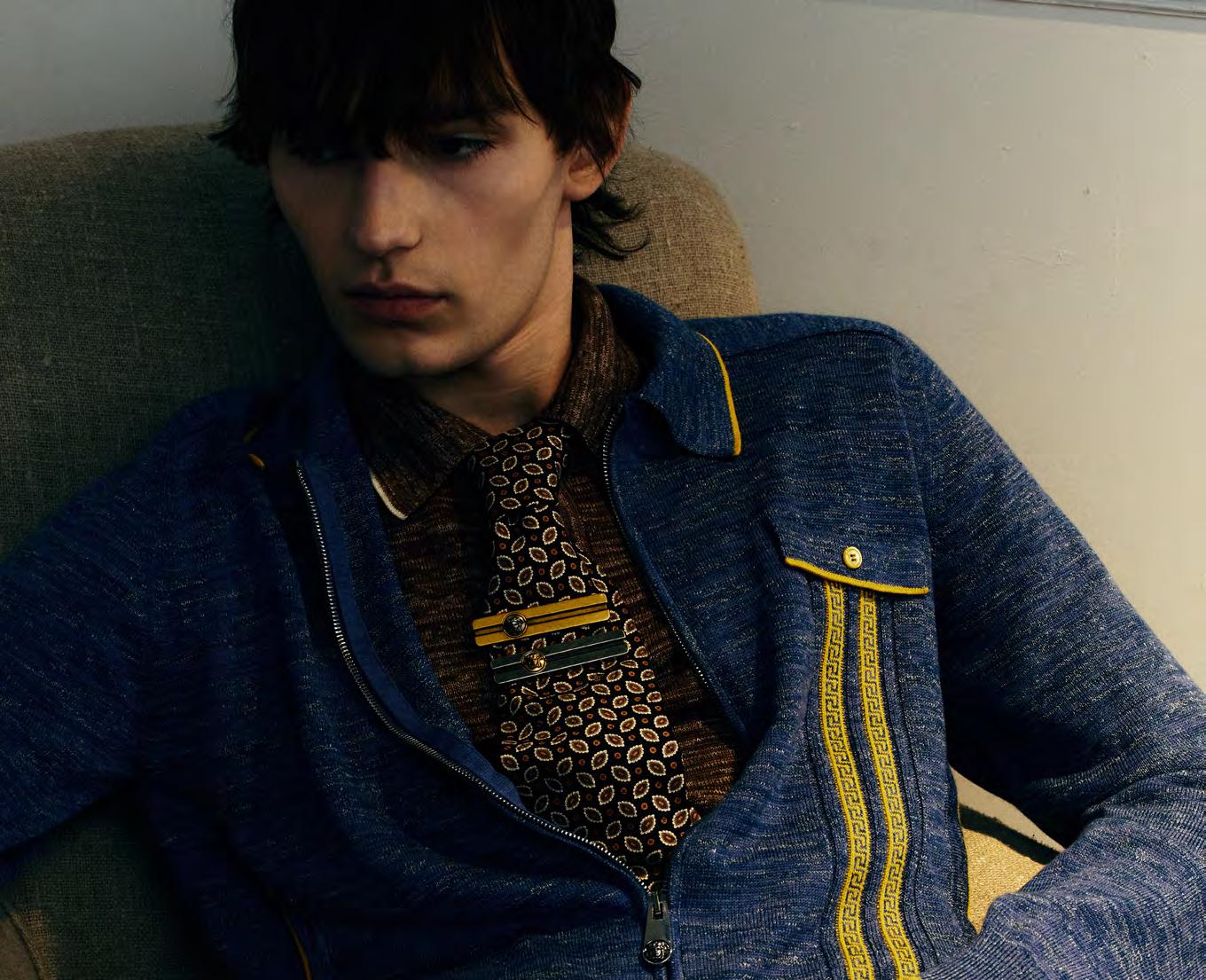
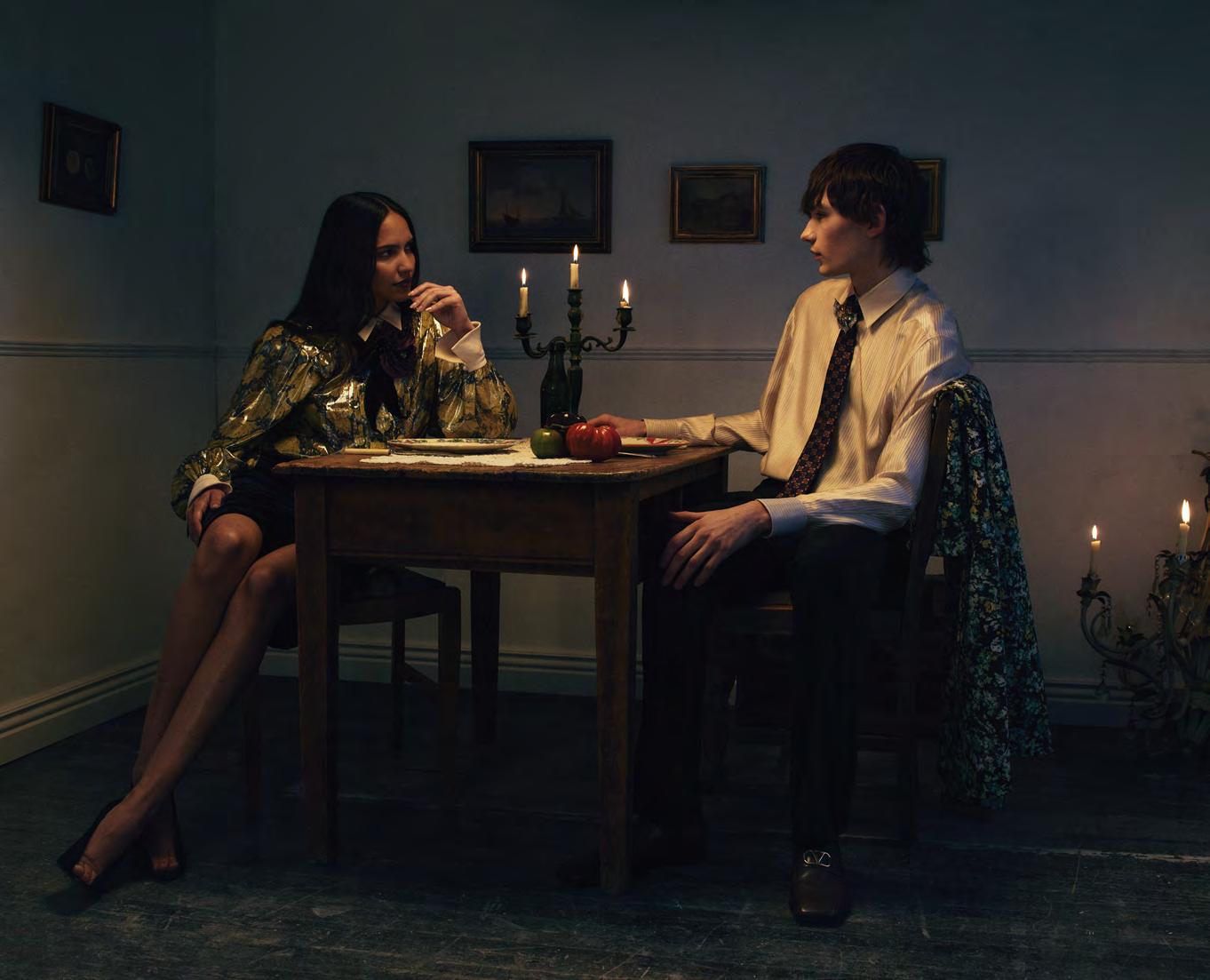
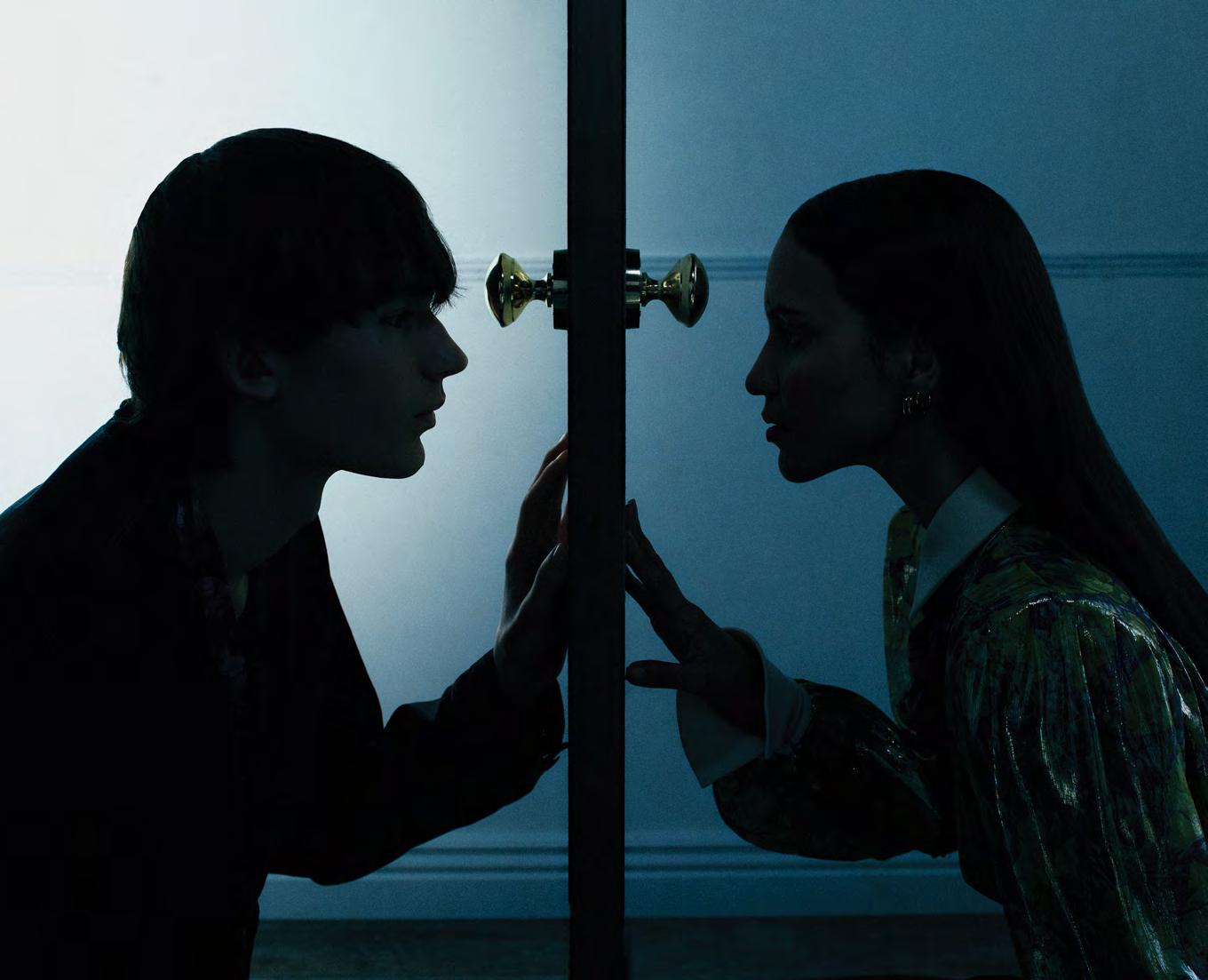
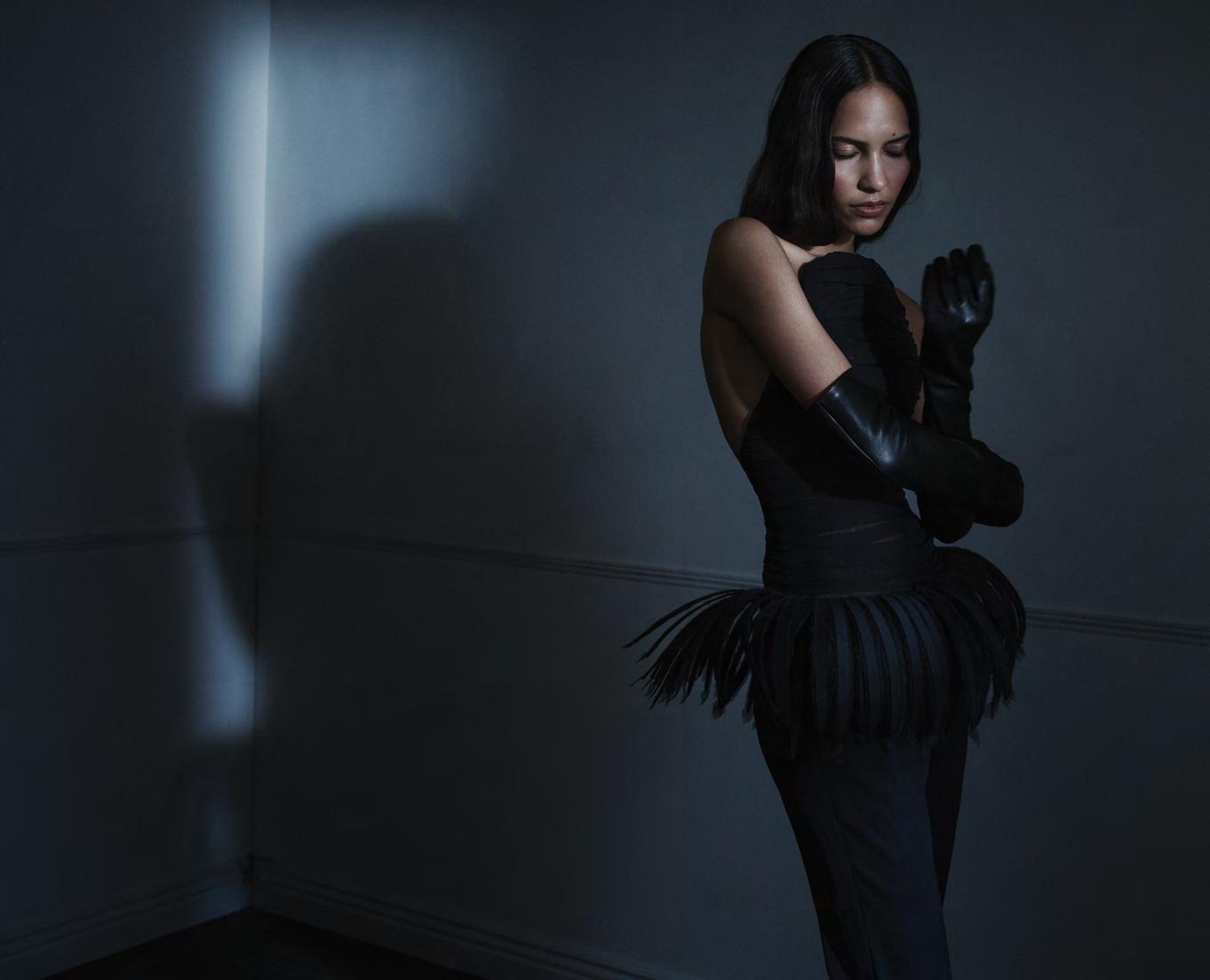
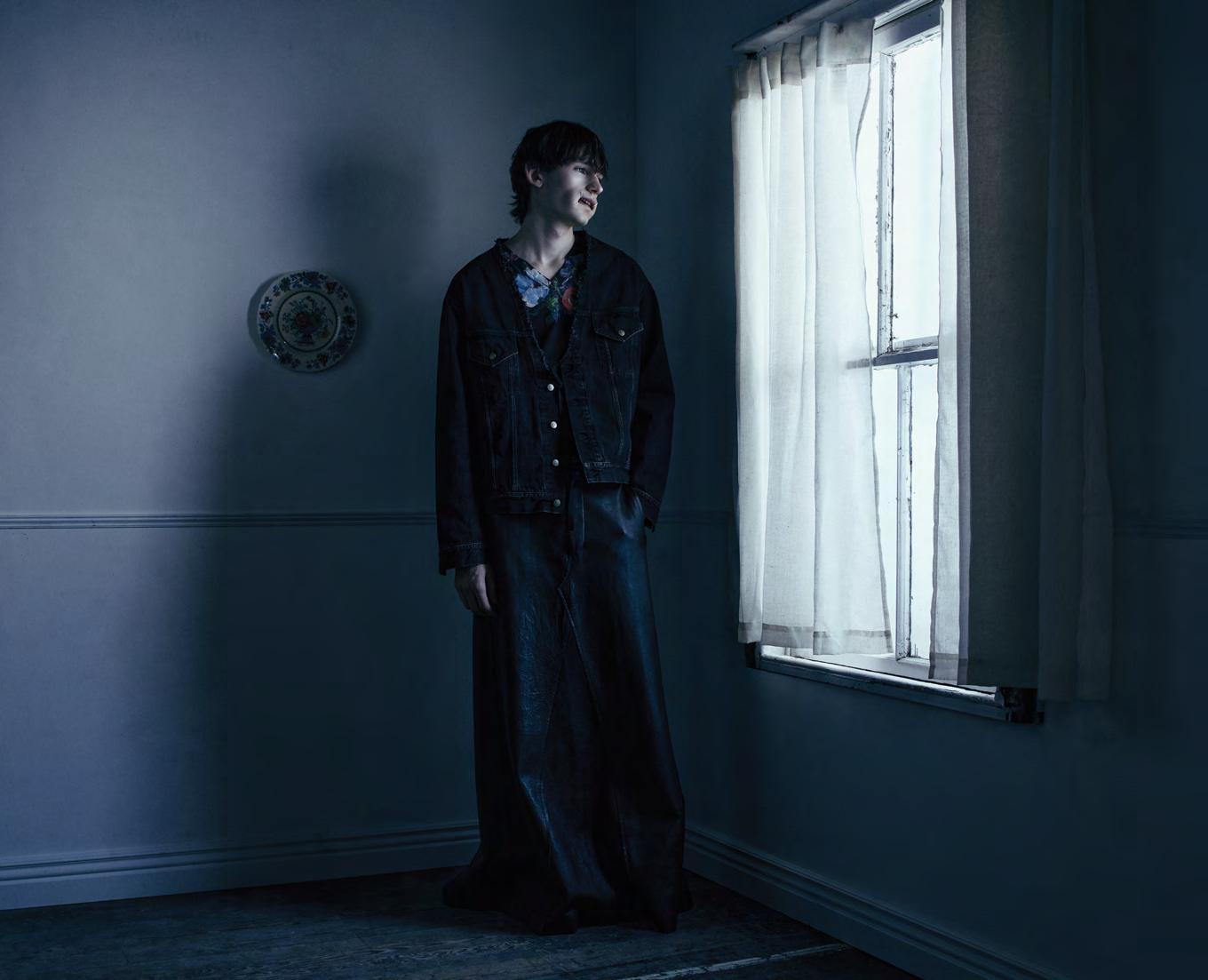
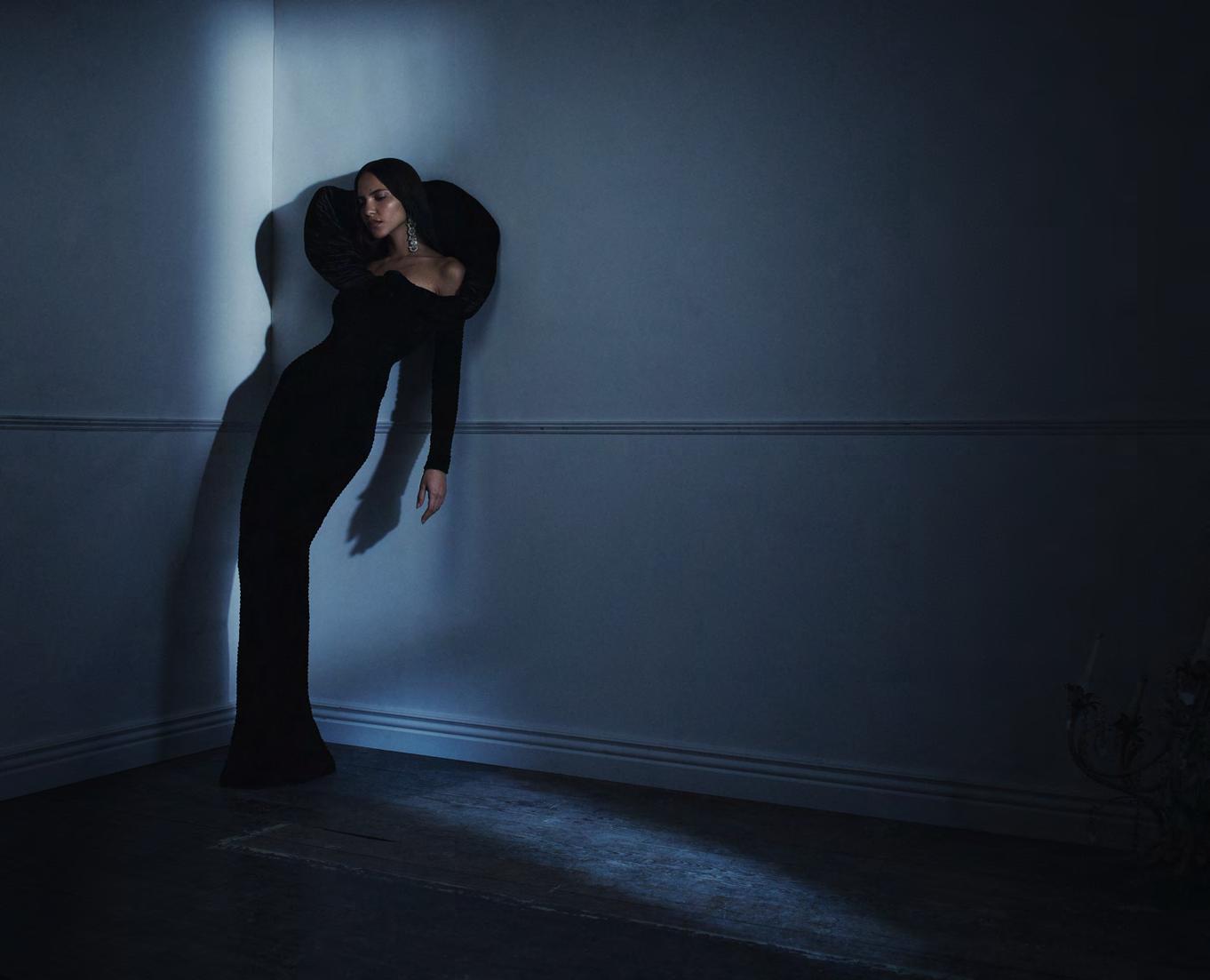

Nemah Hasan on negotiating the ‘dimmer switch’ and seeping through the cracks of the industry.
photography LUKA BOOTH
styling LILYANA KHOSHABA
words MAI EL MOKADEM
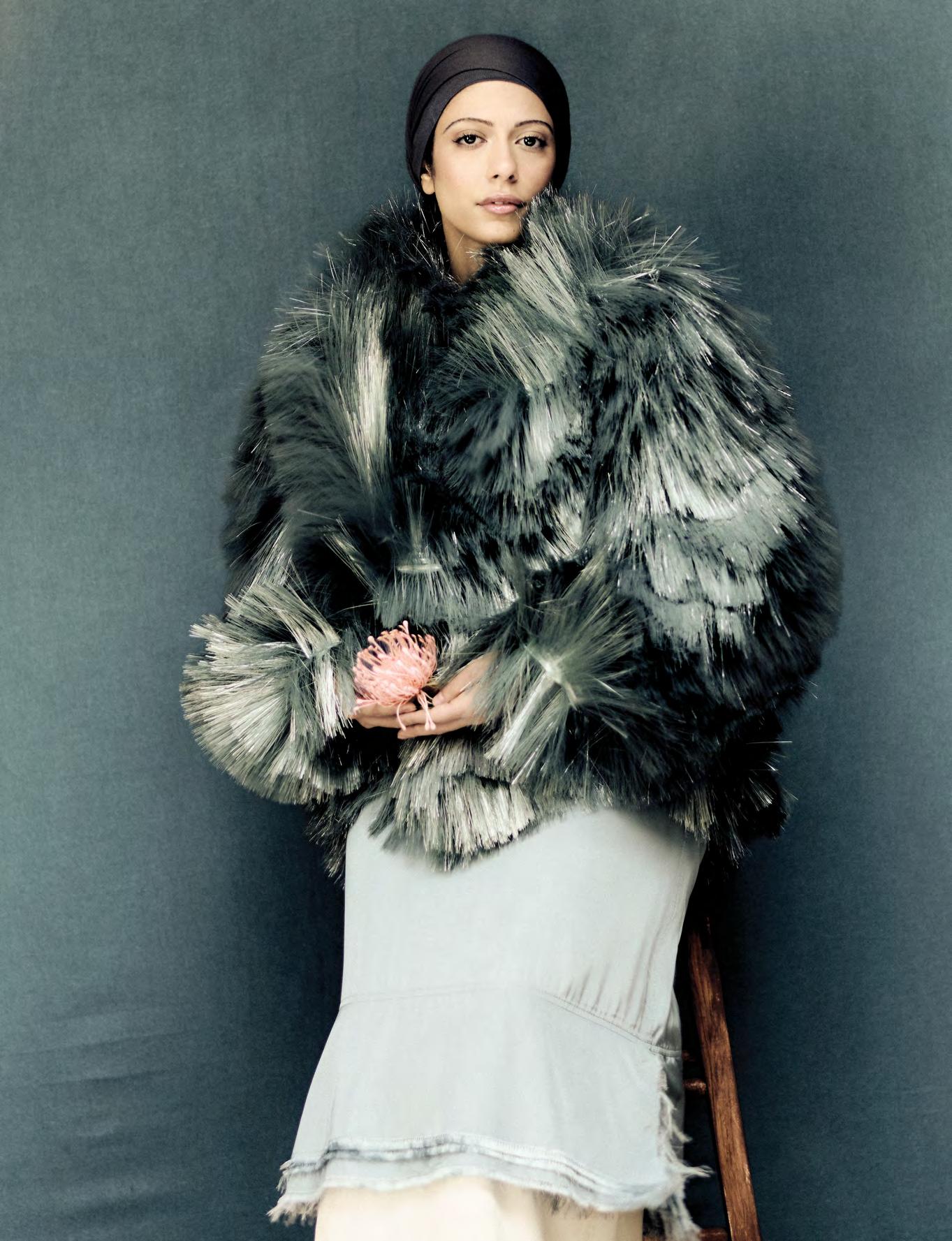
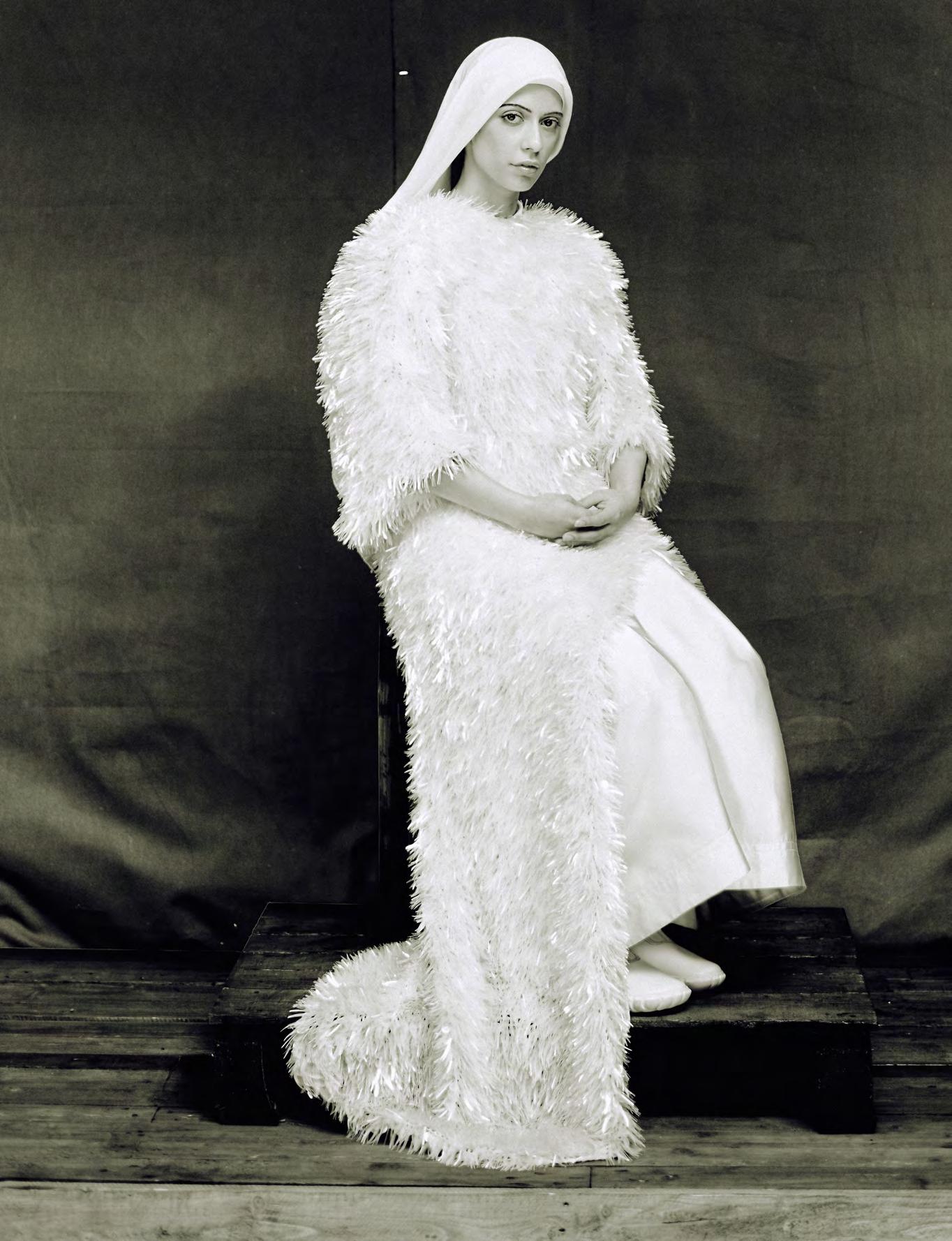
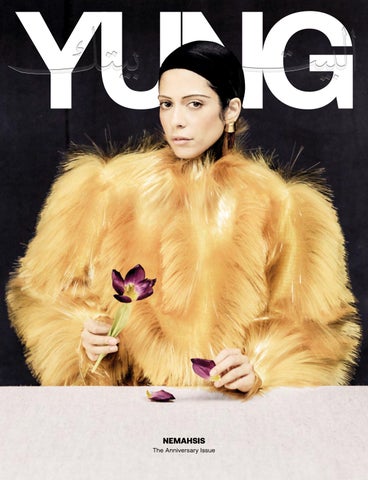
When the video call connects, Nemah Hasan—known to the world as Nemahsis—appears with the kind of composed and soft-spoken presence that usually only comes from surviving a major storm. There is no label entourage on the call, no publicist hovering in the background. Just a Palestinian-Canadian artist in her own space, navigating the same digital windows that helped build her career.
Operating as a fiercely independent artist after a high-profile split from her label, she has effectively redefined what ‘breaking through’ on your own terms looks like. Her sound drifts between alt-pop and indie, her vocals barely above a whisper, while her writing unfolds like something carefully held in, then let out all at once.
Nemahsis has steadily grown a dedicated audience, with a series of singles and projects that have positioned her as one of the more distinct voices emerging right now. After her 2022 EP eleven achers set the stage, she released her debut studio album, Verbathim in 2024. The title itself—a play on the word verbatim—serves as a metaphor for reclaiming her voice after being told to hold her tongue.
As we settled into our Zoom call, the conversation didn’t start with the trophies or the sold-out shows. Instead, we dived straight into the mechanics of the soul, and what it costs to protect it when you’re building everything on your own. Independence is romanticised as freedom, but for Nemahsis, it’s a high-stakes game that requires a lot of emotional and financial stamina. After a period of illness forced her to step away from the digital grind, she watched her metrics plummet, a cold reality of the internet era. “People don’t realise how stable you have to be—physically, mentally, but also financially,” she says.
Now, she describes her bond with her craft as a healthier rela-
tionship. “I had so much to prove, but I did it despite the pressure because it wasn’t about me. It was so much bigger than me.”
“I’ve proven all I needed to prove. Now I’m having more fun.”
Nemahsis is acutely aware of her standing; for her, that commitment carries more weight when you consider the risks attached to her name. “I’m such a liability,” she says with a wry laugh. When I push back on the word, she clarifies the reality of the landscape: “I don’t think I’m a liability, but in the industry, there is a risk. I’ve worked with people who have lost opportunities simply because they worked with me or because they spoke out.”
There is a specific kind of heartbreak in realizing the industry you love views you as a line item, replaced in a snap of a finger. It’s the kind of realization that usually breeds cynicism, but Nemahsis wears it differently. “To not see value in me from the start may have been such a blessing,” she reflects. “I was never special, but no one is ever special in this industry, because everyone is temporary.”
She isn’t saying she doesn’t have talent; she’s saying she’s opted out of the delusion. “It hurt my feelings at first, thinking I wasn’t worth it. But then I realised no one is really worth it to them. Everyone is ‘worth it’ for a fleeting moment, and then they’re not.”
Before October 7, Nemahsis was set to sign a multimillion-dollar deal—one that would have fundamentally changed the scale of what she could create. Instead, she rebuilt everything herself. “I was gonna be set,” she says simply. “And then I did it all on my own.” So instead, she stays in it—fully, stubbornly, and at times, precariously. Funding her own projects, betting on her own instincts, and accepting the risk that comes with both.
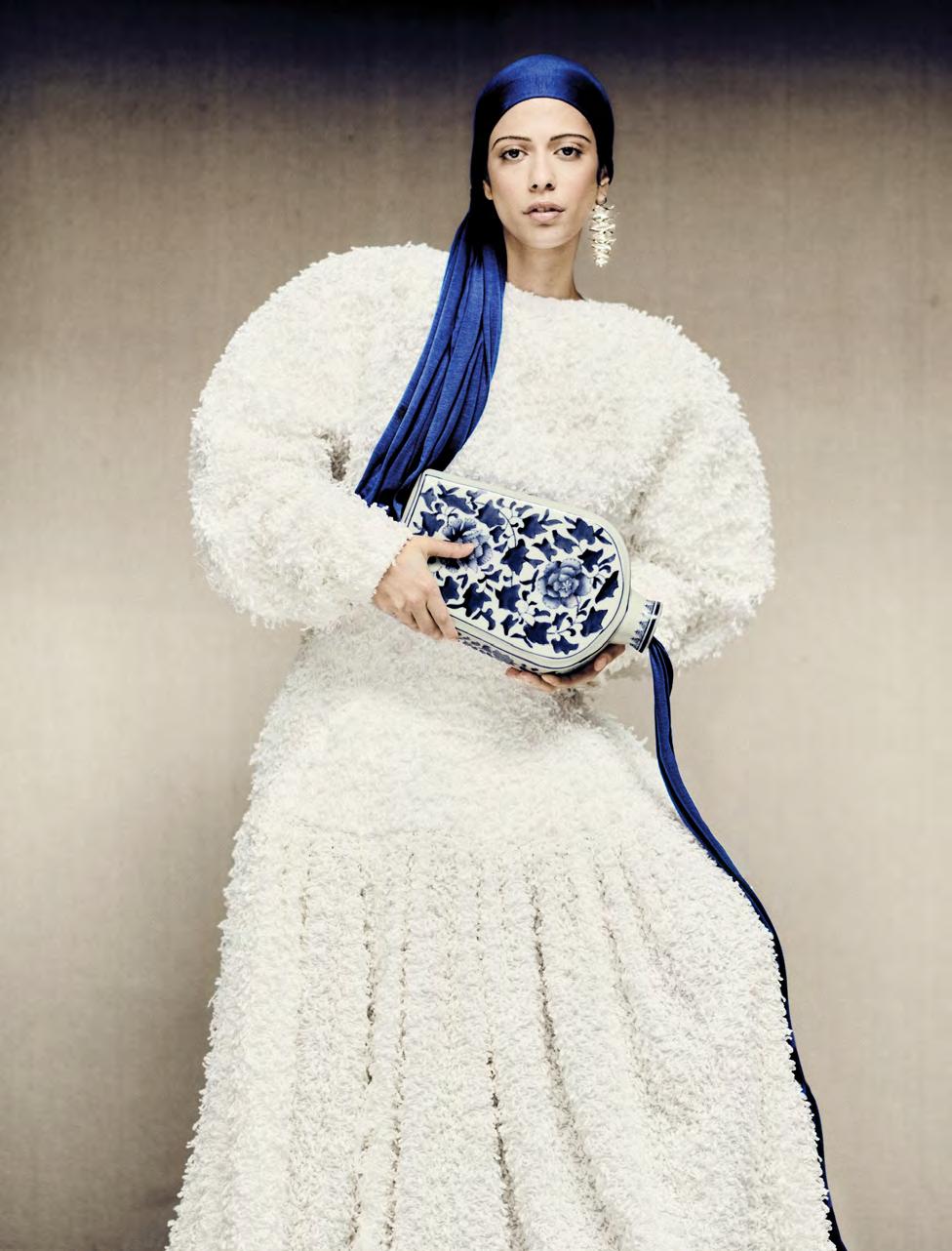
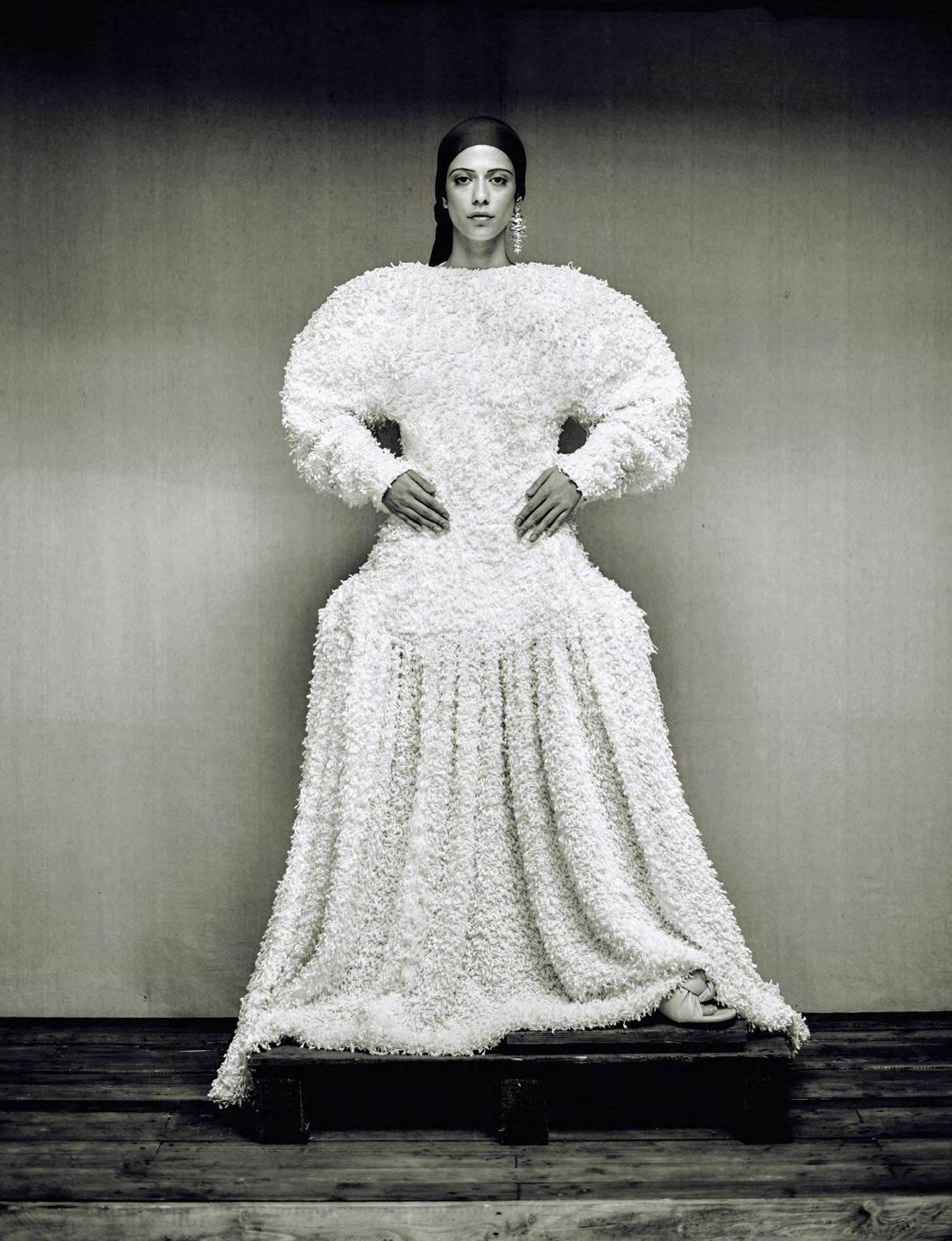
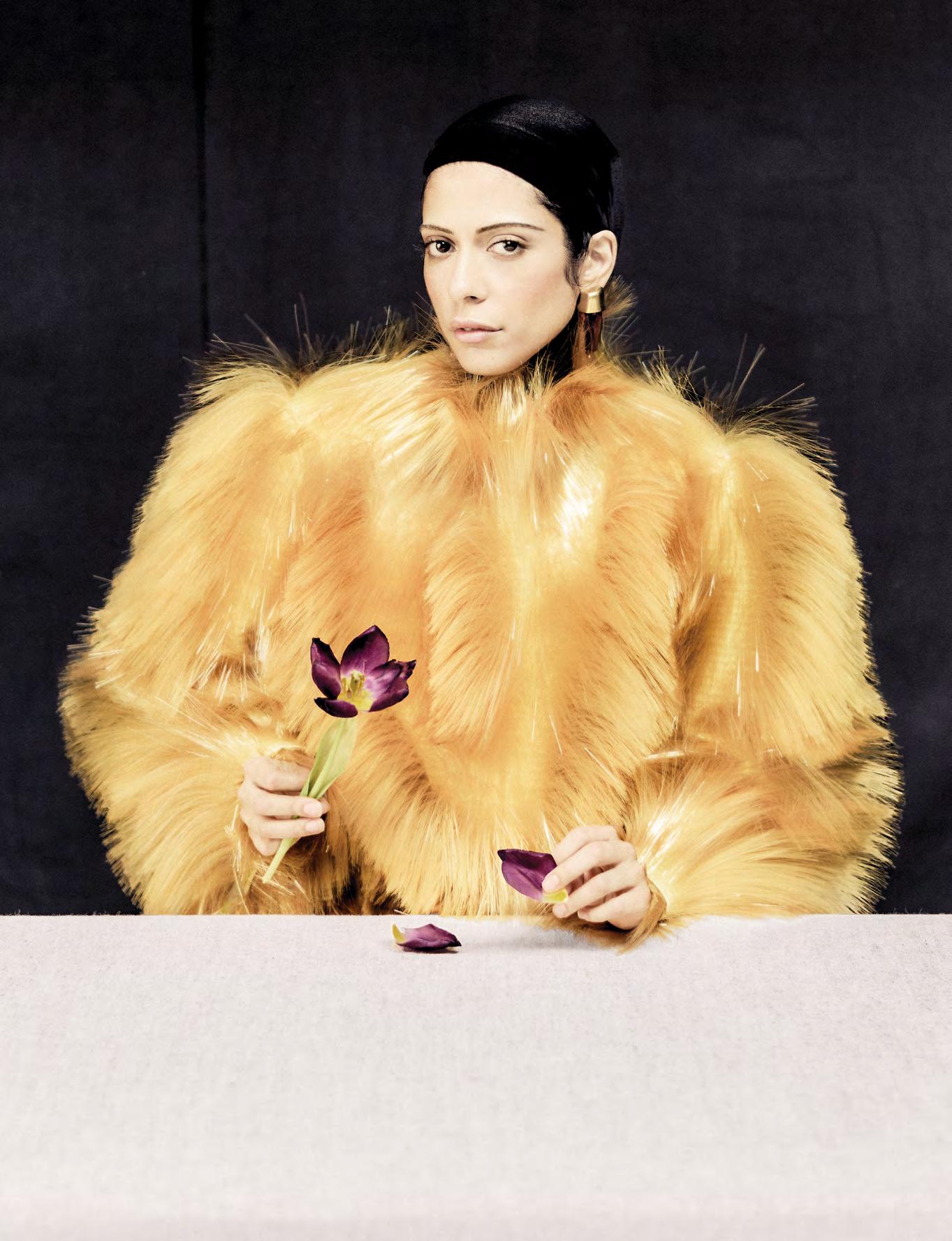
“I had so much to prove, but I did it despite the pressure because it wasn’t about me. It was so much bigger than me.”
But long before she learned how to hold her ground in the industry, she had to first decide to step into it at all. Nemahsis was effectively evicted from her old life by a dream. It’s a story she still tells with a sense of lingering disbelief. “I don’t dream often—maybe once or twice a year,” she says. “But in 2017, I had this vivid one: Adele was on stage, she handed me the mic, and suddenly it was my show. It was the most at home I’ve ever felt.”
She quit her job the next day.
What followed wasn’t a clean, cinematic rise, but a messy, yearlong flip-flop between instinct and insecurity. She tried to go back to a regular job, haunted by the impracticality of her own ambition. Underneath the career anxiety was a more existential strife: the internal negotiation of being a hijabi woman unfit for the music industry. “I’m still trying to find that answer,” she reveals. “How does someone in a hijab become a singer? It’s not black and white.”
The tension she feels is literally audible in her discography. Nemahsis possesses a powerhouse voice, yet she chooses to use it like a whisper. It is a premeditated, theological restraint. “I think I still correlate oversinging—and the attention that comes with it—with my own relationship to faith,” she explains. “So I found a way to sing without taking up too much space. I dim my own light a little. I’m a little quiet—fewer runs, fewer belts.”
It is a striking admission: an artist intentionally simplifying her melodies so the listener doesn’t get ‘distracted’ by the beauty of her tone. “If I sing too much and my voice sounds too good, no one would listen to what I have to say. The message is more important than how I sound.”
This message-first philosophy is what makes her debut, What If I Took It Off for You?, so piercing. “It was the first time I wrote about the penalization of wearing a hijab in a job or a dating life. Something that had never been written about before.”
Navigating identity as a hijabi woman in the West means living in a permanent state of “in-between.” Nemahsis famously described herself as “too haram for Muslims and too halal for everyone else”, a tale that began in her childhood in Ontario. She was caught in a classic, exhausting pincer move: too “Westernized” for the mosque on weekends, and too “religious” for the kids at school who thought she was in a cult. “The Muslim community in Mississauga, they’re very practicing... I was always the person who showed up in a baggy top and baggy pants. It was like, ‘That girl Nemah is so haram.’ Then I’d go to my predominantly-white school and it was, ‘Oh, she’s so religious, she’s in a cult.’”
The industry craves a diluted aesthetic—a version of a Muslim woman that is easy to categorize and even easier to market. The margin for actual nuance is razor-thin. It’s a dynamic that forces a perpetual calibration of how much of herself she actually shows. “You can’t take up too much space,” she explains, “because then people start saying, ‘That’s haram.’”
It’s a double-edged sword: the Western gaze demands she be “modern” enough to consume, the masculine or trendy hijabi, while the conservative gaze demands she be “modest” enough to disappear. Navigating the line between the two requires a level of mental chess that most artists never have to play, but Nemahsis isn’t interested in a head-on collision with these structures. Instead, she’s found a more subversive way to exist. “You kind of seep through the cracks,” she says. She is moving through a system that wasn’t designed to hold her, finding the gaps and the shadows where she can still be entirely, unapologetically herself.
Returning to Palestine brings a nomadic kind of grief—a constant mourning for whichever version of yourself isn’t currently present. “It’s so crazy,” she says, leaning into the paradox. “I feel at home in Palestine, and then I miss home in Canada. And when I’m in Canada, I’m missing home. I feel like I belong, but I can’t have both belongings at the same time.”
In this constant transit, “home” has ceased to be a coordinate on a map. Instead, it’s a phantom limb—something she can feel vividly, even when it isn’t there.
For Nemahsis, who has been visiting since the second grade, the Palestinian border is a mundane, albeit heavy, routine. There is a common, almost predatory expectation that artists should ‘mine’ their trauma in real-time. In her eyes, that kind of immediate translation feels impossible—even dangerous. When she is in Palestine, moving through the high-friction reality of checkpoints and controlled borders, the artist in her goes dormant so the human can survive. “When I land in Jordan, I think: ‘this is the hard part, we just have to get through this part.’ Don’t write, don’t romanticise, and don’t get scared. I’m relieved and out of autopilot in Jordan.” Some people write in the worst moments of their lives, she writes later.
It’s a necessary kind of emotional blackout. In those moments, she isn’t looking for a metaphor or a melody; she is simply trying to get to the other side of the gate. “I’ve been going since the second grade. It’s all I’ve ever known. I never needed a moment to ‘sum it up’ because I never thought it was something I wouldn’t have again.”
She isn’t writing from the middle of the fire; she’s writing from the clarity of the ash. By the time a feeling makes it into a Nemahsis song, it has been filtered through distance and safety. It’s a boundary that protects her integrity—a rejection of the pressure to aestheticize her pain for an audience while she’s still bleeding.
If her music video for Stick of Gum feels strikingly light, almost disarmingly so, it’s because that tone was a conscious choice. At a time when Palestinian narratives are so often framed through grief and devastation, Nemahsis initially considered leaning into something more overtly defiant. But on the ground, those closest to the reality pushed her in another direction.
She listened. The video softened, opening itself up to something else: joy. “As much as sadness and war-torn imagery brings sympathy, I think it also separates us from humanity.” Not as denial, but as insistence, a rebuttal to be reduced to suffering alone. “When you see us with our hijab blowing in the wind, liberated… it humanises us,” she says. “It’s less of a pity thing.”
Her songwriting draws from everything, scientific studies, stray words, and language, drawing from the clinical to explain the emotional. Like Chemical Mark, the song found its origins in an academic study on mice and cherry blossoms. She reads them not for the data, but for the mirror they hold up to her own psyche. “I like to read the study and see how it relates to me,” she explains. “To understand why I am the way that I am.”
Lately, however, she is finding inspiration in the boundaries of the English language. She’s become obsessed with power of single words—plucking them out of context and forcing them into pairings that shouldn’t work. “You would’ve never thought to put them together,” she says, a small spark of a chemist’s pride in her voice, “but then it makes sense when you hear it. You end up finding a beautiful sentence.”
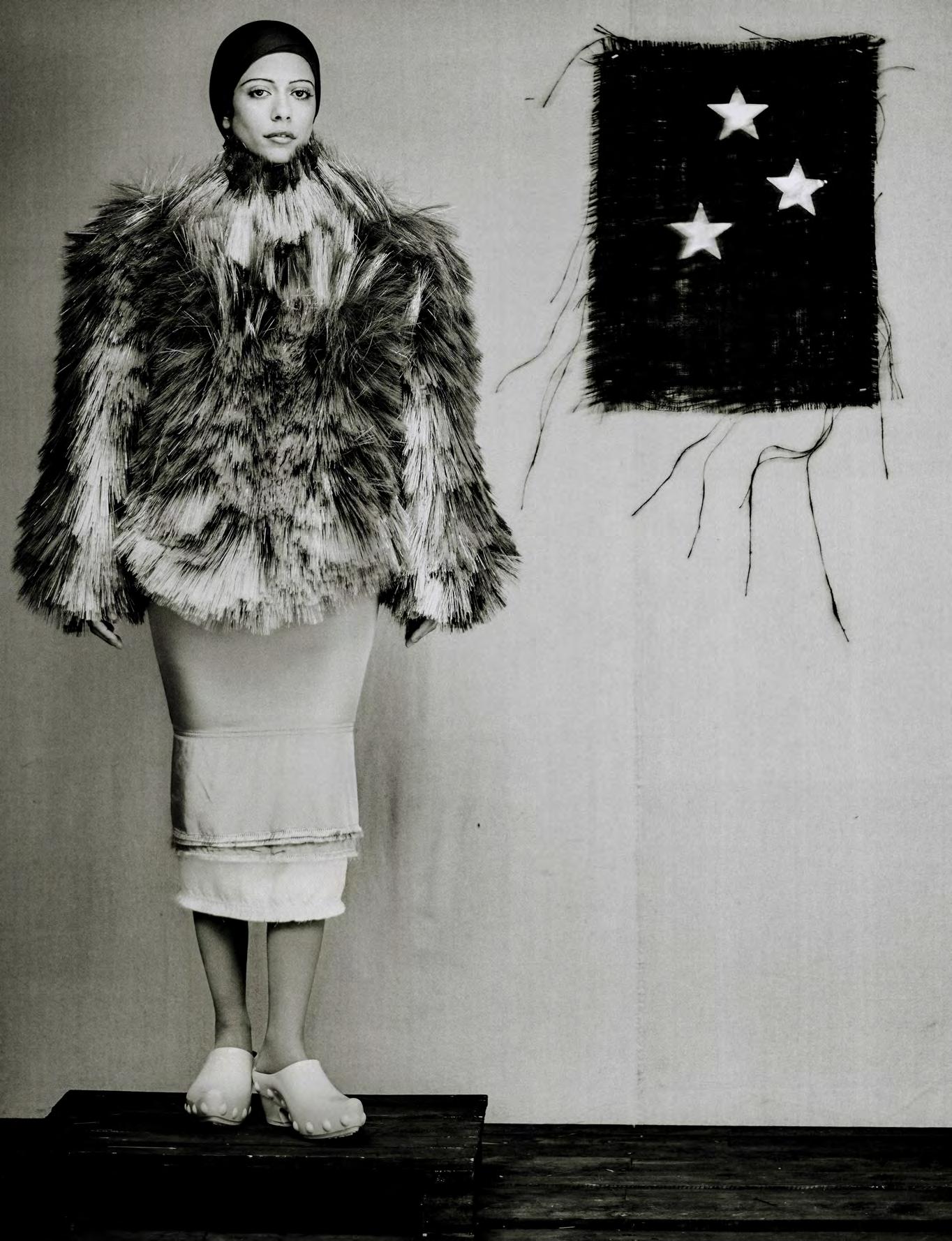
“To not see value in me from the start may have been such a blessing. I was never special, but no one is ever special in this industry, because everyone is temporary.”
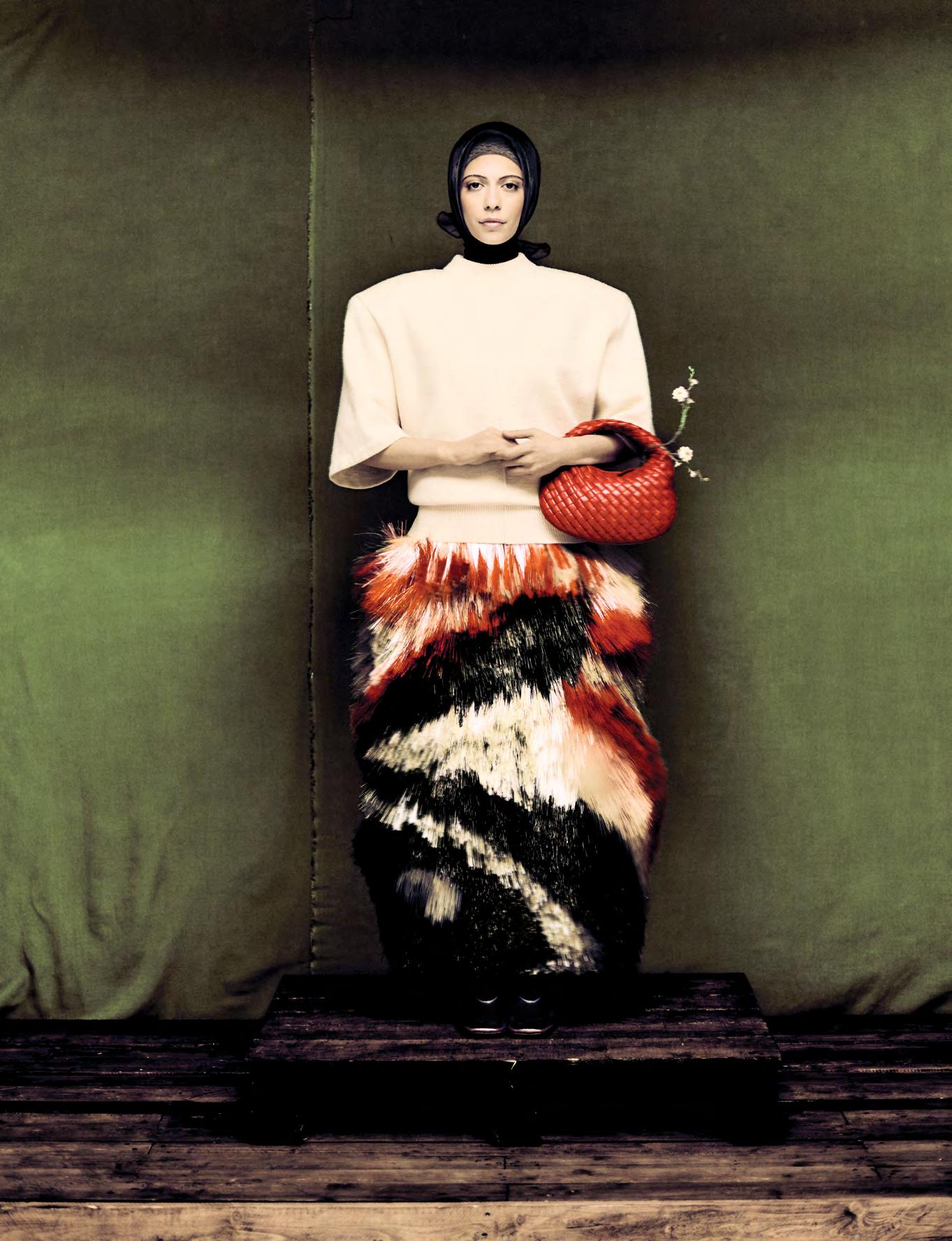
“A good song is a good song. But a good song at the most important time? That’s a legendary song.”
In her new music, she is intentionally leaning into mispronunciations—the very “errors” she was once bullied for as a child in the West. “I think it’s so important to make errors, because the English language is quite pretentious,” she says. She remembers a childhood spent rehearsing her enunciation, a constant, anxious mental edit before she ever opened her mouth. Now, she’s looking to films like Arrival to justify a simpler truth: if you communicate the story, the grammar doesn’t actually matter.
She explains it with a visual that feels perfectly tailored to her fashion background: grammar and “correct” pronunciation are like perfectly pressed clothes—stiff, neat, and expected. But perfection is rarely where the soul (or the fashion icon) lives. “If you can’t see past the wrinkles, you don’t see the beauty of what’s been curated,” she says. “I’m strategically adding those wrinkles and that realness to the storytelling. It takes away the stigma within the words.”
For a woman who grew up believing she was “stupid” because she couldn’t master the rigid structure of an essay, this is intentional. “I was never good at English and grammar, but I was really good at poetry,” she reflects. “Everything beautiful comes from accidents and mistakes. I’m exploring the error.”
Nemahsis’ upcoming single, Paper Soldiers, plays with the power of the repetitive. It’s built around a single, looping line that anchors the track until it feels less like a hook and more like a mantra. “I’ve always wanted a song that just keeps repeating,” she says. “Something catchy, but with a cultural implication that sticks.”
The metaphor at the heart of the track is devastatingly simple. “We have all these soldiers, but they’re made of paper,” she explains, the things we are told will keep us safe, built from the flimsiest materials imaginable. It’s exactly the kind of contradiction she’s drawn to: something that looks strong but folds under the slightest pressure.
But even as her artistic voice becomes yet more honed, she acknowledges that the traditional markers of success still feel like they’re happening to someone else. There is a lingering discon-
nect between the woman winning Junos and the kid who never felt exceptional. “I didn’t feel special as a kid,” she says plainly. It’s a raw admission that explains why her awards often stay in their boxes, unopened. The recognition doesn’t quite settle because it doesn’t match the internal map she grew up with.
There is an unambiguous, heavy kind of grief in becoming the representation you never had. For the young hijabi and Arab girls who see themselves in her, Nemahsis is a lighthouse. For Nemahsis herself, it’s a reminder of a void. “I get so sad that I’m what I needed growing up,” she tells YUNG. “I didn’t want to be that for someone else—I just wanted to have that for myself.”
It’s a duality she carries into every session: the pride of impact mixed with the mourning of her own childhood absence. She is under no illusions about the industry side of her identity, either. She knows the math. “I truly believe my music is incredible,” she says with total clarity. “But I also think if someone else sang it, someone without my baggage or my look, it would stream more.”
Yet, she doesn’t say it with bitterness. She says it because she knows that the “weight” is the whole point. If someone else sang these songs, the context would evaporate. The ‘why’ would disappear. “It’s impactful because of me,” she concludes. “A good song is a good song. But a good song at the most important time? That’s a legendary song.”
For all her growing audience, Nemahsis still moves through the world with a kind of inherited invisibility. It’s not modesty so much as conditioning, the residue of growing up unseen, unheard, and unconsidered in spaces that never made room for her in the first place. Even now, as her work travels further than she sometimes realises, that internal narrative hasn’t quite caught up. “I’m so in a bubble,” she says. “I don’t know if people are even listening.”
And yet, they are. Perhaps that’s the paradox at the centre of it all: an artist who is becoming increasingly visible, while still carrying the feeling of being invisible—and making work that, in many ways, speaks directly from that space.■
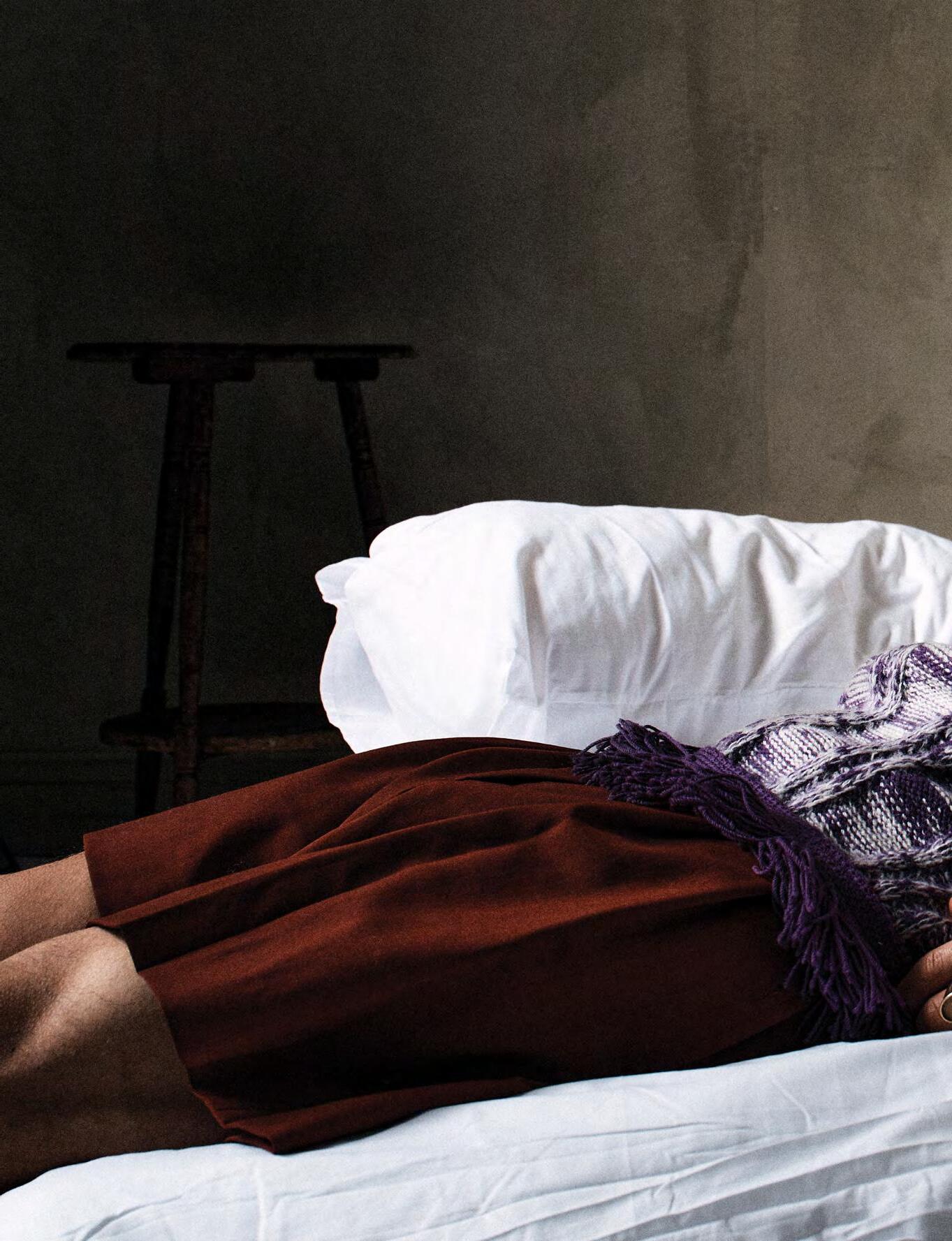
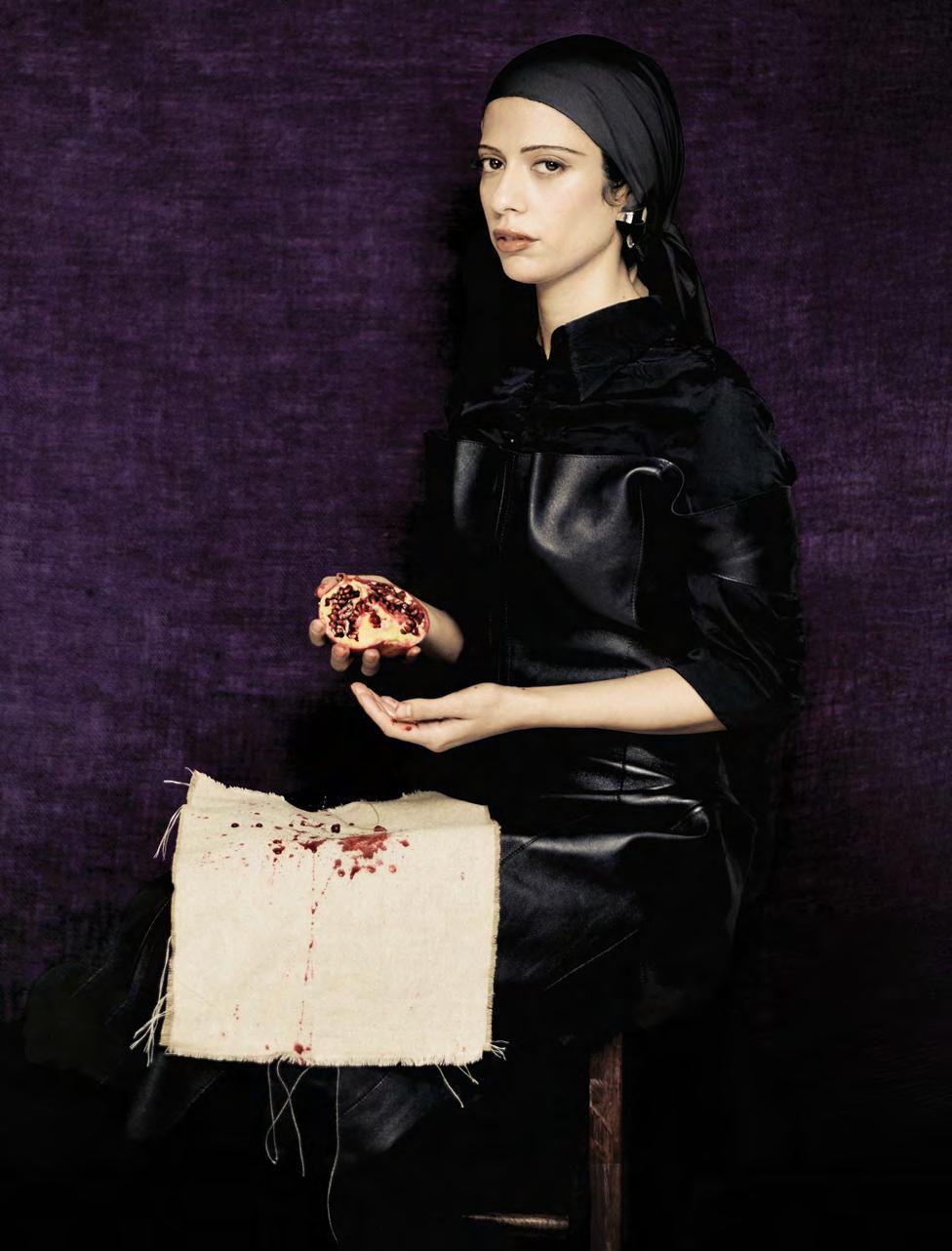
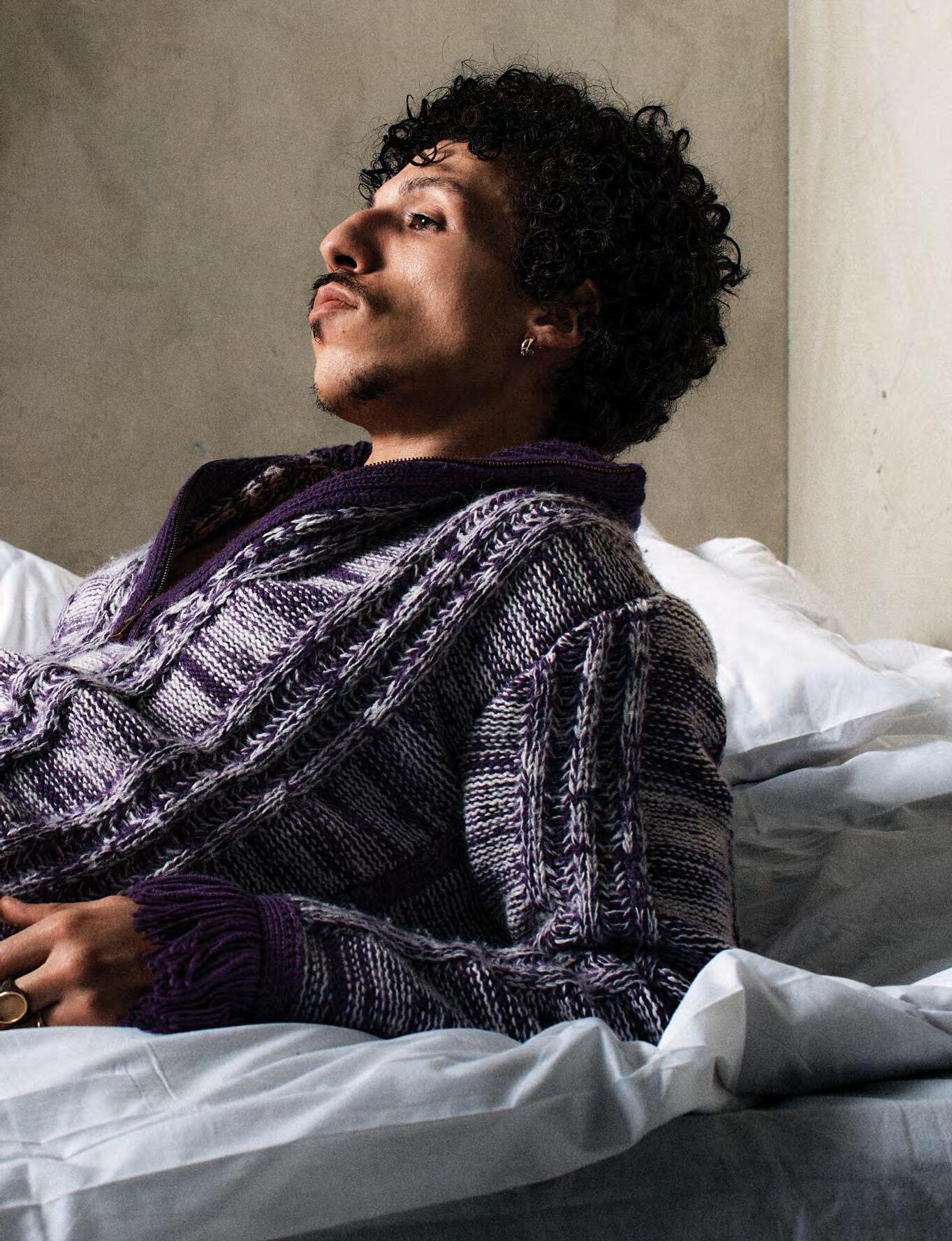
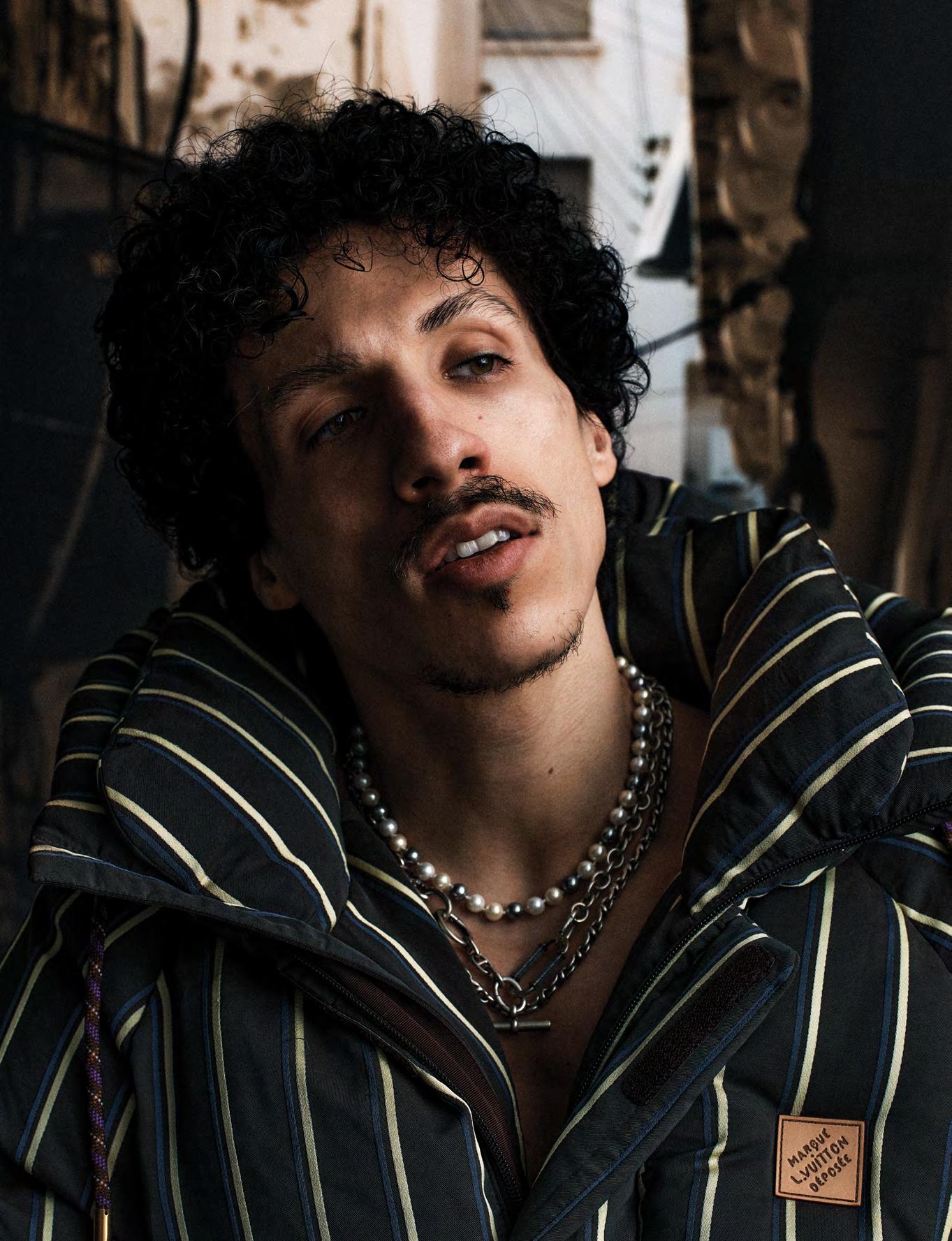
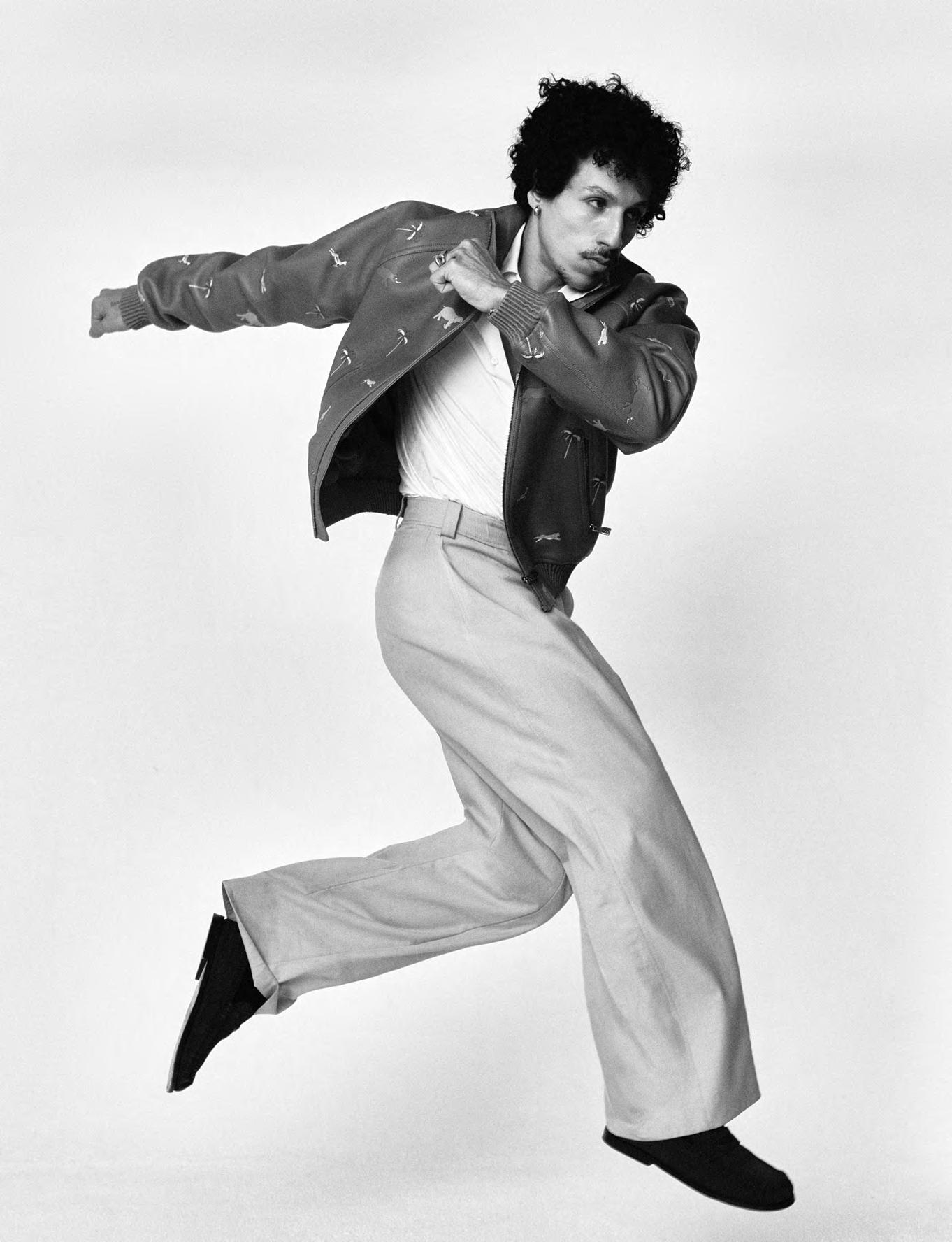
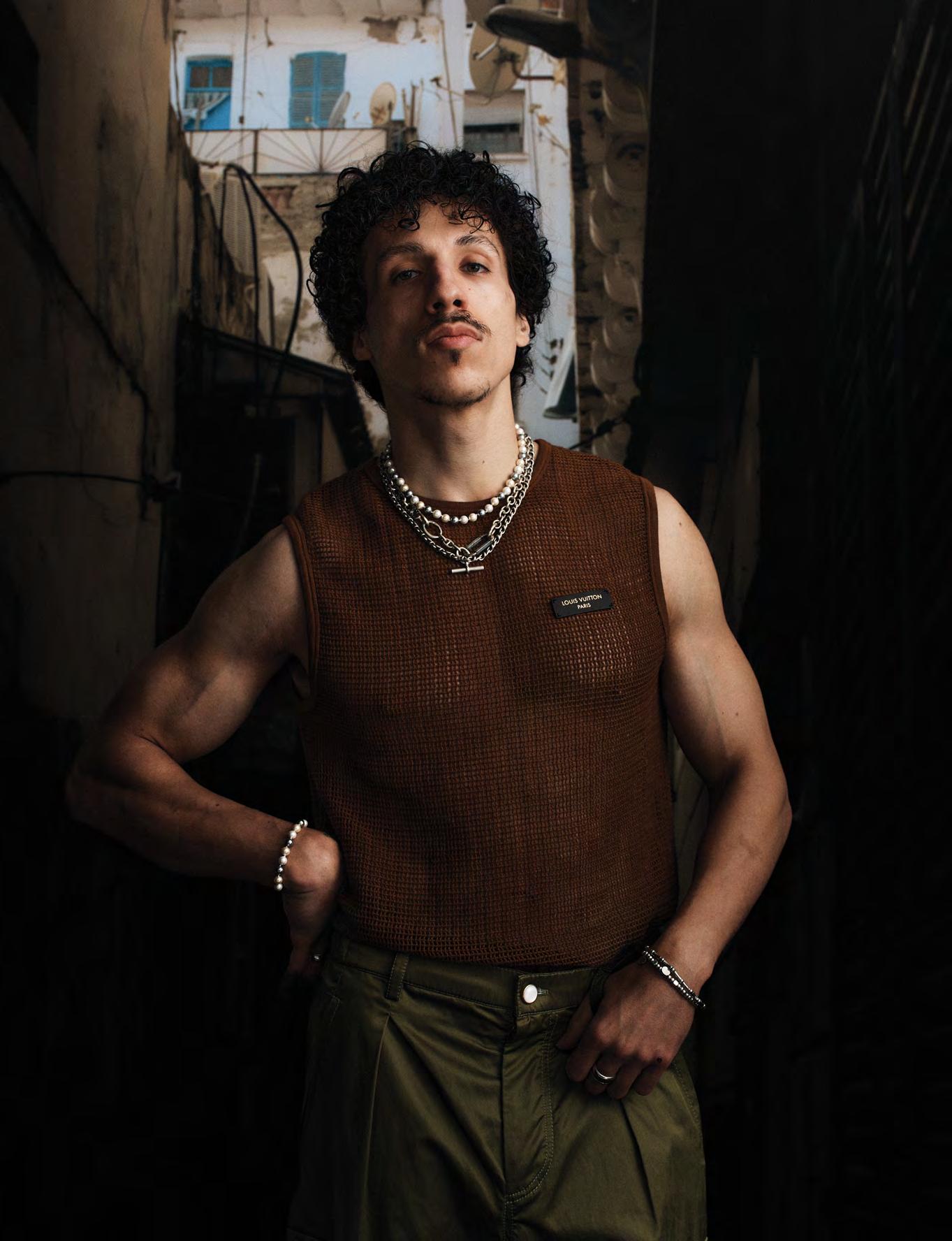
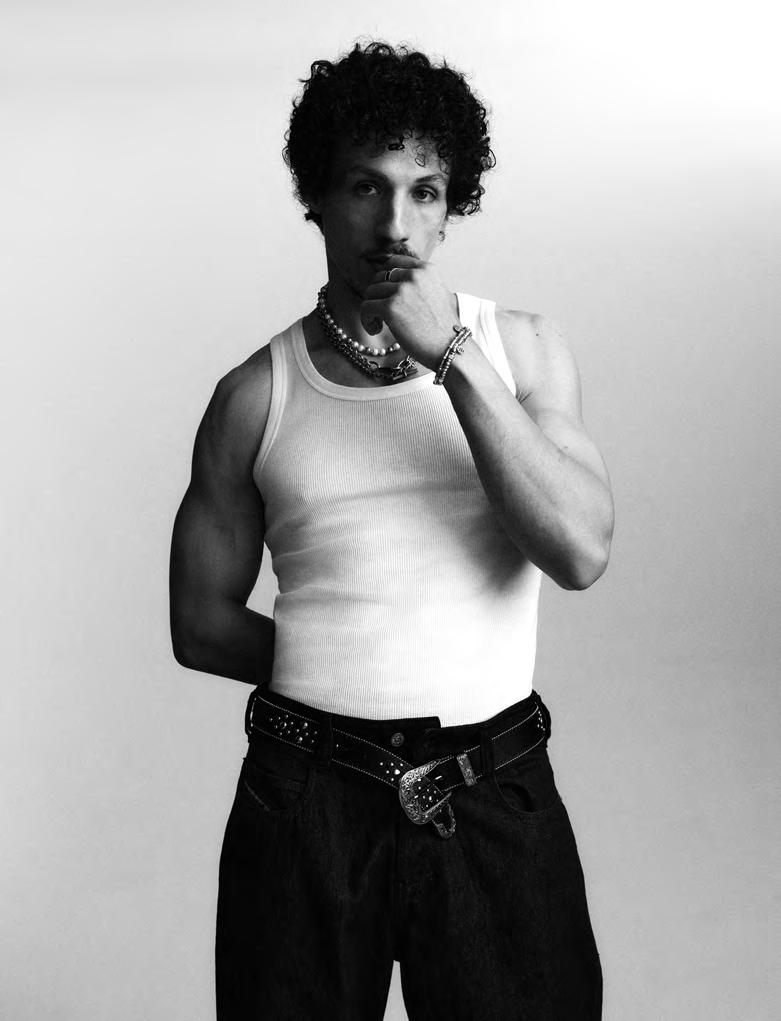
From endurance to surrender, Rilès moves in pursuit of something deeper than experience itself.
photography JACK CHIPPER styling IGNACIO DE TIEDRA words MENNA SHANAB
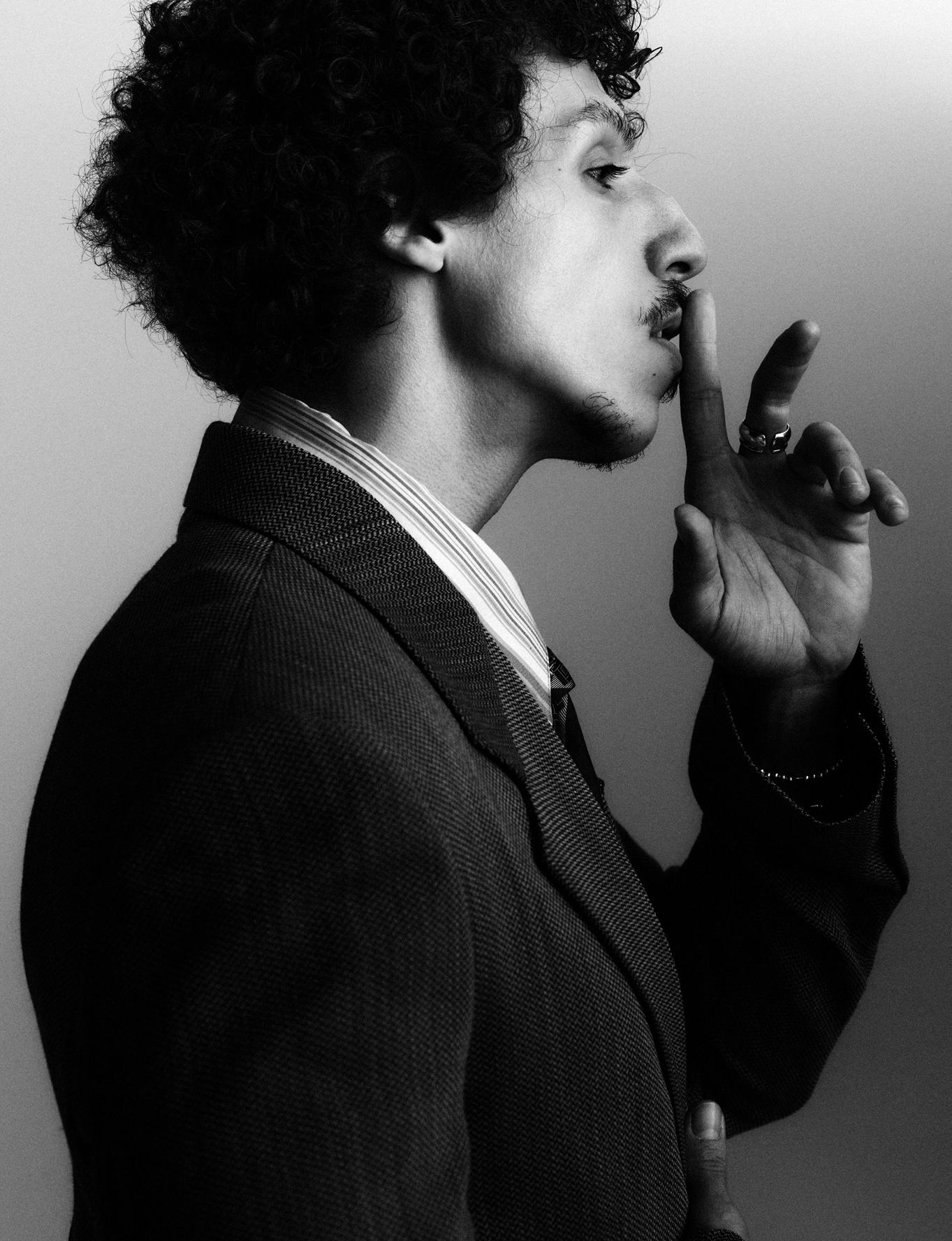
To begin this story, I would like to start at the end.
After my conversation with Rilès – one that stretched, paused, drifted in and out of silence, eventually settling into an elastic, lived-in rhythm – we found the exchange softening into a quiet conclusion. It was one of those endings that didn’t feel abrupt, but almost earned.
We had spent the better part of our time inside his Survival Mode – not just the album he released in 2025, but the state itself. We circled endurance, performance art, self-imposed extremes, the physical and mental constraints he deliberately placed on himself to see just how much he can extract from life.
Naturally, we arrived at the question that lingers after any period of intensity: what comes next? There was a pause. Not empty – full, charged. And then he said: “Unconditional love.” I met it with a knowing smile, a slow, instinctive “hmmmmm – yes.” That made perfect sense.
He admitted that he doesn’t quite know what that looks like yet, “I can’t really put it into words yet, but I want to learn about love, not just love like ‘I love someone,’ but something more universal. Something bigger than that. I want to explore how the prophets loved unconditionally, regardless if someone harms you or not,” he said.
As he searched for the right words, you could tell the idea was still forming, not fully graspable, but already deeply felt. It was unfinished but searching and alive.
There is a curiosity pulling him in towards the idea of experiencing love without conditions, without structure or limitation.
Again – a pause, and then it clicked.
Rilès is a seeker.
I told him, “I think you are someone who moves through life not just to understand it, but to fully experience it, to pass through different states, intensities, forms of knowing, in search of something beneath it all, something true.”
Up until now, his approach to this knowing has been through constriction, by tightening up the frame to see how much life he can squeeze from it, or force through it.
Running for 24 hours straight, nonstop with a metal rotating blade behind him. Stepping into a glass box and handing a public audience a pair of scissors, letting them do with him what they will. Walking away with half his hair cut off.
Enduring, testing, compressing – putting himself in situations where something has to give, where the body, the mind, or the moment itself reaches a breaking point, and in that fracture, something real reveals itself.
The 24-hour run was conceived as part of the promotional world around his album Survival Mode, a physical extension of the themes he was exploring in the music itself. “I love experimenting on myself,” he says. “Not just to communicate something, but to actually feel it. When I did the 24-hour run, I wanted to understand how time really passes. And when it was over, it felt like it had only been 12 hours. My body was destroyed, but my mind, it experienced something completely different,” he shared.
By the end of it what stayed with him wasn’t the pain. It was the distortion of time. The way those 24 hours didn’t feel like 24 hours at all. That was the answer he was looking for. And that’s the pattern. It’s less about proving something outwardly, and more about uncovering something internally.
His performance art does not feel like stunts, but questions. Even in something as visually striking as the I Don’t Wanna Lose You video –where he stands still, exposed, strangers approaching him with scissors – the focus is not on the shock factor, but on understanding the spectrum of human behaviour. Vulnerability. Risk. Unpredictability. “When you put people in a room with a situation like that, you don’t know what will happen. That’s what I love. It’s like an experiment. You see how people react.”
The moment someone chopped off half his hair was not something he planned. But it was allowed. “We knew something could happen. Maybe someone would go too far. But that was part of it. There was no going back. That’s the thing with real experiences.”
He was surprised at how far they went – how quickly a boundary shifted once it was opened. And yet, once it happened, there was no sense of wanting to undo it. There is only the realisation that once you enter an experience fully, there is no clean way out of it. You carry it through.
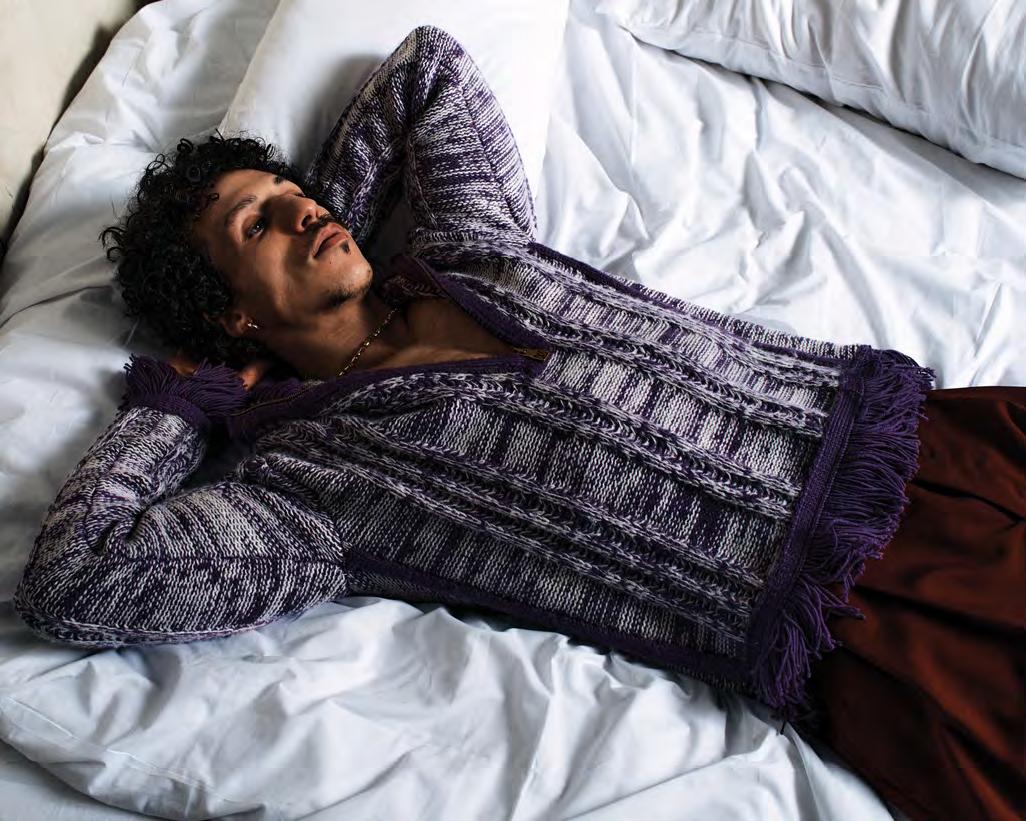
“That’s the beauty of it. You need to chase it with your heart, not with your head. That’s hard.”
There is risk, yes. Real risk. But there is also a kind of surrender embedded within. A willingness to not fully control the outcome. To allow people, strangers, to enter the space and make decisions that directly affect him.
And now, this next idea he is drawn to, “unconditional love,” feels like the polar opposite, the inverse of everything that came before it. But somehow, it serves the same purpose. It is not a departure from what came before but a continuation, just in the other direction.
“Survival mode is part of me but it’s not a safe way to live all the time. You need to let go at some point. You need to learn something else,” he tells me.
If Survival Mode was about limits, pressure, and resistance, this next exploration is about expansion. Openness. A total and complete removal of conditions. No limits. No structure. No constraints.
The intention is the same: to experience life fully. Completely. With no dilution. To know both extremes – the most constrained version of existence and the most boundless.
And that’s when I told him:
“You’re a seeker. And you should look into Sufism.” He paused and laughed lightly. “You’re the third person to tell me that,” he said.
Perhaps it was divine direction. I suggested reading Ibn Arabi. “I will do this. I will do this as of tonight,” he said. His excitement for the new knowledge awaiting him was palpable.
But yes – Rilès is an artist and a great one. But more than that, he is a seeker first.
Someone here to discover, to experience, to test the limits of what life can offer and what he can take from it. Someone playing, seriously, with the elements available to him. In music, in the body, in the mind, in life itself. First through restriction. Now, perhaps, through release.
Long before the endurance performances, the bold concepts and their symbolism, the hand-stamped album covers, there was something much simpler in place. An Algerian kid growing up in France’s
Normandy to immigrant parents. A room. A computer. And a need to express something, just not in a language his parents could understand. “I was kind of shy. I didn’t want them to understand what I was saying,” he shared with me.
So, he chose English. As a shield, not a strategy or aesthetic as some have assumed. “It was purely out of shyness. I wanted to be entirely free in my expression,” he explained. “Even now, it remained that way. I got used to it. It feels natural. Even if the reason at the beginning was just not wanting to be heard.”
There’s something telling in that. That his first experience of creative freedom came through distance and separation, through a language barrier. Through not being fully seen and understood.
The same pattern appears again when he spoke about how he learned to make music in the first place. He had no infrastructure around him, no accessible system that made the process easy or intuitive. The mythology of being “self-made” sounds romantic in hindsight, but for some, and especially for Rilès, it often begins with limitation. “It was totally out of necessity. The first time I tried to record a song, I booked a studio in Rouen. It was 20 euros per hour, which was enormous for me at the time. The engineer didn’t understand what I was trying to make. I was discouraged,” he admitted. So, he did what most artists do when the system doesn’t work for them. He just built his own for himself by himself.
A second-hand microphone. YouTube tutorials. Trial. Error. Repetition. Discipline. “I told myself, even if it sounds bad, at least I will have the freedom to experiment. I needed that. I needed to try things, to fail, to understand,” he shared. That need to experiment becomes a recurring theme. And the freedom necessary to do that became everything to him.
He studied English, pretending to his parents that he was enrolled in medicine, while quietly building his craft. “I only did three years of university and I stopped at the third year when music started picking up for me,” he shared.
His parents were strict, but loving. He knew they would worry about the uncertainty of a music career. Even though his father had been an aspiring musician, hardship and betrayal shadowed that past. Watching his son navigate the same path, he could only hope for different outcomes.
“Now he is totally at peace with it. I take him on tour with me. I try to give back but in a way that also leaves him free space to express himself,” Rilès said.
At the beginning, there was not a safety net or alternative path. Survival Mode, as a project and as a mindset, was an intense exercise in autonomy and it went on for many years. “I had no plan B. It was all or nothing. I was ready to do this for ten years, even if nothing worked.”
“Sometimes you think you control everything, but there are other forces, whether animal or spiritual. You’re not the only player in this game. There is a third force.”
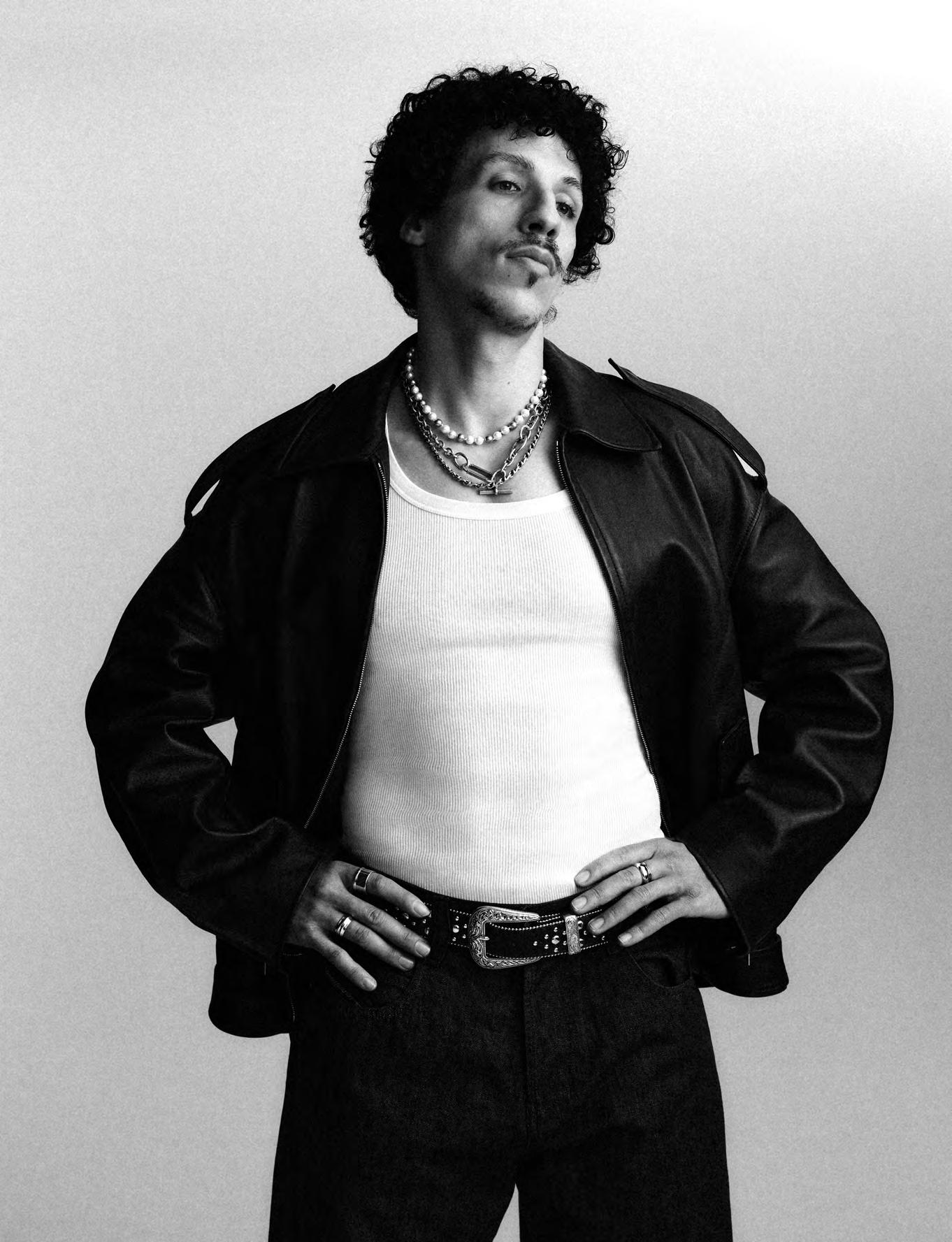
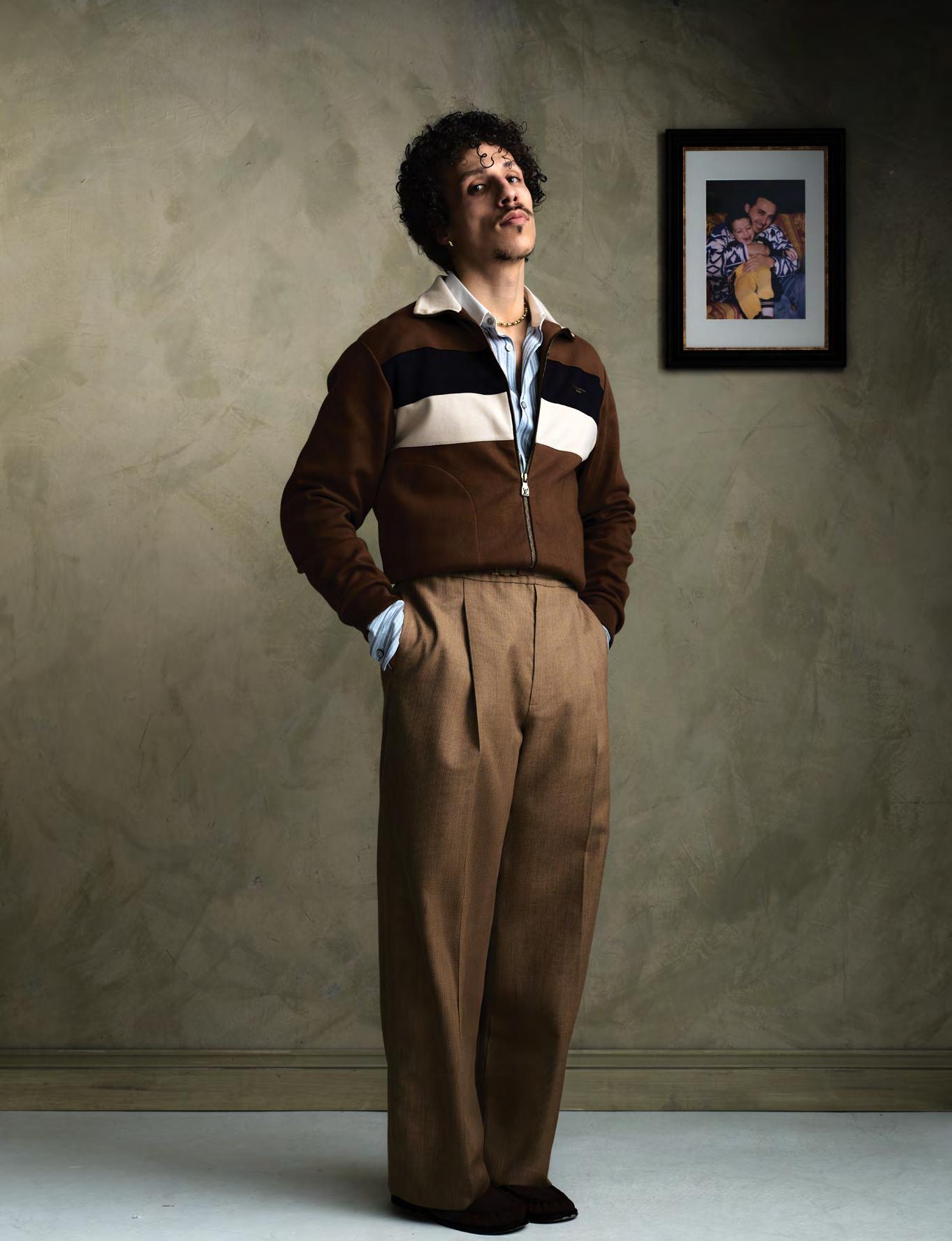
But that kind of commitment does not always come from confidence. “I don’t even know if I trusted myself at that time. Maybe I was just delusional. But it was the only option I saw.” And yet that “delusion” carried him forward.
Until the moment things started working out. And that’s when things starting getting complicated. The more people entered his world, the more opinions, expectations, and external perspectives began to shape the space that had once been entirely his own.
He spoke about a period when he felt disconnected from his own instincts, from his own inner voice. The external voices around him made it harder to hear his heartbeat.
He wrestled with mental fatigue and self-doubt. “Once you start getting views, you get self-conscious. You want to keep the same formula. But with music and creativity in general, there is no specific, engraved formula. That’s the beauty of it. You need to chase it with your heart, not with your head. That’s hard.”
Coming back from that required a different kind of discipline. The ability to trust an idea even when it doesn’t make immediate sense. “I try to reconnect with my heart. Even if an idea feels weird, even if I think people won’t understand it. I have to go that way. I need to always follow my truth with a big T,” he says.
Because for him, it is not a failure issue as much as a misalignment one. “If I fail on my own ideas, I learn. But if I fail on someone else’s vision, I feel like I betrayed myself.”
There’s clarity in the way he speaks about it, an understanding that if something doesn’t work out, but it came fully from him, he can still find peace and even growth in that. However, if something fails and it wasn’t truly his to begin with, that’s harder to reconcile.
That explains everything that comes after. The independence. The intensity. The refusal to dilute. The dedication to doing things from the heart, even if it means taking a leap of faith nobody else believes in.
He did not position himself as anti-system. But he has a clear preference for autonomy. For being able to move quickly and act on instinct.
Having created music both independently and within the structure of a major label, Rilès now understands what each offers. Access, reach, opportunity on one side. Freedom, immediacy and ownership on the other. And for his music, the latter matters more.
That is because his ideas do not exist in a format that can easily be processed or approved. They arrive quickly, sometimes unexpectedly and often require immediate execution. They are not meant to sit still.
Which brings everything back again to where our conversation ended. To this movement away from pressure and towards something more open and expansive. But equally risky. Unconditional love.
For Rilès, survival has been a state of mind and body for years now. “When you’re in survival mode, you don’t make concessions. You go all in. You don’t think about comfort,” he says. But it comes at a cost. “It’s not sustainable. You can’t live like that forever.”
He is not abandoning survival mode entirely, it is still part of him, but he’s learning how to exist beyond it. “Sometimes you think you control everything, but there are other forces, whether animal or spiritual. You’re not the only player in this game. There is a third force,” he muses.
Rilès is ready to explore what happens when those conditions are removed. When there is no constraint. When experience is allowed to unfold without resistance. That is where he is now. Or at least, where he is heading. And maybe that is the most consistent thing about him. Not the performances or discipline, not even his music, but the underlying need to know. To test. To experience. ■
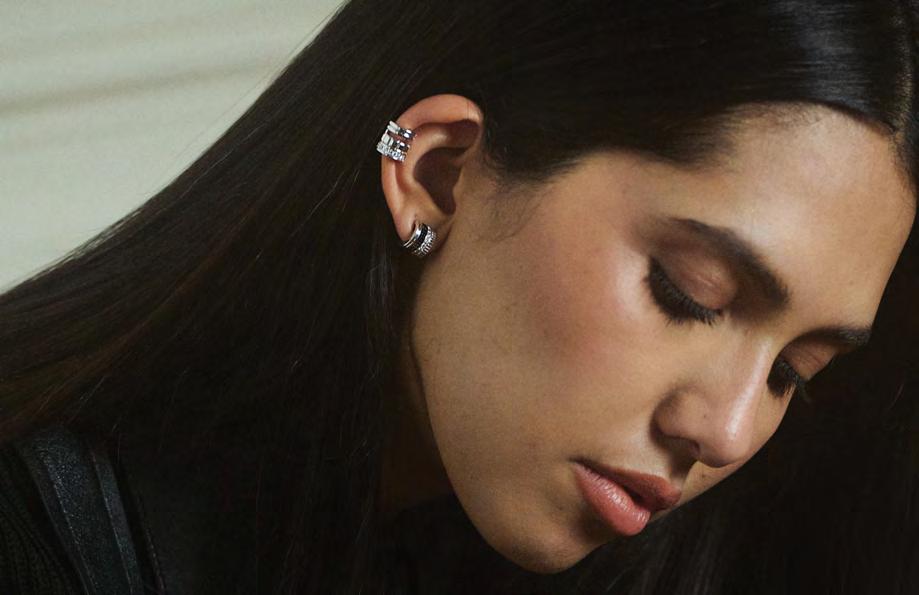
quatre black edition large and xs rings, quatre black edition bracelet, quatre radiant and black edition clip earring, BOUCHERON
This is what it sounds like when Manal, in Boucheron, stops trying to prove anything at all.
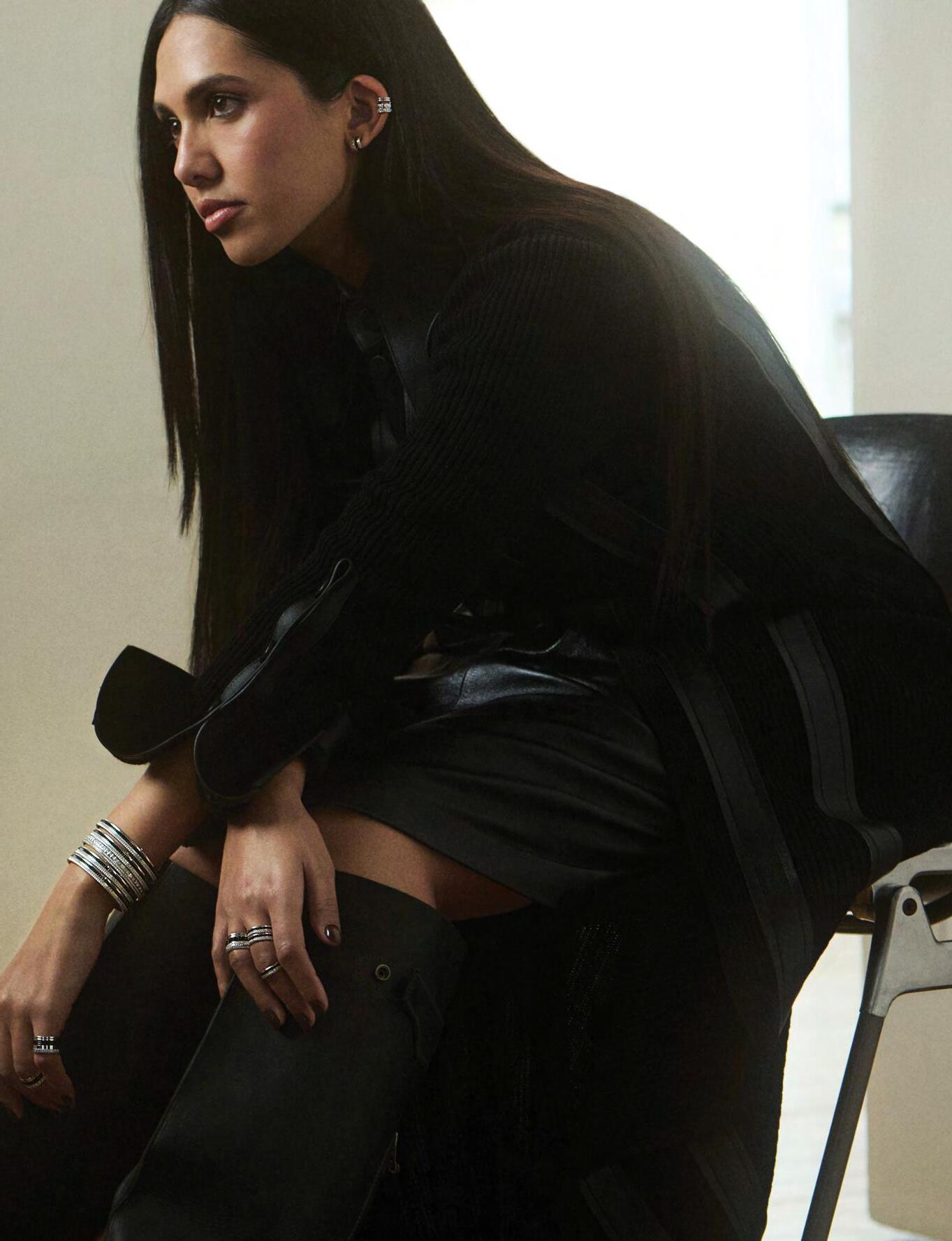
Before the world, there is the sound. Then come the colours, texture, and atmosphere.
For Manal Benchlikha, music has never been a fleeting auditory experience. It starts with a temperature, a specific shade of light, and a texture that eventually hardens into a world. A decade into her career, the Marrakech-born artist has successfully transitioned from a breakout presence in Morocco’s hip-hop scene to an established, cross-genre auteur. Her trajectory is marked by a conscious reworking of sound, weaving the sensibilities of contemporary R&B and pop into the foundational DNA of North African sound.
From early releases like Denia to her more recent project Arabian Heartbreak—a record that places women’s stories at its core— Manal has steadily widened her lens. It is a consistent evolution of both her sonic palette and her visual vocabulary, turning each release into a more immersive study of her own identity. Her impact has not gone unnoticed, earning her recognition across the region, including being named ‘Top Female Artist – Magharebi Dialects’ at the inaugural Billboard Arabia Music Awards.
Ten years ago, she was pushing her way into the room. Today, she’s shaping what that room looks like, moving far away from the boundaries of a three-minute track to create something bigger.
You’ve been navigating the industry for over ten years. If you could place the Manal who released Denia in a room with the Manal of today, what is the one thing they wouldn’t recognize about each other’s relationship to music?
If the Manal who released Denia walked into a room with the Manal of today, the biggest thing she probably wouldn’t recognize is the freedom. Back then, music felt more like something to prove. There was this constant pressure to justify being there and to show that a Moroccan girl could occupy that space, that she could rap, sing, perform, and build a place in an industry that didn’t always feel built for her.
The relationship with music was very instinctive and emotional, but also a bit defensive… like every song had to fight for its existence. Today, the relationship is calmer and much more intentional. Music isn’t about proving legitimacy anymore, it’s about expression and authorship. There’s a clearer vision, a stronger sense of identity, and the confidence to build a whole universe around the songs visually, culturally, and emotionally.
If those two versions of Manal met, the younger one might be surprised to see that the biggest shift isn’t the sound or the success. It’s the mindset: music is no longer a battle to enter the room, it’s a space she knows she owns.
You’ve moved past the desire to just be a “successful singer” toward becoming a “musical icon.” In your mind, what is the difference between a hit-maker and an icon? What is the specific weight of that legacy?
The difference between a hit-maker and an icon is time and meaning. A hit-maker knows how to create songs that work in the moment. They understand trends, they understand what people want to hear right now, and they can deliver records that succeed on charts or streaming platforms. But those songs are often tied to a specific era or wave. An icon goes beyond that. An icon builds a world, a language, an identity that people recognize instantly. It’s not just about one song working; it’s about creating something that shapes culture.
When people think of that artist, they think of an aesthetic, a point of view, a way of expressing emotion that becomes part of the cultural memory. For me, the weight of that legacy is about representation and permanence. Coming from Morocco, it means showing that our stories, our language, and our sensibilities deserve to exist on the same global stage as any other culture. If a hit disappears after a summer, an iconic body of work should still feel relevant years later.
The real difference is this: A hit-maker creates moments. An icon creates reference points that people return to, even after the moment has passed.
You’ve often cited your father’s advice as your guiding light. In an industry that constantly asks you to pivot or trend-hop, how does that internal compass help you say “no” to the noise?
In an industry like music, there’s constant pressure to adapt to whatever is trending, a sound, an image, a formula that seems to be working at that exact moment. And sometimes those opportunities look very tempting because they promise quick visibility or quick success. But that internal compass my father gave me helps me ask a very clear question before saying yes to anything: “Does this actually belong to my story?”
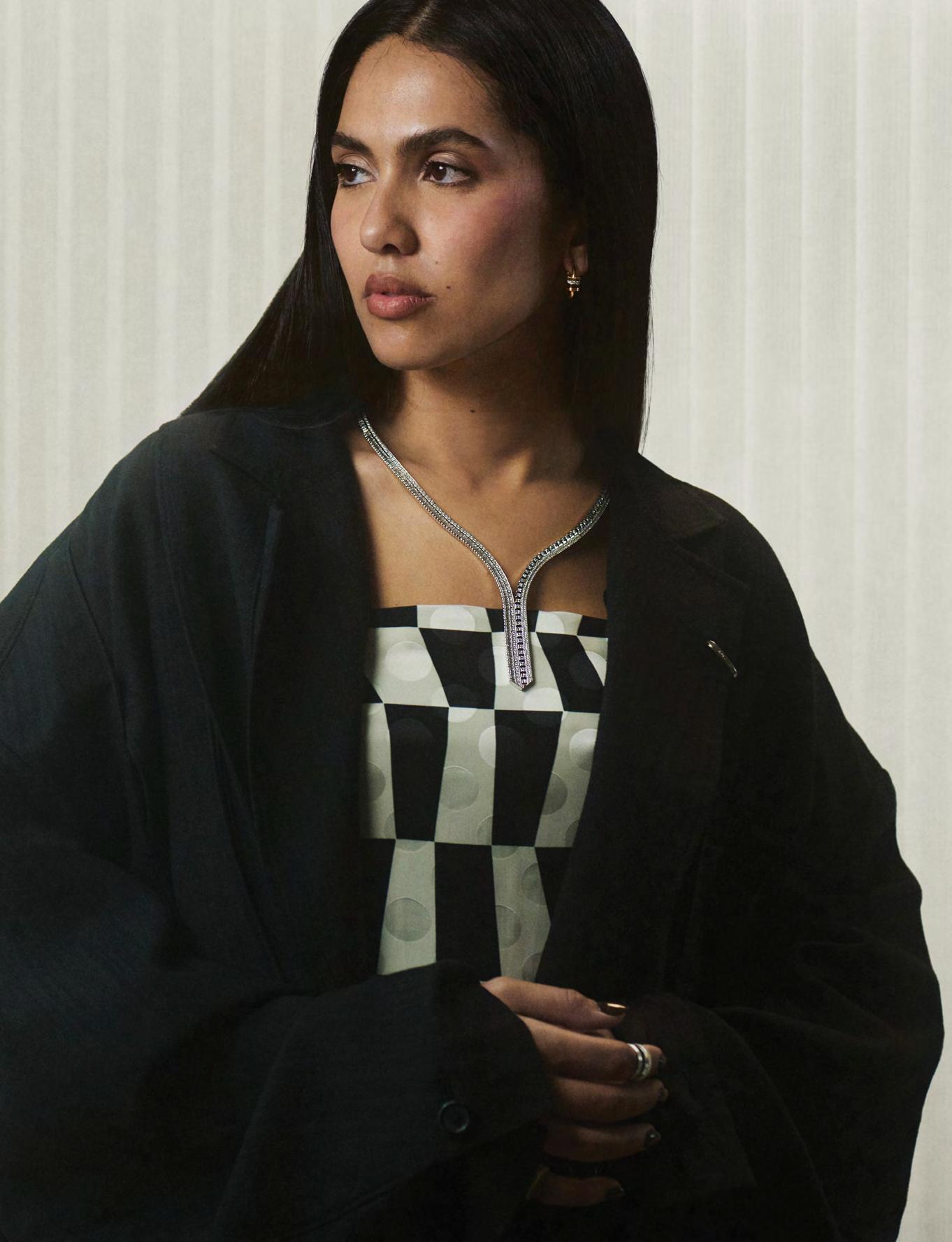
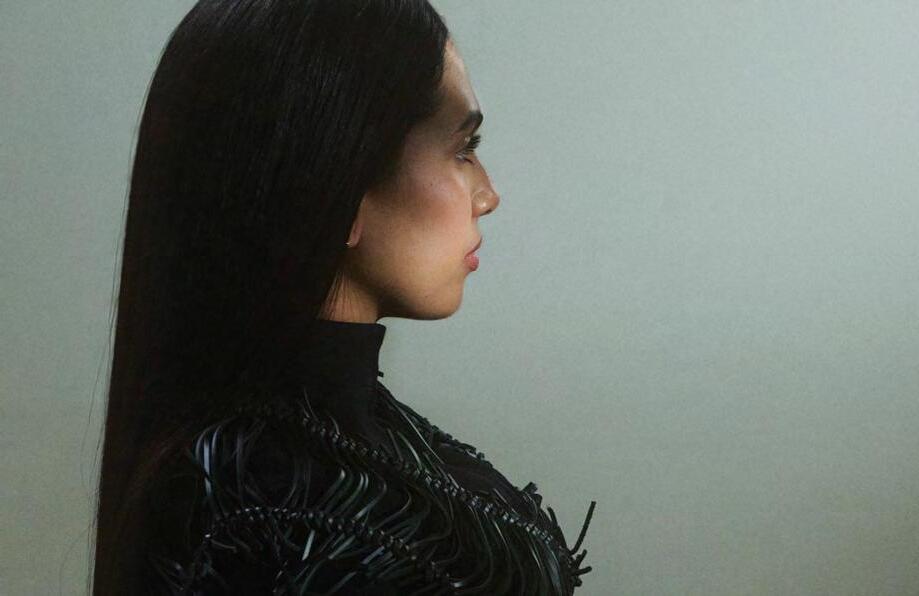
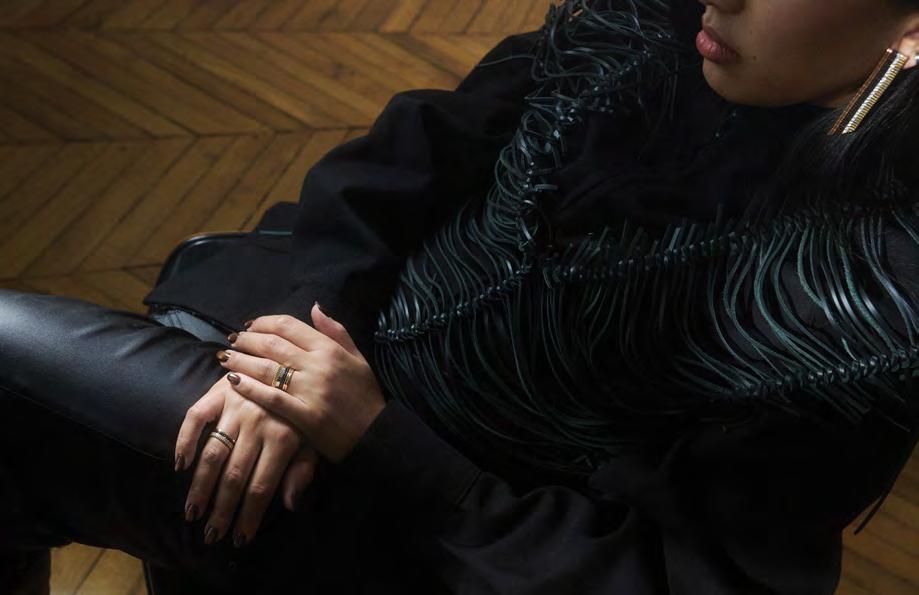
“If those two versions of Manal met, the younger one might be surprised to see that the biggest shift isn’t the sound or the success. It’s the mindset: music is no longer a battle to enter the room, it’s a space she knows she owns.”
“The difference between a hit-maker and an icon is time and meaning. An icon creates reference points that people return to, even after the moment has passed.”
If the answer is no, even if it’s a big opportunity, then it’s probably just noise. And learning to say no is just as important as knowing when to say yes. For me, staying grounded in that advice means protecting the coherence of my identity as an artist. Every project, every collaboration, every song has to feel aligned with the world I’m building. Because trends pass quickly, but the way people remember you, your voice, your message, your vision, that’s what stays.
In a way, that compass doesn’t just help me filter opportunities. It helps me remember that the goal isn’t to follow the industry’s rhythm, but to build my own.
Moroccan Arabic has a very specific, percussive energy. How does the linguistic DNA of Darija dictate the actual composition of your melodies? Does the language lead the beat, or vice versa?
Darija has a rhythm of its own when you speak it, almost like percussion. But it’s also a bit tricky, because the language can sometimes sound harsh, so it’s always a challenge to make it feel smooth, and musical in a song. I actually always start with the topline first, the melody, and then I write the lyrics after. That makes it even more challenging, because I have to make the Darija fit naturally into a melody that already exists.
A big part of the process is finding that balance, keeping the raw energy of the language while shaping it into something that still feels emotional and melodic. That tension is actually what makes it interesting.
You’ve spoken about ushering Raï into a new era. How do you preserve the soul and melancholy of traditional Raï while making it sound like the year 2026?
For me it was really exciting to explore Raï and reinterpret it in my own way. Raï carries a lot of emotion, there’s something very raw and nostalgic about it and also rebellious. I felt like my alter ego was free, and playing with that feeling while bringing in modern
sounds was a very fun creative process. But at the same time, I think every artist eventually feels the need to return to their core.
Right now I feel like I’m going back to the essentials, to the kind of music that truly defines me. I’m about to release an EP that feels like some of the most honest and accomplished music I’ve made so far. It’s the project that represents me the most, not just musically, but emotionally and artistically. It feels very aligned with who I am today.
As your audience becomes more international, how do you ensure your Moroccan roots remain the foundation of your work rather than just an “aesthetic” layer?
For me it starts with intention. My Moroccan roots aren’t something I add at the end to give the music a certain colour, they’re the starting point of everything I create. The language, the emotions, the way I tell stories, even the way melodies move, all of that comes from where I’m from. Even if the sound evolves or the audience becomes more international, the foundation stays the same.
I think people can feel the difference between something that’s just an aesthetic and something that’s actually lived. For me, Morocco isn’t an influence I borrow from… it’s simply who I am, and naturally that’s what shapes my music.
Your visuals are notoriously cinematic. When a song is in its infancy, do you hear it first, or do you see the “world” it lives in? Walk me through the moment a sound becomes a visual concept.
It always starts with the sound. The first thing that exists is the emotion of the song, the melody, the topline, the feeling it carries. But very quickly after that, I start seeing colours. Every song has its own palette in my head, certain tones, textures, atmospheres. Sometimes it’s darker and cinematic, sometimes it’s warmer and more nostalgic. It’s almost like the music creates a visual temperature.
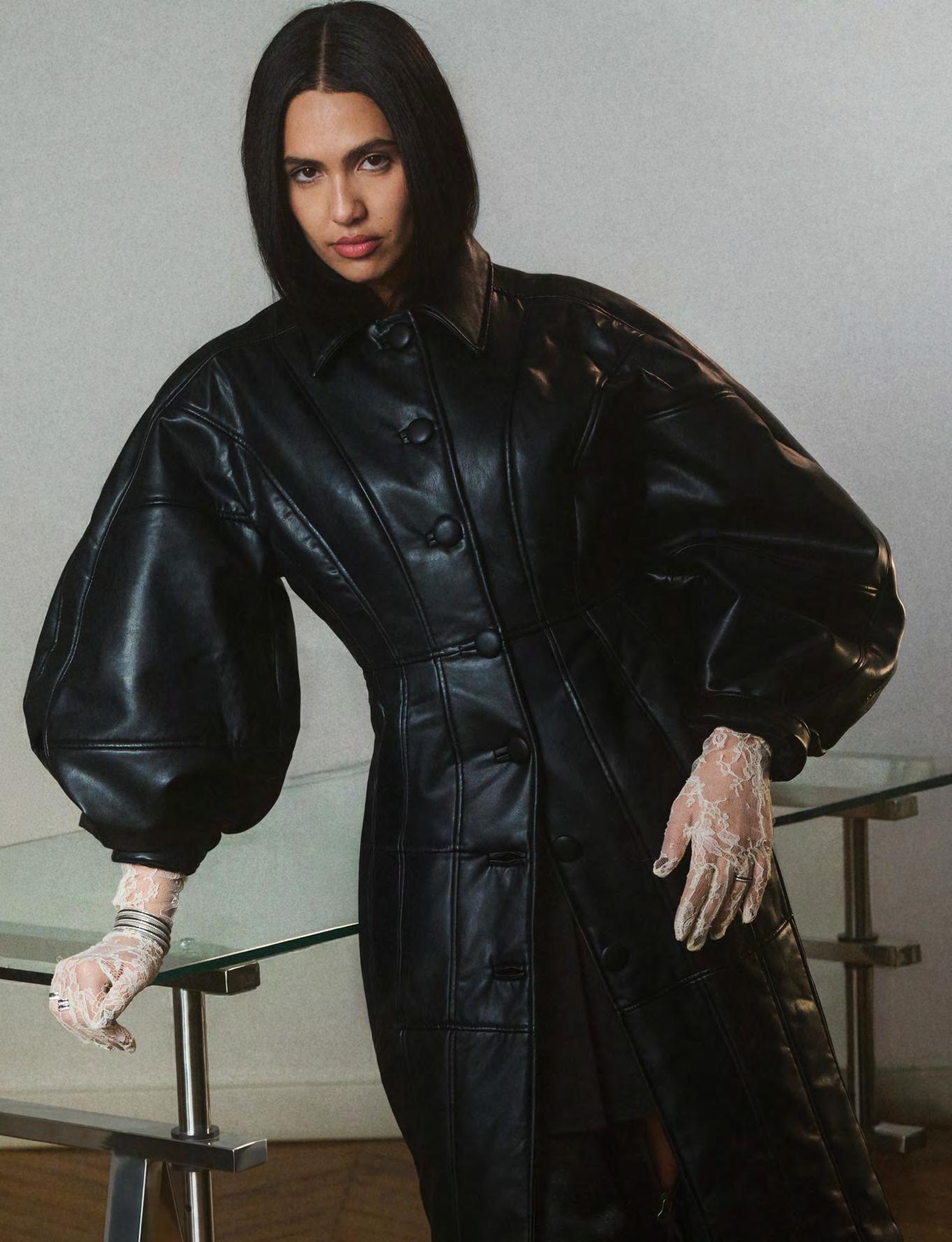
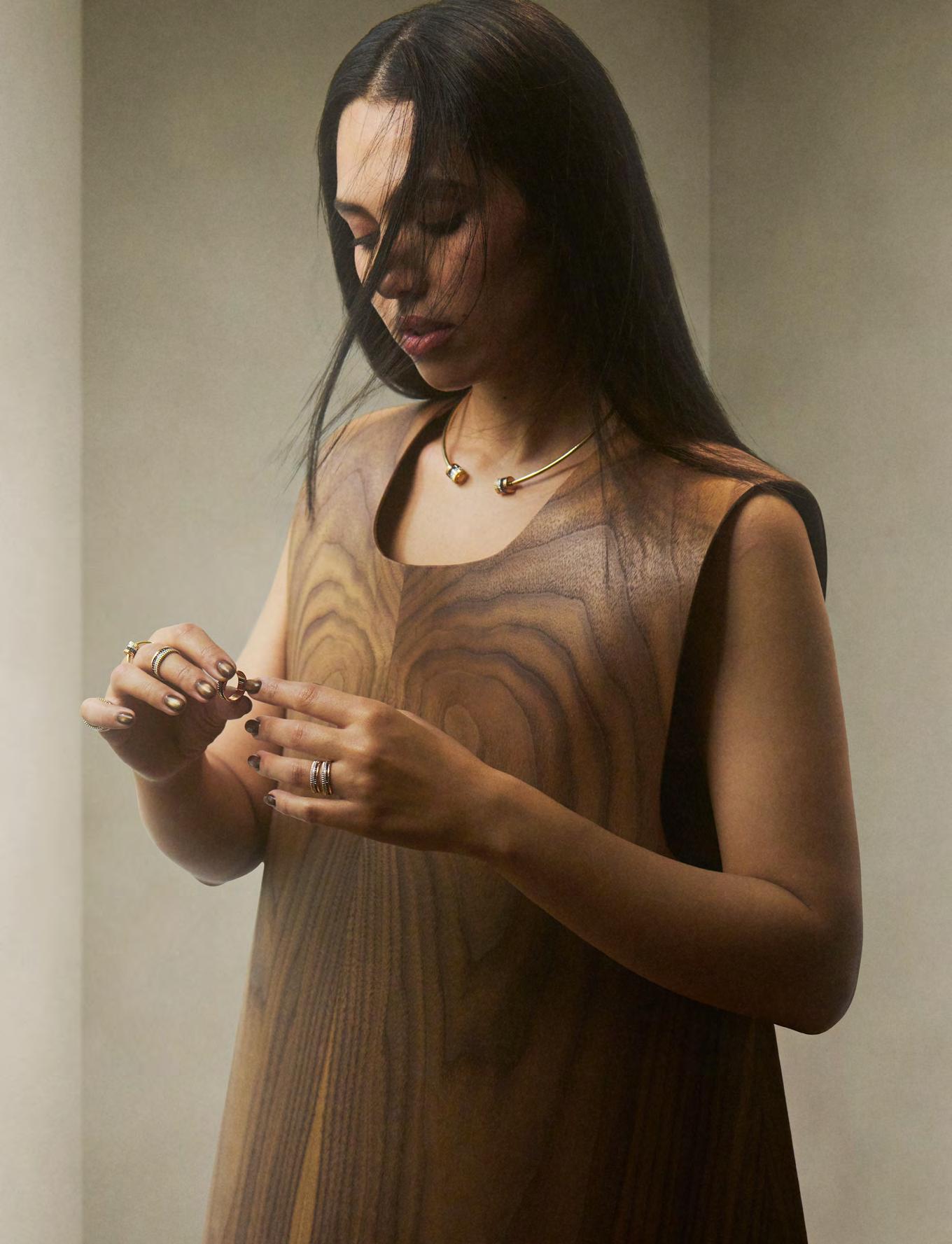
“For me, Morocco isn’t an influence I borrow from… it’s simply who I am, and naturally that’s what shapes my music.”
From there, little scenes begin to appear. Not a full storyboard yet, but fragments of a world the song could live in. Building that visual universe is honestly very exciting for me, almost as exciting as creating the song itself. I actually wish every song of mine could have its own music video, because visuals are such an important part of how I express the music.
You use fashion as a secondary language. Is your style a protective armour against the industry, or is it a vulnerable extension of the stories you’re telling in your lyrics?
I think my style is still something I’m shaping. It’s an ongoing exploration more than something fixed. What matters to me is that it evolves with my music. Every era of my work carries its own aesthetic and visual language, so naturally my style shifts with those chapters. In my everyday life, my style is actually much more relaxed, more sporty, a bit boyish. But when it comes to my artistic world, fashion becomes another layer of storytelling. It’s a way to extend the emotion of the music beyond the song and translate it visually.
Working with your husband as your producer and manager creates a unique creative ecosystem. How do you navigate the tension that inevitably comes with high-level creative collaboration while maintaining your personal sanctuary?
Working with my husband creates a very special dynamic because there’s a lot of trust and honesty between us. We’ve built something where the creative vision and the business side can really move in the same direction. Of course, when you care deeply about what you’re creating, there can be tension sometimes. He’s actually even more demanding with me than anyone else, because he knows me better than anyone. He knows my potential and he knows when I can push further or do better.
Over time we’ve learned how to find our balance. At the end of the day, beyond the music and the work, we’re a family. That’s the foundation, so we always try to protect that space and remember that our relationship matters more than any creative disagreement.
Motherhood and this new phase of your career arrived simultaneously. Has becoming a mother narrowed your focus to what truly matters, or has it expanded the empathy you bring to your songwriting?
Becoming a mother has completely changed the way I see life. Everything now revolves around her, and naturally my priorities have shifted. Things that once felt very important suddenly feel smaller, and what truly matters becomes very clear. At the same time, it opened a whole new emotional world for me. You start experiencing love, protection, and even vulnerability in a much deeper way, and it changes the way you look at people, at life, and at the future. It also made me realise how much stronger I actually am.
Suddenly you’re able to sleep late, wake up early, keep going no matter how tired you are. It made me discover a strength in myself that I honestly didn’t know I had. In a way it does both; it both grounds you and sharpens your focus, but it also expands your empathy. And as a songwriter, those emotions inevitably find their way into the music.
How do the identities of “Artist” and “Mother” speak to each other? Do they ever argue, or have they found a way to co-exist in your creative process?
Honestly, they definitely argue sometimes. Being an artist means you can disappear into your world for hours, thinking about melodies, visuals, ideas… and being a mother means someone very small suddenly has very different priorities for your time. At the same time, they’ve also learned to coexist in a funny way.
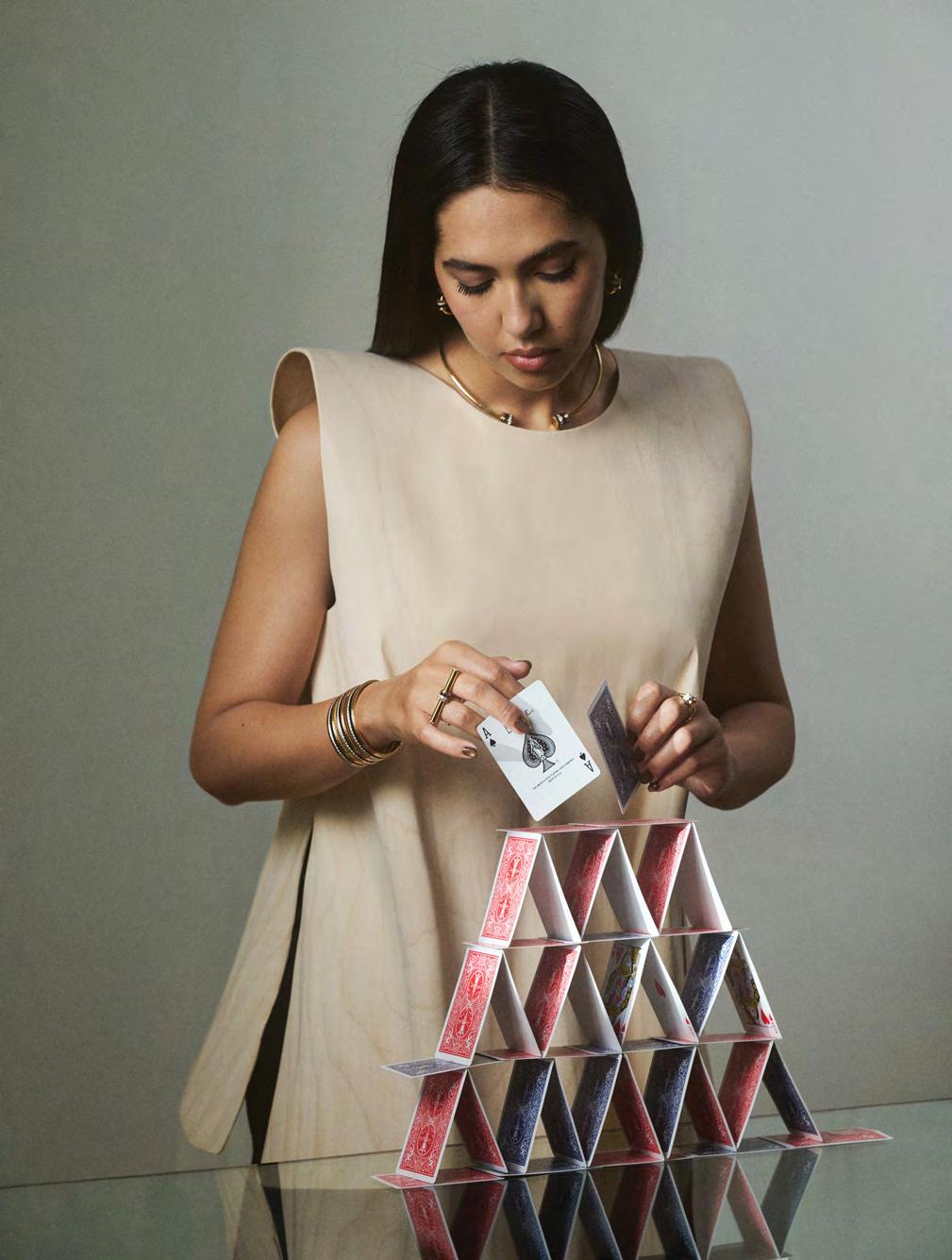
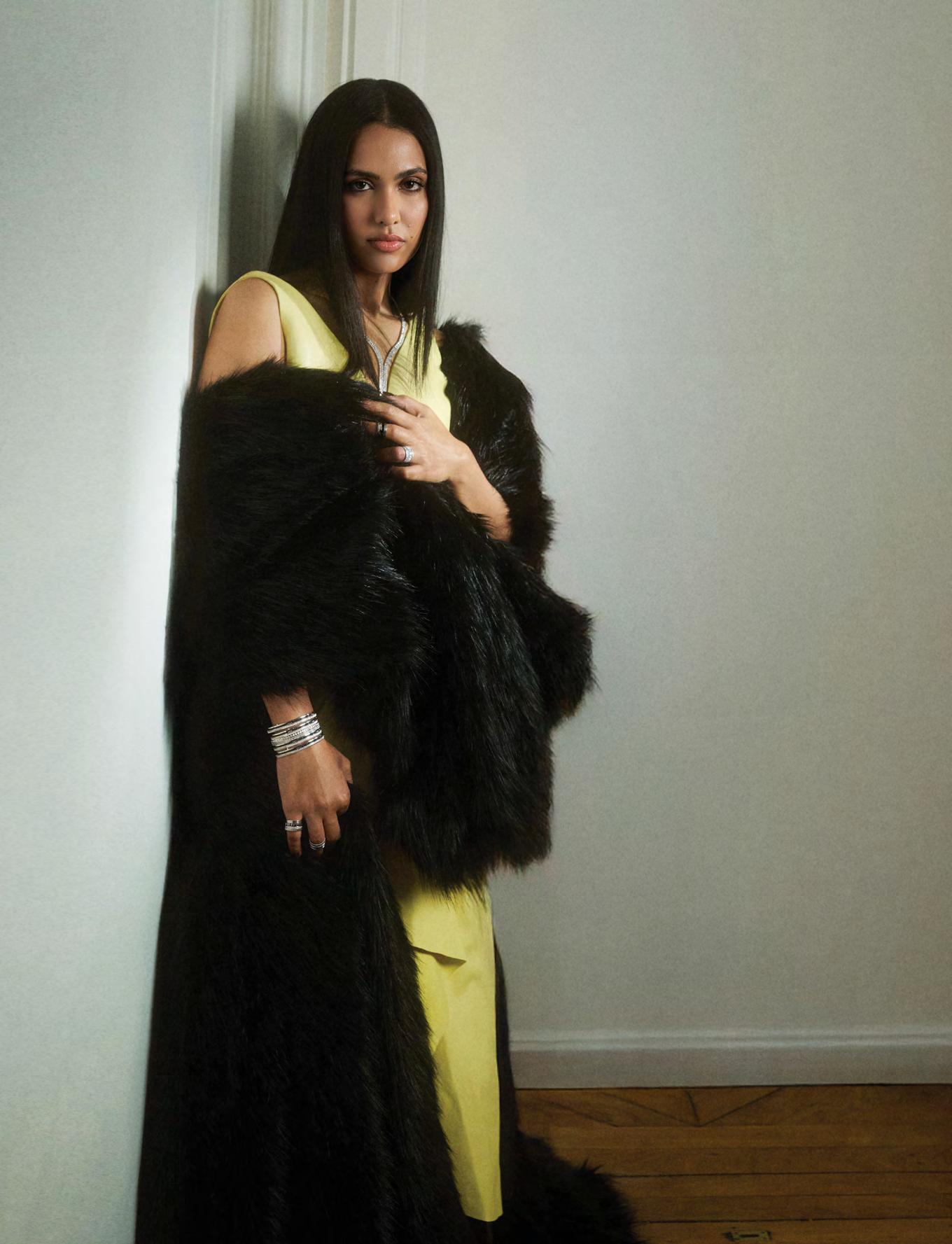
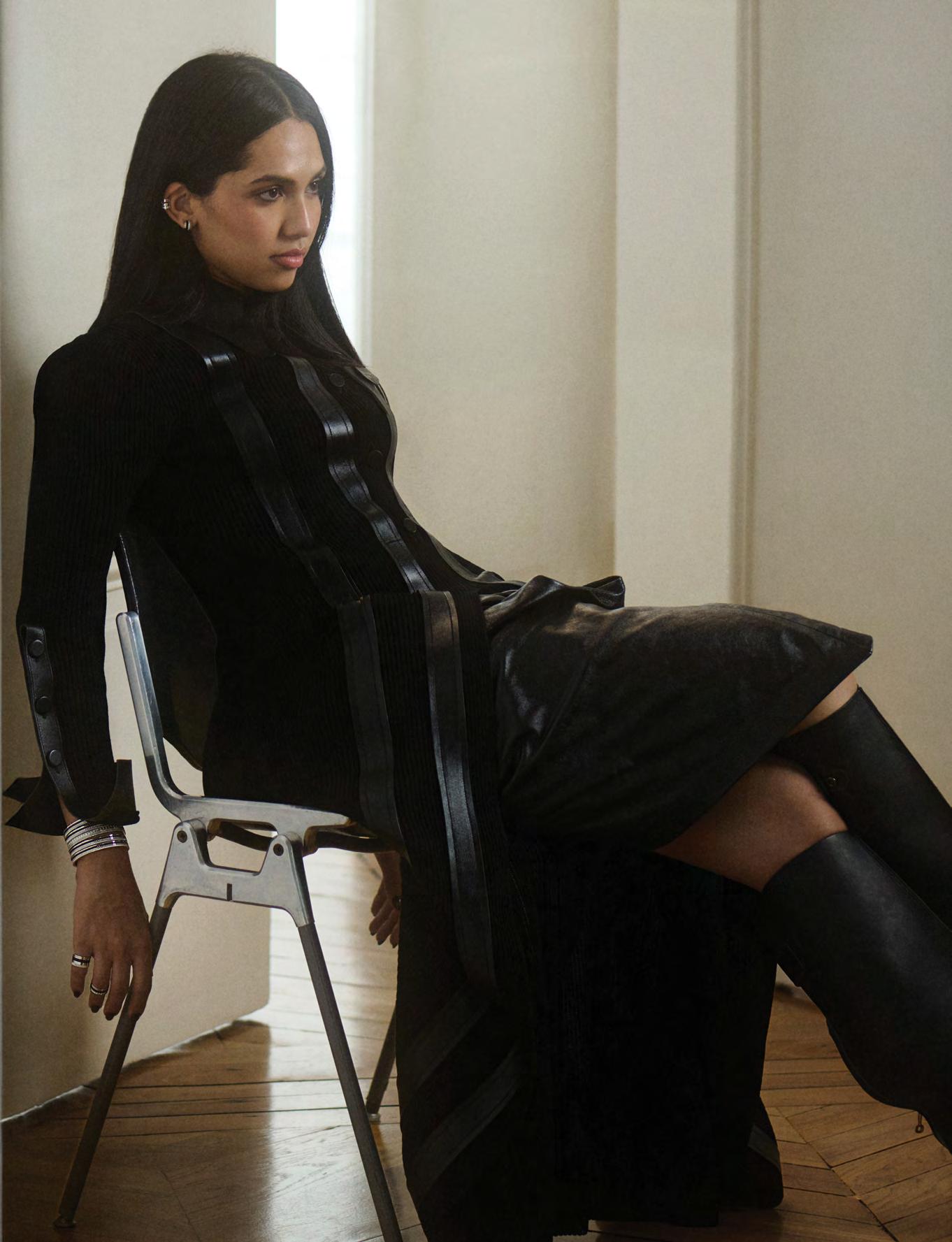
“I don’t think the goal was ever just to open a door… it was to show that the door was never supposed to be closed in the first place.”
Motherhood made me much more organised and focused, because you simply don’t have the luxury to waste time anymore. And sometimes my daughter actually becomes part of the creative process whether it’s writing while she’s asleep, or suddenly getting an idea while I’m playing with her. So instead of competing, I think the two roles ended up balancing each other.
You are a pioneer for women in the Moroccan trap/rap scene, do you feel the door you kicked open is being used by the next generation of girls in the way you hoped?
When I started, there really weren’t many women in that space, so in the beginning it definitely felt like pushing against a lot of walls. At that time the goal wasn’t necessarily to be a pioneer, it was just to exist as an artist and be taken seriously.
But today, when I see more girls entering the scene, expressing themselves freely and not feeling like they need permission, that’s very beautiful to watch. It shows that things are evolving. And honestly, I don’t think the goal was ever just to open a door… it was to show that the door was never supposed to be closed in the first place. Now, the next generation can walk through it and shape the scene in their own way.
Many of your tracks act as a form of social commentary without being ‘preachy.’ When you’re writing about womanhood, are you writing for the woman who has already found her power, or are you specifically trying to reach the woman who is still silenced by social expectations?
When I write about womanhood, I’m not really thinking about one specific type of woman. I try to write something that feels honest and real. Some women who listen to my music may already feel confident and empowered, while others might still be navigating
social expectations or trying to find their voice. I hope the music can speak to both. But I also write for women who feel like they don’t have a voice, for minorities, for people who feel unheard.
Sometimes I’m expressing things they feel but can’t say, or things they wish they could scream out loud. And as a woman myself, I know the reality of it. I know how hard it can be. You often have to work ten times harder, and sometimes you still don’t receive the recognition you deserve, so a lot of the emotion in my music comes from that truth.
You’ve connected with so many people throughout your career. What is one thing a fan or a stranger told you about your music that fundamentally changed how you see yourself?
Over the years, many people have told me that my music helped them go through difficult moments in their lives, or that it had a real impact on them. Hearing that your songs can accompany someone through a tough time is something very powerful for any artist.
But one story that really stayed with me was a mother who told me that her child was very sick, and that my music was one of the only things that could soothe them. That moment really touched me deeply. It made me realize that music can go far beyond entertainment, it can bring comfort, calm, and sometimes even a little light in someone’s life. And that completely changed the way I see the responsibility of what I create.
What’s next for Manal? Tell us what we should expect in one word, one line, one melody, or one lyric. ECHOES. ■
Rosaline Elbay is an actress in motion, tracing identity, myth, and meaning through the stories she refuses to simplify.

photography BARNEY ARTHUR
styling SAIF HIDAYAH
words MARIANA BAIÃO SANTOS
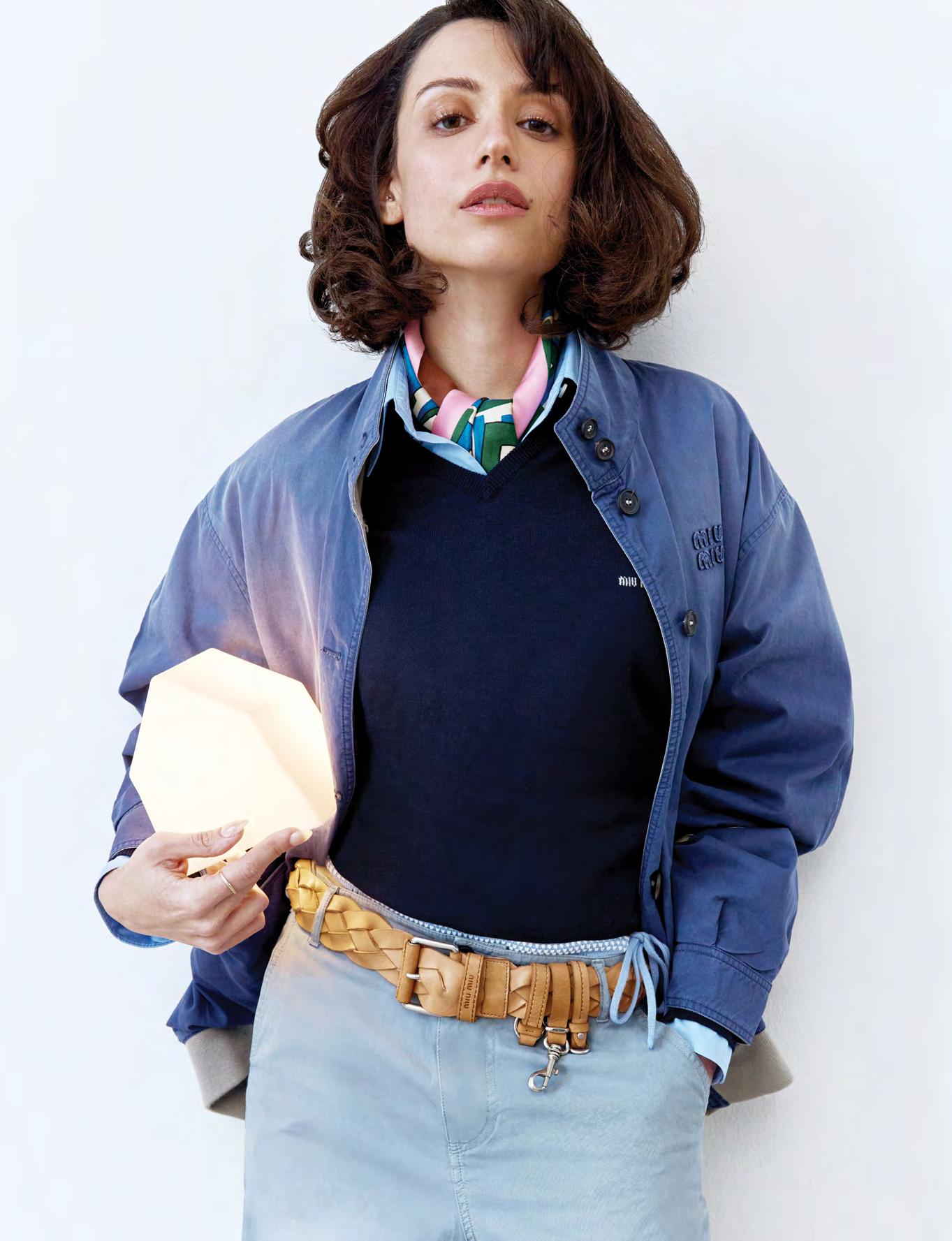
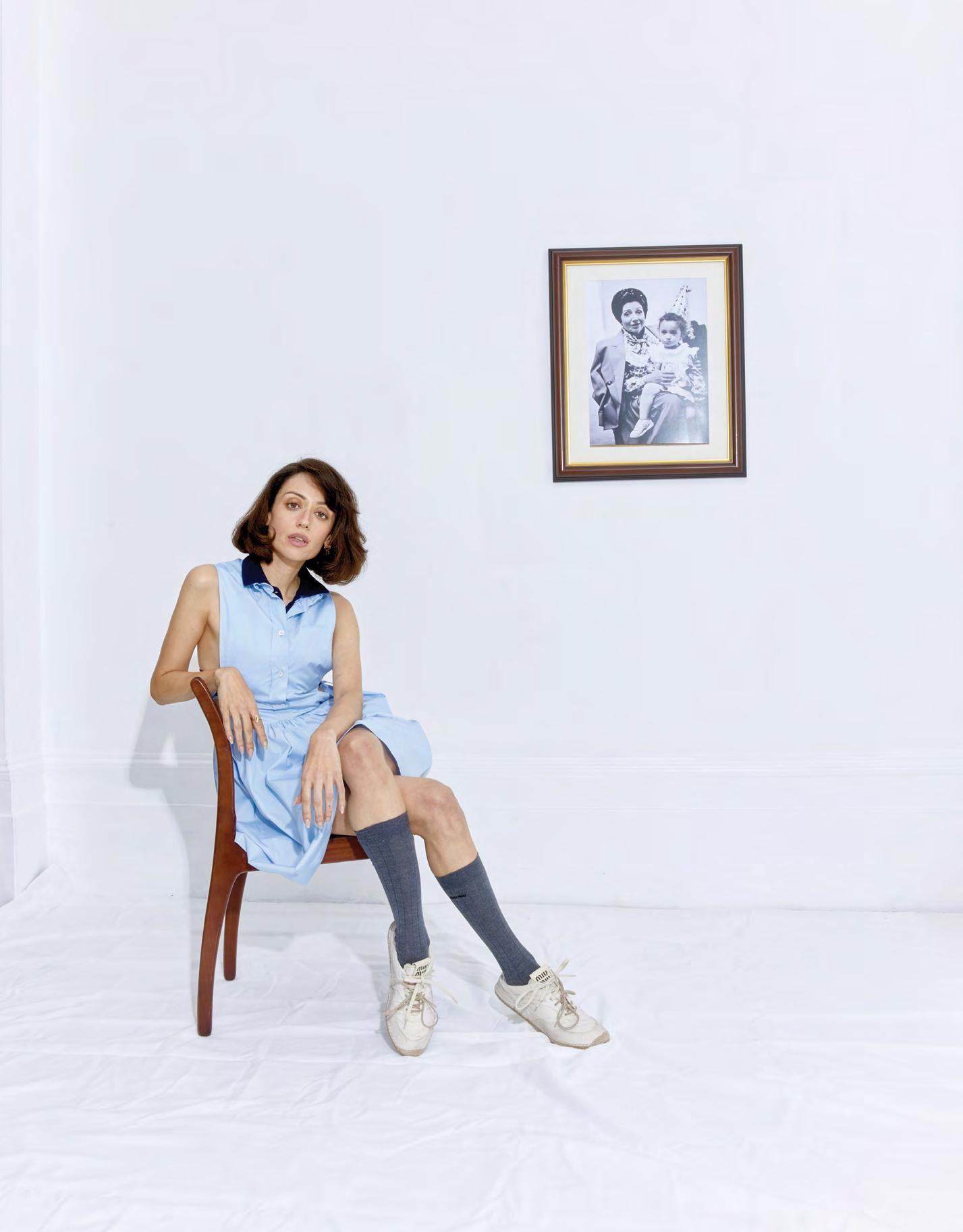
YUNG sits down with Rosaline Elbay, known for her work in The Diplomat, Kaleidoscope and Ramy. Working across London, New York and Cairo, her career spans television, film and writing, with an approach shaped by her academic training in classics and a sustained interest in how stories are constructed, interpreted and performed.
“I’m like, I’m so mad. I’m mad at the ice. I’m mad at the snow.” Rosaline Elbay arrives in London mid-displacement: between time zones, between sets, between versions of herself. She has come straight from New York, where winter has turned her - proudly, she saysinto a complaining New Yorker, before being pulled into a filming schedule that has her traversing the UK, from Peterborough to the edges of London, with the possibility of Cairo in between. Today, though, the weather has unexpectedly softened. “This is balmy to me,” she laughs, shrugging off layers.
It’s a fitting kind of in between. Elbay speaks in a way that rarely settles - thoughts branching, doubling back, gathering references as they go - but everything she says seems to orbit the same idea: stories. Not in the vague, industry-approved sense, but something closer to inheritance. Something unearthed, carried, translated. She talks about acting the way someone might talk about excavation. About mythology as something that never quite leaves your system. About characters not as roles to inhabit, but problems to solve.
She didn’t set out to do this. At Oxford, where she studied classics, classical archaeology and ancient history, she imagined a life that stayed within institutions, a Master’s, a PhD, a future in museums or academia. Acting, at least at first, was something she resisted. “This is a hobby. Leave me alone,” she remembers insisting, even as it quietly took over her life.
What she kept, though, is the way she learned to look at the world. For Elbay, history, performance and writing collapse into the same instinct: you find something, you interpret it, you tell it again. The tools change - a text, a body, a script - but the impulse doesn’t. She still thinks in mythological patterns, still catches herself tracing a character back to Eurydice, or to something older, less easily named. “It’s just stamped in my brain,” she says, almost apologetically.
What interests her most are the moments that resist easy judgement. Characters who make choices that, on the page, feel indefensible. The ones that make her hesitate. “If I’m scared of it, then I know there’s something there,” she says. It’s that fear, the sense that something isn’t immediately clear, that draws her in. The work, then, becomes figuring out why. Not to excuse, but to understand. “No one thinks they’re the bad guy,” she says. “So you have to know why they did it.”
That instinct, she admits, has led her into roles that feel almost unmanageable at first. She describes one early theatre part - a relentless, nine-scene arc in which her character never leaves the stage - with a kind of disbelief, as if still trying to account for how she agreed to it. A nervous breakdown, an assault, a forced marriage, postpartum depression, a lover, a murder, a trial, an execution. “It was a lot,” she says, smiling. She was 21. She did it every night.
At the time, she thought it might be her way out. A final test before returning to the path she had mapped out for herself: academia, research, a quieter kind of intellectual life. Instead, it did the opposite. She loved it. Not the comfort of it, but the scale, the endurance, the sheer act of doing something that demanded everything at once. She finished her exams, celebrated for a night, and went straight back into rehearsal. Looking back, she calls it a wild decision. At the time, it felt inevitable.
For Elbay, history, performance and writing collapse into the same instinct: you find something, you interpret it, you tell it again.
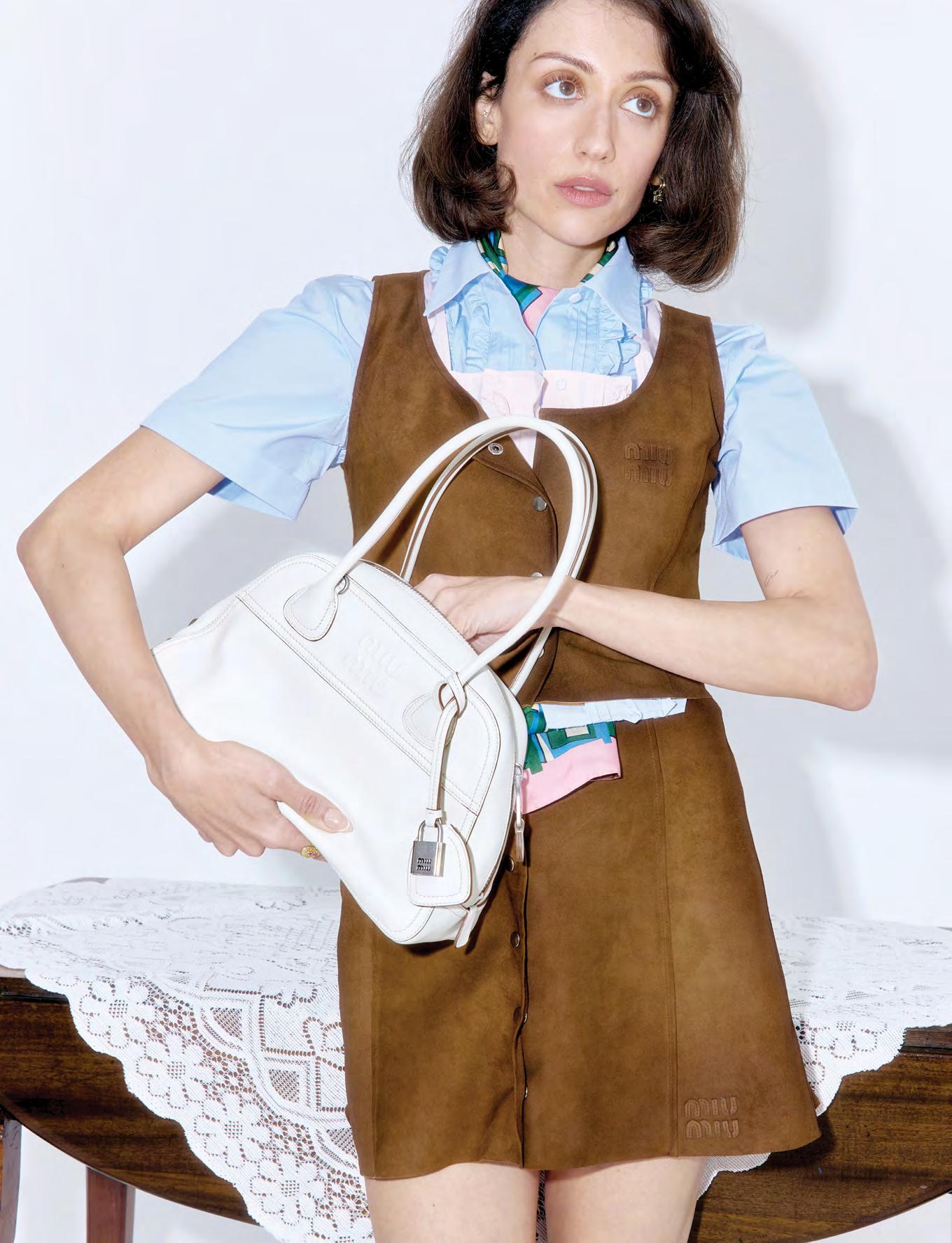
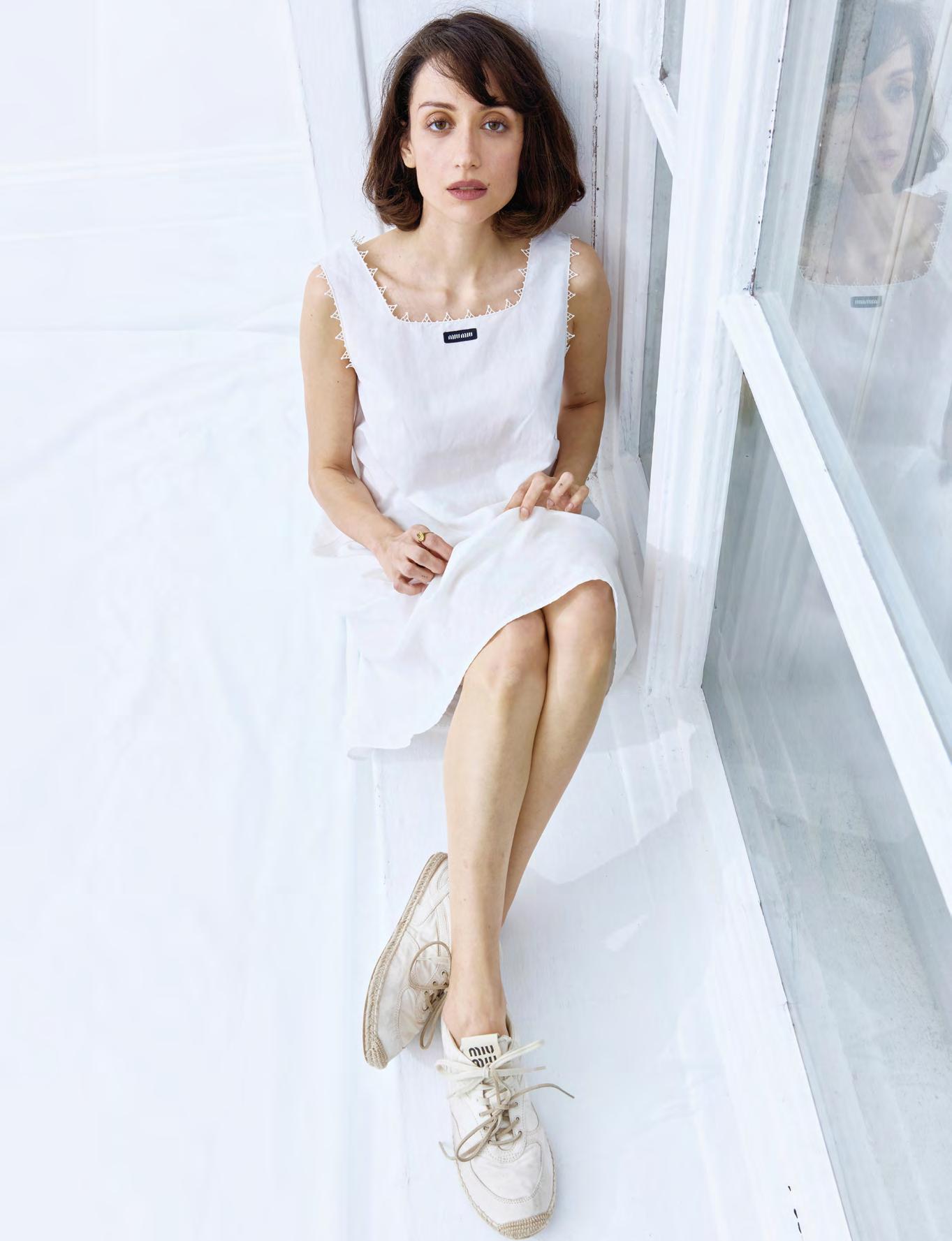
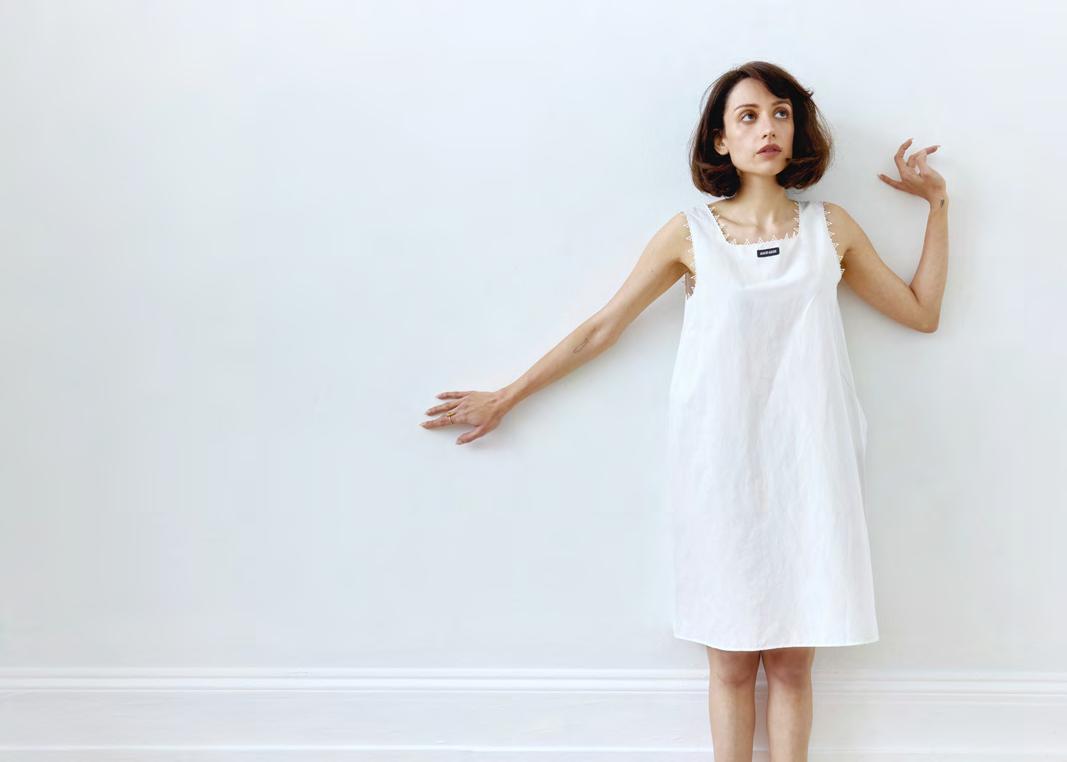
“If I’m scared of it, then I know there’s something there.”
There is nothing distant about the way she works. Text matters to her. More than anything, she starts there. Reading closely, looking for what is already embedded in the writing, before anything else is added. It’s a discipline she credits to theatre, the necessity of understanding not just what a character feels, but what the structure of the story is asking of them. On set, where lines can shift and scenes can be reworked, that grounding becomes a kind of anchor. “You need to know the full scope of it,” she says. “Otherwise you’re just reacting.”
The difference, according to Elbay, is something she has had to learn how to move between. In theatre, there is no hiding, the body has to be fully engaged, not just the face or the voice, but everything at once, scaled to a room that extends far beyond you. On screen, it can shrink without you noticing. Early on, she found herself caught in that contraction, thinking only about what the camera could see. Theatre pulled her back out of it. “You have to be in your whole body,” she says. It’s about not disappearing.
That same attention carries into the way she approaches a role before she ever steps into it. She researches extensively, building a sense of the world a character moves through so that nothing feels assumed or superficial. It’s always about understanding, enough to recognise when something doesn’t quite ring true. “So I could suggest changes, if I felt like they were necessary,” she says, lightly. It’s a quiet instinct, but a consistent one: to treat the work with a kind of care that extends beyond performance itself.
That same restlessness is what has drawn her, increasingly, towards writing. It isn’t new, she has been writing, in one form or another, for most of her life, but it has taken time to feel able to share it. Partly, she says, because she is deeply self-critical. Partly because she needed to reach a point where what she was making felt ready to exist outside of herself. “There was stuff I was doing just for me,” she says. “And then at some point, you realise: okay, this can be something else.”
Some of it arrives all at once. She describes writing six episodes of a series in ten days, in a borrowed house in Santa Monica, between auditions and meetings. “It just came out,” she says, shrugging, as if slightly suspicious of the ease of it. Other projects move more slowly, taking shape through collaboration, conversation, time. She is clear that she prefers it that way, the exchange, the back and forth, the sense of building something with other people rather than in isolation.
If there is a common thread, it is a certain absence. The stories she wants, particularly those rooted in her own experience, in Egypt, in the lives she recognises, are not always being made. “You can fantasise about it forever,” she says. “But the script’s not going to land on your desk.” Writing becomes, then, a necessity. A way of closing that gap.
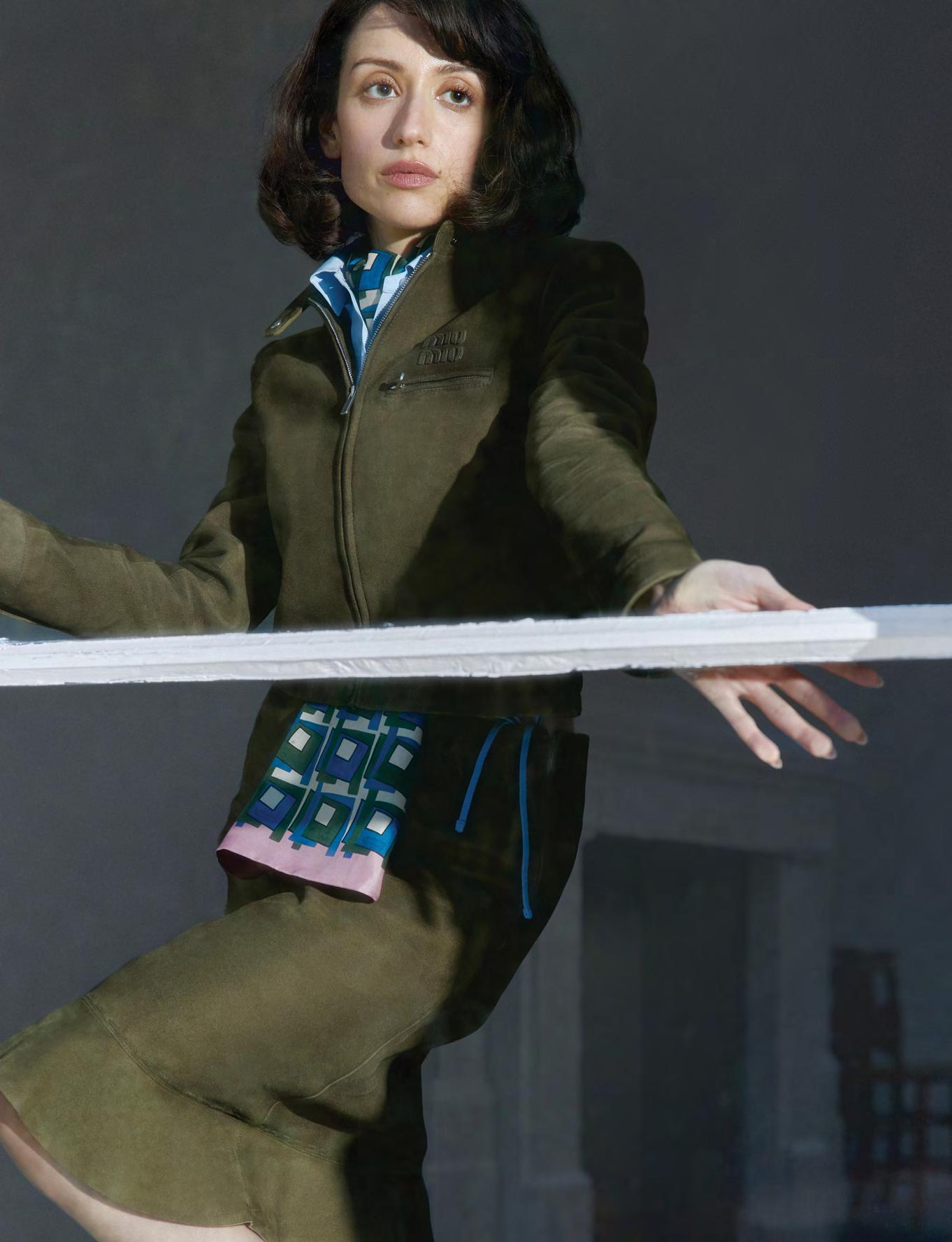
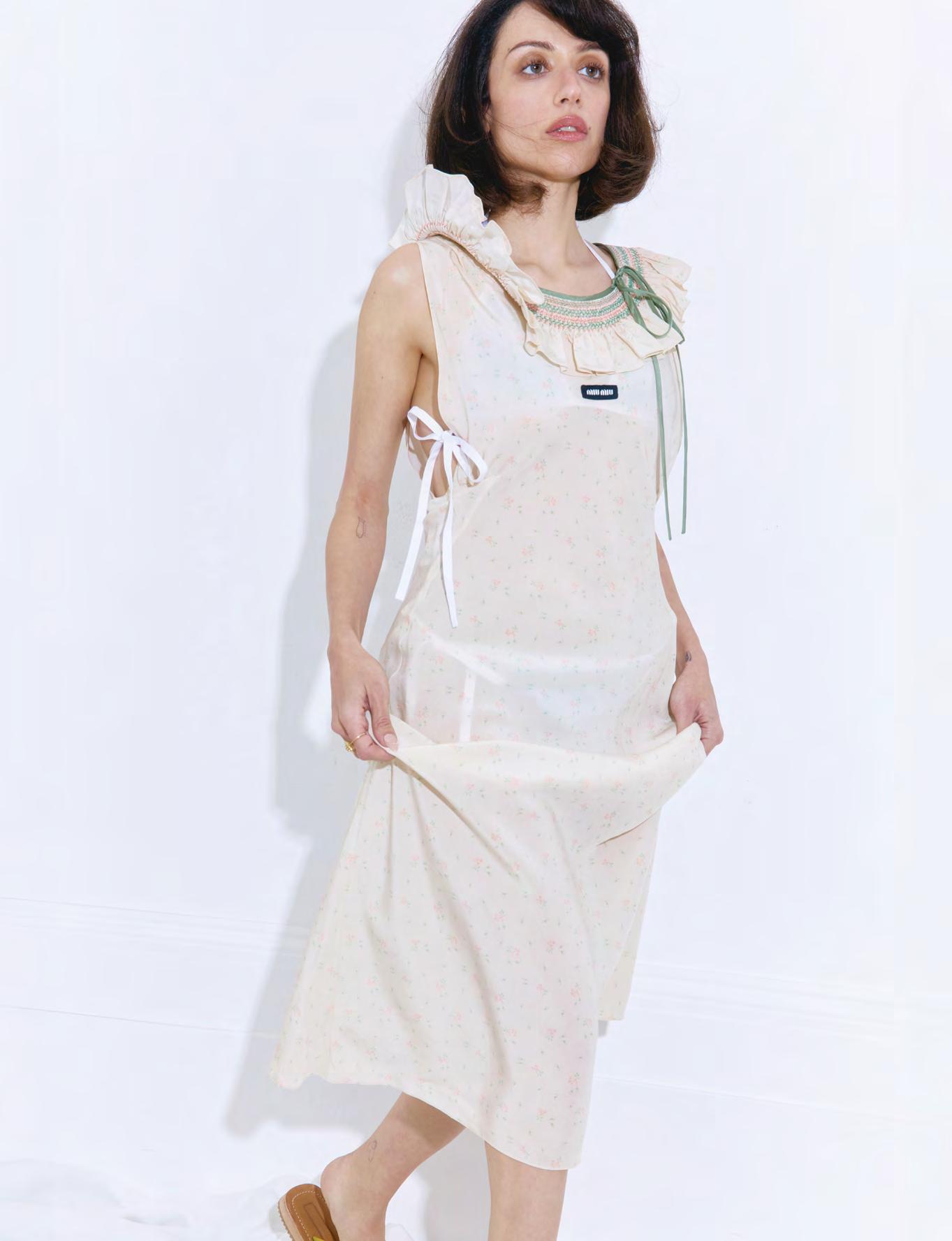
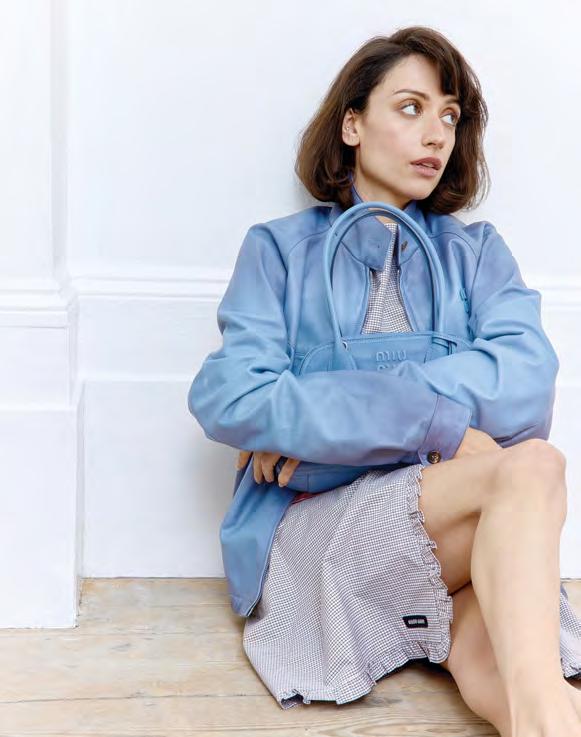
There’s a speed to the way she thinks, references stacking, shifting, reappearing in unexpected places.
And then there are the stories that feel closer, harder to fix into form. She speaks about her mother often, not just as an influence, but as a kind of origin point. A writer, a storyteller, someone who moved easily between myth, religion and personal history, telling stories from the Arabian Nights alongside those of her own family, with no real distinction between them. It was, she says, the way they communicated. The way they knew each other.
What she is trying to work out now is how to carry that forward. To find a way of telling her mother’s story, and, through it, the stories of the women in her family, without fixing them too rigidly. “They only really exist in those stories,” she says, thinking of how much of that lineage is informal, passed down rather than recorded. In a world that still traces inheritance through fathers, she is drawn to what moves in the other direction: something less official, but not one bit less real.
It’s not something she has resolved. She speaks about it carefully, as if aware that putting it into words might close something off. For now, it remains an open question, one that sits alongside everything else she is doing, shaping it quietly from the edges.
Outside of work, the references continue to accumulate. Music, constantly. Theatre, always. She talks about seeing Helen McCrory in The Deep Blue Sea at the National Theatre with a kind of reverence that borders on disbelief. “I could just watch her cook eggs forever,” she says, still slightly awed. There are musicals - she is currently deep into a Hadestown fixation - painting, reading, standup comedy, long hours spent in cafés, working not in silence but in proximity to other people.
For all the detail she puts into her work, she’s completely unwilling to try to make herself sound impressive. The moment anything starts to feel too polished, she swerves. Asked about the performers she admires, she shrugs: “I’m a loaf of bread,” she says, self-deprecatingly saying she could never reach that level of acting, but all we hear is that she’s still rising. Later, when the conversation drifts to photoshoots, she laughs again, already anticipating the awkwardness. “I’m a gremlin.” You believe her immediately, not because it’s true, but because it’s so candid.
It tracks. The same person who will build a whole world around a character will also spend hours replaying the same song, or sit in a café just to be around other people, or derail a question entirely to talk about a musical she’s currently obsessed with. But nothing about it feels accidental. There’s a speed to the way she thinks, references stacking, shifting, reappearing in unexpected places. She moves easily between mythology, theatre, music, memory, pulling threads together without ever making a performance of it, while often tangling them to a point of no return. You get the sense that she’s always working something out, even mid-conversation. For now, she stays there, somewhere between places, between projects, between one thought and the next, where everything is still in motion. ■
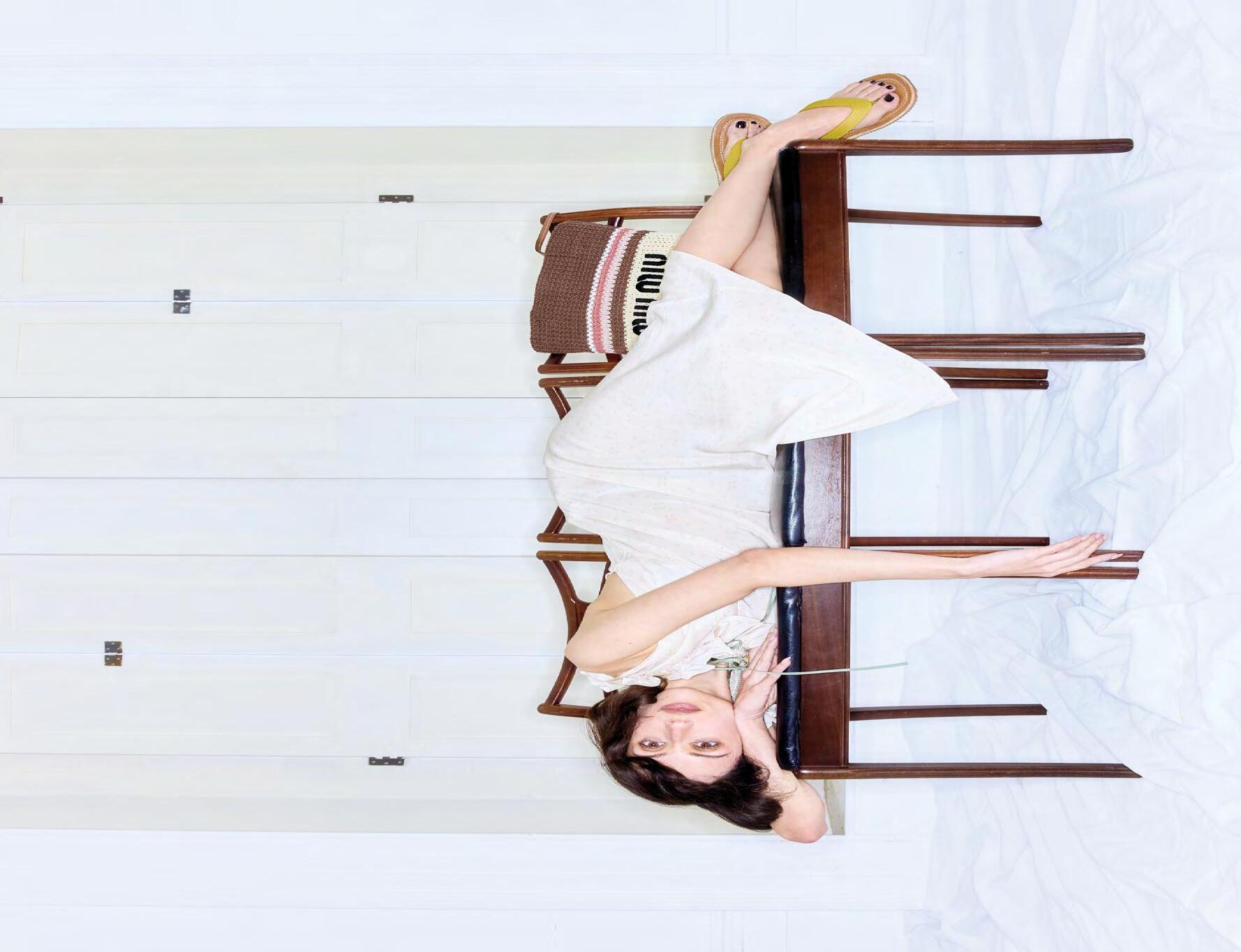
Meriam Turki and Shahed Elnakhlawy on identity, presence, and shaping a new narrative for Arab models globally.
photography JOSÉ CUEVAS
styling SINA BRAETZ
words NADINE KAHIL
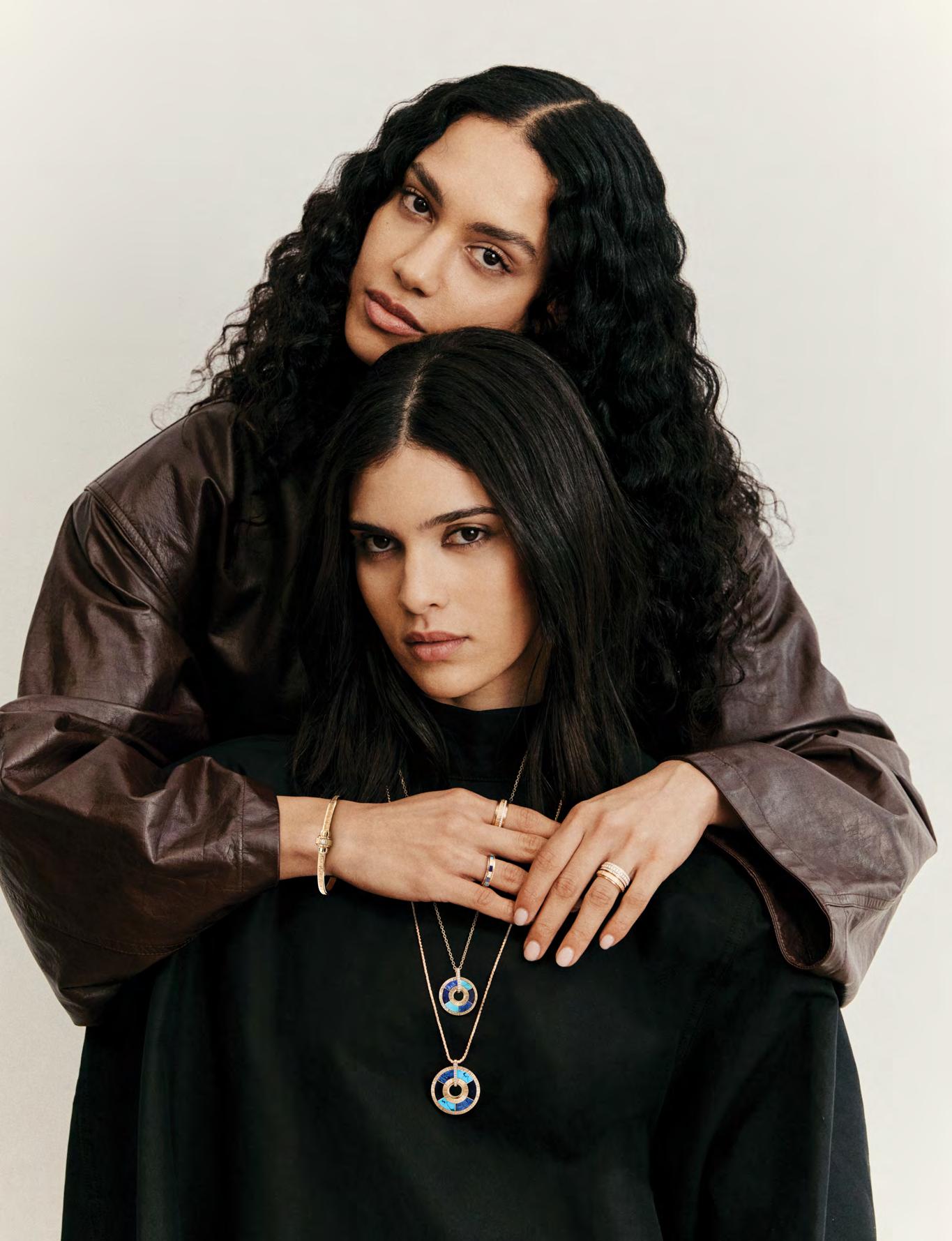
standing: full look, ALAÏA. sitting: full look, PRADA.
possession
possession pendant, 18K rose gold, possession earring, 18K rose gold, possession ring, 18K rose gold, possession bangle
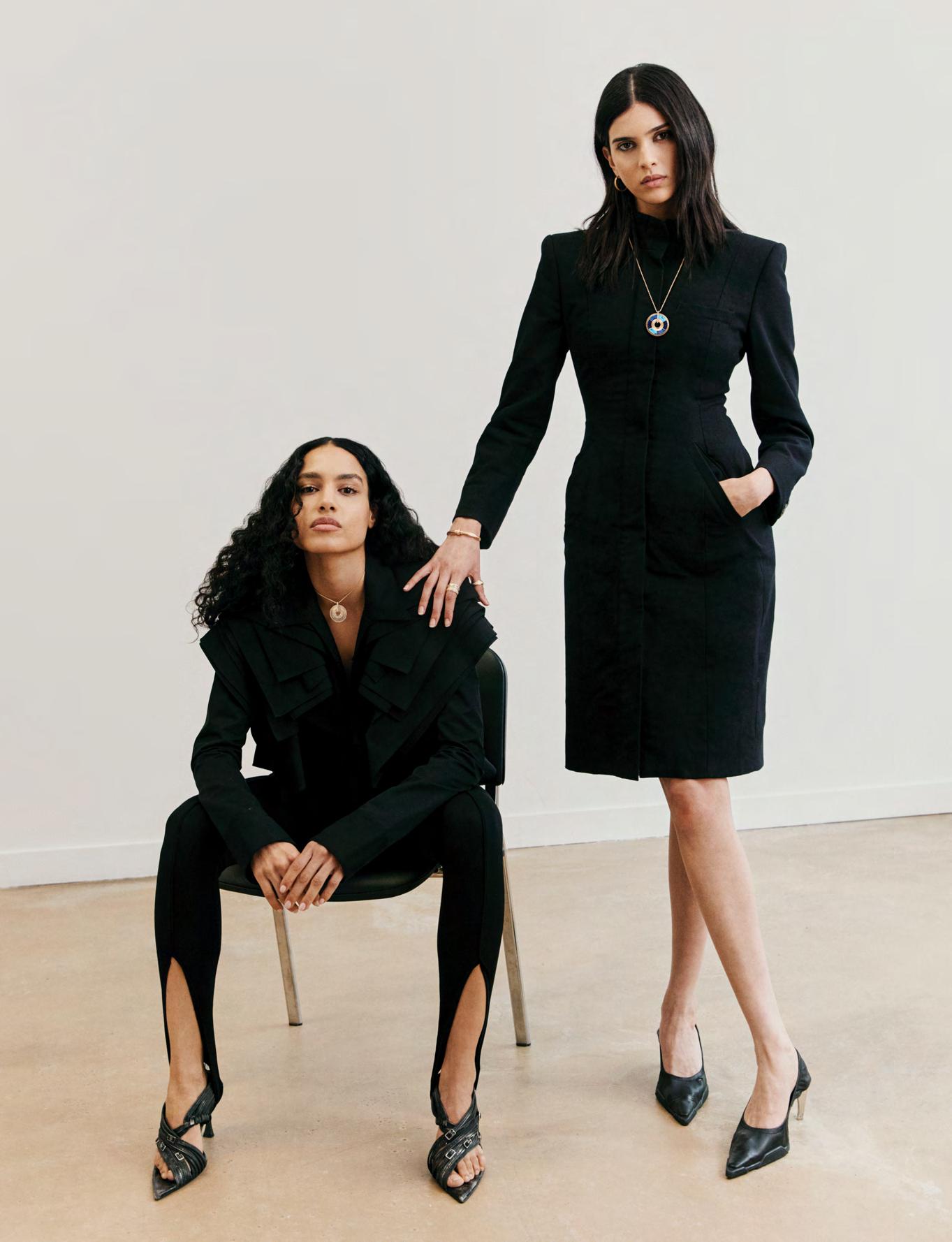
Meriam Turki and Shahed Elnakhlawy represent a generation of models moving beyond image into meaning. Their presence is not defined by trends, but by a deeper awareness of identity, culture, and the responsibility that comes with visibility.
For Turki, modelling is rooted in personal transformation, turning what once felt like difference into strength, and building a path shaped by honesty and self-definition. Elnakhlawy approaches the industry with a clear sense of intention, using her platform to bridge cultures and challenge how Arab identity is perceived across global fashion spaces. Together, they reflect a shift already in motion. One where Arab models are no longer just representing a place, but actively shaping how it is seen and understood. Here, YUNG speaks to both women.
From insecurity to intention, Meriam Turki reflects on identity, honesty, and carrying Arab presence onto a global stage, where a sense of quiet clarity defines her. Turki does not demand attention but holds it anyway, her presence as a new face in the global fashion space feeling both instinctive and deliberate, shaped not by the industry’s expectations but by her own sense of self.
Like many models, her entry into fashion was not one where she felt immediate confidence, but rather a sense of transformation. What once marked her as different became her point of power. That shift, from self-consciousness to ownership, now defines the way she moves through the industry: on her own terms, with intention.
Turki belongs to a generation of Arab models redefining visibility. Not through noise, but through presence. In an industry that often frames identity before individuals have the chance to define it themselves, she resists easy categorisation. Instead, she builds something more personal, grounded in honesty, memory, and a sense of responsibility to where she comes from.
Her story is still unfolding, but what’s clear is her direction. She is not here simply to fit into fashion, but to reshape the space she occupies within it.
Your presence feels both instinctive and intentional. How do you approach building an identity in an industry that often tries to define you first?
I don’t try to fit into a definition. The industry can suggest an image, but I choose what feels true and build from there.
As a model emerging on a global stage, what parts of your background or personal story do you feel most responsible for carrying into your work?
I was always tall growing up, and I used to get bullied for it. Modelling came from turning something I was insecure about into something I could feel proud of.
Fashion often shifts between authenticity and performance. Where do you personally draw the line between the two?
I think the line is honesty. I perform for the camera, but it has to come from a real place. I don’t disconnect from myself. I try to keep something real in it.
What has been a defining moment so far that made you see modelling not just as work, but as a platform?
A defining moment was seeing how proud my family was and how they pushed me to go further.
Looking ahead, what kind of narratives or images do you want to be part of shaping within the fashion landscape?
I want to help create more presence and visibility for Arab women in fashion on a global level.
With everything happening in the region, what does ‘home’ mean to you? Where is home for you?
I know it sounds overused, but I always say home is where the heart is. My country is where I feel the most safe and thriving, near my family.
full look, LOEWE.
possession bangle bracelet, 18K rose gold, possession ring, 18K rose gold, possession pendant, 18K rose gold, PIAGET
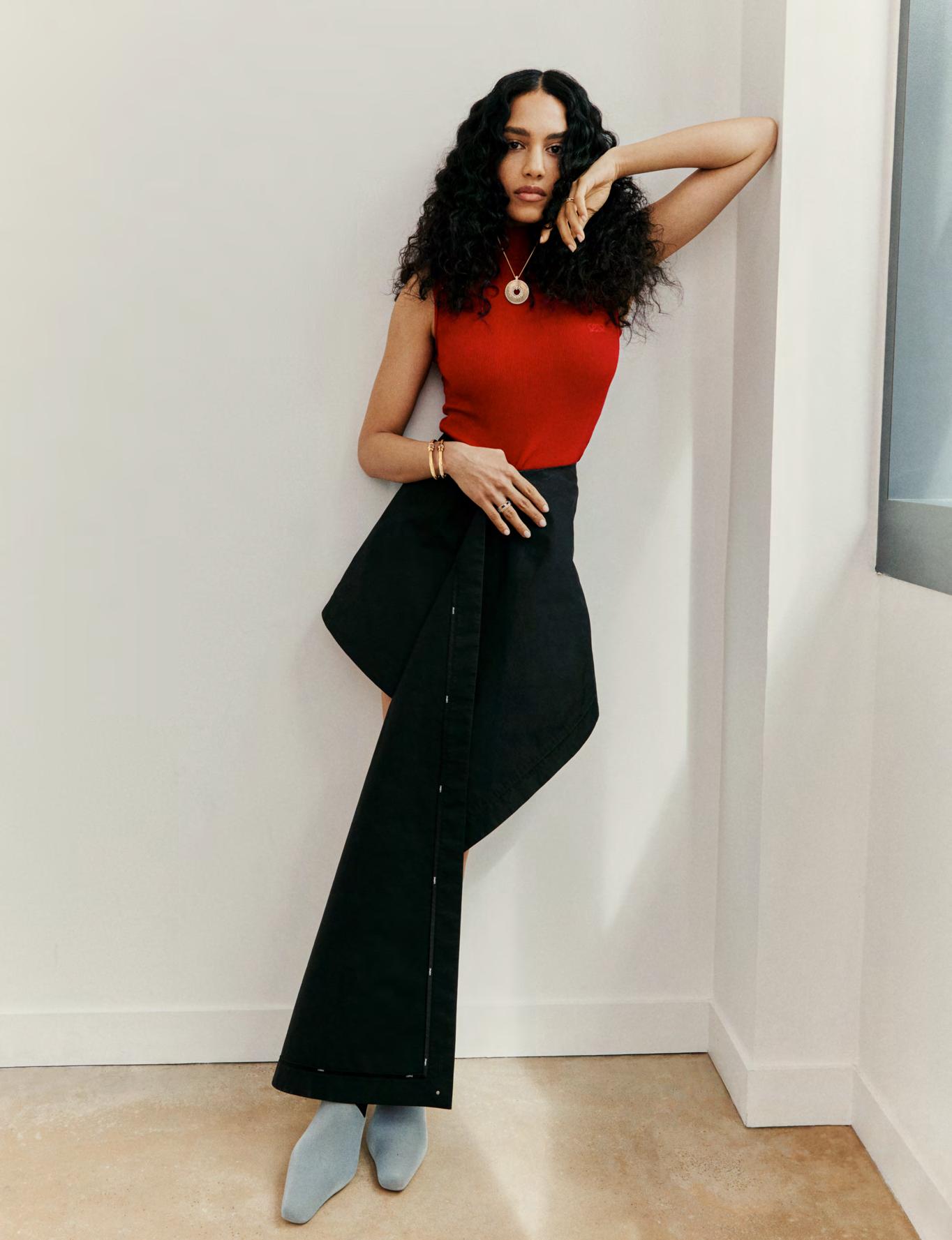
“At this stage, success to me is about challenging the narrow idea of how an Arab woman is ‘supposed’ to be.”
- Shahed Elnakhlawy
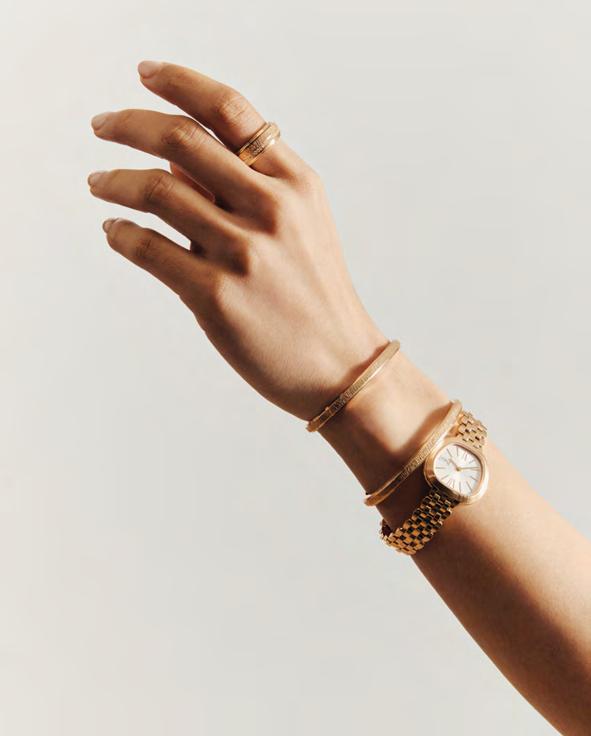
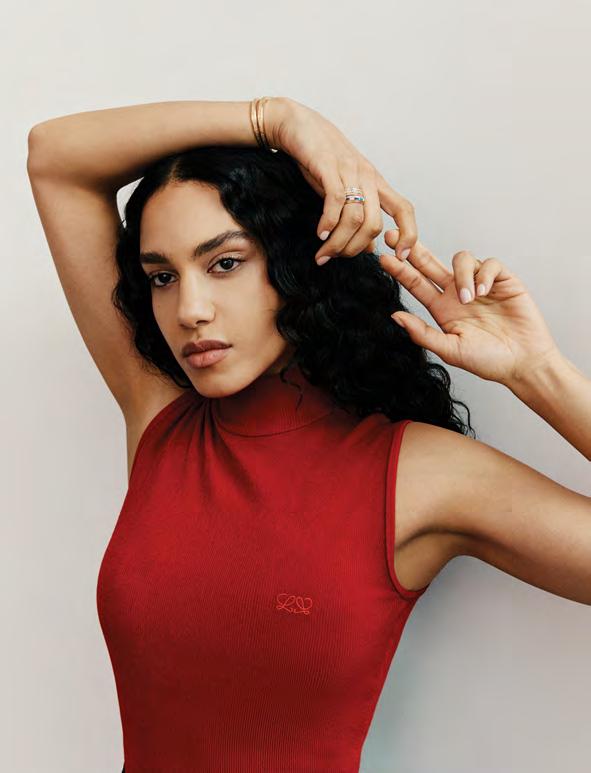
Between heritage and global fashion, Shahed Elnakhlawy redefines what it means to be seen, not just as an image, but as a perspective
Shahed Elnakhlawy moves through fashion with a quiet certainty, one that resists simplification. Of Jordanian, Palestinian, and Egyptian heritage, her presence extends beyond the visual, shaped by a deep awareness of identity, culture, and the spaces she occupies. Discovered in the aftermath of the pandemic, at a moment when the industry began turning its gaze more intentionally toward the Arab world, Elnakhlawy emerged not only as a model, but as a voice navigating that shift from within.
Her work reflects a balance between global exposure and personal grounding. Whether on set or through her Arabic micro-learning platform, she approaches fashion as a dialogue, one that allows her to challenge assumptions, protect authenticity, and build connections across cultures. In an industry often driven by image, Elnakhlawy is part of a new generation redefining what representation can hold, and what it can say.
Your work carries a clear sense of cultural identity. How do you consciously bring your Jordanian, Palestinian, and Egyptian heritage into your modelling, beyond aesthetics?
I bring my heritage to set mostly when I work with clients looking to expand in the Arab world. There are moments where I become a kind of cultural sounding board, and they turn to me to ask if a concept feels aligned or respectful. For example, when I shot a Louboutin capsule for Ramadan, it was a very collaborative process where I was regularly asked if certain creative choices truly resonated with our cultural identity. It’s rewarding to be valued for my perspective, not just my looks.
You’ve moved across different fashion capitals and agencies. How has navigating these spaces shaped your understanding of representation in the industry today?
I was scouted just after the pandemic, at a time when the industry started looking more closely at the Arab world, as the region’s profile was growing in fashion, art, and tourism. In castings and on set, it became clear that models were often booked to represent a specific region so audiences could relate. That’s when I truly understood how fashion intersects with identity.
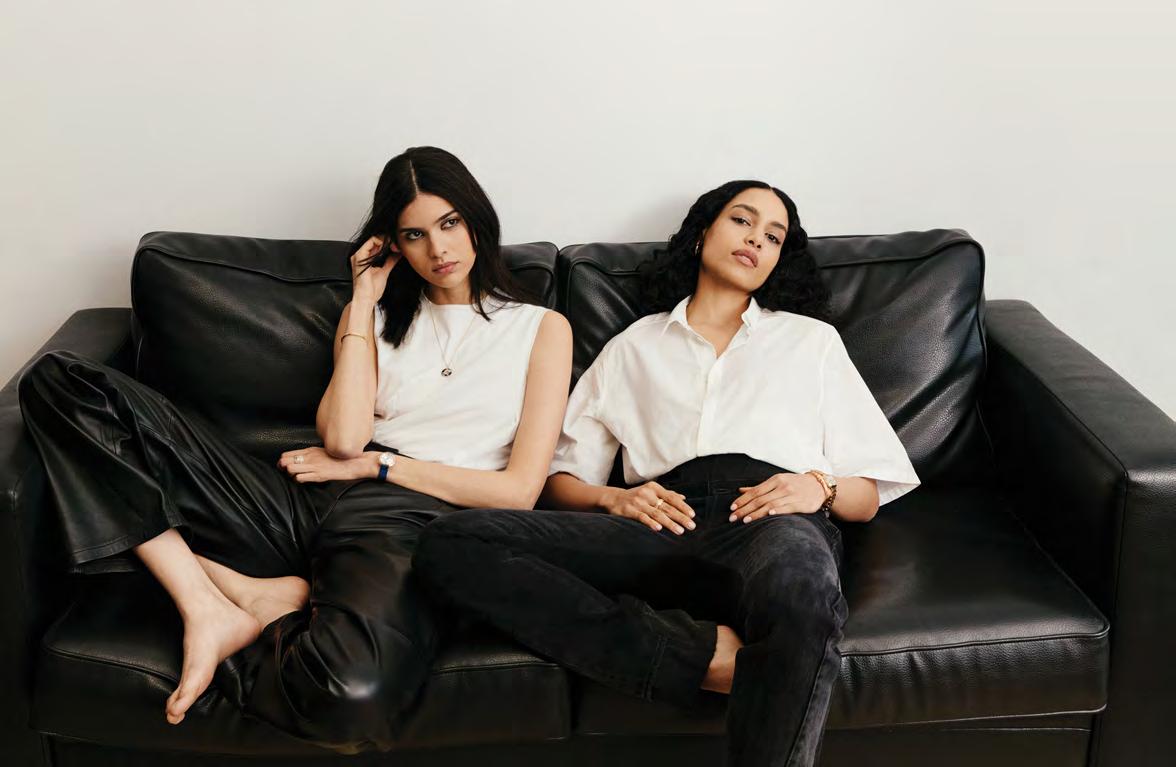
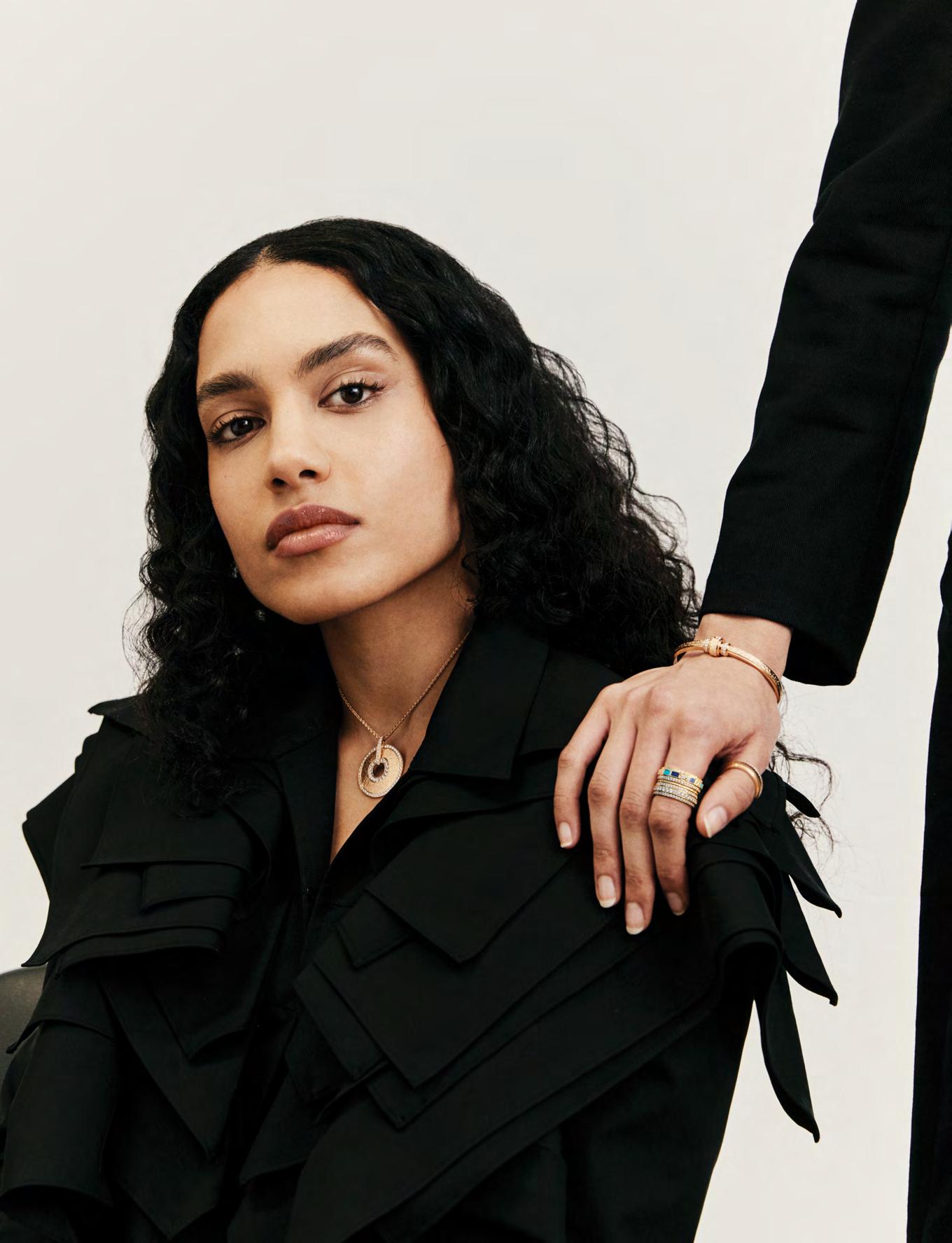
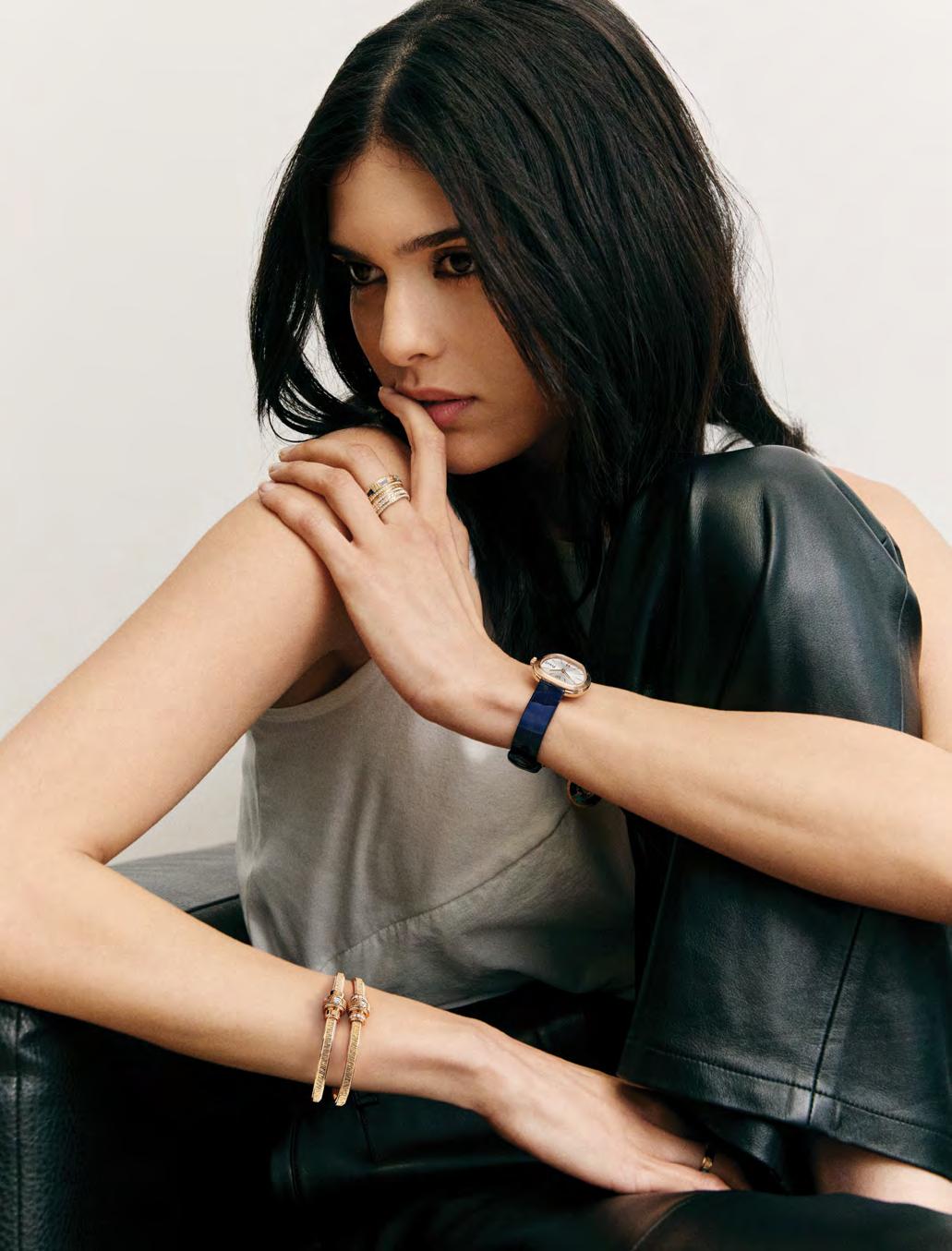
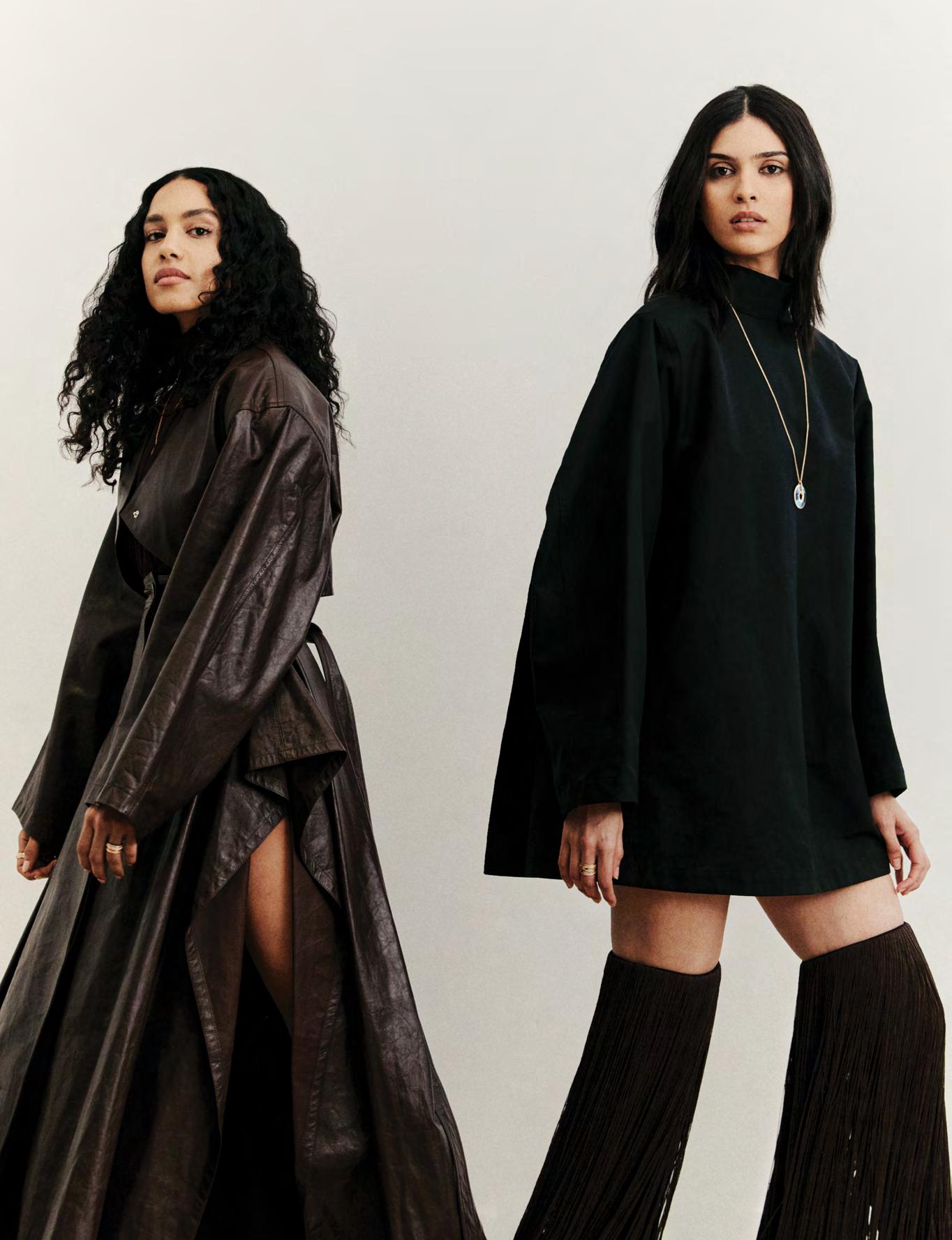
“I don’t try to fit into a definition. The industry can suggest an image, but I choose what feels true and build from there.”
- Meriam Turki
However, I wanted to take that representation further than just an image. That’s why I started my Arabic micro-learning series on my platforms (@shahedelnakhlawy). It allows me to actively keep that link alive between Europe and the Arab world, challenge clichés, and build a space where I can share my heritage directly with my community.
From high jewellery to beauty campaigns, your portfolio is diverse. What draws you to a project, and how do you adapt your presence across such different visual worlds?
What draws me to a project is the story behind it: its heritage, its savoir-faire, and the depth it carries beyond the product itself. I’m drawn to houses that have a legacy to pass on rather than those that just want to push a product. Working with a house like Hermès, for example, feels entirely different; there is a real sense of continuity and intention that you feel on set.
In terms of adapting, I look at the mood board to get the narrative and adjust my energy accordingly. What I’ve learned is that keeping it effortless is key. That authentic energy is always what makes the best pictures and works the best with clients.
As someone building a global career, have you ever felt the pressure to dilute or redefine your identity to fit certain markets?
I’ve experienced moments — luckily, only a few — where my image was altered to fit certain market expectations. I’ve seen my features retouched to narrow my nose, my natural curls straightened, or makeup artists using foundation that didn’t match my skin tone to make me look either darker or lighter.
This taught me early on the importance of setting boundaries. I made it a rule to protect my authenticity and step away from jobs that require me to erase parts of who I am. Today, I only work with brands that book and work with me for who I really am.
You’re often described as “one to watch.” How do you define success for yourself at this stage, and what kind of impact do you hope to leave on the industry? I define success as the moment I am no longer just a face, but a voice. It’s when my work creates enough presence that people become curious about the story behind the image, and I actually have the platform to share it.
At this stage, success to me is about challenging the narrow idea of how an Arab woman is ‘supposed’ to be. Whether on set or through teaching my language and culture online, I want to expand that image and build a meaningful bridge across both regions.
With everything happening in the region, what does ‘home’ mean to you? Where is home for you?
Home, for me, is not a single place but the intersection of different lives. I was born in Kuwait, grew up between Jordan and Egypt, and now live in France—each of these places has deeply shaped who I am.
Home is the continuity between them. It’s the space where I can hold all these parts of my identity together, without having to choose or simplify for anyone’s convenience. Today, France feels like home because it’s where I’ve been able to become independent, build the life I chose, and live fully as myself. ■
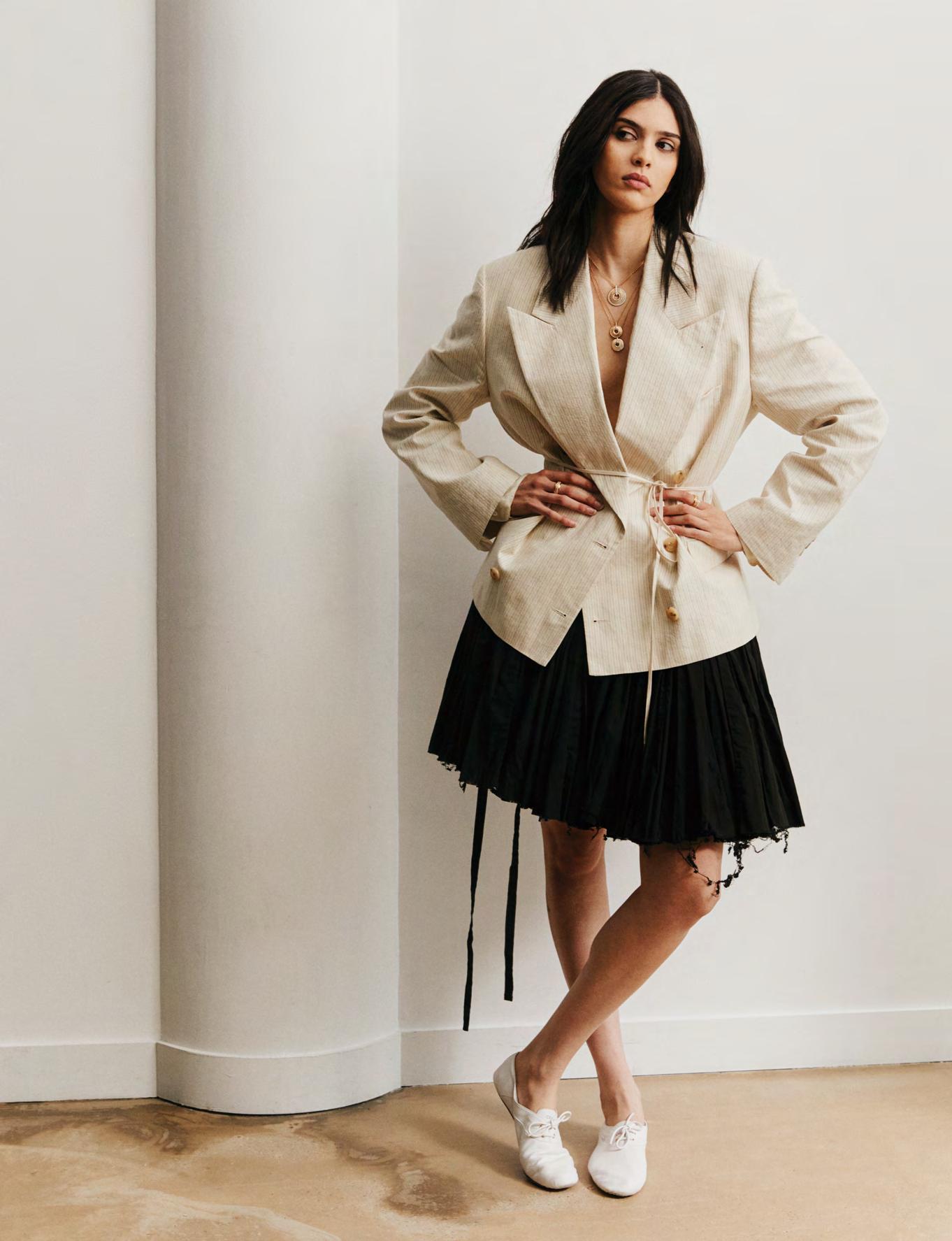
dress, TRANSE.
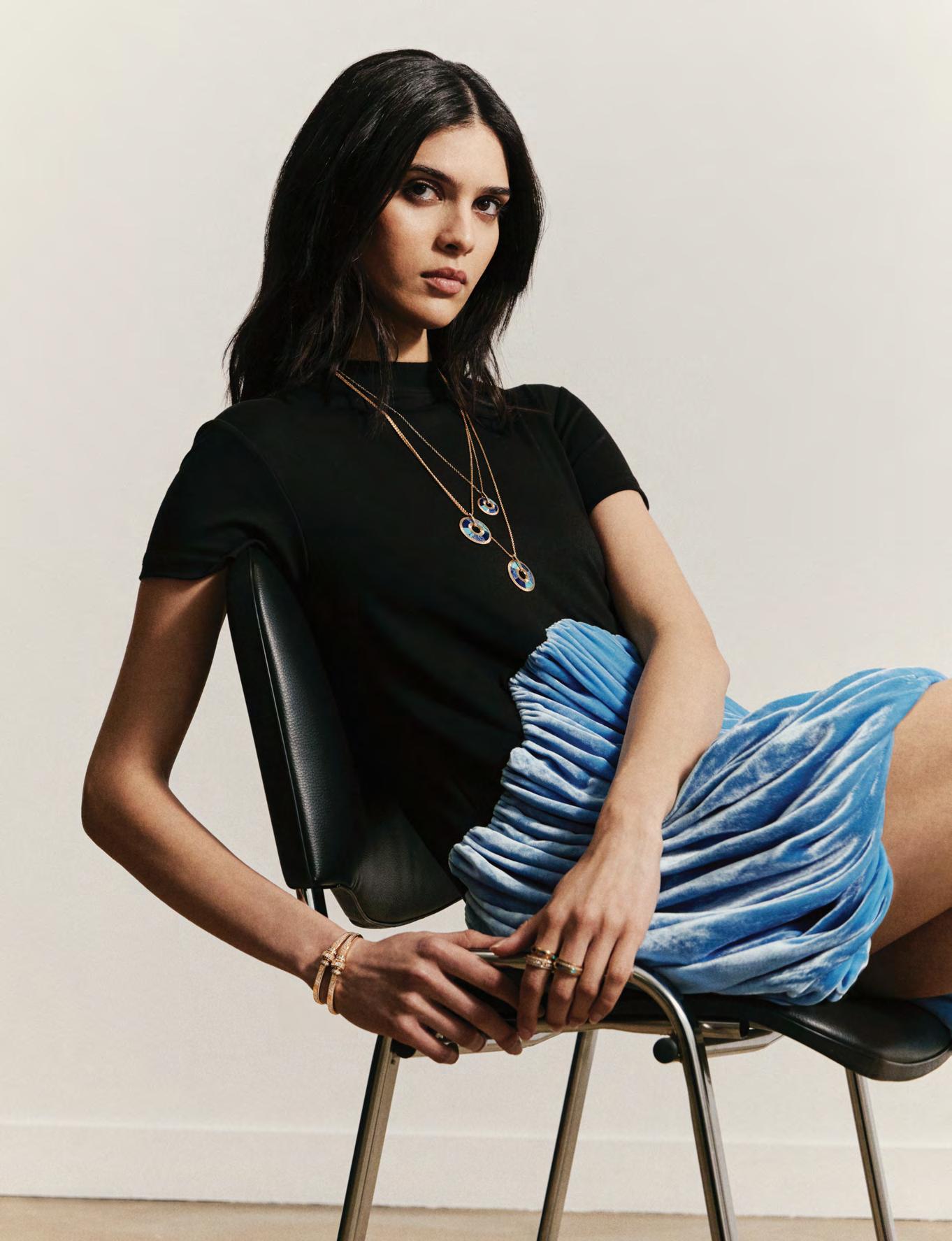
possession
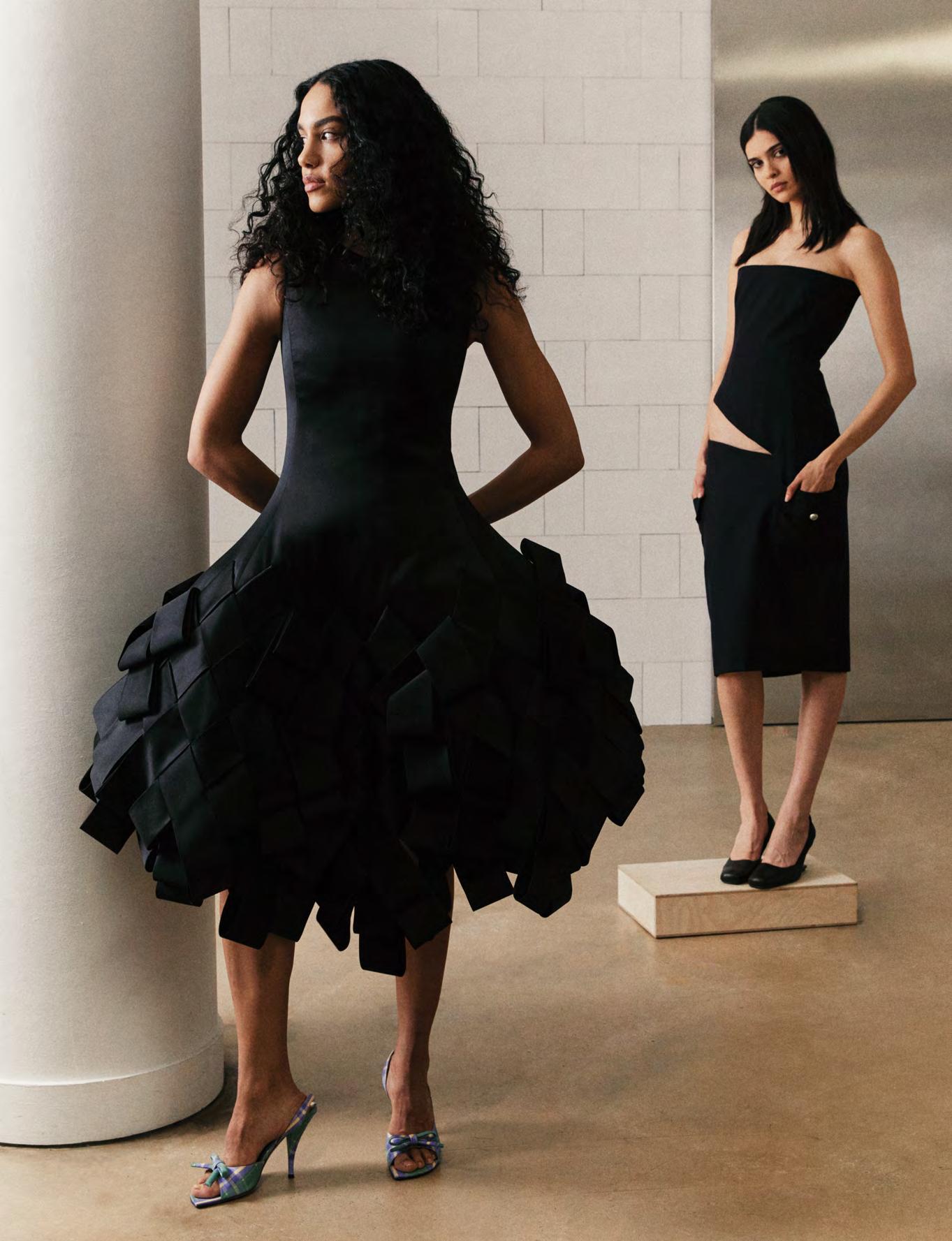
photography styling words
How Lella Fadda grew into the artist she always believed she’d be, and how that belief shapes everything she makes.
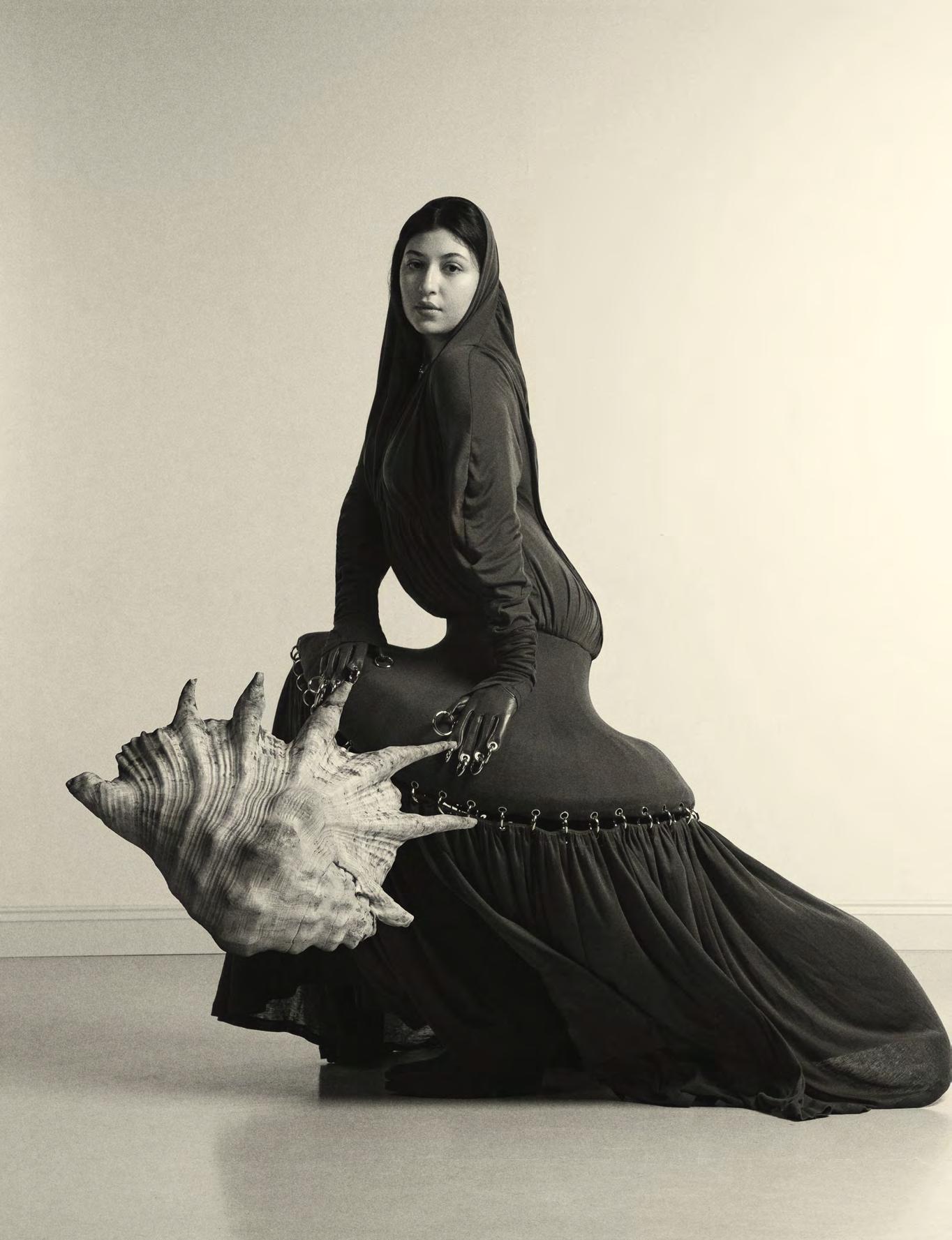
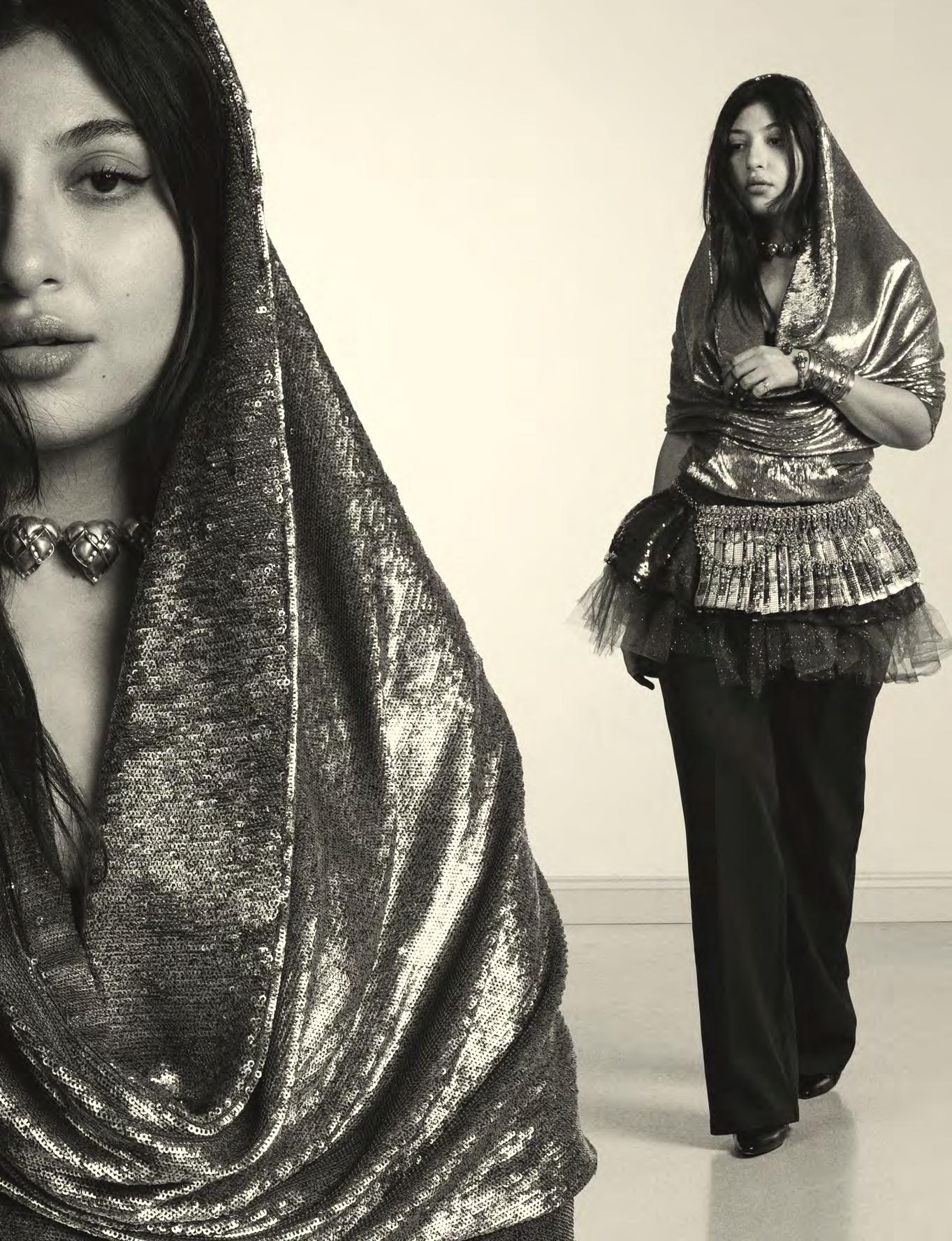
Long before anyone was listening, Lella Fadda had already decided who she was going to be. When she was twelve, she wrote it down in thick red crayon: “I will be a singer like Adele.”
The letters were large and uneven, tilting upward across the page as if ambition itself had direction. The note resurfaced last year while her family was clearing out her grandmother’s apartment in Cairo. Mid-conversation, Fadda searches for the photograph on her phone, narrating the wait as it loads. When it appears, she laughs — a mix of embarrassment and vindication, the reaction of someone discovering that her younger self might have been right.
Children don’t hedge their ambitions. Somewhere along the way most of us learn the etiquette of doubt: the insertion of maybe, one day, if things work out. The girl who wrote it hadn’t learned that caution yet.
Her childhood, she tells me, was largely “school and home, school and home,” with little room for the extracurricular lives other children had. Music entered partly because there was little else to occupy her during her solitude. She was, by her own account, “that kid singing everywhere” — at school, at family gatherings, on any occasion where people could be mistaken for an audience.
By ten she was already uploading covers online and worrying, with disproportionate urgency, about recording the next one. At eight she wrote a song and showed it to her social-studies teacher, proof of what she intended to become. “I remember telling her, ‘one day I’ll write a song like this’,” she says now, amused by the logic. “I didn’t even realise I had already written one.”
When I speak to her now on a quiet Ramadan afternoon in Cairo, the city is moving through its late-day lull before iftar. Fadda is twenty-five and already one of the most distinctive voices to emerge from Egypt’s new generation of musicians. Her debut album, MAGNÜN, introduced a world both playful and emotionally exacting: songs about relationships, ego, and the quiet humiliations of modern intimacy.
On “TARAT TARAT TAT,” one of the album’s sharpest tracks, the beat lands between Cairo street pop and bedroom rap: tight synthetic drums undercut by a hook that sounds almost teasing. Fadda’s delivery slips between melody and deadpan talk-singing, with the intimacy of a diary entry. The lyrics move with the speed and wit of Cairo conversation, full of slang, social intelligence, and the rhythm of people talking when they think no one important is listening.
“There can be someone standing in front of me who doesn’t know what I’m saying. And they’re still dancing.”
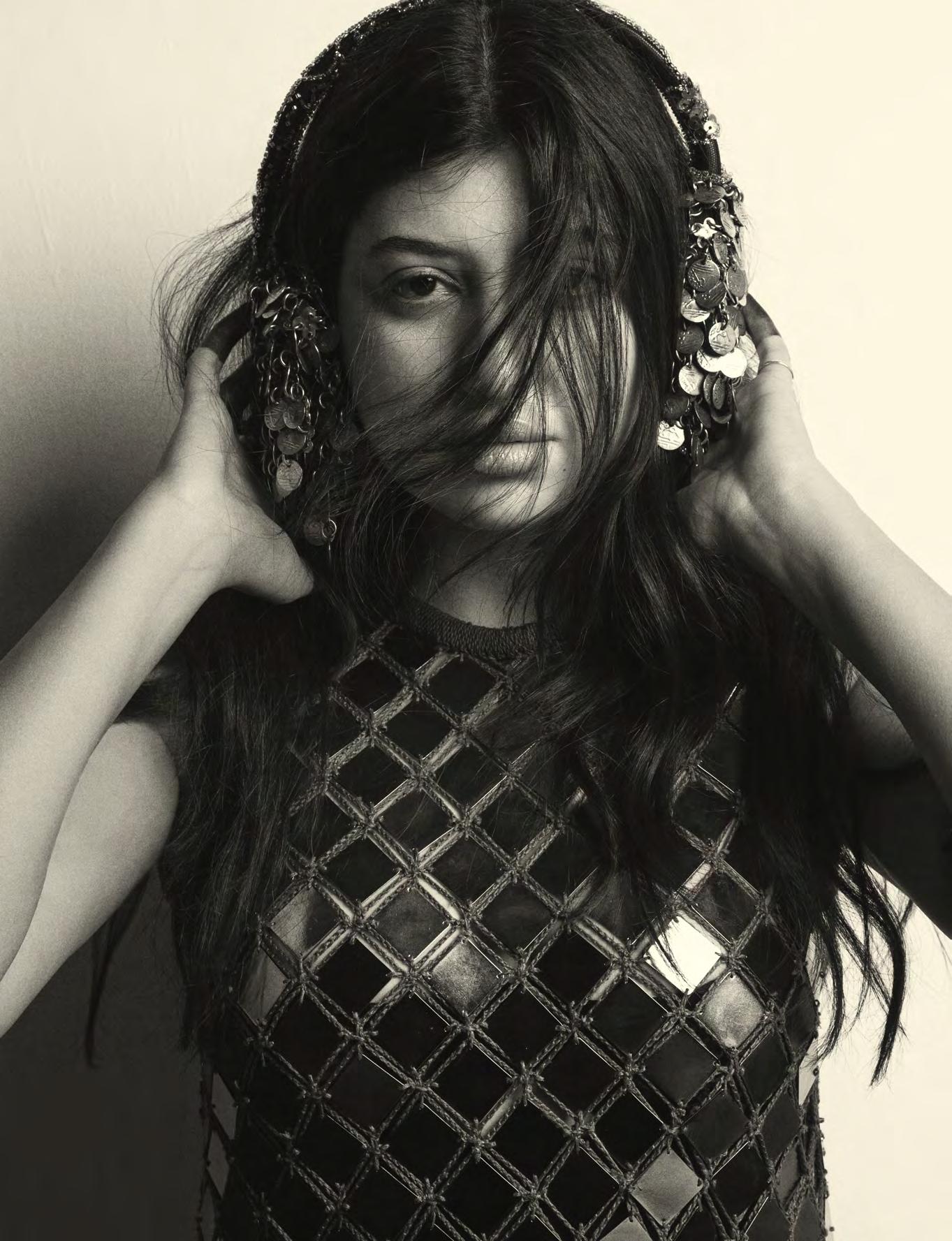
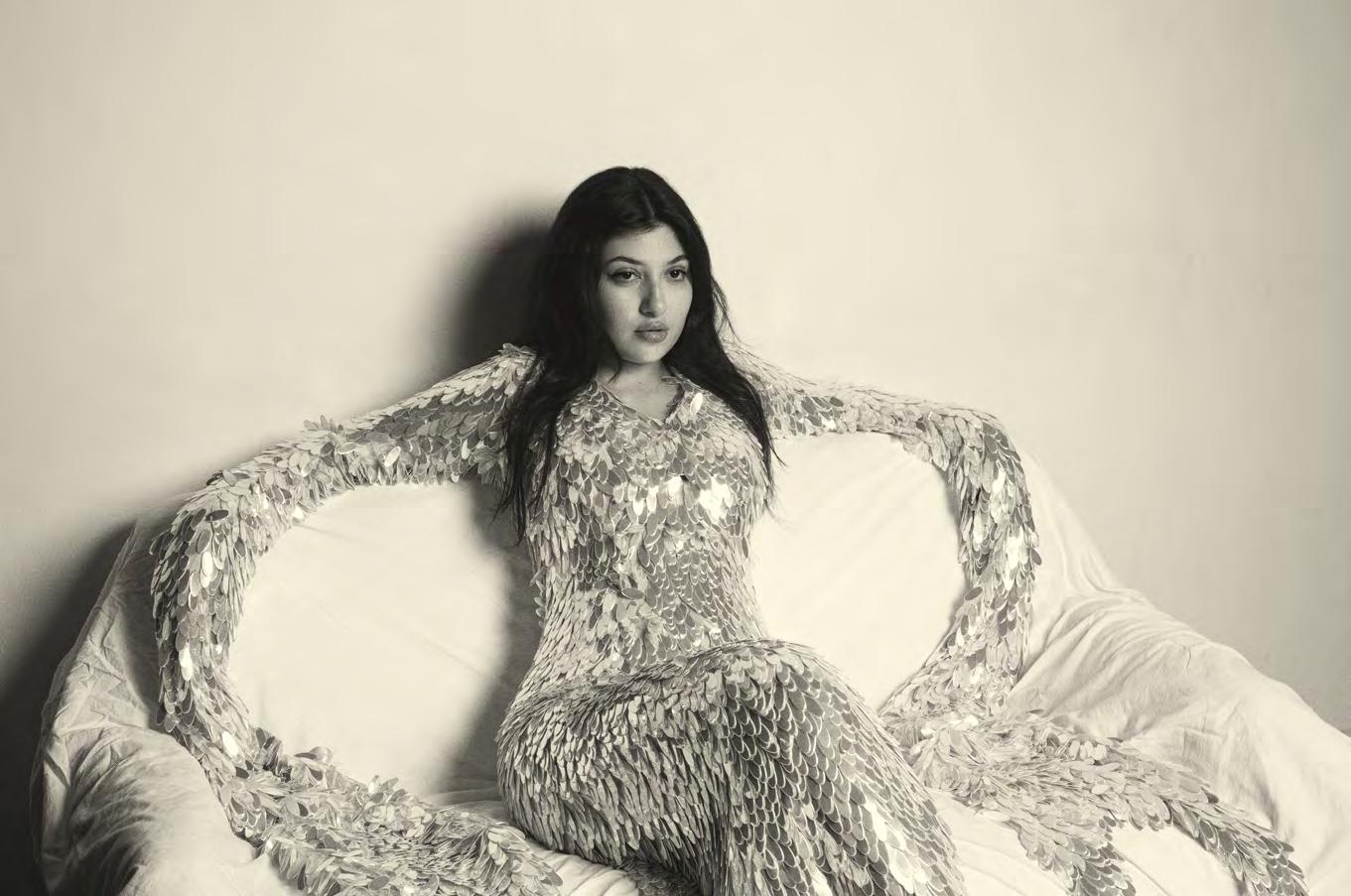
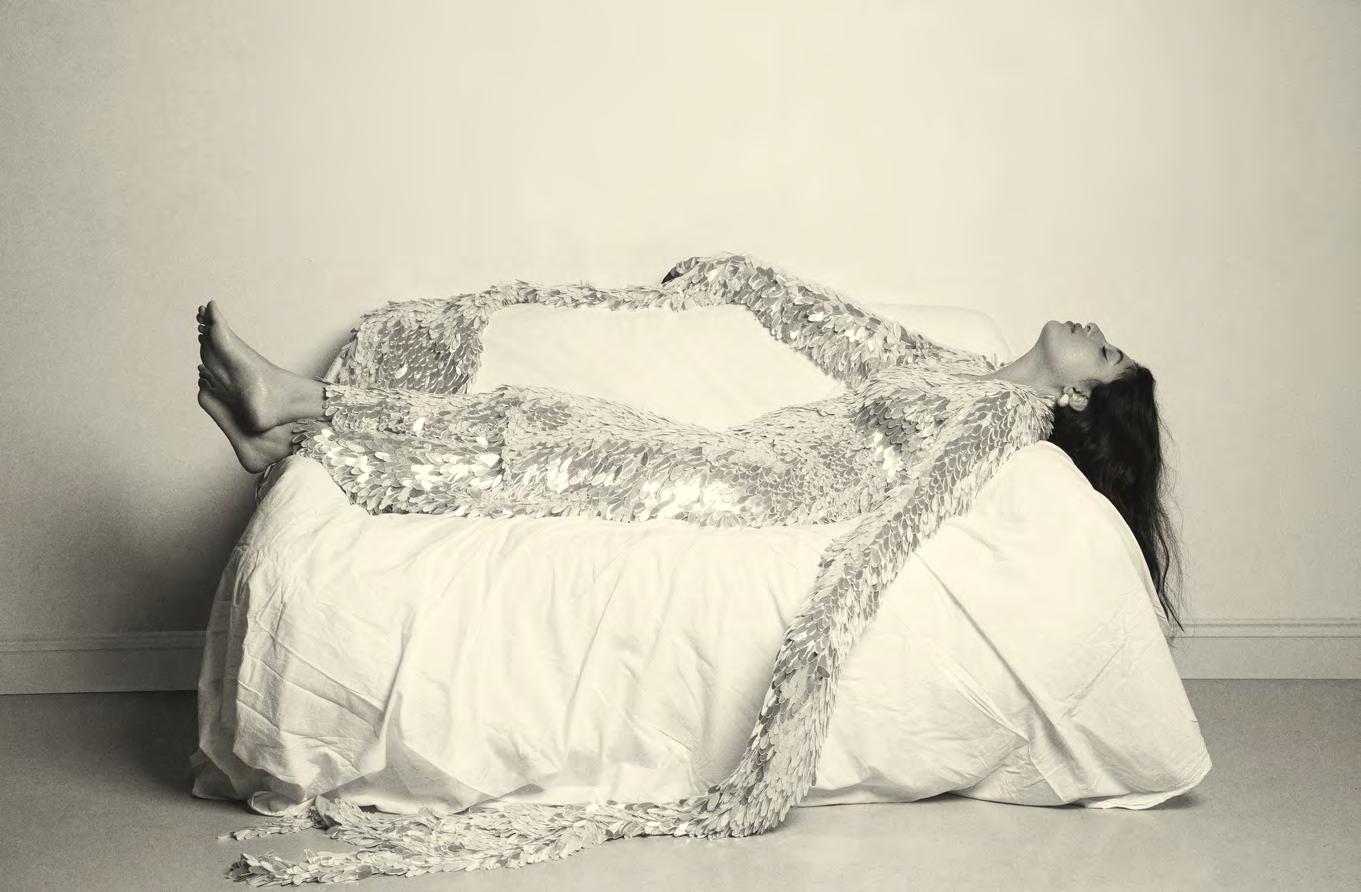
Much of MAGNÜN was shaped in collaboration with the producer Abuyusif, whom she describes as a provocateur. His role, she says, is often to turn a vague emotion into a task. “He’ll tell me, ‘Stay on that chair and write eight bars,’” she explains. “Start here. Use this beat.” The structure frees her up. “Then I have a task,” she says. “We started with the right idea. Let’s finish it.” What she values most is that he can “get things out of me,” things she would not have found alone.
On this particular afternoon, however, she is less interested in career strategy than in ballet. Every few years, she tells me, she tries to learn a skill she wanted top pursue as a child but never had the chance to. Ballet, in that sense, feels like repayment. “I love it,” she says immediately. “Oh my God, I love it.”
What fascinates her is the attention it demands. Ballet teaches you to notice the architecture of the body: the angle of a foot, the correction of the spine, the quiet shift of weight between muscles. “It makes me understand how my body can actually move,” she says. The interest feels oddly appropriate. Fadda’s career has unfolded through a similar process of calibration: the slow work of discovering what her voice can carry.
Mid-conversation, she reaches for her phone again and shows me another photograph: an old notebook scattered with lipstick kisses. The imagery is uncannily close to the visual world she later built for MAGNÜN. The symmetry feels suspiciously neat — the sort of coincidence that would seem
heavy-handed if invented by a less persuasive publicist. Before she had an audience, she had iconography.
Many artists spend years trying to sound convincing as themselves. Fadda understood early that this was the whole task. “You can literally fake anything,” she says. “But not the audio.” It points to a problem that shadows much of contemporary pop: the confusion of image with conviction.
Fadda is not naïve about the machinery surrounding music — the styling, the algorithms, the persona-building. She simply refuses to confuse the spectacle with the thing itself. “You just have to be good and believable,” she says. “If you are hurt, you are hurt. You should make people feel that.”
When I ask about the way her music captures women’s realities — the irony, the sharpness — she corrects the premise almost immediately. “I don’t speak about women,” she says. “I am one.” The irony in her songs, she explains, is not stylistic decoration. “The irony actually is the reality.”
One night in Cairo, that reality took on a kind of accidental comedy. Midway through a performance of “TARAT TARAT TAT,” she looked down and realised that the entire front section was male. They were not listening politely. They knew every word. More than that: they were loudest on the very lines that might, under ordinary circumstances, have incriminated them.
“I burst out laughing into the mic,” she says. Not triumph. Disbelief.
Irony, in her hands, becomes a courier, slipping truth into the room before anyone has time to object.
At home the influences that shaped her sound were wide and joyfully inconsistent. Her mother played Latin pop, Shakira above all. “I really wanted to be Shakira,” Fadda says, laughing. As a child she practiced the singer’s signature stomach rolls in front of the mirror — “the wavy thing,” as she calls it.
“She [my younger self] was a little delusional. But that’s exactly what it takes.”
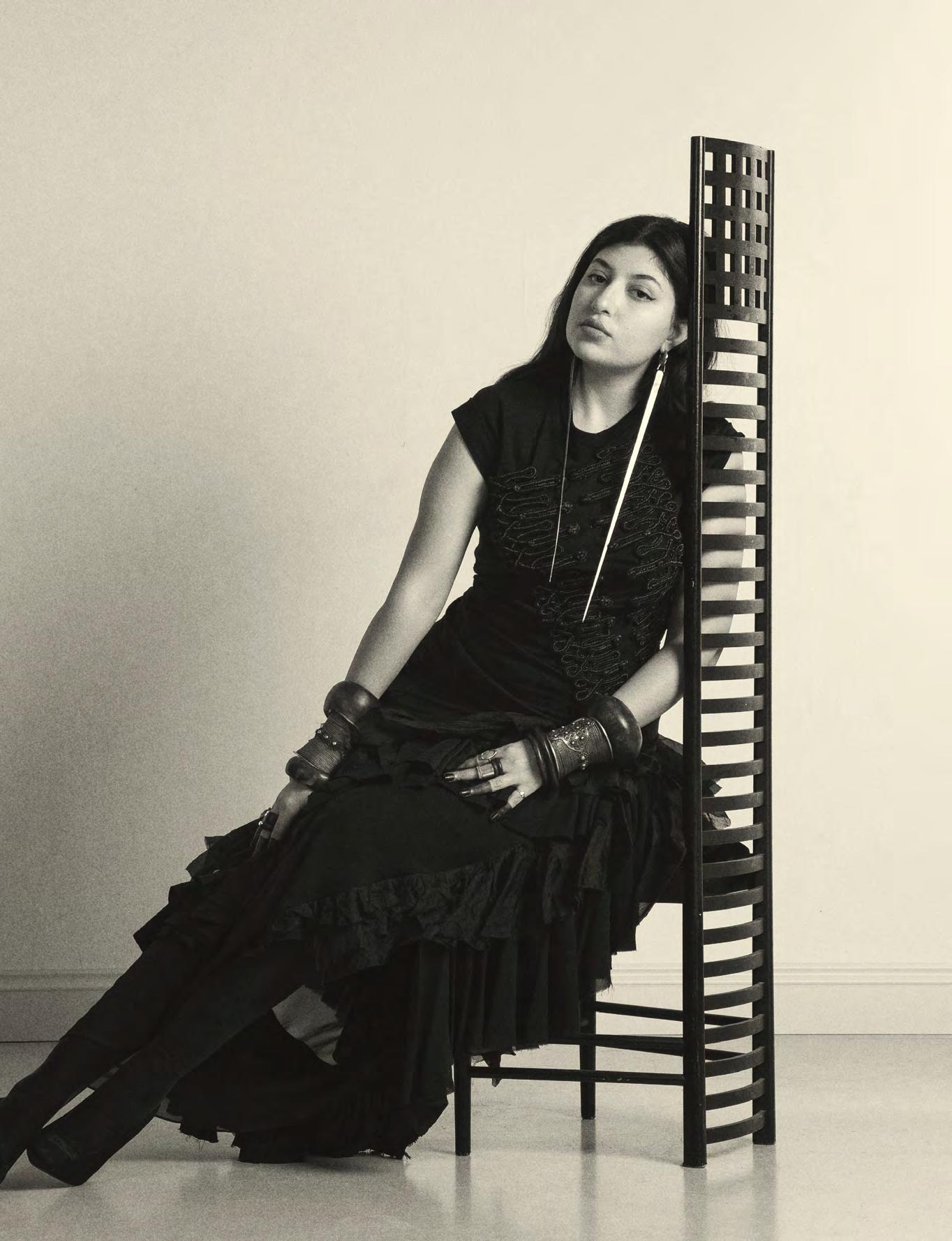
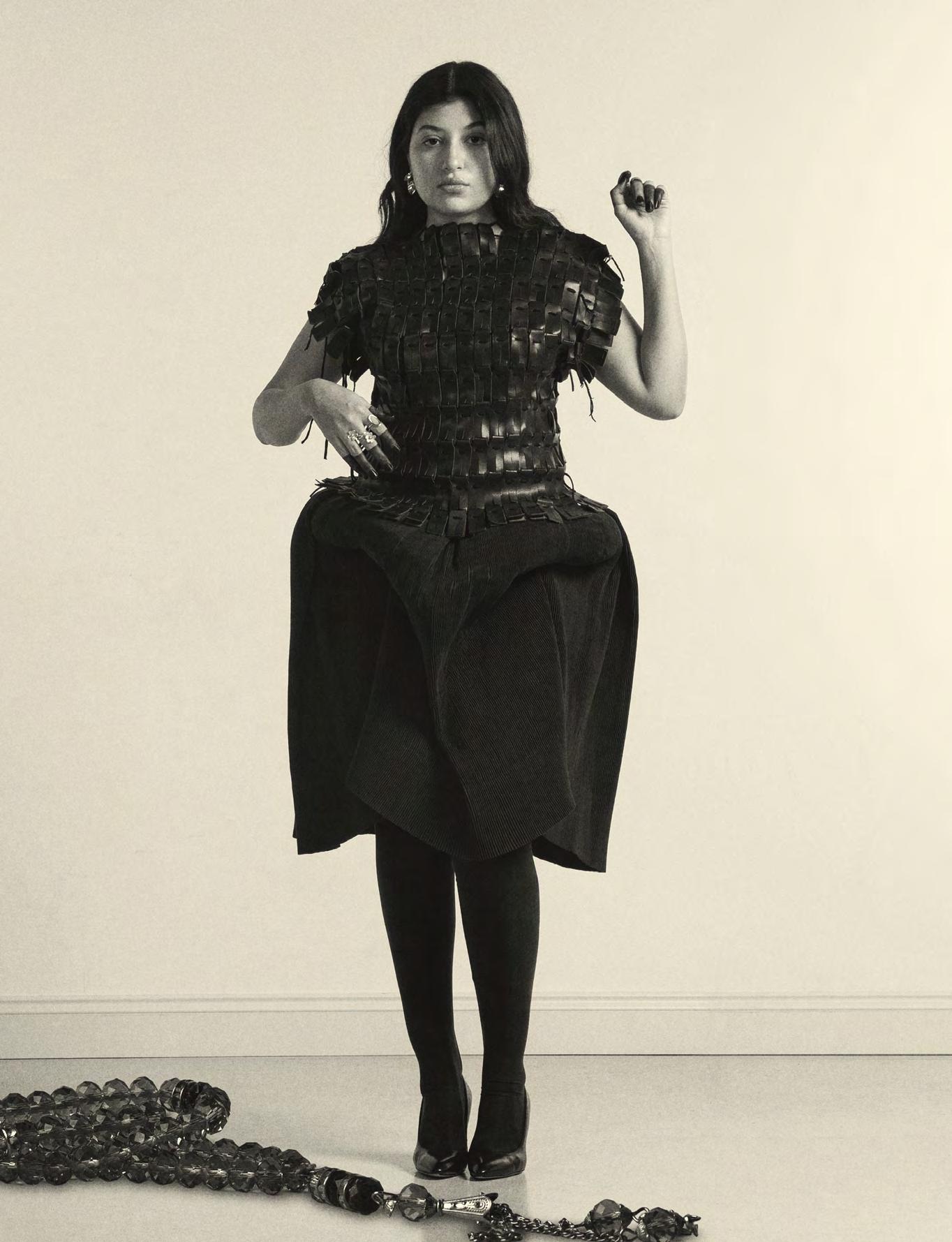
Weekends with her Egyptian grandmother belonged to another musical register entirely: black-and-white films, classic songs, the kind of nostalgia that arrives before you are old enough to understand it. “I had to love the songs,” she says. “Because that’s how I connected with her.”
The result was a childhood soundscape that refused to sit neatly inside one genre, which may explain her impatience for genre categories today. “I don’t believe in genres,” she says. “I believe in a good song and a bad song.”
Public perception tends to emphasise her rap tracks, but Fadda hears the balance differently. She is, she says, “a singer who started rapping,” not a rapper reaching belatedly toward melody. The distinction matters. It explains why some listeners are surprised to discover songs they already love are hers: they have learned one version of her voice and mistaken it for the whole.
Her relationship to identity is similarly direct. Though she was born in Milan, she brushes aside the diasporic framing people sometimes reach for. Asked what Milan and Cairo sound like to her, she says the distance between them is smaller than people assume. “The yelling,” she says, laughing. In both places, a conversation can sound to outsiders like an argument. Emotional volume travels well.
But the belonging itself, she insists, has never been confusing. “I’m Egyptian,” she says simply. “I know where I’m from.” Then she adds something even simpler. “These are the streets I know without direction.”
Arabic, she insists, is not a branding choice but simply the language in which she feels most precise. “I express myself in Arabic more,” she says. But she resists the idea that this makes the work niche or explanatory. “I’m not speaking about the Arab world,” she says. “I’m speaking about universal things.”
She has seen this most clearly while performing abroad. Listeners who understand none of the words still respond instinctively. “There can be someone standing in front of me who doesn’t know what I’m saying,” she says. “And they’re still dancing.” Emotion travels faster than translation.
If Fadda thinks about legacy at all, she thinks about it practically. She has little interest in the prestige of being the first to or of anything. What matters instead is impact: whether what she is doing makes the path easier for someone else.
When she was younger, seeing artists like Dina El Wedidi and Maryam Saleh on stage did exactly that. It made the life she wanted appear possible. Now she imagines the same recognition happening in reverse — some twelve-year-old girl somewhere in Cairo watching the stage and arriving at the same conclusions she did.
Toward the end of our conversation, I ask what the younger version of Fadda — the girl writing in red crayon, uploading covers online, already treating the future as a fact — might think if she heard the music she is making now. She laughs immediately. “She’d be a fan.” Then she adds, with affectionate candour: “She was a little delusional. But that’s exactly what it takes.”
The red crayon letters tilted upward across the page, as if the sentence were already climbing toward its future. At twelve, Fadda wrote it down as fact. Everything since has simply been catching up. ■
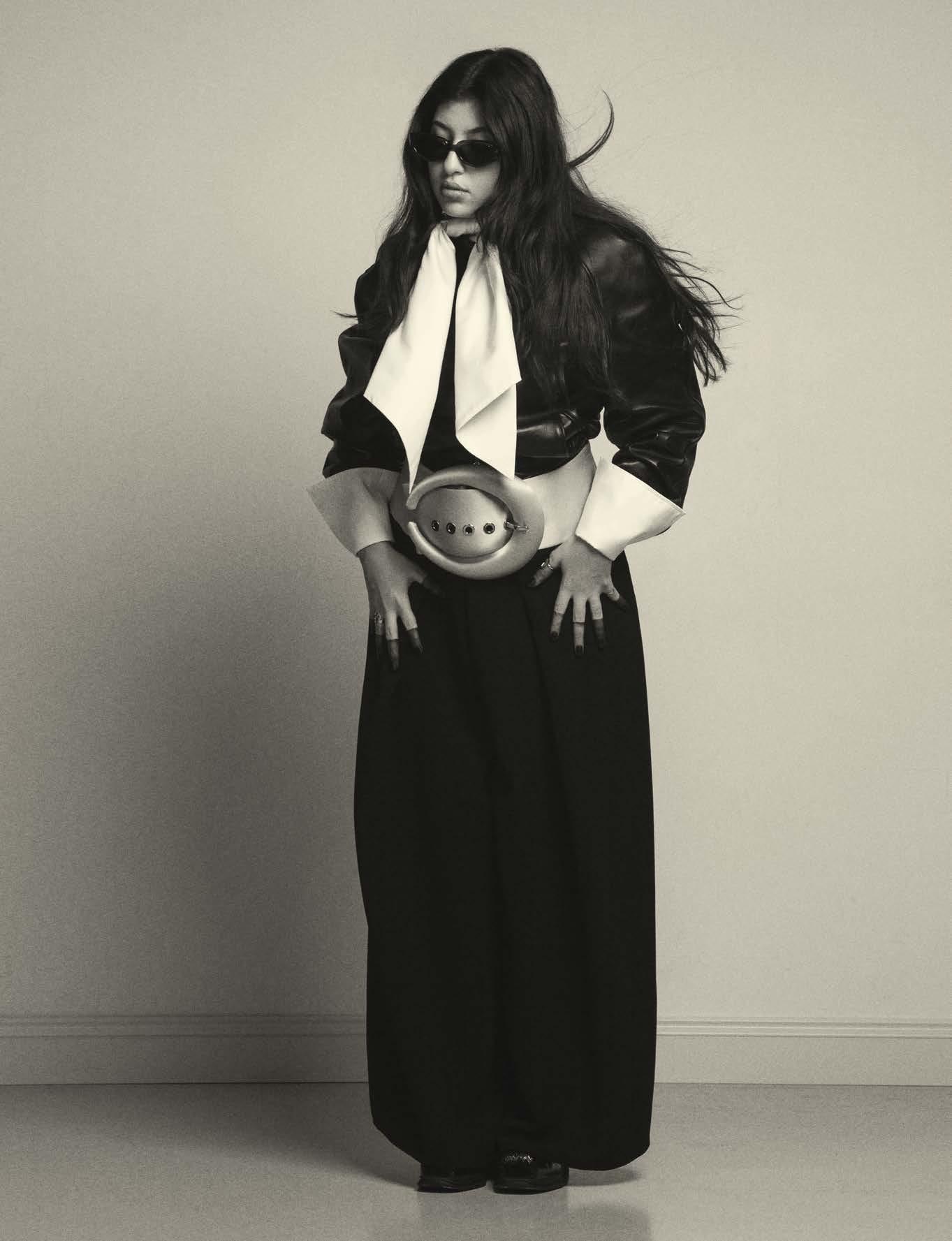
Discover the staple pieces from Balenciaga this season.
B A A B E
L
A G G A N A C I
These are the intimate, everyday moments that often go unnoticed. From a waking stretch in the morning, to the first cup of coffee, getting dressed, choosing jewellery from your bedside tray, to grabbing keys before heading out, these rituals quietly shape the rhythm of our day. They are moments we all share, regardless of place or routine.
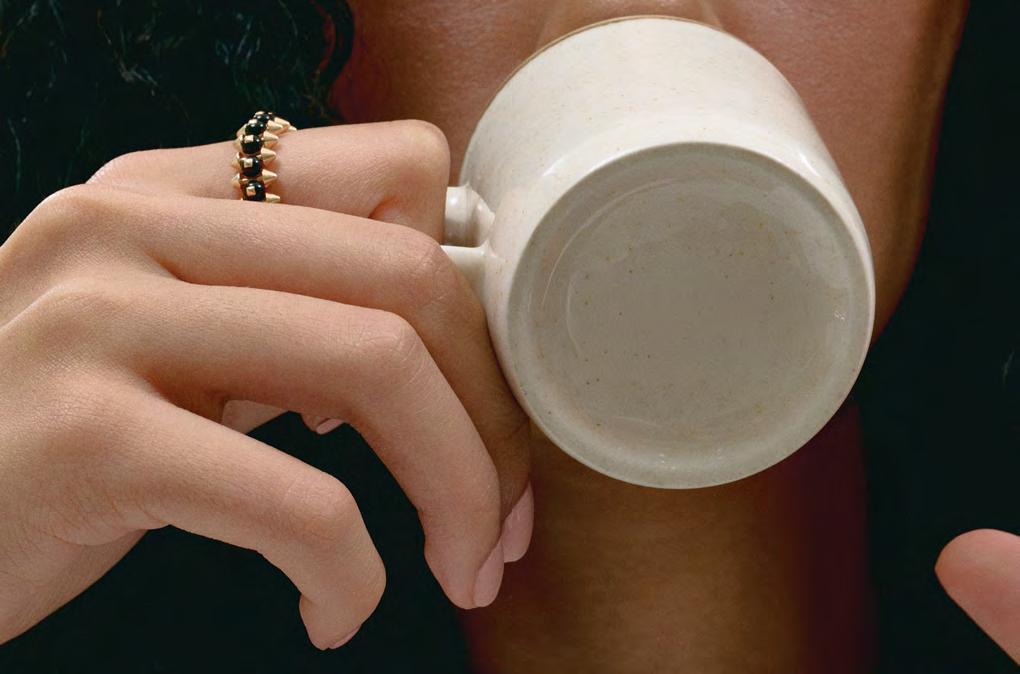
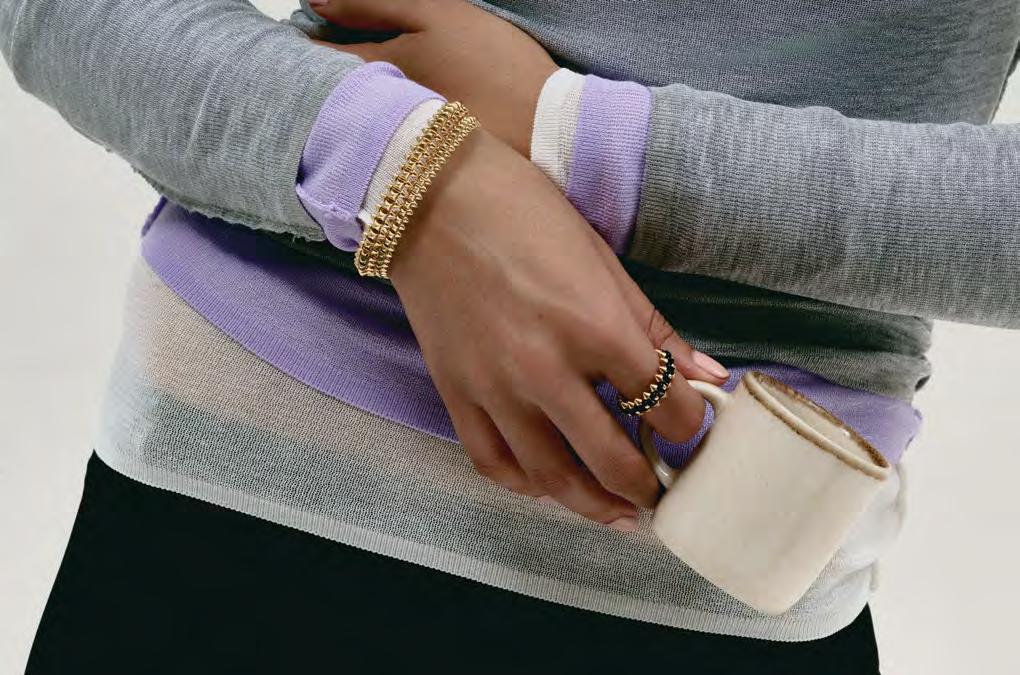
Why should style be defined by a single word? Classic or eccentric. Refined or rebellious. Cartier’s Clash de Cartier collection proves that the most compelling creations often exist somewhere in-between.
First launched in 2019, Clash de Cartier quickly established itself as an icon built on the idea of opposing forces. The collection thrives on duality, balancing elegance with attitude and simplicity with complexity. At first glance, the pieces appear understated, yet a closer look reveals intricate craftsmanship and thoughtful design. Earrings, rings, necklaces and bracelets come together to form a collection that is both sculptural and dynamic, revealing a visual language defined by rhythm, texture and repetition.
The signature trio of beads, studs and clou carré forms the foundation of the collection’s identity. Their interplay creates a striking architectural structure where rounded volumes meet sharp geometric lines. This balance produces a tactile tension that feels bold yet refined. The aesthetic carries subtle echoes of punk energy, while maintaining the timeless elegance that defines Cartier.
The clou carré, a defining element of the collection, appears in doubled rows within new rings and earrings, as well as flexible bracelets and necklaces designed to move fluidly with the wearer. Crafted in rose gold or rose gold set with diamonds, the pieces maintain clean sculptural lines thanks to fully integrated clasps that preserve the purity of their design.
The introduction of onyx brings another layer of contrast. Smooth black beads create depth and softness against the shine of metal and stones, reinforcing the collection’s theme of opposing elements working in harmony.
Behind the apparent simplicity lies remarkable technical expertise. Some flexible pieces contain up to 600 individual components assembled to ensure fluidity and comfort. At the heart of the collection is the picot stud, a historic Cartier motif whose conical form captures the Maison’s ability to transform everyday shapes into symbols of timeless elegance with a rebellious spirit.
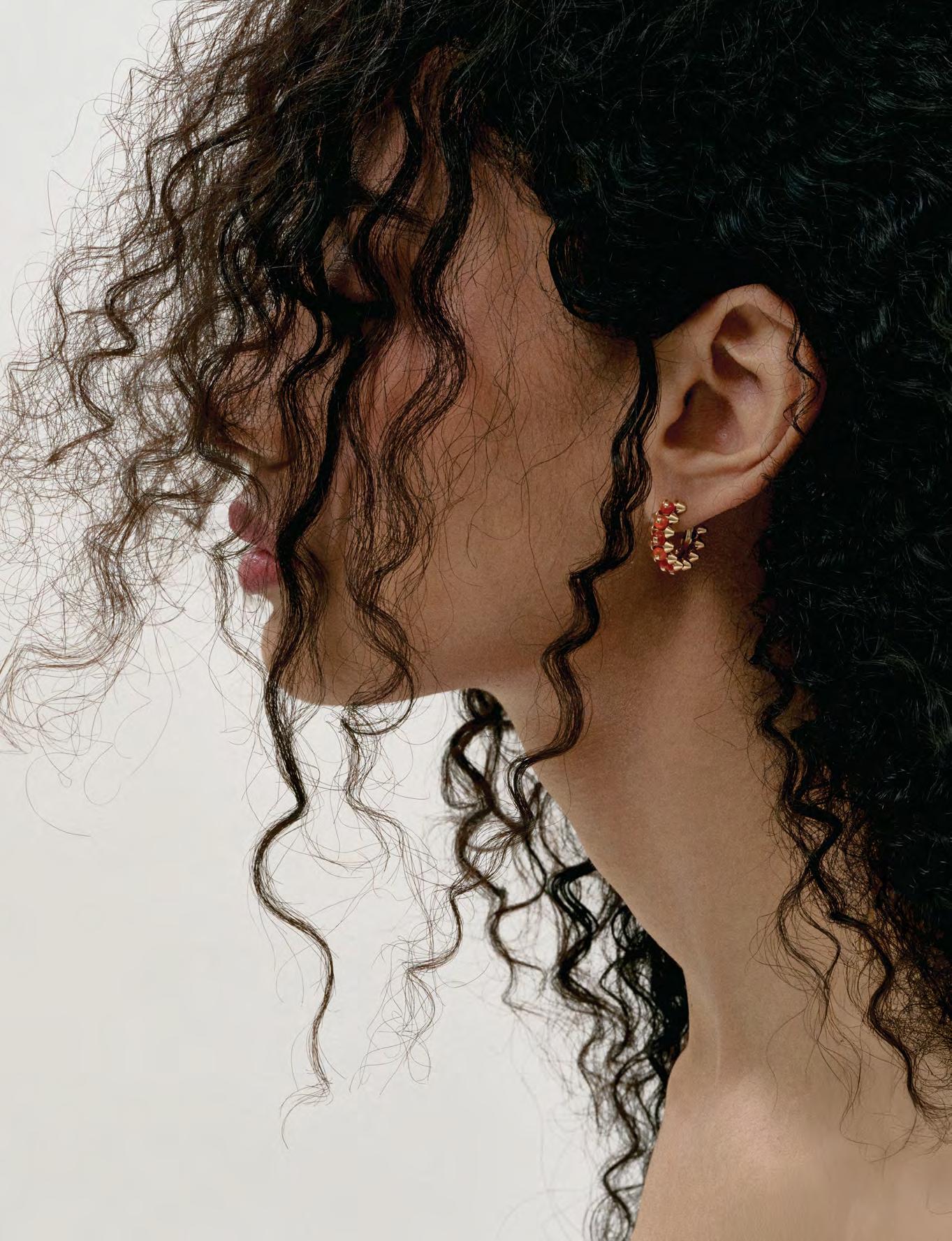
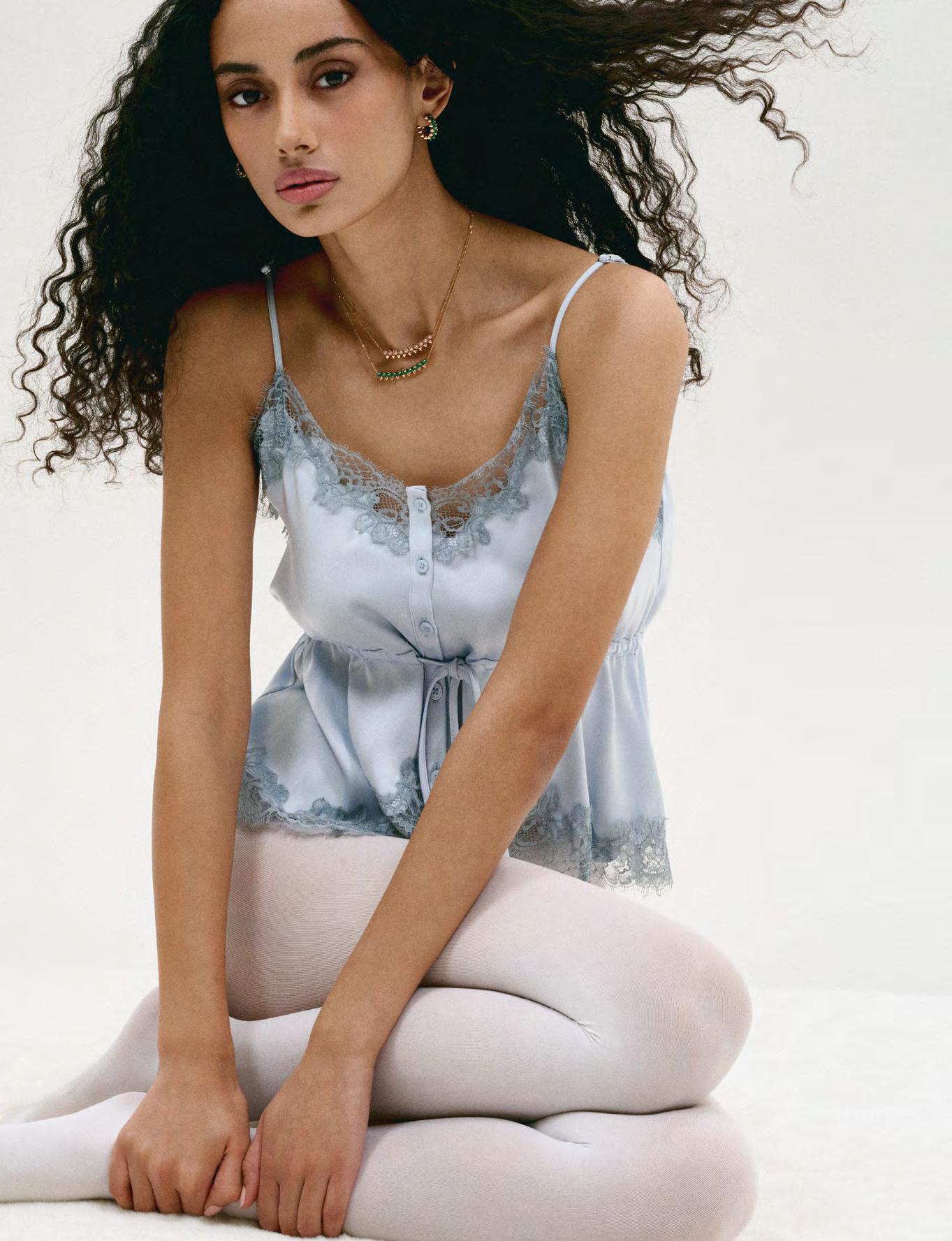
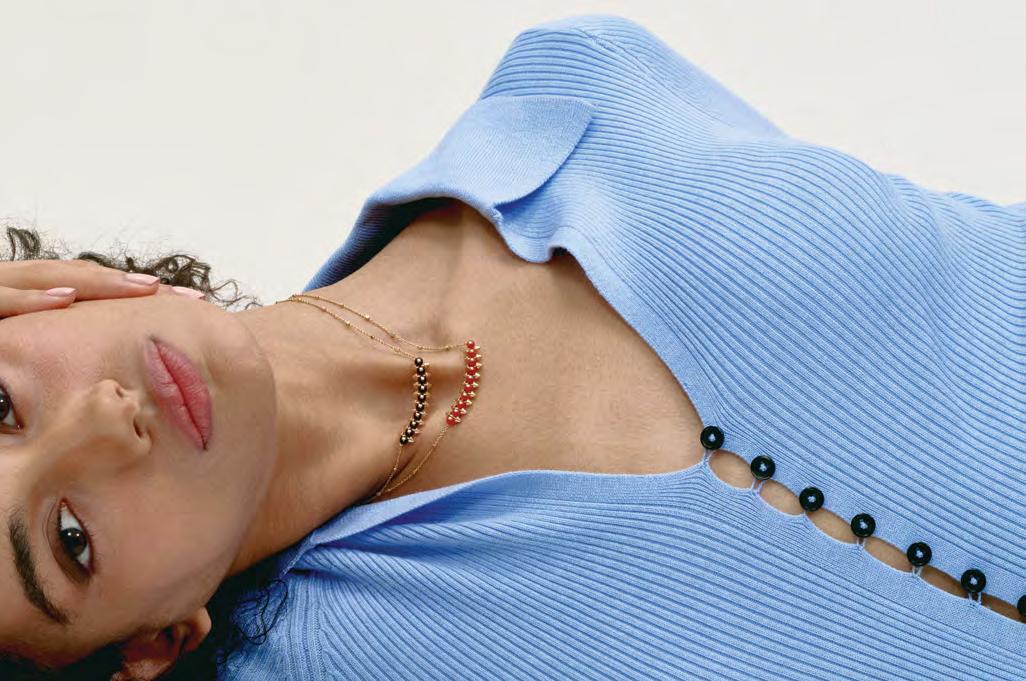
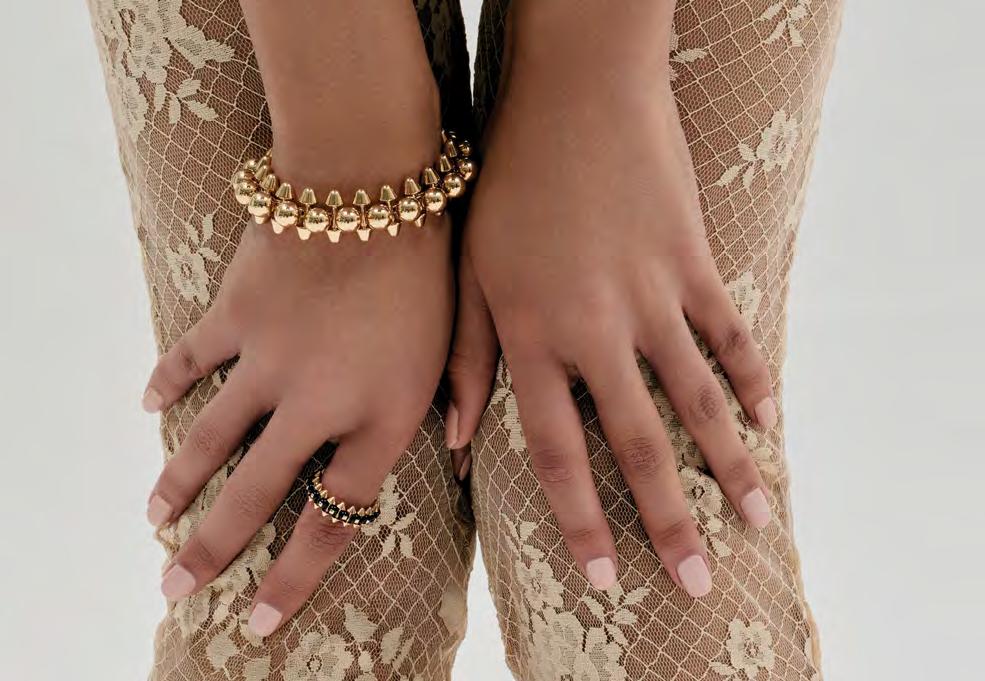
Writers and creatives from around the region speak of their second coming of the self.
We often treat youth as a skin we eventually shed, a temporary fever of age, recklessness, inexperience, and unrefined edges. However, adulthood holds its own secret reservoirs of vitality; they just don’t arrive on the wings of a birthday.
Sometimes it’s found in a small act of defiance. Other times, it’s the adrenaline of a last-minute flight, a sudden fever of creative lightning, or the choice to dress for your own delight rather than the room’s approval. It’s that sharp, electric jolt of realising you no longer need a permit to occupy space.
In this feature, we invited a collective of writers, journalists, and artists to pin down the exact moment they felt the world turn vivid again. These are not tales of turning back the clock, but of shaking ourselves awake. Below, you’ll find stories of becoming reopened, reawakened, and being finally—gloriously— reintroduced to the person you were always meant to be.
words MAI EL MOKADEM
Iraqi
“I’ve always been energised in my own way, ready to take risks and play even bigger games. From dropping out of two different colleges behind my parents’ backs, to creating my first big mural without even knowing exactly how, to painting my solo show while I was heartbroken and grieving. I don’t allow anything to stop me, especially those stuck or low feelings. I go against them and create something until I feel liberated from them, again and again. It took me time to realise that I am brave enough.
“Sometimes I look back and wonder how I was able to make that decision. My street art journey liberated me from fear and proved to me at an early age that I could create big and dream big. It is also a lot of labour to paint a wall. You cannot be afraid of what people will say about the work, because it is already out there in the streets. People are watching from beginning to end. There is no escape, and the only way to continue is to stop caring and keep creating.
“I remember moments after a long day of work when I would come down from the man-lift and avoid looking at the mural from afar because I was too afraid to see the result. Then I would return the next morning, face it, and learn something from it. It was a tough process, but a great teacher.
“It’s always when I’m painting that I think, “I feel most like myself right now”. In my studio, which I’ve turned into a world of my own, a sea of frequencies carries and nourishes me. Sometimes it’s tough and very confrontational, but there is always lightness afterwards. It’s a very honest process in a very honest space, resulting in a very honest way of being, which for me is the ultimate form of being oneself.
“I don’t quite remember how old I was, but I remember that during school I slept most of the time on my desk, waiting for the day to end. Then during college I hated it, and when I tried to give it another chance I hated it even more. I remember rebelling against everything that tried to shape me and keep me sitting on a desk or a chair. What is different now is that I took many risks and made many sacrifices to create a life on my own terms.
“If you asked me before to choose between curiosity and safety, I would have told you curiosity without a doubt. I always chose curiosity over safety. But now I would say that finding safety within curiosity is the most liberating feeling. I believe I am protected as long as I follow my inner voice that does not fear the unknown. In that sense, I always feel safe.
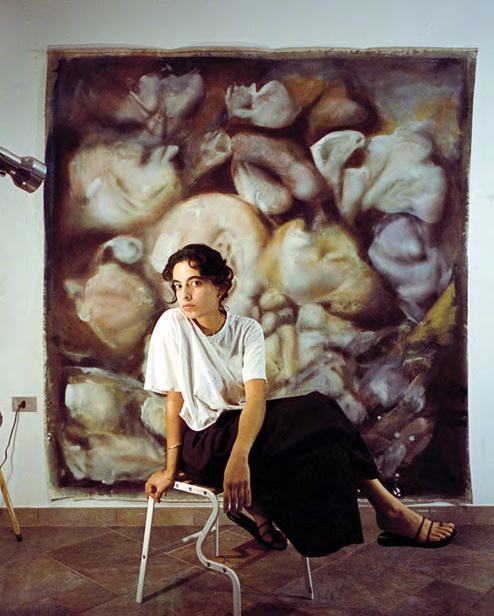
“Every day I encounter something that adds to my perspective, and sometimes something that erases a perspective that has been evolving for years. I can’t recall a single defining moment. For me, they are all important and all connected. But I can say that my moments in the desert have reminded me of what truly matters, which is quietening the mind in order to hear the soul. By doing that, one remains young, because the soul is eternal.
“I respect my past self and I still look back at it and learn from it. I prefer not to call it a past self, because it exists within me at all times. I simply need to shed the pollution of life every now and then to reconnect with it again and again. I try to place strong reminders in my life that can guide me back there without doubt.
“Lebanon also makes me feel young again. Especially now that I’m here during such a strange time. There is something about this country and its mountains that makes me feel pure. The sound of nature is louder than the sound of humans, and that makes me feel like a little child in the arms of nature.”
Palestinian Writer & Journalist
“Whenever I leave the city, leave my phone behind somewhere, will myself to forget whatever is going on beyond exactly where I am, I feel like myself again.
“I feel like who I was at 5 and 18 and 21 — someone sure of herself, either because the world had yet to taint her or because she didn’t care that it had. It’s been some time since I’ve felt that way, nearly a year now.
“It was the drive we took upstate, in a tiny, dusty little Rav-4. The sun spoiled us with its glow and the hills rolled out in every direction, grassy and swaying in the wind. We had the windows down and the air, whipping my hair into my face, smelled sweet like late summer sometimes does. I wanted this drive to go on forever, to stay here forever. Nothing mattered beyond this — the music, the sky, your face. I didn’t think of duty or ambition or ego or pride. Emails, the office, rent.
“All I thought of was the road unfurling before us.”
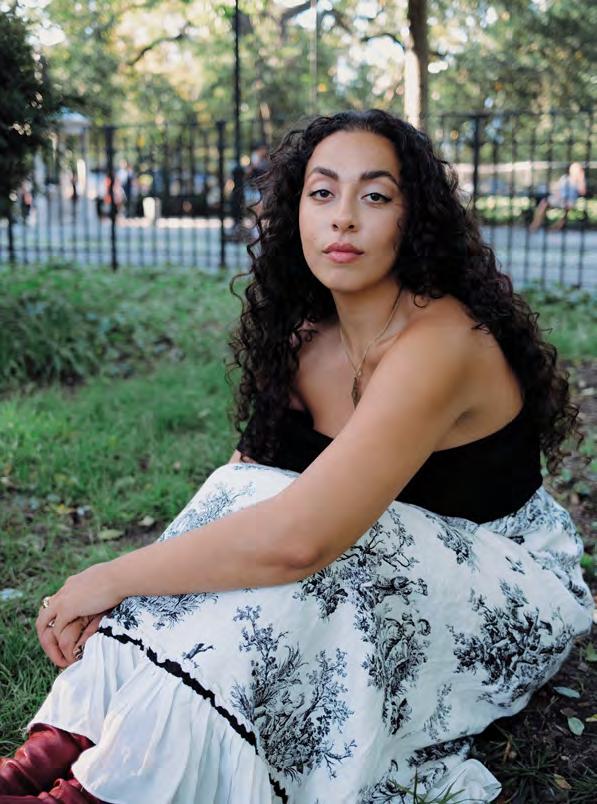
Children’s Book Illustrator & Author
“I don’t think the first time I felt young was tied to age. It was tied to freedom.
“It usually finds me when I travel. I arrive somewhere new with a sketchbook and no real plan. I walk slowly. I observe everything. Leaves, multilayered sticker walls turn into patterns. Street signs become colour stories. I’m not trying to impress anyone. I’m just present. And in those moments, I think ‘I feel like myself right now’.
“But it’s not only cities that unlock that feeling, it’s people, too.
“In the many retreats and women’s circles I’ve joined, something soft opens. You’re allowed to be vulnerable. Silly. Goofy. You can cry, laugh too loud, dance badly, eat ice cream without guilt, taste something new and let it fill you with joy. No performing. No proving. Just being.
“I remember during Covid, when the world felt paused and heavy, I escaped to the beach. I spent hours riding waves, falling, getting back up, giggling like a three-year-old. Salt in my hair, sun on my skin, nothing to achieve. Just pure, uncomplicated joy.
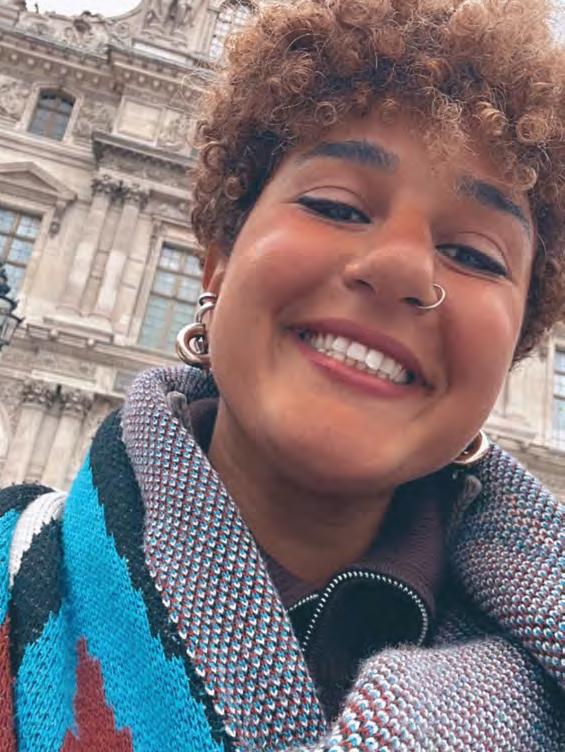
“I think being YUNG, to me, is permission. Permission to explore all my selves; the author, the illustrator, the chef, the yoga teacher. My many interests don’t confuse me; they expand me. They let me love life from different angles.
“Being young isn’t about age. It’s about staying curious enough to feel alive.”
Palestinian Illustrator & Writer
“It was days before Eid, and the West Bank was alive more than ever. Behind the backdrop of the 2014 Gaza War, I had difficulty understanding the magnitude of it all. And to be truthful, I found Palestine as a whole to be an enigma. A land that was ours, but no longer was, occupied by another, ignored by the world, and betrayed by an Ummah that promised to protect each other. The very suffering of Palestine felt contradictory to the world I lived in.
“One thing about Palestinians is that nothing, not even war, will stop us from celebrating Eid. And here I was in a woman’s hair salon in Tulkarm, on a hot July evening. Women’s hair salons in Palestine are boarded into secrecy, a safe space where women who wear the hijab are able to remove them without glares from the outside.
“I still remember the smell of burnt hair and shampoo as we walked in, a two-story, creaky hair salon with almost every seat occupied. My two eldest sisters were ahead of me, and I was hiding behind my mum as I entered uncharted territory in womanhood. Just a year prior, I had sworn off haircuts after a scheduled trim turned into a bob, but, with the encouragement of my mother, who always knew how to persuade me to subvert my own promises, I was being led upstairs to one of the available salon chairs. As I sat between two Palestinian women whom I’d never met, I turned to look for my sisters, realising they were sitting downstairs together. I then hear my mum walk up the creaky steps. She speaks to my stylist in Arabic, and in my broken Arabic, I decipher that she told my stylist to cut a couple of inches, cut some bangs, and straighten it.
“My shyness was at an all-time high at 12, and Arabic, though the language spoken at home, felt dry in my mouth. So I kept watching through the mirror as my mum and the stylist chatted. Suddenly, the salon felt smaller and smaller. I was the youngest in the room, surrounded by older Palestinian women who had much more life experience than I did, getting their hair done just like me. The woman to my left, with rollers in her hair, spoke with the woman to her left about the recent state arrests. The woman to my right divided her attention, looking up at the TV in the corner, which was showing the war, as she flipped through a magazine with Nancy Ajram on the cover.
“I wondered if they felt like I didn’t belong between them, and yet there I was, wedged between two Palestinian women, a whole foot taller than me, sitting in their chairs as if they had always known how to fit inside them. And as I watched my mum walk down those creaky steps, abandoning me to tend to my sisters downstairs, I felt an odd sense of freedom. The boarded windows offered a sense of protection, a cloak of invisibility from the world, a state that continued to take, and left me in a bubble of sanctity surrounded by fellow Palestinian women.
“And in that moment, I wasn’t Haya from America visiting Palestine, I was Haya from Palestine. And this Haya from Palestine, well, she did not want bangs. As the woman brushed my hair, rehearsing the sentence in Arabic over and over again in my head, I whipped my head around. “My mother mentioned to give me bangs…I do not
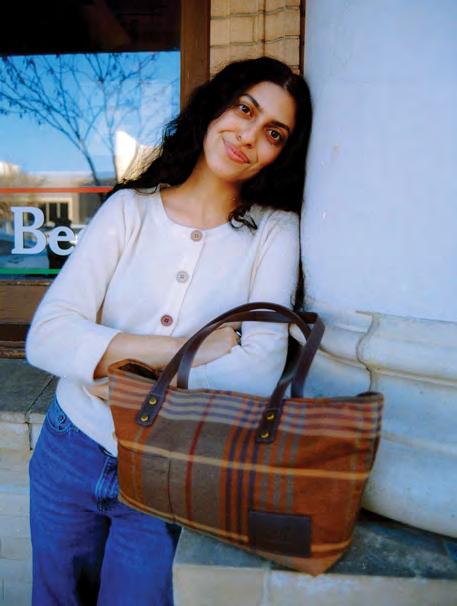
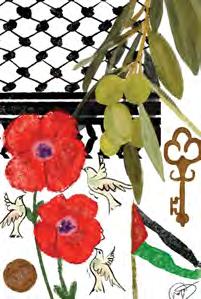
want bangs, please.” The stylist smiles, and a chuckle falls from her mouth.“Then you will not have bangs.”
“I smiled and turned back around. And as she cut my dead ends, I listened in on the women next to me and their conversations, their theories on when the war would end, exam scores, the newest hijab colour that complemented their skin tone, and if the UN would step in. Although I couldn’t muster the courage to interject, it didn’t feel like I had to anymore. In the hot, humid, creaky hair salon, I felt the most Palestinian I ever did.”
“Feeling young is rediscovering yourself over and over again, feeling young is dating myself and looking at her with wide open eyes and listening to what she is saying with all my heart. ”
“No one told me or taught me that ‘feeling young’ is an ongoing process that needs constant practice and committed actions. I always thought: it is a ‘feeling’, but surprisingly, I found out it is an ACTION.
“The action of being who you are regardless anything or anyone, the action of doing what you really love over and over again even when no one is watching and you cannot see any results yet, the action of choosing curiosity over safe, lame situations, to feel this thrill, of launching a new project, of writing a new book, of speaking your truth out loud and sometimes accepting the invitation over coffee from a stranger in a foreign country when you’re travelling solo.
“For me feeling young is every time my wings type on the keyboard of my laptop (not fingers; wings), because writing liberates me, it makes me feel like [I’m] flying.
“Feeling young is rediscovering yourself over and over again, feeling young is dating myself and looking at her with wide open eyes and listening to what she is saying with all my heart. Feeling young is an action that I promised myself to do every day, feeling young is keeping the promises you give to yourself.”
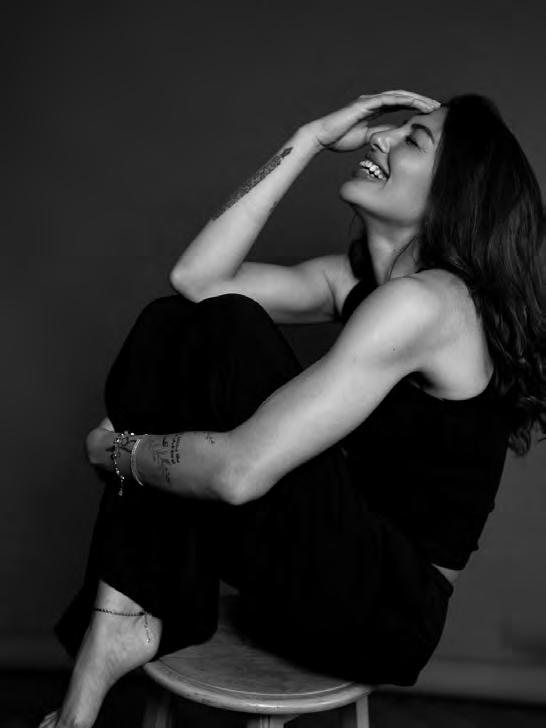
“The first time I flew to Los Angeles on my own, I thought I would feel powerful. Instead, I felt afraid.
“I was fresh off a breakup and needed to get as far as possible from the voices of expectation. I was supposed to be doing a lot very differently to what I was. LA, with its time difference and American-dream sprawl, felt like exactly what I needed. I had booked two months. Two full months on the other side of the world.
“For the first couple of days, I barely left the apartment. I slept with a knife beside the bed. My phone stayed silent for hours at a time. Everyone I knew was asleep, unreachable. I kept picking it up, unmoored without someone to cross-reference every small decision with. What should I eat? Is this normal? Does this feel right? There was no one to check with. Only me. When my parents called, I strengthened my tone. It was great. Everything was amazing. This was exactly what I had wanted. This was exactly who I had said I was.
“On the fourth day, I got a cab to a hike nearby - one I’d seen all over Instagram. I stood at the start for a moment, took a deep breath. People passed by: groups, solo walkers, dogs tugging at their leads. The sun was relentless. I climbed with my headphones in, out of breath, thighs burning, aware of my body in a way I hadn’t been for weeks.
“At the top, the city stretched out in every direction. No one was watching. No one was waiting. I felt lonely - and then, almost immediately, free.
“I sat on the bench, the sun on my face, the city endless beneath me, my phone still quiet in my pocket. I didn’t reach for it.”
“The first time I flew to Los Angeles on my own, I thought I would feel powerful. Instead, I felt afraid.”
“Tailored blazers. Crisp white shirts. Various shades of monochrome. These were the fashion styles I was bombarded with as a young girl consuming YouTube and social media style content. Minimalism and monochrome were what all the ‘cool’ girls were wearing and so, as someone in her late teens and early 20s who was still trying to figure out her style (and ultimately, who I was as a person), I decided to commit myself to the minimalist, neutral and chic look. Because surely, if I wanted to be a writer who was taken seriously, I should dress the part? But even as I added white shirts, black knitwear and blazers to my online shopping orders, something didn’t quite feel right. It didn’t feel like me. And wearing these items and looks, this feeling of discomfort was even stronger.
“When it comes to fashion, I’ve always been more drawn to the loud, bright and colourful. When I was a child, my mother dressed me in outrageously bold outfits and I loved it. And it’s these kinds of bold and maximalist looks that would make me stop scrolling past catwalk and fashion week photos on Instagram and bookmark certain outfits. However, it wasn’t until I reached the age of 25 or 26 that I gave myself the permission to dress myself in colour, patterns and shapes. And yet, once I did, this style felt right.
“Wearing bright and colourful outfits brings me a childlike joy and allows me to express myself authentically to the world around me. A bright puff-sleeved pink dress or a deep purple oversized shirt can make me feel confident, even when I’m struggling with imposter syndrome. Sometimes, the outfits don’t work too well… but I love the idea of curiosity, play and experimenting with my personal style. To be cringe is to be free, in the end.”
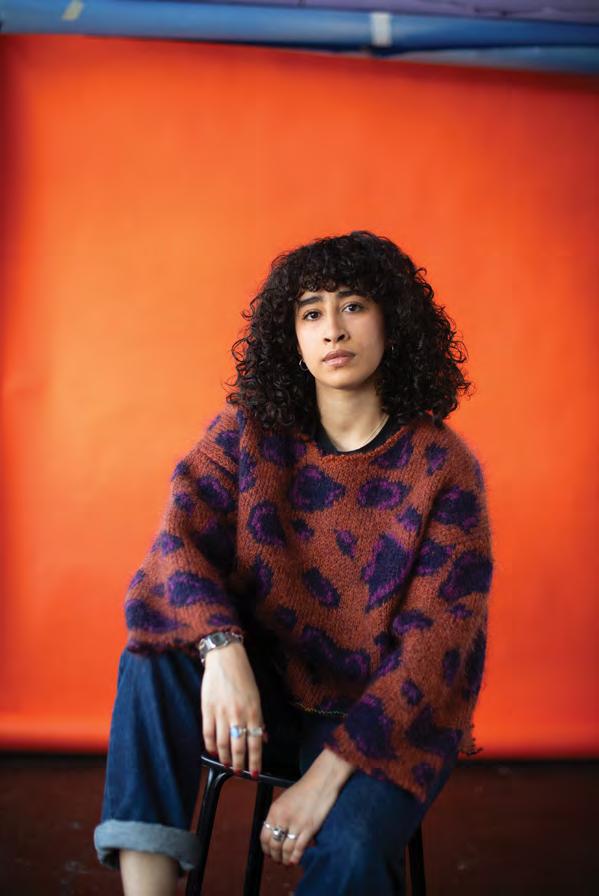
“I spent the better part of my childhood trying to grow up as fast as possible after moving to Canada from Gaza. Before that, I carried a strange dual awareness: that I had been born into an identity tethered to a place the world seemed to have long abandoned, and yet it was a place that had never once abandoned me. Gaza held me. Its sea, its courtyards, its jasmine-scented evenings shaped my earliest understanding of beauty. Even under occupation, my formative years felt threaded with something magical.
“Years later, I entered my twenties almost without ceremony, life marked by learning curves and necessary pivots. And then the killing began, and the last two and a half years turned my childhood memories into something that felt like a eulogy. Tragedy accelerates you. It dims colour. It convinces you that wonder is indulgent.
“Over the holidays this past year, my friend Marwan surprised me with photos from our school yearbook from back when we were growing up in Gaza. There I was in a tiny pixelated picture beside a short quote about what we loved and who we wanted to be. I had written that I wanted to be a writer and illustrator and that I loved reading because it ‘helps imagination to be nicer’.
“Somewhere along the way, I had forgotten about that girl who met the world bewildered and open.
“I began asking myself when I had last experienced or learned something new for the first time. Seriously. As adults, routine and repetition become hallmarks of ‘maturity, discipline, growth.’ Meanwhile, the foundation of our lives as children is built on encountering the world for the first time and embracing the unfamiliar.
“Weeks after having this thought, I found myself in Australia, and travel began its alchemy.
“I had sugar cane juice for the first time since I was a child in Gaza, hanging off my dad’s sleeve as he squeezed us through the line at a juice stand. The taste bloomed on my tongue and memory rushed back like it was happening for the first time. One night after a torrential downpour, I walked to the Sydney Opera House and FaceTimed my best friends, giggling about how I felt like I was inside a scene from Finding Nemo.
“Another day, I crouched on a sandy beach, something I had not touched in years living in Canada, digging for imperfect little seashells.
“Nothing was planned. I just kept stumbling into joy; carpool karaoke with Zein and Maddie on the way to dinner. Staying up too late at Maddie’s house, sitting cross-legged on the floor getting ready in front of a mirror, laughter echoing past midnight. Stargazing above Coogee, the sky impossibly wide.
“On my last night I was sharing one of the sweetest moments and went into the water at Palm Beach to dip my feet in as a farewell after sunset. Instead, a wave nearly swallowed us whole, leaving us half drowned but bursting into pure, unadulterated laughter at the chaotic thrill of it all.
“Later, catching my reflection in the mirror, I saw a glimmer of that younger Farah again, the one full of wonder. I felt so unbelievably grateful at the happiness those several weeks gifted me.
“The yearbook felt like a homecoming, a catalyst. Travel was the conduit, a privilege that carried me across oceans only to return me to myself. The friendships and unexpected connections were co-conspirators in joy, witnesses to something resurrecting. To be human is to move toward what stirs us, even when time insists on narrowing the frame. After all, we are infinite beings in finite bodies. In Australia, I did not transform into someone new. I softened back into who I had always been. Youth, and to ‘be young,’ I realised, is not a number nor an age but a way of meeting the world, unscripted, astonished, alive!”
Dior SS26 unfolds between night and day, set against whimsical, space-like landscapes of the Arab world, from the valleys of the Levant, where shepherding remains a way of life, to the Arabian Gulf, connecting the GCC and shaping trade, travel, and daily rhythms. These settings capture both intimacy and continuity, grounding fantasy in lived realities.
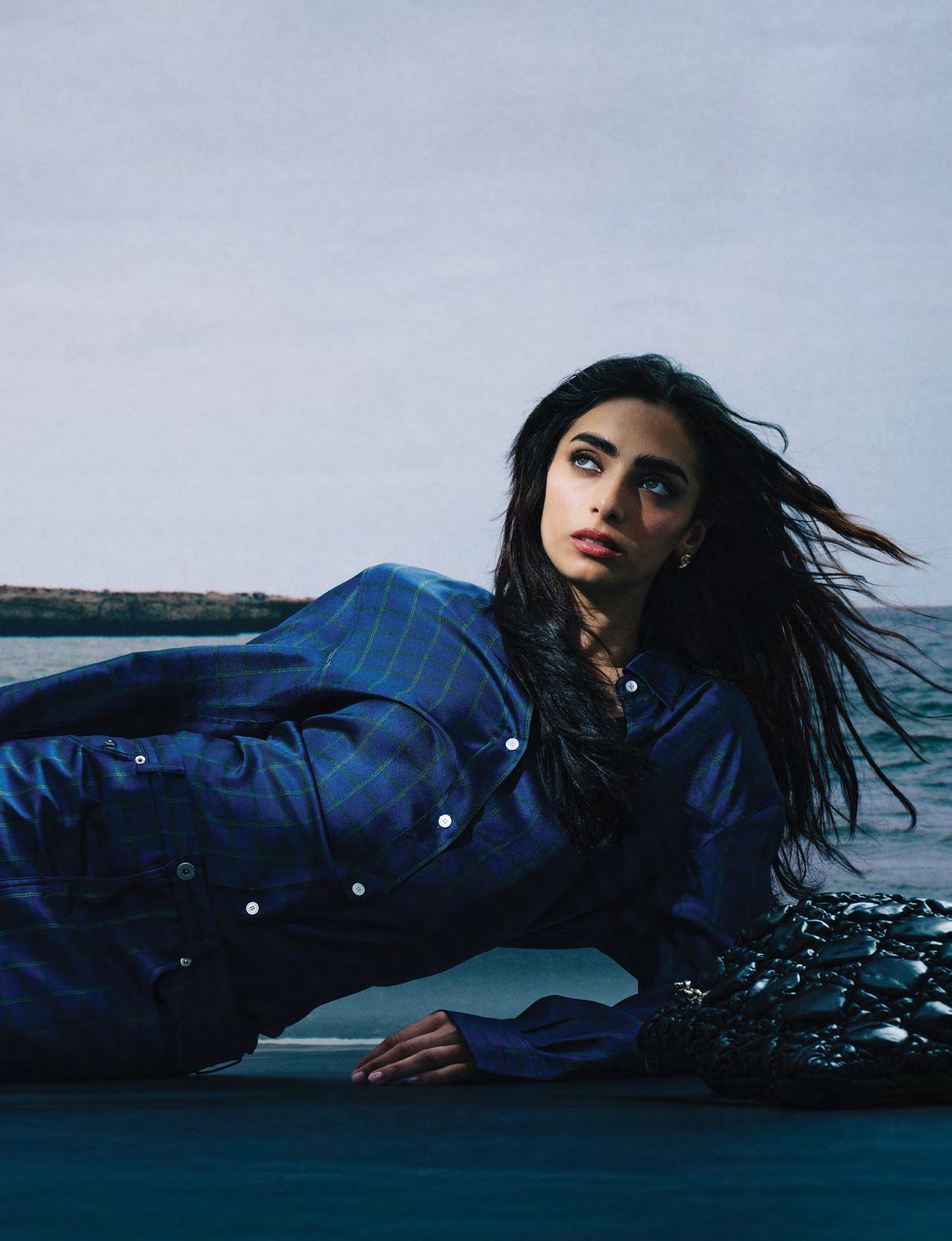
In parallel, Dior’s silhouettes become fragments of memory, shifting between harmony and tension as past and present move in dialogue. Here, they emerge as an evolving language, instinctive yet deliberate, where heritage is continuously reshaped through imagination.
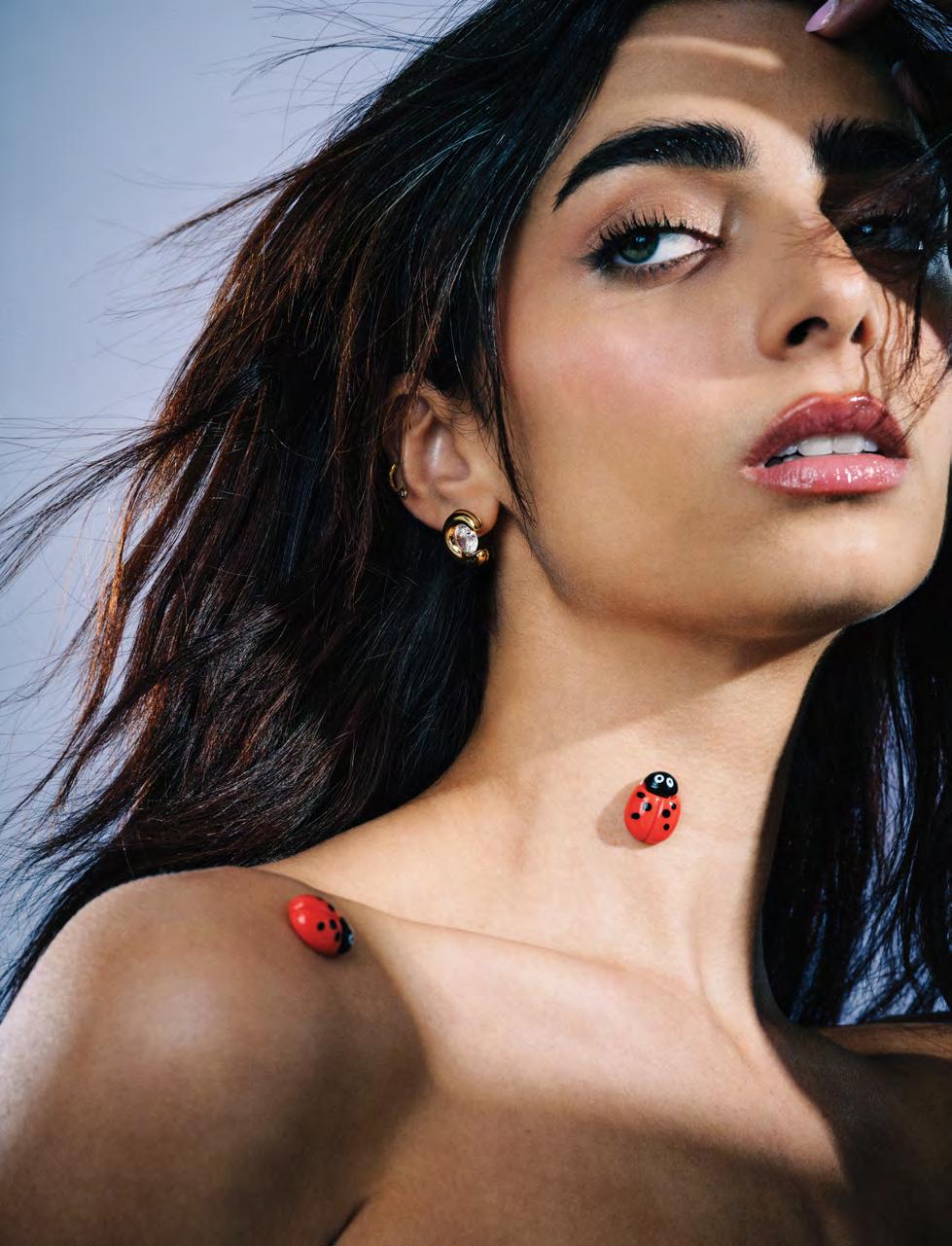
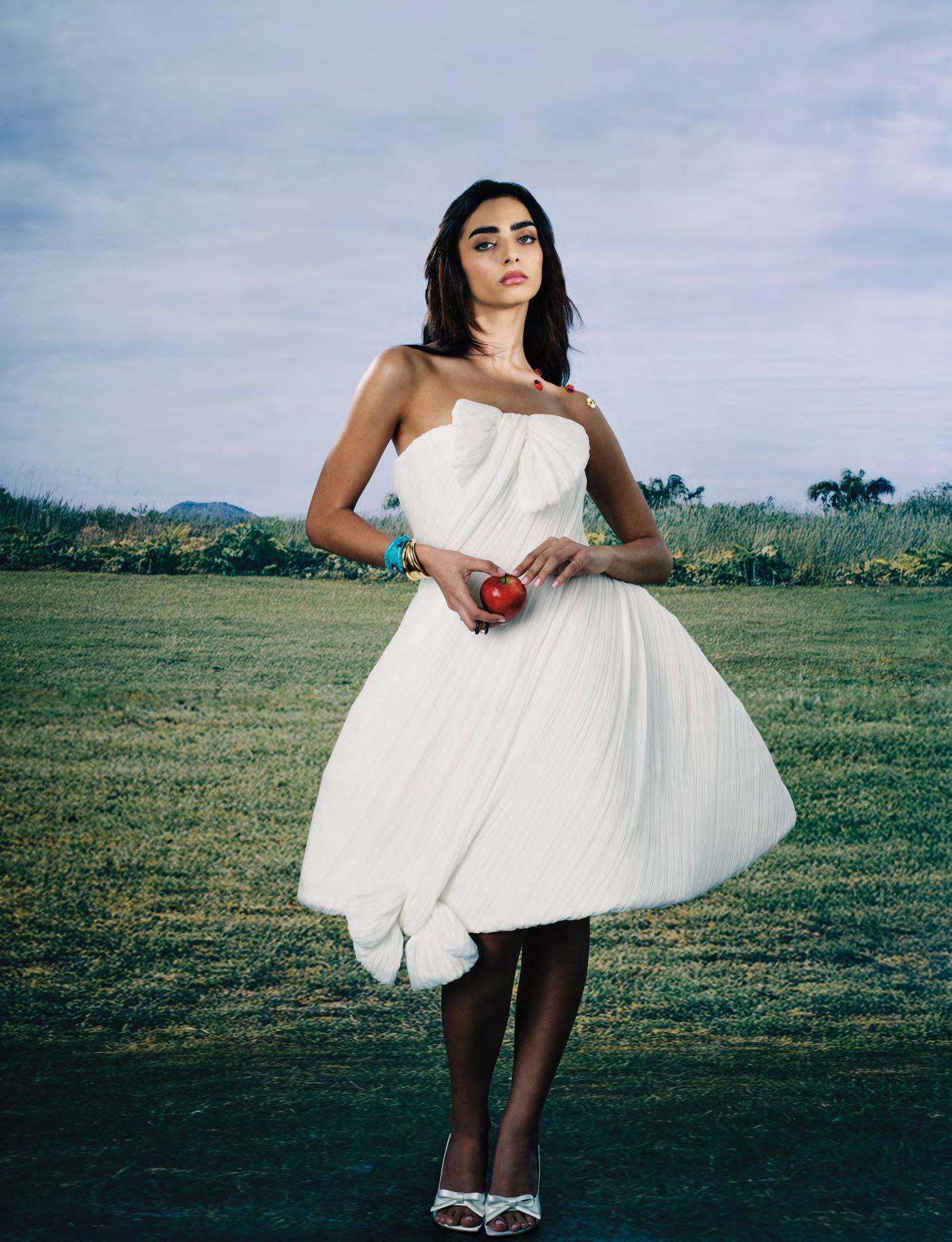
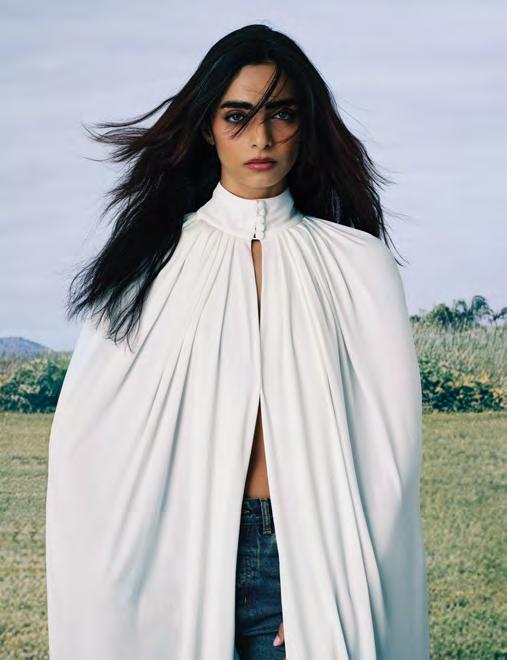
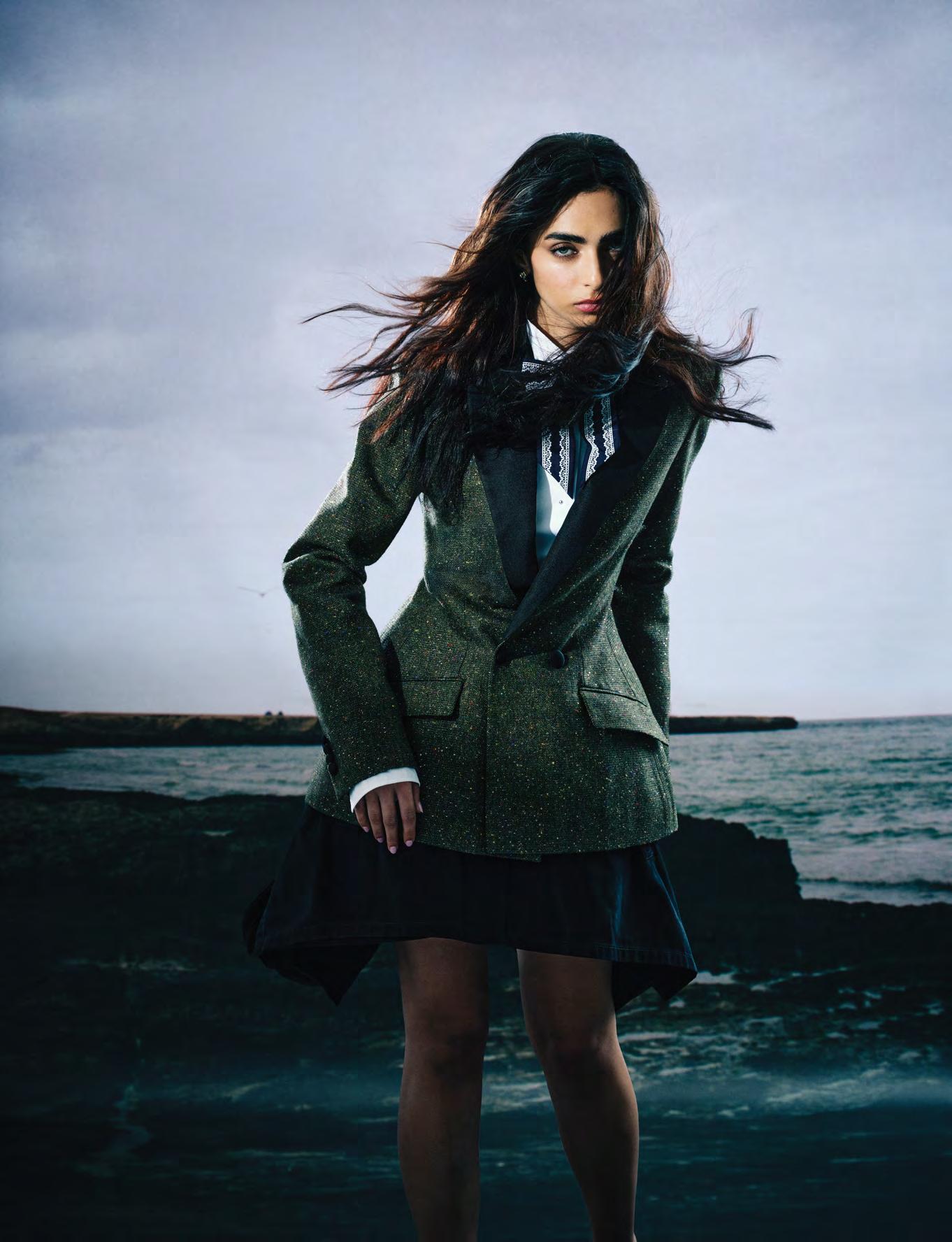
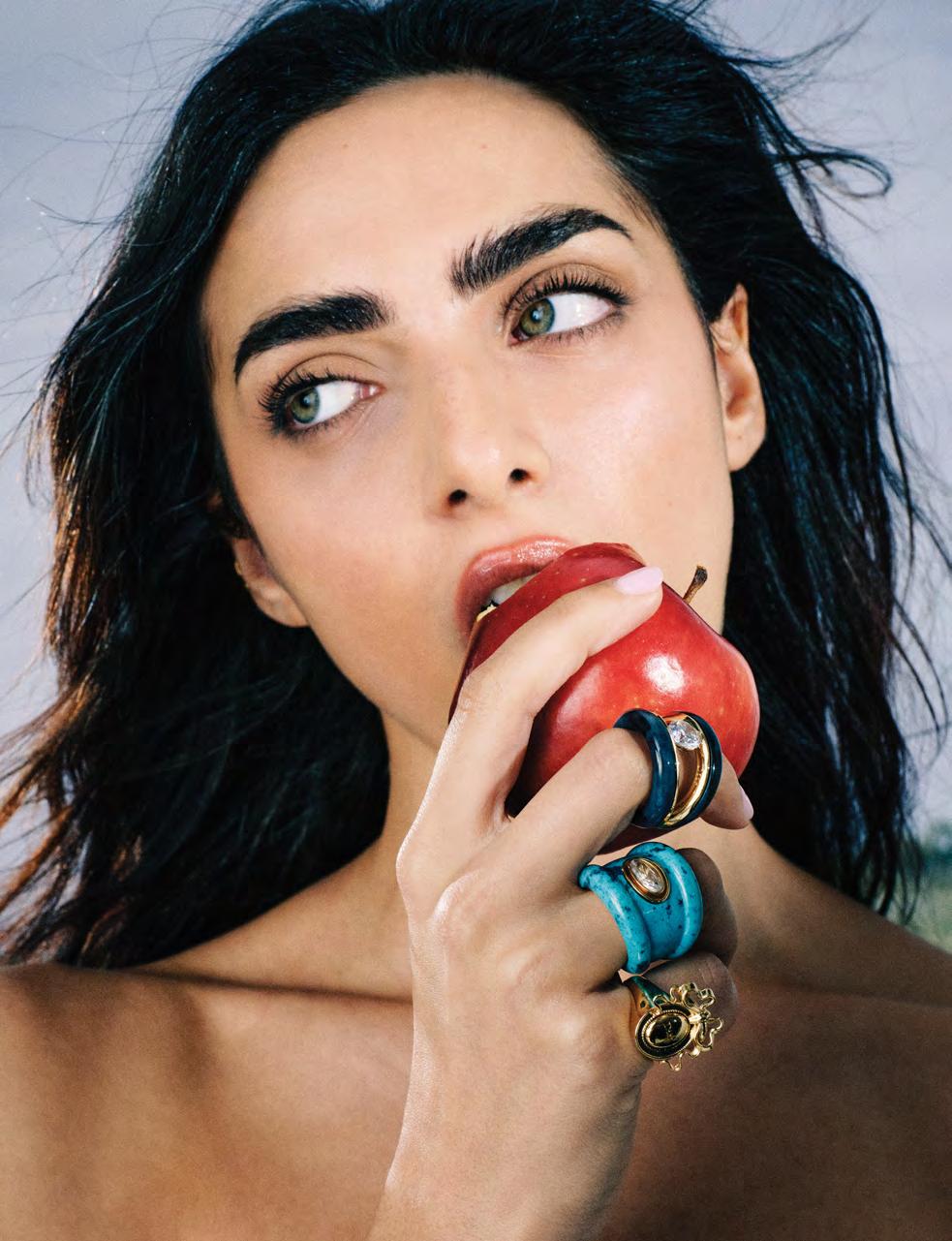
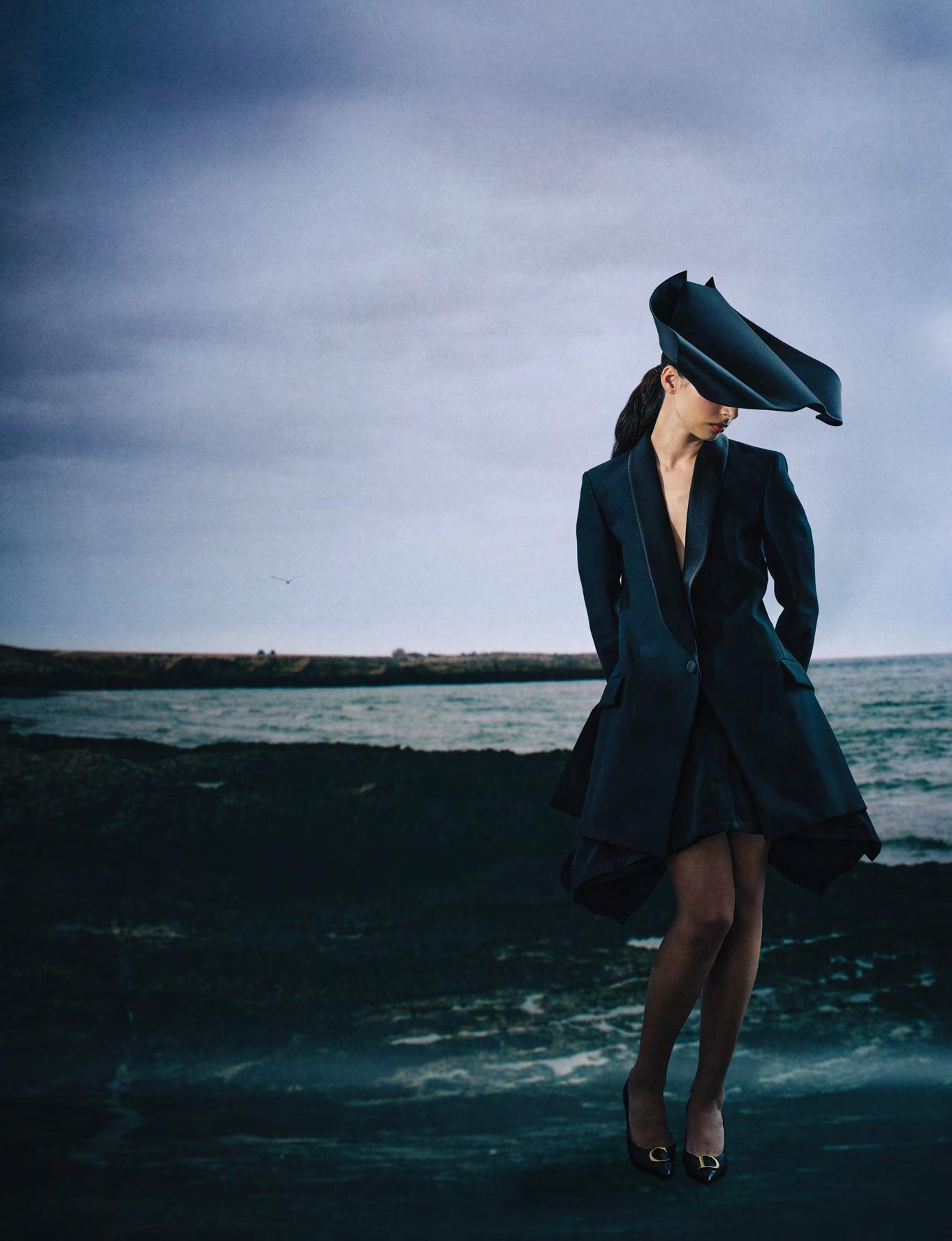
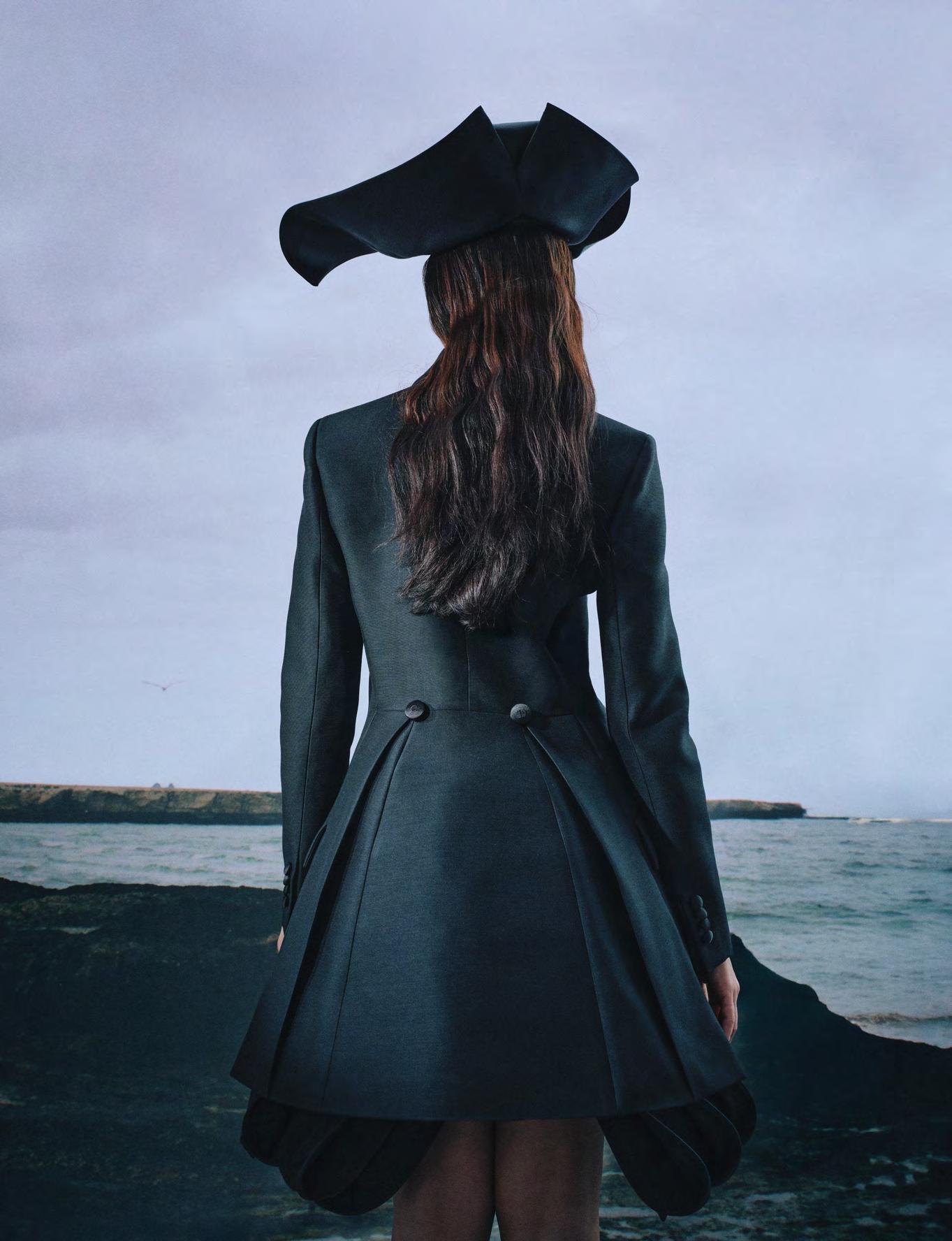
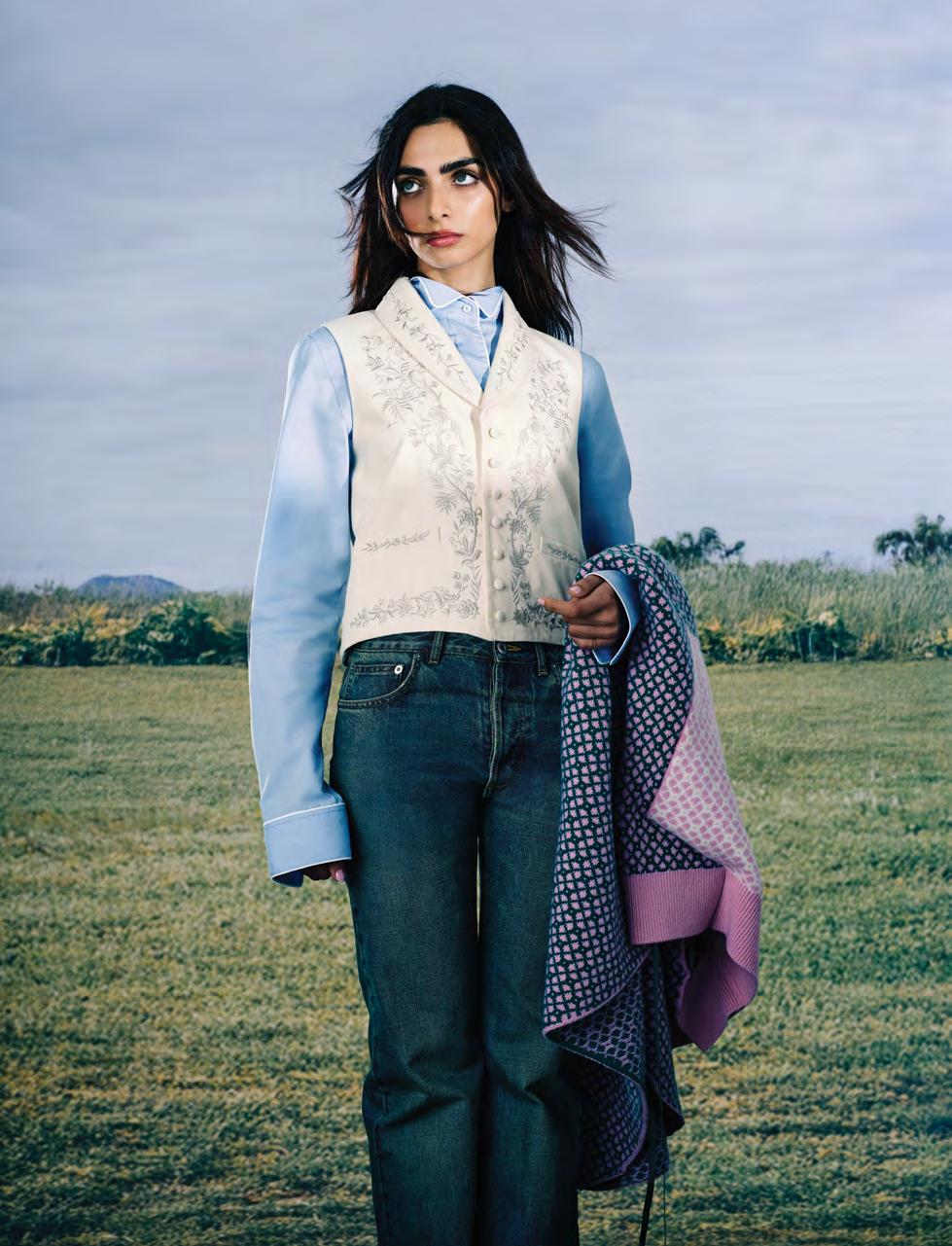
In a world collapsing into noise, Yasmine Hamdan searches for fragile pockets of freedom within.
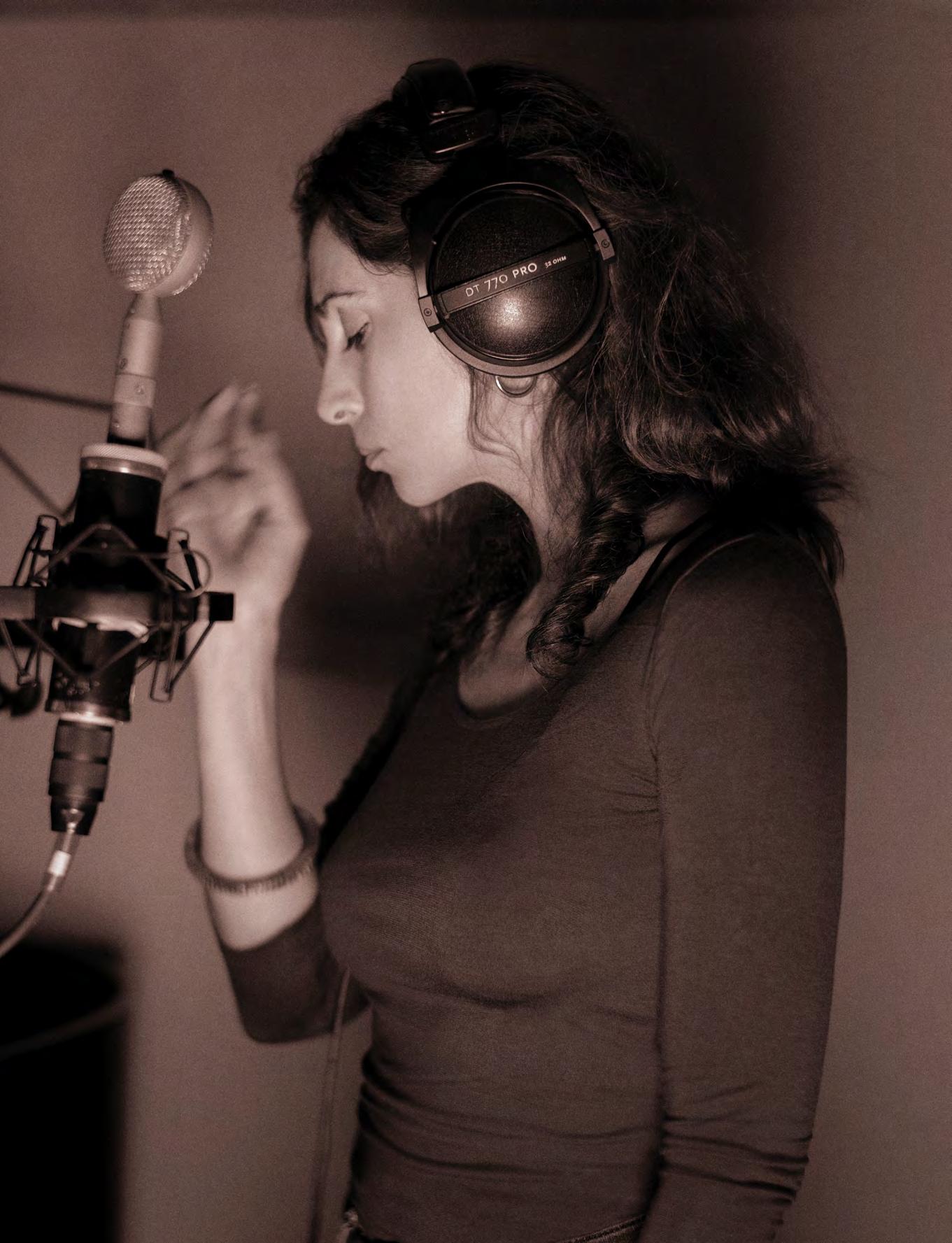
There is a version of Yasmine Hamdan that exists in the archives of music writing. A pioneer, innovator, the architect of an Arabic electronic sound way before anyone even thought of giving it a label. She is half of Soapkills, the voice that carried the underground of postwar Beirut into something mythic. The artist who, across Ya Nass and Al Jamilat, did not engage with the boundaries typically imposed on Arabic music, expanding it from within rather than reframing it for elsewhere.
And then there is the version of her that joined me on a call from Europe, somewhere between tour dates in 2026. We only had thirty minutes to speak. Cameras off.
Hello?
Her voice arrived soft, low, almost receding into itself but steady, present, persistent.
Words arrived slowly, heavy. I felt myself leaning forward and staying as still as I could, almost as to not interrupt her flow of thought. Her words felt precious. Important. Laboured for. She paused often, searching for the right phrasing, on the tip of her tongue, circling, sometimes she would abandon a sentence midway, but she always wanted to return to it.
At times she would slip into French. It was not because it was more precise, but because even there, precision felt just so out of reach. I could hear it before she said anything directly: the weight of everything happening – Lebanon, Gaza, the region once again on the brink – pressing into the spaces between her words.
I had prepared a lot for this interview. Pages of research and references. A list of questions about her music, the eight-year absence, her return with I Remember, I Forget. Questions about identity, language, industry, legacy.
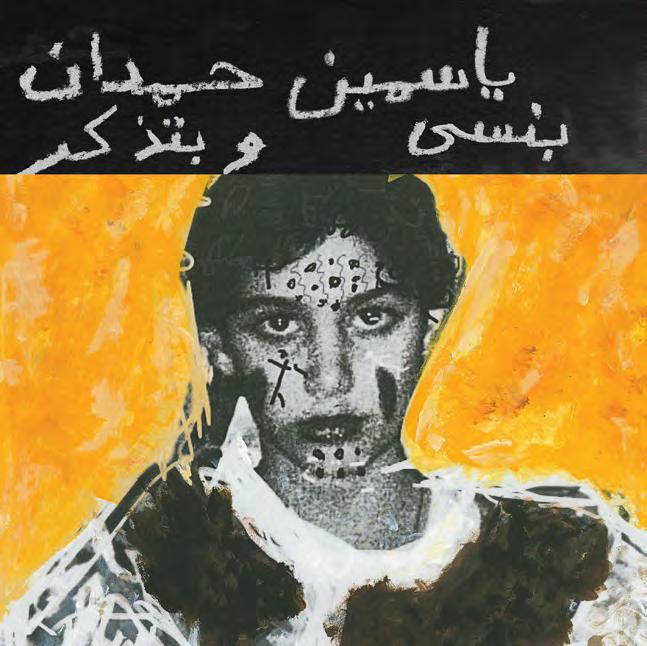
We never got past the first question. Freedom, or the impossibility of it.
The question was simple, at least structurally: what does it mean for you to be free?
“I think it has to do first with the relationship I have with myself,” she begins. Then stops. Reframes. Starts again. “Freedom is relative and it can be an illusion.”
What emerged from this point on was not so much an answer but a slow dismantling of the premise itself. For Hamdan, freedom is not a condition one reaches or attains. You cannot achieve freedom. It is something closer to an internal negotiation. It is fragile, temporary and constantly under threat.
“It’s an aspiration,” she says. “Do you have this inner space that allows you to daydream, to contemplate, to imagine things differently, even to step away a little
“I didn’t want to continue on playing a certain game,” she says. “Or being just productive, because this is how things are.”
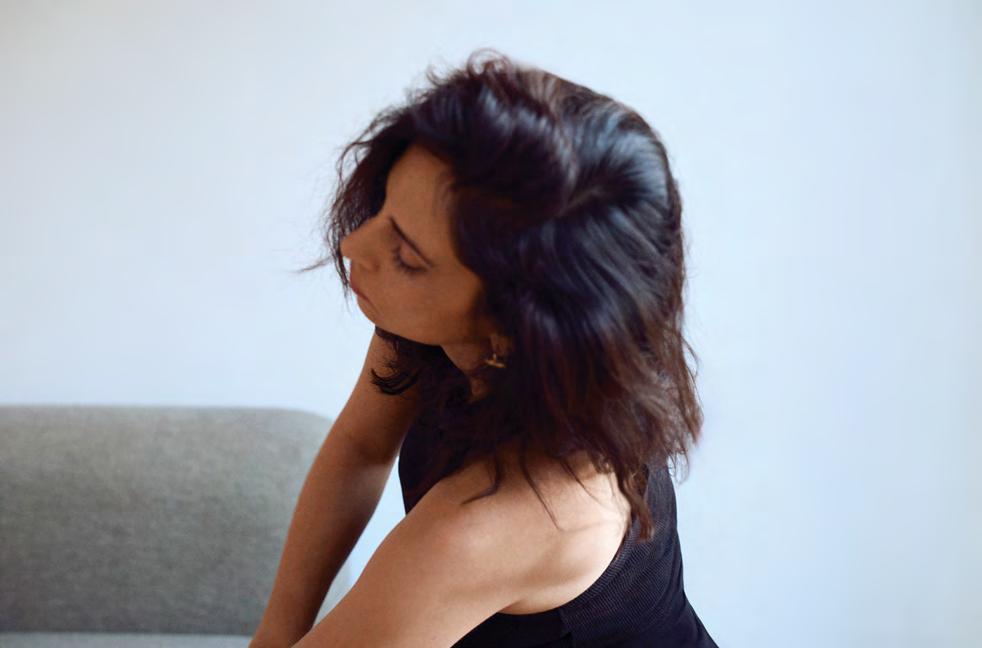
bit from your anxiety?” The way she frames it, freedom is not external. Freedom is the ability to create “small pockets” within yourself – moments of refuge carved out against a world that feels increasingly unliveable.
“At the moment everything looks very distressing,” she says. “So, how am I able to not panic? How are you able to create some continuity?” The question hangs there, unanswered.
Between the years of 2018 and 2025, Hamdan completely disappeared.
It was not in the dramatic, industry-manufactured, strategic silence sense. She stopped because she had to. “I didn’t really have the choice,” she says. “I felt that I was kind of almost drained and I said to myself, I’ll have a one-year break.” One year extended into eight.
Lebanon collapsed. The 2019 protests. Economic freefall. The 2020 Beirut port explosion. COVID. War. Accumulated crises, one folding and unfolding into the next. “It became a bigger pause,” she says. “Because I had to.”
She describes it as confrontation. A confrontation with grief, exhaustion, with the machinery of the music industry itself. “I didn’t want to continue on playing a certain game,” she says. “Or being just productive, because this is how things are.”
In the way music is now defined by constant output and the passive aggressive coercion of relevance, Hamdan’s absence reads, in retrospect, as something deliberate, even if it did not begin that way. A refusal.
What followed was not rest, exactly. “I needed also to connect
to myself to do some cleaning up,” she says. “And face some inner tensions.”
She describes what it was like to allow herself to doubt everything from her work to her direction to even her own abilities. “I was going through a lot of insecurities but it’s okay,” she says. “You have to allow all the spectrum of emotions to exist sometimes in order to advance.”
She did not talk about it in the language of healing, or with any romanticizing. No clean arc of breakdown-to-rebirth. Just duration. Weight. Process. “It was not easy,” she says plainly.
And always, in the background, and the forefront, Lebanon. “You’re burdened by heavy emotions,” she continues. “Pain, suffering, fear, anger, anxiety for the people you love, guilt.” Guilt, especially. Hamdan has called Paris home since 2005. But as she speaks, it becomes clear
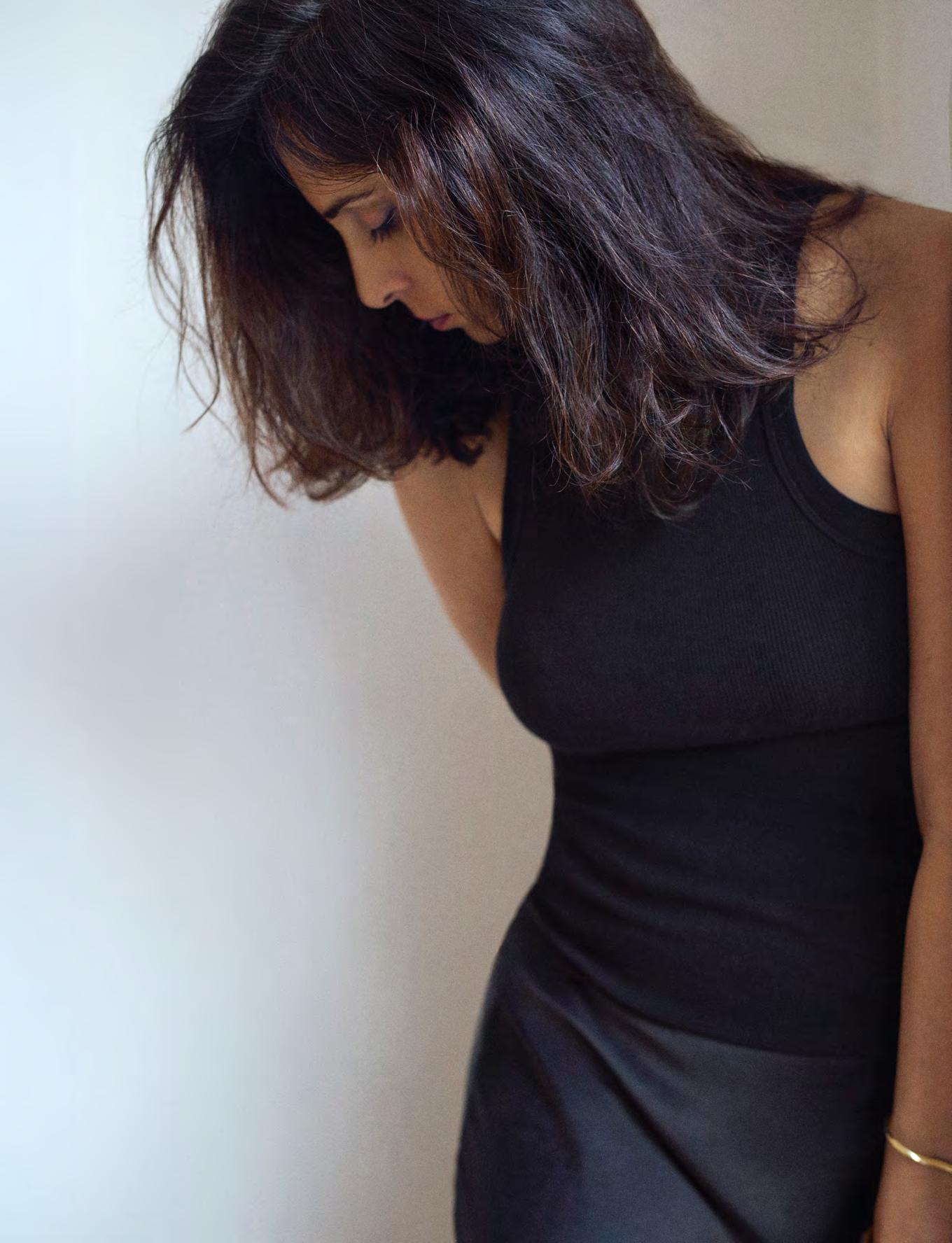
“I’m not optimistic. But I always look for hope.”
that geography, for her, is not a stable concept. “I’ve always lived in two places at the same time,” she says. “You become a bit confused about where you are and what you are living.”
There is a dissonance she repeatedly returns to: the reality of her life in France, stable, safe and intact, against ongoing instability unfolding in Lebanon, experienced in real time through a phone screen. “In reality, I live in France. My life is good here,” she says. “But I’m carrying all this with me.”
Her song “Hon,” from I Remember, I Forget, was a response to the Beirut explosion. But as she describes it, it is equally about the experience of watching again and again from afar as catastrophe becomes routine. “A déjà vu,” she calls it. “Reliving it over and over.”
If there is a single thread that runs through the conversation, it is the inability to look away. “All the news you get is from your social media,” she says. “These images they break your heart.” She describes her relationship to her phone in almost clinical terms. “I look at myself addicted to watching the news,” she says. “I feel that I’m enslaved that I am losing some of my freedom.”
The word “freedom” returns here but this time it is inverted. It returns not as aspiration, but as erosion. “It’s weaponised against you,” she says. “It scatters your mind, your soul, your heart.”
What concerns her is not only the emotional toll, but what she calls an “inner violence” produced by the constant exposure. This accumulation of rage, frustration, helplessness that has nowhere to go.
“And this inner violence, how do you project it?” she asks. “On
who? And how does it resolve?” There is no answer we conclude. Only the observation that not everyone is able to metabolize it. “This is how everybody is becoming very polarized,” she says. “And it’s normal but it’s a big challenge.”
At one point, as she is searching for language, she lands on an image. “It’s like an autoimmune disease,” she says. “It creates chaos and then chaos becomes the normal.” She pauses. “I feel like we’re in this abnormal normal.”
The phrase reframes everything – the wars, the scrolling, the emotional saturation – not as temporary crises, but as a condition that has already settled into permanence. “I don’t know if we’re winning,” she adds quietly.
If there is any resolution, it does not come in the form of certainty. “I’m not optimistic,” she says. “But I always look for hope.” The distinction matters.
Optimism implies expectation. Hope, in her framing, is closer to discipline, something one chooses to maintain even in the absence of evidence.
“You cannot give up,” she says. But even that feels provisional. “I don’t think we will have any kind of clarity,” she admits.
Near the end of the conversation, the scale collapses. After speaking about war, disintegration, systems, violence and circling questions with no answers, she lands somewhere unexpectedly intimate.
“The only thing that sometimes makes me feel happy is to think about my cat,” she says. “When you connect with an animal, there’s something magical about it. It connects you with an inner joy that is untouched.”
Today everything feels mediated through screens, repetition, and distance. So, the idea of a connection without language without interpretation or negotiation is, in her telling, a kind of relief. “I just want to be with my cat,” she says.
In the years she stepped away, the music industry moved in the opposite direction. It became faster, louder, more constant. Hamdan did the opposite. She disappeared. Returning only when she had something to say.
In that sense, I Remember, I Forget is a product of that silence –the result of years spent absorbing, processing and resisting.
But to frame it purely in musical terms would miss something essential. Because in those thirty minutes, we never spoke about production, or collaborators, or even specific songs beyond passing reference.
We spoke about survival. About how to remain intact psychically, emotionally and artistically when everything around you feels like it is collapsing into noise.
Freedom, as she defines it now, is not a fixed state. It is not even stable. It is the ability, however briefly, to carve out space inside yourself to think, to feel, to grieve, to imagine without being completely overtaken. A pocket. A pause. An aspiration. ■
photography FOUAD TADROS
styling POLINA SHABELNIKOVA
makeup MICHEL KIWARKIS FOR CHANEL
CHANEL Les Beiges is re-imagined through the light, air, and elemental textures of the Arabian Gulf.
Set between sea and sky, this CHANEL Les Beiges editorial repositions beauty within the raw, elemental landscape of the Arabian Gulf. Drawing from a moodboard shaped by water, sand, and ground, the shoot moves away from constructed glamour and into something more instinctive, where skin becomes part of the environment rather than separate from it.
The visual language is intentionally minimal. Faces are captured against shifting horizons, grains of sand, and reflective surfaces, allowing the interaction between body and nature to lead. Light is not controlled but observed, echoing the soft diffusion of coastal air and the intensity of the sun as it touches skin. This approach aligns with the essence of Les Beiges, a collection built around effortless radiance and the idea of a natural, sun-kissed glow.
Textures remain breathable, almost imperceptible. Complexion products enhance rather than conceal, creating a luminous finish that feels lived in, not applied. Subtle tones replace heavy pigment, mirroring the palette of the landscape itself, warm sands, soft beiges, ocean reflections, and the faint flush of heat on skin.
There is a quiet tension in the imagery. The human figure exists within these environments but never dominates them. Instead, it adapts, absorbs, and reflects. A face catches light like water. Skin holds warmth like sand. Movement becomes slow, deliberate, almost meditative.
Through this lens, Les Beiges moves beyond Parisian ease into a more expansive narrative. It becomes a study of light as it travels across geographies, and of beauty as something shaped by place. Here, CHANEL does not impose an ideal. It listens, translates, and allows nature to define the glow.
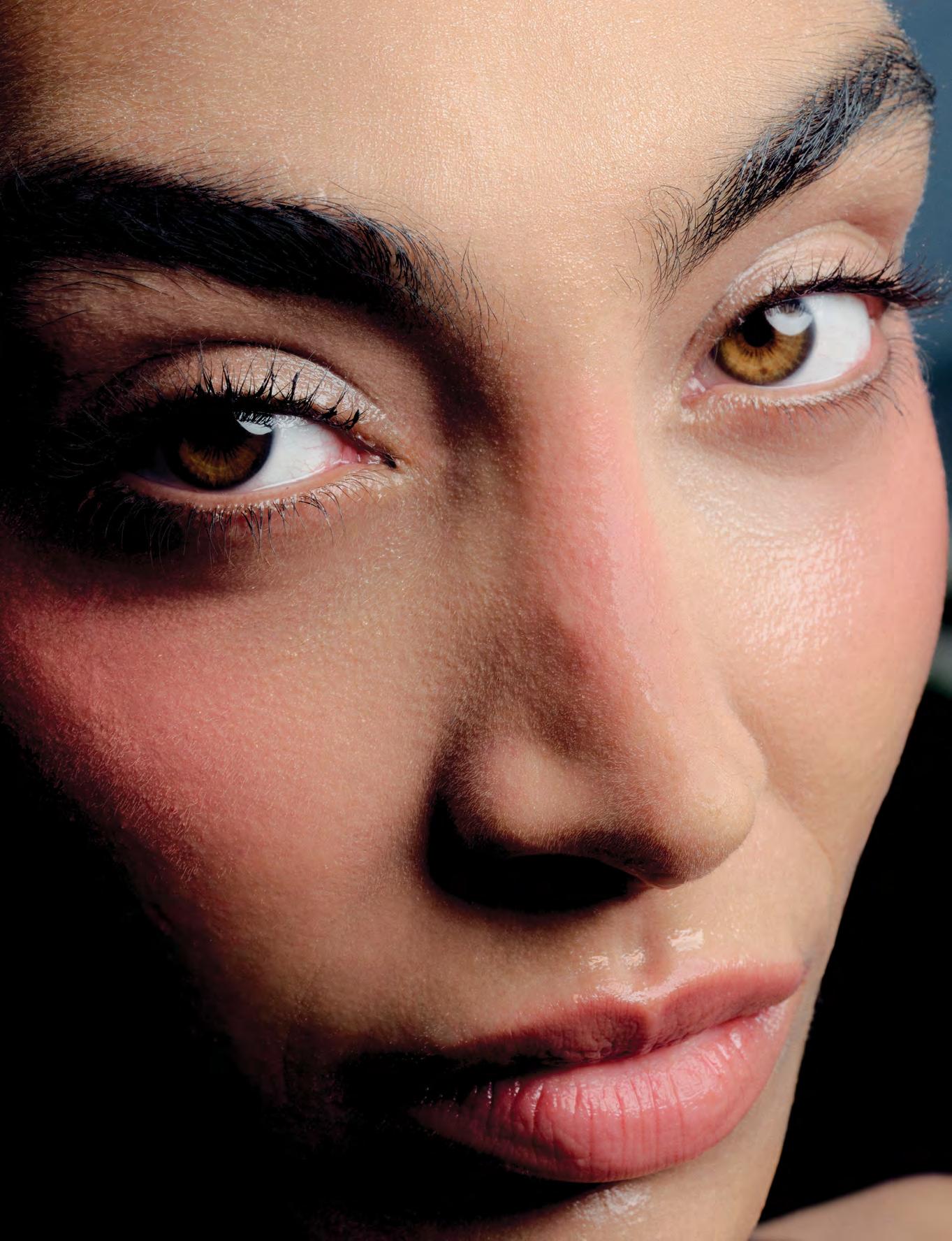
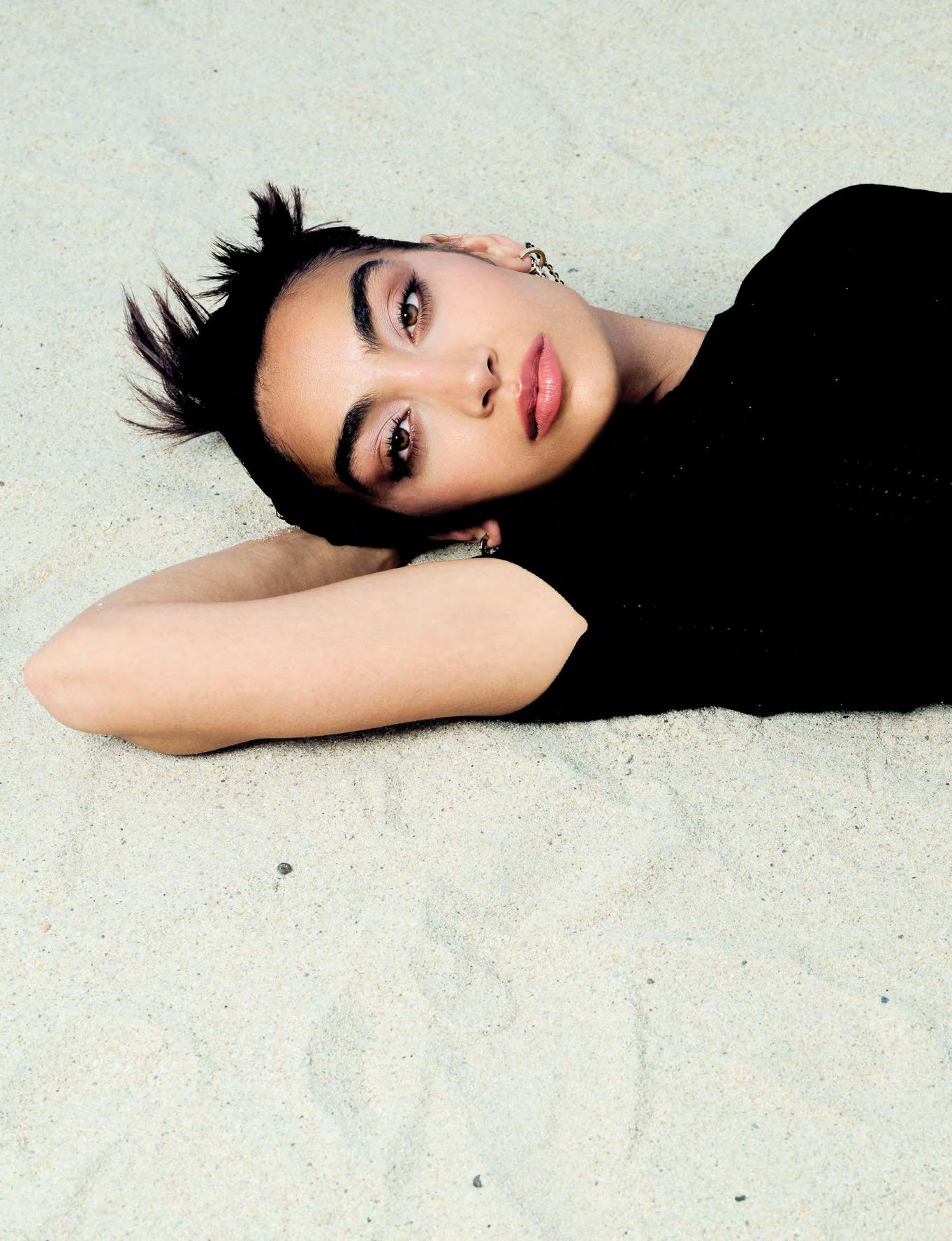
192-193
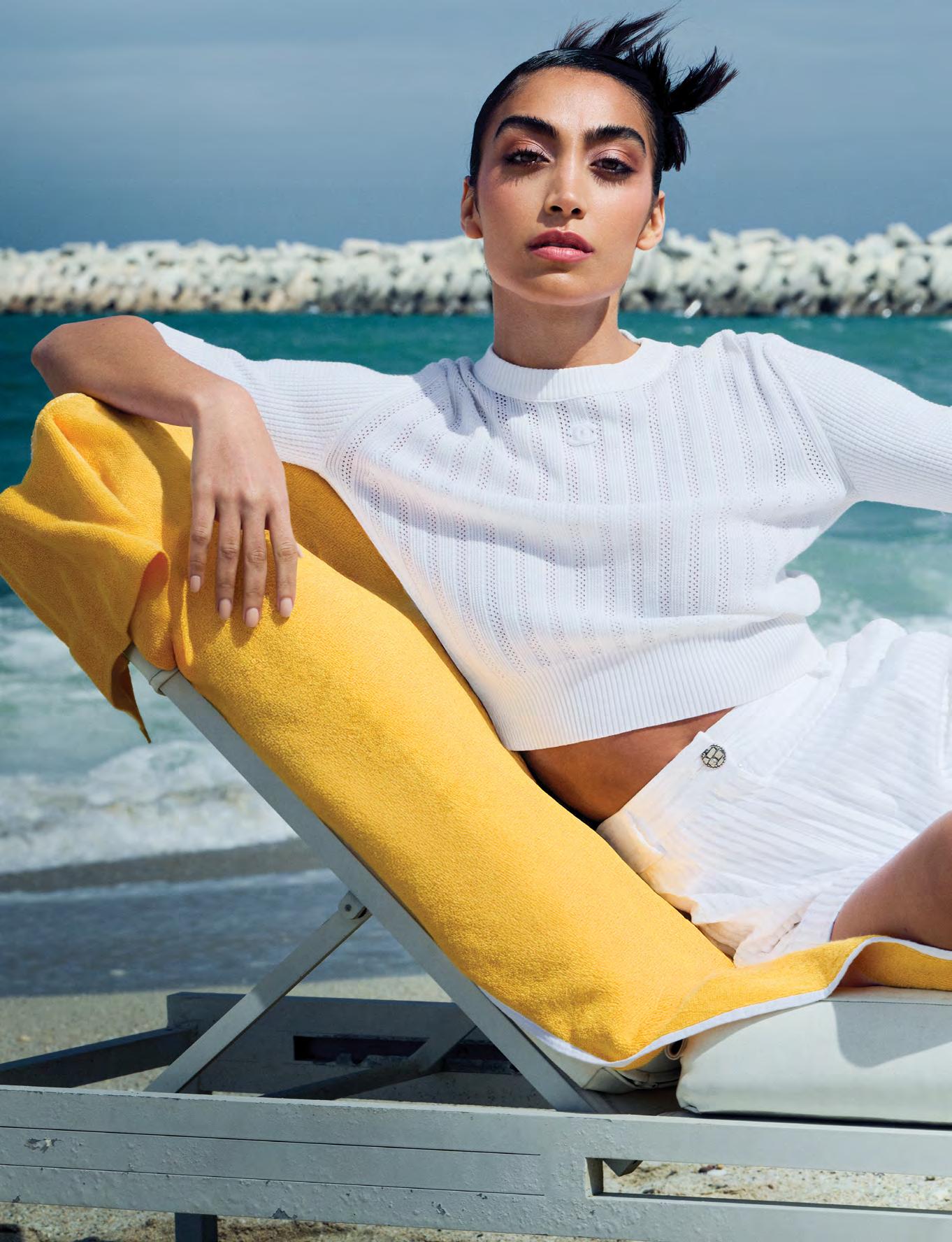
blush, les beiges healthy glow blush in sorbet, eyeshadow, les beiges healthy glow eyeshadow in soft, mascara, les beiges mascara in black, highlight, les beiges highlighting powder in lumière d’été, nail polish, 435 in garçonne, CHANEL
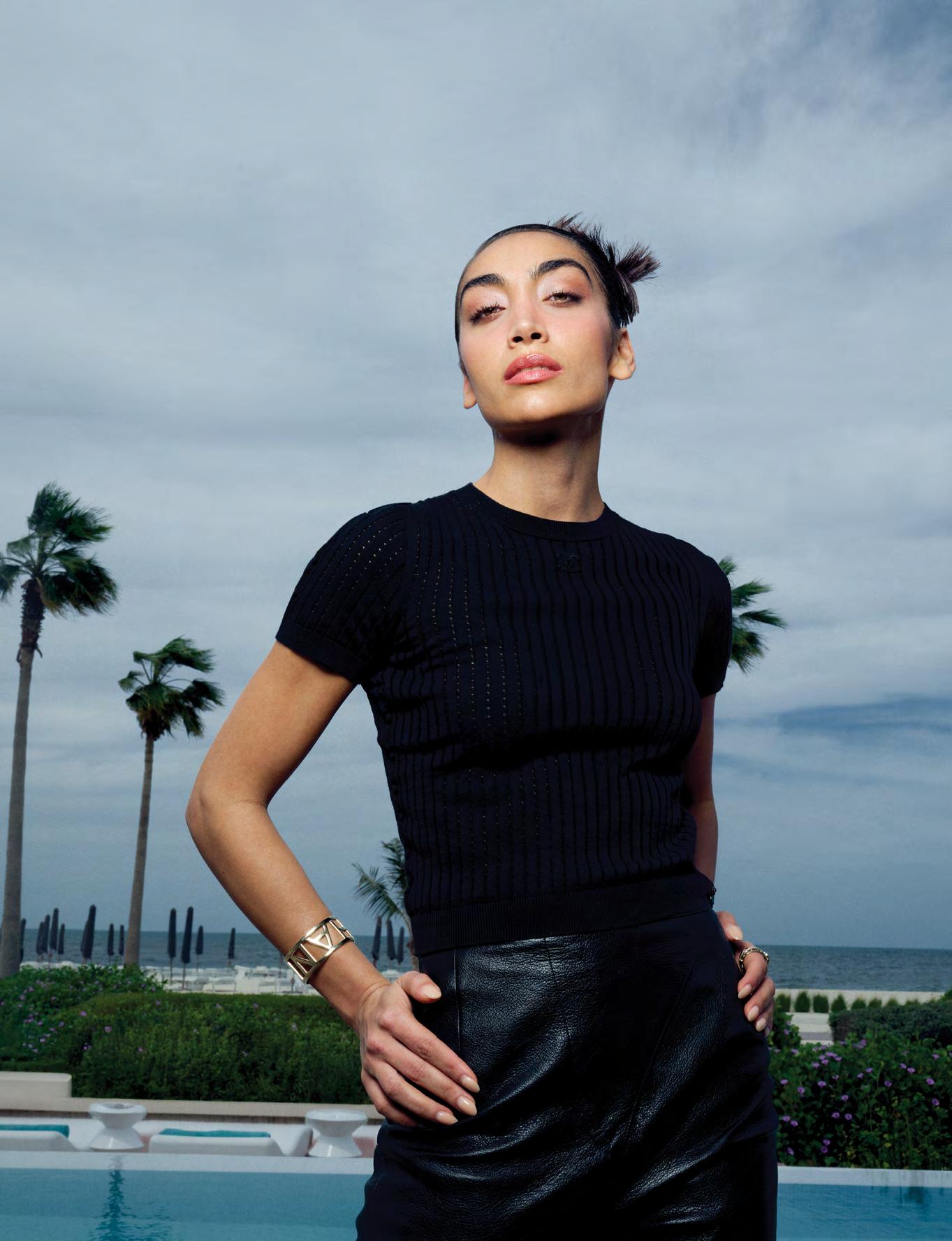
blush, les beiges healthy glow blush in sorbet, eyeshadow, les beiges healthy glow eyeshadow in soft, mascara, les beiges mascara in black, highlight, les beiges highlighting powder in lumière d’été, nail polish, 435 in garçonne,
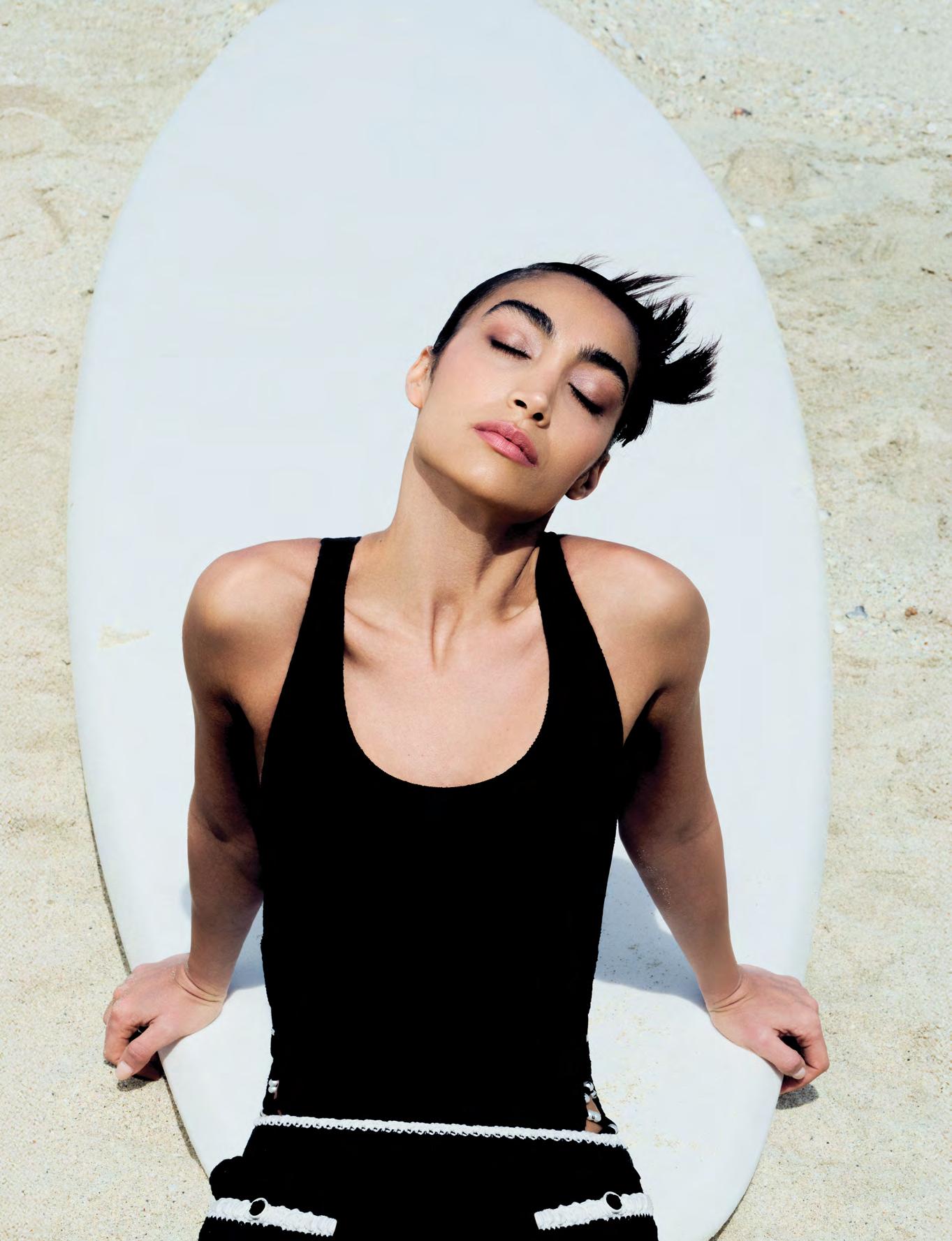
blush, les beiges healthy glow blush in sorbet, eyeshadow, les beiges healthy glow eyeshadow in soft, mascara, les beiges mascara in black, highlight, les beiges highlighting powder in lumière d’été, nail polish, 435 in garçonne,

As identity becomes product, the pressure to become fixed is inescapable. These MENA creatives are pushing back.
words MAI EL MOKADEM
In 2026, identity has a shorter shelf life than ever. Pick a lane. Build a brand. Stay consistent. Monetize the version of yourself that performs best and archive the rest.
However, being YUNG has never been about stillness. It’s about movement — between disciplines, identities, and versions of yourself. It’s about staying porous in a world that rewards the monolithic.
For this anniversary issue, we asked a cross-section of MENA creatives what the word means to them now. Actress May Calamawy, singer-songwriter Juno, fashion designer Youssef Drissi, DJ Youssef Awadly, artists Nour Shoukry and Faten Abu Bakr, and the founders of design studio CATFISH Objects each answered the same question: In an automated world, what does being YUNG mean in 2026?
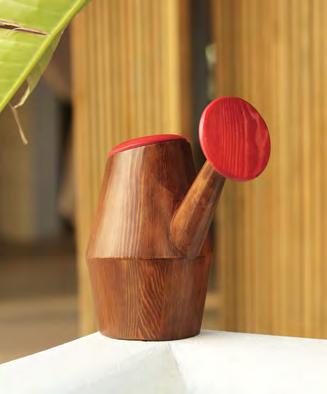
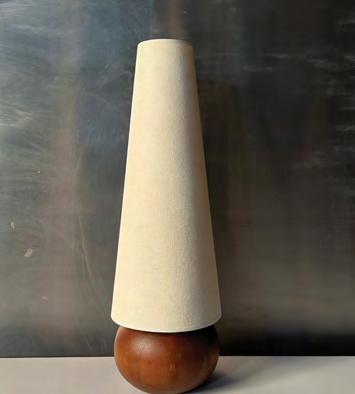
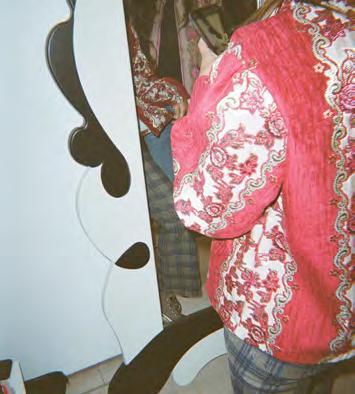
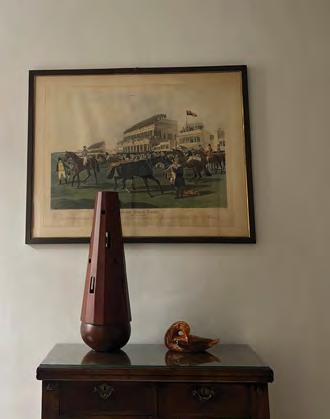
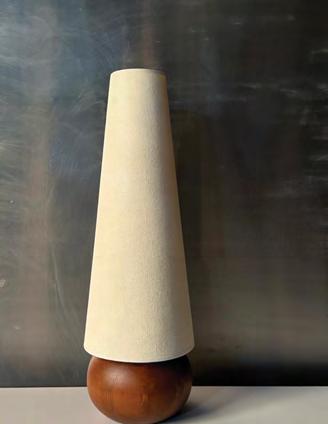
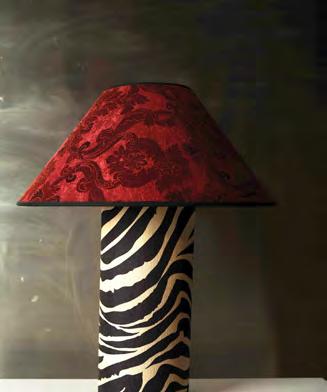
The longer you stay where you are, the more you risk becoming legible, predictable, contained. Former YUNG cover star and Palestinian-Egyptian actress May Calamawy understands this intimately. For her, walking away is sometimes the fastest way to move forward.
Before Moon Knight, before becoming the MCU’s first Arab superhero, she passed on a lead role she had already booked. “It was terrifying,” she says to YUNG. “I had never booked a lead before, and the project itself was strong. I couldn’t fully explain the unease.” The acting industry can operate on a scarcity mindset, and walking away — with no clear reason — is seen as irrational. However, for Calamawy, that unease came from gut, instinct, and direction.
“Discomfort isn’t always fear. Sometimes it’s intuition guiding you toward what’s truly meant for you.” A couple of weeks later, Moon Knight arrived. The point isn’t the payoff, rather, that intuition is your only North.
Across disciplines, the pattern repeats. For Berlin-based, Egyptian singer-songwriter Juno, AKA Jannah Emam, risk meant a clean slate. Leaving Cairo for Berlin meant leaving behind an audience, a scene, a name. “Had I stayed in Cairo, it would have dimmed a light in me.” In Berlin, she became — in her words — “a nobody.”
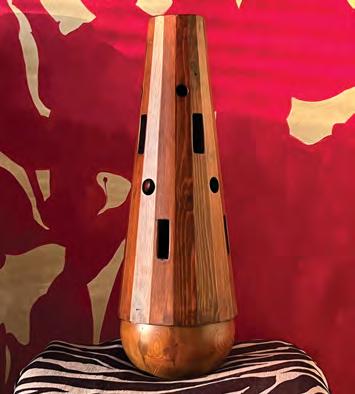
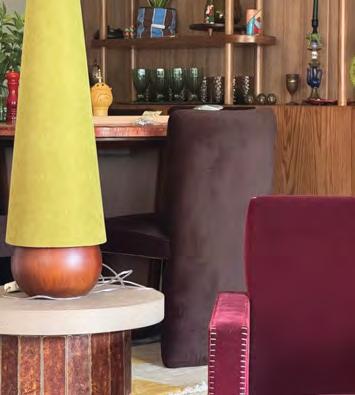
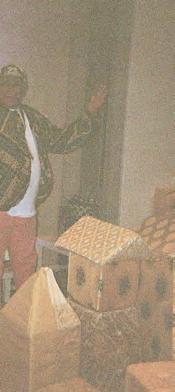
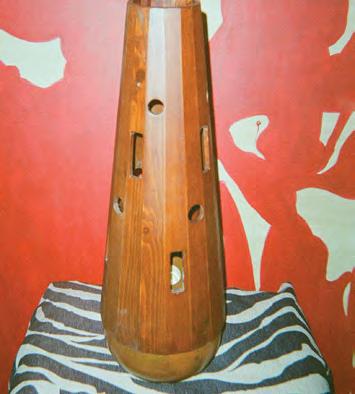
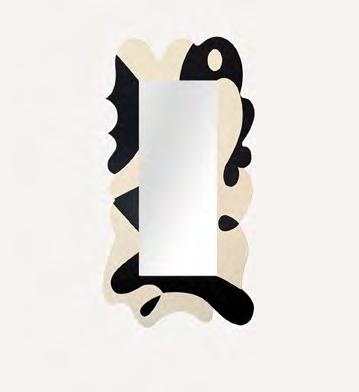
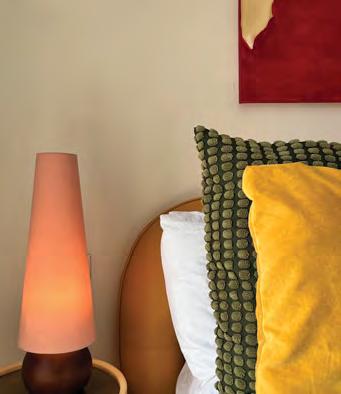
While the world views starting over as a loss, Juno saw it as proof of her own durability. She stripped away the external validation to see what remained. It turns out, identity isn’t tied to a zip code or a fanbase. “I needed to be thrown into the wilderness and figure things out all over again,” she tells us.
Elsewhere, Moroccan fashion designer Youssef Drissi arrived at the same conclusion through a different lens: immediacy. By launching his label Late for Work straight out of fashion school — refusing the seduction of ‘perfect conditions’ — he embraced a career that was uncomfortable by design. “What pushed me was instinct,” he explains, “the feeling that starting young would allow me to build something honest and true to who I am.” Staying still, he says, felt more dangerous than evolving.
Looking back, he’d tell his younger self to trust his gut, even when things feel uncertain or overwhelming. “The moments that feel the most risky or uncomfortable are often the ones that shape your personality and gently guide you toward something meaningful,” he muses. “I’d simply say: you’re closer to something beautiful than you think.”
DJ and founder of music collective ‘Groovin’ Culture’, Youssef Awadly, has a name for it: “the umbrella.” The established infrastructure. The ceiling disguised as shelter. “Staying under that umbrella felt way riskier than switching paths,” the Egyptian producer reveals. “I could already see the limits in front of me.” So he left, stepped out in the rain. Built his own collective. Created his own space. “I wouldn’t have taken that step if I had stayed where I was,” he says of his collective.
The move had nothing to do with comfort and everything to do with breathing room. He chose the struggle of the unknown over the safety of a glass ceiling. “I’d rather struggle, explore, and figure it out on my own terms than put a cap on what I love.” For Awadly, the choice was binary: the storm or the drought. He chose the storm.
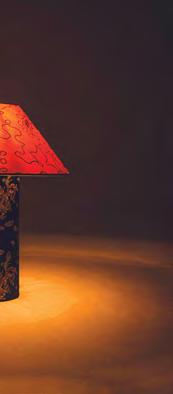
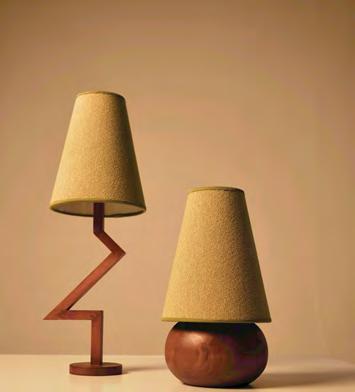
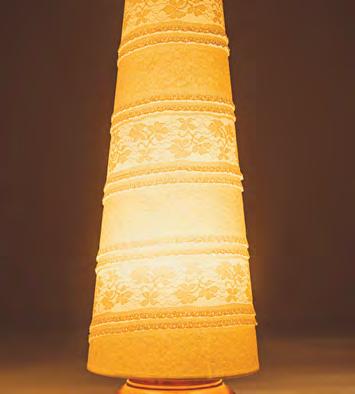
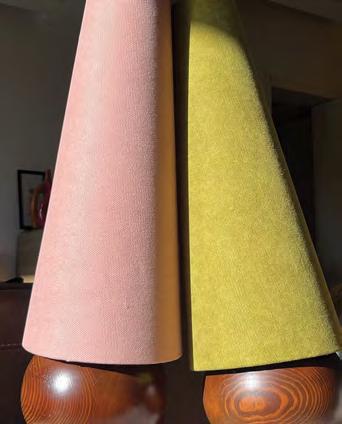
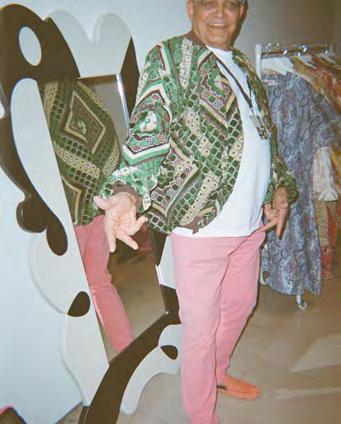
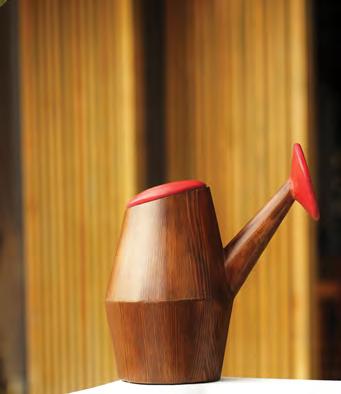
The internet never forgets, but you are allowed to. In 2026, identity is archived in high resolution. Past interviews. Old aesthetics. Early drafts of yourself still floating somewhere online. There’s that myth that you have to remain the same, consistent, delivering the same material in reiterated fonts. Being YUNG rejects that contract.
The evolution of Egyptian artist Nour Shoukry is measured in texture. She left the precise, dry safety of coloured pencils behind to confront the heavy, slow-moving reality of oil paint. “Pencils were my comfort zone,” she admits. Comfort, however, draws its own perimeters. If her previous work was a contained anatomical study, her new phase is a living lung. One is tight and surgical; the other is fluid and dimensional.
At first glance, her paintings feel photographic; faces rendered with surgical hyperrealism, skin tones layered carefully, fabric textures almost tactile. But the closer you look, the more constructed they feel. There’s a recurring use of grid systems; faint pencil lines visible beneath oil paint, squares mapping out compositions like pixels waiting to resolve. Colour-wise, she oscillates between muted, earthy palettes and highly saturated realism.
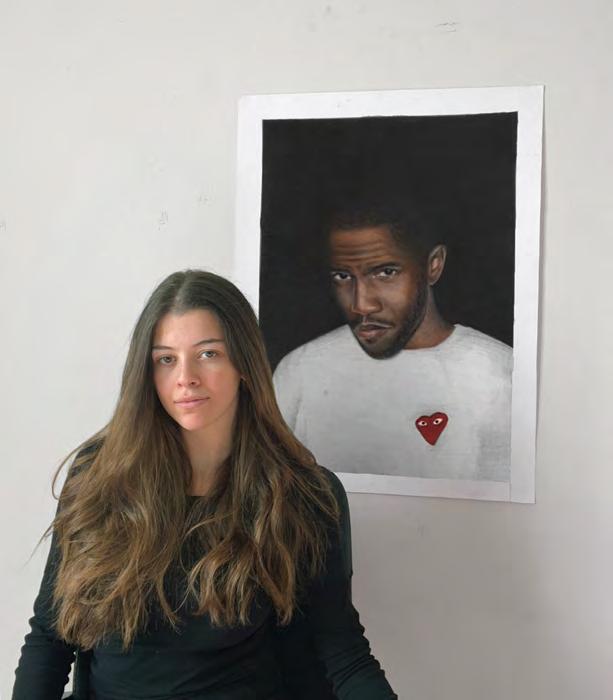
For Juno, the change was anything but subtle. In fact, you can hear it. Her newly-released EP, The Color of Punk, leans glitchy, fractured, experimental. The softer textures of her earlier sound gave way to something harder-edged. “I don’t like to be bound to one thing,” she unveils. “I’m ever-changing, so it doesn’t make sense to stay the same.” Her recent work resists symmetry, through what she calls “weird sounds”, distorted noises, and unfamiliar structures. The compositions fracture, stretch, and refuse predictability. First, the move to Berlin changed her address, and second, it reset her frequency. She once hated change. Can you imagine?
Even the identity of Cairo-based design studio CATFISH Objects is written in water. The Rashed sisters, Khadija and Nabila, have grasped the art of the strategic pivot, ignoring the market’s thirst for a ‘boxed’ brand. They understand that to evolve, you must be willing to delete. “People often expect a brand to present itself as fully formed and clearly categorized,” Khadija starts. “Instead, we chose to create something more fluid, explorative rather than fixed.” To them, not every aesthetic deserves loyalty. Not every audience deserves access to who you used to be. Growth means knowing which parts of yourself to burn so the rest can breathe.
Similarly, Youssef Drissi treats the suit like a system to be hacked, his own way of experimentation every season. The young Moroccan designer builds around tailoring, but never lets it behave. The corporate uniform (the blazers, the stripes, the rigid trousers) is subjected to a violent recalibration. “Sometimes staying still feels more dangerous than evolving,” he says. “In fashion, it’s easy to lose momentum. The real risk is to stop pushing forward.”
He crops the expected and slices through the traditional until the shirt back vanishes and the waistline becomes a discontinuity. Office trousers swell into exaggerated proportions, pooling over red heels. Silk ties hang undone, draped diagonally like afterthoughts. “For me, it’s about proposing something new and expressive, while ensuring it can naturally integrate into people’s wardrobes and everyday lives,” Drissi says, sharing his vision.
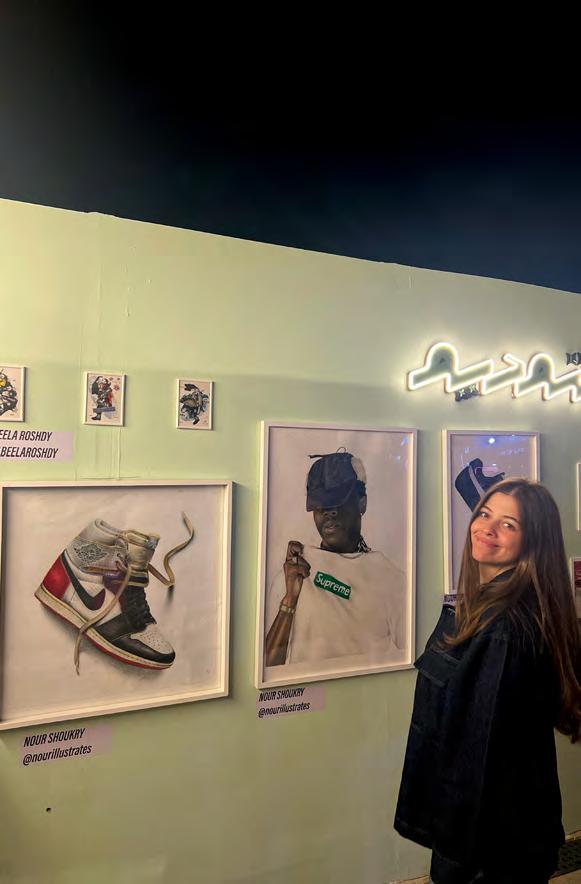
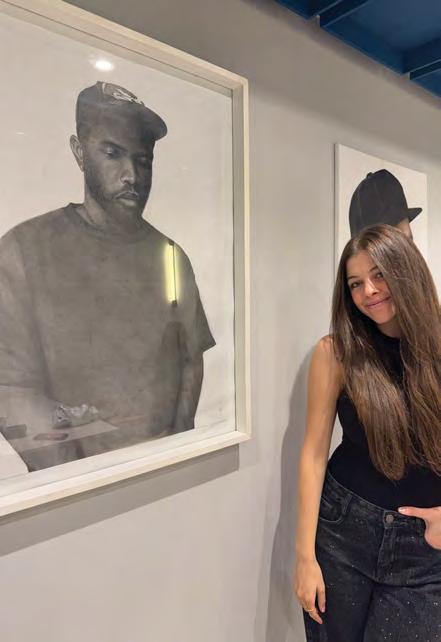
Evolution isn’t always a clean, cinematic “aha!” moment. It is the conscious decision to choose the shaking ground of instability over the slow, invisible erosion of the soul. If the mandate of 2026 is to stabilise — to box yourself into a brand, to become a fixed and readable data point — then risk must become a ritual.
The modern career script demands a niche, and Nabila Rashed decided to rip up the script. CATFISH began as a risk layered onto existing ones, amid competing priorities and other goals. “I think the real risk was giving myself permission to follow all of my interests, not just the ones that felt ‘practical’,” Nabila adds. “I realised this was the time in my life with the most room to experiment — I accepted that even if it didn’t work out, it would be okay.”
There is a mischievous rigor in the studio’s work, a hand-held mirror to that taken risk. Brass geometries are piled into silent totems and lamps sit atop heavy timber curves, a body of work that is constantly taunted by play. Every piece feels like a high-stakes game of Tetris played with anarchic intent.
For Faten Abu Bakr, evolution was an emergency procedure. She doesn’t speak in the language of career moves, but in the language of survival. “Change wasn’t a luxury,” the Egyptian painter begins. It was the only air left in the room. When she left her city, she found a confrontation. She describes the terrifying, granular dissolution of her own identity as “holding sand in your hand and watching it slip through, grain by grain.”
When May Calamawy is asked how she recognizes the need to change direction, she describes a mental ‘dinner table’ where different versions of her self-compete for the mic. “Sometimes it sounds like boredom, anxiety, comparison, or a feeling of being stuck,” the actress reflects. “At first, one voice nags and the others try to quiet it. But when they all start speaking at once, I know it’s time to evolve and call in all the courage I can get.”
Calamawy chose the oxygen-thin reality of New York over the heavy, predictable air of Dubai. It was a late-twenties divestment from safety. To her, the sanctuary of home had become a cage; the only way to survive was to abandon. “Take the risk. Always,” she reminds herself. “I’ve had to rewire my relationship to the unknown. Why did it always feel frightening? Why didn’t I trust that incredible surprises could appear there too? Nothing is wasted.”
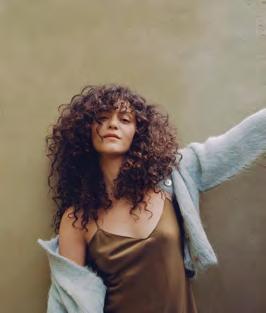
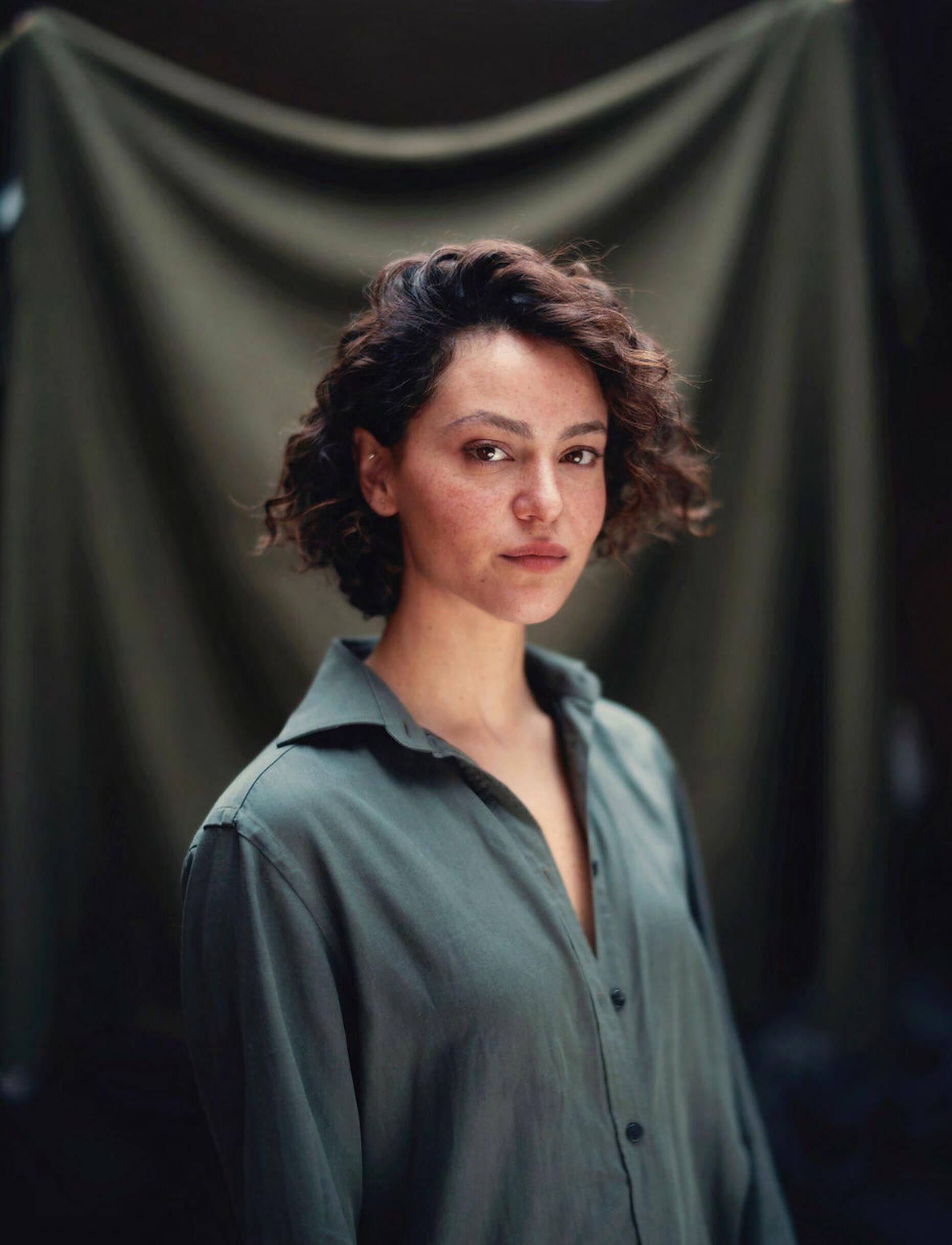
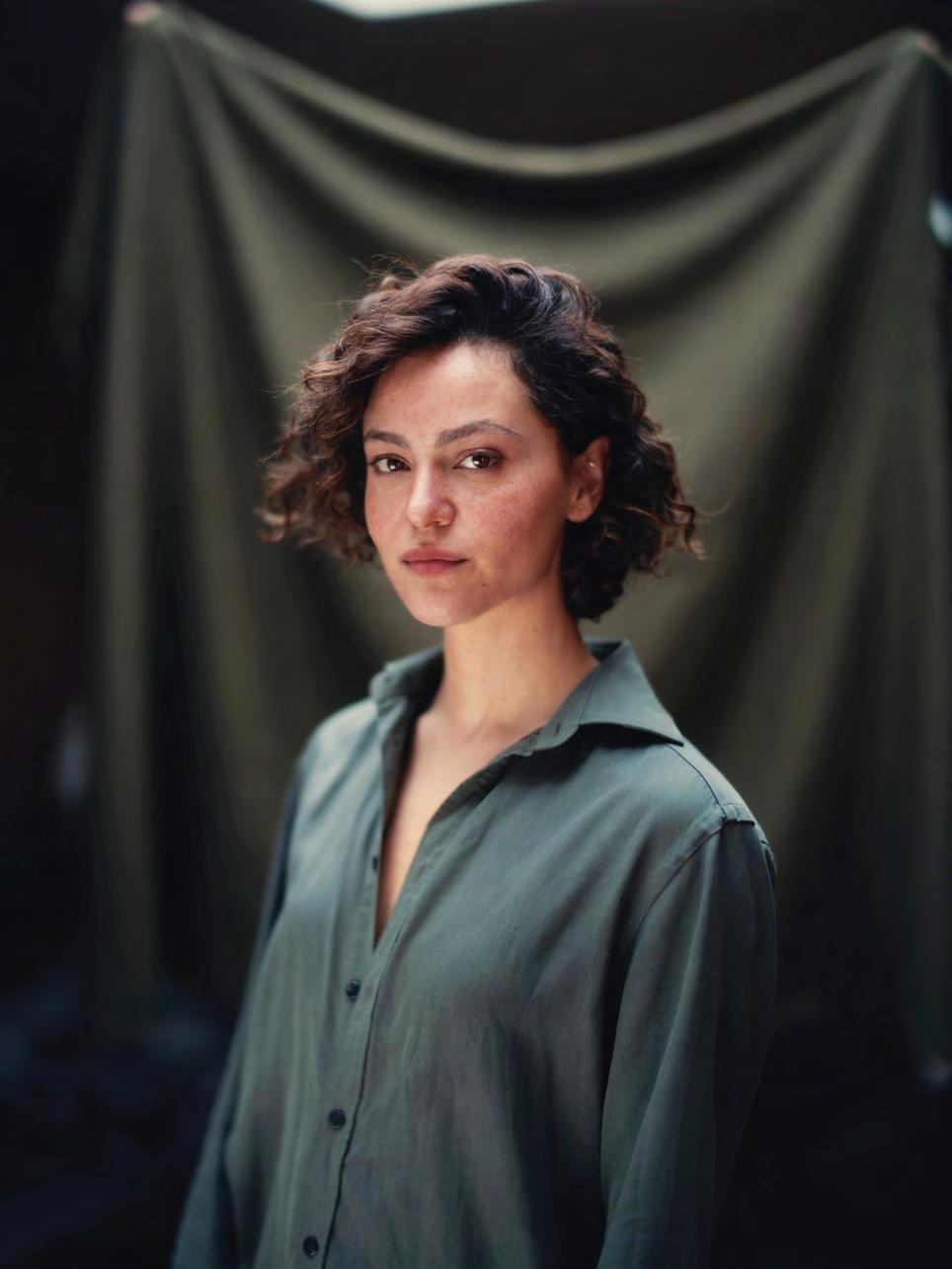

The myth of the lone genius collapses under collective momentum. Being YUNG means understanding that proximity accelerates growth, and that shared power compounds faster than individual applause.
Lately, Juno has stopped treating the studio like a sanctuary and started treating it like a collider. Rather than a solo mission, her EP was a shared combustion. Every visual, every frequency, every live performance in her trajectory exists as a collective blueprint. She acknowledges the seductive pull of the solo trap, the unproblematic ease of doing things exactly your way, without the chafing of a second opinion. But for Juno, that ease is a creative dead-end.
“There is a specific joy in the friction of minds,” the singer and producer shares. By relinquishing the steering wheel, she’s discovered that the most potent art doesn’t happen within a person, but in the uncharted space between people working together.
“It’s so much easier to depend on yourself,” she admits. But she chooses the difficult beauty of the merge. To her, collaboration is a form of ego-stripping. It is the art of staying flexible enough to let another person’s vision collide with your own. By combining what she wants with what another person brings to the table, she discovers a third reality; something entirely new, entirely unplanned, and far more expansive than anything she could have imagined alone.
If Awadly’s career feels like a sprint, it’s because he knows exactly how precious the track is. After losing his father and brother, he translated his mourning into a feverish appreciation for the present and unity. “It strengthened my faith and taught me the value of the ‘now’,” he opens up. His music and the collective he’s built are about connection more than they are about sound.
In Awadly’s eyes, the ‘small’ things — a grateful crowd, a family name on a marquee, the love of those still standing beside him — aren’t small at all. They are the anchors that keep him grounded while he reaches for more. “That drive to live fully comes from understanding how quickly things change,” he says.
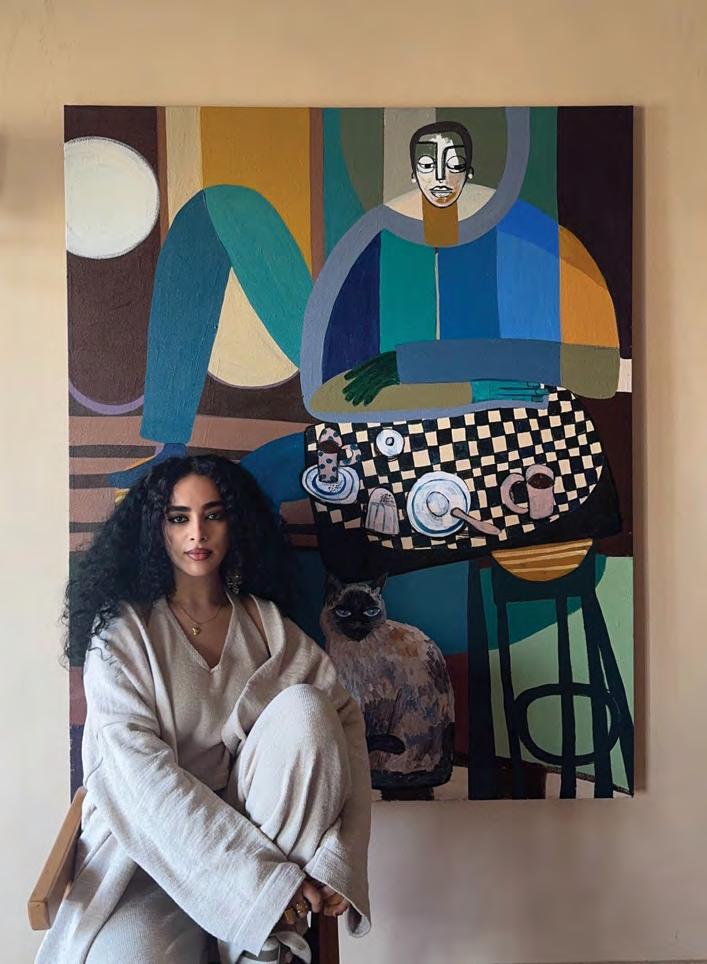
Abu Bakr experiences collaboration as a sensory expansion. She absorbs the frequencies of those around her. Drawn to the friction of different mediums, the artist treats the presence of another artist as a new language to be decoded. “I deeply enjoy the way people see,” she explains. To her, every collaborator is a new geography — a story, a cadence, a presence that challenges her own internal map. By listening to the way others navigate their worlds, she ensures her own creative boundaries remain porous. She understands that art only stays hungry when it’s fed by the sight of someone else’s horizon.
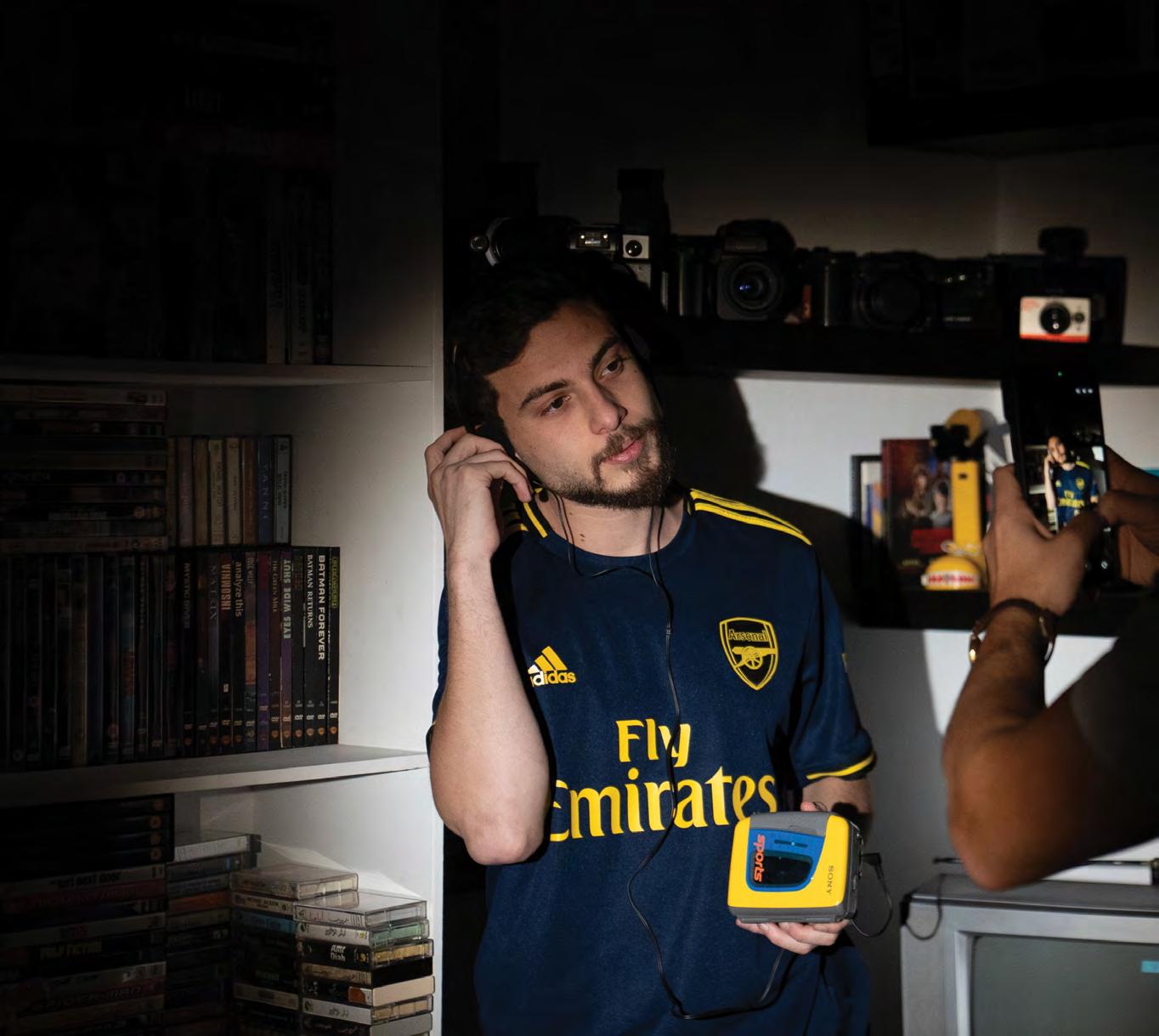
Nour Shoukry’s career began with a structural collapse. She eschewed the ‘solid ground’ of a predictable life for the freefall of a full-time practice. In Cairo, where security is synonymous with survival, Shoukry’s choice was a divestment from the status quo. “Not knowing what each month would look like financially, and the idea of not having a fixed income was hard to accept,” she says.
The early days were a whiplash of ghosting. Empty commission logs and a flatline of social engagement. It is a specific, modern terror: trusting the work when the metrics refuse to move. “I believed in the process,” Shoukry laughs, but in 2026, belief is a high-stakes gamble. “Say yes to every opportunity. Post more. Create more content. Don’t let other opinions matter more than your own. You never know who’s watching.”
In the Egyptian house scene, Youssef Awadly is a haptic presence, with house-driven, groove-heavy sets. Choosing the decks over a desk didn’t just look risky; to his inner circle, it looked like a comedic error. While the world was talking about career ladders, Awadly was busy decoding basslines. “Honestly, choosing music seriously over a stable job didn’t make sense to anyone at first,” he laughs.
While they saw a lack of logic, he felt a perfect alignment. That stubborn commitment to his own vision eventually hit a tipping point. It started as a solo gamble, and evolved into a community-sized infrastructure that he built with his bare hands. Turns out, the joke was the spark.
For him, ambition is a kinetic necessity, a constant internal churning to add value to himself and his surroundings. He moves because velocity is life. “The fear of getting stuck drives me,” he tells YUNG. “I need to keep learning and evolving every day, doing something new, adding value to what’s around me and to myself.” As long as he maintains his momentum, he grows.
When you’re at a crossroads, the world feels like a stadium full of critics. The Rashed sisters’ advice to their younger selves? You can build something that holds all of you, across all your identities and versions. “It’s not as serious as it feels, and most people aren’t watching as closely as you think,” Khadija adds.
To Nabila, the most dangerous trap in 2026 is the echo chamber of the popular. It is a seductive, repetitive cycle, shaping a brand to fit a pre-existing mould, but she’s moved beyond the safety of the known. She has swapped the comfort of ‘what works’ for the gamble of curiosity.
“Reproducing the familiar started to feel like a dead-end,” she explains. She and her team have shifted their focus to the unfilled spaces — the things they wish existed but haven’t yet been built. “Creating something people didn’t even know they wanted is the ultimate challenge.”
This is the art of creating the demand, rather than simply supplying it. The most profound work comes from answering questions that haven’t been asked. It is a move from a reactive brand to a proactive force. And circling back to Khadija, her work begins — and refuses to end — with one question: how to make the perfect chair.
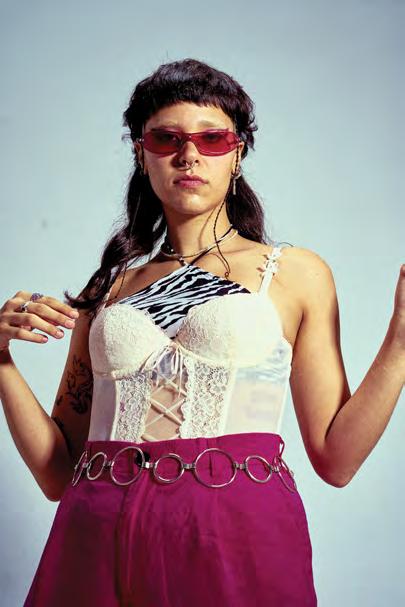
After a decade in an industry that “doesn’t slow down for anyone,” Calamawy’s relationship with saying no has matured. Her leaps are taken to stay alive and feel aligned, not taken for the sake of movement. “I’ve always been selective, but I’m definitely braver now. You’ll be lifted at times and humbled at others... the only real option is to keep moving onwards and upwards.” Calamawy offers a reframe for those standing at their own crossroads, turning the “What if?” into a directive for expansion. Her current pursuit is the ultimate question: “How to open my heart. And how to be fully present.”
To maintain her edge, Abu Bakr adheres to a singular, wide-angle mandate: Know something about everything. She rejects the safety of the specialist, choosing instead to inhabit a childlike frequency of wonder. Her creativity is fed by a deliberate, messy intake of the world — travel, ancient memories, and the precise cadence of a stranger’s story. She treats curiosity as a navigational tool, staying “hungry to see, feel, and experiment” in ways she hasn’t yet mastered.
In the act of creation, the noise of the world falls away, leaving only a brutally honest dialogue with the self. This is where Abu Bakr finds her “moment of calm.” She understands that while inspiration demands constant kinetic energy, vision requires the strategic reset. “When the picture becomes blurry, you have to take stock,” she notes. It is this balance — the high-velocity search for knowledge paired with the wisdom to pause — that keeps her work breathing. As long as her sense of wonder remains intact, her art will continue to unfold in real-time.
At some point for Drissi, the shift stopped being about clothes. He began thinking beyond the garment, beyond the studio even. “I have learned to think not only as a designer, but also as an entrepreneur,” he discloses, almost casually. It didn’t happen overnight. It came with invoices, production delays, hard conversations, and the quiet realization that vision alone isn’t enough to sustain something.
“Changing direction isn’t always about big moves,” he ponders, “but about continuing to believe in the process without losing hope.” Some seasons are about expansion; others are about staying in it, even when the momentum slows, even when doubt creeps in.
On the opposite end of the spectrum, Juno rejects the 2026 obsession with constant content. As a professional observer, someone who prioritises the long pause, she operates on a rhythmic oscillation. “It’s very hard to be taking in and putting out at the same time,” she observes. Even as a child, Juno found power in the periphery. She loved feeling unique, finding a specific joy in the things that were hers alone.
She also exchanged the comfort of ‘we’, for the untried power of ‘I’. Surrounded by an environment where family support is the default until marriage, she chose a more jagged path: the pursuit of financial and creative autonomy. Not out of a lack of love, but rather a demand for self-evidence. She wanted to see what she could build without the safety net, challenging the traditional Arab household structure by simply standing on her own. “I wanted to make them see me do things on my own,” she asserts.
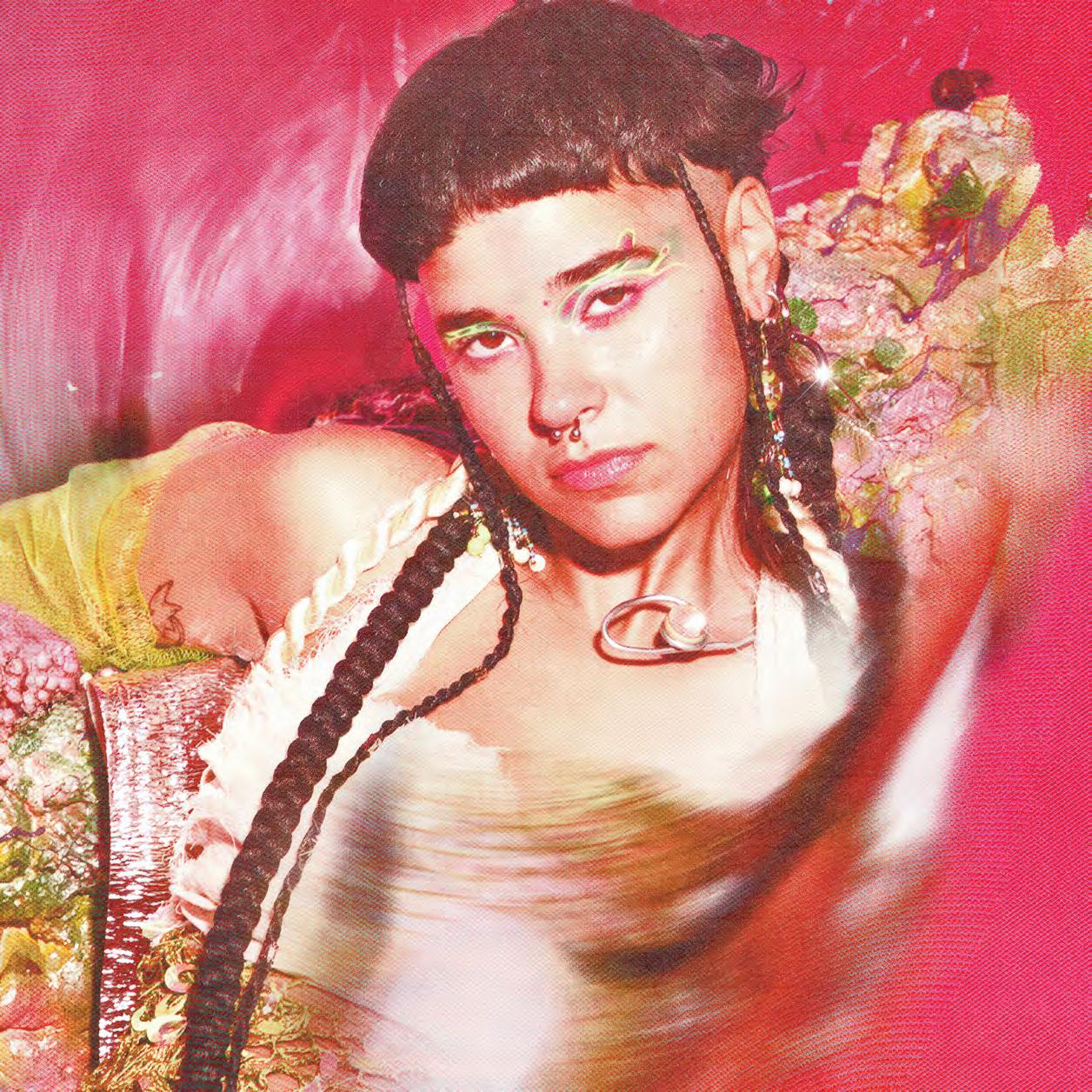
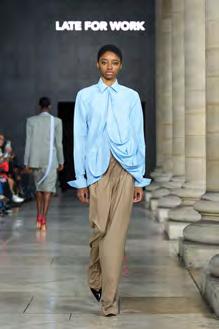
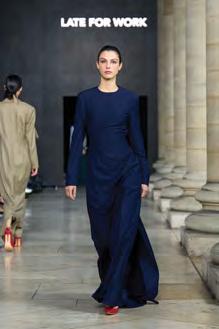
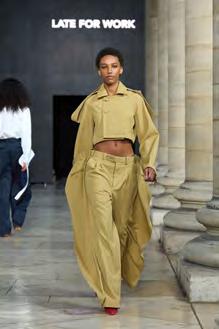
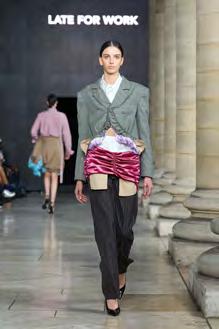
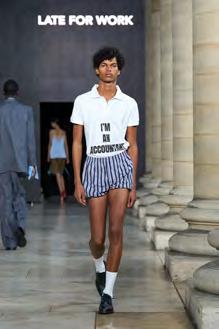
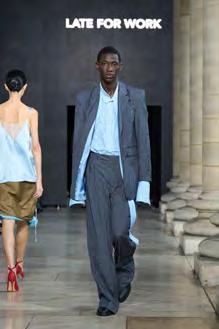
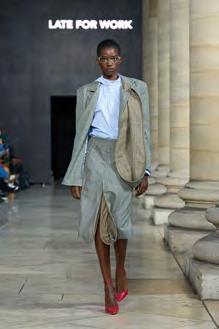
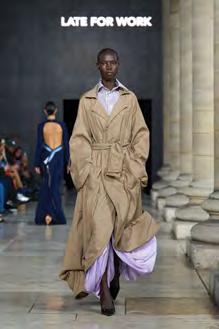
Calamawy’s risk was instinct. Awadly’s was independence. Drissi’s was immediacy. Shoukry’s was experimentation. Abu Bakr’s was confrontation. Juno’s was reinvention.
Beneath the different mediums — the fabric, the frequencies, the paint — lies a singular, high-voltage curiosity. Treating the world as a limitless resource — absorbing the textures of other art forms, listening to music as if it were a new language, drawing from travel, strangers’ stories, and finding inspiration in the most outlandish of ways.
And in 2026, maybe YUNG means exactly that: the courage to become a stranger to yourself — and build again anyway. ■
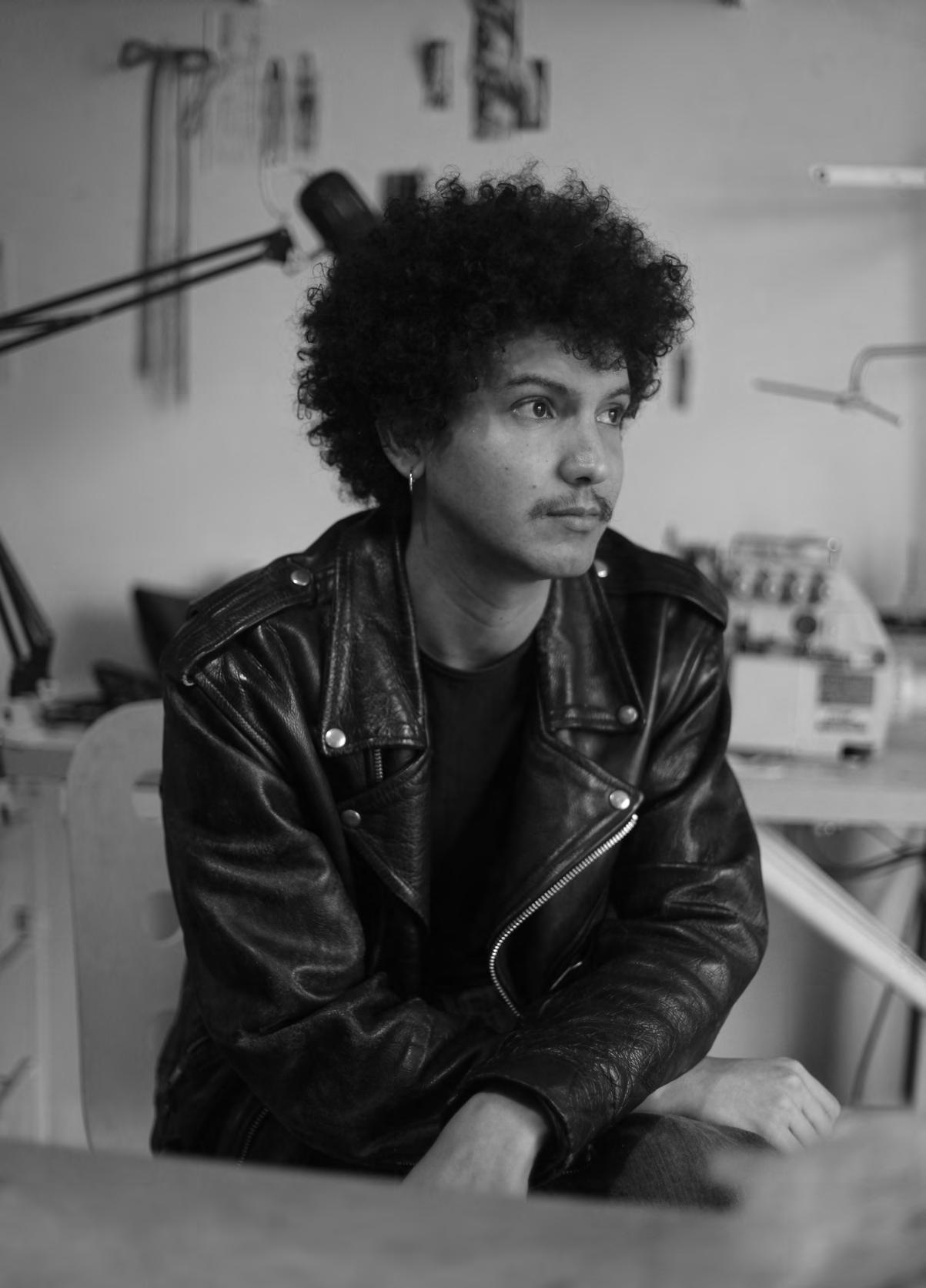

Form and function hit new heights as Dior launches a radical hybrid for Summer 2026.



For Summer 2026, Dior offers a new take on men’s footwear with the launch of the Dior Roadie, a design that exudes a radical, fun, and refined spirit. Conceived by Jonathan Anderson, who wore the style during his first show for the House, the Roadie blurs the lines between casual sneakers and functional elegance, proposing a hybrid silhouette that challenges traditional codes.
At the heart of this innovative creation lies an ultra-flexible construction designed for ease and comfort. The sole, divided in two, bends naturally with the foot’s movement, merging practicality with the House’s emblematic cannage pattern. This technical detail underscores Dior’s ability to fuse heritage motifs with contemporary functionality.
Materiality further elevates the design. The Roadie combines nubuck with a mesh-effect printed suede insert, creating a dynamic interplay of texture and contrast. In a deliberate “work in progress”
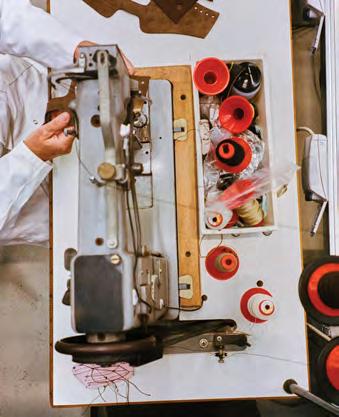
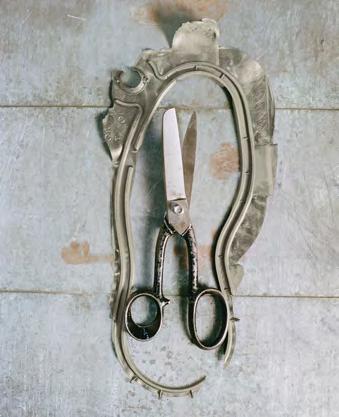

gesture, hand-stitched seams are accentuated by clean edges, celebrating the exceptional savoir-faire of the ateliers. The result is a shoe that feels both crafted and conceptually forward.

Colourways enhance its bold yet balanced identity. Offered in coordinated shades of brown, gray, dark green, and beige, each paired with a coloured sole, the Roadie channels a dialogue between vintage references and a vision of the future.
A more timeless black and gray derby variant introduces an added note of finesse, expanding its stylistic versatility. Subtle finishing touches complete the statement: an embroidered, tone-on-tone “Dior” logo gently signals discreet luxury, while thick laces inject an ultra-contemporary edge. Contemporary, classic, the Dior Roadie speaks of the future. ■
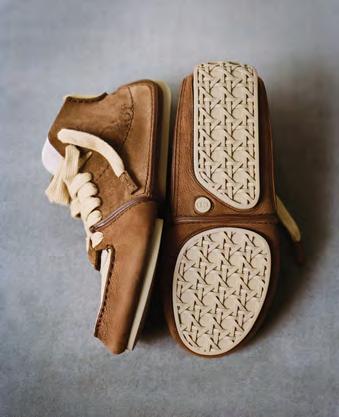
Abdulla Elmaz embraces honesty at the cost of his own stability.
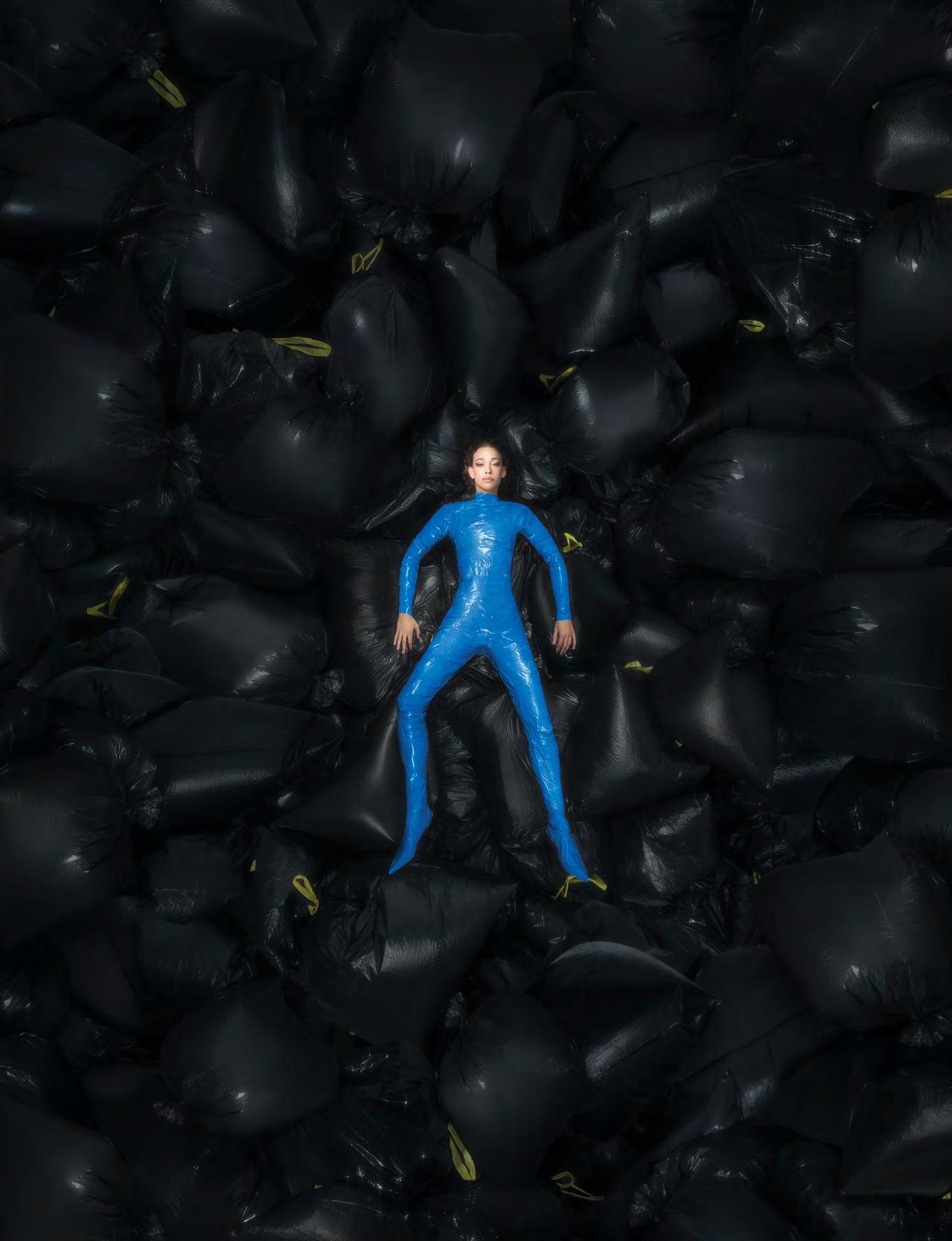
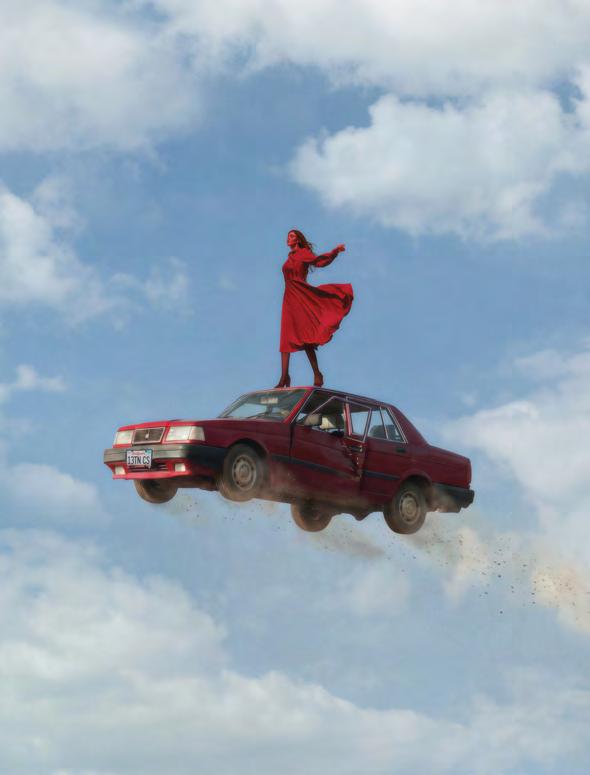
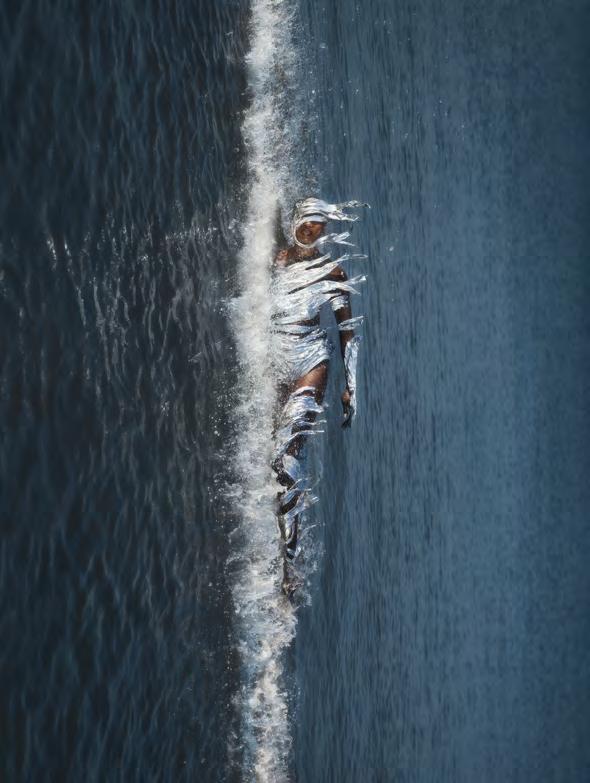
When Abdulla Elmaz staged 13 Cents at Foundry in Dubai, the exhibition read like a closing chapter written in full view of an audience. It was his formal introduction to the art world, yet it carried the weight of a private reckoning. Across 24 works, Elmaz mapped a psychological landscape shaped by abandonment, grief, inherited silence, creative frustration, and eventual reclamation. The show did not seek neat resolution. Instead, it insisted on emotional honesty, even as that honesty destabilized the maker himself.
Elmaz’s practice operates between conceptual storytelling and symbolic portraiture. He treats recurring motifs not as branding devices, but as living elements that evolve as he does. Chairs, hands, water, and the colour red surfaced throughout 13 Cents, yet their meanings shifted from one work to the next. No symbol ever stayed still long enough to harden into a signature.
The process of creating the exhibition was not emotionally neutral. “I spend a lot of time in a very vulnerable state of mind, I cried a lot and processed at the same time,” says Elmaz. Music became a trigger, unlocking memories he once believed he had resolved. “Certain songs would trigger emotions, this did sometimes feel a little dangerous
because I was opening an old wound that I thought I had closed but I dug deeper and deeper to really process my past trauma and turn it into something beautiful,” says Elmaz. For him, beauty did not erase pain. It layered it with light. “I knew I needed to get through the sadness to be able to understand what happiness truly felt like. 13 Cents was truly therapeutic and changed me for the better,” he says.
That emotional excavation was visible from the exhibition’s opening work, Wake, which staged a symbolic funeral for his previous creative era. Butterflies that once served as distraction lifted to reveal a more focused narrative voice. The gesture was both theatrical and deeply personal. The past was not denied; it was acknowledged and buried.
Chairs, once central to his artistic identity, reappeared in altered form. In Sitting with my thoughts, miniature monobloc chairs referenced the visual language that once defined him. He had considered abandoning them entirely, wary of being reduced to a single motif. Instead, he re-contextualized them. The chair shrank, its dominance diminished, becoming a prop rather than a prison.
Water, too, shifted in meaning. In The Stars Align, it sug-
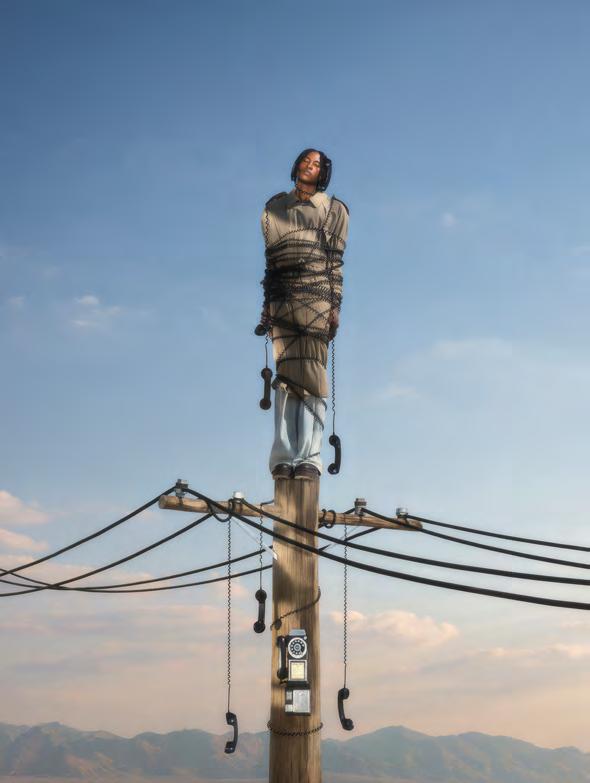
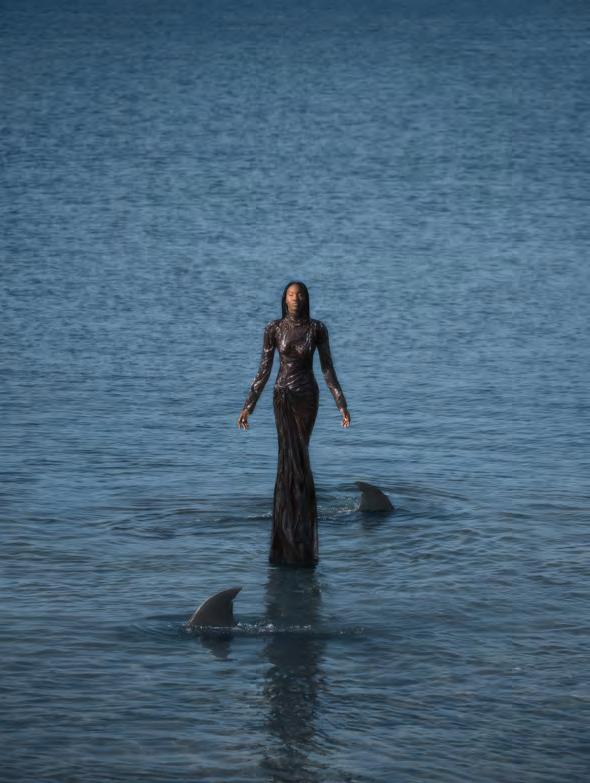
gested vulnerability and the risk embedded in love. In Heal, it became a source of renewal, a cleansing of inherited armour. Anger surfaced most explicitly in works such as All I See Is Red, where rage narrowed perception to a single colour. Red functioned as both emotional saturation and rupture. Yet even here, the exhibition resisted remaining in fury. The trajectory bent toward clarity.
Family narratives threaded through the show with unguarded vulnerability. In Hey mum, Dear Nana, and There’s no place like home, Elmaz examined generational silence and the instability of memory. In Are You Gone Already, abandonment was quiet rather than dramatic, expressed through absence rather than spectacle. Post-it notes waited to be written on, questions lingered unanswered.
Memory itself became suspect territory. In 100 Letters, he revisited a shared moment remembered differently by two people. The piece asserted that reclamation can coexist with contradiction. Personal history did not resolve cleanly, and he did not pretend it did.
Several works addressed the creative industry that shaped and bruised him. In A letter to the industry, a portrait splattered with mud suggested devotion and disgust
in equal measure. Elmaz distinguished between commercial practice and the influencer ecosystem that once wounded him. “Work is work, I really do love making the client happy,” says Elmaz. “I’ve changed my mind-set that I can’t be artistic with the commercial work, so I like to separate [in] my mind that I know when it’s a job I put on my commercial hat and I can be able to deliver whatever the client envisions,” says Elmaz.
The title, 13 Cents, functioned as both metaphor and declaration. He framed the body of work as offering his perspective when it was never requested. “To be able to let 13 Cents into the world, I truly was able to resolve my past and give my two cents when it was never asked for,” says Elmaz. The act of speaking, even unsolicited, became a form of reclamation. “I feel like a completely different person now that it’s complete,” says Elmaz.
At Foundry, 13 Cents did not position itself as an endpoint. It marked an arrival earned through deep exploration. The works did not present answers so much as traces, fragments of a life reorganized through art. In claiming space within the contemporary landscape, Elmaz did not abandon his past. He reassembled it, piece by piece, until it could stand without apology. ■
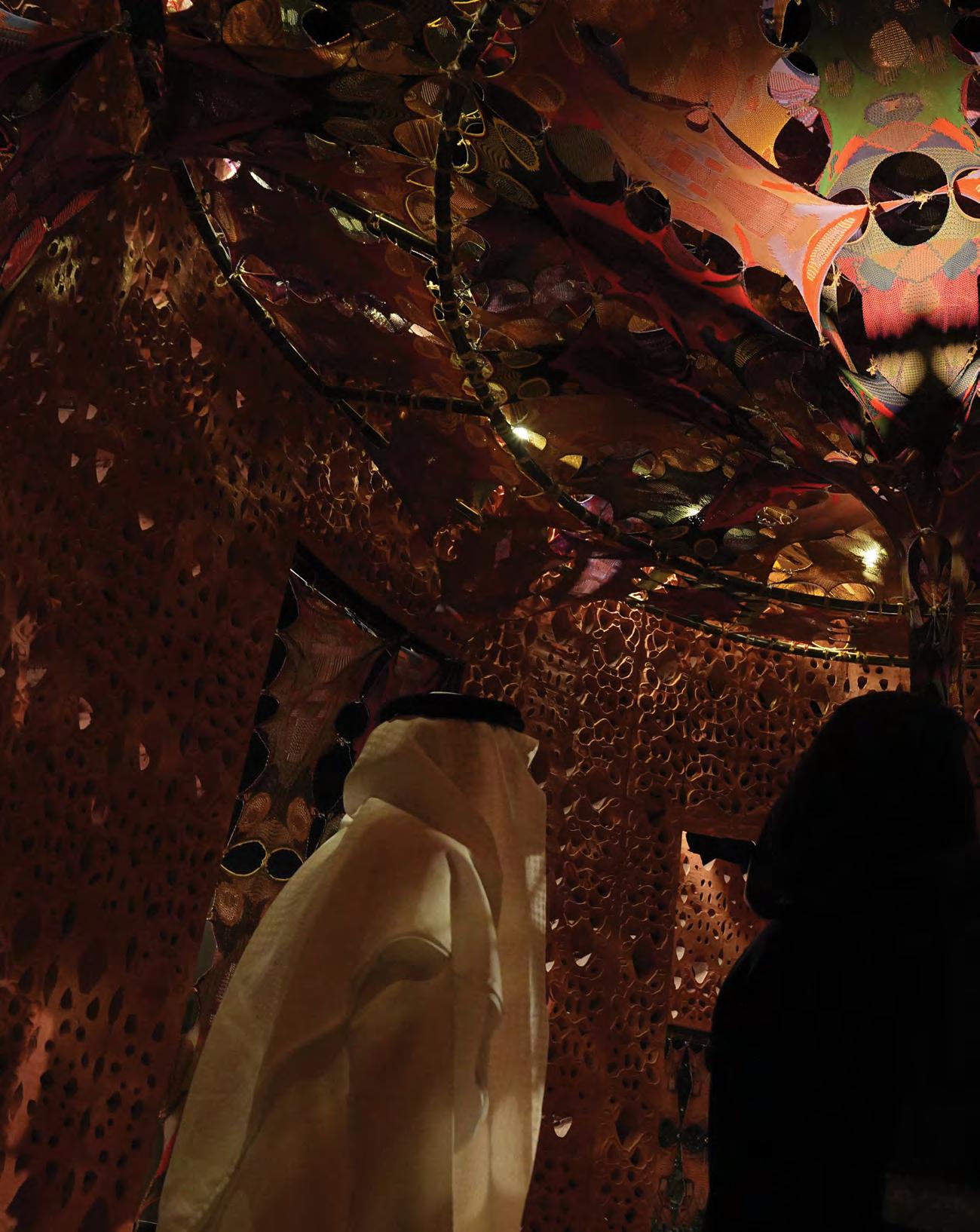
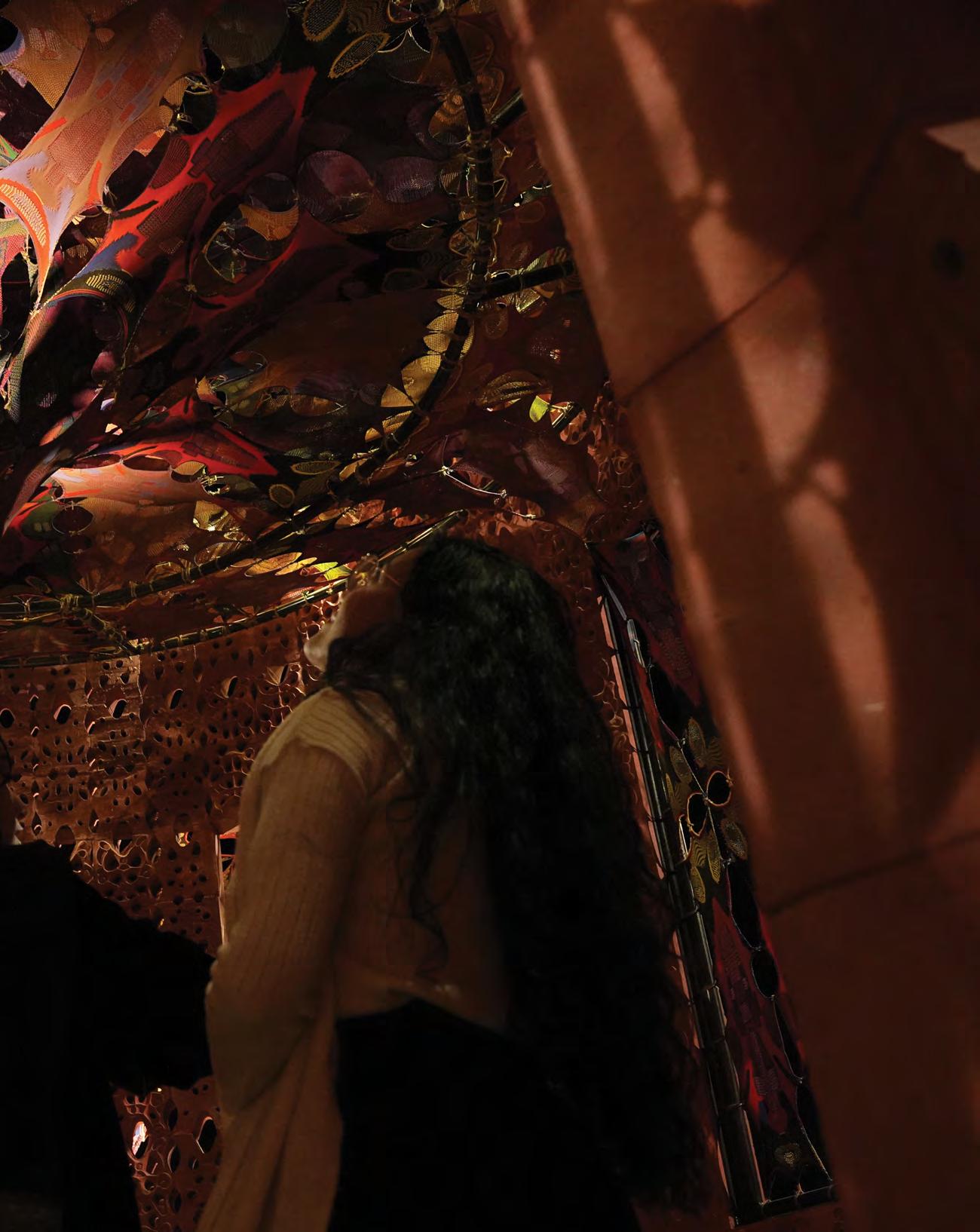
Discover a biennale shaped by movement, where sound, space, and procession reframe how we experience art.
Entering the Diriyah Contemporary Art Biennale begins without a clear moment of arrival. The transition happens gradually. Corridors curve before the eye settles. Sound travels ahead of the works that produce it. Visitors slow instinctively, adjusting their pace to the spatial rhythm unfolding across the warehouses of JAX District. Orientation gives way to movement, and movement becomes the primary way of understanding where one is.
Titled In Interludes and Transitions, the third edition of the Diriyah Contemporary Art Biennale unfolds as a sequence rather than a statement. Led by co-artistic directors Nora Razian and Sabih Ahmed, the exhibition proposes procession as both metaphor and method. Histories, migrations, and cultural exchanges are approached through circulation, repetition, and encounter. The exhibition does not organise itself around a fixed narrative. It moves forward through accumulations of gestures, sounds, and trajectories that intersect across space.
The idea of a procession draws from a colloquial Arabic phrase associated with cycles of encampment and travel among nomadic communities of the Arabian Peninsula. Within the exhibition, this reference becomes a curatorial structure. Movement carries meaning. Routes matter as much as origins. Stories appear through rhythm and transmission rather than chronology. The visitor follows a path that feels composed yet open, guided without being instructed.
Biennials have traditionally relied on frameworks that stabilise interpretation. National pavilions, thematic sections, or historical timelines provide points of entry that help audiences situate artworks quickly. Diriyah proposes another approach. Works appear within a continuous environment that resists segmentation. Transitions from one section to another are subtle. Shifts occur through proximity, sound bleed, and spatial turns. Understanding develops through time spent moving rather than information absorbed at once.
A significant part of this curatorial thinking lies in the emphasis on musicality. Sound is not treated as an addition to visual art but as a carrier of knowledge. Oral traditions, poetry, and collective performance operate as forms of memory that move through bodies and communities across generations. The exhibition foregrounds these modes of transmission, recognising that cultural histories are often preserved through listening as much as through images or written archives.
This approach becomes particularly visible in Folding the Tents (2026), a newly commissioned procession by Saudi artist Mohammed Alhamdan, also known as 7amdan. The work extends beyond gallery walls, moving through the Wadi Hanifah valley before returning to JAX District, culminating in a performance with the Miniawy Trio. The procession recalls ancient practices while engaging contemporary sonic languages shaped by electronic and digital culture. Participants follow a collective movement through landscape and architecture, experiencing knowledge as something enacted rather than displayed.
The prominence of sound alters the role of spectatorship. Visitors are not positioned solely as viewers. Listening requires time and attention that cannot be condensed into quick recognition. Voices and rhythms linger even after leaving a space, shaping memory differently from visual encounters that compete for immediate impact. The exhibition acknowledges this slower form of reception, allowing works to unfold through duration rather than instant comprehension.
Spatial design plays a decisive role in sustaining this rhythm. The exhibition scenography, developed by Formafantasma, transforms the industrial architecture of JAX into a sequence of shifting planes and curved passages. Walls rarely close fully. Sightlines open unexpectedly across rooms. Movement remains continuous, encouraging visitors to drift rather than advance with purpose. Across nearly thirteen thousand square metres of exhibition halls, courtyards, and terraces, circulation becomes the organising principle.
Architecture functions here as a curatorial tool. The absence of rigid divisions removes hierarchy between works. Encounters occur through adjacency rather than categorisation. A video installation may resonate with a sculptural gesture encountered minutes later. A sound piece reverberates across multiple spaces, binding works together through atmosphere. Meaning emerges from relationships formed in motion.
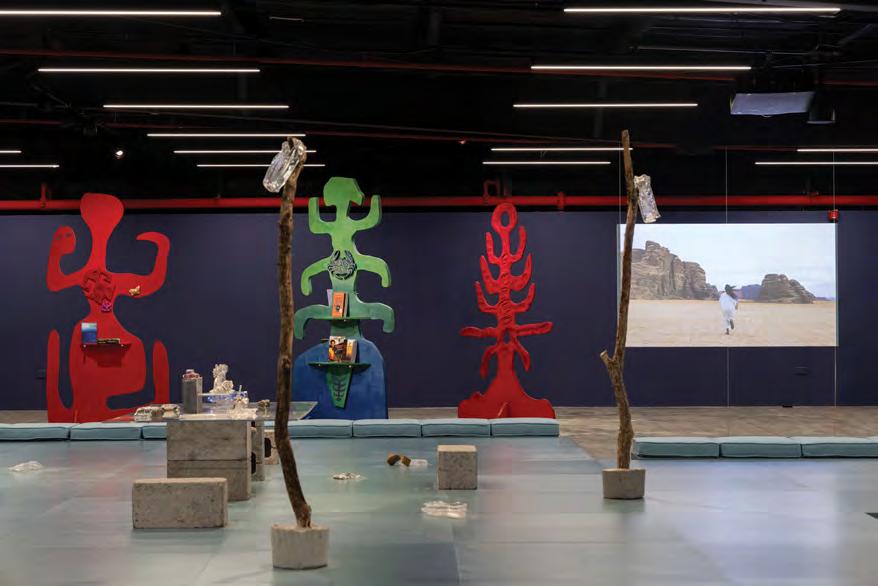
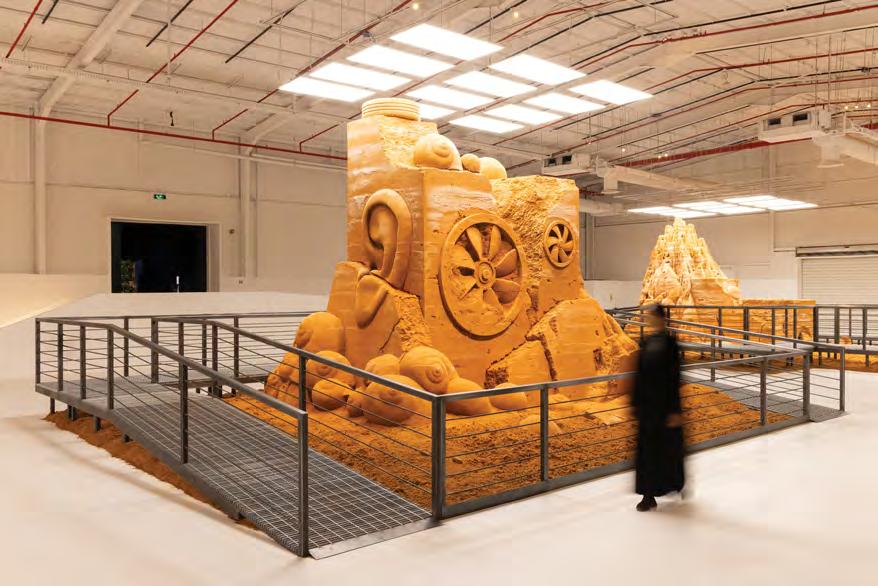
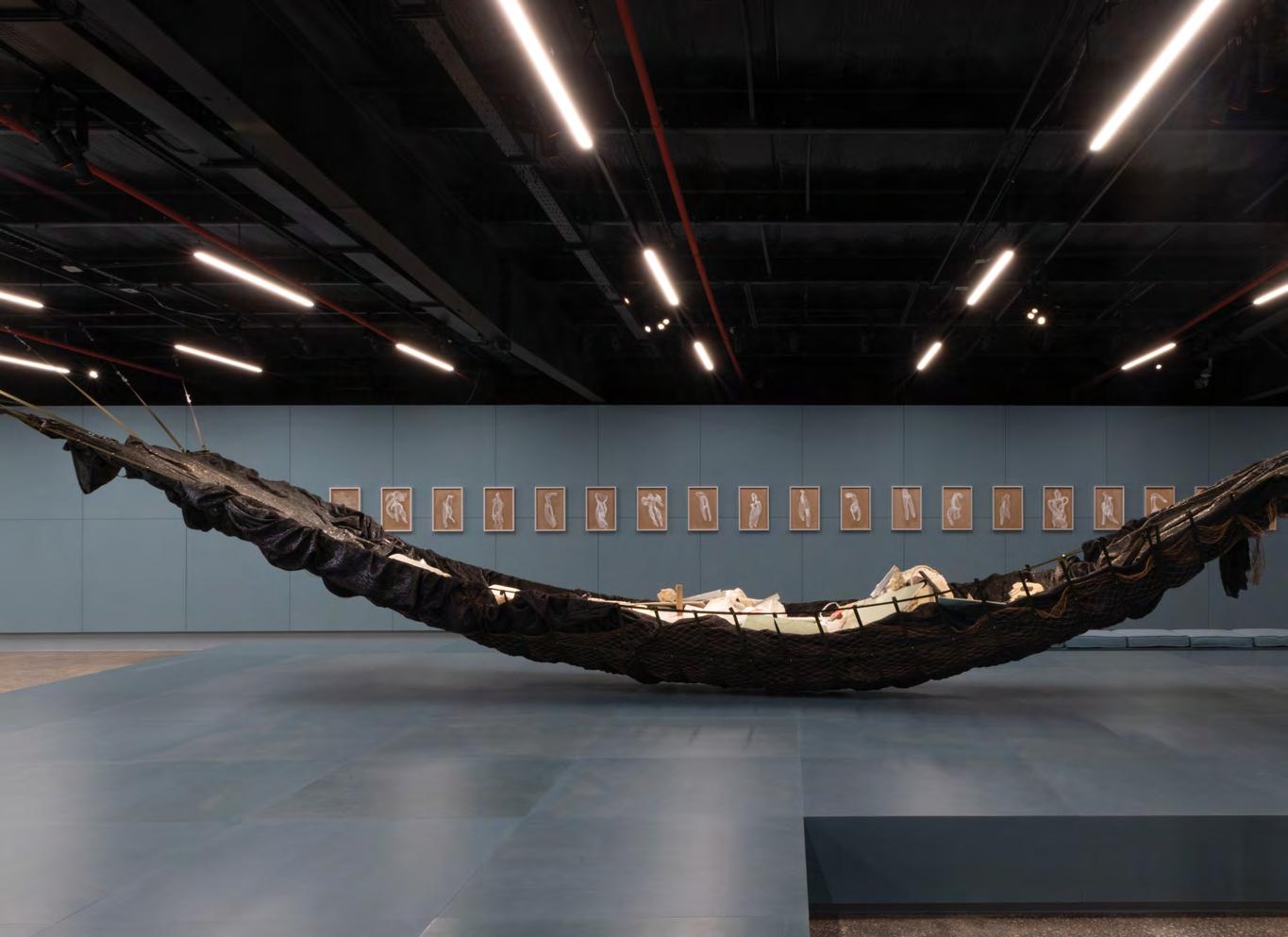
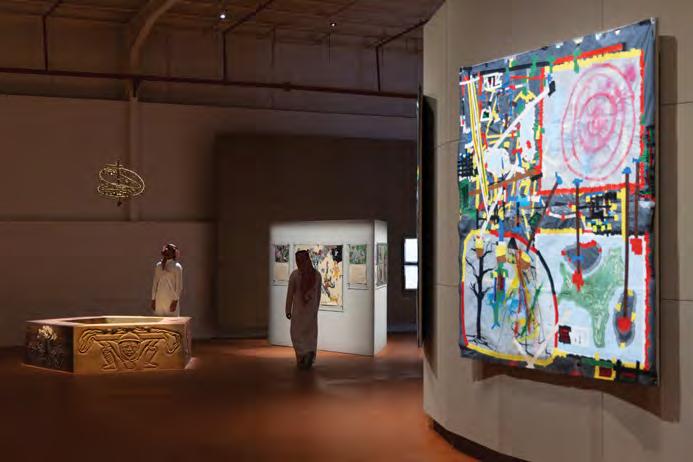
Above: Installation view, front; Yu Ji, Jaded Ribs (2019–21), back; Hazem Harb, Gauze (2023-24).
Left: Installation view, left; Karan Shrestha, sweet water rising (2026), a flow disrupted; realigns (2022–ongoing), cloud babies (2023), right; Moshekwa Langa, Collapsing Guide II (2000–03).
The curatorial framework also reflects a broader shift away from narratives centred on singular cultural origins. The artists gathered in Diriyah come from more than 37 nations, yet geography does not operate as a primary organising logic. Practices intersect through shared concerns with migration, ecological change, spirituality, and collective memory. Routes of exchange replace fixed categories. Cultural forms appear as products of circulation shaped by trade, exile, travel, and encounter.
Many works engage histories that exceed national boundaries. Materials carry traces of displacement. Languages overlap. Ritual gestures reappear across distant contexts. The exhibition suggests that cultural continuity often survives through fragments carried across movement rather than through stable institutions. Memory travels through bodies, songs, and repeated actions that adapt over time.
The curatorial statement describes the world as a multitude of processions involving human, planetary, and technological forces. This expanded understanding situates artistic practice within broader systems of transformation. Environmental shifts, digital infrastructures, and spiritual traditions coexist within the exhibition’s conceptual field. Art becomes one element within larger patterns of exchange shaping contemporary life.
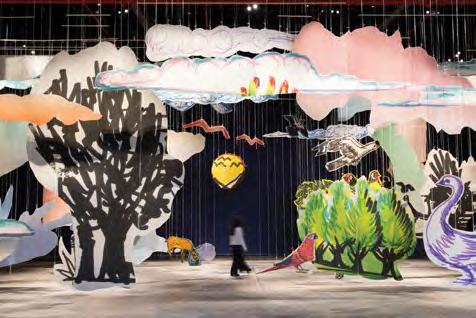
Within this framework, collaboration across disciplines gains particular importance. Artists, musicians, filmmakers, architects, and writers share space without strict separation. The boundaries between exhibition and performance blur. Events occur as extensions of artworks rather than supplementary programming. Knowledge circulates through participation, conversation, and shared presence.
The Diriyah Biennale Foundation positions the event as part of an evolving cultural infrastructure within Saudi Arabia, activating JAX District as a long-term creative hub. Yet the curatorial strength of this edition lies less in institutional ambition than in how it frames experience itself. The exhibition proposes that understanding can emerge through movement sustained over time. Visitors are invited to inhabit a rhythm rather than decode a thesis.
Walking through the biennale, one becomes aware of how memory forms gradually. Certain sounds return unexpectedly. A gesture seen earlier gains resonance when echoed elsewhere. The experience accumulates through repetition and delay. Images remain distinct, separated by pauses created through spatial transitions. The exhibition allows distance between encounters, giving works space to register individually.
The notion of procession continues beyond the artworks themselves. Visitors move together, occasionally aligning in shared directions before dispersing again. Conversations emerge between strangers navigating the same paths. The exhibition produces temporary communities formed through collective pacing. Experience becomes relational, shaped by the presence of others moving through the same environment.
As the visit progresses, beginnings and endings lose clarity. Returning to earlier spaces feels different after encountering later works. The exhibition remains in flux, reshaped by each passage through it. Leaving JAX District does not produce a sense of closure. Sounds and movements linger, extending the experience into memory. ■
YUNG in conversation with Cyril Aris on A Sad and Beautiful World.
words
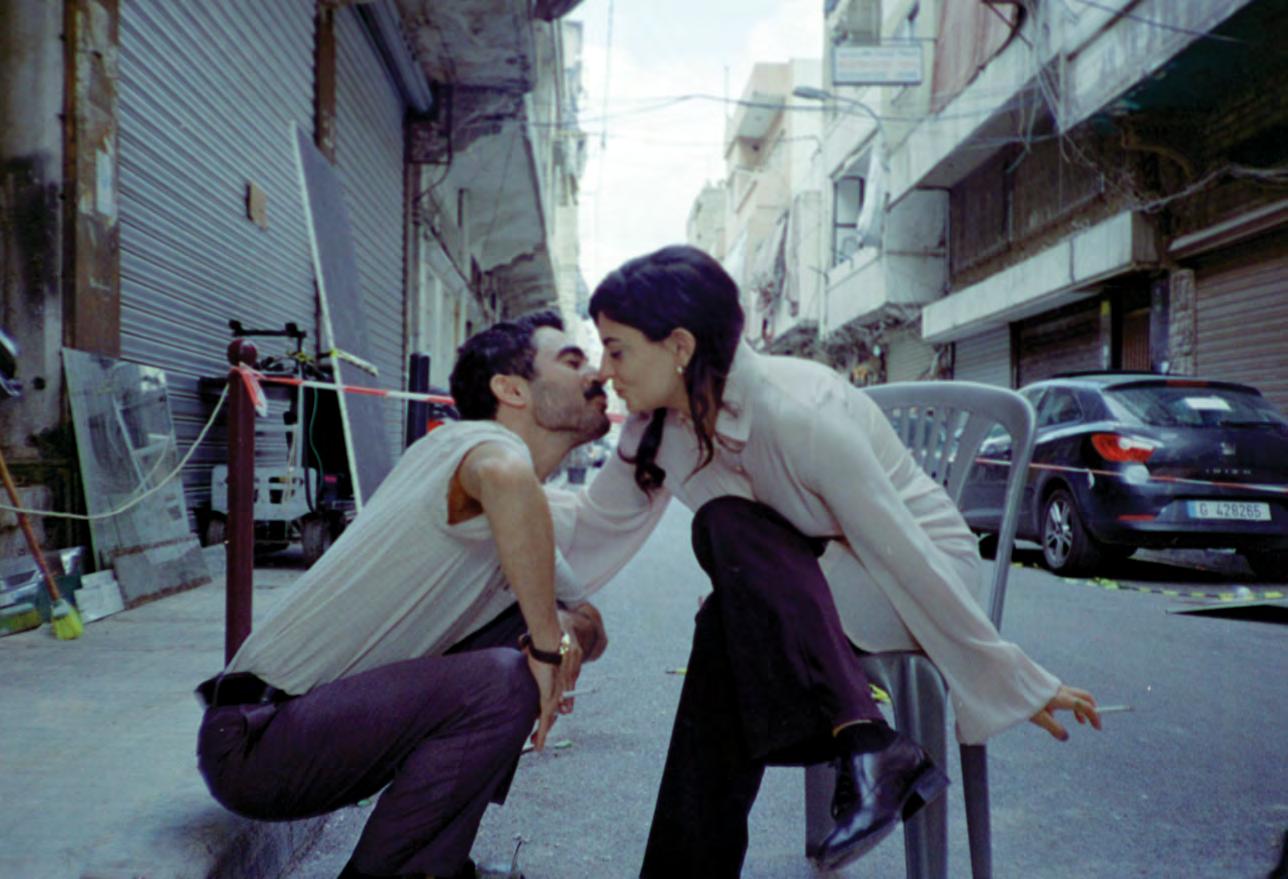
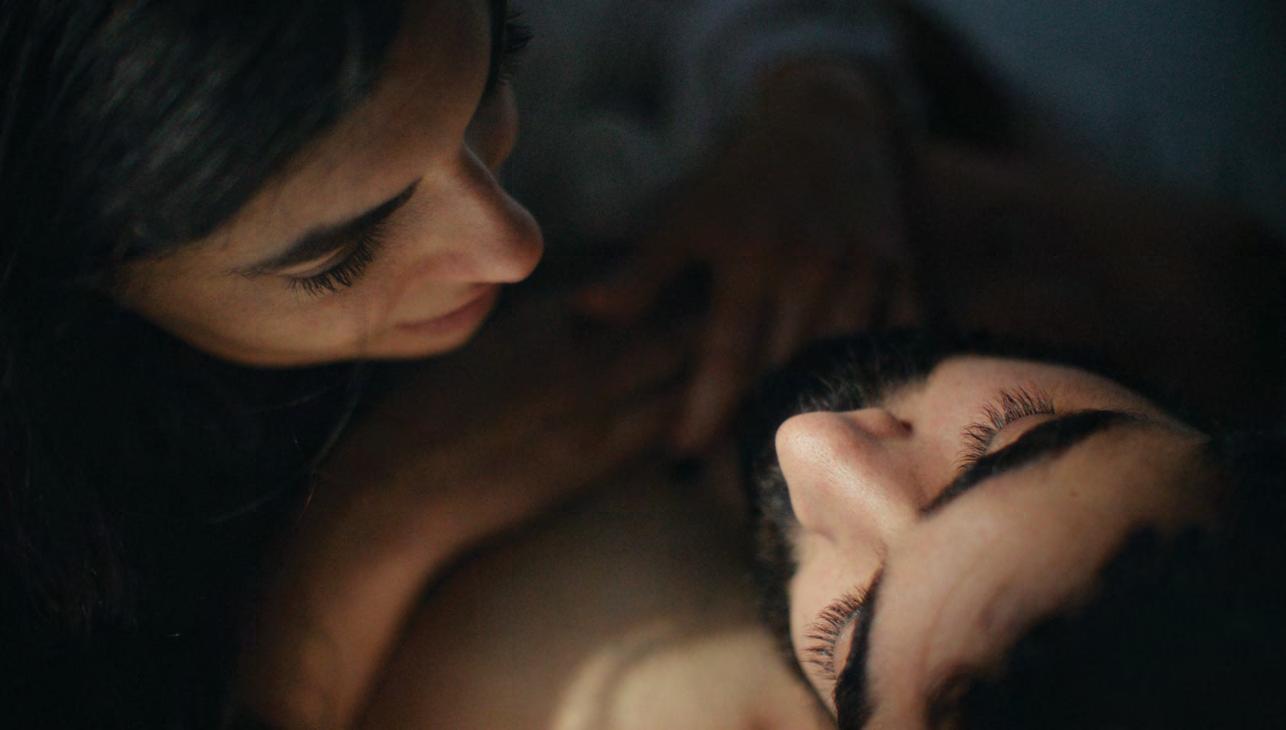
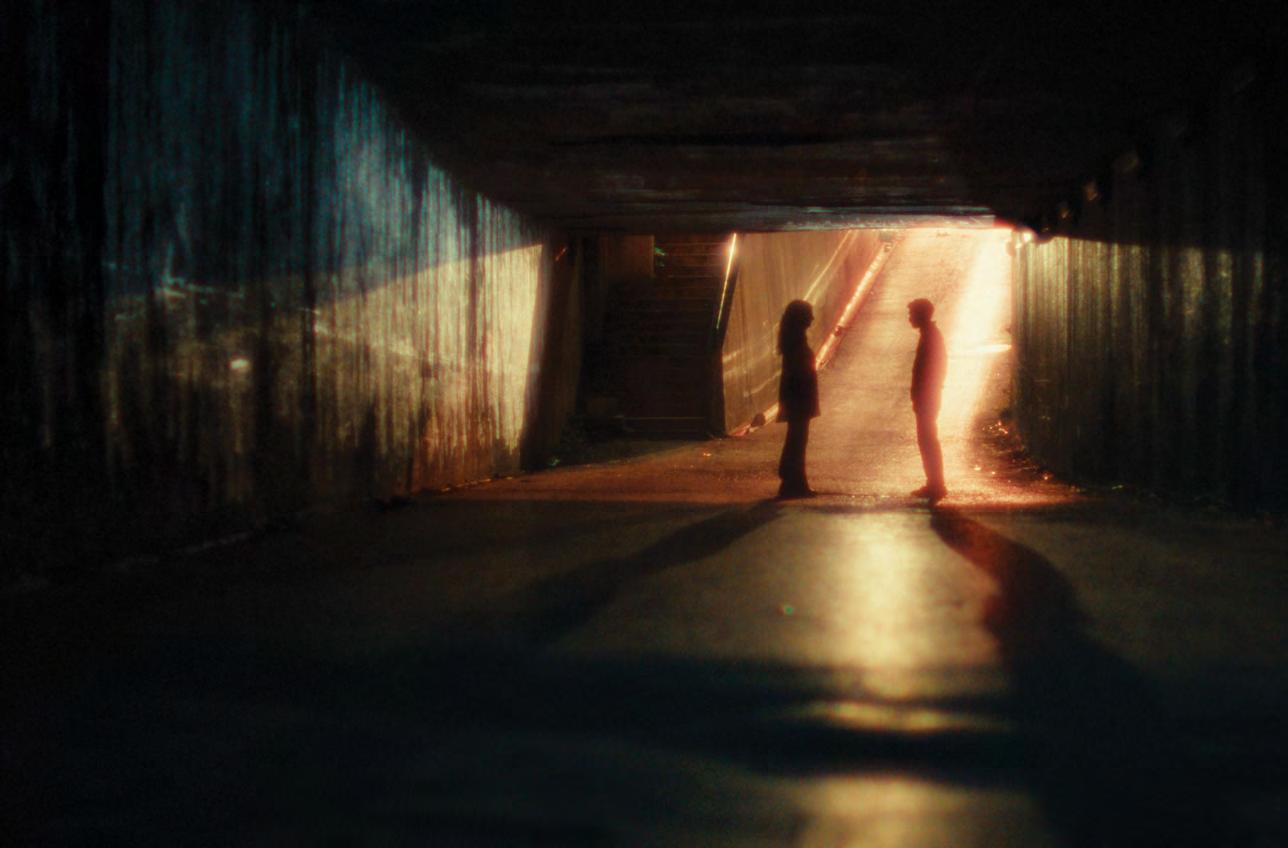
There are films that attempt to explain a country. And then there are films that feel like they’ve lived inside it. Set in Lebanon, A Sad and Beautiful World is one of the latter. From its opening sequence, a hospital corridor trembling as bombs fall outside, glass fracturing while two babies enter the world, the film refuses spectacle. Instead, it offers proximity. Life and destruction share the same breath. No swelling music. No grand declarations. Just the uneasy coexistence that has come to define modern Lebanon.
At its centre are Nino and Yasmina, two people bound not only by love but by geography, memory, and inheritance. Their romance unfolds in fragments: flirtations in kitchens, arguments in parked cars, silence stretching across dinner tables. Through them, director Cyril Aris maps something larger than a couple. He maps the emotional architecture of a generation raised on oscillation, between hope and collapse, departure and return, devotion and disillusionment. Here, Aris reflects on paradox, memory, and why sadness and beauty are not opposites, but companions.
A Sad and Beautiful World feels deeply personal yet universally relatable. What sparked this project?
A Sad and Beautiful World feels personal because it reflects my own complex relationship with Lebanon: a love-hate dynamic that swings between hope and despair, affection and detachment. Just as Lebanon experiences cycles of conflict and crisis alongside periods of vibrancy and cultural richness, our bond with our homeland is never straightforward.
This paradox inspired the emotional backbone of the film. It informs the two opposing perspectives of the main characters, Nino and Yasmina, whose relationship mirrors the tensions and contradictions of the country they grew up
in. Through their story, we explore the beauty of Lebanon while never turning away from the sadness embedded in its history, its turmoil, upheavals, and enduring struggles.
How do you consciously balance sadness and beauty in your storytelling?
This balance is the very foundation of the Lebanon I know, and the atmosphere that radiates from our society. Since my childhood, after the civil war, life has been lived in extremes: an overwhelming thirst for life, moments of joy and hope… always darkened, preceded, and followed by wars, regional conflicts, collapse, and despair.
What survives all of this, however, is humour, love, and family. That is why it felt right to play with the tension between melancholy and hope, between romance and rupture, because this balance embodies the place I call home. So I created two characters who embody
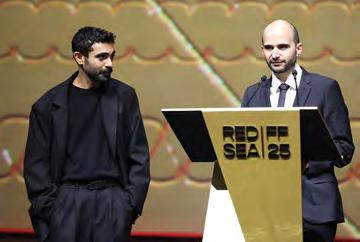
“IN LEBANON, BECAUSE OF OUR COMPLICATED AND DARK HISTORY, WE LEARN TO APPRECIATE MOMENTS OF PEACE AND PROSPERITY EVEN MORE.”
these two opposing emotions, and let them swing between these polar extremes, just as we all fluctuate between them, depending on the state of the country, and where we are in our lives.
The visuals in A Sad and Beautiful World feel intimate and fragile. How did you approach the visual tone to reflect emotional vulnerability?
I worked closely with my cinematographer Joe Saade to visually convey the feelings of falling in love, the euphoria and vibrancy, as well as the decline, decay, and eventual crumbling of that relationship. The colours and production design reflect the state of the relationship, shifting from saturated and vibrant tones to something faded, drained of colour, and colder.
The camera begins with exuberance and energy, capturing the first moments of budding love, before moving into the intimate space between the characters with closeups, showing skin, textures, and small details. Later, it pulls back, becoming more static, distant, and cold. Every visual choice was dictated by how the characters feel about each other, by the rhythm of their closeness and distance.
How has your cultural background influenced the emotional lens through which you view this “sad and beautiful” world?
In Lebanon, because of our complicated and dark history, we learn to appreciate moments of peace and prosperity even more. It gives us a lust for life and a joie-de-vivre that is typical of our culture. We are always aware that moments of peace can end overnight. In this way, our culture and the way we think are deeply shaped by the social and political context around us, making us see the world as both “sad and beautiful”.
Was there a particular scene, image, or moment in this project that was especially difficult, or healing, for you?
The opening scene is a long take showing both Nino and Yasmina being born in a hospital hallway while bombs fall around the building, shattering its windows. This image is inspired by the real-life birth of Mounia Akl, the actress who plays Yasmina, late on in the civil war. It is also inspired by the birth of a baby during the August 4th, 2020 port explosion, when a hospital was damaged by the shockwave of that explosion.
This scene was especially moving to create because it made us realize how history repeats itself. Babies born decades apart in real life, arrive into the world under the same conditions, revealing the cyclical nature of Lebanon’s tragedies and the fragility of life in this context.
Your work consistently explores emotional intimacy and human fragility. What draws you to these themes across different projects?
The desire to explore the hidden depths of our inner lives and the subtle ways we connect, resist, and survive. Across my projects, whether in short films, documentaries, or feature narratives, I am fascinated by the moments when people are most vulnerable and exposed and how these moments reveal universal truths about love, loss, longing, and resilience.
I am drawn to the small gestures, the silences, and the overlooked spaces where human emotion lives because they are where we see life in its rawest and most honest form. ■
Art Basel Qatar and the possibility of a slower art fair.
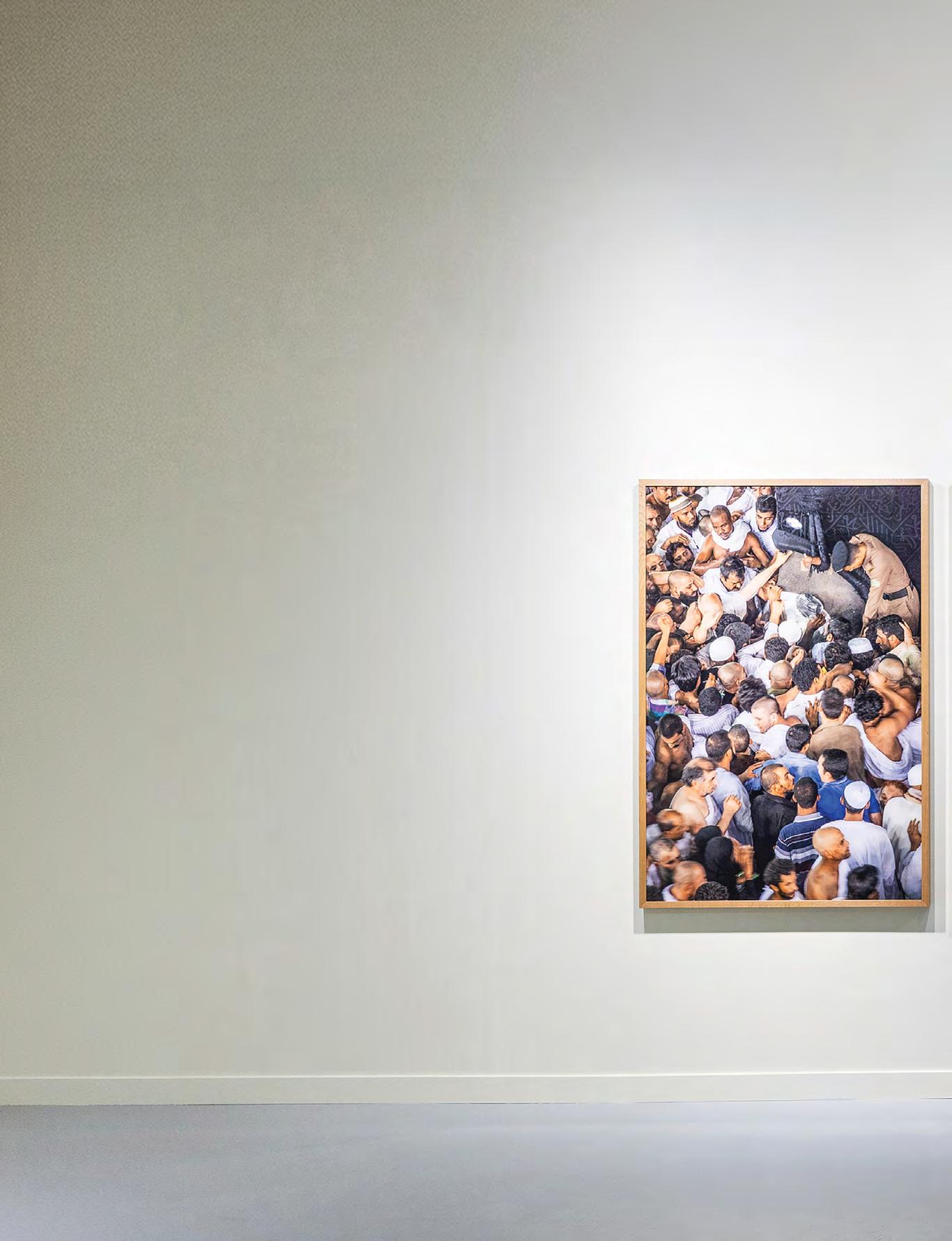
Art Basel Qatar did not behave like an art fair usually does. After years in which fairs have started to blur into one another, moving through them often feels like operating on instinct. You walk fast, you scan faster, conversations overlap, openings merge into dinners, and by the second day images begin to flatten into a single visual memory. Doha interrupted that rhythm almost immediately.
The change was structural before it was aesthetic. Art Basel’s first edition in the MENA region unfolded across Msheireb Downtown rather than inside a single convention hall. Works appeared between M7, the Doha Design District and surrounding public spaces, allowing the fair to spread into the city rather than enclosing itself within it. Moving between venues required pauses. You stepped outside, recalibrated your eyes, and returned to looking again. That physical distance altered the tempo of attention.
There was also a different economic atmosphere underpinning everything. Art fairs are expensive ecosystems. Galleries typically shoulder significant participation costs, which inevitably creates urgency around sales. In Doha, where the fair was supported through state partnerships connected to Qatar’s wider cultural strategy, that pressure felt diffused. Conversations lasted longer. Visitors lingered. Transactions still happened, yet they did not dominate the emotional tone of the event.
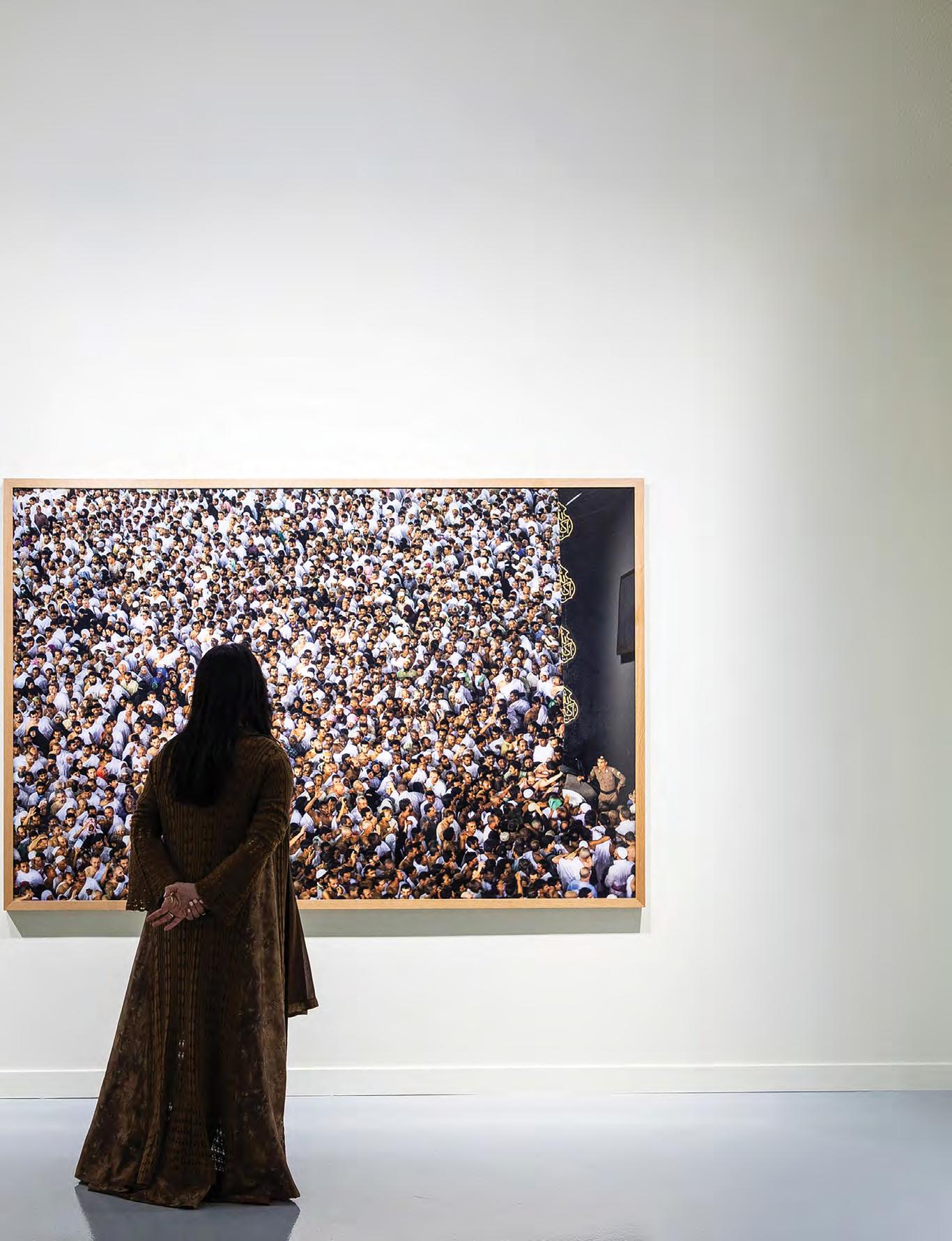
photography Courtesy of ART BASEL
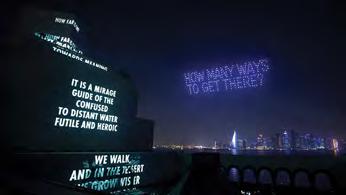
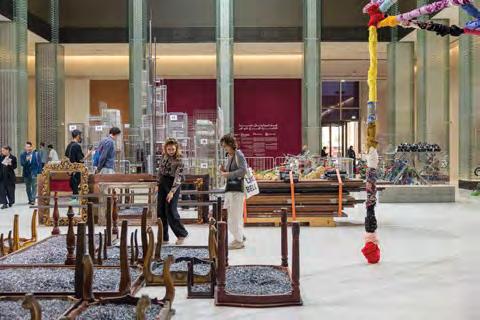
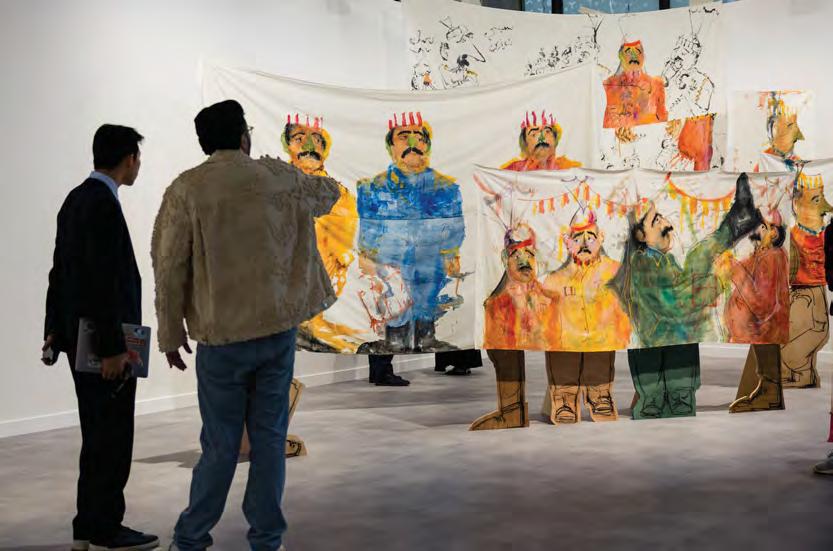
This shift became most visible in the presentations themselves. Many galleries chose to focus on single artists or tightly edited bodies of work. Instead of encountering crowded selections designed to capture attention within seconds, viewers were able to follow a practice across multiple works and understand its internal logic. Time returned to the experience of looking. Spending fifteen minutes inside one presentation no longer felt indulgent or inefficient.
Scale played an important role. With 87 exhibitors, the fair never tipped into sensory overload. There was no moment where escaping outside felt necessary simply to rest your eyes. Space, both physical and mental, shaped the encounter with art. The absence of visual saturation allowed quieter works to hold attention, and it also encouraged conversation that moved beyond quick reactions. People spoke about ideas rather than prices or trends, at least during the hours spent inside the exhibitions.
The structure echoed aspects of a biennial more than a traditional fair. Walking through Doha meant encountering installations and commissions embedded within architecture and public space, extending the experience beyond gallery presentations. The boundaries between exhibition, event and city became porous. Audiences moved through an environment rather than a marketplace, absorbing works gradually as part of a wider cultural landscape.
One of the most memorable moments unfolded at the Museum of Islamic Art, where Jenny Holzer presented SONG, a large-scale projection activated across the museum’s façade and courtyard. Text by Mahmoud Darwish and Nujoom Alghanem appeared in Arabic and English, unfolding across the building at night while drones traced patterns above the skyline. The work drew poetry into public space, merging language, architecture and collective spectatorship. Standing there among visitors and residents, the atmosphere felt closer to a civic gathering than an art world opening.
The presence of ambitious works reinforced that impression. Several presentations seemed oriented toward institutional futures rather than immediate acquisition. Video works appeared with unusual confidence, occupying space without apology despite their reputation as challenging fair material. Time-based practices require patience from audiences and commitment from exhibitors, conditions that are rarely prioritised within fast-moving commercial environments. Their visibility suggested that galleries felt permitted to take risks.
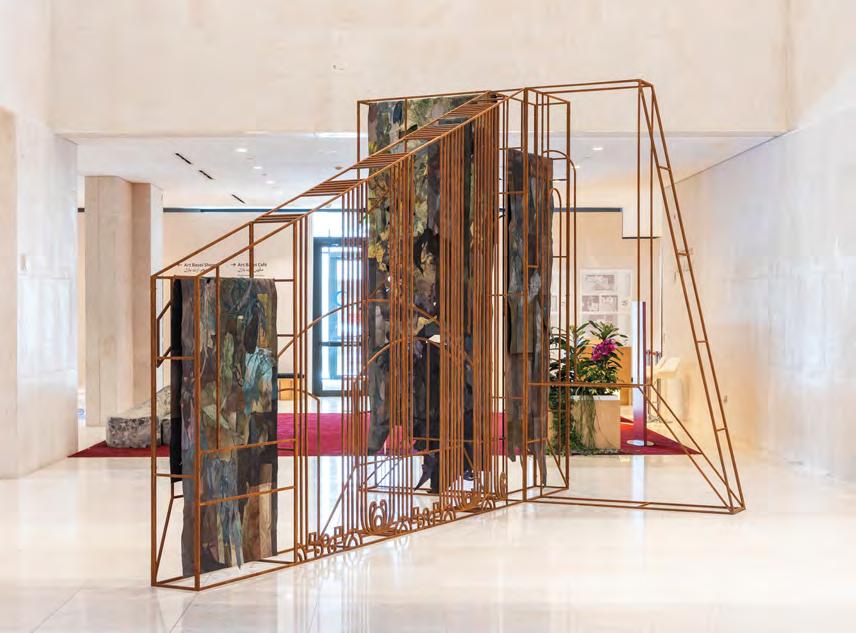
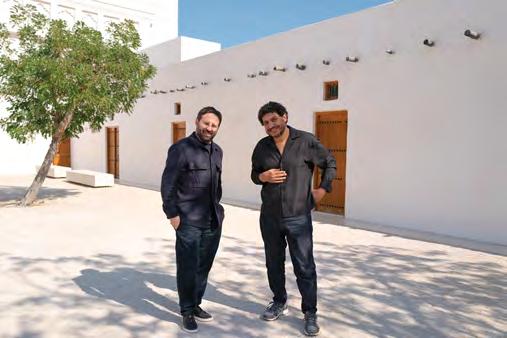
For galleries, this slower pace opened different possibilities. Without the constant pressure to compete visually with neighbouring booths, presentations could unfold with greater clarity. Artists whose practices rely on narrative, research or slower engagement gained space to communicate their intentions. The fair rewarded attention rather than speed, a subtle but meaningful recalibration of expectations.
The timing of Art Basel Qatar coincides with a broader shift in the geography of the art calendar. Over the past decade, cultural events across the Gulf and wider region have expanded rapidly, from biennials in Riyadh to new institutional programmes across the Middle East. These initiatives reshape travel patterns for artists, curators and collectors, gradually redistributing where attention gathers during the year. Doha enters this landscape as a meeting point connecting regional production with an established global network.
For a few days in Doha, the pace slowed just enough to notice how differently art can unfold when looking is allowed to take its time.
Walking through the fair, it became clear that many participants were observing as much as they were presenting. Galleries appeared curious about how audiences would respond to this altered rhythm. Visitors tested how long they could remain with a work before moving on. The experience raised quiet questions about habit. After encountering a slower pace of looking, it becomes difficult to return immediately to environments built around acceleration. Allowing space between works changes how memory forms. Images remain distinct rather than dissolving into visual noise. Conversations extend beyond immediate impressions and continue later, sometimes days after leaving the exhibition.
Afterward, what stayed was not a single artwork or sale, but a sensation of altered tempo. The fair suggested that audiences may be willing to engage differently when given the opportunity. Whether this model can translate elsewhere remains uncertain. Each Art Basel edition has always reflected its host city, and Doha’s structure emerged from specific political and cultural conditions.
Still, the experiment lingers. If viewers begin to expect time, clarity and room to think, the expectations placed on future fairs may shift. The art world has spent decades accelerating its own rhythms. For a few days in Doha, the pace slowed just enough to notice how differently art can unfold when looking is allowed to take its time. ■
Kareen Nahas’ intimate approach to restoration combines both artistic freedom and dedication.
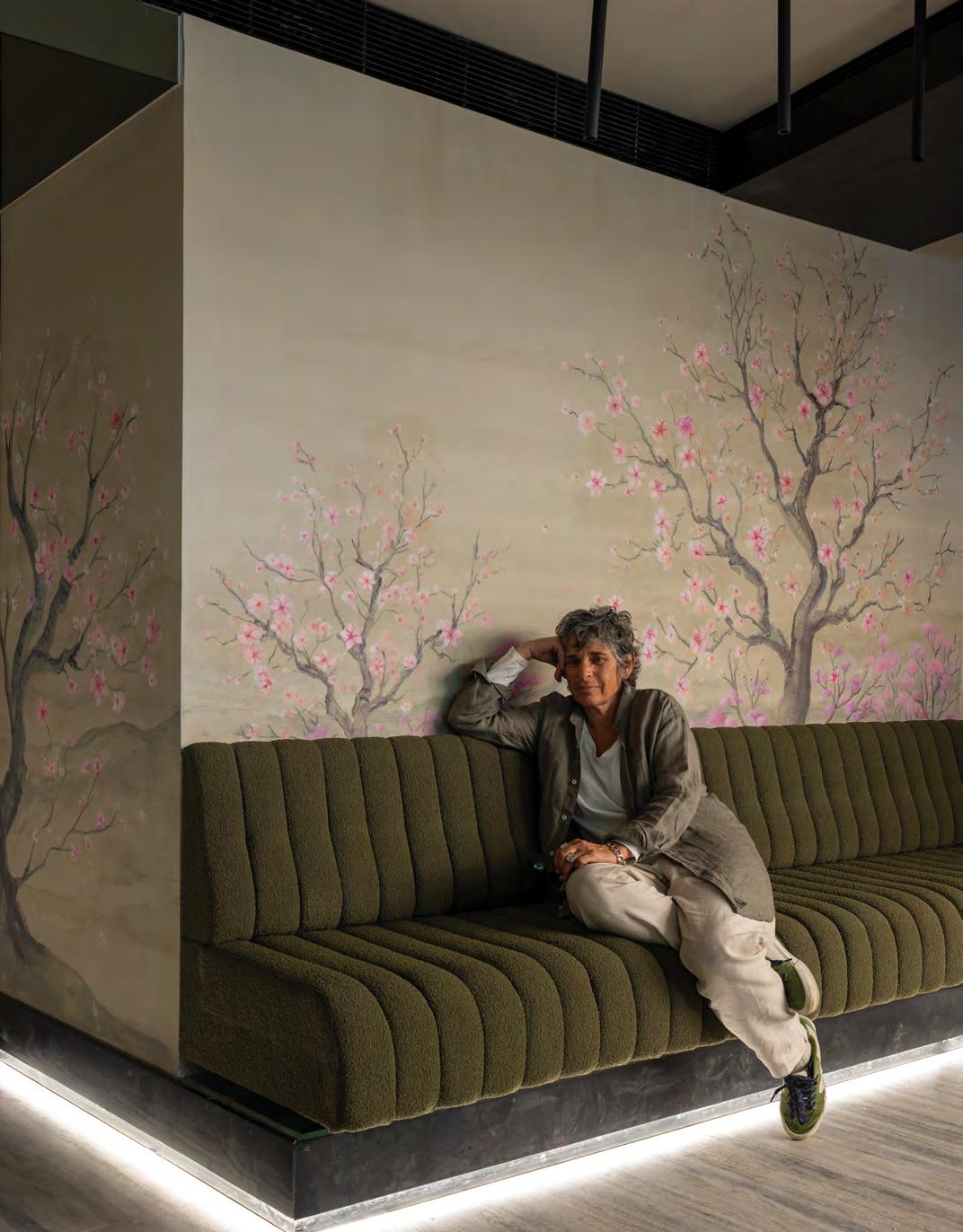
Kareen Nahas never learned how to become an artist. She simply was one. “I was born with a paintbrush between my fingers,” she says, without exaggeration or nostalgia. For her, art was an instinct, a language she spoke before words.
Raised between Lebanon and New York, Nahas carries within her a rare dual sensibility: the emotional depth and material intimacy shaped by heritage and nature, and the rigor, ambition, and scale fostered by one of the world’s most demanding artistic capitals. Her work today lives precisely at that intersection: where illusion meets structure, where surfaces carry memory, and where heritage is not preserved as an artefact but reanimated as a living presence.
As a child, Nahas was an observer more than a participant. While others ran, played, and disappeared into games, she remained still, watching. She studied the world quietly, its textures, shadows, and transformations. In the mountains, on sandy ground, surrounded by nature and old houses, she began imagining how things were made, and more importantly, how they could be remade. She wondered how wood could be recreated through paint, how stone could be transformed into faux marble, how surfaces could be given another life altogether.
This early fascination became the foundation of her artistic language. The frescoes of traditional Lebanese houses left a lasting impression on her. Instead of playing among them, she imagined restoring them endlessly, repainting them in her mind, honouring their stories while envisioning their future. Long before she understood the technical vocabulary of restoration, she understood its emotional weight.
Born into a lineage of artists and architects, including her grandfather Antoine Nahas, architect of the National Museum of Beirut, heritage for Nahas was never theoretical, it was built, drawn, painted, and inhabited.
This foundation eventually carried her to New York, where her artistic education took on a new scale and discipline. She studied at the School of Fine Arts before enrolling at Van Der Kelen, one of the most prestigious decorative art schools in the world. There, she refined her mastery of trompe-l’œil, faux finishes, and large-scale decorative techniques, earning multiple gold medals along the way. Precision, patience, and discipline became as essential to her work as intuition and imagination.
Early in her career, Nahas collaborated with the City of New York, a turning point that led to projects in some of the city’s most iconic spaces, including the Plaza Hotel, Grand Central, and private residences such as David Bowie’s home.
These projects demanded more than technical excellence. They required an understanding of how art inhabits architecture, how walls hold memory, and how space influences emotion. Nahas learned that her work was not about decoration, it was about atmosphere, about creating environments that resonate with those who enter them, even if they cannot immediately explain why.
At the core of her practice is an intimate relationship with material. Wood and marble, in particular, are central to her artistic universe. Her connection to wood is deeply personal, rooted in childhood memory. As a young girl, she played on a swing in Yarzeh, attached to a tree she loved profoundly. When it died, the loss felt catastrophic. Faux bois, for Nahas, is not imitation, it is devotion.
Marble holds a different kind of power. To Nahas, marble is a fossil born from fire, shaped by eruption and pressure. Working with marble means working with energy, raw and ancient. This philosophy explains her refusal of synthetic materials. The closer she is to reality, the more authentic the result. And authenticity, for her, is non-negotiable.
Balance defines everything Nahas does. Between tradition and modernity. Between freedom and discipline. Between creation and restoration. She does not view heritage as fragile, nor does she believe in freezing it in time. Instead, she treats it as a foundation, a base from which contemporary expression can emerge without erasing the past.
This approach became especially poignant in the aftermath of the Beirut port explosion. Collaborating with Beirut Heritage, Nahas worked on restoring historic homes damaged by the blast, homes filled with intricate frescoes and layered cultural memory. The task was deeply emotional. Restoration, in this context, was not simply about repairing walls. It was about preserving identity, continuity, and dignity in the face of destruction.
Unlike many restorers, Nahas never reuses existing materials when working on heritage sites. Instead, she creates and mixes her own, allowing her to respect the original spirit while ensuring structural integrity and longevity. Restoration, for her, is not replication. It is interpretation guided by humility, knowledge, and responsibility.
There is an unmistakable signature to her work. Nahas openly admits that she wants people to walk into a space and immediately sense her presence. Not through excess or spectacle, but through precision and an atmosphere that feels both timeless and immediate.
Among her many inspirations, Pompeii holds a singular place. The ancient city, frozen yet alive, fascinates her endlessly. It represents everything she believes art should be: a witness, a memory, a survivor. In Pompeii, catastrophe did not erase beauty, it preserved it. That paradox continues to shape her understanding of heritage and time.
Ultimately, Kareen Nahas believes that all of humankind’s heritage belongs to the world. Culture, in her view, cannot be owned, it can only be protected, transmitted, and shared. Art, she insists, is the only truly universal language, capable of reconciling humanity across histories, borders, and differences.
In her hands, art does not decorate. It remembers. It restores. It lives. ■
Her work today lives precisely at that whereintersection, illusion meets structure, where surfaces carry memory.
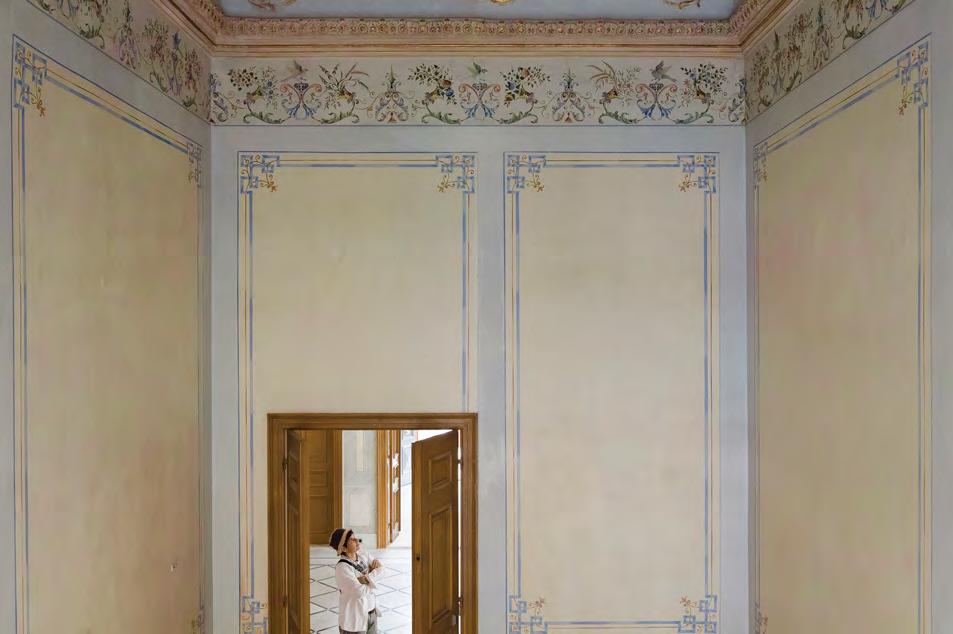

words NADINE KAHIL
When the Middle East comes to London, hospitality becomes home.
Beit Kotn is not a hotel. It is a home, a creative residence built around a simple yet enduring principle: el beit beitak, “my house is your house”. Opened in February, above Kotn’s London flagship in Shoreditch, Beit Kotn marks the brand’s first foray into hospitality, reframing the way a fashion label can inhabit space without commodifying it. “Beit Kotn is a creative residence and private hotel for our community, but the concept of el beit beitak sits at the very core of the project,” says Rami Helali, co-founder and CEO of Kotn. “That idea carries responsibility. Beit Kotn is designed to embody the essence of home. It is less about luxury service and more about how someone feels when they enter a space.”
Every corner of Beit Kotn reflects a deliberate restraint, a choice to prioritize intimacy over spectacle. In a world where hospitality is often measured by service checklists and scale, translating Kotn’s non-transactional ethos into physical space was no small feat. “For us, it was about restraint. About protecting intimacy. Removing transaction was one part of it, but the harder part was making sure the space didn’t feel institutional. It had to feel human. It had to feel like someone actually lives there,” Helali says.
Beit Kotn blurs the lines between living, working, and gathering, creating a space where creativity and community can unfold organically. The building houses private rooms alongside shared living areas, intentionally designed for conversation, collaboration, and quiet reflection. It is not a curated experience or a staged spectacle, it is a home for time and presence. “Creativity does not always happen in formal settings,” Helali notes. “It happens in kitchens, long conversations, shared silence. By allowing the space to breathe, you create room for those moments.”
Arab hospitality informs every aspect of Beit Kotn, yet its expression in London is subtle rather than performative. “Arab hospitality is not decorative, it is behavioural,” Helali explains. “It is in how you host, how you share space, how you make someone feel seen. Instead of turning it into a visual theme, we focused on atmosphere and energy. As Arabs, this is something that comes naturally, we share meals, open doors, welcome strangers with open arms.” The philosophy permeates without overt display; it is felt, not framed.
The London location, a district defined by migration and cultural intersections, was chosen deliberately to reflect Kotn’s values. “We wanted to embed Beit Kotn within an existing cultural ecosystem rather than stand apart from it,” Helali says. Shoreditch’s dynamic, lived-in energy mirrors the brand’s commitment to community over spectacle, to presence over performance. The brand’s London flagship, Kotn’s first European store, underscores this philosophy: it is not just a retail space, but a gateway into deeper participation within the city’s cultural fabric. This approach extends Kotn’s long-standing philosophy of impact. From working directly with over 5,000 smallholder cotton farmers to building fully traceable supply chains, Kotn has always prioritized trust and mutual investment. Beit Kotn carries this intentionality into the physical world, making hospitality not a service but a lived practice.
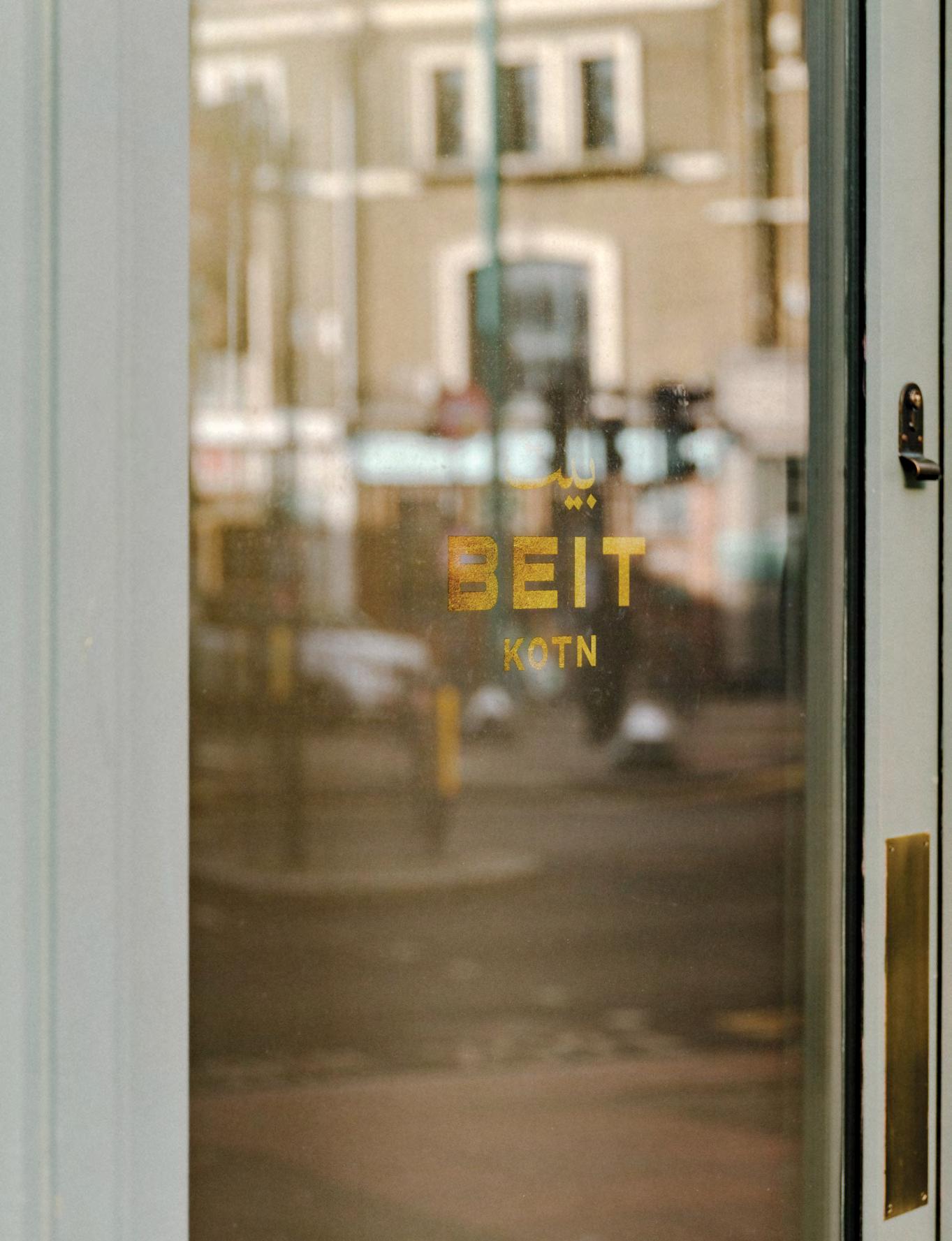
The brand’s commitment to care and responsibility continues to shape its vision. Certified as a B Corporation with one of the highest impact scores in North American apparel, Kotn also invests in education through its ABCs Project, having built 25 schools in the communities where its cotton is farmed. Helali stresses that the ethos of stewardship now extends beyond clothing. “Every Beit Kotn is rooted in the same principles. Intimacy comes from intention, not square footage. As long as we stay close to the community and protect the philosophy behind it, growth will not dilute the project. It should strengthen the connections between cities, not flatten them.”
Looking ahead, Cairo is set to host the next chapter in Beit Kotn’s story. The project will be larger in size but not in spirit. “Scale is not the goal. Depth is,” Helali says. “London is only the first chapter,” Helali continues. “Cairo will be part of an evolving network of cultural homes, spaces rooted in place yet connected by shared values.”
Beit Kotn thrives as a creative home in motion. Artists, writers, designers, and cultural thinkers from the Middle East and its diaspora form the core community, interacting with an international network of creatives passing through the space. The building itself is not static; it evolves with each collaboration, conversation, and shared meal. “Beit Kotn is designed to allow things to unfold,” Helali says. “There is no strict programming and no constant scheduling. The space is designed for time, time to stay, create, and connect.” This philosophy of openness extends to everyday details. Shared kitchens and living areas encourage serendipitous interactions, where formal hierarchies dissolve and creativity is allowed to surface naturally.
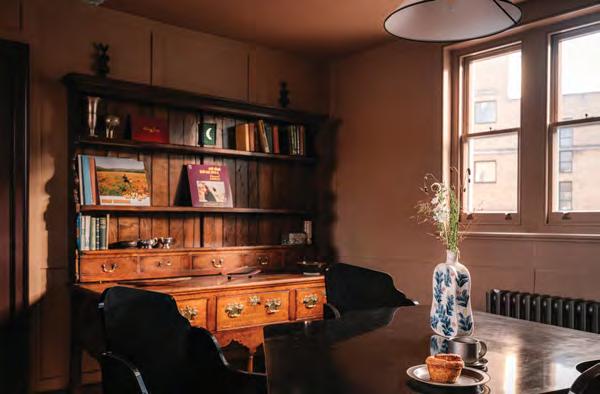
The project also engages with the broader question of Arab identity in a global context. Beit Kotn offers an alternative to performative representations of culture. Its hospitality is behavioural, grounded in care and attentiveness rather than symbolism. “Arab hospitality is in how you host, how you share space, how you make someone feel seen,” Helali reiterates. Meals are shared, doors are open, and conversations extend late into the night, a living practice of generosity.
As the brand expands, Helali remains mindful of preserving the relational core. “Every Beit Kotn will remain rooted in its community and built with the same principles. Cairo will be larger in size, but not different in spirit.” he emphasizes.
In a world increasingly dominated by speed, access, and curated impressions, Beit Kotn offers a counterpoint: a home that values presence over program, conversation over performance, and connection over consumption. “Beit Kotn is designed to embody the essence of home. It is less about luxury service and more about how someone feels when they enter a space,” Helali says. It is an invitation to slow down, to inhabit a space with intention, and to participate in a culture of care that transcends transactional interactions.
London may be the first chapter, but Beit Kotn’s vision extends far beyond a single city. Its network of cultural homes seeks to create enduring relationships across borders, offering a model of hospitality grounded in Arab values yet universally resonant. “Scale is not the goal. Depth is,” Helali concludes. “As long as we stay close to the community and protect the philosophy behind it, growth will not dilute the project. It should strengthen the connections between cities, not flatten them.”
Beit Kotn is, in every sense, a home for the global creative community. It demonstrates that a brand can inhabit space responsibly, prioritizing intimacy, generosity, and connection over spectacle and service. ■
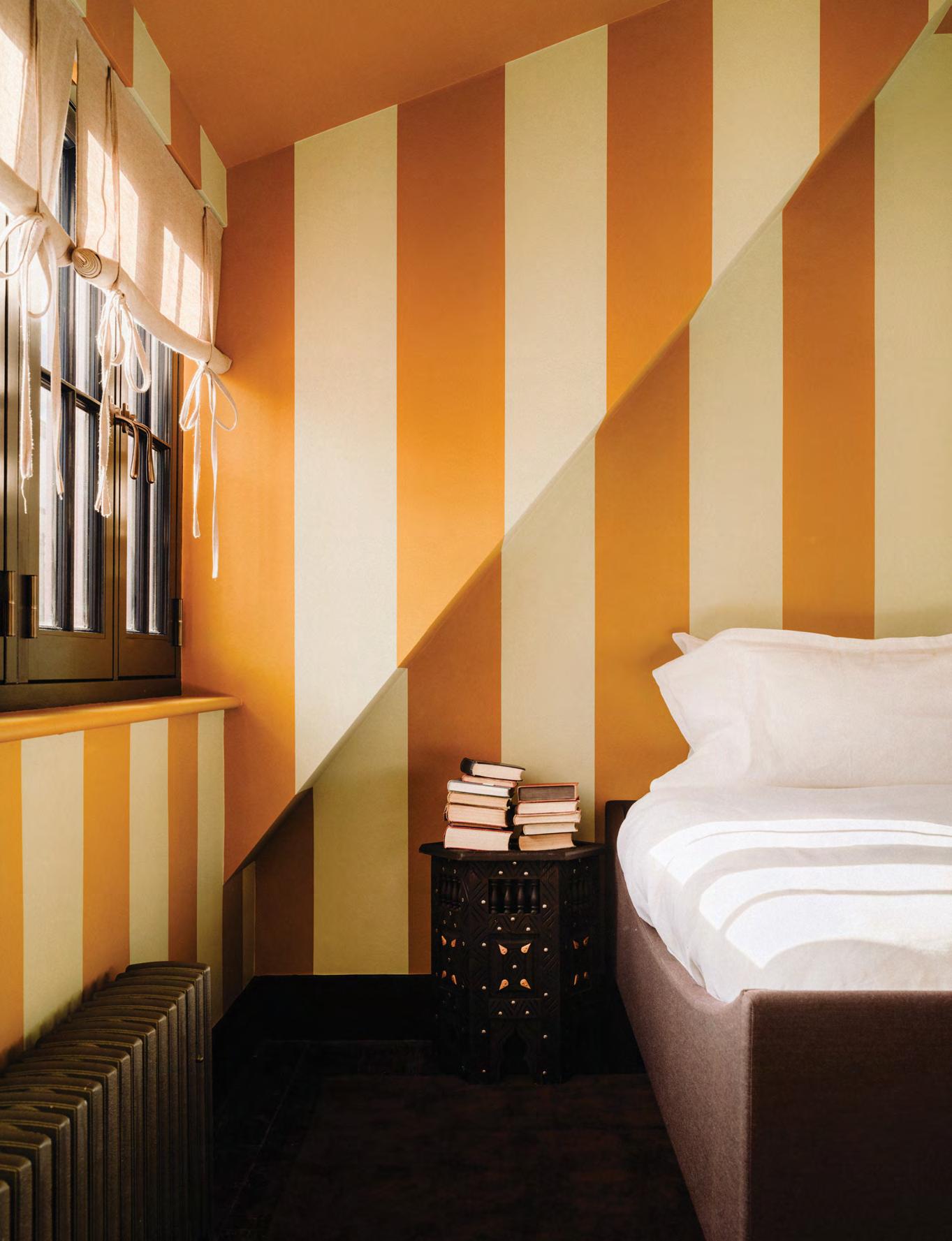
For this issue, we return to a question that feels simple, yet carries the weight of everything: What is... home?
In our language, it is never just one word.
Each carries its own weight. Its own meaning. Its own place within us.
Bayt is intimate.
Dar is shared.
Watan runs deeper, sometimes distant, sometimes fractured, always felt.
Manzil is a place of arrival, or perhaps just a pause along the way.
Together, they do not define home. They expand it. Because home, for us, has never been fixed. It lives in our language.
In our times, home feels unstable – inherited, chosen, or even imagined – we find ways to rebuild it. Through memory. Through language. Through the ways we create, dress, and express. Through the people we find, and the spaces we shape.
Just as our words stretch to hold its meaning, we stretch to hold onto it. Four names, not to define it, but to understand its many forms. Because home, for us, has never been just one place.