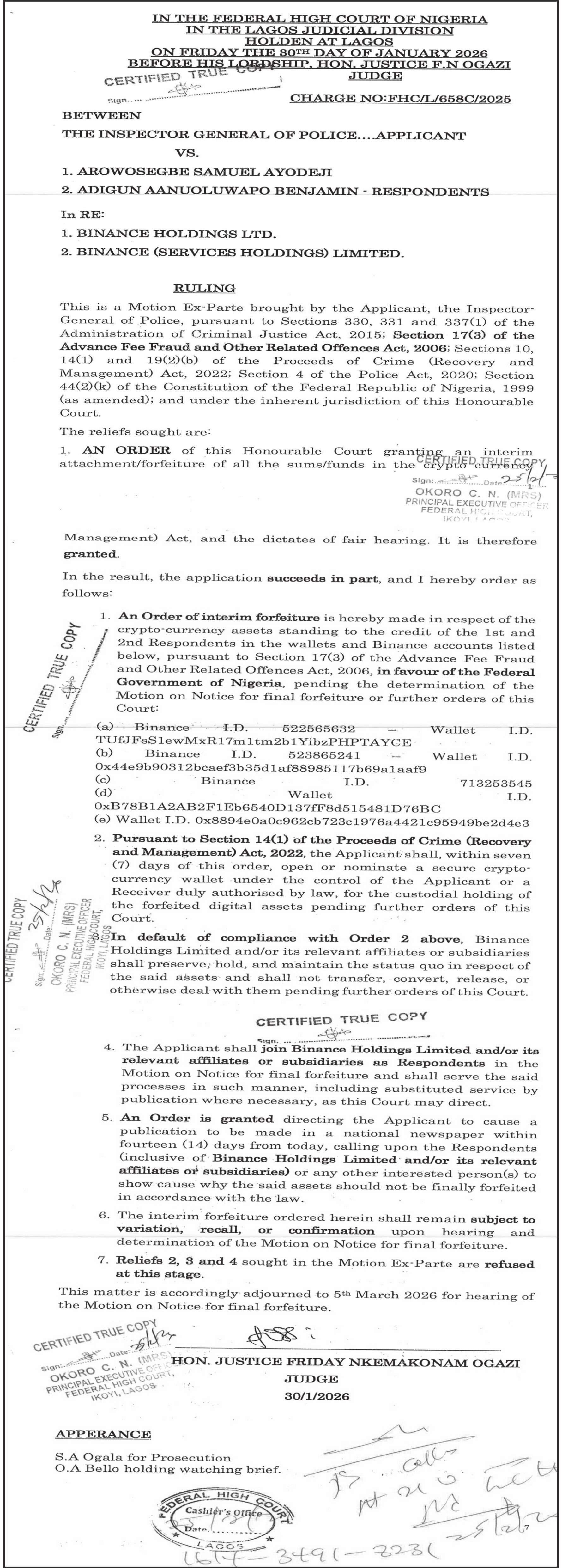
Edun: Implementation of New Tax Laws Will Be Monitored to Ensure Fairness,
Declares mounting of roadblocks for tax collection now illegal Tinubu nominates Oyedele as Finance Minister of State, redeploys Anite-Uzoka to budget ministry
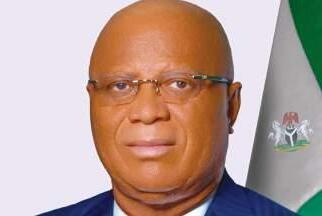
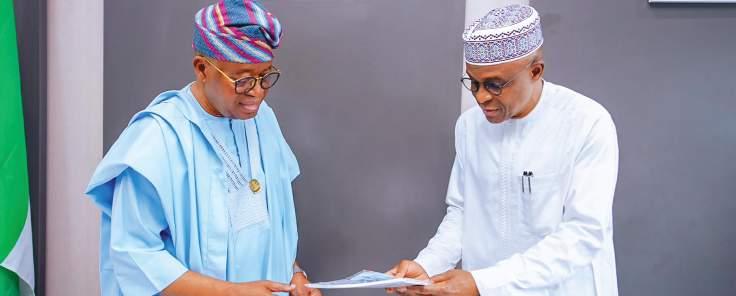
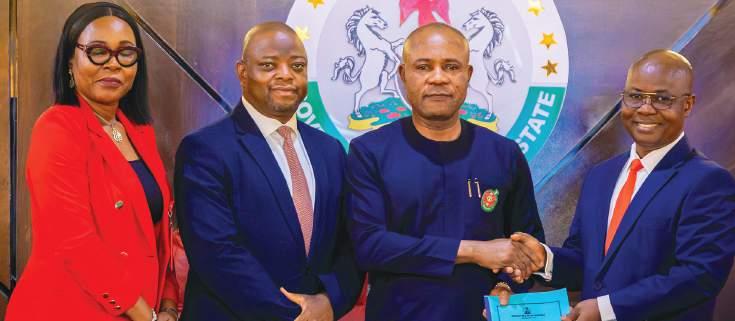
The Minister of Finance and Coordinating Minister of the Economy, Mr. Wale Edun, yes-
terday assured that the new tax laws will be monitored to ensure transparency, fairness and equity.
Edun gave the assurance on the same day President Bola Tinubu nominated Mr. Taiwo Oyedele as
the Minister of State for Finance, replacing Dr. Doris Anite-Uzoka. Edun, spoke in Abuja, yesterday,
www.thisdaylive.com
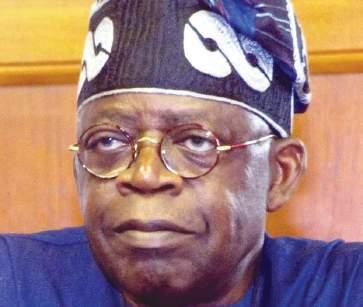
Panel Finds Prima Facie Case of Negligence in Death of Chimamanda’s Son
Three doctors suspended, case referred to disciplinary tribunal Euracare responds Wale Igbintade
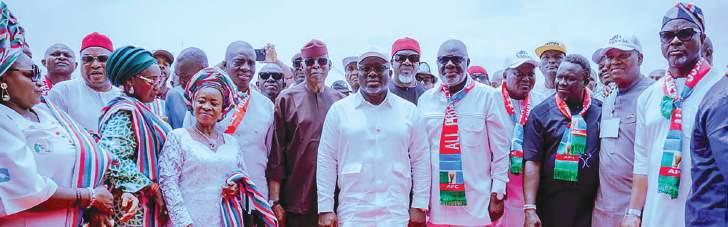
The Medical and Dental Council of Nigeria (MDCN) has established a prima facie case of medical negligence and professional misconduct in the death of Master Nkanu Adichie-Esege, the 21-month-old son of acclaimed author Chimamanda Ngozi Adichie. The Council’s findings followed an investigation initiated after a formal complaint was lodged on January 16, 2026. Medical practitioners from APC Directs Swearing-in of All Executives as Party Conducts Congresses Nationwide...
Conflict Widens, US Asks Citizens to Leave Middle East
Oil price exceeds $85 a barrel, first time in 21 months Trump: Strikes killed leaders US saw as successors IMF: Tensions heightening global economic uncertainty Mass funeral held for children killed in strike on school US to cut off all trade with Spain
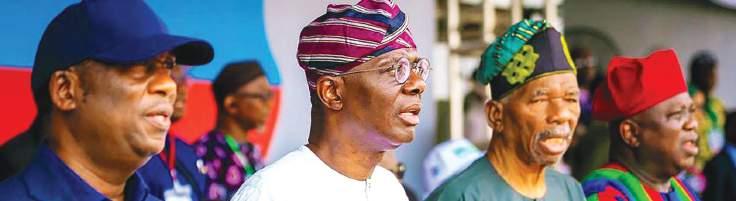
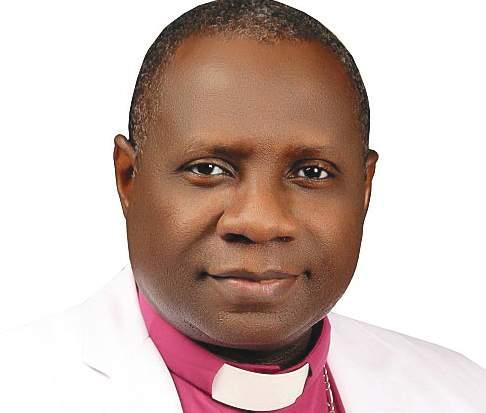
STATE CONGRESS OF THE ALL PROGRESSIVES CONGRESS IN LAGOS...
L-R: Lagos State Deputy Governor, Dr. Obafemi Hamzat; Governor Babajide Sanwo-Olu; Chairman, Governor’s Advisory Council (GAC), Prince Tajudeen Olusi; and former Governor of Lagos State, Mr. Akinwunmi Ambode, during the state congress of the All Progressives Congress at Mobolaji Johnson Arena, Onikan, yesterday
Deji Elumoye and Ndubuisi Francis in Abuja
KWARA SENATORS VISIT ABDULRAZAQ...
Tinubu Tasks Govs, Private Sector, Others to Lead Nigeria’s Climate Transition, Action Launches
Deji Elumoye in Abuja
President Bola Tinubu has formally launched the Renewed Hope Climate Change Awareness Tour (REHCCAT), a nationwide initiative aimed at promoting climate resilience and sustainable development across Nigeria.
The President, represented by the Minister of Environment, Balarabe Abbas Lawal, who launched REHCCAT at the State House, Abuja, called on governors, the private sector, and other stakeholders to spearhead Nigeria’s climate transition and transform awareness into concrete action.
According to him: “Today we launch a movement, the Renewed Hope Climate Change Awareness Tour, it is more than a program of events across our state, it is a national call to action, a call to innovation and opportunity.
“Climate change is no longer a distant focus. It is here. It affects our farmers in the north who are facing the encroachment of the drought. It affects our coastal communities in the south, which are confronted with erosion and flooding across the country.
“It affects our businesses, management of energy costs, and supply chain disruption, and it affects our young people whose future depends on the choices we make today.
“Let me be clear. Climate change is not only about risk. It’s about
renewed hope climate change awareness tour
opportunity. Nigeria stands at a defining moment in history. The global transition to low-carbon development is accelerating. Capital is shifting. Markets are evolving. Technology is transforming industries. And the nations that position themselves wisely today will lead tomorrow. We intend to be one of those nations.
“Through this tour, we will take climate awareness beyond conference halls into communities. We will engage governors and traditional rulers. We will work with students, innovators, entrepreneurs, farmers, and financial institutions.
“We will identify bankable projects, we will unlock local solutions and we will strengthen Nigeria’s capacity to mobilise climate finance on scale.”
Tinubu stated that Nationally Determined Contributions are more than just documents, emphasising that they represent commitments to reduce emissions, enhance resilience, and safeguard communities.
He further said, “But commitments must be matched with action. And action must be supported by investment.
“This tour helps bridge that gap. We will use it to catalyse project pipelines, at the sub-national level, we will also use it to deepen our understanding of carbon markets and green finance.
“We will use it to mobilise partnerships between the public and the private sector. And we will
use it to inspire a new generation of climate leaders.
“To our governors, we are set as the engine of climate resilience and green growth. To the private sector, the future economy will reward those who innovate boldly and invest responsibly. To our development partners, Nigeria is ready to collaborate with transparency, ambition, and accountability.
“As our young people, this transition belongs to you. Your ideas, your technology, your entrepreneurship will shape the Nigeria of tomorrow.
This aligns with our Renewed Hope Agenda. An agenda that recognises that sustainable development, energy security, food security, and economic growth are not competing priorities. There are interconnected pillars of national prosperity. Climate finance is not a charity. It is a strategic investment.
“Climate resilience is not optional; it is national security and climate leadership is not a budget. It is a result we accept with confidence.
As we plan this tour today, let us know that Nigeria chooses leadership
over hesitation.”
Earlier in his remarks, Lawal, who was represented by the Director, Federal Forestry, Halima Bawa, said that consolidating climate governance at the state level through performance rankings, institutional reforms, and inter-state collaboration frameworks would position Nigeria as an emerging leader in climate action across Africa.
The Minister underscored the urgency of confronting climate change, noting that its effects are already evident across Nigeria from
desert encroachment in the North and flooding in riverine communities to coastal erosion in the South and erratic rainfall patterns affecting farmers nationwide. His words: “Climate change is no longer an abstract global discussion. It is here with us, from desert encroachment in the North, to flooding across our riverine communities, to coastal erosion in the South, and changing rainfall patterns affecting our farmers nationwide, showing the impacts are real, and actions, urgent.
Chevening Alumni Association Completes Close-out of SWEEAP Project
The Chevening Alumni Association of Nigeria (CAAN), in collaboration with Do Take Action, has successfully hosted the high-level close-out reception of the Scaling Women’s Economic Empowerment through Affirmative Procurement (SWEEAP) project, at the British High Commissioner’s Residence in Abuja.
The reception convened procurement stakeholders, development partners, private sector leaders, women beneficiaries, and Chevening alumni to celebrate the achievements
of the programme and explore pathways for scaling gender-responsive procurement reform across Nigeria.
Over the course of implementation, a statement said the SWEEAP training programme achieved measurable results in strengthening women’s participation in public procurement systems across Kano and Rivers States.
A total of 691 women entrepreneurs were trained on procurement processes, compliance requirements, and competitive bidding strategies, equipping them with the technical knowledge and practical tools required to navigate public contracting
UK Envoy: Communities Become Safer When Women Participate in Peace Processes
Linus Aleke in Abuja
United Kingdom’s Deputy High Commissioner to Nigeria, Mrs. Gill Lever, has said communities are safer, more resilient, and more cohesive when women and marginalised groups participate meaningfully in peace and justice processes.
Lever made the remarks at the North-west Regional Conference on Women, Peace and Security, organised by Global Rights, in collaboration with UKaid, Isa Wali Empowerment
Initiative, the Kukah Centre, and Tetra Tech International Development.
The conference, themed, “Strengthening Inclusive Peacebuilding and Access to Justice in Northwest Nigeria: Evidence, Impact, and Lessons from Practice,” brought together policymakers, civil society actors, and community leaders.
Highlighting outcomes from UKsupported programmes, Lever stated that Global Rights had facilitated the establishment of gender-balanced Community Dialogue Commit-
tees, achieving 40 per cent female participation.
She described the historic turbanning of women into traditional leadership structures in Sokoto State as evidence of structural — not merely symbolic — change.
She further pointed to strengthened survivor-centred referral pathways and the expansion of gender-based violence prevention initiatives in schools, which she said had enhanced protection and dignity for women, girls, and vulnerable households.
According to her, Partners West Africa Nigeria has also reinforced inclusive peacebuilding by strengthening community safety partnerships, improving police-community relations, and expanding the Police Duty Solicitor Scheme.
Through the intervention, more than 323 detainees, many of them vulnerable individuals, regained their freedom through lawful processes, demonstrating how access to justice can rebuild trust and reduce rights violations.
systems effectively.
As an early impact outcome, three women entrepreneurs secured public procurement contracts, with award decisions directly attributable to the enhanced competencies and preparedness gained through the training.
The statement added that the close-out reception featured the presentation of the SWEEAP project report and policy briefs, recognition of outstanding women entrepreneurs who demonstrated excellence during the training programme, and commitments from key stakeholders.
Delivering remarks at the reception, the British Deputy High Commissioner to Nigeria, Gill Lever, underscored the Sustainable Development Goals (SDGs) perspective and the UK’s commitment to inclusive growth.
“It is inspiring to see the impact our Chevening alumni are driving across Nigeria. Through programmes like SWEEAP, supported by the Chevening Alumni Programme Fund, we are already seeing clear results: 691 beneficiaries trained and over 500 women owned businesses now pursuing procurement opportunities in Kano and Rivers States. Congratulations to all beneficiaries receiving awards today,” Lever stated.
The Director General of the
Bureau of Public Procurement (BPP), Dr Adebowale Adedokun, reaffirmed the Bureau’s commitment to strengthening women-owned businesses within Nigeria’s procurement ecosystem.
“The Bureau is advancing a structured reform agenda to embed inclusive procurement within Nigeria’s legal and institutional framework. Through the ongoing amendment of the Public Procurement Act and engagement with the National Assembly, we are strengthening provisions that support women-owned businesses and Community-Based Public Procurement.
“Under this framework, contracts - particularly those valued below N15 million - will be prioritised for qualified businesses within local government areas, with simplified and streamlined documentation requirements to lower entry barriers. These measures, backed by the Federal Government, are designed to ensure sustainability, transparency, and progressive capacity development for women-led enterprises across the country,” Adedokun said. Also in attendance was the Director General of the Rivers State Bureau on Public Procurement (RSBoPP), Dr. Ine Briggs, who reaffirmed the Bureau’s regulatory commitment to advancing inclusive procurement.
Emmanuel Addeh in Abuja
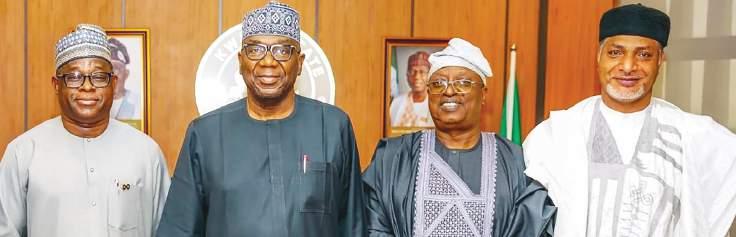
Senator Suleiman Sadiq Umar (Kwara North); Governor Abdulrahman Abdulrazaq; Senator Lola Ashiru (South); and Senator Saliu Mustapha (Central), during a courtesy visit to the Governor after the State APC Congress in Ilorin, Kwara State, yesterday
These Frequently Asked Questions below provide a clear over view of Nigeria’s new tax law coming into effec t in 2026. They are designed to help individuals and businesses understand the key changes, who they apply to and how the new rules will affec t filing, payments and compliance.
WHO IS ELIGIBLE TO PAY TAX IN NIGERIA?
Any individual or entity that earns income or derives economic benefit in Nigeria and abroad is eligible and required to pay tax.
WHAT IS A TAX IDENTIFIC ATION NUMBER ( TIN)?
A TIN is a unique identifier issued by FIRS or SBIR and is required for all tax-related transactions.
WHO IS REQUIRED TO FILE TAX RETURNS?
Nigerian residents aged 18+ with income from Nigerian sources including employees, self-employed individuals, and non-residents earning from Nigeria must file returns.
C AN I PAY TAXES IN ANY BANK BR ANCH?
Yes. Approved banks can collect payments for all tax types and tax offices.
WHY DOES IT TAKE LONG TO GET A TAX CLEAR ANCE CERTIFIC ATE ( TCC )?
A TCC is issued only after all taxes for the past 3 years are fully paid. The standard two-week processing time starts from the date of application, not the date of payment.
WHAT IF I FAIL TO FILE OR PAY TAXES ON TIME?
Late filing or late payment attracts penalties and interest charges.
WHO DOES THE NEW 2025 TAX LAW APPLY TO?
Resident individuals are taxed on worldwide income; nonresidents are taxed on Nigerian-sourced income.
WHAT IS THE TAX R ATE FOR LOW-INCOME EARNERS?
Individuals earning N800,000 or less per year are fully exempt from personal income tax.
ARE TR ANSFERS AND DEPOSITS INTO MY BANK ACCOUNT AUTOMATIC ALLY TAXED?
No. Transfers and deposits are not taxable by themselves, but the source of the income may be taxable.
WHAT IS THE NEW RENT RELIEF?
From 2026, individuals can claim 20% of annual rent (up to N500,000) as rent relief, provided actual rent is declared to tax authorities.
WILL SMALL COMPANIES PAY TAX?
Companies with N50 million or less in annual turnover are exempt from Companies Income Tax (CIT).
ARE AGRICULTURE COMPANIES TAXED?
Agriculture businesses, including crop farming, livestock, cocoa processing, forestry, and dairy enjoy a 5-year tax holiday.
WHAT IS THE C APITAL GAINS TAX R ATE (CGT )?
CGT is a flat 30% on chargeable gains from asset disposal
HOW ARE NON-RESIDENT COMPANIES TAXED?
Non-residents are taxed on income sourced from Nigeria. If profits are hard to verify, FIRS may apply a minimum tax of 4% on Nigerian income.
ARE GAINS FROM CRYPTOCURRENCIES TAXABLE?
Yes. The 2025 Act applies CGT to digital asset disposals, including cryptocurrencies.
WHAT IS THE CURRENT VAT R ATE?
VAT remains 7.5%. Non-resident suppliers (e.g., ecommerce platforms) must register and remit VAT in Nigeria.
IS INCOME FROM BONDS OR GOVERNMENT SECURITIES TAXABLE?
No. Income from federal or state government bonds is fully exempt.
BE A LAW ABIDING CITIZEN. PAY YOUR TAX.
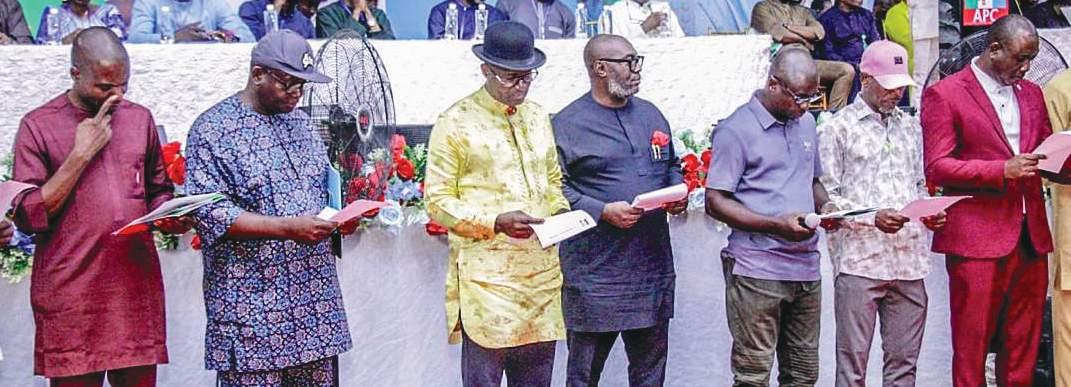
SWEARING-IN OF 37 MAN NEW EXECUTIVE OF THE APC IN BAYELSA... Chairman, Bayelsa State All Progressives Congress, Hon. Warman Ogoriba (4th left), and some members of the 37 man new executive of the party during their swearing in after the state congress at the Gabriel Okara Cultural Centre, Yenagoa, yesterday
National Assembly Moves to Domesticate AfCFTA, Tightens Oversight for Nigeria’s Economic Gains
Sunday Aborisade in Abuja
The leadership of the National Assembly yesterday pledged decisive legislative action and stronger oversight to ensure that Nigeria fully harnesses the benefits of the African Continental Free Trade Area (AfCFTA) Agreement.
Speaking at the opening of a three-day capacity-building workshop on “The Role of Lawmakers in
the National Implementation of the AfCFTA Agreement and its Eight Associated Protocols,” President of the Senate, Godswill Akpabio, said treaties would remain ineffective without deliberate domestication and sustained parliamentary scrutiny.
Represented by Senator Ibrahim Khalid, Akpabio described AfCFTA as a historic opportunity to reposition Africa’s economy, noting that ratification alone would not
guarantee results.
“A single market of over 1.4 billion people presents immense possibilities, but treaties will not implement themselves. Implementation must follow ratification,” he said.
He stressed that the National Assembly must translate continental commitments into practical national outcomes.
The workshop was organised
by the National Institute for Legislative and Democratic Studies in collaboration with the United Nations Economic Commission for Africa.
Akpabio said lawmakers must thoroughly examine AfCFTA’s protocols, legislate strategically and strengthen oversight to safeguard national interests.
He called for a review of existing trade, customs, competition,
FG Targets April Completion for AbujaKaduna Highway, Work Rate Hits 80%
The federal government yesterday reaffirmed its commitment to completing the Abuja-Kaduna highway by the end of April, following the termination of the previous contract handled by Julius Berger Nigeria Plc and its re-award to Infouest Nigeria Limited.
The Controller of Works, Federal Ministry of Works, Chukuma Kalu, said the decision to re-award the contract was necessary to fast-track the delivery of the strategic road, described as the “heartbeat of the nation.”
He explained that the road was redesigned from asphalt pavement to rigid pavement, specifically Continu- ous Reinforced Concrete Pavement (CRCP), to ensure durability and
longevity.
According to him, the road serves as a vital artery linking the north-central and north-west regions to Abuja and connecting Lagos to the northern part of the country. He noted that infrastructure development remains a priority under President Bola Tinubu’s Renewed Hope Agenda.
Providing an update, Kalu said the re-completion of the outstanding sections was awarded in two lots under Section One.
He said the project includes a 40.5-kilometre dual CRCP stretch, totalling 81 kilometres, a 17.3-kilometre asphalt section linking the Kano-Zaria road, and a 6.63-kilometre dual asphalt wearing course overlay in Kano State. He added that out of the 81 kilometres of CRCP, 60 kilometres
have been completed, leaving 21 kilometres to be delivered before the end of April. “We work in the daytime and we also work at night to make sure we meet our targets of completing 81 kilometres by the end of April,” he said.
On his part, the Senior Project Manager, Infouest Nigeria Limited, Robert Turner, said the company is working round the clock to meet the deadline. “At the moment, we are basically on 80 per cent of where we should be for Section One. We’re working day and night shifts to make up for our time and to make it as less inconvenient for the public as possible,” he said.
Meanwhile, Chairman of the Nigeria Union of Journalists (NUJ), FCT Council, Grace Ike, has commended the Minister of Works, David
Lassa Fever Claims 75 Lives in Seven Weeks, Says NCDC
Onyebuchi Ezigbo in Abuja
The Nigeria Centre for Disease Control and Prevention (NCDC) has said that a total 75 persons have died from Lassa Fever disease within seven weeks of 2026. Five new healthcare workers were among those affected by Lassa Fever in Week 7.
In the Lassa Fever Situation Report for Week 7 (9th - 15th February, 2026)
published by NCDC on Tuesday, the Centre said that Nigeria recorded cumulatively 82 confirmed cases of Lassa Fever for Week 7 with 75 deaths.
It said the total number of new confirmed cases increased from 74 in Epi week 6 of 2026 to 82 with Case Fatality Ratio of 23.0 percent (higher than 19.7 percent same period in 2025).
NCDC said the cases were reported
in Bauchi, Ondo, Gombe, Nasarawa, Kogi, Edo, Kano, Ebonyi, Kaduna, Taraba, Plateau and Benue states.
It also said that 14 states have recorded at least one confirmed case across 58 LGAs. adding that 84 percent of confirmed cases are from Bauchi, Taraba, Ondo, and Edo State.
NCDC said the predominant age group affected ranges from 21- 30 years.
Umahi, for engaging journalists in an on-the-spot assessment of ongoing road projects, describing the move as a strong signal of transparency and accountability.
Ike spoke after a media tour of the Nyanya–Mararaba–Keffi road corridor, a critical axis linking the Federal Capital Territory to Nasarawa State.
According to her, the expansion of the road has long dominated national discourse due to the heavy traffic congestion and hardship faced by commuters.
intellectual property and digital commerce laws to ensure alignment with Nigeria’s obligations under the continental trade framework, while protecting vulnerable sectors and small businesses.
Speaker of the House of Representatives, Abbas Tajudeen, also underscored the legislature’s role in driving implementation.
Represented by Hon. Rabiu Yusuf, Chairman of the House Committee on Treaties, Agreements and Protocols, Abbas described AfCFTA as one of Africa’s most ambitious integration initiatives.
He said the effectiveness of the agreement would depend on coordinated national implementation, adding that legislative backing was essential to make treaty commitments operational.
The Speaker further highlighted the National Assembly’s constitutional authority over appropriation, noting that adequate funding would be required for customs modernisation, support for micro, small and medium enterprises (MSMEs), trade infrastructure and data systems for monitoring and evaluation.
Speaking on behalf of the Minister of State for Industry, Trade and Investment, Senior Special Assistant on Policy, Dr. Deji Adeshile, said Nigeria’s Industrial Policy 2025 places trade competitiveness and
regional integration at the centre of industrial transformation.
He stated that aligning domestic legislation and institutional frameworks with AfCFTA protocols would facilitate seamless trade, protect investments and enhance competitiveness, particularly for MSMEs.
Delivering the keynote address on behalf of UNECA’s Executive Secretary, Prof. Melaku Desta, said the success of AfCFTA would ultimately depend on effective implementation at the national level. He noted that empirical projections show significant potential growth in intra-African trade under AfCFTA, but cautioned that such gains hinge on full compliance with legal and regulatory commitments by member states.
Desta urged lawmakers to ensure that executive actions align with continental obligations while safeguarding national interests.
Earlier, the Director-General of NILDS, Prof. Abubakar Suleiman, said AfCFTA represents one of Africa’s most far-reaching economic initiatives in recent history.
He emphasised that legislatures play a central role in the domestication of international agreements, enactment of enabling laws, budgetary approvals and oversight of implementation.
NIMC Intensifies Ward-Level
Enrolment, Urges Nigerians
The National Identity Management Commission (NIMC) has reaffirmed its commitment to expanding Nigeria’s digital identity database as its nationwide ward-level enrolment drive for the National Identification Number (NIN) gains momentum across the federation.
The exercise, which began on February 16, 2026, is designed to bring registration services closer to the grassroots by decentralising enrolment to ward levels in all states and the Federal Capital Territory.
According to the Commission,
the initiative is already recording steady progress, with officials deployed to designated centres to capture new registrants.
In a statement issued on Tuesday by the spokesman of the Commission, Dr. Kayode Adegoke, NIMC underscored the critical role of the NIN in accessing essential government and financial services, describing it as the backbone of Nigeria’s identity management system.
The Commission stressed that possession of the NIN remains mandatory for participation in a growing number of public and private sector services.
“The ward-level enrolment is
part of our strategy to ensure inclusive identity coverage and to eliminate barriers that may prevent citizens and legal residents from registering,” the Commission said. NIMC called on Nigerians who are yet to enroll to seize the opportunity presented by the decentralised exercise by visiting designated centres within their wards.
The agency advised prospective registrants to verify the nearest enrolment locations through its official website, cooperate with enrolment officers, and provide accurate and verifiable information during the process.
Michael Olugbode in Abuja
Emmanuel Addeh in Abuja
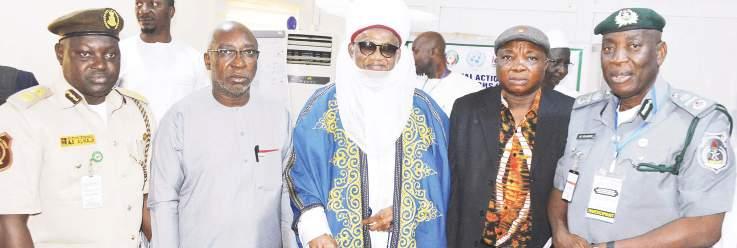
CONFERENCE ON ACTION TO CURTAIL PROLIFERATION OF SMALL ARMS...
L-R: Assistant Controller General, Enforcement, Investigation and Inspection, Nigeria Customs Service, Kolapo Oladeji; Director, Small Arms Unit, Political Affairs, Peace and Security (PAPS), ECOWAS, Joseph Ahoba; Etsu Nupe, Alhaji Yahaya Abubakar; Vice President (Nigeria), West African Action Network on Small Arms (WAANSA), Igwe Martin Nnamdi; and Comptroller of Service, Investigation and Compliance, Nigeria Immigration Service, Alhaji Abdul Shira, during the conference on strengthening Nigeria’s implementation of the UNPOA and ITI of BMS9 organised by WAANSA in Abuja, yesterday
NAICOM, BPP Seal MoU to Deepen Insurance Compliance in Public Procurement
National Insurance Commission (NAICOM) has signed a Memorandum of Understanding (MoU) with Bureau of Public Procurement (BPP) to enhance collaboration and strengthen the insurance industry, particularly in relation to public procurement processes.
Commissioner for Insurance (CFI)/Chief Executive, NAICOM, Mr. Olusegun Omosehin, said the collaboration would reinforce the principles of public procurement and insurance practice in the country.
Speaking when he received Director-General of BPP, Adebowale Adedokun, on a working visit to the commission, culminating in the signing of the agreement, Omosehin stated that achieving President Bola Tinubu’s vision of transforming the country into a $1 trillion-dollar economy required strong inter-agency cooperation.
He stressed that the commission’s reform objectives could not be fully realised without strategic collaboration with agencies, such as BPP.
The commissioner disclosed plans to establish a platform to monitor and verify insurance coverage for public procurement items. He assured that insurance operators would strictly adhere to established rules and standards.
Omosehin stated that the signing of the MoU was a pivotal step in aligning the role of insurance with national development goals.
The MoU comes amid NAICOM’s ongoing reform following the Nigerian Insurance Industry Reform Act 2025.
The reform initiated a recapitalisation and verification exercise to strengthen the financial resilience of insurers, improve market confidence, and catalyse innovation and penetration.
BPP’s sector-specific procurement approach and digitalisation agenda complements NAICOM’s objectives by ensuring insurance procurement is transparent, efficient and aligned with national development priorities, including the Nigerian First policy and affirmative procurement for women, youth, start-ups, and persons with disabilities.
Omosehin highlighted the role of NAICOM as the statutory regulator charged with supervising, regulating, and promoting the growth of Nigeria’s insurance industry.
He stated that NAICOM’s current reform priorities included policyholder protection, regulatory capacity building, legal modernisation, recapitalisation, and increasing insurance penetration.
In his remarks, Adedokun, commended the transformation in
the insurance industry, describing the commission’s environment as serene and reflective of its readiness to support the federal government’s economic growth agenda.
Adedokun welcomed the partnership and highlighted implementation as the critical next phase.
He said, “Signing MoU is only the beginning — what matters is delivery. BPP has moved to a fully digital submission model to speed
approvals and reduce opportunities for corruption.”
He called on contractors and procuring entities to adopt insurance bonds to support Nigerian insurance sector growth and development, and comply with the Nigeria first policy and affirmative procurement principles of the current administration.
Adedokun reaffirmed BPP’s commitment to sector-specific procurement approaches that matched
value for money and supported local industry development.
He reaffirmed that regulatory oversight rested with both NAICOM and BPP, ensuring transparency and accountability.
On capacity building, he recommended closer collaboration between both agencies and pledged BPP’s commitment to achieving shared goals.
Adedokun emphasised that
under his leadership, BPP would not condone unethical practices or grant approvals to unqualified operators, urging insurance companies to ensure their inclusion in the BPP database for effective monitoring.
The MoU was formally signed by Omosehin, and Adedokun, marking a significant step towards enhanced regulatory synergy and sustainable growth in Nigeria’s insurance and public procurement sectors.
Ikeja, Eko, Abuja Discos Lead as National Metering Rate Reaches 57%
Emmanuel Addeh in Abuja
Nigeria’s electricity distribution sector closed December 2025 with a modest improvement in metering coverage, as the national metering rate rose to 57.27 per cent, up from 56.54 per cent recorded in November, according to the latest factsheet released by the Nigerian Electricity Regulatory Commission (NERC).
The data showed that out of a total 12,163,412 active electricity customers across the country in
BEDC Blames Epileptic Power Supply on Shortfall from National Grid, as Protest Hits Benin
The management of Benin Electricity Distribution Company (BEDC) said the poor power supply in Benin and its environs was caused by short supply from the national grid.
In a notice, the distribution company notified the general public and all market participants that the current average available generation of approximately 4,300MW was primarily due to inadequate gas supply to thermal generating stations.
On Monday, human rights activists mobilised youths against the epileptic power supply in Benin City.
Governor Monday Okpebholo, who joined the youths at Ring
Road in Benin City, urged calm while promising swift stakeholder engagement.
Addressing the crowd, Okpebholo expressed solidarity with the demonstrators, stating that electricity challenges cut across all segments of the state.
“I was just passing by and saw people gathered here at Ring Road. I stopped to find out what the issue was, and they said you were protesting. I said, yes, we are all youths, and I have come to join you,” he said.
Okpebholo added that any form of short-change of Edo residents affected the entire state.
He stated, “When we talk about
short-changing Edo people, it affects all of us — our parents in the villages, our brothers and sisters in the cities, and everyone standing here. Why should anyone frustrate EdoThepeople?”shortfall from the national grid, according to BEDC, had resulted in reduced energy allocation to distribution companies nationwide, including BEDC Electricity Plc.
The company said, “In addition, the Transmission Company of Nigeria (TCN) is carrying out maintenance on the 330kV Benin/ Ajaokuta Line 2, affecting BEDC four 33kV feeders and areas including Uniben, Ugbowo, Oluku, and lhovbor.
December, 6,966,584 were metered, leaving 5,196,828 customers without meters. This means that despite the incremental progress recorded during the month, about 42.73 per cent of active electricity users nationwide remained unmetered and are largely subjected to estimated billing.
In November, the total number of active customers stood at 12,128,611, of which 6,857,028 had meters. That left 5,271,583 customers unmetered at the time, representing 43.46 per cent of the customer base.
The NERC data indicated that within one month, the industry added 109,556 new meters, compared to 88,592 meters installed in November, reflecting a 23.7 per
cent increase in meter installations month-on-month.
The rise in installations helped push the metering rate up by 0.73 percentage points between November and December, even as the total active customer base grew by 34,801 during the same period, the fact sheet showed.
Among the electricity Distribution Companies (Discos), Ikeja, Eko and Abuja maintained their leadership positions in metering coverage.
Ikeja Disco recorded the highest metering rate in December at 86.40 per cent, up from 85.91 per cent in November. Out of 1,308,042 active customers in December, 1,130,213 were metered, leaving 177,829 customers unmetered. The
Disco added 7,748 new meters during the month. Eko Disco followed closely with a metering rate of 85.87 per cent in December, improving from 84.86 per cent in November. Of its 641,411 active customers, 550,764 had meters, leaving 90,647 without meters. The company installed 9,535 new meters in December. Abuja Disco ranked third with a metering rate of 77.81 per cent in December, up from 76.71 per cent in November. Out of 1,341,807 active customers, 1,044,014 were metered, leaving 297,793 customers unmetered. The Disco deployed 19,953 new meters during the month, the highest single-month addition among all the Discos.
Seplat Energy Trains 623 Teachers on Skills Acquisition
Felix Omoh-Asun in Benin
The NNPC Exploration and Production Limited (NEPL)/Seplat EnergyJoint Venture has graduated 623 teachers and education inspectors from the 2026 Seplat Teachers Empowerment Programme (STEP). The trainees were from Edo and Delta states.
The Seplat Teachers Empowerment Programme reinforced Seplat Energy’s commitment to strengthening teacher
capacity across the two states.
The graduation ceremony was held at the Victor Uwaifo Creative Hub in Benin, the Edo State capital.
Launched in 2020, STEP has now trained 1,957 educators, combining STEAM-focused pedagogy, digital literacy, leadership development, and mentorship to improve instructional quality across host communities.
Chioma Afe, Director, External Affairs and Social Performance at Seplat Energy, urged the gradu-
ated teachers from the 2026 STEP ceremony to carry their renewed skills and confidence into their classrooms.
Afe told the teachers that to “Teach, inspire and transform is not a slogan—it is a responsibility.” Governor Monday Okpebholor of Edo State, represented by Finance Commissioner Emmanuel Okoebor, confirmed the programme’s alignment with the state’s education agenda.
James Emejo in Abuja
PHOTO: ENOCK REUBEN
Felix Omoh-Asun in Benin
Report Foresees Net Reserves Climbing to $40bn, Gross Buffers Near $60bn Before 2026 Ending
Forecasts inflation easing to 6.57%
Nume Ekeghe
Fresh projections by analysts have suggested that net foreign reserves could rise to $40 billion in 2026, with gross external reserves strengthening to as much as $60 billion, even as headline inflation is forecast to slow sharply to 6.57 per cent by year-end.
The outlook, contained in the latest Country Watch Nigeria 2026 Edition by Economic Associates (EA) and Proshare, comes a day after the Central Bank of Nigeria (CBN) disclosed its latest net reserve position, reinforcing the quality and sustainability of the external buffers.
The report stated: “The EA-
Proshare 2026 central forecasts are as follows: real GDP growth of 5.55 per cent for the full year and 6.4 per cent by Q2 2026; headline inflation of 6.57 per cent by December 2026; Nigerian Foreign Exchange Market (NFEM) exchange rate of N1,318/$; gross foreign reserves in the range of $51.5 billion to $60 billion; net foreign reserves of $36.6 billion to $40 billion; nominal GDP of $359.78 billion; and the All-Share Index at 249,000 points.
The real 91-day Treasury Bill rate was projected at 4.01 per cent, underpinning a sustained positive real return environment.
“Five key risks are identified: external commodity and capital flow shocks, reform sustainabil-
ity, insecurity, pre-election year fiscal pressures, and the risk of misaligned tax strategy.
“EA-Proshare prescribes four structural priorities: addressing the multiplicity of reserve reporting, improving net reserve disclosure frequency, rebuilding FDI stock, and aligning the Monetary Policy Rate with market-determined benchmark rates.”
Chief Executive Officer of Economic Associates and Chairman of its Research Board, Dr. Ayo Teriba, said the projections were anchored on structural shifts observed across key macroeconomic indicators over the past three years.
He stated: “The data establish that Nigeria has moved through
three distinct macroeconomic phases since 2020. The recovery phase is characterised by measurable stabilisation across all twelve indicators.
“Net foreign reserves have grown sevenfold from their 2023 low. Real interest rates have turned positive. The exchange rate premium has been compressed from 71 per cent to 2 per cent.
“These are structural gains, not seasonal adjustments. Our 2026 projections are conditioned on sustaining the market-oriented reforms that produced these outcomes.”
The report argued that recent improvements in reserve levels and exchange rate convergence are not
CONFLICT WIDENS, US ASKS CITIZENS TO LEAVE MIDDLE EAST
Emmanuel Addeh in Abuja and Nume Ekeghe in Lagos
The US Department of State yesterday called on Americans to immediately depart more than a dozen countries in the Middle East, including Saudi Arabia and the United Arab Emirates, as the US-Israeli versus Iran war entered day four.
This is coming on the heels of Iran’s attack on Dubai US Consulate yesterday night in targeted drone strike. Marco Rubio, the US Secretary of State however stated that all personnel had been accounted for and evacuated. Stating that the drone strike was a parking lot adjacent to the building. Plumes of smoke and fire could be seen rising at the Consulate after the attack.
Iran had also continued to target US military bases in Doha, Qatar and across the middle east.
The State Department’s Assistant Secretary for Consular Affairs, Mora Namdar, said US citizens should leave using available commercial transportation “due to safety risks.”
The warning came after the department, in recent days, updated its travel advisories for several
countries in the region to recommend against travel. The advisory applies to Bahrain, Egypt, Iran, Iraq, Israel, the West Bank and Gaza, Jordan, Kuwait, Lebanon, Oman, Qatar, Saudi Arabia, Syria, United Arab Emirates and Yemen.
The US Embassy in Amman, Jordan, announced earlier that its personnel had departed the site “due to a threat.” The US State
PANEL FINDS PRIMA FACIE CASE OF NEGLIGENCE IN DEATH OF CHIMAMANDA’S SON
and Atlantis Paediatric Hospital responded to the allegations by filing affidavits and presenting oral testimony before the MDCN Investigative Panel.
At the conclusion of its 25th session held in Abuja on February 17–18, 2026, the panel determined that a prima facie case of medical negligence had been established against three doctors: Dr. Tosin Majekodunmi, Medical Director of Euracare; Dr. Titus Ogundare, an anaesthesiologist at Euracare; and Dr. Atinuke Uwajeh, Chief Medical Director of Atlantis Paediatric Hospital.
The Council subsequently issued interim suspension orders against the three practitioners pending the outcome of formal disciplinary proceedings.
In addition, the panel found that a case of professional misconduct had been established against 10 other practitioners from Atlantis Paediatric Hospital.
Those cases have been referred to the Medical and Dental Practitioners’ Disciplinary Tribunal for formal hearing and determination, in line with the Council’s statutory mandate.
Prior to the regulatory intervention, the child’s parents had, through their solicitor, Kemi Pinheiro, SAN, requested that Euracare provide a detailed medical report and full disclosure of the circumstances surrounding their son’s treatment and death.
The request formed part of efforts to obtain clarity on the medical management administered before the matter was escalated to regulatory authorities.
The MDCN stressed that its findings are preliminary and do not amount to a final determination of liability.
According to the Council, the affected practitioners are entitled to a full hearing before the Disciplinary Tribunal, where evidence will be thoroughly examined and a final decision rendered.
Further proceedings before
the Tribunal are expected to commence in due course, as the Council reiterated its commitment to due process and professional accountability within Nigeria’s healthcare system.
We have confidence in the professionalism and integrity of our clinical team. Dr. Tosin Majekodunmi and Dr. Titus Ogundare Meanwhile in a late statement yesterday night, titled Euracare Multi-Specialist Hospital: Press Statement on the MDCN Investigation Panel’s Interim Suspension Order, the hospital defended the “professionalism and integrity” of its “clinical team. Dr. Tosin Majekodunmi and Dr. Titus Ogundare who are experienced professionals whose records of service to patients in Nigeria span many years.”
The full statement is reproduced below:
Our attention has been drawn to widespread media reports concerning the interim suspension orders and other findings issued by the Medical and Dental Practitioners Investigation Panel against thirteen doctors, two of whom are our clinical staff members in connection with the ongoing proceedings relating to the death of Master Nkanu Nnamdi Esege. We remain fully committed to cooperating with all relevant regulatory and judicial authorities in the course of their inquiries.
We however wish to place on record our confidence in the professionalism and in-tegrity of our clinical team. Dr. Tosin Majekodunmi and Dr. Titus Ogundare who are experienced professionals whose records of service to patients in Nigeria span many years. Both doctors have, in their respective careers, contributed meaning-fully to the delivery of quality healthcare to Nigerian patients at a standard com-parable to what is obtainable in the world’s leading medical facilities.
In the interest of transparency, since the commencement of this
matter, we have conducted a thorough internal review of the clinical events in question, in line with our clinical governance standards and best practices. We have actively demon-strated our commitment to transparency and will continue to engage openly with all inquiries directed at us.
We are also compelled to draw attention to a number of serious concerns that have arisen in the course of these proceedings. It is our position that certain established processes and protocols have not been followed in the manner required. We have further noted, with deep concern, that matters covered by patient and insti-tutional confidentiality appear to have been disclosed outside the appropriate chan-
nels, and we consider this a serious breach that cannot go unaddressed.
We wish to state that we stand by the principles of equality, fairness, and good governance. Every party in this matter, including our institution and our staff, is entitled to a process that is conducted with rigour, impartiality, and respect for the rules that govern it. We will be raising these concerns through the appropriate le-gal and regulatory channels.
We continue to empathize with the family of Master Nkanu Nnamdi Esege. The loss of a child is a grief without measure, and we carry that awareness in everything we say and do in relation to this matter.
seasonal fluctuations but the result of policy recalibration, particularly in the foreign exchange market and monetary tightening cycle.
Founder and Chairman of Proshare Nigeria Limited and Chairman of its Editorial Board, Mr. Olufemi Awoyemi, added that the research was designed to provide institutional investors with a data-backed framework for assessing Nigeria’s recovery trajectory.
“The Country Watch Nigeria series exists because institutional capital allocation demands more than sentiment and headlines. Our 2026 Edition provides the evidence layer that decision-makers need, drawing on twelve verified
Department has also activated an inter-agency emergency task force to manage the situation and coordinate the United States’ response to the conflict, a US official said.
On Saturday, the United States and Israel carried out a barrage of strikes on various targets in Iran, killing many top officials, including Supreme Leader Ayatollah Ali Khamenei. Tehran responded with its own strikes, at multiple US and Israel sites across the regions.
US President Donald Trump said that the conflict had been projected to last four to five weeks but that it could go longer. The conflict, which has launched the region into war, leaving scores of people dead, has resulted in a spike in energy prices as Iranian officials threatened to fire on any ship that tries to pass through the Strait of Hormuz, a key shipping route for the world’s oil supply.
US Treasury Secretary, Scott Bessent, and Energy Secretary, Chris Wright, were expected on Tuesday to announce US steps to mitigate the rising energy prices, according to Washington’s top diplomat, Marco Rubio.
“We anticipated this could be an issue, and Secretary Wright and Bessent will begin to roll out those steps to mitigate against the impact that could have,” Rubio said ahead
of a briefing congressional leaders about the strikes.
Oil Price Hits $85 Per Barrel
In the same vein, global crude oil price surged further to $85 a barrel yesterday as the conflict involving the US, Israel, and Iran continues to stoke concerns about supply disruptions.
Nigeria’s benchmark, Brent crude, went up further up by 8 per cent to $85 per barrel, for the first time since June 2024, when it hit $85.2. Besides, US West Texas Intermediate (WTI) crude gained 6 per cent to hit $75.91 per barrel. Brent had risen to $79 per barrel amid escalating geopolitical tensions in the Middle East. According to a Reuters report, the price increase was triggered by disrupted fuel shipments and growing concerns that the expanding US-Israel-Iran conflict could further threaten oil and gas supplies from the Middle East. Since the attacks began in the region, oil and gas facilities in several countries have been closed due to damage or as a safety measure. On Monday, QatarEnergy, the state-owned energy company of Qatar, halted the production of liquefied natural gas (LNG) due to Iranian military attacks on its
EDUN: IMPLEMENTATION OF NEW TAX LAWS WILL BE MONITORED TO ENSURE FAIRNESS, EQUITY
Presumptive Tax framework with the National Tax Policy Implementation Committee (NTPIC).
Tax authorities are turning to a presumptive tax approach, a system that estimates what informal businesses earn based on what can be seen, such as their trade, location, and scale of operations, rather than audited accounts.
Presumptive tax regulations allow authorities to estimate tax liability for small businesses and the informal sector when formal records are unavailable.
Edun explained that the signing of the presumptive tax regulations signaled the transition to structured implementation of the new tax laws, adding that it was the formalisation of the framework for small businesses to thrive rather than undermine their growth
Edun further stressed that the Presumptive Tax would be fair, transparent, and would exempt nano and small businesses in a bid to support their development and expansion.
He clarified that the government was not in any way trying
to increase taxes but to expand the tax net.
“Our role is to ensure coordination of taxes, not fragmentation, adding that the signing ceremony with the NTPIC was a reinforcement of the government’s resolve for stability.
According to him, “with the signing of these regulations, we are transiting from legislation to structured implementation of the tax reforms; the Tax Acts that were passed into law in 2025 and became effective some in the 2025 and some in January 2026.”
He said the key message was transparency, fairness, clarity, equity and economic inclusion for all Nigerians.
“ Looking at the purpose of the regulation, it’s expedient to note that these regulations will provide a simple and transparent means for the application of the presumptive tax,” he said.
In his remarks, the Executive Secretary of the Joint Revenue Board (JRB), Mr. Olusegun Adesokan said the 36 states were in alignment with the tax regulations.
According to him, “We
are moving from intention to implementation.”
He stated that history was being made as it marked the first time the presumptive tax approach is coming into operation, adding that it is a demonstration of taxing prosperity and not poverty.
Adesokan, who noted that apart from the application of technology in tax collection, the new system makes the mounting of road blocks for the collection of any form of tax illegal.
He stated that the subnationals were pleased with the regulations Meanwhile, Tinubu yesterday nominated Oyedele as the Minister of State for Finance, replacing Anite-Uzoka.
According to a statement on the cabinet shake-up issued by the presidential spokesperson, Bayo Onanuga, Anite-Uzoka would now move to the Ministry of Budget and National Planning, as the Minister of State, her third portfolio in the administration.
The President has conveyed the nomination of Oyedele to the Senate for confirmation in a letter to the Senate President,
Godswill Akpabio. Until Tinubu nominated him as a minister, Oyedele from Ikaram, Akoko, Ondo State, was the chairman of the Presidential Committee on Fiscal Policy and Tax Reforms, which overhauled Nigeria’s tax system.
Oyedele, 50, an economist, accountant and public policy expert, attended Yaba College of Technology, where he obtained a Higher National Diploma (HND) in accountancy and finance.
He attended Oxford Brookes University and earned a BSc in applied accounting.
He also completed executive education programmes at the London School of Economics, Yale University, the Gordon Institute of Business Science, and the Harvard Kennedy School.
Oyedele spent 22 years of his working career at PwC, joining in 2001 and rising to become the Fiscal Policy Partner and Africa Tax Leader.
Oyedele is also a professor at Babcock University in Ogun State and a visiting scholar at the Lagos Business School.
indicators across six years of data.
“The recovery is measurable. The risks are identifiable. The outlook is structured. This is the standard to which institutional research on Nigeria should be held,” he said.
Dr. Ayo Teriba
Continued on page 37
SPE OLEF PRESS CONFERENCE...
L-R: Member, Society of Petroleum Engineers (SPE) Nigeria Council, Oladipo Ashafa; Chairperson, SPE OLEF 2026, Priscilla Enwere; Chairman, SPE Nigeria Council, Francis Nwaochei; Vice Chairman, SPE Nigeria Council, Effa Agbor; Secretary, SPE Lagos, Hassannah Salami; and Communication and Protocol Chairman, SPE Nigeria, Chima Okorie, at the pre press conference announcing the upcoming 2026 edition of the Society of Petroleum Engineers Oloibiri Lecture Series and Energy Forum (OLEF) held in Lagos, yesterday
BBC: Factional Global Anglican Church Meeting in Abuja to Choose Rival Leader
Clergy from a conservative grouping of the Anglican Church are meeting this week in Nigeria’s capital, Abuja, to choose a rival to the first female Archbishop of Canterbury, UK’s Sarah Mullally.
Mullally is expected to be officially installed as the leader of the world’s Anglican communion at a lavish ceremony later this month, but her appointment has divided opinion in Nigeria, and elsewhere, the BBC reported yesterday. Many conservative Christians believe that only men should be consecrated as bishops.
Some congregants, like Bunmi Odukoya, were supportive of the appointment. “The work of God
is an individual thing. If you’re called - you can be a man, you can be a woman - you need to fulfil the calling of the Lord,” Odukoya told the BBC.
Others, like Uche Nweke, strongly disagreed: “I don’t think it’s Christian. When you look at the Bible and the apostles, there was no woman in there, so a woman being the head of the Anglican church in England, I don’t think it’s going to go well,” the BBC quoted Nweke as saying.
In addition to being the most senior cleric in the Church of England, the Archbishop of Canterbury is also “primus inter pares” - or first among equals - of the primates of the worldwide Anglican Communion, meaning
she is the spiritual leader of almost 95 million Anglicans.
At its four-day meeting that has just started in Abuja, the Global Anglican Future Conference (GAFCON), which describes itself as a global movement of “authentic Anglicans, guarding God’s gospel”, plans to elect its own “first among equals”, just weeks ahead of Archbishop Mullaly’s installation at Canterbury Cathedral.
The move threatens to turn divisions within the global church into a full-on split. “This is a schism, even if they don’t want to say that,” Diarmaid MacCulloch, Emeritus Professor of the History of the Church at the University of Oxford in England, told the BBC.
“This is a set of leaders, all male,
going to a conference in Africa to assert (an) identity which no longer satisfies many Anglican churchesthat is an all-male episcopate calling the shots,” MacCulloch said.
GAFCON was formed in 2008 in response to theological differences within the Anglican Communion over the issue of same-sex unions.
Worshippers at the Vining Memorial Church Cathedral were divided over the issue of being led by a woman. In recent years those divisions have deepened, and in 2023 the group rejected the leadership of the previous Archbishop of Canterbury, Justin Welby, over proposals to bless same-sex couples, a position also held by his successor, Dame Sarah.
The group said it speaks for the
majority of the world’s Anglicans, although that is contested. It does draw much of its support from Africa, but the view on the continent is by no means monolithic.
For example, the Anglican Church of Southern Africa, and Kenya’s first female bishop Emily Onyango, both celebrated Sarah Mullally’s appointment.
And while GAFCON accuses the Church of England of maintaining a colonial relationship with churches in the Global South and imposing its more progressive views, some of the organisers of this week’s conference are based in the Americas and Australia, where the organisation also has a presence.
In October last year, GAFCON resolved to “reorder the Anglican
NAFDAC, NOA Begin Nationwide Sachet Alcohol Crackdown
National Agency for Food, Drug Administration and Control (NAFDAC) and National Orientation Agency (NOA) have launched a nationwide behavioural change campaign to enforce the ban on sachet alcohol across the 36 states and the Federal Capital Territory (FCT).
NOA said the move was aimed at protecting children and other vulnerable groups from the harmful effects of alcohol packaged in small, easily concealable containers.
Speaking at a joint press conference in Abuja on Tuesday, Director-General of NOA, Mallam Lanre Issa-Onilu, said the campaign was not about restriction “for its own sake” but about safeguarding the future of young Nigerians.
“For too long, sachet alcohol has been dangerously accessible. It is inexpensive, portable and easy to conceal,” he said.
Issa-Onilu warned that in many rural and semi-urban communities, young persons found it easier to obtain high-strength alcohol than to access proper guidance and protection.
“When affordability meets vulnerability, the consequences are profound,” he added.
According to him, early exposure to alcohol increases the risk of addiction and long-term dependency,
undermines education, and contributes to domestic instability, road crashes and declining productivity.
He stressed that government had both a constitutional duty and moral obligation to act before the damage became entrenched.
The NOA boss disclosed that the agency would deploy its 818 offices and structures across all 774 local government areas to drive the campaign.
He said town hall meetings, market outreaches, engagements in motor parks, schools and faith-based institutions would form part of the strategy, with messages delivered in local languages.
The campaign will also leverage television, radio, digital platforms, and the NOA CLHEEAN App to encourage citizens to report violations.
Issa-Onilu called on parents, community leaders, retailers, and distributors to support the enforcement, urging Nigerians to shun banned products.
Also speaking, Director-General of NAFDAC, Professor Mojisola Adeyeye, said alcohol consumption among underage persons posed serious behavioural and social risks.
Adeyeye linked excessive alcohol intake to road crashes, risky sexual behaviour, poor academic performance, and other social challenges.
She said recent resolutions of
Senate urged NAFDAC to ensure strict enforcement of the ban on sachet alcohol and alcoholic drinks in bottles below 200 millilitres.
Citing findings from a 2021 nationwide survey conducted in collaboration with Distillers and Blenders Association of Nigeria, Adeyeye disclosed that 54.3 per cent of minors and underage persons purchased alcohol for themselves.
The study, which sampled 1,788 respondents across six states, representing the six geopolitical
zones, revealed that 49.9 per cent of minors obtained alcohol directly from retailers selling sachet packs and small PET bottles.
Others accessed alcohol from friends and relatives (49.9 per cent), social gatherings (45.9 per cent), and even parents’ homes (21.7 per cent).
Among those who bought drinks themselves, 47.2 per cent of minors and 48.8 per cent of underage respondents purchased alcohol in sachets, while over 40
per cent procured drinks in small PET bottles.
Consumption rates were particularly high in Rivers, Lagos, and Kaduna states.
The survey further showed that 63.2 per cent of minors and 54 per cent of underage children consumed alcohol occasionally, while 2.5 per cent of minors and 11.7 per cent of underage children had engaged in binge drinking, with notable prevalence in Gombe, FCT, and Anambra.
Communion”, refusing to take part in meetings convened by the Archbishop of Canterbury, and encouraging members to cut remaining ties with the Church of England. The group said it had not left. Instead it claimed that it was the true Anglican Communion. The election of its own global spiritual leader will bring the Church a step closer to an irrevocable split, and is “a very aggressive thing to do”, said Prof MacCulloch, who is an Anglican. The Anglican Communion is made up of 42 provinces in 165 countries around the world. Each has its own system of governance, but they share heritage, and ways of worshipping. “We see ourselves as a family of autonomous, yet interdependent churches,” Bishop Anthony Poggo, Secretary General of the Anglican Communion, told the BBC.
It is the third largest Christian denomination after Catholicism and the Eastern Orthodox Church, giving its leaders a huge platform when speaking about issues such as climate change, human rights, or efforts for global peace.
The former Archbishop of Canterbury struggled to keep the Church together. Churches within it support each other spiritually and in terms of resources through what are known as companion links. “These are examples of very positive things that we get out of this relationship,” Bishop Poggo told the BBC.
NDDC Partners 2026 High Impact Conference to Equip Educators with Necessary Tools for Meaningful Change
Sunday Okobi
The Niger Delta Development Commission (NDDC) has officially endorsed and pledged its full support for the High Impact Conference for Educators (HICE) 2026 to prepare educators with the necessary tools, knowledge, and inspiration to drive meaningful change in schools.
The conference, a flagship event organised by the Explore Foundation, will be held on April 11 in Asaba, the Delta State capital.
In a statement issued and made available to THISDAY yesterday,
HICE Convener, Mrs. Uche Monu, disclosed that with the theme: ‘Empowering Educators: The Path to Transformation’, the HICE 2026 is aimed at equipping educators with the necessary tools, knowledge, and inspiration to drive meaningful change in classrooms and beyond.
She said the conference would focus on creating inclusive learning environments, fostering teacher leadership, and encouraging collaboration, with a strong emphasis on improving public education across Nigeria.
In his speech, according to the
statement, the Managing Director of NDDC, Dr. Samuel Ogbuku, said: “Education is the foundation upon which the future of any nation is built. At the NDDC, we recognise the critical role of educators in shaping the next generation.
“By endorsing and supporting HICE 2026, we are contributing to the transformation of education in the Niger Delta and Nigeria at large.”
Ogbuku described the conference as an essential platform to empower educators and create lasting change in the educational
sector.
Meanwhile, the HICE Convener, Monu, confirmed that this year’s edition would unite over 500 educators, administrators, policymakers, and thought leaders from across Nigeria in a shared commitment to reshape the future of education in the country. Monu emphasised the event would feature innovative pedagogies, actionable strategies for enhancing teaching practices, and ample networking opportunities, providing participants with the resources they need to become leaders of change.
PHOTO: ABIODUN AJALA
Folalumi Alaran in Abuja
Emmanuel Addeh in Abuja
CONDOLENCE VISIT TO THE FAMILY OF LATE SENATOR MPIGI...
L-R:
Senator, Mrs. Patricia
of the
FG Unlocks $552m Hope-Edu Funding, Sets New Pace for Basic Education Reform
The federal government has unlocked $552 million in HOPEEDU funding to accelerate and strengthen basic education reform nationwide.
The initiative is designed to improve foundational learning, expand access to quality basic education, and strengthen education systems across participating states.
In a statement signed by the director of press and public relations, Folashade Boriowo, Minister of Education, Dr. Tunji Alausa, while speaking on the milestone, described the achievement as a defining moment in Nigeria’s education transformation journey.
The statement revealed that the programme aligned with, and reinforced, Nigeria Education Sector Renewal Initiative (NESRI), supporting measurable and accountable sector-wide reforms anchored on transparency and results.
“The unlocking of the $552 million HOPE-EDU funding in just 12 months represents the fastest activation of education
financing of this scale in our history. It reflects clarity of vision, strong intergovernmental coordination, and our unwavering commitment to delivering measurable results for Nigerian children,” the minister stated.
He affirmed, “Under the leadership of President Bola Tinubu, we are demonstrating
that reform can be decisive, accountable, and impactful.
“These resources will directly strengthen foundational learning, expand access, and reinforce system-wide accountability across participating states.
“In the 2026 fiscal year alone, N3.520 trillion has been allocated to the sector the highest alloca-
tion to date complemented by increased sub-national funding to address local priorities and implement targeted interventions.”
HOPE for Quality Basic Education for All (HOPE-EDU) programme is a strategic, resultsdriven initiative co-financed by World Bank and Global
Partnership for Education to improve foundational learning outcomes, expand equitable access to quality basic education, and strengthen institutional capacity and accountability across participating states.
The statement said, “As a core component of the broader HOPE reform framework, HOPE-EDU complements HOPE-Governance and HOPE-Primary Health Care in tackling systemic challenges in policy development, public financial management, governance, and service delivery, with the overall aim of promoting efficiency, transparency, and improved performance in key social sectors.”
Jigawa Judicial Commission Retires Shari’a Court Judge Over Corruption, Promotes Over 80 Staff
Igbintade
In a decisive move to uphold integrity within the judiciary, Jigawa State Judicial Service Commission has compulsorily retired a Shari’a court judge for corruption and illegal detention, while approving the promotion of more than 80 staff members across various categories.
The action was announced following the 181st meeting of the commission, held in the state capital, Dutse.
The retired judge, Alkali Sadisu
Muhammad Haruna, was found guilty of soliciting unlawful fees from a petitioner and illegally detaining him, acts described by the commission as gross violations of judicial ethics and abuse of office.
The case came to light after a petition by Abdullahi Hamza, which prompted an investigation by the commission.
Findings revealed that Haruna demanded and collected charges not provided for under the Jigawa State Shari’a Court Civil Procedure Rules (2012).
ECOWAS Bank’s Delegation Visits Bauchi on Appraisal of Projects, Investment
Segun Awofadeji in Bauchi
A delegation of the ECOWAS Bank for Investment and Development (EBID), has arrived Bauchi State on an appraisal mission to assess ongoing and proposed infrastructure projects across the state.
The delegation led by Mrs. Maïmouna Sidibe was received at the Government House, Bauchi, by Governor Bala Abdulkadir Mohammed.
The visit is a follow-up mission after the governor’s strategic visit to the EBID Headquarters in Lomé, Togo, on 13th November 2025, marking a continuation of discus-
sions held during that engagement and representing a key procedural step in the financing process for identified development projects.
As part of the appraisal exercise, the team inspected major infrastructure projects including the Wunti and Central Market Flyover in Bauchi metropolis, alongside other strategic road and infrastructural developments within the state.
The mission is aimed at reviewing implementation progress, evaluating project scope, and ensuring alignment with the Bank’s financing framework.
While welcoming the delegation,
Bala Mohammed reaffirmed his administration’s commitment to transparency, accountability, and prudent utilization of resources.
He noted the projects under review are intended to improve urban mobility, strengthen commercial activities, and expand critical infrastructure across the state.
According to leader of the delegation, the appraisal mission forms part of EBID’s standard due diligence process and provides an opportunity for both parties to assess technical, financial, and operational considerations before the next phase of engagement.
The illegal detention of the petitioner further compounded the misconduct, leading the commission to classify the actions as a serious breach of public trust.
“The compulsory retirement of Alkali Sadisu Muhammad Haruna sends a clear message that corruption and abuse of power by judicial officers will not be tolerated,” a statement from the commission said.
In a parallel development aimed at recognising merit and boosting staff morale, the commission approved the promotion of over 80 staff members.
The promotions were based on performance, years of service, and overall contribution to the judicial system, reflecting the
commission’s commitment to professional development and motivation.
To strengthen the leadership structure within the State Shari’a Court of Appeal, the commission appointed Aliyu Muhammad as Deputy Chief Registrar I (Administration), Abdulrashid Alhassan as Deputy Chief Registrar II (Litigation), Isma’il Sani as Chief Inspector of Shari’a Courts, Umar Mallam as Director of Planning, Research and Statistics, Muhammad Lawan as Director of Personnel Management, and Kabiru Isyaku Gwaram as Deputy Chief Inspector.
The commission reiterated its dedication to promoting transparency, efficiency, and accountability
within Jigawa State’s judiciary. It emphasised that the dual approach of sanctioning misconduct and rewarding excellence was central to maintaining a judicial system that commanded public confidence.
“The commission remains committed to ensuring that judicial officers and staff perform their duties in accordance with the law and established regulations,” the statement added.
Abbas Rufa’i Wangara, Director of Publicity and Protocol Matters for the Judiciary, signed the release, assuring the public that such measures are part of continuous efforts to sanitise the system and uphold the highest standards of integrity.
Akpabio Leads Senate Delegation to Mourn Late Senator Mpigi
Sunday Aborisade in Abuja
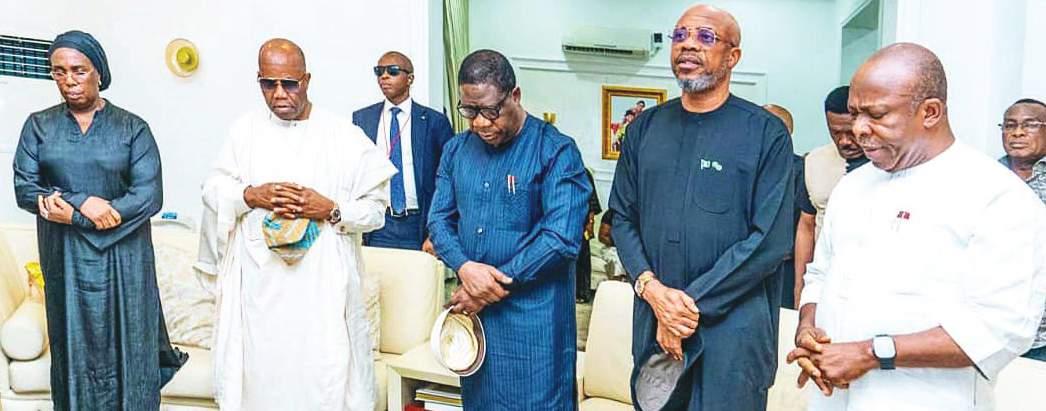
President of the Senate, Godswill Akpabio, on Monday led a delegation of senators on a condolence visit to the family of the late Senator Barinada Mpigi at his Abuja residence.
Mpigi, who until his death last week in a London hospital represented Rivers South East Senatorial District, was described as a committed legislator and public
servant.
Akpabio, according to a statement by his Media Aide Jackson Udom, said the late lawmaker’s death was a painful loss to the National Assembly and the nation. He noted that Mpigi made meaningful contributions to legislative development and nation-building during his time in office.
According to the Senate President, the deceased remained devoted to the welfare of his
constituents and demonstrated a passion for public service that would be remembered.
Akpabio urged the bereaved family to draw comfort from the impact the former senator made in public life, assuring them that the Senate and the entire National Assembly shared in their grief. He also offered prayers for the repose of the deceased and for strength for the family to bear the loss.
Kuni Tyessi in Abuja
Wale
Wife of the deceased
Obiageri Mpigi; President
Senate, Godswill Akpabio; Senate Leader, Opeyemi Bamidele; Senators Allwell Onyesoh and Victor Umeh, during a condolence visit to the family of Late Senator Barinada Mpigi, in Abuja, yesterday PHOTO: SENATE PRESIDENT’S OFFICE
s DAy •
Acting Group Politics Editor DEJI ELUMOYE
Email: deji.elumoye@thisdaylive.com
08033025611 sms only
Egbetokun’s Resignation and Transient Nature of Power
muiz Banire writes that the recent resignation of the erstwhile Inspector-General of Police, Kayode Egbetokun, is a clear example of how transient the nature of public power is.
The flurry of headlines that trailed the resignation of former InspectorGeneral of Police, Kayode Egbetokun, provides yet another opportunity to interrogate a troubling culture that has taken root in our media ecosystem, sensational reportage at the expense of accuracy, nuance, and institutional understanding.
One would think that in a country striving to deepen its democratic culture and entrench the rule of law, reportage around sensitive public offices and events such as the insecurity scenarios would be guided by restraint, context, and fidelity to facts.
Sadly, what we often witness is the opposite as the rumour mill has always taken precedence over trained approach to news dissemination. When I encountered headlines screaming “fired,” “removed,” and “forced to resign,” I could not help but smile, not out of amusement alone, but out of recognition.
The spectacle reminded me vividly of my own experience during my disengagement as Chairman of the Asset Management Corporation of Nigeria (AMCON).
At the time, I was away attending a course when I learnt, through media reports, that the enabling law had been retrospectively amended and that a new chairman had been appointed.
Till today, I have not been formally served any letter of removal or disengagement. Yet, the airwaves and blogs were awash with “triumphant” headlines proclaiming that I had been “fired.” In my subsequent intervention then, I described the episode, somewhat tongue-incheek, as “good riddance to bad rubbish,” not in self-denigration but in a candid acknowledgment that I had been personally practically subsidising my service to the nation. I was sacrificing time, expending personal resources, and even risking my safety to attend meetings in Abuja. Public office, as many insiders know,
is often less glamorous than it appears. What the public sees is the title; what they rarely see is the toil. That episode has since remained restraint from accepting public office for me any more. That personal recollection came flooding back as I read the reportage surrounding Egbetokun’s exit from the Nigeria Police Force. It raises a fundamental question: what kind of journalism are we practicing? Today, virtually every individual with a smartphone and a data subscription, no matter how minimal, assumes the toga of a journalist. Verification has
become optional; sensationalism has become salaciously mandatory. Legally speaking, particularly alluding to the Police Act, and as someone who has had the privilege of conducting litigation under the new Police Act, I am not speaking from conjecture. The legal framework is clear. An Inspector-General of Police appointed under the current statutory regime enjoys a fixed tenure of four years from the date of appointment, irrespective of the statutory retirement age or length of service. The wisdom behind this provision is evident: to insulate the office from arbitrary removal and to shield its occupant from the whims of transient political or administrative disagreements.
The office of the IGP is not meant to be a revolving door subject to executive irritation. Stability in law enforcement leadership is essential for institutional coherence and operational continuity. The logic is philosophical as much as it is legal. Montesquieu, in The Spirit of the Laws, argued that liberty is secured when power is structured, limited, and shielded from caprice. A fixed tenure for critical security offices is a structural safeguard. It ensures that operational disagreements do not metamorphose into impulsive dismissals.
I have hitherto canvassed the same protection for the occupiers of the offices in the anti-corruption agencies.Therefore, by the import of the law, the appointing authority, the President, cannot unilaterally remove a serving Inspector-General without complying strictly with the dictates of the statute. The logical implication is simple. Except the Inspector-General resigns voluntarily, removal cannot occur through executive fiat alone. Consequently, the language of “firing” or “forced resignation” is, at best, careless and, at worst, mischievous. Resignation, by definition, is a voluntary act. If anyone alleges that a resignation was forced, intellectual honesty demands that the circumstances be stated as it is only the ‘resignor’ that may allege being forced to resign. Was it induced? Was it coerced under duress? Was it compelled through unlawful pressure? Without factual substantiation, such claims amount to speculative fiction dressed up as news. Another curious undertone in some commentaries is the implicit suggestion that the office of the Inspector-General of Police is hereditary or permanent.
-Dr Banire writes from Lagos.
NOTE: Interested readers should continue in the online edition on www.thisdaylive.com
As Eno’s Campaign Group Tours Akwa Ibom LGAs...
Etim Etim reports that Governor Umo Eno of a kwa Ibom state’s reelection campaign team has commenced sensitisation tour of the 31 local government areas of the state ahead of the a ll Progressives Congress’ primaries scheduled to commence in a pril, 2026.
It is less than two months to the commencement of party primaries and nine months to the beginning of the governorship campaigns, yet the political terrain in Akwa Ibom State is unusually calm. The usual boisterousness and noisy campaigns that dominate reelection season are absent. There’s no single poster, banners or billboards on the road. The opposition parties are all dormant and inactive, but the ruling party – the All Progressives Congress - is having a field day, traversing the state and mobilizing support for the reelection of Governor Umo Eno, Senator Godswill Akpabio, President Bola Tinubu and all the other candidates. In January, 2026, Governor Eno, seeking reelection as the sole APC candidate, launched his campaign organization known as ARISE With Renewed Hope Initiative (AWRHI). On February 19, AWRHI began a tour of the 31 Local Government Areas. So far 12, the team has visited 12 LGAs, drumming support for the President and all the APC candidates. In the evening of Saturday, February 28, the campaign train led by its President, Uwem Okoko, accompanied by its International Coordinator, Rt. Hon. Udo Kierian, and other executives, visited Ibesikpo-Asutan LGA.
It was a colourful spectacle, with members of the AWRHI dressed in their red shirts, emblazoned with pictures of Tinubu, Akpabio and Eno. As in all political events, there were singing, dancing and speeches. The Council Hall was filled to the brim with all the key politicians from the LGA. More people were seated under the canopy outside the hall. Ibesikpo-Asutan is the home of former governor Victor Attah and First Republic Minister of Agriculture in the Eastern Region, the late Chief Efiong Okon Eyo, popularly known as Eyo Uyo. He was among the early personalities who pushed for the creation of states for the minority groups of Eastern Nigerian right from the 1940s. The advocacy eventually led to the creation of Akwa Ibom
in 1987. While Chief Eyo belonged to Chief Awolowo’s Action Group (AG), my father was a staunch member of Dr. Azikiwe’s NCNC. Chief Eyo and my father were both friends and political opponents. Till this day, Ibesikpo-Asutan has sustained its energetic political traditions. It came in full display as Eno’s campaign team arrived. The evening began with a rousing welcome speech from Council Chair- man, Edidiong Inyang. He listed Eno’s achievements in office with particular
reference programmes and projects in his LGA. The chairman then pledged full support of the community to the governor. ‘’In the 2023 elections, this local government gave Pastor Umo Eno 15,000 votes, and that was under PDP. Today, we are in a much bigger platform, APC. In 2027, we shall give him over 50,000 votes’’, the crowd cheered. The rest of the speakers pretty much echoed the same point. The boast seems realistic given the absence of other candidates. International Coordinator, Udo Kierian described AWRHI as a campaign vehicle designed to take the governor’s campaign message to the nooks
and crannies of the state, and noted that all former governors of the state had set up similar organizations to drive their campaigns. The group’s president, Uwem Okoko spoke of the outstanding performance of President Tinubu and Governor Umo in the last three years and urged the people to ensure that the two leaders, as well as the Senate President are reelected. ‘’It is in the interest of our state that Senator Akpabio is not only reelected into the senate, but also reelected as the Senate President’’, Okoko, a civil engineer whose construction firm handles major construction projects in the state, intoned. Again the crowd cheered. Other speakers of the night were Dr. Ita Udosen, APC South-South Zonal Secretary; Linus Nkan, Commissioner for Budget and Eco- nomic Planning; Ubong Attah, member of the House of Assembly; Emmanuel Obot, former member of the House of Representatives; and Octogenarian Chief T. O. Akpan, who was in the Cross River House of Assembly in the Second Republic. In addition to the speeches, local government executives and Advisory Council for the campaign group were also inaugurated.
Eno’s campaign train is going round the state in the wake of two important activities conducted by APC: electronic registration of party members and successful organization of ward and local government congresses in the state.
The absence of a strong opposition capable of mounting a challenge to the APC in 2027, coupled with the governor’s strong approval rating and wide acceptability across the state, will make Eno’s reelection the easiest electoral contest in the history of the state. The train will move to Nsit Ibom; Etinan and Uyo LGAs on March 5, with grand finale at the governor’s LGA on March 19. There are also plans to launch Port Harcourt, Lagos and Calaber chapters in the weeks ahead.
-Etim writes from Uyo, Akwa Ibom state capital
Eno
Egbetokun
NATIONAL ASSEMBLY
OFFICE OF THE CLERK
This is to inform Distinguished Senators and
H
sessions which is scheduled for Thursday 5th March 2026, has been rescheduled to Tuesday 10th March 2026 at 11:00 am.
Distinguished Senators and Honourable Members are kindly requested to take note of the change in the r
accordingly.
The leadership of the both Houses of the National Assembly regrets any inconvenience the change in resumption date may cause.
Signed: Kamoru Ogunlana Esq
AFRICA WOMEN OF IMPACT AWARD 2026
ABOYADE FUNKE (SAN) Lawyer, Principal Partner, Aboyade & Co
UKEJE, NNENNA Politician, House of Representatives.
TILAHUN ALEMU, BETHLEHEM Entrepreneur, SoleRebels
ZILLE, HELEN Politician, Activist, Democratic Alliance (DA).
NIGERIA
SOUTH AFRICA NIGERIA
NIGERIA
NIGERIA
SOUTH AFRICA
NIGERIA
NIGERIA
NIGERIA NIGERIA
NIGERIA
SOUTH AFRICA
NIGERIA
NIGERIA
SOUTH AFRICA
ETHIOPIA
NIGERIA
SOUTH AFRICA
SOUTH
NIGERIA
NIGER
ABIODUN OLUWADARE urges the new Police boss to rebuild confidence between citizens and the police
THE ARCHITECTURE OF DEPENDENCY
SESUGH AKUME argues how Nigeria’s broken local governments can be fixed
SATELLITE AND INTERNET CONNECTIVITY
SONNY ARAGBAAKPORE argues that licensing more Internet Service Providers will boost access in the country See page 21
TUNJI DISU AND NIGERIA’S SECURITY CHALLENGES
The appointment of Olatunji Disu as Inspector-General of Police by the President Bola Tinubu represents more than a routine leadership transition. It arrives at a moment when Nigeria’s internal security challenges have reached an apogee of complexity, ever witnessed that demands not only operational competence but institutional reinvention.
Across Africa’s most populous nation, insurgency, banditry, organised crime, cyber threats, separatist agitations, and rising urban criminality intersect with youth unemployment and declining public trust in state institutions. In this environment, leadership of the Nigeria Police Force is no longer merely administrative; it is strategic, political, and deeply symbolic.
Under the statutory framework guiding the tenure of service chiefs established by the National Assembly of Nigeria, the new Inspector-General is expected to serve a fixed term. That period constitutes a rare window for continuity in Nigeria’s public institutions, and perhaps the country’s best opportunity in years to undertake meaningful policing reform.
The question confronting Nigerians and international observers alike is straightforward: can Disu transform a force historically criticised for inefficiency and distrust into a modern security institution capable of confronting twenty-first century threats? The world is watching!
Nigeria’s current security landscape is defined by asymmetry. Violent actors rarely resemble conventional adversaries. Insurgent groups exploit terrain and technology; bandit networks flourish in poorly governed rural spaces; cybercriminals operate across borders; and economic hardship feeds recruitment into criminal enterprises. Crime, ideology, and socio-economic frustration increasingly overlap. Policing, therefore, cannot rely solely on force deployment. It must become intelligencedriven, preventive, and communitycentred.
Disu inherits not simply a policing challenge but a governance challenge: restoring legitimacy to state authority where citizens often feel unprotected or unheard.
One of the most urgent tasks before the new Inspector-General is rebuilding confidence between citizens and the police. Security institutions function effectively only when the public views them as legitimate. Significantly, Disu signalled an early philosophical shift upon assuming office, declaring that “the citizens are the Boss, and the era of impunity is over.” The statement, simple yet profound, reframes policing
authority as deriving from public trust rather than coercive power.
If implemented consistently, this principle could redefine the relationship between Nigerians and their police service.
Community Policing Beyond Rhetoric: Community policing has long appeared in policy documents but rarely in sustained practice. For reform to succeed, officers must become visible partners within communities rather than distant symbols of authority.
Local intelligence remains the most reliable early-warning system against crime and insurgency. Traditional rulers, youth organisations, religious institutions, and civil society groups possess knowledge often unavailable through formal channels. Institutionalising townhall engagements, community safety committees, and culturally informed policing can transform intelligence gathering from surveillance into cooperation.
When citizens trust officers, information flows naturally, and prevention becomes possible.
Nigeria’s security realities are not uniform; they are profoundly shaped by geography, demography, culture, and economic conditions. The threats confronting communities in the NorthWest’s vast rural corridors, where banditry thrives on mobility, porous borders, and limited state presence, differ fundamentally from the technologically enabled urban crimes emerging in cities such as Lagos and Abuja. Similarly, coastal piracy, farmer–herder conflicts, separatist agitations, cybercrime networks, and communal violence each demand distinct operational responses. A single, rigid command model cannot adequately address such varied security environments.
Effective policing in a country of Nigeria’s scale, therefore, requires
calibrated decentralisation. Granting operational flexibility to state and zonal commands, while preserving unified national strategy and standards at Force Headquarters, would enable commanders closest to the problem to design contextspecific solutions informed by real-time local intelligence. Field leadership must possess the authority to deploy resources swiftly, adapt patrol strategies, collaborate with community structures, and respond dynamically to emerging threats without awaiting prolonged central approval.
Decentralisation, however, must not translate into fragmentation. Strategic coordination from headquarters remains essential to maintain national coherence, professional standards, and constitutional accountability. Clear performance benchmarks, regular operational reviews, and transparent reporting systems should serve as safeguards, ensuring that increased autonomy enhances responsiveness while preventing abuse of authority or uneven enforcement across regions. A digitally integrated commandand-control architecture linking all commands can reinforce unity of purpose while empowering innovation at operational levels.
In an adaptive and rapidly evolving security environment, excessive centralisation risks operational paralysis, slowing decision-making, weakening initiative, and distancing policing from local realities. By contrast, structured decentralisation transforms the police from a reactive bureaucracy into an agile national institution capable of learning, adapting, and responding effectively to Nigeria’s diverse and changing security challenges.
Welfare Reform as Security Policy: No police institution can achieve professionalism while neglecting the welfare of its personnel. Poor housing, inadequate healthcare, and uncertain career progression weaken morale and erode discipline. Disu has acknowledged this reality directly, affirming that he will prioritise officer welfare because “motivated people can put in their best.” This recognition reflects an important institutional truth: ethical policing begins with motivated officers who feel protected by the system they serve.
Investment in housing schemes, insurance protection, psychological support, and merit-based promotion structures should therefore be viewed not as benefits but as national security imperatives.
Oluwadare is a Professor of Security and Strategy, Department of Political Science, Nigerian
SESUGH AKUME argues how Nigeria’s broken local governments can be fixed
THE ARCHITECTURE OF DEPENDENCY
Across the world, including in Africa, local governments raise their own revenues, recruit their own staff, and deliver services at a scale that would embarrass many national governments. One of the busiest and most efficient shipping hubs on earth — from which we crafted the expression “Direct Belgium” — ultimately has two city governments as its sole shareholders. They function because their legal architecture permits it. Authority and responsibility are aligned.
In Nigeria, a local government cannot independently purchase chalk for a classroom or a syringe for a clinic without a state agency acting on its behalf. Not because the Constitution requires it. Not because the courts endorse it. But because decades of accumulated federal and state law have stripped the third tier of the operational tools it needs to function. What remains is a structure that absorbs blame without wielding power. This is institutionalised infantilisation.
The consequences are measurable. The Universal Basic Education Commission (UBEC) reports ₦263 billion in unaccessed funds as of 2025, with 34 states yet to draw down allocations. Meanwhile, 18 million Nigerian children remain out of school — UBEC’s own most recently published comprehensive estimate. Funds sit idle. Children wait.
For perspective, Montgomery County in the United States — not even among the top ten school districts nationally — spends roughly $3 billion (about ₦4 trillion) annually on education. In a globalised world, Nigerian children are expected to compete by the same metrics. Architecture determines outcomes.
On 13 October 2025, the Federal High Court in Abuja clarified the constitutional position in Sesugh Akume v UBEC and Attorney-General of the Federation. Justice Emeka Nwite declared local governments autonomous constitutional entities, not administrative extensions of state governments. Provisions of the UBE Act subordinating them to State Universal Basic Education Boards were struck down. LGs were authorised to remit matching grants directly to UBEC and access federal funds without state intermediation. States are not constitutional gatekeepers to funds allocated to local governments.
One would have assumed alignment. Instead, UBEC has opposed the judgment, and all 37 SUBEBs are seeking to appeal. A federal agency mandated to fund basic education is resisting a ruling that enables funds to reach schools directly. UBEC itself acknowledged a shortage of 19,400 primary-school teachers, sixteen states failing to recruit in five years, and a deficit of 43,456 classrooms. Its Executive Secretary, Aisha Garba, described Nigeria as “facing an education crisis of great magnitude.” Let that sink in.
Why resist a ruling that removes bottlenecks while lamenting crisis? Because what is being defended is not educational efficiency but a revenue-control archi-
tecture. Federal statutes create centralised channels; state governments operate them; federal agencies defend them; and when challenged, the system closes ranks. The states are visible actors, but the enabling framework is federal. The alibi is subnational obstruction; the design is national. That is structural collusion. That is a cartel.
The distortion extends beyond education. The National Health Act 2016 centralises operational control of primary healthcare under state structures. A local government cannot independently procure basic supplies for clinics within its jurisdiction without navigating state bureaucracy. Responsibility is constitutionally local; authority is operationally withheld. Most Nigerians do not know this. Many would struggle to believe it even if told.
The constitutional logic is straightforward. Local governments are a recognised third tier with defined mandates and a share of federation revenues. Basic education and primary healthcare sit squarely within that mandate. Financial flows should match that design. Instead, state governments — empowered by federal law and sustained by federal inaction — intercept resources meant for communities and control institutions they are not constitutionally charged to run. Local governments do not even employ their own staff; council workers are state employees posted there. Such an arrangement would be inconceivable between federal and state tiers. It persists because it serves entrenched interests across tiers.
The pattern is not new. For decades, the absence of a bridge across the River Katsina-Ala at Buruku was blamed on boat operators who supposedly resisted it. Federal records listed the bridge as constructed in 2009, tolled, and revenue-generating. It reappeared repeatedly in national budgets — sometimes for rehabilitation, sometimes for fresh construction, once for both simultaneously. We initiated FOI requests. We litigated. We persisted through resistance and procedural setbacks. The fiction collapsed. Today, the bridge is under construction. The boat operators were not the obstacle; they were the alibi. Systems that appear immovable can be made to yield when their contradictions are exposed.
Akume,
a public policy analyst based in Abuja, can be reached at sesugh.akume@gmail.com.
SONNY ARAGBA-AKPORE argues that licensing more Internet Service Providers will boost access in the country
SATELLITE AND INTERNET CONNECTIVITY
The Nigerian Communications Commission (NCC), the telecommunications industry regulator, believes licensing more Internet Service Providers (ISPs) will boost internet access in the country.
Not just any run-of-the-mill company, but globally acclaimed ones that will bring meaningful investments and accelerate connectivity.
Although the NCC is silent on the cost of services to end users, the regulator believes that good services will attract good prices, especially for sign-on fees and device acquisition costs. But it is not clear whether connectivity will boost affordability, since the investors are not in the business of charity.
Like the devices, data is not cheap, but if the NCC provides assurances that the cost of acquisition will drop significantly, making services not only available but also affordable, then these satellite communications licenses will be seen as good news by potential subscribers.
On the other hand, there are no guarantees that existing subscribers who are already connected to other mobile services will suddenly switch networks.
Unless there are incentives to attract such transitions.
When it announced licenses for two multinational companies early in 2026, the NCC said it was to boost competition in connectivity and take services to underserved and unserved areas of the country via satellite.
The licenses grant Amazon LEO to operate its space segment in Nigeria as part of a global constellation of up to 3,236 satellites, and NCC says the approval aligns with global best practices and reflects Nigeria’s willingness to open its satellite communications market to next-generation broadband providers.
The permit positions Amazon LEO “to provide satellite internet services over Nigerian territory and sets the stage for intensified competition with Starlink, currently the most visible satellite internet provider in the country,” according to agency reports.
The second is Beetle Sat-1.
Both Amazon LEO and BeetleSat-1 also get the legal comfort to invest in ground infrastructure, local partnerships, and enterprise contracts, while giving Nigeria a wider market opportunity to play in space internet service delivery, where Starlink currently operates as a dominant player.
The two new licences have the potential to extend their footprints to underserved and unserved communities across the country. The licensing was done in line with NCC’s powers under Sections 2 and 70(2) of the Nigerian Communications Act 2003 and the Commercial Satellite Communications Guidelines for the telecommunications sector in Nigeria. The Guidelines, which came into effect in November 2018, regulate all Satellite
Communications Services in all Orbits in Nigeria.
NCC claims it has put in place deliberate policies to facilitate the provisioning of Space-based communications services and has developed a licensing framework to facilitate investment and entry into the Nigerian market for the provision of communications services.
The Commercial Satellite Communications Guidelines of 2018 provide a regulatory framework for satellite communications services and networks within Nigeria or on Nigerianregistered vessels.
The Objectives and scope of the guidelines aim to organise the Nigerian satellite market in line with international best practices, encourage innovation, and ensure public safety.
The guidelines, among others, apply to: Commercial satellite services, space segment and earth station operators, gateway providers, and vendors of terminal equipment. The guidelines, however, do not cover Military, non-commercial government, radio navigation, amateur, and earth observation satellites, as well as receive-only earth stations.
The guidelines cover the licensing and authorisation of the establishment of an earth station, which requires being a corporate body registered in Nigeria and obtaining a license before providing service listed as Very Small Aperture Terminal (VSAT) Earth Station Network Frequency Licence, Earth Station-inmotion (ESIM) Network Frequency Licence (Aero, Land and Maritime).
The guidelines also cover UAV/ Drone Network Frequency Licence, Mobile Satellite Service (MSS), Network Frequency Licence, Gateway Earth Station (GES) Frequency Licence, High Altitude Platform Station (HAPS), and others.
Under Space Segments, Operators authorised by foreign administrations may request NCC authorisation to provide services in Nigeria, and authorized satellites are included in a list maintained by the Commission.
Aragba-Akpore is a member of THISDAY Editorial Board
Editor, Editorial Page PETER ISHAKA
Email peter.ishaka@thisdaylive.com
FAAN, AIRPORTS AND TRAFFIC GRIDLOCK
The ‘cashless’ policy is a welcome initiative, but FAAN could have done more sensitisation
Many travellers to domestic destinations from the Murtala Muhammed International Airport in Lagos have been missing their flights this week due to traffic gridlock that builds up at the toll gate that connects both terminals. In Abuja, the situation is worse. Both domestic and international travellers are being made to suffer with many also missing their flights. All because of a mismanaged ‘cashless’ policy that was not well thought through. Without the requisite access card, known as ‘Go Cashless’ by motorists, the Federal Airports Authority of Nigeria (FAAN) has resorted to collecting toll from every vehicle, using Point of Sale (POS) machines which cause delays, leading to kilometre-long traffic jam.
In June last year, FAAN announced it would introduce cashless payments in all its revenue channels with enforcement slated to commence on 1st March 2026. In the initial announcement, FAAN indeed reiterated that all payments would be made online using an airport card that was supposed to be ‘tap and go’ for motorists at the payment point to eliminate delay. it was supposed to be a seamless and straightforward process. But by the time FAAN introduced the cashless payment system across the country on Sunday, it was obvious that the agency did not carry out adequate sensitisation for motorists who regularly use the toll gate link roads to migrate to their payment access card.
the cashless system was introduced, most of the motorists who drove through the toll gate had no access card. But the toll collectors insisted on cashless payment, refusing to collect cash from anyone. They had to resort to using POS, which further intensified the gridlock.
We endorse the cashless policy. Apart from enhancing transparency and accountability, it would take less time than cash payment as part of the advancement over the old-fashioned cash collection system which has been jettisoned by many countries. But what has become apparent from the traffic gridlock incidents is that FAAN did not do enough at sensitising the people. Beyond the ceremony of the launch last year, FAAN should have followed through with advert campaigns and promo events to let the people know that it has introduced cashless payment system at the airports. Social media would have also helped the sensitisation process.
FAAN should also develop the system where a motorist could place his card on the dashboard of his car and payment would be made through sensor, while driving through the toll gate
T H I S D AY
EDITOR SHAKA MOMODU
DEPUTY EDITOR WALE OLALEYE
MANAGING DIRECTOR ENIOLA BELLO
DEPUTY MANAGING DIRECTOR ISRAEL IWEGBU
CHAIRMAN EDITORIAL BOARD OLUSEGUN ADENIYI
EDITOR NATION’S CAPITAL IYOBOSA UWUGIAREN
THE OMBUDSMAN KAYODE KOMOLAFE
EDITOR-IN-CHIEF/CHAIRMAN NDUKA OBAIGBENA
GROUP EXECUTIVE DIRECTORS ENIOLA BELLO, KAYODE KOMOLAFE, ISRAEL IWEGBU
Ordinarily, FAAN ought to have monitored the acquisition of the card by motorists who ply the link road. If it did, it would have been clear to the agency that many Nigerians were still not aware of the new policy. However, it is possible, as some people also suggest, that FAAN may have been railroaded into commencing cashless payment at its revenue points to align with the federal government’s nationwide ban on all cash transactions payment policy to enhance transparency.
Yes, the agency announced designated collection points for airport users seeking to obtain their FAAN Go-Cashless cards. But it did little public enlightenment campaign. FAAN also did not carry out a feedback review to realise that many people have not obtained the access payment card. On Sunday when
DIVISIONAL DIRECTORS SHAKA MOMODU, PETER IWEGBU, ANTHONY OGEDENGBE
Going forward, FAAN should not only introduce payment access card but should also develop the system where a motorist could place his card on the dashboard of his car and payment would be made through sensor, while driving through the toll gate. That is what obtains in many countries, including South Africa. This certainly will shorten the time a motorist will stay at the toll gate and totally wipe out the build up that would continue to happen after the introduction of the cashless payment system.
Letters in response to specific publications in THISDAY should be brief (150-300 words) and straight to the point. Interested readers may send such letters along with their contact details to opinion@thisdaylive.com. We also welcome comments and opinions on topical local, national and international issues provided they are well-written and should also not be longer than (750- 1000 words). They should be sent to opinion@thisdaylive. com along with photograph, email address and phone numbers of the writer.
ILLICIT DRUGS AS THREAT TO GLOBAL SECURITY
I write in response to the recent report by the National Drug Law Enforcement Agency regarding the arrest of a China-based Nigerian businessman and two Angolan nationals for cocaine trafficking at the Nnamdi Azikiwe International Airport and the Mallam Aminu Kano International Airport. This development once again draws public attention to the persistent threat of international drug trafficking and its damaging effects on our country and the wider world.
According to the official statement by NDLEA, the suspects allegedly ingested significant quantities of cocaine in attempt to transport the drugs across international borders. Through surveillance, intelligence efforts, and medical supervision, authorities were able to recover 236 wraps of cocaine. The incident highlights the complex and dangerous methods employed by trafficking networks, as well as the serious health risks taken by individuals involved in such acts.
Beyond the arrests, this situation reflects a broader
concern. Drug trafficking continues to undermine Nigerian society. It contributes to criminality, disturbs family stability, and erodes social values. The pursuit of quick financial gain through illegal activities often points to deeper socio-economic pressures such as unemployment, poverty, and the desire for rapid success without regard for consequences. The impact on young people is particularly troubling. Youths are frequently targeted, either as consumers or as couriers lured by promises of easy money. Involvement in drug-related activities can destroy educational prospects, limit career opportunities, and expose young individuals to violence and legal consequences that may affect them for life. When illicit wealth is glorified, it weakens the culture of diligence, patience, and lawful enterprise that any stable society depends upon.
Fola Adeladun, Akure, Ondo State
IT'S A BIG RED BUTTON
It seems obvious that Iran shouldn't have an atomic bomb but should any country?
There are less than 10 countries that have nuclear weapons, three of them have a single person effectively in total control with Russia, China and North Korea and two that often seem to be in conflict quite often, India and Pakistan.
The threat of the bomb is that an atomic war would probably destroy everyone and everything so no one wants to risk starting such a war, a peace forced on them.
The latest war based on this threat is President Trump's offensive against Iran. These matters are usually approved by Congress but President Trump seems to have ignored them and acted on his own authority, an authority he might have just assumed.
There needs to be a better solution including, getting rid of the weapons, and looking for real peace rather than fearful protection but it is doubtful if Trump can find it while his approach is to bomb people into submission.
Dennis Fitzgerald, Melbourne, Australia
RATES AS AT M AR ch 3,
As Nigeria and SubSaharan African countries continue to face housing and infrastructural deficits,, the three major cement manufacturing companies in Nigeria amassed a whooping N6.55 trillion revenue in the 2025 financial year. This represents about 27 per cent increase over N5.15 trillion declared in the corresponding period of 2024.
The three companies are: Dangote Cement Plc, Lafarge Africa Plc and BUA Cement Plc.
Analysis of their audited result and accounts for the
full year ended December 2025 showed that they grew revenue significantly, a development that impacted positively on profit and dividend payout to shareholders.
Africa’s housing deficit is staggering and continues to grow due to rapid urbanisation, population growth, and weak housing finance systems. The continent is faced with a shortfall of at least 51 million housing units and by 2030, this deficit is projected to reach 130 million housing units, according to reports. These cement companies benefited from the federal
government spending on road expansions, among other infrastructure across the country last year.
In the period under review, Dangote Cement, followed by BUA Cement generated the highest revenue.
Dangote Cement reported N4.31trillion revenue, about 20.28 per cent increase over M3.58 trillion reported in 2024, while BUA Cement announced N1.18 trillion revenue in 2025, up by 35 per cent from N876.5 billion reported in 2024.
For Lafarge Africa, it reported N1.07 trillion revenue, a growth of 53.04 per cent from N696.77 billion in 2024.
The growth in revenue is on the backdrop of expansion and hike in cement products, most especially in Nigeria.
World Cement in its report titled, “Cement 2025 –Uneven Recovery,” noted that cement demand in Africa was expected to increase 2 – 3 per cent in both 2024 and 2025.
The report stated, “Although inflation is elevated in some markets, interest rates are expected to decline and lead to higher housing demand. Strong growth is forecast in Algeria, driven by robust government spending. A recovery is predicted in Egypt, with real estate
making a comeback despite a tough economic backdrop.
“After years of stagnation, South Africa is poised for a solid economic rebound. The perennial problem of loadshedding has been fixed and the new coalition has begun to turn around the economy. Kenya continues to face headwinds, although lower interest rates are expected to pave the way for a stabilisation. Nigerian demand is expected to slow in 2025 despite interest rate cuts.”
In the period under review, the three companies declared a profit before tax of N2.41 trillion, about 145 per cent
increase over N984.43billion reported in 2024.
The breakdown revealed that Dangote Cement leads that chart with N1.5 trillion profit before tax in 2025, representing an increase of 109 per cent from N732.5 billion in 2024.
As BUA Cement posted N465.3 billion profit before tax in 2025, about 367 per cent increase over N99.63 billion in 2024, Lafarge Africa announced N411.32 billion profit before tax in 2025, about 170 per cent growth when compared to N152.26 billion reported in 2024.
Nume Ekeghe
Fitch Ratings has said Nigerian banks are better positioned to meet about $1.7 billion in Eurobond maturities and callable instruments due in 2026, citing a marked improvement in foreigncurrency liquidity and stronger external buffers that have reduced
refinancing risks. In its latest assessment, the rating agency said robust foreign exchange inflows and policy reforms in the FX market have strengthened the sector’s liquidity profile, giving lenders greater flexibility to redeem maturing obligations without necessarily returning to the international capital markets.
Fitch noted that the naira devaluation of 2023–2024, alongside reforms aimed at eliminating distortions in the FX market, triggered a surge in foreign exchange trading volumes. The reforms, it said, improved importers’ direct access to FX and reduced their dependence on banks for dollar funding. It stated: “The naira
devaluation in 2023–2024 and reforms to reduce market distortions led to higher foreign-exchange market volumes, improving Nigerian importers’ access to FC and reducing their reliance on the banking sector for FC financing. Nigeria’s gross foreign reserves reached $46.3 billion at end-January 2026 in the wake of the reforms, up from a low of
$32.2 billion in April 2024.
This has helped the Central Bank of Nigeria to clear its backlog of overdue verified foreign-exchange forwards and settle many of the foreign-exchange swaps it has with local banks.
“Against this background, Nigerian banks have been able to pay down their correspondent banking lines and rebuild their placements at foreign banks. The banking sector has returned to a substantial net foreign asset position, reaching $11 billion at end-3Q25 from a net foreign liability position of $2.6 billion at end-2022. There has also been a corresponding improvement in FC liquidity coverage metrics.
Nigeria’s maritime sector recorded a historic surge in activity in 2025, driven by increased cargo throughput, rising container traffic, and a growing export footprint — a development that underscores the federal government’s commitment to economic diversification, according to the 2025 Operational Performance Report released by the Nigerian Ports Authority (NPA).
The report revealed that total cargo throughput surged by 24.8 per cent rising from approximately 103.6 million
metric tons in 2024 to over 129.3 million metric tons in 2025.
The Managing Director of the Nigerian Ports Authority (NPA), Dr. Abubakar Dantsoho, described the growth as one of the most significant annual increases in Nigeria’s maritime history, noting that the milestone strengthens the country’s position as a more competitive and strategic player in regional and global trade.
While imports continue to dominate overall cargo traffic, the report highlights a steady rise in outward trade,
Usman Onoja Appointed Chairman of Lovonus MFB
than a decade of pioneering leadership.
The board of directors of Lovonus Microfinance Bank Limited has approved the appointment of Usman Onoja as Chairman, following the retirement of Alfred Okoigun from the role after more
Group Business Editor
eromosele abiodun
Deputy Business Editor
chinedu eze
Comms/e-Business Editor
emma Okonji
Asst. Editor, Energy
emmanuel addeh
Asst. Editor, Money Market
nume ekeghe
Correspondents
KayodeTokede(CapitalMarkets)
James emejo (Finance)
ebere nwoji (Insurance)
Reporter Peter Uzoho (Energy)
Okoigun has since transitioned to Chairman of Lovonus Group of Companies, marking the end of an era that saw the bank record significant milestones. Under his stewardship, Lovonus MFB expanded its customer base, strengthened its balance sheet and secured land for the construction of the Group’s permanent headquarters. His elevation was commemorated at a send-off ceremony in Lagos, where stakeholders paid tribute to his contributions to the institution’s stability and growth.
In a statement, Onoja acknowledged the transformational strides recorded under Okoigun’s leadership, noting that the bank bolstered its capital base, enhanced governance structures, broadened its service offerings and deepened its commitment to financial inclusion.
with exports accounting for 39.0 percent of total cargo throughput. Inward traffic represented 59.2 percent, and transshipment contributed 1.8 per cent. Analysts view the growth in export volumes as a direct validation of the Federal Government’s economic diversification initiatives, aimed at reducing
dependence on crude oil and promoting non-oil sector exports.
Containerised cargo, a key indicator of export trade activity, grew significantly. Total container traffic increased by 25.7 percent, surpassing 2.1 million Twenty-foot Equivalent Units (TEUs). Of this, export containers grew by 3.1 percent,
while import-laden containers surged by 32.8 percent. The report also noted a remarkable 205.8 percent increase in transshipment containers, signaling Nigeria’s emergence as a pivotal regional logistics and trade hub.
The report identified Lekki Port as the leading port in Nigeria, handling 40.6 per
cent of the nation’s total cargo throughput. Onne Port followed with 19.1 per cent, and Apapa Port handled 16.7 per cent. In addition to volume, Lekki Port attracted the largest vessels, with an average Gross Registered Tonnage (GRT) of 55,712, slightly higher than Onne Port at 53,022 GRT.
AG Mortgage, Firm Unveil Delivery-linked Housing Finance Model
AG Mortgage Bank Plc, in partnership with Cutstruct Technologies Limited, has launched an integrated housing finance initiative aimed at curbing fund diversion, improving project completion rates and strengthening Nigeria’s housing delivery system. The initiative was unveiled at a Developers Forum co-hosted
by both organisations in Lagos. Speaking at the event, the Managing Director and Chief Executive Officer of AG Mortgage Bank Plc, Mr. Ngozi Anyogu, said the initiative forms part of the bank’s broader strategy to build a collaborative and disciplined mortgage ecosystem.
He explained that the bank views developers not merely
as loan beneficiaries but as strategic partners within a shared value chain.
The Founder and Chief Executive Officer of Cutstruct Technologies Limited, Mr. John Oamen, said access to structured and transparent financing remains a major constraint for many developers.
He observed that numerous
viable projects stall not for lack of demand or technical expertise, but because funding is misaligned or delayed. Oamen described the collaboration as a strategic move to restore confidence in the ecosystem by providing structured capital to developers while offering lenders clearer visibility into credible projects.
NAICOM Signs MoU with BPP to Deepen Insurance Compliance in Public Procurement
Ebere Nwoji
The National Insurance Commission (NAICOM), has signed a Memorandum of Understanding (MoU) with the Bureau of Public Procurement (BPP) for collaboration and strengthening of the insurance industry, in the area of public procurement processes.
The Commissioner for Insurance, Olusegun Ayo Omosehin, welcoming the Director-General of BPP, Adebowale Adedokun, and his delegation to NAICOM for a working visit, during which the agreement was signed, highlighted the role of NAICOM as the statutory regulator charged
with supervising, regulating and promoting the growth of Nigeria’s insurance industry.
He further stated that NAICOM’s current reform priorities include policyholder protection, regulatory capacity building, legal modernisation, recapitalisation, and increasing insurance penetration.
He emphasised that the
collaboration would reinforce the principles of public procurement and insurance practice in Nigeria. He noted that achieving President Bola Ahmed Tinubu’s vision of transforming Nigeria’s economy into a one-trillion-dollar economy required strong inter-agency cooperation.
GreenPlinth Signs MOA with Benue State to Deliver 2mn Cookstoves
Esther Oluku and Light Nwobodo
Nigeria based climate and sustainability corporation, GreenPlinth Africa, had signed a Memorandum of Agreement with Benue state government to deliver two million clean energy cookstoves to indigent households in the state.
The MOA which was
signed during the opening ceremony of the Green Conference 2026, which began in Lagos yesterday is part of GreenPlinth Africa’s campaign towards reducing carbon emissions on the continent.
The event, themed ‘Decarbonising Africa: Pathway to Climate Finance, Sustainable Growth and Green Economy’, brought together
climate change stakeholders and policy experts across the country to chart a strategy towards reducing the continent’s climate footprints while drawing resources from the global climate fund.
The Deputy Managing Director and the Group Chief Finance Officer of Green Plinth Africa, Babatunde Aina, explained that the
MOA is a binding document which commits parties to executing the agreements in the document.
According to him, Benue state is the first state in Nigeria to benefit from the carbon credits which will give the state two million clean cookstoves as a move towards reducing the state’s carbon score.
Eromosele Abiodun
Nume Ekeghe
L-R: Minister of Marine Blue Economy, Adegboyega Oyetola; Managing Director/Chief Executive Officer, Nigerian Ports Authority (NPA), Dr Abubakar Dantsoho when the NPA boss visited the office of the Minister in Abuja...recently
How SROL is Building Trust in Host Communities with Holistic Healthcare Initiatives
Oluchi Chibuzor
Nigeria’s healthcare system is riddled with infrastructure deficits, high healthcare costs, and underfunding.
In recent years, it has faced some of its biggest challenges, including infectious disease outbreaks, financial uncertainty, and staffing crises, ranking it as the country with the lowest life expectancy globally. This inadequate healthcare system leaves a need for non-governmental support to improve the quality of care.
Increasingly, it is NGOs and responsible corporate actors that are stepping in to bridge these gaps through targeted outreach, education, and frontline healthcare interventions.
Over time, extractive industries, such as the oil and gas and mining sectors, have been strong drivers of economic growth, CSR, and community care. They have proven to be vital resources for building long-lasting infrastructure and fostering impactful empowerment initiatives. Yet the sector is often narrowly defined by extraction alone, weakening its reputation and the trust of host communities.
One effective way to rebuild that trust is through holistic healthcare programmes that demonstrate genuine, sustained care beyond the mine site.
Segilola Resources Operating Limited (SROL), operator of Nigeria’s first large-scale gold mine, is a perfect example of building trust beyond the mine through sustained care, starting with its first comprehensive medical outreach programme in its host communities - Imogbara, Odo-Ijesha, and Iperindo in 2023. The company partnered with The Living Hope Care Foundation, a community-based NGO with two
decades of community healthcare activities in and around Osun State, to provide wellness and screening exams, diagnosis and treatment of medical problems, laboratory testing, and eye care.
The outreach programme marked the beginning of SROL’s enduring commitment to healthcare projects and served as the foundation for the company’s community involvement activities. In October 2023, the company also donated drugs worth over N500,000 to the primary health care centres in these communities.
In 2024, SROL held its second annual comprehensive community medical outreach, significantly expanding its reach
to 2,000 community members, including individuals from the local prisons. The two-day event included advanced diagnostics, patient consultations, surgeries, and the distribution of necessary medications. The outreach also focused on disease prevention to promote long-term wellness.
In 2025, the medical outreach was further expanded to reach over 3,000 residents across its host communities, and SegunCare, a new initiative offering continuous follow-up and support for residents with chronic conditions (including mental illness), was launched, ensuring care extends beyond the twoday outreach. This programme has helped lower the stigma associated
with mental illness and enhanced access to necessary chronic disease management in host communities.
These healthcare initiatives have improved SROL’s reputation in the Imogbara, OdoIjesha, and Iperindo communities and across Osun State, with communities now relying on SROL and other responsible companies for ongoing healthcare.
As Nigeria’s mining sector evolves, its future will increasingly be defined by impact rather than extraction alone. SROL’s sustained investment in healthcare demonstrates how thoughtful partnerships and holistic programming can enable extractive industries to contribute meaningfully to community wellbeing, while building trust, resilience, and shared value over the long term.
Mutual Benefits Assures Public of Governance Framework, Regulatory Compliance
Ebere Nwoji
Mutual Benefits Assurance
Plc, has assured the public that it has resolved every issue relating to recent media reports on purported sanction previously imposed by the Nigerian Exchange Limited (NGX) on the
company over delays in the filing of certain audited and unaudited financial statements.
The underwriting firm stated that the matter has been fully resolved in accordance with NGX regulatory procedures at the time. It confirmed
Sovereign Trust Insurance
Equips Saka Tinubu Traders
Ebere Nwoji
Sovereign Trust Insurance
Plc, said during this year’s Valentine day celebration, it showed love to traders at the Saka Tinubu Market community in Victoria Island, Lagos, with a fire safety initiative, tagged, “Protecting What You Love.”
The Underwriting firm said it partnered with the Federal Fire Service in organising a fire drill and sensitisation program designed to equip the traders with life-saving skills.
The event emphasised prompt responses to fire emergencies in and around the market space.
Speaking at the event, the Head of Marketing and Business Development
Division of the Sovereign Trust, Olajumoke Olatubosun, explained to the gathering the rationale behind the gesture.
“At Sovereign Trust Insurance Plc, our commitment to our communities extends beyond financial protection. We are concerned about the wellbeing of our customers and the things they hold dear to their hearts. On this Valentine, we wanted to give a gift that truly matters—the gift of safety and preparedness by empowering the traders here at Saka Tinubu Market with the knowledge to handle fire incidents whenever it occurs. The collaboration underscores the critical role of public-private partnerships in enhancing urban safety”, she explained.
that all outstanding filings have since been regularised and that the company was fully compliant with NGX listing rules and reporting obligations.
According to the company, following the occurrence of the referenced delays, it undertook a comprehensive
review of its governance, reporting and compliance frameworks, leading to the implementation of strengthened internal controls and oversight structures.
It said among the measures introduced were enhanced financial reporting
architecture, including stricter internal timelines, improved cross-functional coordination and strengthened review protocols to ensure timely and accurate disclosures.
Mutual Benefits also reinforced board oversight through its Audit and Risk Committees, establishing clearer accountability frameworks and structured periodic compliance reviews. In addition, it said upgraded compliance monitoring systems were deployed across finance and company secretariat functions to optimise regulatory tracking and reporting processes.
AIICO Insurance Expresses Determination to Celebrate Excellence
Ebere Nwoji
AIICO Insurance plc has reaffirmed its commitment to celebrating excellence, strengthening professionalism, and deepening insurance penetration across Nigeria.
The company gave the assurance at annual agency retreat held in Ogun State.
Speaking at one of the
executive sessions, the Managing Director and Chief Executive Officer, of AIICO, Mr. Babatunde Fajemirokun, described the ongoing evolution of industry standards as the most significant regulatory shift in over two decades, noting that its emphasis on stronger compliance, riskbased capital, and digitisation
aligned with AIICO’s culture of governance, discipline, and innovation. He reaffirmed the company’s readiness to lead in a more structured and technology-driven era, charging agency leaders to execute with professionalism, ownership, and measurable performance. The highlight of the weekend programme was the awards night, where
outstanding performers were recognised for exceptional production and consistency. Mrs. Ego Uzochukwu emerged as the overall best-performing agency for the year, improving from her second-place ranking in the previous year. She was followed by Mr. Henry Onwuchekwa while Mr. Lawson Njoku secured third place.
Kaylabit to Launch Crypto Trading, Banking Services App
Sunday Okobi
Kaylabit Digital Limited has concluded preparations to launch an app that will unify crypto trading, gift cards conversion to cash, bills payment, and banking-like services into a single digital ecosystem.
The crypto exchange platform, which represents a growing generation of fintech platforms that seek to unify these initiatives, is a comprehensive service suite which aligns with market needs particularly among digital natives and business users.
In a statement signed and made available to THISDAY yesterday by the Chief Executive Officer, Digital Limited, Kehinde Lawal, he noted that Kaylabit’s multi-feature strategy reflects broader fintech trends in the region, where startups bundle financial products into single
mobile experiences that lower entry barriers for users who are unbanked, underbanked, or seeking digital asset exposure, adding that this mirrors competitors that combine crypto, gift card trading, bill payments, and virtual cards into a single service suite.
Enugu’s New Financial Architecture
BUDGET OF RENEWED MOMENTUM…
Jeff Ukachukwu
In Nigeria’s federal arrangement, most states have been trained - by habit and by history - to govern with one ear and both hands permanently tuned to Abuja. The month begins, not with an internal reckoning of productivity, but with anticipation: what will the Federation Account Allocation Committee (FAAC), bring? In that culture, budgets can become ceremonies, and “revenue” is often just “allocation.” What is unfolding in Enugu is interesting because it tries to reverse that reflex. It is a deliberate attempt to redesign the state’s fiscal DNA - shifting from an allocation-dependent government to a revenue-governed one.
The headline is dramatic. At a recent press briefing, the Enugu State Internal Revenue Service (ESIRS) disclosed that the state generated N406.774 billion in internally generated revenue (IGR) in 2025—about 80 per cent of its target of N509.947 billion for the year. Compared to the N180.5 billion reported for 2024, this represents a 125 per cent jump in one year. And the longer arc is even more striking: from N26.8 billion in 2022, to N37.4 billion in 2023, to N180.5 billion in 2024, and then N406.774 billion in 2025.
But numbers alone can mislead if we don’t interrogate what sits beneath them. Enugu’s story is not just “more revenue.” It is a new architecture—new rules, new rails, new incentives—built around three hard truths of public finance: you don’t scale what you can’t see; you can’t sustain what citizens don’t trust; and you can’t modernise a state on a revenue system designed for the analogue age.
Start with the composition: in the same 2025 disclosure, Enugu State Internal Revenue Service reported that only N51.5 billion —12.6 per cent—came from tax revenue, while N355.2 billionn—87.4 per cent—came from non-tax revenue. That mix matters. Nationally, the NBS reports that in 2023, states and the FCT generated
N2.43 trillionn in IGR, with taxes constituting about 80 per cent of total IGR. Enugu’s 2025 ratio flips the typical Nigerian pattern on its head: the surge is being driven less by squeezing taxpayers and more by recovering, revitalising, and optimising assets and non-tax streams that previously leaked, slept, or disappeared into the fog of fragmented collections.
This is where the phrase “financial architecture” earns its keep. Architecture is not decoration; it is structure. In Enugu’s case, the structure begins with a governing discipline: officials say the administration issued a “matching order” that salaries, pensions, and overheads should be funded internally—pushing the bureaucracy to treat IGR as the first line of survival, not a nice-to-have. That single instruction is more revolutionary than it sounds. Once a government insists on paying its basic bills from what it generates, it forces a new seriousness: leakages become existential, and idle assets become unaffordable luxuries.
Next is institutional redesign.
Governor Peter Mbah’s administration signed a law creating a one-stop shop for taxation and making the revenue service more autonomous—explicitly framed as a consolidation that gives the government “full line of sight” into revenue flows, and professionalises the agency with clearer targets and operational latitude. The same account argues that the revenue gains were driven by widening the tax net, plugging leakages, and deploying technology—not by simply increasing tax rates. In other words, the model being advertised is not “tax people harder,” but “see more, capture more, lose less.”
The third pillar is taxpayer experience - because coercive revenue systems create resistance rather than compliance. Enugu’s “single yearly unified tax payment” via e-ticketing is a practical
example: instead of multiple collectors and overlapping levies, informal sector operators pay once a year through an e-ticket platform, with the payment split across relevant MDAs—reducing harassment and making obligations more predictable. For the formal sector, the “Consolidated Demand Notice” approach similarly bundles obligations—so businesses aren’t paying the same state through scattered windows that breed confusion and rent-seeking. This is how you turn revenue from a daily fight into a governable system: simplify, unify, digitise.
There is also an important political-economy point buried in the debate over taxes in many Nigerian states: legitimacy. When people believe the system is arbitrary, they look for ways around it; when they believe it is lawful and fair, compliance rises.
Amid misinformation, Enugu State Internal Revenue Service has publicly anchored its position on legality (e.g., PAYE for formal workers and direct assessment for informal operators) and argued that non-state actors historically undermined informal-sector compliance, claiming that “99%” of informal-sector players were not paying before reforms. Whether one accepts every detail or not, the underlying logic is correct: you cannot grow IGR sustainably if collection is outsourced—formally or informally—to chaos.
Still, Enugu’s numbers also raise the question serious analysts must ask: how repeatable is nontax revenue at this scale? Asset recoveries, concessions, and oneoff optimisations can produce spectacular spikes—but a mature financial architecture distinguishes between windfalls and workhorses.
The reassuring detail in the 2025 disclosure is that tax revenue itself grew—from N30 billion in 2024 to N51.5 billion in 2025 (a 72 per cent increase), even if it remains
a relatively small share of the total. That matters because tax—especially broad-based personal income tax and consumption-linked levies administered transparently—is typically the most reliable revenue engine over time.
The final—and most decisive—test of this architecture is the social contract: do citizens feel the translation of revenue into public value? ESIRS itself links improving compliance to visible governance outputs— 260 Smart Green Schools, 260 Type 2 Primary Healthcare Centres, transport and other infrastructure, among others — arguing that taxpayers are encouraged when they can “see the impact.” This is the correct theory of democratic taxation: revenue is not simply collected; it is explained, accounted for, and returned as measurable public benefit. Where that loop is credible, IGR becomes self-reinforcing.
Enugu is now projecting IGR of N870 billion for 2026. Targets are easy; credibility is harder. The state’s opportunity—if it wants this moment to become a model rather than a headline—is to publish the architecture as a public system: clearer breakdowns of recurring versus one-off revenue, stronger independent audit visibility, open dashboards where citizens can track what their money built, and a tax culture that protects small businesses from nuisance collections while widening compliance through simplicity and fairness.
If Enugu sustains this trajectory, its most important export will not be the naira figure, however impressive it may be. It will be the lesson that fiscal sovereignty is designed, not wished into existence. And that in a country where too many budgets still begin with Federation Account Allocation Committee expectations, the boldest development strategy may simply be this: build a government that learns to stand on what it generates and then governs as if every naira must be justified to the people who earned it.
• Dr Jeff Ukachukwu is a Public Affairs Analyst and writes from Enugu
L-R: Clerk to the Enugu State House of Assembly, Mrs. Ngozi Silverline Egbo; Attorney General and Commissioner for Justice, Osinachi Nnajieze; Governor of Enugu State, Dr. Peter Mbah and the Speaker, Enugu State House of Assembly, Uchenna Ugwu, during the signing of the 2026 Budget at Government House, Enugu… recently
A Mutual fund (Unit Trust) is an investment vehicle managed by a SEC (Securities and Exchange Commission) registered Fund Manager. Investors with similar objectives buy units of the Fund so that the Fund Manager can buy securities that willl generate their desired return.
An ETF (Exchange Traded Fund) is a type of fund which owns the assets (shares of stock, bonds, oil futures, gold bars, foreign currency, etc.) and divides ownership of those assets into shares. Investors can buy these ‘shares’ on the
floor of the Nigerian Stock Exchange.
A REIT (Real Estate Investment Trust) is an investment vehicle that allows both small and large investors to part-own real estate ventures (eg. Offices, Houses, Hospitals) in proportion to their investments. The assets are divided into shares that are traded on the Nigerian Stock Exchange.
GUIDE TO DATA:
Date: All fund prices are quoted in Naira as at 27 Febuary 2026, unless otherwise stated.
DAILY PRICE LIST FOR MUTUAL FUNDS, REITS and ETFS
Union Bank Ends Fitfeb 2026 with Nationwide Healthwalks and Celebrations
Nume Ekeghe
The streets of Lagos and Enugu witnessed an inspiring sight on the morning of Saturday, 28 February 2026, as Union Bank employees gathered for Healthwalks in both cities. In Lagos, hundreds of staff walked together from the Bank’s historic Head Office in Marina to its Facility in Surulere, known as The Stable. Simultaneously in Enugu, employees embarked on their own route through the city, united by the same purpose: to celebrate health, community, and the conclusion of the Bank’s annual Fitfeb wellness initiative.
Fitfeb 2026 marked Union Bank’s most geographically inclusive wellness programme to date. Throughout February, employees across all branches and departments participated in daily stretch-out sessions held at noon. These brief but consistent breaks encouraged staff to step away from their workstations, stretch their muscles, and refresh their minds before returning to their duties.
The initiative featured health webinars accessible to employees nationwide, providing valuable information on maintaining physical and
mental wellbeing. Aerobic classes offered more intensive fitness opportunities for those seeking to elevate their exercise routines. The celebrations reached their peak on Friday, 27 February, with fitness parties held simultaneously in Lagos, Abuja, Port Harcourt, and Enugu. These events brought employees together in vibrant celebrations of health and camaraderie, transcending geographical boundaries to reinforce a shared organisational culture.
The Healthwalks served as both a physical culmination and a symbolic gesture. In Lagos, the route from Marina to Surulere represented a journey of commitment, with employees walking side by side through the city’s bustling streets. In Enugu, participants moved through their own neighbourhoods, demonstrating that Union Bank’s commitment to employee welfare extends beyond its headquarters to every location where its people work.
Fitfeb has established itself as an annual highlight in Union Bank’s calendar. While each edition builds on the successes of previous years, the core objective remains unchanged: to demonstrate the
Bank’s genuine commitment to the welfare of its workforce across Nigeria.
The nationwide execution of Fitfeb 2026 reflects the Bank’s understanding that employee wellbeing cannot be confined to a single location. By extending the initiative to Abuja, Port Harcourt, Enugu, and beyond, Union Bank affirms that every employee, regardless of location, deserves equal investment in their health and happiness.
Union Bank’s wellness initiatives align directly with the United Nations Sustainable Development Goals, particularly Goal 3, which focuses on ensuring healthy lives and promoting wellbeing for all at all ages. By investing in the health of its employees nationwide, the Bank contributes to national health objectives while setting an example for other organisations.
The programme also supports Goal 8, which promotes sustained, inclusive and sustainable economic growth, full and productive employment, and decent work for all. Healthy employees are more productive, more engaged, and better equipped to deliver exceptional service to customers across every region the Bank serves.
KingMakers Powers Enugu Tech Festival as Innovators Converge
KingMakers, a leading African gaming and digital entertainment company, in partnership with the Enugu State Government, anchored the 2026 Enugu Tech Festival, convening over 10,000 innovators, founders, developers, investors, and policy leaders at the Enugu International Conference Centre from February 24–27.
The four-day innovation platform was designed to accelerate technology adoption, digital skills development, entrepreneurship, and ecosystem collaboration across Southeast Nigeria. It marked a significant step in Enugu State’s ambition to position itself as a leading regional technology and
innovation hub.
KingMakers’ Managing Director, Gossy Ukanwoke, played a visible leadership role throughout the festival, engaging stakeholders and reinforcing the company’s long-term investment in youth empowerment and digital development.
Speaking at the festival, Ukanwoke said: “Innovation thrives where government vision and private-sector execution align. Our partnership with the Enugu State Government reflects a shared commitment to building sustainable innovation ecosystems beyond traditional tech hubs. Platforms like the Enugu Tech Festival create real access to knowledge, networks, and opportunity
for thousands of young Nigerians.”
Structured to deliver both inspiration and access, the festival featured keynote addresses, panel discussions, startup exhibitions, ecosystem showcases, and strategic networking sessions aimed at connecting young innovators to tangible career and entrepreneurial pathways within the digital economy.
As Nigeria’s tech ecosystem continues to expand beyond Lagos into emerging regional hubs, KingMakers remains committed to deepening strategic partnerships that democratize access to innovation and unlock sustainable economic opportunities across the country.
Rotary International District 9111 Organises Presidents- elect Learning Seminar
Rotary International District 9111 is set to host its Presidents- elect leadership Learning seminar between Friday and Saturday, March 6 to 7, 2026 at Festival hotel, Festac, Lagos for club presidents who will serve during the 2026-2027 Rotary year.
District 9111 Governorelect, Bukola Bakare disclosed that the training seminar will equip incoming presidents with leadership skills and shared experiences to lead their clubs. The elected incoming presidents will be trained on the expectations and responsibilities of their roles and offices.
She revealed that past District Rotaract Representative, Alllan Ntambi from Uganda will speak on Today’s Rotaractor, Tomorrow’s Rotary leader; pioneer District 9111 Governor and Chief Medical Director Ace Medicare Ltd, Dr Oluwole Kukoyi will train participants on “Planning your year ahead”; and District 9111 Governornominee, Dr Samuel Ayetutu will speak on “ Planning meetings and providing satisfying club experience”.
Bakare added that other facilitators include: past District 9111 governor, Otunba Bola Onabadejo’s training on Rotary
“Foundation fundraising strategies”; former Managing Director of Crittall Hope Plc and past District governor, Remi Bello will be training on “Telling your Rotary Story”; while Special Assistant to Akwa Ibom State Governor and District 9111 executive Secretary, Michael Effiong will speak on “Public Image and Social media” ; District 9111 Governor nominee designate, Engr Ade Oyenekan will be speaking on “ Rotary program for young leaders”; and Mr Oladele Olanike training is on “leadership and the power of a creative mind.”
Front Row R-L: Chief Information Security Officer, Union Bank of Nigeria, Mr. Francis Mojoyinola; Managing Director/Chief Executive Officer, Mrs. Yetunde Oni and Head, Corporate Banking, Mr. Ali Kadiri with other employees during the bank’s FitFeb 2026 Health Walk held in Lagos… recently
The price of OPEC basket of twelve crudes stood at $63.14 a barrel on Monday, according to OPEC Secretariat calculations.
The OPEC Reference Basket of Crudes (ORB) is made up of the following: Saharan Blend (Algeria), Djeno (Congo), Zafiro (Equatorial Guinea), Rabi Light (Gabon), Iran Heavy (Islamic Republic of Iran), Basrah Medium (Iraq), Kuwait Export (Kuwait), Es Sider (Libya), Bonny Light (Nigeria), Arab Light (Saudi Arabia), Murban (UAE) and Merey (Venezuela).
OPEC
Nascon Declares 104% Increase in Profit, Proposes 600kobo Dividend
Kayode Tokede
Nascon Allied Industries Plc has announced its 2025 audited result and accounts with N48.24 billion profit before tax, about 104 per cent increase over N23.65billion reported in 2024 financial year.
The company in the year under review saw its profit
after tax at N33.53 billion, a significant increase of 115 per cent from N15.58billion in the corresponding period of 2024.
With the growth, ,the management proposed a dividend of 600kobo in 2025 (N16.2 billion ) as against 200 kobo (N5.4billion) paid to shareholders in 2024.
The impressive performance was driven by N152.7billion revenue
PRICES FOR
in 2025, up by 27 per cent from N120.4billion reported in 2024 and finance costs that closed 2025 at N6.01 billion, about 235 per cent increase when compared to N1.79 billion reported in 2024.
The Managing Director, Nascon Allied Industries, Mr. Aderemi Saka in a statement said: “It is a privilege to present the audited results of Nascon
Allied Industries Plc for the year ended December 31, 2025. This year’s performance stands as a testament to our collective resilience and strategic discipline in navigating a demanding macroeconomic environment.
“Our commitment to operational excellence delivered the strongest bottom-line performance in our company’s recent
history. Revenue grew by 27per cent to N152.7 billion, reinforced by a robust demand for our salt and seasoning products and improved production stability, while gross profit rose by 33 per cent to N73.9 billion. Profit After Tax surged by 115per cent to N33.5 billion, and this exceptional earnings growth translated into a 115per cent increase in Earnings
Per Share, now at N12.41. “Reflecting this solid performance, the Board is pleased to propose a dividend of N6.00 per share, representing a 200 per cent increase. A major driver of our progress in 2025 was the 72per cent expansion of our asset base to N135.3 billion, enabled largely by our strategic investment in new Compressed Natural Gas (CNG) trucks.
SECURITIES TRADED AS OF MARCH 3 /26
Edited by Oke Epia |
WashingandHushing
REA:Tracking the Billions for Solar Energy
In recent weeks, the leadership of the Rural Electrification Agency (REA) has engaged in a game of hide-and-seek with the House of Representatives. The House committee on renewable energy has had to threaten sanctions on the agency’s chief executive, Abba Aliyu, for failing to honour invitations to answer some questions. This drama raises a fundamental question: after years of federal allocations, foreign-backed electrification programmes, and climate-linked funding, what is the verifiable status of Nigeria’s renewable energy projects and who is accountable for tracking them? The public deserves to know, in clear terms, what has been delivered, what is still in progress, and who is responsible for monitoring every kobo.
Why is the REA Avoiding Scrutiny?
To be clear, the House committee is not seeking a casual encounter: its letter to Mr. Aliyu cited constitutional powers and itemized figures down to the kobo and penny. It demanded procurement files, audit reports, contractor details, beneficiary addresses, payment vouchers, and implementation strategies. The question hanging in the air is why has it been so difficult for the REA’s boss leadership to sit before lawmakers and answer their questions?
When a public institution manages over ₦151.7 billion in appropriations for solar mini-grids, solar home systems, and streetlights, plus another ₦12 billion for the electrification of universities and teaching hospitals, plus ₦13.08 billion under the Rural Electrification Fund, scrutiny cannot be termed harassment. It is governance. When that same agency oversees more than $550 million from the World Bank and AfDB, $750.4 million under the DARES programme, $12.4 million from South Korea, $8.9 million from Germany/EU, and multiple additional grants from GEF/UNDP and global energy alliances, oversight cannot be a mere political theatre. It is a fiduciary responsibility. The committee sought information on who the contractors are, details of the procurement plans, information on bid evaluation reports, audit certifications, and the beneficiary communities. Why should the committee invoke constitutional provisions to compel appearance? Why should a hearing require escalation when transparency should be routine? If the books are clean, why resist opening them?
The energizing education programme spans federal universities and teaching hospitals across Bauchi, Kano, Benue, Delta, Ebonyi, Anambra, Sokoto, Abuja, Kaduna, Abia, Cross River, Ogun, Borno, Yobe, Rivers, Akwa Ibom, Ondo, Imo, Adamawa, Katsina, Nasarawa, and Kogi. Solar hybrid plants were installed with the promise of reliable electricity for laboratories, wards, hostels, and research facilities. Are these systems operating at full capacity today? Are they producing the megawatts promised, contracted and paid for? Are maintenance frameworks active, funded, and monitored? Or are some of these installations already degrading under weak oversight?
It is trite to state that renewable energy infrastructure is not self-sustaining simply because it is solar. Mini-grids fail when components are substandard. Batteries degrade when procurement cuts corners. Systems collapse when maintenance is an afterthought. Value is lost quietly not in dramatic headlines, but in dimming output. And that is precisely why contracting and domiciliation matters. If projects were assigned to contractors without adequate technical depth, the result is not just inefficiency; it is systemic waste. Avoiding parliamentary hearings sends the wrong signal not just domestically, but globally.
The Tensions and the Issues Lawmakers are demanding accountability from the REA in order
to clear documentation gaps, project delivery concerns, and the utilization of foreign grants received since 2015. Concerns were raised about whether due diligence processes were strictly followed in the award, delivery, and payment for the jobs. When renewable energy projects are contracted to entities without demonstrable technical competence, the risk is not merely inefficiency; it is systemic value erosion. Solar and hybrid systems require precision engineering, quality components, and maintenance frameworks. A poorly executed mini-grid can collapse within months, leaving communities worse off than before. The committee’s investigation into the renewable sector’s funding trail signals institutional recognition that
oversight cannot stop at appropriation. It must extend to execution.
Nigeria’s renewable energy agenda is closely tied to its climate commitments and engagement under frameworks championed by the United Nations, particularly SDG 7 and SDG 17. Foreign grants and concessional loans are premised on measurable development outcomes. Under SDG 17, financing partners share responsibility for monitoring and accountability. What monitoring frameworks are development partners applying to REA-implemented projects? Are independent audits publicly disclosed? Have performance reviews identified deficiencies since 2015? Sponsors and financiers have a duty to go beyond fund disbursement. They must insist on transparent reporting. They must demand independent monitoring. They must verify that the communities listed as beneficiaries are receiving continuous, functional power. The legislative focus on foreign grants received by the REA since 2015 underscores a broader concern about consolidated reporting. Nigeria has engaged multilateral institutions and climate finance mechanisms to support renewable deployment. Yet publicly accessible disclosures detailing cumulative funds received, disbursed, and linked to specific operational projects are not readily available.
Accountability Goes Beyond the REA
However, the accountability chain is broader than the REA alone. The Federal Ministry of Power, which sets policy direction, has questions to answer. So too are the Bureau of Public Procurement (BPP), which is mandated to ensure competitive and transparent contract awards; the Office of the Auditor-General, which is constitutionally empowered to audit federal expenditure; and the Budget Office of the Federation, which is saddled with routine reporting of budget implementation. Nigeria’s renewable energy drive is too important to fail quietly. It represents hope for stable power, economic growth, and climate resilience. Therefore, relevant MDAs of the Federal Government must play their role effectively by confronting these unavoidable questions.
This page will keep a keen eye on this probe due to the pertinent questions that need resolution: What is the total value of renewable energy funds channeled through the REA since 2015? How many projects are fully operational today? How many are under remediation? Have independent audits been conducted and published? What corrective actions should follow legislative scrutiny? The ongoing legislative scrutiny provides an opportunity for reform rather than defensiveness or evasiveness. A national renewable energy dashboard, mandatory quarterly performance disclosures, independent third-party verification, and transparent grant reporting could restore confidence. Clean energy must not become another chapter in Nigeria’s history of opaque public expenditure. If billions have been committed to light up communities, then the books must be as illuminated as the solar panels themselves.
• REA MD, Abba Aliyu • Minister of Power, Adebayo Adelabu
SOStainability Week ly
Edited by Oke Epia |
Nigeria Climate Investment Showcase Billed for London
As countries around the world engage in diplomacy and negotiations to attract funding for climate projects, arrangements have been concluded to showcase Nigeria’s impressive policy strides and readiness for climate financing at this year’s London Climate Action Week (LCAW).
SOStainability has partnered with GLOBE Legislators to host the Nigeria Climate Investment Summit (NCIS) as an integral part of the 2026 London Climate Action Week in June. The NCIS will bring together senior Nigerian officials, including the leadership and members of the National Assembly, Heads of Ministries, Departments and Agencies, key regulators, corporate organisations, and other pertinent actors alongside members of the UK investment community, Development Finance Institutions, regulators, institutional investors, businesses, and diaspora capital networks. The Summit provides a structured platform to present Nigeria’s climate policy trajectory, highlight investable transition opportunities, and showcase institutional ESG performance ahead of a planned Climate Action Week in Nigeria.
A statement by Oke Epia, CEO
• President Bola Tinubu • Minister of Industry, Trade and Investment, Jumoke Oduwole
of SOStainability, said the summit will convene several specially curated segments, including policy dialogue, technical presentations, investment showcase, and innovation exhibition. There will also be targeted investor engagements to match funding with market-ready opportunities as part of the delivery of
Trends and Threads
a pipeline of productive and sustainable outcomes, including collaborations and exchanges in climate financing, abatement technologies, community resilience, and technical support to aid the implementation of Nigeria’s carbon market framework and the fulfilment of its Nationally Determined Contributions (NDCs).
The statement said: “SOStainability is excited to co-host this high-level Nigeria climate investment summit with GLOBE Legislators as a special platform for the country to engage the world’s capital of climate finance, green investments flow, innovative technologies, and knowledge exchange opportunities in advancing the fulfillment of its climate ambitions as expressed, for example, in the carbon market framework and other policy initiatives. The Nigeria climate investment summit has been deliberately integrated into the LCAW, given its established role as a major global convening on climate transition action and diplomacy, and to take advantage of London as the global transition finance centre. The summit is designed to drive meaningful conversations and lock in the required investments and tailored technical partnerships on Nigeria’s recently launched carbon market framework and updated Nationally Determined Contributions (NDCs).”
GLOBE is the Global Legislators Organisation for a Balanced Environment. It is a non-partisan, cross-party body dedicated to improving climate governance across the world. SOStainability is a global enterprise dedicated to promoting sustainability and responsible climate action across businesses, communities, governments, and non-governmental entities.
Imperative of Participatory Budgeting for Climate Action in Nigeria
Participatory budgeting in the climate change context is not simply about consultation. It is about whether communities most exposed to climate risks influence how adaptation and resilience funds are allocated. In Nigeria, where flooding, desertification, erosion, and pollution disproportionately affect low-income and rural populations, climate budgeting is inseparable from social justice. The central question remains: does Nigeria’s climate governance framework genuinely institutionalize citizen participation in climate spending, or does participation remain largely procedural, elitist, and symbolic?
The Legal Foundation: What the Climate Change Act Requires
The Climate Change Act provides Nigeria’s primary statutory framework for climate governance. Part VI, Section 22 of the Act mandates the establishment of Climate Change Desks across Ministries, Departments, and Agencies (MDAs), as well as in some private organisations.
The intention is clear. Climate considerations must be mainstreamed across sectors. Ministries responsible for agriculture, water resources, environment, works, finance, and planning are expected to integrate climate mitigation and adaptation into their policies and programmes. However, while Section 22 institutionalises policy coordination, it does not explicitly create a centralised climate budgeting structure. Climate Desks may exist, but without a defined fiscal coordination mechanism, there is a disconnect between climate policy, budgeting, and expenditure.
International public finance research consistently shows that climate governance becomes effective when supported by climate budget tagging systems, dedicated climate finance units, and transparent expenditure tracking. Countries that adopt such systems are better able to monitor adaptation spending and assess impact. Without a structured fiscal architecture,
From Climate Desks to the Budget Office
If Section 22 mandates climate desks, logic demands a complementary structure responsible for ensuring that climate allocations are properly designed, tracked and evaluated. This is where the Budget Office comes in: it should have a mechanism to identify and tag climate-related spending across MDAs, verify alignment with national adaptation priorities, and require evidence of community needs assessments before climate funds are mainstreamed into the national annual budget. Currently, climate spending is often embedded within broader sectoral allocations. Disaster management, irrigation, erosion control and renewable energy projects may exist in the budget, but they are rarely presented and connected within a unified climate expenditure framework. This makes participatory oversight difficult. Communities cannot meaningfully engage with allocations they cannot clearly see or understand. Participatory budgeting for climate resilience requires granular clarity. Without it, participation remains fragmented and wishful.
The Role of the National Council on Climate Change
The National Council on Climate Change is the statutory body established to coordinate and supervise climate policy implementation under the Climate Change Act. The Council is tasked with overseeing Nigeria’s National Climate Change Action Plan, aligning national development with climate targets, and guiding implementation across MDAs. In principle, this mandate places the Council at the centre of climate budgeting oversight. It has the authority to issue guidelines, coordinate inter-ministerial efforts, and ensure compliance with national commitments, including Nigeria’s Nationally Determined Contribution under the Paris Agreement framework. Has the Council Secretariat institutionalised mechanisms that require ministries to demonstrate how communities were consulted
before climate-related allocations were finalised? Are climate desks in MDAs required to document community needs assessments, particularly in vulnerable localities, before submitting budget proposals? Is there a standardised climate budget tagging system across federal MDAs that allows citizens to track adaptation and resilience spending? Publicly available information shows growing emphasis on coordination and policy alignment, but less clarity on structured, enforceable citizen participation in climate-specific budget formulation.
The Role of the Ministry of Budget and National Planning
The Federal Ministry of Budget and National Planning is central to how Nigeria budgets for its national priorities, including climate and environmental resilience. This ministry leads the preparation of the annual appropriation bill, shapes the Medium-Term Expenditure Framework, and advises the government on national development
priorities. In December 2025, President Bola Tinubu presented the 2026 Appropriation Bill to the National Assembly — a N58.18 trillion budget titled “Budget of Consolidation, Renewed Resilience and Shared Prosperity.” This budget was transmitted for legislative review and is now being considered by lawmakers. Within this framework, the Ministry of Budget and Economic Planning and the Budget Office of the Federation coordinate how public funds, including those related to climate action, are proposed and allocated. Perhaps, a dedicated mechanism within both organs of the federal government would help ensure that climate allocations are systematically identified, tracked and informed by structured citizen engagement.
Open Government Partnership Commitments and the Participation Gap
Nigeria is a member of the Open Government Partnership (OGP), and under its national commitments, government institutions have pledged to strengthen citizen engagement across the budget cycle. The Federal Ministry of Budget and National Planning has committed to pre-budget consultations, improved publication of budget documents and opportunities for citizen monitoring. Yet independent budget transparency assessments over the years have shown persistent weaknesses in timely access to draft documents, limited civic education on budget content and uneven feedback mechanisms. When climate allocations are embedded in complex line items without clear tagging or simplified summaries, meaningful participation becomes difficult. Participatory budgeting requires early-stage involvement, not post-approval validation. When consultations occur after allocations are largely determined, community influence becomes minimal. Climate-vulnerable populations need structured platforms to articulate priorities before figures are finalized.
• Minister of Budget and National Planning, Senator Abubakar Atiku Bagudu
climate commitments risk remaining declaratory rather than transformative.
COTE D IVOIRE, ALGERIA SIGNAL INTEREST IN HOSTING AFRIMA...
L-R: Associate Producer, the All Africa Music Awards (AFRIMA), Victoria Nkong; Algeria’s Ambassador to Côte d’Ivoire, His Excellency Mohamed Abdelaziz Bouguetaia; and the 9th AFRIMA Best African DJ winner, DJ Moh Green, during a meeting with the Algerian Ambassador at his office in Abidjan… recently
Justice Must Not Be Selective, ADC Tells FG over Ongoing Trials of El-Rufai and Malami
Says party will stand by its members
African Democratic Congress (ADC) has accused the federal government of applying justice selectively in the ongoing legal cases involving for-mer governor of Kaduna State, Mallam Nasir El-Rufai, and former Attorney General of the Federation (AGF)
and Minister of Justice, Abubakar Malami (SAN), both members of the opposition party.
In a statement by its National Publicity Secretary, Mallam Bolaji Abdullahi, the party contrasted the treatment of the two opposition leaders with a separate case involving allegations of passport forgery and international conspiracy,
where the accused were granted bail and proceedings moved swiftly.
ADC said it had been monitoring the ongoing legal cases involving Malami and El-Rufai.
It said, ‘’As a law-abiding party, it is important to state for the record that the ADC believes no citizen, regardless of stature or past office, is above the law.
‘’However, in a constitutional democracy, where the law is seen to operate selectively, it becomes imperative to insist, firmly and without apology, that justice must be applied evenly, transparently, and without political calculation, particularly in cases such as those involving Abubakar Malami and Nasir El-Rufai, where the manner,
Health Commissioner: Kwara Remains Committed to Quality Healthcare Delivery
The Kwara State Government has reaffirmed its commitment to quality healthcare delivery as it took delivery of a modern Magnetic Resonance Imaging (MRI) machine targeting strengthening diagnostic services and improving access.
The Commissioner for Health, Dr Aminat Ahmed El-Imam, stated this yesterday at a reception organised to welcome the accreditation team from the National Postgraduate Medical College of Nigeria.
The team led by the College Secretary, Professor Adeboye Muhammad, was also in Ilorin to assess the Paediatrics Department of the Kwara State University
Teaching Hospital (KWASUTH) for accreditation.
According to the statement issued by the Head of Corporate Affairs of KWASUTH, Yakub Kamaldeen Aliagan, the Commissioner described the arrival of the MRI machine as a landmark achievement of the present administration under Governor AbdulRahman AbdulRazaq.
She also explained that the acquisition followed months of planning and engagement by the state government and health officials to expand access to advanced medical imaging.
According to her, the equipment will enhance the accurate diagnosis of neurological disorders, cancers, spinal injuries, stroke-related complications
and other critical conditions.
She added that the MRI unit forms part of a broader equipment upgrade that includes a high-capacity CT scanner scheduled for installation and commissioning at a key health facility in Ilorin.
“With these facilities in place, patients will no longer need to travel outside the state for specialised scans.
“This will reduce both the financial burden and the stress associated with seeking advanced diagnostic services elsewhere”, she said.
The commissioner also announced the state government has commenced issuing employment letters to 150 nurses to strengthen the state’s health workforce.
The recruitment, she noted,
Psychiatrists Outraged Over Murder of Colleague, Demand Justice
Mary Nnah
The Association of Psychiatrists in Nigeria (APN) has condemned in strong terms the brutal murder of Dr. Andrew Orovwigho, a Consultant Psychiatrist at the Federal Neuropsychiatric Hospital, Enugu (FNHE).
According to a press release signed by the Secretary General, Association of Psychiatrists, Prof. Kingsley Mayowa Okonoda, Dr. Orovwigho was kidnapped from
his residence on December 30, 2025, and found dumped with gunshot wounds on December 31, 2025. He died on January 2, 2026, while receiving treatment.
The APN President, Dr. Veronica Oluyemisi Nyamali, expressed the association’s outrage and sadness, saying, “Dr. Orovwigho was a brilliant and passionate psychiatrist, deeply committed to patient care, teaching, mentorship, and professional excellence. His loss is a colossal blow to the mental health
community in Nigeria. He was an asset to our profession, a vibrant and jovial colleague, full of promise and lofty dreams for his family and for Psychiatry in Nigeria.”
Dr. Orovwigho was visiting a family friend on the night of the incident when he received a call to attend to a patient at the friend’s residence. He was shot in the left knee, inflicted with more injuries, and taken away in his own vehicle. He was later dumped inside a sand evacuation site far from Enugu town.
complements the 1,050 health workers engaged late last year.
While welcoming the accreditation team, Dr. El-Imam reaffirmed the administration’s commitment to sustaining improvements in healthcare delivery.
She assured the visitors of the full cooperation of the Ministry of Health and Kwara State University Teaching Hospital (KWASUTH) throughout the accreditation process.
“We will do everything within our capacity to ensure a successful accreditation.
Wale Igbintade
Justice Daniel Osiagor of the Federal High Court in Lagos has discharged and acquitted a former Executive Director of Projects at the Niger Delta Development Commission (NDDC), Engr. Tuoyo Omatsuli, alongside Francis Momoh and two companies, of a 46-count charge of alleged N3.6 billion money laundering filed against them by the Economic and Financial Crimes Commission (EFCC).
This marks the second time the defendants have been discharged and acquitted in the matter.
Delivering a detailed judgment
speed, and sequence of enforcement actions have understandably raised serious public concern about consistency and fairness.’’
ADC said the movement of Malami and El-Rufai from the custody of one law enforcement agency to another, in rapid succession, while investigations appeared ongoing, had raised profound public concern.
The party stated, ‘’When a citizen is transferred from one detention facility to another before investigations are demonstrably concluded, it inevitably begs the question: is detention being used as an investigative shortcut, or as an instrument of pressure to keep these opposition leaders out of circulation?
‘’In a democracy that is supposed to be governed by the rule of law, custody must follow credible, well-prepared charges, not precede them in a manner that creates the appearance of pre-trial punishment.
‘’If there is evidence against Abubakar Malami, prosecute him transparently. If there is evidence against Nasir El-Rufai, present it before the court and allow the law to take its course.
‘’But Nigeria and Nigerians will not accept a situation where the coercive instruments of the Bola Tinubu-led federal government are perceived to move with unusual speed against opposition figures, while similar matters elsewhere travel at a gentler pace.”
The statement added, ‘’Nigerians should consider a recent high-profile case. At its centre are grave allegations of passport forgery, international conspiracy, impersonation, and the alleged use of a disputed international passport in support of a property claim in London.
‘’These are not minor procedural questions. They touch on issues of national integrity and international credibility. Yet, in that case, the accused persons pleaded not guilty, were granted bail, and the matter is proceeding with dispatch before the court.
‘’Yet, in the cases involving Abubakar Malami and Nasir El-Rufai, we have witnessed prolonged custodial movements, inter-agency transfers, and processes that appear to precede, rather than follow, fully crystallised prosecution.
in the suit between the Federal Republic of Nigeria and Omatsuli and others, Justice Osiagor held that the prosecution failed to establish that the defendants were in possession of proceeds of unlawful activity or that they engaged in any act of money laundering.
The court found that, from the totality of the evidence presented by the prosecution’s witnesses, the defendants were not culpable on any of the 46 counts preferred against them.
Justice Osiagor further held that although the prosecution claimed its investigation was based on “credible intelligence,”
no petition was presented before the court and no credible material was produced to substantiate the alleged intelligence. This marks the second time the defendants have been discharged and acquitted in the matter. They were first cleared in 2020 following their initial arraignment.
The EFCC had re-arraigned Omatsuli and his co-defendants over the alleged N3.6 billion fraud after the Court of Appeal overturned their earlier acquittal. The appellate court, in November 2022, set aside the trial court’s decision and ordered that the case proceed to the defence stage.
Hammed Shittu in Ilorin
Chuks Okocha in Abuja
VIVO Y31D PRODUCT LAUNCH...
L-R: Brand Influencer, Bukunmi Adeaga-IIori ( Kiekie); African Sales Head, Vivo Global, Mr. Xiong Wang Fu; Chief Executive Officer, Vivo Nigeria, Mr. Toni Liu; Managing Director, Valor Reviews, Olatunde Shobajo; and Artist, Hermes Chibueze Iyele, at the Vivo Y31d Product Launch held in Lagos ... recently
APC Directs Swearing-in of All Executives as Party Conducts Congresses Nationwide
Party chairman, governors, others commend exercise
the party is supreme and strengthened by unity of purpose.”
ANAMBRA STATE
James Sowole in Abeokuta, Fidelis David in Akure and Felix Omoh-Asun in Benin
All Progressives Congress (APC) has directed that Ward, Local Government and State Executive Committees elected at the 2026 congresses of the party should be inaugurated in accordance with the relevant provisions of the party’s constitution.
National Publicity Secretary of APC, Felix Morka, in a statement yesterday, thanked all members, stakeholders, and supporters for the peaceful conduct of the congresses around the country.
Morka stated, “The All Progressives Congress (APC) hereby directs that the Ward, Local Government and State Executive Committees duly elected at the 2026 Congresses of the Party be sworn in/inaugurated today or soon hereafter in accordance with the relevant provisions of the party’s constitution.”
Below are some of the reports from across the country on the APC congresses.
LAGOS STATE
APC in Lagos State re-elected its chairman, Cornelius Ojelabi, and other members of the State Executive Committee for a fresh four-year term, following the conclusion of state congress.
Ojelabi and his team were returned unopposed in what party leaders described as a consensus arrangement, with delegates affirming the executive amid applause at the congress venue.
The outcome confirmed earlier indications that the state chapter had opted for continuity in leadership ahead of forthcoming electoral cycles.
Addressing party faithful shortly after the announcement of results, Governor Babajide Sanwo-Olu described the exercise as a demonstration of cohesion and organisational strength, declaring that Lagos APC has once again set a national benchmark.
Sanwo-Olu stated, “It is not a day of long speeches, but a day to tell the entire nation that the APC in Lagos is about uncommon standards. We have shown that the party structure in Lagos is next to none in the entire country. We have demonstrated that
In Anambra State, former Senator for Anambra North Senatorial District, Emmanuel Anosike, emerged as the new chairman of APC in the state.
Anosike was elected through a consensus arrangement, alongside Chief J.C. Okeke, who was elected Vice Chairman, while Chief Obi Okpala assumed the role of Secretary of the party.
Announcing the outcome of the congress, Chairman of the Congress Committee and Returning Officer, Rear Admiral William Kayode (rtd), stated that the exercise was conducted in line with Articles 20 and 14 of the APC Constitution, which provided for the use of consensus in electing party officers.
Earlier, Chairman of the Congress Harmonisation Committee and Director-General of South-East Governors’ Forum, Senator Uche Ekwunife, explained that the adoption of a “basketing” and consensus approach was aimed at ensuring the emergence of credible and competent leaders capable of repositioning the party in the state.
The immediate past executive committee of the party, led by Chief Basil Ejidike, was formally dissolved following a motion moved by Chief Olisa Metuh and seconded by Dr. Onuora Okonkwo, which was adopted through a voice vote.
BAYELSA STATE
Bayelsa State Governor, Senator Douye Diri, described Tuesday’s APC state congress as the first of its kind in the history of the party’s congresses in the state.
At the congress held at Gabriel Okara Cultural Centre in Yenagoa, the Bayelsa governor observed that despite the large turnout of delegates, party leaders and members, the exercise was rancour-free, peaceful, and successful. He stated that it was a clear departure from previous elections of the party that were fraught with conflict and violence.
In his welcome address, the outgone caretaker committee chairman of the state APC, Dr. Dennis Otiotio, praised Diri’s leadership style, particularly for building consensus across board, which
he stated had brought everyone together as one family.
Former deputy governor of the state, Rt. Hon. Peremobowei Ebebi, moved the motion for the dissolution of the former executive, while Speaker of the state House of Assembly, Rt. Hon. Abraham Ingobere, seconded the motion.
In his response, the new chairman, Hon. Warman Ogoriba, a former House of Reps member, assured the party that the new Exco would work with other members of APC to sustain its unity in order to win all elections in the state.
OGUN STATE
APC in Ogun State elected Chief Yemi Sanusi and 35 others as members of its State Executive Committee for a four-year term.
The election was ratified through a voice affirmation by 1,180 delegates and statutory delegates at the state congress held at the June 12 Cultural Centre in Kuto, Abeokuta.
The exercise was supervised by the APC Congress Committee Chairman, Chief Wale Ohu, alongside officials of the Independent National Electoral Commission (INEC).
Sanusi was re-elected as State Chairman. Other officials elected included Alhaja Aminat Adigun, State Women Leader; Aderibigbe Tella, State Secretary; and Chief Yemi Adelani, as State Organising Secretary.
Speaking at the event, Ogun State Governor Dapo Abiodun emphasised that internal democracy must be genuinely practised, rather than merely proclaimed.
Abiodun stated that patronage politics and backroom bargaining should give way to principled leadership and transparent processes.
ONDO STATE
Former member of the House of Representatives, Kolawole Babatunde, emerged new Chairman of APC in Ondo State. This came despite a court order restraining the party and INEC from conducting the congress, although key leaders of the party declared that the exercise was going to hold as scheduled.
At the congress held at International Centre for Culture and Events (DOME), Akure, Babatunde emerged alongside 35 other members of the State Working
Committee through consensus and affirmation.
Addressing party members at the event, Governor Lucky Aiyedatiwa urged them to uphold unity, discipline and internal democracy, describing the exercise as more than a routine political activity but a vital step in consolidating the party’s structure.
Aiyedatiwa said, “Today’s congress is more than a routine political exercise. It is a reaffirmation of our shared commitment to party supremacy, unity, inclusiveness and discipline. The APC remains a party built on structure, order and collective responsibility, which aligns with the first point in our seven-point agenda addressing order, security and the rule of law.”
BENUE STATE
APC in Benue State affirmed two parallel execu-tive committees in the state.
The duo of Augustin Agada and Benjamin Omale were elected in parallel congresses held at Uniland Garden and Ibrahim Babangida Square, all in Makurdi.
Speaking at the IBB Square, venue of the congress, Governor. Hyacinth Alia commended the Benue people for their continued support for his administration and for helping to keep the wheel of good governance turning.
Alia assured the people that he would stop at nothing until good governance returned full-fledged to the state.
In his acceptance speech, the newly elected chairman, Benjamin Omale, appreciated the Benue APC for electing him and his exco, pledging to discharge their duties with utmost transparency, honesty, and fairness.
The congress that affirmed Agada attracted statutory delegates, party leaders, and stakeholders from across the state, and it was marked by a collective commitment to strengthening the party’s structures at all levels.
The state congress followed previous success at the state and local government congresses, and further reinforced the cohesion of the Benue APC and its loyalty to the party’s national leadership.
In a show of solidarity, speakers unanimously pledged unwavering support for President Bola Tinubu, Secretary to the Government of the Federation and Leader of the party
in the state, Dr George Akume, and Benue State APC Chairman, Comrade Austin Agada.
They emphasised that Benue APC remained united under the leadership structure anchored by Akume, stating that stability within the party is vital for sustained growth and electoral success.
ENUGU STATE
Enugu State chapter of APC elected Dr. Martin Chukwunweike as Chairman and Hon. Chukwudi Nnadozie as Secretary of a 37-man new executive of the party in the state. Chukwunweike, Nnadozie, and 35 others emerged unanimously yesterday at the state congress of the party held at Okpara Square, Enugu.
Similarly, 15 zonal executives, five for each of the three senatorial zones of the state, merged.
Governor Peter Mbah commended party leaders and faithful for the peaceful and transparent exercise.
Mbah lauded President Bola Tinubu’s economic policies, which he said had allowed more revenue inflows to states, while also listing the many benefits accruing to Enugu State since joining the ruling party.
He said, “What we have done here together shows that we are all members of a big family. Enugu State is not just a model of governance. Enugu State is also a model for politics. We have shown that the marriage of parties we had was not a marriage of convenience. It is a real marriage.”
He congratulated the new leadership in the state, enjoining them to uphold the great work done by the Dr. Ben Nwoye-led Caretaker Committee.
Mbah also tasked the new executive on effective communication of his administration’s many reforms and development projects to the grassroots, stressing that nothing should be taken for granted in the coming elections.
EDO STATE
In Edo State, Emperor Terret Tenebe and others were returned unopposed yesterday, after they were affirmed by delegates from the 19 local government areas of the state.
The new executive committee also endorsed President Bola Tinubu and Governor Monday Okpebholo for second term in office, citing what they described as their outstanding
performance.
The delegates of the party from the 192 wards across Edo State converged on Sir Victor Uwaifo Hub, Benin City, in a unanimous voice affirmation, and returned the 36-member state executive, led by Tenebe, for another four-year term.
Tenebe, in his acceptance speech, said the re-elected executive had formally endorsed Tinubu and Okpebholo for second terms, stating that both leaders have demonstrated strong performance and improved the lives of Nigerians and Edo residents.
Former governor of Edo State, Adams Oshiomhole, yesterday, in Benin said political sin could not lead anybody to hell fire.
Oshiomhole spoke during the APC state congress in Benin City. He stated that political sins were normal in politics and would not take anyone to hell.
IMO STATE
Imo State Governor, Hope Uzodimma, welcomed about 1,320 defectors from Peoples Democratic Party (PDP) into APC, a move that further disabled the now troubled Nigeria’s political behemoth.
Uzodimma described their decision to join his party as a step towards unity and accelerated development in Imo State.
Addressing the new APC members at the Sam Mbakwe Executive Council Chambers, Government House, Owerri, Uzodimma said the move was not about political history but about “a new trajectory of development” for the state.
“This decision is not about personal gain; it is in the interest of our people. The government of Imo State belongs to all of us,” he said.
The governor stressed the need for collective responsibility in governance, stating that insecurity and infrastructure challenges require joint efforts.
Imo APC Chairman, Sir MacDonald Ebere, expressed joy that a number of quality members of PDP had joined APC. Ebere assured the defectors of full recognition and equal status in the party.
The defectors, led by Evangelist Mike Ikoku, the coordinator of Hopism Movement, acknowledged that all the members had resigned from PDP and now duly registered with APC.
Segun James, Wale Igbintade in Lagos, Adedayo Akinwale in Abuja, George Okoh in Makurdi, DavidChyddy Eleke in Awka, Olusegun Samuel in Yenagoa,
S O BABALOLA FOUNDATION 6TH RAMADAN LECTURE...
L-R: Ameerah, Lakki Muslim Ummah, (LEMU), Hajia Kudirat Saliu; wife of Late S O Babalola, Hajia Halimat-Sadia Babalola; daughter, Ms Halima Bonuola Babalola; Chairman/CEO, Nigerians in Diaspora Commission, (NIDCOM), Hon Abike Dabiri-Erewa; member, Board of Trustees, S O Babalola Foundation, Hajia Fatimo Babalola-Braimo; member, Board of Trustees, S O Babalola Foundation, Alhaji Saburi Babalola; Guest Lecturer, Shaykh Abdulrahman Adangba; and Chairman, Board of Trustees, Alhaji Rafiu Ebiti, during S O Babalola Foundation 6th Ramadan Lecture themed “Islam, Knowledge in Youth Development” in memory of Late Dr S O Babalola, former Deputy President General, Nigerian Supreme Council for Islamic Affairs (NSCIA), held in Ikoyi, Lagos ... recently
AbdulRazaq: Opposition Has Collapsed in Nigeria, No Anointed APC Guber Candidate
Hammed Shittu in Ilorin
Kwara State Governor and Chairman, Nigeria Governors’Forum (NGF), AbdulRahman AbdulRazaq, yesterday, boasted that the opposi-
tion had collapsed both in Nigeria and Kwara State ahead of next year’s general election.
AbdulRazaq also stated that, his administration’s over six years performance was better than 16
years of former governments in the state.
AbdulRazaq disclosed this in Ilorin, yesterday, during the state congress of the ruling All Progressives Congress(APC).
The event was attended by party leaders, women and youths leaders and party supporters across the state.
APC leaders from Abuja led by Dr Alkali Allabe supervised the
Fintiri: Presidency Should Remain in South
Obidient movement urges ADC to zone presidency to South Atiku’s son resigns from Adamawa’s cabinet
Chuks Okocha in Abuja
Adamawa State Governor, Umaru Fintiri, has insisted that the presidency should remain in the southern part of the country in 2027, saying the region deserved to complete eight years in line with Nigeria’s long-standing power-sharing understanding.
Speaking on on Channels Television’s Sunrise Daily, the governor said although zoning is not provided for in the constitution, it remained important for national unity.
“A northerner has no business at the moment to vie for the office of the president. It is the South’s turn; they should complete their eight years if we are really serious about this country and leadership,” he added.
President Bola Tinubu, who is from the South, is currently serving his first term.
Fintiri also spoke on his relationship with former Vice-President Atiku Abubakar, saying it remained cordial despite his recent defection from the Peoples Democratic Party (PDP) to the ruling All Progressives Congress (APC).
According to him, political differences have not affected their personal ties.
“I still have. There is nothing that has gone bad. It is just that everybody has taken their political ways, and I am today in APC, they are in another party,” the governor said.
Atiku, who is also from Adamawa State, is seeking another shot at the presidency in 2027 and is now with the African Democratic Congress (ADC).
Fintiri, who recently joined the APC, also defended his decision amid growing criticism over the increasing number of defections to the ruling party and claims that
Nigeria was drifting towards a one-party system.
The governor said his move was motivated by what he described as the need to better position Adamawa State to benefit from the federal government.
“The move was purely in the interest of the people and the state… because for long, it is not about winning elections but aligning and getting more for our people,” he said.
Fintiri, who is serving his second term in office, maintained that his political realignment was aimed at securing greater opportunities and development for the state.
Meanwhile, the Regional Collegiate Coordinator of the Obidient Movement, South-South, Onochie Osheokwu, has urged the ADC to zone its presidential ticket to the South.
Osheokwu made the call on Monday while fielding questions in an interview on Arise News.
According to him, Nigerians were aware of who would be the strongest candidate, adding that the former Labour Party presidential candidate, Peter Obi, from the Southeast, also represented the South
“We in the South-South want the ADC to zone it presidential ticket to the South. Among all the contenders, we in the Obidient movement believe the best candidate is clear. The one who embodies the conscience of the movement and the leadership that Nigerians are seeking.
“What happened at Chief John Odigie-Oyegun was a consultation. Like every other person is saying. But it’s so bad that the politics of Nigeria has been reduced to propaganda and not the basic issue confronting the country,”it said.
Atiku’s Son Resigns from Fintiri’s Cabinet
Son of former Vice-President
Atiku Abubakar, Adamu Atiku Abubakar, has resigned his position as Adamawa State Commissioner for Works and Energy Development.
The development came following Governor Ahmadu Umaru Fintiri’s defection from the PDP to the APC.
In a letter dated March 2, 2026, and addressed to Fintiri, Adamu Atiku said his resignation was with immediate effect.
“I write to formally tender my resignation from the office of Honourable Commissioner for Works and Energy Development,
Adamawa State, effective from today, 2nd March, 2026,” he stated.
He said the decision followed deep personal reflection and careful consideration.
He described his time in office as a rare honour and privilege, noting that he had the opportunity to contribute to the infrastructural growth and development of the state.
He thanked Fintiri for the confidence and trust reposed in him throughout his tenure, saying the support he received enabled him to discharge his duties with dedication and commitment.
conduct of the congress.
The congress later returned Sunday Fagbemi and 34 other members of the executive through affirmation at the event.
Speaking shortly after the congress, AbdulRazaq said, “As you can see, opposition has collapsed nationally and especially in Kwara State.
“However, we will not be complacent. Most Peoples Democratic Party (PDP) members are with us, some that are not with us have gone to African Democratic Congress (ADC).
“As you can see from election nationally ADC has not shown any presence at all in the electoral process.
“Like I said, we will not be complacent. We need to work hard and continue to work harder to build on what we have achieved so far.
“This party being led by President Bola Tinubu is a party for all. You can see at the national level, governors and structures from other parties are collapsing into APC.
“This is the future. It is a party
that has roadmap, a party that has vision for a better Nigeria.” AbdulRazaq clarified that he did not have anointed governorship candidate in the forthcoming elections.
“It is not about somebody anointing anybody. God will anoint who will succeed us in the state. Yes, there are minor challenges ahead and those challenges are about healthy competition because the APC primaries will soon begin.
“When I talk of healthy completion, we have about six governorship aspirants from the National and state House of Assemblies. Most of them are in the hall here. In this season of Ramadan and Lent, we have to put God first.
“Those of us that are in positions authority, it is by the grace of of Almighty. And those that will get it, is by the grace of God.
“We pray that our successor do better than us. As a team, we have raised the bar in the state. Our successor will raise it higher. We encourage our successor to carry along those that will not succeed. It should be one family.”
FAAN Moves to Seal Revenue Leakages with Mandatory Cashless System at Airports
The Federal Airports Authority of Nigeria (FAAN) has pledged to curb revenue losses across airports nationwide by fully enforcing electronic payment and collection platforms, signaling a major overhaul of its financial and operational processes.
FAAN’s Managing Director and Chief Executive Officer, Olubunmi Oluwaseun Kuku, made this known while speaking to journalists after appearing before the House of Representatives Committee on Finance yesterday.
The Committee, led by Chairman James Abiodun Faleke, is conducting a Revenue Monitoring Exercise for the 2023–2025 fiscal period, aimed at reinforcing revenue transparency and accountability among government institutions.
Kuku stated that FAAN has put in place extensive systems to
ensure that all income generated at airports particularly at toll gates and other payment points is properly recorded, transparently processed, and entirely remitted to the federal government.
She explained the initiative aligns with the federal government’s wider fiscal reform programme focused on blocking financial leakages, boosting transparency, and strengthening internally generated revenue across Ministries, Departments, and Agencies (MDAs).
While admitting that the new cashless enforcement has created short-term challenges for some airport users, Kuku described the reform as both deliberate and overdue.
“This initiative is about accountability and sustainability,” she said. “We are ensuring that every kobo due to the federal government is collected without leakages, while also improving
operational efficiency.”
According to her, the transition was not sudden. Preparations began in mid-2025 and included awareness campaigns, advertisements, and consultations with stakeholders to ready airport users for the shift from cash payments to electronic transactions.
“The enforcement itself only commenced on Sunday,” she added, noting that the renewed drive followed fresh directives to tighten revenue collection systems and eliminate systemic loopholes.
Although traffic build-up was observed at some airport toll gates during the early phase of implementation, Kuku characterized it as a temporary adjustment period.
She urged Nigerians to remain patient and cooperative, assuring that operations would normalize as more users adopt the available electronic payment channels.
“We understand the initial
discomfort, but this is a transition that will ultimately benefit everyone,” she stated.
Kuku also dismissed claims suggesting that FAAN’s newly introduced cashless cards are the only approved means of payment. She clarified that the policy simply eliminates cash transactions and does not confine users to a single payment option.
Currently, four major payment methods are accepted at airport toll gates: Annual E-Tags, created for frequent users to allow uninterrupted drive-through access without stopping for manual processing, VIP Stickers, granting expedited entry for approved individuals, Personal bank ATM cards, including contactless or NFC-enabled cards that support tap-and-go payments, FAAN-issued Cashless Cards, available within airport premises and through selected partner banks.
Juliet Akoje in Abuja
SIGNING OF MOU AGREEMENT BETWEEN BENUE AND GREENPLINTH AFRICA...
L-R: MD/CEO, Benue Agricultural Development Company, Donald A. Akule; Solicitor General/Permanent Secretary, Ministry of Justice, Benue State, Barr. Ese Thomas; President/CEO, Greenplinth Africa, Dr. Olawale Akinwumi; and Director, Operations, Greenplinth Africa, Usman Umar Besse, at the memorandum of agreement between Benue State and Greenplinth Africa for the deployment of 2 million clean cookstoves to women and households in Benue State, during the Green Conference 2026 in Lagos, yesterday
COAS: Terrorists, Violent Extremists Will Find No Sanctuary Within Nigerian Terrain
The Chief of Army Staff (COAS), Lieutenant General Waidi Shaibu, has warned that terrorists and violent extremists would find no sanctuary anywhere within Nigeria’s territory, declaring that the era of reactive engagements was over.
He directed troops of the 4 Special Forces Command to intensify and sustain high-impact operations aimed at decisively defeating terrorists and insurgents nationwide.
The directive was given during his maiden operational visit to the Command in Doma, Nasarawa State.
Shaibu highlighted that the Nigerian Army Special Forces remained at the forefront of a determined campaign to dismantle and neutralise criminal networks that threatenednational security.
Addressing personnel of the 4 Special Forces Command and the Nigerian Army Special Forces School in Doma, he emphasised the strategic value of precision-driven, intelligence-led operations in dominating the battlespace.
Acting Director of Army Public Relations, Colonel Apollonia Anele, stated that the COAS urged troops to remain proactive, adaptive, and mission-focused, stressing that the
evolving security environment required speed, surprise, and superior combat readiness.
Earlier, the COAS had received detailed operational briefings from the Commander of 4 Special Forces Command, Major General Olurotimi Azubuike Awolo, and the Com-
mandant of the Nigerian Army Special Forces School, Brigadier General Umar Faruk Abubakar.
He expressed satisfaction with the operational outlook and training standards, and approved the immediate construction of additional accommodation blocks and critical
facilities to enhance training, operational efficiency, and troop welfare.
Shaibu assured officers and soldiers that their welfare, and that of their families, remained a top priority.
He reiterated that a well-
supported, professionally grounded force was essential for sustaining operational dominance, pledging continued investment in training, logistics, and modern combat enablers to ensure the Special Forces maintain superiority over adversaries.
CONFLICT WIDENS, US ASKS CITIZENS TO LEAVE MIDDLE EAST
operating facilities.
Also, Saudi Aramco, Saudi Arabia’s oil company, shut down its Ras Tanura oil refinery, following a fire sparked by debris from an Iranian drone attack at the facility.
The conflict has also disrupted the global supply chain as major container shipping lines suspended sailings through the Strait of Hormuz and the Suez Canal over escalating security risks in the Gulf region.
Trump: Strikes Killed Leaders US Saw as Successors in Iran
President Trump yesterday rejected suggestions that Israel forced his hand in attacking Iran, and said that it was unclear who would take over the country because likely candidates were dead.
Trump said that officials the United States had eyed as potential new leaders of Iran had been killed in the US-Israeli bombing campaign.
As the war in the Middle East widened, he said that the worst outcome would be that whoever takes over Iran could be “as bad” as their predecessors.
Speaking to reporters at the start of a White House meeting with Chancellor Friedrich Merz of Germany, Trump claimed that Iran was about to attack its neighbours and Israel, and he made the decision to go to war to pre-empt that action. Officials with access to US intelligence have said that Trump has exaggerated the immediacy of any threat Iran posed to the United States.
“We were having negotiations with these lunatics, and it was my opinion that they were going to attack,” he said. Asked if Israel had forced his hand, as has been widely reported, Trump said, “If anything, I might have forced Israel’s hand.”
Global stock markets tumbled on Tuesday and the price of oil surged,
Saraki: Nigeria’s Diversity Must Unite, Not Divide Us, Hosts Christian Leaders, Clerics
Hammed Shittu in Ilorin
A former President of the Senate, Dr. Abubakar Bukola Saraki, has emphasised unity, interfaith harmony, and shared values between Islam and Christianity in the country.
Saraki spoke in Ilorin on Monday night when he hosted Christian leaders, clerics, women and youth representatives from across Kwara State at his residence to break the Lenten fast.
According to his Press Officer on Local Matters, Abdulganiyu Abdulqadir, the gathering formed part of Saraki’s ongoing engagements with religious and community stakeholders during the Ramadan period.
Speaking at the event, Saraki not- ed that the coincidence of Ramadan and the Christian Lenten season was rare and deeply symbolic, stressing that both faiths promotedreflection, sacrifice, discipline, and love for humanity.
He said the convergence served as a reminder that Nigerians remained one people whose diversity should strengthen rather than divide them.
“As our Christian brothers and sisters observe the Lenten season, I am honoured to welcome Christian leaders and members of the community to break fast with us.
“It is not common for Ramadan and Lent to fall at the same time. This rare convergence speaks powerfully to the shared values at
the heart of both faiths — reflection, sacrifice, discipline and love for neighbour,” Saraki said.
In her remarks, Prophetess Bosede Adimabua commended Saraki for what she described as his consistency in standing with the people both in and out of office.
She noted that generosity and fairness across faith lines should never be taken for granted and praised the role of Rev. C.O.S. Fawenu in sustaining engagement between Saraki and the Christian community in Kwara State.
She also expressed hope for the restoration of peace and good governance in the state.
Responding, Saraki said he received the remarks with humility and a deep sense of responsibility.
as the widening conflict in the Middle East sent a shudder through the world economy and American and Israeli officials signaled that their bombing campaign against Iran could last weeks. At the White House, Trump predicted oil prices would fall once the fighting stopped. Merz said the high oil prices were damaging the world economy, an argument for ending the war quickly.
Asked who he would like to take over Iran, Trump gave a strikingly blunt answer. “Most of the people we had in mind are dead,” he said. “Now we have another group, they may be dead also, based on reports. So you have a third wave coming. Pretty soon we’re not going to know anybody.”
When asked about a worst-case scenario, he said: “I guess the worst case would be we do this and somebody takes over who’s as bad as the previous person. Right, that could happen? We don’t want that to happen. It would probably be the worst, you go through this and in five years you realise you put somebody in who’s no better.”
More than 800 people have been killed in the conflict across the Middle East since Saturday, when the United States and Israel launched their opening attacks on Iran and killed the country’s supreme leader, Ayatollah Ali Khamenei.
The war has prompted a global market sell-off that intensified on Tuesday, with stocks and bonds slipping and oil and gas prices surging because of attacks on production facilities and tankers, and Iran’s threats to close the Strait of Hormuz.
US Says Not in Position to Evacuate Americans from Israel
The US embassy in Jerusalem said it was not in a position to evacuate or directly assist American citizens in departing Israel, instead directing
them toward Egypt’s Sinai Peninsula.
For those making their own security plans, the embassy said in a post on X, the Israeli tourism ministry has begun operating shuttles to the Taba Border crossing with Egypt as of yesterday and said Americans could register on the passenger list, adding that it could not make any recommendation for or against the shuttle.
“If you choose to avail yourself of this option to depart, the U.S. government cannot guarantee your safety,” it said. “The information is provided as a courtesy to those wishing to leave Israel.”
Earlier, U.S. ambassador Mike Huckabee warned that Americans had “very limited options” to leave Israel.
Mass Funeral Held for Children Killed in Strike on School
Also, funeral has held for children who lost their lives in US-Israeli attack on Iranian Primary School
Thousands of people, including families and officials, gathered in Minab, Iran, yesterday for a funeral ceremony for the children who perished in the strike on Shajareh Tayyebeh elementary school Saturday.
IMF:Tensions Heightening Global Economic Uncertainty
Meanwhile, the International Monetary Fund (IMF) has alerted that heightened tensions in the Middle East are adding fresh strains to an already fragile global economic environment, citing early signs of disruptions to trade, rising energy prices and heightened volatility across financial markets.
In a statement, yesterday, the Fund said it was closely monitoring developments in the Middle East, noting that the situation remains fluid and difficult to quantify at
In a symbolic gesture demonstrating environmental responsibility, the COAS and Principal Staff Officers also participated in tree planting within the cantonment, underscoring the Nigerian Army’s commitment to sustainable development alongside operational excellence.
this stage.
It stated: “We are closely monitoring developments in the Middle East. So far, we have observed disruptions to trade and economic activity, surges in energy prices, and volatility in financial markets. The situation remains highly fluid and adds to an already uncertain global economic environment.”
The Washington-based institution stressed that it is still too early to fully assess the economic consequences for the region and the broader global economy. The eventual impact, it noted, will depend largely on how far the conflict spreads and how long it persists.
“It is too early to assess the economic impact on the region and the global economy. That impact will depend on the extent and duration of the conflict,” it stressed.
The IMF said it would provide a more detailed evaluation of the implications of the crisis in its upcoming April edition of the World Economic Outlook, where it is expected to outline revised projections for growth, inflation and financial stability risks.
“We will provide a comprehensive assessment in our April World Economic Outlook,” it added.
US to Cut Off All Trade with Spain
President Trump yesterday said the US would cut off all trade with Spain after the European country refused to let the US military use its bases for missions linked to strikes on Iran.
“Spain has been terrible,” Trump told reporters during a meeting with German Chancellor Friedrich Merz, adding that he had told Treasury Secretary Scott Bessent to “cut off all dealings” with Spain.
“We’re going to cut off all trade with Spain. We don’t want anything to do with Spain,” he added.
Linus Aleke in Abuja
PHOTO: SUNDAY ADIGUN
Don’t Dance on Graves, Prioritise Nigerians Welfare, Prof. Angaye Tells Political Leaders
Olusegun samuel in yenagoa
A nonagenarian and Professor of Economics, Gesiye Angaye, has called on Nigerian political leaders to prioritise the welfare of citizens, expressing concern over what he described as a serious moral and governance crisis in the country. Angaye, a former Commissioner for Planning and Budget in Bayelsa State, said the country is facing rising insecurity, hunger,
unemployment, and poverty, while political leaders appear disconnected from the daily struggles of ordinary citizens.
Speaking in Yenagoa last Monday, the elder statesman from Okoloba in Kolokuma/ Opokuma Local Government Area of Bayelsa State said it is worrying that while citizens are suffering and burying loved ones, members of the political class are busy with celebrations and early political campaigns.
In a paper titled: Anchoring on the Graves:
Moral Collapse, Elite Indifference, and the Crisis of State Responsibility in Nigeria’, the nonagenarian scholar said many Nigerians now live in fear because of kidnapping, banditry, and violence.
He stressed that the main duty of any government is to protect lives and property, stressing that when people cannot travel safely, farm freely, or send their children to school without fear, then the government has failed in its responsibility.
A non-governmental organisation, FixPolitics, has called on lawmakers to, as a matter of urgency and transparency, rescind their decision on the 2026 Electoral Act, and make electronic transmission of election results mandatory.
The group lamented that despite massive public opposition from different quarters signalling that the electronic transmission
of results is long overdue in Nigeria, the National Assembly chose to go against the public to pass the bill.
Speaking yesterday in Abuja, the Executive Director of FixPolitics, Anthony Ubani, said Nigerians have become fully aware of electoral issues and have set their interest on transparency, accountability, free and fair elections, as well as stronger safeguards for votes.
He urged the lawmakers to consider it as a call to duty and nationhood, the amendment of the law within the window period still available before the next general election coming up in 2027.
According to Ubani, “Realtime electronic transmission of results from polling units is not a luxury; it is not an experiment. It is a democratic safeguard. It protects results at the point where they are most vulnerable.
Rivers Assembly Set to Screen Nine Commissioner Nominees
Blessing ibunge in Port harcourt
The Rivers State House of Assembly is set to screen a new set of commissioner nominees sent to it by the State Executive Council for consideration.
A statement issued yesterday, which was signed by the Assembly Clerk, Dr Emeka Amadi, stated that the nominees for the appointment should submit their curriculum vitae and photocopies of their credentials to the Assembly.
It was further directed that all required documents should be forwarded to the office of the Clerk of the Rivers State House of Assembly at the Rivers State House of Assembly Quarters.
The nominees are Prof Datonye Alasia, Mr. Tonye Bellgam, Prof Temple Nwofor, Dr. Peters Nwagor, Mrs. Charity Deemua, Tamuno Williams, Mr. Lekue Kenneth, Otonye TKD Amachree, and Amairigha Edward Hart.
Part of the statement stated: “The Rivers State House of
Assembly hereby invites nominees for appointment as commissioners and members of the Rivers State Executive Council to submit forty (40) sets of their Curriculum vitae (CV), photocopies of credentials, and evidence of compliance with tax obligations.”
Recently, the state Governor, Siminalayi Fubara, swore in the Secretary to the State Government (SSG), Dr. Dagogo Wokoma, and Chief of Staff, Government House, Mr. Sunny Ewule.
Lagos Gallery Weekend Unveils Activities
yinka Olatunbosun
Returning for the third time after successful earlier editions, the annual Lagos Gallery Weekend (LGW), bridging the gap between the public and the art world, is set to again activate the city’s vibrant art ecosystem under the definitive theme, Art for All.
Following a landmark inaugural year that drew over 10,000 visitors, the premier citywide celebration
of contemporary art is promoting inclusivity this year with an increased number of activities catering to children and adults from all walks of life.
As part of its mission to establish Lagos as a sustainable creative hub, the weekend brings together numerous galleries and cultural institutions to showcase the city’s vibrant art scene, featuring a lineup of activities.
Presented by Art Report
Africa and supported by +234 Art Fair, the initiative assembles leading art spaces through several days of coordinated exhibitions and special programming.
Created for both local enthusiasts and international travelers, Director, LGW, Sunshine Alaibe, noted that it serves as a curated gateway to Lagos, providing logistical guides and cultural insights for anyone looking to navigate the city’s complex and exciting art ecosystem.
Unilever Nigeria Partners UNICEF to Equip over 900,000 Youths
Raheem akingbolu
Over 900,000 Nigerian youths have been impacted with essential employability, digital, and entrepreneurial skills needed to succeed in today’s world of work under the Future-X Unilever Campus Ambassadors Programme (FUCAP) by Unilever Nigeria Plc, in partnership with the United Nations Children’s Fund
(UNICEF).
The initiative is a two-anda-half-year-old partnership that has leveraged a robust ecosystem anchored on UNICEF’s YOMA platform, Unilever’s social media channels, and higher education campus networks.
Unilever is a founding global partner of Generation Unlimited (GenU), a leading public-private youth development alliance that
connects young people to opportunities in education, skills, and employment.
In Nigeria, the initiative enjoys strong national leadership, with the Vice President of the Federal Republic of Nigeria, Kashim Shettima, serving as Chairman of the GenU Nigeria Board, reflecting the country’s high-level commitment to youth development.
HOW NIGERIA’S DEFENSE SECTOR IS OPENING TO GLOBAL INVESTMENT
thirty-six states to establish independent forces, the demand for equipment including vehicles, crowd control systems, ammunition, and secure communications will rise substantially. DICON’s facilities, strengthened through strategic partnerships, could address these needs on a large scale, achieving economies of scale that standardize quality, promote exports, and sustain billions within our economy.
The ripple effects go well beyond weaponry. Defense manufacturing acts as an industrial multiplier, driving job creation across various skill levels from tailors and welders to chemists, engineers and software developers. It stimulates local economies through housing, apprenticeships and the growth of supply chains. By localizing production we save foreign exchange currently lost on imports that make up more than ninety five percent of Africa’s security hardware and we also reduce vulnerability to supply chain disruptions and geopolitical pressures.
Furthermore, strategic alliances with global manufacturers offer the potential for technology transfer, indigenous research and development, and workforce upskilling. These developments are expected to influence other sectors, including steel fabrication, electronics, chemicals, and digital integration, thereby positioning defense as a catalyst
for broader industrialisation.
This aligns seamlessly with President Tinubu’s Renewed Hope Agenda which emphasizes security autonomy economic
RELIGION AND THIS HATE THAT IS UPON US
governed by laws that restrict who can and who cannot enter its territory, I find it abhorrent that Christians who support this law and order regime, find it convenient to use and weaponize the Bible as they spread hate and smear refugees and immigrants, some of whom are running away from prosecution and seeking asylum, as criminals. These extremist racist Christians cleverly cite relevant portions in the same Bible where Apostle Paul wrote about obeying the laws of the government, claiming that God had ordained them for the purpose of order. They argue that whoever disobeys the authority is rebelling against God. Therefore, immigrants who disobey the laws of a country must be severely punished.
As solid as this biblical doctrine of law and order appears, one must find the invocation of the numerous biblical themes of love, compassion, justice, equity, hospitality and fair treatment for the strangers, the poor, the hungry and the weak, to be overwhelmingly more compelling than this one message by Paul. But trust these Christian Evangelicals to hold on to this as an impetus to demand that immigrant be brutally treated and deported. They cry that abortion is a deadly sin, but look the other way when an immigrant child, already born is locked-up in a cage and treated worse than animals. Where is their compassion, where is the message from Jesus for self-sacrificial love, for the inclusion, and for love of strangers?
Just like the Christians from America and Europe did during slavery, these modernday Christians – call them evangelicals or Nationalists, have inherited the hate of their ancestors in the maltreatment of their fellow human beings. They have built walls to keep away people who do not look like them and who are fleeing poverty, hunger and war, and unlike Jesus preached, have failed to build bridges to welcome the weak, the poor and the weary.
What is most disheartening to me, is that Jesus who was once a foreign refugee has become an inspiration to these right-wing Christians who are desperately fighting tooth-and-nail to vilify, criminalize and deport immigrants. In collusion with President Trump, they have devised and are implementing inhuman xenophobic rhetorics and actions against foreigners in America. We must recall with repulsion, when Trump said that he preferred immigrants from white countries to those from shithole countries. This shocking and shameful remark has been adopted proudly by these white Christians who carry on spewing this vile and hateful slur of racism while still calling themselves the followers of Jesus Christ, who for all intent and purposes, may have also come from a shithole country, as Nazareth was nothing but a poor remote enclave.
I am not just discovering the kryptonite to use only against the Christian racists and fundamentalists, as the other religions are gravely complicit in the dispensation of hate. The practitioners of Islam have carried out hateful practices amongst themselves, and towards others who do not agree with their religion. What about the Jews? Didn’t they kill Jesus Christ? Have they not been blamed for so many upheavals around the world? This hate that is upon us comes from all quarters – Christians, Muslims, Jews, Atheists, Agnostics, Hindus, Pagans, Buddhists, and others.
The paradox of this matter is that many do not realize that almost all these religions believe in a single, omnipotent and an all-powerful transcendent God. Muslims in the Quran revere Jesus as a great prophet, while the fundamentalist Christians observe Christianity as the only pure faith, misinterpreting the scripture that says that; “Jesus is the only way …. no one comes to the Father except through me.” They claim that Christianity is the only way to salvation, and that all other religions are fake, false and inferior. My personal interpretation of the words of Jesus who always spoke in metaphors using parables, is that no one can come to God unless they live by his teachings of loving God and loving all people. Christian fundamentalists have cloaked
diversification job creation and foreign direct investment. In a nation besieged by insurgency banditry and separatist tensions outsourcing security is untenable. Local production shortens supply lines enhances readiness and transforms defense expenditures into domestic capital formation.
As Major General Babatunde Alaya, Director General of DICON, insightfully noted, this framework establishes the foundation for a genuine military industrial complex. However, its realisation requires united determination: legislative oversight, engagement with investors, industrial collaboration and public support. Security is a national endeavour, not confined to a single government department.
For investors looking towards Africa’s emerging opportunities, the message is clear and unequivocal: the legal protections are in place, the market is extensive, the demand is certain, and the political resolve remains steadfast. Nigeria’s defense sector is on the verge of rebirth, promising not only improved security but also lasting economic transformation.
•Hon. Babajimi Benson serves as the chairman of the Committee on Defense in Nigeria’s House of Representatives and sponsored the Defense Industries Corporation of Nigeria Act 2023.
guilts, truths, and all of the haunting weight of our unresolved wicked, sordid and hateful behaviours – that we must reveal, discover, and hopefully, change the world.
If American Christians and others from the fringes actually believe what is in the Bible, they must recognize and accept that Jesus Christ was a very peaceful and nonviolent person. That he enjoyed the company of lepers, the poor, the sick, the immigrant, and the homeless. That he was a brown-skinned Palestinian who never talked about abortion, gays, and was not an American, nor did he speak English. Jesus did not belong to the white race, the evangelicals, nor to the Catholic Church – he was a universal revolutionary man who abhorred hate. One is then forced to ask these Christians; where they derived their hateful behavior? Certainly not from God. They have fed the world with their version of Christianity that offer us with relentless condemnation and propaganda against people who do not look like them or worship like them. They never properly condemn racism, apartheid, poverty, and the economic and social disparities in the systems. They are hypocrites, liars, fraudsters and racists.
racism, Islamphobia, and xenophobia in the annals of their countless bigotries as they dispense hate in full measures.
In writing this short essay, I feel that my duty is certainly cut out for me, As a human being, I feel constrained by the deep-rooted diabolical and ruinous events of the past and of the present. It is my job, I believe, to excavate the sordid histories of our past, to examine the contemporary issues, and to give voice to the marginalized, by making the oppressors uncomfortable in ways that are genuinely disturbing.
It will be incomplete not to revisit the debacle in Biafra in which 3 million innocent people, mostly children and women were senselessly slaughtered. The subject of those horrific events as contained in my book; Biafra, The Horrors of War, The Story of a Child Soldier, remains fresh in our memories as one of the most hateful atrocities in the history of mankind. In my writings about this war and the fallouts, I have strongly made it clear that some pasts must refuse to stay buried and forgotten. I ensure that things long believed gone, and histories intentionally distorted and swept under the mat, must come back, and that buried secrets must resurface even as they may throw some lives into chaos. I am in the vanguard of men and women of good conscience who believe that we must explore the pasts, its
We must arrive at the inevitability of the sum total of what resembles strongly, the Christian wasteland of deceit, lies, deprivation, immorality and criminality, all wrapped around insidious hate spread by propaganda and misinformation through these movements, and through the evil politicians that have sold their souls to these cults masquerading as the religions of God.
Admitting that immeasurable good has come from humanity and some of them from various faiths and religions, the evolution of this reality is compounded by the pain and hate that have also been inflicted by the various purveyors and practitioners. To continue to indulge and allow these fundamentalist Christians, and others hiding behind their faith and fake religions to practice and spread hate, is detrimental to the development and growth of our consciousness and existence. We must stop those who use and utilize their faith as tools of power, control, polariza- tion, exclusion and dehumanization, and for the enthronement of ungodly policies on the world. We must all align ourselves with the call to equity, fairness, equality, justice, mercy, empathy, love and compassion, and banish the practices of hate by these fake followers of God.
•Okey Anueyiagu is a Professor of Political Economy and the Author of: Biafra, The Horrors of War, The Story of A Child Soldier And Nigeria and World Affairs, The Dynamics of Their Complexities
President Bola Tinubu
CAN President, Archbishop Daniel C. Okoh
DELTA STATE APC HOLDS CONGRESS...
BABAJIMIBENSON
How Nigeria’s Defense Sector Is Opening to Global Investment
In a defining moment for Nigeria’s national security and economic fu- ture, President Bola Ahmed Tinubu’s signing of the Defense Industries Corporation of Nigeria (DICON) Act 2023 marks the dawn of a new era. As the legislator who sponsored this bill in the National Assembly, I have seen firsthand how this reform transforms DICON from a relic of our post-independence history into a vital pillar of a dynamic military-industrial complex poised to attract both domestic and international investment.
Since its founding in 1964 as a modest ordnance factory manufacturing rifles, submachine guns, and ammunition for domestic use, DICON has faced limitations that hindered its growth. The new legislation grants it the authority to serve a dual role: as a manufacturer and a regulator. For the first time, DICON is
empowered to inspect, certify, license, and oversee all ordnance materials
intended for Nigeria’s armed forces, security agencies, and export markets. This development guarantees standards, safety, and alignment with our national security priorities, while promoting transparency in an industry often marked by opacity.
However, the true innovation of the Act resides in its liberalization of the defense ecosystem. By facilitating structured public-private partnerships, it encourages private capital, both domestic and international, to enter a sector that was once firmly under state control. This is not merely a policy adjustment; it signifies a strategic shift toward economic sovereignty in an era marked by global instability.
Consider the investment landscape it unveils. Nigeria’s defense market, driven by sovereign demand, presents a de-risked opportunity with predictable
OKEYANUEYIAGU
procurement cycles. The domestic need for light weapons and ammunition alone exceeds nine billion dollars annually, excluding uniforms, protective gear, armoured vehicles, drones, surveillance systems, and communications equipment. In addition, within the regional context, as African nations face increasing security threats and pursue greater autonomy, Nigeria is positioned to become West Africa’s defense manufacturing hub. Exports to ECOWAS partners could reach between ten billion and eighteen billion dollars annually, transforming defense expenditure from a drain on foreign reserves into a source of revenue. The prospect of state police, a reform championed by the Tinubu administration, enhances this potential. If constitutional amendments allow each of Nigeria’s
Religion And This Hate That Is Upon Us
Throughout history and the present day, the core principles of human existence have been co-opted, abused and completely weaponized to represent hate. This is despite the astronomical growth in religion. Christians, Muslims, atheists, heathens and agnostics, have all practiced and promoted hate. There have been rampant cynical exploitations of faith and religion to justify hate and the depravity at the heart of human suffering and deprivation.
Our various religions have been hijacked by extremist groups who seek to flex and impose their puritanical strict, and often narrow views on the world. They have deployed their morality to justify oppressive and hateful practices in all that they do. They have consistently ignored the good virtues ingrained in their holy books and doctrines, such as love, kindness, mercy and compassion, and have embraced all the evils of hate and wickedness. We must
all begin to worry, and seek for clarity for why our various religions are being used
as a cloaking device and an endearing instrument for hate.
Recognizing the complexities that surround the immigration issues around the world, especially around America, and the American Christian right-wing movement with their xenophobic position on immigrants, I began to worry about Christianity and hate. Where did these Christians find the morality to hate immigrants and ask that they be deported? Did they ever read the Bible? The God of the Bible adopts a consistent and an unambiguous compassionate stance on immigrants. Jesus welcomed strangers, but the followers of Jesus are cruel and hateful towards them.
When Pope Francis in 2016 preached the sermon about love of strangers, the Christian world paid him no mind. His words were strong when he said: “It’s hyprocricy to call yourself a Christian and chase away a refugee or someone seeking help, someone who is hungry or thirsty, toss out someone who is in need
of help.” The basic dignity and respect of mankind have been abused, subsumed and consumed by hate, and by reducing the worth of human beings to nothing by these religious bigots and their despicable partners in politics.
I have continued to worry about the hate that human beings have for long spread around the world, beginning from the many years of slavery and the evils of the aftermath, down to the current treatment of immigrants. Searching through scriptures, I have come across many instances of God commanding His followers to have empathy and love for immigrants. In Deuteronomy 10:19 God says: “And you are to love those who are foreigners, for you yourselves were foreigners in Egypt.”
Also in Exodus 27:21 He commanded us thus: “Do not mistreat or oppress a foreigner, for you were foreigners in Egypt.”
Even as I recognize that every nation is
Continued on page 39
DICON DG, Major General Babatunde Alaya
Governor Sheriff Oborevwori of Delta State (6th left); new Chairman, Delta State All Progressive Congress (APC), Chief Solomon Areyenka (4th right), and other newly elected executive Committee members of the party, shortly after the State APC Congress held at Asaba...yesterday
Sultan of Sokoto, Alhaji Muhammadu Sa’ad Abubakar III