Judgement vindicates party, reaffirms supremacy of rule of law, says opposition party ADC berates lower court for seeking to manufacture evidence in negation of INEC’s affidavit that opposition parties didn’t meet threshold for deregistration
The Court of Appeal, Abuja, yesterday, cleared the 2027 road for African Democratic Congress (ADC),
www.thisdaylive.com
A three-member panel of the
after it nullified the judgement of a Federal High Court that ordered Independent National Electoral Commission (INEC) to deregister the opposition party and four others.
Court of Appeal, in a judgement delivered yesterday, held that the trial court was wrong to have assumed
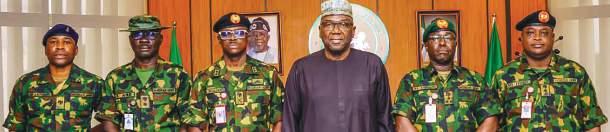
RECONNAISSANCE VISIT FOR NEW ARMY BATTALION...
L-R: Major A.O. Akiniyi; Lt. Col. S. Ama; Maj. Gen. Oluwafemi Williams; Governor Abdulrahman Abdulrazaq, CON; Brig. Gen. A. Tawasimi; and Col. M. Jibril; during a reconnaissance visit for the new army battalion by the Army Headquarters team to the Ahmadu Bello House, Ilorin, Kwara State, on Tuesday
Continued on page 8
Revenue Exceeds $149.6bn, Shareholders’ Dividends Soar to $47.2 Billion
Peter Uzoho
NLNG yesterday presented its facts & figures for 2026, highlighting its performance since commencement of operations, with the Managing Director, Adeleye Falade disclosing
Continued on page 8 jurisdiction in the suit filed by a
Tinubu: Kaduna Killings Unprovoked
Act of Terror Against the Defenceless
Orders security agencies to hunt killers, rescue abducted victims Mourns victims, condoles with impacted families
Deji Elumoye and Linus Aleke
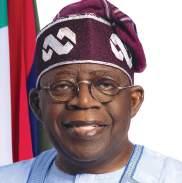
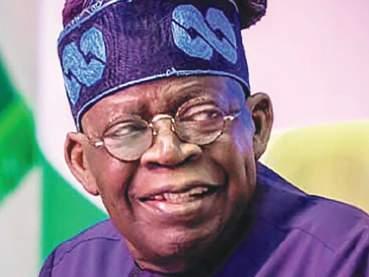
PPresident Bola Tinubu yesterday described the overnight massacre of 30 persons, including women and children in Southern Kaduna, Northwest Nigeria, as an unprovoked act of terror against defenceless citizens.
The president also vowed that those behind the latest mass killings in the area will be brought to justice, declaring that his administration will not allow criminal elements to reverse the security gains recorded in Kaduna State in recent years. In the same vein , Tinubu
Continued on page 8
Dangote to Donate One-third of Wealth to Charity Under Succession Plan... Page 8
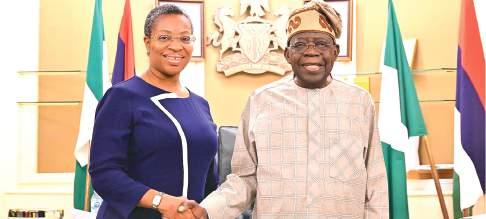
TINUBU IN WARM HANDSHAKE WITH NBA PRESIDENT-ELECT...
President Bola Ahmed Tinubu (R) and President-elect, Nigeria Bar Association, Mrs. Oyinkansola Badejo Okunsanya, when she led a delegation from the Nigeria Bar Association to visit the president at the Presidential Villa, Abuja, yesterday
PHOTO: STATE HOUSE
Chuks Okocha and Alex Enumah in Abuja
in Abuja
expor
NBA
PRESIDENT-ELECT
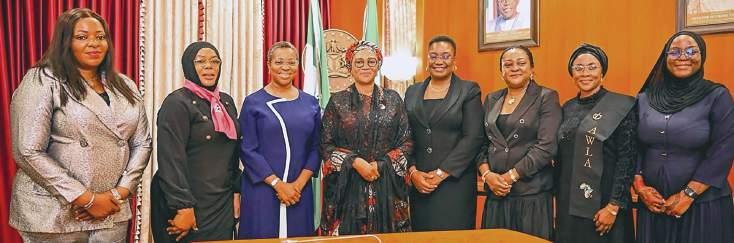
LED A TEAM OF TOP FEMALE LAWYERS ON COURTESY VISIT TO FIRST LADY...
L-R: Legal Practitioner, Mrs. Chika Okolie; FCT Lead of the NBA Women Forum, Princess Hadiza Afegbua; President-elect of the Nigerian Bar Association, Mrs. Oyinkansola Badejo-Okusanya, SAN; First Lady of Nigeria, Senator Oluremi Tinubu; President, International Federation of Women Lawyers, Mrs. Ezinwa Okoroafor; Former Dean, Faculty of Law, Caleb University, Prof. Foluke Dada-Lawanson; Coordinator, Abuja Branch African Women Lawyers Association, Dr. Oluwatoyin Aladegbami; and Legal Practitioner, Mrs. Ramlat Ridhwan, after the NBA President-elect led a team of top female lawyers on a courtesy visit to the First Lady at the State House, Abuja, on Tuesday
Report: Johnson & Johnson to Pay
$5.5bn Settlement over Baby Powder Lawsuits
Agreement subject to acceptance by 95% ovarian cancer claimants Landmark deal to end contentious decade-long legal battle EY, partner fined £1.2m by UK regulator over accounting failures
Emmanuel Addeh in Abuja
Johnson & Johnson has announced a provisional settlement of an estimated $5.5 billion to resolve tens of thousands of lawsuits alleging its talc-based products, including baby powder, caused ovarian cancer.
The landmark agreement could bring an end to a contentious legal battle that has plagued the pharmaceutical giant for a decade.
The proposed settlement encompasses approximately 76,000 claims, including those consolidated in federal court in New Jersey and related cases in state courts, representing nearly all outstanding talc-related allegations against the company.
J&J had previously settled the majority of cases asserting that its talc contained asbestos and led to mesothelioma, The Independent UK reported yesterday. Plaintiff law firms confirmed the deal, describing it as a positive resolution following the protracted court proceedings.
For the agreement to become final, it requires acceptance from 95 per cent of the ovarian cancer claimants across state or federal jurisdictions. Erik Haas, J&J’s Vice President of Litigation, maintained that the claims were “meritless” but stated the company was willing to settle to achieve “closure.”
J&J said the settlement covers
about 76,000 claims, including ones consolidated in federal court in New Jersey, and related cases in state court, representing nearly all of the remaining talc claims against the company
The company said the settlement covers about 76,000 claims, including ones consolidated in federal court in New Jersey, and related cases in state court, representing nearly all of the remaining talc claims against it.
“While we are confident the company would have ultimately prevailed with further litigation, as it has in the vast majority of cases tried to date, this resolution allows the company to put this matter behind it and remain focused on its mission to develop medicines and devices that save lives,” Haas said.
J&J expects to pay $3 billion in 2027, and it will make further payments in 2028. But the deal could be worth more, depending on how many people participate in the settlement.
Chris Seeger, an attorney who represents about 2,500 clients with talc claims and helped negotiate the agreement, said J&J could ultimately pay $7 billion or more. The settlement assigns specific values to qualifying ovarian cancer claims but does not cap J&J’s total payout, he said.
“We got a fair settlement, and our clients are going to be happy with it,” Seeger said in an interview
reported by The UK Independent.
J&J reached the settlement after a series of wins in court, including victories in individual trials, successful efforts to disqualify plaintiffs’ lawyers from the litigation, and court rulings against experts that plaintiffs had used to prove their cases in court.
The company won a significant court victory in the long-running legal battle last week, when a federal judge cast doubt on individual plaintiffs’ ability to prove that talc specifically caused their ovarian cancer, the report said.
J&J has long denied that its talc
products caused cancer, saying that talc was safe and did not contain asbestos. The company stopped selling talc-based baby powder in the U.S. in 2020, switching to a cornstarch product.
The litigation resumed in March 2025, after being put on hold for more than three years while J&J unsuccessfully pursued a strategy known as the “Texas two step,” filing three bankruptcies through a shell-company subsidiary in an effort to settle the cases. Each bankruptcy ended in dismissal.
Before the bankruptcy attempts,
J&J had a mixed record in talc trials, with a multibillion verdict in favour of 22 women who said baby powder caused their ovarian cancer. The company won some trials outright and had other verdicts reduced on appeal.
Unlike the proposed bankruptcy settlements, the fresh agreement applies only to existing claims and does not address future lawsuits.
The exclusion of future claims made more money available to current plaintiffs than the bankruptcy proposal did, and it also accelerates the payments so that all claims will
be paid within 18 months instead of being spread out over more than a decade, Seeger said.
Meanwhile, EY and a partner at the firm have been fined around £1.2 million over failures linked to its audit of online furniture retailer Made.com.
The Financial Reporting Council (FRC) said it has hit the corporate finance firm with a £1.197 million sanction after it breached audit rules. The accounting watchdog also fined Julie Carlyle, an audit engagement partner at the firm who oversaw the Made audit, around £49,000.
Emirates: China Tops Nigerians’ 2025 Travel Destinations with 11,320 Passengers
Chinedu Eze
Emirates Airlines new passenger data has revealed that more Nigerians travelled to China than any other destination in 2025.
Last year, China emerged as the most visited destination with a total of 11, 530 Nigerian passengers across airlines, the report revealed. Out of this number Guangzhou alone accounted for nearly 80 percent of all travel to mainland China, reflecting the city’s enduring
importance as a commercial hub for Nigerian entrepreneurs, importers and business travellers.
Beyond Guangzhou, Beijing, Shanghai and Shenzhen also attracted significant numbers of Nigerian visitors, thus “demonstrating the breadth of commercial and business ties between Nigeria and UAE.
The passengers’ data also revealed that the United States continued to rank among Nigerians’ preferred long-haul destinations,
Experts: Trust, Not Access, Will Define Next Phase of Financial Inclusion
Nume Ekeghe
Financial sector leaders say the next phase of financial inclusion will depend less on expanding access to financial services and more on building trust across the financial ecosystem, warning that confidence has become the most critical infrastructure underpinning digital finance.
The position emerged yesterday at the virtual launch of Trust Architecture in Platform-Led Finance, a policy framework report developed by Bridgefort. Regulators, bankers, and fintech executives, at the forum, called for stronger institutional collaboration, improved governance, and open banking to strengthen confidence in financial systems.
Speaking at the launch yesterday, Founder of Bridgefort and former Deputy Governor of the Central Bank of Nigeria (CBN), Aishah Ahmad, said, “Today’s discussion begins with a very simple observation: financial inclusion has largely solved the problem of access. What remains now is for us to determine whether confidence can keep pace with access.”
According to Ahmad, customers no longer interact with isolated financial institutions but with an interconnected ecosystem involving banks, payment platforms, fintechs, and regulators, making trust a collective responsibility rather than an institutional one.
“Customers do not experience individual institutions; they experience the financial system as a collective,” she said.
with 2,500 passengers travelling through Emirates’ network to its 11 US gateways.
New York (JFK) remained the leading American destination, accounting for almost one-third of US bound travellers.
Also, Houston, Los Angeles, Washington, D.C., Chicago and Boston featured prominently, reflecting a blend of business travel, family visits, education and tourism.
“The United Kingdom also recorded robust demand, welcoming over 5,850 passengers from Nigeria during the summer travel season.
London Heathrow remained the busiest gateway, receiving 2,500+ passengers — more than 43 percent of all UK-bound travellers. Manchester also continued to attract strong traffic, serving both business travellers and the large Nigerian diaspora across Britain,” the data revealed.
Emirates also stated that between May 1st and August 31st, 2025, more than 44,000 passengers flew from Nigeria on Emirates, underscoring the country’s growing appetite for international travel and its increasing connectivity to major
global“Dubaidestinations. continues to shine as one of the most popular destinations on the Emirates network, attracting 6,370+travellers from Nigeria. Whether travelling for shopping, leisure, family holidays or business, the city continues to strengthen its reputation as a year-round destination and an ideal gateway to hundreds of onward connections across the Emirates network,” the airline stated.
Other popular destinations included Delhi, Mumbai, Medina, Sydney, Christchurch, Mauritius, Seychelles and numerous cities across Europe. Together, these travel patterns reflect a diverse mix of business, education, tourism, religious pilgrimage and family reunions.
However, the Middle East mega carrier observed that one of the standout trends from its passenger data was the growing popularity of independent travel, noting that more than 61 percent of Nigerian passengers travelled alone during the summer period in 2025, thus, making solo travellers the largest travel segment.
ISRAELI AMBASSADOR VISITS REMI TINUBU...
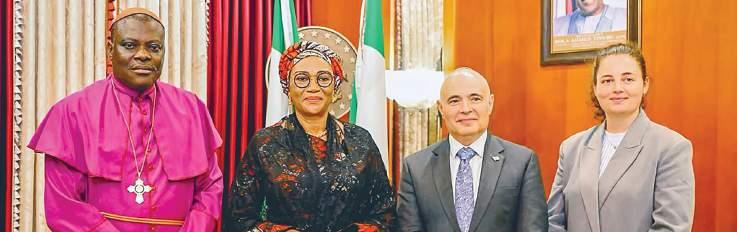
L-R: Executive Secretary, Nigeria Christian Pilgrims Welfare Commission and Chaplain, State House Chapel, Bishop S.T.V. Adegbite; First Lady of Nigeria, Senator Oluremi Tinubu; Ambassador of the State of Israel in Nigeria, Michael Shaul Freeman; and Deputy Chief Mission, Rachel Mishel Stavissky, during the courtesy visit of the Ambassador to the First Lady at the State House, Abuja, on Tuesday
S&P Acquires Majority Stake in Agusto & Co. to Deepen African Presence
Deal
will foster informed analysis, market dialogue,
says
ratings agency
Agusto:
S&P Global has agreed to acquire a majority stake in Agusto & Company Limited (Agusto & Co.), one of Africa’s leading credit rating agencies, in a move aimed at expanding its footprint in the continent’s domestic debt markets and strengthening credit transparency across Africa.
The transaction, announced in a joint statement yesterday, will bring together S&P Global Ratings’ international expertise and Agusto & Co.’s extensive Pan-African market experience. Agusto & Co. currently operates in Nigeria, Kenya, Rwanda and Ghana.
According to the companies, the investment represents a strategic step that will complement the growth
strategy of S&P Global Ratings in Africa by combining S&P Global’s global resources with Agusto & Co.’s established regional presence to expand market insights, enhance credit transparency and support market participants across the continent.
Commenting on the transaction, President of S&P Global Ratings, Yann Le Pallec, said the deal will
foster informed analysis, constructive market dialogue, and greater investor confidence both regionally and internationally.
Move is in fulfilment of our late founder’s vision continent.
“We are delighted to partner with Agusto & Co. to strengthen our domestic ratings presence across Africa. This transaction underscores our commitment to supporting growth and transparency in local credit markets throughout the
Ex-World Bank Chief: Nigeria’s Income, Wealth Concentrated at the Top
A former President of the World Bank Group, David Malpass, has said the concentration of income and wealth in the hands of a small elite continues to deny millions of Nigerians the benefits of economic growth, leaving the country’s median income well below its already modest per capita income.
Malpass, who served as President of the World Bank Group from 2019 to 2023, made the remarks in a Policy Research Working Paper based on his Stanley Fischer Memorial Lecture delivered at the World Bank’s Annual Bank Conference on Development Economics, seen by THISDAY.
According to him, Nigeria’s per capita income stands at roughly $1,500
annually, or about $4 per day, but the median income is considerably lower because income and wealth are disproportionately concentrated among a small segment of the population.
“Turning to Nigeria, it has a per capita income of roughly $1,500 or $4 per day. The median income is less because of the concentration of income and wealth at the top. The upside from currency reform would be massive,” Malpass said.
He noted that Nigerians working abroad routinely earn between 10 and 20 times more than workers at home, arguing that the country’s challenge is to implement reforms capable of unlocking higher incomes and stronger productivity for the average citizen.
Malpass disclosed that during his tenure at the World Bank, he engaged repeatedly with Nigeria’s previous administration and the Bank’s country team on reforms that could fundamentally transform the economy. These, he said, included currency stabilisation and unification, oil sector reforms, tax reforms and agricultural liberalisation, particularly in rice production. He argued that implementing those measures could have an impact comparable to China’s 1993 economic reforms, which laid the foundation for decades of sustained high growth.
The former World Bank president also criticised exchange rate policies that encourage repeated currency devaluations, arguing that they enrich a privileged few while eroding the
Chevron, NUJ Collaborate on AI, Data Journalism
Journalists and industry leaders yesterday highlighted the need to embrace artificial intelligence (AI) and data-driven journalism or risk being left behind in a rapidly evolving media landscape.
At a media capacity-building programme organised by Chevron Nigeria Limited and the Nigeria Union of Journalists (NUJ), FCT Council, the stakeholders said AI is redefining the practice of journalism globally.
Besides, they stated that it is offering unprecedented opportuni-
ties to improve news gathering, fact-checking, data analysis and investigative reporting, while warning that the technology must be deployed responsibly to preserve credibility, ethics and public trust.
Speaking at the opening of the training in Abuja, Chairman of the NUJ FCT Council, Grace Ike, described AI as a game changer that is transforming every stage of the news production process.
“Artificial Intelligence is no longer a distant concept but a powerful tool reshaping how we gather, verify and deliver news,” she said.
She noted that AI has become increasingly valuable in helping journalists process vast amounts of information quickly and accurately.
“AI enhances our ability to analyze vast data, detect misinformation and engage audiences more effectively. It offers unprecedented opportunities to improve the speed, accuracy and reach of our reporting,” Ike added.
Against the backdrop of growing concerns over fake news and manipulated digital content, she stressed that AI-powered tools are becoming indispensable in safeguarding information integrity.
purchasing power of wage earners and worsening poverty. He listed Nigeria alongside Ethiopia and Egypt as countries where floating and multiple exchange rate regimes have contributed to wealth transfers from ordinary citizens to a narrow elite.
Beyond exchange rate policy, Malpass expressed concern over the opacity of some sovereign borrowing arrangements, warning that they could complicate future debt restructuring efforts and undermine transparency.
“Africa’s opportunity is extraordinary, and by combining our global expertise with Agusto & Co.’s deep local insights, together we can foster informed analysis, constructive market dialogue, and greater investor confidence both regionally and internationally,” the S&P chief executive stated.
For her part, the Managing Director of Agusto & Co., Yinka Adelekan, described the partnership as a landmark development for the company and Africa’s capital markets.
“This partnership is a transformational milestone for Agusto & Co. and African capital markets, fulfilling our late founder’s vision of affiliating with a leading global rating agency. For more than 30 years, we have built a trusted credit rating institution across Africa.
“By combining our deep PanAfrican market knowledge and analytical independence with S&P Global Ratings’ global expertise, resources and affiliate network, we believe this partnership will create new opportunities, enhance value for market participants, and support the continued development of transparent and resilient credit markets across the continent,” Adelekan stated.
Agusto & Co. is one of Africa’s
foremost credit rating agencies, providing ratings for financial institutions, corporates and other entities across the continent. Since its establishment more than three decades ago, the firm has assigned over 4,000 ratings covering banks, insurance companies, finance and leasing firms, mortgage institutions, investment managers, sovereigns, municipal bonds, corporate bonds and other debt instruments.
The agency is licensed to operate in Nigeria, Kenya, Rwanda and Ghana. It is also an Approved Verifier under the Climate Bonds Standard for green bonds, projects and assets in Africa and is recognised by the International Capital Market Association (ICMA) as an External Reviewer providing Second Party Opinions on sustainable finance instruments.
On the other hand, S&P Global is one of the world’s leading providers of credit ratings, market intelligence, benchmarks and financial data. Through S&P Global Ratings, the company assesses the creditworthiness of sovereigns, corporations, financial institutions and structured finance instruments across global markets, with its ratings widely used by investors, lenders and regulators in making investment and risk management decisions.
The National Assembly yesterday commended the Securities and Exchange Commission (SEC) for improving its fiscal sustainability through cost-cutting measures and enhanced revenue generation.
Deputy Chairman of the House of Representatives Committee on Finance, Hon. Saeed Musa Abdullahi, gave the commendation during the 2026 Revenue Monitoring Exercise with the Commission in Abuja. He praised SEC’s efforts to strengthen its finances and urged it to sustain the momentum.
“DG, you have done significantly well. We have followed the progress
of the SEC over the years and urge you to keep the flag flying. We will continue to celebrate you when you do well.
“This exercise is not to witch-hunt any agency; it is aimed at ensuring better performance, especially at a time when the country is facing serious fiscal challenges,” Abdullahi said.
He challenged the Commission to exceed its 2026 revenue target, saying, “You have told us your revenue projection for 2026, but we believe you can do more. We urge you to surpass your projection by at least 20 per cent, or even more.”
Earlier, the Director-General of the SEC, Dr. Emomotimi Agama, told
the committee that, in line with the principles of the International Organ- isation of Securities Commissions (IOSCO), securities regulators are expected to operate independently, with governments providing financial support where necessary. According to Agama, SEC currently receives no budgetary allocation from the federal government, relying instead on income generated from the capital market while still remitting funds to the government.
“Going by IOSCO principles, the SEC is expected to be financially independent. The government is supposed to provide support for the running of the Commission.
Michael Olugbode in Abuja
Kayode Tokede
Emmanuel Addeh in Abuja
Emmanuel Addeh in Abuja and Nume Ekeghe in Lagos
INAUGURATION OF APC OSUN GOVERNORSHIP ELECTION CAMPAIGN COUNCIL...
L-R: Deputy Speaker, House of Representatives, Benjamin Kalu; Deputy Senate President, Senator Barau Jibrin; Imo State Governor/Chairman, APC National Campaign Council for
Governorship Election, Sen. Hope Uzodimma; and Governor of Yobe State/Co-Chairman, APC National Campaign Council, Mai-Mala
the inauguration of the National Campaign Council for Osun State Governorship Election in Abuja, yesterday
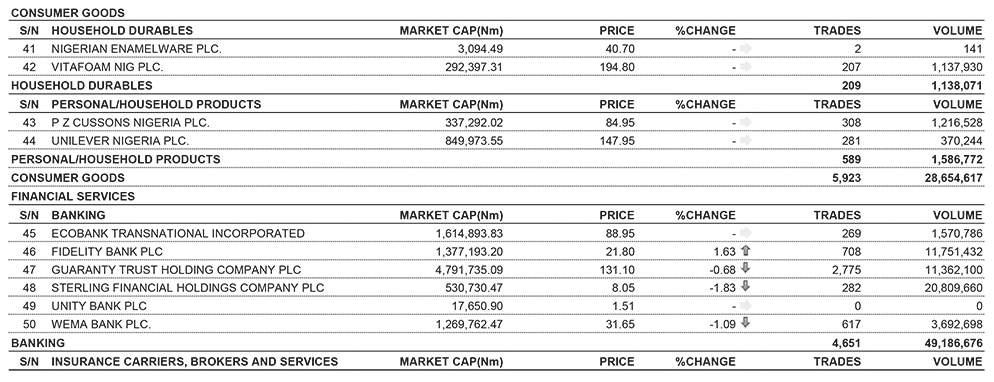
At N5.78trn, First Holdco Becomes Most Capitalised Banking Stock on NGX
Kayode Tokede
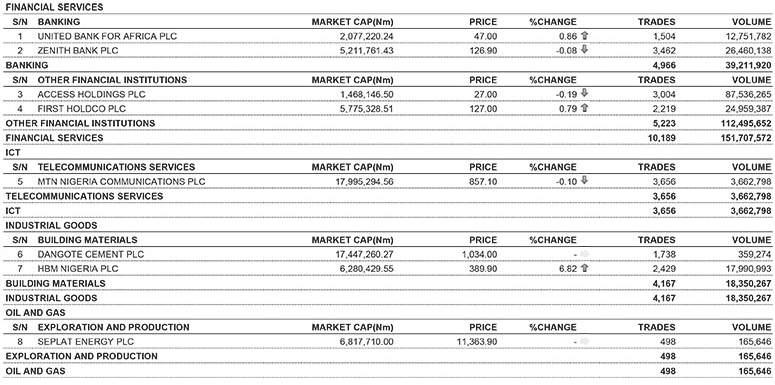
The market capitalisation of First Holdco Plc closed for trading at N5.78 trillion yesterday to emerge as the most capitalised listed banking stock on the floor of the Nigerian Exchange Limited (NGX).
Other Tier-1 banks, Zenith Bank Plc closed for trading at N5.2 trillion, followed by Guaranty Trust Holding Company Plc (GTCO) that closed at N4.82 trillion on the floor of the Exchange.
The market capitalisation of United Bank for Africa Plc and Access Holdings Plc closed yesterday at N2.08 trillion and N1.47 trillion, respectively.
As of the close of transactions yesterday, the stock price of First Holdco had gained 165 per cent or N47.9 per share year-to-date (YtD) to close at N127 per share from the N79 per share it closed for trading at the end of 2025.
The milestone achievement of the oldest financial institution in Nigeria was against the backdrop of an impressive first quarter ended March 31, 2026 and half year ended June 30, 2026 unaudited result and accounts, and its Chairman,
Mr. Femi Otedola, increasing his stake to 20.40per cent. Otedola raised his stake at a time when First Holdco was attracting renewed investor interest, supported by stronger earnings.
The billionaire investor’s combined interest in First HoldCo increased to 20.40 per cent as of June 30, 2026, up from 18.12 per cent at the end of March 2026, and 15.95 per cent as of June 30, 2025.
The increase was driven by his indirect holdings, which rose to 6.03 billion shares in June 2026, from 4.80 billion shares in March 2026 and 3.47 billion shares in June 2025. His direct holdings, meanwhile, stood at 3.25 billion shares at the end of June 2026.
The latest disclosure showed that Otedola held a combined 9.28 billion shares in First Holdco at the end of June 2026, compared with 8.06 billion shares three months earlier. This represents an increase of approximately 1.22 billion shares between March and June 2026
As of June 30, 2025, Otedola held 3.21 billion shares directly and 3.47 billion shares indirectly, giving him a combined 6.68 billion shares, equivalent to 15.95 per cent of First
HoldCo. At the time, the company had 41.88 billion issued shares.
By March 31, 2026, his combined position had increased to 8.06 billion shares, representing 18.12 per cent, comprising 3.25 billion direct shares and 4.80 billion indirect shares. First HoldCo’s issued share capital had
also expanded to 44.45 billion shares.
Three months later, as of June 30, 2026, Otedola’s combined holding rose further to 9.28 billion shares, representing 20.40 per cent of the company.
First Holdco reported a record profit before tax of N653.54 billion
in the first half of 2026, up from 83.50 per cent Y-o-Y from N356.15 billion, while profit after tax rose 81.57 per cent to N526.13 billion.
In Q2 alone, profit before tax nearly doubled to N332.42 billion from N169.67 billion in Q2 2025.
Following the release of the
results on July 20, 2026, the shares gained 10 per cent in intra-day trading to N105.50, extending the stock’s recent rally and lifting First HoldCo’s market capitalisation to about N4.80 trillion, making it the most capitalised banking stock on the NGX.
ECOWAS Pushes Data Revolution to Drive Better Governance Across West Africa
Michael Olugbode in Abuja
The Economic Community of West African States (ECOWAS) has launched a fresh drive to strengthen evidence-based governance across the region.
ECOWAS urged national statistical agencies to make reliable data the foundation of public policy, economic planning, and regional integration.
The call was made at the opening of the meeting of Directors-General of National Statistics Institutes (NSIs) of ECOWAS member states in Dakar, Senegal, where policymakers and statistical experts
gathered to chart a new course for the region’s statistical system.
Opening the meeting, Senegal’s Minister of Economy, Planning and Cooperation, Allé Nar Diop, described data as the “lamp” that should illuminate government decisions.
Diop stressed that sustainable development and effective governance could not be achieved without credible and harmonised statistics.
He urged member states to strengthen their statistical institu- tions and embrace innovation to ensure governments had access to timely, accurate, and comparable data needed to address the region’s growing economic and social challenges.
The meeting examined strategies to harmonise statistical methodologies across ECOWAS countries, improve data quality and accessibil-
ity, accelerate digital transformation in statistical production, and reinforce regional cooperation in support of the ECOWAS Vision 2050 agenda.
Participants also reviewed measures to build a more resilient regional statistical system capable of supporting policymaking in critical sectors, such as health, education, agriculture, trade, security, and climate resilience.
The discussion came at a time when governments across West Africa were increasingly under pressure to formulate policies based on verifiable evidence amid rising public debt, food insecurity, inflation, unemployment, and the impact of climate change.
Experts at the meeting stated that robust statistical systems were essential for monitoring progress towards national development plans, African Union’s Agenda 2063,
and United Nations Sustainable Development Goals (SDGs).
The gathering was expected to produce recommendations aimed at deepening cooperation among national statistical agencies, improving the production and sharing of official statistics, and enhancing governments’ ability to respond to emerging regional challenges through data-driven decision-making. Reliable statistics have become central to development planning globally, with governments relying on official data to design budgets, target social interventions, and evaluate public programmes. However, many West African countries continued to face challenges, including weak statistical infrastructure, inadequate funding, limited technological capacity, and inconsistencies in data collection methods.
Okon Bassey in Uyo
Akwa lbom State Government is to honour the visit of President Bola Tinubu to the state with the commissioning of 39 completed projects across the state. This was contained in a resolution issued yesterday at the end of the State Executive Council meeting.
The government said Tinubu’s visit will also coincide with the 39th anniversary of the creation of Akwa Ibom State.
It stated, “Council noted that the president is scheduled to commission strategic projects, including the New Terminal Building, Airport Hospital, Aviation Village, the 14.5-kilometre Nsit Atai–Okobo Road, the Dualisation of Ring Road 3, the Command and Control Centre, AkwaGIS, the State Secretariat Annex, and the ARISE Palm Resort.”
The resolution issued by the Commissioner for Information, Aniekan Umanah, said, “Governor-in-Council directed all relevant Ministries, Departments and Agencies (MDAs) to ensure seamless coordination and adequate preparations for the successful hosting of the president and the commissioning exercise.”
To strengthen healthcare delivery across the state, council highlighted the recruitment of over 2,854 health workers, completion of 29 Model Primary Healthcare Centres (PHCs), ongoing upgrade of 17 additional PHCs, and rehabilitation of four secondary healthcare facilities.
The government said, “The Governor-in-Council directed that emergency measures be adopted to bypass bureaucratic bottlenecks and accelerate the recruitment of more medical doctors to address manpower gaps in the health sector.
“Council further noted the acquisition of three CT Scan machines, with three additional units expected, as well as two MRI machines, alongside the ongoing digitisation of healthcare processes to improve efficiency, expand access, and enhance the quality of healthcare services across the State.”
The council also received and approved the transmission of nine health sector bills to Akwa Ibom State House of Assembly for legislative consideration.
The council considered a memorandum on the implementation of an Economic Empowerment Programme for youths, women, traders, farmers, transport operators, and Small and Medium Enterprises (SMEs) across the 31 local government areas of the state.
The council approved the release of N31 billion, as provided in the 2026 Approved Budget, for the implementation of the programme at N1 billion per local government area.
FG Flags Off State-level LPG Cylinder Distribution in Bayelsa
The federal government yesterday flagged off the state-level Liquefied Petroleum Gas (LPG) cylinder distribution programme in Yenagoa, Bayelsa State, with the free distribution of the 3kg cylinders to households in the eight local government areas.
The programme under the ‘Decade of Gas’ National Grassroots LPG Penetration Programme (NGLPP) was created to transform 5 million Nigerian households through secure access to clean, affordable gas for cooking and economic growth.
In his keynote address, Minister
of State for Petroleum Resources (Gas), Ekperikpe Ekpo, said the programme is a flagship initiative of the federal government aimed at accelerating the adoption of LPG as a clean cooking fuel across Nigeria.
He said the programme seeks to improve access to cleaner energy, enhance public health, reduce environmental degradation associated with traditional cooking fuels, promote women’s empowerment, and create sustainable livelihood opportunities for communities across the country.
He said: “This occasion is not merely an event; it is a landmark moment in our collective journey
towards cleaner energy, healthier homes, and a more prosperous nation. By taking this pioneering step, Bayelsa state has earned a distinguished place in history as the launch state for this transformative national initiative.
“At the heart of this programme lies a simple but powerful conviction: that the promise of Nigeria’s abundant natural gas must translate into dignity, safety, and improved wellbeing for our people. No mother should be compelled to choose between feeding her family and protecting her health. No child should inhale harmful smoke because cleaner energy remains beyond reach.
Osun State
Buni, during
PHOTO: ENOCK REUBEN
Olusegun Samuel in Yenagoa
Dangote to Donate One-third of Wealth to Charity Under Succession Plan
Foundation to inherit 33% of billionaire’s estate, says daughter At current value, potential donation stands at about $11.7bn Dangote refinery debuts $750m bond on Vienna market, deepens global capital access
Emmanuel Addeh and James Emejo in
Abuja
Africa’s richest man and President of Dangote Industries Limited (DIL), Aliko Dangote, plans to dedicate one-third of his wealth to charitable causes as part of a carefully structured succession plan designed to sustain his philanthropic legacy for generations, his daughter, Halima Dangote, has disclosed.
Halima, who serves as a trustee of the Aliko Dangote Foundation, revealed the arrangement in an interview with Bloomberg, explaining that the billionaire had secured the support of his family to allocate 33 per cent of his estate to the foundation.
According to the Bloomberg Billionaires Index, Dangote’s net worth is estimated at $35.1 billion, meaning one-third of his current fortune would amount to about $11.7 billion if maintained at that level.
The Group Executive Director of
TINUBU:
the Dangote Group explained that philanthropy has always been central to Dangote’s vision and has now been formally incorporated into the family’s long-term succession plans.
“He sort of put all the structure in place whereby we focus a lot on health and education. He actually donated 25 per cent to the foundation. If you look at it, it is what we call in Sharia Code in Islam; it means he has donated 33 per cent of his whole inheritance to his foundation,” she said.
“That is how important it is to him because philanthropy needs to be in existence generation after generation,” Halima stated during the interview.
According to her, the entire process has been finalised, with Aliko, his daughters as well as the billionaire’s mother appending their signatures to the document.
“So giving back is part and parcel of what we do. We believe we’re here, that our business is successful because
residence in Phase 5, Army Housing Estate, Kurudu, Abuja.
of the giving back and because of the philanthropic aspect. That is why the 33 per cent is important. And that is why he made an announcement and he asked myself, my two sisters and his mother to sign under that will that he is able to give that 33 per cent to humanity,” Halima stressed.
The planned donation builds on decades of philanthropic work through the Aliko Dangote Foundation, which was established in 1994 to drive investments in health, education, nutrition and humanitarian programmes across Africa.
According to Halima, the foundation received an endowment of $1.25 billion about a decade ago and has since been further strengthened with an additional $700 million in funding.
She noted that about 70 per cent of the foundation’s annual spending is directed towards programmes in Nigeria, while another 20 per cent supports initiatives across other African
countries, with the balance funding projects elsewhere around the world.
Among its major interventions, the foundation has partnered with the Bill & Melinda Gates Foundation and state governments in northern Nigeria on public health initiatives that contributed to the eradication of wild poliovirus in Africa. It also supports programmes in nutrition, education and emergency humanitarian relief.
The planned donation comes amid increasing global attention on billionaire philanthropy. Although the proposed allocation falls below the 50 per cent commitment associated with the Giving Pledge launched by Warren Buffett and Bill Gates, it would rank among the largest charitable commitments ever announced by an African billionaire.
Earlier this year, TIME magazine named Dangote among the world’s most influential philanthropists in its inaugural TIME100 Philanthropy list, recognising the impact of the Aliko
Dangote Foundation, which reportedly spends more than N50 billion annually on development programmes across Africa.
Meanwhile, Dangote Petroleum & Petrochemicals has secured the admission of its inaugural $750 million 7.5 per cent Senior Notes due 2031 on the Vienna Multilateral Trading Facility (MTF), taking another major step in its global financing strategy.
The move is expected to widen its access to international investors and deepen its presence in global debt capital markets.
The listing marks the refinery’s first debt instrument to be admitted on the Vienna MTF and underscored growing investor confidence in Africa’s largest industrial conglomerate as it continues to strengthen its funding base following the commencement of operations at its world-scale refinery.
Announcing the development, Senior Relationship Manager, Western
Europe, Vienna MTF, Conor Hayden, said the exchange was pleased to welcome Dangote Petroleum & Petrochemicals’ inaugural bond listing. He said, “We are pleased to announce Dangote Petroleum & Petrochemicals’ inaugural listing on the Vienna MTF – $750,000,000 7.5% Senior Notes due 2031.”
KADUNA KILLINGS UNPROVOKED ACT OF TERROR AGAINST THE DEFENCELESS yesterday gave an assurance that the ongoing restructuring of security operations and institutions will deliver victory over terrorism, banditry and kidnappings nationwide.
Besides, the Defence Intelligence Agency (DIA) has announced with deep regret the death of one of its senior officers, Col. AA Ude, who was killed following an attack by unidentified assailants at his
The president’s directive to fish out the suspects in the Kaduna case followed Monday’s deadly attack on Naridon Village in Kamaru Ward of Kauru Local Government Area, where about 30 residents, including women and children, were reportedly murdered in their sleep while several houses were razed.
Besides, the assailants were said to have abducted an unspecified number of residents before fleeing the community.
In a statement issued in Abuja by his Adviser on Information and Strategy, Mr. Bayo Onanuga, the president reaffirmed his administration’s commitment to confronting violent criminal networks threatening lives and livelihoods across the
country.
The latest assault is one of the deadliest attacks in Southern Kaduna in recent months and has renewed concerns over the fragile security situation in the region, which has witnessed repeated episodes of mass killings, kidnappings and destruction of property over the past decade.
Justice Peter Lifu of the Federal High Court, Abuja, had on June 15 ordered INEC to deregister the five political parties because they failed to comply with the provisions of Section 225A of the 1999 Constitution.
Dissatisfied, the parties – ADC, Action Peoples Party (APP), Action Alliance (AA), Accord Party (AP), and Zenith Labour Party (ZLP) – approached the appellate court to upturn the judgement of the trial court.
They among others argued that Lifu erred in law when he entertained the suit filed by the Incorporated Trustees of the National Forum of Former Legislators (NFFL).
According to the appellants, NFFL lacked the necessary legal authority (locus standi) to bring the suit before the court, in the first place.
They, therefore, urged the court to allow their appeal and reverse the order of the Federal High Court to INEC to deregister them.
Delivering judgement in the five appeals, the three-member panel of the appeal court, in a unanimous judgement, agreed with the appellants, and declared as “null and void” the judgement delivered by Lifu on June 15.
On the issue of locus, the appellate court held that since the plaintiff/ respondent lacked the legal authority to file the suit, the trial court was wrong to have assumed jurisdiction.
It added that the orders made against the electoral umpire were incompetent and amounted to a nullity.
The appellate court also pointed out that contrary to the findings of the trial court, “The evidence before the court clearly shows a compliance with Section 225A of the constitution”.
On the refusal of the trial court to obey the ruling of the appellate court directing a stay of proceedings, the panel stated, “What the learned trial court did amounts to judicial impertinence or what the Supreme Court called judicial insubordination.”
Justice Abba Mohammed, who delivered the lead judgement, subsequently held that all the affected political parties remained duly registered.
The appellate court also awarded a cost of N1 million against NFFL, which had filed the case against the five political parties.
The Court of Appeal had on June 16 suspended the judgement of Lifu pending the hearing and determination of the case of the appellants.
The appellate court predicated its decision on the grounds that the judgement was delivered without jurisdiction.
The appellants had in their application for stay argued that the trial judge acted in total disregard of the orders of the Court of Appeal directing him to stay further proceedings in the matter, pending the hearing and determination of an interlocutory appeal before the appellate court.
Reacting, the three-member panel, whose members took turns to lambast Lifu for disregarding the orders of the appellate court, subsequently ordered a stay of execution of the judgement directing the de-registration of the affected parties.
According to the justices, the trial court exhibited judicial rascality by going ahead to hear and make the order, despite the order of the Court of Appeal and the pendency of the matter before the court.
The panel further berated Lifu specifically for flouting the appellate court’s order of May 22, which ordered him to suspend further proceedings at the trial court.
Faulting Lifu further, the appellate court observed that his action amounted to an affront on the hierarchy of courts, as well as “the highest form of judicial impertinence”.
Citing earlier verdicts of the Supreme Court, Mohammed held that a judge who acted in such manner “is unfit for the bench as it amounts to judicial rascality”.
While stating that courts were enjoined to protect their integrity, Mohammed stated that the Court of
that the company has generated over $149.6 billion in revenue, paid more than $47.2 billion in dividends to shareholders, and remitted over $10.8 billion in taxes to the federal government since becoming tax compliant.
Falade added that the company has also built an asset base exceeding $22.9 billion, loaded more than 6,285 LNG cargoes, and continues to supply over 500,000 tonnes of Liquefied Petroleum Gas (LPG) annually to the Nigerian market.
“We have made $149.6 billion in revenue by 2026. $10.8 billion has also been paid in tax to the Federal Government right from the time we became tax compliant,” Falade said, adding that the company has also remitted $47.2 billion in dividends to shareholders, including the federal government, which holds the largest stake.
The company reaffirmed its commitment to driving sustainable growth, enhancing Nigeria’s energy security and delivering long-term
Appeal had supervisory authority over the trial court.
He added that the decision of the trial court to proceed with the judgement, despite the express order of the appeal court, was a brazen violation of the hierarchy of the court and the 1999 Constitution.
Mohammed held, “This court has the duty to invoke its powers in ensuring that its orders are made. The application for stay of execution is hereby granted. The enforcement of the judgement is stayed.”
The appellate court subsequently fixed June 25, for definite hearing in all the appeals.
Continued on page 36
value through operational excellence, expansion of production capacity and strategic infrastructure development.
Speaking during the interac- tive session, Falade highlighted the significant progress made in improving plant performance.
He noted that the company’s operational utilisation has recovered considerably, with sustained efforts underway to achieve and maintain world-class levels of operational efficiency.
Falade said the NLNG remains focused on safely delivering Train 7, strengthening domestic gas availability, supporting Nigeria’s industrialisation agenda and creating sustainable value for shareholders and the country, with the project expected to increase NLNG’s produc- tion capacity by approximately 35 per cent, from 22 million tonnes per annum (mtpa) to 30 mtpa, while significantly increasing LPG production for the domestic market from the current 500,000 tons per annum to 750,000.
considerably under Governor Uba Sani’s administration compared to previous years, isolated attacks have continued to occur in parts of the state, underscoring the persistence of armed criminal groups operating in the area.
The incident has also drawn widespread condemnation from civil society organisations, community leaders and international advocacy groups, many of whom described the killings of women and children as a humanitarian tragedy and called for urgent action to protect vulnerable communities and ensure those responsible are prosecuted.
But responding to the attack, Tinubu said he had directed the Armed Forces, the Nigeria Police Force and intelligence agencies to intensify operations in the affected communities, track down those responsible, rescue abducted victims and restore normalcy.
“I have directed the Armed Forces, police, and relevant intelligence agencies to intensify operations across the affected areas to track down the perpetrators swiftly, secure the release of abducted individuals, and restore normalcy to the region.
“Our administration has an
Describing Train 7 as one of Africa’s largest LNG expansion projects, Falade said the investment demonstrates NLNG’s confidence in Nigeria’s gas future and its com- mitment to supporting the country’s long-term economic growth.
“Train 7 represents much more than additional production capacity. It reflects our confidence in Nigeria’s gas potential and our commitment to creating long-term value through increased exports, stronger domestic gas supply, Nigerian Content de- velopment and economic growth,” he said.
He noted that the milestones underscore NLNG’s enduring contri- bution to Nigeria’s economy, energy security and global competitiveness.
Reaffirming NLNG’s support for the federal government’s Decade of Gas initiative, Falade emphasised that natural gas remains critical to industrialisation, economic diversification, energy security and Nigeria’s transition to a lower-carbon future.
unwavering commitment to strengthening security infrastructure, equipping response personnel, and neutralising criminal networks attempting to disrupt the peace of the nation.
“I urge our local communities to cooperate with security forces by providing actionable intelligence that would help early response efforts,” the president added. Tinubu strongly condemned what he described as the barbaric and cowardly attack, saying the assault on innocent villagers was an unprovoked act of terror against defenceless citizens.
The president also extended his condolences to the bereaved families, Governor Uba Sani, the Kaduna State Government and the people of the state, assuring them that the federal government remained committed to restoring lasting peace and improving security across the country.
The renewed presidential directive comes as security agencies continue to battle terrorism, banditry, kidnapping and communal violence across several parts of northern Nigeria.
In recent months, the federal
Continued on page 34
According to him, the company’s growth strategy was currently centred on the successful delivery of the Train 7 Project, which would increase NLNG’s production capacity by approximately 35 per cent—from 22 million tonnes per annum (MTPA) to 30 MTPA—and increase LPG production by about 50 per cent, adding an estimated 250,000 tonnes annually to the domestic market.
“Train 7 represents more than additional production capacity. It is an investment in Nigeria’s future—creating jobs, strengthening our competitiveness and unlocking greater value from our vast gas resources.
“Our priority remains the safe delivery of the project while positioning NLNG for sustained growth.” On sustainability, Falade reaffirmed NLNG’s commitment to responsible nvironmental stewardship.
He highlighted ongoing investments in emissions monitoring and reduction,
Continued on page 35
Dangote
16TH GTCO AUTISM CONFERENCE...
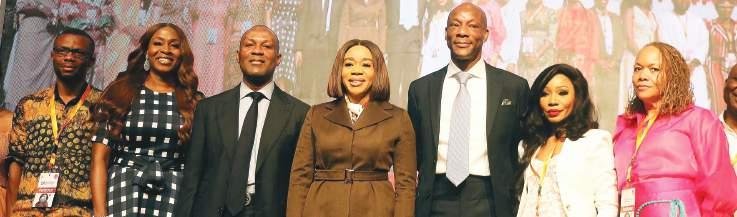
L-R: Licensed Clinical Psychologist, Benedict O. Sama; Chief Communications Officer, GTCO Plc, Oyinade Adegite; Deputy Managing Director, GTBank, Mr.
Director, GTBank, Miriam Olusanya; Group Chief Executive Officer, GTCO Plc, Mr.
International Behaviour
and Autism
Maya Famodu: Fragmentation is Africa’s Biggest Fintech Challenge, Not Payments
Says continent must shift from building payment apps to connecting financial systems, others Declares $1.1tn mobile money market proved Africa’s digital payments prowess
Founder of Ingressive Capital, Maya Horgan Famodu, says Africa’s fintech industry has largely solved the challenge of digital payments, and its next growth phase will depend on eliminating fragmentation across the continent’s financial systems rather than launching more payment applications.
Famodu said Africa’s biggest obstacle was no longer moving
money digitally but coordinating the continent’s numerous payment infrastructures into a single, interoperable financial ecosystem capable of supporting seamless cross-border commerce.
She made the remarks while outlining what she described as the next frontier for African fintech.
Famodu stated that the continent had already established itself as the world’s dominant mobile money
market.
According to her, mobile money platforms across Africa processed $1.105 trillion in transactions in 2024, representing an annual growth of 15 per cent.
Citing GSMA data, she pointed out that the transactions, carried out through 81.8 billion transfers and 1.1 billion registered accounts, accounted for about 74 per cent of all mobile money transactions globally.
She also said those figures had effectively ended the long-held narrative that Africa was merely catching up with developed markets in digital finance.
Famodu stated, “For years, we’ve described Africa’s payments story as ‘catching up’ to the West. We should retire that narrative. You don’t process nearly three-quarters of the world’s mobile money transactions by accident.”
INEC, UNESCO Rally Stakeholders Against Misinformation, Electoral Violence Ahead 2027 Polls
The Independent National Electoral Commission (INEC), in collaboration with UNESCO and other partners, has intensified efforts to combat misinformation, disinformation, and electoral violence ahead of the 2027 general election.
INEC urged political actors, media practitioners, youth groups, and civil society organisations to uphold information integrity in order to safeguard Nigeria’s democracy.
The call was made during a stakeholders’ dialogue on Promoting Electoral Peace Through Media and Information Literacy, organised by International Media and Information Literacy Institute (IMILI), with the support of UNESCO and United Nations
Information Centre (UNIC) in Abuja.
Speaking at the event, Assistant Director of Information and Publication at INEC, Mrs. Esther Chibukem, warned that the rapid spread of false information, particularly through social media, posed a serious threat to public confidence in elections and democratic institutions.
Chibukem recalled several instances where fabricated reports had circulated online, including false claims about the death of the INEC chairman and other misleading narratives targeting the commission.
She stated, “Today you hear that the INEC chairman is dead on social media. Tomorrow, you hear another false story that did not emanate from the commission.
“Because the world has become
global, such information spreads rapidly and can do enormous damage if it is not properly addressed.”
According to her, rebuilding public trust remains one of INEC’s top priorities as preparations intensify for the forthcoming electoral cycle.
Chibukem said, “Our goal is to ensure that every Nigerian is carried along through a transparent process anchored on integrity.
“Public trust is very key, and the commission is engaging stakeholders across all levels, including political parties, the media, youth groups and communities down to the local government level.”
Chibukem distinguished between misinformation and disinformation, explaining that while misinformation involves sharing false information without the intention to deceive,
The Hydrocarbon Pollution Remediation Project (HYPREP) has intensified efforts to restore oil-degraded mangrove ecosystems in Ogoniland, announcing the successful restoration of 560 hectares of mangrove forest and the commencement of a second phase covering an additional 438 hectares across seven communities.
A statement by the Project Coordinator, Prof. Nenibarini Zabbey,
to commemorate the 2026 World Mangrove Day, said the restoration initiative is boosting climate resilience, biodiversity conservation and sustainable livelihoods in line with this year’s global theme, “Raise Awareness of the Importance of Mangrove Ecosystems for Sustainable Conservation, Management and Use.”
In the statement, Prof. Zabbey noted the project has combined modern ecological science with indigenous knowledge to reverse
decades of environmental degradation caused by oil pollution and unsustainable exploitation of mangrove resources.
According to HYPREP, Phase One of the restoration programme recorded over 90 percent survival of planted seedlings after two years, with monitoring data showing a remarkable return of biodiversity, including crabs, oysters, shrimps, mudskippers, gobies, periwinkles, bloody cockles and other fin fish to rehabilitated tidal creeks.
disinformation is deliberately created and disseminated to manipulate public opinion, incite unrest, or undermine democratic institutions.
She stressed that electoral violence rarely began with physical attacks but was often triggered by false narratives, fake news, hate speech, deep-fakes, and deliberate manipulation of information.
“Violence does not just start with violence. It begins with misinformation, fake news, hate speech, inducement, vote buying and several other triggers that create tension before escalating into violence,” she said.
She maintained that the real question confronting policymakers, investors and innovators was no longer whether Africa possessed digital payment capabilities, but whether the continent had succeeded in creating a unified digital economy.
She observed that while countries, including Nigeria, Kenya, Ghana, and South Africa, had each built robust payment rails, the inability of those systems to communicate effectively remained a major constraint to regional trade and financial integration.
Famodu said, “The real constraint today isn’t that Africa can’t move money. It can. The real constraint is that too many systems still don’t speak the same language.
“Nigeria has rails. Kenya has rails. Ghana has rails. South Africa has rails. The harder challenge is making all of those systems behave like one economic network. That’s a coordination problem, not a payments problem.”
Famodu said the next genera- tion of African fintech firms would derive greater value from building the underlying infrastructure connecting financial institutions than from developing customer-facing applications.
She identified identity verification, connectivity, settlement infrastructure,
compliance, and distribution systems as the foundational layers that would underpin future growth across the continent’s digital economy.
According to her, while payment applications often attract public attention and investment, the less visible infrastructure powering those services ultimately creates stronger and more sustainable competitive advantages. She explained that infrastructure businesses scaled differently because their growth depended on increasing adoption across the financial ecosystem rather than acquiring individual customers.
Famodu said, “If 10 fintech companies rely on your identity layer, settlement engine or compliance infrastructure, your growth is tied to the entire ecosystem expanding around you.”
The venture capital investor also challenged conventional investment thinking, contending that investors should focus less on how large an individual fintech product could become and more on whether other products would become impossible without the infrastructure supporting them.
Famodu stated that financial inclusion, although still important, was no longer sufficient to describe Africa’s fintech opportunity. Says
The OK Movement, a political support platform working to foster collaboration among supporters of the presidential candidate of Nigeria Democratic Congress (NDC), Peter Obi, and his deputy, Senator Rabiu Kwankwaso, has appointed former National Chairman of the Inter-Party Advisory Council (IPAC), High Chief Peter Ameh, as its National Director-General.
The movement said the appointment was aimed at strengthening its nationwide mobilisation efforts and expanding its grassroots presence
ahead of the 2027 general election.
Announcing the appointment in a statement on Tuesday, National Convener of the movement, Hon. Jackie Wayas, said the decision was unanimously reached by the steering committee after considering Ameh’s extensive experience in politics, democratic governance, and public service.
According to Wayas, the appointment marks a major milestone in the organisation’s efforts to consolidate its structures and provide strategic leadership as it intensifies activities across the country.
He described Ameh as a seasoned
political leader, democracy advocate, and statesman whose credentials in public service and electoral reforms make well suited for the role.
Wayas stated that Ameh’s previous service as National Chairman of IPAC positioned him as a respected voice in Nigeria’s democratic process, where he championed electoral reforms, political inclusion, and stronger democratic institutions.
Ways said, “The Steering Committee is delighted to welcome High Chief Peter Ameh as the National Director General of the OK Movement.
Babajide Okuntola; Managing
Segun Agbaje;
Analyst
Advocate, Osezusi Bolodeoku; and Autism Advocate, Camille Proctor, during Day One of the 16th GTCO Autism Conference, held at the MUSON Centre, Lagos, on Monday
PHOTO: ETOP UKUTT
Sunday Aborisade in Abuja
Michael Olugbode in Abuja
James Emejo in Abuja
FG, RIVERS GOVT SIGNS MOU ON CREATIVE ECONOMY...
FG Urges States to Meet Conditions for Accessing $552m Education Fund
The federal government has called on all 36 state governments to sign Subsidiary Loan Agreements (SLAs), open designated programme accounts, and submit education data in order to access the $552 million World Bank supported “HOPE Education Programme”.
Minister of Education, Dr. Tunji Alausa, made the call yesterday at the opening of a five-day executive retreat for Commissioners of Education organised by the Committee of States’ Commissioners of Education (COSCEN) in Abuja.
Alausa said the performance-based financing was a key component of President Bola Tinubu’s Renewed Hope Agenda and was designed to improve access, learning outcomes, teacher development, and education governance across the country.
He said, “Although all 36 states are eligible to benefit from the programme, several are yet to complete critical requirements.
“I urge commissioners to work closely with the Federal Ministry of Education and the World Bank to satisfy the Programme-for-Results requirements and unlock additional resources.”
A representative of the World Bank, Mr. Shin Nomura, a Senior Economist
and Task Team Leader for HOPE, confirmed the programme became effective in March 2026. Nomura urged states to complete all preparatory requirements to enable timely disbursement of funds.
Alausa also announced the deployment of the National Education Data Infrastructure (NEDI) and the Digitalised Nigeria Education Management Information System (DNEMIS) as part of efforts to shift from assumption-based to evidencebased planning.
He explained that the integrated digital platforms will provide real-time data on learner enrolment, teacher deployment, school infrastructure, and learning outcomes to guide policy, budgeting, and resource allocation.
Alausa urged all states to complete the annual school census on the digitised platform, and commended Kaduna and Borno states for progress in that direction.
He disclosed that the ministry had deployed digital dashboards and smart boards, with analytical support from the National Bureau of Statistics (NBS).
“We must institutionalise reliable education data. This is how we ensure accountability, transparency and better service delivery across the sector,” he said.
Under the Nigeria Education Sector Renewal Initiative (NESRI), the
minister said the federal government was expanding access to affordable digital learning technologies and teacher support tools from Primary 1 to SSS 3.
He, however, cautioned states against investing solely in expensive
smart school infrastructure without provisions for sustainability and maintenance.
Alausa proposed that COSCEN institutionalise quarterly review meetings to promote peer learning, monitor progress, and strengthen
collective accountability.
He stressed, “Embrace evidence over assumptions, collaboration over isolation and continuity over fragmented reforms.
“The future prosperity of Nigeria depends on the quality of education
we provide today.” In a keynote address, former aviation minister, Mr. Osita Chidoka, challenged commissioners to build reforms that outlive political administrations through policy continuity, data, and investment in teachers.
Retired Judge Hails Wole Olanipekun as ‘A Legal Institution’ at Bar Golden Jubilee
Wale Igbintade
A retired High Court judge, Hon. Justice Alaba Omolaye-Ajileye (rtd), has described former President of Nigerian Bar Association (NBA), Chief Wole Olanipekun, SAN, as “a legal institution” and “a legal colossus,” praising his extraordinary contributions to the legal profession as he celebrates the golden jubilee of his call to the Nigerian Bar.
In a tribute marking Olanipekun’s 50 years at the Bar, Omolaye-Ajileye said the legal icon’s career had been defined by exceptional advocacy, intellectual brilliance, courageous leadership, scholarship, and an unwavering commitment to the highest ideals of the profession.
According to the retired jurist,
Olanipekun’s legacy extends far beyond his celebrated courtroom victories and numerous professional honours to his enduring commitment to mentoring, nurturing, and inspiring successive generations of lawyers.
He stated, “It is with profound admiration, immense gratitude, and a deep sense of privilege that I join family members, friends, colleagues, members of the Bench and Bar, and countless admirers of Chief Wole Olanipekun across Nigeria and beyond in celebrating him on the historic occasion of the golden jubilee of his call to the Nigerian Bar.”
Omolaye-Ajileye described five decades of uninterrupted legal practice as a remarkable milestone worthy of celebration, saying Olanipekun has written his name indelibly in the annals of Nigeria’s legal history through his exceptional advocacy, intellectual depth, scholarship, and fidelity to the noblest traditions of the profession.
He said, “Chief Wole Olanipekun is not merely an accomplished legal practitioner; he is an institution, a legal colossus, a bridge between generations, and a shining embodiment of the finest ideals of the legal profession.”
The retired judge added that Olanipekun’s courtroom brilliance, formidable command of the law, eloquence, depth of legal reasoning, and mastery of advocacy had earned him widespread respect both within Nigeria and internationally.
Omolaye-Ajileye, who described himself as one of the beneficiaries of Olanipekun’s mentorship, said the senior advocate’s guidance transcended legal practice, instilling in him the values of integrity, humility, diligence, courage, compassion, and service to humanity.
He stated, “I count myself exceptionally fortunate and deeply honoured to have Chief Wole Olanipekun as my mentor. Through his
words, conduct, discipline, generosity and personal example, he has taught me that true greatness is founded upon integrity, humility, diligence, courage, compassion and service to humanity.”
The retired jurist said Olanipekun’s life demonstrated that success derived its greatest meaning when it created opportunities for others, stressing that professional excellence must always be matched by character and service. He commended the former NBA president for consistently deploying his experience, influence, and resources to strengthen the legal profession, promote education, encourage young lawyers, and support worthy causes.
According to him, Olanipekun has shown that the law is “a noble calling through which justice may be defended, society protected, institutions strengthened, and human dignity preserved,” rather than merely an avenue for winning cases or attaining personal recognition.
Segun Awofadeji in Bauchi
Health Financing Crisis Deepens as Expert Warns Francophone Africa Faces Rising Vulnerability Over 700 Vulnerable Residents Benefit from Free Medical Outreach in Bauchi Community
No fewer than 700 vulnerable residents of Bununu Community in Tafawa Balewa Local Government Area of Bauchi State have benefited from a two-day free medical outreach aimed at reducing the burden of out-of-pocket healthcare expenses among low-income families.
The outreach was organised by the Community Advancement and Development (CAD) Foundation, a civil society organisation, and facilitated by the Senator representing Bauchi South Senatorial District, Shehu Buba Umar, as part of efforts to improve access to essential healthcare services.
Beneficiaries received a wide range of medical services, including general consultations, malaria testing and treatment, blood pressure and blood sugar screening, and Hepatitis B testing. The outreach also featured health education and counselling sessions, distribution of Long-Lasting Insecticidal Nets (LLINs), and referrals for patients requiring specialised medical attention.
Speaking at the flag-off ceremony yesterday, Hon. Shehu Aliyu Musa, the Barden Gabas of Bauchi, said the intervention came at a critical time when the rainy season often leads to an increase in malaria cases and other seasonal illnesses.
He described the initiative as a timely effort to protect vulnerable residents from preventable health challenges.
Hon. Musa, the People’s Redemption Party (PRP) candidate for Bauchi South Senatorial District, urged members of the community to take full advantage of the free healthcare services.
He added that the outreach forms part of several humanitarian interventions planned for communities across the state.
Earlier, the Chief Executive Officer of the CAD Foundation, Abdulrazak Umar, commended the partnership that made the outreach successful.
Michael Olugbode in Abuja
A leading African public health expert, Dr. Mayaka Ma-Nitu, has warned that Francophone Africa is becoming increasingly vulnerable to health emergencies due to chronic underfunding, declining external donor support and weak domestic investment in healthcare systems.
Speaking on the growing crisis in health financing across the continent, Dr. Ma-Nitu said many French-speaking African countries are
particularly exposed as they continue to rely heavily on international funding for essential health programmes while struggling to mobilise sufficient domestic resources.
He cautioned that the current financing model threatens the sustainability of critical interventions against HIV/AIDS, tuberculosis, malaria, maternal and child health, as well as routine immunisation programmes, warning that years of public health gains could be reversed if urgent action is not taken.
According to him, shrinking international assistance, coupled with rising fiscal pressures on African governments, has left many health systems unable to adequately prepare for future pandemics or respond effectively to existing health challenges. Dr. Ma-Nitu stressed the need for governments to increase budgetary allocations to health, strengthen national health insurance schemes and develop innovative financing mechanisms capable of reducing dependence on foreign donors.
Kuni Tyessi in Abuja
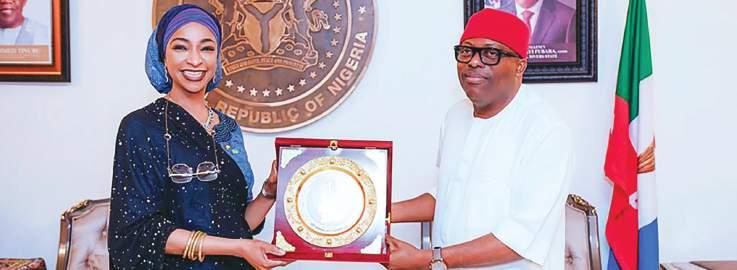
The Minister of Art, Culture, Tourism and Creative Economy, Hannatu Musa Musawa (left), received a plaque from the Rivers State Governor, Siminalayi Fubara, after the MoU signing ceremony at Government House, Port Harcourt, yesterday
Central Bank of Nigeria
2026 BI-ANNUAL CBN PENSIONERS/CPS RETIREES
THIS IS TO INFORM ALL CBN PENSIONERS AND CONTRIBUTORY PENSION SCHEME (CPS) RETIREES
THAT THE SECOND RUN OF 2026 BI-ANNUAL VERIFICATION EXERCISE WILL HOLD PHYSICALLY FROM RD TH 3 TO 28 AUGUST 2026, AT THE PENSIONERS' CLUB HOUSE KARU - ABUJA, CBN LAGOS HQ, LEARNING CENTRE, LAGOS AND ALL CBN BRANCHES NATIONWIDE.
PLEASE NOTE THAT:
· THE SPECIFIC DATE FOR THE EXERCISE IN EACH LOCATION IS AS INDICATED IN THE SCHEDULE BELOW.
· ALL PENSIONERS/CPS RETIREES ARE REQUIRED TO COME ALONG WITH THE FOLLOWING, ON THE DATES SPECIFIED BELOW:
· CBN PENSIONER OR RETIREE IDENTITY CARD
· BANK VERIFICATION NUMBER DETAILS
THE VERIFICATION OF PENSIONERS AND CPS RETIREES IN DIASPORA SHALL BE VIA DULLY NOTARISED 2026 VERIFICATION FORMS TO BE PROVIDED BY THE BANK ACCORDINGLY THANK YOU.
S/NO DATE
LOCATION
1 3RD TO 4TH AUGUST,2026 ABAKALIKI, KATSINA & SOKOTO
2 3RD TO 5TH AUGUST,2026 OSOGBO
3 3RD TO 6TH AUGUST,2026 MAIDUGURI
4 3RD TO 7TH AUGUST, 2026
5 6TH TO 7TH AUGUST,2026
7 10TH TO 14TH AUGUST,2026
8 10TH TO 11TH AUGUST,2026
ABUJA (BRANCH & CLUB HOUSE, KARU), AKURE, BENIN, KADUNA, OWERRI & YOLA
2027: Did Obi Negotiate Four Years for Ndigbo or Himself?
stanley nkwocha, in this piece, asks if the presidential candidate of the Nigerian Democratic Congress, Peter Obi, actually negotiates one-term of four years on behalf of the South East or in his personal capacity ahead of the 2027 polls?
Peter Obi’s latest political posture raises a question that should concern every sincere believer in the long-standing quest for a Nigerian president of Igbo extraction: did he negotiate four years for Ndigbo, or did he negotiate it for himself?
That question has become necessary following recent reports of a possible political understanding between Obi and Senator Rabiu Musa Kwankwaso ahead of the 2027 presidential election. If the reports are true, and Obi has indeed accepted or considered a single-term arrangement in exchange for Northern support, then the matter goes beyond personal ambition.
It touches the deeper issue of political representation, perceived political marginalisation,
and the seriousness with which the South-East approaches its long quest for the presidency. Obi, a former vice presidential candidate of the Peoples Democratic Party and the Labour Party’s presidential candidate in 2023, has spent the last few years projecting himself as the face of a new political morality. His appeal has rested largely on claims of competence, frugality, data-driven leadership, and a promise to rescue Nigeria from waste and misgovernance. Yet his recent public engagements, especially his weekend interview with a national television, have raised more questions than answers.
The interview was uncomfortable to watch. Rather than clarify his record and strengthen public confidence in his capacity, Obi appeared defensive, evasive, and increasingly trapped by the burden of his own political claims. From his assertions about schools built in Anambra to his comments on the religious composition of his cabinet and his familiar summersault views about the power sector reform, the conversation exposed gaps that his admirers often prefer to explain away. For a man who has built a movement around presumptuous facts, figures and moral superiority, that interview did serious damage.
Politics is unforgiving because public trust is built slowly and lost quickly. Once a politician makes credibility his strongest selling point,
every inconsistency becomes more damaging than it would have been for an ordinary aspirant. Obi’s greatest challenge today is no longer whether he can excite a section of young voters on social media. It is whether he can convince the wider Nigerian electorate that he possesses the temperament, political depth, coalition-building capacity, and national reach required to govern a complex country like Nigeria.
-Nkwocha, Media Assistant to Vice President Kashim Shettima, writes from Abuja.
NOTE: Interested readers should continue in the online edition on www.thisdaylive.com
Ikpea: Celebrating Leadership and Good Governance
Allison Abunam writes on how Senator Stephen Ikpea is using good leadership and governance strategies to champion the progress of the people.
In a political landscape too frequently defined by transactional maneuvering and cold calculations, true leadership reveals itself not through rhetoric, but through a profound, active empathy. True leaders do not merely occupy an office; they serve as stewards of their communities’ well-being.
Senator Joseph Ikpea stands out as a compelling embodiment of this philosophy—a leader whose career is anchored in an unwavering commitment to putting people first.
Leadership Forged in Crisis
The true measure of a leader is often revealed during times of unexpected collective hardship. During the dark and uncertain days of the COVID-19 pandemic, when communities were gripped by panic and institutional support often lagged, Ikpea did not wait for bureaucracy to take its course.
Recognizing the immediate, desperate needs of his people, he personally stepped into the gap. By organizing the direct distribution of thousands of bags of rice and essential provisions, he provided a critical lifeline to countless families struggling to survive.
This intervention was more than basic philanthropy; it was a powerful demonstration of strategic empathy—the rare ability to listen, understand, and immediately respond to the human condition when it is most vulnerable.
AVision Rooted in Sincerity and Willpower
At the core of Ikpea’s approach to governance is a remarkably clear, straightforward philosophy: things fail to work not due to a lack of resources, but due to a lack of genuine political will.
He views leadership through a lens of profound moral obligation, heavily burdened by the avoidable hardships faced by regular citizens.
When asked about his driving motivation, his reflections cut straight to the heart of national
development: “All it simply requires is the knowledge of what is to be accomplished and how beneficial it could help to transform the lives of the people, the obligation of empathy to the plight of the people, the will-power to do the right things... and above all, the sincerity, integrity of purpose, and the need for a transparent disposition above every other pecuniary
consideration. That is what is needed in leadership that works to transform.”
For Ikpea, achieving excellence is a deliberate, step-by-step journey taken with the people firmly in mind. He consistently champions the belief that everyday citizens deserve access to world-class, affordable healthcare and top-tier educational facilities. To him, providing wellequipped, functional hospitals is not an unrealistic dream, but a basic baseline of service that any
sincere leader should strive to deliver.
National Impact: Safeguarding the Future Ikpea’s dedication to public service extends seamlessly into his critical legislative duties on the national stage. As the Chairman of the Senate Committee on Drugs and Narcotics, he has brought his characteristic energy and sense of responsibility to one of the most pressing challenges facing the country: the epidemic of drug trafficking and substance abuse.
His work underscores a deep understanding that the drug menace is not just a law enforcement issue, but a profound threat to families, public health, and national security. Working closely with the National Drug Law Enforcement Agency (NDLEA) under the leadership of Brigadier-General Buba Marwa (rtd), Ikpea has been a fierce advocate for strengthening Nigeria’s anti-narcotic operational capacities. He has championed transparency and institutional excellence, actively backing initiatives ranging from the public destruction of seized illicit substances to robust public enlightenment and rehabilitation programs. For Ikpea, protecting the youth from the dangers of addiction is a sacred national responsibility that requires sustained collaboration across all levels of society.
A Life of Impactful Service
Ultimately, Ikpea’s public life resembles the quiet, relentless work of a bee—constantly producing sweetness and value for humanity through humble service, quiet philanthropy, and an unyielding pursuit of the common good. By elevating empathy from a passive sentiment to an active legislative and personal virtue, he provides a stellar blueprint for what modern leadership can and should be: transparent, compassionate, and entirely centered on the progress of the people.
-Abanum writes from Abuja.
Ikpea
obi
Kwankwaso
FEaturEs Phillips Consulting Performance Index: Learnings from the Edo State Decline
Crusoe Osagie reflects on the findings of the 2026 Phillips Consulting States Performance Index and distils possible learning points from Edo State’s abysmal performance
The 2026 Phillips Consulting State Performance Index (pSPI), released this week, placed Enugu State at the top of the 33 states assessed as the most improved relative to the national average, while identifying Edo State as the least improved.
While it will be difficult to cut through the political noise that this report is most likely to generate, it is essential to put this very important survey into proper perspective and draw the necessary lessons from its findings.
The 2026 pSPI is more than another state ranking. Built on 37 performance indicators across seven pillars—security, education, health, basic infrastructure, governance, economic development, and fiscal performance—it combines 70 percent objective data with 30 percent citizen perception. More significantly, this year's edition introduces a Momentum Index that measures whether states are moving forward or backward relative to the national average. It is, therefore, not merely a snapshot of where states are today but a measure of the direction in which they are travelling. That distinction is critical.
Before extracting the insights that Edo's precarious position in the ranking provides, it is important to take note of Lagos' position of decline on the list and attempt to make sense of it.
How can Lagos, with its extensive infrastructure projects and undeniable physical transformation, be ranked 19th out of the 33 states assessed, recording a shocking pSPI Momentum Index of -0.08, indicating a backward trajectory? Some may ask. The answer is eloquently expressed in an article published by THISDAY newspaper on March 16, 2026, titled "The Lagos Irony," which acknowledged the state's visible infrastructure transformation but observed that it exists amid palpable human chaos. Physical infrastructure alone does not automatically translate into improved governance outcomes or enhanced quality of life.
As for Edo State, there is no ambiguity as to why it sits precariously at the bottom of the table. Any objective observer of trends in Nigeria's political economy can readily relate to the massive retrogression that has afflicted Edo in less than 24 months.
Reducing this very important research, executed by no less an organisation than Phillips Consulting, to a mere tool for political name-calling or partisan bragging rights would be a grave disservice to the painstaking effort behind the report. Rather, the facts behind these numbers must be exposed, examined, debated, and understood so they can serve as lessons for states that performed well to sustain their momentum while providing those in decline with the opportunity to reverse course.
The various states that performed below expectations in the pSPI report have different reasons for falling short. Some struggle with limited institutional capacity, weak fiscal management, poor infrastructure, or governance deficiencies. However, few, if any, can be said to have deliberately deployed a wrecking ball against the very foundations of what could have become one of Nigeria's fastest-growing subnational economies in the manner Edo State has done over the last 20 months.
Prior to the ascendancy of the current administration in Edo State, significant institutional transformation had resulted in tangible human capacity development
outcomes, exemplified by a now globally renowned education transformation initiative called the Edo State Basic Education Transformation (EDOBEST) initiative that significantly boosted learning outcomes for over half a million students.
There was also a significant transformation of the civil and public service, leading to markedly enhanced public service delivery through a transparent and digitised procurement process and a paperless civil service that ensured transparent and efficient monitoring and guidance of economic growth, championed by an unshackled private sector.
Unfortunately, the overwhelming majority of policy decisions taken by the current administration in Edo State reflect what appears to be a willful and unconscionable dismantling of the state's economic architecture and the systematic impoverishment of its people.
How does one explain a government that inherited a functioning state—by whatever political means—but failed to recognise that every productive asset on the state's balance sheet represented an advantage to be preserved and improved? Was it anger? Was it pride? Was it envy? It remains difficult to identify any rational explanation for why a government would appear determined to take a sledgehammer to its own socioeconomic assets.
The Independent Power Project, Ossiomo Power, which the Edo State Government facilitated through an entirely private-sector investment, was among the first casualties. The 95-megawatt power plant supplied electricity to virtually all state government institutions and a significant number of private businesses in Benin City. Yet it became the target of sustained official hostility, resulting in the crippling of one of the state's most
strategic infrastructure investments and plunging large sections of the state back into darkness, with the inevitable consequences of declining productivity, reduced investor confidence, and increased operating costs for businesses.
Next came an episode of international embarrassment when, in an apparent bid to hijack a museum project privately owned by the Museum of West African Art (MOWAA) Trust—with significant international support, partnerships, and credibility—the facility was invaded by thugs allegedly sponsored by the state government. The resulting dispute has kept the institution, which The New York Times listed among its 52 Places to Go in 2025, under lock and key for well over a year, undermining investor confidence in one of Nigeria's most ambitious cultural and creative economy initiatives.
There is also the over 90 percent completed 150-room, five-star Radisson Hotel project, facilitated by the previous administration with majority equity held by private investors. Rather than ensuring the completion and commissioning of a project capable of transforming Edo's hospitality and tourism sectors, creating thousands of jobs, and generating significant internally generated revenue, the government has frustrated its take-off despite its enormous economic potential.
It is essential to note that the aforementioned MOWAA, Radisson, and millions of dollars in privatesector investment attracted to the agricultural sector by the immediate past administration in Edo State, which were savagely attacked by the current government, were the outcome of an integrated strategy to diversify the Edo economy away from the dangerous dependence on federal allocation by leveraging the state's unique comparative advantage in its ancient and unmatched arts and culture, as well as its extensive and fertile agricultural land.
There has also been the extrajudicial demolition of private property across the state; the disruption of the land administration system established by the previous government, which enabled citizens to obtain secure legal title to land within two months at reasonable cost; and
attempts to dismantle the investor-friendly framework painstakingly built over several years. While the government was busy dismantling the land administration system, it also attempted to assume control over Presco Plc's operations by revoking the Certificate of Occupancy covering the land on which the company's plantations and processing facilities are situated—an action that sent troubling signals to both local and international investors about the security of investments in Edo State.
Equally disturbing has been the collapse of the integrated security management system established by the previous administration, including the worldclass Security Fusion Centre, with its sophisticated surveillance infrastructure and intelligence-driven crime prevention architecture. At a time when insecurity continues to threaten economic growth across Nigeria, dismantling an operational security ecosystem represents not merely administrative negligence but a serious setback to public safety and economic confidence.
The significance of the Phillips Consulting report lies precisely in its attempt to measure outcomes rather than political rhetoric. Its methodology recognises that sustainable development is built on functioning institutions, responsible governance, economic competitiveness, quality infrastructure, human capital, fiscal discipline, and citizens' lived experiences—not on political propaganda or media optics. Unlike many states whose poor showing in the pSPI may be attributed to weak capacity, inadequate resources, or administrative shortcomings, Edo's descent appears fundamentally rooted in a political process that many citizens believe denied them the opportunity to freely choose their leaders. It remains the conviction of a significant number of Edo people that the current governor was not the candidate who received the genuine mandate of the electorate. They believe that, had the will of the people prevailed, the state would today be under the leadership of seasoned corporate lawyer and respected private-sector leader, Dr. Asue Ighodalo, and that Edo's trajectory on the pSPI would almost certainly have been markedly different.
Perhaps the most important lesson from the 2026 Phillips Consulting State Performance Index is that governance has consequences, and those consequences eventually become measurable. Progress can be painstakingly built over many years and dismantled in a remarkably short period through poor leadership, policy inconsistency, institutional destruction, and political vindictiveness.
The warning contained in the report extends far beyond Edo State. Today's leaders in the pSPI—such as Enugu and Abia—must resist the temptation to regard their present rankings as permanent achievements. They are merely evidence of current momentum. If Nigeria's increasingly reckless political culture, characterised by deeply disputed electoral outcomes, the subversion of the popular mandate, and the emergence of governments that devote more energy to dismantling inherited institutions than to building on them, becomes the norm, it will only be a matter of time before even today's top-performing states experience significant reversals in fortune. Sustainable development cannot thrive where democratic legitimacy is persistently undermined, institutions are sacrificed on the altar of politics, and governance becomes an instrument of vengeance rather than progress.
Governor Monday Okpebholo
DISCOURSE
Nigeria’s Future More Than Technological Advancement
By Aminu Bello Masari
It is with profound honour and a deep sense of responsibility that I stand as Chairman of the public presentation of SHADOWS: Protest Essays on Africa’s Most Consequential Country (1999–2023), authored by Eniola Bello, one amongst Nigeria’s most respected journalists, editors, columnists and public commentators.
The book is particularly significant because it brings together essays and commentaries written in response to issues and events as they unfolded. Viewed collectively, these reflections provide a unique window into Nigeria’s democratic experience over the past quarter-century. They capture not only the events themselves but also the debates, aspirations, anxieties and public sentiments that accompanied them. Such writings transcend the immediacy of newspaper pages; they become enduring reference materials for policymakers, scholars, historians, students and all who seek to understand the complexities of Nigeria’s democratic evolution.
Books such as this serve purposes far beyond literature. They preserve memory, provoke reflection, challenge assumptions and stimulate debate. More importantly, they enable nations to examine themselves honestly. A country that fails to document its journey deprives future generations of the opportunity to learn from both its triumphs and its mistakes.
Works such as this remind us that democracy is sustained not only through periodic elections but also through informed public discourse and active citizen engagement. Democracy flourishes when citizens think critically, ask difficult questions, defend institutions and remain committed to the ideals of justice, accountability and the rule of law. In that regard, writers, scholars, journalists
and historians perform a vital public service by helping society understand where it has been, where it stands today and where it ought to be heading. I therefore commend the foresight, discipline and professional courage of the author and other journalists of his generation who recognised the importance of documenting our national journey in real time.
The title, SHADOWS, is itself evocative. Every nation has moments of brilliance and moments of uncertainty. Shadows remind us not only of challenges overcome but also of lessons that must
never be forgotten. They invite us to reflect with humility, to celebrate genuine progress without denying our shortcomings, and to draw wisdom from experience.
Nigeria’s democratic journey since 1999 has been one of resilience, progress, and sometimes setbacks and renewal. The return to constitutional rule was neither accidental nor inevitable. It was made possible through the sacrifices of countless Nigerians who, often at great personal cost, refused to abandon the dream of a democratic Nigeria. We owe them a debt of gratitude. Their courage reminds us that democracy is not a gift handed down by history; it is an achievement secured through sacrifice, defended through vigilance and sustained through collective commitment.
We must equally acknowledge those who, over the years, placed the stability of our Republic above anybody’s personal ambition and sectional interests. Their examples strengthened public confidence in our democratic experiment and deserve our enduring appreciation.
Today, nearly three decades after our return to democratic governance, we can point to significant achievements. We have witnessed successive constitutional transfers of power, the gradual strengthening of democratic institutions, an increasingly vibrant civic space and a growing democratic consciousness among our people. Yet we also recognise that democracy is not judged solely by its endurance, but by its capacity to improve the lives of citizens. Challenges relating to security, economic development, social justice, institutional effectiveness and public trust continue to demand our collective attention.
The responsibility for consolidating these gains rests not on governments alone but on all stakeholders — public institutions, civil society, the media and citizens alike. We must not allow
the emergence of New Media that gave birth to citizens journalism and the spread of fake news to derail our democracy.
However constructive criticism as painful as it might be, remains indispensable to every democracy. Honest criticism, grounded on facts and offered in good faith, strengthens institutions rather than weakens them. It promotes accountability, enriches public policy and encourages continuous improvement in governance. This, I believe, is the enduring value of works such as SHADOWS. Whether one agrees with every conclusion reached by the author is secondary to the fact that the work stimulates reflection and encourages meaningful national conversation. Nigeria will continue to need more authors, more researchers, more historians, more public intellectuals and more young people willing to interrogate issues with rigour, fairness and patriotism. The future of our country will depend not only on technological advancement or economic growth but also on the quality of thought, character and leadership that we nurture today.
History continues to unfold before us. We are not merely observers of history; each one of us, in our own way, is a participant in shaping it. Let us therefore strive to leave behind a nation with stronger institutions, a more enlightened citizenry and a democracy that future generations will cherish and improve upon.
•Excerpts from the opening remarks of the Right Hon. Aminu Bello Masari as Chairman of the public presentation of Eniola Bello’s SHADOWS: Protest Essays on Africa’s Most Consequential Country (1999–2023). Masari, former Speaker of the House of Representatives and immediate past governor of Katsina State, is Chairman, Board of Trustees, Tertiary Education Trust Fund (TETFund).
Southern, Middle Belt Leaders Insist Presidency Must Remain in South in 2027
The Southern and Middle Belt Leaders Forum (SMBLF), yesterday, reaffirmed its position that Nigeria’s presidency must remain in the South after the 2027 general election, declaring that such an arrangement was necessary to preserve national political stability and strengthen the country’s fragile unity.
The position was contained in a communiqué issued at the end of the forum’s regular general meeting held in Abuja and attended by delegates of its four constituent organisations – Afenifere, Ohanaeze Ndigbo Worldwide, the Middle Belt Forum (MBF) and the Pan Niger Delta Forum (PANDEF).
The communiqué, read by the Chairman of the Forum and Leader of Afenifere, Chief Oladipo Olaitan, stressed that the forum had resolved to sustain its earlier position that the office of the President of the Federal Republic of Nigeria should remain in the southern region for the next four years following the expiration of President Bola Tinubu’s first term.
The meeting was held at the Abuja liaison office of PANDEF and was attended by prominent leaders from the constituent organisations, including former Akwa Ibom State Governor, Obong Victor Attah; former
President-General of Ohanaeze Ndigbo, Chief Nnia Nwodo; former Nigerian High Commissioner to Ghana, Ambassador Godknows Igali; and the National President of the Middle Belt Forum, Dr. Bitrus Pogu, among others.
According to the communiqué, “SMBLF reiterates its earlier resolution that the position of the President of the Federal Republic of Nigeria shall remain in the southern region
in the next four years consequent on the 2027 general election in the interest of national political stability.”
Beyond the zoning question, the forum expressed deep concern over what it described as the growing erosion of internal democracy within Nigeria’s political parties, warning that the trend threatened the country’s democratic future.
It criticised the conduct of ongoing party primaries, alleging that the
process had increasingly become dominated by a few influential individuals at the expense of the electorate.
The forum argued that democracy could only thrive where citizens were free to determine who represented them, insisting that the practice whereby a single individual or a small oligarchy imposed candidates on political parties undermined democratic values and national
development.
It also advocated constitutional reforms that would permit independent candidacy, maintaining that Nigeria should remain a vibrant multi-party democracy that gives citizens broader political choices.
The communiqué stated further that, “The essence of democracy is free choice by the people. The situation of one person or an oligarchy of a few choosing candidates in a political
system that excludes independent candidates is antithetical to democracy and national development.”
On constitutional reforms, the regional leaders renewed their long-standing demand for restructuring and declared that they would mobilise Nigerians to support only a presidential candidate committed to delivering a new constitution anchored on the principles of true federalism.
APM: Tinubu’s Poor Performance Fueling Public Rejection
Chuks Okocha in Abuja
The Allied People’s Movement (APM), has asserted that President Bola Tinubu was not commanding the support of credible Nigerians because of his poor performance in office, which has made his administration one of the worst in Nigeria’s history.
The party invited Nigerians and the international community to note that those calling for President Tinubu’s re-election, despite what it described as his record of colossal failure, were largely discredited politicians, including individuals seeking political protection from
corruption allegations and other acts for which they should be held accountable.
APM, in a statement by its National Publicity Secretary, Abubakar Yusuf, stated that a roll call of President Tinubu’s supporters revealed a preponderance of ethically challenged and internationally discredited figures, as well as greedy and insensitive political jobbers, who had lost credibility with Nigerians and could no longer command genuine public support for any candidate in a free and fair election.
The APM position came against the backdrop of persistent attacks and vituperations by President Tinubu’s
supporters against well-meaning Nigerians, accompanied by arrogant boastings that no opposition could prevent the president from winning the 2027 general election, despite what the party describes as his widespread rejection by Nigerians.
“Nigerians are daily confronted with agonising and life-diminishing experiences arising from the maladministration of the Tinubu-led All Progressives Congress (APC) government.
“It goes without saying that only those blinded by greed, self-interest and cowardice would be so thoughtless as to call for the re-election of an administration that has continued
to subject Nigerians to hardship, misery and despair.
“While millions of Nigerians struggle to survive under worsening economic conditions, the APC administration remains unrepentant, while its officials are accused of engaging in reckless spending and frittering away the nation’s commonwealth to finance extravagant lifestyles.
“The recent revelation of the alleged insertion of billions of naira in questionable and fictitious items in the 2026 budget, with the proceeds reportedly being diverted into private pockets, further exposes the level of impunity that characterises the APC administration.
“Any person calling for the re-election of President Tinubu is, by implication, supporting the retention of what has become a hopeless and rudderless administration—an administration that has failed to provide effective solutions to worsening insecurity, including the persistent killings, maiming and kidnapping of Nigerians by terrorists and other criminal elements.
“Such a person would also be endorsing an administration that has failed to demonstrate the capacity and competence required to manage a healthy and productive economy or adequately meet the needs of the people.”
Masari
Sunday Aborisade in Abuja
L-R: Global Engagement Manager, Under2 and Subnational Government, Yusuf Hassan; Director, Under2 Coalition and Subnational Governments Climate Group, Nehmat Kaur; Lagos State Governor, Babajide Sanwo-Olu; and Special Adviser to the Governor on Climate Change and Circular Economy, Titi Oshodi, after the signing of the Memorandum of Understanding (MoU) with Climate Group, formally marking Lagos State’s admission into the Under2 Coalition, (the world’s largest network of states and regions committed to achieving net-zero emissions and building climate-resilient economies) at the London Climate Week… recently
Minister of Communications, Innovation and Digital Economy, Mr.
Secretary-General, African Telecommunications Union (ITU),
Secretary-General, International Telecommunication Union (ITU),
Martin, at the closing ceremony of the African Telecommunications Union (ATU) Conference of Plenipotentiaries (CPL-26) held in Abuja… recently
L-R: Executive Director, Strategy and Operations, National Credit Guarantee Company Limited, Tinuola Aigwedo; Managing Director, FirstCap Limited, Ukandu E. Ukandu; President/Chairman, Board of Governors, IoD Centre for Corporate Governance, Uto Ukpanah (FCIS); Chairman, Board of Governors, IoD Centre for Corporate Governance, U.K Eke (FCIoD); Managing Director, HNC Professional Services, Hilda Nkor; Chief Executive Officer, National Institute of Credit Administration (NICA), Prof. Chris Onalo; and Managing Director, Entourage Integrated Trust, Seyi Asagun, at the 2026 National Corporate Governance Summit held in Lagos…recently
L-R: Zonal Coordinator, Southwest Zonal Office, Federal Competition and Consumer Protection Commission, Olubunmi Dorcas Otti; Principal Legal Officer, Lagos State Lotteries and Game Authority, Kemi Adebiyi; grand prize winner, Samuel Nneke; Legal Officer, Lagos State Lotteries and Game Authority, Shenge Funminiyi Oladele; and Managing Director, ILOTBET, Uma Ntima, during the prize presentation to the winners in the ILOTBET Win A House promo in Lagos…recently
Nigerian and awardee, Mr. Uwem Equan (receiving an award of recognition for his selfless contributions to Nigerians in diaspora); and Chairman/CEO,
the
Minister of Innovation, Science and Technology, Dr. Kingsley Tochukwu Udeh (SAN) (middle), flanked by the Pro-Chancellor/ Chairman of the Governing Council, University of Nsukka (UNN), Prof. Adegboyega Karim (right), and the Vice-Chancellor of UNN, Prof. Simon U. Ortuanya (left), during the presentation of an award of recognition to the minister at the 55th Convocation Lecture of the University in Nsukka, Enugu State…recently
L-R:
Bosun Tijani;
Mr. John Omo; and
Ms. Doreen Bogdan-
L-R: Wife of the awardee, Mrs. Equan; Group Managing Director, Arco Group Plc, Mr. Alfred Okoigun; abroad-based
NiDCOM, Hon. Abike Dabiri-Erewa, during
National Merit Award at the National Diaspora Day 2026 celebration held in Abuja… recently
PHOTO: ABIODUN AJALA
A CASE FOR TINUBU
Bello Matawalle believes that retaining Tinubu as president will give stability to the political system, writes IBRAHIM ABBA
21
AI BECKONS TO EVERYONE, EVERYWHERE
SONNY ARAGBAAKPORE argues that the future of AI will depend on trust
Despite being branded stingy, Obi ironically is a free giver, argues KALU OKORONKWO
PETER OBI: EVIDENCE AGAINST A MYTH
How does a man repeatedly branded "stingy" leave behind a trail of multimillion naira donations to hospitals, nursing schools, universities, humanitarian organisations, churches and community institutions across Nigeria? How does someone immortalised in Nigeria's political folklore by the phrase "I no dey give shishi" emerge as one of the country's most consistently documented private supporter of healthcare and education? It is a paradox that challenges conventional political narratives.
Few expressions have followed former Anambra State Governor and presidential candidate of the Nigeria Democratic Congress (NDC) in the forthcoming 2027 general elections His Excellency, Mr. Peter Obi, as persistently as the streetwise phrase, "I no dey give shishi." Repeated by critics as evidence of stinginess but embraced by supporters as a metaphor for fiscal discipline, the slogan has gradually left its original context to become a widely accepted public perception that Obi simply does not give out money.
However, perception is not always reality. More often than not, the most compelling response to a political narrative is neither rhetoric nor counter propaganda, but evidence. When that evidence is assembled from beneficiary institutions, public acknowledgements, verified media reports and independent fact checks, it reveals a story that is both surprising and worthy of a broader national conversation.
Nigeria's healthcare system survives largely because of extraordinary acts of generosity. Hospitals are not merely buildings; they are places where life and death converge every day. Mission hospitals continue to serve communities where public healthcare infrastructure remains inadequate. Nursing schools struggle with obsolete equipment, while rural health centres operate under severe financial constraints, treating thousands of patients with limited resources.
It is against this backdrop that Peter Obi's philanthropy deserves attention; not because politicians have never donated to hospitals, schools or charities, but because of the remarkable consistency with which healthcare and education feature in his publicly documented interventions.
Throughout 2024 and 2025, beneficiaries included Nursling schools, missionary hospitals, teaching hospitals and primary healthcare centres. Some of the recent donations reported in the media included the Immaculate Heart of Mary Specialist Hospital, Nkpor,
Specialist Hospital, Our Lady of Lourdes Hospital, St. Charles Borromeo Specialist Hospital, Good Hope Specialist Hospital, the Community Health Centre, Amafor, Anglican School of Nursing Sciences, College of Nursing Sciences, Amichi, St. Gerald's Hospital, Kaduna; and several other health institutions across the country.
Healthcare, however, tells only part of the story. The second pillar of Obi's documented philanthropy is education. Universities, nursing schools, science colleges and secondary schools across the country have benefitted from Obi’s financial interventions. Several universities including the University on the Niger, Paul University, Shanahan University, schools of nursing across several states and other educational institutions all featured in publicly reported records of financial support.
Public reports indicate that donations linked to Peter Obi to schools, hospitals and charitable organisations in 2024 amounted to approximately ₦677 million, while healthcare related interventions publicly reported in 2025 were estimated at about ₦330 million. Although some projects combined Obi's personal contributions with funds mobilised from associates, the beneficiaries were neither confined to one political constituency nor restricted to a single ethnic, religious or regional bloc.
Political philanthropy in Nigeria often mirrors electoral geography. Donations frequently remain concentrated within familiar political strongholds. Obi's documented interventions present a broader pattern.
Across the South-East, universities, mission hospitals, nursing schools and community health centres repeatedly received support. In the North-West, institutions including St. Gerald's Hospital and educational facilities in Kaduna benefited from his interventions.
In the North-Central, Grimard College of Nursing Sciences in Kogi State was a
beneficiary, while in the South-South, St. Philomena College of Nursing in Benin City also received support.
Educational institutions serving Muslim communities, including an Almajiri schools and the Federation of Muslim Women's Associations in Kaduna, also featured among publicly reported beneficiaries in 2024. Independent fact checks found these interventions consistent with public acknowledgement and media reports.
Even in July 2026, Obi marked his 65th birthday not with an elaborate celebration but with donations of ₦10 million to St. Raphael's Hospital in Umueri, Anambra State, and another ₦10 million to the Catholic Diocese of Ogoja, Cross River State, describing birthdays as occasions for service rather than self indulgence.
The picture that emerges is neither perfectly national nor narrowly sectional. Rather, it reflects a philanthropic approach driven more by institutional need than electoral arithmetic. More importantly, it underscores a consistent philosophy: that investments in healthcare and education remain among the most enduring investments any society can make.
There are different approaches to political philanthropy. One prioritises direct financial gifts to individuals. Such gestures often generate immediate gratitude and even greater publicity. Nigeria has perfected this theatre of generosity: truckloads of food items arrive with television cameras, empowerment programmes begin with political convoys, and relief materials are frequently branded more prominently with politicians' images than with the names of the beneficiaries.
Another approach focuses on institutions: schools, hospitals, research centres and organisations that continue to serve the society long after the cameras have departed. Peter Obi's documented pattern of giving appears more closely aligned with this second tradition.
Rather than emphasizing temporary handouts, his interventions have largely targeted nursing education, hospital infrastructure, healthcare delivery and academic development. Whether one considers this model superior is ultimately a matter of opinion. What is observable, however, is that investments in institutions tend to create longer lasting public value than episodic displays of generosity.
Okoronkwo is a communications strategist, a leadership and good governance advocate
Annunciation
Bello Matawalle believes that retaining Tinubu as president will give stability to the political system, writes IBRAHIM ABBA
SONNY ARAGBA-AKPORE argues that the future of AI will depend on trust
A CASE FOR TINUBU AI BECKONS TO EVERYONE, EVERYWHERE
Where there is vision, there is development. This is the philosophy of Bello Matawalle, a staunch supporter of President Bola Tinubu. To him, Tinubu is a visionary leader endowed with courage and a plucky spirit to dare. He has been up and about selling Tinubu to Nigerians of all tongues. He sees in Tinubu a leader gifted with the bravery to navigate the uncharted course, dare the odds and stand victorious. That, to Matawalle, is the leader Nigeria needs now.
Leadership, especially political leadership, is not populism. It is about taking tough decisions and executing them for the prosperity of the people. Think of America, Singapore, Malaysia, Japan. These nations at a point in their history suffered terrible economic downturn, some mixed with political turmoil. But leadership brought them out of the pit. It took President Franklin D. Roosevelt to pull America out of the Great Depression that stretched the US from 1929 to 1941. Lee Kuan Yew rebuilt a dejected Singapore from the ruins of war. What is common in all these cases is the intentional transformative leadership philosophy that wore the garment of activism without losing its touch of humanism.
Nigeria has been in the strait of economic depression. Like Vice President Kashim Shettima said, “Tinubu inherited a dead economy.” It will take a determined transformational leader like Tinubu to revamp such ‘dead’ economy. Matawalle believes that Tinubu is that leader and he wants him to continue the tough business of governance that will birth prosperity for all.
Recently, Matawalle launched the Tinubu Again movement, a political mobilisation initiative anchored on infrastructure, economy and security. As former governor of Zamfara state and currently the Minister of State (Defence), Matawalle has been around enough to understand the nuances and dialectics of Nigerian politics, especially northern politics. Ahead of the 2027 presidential election, he has scoured the north from north east to north central and north west, his own political zone. He has gazed into his crystal ball and his verdict is clear: The north will determine the outcome of 2027 presidential election. Indeed, Matawalle is right. The north is where the votes are. Every election year, Nigeria’s geo-political north shows up as the ace in the hole. Nigeria’s presidential electoral victory determinant.
The statistics tell the story. As recent as the 2023 presidential election, the 19 northern states of North West, North East, North Central and
the Federal Capital Territory (FCT) recorded 14,690,714 votes (61.1%) against the 9,336,016 votes (38.9%) of Southern Nigeria broken down into South West, South South and South East. A total of 24,026,730 votes out of which 24,025,940 were valid votes.
Let’s do a breakdown. North West had 6,690,622 valid votes, North Central 4,564,351, North East 3,435,741, South West 4,253,442, South South 2,857,640, South East 2,224,934. Total votes from the south south and south east were 5,082,574, which is 1,608,048 votes less than the 6,690,622 valid votes from just one northern zone, the north west. This has always been the pattern. It’s no brainer to say that the same political demographics will play out in 2027. This makes the north west the battle ground zone. Matawalle is from the north west and an experienced fox in Nigeria politics, especially Arewa politics. At every engagement with him, you encounter a man with the blueprint. And he minces no word about it. His political acuity is sharp. His binoculars see afar off, farther than the politically naïve and greenhorn could ever see.
Matawalle will tell you with exuberant certainty that the votes live in the north. And he’s quick to add that President Bola Tinubu will clear northern votes and still stamp undeniable footprints in the south. He sees the 2027 election as the easiest election Tinubu has ever participated in. To him, by 2pm on election day, the margin of Tinubu’s victory would have become so profound.
Matawalle is not grandstanding. Neither is he on a trip of political brinkmanship. He is truly in cruise control, holding the ground in the north for Tinubu. The #Tinubu Again movement is his ace of card, a pragmatic and tactical stratagem to mobilise nationwide grassroots followership for the president and his party, the All Progressives Congress (APC). As one of the most vociferous supporters of Tinubu, it was no surprise that Matawalle has taken his mission a step further.
Abba writes from Abuja
Rising from its 2026 yearly Global Summit recently, the International Telecommunications Union (ITU) listed prospects of Artificial Intelligence (AI) for everyone everywhere as the fulcrum of the maiden Global Dialogue on AI Governance. This is the first mandated by the United Nations (UN) Member States, where every country had a voice in shaping the future of AI. The two-day event, which formed part of the World Summit for Information Society (WSIS) week, emphasised science-based collaboration as the foundation for addressing challenges such as trust, equity, and accessibility, and is set to reconvene in New York in May 2027.
Back-to-back with the AI Dialogue, the yearly AI for Good Global Summit 2026 showcased the latest breakthroughs in AI innovation, showing how real-world solutions, skills development, and standards work together to translate into AI that works for all. At the heart of the summit was the first meeting of the newly formed AI for Good Global Commission, co-chaired by Rwanda's President Paul Kagame and Salesforce Chair and CEO Marc Benioff, with ITU Secretary-General Doreen Bogdan-Martin serving as Vice-Chair.
Commissioners called for urgent action on trust, equitable access, and real-world AI solutions, highlighting AI's unparalleled potential to address global challenges. With the future of AI depending on trust, AI for Good announced a new Focus Group on Agentic AI to develop frameworks for trusted digital identity and to ensure that the behaviour of AI agents remains trustworthy and accountable throughout their lifecycle. ITU's Goodwill Ambassador for the AI for Good AI Skills Coalition, will.i.am, highlighted the importance of skills and education at Summit events throughout the week, while also participating in the announcement of three new AI Skills Coalition partners during the initiative's yearly meeting.
The AI for Good Global Summit and World Summit for Information Society (WSIS) Forum 2026 wrapped up a landmark Geneva Digital Week, having brought together over 12,000 participants from 177 countries to drive global efforts towards safe and responsible artificial intelligence (AI). The week celebrated breakthroughs in AI and digital innovation, uniting world leaders, tech pioneers, policymakers, civil society, and youth from around the globe.
Showcasing cutting-edge technology to historic discussions on AI governance, the events underscored a shared vision to ensure “AI and digital technologies benefit all of humanity.” “At
Geneva Digital Week, the world came together to shape our shared digital future," said ITU Secretary-General Doreen Bogdan-Martin. "We demonstrated that AI governance, innovation and digital development are not separate challenges — and that international cooperation remains our most powerful tool to solve them, while ensuring technology benefits all people, everywhere."
With the domestication of the governing rules for Artificial Intelligence (AI), very soon, it will be available for everyone. On July 9, 2026, the ITU announced a new initiative to develop frameworks for trusted digital identity and to ensure that the behaviour of AI agents remains trustworthy and accountable throughout their lifecycle.
With Commissioners calling for urgent action on trust, equitable access, and real-world AI solutions, highlighting AI's unparalleled potential to address global challenges, the Summit rose with a unified purpose to push AI to all global communities. The future of AI will depend on trust, as AI for Good announced a new Focus Group on Agentic AI to develop frameworks for trusted digital identities. As AI systems plan and act with growing independence, the ability to establish an agent's identity and whether its behaviour can be trusted becomes critical.
Increasingly, AI agents need to identify and authenticate one another. Just as importantly, their decisions and actions must remain accountable, controllable and trustworthy. Identity systems establish who is acting, while trustworthiness determines whether that actor is reliable. Together, they provide the foundation for safe interaction between humans and autonomous AI systems. The Focus Group will address the challenges of trust management for people and AI agents, the overall trustworthiness of agentic AI systems, and ways to strengthen confidence in how AI agents behave while retaining authority over their actions.
Aragba-Akpore is a member of THISDAY Editorial Board
Editor, Editorial Page PETER ISHAKA
Email peter.ishaka@thisdaylive.com
REDUCING INCIDENTS OF FIRE OUTBREAK
Two firefighters were hospitalised last week after collapsing while battling a fire that engulfed the top floor of a three-storey residential building in the Ketu area of Lagos State. According to the spokesperson for the Lagos State Emergency Management Agency (LASEMA), Olawale Afolabi, preliminary investigations revealed that the fire was triggered by “an electrical surge from the prepaid meter located at the front section of the building’s balcony before extending to the topmost floor.” We commend the Lagos authorities for the prompt manner the fire fighters were rescued as well as for containing the inferno. But they should also be concerned that tragedies like this have become all too frequent in the state. Indeed, it is a national malaise.
Over the years, we have had more than enough fire tragedies that should have helped operators of public and private places to reduce occurrences. Perhaps Lagos is always in the news because the state has developed an institutional response to the challenge. For Instance, no fewer than 133 lives and N19.72 billion worth of property were lost to fire incidents in the state in 2025, according to statistics from the Lagos State Fire and Rescue Service (LSFRS). While disclosing that carelessness and negligence were major causes, the LSFRS Controller General, Margaret Adeseye, put the number of fire incidents at 1,685 with 473 victims rescued alive. This is dreary.
Regulators should enforce building codes
planning and physical development laws. For instance, few public buildings in Nigeria have water sprinklers or fire extinguishers at strategic and accessible points for use in case of fire outbreak. Besides, many building entrances are not wide enough for fire engines to access in the event of fire incidence.
Some of the incidents culminating in these tragedies and colossal damage were caused by the careless attitudes of individuals who failed to learn any lesson from similar tragedies in the past
EDITOR SHAKA MOMODU
DEPUTY EDITOR WALE OLALEYE
MANAGING DIRECTOR ENIOLA BELLO
DEPUTY MANAGING DIRECTOR ISRAEL IWEGBU
CHAIRMAN EDITORIAL BOARD OLUSEGUN ADENIYI
EDITOR NATION’S CAPITAL IYOBOSA UWUGIAREN THE OMBUDSMAN KAYODE KOMOLAFE
EDITOR-IN-CHIEF/CHAIRMAN NDUKA OBAIGBENA
Most irksome is that some of the incidents culminating in these tragedies and colossal damage were caused by the careless attitudes of individuals who failed to learn any lesson from similar tragedies in the past. Indeed, several reports indicate that most of these disasters occur largely due to human errors and failure to abide by basic rules and regulations established by extant town
GROUP EXECUTIVE DIRECTORS ENIOLA BELLO, KAYODE KOMOLAFE, ISRAEL IWEGBU
DIVISIONAL DIRECTORS SHAKA MOMODU, PETER IWEGBU, ANTHONY OGEDENGBE
DIRECTOR, PRINTING PRODUCTION CHUKS ONWUDINJO TO SEND EMAIL: first name.surname@thisdaylive.com
Letters to the Editor
The Federal Fire Service (FFS) has repeatedly revealed that the number of fire incidents caused by electrical sparks is becoming worrisome. Many of the recent fire outbreaks have been linked to factors such as fuel storage, power surge, illegal connection of electricity, carelessness due to lit matches or forgotten candle lights, stoves, cookers, and gas cylinders in the markets as well as ignorance of safety procedures. But authorities in the sector must also begin to ask whether serious consideration is ever given for the inevitability of fire outbreaks in many of the private and public buildings in Nigeria. In most countries, it is not just enough to design and construct a building, it is also important to make allowances for a possible outbreak of fire by ensuring the availability of fire-fighting equipment in such facilities. Making such allowances is indeed part of urban planning.
What all the recent developments point to is that there is a need for better appreciation of the challenge posed by fire outbreaks so that the authorities can begin to fashion how to deal with them. To reduce the increasing regularity of these outbreaks and the possible dangers to lives and property, it is important to step up advocacy on the issue; conduct regular fire drills in public buildings and scrupulously enforce fire codes. Until all the critical stakeholders take these issues seriously, fire incidents will continue to claim innocent lives and bring incalculable losses to the country.
Letters in response to specific publications in THISDAY should be brief (150-300 words) and straight to the point. Interested readers may send such letters along with their contact details to opinion@thisdaylive.com. We also welcome comments and opinions on topical local, national and international issues provided they are well-written and should also not be longer than (750- 1000 words). They should be sent to opinion@thisdaylive. com along with photograph, email address and phone numbers of the writer.
WHY NIGERIA MUST HEED CALL FOR REGIONAL GOVERNMENT
Nigeria stands at a critical point in its history. Years of worsening insecurity, deepening poverty, rising unemployment, wasteful governance and slow development have left many citizens questioning whether the present federal structure is capable of meeting the country’s needs. For more than fourteen years, one of Nigeria’s most respected elder statesmen, former Commonwealth Secretary General, Chief Emeka Anyaoku, has consistently maintained that the nation can only achieve lasting stability and development by returning to a true regional system of government.
Chief Anyaoku’s position is neither new nor political. Since 2012, he has repeatedly argued that the present arrangement of 36 states and a powerful central government has become economically unsustainable and constitutionally ineffective. Speaking at a lecture in Awka that year, he recalled how Nigeria enjoyed healthy competition and rapid development under the regional system and urged the country to return to that model.
He reinforced this position in 2015 during lectures in Abeokuta and Lagos, where he described the present presidential system as wasteful and insisted that Nigeria performed better when it operated as a federation of regions. Later that same year, he warned that without returning to regional government, the country would continue its fruitless search for meaningful development. Over the years, his message has remained unchanged because the challenges facing Nigeria have remained the same.
The reasons behind this proposal are compelling. Maintaining 36 governors, 36 state assemblies and numerous bureaucracies consumes enormous public resources that could otherwise be invested in infrastructure, education, healthcare and economic growth. A regional structure would significantly reduce the cost of governance while allowing resources to be directed towards development.
Nigeria’s experience before 1966 also demonstrates
the benefits of regionalism. The regions competed in agriculture, education, commerce and industrial development, leading to remarkable achievements such as free education in the West, thriving agricultural exports, industrial expansion and landmark projects that remain symbols of progress today. Healthy competition among the regions encouraged innovation and economic growth.
Regional government would also strengthen security and deepen true federalism. Governments closer to the people are better positioned to understand local challenges and respond effectively. Greater regional control over policing, education, transportation and natural resources would reduce excessive dependence on the Federal Government while promoting accountability and faster decision making.
Chimezie Obi Esq. President-General, Obosi Development Union Worldwide, Obosi, Anambra State
RATES AS AT JuLY 28, 2026
Kayode Tokede
The Central Bank of Nigeria (CBN) has revealed that the total traded volume at Nigeria’s Overnight Financing Market increased to N87.9 trillion in 19 days of business activities of July 2026 as the maximum rate dropped to 22 per cent from 32 per cent in June 2026.
The Nigeria’s Overnight Financing Rate (NOFR) is designed to serve as Nigeria’s
overnight risk-free reference rate, reflecting the cost of secured overnight Naira funding among eligible financial institutions.
As a robust and transactionbased benchmark, NOFR is aimed to support accurate pricing of financial instruments and promote standardization in financial contracts, deepen market development, and align Nigeria with global best practices in benchmark rate reforms.
The CBN had officially introduced the NOFR on April 17, 2026, when it announced the new benchmark in collaboration with the Financial Markets Dealers Association (FMDA) as the formal public launch ceremony was held June 15, 2026 in Abuja.
According to the CBN’s data, the overnight funding market recorded a sharp increase in trading activity in May 2026 and sustained the momentum
through June 2026.
The data by CBN revealed that the total traded volume moved up by 43 per cent to N96.36 trillion in May 2026 from N67.58 trillion in April 2026, before advancing further by 1.13 per cent to N97.45 trillion in June 2026.
An analysis of daily NOFR market data between April 13 and July 9, 2026, shows that the NOFR remained virtually unchanged at 22.00 per cent throughout
the period under review. Despite the stronger market activity, the benchmark overnight funding rate barely moved, closing at exactly 22.00 per cent maximum rate on eight trading days out of 19 days captured in the data published by the CBN at the close of business on July 27, 2026
However, the rate edged up only three times at 32 per cent —July-16-2026, July-082026 and July-07-2026.
CBN data points to a notable increase in overnight market activity beginning in May, with volumes remaining elevated through June without triggering meaningful changes in funding costs, allowing banks and other market participants to execute larger volumes of overnight transactions without exerting upward pressure on borrowing rates.
Liquidity in banking system declined sharply by 18.4 per cent last week as monetary tightening by the Central Bank of Nigeria (CBN), offset sizeable market inflows, highlighting the monetary authority’s continued determination to contain excess liquidity and inflationary pressures.
According to the Financial Markets Dealers Association (FMDA) Weekly Market
Snapshot, system liquidity fell to N3.78 trillion from N4.63 trillion recorded in the previous week following the impact of CBN’s Cash Reserve Ratio (CRR) debits, a private Open Market Operations (OMO) auction and the Federal Government bond auction conducted by the Debt Management Office (DMO).
The report noted that the DMO allotted N929.32 billion during the bond auction, further
withdrawing liquidity from the financial system even as the CBN maintained its liquidity management operations.
Despite the liquidity squeeze, the market is expected to receive fresh inflows estimated at N2.56 trillion this week. However, the projected inflow represents a sharp decline from the N5.40 trillion recorded in the previous week, reflecting lower maturities across key fixed-
income instruments. OMO maturities account for about 85 per cent of the expected inflows, underscoring the CBN’s dominant role in determining short-term market liquidity.
It stated: “System liquidity declined by 18.41 per cent to N3.78 trillion from N4.63 trillion in the previous week, largely reflecting the impact of the CBN’s CRR debits, a private OMO auction and the FGN bond auction,
through which the DMO allotted N929.32 billion.
“Looking ahead, an estimated N2.56 trillion is expected to flow into the financial system this week, with OMO maturities accounting for about 85 per cent of the projected inflows. The CBN is scheduled to conduct a N700 billion Treasury bill auction this week, comprising N100 billion in 91-day bills, N100 billion in 182-day bills and N500 billion in 364-day bills.”
Meanwhile, sentiment remained positive in the fixed-income market following the successful FGN bond auction. Average sovereign bond yields declined by 37 basis points to 17.16 per cent as investors increased buying activity after the DMO revised its third-quarter issuance calendar, signalling reduced bond supply for the remainder of the quarter.
Nume Ekeghe
Credit to the government declined marginally in June 2026, while lending to the private sector extended its recovery for a second consecutive month, reflecting a gradual rebalancing of domestic credit in favour of businesses, according to the latest Money and Credit Statistics released by the Central Bank of Nigeria (CBN).
The data showed that total credit to the government fell by 0.9 per cent monthon-month to N40.03 trillion in June from N40.38 trillion recorded in May.
In contrast, credit to the
private sector increased by 2.7 per cent to N83.26 trillionfrom N81.04 trillion in the preceding month, indicating renewed lending activity by deposit money banks despite the prevailing high interest rate environment.
The latest figures suggest that while government borrowing eased slightly during the month, banks expanded credit to businesses and households, a development analysts have consistently identified as critical to supporting economic growth and private sector investment.
A review of the CBN data showed that credit to the government has remained
NCS Deploys Electronic Cargo Tracking System at PTML
The Port & Terminal Multiservices Limited (PTML) Area Command of the Nigeria Customs Service (NCS) yesterday held a Sensitisation Workshop on the Deployment of the Electronic Cargo Tracking System (ECTS) at the PTML Conference Hall.
Group Business Editor
Eromosele Abiodun
Deputy Business Editor
Chinedu Eze
Comms/e-Business Editor
Emma Okonji
Asst. Editor, Energy
Emmanuel Addeh
Asst. Editor, Money Market
Nume Ekeghe
Correspondents
KayodeTokede(CapitalMarkets)
James Emejo (Finance)
Ebere Nwoji (Insurance)
Reporter
Peter Uzoho (Energy)
Deputy Comptroller Nura
Miko, Controller of the PTML Area Command, announced that PTML has been selected as the second pilot command for the nationwide rollout of the ECTS, following the successful implementation at Apapa Area Command.
The selection reflects PTML’s strategic importance in national revenue generation and trade facilitation.
The deployment forms part of the ongoing reform and modernisation agenda of the Nigeria Customs Service under the leadership of Comptroller-General of Customs, Bashir Adewale Adeniyi, PhD, MFR, FNIPR, PSC+, aimed at building a technology-driven, transparent, efficient, and globally competitive 21st Century Customs Service.
For years, cargo moving under transire to bonded terminals, between Commands, or to Free Trade Zones relied on physical escort by officers.
around the N40 trillion mark since the beginning of the second quarter after surging sharply in late 2025 and early 2026.
Government credit stood at N21.66 trillion in June 2025 before rising to N23.69 trillion in July, N24.16 trillion in September and N26.35 trillion
Sunday Ehigiator
The Executive Secretary of the National Sugar Development Council (NSDC), Mr. Kamar Bakrin, has called for urgent reforms to lower the cost of production in Nigeria, urging governments at all levels to prioritise cheaper
Co.,
electricity, single-digit industrial lending and faster port operations to enable local manufacturers compete under the African Continental Free Trade Area (AfCFTA).
Speaking at the technical session of the 17th National Council on Industry, Trade and Investment (NCITI)
Globus Bank Limited, has secured credit rating upgrades from Agusto & Co., GCR Ratings, which further reinforcing the bank’s strengthening financial profile, improved capitalisation, sound asset quality, zero impaired loans, strong profitability, and robust liquidity.
In a statement released by the firm recently, the double upgrades is coming based on the success recorded in their financial year ended 31 December 2025, which showed that the bank’s total assets and contingents grew 77.4%
in November. It accelerated significantly in December to N34.22 trillion, climbed further to N37.87 trillion in January and N39.36 trillion in February
before moderating to N39.60 trillion in April. The figure edged up to N40.38 trillion in May before easing slightly to N40.03 trillion in June.
Mutual Benefits Assurance Plc, is partnering with Hallmark Health Services Limited (Hallmark HMO), a subsidiary of Consolidated Hallmark Holdings Plc to promote employee wellbeing by hosting the Retail Aerobic
The Industry Newspaper, Nigeria’s leading publication on brands, business, marketing and impact, has announced the 2026 edition of The Industry’s Top 50 Nigerian Companies of Impact – its annual authoritative ranking of organizations delivering measurable value to Nigeria’s
Dance & Wellness Day 2026.
Mutual Benefit said this is a vibrant initiative designed to promote healthy living, preventive healthcare and workplace wellness among its retail team.
Speaking at the event, Chief Retail Officer, Mutual Benefits Assurance Plc,
economy, people, and future.
In a statement signed by the Editor-in-Chief of The Industry Newspaper (Theindustryng. com), Goddie Ofose, the statement said, “Now in its 4th year, the 2026 list is curated under the theme “Building Resilience, Driving Growth: Nigerian Companies
held in Enugu, Bakrin warned that unless Nigeria addresses its long-standing structural challenges, it risks surrendering the African market to more competitive economies.
Addressing delegates at the annual council meeting, Bakrin said Nigeria stood at a defining moment in
to N3.5 trillion, while total assets alone grew 63.8% to N2.6 trillion, rising further to N3.3 trillion as of 30 April 2026.
its industrialisation journey, insisting that the country’s greatest challenge was no longer demand for locally made goods but the high cost of producing them. He declared: “Nigeria must now choose between competing for the African market and conceding it to others.”
The bank noted that this growth is what the two rating agencies cite as evidence of the bank’s strengthening balance sheet. In a statement, the MD/ CEO, Globus Bank Limited, Elias Igbinakenzua, said these upgrades are a validation of the disciplined choices we have made in how we raise capital, how we manage risk, and how we grow deposits.
Alexander Lawal, emphasised that employee wellbeing remained fundamental to the company’s long-term success.
“Our people are our greatest asset. As an organisation that exists to provide security and peace of mind to millions of Nigerians, we recognise that this responsibility
Shaping the Next Decade.”
It recognizes companies that have not only weathered macroeconomic headwinds but have also invested in innovation, infrastructure, people, and communities to secure long-term growth.
Speaking on the significance of this year’s list, Ofose
begins with caring for our own employees. The Retail Aerobic Dance & Wellness Day reflects our commitment to creating a workplace where our people are healthy, motivated, resilient and equipped to deliver exceptional service to our customers,” he said
said: “The theme ‘Building Resilience, Driving Growth: Nigerian Companies Shaping the Next Decade’ could not be more timely. The last 18 months have tested every business in Nigeria – from subsidy removal and FX reforms to inflation and global supply chain shocks.
Ebere Nwoji
Nume Ekeghe
As Solewant Group Sets New Record on Nigerian Content Development with SSPC and Paints Manufacturing Plant
Suleiman Adeola
Barely 12 months after Solewant Group inaugurated an ultramodern Pipe Bend Multi-Layer Pipe Coating Plant in its stateof-the-art industrial park and Africa’s largest pipe coating facility in Alode, Eleme Local Government Area (LGA) of Rivers State, the company has completed its SSPC & Paints Manufacturing Plant and is set to unveil a series of coating solutions and paints.
The completion of this facility by Solewant Group has set a new record in Nigerian Content Development in the oil and gas as well as maritime sectors, which strengthen the position of its industrial park as part of the efforts to support the Federal Government’s move to make Nigeria the hub of steel pipe manufacturing in Africa.
On Friday, July 31, 2026, the Secretary to the Government of the Federation (SGF), Senator George Akume, and the Minister of State for Petroleum Resources (Oil), Senator Heineken Lokpobiri, alongside the Executive Secretary of the Nigerian Content Development and Monitoring Board (NCDMB), Engr. Felix Omatsola Ogbe, and top stakeholders from the Oil, Gas, Water, and allied industries, will lead industry leaders to the commissioning of the Solewant Specialty Protective Coatings and Paints Plant and the unveiling of its coating product range.
Solewant Group had on July 15, 2025, commissioned a modern pipe bend coating plant, which provides reliable multi-layer coating protection for non-linear steel pipe structures.
These non-linear steel pipe structures include, but are not limited to: Buckle Arrestors, Pipe Bends, Pipeline Field Joints, Short-run pipelines, Pipeline spools, Pipeline risers, Pipeline tie-ins, and Tie-backs, among others, in accordance with ISO standards.
The company, which has been innovating and impacting industries for 26 years, had several years ago identified a critical challenge: Irregular-shaped pipeline fittings often suffer from inadequate coating protection, leading to coating failures, corrosion, pipeline leaks, revenue loss, and environmental damage.
To address these concerns, the company’s team of innovators and engineers, in partnership with Euro-American OEMs, developed and built the state-of-the-art Pipe Bend Coating Plant at the company’s Industrial Park in Eleme.
According to the Group Managing Director/ Chief Executive Officer of Solewant Group, Mr. Solomon Ewanehi: “The facility enables us to apply multi-layer coating systems with precision and accuracy, ensuring enhanced protection, reduced maintenance, and increased pipeline integrity.”
Barely one year later, the company has completed the Solewant Specialty Protective Coatings and Paints Limited (SSPC) & Paints Manufacturing Plant and is set to unveil a series of coating solutions and paints on Friday, July 31, 2026, at its industrial park. This strengthens its leadership position in pipe coating, protective coatings and paints, steel pipe manufacturing, industrial fabrication, engineering services, and technical manpower development.
The completion of this facility marks a significant step in the company’s continued investment in indigenous manufacturing and Nigeria’s industrial growth. It is expected to strengthen local production of decorative and protective coating solutions for residential, commercial, industrial, marine, and offshore infrastructure, while supporting efforts to deepen local content participation across key sectors of the oil and gas economy.
The commissioning event is expected to attract government officials, captains of industry, oil and gas executives, business leaders, development partners, members of the diplomatic community, and representatives of the media from across Nigeria.
The new manufacturing facility is one of the flagship projects under Solewant Group’s Roadmap Plus strategy and reflects the company’s long-term commitment to building industrial capacity in Nigeria.
Designed to produce decorative, industrial, marine, and offshore protective coatings and paints that meet international performance standards, the plant is positioned to serve growing demand across multiple sectors while contributing to the expansion of local manufacturing capabilities in line with President Bola Ahmed Tinubu’s call for increased local manufacturing and the “Nigeria First” directive in the manufacturing sector.
Commenting on the significance of the upcoming commissioning, the Group Executive Director and Managing Director of Solewant Specialty Protective Coatings and Paints Limited, Mr. Matthew Aganren, said the project reflects the company’s long-standing commitment to building sustainable industrial capacity and creating solutions that address the evolving needs of industry.
“The commissioning of SSPC & Paints is another important milestone in our journey to become Africa’s leading indigenous industrial solutions provider. It demonstrates our unwavering commitment to investing in technology, developing local capacity, and creating solutions that support Nigeria’s industrial growth and global competitiveness,” he said.
Aganren described the project as a defining moment for the company and for Nigeria’s industrial manufacturing sector.
“The commissioning of SSPC & Paints is more than the opening of a new manufacturing plant; it is the unveiling of a bold vision for the future of Nigerian manufacturing. It reflects our commitment to innovation, quality, and the belief that products proudly made in Nigeria can compete with the very best anywhere in the world.”
Aganren noted that the facility will manufacture a broad portfolio of decorative and protective coating solutions developed specifically for residential buildings, commercial infrastructure, oil and gas installations, marine assets, and heavy industrial applications.
“For over two decades, Solewant Group has earned the confidence of leading energy companies through technical excellence and quality delivery. SSPC & Paints extends that legacy by bringing globally benchmarked coating technology into a modern manufacturing facility that will serve not only Nigeria but the wider African market.”
The facility forms part of Solewant Group’s broader efforts to strengthen domestic industrial capabilities by supporting local production, fostering skills development, encouraging technology transfer, and contributing to the growth of Nigeria’s manufacturing value chain.
“Every litre of paint and every protective coating produced at this facility represents an investment in Nigerian expertise, Nigerian innovation, and Nigeria’s economic future. We are building a brand that will become synonymous with quality, durability, and industrial excellence.”
The SSPC & Paints manufacturing plant will produce an extensive range of coating solutions including decorative paints, epoxy solutions, polyurethane coatings, zinc-rich primers, and high-performance protective coatings for residential, industrial, marine, and offshore applications.
Also, at the press conference on Monday, July 27, 2026, the Executive Secretary of Solewant Energy Training Institute (SETI), Dr. Benjamin Ubleble, who is leading the Research and Development Team at Solewant Group, told the press that”
For many years, Nigeria has relied heavily on imported industrial protective coatings. And that fabricated steel components for the oil and gas industry are often transported overseas for the application of specialized protective coatings before being returned to Nigeria for installation. This practice has resulted
in significant project execution challenges, including procurement delays, logistics risks, increased costs, and, in many cases, the use of coating systems that do not adequately withstand abrasion, harsh operating conditions, or transportation handling”
According to Dr. Ubleble, the consequences include project delays, premature coating failures, corrosion of steel substrate, pipeline leaks, and the loss of crude oil, gas, and other hydrocarbon products. These challenges result in substantial revenue losses for asset owners, industry partners, and the Federal Government, while also contributing to environmental degradation, he said.
Adding that , the response to these industry challenges, Solewant Group’s Innovation Team, working in collaboration with leading academic institutions in Nigeria and our Euro-American OEM partners, has successfully developed and formulated a range of advanced modified coating products designed to meet international performance standards.
These products are manufactured with precision in our state-of-the-art, fully automated coating manufacturing plant located within our industrial park in Alode ,Onne Road, Rivers State, Nigeria. Our product portfolio includes decorative paints, standard solventbased protective coatings, and premium high-performance industrial coatings with exceptional resistance to high temperatures, such as Abrasion-Resistant and aggressive Chemicals-Resistant industrial coatings.
According to Dr. Ubleble, these products are specifically engineered to protect steel structures, pipelines, concrete, wood, and other industrial assets across the energy sector and allied industries.
Guests attending the commissioning ceremony will have the opportunity to experience the facility firsthand, including its manufacturing operations, research and quality assurance laboratories, and product development capabilities. The event will also highlight Solewant Group’s contributions to indigenous industrial development and its vision for expanding Nigeria’s manufacturing footprint through locally produced solutions that meet international standards.
Founded in 2000, Solewant Group is a leading indigenous Nigerian industrial conglomerate with interests in pipe coating, protective coatings and paints, steel pipe manufacturing, industrial fabrication, engineering services, and technical manpower development. Through continuous investment in technology, innovation, and local capacity development, the Group remains at the forefront of Nigeria’s industrial transformation. • Adeola, an oil and gas analyst, writes from Yenagoa, Bayelsa State.
L-R - Executive Secretary, Solewant Energy Training Institute (SETI), Dr. Benjamin Ubleble; Managing Director, SSPC and Paints, Mr. Mathew Aganren; General Manager, Business Development and Strategy, Dr. Felix Onyela and General Manager, Human Resources and Administration, Mr. Kingsley Okere, all of Solewant Group, at the pre-launch meeting for the forthcoming official inauguration of Solewant Specialty Protective Coatings and Paints Limited in Port Harcourt… recently
Recapitalisation: Insurers Race Against Time
As the deadline for insurance sector recapitalisation draws to a close, Ebere Nwoji x-rays efforts being made by operators to meet the minimum capital margin
As the insurance sector’s recapitalisation deadline slated for July 31,2026, closes, most operators are still struggling to make it on stand - alone basis working tirelessly to cross the huddle by securing their final capital verifications and approval from the regulator.
While this is going on, there are some big players that have already made it having perfected everything pertaining to the exercise and just waiting for the regulator to announce their new capital position.
According to industry sources, about N300 billion has been injected into insurance sector since the commencement of the exercise through various capital raising options while out of the existing 58 insurance underwriting firms, 50 have completed their verifications showing investors’ renewed appetite for insurance stocks.
For now, though there are some weak firms in the system, there are no reliable and official information on mergers among the existing 60 insurance and reinsurance firms.
Enquiries by THISDAY on the state of some firms with weak financial base and are currently under NAICOM management, show that some have been receiving enquiries from new investors. However, because their financial reports are not up to date investors are hesitant in staking their hard-earned money.
Some of the firms last filed their
financial report to the regulator in the year 2021 making it difficult for the regulator to determine their financial state.
THISDAY gathered that there are about 10 of such firms that are on a cross road regarding the on-going exercise. It was also gathered that among the companies in such situation include some that are composite firms doing both life and nonlife insurance underwriting. This means that they require N25 billion to recapitalise. So, those involved are now considering dropping one arm of the business to concentrate on the other in order to meet the deadline.
However, the regulator through the Nigeria Insurance Industry Reform Act 2025 gave them five years to do so.
NAICOM’s Stand
On its part, the National Insurance Commission (NAICOM) has maintained a rigid stand of no-extension policy, warning that non -compliant firms must face mandatory restructuring, mergers or license withdrawals.
THISDAY also gathered that among these weak firms, few have discussed mergers in order to remain in business; though there is no official statement to this effect.
The Nigerian Insurance Industry Reform Act (NIIRA,2025 mandated insurance firms to raise their operating capital from N2 billion to N10 billion for life insurance firms, nonlife insurance firms to raise theirs from N3 billion to N15 billion, composite operators that is those operating both life and non-life to raise their capital fromN5 billion to N25 billion while reinsurance firms are to raise their capital from N10 billion to N35 billion.
The Act gave operators one year to raise this capital or seize from operating in Nigerian insurance market.
By Thursday, July 31st,2026, the one-year grace period will expire but nothing has been heard about the number of firms that have met the minimum capital mark. Also, there is no news of operating firms going
into mergers or acquisitions rather what is trending in the industry is that operators have been struggling to make it through various fund-raising windows.
When THISDAY contacted NAICOM on the number of firms who went to the stock market and have completed the process, the commission said it was not proper for it to give out such information since there is possibility that a company could make it even on the eve of the deadline.
THISDAY findings revealed that even as at today, operating firms are still struggling to maintain their stand- alone status in the face of the exercise.
From what is happening among the operators, the operating firms prefer to woo investors in the stock market rather than diluting their ownership structure.
Among those who wooed investors in the stock market are: Guinea Insurance seeking for N5.8 billion through rights issue, Linkage Assurance seeking for N16.3 billion offer, Lasaco Assurance seeking to raise N18.47 billion, SUNU Assurance seeking for N9.34 billion, Sovereign Trust, looking for N5.02 billion and Universal Insurance seeking to raise N15 billion from the NGX market.
Capital market reports show that at the last count, eight insurance firms were in Nigerian Exchange Limited seeking to raise an estimated N78.66billion through various capital raising options.
The story continues online on www.thisdaylive.com
NATIONAL INSURANCE COMMISSION
www.naicom.gov.ng
E-mail: info@naicom.gov.ng.
in Nigeria. In fulfilment of the statutory provisions for the licensing of Partnering
the
is hereby informed that the Commission has commenced the process of licensing the companies. Consequently, members of the public are hereby invited to submit/report to the Commission any representations, objections, or relevant information concerning the suitability, character or eligibility of the applicant companies for licensing within twenty-one (21) days from the date of this publication.
COMPANY NAME DATE OF INCORPORATION RC NUMBER ADDRESS
Almond 1, Unit 3 Richmond Gate Estate, Ikate, Lekki Lagos.
Shu'ara Olalekan Popoola
Auwalu Muktari
Oluwatumininu
Lawanso
Jimi Oluwafemi Bolusire
Chinedu Chukuka
Head Office: Plot 1239 Ladoke Akintola Boulevard Garki II, Abuja.
A Mutual fund (Unit Trust) is an investment vehicle managed by a SEC (Securities and Exchange Commission) registered Fund Manager. Investors with similar objectives buy units of the Fund so that the Fund Manager can buy securities that willl generate their desired return. An ETF (Exchange Traded Fund) is a type of fund which owns the assets (shares of stock, bonds, oil futures, gold bars, foreign currency, etc.) and divides ownership of those assets into shares. Investors can buy these ‘shares’ on the
floor of the Nigerian Stock Exchange.
A REIT (Real Estate Investment Trust) is an investment vehicle that allows both small and large investors to part-own real estate ventures (eg. Offices, Houses, Hospitals) in proportion to their investments. The assets are divided into shares that are traded on the Nigerian Stock Exchange.
GUIDE TO DATA:
Date: All fund prices are quoted in Naira as at 27th July 2026, unless otherwise stated.
DAILY PRICE LIST FOR MUTUAL FUNDS, REITS and ETFS
NIA Highlights Role of Insurance in Preventing Permanent Financial
Ebere Nwoji
The Chairman of the Nigerian Insurers Association (NIA) and Managing Director/Chief Executive Officer of Rex Insurance Limited, Mrs. Ebelechukwu Nwachukwu, has highlighted vital role played by insurance in ensuring that disaster does not turn into permanent financial hardship for citizens.
Nwachukwu stated this while presenting her goodwill message at the official launch of the Lagos State Building Insurance Scheme, an initiative designed to enforce compulsory building insurance across the state.
Addressing dignitaries, including the Governor of Lagos State, Babajide Olusola Sanwo-Olu, represented at the event, and the Special Adviser on e-GIS & Urban Development, Dr. Olajide Abiodun Babatunde, Nwachukwu commended the Lagos State Government for translating existing
statutory provisions into concrete public protection.
She emphasised that behind every physical structure lies human lives, family investments, and long-term dreams that require robust risk protection.
“Insurance cannot prevent every tragedy. But it can ensure that tragedy does not become permanent hardship,” Nwachukwu said. “That is why I say today, especially to property owners and developers: Insurance is not a burden placed upon you, but a protection extended to you. It is one of the smartest investments anyone can make in safeguarding lives, assets, and the future,” she added.
She observed that although compulsory building insurance has long existed within Nigerian statutes, enforcement and compliance have historically been weak.
She noted that Lagos State was setting a strong precedent by leveraging modern technology, geospatial intelligence
(e-GIS), and digital enforcement to bridge the compliance gap.
According to her, the initiative proves what can be achieved when regulators, government agencies, and the insurance industry unite around a shared vision to build a safer and more resilient society.
She described the scheme as a proactive step toward community safety, ensuring insurance was prioritised before disaster strikes rather than treated as an afterthought.
Speaking on the broader implications for the underwriting sector, Nwachukwu noted that the scheme presented both an immense opportunity and a deep responsibility for insurance operators across the country.
She underscored that the project demonstrates how structured enforcement could deepen insurance penetration, build public confidence, and serve as a model for other states facing similar challenges such as urban flooding, building collapse, and fire outbreaks.
OPay Unveils Top 48 Teams in National Innovation Challenge
Sunday Ehigiator
OPay, a leading fintech company in Nigeria, has announced the selection of the top 48 teams for the next stage of the OPay National Innovation Challenge, following an overwhelming response from students across Nigeria.
The National Innovation Challenge is one of the three flagship initiatives under the newly expanded OPay Scholars Programme, alongside the N1.2 billion, 10-year scholarship initiative and OPay Futures. The programme reflects OPay’s long-term commitment to supporting education, innovation, digital skills development and youth empowerment across Nigeria.
Speaking about the
initiative, CSR Manager at OPay, Itoro Udo, noted that: “The response to the National Innovation Challenge has been truly inspiring. Seeing over 11,000 students come together to develop practical solutions to real challenges reinforces our belief that Nigeria has an incredible pool of young talent ready to shape the future through innovation. Through the OPay Scholars Programme, we are investing beyond scholarships by creating opportunities for learning, mentorship, collaboration and innovation. Together with our partners, Google and the Federal Government’s 3MTT programme, we are committed to helping young Nigerians develop the skills, confidence and exposure they need to
build solutions that can create meaningful impact for society.
Through the expanded OPay Scholars Programme, OPay is building a comprehensive platform that supports students at every stage of their development, from financial support through the N1.2 billion, 10-year scholarship to innovation through the National Innovation Challenge, and career readiness through OPay Futures. By combining education, mentorship, practical industry experience and employment opportunities, OPay is developing a new generation of innovators, technology professionals and future leaders who will contribute to Nigeria’s digital transformation and economic growth.
Kartel Equips over 1,000 Solar Operators with High-Voltage System Skills
Peter Uzoho
Kartel Energy Limited, a solar solutions provider, has trained more than 1,000 industry professionals across six Nigerian cities through its 2026 Technical Masterclass, as the indigenous solar equipment manufacturer moves to close the technical knowledge gap slowing the country’s renewable energy transition.
The second edition of the annual technical masterclass was held between May and June 2026, empowering participants in Benin City, Kaduna, Kano, Abuja,
Ibadan and Asaba.
Speaking on the Masterclass, the Chief Executive Officer of Kartel Energy Limited, Mr. Ola Ogunsemowo, said the nationwide programme was inspired by the company’s commitment to bridge the knowledge gap within Nigeria’s rapidly growing renewable energy industry.
He noted that as solar adoption increased across homes, businesses and institutions, there was a clear need for practical, hands-on training that equips installers, technicians, entrepreneurs
and aspiring professionals with the technical skills required to deliver safe, efficient and industrystandard installations.
“At Kartel Energy, we believe that empowering people with knowledge is just as important as providing quality products,” Ogunsemowo said.
“Through the Masterclass, we are investing in the people who will drive the future of clean energy in Nigeria.” Ogunsemowo explained that the renewable energy sector in Nigeria is evolving rapidly, with rising demand for reliable alternative power solutions.
The price of OPEC basket of twelve crudes stood at $63.14 a barrel on Monday, according to OPEC Secretariat calculations. The OPEC Reference Basket of Crudes (ORB) is made up of the following:
Saharan Blend (Algeria), Djeno (Congo), Zafiro (Equatorial Guinea), Rabi Light (Gabon), Iran Heavy (Islamic Republic of Iran), Basrah Medium (Iraq), Kuwait Export (Kuwait), Es Sider (Libya), Bonny Light (Nigeria), Arab Light (Saudi Arabia), Murban (UAE) and Merey (Venezuela).
2026: FCMB Group Sustains Performance, Reports 99% PBT Growth
Kayode Tokede
FCMB Group Plc has announced its unaudited financial results for the half-year ended June 30, 2026, reporting a 99 per cent year-on-year increase in profit before tax to N157.3 billion from N79.1 billion in the corresponding period of 2025, extending the strong earnings momentum recorded in the
2025 financial year. Highlights of the six-month results released on the Nigerian Exchange Limited (NGX) showed year-on-year profit before tax growth across all four divisions of the Group: Consumer Finance (92%), Banking Group (80%), Investment Banking (76%), and Investment Management (50%).
Gross earnings grew by 27.8% to N676.2 billion for
the first half of 2026, from N529.2 billion in the first half of 2025, driven by a 31.0% growth in interest income and a 22% growth in earning assets, from N4.90 trillion to N5.98 trillion. Annualised Earnings Per Share (EPS) increased to N4.23 in the first half of 2026 from N3.96 for the full year 2025, despite a larger post-recapitalisation share base, demonstrating the Group’s enhanced earnings-
generating capacity.
Commenting on the results, Group Chief Executive of FCMB Group, Ladi Balogun, said: “Our first-half performance demonstrates the strength of our recapitalised and diversified business model. We delivered record profitability despite accelerating the normalisation of asset quality towards regulatory thresholds,
reflecting our commitment to building a stronger balance sheet for long-term growth. Expanding net interest margins, an improved lowcost deposit mix, disciplined cost management, and growing contributions from our non-banking businesses continue to enhance the quality and sustainability of our earnings. We remain firmly on track to deliver a Return on Equity (RoE)
of over 25% for the 2026 financial year.” The Group’s digital business — comprising Payments, Lending and Wealth — sustained its growth trajectory, with digital revenue rising to N89.1 billion for the first half of 2026 from N73.6 billion in the first half of 2025, contributing 13.2% of gross earnings, as volumes continued to grow across lending, payments, and wealth.
PRICES FOR SECURITIES TRADED AS OF JULY 28/26
SOStainability Week ly
Trends and Threads
with Oke Epia
e-mail: sostainability01@gmail.com
Whatsapp: +234 8034000706
Is Nigeria Engaging the Sustainability Blind Spots of AI?
Artificial Intelligence (AI) has become the most influential innovation in the world today. It is rapidly reshaping discussions on the economy, markets, and global geopolitics. It is transforming how students undertake research and academic assignments, how content is created and shared on social media, how music and movies are made and streamed, and how blogs and articles are written and copyrighted, etc. It is hailed as the ultimate enabler of efficiency: augmenting (and threatening to replace) human intelligence. AI is automating tasks to achieve outstanding results at a speed never seen before. It is now increasingly deployed in medical practice. As you read this, AI models are being trained in virtually all spheres of human endeavours, sparking both excitement and fears in industry and society generally. The reality is that AI is a double-edged sword –with advantages and disadvantages that must be carefully considered in applying the technology. This is where governments get involved.
However, AI is advancing at such a rapid pace that policy and regulation are struggling to play catch-up globally. It is an unstoppable floodgate that overwhelms hurriedly cobbled guardrails that are either not formidable enough or simply collapsing at the sheer force of the onslaught. This gets worse as tech giants compete to outdo each other for a decent slice of the market pie. This is why it is critical to engage the AI opportunity from a robust perspective. This matters more for developing countries and emerging markets, especially where state institutions and regulatory bodies are not formidable enough to protect the weak and vulnerable. The tendency is for these countries to jump on the trend in a bid to secure the advantages without a deep dive beyond the façade of attracting investments, creating jobs, and stimulating economic growth.
Nigeria must avoid this mistake. It must comprehensively consider the opportunity costs of the AI boom. For SOStainability and this page in particular, the area of focus would be the climate and sustainability implications of the technology. AI comes with considerable externalities,
•Bosun Tijani, Minister of Communication and Digital Economy
including rapid resource consumption and depletion, environmental risks, and social dysfunctionalities that must be accounted for to ascertain the true value of the innovation. Water, land, and energy are critical resources for the survival of humans and the planet. These are also the most critical requirements that power data centres that drive the foundational and operational infrastructure of artificial intelligence. It should not have been a problem if the scale of consumption and usage were not massive enough to disrupt extant
supply chains for humans, communities, and other organic species that make the world go round. The stats from recent research speak for themselves: AI models consume up to 6 million m3 of clean water per year, equivalent to the annual water consumption of roughly 600,000 people; AI’s environmental footprint is continuing to grow, with data centres projected to account for four per cent of global electricity demand by 2030; One AI search uses ten times the electricity that a Google search would. If these random facts from several separate
sources leave any room for doubt as to the adverse consequences of AI, a recent report from the United Nations University Institute for Water, Environment, and Health, titled, ‘Environmental Costs of AI’s Energy Use,’ should bring the point home rather pungently. Co-authored by four distinguished researchers and academics, the report reveals some startling facts. It also makes unsettling projections that should stimulate deep reflection on urgent and necessary AI governance and regulation to safeguard future life on the planet. Using a 2030 scenario simulation, the research projects that AI will use the amount of water for 1.3 billion people, and three times more of the energy requirement of 650 million people. A summary from the university’s website puts it this way: “By 2030, the global data centres powering artificial intelligence are projected to consume 945 terawatt-hours of electricity. This is nearly triple the combined annual electricity use of Pakistan, Bangladesh, and Nigeria—countries collectively home to more than 650 million people. Their associated water footprint will equal the basic annual domestic water needs of all 1.3 billion people in Sub-Saharan Africa, and their land footprint will exceed 14,500 square kilometres, roughly twice the Jakarta metropolitan area, home to more than 32 million people.”
Reference to this research and the stats shared earlier is not meant to downplay the positive value of AI. In fact, it has become quite instrumental in advancing climate science and the technologies for mitigation, adaptation and resilience. For example, Artificial intelligence is being used to track methane emissions via satellites, improving climate monitoring, according to the United Nations Environmental Programme (UNEP). The point being made is that the technology must be engaged with a firm mindset of sustainabilityensuring that the next generation enjoys the benefits while assuring resource availability and environmental stability to meet the unique needs of their time. For Nigeria, this requires collaboration across ministries, departments and agencies of government. It must be an integral part of a national and holistic development planning that recognises the central role of decarbonisation, environmental conservation, and resource preservation.
• Balarabe Abbas Lawal, Minister of Environment •Kingsley Udeh, Minister of Innovation, Science and Technology
SOStainability Week ly
IndustryMonitor
AfDB, DFIs and Africa’s Climate Challenge
The mobilisation of capital for Africa’s climate challenge must necessarily be multifaceted – comprising local, global, and hybrid. In this regard, Development Finance Institutions (DFIs) – whether at national, continental, and multilateral levels - have a duty to direct funding towards ESG-compliant entities, projects, and community resilience causes, especially those built on solid sovereign frameworks. Importantly, they have a responsibility, first of all, to demonstrate that sustainability is embedded in the core of their mandate delivery. In a previous piece, this page published a Sustainability Visibility Scan (SVS) on select DFIs in Nigeria. The scan, which focused on what is publicly communicated on the official websites of the agencies and not implied in media reporting or ad-hoc activities, revealed a
Flakes and Flaks
• Anthony Nyong, Director for Climate Change and Green Growth, AfDB
“landscape of fragmented visibility, where some DFIs are taking tentative steps towards
Meta, X, Google, TikTok: Should Nigerian Netizens
Be Worried for Freedom of Expression
Last week, Nigeria’s Senate conducted a public hearing on two critical IT-related bills. One of the proposed legislations is to compel global technology giants and social media companies operating in Nigeria to establish physical offices in the country.
Sponsor of the bill, Ned Nwoko, argued that the move will strengthen national security, improve data protection, enhance regulatory oversight, and create jobs for the youths. Big tech companies like Meta, Google, TikTok, and X are clearly the target of this proposed law. There is nothing inherently wrong for these companies to maintain operational bases in Nigeria. The arguments of job creation,
increased tax earnings, and data security are valid. But they are superficial and inchoate.
Thousands of Nigerians, especially young persons, are already gainfully employed and engaged on these platforms without the need for offices and/or data centres in Nigeria. On taxes, didn’t the new tax law make provision for earnings from the digital (gig) economy and the vibrant online commerce which are run on those platforms? On the matter of ownership, can Nigeria (or any developing nation,
• Ned Nwoko for that matter) truly demand data sovereignty and security when even the government still have to depend on cloud infrastructure hosted in the US for data storage? For these reasons, many citizens see this bill as another covert plot by the Senate to restrict freedom of expression online. The right to freedom of speech is not negotiable.
transparency, while others remain opaque in areas that matter most for climate, competitiveness, and public accountability.” The report featured analyses of the sustainability positioning of the Bank of Industry (BOI), Bank of Agriculture (BOA), Nigeria Incentive-Based Risk Sharing System for Agricultural Lending (NIRSAL) Plc, Nigeria Export-Import Bank (NEXIM), and the Development Bank of Nigeria (DBN). This was six months ago. The question of what has changed since then is now engaging our researchers, who are taking a deeper dive into the substance of claims made and how those have determined the direction of climate finance flows to support broader economic growth beyond climate adaptation and resilience. This question is relevant given the alarm raised by the African Development Bank (AfDB) this week that an imminent ‘super’ El Niño weather event could cost African countries up to $20 billion in public finance and force millions of people into displacement. Anthony Nyong, the bank’s Director for Climate Change and Green Growth, reportedly said countries affected could lose between 1 and 2 per cent of their Gross Domestic Product (GDP). This projection is not far from a report by the World Meteorological Organisation (WMO) that Africa loses between 2 and 5 per cent of GDP each year to extreme weather events. According to Nyong, Africa could need as much as $100 billion for adaptation funding if El Nino impacts as feared, adding that the AfDB would consider restructuring investments to help affected countries in the eventuality of the storm. Nigeria is one of the countries he mentioned, alongside Sudan, South Sudan, the Democratic Republic of Congo, Somalia, Mali, and Burundi, that could suffer the adverse consequences of the weather event. It is time for the AfDB and other DFIs to pay closer attention to entities and ESG-readiness, measurement, and accountability.
Ayoade: How UNILAG’s Joint LLM with Dundee Will Shape Globally Competitive Lawyers
As legal practice becomes increasingly global, the University of Lagos and the University of Dundee have introduced the first joint LLM degree between a Nigerian and a UK university. In this interview with Funmi Ogundare, Head of UNILAG’s Department of Jurisprudence and International Law, and Professor of Energy, Extractives and Governance Law, Dayo Ayoade discusses how the programme will prepare Nigerian lawyers for global legal practice, while emphasising the importance of investment in higher education, institutional reforms and strategies to address brain drain and drive national development
As the legal profession continues to evolve in response to globalisation, technological advancement and increasingly interconnected legal systems, universities are under pressure to produce graduates with international exposure, practical skills and the capacity to address complex cross-border challenges.
For Nigeria, this means going beyond producing competent lawyers to nurturing legal professionals who can compete globally while contributing meaningfully to national development.
It is this vision that inspired the pioneering Joint Master of Laws (LLM) programme between the University of Lagos (UNILAG) and the University of Dundee, Scotland, the first joint master’s degree between a Nigerian and a United Kingdom university.
Professor of Energy, Extractives and Governance Law at UNILAG and Head of the Department of Jurisprudence and International Law, Dayo Ayoade, said the initiative was conceived to expose Nigerian students to international legal education without disconnecting them from their careers and the country’s development needs.
According to him, discussions on the collaboration began in 2019 following a successful joint legal training programme organised by both institutions.
“We wanted to move beyond occasional
Ayoade
collaborations and create something more enduring. We initially considered a dual LLM before eventually agreeing on a joint degree programme,” he explained. The initiative, however, required years of institutional engagement, regulatory approvals and the strengthening of an existing memorandum of understanding before it was formally launched. The
agreement was eventually signed in October 2025 by the Vice-Chancellor of UNILAG, Prof. Folasade Ogunsola, and the University of Dundee’s representative, Prof. Peter McLeivy, at the British High Commission.
Ayoade said the programme has already recorded its first success, with the pioneer cohort completing the Nigerian phase of their studies before proceeding to Scotland for advanced coursework and research. They have since returned to Nigeria to complete their dissertations under joint academic supervision. Unlike many international postgraduate programmes that often result in permanent migration, Ayoade stressed that the joint LLM was deliberately structured to strengthen Nigeria’s legal profession.
Describing it as not a ‘Japa’ programme, he explained that participants complete the bulk of their studies in Lagos while maintaining their professional careers, then spend about six months in Dundee on a visitor visa and return home to conclude their research. The programme also offers significant financial savings. At about £14,000, the tuition is considerably lower than the estimated £22,000 payable by international students enrolling directly for an LLM at the University of Dundee.
Beyond affordability, Ayoade said the greatest advantage lies in exposing students to both Nigerian and international legal systems.
“Our students are taught by academics from
both universities. They experience different legal traditions and educational cultures while remaining connected to their professional lives in Nigeria,” he said.
The curriculum combines legal theory with practical application in areas such as comparative company law, constitutional law, taxation, secured credit transactions and energy resources law before students proceed to specialised courses at Dundee’s internationally recognised Centre for Energy, Petroleum and Mineral Law and Policy.
Ayoade believes such collaborations are essential if Nigerian universities are to remain globally competitive.
“Legal education must evolve with the demands of the global market. Our institutions have to produce graduates who can compete internationally despite operating with fewer resources,” he said.
He pointed to the outstanding performance of UNILAG graduates at prestigious universities, including Oxford, Cambridge and Harvard, as evidence of the quality of Nigerian students.
However, sustaining that excellence, he argued, requires stronger investment in higher education. While acknowledging the contributions of UNILAG’s alumni to the Faculty of Law,
NOTE: Interested readers should continue in the online edition on www.thisdaylive.com
Corona Lekki Secondary School Graduates Pioneer Set, to Scale Up Tech Investment
In what can be described as a journey from lockdown to legacy, Corona Day Secondary School, Lekki, has graduated its pioneer set, that enrolled in 2020, when COVID-19 had shuttered classrooms and disrupted learning experiences worldwide.
The class of 2026, consisting of 32 students, didn’t just earn certificates, they displayed high level of resilience, which was rewarded by the numerous awards, recognitions and laurels they won for the school.
The set’s dynamic learning experience, which included intermittently switching to online learning during the pandemic, as well
as school-wide participation in major exams under pandemic restrictions have also informed a new thinking for the school’s management, which recently upscaled the schools’ technology enhancement tools and platforms with the support of the Corona Schools Alumni Association, including tools like virtual reality and augmented reality systems, to transform the learning experience for students.
To kickstart this process, the school has incorporated artificial intelligence into about five subjects with the
expectation that the investment will ensure that its students are hands-on in experiential learning and, by extension, become globally competitive.
Disclosing these upcoming investments at the sidelines of the inaugural graduation ceremony of Lekki Secondary School, the Governing Board Chairman, Corona Schools’ Trust Council, Mr. Olaniyi Yusuf, credited the board and management team for accomplishing the task of unveiling their Lekki Secondary School campus six years ago and now having its first set of graduates.
“We are truly grateful to parents who trusted
Olugbeko Emerges as Provost of FCE Ilawe-Ekiti
Dr Smart Olugbeko has been appointed as the new Provost of the Federal College of Education, Ilawe-Ekiti, established in 2023 with the dual mandate to produce NCE and degree graduates.
Olugbeko, a seasoned academic and iconic administrator, whose career in the college of education system spans over 25 years, began his academic career at the Adeyemi College of Education, Ondo (now Adeyemi Federal University of Education), rising from Lecturer
III to Chief Lecturer in 2016. He further distinguished himself through sabbatical and secondment appointments at the Federal College of Education (Technical), Akoka, Lagos, and Federal College of Education (Technical), Ekiadolor, Edo State.
He earned his Bachelor’s degree in English and Education from Ondo State University, Ado Ekiti (now Ekiti State University) in 1992; a Master’s
degree in Personnel Psychology from the University of Ibadan in 1998 and another Master’s degree in Language Education from the University of Ibadan in 2003. He obtained a PhD from the University of Staffordshire, United Kingdom and Postgraduate Certificates in Leadership in Strategic Communication from Johns Hopkins University, USA, and Bilingualism from the University of Utrecht, Netherlands.
He has authored four books and published
us with their children at a brand-new campus during the scariest year in recent memory. Today, we’ve produced another set of leaders,” Yusuf said, adding that graduates have not only attained academic excellence, but have also succeeded in non-academic activities such as sports, public speaking and other areas. Congratulating the students for their resilience, Principal of Corona Day Secondary School, Lekki, Mr. Oluwagbemileke Amoo said, “if one word is to summarise how I feel, it’ll be fulfillment. It was a risk to start in the year that we started. There were uncertainties, but there was just faith.”
over 60 scholarly papers in reputable national and international journals. His contributions include membership in several prestigious committees, including the Africa Research Network on Artificial Intelligence, the National Research Fund (NRF), the Revitalisation Funds Implementation Committee, the Dual Mandate Implementation Committee, the Dual Mandate Curriculum Development Committee, and the White Paper Implementation Monitoring Committee, among others.
David Umahi Federal University of Health Sciences Unveils AI Centre to Boost Innovation, Research
Oluchi Chibuzor
In a major step towards advancing technologydriven education and research, David Umahi Federal University of Health Sciences, Uburu, has launched its Centre for Artificial Intelligence Application.
This followed the signing of a Memorandum of Understanding with the Centre of Intelligence
of Things (CLOTH), aimed at promoting Artificial Intelligence research, innovation, training and practical application across health sciences, computing, public health, administration, and related professional fields.
Speaking at the unveiling in Ebonyi State, the Vice-Chancellor, Prof. Jesse Uneke, said that the centre reflects the
university’s commitment to equipping students and staff with the digital and AI competencies required for relevance in today’s rapidly changing world.
“Following the Memorandum of Understanding signed last year with the Centre of Intelligence of Things, University of Greater Manchester, United Kingdom, the partnership will support AI capacity building, staff and student training,
collaborative research, application development, and the deployment of AI-driven solutions for societal impact.
“The university’s Deputy Vice-Chancellor of Administration, Professor Nkeiruka Folaranmi, has been appointed to anchor the partnership, working closely with the Deputy Vice-Chancellor Academic, and colleagues from the Faculty of Computing and Digital Health.
DEFENCE INDUSTRIES CORPORATION OF NIGERIA TOUR OF ARRIDEX OMNIFACTORY...
L-R: VP/Chief Operating Officer, DICRUSS, Arridex Group, Precious Agege; Director General of the Defence Industries Corporation of Nigeria, Major Gen. Babatunde Ibrahim Alaya; Group Chief Executive Officer, Arridex Group, Kayode Adeleke; and Director/Chief Operating Officer (COO), Advanced Manufacturing, Arridex Group, Madhu Madathil, during a visit from the Defence Industries Corporation of Nigeria and a tour of the Arridex Omnifactory in Lagos... recently
Navy Wants Judicial Reforms to Fast-track Cases of Crude Oil Theft
Explains how São Tomé and Príncipe flagged MT FILIA, 12 Nigerians arrested
Bassey Inyang in Calabar
The Flag Officer Commanding (FoC), Eastern Naval Command (ENC), Rear Admiral Chiedozie Okehie, has stressed the need to carry out judicial reforms that would enable accelerated prosecution of suspects arrested for engaging in crude oil theft.
He made this call just as he narrated in details how officers
and men caught and arrested a Sao Tome and Principe-flagged oil tanker, MT FILIA, suspected to have stolen about 650 metric tonnes of crude oil worth over N660 million.
The FoC also stated that the law reforms should be such that any vessel arrested for crude oil theft is prosecuted adequately so they don’t escape the long arms of the law.
Okehie made the call yesterday in Calabar, Cross River State, shortly
after they paraded a foreign-flagged vessel, MT Filia, arrested for alleged crude oil theft within the one of the offshore platforms located within the Nigerian maritime territory.
The FoC said at the point of arrest, 12 Nigerian crew members were aboard the arrested vessel.
Speaking specifically on the import of the arrest of MT Filia, the FoC said:
“The vessel is foreign-flagged but crewed by Nigerians, demonstrating
the reach of these criminal networks.”
He said prolonged trial of suspects arrested for alleged crude oil theft undermines the efforts of Nigerian Navy to ensure speedy trial and possible conviction, thereby showing the right signal that the Navy would never condone any acts of sabotage to the nation’s maritime economy, and security.
Okehie said significant successes have been made under the Chief
Doyin Salami: Nigeria Needs Incentivised Private Capital to Sustain Growth
Chief Economic Adviser to former President Muhammadu Buhari, and Associate Professor, Lagos Business School, Adedoyin Salami, has said that against the backdrop of sweeping economic reforms, Nigeria requires incentivised capital investments to sustain long-term growth. Salami made the submission at The Quorum, an investor forum hosted by Anchoria which brought together investors, business leaders, policy stakeholders, and market practitioners to examine the forces shaping the financial services sector and opportunities ahead, which held in Lagos.
In his keynote address titled: “Positioning for Growth: Investment Opportunities in a Changing Market” he explained that with reforms shrinking fiscal space, sustaining economic growth lies in attracting and retaining incentivised capital.
“What will drive growth in Nigeria is whether Nigeria quickly recognises the imperative of private capital and moves to encourage private capital into Nigeria. Private capital has to be incentivised into the marketplace. Private capital, whether domestic or international has a price for coming to the table,” he said.
He added that for private capital to achieve the required economic impact, a regulatory environment
which prioritises security, law and order and a population educated enough to spot opportunities before they become obvious is essential.
“If we are going to position for growth as an economy, it’s also going to be about a regulatory environment that works a very fine line between the imperatives of private capital and the interests of citizens, security of our borders, our national sovereignty, law and order. Nigerians must also be able to see opportunity.”
According to Anchoria’s Group Managing Director, Sam Chidoka, through The Quorum, Anchoria hopes to expand Nigeria’s investor demographic through investment
Coalition Seeks Faster Implementation of Non-state Schools Policy
Funmi Ogundare
The Coalition of Non-state School Associations in collaboration with SEED Care and Support Foundation yesterday called on state governments to fast-track the implementation of the National Policy on Non-State Schools in Nigeria (NPNSN).
The coalition warned that its slow domestication could undermine efforts to improve access to quality education for millions of Nigerian children. Speaking at an accountability
dialogue and press conference in Lagos, the Executive Director of SEED Care and Support Foundation, Olanrewaju Oniyitan, explained that the group had in July 2025 launched the first NPNSN tracker, an evidencebased accountability tool designed to monitor the implementation of the policy, identify gaps and promote coordinated action among stakeholders.
The launch, she said, was a landmark recognition of the critical role non-state schools play
in Nigeria’s education system, adding that meaningful impact would only be achieved through effective implementation at the state level.
The dialogue, she noted, was apt as it coincided with the executive strategic retreat of the Committee of States Commissioners of Education in Nigeria (COSCEN), convened under the Nigeria Governors’ Forum (NGF) and would draw the attention of state education leaders to the need for accelerated domestication of the policy.
knowledge sharing, broaden market capture while deepening market resilience.
“We have created The Quorum as a platform where ideas can cross fertilise, investors can discuss what the next big thing that is and know what’s happening in the economy. We want people to take away actionable points and network,” he said.
In her remarks, Lead, Anchoria Asset Management, Esther Ugwu, stated the knowledge sharing series stands as an imperative in a rapidly changing economic landscape.
for stealing 650 metric tonnes of crude oil
of Naval Staff’s, Operation Delta Sentinel, but lamented that their biggest challenge was the delay in the prosecution of arrested suspects.
He decried the long stay of seized vessels in custody due to slow court processes, disclosing that a vessel that was arrested in 2022 was still undergoing trial.
“The prolonged judicial process places enormous administrative and financial burdens on the Navy because we are responsible for maintaining these vessels while the cases continue. We need a faster legal process,” he said.
Okehie who explained the difference between piracy, and sea robbery said Nigeria has not recorded incident of piracy for several years due to the unrelenting efforts and vigilance of the Navy.
“There is one thing to launch an operation, and another thing to implement it. What we have today is the strategic, operational and tactical will to ensure the success of Operation Delta Sentinel,” Okehie said.
The FoC commended officers and men of the ENC for their integrity and resilience in the discharge of their duties, saying, crude oil theft was “an ecosystem involving many players.”
“Our men have shown a sense of purpose, integrity and transparency. We are deploying intelligence, surveillance and reconnaissance, alongside available platforms, to arrest those involved,” he added. In a related development, the ECN has narrated how officers and men caught and arrested a Sao Tome and Principe-flagged oil tanker, MT FILIA, suspected to have stolen about 650 metric tonnes of crude oil worth over N660 million.
Narrating the incident to journalists at the NNS Victory, Calabar, yesterday, the Command Operations Officer, COO, Commodore Abubakar Umar, disclosed that the arrest was intelligence-driven.
“Acting on credible intelligence drive from surveillance asset, the Nigerian Navy in the ENC on 23 July, 26 arrested an oil product tanker MT FILIA, IMO No. 8662684, sailing under the flag of São Tomé and Príncipe, for alleged involvement in crude oil theft activities at Utue Offshore Oil Terminals located at Akwa Ibom State,” Umar said.
He explained that the vessel, with 12 Nigerian crew members on board, had loitered within the vicinity of the terminals for over seven days, awaiting an opportunity to access the crude oil jackets.
Sharafadeen Alli Appoints
The governorship candidate of All Progressives Congress (APC) in Oyo State, Senator Sharafadeen Alli, has appointed grassroots politician and legal practitioner, Asiwaju Yemi Aderibigbe, as Director-General of his campaign council.
The appointment was announced in a statement personally signed by Alli on Tuesday and made available to journalists in Ibadan.
According to Alli, Aderibigbe’s appointment is informed by his sterling reputation as a selfless political leader with a long-standing record of people-centred leadership and grassroots mobilisation.
The APC governorship candidate described Aderibigbe as a politi-
as Campaign
cian who had remained firmly connected to the grassroots since serving as Chairman of Akinyele Local Government Area, stating that his commitment to the welfare of ordinary people has remained unwavering.
Alli, who is currently the senator Oyo South Senatorial District, urged the new campaign director-general to deploy his vast experience, proven leadership credentials, and deep understanding of Oyo State politics in coordinating the party’s campaign activities.
Alli stated, “Asiwaju Yemi Aderibigbe is one of the pillars of progressive politics in our dear state. He has made immense contributions
to the political, social and economic development of Oyo State.
“He is a loyal party leader and bridge-builder whose unwavering commitment to party development and the mentoring of younger politicians remain exemplary.
“We have chosen him to lead, organize and mobilise members of our great party and the people of the state to work for the success of the APC at the polls.”
he added, “As an experienced administrator with impeccable record of public service and committed progressive, I am confident Aderibigbe’s leadership qualities would strengthen our party’s campaign.
Esther Oluku
CHEQUE PRESENTATION CEREMONY...
L-R: Niyi Oyedeji, Showrunner, MasterChef Nigeria; Favour Epiphany Bessan, winner of MasterChef Nigeria Season 1; and Isaac Ikhide, Country Manager, Primedia Nigeria Ltd., Franchise Licensee of the global cooking show format, during the official cheque presentation ceremony which held at Primedia office in Lagos... yesterday
Nigeria Confronts SA over Killings of 98 Citizens, Seeks End to Xenophobic Attacks
Michael Olugbode in Abuja
Nigeria has issued one of its strongest diplomatic protests yet over the recurring killing of its citizens in South Africa, revealing that at least 98 Nigerians have been killed since 2022 in mob attacks, hate crimes, and extra-judicial killings. Abuja demanded urgent action from Pretoria to halt the violence and bring perpetrators to justice.
The warning came during a meeting in Abuja between Nigeria’s Minister of State for Foreign Affairs,
government has repeatedly pledged to strengthen intelligence gathering, enhance inter-agency coordination and improve the operational capabilities of security forces as part of efforts to curb violent attacks and safeguard lives and property nationwide.
Also, Tinubu yesterday gave an assurance that the ongoing restructuring of security operations and institutions will deliver victory over terrorism, banditry and kidnappings nationwide.
Speaking while receiving the leadership of the Catholic Bishops’ Conference of Nigeria (CBCN), led by its President, Most Rev. Matthew Ndagoso, at the State House, Abuja, Tinubu stressed that Nigeria’s security architecture is being repositioned for greater efficiency.
According to Tinubu, the security challenges are being confronted through enhanced intelligence gathering, restructuring and repositioning of security institutions, improved logistical support, and prioritisation of frontline personnel welfare.
He called on the CBCN and all religious leaders to actively condemn violent attacks, guide their members, and support government efforts to end insurgency.
“We don’t have another country but here – this Nigeria. And I will refer to the national anthem that in our complexity and diversity, we shall thrive, live, rejoice and be good to all, and humanity.
Ambassador Sola Enikanolaiye, and South African President Cyril Ramaphosa’s Special Envoy and Minister of International Relations and Cooperation, Ronald Lamola.
The talks, held on the directive of President Bola Tinubu, underscored the growing diplomatic concern over repeated attacks on Nigerians living in South Africa and signalled renewed efforts by both countries to prevent another deterioration in bilateral relations.
Enikanolaiye expressed Nigeria’s deep concern over the persistent targeting of Nigerians and other
expansion of the armed forces.
We are getting more equipment, building new barracks. We will defeat terrorism. It should be part of your sermons. I won’t deviate from our national anthem,’’ the President added.
On poverty alleviation, Tinubu affirmed that the government will sustain interventions that directly improve the livelihoods of families and citizens, such as the Nigerian Education Loan Fund (NELFUND).
“I have listened to you carefully, and most importantly, your key areas are security and education. I can tell you categorically with sincerity that the country has been placed on a sound footing. The economy has recovered. The alarm for bankruptcy and dark tunnel of uncertainty that we had when I came in has been changed.
“The spirit of the people is lifting, and the economic turmoil that we feared is cleared. The economy has been delivered from bankruptcy.
“I always say, because of my background and profession, that I inherited the assets and liabilities of my predecessor. I have been running with it. This government has stabilised, and there is prosperity on the horizon. Life is improving,’’ he stated.
African migrants in South Africa.
He disclosed that no fewer than 98 Nigerians had lost their lives in that country since 2022 through mob violence, hate-related attacks, and extra-judicial killings, describing the trend as unacceptable.
The minister urged the South African government to take decisive measures to protect foreign nationals, ensure that those responsible for the attacks were prosecuted, and also prevent future occurrences.
He stressed that while criminality should never be condoned, anyone accused of breaking the law must
and skills acquisition.
“We have no control over the population growth and trajectory. That is why you have membership in your various faiths, churches, to give hope to people and give commitment to humanity in the true sense of it. Our founding fathers did their best. They left us a nation, and we owe it to generations yet unborn to sustain it,’’ he added.
Tinubu said unity, stability and prosperity of the country must be held sacrosanct by all stakeholders.
“To educate our children, I can say your children because you are revered fathers. You can’t say a four-year course in the university is not four years now. ASUU is not on strike. They are not bringing agony to our homes. Is that not an answer to our prayers? For me, that’s answered prayer,’’ the Tinubu noted. He said the outlook on the country must remain positive.
be subjected to due judicial process rather than jungle justice.
Drawing from history, Enikanolaiye reminded South Africa that Nigeria stood firmly behind the country’s liberation struggle against apartheid, offering political, diplomatic, and financial support when many African nations rallied behind the African National Congress (ANC).
He said the longstanding relationship between both countries should not be undermined by recurring xenophobic violence.
The minister also pointed to
mission schools.
“I returned all mission schools when I was the governor of Lagos State, and Cardinal Okogie, one of my best friends, is alive to testify to that,’’ he stated.
Tinubu affirmed that more universities had been approved to meet the growing demand for higher education, and the statistics by the NUC will help in the budgeting of NELFUND.
“I believe in what you believe; we should embrace education to get out of poverty,’’ he said.
Earlier in his remarks, the president of the CBCN appreciated Tinubu for the warm reception extended to the Holy See’s Secretary for Relations with States and International Organisations, Archbishop Paul Gallagher, on the occasion of the 50th anniversary of relations between Nigeria and the Vatican.
the humanitarian consequences of the attacks, recalling the recent evacuation of 1,490 Nigerians from South Africa, many of whom were forced to abandon their livelihoods because of insecurity and fear.
In his response, Lamola reaffirmed South Africa’s commitment to combating xenophobia, racism, and all forms of violence.
He insisted, however, that South Africa retained the sovereign right to enforce its immigration laws and expressed concern over the alleged involvement of some Nigerian nationals in organised
democratic rule in the dark days of the military dictatorship, your greatest legacy would be the strengthening of our democratic institutions,” Ndagoso said.
The delegation included: Most Rev. Alfred Martins, Archbishop of Lagos/CBCN Vice President; Most Rev. Peter Odetoyinbo, Bishop of Abeokuta/CBCN Secretary; Most Rev. Moses Chikwe, Auxiliary Bishop of Owerri/CBCN Assistant Secretary; John Cardinal Onaiyekan, Archbishop Emeritus of Abuja; Peter Cardinal Okpaleke, Bishop of Ekwulobia; Most Rev. Ignatius Kiagama, Archbishop of Abuja; Most Rev. Gabriel Abegunrin, Archbishop of Ibadan; Most Rev. Valerian Okeke, Archbishop of Onitsha; Most Rev. Emmanuel Badejo, Bishop of Oyo; Most Rev. Gerald Musa, Bishop of Katsina and Most Rev. Matthew Kukah, Bishop of Sokoto.
criminal activities.
According to him, security agencies in South Africa had already arrested suspects linked to recent attacks on Nigerians and prosecutions were ongoing. He called for greater collaboration between the two countries to tackle transnational organised crime while ensuring the safety and rights of law-abiding citizens. At the end of the meeting, both governments agreed on a series of confidence-building measures aimed at preventing another diplomatic crisis.
Ude, who was killed following an attack by unidentified assailants at his residence in Phase 5, Army Housing Estate, Kurudu, Abuja. The incident occurred at about 10:45 p.m. on Monday, 27 July 2026. In a statement, the Acting Assistant Director of Protocol at the Defence Intelligence Agency, Captain JE Oti, said the agency was deeply saddened by the tragic loss.
“The late senior officer served the nation with exceptional dedication, professionalism and unwavering commitment to the defence and security of the Federal Republic of Nigeria.
Ndagoso outlined areas of concern in the country, which include security, quality tertiary education and limited spaces, sustaining gains of democracy, credible elections and poverty.
It reaffirmed its commitment to its constitutional mandate to safeguard Nigeria’s security and assured the public that it would continue to work closely with all relevant agencies to ensure that those responsible for the attack are brought to justice. TINUBU:
“I have just approved the
The president urged citizens to explore available opportunities for engagement provided by the government and private institutions and embrace education, entrepreneurship
On preparations for the general elections, Tinubu said the Independent National Electoral Commission (INEC) had been neutral. “The opportunities are equal. INEC is neutral. They have never intimidated anyone. If political opponents are crying wolf, maybe they are afraid of their own shadows and uncertainty in the companies they keep, not me,” he stressed.
The president told the leaders of the CBCN that state governors, following the constitution, have the authority to decide the return of
He also urged Tinubu to consider the return of mission schools and fair treatment for all worshipers, including the provision of worship places in all parts of the country, without bias.
The Archbishop of Kaduna called for free and fair elections in 2027.
“As a man who risked so much in the struggle for the return of
Also on the delegation were: Most Rev. Callistus Onaga, Bishop of Enugu; Most Rev Godfrey Onah, Bishop of Nsukka; Most Rev. Augustine Echema, Bishop of Aba; Most Rev. Christopher Naseri, Auxiliary Bishop of Calabar; Rev. Fr. Michael Banjo, Secretary General; Rev. Fr. Peter Audu, Director, Church and Society Department; Rev. Fr. Michael Imhadowinyi and Dickson Adeyanju.
Meanwhile, the Defence Intelligence Agency (DIA) has announced with deep regret the death of one of its senior officers, Colonel AA
“Security and law enforcement agencies have commenced a full investigation into the incident, and every effort is being made to identify, arrest and prosecute those responsible. The agency is working closely with the relevant authorities to ensure that the circumstances surrounding the incident are thoroughly investigated,” the DIA stated. The DIA extended its heartfelt condolences to the family of the deceased senior officer, his colleagues and all members of the Armed Forces of Nigeria.
COMMENCEMENT OF 2026–2027 LIONS SERVICE YEAR IN DISTRICT 404B3...
L-R: Ist District Governor, Lion Aderonke Oyewunmi; District Governor, Lions Clubs International District 404B3 Nigeria, Prince Taiwo Tosin; Immediate Past District Governor, Lion Adelaja Adeleke; Immediate Past Council Chairperson, MD 404, Lion Jide Bello; and Past Council Chairperson, MD 404, Lion Gbolagade Adebisi, during the official press briefing marking the formal commencement of the 2026–2027 Lions Service Year in District 404B3 Nigeria, held in Akowonjo, Lagos... recently
Yilwatda: Nothing Will Stop APC from Taking over Osun Govt House This August
Says ruling party has capacity to win any election, including presidential polls Monarch pleads with Tinubu not to rig poll APC headed for massive defeat despite political structure, Imole campaign boasts
The National Chairman of the All Progressives Congress (APC), Prof. Nentawe Yilwatda, has boasted that nothing would stop the ruling party from taking over the Osun State Government House on August 15, 2026.
He noted that the ruling party has what it takes to win any election including next year’s presidential primary election.
Yilwatda stated this yesterday in Abuja during the inauguration of the campaign council for Osun governorship election.
The Chairman stressed that the members of the campaign council were carefully selected to ensure that the party mobilises human and material resources, while also ensuring that the election was properly coordinated for the party to win.
He stated: “If there is any political party in Nigeria that has human resources in abundance, it is the APC. If there is any political party that has the most experienced politicians in Nigeria, it is the APC.
“No political party can boast of the number of governors, National Assembly members, local government chairmen, councillors, former governors, and former National Assembly members that we have. We have them in abundance.
“The APC has all it takes to win elections in Nigeria. From councillorship elections to local government elections, National Assembly elections, House of Assembly elections, governorship
elections, and ultimately the presidential election in 2027.
“Looking at the calibre of people we have selected in this room from the governors to members of the National Assembly, members of the National Working Committee, and all the committees represented here nothing will stop us from taking over the Government House on August 15, 2026.”
Yilwatda described the forthcoming Osun governorship election as a litmus test that would measure the ruling party’s level of preparedness for the 2027 elections.
“This will be our practice ground. It will be our rehearsal for the political machine we are preparing for 2027.
“That is why winning the Osun election is a must for the APC. The party will mobilise resources, coordinate our people, and move into Osun in large numbers after this inauguration,” Yilwatda added.
The chairman revealed that the ruling party would conduct intensive grassroots campaigns to woo the electorate in the state.
Speaking, too, the Chairman of the Campaign Council and Governor of Imo State, Senator Hope Uzodimma, said the council accepted this responsibility with humility and an unshakable resolve to justify the confidence.
According to him, “This inauguration is another call to service, one that we are happy, ready and willing to undertake. Public responsibility is not a declaration; it is a covenant demanding sacrifice, discipline and measurable results.
“This is a collective responsibility.
Every member of this council, every leader, every member of our party and every progressive stakeholder has a vital role to play.
“There can be no spectator in a mission of this importance. Our unity must be our first campaign message because a united party is the strongest foundation for victory.
“Our assignment is clear: to listen to the people of Osun State, speak to their hopes and aspirations, earn their confidence and convince them to vote for the APC and our governorship candidate.”
On his part, the governorship candidate of the party, Asiwaju Oyebamiji was inspired by the calibre of political heavyweights selected to undertake this important assignment.
He noted that the leadership and members of the APC in Osun State have absolute confidence in individual and collective capacities, integrity and political experience of members of the council to deliver victory to the party.
“Since my emergence as the governorship candidate of our great party last year, our campaign team, with the active participation of my co-aspirants, who have taken up critical roles, has taken our message of prosperity, good governance and Renewed Hope to every corner of Osun State,” Oyebamiji said.
Monarch Urges Tinubu Not to Rig in Osun
Timi of Ede land, His Royal Majesty, Oba Munirudeen Adesola Lawal, yesterday, appealed to President
Petroleum Engineers Task FG, Oil License Winners to Translate New 37 Blocks to Economic Opportunities
Peter Uzoho and Oluchi Chibuzo
The Society of Petroleum of Engineers (SPE) Nigeria Council has urged the federal government and the new oil and gas block awardees to translate the 37 assets into economic opportunities for the country
The group called on the new license owners to leverage technology and smart funds while aligning with regulators, operators, service
providers, technology developers, and financial institutions to drive down unit operating costs, de-risk investments, and unlock capital.
Chairman of SPE Nigeria Council, Mr. Francis Nwaochei, made the calls yesterday in Lagos at a press conference heralding the 49th Nigeria Annual International Conference (NAICE 2026).
Nwaochei commended the federal government, the Ministry of Petroleum Resources, and the Nigerian
Upstream Petroleum Regulatory Commission (NUPRC) for conducting the bid round in an automated and market-driven process under the Petroleum Industry Act (PIA).
He noted the conference was coming at a transformative juncture for Nigeria’s energy architecture with the recent conclusion of the 2025 Licensing Round where 37 oil and gas blocks across mature and frontier basins were awarded to 31 preferred bidders by the NUPRC.
Bola Tinubu not to rig the August 15 Gubernatorial election in the state, saying the ancestors of Ede land were already backing Governor Ademola Adeleke to win the election.
The Monarch also urged Tinubu to leave Osun people alone and allow each of them to vote where they so desire.
Speaking at the Commissioning of Dualisation of Akoda-Baptist High School-Oke Gada road, Ede by Governor Ademola Adeleke, he posited that, “We are using this opportunity to appeal to President Bola Tinubu not to rig the governorship election.
“He should leave us alone and allow each of us to vote where we so desire.
They know that by the grace of God, the Accord Party will be victorious,
“I was at a function, where the Imam of Offa, in Kwara State is doing a marriage for his daughter, when APC Candidate (AMBO) came with his entourage, they pointed me to him, and he came to greet me.
“But I was surprised when his followers joined the musician to sing that they should put out Ede’s
conservation initiatives, including the protection of the Finima Nature Park, and continued collaboration with regulators on carbon capture and storage initiatives as part of the Company’s broader decarbonisation journey.
He highlighted the Bonny–Bodo Road Project as one of Nigeria’s most significant corporate infrastructure investments, noting that the project has provided the first road connection between Bonny Island and mainland Rivers State while unlocking new economic opportunities for surrounding communities. Addressing industry challenges, Falade acknowledged that feed gas availability remains a priority for the Nigerian gas sector but expressed confidence that ongoing collaboration with government, regulators and upstream partners, supported by recent reforms, will strengthen long-term gas supply and underpin future growth.
He added that despite increasing competition from emerging LNG producers, NLNG remains well positioned through operational
light and put on that of Ikire, where Oyebamiji comes from, when I got home, I spoke to God to end their reign and God did that immediately.
“What saddens me is that I still saw some Ede people climbing the stage that day to dance, is that right? The reign of Ademola Adeleke can’t be put to an end. The ancestors of Ede are backing him.
“Secondly, they are carrying a campaign of calumny that when they came to Ede, I ran from the palace. I have been expecting the day they would come and greet me so that I can ask them that I was in Offa when they say they should put off Ede’s light. What are they expecting from me? It is a curse!
“My people of Ede, this August 15 election, we must vote massively, we will use Ede’s vote to pay deficit from other local government areas of Osun state. We are going to fill ballot boxes to the brim, God has strategically positioned us on top of the ballot.”
Governor Ademola Adeleke noted that, “This is a promise kept and this
excellence, reliable delivery, disciplined execution and continuous investment in its people and assets.
Calling for greater focus on commercialising Nigeria’s vast gas resources, Falade stressed that the country’s competitive advantage would depend not only on the size of its reserves but on its ability to convert those resources into lasting economic value.
“Nigeria possesses one of the world’s largest gas reserves. Our collective responsibility is to monetise that resource responsibly and sustainably, creating jobs, expanding energy access, driving industrialisation and improving lives for generations to come,” he said.
Earlier, the General Manager, External Relations and Sustainable Development, Dr Sophia Horsfall, said the annual Facts & Figures presentation reflects NLNG’s commitment to transparency, openness and constructive engagement with the media.
She noted that providing timely access to credible information and business insights enables informed
is Governance that touches the
This road is very strategic to Ede, it links major Residential areas, Schools, Market, and connects to roads leading to Osogbo and Ibadan metropolis.
“Ede is a town of scholars, warriors and entrepreneurs. For so long, our people have suffered traffic flooding and a poor road network within the town.
“With this dualised road, movement within Ede will be faster and safer; business along Akoda, Cottage, Oke Gada will grow; students and workers will get to school and work on time; night life and security will improve with solar lighting.”
“This is part of our administration’s agenda of infrastructure renewal across all zones of Osun. What we are doing in Osogbo, we are doing in Ila, in Iwo, Ile Ife, Ilesha and now in Ede.
“It is noteworthy to inform the gathering of today that our engineers have delivered quality work in line with the best standard. I commend the Ministry of Works and the contractor for a job well done.”
reporting and strengthens public understanding of the role natural gas plays in Nigeria’s economic development and energy future.
“Today’s engagement is not simply about sharing statistics. It is about providing context that enables better understanding of NLNG’s business, our contribution to Nigeria’s economy, and the strategic role natural gas continues to play in supporting sustainable development,” Horsfall said.
She added that NLNG remains committed to deepening engagement with the media through timely information sharing, greater access to subject matter experts, and opportunities for journalists to gain first-hand insight into the Company’s operations.
The interactive session featured robust discussions on global LNG market dynamics, domestic gas utilisation, energy transition, sustainability, Train 7, Nigerian Content and the future of Nigeria’s gas industry, reinforcing NLNG’s commitment to openness, collaboration and informed public discourse.
Yinka Kolawole in Osogbo, Adedayo Akinwale and Juliet Akoje in Abuja
heart.
THAT GOOD MEDIA ROUNDTABLE SESSION...
L-R: Executive Secretary, Lateef Jakande Leadership Academy, Mrs. Ayisat Agbaje-Okunade; Founder, That Good Media Academy (TGM), Mrs. Toyosi Etim-Effiong; representative of the Lagos State Commissioner for Tourism, Arts and Culture, Mrs. Olajumoke James; and Nigerian actress and film director, Joke Silva, during the “That Good Media” Roundtable session held in Victoria Island, Lagos, yesterday
Makinde Declares New Era in Security with Arrival of Surveillance Aircraft in Oyo State
Kemi Olaitan in Ibadan Oyo State Governor, Seyi Makinde, yesterday, said the delivery of two security surveillance aircraft would significantly boost security operations and enhance rapid response to criminal activities across the state.
He stated this while speaking with journalists after taking delivery of the aircraft at the Ladoke Akintola International Airport, Ibadan. He explained that the decision to acquire the surveillance aircraft was based on the vast landmass of the state and the need to complement security
personnel on the ground with aerial surveillance.
The governor stressed that the procurement of the aircraft was part of a longterm security strategy and not a reaction to the recent kidnapping incident in Oriire local government area, noting that the aircraft would enable
security agencies to monitor large areas of the state more effectively within a short time.
Makinde said the aircraft would be deployed immediately, adding that they were flown into the state by Nigerian Air Force pilots under a Memorandum of Understanding between the
state government and the Nigerian Air Force for their operation.
He expressed delight over the safe return of the abducted pupils and teachers from Oriire, stating that the development had brought relief to the government and residents.
The governor assured the people of Oyo State that his administration would continue to prioritise their safety and welfare, emphasising that a secure environment remained essential to development, reaffirming that the government would always work in the best interest of the people.
Lifu had ordered INEC to deregister the five political parties while delivering judgement in the suit marked: FHC/ABJ/CS/2637/25.
The plaintiff, Incorporated Trustees of the National Forum of Former Legislators (NFFL), had dragged INEC, the Attorney-General of the Federation (AGF), and the affected political parties before the court, seeking an order of the court compelling INEC to deregister the parties for failing to win any elective office in the last general election.
The initial originating summons had only the ADC as the political party targeted for deregistration, but it was subsequently amended to include the four others whose continued existence were said to have constituted a breach of the constitution.
The judge ordered INEC to immediately deregister the five political parties on the grounds of alleged constitutional breaches.
He further barred INEC from according the parties recognition, nor accepting candidates nominated by the affected parties or giving effects to their activities for the purpose of participating in the 2027 general election.
Lifu, in addition, directed the parties to stop parading themselves as registered political parties in the country, on the grounds that they breached Section 225A of the 1999 Constitution, Section 75 (4) of the Electoral Act, 2022, and applicable provisions of the Federal High Court (Civil Procedure) Rules, 2019.
The court held that having failed to secure at least 25 per cent of votes cast in one state in a presidential election, winning a local government area in a governorship election, or clinching at least one seat in elections ranging from councillorship to the
National Assembly, INEC was duty bound to deregister them.
Although INEC, in its opposition to the suit, tendered documents showing that the affected political parties were well qualified to be on the ballot in 2027, having won various elective positions in the 2023 and other recent elections, the court went ahead to order their deregistration.
Judgement Vindicates Party, Reaffirms Supremacy of Rule of Law, Declares Atiku
The presidential candidate of ADC, Atiku Abubakar, commended the Court of Appeal for clearing the legal hurdle against his participation in next year’s general election.
A statement by Atiku’s media office said, “We warmly welcome the landmark judgement of the Court of Appeal, which set aside the erroneous judgement of the Federal High Court that sought to remove the African Democratic Congress (ADC) and other political parties from Nigeria’s democratic space.
“We congratulate the learned Justices of the Court of Appeal for their courage, fidelity to the constitution, and unwavering commitment to justice.
“Their judgement is a reassuring affirmation that the judiciary remains the last hope of the common man and the ultimate guardian of constitutional democracy.
“At a time when many Nigerians are anxious about the future of democratic governance, the court has demonstrated that justice, when courageously dispensed, remains the strongest defence against arbitrariness.
“With this Court of Appeal judgement validating the legal status of
ADC plus the judgement of Hon. Justice Liman of the Federal High Court, Abuja Division, affirming the Election of Senator David Mark’s led exco of ADC, the leading opposition party has finally navigated its ways to the ballot for the 2027 general elections, as there’s no suit pending that challenges its leadership again.’’
The media office said the appellate court rightly held that the judgement delivered on 15 June by Lifu was a nullity, having been rendered in disobedience to a subsisting order of the Court of Appeal.
It further found that the respondents lacked the locus standi to institute the action, describing their claims as speculative and legally unsustainable.
The statement said the appellate court also clarified that Section 225A of the 1999 Constitution must be interpreted disjunctively, not conjunctively, and held that since the Osun and Ekiti election cycles were still active when the suit was filed, the action was premature.
Atiku’s media office said equally significant was the court’s finding that the trial court ignored the uncontroverted affidavit evidence of INEC, which confirmed that the ADC and the other affected political parties had complied with all constitutional and statutory requirements.
The Atiku media office said having accepted INEC’s evidence, the lower court had no legal basis to manufacture additional conditions in order to arrive at what the Court of Appeal rightly described as a perverse decision.
It stated, “This judgement is far more than a legal victory for the ADC. It is a victory for every Nigerian who believes that democracy must be nurtured through free political competition
rather than strangled through speculative litigation.
“The strength of a democracy lies not in the exclusion of political opponents but in allowing the people to freely determine their leaders through the ballot.
“We urge anti-democratic forces to resist the dangerous temptation of using the courts and other institutions of the state as instruments of political engineering. The judiciary must never be transformed into a battlefield for eliminating political competitors or shrinking the democratic space.
“Such conduct undermines public confidence in our institutions and diminishes the sacrifices made by countless Nigerians in the struggle to enthrone constitutional democracy.”
The statement added, “As the nation moves steadily towards the 2027 general election, political contests must be settled by the votes of Nigerians—not by contrived lawsuits designed to achieve through the courtroom what cannot be won at the ballot box.
“We, once again, express our profound appreciation to the distinguished Justices of the Court of Appeal for their courageous, impartial and constitutionally grounded judgement. Their decision has strengthened public confidence in the administration of justice and reaffirmed that, in Nigeria, the rule of law remains superior to political expediency.
“We remain confident that truth, justice and the democratic will of the Nigerian people will always prevail.”
ADC: Court of Appeal Has Vindicated Us, Justice Peter Lifu Concocted His Evidence
ADC welcomed the unanimous judgement of the Court of Appeal setting aside in its entirety the judgement of the Federal High Court, which directed INEC to deregister the party and four others.
In statement by National Publicity Secretary of ADC, Bolaji Abdullahi, the party said, “We take particular note of the declaration of the Court of Appeal that the trial judge, Justice Peter Lifu, actually concocted evidence in favour of the plaintiff on this matter while accusing the judge of flagrant disobedience to the directives of the superior court, describing his conduct as judicial indiscipline, impertinence and insubordination.”
ADC described the decision of the appeal court as a vindication of the position consistently maintained by the party from the outset: that the case did not have any merit, and that the proceedings were fundamentally flawed in law, unsupported by evidence, and incapable of producing a valid judgement.
ADC stated, “We are also delighted that the Court of Appeal further upheld our contention that the plaintiffs lacked the requisite locus standi to institute the action in the first place.
“In striking out the case for want of jurisdiction, the Court of Appeal declared that the plaintiffs failed to demonstrate any legal interest peculiar to themselves, relying instead on speculative assertions that they had previously contested elections and might do so again in future, which the court had found insufficient to invoke the jurisdiction.”
ADC considered as extraordinary, findings by the Appeal Court that Lifu concocted evidence in resolving
the dispute in favour of the plaintiff. Abdullahi stated, “We believe this goes to the very heart of the integrity of the judiciary and the judicial process. We note that this is the second time in cases involving the ADC that Justice Peter Lifu would be coming under serious indictment by the superior court for wilful disobedience and judicial insubordination and impertinence.
“We, therefore, wonder whether such a roundly discredited judge should be allowed to sit on the bench even for a day longer.
“In asking the court to deregister the ADC and four other political parties, the plaintiffs, which curiously would later include the Attorney General of the Federation, Lateef Fagbemi, had relied on their weird interpretation of Section 225A of the Constitution, which specified the criteria that a political must meet to continue to exist.
“We consider this judgement significant, not merely because it restores the rights of the affected political parties but because it reinforces an enduring constitutional principle: that judicial authority must always be exercised within the bounds of the law, in obedience to superior court orders, and on the basis of evidence properly before the court.”
The statement said, “The ADC has always maintained its confidence in the judicial process. We are gratified that the Court of Appeal has reaffirmed the rule of law, corrected a grave miscarriage of justice, and protected the constitutional rights of political parties against unlawful interference.
“Our focus remains unchanged. We will continue to strengthen our party, deepen democratic participation, and offer Nigerians the credible alternative they deserve.”
RECOGNisiNG WORTHy sUPPORT…
L-R: Secretary to the Commission, Nigerians in Diaspora Commission (NiDCOM), Dr. Sule Yakubu Bassi; Business Manager, Access ARM Pensions, Nneka Owusi, and Client Relationship Manager (Operations), Access ARM Pensions, Lawrence Sonibare, during the presentation of the Sponsor and Partner Award to Access ARM Pensions at the National Diaspora Day 2026 celebration in Abuja… recently
Vote Strategically to End Marginalisation, Varsity Don Tells Nigerian Women
sunday aborisade in abuja
A Professor of Comparative Politics at the University of Ilorin, Emmanuel O. Ojo, yesterday urged Nigerian women to leverage their electoral strength by voting only for candidates and political parties that demonstrate genuine commitment to gender inclusion, warning that
democracy in the country will remain incomplete until women secure meaningful representation in governance.
Ojo also called for a constitutional quota guaranteeing women at least 30 per cent representation in elective and appointive offices, insisting that women should withdraw electoral support from political parties that fail to prioritise gender
Commissioner: No Bandits in Niger State
Laleye dipo inMinna
Despite the incessant raids on communities across the state by bandits and terrorists, the Niger State Commissioner for Pastoral and Nomadic Affairs, Alhaji Umaru Sanda Rabe, has said that there are no bandits or bandits’ camps in the state.
Rabe said the bandits and terrorists that have been terrorising the state carry out the invasions from neighbouring states.
Speaking to journalists in Minna yesterday, the commissioner, however, disclosed that the government has commenced the profiling of
herders migrating into the state from neighbouring states as part of measures to tackle banditry, cattle rustling and other security threats.
“There are no established bandit camps within Niger State,” the Commissioner declared, insisting that “most criminal elements responsible for attacks operate on a ‘hit-andrun’ basis, crossing into the state from neighbouring states before retreating.”
Rabe attributed the security situation in the state to its vastness and sharing of borders with Kaduna, Zamfara, Kebbi, and Kogi States and the Republic of Benin.
AVA Capital to List on NGX on Friday
AVA Capital Plc, an integrated financial services group spanning investment banking, asset management, securities trading and trusteeship, will be admitted to the Nigerian Exchange (NGX) by way of listing by introduction on Friday, July 31, 2026.
The group described the listing as a strategic transition into public markets that reinforces its long-term institutional ambitions and marks a milestone in the group’s evolution rather than a fundraising exercise.
According to the company, unlike an initial public offering (IPO), AVA Capital will not issue new shares or raise fresh capital. Instead, the listing is
designed to enhance market visibility, strengthen governance transparency, and deepen engagement with shareholders and the broader investment community.
Commenting on the development, Managing Director of AVA Capital Plc, Olukayode Fadahunsi, said: “Our admission to the Nigerian Exchange is a natural progression in AVA Capital’s evolution as a long-term institution. We’re stepping into the public market with a solid foundation, an established platform, and a commitment to transparency. This is about cementing our place in Nigeria’s financial landscape and building a foundation for sustained growth.
inclusion in their manifestoes and leadership structures.
Speaking at the National Council of Women’s Societies (NCWS), South-West Forum, in Ibadan, Oyo State, the don
delivered a lecture titled: ‘Human Rights and Women’s Rights to Vote Wisely’, during the organisation’s conference with the theme: ‘Right, Justice, Action for
All Women and Girls in the Society’. He argued that although women account for about 49.4 per cent of Nigeria’s population, they occupy
barely 4.1 per cent of seats in the current National Assembly, describing the imbalance as a major setback to democratic consolidation and national development.
Ondo APC Rift Deepens as Aiyedatiwa’s Commissioner Drags 35 Leaders to Court
Fidelis david in akure
The political rift within the Ondo State chapter of the All Progressives Congress (APC) took a fresh legal twist yesterday as the state’s Commissioner for Finance, Mrs. Omowunmi Isaac, and her brother, Kunle Odide, instituted a libel suit against
IPOB:
35 leaders of the ruling party before the Ondo State High Court in Akure.
The case, which came before Justice Yemi Fasanmi, witnessed an early setback for the claimants after the court awarded N100,000 costs against each claimant in favour of each of the 35 defendants following an application
to amend defects in their originating court processes.
The ruling translates to a total cost award of N3.5 million in favour of the defendants.
Before the amendment application was made, the defendants had indicated their intention to challenge both the jurisdiction of the court and the competence of the suit through a preliminary objection. Former Ondo State Attorney-General and Commissioner for Justice, Adekola Olawoye (SAN), who is the first defendant, appeared as counsel for himself and several other defendants, while separate counsel represented the remaining respondents.
Attempt to reinstate the sacked external solicitor to Mazi Nnamdi Kanu has hit a brick wall as the Indigenous People of Biafra (IPOB) yesterday insisted that the purported reinstatement of Ifeanyi Ejiofor was “dead on arrival.”
Ejiofor, who had been
disengaged by the IPOB leader, reportedly claimed that “IPOB has reaffirmed him as its lawyer,” citing a letter said to have been signed by some persons.
But in a statement issued by its spokesperson, Emma Powerful, IPOB debunked “the spurious claims” of reinstatement by the sacked external solicitor, saying that it was false and did not emanate from its leadership.
He said that the letter Ejiofor referred to was signed by “expelled renegades” of IPOB, hence it could only amount to “a worthless piece of paper.
“The document being paraded by Ifeanyi Ejiofor is a legal nullity. It was purportedly signed by Chika Edoziem, who is no longer a member of IPOB.
“It is a ridiculous absurdity for sacked and expelled individuals
to gather and issue a letter of appointment in the name of IPOB,” the group’s spokesperson said. He stated that “expelled elements cannot hire or reinstate a lawyer under the name and authority of the very movement they were excommunicated from,” adding that the purported letter of reappointment “is a worthless piece of paper.”
2027: APC, ADC Chieftains Trade Words over Ikwerre Restrictions
Blessing ibungeinPortHarcourt
The political atmosphere in Rivers State became more charged yesterday, as a chieftain of the All Progressives Congress (APC), Princewill Dike, and the African Democratic Congress (ADC) exchanged accusations over security measures in Ikwerre Local Government Area and alleged attempts to undermine the opposition party.
A Port Harcourt-based lawyer and political analyst, Princewill Dike, condemned comments credited to the spokesperson of the ADC in Rivers State, Mr. Chizy Enyi, describing them as an attempt to politicise security issues at a time the residents were seeking peace and safety.
Dike, in a statement issued through the Princewill Dike Platform, made available to journalists in Port Harcourt,
said it was unfortunate that anyone would seek political advantage from a temporary security measure introduced to safeguard lives and property in Ikwerre Local Government Area.
According to him, security matters should never be reduced to partisan politics.
He explained that the temporary restriction on public gatherings announced by the Chairman of Ikwerre Local
Government Area, Charles Wobodo, was informed by prevailing security challenges, including reported cases of killings, kidnappings and attacks on residents in parts of the council.
“The protection of lives remains the first constitutional responsibility of every government,” Dike said, adding that no responsible leadership would ignore credible security threats merely to satisfy political interests.
Sahara Group, Africa Prudential MDs for ICM Confab in Lagos
The Institute of Change Management (ICM) has announced an impressive lineup of business leaders, policymakers and industry experts for its 2026 annual conference scheduled to hold on September 3 and 4 in Lagos.
The conference, themed “Unleashing Change: Accelerating Impact – Harnessing
Transformation to Drive Business Excellence and Personal Growth” will bring together leaders from the public and private sectors to examine how organisations and individuals can thrive amid rapid change through innovation, resilience and strategic leadership.
Leading the list of speakers is Group Managing Director of Sahara Group, Mr. Kola Adesina,
who will deliver the keynote address. His presentation will centre on the conference theme, offering practical insights into how organisations can harness transformation to drive business excellence, accelerate growth and strengthen leadership in an increasingly disruptive global environment.
Adesina is expected to
discuss strategies for leading transformation in uncertain times, building high-performance organisations and winning cultures, driving innovation for long-term impact, developing leadership capabilities for the future of work, and creating sustainable value through vision, adaptability and effective execution.
Ajayi Fails in Bid to Become Commonwealth Games’ Fastest Sprinter, Settles for Bronze
Team Nigeria’s quest for the men’s 100m gold of the ongoing 2026 Commonwealth Game failed to yield dividend last night as favourite sprinter for the precious medal, Kanyisola Ajayi, could only settle for the bronze with 9.90secs.
It was a far cry from his national record of 9.84secs which he set months before coming here for the Games.
Cameroonian Emmanuel Eseme took the gold with a new Games Record of 9.83secs. Lachlan Kennedy of Australia won the silver
with a PB of 9.85secs.
Earlier in the semifinals, two other Nigerian sprinters, Favour Ashe and Adekalu Nicolas Fakorede, failed to reach the final race.
Ashe finished sixth with 10.07secs in the semifinal 1 won by Cameroonian Emmanuel Eseme with the best time of 9.89secs going into the final. Fakorede similarly failed to make the cut, placing fourth with 10.06secs in the third semifinal.
In the women’s version of the short sprint, Blessing Ogundiran
failed to come out to the track to run in the semi final won by English lady, Imani Lansiquot in 11.13secs.
Even Rosemary Chukwuma that ran switched off after 50meters, to finish last in the semifinal won by Australian Torrie Lewis in 11.00secs. The third Nigerian in the women’s 100m semifinal, Oluebube Ezechukwu placed fourth in 11.23 secs to miss the cut for the final.
Speaking with Nigerian track & field reporters at the mixed zone after her race, Rosemary
Chukwuma claimed that she aborted the semifinal race because of her recurring hamstring injury.
In the women’s high jump, Team Nigeria’s Temitope Adeshina was joint leader with Jamaica’s Lamara Distin who also jumped 1.82m before drizzling rain interrupted the event.
Oyesade Olatoye was also no way near the podium in the women’s hammer throw event won by Canada’s Camryn Rogers with a new games record of 74.91m. Olatoye finished 8th with 63.27m.
High-stakes EV Motors Prizes Unveiled for ‘Chaos in the Ring’ Celebrity Bouts
Kunle Adewale
The stakes for the upcoming ‘Chaos in the Ring’ have reached a historic high. EV Motors has announced a landmark partnership with the Balmoral Group to gift two brand-new electric vehicles to the winners of the event’s headline celebrity boxing matches.
The vehicles were officially unveiled at a press conference at the EV Motors headquarters in Lagos.
This collaboration highlights both organisations’ commitment to investing in local talent and expanding Nigeria’s sports and entertainment ecosystem.
The winners of the highly anticipated face-offs—Portable vs. Charles Okocha and Mr Real vs. Idowest—will each drive home a brand-new electric vehicle.
The high-profile prizes add massive momentum to what is already tracking to be the biggest edition of ‘Chaos in the Ring’ yet, scheduled for July 31 at the Balmoral Convention Centre.
Group Managing Director, EV Motors, Dr. Kennedy Okonkwo, emphasized that the partnership is built on long-term shared values.
“This partnership isn’t just for now. It’s a long-term relationship between two Nigerian brands that believe in the Nigerian dream,” Okonkwo stated. “We don’t believe in Japa (emigration). We believe in transforming Japa into Japada (returning home) by creating opportunities here at home. Nigeria has some of the greatest talents in the world, and boxing is one of the strongest examples of that.”
Okonkwo added that the initia-
tive aims to change lives, reward excellence, and show young Nigerians that their dreams are achievable domestically.
The brain behind ‘Chaos in the Ring’ and Group Managing Director of Balmoral Group, Dr. Ezekiel Adamu noted that the platform was designed to solve a critical infrastructure gap.
“Talent is the greatest export Nigeria has,” Adamu said. “Africa has never lacked talent. What we’ve lacked is a platform.”
Adamu highlighted the economic transformation the event has brought to local athletes:
“Before now, Nigerian boxers routinely earned less than N50,000 per fight, but currently, fighters now earn life-changing purses, sign international contracts, and access global platforms.
“Previous editions generated
over 2 billion video views and 4.2 billion digital impressions, securing global broadcast distribution on DAZN.
“Our dream has always been to reverse the narrative, so that international athletes begin looking to Africa as a destination for opportunity. We’re already seeing that happen,” Adamu said.
The upcoming July 31 event will merge elite professional boxing, celebrity rivalries, and live music, marking a new milestone for African sports entertainment.
EV Automobiles is a subsidiary of Nedcomoaks Group and is one of Nigeria’s leading electric mobility companies, committed to accelerating the country’s transition to sustainable transportation through electric vehicles, charging infrastructure and innovative mobility solutions.
It was also a not too impressive day for Team Nigeria from the weightlifting venue inside the SEC Exhibition Centre where Ruth Imoleayo Ayodele finished seventh in the overall standing of the women’s 63kg category.
Her best lift in the Snatch was 88
Idi Amin’s Grandson on Verge of Winning First Boxing Medal for Uganda in 36 Years
Idi Amin’s Grandson, Aziz Abdul, will be aiming to win Uganda’s first boxing medal today when he takes on England’s Damar Thomas in the quarter-finals of the 90+kg category of the ongoing 2026 Commonwealth Games here in Glasgow, Scotland.
A win for Abdul today will guarantee at least a bronze and make him Uganda’s first Commonwealth Games boxing medallist since Auckland edition in 1990.
The 25-year-old who will fight the Briton in the super-heavyweight category is known by the nickname Ringo.
He wants the gold chain he wears around his neck to be replaced with a gold medal this week. He believe his “Ringo punch” will be too much for his rivals.
“Our first medal will be won on Wednesday (today). No excuse,” he says. “That’s why I’m here. I have that dream that I’m gonna go back with gold medal. That’s the reason
I’m here in Glasgow right now.
“I want to do something for my country. I think the day is tomorrow (Wednesday) for them to recognise me and for the world to recognise me. I want to be known as the Ringo the boxer.”
Abdul refused to answer when asked if he was proud to be the dictator’s grandson when asked by a reporter, but he did address the question of how he feels when he is linked to someone with such a sinister reputation.
“Sometimes people say positive about him, but others say negative about him,” he explained. “That’s why I don’t want to talk more about him.
“It’s not good to say something negative about someone who is not there, and it’s not good to say something about someone negative who was not there by the time when the incident happened, if it happened.”
Suleiman Emerges Overall Winner of KGC Captain’s Inaugural Tourney
In a keenly contested competition among his peers, Abba Suleiman from Katsina Golf Club emerged the overall winner in category one at the 2026 Kano Golf Club (KGC) Captain’s Inaugural Tournament in Kano.
The winner, a 6.9-handicap player, returned the best net of 68 in the 18 holes event for men’s in handicap 0 – 9 flight.
Audu Zaria from Zaria Golf Club was the runner up after returning a net of 73 while Salmanu Dalha of Katsina Golf Club returned the best gross of 76 in the same category.
Rahama Inusa, a 13-handicap lady golfer from Kano Golf Club and incidentally a gold medalist at the 22nd National Sports Festival held in Abeokuta in May 2025, was the overall winner in the Ladies handicap 0–36 category.
She returned the best net of 68 over 18 holes, while Lucy Monday of Zaria Golf Club was the runner up with a net score of 80.
Lizzy Samuel of Tukur Yusuf Burutai International Golf Resort and Country Club, Abuja, had the best gross scores of 87.
The Lady Captain, Kaduna Golf Club, Dorcas Daniel, was the second best with gross scores of 94. Pastor Francis Bitrus a 19-handicapper from the Golf Club Nigerian Air Force, Kano Base, had the best net score of 64 in the Men’s category three (20 – 28 handicap players) and was also adjudged the overall best net winner of the tournament, a feat that earned him a free return air ticket to Jeddah, Saudi Arabia donated by Saudi Airlines in partnership with Transblue Nigeria Limited.
as against the 102 by Canadian Maude Charrion who also led the Clean and Jerk to total 232 points to win the gold. Sarah Davies Smale of England won the silver while Femily-Crystie Notte with 206 coefficient points settled for the bronze.
Cameron’s Emmanuel Eseme, Kanyinsola Ajayi of Nigeria and Kennedy of Australia during the 100m final of the 2026 Commonwealth Games in Glasgow, Scotland... on Tuesday night
THE COUNTRY AND ITS SHADOWS
We are beginning to see the foundations of that difficult repair. Nigeria’s Gross Domestic Product grew by 3.89 per cent in the first quarter of 2026, after a growth of 3.4 per cent in 2024 and an expansion of 4.6 per cent in the fourth quarter of that year. Oil production has rebounded to about 1.5 million barrels per day, while debt servicing has declined from 96 per cent to below 65 per cent of revenue. These figures do not mean that all hardship has disappeared, but they show that the economy is finding firmer ground.
Today, more than 100,000 Nigerians have accessed the national consumer credit scheme, with hundreds of thousands more in the pipeline. The student loan programme is opening the door of higher education to children who might otherwise have been locked out by poverty.
In infrastructure, the administration is pushing major arteries such as the Lagos-Calabar Coastal Highway, the Sokoto-Badagry Superhighway, and the Abuja-Kaduna-Kano Road, while hundreds of road projects and rural road interventions are being pursued to connect communities, markets, farms, and industries. In the 2026 budget, capital expenditure is projected at N26.08 trillion, which is a firm statement that this government is investing in the physical foundations of growth.
Yet figures alone do not tell the full story of a nation. That is why books like Shadows matter. They remind us that policy must be understood through people, that reform must be explained with honesty, and that democracy must never become a conversation among politicians alone. Writers and journalists help us to connect statistics to suffering, policy to memory, and governance to the human
condition.
To THISDAY, | say thank you for continuing to create platforms for national reflection. To the author and to all who contributed to this work, | congratulate you for documenting the struggles, the contradictions, the protests, and the possibilities of our republic. The duty of the writer is not to flatter power, and the duty of power is not to fear the writer. Both must serve the larger truth that Nigeria is worth correcting, worth defending, and worth
building.
May this book provoke deeper thought, better leadership, and a renewed commitment to the democratic ideals that hold us as one people. May we continue to disagree without destroying one another, to criticise without hatred, to reform without arrogance, and to govern with the humility that every public office is temporary, while the consequences of leadership endure.
•Excerpts from the speech of Vice President
Kashim Shettima, represented by the Special Adviser to the President on General Duties (Office of the Vice President), Dr Aliyu Modibbo, at the public presentation of SHADOWS: Protest Essays on Africa’s Most Consequential Country (19992023), at the Shehu Musa Yar’Adua Centre, Abuja, on Thursday, 23 July 2026.
2027 PRESIDENTIAL ELECTIONS: THE SOUTH SHOULD ALSO COMPLETE TWO TERMS
necessary Economic reforms being implemented by the Tinubu Administration has brought more hardship to our people, but it is affecting every part of the country and not the Northern part alone. The effects of such reforms are often harsher on the poorer members of the society than the more affluent members. That has happened worldwide. Many of us may still recollect the anger of many of the British citizen that greeted the Economics reforms of the then British Prime Minister, Margaret Thatcher, who is now recognized as a great PM and fondly called “The Iron Lady”.
Almost all the candidates of the major political parties, during their campaign, told us they would carry out similar reforms. Unfortunately, uneasy lies the head that wears the crown and it is the administration that is bold enough to implement the reforms that will carry the brunt and anger of the electorate.
We should not rock the boat at this delicate period of our country. Four years is a very short period in the life of a Nation.
May the Almighty continue to bless our dear country.
Oyebanji Honours Fayemi, Fayose, Oni with Buildings, Deepens Politics of Inclusiveness
Gbenga
Sodeinde in Ado Ekiti
Ekiti State Governor, Mr. Biodun Oyebanji, has reinforce his administration’s philosophy of inclusive politics by naming newly constructed government buildings after three former governors of the state, their political affiliations nonetheless.
The decision, being viewed as
a rare demonstration of bipartisan statesmanship and continuity in governance, honoure the immediate past governor, Dr. Kayode Fayemi, former governor, Chief Ayodele Fayose, and former governor, Segun Oni, in recognition of what the government described as their contributions to the development of Ekiti State.
Wike: Fubara Has Corrected His ‘Mistakes’
Olawale Ajimotokan in Abuja
Minister of the FCT, Nyesom Wike, has declared that the Governor of Rivers State, Siminalayi Fubara, has now become a changed person, who has learnt from his political missteps.
Wike echoed this position yesterday in Abuja at the inspection tour of the service carriageways of Southern Parkway in Gaduwa Districts that linked multiple dense residential districts across Phases I to IV of the Federal Capital City in addition to the abandoned Inner Southern Expressway (Goodluck Jonathan Way) that was awarded in December 2014.
He said Fubara had declared his support for the Rainbow Coalition, which Wike was championing and had no other choice than to return to the same political family that produced him.
Wike added that there was no better alternative for Fubara than his coalition, saying the doors were open and that the most important decision was for Fubara to join the group and work together to mover Rivers forward.
“I don’t know what you mean by sin. In politics there’s no sin. If someone realises he made a mistake and decides to correct it, there is nothing wrong with that. Politics is not a sin. What matters is recognising that you were on the wrong path and making the right decision.
“He has publicly stated that he has returned to where he started, and we receive him with an open mind. There is nothing to hide. We will all work together to ensure that we deliver the votes President Tinubu needs for his re-election,” he said.
The minister also promised to deliver the 10 kilometres Goodluck Jonathan Way that runs from the Southern Parkway to Ring Road II at Galadimawa, with five bridges. He stated that the project contractor would complete the remaining six kilometres of the road by December, subject to provision of funds.
According to him, the road was the only project, apart from the Apo-Karshi Road, awarded by the previous administration that had not been completed by President Bola Tinubu administration.
According to a statement by the Governor’s Special Adviser on Media, Mr. Olayinka Oyebode, the buildings named after Fayemi and Fayose would be commissioned on Friday, July 31, and Monday, August 3, respectively, while the facility named after Oni, which is at
an advanced stage of completion, will be inaugurated in October.
The statement added that the three former governors would attend the ceremonies as Special Guests of Honour and personally commission the buildings named after them.
The latest development came less than two years after Oyebanji named the remodelled Presidential Lodge after the state’s first civilian governor, Otunba Niyi Adebayo, in October 2024.
The facility was subsequently commissioned by Adebayo during activities marking the second anniversary of the Oyebanji administration.
With the latest honours, all four living former governors of Ekiti State have now had major state facilities named after them under the current administration.
CHRICED Accuses FG of Fiscal Recklessness, Diversion of Almajiri Funds
Kuni Tyessi in Abuja
The Resource Centre for Human Rights and Civic Education (CHRICED) has accused the federal government of fiscal recklessness, diversion of education funds and a deliberate assault on democratic institutions.
Speaking during a media briefing in Abuja, yesterday, the Executive Director, CHRICED, Ibrahim M. Zikirullahi, said Nigeria’s democracy was being “severely tested not by foreign adversaries, but by internal failures of accountability, fiscal discipline, and respect for constitutional norms.”
Citing a Tracka/BudgIT analysis of the 2026 Appropriation Act, CHRICED condemned the allocation of N8.05 billion for the construction and furnishing of churches and mosques by MDAs with no statutory mandate.
The breakdown included N6.14 billion for 52 mosque projects and N1.91 billion for seven church projects.
The group also flagged the N780 million allocated to the Deputy Speaker’s office for church musi- cal instruments, N500 million for
an international Public Relations campaign on religious persecution, US$9 million to a U.S. lobbying firm, and N6.44 billion for FIFA World Cup qualifiers after Nigeria failed to qualify.
“Section 10 of the Constitution is unequivocal: Nigeria shall not adopt any religion as a state religion. Yet public funds are being channelled into religious infrastructure through questionable insertions,” Zikirullahi said.
“Why should scarce public funds be used to buy musical instruments when millions of Nigerians cannot afford food, have no jobs, and lack access to healthcare and education?”
CHRICED described as “wickedness and inhumanity,” the diversion of funds meant for the National Commission for Almajiri and Out- of-School Children Education.
Of the N22.8 billion allocated, billions were reportedly spent on roads and empowerment projects in Ogun, Katsina and Ekiti with no link to education.
Further examples cited included N1.4 billion for roads in Abeokuta, N1.05 billion for Ipokia Ward 2, N1.4 billion for Imeko/Idogo, N1.05 billion for internal roads in
Katsina, and N700 million each for solar streetlights and “women and youth empowerment tools.”
“At a time when bandits and insurgents prey on vulnerable children, the government is starving education to fund roads that may never be built,” Zikirullahi stated.
The group noted Nigeria’s public debt was now stands at N159.28 trillion according to the Debt Management Office (DMO), despite subsidy removal and new taxes. It also condemned the rollover of 2024 and 2025 budgets into 2026 as destroying budget discipline.
On accountability, CHRICED called for the suspension of President Bola Tinubu’s Chief of Staff, Femi Gbajabiamila, over the N1.3 billion Presidential Foreign Intervention Promotion Council scandal and the Minister of Works, David Umahi, over the suspicious death of 26-year-old nurse Mary Habila at his country home.
“Without suspension, no agency — ICPC, EFCC, or otherwise can conduct an independent, transparent, and fair investigation. Justice must not only be done — it must be seen to be done,” Zikirullahi said.
The group also demanded clarifica-
tion on the Oriire school abduction, citing conflicting accounts and allegations of a N5 billion ransom. CHRICED raised the alarm over escalating attacks on opposition parties, including intimidation, disruption of rallies, arbitrary arrests, and weaponisation of security agencies.
It also criticised the National Assembly for prioritising the executive-backed State Police Bill and turning constitutional amendment into a “multi-billion-naira enterprise,” calling instead for public consultation and a national referendum.
“A democracy without a vibrant opposition is not a democracy — it is an authoritarian project wearing democratic clothing,” Zikirullahi warned.
CHRICED called on President Tinubu to demonstrate fiscal discipline, the National Assembly to restore integrity to the budget process, and anti-graft agencies to investigate all allegations.
It also urged the National Sports Commission to account for the N6.44 billion FIFA allocation and for civil society and media to intensify demands for transparency ahead of the 2027 elections.
President Tinubu
FROM NIGERIA WITH LOVE...
Nigeria’s Ambassador to the Republic of Portugal, Angela Adebayo, formally presented copies of her Letters of Credence (mmto the Secretary-General of the Portuguese Ministry of Foreign Affairs, Ambassador Francisco Ribeiro Telles in Lisbon … recently
KASHIMSHETTIMA
The Country and Its Shadows
Anation is held together by the stories it is brave enough to tell about itself, and no democracy grows by hiding its shadows from the light. It has often been said that leadership is a practice and not a title, and | believe the same is true of journalism and literature. They are not ornaments of society. They are practices of memory, of conscience, of correction, and of renewal.
I am delighted to be here for the public presentation of Shadows: Protest Essays on Africa’s Most Consequential Country (19992023). | thank the management of THISDAY Newspapers, especially the Managing Director, Mr Eniola Bello, for this invitation, and | commend the courage, the discipline, and the public spirit that have gone into producing this two-volume work. A book of this nature does more than arrange essays between covers. It
preserves the arguments of an era, the fears of citizens, the choices of leaders, and the
YOMIEDU
unfinished questions of our democratic journey. Nigeria’s Fourth Republic has been a long conversation between hope and disappointment, between protest and patience, between the promises of power and the expectations of citizens. Every administration has faced the judgement of history, and every generation has had to decide whether to treat criticism as hostility or as an instrument of democratic improvement. The media has been central to that process. When it is responsible, courageous, and fair, it does not weaken the state. It strengthens the state by compelling public officials to remember that power is held in trust.
This is why President Bola Ahmed Tinubu has remained firm in his belief that democracy must accommodate disagreement. He understands, from personal experience, that the press, civil society, activists, writers, and
citizens who ask hard questions belong to the architecture of a free society. A government that cannot listen will eventually lose the confidence of the people, because trust is not built by authority alone. Trust grows when citizens feel seen, heard, valued, and protected. Our administration came into office at a difficult time, when Nigeria had to confront hard economic truths that had been postponed for too long. The removal of the petrol subsidy and the unification of the foreign exchange system were not easy decisions, and we have never pretended that they carried no pain. But leadership, at its most serious level, is the courage to choose repair over applause, and to do today what prevents a deeper crisis tomorrow.
Continued on page 39
2027 Presidential Elections: The South Should also Complete Two Terms
Iam not arrogant enough to call myself an Elder Statesman, but surely, at age 80, I am entitled to be called an Elder. I left party politics ten years ago and have not carried any party membership card since, though I have made contributions to worthy candidates irrespective of which party they belong to. Our politics are not based on ideology, and our politicians easily move from one to the other depending on which party offers the most opportunity at that time. Our political parties merely offer a choice between six and half a dozen.
Having said that, I believe it is beholding on us to speak out when our fragile national
unity and stability is at stake. Now to face the issue of the moment.
It is quite clear, that without achieving the requirement of winning not only the popular vote, but also securing twenty five percent of the votes in two third (24) of the States, a candidate can not win the office of the Presidency, So, no candidate can be elected without some elements of support from both the Southern and Northern part of the country.
Our late President Gen. Buhari, even with his cult Northern followership, tried many times, but failed until a large part of the Southern voters, led by our current President (Bola Ahmed Tinubu) rallied support for him. Despite what
many thought was a lackluster performance of the Buhari administration in its first term, the South still rallied around to secure a second term for that administration, purely for the sake of National unity and stability.
It is true that zoning is neither in our Constitution nor in any of the leading party constitution. It is also true that democracy allows the minority to have their say whilst allowing the majority to have their way. However, local situation and environment must always be considered, and Presidential zoning has almost become the acceptable norm in our dear country. To try to elect a Northern President, after only four years of a Southern Presidency, will not
augur well for the continuing stability and unity of our country.
Surprisingly the two most consequential northern politicians of recent times came from a Military background (Gen. Shehu Musa Yar’adua and Gen. Buhari), both of blessed memories. They both fought in our unfortunate civil war to keep Nigeria united. If they were both alive today, the unity and stability of our country would be uppermost in their minds and would most certainly not support any action that would encourage division. No one can deny that the long overdue, but