Cardoso: gross external reserve peaked at 13-year-high of $50.45bn as of February 16, says Executive Order 09 will boost accretion to reserves Declares 20 banks have met new capital thresholds with N4.05trn raised CBN mops up $190m to tame Naira rally NECA, CPPE, Uwaleke hail contractionary monetary policy shift
FG Denies Payment of N2 Billion Ransom to
Secure Release of Students of St. Mary’s School
PDP: Paying criminals shameful, troubling ADC demands clarification, alleges FG encouraging kidnapping US lawmakers submit report to Trump, want Fulani herdsmen disarmed
The federal government yesterday dismissed claims that it paid as much as a N2
Citing Pressing Family Considerations, IGP Kayode Egbetokun Resigns
Tinubu accepts resignation, appoints AIG Tunji Disu as replacement in acting capacity
Uncertainty envelops Louis Edet House as fate of DIGs hangs in the balance CSO opposes choice of new police boss Warns 29 senior officers may be forced out
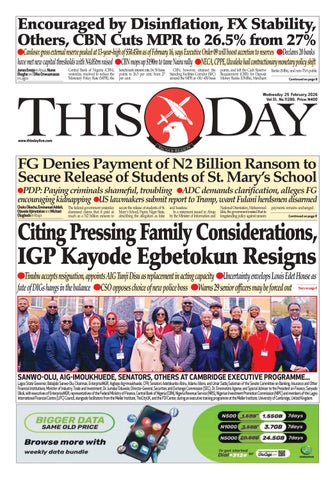
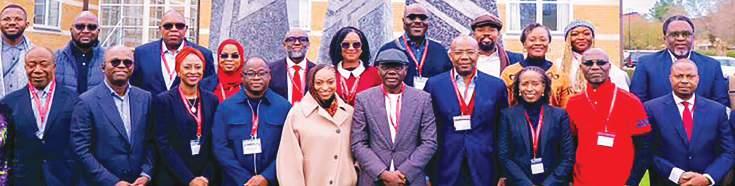
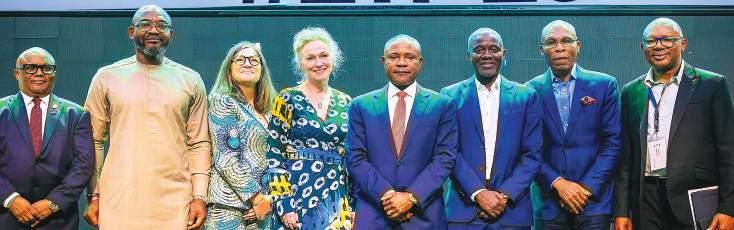
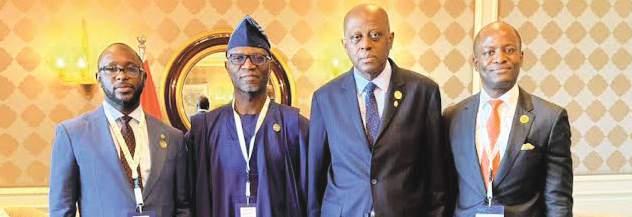
SANWO-OLU, AIG-IMOUKHUEDE, SENATORS,
OTHERS AT CAMBRIDGE EXECUTIVE PROGRAMME...
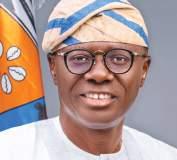
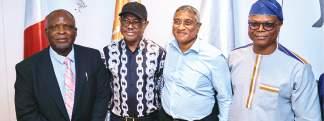
Lagos State Governor, Babajide Sanwo-Olu; Chairman, EnterpriseNGR, Aigboje Aig-Imoukhuede, CFR; Senators Adetokunbo Abiru, Adamu Aliero, and Umar Sadiq Suleiman of the Senate Committee on Banking, Insurance and Other Financial Institutions; Minister of Industry, Trade and Investment, Dr. Jumoke Oduwole; Director-General, Securities and Exchange Commission (SEC), Dr. Emomotimi Agama; and Special Adviser to the President on Finance, Sanyade Okoli, with executives of EnterpriseNGR, representatives of the Federal Ministry of Finance, Central Bank of Nigeria (CBN), Nigeria Revenue Service (NRS), Nigerian Investment Promotion Commission (NIPC) and members of the Lagos International Financial Centre (LIFC) Council, alongside facilitators from the Møller Institute, TheCityUK, and the FDI Center, during an executive training programme at the Møller Institute, University of Cambridge, United Kingdom.
James Emejo in Abuja, Nume Ekeghe and Dike Onwuamaeze in Lagos
Chuks Okocha, Emmanuel Addeh, Olawale Ajimotokan and Michael Olugbode in Abuja
Shettima: We’re shifting from stabilisation to acceleration in 2026 Says N1,000 to a dollar exchange rate will be realised in a matter of weeks Urges reconciliation, unity among party leaders to move Nigeria forward Yilwatda: Sad our achievements have not been visible due to poor communication
Deji Elumoye in Abuja
Governors elected on the platform of the ruling All Progressives Congress (APC) and other leaders of the party, yesterday, recommitted to boosting grassroots mobilisation in order to promote and advance the Renewed Hope Agenda of the President Bola Tinubu government.
Vice President Kashim Shettima disclosed that the Tinubu administration had shifted focus from stabilisation in 2025 to acceleration in 2026, with the N58.18 trillion 2026 budget anchoring the new phase.
The governors and other party leaders made the recommitment in Abuja at the PGF Renewed Hope Ambassadors Summit 2026 held at State House Conference Centre.
Shettima, who represented Tinubu at the summit, told the party leaders, governors under the aegis of Progres- sive Governors’ Forum (PGF), and the Renewed Hope Ambassadors that the moment called for reflection on the administration’s reforms, the sacrifices made, and the responsibili- ties to translate vision into measurable impact for Nigerians.
He said, “As we advance into 2026, our focus shifts from stabilisation to acceleration. The N58.18 trillion budget shall anchor this new phase.
A record capital expenditure, the largest allocation to national security in the history of our country and
prudent revenue projections, we are scaling growth while strengthening resilience.”
The vice president stated that the administration’s landmark tax reforms were “introduced to protect the vulnerable, encourage enterprise, and entrench transparency in public finance”.
He cited the recent executive order affecting remittances to the federation account, saying it “is designed to safeguard federation revenues, eliminate duplicative structures, curb waste and ensure that resources are responsibly managed for maximal national benefits”.
Shettima pointed out that from the onset, the Tinubu administration chose the path of honesty and discipline, confronting deep-seated structural distortions.
He said the decision had “restored fiscal credibility, stabilised the economy and set the foundation for long term economic growth.
“Today, we are seeing clear signs that our reforms have begun to yield results. Inflationary pressures are moderating, fuel prices are easing, our currency is strong and stable.”
Shettima also stressed that before long the Naira exchange rate would stabilise at N1,000 to one dollar.
According to him, “In fact if not for the interventions by the Central Bank of Nigeria yesterday, the N1,000 to a dollar, we are going to attain it
in weeks, not in months.
“But for the purpose of market stability, the CBN generously intervened yesterday. So for some of my friends, especially one of our party leaders, who take delight in stockpiling dollars it’s a wakeup call.”
While stating that the economy was picking up under Tinubu, the vice president said out of “the seven major investment decisions made in 2025 in Africa, five were drawn in Nigeria”, a development he said showed “the strength, viability and the promise of the Nigerian economy”.
He observed that no reform could succeed without public understanding and participation, just as he identified the communication gap as “the strategic importance of the Renewed Hope Ambassadors”.
Reminding them of their duty, Shettima said, “This platform shall serve as the avenue for civic engagement. Ambassadors must explain why tough decisions had to be made and how they lead to jobs, security, enterprise, opportunities and a more stable future.
“They must counter misinforma-
tion with facts, replace rumour with evidence and ensure that Nigerians from across the country have access to the truth. They must also serve as the channel for feedback, bringing community concerns and lived experiences back to government.”
Shettima tasked the Renewed Hope Ambassadors on wider outreach, saying they must “move beyond conference centres to the wards, markets, and campuses, across the country”.
He stated, “This mission is about presence, truth and trust. Elections
are not conducted on social media platforms, they conducted by Nigerians who will vote.
“This summit affirms our commitment to a shared future of promise and peace for all Nigerians. Together we will continue translating reforms into opportunities, policy into impact and sacrifice into renewed hope.”
Citing the situation in Benue State as an instance, Shettima further stressed the need for reconciliation and unity among party leaders, urging them to mend fences and move their state forward.
Eyesan Pledges Enhanced Transparency, Digital Transformation at NUPRC
Sets 60-paperless communication target
Peter Uzoho
Chief Executive of the Nigerian Upstream Petroleum Regulatory Commission (NUPRC), Mrs. Oritsemeyiwa Eyesan, has promised to enhance transparency and ensure the agency’s internal communication was fully digital.
Eyesan said this when the Executive Secretary, Nigeria Extractive Industries Transparency Initiative (NEITI),
Hon. Musa Sarkin Adar, visited the NUPRC’s headquarters in Abuja on Monday, according to a statement by the Commission’s Head of Media and Strategic Communication, Eniola Akinkuotu.
“We have set for ourselves a 60-day programme to digitise our interactions and communications within the Commission. I can assure you that once we get to day 60, there will be no paper trail within the Commission.
“All our transmissions will be electronic which also means speed is assured. It means we will be able to trace where we have hiccups,” Eyesan said.
The NUPRC boss said digitising processes often leads to better results like the enforcement of payments of royalties.
“I can tell you without a shadow of doubt that for royalty payments, the default rate was enormous prior
Peter Obi: Nigeria’s Challenge is Fund Mismanagement, Not Borrowing
Chuks Okocha in Abuja
The Labour Party’s presidential candidate in the 2023 election, Peter Obi, has emphasised that Nigeria’s escalating debt burden is not the primary concern, but rather the utilisation of borrowed funds.
In a post on his X handle yesterday, Obi stressed that effective management of resources was key to the country’s development.
The former presidential candidate
said recent World Bank data showed that Nigeria was now the world’s third-largest debtor, with obligations of around $18.7 billion, behind Bangladesh at $23 billion.
“Borrowing is not inherently wrong. Nations borrow to improve productivity and stimulate growth. Debt becomes a problem only when it finances consumption, inefficiency, or corruption rather than investment, as is the case in Nigeria,” he said. Obi compared Nigeria’s trajec-
tory with Bangladesh’s, saying that around 2015, Bangladesh had a GDP of roughly $195 billion and a per-capita income of about $1,235.
By 2024–2025, the economy had grown to $460–500 billion, and percapita income rose to $2,700, driven by investments in manufacturing, textiles, energy, and human capital.
“Nigeria, on the other hand, has seen its GDP fall from $490 billion in 2015 to below $250 billion today, with per-capita income dropping to
$850–1,000.
“Factors include weak productivity growth, currency instability, structural inefficiencies, and corruption.
“The contrast is clear. One country borrowed and expanded production, exports, and incomes. The other borrowed but saw declining economic strength and living standards.
“Debt tied to infrastructure, industry, and human development fuels growth. Debt tied to consumption, leakages, and corruption deepens
stagnation,” he said. Obi concluded with optimism: “A new Nigeria, where loans, if taken, translate into productivity instead of consumption, is very much possible.”
Nigeria’s total public debt increased to N153.29 trillion as of September 30, 2025, reflecting a steady build-up in both domestic and external obligations within three months, according to recent data released by the Debt Management Office.
to 2025 when the Commission went live on the system. Now, compliance has improved,” Eyesan saiid.
The NUPRC boss sought a deepened relationship with NEITI which will foster transparency especially amid the 2025 Licensing Round.
In his remarks, the Executive Secretary of NEITI, Adar, said there was a need for the NUPRC to carry the agency along in its operations as this would not only enhance transparency but also deepen investor confidence.
Adar also urged the commission to be firm on oil companies that run afoul of the Petroleum Industry Act (PIA).
Speaking on NEITI’s Initiative, Adar requested the NUPRC to actively participate in the 2026 EITI flagship conference which will provide the Commission with better insights into the standards that guide EITI implementation.
The NEITI boss also sought support from the commission in the area of data sharing which will enhance the operations of the agency
“We are here to seek understanding and we must collaborate,” he said.
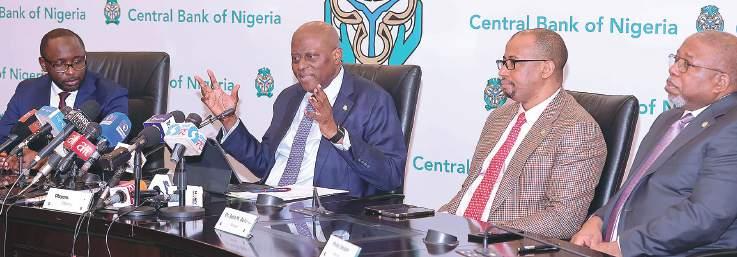
L R: Deputy Governor, Economic Policy, Central Bank of Nigeria (CBN), Dr. Muhammad Sani Abdullahi; Governor, Central Bank of Nigeria, Mr. Olayemi Cardoso; Deputy Governor, Operations Directorate, Central Bank of Nigeria, Dr. Bala Bello; and Deputy Governor, Financial System Stability, Central Bank of Nigeria, Dr. Philip Ikeazor, during the 304th Monetary Policy Committee meeting of the CBN in Abuja PHOTO: SUNDAY AGHAEZE
ENUGU TECH FESTIVAL 2026...
L-R: Commissioner for Innovation, Science and Technology, Enugu State, Dr. Lawrence Ezeh; CEO of Tenece Group, Kingsley Eze; Consul General of Denmark in Lagos, Mrs. Jette Bjerrum; Ambassador of Sweden to Nigeria, Anna Westerholm; Governor of Enugu State, Dr. Peter Mbah; Executive Vice Chairman, Nigerian Communications Commission, Dr. Aminu Maida; Founder and Chairman of Zinox Group, Dr. Leo Stan Ekeh, and the Director, Stakeholder Management and Partnerships, National Information Technology Development Agency (NITDA), Dr. Aristotle Onumo, during the opening of second edition of Enugu Tech Festival at International Conference Centre, Enugu, Tuesday.
Senate Backs SEDC’s 10-Year $200bn South-
east Transformation Plan, Warns Against Abuse
Seeks
focus on schools, hospitals, power as commission presents N140bn 2026 budget Committee
Aborisade in Abuja
The Senate has thrown its weight behind an ambitious plan by the South East Development Commission (SEDC) to transform the region into a $200 billion economy within 10 years, even as lawmakers warned the agency against mismanaging public funds and urged it to prioritise impactful infrastructure.
Managing Director of the commission, Mark Okoye, unveiled the economic blueprint yesterday, during the agency’s 2026 budget defence
before the Senate Committee on South-East Development Commission in Abuja.
The Commission sought legislative backing for a proposed N140 billion appropriation to drive what he described as the commission’s “real take-off year.”
Okoye said the regional transformation agenda had received broad political and stakeholder endorsement at the recently concluded Southeast Vision 2050 forum, which drew governors of the five South-east states, the Vice President,
ministers, heads of federal agencies, development commissions, and thousands of private participants.
“At the heart of the long-term strategy is the projection to build a $200 billion regional economy within a decade and position the South-east as Africa’s preferred investment destination,” he said.
He added that the commission also targets a $1 billion balance sheet within eight years through its proposed Southeast Investment Conference vehicle, structured under a public-private partnership model
involving the SEDC, state governments, private equity firms, and development finance institutions.
Okoye disclosed that the commission had secured presidential approval to raise projected capital of up to $150 billion to fund transformative infrastructure and industrial projects across the region.
According to him, political leaders in the zone have embraced a unified economic front anchored on harmonised policies, seamless trade, and coordinated investments, including a regional approach to
National Assembly Seeks Tinubu’s Urgent Intervention Over Meagre Funding for Information Ministry
As minister reveals only N205m released from N2.49bn capital vote in 2025 Lawmakers warn 2026 proposal cannot sustain ministry, media agencies
The National Assembly has resolved to meet President Bola Tinubu to demand improved funding for the Federal Ministry of Information and National Orientation and its agencies, following what lawmakers described as grossly inadequate budgetary releases in 2025 and a lean proposal for 2026.
The decision was taken on Tuesday by the joint committees on Information and National Orientation after the Minister of Information and National Orientation, Alhaji Mohammed Idris, presented the ministry’s 2025 budget performance report.
In a startling disclosure, the minister informed lawmakers that out of the N2.49 billion capital allocation to the ministry in the 2025 Appropriation Act, only N205 million had been released — and even that, he said, was not fully cash-backed.
The revelation triggered an executive session that lasted about an hour, after which the joint committee resolved to seek the intervention of President Bola Tinubu through the leadership of the National Assembly.
The lawmakers said adequate funding had become imperative
for the ministry and its agencies, including the Nigerian Television Authority, Federal Radio Corporation of Nigeria, News Agency of Nigeria and Voice of Nigeria, to effectively enlighten Nigerians on government policies and programmes.
Chairman of the House Committee on Information, National Orientation, Ethics and Values, Hon. Olushola Fatoba, who briefed journalists after the closed-door meeting, said a review of the 2026 budget proposal further heightened the committee’s concerns.
According to him, allocations proposed for personnel and overhead costs in 2026 are identical to those of 2025, despite rising operational demands, while about 70 per cent of the capital component for 2026 is merely a rollover from the previous year.
Fatoba said, “At the executive session, when we went through the 2026 budget proposal for the ministry and its agencies, we discovered that the sums earmarked for personnel and overhead costs in 2025 were the same figures proposed for 2026.
“More worrisome is that about 70 per cent of the capital component for 2026 is simply a rollover from 2025. As a joint committee, we
unanimously agreed that the budget cannot be sufficient to run the ministry and its agencies effectively.”
He added that the committee would formally engage the leadership of the National Assembly to facilitate a meeting with the President, stressing that 2026 would be a critical year requiring robust public communication and citizen engagement.
“We resolved to meet the leadership of the National Assembly on the meagre budgetary proposal and plan to reach out to Mr. President to ensure that something urgent is done in terms of budgetary provisions for the ministry and its agencies in 2026,” he said.
Earlier, while presenting the performance report, the minister lamented the poor level of releases and underscored the strategic role of the ministry in rebuilding public trust and strengthening governmentcitizen communication.
Idris said that upon assumption of office in 2023, the ministry was confronted with what he described as a serious trust deficit between public officials and Nigerians.
He said, “When we started in 2023, what we saw was a breakdown in trust between Nigerians
and public officials, whether elected or appointed. There seemed to be a level of mistrust about what public officials say and do.”
He noted that one of his core mandates was to restore credibility to government communication by ensuring honesty, transparency and consistency in public messaging.
energy generation.
demands transparency
“There should be a regional approach to power generation. If one state has the assets and capacity, we should explore how to scale it and ensure the whole Southeast achieves energy independence,” he said, echoing the consensus of governors at the forum.
To actualise the blueprint, the commission presented a N140 billion 2026 budget proposal, of which N108 billion is earmarked for capital projects, N23 billion for overhead costs, and N7.3 billion for personnel.
Describing 2026 as the “execution year,” Okoye said 2025 was largely foundational due to delayed releases.
He revealed that the commission received only N5 billion from its 2025 allocation last December, with about N957 million spent primarily on stakeholders’ engagement, media outreach and investment promotion.
“We have paid no salaries, no allowances, no emoluments. Everyone has contributed to ensure that we continue to proceed forward,” he said.
He explained that the commission had already developed a 100-day critical action plan to be triggered once funds are released.
The plan includes activating its
regional office, launching a Southeast venture capital programme, capitalising its investment company, and rolling out agricultural and grassroots sports initiatives.
“We are not waiting to see money in the account before doing preparation. We are doing the groundwork simultaneously so that once resources come, we hit the road,” Okoye assured lawmakers.
However, senators who reviewed the proposals insisted that the commission must channel resources into projects that directly impact citizens, particularly in education, healthcare and other basic infrastructure.
Senator Tony Nwoye (Anambra North) cautioned against excessive spending on conferences and seminars, urging the agency to concentrate on tangible development. He said, “The South-east needs more development than other zones. Let’s not waste funds on conferences or seminars.
“You should build or renovate primary schools and secondary schools. Your work should focus on infrastructure like schools and hospitals,” he added.
Senator Patrick Ndubueze also urged the commission to undertake legacy regional projects such as a reference hospital to serve the entire zone.
Economic and Financial Crimes Commission (EFCC), Lagos Zonal Directorate 1, Ikoyi, Lagos, yesterday, arraigned former Managing Director of Nigerian Railway Corporation (NRC), Engineer Fidet Okhiria Edetanle, before Justice Rahman Oshodi of the Special Offences Court, Ikeja, over alleged fraud involving $385,000 and N165,438,000.00.
Edetanle faces an eight-count charge bordering on money laundering, abuse of office, and unlawful enrichment by a public official.
The offences were said to contravene Sections 332(1) and
332(3), Section 73(1), and Section 82(c) of the Criminal Law of Lagos State, 2011.
When the charges were read, the defendant pleaded not guilty to all eight counts.
Abba Muhammad, SAN, appearing for the prosecution, urged the court to fix a trial date and remand the defendant in a correctional facility pending trial.
But Adebowale Kamoru, counsel for the defendant, informed the court that he had just received the charge and requested a short adjournment to file a bail application.
Oshodi ordered that Edetanle be remanded in the Nigerian Correctional Services centre and adjourned
the trial to May 13, 14, and 15, 2026 for continuation.
Some of the counts stated, “That you, Fidet Okhiria Edetanle, while serving as the Managing Director of the Nigerian Railway Corporation, between May 29, 2024, and September 11, 2024, in Lagos, transferred a cumulative sum of Two Hundred and Five Thousand United States Dollars ($205,000.00) from your domiciliary account in Access Bank Plc (account number 0010069159) to the account of Ehimen Richard Okhiria at ABN AMRO Bank, Netherlands (account number NL38ABNA011257662), being proceeds of unlawful activities, thereby committing money laundering.
Sunday Aborisade in Abuja
Sunday
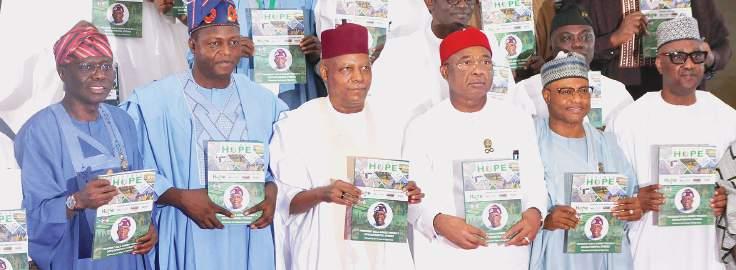
APC AMBASSADORS SUMMIT...
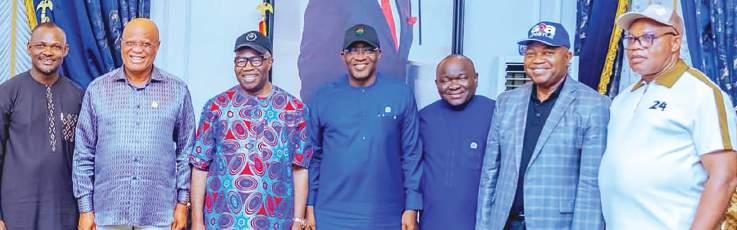
L-R: Governor of Lagos State, Mr. Babajide Sanwo Olu; APC National Chairman, Prof. Nentawe Yilwatda; Vice President, Senator Kashim Shettima; Chairman, Progressive Governors Forum and Governor of Imo State, Mr. Hope Uzodimma; Governor of Kaduna State, Senator Uba Sani; and Speaker, House of Representatives, Mr. Tajudeen Abbas, at the Progressive Governors Forum Renewed Hope Ambassadors Strategic Summit held at the Conference Centre of the Presidential Villa, Abuja, yesterday
PENGASSAN: Why We Oppose Tinubu’s
Executive Order on Oil Revenue Remittance
Union meets FG today to resolve dispute
The Petroleum and Natural Gas Senior Staff Association of Nigeria (PENGASSAN) yesterday reiterated that the reason it was protesting against President Bola Tinubu’s Executive Order on the direct remittance of oil and gas revenue to the Federation accounts was that it would have an immeasurable impact on the industry’s investments and the welfare of workers of the Nigeria National Petroleum Company Limited (NNPC).
It said the Executive Order was a negation of the spirit and intent of the Petroleum Industry Act (PIA), which is currently in operation, arguing that it was capable of scaring away potential international investors.
Speaking at the opening of the National Executive Council meeting of the union in Abuja, PENGASSAN President, Festus Osifo, said while the union supports any initiative to deepen accountability and transparency in the oil and gas industry, it rejects the adoption of initiatives outside the law.
As part of efforts to resolve the disagreement, Osifo said there was an engagement with the federal
government last weekend and that PENGASSAN was scheduled to meet the Presidential Committee on the matter today.
He said the position of the union was that the federal government should take the PIA back to the National Assembly for amendment if it feels there was a need for it, rather than go against its provision.
“Our position is that the issue should be taken to the National Assembly. That is because when you go to the National Assembly, you allow other stakeholders to review the proposed laws and also to make their position known during the public hearing. So that has been our position since this actually came out,” he said.
The president’s Executive Order is anchored on Section 44(3) of the Constitution, which vests ownership, control, and derivative rights in all minerals, mineral oils, and natural gas in, under, and upon any land in Nigeria, including its territorial waters and Exclusive Economic Zone, in the Government of the Federation.
The directive seeks to restore the constitutional revenue entitlements of the federal, state, and local govern-
ments, which were removed in 2021 by the PIA.
Under the current PIA framework, NNPC Limited retains 30 per cent of the federation’s oil revenues as a management fee on Profit Oil and Profit Gas derived from Production Sharing Contracts, Profit Sharing Contracts (PSCs), and Risk Service Contracts.
The objective is to eliminate unjustified multiple layers of deductions that erode revenues that ought to accrue to the Federation Account, enabling the three tiers of government to pursue critical national priorities.
However, Osifo defended the union’s stance against the Executive Order, saying that the policy
failed to provide for the payment management fee to NNPC to cater for operational expenses.
“Yes, we have said that it negates the PIA, but the government said they are relying on the constitutional provision.
“Like I said earlier, before PIA, the revenue or the profit oil was paid to the federation account.
“For the federation account, we remit back a management fee. It is this management fee that is being used to cater for the salary that the allowance of our members.
“So we are coming from two divergent positions. But beyond the process, we have now moved into the substance and that substance is how will this impact on our members.
Johnvents Raises N30bn as Regius Capital Breaks into CP Market
Fidelis David in Akure
Regius Capital Limited has recorded a major entry into Nigeria’s debt capital market with the successful execution of its maiden Commercial Paper (CP) transaction, acting as dealer on a N30 billion issuance by Johnvents Industries Limited.
The transaction was carried out under Johnvents’ N100 billion Commercial Paper Programme, and duly registered with the Securities and Exchange Com-
Tax Law: Group Drags FG to ECOWAS Court Over Alleged Alterations
Kuni Tyessi in Abuja
The Network for the Actualisation of Social Growth and Viable Development (NEFGAD), a frontline civic advocacy group in Nigeria, has filed a suit at the ECOWAS Community Court of Justice over what it describes as unlawful alterations to Nigeria’s newly gazetted tax laws after legislative passage and presidential assent.
The case, filed as ECW/CCJ/ APP/10/26, follows the group’s earlier correspondence to President Bola Tinubu and the leadership of the National Assembly, in which it demanded an independent investigation and sanctions.
The development was disclosed in a statement signed by Elvis Ejeta Esq., lead counsel to NEFGAD.
The organisation said concerns were raised that changes may have been introduced into the tax legislation after approval, an issue it noted had also been flagged in the National Assembly’s interim review as posing institutional, constitutional and democratic questions.
In the suit, NEFGAD is seeking, among other reliefs, a judicial review of the legislative process that allegedly led to post-assent amendments, and is asking the court to declare the alterations in the official gazette unauthorized and
in breach of Nigeria’s obligations under the African Charter and ECOWAS protocols, particularly regarding rights to fair hearing, equality, participation and property.
It further urged the court to annul the gazetted Tax Administration Act, 2025 (and related laws) in full, or alternatively strike down the contested provisions and recognise only the version originally passed by the National Assembly and assented to by the President.
The organisation also requested an injunction restraining enforcement of the disputed provisions and an order compelling the government to publish Certified True Copies of the four tax Acts as enacted.
mission (SEC).
The issuance, which opened and closed in December 2025, was structured in three tranches — Series 22, 23 and 24 — with tenors of 181 days, 269 days, and 364 days respectively.
The papers were priced at yields of 22.0 per cent, 23.0 per cent, and 24.5 per cent per annum, in line with prevailing market conditions and reflecting sustained investor appetite for short-dated, high-yield instruments.
Despite tight liquidity in the financial system, the offer was fully subscribed within the offer window, highlighting strong demand from qualified investors for well-rated corporate issuances.
The programme is supported by investment-grade issuer ratings of BBB+ from Agusto & Co and BBB+ from GCR Ratings, offering added assurance on Johnvents’ credit strength and repayment capacity.
For Regius Capital Limited, the deal represents a strategic milestone following the grant of its operating licence as an issuing house. Acting as dealer, the firm played a key role in the structuring and distribution of the commercial paper in line with regulatory standards, signalling its readiness to compete in Nigeria’s fast-evolving debt capital market.
Market analysts say the transaction underscores the
growing importance of the Commercial Paper market as a funding platform for corporates seeking short-term financing to support working capital needs, refinance obligations, and preserve operational flexibility.
Johnvents Industries Limited is an integrated agribusiness and manufacturing company with operations spanning cocoa processing, commodity trading, and other value-added agricultural activities.
The firm occupies a strategic position within Nigeria’s agricultural value chain, leveraging scale, export capacity, and operational efficiency to drive sustainable growth.
ILOT: First Lady’s Visit to Warri Holds Great Promise for Itsekiris
Sylvester Idowu in Warri
The respected Itsekiri Leaders of Thought, (ILOT) has described the planned visit of Nigeria’s First Lady, Senator Oluremi Tinubu, to Warri Kingdom, tomorrow, holds great promise for Itsekiri nation.
The Itsekiri leaders, in a statement issued in Warri, Delta State yesterday and signed by its Chairman, Chief Edward Ekpoko and Secretary, Sir Amorighoye
Sunny Mene, noted that Itsekiri nation, is very proud of Senator Oluremi Tinubu’s achievements as Senator in recent past and her outstanding leadership qualities as Nigeria’s First Lady.
ILOT, in the statement, expressed optimism that Senator Tinubu’s maternal ties with Warri Kingdom, would attract rapid development to Itsekiri upland and coastal communities.
Whilst commending President
Bola Tinubu for appointing Engr. Omatsola Ogbe as Executive Secretary, Nigerian Content Development and Monitoring Board, (NCDMB) and Mrs. Oritsemeyiwa Eyesan as Chief Executive of the Nigerian Upstream Petroleum Regulatory Commission (NUPRC), the Itsekiri leaders, appealed to Mrs. Tinubu to use her position to ensure that work commences in the KokoOgheye - Lagos High Way and Omadino - Ugborodo Road.
Onyebuchi Ezigbo in Abuja
PHOTO: GODWIN OMOIGUI
In Boost for Oil Output, NNPC Set to Begin Export of New Crude Grade in March
Dangote reiterates commitment to 65m litres daily domestic petrol supply
Emmanuel Addeh in Abuja, Sunday Ehigiator and Peter Uzoho in Lagos
The Nigerian National Petroleum Company Limited (NNPC Ltd) will begin exporting a new light, sweet crude grade called Cawthorne from March, Reuters quoted a spokesperson for the organisation as saying, adding to a recent recovery in output from Africa’s top exporter.
The launch is part of Nigeria’s broader push to lift production, long constrained by unrest and crude theft, and follows the introduction of two other new grades since 2024. Nigeria, already pumping close to its Organisation of Petroleum Exporting Countries
(OPEC) quota, is among the countries seeking a higher target within the producer group.
Cawthorne crude, which is due to be exported in the third week of March according to a source familiar with the matter, has an American Petroleum Institute (API) gravity of 36.4, making it similar in quality to Nigeria’s Bonny Light, valued for its high yields of petrol and diesel.
The Reuters report said the NNPC last week issued a tender for the grade for March 24-25, quoting a trader.
The grade is expected to be exported through the Floating Storage and Offloading (FSO) vessel Cawthorne, analysts at Kpler said in a note. The FSO
has a capacity of 2.2 million barrels and aims to boost crude oil transportation and production from Oil Mining Lease 18 and surrounding assets in the country’s Eastern Niger Delta.
Based on the vessel’s storage constraints, Cawthorne could lift Nigeria’s crude and condensate supply from roughly 1.65 million barrels per day currently to around 1.7 million bpd for the rest of the year, Kpler said.
Nigeria’s OPEC+ crude output quota is 1.5 million bpd and the country pumped 1.48 million bpd in January, based on OPEC data. Other grades Nigeria has launched in recent years include Obodo in 2025 and Utapate in 2024, Reuters recalled.
Meanwhile, in a major shift for Nigeria’s downstream petroleum sector, the Dangote Petroleum Refinery & Petrochemicals has reiterated its commitment to supplying between 60 and 65 million litres of petrol daily to meet national demand, effectively positioning the country for sustained fuel self-sufficiency while exporting a surplus of up to 20 million litres.
This, according to a statement from the company, followed a ramp-up of production, which has left the refinery producing much more than national consumption with rest to be exported to other countries already angling for partnership with the facility . President of Dangote Group,
Aliko Dangote, disclosed the development in Lagos, confirming that a structured offtake agreement has been concluded with selected marketers to ensure nationwide distribution and eliminate supply instability.
“We have agreed an offtake framework to supply up to 65 million litres daily for the domestic market,” Dangote said. “Any surplus, estimated at between 15 and 20 million litres, will be exported,” he added.
Nigeria’s average daily petrol consumption stands at between 50 and 60 million litres. The refinery’s output therefore exceeds current domestic requirements, marking a decisive break from decades of fuel import dependence and
recurrent scarcity. The structured model is designed to eliminate supply bottlenecks and curb speculative practices that have historically triggered disruptions.
CITING PRESSING FAMILY CONSIDERATIONS, IGP KAYODE EGBETOKUN RESIGNS
Deji
Alex
in
Inspector-General of Police, Mr. Kayode Egbeto-kun, yesterday, resigned from office, citing pressing family considerations.
President Bola Tinubu accepted his resignation, following the submission of his letter.
Presidential spokesperson, Bayo Onanuga, in a re-lease, disclosed that the president received Egbetokun’s resignation and expressed profound appreciation for his decades of “distinguished” service to the Nigeria Police and the country.
Tinubu acknowledged Egbetokun’s dedication, professionalism, and steadfast commitment to strengthening internal security
The government, which was reacting to a report by AFP amid a backlash from the opposition, maintained that recent rescue operations were carried out through coordinated security interventions, intelligence gathering and interagency collaboration, and not financial inducements.
But the opposition Peoples Democratic Party (PDP), said any ransom payment by government actors, whether direct or through proxies, would be “shameful and troubling,” warning that such a move could legitimise criminality. The party called for full transparency on the circumstances surrounding the release of the victims.
Similarly, the African Democratic Congress (ADC) demanded a detailed briefing from security agencies, alleging that inconsistent communication from authorities was fuelling public suspicion. The party argued that even unverified reports of ransom payments risk sending a dangerous signal to armed groups operating across the country.
The controversy widened as members of the United States Congress have submitted a security brief to President Donald Trump, expressing concern over persistent attacks on Christians in parts of Nigeria and calling for stronger measures against armed groups, including factions described in the report as Fulani herdsmen militias.
The lawmakers urged closer US monitoring of the crisis and pressed for initiatives aimed at disarming non-state actors.
The renewed international attention underscores the global dimension of Nigeria’s internal
architecture during his tenure. Appointed in June 2023, Egbetokun was serving a four-year term scheduled to conclude in June 2027, in line with the amended provisions of the Police Act.
However, in view of the current security challenges confronting the country, and acting in accordance with extant laws and legal guidance, the president approved the appointment of Assistant Inspector-General of Police (AIG), Olatunji Disu, to serve as Acting Inspector-General of Police with immediate effect.
Tinubu expressed confidence that Disu’s experience, operational depth, and demonstrated leadership capacity would provide steady and focused direction for the Nigeria Police during this critical period.
security challenges, particularly as kidnapping for ransom has evolved into a lucrative enterprise in several regions. Over the past decade, criminal gangs have targeted schools, highways, rural communities and even urban centres, exploiting gaps in policing capacity and local intelligence.
FG: Allegation Completely False, Baseless
In a statement yesterday, the Minister of Information and National Orientation, Idris, described the allegation that the federal government has been paying ransoms, especially in the case of the Papiri students in Niger state, as false and baseless.
Picking holes in the AFP report, the government noted that the story revealed contradictions that expose its speculative character, presenting sharply conflicting accounts regarding the alleged ransom.
“The attention of the Federal Government of Nigeria has been drawn to a publication circulating in the media, attributed to international wire services, alleging that the Nigerian Government paid a ‘huge’ ransom, including the release of militant commanders, to secure the freedom of the schoolchildren abducted from St. Mary’s boarding school in Niger State.
“The federal government states that these allegations are completely false and baseless, and constitute a disservice to the professionalism and integrity of Nigeria’s security forces and the sacrifices they make daily.
“While we respect the freedom of the press, we firmly reject a narrative built on shadowy, unnamed sources
In compliance with the provisions of the Police Act 2020, the president would soon convene a meeting of the Nigeria Police Council to formally consider Disu’s appointment as the substantive InspectorGeneral of Police, after which his name would be transmitted to the Senate for confirmation.
Tinubu reiterated his administration’s unwavering commitment to enhancing national security, strengthening institutional capacity, and ensuring that the Nigeria Police remained professional, accountable, and fully equipped to discharge its constitutional responsibilities.
Uncertainty Envelops Louis Edet House as Fate of DIGs Hangs in the Balance
seeking to undermine the credibility of a sovereign government acting within its laws. For the avoidance of doubt, no ransom was paid, and no militant commanders were freed,” the federal government maintained.
According to the statement, the allegations relied entirely on anonymous “intelligence sources” and individuals “familiar with the talks,” in contrast to the clear and on-the-record denials issued by constituted authorities. The Office of the National Security Adviser (ONSA), the Department of State Services (DSS), and the leadership
Tension began to mount at Louis Edet House, the headquarters of the Nigeria Police, in Abuja, following Disu’s appointment, as uncertainty surrounded the future of several Deputy Inspectors General of Police (DIGs).
Disu, an AIG, was appointed Acting Inspector General of Police, following Egbetokun’s. resignation.
Senior officers and personnel were, reportedly, anxiously awaiting official decisions that could determine redeployments, retirements, or confirmations in office.
The atmosphere within the high command grew increasingly apprehensive, with speculation rife over impending administrative changes expected to reshape the leadership structure of the force.
of the National Assembly, it stressed , have all publicly refuted claims of ransom payment.
The federal government stated that the report itself reveals contradictions that expose its speculative character, presenting sharply conflicting accounts regarding the alleged ransom.
Such inconsistency, it pointed out, underscores a lack of direct knowledge and undermines the credibility of the claims, explaining that the assertion that ransom was
Continued on page 46
While no formal announcement had been made, the unfolding scenario generated heightened interest across policing circles and among security stakeholders.
Some observers believed that the appointment of Disu, a junior to the affected DIGs, suggested they might be asked to leave the force prematurely, despite many not yet attaining the required 35 years of service or reached the age of 60.
One observer, who preferred anonymity, stated that it would be inappropriate for them to continue serving under a junior officer, adding, “It is at variance with the tradition of the force.”
However, experts stated that the retirement of DIGs was not fixed, stating, “There have been previous instances where an AIG was appointed while DIGs remained in service to complete their terms.
“All DIGs going depends on the new IGP. Solomon Arase was a DIG when his junior, Suleiman, was appointed. Arase remained to finish his time in the force. Fate happened, Suleiman was removed, and Arase was made IGP. Life is all about destiny.”
Those anticipated to exit the force when the new Inspector General assumes office include DIGs Frank Mba, Mohammed Gumel, Basil Idegwu, Adebola Hamzat, Yahaya Abubakar, Bzigu Kwazhi, Adebowale Williams, Idris Abubakar, and the newly promoted
Fayoade Adegoke Mustapha. Meanwhile, the Nigeria Police introduced subtle restrictions on access to Louis Edet House. Insiders said the measures were aimed at tightening security and controlling movement within the complex, particularly for visitors and non essential personnel. Staff and stakeholders had reported stricter identification checks and limited entry points, prompting increased caution among those seeking appointments or official engagements.
Journalists present for official assignments were barred from entering the headquarters, with security personnel citing the recent change in leadership as reason.
Additionally, Force Spokesperson, Benjamin Hundeyin, an Acting Assistant Commissioner of Police, announced the cancellation of a scheduled courtesy visit by Administrator of the National Judicial Institute and his management team to the outgoing Inspector General. At the time of filing this report, Disu had yet to formally assume office.
Group Opposes Appointment of Disu
A Civil Society Organisation (CSO), under the auspices of Visionary Leaders Consensus
Continued on page 44
ENCOURAGED BY DISINFLATION, FX STABILITY, OTHERS, CBN CUTS MPR TO 26.5% FROM 27%
sector deposits unchanged at 45 per cent, 16 per cent, and 75 per cent,MPRrespectively. is the rate at which the central bank lends to commercial banks, and often determines the cost of borrowing in the economy.
Addressing journalists after the two-day meeting of the Monetary Policy Committee (MPC) in Abuja, CBN Governor, Mr. Olayemi Cardoso, also announced that the country’s gross external reserves rose significantly to $50.45 billion as of February 16, 2026, the highest increase in 13 years. Cardoso added that this offered an import cover of 9.68 months for goods and services.
The CBN governor disclosed that of the 33 banks that raised additional capital in the ongoing recapitalisation exercise, 20 met the new minimum capital requirement, reaffirming steady progress towards a more robust and well-capitalised financial system.
According to him, total verified
and approved capital raise stood at N4.05 trillion as of February 19, 2026, out of which N2.90 trillion or 71.67 per cent was mobilised domestically, while $706.84 million (N1.15 trillion), representing 28.33 per cent was mobilised through foreign participation.
The CBN governor stated that the balance represented a mix of domestic and foreign participation and signalled broad investor engagement and confidence in the financial sector.
Cardoso said the committee’s decision to cut interest rate was premised on a balanced evaluation of risks to the inflation outlook, which suggested that the ongoing disinflation trajectory would continue, largely supported by the lagged transmission of previous monetary tightening, sustained exchange rate stability, and enhanced foodCBN’ssupply.interest rate cut drew accolades from Nigeria Employers’
Consultative Association (NECA) and Centre for the Promotion of Private Enterprise (CPPE), which commended the decision of MPC.
NECA and CPPE, in separate press statements, also called on the apex bank to provide stronger support for the real economy, urging the federal government to also imbibe fiscal discipline.
Director-General of NECA, Mr. Adewale-Smatt Oyerinde, emphasised that the marginal reduction in the benchmark interest rate represented a cautious but noteworthy signal that monetary authorities were beginning to respond to the sustained pressures facing businesses and the productive sector.
Chief Executive Officer of CPPE, Dr. Muda Yusuf, also commended CBN for its measured and datadriven policy adjustment, saying this policy direction is appropriate and growth-supportive.
Equally reacting to MPC’s
decision, professor of Capital Market, Professor Uche Uwaleke, described the MPR cut as “prudent, credibility-building, and consistent with a central bank that wants to consolidate macroeconomic stability”.Uwaleke said a sustained disinflation will guarantee further interest rate reduction by CBN
He told THISDAY, “I consider the 50-basis point cut as a signal. If disinflation continues for another two to three months and external conditions remain stable, we could see further gradual cuts. But the era of aggressive easing is unlikely unless inflation falls much faster or growth weakens sharply.
“So overall, I would describe the 50-basis point cut as prudent, credibility-building, and consistent with a central bank that wants to consolidate macroeconomic stability.
“It is a transition from tightening
FG DENIES PAYMENT OF N2 BILLION RANSOM TO SECURE RELEASE OF STUDENTS OF ST. MARY’S SCHOOL
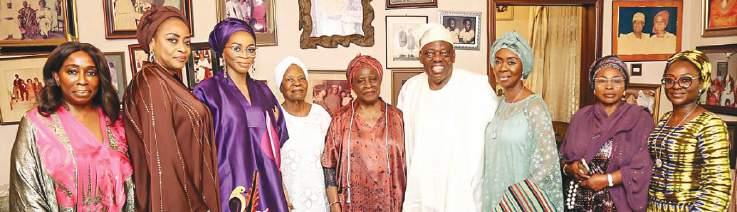
Christopher Kolade; Chairman, Eleganza Group of Companies, Chief Rasaki Okoya; daughter of the deceased, Erelu Toyin Ojora Saraki; Alhaja Kuburat Shitta Bey; and Ms.
during a condolence visit by the Okoya family to commiserate with the Ojora family over the demise of the Lisa of Ife, the late Otunba Adekunle Ojora, in Lagos… recently
MMIA Fire: Keyamo Says Terminal to Be Pulled Down, Laments Severe Damage to Critical Equipment
Air traffic controllers, communication engineers relocate to fire service station
Speaking to newsmen after an assessment of the extent of the damage, Keyamo said the terminal, which was already slated for total rehabilitation before the fire, would be pulled down.
Minister of Aviation and Aerospace Development, Festus Keyamo, said Monday’s inferno at the old terminal of Murtala Muhammed International Airport (MMIA), Lagos, known as Terminal 1, severely damaged critical equipment for weather management and airspace communication.
During the assessment tour with the minister, THISDAY observed that the fourth floor of the building, where Nigerian Meteorological Agency (NIMET) weather equipment and Nigerian Airspace Management Agency (NAMA) communication equipment were
installed, was literally devoured by the fire, with equipment destroyed beyond redemption.
Speaking during the inspection of the charred section of the terminal building, the minister said, “it is not the new terminal that was affected. It is the terminal that we are about
Kumuyi Canvasses National Transformation Through Individual ’Turning Points’
Blessing Ibunge in Port Harcourt
General Superintendent of Deeper Christian Life Ministry, Pastor William Kumuyi, has emphasised the critical need for a “turning point” in the lives of Nigerians to foster national development.
Speaking at a World Press Conference yesterday, in Port Harcourt, ahead of his “Global Crusade with Kumuyi” programme, tagged, “Turning Point,” Kumuyi articulated a vision where personal spiritual and moral renewals act as catalysts for broader societal change.
He stated that since a nation was built upon families, and families were composed of individuals, a positive shift in an individual’s direction inevitably impacted the community and the country at large.
Kumuyi explained that the mission of the crusade “is to bring the love of Christ to everyone and for everyone to have a turning point in their lives”.
He stated, “When we say turning point, in every area and in all areas of our lives, our believing to be a turning point for the whole community and for our whole state, and for the extensive coverage, the world in general. Turning point for everyone is by faith, by grace, by the power of the Spirit.
“Actually, we understand the social situation, the situation with the whole country, community is based on individuals, because individuals make up the families, the families make up the nation and there is a turning point for the better.”
Responding to questions from journalists on the country’s leadership, Kumuyi stated that the current social and economic challenges were deeply rooted in the actions and attitudes of individuals within all levels of society, including leaders and influencers.
He stressed that a “turning point” was not a concept that existed in a vacuum but a lived experience
that influenced how people led, governed, and interacted within their communities.
He urged those in positions of power to consider the legacy they wish to leave behind, suggesting that a heart-centred transformation would lead to more selfless and effective leadership, which was especially pertinent as the 2027 elections approached.
Kumuyi expressed a firm belief that such internal changes would manifest in improved policies, a stronger economy, and a more harmonious society.
He added, “What we do goes on record that at our time, this is what we brought to the community. And even if we think personally and selfishly, and we think, okay, what legacy do I want to leave behind, it’s still to our advantage, whether it’s political or financial or institutional or industry.
“It is still to our advantage if we have a turning point on the inside, turning point for our families and
Sokoto State Gov Launches N1bn Ramadan Feeding Programme
Sokoto
Governor Ahmed Aliyu of Sokoto State has announced a N1 billion allocation for the 2026 Ramadan Feeding Programme, aiming to provide approximately 34,000 meals daily to vulnerable residents across the state.
The programme will run in 170 feeding centres, an increase from 155 last year, with 15 additional centres strategically located in
underserved areas.
The expanded programme targets widows, orphans, the elderly, and displaced persons, reflecting the state government’s commitment to social welfare.
Governor Aliyu emphasized the importance of compassion and community support during the holy month.
“We are determined to ensure that no one goes hungry during Ramadan,” Governor Aliyu said.
“This programme is not just about providing food; it is about showing compassion and strengthening the bonds within our communities.”
The state government has directed local government chairmen to work with community leaders to identify beneficiaries and ensure smooth implementation.
Religious leaders and civil society organisations have welcomed the initiative, praising the governor’s focus on citizen welfare.
turning point for the community.”
He stated, “The community will be so glad and, you know, praise God for us and we’ll be glad to show that we made a change, positive change in our own time.
“So, I want to plead with everyone that whether we’re ruling, guiding or whatever, we have the desire as well as the humility to tell the Lord we need a turning point.
“And the Lord will answer our prayers, give us all a turning point and also give our nation a turning point.”
Wife of the General Superintendent, Mrs. Esther Kumuyi, urged Christians and non-Christians to connect with the ongoing Global Crusade with Kumuyi (GCK) taking place in Port Harcourt.
to pull down.
“I won’t say fortunately because there is nothing fortunate about fire. So, even though we are trying to pull down this old terminal, there were certain equipment that we also needed to retrieve.”
Keyamo stated that certain persons also needed to leave the old building for the Federal Airports Authority of Nigeria (FAAN) to start work.
He assured Nigerians that even before the fire, FAAN had already made temporary arrangement to move most of the airlines and entities in the affected space to the temporary place provided by China Civil Engineering Construction Company (CCECC).
He said the fire incident had only helped to hasten the airlines’ move away from the building.
He, however, regretted that a lot of equipment were damaged by the fire.
Keyamo stated, “It is still not safe to go to the 5th, the 6th and the 7th floor. Our NIMET equipment and office are totally gone. Our air traffic controllers were trapped up there yesterday. Many of them had to be rescued by crane.
“So, some of our equipment are damaged. We just want to thank God that there was no single loss of life. That is the first gratitude we have to God. But work will start in
earnest to start clearing the rubbles. And then, of course, it will hasten our process of the reconstruction.”
He said the CCECC engineers were already on site and were only waiting for people to evacuate the building.
The minister also disclosed that airport workers, who were injured by the fire on Monday, and who were hospitalised, were responding to treatment at a health facility in Lagos.THISDAY also learnt that Air Traffic Controllers had relocated to the Fire Service office of FAAN, along with communication engineers, where they now coordinate their function with their counterparts at the Total Radar Coverage of Nigeria (TRACON) office.
The small tower at the fire station is helping the controllers to fairly see the whole airport for aircraft ground movement, take offs and landings; although with the location of the fire station, the international runway, known as Runway 18R, is not very visible at the fire tower, but with coordination with the controllers at the TRACON facility, they know when international flights land and take off.
The management of NAMA and FAAN, as at the time of filing this report, were yet to conclude on where to locate the mobile tower for efficient service delivery.
UNICEF, Sokoto, Kebbi, Zamfara Interface to Boost Early Childhood Education
The United Nations Children’s Fund (UNICEF) in partnership with the governments of Sokoto, Kebbi, and Zamfara states, is taking steps to strengthen Early Childhood Education (ECCE) in the region.
A two-day high-level advocacy and media dialogue was held in Sokoto to foster political will, increase public investment, and promote community support for ECCE.
In a goodwill message, Dr. Michael Juma, UNICEF Chief of Field Office, Sokoto Field Office, emphasized the importance of ECCE in shaping the future of children in
He stated the initiative aims to ensure every child, regardless of background, has equitable access to quality ECCE, supporting Nigeria’s goal of improving access to quality education for all children.
“The media dialogue seeks to raise public awareness, sustain policy dialogue, and foster community engagement in ECCE, with the ultimate goal of promoting and advancing early childhood education initiatives in the region,” Dr. Juma said.
On his part, Permanent Secretary, Sokoto State Ministry of Information, Alhaji Sanusi Binji, highlighted the crucial role of ECCE in lifelong
learning and national development. He called for collaboration among government, development partners, policymakers, media, and communities to achieve ECCE goals in the three states.
“The Ministry of Information, Sokoto State, is committed to supporting awareness campaigns on ECCE importance,” Alh. Binji said.
The governments of Sokoto, Kebbi, and Zamfara have been urged to develop practical strategies to expand access and improve education quality, leveraging media for advocacy and social mobilization to ensure key messages on ECCE importance reach every corner of the states.
Mrs. Beatrice
Morayo Olajide,
Onuminya Innocent in
Onuminya Innocent in Sokoto
Sokoto, Kebbi, and Zamfara states.
Chinedu Eze
GOV. ENO’S COURTESY VISIT TO THE SENATE PRESIDENT...
L- R: Chairman, House Committee on Health Institutions, Mr. Patrick Umoh; Governor of Akwa Ibom State, Pastor Umo Eno; President of the Senate, Senator Godswill Akpabio; Secretary to the Akwa Ibom State Government, Mr. Enobong Uwah; President General, Arise Renewed Hope Initiative, Engr. Uwem Okoko; FCT Mandate Secretary, Arc. Ubokutom Nyah; and APC Chieftain, Envoy Nsentip Akpabio, when Governor Eno paid a courtesy visit to the Senate President after the Local Government Congresses in Uyo, yesterday
London Property: FG Files Fresh Forgery Charge against Mike Ozekhome
The federal government on Tuesday filed fresh forgery charge against senior lawyer, Professor Mike Ozekhome, SAN.
The fresh charge bordering on conspiracy, forgery, presentation of false document, and impersonation was brought against the senior lawyer, one Ponfa Useni (aka Tali Shani), and a former minister in the military era, General Jeremiah Useni (now deceased).
The 12-count charge was filed few hours after the earlier one filed by Independent Corrupt Practices and Other Related Offences Commission (ICPC) last month was withdrawn.
In the new charge filed by Director of Public Prosecutions of the Federation, Mr Rotimi Oyedepo, SAN, the defendants were specifically accused of forging a Nigerian international passport with which they allegedly claimed ownership of a London property.
In counts one to five the defendants were alleged to have, “agreed amongst yourselves to cause to be done an illegal act, to wit: making a false Nigerian International Passport No. A07535463 with the name Tali Shani, and purported same to have been issued by the Nigeria Immigration Service with the intent of using the same to
support your claim of a property, lying, being and situate at No. 79 Randall Avenue, London NW2, United Kingdom, and you thereby committed an offence contrary to section 96 of the Penal Code Law 2009 and punishable under section 364 of the same Law”.
According to the counts, they were said to have made a false Nigerian International Passport No. A07535463; conspired amongst themselves to use as genuine a false Nigerian International Passport No. A07535463; dishonestly used as genuine a false Nigerian Inter-
national Passport No. A07535463 with the name Tali Shani.
In count five, Ponfa Useni (aka Tali Shani), was said to have “on or about May 30, 2020 in Abuja .... falsely personated Tani Shani, a fictitious person and with such assumed character made a Power of Attorney wherein you held yourself out as Tali Shani and you thereby committed an offence contrary to section 179 of the Penal Code Law 2009 and punishable under the same section of the same Law”.
In count six, Ozekhome, was accused of abetting “the commission
of an offence to wit: personation of one Tali Shani by Ponfa Useni who with such assumed false character made and executed with you as a party, an Irrevocable Power of Attorney dated May 30, 2020 to facilitate your claim of a property lying, being and situate at No. 79 Randall Avenue, London NW2, United Kingdom and you thereby committed an offence contrary to sections 83, 84 of the Penal Code Law, 2009 and punishable under section 179 of the same law”.
While Ponfa Useni was in count seven alleged to have cheated by
personation when he pretended to be one Tali Shani, a fictitious person, the senior lawyer was in count eight accused of abetting cheating by personation when he jointly executed an irrevocable Power of Attorney dated May 30, 2020 with one Tali Shani, a fictitious person to facilitate their claim of the disputed London property.
In counts nine, the federal government claimed that the senior lawyer sometime in 2022 had under his control a property at No. 79 Randall Avenue, London NW2, United Kingdom, which property
was reasonably suspected to have been unlawfully obtained by General Jeremiah Useni (now deceased) with a factious name Tali Shani. He was also accused in count 10 of having under his control the sum of Eighteen Thousand Pounds Sterling being part of the rent accrued from the property at No. 79 Randall Avenue, London NW2, United Kingdom, which property was reasonably suspected to have been unlawfully obtained by General Jeremiah Useni (now deceased) with a fictious name Tali Shani.
Court Declares AMNI Insolvent Over $2.6m Debt, Appoints Administrator of
Wale Igbintade
The Federal High Court sitting in Lagos has declared AMNI International Petroleum Development Company Limited unable to pay a debt of $2,625,429.21 owed to CCM Vessel Management Company Limited and appointed a legal practitioner, Mr. Sam Aiboni, as Administrator over the oil firm’s assets and affairs.
Justice Chukwujekwu Aneke made the orders in Suit No. FHC/L/CS/1463/2025, following an administration application brought under Section 450 of the
Companies and Allied Matters Act (CAMA), 2020.
In his ruling, the court held that AMNI had become unable to pay its debts, having regard to its financial position and obligations, particularly its failure to settle the outstanding sum owed to CCM Vessel Management under Contract No. 03-AMN-CCM-LG-CNT-00001 dated April 1, 2019.
The court found that the debt remained unpaid and the company’s inability to meet its financial obligations justified judicial intervention under the administration provisions
Water, Electricity Shortages Degrade Social, Commercial Activities in Niger
Dipo
For upwards of two weeks, social and economic activities in parts of Niger state have been grounded as a result of lack of supply of potable water by the State Water and Sanitation Board and poor electricity supplies.
The State Water and Sanitation Board and the Abuja Electricity Distribution Company AEDC which has the franchise to distribute electricity in the state has remained mum over these incidences Investigations revealed that though the state water board allegedly did not have the chemical for treatment of water, the situation has been compounded by lack of electricity supply to the major
water works across the state.
It was learnt the state government has not released the needed funds to the water board for it to make the purchase of the needed water treatment chemicals since the beginning of the financial year even after the stock left in the store in 2025 had been exhausted.
Initially the water board was engaged in skeletal services purchasing tokens at N6m every other day to run its plants the amount later became inadequate especially when the AEDC stopped supplying electricity to most parts of the state.
As a result, the board closed down its activities forcing its workers to go on forced leave resulting also in water consumers seeking
alternative sources of getting water for domestic and other usage.
The development has now resulted in housewives and their children searching for water from any available source.
Owners of boreholes who could use generators to pump water into their overhead tanks now sell water to water truck pushers at very high rates while the water vendors (Mairuwa) sell each truck load of 10-liter Jerry cans at between N2500 and N3000 depending on the location of the town where they are operating.
In the last three weeks the AEDC has been engaged in serious rationing of electricity across the state without offering any explanation.
CAMA.
Consequently, Mr. Sam Aiboni was appointed Administrator over all the assets, properties, funds, business and affairs of AMNI, including the performance of its contracts with natural and juristic persons, wherever such assets may be located.
The appointment effectively transfers the management and control of the company’s operations to the Administrator, who is empowered to oversee its business pending further steps in accordance with the law.
In a far-reaching order, the court authorised the Administrator to take immediate custody, management and control of AMNI’s office complex at Plot 1377, Tiamiyu Savage Street, Victoria Island, Lagos, as well as any other address from which the company operates.
The court also granted control over the vessel FPSO PRINCESS
AWENI, formerly known as ARMADA PERKASA, together with all her appurtenances.
The vessel is currently berthed at Okoro Field, Port Harcourt, Rivers State, within Nigeria’s territorial waters.
The order extends to all other assets of the company, whether located within or outside Nigeria.
The court further directed that CCM Vessel Management Company Limited be recognised as a ranking creditor in the administration process for the purpose of recovering the outstanding debt.
It ordered the applicant’s claim be accorded priority in the creditor ranking, a decision likely to have implications for other creditors of AMNI, as it establishes the applicant’s preferential standing.
In addition, the court granted a perpetual injunction restraining AMNI, its directors, officers, agents,
servants or privies from interfering with or obstructing Mr. Aiboni in the discharge of his statutory functions under CAMA 2020.
The order bars the company’s management and representatives from taking any steps capable of undermining the Administrator’s authority or frustrating the administration process.
The administration application was dated July 23, 2025, and filed on July 24, 2025.
At the hearing, O. Kareem, appeared for the Plaintiff/Applicant and moved the motion in line with the reliefs sought.
The Defendant/Respondent opposed the application through its counsel, B. Ademola Bello, SAN.
After considering the arguments and reviewing the processes filed, the court held the application was meritorious and granted the reliefs sought.
Archbishop Ndagoso Emerges New President of Catholic Bishops Conference
Onyebuchi Ezigbo in Abuja
The Archbishop of Kaduna, Most Rev. Matthew Man’oso Ndagoso, has been elected as the new president of the Catholic Bishops Conference of Nigeria (CBCN). Ndagoso replaces Archbishop Lucious Ugorji of the Owerri Archdiocese who is stepping down after serving a four-year tenure as CBCN president.
A statement signed by the
Secretary General of CSN, Very Rev. Fr. Michael Ayanleke Banjo said Ndagoso emerged CBCN president at the ongoing plenary session of conference holding at the Catholic Secretariat of Nigeria in Abuja.
Archbishop Man-Oso Ndagoso was born on 3rd January 1960 into a traditional religion family.
He later converted to Catholicism and was ordained a priest on 4 October 1986.
The Catholic prelate has been the
Archbishop of the Archdiocese of Kaduna since November 2007 when he was appointed and then installed on 30 January 2008.
Also elected as the Vice president of CBCN is Most Rev. Alfred Adewale Martins, the Archbishop of Lagos. Other bishops elected are Most Rev. Peter Odetoyinbo, the Bishop of Abeokuta, as the Secretary and Most Rev. Peter Chukwu, the Bishop of Abakaliki, as the Assistant Secretary of CBCN.
Alex Enumah in Abuja
PHOTO: SENATE PRESIDENT’S OFFICE
Laleye
in Minna
AFRICA WOMEN OF IMPACT AWARD 2026
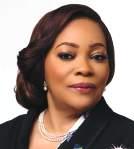
ABOYADE FUNKE (SAN) Lawyer, Principal Partner, Aboyade & Co
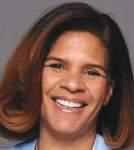
UKEJE, NNENNA Politician, House of Representatives.
TILAHUN ALEMU, BETHLEHEM Entrepreneur, SoleRebels
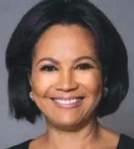
ZILLE, HELEN Politician, Activist, Democratic Alliance (DA).
NIGERIA
SOUTH AFRICA NIGERIA
NIGERIA
NIGERIA
SOUTH AFRICA
NIGERIA
NIGERIA
NIGERIA NIGERIA
NIGERIA
SOUTH AFRICA
NIGERIA
NIGERIA
SOUTH AFRICA
ETHIOPIA
NIGERIA
SOUTH AFRICA
SOUTH
NIGERIA
NIGER
The Electoral Act will influence positively how the country is governed, writes OPEYEMI BAMIDELE
FOR A CLEANER, HEALTHIER LAGOS
The state enforces discipline to realise a cleaner Lagos, argues TUNDE AJAYI
5G AND CONNECTIVITY GAPS
Services of the 5G for mobile phones are still limited in Nigeria, reckons SONNY ARAGBAAKPORE
TAKEAWAYS FROM NEW ELECTORAL ACT
The Electoral Act, 2026 has finally come into force. Its enactment confirms the demise of the old order that never perfectly met our aspirations and proclaims the birth of an entirely new order that now promises the future we all desire. The National Assembly enacted the Act purely in the collective interest of the citizenry to deepen credibility; promote transparency and boost the integrity of our electoral process. Unlike before, the process, which culminated in its passage alone, took the parliament two years of rigorous work and broader engagement.
But why did the process take us such a long time? First, the process was inclusive and not unilateral. It was painstakingly midwifed to broadly engage key stakeholders - civil society organisations (CSOs) development partners, Independent National Electoral Commission (INEC) and Office of the Attorney-General of the Federation (OAGF). Second, it entailed building confidence across all the strata of our fatherland so that the parliament would not work at cross purposes with the stakeholders.
At the end of it all, the two-year process delivered us an entirely new electoral governance framework that will henceforth regulate how we manage our political parties; how we choose our political leaders and how we govern our nation in line with democratic tenets that reinforce the public confidence. The process did not scale through easily. Clause 60(3) of the Electoral Bill, which deals with how election results are transmitted from the polling units, sharply triggered divergence among lawmakers in both chambers.
But the clause was subjected to clauseby-clause voting, a globally recognised mechanism for dispute resolution among democratic legislatures. In the Senate, at least 70 lawmakers took part in the consideration of the clause. Of this figure, no fewer than 55 senators approved the adoption of electronic transmission of election results with a proviso while 15 disapproved it. This represents a 78.57 % approval, and its outcome is consistent with core tenets and values that govern democracies globally. Does this suggest the parliament disapproved the clause? We did not reject it, but I will address what we did later in this piece. Specifically, for me, the way we managed the process; the way we addressed dissenting voices and the way we mainstreamed inclusiveness into the whole process are a testament to the resilience of our democracy. How is it a testament? It will be clearer before I round off this piece. What then can we
learn from the enactment of the Electoral Act, 2026? Or what does the new regime portend for the country’s political environment? The new regime, honestly, is a major shift from our previous electoral governance frameworks. This is evident in the preponderance of key reforms embedded in the new regime.
At least, there are 12 compelling takeaways about the Act that no stakeholder can deny or downplay. The first is the creation of a dedicated fund for the INEC under Section 3. The logic behind the Fund is pure and simple: it aims at enhancing financial autonomy, operational stability and administrative efficiency of the electoral institution. Also, this provision perfectly aligns with Section 153(1) and Third Schedule, Item F, paragraph 14 of the 1999 Constitution that authorise the INEC to exercise its powers independently and without undue interference from any quarters. Unlike the 2022 Electoral Act, the new regime stipulates that the election funds “due to the INEC for any general election shall be released not later than 6 months before the next general election…” It is now obligatory and no more optional as it was under the old regime.
The second is explicit in Section 47(2) of the Electoral Act, 2026. The section provides for the compulsory use of Bimodal Voter Accreditation System (BVAS) or any other technological device mandatory “to verify, confirm or authenticate the particulars of the intending voter in the manner prescribed by the INEC”. Wherever such a device fails to function and a fresh one is not deployed, Section 47(3) stipulates that the election of the polling units “shall be cancelled and another election shall be scheduled within 24 hours if the INEC is satisfied that the result of the election in that polling unit will substantially affect the final result…”
The third decisively addresses the issue that often arises from the mingling of female and male voters on the queue. In some parts of the federation, culture frowns at such a practice. This factor has been one of the explanations for the low voter turnout in some states because of the belief they hold or the culture they
practise. But Section 49 now authorises the presiding officers “to separate the queue of male voters from that of female counterparts” in areas where culture is dominant. Its essence is two folds. First, it is in observance of the belief or culture that does not permit the mingling of female and male voters on the same. Second, it is a measure aimed at boosting broader participation in our electoral process.
Another takeaway relates to a mechanism introduced to deepen inclusiveness in our country’s electoral process. This mechanism is designed to support voters with visual impairment or other forms of disability. Under Section 54(1), the new regime authorises the presiding officers to provide an environment that can support voters with such conditions to exercise their suffrage without let or hindrance. But the section further stipulates that no political party agent, candidate or party official “shall be permitted to accompany a voter into the voting compartment.”
Under Section 54(2), the Act equally seeks to protect the rights of vulnerable voters. The section directs the INEC to “take reasonable steps to ensure that persons with disabilities, special needs and vulnerable persons are assisted at the polling place by the provision of suitable means of communication, such as Braille, large embossed print, electronic devices, sign language interpretation, or off-site voting in appropriate cases.”
This provision further deepens inclusion into our country's electoral governance framework and ends the vicious cycle of exclusion that prevailed in our political environment long before now.
The fifth resolves how election results should be transmitted after the conclusion of voting. This triggered a protracted debate that lasted four weeks. But consensus was eventually reached in favour of Section 60(3) of the Electoral Act. The section now guarantees the mandatory electronic transmission to the INEC Result Viewing Portal (IReV) from the polling units. It is consistent with the public demand that electronic transmission should be compulsory. But the Act looks beyond mere electronic transmission. It factors in an unforeseen situation that may cost dearly if not properly addressed. It foresees communication failure, which may occur before or during the voting process. We can create a mechanism that will help us legally resolve issues that may arise. In this instance, the presiding officers may fall back on Form EC8A for the purpose of result collation.
Senator Bamidele, CON, is the Leader of the Nigerian Senate
Services of the 5G for mobile phones are still limited in Nigeria, reckons SONNY ARAGBA-AKPORE
5G AND CONNECTIVITY GAPS
Nearly five years after the introduction of the fifth generation (5G) technology for mobile telephones in Nigeria, the services are still skeletal and largely limited to parts of the urban centres.
Even at that, not every urban centre has services, and those that have a semblance of services at all, not every area can boast of them. Several reasons can be traced to this. The technology is not cheap to deploy, and so there is a paucity of investment in it, leading to slow and painful decisions to deploy and deliver services by service providers. Apart from the high cost of deployment worsened by high foreign exchange rates, the initial enthusiasm that welcomed the service has waned as the wait for it petered out as a result of the high cost of sign-on fees for acquisition and devices.
Because of very low patronage, operators are not encouraged to devote more resources to growing the networks across the country. But industry regulators, the Nigerian Communications Commission (NCC) says there is a bright future for the service. Admitting the manifest gaps between the urban and rural areas for all network coverage, the NCC says it is more troubling with 5G.
After a thorough examination of what it calls 5G Reality Check and Closing the Gap between Coverage and Usage, the NCC says its examination has been able to explore “how Nigeria’s growing 5G footprint is translating into real user experience, introducing the '5G Gap' between nominal coverage and actual service quality on the ground.”
The Commission says by assessing performance and adoption across the 774 local government areas (LGAs), its report “highlights zones where networks exist but are not yet delivering their full potential.”
“The NCC is using these insights to engage operators on network optimisation, smarter investment planning and performance improvement, ensuring 5G deployment delivers meaningful benefits beyond rollout statistics. To examine the 5G Gap, the NCC took a cursory look at every Local Government Area in Nigeria to measure a "Deployment Opportunity Score," which combines Network Performance to determine how fast the downloads and upload speeds really are.
The report lists users' pains and their struggles with buffering or lag, as the case may be.
Adoption of it is low, thus making the NCC ask rhetorically, “Is the 5G infrastructure actually being used, or is it sitting idle?” It finds that in many areas, the towers are there, but the experience has not caught up with the people. This gap represents a massive
opportunity for improvement. The 5G network in Nigeria aims to provide faster internet speeds, lower latency, and enhanced connectivity for various applications, including streaming, gaming, and business operations. The licenses are in the 3.5GHz band, which is considered ideal for 5G deployment, offering a balance between coverage and capacity. In reality, ownership of 5G mobile phones in Nigeria greatly outpaces coverage, leaving many users unconnected to the network, according to a report conducted by Ookla and the NCC.
The “Nigeria Network Performance and 5G Opportunity Analysis” report, released recently, found that 70.9% of 5G-capable devices in Lagos are unable to connect to any 5G network. At the same time, the same goes for 65.6% of 5G devices in Abuja. According to the NCC, the results highlight “significant disparities in network experience across the country,” even in urban areas. That said, the gap is even more pronounced between urban areas where 5G is being deployed and rural areas that remain stuck with 2G and 3G networks. “This imbalance continues to limit digital inclusion and economic opportunity outside the major cities,” the NCC report said. While pledging to accelerate 5G deployment in urban areas, as well as 4G and 5G expansion into underserved rural regions, the regulator also advised telcos to focus investment on improving latency and reducing jitter across all networks “to ensure a high-quality experience for real-time applications. “In terms of operators' efforts to bridge the gaps, the NCC says it analysed how the four major operators are managing this transition and comes with a summary that states that MTN currently shows the smallest gap, meaning their deployed infrastructure is closely aligned with actual user experience. Airtel shows mid-range performance, indicating that the gap here is often due to a lack of compatible devices in certain areas, not just the network itself.
Aragba-Akpore is a member of THISDAY Editorial Board
The state enforces discipline to realise a cleaner Lagos, argues TUNDE AJAYI
FOR A CLEANER, HEALTHIER LAGOS
Lagos is fighting for her environment.
According to a recent report, 17 residents of the state were arraigned and fined N40,000 each for open defecation and urination, with the option of one month imprisonment if they refused to pay. Some people have described the punishment as harsh but I think it's a proactive move by the Lagos State government led by Governor Babajide Sanwo-Olu.
“These acts have never been acceptable, as they degrade public spaces and deface our megacity,” the Lagos State government said on its X account.
“The government remains resolute and will continue to clamp down on defaulters to ensure a cleaner, healthier Lagos for all.”
In another report, the Lagos Waste Management Authority (LAWMA) stated that it recorded 1,023 illegal dumping and waste violations in 2025 alone, with 447 cases referred for prosecution. This happened in just one year. At that gross scale, it is not a “government problem.” That is a behavioural problem. It is therefore a positive development that the Lagos State government is attacking violators of the environment. Residents, developers, traders and cart pushers alike should know that the era of “anything goes” is over.
There is a particular kind of outrage Nigerians reserve for Lagos. If it rains, Lagos. If there is traffic, Lagos. If someone sneezes in Oshodi, it is somehow the governor’s fault. But when a government quietly rolls up its sleeves and decides that a megacity cannot coexist with open defecation and midnight dumping, some members of the public suddenly go quiet. Or go about making wild excuses that the government needs to build more public toilets.
Critics will say enforcement is the easy part. But enforcement in a city of Lagos’ scale is anything but easy. Midnight dumpers who operate between 12am and early morning hours according to LAWMA operatives cannot be described as cooperative citizens. Hence, as LAWMA intensifies its surveillance, arrests and hand over defaulters for prosecution and conviction, it should be commended. Consequences for those who litter and spoil Lagos is how culture changes and not by hashtags alone.
No serious mega city tolerates people turning public spaces into open toilets. Lagos, with over 20 million residents, cannot aspire to global-city status while battling
habits that belong in the 19th century. A city that wants foreign investment, tourism, global conferences and tech hubs cannot simultaneously wink at environmental indiscipline. Clean streets are not cosmetic but are essentially economic infrastructure. There is also a deeper economic logic at play. According to data, Lagos generates about 13,000 metric tonnes of waste daily. That's a huge amount. And when refuse blocks drains, the result is flooding. When flooding hits, businesses shut down, properties are damaged, productivity drops, and the government spends billions on emergency response and reconstruction. Environmental indiscipline is therefore not merely untidy but also fiscally reckless. So when the state government clamps down on illegal dumping in drains, road medians and black spots, it is not just beautifying the city but protecting its Gross Domestic Product (GDP). It is also defending property values and safeguarding public health.
Also, Lagos has often featured poorly in global liveability rankings in the past. That narrative did not emerge from thin air. It came from congestion, waste management struggles, infrastructure deficits and governance gaps accumulated over decades. The current administration cannot erase history overnight. But it can refuse to continue it. A megacity comparable to Dubai, Singapore or London does not emerge by wishful thinking. It emerges from standards - stubborn, sometimes unpopular standards. It emerges from telling a well-dressed executive that littering from an SUV window is just as unacceptable as a cart pusher dumping refuse at midnight. It emerges from prosecuting environmental offences in open court so that deterrence becomes public knowledge.
And yes, the process of ensuring a cleaner Lagos will be noisy, controversial, and inconvenience people who are used to shortcuts. But every global city story contains a chapter where the government decided that chaos had overstayed its welcome. What is particularly encouraging is the multi-pronged approach of enforcement, prosecution, public sensitisation and systemic reforms being undertaken by the state government to curb the menace of filth. LAWMA’s 2025 surveillance statistics show not only arrests but reconciliation of properties with registered waste operators. Waste must be channelled through authorised PSP operators and informal systems such as patronising cart pushers are being squeezed out. We cannot romanticise disorder and demand global respect at the same time.
Lagos is Africa’s commercial heartbeat. But investors read signals. So do tourists. So do multinational headquarters scouting expansion destinations. A city that publicly enforces sanitation laws signals seriousness. A city that ignores environmental infractions signals fragility. Lagos cannot afford to be or to be seen as fragile.
Ajayi writes from Lagos
Editor, Editorial Page PETER
ISHAKA
Email peter.ishaka@thisdaylive.com
RESOLVING THE AJAOKUTA CONUNDRUM
It's time to wind up the drainpipe
Despite setting set aside the sum of N12.18 million in the 2026 budget for a ‘Continuous National Survey on 7,841 Moribund Industries in Nigeria’, the federal government has also proposed to spend N6.04 billion on personnel costs for workers of the Ajaokuta Steel Company Limited in the 2026 budget. Yet more than half a century after it was conceived as a critical tool to the country’s industrialisation aspiration, the Ajaokuta Steel Mill remains an unproductive drainpipe. The recent heated exchange between the Minister of Steel Development, Shuaibu Audu and Senator Natasha Akpoti-Uduaghan during the joint budget defence session of the National Assembly merely symbolised the frustrations of Nigerians. Such is the disappointment that for the past four decades, debates have largely centred around whether the edifice, said to be ‘almost completed’, should be concessioned or sold as scrap.
2014, the Director of Steel and Non-ferrous Metals Department, Ministry of Mines and Steel Development, said the federal government had spent about $6 billion on the plant, and that only $513 million was needed for completion. The estimates were said to have come from the report of a technical committee. Same year, another committee said it would require $1.2 billion for the steel complex to come on stream.
The federal government should take a definitive position on the Ajaokuta Steel Company Limited. We cannot continue to commit scarce resources to fund what has become a monument to waste
With billions of Naira being expended to pay thousands of redundant workers, it is important that an amicable solution be found to what has since become a metaphor for waste, and broken dreams. That every administration has had to waste enormous resources on what has become a huge cost centre is a sad commentary for a project that was said to have been 84 per cent completed as far back as 1983, and on which between $8 billion and $11 billion had been spent, depending on whose figures are being quoted. We are concerned by the proclivity to the waste of scarce resources that Ajaokuta represents. We support the idea of concessioning it without having to invest any further public resources on the steel mill.
Although we have heard the usual promises lately, the unfortunate thing about Ajaokuta Steel Company is that nobody knows what to believe anymore. In
T H I S D AY
EDITOR SHAKA MOMODU
DEPUTY EDITOR WALE OLALEYE
MANAGING DIRECTOR ENIOLA BELLO
DEPUTY MANAGING DIRECTOR ISRAEL IWEGBU
CHAIRMAN EDITORIAL BOARD OLUSEGUN ADENIYI
EDITOR NATION’S CAPITAL IYOBOSA UWUGIAREN
THE OMBUDSMAN KAYODE KOMOLAFE
EDITOR-IN-CHIEF/CHAIRMAN NDUKA OBAIGBENA
GROUP EXECUTIVE DIRECTORS ENIOLA BELLO, KAYODE KOMOLAFE, ISRAEL IWEGBU
DIVISIONAL DIRECTORS SHAKA MOMODU, PETER IWEGBU, ANTHONY OGEDENGBE
In December 2022, the late President Muhammadu Buhari said the federal government had begun the concession process by first rescuing it from “legal disabilities.” He stated that the process had cost the federal government over $400 million, adding that after the 'legal rescue', the government was looking for a private investor with the “right profile.” At the end, despite settling for the concession option and going ahead to appoint a transaction adviser, nothing came out of the investments. That perhaps explains why when the Managing Director/Chief Executive Officer, Abdulsalam Naeem, promised last year that the steel company will work under the current administration, not many people took him seriously.
In fact, more than two years after the Minister promised a three-year road map to resuscitate the moribund steel company, there is nothing to suggest any action has been taken. “We are looking at where different aspects can be handled by different people with different core competencies,” Audu said at the time, while touting figures like his predecessors. “What we plan to do is to start the Light Steel Mill or the LSM section, which will cost us about N35 billion to be able to produce 50,000 metric pounds of iron rods.” This is music to the ears, but we are yet to see how the federal government will give practical expression to this promise.
We urge the federal government to take a definitive position on the Ajaokuta Steel Company Limited. We cannot continue to commit scarce resources to fund what has become a monument to waste.
Letters in response to specific publications in THISDAY should be brief (150-300 words) and straight to the point. Interested readers may send such letters along with their contact details to opinion@thisdaylive.com. We also welcome comments and opinions on topical local, national and international issues provided they are well-written and should also not be longer than (750- 1000 words). They should be sent to opinion@thisdaylive. com along with photograph, email address and phone numbers of the writer.
FCT ELECTION AND LOW VOTER TURNOUT
Out of the estimated 1.68 million registered voters in the Federal Capital Territory (FCT), only about 239,210 turned out to vote; representing roughly 14–15% voter participation. This figure is not only worrisome but also indicative of a deeper democratic challenge that cannot be ignored.
The 2026 FCT Area Councils elections therefore require a thorough post-mortem to uncover the root causes of this low turnout. Was it voter fatigue, dissatisfaction with political actors, lack of awareness, logistical shortcomings, security concerns, or a general loss of confidence in the electoral process? These questions must be carefully examined through data-driven analysis and stakeholder engagement.
Some observers were of the view that the imposed restriction on movement contributed significantly to the low turnout, as it may have discouraged or inconvenienced many eligible voters. Others pointed to what they described as the overwhelming posture of the ruling APC, which some voters perceived as so dominant that their participation would not alter the outcome. In their view, even if they turned out to
vote, the APC was certain to win, and their individual votes would not make a meaningful difference.
Addressing this level of voter apathy is critical, especially with the 2027 general elections approaching. The Independent National Electoral Commission (INEC), political parties, civil society organisations, and other relevant authorities, including students of politics must take proactive steps to rebuild public trust, strengthen voter education, review election-day policies such as movement restrictions, improve logistics, and enhance transparency as well as do an academic analysis of‘ Why.’ A democracy thrives on active citizen participation. If such low turnout persists, it risks weakening the legitimacy of elected officials and undermining public confidence in the democratic system. The lessons from the FCT elections should therefore serve as an urgent call to action to ensure broader voter mobilisation and participation in future electoral cycles.
Zayyad I.Muhammad, Abuja
TIME TO GET A NEW COACH
The recent decision by the US Supreme Court was correct, but surprising. A 6-3 vote count was expected but rather as 3-6. Sometimes people do the right thing.
Sports can be an analogy for many parts of life, do your beat, train hard, play fairly, accept the umpires decisions and accept your loses when they happen but not everyone does this and a few do none.
As a coach of many school sporting teams I have tried to encourage these attributes in my players. I have never called a player that I selected a 'loser' even on the few occasions when their performance would perhaps justify it. I doubt that Donald Trump ever coached one of his children's sporting teams for which many other children could be thankful.
I think Trump's team, the Republicans, aren't going to have many victories this year under his leadership. As to whether this is better or worse others can decide that Dennis Fitzgerald, Melbourne, Australia
Politics
Acting Group Politics Editor DEJI ELUMOYE
Email: deji.elumoye@thisdaylive.com
08033025611 sms only
The Babajimi Benson Identity
Definitely not your usual example in leadership and legislative representation. Hon. Babajimi adegoke Benson, member, House of Representatives for Ikorodu, Lagos, boasts a distinct class. oluwaseyi Adedotun writes.
At a time when the Nigerian politics is often too shaped by noise, spectacle and fleeting popularity, one lawmaker among the 360 members of the House of Representatives, has distinguished himself as a disciplined disruptor of progressive governance.
In Ikorodu Federal Constituency and increasingly across the national political landscape, Hon. Babajimi Adegoke Benson, is recognised not for rhetorical flourish, but for measurable results.
To constituents, party leaders and civic stakeholders alike, Benson represents a rare model of outcomes-driven leadership.
This assessment is evidence-based, as it is grounded in institutional representation that is principled in intent, informed by lived constituency realities, and executed with accountability.
Little wonder, he emerged the THISDAY House of representatives member for last year.
Beyond the symbolism of office, Benson has become a working template of what credible, progressive governance looks like in practice.
For many observers, he is more than a representative voice; he is a stabilising signal, proof that public service can still reconcile integrity with performance while advancing the President’s Renewed Hope Agenda.
His legislative career reflects a deliberate effort to align principle with productivity, earning him the reputation of a tested and trusted public servant.
A third-term lawmaker, first elected into the Green Chamber in 2015, Benson has maintained an active legislative footprint from the 8th Assembly through the current 10th Assembly.
Across these sessions, he has sponsored and co-sponsored numerous bills and motions, several of which have been assented to and are being implemented for the public good, an uncommon marker of effectiveness in a legislature where many proposals stall.
Keen followers of happenings in Ikorodu, including public and legislative policy analysts concluded that Benson’s disruption of progressive politics is not ideological vandalism; but restorative – both in concept and form.
He has consistently rejected empty symbolism in favour of substance, replacing performative activism with people-centred governance.
Under his watch, representation is accessible and responsive, felt not in press statements or social media paparazzi, but in the everyday experiences of citizens. His ideas are not given to flashes and pizzas.
At the national level, Benson’s effectiveness is evident in both the volume and velocity of his legislative work. He has sponsored and co-sponsored dozens of bills and motions, some passed, others with a higher rate of passability, many of which have advanced beyond first reading into committee harmonisation and passage stages.
This is an indicator of his quality drafting style, stakeholder consultation and consensus-building, only common to experienced and ranking representatives.
Illustrative examples include motions addressing troop welfare and operational readiness, prompting engagements with the Defence Headquarters and service chiefs; bills and resolutions focused on security-sector accountability, border security coordination and veterans’ welfare.
There are also issues that intersect national security with human dignity; and interventions during defence budget sessions that strengthened capital releases for logistics, ensuring appropriations translate into operational capacity rather than paper
allocations.
Complementing these are substantive bills sponsored by Benson, including proposals to strengthen welfare and insurance coverage for armed forces personnel; amend existing defence and security frameworks to improve training standards and institutional coordination.
Further to his credit are established structured support and reintegration pathways for military veterans; and promote education, youth development and skills acquisition through federal institutions and targeted constituency-focused legislation.
In addition, Benson sponsored the landmark amendment to the Electric Power Sector Reform Act, recently endorsed by the National Assembly, to empower host communities of thermal power stations.
When assented to by the president, host communities, particularly those around the Egbin Thermal Power Station in his Ikorodu constituency, will
receive five per cent of the actual annual operating expenditure of power generation companies operating within their areas, to be deployed for community development and mitigation of environmental and social impact.
Benson’s stature is further amplified by his role as Chairman of the House Committee on Defence, placing him at the nerve centre of Nigeria’s most sensitive governance priority. Indeed, a man’s physiognomy cannot be a measure of his capacity in all ramifications.
Under his leadership, the committee has deepened oversight of defence expenditures with an insistence on value-for-money and operational relevance; sustained constructive engagement with military leadership, balancing confidentiality with constitutional accountability; and elevated troop welfare, housing, healthcare, training and morale, as a core security metric.
This lawmaker from Lagos consistently argues that security governance must balance strength with accountability and secrecy with legislative responsibility.
He advocates improved inter-agency coordination, intelligence-driven operations over reactive deployments and sustained investment in personnel welfare to rebuild
For the progressive movement, a disruptive force for good. And for nigeria’s evolving governance architecture, Benson stands as a clear signal of what works, what is sustainable and what credible leadership should look like.
civil-military trust.
His approach rejects populism in favour of coherence, treating national security as a policy ecosystem requiring seriousness, not slogans.
Despite national responsibilities, Benson’s connection to Ikorodu remains organic and constant. In his style, constituency engagement is institutionalised, not ceremonial.
Regular town halls, stakeholder consultations, youth dialogues and engagements with traditional institutions create a continuous feedback loop between Ikorodu and the National Assembly, ensuring national debates remain grounded in local realities.
In December 2025, Benson hosted over 420 outstanding pupils from public primary schools across Ikorodu for a Christmas Shopping and Hangout in Lagos.
Selected strictly on merit from Primary One through Primary Six, the initiative celebrated excellence and reinforced the principle that sustainable education reform begins with recognising both learners and teachers.
The impact was immediate. Renewed motivation among pupils, morale boosts for educators and strengthened trust between schools and public leadership.
Oversight remains the spine of Benson’s legislative identity. Through persistent engagement with federal ministries and agencies, he ensures that approved projects are executed, standards upheld and public funds converted into public value.
This is reflected in tangible constituency outcomes, including the reconstruction of five internal roads to improve mobility and safety, and the ongoing Agbede-Ita Oluwo Road (7.5km), a project set to unlock connectivity, stimulate commerce and attract investment.
Beyond the legislature, Benson’s governance philosophy finds expression in the iCare Foundation, established in 2016, years before social protection became fashionable policy language. The Foundation pioneered structured community welfare at scale, particularly in Ikorodu.
Its interventions include Apo Anu (Mercy Bags) for regular food support to vulnerable households; scholarships, learning materials and merit-based educational recognition; skills acquisition programmes linked to employability and small-business support; and targeted assistance for indigent families during emergencies.
Observers believe that Lagos State’s later Eko Care framework mirrors aspects of Benson’s iCare model. Rather than diminishing state policy, the parallel underscores his foresight and illustrates how communityincubated ideas can mature into scalable governance solutions.
Taken together, his legislative productivity, committee leadership, disciplined oversight, deep constituency engagement, federal project delivery and humanitarian innovation, Benson has become exceptionally difficult to replace as representative of Ikorodu, except by his own choice.
His bond with the people is organic; his record, verifiable. At a critical juncture in Nigeria’s journey, Benson embodies the leadership the Renewed Hope Agenda requires: evidence-based engagement, human-centred policy and consistent delivery.
His politics is not transactional; it is transformational, prioritising systems over slogans, substance over spectacle and people over politics.
For Ikorodu, therefore, he remains a steady hand and trusted voice. For the progressive movement, a disruptive force for good. And for Nigeria’s evolving governance architecture, Benson stands as a clear signal of what works, what is sustainable and what credible leadership should look like.
Benson
Forever in our Hearts
It’s been 5 years today since you left
us to be with our Lord. No day goes by without us thinking and wishing you were physically here.
In the last 5 years, we have been able to keep your ship steady and sailing with progression and pride.
We thank you for the impactful life you lived, the goodwill you left behind and values you instilled in us. Your family and friends still speak of you with such great passion and vigor You were the greatest definition of a father, brother and friend.
Long may your memory live on and may your beautiful soul continue to rest in eternal peace.
Signed: WILSON OMO AIKHOMU (For the family)
I t ’ s b e e
n
F ive Years
Mike Osime
Ebenezer Onyeagwu
Sola Oguntolu
Continue to Rest Peacefully in the Bosom of the Lord, Our Dear Friend and Brother.
Timi Alaibe
Greg Uanseru
Okey Anueyiagu
Emeka Onwuamaegbu
Rear Admiral
Joe O Aikhomu (rtd)
Despite moderate yields, investors’ total FGN bond subscription reached N4.95trillion in the first two months of 2026 , about 115 per cent increase over N2.3 trillion in the first two months of 2025.
The federal government through the Debt Management Office (DMO), during the period, offered to raise N1.7trillion as against the N800 billion in 2025.
Eventually, the government raised an estimated N2.19 trillion, representing an increase of nearly 46 per
Nume Ekeghe
Amid mounting public debt pressures, it has been established that the fiscal squeeze extends beyond the federal tier to the subnational level, as 36 states and the Federal Capital Territory (FCT) collectively recorded a combined domestic and external debt stock of N4.002 trillion as at September 30, 2025.
This, analysts said, underscores the deepening
cent over N1.51 trillion in 2025.
A breakdown of the FGN bond audition result showed that in January 2026, the DMO reopened the FEB-2031, FEB-2034 and JAN-2035 bonds, offering a total of N900.00 billion.
Total demand settled at N2.25 trillion with the DMO eventually allotting (non-competitive allotment) N1.68 trillion at respective stop rates of 17.62per cent, 17.50per cent, and 17.52per cent.
For the February 2026 FGN bond auction, the DMO reopened the AUG-2030,
exposure of subnational governments to rising debt obligations.
Latest figures released by the Debt Management Office (DMO) show that while the total public debt stock of the country stood at N153.29 trillion within the review period, the debt owed by states and the FCT accounted for 2.61 per cent.
A closer look at the data reveals a significant concentration of liabilities among a small group of
MAY-2033 and FEB-2034 bonds, offering a total of N800.00 billion.
Total demand settled at N2.6.9 trillion with the DMO eventually allotting N524.28 billion. The stop rate on the FEB 2034, which was on-the-run last month, declined by 200 basis points to 15.50 per cent.
THISDAY had reported that the debt office in 2025 raised an estimated N5.26 trillion via the FGN bond market, about a 9.93 per cent drop from N5.84 trillion raised in 2024.
The federal government had projected to borrow
states. Ten states alone were responsible for N2.68 trillion about 67 per cent of total subnational debt underscoring the uneven fiscal landscape across the federation.
Lagos State tops the list by a wide margin, with a debt profile of N1.045 trillion. This represents roughly 26 per cent of the total debt stock of all 36 states and the FCT combined, highlighting the scale of borrowing by the country’s commercial
approximately N13 trillion from FGN bonds in 2025 to finance budget deficit.
The N4.95 trillion total subscription in the first two months of 2026 is a reflection that investors, most especially the Pension Fund Administrators (PFAs) tend to invest in risk-free instruments, which the FGN Bond and Nigerian Treasury Bills (NTB) offer to the investing public.
The DMO has since the beginning of the year continually re-opened some FGN Bonds amid modest interest rates in a move to attract investors.
nerve centre.
Lagos’ debt portfolio reflects its aggressive infrastructure expansion strategy, including investments in transportation, housing and urban renewal.
Far behind Lagos is Rivers State, with a debt stock of N381.205 billion. Delta State follows with N247.171 billion, reflecting sustained borrowing among oil-producing states despite relatively stronger internally generated revenues.
Enugu State ranks fourth with N194.715 billion, while
Finance analysts attributed the strong demand for FGN bonds to modest yields, stressing that the over-subscription also revealed that investors have confidence in the federal government’s ability to meet its debt obligations.
“The appetite for FGN bonds indicates that PFAs, and Nigerian investors prefer investment instruments with less volatility that assures them of their capital returns albeit with low yield on investment. So, investors expect higher yield for this particular issuance, while the government does not wish
Ogun State and Bauchi States recorded debt stocks of N168.093 billion and N158.197 billion respectively.
Further down the list, Niger State owes N143.469 billion. Cross River State and Benue State posted debt figures of N141.941 billion and N107.254 billion respectively, while Akwa Ibom State rounds off the top 10 with N95.506 billion.
The concentration of debt among these states raises questions about
to borrow at a higher interest rate,” said an investment banker & stockbroker, Mr. Tajudeen Olayinka.
In recent years, Nigeria’s rising debt profile has been a topic of concern, as Vice President, Highcap Securities Limited, Mr. David Adnori, warned that the country’s debt levels are unsustainable. The DMO had maintained that the robust subscription levels highlight continued investor confidence in the government’s debt instruments, driven by attractive yields and Nigeria’s stable credit ratings.
sustainability, particularly against the backdrop of exchange rate volatility, rising interest costs and slower revenue growth. While some indebted states argue that borrowings are tied to long-term infrastructure and growthenhancing projects, analysts warn that weak fiscal buffers and heavy reliance on federal allocations could heighten refinancing risks.
Kayode Tokede
Nigeria, India, Brazil Emerge Highest-cost Markets for Retail Investment Platforms
Sunday Ehigiator
Nigeria, India and Brazil have been ranked among the most expensive markets for retail investment platforms globally, according to a new cross-border analysis by The Investors Centre (TIC).
The study, which reviewed trading costs across 50 countries, revealed that investors in Nigeria, India and Brazil face significantly higher platform-driven trading expenses compared
to investors operating in major global financial hubs.
The report examined fees charged by major investment platforms including Capital. com, Trading 212, Binance, eToro, Plus500 and Interactive Brokers.
The analysis focused strictly on platform-level costs such as spread markups, foreign exchange (FX) conversion fees, overnight financing charges and withdrawal or inactivity fees, excluding government taxes and statutory levies.
The report placed Nigeria as the highest-cost environment for retail investors, attributing the ranking to wide FX conversion spreads, limited
broker competition and funding friction, especially for investors trading dollardenominated assets or cryptocurrency.
India ranked second due to higher financing charges and broader FX margins affecting leveraged and cross-currency transactions,
while Brazil’s third-place ranking was linked to currency volatility pricing and elevated funding and conversion costs.
Mutual Benefits Assurance Pays N5.93bn Claims in One Month
Ebere Nwoji
Mutual Benefits Assurance said it has paid a total of N5.93 billion claims to policyholders in January
2026 alone. The compay said this underlined its strong financial capacity and unwavering commitment to prompt claims settlement.
A breakdown of the figures shows that N3.42 billion was paid under General (Non-Life) Insurance portfolio, while N2.51 billion was paid across its Life businesses, including Group Life and Retail Life policies.
The underwriting firm said the significant pay out within a single month reinforces its reputation as a dependable insurer that honours its obligations swiftly and responsibly.
Commenting on the development, Managing Director, Mutual Benefits Assurance Plc, Olufemi
Asenuga, stated that claims settlement remained the core promise of insurance and the ultimate test of an insurer’s credibility.
“Insurance is built on trust. Our ability to settle over N5.9 billion in claims in one month demonstrates not only our financial strength, but also our deep commitment to our policyholders. “At Mutual Benefits, we do not just sell policies. We stand by our promises,” he said.
According to Asenuga, with over three decades of operations, Mutual Benefits has consistently positioned itself as a strong and well-capitalised insurer. The company operates both Life and General
Insurance businesses and remains fully compliant with regulatory capital requirements as stipulated by the National Insurance Commission (NAICOM).
Asenuga said the January pay out reflects Mutual Benefit’s robust underwriting standards, prudent risk management practices and efficient claims administration framework.
He further said it also aligns with the company’s broader record of substantial claims settlement in recent years, reinforcing its standing as a trusted brand in the Nigerian insurance industry.
“Mutual Benefits employs over 5,000 staff, managed by seasoned management team and an experienced Board of Directors”.
NAICOM Signs Agreement with OPSN on NIIRA Implementation
Ebere Nwoji
The National Insurance Commission (NAICom), has signed agreement with members of the Organised Private Sector Nigeria (OPSN), for a coordinated implementation of provisions of the Nigerian Insurance Industry Reform Act (NIIRA) 2025 and the deployment of sector specific insurance products for the maritime and petroleum sectors.
The agreement was signed during a recent visit of the members of OPSN representatives to NAICOM.
Leader of the delegation and Chairman of the OPSN Insurance-Tech Committee, Dr. Alban Igwe stated that the engagement followed
months of stakeholder consultations across the maritime and petroleum sectors, including freight forwarders, transport associations, retailers, and underwriters. He said they were at NAICOM for regulatory discussions on implementation provisions of the Law and operationalisation of insurance products to address longstanding gaps in compensation and risk transfer in these sectors.
Igwe said the initiative was a multi stakeholder, private sector led effort mandated by two federal ministries (Ministries of Petroleum and Blue Economy) to coordinate stakeholders and propose
implementation of insurance provision under the NIIRA 2025.
The Commissioner for Insurance welcomed the initiative, stating that NAICOM was committed to collaborating with stakeholders to implement NIIRA 2025. He emphasised that the commission was responsible for issuing frameworks, guidelines, and premium determinations for compulsory insurance products under NIIRA 2025, and that technical proposals must align with the regulator’s remit. He stressed that consumer protection was paramount, and proposals must be justified and assessed for fairness.
L-R: Director Banklink Africa, Francis Ekeng; Managing Director Deap Capital Management & Trust PLC, Anthony Adigwe; Managing Director RGM Materials Solution Ltd, Temitope Oduseso; and Partner Dentons ACA Law, Dr Sanford Mba, at the Final Definitive Agreement Signing Ceremony with Strategic Investors, Banklink Africa Private Equities Ltd and RGM Material Solution LTD at Ikeja, Lagos… recently
Transmission Challenge in Nigeria’s Monetary Policy
Adaeze Obi
The beginning of a new year is typically a moment for reassessment. For policymakers, it is a time to evaluate what has worked, what has not, and what must change. In monetary policy, the test is not how decisively action is announced, but how effectively it transmits through the economy.
Policy rates matter only to the extent that they influence prices, credit, investment, and household welfare.
When those links weaken, tightening becomes costly without being corrective.
As the year opens, this challenge is increasingly visible in Nigeria’s current macroeconomic environment.
At its 303rd Monetary Policy Committee meeting held in late November 2025, the Central Bank of Nigeria (CBN) retained the Monetary Policy Rate (MPR) at 27 per cent, maintaining a highly restrictive stance as the economy entered the new year.
At the same time, headline inflation stood at 14.45 per cent year on year in November 2025, reflecting only modest easing despite prolonged tightening.
These figures frame the economic starting point of the year and highlight a growing disconnect between policy intent and economic
outcome.
Theory Structural Constraints
In standard Keynesian and monetarist economic theory, as developed by John Maynard Keynes and later formalised by Milton Friedman and New Keynesian economists, higher interest rates reduce inflation by dampening aggregate demand. Borrowing slows, consumption moderates, and price pressures ease.
This mechanism works best when inflation is demand- driven and when financial markets efficiently transmit policy signals to households and firms. Nigeria’s inflation, however, is largely structural.
Food prices remain heavily influenced by insecurity, logistics inefficiencies, climate related disruptions, and supply chain weaknesses. Core inflation continues to reflect exchange rate pass through, elevated energy costs, and import dependence.
In this context, tighter monetary policy addresses symptoms rather than causes, while intensifying stress across the real economy.
Currency Transmission Gap
The credit channel illustrates this weakness clearly. With the policy rate
at 27 per cent, commercial lending rates have climbed even higher as banks price in funding costs and risk premiums. Data from the banking system show that financial institutions increasingly prefer placing funds with the central bank rather than extending credit, attracted by high-risk free returns.
By late 2025, banks’ deposits with the central bank had risen to over N336 trillion, tightening credit conditions just as businesses plan for a new year of operations and investment. For small and medium sized enterprises, borrowing has become prohibitively expensive, constraining expansion at a time when growth is most needed.
Exchange rate dynamics further complicate transmission. Currency adjustments were necessary to correct distortions, but in an import dependent economy depreciation continues to feed rapidly into domestic prices.
Higher interest rates provide limited insulation against imported inflation and instead raise financing costs for local producers who might otherwise expand capacity and reduce exposure to external shocks.
What 2026 Demands
The macro-economic outcome is
paradoxical. Tight money suppresses growth and employment while doing little to ease inflation driven by structural supply constraints. Price pressures persist not because demand is excessive, but because productive capacity remains impaired. None of this implies that monetary discipline is optional. Price stability remains essential. But discipline without coordination is insufficient. Monetary policy cannot compensate on its own for deep rooted structural weaknesses. As the year begins, restoring transmission should be the priority. Supply side drivers of inflation must be addressed alongside monetary tools. Credit access for productive sectors must be protected. Domestic supply chains must be strengthened.
Adjustment must not erode economic capacity. If the new year is to deliver more than endurance, monetary policy must work not just in theory, but in practice. When inflation remains elevated, credit contracts, and households feel poorer despite tightening, the problem is not resolved. It is transmission. Fixing that gap is the macroeconomic task of this moment.
• Adaeze is a finance expert at Technooil limited with deep research driven economic insights and a former PwC senior consultant.
Pally Agro Unveils Expansion Plan, Strengthens Distribution Model
Kayode Tokede
Pally Agro Group has unveiled an ambitious growth and expansion plan, introducing a structured territorial distribution system and fresh incentives for partners as it seeks to consolidate its position in Nigeria’s food and agroallied sector.
The announcements were made at the weekend in Lagos at the company’s Business Partners Engagement forum tagged
“A Cozy Time-Out,” where directors, management, distributors, vendors and bulk buyers gathered to review performance and chart the next phase of growth.
Opening the event, Board Director Paul Aseme described the gathering as a deliberate effort to “interact, listen and most importantly appreciate” the company’s partners, whom he credited as a major pillar of its resilience and expansion over the past two decades.
In her remarks, Managing Director, Pally Agro Group,
Mrs. Anwuli Onyeagu, underscored the company’s philosophy that quality is both personal and non-negotiable.
“Everyone needs good food, and for us, it goes beyond just feeding people. We are deeply passionate about health and well-being. From the very beginning, we made a clear decision: whatever we produce and sell must be good enough for us and our families to consume,” she said.
Chairman, Pally Agro Group, Mr. Nwapali Onyeagu in his address, said the
Bitget Rolls out Zero-fee for P2P in Naira Markets
Bitget, has announced an update to its peer-to-peer (P2P) fee structure for the Naira (NGN) Fiat Pair. The adjustment is designed to enhance liquidity and support evolving trading activity utilizing the currency.
Under the revised structure, takers, users who fill existing orders on the NGN market, will incur zero fees, while advertisers (makers) providing
liquidity will be charged a fee of 0.1 per cent on both buy and sell orders. This applies specifically to trades involving the Nigerian Naira on Bitget’s P2P marketplace.
According to Bitget’s CMO, Ignacio A. Franco, “This change reflects Bitget’s ongoing effort to adapt trading infrastructure in key regional markets and to maintain an efficient P2P trading environment tailored to local demand. Our priority is to continuously refine our
marketplace to better serve local communities,”
“By introducing zero taker fees for NGN P2P trades while maintaining a competitive structure for makers, we aim to stimulate liquidity and make crypto access even more seamless for the currency users. We remain committed to adapting our infrastructure to evolving market dynamics and supporting sustainable growth across key fiat currencies,” he added.
SIFAX FoundationTrains 90 Lagos Students on AI Skills
The Ajoke Ayisat Afolabi Foundation, the CSR arm of the SIFAX Group, in partnership with the World Bank, has trained over ninety students of the State Senior Secondary School, Oyewole, Agege in Orile Agege Local Government Area, Lagos State, as part of its series of ongoing Community Connections Campaign Projects in Nigeria.
The training, aimed at empowering students with practical technology skills
to help them improve their education, secure jobs, and become self-employed in the long term, covered various areas, including computer literacy, machine learning, and the use of Artificial Intelligence.
Representatives were selected from different classes across the school, with the hope that they would be able to transfer the skills acquired to their colleagues.
According to Mrs. Foluke
Ademokun, the Executive Coordinator of the foundation, “this initiative is part of a series of efforts to address the issue of youth unemployment and skills gap in the country and it’s expected to benefit not only the students but also the community at large, as the students would be able to apply the skills acquired to improve their lives and contribute to the economic development of their communities”
company’s focus over the next five years would be on deliberate growth and long-term sustainability.
“We are not just building a company; we are building a legacy,” he said. “The partners who will thrive
with us are those who can see three to five years ahead and align with our long-term vision.”
REDLEAF ENERGY LIMITED
VACANCY ANNOUNCEMENT
Kayode Tokede
‘$2.4bn Grenada National Resort to Unlock Citizenship Pathway for African Investors’
Eromosele Abiodun
Optiva Capital Partners has announced that the landmark Grenada National Resort, the single largest investment in Grenada and one of the most significant hospitality developments in the Caribbean, is scheduled to open in 2027. Valued at $2.4 billion, the resort stands as a government-approved investment pathway to Grenadian citizenship, offering investors visa-free access to over 140 countries, including the UK, China, Europe, and key global business hubs.
Optiva Capital Partners’ leadership role in bringing this opportunity to African investors was reaffirmed at the project’s recent toppingout ceremony, a major construction milestone that signals the transition from heavy build to delivery.
From Africa, at the event was Chairman of Optiva Capital Partners, Franklin Nechi, underscoring the firm’s position as Africa’s foremost investmentimmigration advisor and a trusted pathway to credible, asset-backed global opportunities.
Notably, Nechi as a speaker at the event, was an unmistakable signal that African capital, when
properly structured, now sits confidently at the global high table.
Commenting on Optiva’s role, Nechi said the invitation to participate was earned through performance. “We are number one in Africa when it comes to placing investors into the Grenada National Resort as a pathway to Grenadian citizenship,” he stated. “Our clients will benefit immensely by acquiring a stake in this monumental resort.
As shareholders, they are entitled to two weeks’ complimentary stay at the resort every year, while qualifying for Grenadian citizenship that opens access to over 140 countries.”
During the ceremony, Nechi held strategic discussions with government leaders and partners, reaffirming Optiva’s philosophy that investment immigration should be credible, compliant, and impact-driven, never speculative. “What used to be a Plan B for travel has become a strategic plan for health, education, wealth, and security,” Nechi said. “In today’s world, mobility is power and access is wealth.”
Optiva’s presence at this
milestone reflects a broader shift: African investors are no longer on the margins of global capital flows; they are participants, builders, and stakeholders. By connecting families and entrepreneurs to government-approved projects like the Grenada National Resort, Optiva enables clients to diversify assets, preserve wealth, and secure generational mobility. As global immigration rules evolve, credibility matters more than ever. The topping-out ceremony offers visible assurance that the project is advancing, partners are aligned, and the pathway is sound. For prospects considering Grenada as a route to second citizenship, the message is timely and compelling. “Access is the new wealth,” Nechi concluded. “At Optiva, we ensure Africans are not just watching global opportunities rise, but helping to build them.”
Optiva Capital Partners is Africa’s leading investmentimmigration and wealthretention firm, with a track record of connecting clients to credible, governmentapproved citizenship, residency, and asset-backed investment programmes across the Caribbean, Europe, North America, and the Middle East.
Mbekeani, Experts to Headline Access Bank’s ATC in Cape Town
Nume Ekeghe
Director General, Southern Africa Region at the African Development Bank (AfDB)
Kennedy Mbekeani, Managing Director, Banking Operations at the African Export-Import Bank, Kwabena Ayirebi, Ghana’s Minister for Trade, Agribusiness and Industry, Elizabeth Ofosu-Adjare, Botswana’s Minister of Trade and Entrepreneurship
Tiroeaone Ntsima, Global Director at the International Finance Corporation
Nathalie Louat, and Florian Wittof Oddo-BHF are among top policymakers and finance
leaders confirmed to headline the second edition of the Africa Trade Conference (ATC 2026) convened by Access Bank Plc. Access Bank in a statement noted that the high-level conference, scheduled for March 11, 2026, at the Cape Town International Convention Centre, is designed as a strategic platform to accelerate Africa’s integration into global trade and drive practical implementation of the African Continental Free Trade Area (AfCFTA).
Building on the momentum of its maiden edition, which attracted senior decisionmakers from 28 countries,
ATC 2026 is themed: “Turning Vision into Velocity: Building Africa’s Trade Ecosystem for Real-World Impact.”
Speaking on the significance of the conference, Ogbonna described ATC as more than a traditional convening.
“Africa is no longer at the margins of global trade conversations. The question today is not about potential, it is about execution. The Africa Trade Conference is designed as a platform for action, not rhetoric. It brings together the people shaping policy, capital, infrastructure, and innovation to build the systems that will define Africa’s trade future,” Ogbonna added.
Braimah Emerges District Governor Nominee Designate of Rotary District 9112
Publisher/ Editor-in-Chief of Naija Times and Lagos Post, Ehi Braimah, has emerged as the District Governor Nominee Designate of Rotary International District 9112, a development that positions him to serve as District Governor for the 2028-2029 Rotary year.
The announcement, made following the district’s nomination and election process, means Braimah will assume the leadership of one of Rotary’s most vibrant districts in Nigeria, comprising over 86 Rotary clubs and more than 2,300 Rotarians spread across sections of Lagos and parts of Ogun States.
In this role, he will be responsible for providing strategic leadership, strengthening club performance, driving humanitarian projects, promoting Rotary’s public image, and advancing the organisation’s service ideals across the district.
Braimah’s emergence has been widely acknowledged across Rotary and professional circles, with many citing his extensive leadership experience, professional achievements, and longstanding commitment to service as key strengths
he brings to the role. He is the Chairman/ Chief Executive Officer of Neo Media and Marketing, a public relations, marketing, and event management agency delivering integrated communication solutions across various platforms.
He completed his MBA programme at the University of Roehampton, London in 2017, and was subsequently honoured with the institution’s Distinguished Chancellor’s Alumni Award in the Inspiration and Innovation Category in October 2024, in London.
The OPEC Reference Basket of Crudes (ORB) is made up of the following: Saharan Blend (Algeria), Djeno (Congo), Zafiro (Equatorial Guinea), Rabi Light (Gabon), Iran Heavy (Islamic Republic of Iran), Basrah Medium (Iraq), Kuwait Export (Kuwait), Es Sider (Libya), Bonny Light (Nigeria), Arab Light (Saudi Arabia), Murban (UAE) and Merey (Venezuela).
The boards of United Bank for Africa Plc (UBA) and Access Holdings Plc have approved their audited results and proposed dividend payments for the financial year ended 31 December 2025.
The two Pan-African financial institutions made the announcement through corporate disclosures filed with the Nigerian Exchange Limited (NGX).
Access Holdings said its board of directors met on February 20, 2026, to consider and approve the Group’s Audited Consolidated and Separate
Financial Statements for the 2025 financial year.
In a statement signed by its Company Secretary, Access Holdings, Mr. Sunday Ekwochi, the group confirmed that the board also approved a proposal for dividend payment, subject to regulatory clearance.
The company noted that
both the release of the audited statements and the dividend payment remain subject to approval by the Central Bank of Nigeria.
Similarly, UBA disclosed that its board, at a meeting held on February 19, 2026, approved its Group Audited Consolidated and Separate Financial Statements for the year
ended 31 December 2025.
The Group Company Secretary/Legal Counsel, UBA, Bili Odum in a signed statement said the release of the result and accounts for 2025FY and payment of a final dividend is subject to the approval of the Central Bank of Nigeria (CBN).
“Further to the above,
kindly be advised that Nigerian Exchange Limited and the investing public would be immediately notified upon approval of the Group Audited Consolidated & Separate Financial Statements for the year ended December 31, 2025 by the Central Bank of Nigeria,” the statement added.
A Mutual fund (Unit Trust) is an investment vehicle managed by a SEC (Securities and Exchange Commission) registered Fund Manager. Investors with similar objectives buy units of the Fund so that the Fund Manager can buy securities that willl generate their desired return.
An ETF (Exchange Traded Fund) is a type of fund which owns the assets (shares of stock, bonds, oil futures, gold bars, foreign currency, etc.) and divides ownership of those assets into shares. Investors can buy these ‘shares’ on the
floor of the Nigerian Stock Exchange. A REIT (Real Estate Investment Trust) is an investment vehicle that allows both small and large investors to part-own real estate ventures (eg. Offices, Houses, Hospitals) in proportion to their investments. The assets are divided into shares that are traded on the Nigerian Stock Exchange.
GUIDE TO DATA:
Date: All fund prices are quoted in Naira as at 23 Febuary 2026, unless otherwise stated.
ProPerty & environment
Infrastructure Upgrades Improve Accessibility and Drainage around WTC Abuja as Wike Advances Uplift of CBD
Bennett Oghifo
The Abuja Central Business District (CBD) is recording measurable improvements in accessibility, circulation and operational efficiency following a site inspection by the Minister of the Federal Capital Territory (FCT), Nyesom Wike, to the World Trade Center (WTC) Abuja corridor and the Abuja Metro Rail axis. The visit focused on ongoing public infrastructure upgrades designed to strengthen drainage, sewer systems and selected road connections in one of the capital city’s busiest commercial zones.
The inspection was informed by persistent concerns around stormwater control, access reliability and the supporting infrastructure that determines how the CBD performs during
heavy rainfall, peak traffic hours and periods of heightened commercial activity. For a district that concentrates high-value offices, diplomatic missions, financial institutions and premium residential assets, the reliability of its basic systems—how easily people arrive, how quickly water is evacuated, and how smoothly services flow—often determines its long-term competitiveness. At the heart of the corridor is the World Trade Center Abuja, one of the largest mixed-use real estate developments in the district. The complex comprises a 22-storey Grade A commercial office tower offering over 33,000 square metres of lettable space, alongside a 24-storey residential tower with 120 apartments. Designed to serve corporate, diplomatic, financial and professional services users, as well
as residents seeking premium CBD living, the development also features amenities such as a clubhouse, gymnasium, swimming pool, and squash and tennis courts.
Urban planners and real estate analysts note that for institutions that operate under strict internal compliance and risk-management standards, the appeal of a location extends beyond architecture. Predictable access, dependable drainage and minimal disruption during adverse weather conditions are increasingly decisive factors. A building can meet international specifications and still underperform if its surrounding public realm is unreliable.
During his inspection, Wike described WTC Abuja as a forward-built complex that has added value to the city and
uplifted the skyline of the CBD. He emphasised that the FCT Administration’s commitment to upgrading surrounding infrastructure was part of a broader strategy to ensure that major investments are supported by public systems capable of sustaining them over time. According to him, the goal is to reduce avoidable operational friction for businesses and residents while enhancing the overall functionality of the district.
Receiving the minister, the Chief Executive Officer of Churchgate Group, Mr. Jerome Das, expressed appreciation to the FCT Administration for the ongoing works. He noted that the upgrades around WTC Abuja and along the Metro Rail corridor reinforce the viability of the development and align with its positioning as a high-compliance, institution-ready destination.
The infrastructure projects are being executed by the FCT Administration through the Federal Capital Development Authority, with construction handled by Julius Berger. The scope of work includes expanded and rehabilitated drainage channels, improved sewer systems and targeted road interventions aimed at easing vehicular movement and reducing bottlenecks. While drainage and access improvements rarely attract headline attention, their
cumulative impact in dense commercial environments is significant. Poor drainage leads to waterlogged roads, traffic congestion and delayed arrivals; inadequate access routes create visitor bottlenecks and disrupt logistics. Over time, these issues translate into hidden costs for businesses—lost productivity, scheduling uncertainty and increased wear on infrastructure.
Real estate and urban development observers say the ministerial inspection signals a renewed emphasis on enabling infrastructure—the practical basics that determine whether a CBD feels dependable to organisations operating under tight service-level expectations. This is particularly relevant for embassies, multinational corporations and financial institutions, where duty-of-care obligations and business continuity planning place a premium on predictable movement for staff, clients and visitors.
The proximity of the corridor to the Abuja Metro Rail further elevates its strategic importance. As public transport usage grows in the capital, ensuring seamless integration between rail access, road networks and pedestrian circulation is essential. Improved drainage around rail-adjacent corridors also protects critical transport infrastructure from flood-related disruptions.
Speaking on the operational implications of the upgrades,
Ibukun Adeogun, General Manager, Operations and Corporate Communications for Churchgate World Trade Center Abuja, said the public works complement the operating environment around the complex by enhancing access and overall district functionality. According to him, office space at WTC Abuja is currently available, with flexibility that allows organisations to balance customisation needs with speed of occupation. Adeogun disclosed that leasing options range from shell and core through Category A to turnkey delivery, with units from 100 square metres to 1,500 square metres. Tenants can opt for fit-out assistance or full fit-out delivery, depending on their timelines and internal requirements. He added that such flexibility, combined with improved surrounding infrastructure, strengthens the proposition for organisations seeking a stable, high-quality CBD base.
Market watchers argue that the more enduring significance of ministerial site inspections lies in what they signal about Abuja’s investment readiness. By prioritising infrastructure that ensures predictable daily operations, the FCT Administration sends a message to investors that the city is attentive not only to landmark projects but also to the less visible systems that sustain them.
Institutional Failures May Endanger FDI, Says Townley-Johson
Bennett Oghifo
A South African investor and chief executive of a U.S.incorporated firm has accused Nigerian institutions of failing to protect foreign investors, warning that the situation could further deter Foreign Direct Investment (FDI) into the country.
John Townley-Johnson, CEO of Houses for Africa Holdings (HFAH), said his prolonged ownership dispute over Houses for Africa Nigeria Limited (HFAN) and the River Park
Estate project in Abuja illustrates systemic weaknesses in regulatory and judicial safeguards.
Townley-Johnson is locked in a long-running dispute with Ghanaian businessman Sam Jonah over control of HFAN, the investment vehicle behind the 500-hectare River Park Estate near the Abuja International Airport. He alleges that documents bearing forged signatures were used to transfer shares in HFAN from HFAH Inc. to Jonah and that his complaints to the Corporate Affairs Commission (CAC) were not adequately
investigated. He said fresh forensic evidence obtained in February 2026 supports his forgery claims, and that earlier police forensic tests validated the alleged irregularities.
The investor further claimed that after the Inspector-General of Police (IGP) filed criminal charges over the disputed share transfers, the Attorney-General of the Federation intervened and discontinued the prosecution.
He also cited a January 2026 courtroom incident in which an Abuja High Court judge, Justice
Modupe-Osho Adebiyi, publicly alleged that an attempt was made to influence her ruling in the case improperly. The judge reportedly declared in open court that she could not be induced to compromise justice and alleged that an intermediary was used to influence the proceedings.
The dispute has been compounded by executive action affecting the River Park Estate.
On 2 September 2025, an FCT Ministerial Committee, set up by FCT Minister Nyesom Wike, reviewed a 2007 Development
Lease Agreement issued under the former FCT Minister, Nasir El-Rufai.
Following the review, the minister cancelled the 19-year-old lease over alleged contractual breaches, and parts of the estate were bulldozed. Townley-Johnson and other affected stakeholders subsequently secured a stay of action and a judicial review, with the matter scheduled for hearing on 27 February 2026.
Townley-Johnson also referenced a 2026 UK forensic report by Adam Brand Consultancy,
Can Nigeria Survive the Global Energy Transition?
As the global society pushes towards a sustainable future, the need to transition from fossil-based systems of energy to zero-carbon systems have become imminent. Energy transition in simple terms is the move of energy production and consumption from sources that emit greenhouse gases to other sources that are more environment friendly. The aim of this energy transformation is to limit and mitigate the effects of climate change, through the reduction of greenhouse gas emissions such as carbon dioxide, carbon monoxides, nitrous oxides associated with the burning of fossil fuels. Emission and leakage of un-combusted natural gas
from oil and gas facilities also contribute to increased carbon content in the atmosphere impacting the earth’s climate. Most of the world’s energy is generated from fossil or carbon-based fuels. Carbonbased fuels account for about 85% of the energy used globally. The combustion of carbon fuels produces carbon dioxide, which contributes 76% to the total emission of greenhouse gases. Thus, the burning of carbon-based fuels is the single largest contributor to global warming and climate change. The greenhouse cases that are emitted from the burning of fossil fuels absorb infrared radiation from the sun and prevent it from leaving the atmosphere by reradiating it on the earth surface leading to a rise in temperatures. Apart
from the pressing issue of climate change, there is a limited amount of fossil fuel in the ground, predetermined by nature. Current proven oil reserves will be depleted and unavailable within the next 100 years. This makes alternative eco-friendly sources of energy a top priority of the century. In response to the pressing demand to transition to new forms of energy that are sustainable and friendlier to the environment, nations of the world are researching and making significant strides in new sources of energy which include solar, wind, nuclear, geothermal and hydroelectric technologies. These energy sources are expected to gradually and eventually replace fossil
fuels by the middle of the century. In 2015, 196 countries signed the Paris Agreement on climate change to hold “the increase in the global average temperature to well below 2˚C above pre-industrial levels and pursuing efforts to limit the temperature increase to 1.5˚ above pre-industrial levels, recognizing that this would significantly reduce the risks and impacts of climate change.” That decision implied that fossil fuels, which contribute significantly to global warming, needed to be replaced. Already, many countries have begun to generate a significant amount of energy from renewable sources. The European Union’s renewable energy directive seeks to increase the share of renewable sources of energy
in total EU consumption to 32% by 2030 up from 20% in 2020. Denmark for instance currently generates 30% of its energy from wind turbines, reducing its fossil fuels consumption from 95% in the 1970s to 65% in the recent years. In USA, plans and major projects are in the works with a goal to achieve 100% zero carbon electricity by 2035. Some of the strategies to achieve this includes retrofitting existing fossil fuel power plants with carbon capture equipment, investing in new sources of hydrogen produced from renewable energy, nuclear energy, and waste to power industrial facilities. Also in April 2021, the US president Joe Biden announced a $2 trillion dollar infrastructure investment plan
which he said confirmed that his signature was forged on CAC documents used to transfer majority ownership of HFAN.
He maintained that earlier reports by Nigerian Police experts and UK-based Key Forensics similarly found evidence of forgery involving millions of dollars in assets. The controversy further includes a claim that former President Olusegun Obasanjo allocated 501 hectares of River Park land to Jonah in 2007—an assertion Obasanjo publicly denied.
that incorporates tax incentives for clean energy, electric transmission and carbon capture technology and funding for research and development to tackle climate change. According to the United Nations Environment program (UNEP), global investments in renewable energy has been growing from $40 billion in 2004 to $304 billion in 2020 with China, USA, Europe, India, and Brazil as global leaders, respectively.
Daniel Alaigba is a versatile Facilities Engineer with over 13 years professional experience covering Project Construction Management, Operations Management, Business Planning and Business Analytics with one of the international oil and gas companies.
Daniel Alaigba
L-R: GM Churchgate, Mr Ibukun Adeogun; FCT Minister, Barr. Nyesome Wike; Churchgate C.O.O, Mr Jerome Das; and VP Marketing & Sales Churchgate, Mr Karim Adelaja, during the minister’s visit to The World Trade Center, Abuja... recently
SOStainability Week ly
Edited by Oke Epia | e-mail:
Trends and Threads
Power to the States, But Where is the Light?
Nigeria’s power model had largely been full federal control, marked by decades of darkness. Even with an installed generation capacity of about 13,000 MW, the grid struggled to supply continuous, dependable power to homes and businesses, as most Nigerians lived with intermittent supply, forcing many to resort to generators, contributing to environmental pollution and high operating costs for households and industries alike.
A ray of hope emerged on the horizon when President Bola Tinubu signed the Electricity Act of 2023 into law. Electricity was removed from the Exclusive Legislative List, effectively dismantling the federal monopoly over power generation, transmission, and distribution. It was a decisive pivot toward decentralization. But decentralization is not an end in itself: the real question is whether this new power equation can deliver what decades of federal control could not.
From Central Control to Shared Responsibility
The Electricity Act of 2023 rewrites the rules of engagement. It explicitly recognizes the right of state governments to generate, transmit, and distribute electricity within their territories. States can now facilitate their own electricity markets without waiting for Abuja’s approval. The Act however, did not entirely strip the federal government of control as it retains authority over the national grid, inter-state and international electricity transmission, and the establishment of technical and safety standards. The Nigerian Electricity Regulatory Commission (NERC) continues to regulate interstate supply and oversee national market stability. In simple terms, Nigeria now operates a dual system. States regulate intra-state electricity markets. The federal government regulates the grid and interstate flow. The law aims to strengthen cooperation between the two layers rather than create fragmentation. This is a profound shift. For the first time, a governor who is serious about electricity reform has the legal space to act decisively.
Renewable Energy in the Mix
One of the more consequential, yet often overlooked, elements of the 2023 Act is its push for clean energy adoption. It mandates that electricity generation companies meet renewable energy obligations, meaning they must either generate from renewable sources, purchase renewable power, or buy renewable generation certificates. Distribution companies are similarly tasked with renewable purchase obligations. This clause is not window-dressing. It signals a shift towards an energy mix that no longer privileges fossil-powered generation alone. By embedding renewable requirements into the law, Nigeria attaches economic incentives to sustainability by potentially unleashing investment in solar, wind, hydro, and other clean technologies that can work
closer to where people live and where national grids are weak. It opens the space for off-grid and embedded systems to thrive, particularly in remote areas. If properly implemented, this provision could reduce generator dependency, lower long-term costs, and address the environmental burden of small-scale fossil fuel generation. But mandates without enforcement risk becoming ceremonial. The challenge will be monitoring compliance and ensuring renewable procurement does not become a paperwork exercise. For this vision to be more meaningful, the emphasis on renewable energy within the act must be clear, deliberate, and consistently enforced.
States That Have Taken the Leap Policy is only as meaningful as its implementation. Under the Act, a state must pass its own electricity law, set up an electricity regulator, and then formally request NERC to transfer intrastate regulatory authority. Once that happens, the state regulator takes full control of intrastate licensing and enforcement. States that have taken the leap fully include Enugu, Ondo, Ekiti, Imo, Oyo, Edo, and Kogi. These states have passed enabling legislation, established regulators, and received transfer orders from NERC. Others preparing to make the move include Lagos, Ogun, Niger, and Plateau. In some of these pioneering states,
regulators have already begun exercising their authority. In Enugu, for example, the Enugu Electricity Regulatory Commission (EERC) used its powers to reduce tariffs for Band A customers from N209 per kWh to N160 per kWh, a bold move aimed at easing the cost burden on consumers. But this action sparked controversy: NERC argued that states cannot independently alter tariffs for power sourced from the national grid, since states don’t regulate the grid itself. NERC insists that any tariff design at the state level must reflect the full wholesale cost of grid-supplied electricity, or states must subsidize the difference. This friction underscores how new legal authority doesn’t instantly translate into smooth operational power. Meanwhile, Lagos State is widely viewed as a critical test case. With its economic size and industrial base, Lagos has the financial muscle and market demand to build embedded generation, invest in independent transmission corridors, and create a robust state-level electricity market. If Lagos succeeds, it may provide a blueprint for others. If it struggles, confidence in decentralization could wane.
Other states that remain in earlier phases of implementation are Delta, Nassarawa, Jigawa, Bayelsa, Abia, Akwa Ibom, Gombe, Rivers, and Osun. These are either drafting legislation or building regulatory capacity. Political hesitation, institutional weakness, and funding constraints slow the transition
in some regions. The uneven pace highlights a key risk: decentralization may widen disparities between proactive and passive states.
Energy at the Core of Industrial Strategy In 2025, Nigeria unveiled a National Industrial Policy that places energy, especially reliable and affordable electricity, at the core of its industrialization strategy. The policy frames energy reform as the key bottleneck to industrial growth, aligning directly with the decentralized vision of the Electricity Act of 2023. The industrial policy emphasizes renewable expansion, solar and hybrid solutions for industrial clusters, and state-level energy autonomy as pathways to unlock competitiveness. It even sets targets for renewable energy’s share in Nigeria’s energy mix and promotes local production of renewable hardware like solar panels. By tying electricity reform to industrial policy goals, the government acknowledges that factories cannot thrive in a country where businesses still rely on expensive, unreliable power alternatives. But here’s the test: policies are only as strong as their implementation. States must build regulatory capacity, attract genuine investment, ensure accountability, and deploy clear frameworks for tariffs, grid management in their territories, and clean energy adoption. Without those measures, decentralization could become another phrase that sounds good on paper but fails in practice.
Progress and Persistent Barriers There is undeniable movement. States are drafting frameworks, investors are exploring embedded generation opportunities, and regulatory institutions are emerging beyond Abuja. For the first time, electricity reform feels geographically dynamic rather than centrally static. Yet structural barriers remain formidable. The national grid is still fragile and frequently collapses. Most states remain dependent on federal transmission lines. Building independent state-level transmission infrastructure requires enormous capital and technical expertise. Regulatory capacity at the state level must mature rapidly to avoid inconsistencies that deter investors. There is also the political dimension. Electricity reform requires transparent tariff methodologies, subsidy clarity, and tough conversations about cost-reflective pricing. If decentralization becomes a tool for populist tariff cuts without sustainable funding models, markets will distort quickly. The Act created a massive opportunity: the government and the private sector now have a call to obey. Governors can either use this new leverage to build credible markets, attract clean energy investment, and strengthen regulatory institutions, or they can politicize electricity and repeat past cycles of short-term optics and long-term failure. The decentralization of power is historic. Whether it becomes transformative depends entirely on execution. Now the real test begins: which governors will truly light up their state?
• -Governor Babajide Sanwo-olu
• Governor Hope Uzodinma
• Governor Seyi Makinde
• Governor Mohammad Umar Bago
•Governor Peter Ndubuisi Mbah
SOStainability Week ly
Edited by Oke Epia | e-mail: sostainability01@gmail.com
Climate Change as a Lens into Social Inequality
Climate change is fundamentally a justice issue. Globally, major reports by bodies such as the United Nations Environment Programme (UNEP) and the Intergovernmental Panel on Climate Change (IPCC) emphasize that climate impacts are not experienced equally: the communities least responsible for greenhouse gas emissions are often the hardest hit. According to UNEP’s recent adaptation gap assessments, developing countries face a huge shortfall in climate resilience funding, deepening vulnerability in regions already challenged by poverty and social marginalization. The IPCC notes that climate change intensifies existing social disparities, particularly affecting food security, health, and access to basic services.
For Nigeria, this global reality is reflected in the lived experiences of millions. The nation’s agricultural sector, which is the backbone of roughly 70 percent of households, remains highly sensitive to climate variability. Floods, droughts, and shifting seasons translate directly into crop failures, livestock losses, and food insecurity, pushing families deeper into poverty. When floods hit in 2022, over 1.4 million Nigerians were displaced, more than 600 people lost their lives, and over 110,000 hectares of farmland were destroyed. The scale of destruction was unprecedented, with devastation stretching across more than 30 of the country’s 36 states and pushing millions more into humanitarian distress.
Nigeria: Of Rich Resources and Unequal Impacts
In Nigeria, these global dynamics find stark local expression. The country’s natural wealth, from fertile soils to oil reserves, has coexisted with deep environmental degradation that exacts a heavy toll on the most vulnerable.
Nigeria’s agricultural sector, which employs a majority of the workforce, is extremely sensitive to climate stressors like drought and flooding. These impacts ripple through communities that depend on consistent growing seasons for food and income. In Sokoto State, farmers have reported dramatic changes in rainfall patterns, leaving rivers dry and crops withering. This doesn’t just weaken food production; it heightens food prices and intensifies food insecurity. At the same time, ecological degradation from deforestation, mining, and oil industry pollution compounds climate vulnerabilities and fuels social inequities. Nigeria lost more than a third of its forest cover between 1990 and 2005, and by 2005 led the world in deforestation rates, a symptom of voracious land cultivation, fuelwood collection, and infrastructure development.
Similarly, mining activities both formal and informal, have had profound human and ecological costs. The well-documented lead poisoning outbreak in Zamfara State, which killed hundreds of children and poisoned thousands more, is a lasting testament to how unregulated mining
• Minister of Environment,
Balarabe Abbas Lawa
destroys lives and livelihoods in marginalized areas. Mining operations often leave behind contaminated soil and water, contributing to chronic health hazards that overwhelmingly impact communities with limited access to healthcare.
These are not isolated incidents. Gully erosion ravages southeastern landscapes, swallowing farmland and homes as rainfall patterns shift and soil integrity collapses. And desertification, driven by both climate change and land-use pressures, now threatens an estimated 43 percent of Nigeria’s land, endangering the livelihoods of more than 40 million people.
Frameworks for Redress: The Climate Change Act 2021 Against this backdrop, Nigeria’s Climate Change Act of 2021 provides a crucial legal foundation for shaping climate policy and linking it with social justice. The Act was enacted to mainstream climate actions into national development, guide mitigation and adaptation strategies, and create governance structures capable of responding to climate risks. Importantly for social justice, the legal framework emphasises risk identification, resilience building, and strengthening adaptive capacities, principles that recognise vulnerable populations not only as victims of climate hazards but as stakeholders in solutions. Through the formulation of climate action plans and stakeholder engagement mechanisms, the law creates spaces for inclusive decision-making and public participation in climate governance.
The Act thus advances several social justice goals: protecting vulnerable groups by identifying their needs within climate strategies; mandating broad stakeholder engagement that can include voices of civil society, women, and youth; promoting “just transition” approaches that link low-carbon pathways
with sustainable livelihoods; and providing entry points for legal accountability and climate litigation consistent with broader global trends toward rights-based climate action. Whether the National Council on Climate Change (NCCC) is adequately steering implementation of the law in this direction is another conversation.
Economic Incentives Versus Environmental Harm
In Nigeria, environmental degradation is closely tied to how economic value is generated. A development model built heavily on extraction, especially oil and gas, has shaped both the landscape and the distribution of risk. In regions where drilling, gas flaring, and pipeline networks operate, ecosystems have been altered, water sources contaminated, and agricultural land degraded. For many rural communities, the environment is not separate from survival; it is the source of food, income, and cultural identity. When that environment is damaged, livelihoods collapse with it.
The injustice lies in how the costs and benefits are allocated. Revenue from extractive industries strengthens national budgets and corporate balance sheets, yet the environmental burden is concentrated in local communities. Fisherfolk facing polluted rivers, farmers working on oil-degraded soil, and children exposed to toxic air do not share proportionately in the profits generated from those same economic activities. Environmental harm becomes localized, while economic gain is centralized.
Fossil fuel dependence also delays structural investment in cleaner energy and climate-resilient infrastructure. This prolongs environmental harm and increases vulnerability to climate impacts, particularly in marginalized areas where housing is fragile and public services are limited. Weak regulatory enforcement further deepens this imbalance. When environmental standards are not strictly monitored or violations are not
Stubbs Creek Forest Reserve: The $554.8 million Climate Cost of the Lagos‑Calabar Coastal Highway
As agitations continue to swirl over the climate impact of the Lagos Calabar Coastal Highway (LCCH), the Stubbs Creek Forest Reserve (SCFR) has continued to be highlighted as an example of the opportunity cost of an otherwise celebratory infrastructure development. A technical research has used greenhouse gas (GHG) flux analysis to make the argument scientific. Authored by Joel Benson, a GHG scientist/ analyst, the work used data sourced from geospatial datasets and remote sensing via the Earthmap engine, with greenhouse gas (GHG) estimation conducted using the Environmental Externalities Accounting Framework. According to a summary shared with SOStainability, results from the research indicated “a total carbon balance of 3,511,562 tCO₂e, representing a net release of greenhouse gases. Carbon dioxide (CO₂) was the dominant contributor, accounting for 3,510,847 tCO₂e, primarily from biomass removal and soil carbon loss, while nitrous
oxide (N₂O) contributed 715 tCO₂e due to disruption of nitrogen cycling.
“The findings demonstrate that the intervention would convert SCFR from a major carbon sink into a significant carbon source, resulting in the loss of existing forest carbon
• Ministers of Works, David Umahi
stocks and future sequestration capacity. The associated economic cost of these emissions was estimated at approximately US$554.8 million, reflecting the high climate value of the forest reserve. The study concludes that SCFR constitutes a critical climate mitigation asset whose protection is non-negotiable, and that infrastructure interventions such as the LCCH should be rerouted well away from the reserve.
“The study recommends urgent collaboration between international organizations, the Federal Government of Nigeria, and the Akwa Ibom State Government to protect the Stubbs Creek Forest Reserve and recognize it as an endangered and protected fragile forest ecosystem of global importance. It recommends the avoidance of intact forest ecosystems in infrastructure planning, the integration of comprehensive climate impact assessments into project appraisal, and the prioritisation of forest conservation as a core component of national, regional, and global climate mitigation strategies.”
transparently sanctioned, damage accumulates and trust erodes. In this context, environmental degradation is not only an ecological issue; it becomes a social justice issue. Communities with the least political leverage experience the highest environmental risk. The pattern reveals a clear correlation: where economic incentives prioritize extraction and fiscal gains, environmental harm intensifies, and inequality widens alongside it.
Accountability and Measurable Responsibility
Social justice in climate governance becomes real only when institutions use their authority to correct structural imbalance. The Federal Ministry of Environment sits at the center of environmental policy and enforcement. Its responsibility goes beyond drafting frameworks; it must ensure that environmental impact assessments genuinely account for low-income and high-risk communities, that adaptation funds are directed toward flood-prone and drought-affected regions, and that environmental regulations are enforced consistently rather than selectively. When enforcement is weak, marginalized communities absorb pollution, flooding, and land degradation without remedy. Strong oversight from the ministry is, therefore a direct pathway to social protection.
The NCCC carries the coordinating mandate under the Climate Change Act. Its role is not symbolic. By setting carbon budgets and supervising the National Climate Change Action Plan, it determines whether climate action addresses inequality or ignores it. Social justice requires the Council to integrate vulnerability data into national planning, publish annual performance updates, and make consultation processes accessible to civil society groups and frontline communities. Transparency from the Council transforms climate commitments into measurable obligations.
Regulators in the petroleum industry, including the Nigeria Upstream Petroleum Regulatory Commission (NUPRC) and the Nigeria Midstream and Downstream Petroleum Regulatory Authority (NMDPRA), occupy a critical position because fossil fuel operations intersect directly with environmental harm. Communities in oil-producing areas have long experienced pollution, health risks, and degraded livelihoods. If operators in the sector strengthen emissions disclosure, accelerate remediation of polluted sites, and invest in clean energy and community transition programmes, it can help shift the burden away from populations that have historically paid the environmental cost of national revenue generation. Without such alignment, climate policy risks appearing disconnected from on-the-ground realities.
Enforcement authority also lies with the National Environmental Standards and Regulations Enforcement Agency (NESREA). Regulations only protect communities when compliance is monitored and violations carry consequences. Transparent reporting of inspections, penalties, and compliance status ensures that environmental standards are not applied unevenly. Marginalized communities often lack legal resources to challenge violations; effective regulatory enforcement becomes their first line of defense.
At the subnational level, state environmental protection agencies and legislative oversight committees must integrate climate risk into planning approvals, infrastructure investments, and budget allocations. Social justice in climate governance is ultimately measured by whether institutions direct protection and opportunity toward those most exposed. Accountability, therefore, is not an administrative routine; it is the mechanism through which marginalized communities gain both protection from harm and a voice in shaping resilience.
Towards Climate Justice and Shared Responsibility
The links between climate change and inequality can no longer be denied. The world’s poorest and most marginalized populations are already paying the steepest price not only in economic loss but in lives disrupted and dignity challenged. The challenges faced in Nigeria, from desertification to ecosystem loss and food insecurity, are a microcosm of global patterns where climate change compounds existing injustices. Communities at greatest risk must not be treated merely as beneficiaries of aid. Protection is essential, but participation is transformative. Inclusive decision-making ensures that adaptation strategies reflect lived realities rather than distant assumptions. Climate policy must therefore move beyond top-down planning. Local governments should institutionalize community climate councils. Youth and women’s organizations should be represented in state-level climate planning committees. Social protection programmes should integrate climate risk indicators, ensuring that vulnerable populations receive anticipatory support before disasters escalate. Equal opportunity in the green economy is equally critical. Renewable energy expansion, climate-smart agriculture, and ecosystem restoration must translate into accessible employment pathways for marginalized populations. A just transition cannot exist without skills development, equitable financing access, and anti-corruption safeguards
DG NCCC, Omotenioye Majekodunmi
Education
Olateju: Why Governments, Stakeholders Must Collaborate to Build Adaptive Education Systems
Dr Modupe adefeso Olateju, founding Managing Director of The Education Partnership Centre, in this interview with Funmi Ogundare, explains why education must remain people-centred to deliver meaningful outcomes and why the regulation of artificial intelligence in education should be inclusive, involving all key stakeholders. She calls on governments and organisations to work together to build adaptive and resilient systems, stressing that with trust in local expertise, sustained investment in people, and a strong focus on learning, poor educational outcomes can be reversed
What does the impact report say about the evolution of education reform efforts in Nigeria and across Africa?
When I founded The Education Partnership (TEP) Centre in 2013, the Millennium Development Goals were still in view, and the discourse on education in Nigeria and across much of Africa was still largely framed around access. The dominant question was whether children were in school and how to ensure that they were. Very few were asking whether the children whose enrolment we were prioritising were actually learning in school. Over the last decade, where we have seen the Sustainable Development Goals (SDGs) take centre stage, our journey has mirrored a wider global and continental shift, from a focus on enrolment to addressing the outcomes of the learning process. The TEP Impact Report captures that evolution clearly. In 2014, we began a quest to foster greater accountability in the education sector by using data as a reliable mirror through which the entire education ecosystem could determine the return on our collective investment in education. We therefore collaborated with representatives of the government, civil society, communities and educators to design and commence the LEARNigeria initiative. Through a fully participatory approach, we assessed the foundational learning skills of over 40,000 children in 21,600 households and 2,000 schools, generating the first nationally representative data on foundational literacy and numeracy in Nigeria. That initiative fundamentally changed conversations with governments, parents, local communities, and development partners. Across Africa, similar citizen-led and system-focused approaches have been implemented, signalling a shift from isolated interventions toward reforms grounded in evidence and focused on accountability and
systems-level shifts
Why do you think it is important for this initiative to remain African-led? This initiative needs to remain Africa-led because the stakes are deeply personal for us. African-led reform is a practical necessity. At The Education Partnership (TEP) Centre, we have seen time and again that reforms work best when they are rooted in local realities: language, culture, governance structures, and the everyday experiences of teachers, parents and families. Over the past decade, we have delivered more than 50 large education projects, supported over 5,000 educators, and engaged more than 100,000 households. We have contextualised and localised
programmes supported by international actors, including FCDO, the World Bank, UNESCO Institute of Statistics, Gates Foundation, Hewlett Foundation, MacArthur Foundation, and many more, but we have also supported initiatives by our very own Oando Foundation, Corona Schools, Lafarge Nigeria, and several state governments. Tools which we developed locally have been leveraged by international organisations, including UNICEF, and we bring our lived reality into the networks that we belong to, including the global PAL Network and the regional Daara Network. Our work succeeds because it is designed and led by people who understand the system from the inside. African leadership ensures relevance, builds trust, and creates solutions that communities are willing to sustain long after project funding ends. It also rebalances power, placing African knowledge and expertise at the centre of global education conversations.
You raise critical ethical questions around artificial intelligence. What opportunities does AI present for education in Africa?
Technology has always shaped our work in the education sector, but we must approach it with caution and clarity. Artificial Intelligence presents real opportunities for African education systems, particularly in strengthening planning, assessment, and teacher support. When used responsibly, AI can help educators and education systems identify learning gaps faster, support personalised instruction, and make sense of large volumes of education data that governments often struggle to use effectively.
What risks or power imbalances worry you most as AI becomes more embedded in education systems?
What concerns me most is not inequality alone, but the quiet erosion of human judg-
BOI Donates 30-room Hostel to NAUTH
Light Nwobodo
As part of its corporate social responsibility, the Bank of Industry (BOI) has formally handed over the newly-built 30-room Medical Students Hostel Block at the College of Health Sciences, NAUTH, Nnewi Campus, to the Vice-Chancellor of Nnamdi Azikiwe University, Awka, Prof. Stanley Anyaehie, on behalf of the board and management of the college.
The Managing Director/Chief Executive Officer of BOI, Dr Olasupo Olusi, while handing over the hostel on behalf of the board and management of BOI, expressed delight over the realisation of the project, saying that it “forms part of the bank’s legacy corporate social responsibility initiatives.”
Olusi said that the completion of the project reflects a strong collaboration and continuity
among the university leadership, consultants, contractors and the BOI team, whose discipline and commitment ensured timely completion.
He said the building would support learning, strengthen healthcare services, and improve students’ welfare. Olusi, who was represented by the Executive Director, Large Enterprises, Omar Shekarau, expressed hope that “the building will contribute meaningfully to training the next generation of healthcare professionals who will serve our nation”.
“At the Bank of Industry, development is not only about financing businesses. It is also about strengthening institutions like this one that train our professionals and sustain essential services. Medical
training is demanding.
“Long hours, emergency calls, and night duties require proximity, safety, and stability. Adequate accommodation is therefore not a convenience but a necessary condition for effective learning and patient care,” Olusi said.
He also mentioned that the hostel block would provide a secure and dignified living environment, allowing students to focus fully on their training and responsibilities.
“In a practical way, this project also reflects the broader national priority of improving access to healthcare, education, and decent living conditions. When students can learn well, and hospitals can function effectively, communities ultimately receive better care,” he added.
The VC thanked BOI for the project, which he said would greatly reduce students’ accom-
ment and educational agency. Education is not just a technical exercise. It is deeply relational, contextual, and ethical. As AI becomes more embedded in education systems, there is a real risk that decision-making shifts away from teachers, school leaders, and communities toward opaque systems that prioritise efficiency over understanding. At TEP Centre, our work has consistently shown that learning improves when teachers are empowered to interpret data, reflect collectively, and adapt instruction through assessment-informed instruction and teacher capacity development programmes that have impacted over 5,000 educators. My concern is that poorly governed AI could deskill teachers, standardise learning in unhelpful ways, and reduce complex educational decisions to automated outputs. If we lose sight of education as a human endeavour, we risk undermining the very outcomes we claim to pursue.
How should governments and civil society regulate the use of AI in education to protect equity and inclusion?
Regulation must start with purpose. Governments need to be clear about why AI is being used and what problem it is meant to solve. Civil society must play a strong watchdog role, asking difficult questions about data privacy, bias, transparency, and access. Through platforms like the Nigerian Education Innovation Summit (NEDIS), which has convened over 2,500 stakeholders and more than 70 expert speakers across eight years, and the EdMeets Series, TEP Centre has seen the power of inclusive dialogue. Regulation works best when teachers, researchers, technologists, parents, and young people are part of the conversation.
NOTE: Interested readers should continue in the online edition on www.thisdaylive.com
modation needs at the new site. He expressed the university’s desire to partner with the bank to build additional campus structures.
Chief Medical Director of NAUTH, Prof. Joe Ugboaja, represented by Dr Ezejofor, observed that the project has not only given a facelift to the institution’s infrastructure aesthetics but also increased the number of infrastructures in the institution, adding that infrastructure precedes human capital development.
A representative of the Akamiri community that donated the hectares of land for the NAUTH permanent site and Director of Nnewi Museum, Chief Caleb Okeke, appreciated the establishment of a laudable and prestigious institution in his community, adding that the provision of the 30-room accommodation would enable students to find accommodation within the university community at a considerable cost.
Ondo Anti-graft Agency Absolves Education Commissioner of Financial Crime
The Ondo State Public Complaints, Financial Crime and Anti-Corruption Commission (SPFACC), has after a thorough and wide investigations, dismissed allegation of fraudulent collection of salaries levelled against the Commissioner for Education, Prof. Igbekele Ajibefun.
The petitioner alleged that Prof. Ajibefun receives salaries from multiple sources, including Adekunle Ajasin University, Akungba-Akoko (AAUA), where he was the vice- chancellor some years ago; Olusegun
Agagu University of Science and Technology Okitipupa; University of Medical Science, Ondo; and Rufus Giwa Polytechnic, Owo, in addition to the salary he receives as commissioner.
The Secretary of the agency, Prof. Adewole Adeyeye, stated that all investigations and findings proved that the former vice-chancellor was without blemish and free from all the allegations.
He said the documents that the commissioner produced when he appeared before the agency convincingly showed that the allegations were frivolous, lacking in merit and could not be substantiated.
In the course of his defence before the agency, Ajibefun was able to prove beyond reasonable doubt that what he got in these institutions were statutory allowance applicable not only to him, but other members as prescribed by relevant laws and regulations.
He explained that he only received sitting allowances from the institutions whenever he attended their governing council meetings. which is a statutory payment for members of the governing council. Meanwhile, SPFAAC has warned against spreading of frivolous, unfounded and unsubstantiated allegations in the atate, adding that it will take necessary legal actions against those who make frivolous and fake allegations.
Olateju
INAUGURATION OF RENOVATED CLASSROOMS AND SANITATION FACILITY...
L-R: Manufacturing Director, Unilever Nigeria Plc, Abayomi Alli; Head, Communications, Sustainability and Corporate Affairs, Unilever Nigeria Plc, Zainab Obagun; Permanent Secretary, Ogun State Ministry of Education, Science and Technology, Oluwatosin Oloko; His Royal Majesty, Oloja Ekun of Igbesaland, Oba Abdul-Azeez Akinde; Managing Director, Unilever Nigeria Plc, Tobi Adeniyi; Commissioner for Education, Science and Technology, Prof. Abayomi Arigbabu; Procurement Manager, GEP, TamaraVandenbor, and Headmistress, Local Government Primary School, Elero-Igbesa, Mrs. Yemisi Olugbile during the inauguration of renovated classrooms and sanitation facilities at Lagos Government Primary School, Elero-Igbesa, at Igbesa, Ogun State....recently
Enugu Takes Spotlight as Mbah Declares 2nd Tech Festival Open
Says tech, innovation at the heart of Enugu’s transformation Maida, NCC Vice Chairman: Mbah, a visionary building the future Leo Stan Ekeh: With smart schools, no Enugu person should be poor again
Governor of Enugu State, Dr. Peter Mbah, says technology and innovation remain at the heart of Enugu’s transformation under his administration, urging youths to explore the abundant opportunities in both.
Mbah, who spoke at the opening of the second edition of Enugu Tech Festival at the International Conference Centre, Enugu, on Tuesday, said that technology had since transcended a supportive role to
become the operating system of how lives function.
“The world has crossed a line. What we are witnessing in our lifetime is nothing short of an economic renaissance powered by technology.
“In just three decades, companies that began in garages and dorm rooms have grown into some of the most valuable institutions in human history.
“Enterprises like Apple, Microsoft,
Alphabet, Amazon, and Meta Platforms have reshaped commerce, communication, entertainment, finance, governance, and even human relationships.
“The rise of these companies tells us something profound: the world economy is no longer driven primarily by physical assets, but by ideas, code, data, and innovation. We are witnessing the acceleration of the Fourth Industrial Revolution.
“Here in Enugu, we have made
a deliberate decision: we will not be spectators in this revolution. We will be participants. We will be producers,” he stated.
Mbah expressed happiness that with requisite imagination and courage, his administration was building a resilient Enugu State where infrastructure works, institutions digitised, and where schools produce problem-solvers and technology runs quietly through everything.
“In three years, we moved from
UNEP Report: WHO Begins Health Study of Ogoni, Seeks Stakeholders Support
TWorld Health Organisation (WHO) has commenced health impact study of Ogoni, as part of the recommendations by the United Nations Environmental Programme (UNEP) report on the clean-up and remediation of impacted sites of Ogoniland.
The study, which is to determine the correlation of oil exploration and pollution to the health status of Ogoni people, is being carried out by the International Agency for Research on Cancer (IARC), a subsidiary of WHO. It would be recalled that the Hydrocarbon Pollution Remediation Project (HYPREP) Project Coordinator, Professor Nenibarini Zabbey, said it had commissioned WHO to carry out the study, in continuation of the implementation of the UNEP report by HYPREP.
Speaking during a visit to the traditional heads of Gokana and Tai local government areas, yesterday, Lead Scientist, International Agency for Research on Cancer, Ann Olysson, stated that the study was part of UNEP’s recommendations on Ogoni.
Olysson said, “We are about, with your permission, to begin a study that was originally recommended by the UNEP study. We are in collaboration with HYPREP to conduct the test and the choice of our agency to conduct
the study is in international recognition for this type of study.”
Project Coordinator of UNEP and Lead Researcher between 2009 and 2011 that led to the report, Mr. Michael Cowing, said one of the key recommendations of the report was health assessment of the population of Ogoni.
Cowing said the study, which was going to last for about two and a half years, kicked-off middle of 2025 with the desk work, the mapping, the research.
He said the study will be carried out on 4,000 persons across the most impacted and non-impacted communities to ascertain results.
He stated, “And now with your approval, with your permission, we are going to engage in the field work. Simply what that means is across Ogoniland we’re looking to have something in the order of 4,000 participants representing the most impacted communities in Ogoniland.
“We know where the epicentres of contamination are, we’ve plotted the communities over those maps, and they will be the impacted communities where we will focus the study, but we are also doing studies in unimpacted communities so we can compare the different results.
“We are going to be looking at particular people involved in particular
activities, whether it’s farming, fishing, sand mining, artisanal refining, different levels of exposure to hydrocarbon, so it’s going to be a very comprehensive study.”
Professor of Land Management at the Rivers State University (RSU), Professor Iyenemi Kakulu, stated that people will be scientifically selected for the study.
Kakulu said, “We are here on a friendly note to ask for your support, to grant us access into your kingdom,
so that we can roam around, talk to your people, and be intentional about the participants we seek to be part of the study
“Basically, we will talk to people, we will try and reach people in the homes where they live, in some communities that will be scientifically selected, and when we go to those communities, we’ll crave your indulgence to be able to speak to their chiefs and gain access into the communities to do the work that we need to.”
concept to execution. We strengthened security, not only through manpower, but through AI-embedded systems that allow faster response and better oversight.
“We invested in roads, transport and essential services. We expanded the state’s digital backbone and are building the foundation for reliable electricity.
“We moved core government functions onto digital platforms. Processes became traceable. Delays reduced. Decision-making improved. Governance began to operate with greater clarity and efficiency.
“We introduced Geographic Information Systems into land administration. This has reduced processing time, safeguarded land rights, and brought credibility to our real estate market, earning national recognition for excellence in geographic information services,” he said.
Beyond transforming the formal education system to one that now enables students across all strata to research, design and test using digital tools as part of everyday learning, getting exposed to robotics, mechatronics, artificial intelligence and applied engineering, he said his administration built innovation hubs
to ensure that talents were also honed outside the formal education system. He charged youths to optimise the opportunities.
“Our statewide learning system encourages collaboration across fields rather than isolation, with technological systems embedded throughout. So, there is no reason the next breakthrough in edtech, fintech, agritech, or healthtech cannot emerge from Enugu State.
“Therefore, I say this to our youth: Master artificial intelligence; study robotics; learn cybersecurity; explore semiconductor design; build products that solve real problems.
“A hundred years ago, Enugu was known for what it extracted - coal. Let this generation be known for what it designs,” Mbah concluded. Meanwhile, the Executive Vice Chairman/CEO of the Nigerian Communications Commission (NCC), Dr. Aminu Maida, has urged Enugu youths to patiently take advantage of the opportunities Mbah was creating for their great future.
“This is not a governor that will just be giving you something that is going to make you happy today and tomorrow, then after you are wondering what you are going to do with your life.
Michael Olugbode in Abuja
The federal government has intensified efforts to strengthen transparency, accountability, and public service efficiency with the reactivation and upgrade of the national ReportGov feedback system across major international airports in Nigeria.
The initiative, driven by the Presidential Enabling Business Environment Council (PEBEC) and the Federal Airports Authority of Nigeria (FAAN), was
formally unveiled at the Murtala Muhammed International Airport Terminal 2 in Lagos, with plans to extend the system to airports in Abuja, Port Harcourt, Enugu, and Kano.
Officials said the project is part of broader governance reforms aimed at improving citizen trust in public institutions while enhancing Nigeria’s business environment and service delivery standards across government agencies.
At the unveiling ceremony, PEBEC Director-General Princess
Zahrah Mustapha Audu said the reactivation of ReportGov kiosks represents the federal government’s commitment to placing citizens at the center of governance reform.
She explained that the platform is designed to capture real-time complaints, commendations, and service improvement suggestions from citizens while helping government institutions respond faster to service failures.
According to her, institutionalizing feedback mechanisms will help reduce bureaucratic delays,
improve inter-agency coordination, and ensure that public service performance is measured by actual service outcomes experienced by citizens.
FAAN Managing Director Olubunmi Kuku described airports as strategic economic gateways where service quality directly affects Nigeria’s international reputation. She said improving passenger experience is critical for attracting foreign investment, promoting tourism, and strengthening business travel confidence.
Blessing Ibunge in Port Harcourt
BOOK PRESENTATION...
L-R: Wife of the Author, Mrs. Sally Eyekosi; Author of the book Managing the Displaced, Air Vice Marshal Sampson Eyekosi; Representative of the Olu of Warri Kingdom, Mr. Misan Ukubeyinje; and Chairman of the Occasion, Mr. Sam Oburoh, during the public presentation of the book Managing the Displaced in Abuja… recently
Gunmen Shoot at Peter Obi in Benin as Suspected Thugs Attack ADC Supporters
Presidential hopeful, Peter Obi, was reportedly shot at by gunmen in Benin City, Edo State, yesterday.
According to a statement by Ibrahim Umar, Obi was on his way to the residence of former APC Chairman, Chief John Oyegun, when his convoy came under sporadic shots.
While vehicles in the convoy sustained damage, including shattered windshields and tyres, Obi was reported to have escaped unharmed.
The identity of the attackers and the motive behind the shooting remained unknown as of press time.
A statement by Peter Obi Media Reach gave more details of the incident.
‘’On Tuesday, unidentified gunmen brazenly trailed and shot at the convoy of Mr Peter Obi, the 2023 Presidential Candidate of the Labour Party and the leading candidate for the African Democratic Congress (ADC) in the upcoming 2027 elections.
‘’As Obi and his team approached the residence of esteemed elder statesman and former Governor of Edo State, Chief John
Odigie-Oyegun, the attackers struck with reckless abandon.
‘’Peter Obi Media Reach (POMR) has received an overwhelming number of inquiries from concerned individuals both domestically and internationally regarding the safety of our Principal.
‘’We unequivocally confirm the attack and assure all supporters, worldwide, that Mr. Obi and the other ADC leaders present in Edo remain unharmed and safe from the assault.
‘’In a brief address following the event, while displaying the cartridges used by the assailants, Obi expressed profound disappointment that such a heinous act could occur at the home of a respected figure like Chief Oyegun, who has served the state with honour and integrity.
‘’POMR calls on Nigerians and international democratic observers to take note of the alarming threats made in July 2025 by Governor Monday Okpebholo, who warned Mr Peter Obi against entering the state without permission.
‘’This threat issued in response to Obi’s charitable visit to a health institution was later refuted by the governor but highlights a troubling pattern.
‘’We firmly reiterate that, as a presidential aspirant, Mr Obi is entitled to freely travel and associate within Nigeria, as protected by Section 41 of our Constitution. Attempts to restrict this right will not be tolerated.”
According to reports, the gunmen, suspected to be political thugs swooped on supporters of the African Democratic Congress
(ADC) supporters shortly after the defection of former Edo Labour Party (LP), governorship candidate, Olumide Akpata, to the ADC.
The Edo State Police Command confirmed the report through its spokesperson, ASP Eno Ikoedem, who said, shortly after the event concluded, a group of suspected hoodlums disrupted the premises and chased attendees away.
“Some plastic chairs and canopies were damaged during the incident. No casualties were reported,” disclosing that the personnel of the Command responded swiftly to the distress call, prompting the suspects to flee the scene.
“Security has since been reinforced around the premises, and normalcy has been fully restored. The situation remains under control
while investigations are ongoing to arrest the perpetrators of this crime,” she said.
Eyes witnesses said the suspected thugs, who came in several vehicles allegedly moved from the Secretariat to Chief Oyegun’s house where the dignitaries were having meeting and shattered the classes of the vehicle parked outside the house.
Nigeria’s Future Brighter Than Envisioned Under Tinubu, Says House Speaker Abbas
Speaker of the House of Representatives, Hon. Abbas Tajudeen, has said Nigeria’s future under the administration of President Bola Tinubu has become brighter than it was envisioned.
Abbas, in a statement by his Special Adviser on Media and Publicity, Musa Krishi, said this at the Progressive Governors’ Forum (PGF) Renewed Hope Ambassadors Strategic Summit, with the theme, ‘Taking Renewed Hope To The Grassroots: One Party, One Message, One Mobilisation Framework, held
Disclose El-Rufai’s Whereabouts, Health Condition, Former VP Atiku Tells FG, APC
Chuks Okocha in Abuja
Former Vice-President Atiku Abubakar, has expressed concern over the detention of former Kaduna State governor, Nasir El-Rufai, calling on the federal government to provide immediate clarification on his whereabouts and condition.
In a statement, Atiku said ElRufai’s health and welfare have led to serious concerns among his family, friends and associates.
He asked the Nigerian government to disclose which agency was responsible for the former governor’s detention – whether it was the Economic and Financial Crimes Commission (EFCC), the
Independent Corrupt Practices Commission (ICPC), the State Security Service (DSS), or any other outfit.
“The federal government owes Nigerians clarity,” Atiku stated, warning that secrecy surrounding detentions could only fuel suspicion and undermine public trust.
He stressed that whichever agency was holding El-Rufai has a constitutional obligation to ensure his safety, preserve his dignity, and grant him access to medical care, family members, and legal representatives.
The former VP described as “deeply troubling” reports that El-Rufai suffered a nosebleed in
custody while family members were allegedly denied access to him, saying such developments were unacceptable in a democratic society.
He added that if authorities were unable to guarantee El-Rufai’s health and fundamental rights, he should be granted bail without delay, just as he cautioned that the government would be held accountable should any harm come to the former governor.
Atiku also warned against what he described as a growing perception of selective prosecution, alleging that opposition figures were being aggressively targeted while others are shielded from scrutiny.
at the State House Banquet Hall, Presidential Villa, on Tuesday.
The speaker noted that the PGF-Renewed Hope Ambassadors Strategic Summit was designed to establish a single, unified framework for promoting the achievements of President Tinubu, across the grassroots of Nigeria.
He added that it was aimed at ensuring consistent messaging, and countering misinformation on government policy reforms.
Abbas declared that every member of the ruling All Progressives Congress should be a Renewed Hope ambassador.
“The future is now even brighter than we envisioned. Projections point to a conservative GDP growth of
4.49 per cent or as high as 5.5 per cent or more.
“This is beyond global averages, and should by all means be celebrated as a success story. We are, therefore, at a juncture where the progressive report card of this APC administration must be boldly and proudly presented before the Nigerian public.
“We must do this deliberately and eloquently so that the people can actually see the positive impacts, and so that the pain of reforms can give way to optimism.
“We must continue to promote the progress of progressive programmes like the Renewed Hope Ward Development Programme, which aims to bring about 10
million Nigerians into productive activity; the efforts to enhance non-oil revenue.
“To reduce interest rates, and to create the fiscal impetus for infrastructure and human capital development; and the focus on agriculture, manufacturing, mining, and digital innovation to drive inclusive growth. These should all form the basis of our engagements with the grassroots.
“I do believe that every APC member should be an auxiliary member of the Renewed Hope Ambassadors. This movement represents our great party’s powerful engine for grassroots mobilisation and should not be an optional platform.
CITING PRESSING FAMILY CONSIDERATIONS, IGP KAYODE EGBETOKUN RESIGNS
(VLC), opposed the appointment of Olatunji Disu as Inspector General of Police.
VLC’s National Chairman, Ibrahim Bature, and Secretary, Comrade Bello Roba, in a joint press statement, said such appointment would not be in the best interest of the country.
They stated, “The appointment of Assistant Inspector-General of Police Olatunji Disu as Nigeria’s new acting Inspector-General of Police has raised significant concerns among stakeholders, with two major structural disadvantages coming to the fore.
“First, his (Disu’s) impending retirement in April 2026 and the
forced resignation of at least 16 senior officers that his appointment would trigger.
“AIG Disu, born on April 13, 1966, will reach the mandatory retirement age of 60 in April 2026, giving him barely two months in office if appointed now.
“This effectively means Nigeria could face another leadership change in the police force within weeks, creating instability at the top echelons of law enforcement.”
The group stated that the development mirrored the controversy that plagued Egbetokun’s tenure as IG.
It said, “Egbetokun, who was appointed at 58, had his tenure
extended beyond the statutory retirement age through a controversial amendment to the Police Act.
“The National Assembly had amended the Police Act to allow an appointed IG to serve a fixed four-year term regardless of age, a move critics described as designed to benefit Egbetokun personally.
“If the same logic is not applied to Disu, his tenure would be among the shortest in the force’s history.
“However, applying another tenure extension so soon after the last one would further undermine institutional integrity and public confidence in the police leadership selection process.”
Chuks Okocha in Abuja and Felix Omoh-Asun in Benin
Adedayo Akinwale in Abuja
PHOTO: KINGSLEY ADEBOYE
PALLY AGRO GROUP BUSINESS PARTNERS’ ENGAGEMENT FORUM...
L-R: Group National Sales and Marketing Manager, Pally Agro Group, Mr. Abiola Oopoola; Managing Director, Mrs. Anwuli Onyeagu; Chairman, Mr. Nwapali Onyeagu; and Chief Operating Officer, Mr. Eco Onyeagu, at the Pally Agro Group Business Partners’ Engagement Forum, tagged “Cozy Time Out with Pally Agro Group”, held in Lagos… recently
George to Tinubu: Call Wike to Order Now
Warns he’ll abandon him at most critical time
Segun James
A former Deputy National Chairman of the Peoples Democratic Party (PDP), Chief Olabode George, has asked President Bola Tinubu to call the Minister of the FCT, Nyesom Wike to order, even as he declared that Wike, “is no longer a member of our party.”
George said, “He was expelled during our convention in Ibadan last November. He was not the
only one. Other characters were expelled with him. Their expulsion stands as at today.
“So, it doesn’t make any sense for him to be using federal government agents, from Abuja to Rivers, intimidating Nigerians, and claiming to be speaking on behalf of a faction of PDP. He is no longer our member.”
George blamed the presidency, INEC and Judiciary for the double agent activities of the minister, say-
ing he should be called to order before it is too late.
“Wike’s conduct during last Saturday’s election in Abuja was a complete embarrassment to the good people of this country.
“In a viral video, he was seen addressing supporters of the All Progressives Congress at a polling unit and openly boasting that after voting, they should ‘leave the rest’ for him.
“It is absolutely impossible for
Wike to be behaving like a powerdrunk fellow this way without the backing of Mr. President. What Tinubu needs to realise is that this is his administration till 2027, not Wike’s.
“That Tinubu continues to allow Wike to behave this way shows the president is not a good student of history.
“Some of the characters used in the First Republic to destroy that era, nobody talks about them
ENCOURAGED BY DISINFLATION, FX STABILITY, OTHERS,
mode to calibrated easing mode, and that distinction is very important for market confidence.”
The latest developments came as the apex bank intervened in the foreign exchange market last week, mopping up about $190 million to moderate the rapid appreciation of the naira at the official window.
The local currency had recorded a strong rally in previous sessions but pared gains in the last three trading days, closing weaker on Friday.
A market analyst told THISDAY that the sustained appreciation could have triggered profit-taking by foreign portfolio investors in the fixed-income market, with potential sell-offs expected to heighten dollar demand.
However, in arriving at its policy decision, MPC took into account the sustained deceleration in year-onyear headline inflation in January 2026, marking the 11th consecutive month of decline.
The committee stated that headline inflation (year-on-year) eased to 15.10 per cent in January 2026, from 15.15 per cent in December 2025, reflecting a moderation across both the food and core components.
Food inflation declined markedly to 8.89 per cent, from 10.84 per cent, over the same period, supported by improved domestic food supply, sustained exchange rate stability, and favourable base effect.
Similarly, core inflation declined to 17.72 per cent, from 18.63 per cent, driven largely by moderation in the average prices of Information and Communication services.
Month-on-month, headline inflation declined to -2.88 per cent in January 2026, from 0.54 per cent in the preceding month, indicating a continued softening of price pressures.
The committee said the down-
ward trajectory in inflation was driven mainly by the continued effects of the contractionary monetary policy, stability in the foreign exchange market, robust capital inflows, and improvement in the balance of payments.
It stated that the momentum was further reinforced by relative stability in the prices of petroleum products and improved food supply conditions, especially staples, adding that these outcomes have indicated that prior tightening has continued to anchor Cardoso,expectations. however, cautioned that while the outlook indicated that the current momentum of domestic disinflation will continue in the near term, increased fiscal releases, including election-related spending, could pose upside risk to the outlook.
MPC particularly highlighted the remarkable performance of the external sector, evidenced by the robust accretion to foreign exchange reserves, supported by higher export earnings and increased remittance inflows. It said this had contributed to greater stability in the foreign exchange market and bolstered investor confidence.
Cardoso, who read the committee’s communique, also welcomed the newly issued Presidential Execu- tive Order 09, which redirected oil and gas revenues into the Federation Account.
He said, “The committee acknowledged the potential impact of this order in improving fiscal revenue and accretion to reserves.
“Given these improved macro- economic conditions, the committee believed that a moderate easing was consistent with the prevailing inflation dynamics.
“Members acknowledged the continued resilience of the banking sector, with most of the key financial
soundness indicators remaining within regulatory thresholds.”
MPC restated the strategic importance of the recapitalisation exercise, and urged CBN to ensure its successful completion, as this would reinforce financial system resilience and enhance the sector’s capacity to support sustainable economicCardosogrowth. stated that the outlook indicated that the current momentum of domestic disinflation will continue in the near term.
He said, “This is premised on the lagged impact of previous monetary policy tightening, sustained stability in the foreign exchange market, and improved food supply.
“However, increased fiscal releases including election-related spending could pose upside risk to the outlook.
MPC reaffirmed its commitment to an evidence-based policy framework firmly anchored on the central bank’s core mandate of ensuring price stability, while safeguarding the soundness and resilience of the financial system.
Commenting on the reserve’s accretion, Cardoso said, “Now, we will in the fullness of time be saying something in the next few days or so. We’ll be breaking down the net reserves figure to give you a better feel for how that has moved over the past few years.
“We have seen very positive signals with respect to the way the macros are developing. There have been favourable trade develop- ments. The current account is in healthy surplus and, of course, the non-oil exports have also gone up respectively.
“Also, something I talk about all the time, which is the issue of the diaspora remittances, which again is going up very much.
“Of course, with all this, and
underpinning all this, quite frankly, is market confidence. Without market confidence, no matter what you do, you will find you will significantly sub-optimise.
Cardoso added, “We, over the period of time, have embarked on a great number of international forums where we have gone out, told our story, we have made promises, ensured that we stuck to those promises and were as transparent as we could in order to engender positive market sentiment and have economic actors believe in the framework in which we were setting out for the future of the foreign exchange system. So, that all, I believe, has paid off quite well.
“Now, of course, there will always be risks to any outlook. We cannot underestimate the potential global shocks that could come our way. Nobody has a crystal ball. We can only project into the future. But who knows what global tensions there will come in and affect us in a way that we never anticipated. Oil prices, how those oil prices play out, we can only project.”
He also said, “Importantly, of course, is pre-election spending, and that also, if not properly contained, can destabilise the stability we’ve accomplished. And fiscal deficits, we are in a new year, and I know that that is something that is being looked at, very carefully. And from our side, we have got to make sure that we are consistent with our policy formulation and that there are no policy somersaults.”
Oyerinde said the reduction reflected a gradual shift towards supporting economic growth without undermining price stability. He, however, reiterated that the overall policy stance still remained tight due to the retention of the Cash Reserve Ratio (CRR) at 45 per cent for commercial banks, the
again but everybody remembers the cover given to them by the Prime Minister, Abubakar Tafawa-Balewa.” George, therefore, warned the president that “when the shit hits the fan, you will carry your cross alone. You may be happy now the way Wike is dealing with your so-called enemies and trying to destroy opposition parties but the end will not be palatable.
“If there is any crisis in Nigeria, it will affect the whole Africa.
maintenance of the liquidity ratio at 30 per cent, and the asymmetric corridor around the MPR.
According to him, with a substantial portion of bank deposits still sterilised, the capacity of financial institutions to expand credit to the real sector may remain constrained in the near term.
Oyerinde stated that the “decision reflects a careful balancing act aimed at moderating inflation while avoiding excessive strain on businesses already grappling with high operating costs, exchange rate volatility, and weakened consumer demand”.
He stressed that for the modest easing in policy rate to have meaningful impact, “it must be complemented by coordinated fiscal and structural reforms that address supply-side constraints, improve infrastructure, and enhance productivity.”
He urged financial institutions to ensure that the slight reduction in the MPR was gradually reflected in lending conditions for manufacturers, SMEs, and other productive enterprises.
Oyerinde affirmed that while MPC had not fully relaxed its tightening stance, the reduction in MPR signalled cautious optimism.
He added that sustained improvements in inflation trends, exchange rate stability, and investor confidence will be critical in determining the scope for further monetary easing that supported growth, investment, and employment generation in the Nigerian economy.
In his own reaction, Chief Executive Officer of CPPE, Dr. Muda Yusuf, commended CBN for its measured and data-driven policy adjustment, saying the policy direction is appropriate and growth-supportive.
Those anti-democracy elements who destroyed First, Second and Third Republics, where are they today? With a character like Wike, I pray Nigeria does not blow up. “I can assure the President, INEC and the Judiciary that Nigeria is bigger than them and Nigerians will no longer accept this arrant nonsense from this power-drunk Minister who was not even born when the 1962 crisis started in the Western Region.
Yusuf said, “The easing reflects strengthening macroeconomic performance such as declining inflation, growing reserves, improving trade balance, and enhanced FX stability.” He, however, said two critical issues must be addressed for the benefits of monetary easing to be fully realised.
The issues, according to him, were strengthening monetary transmission to ensure lower lending rates for the real sector and advancing credible fiscal consolidation to safeguard macroeconomic stability.
“If supported by structural reforms and disciplined fiscal management, the current policy direction could unlock a stronger investment cycle and more durable economic growth,” he said.
Yusuf said the easing was underpinned by notable macroeconomic progress, such as sustained disinflation, improved external reserves, relative exchange-rate stability, which had helped anchor inflation expectations, improving balance of trade position.
He stated, “These indicators collectively signal strengthening macroeconomic resilience. The CBN’s decision demonstrates responsiveness to data and reinforces policy credibility. The CPPE commends the monetary authorities for consolidating stability gains while cautiously pivoting toward growth.”
According to Yusuf, the rate cut would send a positive signal to investors and the business community.
He said, “Given the significant cost pressures businesses have faced over the past two years — energy, logistics, exchange rate volatility, and high interest rates — even modest monetary accommodation provides psychological and financial relief.
PRESENTATION OF AN AWARD OF EXCELLENCE...
L-R: Director General, National Orientation Agency (NOA), Abuja Mallam Lanre Issa-Onilu; Member, Executive Board, International Press Institute (IPI), Vienna, Austria, Mr. Oloriewe Raheem Adedoyin, FNGE; and Dean, Faculty of Communication and Information Sciences, University of Ilorin, Prof. Saudat Abdubaqi, FNIPR, during the presentation of an Award of Excellence to Mr. Adedoyin for his meritorious service and outstanding contributions to the development and advancement of scholarship in the Department of Mass Communication, Faculty of Communication and Information Sciences, University of Ilorin, at the department on Monday
FG
delivered by helicopter to insurgents, with cross-border confirmation of receipt, is fiction. “The DSS has formally dismissed this claim as fake and laughable,” it stated.
The Bola Tinubu-led administration emphasised: “Nigeria is confronting a structured, profitdriven criminal enterprise. The successful rescue of the pupils, without casualty, was the result of professional intelligence and operational precision.
“ The federal government remains unwavering in its commitment to security and urges the media to verify facts before publishing speculative reports that risk emboldening criminals or undermining troop morale.”
AFP: Nigeria Paid Boko Haram Ransom for Abducted Pupils
But according to the AFP, the Nigerian government paid Boko Haram militants a “huge” ransom of millions of dollars to free up to 230 children and staff the jihadists abducted from a Catholic school in November, quoting intelligence sources.
Two Boko Haram commanders were also freed as part of the deal, which goes against the country’s own law banning payments to kidnappers. The money was flown on a helicopter to Boko Haram’s Gwoza stronghold in northeastern Borno state on the border with Cameroon and delivered to Ali Ngulde, a militant commander in the area, three sources told AFP. Due to the lack of communications cover in the remote area, Ngulde had to cross into Cameroon to confirm delivery of the ransom before the first group of 100 children were released.
The decision to pay the jihadists, who sparked worldwide protests after they kidnapped 276 mostly Christian girls in Chibok in 2014, is also likely to irritate the US and President Donald Trump, who has cast himself as a defender of the country’s Christians.
Boko Haram has not been previously linked to the kidnapping, but sources told AFP one of its most feared commanders was behind the mass abduction.
The notorious jihadist known as Sadiku is also suspected of leading a spectacular 2022 gun and bomb attack on a train between the capital Abuja and Kaduna, which also netted hefty payments in ransoms for
N2 BILLION RANSOM TO SECURE RELEASE OF STUDENTS OF ST. MARY’S SCHOOL
scores of well-off passengers that included bankers and government officials.
The St. Mary’s pupils and staff were freed after two weeks of negotiations led by Nuhu Ribadu, Nigeria’s National Security Adviser (NSA), with the government insisting no ransom was paid.
However, four intelligence sources familiar with the talks told AFP the government paid a “huge” ransom to get the pupils back. One source put the total ransom at 40 million naira per head -- around $7 million in total. Another put the figure lower at N2 billion overall.
Vincent Foucher, a specialist on Nigerian conflicts with France’s National Centre for Scientific Research, told AFP that he believes Sadiku was responsible after speaking with a source affiliated with the jihadists as well as a Nigerian government source. “It makes total sense, given Sadiku’s history,” Foucher said.
The country has long been plagued by mass abductions, with criminals and jihadist groups sometimes working together to extort millions from hostages’ families, and authorities seemingly powerless to stop them.
Laws criminalising payments have not stopped the “kidnapping epidemic”, with 828 abductions in the past year alone -- many involving multiple victims -- according to the US-based monitor Armed Conflict Location & Event Data (ACLED).
The St. Mary’s mass abduction came amid reports that Sadiku’s faction has relocated from its stronghold in Shiroro, and needs funds amid the move, Foucher said. “Their task has always been to get money” for Boko Haram’s leadership in the northeast, he added.
As a part of the deal for the St. Mary’s children, sources said Boko Haram also demanded that the Nigerian military allow residents of Audu Fari village in the Borgu area to return home after they were driven out by troops.
Audu Fari served as a supply route for Sadiku and his fighters as well as a transit point for their families travelling to his camps from Boko Haram’s northeastern strongholds.
In 2022 Nigeria passed a law criminalising ransom payments, with jail sentences of up to 15 years.But individual Nigerians continue to pay to free relations while authorities look the other way.
The crisis has “consolidated into a structured, profit-seeking industry” that raised some $1.66 million between July 2024 and June 2025, according to a recent report by SBM Intelligence, a Lagos-based consultancy.
Armed groups and criminals have turned to kidnapping as a way to make quick cash in a country where millions live in poverty amid stifling inequality. In a kidnapping in Kaduna, where scores of Christian worshippers were taken last month, the local governor ruled out paying a ransom. The victims were later freed, but no details of the negotiations were made public.
Authorities have also paid ransoms to rescue other victims of mass abductions and high-profile hostages, security sources said. In December 2020 authorities in Katsina state paid N30 million (the equivalent of $78,000 at the time) for the release of 340 schoolchildren seized from a boarding school in Kankara town.
Bandit chief Awwalun Daudawa, who masterminded the attack, confirmed the payment in a leaked recording of a phone conversation with a go-between. AFP said the National Security Advisor Ribadu’s office insisted he has several times secured the release of victims from bandits with no money changing hands.
But an analyst in the kidnap-hit northwestern state of Zamfara -who asked not to be named -- said “there is no way bandits can keep releasing people they kidnapped to the government without getting payment in return.
“The government is denying what we all know -- that it pays ransom when schoolchildren and high-profile victims are involved,” he said.
In some cases, security personnel act as go-betweens in delivering ransoms to kidnappers, families of victims told AFP.
Abubakar Abdulkarim, who lives in Minna, told AFP he sought the help of security personnel to get $4,000 to the bandits who kidnapped his elder brother while he was working on his farm in Kontagora.
ADC Demands Clarification, Attacks FG
In the same vein, the African Democratic Congress (ADC) has demanded urgent clarification from the federal government over
international media reports alleging that the Tinubu administration paid ransom and released two senior Boko Haram commanders to secure the release of abducted pupils and staff of St. Mary’s Catholic School, Papiri.
In a statement signed by Mallam Bolaji Abdullahi, the ADC National Publicity Secretary, the party stated that while it welcomed the safe return of all abducted victims, such deal contradicts the federal government’s public posturing against ransom payments and risks undermining Nigeria’s counterterrorism efforts by potentially financing terror networks.
‘’We recall that shortly after the kidnapped victims were released, the federal government as well as the various security agencies denied variously that the government paid any ransom to secure their release.
‘’The National Security Adviser, Nuhu Ribadu reportedly described ransom payments as ‘one of the worst things’ promoting insecurity in the country. Quite significantly, the Terrorism (Prevention and Prohibition) Act, 2022, expressly outlaws negotiations and ransom payments to kidnappers and terrorists,’’ the opposition party stated.
However, it said what the report would mean is that the government has been doing brisk business with terrorists all along and passing off ransom payments as rescue operations.
‘’Allegations of ransom payments at this scale, and the possible release of high-value terror elements, raise serious concerns about terrorism financing, the rule of law, and the safety of citizens. Nigeria cannot claim to discourage ransom payments while operating in a manner that, if confirmed, rewards terror networks, incentivises future abductions, and puts more communities at risk.
‘’Accordingly, the ADC calls on the federal government to issue a categorical explanation on whether any ransom, directly or indirectly, was paid in relation to the Papiri abduction, and whether any detainees or captured terror actors were released, exchanged, or otherwise discharged as part of negotiations.’’
Abdullahi said that while the government may be acting under pressure to win short term political gains for bringing kidnapped victims back home, its hypocritical posture on the issue of ransom payments
risks confusing citizens and promoting the vicious cycle of kidnapping in the country.
‘’No serious government will sacrifice national security principles on the altar of political expediency and short term media applause,’’ the opposition party said.
PDP: Paying Criminals Shameful, Troubling
Also, the Peoples Democratic Party (PDP) has described as shameful and an encouragement of criminality the report that the federal government paid ransom for release of kidnapped victims in Niger State.
In a statement by the National Publicity Secretary of the PDP, Ini Ememobong, the party stated that the revelations were not only shameful and unfortunate, but also a sad confirmation of the National Bureau of Statistics’ Crime Experience and Security Perception Survey 2024, which declared that ransom payment has reached a staggering trillion-naira economy.
‘’When juxtaposed with the delayed and partial release of budgetary security funds and the ad hoc approach to security under this administration, it is clear why stories of superior weaponry in the possession of criminal non-state actors have persisted and why the war against terrorism has remained unwon.
‘’It is standard practice globally that governments do not pay ransom, because such payments are counterproductive. Rather than assuaging criminals, ransom payments fuel their operations and make tackling them even harder, ‘’ the PDP said.
Under the present administration, it said several persons have publicly alleged that the federal and state governments have been negotiating with different criminal groups and paying ransom, an allegation which the federal government has repeatedly denied.
‘’It is the height of hypocrisy that a government that enacted the Terrorism (Prevention and Prohibition) Act 2022 which criminalised paying ransom is itself accused of paying millions of dollars in ransom from the public treasury.
‘’Sadly, under the Tinubu/APC government, Nigeria has earned infamous positions on major global crime and violence tracking reports: 11th most dangerous country to visit
in the world (Numbeo Index 2025). 147th least peaceful country out of 163 countries (Global Peace Index 2025). 142nd out of 143 countries on the rule of law matrix (World Justice Project Rule of Law Index 2025) and 6th most affected country in the world by terrorism (Global Terrorism Index 2025).
“Unfortunately, it has become obvious that this administration is grossly incapable and incompetent in effectively fighting insecurity and is instead normalising insecurity to the detriment of Nigerians,’’ the party emphasised.
To this end, the PDP suggested that the federal government should direct the immediate stoppage of payment of ransoms by governments and individuals, by fully implementing the provisions of the Terrorism (Prevention and Prohibition) Act 2022.
‘’Additionally, the government should aggressively track illicit financial flows to criminal organisations and task the Multi-Agency Kidnap Fusion Cell established in December 2024, to deliver on its mandate by curbing kidnapping to an infinitesimal level. We urge the federal government to honestly clear the air on the allegations that a ‘huge ransom, running into millions of dollars,’ has been paid at different times to kidnappers to secure the release of kidnap victims, especially those of St. Mary’s School in Niger State,” it stated.
Furthermore, the party urged the federal government to immediately take strategic, not performative steps to sustainably solve the issue of insecurity in the country.
‘’Nigerians deserve a government that matches its legislative ambitions with operational commitment. Sadly, this administration has failed elegantly in both,’’ it claimed.
US Lawmakers Submit Report, Want Fulani Herdsmen Disarmed
Meanwhile, members of the United States Congress have submitted a security brief to President Donald Trump, expressing concern over persistent attacks on Christians in parts of Nigeria and calling for stronger measures against armed groups, including factions described in the report as Fulani herdsmen militias. The lawmakers urged closer US monitoring of the crisis and pressed for initiatives aimed at disarming non-state actors.
aT THE iNTERNaTiONaL FiNaNCE CORPORaTiON CONFERENCE…
L-R: Deputy Governor, Economic Policy Directorate, Central Bank of Nigeria (CBN), Mr. Muhammad Sani Abdullahi; Director- General, Securities and Exchange Commission (SEC), Dr. Emomotimi Agama; Governor of CBN, Mr. Olayemi Cardoso, and Group Managing Director/CEO, Nigerian Exchange Group (NGX Group), Mr. Temi Popoola, at the International Finance Corporation Conference in Cairo, Egypt… recently
Gunmen Kill Two Soldiers, One Vigilance Group Member, Police Neutralise Seven Bandits in Bauchi
segun awofadeji in bauchi
Two Soldiers attached to the 33 Artillery Brigade, Bauchi State, and a vigilance group member were yesterday killed during a violent encounter with bandits in Gwana District of Alkaleri Local Government Area of the state.
The confirmation of the development was made by the State Police Command
through the PPRO, SP Nafiu Habib, in a statement made available to journalists last Monday.
According to him, the development followed a bandit attack on the community and the Joint Task Force (JTF) base at Gwana District, Alkaleri LGA, on February 22, 2026, at about 1632hrs.
The Police Command stated
Digital Advocacy Expands across Africa to Tackle Youth Mental Health Crisis
ayodeji ake
Economic pressure, insecurity, social displacement, and uncertainty about the future are driving a growing mental health burden among young Africans, particularly in Nigeria, where unemployment, inflation, and safety concerns continue to strain daily life.
Mental health professionals have, therefore, warned that stigma, limited access to care, and cultural silence around emotional well-being are preventing young people from seeking support.
Community advocates
say the problem is no longer isolated but systemic, affecting students, young professionals, and displaced families navigating instability and economic hardship.
In response to these challenges, youth voices across the continent of Africa are increasingly turning to digital platforms to share lived experiences and encourage open conversations around mental well-being.
One of such efforts is the Africa Wellness Voices Initiative, a pan-African digital movement spotlighting daily wellness reflections from young people across multiple African countries.
Aiyedatiwa Welcomes AltBank to Ondo
The Alternative Bank (AltBank) has continued its national expansion drive with the official launch of a new branch in Ondo State, reinforcing its commitment to deepening ethical finance and driving inclusive economic growth across Nigeria.
The inauguration ceremony was headlined by the Executive Governor of Ondo State, His Excellency, Dr. Lucky Orimisan Aiyedatiwa, represented by the Chief of Staff to the State Government, Prince Olusegun Omojuwa.
Governor Aiyedatiwa underscored the importance
of financial institutions in economic development.
“The pivotal role of financial institutions to economic growth and development of any economy cannot be overemphasised. It provides access to capital, supporting small and medium-scale enterprises and encouraging savings. Therefore, I have no doubt in my mind that the presence of The Alternative Bank in Ondo State will deepen financial services, create employment opportunities and stimulate economic activities across various sectors,” he said.
that: “Three members of the affected community were also abducted and not fewer than seven bandits were neutralised by the Anti-Kidnapping Unit of the Police (AKU) during
the gun duel.”
The Command further disclosed that already, additional security forces have been deployed to restore order, protect displaced civilians, and
prevent further attacks.
The Commissioner of Police, Sani-Omolori Aliyu, assured the public that monitoring and intelligence gathering are ongoing to track and
arrest the fleeing assailants and rescue victims. The Command promised that further updates would be provided as the situation unfolded.
Kidnapper Sentenced to Life Imprisonment for Kidnapping an A’Ibom Judge
Okon Bassey in uyo
A Federal High Court in Uyo, the Akwa Ibom State capital, has sentenced a 30-year-old man, Nkereuwem Felix Effiong, to life imprisonment for kidnapping a Judge of the Akwa Ibom State High Court, Hon. Justice Joy Unwana. Effiong, a native of Ibesikpo
Asutan Local Government Area of the state, was convicted on charges bordering on conspiracy, membership of a terrorist group, and kidnapping under the Terrorism (Prevention and Prohibition) Act, 2022.
Justice Joy Unwana was abducted on December 18, 2023, alongside her driver,
Idorenyin Ekanem, at about 8 p.m. on the Okobo–Esuk Inwang–Ndon Ebom road in the state.
The victims were held captive for five days. During the operation, the Judge’s police orderly, ThankGod Ekanem, was shot dead.
The matter was brought to the court by the State Security
Service (SSS) in Uyo as the prosecution. Upon his arraignment, the defendant had no legal representation, prompting the court to assign the matter to the Legal Aid Council of Nigeria in line with the provisions of the law. Effiong pleaded guilty to all four counts of the charge.
We Need Youth Empowerment for National, Community Devt, Says Tuggar
yusuf Ebiti
The Minister of Foreign Affairs, Yusuf Maitama Tuggar, has underscored the importance of youth inclusion in governance and national progress, describing young Nigerians as active partners in shaping both national and community
development. The minister made this remark during an interactive evening with Nigerian youths hosted by Dayo Israel at the Youth House in Abuja, where discussions focused on leadership, diplomacy, and the role of young people in advancing the nation’s global and domestic priorities.
Tuggar emphasized that Nigeria’s development trajectory depends significantly on harnessing the ideas, innovation, and participation of its youthful population, urging young citizens to remain engaged in civic processes and policy conversations that shape the country’s future.
In his remarks, the APC National Youth Leader, Dr. Dayo Israel, noted that the engagement formed part of broader efforts to strengthen dialogue between government leaders and young Nigerians, while creating platforms that encourage participation in nation-building.
Ikokwu Calls for Responsible Storytelling, Warns against Media Abuse
sunday Ehigiator
A media analyst and anchor at Arise News, Dr. Constance Ikokwu, has urged aspiring journalists to embrace ethical and responsible storytelling, warning that the media’s influence can either strengthen society or fuel destruction. Delivering a lecture titled:
‘Stories That Matter: Media, Power, Responsibility,’ recently at the Chukwuemeka Odumegwu Ojukwu University, Igbariam Campus, Anambra State, Ikokwu stressed that journalism is far more than just the transmission of information.
She said: “In every society, stories shape the way people
understand the world around them. Journalism and mass communication go far beyond simply reporting events; they help define meaning.”
Ikokwu reminded students that every report carries a deeper implication.
“A story is not just a collection of facts. A story is a narrative that carries a
message, and every journalist must constantly ask: ‘What is the message behind what I am reporting” she stated, adding that “journalism is not merely a profession but a civic duty.”
Citing the 1994 Rwandan genocide, Ikokwu illustrated how dangerous the media can become when used irresponsibly.
PDP Declares Readiness for Plateau LG Polls Despite Defections
yemi Kosoko in Jos
The Peoples Democratic Party (PDP) in Plateau State has declared full preparedness for the forthcoming local government elections scheduled for 2026, insisting that the party remains strong, united, and unfazed by recent political developments
in the state.
The party made the declaration last Monday after a joint strategic engagement involving members of its State Caucus and State Executive Committee (SEC) at the PDP Secretariat Conference Centre in Jos.
According to the communiqué issued after
the meeting, the session focused on strengthening internal cohesion, reviewing recent political events, and outlining a roadmap ahead of the Plateau State Independent Electoral Commission (PLASIEC) timetable released on 10 January 2026.
The party leadership restated its confidence in
the PDP’s structure and ideology, noting that despite the widely publicised defection of Governor Caleb Mutfwang to the All Progressives Congress (APC), the PDP “remains the most well-structured, people-centred, and ideologically driven political party in Plateau State.”
PROMINENT SONS OF ADAMAWA SOUTH VISIT BAMIDELE...
L-R: Chairman, Senate Committee on Industry, SenatorFrancis Fadahunsi; Chief Whip of the Senate, Senator Tahir Monguno; Leader of the Senate, Senator Opeyemi Bamidele; Chief of Staff, Office of the Leader of the Senate, Mr. Charles Luri-Bala; Executive Director, Planning & Design, Chad Basin Development Authority, Hon. Vrati Nzonzo; President, Forum of Pastors for Peace and Reconciliation, Archbishop Samuel Kaka and Chairperson, Pena Da Bwatiye Abuja Chapter, Mrs Diane Stephen during courtesy visit of Bwatiye Elders Forum and other prominent sons of Adamawa South to the Senate Leader at the New Senate Wing, Abuja … yesterday
KAYODE KOMOLAFE
For BJ the Revolutionary
Comrade Biodun Jeyifo (BJ) whose body will be buried in Ibadan next Wednesday was a revolutionary till his last breath.
A day before the interment, members of his family, friends, colleagues and comrades will hold an evening of tributes in honour of the accomplished emeritus professor of African and African American Studies and Comparative Literature at Harvard University in the United States.
Since BJ passed away on February 11, it has been soul-lifting for his comrades to read the outpourings of testimonies about his life and times.
The common thread to these affectionate comments is that BJ’s exit from our midst is a huge loss. Indeed, it requires a multi-dimensional approach to explore the BJ phenomenon. This exemplary personality of BJ was manifested in his immense humanity, instructive humility and remarkable selflessness. For those who benefitted from BJ’s genuine kindness, the common saying that someone is “generous to a fault” would not be a cliché. By exhibiting in his life these virtues first and foremost as a human being, BJ was doubtless a great ambassador of the revolutionary movement, whose goal is to advance human progress. On this goal, BJ never wavered.
BJ’s revolutionary career was indubitably defined by consistency, commitment and clarity. It is noteworthy that when he turned 80 on January 5, he reaffirmed unequivocally his socialist convictions. A symposium was commendably organised by the Wole Soyinka Centre for Investigative Journalism to mark the Oak Jubilee of his birth. Responding to tributes from former students, friends, colleagues and comrades, BJ said that at 80 he was more convinced that “capitalism could not be entrusted with the future of mankind” given the deepening crisis of the incurably exploitative and dehumanising system. He exuded so much satisfaction at the most fitting forum in which the story was told of his childhood till he reached the apogee of his career. BJ thoroughly enjoyed himself with banters and fond memories recalled by his childhood friends – Iyalode Sade Ogunbiyi and Dr. Yemi Ogunbiyi among others.
As a leading light of the Nigerian Left, BJ would be remembered for his stupendous comprehension of Marxism and its application. Many years ago, BJ’s ideological soulmate, Comrade Eddie Madunagu, made a remark in his writings which some might not have noticed. Madunagu listed BJ among some giants of the Left from whom he had benefitted philosophically in their comprehension of Marxism. Others in that list included Eskor Toyo, Bala Usman and Segun Osoba.
Now, BJ’s Marxism can be explained by reflecting on his exceptional life. In a 1913 essay, the leader of the Great October Revolution in Russia, Vladimir Lenin, identified “three sources and three component parts of Marxism” which remain valid today. The three components on the basis of which a Marxist could be assessed are philosophical, economic and political. As some friends and comrades of BJ have charitably
acknowledged in their tributes, he was rigorous in professing Marxism, but he was also averse to cant. The first component of Marxism is philosophical, that is dialectical materialism. BJ applied it in his daily life as well as his professional career as an accomplished literary scholar with global acclaim. As a cultural theorist, BJ embraced the materialist conception of history. In that wise, BJ could be called an able disciple of Karl Marx, who himself formulated the doctrine as follows: “It is not the consciousness of men that determines their existence, but their social existence determines their consciousness.” This was handy for him as a tool for literary criticism as it was a guardrail in his social relations. His dialectical approach was certainly a distinguishing feature of his highly respected scholarship. Even those on the opposite of a debate would appreciate the efficiency in his application of Marxist theory. However, BJ was not a vulgar atheist. BJ firmly respected the faiths of others and was at home with religious discussions. He was conscious of the imponderables of life. He devoted some space to this aspect of life in his journalistic writings. While he could not be described as a churchgoer (hence his funeral will be deliberately secular one), he professed what in Yoruba is put as “Iwalesin,” meaning character is the soul of faith. Without laying claim to any piety, BJ related humanely to fellow human beings (beginning with members of his extended family) in a way some born-again Christians may not be so credited with by others. His commitment to the struggle for a humane
social order had this Marxist philosophical underpinning. The second component is the Marxist political economy. In his writings, the conviction about socialist mode of production is unmistakable. Hence you would encounter his polemics against “predatory capitalism,” the rentier state” and the rejection of the “republic of poverty, inequality and misery” which the capitalist system breeds. He took his theoretical cue from that inimitable passage in Marx’s essay entitled “Critique of Gotha Programme”. In that essay, Marx formulated the socialist law of redistribution like this: “From each according to his ability, to each according to his needs.”
That has been a socialist credo since 1875. BJ clearly made redistributive justice a battle cry in his life-long struggle against a system that normalises poverty and inequality. Little surprise, BJ the literary critic was so fond of a famous line from Shakespeare’s “King Lear” (Act 4, Scene1): “So distribution should undo excess, and each man have enough.” BJ took matters of political economy seriously as a Marxist. He was convinced that the structural basis of poverty and inequality in society could not be located without a good knowledge of political economy- the political motivations and consequences and economic choices. This is beyond technical economics. He was a good example of comrades who believed that a Marxist should be versed in political economy regardless of his formal training. Listening to BJ confronting the ideas of bourgeois economists in the policy arena was often reminiscent of the story of Fidel Castro and Che Guevera after the Cuban revolution. Castro offered Che the job of the governor of the Central Bank. But Che declined the offer reminding his comrade that he was trained as a medical doctor. Castro admonished Che saying, “I thought you were a Marxist.” As a Marxist, BJ had a good understanding of the dynamic of the political economy.
The third component of Marxism is socialist politics, the goal of which is the radical transformation of the society, economy and polity. The scientific method to achieve this is class struggle. It was on this score that BJ could never be dismissed as an armchair theoretician. He was not just a Marxist theorist; he was a man of praxis- the dialectical combination of theory and practice. BJ’s theory illuminated his action while action gave the theory historical relevance. In his late twenties, he embraced anti-poverty politics. He was a member of the Anti-Poverty Movement of Nigeria (APMON). Other members of the movement included Tony Engurube, Bene Madunagu, Edwin
Madunagu, Gbolaga Akintunde and Charles Akinde.
At a point in his revolutionary career, BJ and some other comrades elected to live in a commune as a strategy of the struggle. Madunagu is the only living member of the group of scholars who embarked on that experiment which eventually collapsed. The story of the experiment has not been told.
With the reorganisation of the Academic Staff Union of Universities (ASUU) in the late 1970s, BJ became the president of the association. In his Volkswagen beetle BJ criss-crossed the length and breadth of Nigeria to organise this trade union of academics. With a radical leadership, ASUU got affiliated with the Nigeria Labour Congress (NLC) while Comrade Hassan Sunmonu was president. It was a period when an alliance of workers, progressive intellectuals and students was put into effect. BJ represented ASUU at the national executive council of the NLC. BJ was also active in the laborious efforts to build an organisation of the Left that could be formidable enough to be the vanguard of the struggles of oppressed and exploited. His thoughts were always about the organisational response of the Left to the Nigerian condition. His solid conviction about the class character of politics guided his practical steps.
In the last few years, BJ immersed himself in a project focussing on knowledge and record-keeping as part of the struggle. BJ exemplarily invested his time, energy and resources in it. That is the building of the digital Socialist Library and Archives (SOLAR) based in Calabar. The library currently warehouses thousands of books, papers and archives of some comrades including those of BJ himself. The provenance of the project was the donation by the Madunagus of their entire library and archives as the nucleus of SOLAR five years ago. Other comrades whose books, papers and records are part of SOLAR are Eskor Toyo and Curtis Joseph. Until his death, BJ was the chairman of the Board of Trustees and Board of Advisers of SOLAR. Even while he was hospitalised, BJ was still reminding comrades of the tasks ahead of SOLAR including embarking on occasional publications.
Finally (as BJ himself would say many times in concluding a speech), the comrade was never a pretender in the pursuit of the people’s cause. He was genuine inside out. His commitment was total.
No, he was never dogmatic. Yet one could easily locate BJ on the ideological spectrum. In matters of class struggle he stood clearly on the side of the oppressed and exploited. He confidently espoused his convictions as a Marxist revolutionary to the end. With the luxury of hindsight now, some of audacious steps taken in his younger days might appear idealistic. But to paraphrase one thinker, some of the positive realities of today were the utopias of yesterday. BJ unyieldingly held to his conviction that what could be dismissed as idealism today would become the reality of progress tomorrow.
May his dream of socialist transformation of Nigeria come true.