Mastercard CEO: We’re Bringing $2bn in Forex to Nigeria Yearly
Tinubu assures Miebach of Nigerian youths’ competence
Deji Elumoye in Abuja
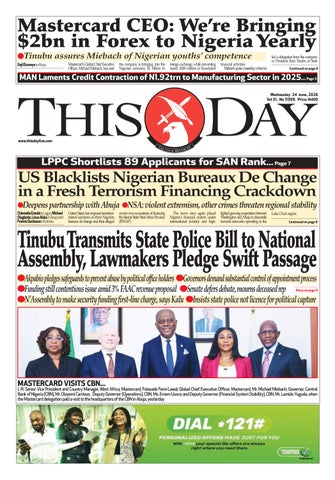
Tinubu assures Miebach of Nigerian youths’ competence
Deji Elumoye in Abuja
Akpabio pledges safeguards to prevent abuse by political office holders
demand substantial control of appointment process Funding still contentious issue amid
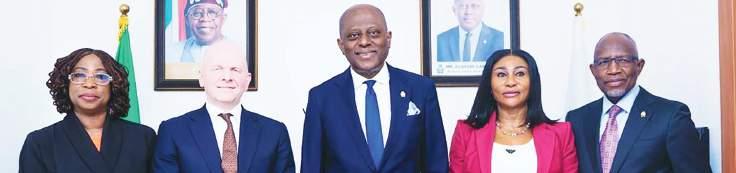
L-R: Senior Vice President and Country Manager, West Africa, Mastercard, Folasade Femi-Lawal; Global Chief Executive Officer, Mastercard, Mr. Michael Miebach; Governor, Central Bank of Nigeria (CBN), Mr. Olayemi Cardoso; Deputy Governor (Operations), CBN, Ms. Emem Usoro; and Deputy Governor (Financial System Stability), CBN, Mr. Lamido Yuguda, when the Mastercard delegation paid a visit to the headquarters of the CBN in Abuja, yesterday




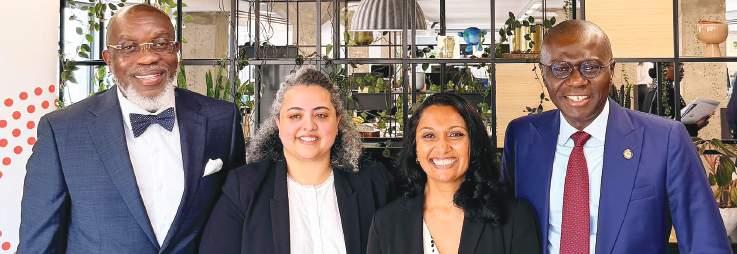
Says manufacturers borrowing at between 27% and 35% in 2026 Warns it will derail implementation of current industrial policy
Dike Onwuamaeze
Manufacturers Association of Nigeria (MAN) has decried the severe financial constraints besetting the manufacturing sector, which it said suffered credit contraction of N1.92 trillion in 2025.
MAN made the disclosure yesterday in a public statement by Director-General of MAN, Mr. Segun Ajayi-Kadir, titled, “MAN Position on the Sharp Decline in Credit to the Manufacturing Sector.”
It warned that persistent credit squeeze could directly sabotage the successful execution of Nigeria Industrial Policy, 2025.
The association lamented that “with commercial borrowing costs remaining actively hostile at an average of 24.4 per cent prime lending rates and 33.8 per cent maximum lending rates, long-term capital investments are unviable”.
MAN stated, “Starving factories of affordable credit blocks technology upgrades and prevents operators from maintaining optimal capacity utilization or expanding local manufacturing plants.
“It is practically impossible to build a 21st-century industrial economy when forcing factories to fund their capital footprint through 19th-century primitive capital constraints.”
The statement said, “According to the data, commercial bank credit allocation to manufacturing contracted
by N1.92 trillion, from N.53 trillion in December 2024, to N6.61 trillion in December 2025.
“This represents a significant year-on-year contraction of 22.5 per cent, which is particularly disturbing, given that manufacturing recorded one of the largest credit contractions among the top sectors, surpassed only by the general services sector at -25 per cent.”
Ajayi-Kadir added, “This steep decline leaves manufacturing lagging far behind the extractive Oil & Gas Industry (N10.59 trillion) and a booming Finance sector (N9.24 trillion), demonstrating a systemic preference for speculative and rent-seeking activities over tangible productivity.”
He said the 22.5 per cent credit squeeze of N1.92 trillion from the manufacturing sector stood in unflattering contrast to contemporary global peers in 2025, as India’s bank credit to industry grew by a robust 9.6 per cent year-on-year by late 2025 as part of a deliberate 15 per cent industrial credit expansion.
He also said that Vietnam aggressively projected a 19 per cent to 20 per cent credit growth target for 2025 to intentionally fuel its processing and manufacturing engines.
Ajayi-Kadir declared, “Clearly, the Nigerian manufacturing sector cannot thrive without sustainable and growing financial foundations.
“The reduction in credit access
could further limit capacity utilisation, stall technological upgrades and hinder job creation.
“For the wider economy, reducing financial support to manufacturing could slow down vital diversification efforts, leaving the nation more vulnerable to external commodity shocks and supply-driven inflation.”
MAN said its review of recent economic data, industry reports, and insights from key operators revealed that the contracted distribution of credit to manufacturing was rooted in a toxic combination of prohibitive interest rates, structural bureaucracy, and policy misalignment.
It stated, “The primary barrier between manufacturers and financial bank liquidity is the exorbitant cost of borrowing.
“While the Central Bank of Nigeria (CBN) has recently made slight policy adjustments by trimming the Monetary Policy Rate (MPR) to 26.5 per cent to signal disinflation, commercial lending rates remain actively hostile to manufacturing sector expansion.
“As of May 2026, manufacturers’ costs of borrowing remain exploitatively high at an average of 27 per cent prime lending rates and 35.6 per cent maximum lending rates in
major commercial banks.”
According to MAN, this has created an environment where borrowing for long-term manufacturing capital expenditure is financially unviable.
It said that CBN’s retention of a stringent Cash Reserve Ratio of up to 45 per cent and 50 per cent for commercial banks effectively constrained a large portion of loanable banking liquidity.
MAN said, “Another factor is the systemic risk aversion of commercial banks. A critical flaw in the architecture of government interventions is the reliance on commercial banks to act as Participating
Financial Institutions (PFIs).
“The CBN provides the liquidity at lower rates, but PFIs assume the credit risk.
“Consequently, commercial banks impose their standard, riskaverse commercial criteria on these developmental funds.
“Manufacturers are subsequently asked to provide collateral and meet equity contributions that they cannot afford.
“Therefore, while the funds exist to help struggling manufacturers, they can only be accessed by large companies that are already highly liquid and secure.”
Emejo
The Governor of the Central Bank of Nigeria (CBN), Mr. Olayemi Cardoso, yesterday warned that the persistent abuse, mutilation and improper handling of the Naira imposes avoidable financial costs on the country, stressing that safeguarding the national currency must be regarded as a collective civic responsibility.
Speaking at the inauguration of the CBN’s Naira Ambassadors Club in Abuja, Cardoso said the apex
bank’s investment in producing clean, durable and secure banknotes could only achieve the desired impact if members of the public handled the currency properly after it entered circulation.
He said, “When banknotes are defaced, mutilated, or improperly handled, they deteriorate much faster than expected. This increases replacement costs, disrupts the efficiency of currency circulation, and imposes avoidable financial burdens on the nation.
Urge media to hold government institutions accountable
Emmanuel Addeh in Abuja
Civil society organisations (CSOs) have called for stricter enforcement of Nigeria’s methane emissions regulations in the Niger Delta, warning that weak implementation of existing laws continues to expose oil-producing communities to serious environmental, health and economic risks.
The groups, including the Natural Resource Governance Institute (NRGI), Policy Alert and We The
People, made the call during a webinar organised to amplify advocacy around ‘Flaring Lives’, a documentary highlighting the human cost of methane emissions and gas flaring in Nigeria’s Niger Delta. The webinar, themed: “Leveraging Media Storytelling to Strengthen Accountability and Enforcement on Methane Emissions,” sought to to raise awareness of the environmental, health and socio-economic consequences of methane emissions
and gas flaring in the oil-rich region.
Speaking at the event, NRGI Country Manager, Tengi George-Ikoli, stressed that while Nigeria seeks to expand gas production as part of its energy and economic strategy, it must simultaneously meet its commitments to reduce methane emissions, eliminate routine gas flaring and support global climate objectives.
Represented by the Programme Officer, NGRI, Ahmad Abdulsamad,
she argued that the challenge lies in ensuring that both ambitions are pursued without sacrificing environmental sustainability and the wellbeing of host communities.
She noted that methane emissions are not merely a climate issue for communities living around oil and gas facilities, but are linked to the quality of air they breathe, public health concerns, declining agricultural productivity and the degradation of fishing waters.
“The preservation of our currency is therefore not merely an operational concern for the Central Bank; it is a matter of national responsibility.”
The CBN governor described the Naira as much more than paper and polymer, noting that it serves as the country’s legal tender, facilitates economic activities, supports savings and investment, and remains a visible symbol of Nigeria’s identity and sovereignty.
According to him, every banknote tells a story about the nation through the portraits of distinguished Nigerians, national symbols and security features embedded in it to sustain public confidence in the monetary system.
He stressed that the CBN continually invests significant resources in producing clean, durable, and secure banknotes to meet the needs of our economy, noting that “preservation of our currency is therefore not merely an operational concern for the Central Bank; it is a matter of national responsibility”.
Cardoso, who inaugurated the club with 175 students drawn from seven schools as pioneer members, said the initiative was designed to instill a culture of respect for the national currency among young Nigerians and leverage their influence to drive behavioural change across communities.
He said lasting social transformation is most effective when driven through education, adding that young people remain powerful agents of change capable of influencing families, schools and wider society.
The central bank governor said, “The Naira Ambassadors Club is founded on this conviction. Through this platform, we seek to nurture a generation of young Nigerians who understand not only the value of money but also the responsibility that comes with preserving a national currency.
“As Naira Ambassadors, you are expected to become advocates of proper currency handling. You will educate your classmates on why banknotes should not be written on, stapled, mutilated or sprayed at social events. You will encourage responsible currency handling in your homes and communities.”
The governor urged the students to lead by example and become champions of civic responsibility, stressing that patriotism is demonstrated not only through grand gestures but also through everyday actions that protect national heritage.
He further challenged the participating schools to become centers of excellence in promoting respect for the naira and set standards for others to emulate.
Kayode Tokede
Securities and Exchange Commission (SEC) yesterday said it had not received any application for the purported initial public offering (IPO) by Dangote Petroleum Refinery & Petrochemicals FZE, warning stakeholders against the marketing and promotion of the offer on Nigerian Exchange Limited (NGX).
In a public notice, SEC said it was aware of advertisements, flyers, digital banners, and targeted electronic mails circulating on social media platforms and investment channels concerning a supposed
securities offering by the refinery. It expressed concern over the involvement of some Registered Capital Market Operators (CMOs) in an “unwholesome and manipulative exercise” of actively soliciting advance subscriptions for an offering that had not been presented to the commission.
According to the regulator, “No application for the registration of an IPO or public offer of shares of the Refinery has been filed with or approved by the commission.”
The commission added that the ongoing pre-marketing activities were “capable of misleading investors, distorting market expectations,
Deji Elumoye and Folalumi Alaran in Abuja
President Bola Tinubu has charged member countries of the African Minerals Strategy Group (AMSG) to speak with one voice to promote Africa’s collective interests, ensure value addition, and prevent the continent from becoming merely a source of raw materials for the rest of the world.
Tinubu gave the charge yesterday while receiving a delegation of AMSG in the State House. AMSG is a forum of ministers in charge of Mining and Solid Minerals on the continent. The President is the Grand Patron of the group, which is chaired by Nigeria’s Minister of Solid Minerals Development, Dele Alake.
The President told the delegation that the group has a critical role to play in strengthening Africa’s bargaining power in the global mineral market and ensuring that the continent derives maximum value from its natural resources.
According to him: “What we should do is avoid bureaucracy and deceit; we must put an end to exploitation. The rest of the world won’t mind if your country is a cesspit of dams and rubbish and excavates your raw materials without giving value.
“It is our responsibility to collaborate and cooperate to ensure that these metals and minerals bring value to us, bring technology to us, and we can do it. It is how much each country will put into the research, development and refinery.
“I don’t see reasons we cannot demand centralisation of that conversa-
tion somewhere on the continent. So why not utilise that in our research and development and knowledge-based economy to enhance the quality of life and bring prosperity to our people”.
Tinubu emphasised that Africa possesses enormous mineral wealth that should be strategically harnessed to drive industrialisation, create jobs and accelerate economic transformation across the continent.
The President stressed that the era of exporting raw minerals without local processing and beneficiation must give way to a new model that encourages investment in local industries, technology transfer and the development of value chains that retain wealth within Africa.
Earlier, Chairman of AMSG and Minister of Solid Minerals Development, Alake, expressed gratitude to the President for his exemplary leadership under the Renewed Hope Agenda, which, according to him, has shown support for Nigeria’s mineral sector, especially in the local value-addition and economic diversification drive, where artisanal miners are empowered.
He said other African countries are emulating this approach. Alake told the President: “You encouraged us to look at the focal point of the establishment of this group, which is to ensure that the African natural resources, especially with regards to minerals, critical matters, are localised, the beneficiation coming directly to Africans generally.
“You charged us that we should set our sails very high and ensure that local value addition is a pivot around which all the objectives of this
organisation should revolve. So, sir, we have implemented your charge and we are acquitted that today local value addition is reverberating all over Africa.”
He added that some member countries have gone ahead to ban the export of raw minerals.
Alake also said AMSG members are in Abuja for the Fifth edition of the African Natural Resources and Energy Investment Summit (AFNIS 2026), where leaders are expected to push for a new continental approach to resource management and industrial development.
The Summit, with the theme “One Africa. One Resource Vision” aims to position Africa as a major player in the global critical minerals value chain by promoting beneficiation, industrialisation and strategic cooperation among member states.
Meanwhile, Steron Mining and Company Limited has estimated its lithium reserves at 3.3 million metric tonnes at its mining site in Abuja, as the company intensifies exploration activities aimed at supporting Nigeria’s growing role in the global energy transition.
The Managing Director and Chief Executive Officer of the company, Abu Omar, disclosed this yesterday while hosting participants of the AFNIS at the mining site.
According to Omar, the visit was organised to showcase indigenous participation in Nigeria’s mining sector and demonstrate how local operators are contributing to the development of critical minerals.
“We are honoured to host the African Natural Resources and Energy Invest-
ment Summit (AFNIS) and the African mining community for an excursion, showcasing what it looks like for a local Nigerian to run a mining operation like this,” he said.
He explained that visitors were taken through the entire mining process, from mineral occurrence and exploration to drilling, blasting and production.
“We showcased the mining cycle from the occurrence of the minerals to the inference, to the core drills, to the identification of where the veins are and the depth and nature of these minerals, which is lithium here.
creating information asymmetry and generally undermining the integrity of the capital market”.
It further stated that the marketing campaign and invitations to “create accounts”, “pre-fund,” or “secure guaranteed allocations” amounted to market manipulation and constituted “serious violation of the Investments and Securities Act”.
Consequently, the commission directed all Registered Capital Market Operators, particularly stockbrokers and digital platform promoters to immediately stop all promotional activities.
SEC ordered them to “cease with immediate effect from publishing, reposting, or distributing any promotional material, flyer, or commentary relating to the acquisition or allocation of shares in the Refinery”.
It also directed operators to “remove or take down all such unauthorised marketing materials from websites, social media handles (including X, LinkedIn, Instagram, Facebook etc.), and messaging groups within twenty-four (24) hours of this notice”.
The regulator further instructed operators to desist from accepting
deposits, commitments, account openings or expressions of interest from investors for the purported public offering and to “reverse and refund all funds already collected in connection with this purported offering to clients within twenty-four (24) hours of this notice”.
The commission warned that defaulters would face sanctions as non-compliance would attract penalties under the Investments and Securities Act, 2025 and the SEC Rules and Regulations.
Advising investors to exercise caution, SEC said members of the public should “rely only on formal, official pronouncements issued directly by the commission through its official channels”. It warned that “all such highpressure marketing tactics, or transfer of funds to any operator for ‘pre-IPO’ placement should be ignored as they did not receive the commission’s approval”.
The commission assured that if it eventually received and cleared an application for a public offering by the refinery, an approved prospectus would be made available to investors in line with the provisions of the Investments and Securities Act, 2025.
of
Michael Olugbode in Abuja
Nearly one in every two female students in Nigeria experiences some form of gender-based violence during years in school, a disturbing trend fuelling school dropouts, inflicting lasting psychological trauma, and denying thousands of children justice, stakeholders warned on Tuesday.
The alarming figures emerged as the Nigerian government, European Union (EU), and International Institute for Democracy and Electoral Assistance (International IDEA) commenced a fresh initiative aimed at strengthening justice pathways for children abused in schools and equipping teachers, counsellors, police officers and school admin-
istrators to identify, document, and prosecute perpetrators.
The intervention is being implemented under the European Union-supported programme to End Sexual and Gender-Based Violence in Nigeria (ESGBV), in collaboration with Federal Ministry of Justice, through its Sexual and Gender-Based Violence (SGBV) Response Unit, with support from Federal Ministry of Education and United Nations Educational, Scientific and Cultural Organisation (UNESCO).
The renewed push formed the focus of a three-day capacitybuilding workshop that opened in Abuja to deepen stakeholders’ understanding and implementation of Standard Operating Procedure (SOP) on Legal Pathway for the
Prosecution of Perpetrators of School-Related Gender-Based Violence, developed in 2024. Addressing participants drawn from schools, law enforcement agencies, civil society organisations, and education institutions, Head of the SGBV Response Unit at Federal Ministry of Justice, Mrs. Yewande Gbola-Awopetu, painted a grim picture of violence within Nigerian schools. Citing findings from a systematic review, Gbola-Awopetu said the prevalence of gender-based violence in educational settings stood at 42.3 per cent, meaning that nearly half of female students in Nigeria experience some form of violence during their educational journey.
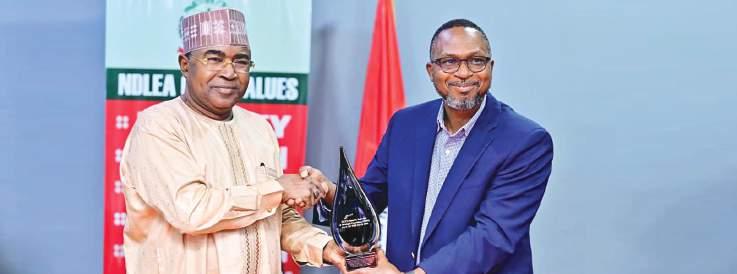
Chairman/Chief Executive Officer, National Drug Law Enforcement
Executive
and Strategic
Director General/Chief Executive of Infrastructure Concession Regulatory Commission (ICRC), Dr. Jobson Ewalefoh, yesterday disclosed that the country required about $100 billion annually to bridge its estimated $2.3 trillion infrastructure deficit by 2043.
Speaking at the opening of a one-day stakeholders’ engagement session and unveiling of the Model Public-Private Partnership (PPP) Agreement for Ministries, Departments and Agencies (MDAs) in Abuja, Ewalefoh said government revenues alone could not finance the country’s vast development needs.
He said the Model PPP represented a standard contract template for every PPP concession in Nigeria, moving forward.
The ICRC boss said the scale of the infrastructure challenge had made private sector participation indispensable to the delivery of the Renewed Hope Agenda of President Bola Tinubu.
He said the country’s infrastructure deficit reflected decades of underinvestment in critical sectors, including roads, rail, power, healthcare, water supply and digital infrastructure.
Ewalefoh said, “I wish to begin this morning not with a speech, but with a figure: $2.3 trillion. That is the conservative estimate of Nigeria’s infrastructure deficit today — the value of the roads left unbuilt, the
power that fails to reach our factories, the railways that exist more vividly in our plans than on our maps, and the hospitals, water systems, and digital infrastructure that a nation of over 230 million people urgently deserves.
“To close that gap by 2043, Nigeria must mobilise approximately $100 billion every year. Government revenue alone — even under the most disciplined fiscal management, even with every naira of oil receipts and every kobo of tax collection accounted for — cannot bear that weight.
“No federal budget, however ambitious, was ever designed to finance a nation’s entire infrastructure programme from the treasury alone. This is not an admission of weakness; it is simply a matter of arithmetic.”
He said the administration had placed PPPs at the centre of its infrastructure financing strategy,
adding that the commission has spent the past two years developing a standardised framework aimed at making PPP transactions faster, more transparent and more attractive to investors.
Ewalefoh said the newly developed Model PPP Agreement, in collaboration with the Federal Ministry of Justice, is designed to eliminate inconsistencies that had characterised concession agreements across government agencies for nearly two decades, often resulting in prolonged negotiations, disputes and difficulties in attracting long-term capital.
He said, “For nearly two decades following the ICRC Establishment Act of 2005, Nigeria approached PPPs on a project-by-project and MDA-by-MDA basis, frequently negotiating each concession from first principles.
“Definitions, risk allocation, default
clauses, and dispute mechanisms were repeatedly reinvented, at times inconsistently, leaving Nigeria exposed and investors uncertain.
“This inconsistency carried tangible costs: concessions took years to negotiate, disputes escalated into litigation where risk allocation was ambiguous, and lenders remained hesitant to commit long-term capital.”
Ewalefoh explained that the agreement was developed after extensive consultations with legal experts, transaction advisers, investors, lenders, and government institutions, and benchmarked against global best practices.
He said the framework provided standard provisions on risk allocation, dispute resolution, lender protections, contract management, insurance, performance monitoring and anti-corruption safeguards.
Ewalefoh stated that the agreement would provide MDAs with
a legally grounded and bankable starting point for negotiations, reducing transaction costs and shortening the path from project conception to financial close.
He stated, “Standardisation strengthens bankability, for serious lenders price risk according to certainty. A Model Agreement that allocates risk consistently, protects lenders through credible Direct Agreements, and resolves disputes through a transparent process lowers the cost of capital for every project conducted under it.
“And cheaper capital translates into more projects delivered sooner, and at lower cost to the Nigerian taxpayer.”
He also said Nigeria’s recent removal from the Financial Action Task Force (FATF) grey list had renewed investor interest in the country, adding that a credible PPP framework could help convert
such interest into actual investments.
Ewalefoh said the agreement would also help diversify infrastructure financing sources beyond conventional bank lending to include pension funds, Sukuk, green bonds and blended finance instruments.
Earlier, Solicitor-General of the Federation and Permanent Secretary, Federal Ministry of Justice, Mrs. Beatrice Jedy-Agba, described Nigeria Model PPP Agreement as a major milestone towards standardising contractual expectations, balancing investor confidence with public interest, and strengthening governance in infrastructure delivery.
Jedy-Agba commended the collaboration between Federal Ministry of Justice and ICRC in developing the framework, stating that legal experts from across the country have contributed to refining the document through a series of consultations and PPP Lawyers’ Retreats.
Alex
Enumah in Abuja
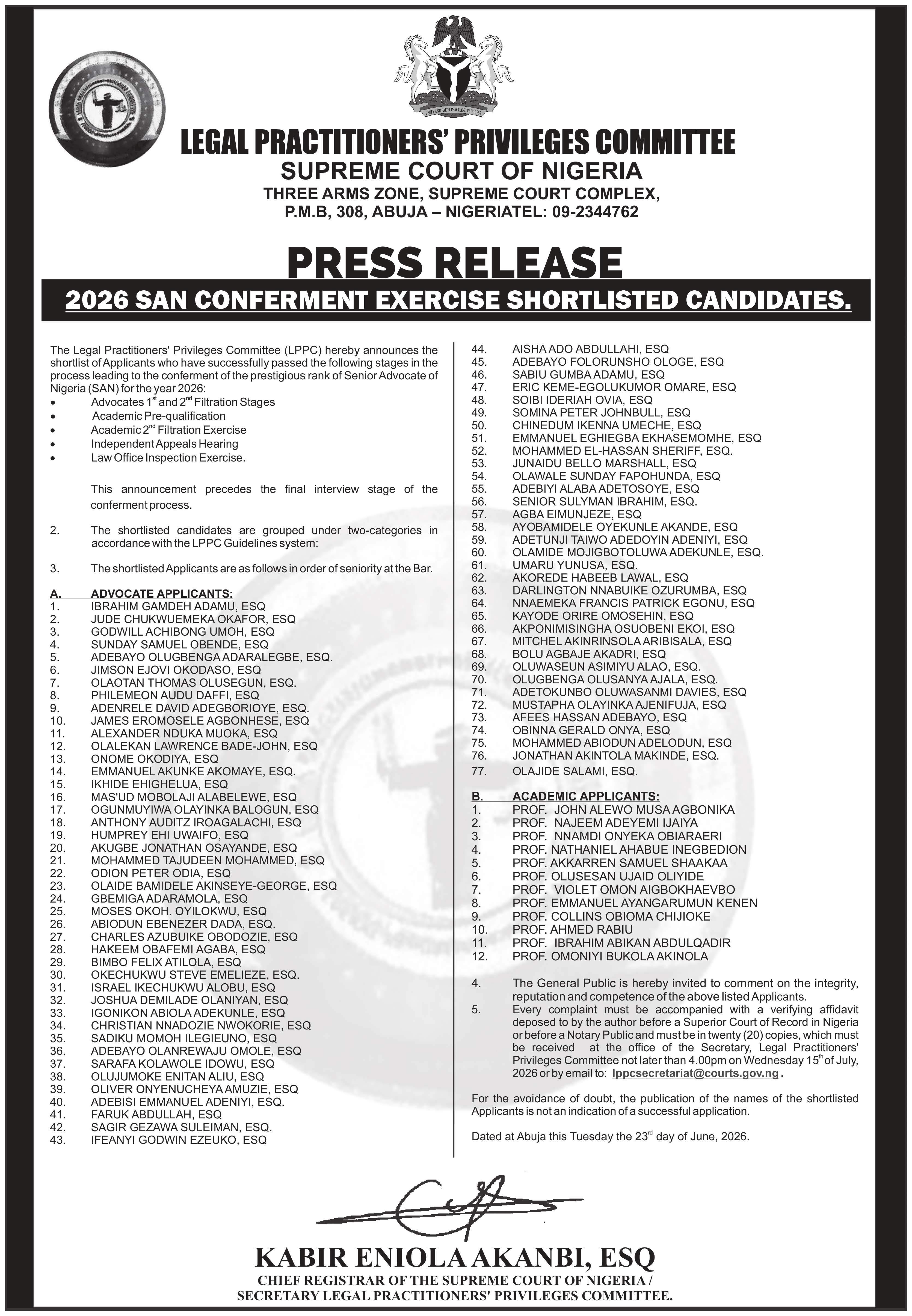
A total of 89 applicants have been shortlisted by Legal Practitioners Privileges Committee (LPPC) for the conferment of the prestigious rank of Senior Advocate of Nigeria (SAN).
The shortlisted applicants, according to Chief Registrar of the Supreme Court of Nigeria/ Secretary LPPC,
Kabir Eniola Akanbi, had successfully passed some stages in the process leading to the conferment of the rank of SAN, for the year 2026.
Akanbi, who observed that the shortlisted applicants were grouped into two categories – advocate and academic – pointed out that the announcement preceded the final interview stage of the conferment process.
He called on the general public “to comment on the integrity, reputation and competence of the above listed applicants”.
Akanbi stated that every complaint must be accompanied with a verifying affidavit deposed to by the author before a Superior Court of Record in Nigeria or before a Notary Public.
The complaint, which must be
in 20 copies, should be submitted to the office of the LPPC Secretary not later than July 15, 2026.
Akanbi clarified that the publication of the names of the shortlisted applicants was not an indication of their success.
While 77 applicants were shortlisted under the category of advocate, 12 applicants were shortlisted from the academy.
Among them was Director of the Legal Department of Independent Corrupt Practices and other related offences Commission (ICPC), Akpomosingha Osuobeni.
Others included former spokesperson of Nigerian Bar Association (NBA), Habeeb Akorede, and Vice President of Centre for Socio-Legal Studies (CSLS), Olaide AkinseyeGeorge.
Lagos State Government, yesterday, signed a Strategic Framework for Gas Supply and Energy Development with Gas Aggregator Company Nigeria Ltd/Gte (GACN), to meet the planned 6000 megawatts electricity for Lagos State.
The landmark agreement is expected to boost electricity generation and secure gas for power projects at less than half the prevailing market gas-to-power price.
The governor of Lagos State, Mr. Babajide Sanwo-Olu, described the
agreement as more than the signing of a document, saying it represents a strategic, practical and enforceable plan that lays the foundation for definitive gas supply and offtake agreements aimed at ensuring affordable and reliable energy for Lagos.
The event held at Lakowe Resort, Ibeju-Lekki, where he was represented by his deputy, Dr. Kadri Obafemi Hamzat.
The governor said the framework aligned with the Lagos Independent Electricity Policy and Strategic Implementation Plan (LIEP-SIP) as well as the state’s THEMES Plus Agenda,
adding that reliable electricity remains critical to transportation, healthcare, education, and economic growth.
According to the governor, the agreement addresses one of the most persistent obstacles to dependable and affordable electricity in Lagos – the availability and cost of gas for power generation.
He said, “What we celebrate today is more than a document being signed. It is a commitment — a strategic, practical and enforceable plan — that lays the groundwork for definitive gas supply and offtake agreements to follow. It secures gas for Lagos at
a price point that is less than half of current general market gas-to-power pricing.”
Sanwo-Olu explained that the framework removed the major challenge confronting Independent Power Producers (IPPs) in the state by guaranteeing access to dependable fuel at affordable rates, thereby enabling them to develop and operate power projects with greater confidence.
He added that the initiative would support the decentralised electricity market being developed by the state government, encourage private sector investment, increase competition, and
bring electricity closer to homes, schools, hospitals, and economic clusters across Lagos.
Sanwo-Olu stated that the collaboration would reduce the cost of power, strengthen energy security, and improve the state’s capacity to provide sustained and high-quality electricity supply to residents and businesses.
He said, “Energy is central to our development agenda. Transport, health, education and economic competitiveness all depend on reliable power, and 24/7 supply cannot be compromised.”
Earlier in his welcome address,
Commissioner for Energy and Mineral Resources, Mr. Biodun Ogunleye, stated that the partnership was expected to play a critical role in the development of the Clean Lagos Electricity Market (CLEM), adding that the state government’s initiative aims at addressing Lagos’ significant power deficit.
According to Ogunleye, Lagos currently receives about one gigawatt (GW) of electricity from the national grid against an estimated demand of more than six GW, leaving a gap that is largely met through self-generation by residents and businesses.
Emmanuel Addeh in Abuja and Peter Uzoho in Lagos
The Nigerian Upstream Petroleum Regulatory Commission (NUPRC) has sought the deployment of drone surveillance technology to strengthen the protection of Nigeria’s oil and gas infrastructure, as part of collaboration with the Federal Ministry of Defence aimed at addressing security challenges in the sector.
The commitment was reached during a visit by a delegation from the Ministry of Defence to the headquarters of the NUPRC in Abuja, where both parties agreed to deepen cooperation through a combination of technological solutions and non-kinetic interventions targeted at oil-producing communities.
Speaking during the meeting,
the Commission Chief Executive of NUPRC, Mrs. Oritsemeyiwa Eyesan, said the commission’s long-standing collaboration with security agencies had contributed significantly to curbing crude oil theft and protecting critical energy assets, helping to boost Nigeria’s oil output.
“Today, we are benefiting from those efforts. Last month, we recorded production of nearly 1.8 million barrels per day throughout the month,” Eyesan stated, according to a statement from the commission.
She explained that sustained investments in security architecture, technology deployment and human resources had played a major role in improving production levels, but stressed that further efforts were required as Nigeria seeks to raise
output and attract fresh investments into the upstream sector.
According to her, guaranteeing production growth will depend largely on the ability of operators and regulators to effectively manage security threats through closer collaboration with relevant stakeholders.
“As we look to the future, we desire to grow production and must have assurances that security threats can be effectively managed. We can only achieve this through stronger collaboration with security agencies and industry stakeholders,” she said.
Eyesan specifically highlighted the importance of deploying advanced technologies, including drone surveillance systems, to monitor the vast network of oil and gas facilities across the country and improve real-time detection of security breaches.
“(Theres the need) to deploy advanced technologies, including drone surveillance, to monitor the extensive footprint of oil and gas operations across the country,” the statement added.
She disclosed that the commission would engage operators across the industry to refine and promote a new security framework, with NUPRC taking the lead in mobilising stakeholders and establishing governance structures capable of sustaining the initiative over the long term.
Representing the Minister of Defence, Gen. Christopher Musa (rtd), the Senior Special Assistant to the Minister, Maj. Gen. Arikpo Ekubi, said the ministry was introducing a non-kinetic national security intervention model designed to
promote peace and stability in Nigeria’s upstream petroleum sector.
He explained that the initiative seeks to tackle the underlying causes of insecurity in oil-producing communities through targeted youth engagement programmes, with sports playing a central role in the strategy.
“One of the best ways to engage youths in oil-producing areas is through sports-based interventions,” he said, noting that the programme would also incorporate structured activities for persons with disabilities.
According to him, the initiative aligns with the host community development provisions of the Petroleum Industry Act (PIA) and is expected to improve relations between operators and communities, foster peace and

create alternative opportunities for economic empowerment.
The collaboration comes as the federal government intensifies efforts to sustain recent gains in oil production, curb crude theft and create a more secure operating environment for investors in Nigeria’s upstream oil and gas industry.
Emmanuel Addeh, Chuks Okocha, Sunday Aborisade and Adedayo Akinwale in Abuja
President Bola Tinubu yesterday formally transmitted the proposed State Police Bill to the Senate, setting the stage for a major overhaul of Nigeria’s policing architecture, as the Upper Chamber signalled their readiness to fast-track consideration of the legislation amid growing calls for decentralised security structures.
Senate President Godswill Akpabio assured Nigerians that adequate safeguards would be incorporated into the bill to prevent state police formations from being misused by governors and other political office holders, stressing that accountability mechanisms
The sanctions, announced by U.S. Department of Treasury’s Office of Foreign Assets Control (OFAC) and U.S. Department of State, named Nigerian financier, Mukhtar Adamu Muhammad, as an ISWAP financial facilitator accused of conducting money transfers and providing financial services on behalf of the extremist organisation.
Equally designated were Nine to Nine Exchange Bureau de Change Limited, Manhattan Bureau de Change Limited, and Generation Currency Bureau de Change Limited, which U.S. authorities alleged were owned, controlled or directed by Muhammad and used as conduits for moving funds linked to ISIS activities.
The action formed part of a broader operation targeting three individuals and six entities operating across West Africa, Europe, and the Middle East that Washington said helped ISIS raise, transfer, and conceal funds to sustain its global operations.
Besides the Nigerian network, the sanctions targeted France-based Miloud Abderrahmane and Syriabased Abdelhakim Boukich.
The U.S authorities accused Abderrahmane of carrying out financial transactions for known ISIS affiliates and disseminating bomb-making instructions to supporters of the terrorist group, while Boukich allegedly used cryptocurrency channels to facilitate transfers for ISIS associates in several countries, including the United States.
According to the U.S. Treasury, Muhammad had “materially assisted, sponsored, or provided financial, material, or technological support
would be central to the proposed framework.
Besides, THISDAY learnt that state governors have renewed their demand for substantial control over the appointment and operational processes of state police commands, arguing that subnational authorities must have sufficient powers to effectively tackle local security challenges, in alignment with the tenets of federalism.
Similarly, funding remains a major point of contention, with stakeholders divided over proposals to allocate 3 per cent of Federation Account Allocation Committee (FAAC) revenues to support state police operations and ensure sustainability across the country. Some governors argue that the 3
for, or goods and services to or in support of, ISIS-West Africa”.
Under the sanctions, all property and interests in property belonging to the designated persons and entities under U.S. jurisdiction had been blocked, while American citizens and companies were prohibited from engaging in transactions with them.
The measures could also effectively isolate the designated entities from major segments of the international financial system.
The latest action comes against the backdrop of an increasingly complex terrorist threat in Nigeria.
While the Boko Haram insurgency began in 2009 in north-eastern Nigeria, the emergence of ISWAP following a split within Boko Haram in 2016 transformed the conflict into one of the Islamic State’s most formidable franchises outside the Middle East.
Since then, ISWAP has carried out deadly attacks on military formations, communities, and humanitarian workers in Borno and neighbouring states, while exploiting the porous borders of Nigeria, Niger, Chad and Cameroon to establish transnational financing and logistics networks.
United Nations estimated that more than 35,000 people had been killed and millions displaced since the insurgency erupted, making it one of Africa’s longest-running and most devastating security crises.
The latest sanctions also revived concerns over the vulnerability of informal financial channels to exploitation by terrorist groups.
Security experts had repeatedly warned that extremist organisations increasingly relied on bureaux de
per cent cannot even take care of salaries.
Debate on the bill was, however, deferred till today (Wednesday) by the Senate following the announcement of the death of a member of the House of Representatives, Hon. Yaya Tongo, with lawmakers observing tributes before adjourning further legislative business on the proposal.
The proposed legislation sent in by the executive, titled: “Constitution of the Federal Republic of Nigeria (Alteration) State Police Bill, 2026, seeks to amend the 1999 Constitution to provide a legal framework for the establishment of state police services across the federation.”
The move is widely viewed as a response to the country’s worsening
change, cash couriers, informal remittance systems, and cryptocurrencies to evade sanctions and sustain their operations.
Washington has steadily intensified efforts to dismantle the financial networks supporting ISIS and its regional affiliates.
In March 2022, OFAC sanctioned six individuals accused of raising and transferring funds to Boko Haram, including persons convicted in the United Arab Emirates for facilitating the transfer of approximately $782,000 from Dubai to support terrorist activities in Nigeria.
House, Abuja.
The Mastercard CEO also assured Tinubu of his company’s commitment to helping to achieve the administration’s economic reforms.
Tinubu told the delegation that Nigeria’s teeming youth population was the country’s greatest asset, assuring foreign investors of a ready-to-learn, tech-savvy workforce that can easily integrate into the global market.
Miebach stated, “It’s been a long-standing history, and today we facilitate a big aspect of the economy.
“In Nigeria, we are preventing $200 million in fraud and bringing in $2 billion in foreign exchange. We are helping the SME sector thrive and, of course, partner with your banks.”
He added, “We have a business here since 2011, and we have seen the country grow, and we have seen the country lead. We have seen your obviously clear alignment of fiscal
security challenges.
In a letter read on the floor of the Senate by Senate President, Godswill Akpabio, Tinubu urged lawmakers to expedite consideration and passage of the bill.
He described it as a critical component of his administration’s strategy to strengthen national security and improve citizen protection.
“This bill seeks to amend the Constitution of the Federal Republic of Nigeria, 1999, to create a constitutional pathway for the establishment of State Police services in Nigeria,” Tinubu stated.
According to the President, the proposal builds on extensive work already undertaken by both chambers of the National Assembly and contains safeguards designed to
United States and United Nations also imposed sanctions on several ISWAP leaders and financiers accused of orchestrating attacks and managing the group’s finances.
Similarly, the US designated ISIS-West Africa as a Foreign Terrorist Organisation and Specially Designated Global Terrorist entity, enabling authorities to freeze assets and disrupt its financial infrastructure worldwide.
Nigeria, for its part, has strengthened domestic counterterrorism
Continued on page 33
and monetary policy that you have driven. In our world systems, there is a lot of momentum in Nigeria.
“A little anecdote: I was the one who set up the Master Card business in Nigeria in 2011. I was in Lagos, and hired the employee number one. So it’s a little bit like coming home.”
Miebach explained, “We recognise the moment that we are in. We spent time with the CBN Governor and had an opportunity to meet the leading bankers yesterday in Lagos, to see where everything is going and the opportunity here to unlock the power of the 40 million SMEs in Nigeria, to really connect the diaspora to the homeland and ensure Nigeria is the most thriving and biggest economy on the continent.
“We want to drive the intraAfrican digital economy.”
He also said, “Many small businesses would like to have a digital part of their business, and they don’t know how to do that.
ensure that a dual policing structure functions effectively.
“It builds on the significant work already done in this regard by the House of Representatives and the Senate and incorporates additional safeguards to ensure that the creation of a dual policing structure can address our nation’s evolving security challenges,” he said, adding that the measure was central to his administration’s security agenda.
Tinubu continued: “The proposed legislation is a critical component of our administration’s strategy to reorganise Nigeria’s security architecture to better protect our citizens, and I am confident that the Senate will act swiftly to consider and pass this bill.”
But the Senate wasted little time in advancing the proposal. Immediately after the letter was read, Akpabio referred the bill to the Senate Committee on Constitution Review, chaired by Deputy Senate President Barau Jibrin.
He directed the panel to submit its report on Wednesday for immediate legislative action. “We cannot do anything further on this matter today. Therefore, the bill that has just been read is referred to the Committee on Constitution Review, which is to present its report tomorrow, Wednesday, for further legislative action,” Akpabio said.
He further assured that the Senate would invoke accelerated legislative procedures to ensure speedy
Capacity building of small businesses vis-a-vis just opening a shop and keeping them safe in a cyber-world.
“We have a three-year programme for small businesses. A technical workshop has been planned for this, so it is not just talk but action and impact.”
Miebach assured Tinubu of investments in inclusivity, participation, trust, and resilience in a digital world, as well as a Cyber Centre of Excellence that captured and shared threat intelligence, incident response, AI risks, and other emerging risks.
Tinubu declared his confidence in the competences of the country’s youth.
He welcomed Mastercard’s proposal to train five million businesses and equip them with digital skills.
According to him, the Nigerian economy has been repositioned and stabilised to fully participate in the global economy, with a focus on empowering youths and small
consideration of the amendment.
“As soon as the report is presented, we will consider it at the Committee of the Whole and fast-track the process so that we can conclude legislative business before proceeding on recess after a year of intensive legislative work,” he stated.
Akpabio described the proposal as a historic step towards decentralising policing and bringing security management closer to the people. “Since 1960, Nigeria has not had the courage to decentralise policing. This is the first time we are taking that step,” he said.
The Senate President argued that communities possess critical intelligence that could help security agencies prevent crimes before they occur. “This legislation will make security more inclusive by enabling communities, youths, villages, municipal authorities and local governments to participate in the nation’s security architecture,” he said.
“As I have always said, every community knows the bad eggs within it. Security agencies can act proactively rather than reactively. We must become proactive instead of reacting after incidents have occurred,” he emphasised.
Akpabio, however, stressed that adequate safeguards would be embedded in the proposed state police structure to prevent abuse
Continued on page 34
businesses with digital skills and tools.
The president assured that more Nigerian youths would be empowered with digital skills to tackle present and future challenges. He stated, “The most important asset is our youth. I missed one thing in your remark: whether you met with the Bank of Industry (BOI). BOI has a database of Micro, Small, and Medium Enterprises.
“Payment plans and platforms are very necessary for the inclusion of small and medium-scale businesses.
“What you have been doing with our young population is commendable, and we will continue to support that in every form. As the host country, the agreements we have with you are valid, and I want you to see us as partners.”
Tinubu stated that the ongoing formalisation of Nigeria’s largely informal small-business sector would
Continued on page 32


L-R: Associate Producer and Jury-in-Charge of International Jury of AFRIMA, Olisa Adibua; Chief Experience Officer (CXO), AFRIMA, Adenrele Niyi; Media Stakeholders Engagement Consultant, Mojeed Jamiu; AFRIMA Regional Director for Eastern Africa, Mr. Mike Strano; AFRIMA Project Executive, Morocco, Ms. Hiba Loukili; President and Executive Producer of AFRIMA, Mr. Mike Dada; AFRIMA Regional Director for Northern Africa & Middle East (MENA), Ms. Karima Damir; award-winning filmmaker, Kunle Afolayan; PR and Government Relations Consultant, Ayo Aminu; and AFRIMA Regional Director for Central Africa, Mr. Nde “Wax” Ndifonka, during the International Executive Committee (IEC) strategy session held in Casablanca, Morocco, on Tuesday, June 23, 2026
Department of State Services (DSS) on Tuesday closed its case in the ongoing alleged wiretapping suit it brought against former Kaduna State Governor, Nasir El-Rufai.
DSS closed its case against the former governor and chieftain of African Democratic Congress (ADC) after calling just two witnesses.
The two witnesses, who gave evidence against the former governor, included a personnel of DSS, who
testified last month, and an Abujabased lawyer and activist, Mr. Deji Adeyanju, who gave his evidence on Monday, following a summon by the court.
When the matter came up on Tuesday, counsel to the prosecution, Oluwole Aladedoye, informed the court that the prosecution would not be calling any further witnesses in the matter, and subsequently stated that the prosecution would be closing its case against the defendant.
Responding, el-Rufai’s lawyer,
Chief Paul Erokoro, SAN, informed the court that the defence intended to file a no-case submission, on the grounds that the prosecution had not been able to establish sufficient evidence against the defendant.
Erokoro subsequently prayed the court to give him two weeks to file the no-case submission.
Prosecution similarly requested for same two weeks to respond to the no-case submission.
Meanwhile, the trial judge, Justice Joyce Abdulmalik, declined to vary
the bail conditions the court granted el-Rufai on the grounds that the applicant did not provide cogent reasons that would warrant the variation of the bail conditions.
El-Rufai, through his lawyer, had urged the court vary some of the conditions attached to his bail, for being too stringent and difficult to meet.
He cited the requirements for level 17 civil servants with properties in Maitama or Asokoro, as well as verification and attestation letters
Ahead of the 2027 general election, the Presiding Bishop of The Redeemed Evangelical Mission (TREM), Mike Okonkwo, has urged Nigerians to reject politicians who rely on vote-buying and handouts, warning that the country cannot achieve meaningful progress by recycling failed leaders.
Okonkwo made the remarks in an interview with THISDAY in Enugu yesterday, noting the church has a critical role to play in providing civic education that will enable citizens to make informed leadership choices, noting that churches remain closest to the people at the grassroots.
According to him, many Christians remain politically uninformed, a situation he said has contributed to the emergence of leaders who lack the competence and character required for public office.
“It is sad that in Nigeria, people collect N5,000 to vote for somebody they know does not have the capacity to lead and then come back to complain about poor representation. That is why we continue to witness rising poverty, insecurity and underdevelopment,” he said.
Okonkwo stressed that government officials are elected to provide security, education, healthcare and infrastructure, and should not be viewed as doing citizens a favour
by fulfilling those responsibilities.
“When the government provides these things, we think they are doing us a favour. That is wrong because they are meant to serve us. We must keep telling people not to mortgage their future by voting for those who will destroy it, but rather for leaders who can deliver the true dividends of democracy,” he said.
Speaking on the qualities Nigerians should consider ahead of the 2027 presidential election, the cleric urged voters to look beyond religion and ethnicity and focus on competence, capacity and integrity.
“We must begin to look beyond religion and ethnicity and focus on people who can do the job,
people who have the capacity, competence and integrity to lead.
“If somebody has disappointed before, you should not put him back. We are a country of over 200 million people, and there are many Nigerians who can deliver this nation. We must not continue to allow those who cannot lead, but only know how to share money and bags of rice, to occupy public office,” he said.
Citing Abia State as an example, Okonkwo said good governance naturally earns public support.
from the Kaduna State traditional council.
But the prosecution opposed the request, insisting that qualified public officers who meet the conditions exist and urged the court to refuse the application.
Abdulmalik, in a short ruling, agreed with the prosecution, adding that there are civil servants who own properties at the said location.
She subsequently adjourned to September 22, for the filing of the no-case submission and continuation of trial.
The court had on May 18 admitted el-Rufai to bail in the sum of N100 million with one surety in like sum.
As part of the conditions attached to the bail, Abdulmalik ordered that the proposed surety must reside in either Maitama or Asokoro districts of Abuja, and must deposit the original Certificate of Occupancy of a landed property at the court’s registry.
The said surety, according to the judge, must be a federal civil servant not below Grade Level 17 and must also provide evidence of salary payments for at least three months, authenticated by a letter from the manager of the bank within the jurisdiction of the court.
Besides, the surety is to depose to an affidavit of means, enter into
a bail bond, and submit a recent passport photograph to the court’s registry.
The court also directed that a verification letter from the surety’s immediate department be submitted, alongside a tax clearance certificate covering the last six months. Meanwhile, Abdulmalik ordered el-Rufai to deposit all valid international passports with the court, stating that he can only travel with the court’s permission.
The judge further ordered the defendant to report to the headquarters of DSS every last Friday of the month by 10am to sign an attendance register pending the determination of the case.
The judge warned that failure to comply would lead to an automatic revocation of the bail.
The court additionally directed the defendant to submit a letter of attestation from Chairman of Kaduna Traditional Council.
The federal government had on April 23 arraigned el-Rufai on a five-count criminal charge bordering on alleged breach of national security. He was specifically accused of wiretapping the telephone line of National Security Adviser (NSA), Nuhu Ribadu.
El-Rufai pleaded not guilty to the five-count amended charge read against him.
public health’s greatest success stories.
Wale Igbintade
Fresh documents have emerged showing that music star Paul Okoye was among the individuals whose accounts were requested for investigation by the Economic and Financial Crimes Commission (EFCC) in a petition linked to the long-running dispute within the Okoye family.
The petition, dated January 29, 2024, and seen by THISDAY, reportedly requested the EFCC to
investigate the financial affairs of several individuals and entities connected with the former P-Square group and its business operations.
According to the document, Peter asked the commission to examine the accounts of Northside Music Limited, Northside Entertainment Limited, Jude Chidozie Okoye, Paul Nonso Okoye and Umeokeke Ifeoma Okoye over specified periods.
Part of the petition stated: “I will appreciate if the commission can
investigate the account of Northside Music Ltd from 2015 till date, the account of Northside Entertainment Ltd from 2007 till date, the account of Jude Chidozie Okoye from 2004 till date, the account of Paul Nonso Okoye from 2004 till date, and the account of Umeokeke Ifeoma Okoye from 2004 till date.”
The document has attracted attention following previous public comments by Peter regarding the circumstances surrounding the EFCC investigation.
The global fight against HIV/AIDS stands at a defining moment as the United Nations, UN, warned that steep funding cuts and growing attacks on human rights could reverse decades of hard-won gains and derail the ambitious target of ending AIDS as a public health threat by 2030.
As world leaders on Monday convened at the United Nations High-Level Meeting on HIV/ AIDS in New York, the Joint United Nations Programme on HIV/AIDS (UNAIDS) delivered a stark message: the world is dangerously close to losing momentum in one of modern
The meeting, which comes nine years after the adoption of the 2030 Sustainable Development Goals, is expected to produce a new Political Declaration on HIV and AIDS that will guide the global response over the next five years and represent the last major international commitment before the 2030 deadline.
UNAIDS Executive Director, Winnie Byanyima, described the gathering as a pivotal opportunity to rescue and accelerate the global response.
“This Political Declaration is our chance to build on 25 years of commitment and point the way to 2030 to show that multilateralism
by 2030
can deliver,” she said. “We cannot fail because we know what we must do: sustain financing, protect the rights of people living with HIV, empower communities and ensure innovations reach everyone in need.”
The warning comes despite remarkable progress achieved over the past decade.
According to new UNAIDS data released ahead of the meeting, AIDS-related deaths have declined by 56 per cent since 2010, while new HIV infections have fallen by 43 per cent globally. More than 32 million people living with HIV are now receiving life-saving treatment, a development that once seemed unattainable.

Gloria Adebajo-Fraser
It is often said that memory is selective. In politics, nostalgia can be even more deceptive.
Every election season, viral messages emerge reminding Nigerians that fuel sold for N87 per litre, cooking gas was N150, a bag of rice cost N8,000 and the dollar exchanged for about N90 under previous administrations. The intention is usually to suggest that life was easier and that today’s economic realities represent unprecedented failure.
Yet such comparisons ignore one fundamental truth: no economy remains frozen in time.
By the same logic, Nigerians could travel further back and recall when fuel sold for about N20 per litre, food prices were significantly lower and the naira appeared stronger.
Why then did successive governments after that period fail to preserve those prices? The answer is simple. Nothing in economics remains constant.
The OECD defines inflation as the persistent increase in prices over time, a reality experienced by virtually every nation.
Over the last two decades, even advanced economies such as the United States, Britain, Germany and Canada have witnessed rising costs of food, housing, energy and transportation.
The COVID-19 pandemic and geopolitical conflicts triggered the highest inflation rates experienced in several developed countries in over four decades.
Americans no longer buy fuel, bread or housing at 2005 prices. Britons do not enjoy the same cost of living they had in 2010. Japan, long associated with low inflation, has also experienced rising prices. Therefore, comparing the prices of essential commodities fifteen years ago with today’s costs without considering inflation, exchange rates, population growth and changing economic realities presents only part of the story.
The more important question is whether an economy rests on sustainable foundations.
For decades, Nigeria operated an economy heavily dependent on subsidies.
Petroleum products, electricity, foreign exchange and imports were supported directly or indirectly by government spending. This arrangement kept prices relatively low but imposed enormous costs on the country.
The World Bank repeatedly warned that fuel subsidies consumed resources that could have been invested in infrastructure, education, healthcare and social protection.
In effect, Nigerians enjoyed cheaper prices while roads deteriorated, hospitals remained inadequate, rail infrastructure lagged behind and social welfare systems remained weak.
Nigeria relied overwhelmingly on crude oil exports as its major source of revenue. Agriculture declined. Manufacturing weakened. Tax compliance remained poor. Many wealthy individuals and corporations exploited loopholes while government revenues struggled to keep pace with a rapidly growing population. Unlike developed countries that finance social services largely through taxation, Nigeria attempted to subsidize almost everything. Electricity tariffs were suppressed. Fuel prices were controlled.
Foreign exchange was managed artificially. Imports were encouraged.
Yet the country lacked the world-class hospitals, efficient public transportation systems, rail infrastructure and social security programmes common in advanced economies.
Countries such as Germany, Sweden, Canada and Britain rely on tax revenues to support healthcare, education, pensions and welfare systems. Sustainable development depends on strong institutions and revenue generation rather than dependence on one commodity.
President Bola Tinubu’s reforms emerged against this background. Upon assuming office in 2023, his administration removed fuel subsidies and liberalized the foreign exchange market. The decisions were painful and triggered inflationary pressures, but government officials maintained that the previous system had become financially unsustainable.
The International Monetary Fund acknowledged that Nigeria embarked on major structural reforms designed to restore macroeconomic stability and strengthen domestic revenues. The IMF
equally emphasized the need for stronger social protection programmes to cushion the effects on vulnerable citizens.
The hardship Nigerians are experiencing today is real and should not be dismissed. Rising food prices, transportation costs and declining purchasing power have increased economic pressure on households. Economic reforms often involve short-term pain before long-term gains become evident. The challenge lies in ensuring that ordinary citizens experience visible relief.
One of the major expectations following subsidy removal was that increased revenues would empower states and local governments to provide stronger safety nets and development programmes. Federal allocations to states increased substantially, while local governments were expected to benefit from financial autonomy following the Supreme Court judgment affirming direct allocations.
Yet many Nigerians complain that the benefits remain invisible.
The disconnect between higher revenues and the absence of visible improvements in people’s daily lives has contributed
significantly to public frustration. Citizens see hardship but often do not see corresponding interventions.
Questions continue to surround local government finances. Across the country, communities still struggle with poor roads, inadequate healthcare centres, weak educational facilities and limited agricultural support. Allegations persist that many local governments receive only fractions of their statutory allocations despite constitutional provisions and judicial pronouncements supporting autonomy.
If local governments cannot access their lawful allocations directly, grassroots development inevitably suffers. Palliatives become ineffective. Rural infrastructure remains poor. The people naturally direct their anger at political leaders.
Opposition parties are expected to criticize government policies. That is the essence of democracy. However, reducing complex economic realities to nostalgic references about N87 fuel or N90 to the dollar oversimplifies issues that require deeper understanding.
No serious economy in the world preserves the prices of decades ago.
The real measure of governance is not whether fuel remains at yesterday’s price but whether resources are invested wisely, institutions are strengthened, jobs are created and citizens experience better living standards.
President Tinubu has repeatedly argued that the reforms are designed to build a more sustainable economy and prevent future generations from inheriting an unsustainable system based on subsidies and artificial exchange rates. History will ultimately judge these policies not by economic theories alone but by whether ordinary Nigerians experience tangible improvements in their lives.
Economic reforms cannot succeed only on spreadsheets while citizens struggle without visible relief. States and local governments must be held accountable for the resources they receive. Local government autonomy must become reality rather than rhetoric. Citizens deserve transparency regarding how public funds are utilized.
Political actors, whether in government or opposition, owe Nigerians more than selective nostalgia.
Yesterday’s prices belong to history. The real challenge before Nigeria today is far bigger than the price of fuel fifteen years ago.
It is whether today’s sacrifices can build an economy strong enough to guarantee tomorrow’s prosperity. Because nations do not become prosperous by preserving yesterday’s prices. They become prosperous by building institutions that can sustain tomorrow. The National Patriots urge Nigerians to avoid selective nostalgia and simplistic comparisons of prices across decades. Rising living costs are a global reality. The real issue is whether public resources are translated into infrastructure, jobs and social safety nets. We call on federal, state and local governments to be accountable for increased revenues and ensure that economic reforms deliver tangible benefits to the people, especially the most vulnerable.
•Princess Gloria Adebajo-Fraser MFR is President, The National Patriots.
s
Acting Group Politics Editor DEJI ELUMOYE
Email: deji.elumoye@thisdaylive.com
08033025611 sms only
as Nigeria grapples with mounting security challenges, the debate over state policing has evolved from a theoretical proposition into an urgent national imperative, bringing into sharp focus the complex task of managing the challenges associated with its implementation, writes linus Aleke
Driven by rising insecurity across the federation, the proposal for decentralised policing has gained renewed momentum, even as it continues to raise complex constitutional, financial and operational questions.
At the centre of this evolving conversation is President Bola Tinubu, whose position on state policing has remained consistently supportive and unequivocal.
Speaking during a Ramadan dinner with members of the National Assembly, where governance and security reforms were discussed, the President underscored the need for a policing structure that reflects Nigeria’s diversity and complexity.
According to him, Nigeria’s security framework must evolve to meet contemporary realities, stressing that a centralised system is no longer sufficient to address the scale and spread of threats across the country.
He stated: “Our security challenges require a structure that is closer to the people. We must be bold enough to consider state policing as part of the reforms needed to protect lives and property across the federation.”
This position is not new. During his tenure as Governor of Lagos State, Tinubu consistently advocated greater subnational control over internal security, arguing that states require operational proximity to respond effectively to local threats. That long-standing conviction continues to shape his reform agenda at the federal level.
Within the National Assembly, legislative momentum has begun to build. The House of Representatives has made notable progress in advancing the constitutional amendment process required to establish state policing. Lawmakers have described the reform as a necessary response to Nigeria’s evolving security landscape.
Deputy Speaker of the House of Representatives, Rt. Hon. Benjamin Kalu, captured this sentiment when he observed:
“I have consistently argued that a highly centralised policing system cannot adequately address the diverse and complex security realities of a country with over 220 million people, 36 states and 774 local government areas.
“State policing will reduce response times, improve intelligence gathering and enable security personnel to operate within communities they understand culturally, linguistically and socially.”
Speaking at the Nigerian People’s Strategic Conference and Defence Exhibition 2026 in Abuja, Kalu further revealed: “The bill now proceeds to the Senate and subsequently to the State Houses of Assembly for consideration.”
His remarks reflect a growing legislative consensus that decentralisation, if properly
structured, could significantly improve operational efficiency and strengthen community-based policing outcomes.
The Senate, on its part, has intensified efforts to refine the legal framework in preparation for its passage. At a recent strategic engagement, Senator Osita Izunaso emphasised the urgency of concluding the legislative process.
He stated: “The Senate is fine-tuning the state policing legal framework passed by the House of Representatives and is expected to pass the legislation within two weeks, underscoring the imperative of decentralising policing functions in Nigeria.”
Following Senate consideration, attention is expected to shift to the State Houses of Assembly, where optimism remains high that the constitutional amendments will secure the required approvals. Given the broad support already expressed by state governors, many observers believe the reform is likely to receive endorsement with minimal resistance.
Despite the growing political consensus, however, the Nigeria Governors’ Forum (NGF) has raised critical concerns regarding the proposed structure and implementation framework. At a recent meeting in Abuja, governors unanimously endorsed the principle of state policing while stressing the need for constitutional safeguards and clearer operational parameters.
Among their principal concerns are the proposal to move policing from the Exclusive Legislative List to the Concurrent Legislative List, concerns over National Assembly oversight that could undermine state autonomy, and fears of political interference in the approval process. Funding also remains a major issue, particularly the proposed three per cent allocation from the Federation Account, which governors consider inadequate to sustain recruitment,
logistics, training and operational requirements.
Addressing reporters after a meeting of the Nigeria Governors’ Forum in Abuja, Governor of Ogun State, Dapo Abiodun, articulated the position of the governors, while commending the initiative.
He said: “The Forum received a presentation from the NGF Secretariat and a delegation of the Honourable Attorneys-General of the States on efforts to support the establishment of State Police in Nigeria. It also noted a dedicated consultation with the attorneys-general to review the proposed constitutional amendments and implementation frameworks.
“Governors emphasised the need for State Police to be constitutionally sound and aligned with the principles of federalism and the protection of citizens’ rights. The Forum acknowledged the collaborative effort and noted that the outcomes of the consultations would strengthen the states’ collective position.”
There are also concerns regarding administrative bottlenecks, legal ambiguities and the regulation of small arms and light weapons, all of which stakeholders warn must be carefully addressed to prevent unintended security consequences. The governors further argued that any framework requiring federal approval for state policing structures could weaken responsiveness and undermine operational independence.
Meanwhile, the Inspector-General of Police, Olatunji Disu, while presenting the Nigeria Police Force’s implementation framework to the National Assembly, stressed that the reform is intended to strengthen rather than fragment national security.
According to him, the 75-page document contains “professional insights and strategic recommendations” aimed at ensuring a balanced, effective and workable model.
He further explained that decentralisation would allow the Nigeria Police Force to focus on transnational and other complex crimes, while state police formations concentrate on localised security threats. In his words, the objective is “synergy, not competition; partnership, not duplication.”
If carefully designed and effectively implemented, state policing has the potential to reshape nigeria’s internal security architecture by bringing law enforcement closer to the people while preserving national unity, accountability and operational coherence in an increasingly complex security environment.
Tinubu’s administration has maintained that security reforms must be bold, pragmatic and adaptive, a position increasingly echoed by lawmakers across both chambers of the National Assembly.
Nevertheless, dissenting voices remain cautious. Retired Deputy Commander of the National Drug Law Enforcement Agency (NDLEA), Sule Momodu, has consistently argued that structural reforms within the existing federal policing framework may be preferable. He maintains that strengthening the Nigeria Police Force and fully implementing existing legal provisions could achieve similar outcomes without the risks associated with decentralisation.
Similarly, security analysts have highlighted concerns about the potential misuse of statecontrolled security apparatuses for political purposes, as well as disparities in institutional capacity across states, which could deepen existing security inequalities if not properly addressed.
International experience, however, offers compelling evidence in support of decentralised policing models. Studies from federal systems such as the United States, Canada and Germany suggest that state or provincial policing structures can improve response times, strengthen intelligence gathering and enhance public trust. In several jurisdictions, decentralised policing has also been associated with measurable reductions in specific categories of crime, particularly those requiring rapid local intervention.
In Nigeria’s case, the IGP’s committee has reportedly examined at least two major implementation models: a dual-policing structure, under which federal and state police would operate within clearly defined jurisdictions; and a coordinated decentralised model that grants states operational autonomy while maintaining national oversight standards. Both frameworks seek to balance local responsiveness with national security cohesion.
Ultimately, the success of state policing in Nigeria will depend on how effectively these initial challenges are managed. Legal clarity, sustainable funding, clearly defined command structures and robust accountability mechanisms will be essential to preventing institutional overlap, operational conflicts and political abuse. While the concerns raised by stakeholders remain valid, the momentum for reform is unmistakable.
If carefully designed and effectively implemented, state policing has the potential to reshape Nigeria’s internal security architecture by bringing law enforcement closer to the people while preserving national unity, accountability and operational coherence in an increasingly complex security environment.
In a well orchestrated political game, the House of Representatives halted the quest by Hon. Ikeagno Ugochinyere to lead the minority caucus following the announcement of Hon. Fred a gbedi as the new leader. Adedayo Akinwale writes.
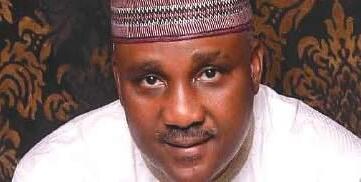
The quest to fill the vacant position of the Minority Leader of the House of Representatives almost affected the image of the Green Chamber when rumours filtered in that monies allegedly exchanged hands to pave the way for a member representing Ideato North/Ideato South federal constituency in Imo state, Hon. Ikeagno Ugochinyere, to lead the minority caucus.
The position became vacant after Hon. Kingsley Chinda, lawmaker representing Obio/ Akpor federal constituency, who vacated the role
after emerging as the APC governorship candidate for Rivers state.
Against this background, 61 opposition lawmakers drawn from several opposition parties represented were said to have formally submitted Ugochinyere’s nomination to the Speaker, Hon. Tajudeen Abbas, for ratification and announcement in line with parliamentary procedures.
According to document made available to journalists on Wednesday, June 3, 2026, 61 out of the 81 opposition
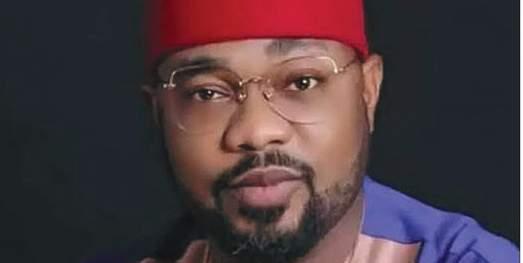
members in the House signed the nomination, giving the Imo lawmaker overwhelming backing across party, regional and religious lines. But, controversy subsequently trailed the endorsement of Ugochinyere when Deputy Spokesperson of the House and a member of the Labour Party (LP), Hon. Philip Agbese during the plenary on Thursday, June 4, 2026 denied endorsing the Action Peoples Party (APP) lawmaker to lead the minority caucus. He alleged that his signature was forged on the document nominating Ugochinyere for the role. Nevertheless, Ugochinyere dismissed his
claim as an “outrageous lie” and subsequently released a video to back his claim that Agbese signed the document endorsing him for the position of minority leader.
In a surprising move during the plenary last Wednesday, the House pulled the rug off the feet of Ugochinyere when it passed a resolution barring first time lawmakers from holding principal offices.
NOTE: Interested readers should continue in the online edition on www.thisdaylive.com

In a move that underscores its growing influence in Nigeria's transportation industry, Enviable Tricycle Auto Parts Limited has secured nationwide authorised distributorship rights for TVS Motor Company products while unveiling media personality and entrepreneur Tacha as its Brand Ambassador. The twin developments signal the company's ambition to become a major force in Nigeria's mobility ecosystem through expanded access to quality vehicles, improved after-sales services and stronger public engagement. Royce Okolie reports
Nigeria's transportation sector continues to evolve, driven by growing demand for reliable mobility solutions, expanding commercial activities and increasing investments in the automotive value chain.
Against this backdrop, Enviable Tricycle Auto Parts Limited has taken a significant step that could further strengthen its presence within the country's mobility ecosystem.
The company has been named an authorised distributor of TVS Motor Company products nationwide, a development that positions it at the centre of efforts to improve access to quality motorcycles, tricycles and after-sales support across Nigeria.
The announcement was accompanied by another major unveiling—the appointment of renowned Nigerian media personality and entrepreneur, Anita Natasha Akide, popularly known as Tacha, as the official Brand Ambassador of Enviable Transport.
Together, the two developments represent a strategic move aimed at expanding market reach, strengthening customer engagement and reinforcing confidence in the company's long-term vision for mobility solutions in Nigeria.
The announcements were made during a high-profile corporate event attended by industry stakeholders, business leaders, partners and members of the media, marking what many observers described as a defining moment in the company's growth journey.
For years, motorcycles and tricycles have remained an essential part of Nigeria's transportation network. Beyond moving people and goods, they serve as vital economic tools for thousands of operators and small business owners across urban and rural communities.
Recognising this reality, TVS Motor Company and Enviable Tricycle Auto Parts Limited have entered into a partnership designed to deepen access to quality mobility products while improving customer support services nationwide.
TVS Motor Company, one of the world's leading manufacturers of two-wheelers and three-wheelers, has continued to expand its footprint across Africa, with Nigeria emerging as one of its most strategic markets. Through the partnership, Enviable Tricycle will utilise its extensive distribution network and operational reach to make TVS products more accessible to customers across the country.
The collaboration is expected to strengthen the availability of trusted mobility solutions, particularly within the commercial transportation sector where durability, efficiency and after-sales support remain critical considerations for operators.
A major feature of the partnership is the planned rollout of exclusive 3S facilities— Sales, Service and Spare Parts—in strategic locations across Nigeria.
The facilities are expected to provide customers with access to genuine TVS vehicles, original spare parts, technical support and professional after-sales services. Industry experts have long identified

access to genuine components and quality maintenance services as one of the key challenges facing vehicle owners and commercial transport operators. The establishment of dedicated 3S centres is therefore expected to improve customer experience while enhancing operational efficiency and vehicle longevity.
The initiative also aligns with broader efforts to professionalise Nigeria's automotive and transportation sectors by ensuring that customers receive comprehensive support throughout the lifecycle of their vehicles.
Speaking during the event, Regional Business Head, West Africa II, TVS Motor Company, Prashant Sanglikar, highlighted Nigeria's significance within the company's African expansion strategy.
"Nigeria remains a stronghold for TVS Motor Company. Our focus continues to be on building a scalable footprint in the region, strengthening customer experience, and creating sustainable long-term value within the evolving global mobility ecosystem," Sanglikar stated.
His remarks underscore the growing importance of Nigeria as a destination for automotive investment, particularly as demand for affordable and reliable transportation solutions continues to rise.
With one of Africa's largest populations and an expanding commercial transport market, Nigeria presents significant opportunities for manufacturers and distributors seeking long-term growth.
Defining Moment for Enviable Tricycle
For Enviable Tricycle Auto Parts Limited, the agreement represents more than a business partnership.
According to the Founder and Chief Executive Officer of Enviable Group and Enviable Tricycle Auto Parts
Limited, Chukwuemeka Enviable Ituma, the development reflects the company's growing influence within Nigeria's mobility sector and validates years of investment in building a trusted distribution network.
"This partnership is a defining moment for Enviable Tricycle Auto Parts Limited. It reflects our growing role as a key execution partner in Nigeria's mobility ecosystem. By combining our nationwide distribution capabilities with TVS Motor Company's globally trusted product portfolio, we are positioned to deliver improved access, stronger service reach, and enhanced value to customers across the country," Ituma said.
His comments capture the broader ambition behind the partnership—to create a more accessible and efficient transportation ecosystem while strengthening customer trust through quality products and reliable service delivery.
Adding another dimension to the company's expansion strategy was the unveiling of Tacha as Brand Ambassador.
One of Nigeria's most recognisable media personalities and entrepreneurs, Tacha commands a large following, particularly among young Nigerians. Her appointment is expected to enhance the company's visibility while creating stronger connections with a demographic that increasingly influences consumer behaviour and brand perception.
The decision reflects Enviable Transport's desire to align itself with qualities such as ambition, resilience, innovation and excellence—attributes that have shaped both the company's growth and Tacha's personal journey.
Speaking on her appointment, Tacha expressed enthusiasm about joining the brand and commended the company for its vision and contributions to Nigeria's transportation sector.
She noted that she was proud to be associated with an organisation that is actively driving innovation and creating opportunities within the country's mobility industry.
Her involvement is expected to support awareness campaigns, customer engagement
initiatives and broader market expansion efforts as the company seeks to deepen its footprint nationwide
Beyond vehicle distribution and brand visibility, the event highlighted Enviable Transport's broader commitment to economic development through transportation innovation, job creation and strategic partnerships.
Transportation remains a critical enabler of commerce and productivity. As businesses and individuals increasingly seek dependable mobility solutions, companies that can provide quality products alongside reliable after-sales support are likely to play an even greater role in shaping the sector's future.
The partnership with TVS Motor Company, coupled with the appointment of a highprofile ambassador, signals Enviable Tricycle's intention to position itself among the leading players driving that transformation.
As demand for efficient transportation solutions continues to grow, the company is investing in structures and partnerships that can deliver long-term value to customers while supporting national economic development.
For Enviable Tricycle Auto Parts Limited, the twin milestones represent the beginning of a new phase defined by expansion, innovation and stronger customer engagement.
The authorised distributorship of TVS products provides access to a globally respected product portfolio, while the appointment of Tacha introduces a powerful platform for public engagement and brand growth. Together, the developments reinforce the company's vision of building a trusted, accessible and sustainable mobility ecosystem for Nigerians.
As the transportation landscape continues to evolve, Enviable Tricycle is positioning itself not merely as a distributor of vehicles and spare parts, but as a key contributor to the future of mobility in Nigeria—one driven by quality, accessibility, innovation and strategic partnerships.
In an increasingly complex business, regulatory and governance environment, legal knowledge is no longer the exclusive preserve of lawyers.Today, executives, entrepreneurs, public servants, corporate leaders, administrators, traditional rulers, nonprofit leaders and professionals across various sectors require practical legal knowledge to navigate the realities of modern leadership. In this interview, the Lead Faculty, LPP School of Corporate and Business Law, Professor (Hon.) Tunji Ajibola, discusses the vision behind the institution, its programmes, opportunities for graduates, fellowship initiatives, corporate training services, and the institution's commitment to regulatory compliance and professional excellence. Bukola Lasisi brings excerpts
What is the LPP School of Corporate and Business Law (LPP-SCBL)?
The LPP School of Corporate and Business Law (LPP-SCBL) is a professional executive education, training, research and capacity development institution dedicated to making practical legal knowledge accessible to professionals, executives, entrepreneurs, public servants, business owners, administrators and organisational leaders.
What is your focus?
Our focus is to empower professionals with sufficient legal knowledge to become more effective leaders, make informed decisions, manage risks, improve compliance, strengthen governance and contribute meaningfully to organisational success.
The School operates as a centre for professional development, executive learning, legal literacy, corporate governance education, business law training, compliance education, conflict management training and leadership development.
What inspired the establishment of the School?
The idea emerged from years of observing a recurring challenge.
Many highly educated and successful professionals regularly encounter legal issues involving contracts, employment matters, governance obligations, compliance requirements, dispute management, property transactions, business regulations and organisational decision making.
Unfortunately, many professionals have never received practical legal education despite the significant impact of law on their daily professional responsibilities.
LPP-SCBL was established to bridge this gap.
Our objective is not to produce lawyers but to produce legally informed professionals who can confidently operate in today's highly regulated environment.
What is the vision of the School?
Our vision is to become Africa's leading professional institution for practical legal education, corporate governance, business law, compliance, conflict management, executive leadership development and lifelong professional learning.
We envision a future where legal literacy becomes an essential component of professional excellence and organisational leadership.
What is the mission of the School?
Our mission is to make practical legal education accessible beyond the legal profession; to develop legally informed leaders and professionals; strengthen governance and institutional effectiveness; promote compliance, ethics and accountability; advance executive education and professional excellence; equip individuals and organisations with practical legal tools for success; and contribute to national and continental development through professional capacity building.
Who are your programmes designed for?
Our programmes are designed for entrepreneurs and business owners, company directors, corporate executives, human resource professionals, public servants, government officials, compliance officers, administrators, NGO executives, security professionals, journalists and media practitioners, teachers and educators, traditional rulers, community leaders, faith-based leaders, young professionals, university graduates, and professionals seeking career advancement. The School welcomes participants from all professional backgrounds.
What makes LPP-SCBL different?
Traditional law schools train lawyers. LPP-SCBL trains professionals. We focus on the practical
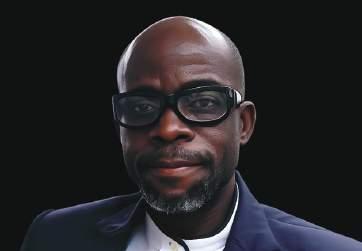
application of legal knowledge in business, governance, administration, leadership, compliance, employment relations, conflict management and organisational decision making. Our programmes are designed to be relevant, practical, flexible and immediately applicable to professional life.
What programmes are available?
Current and proposed programmes include: Professional Diploma in Law, Professional Certificate in Family Law, Professional Certificate in Corporate Governance, Professional Certificate in Employment and Labour Law, Professional Certificate in Contract Management, Professional Certificate in Alternative Dispute Resolution, Professional Certificate in Compliance and Regulatory Practice, Professional Certificate in Business Law, Professional Certificate in Corporate and Commercial Law, Professional Certificate in Leadership and Governance, Executive Development Programmes, Fellowship Programmes, and Customised Corporate Training Programmes.
The school continuously develops new programmes to meet emerging professional and industry needs.
What opportunities exist for graduates?
The benefits are substantial.Graduates gain enhanced professional credibility, greater leadership competence, improved decision making ability, better understanding of legal and regulatory issues, increased organisational effectiveness, stronger governance skills, competitive career advantage, expanded professional networks, continuing professional development opportunities, greater confidence in handling contracts, compliance matters and workplace issues.
Our graduates become more valuable assets to their organisations and communities.
Tell us about the Fellowship Programme
The Fellowship Programme represents the highest category of recognition within the institution.
The Fellowship is reserved for accomplished professionals, academics, executives, policymakers, business leaders, public servants and distinguished individuals who have demonstrated exceptional leadership, achievement, integrity and service.
The Fellowship seeks to build an elite
multidisciplinary network of leaders committed to advancing professional excellence and national development.
What benefits come with Fellowship?
Fellows enjoy Prestigious professional recognition, Membership of an elite professional network, Leadership visibility, Policy and research collaborations, Professional networking opportunities, Speaking engagements, Mentorship opportunities, Advisory and strategic engagements, and Participation in institutional development initiatives.
Our long term vision is to build one of Africa's most respected multidisciplinary fellowship communities.
Does the School provide corporate training?
Absolutely. Corporate training is one of our major strategic priorities.
We provide customised executive training programmes for:
Government institutions
Ministries, Departments and Agencies
Financial institutions
Educational institutions
Manufacturing organisations
Nonprofit organisations
Professional associations
Corporate organisations
Our training solutions cover governance, compliance, leadership, legal literacy, workplace management, conflict management, ethics, risk management and organisational effectiveness.
Training can be delivered physically, virtually or through hybrid learning formats.
Is LPP-SCBL a university or degree awarding institution?
No. The LPP School of Corporate and Business Law is not a university, polytechnic, monotechnic, college of education or degree awarding institution.
The School does not award Bachelor's Degrees, Master's Degrees, Doctorates, National Diplomas (ND), Higher National Diplomas (HND), or any academic qualification reserved for institutions regulated under Nigeria's higher education framework.
LPP-SCBL is a professional executive education and professional development institution.
Our focus is executive learning, professional certification, legal literacy, leadership development, governance education, compliance training and continuing professional education.
Under what legal framework does the School operate?
The LPP School of Corporate and Business Law operates under the legal framework provided by the Companies and Allied Matters Act (CAMA) 2020 of the Federal Republic of Nigeria.
The institution is duly established as a legal entity authorised to undertake lawful educational, professional development, research, consultancy, training, capacity building and related activities consistent with its objectives.
The School operates in a manner similar to professional institutes, executive education centres, leadership academies, management development organisations and professional training institutions operating within Nigeria and internationally.
Does the School require approval from the National Universities Commission (NUC)?
The National Universities Commission (NUC) is responsible for regulating universities and degree awarding institutions in Nigeria.
LPP-SCBL does not operate as a university and does not award university degrees.
The School, therefore, does not hold itself out as a university and does not claim powers reserved for universities under Nigerian law. Its focus remains professional education and executive development.
Does the School fall under the National Board for Technical Education (NBTE)?
The National Board for Technical Education regulates institutions that award National Diplomas and Higher National Diplomas. LPP-SCBL does not offer ND or HND programmes and does not present itself as a polytechnic or technical institution.
Our programmes are professional development programmes rather than technical diploma programmes.
Does LPP-SCBL replace the Nigerian Law School or the Council of Legal Education? Certainly not. The Council of Legal Education and the Nigerian Law School possess statutory responsibilities for professional legal education leading to qualification as a legal practitioner in Nigeria. LPP-SCBL does not train candidates for admission to the Nigerian Bar.
The School does not conduct Bar Part I or Bar Part II programmes. The School does not issue qualifications that entitle any person to practise law in Nigeria.
Instead, our role is to provide legal literacy and practical legal education for non lawyers and professionals.
What certificates does the School award?
The School awards:
Professional Certificates
Executive Certificates
Professional Diplomas
Fellowship Recognitions
Professional Development Credentials
These certifications demonstrate learning, professional development, competency acquisition and successful completion of approved programmes.
They are not academic degrees and should not be represented as university qualifications.
Why is legal literacy becoming increasingly important? Today's professionals operate in environments governed by laws, regulations, contracts, policies and compliance requirements.
Whether one works in business, government, education, healthcare, media, security, community leadership or the nonprofit sector, legal knowledge has become essential.


Edo is committed to curtailing crime in the state through strengthened operational security and force of law, writes JOHN MAYAKI
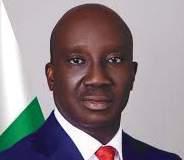
DAYO OMOOGUN argues the remarkable improvement in the sector in the past decades See page 21
page 21


As the presidential poll closes in, hawkish politics is on the rise, contends IFEANYICHUKWU AFUBA
Too little zeal will kill a job; either leave it undone or bungled. But too much zeal can as surely create a mess; derail a task, or rush over it. With emotion dominating, the overzealous man tends to keep scratching at the surface. Intolerance, a dismissive attitude, are regular traits of the overzealous. Little wonder, the overzealous has predilection for seeking shortcuts to the intended destination. This tribe of hardliners, we should observe with worry, are seriously at work in the build - up to the January 2027 presidential election. Their stormy hands are already rocking both the system and process.
As with football and religion, politics is plagued with fanaticism. How do you get a typical football addict to accept that there are other great sports aside the round leather field game? And how do you get English soccer fans, for instance, to appreciate that the English Premier League is not necessarily the best; may not be superior to other federation tournaments? It's a similar tacky situation when we witness vocal calls for implementation of Sharia in a plural religious, multi cultural society such as ours.
But with the presidential poll getting closer by the day, hawkish politics is on the advance. Nothing better dramatises the threat than the continued attempt to shut the opposition out of the election. Last week, at the beginning of third week of June, this desperate, political plot took on wings of legalism. Essentially however, the action dressed up as legal invalidation of some opposition parties, is political. It is crude, brash politics with the singular aim of predetermining the presidential election. The target of the assault is the ADC with the clear intention of avoiding its formidable challenge. The script drips with the ink of overzealous loyalists, fanatics and extremists in the ranks of the establishment. Moderates in the ruling circle must be embarrassed by this antidemocracy agenda that seeks to rubbish the choice principle of electoral franchise. The insensitivity in which this reckless agenda is woven is hard to grapple with. Regime succession is an integral part of the Nigerian crisis. Accordingly, it should be considered irresponsible of anyone embarking on a plot capable of destabilising the polity. The path to national pacification is political. It is a road that emphasises inclusiveness, equity and fairness. But so intoxicating can extremism prove, that actors who

ought to be conscious of the lessons of history lose its sight. A sense of where we're coming from, gives an indication of where we are.
There is a linkage between the present dispensation and the still - born Third Republic. The June 12, 1993 crisis was about power exclusion. And the eventual amend was political, not legal. For the general Abdulsalami Abubakar junta, the solution was to give a measure of accommodation to the part of the country wronged. Retired General Olusegun Obasanjo was thought to fit the bill and summarily released from prison. But before Obasanjo's ultimate coronation, a significant development occurred. Alliance for Democracy, the southwest platform of June 12 movement, failed to meet the prescribed spread for registration as political party in the transition programme. The Abubakar junta did not insist on legal disqualification of the AD. It approved the registration of AD as a political party. And the rest of the country, for the sake of peace and progress, acquiesced to the indulgence. The AD later became ACN. And a fusion of ACN and CPC resulted in the present APC. How ironic then that the foremost beneficiary of deliberate, national elasticity is the very same constituency working to block our electoral Strait of Hormuz! Sad. Alas, that's the irrationality to harvest when fundamentalists reign. Nor is the malaise restricted to the ruling party. If they had their way, the_ Obidients would criminalise dissent from their hero's presidential ambition, all over the southeast. For daring to stand by his party, the APC, Mr Joe Igbokwe was recently booed and taunted at Ladipo market, Lagos. From making social media punching bags of Works Minister, Dave Umahi and Anambra State Governor, Charles Soludo, the group has graduated to knocking Datti Ahmed,
Mr Peter Obi's running mate in 2023. And for an unbelievable moment, the cross - generations vanguard directed its abusive capacity at Seriake Dickson, the same man in whose hands, the fate of Obi's party candidacy depended! Before the reconciliation of differences, Dickson had let it known that no presidential candidate was more qualified than himself, a stinging remark which import was probably lost on the_Obidients._ For their part, the intellectual wing of the movement has been busy with revisionism. In frantic deflection of the unfair charge of "tribalist support", the wild claim of regional support for Obasanjo and other non Igbo candidates in the past is flaunted. In truth, this is half sophistry and half denial of the APGA's mandates stolen by the PDP. In 1999, there were two presidential candidates, both of them Yoruba. By the singular fact of their common ethnicity, it is intellectually dishonest to project a vote for either candidate as instance of ethnic - blank politics by the southeast. The only condition for establishing ethnic insulated voting would be the existence of a candidate of Igbo stock in the same election and who received fewer votes to those cast for a non Igbo candidate in the region! This was not the case in 1999. In 2003 and 2007 general elections, the APGA won majority of the votes from the southeast including in the presidential contest. It is only now convenient for some to forget that other sets of results were later produced to award victories to the PDP. In a Press Release in July 2003, the Justice, Development and Peace Commission of the Catholic Church in Anambra State described the official PDP victories as inconsistent with its monitored outcome of the poll. Significantly too, Abakaliki based Catholic priest, Rev Fr John Odey, captioned his book on the exercise: _ This Madness Called 2003 Election_. In Enugu State, the APGA's Ugochukwu Agballa was on the way to recovering his governorship mandate when the courageous tribunal handling the petition was suddenly disbanded. And the first task of the new tribunal was to reject the damning documents admitted by the first tribunal! It was a similar case of falsification of results in the southeast in 2007, with the Supreme Court split 4:3 on legitimacy of the presidential election. Afuba is of Governance and Development Forge, Awka
Edo is committed to curtailing crime in the state through strengthened operational security and force of law, writes JOHN MAYAKI

The battle against insecurity is often won not by buzz words but by the steady accumulation of actions and enormous political will. In Edo State, Governor Monday Okpebholo appears determined to build such an accumulation, stitching together legislation, enforcement, judicial reforms and logistics into what is emerging as a comprehensive security architecture.
For years, cultism and kidnapping cast long shadows across the state. Violent cult rivalries claimed lives with disturbing regularity while kidnappers exploited forests, highways and rural communities, creating an atmosphere of fear that threatened economic and social life. Confronted with this reality upon assumption of office, the governor chose an approach that combines the force of law with the reach of security agencies and the authority of the courts.
The first pillar of that strategy was legislative. Okpebholo’s recognition that security operations are only as effective as the laws that support them, immediately secured the enactment of the Secret Cult and Similar Activities (Prohibition) Law, 2025, as well as amendments to the Kidnapping Prohibition Law.
Together, the statutes significantly stiffened penalties for cultism and kidnapping, imposed sanctions on sponsors and collaborators, and created legal pathways for dealing with properties linked to criminal enterprises. The message was unmistakable: criminality would no longer enjoy the protection of weak consequences.
Law, however, is merely ink on paper without enforcement. The administration therefore moved to strengthen the operational capacity of security agencies through unprecedented logistical support. Patrol vehicles, particularly Hilux trucks, were procured and deployed across the state to improve mobility and response time. Hundreds of motorcycles were also introduced to enhance access to difficult terrains and forest corridors often exploited by kidnappers. The objective was simple but strategic: deny criminals the advantage of geography.
Beyond equipment came coordination. The government assembled a multi-agency security structure bringing together the police, military, civil defence personnel, vigilante groups and local hunters. Through this collaborative framework, intelligence gathering was expanded, raids intensified and suspected criminal hideouts systematically targeted. The result has been a succession of arrests, including the apprehension of suspected cult leaders and kidnapping suspects across different parts of the
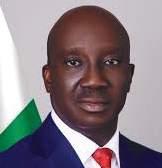
One of the most controversial but symbolically powerful aspects of the campaign has been the demolition of properties allegedly linked to kidnapping, cultism and other violent crimes. Buildings identified by authorities as operational bases for criminal networks have been pulled down, while several facilities suspected of serving as meeting points for cult groups have been sealed. To supporters, the policy represents a direct assault on the infrastructure of crime. To critics, it raises important questions about due process. Yet there is little doubt that it has sent a strong deterrent signal across the state.
The administration has also claimed significant recoveries of illegal firearms during security operations, an indication of the scale of weaponisation that had accompanied organised criminal activities. Removing such weapons from circulation is crucial not only for reducing violent crime but also for preventing future conflicts.
Perhaps the most consequential development in the evolving security framework is the governor's push for judicial acceleration. Having strengthened the law and expanded enforcement capacity, the administration is now seeking to address what many consider the weakest link in Nigeria's criminal justice chain: the slow pace of prosecution.
To this end, Governor Okpebholo has advocated the establishment of a Special Court dedicated to cultism and kidnapping cases. More significantly, the state government has formally requested the Chief Judge of Edo State to constitute such a court.
The rationale is compelling. Swift arrests lose much of their deterrent value when prosecution drags on indefinitely. A specialised court, focused exclusively on security-related offences, could ensure speedy trials, timely convictions where guilt is established and prompt exoneration where allegations prove unfounded.
Mayaki is a Journalist and Diplomat
DAYO OMOOGUN argues the remarkable improvement in the sector in the past decades
As Nigerians bask in the euphoria of another Democracy Day celebration in the last 27 years, the season provides us an opportunity to pause and reflect in order to take stock of the gains and pains that have come about for Nigeria. Of course, there are several parameters with which we can measure the progress or retrogression or to establish whether, like a rocking chair, we have been on a charade of "motion without movement".
The general tendency at times like this, for most Nigerians, is to bemoan, curse and rant over the many opportunities we have failed to harness towards turning around the fortune of our country for good. However that is not the whole picture and we can decide to be intentional in the choice of our perspectives - whether our glass is half full or half empty! Certainly there are some areas where there has been a huge difference, indeed transformation! One such sector is the telecommunications sector where we have transitioned from when the elites declared glibly that telephone is not for the poor, when possession of a phone was a status symbol to now that the average Bose, Emeka and Aliyu have active phone lines. In fact there has been a paradigm shift in the mentality of most Nigerians to the effect that the phone is a necessity, an essential life and business tool rather than a luxury.
Let's take a closer look at some of the gains in the sector which have been primarily facilitated by the regulator, the Nigerian Communications Commission (NCC).
As of today, official sources put the number of active phone lines in Nigeria at 185 million. For a country whose population is estimated to be in the region of 230 million and coming from less than half a million lines at the start of this revolution a little over 20 years ago, you be the judge whether or not there has been a positive transformation.
On the data side, the records show that Nigerians are using an average of 45,800 terabytes daily, based on March 2026 figures. One terrabyte is 1 million megabytes or 1000 gigabytes. Let that sink in.
It is important to note that this is one sector where the nation is not only recording growth but also development. Using various tools and policies, the Commission continues to ensure improvements both in quantity and quality.
The twin tools of Quality of Service (QoS) and Quality of Experience (QoE) assessments are being actively deployed to monitor performance of providers and satisfaction of consumers and this feedback mechanism positions the Commission to take appropriate steps to minimise the incidence of poor service.
The Commission has remained steadfast in protecting and empowering consumers. Recently, upon the insistence of the Commission, millions of consumers across the nation were compensated for poor service by mobile network opera-
tors when service quality dropped lower than an acceptable threshold. For many, it was a pleasant surprise, a total break with a systemic weakness that had become the norm, because many Nigerians have come to terms with being serially cheated, oppressed or defrauded with little or no chance of redress or recompense.
NCC also went further in its empowerment of consumers by directing Mobile Network Operators (MNOs) and major Internet Service Providers (ISPs) to inform consumers ahead of time about any major network outages and planned service disruptions. In the event of such outages, they are to provide further information such as the cause of outages, affected locations, estimated time of restoration of service, etc. This and a few other policies show clearly that the Commission does not trifle with consumers. "Good regulation should be conducive to business and to customer protection", says Jamie Dimon, the CEO of JP Morgan Chase & Co. This balancing skill of harmonising the varied interests of stakeholders has been the hallmark of the Nigerian Communications Commission's regulatory strategy. In one deft move in 2025, the Commission attended to the demand by network providers and the cry for better services of consumers by approving a 50 percent tariff hike and getting the telcos to commit to expanding their infrastructure for better service delivery.
Following that intervention, over $1 billion was invested in network upgrades covering 2866 sites marking the end of a prolonged period of under-investments in the sector. This new investment trajectory has continued this year with operators pledging to activate 12,000 new sites out of which over 3,000 have been deployed already. Indeed there has been a significant reduction in dropped calls which the average consumer on the street can attest to while the problem of sluggish internet is also being gradually overcome. It is believed that when the remaining 9000 sites planned for 2026 are completed and deployed, there will be a significant upward shift in service quality.
writes from Lagos
Editor, Editorial Page PETER ISHAKA
Email peter.ishaka@thisdaylive.com
Amid rising inflation and increased living costs, the Nigeria Labour Congress (NLC) has been agitating for a significant wage raise to reflect the prevailing economic realities. In apparent response to the workers’ persistent demand, the Nigeria Governors’ Forum (NGF) has proposed N100,000. But the NLC has dismissed the offer as insignificant. “We consider it thoughtful of the Kwara State Governor (and NGF Chairman, AbdulRahman Abdulrazak) to propose this,” said Labour spokesman Benson Upah, “but certainly, N100,000 falls far below the realistic figure.” Instead, the NLC is asking for a N1 million monthly minimum wage that has also triggered divergent views.
In July 2024, the federal government approved a new national minimum wage of N70,000 after prolonged negotiations with organised labour. But the call for another wage review intensified almost immediately amid worsening economic conditions. The removal of fuel subsidies and the floating of the naira led to significant depreciation of the national currency leading to skyrocketing transportation costs and food prices, and precipitating a sharp erosion of real wages. The economic hardship is further worsened by increases in electricity tariffs and the impact of recent tax measures. Another ground often advanced to support review of wages is that the Nigerian workforce is comparatively in the category of the least paid in Africa. So pitiable is the take home salary of a Nigerian worker that it pales in comparison to what workers in Ghana, Kenya, South Africa and Angola earn in the salary equation.


the business environment. The chief executive officer of the Centre for the Promotion of Private Enterprise (CPPE), Muda Yusuf, said while wage adjustments are necessary and often justified, “but in an economy characterised by persistent inflationary pressures, structural bottlenecks and weak public service delivery, nominal wage increases are frequently eroded within a short period.”
The organised private sector has indeed cautioned that drastically raising wages could result in further price hikes. Beyond wage negotiation, many stakeholders are urging government, labour unions and policymakers to also address issues of insecurity, unstable power supply and foreign exchange challenges, which are all drivers of economic hardship among workers.
The living conditions of many Nigerians should be upscaled by paying wages that will entitle them to a decent life
T H I S D AY
EDITOR SHAKA MOMODU
DEPUTY EDITOR WALE OLALEYE
MANAGING DIRECTOR ENIOLA BELLO
DEPUTY MANAGING DIRECTOR ISRAEL IWEGBU
CHAIRMAN EDITORIAL BOARD OLUSEGUN ADENIYI
EDITOR NATION’S CAPITAL IYOBOSA UWUGIAREN THE OMBUDSMAN KAYODE KOMOLAFE
EDITOR-IN-CHIEF/CHAIRMAN NDUKA OBAIGBENA
GROUP EXECUTIVE DIRECTORS ENIOLA BELLO, KAYODE KOMOLAFE, ISRAEL IWEGBU
Besides, a minimum wage is the lowest amount of salary that employers of labour, whether in the private or public sector, can legally pay their employees, so it is not only about government. Many small-scale businesses will collapse under the weight of any unrealistic minimum wage. Indeed, many are not paying the present minimum wage to their workers. Even several state governments are yet to brace up to paying the current minimum wage of N70,000, given their meagre internally generated revenue (IGR) or outlandish lifestyles. Few states like Imo and Lagos are paying a little above the present wage, but many others are yet to fully implement other key provisions, including consequential adjustments for senior workers, and extension of coverage to local government staff, primary school teachers, and health workers. Only last month the NLC directed workers in states yet to fully implement the 2024 national minimum wage to hold protests on May Day, 2026.
However, while many acknowledge that workers deserve better welfare as a result of soaring inflation, they are also acutely aware that excessive increases would only worsen inflationary pressures and further erode purchasing power of the people. Improving workers’ welfare requires broader economic reforms aimed at reducing inflation, improving productivity and enhancing
DIVISIONAL DIRECTORS SHAKA MOMODU, PETER IWEGBU, ANTHONY OGEDENGBE
DEPUTY DIVISIONAL DIRECTOR OJOGUN VICTOR DANBOYI
SNR. ASSOCIATE DIRECTOR ERIC OJEH
ASSOCIATE DIRECTOR PATRICK EIMIUHI
CONTROLLERS ABIMBOLA TAIWO, UCHENNA DIBIAGWU, NDUKA MOSERI
DIRECTOR, PRINTING PRODUCTION CHUKS ONWUDINJO
TO SEND EMAIL: first name.surname@thisdaylive.com
We are however delighted that the NGF is seriously considering the issue of raising the minimum wage. And as standard practice, they must consult with the organised private sector and organised labour to reach a consensus. The living conditions of many Nigerians should be upscaled by paying wages that will entitle them to a decent life. Government must make deliberate efforts to tackle the increasing challenge of poverty.
Letters in response to specific publications in THISDAY should be brief (150-300 words) and straight to the point. Interested readers may send such letters along with their contact details to opinion@thisdaylive.com. We also welcome comments and opinions on topical local, national and international issues provided they are well-written and should also not be longer than (750- 1000 words). They should be sent to opinion@thisdaylive. com along with photograph, email address and phone numbers of the writer.
While much attention has been given to the remarkable transformation taking place within the city centre of Abuja, perhaps one of the most impactful achievements of the current Federal Capital Territory Administration under the leadership of Minister Nyesom Wike is the unprecedented expansion of infrastructure in rural communities and area councils.
For decades, many farming communities across Abaji, Kwali, Kuje, Bwari, Gwagwalada, and the Abuja Municipal Area Council (AMAC) struggled with poor road networks that limited access to markets, healthcare facilities, schools, and other economic opportunities. During the rainy season, some communities were virtually cut off, forcing farmers to watch their produce perish before reaching buyers.
Today, that narrative is changing.
The construction and rehabilitation of strategic roads across the area councils have opened up new economic corridors, connected isolated communities to urban
markets, and improved the livelihoods of thousands of residents, particularly farmers who form the backbone of rural economies.
Among the projects making significant impacts are the Airport–Kuje Road, the Kuje–Gwagwalada Dual Carriageway, rural access roads in Kwali and Abaji, and the newly commissioned access road linking communities around the second runway corridor of the Nnamdi Azikiwe International Airport.
For many indigenous communities, these projects represent more than infrastructure; they symbolize inclusion, recognition, and economic empowerment.
On the impact of the newly completed road network, many residents noted that unlike in the past, today, transport costs have reduced, buyers come directly to farms, and farmers earn better income from their produce. Similarly, improved road access has significantly reduced post-harvest losses and our children now get to school more easily, healthcare services are more accessi-
ble, and traders come directly to our community to purchase farm produce. The road has brought development closer to the people.
The completion of the Kuje–Gwagwalada Dual Carriageway is the fulfilment of a long-awaited dream as it is a project that residents have heard about and waited for since the early 2000s. For many years, successive administrations talked about it, but little progress was made. Today, we can see and use the road. Beyond easing transportation, it has improved business activities, reduced travel time, and given residents renewed confidence that development is reaching our communities.
Long-time residents view the project not merely as a road but as the fulfilment of decades of expectation and a symbol of government's commitment to inclusive development.
Dr. Jumai Ahmadu, Director, Reform Coordination and Service Improvement Department, FCTA, Abuja
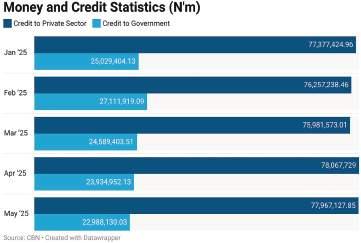
Kayode Tokede
As the Central Bank of Nigeria (CBN) maintains a tight monetary policy, Nigerian banks credit to the private sector dropped by 14 per cent to N81.04 trillion as of May 2026 from N93.74 trillion when it opened January 2026.
According to the Central Bank of Nigeria (CBN)’s “money & credit statistics” credit to the private sector reached the highest peak of N94.6 trillion in February 2026. The apex bank excluded March 2026 in its data.
Analysts attributed the decline to rising credit risk
and concern about nonperforming loans, economic uncertainty, and attractive government securities.
Private sector credit includes loans, trade credits and other account receivables and supports provided by banks to the private sector within a period. The CPS is a global measure of the banking sector’s balance sheet resilience and contribution to the national economic agenda.
Experts said banks are in position to continue to create more loans, citing aggressive growth strategies by banks and enabling a regulatory environment over the years.
They agreed that increasing private sector credit implies a major boost for the economy as there is a link between credit to the private sector and economic growth. Several studies have continuously found that increased lending by banks directly leads to increase in Gross Domestic Products (GDP).
Analysts at Cordros Capital said the trend in credit to the private sector may continue in the period ahead.
“We believe the reenforcement of the CBN’s limit on Deposit Money Bank’s loans-to-deposits macro-prudential ratio
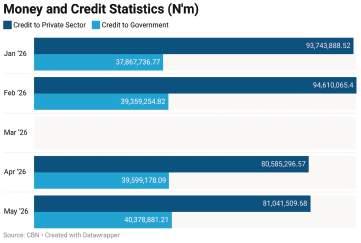
will continue to drive the willingness of commercial banks to create risky assets over the short to medium term,” Cordros Capital stated.
The latest statistics by the CBN also revealed that credit to the government moved to N40.38 trillion as of May 2026, about 6.6per cent increase over N37.87 trillion reported in January 2026.
Finance Expert, and Vice President, Highcap Securities Limited, Mr. David Adnori hinted that excess liquidity contributed to growth in credit to the government, stressing that banks are always looking
for risk free government instruments to invest.
Some analysts believe the apex bank’s intensified monetary policy tightening measures could tether the magnitude of growth going forward.
Chief Executive Officer, Centre for the Promotion of Private Enterprise (CPPE), Dr. Muda Yusuf, said the credit outlook remains cautious, calling for expansive distribution of credits across all tiers of companies and sectors.
According to him, there are major concerns in terms of distribution of
credits across sectors and companies with small businesses, which contribute more to job creation and economic inclusion, not likely to benefit much. He noted that banks tend to be wary of credit risk concerns associated with lending to small businesses and certain sectors, adding that efforts should be made to drive inclusive and stable credit access to all sectors including growth and employment elastic sectors such as agriculture, manufacturing, real estate, mining and construction among others.
Financial system is expected to receive a substantial liquidity injection of N3.39 trillion this week, with maturing Open Market Operation (OMO) bills accounting for about 86 per cent of the anticipated inflows, according to the latest weekly market report by the Financial Markets Dealers Association (FMDA).
The projected inflows represent a sharp increase from the N1.53 trillion recorded in the previous
week and are expected to significantly improve liquidity conditions across the banking system after a period of tightening.
FMDA noted that OMO maturities worth N2.93 trillion would constitute the largest source of liquidity this week, dwarfing inflows from Treasury bill maturities, FGN bond coupon payments and other instruments. Treasury bill maturities are expected to contribute N331.88 billion, while FGN bond coupon payments are projected at N126.36 billion.
The anticipated liquidity surge follows a challenging week in which average system liquidity declined by 13.69 per cent as the Central Bank of Nigeria (CBN) mopped up approximately N1.49 trillion through Treasury bill auctions, while lower levels of maturing securities limited fresh liquidity injections into the financial system.
It stated, “Average system liquidity declined significantly by 13.69% last week, as the CBN withdrew an estimated N1.49 trillion through Treasury bill auctions, while lower
maturities limited liquidity injections into the financial system. Looking ahead, liquidity conditions are expected to improve, with about N3.39 trillion projected from maturing securities this week. OMO maturities account for approximately 86 per cent of the expected inflows. In the fixed income market, yields continued to trend upward as investors demanded higher returns. Average Treasury bill yields rose sharply by 72 basis points to 18.31 per cent, while average FGN bond yields edged higher by two
basis points to 16.95 per cent.”
FMDA attributed the increase in Treasury bill yields to weaker demand and investors’ preference for higher returns amid prevailing market conditions.
“Secondary market activity, however, strengthened considerably. Treasury bill turnover surged by 137.49 per cent to N1.51 trillion, while FGN bond trading volume increased by 75.91 per cent to N1.20 trillion, highlighting renewed investor participation despite the rise in yields,” it said.
The report further showed that Nigeria’s benchmark 10-year government bond yield rose by 17 basis points to 17.61 per cent, even as yields across major global bond markets generally declined. It stated, “FGN bond yields edged higher across most maturities during the week, with the average yield rising marginally by 2bps to 16.95 per cent, reflecting mild bearish sentiment in the secondary market.”

of All
million investment
Nigeria’s trade with other African countries climbed to $9.02 billion in 2025, underscoring the growing importance of the African Continental Free Trade Area (AfCFTA) in expanding market access for Nigerian exporters and deepening regional economic integration.
The latest African Trade Report 2026 released by Afreximbank showed that the value of Nigeria’s trade with the continent increased from $7.47 billion in 2024 to $9.02 billion in 2025, representing a growth of about 21 per cent and positioning the country among Africa’s leading intra-
African trading nations.
The report attributed the improvement to Nigeria’s intensified focus on regional commerce and efforts to leverage opportunities created by the AfCFTA to lower trade barriers and expand export destinations across the continent.
According to the report, crude oil remained the dominant component of Nigeria’s exports to African markets. However, the country’s export basket is becoming increasingly diversified, with growing shipments of chemicals, plastics, rubber products, processed agricultural goods, food products, urea and
Deap Capital Management & Trust (DEAPCAP) Plc has formally completed its corporate name change to Critical Minerals Financing Corp (CMFC) Plc, marking a significant milestone in the
Group Business Editor
Eromosele Abiodun
Deputy Business Editor
Chinedu Eze
Comms/e-Business Editor
Emma Okonji
Asst. Editor, Energy
Emmanuel Addeh
Asst. Editor, Money Market
Nume Ekeghe
Correspondents
KayodeTokede(CapitalMarkets)
James Emejo (Finance)
Ebere Nwoji (Insurance)
Reporter
Peter Uzoho (Energy)
company’s strategic evolution into a specialised mining, metals, commodities finance, and investment group.
The completion of the name change followed receipt of all requisite regulatory approvals and filings. In a regulatory filing at the Nigerian Exchange (NGX), the company also stated that it has relocated its corporate headquarters to Number One Lagos, 1 Akin Adesola Street, Victoria Island, Lagos.
Chairman, CMFC Plc, Mr Lamon Rutten, said the transition reflected CMFC’s sharpened focus on capital structuring, investment banking, transaction advisory, project development support, and financing solutions for stakeholders across the minerals and commodities sector.
According to him, the completion of the transition to Critical Minerals Financing Corp Plc marks the beginning of an exciting new phase for the company.
cement to regional markets.
The performance comes as Nigeria seeks to reduce its dependence on traditional export markets outside Africa and position
local manufacturers to take advantage of the continent’s rapidly expanding consumer market.
It stated: “Elsewhere in West Africa, the value of
Nigeria’s trade with the continent grew from $7.47 billion to $9.02 billion. Crude oil was a dominant feature in Nigeria’s exports to Africa. Other key exports included
nonoil manufactured goods such as chemicals, plastics, and rubber products, processed agricultural goods and foodstuffs, urea, and cement.”
Kayode Tokede
Shareholders of TotalEnergies
Marketing Nigeria Plc have urged the management of the company to deploy concrete strategies to navigate market distortions triggered by domestic refineries.
Speaking at the company’s virtual 48th Annual General Meeting (AGM), the shareholders, however, commended the management for overcoming 2025 financial
year challenges and remaining resilience in the oil & gas sector.
The review followed a challenging 2025 fiscal year, which saw TotalEnergies Marketing Nigeria reported a N767.6 billion revenue, which is 26 per cent drop from N1.04trillion reported in 2024 and a loss of N12.5 billion in 2025 from N42.3 billion profit before tax reported in 2024.
The National Coordinator of the Independent Shareholders
Association of Nigeria, Moses Igbrude, expressed concern over the steep fiscal drop. He said, “TotalEnergies is a lover of Nigeria; despite everything over the years, you have been treating shareholders well, but things have changed now. Revenue reduced by 25 per cent and the company had a loss of 151 per cent. Which strategy are you putting in place to make sure that this thing does not happen again going forward?
Re-energise your strategy so we come back fully into dividend payments.”
The Chairman of TotalEnergies Marketing Nigeria, Mr Jean Philippe Torres, at the AGM explained that the underwhelming numbers resulted from structural shifts in the downstream architecture, erratic supply lines and aggressive competitor pricing following the entry of domestic refining capacity.
All On, an impact investing company focused on expanding access to renewable energy solutions in Nigeria, has announced a $1 million investment in Eja-Ice Nigeria Limited, a provider of solarpowered refrigeration and cold chain infrastructure.
The investment will support Eja-Ice’s manufacturing and operational scale-up
as the company enters its next phase of growth. It is expected to enable the expansion of its cold-chain solutions and improve access to reliable cooling services for households, small businesses, and institutions operating in off-grid and weak-grid environments.
Access to dependable cold storage remains a significant
constraint across Nigeria, particularly in coastal and rural communities where limited energy infrastructure contributes to post-harvest losses and income instability for small-scale agroproducers.
Commenting on the investment, CEO, All On, Caroline Eboumbou, said: “All On’s investment in
Eja-Ice reflects our approach of supporting solutions that improve energy access while enhancing livelihoods, reducing costs, and enabling businesses to grow. Strengthening cold-chain infrastructure is an important step towards building more resilient local economies and expanding opportunities in underserved markets.”
Ebere Nwoji
Heirs Insurance Group has said that it would soon transform from its present local and indigenous operator status to regional operator by spreading its tentacles to other African countries.
The company said this is as a result of massive progress it has recorded in its five years
of operation in Nigeria.
Heirs Insurance Managing Director, Mr Niyi Onifade, stated this at a press briefing to x- ray the group’s achievements in its five years of operation in Nigeria.
Onifade, said the group had consistently been making profit since inception except the first year of its establishment when it recorded losses.
“It has been profitable all the way, we have democratised insurance operation through digitalisation in that customers can from the comfort of their room go online and buy their third-party motor insurance and other insurance policies using their phones.
“Heirs Insurance did not just come to the insurance industry for coming’s sake.
We have come to transform insurance industry; so, everything done is about the customer. We have more than three million customers within three years. It is massive. The customers are duly protected. We came into business at a time when COVID 19 was ravaging people. We are number one fastest growing insurance company in Africa.
With reforms in both insurance and pension sectors, especially as it affects retirement benefit management, retirees have become the toast of both insurance and pension managers, Ebere Nwoji writes
With recent inauguration of the Insurance Policyholders’ Protection Fund Committee (IPPF) by the National Insurance Commission (NAIOM) ) and commencement of pilot phase of its free healthcare initiative tagged, “PenCare,” for low income earners under the Contributory Pension Scheme (CPS) by the National Pension commission (PenCom), the stage is set for stiff competition between insurance underwriters of annuity life and Pension Fund Administrators (PFAs) who operate programme withdrawal, as to who should take custody and payment of their retirement benefits.
Under the Pension Reform Act (PRA) 2014, retirees receive benefits from their Retirement Savings Account (RSA) primarily through a combination of a lump-sum payment and a regular pension for life. The Act said touching regular pension life payment, retirees are at liberty to receive their retirement benefits through programme withdrawal system administered by the PFAs or through life annuity payment administered by life insurance underwriters.
According to the Act, upon retirement or reaching age 55 (whichever is later), retirees choose one of the aforementioned pay-out methods.
If a retiree chooses programme withdrawal method of receiving his retirement benefit, his PFA takes custody of his savings and pays him a regular monthly or quarterly pension calculated based on his life expectancy. This

is established at the onset of PRA2004, which established the CPS was placed at 18 years after retirement and while under annuity pay method, he receives his retirement benefits for life. This placed annuity at advantageous position over programme withdrawal.
But with repeal of PRA 2004 and its replacement with PRA 20014, there is no fixed number of years for receiving benefits under the programmed withdrawals system instead benefits are calculated to last for a retiree’s entire expected life span.
Pension experts said under programme withdrawal, duration is based on life expectancy. The law explicitly states that payments under programme withdrawal are calculated on the basis of retiree’s expected life span. His PFA spreads his
RSA balance over this period to determine his monthly pension.
According to the pension law, if a retiree lives beyond his initial life expectancy, his pension doesn’t stop, rather his balance in his RSA is re-calculated to continue providing a pension for as long as he lives. But whether the amount he will be receiving after the expiration of life expectancy is up to half of his last month package is a big question to be answered by the PFAs who administer the programme withdrawal.
With this new position of the law on duration of benefit payment under the CPS, the edge which annuity has over programmed withdrawal was eroded while the issue of security of the life annuity fund under the custody of life insurance firm became another big issue
given Nigerians’ apathy towards insurance and insurance related matters. The situation was worsened by weak financial base of some life insurance firms which hold custody of annuity funds.
A case in point was the African Alliance insurance which faced severe liquidity challenges with mounting pressure on its annuity portfolio; thereby leaving thousands of retirees unpaid for months. But the situation was along the line saved by NAICOM, who intervened by transferring the troubled African Alliance annuity portfolio to Leadway Assurance Company Limited. Annuitants, workers staged a protest nationwide over the matter. This prompted the waning of retirees’ interest in annuity; with many who hitherto preferred annuity regretting and switching over to programme withdrawal.
But thanks to Nigerian Insurance Industry Reform Act 2025, which instituted the policy holders’ protection fund with the primary purpose of securing savings of people under any form of insurance policy purchased. According to the commissioner for insurance, Mr Olusegun Ayo Omosehin, the IPPF serves as a statutory safety net for policyholders when an insurer becomes insolvent or is unable to meet its obligations.
The story continues online on www.thisdaylive.com
Afierce airfare war is unfolding in Nigeria’s aviation industry. While passengers are understandably celebrating the sharp decline in ticket prices, industry stakeholders are increasingly worried about the long-term consequences of a battle many consider economically unsustainable.
At the centre of the controversy are allegations that some airlines benefiting from substantial state government support are offering fares that appear disconnected from the realities of airline operating costs. The result is a pricing environment that may delight travellers today but could ultimately threaten the stability of the industry tomorrow.
For many passengers, the debate is straightforward. Faced with worsening insecurity on Nigeria’s highways and rising transportation costs, they simply want the cheapest available airfare. Questions about operating economics, cost recovery and sustainability are secondary concerns.
Passengers generally want two things from any airline: affordable fares and safe, reliable aircraft. Airlines, however, must place safety above every other consideration. The most effective way to guarantee that safety is through continuous maintenance, recurrent training and operational excellence. These come at significant cost. Airlines that fail to generate sufficient revenue inevitably struggle to sustain the investments required to maintain the highest safety standards.
Airline operators, however, view the current fare war quite differently. Several industry executives privately express concern that some fares being offered on domestic and regional
routes do not appear commercially viable. On routes such as Lagos–Accra, they argue that taxes, airport charges, navigation fees and other statutory costs alone can exceed some of the advertised fares.
If mandatory charges exceed ticket prices, the obvious question is how such operations are being sustained. The answer may lie in government support, crosssubsidisation arrangements or financing structures not immediately visible to the travelling public. Whatever the explanation, the situation raises legitimate questions about market distortion and competitive fairness.
Price wars are not new in aviation. Around the world, airlines occasionally slash fares to gain market share or weaken competitors. History, however, shows that prolonged fare wars rarely end well. Weak operators collapse, investors lose money, and consumers eventually face fewer choices and higher prices after competition has been weakened.
This is where the distinction between privately funded airlines and governmentbacked carriers becomes critical. Private airlines survive on commercial discipline. Every route, aircraft acquisition, maintenance programme and staffing decision must ultimately make economic sense. Investors expect returns, lenders demand repayment, and management must constantly balance expansion with profitability.
Government-backed airlines operate under different pressures. Political considerations can sometimes outweigh commercial realities, while losses may be absorbed by public funds, allowing operators to sustain below-market pricing
for extended periods.
Even government support has limits. Taxpayers ultimately bear the burden, and difficult questions inevitably arise about whether scarce public resources should be invested in commercial aviation ventures while roads, schools, hospitals, security and other essential services remain underfunded. Recent reports suggesting that some state governments have collectively committed hundreds of billions of naira to airline ventures have intensified these concerns. What exactly has been invested? What are the ownership structures? What liabilities have taxpayers assumed? What returns are expected? Have independent audits been conducted? Have state legislatures adequately scrutinised these investments?
Across Nigeria, state-owned enterprises have too often become vehicles for patronage, waste and political favouritism. Citizens are therefore justified in demanding full disclosure of aircraft acquisition costs, financing arrangements, operating expenses, debt obligations and profitability projections. Without transparency, suspicions will inevitably persist.
Against this backdrop, Nigeria’s privately owned airlines appear better positioned for long-term survival than many observers realise.
Leading that group are Air Peace and United Nigeria Airlines.
Over the years, Air Peace has built what is arguably the most formidable aviation platform in Nigeria and West Africa. Unlike many competitors, its strength is not based on temporary subsidies or government patronage but on scale, fleet
depth, route diversification and operational capacity.
Industry estimates indicate that Air Peace currently has access to approximately 38 to 40 aircraft through a combination of owned, dry-leased and wet-leased equipment, making it by far the largest airline in Nigeria. Its fleet includes Boeing 777 wide-body aircraft, Boeing 737s, Embraer ERJ-145 regional jets, Embraer 190s and the modern Embraer 195-E2 fleet. This diversity provides significant flexibility across domestic, regional and international operations.
The airline’s ability to supplement its owned fleet with ACMI wet-leased aircraft and additional dry-leased Boeing 737 Next Generation aircraft gives it operational resilience that few competitors can match. More importantly, Air Peace possesses something no other Nigerian airline currently enjoys at the same scale: substantial long-haul capability. Its Boeing 777 fleet supports international operations to London and positions the airline for expansion into Brazil, North America and Asia. The recent approval by Brazil’s National Civil Aviation Agency (ANAC) for scheduled operations further demonstrates the airline’s growing international ambitions and reinforces its status as Nigeria’s most globally positioned carrier.
United Nigeria Airlines has also demonstrated resilience and strategic discipline. Since commencing operations in 2021, the carrier has steadily expanded its domestic footprint while maintaining a reputation for operational consistency in a challenging business environment.
• (c) Fred Chukwuelobe, fnipr
Ebere Nwoji
Mutual Benefit Insurance
Plc, has decried Nigeria’s credit gap in Nigeria, revealing that despite increasing financial inclusiveness witnessed in the country, only 6 per cent of the population has access to credit through formal financial institutions.
The company said this in a report, which highlighted that although more than 64 per cent of Nigerian adults were financially included, formal credit penetration remained significantly low.
“Credit to the Nigerian private sector stands at just 13.1 per cent of gross domestic products (GDP), well below peer African economies such as Kenya and South Africa,” the report stated.
According to the underwriting firm,
findings point to persistent barriers to credit access for households, entrepreneurs and small businesses, despite improving economic conditions and growing business activity across key sectors of the economy.
The report also noted that Nigeria’s real sector recorded sustained expansion throughout 2025, with manufacturing, services and agriculture posting positive growth indicators, creating increased demand for working capital and business financing.
Mutual Benefits Assurance said the report reinforces the urgent need for a more holistic approach to financial inclusion, one that combines access to finance with savings, insurance protection and long-term financial planning.
The insurer noted that while access to credit remained important for
economic growth, financial protection mechanisms were equally essential in helping individuals and businesses withstand economic shocks.
According to the Managing Director, of the company, Femi Asenuga, the conversation around financial inclusion must go beyond opening bank accounts and accessing loans. He said true financial empowerment would be achieved when individuals and businesses access financing opportunities while also protecting their income, assets, families and future aspirations from unforeseen risks.
He noted that for many Nigerian families and business owners, a single unexpected event such as a medical emergency, fire incident, business disruption or loss of income, could erase years of financial progress.
Ebere Nwoji
GCR Ratings has officially released its latest financial strength evaluations for FBS Reinsurance Limited, awarding the firm robust marks across both international and national scales.
According to the rating agency, the reinsurer has maintained a steady financial trajectory with a “Stable” outlook projected on both fronts.
On the International
Scale, GCR certified FBS Reinsurance Limited with a Financial Strength Rating of B-, accompanied by a stable outlook. Meanwhile, on the National Scale, the company secured a highly favourable Financial Strength Rating of AA(NG), also carrying a Stable outlook.
The ratings, which carry the signature endorsement of GCR’s Group Head of Ratings, underscore the firm’s solid operational grounding and capital
security within its primary market.
Industry analysts noted that a national scale rating of AA(NG) reflects a very strong capacity to meet financial obligations relative to other issuers or obligations in the same country.
The dual “Stable” outlooks suggest that GCR expects FBS Reinsurance Limited’s key credit metrics to remain resilient over the medium term despite macroeconomic variables.
Newly installed ProChancellor of Miva Open University, Dr. Tunji Olowolafe, has called for a radical rethink of higher education delivery in Nigeria, arguing that quality education should be accessible to all regardless of geographical, economic or social barriers.
Speaking at the maiden convocation ceremony of Miva Open University in Lagos, Olowolafe described open and distance learning as a transformative tool capable of democratizing access to education without compromising academic standards.
A physician by training, Olowolafe said the future of education lies in creating systems that adapt to students’ realities rather than forcing students to conform to outdated models.
“Democratizing education does not mean lowering standards,” Olowolafe said.
“It means refusing to allow the conditions of learning to become a barrier to the quality of learning. It means designing systems that meet students where they are, not systems that demand students rearrange their entire lives to fit a model built for a different era.”
Drawing from Nigeria’s educational history, Olowolafe reflected on the vision of the late Chief Obafemi Awolowo, whose introduction of free education and educational broadcasting helped expand learning opportunities beyond traditional classrooms.
According to him, Miva Open University represents the modern evolution of that philosophy.
“Where the student cannot travel to the classroom, the classroom must learn to travel to the student,” he said, adding that the institution embodies a model that
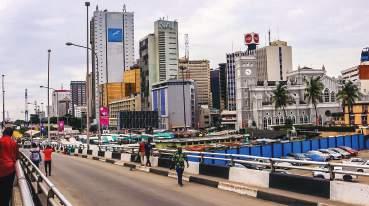
leverages technology to bridge educational gaps.
The academic challenged the perception of open and distance learning as an inferior alternative to conventional university education, noting that such assumptions have led to underinvestment in a system capable of expanding educational access across Africa.
He maintained that graduates of the institution had undergone rigorous academic training and should take pride in their accomplishments.
Addressing the graduating class, he urged them to embrace lifelong learning and serve as ambassadors of the university’s vision.
“The credential certifies that you can learn. The real test is whether you keep doing it, deliberately, aggressively, without waiting for an institution to organise it for you,” he charged.
Kayode Tokede
The Nigerian stock market extended its gains for a second consecutive session as renewed buying interest in Airtel Africa, Guaranty Trust Holding Company (GTCO), among other drive market capitalization by N1.64trillion . The Nigerian Exchange Limited All-Share Index (NGX
ASI) gained by 2,524.00 basis points, or 1.06 per cent to close at 240,743.19 basis points. Market breadth was positive, with 33 advancing stocks surpassing 23 declining counters. Guinea Insurance and Airtel Africa followed with a gain of 10 per cent each to close at N1.10 and N4,358.80 respectively, while International Energy Insurance followed with a gain of 9.89 per cent
to close at N6.11, per share.
Tripple Gee & Company up by 9.82 per cent to close at N3.69, while Cornerstone Insurance rose by 9.76 per cent to close at N6.75, per share.
On the other hand, Red Star Express led the losers’ chart by 9.96 per cent to close at N24.85, per share. Premier Paints followed with a decline of 9.93 per cent to close at N30.40, while Trans-
Nationwide Express declined by 9.82 per cent to close at N4.04, per share.
Royal Exchange depreciated by 9.38 per cent to close at N1.45, while Abbey Mortgage Bank declined by 9.29 per cent to close at N8.30, per share.
Also, the total volume traded surged by 15.74 per cent to 564.909 billion units, valued at N39.345 billion, and
exchanged in 49,230 deals. Transactions in the shares of Fidelity Bank topped the activity chart with 59.372 million shares valued at N1.077 billion. Zenith Bank followed with 49.531 million shares worth N5.860 billion, while Dangote Sugar Refinery traded 43.118 million shares valued at N3.125 billion.
Chams Holding Company traded 39.510 million shares valued at N156.463 million,
while Access Holdings sold 30.707 million shares worth N703.625 million. On market performance, a group of analysts at APT Securities & Funds Limited said that the session was characterized by sustained bullish sentiment and improved liquidity, as investors extended bargain-hunting activities and supported the market’s recovery.
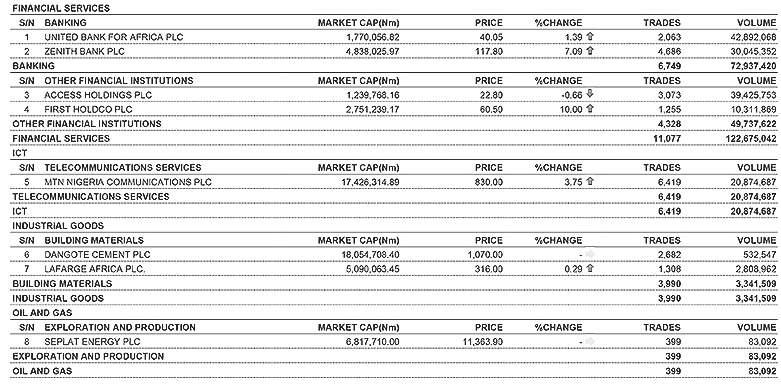
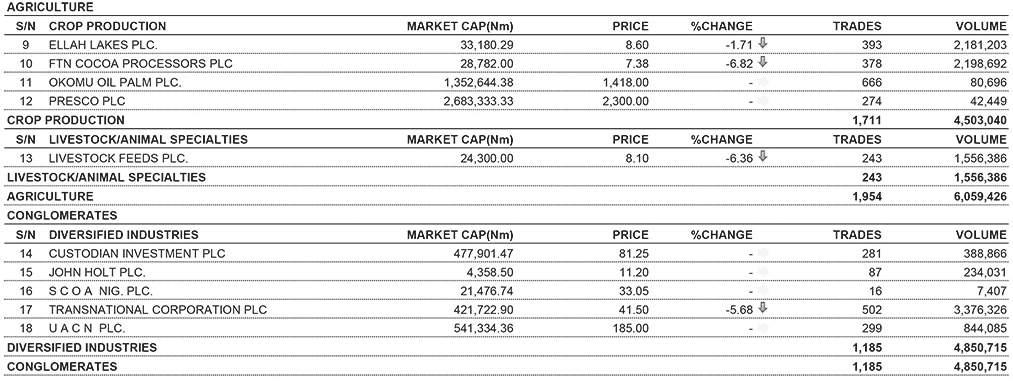
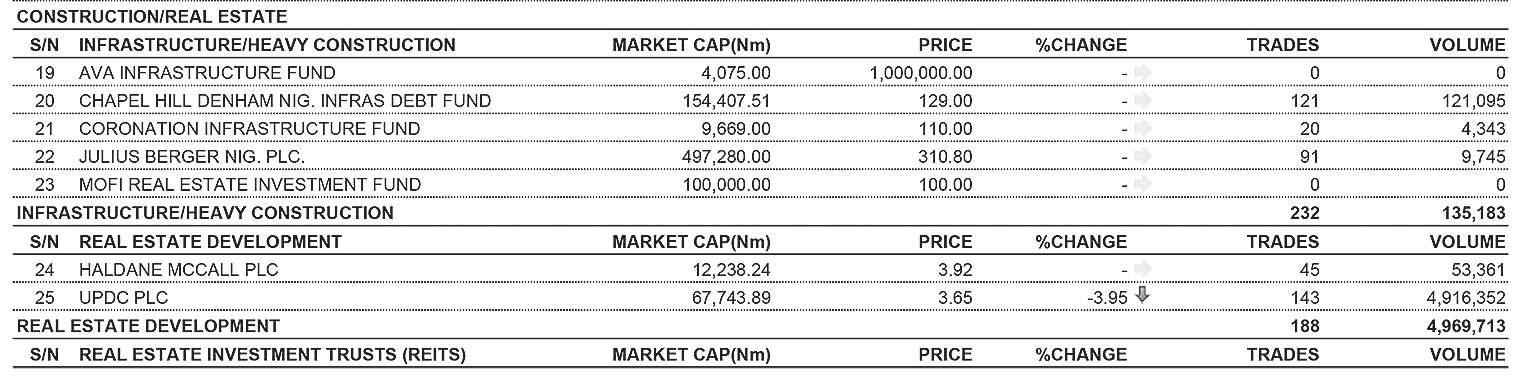
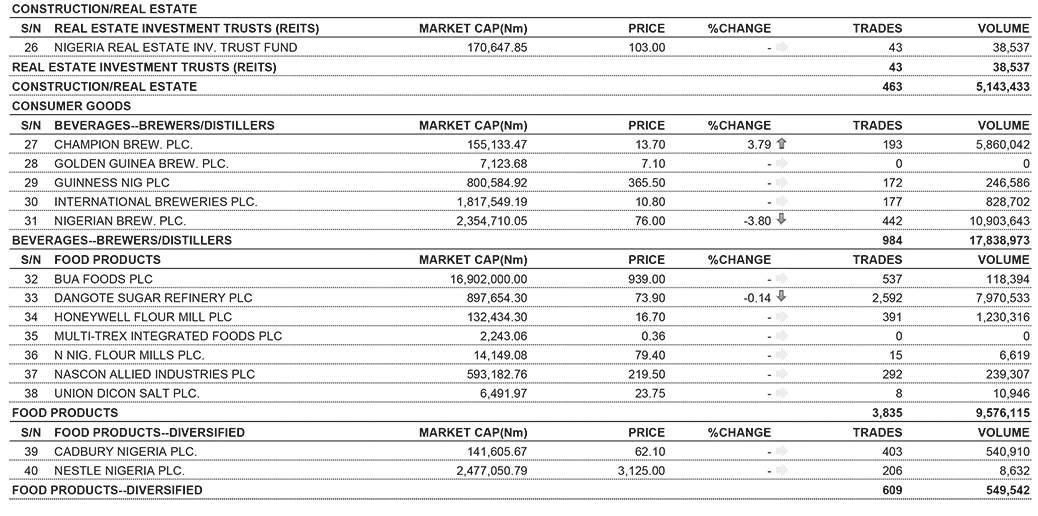
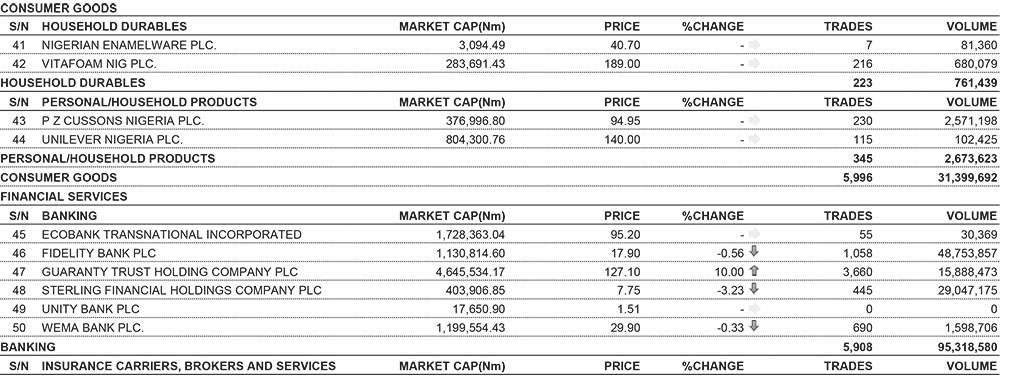
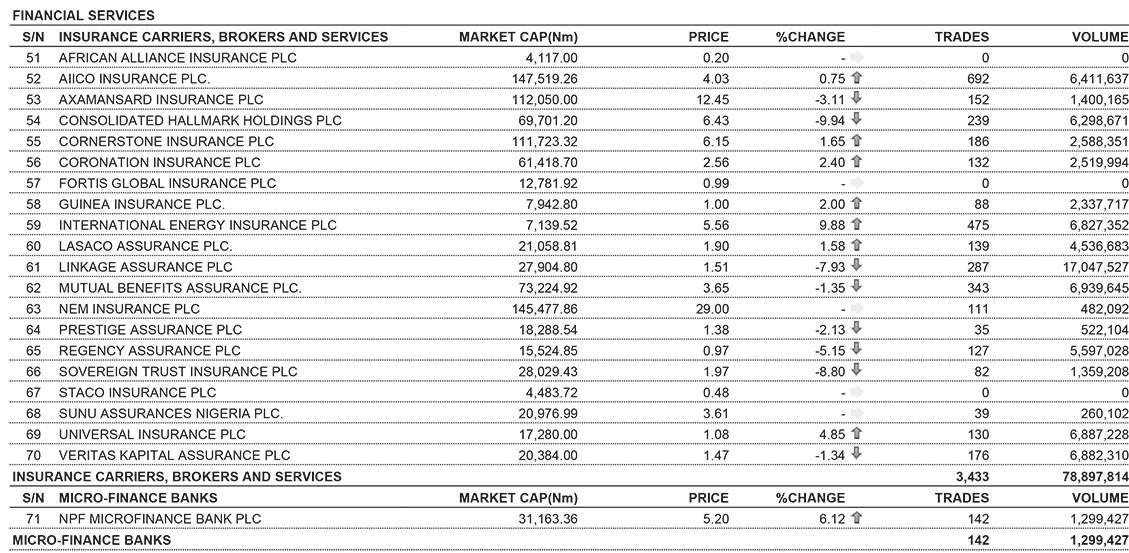

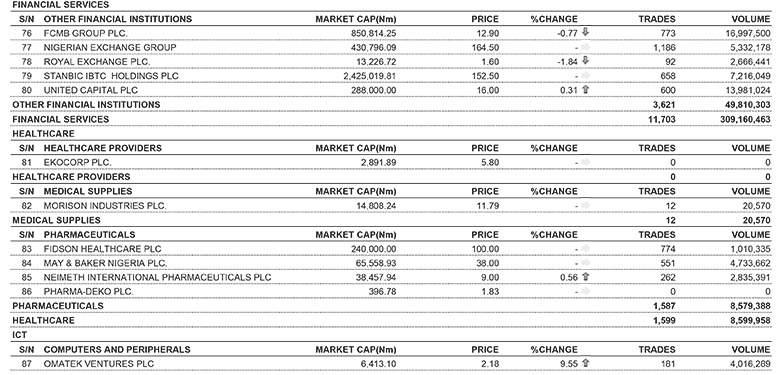
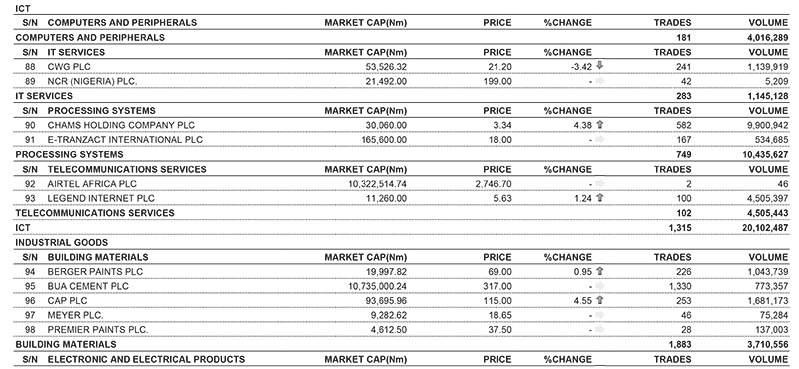
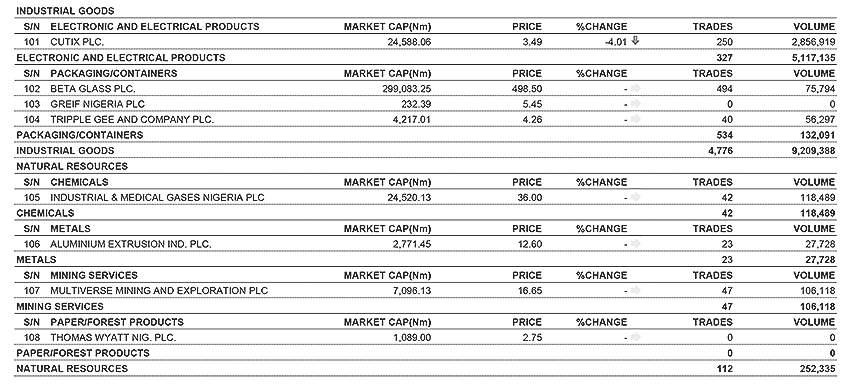
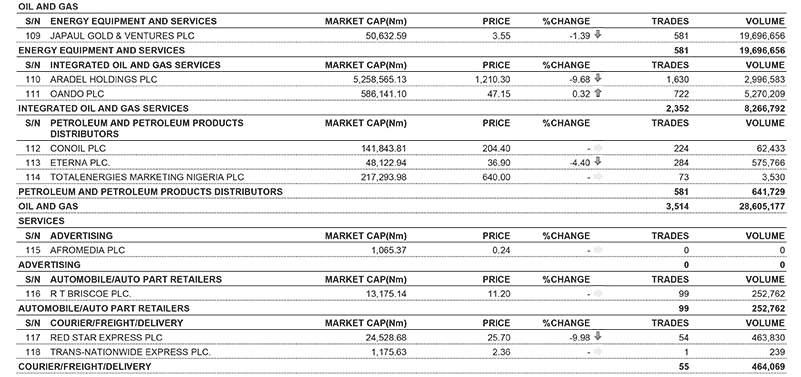

A Mutual fund (Unit Trust) is an investment vehicle managed by a SEC (Securities and Exchange Commission) registered Fund Manager. Investors with similar objectives buy units of the Fund so that the Fund Manager can buy securities that willl generate their desired return.
An ETF (Exchange Traded Fund) is a type of fund which owns the assets (shares of stock, bonds, oil futures, gold bars, foreign currency, etc.) and divides ownership of those assets into shares. Investors can buy these ‘shares’ on the
floor of the Nigerian Stock Exchange. A REIT (Real Estate Investment Trust) is an investment vehicle that allows both small and large investors to part-own real estate ventures (eg. Offices, Houses, Hospitals) in proportion to their investments. The assets are divided into shares that are traded on the Nigerian Stock Exchange.
GUIDE TO DATA:
Date: All fund prices are quoted in Naira as at 15th June 2026, unless otherwise stated.
In this report, Funmi Ogundare explores how lawyer-turned humanitarian and social media influencer, Wisdom Ewere Obi-Dickson’s commitment to education and humanity through leveraging social media to raise over N700 million for Nigerians facing educational, medical and financial challenges made him a symbol of hope and social impact in the digital age
Over the last seven years, social media influencer and philanthropist Wisdom Ewere Obi-Dickson, popularly known as Sir Dickson, has raised more than N700 million to help Nigerians facing poverty, health emergencies, educational challenges, and other urgent needs, transforming online influence into a powerful tool for social impact.
From supporting more than 5,000 students with school fees and scholarships while also funding life-saving medical interventions and other humanitarian causes, to rescuing kidnap victims and supporting bereaved families, the Delta State-born lawyer and humanitarian has become one of the country’s most trusted voices in online philanthropy. Yet, according to him, his mission was never driven by fame but by the values instilled in him during his upbringing.
Obi-Dickson told THISDAY that “humanity must triumph over everything”, a philosophy that has shaped his life’s work. Born to parents from Owerre-Olubor and Agbor in Delta State, Obi-Dickson credits his father for nurturing a culture of kindness and compassion within the family. Growing up, charity was not viewed as an obligation but a way of life.
“My dad taught us charity and kindness and admonished us to look out for the poor and less privileged. Having a platform on social media only gave me leverage to do more,” Obi-Dickson added.
Although trained as a lawyer, he unexpectedly entered social media influencing. According to him, while pursuing a Master’s degree in the
United Kingdom, my online following grew steadily as people connected with my writings and interventions on social issues.
“I didn’t set out to be an influencer. It was fate. People liked the way I wrote and addressed issues, and they followed me. Over time, I gained public trust, and it has been the most valuable currency I have,” Obi-Dickson explained.
Among the causes closest to his heart is education. Drawing inspiration from
Nelson Mandela’s famous quote that education is the most powerful weapon to change the world, Obi-Dickson believes that learning remains one of the surest pathways out of poverty.
“In a country where opportunities are scarce, education gives people options. It opens doors and earns respect. At the very minimum, it helps you get a respectable job,” he explained. Through his interventions, over 5,000 students have benefited from school fees support and scholarship opportunities. More recently, he has expanded assistance to include technology education scholarships to prepare young Nigerians for future careers.
Yet, behind the statistics are stories of pain and resilience that continue to motivate him.
Obi-Dickson recalled numerous cases of students on the verge of abandoning their education because they could not afford tuition, accommodation or food. Some, he noted, moved from one friend’s room to another, uncertain of where their next meal would come from.
“There are people who need fees just to sit for examinations. There are many sad stories, but it becomes rewarding when someone sends a message saying, ‘I graduated because of you,’ or ‘you paid my fees two years ago, and I’ll never forget,’” he stated.
According to Obi-Dickson, financial hardship has become the biggest obstacle confronting Nigerian students. Rising tuition fees, high living costs and mounting bills are taking a severe toll on their mental health.
“Young people are confessing to being depressed and suicidal because of school fees. Cost of living
is killing the living,” he noted.
Beyond education, his humanitarian interventions have touched several areas. In one notable case, he mobilised funds to secure the release of a female corps member kidnapped while travelling to the National Youth Service Corps camp in Rivers State.
Obi-Dickson also raised over N40 million to fund corrective osteotomy surgeries for a patient in Egypt, sourced N30 million within 30 hours for chemotherapy treatment for a cancer patient, and facilitated travel expenses for beneficiaries who secured fully funded scholarships abroad. Other interventions included rehabilitation support for a drug abuse victim, funding for major surgeries and assistance to families facing tragedy.
Perhaps one of the most publicised cases associated with his platform involved a woman popularly known as Mummy Zee, whose family’s financial struggles attracted widespread empathy and support from Nigerians. The intervention, the lawyer noted, transformed their fortunes almost overnight, attracting cash gifts, accommodation support, household items and other donations. Underscoring these experiences, Obi-Dickson stated that medical interventions are particularly fulfilling because they often mean the difference between life and death, saying, “I especially like medical interventions because they directly save lives. I’m proud of the work I’ve done over the years.”
NOTE: Interested readers should continue in the online edition on www.thisdaylive.com
Oluchi Chibuzor
The Centre of Intelligence of Things (Cloth) of the University of Greater Manchester has announced the nomination of Prof Celestine Iwendi as a candidate for the 2026 IEEE Computer Society Board of Governors’ election.
The university, in a statement, described Iwendi’s work as a global recognition that continues to advance responsible artificial intelligence and research collaboration across the globe.
“The Centre of Intelligence of Things, University of Greater Manchester, is delighted to celebrate our Head of Centre, Professor Celestine Iwendi, on his nomination as a candidate for the 2026 IEEE Computer Society Board of Governors election.
“This is a significant global recognition and an important moment for CIoTh, the school, the university, and our wider international research
community. Professor Iwendi’s work continues to advance responsible artificial intelligence, intelligent systems, global research collaboration, student development, and technology for humanity.
“His nomination reflects years of service, leadership, and commitment to strengthening the global computing and engineering community. We are proud to see CIoTh represented on such an important international platform, and we encourage our colleagues, partners, students, alumni, and wider professional network to support and amplify this milestone,” the school said.
Reacting to the new role, Iwendi stated that he would bring proven IEEE volunteer leadership and a deep commitment to growing the society’s impact across regions, students, young professionals,
academia, and industry.
“As a professor of Artificial Intelligence and head of the Centre of Intelligence of Things, I will contribute technical insight in AI, IoT, intelligent systems, responsible innovation, and emerging technologies. I will advocate for programmes that help members remain relevant in a rapidly changing technological world.
“My appointment will also create significant visibility and opportunity for Nigeria. It will strengthen Nigeria’s voice within the global computing community, open more pathways for Nigerian students, researchers, universities, and young professionals to engage with IEEE Computer Society programmes, and support the development of new student branches, chapters, mentoring networks, technical events, research collaborations, and capacity-building activities. It will also help showcase Nigerian talent, innovation, and academic excellence on a
respected international platform,” Iwendi said. He added that his priority would be to strengthen student branch development, expand Computer Society communities in underrepresented regions, improve member engagement, and create practical programmes that connect research, professional practice, innovation, and societal impact.
“I will also bring experience in governance, communication, and volunteer coordination, gained through my service as an IEEE Sweden Section Board Member and Newsletter Editor, and as Chair of the IEEE Computer Society Worldwide Election Committee in 2024.
“Above all, I will bring energy, inclusiveness, integrity, and a collaborative spirit to help the IEEE Computer Society remain innovative, globally connected, and focused on delivering measurable value to its members,” Iwendi stated.
Blessing Ibunge in Port Harcourt
The National Association of Seadogs (NAS), through its Olympus Marino Deck in Port Harcourt, has intensified efforts to promote civic education among young Nigerians by sensitising secondary school students on their constitutional rights and responsibilities. The advocacy programme, tagged ‘Young Citizens: Rights, Respect and Responsibility, Empowering Secondary School Students Through Constitutional Literacy’, was held at Comprehensive Secondary School (CSS), Mboshimini, in Obio/Akpor Local Government Area of Rivers State.
Speaking at the event, the Social Advocacy Chairman of Olympus Marino Deck, Emery Okwakpam, said the initiative was designed to bridge gaps in civic education and equip students with the knowledge needed to understand, exercise and safeguard their rights while appreciating the responsibilities that
come with them.
According to him, the programme seeks to nurture a generation of informed, responsible and socially conscious citizens capable of contributing positively to society.
“The significance of this initiative lies in both its preventive and responsive dimensions. Many young people do not understand their rights or how to protect them. We are empowering them with the knowledge and confidence to become active and responsible citizens,” Okwakpam said.
He explained that the choice of CSS Mboshimini was influenced by the school’s longstanding partnership with the organisation, recalling that NAS had previously visited the school to promote a reading culture and had donated educational materials to support learning.
Okwakpam noted that the sensitisation focused mainly on senior secondary school students, whom he said are at a critical stage of development where they could better appreciate and apply the lessons being taught.
He further stated that the association remains committed to identifying societal challenges and advocating practical solutions through various programmes implemented throughout the year.
“We encourage citizens to be law-abiding and responsible. We want these young people to shun social vices, embrace education and become future leaders who understand both their rights and their obligations to society,” said Okwakpam.
Okwakpam added that the event formed part of NAS’ broader advocacy efforts aimed at fostering civic awareness, responsible citizenship and social development among young Nigerians.
Representative of a civil society organisation, ‘We The People’, Johnjoseph Atsu, said that the group partnered with NAS because of their
shared commitment to advocacy and civic enlightenment.
Atsu disclosed that his organisation is currently implementing the ‘Include Nigeria Project’, which focuses on educating young Nigerians about their rights and responsibilities as citizens.
He explained that the students, drawn from senior secondary one to three, would soon transition into the wider society and therefore needed adequate knowledge of civic values and constitutional provisions.
As part of the programme, the students received booklets containing selected provisions of the Nigerian Constitution and the Child Rights Act relevant to their age group.
“The booklet contains laws that young people between the ages of 13 and 17 should know. It introduces them to rights such as the right to life, freedom of movement and freedom of association, while encouraging them to develop an interest in studying the Nigerian Constitution,” Atsu stated.
The recent graduation of 812 retiring military personnel at the Nigerian Armed Forces Resettlement Centre (NAFRC), Oshodi, Lagos, was more than a ceremonial farewell to military service as it showcased the centre's ongoing efforts to prepare service members for life beyond the barracks through vocational training, entrepreneurship education and institutional reforms. Beyond this, Chiemelie Ezeobi writes that its quest to modernise retirement curriculum to include digital entrepreneurship, agribusiness, renewable energy and information technology, while also upgrading infrastructure and exploring new support programmes for military families, reflects a broader commitment to ensuring that personnel who have spent decades safeguarding the nation are equipped to remain productive and economically independent after leaving active service
As military authorities push to modernise retirement preparation, the Nigerian Armed Forces Resettlement Centre (NAFRC) is expanding its curriculum beyond traditional vocational training to include digital entrepreneurship, agribusiness, renewable energy, information technology and modern business management.
The reforms are part of a wider effort to ensure that military personnel who have spent decades safeguarding the nation leave active service equipped not only with honour and commendations, but also with the skills needed to remain productive and economically independent in civilian life.
That vision was on display at NAFRC, Oshodi, Lagos, on Thursday as 812 retiring military personnel completed the institution's Course 01/2026 pre discharge training programme, highlighting what military authorities describe as a growing shift from retirement preparation to retirement empowerment.
Representing the Chief of the Air Staff, Air Marshal Hasan Bala Abubakar, at the graduation ceremony, the Air Officer Commanding Logistics Command, Air Vice Marshal Abubakar Abdul Suleh, described the occasion as a celebration of courage, discipline and patriotic service.
He commended the retiring personnel for their sacrifices and unwavering commitment to national security, noting that many had distinguished themselves in counter insurgency operations, internal security duties, peacekeeping missions and humanitarian interventions within and outside Nigeria.
According to him, the graduates are leaving active service with honour after making significant contributions to the defence, unity and territorial integrity of the country.
Suleh urged them to approach retirement with the same resilience, discipline and determination that defined their military careers, stressing that the vocational and entrepreneurial skills acquired during the six month programme would serve as valuable tools in their post service lives.
“The vocational and entrepreneurial skills acquired during the six month programme will serve as valuable tools in your post service lives,” he said.
He also advised the retirees to invest wisely, avoid fraudulent schemes and continue to uphold the values of integrity, loyalty and selfless service that earned them respect during their years in uniform.
For the Commandant of NAFRC, Air Vice Marshal Nnaemeka Ignatius Ilo, the
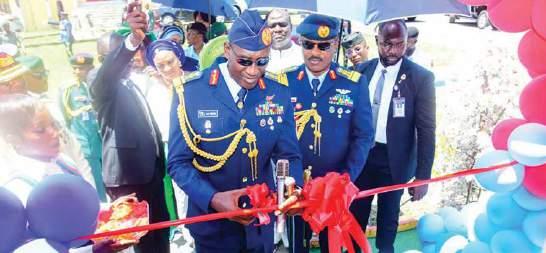
graduation ceremony represented more than the completion of a training programme.
He described it as the beginning of a new phase of productivity and opportunity for retiring personnel and reaffirmed the centre's commitment to equipping military retirees with practical vocational, entrepreneurial and management skills.
Ilo said that since assuming office on December 15, 2025, his administration has pursued an ambitious reform agenda centred on infrastructure renewal, curriculum enhancement, personnel welfare and stronger community engagement.
According to him, the centre has recorded significant improvements, including extensive renovation projects, upgraded accommodation facilities, installation of additional solar powered streetlights and the conduct of a major medical outreach programme at the Ladipo International Auto Spare Parts Market.
Beyond physical infrastructure, the centre has also reviewed its training curriculum to better align with current economic realities and emerging opportunities.
The revised programme places greater emphasis on digital entrepreneurship, information technology, agribusiness, renewable energy, vocational innovation and modern business management, reflecting the changing demands of Nigeria's economy.
Beyond Vocational Training
One of the emerging priorities
of the centre is strengthening support systems for military families, particularly those who have lost loved ones in service.
To this end, Ilo disclosed that discussions are ongoing with the Tony Elumelu Foundation on a proposed empowerment programme for widows and children of fallen military personnel.
The initiative, he said, is aimed at creating economic opportunities and enhancing support for military families whose sacrifices often continue long after service has ended.
The Commandant expressed gratitude to President Bola Ahmed Tinubu, the Ministry of Defence, the Chief of Defence Staff and the Service Chiefs for their support, which he said had contributed significantly to the institution's recent achievements.
He also acknowledged the contributions of corporate organisations and development partners from the logistics, pharmaceutical, financial and manufacturing sectors for supporting the successful execution of the programme.
Earlier, the Director of Training, Brigadier General Isang Akpaumontia, presented the course report and disclosed that a total of 812 senior non commissioned officers from the Nigerian Army, Nigerian Navy and Nigerian Air Force were enrolled when the course commenced on January 9, 2026.
Following medical screening, 86 participants were found medically unfit and returned to their units, while 724 successfully completed all requirements for graduation and certificate awards.
Akpaumontia said participants received intensive training in 33 vocational and entrepreneurial disciplines, including information technology, agriculture, welding and fabrication, tailoring, bakery, photography, leather works, cosmetics production, security management and business development.
The programme combined practical training, entrepreneurship lectures, industrial attachments, study tours and counselling sessions aimed at preparing participants mentally, professionally and financially for life after military service.
He added that 71 female personnel successfully participated in the six month programme alongside their male counterparts, reflecting the increasing role of women across the Armed Forces.
As certificates were presented to the graduates, the ceremony underscored a growing recognition within the military that retirement planning can no longer be limited to traditional resettlement programmes.
Instead, the focus is increasingly shifting towards building entrepreneurs, business owners and skilled professionals capable of thriving in a rapidly changing economy.
For the hundreds of personnel leaving active service, the uniform may soon be retired, but the skills, leadership and discipline acquired through military life remain valuable assets.
Through its ongoing reforms, NAFRC is seeking to ensure that those assets continue to serve both the retirees and the nation long after their years in uniform have ended.
L-R: Mrs. Esther Ukoha; Pastor, Redeemed Christian Church of God (RCCG), Kingdom Palace Parish, Fuwape Peter; Oyinkansola Fuwape; author of the books and former Managing Director, SAHCO/Pastor, Great Grace Assembly, RCCG, Pastor Basil Agboarumi; representative of the Chairman of the occasion, Mr. Aderemi Adejobe; Pastor Onileowo Kayode; Mrs. Yemi Onileowo; Book Reviewer/Group
Agboarumi at Great Grace Assembly in Lagos... recently
Onyebuchi Ezigbo in Abuja
Managing Director/Chief Executive of the Nigeria Social Insurance Trust Fund (NSITF), Barr. Oluwaseun Faleye, has said collaboration between the Fund and Rand Mutual Assurance (RMA) of South Africa would strengthen Africa’s social protection system.
Faleye stated this on Tuesday when he hosted a high-level delegation from RMA South Africa led by the Group Chief Executive Officer, Bilal Adam, at the NSITF headquarters in Abuja.
In a statement signed by the Deputy General Manager Corporate Affairs, Alex Mede, the MD said the meeting marked the start of a strategic partnership between two of Africa’s leading social insurers.
“Your visit marks the beginning of what we hope will evolve into a mutually beneficial and enduring relationship between our two organizations, and highlights our shared commitment to advancing workers’ compensation, occupational safety and health, and social security administration on the African continent,’ the MD stated.
Speaking on RMA’s rich history, the NSITF boss said “We are particularly delighted to receive an institution of such remarkable pedigree.
Established in 1894, Rand Mutual Assurance has built an enviable
reputation over more than a century as one of Africa’s foremost workers’ compensation and social insurance institutions.
“Your evolution from a specialized compensation scheme for the mining industry into a modern, purpose-driven social insurer with a strong emphasis on prevention, rehabilitation, care and shared value creation is both admirable and inspiring,” he added.
He assured the visitors that “At NSITF, we recognize that the future of social protection lies in collaboration, innovation and the exchange of experiences. Consequently, we view this visit not merely as a courtesy engagement, but as the beginning of a strategic partnership capable of transforming workers’ compensation and occupational injury insurance administration across our respective jurisdictions.
“Nigeria and South Africa are two of Africa’s leading economies, and I believe that our institutions have a unique responsibility to provide thoughtful leadership and champion best practices that will strengthen social protection systems throughout the continent”, he stressed.
According to Faleye, the engagement provided both organizations, “with a valuable opportunity to learn from one another, compare experiences, identify areas of mutual interest and explore innovative approaches to addressing the emerging challenges
confronting the world of work.
“I am particularly encouraged by the prospect of collaboration in such areas as digital transformation, claims administration, occupational health and safety, rehabilitation and return-to-work programmes, capacity building, research and policy development.
“As institutions with a common purpose of protecting workers and supporting employers, we must
continue to innovate and build resilient systems that place the dignity and wellbeing of workers at the centre of our operations.
“It is my expectation that the discussions over the next few days will culminate in practical outcomes and provide a framework for sustainable cooperation between our organizations,” he said.
Faleye reaffirmed NSITF’s commitment to strengthening the
Employees’ Compensation Scheme (ECS) as a critical social protection mechanism designed to guarantee compensation, rehabilitation and support for Nigerian workers who suffer workplace injuries, occupational diseases, disabilities or death arising from their employment.
He noted the changing nature of work and emerging occupational risks require social insurance institutions to continuously improve their
systems and adopt innovative approaches that place workers’ welfare at the centre of service delivery. According to him, the ECS remains one of the most important social security interventions in Nigeria, providing medical care, rehabilitation services, compensation benefits and support to employees and their dependants in cases of work-related injury, disability or death.
The Lagos State Police Command has arrested three suspects and recovered more than 7,000 military camouflage uniforms alongside 80 cartons of suspected illicit substances in what it described as a major intelligence-led breakthrough.
The arrest formed part of a series of operations carried out across Lagos in June, during which the command recorded several breakthroughs against armed robbery, cultism, illegal possession of firearms, vandalism, impersonation and illegal immigration
The suspects, identified as Chinedu David, 29; Ezeagwu Chukwuma, 38; and Ifeanyi Ogbeanyi, 45, were
Linus Aleke in Abuja
The Director-General of the National Centre for the Control of Small Arms and Light Weapons (NCCSALW), retired DIG Johnson Kokumo, has said Nigeria is strengthening its security architecture by developing a new cadre of specialists equipped to prevent the theft, diversion and misuse of weapons and ammunition.
Speaking at the graduation of the second batch of participants in the Capacity Development Programme on Physical Security and Stockpile Management (PSSM), Kokumo said the training had equipped personnel from 15 arms-bearing security agencies with critical skills required to safeguard national security assets and reduce
vulnerabilities within their organisations.
He described the programme as a significant milestone, noting that 45 participants completed the latest training, bringing the total number trained under the initiative to 90.
“In today’s complex and evolving security environment, the importance of effective physical security and stockpile management cannot be overstated.
“Around the world, incidents involving theft, diversion, loss of authorised assets, accidental explosions and poor stockpile practices continue to pose significant threats to national security, public safety and socio-economic development,” he said.
Kokumo noted that the graduates had acquired competencies in risk assess-
ment, inventory control, accountability procedures, storage safety, surveillance systems, emergency response and stockpile destruction techniques, all grounded in internationally accepted standards and best practices.
While congratulating the participants, he reminded them that completing the course marked the beginning of a greater responsibility.
“The knowledge you have acquired must be translated into action. You are now ambassadors of best practices in Physical Security and Stockpile Management. Your organisations and communities will look to you for leadership, guidance and innovation in improving safety, accountability and operational effectiveness,” he stated.
arrested by operatives attached to the Command’s Anti-Kidnapping Unit.
Addressing journalists during a briefing on the command’s achievements for June 2026, the Commissioner of Police, Lagos State Command, CP Tijani Fatai, disclosed that the operation led to the recovery of an unregistered MAN diesel truck loaded with 47 sacks of military camouflage uniforms and 80 cartons of suspected illicit substances identified as Betahistine Dihydrochloride.
According to the police, each sack contained about 150 pieces of military camouflage uniforms, bringing the total number recovered to more than 7,000.
The police said preliminary investigation revealed the truck was allegedly being used to transport the military camouflage uniforms to the eastern part of the country.
The command stated that investigations were ongoing to determine the source, ownership and intended recipients of the recovered items, as well as establish the extent of the
suspects’ involvement and identify other persons connected with the crime.
Giving an overview of the Command’s achievements during the period, Fatai said officers recovered 14 firearms, four live cartridges, one MAN diesel truck, 51 mobile phones, two Vehicle Engine Control Units (ECU), popularly known as brain boxes, one operational motorcycle, 47 sacks of military camouflage uniforms, 80 cartons of suspected illicit substances, vandalised electrical cables and other incriminating exhibits.
Among the notable arrests was that of two suspected cable vandals, Ikenegboge Godwin, 23, and Aondoaka Jacob, 23, who were allegedly caught vandalising electric cables on the Third Mainland Bridge.
Police recovered vandalised cables from the suspects and said efforts were ongoing to apprehend other members of the syndicate.
In another operation, officers arrested Emeka Okolie, 32, following a report of theft of iron rods from a
Catholic church under construction in Ayetoro-Ijanikin.
Further investigations led to the arrest of David James, 47, and Uche Mordi, 31, and the recovery of two double-barrel guns and six locally made single-barrel guns. The suspects and exhibits were subsequently transferred to the State Criminal Investigation Department (SCID), Panti.
The Command also arrested a suspect linked to a notorious “one chance” robbery syndicate. Investigators recovered 51 mobile phones believed to be proceeds of previous robbery operations, while efforts continue to track down other gang members and recover the vehicle used in the crimes.
In Festac Town, operatives on stop-and-search duty arrested Ahmed Saheed, 26, who was found with two suspected stolen Vehicle Engine Control Units. Police said the suspect could not provide a satisfactory explanation regarding ownership of the items.
Oyo Govt Declares 16-hour Curfew in 10 LGAs in View of Oriire Schools’ Abductions
Kemi Olaitan in Ibadan
Oyo State Governor, ‘Seyi Makinde, last night, approved the declaration of a 16-hour curfew in 10 local government areas of the state.
According to a memo by the Secretary to the State Government, Prof. Musibau Babatunde, the
curfew took effect from today, Wednesday.
The curfew, which is between 4 pm and 8 am, and to last for 48 hours in the first instance, affected local government areas bordering the Old Oyo National Park.
The affected local government areas are Oriire (Headquarters: Ikoyi-Ile), Orelope (Headquarters:
Others are Itesiwaju (Headquarters: Otu), Iseyin (Headquarters: Iseyin), Olorunsogo (Headquarters: Igbeti) and Atiba (Headquarters: Offa-Meta, Oyo).
L-R: Board Chairman, HBM Nigeria Plc, Gbenga Oyebode; Minister of Works, Senator Engr. David Umahi; MD/CEO, HBM Nigeria Plc, Lolu Alade-Akinyemi; Chairman, Odu’a Investment Company Ltd., Otunba Bimbo Ashiru; Vice President, Overseas Operations and Projects, Mr. Wang Jiajun; Vice President, Procurement, Logistics, Overseas Trade and Digital Innovation Centre, Mr. Tang Jun; and Secretary to the Ogun State Government, Mr. Tokunbo Talabi, during the unveiling of Lafarge Africa Plc’s new corporate identity and change of name to HBM Nigeria Plc in Lagos... recently
At a roundtable with other world leaders in London, yesterday, at the Climate Change Action Week, the Lagos State Governor, Mr. Babajide Sanwo-Olu, dissected some of the challenges of climate change in the state and how his administration has tamed some of the menaces.
Speaking at the Basinghall Suite 1 of the Guildhall, London, Sanwo-Olu, who had a peer review session with other governors and mayors around the world joined
discussions on three topical issues. The first centred on the reality on the ground and what the leaders were managing in their respective places. The second considered a discussion on, from vulnerability to resilience, looking into what recent shocks taught the leaders about the risks of fossil fuel dependence. The last of the issues that was considered dwelt on scaling delivery and that was essentially what needed to happen next, for
instance, how they could move investment from commitment to prospect.
It also asked questions on how to increase access to finance for states and regions as well as what mechanisms were missing to accelerate implementations.
However, drawing from the Lagos governance experience and examples, Sanwo-Olu said, “I’d also like to thank the two members of the coalition. It’s exciting. We’re hoping
that we can advance a lot of peer sharing and a lot of benefits to the government and to the people.
“But we have a background, right? I mean, I’m from a country where I run a state that’s close to 25 million people. Up until very recently, everything regarding power, from generation to distribution to the whole spectrum, was nationally controlled.
“It was just last year that the unbundling of the power sector
Chuks Okocha, Sunday Aborisade in Abuja and Sunday Ehigiator in Lagos
Presidential candidate of the African Democratic Congress (ADC), Atiku Abubakar, has criticised the federal government for what he described as a misplaced security focus.
Atiku, in a post by his media aide, Paul Ibe, accused authorities of concentrating on the prosecution of activist Omoyele Sowore while deadly attacks continued in parts of the country.
We’re
Atiku lamented the recent killings in Plateau State, where at least 18 people were reportedly killed and several others injured during a late-night attack on Kawel village in Mushere District of Bokkos Local Government Area.
He expressed concern over what he described as the absence of a swift and visible response from security agencies following the attack, alleging that no significant action had been taken against those responsible for the violence.
According to him, the silence that
followed the incident has raised concerns about the government’s commitment to protecting vulnerable communities facing repeated attacks from armed groups.
Atiku contrasted the situation with the heavy security presence surrounding Sowore’s legal troubles, arguing that security personnel should be prioritising the protection of citizens in areas threatened by terrorism, banditry and communal violence.
“We major in minors while insecurity rules the land. Why can’t
Onyebuchi Ezigbo in Abuja
The leadership of the People’s Redemption Party (PRP) has said it still related well with the presidential candidate of the Nigerian Democratic Congress (NDC), Peter Obi and Vice-Presidential candidate, Rabiu Kwankwaso.
The party dismissed allegations that former Kano State governor and Vice Presidential candidate of the NDC, Rabiu Kwankwaso bought 69 nomination forms of candidates of PRP.
National Chairman of PRP, Hakeem Baba-Ahmed, who was a guest on the Arise Television Morning Show, said though Obi and Kwankwaso had both parted
ways with his party, he was still friends with them.
“I’ve said this many times. Yes, they did come to our party. We spent some time discussing whether they could come into the party, whether they could join the party.
“In the end, they decided that there wasn’t enough evidence on the ground that their needs would be met by the party, and they moved on, and we parted as friends, and we’re still friends with them,” Ahmed said
On the allegation that Kwankwaso bought PRP nomination forms, Ahmed said: “This is complete fiction, and I am grateful for this, the opportunity to clarify
this with the state chairman, the real state chairman of the PRP in Kano had already stated, released a statement saying this is just complete false account.
“There’s no way former Governor Kwankwaso could have bought 69 forms from from the PRP in Kano. We don’t sell forms in Kano, we sell forms from Abuja.”
He said the man who said they had sold 69 forms to Kwankwaso, was not known to the party at all.
“He has no position. He is not in any position, he has has no authority to sell any forms. We don’t know him. It is possible that this entire thing has been contrived as part of some problems or some politics in Kano.
these security forces be deployed to vulnerable parts of the country where citizens are at the mercy of terrorists and bandits instead of using security personnel meant to protect Nigerians to intimidate them?” he said.
Atiku further questioned what he described as the government’s apparent urgency in dealing with political critics while communities affected by insecurity continue to suffer attacks and loss of lives.
He maintained that the primary responsibility of government is to safeguard citizens and ensure that security agencies focus on confronting threats to public safety rather than actions that could be perceived as targeting dissenting voices.
create more opportunities for digital transitions, investments, employment, and growth.
“I am glad that you are very familiar with the terrain. I can classify you as a Nigerian. MasterCard has a very big reputation in financial management, and opportunities are spreading in Nigeria,” he added.
He said the business orientation was gradually changing, with more small businesses registering and embracing technology.
Earlier, Minister of Finance and Coordinating Minister of the Economy, Taiwo Oyedele, said the economic reforms had provided opportunities for integration, particularly in credit and payment systems.
Oyedele stated, “You do more
happened in our country, and now the states can indeed participate across the whole spectrum, from generation to distribution.
“So, now, we’re actually changing the narrative. Almost 40 to 50 per cent of what is generated in the country also gets passed through states, so it’s huge. There’s a whole lot of interest that we’re pushing on, especially in renewables.
“One of the greatest things that happened to me today was being part of the seven-point agenda led by António Guterres. There’s a point where Africa has been shortchanged completely.
“The statistics show that 60 per cent of the solar capabilities are in Africa. Thirty per cent of the minerals are in Africa. Twenty-five per cent of the world’s population is there. And, of course, 70 per cent of the population on the continent is under 30.
“However, only 2 per cent of whatever gets on this table goes to that continent. If we need to be successful in whatever conversation, in a real transition and in wanting this to be a truly global conversation, Africa has to be there. And if it is Africa, Lagos happens to be the biggest city in that coalition.
“So I’m putting the case forward that all of us will have our individual needs. But if we want scale and relevance, we need to go to places that are underserved. Because I’m also moving from availability
than payments, and that includes the work which you are doing in Nigeria through the MasterCard foundation to support and strengthen small businesses and the informal sector.
“This aligns well with the reforms of Mr President in different areas, cutting across the public and private sectors, including the ongoing efforts to digitise government services. We aim to enhance and empower at least three million youths in Nigeria.
“We are creating opportunities for work within the digital economy, the formalisation of the very large informal sector that we have in Nigeria.”
The minister added, “One of the major reforms by Mr President in fiscal and tax matters has led to
to affordability before I can even begin to talk about a real transition.
“But we’re doing everything. In the past year, we’ve installed over 45,000 solar street lights and street poles across the city. These are the kinds of things we’re doing. We’re doing them at scale so that we can achieve a lot of catch-up. But that’s just my first point.”
Addressing the second point of discussion, the Lagos governor said, “I think it’s interesting, even listening to my colleagues. I’ve been to Grande do Sul a few times, and it’s interesting to see how he’s been able to turn things around over the last two or three years.
“It’s also interesting to hear the challenges facing cities around the world. We know that the budget of a city like Boston is four or five times that of Lagos, yet, it is encouraging that around this table, there is a lot of care and sharing of experiences.
“My city, where I serve as governor, has some vulnerabilities because part of it is, because we are below the sea level. Year after year, despite all the adaptation strategies we have put in place, we remain vulnerable to coastal erosion and tidal surges from the lagoon.
“We have built various protective structures, including groynes and other coastal defences, but as they say, ‘water must find its level’, because we are below the sea level. Water will always seek to come in.
more than 10,000 informal businesses applying for registration every day over the past few months.
“This speaks to the opportunities that abound in Nigeria for organisations like MasterCard.”
Oyedele said the president’s policy also cut across the credit economy, including mortgages, personal loans, consumer credit, auto loans, small-business credit, and student loans.
He highlighted significant opportunities in the credit economy for MasterCard to improve payment systems in Nigeria and across Africa, such as using the naira for swaps without third currencies, adding that five of the nine fintech unicorns are in Nigeria.
L-R: SSA Diaspora & Foreign Relations, Lagos State, Germain Sanwoolu; MD/CEO, Lekki Worldwide Investment Ltd, Adeola Olusodo; Consultant, LWIL, Prince Dapo Adelegan; and Head Strategy, LWIL, Banji Oguntoye, at Invest Lagos 3.0, in Lagos... recently
Sunday Ehigiator in Lagos and Sunday Aborisade in Abuja
The Peter Obi Media Office has defended the recent call by the presidential candidate of the Nigeria Democratic Congress (NDC), Peter Obi, for President Bola Tinubu to consider resigning over what it described as worsening socio-economic conditions in the country.
It insisted that the intervention was aimed at promoting accountability
financing measures.
In 2022, the Federal High Court, acting on recommendations of the Nigeria Sanctions Committee, ordered the freezing of bank accounts and financial assets linked to individuals and entities suspected of financing terrorism.
Earlier, the federal government designated several groups and individuals connected with terrorism financing and directed financial institutions and designated nonfinancial businesses to identify and block assets associated with them.
Violent Extremism, Other Crimes Threaten Regional Stability, Says NSA Nuhu Ribadu
National Security Adviser (NSA), Mallam Nuhu Ribadu, warned that violent extremism, unconstitutional changes of government, transnational organised crime, arms trafficking, and humanitarian pressures continued to pose serious threats to regional stability.
Speaking at the 4th UK-Nigeria Security and Defence Partnership Dialogue in Abuja, yesterday, Ribadu said the evolving security landscape in West Africa and the wider Sahel region required sustained attention from national authorities, bilateral and multilateral institutions, as well as international partners.
He said the interconnected nature of these threats meant that insecurity within the region increasingly carried global consequences.
Reaffirming Nigeria’s commitment to regional peace and security, Ribadu said the country would continue to play its role as a leading security actor on the continent by working with partners to strengthen stability,
in leadership rather than scoring political points.
In a statement issued on Tuesday by its spokesman, Idris Zekeri Jnr, the media office said Obi’s remarks were inspired by the principle of responsible leadership and should not be viewed through a partisan lens.
The statement came in response to reactions from the Presidency, which had challenged Obi’s position and argued that comparisons with political developments in other countries
promote democratic governance, and build collective resilience against common threats.
He stated that terrorism, violent extremism, cybercrime, organised criminal networks, illicit financial flows, foreign information manipulation and interference, as well as the growing sophistication of transnational criminal organisations, demanded unprecedented levels of cooperation among trusted partners.
Ribadu stated, “Both our countries are responding to a threat environment where challenges are increasingly interconnected and cross-border in nature. No nation can address these threats alone.
“Effective responses require coordinated action across defence, intelligence, law enforcement, diplomacy, cyber capabilities, and financial tools. This whole-of-government approach remains central to the future of our partnership.
“It is, therefore, fitting that SDP4 focuses on themes relating to national and regional leadership in an increasingly complex security environment.
“It is an opportunity to reflect on the challenges arising from cross-border insecurity, technological change, and the evolving threat landscape.
“These themes reflect our shared determination not only to respond to immediate threats but also to build resilient institutions capable of addressing future and more complex challenges.”
The NSA said, “Nigeria remains firmly committed to confronting these challenges through a wholeof-government and whole-of-society approach. Significant progress has been made in degrading terrorist and criminal networks operating
were inappropriate.
According to the media office, Obi’s comments were intended to stimulate a national conversation on governance and accountability.
Part of the statement read: “Our principal’s comments were not about whether Nigeria operates a presidential or parliamentary system. They were about a fundamental principle of leadership: accepting responsibility for outcomes.”
The media office argued that
within our borders.
“Nevertheless, we remain mindful that these threats are dynamic, adaptive, and increasingly technology-driven.”
He said Nigeria’s security agencies must continue to strengthen their collective ability not only to respond to crises but also to anticipate and preventRibaduthem.described counterterrorism as a key pillar of the UK-Nigeria partnership, expressing appreciation for the United Kingdom’s support in strengthening crisis response capabilities, disrupting terrorist financing networks, enhancing investigations, and supporting strategic communications.
In his remarks, United Kingdom National Security Adviser, Jonathan Powell, commended the professionalism and dedication of Nigeria’s security services, describing the country as central to regional stability and collective security.
Powell said there was no substitute for Nigeria’s role in advancing peace and stability across West Africa and beyond.
He stated, “We are operating in an increasingly complex and interconnected security environment. Having recently returned to government after many years away, I have been struck by the extent to which modern threats have evolved and become intertwined.
“Our partnership with Nigeria is not abstract. It is grounded in practical and sustained cooperation across the full spectrum of security engagement—from frontline operational support and institutional strengthening to crisis preparedness and future threat mitigation.”
Powell said, “The United Kingdom currently has military personnel
resignation by elected leaders is not exclusive to parliamentary democracies, citing examples from several presidential systems where leaders stepped down under various circumstances.
“It is important to correct the misleading suggestion that resignation is alien to presidential systems. Comparative democratic practice shows otherwise,” it stated.
The statement further noted that Tinubu, while in opposition, had
in Maiduguri supporting Nigerian forces in their efforts to confront terrorism and insecurity.
“We have counterterrorism specialists working with Nigerian law enforcement agencies, and we continue to support the National Counter Terrorism Centre in strengthening its capabilities, including the development of forensic and investigative capacities that enhance the ability to respond to terrorist incidents with greater precision and effectiveness.”
Katsina State Governor, Dikko Radda, called for stronger collaboration among communities, religious groups, and government institutions to address insecurity and promote sustainable development across the state.
Radda made the appeal yesterday, when he received representatives of Gamayyar Kungiyoyin Addinai (Christian Association, Islamic organisations) and communitybased groups from Dandume Local Government Area at Government House, Katsina.
He commended the delegation for fostering unity and cooperation among residents of Dandume and described the visit as a demonstration of collective responsibility and commitment to community development.
The governor said such harmony among religious and community leaders would not only benefit Dandume but also contribute to the overall peace and progress of Katsina State.
He said sustainable development
previously criticised the administration of former President Goodluck Jonathan and called for greater accountability from government officials.
Addressing the current state of the economy, the Obi Media Office expressed concern over rising poverty levels, unemployment, inflationary pressures and the challenges facing businesses across the country.
It maintained that many Nigerians were struggling with economic hard-
could only thrive in an atmosphere of peace, mutual respect and cooperation among citizens.
“When communities unite and work together, development becomes easier and more sustainable. You have set a commendable example worthy of emulation,” the governor said.
Radda acknowledged persistent threats posed by banditry, particularly along border communities adjoining parts of Kaduna State, and directed relevant security authorities to intensify efforts to address the situation.
He instructed the Dandume Security Committee to collaborate with the Commissioner for Internal Security and Home Affairs in developing and implementing lasting measures to curb insecurity in the area.
The governor also urged politicians, traditional rulers, and residents to support ongoing security operations, warning that local support networks often aid criminal activities.
Radda said, “All politicians and community members must act responsibly as ambassadors of their communities. Some of these security issues are sustained by local support networks, and that must stop.”
Terrorists Flee as Troops Intensify Offensive, 47 Captives Regain Freedom
No fewer than 47 civilians, mostly women and children held captive by ISWAP terrorists, regained their freedom after insurgents reportedly fled their enclaves under sustained military pressure from troops of the Joint Task Force (North East), Operation Hadin Kai (OPHK), in Kangarwa, Kukawa Local
ship despite government claims of improvements in macroeconomic indicators.
“The true measure of economic success is not the performance of the stock market but the well-being of the average citizen,” the statement said. The media office also raised concerns about insecurity, arguing that many communities across the country continued to face threats from criminal activities, including kidnapping and banditry.
Government Area of Borno State, the military said.
They said the victims escaped captivity on June 20 as relentless ground and air offensives by OPHK troops forced the terrorists to abandon their positions in the Lake Chad region, marking another significant breakthrough in the military’s counterinsurgency campaign.
In a statement, Acting Military Information Officer of Joint Task Force, North East, Operation Hadin Kai, Captain Mohammed Goni, attributed the successful rescue to the relentless ground and air offensives carried out by OPHK troops against ISWAP enclaves.
According to Goni, the coordinated operations forced the terrorists to abandon their positions in disarray, creating an opportunity for the captives to escape after a prolonged period in detention.
The statement said, “The successful rescue operation was made possible through sustained aggressive pressure and relentless offensive operations conducted by OPHK troops against ISWAP enclaves in the Lake Chad region.
“The unrelenting ground and air offensives forced the terrorists to abandon their positions in confusion, enabling the victims to escape from prolonged captivity.”
The rescued civilians had since been moved to a secure location, where they were receiving medical attention and other essential care.
The military said necessary humanitarian assistance was being provided in collaboration with relevant agencies to support the victims and facilitate their eventual reintegration into society.

L-R: Group Head, Mobility Business, Access Bank Plc, Ishmael Nwokocha; Group Head, Product and Segment, Access Bank Plc, Chizoba Iheme; Chief Operating Officer, CIG Motors, Eniola Olutimilehin; Hyundai Manager, Stallion Motors, Gaurav Vashisht; General Manager, Kewalram Motors, Gaurav Kaul; Executive Director, Corporate and Investment Banking, Access Bank Plc, Iyabo Soji-Okusanya; Media and Marketing Manager, Mikano Motors, Giselle Bejjani; Sales Manager, CFAO Motors, Oluyinka Osoba; and Head, Retail Banking Division, Access Bank Plc, Olumide Olatunji, during the launch of AutoFest, held at Access Bank’s Head Office in Lagos…. yesterday
Sunday Aborisade in Abuja
The national leadership of Accord Party, has called for the redeployment of the Osun State Commissioner of Police, Mr. Ibrahim Gotan, ahead of the August 15 governorship election.
The political party cited concerns over the security situation in the state and urging federal authorities to take urgent steps to guarantee peaceful polls.
The party also appealed to President Bola Tinubu, the Inspector-General of Police, the Director-General of the Department of State Services (DSS), and the National Security Adviser to intervene and strengthen security arrangements across the state.
In a statement by its National Pub-
licity Secretary, Joseph Omorogbe, Accord said it had become increasingly worried about incidents of violence reported in parts of the state and the potential implications
for the forthcoming governorship election.
The party stated that it had lost confidence in the ability of the current police leadership in the state
to effectively manage emerging security challenges and maintain public trust.
“Accord has lost confidence in the ability and capacity of the Osun
State Commissioner of Police to effectively curb violence and guarantee a secure environment for political participation,” the statement said.
The party noted that it had com-
municated its concerns to relevant security agencies and called for greater efforts to investigate reported incidents and bring perpetrators to justice.
Adedayo Akinwale in Abuja and Gbenga Sodeinde in Ado Ekiti
Ekiti State Governor, Mr. Biodun Oyebanji, and his deputy, Chief (Mrs.) Monisade Afuye, yesterday, received their Certificates of Return from the Independent National Electoral Commission (INEC), with the governor pledging to deepen good governance and accelerate development across the state.
Oyebanji, who was returned elected on the platform of the All Progressives Congress (APC) in Saturday’s governorship election, said the renewed mandate imposed a greater responsibility on his administration to deliver more tangible benefits to theThepeople.INEC
National Commissioner supervising Oyo, Ekiti and Lagos States, Mr. Sam Olumekun, presented the certificates to Oyebanji and
Afuye at a ceremony held at the commission’s state office in Ado Ekiti.
Oyebanji polled 319,224 votes in the June 20 election to secure a second term in office, as supporters of the APC thronged the INEC premises and adjoining streets to celebrate the governor’s return.
Speaking after receiving the certificate, Oyebanji described the victory as an affirmation of the confidence of Ekiti people in his
administration, assuring residents that his second term would be devoted to consolidating ongoing projects and expanding policies targeted at welfare, economic growth and infrastructure.
He thanked the people of the state for their support, saying the mandate belonged to all Ekiti residents, irrespective of political affiliation.
According to him, “The renewed
mandate is a call to greater service. We will consolidate on the gains of the first term and work harder to ensure that every part of Ekiti feels the impact of government.
“I thank the people of Ekiti State for believing in us and for standing by us. This victory is not for Biodun Oyebanji alone; it is a victory for every Ekiti person who desires peace, progress and sustainable development.”
TINUBU TRANSMITS STATE POLICE BILL TO NATIONAL ASSEMBLY, LAWMAKERS PLEDGE SWIFT PASSAGE by political office holders.
“We must ensure there are adequate safeguards to prevent abuse. Even current governors who will one day leave office should not be afraid of the state police structure they helped create,” he said.
Also rallying support for the bill, Senate Leader, Opeyemi Bamidele, appealed to senators across party lines to ensure full attendance during the crucial vote on constitutional alteration.
“The issue of state police is one that cuts across all political parties. It has become a national issue. It is also an issue that cuts across geopolitical zones and sectional interests,” Bamidele said.
He reminded lawmakers that constitutional amendments require the support of at least two-thirds of senators and urged principal officers to mobilise absent colleagues for the sitting.
The move marks a significant milestone in Nigeria’s long-running debate over state policing, a proposal that successive administrations and constitutional conferences had considered but failed to implement despite growing calls for decentralised security management.
If passed by the National Assembly and approved by state legislatures, the amendment could fundamentally reshape the country’s policing framework and security governance.
But the plans by the Senate
to commence deliberations on the proposed State Police Bill suffered an unexpected setback after lawmakers suspended all proceedings at an emergency plenary session in honour of late House of Representatives member, Tongo.
The upper legislative chamber had reconvened during its recess amid heightened anticipation that senators would begin consideration of the constitutional amendment bill seeking to establish state police formations across Nigeria. The proposal is regarded as one of the most significant security reforms currently before the National Assembly.
However, the atmosphere in the chamber turned solemn when Senate President Godswill Akpabio formally informed lawmakers of the passing of Tongo, who represented the Kwami/Funakaye Federal Constituency of Gombe State.
The lawmaker died on June 12, 2026, at Nzamiye Hospital in Abuja after a brief illness, bringing an abrupt end to a political career marked by grassroots engagement and public service.
News of his death drew tributes from political leaders, associates and constituents. Among those who paid homage were former Minister of Communications, Isa Pantami, and Gombe State Governor Muhammadu Inuwa Yahaya, both of whom commended his dedication
to youth development, community advancement and legislative service.
Tongo was first elected into the House of Representatives under the Peoples Democratic Party (PDP) before winning a second term in the 2023 general election. In March 2026, he defected to the African Democratic Congress (ADC), joining a growing list of lawmakers who switched political parties ahead of the next electoral cycle.
Akpabio said the Senate would dedicate the day to mourning the deceased lawmaker and allow members participate in funeral activities.
He said: “Let me mention that we will not go into any other discussion today. With heavy hearts, I announce the passing of our Honourable Member of the House of Representatives, Mallam Yaya Tongo, representing the Gombe/Kwami/Funakaye Federal Constituency of Gombe State, who died during this brief recess and is being committed to Mother Earth.
‘Let me say that our sympathies go with the family. Our consolation to the children and his soul should rest in peace. However, in line with our tradition, we will observe one minute’s silence and then recess from the hall to come back for our constitutional duty tomorrow. May we rise to observe one minute’s silence.”
Following the Senate President’s
remarks, lawmakers stood in silence for one minute to honour the late legislator before the chamber adjourned.
But as the National Assembly is set to commence the consideration for State Police, the position of Nigerian governors that asked for more realignment and more constitutional power over security operations in their respective states appear still unmet.
Governors had in their last week meeting emphasised the need for the State Police to be constitutionally sound and aligned with the spirit of federalism and citizens’ rights. The governors in their last meeting noted the collaborative effort and added that the consultation outcomes would strengthen the states’ collective position.”
A governor who spoke to select newsmen yesterday said that this aspect of ensuring citizens and constitutional federalism is yet to be guaranteed.
He said: “We agreed in our last meeting with the Attorney General and Minister of Justice that there should be the spirit of constitutional realignment of citizens’ right, funding. We want the National Assembly to take cognitive notice of this,” the governor who did not want to be quoted stated.
Governors had in their meeting last week emphasised the need for the State Police to be constitutionally sound and aligned with federalism
and citizens’ rights.
The governors noted the collaborative effort and added that the consultation outcomes would strengthen the states’ collective position.”. The governors made this demand after their meeting on the establishment of state police last week on Wednesday before the National Economic Council (NEC).
The meeting, held last week, brought together state AttorneysGeneral, legal experts, and senior security officials to harmonise proposals for a constitutional and institutional framework for decentralized policing across the country.
At the meeting was a proposal for more constitutional recognition of the governors’ roles in coordinating security operations locally,
A major outcome of the meeting was developing a policing structure rooted in cooperative federalism, where federal and state police institutions operate within clearly defined constitutional and statutory jurisdictions.
Under this arrangement, the Federal Police Service would retain exclusive responsibility for offenses considered national in scope.
Another proposal from the meeting was that State Police Services would be empowered to prevent, investigate and support the prosecution of offences within their constitutionally assigned jurisdiction, especially offences created under
state laws.
The framework considers mechanisms for the transfer or restructuring of certain existing policing assets, commands and facilities to support State Police.
Another recommendation was that there would be a rotating representative of State Attorneys-General on the National Police Council to strengthen state participation in national policing oversight and policy formulation.
The stakeholders, while weighing in on funding, stressed the need for clear constitutional provisions guaranteeing sustainable financial support for state policing structures.
“Without predictable financial support, state police services could face operational difficulties that would undermine their effectiveness,” stakeholders at the meeting said.
In the same vein, governors have raised issues over the sustainability of the funding framework proposed by the current document.
“The framework proposes 566,306 officers nationally but never produces a single naira cost figure…The proposed 3 per cent Federation Account allocation yields approximately N450 billion nationally across 36 states,” a document seen by THISDAY said. According to the document, no political commitment, no governance architecture, and no recruitment
L-R: Chairman, Alternative Capital Limited, Remi Babalola; Retired Partner, KPMG, Abayomi Sanni; Retired Partner, KPMG, Wole Obayomi; Former Minister of Aviation, Nigeria, Tunde Omotoba; CEO, KPMG Africa, Tola Adeyemi; Former Chairman, KPMG Africa and Chairman, FRCN, Kunle Elebute; CEO, Arian Capital Management Limited, Dotun Sulaiman; COO, KPMG, Africa,Toyin
Non-Executive Director, IBFCAlliance Limited, Folasade Odunaiya; Chairman, African Capital Alliance, Okechukwu Enelamah; Chairman, Titan Trust Bank, Dr. Tunde Lemo; Managing Director, Optimus Bank , Ademola Odeyemi; and Non-Executive Director, ValuAlliance, Sam Oniovosa, at the KPMG Nigeria Heritage Day Celebration in Lagos ... recently
The Maritime Component of Operation Whirl Stroke has issued a comprehensive safety advisory to riverine communities following a significant rise in water levels brought about by the ongoing rainy season, warning that increased currents and turbulence now pose heightened risks to inland water transportation.
Acting on the directive of the Force Commander, Major General Moses Gara, the Maritime Component
Commander, Lieutenant Commander Dusse Christopher Zakari, cautioned mariners, boat operators, passengers and residents engaged in economic activities along waterways within the Joint Operations Area to strictly observe safety measures to prevent
avoidable accidents and loss of lives.
According to a statement by the Acting Media Information Officer of Operation Whirl Stroke, Lieutenant Ahmad Zubairu, the seasonal rise in water volume has made waterways more unpredictable, thereby increas-
Adamawa State Governor, Ahmadu Fintiri, has approved the appointment of a former Secretary to the Government of the Federation, Boss Mustapha, as Adamawa State’s representative on the Board of Trustees of the Northern Nigeria Security Trust Fund.
Mustapha’s appointment, which took immediate effect was announced in a statement yesterday by the Governor’s Chief Press Secretary,
strategy resolves a structural funding gap of the current magnitude, explaining that without a materially larger FAAC allocation or a better funded State Security Trust Fund, state Police will be chronically underfunded from day 1.
This is part of the demand by state governors, who are seeking greater constitutional authority over security operations within their domains and guaranteed funding arrangements for the proposed State Police Services.
The House of Representatives had earlier approved constitutional amendment proposals seeking to establish state police as part of broader efforts to reform Nigeria’s security architecture and address persistent security challenges across theThecountry.amendment seeks to alter relevant provisions of the 1999 Constitution to create a dual policing structure comprising Federal Police Services and State Police Services, with states empowered to establish their own police formations through legislation passed by their respective Houses of Assembly.
Besides, some governors have raised issues over the possibility of politicisation of the scheme.
“The National Police Coordination Council (NPCC) has 75+ members: President, all 36 Governors, IGP,
Humwashi Wonosikou.
According to the statement, Fintiri said the appointment underscored his administration’s commitment to strengthening regional security architecture and ensuring that Adamawa State was effectively represented in key decisions aimed at safeguarding lives and property across Northern Nigeria.
The governor noted that the Northern Nigeria Security Trust
all 36 State Police Chiefs, NSA, Attorney-General, NHRC Chairman.
“The framework makes NPCC decisions on jurisdictional disputes ‘final and binding’ — yet a 75-person body cannot function as a decision-making mechanism. Arms procurement for all State Police forces is controlled through the NPCC. A federal government at odds with a particular state can legally starve that State Police of equipment through NPCC gridlock,” a document seeking a review of the framework seen by THISDAY said.
Meanwhile, Deputy Speaker of the House of Representatives, Hon. Benjamin Kalu has revealed that the National Assembly is advancing a constitutional amendment to make security funding a first-line charge on the national budget.
This, he said, would guarantee its release before other lines and remove it entirely from the uncertainty of discretionary timing.
Kalu stated this while speaking at the Chatham House Africa Programme Roundtable in London, United Kingdom on Tuesday on the topic: “Nigeria’s 2027 Elections: How to Ensure Electoral Integrity Amid a Deepening Security Crisis.”
Kalu said the House committees are working with the executive and security agencies to track spend-
Fund, established by the Northern Governors’ Forum, was created as a sub-national initiative to complement the efforts of security agencies in addressing growing security concerns in the region.
The Fund is expected to support intelligence coordination, provide operational logistics, enhance inter-state collaboration, and promote community-based security initiatives across the 19 northern states.
ing and execution. He noted that security has been treated as the National Assembly’s top priority since the 10th Assembly commenced in June 2023.
Kalu in a statement issued yesterday revealed that through appropriation, the security and defence allocations jumped from N2.98 trillion to N5.41 trillion in the 2026 budget, making it an 81 per cent increase in three years.
He noted: “Through its appropriation powers, the National Assembly has ensured that security funding has grown consistently and remains the single largest sectoral allocation in the national budget.
“Since the 10th Assembly commenced in June 2023, security and defence allocations have risen from N2.98 trillion to N5.41 trillion in the 2026 budget, an increase of over 81 per cent in three years, and the single largest sectoral allocation for three consecutive years.
“We are also advancing a constitutional amendment to make security funding a first-line charge on the national budget, guaranteeing its release before other lines and removing it entirely from the uncertainty of discretionary timing.
“We believe it will pass. Because the protection of citizens is not a budget item that should compete for space. Through its oversight
Fintiri described the former SGF as a seasoned public servant, whose wealth of experience and leadership credentials made him well-suited for the role.
“His wealth of experience in public service, proven leadership capacity, and national stature make Boss Mustapha eminently qualified to effectively represent the interests of Adamawa State on this all-important Board,” the governor stated.
function, our committees have worked in partnership with the executive and the security agencies to ask the questions that strong institutions must ask of themselves.
“Not to find fault, but to find answers. How are appropriated funds being deployed? Where are the gaps between planning and execution? What does implementation look like on the ground? This is the work of a legislature that takes its constitutional responsibility seriously, and it is work we conduct in the spirit of shared commitment to a more secure Nigeria.”
The Deputy Speaker added that the National Assembly has passed the revised Cybercrimes Act 2024 and the Control of Small Arms and Light Weapons Act 2024, while advancing the Joint Doctrine and Warfare Centre Bill for better coordination among armed forces.
Speaking on the State Police Bill which he described as the “legacy initiative” of President Bola Tinubu, Kalu said that the piece of legislation that was overwhelmingly passed with 289 votes in the House recently would enhance the security of the country.
He argued Nigeria’s centralised police, designed before independence, cannot respond fast enough for a 923,000 sq km nation of over
ing the likelihood of boat mishaps if precautionary measures are ignored.
“In view of the foregoing, all mariners and boat operators are hereby directed to strictly adhere to safety precautions,” the statement read.
These include the compulsory wearing of life jackets by all passengers and crew, the provision of at least one life buoy per boat, and a strict prohibition on overloading beyond approved capacity.
Operators are also required to carry essential safety equipment such as functional torch-lights, spare spark plugs and tarpaulins for emergency situations.
In addition, mariners have been directed to desist from polluting waterways with non-biodegradable waste, while maritime unions are mandated to enforce a ban on night sailing.
Water transport operations are restricted to between 6:30 a.m.
230 million people.
Kalu stated: “On lawmaking: we have passed the revised Cybercrimes Act 2024 and the Control of Small Arms and Light Weapons Act 2024. We are advancing the Joint Doctrine and Warfare Centre Bill to institutionalise coordination across the armed forces.
“The reform I want to speak about most specifically, because it bears most directly on the 2027 elections, is the State Police Bill, the legacy initiative of President Bola Ahmed Tinubu, which the House of Representatives passed with 289 votes. And as I speak here right now, the Senate is in chamber considering this bill for further legislative actions.
“The case for state police begins with a simple question about response time. When a security incident occurs in a Nigerian community today, how long does it take for help to arrive? The honest answer, in too many communities, is: too long.
“Centralised policing in large federations consistently demonstrates that response times beyond 15 minutes allow situations to escalate from manageable to irreversible. In communities distant from federal police infrastructure, that window closes long before the response arrives.
and 6:00 p.m. daily for safety and security reasons. All boat operators are also expected to register with their respective unions and carry valid means of identification while operating on the waterways. Riverine residents have been urged to promptly report any suspicious or criminal activity to security agencies.
Lieutenant Commander Zakari further warned that defaulters would be sanctioned in line with existing regulations, stressing that maritime unions must ensure strict compliance among their members.
He reaffirmed that the Maritime Component of Operation Whirl Stroke remains committed to safeguarding lives, protecting property and ensuring the security of waterways within its area of responsibility, while urging full cooperation from the public in adhering to the advisory and maintaining vigilance at all times.
“Nigeria’s current centralised policing architecture was designed before independence. It was not designed for the security complexity of a 923,000 square kilometres or a population of over 230 million people in 2026.
“State police address this directly. The officer who comes from a community knows its roads, its markets, its people, its tensions. The officer who knows the forest will police the forest better than those hired from outside”, he said.
The Deputy Speaker also allayed the fears of many on the abuse of the State Police, saying that the bill inherently carries formidable guardrails.
“I am clear about the safeguards. State police is not a licence for political capture. The bill mandates merit-based recruitment, national minimum standards, independent state police service commissions for oversight, state assembly accountability and strict constitutional limits on political interference.
“The concern about governors weaponising state police is legitimate, and we have legislated against it. What is not legitimate is allowing that concern to perpetuate a policing model that is visibly failing the communities it exists to protect. Currently, it is obsolete and must be done with”, Kalu said.
Linus aleke in abuja
The Partnership Against Violent Extremism (PAVE) Network has warned political actors against exploiting Nigeria’s worsening security crisis for partisan advantage, insisting that the country stands at a critical crossroads requiring unity, responsible leadership and urgent action to safeguard lives and communities.
The group urged Nigeria to choose governance over propaganda, unity over division, prevention
over reaction, justice over impunity and people-centred development over elite competition, warning that the time to act is now.
The warning was contained in a statement jointly signed by the Chair of the PAVE Network National Steering Committee, Mr. Jaye Gaskia, and 18 others, in which the network expressed deep concern over what it described as the escalating wave of organised criminal activities, violent extremism, abductions, killings and attacks on communities across the
Michael Olugbode in abuja
President Bola Tinubu is set to confer national honours on a select group of Nigerians serving within the United Nations(UN) system, in a move aimed at recognising the country’s growing footprint in global diplomacy and international development circles.
Nigeria’s Permanent Representative to the United Nations, Ambassador Jimoh Ibrahim, disclosed the plan during a dinner with members of the United Nations Staff Recreation Council–Nigeria Association at Nigeria House in New York, where he said the initiative reflects the federal government’s renewed commitment to celebrating Nigerians excelling on the global stage.
According to him, the forthcoming honours are designed to acknowledge the “professionalism, sacrifice and outstanding contributions” of Nigerian nationals working across various UN agencies, many of whom he described as quietly shaping international policy, humanitarian responses
and administrative reforms within the global body.
He noted that Nigeria continues to enjoy increasing visibility within the United Nations system, with its citizens occupying strategic positions in areas such as administration, budgeting, peace operations and development programming. Their performance, he said, has strengthened Nigeria’s diplomatic credibility and reinforced its longstanding aspiration for a more influential role in global governance.
country.
According to the network, the growing insecurity has created an atmosphere of fear and uncertainty for many Nigerians and is unfolding
amid heightened political manoeuvring ahead of the 2027 general election. It stressed that the current situation calls for sober reflection, national consensus and a collective
commitment to protecting lives and livelihoods rather than political rivalry and partisan point-scoring.
PAVE condemned the abductions, attacks on schools,
killings and assaults on communities being perpetrated by violent extremist groups, armed bandits, kidnappers and other organised criminal networks.
The Rivers State Ministry of Health has sealed six medical facilities in the state allegedly managed by unprofessional health workers and also used for alleged child trafficking.
Speaking with journalists in Port Harcourt alongside his Anti-quackery Committee members, the Permanent Secretary of the Ministry,
Dr Vincent Wachukwu, said seven persons were arrested during a visit and investigation of the facilities.
Wachukwu said the exercise is a continuation of the anti-quackery mandate of the Rivers State Ministry of Health, the state branch of the Nigerian Medical Association, and other healthcare affiliate associations in the fight against quackery across the state.
The permanent secretary explained that in their activities, they are trying to sanitise the health system in Rivers State, revealing that: “This fight has been on for the past two years and some months, and we have made some very significant progress.
“We have seen a whole lot of hospitals and diagnostic centres. We have also tried, and then we have arrested some of the operators of these
facilities who are currently undergoing investigation and prosecution.”
Wachukwu, who explained that the fight against quackery is strenuous, said: “As you fight, they fight back. It’s just like corruption. You fight corruption, corruption fights back. That is what is happening in the health sector. But by God’s grace, with your (media) support, I believe we are winning the war.”
Gideon arinze in Enugu
Coal City University, Enugu, has dismissed allegations of salary arrears and an alleged six-month staff strike, describing the claims as false, misleading, and devoid of factual basis.
The Vice-Chancellor of the University, Professor Afam Icha Ituma, made the clarification during a press conference in
A National Dialogue on the State of the Nigerian Economy featuring an array of distinguished professors as speakers, holds on Friday, June 26th, 2026 in Uyo, Akwa Ibom State.
The dialogue is being convened by the organisers to celebrate the 72nd birthday of renowned Scholar of Economics and Public Policy, Prof Akpan Hogan Ekpo, who will also deliver the keynote address
Okon Bassey in Uyo
The Akwa Ibom State Commissioner of Police, Baba Mohammed Azare, has stated that despite being a major driver of economic growth, the Nigerian maritime sector faces complex security threats, including sea piracy, armed robbery at sea, kidnapping along waterways, illegal oil bunkering, pipeline vandalism, smuggling, human trafficking, environmental crimes, and other forms of transnational organized criminal activities.
He stated this while receiving the Commandant of the Naval Warfare College Nigeria, Rear Admiral M.A. Muye, and members of Naval Warfare Course 10, who were on an operational study visit to Akwa Ibom State.
The commissioner said maritime security remains a fundamental prerequisite for the sustainable socio-economic
development of a nation, stressing that no nation can fully harness the benefits of its maritime resources in an atmosphere of insecurity.
He noted that a secure maritime environment attracts investment, protects critical national assets, promotes commerce, creates employment opportunities, enhances government revenue, and improves the overall well-being of coastal communities.
On the role of the Nigeria Police Force in maritime security management, Azare outlined the Command’s ongoing efforts through intelligence-led policing, waterway patrol operations, protection of critical infrastructure, community engagement initiatives, crime prevention strategies, and robust collaboration with sister security agencies operating within the maritime domain.
at the event.
Apart from the keynote speaker, six other discussants will also focus on different areas of the country’s economy. Prof Chikanele Asuru will discuss “Monetary and Physical Issues, Labour Market Performance, Poverty and Inequality, 2015 to Date.” Prof Emmanuel Onwioduokit will speak on “Nigerian Debt Profile and Management 2015 to Date” while Prof Trenchard O. Ibia will talk on “Food Security in Nigeria: Highlights of the State of Agriculture and the Imperatives for Action.”
Other speakers scheduled to lighten up the event include: Prof Isongesit Solomon, who will discuss “Agriculture: Livestock in Perspective.” Prof Etim Frank will be speaking on “Governance Since 2015 and Growth Trajectory till Date” while Prof Ndubuisi Nwokoma speak on “Manufacturing and Industrial Output: From 2015 to Date.”
According to the organisers, The Prof Akpan Ekpo Centre For Public Policy, there will also be brief remarks by the Vice Chancellor, University of Uyo, Prof Christopher N. Ekong, Chairman of the event and Deputy Vice Chancellor (Administration) University of Uyo, Prof Enobong Ikpeme and Chairman of the Centre, Dr Effiong E. Inyang.
Enugu, where he addressed recent media reports concerning the institution.
Professor Ituma said that the institution categorically refuted claims from recent publications alleging that it owed staff salaries or had experienced a six-month strike by employees.
“Staff salaries have been paid consistently, and the university does not owe any salary arrears
to its employees. Furthermore, there has never been any staff strike action in the history of the University,” he said.
He described the allegations as a deliberate misrepresentation of the true state of affairs and an attempt to tarnish the reputation of the institution.
Addressing the June 10 incident involving a student and a staff member, Ituma said
the university acted promptly in line with its internal governance procedures before the matter became public. He explained that management immediately suspended the staff member and students directly involved in the incident and constituted a Review Committee to investigate the matter and make recommendations.
Focus smart industrial policy on priority sectors with linkage potential—agro-processing, textiles, pharmaceuticals, basic metals—using WTO-compliant time-bound protection, performance-linked incentives, and export mandates. Strengthen backward integration initiatives with Asian-style accountability. Prioritize power sector resolution and logistics as foundational enablers. Integrate with AfCFTA for regional access while building local competitiveness. Draw from partial successes like Ethiopia’s industrial parks. Combat rent-seeking through transparent digital tracking of incentives and performance contracts. Andrew Nevin’s concept of “Flourishing” offers a powerful complement: shift public policy from a
narrow GDP lens to a broader framework centered on human dignity, well-being, and brain capital. GDP should measure the success of flourishing societies, not drive policies that undermine human capability. Growth that leaves millions in multidimensional poverty or depends on commodity rents rather than broad productivity is not flourishing—it is an illusion.
The path forward requires intellectual honesty and leadership courage. We must reject the fallacy that assumes perfectly rational maximizers will aggregate to national prosperity absent strong institutions, a guiding philosophy, and foundational human capabilities. Instead, embrace a contextual,
developmental approach: build competent and accountable governance; articulate and internalize a coherent national economic philosophy rooted in our realities and ambitions; and sequence investments toward human flourishing first, then innovation and manufacturing. Fiscal rules and sovereign wealth management must follow and adapt examples such as Norway’s, Chile’s and Botswana’s. Recent reforms have opened a window; history will judge whether we use it to address root causes or apply new bandages to an old model.
Nigeria possesses the human talent, market scale, and resource base to become a prosperous, diversified, upper-middle-income economy within a
generation. Achieving this demands that we move beyond the economic man fallacy and construct the institutional, philosophical, and human foundations of real transformation. The choice is stark but empowering: continue with policies that assume conditions we do not have, or build the conditions—and the worldview—that make prosperity possible. For the sake of our children and the future of our country, we must choose wisely and act decisively.
•Professor Moghalu, a former Deputy Governor of the Central Bank of Nigeria, is the CEO of Sogato Strategies LLC and President of the Institute for Governance and Economic Transformation (IGET Academy).
Deji Elumoye in Abuja
Wife of the President and National Chairman of the Renewed Hope Initiative (RHI), Senator Oluremi Tinubu, has tasked girls and young women to dream big, pointing out that vision, discipline and preparation remain vital to success.
In an address on Tuesday to commemorate three years of impact of Renewed Hope Initiative (RHI) in the Federal Capital Territory, the First Lady encouraged young people, especially girls, to develop a clear sense of purpose.
According to her: “Dreaming is what keeps any human being going. If you sit and don’t have a dream, a vision of what you want to become, it becomes very tough for you”.
Mrs Tinubu said the Dream Girls Initiative introduced under the FCT structure of RHI reflected her belief in helping girls build confidence, ambition and character.
She also urged young people to pay attention to etiquette and protocol, saying such skills are important in public life.
“You have to learn a lot of things about etiquette and protocol because
you don’t know when you will be called upon to do something”.
Speaking on RHI three years of interventions in the FCT under the theme, “Our Stories, Her Impact”, the First Lady said the Initiative was designed to improve livelihoods, empower vulnerable groups and create opportunities for better living standards.
Her words: “The journey of the Renewed Hope Initiative began on 7th July, 2023 with its inaugural meeting at the State House. Thereafter, we hit the ground running by reaching out to communities in need”.
She said the first intervention came on July 13, 2023, when the Initiative supported victims of the flood disaster at Trademoore Estate, Lugbe, Abuja while the RHI was officially registered on August 9, 2023, and created to complement President Bola Tinubu’s Renewed Hope Agenda through people-centred programmes.
“At the heart of every intervention, every programme, and every outreach, is a person whose life has been touched, a family that has found succour and support, or a community that has been empowered”.
Linus Aleke in Abuja
The Inspector-General of Police (IGP), Olatunji Disu, has prohibited police personnel from engaging in unauthorised social media activities, warning that such conduct undermines the integrity, professionalism and public image of the Nigeria Police Force.
The directive comes amid growing concerns over the increasing involvement of serving officers in creating and publishing videos, conducting live broadcasts and engaging in other social media activities while in uniform or in
circumstances that clearly identify them as members of the Force without official approval.
According to a statement by the Force Public Relations Officer, CSP Aniete Iniedu, the IGP stressed that although social media remains an important platform for communication and public engagement, its use by serving officers must be guided by existing laws, regulations and the Nigeria Police Force Social Media Policy.
He noted that personnel are prohibited from creating or sharing unauthorised content while in police uniform, publicly
commenting on official police matters, disclosing sensitive operational information, or using their status as police officers for personal promotion, entertainment or commercial purposes.
To ensure strict compliance, Commissioners of Police, Heads of Departments, Commanders and other supervisory officers have been directed to immediately sensitise personnel under their authority and enforce adherence to the directive.
The IGP further warned that supervisory officers would be held accountable for any failure to take appropriate action against
Blessing Ibunge in Port Harcourt
The Rivers State Ministry of Health says it has sealed six medical facilities in the state managed by non-professionals and also used for alleged child trafficking.
Speaking with journalists in Port Harcourt, alongside his Antiquackery committee members, the Permanent Secretary of the Ministry, Dr. Vincent Wachukwu said seven persons were arrested during investigation and visits to the facilities.
Wachukwu said the exercise is a continuation of the anti-quackery mandate of the Rivers State Ministry of Health, the state branch of the Nigerian Medical Association, and other healthcare affiliate associations in the fight
against quackery across the state.
The permanent secretary explained that in their activities, they are trying to sanitise the health system in Rivers State, revealing that “This fight has been on for the past 2 years and some months and we have made some very significant progress”.
He said “We have seen a whole lot of hospitals, we have seen a whole lot of diagnostic centers. We have also tried and then we have arrested some of the operators of these facilities who are currently undergoing investigation and prosecution”.
Wachukwu who said the fight against quackery is strenuous, noted, “As you fight, they fight back. It’s just like corruption. You fight corruption, corruption fights back. That is what is happening
in the health sector. But by God’s grace, with your (media) support I believe we are winning the race”.
He disclosed that the antiquackery committee embarked on some activities to identify and deal with some of the unwholesome practitioners in the state, saying that they are not just concerned about what is happening in Port Harcourt, but what is happening in the entire state as far as the health sector is concerned.
Speaking on the sealed facilities, Wachukwu said “We have gone round from local government to local government outside Port Harcourt and Obio/Akpor and a few health facilities have been sealed. They are not being sealed just because they are not registered, but because of their quack practices.
violations within their respective commands.
As part of enforcement measures, the Force Intelligence Department (FID) and the Professional Standards Department (X-Squad) have been directed to intensify monitoring of social media platforms and identify officers whose online activities fall short of the professional standards expected of members of the Nigeria Police Force.
The Force reaffirmed its commitment to discipline, professionalism and responsible public communication, while assuring Nigerians of its continued dedication to maintaining public trust and safeguarding the institution’s integrity.
Mrs Tinubu said RHI had over three years supported women, youths, children, veterans, senior citizens, persons with disabilities and other vulnerable groups with grants, skills, educational materials, scholarships, health interventions and emergency assistance.
“The testimonies from the Federal Capital Territory represent a fraction of the work we have done across the nation”.
According to her, the achievements of the last three years should inspire continued service, compassion and support for the vulnerable.
“To all the beneficiaries that RHI has impacted, I celebrate you. Your courage, determination, and success stories are inspiring and encouraging.
“As you have been helped and assisted in one form or the other, do the same for a neighbor that we cannot see, no matter how small.
“As we look ahead, let us continue to show compassion, extend a helping hand to those in need, and create opportunities that promote peace, progress, and prosperity for our nation,”.
She thanked wives of State Governors, RHI coordinators in the 36 states and the FCT, partners, donors and community leaders for their support.
“I commend the immediate past FCT RHI Coordinator, Dr. Dayo Benjamins-Laniyi, for documenting and showcasing three years of Renewed Hope Initiative impact in the FCT. As you move on to greater responsibility, I wish you Godspeed”.
Earlier in a goodwill message, Minister of Women Affairs and Social Development, Hon Imaan Suleiman-Ibrahim, said RHI had
placed women and children at the center of development and turning policy into Suleiman-Ibrahimpracticality.said women had benefitted from skills, agricultural support and small business grants, while girls were being protected through education, mental health and anti-violence advocacy.
“In FCT communities, we are seeing fewer cases of child marriage and more girls complete secondary school. This is prevention in action. The beauty of RHI is that it respects culture while advancing progress.” She added that traditional institutions would continue to play key roles in mobilisation and support for women and girls.
“Traditional rulers and their wives are no longer spectators. They are now implementors. Our policies are now recognised as delivery points for health, education, economic programmes. The Renewed Hope is not a slogan. In the FCT it is a woman’s face, a girl’s school uniform, and a mother’s dignity”.
Also speaking, Minister of State for FCT, Dr Mariya Mahmud Bunkure described the First Lady as a leader who had combined compassion with action adding that the initiative had gone beyond rhetoric to practical empowerment.
Her words: “You didn’t just direct it. You showed us how to do it, Your Excellency.
Thank you, Your Excellency, for leading with a heart of gold.”
Bunkure said the decision to put money in women’s hands was creating value chain opportunities and helping women move from dependence to enterprise.
Ahmad Sorondinki in Kano
United Nations Children’s Fund (UNICEF) has called on state Houses of Assembly to ensure children’s interests are prioritised from state planning to federal budget preparation and fund releases.
Speaking at a Capacity Building Workshop on Public Financing Mechanisms, organised by UNICEF and partners, held in Kano Tuesday, UNICEF Chief Social Policy Specialist, Isaac Otarbor, said the goal was to see more resources deployed to children across all levels of government.
Otarbor said, “We are interested
to see more resources are deployed to children and what that means right from the state planning, federal level up to budget preparation, national planning.
“And all these releases on education, health, nutrition must be protected to make sure interest of children are taken on board at state, federal levels.”
The specialist listed key sectors that must be protected in budget processes, including education, health, malnutrition and child protection stressing that budget preparation and fund releases must reflect children’s needs to guarantee real impact.
He stated, “We are very
interested to see that interest of children are taken care of and related to budget, preparation of releases is taken care of. We want to see children go to school, reduction of child poverty.”
He lamented that child poverty in Nigeria remained multidimensional and severe, but said UNICEF was committed to working with lawmakers to reduce it through proper financing and accountability.
The workshop organised specifically for Kaduna State House of Assembly members aimed to equip them with tools to track and influence public spending for children.
After scoring twice in his side’s 5-0 thrashing of Uzbekistan, Cristiano Ronaldo stared into a television camera lens and screamed a defiant message for those who said he was Portugal’s problem at the 2026 World Cup.
The 41-year-old could not hide his feelings, nor contain his joy as he celebrated the historic feat of becoming the first player to find the net in six editions of football’s biggest tournament.
It was also the perfect response to the critics who had written him off.
Ronaldo had been widely criticised after Portugal’s laboured 1-1 draw with DR Congo in their opening Group K tie, while other global stars including Argentina’s Lionel Messi, France forward Kylian Mbappe, Norway talisman Erling Haaland, Brazil’s Vinicius Jr and England captain Harry Kane all impressed in the first two weeks.
But Ronaldo made a spectacular, albeit late, entrance to the party.
He only needed six minutes to open the scoring with his record strike, sweeping in a superb half-volley from Joao Cancelo’s cross, and netted again before the break with a fine finish following Bruno Fernandes’ perfectly-weighted through-ball.
Only a goalline clearance from Abdukodir Khusanov denied Ronaldo a first-half hat-trick and, despite the efforts of his team-mates in the second half, their captain could not get the hat-trick he craved.
When asked about his “I’m back” statement after the match, the five-time Ballon d’Or winner said it was “only so they (his critics) don’t forget - 23 years (doing so) like this”.
“I’m very happy but the most important thing is the work the team did and the confidence it gives us,” added Ronaldo.
“Obviously personal records are always nice but my goal is always to help the team achieve its objectives.
“We had to get through many obstacles during the week but the team worked very well, we improved a lot.
“It’s been a difficult week, a dark week without kicking a ball, but we dealt with it as we always do because we believe in our work. It was difficult, but we’re back.”
Portugal will face Colombia on Sunday 28 June (00:30 BST) in their final match to determine who goes through from Group K and tops the standings.
France Head Coach, Didier Deschamps, will miss his side’s final World Cup group game following the death of his mother, the French Football Federation (FFF) confirmed yesterday.
Deschamps, 57, learned of his mother’s passing on Tuesday morning and has been given permission by FFF President, Philippe Diallo, to fly back to France to attend the funeral. France, who have already qualified for the knockout stages after beating Senegaland Iraq in their opening two games, face Norway on Friday in Boston to determine the winner of Group I.
In a statement, the FFF said Assistant Coach, Guy Stephan, will take charge of the squad until Deschamps returns.
As a player, Deschamps won the World Cup in 1998 and the European Championship in 2000 with France.
He became manager of the national side in 2012, and leading them to a World Cup final victory in Russia in 2018 and a defeat by Argentina in the final in 2022.
France beat Senegal 3-1 in New Jersey last week, followed by 3-0 victory- which included a two-hour weather delay in Philadelphia - against Iraq on Monday.
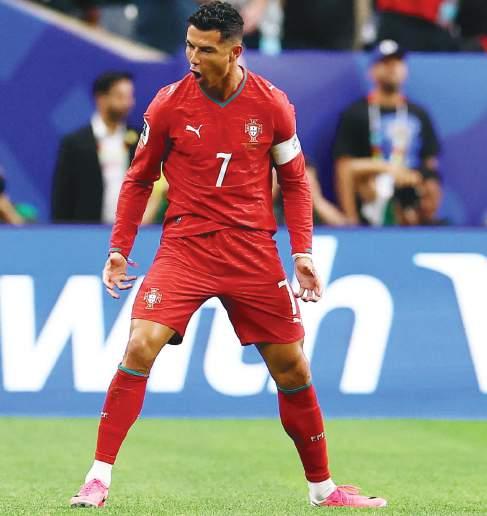
Cristiano Ronaldo announced his return to form with a brace as Portugal defeated Uzbekistan 5-0 in their second Group game of the ongoing World Cup in North America...on Tuesday
Favour Oghene Tejiri Ashe delivered a statement performance at the Commonwealth Games Trials in Lagos yesterday, storming to victory in the men’s 100 metres with a personal best and worldclass time of 9.93 seconds.
The Delta State sprinter produced an explosive run from the blocks and maintained his dominance through the finish line.
The impressive mark underlined his credentials as one of Nigeria’s leading sprint prospects ahead of major international competitions.
Fakorede Nicholas Adekalu of Mississippi State University also dipped under his previous best, clocking 9.98 seconds to finish second and register a personal best performance. Chidera Ezeakor of Team Customs continued his remarkable rise in the sprint ranks, placing third in another personal best time of 10.03 seconds.
Teenage sensation, Tejiri Godwin, representing Bayelsa State, showed immense promise by finishing
fourth in a personal best 10.20 seconds, while former national champion Enoch Adegoke crossed the line in fifth position with a time of 10.27 seconds.
Making of Champions athlete
Gafaru Audu finished sixth in a season’s best 10.42 seconds, ahead of Osama Chibueze of Dynamic, who placed seventh in 10.46 seconds.
It’s noteworthy to state that three home-based athletes met the benchmark for the Ben Aghazu Excellence in Athletics Prize.
They’re; Favour Ashe, Chidera Ezeakor and Tejiri Godwin.
The 100m race produced a series of outstanding performances, with four athletes recording PBs, highlighting the depth and growing competitiveness of Nigerian sprinting.
Ashe’s exceptional 9.93-second run was the standout performance
of the day, reinforcing expectations that Nigeria’s men’s sprint programme is poised for further success.
In other events decided on the final day of the Nigerian Commonwealth Games Trials, the men’s 400m final also provided excitements as Tyler Johnson who recently completed his switch of allegiance to Nigeria from USA, won with a time of 45.76secs, Victory Achakpoekiri clinched the second spot with 45.91secs and Emmanuel Ojeli in third position with 45.94secs.
In the 400m women’s final, veteran quarter miler, Patience Okon-George, won the race with 51.85secs followed by Taiwo Kudoro in second position with 52.30secs and the new kid on the block, Faith Ezechukwu of Bayelsa State hit the finish line with a new personal best of 53.12secs for the third position.
Ghana produced a disciplined defensive performance to hold England to a goalless draw at the 2026 FIFA World Cup and remain firmly in contention for a place in the round of 32.
The Black Stars, organised and compact throughout, frustrated Thomas Tuchel’s side at Boston Stadium and moved to four points from two matches in Group L.
England dominated possession but struggled to break down Carlos Queiroz’s team, who defended with patience, courage and concentration.
Goalkeeper Benjamin Asare made important second-half saves, while Ghana’s back line repeatedly blocked, cleared and disrupted England’s attacks.
The result means both Ghana and England will enter the final round of group matches with four points each.
A draw for Ghana against Croatia on 27 June would be enough to take
the Black Stars into the knockout stage.
England arrived with momentum after their 4-2 victory over Croatia in their opening match, but Ghana gave them a very different challenge.
Queiroz set his team up in a compact 4-5-1 shape, denying England space between the lines and forcing them to play in front of the Ghanaian block.
It was not always pretty, but it was effective.
Ghana’s plan was clear: stay organised, reduce central spaces, protect Asare and wait for moments to counter.
England had much of the ball in the first half, but there was little real danger.
Their best opening before the break came when Declan Rice sent a looping header over the crossbar.
Tuchel’s side had six first-half shots but none on target, a reflection of how well Ghana closed the spaces and
forced England into uncomfortable positions.
The Ghana supporters inside the stadium recognised the effort and greeted their team warmly at half-time.
England increased the pressure after the interval, but Ghana continued to defend with discipline.
Elliot Anderson had a close-range header blocked before Anthony Gordon drove an effort straight into Asare’s body.
Harry Kane then tested the Ghana goalkeeper with a low shot, but Asare was again equal to the task.
Tuchel turned to his bench in search of a breakthrough, introducing players he hoped would add pace and sharper movement in the final third.
Bukayo Saka forced Asare into a low save, while England began to send more crosses into dangerous areas.
Marvin Senaya, Jonas Adjetey, Jerome Opoku and Gideon Mensah stood up to the pressure, while the
midfield worked tirelessly to screen the defence.
For long periods, the match became a test of Ghana’s concentration.
Ghana nearly punish England late on.
Although Ghana spent much of the match defending, they were not without threat.
Their best moment came with just under 10 minutes remaining when they sliced England open on the counter-attack.
Abdul Fatawu was sent through against Jordan Pickford and looked set to give Ghana a famous lead.
Ezri Konsa recovered to block the first attempt, before Fatawu’s follow-up was stopped close to the line by team-mate Antoine Semenyo.
There was also a moment of controversy when Ghana appealed loudly for a penalty after Prince Adu got away inside the area and Konsa made a desperate challenge.
England midfielder, Declan Rice, speaking to BBC shortly after the match ended, said: “It is always difficult when you play against 11 behind the ball as deep as they were, but you have to find solutions. In the last 10 minutes we were unlucky not to score.
“We still have a great chance to top the group against Panama so positivity all round. They were very compact, 5-4-1 off the ball and tight spaces to play through, but on the other hand we can do more with the ball.
“You have to give credit to Ghana. It’s tough and they are good players so it was never going to be an easy game. We have one more group game to top the group so we have to be positive.
“Loads of top nations draw the first game so there is no need to be negative or downbeat. We will stay positive.”
Similarly, Head Coach, Thomas Tuchel, also confirmed expecting same game ahead coming: “I saw this performance coming.
Tuchel also told BBC Sport: “Not frustrated. I saw it coming as I knew this would be a difficult game. Ghana are physical and so committed. Full
credit to them. They were difficult to break down.
“You need to be patient but at the right moments be brave. We conceded
only two dangerous chances.
“At the end of the halves we grew into it and found rhythm but, of course, fatigue crept in. I liked the
attitude, but you need a bit of luck.
“We had enough shots and cross and a big chance with Harry Kane. It is what it is,” he concluded.

The League Bloggers Awards (LBA) has announced the conferment of its prestigious LBA Legacy Award for Governors on the Executive Governor of Enugu State, His Excellency, Dr. Peter Ndubuisi Mbah, in recognition of his exceptional leadership, visionary support, and unwavering commitment to the growth of the Rangers International Football Club brand.
Governor Mbah becomes the first-ever recipient of the LBA Legacy Award for Governors, a landmark honour established to celebrate state governors whose contributions have significantly impacted the development of Nigerian clubs and league.
The award acknowledges Governor Mbah’s inspiring role in Rangers International Football Club’s historic triumph as the club secured its 9th Nigeria Premier Football League (NPFL) title and second in three years under his administration.
His administration provided critical funding, motivation, and institutional support that empowered both players and officials to achieve this remarkable
commercial activities, which
led to the sponsorship of Rangers’ jersey real estate by Afrinvest West Africa as well as Nortra Tractors & Equipment, thereby strengthening the club’s brand and financial outlook.
Speaking on the award, LBA CoFounder/CEO, Ojeikere Aikhoje said:

“Governor Peter Mbah’s commitment to Rangers International FC goes beyond traditional government support. His vision, strategic investments, and encouragement of private sector participation have contributed immensely to the club’s success and long-term sustainability.
“As the first recipient of the LBA Legacy Award for Governors, he represents the standard of leadership that drives sporting excellence and inspires future generations”.
The League Bloggers Awards remains committed to recognizing individuals and institutions whose efforts continue to elevate the standards of the Nigerian league.
The presentation of the award will take place at The Cordis Hotel, Ikeja, Lagos, on Wednesday, July 8, 2026.
The League Bloggers Awards (LBA) is Nigeria’s foremost independent football recognition platform dedicated to celebrating excellence, achievement, and outstanding contributions within the Nigerian football league ecosystem.
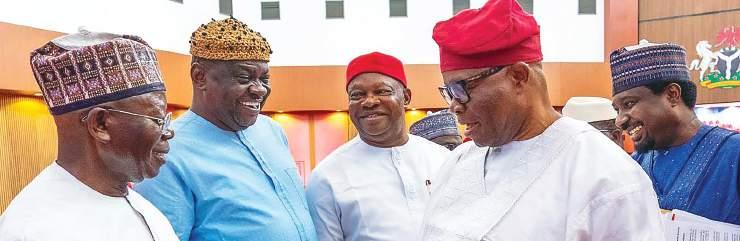
L-R: Senate Committee Chairman on Internal Affairs, Adams Oshiomhole; Senate Committee Chairman on Upstream, Eteng Williams; Senator Michael Ani; President of the Senate, Godswill Akpabio and Deputy Senate President, Jibrin Barau, after adjournment of sitting yesterday due to the death of a member of the House of Representatives.

Nigeria stands today at a moment of both promise and peril. The current administration’s macroeconomic reforms—unification of exchange rates, removal of fuel subsidies, and efforts to stabilize the naira and attract foreign direct investment—have created a fragile degree of macroeconomic stability but not (yet), despite the best intentions, transformative outcomes in reality. For all the intellectual firepower of Nigerian economists, the size of our domestic market, our entrepreneurial dynamism, and the abundance of human and natural resources, the country has not achieved the structural transformation that would place it on a sustainable path to shared prosperity. Manufacturing still contributes only about 7-10 percent to GDP. Youth unemployment remains alarmingly high. Debt service obligations consume a crushing proportion of government revenues. Poverty affects over 100 million citizens. Per capita income growth has stagnated even as aggregate GDP figures struggle upward but can’t seem to cross an invisible barrier. Why?
The answer, I submit, lies in a profound intellectual and policy fallacy: the dominance of the concept of “economic man,” or “Homo Economicus”. This idealized figure—a perfectly rational agent who acts purely in self-interest to maximize personal utility, possesses complete information about all options and outcomes, enjoys unlimited cognitive capacity, maintains stable preferences, and always chooses the option yielding the highest net benefit—has been the foundational assumption of classical and neoclassical economics since the 19th century.
This model has been exported to developing countries through Washington Consensus policies of liberalization, privatization, and minimal state intervention promoted by the IMF and World Bank. There certainly is a place and context for economic man. So I am not advocating socialism. But, in contexts like Nigeria’s, it has proven not merely incomplete but actively harmful. It assumes strong institutions, perfect information, and rational actors insulated from historical, cultural, and political realities—conditions that do not obtain. Real human beings operate under “bounded rationality”, cognitive biases, and social influences, as demonstrated by the work of the Nobel Laureates Herbert Simon, Daniel Kahneman, and Richard Thaler. In environments marked by institutional fragility, information asymmetries, ethnic diversity, colonial legacies, and elite capture, narrow self-interest frequently manifests as rent-seeking, primitive accumulation, and predatory extraction rather than productive investment and wealth creation.
The result in Nigeria has been policy that sounds theoretically sound but delivers disappointing outcomes: rapid liberalization without institutional adequate levels of industrialization
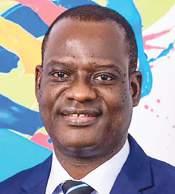
led to deindustrialization and import dependence; an obsession with aggregate GDP growth masked per capita stagnation and deepening inequality; subsidies and welfare interventions in a structurally weak fiscal state exacerbated debt vulnerabilities without building productive capacity; and a rentier political economy, fueled by oil revenues, perpetuated elite bargains over nation-building. Despite periodic reforms and world-class economic minds, transformational outcomes have remained elusive because the underlying model misdiagnoses the problem and prescribes the wrong medicine.
True economic transformation and the wealth of nations in African countries like Nigeria must instead be anchored on three interconnected pillars that directly challenge the assumptions of Homo Economicus.
The first is competent governance and sound institutional foundations that create the enabling environment for genuine prosperity. Markets do not exist in a vacuum; they require security of life and property, an independent central bank and an efficient judiciary that enforces contracts and upholds the rule of law, transparency and accountability mechanisms that curb corruption, and a meritocratic civil service capable of consistent, long-term policy implementation. Without these, even the most elegant economic models collapse under implementation failures, policy reversals, infrastructure deficits, and elite capture.
Resource-rich contrasts illuminate the point. Botswana, at independence in 1966 one of the world’s poorest countries, discovered massive diamond deposits and through prudent management—forming the transparent Debswana 50:50 joint venture, channeling revenues under sustainable budgeting principles, establishing the Pula Fund, and
maintaining low corruption and strong democratic institutions rooted in visionary leadership—achieved upper-middle-income status and broad-based progress. Nigeria’s oil experience, by contrast, fueled Dutch Disease, deindustrialization, corruption, volatility, and environmental degradation and poverty because governance and institutional quality lagged. Norway’s Government Pension Fund Global, now exceeding $2 trillion, invests petroleum revenues abroad under strict transparency and ethical guidelines. Its Handlingsregelen fiscal rule limits structural non-oil deficits to the expected real return (~3%), ensuring intergenerational equity and shielding the economy from shocks through meritocratic bureaucracy and broad consensus. Nigeria’s Nigerian Sovereign Investment Authority (NSIA - an acronym I coined at a fiscal-monetary planning meeting on the wealth fund in the boardroom of the Central Bank of Nigeria in 2012 or so) , managing around $3 billion, is a positive step but remains under-scaled. These examples demonstrate decisively that governance determines whether resources become a blessing or curse. Nigeria must build pockets of effectiveness in key agencies, reform the civil service for meritocracy and insulation from politics, strengthen judicial independence, and entrench transparency so that self-interest is channeled toward productive ends.
The second pillar is a foundational nationhood, political, economic, and social philosophy—a coherent worldview that drives greatness and collective ambition. Nations are not built by technocratic fixes alone, the rotation of power among political elites, or by importing models wholesale. They rise when leaders and citizens share a clear sense of purpose and direction that transcends parochial interests. As I have argued in my books Emerging Africa and the Build, Innovate, Grow (BIG), Nigeria has suffered from an intellectual and philosophical deficit. We have adopted borrowed philosophies—neoliberal prescriptions or GDP-centric planning—without adapting them to our nationhood challenges marked by pseudo-federalism and ethnic pluralism. Policy often prioritizes short-term political survival or elite accommodation over long-term national interest. Democracy in contexts of widespread poverty and weak institutions risks degenerating into plutocracy.
What is needed is a deliberate African economic philosophy integrating nation-building, self-reliance, productive ambition, regional integration via AfCFTA, technological innovation, and export-oriented value addition. Such a philosophy rejects the notion that markets alone, populated by rational maximizers, will deliver development in late-industrializing settings. It recognizes the state’s legitimate role as a developmental actor that shapes markets, corrects failures, and aligns private incentives with national goals—precisely the approach that powered East Asia’s rise.
The third pillar is a deliberate focus on human
development and human capital—education and skills, healthcare equity and access, potable water, and reliable electricity—as the indispensable foundation, followed by an emphasis on innovation and manufacturing, with GDP growth pursued as an outcome rather than the primary target. The Homo Economicus model encourages a narrow obsession with GDP figures (the so-called “GDP delusion”) that can mask profound human underdevelopment. Africa’s population boom, often celebrated as a demographic dividend, becomes a liability when millions lack skills, health, or opportunities to be economically productive. Misplaced subsidies and consumption support in structurally weak economies exacerbate fiscal distress without creating sustainable enterprises. And yet, removing these abruptly, without proper planning to absorb the human impact of such policies, can increase poverty rates. We must invert the conventional sequence. First build the human and physical foundations: world-class education systems blending academic excellence with vocational and technical skills aligned to priority sectors; equitable healthcare that enhances productivity; universal access to clean water and sanitation; and, above all, reliable, affordable electricity powering homes, businesses, and industries. Then improve access to affordable finance. These are investments in economic complexity and competitiveness, not mere welfare. Only on this base can we realistically pursue innovation ecosystems and manufacturing-led growth.
The East Asian developmental states provide the clearest demonstration. Japan, South Korea, Taiwan, and Singapore achieved rapid industrialization and poverty reduction from the 1960s to 1990s not through laissez-faire markets but through strong, autonomous state intervention. They employed targeted industrial planning, selective protectionism for infant industries via time-bound tariffs, directed credit and subsidies tied to performance (export targets, with support withdrawn for failure), exchange rate policies favoring exports, close but disciplined state-business collaboration (embedded autonomy), and massive early investments in education, vocational training, and infrastructure. South Korea’s manufacturing share rose dramatically; Taiwan became a global semiconductor leader. They deliberately “got relative prices wrong” in the short term to build long-term productive capacity, compensating for weak initial private sectors. Pragmatic heterodoxy trumped ideological purity. For this to have happened, of course, the state itself and its functionaries had to be competent, visionary, and disciplined— leadership and governance factors.
Nigeria can and must adapt these lessons. Our federal democracy, diversity, scale, and rentier legacy present distinct challenges, but principles travel.
Continued on page 37