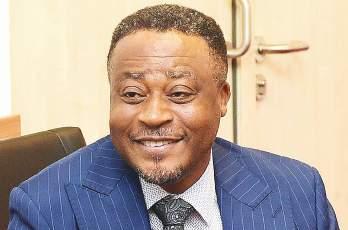
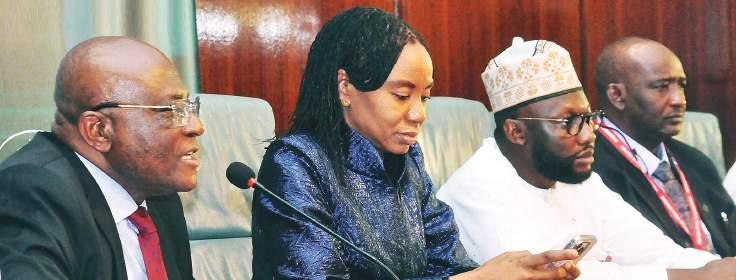
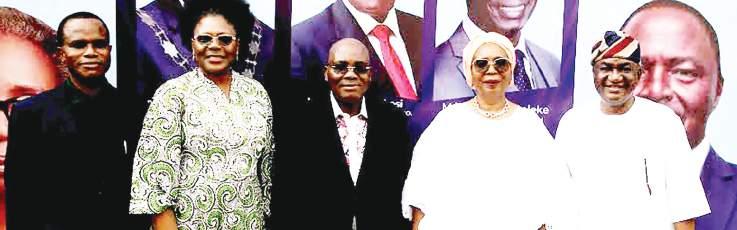
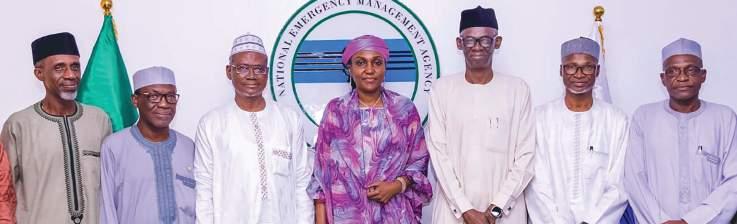
Oyedele: Sustainable Development Cannot Be Built on Fiscal Illusion
Oborevwori, Media Veterans, Others Laud Nduka Obaigbena’s Enduring Legacy at 67
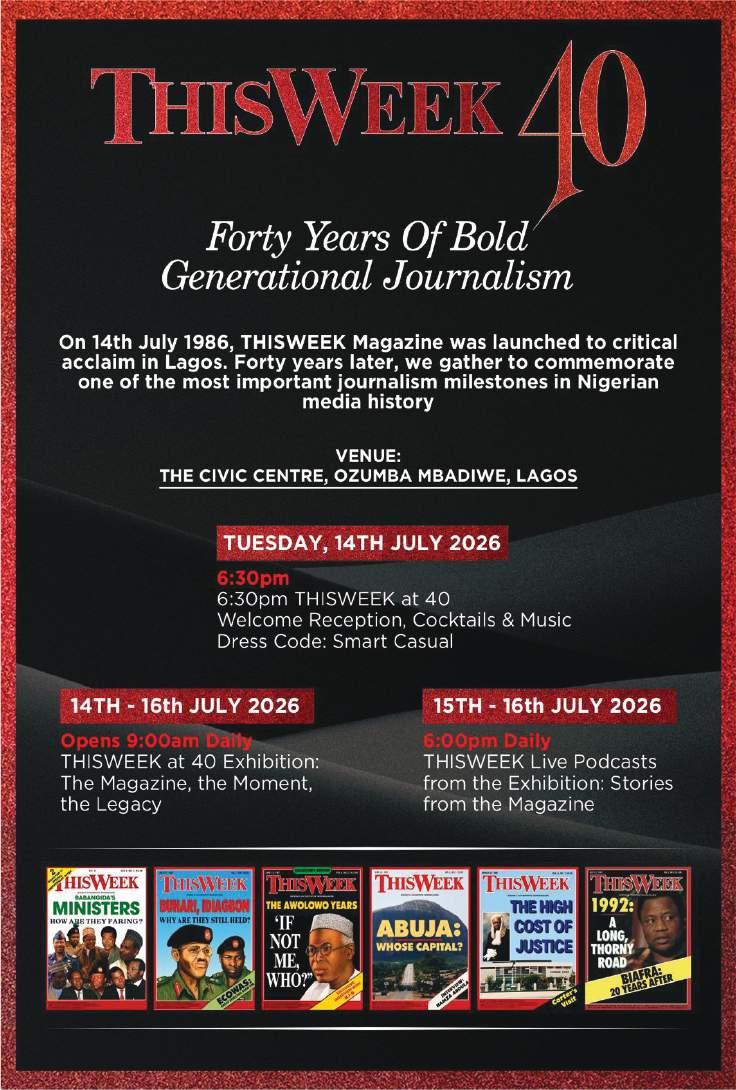
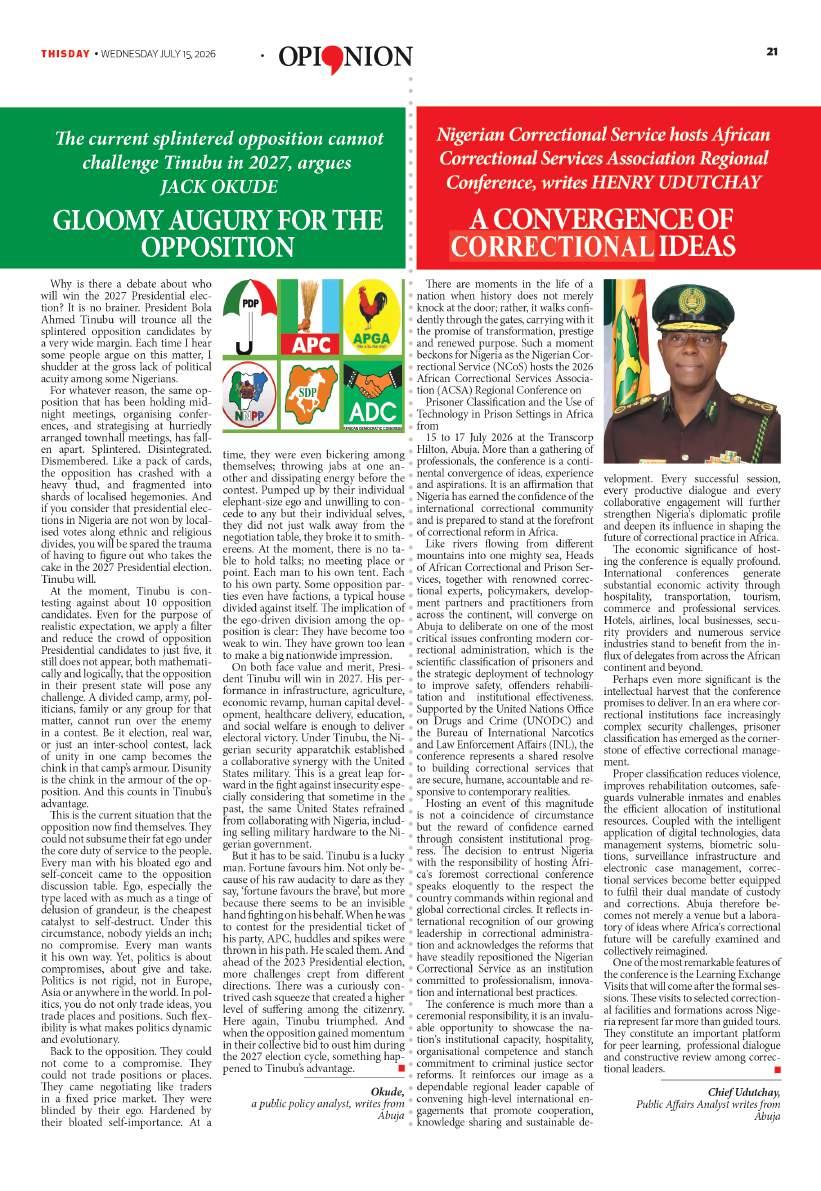
Celebrate THISWEEK founding at 40
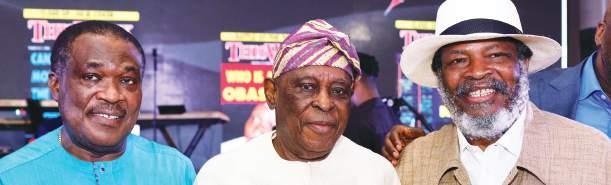
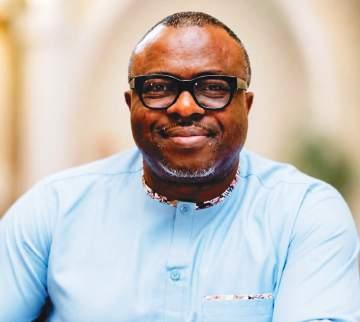
Delta State Governor, Sheriff Oborevwori, leading figures in Nigeria’s media industry and other prominent Nigerians, last night, paid glowing tributes to the Chairman and Editor-in-Chief of THISDAY
describing him as a visionary whose bold leadership has transformed and Arise Group, Prince Nduka Obaigbena, on his 67th birthday and the 40th anniversary of the founding of THISWEEK Magazine,
Continued on page 8
Go After Other Bandits, Terrorists Nationwide, Senate Charges FG
Urges govt to pay victims’ statutory death benefits, insurance claims, other entitlements
Commends president, security agencies on rescued pupils, teachers SGF blasts Makinde for playing politics with Oriire abduction LAUTECH teaching hospital discharges 31 rescued pupils, retains eight as one develops heart defect
The Senate leadership, yesterday, asked the federal government to sustain and intensify ongoing military and intelligence operations against terrorists, kidnappers, bandits and other criminal elements across the federation as demonstrated in the recent rescue of kidnapped pupils and teachers in Oriire Local Government Area of Oyo State. The parliament, also, tasked the federal government to ensure the prompt payment of all statutory death benefits, insurance claims, pensions and other welfare entitlements due to the families of the fallen heroes and continue to strengthen the welfare, training, equipment and operational capacity of members of the Armed
Continued on page 8
News, Prince Nduka Obaigbena during THISWEEK at 40th in honour of Obaigbena’s publishing journey and 67th birthday celebration at the Civic Centre , Victoria Island , Lagos ... yesterday
Emejo and
Adekoya in Abuja
PHOTO: KUNLE OGUNFUYI
Olawale Ajimotokan, Sunday Aborisade in Abuja and Kemi Olaitan in Ibadan
Omon-Julius Onabu in Asaba and Sunday Ehigiator in Lagos
NASS THIRD-YEAR SCORECARD/ PERFORMANCE REVIEW...
L-R: Former Deputy Speaker, House of
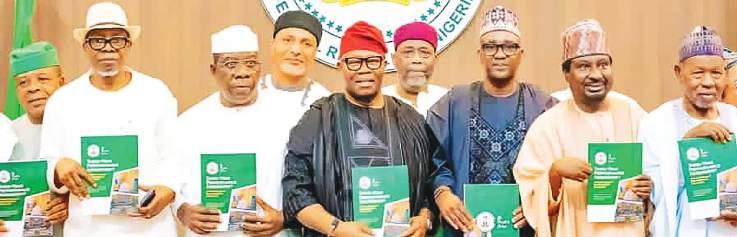
Performance Review of the 10th House of Representatives during the NASS OPEN WEEK 2026, ... yesterday
Dele Oye: Nigeria Faces $100 Billion Annual
Infrastructure Deficit, Needs $2.3tn to Bridge Gap
Decries brain drain, says only 55,000 doctors caring for over 230m Nigerians
Emmanuel
Addeh in Abuja
The Chairman of the Alliance for Economic Research and Ethics LTD/ GTE, Dele Oye, has decried Nigeria’s widening infrastructure deficit, noting that the country requires an estimated $100 billion annually to address critical infrastructure shortfalls and about $2.3 trillion over the next two decades to bridge the gap.
Oye, in a policy brief released by the group titled: “The Broken Windows of Nigeria: How Government Neglect Forged a Nation of Self-Reliant Survivists and the Uncommon Path to True Greatness,” said decades of neglect of essential public services had forced millions of Nigerians to shoulder responsibilities that should ordinarily belong to the government.
According to him, the country’s infrastructure stock currently stands at just 35 per cent of Gross Domestic Product (GDP), compared to about 70 per cent in developed economies, a deficit that continues to undermine productivity, economic growth and investors’ confidence.
Oye, who is the immediate past president of the Nigerian Association of Chambers of Commerce, Industry, Mines and Agriculture (NACCIMA), argued that the persistent collapse
of public infrastructure, particularly electricity, roads, water and healthcare, has created a parallel economy where citizens are compelled to privately provide services that should be publicly available.
On electricity, Oye noted that repeated national grid collapses and unreliable power supply have compelled households and businesses to depend almost entirely on petrol and diesel generators, significantly increasing the cost of living and doing business.
He described the situation as evidence that the Nigerian state had gradually retreated from its primary responsibility of providing basic public services, leaving citizens to fend for themselves.
Oye also expressed deep concern over the country’s worsening healthcare crisis, warning that the continuous migration of medical professionals is weakening Nigeria’s ability to provide services that should be publicly available in a private health system.
According to the report, approximately 16,000 doctors left Nigeria within five years, leaving only about 55,000 medical doctors to cater to a population exceeding 230 million people.
It further stated that Nigeria currently has only 2.9 doctors per 10,000
people, far below the World Health Organisation’s recommended ratio of 17 doctors per 10,000 population.
Oye also cited findings indicating that more than 80 per cent of healthcare workers surveyed expressed intentions to emigrate, describing the trend as one of the greatest threats to Nigeria’s healthcare delivery system.
While acknowledging recent
policy initiatives by the federal government in the power and health sectors, Oye maintained that isolated reforms would not be enough unless the government restored public confidence by consistently providing essential services.
He argued that the nation’s recurring failures in electricity, healthcare, security, water sup-
ply and transportation reflect what the report described as the “Broken Windows” phenomenon, where prolonged neglect of public institutions gradually normalises dysfunction and compels citizens to rely on private alternatives.
To reverse the trend, the Alliance proposed a series of reforms, including a national commitment to guarantee access to basic public
services, a Citizen Dividend Fund to compensate Nigerians for self-provision of infrastructure, a comprehensive programme to attract skilled professionals in the diaspora back home, preservation of institutional knowledge, and the establishment of a National Truth and Restitution Commission to rebuild trust between citizens and the state.
Engineering Assembly: Tinubu Urges COREN to Tighten Regulation, Deploy Sanctions
President Bola Tinubu yesterday called for stronger engineering regulation, effective enforcement and proportionate sanctions to safeguard lives and improve the quality of infrastructure across Nigeria.
Tinubu made the call while declaring open the 34th Engineering Assembly of the Council for the Regulation of Engineering in Nigeria (COREN) in Abuja.
Speaking on the theme: “Advanc-
ing Public Safety in Nigeria through Strategic Engineering Regulation, Enforcement and a Tiered Sanction Regime,” Tinubu said engineering regulation must shift from being largely reactive to a preventive, data-driven and enforceable system that prioritises public safety.
Tinubu, who was represented by the Minister of Works, David Umahi, said that while doing their jobs, engineers must ensure safety.
“Engineering is not only about roads, bridges, buildings, dams, power
UNESCO Lauds NCC’s Zero-Rate Access for Educational Platforms, Contents
Oghenevwede Ohwovoriole in Abuja
United Nations Educational, Scientific and Cultural Organisation (UNESCO) has commended the Zero-Rate Access for Educational Platforms/Contents initiative of the Nigerian Communications Commission (NCC) meant to bridge the digital literacy gap in the country.
Digital Transformation Specialist for the UNESCO Office, Abuja, Dr. Yinka Oyerinde, commended the initiative at a one-day public consultation forum organised by NCC on Tuesday in Abuja. Oyerinde said, “It is coming now. After the abundant digital literacy
interventions that have happened over the past couple of years, we’re aware of so many NITDA-led, NITDAdeveloped digital literacy programmes, many Federal Ministry of Education-led digital literacy programmes, digital literacy initiatives to ensure that the critical mass of the Nigerian population becomes digitally literate.
“Some may say maybe it’s a bit late, overdue, but I think it’s strategically positioned to be able to ensure that maximum yield is gained.
“Because the precursor factors that are required for this to be a success have already been put in place. So, it’s
not jumping the gun, chief of which is the digital literacy advancement programmes that the ministry has been pushing for the past couple of years.”
In his opening remarks, Executive Vice Chairman (EVC), NCC, Dr. Aminu Maida, who was represented by Director, Policy Competition and Economic Analysis, Dr. Ayuba Shuiabu, stated,
“For this framework to truly work, it must be shaped by the perspectives of those who will build and implement it, those who will provide educational content, the students and teachers who will utilise it daily, and the families and communities who will ultimately
benefit from its outcomes.
“The objective of this initiative is straightforward but deeply significant; and that is to reduce the affordability barrier that locks millions of Nigerian students out of the digital classroom.”
In her remarks, Director, ICT, Federal Ministry of Education, Zainab Suleiman, expressed her ministry’s appreciation of the effort to bring together key stakeholders from the education, telecommunication, technology and development sectors to develop a framework to expand access to approved educational content for Nigerian learners and teachers.
systems and digital infrastructure. It includes the safety of the child walking to school, the trader travelling to the market, the patient being rushed to hospital and every Nigerian who depends on public infrastructure.”
He stressed that engineering failures result in loss of lives, wasted investments and diminished public confidence, insisting that public safety must remain the first principle of engineering practice.
The president described COREN as a public safety institution charged with regulating engineering practice and protecting Nigerians from substandard infrastructure.
He said: “Regulation should not be seen as punishment. Regulation is protection. It protects the public from incompetence, clients from poor delivery, government from waste, investors from failed infrastructure and, most importantly, it protects lives.”
Tinubu added that engineering regulation must cover every phase of infrastructure delivery, from planning and design to construction, supervision, maintenance and eventual decommissioning, reaffirming his administration’s commitment to delivering durable infrastructure across the country.
“Every road project that we are doing has a life span of between 50 and 100 years. This is a complete departure from previous practice where most roads never lasted up
to five years,” he said. The president stressed that Nigeria requires “a balanced system of strong regulation, fair enforcement and proportionate sanctions” to ensure engineering excellence and public safety.
In his welcome address, COREN President, Prof. Zubair Abubakar, said the Assembly’s theme reflected the council’s statutory responsibility to protect the public through effective engineering regulation.
He noted that engineering failures often have devastating consequences, making robust compliance monitoring, enforcement and accountability essential to professional practice.
Abubakar highlighted several achievements recorded by COREN, including the introduction of admission quotas for engineering programmes in collaboration with the National Universities Commission (NUC) and the Joint Admissions and Matriculation Board (JAMB) to improve the quality of engineering education.
He also disclosed that the council had intensified nationwide compliance inspections on infrastructure projects and industrial facilities, strengthened enforcement activities against unsafe engineering practices, expanded digital registration and verification services, and enhanced professional development programmes for engineering practitioners.
Emmanuel Addeh in Abuja
Representatives and former Imo Governor,, Emeka Ikhedioha; Leader House of Representatives, Julius Ihrevabre; Senate Leader, Opeyemi Bamidele; Chairman, Senate Committee on Agriculture, Saliu Mustapha; President of the Senate, Godswill Akpabio; Speaker, House of Representatives, Tajudeen Abbas; Deputy Senate President, Jibrin Barau and former Speaker, House of Representatives, Aminu Masari, Unveiling of the Third-Year Scorecard/
COCOA VALUE ADDITION SUMMIT...
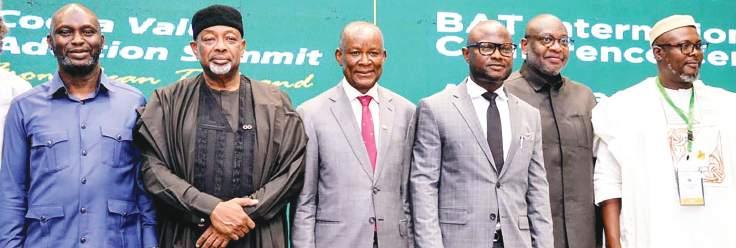
L-R: Managing Director, Bank of Industry (BOI), Dr. Olasupo Olusi; Minister of Agriculture and food Security, Senator, Abubakar Kyari; Minister of Stttate, Industry,Trade and Investment, Senator, John Enoh; Edo State Deputy Governor, Dennis Idahosa; Chief Executive Officer, Cocoa Board of Ghana, Ransford Anertey Abbey and Osun State Commissioner for Agriculture and Food Security, Otunba Babalola Faseru, during the
Senate Says N2.9bn Monthly Release
Inadequate for N140bn NCDC Budget
Directs commission to prioritise agriculture, security amid funding constraints
Aborisade
Senate Committee on North Central Development Commission (NCDC) has directed the commission to prioritise agriculture, security, and rural infrastructure in the execution of its programmes.
The panel expressed concern over what it described as inadequate funding from the federal government.
Chairman of the committee,
Senator Titus Zam, raised the concern on Tuesday in an interview with journalists after a closed-door meeting with the management of the commission.
Zam said lawmakers had agreed on a framework to ensure that the limited funds released to the agency were deployed promptly to projects capable of delivering measurable results before the end of the year.
He said the committee also
resolved to commence immediate oversight of the commission’s activities, beginning with an inspection of its headquarters before embarking on visits to the North-central states to assess ongoing and proposed projects.
Zam revealed that the commission currently received N2.9 billion monthly from the federal government, an amount he described as grossly inadequate when compared with its approved N140 billion budget.
He stated, “Every month they are receiving N2.9 billion, and that is just a drop in the ocean. If an agency has a budget of N140 billion and receives N2.9 billion monthly, the total for one year is still far below its budgetary provision.”
Despite the funding gap, the senator commended President Bola Tinubu and the federal government for commencing releases to the newly established commission, expressing
Lagos Strengthens Internal Audit Capacity with Data Analytics Training for Over 200 Participants
Lagos State Government has reiterated its commitment to strengthening accountability and transparency in the public service by enhancing the capacity of its internal auditors to analyse large volumes of data, improve riskbased auditing, strengthen fraud detection, and promote efficient management of public resources across Ministries, Departments and Agencies (MDAs). Special Adviser to the Governor on Internal Audit, Dr. (Mrs.) Oyeyemi Ayoola, FCA, made this known recently while declaring open a four-day capacity-building programme on Data Analytics for Internal Auditors, held in Alausa, Ikeja.
Ayoola said equipping auditors with in-depth knowledge of data analytics would enable them to generate accurate financial insights and provide credible advice to their principals and the state government, thereby supporting informed decision-making.
She stated that in line with the Lagos State government’s ongoing digital transformation initiatives, internal auditors must also keep pace with emerging trends by transitioning from traditional manual methods of analysing data to modern data analytics techniques.
She urged participants to embrace the initiative, stressing that the adoption of data analytics would significantly enhance risk manage-
ment, improve audit efficiency, and help mitigate potential risks.
In her welcome address, Permanent Secretary, Office of Internal Audit, Mrs. Monsurat Titilope Alaka, described the training as another significant milestone in the state government’s efforts to strengthen the internal audit function across the public service.
Alaka observed that as government institutions continued to embrace digital transformation, the role of internal auditors had evolved beyond traditional compliance monitoring to becoming strategic partners in governance, risk management, accountability, and organisational performance improvement.
Alaka explained that unlike conventional audit approaches, which relied largely on sampling techniques, data analytics enabled auditors to conduct more comprehensive examinations of financial transactions and operational processes, thereby improving the quality, accuracy, and effectiveness of audit outcomes.
She expressed confidence that the knowledge and practical skills participants would acquire during the training would enhance their capacity to conduct risk-based audits, strengthen internal control systems, improve fraud detection mechanisms, and produce more insightful, value-adding audit reports.
According to the permanent
secretary, continuous investment in the professional development of internal auditors remains critical to promoting financial discipline, strengthening transparency and accountability, enhancing public confidence in government institutions, and advancing the state government’s commitment to fiscal responsibility and sustainable development.
She added that the true measure of the programme’s success would be reflected in the practical application of the knowledge acquired across Ministries, Departments and Agencies, expressing optimism that the training would further strengthen
internal audit practices within the Lagos State Public Service.
Speaking on behalf of DYA Lorte Limited, the consultancy firm facilitating the programme, Mr. Lawal Yusuf Bankole said participants would receive practical training in key aspects of data analytics, including data transformation, data visualisation, and other analytical techniques required for effective auditing.
Bankole said the training had been carefully designed to combine theory with practical exercises to ensure that participants acquired hands-on experience in the use of data analytics tools.
optimism that funding would improve as the agency becomes fully operational.
He said, “We appreciate the president and the executive for ensuring that funds have started coming.
“We believe this is only a temporary arrangement and that more resources will be released as the commission fully takes off.”
The committee chairman said lawmakers had impressed on the commission’s management the need to utilise every allocation efficiently and transparently in line with its mandate of accelerating development across the North-central zone.
He said both the committee and the commission had pledged to work closely to ensure the agency delivered on its statutory responsibilities and justified the confidence reposed in it by the federal government.
On priority areas, Zam identified agriculture as the region’s greatest comparative advantage.
He urged the commission to channel substantial resources into improving agricultural productivity and rural livelihoods.
He stated that the North-central zone possessed vast arable land, favourable rainfall patterns, and rich vegetation, making agriculture a natural driver of economic growth and employment.
Beyond agriculture, the senator
urged the commission to support mining activities across the region, stating that several North-central states possess abundant mineral resources that can stimulate economic development if properly harnessed.
He also stressed the need for the commission to complement ongoing efforts by security agencies and state governments to address insecurity, which he described as one of the major obstacles to development in the region.
According to him, the commission should invest in initiatives that strengthen security and create an enabling environment for farming, mining, and other productive activities.
Zam called on NCDC to focus on rural development by expanding access to roads, bridges, and other critical infrastructure needed to improve the living conditions of rural communities.
He observed that, outside the state capitals and a few urban centres, the North-central zone remained predominantly rural, making rural infrastructure essential to achieving the commission’s development objectives.
The senator said the committee would closely monitor the commission’s performance through regular oversight visits to ensure that projects were executed according to plan and that public funds were properly utilised.
Onoja Receives U.S. Congressional Recognition for Promoting Global Economic Cooperation
A Nigerian professional, Mr. Attah Onoja, has received a Congressional Proclamation from the United States House of Representatives in recognition of his contributions to international trade, economic cooperation and diaspora engagement.
The honour, conferred by U.S. Congressman Hakeem Jeffries, was presented during the Guyana Independence Celebration Committee of New York’s commemoration of Guyana’s 60th Independence Anniversary.
According to a statement, the proclamation recognised Onoja’s more than two decades of professional experience across the shipping, marketing, distribution and energy sectors, as well as his efforts in strengthening commercial ties between Africa, the Caribbean and the United States.
The citation also acknowledged his role as the Nigerian High Commission’s representative to Guyana and his leadership of the African Caribbean Chamber of Trade, Commerce and Industry (ACCTCI), through which he has promoted
collaboration among governments, businesses and institutions.
The statement noted that the recognition reflects the growing global impact of Nigerians who are contributing to international partnerships through enterprise, innovation and institutional leadership.
Responding to the honour, Onoja dedicated the recognition to Nigerians making positive contributions across the world.
“I accept this recognition with deep humility. It is also a reminder that Nigerians have
the capacity to build institutions, create opportunities and strengthen relationships that extend far beyond our borders. I hope this inspires more young professionals to believe that excellence and service remain the most enduring pathways to global impact,” he said.
The statement added that the award underscored the increasing role of private sector leaders in complementing diplomatic efforts by promoting investment, encouraging cross-border collaboration and creating new opportunities for businesses and communities.
Cocoa Value Addition summit in Abuja... yesterday
PHOTO: ENOCK REUBEN
Emmanuel Addeh in Abuja
Bennett Oghifo
Sunday
in Abuja
EGYPTIAN
ENVOY VISITS MARWA...
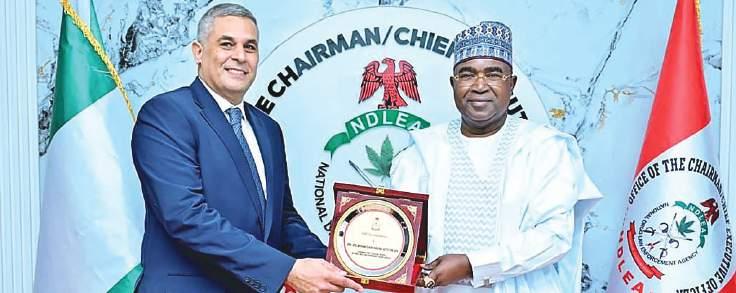
Chairman/Chief Executive Officer of the National Drug Law Enforcement Agency, NDLEA, Brig Gen Mohamed Buba Marwa (Rtd.) (R), presenting a plague to the Egyptian Ambassador to Nigeria, His Excellency Mohammed Fouad during the envoy’s courtesy visit to the Agency’s National Headquarters in Abuja ... yesterday
Reps Demand Full Disclosure on CBN, NNPCL,
Others’
Unremitted Operating Surplus Query
Juliet Akoje in Abuja
OAGF over deductions from MDAs
The House of Representatives Public Accounts Committee (PAC) has directed the Office of the Accountant General of the Federation (OAGF) to provide a comprehensive breakdown of outstanding funds owed to the federal government through unremitted Operating Surplus and other revenues by the Central Bank of Nigeria (CBN), the Nigerian National Petroleum Company Limited (NNPCL), and other government agencies.
The committee also requested explanations over the alleged withdrawal of N15 billion from the account of the Universal Basic Education Commission (UBEC), alongside similar deductions from the accounts of other Ministries, Departments and Agencies (MDAs) by the OAGF.
The directives were issued on Monday during an investigative hearing of the committee, where the Accountant General of the Federation (AGF), Mr. Shamseldeen Babatunde Ogunjimi, appeared before lawmakers.
Raising the issue, a member of the committee, Hon. Gboyega Nasir Isiaka, described the persistent non-remittance of revenues by government agencies as a major challenge to Nigeria’s fiscal sustainability.
According to him, Nigeria’s Gross Domestic Product (GDP) remains among the lowest on the continent at about 16 per cent, stressing that while government-owned business entities are expected to remit about 80 per cent of their operating surplus, with others required to remit between 20 and 50 per cent, there still appears to be a significant backlog in remittances.
Isiaka asked the OAGF to provide details of the outstanding remittances and questioned whether the performance of major revenue-generating agencies such as the CBN, Securities and Exchange Commission (SEC), Nigerian Maritime Administration and Safety Agency (NIMASA), among others, reflected the scale of assets under their control.
He argued that beyond applying statutory remittance percentages, it was necessary to scrutinise the actual operating surplus declared by these agencies and identify revenues yet to be paid into government coffers.
Responding, the Director of Revenue and Investment at the OAGF, Mr. Makinde Mogaji, disclosed the CBN allegedly owed the federal government about N5.3 trillion in unremitted operating surplus.
Mogaji explained that despite repeated efforts by the Public Accounts Committee to recover the funds, the apex bank had allegedly failed to comply with
the requirement to remit 70 per cent of its operating surplus.
He described the CBN as one of the government’s largest potential revenue sources, while noting that agencies such as the Federal Airports Authority of Nigeria (FAAN) had remitted about N473 billion.
Addressing concerns over the automatic deduction of revenues from MDAs, which in some cases reportedly resulted in reversals due to alleged over-remittances, the Accountant General said the policy was introduced as an innovative mechanism to collect government revenue in advance.
According to Ogunjimi, the initiative significantly boosted government revenue in the previous year but later encountered resistance from several agencies, many of which sought presidential intervention to reverse or reduce the deductions.
He explained that while some
deductions were completely cancelled and others reduced, the development affected the volume of revenue realised through the initiative.
The AGF further disclosed that the NNPCL had also failed to fully cooperate with the process, adding that the company was at one point asked to leave discussions due to its non-compliance.
He however noted that although the NNPCL had accepted liability on some issues, it disputed others, all of which are currently being reviewed by a post-mortem committee.
Providing further clarification, Mogaji stated the automatic deduction mechanism introduced last year had been functioning effectively.
He explained it was designed to deduct operating surplus in advance, after which agencies’ financial records would be reconciled at the end of the year to determine whether
they had been over-deducted or still owed government.
He added that while preliminary figures were available, they could not yet be regarded as final.
Chairman of the committee, Hon. Bamidele Salam, said the panel had received several complaints from UBEC and other MDAs alleging that funds meant for their statutory responsibilities were deducted by the OAGF and diverted for unrelated government expenditures.
Salam revealed that during an ongoing investigation, UBEC informed the committee that funds approved for its November 2025 expenditure had not been released by the Accountant General.
He said the commission specifically alleged that N16 billion was withheld while another N15 billion was withdrawn from its account without refund.
He added that similar complaints had also been received from the National Agency for Science and Engineering Infrastructure
(NASENI), which reportedly alleged deductions exceeding N70 billion, alongside several other government agencies.
In response, the Accountant General admitted that the OAGF had, on several occasions, temporarily drawn funds from the accounts of some agencies to meet urgent financial obligations of government. He described the practice as borrowing rather than outright withdrawal, insisting the funds were always refunded.
Ogunjimi stressed that such decisions were not taken unilaterally, explaining that they followed directives from the Minister of Finance and were based on an assessment of how long the affected funds had remained unused.
According to him, where agency funds had remained dormant for several months while government urgently required financing, the OAGF would temporarily utilise the funds before refunding them when needed.
Shema: Tinubu’s Reforms Difficult but Necessary to Address Nigerian Problems
Former governor of Katsina State, Dr. Ibrahim
the
but necessary in revamping the nation’s economy and tackling its security challenges.
Shema, who stated this Tuesday at the unveiling of Tinubu/Dikko Women and Youth Center in
S’Court Directs Lawyers to Upload Pending Appeal Documents for September to December
Alex Enumah in Abuja
The Supreme Court of Nigeria has called on all Legal Practitioners with matters scheduled for hearing between September and December 2026 to upload all relevant court processes through the Nigerian Case Management System (NCMS) in compliance with Rule 10(1) of the Supreme Court Practice Direction, 2026.
The apex court also stated that lawyers can access the list of appeals and motions fixed for hearing through the Supreme Court website: www.supremecourt.gov.ng.
According to a statement issued to journalists on Tuesday, lawyers were advised to, “Click on Litigation, Select Nigerian Case Management System (NCMS), Click on Download Documents, Check the list of Appeals and
Motions scheduled for hearing between September and December 2026”.
The statement signed by the Chief Registrar of the Supreme Court, Mr Kabir Akanbi, added that lawyers thereafter, are required to upload all relevant filed documents relating to their matters, including the Record of Appeal, Briefs of Argument, pending Motions, and all other filed processes, not
later than thirty (30) days before the scheduled hearing date, as stipulated under Rule 10(1) of the Supreme Court Practice Direction, 2026.
“The Court urges all Counsel to comply strictly with this requirement to facilitate the seamless operation of the Nigerian Case Management System and ensure the efficient and timely determination of cases”, the statement added.
Katsina, the state capital, said critical reforms and right decisions taken by the president would yield positive results in the future.
He said: “Some of the decisions, critical decisions that Bola Ahmed Tinubu has taken in Nigeria as the President of this country and the ones taken by our governor, Dikko Umaru Radda, were decisions that may be very difficult for Nigerians.
“But these decisions are necessary to correct the problems that bedevil Nigeria as a country in terms of economy, security and social well-being of our people.
“In the long run, the investment we are making in the management and governance of Nigeria and Katsina State, by the grace of Allah, will lead to positive results for this country. But we have to be patient.”
He urged Nigerians to
support President Tinubu-led federal government’s reforms in improving economy and taming security challenges in order to restore peace and make the nation economically viable.
Shema, however, said the Tinubu/Dikko Women and Youth Center was conceived by him to ensure the re-election of President Tinubu and Governor Radda in the forthcoming general election. He noted the main executive committee of the center headed by the member representing Mashi/ Dutsi Federal Constituency, Hon. Salisu Yusuf Magijiri, has zonal, local government, ward and polling unit structures.
Unveiling the centre, Governor Radda, commended ex-governor Shema for the initiative and vowed to support it for the victory of the All Progressives Congress (APC) in the next election.
Francis Sardauna in Katsina
Shehu Shema, has described
reforms taken by President Bola Tinubu as difficult
FG Pledges Support for Dangote Refinery, Lauds Contributions to Nigeria
Grants Shell enhanced tax credit for $20bn Aparo deepwater project
Oil
giant awards $518m contracts to Nigerian firms, boosts local content Engages 123 indigenous companies
Emmanuel Addeh in
Abuja and Peter Uzoho in Lagos
The federal government on Monday described the Dangote Petroleum Refinery & Petrochemicals as a source of national pride and Nigeria’s most transformative industrial investments in recent times.
Minister of State for Petroleum Resources (Gas), Ekperikpe Ekpo, said that the government will continue to provide the policy and regulatory support needed to maximise the company’s contribution to the country’s energy security, industrialisation and economic growth.
The development came as it emerged that Nigeria has approved an enhanced production-linked tax credit for Shell Plc’s $20 billion Bonga Southwest Aparo deepwater project as part of efforts to accelerate investment in the country’s upstream oil sector and boost crude production, according to a Bloomberg report.
But addressing the management of the refinery after a tour of the facility, Ekpo said what the delegation witnessed underscored the importance
The minister gave the commendation during a visit to the refinery in Lekki, Lagos, alongside the Minister of State for Petroleum Resources (Oil), Senator Heineken Lokpobiri, and the leadership of the Nigerian Upstream Petroleum Regulatory Commission (NUPRC).
of supporting indigenous investments capable of transforming Nigeria’s economy, creating employment and strengthening the country’s energy security.
According to him, the refinery stands as compelling evidence of what Nigerian enterprise can achieve and deserves the full backing of government institutions.
“What we have come to see today is an eye opener. A Nigerian has taken us to this level. Whether in terms of employment or providing for the needs of the nation, this is something we should all be proud of,” Ekpo said.
The minister assured the refinery of continued collaboration from both
policymakers and regulators, stressing that the government would continue to provide an enabling environment for investments that advance national development.
Also speaking during the visit, Chairman of the Board of the NUPRC, Senator Magnus Abe, described the Dangote Petroleum Refinery as one of the most remarkable industrial accomplishments ever undertaken in Nigeria.
He said the sheer scale of the project represents an achievement that many Nigerians are yet to fully appreciate. “I don’t think any of us fully appreciates what has been achieved here by Nigerians in Nigeria. We are all very proud
of this accomplishment,” Abe said.
Group Vice President, Oil & Gas, Dangote Industries Limited, Devakumar Edwin, who conducted the ministers and NUPRC delegation on a tour of the refinery, commended them for proceeding with the visit despite the heavy rainfall, describing it as a demonstration of their commitment to Nigeria’s industrial development.
He explained that the refinery was conceived as part of the vision of the President and Chief Executive of Dangote Industries Limited, Aliko Dangote, to ensure that Nigeria adds value to its abundant natural resources rather than exporting raw materials and importing finished products.
According to him, the Group’s
GO AFTER OTHER BANDITS, TERRORISTS NATIONWIDE, SENATE CHARGES FG
Forces and other security agencies.
This was contained in a resolution by the Senate following the rescue of the abducted students and teachers in Orire Local Government Area, Oyo State last Friday after spending 57 days in terrorists’ captivity.
The Senate arrived at the resolution after due consideration of a motion sponsored by Leader of the Senate, Senator Opeyemi Bamidele, alongside 108 other senators, thereby commending the president for his decisive leadership, strategic direction and unwavering commitment to strengthening Nigeria’s security architecture.
Leading debate on the motion, Bamidele recalled how terrorists
invaded schools in Orire Local Government Area, Oyo State abducting 39 pupils and seven teachers thereby subjecting innocent pupils, teachers, parents and entire federation to fear, anguish and emotional trauma.
Bamidele added that the abduction represented a disturbing expansion of organised criminal activities into the South-west, which constituted a direct attack on the right of every child to be educated in a safe and secure environment. Immediately after the attack was reported, according to Bamidele, President Bola Ahmed Tinubu mobilised the Armed Forces and all security and intelligence agencies to deploy every lawful military asset
to secure the unconditional release of the victims.
He explained that the Nigerian Armed Forces, in concerted efforts to rescue the abducted students and teachers, worked in close collaboration with intelligence and other security agencies to launch a painstaking, intelligence-driven, and highly coordinated rescue operation that lasted over fifty days.
Bamidele, thus, chronicled how the teachers and students were rescued, noting that the security forces successfully rescued the abducted school children and teachers on Friday, July 10.
He noted that the rescue of the pupils and their teachers brought
OBOREVWORI, MEDIA VETERANS, OTHERS LAUD NDUKA OBAIGBENA’S ENDURING LEGACY AT 67
journalism beyond the shores of Nigeria.
Described Obaigbena as one of Africa’s most influential figures with enduring legacy in the journalism and communication industry globally, the governor commended Obaigbena for his exceptional contributions to the growth of Nigeria’s media industry and his unwavering commitment to promoting credible journalism over the decades.
Speaking in Asaba yesterday through his Chief Press Secretary, Sir Festus Ahon, Oborevwori described Obaigbena as an illustrious son of Delta State, renowned African media icon and entrepreneur, who has continued to write the name of the state in letters of gold by projecting Delta in a positive image nationally and internationally.
The governor noted that the reputable publisher and businessman “has distinguished himself as an innovative media executive whose vision transformed newspaper publishing and television broadcasting” while setting new standards of excellence in the profession.
He observed that Obaigbena’s leadership of THISDAY Newspapers and ARISE News has strengthened democratic values, expanded public discourse, and projected Nigeria’s voice on the global media stage.
The governor recalled Obaigbena’s remarkable tenure as President of the Newspaper Proprietors’ Association of Nigeria (NPAN), saying it was a period marked by strong advocacy for press freedom, professionalism and the advancement of the media industry.
“On behalf of the government
and people of Delta State, I heartily congratulate our distinguished son and brother, Prince Nduka Obaigbena, as he marks his 67th birthday.
“Your remarkable achievements in media entrepreneurship and your enduring contributions to journalism have earned you respect both within Nigeria and internationally.
“Through your visionary leadership, you have built enduring media institutions that continue to shape public opinion, deepen democratic engagement, and inspire a new generation of media professionals.
“We are proud of your accomplishments and the positive image you have brought to Delta State and Nigeria through your outstanding career,” he said.
Oborevwori, however, prayed for God’s continued blessings upon the media icon, wishing him good health, renewed strength, and many more years of impactful service to the media profession, the nation, and humanity.
Also, at THISWEEK 40th anniversary, yesterday, in Lagos, leading figures in Nigeria’s media industry praised Obaigbena, who is also the founder of Lekeleke, a social media platform, for his unwavering commitment to excellence, innovation and independent reporting.
They noted that his influence has shaped generations of journalists and redefined media practice in Nigeria.
The media veterans spoke at a cocktail event in Lagos.
In his remarks, former Governor of Ogun State and erstwhile Editor of Daily Times, Aremo Olusegun Osoba said: “We have come a long
way together. I am happy I gave him (Obaigbena) all the encouragement because in was in Daily Times then.
“I supported him and I am happy that he is bigger than me today. The prayer we always pray is that our younger ones should be bigger than us. I am happy to see you grow. You have done what so many media houses have not done and I pray you keep growing bigger.”
Continued on page 35
an end to 56 days of captivity and uncertainty for the victims and their families, an operation that resulted in the arrest of eight terrorists with several terrorists neutralised.
He explained that the military campaign against the terrorists led to the ultimate sacrifice of Lieutenant F. A. Isaac (N/20349), Nigerian Army; Private Silas Musa (23NA/84/4604), 81 Battalion, Nigerian Army; and Sergeant Abena John Jerome (F/ No. 234511), Nigeria Police Force.
While courageously defending the lives of innocent school children and their teachers, Bamidele revealed that Lance Corporal Adamu Hussain (16NA/75/6430), 81 Battalion, Nigerian Army, sustained injuries in the course of the operation
The leader of the senate said: “Although two of the abducted teachers (Michael and Dacon) sadly lost his life during the period of captivity, the successful rescue of the remaining victims without further tragic consequences remained a remarkable achievement worthy of national recognition;
“The successful operation has restored hope and confidence among Nigerians, particularly parents and school communities, while sending an unmistakable message that the federal government remains resolute in ensuring that criminal elements
have no safe haven anywhere within the territory of the Federal Republic of Nigeria.”
Chairman, Senate Committee on Aviation, Senator Fatai Buhari, seconded the motion, describing the day of the abduction as “Black Friday” in his senatorial district, saying it had been 56 days of agony until the victims were rescued.
Buhari observed that he was at the hospital to see the rescued pupils and teachers on the day the children and teachers were rescued, saying one of the children was on oxygen while others were on drips, but within 24 hours, all of them were already on their feet.
Senator Adamu Aliero (APC, Kebbi Central) also praised the Armed Forces for the successful operation but urged them not to relent until other abducted children still being held in parts of Borno and Yobe States regained their freedom.
“What the Armed Forces did is commendable. There are other children still in captivity in Borno and Yobe. I want the Armed Forces to ensure those children also regain their freedom,” he said.
Former Edo State Governor and Senator representing Edo North, Adams Oshiomhole, faulted Oyo State Governor Seyi Makinde’s call for a United Nations-led investigation
2030 is centred on leading Africa’s industrial transformation by building globally competitive businesses that make the continent more self-sufficient and prosperous, while transforming Africa’s natural resources into essential products that create jobs, generate value and drive sustainable economic growth.
into the abduction.
He argued that such a move could undermine Nigeria’s sovereignty and diminish the achievements of local security institutions.
Oshiomhole said the period called for national unity and support for the country’s security agencies rather than actions capable of politicising the rescue operation.
“Suggesting that external bodies such as the United Nations should take over responsibilities that rightly belong to Nigeria amounts to questioning our nation’s sovereignty and undermining the efforts of our security institutions,” Oshiomhole said.
Senator Natasha Akpoti-Uduaghan (PDP, Kogi Central) urged the government to complement the rescue effort with comprehensive psychological support, trauma counselling and rehabilitation programmes for the rescued pupils and teachers to help them recover from their ordeal.
Deputy Senate President, Barau Jibrin, who presided over the session, commended President Tinubu for his commitment to tackling insecurity, assuring him that the National Assembly would continue to support measures aimed at restoring peace across the country.
“The president has done very well. We know the commitment he has
Continued on page 37
OYEDELE: SUSTAINABLE DEVELOPMENT CANNOT BE BUILT ON FISCAL ILLUSION
comprehensive tax reforms. He stated that such measures were necessary because “sustainable development cannot be built on fiscal illusion”.
The minister spoke while inaugurating the Ministerial Advisory Committee, chaired by Managing Director/Chief Executive, Sterling Bank Plc, Mr. Abubakar Suleiman, in Abuja.
He acknowledged that the reforms came with immediate costs for households, businesses, and communities.
Oyedele, however, stressed that government’s priority had now shifted from implementing reforms to delivering measurable outcomes that would directly improve the lives of Nigerians. According to him, “It is one thing to change policy. It is quite another to translate that change into outcomes that Nigerians can feel.”
He said the success of reforms should not be measured by the number of policies announced or macroeconomic indicators cited, but by tangible improvements,
such as job creation, lower inflation, exchange rate stability, and increased private sector investment.
Oyedele explained, “The true measure of reform is the number of jobs created, inflation declining, the naira stabilising, businesses investing with confidence, and, ultimately, the number of lives improved.”
He described the advisory committee as a strategic platform to institutionalise independent thinking, evidence-based policymaking, and stronger collaboration between government and the private sector.
The minister said the initiative represented a “public policy-private partnership” aimed at connecting ideas with implementation while strengthening economic decisionmaking.
He stated that the country’s fiscal environment remained constrained and economically complex, warning that policy decisions often produced unintended consequences if not subjected to rigorous analysis.
He stressed, “The natural instinct in government is often to act
quickly, announce progress, and move to the next initiative. But quick actions without rigorous analysis frequently create new problems while solving old ones.”
He explained that the committee would provide independent external advice capable of identifying vulnerabilities before they develop into crises, bringing international best practices into policymaking, while assessing how reforms are affecting businesses and communities.
According to him, the advisory body would focus on four key areas: economic policy advisory, public financial management, economic coordination, and translating reforms into practical results.
He said government remained committed to achieving seven per cent annual economic growth and building a one-trillion-dollar economy, adding that such ambition would require bold thinking, innovative strategies, and policies firmly rooted in economic realities.
On public finance, Oyedele said emphasis would be placed
on improving revenue generation, prioritising government spending, responsible borrowing, and transparent fiscal reporting to strengthen investor and public confidence.
He stressed that reforms could not succeed without effective coordination among federal institutions, subnational governments and the organised private sector.
Oyedele said a “reform that looks flawless on paper but fails to improve conditions for Nigerian businesses is not reform; it is disguised bureaucracy”.
He charged members of the committee, who were serving on a pro bono basis, to be bold enough to challenge government’s assumptions rather than endorse predetermined positions.
He told them, “Ground your advice in hard evidence, not intuition, populism or political convenience. We do not need this committee to validate what has already been decided. We need you to tell us the truth, even when it
Continued on page 36
Vision
Ekperikpe Ekpo
Acting Group Politics Editor DEJI ELUMOYE
Email: deji.elumoye@thisdaylive.com
08033025611 sms only
As Enugu Sets the Pace for Tech-driven State Policing...
With the prospects of the long elusive state police looking bright, Enugu State’s huge investment in modern security infrastructure appears to be the way to go to make the devolution of policing powers worthwhile, writes Deji Elumoye
The recent Arise News Townhall on State Policing may have come and gone, but its impacts and insights have been far-reaching. With the Theme “Building a National Consensus for State Police and National Security,” the Townhall held at THISDAY DOME in Abuja was truly a gathering of the who-is-who, as the nation’s security sector, political leadership, the civil society, and even the international community as represented by former two-time Prime Minister of Israel, Ehud Barak, weighed in on the powers, structure, control and funding of state police services, which constitutional enablement appears quite imminent.
But in practical terms, Enugu State, under the leadership of Governor Peter Mbah, stood out as a pacesetter and forward thinker in the conversation around state police and modern security in general. While most states were still waiting for the constitutional amendment that would devolve policing to the subnational, the Mbah Administration has proactively invested in hi-tech security infrastructure and manpower to effectively police the state within the precincts of extant laws.
For proper backgrounding, Governor Mbah inherited a state that was under siege - where nightlife was gone, some streets, including the streets in the state capital barricaded, Mondays were gone, while many students lost an entire academic year, for their inability to write important examinations or subjects in their final year due to illegal sit-at-home. Criminals, who disguised as separatist agitators, hosted their camps of atrocities in deep inside the forests in various parts of Enugu State.
National Security Adviser, Mallam Nuhu Ribadu, captured it aptly way back in December 2023, citing how Mbah was able to end illegal sit-at-home orders and their monstrous enforcers, aka Unknown Gunmen, in just six months.
According to Ribadu: “Before the coming of this (Mbah) administration, police stations were being attacked, law enforcement personnel were being attacked. People were giving selfish orders. Those who are not even in Nigeria will sit somewhere in the comfort of the countries where they live and be selfishly giving instructions that people should not go to work; that people should not go out to look for their own livelihood and people used to take such orders. But no more; it is no longer happening.”
So, many were not surprised that the moderators of the Arise Townhall, ace broadcasters, Reuben Abati and Charles Aniagolu, turned to Mbah, who was on the first panel of lead discussants, to share the Enugu State experience.
“One of the major issues about state police, beyond all the fears of potential abuse, is funding. How do we deal with state police – a police that needs technology urgently- surveillance, forensincs, communication system, intelligence gathering, data analysis?
“And many people say Nigeria is really far behind many other countries in terms of modernising the police. But no one can deny that Enugu State has taken the lead in that direction. It has invested heavily in surveillance technology, command and control centre, and intelligence-led policing.
“Governor, let me ask you, how did you do it? And with all that you know now, with all that investment, is that the direction the Nigerian state should be moving towards?” Aniagolu asked the Enugu governor.
Responding, Mbah said, “If the Enugu
experience is anything to go by, we came into office recognising that we have made commitments to eradicate poverty, to grow the economy exponentially, to make Enugu State the preferred destination for business, for business, living, and investment.
“We immediately recognised that if we don’t address the security challenges. Therefore, we had to invest hugely in technology, in building a safe city surveillance system with the CCTV cameras that are AI -nabled, as well as having both the static and the mobile cameras. All these come with huge costs. “But the human element is also important, which is essentially why we had to set up the Distance Response Squad (DRS). As a governor, must build the capability to first nip crime in the bud. But where there has been a breach, you must have the capacity to act swiftly. And if the Enugu experience is anything to go by, that essentially is what we did that enabled us to drive down violent crimes by over 90 per cent.
“We also ensured that there is a unified communication system between the agencies. Our Command and Control Centre houses all the security agencies in the state - the police, the army, the Directorate of State Services. They all have a
channel of communication.”
Elaborating on Mbah’s intervention, a former governor of Ogun State, Aremo Olusegun Osoba, in his closing remarks, said the Enugu model should be recommended to other states, noting that the era of infantry fighting, solider to soldier was gone.
He said: “I was in Enugu for the 2025 Guild of Editors’ Conference. The Government of Enugu State set up giant cameras that can see miles away and they are able to round up the whole of Enugu.
“So, as we discuss state security, our state governments should also be proactive and be digital in ensuring full surveillance.”
This is not the first time Enugu’s strides in tech-driven security system has drawn applauses. Inaugurating the Enugu Command and Control Centre on January 4, 2025, President Bola Tinubu had declared that “Mbah is doing everything possible to provide security,” noting that “there is no better investment than the investment to secure lives.”
“I saw modern technology. I saw those cars, the Distress Response Squad. It is the way to go,” he said.
Earlier in October 2024, Vice President Kashim Shettima had expressed awe at what Mbah was able to build in just a year.
“If I say I was impressed by what I saw in Enugu, it is an understatement. I was overwhelmed. He has embraced modernity. He has embraced digital technology. Most of the things I saw are
The quest for state police must also be matched with commitment to investing heavily in both modern security infrastructure and personnel –just as Enugu s tate is already doing. Anything short of that would amount to multiplying into 36 places all the problems bedevilling the n igeria Police Force.
Meanwhile, only recently, Mbah inaugurated the Centre for DNA Forensics and Criminal Investigation, Enugu, a strategic partnership between the Enugu State Government and Godfrey Okoye University.
Mbah had one message for criminal elements during the inauguration witnessed by the Attorney General of the Federation, Prince Lateef Fagbemi, and the Inspector General of Police (IGP), Olatunji Disu.
“To those who seek to undermine the peace and security of our people, the message is very simple: you can run, but you cannot hide,” he declared.
Fagbemi, in his remarks, said the Centre “places Enugu and Nigeria on the path of advanced jurisdictions that have integrated forensic science into the core of their security and justice architecture.”
“In an era when criminal enterprises are becoming increasingly sophisticated, security agencies must be equipped with equally sophisticated investigative capabilities,” he stated.
The IGP, on his part, said the Centre “represents enormous opportunities to strengthen investigations into homicide, kidnapping, terrorism, armed robbery, sexual offences, human trafficking, missing persons, and other grave crimes.”
Fagbemi and Disu also seized the opportunity to tour the Enugu State Command and Control Centre.
Disu had said, “I must confess that I am surprised we have this kind of facility here in this state. I worked in Lagos. I know we had something like this in Lagos, but the advancement of this present one amazes me.
“This is a control room that has a lot of facilities with the ability to see almost everywhere in this state. There is no place that is left ungoverned from the control room. We can see the forest. We can zoom in – I think over 40km – to be able to see far away. We can zoom in close to 30 kilometers away. That is great security.
“I wish every state in Nigeria will come here and emulate what is happening. I have seen AI cameras. I have seen officers dedicated to certain areas of the state watching, seeing what is happening.
“I have also seen records of the successes recorded through this control room. One more time, I wish all the states in Nigeria will come around, see what is happening here and emulate it.”
The Inspector -General, who was once the Commander of the Rapid Response Force (RRF) in Lagos State, also commended Enugu State’s Distress Response Squad (DRS) initiative which is a special police unit with over 150 security vehicles mounted with AI-enabled cameras linked to the Command and Control Centre. Officers on duty also wear body cams to ensure accountability.
“I moved around. I saw the state’s DRS and then we put them to test. They did not know I was listening to them. We put them to test. We asked them to move to a certain part of the town and within two, three, four minutes, they were there. It shows their efficiency. They have shown capacity and I thank the governor of this state for investing in security of the people of the state,” Disu said.
As the nation prepares for state police, one thing is certain: the quest for state police must also be matched with commitment to investing heavily in both modern security infrastructure and personnel – just as Enugu State is already doing. Anything short of that would amount to multiplying into 36 places all the problems bedevilling the Nigeria Police Force.
Editor, Editorial Page PETER ISHAKA
Email peter.ishaka@thisdaylive.com
THE REAL COST OF GAS FLARING
The proposal to end wasteful and ruinous gas flaring is welcome
The disclosure by the German Ambassador to Nigeria and ECOWAS, Annett Günther, that Nigeria lost an estimated $1.5 billion to gas flaring in 2024 is indicative of the magnitude of the challenge. “Just for context, 5.3 billion cubic meters of gas was flared in 2024 in Nigeria which makes it the seventh rank in the world and that equals an economic loss of US$1.5 billion,” the envoy said while harping on a new partnership with her country to address the issue. “So, this new programme now is to work together and find out how to utilise those flare gases more efficiently, bring down emissions, generate additional value, and use the gas to supply households and industry or even maybe to produce hydrogen.”
We endorse the German proposal with the hope that the federal government will work to end this menace that has gone on for several decades. In the first half of 2024 alone, an estimated 148.7 million standard cubic feet of gas were flared in Nigeria, according to the National Oil Spill Detection and Response Agency (NOSDRA). It is not lost on experts that we fritter away an amount that could have provided much-needed relief to Nigeria's ongoing foreign exchange woes. Besides, according to experts, this amount of wasted gas has the potential to generate approximately enough electricity to power most of the country. This, despite that gas flaring is against Nigerian law.
fortunately, oil companies in Nigeria, without any exception, have continued to engage in indiscriminate flaring of gas.
Gas flaring does harm to the ecosystem, damaging flora and fauna, just as pollution of sea waters leads to decline in fish population
EDITOR SHAKA MOMODU
DEPUTY EDITOR WALE OLALEYE
MANAGING DIRECTOR ENIOLA BELLO
DEPUTY MANAGING DIRECTOR ISRAEL IWEGBU
CHAIRMAN EDITORIAL BOARD OLUSEGUN ADENIYI
EDITOR NATION’S CAPITAL IYOBOSA UWUGIAREN THE OMBUDSMAN KAYODE KOMOLAFE
Whereas Nigeria has over the decades reaped huge revenue from oil, the converse side of it is that gas flaring, a concomitant effect of exploration activities, does a lot of damage to the environment. It involves burning gas released by oil extraction— which sends plumes of toxic smoke into the air. It has been established beyond reasonable doubts that gas flaring endangers human health, harms local ecosystems, emits large amounts of greenhouse gases and wastes vast quantities of natural gas. Un-
T H I S D AY N E W S PA P E R S L I M I T E D
EDITOR-IN-CHIEF/CHAIRMAN NDUKA OBAIGBENA
GROUP EXECUTIVE DIRECTORS ENIOLA BELLO, KAYODE KOMOLAFE, ISRAEL IWEGBU
DIVISIONAL DIRECTORS SHAKA MOMODU, PETER IWEGBU, ANTHONY OGEDENGBE
Dating from the first day oil was extracted in Oloibiri in the Niger Delta, gas flaring has continued unabated and with impunity. Sadly, human beings live next door to the roaring, ground level flares some of which go up as high as a multi-storey building, emitting black clouds of toxic smoke. In fact, environmental activists have attributed gas flaring to health hazards and medical conditions like cancer, asthma, chronic bronchitis, blood disorders, and other diseases. These health problems affect the people of oil-producing communities. Other health hazards arising from gas flaring include the fact that it causes acid rain with its negative impact on the soil, leading to reduced crop yields. It equally does harm to the ecosystem, damaging flora and fauna, just as pollution of sea waters leads to decline in fish population. The litany of woes caused by gas flaring continues with serious consequences for the well-being of the nation and its people.
This damage to man and the environment in the oil producing areas has continued just because successive national governments have failed to take decisive action on the matter. In 1969, the administration of General Yakubu Gowon set the first deadline that within five years of business, an operating oil company must cease flaring gas. All the military administrations that followed also set deadlines for oil companies to end gas flaring in the country, but the deadlines came and passed just as the harmful activity continued.
Under the current civilian dispensation, the federal government approved the Nigerian Gas Flare Commercialisation Programme (NGFCP) in December 2016. But a decade after, not much has been achieved. Yet Nigeria is a signatory to the Global Gas Flaring Reduction Partnership (GGFR) principles for global flare-out by 2030.
Letters in response to specific publications in THISDAY should be brief (150-300 words) and straight to the point. Interested readers may send such letters along with their contact details to opinion@thisdaylive.com. We also welcome comments and opinions on topical local, national and international issues provided they are well-written and should also not be longer than (750- 1000 words). They should be sent to opinion@thisdaylive. com along with photograph, email address and phone numbers of the writer.
CLEAN COOKING TRANSFORMS LIVES IN FCT
Across communities in the FCT, a quiet but significant transformation is taking place in thousands of homes. Kitchens once filled with smoke from firewood, charcoal and kerosene are gradually giving way to cleaner, safer and healthier cooking with liquefied petroleum gas (LPG).
Through the Project Breathe Clean Air Abuja, the Federal Capital Territory Administration (FCTA), working through the Health Services and Environment Secretariat (HSES), in partnership with IHS Nigeria (Towers of Strength), has successfully distributed more than 10,000 cooking gas cylinders to vulnerable households across the six area councils of the FCT.
More than a cooking gas intervention, the initiative has become a public health programme, an environmental sustainability project and a social protection scheme that is improving the quality of life of women and their families.
For decades, many low-income households depended
on firewood, charcoal and kerosene as their primary cooking fuels. Medical experts have consistently warned that prolonged exposure to indoor smoke contributes to respiratory illnesses, asthma, pneumonia, persistent cough, eye irritation and other health complications, particularly among women and children who spend the most time around cooking areas.
Recognising these dangers, the Mandate Secretary of the FCT Health Services and Environment Secretariat, Dr. Dolapo Fasawe, championed the implementation of Project Breathe Clean Air Abuja as a practical intervention to reduce indoor air pollution while promoting healthier communities.
The programme went beyond simply distributing gas cylinders. Beneficiaries also received one-year free refill vouchers and one-year health insurance coverage, ensuring that vulnerable households would continue using clean energy without reverting to unhealthy alternatives.
This innovative approach combines preventive healthcare, environmental protection and poverty reduction into one comprehensive intervention.
From Abaji to Bwari, Gwagwalada, Kuje, Kwali and the Abuja Municipal Area Council (AMAC), beneficiaries are already experiencing the impact of the programme.
Women from Bwari and AMAC echoed similar sentiments, praising the FCTA for introducing an intervention that not only protects their health but also restores dignity to daily living.
For many petty food vendors across the Area Councils, the availability of cleaner cooking fuel has also translated into greater efficiency, reduced cooking time and improved productivity.
Dr. Jumai Ahmadu, Director, Reform Coordination and Service Improvement Department FCTA
Nume Ekeghe
A report by CardinalStone has projected that Nigeria’s fiscal deficit will widen to N25.7 trillion, representing 4.9 per cent of Gross Domestic Product (GDP), by the end of 2026, as elevated government spending continues to outpace revenue growth despite ongoing fiscal reforms, Research has said.
The investment firm’s 2026 Mid-Year Outlook,
titled, “Steady Handson Shifting Grounds,” noted that although fiscal reforms have significantly strengthened government revenues, expenditure remains substantially higher.
The report stated: “Given limited oil windfall gains and elevated government expenditure of N63.0 trillion, we estimate that the fiscal deficit will likely be N25.7 trillion, 4.9 per cent of GDP by the end of the year.”
According to CardinalStone, the federal government has already financed part of the deficit through domestic borrowing. It said: “To finance the deficit, the government has so far net-borrowed about N8.6 trillion from the local market through bonds and NTBs. Additionally, the government has, in recent times, gravitated towards external debt financing, both budgetary
and non-budgetary.”
The report listed the government’s external funding sources to include the proposed $5 billion Total Return Swap (TRS) programme from First Abu Dhabi Bank, a $1 billion UK Export Finance facility, a $1.3 billion World Bank loan and a $516 million syndicated loan for the Sokoto-Badagry Superhighway.
Despite the increased borrowing, CardinalStone
maintained that Nigeria’s debt profile remains sustainable.
It projected that total public debt would rise to N184.9 trillion, equivalent to 35.5 per cent of GDP, this year, lower than 36.9 per cent of GDP recorded in 2025.
According to the report, “By our estimate, Nigeria’s debt will reach N184.9 trillion, or 35.5 per cent of GDP, in 2026, lower than in 2025 (36.9% of GDP), supported by Naira
gain and faster nominal GDP growth.”
It added that the country’s debt outlook remains favourable, saying: “By the IMF’s assessment, the overall risk of sovereign distress is moderate, supported by a low debt-to-GDP ratio, the long maturity structure of Nigeria’s debt stock, and improvements in macroeconomic conditions.”
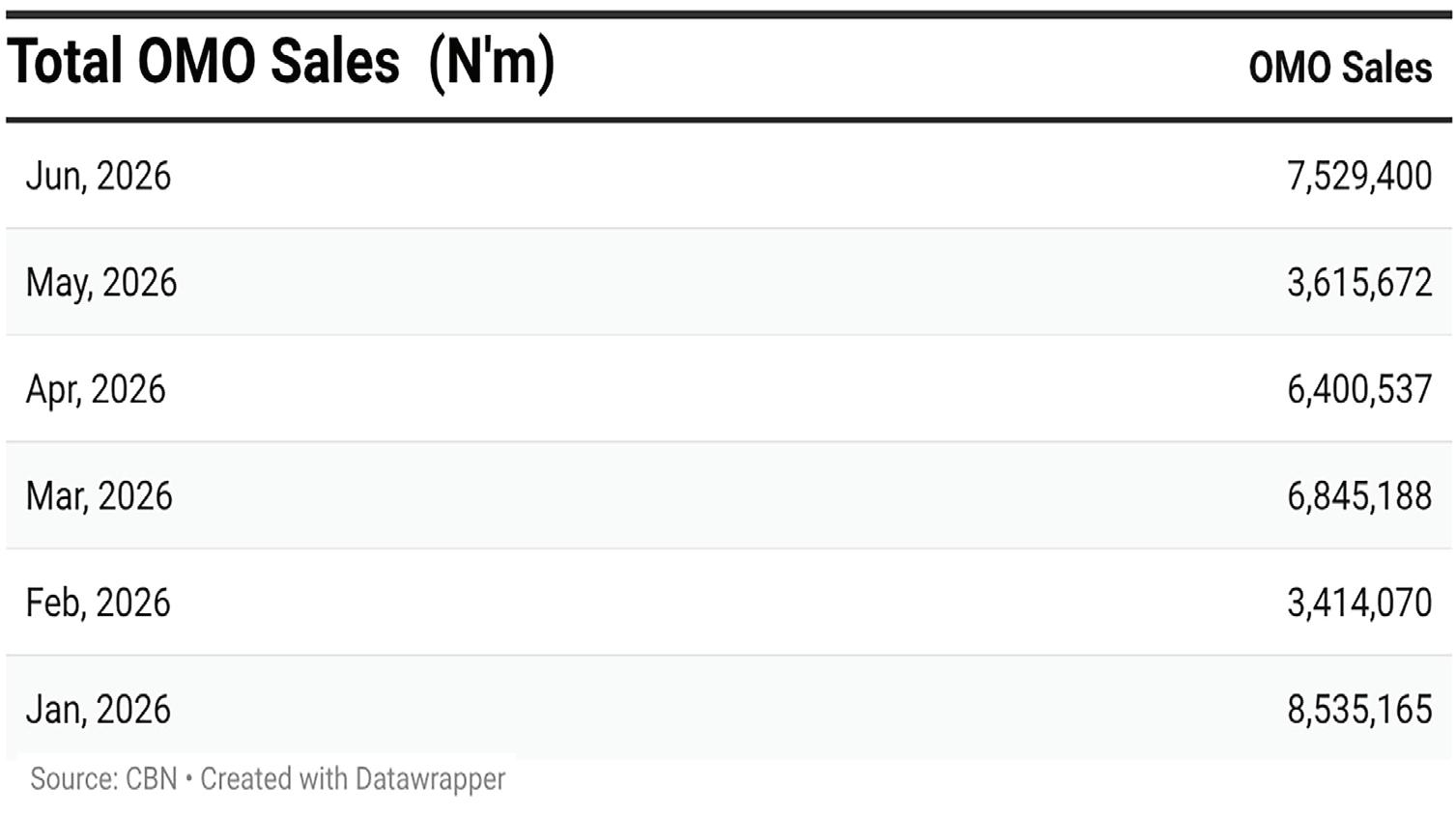
The Central Bank of Nigeria (CBN) ramped up its Open Market Operations (OMO) sales to N18.79 trillion in the first half (H1) of 2026, marking a 313.3 per cent increase from N8.79 trillion recorded in the first half (H1) of 2025.
The figures are contained in CBN’s latest financial data covering H1 2025 and H1 2026.
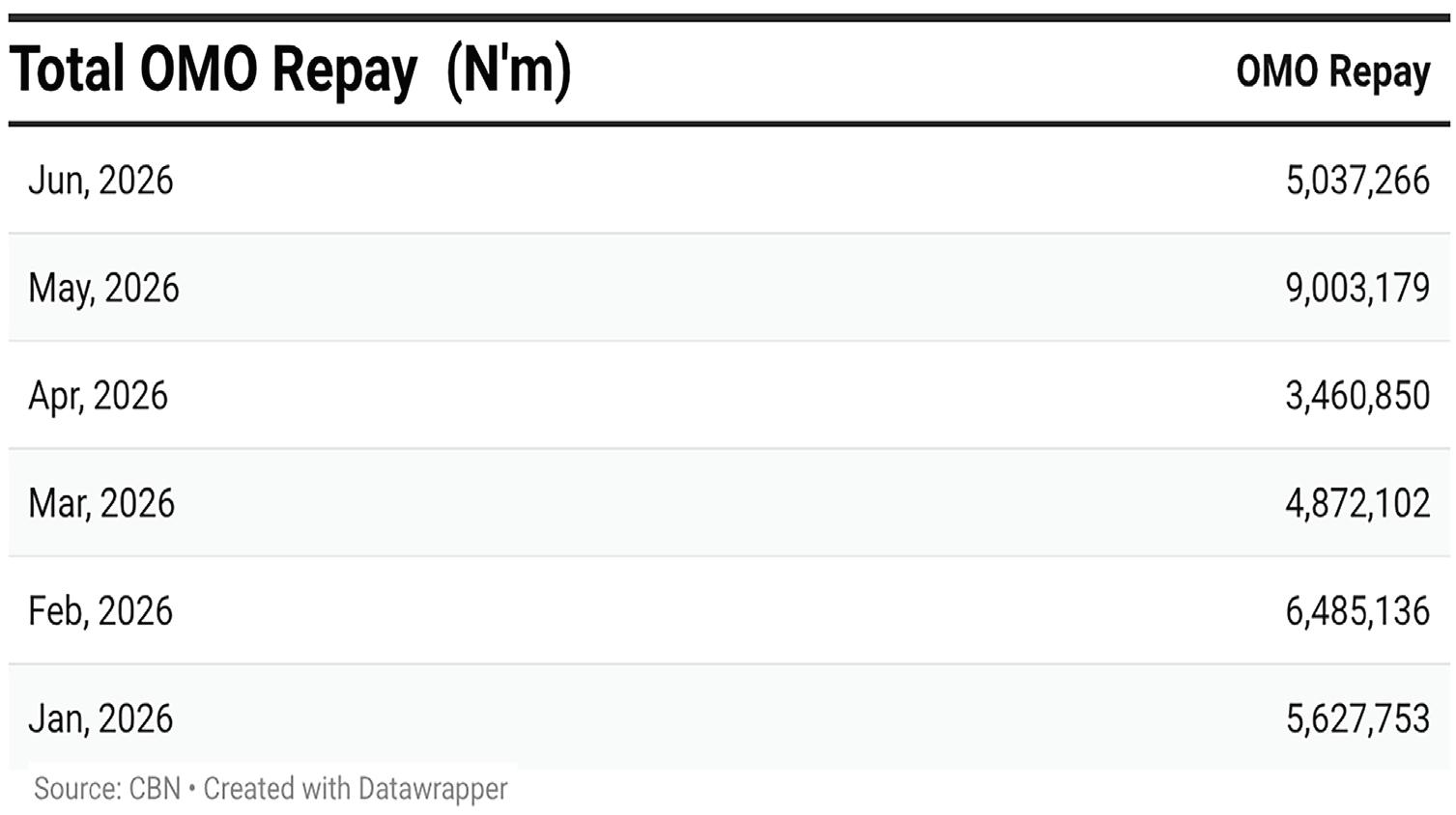
The data also revealed that OMO repayment closed H1 2026 at N34.49 trillion, about 518.4 per cent increase over N5.58trillion in H1 2025.
The CBN data revealed further that higher OMO repayments moderated the overall liquidity impact, as net OMO sales declined to N1.85 trillion in H1 2026 from N3.22 trillion a year earlier.
The development signals a shift in the CBN’s liquidity management strategy, reflecting more aggressive intervention in the money market while allowing larger maturities to flow back into the system.
It also underscores how monetary authorities are balancing inflation control, exchange rate stability, and
capital flow pressures in a volatile global environment.
CBN data shows a sharp increase in OMO activity in response to evolving liquidity and inflation dynamics during the period under review. The figures point to a significantly more active monetary stance compared to the same period in 2025.
Monthly trends showed volatility, with January 2026 posting N8.54 trillion in sales and N5.63 trillion in repayments.
February 2026 recorded higher repayments than sales, and March closed with a net
withdrawal of about N1.97 trillion. For April 2026, the CBN reported N6.4 trillion OMO sales and N3.46 trillion OMO repayments and in May 2026, it declared N3.62 trillion OMO sales and N9 trillion OMO repayments.
In addition, an estimated N7.52 trillion was declared by CBN as OMO sales in June 2026 and N5.04 trillion OMO repayment.
These figures highlight a dynamic liquidity management approach, where issuance and repayments are actively calibrated to stabilise the
financial system.
OMO bills are increasingly traded multiple times, boosting turnover far beyond issuance levels.
The instruments now dominate Nigeria’s fixedincome market due to their liquidity and short tenor.
High turnover indicates intense liquidity recycling and active portfolio management by investors.
This shift suggests that OMO bills have evolved beyond liquidity tools into highly tradable assets, shaping market behaviour.
Market analysts say the
surge reflects both liquidity pressures and broader monetary policy objectives, with implications for investor behaviour and financial stability. Experts also note that the divergence between issuance and turnover is largely structural.
Managing Director, Highcap Securities Limited,, Mr. David Adonri explained that the surge in OMO issuance reflects periods of excess liquidity, prompting the CBN to intensify its mop-up operations.
Kayode Tokede
Nigeria’s Food Services Industry to Hit $19.3bn by 2030
Nigeria’s food services industry is projected to grow to $19.31 billion by 2030, driven by rapid digitalisation, embedded financial services and changing consumer behaviour, according to a new industry study by Moniepoint.
The report titled, ‘What it Takes to Feed Nigeria everyday: The payment story behind its foodservice industry’ estimated the sector’s value at $11.09 billion in 2025 and projected an average annual growth rate of 11.73 per cent over the next five years, supported by the expansion of digital payment infrastructure, food delivery platforms and cloud kitchens.
The study, released by the
fintech company, examined the evolution of Nigeria’s food service industry over the past four decades and highlighted how technology has addressed longstanding challenges such as settlement delays, payment confirmation bottlenecks, operational leakages and limited access to credit.
According to the report, the industry’s transformation has accelerated with the emergence of food delivery super-apps and a new generation of cloud kitchens operating without physical dining spaces, while food and beverage businesses have become the secondlargest merchant category on Moniepoint’s platform after retail.
Group Chief Executive Officer of Moniepoint,
PTAD: Harmonisation Reforms Will Advance Pension Equity
The Pension Transitional Arrangement Directorate (PTAD), has said that implementation of the Defined Benefit Scheme Pension Harmonisation was a reform meant to advance and enhance pension payment equity in the country.
The Executive Secretary/ CEO, Pension Transitional Arrangement Directorate
(PTAD), Tolulope Abiodun Odunaiya, said the initiative was a landmark reform designed to restore fairness, improve retirees’ welfare and strengthen confidence in the administration of the country’s legacy pension system.
Odunaiya said the harmonisation exercise, approved under the Renewed Hope Agenda of President Bola Ahmed Tinubu, marked one of the most significant policy interventions in the DBS since PTAD was established in 2013 to take over the management of pensions under the old federal pension arrangement.
Deputy Business Editor
Chinedu Eze
Comms/e-Business Editor
Emma Okonji
Asst. Editor, Energy
Emmanuel Addeh
Asst. Editor, Money Market
Nume Ekeghe
Correspondents
KayodeTokede(CapitalMarkets)
James Emejo (Finance)
Ebere Nwoji (Insurance)
Reporter Peter Uzoho (Energy)
Unlike periodic pension increases that merely raise existing benefits by a percentage, she said that pension harmonisation would go further by re-computing pensions using the latest approved salary structures that existed before the closure of the Defined Benefit Scheme (DBS).
The objective, he noted, was to ensure that retirees who held similar positions and rendered comparable years of service received equitable pension benefits regardless of their retirement dates.
Tosin Eniolorunda, said the next phase of competition in the food service industry would be determined by how effectively payment
infrastructure is integrated into business operations.
He said: “Moniepoint believes financial inclusion is not just about access. It’s
about dignity, about enabling people to transact on their terms. What’s happening in the food service sector today is significant. The real
competitive question today is how deeply that payment infrastructure is woven into the way the business actually runs day to day.
Expert Charges Insurance Operators to Help Businesses Anticipate Risks, Prevent Disruptions
Stories by Ebere Nwoji
Insurance sector operators have been charged to evolve from merely compensating losses to helping businesses anticipate risks, prevent disruptions and improve resilience through technologydriven solutions.
The Group Managing Director/Chief Executive Officer, Royal Exchange Plc, Mrs. Idu Okeahialam, gave the charge recently while delivering keynote address
at the SUPERNEWS Nigeria Local Content Confab 2026 and the organisation’s 10th Anniversary celebration held in Lagos.
She envisioned an ecosystem where oil and gas operators, insurers, regulators, technology firms and investors collaborate through shared data, predictive analytics and integrated risk management systems to improve underwriting, minimise losses and enhance operational efficiency.
She urged oil and gas
operators to forge stronger strategic partnerships anchored on local content development and digital transformation to accelerate inclusive economic growth and strengthen the nation’s resilience.
Speaking on the theme, “Local Content & Digitalisation: Building Synergy between the Oil & Gas and Insurance Sectors for Inclusive Growth,” Okeahialam said Nigeria’s next phase of economic development must be driven by collaboration among critical sectors, stronger institutions, innovation and strategic partnerships capable of unlocking sustainable value.
According to her, while Nigeria has recorded significant progress in local content development within the oil and gas industry, the next frontier should extend beyond asset ownership to include indigenous financing, insurance, technology, expertise and risk management.
PenCom, ICPC Collaborate to Recover N3bn as Crackdown on Pension Defaulters Intensifies
The National Pension Commission (PenCom), in collaboration with the Independent Corrupt Practices and Other Related Offences Commission (ICPC) have recovered over N3 billion unremitted pension contributions from employers. The recovery was achieved through an ICPC-PenCom enforcement initiative aimed at addressing pension contribution defaults
and protecting the retirement savings of workers.
According to PenCom, the recovered funds, obtained from defaulting employers in the electricity sector, have been fully remitted into the respective Retirement Savings Accounts (RSAs) of affected employees in accordance with the provisions of the Pension Reform Act (PRA) 2014. The commission said the recovery demonstrated
the effectiveness of the partnership between PenCom and ICPC in enforcing compliance with the PRA 2014 and ensuring that employers fulfil their statutory pension obligations.
PenCom signed a Memorandum of Understanding (MoU) with ICPC in October 2025 to establish a framework for collaboration on the recovery of unremitted pension
contributions, investigation of pension-related infractions, and enforcement of compliance with the PRA 2014.The ICPC is currently investigating several private sector employers referred by PenCom for non-compliance with the PRA 2014. The commission said with the ongoing collaboration, additional recoveries would be achieved as the investigations progress.
FCT Police Command Urged to Foster Culture of Insurance Compliance
The National Insurance Commission (NAICOM), has urged officers of the FCT Police Command to champion insurance compliance and serve as role models in fostering a culture where insurance is recognised not merely as a statutory requirement but as an essential tool for protecting lives, property, investments, and livelihood
NAICOM gave the charge at
a one-day training programme it organised for officers of the Nigeria Police Force (NPF), Federal Capital Territory (FCT) Command, aimed at strengthening compliance with Motor Third-Party Insurance and other compulsory insurance policies, as well as enhancing insurance policy verification processes.
The training, held in Abuja, was themed, “Building a Culture of Insurance Compliance: Police as Catalysts for Protecting Lives,
Property and Enhancing Public Safety.” The programme was designed to equip police officers with the knowledge and skills required to promote compliance with compulsory insurance laws, verify the authenticity of insurance policies, and deepen public understanding of the benefits of insurance.
Speaking on behalf of the Commissioner for Insurance and Chief Executive Officer of NAICOM, Mr. Olusegun Ayo Omosehin, the Deputy
Commissioner for Insurance Finance, Mr. Ekerete Ola GamIkon underscored the strategic importance of collaboration between NAICOM and the Nigeria Police Force in promoting compliance with compulsory insurance requirements.
He noted that effective public safety extended beyond crime prevention and law enforcement to include protecting citizens from the financial consequences of unforeseen events.
Ebere Nwoji
Nume Ekeghe
Ebere Nwoji
Group Business Editor
Eromosele Abiodun
Ememandu: FidBank Preserves, Move Wealth through Tailored Cross-border Solutions
As Nigerian investors and businesses look increasingly beyond borders for growth, FidBank UK Limited is positioning itself as a trusted gateway between Nigeria and the United Kingdom. In this interview, CEO of FidBank UK Limited, Johnson Ememandu, discusses how the bank is helping customers build, preserve and move wealth through tailored cross-border solutions, including Buy-to-Let, Euroclear access and international card services. He also speaks on the institution’s return to profitability, disciplined growth strategy, strong risk culture and wider role in advancing Fidelity Bank Group’s international ambitions, while unlocking new opportunities across the UK–Nigeria economic corridor. Oluchi Chibuzor presents the excerpts
FidBank UK has hosted this product showcase platform repeatedly since 2024. What does that consistency say about your long-term conviction in UK-linked opportunities for Nigerian investors and corporates?
Our journey has been one of deliberate evolution. Following Fidelity Bank Plc’s acquisition of Union Bank UK in 2023 and its subsequent transformation into FidBank UK Limited, we identified a unique opportunity to create a platform that connects our customers to credible, long-term wealth creation opportunities across borders.
When we launched this showcase series in 2024, our focus was centred on our Buy-toLet proposition. While that offering remains a key pillar of our value proposition, our customers’ aspirations have evolved—and so have we. This year’s showcase featured three complementary solutions designed to support wealth creation and global financial access: our Buy-to-Let offering, our International Debit Card with exclusive lifestyle privileges, and our Euroclear capability.
The continued evolution of this platform reflects a fundamental principle of our strategy. We are not driven by trends; rather, we are committed to developing solutions that align with the way our customers live, invest, and build wealth. With each edition, the platform becomes more sophisticated because our ambition extends beyond offering products—we are creating seamless pathways that connect opportunity with execution, enabling our customers to achieve their financial goals with confidence.
At this year’s showcase, Buy-to-Let, debit card and Euroclear Bank services were placed side by side. What strategic thinking connects these offerings, and what customer need were you most determined to solve?
At first glance, these may appear to be distinct products serving different needs. However, they are united by a single objective: helping our customers preserve wealth, grow wealth, and move wealth seamlessly across borders.
Today’s customer is increasingly global in outlook and activity. They may earn income in one jurisdiction, invest in another, travel frequently, and maintain personal or business interests across multiple markets. As financial lives become more interconnected, our responsibility is to eliminate friction and provide solutions that enable customers to navigate these complexities with ease and confidence.
Our Buy-to-Let proposition supports longterm wealth creation through access to quality real estate opportunities. Euroclear opens the door to global investment markets, providing diversification and broader portfolio options. The FidBank UK International Debit Card delivers convenience, flexibility, and seamless access to funds wherever our customers are in the world.
Together, these solutions form an integrated ecosystem designed to empower customers to participate confidently in the global economy. Rather than relying on disconnected financial products, our customers benefit from a coordinated suite of solutions that supports their ambitions, simplifies cross-border financial activity, and helps them build lasting wealth.
Your Buy-to-Let proposition is designed around residential investment properties in England and Wales, with lending in British pounds and a strong risk management framework. What makes this product especially relevant for high-net-worth Nigerians at this point in time?
The best time to invest and create wealth is always now. Today’s investors operate in an increasingly interconnected world. Many of our customers earn income in one market while deploying capital across multiple jurisdictions. They maintain families, businesses, educational commitments, and lifestyle interests that span borders and require reliable, long-term financial solutions.
In this context, our Buy-to-Let proposition represents far more than an opportunity to own property in the United Kingdom. It is a strategic wealth creation and preservation vehicle—one that enables customers to store value in a mature and well-regulated market, generate sustainable rental income, and build long-term financial resilience.
At a time when investors are increasingly seeking ways to diversify their assets and mitigate the impact of currency volatility, quality real estate continues to offer an attractive combination of stability, capital appreciation, and recurring income.
Through our Buy-to-Let proposition, we are providing customers with access to these opportunities in a structured and accessible manner. Ultimately, our objective is simple: to help customers convert today’s earnings into enduring wealth, while providing them with the confidence that their
investments are anchored in markets and assets capable of supporting their long-term aspirations.
The event was hosted at the Residence of the British Deputy High Commissioner in Lagos. How would you describe FidBank UK’s relationship with the British Deputy High Commission, and why does that relationship matter for investment confidence and bilateral business engagement?
The United Kingdom continues to demonstrate its openness to international investment, and the British Deputy High Commission plays an important role in reinforcing that commitment.
Our relationship with the British Deputy High Commission is founded on a shared belief in the value of responsible investment, sustainable economic growth, and stronger commercial ties between Nigeria and the United Kingdom. It reflects a mutual commitment to creating opportunities that deliver long-term value for businesses, investors, and both economies.
By hosting this event at the Deputy High Commissioner’s Residence, the platform itself assumes a deeper significance. Beyond providing a prestigious setting, it serves as a visible expression of institutional confidence and underscores the UK Government’s support for responsible business expansion, cross-border investment, and economic collaboration.
Such alignment is powerful. It sends a strong signal to investors that opportunities within the UK market are supported by a stable regulatory environment and an
enduring commitment to international business. More importantly, it reinforces trust, strengthens bilateral commercial confidence, and creates a foundation upon which long-term investment relationships can flourish. For our customers, that confidence matters. It provides additional assurance that they are investing within a market that values transparency, stability, and sustainable growth—qualities that are essential to successful wealth creation over the long term.
The British Deputy High Commission has spoken about deepening UK Nigeria trade, investment and economic growth. Where do you see FidBank UK playing the most practical role in translating that shared ambition into measurable business outcomes?
We see our role very clearly at the point where capital meets opportunity, where innovative ideas require funding to scale, where trade requires financing to flourish, and where investment seeks productive avenues for growth.
Our responsibility extends beyond the provision of financial services. We are focused on transforming opportunity into execution by connecting businesses, investors, and markets through solutions that are practical, efficient, and sustainable. Whether through providing access to working capital, supporting long-term investment projects, facilitating trade flows, or enabling cross-border transactions, our objective is to remove barriers and accelerate economic activity.
We recognise that meaningful economic growth occurs when capital is deployed effectively, businesses are empowered to expand, and commercial relationships are strengthened. As such, we are committed to building the financial infrastructure and partnerships that enable these outcomes. Ultimately, our ambition is to serve as a trusted catalyst for UK–Nigeria economic engagement—facilitating the flow of capital, supporting enterprise, and helping unlock the immense opportunities that exist between both markets. In doing so, we are not only supporting business growth; we are contributing to deeper economic cooperation and shared prosperity between our two nations.
FidBank UK has positioned itself as a UK regulated gateway connecting Nigeria and the United Kingdom. Beyond real estate, what are the most important ways you are helping businesses unlock cross border opportunities in trade finance, treasury, commercial lending and private banking?
We are deliberate and intentional in the products and services we develop, ensuring that our customers’ evolving needs remain at the centre of our innovation and decisionmaking. For our corporate clients, our approach extends beyond providing transactional banking services. From the very beginning of the relationship, we seek to understand their business objectives and provide tailored solutions that support growth, efficiency, and long-term success. This includes access to working capital finance, invoice discounting facilities, and Letters of Credit to facilitate both domestic and international trade.
Ememandu
World PR Day 2026: The Golden Age of Strategic Public Relations in the Era of Convergence
Every July 16 is celebrated globally as World PR Day.
WPRD commemoration, which began in 2021 as a bold vision for PR professionals across the globe to appreciate and celebrate the priceless value they bring to the table for their clients and the society at large by helping to promote understanding, shaping conversations and perceptions and contributing value.
The day is symbolic as it coincides with the birthday of Ivy Lee, one of the Pioneering figures of the profession who laid a solid foundation for what is known today as modern-day Public Relations. Ivy Lee was in a league of his own in his generation, forging ethical communications practices grounded in strong principles of transparency and built on the foundation of TRUTH and strategic advisory, which remain the core of the practice to date.
The theme for 2026 World PR Day, “The Golden Age of Strategic PR,” highlights the paradigm shift in the practice and its evolution from a tactical function to a much more strategic management function that delivers value and contributes meaningfully to business goals.
There couldn’t have been a better theme for this year as PR has reached
the full potential in its evolution over the years as it has come to be finally recognized as a boardroom/ management function and a core driver of business, imbuing trust and strengthening reputation with a direct nexus to business performance as it can be seen that a business leveraging strategic PR now outperforms those who have yet to full adopt.
Public Relations has moved from being a tactical function or a cost centre, as it was hitherto regarded, to a strategic function with a prominent seat at the table, helping to shape business decisions alongside other business leaders such as the CEO, CFO and CMO. PR practitioners are no longer looked up to only for visibility by pushing out press releases, or as firefighters to kill negative stories; they are now considered for strategic roles such as providing strategic advisory on risk, reputation, policy, and purpose.
The practice of PR is now being reimagined as trust has now become the currency, especially in the “perma-crisis” era with the disruption by artificial intelligence (AI), the age of fake news, misinformation and polarisation, which has become the biggest threat to culture and now makes trust the most important asset of an organisation. Strategic PR
plays a key role in building and protecting that trust, as reputation capital is now recognised as a balance-sheet asset.
This golden age of PR underlines the need for a delicate balance between humans and Artificial Intelligence. Yes, AI has come to stay, but it definitely won’t replace practitioners. While AI can write press releases and monitor mentions in a matter of seconds, it cannot build relationships, read a room, or make ethical judgment calls during a crisis. In this “Golden Age” of PR, professionals use AI for scale, but lead with human intelligence, ethical reasoning, and relationship capital.
Strategic PR in the era of the golden age is the connective tissue that helps to integrate the different units, from framing growth stories for investors (Investor Relations), to aligning employees with the business purpose (Internal Communication), navigating policy and perception (Public Affairs and Government Relations), to impact storytelling not just about products (Brand & ESG).
The golden age of strategic PR also underscores the importance of data and measurement in today’s
practice. Data provides us with a scorecard to determine whether PR is moving the needle on perception, reducing risks, driving investment, or attracting talent. Measurement in the golden age is not just about reach and impressions but rather influence and impact. The Golden Age of Strategic PR is when PR stops reacting to stories and starts shaping the strategy that creates the narratives.
In summary, the golden era of Public Relations is also in line with the convergence conversation, which implies that all lines of communication are finally blurring, PR, Marketing, Advertising, Content, Data, and Consumer Experience no longer work in silos, and as such, PR is no longer sitting aloof but integrating and leading integration for maximum impact.
FEaturEs
How Globacom Harnesses the Power of Rewards to Deepen Loyalty, Drive Growth and Inspire Excellence
Globacom has long recognised that rewarding loyalty is more than an act of appreciation as it is a strategy for strengthening partnerships, inspiring excellence and driving growth. Staying true to that philosophy, the digital solutions provider recently celebrated its top-performing business partners at the 2026 Glo Partners' Reward Gala in Lagos, where it honoured outstanding dealers while showcasing new innovations designed to deliver greater value to customers. Chiemelie Ezeobi reports
For more than two decades, Globacom has understood a simple but powerful truth: rewarding loyalty is not just an act of appreciation, it is a business strategy that strengthens partnerships, motivates performance and drives sustainable growth.
From rewarding millions of subscribers through promotions and loyalty campaigns to celebrating its vast network of business partners with cash prizes, cars and other incentives, the telecommunications company has consistently demonstrated that recognising excellence is central to its corporate philosophy.
Whether through consumer promotions, dealer incentive schemes or exclusive appreciation events, Globacom has built a reputation for ensuring that those who contribute to its success share in the rewards.
Partners Reward Gala
That commitment was once again on display on Thursday when the digital solutions provider honoured its top-performing business partners at the 2026 Glo Partners' Reward Gala held at Eko Hotel & Suites, Victoria Island, Lagos.
The exclusive event brought together the company's strategic business and trade partners for an evening of celebration, entertainment and recognition. Beyond the glamour, the gala underscored Globacom's determination to acknowledge outstanding performance while inspiring even stronger collaboration in the years ahead.
A total of 115 exceptional dealers were rewarded with millions of naira in cash and other prizes for their outstanding performance between January and June 2026.
Building Partnerships That Drive Success
Welcoming guests, Globacom's Cluster Head, Lagos 2, Abdul Rasaq Ande, who represented the company, said the gathering was designed to celebrate not only individual achievements but also the shared commitment that has sustained the company's growth over the years.
"The event was organised to celebrate not just individuals, but the synergy, the shared vision, and the collaborative mindset that sparks true innovation," he said.
He described the company's partners as the foundation of the Globacom ecosystem. "Our partners have, over the years been the bedrock of the Globacom ecosystem, and their success is our success," Ande stated.
Reflecting on the company's journey, he noted that Globacom has spent 23 years transforming Nigeria's telecommunications landscape through innovation and quality service.
"It has been 23 incredible years of operation; you will recall that we
commenced business on August 29, 2003. It has been 23 years of technological revolution, innovation and service excellence.
Globacom's promise to you remains unchanged.
"We will continue investing heavily in next-generation tools, upgrading our infrastructure, and ensuring our network stays second to none," he said.
Innovation Focused on Customer Value
While celebrating its partners, the company also unveiled initiatives aimed at delivering greater value to subscribers.
Among them is the "More Data More Value" proposition, designed to ensure that every naira spent by customers delivers
greater digital benefits, reinforcing Globacom's long-standing reputation for affordability and customer empowerment.
The company also used the occasion to showcase its technological and marketing advancements aimed at improving customer experience nationwide.
Partners received updates on the company's achievements over the past year, including the introduction of Gloria, an AI-powered Glo Café voice assistant built to improve customer engagement and service delivery in six languages.
Globacom also highlighted the expansion of its Borrow Me Credit service.
"There is also the 'Borrow Me Credit' service, a strategic initiative which has been expanded to ensure
that no subscriber is ever disconnected due to a low or zero balance. The Glo Café is also being reinvigorated to ensure unique online experiences for millions of Glo subscribers," the company said.
An Evening of Glamour and Celebration
Beyond the business presentations, the evening reflected the warmth and excitement that have become synonymous with Globacom's appreciation events.
One of the major attractions was the "Rep Your Region" Best Dressed Competition, where partners showcased Nigeria's rich cultural heritage in colourful traditional attire. Alamin Muhammed Suleiman of Benjee Communication and Anthonia Agbasi of Chicadef Global Limited emerged winners in the male and female categories respectively, each receiving a cash prize of ₦500,000. Guests were also entertained by renowned live band performer Segun Johnson, while comedian Gordons kept the audience laughing throughout the evening with support from television host and brand influencer Mo Abebe.
Partners Applaud
Generosity
Globacom's
For many of the dealers, however, the biggest takeaway was the company's consistent commitment to recognising excellence.
Speaking on behalf of the beneficiaries, Managing Director of Demmy Global Resources, Ademola Akinlabi, and Alhaji Yusuf Yahaya of Lambadaya Stores praised Globacom for its generosity.
They commended the company for rewarding dealers across multiple categories with cars, millions of naira in cash and other incentives, describing the recognition as a strong motivation to continue supporting the brand's growth.
Rewarding Excellence Beyond Recognition
As the celebration drew to a close in the early hours of Friday, the event reinforced a philosophy that has distinguished Globacom over the years: partnerships flourish when commitment is recognised, excellence is rewarded and success is shared. In an increasingly competitive telecommunications industry, where technology continues to evolve rapidly, Globacom appears convinced that while innovation drives progress, appreciation sustains relationships. Through consistent investments in its network, customer-focused innovations and a culture of rewarding both subscribers and business partners, the company continues to strengthen the loyalty that has remained one of its greatest competitive advantages.
Winners of 86" TV sets being presented their prizes by Cluster Head, South South, Ikechukwu Onuekwusi
Music maestro, Segun Johnson, with winners in the Top Partners award category
Cluster Head, (Activation), Enugu, Yemi Oresanya, presenting key to a brand new
Suzuki car to CEO, Divine Links Global Networks, Adewuyi Bukola, who is joined by his wife and kids
Stanbic IBTC Deepens Commitment to MSME Growth, Partners State Government
Nume Ekeghe
Stanbic IBTC has reaffirmed its commitment to accelerating the growth of Micro, Small and Medium Enterprises (MSMEs) across Nigeria through strategic partnerships with state governments and institutions committed to creating enabling environments for businesses to thrive.
Speaking at the event, the Commissioner for Industry and SMEs, Mazi Michael Enyinnaya Akpara, reiterated Abia State Government’s commitment to building one of Nigeria’s most competitive enterprise ecosystems through deliberate policy reforms and strategic initiatives.
According to him, the State is currently developing a comprehensive MSME Policy to provide a clear framework for enterprise development, while also establishing a statewide MSME Directory to improve business visibility and access to investment opportunities.
Commenting on Stanbic IBTC’s broader role in supporting Nigerian businesses, Chief Executive, Stanbic
The bank in a statement noted that this commitment was made during its Nigeria Business Summit Regional Tour held in Aba, in partnership with the Abia State Government, to deliver business enlightenment sessions, funding masterclasses, enterprise advisory services and capacitybuilding programmes for entrepreneurs. The regional tour kicked off at the appropriate time, following the 2026 World MSME Day commemoration in late June.
IBTC Holdings, Chuma Nwokocha, said: “Businesses do not scale in isolation. They scale when they have access to capital; to intelligence; and to the platforms that connect them to wider markets.”
Chuma further added: “We will accelerate MSME graduation through value chain finance, structured lending, and the credit and advisory capability that turns promising businesses into durable ones. And we will invest in the sectors that will define Nigeria’s next decade.”
Also speaking, Executive Director, Business and Commercial Banking, Stanbic IBTC Bank, Remy Osuagwu, noted that the company is taking a more deliberate, nationwide approach to supporting entrepreneurs by bringing practical business support closer to where businesses operate.
AAAN Partners Instotution to Address Talent Gap in Advertising
The Association of Advertising Agencies of Nigeria (AAAN), the umbrella body for advertising professionals in Nigeria, has secured a strategic training partnership with the Red & Yellow Creative School of Business, a CHE-accredited institution based in Cape Town, South Africa. The partnership is part of efforts to strengthen skills development across Nigeria’s marketing communications industry.
Speaking on the agreement signing, the President, AAAN, Lanre Adisa, noted that the partnership is a clear response to the mounting pressures faced
by Nigerian agencies. These challenges include a shrinking pool of experienced talent, intensifying poaching of skilled professionals, and the rapid changes brought about by AI and shifting client expectations.
Adisa explained that the association is positioning the initiative as a long-term investment that will help grow the talent pipeline available to the sector, with a focus on leadership development and future-of-work readiness alongside core craft skills.
In his remarks, the Managing Director of Red & Yellow Creative
School of Business, Verusha Maharaj, described the partnership as a huge opportunity for marketing communication professionals in Nigeria to develop the capacity needed to thrive in the industry.
“Across Africa, agencies and marketing teams are dealing with similar pressures around talent, technology, leadership, and competitiveness. This partnership allows us to support a practical industry conversation about what creative businesses need now, and how education can respond more directly to those needs,” Maharaj said.
United Nigeria Airlines Gives Support to Young Visually Impaired Singers
Chinedu Eze
Nigeria’s fast rising operators, United Nigeria Airlines (UNA), at the weekend, supported young talents who took part in a singing competition organised for people living with disabilities.
United Nigeria Airlines co-sponsored the blind segment of the ‘Henrotion in Expression’ event held in Port Harcourt on Sunday, which saw Sarima Owhur (Sari Wonder) walk away with a cash prize of N100,000 after delivering a standout vocal performance.
Presenting the award to the winner, the Port Harcourt Station Manager of United Nigeria Airlines, Uche Magbo, who represented the airline at the event, commended the contestants for their courage and talent.
He said, “At United Nigeria Airlines, we believe true inclusion
The founder of the Vision Rehab Centre and consultant ophthalmologist, Dr. Adedayo Adio, who commended the winner, said: “Vision Rehab Centres, especially privately-owned ones, require a lot of funding. For those of them whose parents are not able to take care of them, we look for funding to put them in school, and we also teach them vocations. We have a low vision arm where we train eye care workers. We train them to do what everyone else can do; we teach them all the skills they need to make a living. We want them to be able to blend in properly.”
means giving a voice and a platform to those who are too often overlooked. At the weekend, we watched young people living with disabilities show us that talent has no limits and that vision is not a requirement for greatness. This is why we are proud to stand behind initiatives like this one.”
The founder of Henrotion, Henry Aniakor, thanked United Nigeria Airlines for its support, describing the partnership as instrumental to the success of the event.
He said, “We thank United Nigeria Airlines for believing in our vision and partnering with us. Your support helped bring to life an unforgettable experience, marked by creativity, excellence, meaningful connections, outstanding entertainment, and lasting impact.”
following: Saharan Blend (Algeria), Djeno (Congo), Zafiro (Equatorial Guinea), Rabi Light (Gabon), Iran Heavy (Islamic Republic of Iran), Basrah Medium (Iraq), Kuwait Export (Kuwait), Es Sider (Libya), Bonny Light (Nigeria), Arab Light (Saudi Arabia), Murban (UAE) and Merey (Venezuela).
Market Capitalisation Advances by N719bn Amid Demand for MTN
Kayode Tokede
The Nigerian stock market rebounded to close higher, snapping its two trading session losing streak as the market capitalisation appreciated by N719 billion.
As MTN Nigeria gained 1.23per cent to close at N820.00 per share, the Nigerian Exchange Limited All-Share Index (NGX ASI)
gained by 1,121.33 basis points, or 0.46 per cent to close at 242,870.44 basis points. Accordingly, market capitalisation rose by N719 billion to close at N 155.849 trillion.
Investor sentiment remained positive, as 24 gainers outpaced 22 losers. Learn Africa recorded the highest price gain of 10 per cent to close at N9.90, per share. First HoldCo followed
with a gain of 9.98 per cent to close at N72.15, while Thomas Wyatt Nigeria appreciated by 9.80 per cent to close at N2.69, per share.
R.T. Briscoe went up by 8.68 per cent to close at N13.15, while Transcorp Hotels rose by 8.37 per cent to close at N242.00, per share.
On the other hand, International Energy Insurance led the losers’ chart by 9.86 per cent to close at N4.66,
per share. Legend Internet followed with a decline of 9.18 per cent to close at N4.45, while Fortis Global Insurance declined by 7.67 per cent to close at N2.77, per share.
FTN Cocoa processors depreciated by 7.55 per cent to close at N8.21 and International Breweries declined by 4.79 per cent to close at N13.90, per share.
The total volume traded advanced by 21.25 per cent to
634.775 million units, valued at N53.336 billion, and exchanged in 42,494 deals. Transactions in the shares of First HoldCo topped the activity chart with 326.922 million shares valued at N22.332 billion. Guaranty Trust Holding Company (GTCO) followed with 22.469 million shares worth N2.821 billion, while Access Holdings traded 18.532 million shares valued at N461.613 million. FCMB Group traded 16.118
N1.729 billion.
On market performance, analysts noted that the market’s return to positive territory, alongside the sharp improvement in breadth and the surge in traded value and deal count, reflects a swift recovery in sentiment following the prior session’s profit-taking.
PRICES FOR SECURITIES TRADED AS OF JULY 14/26
Transforming Nigeria through Civic Education, Youth Empowerment
As the country continues on the brink of doom, considering the erosion of values, insecurity, and injustice, among others, a non-partisan civic organisation, the League for Social Justice, has bemoaned the long-term neglect of youths, saying that reorientation of the youths through civic education and empowerment will restore patriotism among them and enable them to secure the future of the nation. Uchechukwu Nnaike and Oluchi Chibuzor report
While addressing some of the country’s developmental challenges in a chat with media executives, Dr Labode Obanor, the President of the League for Social Justice (LSJ), emphasised that the future of the nation depends not only on what students study, but also on the values they carry beyond graduation. He regretted that the neglect of youths over the years pushed them into all kinds of unscrupulous societal activities and a general apathy toward their fundamental rights.
To transform the country, he stated that the youth should be the central focus of any organisation and society, adding that educational institutions should become centres for raising a new generation of socially conscious leaders. According to him, empowering students while they are still in school offers a better pathway to building responsible leadership than waiting until they enter politics or the workforce.
Obanor, a renowned lawyer and scholar, said that his organisation is catching them young through the Project Arise initiative in primary and secondary schools and the Voice of Justice initiative in higher institutions. Through the Project Arise initiative, he said the organisation engages pupils in primary and secondary schools, providing educational support and instilling values of responsibility and community service from an early age. According to him, the programme has been held in Lagos, Edo, and parts of the Midwest, with a remarkable impact, as evidenced by feedback from school administrators.
He stated that the Voice of Justice was recently launched at the University of Lagos, where about 700 students were empowered. The initiative aims to amplify the voices of young people, prepare them to be good citizens, equip them with leadership skills, prepare them for the wider society, and remind them that their first priority and first commitment is to be loyal to their country before tribe.
“Part of the things that have divided us as a nation is that we are more ethnocentric rather than nationalistic, and the division is what caused our problem of tribalism today,” he said.
Obanor added that the initiative also educates youths about their legal rights and about not taking justice for granted when those rights are violated.
“Apathy is another problem we have in this country. People get so relaxed and get so used to injustice that we
just laugh about it and move on,” he stated. “But we should not do that. If there are instances of injustice, we should cry out so that we don’t become numb to the abnormal. So when you get used to the abnormal, when the normal comes, it becomes a strange thing to you.”
Since 2021, he said the LSJ has sustained its youth-focused interventions through regular classroom engagements, educational outreach programmes and civic education initiatives. It plans to expand the Voice of Justice project to additional tertiary institutions across western and midwestern Nigeria, despite the significant logistical challenges involved in organising campus-wide initiatives.
While describing education as the bedrock of development, Obanor regretted that the country’s education sector is grappling with many challenges that hinder youths from attaining their potential.
According to him, poor funding and diversion of funds meant
for the provision of facilities and infrastructure development have led to the dilapidation of existing structures in public schools. He added that the resulting unconducive learning environment affects the quality of education and student enrolment rate, making quality education an exclusive preserve of those who can afford private schools, which have become very expensive now.
“It’s not affordable. It’s a major issue and concern that we must address,” he said.
Though funding education is the government’s responsibility, he said civil society organisations and other groups can complement the government’s efforts. He noted that in the past, public schools were completely fenced with gates manned by security operatives, but these days, many schools are not protected, adding that the poor condition of the schools exposes the children and teachers to abductions and other dangers.
“Kids who are supposed to be learning are afraid of being kidnapped or abducted while in the classroom. Teachers look around while teaching, fearing that someone is coming to take them. This
is not sustainable,” he said.
Another area of concern, he said, is the increasing number of out-of-school children, which, according to UNICEF, ranges from 10.5 million to 18.9 million. Recent reports also reveal that up to 20 million children who enrol in primary school never transition to senior secondary education. Obanor, who described the issue as a decades-old problem in the country, said, “I remember back in the days of the military rule, many of us were involved in protesting the military government because we were in and out of school. We were in school for two months and out of school for eight months of the year. And the strike here and there.”
He stressed that once the security challenge in the country is tackled, every other challenge will be addressed, while calling on Nigerians to take security seriously.
“The primary and core responsibility is a state that is fully secured,” he explained. “When human beings are secured in themselves, in their property and in their homes, they are able to do things, even engage in trade, engage in things that government will benefit from, such as paying taxes, doing business and all of that. However, what we are seeing now is a breakdown of security in this country.”
He stressed that funds allocated to secure the society should be used for that purpose.
“When it comes to insecurity, they are comparing us to places like Haiti, Congo or Ukraine. Why would they be comparing a country with a functioning government to a war-torn country? That is the state of insecurity. It’s not normal,” Obanor said.
According to him, LSJ was formed by experts in Nigeria and in the diaspora due to growing concerns about the level of injustice in the country and the need to give victims a voice.
He said that the organisation was founded on the core principle that justice in society should not depend on the size of one’s account or political connections, state of origin, or ethnicity. It should be dependent on access to justice. He said that the LSJ exists to amplify cases of injustice overshadowed by other events and to ensure that victims don’t remain silent or numb until they receive justice.
He advised the youths not to get used to the current situation in the country, urging them to consistently engage in protests and reject any abnormal occurrences.
Firms Launch Million Classic Initiative to Drive Civic Education
Oluchi Chibuzor
Academy Press and Ekenua & Co. Limited have launched the Million Classics Programme, a Nigerian civic-education programme that uses the world’s enduring classics to build critical thinking, moral reasoning and leadership in secondary school students.
Managing Director of Academy Press, Mrs. Oluwakemi Ogunnubi, said as a firm having printed books for Nigerian classrooms for over 60 years, it understands what it means when a young person opens a book that will stay with him for life.
“The Million Classics Programme
is an ambitious and important undertaking, and we are proud to be founding it in partnership with Ekenua & Co. Placing the world’s great classics into the hands of Nigerian secondary school students - beginning today in Lagos - is exactly the kind of work we believe our industry should be doing. We look forward to what this programme will mean for students across Nigeria as it grows,” she said.
Managing Director of Ekenua & Co, Osamede Okhomina, said, “our students can read. What we
owe them is the chance to think - carefully, critically, and for themselves. The programme is built on the belief that great books, paired with real engagement, are among the most effective tools we have for building a generation of Nigerian readers who become thinkers, and thinkers who become leaders. This launch cycle is the beginning of something we intend to grow across the country.”
According to the Local Programme Lead, Maxwell Marshall, “we are grateful for the cooperation of the Lagos State TutorGeneral’s office for Education District VI, and for the commitment of our partner schools, educators and supporters who
share our belief that access to great books, paired with structured engagement, can broaden perspectives and shape lifelong learning.”
The programme will see the placement of the first 1,500 copies of George Orwell’s Animal Farm into the hands of students across three senior secondary schools in Ilupeju, Lagos.
The launch cycle of the project is delivered in cooperation with the office of the Tutor-General and Permanent Secretary of Lagos Education District VI, Mrs. Mojisola Christiana Yusuff, whose reading culture initiative is the operational partner for the cycle in the district’s schools.
Obanor
Francis Nwaochei: Nigeria’s Upstream Oil Sector Entering Competitive Era
In this interview, Chairman of the Society of Petroleum Engineers (SPE) Nigeria Council, Francis Nwaochei, speaks on Nigeria’s ongoing upstream sector reforms, the broader African energy ecosystem as well as the upcoming 49th Nigeria Annual International Conference and Exhibition (NAICE 2026). Emmanuel Addeh brings the excerpts.
Today, everyone is talking about energy transition. How does SPE envision balancing energy security, economic growth and decarbonisation without compromising Africa’s development aspirations?
The foundation for sustainable growth is policy stability. Predictable policies enable businesses to plan, attract financing, increase foreign direct investment and make long-term investments with confidence.
Equally important is accelerating technology adoption across the energy value chain. Technology drives exponential growth, competitiveness and investment. Korea’s rapid emergence in AI demonstrates how innovation creates economic and financial advantage. That is the approach SPE is championing, and one Nigeria must embrace.
At SPE Nigeria Council, we view the energy trilemma as complementary, not competing. Energy security, economic growth and environmental sustainability must advance together.
Africa needs a pragmatic, just energy transition. Oil and gas will remain vital to economic growth while the industry reduces emissions, eliminates routine gas flaring, improves efficiency and deploys cleaner technologies. Natural gas is the critical transition fuel, providing reliable power and enabling greater renewable integration. Revenues from today’s hydrocarbons should finance tomorrow’s renewable energy, innovation and sustainable infrastructure.
We understand your annual programme is upcoming. What inspired the theme for this year’s NAICE, and why is it particularly relevant to Nigeria and Africa at this moment?
The theme: “Thriving in the Evolving Global Energy Landscape: Collaborative Growth and Resilience,” reflects the realities of today’s energy industry. Resilience defines Nigeria’s energy journey.
Globally, as noted by Senator Heineken Lokpobiri, Nigeria’s Honourable Minister of State for Petroleum Resources (Oil), the conversation is shifting from a singular focus on energy transition to a balanced energy mix, with energy security reaffirming the strategic role of oil and gas.
Hon. Ekperikpe Ekpo, Honourable Minister of State for Petroleum Resources (Gas), once emphasised that gas must deliver tangible benefits to citizens. Achieving this requires collaboration among government, regulators, industry, investors, academia and technology providers.
Reforms such as the Petroleum Industry Act (PIA), NNPC Limited’s commercialisation, Executive Orders, indigenous participation and digital innovation demonstrate Nigeria’s progress. NAICE 2026 provides the platform to convert these opportunities into practical actions that will strengthen Nigeria’s energy future and advance Africa’s broader energy transformation.
Is there anything that distinguishes the 2026 edition from previous conferences, and what should delegates expect in terms of innovation, technical content and strategic dialogue?
NAICE 2026 marks a defining shift in the conference’s evolution; from discussing challenges to delivering solutions, implementation, and measurable impact. This year’s programme reflects Nigeria’s changing upstream landscape, with indigenous operators taking centre stage following recent asset divestments.
As the industry pursues the national target of 3 million barrels per day, NAICE provides the platform for government, regulators, operators, and service companies to assess progress, share achievements, and define the next phase of growth.
We are going to build on the conversations at the
Series and Energy Forum
held earlier this year with industry leaders returning to report on implementation and future priorities.
Delegates will benefit from a record programme of over 600 peer-reviewed technical papers, focused topical workshops on indigenous participation, executive panels on policy implementation, and, for the first time, a Career Fair and Patent & Innovation Showcase.
Together, these elements make NAICE 2026 the industry’s most comprehensive platform for technical excellence, innovation, collaboration, and talent development.
Still on Nigeria’s changing oil and gas ecosystem, from your perspective, what qualities must energy companies and professionals develop to remain resilient amid market volatility, geopolitical uncertainties and changing climate expectations?
Resilience is now a defining advantage in the energy industry. Volatile markets, geopolitical shifts, technological disruption, evolving regulations and rising climate expectations demand constant adaptation. Success rests on three pillars.
First is operational excellence: Companies must optimise assets, improve efficiency and maintain low operating costs to stay competitive through market cycles. Second is technological capability: Africa must develop indigenous solutions by strengthening engineering talent, driving innovation and accelerating digital adoption and third is continuous learning. Energy professionals need multidisciplinary skills spanning AI, data analytics, automation, carbon management and sustainability.
True resilience means anticipating change, embracing innovation and sustaining competitiveness in a rapidly evolving global energy landscape.
How do you see Nigeria’s upstream sector reforms shaping investment opportunities and industry growth, and how will these conversations feature at the upcoming event?
Nigeria’s upstream industry is entering a more competitive era, driven by reforms that strengthen investor confidence, improve operational efficiency and enhance the country’s appeal for energy investment.
The Petroleum Industry Act (PIA), supported by targeted fiscal measures, has created a more transparent, commercially focused environment,
while stronger indigenous operators are unlocking new opportunities for investment, financing and technology partnerships.
At NAICE 2026, the executive session on “Policy in Practice: Aligning Fiscal Strategy, Foreign Investment and Local Content for Sustainable Growth”, will bring together regulators, operators, investors and financiers to examine how these reforms are delivering tangible commercial outcomes and long-term industry growth.
Young professionals and students have always been integral to SPE’s mission. What opportunities will NAICE 2026 provide to inspire, mentor and equip the next generation of African energy leaders?
Developing the next generation of energy professionals remains central to SPE’s mission. As the industry evolves, we must preserve institutional knowledge while equipping young professionals with the digital and technical capabilities needed for the future.
At NAICE 2026, the SPE Nigeria Patent Recognition Initiative, Career Fair, and student awards will celebrate innovation, technical excellence, and emerging talent.
The Young Professionals Workshop, themed “Collaborative Growth in the Energy Sector: How Young Professionals Can Drive Innovation and Competitiveness,” will connect participants with industry leaders, policymakers, and technical experts through mentoring and interactive discussions. Complemented by technical sessions, innovation competitions, short courses, and networking opportunities, NAICE 2026 aims to develop innovators, entrepreneurs, and future leaders who will shape Africa’s energy industry.
Women continue to play increasingly influential roles across the energy value chain. Is there any role for the Women Leadership Programme during this year’s conference?
The future of the energy industry depends on attracting and empowering the best talent, regardless of gender. Diverse leadership drives better decisions, fuels innovation and strengthens organisational performance in a rapidly evolving industry.
The NAICE 2026 Women Leadership Programme embraces this vision through the theme, “Elevating Leadership through Empathy, Well-being and Human-Centered Decision-Making.” It recognises that effective leadership requires not only technical
expertise but also emotional intelligence, resilience and the ability to lead through change.
As organisations navigate restructuring, asset divestments, mergers, acquisitions and regulatory shifts, leaders must balance commercial success with employee well-being and culture. The session will bring together accomplished executives, industry leaders and policymakers who will share practical insights to building inclusive, resilient and high-performing organizations.
What opportunities exist for global partnerships, investment, knowledge exchange and cross-border collaboration?
The programme has grown beyond a technical conference into one of Africa’s leading energy platforms, connecting decision-makers across the global energy value chain. This year’s event brings together investors, indigenous operators, technology firms, service providers, financiers, regulators and development partners to forge new partnerships and strengthen existing ones.
Nigeria’s evolving upstream sector offers significant opportunities in asset development, technology, financing, digital transformation and capacity building, with NAICE providing direct access to key industry leaders. Through technical sessions, executive dialogues and the exhibition, participants will exchange practical insights and innovations that drive collaboration, investment and sustainable energy growth across Africa.
Beyond the conference sessions, what lasting impact do you expect NAICE 2026 to have on Nigeria’s energy industry and the broader African energy ecosystem?
The true measure of any conference is the impact it creates after the event. NAICE 2026 is designed to deliver three lasting outcomes.
First, recommendations from strategic sessions will be consolidated into a conference communiqué to inform government, regulators and industry, supporting evidence-based policy.
Second, stronger partnerships among investors, operators, technology providers and financiers will accelerate projects, improve efficiency and expand indigenous participation.
Third, technical programmes, workshops, mentoring and professional development will equip participants with new skills, fresh perspectives and stronger networks.
NAICE will remain a catalyst for innovation, investment, professional excellence and sustainable energy development across Nigeria and Africa.
Any message for industry stakeholders, investors, policymakers, researchers, exhibitors and aspiring energy professionals about why they should participate in the programme?
My message is simple: if you want to help shape Africa’s energy future, NAICE 2026 is where you need to be. Our industry is transforming rapidly. Investment is evolving, technology is accelerating, indigenous companies are taking the lead, and the drive for sustainable energy is creating new opportunities for those ready to collaborate and innovate.
Whether you are an investor, operator, policymaker, researcher, technology provider, exhibitor, student, or young professional, NAICE offers unrivalled access to ideas, partnerships, innovation, and decision-makers shaping Africa’s energy landscape. They all need to join us in Lagos, from 3–5 August 2026. Together, we will strengthen partnerships, unlock opportunities, and define the next chapter of Africa’s energy story.
Oloibiri Lecture
(OLEF)
Francis Nwaochei
PENCOM MEET THE PRESS BRIEFING...
L–R: Special Adviser to the President on Information and Strategy, Bayo Onanuga; Director General , National Pension Commission, Omolola OLoworaran; Executive Commissioner in Charge of Technical Matters, Hon. Hafiz Kawu Ibrahim and Executive Commissioner in Charge of Administration, Hon. Bello Malabu at the Commissions “Meet the Press” briefing held at the Presidential Villa, Abuja ….yesterday
Egyptian Envoy Meets Marwa, Seeks
Collaboration with Nigeria on Drug War
We’re excited to sign MoU with Egypt on intelligence sharing, joint operations, others, says
Michael Olugbode in Abuja
National Drug Law Enforcement Agency (NDLEA) has expressed its preparedness to sign a Memorandum of Understanding (MoU) with its Egyptian counterpart to facilitate intelligence sharing, joint operations, and training as part of ongoing efforts to curb the scourge of substance abuse
and illicit drug trafficking in Nigeria and Egypt.
Chairman/Chief Executive Officer of NDLEA, Brig. Gen. Mohamed Buba Marwa (Rtd), expressed the agency’s readiness to partner the Arab country when the Egyptian ambassador, Mohammed Fouad, paid him a courtesy visit in Abuja on Tuesday.
While stating that the bilateral relationship between Nigeria and Egypt had been cordial over the years, Marwa said the global drug challenge had made it imperative for the two countries to build on that relationship by joining forces to fight a common challenge.
According to him, “The drug problem is a global challenge.
Nowhere is untouched. The drug menace is everywhere in the world and it is for this reason that we have this kind of collaboration.
“We collaborate with the US Drug Enforcement Administration, the International Narcotics and Law Enforcement Bureau of the US, the National Crime Agency of the UK, the UK Border Force, the
French Police, the German Criminal Police, our counterparts in Narcotics Control Bureau of India, Home Office International Operations of the UK and many more.
NDLEA boss
an MoU to further our cooperation in this very important area. I think signing the MoU will pave the way for a more institutional cooperation between our competent agencies combating narcotics.”
US Tightens Sanctions on Cuba, Targets Tourism Ministry in Fresh Pressure
Michael Olugbode in Abuja
The United States has expanded its sanctions against Cuba, targeting the country’s Ministry of Tourism and nine other state-linked entities in a fresh escalation of Washington’s decades-long economic pressure campaign against the Caribbean nation.
The latest measures, announced by the U.S. State Department, add 10 Cuban entities to Washington’s sanctions list, extending restrictions to organisations involved in tourism, fuel imports, exports and foreign trade operations.
Among those sanctioned are ENETEC S.A., Coreydan S.A. and the Foreign Trade Business Group (GECOMEX), all of which play roles in Cuba’s international commercial and energy sectors.
The move marks another step in the Trump administration’s efforts to tighten economic restrictions on Havana, with the Ministry of Tourism—one of Cuba’s most important foreign exchange earners—becoming a key target.
The sanctions were imposed under an executive order signed by President Donald Trump on May 1, broadening the administration’s authority to increase pressure on the Cuban government.
U.S. Secretary of State Marco Rubio said Washington would continue deploying economic and diplomatic measures as part of its
policy toward Cuba, maintaining that the sanctions are intended to hold the Cuban government accountable.
The Cuban government, however, condemned the latest restrictions, describing them as an attempt to deepen the country’s economic crisis and intensify what it calls the U.S. economic, commercial and financial blockade that has been in place for more than six decades.
Havana argued the new sanctions seek to discourage foreign companies and investors from doing business with Cuban state institutions, particularly those linked to strategic sectors such as tourism and energy.
The sanctions come at a time when Cuba is grappling with one of its worst economic crises in decades, characterised by persistent shortages of fuel, electricity, food and medicines, soaring inflation and a wave of outward migration.
Cuban authorities have consistently blamed the U.S. embargo for worsening the country’s economic hardship, while Washington argues that Cuba’s centrally planned economy and government policies are primarily responsible for the crisis.
The latest U.S. action also follows renewed international criticism of the embargo at the United Nations.
Earlier this month, the UN
General Assembly overwhelmingly adopted a resolution calling for an end to the U.S. embargo against Cuba, with 136 member states voting in favour, nine—including the United States and Israel—voting against, and 30 abstaining.
The General Assembly has adopted similar resolutions annually for more than three decades, reflecting broad international opposition to the embargo.
Although the resolutions are not legally binding, they have consistently underscored the diplomatic isolation of the United States on the issue.
Relations between Washington and Havana have remained tense since the United States imposed sweeping sanctions following the 1959 Cuban Revolution led by Fidel Castro.
While some restrictions were eased during the Barack Obama administration, relations deteriorated again under President Donald Trump, who reinstated and expanded sanctions aimed at limiting Cuba’s access to foreign currency and international financing.
The Biden administration retained many of those restrictions, and Trump’s return to office has been accompanied by a renewed commitment to intensify pressure on Havana.
Cuban officials warned the expanded sanctions would
Campaign
further strain the country’s fragile economy and increase hardship for ordinary citizens, accusing Washington of pursuing a policy designed to force political change on the island.
The United States has consistently rejected that characterization, insisting that its sanctions are aimed at the Cuban government and entities linked to it rather than the Cuban people.
“We are, therefore, very excited that we’re going to collaborate with Egypt through an MoU. We’ve had recent headaches, I think because of the pressure from elsewhere, so the drug cartels are trying to find other alternatives in Africa but we have to stay united and push them out of our continent.”
Marwa cited the recent successes by NDLEA in that regard.
He stated, “They are coming this way from Mexico, and just about two months ago, we were able to take down, a methamphetamine lab, that was worth $362 million.
“The Mexicans themselves were manufacturing it in Nigeria, in the deep jungle, but we’re able to take it down. And we’ve also dismantled another meth lab run by some other Mexicans in a different state recently.
“So, I’m quite happy that Nigeria and Egypt have been working on
Speaking earlier, the Egyptian ambassador stated the importance of cooperation between both countries to tackle a common challenge. He said, “Overall, I think it’s important for Egypt and Nigeria to enhance our bilateral cooperation in this area. Egypt and Nigeria being the two prominent African countries, should be able to address the challenge of combating narcotics from a continental perspective, which I think is impacting societies all over the continent.
“So, I’m on this visit to discuss what we can do together in terms of combating illicit trade and trafficking narcotics and to learn more about your priorities as an agency and how bilateral cooperation with Egypt can help and support the outstanding job that you’re carrying out here in Nigeria in combating narcotics.”
ITF Begins Nationwide Screening of 225,000 Artisans Under Skill-Up Artisans Programme
Yemi Kosoko in Jos
The Industrial Training Fund (ITF) has launched a nationwide screening of 225,000 practicing artisans under the federal government’s Skill Up Artisans (SUPA) initiative, a programme designed to upgrade the competence, professionalism and global competitiveness of Nigerian artisans.
The screening exercise, which is taking place simultaneously across the 36 states and the Federal Capital Territory, is part of efforts to implement President Bola Tinubu’s Renewed Hope Agenda aimed at expanding meaningful livelihood opportunities for Nigerians.
Speaking in Jos on Tuesday, the Director of the ITF’s Technical and
Vocational Skills Training Department, Mrs. Nancy Ndidiamaka Ekong, told journalists that the SUPA programme is strictly for practicing artisans and should not be mistaken for an empowerment scheme.
Ekong emphasised that the programme is designed for artisans who already possess basic trade skills but require improved competence, professional ethics and aesthetic standards to compete globally.
“Practicing artisans such as tailors, plumbers, electricians, tillers and others are the focus.” Noting the programme is not an empowerment scheme but participants must already be active in their trade.
According to Ekong, “Many of our artisans are technically sound, but lack the professional work ethics
and aesthetic values needed to stand shoulder to shoulder with artisans anywhere in the world.”
Participants will undergo three and a half months of technical and soft skills training at no cost, as the ITF will pay master trainers directly. Beneficiaries will also receive transportation stipends. The programme includes international certification exams, soft skills development and technical upgrading. Ekong outlined three major post training opportunities which comprise of business incubation including technical and financial support. Job placement through ITF’s partnerships with employers of labour and overseas employment in countries with ageing populations and high demand for skilled workers.
PHOTO: GODWIN OMOIGUI.
AT THE SEMINAR THEMED “EMPOWER YOUR FUTURE...
R-L: Deputy Managing Director, WEMA Bank Plc, Mr Wole Ajimisinmi; Keynote Speaker/ Founder, and CEO, The Chair Centre Group, Dr Ibukun Awosika; Assistant Pastor-in-Charge of Region, (CSR), RCCG Region 59 HQ, Magodo, Lagos, Pastor (Dr) Bayo Olugbemi; his wife, Pastor Fadeke Olugbemi, and Co-Ordinator, CSR Unit, RCCG Victory Chapel, Region 59 HQ, Magodo, Lagos, Pastor Kunle Eyitemi at the Seminar themed “Empower Your Future: Skills for Business and Career Success,” organized by the church in Lagos ... recently
Oloworaran Reveals Pension Assets Surged by N10.7tn in 2 Years as Confidence Returns
Says reform ended injustice, lifts retiree pay by over 1,000%, discloses retiree earning N18,000 monthly now receives N206,000 after first NSITF review in 21 years Pension assets rise 51% to N31.48tn as 938,229 Nigerians join contributory scheme
Deji Elumoye and James Emejo in
Director General, National Pension Commission (PenCom), Ms. Omolola Oloworaran, yesterday declared that total pension assets surged by over N10.7 trillion within two years of her stewardship, adding that confidence has returned to the pension industry.
She added that historic reforms had also ended decades of pension injustices that had left many retirees impoverished.
She spoke while presenting the scorecard of the commission at the State House to mark two years of pension reforms under President Bola Tinubu’s administration.
Oloworaran said pension assets expanded by 51 per cent, rising from N20.79 trillion to N31.48 trillion, describing the growth as evidence that contributors once again trust the country’s retirement system.
She said the renewed confidence had also attracted 938,229 new contributors into the Contributory Pension Scheme (CPS), extending retirement security to more Nigerians.
According to her, “Let me say plainly what those numbers mean confidence is back.”
PenCom boss recalled the story of a retired factory worker whose monthly pension remained stagnant at N18,000 for 21 years, but now receives N206,000 monthly following the first review of pensions under the Nigeria Social Insurance Trust Fund (NSITF) in over two decades.
She said the increase, exceeding 1,000 per cent, together with full payment of accumulated arrears, represented the restoration of dignity rather than mere statistics.
According to her, “For 21 years, that alert read N18,000. This month, it read N206,000. He did not win a lottery. What changed was simple: his country decided to keep its promise.”
Oloworaran said the administration’s pension reforms had produced what she described as the largest increase in pension payments since the introduction of the CPS.
She noted that monthly pension payouts under Pension Boost 1.0 rose by 22 per cent, from N12.2 billion to N14.9 billion, while more
than 100,000 retirees from treasuryfunded Ministries, Departments and Agencies (MDAs) also benefited from the ₦32,000 consequential adjustment introduced after the new national minimum wage.
She added that the combination of the pension boost, consequential adjustment and NSITF review
translated into “the most money in the hands of pensioners in the history of the Contributory Pension Scheme.”
Besides pension increase, Oloworaran said PenCom had transformed service delivery, reducing retirement benefit approvals from several months to 48 hours, a timeline now binding on all Pension Fund Administrators.
She also disclosed that the commission strengthened enforcement against defaulting employers, leading to a 28 per cent improvement in compliance and the recovery of over N36 billion in unremitted pension contributions within two years, compared to N28 billion recovered in all previous years combined.
She revealed that mandatory pension clearance now cuts across the public sector, with support from the Economic and Financial Crimes Commission (EFCC), the Independent Corrupt Practices and Other Related Offences Commission (ICPC), while a Presidential Executive Order to deepen compliance is underway.
NSITF Presents 78 Beneficiaries with Prostheses
Onyebuchi Ezigbo in Abuja
The Nigeria Social Insurance Trust Fund (NSITF) said it has presented prostheses for different degrees of injuries to 78 beneficiaries in continuation of its Prosthesis Provision Exercise.
A statement signed by the Deputy General Manager Corporate Affairs of the Fund, Alex Mede said the Managing Director, Barrister Oluwaseun Faleye made the presentation to beneficiaries in Abuja on Tuesday, He said “the cooperation and commitment demonstrated by the prosthesis providers, beneficiaries,
employers, and the monitoring team greatly contributed to the successful completion of this intervention.
“The providers also demonstrated flexibility by accommodating special clinical needs, including the provision of a hip disarticulation prosthesis where necessary”.
Represented by the Executive Director (Operations), Mojisola Alli Macaulay, the MD explained that following the commencement of the prosthesis provision exercise in April 2026, the Claims & Compensation Department of NSITF monitored the implementation of the programme
from inception through to its successful completion.
In his words, “Sequel to the interim report submitted previously, I am pleased to report that the prosthesis provision exercise has now been successfully concluded. All identified beneficiaries under the approved programme have been assessed, fitted with the appropriate prostheses, trained on their use, and discharged after satisfactory evaluation.”
According to Faleye, “Where beneficiaries could not participate due to reasons such as inability to establish contact, refusal to attend
NBA Election: Former CLA President Condemns
Regional Endorsements, Backs Universal Suffrage
Wale Igbintade
Former President of the Commonwealth Lawyers Association (CLA), Mrs. Boma Alabi, SAN, has criticised the practice of regional forums endorsing candidates for the Nigerian Bar Association (NBA) presidency, describing it as an outdated and divisive tradition that no longer reflects the democratic aspirations of the legal profession.
Alabi, who is also the immediate past Chairman of the NBA Section on Legal Practice (NBA-SLP), made the remarks during an interview on key issues surrounding the forthcoming NBA presidential election.
She called for open competition, universal suffrage and greater transparency in the electoral process.
According to her, while regional endorsements may have served a
purpose in the past, they have increasingly become driven by ethnic considerations rather than the collective interests of lawyers.
“The truth is this practice belongs in the dark ages, not in 2026,” she said.
Alabi distanced herself from regional associations, insisting that no organisation should presume to speak for lawyers without their consent.
“As a lawyer practising in Lagos, Egbe Amofin does not speak for me, and I have no representation in that association. Lawyers across the country want to exercise their individual choice, not be told who to support by regional blocs.”
She warned that regional endorsements risk undermining the democratic foundations of the NBA by alienating members and limiting free choice.
“At this point in our history, open competition, free choice and universal suffrage are far more salutary than regional endorsements.”
On the credibility of the forthcoming election, Alabi stressed that confidence in the outcome would depend largely on the integrity of the electronic voting system and the transparency of the process used to appoint the information technology company responsible for managing the poll.
“The credibility of our elections rests heavily on the IT company chosen to manage the process. If the selection is not transparent, it naturally breeds suspicion.”
She noted that concerns would arise where the procurement process lacked transparency, the service provider had no proven expertise in secure electronic voting, or conflicts
of interest existed.
“What we need is not just competence but also trust. The perception of impartiality is as important as technical capacity,” she added.
Despite these concerns, Alabi expressed confidence that modern electronic voting systems provide sufficient safeguards against manipulation because they leave digital footprints capable of exposing irregularities.
On the debate over the delegates system, she declared unequivocal support for universal suffrage, arguing that every lawyer should have the right to vote directly in electing the Association’s leadership.
“I stand firmly on the side of universal suffrage.”
She argued that the delegates system concentrates excessive power in the hands of a few individuals
and falls short of democratic ideals. Although universal suffrage may require greater administrative effort, she said advances in technology have made broader participation both practical and desirable.
Commenting on the recent memorandum issued from the Office of the Attorney General of the Federation concerning the NBA election, Alabi said the development raises important questions about the independence of the Association.
She maintained that, as an independent professional body, the NBA must retain full control over its internal electoral process and that any concerns about transparency should be addressed within the Association rather than through external intervention, except where there is compelling evidence of wrongdoing.
after notification, or death, they were replaced from the supplementary list to ensure the successful completion of the exercise”.
The various categories of prostheses include: Above-knee prosthesis, Hip Disarticulation Prosthesis: Above elbow prosthesis: Trans-humeral prosthesis and Silicon partial hand prosthesis: Also speaking at the event, the General Manager (Claims and Compensation), Nkiru Ede-Ogunnaike, noted that throughout the exercise, beneficiaries underwent assessment, measurement, prosthetic fabrication, fitting, gait and functional training, evaluation, and final discharge.
“The prostheses were successfully fitted, and beneficiaries expressed satisfaction with the services rendered. Discharge letters stating completion and warranty with the beneficiaries’ satisfaction forms have been duly completed and filed in their respective dossiers,” he said.
One of the beneficiaries, Solomon Sunday, a staff of Zodoson Industries in Abia State, praised NSITF for giving them their lives back.
He stated that most of them were depressed and frustrated with life after their accident before NSITF came into the scene to redeem their lives with prostheses which have given them the opportunity to live normal once again.
In his words:” we are deeply grateful to the fund and appreciate NSITF for all they have done for us and have been doing, you can see how excited and happy l am as a young man who can look forward to a bright future and the fund has given me opportunity to acquire new skill to earn a living. Honestly, we are deeply grateful and thank God for using NSITF to change our stories.”
Abuja
ABU DELEGATION VISITS NEMA...
L- R: Director, Centre for Disaster Risk Management and Development Studies, Ahmadu Bello University (ABU), Zaria, Professor Shehu Abbas, Senior Academic, ABU, Professor Mohammed UmarBuratai, Registrar ABU, Dr Rabiu Samaila, Director General, National Emergency Management Agency (NEMA), Mrs Zubaida Umar, Vice Chancellor, ABU, Professor Adamu Ahmed, Senior Academic ABU, Professor Nasiru Maiturare and Director, Public Affairs, ABU, Mallam Auwal Umar Dambatta, during the visit of a delegation from the ABU Zaria to NEMA Headquarters in Abuja on Monday
Tinubu Seeks End to Raw Cocoa Exports, Eyes $165 Billion Chocolate Market
James Emejo and Deborah Adekoya in Abuja
President Bola Tinubu yesterday declared that going forward, government will no longer condone export of raw cocoa beans while importing finished chocolate products.
The president said value addition must become the cornerstone of the country’s industrial strategy if Africa is to capture a greater share of the global cocoa economy.
He spoke at the opening of the 2026 Cocoa Value Addition Summit with the theme, “From Bean to Brand” in Abuja.
The summit witnessed the signing of the framework establishing the Cocoa Value Addition Alliance, also known as the Abuja Declaration between Cameroon, Côte d’Ivoire, Ghana and Nigeria - growers of about two thirds of the world’s cocoa - all committing to speak with one voice in global cocoa
The federal government, cocoa states, farmers, processors and financiers also signed Nigeria’s national compact on cocoa value addition under Cocoa Value Addition Accord framework. Represented by Minister of Agriculture abd Food Security,
Senator Abubakar Kyari, Tinubu said although Africa produces about 70 per cent of the world’s cocoa, the continent retains barely six cents of every dollar generated by the global chocolate industry, now valued at between $130 billion and $165 billion.
cocoa output.
According to him, soaring international cocoa prices, which climbed above $10,000 per tonne, earned Nigeria over N3 trillion and contributed almost 25 per cent of non-oil exports.
He described the imbalance as unacceptable, saying Nigeria was determined to move from exporting raw commodities to manufacturing finished products.
He said more than 300,000 farming families cultivate cocoa across over 1.4 million hectares across the country, making the country responsible for about six to seven per cent of global
The minister however, pointed out that the earnings still came largely from exports of raw beans.
He said, “We export the bean at one price and import it back as a chocolate bar at 20 times that price. That is not trade. That is tribute, and the era of tribute is over.”
Tinubu said under the Renewed Hope agenda, value addition now sits
Tinubu: RHA A Deliberate Social Contract Devoted to Practical Governance for People
Inaugurates 198-kilometre water pipeline network in Bwari
Vows water projects will be extended to Kuje, Kwali, Gwagwalada, Abaji before his tenure ends
Deji Elumoye in Abuja
President Bola Tinubu, yesterday, declared that the Renewed Hope Agenda of his government was not a mere slogan but a deliberate social contract and a commitment to governance that works for the people.
Speaking while inaugurating the 198-kilometre water pipeline network in Bwari, FCT, the President who was represented by his wife, Senator Oluremi Tinubu, commended the FCT Minister, Nyesom Wike, for being relentless in his service.
“I recall that the Minister of the Federal Capital Territory, His Excellency, Barr. Ezenwo Nyesom Wike, CON came to me with the master plan for these interventions.
“I looked at the files and saw that for years, our people in Bwari, Ushafa, and surrounding communities relied on untreated boreholes and streams for their water supply. This was unacceptable to me. Water is life. Clean water is dignity. It is a fundamental right, not a luxury.
“I told him, ‘Go out there, mobilise the best, and fix it’. And today, we are commissioning this state-of-the-art 198-kilometre water pipeline network.
That is how we work. We do not make excuses; we deliver results!”
Tinubu described the project as being more than laying of pipes and turning on taps.
His words: “This project is more than just laying pipes and turning on taps. By linking Bwari Township and its environs directly to the major treated water source at the Lower Usuma Dam, we are ending waterborne diseases and the constant, expensive digging of individual boreholes.
“I am told that this project alone has generated over 1,600 direct and indirect jobs for our youths, opening up new economic pathways right here in this Area Council.
“I assure you, by the grace of Almighty God, before the end of our tenure, water projects will fully cover Kuje, Kwali, Gwagwalada, and Abaji.”
According to her, “I would like to add a scripture from the Bible, 2 Kings 2: 19-21; and use this water project as a point of contact to say a prayer for our nation and specifically in verse 21, I quote, ‘Thus saith the Lord, I have healed these waters; there shall not be from thence any more death or barren land’. Our
nation shall be peaceful, blessed and fruitful, in Jesus name.”
Earlier, Wike noted that the 198km Water Pipeline Network was the 50th project to be inaugurated since 2023 with an assurance that before January 2027, 10 more completed projects would have been inaugurated.
“I have been Governor, now a Minister. If you do not have that support, it would be difficult for
you to perform. We will continue to do everything possible so that the people of Abuja are happy,” he said.
Other speakers at the event including the Minister of State for the FCT, Dr Mariya Mahmood, and MD of China Geo-Engineering Ltd, Zhong Xiang, commended the leadership of President Tinubu for always prioritising people-oriented policies and programs.
He pointed to ongoing investments, including a 70,000-tonne cocoa processing facility in Sagamu, while noting that Nigeria’s national grinding capacity has now exceeded 120,000 tonnes annually.
The president also highlighted the recent rollout of one million improved cocoa seedlings by the Cocoa Research Institute of Nigeria (CRIN), saying higher yielding and disease-resistant varieties would guarantee sustainable supplies for domestic processors.
He added that the Bank of Industry (BoI) was prepared to deploy financing to bankable cocoa projects, with investment agreements expected to be concluded during the summit.
Tinubu also urged cocoa-producing countries—including Ghana, Côte d’Ivoire and Cameroon—to deepen collaboration, noting that together the four countries account for nearly threequarters of global cocoa production - able to reshape the global market through coordinated action.
Earlier, Minister of State for Industry, Trade and Investment, Senator John Owan Enoh, said Africa’s biggest challenge was no longer cocoa production but the inability to retain value from what it produces.
Drawing from his personal background as a cocoa farmer, Enoh described the current structure of the global cocoa trade as “an injustice,”
arguing that while producers bear the greatest risks, most of the profits are captured outside Africa.
Unveils cocoa value addition accord framework as stakeholders sign Abuja Declaration Enoh says inability to retain value remains country’s biggest challenge not production Olusi: BoI disbursed N164bn to 3,500 agro-processing businesses in 2025, bank to finance bankable cocoa projects at the heart of the country’s industrial policy, stressing that the country had chosen to sell what it makes rather than merely what it grows.
He said the summit would mark the beginning of that correction through the adoption of a cocoa value addition accord, dedicated financing windows, a national traceability system and the establishment of a Cocoa Value Addition Alliance involving Nigeria, Ghana, Côte d’Ivoire and Cameroon.
Enoh also warned that Africa must collectively engage emerging global regulations such as the European Union’s Deforestation Regulation, insisting that standards affecting African producers should not be designed without Africa’s participation. He said the extreme price swings—from over $11,000 per tonne in late 2024 to about $3,100 in March 2026 before rebounding to around $5,000—proved that farmers receive only a fraction of price increases but absorb most of the losses.
The minister warned that “when a market delivers the risk to one end of the chain and the reward to the other, that is not a market failure. That is a market design. And what has been designed can be redesigned.”
He said closing the gap between the bean and the brand was the single most important industrial assignment of the current generation, adding that history had aligned in Africa’s favour, citing strong global demand, AfCFTA, higher Nigerian cocoa exports and new global traceability rules.
Offa Robbery: Saraki’s Lawyers Tell Judge to Recuse Himself, Prevent Conflict of Interest
Court fixes July 21st for hearing
Hammed Shittu in Ilorin
Lawyers to former Senate President, Dr. Abubakar Bukola Saraki, have requested Justice Osuolalale Ajayi, the judge presiding in the Offa robbery case filed by the Kwara State Government against their client and his successor, Dr. Abdulfatai Ahmed, to recuse himself to prevent prejudice and conflict of interest. The judge of the Kwara State
High Court, has however, adjourned till July 21st, 2026 for hearing of the motion on notice filed by Saraki’s lawyers.
In a motion on notice filed by the Defence lawyers led by Mr Kamaldeen Ajibade, SAN, on July 13th, 2026, the team reminded Justice Ajayi that he was also the presiding judge in the civil suit number KWS/492/2024 between Yusuf Aishat Ibikunle & 2 others V.
Governor of Kwara State & others arising from the same Offa robbery.
The defendant’s lawyers argued that while Saraki and Ahmed were first and second defendants in the present criminal proceedings, they were the third and fourth defendants in the civil matter and that the “principal issues for determination in the civil suit are substantially intertwined with the allegations which remain to be determined
in the instant criminal charge.”
The former Senate President’s lawyers in a 27-page process reminded the judge that the civil case “is founded on substantially the same facts and allegations forming the subject matter of this criminal charge” and that having commenced hearing on the earlier case, he would be prejudiced by the facts arising from the civil matter as he proceeds with the criminal case.
2- CAPACITY-BUILDING/ TRAINING ON USED COOKING OIL...
(L-R front roll): Principal Public Affairs Officer, Lagos State Environmental Protection Agency- (LASEPA), Bayode Goriola; Director, Hydrocarbon and Gas Storage Department, LASEPA, Femi Aridegbe; Director of Operations, Ororo Waste Management Limited, Olaitan Daodu; General Secretary of the Waste Pickers Association of Nigeria (WAPAN), Alhaji Suleiman Adama; and Director of Public Affairs, LASEPA, Adesoye Oyelami, with some beneficiaries of a 2- capacity-building/ training on Used Cooking Oil (UCO) Collection for waste pickers, market women and youths, held at the Lagos Chamber of Commerce and Industry Building (LCCI), Alausa, Ikeja, on Monday
Tinubu Transmits State Police Bill to House as Green Chamber Rescinds Earlier Version
Gbajabiamila: Presidency remains committed to productive partnership with N’Assembly for security, economic renewal
President Bola Tinubu, yesterday, transmitted the State Police Bill to the House of Representatives for consideration.
The Bill sought to amend the 1999 Constitution to create a constitutional pathway for the establishment of State Police Services.
Speaker of the House, Hon. Tajudeen Abbas, read the president’s letter during the plenary on Tuesday.
“The Bill builds on the work already done by the House and incorporates additional safeguards to ensure that the creation of a dual policing structure to address the nation’s evolving national security challenges can be achieved quickly and effectively to the benefit of all Nigerians.
“The proposed legislation is a critical component of our administration’s strategy to reorganize Nigeria’s security architecture to better protect our citizens, and I am confident that the House of Representatives will act quickly to consider and pass this Bill.”
Meanwhile, the Green Chamber has rescinded the passage of its Constitution Alteration Bill seeking to establish State Police Services across the Federation following the presentation of an Executive Bill on the subject transmitted to the National Assembly by the President.
In a related development, the Chief of Staff to the President, Hon. Femi Gbajabiamila, has said the Presidency remained committed to a productive relationship with the National Assembly in pursuit of security, economic renewal, social justice and shared prosperity under the Renewed Hope Agenda.
Spokesperson of the House, Hon. Akin Rotimi, in a statement recalled that the House had earlier passed its version of the State Police Constitution Alteration Bill on Thursday, June 11, 2026, and subsequently constituted a 12-member Conference Committee on Thursday, July 9, 2026, to harmonise differences between the versions passed by the House and the Senate.
He added: “However, following the transmission of the Executive
Bill, the House determined that new considerations relating to the structure, framework, and implementation of State Police Services necessitated an efficient legislative approach to ensure a coherent constitutional framework consistent with Nigeria’s evolving national security architecture.”
Rotimi said the decision followed the adoption of a motion titled: “Need to Rescind the Resolution on a Bill for an Act to Alter the Constitution of the Federal Republic of Nigeria, 1999 to Provide for the Establishment of State Police Services and for Related Matters and the Composition of the Conference Committee Pursuant to Order Nine, Rule 6 of the Standing Orders of the House of Representatives”, sponsored by the Chairman of the House Committee on Rules and Business, Hon. Francis Waive.
Accordingly, he said the House rescinded its earlier resolution and dissolved the Conference Committee, paving the way for consideration of the Executive Bill and avoiding parallel constitutional amendment processes
on the same subject.
The Executive Bill was presented for First Reading, and subsequently passed Second Reading after the debate was led by the House Leader, Hon. Julius Ihonvbere and thereafter referred to the House Committee on Constitution Review for further legislative action.
Rotimi noted: “The House emphasised that its decision should not be construed as a withdrawal of legislative support for State Police.
“Rather, it reflects the resolve of the House, working in concert with the Executive, to ensure that the constitutional framework establishing State Police Services is comprehensive, effective, and responsive to Nigeria’s evolving security realities.
“The House of Representatives remains committed to advancing constitutional reforms through a transparent and rigorous legislative process that strengthens Nigeria’s democratic institutions and responds effectively to the nation’s evolving governance and security needs.”
Gbajabiamila: Presidency Remains
Committed to Productive Relationship with N’Assembly for Security, Economic Renewal
Chief of Staff to the President, Hon. Femi Gbajabiamila, has said the presidency remained committed to a productive relationship with the National Assembly in pursuit of security, economic renewal, social justice and shared prosperity under the Renewed Hope Agenda.
Gbajabiamila made this known yesterday in Abuja while speaking during the 2026 National Assembly Open week with the theme, “Three Years of the 10th Assembly: Advancing Transparency, Inclusion and Reform.”
He stressed that while transparency turns constitutional authority into public trust, inclusion ensures that the voices of diverse people were not only heard but reflected in national priorities.
The former Speaker of the House of Representatives noted that reforms keep institutions responsive to changing realities and capable of delivering better outcomes.
Gbajabiamila emphasised that an
Open Week must therefore be more than the ceremonial opening of the gates of Parliament, but an invitation to scrutiny, dialogue and partnership. He added that citizens should be able to follow how laws were made, understand how public resources were appropriated, and see how legislative oversight protected the national interest.
“Equally, the legislature must continue to hear from young Nigerians, women, persons with disabilities, civil society, the private sector, professional bodies and communities across the federation.
“Having had the privilege of serving as Speaker of the House of Representatives, I understand the weight of the gavel and the difficult task of reconciling competing interests in a manner that preserves unity and advances the common good,” Gbajabiamila stated.
The Chief said while the Executive and the Legislature were separate arms of government, they shared one ultimate mandate which was to improve the lives of the Nigerian people.
OBOREVWORI, MEDIA VETERANS, OTHERS LAUD NDUKA OBAIGBENA’S ENDURING LEGACY AT 67
Former Chief Executive Officer of Liberty Bank and former Economy/ Business Editor of THISWEEK, Chief Lawson Omokhodion, recounted how his long-standing relationship with Obaigbena influenced his decision to leave Newswatch and join the newly established THISWEEK.
He said their friendship dated back to their school days in the early 1970s and had grown into a bond of deep trust, culminating in Obaigbena inviting him to join THISWEEK.
Omokhodion recalled that despite concerns from colleagues at Newswatch, he resigned because he believed in Obaigbena’s vision for the new publication.
He proceeded on leave immediately after submitting his resignation, fully aware of the opportunities that awaited him at THISWEEK.
He added that the transition generated widespread attention after his name appeared in the first edition of THISWEEK as Business and Economy Editor, while it also featured same week in Newswatch as Business Editor.
According to him, the unusual situation sparked intense curiosity across the media industry, with journalists and readers eager to know
the story behind his simultaneous appearance in the two competing magazines.
He praised Obaigbena for the vision in setting up THISWEEK.
He recalled that whenever particularly explosive cover stories were published, reporters had to be moved under the cover of darkness and hidden in hotels for their safety.
According to him, the magazine maintained hotels where journalists often stayed after producing such high-impact investigative reports, as the period was marked by a brutal military regime.
Despite the hostile environment, he said THISWEEK continued to scale greater heights under Obaigbena, whom he described as a visionary with an unwavering determination to succeed.
Drawing a parallel with former United States President Barack Obama’s famous campaign slogan, “Yes, we can,” Omokhodion said Obaigbena’s philosophy was, “Yes, we will”—and he consistently turned bold ideas into reality. He added that THISWEEK published stories others would not dare to touch, often attracting raids and harassment by security agencies, including the Department
of State Services (DSS).
Yet, he said, Obaigbena remained resolute and never wavered in defending the magazine’s editorial independence.
“Nduka, may your shadow never grow dim. May your success never cease,” he added.
One of the founding editors of THISWEEK, Lanre Idowu, recalled the magazine’s public unveiling 40 years ago at the Nigerian Institute of International Affairs (NIIA), describing it as the beginning of a bold vision that transformed journalism in Nigeria.
He said the magazine’s founders boldly declared at the launch that their closest competitor was Time magazine, a claim that surprised many colleagues in the media industry.
According to him, while the assertion did not sit well with some journalists at the time, the team remained committed to its vision of building a world-class Nigerian publication.
Idowu noted that the 40th anniversary was a reminder of THISWEEK’s pioneering role in shaping the country’s media landscape, stressing that the magazine laid the foundation for what later
became THISDAY.
“For as long as THISDAY exists,” he said, “the memory and legacy of THISWEEK will never be forgotten.”
One of the founders of Newswatch magazine and veteran journalist, Ray Ekpu, reflected on the intense rivalry that existed between Newswatch and THISWEEK in the 1980s, describing it as a healthy competition that pushed both publications to excel.
Ekpu recalled that the two magazines closely monitored each other every week, each striving to outdo the other through superior journalism.
He noted that the era of fierce competition significantly raised professional standards in the Nigerian media industry, a level of rivalry he believed has diminished over the years.
He commended Obaigbena for successfully transforming THISWEEK from a weekly news magazine into THISDAY, describing the newspaper as one of the country’s finest in terms of editorial quality and design.
He said Obaigbena’s creativity was evident in several innovations, including moving opinion columns to the back page—a format that
has since been adopted by many Nigerian newspapers.
Ekpu also expressed concern over the growing influence of social media, warning that it posed a serious challenge to credible journalism by blurring the line between facts and opinions.
He urged Nigerian newspapers to clearly distinguish news from commentary, as leading global publications such as The New York Times do, saying such a practice would strengthen public trust and reinforce journalistic credibility.
Managing Director of THISDAY, Mr. Eniola Bello, said the newspaper built on the strong foundation laid by THISWEEK when it was launched in 1995.
According to him, THISWEEK had become a dominant force in magazine journalism at the time, and its culture of innovation naturally transitioned into THISDAY.
He noted that the organisation introduced several groundbreaking initiatives, including full-colour printing, the popular back-page column, front-page advertising, and the segmentation of advertising into premium pages.
Bello added that the tradition of innovation has continued to evolve,
with the organisation expanding beyond print into new media platforms to remain at the forefront of journalism.
President of the Nigerian Guild of Editors (NGE), Eze Anaba, said the Guild was proud to celebrate one of its distinguished members, patron and media icon, Obaigbena, describing him as an exceptional visionary whose impact on Nigerian journalism is unparalleled.
Congratulating Obaigbena on the 40th anniversary of THISWEEK, Anaba praised his brilliance, creativity and immense contributions to the media industry, noting that he has mentored and produced some of the country’s finest journalists. He said it would be impossible to discuss the evolution of modern journalism in Nigeria without acknowledging Obaigbena’s transformative role and the generation of media professionals he has nurtured.
Speaking on behalf of the Nigerian Editors, Anaba said the Guild was immensely proud of Obaigbena’s achievements and prayed that his legacy, vision and innovative spirit would continue to inspire journalists and media practitioners across the country for many years to come.
Adedayo Akinwale in Abuja
2026 ANNUAL TREE PLANTING IN LAGOS STATE...
L-R: Lagos State Permanent Secretary, Office of Drainage Services and Water Resources, Engineer Mahmood Adegbite; Lagos State Permanent Secretary, Office of Works, Arc. Bolanle Olukareh; Lagos State Commissioner for Environment and Water Resources, Mr. Tokunbo Wahab; Wife of Lagos State Deputy Governor, Mrs Oluremi Hamzat; Lagos State Secretary to the State Government, Barr. Abimbola Salu-Hundeyin; and General Manager, Lagos State Parks and Garden Agency, LASPARK, Mrs. Adetoun Popoola, during the commemoration of 2026 annual tree planting in Lagos State, held at Lekki, yesterday
FG Bets on Hydrogen Economy to Drive Post-Oil Devt, Aims Jobs, Net-Zero
The federal government has taken a decisive step towards repositioning Nigeria for a post-oil future by validating the country’s first National Hydrogen Policy, a framework designed to unlock billions of dollars in clean energy investments, create new industries and jobs, and establish Nigeria as Africa’s leading producer of both blue and green hydrogen.
The policy, validated at a stakeholders’ workshop in Abuja, is expected to proceed to the National Economic Council (NEC) and the Federal Execu-
tive Council (FEC) for final approval, paving the way for what officials described as a transformative shift in Nigeria’s energy and industrial landscape.
The development came as countries across Europe, Asia and the Middle East raced to secure hydrogen supply chains in pursuit of net-zero carbon emissions, creating a rapidly expanding global market expected to be worth hundreds of billions of dollars over the coming decades.
Government officials and development partners said Nigeria, with over 210 trillion cubic feet of
proven natural gas reserves, vast solar resources and strategic geographic location, was well positioned to become a major exporter of clean hydrogen while simultaneously meeting domestic energy needs and driving industrialisation.
Speaking during the National Hydrogen Policy Validation Workshop, stakeholders described the policy as a strategic blueprint that would diversify Nigeria’s economy beyond crude oil, strengthen energy security and position the country at the forefront of the emerging global hydrogen economy.
The workshop brought together representatives of the Federal Ministries of Budget and Economic Planning, Environment and Petroleum Resources, the Energy Commission of Nigeria (ECN), the Nigeria Midstream and Downstream Petroleum Regulatory Authority (NMDPRA), GIZ Nigeria, ECOWAS and other public and private sector stakeholders.
Cluster Coordinator for Just Transition and Inclusion at GIZ Nigeria and ECOWAS, Jochen Rudolf, described the policy as the beginning of a long-term journey rather than a final destination.
Adeleke: I Fulfilled My Promises on Ilesa University, Commissions Milestone Projects
Yinka Kolawole in Osogbo
Osun State Governor, Ademola Adeleke, yesterday, commissioned six different projects at the University of Ilesa, declaring that he had fulfilled his electoral promises on the actualisation of the University.
Speaking at the university campus amid massive welcome rally by students and staff, the governor said, “Within such a short period, I am proud that the University has taken its rightful place within the Nigerian university system. Our baby is growing to become an adult.
“To our royal fathers and the entire Ijesa sons and daughters, I have fulfilled my pledge to make this university a reality. Your dream, our dream, is now a reality that nobody can play politics with.
“From audio pronouncement by the previous administration, our government enacted a state law establishing the university, provid-
ing a framework for its governance. We secured accreditation of several courses.
“With strong political will, we appoint world class administrators to man the university. We oversee a smooth transition from the defunct Osun State College of Education, Ilesa to a University without any negative effect on staff.
“We implemented the conversion of all temporary/contract staff of the defunct College to permanent and pensionable staff. We paid all outstanding allowances owed by the Management of the defunct College.
“We approved and implemented new university salary structures, including payment of arrears. We ensured payment of half salaries owed to workers in Osun State as well as the release of withheld cooperative and other deductions.
“As a government committed to workers’ welfare, we implemented regular promotion of staff with
financial backing. Aside approval of implementation of the new salary scale for academic staff, similar approval will soon be extended to non-teaching staff once the financial status of the state improves.
“Despite the financial challenges of the last two years, we are also upgrading the physical infrastructures within the university.
“Today’s gathering is a manifestation of our commitment to upgrade this university in terms of its internal facilities and academic infrastructures”, the governor told a cheering crowd of the University community.”
Welcoming the governor, the Deputy Governor, Kola Adewusi and other top administration and party officials, the Vice Chancellor of the University, Prof Olufemi Ashaolu, expressed gratitude to the governor for his commitment for the actualisation of the University.
He declared that “in just 3 years, UNILESA has grown from a vision
Police Confirm Fresh Attack in Benue
George Okoh in Makurdi
The Benue Police Command has confirmed another killing of resident of Ondo Ugboju Otukpo Local Government Area of Benue State.
The Police PPRO, SP Udeme Edet, confirmed the incident yesterday.
She said at about 0610hrs, the police received information that unknown gunmen attacked Ondo Ugboju Otukpo LGA of Benue State. She said one Sunday Ogoh, the youth chairman lost his life, while the head of Ondo and others who were wounded were rushed to the hospital.
Adding that tactical teams, senior officers, vigilant group, civil protection guard and other sister security agencies were on scene and efforts were seriously on the way to arrest the culprits.
A fortnight ago, Fulani herdsmen had attacked Otukpo Nobi killing scores of residents.
to a thriving academic community of 12 Faculties, one College of Health Sciences, 110 Academic Programmes, and over 15,000 students.
by 2060
He noted that Germany adopted its first National Hydrogen Strategy in 2020 and has already updated it twice in response to rapid technological and market developments.
“Today, we are not closing a chapter; we are laying a solid foundation that gives Nigeria’s hydrogen sector a credible start while leaving room for future growth and adaptation,” Rudolf said.
He reaffirmed Germany’s commitment to supporting Nigeria’s energy transition through GIZ, noting that bilateral energy cooperation between both countries dated back to 1974 and has expanded significantly through initiatives such as the German-Nigerian Energy Partnership established in 2008 and the German-Nigerian Hydrogen Office launched in 2021.
Rudolf said hydrogen was increasingly becoming central to global decarbonisation efforts, particularly in industries such as steel, cement, chemicals, shipping and aviation,
where reducing carbon emissions remained difficult using conventional renewable energy alone.
According to him, the policy would enable Nigeria to harness its abundant natural resources, attract long-term investment, improve industrial competitiveness and support sustainable economic growth.
Representing the Federal Ministries of Budget and Economic Planning and Petroleum Resources, Kayode Mariam, a member of the National Hydrogen Committee, said the validation exercise marked another milestone in implementing President Bola Ahmed Tinubu’s economic diversification agenda.
She noted that the policy, developed over the last 18 months through consultations involving multiple ministries, departments and agencies, would stimulate investment, generate employment opportunities for young Nigerians and strengthen the country’s energy security.
OYEDELE: SUSTAINABLE DEVELOPMENT CANNOT BE BUILT ON FISCAL ILLUSION
is uncomfortable.”
He also urged members of the committee to simplify complex economic issues into practical recommendations while remaining connected to realities facing manufacturers, exporters, entrepreneurs, and ordinary Nigerians.
Oyedele added that the “best advice in the world is worthless if it cannot be understood and acted upon by those who need it most”.
Responding on behalf of the committee members, Suleiman assured that the committee would provide practical, implementable, and evidence-driven recommendations, not theoretical papers.
He said members clearly understood that their assignment was not to duplicate existing work within the ministry or produce academic reports, but to identify fresh ideas that government might not have the time to develop.
Suleiman stated, “Our job is to free you to keep running the ministry and coordinating the economy while we think about new ideas, different approaches, and issues that may not yet be on
the table.”
He pledged that the committee would avoid offering advice on issues government had already understood, but would, instead, seek to understand policy realities before making recommendations.
According to him, members would focus on solutions that are practical, executable, and capable of producing results within a short period.
Suleiman further assured the minister that the committee would serve as a bridge between policymakers and ordinary Nigerians by providing honest feedback from farms, factories, and communities across the country.
He stated, “We will listen beyond the noise and understand where people are truly feeling the pain, which policies are working and where adjustments are needed.
“We will bring those realities back to you in a way that supports better decision-making.”
Members of the committee included Professor of Capital Market, Professor Uche Uwaleke; Chief Executive, Economic Associates,
Dr. Ayo Teriba; Director-General, Lagos Chamber of Commerce, an Industry (LCCI) Chinyere Almona; and Managing Director, Preston Consults Limited, Mr. Vincent Nwani.
Other members of the committee were Independent Non-Executive Director, Nigeria Sovereign Investment Authority (NSIA), Dr. Suleyman Ndanusa; President, Nigerian Economic Society, Dr. Baba Yusuf Musa; Chairman, Chalms Holding Company Plc, Mr. Segun Olaketuyi; Co-founder, Avante Consultants and Advisors Limited, Mr. Jide Adeola; and KPMG Africa Practice Lead, Mr. Dimeji Salaudeen. Equally on the committee were President, Nigerian Association of Chambers of Commerce, Industry, Mines and Agriculture (NACCIMA), Mr. Jani Ibrahim; Director-General, Manufacturers Association of Nigeria (MAN), Segun Ajayi-Kadri; Chief Economist for Deloitte West Africa, Damilola Akinbami; and Chief Economist, Development Bank of Nigeria Plc, Professor Joseph Nnanna.
Michael Olugbode in Abuja
COURTESY VISIT...
Director General, Nigerian Tourism Development Authority, Dr. Olayiwola Awakan (left) and CEO, Megastar Media Communications, Dr. Adeniyi ifetayo, after their meeting on tourism development and communication at NTDC headquarters in Abuja to it.
Police Arrest ‘Fake Agency’ DG, Adeyemi, After Court Issues Bench Warrant on Him
GbajaGate too serious to be swept under the carpet, Atiku warns Says Tinubu can’t be persecuting opposition in the guise of fighting corruption and covering own officials
The police, yesterday, arrested the controversial Presidential Foreign Intervention Promotion Council (PFIPC) Director-General, Adeniyi Adeyemi after Justice Mohammed Umar of a Federal High Court, Abuja, ordered his arrest.
Justice Umar made the order following the failure of Adeyemi to appear before his court for arraignment on an eight-count criminal charge of alleged conspiracy, forgery and impersonation.
The federal government is seeking the trial of the defendant accused of running a non-existing agency, PFIPC.
Although the court had fixed July 14 for his arraignment, however when the matter was called, the defendant
was not in court for his arraignment, prompting the prosecution counsel, Wisdom Madaki, to make an oral application for his arrest.
But Adeyemi’s lawyer countered the request, explaining that his client feared for his life and had written a letter to President Bola Tinubu in respect of the matter.
Reacting, Justice Umar, who granted the request for the arrest of Adeyemi, assured that the court would help the defendant be alive for his trial.
He subsequently adjourned the case until September 30, for Adeyemi’s arraignment.
By the order, the police and other security agencies swung into action and arrested Adeyemi, who would be brought to court for arraignment
on the next adjourned date.
Confirming the arrest to THISDAY yesterday in Abuja, a highly placed source at Louis Edet House said, “We have just confirmed the arrest of Mr. Adeniyi Adeyemi by a team of the Intelligence Response Team (IRT) in Osun State.”
The arrest was further corroborated by a trending video that surfaced hours after the Federal High Court in Abuja issued the bench warrant.
According to the police in their earlier submission, Adeyemi had operated the fictitious agency from the second floor of the Federal Secretariat Complex, Phase III, Abuja, before his arrest.
In the eight-count charge marked: FHC/ABJ/CR/562/2025, filed on November 27, 2025, Adeyemi and
two others said to be at large, were alleged to have conspired and forged several official documents, including a purported presidential appointment letter, State House letterheads, a conveyance approval for the take-off of the Presidential Foreign Intervention Promotion Council (PFIPC), requests for approval of staff accounts, requests for office space and letters seeking collaboration with a federal ministry.
In count five, the prosecution alleged that Adeyemi falsely presented himself as the DG of the PFIPC, an offence punishable under Section 179 of the Penal Code.
Atiku: #GbajaGate Too Serious to Be Swept Under the Carpet Presidential candidate of the African Democratic Congress (ADC), Atiku
Abubakar, has said silence, indifference and passage of time could not kill the unfolding corruption allegations against President Bola Tinubu’s Chief of Staff, Hon. Femi Gbajabiamila.
Reacting to the latest report by the Gazette newspaper, accusing the Chief of Staff of “illegally cornering tens of billions of naira in oil and gas royalties from petroleum regulatory commission, citing a fake law for presidential approval,” Atiku said he was baffled by such level of largescale corruption and the impunity that legitimises it.
According to a statement from his Media office, the ADC Presidential candidate stated, “This issue goes beyond partisan politics; it’s about the impunity of corruption that
GO AFTER OTHER BANDITS, TERRORISTS NATIONWIDE, SENATE CHARGES FG deployed to change the trajectory of insecurity in the country. The Senate will continue to support him,” Barau said.
In its resolution, the Senate urged the federal government to sustain and intensify ongoing military and intelligence operations against terrorists, kidnappers, bandits and other criminal elements across the federation through the provision of modern equipment, advanced surveillance technology, intelligence capabilities, improved logistics and enhanced welfare packages for members of the Armed Forces and other security agencies until every Nigerian could live, work and pursue education without fear.
The parliament also urged the federal government “to ensure the prompt payment of all statutory death benefits, insurance claims, pensions and other welfare entitlements due to the families of the fallen heroes, and to continue strengthening the welfare, training, equipment and operational capacity of members of the Armed Forces and other security agencies.”
It further called on all Nigerians to continue supporting the Nigeria Armed Forces and other security agencies through timely intelligence, cooperation and patriotism.
It paid glowing tribute to the memory of Lieutenant F. A. Isaac (N/20349), Private Silas Musa
(23NA/84/4604), 81 Battalion, Nigerian Army, and Sergeant Abena John Jerome (F/No. 234511), Nigeria Police Force, who paid the supreme sacrifice during the rescue operation.
The parliament commended President Bola Ahmed Tinubu, GCFR, Commander-in-Chief of the Armed Forces of the Federal Republic of Nigeria, for his decisive leadership, strategic direction and unwavering commitment to strengthening Nigeria’s security architecture.
The Senate also urged Nigerians to continue supporting security agencies through timely intelligence sharing and cooperation, insisting that defeating terrorism and banditry requires a collective national effort.
Meanwhile, the upper chamber received for first reading three executive bills seeking amendments to the Administration of Criminal Justice Act, the Federal Medical Centres Act and the Nigerian Correctional Service Act as part of efforts to strengthen the country’s justice and healthcare systems.
SGF Blasts Makinde for Playing Politics with Oriire Abduction
Secretary to the Government of the Federation, Senator George Akume, has berated the Oyo State Governor, Seyi Makinde, for allegedly politicising
the abduction of the students and teachers abducted from Oriire in Oyo State.
Akume delivered the rebuke yesterday in Abuja at a parley with members of the Global Association of Christian and Muslim Youth for Peace and Development led by its President, Peter Asuquo Bassey.
The criticism was on the trail of the complaints by the Oyo State governor that he was yet to receive a call from the president over the abduction and release of the over 50 victims.
Akume downplayed the grievance by Makinde, noting what was before the president was weighty than a telephone call as that would not have resolved the problem at hand.
Akume said: “We live in a society where everything is politicised. Yes, we inherited difficult situations but we are improving by the day. I just had a meeting with the Italian Ambassador this afternoon and I told him that terror has no boundary. It is everywhere.
“I also assured him that President Bola Ahmed Tinubu has taken the fight against insecurity very seriously. You could see the political sagacity and strategy of the president by ensuring the release of our dear ones who were held captives by these crooks.
“Why would anyone hold people
in captivity including the young ones if not for self-seeking opportunism. They are looking for money.
“When the noise was rife that the President didn’t place a phone call to someone, it doesn’t make sense. Would a telephone call to that person have resolved the case? Would those held captives have been released?
“No. It is the strategy being used to ensure the safety of those held in captivity that should be paramount. We should be interested in the release of these children and others. We should not be interested in a telephone call.
“This is why I tell people that Asiwaju (the President) is a doer. He is not a talker. He is like the Centurion of the old Roman Empire whose services were rendered in deeds and not in words.
“His leadership is defined by action and results. Nigerians wanted to see the safe return of those innocent children and, today, they have been rescued through the strategic efforts of our security agencies under the President’s leadership. That is what matters.”
He commended the President’s strategic leadership that culminated in the successful rescue of the abducted Oriire pupils and teachers, saying the President is a leader who backs his promises with decisive action.
The SGF said the successful rescue operation underscored the administration’s unwavering commitment to safeguarding the lives and property of Nigerians through well-coordinated security operations rather than public grandstanding.
According to him, the federal government has adopted a deliberate and intelligence-driven approach to combating insecurity, stressing that terrorism and kidnapping required carefully planned security operations rather than political rhetoric.
LAUTECH Teaching Hospital
Discharges 31 Rescued Pupils, Retains Eight as One Develops Heart Defect
The Ladoke Akintola University of Technology (LAUTECH) Teaching Hospital, Ogbomoso, has discharged 31 of the 39 pupils rescued from the captivity of terrorists, after certifying them medically fit to return to their families.
The Chief Medical Director (CMD) of the hospital, Prof. Olawale Olakulehin, made the disclosure in a statement yesterday, explaining that while the majority of the children had recovered sufficiently to be discharged, eight others would remain under close medical observation and treatment to ensure their complete recovery.
undermines the welfare and future of ordinary Nigerians.”
The former vice-president explained that, “This level of corruption is unprecedented and the government can’t pretend to be prosecuting opposition figures for corruption, while corruption is growing like weed under its own nose.”
Atiku reminded the Tinubu administration that, “You can’t preach the rule of law when your own officials are awarded with the trophy of untouchability.
“Gbajabiamila must be held accountable like every other public official and independently investigated to give him full opportunity to defend himself against the brazen act of corruption as detailed in the Gazette report.
He revealed that comprehensive medical examinations carried out on the rescued pupils led to the discovery of a congenital heart defect in one of them.
According to him, the child’s parents were unaware of the medical condition before the hospital’s assessment.
“The child has a hole in the heart, which was discovered during our medical evaluation. There is no cause for alarm because the child is stable and responding well.
“We have commenced the necessary medical procedures and will formally notify the Oyo State Government to facilitate the next phase of treatment,” he said.
He explained that the discharge of the 31 pupils represented another important milestone in the rehabilitation process of the rescued victims, adding that the remaining eight children would continue to receive specialist medical care until certified fit to return home.
The CMD reassured parents and members of the public that the welfare of the rescued children remained the hospital’s foremost priority, stressing that medical experts would continue to monitor both their physical and psychological well-being as part of a comprehensive post-rescue recovery programme.
Chuks Okocha, Alex Enumah and Linus Aleke in Abuja
CaLL
TO BaR…
Managing Partner, Point of Law, Bosede Olalekan; a Senior Advocate of Nigeria, Prof. Mubarak Adekilekun; Principal Partner, Point of Law, Beeko Uthman Rufai; Keynote Speaker, Sen. Dino Melaye, and a former Deputy Minority Whip of the House of Representatives; Rt. Hon. Adekoya Adesegun Abdel-Majid, during a reception organised to commemorate Rufai’s call to Bar/40th birthday in Abuja...recently
FG Launches Reform Tracker, NSPSR Dashboard to Entrench Transparency
Olawale ajimotokan in abuja
The Federal Government has launched the Reform Tracker, Knowledge Repository, and the National Strategy for Public Service Reforms (NSPSR) Dashboard in a move to foster transparency, accountability, performance monitoring and knowledge management across the public
service, The Secretary to the Government of the Federation, Sen. George Akume, yesterday in Abuja, launched the three strategic digital reform applications initiated by the Bureau of Public Service Reforms (BPSR). Akume, who was represented by his Senior Technical Adviser (STA) Prof. Babatunde Bolaji
Gully Erosion Swallows Houses in Uzuakoli, Abia
Boniface Okoro in Umuahia
Fear, tears, and helplessness have taken over five communities in Uzuakoli, Bende Local Government Area of Abia State, as a monstrous gully erosion threatens to wipe out villages.
The affected communitiesAmamba, Ngwu, Amankwo, Agbozu and Eluama – are bleeding. In Eluama, even the Dodds Memorial Methodist Cathedral now hangs dangerously on the edge, waiting to cave in.
For eight years, the gully has grown to over seven kilometres. It has already buried three two-storey buildings, four bungalows, swallowed
hectares of farmland, destroyed economic trees, and rendered families homeless. Dozens more buildings are standing on borrowed time. Yesterday, anguished men, women, and youths converged on their village square carrying placards and weeping openly, while some women rolled on the ground in despair.
Some of their SOS messages from them read: ‘We have lost our farmlands to gully erosion’; ‘We have lost our future to erosion’; ‘Uzuakoli in Bende LGA needs help’; ‘Further delay will be disastrous’; ‘This erosion is a monster. Please help us’; and “Governor Alex Otti, hear our cry.”
Ekiti Approves N17.18bn for Roads, Electricity, Others
Gbenga
The Ekiti State Executive Council has approved projects and policy initiatives worth over N17.18 billion aimed at accelerating infrastructure development, improving electricity supply, enhancing public safety, strengthening digital governance, and boosting socio-economic growth across the state. The approvals were part of key decisions reached at the fifth Executive Council meeting of 2026 held last Monday at the Executive
Council Chamber, New Governor’s Office, Ado-Ekiti, according to a statement issued by the state Commissioner for Information, Rt. Hon. Taiwo Olatunbosun.
The Council approved N14.31 billion for two strategic road projects, including the reconstruction of the 18.83-kilometre Ilawe–Erijiyan–Ikogosi Road at the cost of N12.58 billion and the construction of the 2.24-kilometre Spotless–Assembly of God/opposite Olaoluwa Muslim Grammar School Road in Ado-Ekiti for N1.73 billion.
Bernard, described the three platforms as an integrated digital ecosystem that would fundamentally transform how government reforms are monitored, documented and communicated across
Ministries, Departments and Agencies (MDAs). He noted that the reform tracker would provide a credible and reliable mechanism for monitoring reform milestones,
implementation timelines and key performance indicators across MDAs, thereby enhancing accountability and ensuring reforms are delivered as planned.
He added that the
knowledge repository will serve as the federal government’s central digital library for reform-related policies, strategies, reports, guidelines, case studies and other knowledge products.
Kano CSOs Protest Rising Political Thuggery
ahmad sorondinki in Kano
A group, Kano Civil Society Alliance for Peaceful Politics, has condemned the rising wave of political thuggery in the state, warning that violence linked to Yan Daba groups is threatening democratic stability ahead of the 2027 general election.
Members of the groups, who converged on Bayero yesterday,
listed 10 deadly attacks recorded between January and May 2026, including the killing of 10 people during clashes on a state road and the death of five people on May 5.
The group also cited the killing of a police officer in Hotoro Division and repeated clashes in Dorayi, Koki, Abattoir Market and Rimin Kebe, calling on the Kano State
Government to immediately suspend all political rallies until a comprehensive security framework is put in place.
The Alliance described Kano as a state of over 18 million people with nearly 8 million youths and an economy worth almost $20 billion. It said the state, which has remained insulated from banditry and insurgency, is now confronting
an “inbuilt existential challenge” driven by politicians who allegedly arm, fund, and deploy thugs during electioneering across all party lines.
Ambassador Abdullahi Muhammad, who spoke on behalf of the groups, said despite a 2025 government amnesty that rehabilitated over 1,300 repentant thugs, the menace has persisted.
Investor Denies Land Grabbing Allegation, Affirms Ownership of Ikoyi
Wale igbintade
Nigerian-American property investor and owner of Kings County Property Investment Limited, Alhaji Hameed Kasumu, has denied allegations portraying him as a land grabber, insisting that a Lagos High Court had affirmed his company’s
ownership of the disputed Ikoyi property long before the criminal proceedings now pending against him.
Kasumu was reacting to a media report titled “Arraignment of Alleged Land Grabber, Firm Stalled in Lagos,” which stated that his arraignment over alleged forcible entry and unlawful
possession of a parcel of land in Ikoyi was stalled because of his absence in court.
Speaking in Lagos, Kasumu criticised the report as onesided, accusing it of ignoring existing court judgments in his favour and failing to seek his response before publication. He said the omission was inconsistent with the ethics of journalism and the principle of fair hearing. According to him, the petition that gave rise to the criminal charge ought not to have been entertained by the police because ownership of the land had already been conclusively determined by a court of competent jurisdiction.
Stakeholders Identify Investment Opportunities in Beverage Industry
Raheem akingbolu
Top players in Africa’s beverage industry have predicted a boom in the continent’s beverage economy if appropriate measures are put in place to prevent counterfeiting and supply chain disruptions. They have also called for adequate stand against currency volatility
and weak branding in the industry.
To this end, they called for aggressive investment in innovation, stronger brands and consumer intelligence if it is to unlock its full economic potential and withstand mounting economic shocks, industry leaders have said.
The players made the call
as fresh investor interest flows into the sector, with strong growth in coffee, tea, brewing, and value-added beverages positioning Africa as one of the world’s fastest-growing consumer markets. However, leaders warn that counterfeiting, currency volatility, supply chain disruptions, and weak branding continue to threaten the sector’s
long-term prospects. Speaking during a press briefing towards the New Pour Summit 2026, organised by Drinkable Africa, executives, investors and brand strategists said Africa must shift from exporting raw materials to building globally competitive beverage brands that create greater value on the continent.
Gwarimpa Land Dispute: Court Reserves Ruling in Application against FHA, Developer
A High Court of the Federal Capital Territory (FCT) sitting in Bwari, Abuja, has reserved ruling in an application to amend processes filed by Tulwu Integrated Ltd against the Federal Housing Authority (FHA) and AIBEN Properties Limited.
Justice M.A. Madugu,
announced that his ruling would be delivered on a date that would be communicated to parties, shortly after taking arguments for and against the motion.
Tulwu Integrated Limited had dragged the AIBEN Properties Ltd and FHA, to court over their alleged
encroachment on its property located along 5th Avenue, 52 Road, Gwarimpa II Estate, Abuja.
However, as hearing progresses in the Suit No: FCT/HC/BW/CV/227/25, the claimant, through its lead counsel, Godwin Sunday Ogboji (SAN), filed an application to
amend the writ of summons, statement of claims, and statement on oath of the witness. The purpose of the application was to allow the claimant to amend its processes against the defendants in light of facts not captured in the original processes sought to be amended.
sodeinde in ado Ekiti
Fantastic Spain Stun France to Reach 2026 World Cup Final
Duro Ikhazuagbe
Against all odds, European champions Spain produced a masterclass act that effectively neutralised France’s Les Bleus 2-0 to book their place in Sunday’s
final of the 2026 FIFA World Cup. It is Spain’s only second World Cup final berth in history after playing in South Africa 2010 and winning the cup. On a day that all eyes were on the French team to reproduce their
England Eye First Final in 60 Years Against Cup Holders Argentina Tonight
England and Argentina will line up in the second semifinal fixture of the 2026 World Cup tonight in Atlanta with the winner facing European champions Spain who stunned favourites France 2-0 in the final on Sunday.
Tonight’s fixture carries the full weight of World Cup history between two nations who have shared some of the tournament’s most memorable moments.
England are seeking their first World Cup final appearance since 1966, the year they lifted the trophy on home soil. Argentina, the reigning champions, are chasing a fourth World Cup title and a second in successive editions, a feat that would cement their status as the dominant side of the modern era.
England’s World Cup 2026 campaign has been built on a blend of attacking firepower and defensive organisation. Harry Kane and Jude Bellingham have each scored six goals at this tournament, giving Thomas Tuchel’s side a dual threat that few teams at the World Cup 2026 bracket stage can match.
As at last night, only Jordan
Henderson and Jarell Quansah were the only players set to be unavailable for England. Henderson is still recovering from surgery on the broken armhe suffered while celebrating the win over Mexico in the Last 16, while defender Quansah is suspended following his red card in the same game.
It leaves Coach Tuchel with options as he finalises his starting XI.
The England boss is yet to field the same starting back four in consecutive games at the World Cup but has considered keeping the same defence that began the quarter-final against Norway.
Ezri Konsa, John Stones, Marc Guehi and Nico O’Reilly all started, and it is understood that Tuchel was impressed with how the quartet operated in the 2-1 win.
Declan Rice’s preparation for the game against Norway was severely disrupted by illness - but BBC Sport reported on Mondaythere was optimism his condition had improved enough for him to take his place in the team tonight.
Rice trained fully yesterday and is expected to start in Atlanta.
Tielemans Joins Man Utd from Aston Villa in £35m Deal
Manchester United have completed the signing of Youri Tielemans from Aston Villa on a five-year deal.
United have met a release clause of £35million for the 29-year-old midfielder, who has just helped Belgium reach the World Cup quarter-finals.
Tielemans has spent the past three seasons with Villa, having initially moved to the Premier League to join Leicester City in 2019.
“It’s hard to describe just how proud I am to join Manchester United,” he said. “Signing for such a special club feels incredible.
“It is the culmination of years of dedication since I first fell in love with football.”
Tielemans will wear the number 18 shirt vacated by fellow midfielder Casemiro, who left Old Trafford when
his contract expired at the end of the season.
A former team-mate of United’s current first-team coach Jonny Evans, Tielemans is noted for scoring Leicester’s winner against Chelsea in the 2021 FA Cup final and for Aston Villa in their Europa League final triumph over Freiburg in May.
He made his senior debut for Anderlecht aged 16 years and 82 days, and left for Monaco in 2017, just after his 20th birthday.
Despite still being in his 20s, Tielemans has already played 668 games for club and country, scoring 79 from 578 club appearances.
United’s director of football Jason Wilcox said: “Youri has consistently been one of the most outstanding midfielders in the Premier League throughout the past seven years.
Gov Mbah Receives
The
In three years, Rangers have won the Nigeria Premier Football League
Kylian
is
on same eight goals as Lionel Messi was expected to make a difference. But was rendered ineffective.
Didier Deschamps men did all
they know how to do but La Roja simply refused to cave in. Spain’s confidence grew with every touch of the ball.
Before that goal, it was the French that built the momentum
with Ousmane Dembele looking to provide the trick to unlock Spain’s defence marshaled by Marc Cucurella, Aymeric Laporte, Pau Cubarsi and Pedro Porro. Few minutes later, Yamal intelligently tried to steal ball from the blind side of Digne but the French defender unprofessionally kicked him for the penalty. Unlike what the French side have played up to the last four stage, Les Bleus resumption from break didn’t conjure anything spectacular. Instead, it was Pedro Porro who made sure of the win with a brilliant second goal in the 58th minute.
Injury blow to William Saliba made matters worse for the French side who were aiming to banish the ghost of missing the ultimate price when they lost to Argentina in the 2022 final in Qatar.
If there is a particular player to credit Spain’s victory for, it is Rodri. Rodri was brilliant again for Spain in their midfield, dictating the game from the middle of the pitch and stifling French attacks in equal measure.
For Coach Luis de la Fuente who is aiming to rewrite World Cup history in Spain, his influence is growing. He’s gradually becoming one of the great international managers as he will lead Spain to their second major-tournament final under his stewardship after winning Euro 2024 with La Roja. Spain will face either England or reigning champions Argentina as they seek to win the World Cup for a second time. France will contest Saturday’s third-place play-off.
Balogun Admits He Knew Suspension of His Red Card Was Trouble
The United States striker at the heart of red card scandal at the ongoing 2026 FIFA World Cup, Folarin Balogun, has admitted that he knew FIFA’s decision to suspend his one-game ban at the tournament was going to create “a lot of controversy” and could see the resulting “nerves” among his team-mates.
Balogun, 25, was dismissed for serious foul play against BosniaHerzegovina in the Last 32 and should have received an automatic suspension.
However, FIFA’s Disciplinary Committee suspended his ban for a year - a decision that prompted widespread condemnation, particularly when it emerged US President Donald
Trump and White House officials had lobbied football’s world governing body about the American’s
at
the World Cup, was able to start the USA’s Last-16 defeat by Belgium - a decision European football’s governing body UEFA called “unprecedented,
LBA Legacy Award for Making Rangers Champions
(NPFL) title twice and the first to achieve the feat in the last decade.
Governor Mbah was presented with the award during the 2026 Gala of Nigeria’s foremost independent league awards, the League Bloggers Awards, in Lagos.
Receiving the award on behalf of Governor Mbah, the State’s Commissioner for Youth and Sports, Barrister
Lloyd Ekweremadu, expressed gratitude to the organisers, describing the honour as a fitting recognition of the administration’s deliberate efforts to reposition football in the state and strengthen Rangers as a leading club in Nigerian football. Ekweremadu said: “I am here on behalf of his Excellency, Dr. Peter Ndubusisi Mbah to receive
this special award. This is a very special honour for His Excellency, Dr. Peter Ndubuisi Mbah. He was pleasantly surprised about this the award because when he was doing all he did, he was not expecting an award.
“The award is very fitting and we are humbled and grateful for this recognition.
We consider it a fitting acknowledgement of his commitment to football development in Enugu State and the continued support for Rangers International FC. “His Excellency Dr. Mbah deemed it necessary to invest massively in our football club and we’ve seen the result in the form of winning two NPFL Titles within three years.”
incomprehensible and unjustifiable”.
“My initial reaction was that I was happy to be back in the team but when I started to reflect, I knew it was going to start a lot of controversy and I could almost see within my team-mates a bit of nerves because it is something that is so unique,” Balogun told CBSyesterday.
“The closer we got to the game, I focused the best I could but it was difficult. The outside noise is hard to avoid.
“My team-mates are like my brothers, they gave me a lot of reassurance. There was nothing I could do or change.”
The decision to waive Balogun’s suspension came two days before the United States were beaten 4-1 by Belgium.
Balogun found out that he could feature in the game while on the team bus, which brought “screaming and shouting” among the squad.
Given the unlikely nature of avoiding an instant suspension for a straight red card, Balogun said he had not been involved in early preparations for the game.
“It was confusing as the team was practising without me in the team. I almost played a supporting role to keep the morale high,” the Monaco striker added.
flawless act that brought them to the semifinal unbeaten from group stage, Mikel Oyarzabal opened the scoring from the penalty spot in the 22nd minute after Lucas Digne brought down Lamine
Yamal inside the box.
Mbappe who
tied
Governor of Enugu State, Dr. Peter Ndubuisi Mbah, has been presented with the LBA Legacy Award for Governors in recognition of his outstanding contributions to football development in the state and for strengthening the Rangers International Football Club brand.
Spain’s Mikel Oyarzabal (second left) celebrating his opening penalty goal with teammates as the European champions stunned favourites France 2-0 last night to book their place in Sunday’s final match of the 2026 FIFA World Cup
Folarin Balogun...knew that suspension of his red card for one year wasn’t going to cause reactions
sanction. Balogun, who scored three goals
RELAUNCH OF NTEL FOR BUSINESS IN LAGOS...
L-R: Chairman, Natcom Development Investment Ltd, Mr. Adeleke Alex-Adedipe; Director, Natcom Development Investment Ltd, Ms. Oladele Aremu; Chairman, Association of Licensed Telecommunications Operators of Nigeria (ALTON), Mr. Gbenga Adebayo; Chairman, Nigerian Communications Commission (NCC), Chief Idris Olorunnimbe; MD/CEO, Asset Management Company of Nigeria (AMCON), Mr. Gbenga Alade and MD/CEO NATCOM Development Investment Ltd (trading as ntel), Mr. Soji Maurice-Diya during the relaunch of ntel for business in Lagos on Monday evening
ENIOLA BELLO
ENI-B eniola.bello@thisdaylive.com
500 1956
Obasanjo: The Troubling Shadow(s) of Third Term Campaign
“When did I ask for a third term,” he bellows, half sitting, half standing, his face contorted in an angry scowl, his thin eyes sinking deeper into their sockets, his two hands raised over his head clutching the book into a projectile ferociously hurled in my direction. The book landed with a thud on the table between us, then bounced and dropped harmlessly on the floor to my left foot.
“Show me the evidence of where or when I said I wanted a third term,” he demands, shouting, stabbing the air with his forefinger in my direction, his snake eyes boring into me. “Show me,” he asserts, dragging the words loudly for emphasis.
Cool, calm and unperturbed, I sat there, taking in all his shouting and visible anger and violent reaction, a suppressed smile playing in the corners of my lips, partly amused and partly confused. I had arrived at his office at the Olusegun Obasanjo Presidential Library (OOPL) about 10.30 am a week ago today, to keep an appointment Dr. Agbai Eke Agbai, a friend and brother, and a member of OOPL Board, had helped book the previous night. At Agbai’s advice and insistence, I had kept the appointment to present to former President Olusegun Obasanjo a copy of my two-volume book, SHADOWS: Protest Essays on Africa’s Most Consequential Country (1999 – 2023), as part of the build-up to the public presentation scheduled for July 23, 2026. In Volume 2 of the book, there are two or three critical essays on the tenure extension scheme, otherwise known as the third term agenda which, more than any policy or programme, negatively defined the Obasanjo administration. I had thought that 20 years after the failed attempt to extend his tenure in office, time would have simmered Obasanjo’s volatility to criticism, particularly his constant denial of any involvement in the tenure elongation scheme. How mistaken I was!
On arriving at Obasanjo’s office building which is situated within the expansive premises of the OOPL, I called Seyi Solomon, the Personal Assistant, Domestic to the former president. Already aware of my appointment, Seyi, as he is generally addressed, asked the security to allow me in, and I was quickly directed to the 4th Floor, a waiting area for those who had appointments to see the former president. And there were quite a few people – men and women - patiently waiting, some carrying files in their arms, and from their familiarity with the general environment, I assumed they were senior managers of some of his companies. A little over an hour later, Obasanjo walked in and I was immediately ushered before him.
“Agbai says you want to see me. What is it about?”, he asks.
“I’m here to present you my book,” I reply, bringing the bookcase out of a bag specifically designed for it. He quickly collected the case containing the two volumes, examined it and moved towards a small single sofa in one corner of the room, removing the books from the case as he sat down. As I followed him, he pointed at the opposite sofa to the one he sat, a flat low table in the middle.
“Sit down,” he says. He started with Volume 1, flipping through the pages forward and backward, pausing on one page, and stopping on another, to read one or two sentences of an essay he finds of interest; then jumping to another page, and yet
another, before again pausing for a few seconds to read.
“You are a columnist!”
“Yes,” I answer, not sure if it was a statement or question before adding, “A substantial number of the essays are on your administration.”
Dropping Volume 1, he picked up Volume 2; going through the same motions, he flipped through the pages back and forth like there was a particular essay he was searching for. When he again stopped on a page and readjusted himself on the sofa, I quickly stole a look at where he stopped and realised it was the middle of an essay entitled, ‘Burying the Third Term Bogey’. It took less than five seconds of pausing to read a few sentences on that page before he exploded, angrily turning the book into a missile of sort.
“You wrote here the evidence is touchable. So, show me the evidence of how I asked for a third term,” he thunders, picking up the book from the floor, dropping it on the table and standing up from the sofa.
“I didn’t write that you asked for a third term,” I begin my defence, standing up to face him. Even without reading the essay in question, I knew I couldn’t have written that he personally requested a third term in office.
The essay in question, at the time it was written, was a response to a press statement by Chief Onyema Ugochuckwu, a former chairman of the Niger Delta Development Commission and an accomplished journalist in his own right. Ugochukwu had described the third term agenda as a hoax created by the media to serve some vested interests and blamed journalists for unfairly accusing Obasanjo, without credible evidence, of nursing a third term ambition. In my response to Ugochukwu, I had attempted to provide credible evidence to show that the third term campaign was not a media invention nor was it a hoax. I had partly argued in that essay, reproduced on pages 125-131 of Volume 2 of SHADOWS, thus:
‘What credible evidence did the media have in accusing Obasanjo of nursing a third term ambition? The evidence is touchable even by the politically blind. The evidence is there in the way the proposal for a three four-year term was smuggled into the document for public hearing. It is there in the Southwest PDP leaders’ public declaration of support for another term for Obasanjo. It is there in
the serial endorsement by some state governors (Enugu’s Chimaroke Nnamani, Rivers’ Peter Odili and Ondo’s Segun Agagu) of the president for another term. It is there in the frustration and isolation of likely opponents of the agenda from the People’s Democratic Party (PDP) in the guise of membership revalidation. It is there in the refusal of those who want to be president to raise their heads, a refusal borne out of fear. More crucially, it is there in Obasanjo’s inability to say categorically that he has no intention of contesting the 2007 presidential polls even if the constitution was amended to allow him so to do.’
This appears to be the paragraph, in part or in whole, that so irked Obasanjo and for which he turned the book into a handy weapon.
“But you mentioned my name as having a third term agenda,” he avers.
“Of course, the third term campaign was about you, executed by some of your aides and political associates. It’s impossible to talk about it without mentioning your name. And you have not even read the essay except for one or two sentences. I did not write anywhere that you asked for a third term,” I push back.
“Are you saying I do not understand English? You do not come to my house to insult me. Get out of here,” he barks, storming past me into another office.
One gentleman among the people who had been waiting for him walked up to me. “You don’t have to argue with him when he’s angry. Let him cool down first,” he says in a lowered voice.
I was still weighing what to make of the gentleman’s advice when I heard Obasanjo walking back towards me, saying before disappearing into another room: “I didn’t ask for a third term. If I wanted a third term, I would have gotten it. If I could travel round the world to ask for debt forgiveness and got it, was it a third term I wouldn’t have been able to get if I wanted it? Get out of my house.”
I looked at the old man and chuckled. It occurred to me that Obasanjo has lied to himself for so long on this matter that he practically believes his own lies. For almost one year in 2006, the third term campaign was a running story in the media. It developed a corruption ecosystem of its own with National Assembly members being induced left, right and centre. Some state governors
in the then ruling People’s Democratic Party (PDP) who ordinarily had presidential ambition were too scared to show their interest in the office. Although Obasanjo was never quoted as asking for a third term, neither was he ever reported as denouncing the widespread campaign for a constitutional amendment to make it happen. He preferred to play the ostrich, burying his head in the sand and unbothered that the rump of his yansh was visible to everybody. There were whispering campaigns that some of those actively involved in the intrigues of the third term campaign did disclose at private moments that Obasanjo vowed to deny any involvement should the project fail. And he indeed denied any involvement the moment the constitutional amendment proposal for a three four-year term collapsed in the Senate.
He even stuck to that lie when his American friends cautioned him against tampering with the constitution to extend his tenure in office. When at a meeting at the White House Oval Office on March 29, 2006, the then President George W. Bush had emphasized the importance of constitutional transitions to avoid political conflict in Nigeria, Obasanjo had denied any plans to extend his stay in office. On Page 638 of No Higher Honour: A Memoir of My Years in Office, Condoleezza Rice, a former US Secretary of State, threw more light on Obasanjo’s discussion with Bush on the tenure extension scheme. Writes Rice, “In 2006, when President Olusegun Obasanjo of Nigeria sidled up to the President (Bush) and suggested that he might change the Constitution so that he could serve a third term, the President (Bush) told him not to do it. “You’ve served your country well. Now turn over power and become a statesman,” he’d said.” Of course, Obasanjo dismissed Rice’s account as false and denied discussing tenure elongation with Bush.
It is a surprise that 20 years after the third term campaign, Obasanjo is still living in his structurally defective castle of lies. If as president, his lies did not have any leg to stand on, why would it be different today? Whatever Obasanjo may say or do, the failed attempts to extend his tenure would continue to cast shadows (pun intended) on whatever remained of his presidential legacy. Neither bullying nor violent reaction, real or performative, would ever change that.