







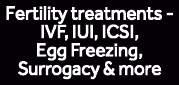
with W Health loan
The W Health Loan provides women with access to financing for eligible healthcare services







*Terms and conditions apply
Group News Editor: Goddy Egene
Email: Goddy.egene@thisdaylive.com, 0803 350 6821, 0807 401 0580
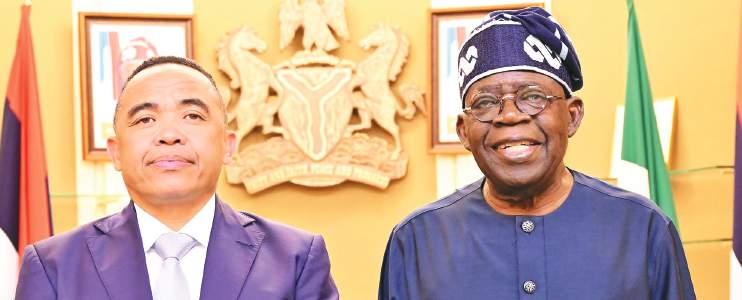
After a protracted impasse with local contractors over unpaid contractual fees reported to be in excess of N4.7 trillion, the federal government has finally announced the approval of payments to over 1,240 of them across the country.
The Minister of Finance and Coordinating Minister of the Economy, Mr. Taiwo Oyedele, gave the approval after a diligent verification and reconciliation undertaken by the ministry to ensure that only duly validated obligations qualify for payment, a statement issued by the ministry’s spokesperson, Efe Ovuakporie disclosed.
The contractors under the aegis of All Indigenous Contractors Association of Nigeria (AICAN), had repeatedly staged protests at the Federal Ministry of Finance headquarters and the FCT Secretariat to demand the payment of outstanding debts for executed and commissioned projects.
The most daring took place last December when they barricaded the main gate of the ministry for days with a mock coffin of the former Minister, Mr. Wale Edun, preventing any form of entry or exit.
The protesting contractors claimed that the government had been is-
suing payment warrants without cash backing, comparing them to “dud checks.”
They had also criticised the central payment system implemented by the Office of the Accountant General of the Federation (OAGF) and the Ministry of Finance, advocating for a return to older payment methods.
The back and forth between the federal government and the contractors continued until Edun was recently removed in a minor cabinet exercise, which brought in Oyedele as his replacement.
However, the statement by the ministry added: “The Federal Ministry of Finance has approved payments to more than 1,240 contractors, providing immediate liquidity support to businesses across the country and reinforcing the federal government’s commitment to meeting its financial obligations.
“The approval, granted by the Minister of Finance and Coordinating Minister of the Economy, Mr. Taiwo Oyedele, follows a diligent verification and reconciliation undertaken by the Ministry to ensure that only duly validated obligations qualify for payment.
“The payments cover contractors across various Ministries, Departments and Agencies (MDAs) and represent a significant step in addressing
long-standing payment obligations, particularly those affecting indigenous businesses and small and mediumsized enterprises (SMEs).”
The statement further stated that contractors prioritised for payment in the most recent batch were those with verified claims in the region of N100 million or less.
The release of funds was expected to provide immediate relief to hundreds of businesses, enabling them to return to project sites, pay workers, settle suppliers, meet financial commitments, and support economic activity across the country, the statement added.
“This development reflects the Ministry’s commitment to translating policy objectives into tangible outcomes by resolving inherited obligations in a transparent and fiscally responsible manner.
“Over the past few months, the federal government has processed payments exceeding N700 billion across various categories of verified obligations owed to local contractors.
“Within the month of May alone, approximately N436.6 billion in transactions were processed, demonstrating a significant acceleration in payment activity aimed at unlocking liquidity and supporting economic growth,”
it further explained. By prioritising a large number of smaller contractors rather than concentrating payments among a few large beneficiaries, the government said it was broadening the economic impact of these disbursements, supporting businesses across different sectors and regions of the country.
It noted that the latest payments were expected to strengthen confidence among contractors, suppliers, and service providers doing business with the government by demonstrating the government’s commitment to honouring duly verified obligations.
“For many beneficiaries, the release
of funds represents more than a financial transaction. It provides the certainty needed to sustain operations, preserve jobs, complete ongoing projects, and contribute to economic recovery and growth.
“The Ministry remains committed to maintaining fiscal discipline while ensuring that legitimate obligations are settled in a timely manner going forward to substantially reduce outstanding liabilities over time, strengthen confidence in public financial management, and support the effective delivery of public services and infrastructure,” the statement concluded.
Following the passage of the SugarSweetened Beverage (SSB) Tax Bill by the Senate, the Lagos Chamber of Commerce and Industry (LCCI) has expressed concern “about the potential economic consequences of imposing additional taxes on an already challenged manufacturing sector.”
The chamber stated that, “public health interventions must be carefully designed to achieve health outcomes without imposing disproportionate costs on businesses, consumers, and the broader economy.”
The Director General of LCCI, Dr. Chinyere Almona, expressed these views yesterday in a statement on
Onuminya Innocent in Sokoto
A university don, Professor Lehbuma Langmia, of Howard University, Washington DC, has challenged African scholars to embrace and actively participate in the development of Artificial Intelligence (AI), warning that the continent cannot afford to be left behind again.
Langmia made the call on Monday at an international conference organised by Department of Mass Communication, Usmanu Danfodiyo
University, Sokoto (UDUS).
The conference had the theme, “Media and National Development in the Era of Artificial Intelligence.”
The Cameroon-born professor drew parallels between Africa’s experience during the industrial revolution and the current digital age, saying the continent lost economic and technological ground in the 18th and 19th centuries due to limited participation.
Langmia told participants, “If Africans are to develop, they must participate fully and take ownership
of artificial intelligence.
“We lost our position during the industrial revolution. We cannot afford to miss this digital revolution.”
He urged scholars across all disciplines to collaborate with departments of Computer Science and Engineering to build homegrown AI applications.
“We are Africans. We can only tell our stories in our own ways and culture through technology we help to create,” he said.
Former Nigeria’s Permanent Representative to the United Na-
tions, Professor Tijjani Bande, also addressed the conference. Bande, who had served as President of the United Nations General Assembly (UNGA), called for urgent regulation of AI, often described as robotics.
He said, “The whole notion of how you see the world is shaped by technology. Technology is key to national development.”
He stated that regulation was needed both nationally and internationally to prevent the misuse of AI, while maximising its benefits.
the passage of the bill.
Almona stated: “At a time when manufacturers are grappling with high energy costs, exchange rate volatility, elevated interest rates, logistics challenges, multiple taxation, and weak consumer purchasing power, the introduction of additional taxes on the beverage industry risks further increasing production costs.
“These higher costs are likely to be passed on to consumers through higher prices, worsening inflationary pressures, and reduced demand for locally manufactured products.”
She said the chamber was particularly concerned that the tax could have unintended consequences across the industrial value chain because the beverage industry supports a wide network of suppliers, distributors, transport operators, retailers, farmers, and service providers.
“Any decline in production volumes resulting from increased taxation may negatively affect these interconnected sectors, leading to reduced investments, lower capacity utilisation, and potential job losses,” she added.
The LCCI noted that Nigeria needs a more balanced approach that
combines public health education, voluntary industry reformulation initiatives, improved product labelling, consumer awareness campaigns, and broader stakeholder engagement.
It further stated that such measures could help achieve health objectives while minimising adverse effects on industrial growth and employment.
The LCCI stated that government should consider similar policies in more advanced economies that were designed to encourage manufacturers to reformulate products by reducing sugar content.
“We need to design SugarSweetened Beverage taxes that will be part of a broader public health strategy and carefully calibrated to avoid excessive disruption to industry and employment.
“We want to see manufacturers reformulate their products over a transition period rather than raise prices due to SSB taxes.
“A reformulation-focused tax may be more effective than a revenue-focused tax. Incentivising lower sugar content can achieve health objectives while preserving industrial activity.
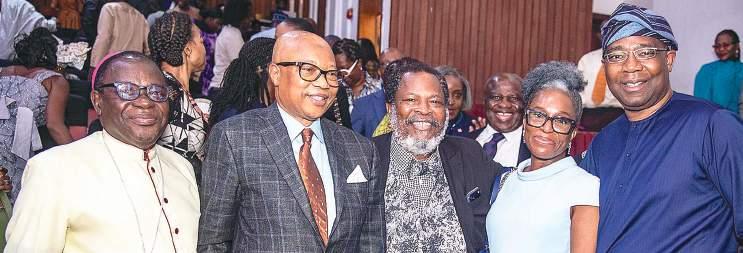
R-L: Chairman of Coronation Group, Mr. Aigboje Aig-Imoukhuede, and his wife, Mrs.
and the
Aig-Imoukhuede;
Deji Elumoye in Abuja
President Bola Tinubu yesterday projected Lagos as a leading destination for business, innovation and economic growth on the African continent.
The President described Lagos as the gateway to Africa’s economic future and a strategic hub for global investments and trade opportunities.
Declaring open the Invest Lagos 3.0 Summit in Lagos, the President who was represented by Vice President Kashim Shettima, declared that Nigeria’s ambition of building a $1 trillion economy is driven by enterprise, investment and coordinated reforms across all levels of government.
Also, Governor Babajide SanwoOlu, in his address, described Lagos
as the business gateway to Africa, just as he highlighted numerous investment opportunities in the State.
This was as Governors Hope Uzodimma of Imo State; Alex Otti of Abia, Caleb Mutfwang, and Engr. Abdullahi Sule of Nasarawa State, used the summit to showcase the investment potential in their respective states.
Speaking further, Tinubu singled
out Lagos State as the clearest demonstration of how subnational leadership could accelerate national economic transformation.
Addressing an audience of policymakers, global investors, entrepreneurs, development institutions and business leaders, the President said Lagos has continued to distinguish itself as Nigeria’s foremost economic gateway and
Telecoms operators (Telcos) under the aegis of Association of Licensed Telecoms Operators of Nigeria (ALTON), have rejected the Q1 2026 Capital Importation Report on telecoms sector released recently by National Bureau of Statistics (NBS).
While the NBS report showed a sharp decline in foreign capital importation into the telecommunications sector from $80.78 million in 2025 to $7.24 million in Q1 2026, the telecoms operators said the metrics used by NBS appeared to capture only a portion of the total capital actively deployed within the sector.
ALTON, in a statement signed by its Chairman, Gbenga Adebayo, and its Publicity Secretary, Damian Udeh,
rejected the report and called for a collaborative engagement among Nigerian Communications Commission (NCC), NBS, and Central Bank of Nigeria (CBN), to develop a more inclusive and comprehensive investment-tracking framework.
According to the statement, a transparent investment profile reflecting the sector’s substantial annual capital commitments will better position Nigeria as a credible and attractive destination for telecommunications investment, inform sound policy development, and sustain investor confidence.
The statement said disparity between reported foreign capital inflows and actual infrastructure investment highlighted a gap in how sectoral capital deployment
was currently measured and reported.
The statement read, in part, “Our industry’s substantial Capital Expenditure (CAPEX) figures suggest that current investment derives from domestic capital sources, reinvested operational earnings - financial mechanisms that may not be fully reflected in conventional foreign capital importation metrics.
“We commend the ongoing ef- forts to monitor investment flows across critical sectors of the Nigerian economy. We recognise the importance of accurate data in shaping investor perceptions and guiding policy decisions, and we believe that additional context regarding the telecommunications sector’s current investment landscape will provide stakeholders with a more
Kuni Tyessi in
Abuja
A coalition of women-led groups have declared that Nigeria could see its lowest female representation in the Senate since the return to democracy, with women projected to hold only 2.7% of seats after the 2027 general elections.
The warning came during a press conference in Abuja yesterday where civil society organizations presented findings from an audit of the 2026 party primaries across 22 political
parties. The coalition is calling for immediate policy and legislative action, while emphasizing that the Special Seats Bill is “the most practical pathway to close the gap with a progress that requires legal reform and not just training or advocacy. Invictus Africa Executive Director, Bukky Shonibare said the audit revealed persistent barriers including forced withdrawals, opaque consensus arrangements and last-minute candidate substitutions.
She revealed that female participation remained critically low with only three parties that recorded female aspirant rates above 20% namely “PDP with 28.2%, YPP 22.2% and YP 20%. The lowest rates were NRM at 11.8%, APC 10.4% and NNPP at 0.0%.
“Only three women won Senate primaries across all parties. “At this rate, women may occupy just 2.7% of Senate seats after the 2027 elections,” Shonibare said as against 3.6% of women in the 2023 of Senate seats.
comprehensive understanding of the industry’s health and trajectory.” Commending the federal government for the 50 per cent tariff increase it approved for the telecoms sector last year, the statement said, “ALTON wishes to express sincere appreciation to the federal government for the strategic 50 per cent tariff increase approved in 2025, which played a pivotal role in stabilising the telecommunications sector, addressing critical revenue sustainability gaps, and restoring operational viability during a particularly challenging period.
one of Africa’s most influential centres for commerce and investment.
He described the state as more than a commercial capital, noting that the city remains a testing ground for ideas, governance and economic execution.
“Lagos is the livewire of our continent. Lagos is the furnace in which our ideas are tested against the discipline of execution. Lagos is the great doorway through which Nigeria continues to greet the future,” Tinubu said.
According to him, Lagos has repeatedly shown that economic progress was achievable when vision was matched with competent leadership, institutional continuity, and private sector confidence.
He credited the former nation’s capital’s growth trajectory to leadership that has sustained long-term planning and governance reforms since Nigeria’s return to democratic rule.
Shettima praised Tinubu for laying the foundation of the Lagos development model, describing it as a governance tradition that has created continuity and positioned the state as a continental economic force.
“President Bola Tinubu planted the tree whose shade has sheltered
a succession of leaders committed to futurist ideas, institutional continuity and disciplined governance,” he stated.
Shettima also commended Governor Sanwo-Olu for sustaining Lagos’ growth momentum and strengthening its attractiveness as a destination for investment and business expansion.
Referring to the summit’s theme, “Lagos: The Business Gateway to Africa,” the Vice President said the gathering reflects an emerging global reality where cities increasingly shape production systems, supply chains, innovation networks, and investment flows.
He noted that Lagos has contin- ued to attract investors because of its access to markets, infrastructure, talent and financial opportunities. Shettima reaffirmed the Tinubu administration’s economic agenda, stating that recent macroeconomic reforms were deliberately designed to restore market confidence, improve fiscal sustainability and unlock large-scale private investment. He acknowledged that some of the decisions undertaken by the government have been difficult, maintaining, however, that sustainable prosperity
ultimately.
New Minister of Power, Mr Joseph Olasunkanmi Tegbe, has pledged gradual but steady supply of electricity across the country.
Speaking with newsmen on Monday after being sworn in by President Bola Tinubu at the State House, Abuja, Tegbe told Nigerians to expect gradual but steady improvement in electricity supply to consumers nationwide.
His words: “I said it during my Senate confirmation that I am not promising a magic wand I am not promising 24 hours seven days in a week power we will get there
“But what I promise Nigerians is that we will see visible improvements and infrastructure can tell you Nigerians have been giving me feedback in the last four weeks power supply has improved across Nigeria and this is due to the push by the President and the Power is put behind me and also the commitment of our people in the Ministry of Power and all the agencies.
“For the last four weeks after my confirmation I have engaged various key stakeholders in the sector. TCN, Ministry of Power, REA, NERC, everybody and they have given
commitments and that is what you are seeing today with the improvements and what we would do as much as possible is to ensure that consistency and improvement over the next couple of months.”
The Minister also outlined plans to tackle challenges in generation, transmission and distribution while urging Nigerians to be patient with ongoing reforms.
According to him: “Nigerians should please bear with us, the President understands the challenges we are addressing those challenges and we will make sure we fix it both in generation, transmission and distribution.
Says Christians, other religious minority communities targeted Calls for prosecution of perpetrators, remedies for victims and survivors
Emmanuel Addeh in Abuja
A group of United Nations (UN) human rights experts has expressed concern over what it described as credible reports of killings, abductions, sexual violence, forced conversions, forced marriages and acts amounting to enforced disappearances targeting Christian and other religious minority communities in Nigeria, particularly women and girls.
In a statement issued in Geneva, the experts said the reported violations were deeply troubling and reflected a deteriorating security situation in northern Nigeria and the Middle Belt, where armed extremist groups and other violent actors continue to operate with devastating consequences for civilians.
The UN experts are independent human rights specialists appointed by the United Nations Human Rights Council (UNHRC) to monitor, investigate and report on specific human rights issues around the world. They are not UN staff and serve in their personal capacities without receiving a salary from the UN.
According to the experts, groups such as Boko Haram, the Islamic
State West Africa Province (ISWAP), as well as radicalised individual herdsmen involved in the farmerherder conflict, have continued to exploit a climate marked by impunity, institutional failures and inadequate protection by authorities.
The UN officials said testimonies received from victims and survivors painted a disturbing picture of fear, trauma, coercion and abandonment, stressing that those affected should not be left without protection, justice, reparations, rehabilitation and meaningful support.
In a communication to the Nigerian Government, the experts said they highlighted multiple incidents, including the abduction and sexual assault of Christian women and the disappearance of girls abducted from a church in Borno State.
The statement was endorsed by Reem Alsalem, Special Rapporteur on violence against women and girls; Morris Tidball-Binz, Special Rapporteur on extrajudicial, summary or arbitrary executions and Nicolas Levrat, Special Rapporteur on minority issues.
Others were: Alice Jill Edwards, Special Rapporteur on torture and other cruel, inhuman or degrad-
ing treatment or punishment as well as members of the Working Group on Enforced or Involuntary Disappearances.
Besides, they listed the forced conversion and child marriage of a 13-year-old girl in Bauchi State; and a brutal attack against a 16-year-old Christian girl whose hand was reportedly cut off after her family rejected a forced marriage proposal by“Themilitants.testimonies we have received paint a horrifying picture of fear, trauma, coercion and abandonment,” the experts said. “Victims and survivors must not be left without protection, justice, reparations, including rehabilitation
and meaningful support,” they added.
The UN experts noted that violence targeting Christians and other religious minorities remained widespread, citing the application of local interpretations of Sharia law in the 12 states of northern Nigeria, enforcement of blasphemy codes and the longstanding absence of effective access to justice.
The group expressed particular alarm over the heightened vulnerability of Christian women and girls, whom it said face discrimination, violence and exploitation in several forms.
“We are particularly alarmed at the very specific and heightened
risks of discrimination, violence and exploitation that Christian women and girls are exposed to, as we continue to document grave cases of sexual violence, abductions, acts tantamount to enforced disappearances, forced conversion and child marriage amongst them,” they said.
According to the experts, these incidents form part of a pattern of violence and persecution disproportionately affecting Christian communities in some northern states.
They also pointed to killings, attacks on churches and villages, mass displacement, mob violence linked to allegations of blasphemy,
and severe insecurity affecting women and children living in internally displaced persons camps.
The statement further noted that displaced Christian and other minority women and girls remain especially vulnerable to sexual exploitation and abuse, including situations in which they are allegedly coerced into sexual acts in exchange for food or other basic necessities.
They also said some women and girls reportedly conceal their religious identity or wear hijabs as a survival strategy to avoid violence or gain acceptance in areas under the control of armed groups or religious actors.
The Tanzania High Commission in Abuja has announced plans to strengthen trade and investment relations with Nigeria through its participation in the forthcoming Food & Beverage West Africa (FAB)
2026 Exhibition in Lagos.
The exhibition scheduled to take place at the Landmark Event Centre, Victoria Island, from June 9 to 11, will provide a platform for Tanzania to showcase its premium agricultural and food products while exploring new business
The Peoples Democratic Party (PDP) candidate for Bayelsa Central Senatorial District, Richard Akinaka, at weekend embarked on strategic discussions with key stakeholders and elders in the district.
The visit to some of the elders and stakeholders was part of his efforts to seek their blessings and support to enhance his initiatives for the senatorial district. He expressed his commitment to introducing bills that would strengthen institutions in the Niger Delta and address critical issues affecting the people, including the establishment
of a trust fund in the form of a limited liability company to oversee constituency projects. Akinaka’s consultative visit took him to prominent elders in the district, such as the President of Pan Niger Delta Forum (PANDEF), Ambassador Godknows Igali, Chief Abel Ebifebowei, amongst others, where he emphasised the lack of effective representation and the urgent need for purposeful leadership.
He lamented the current situation where the voices of the people are not being heard, and the absence of tangible benefits from representation Having emerged from humble beginnings with the support of his
community, Akinaka said he has positioned himself as a reflection of the people’s aspirations. Akinaka underscored the importance of legislative duties, pledging to draw on his deep understanding of the challenges faced by his constituents, the Niger Delta region, and Nigeria as a whole.
He said: “My legislative contributions will stem from my knowledge of the needs of my constituency, the underserved people of the Niger Delta and Nigerians at large. I am conscious of introducing bills that will, among other things, strengthen institutions in the Niger Delta region and address the very troubling situations bedeviling our people.”
“The trust would be in the form of a limited liability company that will have elders like you sitting on the board. Richard Akinaka will not bring a company anywhere to do such jobs. That trust that we have our people representing us will do the jobs and will ensure that the jobs are done. Whatever profit that comes out of those things will form a common purse and will highlight areas of immediate need and concern, especially education.”
He equally outlined initiatives for economic empowerment, including supporting fishing communities, collaborating with federal agencies, and creating job opportunities to reduce youth restiveness.
opportunities with Nigerian and international stakeholders.
According to the High Commission, Tanzania’s participation is part of ongoing efforts to deepen economic diplomacy and expand commercial ties between both countries.
The East African nation will host a dedicated pavilion at Booth 3E06, Hall 3, where visitors will be introduced to a diverse range of Tanzanian products.
The exhibition will feature some of Tanzania’s most sought-after exports, including premium tea and coffee, fine wines, cashew nuts, spices, spreads and dips, alongside other value-added food and beverage products.
The High Commission in a statement said, the products highlight Tanzania’s growing reputation for quality, unique flavours and agricultural excellence.
“A delegation of Tanzanian private-sector companies and industry representatives is expected to attend the event to engage potential partners and investors.
“The delegation will facilitate business-to-business meetings aimed at connecting Tanzanian producers
with Nigerian and international buyers, importers, distributors, retailers and hospitality operators.”
The High Commission noted the exhibition offers a strategic opportunity to promote Tanzanian products in West Africa while creating new avenues for investment and commercial collaboration.
It added that the initiative aligns with the objectives of the African Continental Free Trade Area (AfCFTA), which seeks to boost intra-African trade and economic integration.
It further described FAB West Africa 2026 as an important gateway for businesses seeking reliable suppliers, high-quality products and investment opportunities within Tanzania’s expanding agribusiness and food-processing sectors.
“Visitors to the Tanzania Pavilion will also gain insight into opportunities in food manufacturing, processing, packaging and distribution.
“The High Commission has invited business leaders, investors, importers, distributors and members of the public to visit the pavilion and explore the country’s export potential and growing business opportunities.”
Aviation fuel prices expected to rise 70% across 2026
Emmanuel Addeh in Abuja and Chinedu Eze in Lagos
Airlines will have to spend an extra $100 billion on jet fuel this year, with fares ‘inevitably’ rising to cover the bill after the war with Iran choked off oil supplies, the International Air Transport Association (IATA) has stated.
With jet fuel prices expected to be 70 per cent higher across 2026, the airlines body said that collective industry profits worldwide would halve to $23 billion. Some carriers would struggle to survive the fuel price shock caused by the closure of the strait of Hormuz in March, it said.
“High oil prices will inevitably mean higher ticket prices. There’s just no way to avoid that,” he was quoted by The Guardian UK as saying.
Walsh said industry polling showed passengers were now braced for higher fares and prepared to spend more, but added: “The big unknown is how long travellers and shippers can tolerate the higher costs of connectivity.”
Stressing that it was a “challenging and unpredictable time”, with “wafer-thin margins,” Walsh said that concerns about possible fuel shortages were now over, despite the soaring
Speaking at IATA’s summit in Rio de Janeiro, its Director General, Willie Walsh, stated that as crude oil prices escalate, fares charged by the airlines will also have to increase.
costs, and compared with Covid, it was not a crisis.
“It’s going to be very challenging and for a lot of airlines the increase in the fuel bill is potentially existential,” he pointed out.
“You’re looking at an industry that is still profitable and still forecasting growth,” said Walsh. “Traffic is up 2 per cent. If you factor out the impact on the Middle East for the rest of the world it remains a pretty positive environment,” he explained.
For his part, Chief Executive of British Airways, Sean Doyle, argued that long-haul and business passengers may face the bulk of the fare increases. Speaking on the fringes of the conference, Doyle said there would be “no
getting away from it – if fuel goes up, fares have to go up”.
However, Doyle suggested that more price-sensitive short-haul holiday flights would be the last to increase: “A brand like BA, which has got a lot of long haul, a lot of corporate, a lot of premium; we’d expect maybe to have more pass-through of prices than maybe a carrier who’s solely competing for leisure short haul.”
According to research from IATA, around half of passengers were prepared to spend substantially more on fares should they track the price of oil, which Walsh said “bodes well” for a strong northern summer season for the industry.
Meanwhile, for the umpteenth time,
IATA has identified Nigeria as one of the most expensive countries in the world in which to operate an airline, citing high operational costs that continue to challenge the viability and growth of local carriers.
Speaking at the IATA Annual General Meeting (AGM) held in Brazil, the global body’s Regional Vice President for Africa and the Middle East, Kamil Al-Awadhi, said that despite ongoing efforts by Nigeria’s Minister of Aviation and Aerospace Development, Festus Keyamo, to reform and improve the aviation sector, airlines in the country still face significant cost pressures.
According to Al-Awadhi, the
reach its full potential.
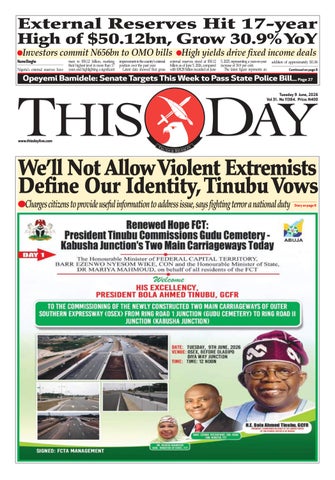
Charges citizens to provide useful information to address issue, says fighting terror a national duty Lauds patriotic efforts of front-line soldiers for vigilance, courage in war theatre Kukah decries insecurity, challenges leaders on nation-building Atiku excited about rescue of 360 abductees Zulum hails president for securing release of 434 Ngoshe captives Let’s stop stereotyping tribes, Obi pleads
Deji Elumoye, Chuks Okocha, Michael Olugbode in Abuja, Sunday Ehigiator in Lagos and Kemi Olaitan in Ibadan
President Bola Tinubu has again vowed that he will not let violent extremists define the identity of the
Nigerian people, stressing that his government would never succumb to fear from any quarter – be it terrorists, bandits, or kidnappers.
In a post yesterday on X, @ officialABAT, the president stated, “Nigeria will not surrender to fear. We will not allow terrorists, bandits,
kidnappers, or violent extremists to define who we are as a people.
“Their violence is not our identity. Their hatred does not represent Nigerians of any faith, creed, or community.”
Tinubu said the fight against terror of any kind was a national duty,
stating that the fight should not be left to the military alone. He said it was a national duty where the citizenry should be actively involved by providing useful information to the authorities.
According to him, “The fight against terror is not only a
Ojukwu assures govt still going ahead with repatriation of distressed citizens Says retaliatory measures not ruled out
The federal government on Monday registered its displeasure over the ill-treatment of Nigerians living in South Africa, insisting Nigerian citizens residing in that country have been unfairly targeted, harassed, and abused.
Answering questions from newsmen at State House, Abuja, Minister of Foreign Affairs, Ambassador Bianca Odumegwu-Ojukwu, said, “Nigeria is not happy because Nigeria has sacrificed much for the South African struggle for independence, Nigeria sacrificed quite a lot, committed funds, committed resources to aid South Africa.
“In schools, seats were reserved for South African students. My own generation, we carried placards, we demonstrated in front of South African assets. Sometimes, we even got arrested for doing this. And Nigeria is a serious frontline state, and Nigerians are not happy about how they have treated us.
“They are not asking other
migrants to leave, they’re only asking black migrants to leave.”
Odumegwu-Ojukwu added that the federal government was considering possible retaliatory measures over the xenophobic attacks against Nigerians in South Africa.
According to her, any final decision on the matter would require consideration at the highest levels of government, including the National Assembly.
“Well, that is a situation that we are considering,” she stated.
The minister added, “This is up to our legislature. This is up to the highest, this is a decision that has to be taken at the highest level of government, but it’s not off the table.”
Odumegwu-Ojukwu clarified that the repatriation process for distressed citizens had not been delayed. She explained that the authorities were expected to conclude the necessary formalities on June 8, assuring that plans to evacuate affected Nigerians from
military operation. It is a national duty. Citizens must support our security forces by providing timely, useful information. When you see something, say something. When you know something, report it.”
Tinubu lauded the efforts of all front-line soldiers for their vigilance and courage in the fight against terrorism.
He stated, “To our troops and all front-line patriots, thank you for your courage. Thank you for your vigilance. Thank you for your service.
“May the Almighty protect you as you protect our country.”
air, creeks, and across difficult terrains, you carry the burden of national protection so that millions of Nigerians can sleep, work, worship, farm, trade, and raise their children in hope.”
Tinubu added, “This fight has not been easy. It has come with pain, pressure, and sacrifice. But your courage has remained firm. Your service is acknowledged. Your sacrifice is honoured. Your country does not take you for granted.
“To every officer and soldier of our Armed Forces, to the Police, DSS, Civil Defence, intelligence services, local security formations, and all who work day and night to keep Nigeria safe, I say thank you.
The minister explained that efforts had intensified to reach affected Nigerians across various
South Africa remain on course. She also disclosed that President Bola Tinubu had directed the immediate establishment of a crisis response unit within the Nigerian Consulate in Johannesburg and the Nigerian Mission in Pretoria as reports of attacks and harassment escalated.
The president, in the 11-paragragh release, stated, “I commend all our patriotic front-line soldiers in the fight against terrorism in all forms.
“You stand as a shield between innocent citizens and those who seek to destroy the peace, safety, and dignity of our communities.
“In the forests, on the roads, at forward operating bases, in the
“I also acknowledge the families behind the uniform. Many of you have endured long absences, anxious nights, and the emotional cost of duty. Nigeria remembers that sacrifice, too.”
RESERVES HIT 17-YEAR HIGH OF $50.12BN, GROW 30.9% YOY
billion to the nation’s reserve stock within 12 months and marks the first time reserves have crossed the $50 billion threshold since January 26, 2009, when they stood at $50.58 billion.
The development places Nigeria’s reserves at their strongest level in over 17 years, reflecting a remarkable recovery from the levels recorded in recent years and strengthening the country’s foreign currency buffers.
Historical data show that although reserves remain below the all-time high of $64.85 billion recorded on August 8, 2008, the latest position is the strongest since the aftermath of the global financial crisis. At the current level, reserves are ap-
proximately $14.73 billion below that record peak but substantially higher than levels recorded over much of the past decade.
The reserve build-up has been particularly pronounced over the past year. From $38.28 billion on June 5, 2025, reserves climbed steadily to reach $50.12 billion by June 5, 2026, reflecting one of the strongest annual increases in recent years.
Over the past 12 months, Nigeria’s external reserves have followed a largely upward trajectory, rising from $37.21 billion on June 30, 2025 to $50.12 billion on June 5, 2026.
Reserves closed July 2025 at $39.36 billion, increased to $41.31 billion in August, and rose further to $42.35
billion by September. The upward trend continued through the final quarter of 2025, reaching $43.20 billion in October, $44.67 billion in November and $45.50 billion by December 31, 2025.
The build-up accelerated in 2026, with reserves climbing to $46.28 billion at the end of January and surging to $49.69 billion by February 27. Although reserves eased slightly to $49.24 billion at the end of March and $48.36 billion at the end of April, the decline proved temporary as holdings rebounded to $49.58 billion by May 29 before reaching a new multi-year high of $50.12 billion on June 5, 2026. Within the 12-month period under
review, the lowest reserves level was $37.18 billion on July 3, 2025, while the highest was the current $50.12 billion, representing an increase of about $12.94 billion between the low and high points. Meanwhile, Open Market Operation (OMO) bills dominated activity in Nigeria’s fixed income secondary market yesterday, attracting N655.88 billion in transactions as investors continued to favour short-term securities offering some of the highest yields in the market. Data from the Fixed Income Dashboard showed that total turnover across fixed income instruments
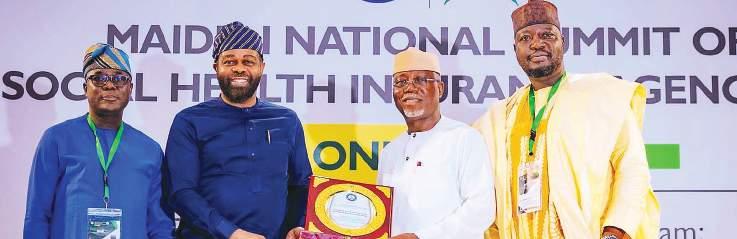
R-L: Chairman of the Forum of Chief Executive Officers of State Social Health Insurance Agencies and Director-General of the Katsina State Contributory Healthcare Management Agency, Dr. Kabir Mustapha; Governor Lucky Aiyedatiwa of Ondo State; Director-General of the National Health Insurance Authority, Dr. Kelechi Ohiri; and Ekiti State Commissioner for Health and Chairman of the Forum of Health Commissioners, Dr. Oyebanji Filani, at the Maiden National Summit of State Social Health Insurance Agencies (SSHIAs) held at the International Culture and Event Centre (The Dome), Akure, yesterday
Africa Centres for Disease Control and Prevention (Africa CDC) and World Health Organisation (WHO) yesterday launched a joint continental preparedness and six-month response plan. The scheme included raising $518 million to support African countries’ efforts to check the ongoing Ebola outbreak caused by the Bundibugyo virus. A press release issued yesterday in Addis Ababa, Ethiopia, by Africa CDC and WHO, said the six-month plan, covering June to November 2026, would bring together governments, partners, and communities
under a unified “One Response” approach to strengthen outbreak response measures, including emergency coordination, disease surveillance, laboratory testing, infection prevention and control, clinical care, community engagement, research, logistics and support for essential health services.
The release further said the plan would focus on protecting vulnerable populations, strengthening cross-border collaboration, and supporting countries to respond quickly to new cases.
In addition, it would provide a pathway to broadly strengthen Africa’s capacity to prevent, detect,
Crude oil remains country’s dominant export commodity with N11.20 trillion contribution, agricultural exports fall by 11.39% India emerges Nigeria’s major trade partner
Nigeria’s total external merchandise trade dropped to N34.79 trillion in the first half of the year (Q1 2026) compared to N36.21 trillion in the preceding quarter, National Bureau of Statistics (NBS) said yesterday.
The performance was driven by N21.17 trillion exports and imports amounting to N13.62 trillion, leading to a positive trade balance of N7.55 trillion, an increase of 340.88 per cent compared to N1.71 trillion in the preceding quarter.
According to the Foreign Trade in Goods Statistics (Q1 2026), released by NBS, that reflected the effect of rising export earnings and a substantial reduction in the country’s import bill.
Exports accounted for 60.85 per cent of total trade in the review
period, rising 11.63 per cent compared to N18.96 trillion in Q4 2025, and by 2.77 per cent compared to N20.60 trillion in the corresponding quarter of 2025.
Imports declined sharply to N13.62 trillion, from N17.25 trillion in the preceding quarter, and N16.64 trillion in Q1 2025.
According to NBS, the improved trade balance was largely attributable to a significant decline in petroleum product imports and increased crude oil exports during the quarter.
But crude oil remained the country’s dominant export commodity, contributing 52.92 per cent, amounting to N11.20 trillion in Q1.
Non-crude oil exports stood at N9.97 trillion, representing 47.08 per cent of total exports, while non-oil products contributed N3.19 trillion
or 15.05 per cent of export earnings.
Other oil product exports also strengthened considerably, rising to N6.78 trillion from N4.48 trillion in the corresponding period of 2025, representing a year-on-year increase of 51.49 per cent.
India emerged as Nigeria’s largest export market with goods valued at N2.77 trillion, accounting for 13.09 per cent of total exports. It was followed by France with N1.97 trillion or 9.29 per cent, the Netherlands N1.95 trillion or 9.22 per cent, Spain N1.63 trillion or 7.68 per cent, and the United States N1.18 trillion or 5.56 per cent.
Collectively, the five countries accounted for 44.84 per cent of Nigeria’s total exports during the quarter.
Exports by region showed that
EXTERNAL RESERVES HIT 17-YEAR HIGH OF $50.12BN, GROW 30.9% YOY
stood at N882.35 billion from 346 trades, with OMO bills accounting for nearly three-quarters of the value traded during the session.
The OMO segment not only emerged as the market’s biggest contributor by value, but also recorded 127 trades involving 15 participants, underscoring sustained demand for the short-dated instruments.
Treasury bills recorded turnover of N74.86 billion from 132 trades involving 23 participants, while Federal Government of Nigeria (FGN) bonds accounted for N121.61 billion across 81 transactions. Sukuk
instruments recorded N30 billion from six deals.
Investor interest in the OMO market was concentrated in a handful of maturities. The July 28, 2026, OMO bill was the most actively traded instrument, recording N202.25 billion in transactions across 25 deals. This was followed by the June 23, 2026, OMO bill, which attracted N100 billion from 10 trades.
Other actively traded OMO instruments included the October 13, 2026, bill, which recorded N88.14 billion, and the September 22, 2026, bill with N87 billion in turnover.
Yields in the segment remained
elevated. The June 23, 2026, and July 28, 2026 OMO bills closed at yields of 21.68 per cent and 21.63 per cent, respectively, while yields across the market ranged from 18.53 per cent to 21.68 per cent, depending on tenor.
In the Treasury bills market, activity was concentrated in mediumdated instruments. The September 24, 2026 bill led trading with N16 billion across 32 deals, while the June 3, 2027, instrument recorded N13.16 billion from 22 transactions. The December 10, 2026 bill also attracted significant interest with N13 billion traded across 15 deals.
Europe remained the largest destination for Nigerian goods, receiving exports worth N7.93 trillion or 37.44 per cent of total exports.
Asia followed with N6.42 trillion or 30.31 per cent, while exports to Africa stood at N4.06 trillion or 19.19 per cent of total exports.
Of the exports to Africa, shipments to ECOWAS countries were valued at N2.20 trillion, representing 54.21 per cent of the country’s exports to the continent.
Exports to Africa stood at N4.06 trillion compared to imports of N654.94 billion.
and respond to future health threats, while protecting lives and livelihoods.
Another objective of the plan, according to Africa CDC and WHO, is to strengthen health systems to ensure resilience even as countries respond to acute health emergencies at a time when there are no licensed vaccines or therapeutics specifically approved for the Bundibugyo species of Ebola.
Africa CDC and WHO also said the plan would complement national response plans launched by governments of the Democratic Republic of the Congo and Uganda.
Director-General of Africa CDC, Dr. Jean Kaseya, said, “Ebola moves fast. Africa must move faster. This joint plan gives the continent a clear path to act with speed and unity: to save lives, support the affected countries and protect neighbouring communities.
“With member states, WHO and partners, Africa CDC is turning commitment into action and resources into response for the communities at risk.”
Speaking in the same vein, WHO Director-General, Dr. Tedros Adhanom Ghebreyesus, said, “The only way to beat this outbreak is through close partnership, working together under the leadership of the affected countries in one coordinated effort, guided by a simple principle:
one plan, one budget, one team.” Ghebreyesus added, “Containing Ebola depends on political commitment, sustained financing, and the trust and engagement of communities.
“This plan places communities at the centre, because without their participation, contact tracing falters, safe care is delayed, and transmission continues.”
Africa CDC and WHO said the implementation of preparedness and response activities was already underway across affected and at-risk countries.
Furthermore, in 10 priority countries critical measures are being strengthened to enhance public health emergency preparedness and ensure early detection and swift response.
The plan emphasised the need to maintain support for other ongoing health emergencies, including mpox, cholera, and measles, to prevent disruptions to critical response efforts and safeguard progress towards stronger, more resilient health systems.
The coordinated effort comes as response operations accelerate in the Democratic Republic of the Congo, where authorities, with support from Africa CDC, WHO, and partners, are ramping up efforts to curb the spread of the virus and end the outbreak.
Dike Onwuamaeze
The Federal Competition and Consumer Protection Commission (FCCPC) yesterday sealed the operational premises of PWAN Max Property and Business Solution Limited in Sangotedo, along Lekki-Epe Expressway, over non-allocation of 20 plots of land that were fully paid by a subscriber.
The FCCPC said in press statement that the sealing of the PWAN premises followed a consumer’s complaint against the management of PWAN for non-allocation of 20 plots of land fully subscribed to and paid for
by a consumer.
Following the complaint, the commission initiated an investigation and subsequently, invited the respondent, PWAN.
The FCCPC said that PWAN, however, declined to honour two invitations sent to them, which necessitated the commission to issue a summons “at which PWAN entered into a witness statement and agreed to allocate the 20 plots of land and issue all necessary documents regarding the 20 plots of land on or before June 30, 2025.”
The commission, however, said that PWAN failed to honour the agreements, and the com-
mission issued a Compliance Notice to this undertaking, as permitted under Section 150(1) of the Federal Competition and Consumer Protection Act, 2018. It said: “That notice, as required by Section 150(2), clearly set out the nature of the non-compliance, the steps required to remedy it, the deadline for taking those steps, and the penalties for failure to comply.
“Despite being duly served with the compliance notice and given a reasonable period to take the required remedial steps, this undertaking has failed to comply with the notice.
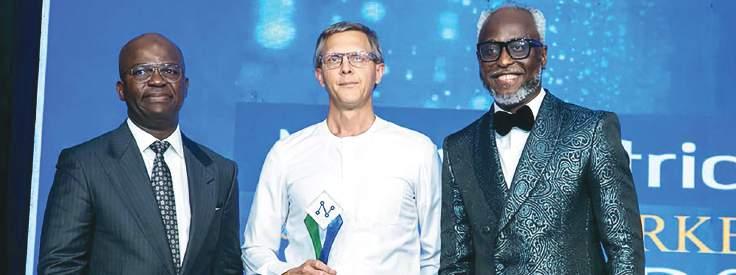
L-R: Chairman, Senate Committee on Banking, Insurance and Other Financial Institutions, Sen. Adetokunbo Mukhail Abiru; Executive Director/Chief Operating Officer, InfraCredit, Mr. Daniel Mueller; and Founder/CEO, Nairametrics, Mr. Ugochukwu “Ugodre” Obi-Chukwu, at the Nairametrics Capital Markets Choice Awards, where InfraCredit received the Best New Listing Award in Lagos ...recently
Contractors: De-escalate growing tension in Warri, environs 120,000bpd oil production threatened as Ijaws protest
Sylvester Idowu in Warri
Delta State Governor, Rt. Hon. Sheriff Oborevwori, yesterday convened a high-level peace meeting with leaders of the Ijaw, Itsekiri and Urhobo ethnic nationalities over the rising tensions resulting from the ward and unit delineation exercise in Warri Federal Constituency.
The meeting, which held at Government House, Asaba, brought together ethnic leaders, security chiefs and top government officials, focused on preserving peace and fostering dialogue among stakeholders amid growing concerns over the delineation process.
In a related development, the Delta State Oil Producing Areas Development Commission (DESOPADEC) Indigenous Contractors Forum has urged the state governor to urgently de-escalate the growing tension amongst the Ijaws, Urhobos and Itsekiris in Warri and environs.
The forum expressed fear that the growing tension amongst the various ethnic nationalities might result into a repeat of another Warri crisis which led to the relocation of the International Oil Companies (IOCs) resulting in the collapse of economic activities plaguing the area till today.
Meanwhile, in another dimension to the budding crisis, hundreds of women, youths and community leaders disrupted operations at
53,000
about nine flow Stations spread across Warri South West Local Government Area of Delta State yesterday protesting against nonimplementation of the recently released delineation exercise approved by the Independent National Electoral Commission (INEC) in Asaba.
The protesters, who said they would not vacate the flow stations until their grievances were addressed threatened to shut down all the stations that collectively produces about 120,000 barrels per day which is capable of negatively impacting the nation’s revenue.
The protesters, drawn from various communities within the kingdom, barricaded access to key oil facilities insisting that oil production activities would remain halted until the outcome of the ward delineation exercise is fully implemented.
At yesterday’s intervention parley, Governor Oborevwori stressed the need for unity and peaceful coexistence among the people of Warri noting that peace and security remained central pillars of his administration’s MORE Agenda.
“We want peace in Warri Federal Constituency. The stakeholders have assured me that they will keep to the peace accord. Under the MORE Agenda, we have promised Deltans enhanced peace and security, and we do not need any crisis in our
dear state.
“Warri is one family. There is nothing that we cannot resolve through dialogue. That is why I called this meeting, even at a short notice. We are ready to work together and sustain the peace we are enjoying. We will continue to work with security agencies and all ethnic nationalities to ensure lasting peace in the federal constituency and every part of the state”, he said.
Speaking on behalf of the Ijaw ethnic nationality, Chief Godspower Gbenekama commended the governor for his intervention and
assured Deltans that the Ijaw people remained committed to peace.
He said; “the governor has given us a marching order to ensure there is no crisis. I assure the people of Delta State that no Ijaw man will attack any Itsekiri man or village. It will not happen. By the grace of God, there will be continuous peace”.
Speaking on behalf of Urhobo ethnic nationality, Olorogun Victor Okumagba acknowledged that for some time now, issues surrounding the ward and unit delineation in Warri Federal Constituency have
been threatening the peace in Warri.
“Today, the governor brought together the three ethnic nationalities, and after extensive discussions, we agreed that all parties should sheath their swords. We have also agreed to maintain and sustain peace for the benefit of all residents of Warri Federal Constituency”.
On behalf of the Itsekiri ethnic nationality, Chief Ayirimi Emami said “we came with our position regarding the ward delineation issue, but the governor has spoken and directed that everyone should keep their swords.
“We have all agreed to maintain peace and will return home to relay the message to our people”, he assured.
The meeting ended with a collective commitment by leaders of the three ethnic nationalities to uphold peace, and dialogue.
Before yesterday’s meeting convened by the Delta State governor, the Ijaws, Urhobos and Itsekiris have been issuing threats of violence over the recently released Independent National Electoral Commission (INEC) proposal on Warri Federal Constituency delineation exercise.
As PCNGI moves to end acute gas scarcity affecting commercial transport operators
Senator Natasha Akpoti-Uduaghan has secured a commitment from the Presidential Compressed Natural Gas Initiative (PCNGI) to establish additional Compressed Natural Gas (CNG) filling stations across Kogi State, following growing complaints over acute gas shortages that have disrupted commercial transportation activities in the state.
The intervention came after commercial tricycle operators in Kogi
Central Senatorial District raised concerns over the worsening scarcity of CNG, blaming the situation on the inadequacy of the lone filling station currently serving the area despite increasing adoption of the federal government’s clean energy programme.
According to a statement issued by the senator’s media office on Monday, operators under the umbrella of the Kogi Central Tricycle Network lamented that the shortage had resulted in long queues, loss
of productive hours and mounting economic hardship for transporters and commuters alike.
The operators reportedly argued that the single existing CNG facility could no longer cope with the growing demand generated by commercial riders who had embraced the government’s transition to cleaner and cheaper energy sources.
A spokesperson for the group was quoted as saying that the scarcity had become a major challenge across the district, urging authorities and
Onyebuchi Ezigbo in Abuja
The federal government has said that Nigeria is recording over 53,000 deaths annually due to Foodborne diseases, with under five children accounting for over 80 per cent of cases. It warned that the country continues to bear a heavy burden of foodborne diseases, recording nearly 50 million illnesses. This was disclosed on Monday in Abuja by the Minister of State for Health and Social Welfare, Dr. Iziaq Adekunle Salako, during the
2026 World Food Safety Day held in Abuja.
Speaking on the theme, “From Burden to Solutions – Safe Food Everywhere,” Salako said the cost of unsafe food in Nigeria, “is not only measured in sickness and death, but also in the lost cognitive, physical, and developmental potential of our children”.
As Nigeria joined the global community in marking the day, the minister said that food safety has become a critical national development priority.
He said, “Today, Nigeria joins the
global community to commemorate the 2026 World Food Safety Day under the theme ‘From Burden to Solutions – Safe Food Everywhere.’
This theme is a powerful reminder that food safety is not merely a technical issue; it is a national development priority that affects the health, productivity, and wellbeing of every Nigerian.”
Citing new estimates from the World Health Organization, the Minister noted that unsafe food causes about 866 million illnesses and 1.5 million deaths globally each year, with Africa carrying the highest
per-capita burden.
The minister warned of the implications rising foodborne diseases, which could undermine child development and national productivity.
“In practical terms, this means the true cost of unsafe food in Nigeria is not only measured in sickness and death, but also in the lost cognitive, physical, and developmental potential of our children,” he said, adding that over 4.26 million healthy life years are lost annually.
He identified diarrhoeal diseases caused by pathogens such as Salmo-
nella, E. coli, Shigella, Campylobacter and rotavirus as major contributors, alongside growing concerns over chemical contamination such as lead exposure in food and water sources.
The minister however said Nigeria has recorded measurable progress in strengthening its food safety systems.
Highlighting improvements in national evaluation scores and surveillance frameworks, Salako said: “This means Nigeria is now one of the leading countries in the region in establishing functional systems for detecting, reporting, and responding to foodborne disease events”.
political leaders to intervene urgently. The public outcry drew the attention of Akpoti-Uduaghan, who immediately engaged the leadership of the PCNGI to seek a lasting solution to the problem. The senator disclosed that she had personally discussed the matter with the Chairman of the PCNGI, Mr. Ismaeel Ahmed, and obtained assurances that efforts were already underway to facilitate the establishment of additional CNG stations across Kogi State. She said the planned expansion would significantly improve access to CNG and help address the current supply gap confronting transport operators.
“My dear friend, Ismaeel Ahmed, who chairs the Presidential CNG Initiative, has assured me that his office is currently facilitating the establishment of a number of CNG stations across Kogi State. This will help bridge the supply gap and address the current scarcity,” she stated.
Confirming the development, the statement quoted Ahmed as saying that arrangements were being finalised to expand CNG infrastructure in the state through partnerships with private sector investors.
By Adebowale John
FORyears, Dr. Mohammed Ali Pate built a powerful reputation around one central claim — that his global connections, particularly with Gavi, the Vaccine Alliance, made him indispensable to Nigeria’s healthcare system and valuable to the Tinubu administration.
Today, that narrative is collapsing.
Across Nigeria’s health sector and political landscape, growing questions are emerging over two major issues surrounding the Minister of Health: the declining relevance of Gavi contributions to Nigeria under his watch and allegations of anti-democratic political interference in Bauchi State.
Combined, these developments are steadily eroding the very foundations upon which Ali Pate’s political and technocratic influence was built.
THE GAVI MYTH IS FADING
Ali Pate’s strongest selling point inside government circles has always been his international health connections, especially his long-standing relationship with Gavi, the Vaccine Alliance.
Nigeria remains one of Gavi’s largest historical beneficiaries, receiving billions of dollars in vaccine support, immunization financing, technical assistance, and health systems strengthening grants over the years.
But under Pate’s stewardship as Minister of Health since 2023, the reality is becoming difficult to ignore: Gavi’s direct contribution to Nigeria’s healthcare financing is declining.
Reports and analyses from organizations including Nigeria Health Watch, Campaigns Effectiveness, Pharos Global Health, DCVMN, and Gavi itself indicate that Nigeria is increasingly being forced to shoulder a larger share of vaccine financing while external support steadily tapers.
This trend has exposed what many now describe as the “Ali Pate illusion.”
Under Gavi’s transition framework, Nigeria has entered an accelerated transition phase expected to continue until around 2028. This means Nigeria must progressively finance its own vaccine programs while Gavi reduces its financial exposure.
The numbers tell the story.
Under current projections, the Nigeria-to-Gavi vaccine financing ratio is shifting dramatically toward heavier domestic funding. Older vaccines such as Pentavalent are expected to move almost entirely to Nigerian government financing by 2026, while newer vaccines like HPV, PCV, IPV, malaria, and rotavirus still retain temporary Gavi support.
Meanwhile, Nigeria’s domestic vaccine budget has surged from approximately 137 billion in 2024 to over 231 billion within a short period.
In simple terms, Nigeria is paying more while Gavi is paying less.
This completely undermines the long-held political perception that Ali Pate’s presence in government guarantees exceptional international healthcare financing leverage for Nigeria.
If anything, critics argue, Nigeria’s healthcare financing burden has increased significantly under his watch.
Even more troubling is that despite rising government spending, concerns remain over poor releases, implementation bottlenecks, weak absorption capacity, and persistent healthcare delivery failures across several states.
So the question many insiders are now asking is simple:
If Gavi support is declining anyway as part of a transition process, what exactly is the unique strategic value Ali Pate still brings to the Tinubu administration?
BAUCHI POLITICS AND ALLEGATIONS OF DEMOCRATIC UNDERMINING
Beyond the healthcare debate lies an even more politically sensitive issue — allegations that Ali Pate has become deeply involved in efforts to undermine democratic processes in his home state of Bauchi.
Observers and political stakeholders in Bauchi increasingly accuse the minister of using federal influence and elite networks to interfere in local political structures and weaken opposition voices.
These allegations come at a dangerous time for Nigeria’s Northeast — a region already fac-
ing severe security challenges from terrorism, banditry, and political instability.
The United States and Nigeria continue to invest enormous security resources into stabilizing the Northeast. In such a fragile environment, accusations of democratic manipulation by a serving federal minister create serious reputational risks for the Tinubu government internationally.
For many analysts, the issue is no longer just about healthcare performance; it is about whether a federal minister is becoming politically toxic both locally and globally.
TINUBU’S GOVERNMENT IS BECOMING MORE PERFORMANCE-DRIVEN
President Bola Ahmed Tinubu entered office promising reform, efficiency, and measurable outcomes.
Within that context, ministers are increasingly judged not by international résumés or elite networks but by tangible delivery.
And on that score, Ali Pate is facing growing scrutiny.
Nigeria’s hospitals remain overstretched.
Medical brain drain continues.
Primary healthcare infrastructure remains weak in many rural communities.
Drug inflation continues to hurt millions of Nigerians.
Immunization gaps remain significant.
And despite all the global branding around healthcare partnerships, ordinary Nigerians are seeing little transformational impact.
The political calculation inside Abuja may therefore be changing rapidly.
If Gavi’s declining contribution is part of a predetermined transition arrangement rather than a product of Pate’s influence, then his perceived international advantage becomes less politically valuable.
And if allegations of democratic interference in Bauchi continue to gain traction, he may increasingly become more of a liability than an asset.
THE BIGGER POLITICAL QUESTION
Ali Pate’s challenge today is not merely administrative.
It is existential.
The very factors that once elevated him — global health connections and elite political access — are now being re-examined under a harsher spotlight.
For critics, the narrative is straightforward:
Nigeria is contributing more money to healthcare while external support declines; healthcare outcomes remain underwhelming; and accusations of anti-democratic conduct are growing louder.
In politics, perception often becomes reality.
And increasingly, the perception within many political circles is that the Tinubu administration no longer needs Ali Pate the way it once thought it did.
Adebowale John writes from Festac, Lagos



TENDER OPPORTUNITY: PROVISION OF PROFESSIONAL SAFETY AND ENVIRONMENT SUPPORT SERVICES
TENDER REF: NIPEX/TENDER NUMBER: RAEC. SR3090984561/CW66404 AND RAEC. SR3112839437 /CW66404 NCDMB CERTIFICATION OF AUTHORIZATION NUMBER: ES/NCDMB/UPD/RAEC-DA-100797/240326/ PROVISION OF PROFESSIONAL SAFETY & ENVIRONMENT 1.0
for inclusion
will be responsible to ensure compliance with the requirements of the Renaissance HSSE & SP Control Framework on Waste as well as local & international regulations. The proposed contract will provisionally commence in Q3 2026 and remain active for 5-year duration, with a 2-year extension option.
2.0
The scope of the service is the Provision of Professional Safety and Environment Support Services. This includes but is not limited to:
• Provision of Safety and Environment (SE) Inspection services
• Provision of Safety and Environment (SE) Specialist services
• Provision of Safety and Environment (SE) Advisory services
• Provision of Safety and Environment (SE) Supervision services
GENERAL DESCRIPTION OF THE SCOPE OF WORK
1. Implementation of Field HSE Management System
• Support the implementation of Safe Systems of Work (HSE Risk Assessment /Job Hazard Analysis review, Permit to Work compliance) and worksite Hazard Management.
• Support controls of personal safety hazards and HSE risks relevant to the Asset or Functions. This includes enforcing the Life Saving Rules, involvement in work planning and HSE critical activities.
• Provide HSE support in shutdown preparations: adequate HSE controls in place for positive isolation of live sections of plant (spectacle blinds, blind flanges, closed valves); demarcation of live process lines; work permit control system in place.
• Ensure controls are in place for Manual of Permitted Operations (MOPO): to avoid activity clashes; minimize hazards and production deferment; meet contractual requirement for hydrocarbon delivery.
• Support the implementation of HSE Management System in the Assets /projects.
• Provide updates on HSE performance for Asset/Project including key information from trends and highlights for management attention.
• Support the development and implementation of the Asset/Project HSE Plan
• Schedule, prepare and provide material and input for the management HSSE & SP performance review meetings.
• Collate HSSE performance records for use in Management Review meetings. This might include collation of audit findings, self-assessments questionnaires, significant incident reviews, analysis and trending of HSE Statistics & data
• Establish an HSSE & SP governance structure for monitoring performance, leading continuous improvement plans, managing the skill pool and implementing the HSSE & SP Control Framework.
• Support the implementation of Permit to Work (PTW) and provide HSE input.
• Support compliance with the HSSE & SP Control Framework.
• Carry out LOD 1 HSE Audit and support Asset to ensure healthy implementation of HSE Processes/procedures.
2. Implementation of Incident Investigation and Analysis Management System
• Support incident investigation process to determine immediate and underlying causes using Group approved tools (TRIPOD Beta, Causal Learning).
• Analyse Business incident data and trends and translate these into meaningful learnings for the Business.
• Support roll out of HSE improvement programmes and initiatives
• Support initial incident reporting, including immediate actions and lessons learned. Carry out incident classification using the Incident Classification Rules and Group. Use the Risk Assessment Matrix (RAM) to determine the Risk Severity and Rating.
• Manage global Reflective Learning and/or Learning from Incident campaigns. Assess the impact of LFI or Reflective Learning campaigns, identify gaps and develop improvement plans.
• Identify Learnings from Incidents (LFIs) from previous incidents related to own operations. Determine vulnerabilities and support the effective implementation of LFI programmes in Shell Companies in Nigeria.
3. Implementation of Safety & Environment (SE) Blueprint and Competence Framework
• Manage an up-to-date database of SE professional’s competence gaps and close out plans.
• Support the implementation of the SE Blueprint Framework.
• Support delivery of HSE awareness sessions/ training
• Engage and support individuals working to achieve their “HSSE” competences as per competence framework.
• Run HSE intervention training for frontline leaders and supervisors.
4. Implementation of Process /Technical Safety Reviews and Studies
• Drive the delivery of HEMP studies/reviews (HAZID, Bow Tie Assessment, HAZOP, QRA) in line with Project HSE Discipline delivery plan.
• Provide Process Safety/Technical Safety Engineering review and input in Project design documents and reports.
• Support implementation of Asset Integrity Process Safety Review/Health Check
• Support the close out of HEMP Reviews/Studies Actions
• Facilitate the development and review of Hazards and Effects Register or Environmental Aspects Register.
• Provide HSE input and support in SIMOPS workshop and development of Manual of Permitted Operations (MOPO) document.
• Support the development and operationalization of HSE Cases.
5. Implementation of Renaissance Safety Leadership and Behavioural Safety (SLBS) Work Plan
• Support the implementation of the SCiN Safety Leadership and Behavioural Safety Work plan.
• Facilitate coaching sessions on Personal HSSE & SP Leadership Behaviours.
• Facilitate Safety Leadership Family Enrolment and Behavioural Safety Interventions Workshops
• Support the application of Hearts and Minds tools such as “Working Safely”, “Managing Rule Breaking” and “Achieving Situational Awareness”.
6. Implementation of Environmental Management Systems
• Support the management of environmental aspects and impacts relevant to the Asset or Function.
• Provide assurance for HSE Compliance, Permits, Environmental data and reports.
• Support regulatory compliance verification to ensure certificates, permits and licences are up to date and all conditions are met to maintain compliance and maintain appropriate records.
• Drive periodic reviews of environmental regulations. Identify changes to regulations or standards that may trigger the need for changes to new environmental controls. Support in the improvement of regulatory compliance projects
• Prepare applications for (or variations to) environmental certifications, permits or licences.
• Verify that all required HSSE & SP training and certification/licensing to meet legal requirements has been completed.
7. Implementation of Contractor HSE Management System
• Conduct HSE Capability Assessment and support the development of gap closure plan.
• Organise and participate in a pre-and post-contractor safety program evaluation including post mobilization HSE audit.
• Support Red Banded contractor in the development of HSE Capability gap closure plan and follow up improvement actions close out.
• Facilitate post mobilization contractor HSE audit.
• Provide HSE input /session in contract Business Performance Review with Contract Holders
• Support the Asset/Line of Business Contractors CEO HSE Forum
• Support the Contractor Safety Leadership program.
1. To be eligible for this tender exercise, interested contractors are required to be pre-qualified in the Product Group: 3.02.02 (Safety, Health and Environmental Consultancy) category in the NipeX Joint Qualification System (NJQS) database and classified within all Supplier Categories (A, B, C and D). Only successfully prequalified suppliers with a ‘live’ status in this category will receive combined Technical & Commercial Invitation to Tender (ITT).
2. To determine if you are pre-qualified and view the product/service category you are listed for: visit https:// vms.nipex.org/login and access NJQS with your log in details. Click on ‘Subscription’ tab on the left-hand side of the dashboard to view your status and, click “Product Code” tab to view registered product codes.
3. If you are not listed in a product/service category and you are registered with NUPRC to do business, contact NipeX office at Post Square Towers (Building B), 1, 3 Ologun Agbaje Street Off Adeola Odeku Street, Victoria Island, Lagos, Nigeria with your NUPRC certificate as evidence for necessary update.
4. To initiate the NJQS pre-qualification process, access www.nipex-ng.com, click on the Registration tab, and select “Start NipeX new vendor registration here”.
5. To be eligible, all tenders must comply with the Nigerian Content Requirements in the NipeX system.
Tenderers are to note that they will be requested during the technical tender to give full details of their relevant strategy to ensure that they fully comply with the Nigerian Oil & Gas Industry Content Development (NOGICD) Act, 2010 as non- compliance will constitute a FATAL FLAW in all tender evaluations. In line with the above, Tenderers will be required to ensure that information on the following, among others, is included in their technical submission
1. Tenderer shall demonstrate that entity is a Nigerian registered company with greater than 51% Nigerian shareholding. Submit certified true copies of CAC forms 10, 02 & 07 (or its equivalent; CAC 2.3, 2.4, 2.5, etc.) including company memorandum & article of association and/or evidence of entity’s incorporation, shareholding & ownership structure in Nigeria. Tenderer shall provide evidence of registration with the NCDMB NOGIC JQS and NUPRC.
2. Provide evidence of what percentage of your key management positions is held by Nigerians and what percentage of the total work force are Nigerians. Also, show overall percentage of work to be performed in Nigeria and those by Nigerian resources relative to total work volume.
3. Provide a Nigerian Content Execution Plan providing a detailed description of the role, work scope, man-hours and responsibilities of all Nigerian companies and personnel that will be involved in executing the work. Also provide details of Nigerian content focal point or manager.
4. Provide a current Nigerian Upstream Petroleum Regulatory Commission (NUPRC) formerly DPR Permit, all NUPRC permits relevant to Technical Consultancy Services (Environmental Consultancy and/or Safety Consultancy) in the Nigeria Oil & Gas Industry
5. Submit corporate or project/contract-specific organograms.
6. Tenderer shall provide evidence of Category 1 and 8 (Consultancy Services and non-moveable assets) demonstrating capacity and capability to carry out logistics services in the Nigerian oil and Gas industry.
7. Tenderer shall comply with the latest approved version of NCDMB HCD guideline by committing (via a letter of undertaking) to providing Project Specific training, man-hour, budget, skill development and understudy plan for Nigerian personnel utilizing OGTAN registered trainer(s) or other approved NCDMB training institution(s) at tenderer’s cost demonstrating presence in Nigeria for the execution of the work scope.
8. The bidders shall comply and execute the contracts in compliance with the Nigerian Oil and Gas Industry Content Development Act 2010 (NOGICD Act) and all applicable laws and regulations especially HCD implementation at bidder’s cost.
Only Tenderers who are registered in the NJQS Product Code - 3.02.02 (Safety, Health and Environmental Consultancy) services and classified within all Supplier Categories (A, B, C and D) as at 16:00 hrs on the 29th of June 2026 being the advert close date, shall be invited to submit technical bids and commercial bids.
• Expected Contract Award Date: Q4 2026
• Contract duration: 5 years firm with extension option of 2 years.
• All costs incurred in registering and prequalifying for this and other product/service categories shall be borne solely by suppliers.
• Suppliers that are prequalified for this product/service category in NJQS must ensure that the name and contact details (physical address, email address and telephone number) of their company and authorized/responsible personnel are up to date in their company profile in the NJQS database.
• RENAISSANCE shall communicate only with authorized/responsible personnel of pre-qualified companies and not through unauthorized individuals or agents.
• All respondents to RENAISSANCE must ensure full compliance with the Nigerian Oil and Gas Industry Content Development Act, 2010. (NOGICD) All respondents should educate themselves on the requirements of the NOGICD and ensure full compliance. Non-Compliance is a FATAL FLAW.
• This advertisement of “Invitation to Tender” shall not be construed to be a commitment on the part of NNPC/ RENAISSANCE to award any form of contract to any company and/or associated companies, sub-contractors, or agents; nor shall it entitle any company submitting documents to claim any indemnity from NNPC/ RENAISSANCE and/or any of its partners. NNPC/RENAISSANCE reserves the right to take final decisions on any of the documents received in the pre-qualification/ Technical package.
• Bidders shall receive and submit both Technical and Commercial ITT together.
• Only Bidders successful at the technical evaluation stage will have their commercial bids opened.

Renaissance Africa Energy Company Limited (Renaissance), operator of the Nigerian National Petroleum Company Limited (NNPC), Renaissance, TotalEnergies and Agip Energy and Natural Resources Joint Venture (Renaissance JV), is now receiving applications for its 2026 Regional Enterprise Development Programme (formerly NNPC-SPDC JV LiveWIRE).
The programme is designed to empower young individuals aged 18-35 by providing structured entrepreneurship training and access to start-up financing, with the objective of enabling them to establish and sustainably grow their own businesses.
BUSINESS SKILLS DEVELOPMENT – Equip young entrepreneurs with essential business planning and management capabilities through the Successful Business Owner Course.
START-UP GRANT SUPPORT – Provide business start-up funding to participants who present the most outstanding and viable business plans.
ACCESS TO THIRD-PARTY FUNDING – Enable successful candidates to pitch their business plans to external stakeholders including financial institutions and Non-Governmental Organisations (NGOs).
VOLUNTEER MENTORSHIP – Offer a structured volunteer mentoring programme to guide and support participants as they establish and grow their enterprises.
Only online applications will be accepted. Please, use the application link or scan the QR code below to apply: https://forms.office.com/r/yyhy1bA6Pe
Only shortlisted candidates will be contacted via email or SMS.
APPLICATION PERIOD:
Opens: Tuesday, June 9th, 2026
Closes: Tuesday, June 16th, 2026
Applicants must meet the following requirements: STATE OF ORIGIN – Must be indigenes of Rivers, Bayelsa, Delta, Imo, Abia, Akwa Ibom, Cross River, or Edo State.
AGE - Must be between18 and 35 years old.
EDUCATIONAL QUALIFICATION – Must hold an HND or a University Degree.
NYSC STATUS – Must have completed the NYSC programme, where applicable.
EMPLOYMENT STATUS – Must not be engaged in paid employment.
BUSINESS IDEA - Must possess an innovative and viable business idea.
ENTREPRENEURIAL INTEREST – Must demonstrate a genuine desire to own and manage a business.
BUSINESS EXPERIENCE – Must not have operated a business for more than three (3) years.
PREVIOUS PARTICIPATION – Must not have previously benefited from the Renaissance Enterprise Development Programme (formerly NNPC-SPDC JV LiveWIRE), community skills training, agricultural programme, or similar community skills & enterprise development social investment programmes.
• Agriculture
• Clean Energy Solutions / Oil and Gas
• Social Enterprise
• Manufacturing
• Retail and Wholesale
• ICT and Telecommunications


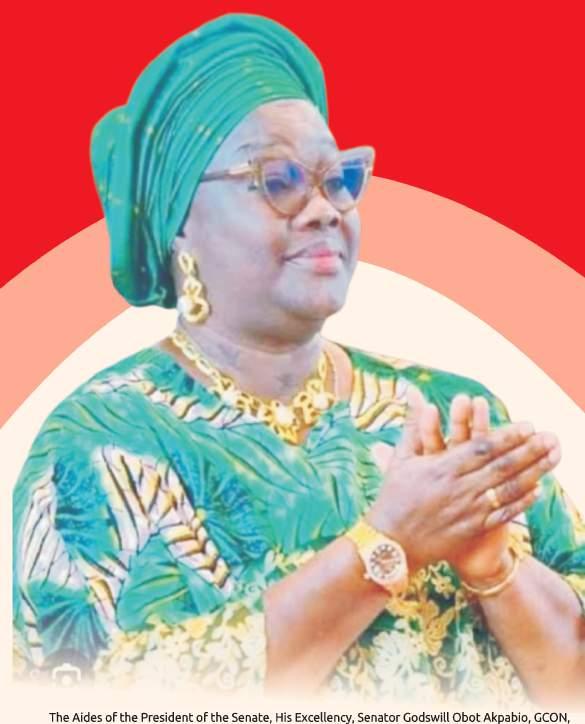
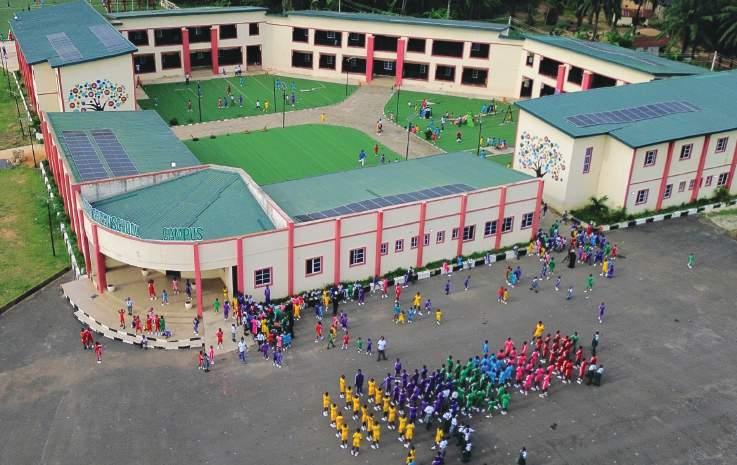
HIS EXCELLENCY
PETER NDUBUISI MBAH GOVERNOR, ENUGU STATE
We aren’t just building classrooms; we are building global competitors. With digital whiteboards and internet access in ever y ward, our children are learning at the speed of the future.

When gunmen stormed a school in Oyo State last month, they did not just abduct children. They silenced a classroom forever. Mathematics teacher Michael Oyedokun was killed in the attack, his lesson plan left unfinished on his desk and his students plunged into a nightmare Nigeria has come to know too well. Recently, Bishop Stephen Adegbite, Executive Secretary of the Nigeria Christian Pilgrims Commission and Chaplain of Aso Rock Villa Chapel, who condemned Oyedokun’s killing while insisting that no genuine religion supports the shedding of innocent blood or the torment of helpless people, noted that his death must not be a statistic. This was just as he called for support for the efforts of government and security agencies through prayers, cooperation, and the provision of credible information. Writes Mary Nnah
In Oyo State, a secondary school Mathematics class now sits in silence. The man who taught students to love numbers, Mr. Michael Oyedokun, did not return home after gunmen struck. The chalk still sits in the tray. On the blackboard, half of a quadratic equation waits for a hand that will never return to finish it.
He was killed during the abduction of schoolchildren last month and, in one violent morning, a classroom lost its teacher while the nation was once again confronted with the human cost of insecurity.
But on May 28, his name hung heavily over a press briefing in Lagos as Bishop Stephen Adegbite, Executive Secretary of the Nigeria Christian Pilgrims Commission and Chairman of the Christian Association of Nigeria (CAN), Lagos State Chapter, paused to mourn a man most Nigerians never met, but whose death has come to symbolise a much larger tragedy.
“Such an inhuman act further confirms that the perpetrators are agents of evil and enemies of humanity,” Adegbite said, his voice measured but heavy with concern, adding that "No genuine religion promotes the shedding of innocent blood or the torment of helpless citizens".
For Oyedokun’s family, colleagues and the pupils who called him “Uncle Maths”, the Bishop’s words were more than condolences. They were a public assurance that his death would not be forgotten.
“We strongly believe that the government will not allow his death, and the deaths of other innocent Nigerians lost to insecurity, to be in vain,” Adegbite told reporters, while urging the nation to hold on to hope.
A Nation Wrestling With Grief
Nigeria is weary, and Bishop Adegbite acknowledged it. Speaking to journalists, he pointed directly to the fears that have become part of daily life: kidnappings, attacks and children taken from classrooms. Yet he also pointed to what continues to sustain many Nigerians — faith.
“As a nation of faith and resilience, we must continue to support the efforts of government and security agencies through prayers, cooperation, and the provision of credible information,” he said. Across the country, congregations have offered prayers for kidnapped children.
In Oyo State, teachers are helping traumatised students rebuild a sense of normalcy. In a modest Ibadan neighbourhood, Oyedokun’s widow continues to receive visits from neighbours
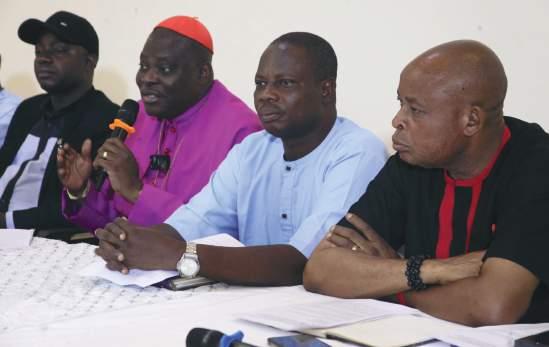
bringing food, comfort and quiet companionship.
Adegbite’s remarks moved between grief and governance.
He acknowledged the Federal Government’s efforts to strengthen security under President Bola Tinubu, including the appointment of a Special Adviser on Homeland Security to improve intelligence gathering and response mechanisms.
He also reminded Nigerians that security operations often require discretion.
“Not every security operation can or should be made public for obvious tactical reasons,” he said.
At the same time, he stressed that citizens have a right to make their concerns known.
“Citizens have constitutional rights to peaceful protest and freedom of expression,” he noted. “Democracy thrives when citizens can freely express themselves within the law.” His appeal, however, was for responsible engagement.
“Protests should not become instruments of political destabilisation,” he cautioned.
“This is the time to build the nation
together and not pull it apart.”
The Bishop did not avoid political issues. He commended the All Progressives Congress (APC) for endorsing President Tinubu for a second term, describing the move as “a step in the right direction for continuity, stability, and the consolidation of ongoing reforms”.
He also congratulated Lagos State Deputy Governor, Dr. Kadri Obafemi Hamzat, on emerging as the party’s consensus governorship candidate, describing him as a committed public servant capable of sustaining the state’s development trajectory.
Yet throughout the briefing, his focus repeatedly returned to ordinary Nigerians — the parent waiting anxiously for a kidnapped child, the teacher carrying an extra workload because a colleague has been lost, and the citizen caught between frustration and hope.
“We call for restraint, dialogue and patriotism from all stakeholders,” Adegbite said.
“Leadership continuity, when properly managed, provides the government the opportunity to deepen reforms and complete strategic programmes already underway.”
As the briefing drew to a close, Adegbite returned to the theme that had framed his message from the beginning: prayer.
“We shall continue to pray for peace, unity, progress, and good governance,” he said.
“Nigeria shall overcome its present challenges and emerge stronger by the grace of God."
For the students who lost Mr. Oyedokun, overcoming may mean returning to a classroom without fear. For his family, it may mean finding justice and preserving his memory. For the nation, it means refusing to accept the loss of innocent lives as normal.
So on that fateful Thursday morning, in a room filled with microphones and notebooks, a bishop spoke not merely as a public official or church leader, but as a pastor addressing a wounded nation.
The subject was security, but at its heart, the story was about people — a teacher, his students and a country still searching for answers while holding on to hope.

Despite Kaduna’s lean finances, the state is making progress,remarkable reckonsZUBAIR ABDURRA'UF IDRIS
WALE OGUNBANJO argues the need for government to adequately educate the public on major policy changes

The World Cup will be an interplay of history, memory, identity, athletic ability, and entertainment, writes CHIDI ANSELM ODINKALU

When the FIFA World Cup kicks off on June 11, Nigeria will be on the menu but not as a competitor. Nigerian musician, Burna Boy, will headline the opening ceremony in a duet with Colombian superstar, Shakira, who will be performing for whom this will be a second appearance at the opening of the World Cup. Her first was at the 2010 edition in South Africa.
Despite challenging trade and diplomatic relations between them, Canada, Mexico, and the United States will jointly host the tournament. This will be only the second time in its history that the World Cup will be shared among joint hosts. South Korea and Japan did so in 2002.
This year’s tournament occurs in a time of profound uncertainty and serious questions as to the future of international peace and security. It could also be a showcase for coexistence in a time of global fragility.
To be sure, awkward political and diplomatic subtext have never been far from the World Cup. Uruguay hosted the first edition in 1930 at the onset of the Great Depression. Underscoring an anticolonial subtext, Montevideo’s Estadio Centenario, venue of the final match, was built to commemorate 100 years of Uruguay’s independence from Spain in 1830. Spain kept away.
Thirteen countries participated in that inaugural edition. The hosts subsidized the costs of travel and accommodation, which ultimately enabled four European countries to participate: Belgium, France, Romania, and Yugoslavia.
Italy’s ruler, Benito Mussolini, hosted the tournament in 1934 and turned it into a prop for fascist iconography. Political machinations on and off field enabled Italy’s emergence as eventual winners. It was the beginning of an Italian spring in world football.
Two years later, Italy were again ascendant, beating Austria to the gold medal at Adolph Hitler’s Olympics in Berlin in 1936.
By the time the third edition of the World Cup turned up in France on June 4 1938, Austria, one of the favorites for the title, was no longer in existence. Three months earlier, on March 12 – one day after the abdication of Kurt von Schuschnigg as Austria’s Chancellor - Hitler’s troops crossed the border from Germany and the Anschluss was underway.
Austria’s annexation was formally pronounced the next day and Hitler turned up in Vienna, capital of Austria, to celebrate it two days later on March 15.
Italy’s triumph at the final game on June

19 1938 was the first time a defending champion would retain the World Cup. It was also approaching a highpoint of Hitler’s Nationalsozialismus - National Socialism – and Mussolini’s fascism. Fourteen and a half months later, Germany invaded Poland to mark the beginning of World War II.
Racism was an early theme in the World Cup. Brazil’s Leônidas da Silva, the highest scorer in the 1938 World Cup, was a black whose skill and talent upset then prevalent notions of white supremacy. In his absence, Italy prevailed over Brazil in the semi-final amidst suspicions that his exclusion from the match had been procured under pressure from the tournament administration.
The competition was to suffer an abeyance for the following 12 years. By the time it returned in 1950 in Brazil, Hitler and Mussolini were defeated and decolonization had begun. India, less than three years as an independent country, was one of the qualifiers but withdrew shortly before the tournament began.
The 1978 World Cup in Argentina was a propaganda victory for the host country’s military dictatorship. Located at the Navy Mechanical School in capital city, Buenos Aires, the regime’s largest torture center was within earshot of Estadio Monumental, venue of the final match, which Argentina won for the first time.
This year, despite ongoing conflict and an uncertain ceasefire between Iran and the U.S., FIFA has confirmed that Iran will compete in the tournament and will play all of its three group stage matches inside the U.S.
Iran is one of 48 countries that will compete in the tournament over 104 matches scheduled across 16 venues in the three host countries.
The opening match between Mexico and South Africa on June 11 will be one of five matches to be played at the Azteca Stadium, the venue that hosted
the coronation of Argentina’s Diego Maradona as the king of world football at the final match in 1986. Guadalajara and Monterrey, also in Mexico, will respectively host four matches each.
Thirteen matches will be played in Canada, seven in Vancouver and six in Toronto.
The MetLife Stadium in East Rutherford, New Jersey, will host the final game. It is one of 11 venues for the 78 games to be played in the U.S. Other U.S. venues include Atlanta, Boston, Dallas, Houston, Kansas City, Los Angeles, Miami, Philadelphia, San Francisco Bay Area, and Seattle.
The Gillette Stadium in Foxborough, Massachusetts, will host seven matches, including a quarter-final on July 9. The countries scheduled to compete in the group matches at Gillette Stadium—or Boston Stadium, as it will be known during the tournament—include England, France, Ghana, Haiti, Iraq, Morocco, Norway, and Scotland.
Despite widespread concerns about the effects of current U.S. immigration policies, many of these countries share rich histories with the New England area which could make for intriguing contests and guarantee enthusiastic fan interest.
For much of its history, the World Cup was in fact a contest between European and Latin American countries. Decolonization changed this. The result is expansion from 13 countries at the inception to the 48 who will compete this summer. Over the years, decolonization has remained a durable sub-text of the World Cup. That is likely to be true of the 2026 World Cup.
The first match at Boston Stadium will be on June 13 between Haiti and Scotland. For Haiti, the site of the first successful slave revolt in the world and a country affected by current U.S. immigration restrictions, there is evocative irony to the fact that it will play its first-ever World Cup match in the Boston area, once a hub in the transatlantic slave trade.
Similarly, Scotland and Boston share a storied history dating back to the earliest Scottish prisoners of war who were banished to the Boston Bay colony during the rule of Oliver Cromwell and Charles II in the mid-17th century. The Scots Charitable Society founded in 1657 in Massachusetts to help those in need after they completed their forced indentured servitude is reputed to be the oldest charitable organization in the western hemisphere.
A lawyer and a teacher, Odinkalu can be reached at chidi.odinkalu@tufts.edu
Despite Kaduna’s lean finances, the state is making remarkable progress, reckons ZUBAIR ABDURRA'UF IDRIS
Kaduna State stands at a defining moment in its political and economic history. For eight years under the immediate past administration, the state accumulating debts that now consume the lifeblood of the state’s monthly allocation. Today, those who cheered that borrowing spree have found their voice again. But instead of acknowledging the damage done, they accuse the current administration of Governor Uba Sani of making “excuses” about the state’s financial status.
The facts tell a different story. The figures are public, the projects are visible, and the contrast between rhetoric and reality has never been starker. This piece lays bare what the Kaduna House of Assembly uncovered, and how Governor Sani is rebuilding despite inheriting a financial minefield.
In a recent interview with Channels Television, Governor Sani revealed the grim reality of debt servicing in Kaduna State. Over ₦6 billion monthly is deducted at source to service loans taken by the El-Rufai administration. These were not productive loans that translated into visible infrastructure or human capital development. Instead, they were loans that the Kaduna State House of Assembly committee found to be mismanaged and diverted.
The committee’s report uncovered over ₦450 billion in financial irregularities. Contracts were inflated, projects were abandoned or never executed, and public funds meant for schools, hospitals, and roads found their way into private accounts. Yet the same loyalists who defended every controversial policy between 2015 and 2023 are now the loudest in claiming that Governor Uba Sani is using debt as an excuse for underperformance.
That narrative collapses under the weight of the March 2026 Federation Account Allocation Committee records. Kaduna State received ₦12.488bn for the month. Out of that amount, 50% was immediately deducted for debt servicing inherited from the previous government. Another ₦5 billion went into salaries and recurrent expenditures, leaving the state with barely ₦1 billion to address security, education, health, and other critical services for over eight million people.
Any honest observer would recognize that no government can deliver meaningful development under such constraints. The problem is not low performance. The problem is that the state’s future was mortgaged before Uba Sani took office.
What makes Governor Sani’s tenure remarkable is that progress is happening in spite of the financial strangulation. While his predecessors had access to borrowed funds without the burden of repayment, Uba Sani is delivering tangible projects with less than 10% of the state’s monthly allocation left after
deductions.
The administration has prioritized rural and urban education infrastructure. Hundreds of dilapidated primary and secondary schools are being rehabilitated, with new classrooms, furniture, and learning materials provided. Teachers’ welfare has also received attention, reversing years of neglect that demoralized the education sector.
Perhaps the most visible impact is in healthcare. Over 255 Primary Health Care facilities have been upgraded to second-tier health centers, equipped with modern facilities to bring quality care closer to rural communities. In addition, 12 General Hospitals across the state are undergoing comprehensive renovation and re-equipment. For a state that endured years of underinvestment in health, this is nothing short of a transformation.
Roads that were abandoned or existed only on paper under the last administration are now under construction. Rural roads are being opened to connect farming communities to markets, reducing post-harvest losses and reviving agriculture. Urban renewal projects in Kaduna and Zaria are also underway, aimed at easing congestion and improving living standards.
For over 15 years, banditry crippled Kaduna’s rural economy. Farming, which is the backbone of many local governments, came to a halt as communities fled violence. Today, Kaduna State has received national and international accolades for restoring relative peace in previously volatile areas. The return of farmers to their fields is not just a security win; it is an economic revival. Markets are reopening, food supply is improving, and communities are rebuilding trust with the government.
What is most troubling is not the debt or the fraud. It is the refusal of the former administration’s loyalists to own up to their role in Kaduna’s financial collapse. Instead of maintaining silence, they have embarked on a campaign of misrepresentation, accusing Governor Sani of hiding behind debts to cover “low performance.”
Idris, a Public Affairs Analyst and Board Member of Nigeria Electricity Management Services Agency, writes from Abuja
WALE OGUNBANJO argues the need for government to adequately educate the public on major policy changes
One striking feature of public debate in Nigeria is not that citizens disagree — disagreement is healthy. The problem is that debates often begin before agreement on basic facts and concepts. Facts describe reality. Opinions evaluate reality. Confusing the two creates endless arguments.
No two Nigerians should argue over whether Abuja is the capital of Nigeria — that is a fact. But they can disagree over whether Abuja has become an effective capital city — that is opinion. Facts should bring us together around a common understanding. Opinions then allow us to debate alternatives, challenge assumptions, and improve outcomes.
Unfortunately, many economic debates in Nigeria jump straight to judgment while skipping understanding. Concepts like exchange rate, subsidy, inflation, debt, and tariffs are treated as moral questions before they are understood as economic questions. The result: conversations become loud but not enlightening.
Why Economic Literacy Matters
Economic literacy does not require everyone to become an economist. It means understanding enough to ask relevant, well-informed questions — not only for the general public, but also for educated people outside economics who often rely on untested assumptions.
Economic decisions should be judged not by intentions but by the incentives they create and the outcomes they produce.
Consider rent control. A government may fix rents to help low-income citizens. The intention is good. But if developers reduce construction and landlords stop maintaining properties, shortages emerge, informal markets appear, and rents rise in practice. So, although the intention to help low-income citizens by fixing rent is good, it has not led to a good outcome. Good intentions do not automatically produce good outcomes — and bad outcomes do not automatically imply bad intentions.
Understanding economics does not mean agreeing with government. It means understanding what problem government claims to solve before judging whether the solution works.
Exchange Rate: A Debate Many Think They Understand. A common question: "Why did the present government move the exchange rate from around ₦400/$ to over ₦1,000/$?"
Many assume the government deliberately weakened the naira. But economics is rarely that simple.
Let’s use the following analogy of an orange farmer. Expected harvest: 5,000 oranges. Buyers deposit ₦1,000,000. Simple arithmetic gives ₦200 per orange. At ₦200, everyone gets oranges. But suppose the farmer fixes the price at ₦100 to keep oranges affordable. He sells all 5,000 oranges, collects ₦500,000, and returns the rest of the deposit. Buyers who didn’t get oranges to buy seek

out those who bought at ₦100, and soon a second market appears at ₦250 or ₦300. The lower official price did not make oranges cheaper — it created arbitrage - the difference between official and secondary market rates.
Now replace oranges with dollars. When government sells dollars below market rate, a parallel market emerges. Those who buy cheap from government resell at a profit rather than doing productive business. Government loses revenue.
This does not mean government should never intervene. It means price suppression has consequences — and understanding those consequences should come before choosing whether or not to support the policy.
Fuel Subsidy: Mechanics Before Morality
Many Nigerians see subsidy removal as government making fuel expensive overnight. Supporters call removal anti-poor; opponents call subsidy economic sabotage. But first: what is a subsidy? It simply means someone pays part of the cost, so the consumer pays less.
Consider a family of five — parents and three working adult children who pay no rent and eat daily at home. Life feels affordable to the children; their incomes go entirely to personal expenses. But someone is paying the rent and buying the food.
The parents spend ₦120,000 monthly on the children's share of rent and meals. The children do not see this cost. This cost in an economic sense is subsidy. When the parents announce that each child must now contribute ₦40,000 toward rent and ₦20,000 for meals, the children protest: "Life has become expensive!" But the expense was always there — only who bears it has now changed.
This illustration does not prove subsidy removal is right or wrong. It helps establish a shared understanding and can help ask the right questions: Should costs be shared gradually rather than suddenly? Was the subsidy funded from revenue or from borrowing? Are there more urgent needs competing for the same money?
adewaleogunbanjo@yahoo.com
Victoria Island, Lagos
Editor, Editorial Page PETER ISHAKA
Email peter.ishaka@thisdaylive.com
The authorities must do more by providing adequately for the Police
Policing Nigeria has become extremely challenging, with operatives often risking their lives to protect citizens and maintain public safety. Last week, the Inspector General of Police (IGP), Olatunji Disu painted a grim picture of the workplace violence among law enforcement personnel. He revealed that 140 police operatives died in 2024 in the Federal Capital Territory (FCT) while on duty. “If you calculate the number of police officers who die annually across Nigeria while protecting citizens,” said the IGP, “you will understand the sacrifices they make to keep the country safe.”
As first responders to high conflict situations, police are primary targets of organised crime, increased banditry, armed robberies, and other cocktails of crime. But even so, the fatality rate in the FCT Police Command is still unnerving. If police in Abuja, the seat of power with its menacing presence of all arms of the security forces, are exposed to this high risk of criminality and casualties, what is the toll and intensity in other states? What is, for instance, the overall fatality rate in Borno State, the epicentre of the Boko Haram insurgency?
idently armed through the limitless inflow of small arms and ammunition into the country on a regular basis. A recent security report by SBM Intelligence, titled "The Kill Zone," recorded at least 1,007 combatant and security fatalities in ambushes between 2019 and 2025. According to the report, at least 454 soldiers and 329 other security personnel (including police, civilian JTF, NSCDC, and vigilantes) were killed during the review period. The casualty figures in the last few months were even more scary.
Many Nigerians are not only worried by the abysmal failure of the police and other security agencies to effectively discharge their mandate, but they are also increasingly disturbed by the inability of the security agencies to protect themselves from harm. If trained and armed law enforcement officers who wield state authority could become easy game for criminals, what chances have ordinary people?
If trained and armed law enforcement officers who wield state authority could become easy game for criminals, what chances have ordinary people?
T H I S D AY
EDITOR SHAKA MOMODU
DEPUTY EDITOR WALE OLALEYE
MANAGING DIRECTOR ENIOLA BELLO
Unfortunately, as frightening as Disu’s revelations may seem, they are not entirely new. For decades, hundreds of security operatives have been dying in the line of duty. The rising wave of attacks on police officers and their facilities have become part of the general insecurity affecting the country. In 2013, the country was treated to the sensational murder of 74 police officers and 10 Department of State Services (DSS) officers by members of the Ombatse Cult in Lafia, Nasarawa State. Till date, there is no information in the public domain whether these criminals were hunted down and prosecuted, a pointer to some structural defects in the security architecture.
The challenge to security forces is deep, while the tragedy cuts across all security agencies nationwide. The terrorists and bandits across the country are ev-
DEPUTY MANAGING DIRECTOR ISRAEL IWEGBU
CHAIRMAN EDITORIAL BOARD OLUSEGUN ADENIYI
EDITOR NATION’S CAPITAL IYOBOSA UWUGIAREN THE OMBUDSMAN KAYODE KOMOLAFE T H I S
EDITOR-IN-CHIEF/CHAIRMAN NDUKA OBAIGBENA
GROUP EXECUTIVE DIRECTORS ENIOLA BELLO, KAYODE KOMOLAFE, ISRAEL IWEGBU
DIVISIONAL DIRECTORS SHAKA MOMODU, PETER IWEGBU, ANTHONY OGEDENGBE
DEPUTY DIVISIONAL DIRECTOR OJOGUN VICTOR DANBOYI
SNR. ASSOCIATE DIRECTOR ERIC OJEH
ASSOCIATE DIRECTOR PATRICK EIMIUHI
CONTROLLERS ABIMBOLA TAIWO, UCHENNA DIBIAGWU, NDUKA MOSERI
DIRECTOR, PRINTING PRODUCTION CHUKS ONWUDINJO TO SEND EMAIL: first name.surname@thisdaylive.com
Meanwhile, the Nigerian Police Force (NPF) is seriously understaffed, with a total strength of about 370,000, for a population of more than 200 million. It is thus overworked. Last week, Mr. Disu admitted that “We no longer operate the conventional policing structure of morning, afternoon, and night shifts. Officers work virtually around the clock under very difficult circumstances.” It is little wonder that many go to bed without waking up. In addition, the force is ill-equipped to tackle criminals with more sophisticated weapons. The authorities must find a creative way to effectively fund the internal security agencies so that the appropriate training and equipment required to upgrade their skills can be provided for them.
Indeed, the authorities must do more to stem the current rate of depletion by increasing the capacity of the force, equipping it with modern equipment, and raising their moral. Issues of welfare must be taken care of. There is a relationship between the well-being of the police and the security of the nation and citizens.
Letters in response to specific publications in THISDAY should be brief (150-300 words) and straight to the point. Interested readers may send such letters along with their contact details to opinion@thisdaylive.com. We also welcome comments and opinions on topical local, national and international issues provided they are well-written and should also not be longer than (750- 1000 words). They should be sent to opinion@thisdaylive. com along with photograph, email address and phone numbers of the writer.
The height of Nigeria’s leadership catastrophe is found on the ugly high horse of outgoing elected officials who presuppose to feel the people’s pulse by choosing their successors. Experience has shown that they do this not to continue any legacy of development, which is mostly lacking anyway, but to protect their loot and larceny from being detected.
The momentous 2027 general elections draw closer by the day, and Nigerians are feeling the heat already. The elections are proving disruptive, but not in the good way democracy is meant to be disruptive and destructive of the tendencies of a people to dictatorship.
For example, for months now, as insecurity has soared around the country, pulling entire communities and families into its deadly vortex, a failing government has linked insecurity to the efforts of its political opponent to take over power. It is also an open secret that
in Nigeria, once the winds of elections begin to blow, governance winds down, replaced by a grind of incompetence and ineptitude.
This deadly disease of inept public officers choosing their successors is not new at all. In fact, Nigerians have watched with glee in the past as such attempts have provided spectacular fallouts. However, nothing makes it less troubling.
In Nasarawa State, for example, the outgoing incumbent A. A Sule’s public endorsement of Aliyu Wadada has not only fractured the ruling party, it has sent the state into an unfortunate frenzy at a time full focus should be on governance and political participation.
There have been similar ruses in Gombe and Kwara States, where governors who failed to make any meaningful impact in the lives of their people for eight years feel they are in the best position to divine continuity and
decide who is best to become elected as governor.
This tendency, as odious, egregious, and objectionable as it is, is also unfailingly an enormous abuse of power. When a public officer abandons his primary responsibility and instead channels the resources of the state into substituting himself with his protégé, democracy is endangered.
The reason most governors want to install their cronies when they are leaving office is because they have skeletons in their cupboards and know that the secrets of those skeletons would be better protected by their protégés. A spectacular case study of this scenario unfolded in Kogi State in 2023 when the former governor was replaced by his crony in office.
Ikewilly9@gmail.com.
TUeSday, j U ne 9, 2026
/Users/mac/Desktop/untitled folder/images.jpg
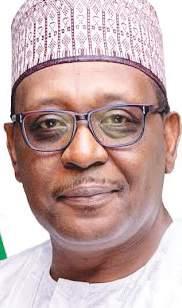
‘Nigeria
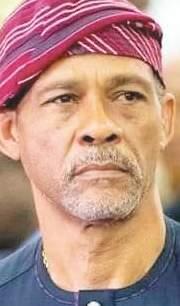
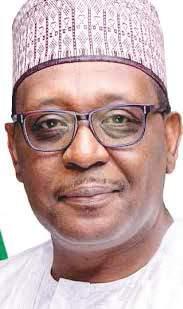
‘There is God o! The bloods we are sharing, there is God o!.' - Dame Patience Jonathan, First Lady of the Federal Republic of Nigeria May 6, 2010 - May 29, 2015
‘It is very clear that not only our democracy is under threat, but the nation itself is being reduced, belittled, and threatened… the entire nation is under attack, and we must all unite to address this challenge..' - Senator Abdul Ningi, Senator Representing Bauchi Central Senatorial District

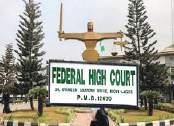
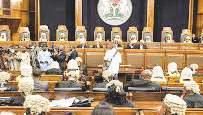
Definition of Gaslighting
‘Gaslighting’ has become the order of the day in public life, shifting from just being a form of emotional abuse in domestic settings, to governance. While there is no universal definition of gaslighting, it involves falsehood and appears to be a form of manipulation, denial, trivialisation or outright lies by one party (the ‘Blamor’) to mislead the other party, and if the matter is blameworthy, unfairly shifting the blame to the other party (the ‘Blamee’), thereby making the Blamee question themselves, believing that they may truly be to blame, or that they got the facts wrong, or, at times, even questioning their own sanity.
So, for instance in a domestic setting, the Husband, X (Blamor) who has had a drinking problem in the past, starts coming home late from work; Y, his wife (Blamee) smells alcohol on X, tells him she’s noticed that he’s started drinking again; X denies it, says he has been working late on an office project, and that Y is paranoid, imagining things, and must have smelt her perfume instead. And, because of X’s vehemence in refusal, Y starts to doubt herself - did she really smell alcohol? Is she being paranoid? Is she being unnecessarily suspicious? X gaslights Y by denying the reality (lying), attacking her credibility and effectively shifting the blame from himself onto Y by making her look unnecessarily suspicious and paranoid (diversionary/delay tactic.).
Gaslighting in Litigation
Ironically, gaslighting-like tactics may be part and parcel of our legal profession, particularly in litigation, as litigants are always pitched against themselves, holding on to polarised positions on the same subject-matter.
Recently, I read in the news that in the sad case of the death of author, Chimamanda Adichie’s son, Nkanu, their Counsel, in arguing that the Coroner’s Inquest should be adjourned to a definite date for report and not ‘sine die’ (without a date; indefinitely) as the Magistrate Coroner did, so that the judicial review application can be taken by the High Court, Adichie-Esege Family Counsel was reported in the news to have said: “He who is innocent, does not fear an open inquest”. Though this is true, it smacks of gaslighting, as the Blamor (Adichie-Esege Family Counsel) appears have weaponised public sympathy to deflect from evidentiary weaknesses. A suitable response from the Blamee (Euracare’s Counsel) could however, have been: “He who is innocent does not fear an open inquest, by destroying key evidence”! After all, what is good for the goose, is certainly excellent for the gander. In this circumstance, gaslighting seems to be the deflection from the seriousness of cremation/destruction of evidence criminalised by Section 48(1) of the Coroners’ System Law of Lagos State 2007, which in the first place is the basis of the application for judicial review, while appearing to lay emphasis on the application as some form of diversionary tactic.
Gaslighting in Governance
Gaslighting in governance or State Gaslighting, is the State as the Blamor, manipulating, denying, deflecting, distorting or minimising facts that are a reality, thereby eroding public trust and psychologically abusing the Blamee, which in this case, is the public. For instance, Nigerians are complaining of economic hardship, while the Government claims that the economy is improving and things are getting better, attempting to create an impression that the people may be exaggerating their condition, and may not know what they are saying. This creates confusion, as official statistics which tend to contradict everyday realities are used. After all, in 2018, during the administration of President Muhammadu Buhari, GCFR, Nigeria was declared to be the poverty capital of the world; but, today, the Tinubu administration can insist there’s an improvement, as Nigeria appears to have moved up about three notches on the poverty index, and Government keeps repeating the mantra that, in a period of rebuilding, there’s sacrifice, hardship and pain.
State gaslighting can also occur when Government exaggerates minor successes, while ignoring major omissions or failures, or deflecting from other issues related thereto. The removal of the corrupt fuel subsidy regime and the unification of the foreign exchange rates, are regularly cited as successes of the Tinubu administration, while the negative effect on Nigerians of the inflation caused by the removal of the subsidy, is almost ignored, and simultaneously, Politicians/Government Officials live lavish lifestyles on scarce State resources.
Gaslighting in governance rewrites the narrative, contradicting realities, and can be damaging to democracy. It discourages accountability, because if there’s no problem as the State may falsely seek to maintain, there’s no need for a solution. So, in effect, a lethal combination of State gaslighting and the non-justiciability of Chapter II of the 1999 Constitution of the Federal Republic of Nigeria (as amended)(the Constitution) - see Section 6(6)(c) thereof, leads to a gross lack of accountability and a very frail State.
Security Gaslighting
But, the truth is that, State gaslighting is not new to governments all over the world; and so, it has always been an active part of the Fourth Republic, particularly with regard to the problem of insecurity.
1) Obasanjo Administration
Following the killing of about 10 Policemen by Youths of Odi Bayelsa State in November 1999, in the early days of the tenure of President Olusegun Obsanjo, GCFR, the military response, ‘Operation Hakuri’, which followed, razed the town, killing hundreds of innocent civilians, if not more. The Government/Military justified their
onikepo braithwaite
onIkepo BraIThwaITe
onikepo.braithwaite@thisdaylive. com onikepob@yahoo.com
“….State gaslighting is not new to governments all over the world…it has always been an active part of the Fourth Republic, particularly with regard to the problem of insecurity….the State as the Blamor, manipulating, denying, deflecting, distorting or minimising facts that are a reality, thereby eroding public trust and psychologically abusing the Blamee, which….is the public. Nigeria urgently requires less State gaslighting….and far more decisive actions to fight insecurity….less politicking and premature campaigning are required now, which to tell the truth, at the moment come across as being rather insensitive, when toddlers are in the captivity of cruel and ruthless terrorists….. If the Government is able to substantially reduce the level of insecurity in Nigeria, the people would be desperate to renew its mandate in 2027. Nevertheless, we cannot also engage in gaslighting, by ignoring or minimising the orchestrated escalation of violence across the country….”
actions in the guise of targeting criminals who ambushed security. agents and the fight against oil bunkering, while minimising/denying the excessive force used by the soldiers and human rights abuses; there was a lack of accountability.
2) Yar’Adua Administration
The extra-judicial killing of the leader of the Boko Haram group, Mohammed Yusuf, by the Police in July 2009 during the administration of President Umaru Yar’Adua, is said to be a contributing factor to the escalation and spread of Boko Haram’s terrorism, including their quest for revenge.
The initial claims by the Police, about how Yusuf died, first, allegedly in a shoot out while trying to escape, proved to be an outright lie, gaslighting, as Nigerians saw the video of how he was executed as he was alighting from a van.
President Yar’Adua, in fairness to him, ordered a probe into the matter for the sake of accountability, but unfortunately, he didn’t live long enough for anything to come out of it. Though Boko Haram had showed violent tendencies before the 2009 extra-judicial killing, the incident amplified it.
To date, some of the more reasonable underlying reasons for the grievances of Boko Haram such as poverty, unemployment and corruption, not only remain unaddressed by the State, they persist, and the group has since metamorphosed into a full-blown criminal, vicious killing and kidnapping machine.
3) Jonathan Administration
The administration of President Goodluck Jonathan, GCFR, was accused of gaslighting the people, by minimising the threat level of Boko Haram. Though they did take some steps, such as declaring a state of emergency in three States in the Northeast in 2013, namely Borno, Yobe and Adamawa (see Sections 14(2)(b) & 305 of the Constitution), and also employed the services of foreign military contractors, some still argued that the steps were reactionary when they should have been proactive or preventive, if not for the initial downplay.
4) Buhari Administration
The failure of successive administrations to address the aforementioned underlying causes of violence and insecurity in society, while failing to handle Boko Haram decisively, also opened the doors for other violent groups to come onto the Nigerian scene.
The issue of his stand against corruption and the increasing insecurity, were the main reasons adduced for electing President Muhammadu Buhari, GCFR, who Nigerians believed would do better in the fight against corruption and the area of security, being a seasoned soldier. Alas! This wasn’t to be.
The Buhari administration gaslighted Nigerians by claiming to have ‘technically defeated’ Boko Haram, thereby attempting to make Nigerians doubt the severity of insecurity. The foreign contractors engaged by the Jonathan administration,
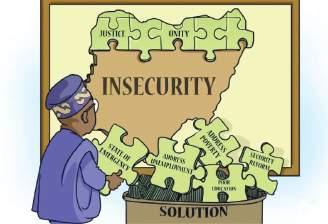
were terminated. Some argued that Herdsmen attacks were also treated by the Buhari administration, with kidgloves. The term ‘Banditry’ was popularised, and even though it may be stronger than simple theft, it is a few notches less than terrorism. However, the Boko Haram attacks continued, with its offshoot, ISWAP and even Al Shabab joining, while the Herder attacks, which were minimised/downplayed to Farmer-Herder clashes, also escalated - see State v Haruna Usman Judgement delivered on May 8, 2017, per Nasiru Ajanah J. (CJ, Kogi State as he then was); SC/CR/1026/2022 Sunday Jackson v The State Judgement delivered on March 7, 2025 per Mohammed Baba Idris, JSC (Helen Moronkeji Ogunwumiju, JSC Dissenting). According ACLED statistics, more than a couple of thousand terrorist attacks occurred in Nigeria between 2015 and 2023, including the 2018 Dapchi girls kidnapping; the 2019 Presidential election day attacks in Maiduguri, Borno State and Geidam, Yobe State; the March 2022 Kaduna-Abuja train attack leaving about 8 people dead and 60 hostages; the May 2022 Rann Town, Borno State Boko Haram attack leaving up 50 people dead; the St Francis Xavier Catholic Church, Owo attack in June 2022 leaving 40 dead and many others injured and the ISWAP July 2022 Kuje Prison break, freeing over 800 inmates.
5) Tinubu Administration
The Tinubu administration, even though it appears to be putting in some effort to fight terrorism by tweaking the security apparatus, deploying more personnel, working with the Americans, there is a lot more to be done. The pupils and students kidnapped in Oyo and Borno have been in captivity since May 15, while one of the Oyo teachers, Mr Michael Oyedokun was brutally murdered by the terrorists. Terrorism appears to have spread into the Southwest that hitherto, was ‘safe’.
I’m not sure that the usual State gaslighting ‘things are improving’ narrative, or the Minister of Defence giving their administration a generous 65%-70% pass mark in security, this time around, is convincing. People are able to see what is going on in real time, as videos spring up on social media regularly showing different violent incidents, the most recent and gory being the murder of soldiers in Borno State.
Conclusion
While placing the entire blame of Nigeria’s decades-long insecurity crisis squarely on the shoulders of President Tinubu and his administration would be unfair, the buck inevitably stops at his table, being the incumbent. However, less politicking and premature campaigning are required now, which to tell the truth, at the moment come across as being rather insensitive, when toddlers are in the captivity of cruel and ruthless terrorists. While we rejoice with the family of the former Minister of Power, the Adelabus, on the safe return of their family members, how come they could be rescued in a short timeframe, while toddlers in a such dangerous situation, proven and confirmed by the fact that their Teacher was beheaded, have been languishing in the forest for 4 weeks?
Today, many recall with fondness, former First Lady, Dame Patience Jonathan breaking down in tears, and her now famous words in pidgin English, which have become a household way of expression of anguish when something bad occurs: “There is God o! The bloods we are sharing, there is God o!”, because of her expression of frustration when the Chibok Girls were kidnapped in 2014.
Nigeria urgently requires less State gaslighting - fewer denials, minimisations, deflections, manipulation of narratives, and far more decisive actions to fight insecurity. While the Tinubu administration may be exerting more effort than some of its predecessors to fight insecurity, particularly its immediate predecessor, rejigging the security architecture and seeking international partnerships, the results appear to be inadequate in the face of the daily atrocities that Nigerians are facing, even in previously safer zones. It is also troubling that a significant number of local collaborators and regrettably, some traditional leaders, are assisting these violent terrorists, whether as active members of their gangs and/or for financial gain.
Technology-driven solutions, are available. Satellites can be deployed to monitor forests and borders, drones for schools, by both Federal and State Governments, even subscribing to broad-area monitoring platforms, costs going up to maybe $100,000 per annum. This is a small price to pay, and can easily be drawn from State security votes. Instead of Governors complaining that they have no control over the security agencies, they should invest in tools that do have control over, which is making use of technology, because by virtue of Section 14(2)(b) of the Constitution, the security and welfare of the people within their States, is the primary purpose of their government. A former Governor once shared with me that, during the Yar’Adua administration, he obtained a waiver from President Yar’Adua, and imported arms and ammunition for the use of the Police in his own State, resulting in a considerable reduction the crime rate there.
If the Government is able to substantially reduce the level of insecurity in Nigeria, the people would be desperate to renew its mandate in 2027; campaign would be unnecessary, as the tangible improvements in the security and welfare of the people would be more than enough of a manifesto. After all, one never gets enough of a good thing! Nevertheless, we cannot also engage in gaslighting, by ignoring or minimising the orchestrated escalation of violence across the country as the elections draw nearer, by enemies of the State to make this government even less popular.
Facts The Appellant was charged before the High Court of Akwa Ibom State, for the offence of murder contrary to Section 326(1) of the Criminal Code, Laws of Akwa Ibom State, 2000. The Appellant was accused of murdering one Godwin George Udofia on 1st June, 2014. Following the plea of not guilty by the Appellant, the Respondent called 4 witnesses and tendered the Appellant’s statement to the Police, the Post Mortem Examination Form and Medical Report on the deceased, and the Police Investigation Report dated 25/08/2014, as Exhibits A, B-B3, and C respectively.
The Appellant testified in his defence and called 3 witnesses. A cash receipt issued in favour of the Appellant on 1st June, 2014 was tendered through the Appellant’s third witness – DW4. At the close of trial and after taking the addresses of Counsel for the opposing parties, the trial court delivered its judgement in which it found the Appellant guilty as charged. Consequently, the trial court sentenced him to death by hanging.
Aggrieved, the Appellant lodged an appeal at the Court of Appeal. However, the Court of Appeal upheld the decision of the trial court and dismissed the appeal. Consequently, the Appellant filed a further appeal at the Supreme Court.
Issues for Determination
The Supreme Court adopted the issues formulated by Counsel for the Appellant, with slight modifications, as follows:
1. Whether or not the Appellant’s right to fair hearing was breached, when he adopted Exhibit A without the same having been interpreted to him.
2. Whether or not the Appellant’s defence of alibi ought to have been sustained, if the evidence of DW3 and DW4 were not discountenanced.
3. Whether or not the case of murder, levelled against the Appellant, was proved beyond reasonable doubt.
Arguments
On the first issue, Counsel for the Appellant submitted that the Appellant’s right to fair hearing was breached, because he was misled to adopt Exhibit A which was tendered by the Prosecution as the Appellant’s extrajudicial statement, without the same first being interpreted to the Appellant who is an illiterate. Counsel also argued that the Appellant was not given the opportunity to deny making Exhibit A before he adopted it at the trial court, as it was not interpreted to him to enable him to verify if the content actually represented his statement.
Conversely, Counsel for the Respondent argued that the Appellant failed to object to the admissibility of Exhibit A at the point of tendering it, therefore, it was assumed that he was comfortable with it, and it was too late in the day to complain about it. Counsel further submitted that Exhibit A did not in fact, form the basis upon which the Appellant was convicted, but rather the eye witness testimony of PW1 which was corroborated by PW2 and PW3. The Respondent’s Counsel concluded that the evidence of PW1, was enough to convict the Appellant outside Exhibit A.
On the second issue, the Appellant’s Counsel argued that the Appellant’s defence of alibi was established by the uncontroverted evidence of DW3 and ought to have been sustained, however, the said evidence was discountenanced thereby, occasioning a miscarriage of justice on the Appellant.
In response, Counsel for the Respondent argued that the Respondent, through the testimony of PW1 who was an eyewitness, proved beyond reasonable doubt that the Appellant was at the scene of the crime, and this overrode the Appellant’s defence of alibi.
On the 3rd issue, Counsel for the Appellant argued that the Respondent failed to prove the charge of murder against the Appellant beyond reasonable doubt, and that the prosecution failed to tender the statement of deceased in evidence because the content may be exculpatory. Counsel also argued that the other prosecution witnesses apart from PW1 gave hearsay evidence, which the
In the Supreme Court of nigeria Holden at abuja On Friday, the 4th day of july, 2025
Before their lordships
Mohammed Lawal Garba adamu jauro
Moore aseimo abraham adumein Obande Festus Ogbuinya abubakar Sadiq umar Justices, Supreme Court SC/1008/2017
SoloMoN IBoro SaNDY
(Lead
Between
And
trial court ought not to have been relied on. Responding, Counsel for the Respondent submitted that all the ingredients of the offence of murder were successfully established against the Appellant. Counsel submitted further that there was no controversy on the death of the deceased, and the evidence of the prosecution witnesses and Exhibits B – B3 all established that the Appellant killed the deceased.
Court’s Judgement and Rationale Deciding the first issue, the Apex Court held that a party to any judicial proceedings should be consistent in his allegation, claim
“… the alibi raised by an accused person must account for the accused person’s whereabouts at the time of the commission of the offence, and eliminate the possibility of the accused being present at the scene of the crime at the time when the offence was committed…the defence of alibi will physically and logically crumble once there is superior, positive and credible evidence fixing the accused to the scene of the crime”
the prosecution; therefore, his complaint that he was denied fair hearing was baseless.
On the second issue, the Supreme Court held that the basis of the defence of alibi is the physical impossibility of a person being at more than one place at a time, hence, the alibi raised by an accused person must account for the accused person’s whereabouts at the time of the commission of the offence, and eliminate the possibility of the accused being present at the scene of the crime at the time when the offence was committed. The Court held further that the defence of alibi will physically and logically crumble once there is superior, positive and credible evidence fixing the accused to the scene of the crime. The Apex Court relied on its earlier decisions in OKERE v IGP (2021) 5 NWLR (PT. 1770) 537 and IBRAHIM v COP (2020) 15 NWLR (PT. 1746) 122.
The Supreme Court held that with the evidence on record, although the Appellant claimed that he was at Edyson Hotel when the offence was committed, the Police Investigation Report –Exhibit C showed that he only lodged at the hotel at around 9pm on the fateful day, whereas his whereabouts at 7pm when the offence was committed could not be accounted for. The Court further held that as a matter of fact, the evidence of PW1 who gave credible detailed eyewitness account of how he saw the deceased being brutally attacked by the Appellant with an axe, conclusively neutralised the defence of alibi set up by the Appellant. The Supreme Court found that the issue of whether the Appellant was at the locus criminis was thus, conclusively resolved by the evidence of the prosecution witnesses which proved beyond reasonable doubt that the Appellant was at the scene of the crime, and not somewhere else when the offence was committed.
appellaNt
or defence. The Supreme Court further held that an objection to the admissibility of an extra-judicial statement must be raised at the point when it is being tendered, and a party who consented to a document being admitted in evidence, is not permitted to resile from such comment. The Court held that by Section 169 of the Evidence Act, 2011, such party is estopped from resiling from such consent by the doctrine of estoppel by conduct. Reliance was placed on ORJI v FEDERAL REPUBLIC OF NIGERIA (2019) LPELR-46534(SC).
The Supreme Court held that from the facts contained in the records, particularly the proceedings of 27th August, 2015 at the trial court, it was evident that when the Prosecution Counsel sought to tender Exhibit A in evidence, the Appellant’s Counsel stated unequivocally that they were not objecting to its admissibility. The Court held that the Appellant who was represented by his Counsel throughout the trial, cannot be said to have been misled or prejudiced by the fact that the content of his extrajudicial statement in Exhibit A was not read out or interpreted to him, in so far as he had not raised any objection to it when it was tendered. The Supreme Court held that the Appellant was afforded all the opportunity to defend himself, including the right to object to the admissibility of any exhibit or evidence tendered or adduced by
Deciding the third issue, the Apex Court held that for the prosecution to successfully establish the offence of murder, it must be proved beyond reasonable doubt that: (i) the deceased died; (ii) the death of the deceased was caused by the act of the accused person; (iii) the accused person’s act was intentional or with the knowledge that death or grievous bodily harm was the probable consequence of his act. The Court relied on TINA OKORODUDU v THE STATE (2024) 12 NWLR (PT. 1951) 111. The Apex Court held that, in this case, there is no dispute that the deceased died on 1st June, 2014, which established the first ingredient of the offence of murder. The Court held further that the direct eyewitness testimony of PW1 – the deceased’s brother, on how he saw the deceased being brutally attacked with an axe by the Appellant before he fled into the bush, was consistent with Exhibits B1-B3 – the post mortem medical documents which stated that the deceased died as a result of a head injury from an axe. The Court held that the credible evidence of PW1 conclusively established that it was the deceased’s dastardly act that killed the deceased, and PW1’s direct evidence alone was sufficient to ground the conviction of the Appellant.
On the 3rd element, the Supreme Court held that any sane man is presumed by law to intend the natural and probable consequence of his action. The Court held that it was clear from the evidence on record that the Appellant’s violent attack on the deceased was motivated by the urge to avenge an earlier clash between the deceased and the Appellant’s brother, and hitting an axe on the head of a human being is such a violent and callous action which clearly shows that the Appellant intended the natural consequences of his conduct. The Court held that the fact that the Appellant hit the head of the deceased with an axe twice, reveals that there was an intention to either kill or cause grievous harm. The Apex Court found that the Respondent established the offence of murder against the Appellant beyond reasonable doubt, and the Court of Appeal rightly affirmed the trial court’s decision convicting the Appellant accordingly.
Appeal Dismissed.
Representation
G. A. Umoh for the Appellant.
F. J. Itim (Director of Public Prosecutions, Akwa Ibom State Ministry of Justice) for the Respondent.
Reported by Optimum Publishers Limited, Publishers of the Nigerian Monthly Law Reports (NMLR)(An affiliate of Babalakin & Co.)
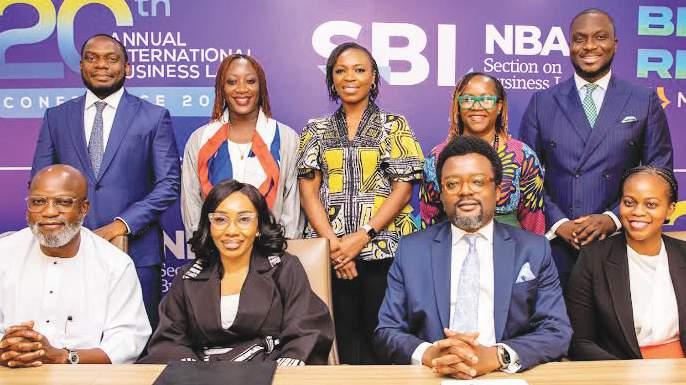
Stories by Steve Aya
The Nigerian Bar Association Section on Business Law (NBA-SBL) has said its 20th Annual International Business Law Conference, will focus on evaluating the effectiveness of Nigeria’s ongoing economic reforms, rather than merely celebrating their introduction.
Speaking at a Press Conference ahead of the Conference scheduled for June 8 to 10, 2026, at the Abuja Continental Hotel, Chair of the NBA-SBL, Ozofu 'Latunde Ogiemudia, said the event, themed “Beyond Reforms: Measuring Policy Impact”, would examine whether recent policy changes are delivering tangible benefits to businesses and citizens.
Ogiemudia noted that Nigeria has implemented major reforms in recent years, including the Petroleum Industry Act, fuel subsidy removal, foreign exchange unification, tax reforms,
digital payment regulations, mining sector liberalisation and infrastructure reforms. She, however, stressed that the key issue now, is whether such reforms are strengthening institutions, improving investor confidence and creating economic opportunities.
According to her, the Conference will bring together regulators, policymakers, legal practitioners, business leaders, development experts and international stakeholders to assess the practical economic and social impact of Government policies,
and identify areas requiring improvement.
She added that discussions would focus on whether current reforms are supporting micro, small and medium enterprises, encouraging private sector investment, expanding opportunities across the
country and preparing Nigeria’s growing youth population for participation in the digital economy.
The NBA-SBL Chair, also highlighted the Section’s contributions to Nigeria’s business environment, including its involvement in the Nigerian National Assembly Business Environment Roundtable, which contributed to the enactment of key legislation, such as the Companies and Allied Matters Act 2020, the Arbitration and Mediation Act 2023 and the Business Facilitation Act 2023.
A high-profile fraud trial involving a British national and two Indian businessmen took a dramatic turn at the Federal High Court in Lagos on Tuesday, after the presiding Judge, Justice Akintayo Aluko, withdrew from the case following a petition alleging misconduct..
The Defendants, Marcus Wade, Prem Garg and Devashish Garg, alongside their companies Wilben Trade Limited and Agrico Agbe Limited, are standing trial over an alleged $42.48 million fraud involving Ecobank Nigeria Plc.
The case, filed by the
Office of the Attorney-General of the Federation in suit FHC/L/562C/2022, centres on allegations that the Defendants conspired between May and September 2015 to defraud Ecobank under the guise of importing rice into Nigeria. They face multiple counts including conspiracy, obtaining by false pretence, and fraud, with one charge brought under Section 422 of the Criminal Code Act. However, since the commencement of the trial in 2022, the Defendants have yet to appear in court to take their plea, with repeated adjournments
The Supreme Court of Nigeria has affirmed the death sentence of Delta-based kidnapper, Chelynor Halim, bringing final closure to a case marked by a dramatic victim escape and an unexpected arrest twist.
In a unanimous judgement delivered by a five-member panel on Friday, the Apex Court dismissed Halim’s appeal in suit SC/CR/913/2022 for lacking in merit, and upheld the sentence of death by hanging imposed by lower courts.
The case stems from a February 9, 2014 kidnapping, in which Joan Osemene was abducted by an armed gang and taken to a hideout in Ibusa, Delta State.
During the attack, the victim told the court she was assaulted, threatened with a gun, and rendered unconscious after a substance was placed over her nose. She further testified that her ATM card and cash were taken, after which the gang withdrew N55,000 from her
largely due to their absence.
At the resumed sitting, the pattern continued as none of the accused persons were present in court. Their Counsel, Demola Seriki, appeared for some of the Defendants, while the Prosecution Counsel, I.A. Akinteye, informed the court that the lead Prosecutor was unavailable due to travel constraints from Abuja.
The proceedings took an unexpected turn when Justice Aluko disclosed that he had been served with a petition over an earlier adjournment granted in the matter, alleging gross
account before moving her to another location where she was later abandoned.
In a dramatic turn of events, Osemene escaped captivity and flagged down a motorcyclist for assistance, only to discover that the rider was one of her alleged abductors.
She raised an alarm immediately, leading to the suspect’s arrest by bystanders, before he was handed over to the Department of State Services (DSS), where he
reportedly led operatives to the gang’s hideout, resulting in a shootout that killed the gang leader, Edozie Obude. Delivering the lead judgement, Justice Chioma Nwosu-Iheme, JSC, held that the prosecution had proved the case beyond reasonable doubt, affirming Halim’s identity and role in the crime, and ultimately sustaining the death sentence imposed by the Asaba High Court and upheld by the Court of Appeal.
The Federal Government has reported a significant decline in the number of ex-convicts returning to prison, attributing the improvement to ongoing rehabilitation and reform programmes within the Nigerian Correctional Service.
Minister of Interior, Hon. Olubunmi Tunji-Ojo, disclosed this on Wednesday during the presentation of an investigative report on the correctional system in Abuja, noting that recidivism rates have dropped sharply over the past three years.
According to him, the number of repeat offenders fell from 11,616 in 2023 to 3,156 in 2024, and further declined to 1,382 in 2025, describing the trend as evidence that ongoing reforms are yielding results.
Hon.Tunji-Ojo, however, said the administration would not consider the system successful until recidivism is completely eliminated, stressing the need for sustained rehabilitation and reintegration programmes.
He also revealed that 15,632 inmates were admitted into
custodial centres across the country in May 2026, while 14,190 inmates were released within the same period under various legal and administrative provisions. The Minister added that a Monitoring and Evaluation Committee would be established, to ensure full implementation of recommendations contained in the investigative report, which he said would serve as a working document, rather than being shelved.
He further urged State
Governments to collaborate with the Federal Government, in relocating correctional facilities that have become unsuitable due to urban expansion and population growth around their original locations.
Also speaking, Permanent Secretary of the Ministry of Interior, Magdalene Ajani, said the investigative panel inspected 86 custodial centres across 23 States during its assignment, as part of efforts to assess conditions and operational standards in the correctional system.
misconduct and bias against him. The Judge said the petition, reportedly authored by an unnamed Complainant, raised questions about his conduct in the handling of the case, while another related petition linked to Babajide O. Ogundipe was also mentioned in court.
Visibly displeased, Justice Aluko insisted that the court had acted with due process throughout the proceedings, noting that hearing notices had been duly issued and served on all parties. He rejected any suggestion of bias, stating that he had no personal interest in the matter, and had presided over thousands of cases impartially.
Supreme Court Slams Appeal Court’s Ex-Parte Orders
The Supreme Court of Nigeria has delivered a unanimous five-member judgement, strongly condemning what it described as the “weaponisation of judicial processes”, in a ruling that set aside a series of ex-parte orders issued by the Court of Appeal.
The Apex Court criticised the Court of Appeal for granting what it termed a “restorative ex- parte order”, describing the development as a “judicial tragedy” and warning against the growing misuse of far-reaching interim reliefs.
It held that the relief granted by the Court of Appeal was, in substance, an interlocutory injunction which ought not to have been issued ex-parte, stressing that such orders must not be used to determine substantive rights at an interim stage.
The Supreme Court further ruled that the Court of Appeal exercised jurisdiction in a matter that was not properly before it, reiterating the settled legal principle that the mere filing of a Notice of Appeal does not, on its own, confer jurisdiction on an appellate court.
It also found the ex-parte order staying proceedings before the trial court to be fundamentally defective, and accordingly, set it aside in its entirety.
In the case involving Neconde Energy Limited and Nestoil Limited, the Supreme Court held that Neconde’s appeal was meritorious, and nullified all impugned 186-day-old ex-parte orders previously made against both companies by the Court of Appeal.
The judgement reaffirmed established principles governing appellate jurisdiction, and issued a stern caution against granting substantive interlocutory relief through ex- parte applications, particularly at appellate level, warning that such practices undermine procedural fairness and judicial discipline.
The court’s ruling is widely seen as a strong reaffirmation of the limits of appellate authority, underscoring that strict adherence to due process remains central to the integrity of Nigeria’s judicial system, and essential to maintaining confidence in the rule of law.
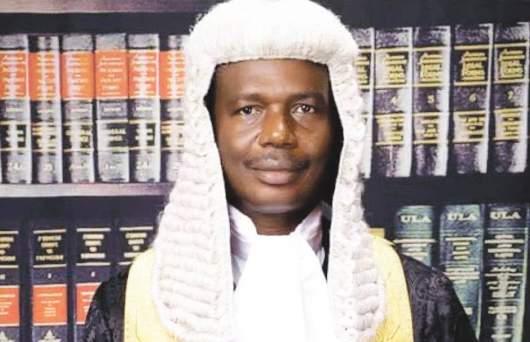
This article by learned Senior advocate, ebun-Olu adegboruwa, discusses the case of abanobi v The State, in which a 98 year old woman was kidnapped and kept in the boot of a vehicle by the appellant and co-accused, examines the elements of the offence of kidnapping and its proof beyond reasonable doubt, while making suggestions to Government on what steps that must be taken to curb this evil, which has become a commercial venture in nigeria
Introduction
According to the learned authors of Black’s Law Dictionary, kidnapping is “the crime of seizing and taking away a person by force or fraud, often with a demand for ransom (also manstealing)”. For Collins English Dictionary, to kidnap is “to carry off and hold (a person), usually for ransom”. This is corroborated by the learned authors of Jowitt’s Dictionary of English Law as, “the forcible abduction or stealing away of a person, whether a man, woman, or child. It is an offence punishable at common law by fine and imprisonment”. Morally speaking, it is wrong to steal anything, how much less a human being. In the ordinary course of events, the law frowns on the intent to take away something, with the hope of depriving the owner thereof its permanent use. To kidnap a person therefore, connotes that the kidnapper intends to deprive the victim of the use of his or her life, which is why the law places the offence of kidnapping in the same status
as murder, with some statutes prescribing the maximum penalty of death.
When a 98-year-old great-grandmother is kidnapped, then there should be no remedy for the felon, because such a gruesome act borders on irredeemable depravity. There can be no justification for this heinous display of wickedness by the Appellant and his gang, although I am well aware of the challenges faced by citizens in our present dispensation, especially the youth. No matter the difficulties that people face or contend with, it cannot ground the seizure or theft of an old woman, subjecting her to such a traumatic experience of keeping her in the trunk of a car, with all the inconveniences and dangers to her life and safety. But, for the Police and the act of divine intervention, the poor woman would most probably have died
“In order to secure a conviction of the Defendant, the prosecution must prove that the Defendant abducted the victim with the specific intention of obtaining payment of ransom. There must be an indication on the part of the Defendant of trying to obtain an advantage, or holding the victim for ransom. The prosecution has to prove beyond reasonable doubt….”
from exhaustion and suffocation, even before the criminals got to their evil destination. I join the call upon the Government to do more in job creation and youth empowerment, but the youth too must embrace contentment, diligence and believe in honest endeavours as the surest means of lasting prosperity and human survival, stop chasing miracle money and exploring shortcut options to attain sudden wealth.
Facts of the Case
The facts of this case are as reported in Abanobi v The State (2026) 5 NWLR (Pt.2037) 587. The Appellant, acting in concert with his co-accused on 26th October, 2014, kidnapped and took hostage one Madam Lydia Acho, a 98 year old woman. She was purportedly abducted from her residence, in Isuikwuato Local Government Area in Abia State. However, she was subsequently rescued on the same day within Ikuwano Local Government Area in Abia State, following a car chase by the Police. The Appellant and the 2nd accused person were later apprehended at the locus criminis with the Appellant, having sustained gunshot wounds. PW2, during her testimony, left the witness box to identify the Appellant and the co-accused person in the dock. Under cross-examination, she stated that she was able to identify the Appellant and his co-accused by the illumination from a flashlight. The Police officer who led the patrol team that accosted the Appellant and his co-marauders and rescued the victim, testified as PW4. He gave evidence of how the Appellant and the co-marauders were accosted by the patrol team, while inside a Peugeot 406 wagon vehicle with which the victim was kidnapped. The driver of the vehicle lost control and rammed it
into a tree, and the occupants including the Appellant, ran into the surrounding bushes. The Police shot at the occupants of the vehicle while they were trying to escape, and noticed blood at the scene. Upon approaching the vehicle, the Police rescued the victim from the boot of the vehicle, and took her to the hospital. With the help of the community vigilantes, the Appellant, with a bullet wound, and the 2nd accused person were arrested from the bush. The Appellant’s two phone handsets, were recovered from the vehicle.
Following his apprehension, the Appellant made a statement to the Police, exhibit “B”, and was the sole witness in his defence. His story was that he too was kidnapped by the two passengers he carried in the Peugeot wagon, on his way from his village in Anambra State to Aba. He admitted that he was in the vehicle with which the victim was kidnapped and taken away. He was there when the Police led by PW4 accosted them, the vehicle rammed into a tree, the Police shot at them, and he bolted and ran inside the bush and slept there till the following morning for his safety. He further testified that the following morning, he came out from his purported concealment within the bush with the aim of reporting the incident of kidnapping at the Police station. However, contrary to his alleged intention, he was instead apprehended by the Police and subsequently, charged with the very act of kidnapping he intended to report. He stated that he was released by the fleeing kidnappers amidst a barrage of gunfire, one of which hit him. However, in his extra-judicial statement, he claimed that he remained in the trunk of the car, while one of the two alleged hijackers stood guard over him. Judgement At the conclusion of trial, the trial court in its judgement
convicted the Appellant and sentenced him to death, for the offence of kidnapping contrary to section 3(a) of the Prohibition of Terrorism, Kidnapping, Hostage-Taking, Use of Offensive Weapons or Explosives and Other Threatening Behaviour Law No. 10 of Abia State, 2009. Dissatisfied, the Appellant appealed to the Court of Appeal which affirmed the judgement of the trial court, and dismissed his appeal. Still dissatisfied, the Appellant appealed to the Supreme Court where he contended that the Respondent failed to prove the offence charged, as there was no evidence that he kidnapped the victim for the purpose of payment of ransom. In determining the appeal with final dismissal, the Supreme Court considered the provision of Section 3(a) of the Prohibition of Terrorism, Kidnapping, Hostage-Taking, Use of Offensive Weapons or Explosives and Other Threatening Behaviour Law, No. 10 of Abia State, 2009 which states as follows:
“3(a) Any person who, for the purpose of payment of ransom, kidnaps and takes another hostage is guilty of an offence.”
What Constitutes the Offence of Kidnapping
Section 3(a) of the Prohibition of Terrorism, Kidnapping, Hostage-Taking, Use of Offensive Weapons or Explosives and Other Threatening Behaviour Law No. 10 of Abia State, 2009 stipulates that any person who, for the purpose of payment of ransom, kidnaps and takes another person hostage is guilty of an offence. The section suggests an acknowledgment of the distinction between the offence of kidnapping as understood within broader legal jurisprudence, and the specific instance contemplated under that legislation where the element of “for purposes of payment of ransom” is expressly incorporated as a necessary and constituent element for establishing guilt. The distinction is pertinent, when considering the general principles governing the offence of kidnapping.
Section 3(a) of the Prohibition of Terrorism, Kidnapping, Hostage-Taking, Use of Offensive Weapons or Explosives and Other Threatening Behaviour Law No. 10 of Abia State, 2009 prescribes that the kidnapping and taking another hostage must have been actuated by the intention to ask for, or for the purposes of payment of ransom. It does not provide that for the offence of kidnapping to be complete, the ransom must have been paid. It only prescribes manifestation of an intention by the abductor, of demanding for or obtaining payment of ransom. What this postulates is that, where the definition of kidnapping includes abduction for some specific purpose, the mens rea that the prosecution must prove in order to obtain a conviction must include the specific purpose. Therefore, it is not enough to prove that the Defendant intended to abduct the victim. In order to secure a conviction of the Defendant, the prosecution must prove that the Defendant abducted the victim with the specific intention of obtaining payment of ransom. There must be an indication on the part of the Defendant of trying to obtain an advantage, or holding the victim for ransom. The prosecution has to prove beyond reasonable doubt, that the accused intended to detain the alleged victim, in order to demand and obtain a sum of money for the alleged victim’s release. It does not matter whether the Defendant in fact demanded money, or whether the Defendant succeeded in obtaining any money. There must be some overt act, manifesting that intention.
In the instant case, it was clear that the intention of the Appellant and his co-accused, was to kidnap and take the victim for the purpose of payment of ransom. Contrary to the Appellant’s submission, both the trial court and the Court of Appeal did not speculate on whether the victim was kidnapped for the purpose of ransom. The intention of the Appellant and his co-accused person to demand ransom could be inferred from their conduct, given the overall circumstances of the case. The ingredients of the offence were established against the Appellant. Probable Motivations for Kidnapping
The jurisprudence of the offence of kidnapping, extends beyond instances solely motivated by demand for payment of ransom. Criminals take hostages as a shield, to help them escape from the scene of a crime. In addition, kidnapping could also be motivated by personal grudges.
Ingredients of Offence of Kidnapping
The prosecution discharges its burden of proving the offence of kidnapping beyond reasonable doubt, when the evidence adduced demonstrates the unlawful taking of the victim against his/her wish. In order for the prosecution to succeed, it has to prove the following facts beyond reasonable doubt:
(a) that the victim was seized and taken away by the accused person; and
(b) that the victim was taken away against his consent or will; and
(c) that the victim was taken away without lawful excuse, or that the act was carried out without lawful justification.
The offence of kidnapping is complete, when the victim is carried away against his wish. Therefore, the essential elements coalesce around the non-consensual deprivation of liberty through the physical removal of
the person from his/her chosen location. The specific intention of the perpetrator, is not a necessary element for the completion of the actus reus of kidnapping in all its forms. In the instant case, the kidnappers were intercepted by law enforcement officers before reaching their intended destination to demand ransom. Therefore, the prosecution was not required to prove an actual ransom demand, in the light of the disruption of the crime by the Police. The essential elements of kidnapping, were sufficiently established beyond reasonable doubt.
For the prosecution to establish the guilt of an accused person, evidence must be led to prove such guilt beyond reasonable doubt. Although proof beyond reasonable doubt does not mean proof beyond all doubt or all shadow of doubt, it means the prosecution must establish the guilt of the accused person with convincing, compelling and conclusive evidence.
A Defendant’s intention can be inferred from his conduct, surrounding circumstances and intervening events within which he acts. It is from the manifestation of his conduct, that his intention can be ascertained. The most direct and compelling avenue for establishing intention, lies in the individual’s own articulation. A voluntary confession, freely and unequivocally made, wherein the Defendant explicitly declares his purpose, offers the clearest insight into his state of mind at the material time. However, such explicit admissions are infrequent occurrences.
In the instant case, on a community consideration of the Appellant’s conduct, coupled with the entire circumstances of the case, as well as the events leading to the same, the making of the inference from his obvious conduct could not be speculative so as to cast any doubt on his intention. The Appellant’s intention was in tandem with the particular “for purposes of payment of ransom kidnaps and takes another person hostage”.
The Proper Forum for Attack on Credibility of Witness
The proper forum for an assault on the credibility of a witness is at the trial court, during the heat of the proceedings, and not in a written brief presented at an appellate court. In the instant case, despite the opportunity afforded, the Appellant failed to meaningfully challenge the testimony of PW2. Under cross-examination, she remained steadfast in her assertion that she identified the Appellant by the illumination provided by flashlights. The Appellant’s
“In most cases, kidnapping is seen as a means to enrich the perpetrators, at the expense of the lives of the victims. With the disturbing revelation that even the Government has been paying ransom to kidnappers, citizens have become seriously helpless…. Deployment of technology, funding of the law enforcement agencies, inter-agency collaboration…. effective prosecution of suspected kidnappers, and active engagement of the youth in the formal and informal sectors, are viable solutions for consideration”
attempt to discredit her in his brief of argument, was a wrong tactic.
How to Establish Inconsistency in Evidence of Witness
Inconsistency in evidence can only be established, by comparing multiple pieces of evidence given by the same witness. In the instant case, the Appellant contended that PW2’s testimony, relied upon by the trial court, was inconsistent. However, PW2’s extra-judicial statement, which the Respondent sought to tender, was objected to by the Appellant and consequently, marked as rejected at the trial court. So, there was no second version of PW2’s statement on record, against which her testimony before the trial court could be evaluated for contradictions.
Thus, the Appellant’s claim that PW2’s testimony was inconsistent, lacked foundation.
Effect of Document Marked Rejected
Once a document is marked as rejected, it remains inadmissible for all purposes within the same trial, and its defect cannot be cured in that proceeding.
The Primary Duty of Trial Court to Evaluate Evidence and Ascribe Probative Value Thereto
A trial court, which has the opportunity to observe the demeanour of witnesses, is best suited to evaluate their credibility and ascribe probative value to their testimony. In the instant case, the trial court rightly held that the prosecution proved its case beyond reasonable doubt on the strength of PW2’s eyewitness account, and the testimony of PW4, who rescued the victim from the trunk of the Peugeot 406 wagon.
Notable Pronouncement
On Serious Nature and Effect of Kidnapping the Old and Elderly, and Duty of the Court to Protect the Vulnerable, Uphold the Law and Preserve Values of Nigerian Society:
Per John Inyang Okoro, J.S.C. at page 610, paras. A-D:
“Kidnapping, in any form, is a heinous offence, but the targeting of a 98-year-old woman, frail and vulnerable, for the purposes of ransom, reveals a depth of depravity that is shocking to the conscience. It is particularly disturbing, that the perpetrators of this crime are young men who have shown a complete disregard for the sanctity of age and the respect owed to our elders, ignoring the hallowed years, the elders sacred right! Kidnapping instills fear, erodes trust, and undermines the sense of security that should prevail in our communities. When the elderly, who are often the most vulnerable, are targeted, it sends a chilling message that no one is safe. It disrupts the social order, and threatens to destroy the bonds of respect and care that hold us together. I hope that this conviction and the sentence imposed, will serve as a deterrent to others who may be tempted to engage in such reprehensible acts. Let it be known that this court will not tolerate such crimes, and will come down heavily on those who perpetrate them. It is our duty to protect the vulnerable, to uphold the law, and to preserve the values of our society”.
Conclusion and Suggestions
The state of crime in the country has become very alarming, especially when life itself has become a tool for commercial ventures. In most cases, kidnapping is seen as a means to enrich the perpetrators, at the expense of the lives of the victims. With the disturbing revelation that even the Government has been paying ransom to kidnappers, citizens have become seriously helpless.
Although many States have adjusted their criminal laws to make the offence of kidnapping punishable with death, this alone will not solve the monstrous problem. Deployment of technology, funding of the law enforcement
agencies, inter-agency collaboration between the relevant agencies involved in the investigation and prosecution of crime, effective prosecution of suspected kidnappers, and active engagement of the youth in the formal and informal sectors, are viable solutions for consideration. There is an urgent need for a holistic overhaul of the entire security architecture of the nation, to make it more effective and result oriented. This is important and critical for national peace and development, as a violence-free environment is a booster for rapid economic development. In addition, political office holders should stop arming youths for political engagements and contests. The danger in this is that such dastardly efforts always backfire, after the main mission has been accomplished. Political thugs become an unwarranted liability on the masses, including their families. The backing provided by political heavy weights, encourages the criminals to advance in their nefarious activities, knowing that even when they are caught, somebody somewhere will intervene to grant them soft landing. This has always been the bane of effective war on crimes and criminals. At the stage of arrest, extraneous interventions work out in their favour to either secure their release, or facilitate favourable prosecution through defective charges, poor investigation and lame prosecution, all meant to create loopholes for the accused person to lap upon to defeat the case against him. Added to this is the need for a central data regime, that will capture the relevant particulars of all citizens. Accurate data is an effective tool, in forensic investigation and analysis. Curbing kidnapping in Nigeria requires a multifaceted approach, including strengthening intelligence-driven law enforcement, deploying technology like drone surveillance, and addressing economic desperation through job creation. Key strategies involve enforcing stricter NIN-SIM linkage, implementing cashless economy policy to track ransom payments, bolstering community policing, and strengthening judicial processes to ensure convictions. It will also involve technological and financial surveillance by utilising the BVN (Bank Verification Number) and NIN (National Identification Number), to monitor financial transactions and track ransom payments. There should also be improved telecom regulation by enforcing strict, proper registration of SIM cards, to stop criminals from using unregistered phones. Part of this is also to explore advanced surveillance through the deployment of drones for aerial surveillance, and intelligence gathering to monitor high-risk areas. Next is to focus on security and legal reforms by establishing specialised anti-kidnapping units, and enhancing intelligence sharing among security agencies. This will then activate judicial action to fast-track the prosecution and conviction of kidnappers. In the same vein, there must be urgent measures taken to strengthen border security to prevent the proliferation of weapons. Above all, community and social interventions are very critical, by embracing community policing, empowering local, community-based security to act as intelligence sources, including State Police. Through job creation, the State is able to address the root cause of youth unemployment and poverty to reduce the incentive to commit crimes, while at the same time creating public awareness, by educating citizens on security measures, such as avoiding routine movements and limiting the sharing of personal information on social media. Certain operational tactics should be adopted, including increased patrols and enhancing mobile patrols and increasing security presence in high-risk zones.
In whatever way it can be achieved, the Government must end ransom payments through the implementation of policies that discourage or prohibit the payment of ransom, which fuels the industry. These measures must be supported by political will, and a commitment to combat corruption within the security agencies.
Ebun-Olu Adegboruwa, SAN
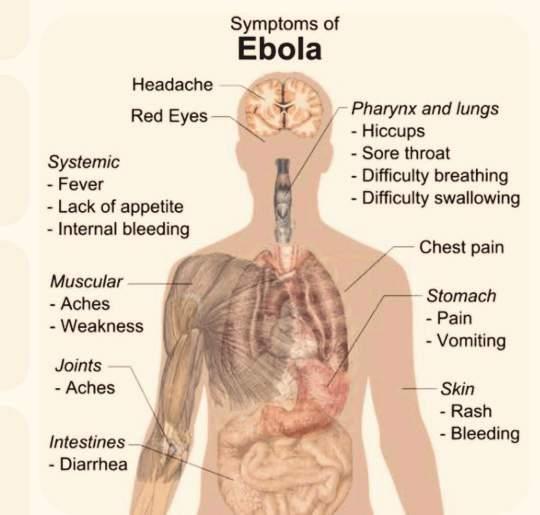
Is africa on the verge of another virulent attack of the dreaded ebola virus? This time, it is the Bundibugyo ebola strain, different from the Zaire ebola of 2014. Is the Bundibugyo ebola potentially more dangerous than the Zaire ebola that took the lives of courageous Dr Ameyo Adadevoh, ooN, other medical practitioners and a number of other nigerians in 2014? Questions that should agitate the minds of concerned nigerians are, how dangerous the Bundibugyo ebola is, particularly as so far, there’s no vaccine for it or cure? Why does ebola appear to originate from the democratic Republic of Congo (dRC)? How prepared is nigeria, and Lagos in particular, being one of the major gateways into nigeria, to tackle and contain the virus? How should people protect themselves from contracting the virus? onikepo Braithwaite and Jude Igbanoi sought out the Director, epidemiology, Biosecurity and Global Health/State epidemiologist, Lagos State Ministry of Health, Dr Ismail Abdus-Salam to tease out the answers to these questions, particularly about symptoms that people should be aware of, and what steps should immediately be taken, if there’s suspicion that an individual may have contracted the virus
Guarding the Gateway: Lagos, and the Bundibugyo Ebola Threat
You are the Director of Epidemiology, Biosecurity and Global Health at the Lagos State Ministry of Health.
Kindly, give us a brief overview of
what this role entails, vis-à-vis communicable diseases.
Thank you. In simple terms, my department is the State’s early-warning system and first organised line of defence against disease. Lagos is the most populous, most connected sub-national entity
“Ebola is not airborne. It does not spread like flu or Covid-19; you cannot catch it by sharing air or passing someone on the street. Transmission requires direct contact with the blood or body fluids of a person already sick with Ebola, or who has died of it, entering through broken skin or the mucous membranes of the eyes, nose or mouth, or via surfaces soiled by those fluids… A person infected, but not yet symptomatic, is not contagious; people become infectious, only once ill. And, the body of someone who has died of Ebola is highly infectious….there is no proven vaccine for the Bundibugyo strain”
in West Africa — over twenty million people, an international airport, two seaports and busy land approaches. Pathogens move with people and goods, so our job is to see a dangerous disease early, contain it, and limit harm.
That work rests on a few pillars: surveillance — analysing data from hospitals, laboratories, communities and points of entry, so an unusual cluster is flagged within days; preparedness and response — our emergency operations centre, rapid response teams, and isolation and case-management capacity; and biosecurity at our borders with the Port Health authorities. Cutting across these are laboratory diagnosis, contact tracing, infection control and risk communication.
On communicable diseases, we work under the National Integrated Disease Surveillance and Response framework and closely with the
NCDC, watching Lassa fever, cholera, measles, mpox and now Ebola. The principle is the same for all: detect early, isolate, treat, trace contacts, engage the community. A disease caught at one or two cases is a manageable incident; at fifty, it is a crisis.
Since the 2014 Zaire strain Ebola outbreak, we have heard of other outbreaks in the Democratic Republic of Congo (DRC). Reports suggest hundreds of cases and dozens of deaths in this 2026 Bundibugyo outbreak, which has spread to Uganda. What is the suspected source, and how does the Bundibugyo strain differ from the Zaire strain of 2014?
First, an accurate picture, because the statistics changes daily. The DRC declared the outbreak on 15 May, 2026 after confirming Bundibugyo virus in Ituri Province — the 17th Ebola outbreak there since 1976. The WHO declared a Public Health Emergency of
International Concern on 16–17 May, the Africa CDC, a Continental emergency the next day. By early June, the affected countries reported several hundred cases and well over a hundred deaths, still confined to the DRC and Uganda, with imported cases — including healthworker deaths — in Kampala.
On the source: Ebola is zoonotic. The reservoir is believed to be fruit bats, with primates and other forest animals as intermediate hosts; the first human infection follows contact with an infected animal in forest or hunting settings. Genetic sequencing confirms this is a fresh spillover, not the re-emergence of an old outbreak.
Now the crucial difference. “Ebola” is not one virus, but a family. The Zaire strain that reached Nigeria in 2014, is historically the deadliest — case-fatality rates of 40% to 90%. The Bundibugyo strain, first identified in Uganda in 2007, has been less lethal historically — roughly 25%-50% — though this outbreak’s early figures are provisional. But, lower fatality does not make it less serious: our tools were built for the Zaire strain, and Bundibugyo is genetically distinct, its key surface proteins differing by roughly 30%.
Ervebo, and the treatments Inmazeb and Ebanga, all target the Zaire virus, and are not expected to protect reliably against this strain. So, the world relies on classic methods — finding and isolating cases, tracing contacts, safe burials, early care — not a proven vaccine or cure. That is the defining feature of 2026.
Exactly how is Bundibugyo Ebola transmitted from person to person? Can it spread through the air or casual touch, or must it be through the body fluids of those who are ill?
Let me be direct: misunderstanding here causes needless panic. Ebola is not airborne. It does not spread like flu or Covid-19; you cannot catch it by sharing air or passing someone on the street.
Transmission requires direct contact with the blood or body fluids of a person already sick with Ebola, or who has died of it, entering through broken skin or the mucous membranes of the eyes, nose or mouth, or via surfaces soiled by those fluids.
Two essentials. A person infected, but not yet symptomatic, is not contagious; people become infectious, only once ill. And, the body of someone who has died of Ebola is highly infectious, which is why traditional washing of the dead has driven so much transmission — safe burials by trained teams are vital. So, plainly: casual contact poses no meaningful risk; the danger is close contact with the fluids of the visibly sick and the dead — hence, caregivers and health workers are most at risk.
What safety measures should people take to avoid contracting the virus? Is there any approved vaccine or preventive treatment for Bundibugyo Ebola?
Because the routes of transmission are well understood, the measures are practical. Avoid the blood or body fluids of anyone unwell with fever; never handle the body of someone who has died of a suspicious illness; practice
Late Dr Ameyo Adadevoh, OON
rigorous hand hygiene; and avoid bushmeat, especially bats and primates, and sick or dead wild animals. If fever follows contact with a sick person or travel to an affected area, call the authorities rather than moving from clinic to clinic, and do not self-medicate.
On vaccines and treatment, I must be candid. There are no licensed vaccines and no specific approved medicine for the Bundibugyo strain. Ervebo is licensed only against the Zaire strain, and because the two viruses differ in their key surface proteins by roughly 30%, it is not expected to protect reliably against this one. Newer candidates are being researched, but remain early and investigational.
So, prevention and early care carry the weight of survival: even without a specific drug, early supportive care — fluids, oxygen, treating coinfections, good nursing — saves lives, and a patient who presents early fares far better than one who hides at home until too late.
What is the incubation period from exposure to symptoms? What early symptoms should people watch out for, and how do they differ from Malaria and Flu? What must someone who suspects they have Ebola do, especially in a family setting?
The incubation period — exposure to first symptoms — is 2 to 21 days, most often 8 to 10, which is why contacts are monitored for a full 21 days. The early symptoms are non-specific: sudden fever, weakness, headache, muscle pain, sore
“What should the individual suspected to have Ebola do? Do not board public transport or sit in a crowded clinic. Isolate in a separate room, and immediately call the State emergency lines — 767 or 112 — or the NCDC line, 6232. In a family setting, designate one healthy adult caregiver who uses gloves and protective covering, and washes hands meticulously; do not share plates, cups or bedding; keep visitors away. If someone dies, do not prepare the body — call the emergency line, so a trained team can conduct a safe, dignified burial’”
throat, then vomiting and diarrhoea. Bleeding, which most associate with Ebola, is actually a later and not universal feature.
Telling it apart from Malaria and Flu is hard: in the first day or two you often cannot, and that is the danger. Fever and body aches describe Malaria, Typhoid, Lassa Fever and early Ebola alike, and in Nigeria the likely cause is often Malaria. So, the differentiator is not the symptom, but the context — recent travel to or from an affected area, or contact with someone sick or dead from a fever. Always test promptly for Malaria, but if such a history accompanies the fever, treat it as a possible viral haemorrhagic fever and call for help. Diagnosis is harder here: the standard rapid test, built for the Zaire strain, does not reliably detect Bundibugyo, so confirmation needs specialised assays.
What should the individual suspected to have Ebola do? Do not board public transport or sit in a crowded clinic. Isolate in a separate room, and immediately call the State emergency lines — 767 or 112 — or the NCDC line, 6232.
In a family setting, designate one healthy adult caregiver who uses gloves and protective covering, and washes hands meticulously; do not share plates, cups or bedding; keep visitors away. If someone dies, do not prepare the body — call the emergency line, so a trained team can conduct a safe, dignified burial.
Is there synergy among the States in handling communicable diseases? Does the NCDC play a pivotal or central role in State-level arrangements?
Yes — one of the genuine success stories of Nigerian public health, since 2014. Disease does not respect State boundaries, so our response cannot be fragmented, and it is not.
The NCDC is the national coordinating body, and its role is central: it sets the guidelines every state uses, runs the national reference laboratories and emergency operations centre, deploys rapid response teams, and issues the advisories driving our posture. In late May, it classified Nigeria’s importation risk as high and named Lagos among ten high-risk States required to scale
up surveillance, laboratory readiness and isolation — a single advisory that aligned the Federation within days. But, this is a partnership, not topdown command. The States are the operational frontline: we run our own emergency operations centre, surveillance and laboratory systems and isolation facilities, feed data upward, and draw on national resources when an event exceeds us. We also coordinate with neighbours — Ogun in particular — and through a One Health approach with the agriculture, environment, education and environmental-protection agencies. The NCDC is the conductor, the States the orchestra, playing from the same score.
Some say Nigeria should close its doors to the DRC and Uganda, since there is no treatment. A Spanish Mayor has reportedly banned the DRC from a pre-World Cup match. Isn’t closing the borders the sensible thing to do — prevention being better than a cure that does not exist?
I understand the instinct — when people hear “no cure”, the reaction is to pull up the drawbridge. But, the considered public-health position is different. The WHO, under the International Health Regulations, advises against general travel and trade bans, and does so again in 2026. Blanket closures are largely ineffective — people find informal routes across porous borders — and counter-productive: they push movement underground, discourage honest reporting, cripple economies, and breed stigma, as we saw in 2014.
What works is targeted vigilance, which Nigeria has deployed: enhanced screening at points of entry, exit screening, and follow-up of arrivals for 21 days, under a Federal entry protocol issued in late May.
On the Spanish case — the Mayor of La Línea cancelling the DRC’s 9 June friendly against Chile — footballers are not patients. The squad has trained in Belgium under strict protocols, with isolation required before the World Cup; a healthy, screened, asymptomatic team poses negligible risk. Such decisions reflect public anxiety, more than
epidemiology. Prevention is paramount — but done properly, it is surveillance, screening, preparedness and trust, not isolationism we know fails.
Has Lagos State upgraded its isolation facilities since the Covid-19 pandemic in 2020? And, what is your assessment of the Nigerian medical community’s level of preparedness to tackle this unpredictable ‘second coming’ of Ebola — especially since many of Nigeria’s best medical personnel are said to have ‘japaed’, migrating abroad in search of greener pastures?
Significantly, yes. If 2014 taught Lagos to take infectious disease seriously, 2020 taught us to invest at scale. We describe our framework as a biosecurity “bio-shield” — a permanent culture of readiness, tested in 2014, strengthened through Covid-19, and exercised continuously against Lassa fever and Cholera. At its apex sits the Lagos State Incident Command System, led by Mr Governor as Incident Commander, while our Emergency Operations Centre runs around the clock.
On facilities: the Lagos Mainland Hospital in Yaba — our Infectious Disease Hospital, which managed Nigeria’s Ebola index case in 2014 and was expanded during Covid-19 — is on high alert, with triage, isolation wards, intensive care and specialists. Its on-site Biosafety Level-3 laboratory and Biobank let us confirm samples here, not wait, as in 2014.
Readiness, though, is systems and people. In recent weeks we held a high-level coordination meeting with the Commissioner for Health, the Special Adviser, the Permanent Secretary and pillar leads; circulated an Ebola fact sheet to health workers and community leaders; sensitised all twenty-three disease surveillance and notification officers; and ran training-of-trainers for public and private facilities — ‘private’ deliberate, because a private hospital first received Patrick Sawyer in 2014. We have drawn community health workers and civil-society groups into our early-warning network, and prepositioned protective equipment.
I also joined a preparedness inspection of the Murtala Muhammed International Airport, our most critical gateway, which carries roughly 70% of the country’s international passenger traffic. With Port Health, FAAN and others, we reviewed screening, infection control and isolation; touchless sanitiser dispensers and temperature-detection are deployed, and dedicated channels for high-risk arrivals are being explored. The aim, as the Commissioner put it, is a bottleneck for the virus, not for passengers; flights from East and Central Africa now get heightened scrutiny.
On national preparedness, my candid view is that Nigeria is far better prepared than in 2014. The NCDC now runs molecular laboratories, emergency operations centres and an incidentmanagement system absent in 2014; we contained Ebola in 2014, weathered Covid-19, and manage Lassa fever — a viral haemorrhagic fever — every year, so the muscle memory is real.
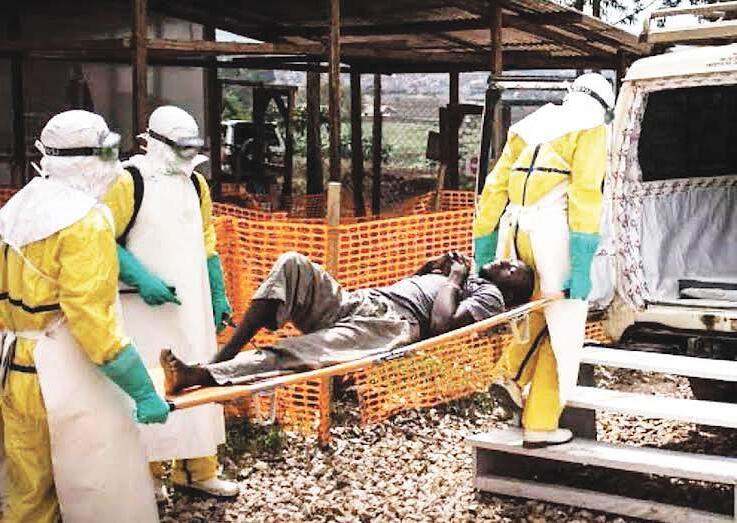
I will not pretend we have no weaknesses: the migration of health workers you call ‘japa’ is a genuine strain, especially on nurses and specialists. But, outbreak response rests on systems, protocols and a trained core, not any single individual — and such a system is what we are building.
That is why we invest continuously in training. Only weeks ago, we ran a three-day workshop on case management for priority diseases — covering mpox, diphtheria and viral haemorrhagic fevers, the category that includes Ebola — for case managers from public and private facilities, with partners including the FHI 360-led EPIC project and the United States Department of State. It was designed to cascade, so those we train teach others. We reach the private sector through the Health Facility Monitoring and Accreditation Agency, because every Facility must be ready.
The reassurance Lagosians most want: to date the State has recorded no suspected or confirmed case, and our task is to keep it that way — with vigilance, not alarm.
We cannot speak of Ebola in Nigeria without remembering the late Dr Ameyo Adadevoh, OON, who died after caring for Patient Zero, Patrick Sawyer. This time, what plans are in place to protect medical practitioners from contracting the virus from their patients — and what level of sensitisation do Nigerian practitioners have about this dangerous virus and how to handle it?
“I am glad you raised her name, because she must never be forgotten. Dr Ameyo Stella Adadevoh and the colleagues who died alongside her, almost certainly saved this country in 2014: she recognised the danger, refused under pressure to discharge Patrick Sawyer….After a patient clears the virus from the bloodstream, it can linger for months in protected sites — most notably the semen of male survivors, and also the eye, central nervous system and breast milk — creating a real, if limited risk, of sexual transmission”
I am glad you raised her name, because she must never be forgotten.
Dr Ameyo Stella Adadevoh and the colleagues who died alongside her, almost certainly saved this country in 2014: she recognised the danger, refused under pressure to discharge Patrick Sawyer, and contained the index case. Protecting health workers today, is honouring her.
The hard fact is that in 2014, and in the DRC and Uganda now, health workers have been among the first victims — almost always because the patient was not suspected of Ebola, and was treated as an ordinary fever case until too late. The single greatest protection, is early suspicion.
Our plan operates on layers. Screening and triage begin at the facility entrance, so a patient with a suggestive history is separated before reaching a crowded ward.
We enforce strict infection prevention and control — dedicated teams, protective equipment, and supervised donning and doffing, since removing contaminated gear is when many infections occur. We have extended training to private as well as public facilities and maintain isolation pathways. And, the diagnostic difficulty I mentioned makes a clinician’s index of suspicion more important than ever.
You ask how well sensitised our practitioners are. In a sector as vast as ours the picture is uneven, and sustaining awareness across every clinic is the standing challenge. But, it is what we are working at: the fact sheet circulated to practitioners; the recent case-management training covering viral haemorrhagic fevers, built to step down to many more; and continuous infection-prevention drills. The 2014 generation learned this at terrible cost; our duty is to ensure the current generation learns it in the classroom, not on the ward.
One sober point: because there is no proven vaccine for the Bundibugyo strain, we cannot give frontline staff the vaccine shields available against the Zaire strain, which makes discipline around protective equipment decisive. We will not ask them to stand in the
breach without the equipment, training and support Dr Adadevoh’s generation too often lacked.
Are there long-term effects for survivors? In 2014, survivors were asked to abstain from sexual activity for a period, as the virus persists in the body after recovery. What are the current injunctions?
Yes — and this deserves far more understanding and compassion than it usually receives. Surviving Ebola is a triumph, but not always the end of the story. Many survivors experience post-Ebola syndrome: persistent joint and muscle pain, fatigue, headaches, and eye inflammation that, untreated, can progress to blindness. Beyond the physical, there is a heavy psychological toll — anxiety, depression, post-traumatic stress — worsened by stigma.
Your point about persistence is medically important. After a patient clears the virus from the bloodstream, it can linger for months in protected sites — most notably the semen of male survivors, and also the eye, central nervous system and breast milk — creating a real, if limited risk, of sexual transmission.
Following WHO guidance, male survivors are counselled to practice safer sex — abstaining or using condoms — until their semen tests negative twice; absent testing, the historical guidance is around twelve months. Breastfeeding survivors receive specific guidance on their milk. And, all survivors should have structured follow-up, combining medical monitoring with mental-health support.
One honest caveat: much of this data comes from Zaire-strain survivors; persistence is presumed similar for Bundibugyo but less characterised, and guidance will be refined as the science matures. The principle does not change: a survivor deserves care, follow-up and dignity — not fear and exclusion.
To close: Ebola is dangerous, but not mysterious — we know how it spreads, and how to stop it. Our strongest instruments are early reporting, basic hygiene, accurate information and public trust. Lagos is vigilant, our systems active, and with the public’s cooperation, we are ready.
Thank you Dr Abdus-Salam.

Kayode Tokede
The Group Managing Director of Zedcrest, parent company of Zedvance, Adedayo Amzat, has announced a strategic shift in the firm’s asset deployment, committing 100 per cent of its active loan portfolio to small and medium enterprises and critical ecosystem enablers.
This is in a major move to address the financing constraints plaguing Nigeria’s mid-market enterprises.
Amzat made this disclosure at the Zedvance Business Roundtable themed, “Unlocking Growth: The Role of Smart Financing in Building Resilient Businesses.” The high-profile event brought together business leaders, industry professionals, and key economic stakeholders to explore how sectorspecific financing and innovative lending can drive sustainable business growth in Nigeria’s evolving macroeconomic landscape.
Addressing the gathering during his keynote, Amzat emphasized that while public attention is often captured by massive corporate initial public offerings (IPOs), the true engine of the nation’s economic survival rests on the shoulders of mid-sized operators.
“The people gathered in this room, and the ecosystems that you all represent in one shape or form, are the true drivers of the Nigerian economy,” Amzat declared, highlighting the resilience of entrepreneurs navigating a challenging operational terrain.
“I am deeply honored to be standing in front of people who are fighting day and night, tooth and nail; people who often cannot get the right sort of financing, who cannot access the adequate land capital required to execute projects, or who cannot secure enough corner shops to set up petrol stations,”
he added.
Addressing the historical challenges of managing credit risk in a volatile environment, the GMD explained that Zedvance is pioneering “ecosystemlinked solutions.” This model leverages structured partnerships with corporate aggregators to safely funnel liquidity to clustered smallholders in sectors like agriculture, automotive distribution, and energy,” Amzat explained.
Also speaking, Executive Director, Commercial Solutions, Zedvance Finance, Ayooluwa Oladimeji, noted that , “Over the next 18 months, his firm will be deploying ₦500 billion to deepen their support for growth-ready enterprises. A business loan enables an enterprise to scale production, hire 100 more individuals, and distribute more goods, multiplying the macroeconomic impact a hundredfold compared to a single consumer loan,” he said.
For decades, one of the most persistent barriers to accelerated investment in Nigeria’s gas and power sector has been the absence of reliable, consolidated intelligence. Until now.
At the 25th edition of NOG Energy Week, Africa’s foremost convening platform for the global energy community, the Nigeria Gas & Power Infrastructure Map will be unveiled for the first time, in what represents a defining moment not just for Nigeria’s energy sector, but for the continent’s entire investment landscape.
Developed by the Gas for Africa programme in partnership with NNPC Limited, this landmark publication delivers what the global energy community has long demanded: a single, comprehensive and
authoritative mapping of Nigeria’s gas and power infrastructure, spanning pipelines, processing facilities, power generation assets, LNG terminals, and key transmission networks across the country. However, the Map is only half the story. Accompanying it is a strategic report on Nigeria’s gas sector, the most comprehensive intelligence publication on the industry ever produced. Taking a full value-chain approach, it covers Nigeria’s gas market evolution since 2020, the NNPC Gas Master Plan 2026, upstream production trends and reserves, midstream pipeline infrastructure and capacity gaps, downstream CNG, PNG and LNG market developments, the gas-to-power value
chain, and gas-based industrialisation across fertilisers, petrochemicals, methanol and metals processing.
The report represents the most complete picture of Nigeria’s gas sector ever assembled in a single publication.
The timing is deliberate and the significance unmistakable. With global supply chains fracturing under the weight of Gulf region conflict, importing nations are urgently seeking reliable, sovereign and scalable energy partners. Nigeria, with output at a fiveyear high of 1.71 million barrels per day, a Gas Master Plan launched in January 2026, and the Dangote Refinery operating at capacity, has emerged as a credible and consequential energy power.
As geopolitical realignments accelerate the search for diversified energy sources, Africa’s strategic weight in global energy markets is growing, and with it, the opportunity for Nigeria to convert domestic capacity development into lasting industrial advantage.
Capturing that opportunity requires sustained, focused industry dialogue, and it is in that spirit that the Practical Nigerian Content Forum 2026 will return for its landmark 15th edition.
Organised by dmg Nigeria events in partnership with the Nigerian Content
Development and Monitoring Board (NCDMB), the PNC Forum has served as the industry’s leading platform for reviewing Nigerian Content progress and aligning stakeholders on implementation priorities.
Speaking on the significance of the Forum, Executive Secretary of NCDMB, Engr. Felix Omatsola Ogbe described the PNC Forum as an important platform for reviewing Nigeria’s local content journey and shaping the next phase of industry growth.
“The PNC Forum has brought together the key stakeholders
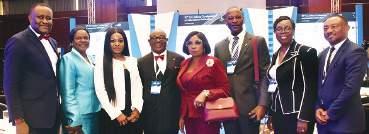
L-R: Chartered Arbitrator, Osinachi Chambers, Dr. Chikwendu Madumere; Secretary General, ICC Nigeria, Olubunmi Osuntuyi; Deputy Director, Arbitration & ADR Africa, ICC Dispute Resolution Services, Paris, Nwamara Inegbenoise; Vice Chair, ICC Commission, Paris, Patrick Ikwueto SAN; Chair, ICCN Arbitration and ADR Commission, Prof Dorothy Udeme Ufot SAN; Vice Chair, Arbitration Commission, Dr. Babatunde Ajibade SAN; Co-Chair, 10th ICC Africa Conference, Jean Chiazor Anishere SAN; 1st Vice President, Nigerian Bar Association, Sabastine Anyia at the 10th ICC Africa Arbitration Conference in Lagos….recently
driving Nigerian Content implementation and industry growth. Fifteen years on, the Forum continues to provide the platform where Nigerian Content’s most pressing issues are examined openly. This edition will look closely at how the Presidential Directive on Local Content is shaping enforcement of the NOGICD Act, its implications for investment and in country capacity development, and what the next phase progress needs to look like,” said Wemimo Oyelana, Country Director, dmg events Nigeria.
The price of OPEC basket of twelve crudes stood at $63.14 a barrel
Kayode Tokede
The Nigerian stock market, yesterday sustained its positive momentum to commence trading for the week, with the market capitalization gaining N515 billion.
The Nigerian Exchange Limited All-Share Index (NGX ASI) appreciated by 802.94 basis points or 0.33 per cent,
to close at 243,396.25 basis points. Similarly, the market capitalisation value gained N515 billion to close at N 156.109 trillion.
Market breadth was positive as 32 gainers outpaced 29 losers. International Energy Insurance recorded the highest price gain of 9.92 per cent to close at N7.98, per share. TIP followed with a gain of 9.91 per cent to close at N32.15,
while Associated Bus Company rose by 9.68 per cent to close at N6.80, per share.
Abbey Mortgage Bank appreciated by 9.63 per cent to close at N10.25, while Haldane McCall rose by 8.89 per cent to close at N3.92, per share.
On the other hand, Fidson Healthcare led the losers’ chart by 10 per cent to close at N122.85, per share. Academy
Press followed with a decline of 9.70 per cent to close at N7.45, while R.T. Briscoe shed 9.43 per cent to close at N13.45, per share.
SUNU Assurance shed 9.38 per cent to close at N4.06, while Learn Africa lost 8.70 per cent to close at N10.50, per share.
Also, the total volume of trade increased by 22.63 per cent to 717.156 million units,
valued at N56.659 billion, and exchanged in 73,321 deals. Transactions in the shares of FCMB Group topped the activity chart with 152.308 million shares valued at N1.826 billion. Premier Paints followed with 61.037 million shares worth N135.263 million, while Dangote Cement traded 34.721 million shares valued at N29.712 billion. TIP traded 32.818 million
shares valued at N1.029 billion, while Jaiz Bank transacted 32.590 million shares worth N293.295 million.
On market outlook for the week, United Capital Plc said “the Nigerian equity market is expected to trade with a mildly positive bias this week as investors take advantage of recent price corrections to accumulate fundamentally strong stocks.
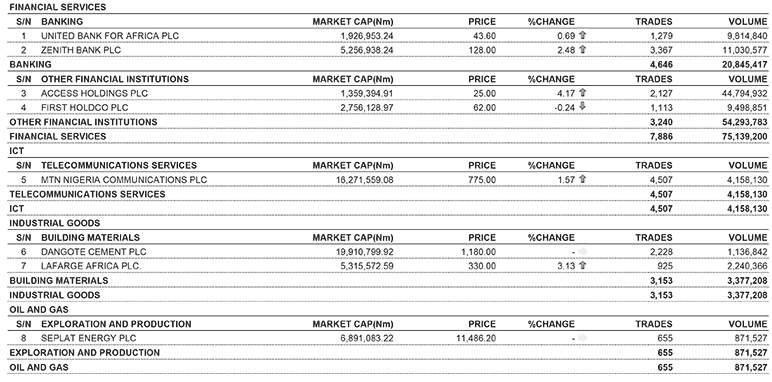
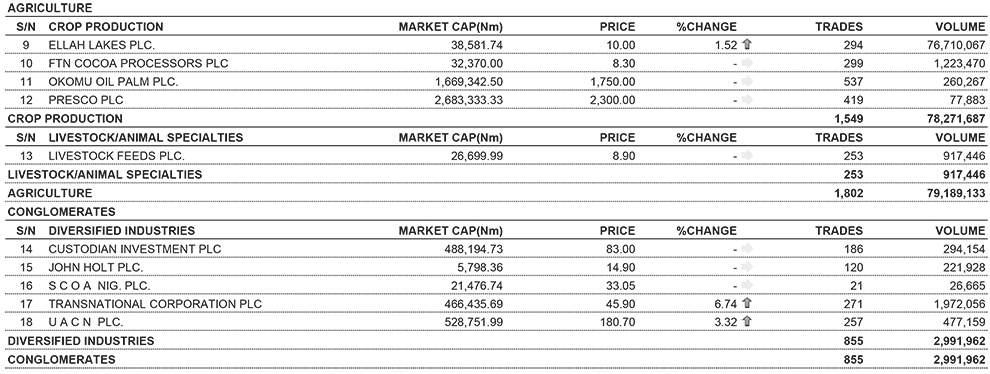
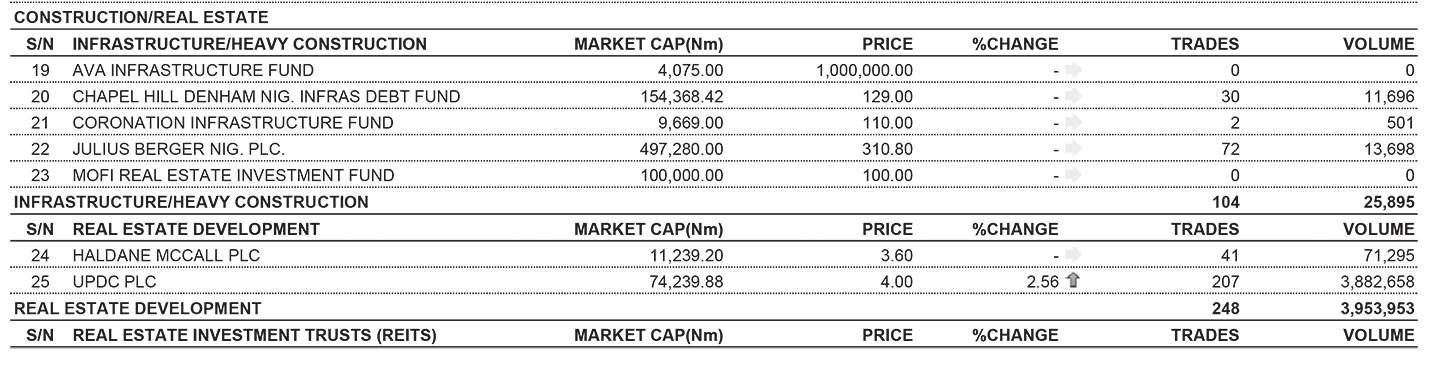
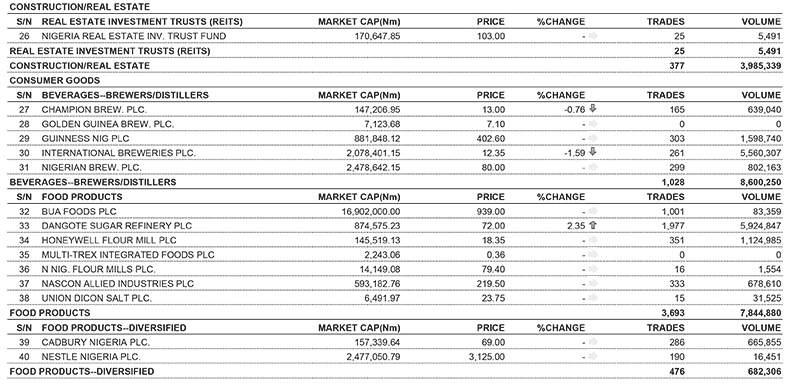
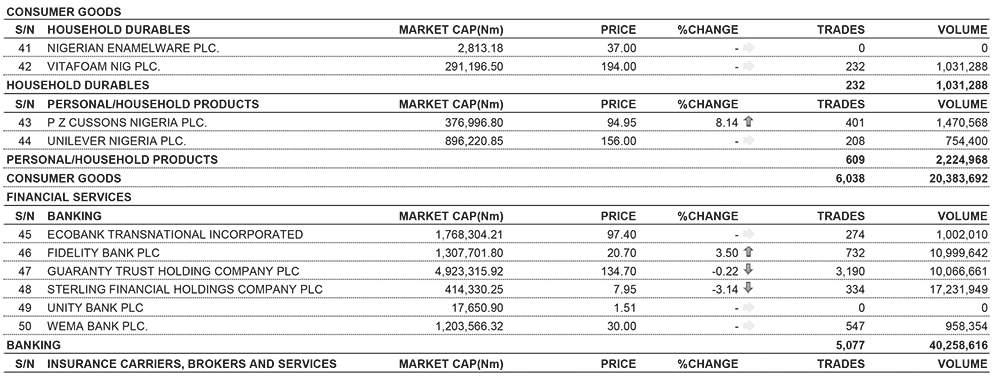
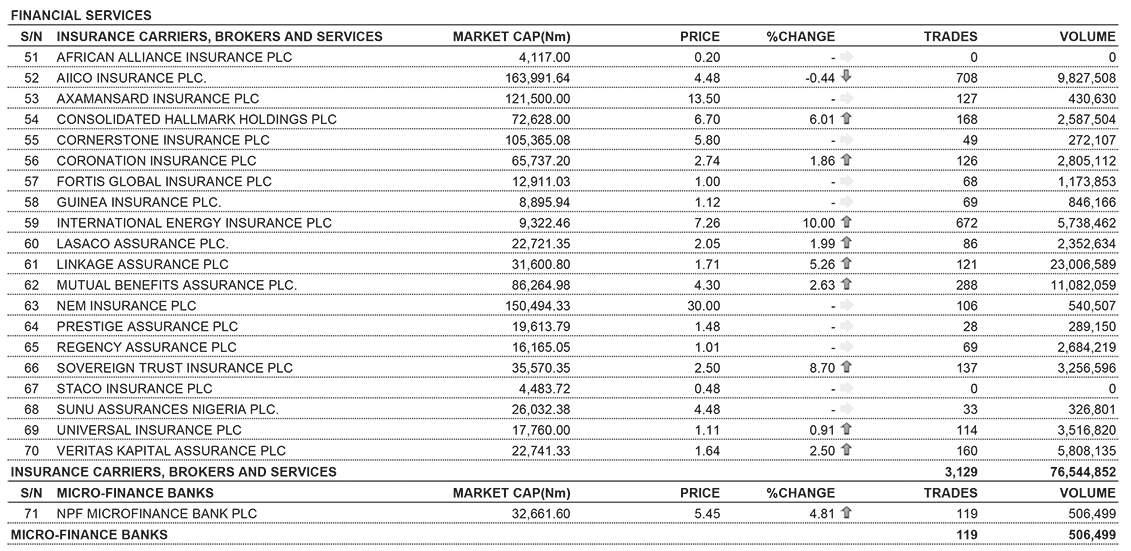

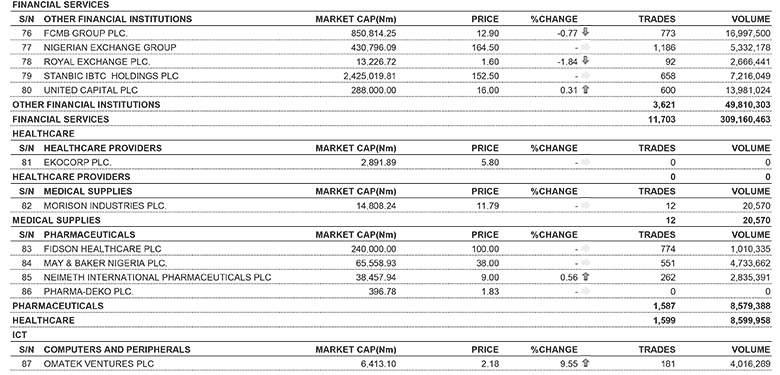
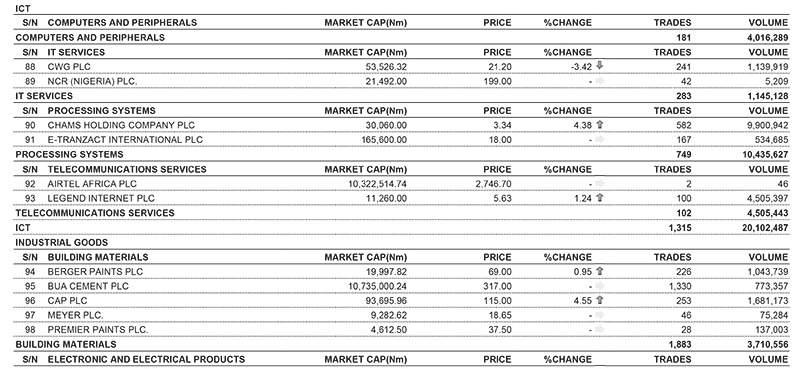
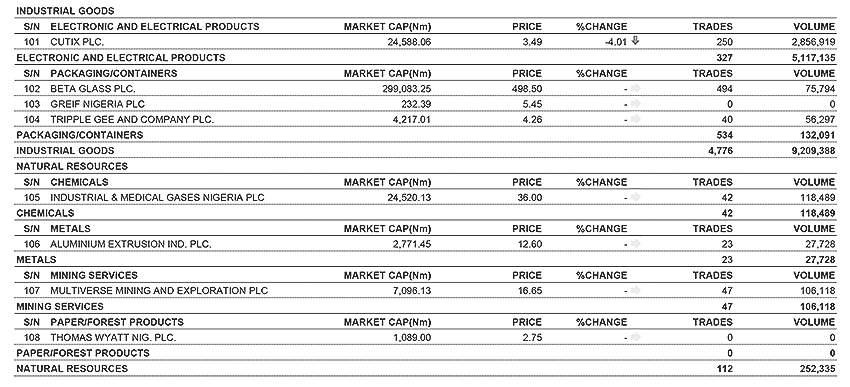
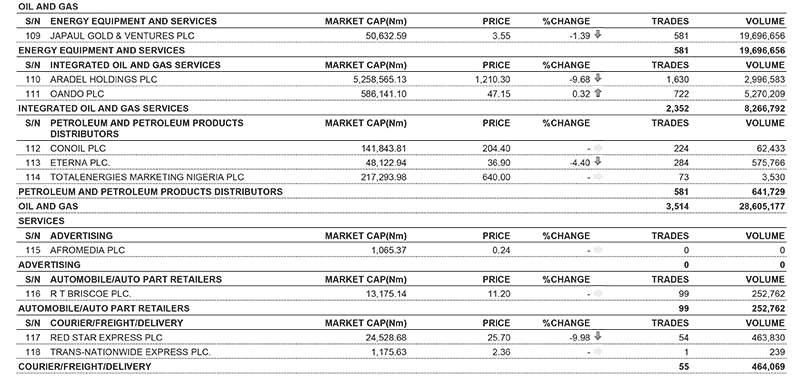


Wi t h g r e a t j o y a n d h e a r t f e l t a d m i r a t i o n , w e
congratulate His Highness, Amb. Ahmed Nuhu Bamalli, CFR, LLD, the Emir of Zazzau on the celebration of your 60th Birthday
This Diamond Jubilee marks six decades of God's grace, wisdom, and blessings upon your life Your dedication, integrity, and kindness have positively impacted countless lives and inspired many
As you celebrate this remarkable milestone, we pray that Almighty Allah grants you continued good health, peace, happiness, and many years of fulfillment and prosperity
Congratulations on your 60th Birthday May your days ahead be filled with abundant blessings and unforgettable joy.
O n c e a g a i n , H a p p y 6 0 t h Birthday, Your Highness. May your reign be long and prosperous, Ameen.

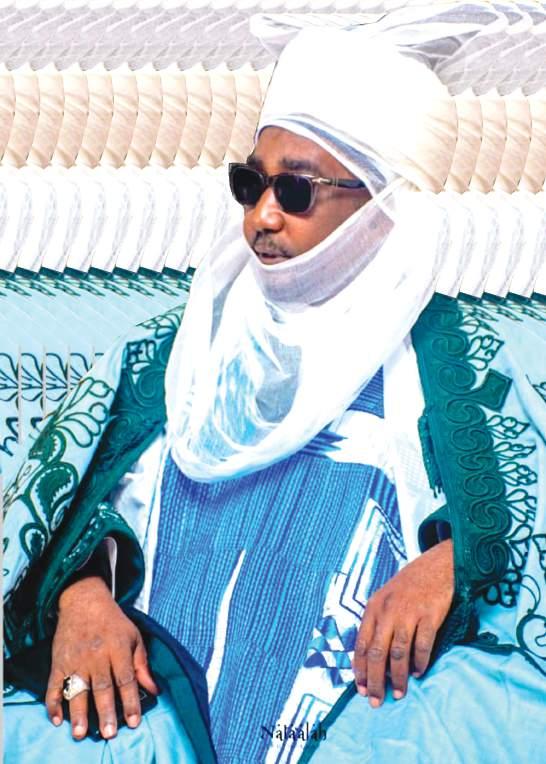
For years, Nigeria’s renewable energy conversation has largely revolved around solar. Yet one of the country’s most promising clean energy resources may have been hiding in plain sight. New data suggests that wind, long considered a marginal opportunity, could play a far greater role in Nigeria’s energy future than previously assumed.
According to Oando Clean Energy Limited’s (OCEL) National Wind Resource Capacity Report, developed in collaboration with the Nigeria Wind Energy Council (NWEC), the official Nigerian affiliate of the Global Wind Energy Council (GWEC), Nigeria’s average wind speed at 100 metres is 6.79 m/s, with commercially viable wind conditions identified across several parts of the country. More importantly, the report highlights two regions with particularly strong potential for utility-scale development: the northern highlands and the country’s coastal corridors.
The significance of the report extends beyond its findings. Developed jointly with the Nigeria Wind Energy Council, a body that brings together government policymakers, international development partners, private sector investors and academic institutions to advance wind energy development in Nigeria, the assessment reflects a collaborative effort to better understand and unlock the country’s wind potential. This broad stakeholder engagement lends additional credibility to the report’s findings and strengthens its value
as a resource for future planning, investment and policy discussions.
The finding comes at a time when the world is accelerating investment in wind energy. The International Energy Agency projects global installed wind capacity will exceed 2,800GW by 2035, up from just over 1,000GW in 2023. Last year alone, the world added a record 117GW of new wind capacity,
according to the Global Wind Energy Council (GWEC).
Africa, however, remains largely absent from that growth story. Despite possessing an estimated 33TW of technical wind potential, the continent has installed only about 9GW of capacity.
Nigeria’s northern highlands could help change that narrative. OCEL’s National Wind Resource Capacity Report identifies locations across Plateau and Taraba States, including the Jos and Mambilla Plateaus, with wind speeds exceeding 7 m/s and the potential to support wind farms of up to 225MW. These are figures that place parts of Northern Nigeria firmly within the range considered attractive for modern wind development.
The surprise may lie even further south. For years, conventional thinking has viewed coastal Nigeria primarily as a hub for ports, trade and oil and gas activity. Yet the report estimates that coastal and Niger Delta locations could support approximately 750MW of cumulative wind generation capacity.
Areas such as the Lekki Free Trade Zone and Eko Atlantic combine favourable wind conditions with something equally important: immediate proximity to industrial demand.
This matters because energy projects succeed not only where resources exist, but where customers are concentrated.
The significance of locations such as the Lekki Free Trade Zone and Eko Atlantic is not simply that they have viable wind conditions. It is that they sit next to growing industrial and commercial demand centres where
reliable electricity remains a critical constraint to growth.
For a country where 44.6 per cent of households still lack access to electricity, the implications are significant. Wind energy will not solve Nigeria’s energy challenge on its own. But as technology improves and investors increasingly seek scalable clean energy opportunities in emerging markets, the country’s northern highlands and coastal corridors are becoming difficult to ignore.
Perhaps the most important contribution of the OCEL National Wind Resource Capacity Report is that it shifts the conversation from possibility to evidence. By producing what is believed to be Nigeria’s first comprehensive, localised wind resource assessment focused on commercial viability, it provides a clearer picture of where future investment can be directed.
For investors, policymakers, developers and energy stakeholders seeking deeper insights into Nigeria’s wind resource potential, the full National Wind Resource Capacity Report is available on the Oando Clean Energy Limited website. The real value of the National Wind Resource Capacity Report may be that it changes the nature of the conversation. For years, discussions around wind energy in Nigeria have been driven largely by assumptions. Today, they can be driven by data. The question is no longer whether Nigeria has commercially viable wind resources. The question is what the country chooses to do with them.
President Bola Ahmed Tinubu has been consistent in advocating the establishment of state police as a means of strengthening Nigeria’s security architecture. State Governors have also been on the matter since 2018 when the Nigeria Governors’ Forum endorsed state policing. In March 2024, 16 state Governors submitted memos on it and called for a review of the Constitution. In December 2024, the National Economic Council reported that all the 36 state Governors had endorsed the establishment of state police in the Federation. In March 2026, the Nigeria Governors’ Forum formally submitted their proposals for the creation of State Police to the National Security Adviser and the National Assembly for review. The then newly appointed Inspector General of Police, Tunji Disu also followed up with a 75-page operational and administrative framework which he sent to the Senate for consideration, as well as the inauguration of a seven-member committee to work on the framework. Two months later, we have now been told that the National Assembly will commence the amendment process to establish state police, with effect from today, Tuesday, June 9, 2026. Senate Leader, Senator Opeyemi Bamidele says there will be no further delay in transmitting the Bill to the 36 states of the Federation. This should be one of the most debated bills in Nigeria’s contemporary history. It will require the movement of policing from the Exclusive to the Concurrent Legislative List in the 1999 Constitution. Can it be done in 10
days as Senator Ekweremadu once proposed? Is the timing right, considering the fact that this is election season? Are all the Governors as committed as they make out? Or would the current effort end up like others before it?
One of the major opponents of state police is Mohammed Bello Adoke, Nigeria’s Attorney General of the Federation and Minister of Justice, 2010 - 2015 who as far back as 2012, and also in his book, Burden of Service (2019), has argued, and he is not alone in this regard, that Nigeria’s democratic structures are not mature enough for the decentralization of policing. He believes that the Nigeria Police should remain with the Federal Government to prevent regional fragmentation, its weaponization as a political tool by state governors, and the proliferation of localized armies. While he believes in federalism, he nonetheless insists that “the time is not yet ripe” for state policing. There have been other reactions over the years, especially from retired police officers who devote more energy to the recommendations of community policing, a decentralized police force and additional police commands, mass recruitment of more officers and enhanced welfare packages to boost the morale of serving officers. Many of these retired policemen are guilty of territorialism, and a kind of “guardian syndrome.” They cannot imagine a police force that would be different from the one that they served. Persons who are afraid of the possibility of abuse are in the majority,
but there are also optimists who believe that whatever challenges that may arise could be addressed. The bottom line is for Governors to have a say in the security and protection of the people who elected them into office. But how many of our current Governors are truly enthusiastic beyond being seen to be making politically correct statements. The Governors need to show more concern. They must become strong advocates for peace and progress with uncommon passion.
In 2016, the then Ekiti State Governor Ayo Fayose, openly declared war against herdsmen attacking people in parts of his state. He told the people of Ekiti State: “Everything you need me to do, I will do. The moment you are not secure, I better resign. Nobody will take Ekiti away from us. This killing of our people must stop. It is deliberate, and we must take all actions to stop it. A fight against one Ekiti man is a fight against everybody. The President must rise up to the challenge and stand and stare the present situation in terms of insecurity in the face. When they defeat you, they will go to the next community. When they defeat that community, they will go to another one. This is Ekitiparapo war and it must be fought with the totality of our spirit. I stand by you. I stand for you, and that is why you have elected me in times like this. I will not disappoint you.”
Ten years later, Fayose’s words still ring true. He stood by his people. A man who loves the dramatic for effect, he joined security
agents to chase bandits into the thick forests of Ekiti and beyond. Current Governors may have established security outfits and vigilante groups in their states, but the responsibility in managing a state police structure will require greater commitment. Another Governor who has shown great passion about his people’s security and welfare is the late Governor Rotimi Akeredolu, SAN of Ondo State. He led the creation of the Western Nigeria Security Network known as Operation Amotekun in the South West States. He was the visionary architect who promised to protect the forests in Yorubaland from bandits and he personally led the operation, recruited forest guards, and wore the Amotekun uniform with pride. When the Buhari administration opposed the Amotekun, Akeredolu stood firm.
If the plan to establish state police succeeds, groups such as Amotekun in the South West, Ebube Agu in the South East, and Operation Crush in Akwa Ibom, Anambra Vigilante Group, Benue Volunteer Guards, Civilian Joint Task Forces in the North should be integrated into the new framework. The various proposals submitted so far on state police should be made public for collective, participatory scrutiny to promote transparency and ownership. This is election season and most of the lawmakers who should consider this Bill lost out during the party primaries. They are distracted and aggrieved. This may well be the major stumbling block this time around.
Cruxstone development and Investment Limited has officially launched Nautica Beach, a premium waterfront residential and leisure destination located in Lekki Peninsula Lagos. dr. adetoro Bank-Omoyoye, Managing director, Nautical Beach Resort, presents the fine points of the exquisite high-end seaside leisure and residential facility. Bennett Oghifo brings excerpts
What is Nautica?
Nautica is an integrated waterfront destination ecosystem. The Beach Resort is the first operational phase, but the vision extends far beyond hospitality into tourism, marine experiences, events, leisure, and waterfront living.
Why is this important?
Nigeria has incredible natural assets, but we need more world-class destinations that convert those assets into economic value, tourism activity, jobs, and investment opportunities.
What makes Nautica
different?
Most developments focus on a single asset. Nautica is designed as an ecosystem where hospitality, events, marine activities, recreation, tourism, and real estate reinforce one another.
What is the significance of today’s (Saturday’s) launch?
Today’s launch demonstrates that the vision is no longer conceptual. The first phase is operational. What people are seeing today is proof of execution.”
What comes next?
The continued rollout of the wider Nautica Ecosystem, including hospitality, marine infrastructure, destination
events, water experiences, and waterfront residential offerings.
What is your long-term vision?
To build one of Africa’s leading waterfront destinations and create a model for destination development that delivers value to visitors, investors, communities, and government alike.
Give us your final message
We are not simply building a beach resort; we are building a destination institution—one designed to attract people, capital, experiences, and opportunities from across Nigeria, Africa, and the world.
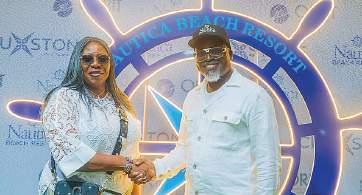
Bennett Oghifo
Luxury real estate developer, 7-Fifteen Capital Limited, has formally entered the Lagos property market with the launch of
its new office in Ikoyi, marking a significant milestone in the company’s growth strategy and reinforcing its commitment to delivering premium residential developments in Nigeria’s

commercial capital.
The official launch, held over the weekend in Ikoyi, attracted an array of prominent business leaders, investors, policymakers and industry stakeholders, underscoring the growing interest in high-end real estate developments across Lagos.
The event commenced with an art exhibition titled LoadBearing, curated by Yenwa Gallery. The exhibition featured five sculptural works specially commissioned by 7-Fifteen Capital and designed to reflect the company’s architectural philosophy, development journey and vision for luxury living.
Among the projects highlighted during the exhibition was Zuri Residences, the company’s flagship Lagos development currently under construction on George Street, Ikoyi. Through the artistic showcase, guests were offered a unique perspective on the company’s approach to design, innovation and urban development.
The gathering drew some of Nigeria’s most influential figures, including Aliko Dan-
gote, Chairman of Dangote Group; Hakeem Belo-Osagie, Chairman of Metis Capital Partners; Atedo Peterside, Founder of Stanbic IBTC and ANAP Foundation; Aigboje AigImoukhuede, Chairman of the Aig-Imoukhuede Foundation; Minister of Industry, Trade and Investment, Jumoke Oduwole; Minister of Education, Maruf Tunji Alausa; and the Governor of Lagos State, Babajide SanwoOlu, among other distinguished guests.
Delivering the keynote address, Governor Sanwo-Olu highlighted Lagos’ continuing transformation into one of Africa’s most attractive investment destinations and emphasised the critical role private sector developers play in shaping the future of the city.
He noted that quality real estate developments contribute not only to economic growth but also to the creation of aspirational communities capable of enhancing the overall urban experience. The governor formally welcomed 7-Fifteen Capital to Lagos and expressed
confidence in the company’s ability to deliver projects that align with the state’s vision for sustainable urban development.
Speaking on the company’s expansion, Chief Executive Officer and Co-Founder of 7-Fifteen Capital, Tope Adekoya, said the move into Lagos represented a natural progression of the firm’s long-term vision.
According to him, the company was founded with the objective of creating refined and thoughtfully designed spaces that homeowners would be proud to occupy.
He explained that the vision had already been successfully realised through landmark developments in Abuja, including Myari Lakeside, The Residence and The Cove Lakeside, projects distinguished by quality craftsmanship and a strong emphasis on the relationship between architecture and everyday living.
Adekoya stated that while Lagos presents a different environment characterised by energy, ambition and rapid growth, the company intends
to maintain the same standards and philosophy that have defined its success in Abuja.
He added that 7-Fifteen Capital remains committed to making meaningful contributions to Lagos’ evolving urban landscape through innovative and enduring developments.
The launch also featured a panel session titled “From Land to Keys: Fixing the Gaps in Lagos Real Estate Delivery,” during which industry experts examined the opportunities and challenges affecting property development and housing delivery in Lagos.
Another major highlight of the evening was the unveiling of the 7-Fifteen Foundation, the company’s corporate social responsibility and social impact platform aimed at supporting underserved communities.
The Foundation is expected to focus on improving social welfare and expanding access to opportunities for children and young adults facing challenges related to education, employment, skills development and basic living needs.
From Orbit to the street: How satellite data is revealing the hottest neighbourhoods of africa’s largest megacity — and what Lagos must do with the map.
Adedoyin K.S. Lasisi
“Roughly two-thirds of the heat Lagosians now endure was not produced by the planet. It was produced by the city itself.”
— Cao et al., Scientific Reports, 2022
At 2 A.M. on a dry-season night in Lagos, the air in Mushin does not cool. The asphalt on Agege Motor Road, baked all day by tropical sun, continues to radiate heat upward through the small hours. The zinc rooftops above the densely packed compounds — sheets of corrugated iron stretched across hundreds of thousands of homes — release the day’s
accumulated thermal load slowly, unforgivingly, into the bedrooms below. In a rural village thirty kilometres away, on the edge of southern Ogun State, the same night is more than seven degrees Celsius cooler. The difference is not weather. It is geography. It is engineering. It is the silent, measurable, accelerating cost of how Lagos has been built. Lagos, Africa’s largest megacity and one of the world’s fastest-growing urban centres, is experiencing a severe and accelerating urban heat crisis. While many dismiss this as the unavoidable urban experience, data available says otherwise. Lagos is
warming, not as a metaphor, not as a projection, but as a measured, satellite-confirmed fact. Lagos’s land surface temperature is rising at 1.43°C per decade. Of that total, 0.985 °C per decade — roughly two-thirds — is driven by local urbanisation: how the city has been built, paved, and stripped of its tree cover, while only 0.44 °C per decade is attributable to global climate change. In other words, two-thirds of Lagos’s heat crisis is locally made — and therefore locally solvable. Today, Lagos is one of the most densely populated cities on Earth, with an estimated 15–22 million residents and a growth rate of 3.2–4.5% per
annum (UN-Habitat, 2023) and with large area converting permeable, vegetated surfaces
into highly impervious cover, suppressing evapotranspiration, and creating persistent
zones of elevated surface and air temperature known as Urban Heat Islands (UHIs).
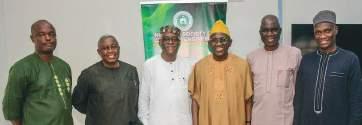
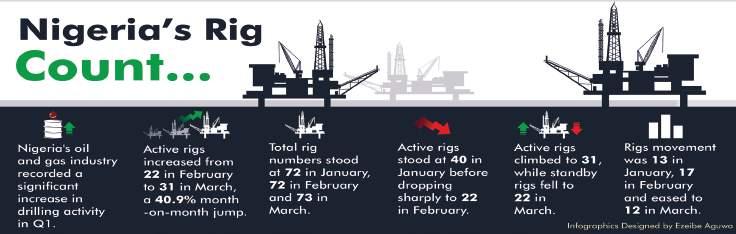
Emmanuel Addeh in Abuja
Nigeria’s oil and gas industry recorded a significant increase in drilling activity in the first quarter of 2026, with the number of active rigs rising by over 40 per cent between February and March, according to data released by the Nigerian Upstream Petroleum Regulatory Commission (NUPRC).
The commission’s Rig Disposition Report for January to March 2026 showed that active rigs increased from 22 in February to 31 in March,
representing a 40.9 per cent month-on-month jump.
Compared to January’s figure of 40 active rigs, the March level still reflected a strong recovery from the sharp slowdown witnessed in February.
The data indicated that Nigeria maintained a relatively stable rig fleet throughout the quarter, with total rig numbers standing at 72 in January, 72 in February and 73 in March. However, the composition of the fleet changed considerably during the period, highlighting shifting operational activity
across the upstream sector.
According to the report, active rigs stood at 40 in January before dropping sharply to 22 in February. The decline coincided with a substantial increase in standby rigs, which rose from 11 in January to 25 in February. This suggested that a significant number of drilling units were temporarily unavailable for operations despite remaining technically ready for deployment.
By March, however, industry activity appeared to regain momentum. Active rigs
climbed to 31, while standby rigs fell to 22, indicating that some idle units had returned to operational service. The recovery pointed to renewed drilling programmes and improved field activity by operators seeking to sustain production and advance development projects.
The report also showed that the number of stacked rigs remained unchanged at eight throughout the quarter. Stacked rigs are units that have been withdrawn from active service for an extended period, usually
because operators have no immediate work programmes for them. The stability in the stacked rig category suggested that while activity levels fluctuated, there was no significant deterioration in the underlying condition of the country’s drilling fleet.
In addition, rigs movement totalled 13 in January, increased to 17 in February and eased to 12 in March. These were rigs being relocated between locations or projects and were therefore temporarily unavailable for drilling operations. The
movement of rigs during the quarter reflected efforts by operators to reposition assets for upcoming exploration, appraisal and development campaigns.
Rig count is one of the most important indicators of future oil and gas production because drilling activity typically precedes output growth. An increase in active rigs generally signals stronger investment, higher exploration activity and increased field development work.
The price of Liquefied Petroleum Gas (LPG), popularly called cooking gas, has continued to increase, now climbing to N2,000 per kilogramme in many Lagos retail outlets, while big gas plants sell at N1,700/kg.
The surge has triggered long queues at filling stations and forced many families to revert to charcoal and firewood.
THISDAY’s visit to one of Gasland’s LPG plants

on LASU-Igando Road, Lagos showed a long queue of consumers waiting to fill their cylinders amid grumbling over the hike in price.
On the company’s price board, 2kg goes for N3,400; 6kg was sold at N10,200 while 12.5kg was sold at N21,250, a sharp jump from N12,000-N13,000 recorded earlier in 2025. A simple calculation showed that at the rate, a minimum wage earner spending N70,000/ month would use over
one-third of her income just to cook.
The Nigerian Association of Liquefied Petroleum Gas Marketers (NALPGAM), one of the umbrella bodies of cooking gas marketers, has warned that erratic supply and rising depot costs were pushing prices beyond reach.
In a recent statement jointly signed by its National President, Edu Inyang and the Executive Secretary, Bassey Essien, NALPGAM said marketers now pay N25.2 million to N26.2

million to buy 20 metric tonnes of LPG from supplies.
“The citizens of Nigeria now have to buy cooking gas, which should be a social commodity, at a prohibitive cost of over N1,500 per kilogramme,” the association stated.
Economically, the association said small businesses and food vendors who rely on LPG were being squeezed out, adding that the situation has “brought untold hardship to millions of Nigerian households,
small businesses, food vendors, and low-income families”
“With a 12.5kg refill now costing N25,000, many consumers have suspended purchases,” it said.
NALPGAM cautioned that the situation “could trigger public unrest and undermine years of government efforts to promote clean cooking energy through increased LPG penetration”.
However, energy analysts and industry players point to three interlocking

problems hindering LPG supply including insufficient offtake infrastructure, weak enforcement of reforms, and sharp practices by importers and suppliers.
Data from the Nigerian Midstream and Downstream Petroleum Regulatory Authority (NMDPRA) shows that local production from refineries and gas processing plants accounted for the bulk of supply between April 2025 and April 2026.




The Nigerian Association of Chambers of Commerce, Industry, Mines and Agriculture (NACCIMA) has identified “delays at border posts, multiple checkpoints, administrative bottlenecks, and other non-tariff barriers” as part of the challenges undermining cross-border trade and the competitiveness of Nigerian exports within the West African sub-region.
NACCIMA’s assessment revealed that these issues are responsible for increasing the cost of doing business within the sub-region.
The National President of NACCIMA, Mr. Jani Ibrahim, said that the strategic road trip enroute to Biashara Africa 2026 in Togo started from Lagos
and continued through the Seme Border all the way to Lomé, Togo, was part of the association commitment to promoting seamless intraAfrican trade and supporting Nigerian exporters.
Ibrahim said that this fact-finding mission provided NACCIMA delegation with an opportunity to gain first-hand insight into the challenges and bottlenecks confronting exporters along the route.
He said that during the exercise, “the delegation engaged directly with exporters, transport operators, customs officials, and other relevant stakeholders along the way, to identify operational constraints affecting the smooth movement of goods across borders.”
He also reaffirmed
NACCIMA’s commitment to continue to advocate for, “policies and reforms that would optimally facilitate trade, strengthen regional integration and improve
the ease of doing business in line with the objectives of both the ECOWAS Trade Liberalisation Scheme and the African Continental Free Trade Area (AfCFTA).”
He disclosed that the findings from the road trip will form part of NACCIMA’s ongoing engagement with government agencies, regional institutions, and development
partners aimed at addressing trade barriers and creating a more efficient, predictable and competitive export environment for Nigerian businesses.
Algeria has launched the construction of a new section of the Trans-Saharan Gas Pipeline, a major energy project designed to transport natural gas from Nigeria to Europe through Niger and Algeria.
Algerian Energy and Mines Minister, Mohamed Arkab, and representatives of Nigeria and Niger inaugurated the first welding operations for the pipeline, which will have
a diameter of 48 inches.
According to project documents distributed to journalists, seen by Anadolu, the new Algerian section will stretch 1,210 kilometers (752 miles) from the Niger border to Aoulef, where it will be connected to the gas transport network leading to the Hassi R’Mel field, Africa’s largest natural gas field.
From there, gas will be transported to export
terminals in Beni Saf on Algeria’s western coast or El Kala in the east near the Tunisian border.
The Trans-Saharan Gas Pipeline is one of Africa’s largest energy infrastructure projects, with a total length of 4,327 kilometers (2,689 miles) linking Nigeria’s Warri city to Hassi R’Mel through Niger.
The pipeline extends 1,185 kilometers inside Nigeria and 720 kilometers inside Niger.
The Algerian section spans
2,424 kilometers, of which 1,210 kilometers are being newly constructed, while the remaining distance consists of existing pipelines transporting gas from southern fields to pumping stations and northern cities. Arkab said the project would enable the transport of more than 20 billion cubic meters of natural gas annually from Nigeria and Algeria to European markets.
The Nigerian Independent System Operator (NISO) has again dissociated itself from the unauthorised social media account on X, identified as “Nigeria National Grid.”
public.
The Transmission Company of Nigeria (TCN) has handed over the site for the construction of two 330kV bays at the Kainji Transmission Substation to Mainstream Energy Solutions Limited (MESL), paving the way for the evacuation of an additional 220MW from the
TCN said in a statement that the formal site handover took place at the weekend, and would enable MESL to commence civil, electrical and mechanical works, as well as testing and commissioning activities for the project.
Upon completion, the two bays will facilitate the evacuation of power from two new turbines, Units IG3 and IG4, with a combined generation capacity of 220MW, to be installed at the Kainji power station, the statement signed by TCN’s General Manager, Public Affairs, Ndidi Mbah, noted.
Group
Eromosele
Deputy
Comms/e-Business
Asst.
Emmanuel
Asst.
Nume Ekeghe
Correspondents
KayodeTokede
James Emejo (Finance)
Ebere Nwoji (Insurance)
Reporter Peter Uzoho (Energy)
“The physical handover of the 2x330kV bays construction site is intended to facilitate the start of construction activities, including civil, electrical, and mechanical works, as well as testing, commissioning, and all other approved project tasks.
“After completion, the 220MW capacity bays will enable the evacuation of the two additional IG3 and IG4 turbines with capacity to generate 110MW each, totalling 220MW, which is to be installed in Kainji power station,” the TCN added.
NISO said it observed with concern that the said account continues to operate and disseminate misleading and unauthorised information about the power grid to the
“We therefore find it necessary to once again state, clearly and unequivocally, that NISO does not own, manage, control, or operate the social media account on X (formerly Twitter) bearing the name “Nigeria National Grid.
“Therefore, we have no affiliation with this account.
The individuals or entities
operating it are unknown to the organisation and are in no way authorised to speak on its behalf, represent its views, or act under our name,” the organisation added.
It urged the public, media organisations, and all stakeholders not to quote, reference, rely upon, or attribute any information, statements, claims, or opinions
published on the said account to NISO.
“Any such content does not represent the official position, operations, or activities of the organisation,” it said.
NISO stated that it remains committed to transparent, accurate, and responsible communication with all stakeholders and the general public.
Nigeria has reverted to high volume of petrol importation, with petrol imports surging to their highest level in four months in May, highlighting the country’s partial dependence on foreign fuel supplies.
According to Argus media, new market data showed that petrol deliveries into Nigeria
averaged 57,000 barrels per day in May, while exports stood at 23,000 barrels per day.
The development reversed the country’s net export position recorded in March and April, when local supply exceeded imports. Industry data indicated that the increase in imports
was largely driven by maintenance activities at the 700,000 barrels-per-day Dangote Refinery in Lekki.
The refinery’s Residual Fluid Catalytic Cracker (RFCC), a critical unit responsible for gasoline production, underwent maintenance during the month, affecting output and creating the need for additional fuel imports. The temporary reduction in local production prompted marketers and refiners to source more petrol from Europe, which supplied Nigeria’s entire import requirement in May. Norway emerged as the largest supplier, followed by Italy and France.
Sahara Group Foundation has inaugurated a new ‘Go Recycling Hub’ in Masaka, Nasarawa State, extending structured recycling access to communities in Northern Nigeria.
Delivered in partnership with the Nasarawa State Waste Management Authority (NASWAMSA),
the hub marks a significant step in scaling practical, community-driven sustainability solutions across the country.
The Sahara Go Recycling Initiative converts waste management into opportunity, helping to divert recyclables from landfills, improve
environmental awareness, and create income pathways for households.
The Masaka hub deepens that impact while reflecting the Sahara Beyond XXX vision of building sustainable ecosystems that deliver long-term value for people, communities, and the planet. Speaking at the unveiling, Director, Sahara Group Foundation, Chidilim Menakaya, said the launch underscores the Foundation’s focus on scalable solutions that combine environmental stewardship with community empowerment.
Goddy egene
Following financial sector reforms and $7 billion backlog clearance by the Central Bank of Nigeria (CBN), FX inflows into the economy continued to rise, closing 2025 at $112 billion. The surge in autonomous FX inflows, foreign portfolio investment and non-oil export proceeds is enabling local banks to expand naira card spending limits abroad and supporting Foreign Direct Investment (FDIs) into the domestic economy.
Clearly, before the Olayemi Cardoso-led management team of the CBN assumed office in October 2023, one of the biggest challenges that the country’s economy was grappling with was forex scarcity.
To deal with the challenge, businesses and travelers had to resort to the parallel FX market to source for funds, a situation which allowed FX speculation to thrive.
However, one of the first key major steps that the CBN, took in 2023, was to embark on a series of bold reforms to attract more foreign capital to the economy, achieve price and exchange rate stability.
Specifically, the apex bank liberalised the foreign exchange market, stopped central bank financing of the fiscal deficit, resulting in increased investor confidence in the Nigerian economy and allowing the country to successfully return to international capital markets last December and being upgraded by rating agencies.
Also, the implementation of the reforms has significantly boosted the nation’s FX reserves as well as liquidity in the Fx market.
Nigerian banks have recently started lifting the over three-year moratorium on the use of naira-funded debit cards abroad. For instance, Guaranty Trust Bank (GTB) last week raised quarterly dollar spending limit on naira cards to $20,000 to enable cardholders have greater dollar spending power when traveling abroad.
In emailed note to customers titled: “Important Update on Your GTBank Naira Card” the bank said cardholders can now spend up to $20,000 quarterly.
“The Dollar Limit on your GTBank Naira Card is now $20,000 quarterly. The funds are reliably available on Point of Sale (POS) and online transactions.”
The bank had earlier pegged its quarterly transaction limits across different channels at $1,000 for online and PoS transactions while ATM transactions are limited to $500.
Also, two other Tier-1 banks and a mid-tier bank, United Bank for Africa (UBA) Plc and FirstBank and Wema Bank Plc respectively, are now allowing international transactions on naira debit cards for their customers.
Thus, in earlier notice to customers, UBA said the resumption aligns with its continued commitment to providing clients with seamless and enhanced banking experiences.
“In line with our continued commitment to providing you with seamless and enhanced banking experiences, we are pleased to inform you that all UBA Premium Naira Cards, including Gold, Platinum, and World variants are now enabled for international transactions,” the bank said.
“This means you can now use your Premium Naira Card for everyday payments, online shopping, POS, and ATM transactions across the world, with more ease and flexibility. “If you haven’t used your card recently, now’s a
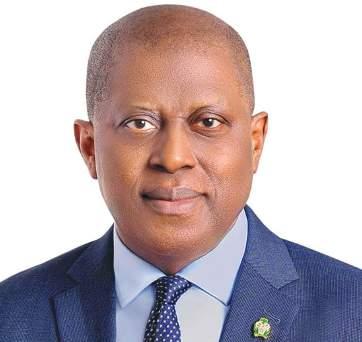
great time to rediscover the convenience and prestige that comes with being a UBA premium cardholder.
Also in a recent statement, Wema Bank said customers can now “pay in dollars” with their naira cards.
“Your Wema Naira Mastercard just went global! Now you can pay in dollars on all your favourite international platforms; Amazon, eBay, AliExpress? Netflix, Spotify, YouTube,” the bank said.
Similarly, in an emailed note to its customers, FirstBank said its Naira Mastercard can now be used for international transactions. “Shop online or spend up to $500 every month on your preferred channel seamlessly,” the bank said.
To making offshore transactions easier for its customers, FirstBank in partnership with Visa, inaugurated Visa Signature, a premium card offering designed for Nigeria’s affluent segment.
Visa Signature targets Nigeria’s top executives, business owners, and frequent international travelers who expect more from their financial products.
Commenting on FirstBank’s ambition for its premium cardholders, Group Executive, eBusiness & Retail Products, FirstBank, Chuma Ezirim, said: “At FirstBank, we are dedicated to creating financial solutions that reflect the evolving lifestyles of our customers.
Highlighting the strategic importance of the FirstBank partnership, Vice President and Cluster Head, West Africa, Visa, Andrew Uaboi noted: “Nigeria’s affluent consumers are among the most active and globally connected spenders on the continent.
Visa Signature is designed to serve that profile with the depth of benefits and the breadth of acceptance they deserve. We are delighted to work with FirstBank in making this available to the Nigerian market.”
Head of financial institutions ratings at Agusto & Co, Ayokunle Olubunmi, said the improved liquidity in the FX market
supported banks’ decision to reactivate their naira cards for global transactions.
“The moderating premium on the parallel market transactions and the reduced arbitrage opportunities is also responsible for the decision,” he said.
Managing Director, Financial Derivatives Company Limited, Bismarck Rewane, attributed rising FX inflows to a surge in oil prices and multiple inflow channels created by the CBN.
He said the apex bank also activated multiple FX sources to increase dollar inflows, boost dollar access to manufacturers and retail end users and support naira recovery across markets.
From measures to improve Diaspora remittances through new product development, the granting of licences to new International Money Transfer Operators (IMTOs), implementing a willing buyer-willing seller FX model, and enabling timely access to naira liquidity for IMTOs, the CBN has simplified dollar inflow channels for authorized dealers and other players in the value chain.
Founder and Chief Consultant of B. Adedipe Associates Limited (BAA Consult), Prof. ‘Abiodun Adedipe, listed major policy shifts yielding positive results for the economy.
He said that the CBN has eliminated strange arbitraging and round tripping opportunity through the forex market reforms; through petrol subsidy removal, the federal government removed crippling annual waste of US$10.7 billion and created environment for competition; bank recapitalisation is creating stronger and more capable banks to fund US$1 trillion economy while fiscal consolidation is plugging leakages, deploying technology and making government agencies more accountable and expanding fiscal space at sub-national.
Continuing, Adedipe said the real game
changer remains the tax reforms, capable of igniting regional competition (the secret behind Chinese economic renaissance) while the Nigerian Education Loan Fund, Consumer Credit Corporation, Recapitalized Bank of Agriculture, National Credit Guarantee Company Ltd, Single digit interest rate mortgage loans are major steps that should be taken to support sustainable economic growth.
Adedipe said that Nigeria’s economy is supported by large, youthful and rapidly growing population (estimated at 237.53 million in July 2025 and sixth largest in the world, median age at 18.1 years).
The country, he said, also benefiting from rapid urbanisation with 54.28 per cent in December 2023, up from 46.12 per cent in 2013 and 51.96 per cent in 2020, deepening internet penetration which is at 48.15 per cent in April 2025, up from 45.57 per cent in August 2023 and 31.48 per cent in December 2018. Nigeria’s tele-density at 79.65 per cent in May 2025, from 76.08 per cent in December 2024 and 102.97 per cent in Dec 2023, due to data cleanup at end of April 2024.
“On global internet users, shows that Nigeria with 123 million ranks 11th and 7th with over 84 per cent on mobile devices. Local oil refining continues to expand and prospects of new refineries, manufacturing is reviving and there is expanding interest in non-oil exports. Improvement in infrastructure will begin to positively impact the cost of doing business,” he said.
He added that sustained deep reforms will enhance global competitiveness and Ease of Doing Business, plug leakages and shrink the space for economic rent.
The CBN explained that monetary reform cannot be effective in a vacuum. Alignment with fiscal policy has strengthened Nigeria’s macro stability and yielded tangible results including reduced domestic borrowing costs, improved liquidity conditions, and more predictable fiscal operations.
For instance, the discontinuation of direct deficit financing signals one prong in our commitment to discipline.
“This stance is unequivocal as there will be no return to the practice of financing fiscal deficits by the CBN. In parallel, the fiscal authorities have embarked on key institutional reforms – including the implementation of a Revenue Optimisation (RevOp) framework, the establishment of a new National Revenue Agency, and upgrades to the Treasury Single Account (TSA) – to strengthen revenue mobilisation and public financial management,” Cardoso said.
“As we transition towards a full-fledged inflation-targeting framework, this partnership will deepen, ensuring fiscal and monetary policies reinforce each other in delivering durable price stability,” he added.
The CBN had embarked on a series of bold reforms to attract more foreign capital to the economy, achieve price and exchange rate stability.

L-R: Digital Marketing Specialist, FrieslandCampina WAMCO, Mr. Chinonso Etieh; Senior Brand Manager, Peak Milk, Mrs. Moronke Adisa-Abayomi; Nigerian influencer, Mr. Akinyemi Oluwaseun Omotayo (Asherkine); Marketing Manager, Peak Milk, Mrs. Omolara Banjoko; and Category Brand Manager, Peak Milk, Mr. Peter James, at the World Milk Day 2026 Record Breaking Breakfast Experience at Ikeja City Mall, Ikeja, Lagos, organised by Peak Milk ...recently
Dike
The Chief Executive Officer of Financial Derivatives Company (FDC), Mr. Bismarck Rewane, has stated that Nigeria experienced a high rate of poverty and escalating insecurity amidst rising gross domestic product (GDP) in three years of implementation of President Bola Tinubu’s administration’s economic reform.
Rewane described the three years of economic reform as “a mixed
bag of 15 per cent cheers, 30 per cent tears and 55 per cent fears” in his June 2026 presentation at the LBS Breakfast Session titled “Three Years After Reform: Cheers, Fears and Tears.”
He said GDP was at 3.89 per cent in the first quarter (Q1) 2026, higher than the population growth of 2.1 per cent, but still below the potential GDP of 4.0 per cent.
He added that S&P has upgraded the Nigerian sovereign rating to “B” with a positive outlook, citing the
benefits of economic reform, a stable currency, and the Dangote refinery while the NGX has gained over 50 per cent, which is 35 percentage points above inflation.
“On the other hand, the impact of money illusion, in which effective values are far lower than nominal values, is a major threat to macroeconomic stability.
“In real terms, the dollar value of the variables shows modest improvements. The gross external reserves are sharply higher at $49.95
billion, as are debt $110.97 billion and debt service cost of $11.29 billion.
“The fiscal deficit at N33.99 trillion ($24.28 billion) is deeply worrisome. The economic outlook is for stability of the Naira in the forex market, maintenance of the current monetary policy stance (MPR: 26.5%), high interest rates (lending rate: 26%), and a moderation in inflation later in the year as the Dangote refinery continues to cut prices.”
On whether the reform has delivered, Rewane said that “Nigeria
Youth groups from the Ilorin Emirate have declared support for the emergence of the Speaker of the Kwara State House of Assembly, Rt. Hon. Yakubu Danladi Salihu as the All Progressives Congress (APC) governorship candidate for the 2027 election.
The endorsement was made at a joint press conference organised by the Ilorin Emirate Dynamic Youth Initiative and the Ilorin Emirate Youth Progressive for Communities on Monday in Ilorin.
experienced a reform-induced inflation shock in 2023–2024 followed by a gradual easing phase in 2025, after the reconstitution of the inflation basket
“There is a significant deterioration in living standards and poverty level,” adding that “minimum wage at N70,000 is not keeping up with inflation (while) real incomes are squeezed and the share of Nigerians living below the poverty line rose 63 per cent in 2025 from 56 per cent in 2023.
“Household incomes have not grown to offset the rate of inflation growth and insecurity status is escalating.”
debt grew from $108.23 billion in 2023 to $141.94 billion in 2026.
Power supply from the national grid grew from 4100MW to 4500MW in 2023 and 2026, respectively.
He stated that Nigeria’s GDP growth within these three years was mainly driven by consumption. He said: “Consumption remains the leading component, comprising 60 per cent of GDP in 2025 compared to 53 per cent in 2023.”
Rewane said that petrol and diesel supply improved significantly in the past three years with the ramp-up of the Dangote refinery, but their prices are still elevated.
The price of petrol (PMS) moved up by 326.05 per cent from N311 per litre in 2023 to N1,325 per litre in 2026: N1,325/litre; diesel moved up by 120.48 per cent from N842.25/ litre in 2023 to N1,857/litre.
According to them, their position was informed by the longstanding values of justice and balanced representation associated with the Ilorin Emirate.
“We believe that supporting the governorship aspiration of Rt. Hon. Salihu Yakubu Danladi is not only a political decision but a moral obligation rooted in fairness, justice and equity,” the groups said.
They noted that while Kwara Central and Kwara South had produced governors since the return to democratic rule in 1999, Kwara North had yet to occupy the office.
Addressing journalists, the spokesman for the groups, Abdulwaheed Olamilekan said it was time for Kwara North Senatorial District to produce the state’s governor in the interest of equity, fairness and inclusive governance.
“Since 1999, Kwara North has not had the opportunity to produce a governor. It is therefore only fair and just that the district be supported to occupy the office in 2027,” they stated.
The youth groups described Danladi’s aspiration as a legitimate quest for inclusion and political balance, stressing that supporting a candidate from Kwara North would strengthen unity and foster a greater sense of belonging among the state’s diverse communities.
They also said the endorsement was a demonstration of appreciation for the district’s consistent political support for Kwara Central over the years.
“Kwara North has consistently sup-
ported candidates from other districts. Supporting the district’s aspiration in 2027 is a gesture of reciprocity that will further strengthen the bond of unity across the state,” they added.
The groups highlighted Salihu’s credentials as an engineer, former lecturer and Speaker of the State House of Assembly, saying his experience and youthful leadership position him to advance youth empowerment and development.
“Rt. Hon. Yakubu Salihu possesses the competence, experience and youthful energy required to deepen youth participation, empowerment and sustainable development across Kwara State,” they said.
According to Rewane, the cumulative price of 50kg rice, a basket of tomatoes, one big bag of pepper, 50kg honey beans, litre of petrol, 10kg cooking gas, 50 kg flour, and bread increased from N181,720 in 2023 to N479,624 in 2026, which represented a 163.94 per cent increase in price.
Rewane noted that the positive side of the reform included the rise in GDP from $257.85 billion in 2023 to $340.77 billion in 2026; GDP growth rate from 2.27 per cent in 2023 to 4.04 in 2026; stock market capitalisation from $45.88 billion to $112.75 billion; trade balance of $5.72 billion in 2023 to $14.13 billion in 2026 and gross external reserve that grew from $32.91 to $49.58 billion in 2026.
He, however, pointed out that GDP per head declined from $2,139 in 2023 to $1,468 in 2026.
In the same vein, fiscal deficit rose from -N11.34 trillion in 2023 to -N23.85 trillion in 2026, while total
The price of 5kg cooking gas went up by 99.68 per cent from N4,360 in 2023 to N8,706 in 2026.
He said the surge in PMS, diesel, and cooking gas prices since 2023 was primarily driven by the removal of fuel subsidies, exchange rate liberalisation and Naira depreciation However, exchange rates have remained stable after sharp spikes in 2023 and 2024.
Rewane noted that the Naira depreciated from about N410/$ in 2021 to over N1,900/$ by 2024 following exchange rate liberalisation and market reforms in 2023.
“While the reform improved FX market efficiency and reduced distortions, the Naira has lost about 36 per cent between 2023 and 2026.
Michael Olugbode in Abuja
Nigeria and China have reaf- firmed their commitment to deepening cultural cooperation and people-to-people relations through the launch of the “Hello Nigeria—2026 Panda Painting Interactive Experience,” an initiative aimed at promoting friendship, creativity and mutual understanding between the peoples of both countries.
The event, held at the China Cultural Centre in Abuja, brought together diplomats, government
officials, artists, cultural practitioners, students and members of the diplomatic community to celebrate the power of art as a tool for international dialogue and cultural exchange.
Speaking at the opening ceremony, Minister of the Chinese Embassy in Nigeria, Zhou Hongyou, described the giant panda as a symbol of peace, harmony and inclusiveness, noting that the exhibition was designed to build bridges between Chinese and African cultures through artistic expression.
According to him, the interactive programme combines the cultural heritage of China’s Sichuan Province—the natural home of the giant panda—with Africa’s vibrant artistic traditions, creating a platform for meaningful engagement among young people and cultural enthusiasts.
“The panda transcends language and borders. Through art, creativity and cultural exchange, we hope to foster deeper understanding and friendship between our peoples,” Zhou said.
The Chinese diplomat
noted that the event comes at a significant moment in bilateral relations, as 2026 marks the 55th anniversary of diplomatic ties between Nigeria and China and has been designated as the ChinaAfrica Year of People-to-People and Cultural Exchanges.
He stressed that while economic cooperation remains important, sustainable relations between nations are ultimately built on trust, mutual respect and appreciation of each other’s cultures.
Zhou disclosed that the Chinese
Embassy and the China Cultural Centre would continue to expand cultural programmes, youth exchanges, language learning opportunities and artistic collaborations to further strengthen ties between both countries.
Also speaking, Permanent Secretary of the Federal Ministry of Art, Culture and the Creative Economy, Abdulkarim Ozi Ibrahim, said cultural initiatives such as the Panda Painting Interactive Experience demonstrate the ability of art to unite people across linguistic, geographical and social
boundaries.
He described the programme as a practical example of cultural diplomacy in action, emphasizing that creative engagement promotes shared values, mutual respect and peaceful coexistence among nations.
“The creative sector serves as a powerful platform for fostering peace, inclusion and sustainable development. Through culture, we are able to build bridges, strengthen relationships and celebrate our shared humanity,” Ibrahim said.
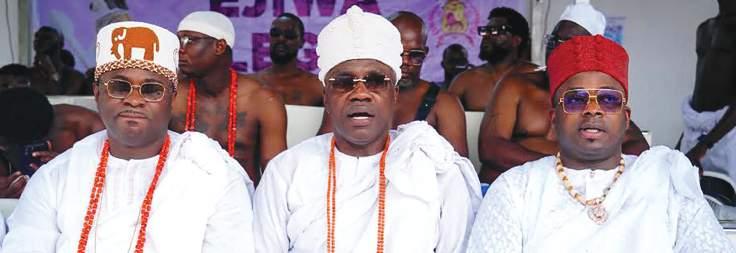
L-R:
the Elegba-Ejiwa festival in Ikate-Elegushi, on Sunday
Says Tinubu, governors back proposal as constitution amendment heads to state assemblies Explains National Assembly will isolate bill from broader review to accelerate approval
Sunday Aborisade in Abuja
Senate has concluded plans to fasttrack the constitution amendment process for the establishment of state police, with the proposal expected to be passed this week and transmitted to the 36 states Houses of Assembly for ratification.
Leader of the Senate, Opeyemi Bamidele, disclosed on Monday that the National Assembly had resolved to isolate the state police bill from the broader ongoing constitution review process in order to hasten its passage in response to growing national security concerns.
Bamidele, in a statement issued by his Directorate of Media and Public Affairs, said there was now a broad national consensus on the need to decentralise policing and establish state police structures across the federation.
According to him, the proposal enjoys the backing of President Bola Tinubu, state governors, state legislatures, and other key stakeholders, raising hopes that one of Nigeria’s most contentious constitutional debates may soon be resolved.
He described the legislative week commencing on Tuesday as crucial, revealing that the senate has placed
the state police bill at the top of its agenda.
Bamidele stated, “Our position is very clear on state police. We are standing with Nigerians on the issue of state police. All strata of the federation have made it clear that there cannot be a better time to establish a state police than now.”
He added that lawmakers had resolved to translate the growing public demand into constitutional reality by ensuring speedy legislative action.
He stated, “We came to the conclusion that we are going to pass the constitutional amendment in this respect to make a provision for the state police.
“If I can tell you as of today, that will come to fruition this very week because there is no need to allow any further delay.”
The move represents one of the most significant constitutional reforms currently before the National Assembly and comes amid persistent concerns over insecurity, banditry, kidnapping, and other violent crimes across various parts of the country.
Nigeria currently operates a centralised policing structure under Section 214(1) of the 1999 Constitution, which provides that there shall be only
one police force for the federation, known as the Nigeria Police Force.
Advocates of state police have long argued that the existing structure has become overstretched and inadequate for addressing complex security challenges across the country’s diverse regions.
Opponents, however, expressed concerns about possible abuse by state governments.
Bamidele said extensive consultations among critical stakeholders had helped to build consensus around the proposal and address many of the concerns previously raised against it.
He disclosed that senior officials of the National Assembly had in recent weeks engaged key actors within the executive and security sectors to fine-tune the framework for the proposed reform.
Bamidele stated that Chairman of Senate Committee on the Review of the 1999 Constitution, Senator Barau Jibrin, and Chairman of House of Representatives Committee on Constitutional Review, Benjamin Kalu, had participated in a series of meetings with the Office of the Attorney-General of the Federation, Chief of Staff to the President, and Inspector-General of Police.
He said the consultations were
aimed at ensuring a coordinated approach to the constitution amendment process and smoothing the path for its eventual implementation.
“What we have resolved to do is to isolate it with the rest of the bills that we have proposed under constitutional amendment so that we
can vote on this as soon as possible,” Bamidele said.
He explained that once approved by the National Assembly, the bill would immediately be transmitted to the state legislatures, where it must secure the support of at least two-thirds of the 36 states Houses of Assembly before it could be presented to the president for assent.
“The bill can as well be on its way to the 36 State Houses of Assembly as soon as possible because we will need two-thirds of the state assemblies to approve it before the president can assent to it,” he said.
TINUBU: LAGOS IS AFRICA’S GATEWAY TO GLOBAL CAPITAL requires structural discipline and economic realism.
“We have taken difficult decisions because we understand that the economy of our dream cannot be built on illusions. It must be built on productivity, discipline, competitiveness, and the courage to create a climate in which enterprise can breathe”.
Highlighting Nigeria’s long-term opportunity, Shettima said the country’s demographic profile and strategic position under the African Continental Free Trade Area present a unique platform for industrial expansion and regional competitiveness.
With projections placing Nigeria among the world’s largest populations by 2050 and AfCFTA creating access to a market of more than 1.4 billion people, he said the country was positioned to emerge as Africa’s
Linus Aleke in Abuja
The Inspector-General of Police (IGP), Olatunji Disu, has called for stronger regional collaboration among West African nations to combat transnational organised crime, emphasising the importance of intelligence sharing, coordinated law enforcement efforts, and collective action in addressing security challenges confronting the sub-region.
Disu made the call while presiding over the 11th Meeting of Heads of INTERPOL National Central Bureaus (NCBs) for West Africa, held at Johnwood Hotel in Abuja.
According to a statement by the Force Public Relations Officer, DCP Anthony Placid, the meeting brought together heads of NCBs from 16 West African countries, as well as senior representatives of the INTERPOL General Secretariat and regional security organisations.
Addressing participants, the IGP highlighted the evolving threat landscape across West Africa, noting that criminal networks continue to exploit porous borders and regional vulnerabilities to advance their operations.
He said: “Human trafficking syndicates, arms dealers, drug
networks, cyber fraudsters, money launderers, terrorist financiers, and violent extremist groups all share one defining characteristic: they operate without regard for national borders.”
Disu stressed that no single nation could effectively tackle these threats in isolation, maintaining that the success of the region’s security architecture depends on the strength, speed, and effectiveness of partnerships among all 16 member states.
He outlined several measures already being implemented by Nigeria to strengthen regional security cooperation. These include the expansion of
INTERPOL’s I-24/7 secure communications network to border control points and law enforcement institutions across the country, ensuring that officers at border crossings have the same real-time access to critical intelligence as personnel at national headquarters.
The IGP also reaffirmed Nigeria’s commitment to Project GEMINI through the systematic uploading and verification of INTERPOL’s Stolen and Lost Travel Documents database.
He further cited the West African Police Information System (WAPIS) as a practical example of the benefits of purposeful regional data integration.
leading production, logistics, innovation and investment hub.
The Vice President, however, stressed that the Federal Government cannot deliver economic transformation in isolation.
Earlier, Governor Sanwo-Olu said the forum was reinforcing Lagos’ status as an investment-ready destination that offers a veritable gateway and platform for investors to tap from the abundant resources across different sectors.
Acknowledging the contribution, vision and foundation for a new Lagos laid by President Tinubu some years ago, Sanwo-Olu said the President’s continuous support for and commitment to rapid subnational development remained unprecedented.
He also outlined the achievements of his administration in agriculture, health, human capital development, transport, energy, technology, trade and commerce, assuring investors of the emerging shift to sub-national growth anchored by the federal government, which, according to him, Lagos represents.
He said Lagos remains committed to building a resilient economy capable of attracting local and international investors while creating jobs and opportunities for residents. Sanwo-Olu therefore called for increased private sector investment across key infrastructure sectors, including rail transport, energy, agriculture, and agro-processing.
He said Lagos State was opening up major opportunities to bridge its infrastructure gap and unlock economic growth, noting that Lagos State has significant untapped potential, particularly in transportation and utilities, adding that solving mobility challenges would have
far-reaching economic benefits.
The Governor stressed that Lagos’ long-term growth depends heavily on efficient mobility systems, particularly rail and waterways. He added that improved transport systems would directly enhance productivity and household incomes while improving the ease of doing business for investors.
“We have opportunity in water, we are currently enjoying some credit facilities, but we still have a lot of opportunity. If we solve transportation issues in Lagos, what we are doing is we are unlocking the economic potential. Travel time will be completely reduced. People can get to one point or the other easily, quicker, and faster,” he said.
Governor Sanwo-Olu also used the opportunity to court investors into Lagos’ expanding technology ecosystem, particularly in digital infrastructure and data services.
He said: “Today, we are building what we call not just data centres, we are building fibre connectivity around the city. The future is technology. Lagos is actively scaling up digital infrastructure to attract hyperscale data centre investments.
“Lagos is already positioning itself as a technology hub, but requires more private capital to expand capacity. We are opened one, but there are still huge opportunities in technology, in data, and infrastructure.”
Also speaking, Minister of Finance and Coordinating Minister of the Economy, Mr Taiwo Oyedele, said one of the gains of the Tinubu administration’s audacious reforms was the re-emergence of Lagos as the shining light of sub-national development across critical sectors, including trade and commerce.
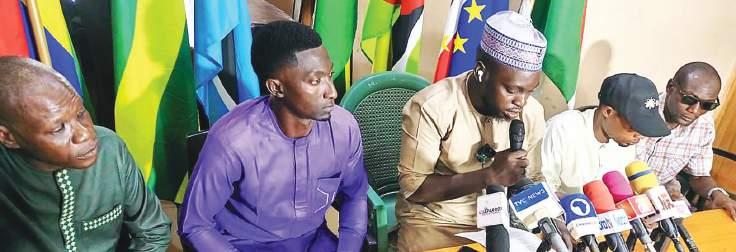
LR: AbdulGaniyu Erubu, Comrade Aremu Yusuf Akanbi, Hon Abdulwaheed Olamilekan and Mallam Ahmed Abubakar during the press briefing jointly addressed by the Ilorin Emirate Dynamics Youth Initiative and the Ilorin Emirate Youth Progressive for Communities in Ilorin on Monday.
With the achievement of the May 30 deadline fixed by Independent National Electoral Commission (INEC) for the emergence of presidential candidates, the victorious candidates have commenced a search
for running mates. Though some had immediately announced their running mates, like Nigeria Democratic Congress (NDC) candidate, Peter Obi, who had already picked former governor of Kano State, Rabiu Kwankwaso as his vice presidential running mate.
It is not certain whether President Bola Tinubu would retain the vice president, Senator Kassim Shettima, as his running mate. While it is not a constitutional matter, most of the presidential candidates are said to be planning to maintain a religious balance of
Christian-Muslim ticket for the January 2027 presidential election. The choice of a running mate is considered important because it helps to boost the support of the presidential candidate from the deputy’s geopolitical zone.
Under the circumstances, where
the presidential candidate is a Muslim, it is expected that the running mate would be a Christian, to ensure religious balance.
In the case of Tinubu, it is still not clear if he would repeat the 2023 gamble of a Muslim-Muslim ticket, despite the agitation of Christians
Chuks Okocha and Adedayo Akinwale in Abuja
Africa Democratic Congress (ADC) and Nigeria Democratic Congress (NDC) candidates were missing in the list released by Independent National Electoral Commission (INEC) ahead of the June 20 by-elections in different parts of the country.
INEC cleared 20 candidates to contest in the legislative by-election.
A list of cleared candidates announced by secretary to the commission, Rose Orianran-Anthony, showed that for Zuru state constituency in Kebbi State, Garba Rabiu (All Progressives Congress) and Aliyu Galadima Muhammed (Labour Party) were cleared by the commission to contest the election.
Osarosaka Erewari of APC, Sam Barikpoa of Labour Party,
and Nwogu Johnson of Peoples Democratic Party (PDP) were cleared by the commission to contest Rivers South state constituency seat made vacant by the death of Douglas Beeka (Action Alliance).
Former Minister of Information, Labaran Maku of Labour Party, Emmanuel Ombugadu of PDP, Halilu Envulu-Aza of APC, John Araneshri of New Nigeria Peoples Party were cleared to contest the Nasarawa North Senatorial seat.
Those cleared for Ondo North Senatorial District vacated by Nigeria’s Ambassador to UN, Jimoh Ibrahim, were Adesanya Olaoluwa (Action Peoples Party), Faduyile Adedayo (APC), Akinwunmi Harrison (Allied Peoples Movement), and Funso Clement (Boot Party). For Enugu North Senatorial District, which became vacant as
a result of death, Asogwa Israel of APC, Anele Chukwuma (Boot Party), and Ezeme Chika of PDP were cleared for the contest.
In Kano State, the electoral body also cleared Rabiu Shuaibu of APC, Lawal Garba of APM, and Abubakar Mohammed of Labour Party to contest Dawakin Kudu/ Warawa federal constituency seat in the House of Representatives
Meanwhile, the commission denied reports in some sections of the media that it had sent access codes to political parties to start uploading the names and particulars of their candidates for the 2027 general election.
The revised timetable and schedule of activities released by the commission showed that the parties were expected to start collecting the access code from 9am on June 27
for the presidential and National Assembly elections and July 18 for the governorship and state Houses of Assembly election.
But National Publicity Secretary of PDP, Jagunda Mohammed, was quoted as saying the commission had provided the party led by Abdulrahman Mohammed with the access code, a move he said validated the legitimacy of the group’sNevertheless,leadership. the Tanimu Turakiled faction of PDP protested the alleged issuance of the access code to the Mohammed led leadership.
INEC National Commissioner and Chairman of the Information and Voter Education Committee, Mohammed Haruna, said no code had been issued to the parties.
Haruna said, “We have not yet issued any access to any party. As
FG PROTESTS MISTREATMENT OF NIGERIANS IN SOUTH
provinces of South Africa and facilitate assistance for those seeking access to consular services
She stated, “So, once this situation started getting worse, the president directed that a crisis response unit be immediately set up within our consulate, and also the Nigerian mission in Pretoria. As things are, we have people in different provinces, we also have people who need to be assisted to get to the Nigerian consulate in Johannesburg, so we’re in the process of all that, but the documentation, which is the most important aspect of this, has been done.
“The figures keep increasing. There are several processes, as you know, that have to be undertaken by South African Homeland Security. We then ensure that we screen our citizens who want to return; they also are part of the
screening process, and once the citizens are cleared, they are given a paper that indicates that they are free to go, essentially.
“It wasn’t actually supposed to have started today. It’s just that we were supposed to have rounded off the formalities today.
“The repatriation is on course. Mr. President himself has reiterated the fact that this aircraft must come to South Africa, and our citizens who are imperilled will have the chance of getting on this aircraft to be brought back to their country.”
Reacting to claims by some South African authorities that many of the Nigerians seeking repatriation were illegal migrants, the minister firmly rejected the assertion, describing it as false and misleading.
Odumegwu-Ojukwu maintained that the affected Nigerians were law-abiding residents and business owners who had become targets
of harassment, intimidation, and criminal attacks.
According to her, several Nigerians have had their properties looted and businesses vandalised or set ablaze, while some families have been forced to keep their children away from school due to safety concerns.
She stated regarding the South African claim, “That is absolutely untrue. Our citizens are being harassed, our citizens, their properties are being looted, criminal actions are perpetuated on our citizens, the police refuse to do anything.
“The South African government has not come out strongly, firmly enough to condemn these incidents. So, our citizens are imperilled, they are in distress, so they cannot be said to be illegal migrants.
“People who are doing legitimate business have their shops looted, they have their shops set on fire.
Children cannot go to school because they are intimidated in their schools. So, to say that Nigerians who are in South Africa doing legitimate business are illegal migrants is absolutely untrue.”
Odumegwu-Ojukwu also assured that arrangements were being made to rehabilitate evacuated Nigerians upon their return to the country.
She said the federal government was working with National Emergency Management Agency (NEMA) and other relevant agencies to ensure that returnees received the necessary support to reintegrate into society.
“This evacuation is being undertaken with NEMA,” she said, adding, “We’re doing that with various government agencies and parastatals to ensure that once they come in they can be rehabilitated.”
a matter of fact, we’ve scheduled a meeting with all the parties for tomorrow at 11am.”
In another development, Labour Party dragged INEC before the Federal High Court in Abuja over the exclusion of its candidate from the Enugu North Senatorial District by-election scheduled for June 20.
That was contained in a statement by National Publicity Secretary of the party, Mr. Ken Asogwa, in Abuja.
The senatorial seat became vacant following the death of Senator Okey Ezea on November 18, 2025, prompting INEC to fix a by-election to fill the vacancy.
The party said it complied with all electoral guidelines by notifying INEC on May 11 of its planned primary election, which was held on May 25 to select a candidate for the poll.
for a vice presidential slot. Due to the recent turn of events in the country, religion and tribe could play a prominent role in the forthcoming presidential election. The ADC presidential candidate, Atiku Abubakar, is yet to openly announce his running mate. But sources close to his camp say he may be looking for a capable running mate that would help break the stronghold of the All Progressives Congress (APC) in the south. Three camps have emerged. The first camp is rooting for National Secretary of ADC, Rauf Aregbesola, as Atiku’s running mate. He is from Osun State but the odds against him include the fact that he is a Muslim.
A source said, “Atiku cannot afford to take the gamble of a Muslim-Muslim ticket.”
Next are those suggesting Chibuike Amaechi from Rivers State, South-south, as vice presidential candidate to Atiku.
Though, Amaechi had said he did not purchase the presidential nomination form to become a vice presidential candidate to anyone.
However, given recent meetings, where Atiku meet with Amaechi to discuss the post-presidential nomination issues, it is still not known if Amaechi would maintain his position.
Adedayo Akinwale in Abuja
The All Progressives Congress (APC), has announced that it would inaugurate its National Campaign Council for the forthcoming Ekiti State Governorship Election on Wednesday in Abuja.
The National Publicity Secretary of the party, Felix Morka, said the National Campaign Council chaired by Governor Uba Sani of Kaduna State has the President of the Senate, Godswill Akpabio as Co-Chairman, and Senator Michael Opeyemi Bamidele as Secretary. He noted that the Council comprised of serving and former governors, principal officers of the National Assembly, and other eminent party leaders tasked with
coordinating and driving the party’s campaign activities ahead of the Ekiti State governorship election. Morka stressed that to ensure effective planning and campaign coordination, various subcommittees have been constituted to lead the party’s activities in key areas. This included Election Planning and Management; Finance and Resource Mobilisation; Grassroots Engagement and Mobilisation; Logistics and Campaign Management; Protocol; Media and Publicity; Security; Women’s Mobilisation; Youth Mobilisation; and Secretariat Functions. He added that the inauguration was an important part of activities to kick-start mobilisation across Ekiti towards a victorious outing in the upcoming governorship election.
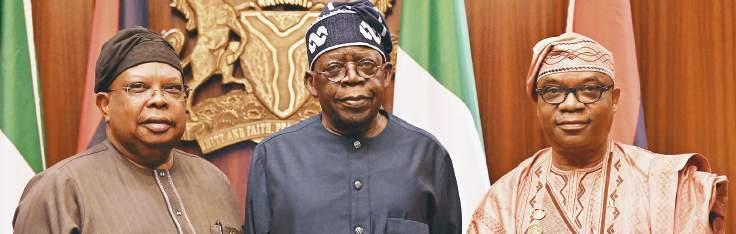
The president said, “We honour those who have paid the supreme price in defence of our country. Their names may not always trend, but their courage lives on in rescued communities, protected families, and the survival of the nation they served.
“The fight against terror is not only a military operation. It is a national duty. Citizens must support our security forces by providing timely, useful information. When you see something, say something. When you know something, report it.”
Bishop Kukah Decries Nigeria’s Insecurity, Challenges Leaders on Nation-building Bishop of the Catholic Diocese of Sokoto, Matthew Kukah, decried the worsening insecurity in Nigeria, lamenting that the challenge has brought the country to its knees.
Kukah said the situation underscored the urgent need for purposeful leadership to steer the country out of its current difficulties.
Kukah spoke in Lagos at the inaugural lecture commemorating the fifth memorial anniversary of Pastor Emily Aig-Imoukhuede, organised by the Aig-Imoukhuede family, themed, “Leadership and Service to God, Nation and Humanity.”
The cleric said effective leadership was critical to rescuing the country from the grip of insecurity, stressing that leaders must understand and master the terrain and environment in which they operate.
Kukah stated that leadership was about influence, discernment, clear vision, and purpose, qualities he said were essential for addressing Nigeria’s complex challenges.
Drawing lessons from the transformation of Singapore, Kukah urged Nigerian leaders to emulate countries that had successfully overcome development obstacles through visionary and effective leadership.
Reflecting on the life and values of the late Pastor Emily Aig-Imoukhuede, Kukah urged Nigerians to look beyond status and fame in assessing greatness.
He likened her life of service to that of Mother Teresa, highlighting her passion for children and commitment to the welfare of the less privileged.
In his welcome address, Aigboje Aig-Imoukhuede said the occasion was intended to be more than a memorial event. He described it as an opportunity to reflect on the values that should guide life and leadership.
He stated that at a time when societies across the world were grappling with uncertainty, division, and rapid change, there was a need to return to enduring principles.
“Leadership is stewardship, character matters, strong families build strong societies, and faith should inspire service,” he said.
Aigboje Aig-Imoukhuede explained that the annual memorial lecture was established to preserve his mother’s enduring values and provide a platform for reflection on leadership, citizenship, nationbuilding, and service.
Former Managing Director of Guaranty Trust Bank Plc, Fola Adeola, described leadership as both a burden and a privilege that demanded responsibility.
Adeola said serving the country required a commitment to fairness, guided by faith, kindness, steadfastness, and a willingness to be available whenever needed.
Atiku Hails Rescue of 360 Abductees
Presidential candidate of African Democratic Congress (ADC), Atiku Abubukar, expressed joy at the rescue of 360 persons kidnapped by terrorists.
Writing on X, Atiku said, however, that Nigeria still faced the challenge of insecurity.
The former vice president stated, ‘’I am elated at reports of the rescue of 360 persons who were abducted by terrorists in Ngoshe, Borno State.
‘’Even as this brings to an end the ordeal of the abductees and the anguish of their loved ones since they were abducted in March, we are still faced with threats from terrorism and banditry attacks.”
Atiku said, “I acknowledge the role of the military and all other security agencies that were involved in the safe rescue of the Ngoshe abductees.
‘’I am confident that if provided with the necessary tools and muchneeded political leadership, the military will bring to an end the nearly two decades of insurgency.”
He added, ‘’Even as we savour this rescue, I urge the government and the military to intensify efforts to rescue nearly 100 school children and teachers abducted in Oriire, Oyo State, and Mussa, Borno State, and all other Nigerians still in the custody of terrorists and bandits.
‘’More importantly, I call for a rejig of our security architecture that places emphasis on intelligence, technology, and pre-emptive actions that nips in the bud terrorist and banditry attacks before they are carried out.”
Zulum Commends Tinubu for Securing Release of 434 Ngoshe Captives
Borno State Governor, Professor Babagana Zulum, praised President
Bola Tinubu and Nigeria’s security agencies for securing the release of 434 residents of Ngoshe community in Gwoza Local Government Area, who were abducted by insurgents during a deadly raid on the border town.
Speaking in Pulka, yesterday, during a reception for the freed captives, Zulum disclosed that 357 of the victims were released in the latest coordinated effort, while about 82 others had regained their freedom in phases over the past year, bringing the total number of released persons to 434.
The governor described the development as a major breakthrough in ongoing efforts to restore peace and stability in communities affected by insurgency in Borno State.
He commended Tinubu for his commitment to ending insecurity and for personally supporting efforts that led to the release of the abducted men, women, and children.
Zulum said, “I want to express my deepest appreciation, on behalf of the government and people of Borno State and Gwoza community, in particular, to the President and Commander-in-Chief of the Nigerian Armed Forces, Bola Ahmed Tinubu, for all the efforts that he has been making in ensuring the return of peace and stability not only to Borno State but to the entire country.”
The governor also applauded the Office of the National Security Adviser, Nigerian Armed Forces, Department of State Services (DSS), and other security stakeholders for their collaboration and professionalism throughout the operation.
According to him, local security volunteers, including members of the Civilian Joint Task Force (CJTF), forest guards, vigilantes and hunters, also played significant roles in facilitating the captives’ freedom.
Zulum explained that the state government had committed substantial resources towards rebuilding Ngoshe community and preparing for the safe return of the displaced residents.
He said, “Government has released millions of naira to rehabilitate the Ngoshe community. So far, the work is nearly complete. We are also interfacing with the community about their return to Ngoshe; those that are willing to return, we are working with the Nigerian military to establish institutional arrangements that will ensure their safe and dignified return.”
As part of immediate support measures, Zulum directed the distribution of food and non-food relief materials to the released captives and assured them of continued government assistance.
Presidential candidate of Nigeria Democratic Congress (NDC), Peter Obi, criticised what he called “Media Framing of Crime Along Ethnic Lines”, describing it as divisive and unfair to the tribes involved.
Writing on X, the former Anambra State governor said, “As an Igbo man, I have endured stereotypes, judgment, and labelling solely based on my ethnic origins. This is not an isolated Igbo experience. Most Nigerians have, at some point, been reduced to their ethnicity rather than recognised for their true character.
“I understand the pain of the ordinary Fulani man today, often unfairly judged by the actions of criminals he does not support, has never met, and who are not representative of his people.”
Obi said, “Even in America, such unjust labelling fuelled the civil rights movement and prompted Martin Luther King Jr. to declare that people should be judged by the content of their character, not the colour of their skin.
“Every Nigerian ethnic group is known for its unique traditions, occupations, skills, and strengths. Crime, however, has no ethnicity. A thief is a thief. A terrorist is a terrorist. A kidnapper is a kidnapper.
‘’They are bad actors, not representatives of any people. They must be identified, arrested, and punished according to the law. We must decisively abandon the dangerous practice of blaming entire ethnic groups for the actions of a few criminals.”
Obi said, “It is unjust, it breeds hatred, and it damages our national unity. Let us proudly celebrate our diverse cultures, talents, and contributions, rather than falling prey to stereotypes and prejudices that politicians and divisive interests exploit for their gain.
“A new Nigeria must emerge—one where no citizen is condemned because of tribe, religion, or birthplace. We can cherish our cultural roots while standing united by justice, mutual respect, and hope for a better future. We are capable of this. A new Nigeria is within our reach.”
The abducted Principal of Community High School, Esiele, in Oriire Local Government Area of Oyo State, Mrs. Folawe Alamu, denied reports that her captors demanded Sharia law, N1 billion ransom, or weapons for the release of victims.
In a viral video posted online on Day 24 of her captivity, alongside teachers and pupils of the school, Alamu, visibly exhausted, said the claims circulating in the media were false and “just trying to create problems for us”.
The 56-year-old principal, who was kidnapped together with pupils and teachers on May 15, stated that the bandits had not forced anyone to worship in an Islamic way.
She stated, “Everyone, please, I have come to make some clarifications. Today makes it the 24th day that we have been in this place and it seems that some people are making our problems complicated already.
“We were shown some print media where it was stated that these people that abducted us requested for the release of some people. They requested for a billion naira. They requested for Sharia to be entrenched in the country. These are not true.
“We have been here and we have not been forced to worship in an Islamic way. We have been left alone. They have not troubled us concerning that. They are not asking for Sharia law. They are not asking for money. They are not asking for weapons.”
According to her, the only demand made by the kidnappers was the release of some of their members from detention.
“The single thing they are asking for is the release of some of their people… All they want is the release of some of their people, and the government will negotiate with them and know those that they will release for them,” she stated.
The principal made an emotional appeal to Nigerians, the federal government, and Oyo State Government to avoid politicising the situation.
Alamu said, “I don’t know why they are peddling this rumour to make it complicated for us. Please, we are just begging you. Don’t play politics with our lives. Nigerians, please, help us to circulate this. Let it go viral.
“Don’t let the government deceive the whole world. They are not asking for Sharia. They are not asking for money. They are not asking for weapons. All they want is the release of some of their people.”
Northern Christian Youth Professionals (NCYP) called for the urgent deployment of trained forest guards to Plateau State and other vulnerable parts of northern Nigeria, warning that terrorists and criminal groups are increasingly exploiting vast ungoverned forests to launch deadly attacks on communities.
The group made the call yesterday while commending Kaduna State Government for commencing the training of Forest Guards as part of efforts to strengthen security across forested areas of the state.
In a statement by its Chairman, Isaac Abrak, NCYP described the Kaduna initiative as a timely and strategic intervention that aligned with the federal government’s broader efforts under President Bola Tinubu to reclaim forests and remote territories from terrorists, bandits, kidnappers, and other criminal elements.
According to the group, the forests stretching across parts of Plateau, Kaduna, Niger, Zamfara, Katsina, and other northern states have become operational bases for armed groups responsible for attacks on communities, abductions, destruction of farmlands, and the displacement of thousands of residents.
NCYP stated, “Kaduna’s decision to train Forest Guards demonstrates the kind of proactive leadership required to address the growing security threats facing our region. “However, the security challenge is not limited to Kaduna. Plateau State, in particular, urgently requires a similar intervention due to the persistent attacks on rural communities and the exploitation of forest corridors by terrorists and criminal gangs.”
CISLAC Calls for National Emergency on Insecurity, Condemns Rising Abductions
Civil Society Legislative Advocacy Centre (CISLAC) called on the federal government to declare a national emergency on insecurity following the escalating wave of kidnappings, banditry, and violent attacks across the country.
Speaking in an interview with THISDAY, Executive Director of CISLAC, Comrade Auwal Rafsanjani, expressed concern over the worsening security situation, particularly the increasing abduction of schoolchildren and attacks on rural communities.
Rafsanjani warned that the trend was undermining public confidence and threatening educational development.
He said the persistent wave of kidnappings and violent crimes had created fear among students, parents, and vulnerable populations, discouraging school attendance and destabilising communities in several parts of the country.
Rafsanjani said findings from Amnesty International’s April 2026 report showed that at least 1,100 people were abducted between January and April 2026 in northern Nigeria, particularly in rural communities and internally displaced persons (IDPs) camps.
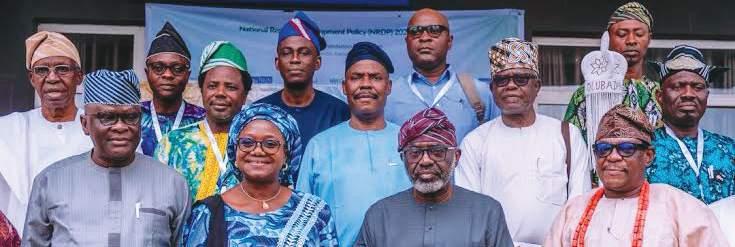
L-R:Chairman, south-West development Commission (sWdC) sen. Olubunmi adetunmbi; Permanent secretary, Ministry of Regional development, dr. Mary Ogbe; Managing diector/CeO, sWdC, dr. Charles ‘diji akinola, and the Osi Olubadan, Oba abiodun Kola-daisi, at the validation workshop for National Regional development Policy (2026-2030) in Ibadan…recently
Laleye dipo in Minna
Some terrorists have asked four communities in the Borgu Local Government Area of Niger State to purchase food and other items for them, or their villages would be attacked.
The terrorists, according to sources close to the communities, provided a whopping N12million to the leaders of the communities to facilitate the purchase of the items.
The terrorists, according to the reports, stormed the communities from the Kainji National Park.
The communities asked to help buy the items are Dakara, Gbenji Gidazana village, Kpeya/ Biyan village area, and Giragbasso/ Imile village.
Dekara village was given
N3.800.000; Gbenji Gidazana village got N3.800,000; Kpeya/ Biyan village was given N2.300,000, while Giragbasso/Imile village received N2.300,000
Among the items the terrorists requested the villagers to buy on their behalf were bags of sugar, Jerry cans of palm oil, gallons of controlla oil, Maggi star, and bags of salt.
Others are cartons of spaghetti, pasta, bags of rice, and cow-type milk.
One of the affected village heads (name withheld) has already raised the alarm, informing the security operatives of the development. Following the alarm raised by one of the community leaders, soldiers were reported to have stormed some of the villages, during which some of the terrorists were reportedly
A chieftain of the African Democratic Congress (ADC), Joe Korka-Waadah, has called on the Board Chairman of the Nigerian Upstream Petroleum Regulatory Commission (NUPRC), Senator Magnus Abe, and other stakeholders to push for an Ogoni-born governor in the 2027 general election in Rivers State.
Korka-Waadah, a political management consultant and executive director of Compassionate Heart Foundation of Canada, made the call while speaking with journalists in Port Harcourt, the state capital.
The ADC chieftain, who is also an Ogoni indigene, said:
“While we respect the Senator’s long career in the corridors of power, we must state clearly that the line between deliberate coordination and permanent political procrastination has become blurred in his narrative.
“For over a decade, the Rivers’ people and the Ogoni nationality in particular have
been sold the promise of a strategic roadmap that somehow always terminates in Abuja appointments for one man, while leaving the collective aspiration of the people stranded at the starting line.”
He said Abe, a strong ally of the Minister of Federal Capital Territory (FCT), Nyesom Wike, should support the Ogoni-born governor rather than insisting on alleged long-term planning.
According to him, “Dr. Gabriel Pidomson’s emergence on the platform of the African Democratic Congress is not an emotional outburst. It is a masterclass in independent political strategy. We are not confronting individuals; we are confronting a broken, centralised system that believes two men must permanently alternate the destiny of 7 million Rivers’ people.
“Senator Abe speaks of long-term planning as if the political marginalisation of ethnic nationalities in Rivers State just began yesterday. How much longer must the people wait? Another eight years? Another generation?
neutralised.
It was learnt that some motorcycles used by the
terrorists were impounded by the soldiers.
All efforts to get the state
Commissioner
A Federal High Court in Lagos has remanded Paul Jibrin Oweleke, operator of Oweleke TV, in custody after he was arraigned by the Department of State Services (DSS) over allegations that he called on the military to overthrow the administration of President Bola Ahmed Tinubu.
Oweleke was arraigned yesterday before Justice Akintoye Aluko on a twocount charge bordering on alleged cybercrime offences, including making subversive broadcasts and transmitting messages said to threaten the
James sowole inabeokuta
The Eniobanke Foundation has disbursed millions of naira in cash grants and learning materials to over 200 beneficiaries in Ogun State as part of its community empowerment drive.
Its Founder, Qadri Ibrahim Adeniyi, popularly known as Eniobanke, said the initiative is aimed at giving back to the community and supporting small businesses.
According to him, “This programme is aimed at giving
president and undermine public order.
According to the charge, the defendant allegedly used his social media platform, “Oweleke TV,” to disseminate messages calling for a military coup to remove President Tinubu and replicate the political situation in Burkina Faso through unconstitutional means.
The DSS alleged that the broadcasts were intended to incite the Nigerian populace, cause disaffection against the government, and provoke a breakdown of law and order in the country.
The offences are said to
back to the people and the community. We have 105 market women who received N100,000 each to support their businesses.
“We also selected people from other trades like tailoring, painting, and other artisans to make up 105 persons, each receiving N100,000.”
Adeniyi added that 50 students were selected for a ‘student bursary’ stipend of N50,000 per session, while the 10 best students received computers.
“Arms giving is good, but service to humanity is better.
contravene Sections 24(1)(b) and 24(2)(a) of the Cybercrimes (Prohibition, Prevention, etc.) Act, 2015, as amended in 2024.
At the commencement of proceedings, DSS prosecutor Michael Olujobi Bajela informed the court that the agency had filed a two-count charge against the defendant and requested that the charges be read to enable him to take his plea.
Following the reading of the charges, Oweleke pleaded not guilty to both counts.
The prosecution thereafter asked the court to fix a trial date and remand the defendant in the custody of the
This is an act of giving back to humanity. It is also a form of CSR for my organisation,” he said.
Speaking on the economy, Adeniyi commended President Bola Tinubu’s economic reforms, saying that business has been thriving under President Tinubu due to an enabling environment for entrepreneurs.
“I wouldn’t say I have a link with the presidency. I’m a businessman. Under President Bola Ahmed Tinubu, business has been thriving. There are complaints, but in the midst of
Nigerian Correctional Service pending the determination of the case.
Counsel to the defendant did not oppose the request for a trial date but informed the court that a bail application had already been filed and served on the prosecution. He indicated his readiness to move the application immediately.
Responding, Bajela acknowledged receipt of the bail application but stated that it had been served on him shortly before the court session and that he required time to study the application and file an appropriate response.
hardship, there are still some of us who are getting it right because he has created an enabling environment,” Adeniyi said.\ He urged Nigerians to remain patient and continue supporting the Tinubu administration, citing the Quranic verse that “after hardship comes ease.”
Also speaking at the event, the Chairman of Abeokuta North Local Government Area, Hon. Lanre Oyegbola-Sodipo, hailed the foundation for complementing government efforts at improving the welfare of citizens.
yinka Kolawole in Osogbo
The Osun State chapter of the All Progressives Congress (APC) has faulted the ‘orchestrated’ common pattern of the resignation of some members from the party, “which gives them away as grossly lacking in political tact and diplomacy, and has subsequently taken the shine off their intention of portraying the party as being in crisis.
“Whoever had invented the manner of the resignation of the APC members in trickles would by now have observed
that the aim and objective of the style of the resignation, which is predictable, has become unpopular and irritating to the discerning members of the public who have been following the unfolding political events in the state.”
In a statement issued and made available to THISDAY yesterday in Osogbo by Mogaji Kola Olabisi, the Osun State APC director of Media and Information, the APC said: “Are the political actors concerned in the repeat of the inglorious and obviously tiresome daily incidents
of resignation from our party not familiar with a saying that only a foolish fairy princess appears more than once?
“It is pertinent for the actors in the unusual and boring defection game to go back to their drawing board for another style of effecting their nefarious political activities, as the ongoing ones have proven to be obsolete, tiresome, and boring.
“It is funny that those who could not even effectively manage their households are among those who have been rolling out the resignation letters,
which investigation confirmed to be on a cash-and-carry basis for as little as N5 million per head.
“We, however, commend the astute and ever-loyal members and supporters of our party, for God has answered their collective supplications that whoever would be a clog to the electoral victory of our governorship candidate, Asiwaju Munirudeen Bola Oyebamiji AMBO, in the forthcoming election on August 15, 2026, should be unmasked and spiritually driven out of the party.
Duro Ikhazuagbe
As Alex Iwobi prepares to earn his 100th cap for Nigeria when the Super Eagles take on Portugal in an international friendly in Leiria on Wednesday, the Fulham midfielder rues missing playing in another World Cup starting on Thursday.
The former Arsenal player who made his debut for Nigeria in a friendly match against DR Congo in Visé, Belgium on 8th October 2015, played in his one and only World Cup with the Super Eagles at Russia 2018. Nigeria failed to progress beyond the group stage.
Attempts at qualifying for two more World Cup appearances were truncated with the Super Eagles failures to qualify back-to-back for the 2022 edition in Qatar and the about to begin 2026 edition to be hosted by USA, Mexico and Canada.
He will be 34 years old when the 2030 edition of the FIFA World Cup will be jointly hosted by Morocco, Portugal and Spain.
Iwobi who has featured at four Africa Cup of Nations finals for Nigeria, winning silver (2023) and bronze (2019 and 2025) medals, in addition to his appearance at the Mundial in Russia, said this about his pending 100th cap: “Yes, I would have loved to win the AFCON and perhaps be with the Eagles at the FIFA World Cup (in USA, Mexico and Canada) that is about to kick off in a few days’ time, but no regrets.”
Despite missing this Mundial, Iwobi remains eternally proud and grateful for the opportunity to don Nigeria’s green and white colours.
“I am proud to be where I am today; proud to wear the green-and-white. I am grateful to everyone, including the coach who called me up to the team
for the first time. I have no regrets choosing Nigeria.”
With 128 months under his belt as a Super Eagle, Iwobi admitted that even as a youth level player for England, he always felt Nigeria was his home.
“I first went to the Nigeria U23 team camp and felt at home. I had represented England at youth level but always felt Nigeria was home. My father always told me to go out there and enjoy my football, and make the decision that I felt was good for me. He was part of the decision but he didn’t force it down on me.
“After 10 years and eight months, I won’t say I am a legend; I only see myself as a Super Eagles’ player. It feels great to be looking at a 100th cap, and on a lighter note, I wish I can add another 100 caps. I have enjoyed my time with the Super Eagles,” observed this nephew of Austin Jay Jay Okocha, another Super Eagles legend largely
credited with wooing Alex to Nigeria.
Asked which of his numerous goals for Nigeria remains in his memory, Iwobi picks his strike against Zambia’s Chipolopolo, at the Godswill Akpabio Stadium in Uyo in October 2017, which qualified Nigeria for the 2018 FIFA World Cup finals.
“I loved the occasion because my dad and my mum were both at the stadium and saw it all, and we celebrated together afterwards. It was an exciting moment.
Speaking about his son’s about-tobe century cap, Iwobi’s father, Barr. Chuka Iwobi, himself an ex-footballer, told thenff.comthat the family is incredibly proud of Alex’s achievements in the green-and-white.
“We remain ever grateful to the nation for the opportunity Alex has been given. When he made his debut in 2015, little did we know that this was the beginning of an amazing and
Board member of the Nigeria
Barrister
tipped the
Stadium in Port Harcourt undergoing massive reconstruction to become the new hub of hosting international football matches and global track and field championships when completed.
The 16,000-capacity stadium is being remodeled into a world-class arena by the Rivers State Government with the contract awarded to Monimichelle Sports Construction Company Limited.
Speaking during his visit to the facility recently, Green who is Rivers State Attorney General and Commissioner for Justice as well as the Commissioner overseeing Sports, believes that when completed, the Yakubu Gowon Stadium will pass both CAF and FIFA certifications for the international games.
“I can assure you that CAF, FIFA would approve this stadium for matches.
incredible journey which would lead to him achieving the milestone of a hundred caps and with the potential of many more caps to come.”
“Alex loves playing for the nation and always gives his best. No one can ever question his commitment, devotion and patriotism while wearing
the green-and-white. There have been highs and lows over the years but he has emerged stronger from the experience of playing for the country. We pray that he continues to excel and that the Super Eagles are able to repay the fans for their love and support,” concludes the senior Iwobi.
The spirit of Children’s Day came alive at the 2026 Access Bank/UNICEF Charity Shield Polo Tournament as pupils and students of the Access Bank/ Fifth Chukker School emerged the stars of one of Nigeria’s most prestigious annual sporting and charity events.
In a colourful celebration held at the Fifth Chukker Polo & Country Club, Kaduna, over a thousand students and their teachers participated in a day dedicated to recognising and celebrating children.
Through cultural performances, drama presentations, music, games, drawings, and paintings carrying powerful messages such as “Stop Child Abuse” and “We Are the Stars of the Future,” the children captivated guests and dignitaries alike.
Leading the Access Bank delegation, Chairman of Access Bank Plc, Mrs. Ifeyinwa Osime, expressed delight at
the outstanding performances and reaffirmed the Bank’s commitment to using the charity platform to create opportunities for underprivileged children through education.
Speaking during the celebration, Mrs. Osime noted that the Access Bank/Fifth Chukker partnership continues to transform lives by expanding access to quality education and supporting the development of rural communities.
According to her, the initiative has successfully funded the construction of classroom blocks in Kaduna, significantly improving learning conditions for thousands of children. With an additional 60 classrooms recently completed, bringing the total number of classrooms delivered through the project to 120, the programme continues to make a tangible impact on educational outcomes across beneficiary communities.
Somali referee Omar Artan, who was set to be the first from his country to officiate at the World Cup finals, has been denied entry to the United States.
Artan, the 2025 Confederation of African Football men’s referee of the year, was barred from entering the country at Miami International Airport and is currently in Turkey.
No reason for Artan’s repatriation has been issued by US immigration authorities, but Somalia is one of
several countries on a travel ban list introduced by President Donald Trump’s administration.
Artan is among the 52 referees announced by FIFA to officiate at the World Cup finals in Canada, Mexico and the United States, which runs from 12 June to 19 July.
An official in the Somali national football league championships, Artan became a FIFA referee in 2018 and has officiated at the Africa Cup of Nations (AFCON).
MD/CEO of Monimichelle Limited, Ebi Egbe, while also speaking on the level of work done so far, insisted that there were visible signs of advancement across the facility.
The pitch foundation, he said, has been fully completed with 4,000 perforated drainage pipes installed beneath the playing surface. The sprinkler system is ready for deployment, while the base for the polyurethane athletics track has already been asphalted.
Work on the VIP and VVIP sections is nearing completion, with tiling and finishing ongoing. Roof trusses have been erected, cladding works are approximately 90 per cent completed, the scoreboard structure has been
“We also want to assure you that the tracks that will be laid will get certification from the Confederation of African Athletics (CAA) once it is done in accordance with the CAA standard,. I’m very sure that everything will come out very best,” stressed Green, a former Chairman of NFF’s Technical Committee.
fabricated, floodlight installations are being prepared and the public address system has already been delivered to the stadium.
“The job is more than 90 per cent completed. We have been here every day,” Egbe noted, stressed that his firm delayed the installation of both the football pitch and tartan tracks for obvious reasons.
According to him, the Nigerian Army is scheduled to host its annual Army Day celebration at the stadium around July 7, an event expected to involve heavy vehicles and extensive movement within the facility.
Installing the pitch before the event, he argued, would expose the surface to avoidable damage.
“We don’t want to install the pitch because there’s going to be a very serious activity here by the Nigerian Army. There will be a lot of vehicles going around the track, and we want to protect the main bowl facilities.”
Egbe said further that polyurethane track surfaces are best installed during
dry weather conditions and that attempting installation during the peak of the rainy season could compromise quality and durability.
Officials from the Rivers State Ministry of Works were also present during the inspection.
“The Yakubu Gowon Stadium is going be better than what it was,” an official said. “We are expecting it to be a notch better than what we have at the Enyimba Stadium in Aba for instance.
“That was done before 2018 or 2020. So, expect things to be much better, higher and of greater quality because this is 2026.”
With Rivers United expected to participate in continental competitions and CAF inspectors scheduled to visit before September, the contractor acknowledged that timelines remain critical.
“Rivers United need to play continental games here. The pitch must be ready before September,” he assured Rivers sports stakeholders.
Former Arsenal and Manchester City defender, Gael Clichy, has tipped Michael Olise to repeat Kylian Mbappe’s feat at Russia 2018 at this 2026 World Cup scheduled to kick in North America this week.
In a special column he wrote for BBC Sports yesterday, Clichy insisted that Olise who has Nigerian ancestry has the capacity to become the star of the Les Bleus at this World Cup this summer.
According to the former City defender who is now a Division three club coach in France, “We saw it happen with Kylian Mbappe for France at the 2018 World Cup - we knew before we lifted the trophy in Russia that he was an incredible talent, but that was the time he really arrived.
“This summer, I hope another France player, Michael Olise, can

do the same in the US, Canada and Mexico,” observed Clichy.
“Everyone knows Michael quite well already, of course, because he plays for Bayern Munich and we see him a lot in the Champions League.
“But this is his first World Cup and he has only played 16 games for France so far, so he is still very new on the international scene.
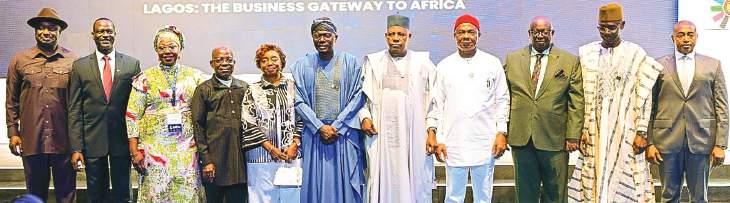
L-R: Minister of Aviation and Aerospace Development, Mr. Festus Keyamo; Minister of Finance and Coordinating Minister of the Economy, Mr. Taiwo Oyedele; Deputy Governor of Akwa Ibom State, Senator Dr. Akon Eyakenyi; Governor of Abia State, Dr. Alex Otti; First Lady of Lagos State, Dr. Ibijoke Sanwo-Olu; Governor Babajide Sanwo-Olu; Vice President Kashim Shettima; Governor of Imo State, Senator Hope Uzodimma; his counterparts, Mr. Caleb Mutfwang, Plateau State; Engr. Abdullahi Sule, Nasarawa State, and Deputy Governor of Enugu State, Mr. Ifeanyi Ossai, at the opening of Invest Lagos 3.0, with the theme: “Lagos – The Business Gateway to Africa”, at the Eko Hotels and Suites, Victoria Island in Lagos, ... yesterday
abati1990@gmail.com

Following the spate of kidnappings – human beings being stolen across the country as if they were mere objects - in Oyo, Borno, Kebbi, Katsina, Kwara, Zamfara, Niger - there has been a renewed agitation for the establishment of state police by lawmakers, Governors and concerned citizens, out of the belief that state police, a decentralized police system in the country would help move the Nigerian government closer to its fundamental responsibility of ensuring the safety of lives and property across the country. In a report by Amnesty International, it is estimated that at least 1, 100 persons were abducted in the Northern part of the country alone between January to April 2026. The International Centre for Investigative Reporting (ICIR) quotes the Community of Practice Against Mass Atrocities as putting the figure of abducted persons in Nigeria since 2019 at 23, 000. The actual figure nationwide is certainly higher. No human being should be stolen in a country where there is a government in place. Nigerians want to be safe in their own country and President Bola Ahmed Tinubu has often said that he understands the cost and pain of insecurity, the effect on the people and the economy, and he is committed to making a difference with a sense of purpose.
But the problem appears insurmountable, made difficult by the resilience of the criminals behind the enterprise, and the involvement of a global, jihadist network. In the last week of May, the Governor of Oyo State had made a plea for the urgent establishment of state police. He was speaking against the background of the abduction of 45 persons: teachers and students, some as young as two years old in his state on May 15. He accused the Federal Government of deceiving Nigerians. The growing, alarming epidemic of insecurity in the country points to state failure, abdication of responsibility, and the helplessness of the people, even if we get the occasional report that the security agencies are trying their best to fight the problem. The Armed Forces of Nigeria have since been drawn into the emergency, that is what it is, and these gallant soldiers are overstretched having to do police work.
The police are completely overwhelmed, the bandits and terrorists promoting the commoditization of human
beings, collecting ransom, have shown greater determination than our security agencies. Certain communities have had to resort to self-help, organizing their own militias and vigilante groups, a citizen-led community protection force. Others have abandoned their homes and farms. This is how bad the situation is. Nigeria is at a point where the people have to organize their own water supply, because the state has failed in that regard, almost every home has a borehole. Nigerians have also learnt to provide their own electricity because the electricity reform process has failed, and when there is electricity supply, the bills are too high, but in many communities, there is no power supply. In many streets in urban Nigeria, families have learnt to live with the unceasing, humdrum din of generators; a few privileged families are installing solar panels and even that comes at a cost as there have been reports of poorly installed panels causing fire accidents. The easiest way to live in Nigeria is to learn to be a local government unto yourself. Many of our compatriots are stranded abroad, or are planning to run away from Nigeria as illegal immigrants, just so they can experience for once what it means to live in a society
where basic necessities of daily living are taken for granted. Once in London, I wanted to iron my clothes for the next day just in case there was an electricity cut. Nigeria has a bad way of following us everywhere! But the saddest part of our condition at home is the degeneration of our communities into killing fields, and the spread of ungoverned spaces. Terrorists and bandits have become so bold, they advertise their evil enterprise on social media. They do not respect any one or anywhere, and they are gradually covering the entire territory, from the North to the South. About seven generals have been abducted, including Major General Idris Alkali, Air Marshal Alex Badeh, Maj. Gen. Peter Ademokhai, Maj. Gen. Edet Akpan, Brig. Gen. Maharazu Tsiga, former Director General of the National Youth Service Corps (NYSC), and most recently General Rabe Abubakar (rtd), former Director of Defence Information at the Defence Headquarters, who was kidnapped along with his wife on their way to a wedding in Katsina, Major Joe Ajayi, Colonel Joseph Ajanaku. With the way things are, it won’t be too long when terrorists will storm a Government House and kidnap a sitting Governor in any of the states of Nigeria!
Would state police help? The conversation about this alternative is not new. Each time there is an upsurge in kidnappings and banditry, the security conversation goes back to how the creation of state police would make a difference, until it is forgotten and we move in other directions. During the 2014 National Political Conference, convened by the Goodluck Jonathan administration, the delegates approved the creation of state police, with states to have the power to establish, finance and control their own police forces, within their own jurisdictions while the Federal Police would focus on federal offences. Some of the more ardent advocates argue that a state police will be in line with the principles of federalism.
As Professor Kemi Rotimi, professional historian and author of the seminal work, The Police in a Federal State: The Nigerian Experience (2001) puts it, “Nigeria is set to reintroduce federalist policing principles from pre-1966, not state police.” Before the military coup of 1966, there were native authority police forces in the Northern and Western regions of Nigeria. The
Benin Division had local government police which was abolished in 1963. All such structures were stripped of their independence in 1966 and placed under the operational command of a central Inspector General of Police through the instrumentality of Decree No. 1 of 1966 and Decree No. 34 (The Unification Decree) of May 24, 1966. The centralization of the police forces in the country by the Aguiyi-Ironsi military government was vastly unpopular but the legacy is still alive today in Sections 214 – 216 of the 1999 Constitution. Hence, to create state police or to return to the federalist model, the 1999 Constitution would have to be amended in line with the procedures spelled out in Section 9 of the same Constitution to wit: “Modes of altering provisions of the Constitution.”
In July 2018, an effort was made by the 8th National Assembly to amend the 1999 Constitution accordingly when Senator Ike Ekweremadu (Enugu West), Deputy Senate President as he then was, tabled a State Police Bill before the Senate. The Bill seeks to establish a dual tier police structure: federal and individual state police with organs such as Federal Police, State Police, the National Police Service Commission, National Police Council, and State Police Commission for the states. The Bill passed First Reading in the Senate and received the support of 75 Senators out of 109. There was also a similar Bill in the House of Representatives which went as far as Second Reading. The then Senate President, Senator Bukola Saraki met with Speakers of the Houses of Assembly across the country to get their concurrence since Section 9 is very clear in stating the requirement of four-fifths majority of the National Assembly in each of the two Chambers, and a resolution of the House of Assembly of not less than two-thirds of all the states. The Bill eventually failed because of the fear that state police will be abused by state governors and weaponized against political opponents, lack of funding capacity and lack of safeguards. Senator Ike Ekweremadu’s main proposal was that the state police could be established within a period not later than ten days, provided there is the political will to do so. It has been eight years since then and we are still on the same subject.
