Chairman of Botswana Power Corporation’s Board
currently
Police Council Okays Tunji Disu’s Appointment as IGP ... Page 6
www.thisdaylive.com
Oil Market Impacted as Iran Closes Strait of Hormuz, Vows to Attack Errant Ships
Trump to Iran: ‘Big wave’ yet to come, attacks escalate Dubai, others announce limited flight resumption Khamenei's wife dies from injuries Gulf states consider military response, US death toll hits 6 US fighter jets accidentally shot down by Kuwait
Emmanuel Addeh in Abuja
The Iranian Revolutionary Guards said yesterday that the Strait of Hormuz has been closed, maintaining that it will fire on any ship trying
to pass through the area, It was Iran's most explicit warning since telling ships it was closing
the export route at the weekend, a move that threatens to choke a fifth of global oil flows and send
crude prices sharply higher. "The strait (of Hormuz) is closed. If anyone tries to pass, the heroes of
Cardoso: Net Reserves Jump
772% from $3.99bn to $34.8bn in Two Years
Links outcome to benefits of increased transparency, credibility in FX mgt, investor confidence boost, stronger liquidity inflows
billion at the end of 2023 to $34.80 billion as of December 2025.
Cardoso disclosed this in a statement yesterday.
The CBN Governor had, during the post-Monetary Policy Committee (MPC) press briefing last week,
The Governor of the Central Bank of Nigeria (CBN), Mr. Olayemi Cardoso, yesterday, disclosed that Nigeria’s net foreign exchange reserves rose sharply by 772 percent in two years, climbing from $3.99 the Revolutionary Guards and the
Reuters: FG Splits OPL 245 Oilfield in Deal with Eni, Shell...Page 9
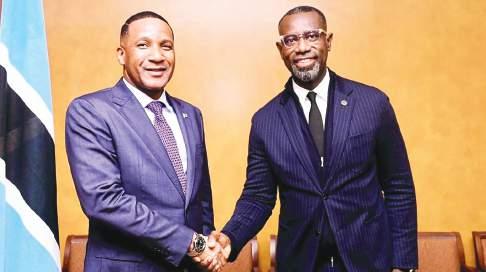
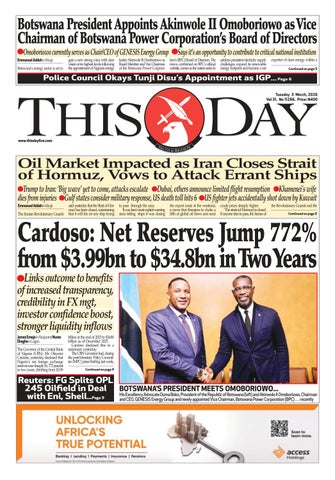
His Excellency Advocate Duma Boko, President of the Republic of Botswana (left) and Akinwole II Omoboriowo, Chairman and CEO, GENESIS Energy Group and newly appointed Vice Chairman, Botswana Power Corporation (BPC) … recently

Emmanuel Addeh in Abuja Botswana’s energy sector is set to
James Emejo in Abuja and Nume Ekeghe in Lagos





Deloitte West Africa appoints Yomi Olugbenro as CEO-Elect
Deloitte Africa has announced the appointment of Yomi Olugbenro as CEO-elect for Deloitte West Africa, effective 1 June 2026, following a transition with current CEO, Fatai Folarin, who retires at the end of May 2026.
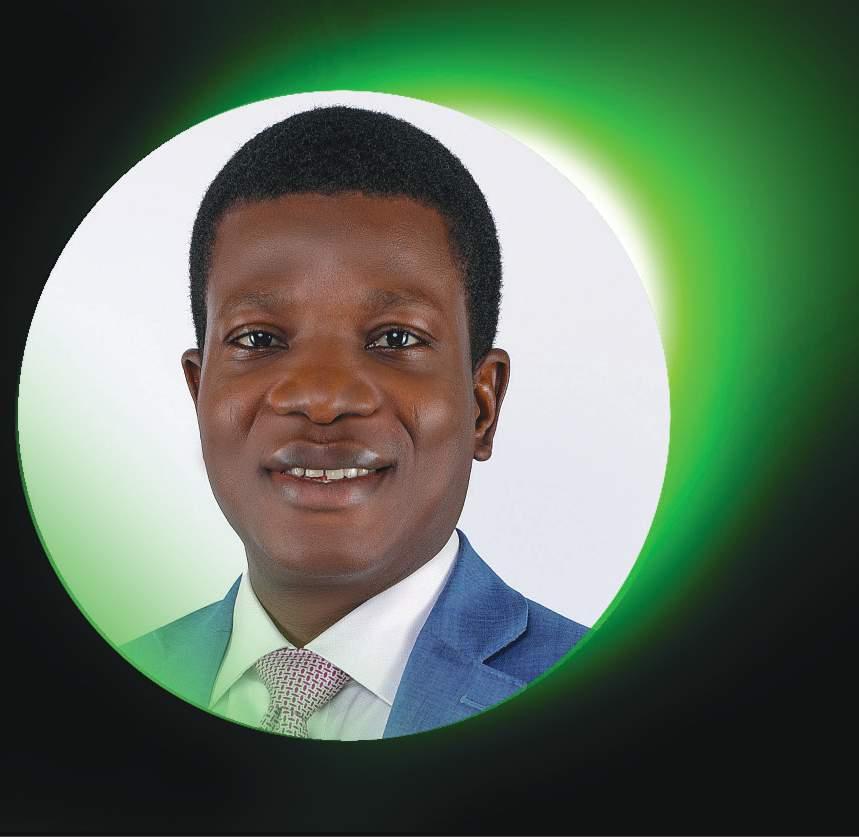
Commenting on the appointment, Ruwayda Redfearn, CEO of Deloitte Africa, said: “Yomi’s outstanding leadership and deep understanding of the West African market make him exceptionally well-suited to lead Deloitte West Africa into its next chapter. His appointment reflects our strong confidence in his vision and ability to steer our organisation to even greater heights.”
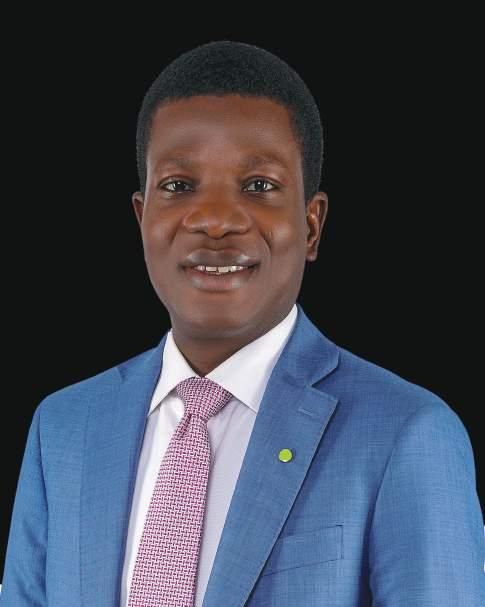
With over 20 years of experience, Yomi has guided organisations across West Africa through complex regulatory and economic environments and held key leadership roles across multiple industries. He has contributed in numerous ways to fiscal and economic reforms in Nigeria. As a Chartered Accountant, Chartered Tax Practitioner, and Chartered Stockbroker, he has built a reputable professional practice credentials. Yomi holds a first degree in Accounting and an MBA from Manchester Business School, UK. He has attended many executive leadership development programs with prestigious Institutions such as the Lagos Business School and Harvard Business School.
Ahead of his official assumption of office, Yomi said: “I am honoured to lead a team committed to client excellence. We will continue harnessing AI to drive innovation and long-term growth across our market.”
Redfearn concluded: “The firm would like to thank Fatai for his service and contribution in building our business, our talent and brand within the West Africa region.”


Deloitte Nigeria
Deloitte © 2026. For information, contact Deloitte Touche Tohmatsu Limited
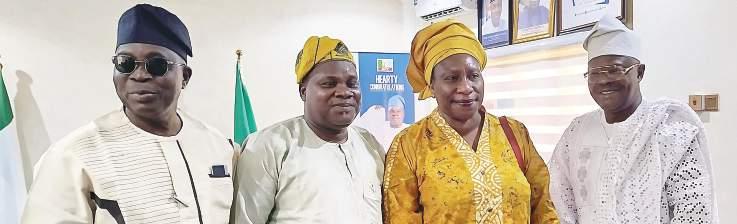
IYABO OBASANJO VISIT APC HEADQUARTERS...
L-R: Former Coordinator, World Bank/ Member, Support Group for IYABO, Mr. Oluwatiyin Jokosenumi; Director, Administration, APC, Mr. Ayoola Peter Olajolo; Ogun State, APC, Governorship Aspirant, Senator Iyabo Obasanjo and Deputy Director General, South West, APC Support Group, Amb. Adewale Adewumi, during the Aspirant awareness visit to the APC national headquarters in Abuja ... yesterday
Police Council Okays Tunji Disu’s Appointment as IGP
May be sworn in Wednesday at FEC Sanwo-Olu, Mbah, Sule, AbdulRasaq, Wike hail new police boss for his professionalism, excellent career record
Deji Elumoye in Abuja
Nigeria Police Council, at its meeting yesterday, unanimously ratified the appointment of Olatunji Disu as Inspector-General of Police (IGP), paving the way for his possible swearing-in by President Bola Tinubu tomorrow.
The ceremony would take place before the Federal Executive Council (FEC) meeting, scheduled for the same day.
The police council meeting, which took place at Council Chamber, State House, Abuja, was chaired by Tinubu. It had in attendance Vice President Kashim Shettima, governors, and Chairman of Police Service Commission, Deputy Inspector-General of Police (DIG) Hashimu Argungu (rtd).
Others in attendance were Secretary to the Government of the Federation (SGF), Senator George Akume; National Security Adviser (NSA), Nuhu Ribadu; Chief of Staff, Femi Gbajabiamila; Minister of Police Affairs, Senator Ibrahim Gaidam; Minister of the Federal Capital Territory (FCT), Nyesom Wike; and Head of Service, Mrs Esther
Didi Walson-Jack.
The president appointed Disu as the new police chief last Wednesday, following the resignation of the former IGP, Kayode Egbetokun.
Enugu State Governor, Peter Mbah, seconded the unanimous motion endorsing Disu’s appointment.
The governor of Lagos State, Babajide Sanwo-Olu, who spoke glowingly about the acting IGP, commended Disu for his exemplary services as a policeman.
Sanwo-Olu cited when Disu served as Commander of the Rapid Response Squad in Lagos State between 2015 and 2021, when his tenure earned him and RRS recognition for excellence in crime control.
Governor of Nasarawa State, Abdullahi Sule, commended the president's appointment of Disu, stating that it is based on his excellent career record.
Wike lauded Disu for his professionalism.
Disu served in Wike's home state of Rivers as Assistant Commissioner of Police, Criminal Investigation Department, and Officer-in-Charge, anti-kidnapping unit, between 2014
and 2015.
He later served as Commissioner of Police in the FCT Command, when Wike became the minister.
Wike commended him for his efficiency as a crime fighter and for ensuring the command's strategic impact in addressing security concerns within the territory.
Chairman of Nigeria Governors' Forum (NGF), Governor AbdulRahman AbdulRasaq of Kwara State, in
the course of the council meeting, said, "We went through his records, his performance in office and his recommendations, and the council was glad to approve the recommendations for him to be appointed the Inspector-General of Police."
On what the police council expected of the new IGP, the Kwara State governor declared, "He has his work cut out for him, especially in this age about talks on state police.
Now the challenges are there, he's been through it, he did a major assignment with Rapid Response Squad in Lagos State and FCT. So he has a record to show that he can perform."
Born on April 13, 1966, in Lagos State, Disu joined the Nigeria Police Force on May 18, 1992, as a Cadet Assistant Superintendent. He rose through the ranks with multiple qualifications in public
administration, forensic investigation, criminology, security, legal psychology, and entrepreneurship credentials that reflect his commitment to knowledge-driven, modern policing.
The new IGP has held critical operational, investigative, and strategic command positions nationwide. His last position was as Assistant Inspector-General of Police in charge of Special Protection Unit and the Force CID Annex, Lagos.
Oil Market Crisis: Dangote Refinery Increases Petrol Gantry Price to N874
Addeh
The Dangote Petroleum Refinery has increased its Premium Motor Spirit (PMS) or petrol gantry price by N100, raising the ex-depot rate from N774 to N874 per litre, amid renewed volatility in global crude oil markets.
An official confirmed the adjustment yesterday, attributing the decision to recent fluctuations
in international crude prices and rising replacement costs, explaining that the revision became necessary due to changes in global crude fundamentals and replacement costs. Market checks indicated that the revised pricing had already been implemented, signalling a shift in downstream benchmarks that could translate into higher pump prices nationwide.
The price adjustment followed the
refinery’s suspension of petrol loading operations effective midnight on March 2, 2026, after global crude oil prices surged past the $80 per barrel mark overnight.
Industry sources said petrol loading and the issuance of proforma invoices were temporarily halted, effectively pausing fresh petrol transactions. However, the suspension applied strictly to petrol, as Automotive Gas Oil (AGO) or
Oando Receives IPPG Leadership, Recommits to Indigenous Upstream Growth
Emmanuel Addeh in Abuja
The Managing Director, Oando Energy Resources (OER), Ainojie Irune, has reaffirmed the company’s alignment with efforts to strengthen Nigeria’s indigenous upstream ecosystem following a strategic visit by the Chairman, Independent Petroleum Producers Group (IPPG) & Managing Director/Chief Executive Officer, Aradel Holdings, Adegbite Falade. The high-level engagement focused on deepening collaboration among indigenous producers and advancing coordinated industry advocacy as local operators assume greater responsibility for Nigeria’s
oil and gas output, a statement from Oando stated.
Speaking during the visit, Falade acknowledged the pivotal role Oando continues to play within IPPG and across the broader upstream sector.
He said: “Over the last decade, indigenous producers have shifted the centre of gravity in Nigeria’s upstream industry. Today, IPPG members account for more than half of national production. Oando is a solid part of that story and has consistently strengthened our collective voice in external engagements.”
Falade further commended the company’s leadership, particularly
the continued support of Oando Plc’s Group Chief Executive, Wale Tinubu, and Deputy Group Chief Executive, Omamofe Boyo. He expressed special appreciation for the company’s contribution of resources and manpower toward IPPG’s 10-year anniversary activities, describing it as a demonstration of Oando’s longstanding dedication to industry development.
As indigenous operators continue to consolidate their role in driving national output, Falade emphasised the need for sharper advocacy, stronger institutional alignment, and deeper coordination among member companies.
“Our next phase is about refining our engagement and leveraging our collective presence more deliberately for impact. Indigenous producers must actively shape regulation and policy in line with operational realities,” he stated.
In response, Irune reaffirmed Oando Energy Resources’ long- term commitment to IPPG and to advancing indigenous upstream capacity in Nigeria.
“Oando remains firmly invested in the growth and institutional strengthening of IPPG. As indigenous companies lead the next phase of upstream development, disciplined execution, strong
governance, and coordinated advocacy will be critical to sustaining production growth and ensuring industry stability,” he said.
In concluding the meeting, Irune welcomed the strengthening of IPPG’s leadership structure, noting that robust institutional frameworks will be essential as the industry adapts to evolving regulatory, operational, and market dynamics.
“The visit underscores Oando’s position as a leading indigenous operator actively shaping the future of Nigeria’s upstream sector and supporting collaborative industry efforts to build a resilient, competitive, and forward-looking energy landscape,” the statement added.
diesel continued to load without disruption.
The move triggered reactions across the downstream sector, with several private depot owners also suspending petrol sales during the trading day in response to the crude rally.
Several depot owners were said to have halted petrol sales because of the surge in crude prices, as the market is already factoring in risk premiums.
The development comes amid heightened global oil market volatility linked to rising tensions between the United States and Iran, which have raised concerns about potential supply disruptions, particularly along the strategic Strait of Hormuz.
Energy analysts have warned that if crude prices continue their upward trajectory towards $90 per barrel, Nigeria could witness further increases in petrol and diesel prices, driven by higher shipping, insurance and refining costs despite the country’s expanding local refining capacity.
Checks on petroleumprice.ng indicated that the new pricing had already been implemented, signaling a shift in downstream benchmarks that will likely affect petrol retail prices across the country.
Emmanuel
in Abuja
PHOTO: ENOCK REUBEN
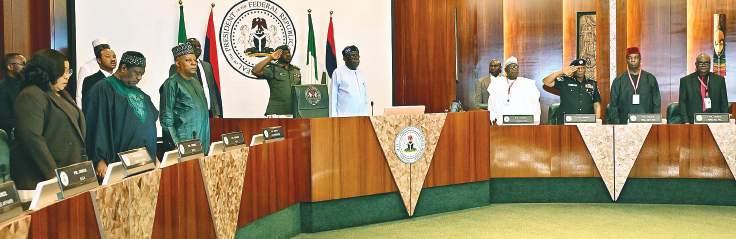
POLICE COUNCIL MEETING...
L-R : Head of Service of the Federation, Didi Esther Walson-Jack; Secretary to the Government of the Federation, George Akume; Vice President Kashim Shettima; President Bola Ahmed Tinubu; Chairman Police Service Commission, Hashimun Salihun Argungun; Permanent Secretary, Police Service Commission, Onyemuche Nnamani and Permanent Secretary, Ministry of Foreign Affairs, Dunoma Ahmed during the Police Council meeting held at the presidential Villa Abuja ...yesterday
Executive Order: Detailed Guidelines for Direct Payment into Federation Account Ready in Three Weeks
PIA for review to address structural, fiscal anomalies weakening federation revenues
Ndubuisi Francis in Abuja
In a bid to ensure the full implementation of Executive Order 9, recently signed by President Bola Tinubu, detailed guidelines for the transition to direct remittance of oil revenues into the Federation Account will be ready within three weeks.
Chairman of the Implementation Committee of Executive Order 9, who
doubles as the Minister of Finance and Coordinating Minister of the Economy, Mr. Wale Edun, disclosed yesterday, that his Committee took the decision when it held its inaugural meeting on February 26, 2026. Edun stated the committee reaffirmed the President’s directive that revenues accruing to the Federation from petroleum operations must be handled in a manner that upholds
constitutional principles, protects revenues accruable to the Federation, and supports the fiscal stability of all three tiers of government.
In a statement which he personally signed, the minister explained, “On February 26, 2026, the Implementation Committee for Executive Order 9 of 2026 held its inaugural meeting. This meeting was held in pursuance of Executive Order 9 of 2026, issued
by President Bola Ahmed Tinubu, to safeguard Federal revenues and strengthen the management of petroleum revenue flows.
“The Committee reaffirmed the President’s directive that revenues accruing to the Federation from petroleum operations must be handled in a manner that upholds constitutional principles, protects revenues accruable to the Federation,
and supports the fiscal stability of all three tiers of government.
“In line with the President’s directive, NNPC Limited shall cease, with immediate effect, the collection of the 30 percent management fee and the 30 percent frontier exploration fund deductions from profit oil and profit gas under Production Sharing Contracts (PSCs). Additionally, all remittances of gas flare penalties
AEDC Raises Power Supply by 15%, Reduces ATC&C Losses to 32%
The Abuja Electricity Distribution Company (AEDC) has increased the volume of electricity it receives and distributes by 15 per cent over the past year, while reducing its Aggregate Technical, Commercial and Collection (ATC&C) losses from about 42 per cent to 32 per cent.
Managing Director of AEDC, Chijioke Okwuokenye, disclosed this in Abuja during a media briefing where he outlined the company’s operational gains and forward strategy to stabilise supply across its franchise area, which covers the Federal Capital Territory (FCT), Kogi, Niger and Nasarawa states.
According to him, the growth in energy intake reflects tangible improvement in supply to customers.
“We have increased power supply
by 15 per cent vis-a-vis what was supplied the previous year, and that for us is a measure of progress. Yes, the power hasn’t been able to get everywhere for a number of reasons, which we will speak to later in this engagement, but progress is being made. And the future looks very, very bright,” he stated.
He noted that although outages persist in some communities, invest- ments in network reinforcement, new feeders and injection substations are gradually improving reliability and power quality in critical locations. Customers in selected areas are expected to begin experiencing between 18 and 20 hours of electricity daily as additional infrastructure is completed.
Okwuokenye said AEDC plans to enter a bilateral power supply arrangement with Nigerian Na-
tional Petroleum Company Limited (NNPC) to source electricity from its 350-megawatt plant under construction in Gwagwalada. The plant is expected to come on stream before the end of the first quarter of 2027 and is projected to significantly improve supply in Abuja and surrounding areas.
He also linked future stability in supply to the completion of the Ajaokuta–Kaduna–Kano gas pipeline, which is designed to boost gas availability to power plants in the northern corridor and reduce reliance on distant generation sources.
As part of efforts to curb losses and strengthen revenue collection, he said the company has intensified its metering drive under various initiatives, including the Meter Asset Fund (MAF) and the Distribution Sector Recovery Programme
(DISREP). About 70,000 meters, he stressed, have been deployed in the last 14 months, transitioning customers from estimated to actual billing.
The AEDC boss said improved collections have enabled the company to meet 100 per cent of its market payment obligations and begin settling legacy debts, a shift from its previous record of debt accumulation.
“Using that scheme and factoring in DISREP, we can proudly say that between last year and the last two months, the first two months of this year, January and now, we’ve been able to deploy about 70,000 litters under the MAF scheme and disrep
“Thesescheme. are real customers that
have been moved from estimated billing to credible billing, thereby improving customer satisfaction, improving customer confidence, and also improving the liquidity in the market. This is a very, very big growth, because for us as a Disco, the aim is to ensure that we achieve 100 per cent metering of all our customers,” he stated.
Beyond grid supply, AEDC stated that it is developing embedded generation projects to diversify its energy sources. The company plans to build three 10-megawatt solar plants around Lokoja, with room for expansion as demand increases. The initiative is aimed at cushioning the impact of grid shortfalls in underserved areas.
into the Midstream and Downstream Gas Infrastructure Fund (MDGIF) are suspended with immediate effect, in line with the Executive Order.
“With respect to Section 2, Subsection 3 of the Executive Order on direct payments by contractors into the Federation Account, the Committee agreed that this transition must be implemented in a manner that respects existing contractual and financing arrangements, and maintains investor confidence.”
According to him, for this reason, the Committee approved a defined transition period for the operationalisation of direct payments by contractors of profit oil, royalty oil, and tax oil into the Federation Account.
He noted that until the Committee issues detailed guidelines, contractors would continue to remit under the current process, adding that during the transition period, the Committee would issue clear, standardised guidance to ensure an orderly changeover. To this end, Edun, disclosed that the Implementation Committee approved the establishment of a Technical Subcommittee to: develop the detailed guidelines for the transition to direct remittance within three (3) weeks, and commence a review of the Petroleum Industry Act (PIA) to address structural and fiscal anomalies that weaken Federation revenues.
NELFUND Extends Loan Applications Over Surge in
Nigerian Education Loan Fund (NELFUND) has approved an extension of its Student Loan Application Portal following a significant increase in awareness and nationwide demand generated by its ongoing sensitisation campaign.
Director, Strategic Communications, NELFUND, Mrs. Oseyemi Oluwatuyi, disclosed in a statement yesterday, that was issued in Abuja, that the decision followed a reminder notice issued last week informing the public that the NEL-
Nationwide Interest
FUND Student Loan Application Portal would close on February 27, 2026.
“In response to strong feedback from students and key stakeholders across the country, and in recognition of the surge in applications and inquiries, the Fund has approved some additional days to ensure all eligible students are given adequate opportunity to complete their applications, pending further management decisions and communications”, the statement explained.
According to the statement, the extension was specifically intended to
accommodate “Students who require additional time to complete their applications; Prospective applicants who became aware of the scheme during the recent nationwide sensitization engagements; Institutions newly commencing their 2025/2026 academic session and Institutions who have not yet submitted their verified student lists.”
Speaking on the development, the Managing Director/Chief Executive of NELFUND, Mr. Akintunde Sawyerr, reaffirmed the Fund’s commitment to inclusivity and equitable access.
President Bola Tinubu has extended warm greetings to Alhaja Lateefat Olufunke Gbajabiamila, renowned community leader, entrepreneur, and philanthropist, on her 96th birthday.
The President, in a statement issued on Monday by his Adviser on Information and Strategy, Bayo Onanuga, celebrates with the mother
of his Chief of Staff, Rt Hon. Femi Gbajabiamila, and extols her resilience, industry, and remarkable life dedicated to the service of God and humanity.
Tinubu acknowledged the significant contributions of the matriarch of the Gbajabiamila family to the development of her community, Lagos State, and the nation, and salutes her historic record as the first female elected local government chairperson
in the state.
The President stated that as a United Kingdom-trained nurse, Mama Gbajabiamila was a role model in healthcare, using her experience and resources to inspire and mentor many in the noble profession. Tinubu prayed that Almighty God will continue to keep Mama Gbajabiamila in good health and strength, so that she may continue her good work.
PHOTO: GODWIN OMOIGUI
Kuni Tyessi in Abuja
Deji Elumoye in Abuja
Emmanuel Addeh in Abuja
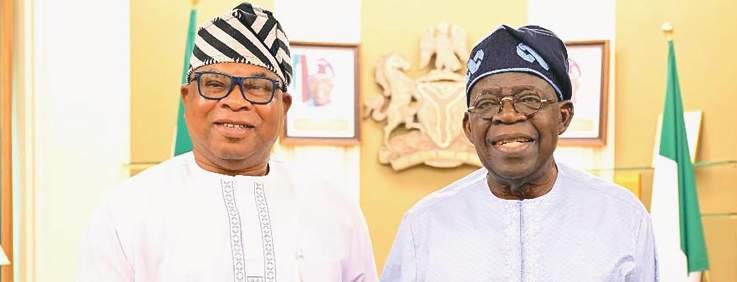
OYEBAMIJI
VISITS TINUBU...
President Bola Ahmed Tinubu (right) and Osun State All Progressives Congress (APC) gubernatorial candidate, Bola Oyebamiji, during the APC candidate's visit to the President at the Presidential Villa Abuja ... yesterday
Optimus Bank Scales CBN Recapitalisation
Hurdle, Raises Paid-up Capital to N200bn
Nume Ekeghe
With exactly 28 days to the deadline fixed by the Central Bank of Nigeria (CBN) for banks to meet the new recapitalisation requirements, Optimus Bank has successfully raised its paid-up capital to N200 billion, thereby retaining its national banking licence.
THISDAY gathered from reliable industry sources that the fresh capital injection has now been verified by the apex bank, placing Optimus Bank among financial institutions that have complied with the revised minimum capital threshold for national banks.
A senior employee of the bank, who pleaded to remain anonymous because he was not authorised to speak publicly on the matter, confirmed the development, noting that the bank had officially met the stipulated capital requirement within the regulatory timeline and in line with prudential guidelines following the central bank’s approval.
The Olayemi Cardoso-led Central Bank of Nigeria (CBN) had, on March 28, 2024, announced a two-year bank recapitalisation exercise which commenced on April 1, 2024. The 24-month timeline for compliance ends on March 31,
2026. The upward capital revision is expected to ensure that Nigerian banks have the capacity to take on bigger risks and stay afloat amid both domestic and external shocks.
Specifically, the recapitalisation exercise requires a minimum capital of N500 billion, N200 billion, and N50 billion for commercial banks with international, national, and regional licences, respectively.
THISDAY further gathered that following the recapitalisation directive announced in 2024, Optimus Bank conducted different rounds of rights issues to existing shareholders and a private placement programme to raise funds from new investors, which significantly boosted its capital to N200 billion, strengthening its balance sheet and positioning it for expanded operations.
The recapitalisation forms part of the CBN’s broader banking sector reform aimed at enhancing financial system stability, improving banks’ capacity to support large-ticket transactions, and strengthening resilience against macroeconomic shocks.
Built with a bold ambition of offering optimum banking experiences to millions of customers globally, Optimus Bank operates as a digitaldriven financial services platform
Enugu Poised to Be
tailored to personal, corporate and business financial needs.
The bank is registered under the laws of the Federal Republic of Nigeria and licenced as a national bank by the CBN, while complying with all statutes and regulations applicable to Deposit Money Banks (DMBs) in the country.
As a technology-forward institution, Optimus Bank has developed intuitive products designed to
address the evolving needs of its diverse customer base. Customers can conveniently open accounts and conduct transactions without visiting a physical branch through its digital channels, including its website, *930# USSD service, Optiverse mobile app and internet banking platforms.
The bank’s vision is to unlock new opportunities for stakeholders and communities by delivering
value through sustainable and scalable financial solutions for individuals and businesses. With its strengthened capital base, industry analysts say Optimus Bank is better positioned to deepen market penetration, expand its loan book, and accelerate digital innovation in Nigeria’s increasingly competitive banking landscape.
Analysts who hailed the bank on the feat said the fresh capital
would enable the bank to be able to do a lot more, collaborate more with international funders such as the International Finance Corporation, Afreximbank, Africa Finance Corporation, among others, to scale up lending and its intermediation role. It would also enable the bank expand its operations, enhance digital transformation, and contribute more to economic growth in Nigeria.
Dawes Island Oil Field Secures $109m Funding, Revives Development Plan
Toronto-based investment firm, REIN Capital, has reinstated a $109 million lending facility for the development of the Dawes Island marginal oil field, a move that signals a major step forward for operator Eurafric Energy, following a recent court ruling that restored the company’s ownership of the asset.
The financing initiative is backed by prominent Bay Street financier, Michael Wekerley, a co-founder of the well-known Canadian invest-
Leading Voice in Africa’s Tech Space, Says Commissioner
The Enugu State Commissioner for Innovation, Science and Technology, Dr. Prince Lawrence Ezeh, says the state is positioning itself to become a leading voice in Africa’s technology ecosystem.
Ezeh spoke yesterday, while reacting to the success of the fourday Enugu Tech Festival, which drew over 58,000 innovators to deliberate on the future of digital innovation.
He said that the turnout reflects Nigeria’s growing ambition to emerge as a continental tech
leader and highlights the role of subnational governments as active ecosystem builders.
The commissioner described the festival as a resounding validation of Enugu’s vision to become a technology trailblazer in Africa.”
“The narrative around African tech is shifting beyond perception to meaningful participation, impact and even human relationships,” he said.
According to him, “Here in Enugu, we have made a deliberate decision: we will not be spectators in this revolution. We will be participants. We will be producers.”
He explained the festival featured discussions on artificial intelligence, blockchain, Web3 technologies, investment and entrepreneurship, alongside technical masterclasses on scaling, product-market fit and cross-border expansion.
Highlights of the event included the distribution of laptops and tablets to outstanding hackathon performers and student innovators, as well as N10 million grants awarded to selected startup founders and innovation teams to accelerate product development and market entry.
ment bank GMP Securities, with the facility originally processed for Eurafric Energy prior to the asset’s revocation in 2020.
Following a Federal High Court decision that reversed that revocation, the funding commitment has now been formally reactivated. This, it was learnt, reflects continued investor confidence in the field’s underlying reserves and commercial viability following extensive technical due diligence conducted before the legal interruption.
With the funding in place, Eurafric Energy has outlined a comprehensive development roadmap for Dawes Island Marginal Field. The plan prioritises scaled and sustained output over
rapid-cycle early oil, underpinned by the newly secured structured financing.
The development strategy includes: Spudding five new development wells; a phased production ramp-up; the deployment of permanent production and evacuation facilities and a medium-term production target of approximately 20,000 barrels per day.
The reinstated $109 million facility is expected to cover drilling, completion, field facilities, and the associated working capital necessary to transition the field into expanded production mode.
Beyond the immediate development financing, REIN Capital has
disclosed wider plans to position Eurafric Energy for a listing on the Canadian Securities Exchange (CSE). The proposed listing signals long-term ambition, a move that would provide enhanced transparency and access to deeper international capital pools. It comes at a time when global investors are increasingly seeking exposure to structured African upstream opportunities backed by reserves-based lending frameworks. The Dawes Island asset has been the subject of industry attention due to the regulatory disputes that interrupted earlier development efforts. A recent court ruling in favour of Eurafric Energy, reversed the 2020 licence revocation.
Court Lifts Mareva Orders in Green Energy/Lekoil Case
Emmanuel Addeh in Abuja
Green Energy International Limited and Lekoil Oil and Gas Investments Limited have confirmed that the Federal High Court sitting in Lagos has ordered that the parties in its ongoing case should maintain the status quo ante bellum in suite No. FHC/ CP/237/2026.
The parties said this relates to the position prior to the appointment of the Interim Administrator,
pending determination of the pending applications.
The court further suspended the Interim Administrator from further activity and lifted all Mareva orders affecting the companies’ bank accounts. The matter has been adjourned to April 22, 2026.
A statement by the companies said management authority remains with the duly constituted leadership of the companies, while all prior freezing restrictions have been lifted.
Operations continue in the ordinary course without interruption, the companies said, stressing that they will continue to pursue their jurisdictional challenge and arbitration proceedings in accordance with the governing agreements.
Operations at Otakikpo (PML 11) continue uninterrupted, according to the statement, and remain in full compliance with applicable regulatory and contractual requirements.
Emmanuel Addeh in Abuja
PHOTO. STATE HOUSE
Gideon Arinze in Enugu
Reuters: FG Splits OPL 245 Oilfield
in Deal with Eni, Shell
OPEC+ agrees modest oil output boost
Emmanuel Addeh in Abuja
Nigeria has broken up the OPL 245 oil block into four new assets to be operated by Eni and Shell, a source told Reuters, potentially settling the future of the field at the centre of one of the oil industry’s biggest historic corruption trials.
The agreement clears the way for the development of OPL 245, one of Nigeria’s biggest deepwater reserves that has remained untapped for almost three decades amid overlapping lawsuits in multiple countries.
The final contracts are expected to be signed starting Monday, said the source familiar with the situation. Nigeria’s government had signalled
for years that it was keen to find a solution that would bring the block into production. The source wished to remain anonymous as they are not authorised to comment on government policy before an official announcement.
Initially awarded in 1998 to Malabu, a company linked to former Nigerian oil minister Dan Etete, the licence was later sold to Shell and Eni, the Reuters report added. Italian prosecutors then alleged that most of the $1.3 billion purchase price for the licence for OPL 245 was siphoned off to politicians and middlemen. The two European energy giants and some of their former and current executives, including Eni CEO Claudio Descalzi,
faced trial in Italy but all were acquitted in 2021, having denied all wrongdoing.
Eni and Shell declined to comment. Shell and Nigeria’s state-owned oil company NNPC had no immediate comment, Reuters said.
Meanwhile, OPEC+ has agreed a modest oil output boost of 206,000 barrels per day for April just as the US-Israeli war on Iran and Tehran’s retaliation disrupted oil flows from key members of the producer group in the Middle East.
OPEC+ has a history of raising oil output to cushion disruptions but analysts said the group currently has little spare capacity to add to supply, except for its leader Saudi
Arabia and the United Arab Emirates, which will also struggle to export oil until navigation in the Gulf returns to normal.
Riyadh has been increasing oil production and exports in recent weeks by around 500,000 bpd in preparation for U.S. strikes on OPEC+ member Iran, sources told Reuters.
Oil, gas and other shipments from the Middle East via the Strait of Hormuz have come to a halt since Saturday after shipowners received a warning from Iran saying the area was closed for navigation. Hundreds of ships dropped anchor and were not moving on Sunday and several ships came under attack. Hormuz is the world’s
most important oil route accounting for over 20% of global oil transit. Despite fears of a glut that would weigh on prices, global benchmark Brent crude has rallied this year and jumped on Friday to $73 per barrel, the highest level since July, on fears of a wider conflict in the Middle East.
Brent traded 8 per cent to 10 per cent up around $80 per barrel over the counter on Sunday, traders said.OPEC+’s output increase is unlikely to calm markets, said Jorge Leon, a former OPEC official who now works as head of geopolitical analysis at Rystad Energy.
“Prices will respond to developments in the Gulf and the status of shipping flows, not to a relatively
small increase in output,” Leon said. OPEC+ will raise production by 206,000 barrels per day from April, it said in a statement. It had debated options ranging from 137,000 bpd to 548,000 bpd, according to five sources who declined to be named because they are not authorised to speak to the press. The agreed increase, which brings an end to a three-month pause in production hikes, represents less than 0.2 per cent of global supply, the Reuters report said.
OIL MARKET IMPACTED AS IRAN CLOSES STRAIT OF HORMUZ, VOWS TO ATTACK ERRANT SHIPS
regular navy will set those ships ablaze," Ebrahim Jabari, a senior adviser to the Guards commanderin-chief, said in remarks carried by state media.
The strait is the world's most vital oil export route, which connects the biggest Gulf oil producers, such as Saudi Arabia, Iran, Iraq and the United Arab Emirates, with the Gulf of Oman and the Arabian Sea.
The closure was triggered by
US and Israeli strikes on Iran on February 28 seeking to topple its leaders, with US President Donald Trump offering Iranians help in ousting the ruling clerics, a Reuters report said.
In response, Iran fired several barrages of missiles at its Gulf neighbours hosting US military bases such as Qatar, Kuwait and Bahrain. Tehran also fired missiles at the United Arab Emirates, Saudi
Arabia and Oman.
With the closure, Tehran made good on years of threats to block the narrow waterway in retaliation for any attack on the Islamic Republic.
About 20 per cent of the world's daily oil consumption passes through the Strait of Hormuz, which is about 33 kilometers (21 miles) wide at its narrowest point.
Oil markets have focused on tensions between Tehran and its old
foes, the US and Israel, fearing that a full-blown conflict would disrupt supplies and destabilise the region.
The move also comes after global shipping had already experienced disruptions linked to drone and missile attacks carried out by Yemen's Iran-aligned Houthi militants. The group has targeted vessels in the Red Sea and the Gulf of Aden since the Gaza war broke out in 2023.
In the aftermath, oil and gas prices
2027: I'm Confident of Getting APC Ogun Governorship Ticket, Says Iyabo Obasanjo
Adedayo Akinwale in Abuja
Daughter of former President Olusegun Obasanjo, Iyabo Obasanjo, has expressed confidence that she would get the Ogun State governorship ticket of the All Progressives Congress (APC) ahead of the 2027 general election.
The former Senator, who recently joined APC stated this yesterday in Abuja when she visited the national headquarters of the ruling party.
She said though she has not participated in active politics for a lot of years now, the reason why she decided to throw her hat in the ring was because the people of Ogun
State really asked her to return.
Iyabo Obasanjo stated: “I'm sure not only will we succeed in getting the nomination, we'll also succeed in governing Ogun State in a way that will make APC even greater in that state and in the nation.
“We're mobilising. If you know my efforts when I was Commissioner for Health, we did a lot of good things, and the goodwill from my time in the Senate and as Commissioner is what is making it so easy to mobilise for APC and to mobilize for my candidacy for the gubernatorial ticket.”
movement, she said she was sure her father would vote for her during the election.
“As you know, we've never had an elected female governor in Nigeria. At this current time, the APC is doing some fundamental things that are going to help women in politics.
“There's the (Reserved Seats) bill, fully supported by the APC, in which there will be reserved seats for women in the National
Assembly,” she noted.
She said while reserved seats in parliament were very popular in East Africa, it was not so in West Africa, saying the fact that Rwanda has the highest percentage of women in politics was due to reserved seats.
Iyabo Obasanjo pointed out that the Reserved Seats Bill for women gave her the confidence that the ruling party would produce the first female elected governor in Nigeria.
have surged as Iran continues to launch strikes across the Middle East in response to ongoing attacks by the US and Israel. Natural gas prices spiked on Monday after QatarEnergy, one of the world's biggest exporters, halted production following "military attacks" on its facilities.
Oil prices also jumped, with the global benchmark Brent crude briefly hitting $82 a barrel on Monday, after at least three ships were attacked near the Strait of Hormuz.
Besides, QatarEnergy, which is owned by the state, said that it had suspended producing liquefied natural gas (LNG) after the country's Ministry of Defence (MoD) said a drone launched from Iran targeted a facility in Ras Laffan Industrial City. Qatar's MoD also said a drone went after a water tank belonging to a power plant in Mesaieed, south of the capital Doha.
In neighbouring Saudi Arabia, Aramco temporarily shut its major oil refinery at Ras Tanura on the coast after being hit by a drone. International shipping has almost come to a standstill at the entrance to
the Strait of Hormuz, with analysts warning that a prolonged conflict could push energy prices even higher.
In Nigeria, the 650,000 barrels per day Dangote Refinery has already raised the gantry price of petrol, while on the other hand the skyrocketing price of crude oil is good for the 2026 budget as well for the general economy.
Trump to Iran: ‘Big Wave’ Yet to Come
President Donald Trump has said that the US military is “knocking the crap” out of Iran, but stated that the “big wave” is yet to come, as the US/Israeli versus Iran war entered its third day yesterday. Besides, Trump addressed a wide range of topics in an interview with CNN, including the expected length of the conflict, his surprise at Iran’s widespread retaliation and the country’s expected succession plan. “We’re knocking the crap out of them. I think it’s going very well. It’s very powerful. We’ve got the
Continued on page
BOTSWANA PRESIDENT APPOINTS AKINWOLE II OMOBORIOWO AS VICE CHAIRMAN OF BOTSWANA POWER CORPORATION’S BOARD OF DIRECTORS
Iyabo Obasanjo noted that while her father was not part of her political short period of time.
CARDOSO: NET RESERVES JUMP 772% FROM $3.99BN TO $34.8BN IN TWO YEARS
disclosed that the country’s gross external reserves were at $50.45 billion as of February 16, 2026.
He explained in the latest statement that the net reserves figures reflected the benefits of increased transparency and credibility in foreign exchange management, boosting investor confidence, attracting stronger FX inflows, and improving reserve management practices aimed at preserving capital, ensuring liquidity, and supporting long-term sustainability.
According to him, the improvement represents a substantial strengthening in both the level and quality of Nigeria’s external buffers over the past three years.
He further stated: “Net reserves increased sharply from $3.99 billion at the end of 2023 to $34.80 billion at the close of 2025, reflecting what he described as a fundamental improvement in reserve quality.”
According to Cardoso, the 2025 net reserve position alone exceeded the total gross reserves recorded
at the end of 2023, which stood at $33.22 billion.
Cardoso further stated that net reserves rose from $23.11 billion at end-2024 to $34.80 billion at end-2025, while gross external reserves increased to $45.71 billion from $40.19 billion over the same period, representing an increase of $5.52 billion.
He said the expansion highlighted Nigeria’s enhanced capacity to meet external obligations, support exchange rate stability and reinforce overall macroeconomic resilience.
He described the end-2025 reserve position as strong validation of the Bank’s ongoing policy reforms and external sector adjustments.
He reaffirmed the CBN’s commitment to maintaining adequate reserve buffers, supporting orderly foreign exchange market operations, enhancing confidence in Nigeria’s external position and sustaining macroeconomic stability in line with its statutory mandate.
Omoboriowo, a leader in African power infrastructure and energy finance, brings over two decades of experience in utility-scale generation, project structuring, and cross-border energy development. He currently serves as Chairman and CEO of GENESIS Energy Group, where he has led utility-scale generation projects of more than 780MW in operations, ongoing construction, and advanced development in Nigeria, South Africa, Benin Republic, Zambia, Rwanda, Zimbabwe, Mali and United Kingdom with a project development pipeline north of 4.5GW.
His expertise spans conventional power infrastructure development, distributed energy deployments (both renewable and gas), natural gas commercialisation, energy markets reforms and specialised energy investment financing- capabilities that align with Botswana’s current reform priorities.
Steering Botswana’s Energy Transition
A recent World Bank sourced energy generation monitoring indicates that Botswana’s electricity generation at key coal plants has fluctuated
significantly, with Morupule B’s production declining from 3,328 GWh in 2022–23 to 2,674 GWh in 2024–25 — reflecting instability in domestic supply capacity.
Omoboriowo joins BPC at a pivotal moment as the corporation continues to implement its Maduo 26 strategy, a five year transformation agenda launched in 2022 to improve operational efficiency and financial performance and make the utility a regional benchmark in energy supply. Experts say this strategy complements national priorities to diversify Botswana’s energy mix, increase renewable generation, and strengthen grid resilience — all part of wider reforms under the country’s Integrated Resource Plan.
His appointment reinforces BPC’s commitment to: Expanding renewable energy capacity; strengthening regional power trade within the Southern African Power Pool (SAPP); enhancing grid resilience and operational performance and mobilising investment into sustainable energy infrastructure
Under this framework, BPC seeks not only to stabilise Botswana’s electricity supply but also to position the country as a net exporter of electricity within the Southern African
Power Pool (SAPP). Omoboriowo’s leadership is expected to focus on corporate structural re-alignment, capital efficiency, governance and ensuring that infrastructure development translates into measurable operational and commercial outcomes.
A Continental Perspective
Omoboriowo’s career highlights a trend of intra-African professional mobility, where expertise developed in other markets is leveraged to solve complex challenges elsewhere. His experiences span structuring and investing in multiple countries including the United Kingdom across both conventional and renewable energy projects, emphasising capital efficiency, financial engineering governance, and execution rigour.
In a public LinkedIn post, Omoboriowo acknowledged the confidence placed in him by President Advocate Duma Boko of Botswana, as well as that of Minister of Minerals and Energy, Her Excellency Bogolo Joy Kenewendo, describing the role as an opportunity to contribute to a national institution at a critical stage of its development.
“I assume this responsibility with humility — but with buoyancy, high commitment to duty, and unwavering dedication to delivery. The work ahead is substantial, but so too is the opportunity to contribute meaningfully to a critical national institution at an important moment in its evolution,” Omoboriowo wrote.
Implications for Regional Energy Integration
As Botswana seeks to diversify its energy sources, improve system resilience and secure its energy security, the performance of BPC remains central to the country’s industrial ambitions and regional competitiveness. Enhanced governance and strategic oversight could influence not only domestic reliability but also Botswana’s role within the Southern African electricity market. With Maduo 26 approaching its 2026 target horizon, Omoboriowo’s role as Vice Chairman places him at the heart of one of the most consequential transformation efforts in Botswana’s energy sector in recent years — a development that policymakers and regional energy stakeholders will be watching closely.
Sen. Heineken Lokpobiri







OPEN LETTER TO THE MINISTER OF HEALTH AND SOCIAL WELFARE PROFESSOR MUHAMMAD ALI PATE
Honourable Minister,
We write on behalf of the SAQAFATUL ISLAM FOUNDATION NIGERIA (SIFN), a not-for-profit organisation promoting health awareness in Nigeria, with a particular focus on the North-East geopolitical zone. As patriotic stakeholders, we respectfully request your comments on a matter of growing public concern: Nigeria's fertility rate, the integrity of reproductive health policy discussions, and the implications of recent international disclosures for public trust.
Public reporting and commentary in recent weeks—including reports referencing materials said to be connected to the Jeffrey Epstein matter have generated anxiety among Nigerians about whether influential foreign individuals or networks may have taken an interest in demographic outcomes in Nigeria. While SIFN does not claim personal knowledge of the authenticity, completeness, or legal meaning of any purported communications circulating online, the public perception of possible external agenda-setting has become significant and warrants clear reassurance from Nigeria's health leadership.
Nigeria's fertility rate is frequently discussed in global public health circles. Any policy or programme relating to fertility, family planning, maternal health, or reproductive services must be grounded in Nigerian law, public health evidence, human rights standards, and most importantly—the autonomy and informed consent of Nigerian women. For citizens to maintain confidence in health initiatives, they must be assured that policies are transparent and not influenced by improper considerations, whether real or perceived.
Against this backdrop, we respectfully request your clarification on the following matters:
1. Policy independence and safeguards
What formal safeguards exist within the Ministry to ensure that reproductive health and family planning policies are developed solely in Nigeria's public interest and are insulated from undue i n fl u e n c e b y e x t e r n a l a c t o r s , i n c l u d i n g d
foundations, or foreign policy interests?
2. Transparency on partnerships, programmes, and funding
Could the Ministry publish or point the public to clear information detailing key partnerships and donor-supported programmes in r e p r o d u c t i v e a n d m a t e r n a l h e a l t h , i n c l u d i n g g o v e r n a n c e structures, oversight mechanisms, and accountability standards? This would help address speculation and strengthen confidence.
3. P u b l i c r e a s s u
ethically and voluntarily?
4. Clarification regarding Bill Gates and perceptions of conflict of interest
We had always regarded Bill Gates as a friend to world health initiatives. Yet we note that public reporting has also discussed interactions between Jeffrey Epstein and Bill Gates, including reporting about philanthropy and support for global health initiatives. We further note that you have been described in public discourse as having a long-standing relationship with Mr Bill G a t e s d u e t o g l
sensitivities, would you be willing to clarify:
To the nature of your professional relationship with Mr Bill Gates (e.g., institutional, advisory, programme-related, or otherwise), and o what conflict-of-interest safeguards apply to ensure that N i g e r i a n p o l i c y d e c i s i
transparent?
5. Ethical leadership and the question of resignation in the public interest
We recognise that resignation is a serious step and should never be demanded lightly However, public confidence is central to effective health leadership. In several jurisdictions, senior officials and public figures have stepped aside after controversies involving proximity—direct or indirect— to individuals whose reputations became severely compromised, where that proximity risked undermining institutional credibility
In that light, and given the names now central to public debate (including Jeffrey Epstein, Thomas Pritzker, and Bill Gates), we respectfully ask: do you consider that stepping aside, temporarily or permanently, is something you should consider if public confidence in the Ministry's r e p r o d u c t i v e h
perceptions—regardless of your personal intent— so as to protect the credibility of the Ministry and equally important to avoid any risk of the Presidency being drawn into reputational fallout by association?
We stress that SIFN's purpose is not to defame any individual, nor to prejudge any allegation. Our concern is the integrity of Nigeria's public health policy process and the dignity, autonomy, and trust owed to Nigerian women—particularly in the North East, where women face heightened vulnerabilities and where distrust of health programmes can have severe consequences.
narratives now circulating Reports and online commentary have mentioned Jeffrey Epstein, Thomas Pritzker, and others in connection with discussions about population dynamics Without asserting wrongdoing by any p e r s o n , w e a s k : w h a t i s t h e M i n i s t r y ' s p o s i t i o n o n a n y attempts—by any external individuals or organisations—to frame Nigeria's fertility rate as a target for "population control" strategies rather than as a health and development issue to be addressed
Many Nigerian parents mothers and fathers have found recent reports and the surrounding commentary deeply disturbing, especially where Nigerian women appear, in public narratives, to be discussed primarily in terms of demographic targets. This is precisely why clear, factual communication from your office is urgently needed.
We would appreciate a written response within fi 4/211 days of receipt of this letter Your reply will support a calmer, evidence-based public dialogue and help reinforce confidence in ess ential maternal and reproductive health programmes nationwide. Subject:
MUHAMMAD A. AHMADU Secretary

Politics
Acting Group Politics Editor DEJI ELUMOYE
Email: deji.elumoye@thisdaylive.com
08033025611 sms only
As S’Court Attains Full Complement of 21 Justices...
The apex court, now with its full complement of 21 Justices, no doubt will be poised for efficient and effective justice delivery, as political litigations are expected to surge before and after the 2027 general elections, writes Alex Enumah .
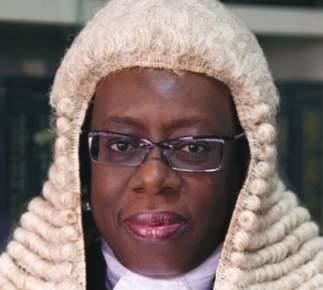
On Wednesday, February 25, 2025, Chief Justice of Nigeria (CJN), Justice Kudirat Kekere-Ekun, swore in Justice Joseph Oyewole as a Justice of the Supreme Court of Nigeria (SCN), thereby bringing the total number of Justices on the bench of the apex court to its maximum 21. The feat according to the CJN was a significant milestone in the nation’s judiciary as it marks the second time within a short period that the apex court would be having the full or maximum number of Justices on its bench.
The first was in February 2024, when 11 justices recommended to President Bola Tinubu for appointment were sworn in as Justice(s) of the Supreme Court (JSC). Before the coming of the Tinubu administration, the bench could barely boast of 10 justices, including the then Chief Justice of Nigeria, Justice Olukayode Ariwoola. The situation then which was a far cry from the constitutional provision, created a heavy burden on justices of the apex court, and the justice system, since the apex court was the final court in the country. Delay in justice delivery as well as backlog of cases was the order of the day, as the 10 justices could barely form two separate panels to hear pending appeals in ordinary matters and just one in a constitutional matter.
Section 230(2)(b) of the 1999 Constitution stipulates that, “The Supreme Court of Nigeria shall consist of such number of Justices not exceeding 21 as may be prescribed by an Act of the National Assembly”. This is believed would enhance efficiency, reduce the heavy backlog of pending cases, as well as manage the enormous, growing workload, owing to the fact that Nigerians are a very litigious set of people. From land and business to politics and human rights, almost all cases from the magistracy find their way to the Supreme, except where such cases are limited by law. Therefore having its full complement of 21 justices would enhance faster hearing and determination of appeals, which were previously delayed due to fewer justices. Before the swearing-in of Justice Oyewole last week, the bench of the apex court had 20 Justices. They are; the CJN, Justice Kudirat Kekere-Ekun, Justice John Inyang Okoro, Uwani Musa Abba Aji, Mohammed Garba Lawal, Helen Ogunwumiju, Ibrahim Saulawa,
Adamu Jauro, Tijjani Abubakar, and Emmanuel Again. Others include; Haruna Tsammani, Moore Adumein, Jummai Sankey, Chidiebere Uwa, Chioma Nwosu-Iheme, Obande Ogbuinya, Stephen Adah, Habeeb Abiru, Jamilu Tukur, Abubakar Umar, and Mohammed Idris.
The implication is that, the apex court could only hear two constitutional matters simultaneously. However, with the addition of Oyewole, it can constitute three panels simultaneously on constitutional matters, thereby ensuring speedy dispensation of justice, on one hand and on the other, reducing the workload of justices who would have been forced to be part of the third panel.
Speaking shortly after Oyewole’s inauguration, the CJN remarked that the appointment has once again enable the apex court to attain its full complement of 21 justices, as provided by the Constitution of the Federal Republic of Nigeria. After it attained its full complement in February 2024, it quickly depleted to 20, with retirement of then CJN, Justice Olukayode Ariwoola, in August 2024. Unlike, in previous times when further depletion would have taken place before appointments were made, President Tinubu did not delay in appointing Oyewole, once he was recommended by the National Judicial Council (NJC).
In her speech at the occasion, Kekere-Ekun disclosed that following the addition, judgments of the apex
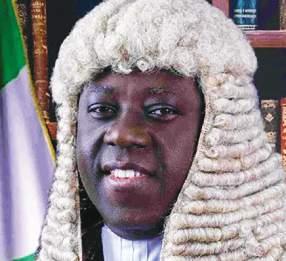
court would now be more robust, efficient and enriching.
She said: “With the Oath of Allegiance and the Judicial Oath just administered, Your Lordship assumes not merely a new office, but a solemn and enduring trust at the highest level of our judicial hierarchy. By this act, My Lord, you join the Supreme Court of Nigeria, the final interpreter of the Constitution and the ultimate guardian of legal rights within our Republic.
“This occasion carries an added institutional importance. With Your Lordship’s elevation, this Court now stands at its full constitutional complement. This is no small milestone. A full Court enhances our capacity to sit in robust panels, to manage our docket more efficiently, and to ensure that the business of the nation’s apex Court proceeds with renewed vigour and dispatch. It enriches intellectual diversity, and reinforces the stability of our jurisprudence.
“For a Court whose pronouncements shape the legal destiny of the nation, numerical completeness is structurally significant to the effective discharge of our constitutional mandate”.
The CJN however warned that appointment to the apex court is not simply the culmination of professional distinction; but the acceptance of a sacred national responsibility because, its pronouncements settle controversies, shape the development of the country’s jurisprudence, and define the contours of constitutional governance.
Kekere-Ekun stressed that, “Its judgments do not speak only to the parties before it; they speak to generations yet unborn”, adding that the authority of the apex court rests not on force, but on the moral weight of its
The CJn warned that at the apex court, the judicial function does not only transcends the resolution of disputes but demands stewardship, careful guardianship of precedent, principled development of the law, and unwavering allegiance to constitutional supremacy.
reasoning, the discipline of its processes, and the integrity of men and women privileged to serve on its Bench.
While reminding Oyewole that his elevation is a testament to years of disciplined scholarship, fidelity to the law, and distinguished service on the bench, the CJN warned that at the apex court, the judicial function does not only transcends the resolution of disputes but demands stewardship, careful guardianship of precedent, principled development of the law, and unwavering allegiance to constitutional supremacy.
“A Justice of this Court must possess the courage to affirm settled doctrine where stability demands it, and the wisdom to refine it where justice and constitutional fidelity so require.
“Your Lordship is called upon to decide according to law and conscience, free from fear, favour, affection, or ill-will. Where Your Lordship’s considered conviction differs from that of your brother Justices, Your Lordship must have the courage to dissent with courtesy and precision. A principled dissent, expressed with intellectual honesty, is not a fracture of unity; it is often the seed of future doctrinal growth.
“The oaths Your Lordship has taken represent a covenant, binding in conscience and in law. It demands moral courage when decisions are unpopular, restraint when passions run high, and steadfastness when pressures, subtle or overt, seek to intrude upon judicial independence.
“At this level of adjudication, scrutiny is intense and commentary often instantaneous. Your compass must remain fixed upon the Constitution and the law”, she added.
The elevation of Justice Oyewole, to a greater extent would enhance the efficiency of the apex court, particularly now that political parties have commenced congresses for election of their national executives leading to primary elections for the election of parties’ flag bearers in the various elective positions ahead of the 2027 general elections, billed for January 16 and February 6, 2027.
The Tinubu administration and successive governments should however, ensure the timely appointments of Justices to fill vacant position once recommended to them. This would guarantee that the Supreme court operates at its full capacity always.
oyewole
Kekere-Ekun

AFRICA WOMEN OF IMPACT AWARD 2026

ABOYADE FUNKE (SAN) Lawyer, Principal Partner, Aboyade & Co
AFOLABI, BOSEDE (PROFESSOR) Obstetrician, Gynaecologist, Academic, UNILAG.

ART ALADE, DEOLA Entrepreneur / Entertainment Executive, Livespot 360,

ONIKEPO Lawyer / Editor, THISDAY Lawyer.

ABUZEID, IMAN (DR) Physician / CEO Incredible Health
Lawyer Dentons ACAS-Law

AWOSIKA, IBUKUN (DR) CEO, The Chair Centre Group


ADAMOLEKUN YEMI Activist, Enough is Enough,

TOYIN (DR) Physician/CEO, Cityblock Health.

BADEJO-OKUSANYA, OYINKAN (SAN) Lawyer, Africa Law Practice NG & Co.


FUNKE (SAN) Lawyer, Arbitrator/ Independent Consultant





AJAYI,
ADETIBA, KEMI Filmmaker / TV Director, Kemi Adetiba Visuals
AGBOR, FUNKE (SAN)
ADEKOYA,
AKINLUYI, TOSIN Managing Director, Morgan Stanley.
CHINELO ANOHU Founder/CEO Mutandis Africa Group
BARTLEY, SYLVIA (DR) Neuroscientist, Morehouse School of Medicine.
BELO OSAGIE, MYMA Lawyer / Co Founder Udo Udoma & Belo-Osagie.
BRAITHWAITE,
BROWN, OLA (DR) Doctor / Investor Healthcare Investment Group.
BUHARI, AISHA Former First Lady Federal Republic of Nigeria.
BYANYIMA, WINNIE Executive Director UNAIDS
CHARWAY, SHENIECE Music Industry Executive Head of Black Music & Culture EMEA, YouTube.
COKER-ODUSOTE, ABISOYE (ENGR) CEO, NIMC
COKER, TOLU Designer/Artist Tolu Coker
DABIRI, ABIKE Politician/ Chairman, NiDCOM
DAHIRU AHMED, Aishatu Politician / CEO Binani Air.
DANGOTE, HALIMA Executive Director Dangote Group.
NIGERIA
NIGERIA
NIGERIA
NIGERIA
NIGERIA / USA UK
NIGERIA NIGERIA NIGERIA SUDAN
AFRICA WOMEN OF IMPACT AWARD 2026
DIOP, BINETA (DR) Senior Envoy African Union Commissioner.


GURIB-FAKIMM, AMEENAH (DR) Biodiversity Scientist, Politician ImpactHER / World Agriculture Forum.

FLORENCE (Senator) Politician. The Governing Council.


DLAMINI, JUDY (DR) Business Leader, Author University of the Witwatersrand.
EDUN, AMY ADWOA Philanthropist The Cripps–Appiah–Edun Family.

GWARUBE, SIVIWE Politician, Minister Of Basic Education.

JOHNSON, OMOBOLA (DR) Fmr Minister of Communications /Chairperson Global Alliance.

Financial

DOSUNMU, ERELU ABIOLA Queen Mother Erelu Kuti IV of Lagos.

EKE-ALUKO, BIODUN (DR) Consultant Paediatrician, Entrepreneur. The Premier Specialists Medical Centre.

JOSEPHINE Managing Director, Morgan Stanley Europe.
KABA, NIALÉ Economist, Politician, Minister of Foreign Affairs and Int’l Cooperation for Côte d’Ivoire.

Entrepreneur
DRUMMOND, CAMILLE Accountant, British Petroleum

EYESAN, MEYIWA Commission Chief Executive, Economist Nigerian Upstream Petroleum Regulatory Commission.

KEMI Specialist Obstetrician & Gynaecologist. WARIF

PATRICIA (PROFESSOR) Sociologist, Ethicist University Of Oxford.


Business

DUROTOYE, TARA Beauty Entrepreneur, CEO House of Tara.
FAYEMI, BISI Former First Lady, Author, Gender Advocate Ekiti State Government.
EDO-OSAGIE, ANITA Oil & Gas Executive First E&P.
HARRIMAN,
IBRU,
IDIGBE, ELIZABETH Lawyer / Managing Partner, Punuka Chambers.
ITA-GIWA,
KINGORI,
KINGORI, VANESSA (MBE)
Executive, Media Leader Google UK & Ireland.
KUKU, BANKE Textile Designer, Fashion Entrepreneur. Banke Kuku.
KYEI, AFUA
Executive Bank of England.
LUHABE, WENDY
Women Investment Portfolio Holdings.
MADONSELA, THULI Lawyer, Stellenbosch University
MADUEWESI, OKE Entrepreneur, Zaron Group
SENEGAL
NIGERIA NIGERIA
NIGERIA
MAURITIUS
SOUTH AFRICA
NIGERIA NIGERIA
SOUTH AFRICA
NIGERIA
NIGERIA
IVORY COAST
SOUTH AFRICA
NIGERIA
NIGERIA
SOUTH AFRICA
NIGERIA
AFRICA WOMEN OF IMPACT AWARD 2026

MAYNARD, PAMELA Technology Executive, Microsoft MCAPS.

MOS-SHOGBAMIMU, SHOLA (DR) Activist, Solicitor of England and Wales.
ODINKEMELU, AKU Banker, Arbitrator, Policy Maker Central Bank of Nigeria.

OKOLI, CHIZOMA Deputy Managing Director, Access Bank PLC.
ONWUGHALU, AMAKA Chairman, Fidelity Bank

MEADE, MONICA Chartered Cyber Security Professional. Mastercard.

MOSAKU, WUNMI Actress Oscar Nominee

ODUNSI, DUPE (DR) Haemato-Oncologist Marcelle Ruth Cancer Centre & Specialist Hospital.

OKOLLOH, ORY Lawyer, Activist, Investor Verod-Kepple Africa Ventures

ONYEJEOCHA, NKEIRUKA (PhD) OON Politician, Public Administrator. Minister of State, Labour &Employment
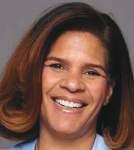
MENSAH, ANNE Television Executive, Producer Netflix UK.

NCUMISA, LIHLE JILATA (DR) Neurosurgeon, Mediclinic Morningside.

ODUSOTE, OLUGBEMISOLA (DR) Lawyer, Nigerian Law School

OLORUNSHOLA OLUWAYEMISI (DR) Chairman, WEMA Bank
CHINELO Advocate / Painter

MOLOI MOTSEPE, PRECIOUS (DR) Businesswoman, Philanthropist, Doctor. Motsepe Foundation
AFRICA
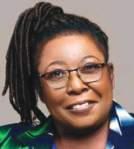
NDHLUKULA, DIVINE Entrepreneur, SECURICO

OGUNBANJO,MOSUNMOLA Architect MOE+ Art Architecture

OLOWE, OLAMIDE Entrepreneur / Investor, Topicals

CLAUDIA People Director Sky

MOON, MARION ATIENO Agricultural Expert PFSCU.

NEWTON-KING, NICKY Chairman Stellenbosch University
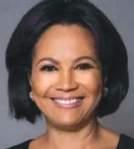
NIKE Fashion Entrepreneur, Ruff n Tumble.

OMAGHOMI, EVA Strategic Communications Expert The Household of King Charles III and the Queen Consort.

OGUNLESI,
ORAMAH,
OSEI-NSAFOAH,
OSENI, ODIO Creative Director Odio Mimonet.
AFRICA WOMEN OF IMPACT AWARD 2026
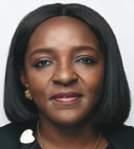
OSIME, IFEYINWA Chairman, Access Bank

RAMOS, MARIA Economist, Standard Chartered.

SHINKAFI, FATIMA Executive Secretary, Solid Minerals Development Fund (SMDF).
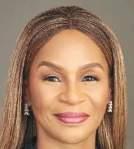
TINUBU, BOLA Lawyer, Philanthropist Cece Yara Foundation.
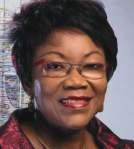
USORO, MFON EKONG Former Director General, NIMASA.

OTEH, ARUNMA Economist, Finance Executive Saïd Business School, University of Oxford.

REID, HANNAH People Director, Apple.
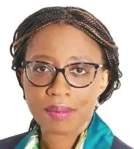
SONGWE, VERA (DR) Economist / Chairperson Liquidity and Sustainability Facility.

TINUBU, LAYAL VEntrepreneur, Philanthropist, CEO Tots Toys / Noella Foundation.

WILLIAMS DE BRUYN, SOPHIE Anti-apartheid Activist. African National Congress Women’s League.
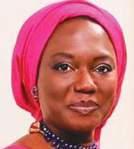
OYEBODE, AISHA (DR) Lawyer/Activist / CEO Murtala Muhammed Foundation.

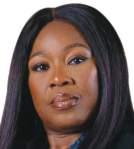
STAN EKEH, CHIOMA CEO, Technology Distribution, TD Africa.

REWA Finance Professional, Visual Artist Chapel Hill

PRETTY OPERATIC SOPRANO The Metropolitan

PAUL, SANDRA Lawyer Kingsley Napley.
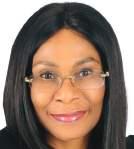
RHODES-VIVOUR, ADEDOYIN (SAN) Lawyer/ Founding Partner Doyin Rhodes-Vivour & Co.
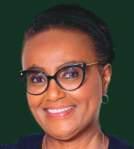
SWAZI TSHABALALA, BAJABULILE Finance Executive, Strategic Consultant. Kupanua Investments.
AFRICA

UDOMA, SALLY Former General Counsel Chevron.
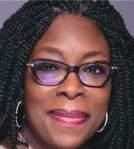
YOUSSOUFOU, ZOUERA Philanthropist / CEO, Aliko Dangote Foundation.
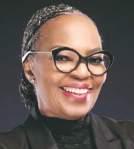
Entertainment



RHODES OKUNBOR, ADESUWA Investor / Entrepreneur, Aruwa Capital Management.
UDOJI,
Denham.
YENDE,
Opera.
PHILISO, NOMSA CEO General
Multichoice Group.
SHASORE, GBEMI Executive Publisher & CEO Quramo Publishing / Quramo Productions.
UKEJE, NNENNA Politician, House of Representatives.
TILAHUN ALEMU, BETHLEHEM Entrepreneur, SoleRebels
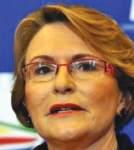
ZILLE, HELEN Politician, Activist, Democratic Alliance (DA).
NIGERIA
SOUTH AFRICA
NIGERIA
NIGERIA
SOUTH AFRICA
NIGERIA
NIGERIA
NIGERIA NIGERIA
NIGERIA
SOUTH AFRICA
NIGERIA
NIGERIA
SOUTH AFRICA
ETHIOPIA
NIGERIA
SOUTH AFRICA
SOUTH
NIGERIA
NIGER

These Frequently Asked Questions below provide a clear over view of Nigeria’s new tax law coming into effec t in 2026. They are designed to help individuals and businesses understand the key changes, who they apply to and how the new rules will affec t filing, payments and compliance.
WHO IS ELIGIBLE TO PAY TAX IN NIGERIA?
Any individual or entity that earns income or derives economic benefit in Nigeria and abroad is eligible and required to pay tax.
WHAT IS A TAX IDENTIFIC ATION NUMBER ( TIN)?
A TIN is a unique identifier issued by FIRS or SBIR and is required for all tax-related transactions.
WHO IS REQUIRED TO FILE TAX RETURNS?
Nigerian residents aged 18+ with income from Nigerian sources including employees, self-employed individuals, and non-residents earning from Nigeria must file returns.
C AN I PAY TAXES IN ANY BANK BR ANCH?
Yes. Approved banks can collect payments for all tax types and tax offices.
WHY DOES IT TAKE LONG TO GET A TAX CLEAR ANCE CERTIFIC ATE ( TCC )?
A TCC is issued only after all taxes for the past 3 years are fully paid. The standard two-week processing time starts from the date of application, not the date of payment.
WHAT IF I FAIL TO FILE OR PAY TAXES ON TIME?
Late filing or late payment attracts penalties and interest charges.
WHO DOES THE NEW 2025 TAX LAW APPLY TO?
Resident individuals are taxed on worldwide income; nonresidents are taxed on Nigerian-sourced income.
WHAT IS THE TAX R ATE FOR LOW-INCOME EARNERS?
Individuals earning N800,000 or less per year are fully exempt from personal income tax.
ARE TR ANSFERS AND DEPOSITS INTO MY BANK ACCOUNT AUTOMATIC ALLY TAXED?
No. Transfers and deposits are not taxable by themselves, but the source of the income may be taxable.
WHAT IS THE NEW RENT RELIEF?
From 2026, individuals can claim 20% of annual rent (up to N500,000) as rent relief, provided actual rent is declared to tax authorities.
WILL SMALL COMPANIES PAY TAX?
Companies with N50 million or less in annual turnover are exempt from Companies Income Tax (CIT).
ARE AGRICULTURE COMPANIES TAXED?
Agriculture businesses, including crop farming, livestock, cocoa processing, forestry, and dairy enjoy a 5-year tax holiday.
WHAT IS THE C APITAL GAINS TAX R ATE (CGT )?
CGT is a flat 30% on chargeable gains from asset disposal
HOW ARE NON-RESIDENT COMPANIES TAXED?
Non-residents are taxed on income sourced from Nigeria. If profits are hard to verify, FIRS may apply a minimum tax of 4% on Nigerian income.
ARE GAINS FROM CRYPTOCURRENCIES TAXABLE?
Yes. The 2025 Act applies CGT to digital asset disposals, including cryptocurrencies.
WHAT IS THE CURRENT VAT R ATE?
VAT remains 7.5%. Non-resident suppliers (e.g., ecommerce platforms) must register and remit VAT in Nigeria.
IS INCOME FROM BONDS OR GOVERNMENT SECURITIES TAXABLE?
No. Income from federal or state government bonds is fully exempt.
BE A LAW ABIDING CITIZEN. PAY YOUR TAX.






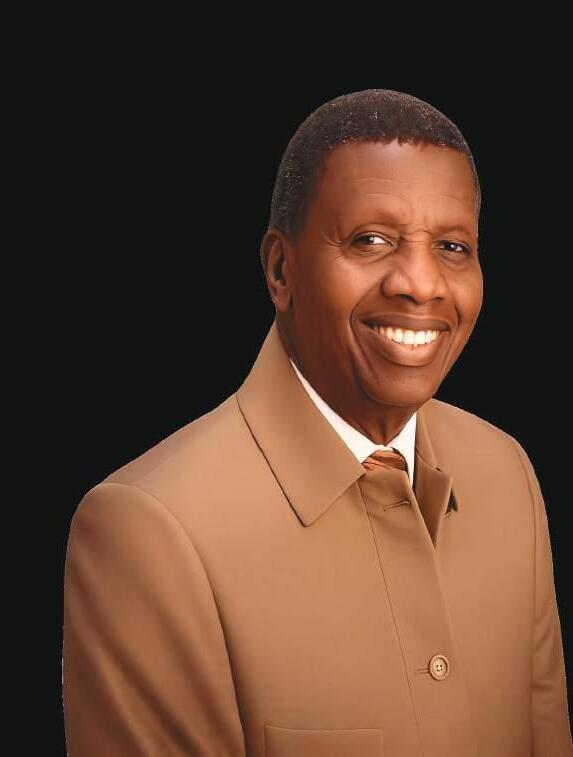





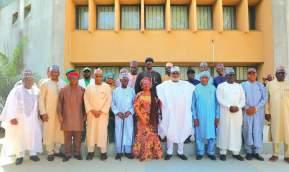
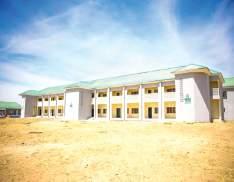
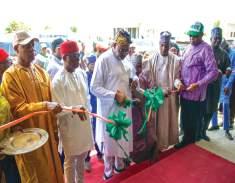
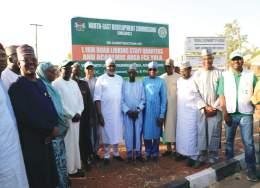
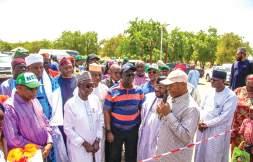
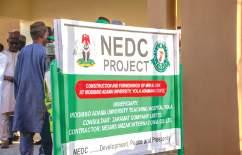
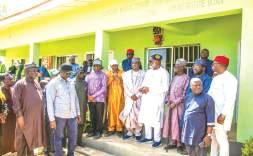
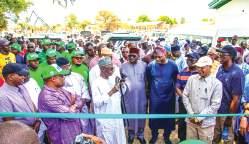
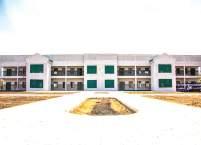
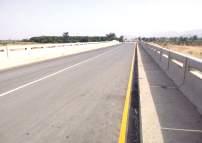
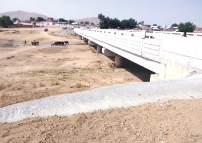
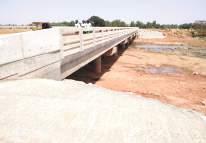
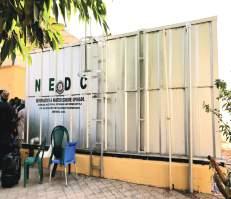
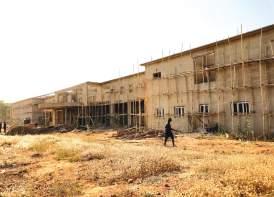
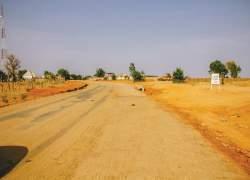
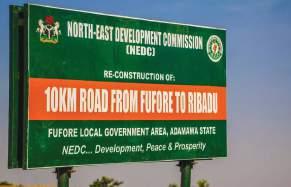
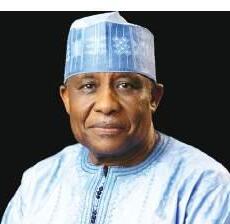
NEDC Commissions, Hands Over Projects in Adamawa North-East Development Commission (NEDC)










LAWYER
“I’ll
Bring to NBA-SLP Inclusion, Visibility, and Measurable
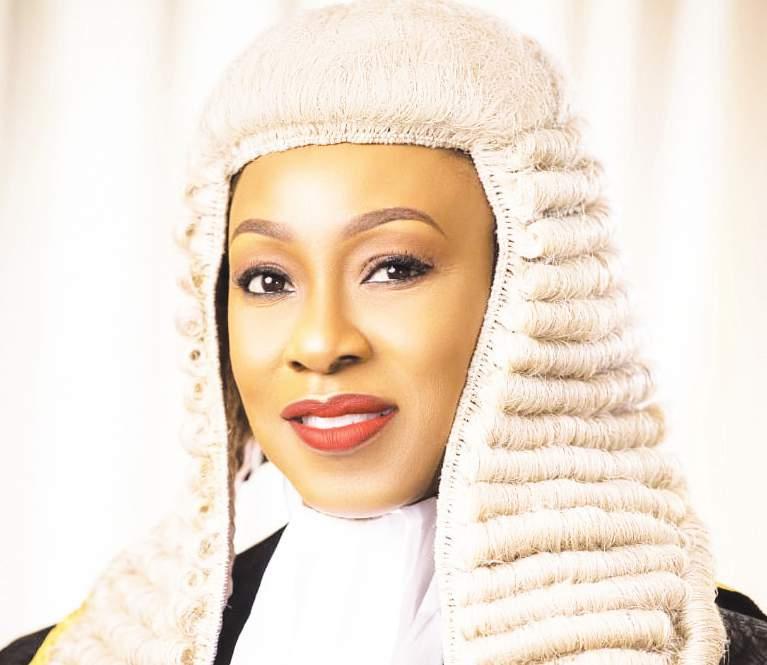
Chairperson, Nigerian Bar association Section on Legal Practice, Mrs Folashade alli, SaN, C. arb
LAWYER

Quotable
‘It is important for good Nigerians, to provide necessary information. And, as quickly as you see something, say something, and the Armed Forces is always ready to react” - Rtd General Christopher Gwabin Musa, Minister of Defence, Federal Republic of Nigeria
STEPHEN KOLA-BALOGUN


Stephen Kola Balogun, is a vastly experienced Legal Practioner who obtained his LL.B from University of Ife and LL.M from School of Oriental & African Studies, University of London. He has Post-Graduate Diplomas in Intellectual Property Law, Construction Law, Management and Arbitration. He has served in various capacities since his Call to the Nigerian Bar in 1982, including practicing at Akinjide & Co., and lecturing part-time at Oxbridge Tutorial College. He was the Honourable Commissioner for Youths, Sports and Special Needs, State of Osun, August, 2011 to November, 2014. He is currently the Principal Partner at Kola Balogun & Partners. SKB, as he is fondly called, is accredited with several publications to his name, both International and Domestic.
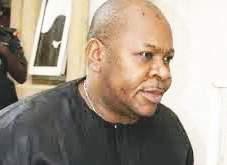

New IGP: Beyond Ethnicity
Should it Always be About Ethnicity and Religion?
It is quite sad and unfortunate, that today, everything about governance in Nigeria has been reduced to ethnicity and religion. I feel quite disgusted and disappointed; it really shouldn’t be like this. In the past, the composition of government didn’t seem to matter. Or is it because, then, it was the Yorubas, and not the other major ethnic groups that appeared to be sidelined? For example, in 1979 - 1983, during the first term of the Second Republic, President Shehu Shagari was from Sokoto; Vice President Alex Ekwueme from Oko Town, now in Anambra; Senate President, Joseph Wayas, Obanliku, Cross River; Deputy Senate President, John Wash Pam, Plateau State; Speaker, House of Representatives, Ume Ezeoke, Nnewi, now in Anambra; Deputy Speaker, Idris Ibrahim Kuta, Minna, Niger State. The then Chief Justice of Nigeria, Hon. Justice Atanda Fatai-Williams, was Yoruba, from Lagos. Though the Chairman of the ruling Party, NPN, Chief A.M.A. Akinloye, was from Ibadan, Oyo State, the Yorubas didn’t really feature in those top leadership constitutional positions, while the Christians had more of these positions. This scenario more or less replayed itself during the short-lived second term of the Second Republic, with a few changes that didn’t include the Yorubas, and the heavens didn’t fall! There were no complaints from the Northerners and Igbos then, and no agitation that the Yorubas had been left out, at least, not the way late Chief Ayo Adebanjo openly campaigned for an Igbo Presidency and Peter Obi in 2023. Interestingly, whether military or civilian, the North has always featured prominently in Nigeria’s leadership permutations, with little or no complaints from them, even when their kinsmen have performed glaringly badly. Meanwhile, the North has never been excluded from leadership. I’m just stating known facts.
Today, people from different ethnic groups no longer trust themselves, and all this has happened during the Fourth Republic. It is obvious that the Politicians have adopted the Machiavellian ‘Divide and Rule’ style to their own advantage, not caring how it damages Nigeria.
The Nigeria Police
Now, the story is about the Police - the resignation of former Inspector General (IG), Dr Kayode Egbetokun last week, and his replacement with Acting IG Tunji Disu (Acting IG Disu). Congratulations to Acting IG Disu! Social media has been awash with stories about Deputy Inspector General Frank Emeka Mba (DIG Emeka), said to be the highest ranking Police Officer after the former IG, being overlooked in favour of Acting IG Disu, because he’s Igbo. Let us examine this allegation, and address some of the issues related to the appointment of an IG. But, before I proceed, I must state categorically that, that DIG Emeka is accomplished educationally, committed, experienced, competent and well loved by many, is undeniable. That he excels in whatever he does, is also undeniable.
From the available information, it appears that DIG Emeka and Acting IG Disu, were both enlisted in the Police in 1992, and not 1994 for DIG Emeka, as is being peddled by the Ndigbo on social media, meaning that DIG Emeka is eligible for retirement on his 35th year in service in 2027, which comes about 5 years or so before he turns 60, and not 8 years as has been wrongly claimed (see Section 18(8) of the Nigeria Police Act 2020 (as amended)(NPA) and Rule No. 020810 of the Federal Public Service Rules 2009 (PSR)). However, a Yoruba Officer told me that he and DIG Emeka enlisted at the same time and were course mates; he became a Commissioner of Police in 2025.
The way promotions are done in the Police, is somewhat opaque, and it appears that there may be more details to unpack about it, but, the argument by many Igbos on social media that DIG Emeka was bypassed for the position of IG because he is Igbo, is rather shaky. In 1992, while Acting IG Disu enlisted as an Assistant Superintendent, a higher rank than DIG Emeka who enlisted as an Inspector, DIG Emeka rose to a higher rank before AIG Disu and the Yoruba Commissioner, and all the other DIGs who were enlisted at the same time as them in 1992, until AIG Disu’s recent appointment as Acting IG.
The Law
Subject to Section 216(2) of the 1999 Constitution of the Federal Republic of Nigeria (as amended)(the Constitution) which provides that the Nigeria Police Council (NPC) established by Section 153(1)(l) of the Constitution, must be consulted before an IG is appointed or removed, Section 215(1) thereof provides that the President shall appoint the IG from serving members of the Police on the advice of the NPC.
Section 7(2) of the NPA provides inter alia that,
onikepo braithwaite
onIkePo BraIThwaITe
onikepo.braithwaite@thisdaylive. com onikepob@yahoo.com

"Constitutionally and statutorily, the final decision as to the choice of IG remains with the President…the appointment of an IG is not by hierarchy and seniority; the condition precedent is that the candidate must be an AIG, meaning that every AIG and DIG is eligible…. the argument of those who have asserted that DIG Emeka was passed over because of his ethnicity, isn’t supported by law, but by emotions…the policy of compulsory retirement of Officers senior to the IG, has no force in law…. compulsorily retiring Officers not ripe for retirement, amounts to a blatant disregard for the rule of law…. it has been declared by the courts to be wrongful, unlawful, invalid, null and void”
the IG shall be chosen from the rank of not less than Assistant Inspector General (AIG) (also see Section 7(3)). This provision clearly evinces the fact that, the appointment of an IG is not by hierarchy and seniority; the condition precedent is that the candidate must be an AIG, meaning that every AIG and DIG is eligible, and if the choice is an AIG, such candidate may have AIGs senior to him/her, and certainly, DIGs ahead. It is obvious that, the argument of those who have asserted that DIG Emeka was passed over because of his ethnicity, isn’t supported by law, but by emotions and the habit of attributing everything to tribe and religion.
Section 7(6) of the NPA provides that the IG’s tenure shall be four years, while a new Section 18(8A) thereof was added in 2024, allowing an IG who is eligible for retirement before his/her tenure is complete, to complete their four year tenure, notwithstanding. It is clear that though it is mandatory that the President seeks the counsel of the NPC in appointing or removing an IG, it is not mandatory that the President acts on the NPC’s advice; the final decision as to the choice of IG remains with the President. This is constitutional and lawful, and he is only bound to appoint someone that is at least an AIG.
Compulsory Retirement: Jitoboh’s Case and Supreme Court Decisions
The other issue, is the unholy convention of compulsorily retiring Officers who aren’t
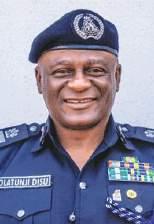
eligible for retirement, because their junior has been appointed as the Head. The Police Service Commission (PSC) established by Section 153(1)(m) is empowered to appoint, remove and exercise disciplinary control over every Police Officer except the IG (see the Third Schedule to the Constitution Part 1 M - Police Service Commission Paragraph 30(a) & (b)). If at all, in such circumstances, the Officers should be the ones to decide whether they want to stay or go.
In Suit No. NICN/ABJ/274/2023 Moses Ambakina Jitoboh v Police Service Commission Judgement delivered on 13/1/25 per O.A. Obaseki-Osaghae (Jitoboh’s case), the compulsory retirement of the Claimant, Jitoboh, as DIG before he reached the mandatory retirement age of 60 or 35 years in service, was declared to be wrongful, unlawful, null and void, in violation of Rule No. 020810 of the PSR and Section 18(8) of the NPA. Consequently, the court set aside the compulsory retirement, and the Claimant was reinstated into the Nigeria Police Force until his eligibility for retirement. An order for general damages in the sum of N50 million, was also made. The judgement in Jitoboh’s case, was guided by settled principles laid down in a plethora of Supreme Court decisions. Obaseki-Osaghae held that the policy of compulsory retirement of Officers senior to the IG, has no force in law, and that seniority was not evidence of
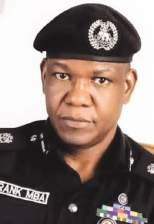
any wrongdoing on the part of the Claimant (that would warrant compulsory retirement). The court stated that, it was imperative that the PSC shows where it derives it powers to compulsorily retire a public officer that has no blemish before the constitutional/statutory mandatory retirement age. Her Lordship cited the case of Psychiatric Hospital Management Board v Ejitagha (2000) LPSLR-2930(SC) per Samson Odemwingie Uwaifo, JSC where the Supreme Court held that “It is well settled that a public body invested with statutory powers such as those conferred upon the corporation, must take care not to exceed or abuse its powers. It must keep within the limits of the authority committed to it. It must act in good faith. And it must act reasonably”. From the foregoing, the PSC would be acting without lawful authority and ultra vires its powers, if it compulsorily retires the Officers who were previously senior to AIG Disu - see Moses Ambakina Jitoboh v Police Service Commission (Supra). Police employment enjoys constitutional and statutory flavour, and it is trite that such employment can only be terminated in accordance to the laws that provide for them; the PSC cannot override the PSR or NPA. See ComptrollerGeneral of Customs & Ors v Gusau (2017) LPELR-42081(SC) per Kudirat Motonmori Olatokunbo Kekere-Ekun, JSC (now CJN), Ejembi Eko, JSC; Musa Dattijo Muhammad, JSC (also cited by Obaseki-Osaghae J.) where the Supreme Court held inter alia that the PSR doesn’t support unilateral and arbitrary termination of employment. That: “The effect of a party terminating a contract of service governed by regulations, rules or statutory instrument, is that such arbitrary or unilateral termination is invalid and ineffectual”. The courts have also copiously held that, the remedy for such unlawful compulsory retirement is reinstatement. In Shitta-Bey v Federal Public Service Commission (1981) LPELR-3056(SC) per Chukwunweike Idigbe, JSC, the Supreme Court held inter alia thus: “…..although his termination and retirement were declared "invalid, null and void" and so, in law, he was never legally terminated or retired from his employment, there had been a de facto termination or removal from office. In the words of Tucker, J., "reinstatement involves putting the specified person back in law and in fact, in the same position as he occupied in the undertaking before the employer terminated his employment”.
Conclusion
The sum and substance of Jitoboh’s case and the plethora of Supreme Court decisions, is that any policy or convention that seeks to compulsorily retire Police Officers simply because their junior has been elevated to the highest rank, over and above them, is unlawful and invalid. Just like Acting IG Disu, former IG, Mike Okiro (South South), DIG Celestine Okoye (South East), DIG Michael Ogbeizi (South South) and DIG Joshak Habila (North Central) were double promoted, from Commissioner to DIG. Those who they overtook, weren’t compulsorily retired. Compulsory retirement in the circumstances described above, also translates to a waste of valuable and experienced human resources. When Ibrahim Idris Kpotum was appointed as IG by late President Muhammadu Buhari, GCFR in 2016, it is reported that about 7 DIGs and at least 20 AIGs were compulsorily retired. Some Officers had several years to retirement, and their careers were truncated abruptly. All their training, knowledge and experience, down the drain - a waste of Nigeria’s resources used to train them too.
Apart from the fact that in a so-called democratic setting such as ours the rule of law must always prevail, and from the aforementioned authorities cited, compulsorily retiring Officers not ripe for retirement amounts to a blatant disregard for the rule of law, Nigeria is battling with a serious insecurity problem, where all hands are required to be on deck. I read somewhere that the Nigerian Army has requested that Officers who are ripe for retirement, should continue in service for now. It then seems bizarre and at cross purposes that, at a time like this, the compulsory retirement of Police Officers not ripe for retirement, would even be a topic of conversation, let alone under consideration. The duty of the Police is protecting the lives and property of all in Nigeria (see Section 4 of the NPA), and as it is, Nigeria is under-policed (see the recommended United Nations Police to Citizen Ratio).
I thought I read somewhere that President Tinubu, GCFR, is against the compulsory retirement of senior Officers, on account of Acting IG Disu’s promotion. If so, the President has taken the correct position, in accordance to the rule of law.
acting Inspector General of Police, Tunji disu
dIG Frank emeka Mba
What Determines Court's Territorial Jurisdiction in Debt Recovery Claims
s
Fact
The appeal involves a landlord-tenant relationship, concerning a property described as a Block of Flats located at No. 114/116 Uwalaka Street, Umuahia, Abia State. The landlord (the “Respondent”) leased two of these flats to a tenant (the “Appellant”). In February 2004, the Appellant allegedly vacated the premises abruptly. This departure was carried out without the prior knowledge of, or formal notice to, the Respondent, his solicitor, or the property caretaker. Upon regaining possession and conducting an inspection, the Respondent discovered that the flats had been significantly degraded. To restore the property to a habitable state, the Respondent undertook extensive and costly repairs and renovations. Following the completion of the repairs, the Respondent demanded a refund of the renovation costs and payment of outstanding rents. When these demands were not met, the Respondent initiated an action via a Writ of Summons at the High Court of Rivers State.
The Appellant responded by filing a Motion on Notice, raising a preliminary objection to the suit. The core of the objection was that the High Court of Rivers State lacked the territorial jurisdiction to entertain the matter, as the property in question was situated in Umuahia, Abia State. The trial court upheld the objection. The court held that it indeed, lacked the territorial jurisdiction to hear a case involving property situated in another State, and that the determination of the claim would require visit to locus in quo in Abia State, which is outside the territorial jurisdiction of the High Court of Rivers State. The court, thereby, struck out the suit.
Aggrieved by the decision, the Respondent appealed to the Court of Appeal. The appellate court disagreed with the reasoning of the trial court, and resolved all legal issues in favour of the Respondent by holding that since the Appellant does business or resides in Port Harcourt, the High Court of Rivers State is clothed with jurisdiction to determine the case. The court thereby set aside the decision of the trial court and remitted the case to the Chief Judge of Rivers State for re-assignment to a different Judge for an expeditious hearing.
Dissatisfied, the Appellant filed an appeal to the Supreme Court. The Respondent raised a preliminary objection to the competence of the appeal, and the jurisdiction of the Supreme Court to entertain the appeal. The ground of the objection relates to service of the Notice and Grounds of Appeal to the Supreme Court, which was served C/o the Counsel who represented the Respondent at the lower court, rather than service of the process on the Respondent at his address as stated on its Notice of Appeal at the Court of Appeal.
Issues for Determination
The Appellant raised four issues for determination in its brief, thus:
i. Whether the Court of Appeal was right in holding that the High Court of Rivers State sitting in Port Harcourt has jurisdiction to entertain this suit which subject-matter is in respect of an immovable property (i.e. building) transacted in Umuahia, Abia State, with the said immovable property lying, being and situate in a foreign jurisdiction at No. 114/116 Uwalaka Street, Umuahia, Abia State and in which the Defendant resides or has its registered office at Yakubu Gowon Way, Kaduna, Kaduna State and a principal place of business also at Umuahia, Abia State.
ii. Whether by Order 10 Rule 1 of the High Court of Rivers State (Civil Procedure) Rules or any other rule of the High Court of Rivers State, the High Court of Rivers State has jurisdiction to adjudicate over a suit where the subject-matter is on interest relating to injuries to land/building
Honourable Stephen Jonah adah,
JSC
In the Supreme Court of Nigeria Holden at abuja On Friday, the 20th day of June, 2025
Before their lordships
Ibrahim Mohammed Musa Saulawa emmanuel akomaye agim
Stephen Jonah adah
Jamilu yammama Tukur
Mohammed Baba Idris Justices, Supreme Court
SC.100/2010
Between
Nigerian agricultural Credit & Rural development Bank Ltd appellant And
Chief austine Iwuhoa
(Lead Judgement delivered by Honourable Stephen Jonah Adah, JSC)
and/or immovable property lying, being and situate at No. 114/116 Uwalaka Street, Umuahia, Abia State.
iii. Whether Rivers State is the place of residence of the Appellant, as to clothe the High Court of Rivers State with the requisite jurisdiction to entertain the suit relating to a subject- matter which is interest in land (immovable property) lying, being and situate at No. 114/116 Uwalaka Street, Umuahia, Abia State.
iv. Whether an objection based on territorial or geographical jurisdiction of a court, is a mere irregularity which must be taken as a preliminary point before taking any step in a Suit.
Arguments Regarding the Preliminary Objection,
“An unpaid rent is a liability, which can be reclaimed through a legal action such as this. Since it is not landed property itself that is being claimed or disputed, matters of civil debt as is in this case, can be heard by the court sitting in a place where the Respondent or Defendant resides within the territory of Nigeria”
the lower court. And that the solicitor is more than a mere solicitor to the Respondent, as he is an agent of the Respondent in relation to the property in dispute. He manages the property on behalf of the Respondent; thus, he cannot deny the agency relationship between them. He relied on the decision in Bayero v Mainsara & Sons Ltd (2007) All FWLR (Pt. 359) 12859, among others. Arguing the main appeal, the Appellant submitted that jurisdiction is determined by reference to the Respondent's Writ of Summons and Statement of Claim. He contended that the property in dispute is situated in Umuahia, Abia State and all transactions between the parties, including tax payments and renovations, occurred there. Accordingly, he argued that the High Court of Rivers State lacked jurisdiction to entertain the suit.
Reacting to the submission, the Respondent submitted that the Court of Appeal was right in holding that the trial court has the requisite jurisdiction to entertain this suit. He noted that the Respondent’s claim before the court is a mere contractual relationship between a landlord and tenant as same has nothing to do with substantive interest in the subject property. He argued further that the Respondent was right to have instituted his action at Port Harcourt, as the Appellant carries on business in Port Harcourt, relying on the cases of Ibator v Barakuro (2007) All FWLR (Pt. 371) 1669 APP. 1684-1685, Paras. F-F; First Bank Nig. PLC v Abraham (2009) FWLR (Pt. 461) 863 @ 886.
Court’s Judgement and Rationale Before delving into the determination of the appeal, the Supreme Court addressed the grounds of the Preliminary Objection which challenged the competence of the appeal and its jurisdiction to determine same, because the Respondent was not served personally at his address. Their Lordships described the objection as a technicality carried further than reasonableness. The Apex Court held that the essence of service of process on a party is to put the party on notice or keep him informed formally, to enable him activate his right of fair hearing and present his own side of the story. If a party has a Counsel and his Counsel is served with all the processes, and the Counsel accepts service of the processes on his behalf, he cannot turn around as in the instant case to contest the issue of service of the processes - Saleh v Abah (2017) 12 NWLR (Pt. 1578) 100. The court, accordingly, dismissed the Preliminary Objection.
Respondent
the Respondent argued that the Notice of Appeal to the Supreme Court is an originating process, and the Appellant has an irreversible obligation to ensure service of same on the Respondent personally. He submitted that he never changed his address for service from that with which he filed his appeal at the Court of Appeal, and that he did not engage the Counsel on whom the Notice of Appeal was served by the Appellant, as the Appellant cannot impose a Counsel on him. He relied on the authority of Comptroller, N.P.S. v Adekanye (No. 2.) (2002) FWLR (Pt. 120) 1650 @ 1668, to urge the court to strike out the appeal for being incompetent. Countering the submission of the Respondent, the Appellant argued that, since the Respondent feigned ignorance about the existence of this appeal and submitted that he did not engage a Lawyer to defend/represent him, it follows that the Counsel could not have validly filed the present objection and Respondent’s brief on behalf of the Respondent. That Counsel who purports to file the objection is a meddlesome interloper, as he has no business with the appeal – Section 233(5) of the Constitution of the Federal Republic of Nigeria, 1999 (as amended), and Order 2 rule 9(1) of the Supreme Court Rules. Further, that the solicitor for the Respondent on whom the Notice of Appeal was served, is the same person whose chamber’s address was given for service by the Respondent at
In deciding the gravamen of the appeal, which is the jurisdictional competence of the trial court to entertain the Respondent’s claims, the Supreme Court emphasised the significance of the issue of jurisdiction in adjudication. The Court restated the settled principle of law that when a matter is filed before the court, the court must ensure it has jurisdiction to entertain the matter before it deploys its authority to sit over the matter. Examining the Respondent’s Writ of Summons and Statement of Claim from the record of appeal, the Court agreed with the Respondent that the claim is not related to title to land, but clearly recovery of outstanding debt of rent of a property. The Court relied on A.G Adamawa State & Ors v A.G. Federation (2014) LPELR-23221 (SC) to buttress its finding that, what is being claimed in this case is nothing but a debt. An unpaid rent is a liability, which can be reclaimed through a legal action such as this. Since it is not landed property itself that is being claimed or disputed, matters of civil debt as is in this case, can be heard by the court sitting in a place where the Respondent or Defendant resides within the territory of Nigeria. The Supreme Court, thereby, resolved all the issues raised in favour of the Respondent, and upheld the decision of the Court of Appeal. Appeal Dismissed.
Representation
L.J.N. Saronwiyo for the Appellant. C.C. Nwaodufor the Respondent.
Reported by Optimum Publishers Limited, Publishers of the Nigerian Monthly Law Reports (NMLR)(An affiliate of Babalakin & Co.)

‘Mentorship, Not First-Class, Defines Legal Success’, Ajulo, SAN
Stories by Steve Aya
A former Chairman of the Nigerian Bar Association (NBA) Mentorship Committee and Attorney-General of Ondo State, Dr Olukayode Ajulo, SAN, has warned young Lawyers against what he describes as the “First-Class Trap”, arguing that academic brilliance alone is insufficient for lasting success in the legal profession.
Dr Ajulo drew a sharp distinction between erudition and wisdom, insisting that while Universities and the Nigerian Law School reward mastery of doctrine, it is practical judgement, what he described in Aristotelian terms as phronesis, that sustains a meaningful legal career. According to him, many young Lawyers confuse academic distinction with professional readiness, only to confront harsh realities in practice.
“Erudition may earn you a First-Class degree and admiration in academic circles”, he said, “but it is wisdom that enables one to grasp not just
the letter of the law, but the essence of the client, the mood of the Judge, and the unspoken demands of justice”. He argued that the legal profession is relational, reputational and commercial terrains rarely tested in examination halls.
Dr Ajulo observed that while some First-Class graduates struggle to find their footing after Law School, others with modest academic records rise to become Senior Advocates of Nigeria and leaders of the Bar. He attributed this divergence not to intelligence gaps, but to exposure to mentorship and experiential learning. “The gap is not one of inherent ability”, he noted, “but of meaningful engagement with seasoned judgement”.
Describing the phenomenon as the “First-Class Trap,” the Senior Advocate said many top graduates enter practice believing that credentials will automatically attract clients and opportunities. Instead, they are confronted with unspoken professional demands securing retainers without family connections, building firm culture, navigating judicial temperament, and recovering from adverse judgments. These, he said, are lessons rarely taught in classrooms.
For Ajulo, mentorship serves as the “eternal bridge” between scholarly achievement and professional excellence. He described it as the structured sharing of lived knowledge that cannot be replicated by
textbooks. “Knowledge can be taught,” he said, “but wisdom is fostered through fellowship with those who have cultivated it.”
Reflecting on his own journey, Ajulorecounted observing some of Nigeria’s foremost legal icons during his undergraduate years at the University of Jos. He cited figures such as Frederick Rotimi Alade Williams, Lateef Fagbemi, Gani Fawehinmi, AfeBabalola, and Wole Olanipekun as formative influences, explaining that even distant observation of their advocacy and jurisprudence shaped his ambitions and professional outlook.
He recalled a pivotal encounter with Chief Williams at the Supreme Court during
his time as State Counsel, describing it as a moment that “recalibrated” his path. “By standing upon the shoulders of giants,” Ajulosaid, “I gained a broader perspective.” He stressed that privilege of birth is not a prerequisite for advancement, maintaining that deliberate observation and disciplined engagement can substitute for personal access.
As part of efforts to institutionalize mentorship, Ajulo said the NBA Mentorship Committee has decentralized its “Project Unleash Real Mentorship” across branches nationwide. The committee is also planning a National Summit on Mentorship aimed at proposing a national policy framework, alongside capacity-
building workshops for newly called lawyers and possible exchange programmes with counterparts in Canada. In his closing remarks, Ajulo urged young lawyers to abandon passive expectations and actively seek guidance through NBA branches and sections, while calling on senior practitioners to view mentorship as a sacred professional obligation. “Your legacy remains unfinished until it serves as a foundation for others,” he said, adding that the future of the Nigerian Bar depends not merely on producing qualified practitioners, but on cultivating principled and transformative leaders through deliberate mentorship
Ajudua’s Bail Battle Escalates to Supreme Court
The Economic and Financial Crimes Commission (EFCC) is taking the fight to the Supreme Court to challenge the bail granted to Lagos socialite, Fred Chijindu Ajudua. The anti-graft agency is disputing
the Court of Appeal's decision, arguing that it undermines the Supreme Court's earlier ruling.
The EFCC claims the Court of Appeal misinterpreted the Supreme Court's judgement,
which ordered Ajudua’s continued detention pending trial. The agency says the appellate court's decision to grant bail, contradicts the Apex Court’s directive for a speedy trial.
Chimamanda Adichie's Son's Death Inquest to Begin April 14
The Coroner’s Court in Lagos has scheduled an inquest into the death of 21-month-old Nkanu Nnamdi Esege, son of renowned Nigerian author Chimamanda Ngozi Adichie, for April 14, 2026. It is alleged that the child died on January 7, 2026, after undergoing medical tests at Euracare Multi-Specialist Hospital in Lagos. Nkanu was initially admitted to Atlantis Hospital for a worsening illness, and was referred to Euracare for pre-flight diagnostic procedures ahead of a planned transfer to Johns Hopkins Hospital in the United States. However, he died shortly after the diagnostic procedures, prompting his parents to allege medical negligence and professional misconduct
The family's Lawyer, Prof. Kemi Pinheiro, SAN, stated that they would present evidence alleging gross medical negligence, including
possible overdose, wrongful prescription, improper administration of propofol, and misdiagnosis. They plan to call five independent medical experts, including an anaesthesiologist and the child's father, Dr Ivara Esege, a medical doctor Euracare Hospital has denied any wrongdoing, stating that Nkanu was critically ill upon arrival and tests were carried out following established protocols and international standards. The hospital expressed sympathy over the child's death, but refuted allegations of negligence
Magistrate Atinuke Adetunji, who adjourned the matter, stated that the court's primary objective is to determine the cause of death. She directed all parties to file their witness statements before the next adjourned date, and cautioned them to approach the proceedings carefully .
The Lagos State Government has also expressed interest in the case, with the AttorneyGeneral requesting an inquest. Magistrate Adetunji noted that the State Government considers itself bereaved, and is seeking a thorough examination
of the circumstances surrounding Nkanu's death
The inquest is expected to reveal more about the circumstances surrounding Nkanu's death, and determine whether medical negligence played a role .
The controversy centres on the interpretation of the Supreme Court's May 2025 judgement, which the EFCC believes foreclosed further consideration of bail. The Commission accuses the Court of Appeal of violating the doctrine of judicial hierarchy, and the finality of Supreme Court decisions.
The EFCC also questions the medical grounds cited for Ajudua's bail, saying he's been using his kidney condition to delay trial since 2005. The agency alleges inconsistencies in the medical reports, and warns that granting bail would frustrate the trial.
The Commission is seeking to revoke the bail granted by the Court of Appeal, and restore the trial court's ruling refusing bail. The Supreme Court has yet to set a hearing date.
Ajudua, accused of defrauding a Palestinian businessman of $1.043million, has been on trial since 2005.
The EFCC says only one witness has been called, despite being on bail for an extended period.
The outcome of this Supreme Court battle will determine whether Ajudua remains free, or returns to custody pending trial.
NAPTIP Wades into Simi's Tweet Controversy
The National Agency for the Prohibition of Trafficking in Persons (NAPTIP) has stepped into the controversy surrounding popular Nigerian singer Simi, following a social media uproar over resurfaced decade-old posts. The agency’s reaction has shifted the focus of the debate from online outrage, to issues of child protection and responsible advocacy.
The storm began after Simi posted comments advocating castration as punishment for rapists, and stating that “almost every woman she knows has been sexually assaulted”. While many applauded her strong
stance against sexual violence, others criticised the tone of the remarks.
Amid the heated exchanges, critics unearthed old tweets allegedly written by the singer more than ten years ago. The posts were widely circulated, with some social media users suggesting they implied inappropriate conduct in a daycare setting — an interpretation that quickly triggered public concern. Reacting to the growing controversy, NAPTIP emphasised the sensitivity of matters involving children and sexual abuse. The agency
underscored the need for caution in public commentary, and reiterated its mandate to protect vulnerable persons, particularly minors, from exploitation and harm.
While stopping short of making direct accusations, NAPTIP’s intervention reframed the issue as one requiring careful scrutiny rather than online speculation. Observers note that the agency’s involvement signals the seriousness with which allegations touching on child welfare are treated in Nigeria. Simi has denied any wrongdoing, insisting that
the resurfaced tweets were misconstrued and unrelated to improper conduct. She maintained that her advocacy against sexual violence, was being distorted by critics seeking to discredit her. As the debate unfolds, the case illustrates the complex intersection of celebrity influence, digital footprints, and institutional oversight. For many, NAPTIP’s stance has become the defining element of the story — a reminder that beyond social media outrage, matters concerning child safety demand measured, lawful examination.
Ondo State Attorney-General, Dr Olukayode Ajulo, SAN,
Simisola Kosoko
Should Skeleton Arguments Replace Written Addresses in Litigation? My Brief by SKB
stephen kola-balogun
Introduction
In 1961, a man with an 8th grade education in the US picked up a pencil in his prison cell, and accidentally changed American history forever. Clarence Earl Gideon, had been accused of breaking into a Pool hall. He didn’t have a Lawyer, and was convicted to serve a 5 year prison sentence. He had requested for a Lawyer, but was denied because his offence was not deemed a capital offence. While in prison Gideon filed a petition to the Florida Supreme Court, but it was turned down. In shaky handwriting on a few pages of prison stationery with imperfect spelling, he wrote a petition to the US Supreme Court. This time something about his case struck a cord, and on June 4th, 1961, the Supreme Court agreed to hear his appeal. They appointed him a Lawyer, and he won his appeal. The right to a Counsel, was essential to a fair trial they decreed. Gideon had won his appeal, drawn up on a scanty note written from a prison cell
The Nigerian Approach
Here in Nigeria, written addresses have for close to three decades now been firmly rooted and entrenched, as part and parcel of our legal and judicial system. It’s now a mandatory requirement in our rules of civil and criminal procedure, at every level of the judicial hierarchy. Unfortunately written addresses have now become more of a hinderance than a benefit to advocacy, and not surprising that many Lawyers think there is need for some sort of reform and a return to the good old days, when a Barrister was required to both think and argue his case on his feet before a Judge in the courtroom, rather than just adopt a prepared written address which may have been plagiarised and/or written by someone else, or perhaps, even lifted from a previous file, or a friendly Counsel or colleague who may have argued a similar case.
On the flip side to all this, written addresses aid the Court in trying to understand what could sometimes involve complex legal arguments and points of law. It also aids the court in sieving through its daily Bar list, and managing time constraints. In short, the need for written addresses has become indispensable to our legal and judicial system. What is perhaps, now needed, is for the system to be tweaked somewhat, so that we can have a hybrid procedure that embraces and accommodates a bit of advocacy as we once knew it. A hybrid of both written addresses and advocacy in the form of skeleton arguments might just be the ideal answer and appropriate solution to meaningful and necessary reform.
What are Skeleton Arguments?
Gideon’s prison note, was in essence, a mere skeleton argument. A skeleton argument is a concise and written summary of a party's case, in a court or tribunal. It's typically used in higher courts in England and Wales such as the Court of Appeal or the Supreme Court, to help the court understand the key points of a case. It can, of course, be utilised more broadly by making use of them in our High Courts and Magistrate Courts as well, and not just our appellate courts.
Skeleton Arguments usually include:
1. Key facts: A brief overview of the relevant facts.
2. Issues in dispute: Identification of the main issues to be determined.
3. Legal arguments: A summary of the key legal points and authorities.
4. Reliefs sought: A statement of the outcome or reliefs being sought.
Skeleton Arguments serve several purposes:
1. Clarify the issues: They help the court focus on the key points.
2 Streamline the hearing: By providing
“….a return to the good old days, when a Barrister was required to both think and argue his case on his feet before a Judge in the courtroom, rather than just adopt a prepared written address which may have been plagiarised and/ or written by someone else, or perhaps, even lifted from a previous file, or a friendly Counsel or colleague…..What is perhaps, now needed, is for the system to be tweaked somewhat, so that we can have a hybrid procedure…. of both written addresses and advocacy in the form of skeleton arguments, might just be the ideal answer….”
a clear summary, they can help reduce the length of oral arguments.
3. Guide the court's thinking: They give the court a framework for understanding the case.
Skeleton arguments are often used in complex or high-stakes cases, and they're usually prepared by Lawyers representing the parties involved.
The Difference between Skeleton Arguments and Written Addresses
A skeleton argument and a written address serve different purposes, in a court proceeding.
Skeleton Arguments: As stated above a skeleton argument is a concise written summary of a party's case, focusing on key points and legal arguments.
- Typically shorter and more focused than a written address.
- Intended to provide a framework for the court to understand the case, rather than a detailed argument.
Written Address:
- A more detailed, written submission, that outlines a party's argument and evidence.
- May include a more comprehensive analysis of the law, facts, and evidence.
- Can be used in various types of proceedings, including trials, appeals, or motions.
- May be used to persuade the court or tribunal, on specific issues.
The essential differences are:
- Length and detail: Skeleton arguments are typically shorter and more concise, while written addresses can be longer and more detailed.
Purpose
Skeleton arguments aim to provide a framework for the court as in Gideon’s
case above, while written addresses aim to persuade the court on specific issues thereby reducing considerably advocacy time, at least, here in Nigeria.
In summary skeleton arguments usually focus on key points and legal arguments, while written addresses can cover a broader range of topics.
Conclusion
Every vibrant legal and judicial system, needs to go through periods of reform. We have utilised written addresses for close to three decades now, and Lawyers and Judges have become over-reliant and accustomed to them at the expense of stifling advocacy. Judges no longer feel the need to hire legal researchers to aid their research and understanding of complex legal issues/precedents, but instead rely almost solely on the written addresses prepared by opposing Counsel, or a written address in a similar matter they are handling or have handled.
The legal practitioner is no different. Senior Counsel get their junior colleagues to prepare many of the cases they handle, and then proceed to court They simply adopt the submission of the junior Counsel who remains in the shadows unnamed and anonymous, without any form of acknowledgement. The senior Counsel wouldn’t even acknowledge his junior colleague even if his conscience pricks him to do otherwise, because he may need to own the case for a Senior Advocacy application. This is why a hybrid of both advocacy and written addresses in the form of skeleton arguments is perhaps, the way forward. This way, rather than just adopting a written address, a Judge can ask Counsel to substantiate a point raised in their skeleton argument, and grant a few minutes to Counsel to argue their case. This practice, I submit, will revive the dying practice of advocacy and once again, allow the public to truly determine the identity of their best Judges and Lawyers. If a man with an 8th grade education like Gideon could do it, so can we.
Chief Justice of nigeria, hon. Justice kudirat kekere-ekun, gCon

chairperson, Nigerian Bar Association Section on Legal Practice, Mrs Folashade Alli, SAN, c. Arb
“I’ll
Bring to NBA-SLP Inclusion, Visibility, and Measurable Impact”
as InternationalWomen’s day approaches, it is apposite for us to engage the female Chairperson of one of the most vibrant Sections of the Nigerian Bar association, the Section on Legal Practice (NBa-SLP), in the person of Mrs Folashade Alli, SAN, c. Arb. In this interview, onikepo Braithwaite and Jude Igbanoi, listened as Mrs alli laid out her vision for her two-year tenure, and unpacked some of what she’s bringing into the Section. She also shared her views on several issues, including the standards in the legal profession and the role of aI, while giving an insight into the forthcoming NBa-SLP annual Conference themed “evolving Trends: Nigerian Legal Practice, Global Perspectives” taking place in Lagos, from april 7 - 10, 2026
Learned Silk, you have distinguished yourself in both arbitration and litigation. Where does your love truly lie in legal practice, and why?
This is a question I have genuinely reflected upon, over the years. My journey began with litigation during my NYSC at the Ministry of Justice in Jos, Plateau State. Appearing in court as a young Lawyer alongside seasoned Senior Counsel, shaped me profoundly. I learned the discipline of advocacy, the structure of proceedings, and the responsibility that comes with representing a client before a Judge. That experience left a lasting impression.
I was also influenced early by the example of my father, Aare Afe Babalola, SAN, whose practice was deeply rooted
in courtroom advocacy. Litigation, in that sense, was not merely professional work; it was a calling grounded in service, courage, and intellectual rigour.
When I commenced private practice in 2001, I combined corporate advisory work, VAT recovery, and litigation. A pivotal moment came when I joined the Chartered Institute of Arbitrators. Arbitration opened my eyes to a different, yet, equally compelling, dimension of dispute resolution. One that is flexible, confidential, and particularly suited to complex commercial and cross-border disputes.
Over time, I have come to appreciate that litigation and arbitration are not rivals; they are complementary. My courtroom experience sharpens
“The NBA-SLP remains firmly committed to due process, internal democracy, and seamless leadership transition which remain central to its stability and effectiveness”
my work as an arbitrator, and sitting as an arbitrator strengthens my strategic thinking as counsel.
Being appointed Senior Advocate of Nigeria in 2023, was a significant milestone. More importantly, it reaffirmed my commitment to excellence in dispute resolution, regardless of forum.
If I must summarise my philosophy, it is this:
“The forum may differ, but the mission remains the same - to ensure that justice is done, and is seen to be done”.
I often remind young practitioners that mastery of advocacy and competence in alternative dispute resolution, are not mutually exclusive. Together, they make for a complete dispute resolution Lawyer.
You are coming in as Chairperson of the NBA-SLP, at a time when other Sections of the NBA have experienced succession challenges. Kindly, share with us the process that saw your emergence as Chairperson
My emergence as Chairperson of the Nigerian Bar Association Section on Legal Practice (NBA-SLP) followed the constitutional framework set out in
the NBA Constitution 2015 (as amended in 2021), specifically the Third Schedule, Part II – Uniform By-Laws for Sections.
Consistent with these provisions, the process involved nominations in accordance with established eligibility criteria and the conduct of an election under the supervision of the appropriate electoral body. Eligible members were duly notified, and participated in the exercise.
The NBA-SLP has, over the years, cultivated a culture of collegiality, continuity, and institutional stability. Leadership transitions within the Section, have traditionally reflected this ethos. My emergence was consistent with that culture, and fully compliant with the governing constitutional framework.
The NBA-SLP remains firmly committed to due process, internal democracy, and seamless leadership transition which remain central to its stability and effectiveness.
What are you bringing into SLP in your two-year tenure? What should Lawyers expect from you?
Thank you for this. I was inaugurated as Chairperson of the NBA Section on Legal Practice at the Annual General Conference of the Nigerian Bar Association in Enugu in August 2025,
“I’ll Bring to NBA-SLP Inclusion, Visibility, and Measurable Impact”
succeeding Mrs Boma Alabi, SAN, and other distinguished predecessors who laid a strong foundation.
What I bring to the NBA-SLP is inclusion, visibility, and measurable impact.
One of the initiatives I am particularly proud of, is the NBA-SLP National Law Firm Directory, the first of its kind in Nigeria. Its objective is simple, but powerful: to provide law firms, irrespective of size or area of practice, with a platform for national visibility and professional recognition.
We have also appointed Regional SLP Coordinators across the Federation, to ensure that the Section is active, responsive, and visible in every jurisdiction, not just major cities.
Members should expect robust professional development programmes, tailored to emerging areas of law. They should also expect a sustained emphasis on ethics and professional standards, because integrity remains the foundation of our credibility.
We are strengthening regional engagement and expanding international collaboration, to position Nigerian Lawyers to compete and lead on the global stage.
My goal is straightforward: to leave the NBA-SLP stronger than I met it; more visible, more inclusive, and more impactful for every member.
The NBA-SLP 2026 Annual Conference is scheduled for April 7–10, 2026. What is the theme? Kindly, give us an overview and highlights
The NBA-SLP 2026 Annual Conference will take place from April 7th to 10th, 2026 under the theme:
“Evolving Trends: Nigerian Legal Practice, Global Perspectives.”
This theme reflects our resolve to prepare Nigerian Lawyers, for a rapidly changing legal environment. Technology, cross-border transactions, regulatory shifts, and evolving client expectations, are reshaping practice. We must evolve accordingly.
The Conference will be hosted at the newly renovated National Arts Theatre, Iganmu, Lagos, a world-class venue for learning, networking, and engagement.
The programme features plenary sessions and panel discussions on judicial independence, public international law, dispute resolution, technology, corporate governance, and cross-border practice. It has been carefully curated to equip Lawyers, especially younger practitioners, with practical knowledge, relevant skills, and meaningful networks.
We are honoured to host distinguished speakers including Prof Yemi Osinbajo, SAN, GCON; Judge George Elias of the International Court of Justice; Mr Tayo Oyedele; Prof Abiola Sanni, SAN; Prof Yinka Omoregbe, SAN; Mrs Mia Essien, SAN; and Senator Niyi Adegbonmire, SAN, alongside other Senior Advocates, policy makers and industry leaders.
As part of our commitment to practical skills development, the first registered young Lawyer will receive specialised professional training facilitated by Aluko & Oyebode, reinforcing our focus on nurturing early-career practitioners.
Registration will be primarily online,
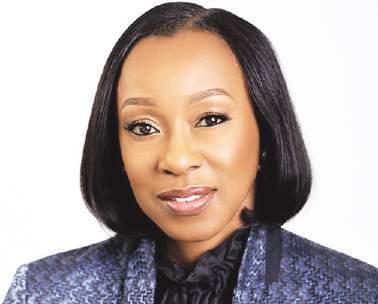
as in previous years, with structured support for members who require assistance.
Beyond the intellectual programme, delegates will enjoy a Gala Night at the Federal Palace Hotel, a Golf Tournament at Lakowe Lakes Golf Course, a movie outing at Terra Kulture, a cultural visit to the New Afrika Shrine, and a health walk with the leadership of the Bar.
We are not merely organising a conference; we are shaping the future direction of Nigerian legal practice.
What provisions have you made for older members, who may not be comfortable with online registration?
Inclusion is a core value of the NBASLP. We are particularly mindful of our senior colleagues, who may not be comfortable with digital platforms.
While online registration remains our primary method for efficiency and effective data management, we have made deliberate arrangements to ensure that no member is excluded.
Members may contact our Secretariat directly via 08166413698, info@nbaslp. org, or visit our office at the 3rd Floor, Room 306, Lagos Court of Arbitration Building, 1A, Remi Olowude Street, Lekki Phase 1, Lagos. Our staff are available to guide them through the process, or complete registration on their behalf.
Although we do not provide on-
“One of the initiatives I am particularly proud of, is the NBA-SLP National Law Firm Directory, the first of its kind in Nigeria.….My goal is straightforward: to leave the NBA-SLP stronger than I met it; more visible, more inclusive, and more impactful for every member”
site registration due to logistical and security considerations, help desks will be available at the venue to assist with confirmation and documentation.
No member, regardless of age or digital literacy, will be left behind. Inclusion for us is not symbolic; it is intentional.
Some junior Lawyers have complained that NBA-SLP Conferences are quite pricey. How are you addressing this?
We are mindful of the concerns raised by junior Lawyers, regarding cost. Financial constraints should not prevent young practitioners, from accessing opportunities for growth.
To address this, we have introduced subsidised registration fees ranging from ₦20,000 to ₦50,000, depending on the registration period and membership status. We also offer early-bird packages and concessional rates, for students and Lawyers within five years post-call.
In addition, we have strengthened engagement with law firms and corporate organisations to secure sponsorships dedicated to supporting young Lawyers. Each year, a number of junior Lawyers attend at little or no cost.
Personally, I am sponsoring 100 undergraduate law students and young Lawyers for this year’s Conference. I encourage senior members and firms, to embrace a similar mentorship culture.
Supporting young Lawyers, is not charity; it is an investment in the future of the profession. Financial barriers should never stand in the way of learning, mentorship, or professional growth.
By way of speaking directly to Nigerian Lawyers, what do they stand to gain by joining NBA-SLP as members? Other NBA Sections have young Lawyers forums. Does NBA-SLP have such a platform for its young members?
Let me speak directly to Nigerian Lawyers. Joining the Section on Legal Practice (NBA-SLP) is not just about affiliation, it’s about positioning yourself
for growth and relevance.
The SLP is the arm of the NBA, that focuses squarely on the realities of practice. Whether your work is in litigation, corporate law, arbitration, compliance, or emerging fields like technology law, the Section is designed to sharpen your competence and strengthen your relevance. Members gain access to practical Continuing Legal Education, exposure to evolving areas of law, structured networking, and opportunities for collaboration both locally and internationally.
More importantly, SLP membership places you in a professional ecosystem focused on standards, how we practice, manage our firms, deliver value to clients, and maintain the integrity of the profession. It is about staying competitive, future-ready, and respected.
On the issue of young Lawyers, yes, we have a vibrant and functional platform for early-career practitioners. Young Lawyers are fully integrated into committees, programmes, and leadership discussions. We have dedicated coordination for youth engagement, mentorship initiatives, and professional development opportunities tailored to their needs. They are not treated as an afterthought, but are fully integrated into mainstream SLP activities, actively participating, contributing, and growing within the system.
So, what do Lawyers stand to gain by joining SLP?
Relevance- Lawyers stay ahead in a rapidly evolving profession. CompetenceSLP creates access to practical training and guidance for real-world practice. By joining a professional network with us at SLP, you are joining a community serious about the future of legal practice in Nigeria. You can visit nbaslp.org to join us today.
Some Lawyers are currently facing corruption charges in various courts and malpractice petitions at disciplinary committees. What, in your view,
chairperson, Nigerian Bar Association Section on Legal Practice, Mrs Folashade Alli, SAN, c. Arb
“I’ll Bring to NBA-SLP Inclusion, visibility, and Measurable Impact”
is responsible for this upsurge in such cases involving Lawyers? How can the negative tide be stemmed? What is NBA-SLP doing about the falling standards in the profession?
The legal profession mirrors the society in which it operates. The recent rise in corruption and disciplinary cases among Lawyers, evinces the pressures, ethical lapses, commercial competition, and, at times, underdeveloped mentoring framework for young Lawyers navigating complex practice environments.
Addressing this, requires a return to fundamentals. Ethics must be central to legal education, both at the University and Law School levels. Mentorship is critical: senior Lawyers have a duty to guide younger colleagues, not just in technical skills, but in professional conduct and integrity. Finally, disciplinary action must be firm, consistent, and timely; certainty of consequence, is one of the strongest deterrents. We have seen cases of Lawyers being sanctioned for misappropriation of client funds, filing frivolous cases, or gross professional negligence. This has led to suspension for a fixed period, fines, or, in the most serious cases, removal from the roll. These examples show that misconduct is taken seriously and that accountability is not merely a concept, but an active, ongoing process, and a deeply embedded policy in the legal practice.
The NBA-Section on Legal Practice is actively tackling these challenges through structured trainings, mentorship programmes, and conferences focused on ethics, competence, and modern practice management. By equipping Lawyers with knowledge, guidance, and professional examples, we aim to foster a culture where ethical excellence is expected, modelled, and rewarded. In summary, the solution is not just policing misconduct; it is about building a profession where integrity is the norm, not the exception.
In the past few years, female Lawyers have outstripped their male counterparts in their numbers being called to the Nigerian Bar. What could be responsible for this, and how do you think it will and should impact the profession in the nearest future?
First, this is a very positive development for the profession. The increasing number of women being called to the Bar reflects broader societal shifts, greater access to education for girls, stronger encouragement from families, visibility of successful female role models in law, and a growing awareness that the legal profession offers influence, impact, and leadership opportunities. Women are embracing law, not just as a career, but as a platform for service and change. I do not see this as a competition, between men and women. It is evidence that, the profession is becoming more representative of the society it serves. In terms of impact, women will increasingly shape the future of the profession. They bring depth, resilience, discipline, emotional intelligence, and a collaborative leadership style that is essential in

today’s complex legal and corporate environment. As more women rise, their influence will grow in advocacy, corporate practice, academia, policy, and on the Bench.
However, increased entry must be matched by retention and advancement. It is not enough for more women to be called to the Bar; we must ensure that they thrive, lead firms, become Senior Advocates, serve on the Bench, and head regulatory bodies. The profession should strengthen inclusive structures, such as mentorship, flexible career pathways, leadership development programmes, and policies supporting work-life balance.
When women succeed, the entire profession benefits. This shift is not just about numbers; it is about the quality of contribution, leadership, and transformative impact. I am confident that Nigerian female Lawyers will continue to shape a profession that is principled, resilient, and inclusive. The Nigerian Bar will be stronger for it.
14 Applicants recently failed the screening process for appointment onto the Bench, on the integrity grounds. What does this say about the process of judicial appointments?
I would first like to commend the National Judicial Council (NJC), for its integrity in overseeing the judicial appointment process. The screening demonstrates a competent and independent system, one in which candidates are not required to “play to the tune of” any external influence.
The fact that fourteen applicants were evaluated and screened out on integrity grounds shows that the
“The NBA-SLP 2026 Annual Conference, will take place from April 7th to 10th, 2026….The Conference will be hosted at the newly renovated National Arts Theatre, Iganmu, Lagos, a world-class venue for learning, networking, and engagement….Personally, I am sponsoring 100 undergraduate law students and young Lawyers for this year’s Conference... Supporting young Lawyers, is not charity; it is an investment in the future of the profession”
safeguards are working. What stands out in this screening process is the courage of the National Judicial Council (NJC). To disqualify fourteen applicants on integrity grounds, is a bold statement: judicial office is not a reward for connections or convenience, but a responsibility that demands unimpeachable character.
This action reflects a system willing to make difficult decisions. For example, candidates who may have had impressive technical credentials but whose past conduct raised questions, were sifted out. This demonstrates that character and integrity, remain central to the process.
It reflects a commitment to preventing unsuitable candidates from attaining judicial office, and reinforces public confidence in the Bench.
While no system is perfect, this approach shows that safeguards are effective. It also reminds all of us in the legal profession, whether at the Bar or on the Bench, that integrity and a high ethical standard are non-negotiable. Upholding high standards is not always easy, but it is essential for the rule of law.
The global trend in the legal profession today, is towards Artificial Intelligence. There has been the apprehension that, almost all traditional legal work will be taken over by AI. Do you share in this fear? Or, in the alternative, the fear that Lawyers may become too dependent on AI?
I do not share the fear that, AI will take over the legal profession. What I believe is that it will transform it, and transformation is not the same as extinction. Artificial Intelligence is a tool. A powerful one, certainly. It can analyse large volumes of data, conduct research faster, review documents efficiently, and automate repetitive processes. But law, at its core, is not merely about processing information. It is about judgment. It is about strategy. It is about interpretation. It is about persuasion. And it is about ethical responsibility; and Law is dynamic.
AI does not represent clients in court. AI does not negotiate complex human dynamics. AI does not exercise discretion guided by professional
conscience. Lawyers do. That said, the Lawyers who ignore AI will struggle. The Lawyers who understand and deploy AI intelligently, will thrive. The future belongs to, practitioners who combine legal reasoning with technological evolution. The real risk is not that AI will replace Lawyers. The real risk is that some Lawyers may resist innovation, while others become over-reliant and disengage their critical thinking. Both extremes are problematic. We must approach AI as an enhancement tool, not a substitute for competence. It should improve efficiency, reduce cost, and expand access to justice. But, the responsibility for advice, strategy, and ethical judgement must always remain with the Lawyer. In fact, I see AI as an opportunity for Nigerian Lawyers. It levels the playing field. A solo practitioner, with the right tools, can now access research capabilities that were once available only to large firms. It liberalises access to resources. So, no, I do not share the fear. I see opportunity. AI will help those who are prepared to work intelligently — those willing to learn, adapt, and integrate technology into their practice, without surrendering professional responsibility. The profession is not being replaced. It is being upgraded. And, we must rise to meet that upgrade.
Encroachment into core areas of legal practice is not merely a professional concern; it is fundamentally a rule-of-law issue. Under the Legal Practitioners Act and the Rules of Professional Conduct 2023, certain services remain the exclusive preserve of enrolled legal practitioners. These include advocacy, preparation of court processes, drafting of instruments that create, transfer or extinguish legal rights, legal advisory and opinion work, probate documentation, and compliance structuring that requires the interpretation and application of legal principles
In recent years, we have seen increasing incursions into areas such as conveyancing, incorporation services, will drafting, regulatory compliance advisory, and automated documentation platforms. The governing principle remains clear: where an activity involves the application of legal skill or the creation of legal rights
chairperson, Nigerian Bar Association Section on Legal Practice, Mrs Folashade Alli, SAN, c. Arb
“I’ll Bring to NBA-SLP Inclusion, visibility, and Measurable Impact”
and obligations, it falls within the domain of qualified legal practitioners.
The role of the NBA-Section on Legal Practice (NBA-SLP) must therefore be proactive, coordinated, and sustained.
First, on enforcement and advocacy: the NBA-SLP has, in the past, formally engaged banks and other institutions that were undertaking activities amounting to legal practice, calling on them to desist from such conduct. These interventions underscore the Section’s commitment to protecting the boundaries of legal practice, and ensuring compliance with existing law. While formal disciplinary and prosecutorial authority rests with the broader NBA and relevant statutory bodies, the NBA-SLP plays a critical role in initiating dialogue, raising institutional awareness, and triggering appropriate regulatory attention where necessary.
Second, institutional validation remains essential. The NBA-SLP National Law Firm Directory (NFLD) recently announced by the NBA-Section on Legal Practice, provides an authoritative verification mechanism for licensed law firms. By strengthening public access to verified practitioners, the Directory reduces the opportunity for unauthorised actors to present themselves as legitimate providers of legal services.
Third, professional competitiveness must not be overlooked. Encroachment often gains ground where legal services are perceived as inefficient, inaccessible, or resistant to innovation. Through continuous capacity-building programmes, technology adoption initiatives, and practice management reforms, the NBA-SLP equips Lawyers to deliver efficient, modern, and client-responsive services that naturally shrink the space for unauthorised practice.
Ultimately, addressing encroachment requires a three-pronged approach: active engagement and regulatory advocacy, institutional strengthening, and continuous professional reform. The objective is not protectionism; it is public protection. Legal rights and obligations carry profound consequences, and those entrusted with creating or interpreting them must be properly trained, regulated, and accountable.
In recent times, we have observed the gradual but steady inflow of foreign Lawyers into our jurisdiction, in one guise or the other. Has anything been done to stop this, and protect the incomes of Nigerian Lawyers?
The Legal Practitioners Act (LPA) clearly defines who may practice law in Nigeria, reserving all core legal functions for enrolled Nigerian Lawyers. Foreign Lawyers are not permitted to perform these functions independently.
However, what we are observing recently are subtle partnerships or alliances between Nigerian law firms and global firms — such as DLA Piper, ACAS, Udo Udoma & Belo-Osagie, or Nigerian firms joining the Africa Legal Network (ALN). These arrangements are often structured to allow knowledge sharing, referrals, and collaboration across jurisdictions, rather

than direct practice of Nigerian law by foreign Lawyers.
While these partnerships can enhance global reach and cross-border practice for Nigerian firms, they must not and cannot circumvent the LPA.
Any structure that allows foreign Lawyers to provide Nigerian legal services or appear in Nigerian courts would be a breach of the law, and the NBA and NBA-SLP monitor these developments closely. In fact, the Section has issued cease-and-desist letters, where institutional arrangements or collaborations are found to conflict with the Rules of Professional Conduct or the LPA.
From an economic standpoint, NBASLP is concerned with protecting the professional and financial interests of Nigerian Lawyers. By actively regulating alliances, engaging with institutions, and promoting compliance, we ensure that foreign partnerships support, rather than undermine, the market for Nigerian Lawyers.
At the same time, the Section recognises that Nigerian Lawyers must remain competitive and relevant. We provide training, capacity-building, and exposure to modern legal practice, so that Nigerian Lawyers are the preferred choice for both domestic and international clients. In this way, we combine regulatory vigilance with professional empowerment.
Recently, it was in the news that the Court of Appeal set aside a ruling of the Supreme Court, in the bail matter involving a Lawyer,
“The increasing number of women being called to the Bar reflects broader societal shifts, greater access to education for girls, stronger encouragement from families, visibility of successful female role models in law, and a growing awareness that the legal profession offers influence, impact, and leadership opportunities. Women are embracing law, not just as a career, but as a platform for service and change”
Fred Ajudua. Is this possible? Many Lawyers were perplexed. Kindly, shed some light on this
The general position of the law is that a judgement or ruling of the Supreme Court is final and binding on all courts, as provided under Section 235 of the Constitution of the Federal Republic of Nigeria, 1999 (as amended):
“Without prejudice to the powers of the President or of the Governor of a State with respect to the Prerogative of Mercy, no appeal shall lie to any other body or person from any determination of the Supreme Court.”
In the case of Fred Ajudua, he is standing trial before the Lagos State High Court on multiple counts of fraud. In 2018, he was granted bail by the Court of Appeal. In May 2025, the Supreme Court revoked that bail, and ordered that the matter be tried de novo.
Following the Supreme Court’s revocation, Ajudua, through his Counsel, filed a fresh application for bail before the Lagos State High Court. The Court refused the application, holding that the Supreme Court’s revocation barred any further application for bail.
The Defendant then appealed against the High Court’s refusal, and the Court of Appeal disagreed with the Trial Court’s interpretation. The appellate court held that the Supreme Court’s revocation of the earlier bail did not prevent a fresh application for bail, particularly where new or exceptional circumstances were presented. Consequently, the Court of Appeal allowed the appeal and granted bail.
The critical question is: did the Court of Appeal set aside the Supreme Court’s ruling? In my view, it did not. The Court of Appeal was addressing a fresh application, and was careful to clarify that the Trial Court had misinterpreted the Supreme Court’s decision. The appellate court did not sit as a court of appeal over the Supreme Court; it merely corrected a lower court’s misapplication of the Supreme Court’s judgement.
This case highlights the importance of professionalism and ethical reporting in the media. Several media houses misreported the Court of Appeal’s decision as “overruling” the Supreme Court, which is inaccurate and misleading. Journalists should seek clarification from qualified legal professionals before publishing reports on complex legal matters, to ensure the public receives accurate information. As the 2027 general elections are almost upon us, will the NBA-SLP be having any workshops to sensitise Lawyers on the amended Electoral Act and the challenges that may ensue in litigation?
Most certainly. This is an area of critical importance, not just to Lawyers, but to the nation as a whole. Election cycles inevitably raise complex legal questions, and the amended Electoral Act contains provisions that require careful interpretation and strategic understanding. As practitioners, we cannot approach election-related litigation casually or reactively; preparation is key.
The Section on Legal Practice recognises this responsibility. We plan to organise focused workshops and technical sessions that will examine the amendments in detail, analyse likely areas of contention, and explore emerging jurisprudence from recent electoral cases. These sessions will be practical, litigation-oriented engagements designed to equip Lawyers for the realities of election petitions and related disputes.
Beyond litigation strategy, this initiative is part of our broader mandate to strengthen professional competence and uphold the rule of law. Elections are defining moments for any democracy, and Lawyers engaged in electoral matters must be grounded, not only in the letter of the law, but also in its constitutional spirit.
Summarily, the NBA-SLP will provide platforms for rigorous engagement, expert dialogue, and knowledge sharing, ensuring that Lawyers are fully prepared for the legal challenges of 2027. The integrity of the electoral process is intertwined with the quality of legal representation it receives, and as a Section, we take that responsibility seriously.
Thank you, Learned Silk.
chairperson, Nigerian Bar Association Section on Legal Practice, Mrs Folashade Alli, SAN, c. Arb
Introduction
On 19th December, 2025, the National Industrial Court of Nigeria (NICN), Enugu Division, delivered a ruling in the Case of Dr Mrs Regina Eze v Federal Polytechnic, Ohodo, Enugu State & 3 Ors (Suit No. NICN/ EN/13/2025) on the application of the Public Officer Protection Act (POPA) to contract of employment with statutory flavour. Against the principle of judicial precedent and stare decisis, the court overlooked the extant position of the law as established in the recent cases of Anolam v FUTO (2025) 5 NWLR (Pt. 1984) 651 (SC; (2025) LPELR80027(SC) and Okoronkwo v INEC (2025) 8 NWLR (Pt. 1991) 131 (SC); (2025) LPELR-80425(SC), went ahead to distinguished same, and came to the conclusion relying on National Revenue Mobilisation Allocation and Fiscal Commission & 2 Ors v Ajibola Johnson & 10 Ors (2019) 2 NWLR (Pt. 1656) 247, an earlier decision of the Supreme Court, that POPA is not applicable to contract of employment with statutory flavour. This case review is imperative because of the significant implications of the ruling for labour matters, judicial precedent and stare decisis. The research design adopted for this paper is the doctrinal methodology, in particular, content analysis. It is interesting to note that the scope of this case review is only in respect of the aspect of the ruling dealing with the application or otherwise of the Public Officer Protection Act (POPA) to contract of employment with statutory flavour.
1.Case Summary
The Claimant commenced the suit on the 26th June, 2025. The Claimant is seeking for a declaration that the suspension and termination of her appointment are unlawful. She further seeks for an order of the court for: reinstatement, payment of arrears of salaries and damages. The Defendants in response filed a Memo of Conditional Appearance together with Statement of Defence, wherein they raised preliminary objections against the Court’s jurisdiction. Further thereto, the Defendants filed a Notice of Preliminary Objection on the 9th September, 2025. The Claimant filed Reply on Points of Law to the Notice of Preliminary Objection on the 18th September, 2025. On the 24th September, 2025 both parties adopted
NICN Overturning Supreme Court Judgements on Public Officers Protection Act: Judicial Activism or Rascality?
Against the principle of judicial precedent and stare decisis, the National Industrial Court of Nigeria (NICN) came to the conclusion that Public Officers Protection Act (POPA) is not applicable to contract of employment with statutory flavour. This review by Dr Amana Mohammed Yusuf therefore, seeks to interrogate the decision of the NICN in Dr Mrs Regina Eze v Federal Polytechnic, Ohodo, Enugu State & 3 Ors (Suit No. NICN/EN/13/2025), with a view to questioning whether the decision qualifies as judicial activism or amounts to a smack of judicial rascality, concluding that the decision in this case mustn't be allowed to stand, but be consigned to the dustbin of history
their respective court processes on the Notice of Preliminary Objection and the case was adjourned to the 18th November, 2025 for ruling. The case was subsequently adjourned sine die to a new date to be communicated to the learned
“Interestingly, the court further correctly observed that RMAFC’s case cited on the issue…. was decided Friday, July 13, 2018, seven years earlier. In fact, RMAFC’s position, the NICN rightly observed, remained the law until the year, 2025, when both Anolam and Okoronkwo’s cases overthrew it, and the case of Rector, Kwara State Polytechnic v Adefila on the issue...”
counsel to the parties as the ruling was not ready on the stated date. The ruling was finally delivered on the 19th December, 2025.
2. Background
The grounds of the Notice of Preliminary Objection amongst others are that the suit is statute-barred against public officers (the Defendants). This is premised on the facts as relied on by the Defendants/Applicants that the Claimant’s appointment was terminated on the 8th January, 2025 while the suit of the Claimant/ Respondent was filed the 26th June, 2025. The Defendants/Applicants relied on and drew the attention of the court to the extant jurisprudence of the apex court on the issue, the case of Anolam v FUTO (Supra)
651 at 673, amongst others, one of the recent leading authorities by the Supreme Court. He submitted that POPA was applicable to public employments. The Claimant/Respondent relied and drew the court’s attention to the case National Revenue Mobilisation Allocation and Fiscal Commission & 2 Ors v Ajibola Johnson & 10 Ors (Supra) 247 at 253, amongst others. He argued that POPA does not apply to public employments.
3. Legal Issues
The primary legal issue as it concerns this case review submitted for determination was ‘whether or not the cause of action in the suit was statute-barred?’ The court adopted and slightly modified the issues to read ‘Is this suit statute-
Amana Mohammed Yusuf, PhD
NICN Overturning Supreme Court Judgements on Public Officers Protection Act: Judicial Activism or Rascality?
barred?’
4. Review of the NICN Analysis and Findings
The court in its analysis admitted that the issue raised was about Section 2(a) of the POPA divesting the Court of its jurisdiction, as the suit was filed outside the three-month moratorium. The cause of action the court finds arose 8th January, 2025 and the action was filed on the 26th June, 2025. The court stated that assuming the POPA applied, arguendo, the cause of action would ordinarily have lapsed before the action was filed. The court then went ahead to query: ‘but did the POPA actually apply to this action?’. This question with respect was unnecessary having regards to the provision of the POPA and the extant established jurisprudence of the apex court on the subject.
The court acknowledged that objectors’ learned counsel cited Anolam’s case, which he submitted was the latest Supreme Court’s authority that held that POPA was applicable to contracts of public employment. On the other hand, the learned respondent’s counsel, the court observed, cited RMAFC’s case to the effect that the POPA is not applicable to contracts of public employment.
The crux of the court investigation and voyage of discovery was whether the POPA applies to bar the action. Admittedly, the court was right when it observed that Anolam’s case was not the latest authority from the Supreme Court that held that the POPA is applicable to contracts of public employment. The latest authority on the issue the court rightly finds, was the case of Okoronkwo v INEC (2025) 8 NWLR (Pt. 1991) 131 (SC) which was delivered on Friday 7th February, 2025 as against Anolam’s case that was decided on Friday 17th January, 2025, just some weeks apart. Incidentally, both authorities are the most recent on the subject matter, as correctly observed by the NICN on the application of POPA to contracts of public employments. Interestingly, the court further correctly observed that RMAFC’s case cited on the issue by the learned counsel to the respondent was decided Friday Jul 13, 2018, seven years earlier. In fact, RMAFC’s position, the NICN rightly observed, remained the law until the year, 2025, when both Anolam and Okoronkwo’s cases overthrew it and the case of Rector, Kwara State Polytechnic v Adefila (2024) 9 NWLR (Pt. 1944) delivered 2nd December, 2022 on the issue. By that, the NIC had no pressing reason to examine the position of the Third Alteration Act on POPA in detail since the precedents were in line’. It is submitted with respect that, with this finding of the NICN in the case under review, there was no legal basis to depart from the established precedent and stare decisis, especially in the most recent cases on the subject.
Unfortunately, against the established doctrine of judicial precedent and stare decisis, the NICN, in its wisdom was of the view that ‘but the reason arises now that the precedents have changed’, and thereafter proceeded to distinguish the three authorities (Anolam, Okoronkwo, and RMAFC’s) and came to the conclusion that they are not much relevant in the determination of the applicability of the POPA on the current state of the law. The NICN argued that the causes of action in the three cases arose before the Third Alteration Act and were decided on the state of the law, as applicable before the Third Alteration Act. And the NICN observed that, the actions leading to the authorities were not filed in the NICN, which had the primary jurisdiction over the Third Alteration Act. The NICN specifically stated that, though, the three cases were decided at the Supreme Court post-Third Alteration Act. None of them considered the effects of the S. 254C-(1)(b), (f)-(h) & (2) of the 1999 Constitution; the domesticated African Charter on Human and Peoples’ Rights (Application and Enforcement) Act [ACHPRA] and, the Nigerian ratified International Covenant on Economic, Social and Cultural Rights [ICESCR]. The NICN further observed that all laws referred to directly impact the POPA and S. 17 of the Constitution. With due respect, this stands of the NICN was misconceived. This is against the background that, the point of objection was not whether the NICN has jurisdiction over the substantive claim. But the point of objection was whether the case was instituted within the time frame provided by law for a suit of the nature of the one under consideration. In any case, human right instruments contain general and specific exceptions wherein extant rights may be denied. The right to seek legal redress does not avail in vacuum, it is most times subject to limitations, POPA, inclusive.
The court stated that ‘now, in this instance, the cause of action arose under the currency of the Third Alteration Act and being industrial relations matter, the case was filed at the NIC, and the POPA was pleaded in limine as impacting it, the validity of the POPA must per force, be decided under the auspices of the Third Alteration Act; the ICESCR and the ACHPRA’. The NICN justified its position by relying on the Appeal’s decision in La Casera Company Plc v Ganghadaran (Un-
reported Suit No. CA/L/1059/2016) delivered Jul 9, 2025. It cited and relied on Adisa v Oyinwola (2000) 10 NWLR (Pt. 674) 116 (SC) 168, E-G as the law on when and how to distinguish precedents, wherein the Supreme Court held that “A previous decision is not to be departed from, or even followed, where the facts or the law applicable in that previous case are distinguishable from those in the latter case. Where relevant statute laws have changed since the previous decision, what is called for is ‘distinguishing’ rather than ‘departure’.” The NICN also relied on the Court of Appeal decision in J.P. v INEC (2004) 12 NWLR (Pt. 886) 140 (CA) 158, D-E wherein was it held that: “Past decisions in matters wherein similar facts and laws to the subsequent ones should inform the eventual decision of the court. But where the facts and/ or the laws that had been applied in the previous case had differed from either the facts and/or the laws under consideration in the subsequent case, the enquiring court will not be bound to apply the principles enunciated in the earlier case.”
At this point, the question to ask is that, is it true that the facts and/or the laws that had been applied in the previous case differed from either the facts and/ or the laws under consideration in the case under review? The answer with respect is NO! The cases sought to be distinguished, and the case under review, are factually the same. The factual basis for the objection in the case under review was that, the cause of action the court finds arose 8th January, 2025, when the employment of the Claimant/ Respondent was terminated and the action was filed on the 26th June, 2025. In Anolam’case, the cause of action arose on the 21st February, 2003 when the employment of the Claimant/ Respondent was terminated and the action was filed on the 2nd September, 2003. In Okoronkwo’s case, the cause of action arose on the 13th September, 1997 when the Claimant/Respondent was served with the letter of suspension and the action was filed in April of the year 2000. And in RMAFC’s case, the appointment of the Claimants/ Respondents was terminated on the 6th December, 2000, when the cause of action arose and the action was filed on the 28th September, 2001. Against the background of the foregoing, one is left in shock as to the NICN findings on the factual difference. Thus,
“…it is trite law that decisions of court draw their inspiration and strength from the facts which framed the issues for decision, and once such decisions are made they control future judgement in like or similar cases, hence, where the facts of two cases are the same or at least similar, lower courts are bound to follow it”
it is apparent that factually, the basis of the objection in all the suits is the same, as the cases were filed outside the time stipulated by law. POPA by law requires that actions challenging unlawful termination of employment or suspension must be commenced 3 months from the date of the occurrence of the termination or suspension and not beyond. Consequently, it is most respectfully submitted that the NICN lacks the factual basis to reach the conclusion that the facts of the cases differ. Anolam’case and Okoronkwo’s case were therefore appropriate authorities, judicial precedent and stare decisis to relied upon by the NICN for the case under review. By a smack of judicial rascality however, the NICN choose to act otherwise. This is against the background that it is trite law that decisions of Court draw their inspiration and strength from the facts which framed the issues for decision and once such decisions are made they control future judgment in like or similar cases, hence where the facts of two cases are the same or at least similar, lower courts are bound to follow it, State v Mijinyawa & Ors (2025) LPELR-81029(SC); State v Ardo & Ors (2025) LPELR-81141(SC); Ibiowotisi v Agbaje (2026) 1 NWLR (Pt. 2024) 115 (SC). The NICN further stated that the Court of Appeal ‘reiterated the same principle with specific reference to the Third Alteration Act in Sahara Energy Resources Ltd v Oyebola [Supra] when it held that: “While the doctrine of stare decisis or binding judicial precedent enjoins the courts to follow the decisions of superior courts, it has to be remembered that what the earlier decisions established is only a principle, not a rule. Rules operate in an all or nothing dimension. Principles do not. Principles merely incline decisions one way or the other. They form a principium or a starting point. Where one ultimately land from that starting point will largely depend on the peculiar facts and circumstances of the case in hand: Fawehinmi v NBA (NO. 2) 2 NWLR (Pt 105) 558 at 650’. The NICN then came to the conclusion that, ‘it is in this wise that it becomes necessary to interrogate whether, in the light of the Third Alteration Act to the 1999 Constitution, wherein the National Industrial Court was fully structured into the Nigerian Judiciary as a superior court of record and a new labour jurisprudence emanated; the principle established in the cases prior to the said Third Alteration Act… still remains the regnant law in the diacritical circumstances; or whether indeed a new legal regime that demands a departure from the principle as it existed has been introduced in our corpus juris in employment and labour related litigations.’ The question to ask at this point is, was there a difference in the laws? The answer with respect
NICN Overturning Supreme Court Judgements on Public Officers Protection Act: Judicial Activism or Rascality?
is NO! The provision of S. 254C-(1) (b), (f)-(h) & (2) of the 1999 Constitution with due respect is not any far different from the provision of S. 7 of the NICN, Act, 2006. The import of the Third Alteration Act to the 1999 Constitution was meant to grant NICN a constitutional status of a superior court of record and further consolidate its substantive jurisdiction subject to sections 251, 257, 272. The alteration further conferred additional jurisdiction on the court. There is nothing however in the Third alteration that seeks to exclude the application of POPA in suits before the NICN.
The NICN then went on to examine in relation to the POPA, if the Third Alteration Act had wrought a change in the law under the new employment law regime. In doing so, the NICN sought to distinguish the three most recent Supreme Court’s authorities that held that POPA is applicable to contracts of public employments: Aba v Board of Directors NIPOST & Ors (2023) 5 NWLR (Pt. 1878) 475 (SC) [delivered Dec 2, 2022]; Anolam v FUTO (Supra) [delivered Jan 17, 2025]; and Okoronkwo v INEC (Supra) [delivered Feb 7, 2025] and came to the conclusion that they cannot be the authorities for the case under consideration, as the law under which they were determined has transmuted. The court in the case under review rather than focus on distinction it set out to undertake, dissipated valuable time in distinguishing the previous decision of other NICN with which it shares coordinate jurisdiction, wherein the applicability of the POPA to contracts of public employment was examined and struck down for being unconstitutional: Ekwo v INEC [1] & Ors (Unreported Suit NO. NICN/ EN/04/2024) – delivered May 15, 2025 by the same Judge. The Court in the case under review interestingly referenced a subsequent case of another NICN with which it shares coordinate jurisdiction, wherein the application of POPA to public contracts was upheld following the recent precedent of the Supreme Court in Okorokwo v INEC [Supra]: that is the case of Nicholas v NDLEA [2] [Delivered Sep 24, 2025]. Its observation that the NICN in Nicholas v NDLEA, essentially
agreed and followed the decision of the Supreme Court’s decisions in Anolam and Okoronkwo’s cases, in obedience to stare decisis did not engage with the rationes decidendi regarding stare decisis and when precedents can be distinguished, which he argued was carefully addressed in Ekwo v INEC was with due respect unfounded and misconceived. The court under review while distinguishing the cases of Ekwo v INEC and Nicholas v. NDLEA arrogated to itself the powers of the Apex Court and came to the conclusion that the case of Nicholas v NDLEA hereby accordingly overrule and that it is bound by the decision in Ekwo v INEC. This attitude, with respect, is a smack of arrogance and display of rascality.
The NICN in the case under review then proceeded on an unnecessary voyage of discovery with an introduction to the Third Alteration Act with a view to bringing out its essence and the jurisprudence it postulates. It relied on the case of Sahara Energy Resources Ltd v Oyebola [Supra] to state that having regard to employment/labour law by the Third Alteration Act: “The goal of labour law is to ensure that no employer can be allowed to impose and no worker can be allowed to accept conditions of work which fall below what is understood to be a decent threshold in a given society at a given time. Thus, labour law is not just a means of regulating the exchange between labour and capital as civil or commercial law does with respect to civil or commercial contracts; rather, it is a means (indeed it is the principal means) to operationalise what the International Labour Organisation (ILO) nowadays defines as ‘decent work’, which, in addition to protecting the worker, calls for the respect of democracy in overall labour relations, including at the workplace.” The NICN further referenced an erudite Indian author [Gunnala Swami Goud] who stated that “Moreover, the proliferation of international labor standards promulgated by organisations such as International Labour Organisation (ILO) underscores the global dimension of unfair labor practices, transcending national borders and jurisdictions. Through conventions, recommendations, supervisory
mechanisms, the ILO seeks to promote the principles of social justice, labor rights, and decent work for all, thereby contributing to the harmonisation of labor laws and the eradication of exploitative practices worldwide (ILO, 2021).” With due respect to the court, this whole exercise has no contextual relation or connection to the issue of the interpretation of POPA submitted to it for determination.
favour.
As a basis for the NICN analysis which it stated directly falls for construction in answering the question in the case, it reproduces verbatim, S. 254C-(1)(b), (f)-(h) & (2) of the Constitution:
“Notwithstanding the provisions of sections 251, 257, 272 and anything in this Constitution and in addition to such other jurisdiction as may be conferred upon it by an Act of the National Assembly, the National Industrial Court shall have and exercise jurisdiction to the exclusion of any other court in civil causes and matters –
… Relating to, connected with or arising from Factories Act, Trade Disputes Act, Trade Unions Act, Labour Act, Employees Compensation Act or any other Act or Law relating to labour, employment, industrial relations, workplace or any other enactment replacing the Acts or Laws;
… Relating to or connected with unfair labour practice or international best practice in labour, employment and industrial relation matters; Relating to or connected with any dispute arising from discrimination or sexual harassment at workplace; Relating to, connected with or pertaining to the application or interpretation of international labour standards; … (2) Notwithstanding anything to the contrary in this Constitution, the National Industrial Court shall have the jurisdiction and power to deal with any matter connected with or pertaining to the application of any international convention, treaty or protocol of which Nigeria has ratified relating to labour, employment, workplace, industrial relations or matters connected therewith.”
The NICN added that ‘in addition to the above, S. 254B-(3) & (4) of the Constitution says only consummate experts in industrial relations law with considerable practical experience could be appointed NIC’s judges, with the objective of efficiently navigating and implementing the provisions of S. 254C(1)(b), (f)-(h)&(2) of the Constitution, which constitute the radical essence of the new jurisdiction granted the NIC to revolutionise industrial relations law in Nigeria in order to eschew unfair labour practices and bring up its industrial relations jurisprudence in tune with international best practices. It then went further to state that ‘in essence, the NIC has the primary responsibility of applying the provisions of S. 254C-(1) (b), (f)-(h) & (2) of the Constitution, as its core area of expertise. With respect to the court, the voyage on the interpretation of S. 254C-(1)(b), (f)-(h) & (2) was unnecessary and in fact was not achieved. This is against the background that the objection of the objectors/Applicant was not whether the court has jurisdiction to try the substantive suit, rather the objection seeks to question whether the suit was initiated in accordance with due process
“With respect to the court, the voyage on the interpretation of Section 254C-(1)(b), (f)-(h) & (2) was unnecessary and in fact, was not achieved… reliance on the Madagascar’s Supreme Court’s decision in Dugain v Air Madagascar…. was out of context… the question for determination before the court borders not on the interpretation or application of international laws to the case, but simply on the interpretation of the provision of POPA as it applies to the case…” cont'd on page XIV
Admittedly, the NICN stated that the fulcrum of the most recent Supreme Court’s decision in Okoronkwo’s case holding that the POPA is applicable to contracts of public employment is because, contracts of public employment are garnished with statutory flavours, hence, the POPA, as a statute, applies to them. It further cited the case of Bakare v NRC (2007) 17 NWLR (Pt. 1064) 606 (SC) 650-651, F-A, where the Supreme Court held: “In determining the statutory provision on limitation of action against public corporation in an action brought upon a contract, the nature of the contract must be considered, if the contract in issue is one which is specific or special contract in which it might have been expected that the parties freely agreed to the terms of the relationship between them, the provision of the limitation law would not apply… However, it would apply on matters bordering on the day-to-day activities of the public corporation as protected by the provisions of the law”. It stated further that in Bakare v NRC, it would appear that contracts of public employment were regarded as statute regulated standard form contracts, but not special contracts and as such, the POPA regulates them. Hence, the common denominator is that the POPA regulates contracts of public employment because, they have statutory flavour. The NICN then posited that ‘but statutory flavour really seems to relate to protection for public servants against whimsical termination and not the POPA’. This position with due respect to the court is unfounded at this stage as it would amount to determining substantive matter at an interlocutory stage, which plethora of authorities of the apex courts have frowned against. The law is trite that it is not permissible in law at this stage that any comments be made on the merits of the substantive case that is yet to be heard: Buremoh v Akande (2017) LPELR-41565(SC); INEC & Anor v Oguebego & Ors (2017) LPELR-42609(SC). The issues of the protection for public servants against whimsical termination, ruffled feelings, mental agonies and psychological traumas as a consideration for the application of POPA at this stage with due respect is premature. The underlying consideration with respect should have been whether the suit was timeously instituted within the time stipulated by the law, the basis for the claim being one founded on a contract of employment with statutory
NICN Overturning Supreme Court Judgements on Public Officers Protection Act: Judicial Activism or Rascality?
of law, same haven being filed outside the time limit stipulated by the law. It must also be pointed out that the NICN reliance on the Madagascar’s Supreme Court’s decision in Dugain v Air Madagascar in which ‘it remanded back a labour case involving workplace discrimination in which the issue of the applicability of ILO C111 and CEDAW arose for the first time before it, to the lower court, saying the Supreme Court’s duty was limited to ensuring that relevant conventions were considered and applied by the lower court’, was out of context. this is against the background that, the question for determination before the court borders not on the interpretation or application of international laws to the case, but simply on the interpretation of the provision of POPA as it applies to the case, same having been initiated outside the time provided by the law. In fact, the reliance by the NICN on Sahara Energy Resources Ltd v Oyebola to substantiate its position further conflict the issues. The position by the NICN that the Court of Appeal in Sahara Energy Resources Ltd v Oyebola ‘endorsed the policy that firsthand decisions of the employment tribunals are sacrosanct and rarely disturbed because of their experience and expertise in labour relations’ with respect is misconceived and out of place as it seeks to elevate or equate the decisions of the NICN with that of the apex courts. Is the NICN by implication saying that it is constitutionally vested with the powers to overrule or override the decisions of the apex courts? Can this interpretation be read into the provisions of S. 254C-(1) (b), (f)-(h) & (2) of the Constitution? The answer, with respect, is NO! In any case, the operative wordings of the constitution is ‘Notwithstanding the provisions of sections 251, 257, 272’. The literal meaning of this is that the Court of Appeal and the Supreme Court are excluded. The reason for this with respect is quite simple. It is because, the principle of judicial precedent and stare decisis is fully entrenched and recognised by the 1999 constitution. Interestingly, the NICN in its ruling admitted that precedents from the Supreme Court decided on labour causes of action that arose before the Third Alteration Act and decided under the erstwhile law, might continue to be cited, except if the NIC takes the initiative to bring out the new position of law for review by the
Court of Appeal. If I may ask, what is the locus classicus in the ruling of the court in the case under review? Which of the international instrument (ICAO, ILO, International Maritime Organisation [IMO], CEDAW, ICESCR, ACHPRA, UDHR) cited by the court have direct bearing with the issues of limitation of action (stalled action) in judicial proceedings? Certainly, none with respect!
Assuming without conceding that the conclusion by the court under review that ‘by virtue of the constitutional innovation revolutionising industrial relations law in Nigeria, the gulf between master-servant employment and public employment has been severely narrowed to the extent that, all employments in Nigeria now have constitutional flavour, as posited by the Court of Appeal in Sahara Energy Resources Ltd v Oyebola is true, how does POPA translate into unfair labour practices? POPA with respect did not contemplates that an employee has no right of legal redress at all. It only mandates that employee who complain of the breach of their legal rights must be vigilant in instituting actions for the protection of the rights timeously. Consequently, an employee who sleeps over his or her rights cannot be heard to complain after the time stipulated to pursue the right has lapsed.
Limitation of action principle is both statutory and equitable rule of law applicable in international and national laws. It is founded on the long-established principle vigilantibus non dormientibus aequitas subvenit, meaning ‘equity aids the vigilant, not those who sleep on their rights (indolent)’. It applies to make claim(s) inadmissible if a party waits an "excessive" or "unreasonable" period to bring the claim, thereby prejudicing the defendant's ability to defend themselves. The principle which applies under international law through the extinctive prescription (Equity and Laches) principle has been applied by international courts and tribunals to bar claim(s) due to excessive, unexplained delay, enhancing legal stability and evidence reliability. Rather than waiving rights, this principle renders claims inadmissible after long periods of inactivity. In ICS Inspection and Control Services Limited (United Kingdom) v The Argentine Republic, UNCITRAL, PCA
“Limitation of action principle is both statutory and equitable rule of law, applicable in international and national laws. …Interestingly, as rightly admitted by the NICN…, the principle has long been recognised and codified under Articles 8(1) & (3) of the ILO C158”
Case No. 2010-9, Award on jurisdiction, 10 February, 2012, para. 197 (Annex AC) the claim of Argentina was held to be stalled and inadmissible because, "despite the fact that the Claimant notified the Respondent of a BIT dispute and threatened international arbitration in its 27 November 2006 letter, the Claimant did nothing further until June 2009’. The ICJ in the Case concerning Certain Phosphare Lands in Nauru (Nauru v. Australia), Preliminary Objections, 26 June 1992, ICJ Reports, 1992 pp. 253-254, para. 32 (Annex AF), held that "even in the absence of any applicable treaty provision, delay on the part of the claimant may render an application inadmissible". Finally, the NAFTA Tribunal in Grand River Enterprises Six Nations, Ltd, et al v. United States, UNCITRAL, Decisions on Objection to Jurisdiction, 20 July 2006, para. 33 (Annex AG) held that ‘the principle of extinctive prescription (bar of claims by lapse of time) is widely recognised as a principle of law constituting part of international law, and has been accepted and applied by arbitral tribunals.’ Authoritative legal literature by scholars of international law like Professor Rosseau and Hober, also supports the contention that the passage of time is a bar to the admissibility of a claim, and that this constitutes a general principle of international law. It therefore submitted with respect that, NICN misconceived the application of the limitation rule under public international law. Interestingly, as rightly admitted by the NICN in the case under review, the principle has long been recognised and codified under Arts 8(1) & (3) of the ILO C158, Termination of Employment Convention, 1982 (No. 158), while the convention seeks to promote security of tenure of workers, when it decrees thus: “Article 8(1) A worker who considers that his employment has been unjustifiably terminated shall be entitled to appeal against that termination to an impartial body, such as a court, labour tribunal, arbitration committee or arbitrator. (2) … sub (3) provides to the effect that, ‘A worker may be deemed to have waived his right to appeal against the termination of his employment if he has not exercised that right within a reasonable period of time after the termination (bold for emphasis).’ It is submitted most humbly and respectfully that the none stipulation of timeframe is immaterial.
In Effiom v State (1995) 1 NWLR (Pt. 373) 507 (SC), reasonable time was held to mean ‘A reasonable time is such length of time as may fairly, properly and reasonably be allowed or required, having regard to the nature of the act or duty to be carried out or the nature of the subject-matter and also to the attending circumstances. What amounts to a reasonable time is a mixed question of law and fact and this is left to the discretion of the judges. (P. 569, paras. F-G) (bold for emphasis).’ Thus,
it is submitted most respectfully that factually and legally, three (3) months stipulated by POPA for commencement of action is indeed a reasonable time.
In Obasi v State (2021) 4 NWLR (Pt. 1766) 242, it was held that “within a reasonable time” in section 36(4) of 1999 Constitution - The phrase “within a reasonable time” implies that the time for the determination of the matter should not be too short or too long…’. With respect, the period of three (3) months cannot be said to be too short or too long. It is therefore misleading to conclude that the POPA is incompatible with Article 8(1)&(3) of the ILO C158
Within the framework of the jurisprudence of our national courts, especially the apex courts, the principle of limitation on staled cases occupies a prime place. The Supreme Court unequivocally in the case of Aina & Anor v Dada & Anor (2024) LPELR-62505(SC) stated that, "Not only equity does not aid the indolent, the law also does not." In this context, POPA does not aid the indolent who fails to pursue his grievance within the time stipulated by law. In Abdurahaman vKeystone Bank Ltd & Anor (2025) LPELR-81593(CA), the Court of Appeal succinctly held that "It is elementary law that the rules or principles of equity help only the vigilant and they do not assist an indolent party who fails to pursue his right diligently and within a reasonable time. Where this happens, the Courts regard such delay or indolence of the party either as fatal to his case or as amounting to a waiver of his right under the maxim that equity helps only the vigilant.’’ Thus, whatever the nature of the claim, including labour related matters, a party who is aggrieved must take proactive steps without delay in the pursuit of his or her claim or right.
The blanket conclusion by the court in the case under review that the phrase “necessary salve” is synonymous with ‘statutory flavour’ and, being that this status is now directly conferred by the Constitution, it supersedes statutory flavour by reason of its grundnorm status to now give all types of employments in Nigeria, without exception, constitutional flavour. And this constitutional flavour, by dint of the compulsion to apply international conventions on industrial relations and international best practices/standards, has elevated the law of industrial relations in Nigeria to purely Public International Law thus, confirming without ambiguity, the sui generis of modern Nigerian industrial relations law is misconceived and unfounded. With utmost respect to the court, it is submitted most humbly that it is not the intention of the drafters of the Third Alteration Act to grant the NICN the power to apply international labour conventions and standards in
NICN Overturning Supreme Court Judgements on Public Officers Protection Act: Judicial Activism or Rascality?
cont'd from page XIV
blatant disregard of the domestication requirements of the Constitution. This is against the background that by the wordings of S.12 of the 1999 Constitution, it is very clear and does not make for ambiguity when it stated that, “No treaty between the federation and any other country shall have the force of law except to the extent to which any such treaty has been enacted into law by the National Assembly”. This position was reaffirmed in M.H.W.U.N v Minister of Labor and Productivity (2005) 17 NWLR (Pt.953) 120. In any case, the entire analysis by the court in the case under consideration centres on matters of substantive rights, which comes into contemplation only when it can be established that the case was initiated by due process of law, POPA in particular. This is more so that as pointed out in the cases of State v Mijinyawa & Ors (2025) LPELR-81029(SC); State v Ardo & Ors (2025) LPELR-81141(SC); Ibiowotisi vAgbaje (2026) 1 NWLR (Pt. 2024) 115 (SC), the case of Geepee Ind. (Nig.) Ltd v The MV Kota Manis (2025) 15 NWLR (Pt. 2007) 143 (SC) [delivered Apr 25, 2025] cannot be an appropriate authority and precedent for the case under review as the facts, subject matter and laws differs markedly. The position of the NICN that, the courts have discretion in the matter. It can extend time where a time is fixed and it means, absolute time bar without the discretion of courts to extend time in deserving cases, is an affront to this provision, which grants discretion to the courts and therefore, will be unlawful, is misconceived and unfounded. This is against the background that because a court of law is not a charitable institution or father Christmas; its duty in civil cases is to render unto everyone according to his proven claim.
A departure from the prayers sought in an application before it to import orders not sought or even implied and without considering any request for extension of time as in the instant case, would amount to judicial excesses, Nidocco Ltd. v Gbajabiamila (2013) 14 NWLR (Pt. 1374) 350 (SC); Angadi v P.D.P. (2018) 15 NWLR (Pt. 1641) 1 (SC). Thus, the reliance on foreign judgments (the Industrial Court of Republic of Botswana, case of Mapho C. Ganelang v Tyre World Ltd ; the Industrial Court of Trinidad and Tobago case of Bank and General Workers’ Union v. Home Mortgage Bank Georgia and the case of D.B. v Tblisi State University, the South African Constitutional Court in the case of Leach Mokela Mohlomi v Minister of Defence, the Kenyan High Court and Court of Appeal in the case of Kenyan Bus Services Ltd & Anor v Minister of Transport & Ors and in the case of Joseph Nyamamba & Ors. v Kenyan Railways Corporation respectively) by the NICN to reach it conclusions and overrule extant jurisprudence on the subject of application of POPA to the case under review, when there is abundance
of decisions of the apex courts in Nigeria was an act of judicial recklessness. It is submitted most humbly and respectfully that, it is only where there are no known Nigerian decisions on a principle of law, that the courts should be persuaded to apply the decisions of foreign courts, Omega Bank Plc v Govt., Ekiti State (2007) 16 NWLR (Pt. 1061) 445. The foreign cases cited and relied upon by the NICN cannot therefore serve as binding precedents for our courts. This is more so that the foreign decisions relied upon are not decisions of the Supreme Court in those countries.
Indeed, the findings of the NICN that the POPA creates discrimination against public employees within the national workforce by allowing the three-month limitation time in S. 2(a) of the POPA to apply to only public servants on account of their social class of being public employees without provable justification was unfounded. This issue was raised and determined by the court suo mutu, without affording the parties the opportunity to address it. The law is trite that, where a court raises an issue suo motu, the court must give the parties the opportunity to be heard on it. Failure by the court to hear the parties or their counsel will amount to a denial of fair hearing, Uche v Orji (2025) 7 NWLR (Pt. 1988) 189 (SC). Indeed, there are so many instances the court was on the frolics of its own, raising issues and reaching conclusion without affording the parties the opportunity to address it. This includes the issue of whistleblowing, negotiation period, computation of the period of limitation, distinction between public officer and public authority, literacy level of workers, ADR, proportionality test, the issue of pre-action notice and violations of fundamental employment rights. Apart from being an unnecessary voyage, it reflects a display of judicial rascality all in a bid to overturn the extant decisions of the Supreme court. Interestingly on the issue of literacy level of workers, the Claimant/Respondent in the case cannot be said to have low literacy level as to not appreciate her rights and when they are due. Against this and the others issues addressed above,
the conclusion of the NICN that ‘the POPA is roundly illegal, null, void and unconstitutional, and liable to be struck down. It is hereby accordingly struck down as unconstitutional,’ is manifestly reckless, unfounded, misconceived and unsubstantiated.
5. Implications/Conclusion
The decisions of the NICN does not by any stretch of imagination reflects judicial activism, rather, it represents an affront to the established doctrines of judicial precedent and stare decisis. This against the background that the well laid down position of the doctrine of precedence is that decisions of the Supreme Court are binding on all Courts, but where judgment of the Supreme Court is in conflict, all Coaurts are bound by the latest decision of the Supreme Court, Central Bank of Nigeria v Okojie (2015) 14 NWLR (PT. 1479)231 AT 263, Par. G. In Precision Associastes Ltd. v Federal Ministry of Finance & Ors (2025) LPELR-81019(SC), it was held that ‘the law is that under the doctrine of judicial precedents, as espoused by the maxim: "stare decisis et non quieta movere" meaning: "Literally, to stand by previous decisions and not to disturb settled matters; To adhere to precedents, and not to depart from established principles" Under this principle of law, it has long been acknowledged that this Court, the Supreme Court of Nigeria - "is the highest and final Court of Appeal in Nigeria. Its decisions bind every Court, authority or person in Nigeria. By the doctrine of stare decisis, the Courts below are bound to follow the decisions of the Supreme Court. The doctrine is a sine qua non for certainty to the practice and application of law". It is therefore, sacrosanct that when there are conflicting decisions of the Supreme Court, the latest decision is the one that has a binding effect, Ojugbele v APC & Ors (2023) LPELR-60033(CA). Recently, the Supreme Court in Wema Bank Plc v Awotunde (2025) 18 NWLR (Pt. 2017) 273 (SC) succinctly stated that ‘where there are two conflicting judgments of the Supreme Court, the lower court or courts is or are bound
“It is therefore, sacrosanct that when there are conflicting decisions of the Supreme Court, the latest decision is the one that has a binding effect, … the principle of judicial precedent or stare decisis is designed to ensure orderliness, certainty and discipline in the judicial process... Where the lower Courts are encouraged not to follow the previous decision(s) of this Court on similar facts, such an encouragement is designed to promote anarchy, chaos and judicial rascality, which is not the design or purpose of the principles of the Rules of Law”
by the latter decision and must follow and apply it. This is because if the latest decision is in conflict with an earlier one, it follows that the latest decision has overruled the earlier one (bold for emphasis). It is thus, indeed an act of judicial recklessness and rascality for the NICN to find that RMAFC’s case cited on the issue by the learned counsel to the respondent which was decided Friday 13th July, 2018, seven years earlier and that position remained the law until the year, 2025, when both Anolam and Okoronkwo’s cases overthrew it and the case of Rector, Kwara State Polytechnic v. Adefila (Supra) delivered 2nd December, 2022 on the issue, but still went on and refused to follow the extant established position of the law on the issue.
By virtue of the above, it is most respectfully submitted that, the NICN in the case under review had no pressing reason to examine the position of the Third Alteration Act on POPA in detail since the precedents were in line. The Apex Court in cautioning the lower court stated that, the principle of judicial precedent or stare decisis is designed to ensure orderliness, certainty and discipline in the judicial process. The principle holds inferior Courts to the Supreme Court of Nigeria bound by the previous decision(s) of the Court on similar facts in the consideration and determination of matters before them. Where the lower Courts are encouraged not to follow the previous decision(s) of this Court on similar facts, such an encouragement is designed to promote anarchy, chaos and judicial rascality which is not the design or purpose of the principles of the Rules of Law. It follows therefore that the lower Courts are bound in law to follow the previous decision(s) of this Court on similar facts to the case under consideration by them (underlined for emphasis). It is submitted with utmost respect that this caution was thrown to the wind under the guise of judicial activism, when the NICN on a frolic of its own, unnecessary voyage of discovery and display of judicial rascality proceeded to distinguish and overrule the extant jurisprudence in Anolam and Okoronkwo’s cases on the application of the POPA to contract of employment with statutory flavour. The decision of the NICN in Dr Mrs Regina Eze v Federal Polytechnic, Ohodo, Enugu State & 3 Ors (Suit No. NICN/EN/13/2025), must not be allowed to stand, it must with haste, be thrown into the dustbin of history. Dr Amana Mohammed Yusuf, LLB, LLM, PhD (BUK), Cert. IHL (UNISA), BL (Abuja); Notary Public; Lecturer, Department of International Law & Jurisprudence, Faculty of Law, Bayero University, Kano, Nigeria. 08033340192. myamana. ilj@buk.edu.ng; amankg77@gmail. com
FEaturEs
First 100 Days: Ogunsan Sets New Pace at Lagos Security Trust Fund and an Ambitious Road Map Ahead
In his first 100 days, Dr. Ayodele Ogunsan has strengthened the Lagos State SecurityTrust Fund’s financial base through new fundraising channels and high level stakeholder engagements, revived retail donation platforms, deployed 80 additional patrol vehicles, secured further vehicle donations from automobile manufacturers, commenced repairs of abandoned Armoured Personnel Carriers, introduced a monitoring team to ensure accountability of donated assets, supported tertiary institutions with security vehicles and equipment, sustained close collaboration with security agencies, and secured a sole donor for a permanent office complex now under construction. For the road ahead, Chiemelie Ezeobi writes that the Fund plans statewide training for security personnel, procurement of additional equipment, aerial surveillance partnerships with the Nigerian Air Force and Police Airwing using drones, renovation of damaged Police stations, public sensitisation campaigns, safer school patrol initiatives and a broader push to deepen public participation in security funding across the state
When Dr. Ayodele Ogunsan stepped into office as Executive Secretary and Chief Executive Officer of the Lagos State Security Trust Fund (LSSTF), expectations were high.
The reasons were not farfetched as the Fund, long regarded as a critical bridge between government, the private sector and security agencies, sits at the heart of efforts to safeguard Nigeria’s commercial capital.
One hundred days later, Ogunsan offered a scorecard and an ambitious roadmap for what lies ahead. At a press conference held recently to mark his first 100 days in office, Ogunsan outlined a series of reforms, interventions and partnerships that he said have strengthened the operational backbone of security management in Lagos State.
Surrounded by senior officials of the Fund, including the Administrative Director, Mr. Adegbola Lewis, and his Executive Assistant, Mrs. Adaobi Nwankwo, he described his initial months as both intense and purposeful.
Reaffirming the Mandate of the Fund
Ogunsan recalled that the Lagos State Security Trust Fund was established with a clear and critical mandate to mobilise resources from corporate organisations, public institutions and well meaning individuals to strengthen the security architecture of Lagos State.
Over the years, the Fund has played a strategic role in providing operational equipment, supporting infrastructure development and facilitating capacity building for security agencies operating within the State.
“Lagos remains the commercial nerve centre of Nigeria, and the safety of lives, property, and economic assets within the State is not only important to Lagos residents but to the stability and growth of the nation as a whole,” he noted, emphasising that today’s evolving security landscape demands innovation, stronger partnerships and proper equipping of security agencies.
Strengthening the Financial Base Through Strategic Fundraising
In his first 100 days, Ogunsan said his immediate priority was to strengthen the Fund’s financial base through strategic fundraising and stakeholder engagement.
“We introduced new fundraising channels, including crowdfunding initiatives, while also intensifying engagement with private sector organisations, public institutions, and individuals who share our vision of a safer Lagos,” he stated.
A major highlight was the successful organisation of a high level fundraising breakfast meeting, which brought together key public and private sector stakeholders. The engagement reinforced the shared responsibility of security and strengthened confidence in the work of the Fund.
In addition, he said the Fund revived retail donation channels to encourage broader public participation in supporting security initiatives.
Deployment of 80 Additional Operational Vehicles
One of the most visible achievements of the period was the injection of 80 additional operational and patrol vehicles into the Lagos security space.
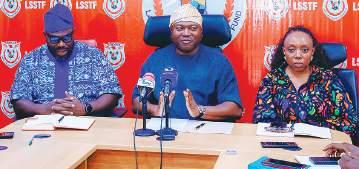
L-R: Director, Administration, Lagos State Security Trust Fund, LSSTF, Mr. Degbola Lewis; Executive Secretary/CEO, LSSTF, Dr. Ayo Ogunsan; and Executive Assistant, LSSTF, Mrs. Adaobi Nwankwo during the recent press briefing of 100 Days in Office Achievements of LSSTF's CEO, Dr. Ogunsan at the agency's office, Alausa Secretariat, Ikeja Lagos
“We injected an additional 80 operational and patrol vehicles into the Lagos security space to strengthen rapid response and visibility and more is still on its way,” Ogunsan disclosed. He added that the Fund also secured donations of vehicles from automobile manufacturers operating within Lagos State, further boosting operational capacity.
Introducing the LSSTF Monitoring Team for Accountability
To enhance transparency and accountability, Ogunsan said the Fund introduced the LSSTF Monitoring Team.
“We introduced the LSSTF Monitoring Team to ensure proper tracking, accountability, and maintenance of assets provided for security agencies,” he explained.
The initiative is designed to ensure that assets donated by the Fund are properly deployed, maintained and effectively utilised.
Securing a Permanent Office Complex
Institutional consolidation was another milestone after he came onboard. To this end, Ogunsan announced that the Fund secured a sole donor for the construction of a permanent office complex.
“The construction of the building has commenced and it should be delivered by October this year,” he said, noting that the facility would enhance coordination, efficiency and service delivery.
Annual Town Hall Meeting on Security and Recognition of Officers
Within the first 100 days, he disclosed that the Fund hosted a highly productive Annual Town Hall Meeting on Security. The forum provided an opportunity for open engagement between security agencies, government and the public.
Deserving and dedicated security officers were recognised and honoured through awards at the meeting, in appreciation of their sacrifice and commitment to keeping Lagos safe.
The Fund, he said, also held a very impactful breakfast meeting involving
Lagos public and private sector stakeholders hosted by the Governor, further strengthening collaboration and support for security funding initiatives.
Support to Tertiary Institutions and Youth Advocacy
Ogunsan disclosed that the Fund extended support to tertiary institutions across the State through the donation of security vehicles and equipment to improve campus safety.
Recognising the importance of human capacity in security management, the Fund supported advocacy campaigns to encourage Lagos youths to join the Police and other security agencies, thereby supporting manpower development and youth employment.
Frequent Engagement with Security Agencies
He emphasised that during the period under review, the Fund maintained frequent and robust engagements with all security agencies operating within Lagos State to ensure alignment, responsiveness and effective deployment of resources.
Restoration of Armoured Personnel Carriers and Police Stations
Importantly, the Fund embarked on statewide repairs and restoration of abandoned Armoured Personnel Carriers, returning them to operational use.
“We are also engaging some key stakeholders to partner with us towards the renovation of dilapidated and damaged Police stations, helping to improve working conditions for officers and service delivery to the public,” he added.
Next Phase: Statewide Training and Equipment Procurement
While expressing pride in the progress recorded, Ogunsan stressed that much more work lies ahead. “In the next 100 days, the Fund will deepen its operational impact across several key priority areas,” he said.
He disclosed that the Fund will
commence statewide training programmes for security agencies to ensure officers are equipped with modern knowledge, tactical skills and professional standards required for effective service delivery.
This is just as it will also procure more security equipment and operational accessories to strengthen the capacity of security agencies to respond swiftly and effectively to emerging threats.
Partnership for Aerial Surveillance and Use of UAVs
A significant component of the next phase is the plan to sign a Memorandum of Understanding with the Nigerian Air Force and the Nigeria Police Airwing to support aerial surveillance across Lagos State.
“This will include the use of Unmanned Aerial Vehicles (UAVs) also known as drones, which will significantly enhance intelligence gathering, rapid response capability, and coordinated security operations,” he said.
Public Enlightenment Campaigns and Safer School Patrols
The Fund also plans to roll out statewide public enlightenment and sensitisation campaigns against crime and other social vices, aimed at strengthening community participation in security and promoting responsible civic behaviour.
In collaboration with the Police and the Ministry of Basic Education in Lagos State, he said the Fund plans to establish Safer School Patrol initiatives to improve security presence around schools and enhance the safety of students, teachers and school communities.
Deepening Public Participation in Security Funding
Furthermore, he said the Fund will intensify efforts to bring more Lagosians into the security funding net, encouraging wider public participation and ownership of security support initiatives across the State.
Ogunsan expressed confidence that these strategic actions would significantly improve professionalism, enhance service delivery, strengthen operational effectiveness and ensure better management and administration of assets provided by the Fund.
Commitment to Transparency and Partnership
In his closing remarks, Ogunsan reaffirmed that the Lagos State Security Trust Fund remains fully committed to transparency, accountability, innovation and strong partnerships.
“We will continue to work closely with the Lagos State Government, security agencies, the private sector, and the good people of Lagos to build a safer, more secure, and more resilient State. Together, we will continue to build and sustain a safer Lagos for everyone,” he posited.
With a comprehensive first 100 days marked by fundraising reforms, asset deployment, institutional strengthening, stakeholder engagement and forward looking security strategies, the Lagos State Security Trust Fund under Dr. Ayodele Ogunsan appears set on consolidating its role as a central pillar in safeguarding Africa’s largest city
BUSINESS WORLD
RATES AS AT M AR ch 2, 2026
Nigeria’s Trade with US Slips to $1.79bn Deficit from $1.45bn Surplus
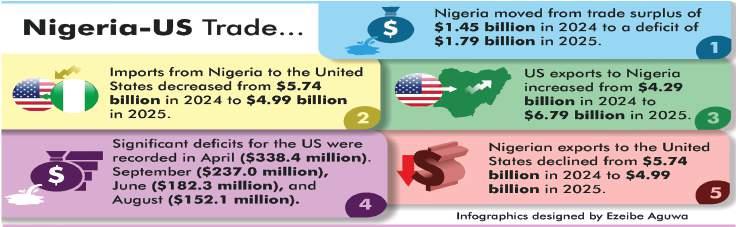
Stories by Emmanuel Addeh in Abuja
Nigeria’s trade position with the United States has experienced a sharp reversal, moving from a surplus of $1.45 billion in 2024 to a deficit of $1.79 billion in 2025, according to the International Trade in Goods and Services data released by the United States Census Bureau (USCB).
A THISDAY analysis of the data showed that the shift reflected a combination of rising US exports to Nigeria and declining Nigerian exports to the US.
Data from the Census Bureau indicated that total US exports to Nigeria increased from $4.29 billion in 2024 to $6.79 billion in 2025, representing a growth of approximately 58 per cent. At the same time, imports from Nigeria to the United States decreased from $5.74 billion in 2024 to $4.99 billion in 2025, a decline of around 13 per cent.
Monthly figures showed that in 2024, Nigeria maintained a surplus with the US in most months.
Significant deficits for the US were recorded in April
($338.4 million), September ($237.0 million), June ($182.3 million), and August ($152.1 million). Only February and November recorded modest US surpluses. Throughout the year, imports from Nigeria generally exceeded US exports, supporting Nigeria’s overall trade surplus of $1.45 billion. In contrast, 2025 showed a largely different pattern.
While January ($143.0 million) and April ($120.5 million) posted deficits for the US, the remaining months recorded consistent US surpluses, resulting in an annual reversal for Nigeria.
Besides, March generated a $256.1 million US surplus, June $280.4 million, August $387.9 million, the largest monthly surplus, and November $263.2 million. The sustained pattern of surpluses contributed to Nigeria’s $1.79 billion deficit for the year, the analysis indicated.
The increase in US exports was a key driver of the reversal, with the year-onyear expansion in exports from $4.29 billion to $6.79 billion indicating significant growth in Nigerian imports from the United States.
On the other hand,
Nigerian exports to the United States declined from $5.74 billion in 2024 to $4.99 billion in 2025. Oil and petroleum-related products dominated Nigeria’s export portfolio to the US. Changes in production levels, operational constraints, or adjustments in global oil supply and pricing may have contributed to the lower export figures.
Global energy market conditions likely influenced US import patterns. The United States increased its domestic crude oil production and diversified supply sources,
which may have reduced reliance on Nigerian crude. These developments coincide with increased import of crude oil from the US by the Dangote refinery.
The monthly breakdown pattern showed that Nigerian export performance varied throughout the year. Nigeria recorded its highest exports to the US in February ($478.6 million) and March ($491.2 million), while the lowest monthly export values were in April ($393.8 million) and October ($403.1 million).
The
FG Sets Up Steering C’ttee for National Gas Infrastructure Centre
The federal government has inaugurated a steering committee and Joint Technical Working Group (JTWG) to drive the establishment of the National Gas Infrastructure Command Centre (NGCC), a centralised digital platform aimed at strengthening transparency, coordination and operational efficiency across Nigeria’s gas value chain.
Enabled by the Petroleum Industry Act (PIA) 2021, the initiative will provide realtime oversight of Nigeria’s national gas infrastructure, and is expected to unlock greater value from Nigeria’s vast gas reserves, in the nation’s quest to grow natural gas production to 12Bscfd by 2030.

The NGCC will be established under a private sector-led Public-Private Partnership (PPP) model under regulatory supervision of the Infrastructure Concession Regulatory
Commission (ICRC), with no financial exposure to the federal government, a statement by Louis Ibah, spokesman to the Minister of Petroleum (Gas), “Ekperikpe Ekpo, said.
Engineering Automation Technology Limited. (EATL), an indigenous firm and project promoter, will handle system design and funding mobilisation, in partnership with its Original Equipment Manufacturer (OEM), the statement added.

Speaking at the inauguration, Ekpo described the command centre as a critical enabler of Nigeria’s gas-to-power ambitions and broader industrialisation agenda under the ‘Decade of Gas Initiative.’
He said the steering committee will provide strategic direction, ensure policy alignment and strengthen interagency collaboration, while guiding phased
implementation. The JTWG, he added, will develop the technical framework for the centre, including system architecture, data standards, operational protocols and risk mitigation measures required for an integrated national command system.
“The NGCC is a national asset that requires unified effort and a focus on outcomes that benefit all Nigerians. The government expects clear deliverables, actionable recommendations

and consistent progress reporting,” he said.
Managing Director/Chief Executive Officer of EATL, the project promoter, Dr Emmanuel Okon, described the initiative as a strategic national platform for real-time monitoring, operational coordination, emergency response and optimisation of Nigeria’s natural gas infrastructure network.
Foo D Commo DITI




NEITI Defends FG on Direct Remittance of Oil, Gas Revenues
The Nigeria Extractive Industries Transparency Initiative (NEITI) has said President Bola Tinubu’s recent issuance of Executive Order 9, mandating direct remittances of all revenues accruable to the government from oil and gas, was in line with its own long-held position.
The executive order issued by Tinubu on February 13, 2026, is aimed at safeguarding and enhancing oil and gas revenues for the federation and seeks to curb wasteful expenditures and reduce leakages.
According to the government, this will be done by requiring all operators
to remit royalty oil, tax oil, profit oil, profit gas and all government entitlements directly to the federation account, the statement in Abuja signed by NEITI spokesperson, Obiageli Onuorah said.
Executive Secretary of NEITI, Musa Adar, described the development as “a bold step in the on-going fiscal reforms to improve financial transparency, strengthen accountability systems and mobilise resources for the much-needed development for the benefit of the citizens.”
Adar observed that the presidential directive is consistent with both the text and intention of Section 162 of Nigeria’s constitution.
He explained that for the
Aradel Attains ISO 45001:2018 Certification
Aradel Holdings Plc has successfully attained the ISO 45001:2018 certification for its Occupational Health and Safety Management System, reinforcing the company’s steadfast commitment to operational excellence and workplace safety.
The ISO 45001:2018 is an internationally recognised standard that specifies the requirements for an occupational health and safety management system
and provides a structured and robust framework for organisations to proactively identify hazards, manage risks, and continually improve health and safety performance.
As part of the independent accreditation process, the independent energy producer underwent a comprehensive audit of its occupational health and safety management systems to ensure compliance, close identified gaps, and promote a safe and responsible environment, while strengthening overall employee health and safety performance.
Group
Eromosele
Comms/e-Business
Asst.
Asst. Editor, Money Market
Nume Ekeghe
Correspondents
KayodeTokede(CapitalMarkets)
James Emejo (Finance)
Ebere Nwoji (Insurance)
Reporter Peter Uzoho (Energy)
Commenting on the certification, Managing Director of Aradel Holdings Plc, Mr. Adegbite Falade, said: “Aradel is firmly committed to creating a workplace where safety is our top priority, because for us, the first measure of success is safety.
“Attaining the ISO 45001:2018 certification reflects our unwavering commitment to continuous improvement and adherence to international standards. At Aradel, workplace health and safety are embedded in our operations, and the robustness of our systems reflects our unwavering commitment to creating sustainable value.”
past 20 years since NEITI began exercising oversight responsibilities, as mandated by law, the agency has consistently recommended that all revenues accruable to the government are paid
into the Federation Account in accordance with the provisions of the constitution, and that the remitted revenues are managed transparently for the benefit of Nigerians.
The executive secretary
highlighted that in a special report published by NEITI in 2017 titled: “Unremitted Funds, Economic Recovery and Oil Sector Reform”, NEITI found that more than $20 billion of remittances due to
the Federation were yet to be remitted to the government.
NEITI said it found that this non-remittance was a significant contributor to the government’s fiscal challenges.
TCN Announces Outage on Benin–Ajaokuta Transmission Line
The Transmission Company of Nigeria (TCN) has announced a scheduled outage on the Benin–Ajaokuta 330kV transmission line to enable ongoing restringing works at the Ihovbor power plant turn-in/turn-out transmission substation.
In a statement issued by its General Manager, Public Affairs, Ndidi Mbah, the company disclosed that
the project commenced on Friday, February 27, 2026, and is expected to continue through Tuesday, March 31, 2026. The daily outage will run from 8:00am to 6:00pm throughout the construction period.
According to TCN, the exercise is necessary to allow its contractor to proceed with the restringing of the 330kV transmission line connected to the Ihovbor power plant.
The company explained that temporary power interruptions are required because the transmission line crosses major highways along the Benin–Ajaokuta axis, necessitating strict safety measures during the works. TCN stated that relevant road safety agencies have been duly notified and will be on standby to manage traffic and ensure public safety during the period of construction.
As a result of the outage, the Benin Electricity Distribution Company (BEDC) will be unable to supply electricity to customers in the University of Benin (UNIBEN), Oluku, Egba, and Ihovbor environs for up to 10 hours daily. The affected areas are expected to experience interruptions between 8:00am and 6:00pm each day while the works are ongoing.
Underutilisation of NCDMB’s
Women in Energy Fund Worries WIEN
The $40 million intervention fund set up to grow the capacity of women operating in the energy sector in Nigeria, particularly oil and gas industry, has remained largely underutilised due to limited access to bankable contract opportunities for female players, the Women in Energy Network (WIEN), has said.
The Fund, which was floated in November
2025 by the Nigerian Content Development and Monitoring Board (NCDMB) in collaboration with the Nigeria Export-Import Bank (NEXIM) seeks to promote women’s participation in the operations of Nigeria’s oil, gas, and mining industries.
Specifically, the Fund is targeted at businesses and companies with female CEOs, in addition to women holding a minimum of 51 per cent ownership and occupy significant roles in
the running of the business, 40 per cent of which must be at a management level.
The fund came as part of the ways to address the decline in women’s representation in the oil and gas industry as captured in a report by the Nigeria Extractive Industries Transparency Initiative (NEITI).
In the said report, NEITI had stated that in 2022, out of 6,728 employees in the oil and gas industry, only
1,144, or 17 per cent, were women, while in 2023, the total number of employees increased to 8,694, with women accounting for only 1,391.
However, in its appraisal of the performance of the multi-million dollar fund, WIEN complained of its underutilisation, blaming it on structural issues and limited access to bankable contract opportunities for women in the oil and gas sector.
The Nigerian Maritime Administration and Safety Agency (NIMASA) has renewed its strategic capacity development partnership with the World Maritime University (WMU), Malmö, Sweden, through the signing of a four-year Memorandum of Understanding (MoU) aimed at strengthening Nigeria’s maritime human capital and institutional
capacity.
Speaking at the MoU signing ceremony, the Director General of NIMASA, Dr. Dayo Mobereola described the partnership as a critical pillar in NIMASA’s human capital development framework and a strategic investment in Nigeria’s maritime future.
“This collaboration has significantly strengthened our technical and regulatory
capabilities over the years. Officers trained at WMU have enhanced our effectiveness in maritime safety administration, environmental compliance, maritime law, and shipping management. Their expertise has also reinforced Nigeria’s participation at the International Maritime Organization and other international maritime platforms,” he stated.
Under the renewed MoU, which was first signed in 2022, NIMASA will sponsor at least ten officers annually for the 14-month Master of Science programme at WMU in Malmö for the 2026–2029 intakes, as well as at least one officer for the Master of Philosophy (MPhil) programme jointly delivered by WMU and the International Maritime Law Institute (IMLI), Malta.
Stories by Emmanuel Addeh in Abuja
Peter Uzoho

A Mutual fund (Unit Trust) is an investment vehicle managed by a SEC (Securities and Exchange Commission) registered Fund Manager. Investors with similar objectives buy units of the Fund so that the Fund Manager can buy securities that willl generate their desired return.
An ETF (Exchange Traded Fund) is a type of fund which owns the assets (shares of stock, bonds, oil futures, gold bars, foreign currency, etc.) and divides ownership of those assets into shares. Investors can buy these ‘shares’ on the
floor of the Nigerian Stock Exchange.
A REIT (Real Estate Investment Trust) is an investment vehicle that allows both small and large investors to part-own real estate ventures (eg. Offices, Houses, Hospitals) in proportion to their investments. The assets are divided into shares that are traded on the Nigerian Stock Exchange.
GUIDE TO DATA:
Date: All fund prices are quoted in Naira as at 27 Febuary 2026, unless otherwise stated.
DAILY PRICE LIST FOR MUTUAL FUNDS, REITS and ETFS
ProPerty & environment
Diaspora Capital Moves from Cash Transfers to Structured Property Investment
Bennett Oghifo
For decades, remittances have provided a vital financial lifeline for millions of Nigerian households, quietly underwriting education, healthcare, housing and day-to-day consumption across the country. From major cities to rural communities, funds sent home by Nigerians in the diaspora have sustained families, stabilised livelihoods and helped cushion the impact of recurring economic volatility.
In 2025 alone, remittance inflows to Nigeria were estimated at $23 billion, the highest level recorded in five years. According to the World Bank, Nigeria remains one of the largest recipients of remittances in Sub-Saharan Africa, with inflows contributing significantly to household stability and foreign exchange supply at a time of persistent currency pressure.
Beyond the familiar story of remittances, however, a quieter but more consequential shift is underway. Increasingly, Nigerians abroad are moving beyond regular money transfers to embrace structured investment, particularly in real estate, supervised construction projects and other asset-backed ventures.
Analysts say this evolution signals a deeper recalibration of how diaspora capital engages with the domestic economy, shifting emphasis from consumption support to long-term wealth creation.
“Remittances are important, but they largely fund immediate needs,” said Benedicta Mbong, a business growth strategist and advisor who works closely with diaspora investors. “They stabilise households, but they rarely create compounding assets. Structured investments, on the other hand, convert diaspora income into long-term capital.”
Remittances Stabilise, Investments Compound
Traditionally, remittances have functioned as a consumption buffer, financing school fees, medical bills and household expenses. While their social value is undeniable, economists note that they seldom translate into formal capital formation or asset accumulation. Structured investments present a different proposition.
According to Mbong, verified land acquisition, incomegenerating rental property and professionally supervised developments create assets that appreciate over time and
generate sustainable returns.
“This shift moves diaspora participation from short-term support to measurable wealth creation,” she said. “It is a sign that diaspora capital is maturing and becoming more strategic.”
Industry observers add that this change reflects broader global exposure among Nigerians abroad, many of whom are accustomed to regulated markets, formal documentation and clear accountability structures in their countries of residence. As a result, expectations around governance and transparency are increasingly being imported into local investment decisions.
Distance, Risk and the Governance Gap
Experience has been a powerful teacher. Over the past decade, many diaspora investors have faced repeated challenges, including disputed land titles, government takeovers, incomplete or unverifiable documentation, project delays, cost overruns and weak onground supervision. Geographic distance often magnifies these risks, while information gaps and informal transaction structures increase exposure to capital loss.
“These issues have made diaspora investors far more
cautious,” Mbong explained. “Today, before returns are discussed, the first questions are about verification frameworks, accountability systems and governance.”
As a result, serious investors now insist on independent property inspections, title verification, transparent fee structures, construction milestone reporting and third-party oversight. Market analysts say this demand for structure marks a clear departure from earlier, trust-based approaches that relied heavily on family members or informal intermediaries.
Real Estate as a Strategic Asset
Cities such as Lagos and Abuja continue to attract the bulk of diaspora investment, particularly in residential and mixed-use developments. Real estate offers familiarity and tangibility, qualities that resonate strongly with investors operating from thousands of kilometres away and seeking visible, trackable assets.
Beyond financial returns, property investments serve multiple strategic objectives. “For many in the diaspora, real estate is about retirement planning, hedging against inflation and
transferring wealth to the next generation,” Mbong said. “It is also about maintaining a tangible connection to Nigeria.”
This dual role, as both financial instrument and identity anchor, distinguishes diaspora investment behaviour from purely informal capital flows and helps explain the growing emphasis on documentation, supervision and professional management.
From Informality to Institutionalisation
Historically, diaspora investors relied heavily on relatives, friends or informal intermediaries to manage projects back home. While personal networks remain influential, an increasing segment now prefers structured processes over informal arrangements.
According to Mbong, this shift aligns with changes in Nigeria’s evolving real estate ecosystem, where transparency and governance are becoming decisive factors for investor confidence. “When investment processes are institutionalised, project completion rates improve, disputes reduce and capital efficiency increases,” she said.
Market analysts agree that channeling diaspora funds through more formal systems
could deepen markets, enhance stability and improve asset formalisation across the sector. They argue that improved oversight not only protects investors but also strengthens confidence in the broader property market.
A Broader Economic Signal
The movement from remittance-driven support to asset-backed strategy reflects more than individual ambition. It signals growing confidence in Nigeria’s long-term economic prospects and a desire by diaspora Nigerians to participate more directly in domestic wealth creation.
“Remittances will always matter,” Mbong noted, “but structured investments build capital, and capital builds markets. If this trend continues, diaspora capital could play a transformative role in Nigeria’s next growth phase.”
As Nigeria seeks sustainable sources of investment and development finance, analysts say the evolution of diaspora wealth deployment may prove to be one of the most significant — and least examined — shifts in the country’s economic landscape, with implications for capital formation, market stability and long-term growth.
Channelling Diaspora Remittances to Bridge Nigeria’s Housing Deficit
a property consultant and developer, Mr Omotayo Oyerokun, said several housing units can be delivered if diaspora remmitances are properly harnessed and channelled, James Sowole reports
Housing is a fundamental human need and a cornerstone of human survival, often ranked alongside food and water in Maslow’s hierarchy of needs.
Beyond mere shelter, adequate housing provides safety, security, stability, and dignity, acting as a critical social determinant of physical and mental health.
Considering the importance of housing in human needs, the United Nations Habitat Agency and international law recognize secure, adequate housing as a fundamental human right, not merely a commodity.
Without adequate housing, it is difficult to maintain personal health or achieve long-term stability, making it a priority for social and economic development.
Despite critical importance of good housing in the hierachy of human needs and efforts of several stakeholders in Nigeria to ensure that descent housing is made available to many people, gaps are widening between the number of people that are in need and the number of units available due to several factors, including growing urbanisation.
It was widely acknowledged that Nigeria faces a critical housing deficit running into millions of units and which required an estimated annual investment of billions of naira to address.
In attempts to address shortfalls, governments, especially at federal and state levels, had and still initiating policies including deliberate involvement of private organisations.
Several suggestions had been offered on how to raise several billions of naira, required to fund construction of housing units.
One of the sources of funding being cavassed is the use of diaspora remittances.
One of the advocates of campaign for channelling diasporal remittances into housing sector is the Principal Partner of Tayo Oyerokun Consulting, Mr Omotayo Oyerokun. Oyerokun recently said in Lagos that state governments have the capacity to develop at least 4,000 housing units yearly if diaspora remittances alone are properly hannesed and channelled into housing sector.
Speaking at the 10th Anni-
Lagos Govt Clarifies
versary of Aridan Construction and launch of his book titled:
“The Real Investment Is Real Estate,” Oyerokun said if the states could think out of the box, the move would help in tackling the growing housing deficit bedevilling the country.
He said: “The remittances that come into Nigeria are about six per cent of our Gross Domestic Product (GDP), amounting to $21 billion. Imagine a country growing by six per cent every year, that’s how we feel the impact of Nigerians in the Diaspora. And it’s important that the government start looking at how to harness this opportunity.
“If we can take 10 or 15 per cent of that money, Nigerians in the Diaspora alone can develop over 300,000 housing units for Nigerians every year apart from what the private sector and the government are doing.”
According to the property consultant, diaspora remittances provide a significant source of external finance, equivalent to about six per cent of Nigeria’s GDP.
He noted that traditionally, these funds are primarily used
N4.2bn
for individual family support, land purchases, and private residential construction.
However, under this traditional mode, many diaspora investors struggle with trust issues, including land fraud and lack of transparent, large-scale investment vehicles.
Oyerokun advised the state governors to work with the Real Estate Developers Association of Nigeria (REDAN) to develop mass housing, lauding the
Federal Capital Territory (FCT) for partnering with the body to achieve mass housing in the FCT.
He noted that the connection between the government and the private sector has not really been there, adding that although a few organisations are trying to do things, one of the reasons for coming on board is to ensure that people do not have to wait for the government.
He said said that Nigeria
must begin to strategically position itself to attract diaspora funds into productive sectors, particularly housing development.
Oyerokun said, “The Nigeria project has to be sold properly by everyone. Over the last 10 years, there have been enormous opportunities in Nigeria. It may be difficult for many people to see them, but opportunities truly abound, and Nigerians must begin to take advantage of them.

Budget Provision for Deputy Governor’s Office
Office of the Deputy Governor in the 2026 budget.
In a statement issued by the Lagos State Ministry of Economic Planning & Budget, the government said the controversy arose from a failure to properly interpret the breakdown of the capital allocation approved for the
The Lagos State Government has refuted reports alleging that the Office of the Deputy Governor proposed to spend N4.2 billion on office furniture and 30 microphones in the 2026 fiscal year, describing the claims as a misinterpretation of the approved capital provisions.
According to the ministry, the total capital allocation for the Office of the Deputy Governor, Lagos State for the 2026 financial year stands at N4,247,816,006. This figure, it explained, was wrongly presented in some
reports as an amount meant solely for the procurement of furniture and microphones.
“The claim that N4.2 billion was earmarked for office furniture and microphones is inaccurate,” the ministry stated. “It results from a clear misinterpretation of the approved capital provisions.”
The clarification revealed that the bulk of the allocation— N4,077,816,006—is dedicated to the reconstruction of the Round House complex, Alausa, a sixstorey facility that accommodates more than 50 offices within the state’s executive infrastructure.
The ministry explained that
the reconstruction project goes far beyond cosmetic upgrades. It includes major structural works, retrofitting to meet modern building and safety standards, and the installation of alternative energy infrastructure aimed at improving energy efficiency and reducing long-term operational costs.
Bennett Oghifo
L-R: Mrs Omotunde Oyerokun; Engr. Omotayo Oyerokun; and Daniel Adeniyi, at the event
Gill: Nigeria is Perceived Far More Positively Today Than in Recent Years Business Special
The Chief Investment Officer, Africa, Middle East, and Europe, Standard Chartered, Manpreet Gill, outlines the 2026 global market outlook in this conversation with Nume Ekeghe. Excerpts:
How would you summarise global market performance recently, and what are the key themes shaping your outlook for 2026?
Overall, portfolio performance has been strong over the past year, and we are quite satisfied with outcomes so far. Looking ahead to 2026, our outlook is anchored around three major global themes.First is equities. We believe equities can continue to rise, and we use the word “inflate” deliberately. There is ongoing debate about whether markets particularly United States (US) technology are in bubble territory. However, strong earnings growth has helped justify current valuations. That said, we do not want portfolios overly concentrated in a single theme like tech or Artifical Intelligent (AI). As a result, we have raised our allocation to Asian equities, particularly China, where we believe there is further upside, and India, where disappointment has been overpriced and valuations now look more attractive.
Second is income generation. Despite elevated bond valuations in the US and Europe, we believe investors can still generate attractive US dollar income. This is best achieved by tilting towards emerging market bonds, including Asia, the Middle East, parts of Africa, and Latin America, where yields are more compelling. In addition, US Treasuries still provide a relatively high yield floor.
Third is diversification. In a world where valuation debates are intense and currency dynamics are shifting, diversification is more important than ever. Beyond a balanced mix of US and non-US equities, we continue to favour gold and select alternatives as portfolio diversifiers to reduce concentration risk.
What are the key risks investors should be mindful of in 2026?
Many of the well-known risks remain centred around US policy uncertainty, particularly unexpected fiscal or trade shifts. However, from a macroeconomic standpoint, the global environment appears relatively stable. Governments across the US, Europe, China, and India are broadly supportive of growth, and central banks are largely in easing mode. The US Federal Reserve, in particular, still has room to cut rates further.
One risk that is underappreciated, however, is Japanese interest rates. For decades, Japan’s ultra-low rates have been a major source of global liquidity.
Today, Japan is the only major economy raising rates, with longterm bond yields already higher than those in China and Europe and approaching US levels. While this is not an imminent threat, a narrowing rate gap could eventually raise global funding costs, creating a potential tipping point investors need to watch closely.
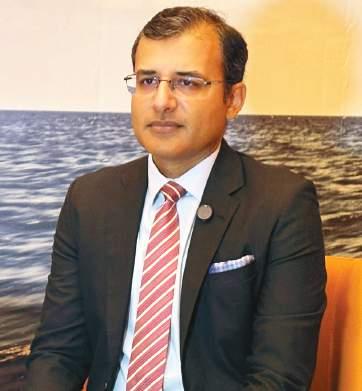
How has the global economic environment evolved compared to 2025?
Three developments stand out. First, inflation is no longer the dominant concern it was last year, particularly in the US and other major economies. Inflation is trending lower and is expected to continue easing. Second, growth has softened in some regions, especially visible in the US labour market. This combination of lower inflation and softer growth supports our view that the Federal Reserve can cut rates. Third, there has been a notable shift in commodity and precious metals prices, with some prices up as much as 60 per cent. While not strictly a macro policy issue, it is a meaningful structural change that investors must incorporate into their outlook.
What is your outlook for Africa within the global investment landscape?
We are more constructive on Africa than market sentiment suggests. The single most important supportive factor is the weaker US dollar. Historically, there is a strong relationship between dollar weakness and increased capital flows into emerging and frontier markets, including Africa. We have already seen this dynamic play out. A weaker dollar eases pressure on local currencies, bond yields, and financing conditions. In addition, higher commodity prices
though varied by commodity provide further support. From a bond investor’s perspective, improving external balances and credit quality across parts of Africa are encouraging signs. Taken together, dollar dynamics, credit improvement, and commodity trends point to a more supportive global backdrop for the region.
How should investors position portfolios amid changing inflation and interest rate cycles, particularly with regard to emerging markets?
The environment favours increased allocation to emerging markets overall. While the US remains an important anchor, the incremental allocation is increasingly directed toward emerging markets.
Within this, Asian equities remain our top preference, while Africa features more prominently within our emerging market bond overweight. Historically, a weaker dollar has almost always been positive for emerging market performance, often allowing them to outperform developed markets.
Nigeria, specifically, sits within frontier market classifications for equities, which limits structural allocations for large global investors. However, African bonds including Nigerian exposures are well represented within emerging market bond universes and benefit from this allocation trend.
How do you assess Nigeria’s investment outlook heading into 2026?
Nigeria is perceived far more positively today than in recent years. Policy stability, market reforms, and improved currency dynamics have increased investor willingness to allocate capital. Importantly, fundamentals alone are not enough. A turning point in the US rate and dollar cycle has played a major role in unlocking performance across frontier markets, including Nigeria. The roughly 10 per cent dollar weakness seen recently has materially supported Nigerian equities and broader asset performance. We believe this supportive backdrop should continue.
Has US dollar stabilisation translated into sustained investor interest in emerging and frontier markets?
Yes, and in fact we have been positively surprised. We initially expected a stable-to-weak dollar, but the degree of dollar weakness exceeded expectations. This has significantly reduced pressure on emerging market assets and strengthened the case for both equity and bond allocations. As a result, we have been incrementally increasing exposure to emerging markets across our asset allocation framework.
Are there specific sectors that stand out globally in 2026?
Our sector views are focused on the most liquid markets, the US, Europe, China, and India where full sector representation exists.
We continue to favour technology, supported by strong earnings momentum, despite valuation debates. However, we are also actively seeking non-technology opportunities. In the US, sectors such as healthcare and utilities appear attractive, particularly as regulatory concerns in healthcare have eased.
In China and India, we expect improving growth to translate into stronger earnings in consumer-oriented sectors. While sector strategies are harder to implement in smaller or less liquid markets, the broader emerging market theme remains supported by policy easing, capital inflows, and consumer growth.
Is the current stabilisation in Nigeria and other emerging markets sustainable?
The signs are encouraging, and we are optimistic. However, as investors, sustainability must always be weighed against what is already priced into markets. Markets move in cycles, and our process continuously balances fundamentals against valuations. That said, on long-term metrics, emerging markets have underperformed for several years. We are now beginning to see tentative turning points aligned with shifts in the US rate and dollar cycle. This gives us confidence that there is still room for further upside, even as we remain disciplined and valuation-aware.
POLITY
“2027: Why Tinubu Must Finish the Turnaround to Deliver Nigeria’s Economic Gains”
Gloria Adebajo-Fraser
Nigeria’s political and economic history shows a familiar cycle—bold corrections are initiated, early hardship sets in, but leadership transitions often interrupt consolidation before citizens feel the benefits.
Structural national turnaround is never immediate; it unfolds in phases requiring policy continuity, fiscal discipline, and institutional patience.
It is within this context that President Bola Ahmed Tinubu’s governance programme must be assessed.
His administration’s policy direction— spanning fiscal restructuring, infrastructure expansion, human capital investment, and national reorientation—represents one of the most far-reaching recalibration efforts in Nigeria’s modern history.
The case for 2027 continuity rests fundamentally on converting stabilization into visible prosperity.
From the outset, the administration confronted two of Nigeria’s most distortionary fiscal burdens—fuel subsidy and multiple exchange rates.
Both had drained public finance for decades while encouraging arbitrage and discouraging productive investment.
Their removal and unification halted unsustainable fiscal hemorrhage and restored transparency to the currency framework.
Though politically difficult, the measures signaled seriousness to investors and global financial institutions long wary of Nigeria’s policy inconsistencies.
The fiscal response was consequential.
Government revenues expanded sharply, reaching over N31.9 trillion in 2024, with some reporting cycles indicating near doubling compared to pre-adjustment inflows.
This strengthened government capacity to fund capital projects and social programmes without excessive borrowing.
Correspondingly, the fiscal deficit narrowed from 5.4% of GDP in 2023 to about 3.0% in 2024—reflecting tightening discipline and improved expenditure efficiency.
External buffers also strengthened.
Foreign reserves rose significantly—from critically low levels to over $23 billion, with peaks reported near $46 billion by late 2024. Stronger reserves improved Nigeria’s ability to absorb global shocks and supported confidence in the naira.
Consecutive trade surpluses reinforced balance-of-payments stability and moderated currency volatility.
Export diversification has been another structural gain.
Non-oil exports approaching nearly 48% of total exports signal movement away from hydrocarbon dependence.
This transition enhances economic resilience and positions Nigeria for industrial competitiveness. Investor sentiment mirrored these gains, with the Nigerian Exchange recording approximately 48% growth in 2025—reflecting renewed private-sector confidence and capital formation.
Credit outlook improvements and rising foreign direct investment—particularly within fintech and the digital economy—have lowered sovereign risk perception while fueling job-creating ventures.
With GDP growth projections exceeding 4% annually, macroeconomic stabilization
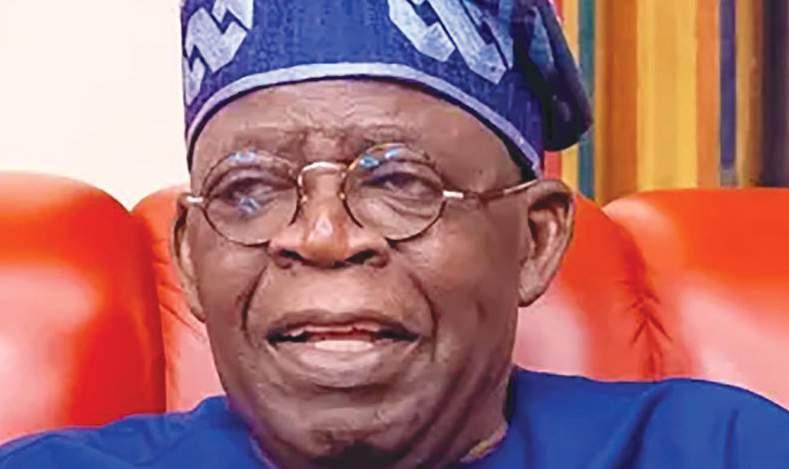
appears to be transitioning toward expansion, provided policy continuity is sustained.
Human capital development forms the second pillar of this national turnaround.
Through the Nigerian Education Loan Fund (NELFUND), tertiary education financing has expanded to hundreds of thousands of students, dismantling tuition barriers and promoting workforce competitiveness.
Entrepreneurship interventions have also reached over 900,000 Nigerians through grants and concessional loans, stimulating enterprise growth and supporting SMEs.
The upward revision of the national minimum wage to N70,000 represents a deliberate effort to cushion cost-of-living pressures while sustaining purchasing power.
Educational infrastructure renewal has advanced as well, with N80 billion allocated to upgrade facilities across 100 federal unity schools.
Revitalization of almajiri education through learning centres, policy reforms, and model schools directly addresses one of Nigeria’s most consequential social vulnerabilities—mass out-of-school populations.
Infrastructure expansion remains the physical backbone of national recovery.
Strategic highway corridors—including the Lagos-Calabar Coastal Road, Sokoto-Badagry Superhighway, Abuja-Kaduna-Kano Road, and Lagos-Ibadan Expressway—are redefining logistics mobility and trade connectivity. Over N2 trillion committed to road infrastructure underscores long-term economic planning.
Port modernization—linking Tin Can Island upgrades with Lekki Deep Sea Port operations—alongside rail expansion is improving cargo evacuation efficiency and export competitiveness.
Energy decentralization through the Electricity Act has unlocked sub-national generation authority, encouraging private investment and diversifying Nigeria’s power architecture.
Housing interventions under the Renewed Hope Programme—including diaspora mortgage schemes and nationwide construction—are expanding housing supply while generating employment. Projects such as the 3,500-unit Renewed Hope City in
Abuja illustrate federal ambition in addressing Nigeria’s housing deficit.
Security stabilization remains integral to economic recovery.
Intensified military operations leading to the neutralization of over 13,500 insurgents have restored farming activity, reopened trade routes, and improved civilian mobility in affected regions.
Nation-building initiatives extend beyond economics.
Reward systems for women’s sports champions have strengthened national pride and youth inspiration.
Digital identity enrollment exceeding 126 million Nigerians enhances governance efficiency, welfare targeting, and fraud reduction.
Comparative global experiences reinforce the continuity argument.
India’s liberalization reforms required sustained leadership cycles before delivering high growth.
Brazil’s stabilization policies gained traction only through continuity.
Indonesia’s restructuring and Rwanda’s developmental governance similarly demonstrate that national turnaround programmes yield results only when reform phases are allowed to mature into prosperity cycles.
Nigeria’s present phase is therefore transitional—moving from stabilization to visible gain. The heavy lifting—fiscal correction, currency realignment, infrastructure rollout, and institutional restructuring—constitutes foundational work whose benefits materialize progressively.
Interrupting this trajectory risks slowing momentum and weakening investor confidence.
Humanitarian Delivery Imperative.
While endorsing the administration’s policy direction, the National Patriots Movement maintains that economic restructuring must
be complemented by visible, people-centric humanitarian delivery.
The group has therefore advised the Presidency to institutionalize a Strategic Presidential Committee on Special Intervention Projects to directly coordinate targeted relief and livelihood programmes nationwide. According to the group, over-reliance on sub-national implementation frameworks has created delivery gaps, with many governors failing to translate federal relief allocations into tangible citizen impact.
This, they argue, has prolonged hardship perception despite ongoing macroeconomic stabilization.
The Patriots note that while substantial federal resources have been earmarked for social transfers, accountability concerns and beneficiary opacity have weakened public confidence in cash-based interventions. They advocate instead for structured, project-tied safety nets—food systems support, transport subsidies, health access schemes, small-enterprise grants, and community infrastructure—capable of delivering measurable grassroots relief.
Such an approach, they contend, would humanize the national turnaround process, reinforce public trust, and demonstrate that economic adjustments are matched with compassionate governance.
National Patriots Endorsement.
In its concluding position, the National Patriots Movement formally endorsed President Bola Ahmed Tinubu for a second term based on the structural performance of his administration so far.
The group maintained that Nigeria’s ongoing recovery programme was conceived as a long-horizon national reset requiring policy continuity to reach full maturation. With stabilization gains already recorded, completing the turnaround beyond 2027, they argued, is essential to convert present sacrifices into visible prosperity, institutional strength, and enduring national renewal for Nigerians.
•Princess G. Adebajo-Fraser MFR. President, the National Patriots.
President Bola Ahmed Tinubu
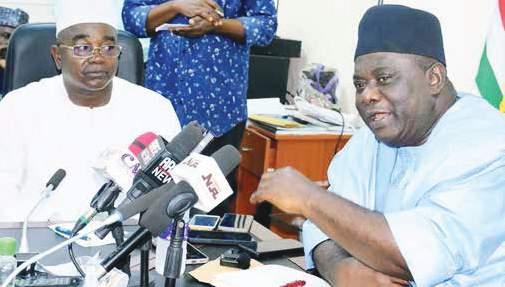
Registrar of the National Examinations Council (NECO), Prof. Dantani Wushishi (left), and the Vice Chancellor, National Open University of Nigeria (NOUN), Prof. Uduma Oji Uduma, during the visit of the registrar to NOUN VC in Abuja… recently
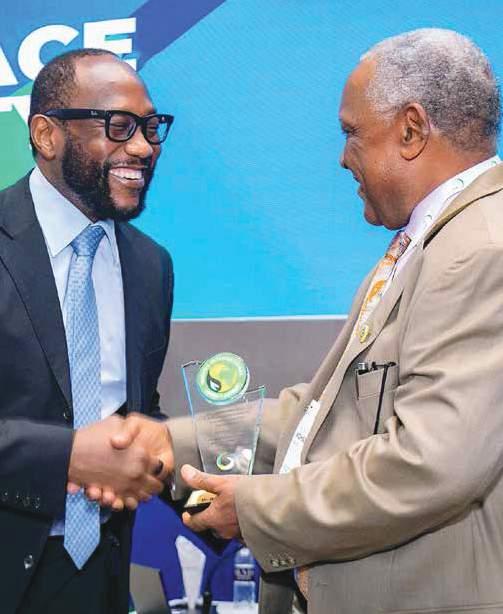
Group Executive Director, Pan Ocean and Newcross
Dr. Bolaji Ogundare, and Authority Chief Executive (ACE), Nigerian Midstream and Downstream Petroleum Regulatory Authority (NMDPRA), Saidu Mohammed, at the NIES
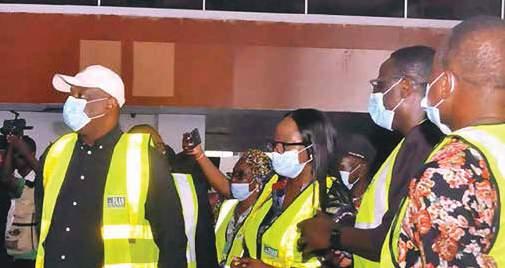
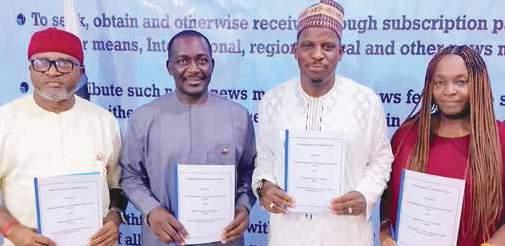
L-R: Registrar, National Institute of Public Relations (NIPR), Chief Uzoma Onyegbadue; acting President, NIPR, Prof. Emmanuel Dandaura; Managing Director, News Agency of Nigeria (NAN), Malam Ali M. Ali; and Head of Legal Unit, NAN, Mrs. Ngozi Anofochie, during the signing of the Memorandum of Understanding (MoU) on World Public Relations Forum between NIPR and NAN at the agency headquarters in Abuja… recently


British Deputy High Commissioner in Lagos, Jonny Baxter; Chairman, Board of the Nigerian Communications Commission (NCC), Dris Olorunnimbe; Chief Executive Officer, Lebara Nigeria, Teni Stuffman; and Group Partnerships Director for Lebara Group, Daniel Upson, during the launch of Lebara in Nigeria market in Lagos… recently
Minister of Aviation and Aerospace Development, Mr. Festus Keyamo (SAN) in reflective jacket and white cap (left); Managing Director, Federal Airports Authority of Nigeria (FAAN), Mrs. Olubunmi Kuku; and others, at the scene of the fire incident at the Murtala Muhammed International Airport (MMIA), Ikeja, Lagos… recently PHOTO: KOLAWOLE ALLI
L-R
Group,
Summit in Abuja… recently
L-R: Executive Director, IT and Operations, Haldane McCall Plc, David Emuloh; Deputy Group Managing Director, Abiola Elugbaju; Chairman, Chief George Oguntade (SAN); Group Managing Director, Dr Edward Akinlade; and Finance Director, Olufemi Ojewande, at the Haldane McCall’s Board’s Strategy Meeting held in Lagos… recently
2025FY: Dangote Cement Grows Profit
Kayode Tokede
Dangote Cement Plc has reported its full year ended December 31, 2025 result and accounts with a profit before tax of N1.53 trillion, representing an increase of 109.2 per cent from N732.54 billion reported in 2024 financial year.
The cement maker on the Nigerian Exchange Limited (NGX) declared N1.01 trillion profit after tax in 2025, up by 102 per cent from N503.25billion in 2024.
Amid impressive performance, the management proposed a dividend of N45 per share for the 2025 financial year.
The growth in profit is driven by N4.31trillion revenue in 2025, a growth of 20.3 per cent from N3.58 trillion reported in 2024.
Commenting on the results, the Chief Executive Officer, Dangote Cement, Arvind Pathak in a statement said: “2025 was a landmark year for Dangote Cement as we delivered exceptional financial performance that underscores the strength of our business model and the effectiveness of our
strategic initiatives.
“Group revenue grew 20.3per cent to N4,306.7 billion, driven by proactive management initiatives and resilient demand across our markets. EBITDA increased by 43.4 per cent to N1,981.1 billion, while profit after tax crossed the N1 trillion milestone for the first time in our history—more than doubling 2024 performance.
“This expansion in profitability, achieved despite a modest 0.9per cent decline in volumes to 27.5 million tonnes, reflects our deliberate focus on margin discipline, cost efficiency, and value creation. A key highlight of 2025 was the successful commissioning of our 3Mta grinding plant in Côte d’Ivoire during Q3. We are pleased with the ramp-up progress as the plant gradually scales toward full capacity utilisation. This strategic asset strengthens our West African footprint and positions us to serve growing demand across the region while benefiting from our
integrated supply chain.
“Our export strategy delivered strong results in 2025, with cement and clinker exports increasing 18.6 per cent as we executed 34 clinker shipments to Ghana and Cameroon.
This performance reinforces our vision of positioning Nigeria as a low-cost regional hub and replacing expensive intercontinental imports with competitive African production. “Our export terminals at Apapa and Onne continue to prove their strategic value, and we remain firmly on track to achieve our ambitious target of 10 million tonnes of combined exports by 2030.
“Looking ahead, we are confident in our growth trajectory and our ability to capitalise on Africa’s robust cement demand fundamentals. We will continue commissioning new capacity, including the transformational 6Mta Itori plant, while advancing expansion projects in Ethiopia, Cameroon, South Africa, Zambia and Senegal.”
NOG to Advance Energy Ambitions for Competitive, Resilient Economies
For a quarter of a century, NOG Energy Week has served as the platform where policy direction, capital and industry capability converge to move projects forward. As the event marks its 25th anniversary, the 2026 edition returns under the theme, “Advancing Energy Ambitions for Competitive & Resilient Economies,” positioning itself as a strategic enabler focused on translating dialogue into bankable delivery across Africa’s energy markets. The event will take place from 5–9 July 2026 at the Bola Ahmed Tinubu International Conference Centre, Abuja. As the heartbeat of Nigeria’s energy
transformation, this year’s epic quartercentennial edition is anchored in fresh policy and project momentum across the region. NNPC Limited’s unveiling of the Gas Master Plan 2026 signals a clear shift from strategy to execution, with practical targets to lift output and mobilise large-scale investment across gas-to-power, LPG and industrial feedstock value chains. Those production and investment targets, including planned increases to national output and sizable capital mobilisation, are already reshaping commercial conversations and opening nearer-term pathways for offtake and project finance. At the same time, regional
cooperation and export infrastructure ambitions are moving forward, with the trans-West Africa Atlantic corridor (The African Atlantic Gas Pipeline) gaining renewed diplomatic and feasibility momentum as governments and multilateral partners advance intergovernmental agreements and route studies. Together, these developments create a policy and project window that NOG Energy Week 2026 will interrogate closely, prioritising sessions that convert national and regional commitments into bankable projects, de-risked financing structures and deliverable implementation roadmaps.
Polo Celebrates Launch of Montblanc Romeo, Juliet Collection
Polo hosted an intimate dinner recently to celebrate the launch of the Montblanc Romeo and Juliet Collection. The evening brought together Montblanc partners, Polo leadership, and a select group of clients for a refined brand experience that combined fine dining with Montblanc’s tradition of literary storytelling and craftsmanship. Inspired by Shakespeare’s Romeo and Juliet, the collection reinterprets themes of
love and conflict through Montblanc’s iconic Meisterstück design language, expressed through contrasting tones, intricate engravings, and refined detailing. Speaking at the event, Managing Director for Africa at Montblanc, Mr. Johann Dahan described the collection as a thoughtful reinterpretation of Shakespeare’s enduring romance, expressed through the Maison’s legacy of artistry and precision.
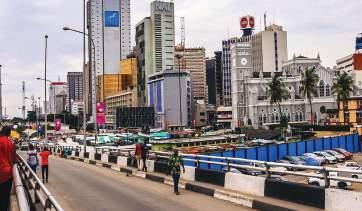
Addressing guests at the dinner, Managing Director of Polo, Mr. John Obayuwana said, “This collection captures what we value at Polo — artistry, storytelling, and emotional connection. Hosting this intimate dinner allowed us to share a narrative that has shaped culture for centuries, and to celebrate the launch alongside our clients and Montblanc partners in a setting that reflects the spirit of the collection.
The price of OPEC basket of twelve crudes stood at $63.14 a barrel on Monday, according to OPEC Secretariat calculations. The OPEC Reference Basket of Crudes (ORB) is made up of the following: Saharan Blend (Algeria), Djeno (Congo), Zafiro (Equatorial Guinea), Rabi Light (Gabon), Iran Heavy (Islamic Republic of Iran), Basrah Medium (Iraq), Kuwait Export (Kuwait), Es Sider (Libya), Bonny Light (Nigeria), Arab Light (Saudi Arabia), Murban (UAE) and Merey (Venezuela).
OPEC DAILY BASKET PRICE As AT 24TH n OV e
Stock Market Gains N1,72trn on Demand for MTN, Dangote Cement
Kayode Tokede
The stock market section of the Nigerian Exchange Limited (NGX), yesterday appreciated by N1.72 trillion on investors’ demand for MTN Nigeria Communications Plc, Dangote Cement Plc, and others.
The N1.72 trillion increase
in market capitalisation indicated the stock market starting March 2026 on a positive note as investors continued to take positon amid 2025 financial year impressive corporate earnings.
As MTN Nigeria gained 3.03per cent to close at N783.00per share and Dangote Cement appreciated by 3.97per cent to close at N809.90 per share, the
market capitalisation of listed companies on the NGX closed at N125.5 trillion, about N1.7trillion from N123.76 trillion it closed for trading in February 2026.
The NGX All-Share Index advanced by 1.4 per cent to close at 195,514.23 basis points frmo 192,826.78basis points ti opened for trading, resulting in a Month-tillDate (MtD) and Year-till-Date (YTD) of 1.4per cent and
25.6per cent, respectively.
Sectoral performance was largely positive, with the NGX Oil & Gas (+4.7per cent), NGX Industrial Goods (+2.5per cent), NGX Consumer Goods (+0.4per cent), and NGX Banking (+0.3per cent) advancing. The NGX Insurance index (-1.5per cent) was the sole loser of the day.
Meanwhile, the total trading volume pared
by 4.1per cent to 789.85 million units, valued at N35.08 billion, and exchanged in 84,259 deals.
Japaul Gold was the most traded stock by volume at 54.72 million units, while Aradel Holdings Plc was the most traded stock by value at N6.09 billion, respectively.
Capital market analysts had said the market is expected to remain
cautiously weak in the near term, with bearish sentiment and profit-taking activities continuing to weigh on performance.
Looking ahead to the new week, Cowry Assets Management Limited said, “we expect the market to remain cautiously weak in the near term as bearish sentiment and profit-taking activities continue to weigh on performance.
PRICES FOR SECURITIES TRADED AS OF MARCH 2 /26
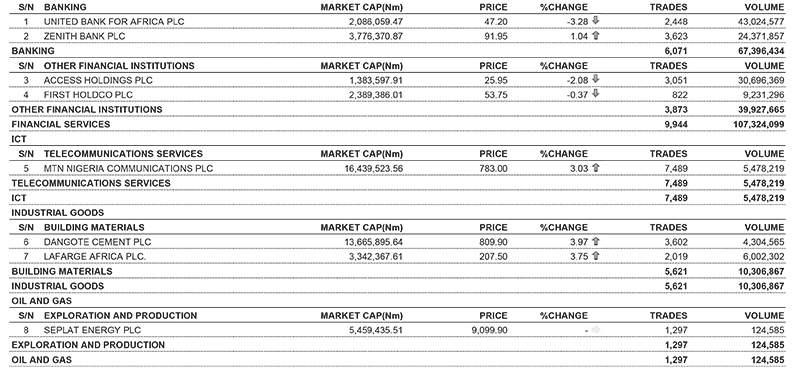
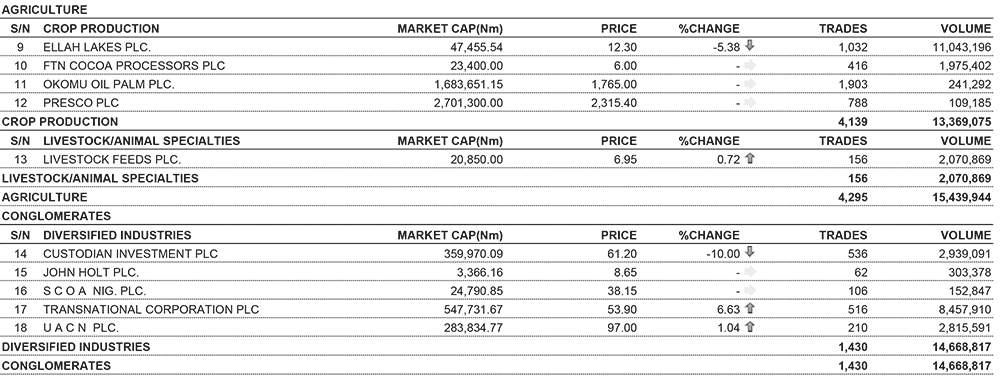
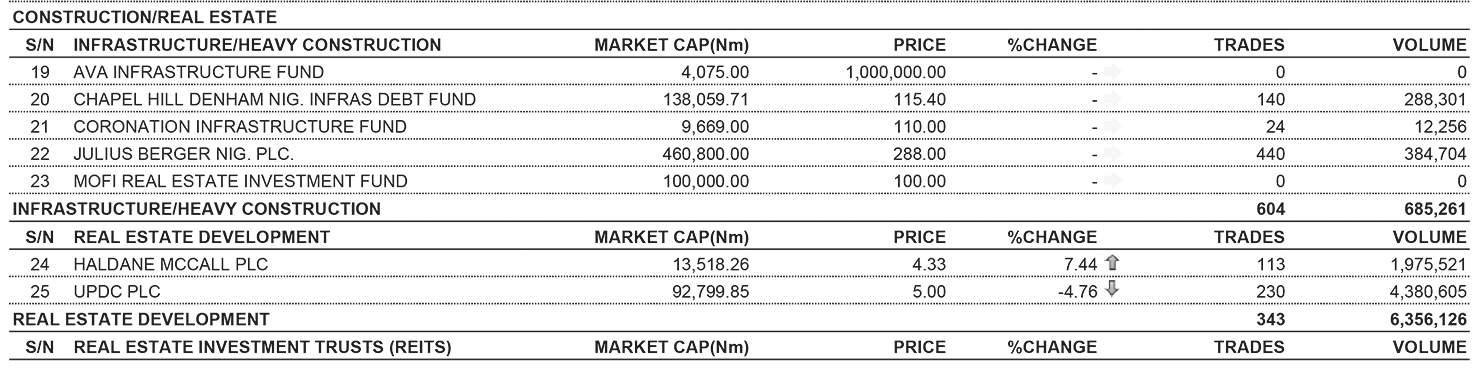
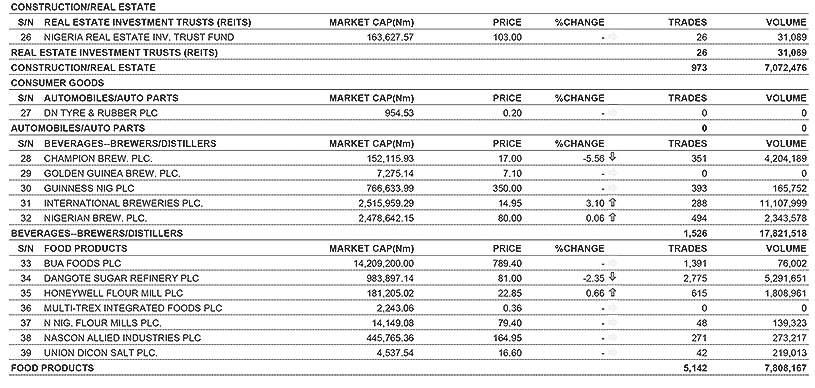
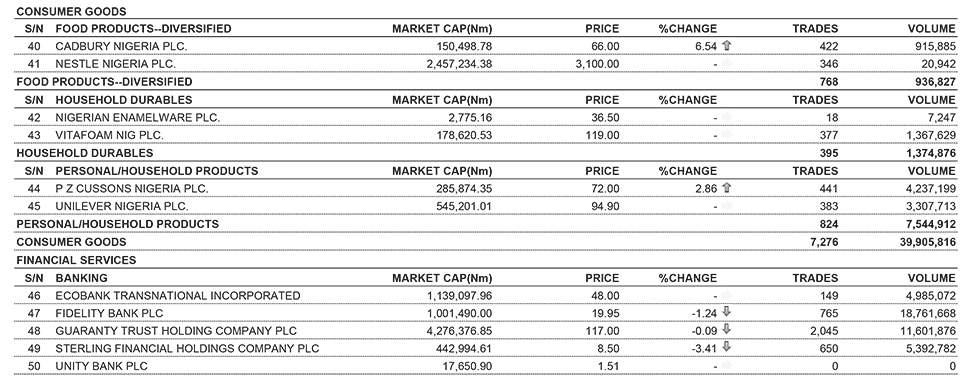
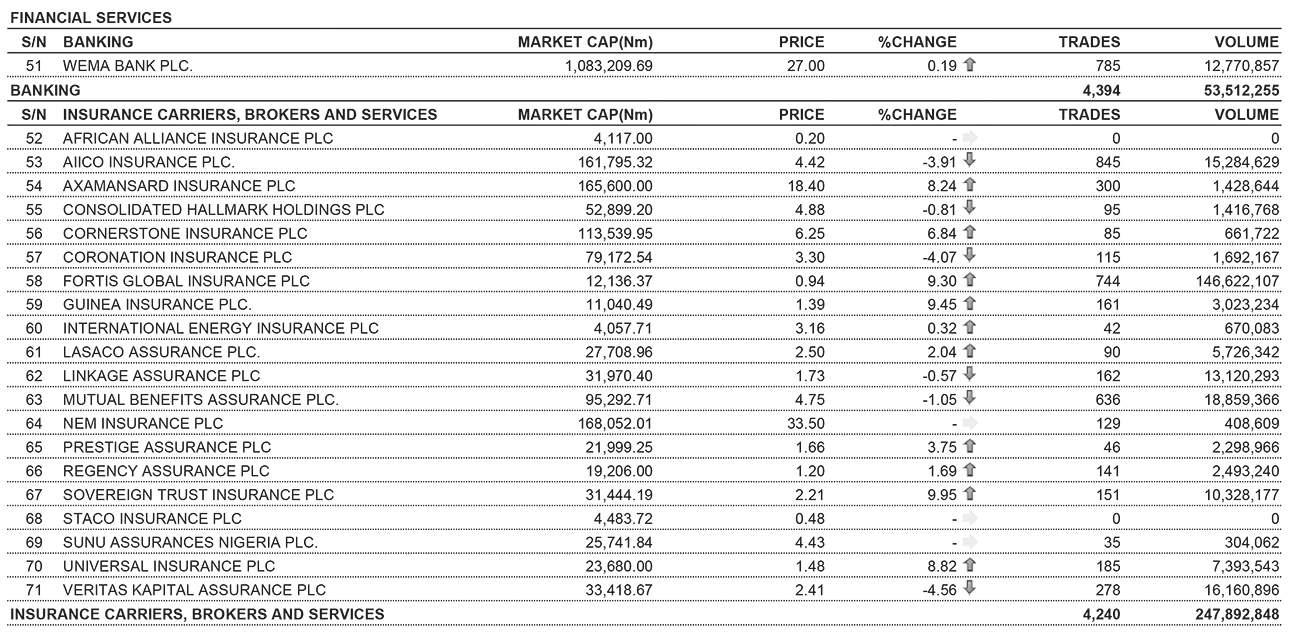

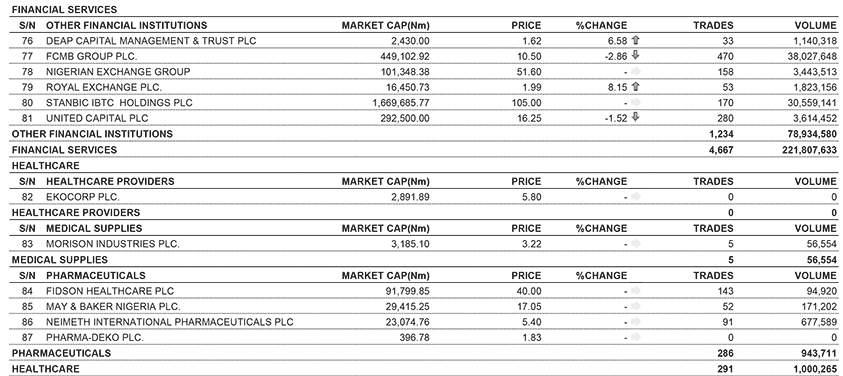
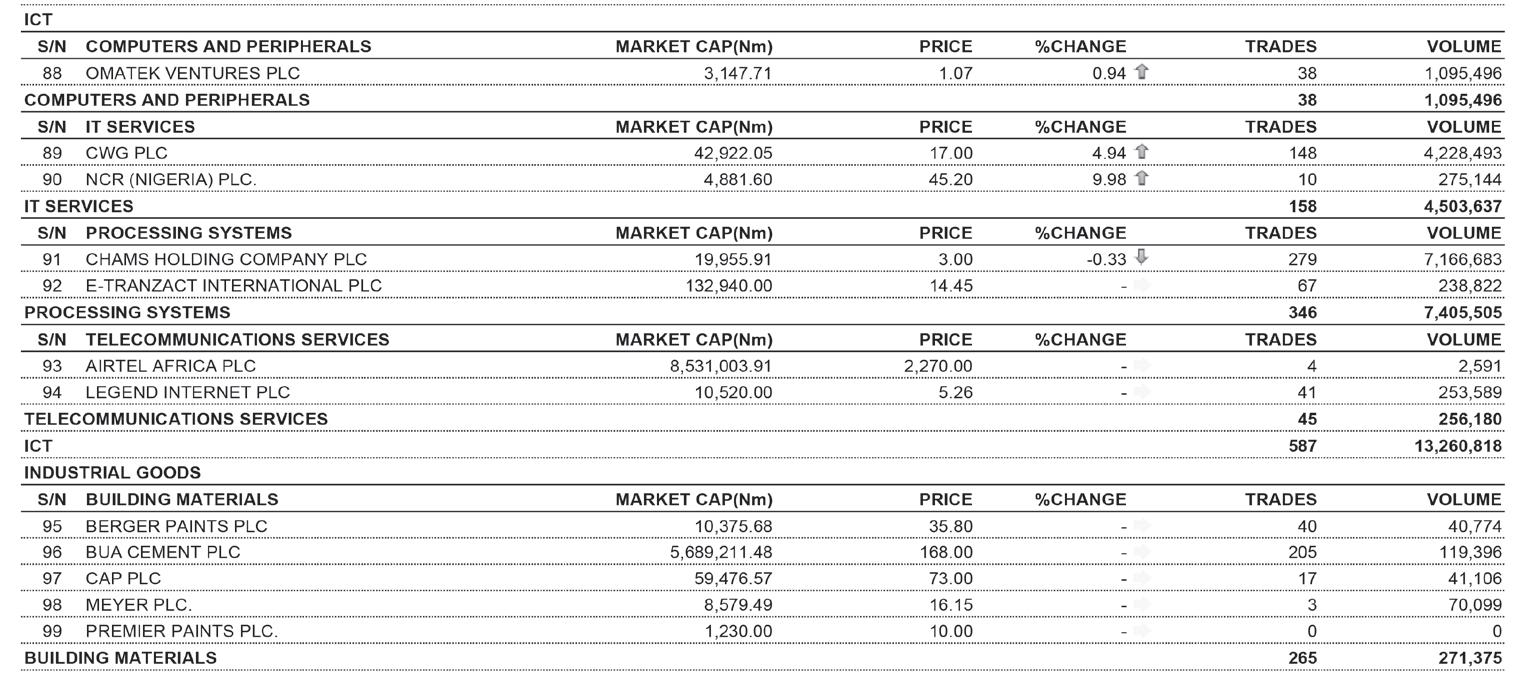
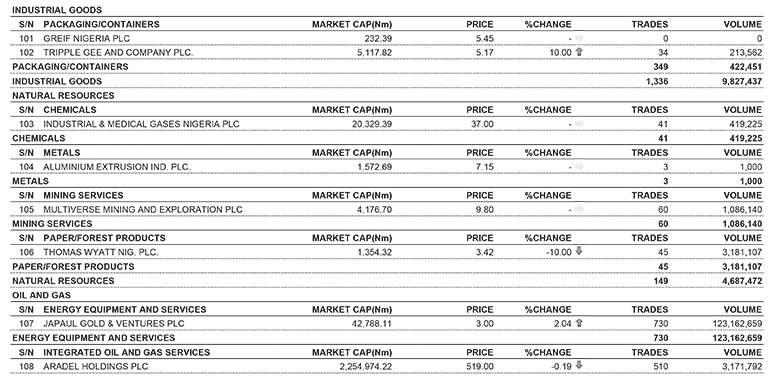
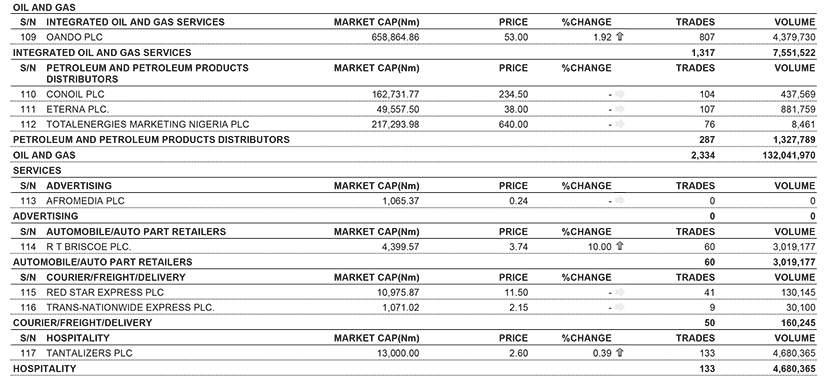


Aba, Abia State, holds lessons in coordinated infrastructure investment, writes PAT ONUKWULI
FIXING LAGOS DUMP SITE BOTTLENECKS
ELVIS EROMOSELE argues for new engineered landfill sites in strategic zone
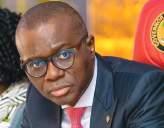
TUNJI DISU: A SYMBOL OF HOPE
KALU
OKORONKWO urges the new Police boss to reform, and instil discipline in the Force See page 21
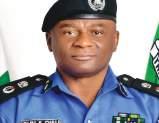


ABA’S URBAN RENAISSANCE: A BLUEPRINT FOR NIGERIA
Nigeria’s cities are paradoxes. They are engines of commerce, yet arenas of congestion. They are magnets for enterprise, yet theatres of inefficiency. They attract capital yet repel investment due to embedded risk. The story of urban Nigeria is therefore one of promise and paralysis, productivity constrained not by lack of energy, but by the weight of degraded infrastructure.
Against this backdrop, the unfolding transformation in Aba offers something rare in Nigeria’s policy discourse: a practical demonstration that coordinated infrastructure investment, anchored in credible execution, can reverse urban decline. This article is politically neutral in intent. It does not advocate party, platform, or personality. However, governance is not an abstraction; it has custodians. In Abia State, that custodial responsibility presently rests with Governor Alex Otti, whose administration has overseen the current wave of coordinated activation. The analysis here treats leadership strictly as an execution variable rather than a political endorsement.
What makes the Aba experience instructive is not that roads are being constructed. Roads are built across Nigeria. Nor is it merely that drainage is being rehabilitated or that power supply is being stabilised. What differentiates Aba is sequencing. Transport corridors, flood control, electricity reliability, and security consolidation have been activated in coordination rather than in isolation. That distinction is decisive.
For decades, Aba’s commercial density, from Araria’s vast trading grid to its robust manufacturing clusters, existed in tension with corridor decay, recurrent flooding, energy instability, and security anxieties. The effect was predictable: rising transaction costs, shortened investment horizons, environmental risk discounts in property markets, and capital flight. The city’s entrepreneurial pulse was strong, but its arteries were blocked.
A recent study by me provides structured evidence of the changes. Peak travel times along rehabilitated corridors such as Port Harcourt Road have reduced significantly, in some segments by roughly one-third. Commercial vacancy rates in prime nodes have compressed markedly. Rental values have shown measurable appreciation within 18 to 24 months of corridor completion. Industrial occupancy has strengthened. Properties previously discounted due to flood exposure are witnessing narrowing valuation differentials following drainage upgrades.
These are not cosmetic shifts; they are
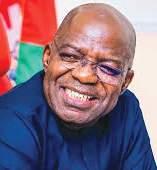
market signals. Infrastructure economics teaches that public capital is not passive expenditure; it is a productive input. When corridors are rehabilitated, effective economic distance shrinks. When drainage systems function, environmental risk premiums decline. When electricity stabilises, production volatility reduces. When security improves, behavioural risk discounts compress. Together, these variables recalibrate the investment equation.
Consider the alternative, or, more precisely, the opposing scenario. Roads without drainage shift flooding downstream. Electricity without corridor efficiency lowers generator costs but leaves logistics friction intact. Security without institutional credibility reduces fear temporarily but does not extend capital horizons. Fragmentation produces motion without momentum. Aba’s emerging model suggests that the whole is greater than the sum of its parts. Coordinated sequencing alters expectations. And expectations drive capital.
One of the most powerful yet understated outcomes of infrastructure activation is spatial repricing. Land and property markets internalise improvements quickly. As the study indicates, corridor-based rental uplifts have translated into implied capital value growth in selected districts. This matters beyond real estate. Property value expansion enlarges the taxable base, strengthens internally generated revenue, and improves fiscal strength. Infrastructure, in this sense, becomes restorative capital, not merely concrete and asphalt, but a catalyst for economic recalibration.
Equally significant are liveability gains. Reduced travel time means higher productivity hours. Improved drainage reduces seasonal business interruption. More stable power lowers operating costs for small manufacturers. Enhanced security extends trading windows. These
changes improve the daily economic calculus of traders, transporters, and producers. In a country where urban frustration often fuels outward migration, incremental improvements in liveability are not trivial; they are stabilising forces.
Sceptics may argue that Nigeria has witnessed “renewal narratives” before. That caution is healthy. Infrastructure without a maintenance culture can relapse. Political transitions can interrupt sequencing. Early-stage market optimism can dissipate if institutional discipline weakens. These are legitimate counterpoints. Yet, scepticism should not obscure evidence. When vacancy compresses, when rent appreciates, when industrial occupancy rises, and when investors begin to re-enter previously avoided corridors, the market is speaking. And markets are rarely sentimental.
The key lesson for other Nigerian cities is structural rather than symbolic. Onitsha, Kano, Ibadan, Kaduna, Port Harcourt, and Warri; these hubs possess entrepreneurial density but suffer infrastructure bottlenecks. The Aba experience suggests three replicable principles. Prioritise sequencing over scale by integrating transport, drainage, power, and security within defined corridors, since fragmented execution weakens multiplier effects. Safeguard credibility because investors value continuity; visible completion and policy consistency reshape expectations and reduce transaction costs. Lastly, measure outcomes rigorously, using property values, occupancy rates, and business performance to ensure infrastructure is treated as a quantifiable economic investment rather than just ribboncutting.
Slogans will not secure Nigeria’s urban future. It will be secured by compressing risk, reducing friction, and expanding accessibility. Cities thrive when infrastructure lowers the cost of doing business and extends the investment horizon. They decline when inefficiency becomes embedded, and unpredictability becomes routine.
Aba’s ongoing renaissance does not suggest perfection. It does not claim immunity from macroeconomic headwinds or fiscal constraints. What it demonstrates is the possibility that a commercially endowed city, once constrained by corridor degradation and environmental risk, can reposition itself through disciplined, sequenced activation.
Dr. Onukwuli is a legal scholar and public affairs analyst. patonukwuli2003@yahoo.co.uk
KALU OKORONKWO urges the new Police boss to reform, and instil discipline in the Force

TUNJI DISU: A SYMBOL OF HOPE
In a nation where the police badge has too often inspired anxiety and fear rather than assurance, the recent appointment of Mr. Olatunji Ridwan Disu as the Inspector General of Police (IGP), comes as a bold statement in charting a new course for the Nigerian Police Force. It rekindles hope of better things to come in Police and citizen’s engagement; an oasis in a putrid pool. For millions of Nigerians weary of stories of corruption, impunity, and institutional decay within the Force, this moment carries the fragile yet powerful hope that ethical leadership can reset a debased culture.
In a press conference jointly addressed with his predecessor, Dr. Kayode Egbetokun, after being decorated by the President, Disu has pledged to phase out impunity, human rights violations, and corruption, the very practices for which the Nigerian Police has gained notoriety. He described his appointment as “accidental and emotional,” while expressing deep appreciation for the confidence reposed in him by the President and the Nigerian people. Continuing, he said: “The President’s reference to my past postings and professional record signaled both recognition and a challenge to deliver on this mandate,” warning that “officers must see citizens as the primary partners in policing.”
Reclaiming the badge goes beyond public relations optics. There has to be deliberate efforts in restoring dignity to the uniform, rebuilding trust between the streets and the station, and proving that integrity at the top can cascade into accountability at every rank. The promise of renewal rests on whether IGP Disu can transform public skepticism into measurable reform and turn a symbol once tarnished into one worthy of respect.
Born on 13th April, 1966 in Lagos Island, Disu brings a rare combination of academic distinction and operational expertise to his new job. With multiple Post-graduate degrees in Criminology, Security and Legal Psychology, Public Administration, and Entrepreneurship, alongside specialized forensic and intelligence trainings, Disu’s career exemplifies preparation meeting opportunity.
Since joining the Nigeria Police Force as a Cadet Assistant Superintendent in 1992, Disu has navigated the complex landscape of policing from commanding the Rapid Response Squad in Lagos to leading anti-kidnapping and anti-robbery operations nationwide. Before his appointment, he was AIG in charge of the Force Criminal Investigation Department (CID) Annex, Alagbon, Lagos. His record of operational excellence and ethical leadership signals a leader capable of confronting entrenched challenges head-on.
Police reform is possible even in systems long tarnished by corruption. In Rwanda, comprehensive post-genocide reforms paired with community policing and strict accountability mechanisms transformed the police into a trusted civic institution. In Northern Ireland, decades of paramilitary-linked mistrust were gradually
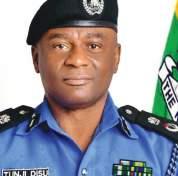
overcome through inclusive policing, independent oversight, and community engagement. In New York City, public confidence improved dramatically after systematic reforms in the NYPD, combining data-driven policing with transparency and community collaboration. These examples underscore a key lesson: leadership, combined with vision, discipline, and public engagement, can reset the narrative and restore credibility.
Across Nigeria, stories abound of police officers betraying their oath of service and robbing the very people they swore to protect; turning law enforcement into lawlessness, and leaving families devastated, communities traumatized, and public trust shattered. While many officers conduct themselves admirably under difficult and dangerous conditions, the daily experiences of citizens reveal a Force that has often failed to fulfill its mandate of public security. The police are sometimes viewed more as predators than protectors with gory stories of citizens abuse, brutalization, extortion and in some cases outright robbery.
The consequences are profound and multi-layered: citizens lose faith in institutions meant to uphold justice. Families grieve over stolen livelihoods or lives lost in confrontations fueled by rogue policing. Investors avoid areas plagued by police criminality, slowing economic growth. Young Nigerians, especially, internalize a sense of vulnerability, eroding civic engagement and breeding distrust that can span generations. A badge once meant to symbolize protection now evokes anxiety, fear, anger, and disillusionment.
Common abuses by the Nigerian police include arbitrary arrests, unlawful detention, threats, physical and sexual assaults, torture, and extrajudicial killings. Police roadblocks, ostensibly for security, have often become venues for extortion. Motorists are detained, harassed, and threatened until they or their families pay bribes, with some encounters escalating into beatings, sexual assault, or even death.
IGP Disu’s stated priorities including consolidating existing reforms, enhancing internal security, strengthening community partnerships, and advancing the Force’s mandate in line with global best practices reflect a strategic agenda aligned with global best practices.
Okoronkwo is a communications strategist, a leadership and good governance advocate
ELVIS EROMOSELE argues for new engineered landfill sites in strategic zone
FIXING LAGOS DUMP SITE BOTTLENECKS
Across Lagos, the evidence is visible and increasingly troubling. Overflowing bins dot residential streets; refuse heaps encroach on walkways; and residents wait longer than usual for waste trucks that appear overwhelmed. At first glance, the problem seems to lie with collection. However, closer investigation reveals that the real crisis begins at the point of disposal.
Private Sector Participants (PSPs), the backbone of Lagos’ waste collection system, are facing unprecedented delays at approved landfill sites such as Olusosun and other designated disposal hubs. Trucks that once completed multiple trips within days now queue for five to 14 days before they can offload.
The result? A city generating thousands of tonnes of waste daily is struggling to clear what it produces.
This is not merely a sanitation issue. It is an urban sustainability emergency.
When trucks are trapped in queues at landfill sites for up to two weeks, four things happen immediately. One, fleet availability drops sharply. Two, fuel and maintenance costs soar. Three, service frequency collapses. And four, communities are left unattended
In effect, a disposal delay in one corner of the city ripples across the entire waste management ecosystem.
The challenge underscores a basic economic truth: Lagos has outgrown its waste infrastructure.
It is the case of a megacity generating megatonnes of waste. With a population estimated at over 20 million people, Lagos generates enormous daily waste volumes. Rapid urbanisation, rising consumption, population growth, and commercial expansion have significantly increased solid waste output.
Yet landfill expansion has not kept pace.
And in a city where drainage systems are already fragile, mounting refuse is more than unsightly, it is dangerous.
Blocked gutters increase flood risks. Organic waste attracts disease vectors. Burning refuse contributes to air pollution. The environmental and public health implications are significant.
The consequences are both immediate and far-reaching. Extended waste delays raise operational costs for PSPs through higher fuel use, driver allowances, vehicle wear, and lost revenue. Businesses in affected markets lose customers, weakening local economies. Poor sanitation increases disease outbreaks, straining healthcare systems and public spending. Unmanaged waste also releases methane, worsening environmental degradation and accelerating climate change risks.
But we can agree that Lagos does not lack innovation capacity. What it requires is structural reform and bold investment.
The first step is for the Lagos State government urgently establish new engineered landfill sites in strategic zone. This would involve upgrading existing
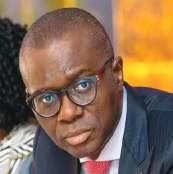
dump sites with modern tipping, sorting, and compaction systems; introducing digital truck scheduling to reduce queue times and deploying weighbridge automation and improved traffic control. Decentralising disposal infrastructure will shorten haul distances and reduce congestion.
The truth be told, without new dump sites, the queue problem will persist.
Secondly, the state must now proactively implement transition to a circular economy model. Lagos cannot landfill its way out of this crisis. The global shift is toward a circular economy, a system where waste is reduced, reused, recycled, and converted into economic value.
Practical circular solutions include waste sorting at source (households separating plastics, organics, metals), recycling hubs in local government areas, instituting plastic buy-back schemes, composting organic waste for agriculture, and waste-to-energy plants for nonrecyclables.
Here is an open secret: Countries that embraced circular models reduced landfill dependence by up to 60 per cent.
Currently, much of Lagos’ recycling activity is informal. While this sector is vibrant and innovative, it requires formal integration. This means that the government and private investors should: Support recycling startups, provide grants and incentives, establish material recovery facilities (MRFs) and encourage producer responsibility schemes.
Besides, Extended Producer Responsibility (EPR) policies can compel manufacturers to take responsibility for post-consumer packaging waste.
In addition, the state should introduce waste-to-energy projects. Yes, wasteto-energy plants can convert residual waste into electricity. For a city facing power shortages, this offers dual benefits, reduced landfill volumes and increased power supply
Beyond this, Lagos must look to improve operational coordination. Queue times of five to fourteen days signal operational inefficiencies.
Eromosele, a corporate communications expert and sustainability advocate, writes via: elviseroms@gmail.com
Editor, Editorial Page PETER ISHAKA
Email peter.ishaka@thisdaylive.com
IGP DISU AND THE CHALLENGES AHEAD
The new IGP should live up to the billing
Following the resignation of Kayode Egbetokun as the Inspector General of Police (IGP), President Bola Tinubu last Tuesday appointed Olatunji Disu as replacement. Disu, whose appointment has been confirmed, pledged to justify the confidence reposed in him, by ending impunity and enforcing zero tolerance for corruption within the Nigeria Police Force (NPF). He also said he would impress it on his officers as well as the rankand-file to work for the people whose cooperation they need to succeed. “No police anywhere in the world can succeed without the cooperation of members of the public,” he declared.
We congratulate Disu on his elevation. But he must bear in mind that he is assuming office at a very difficult time. This point was underscored by the president while decorating the IGP with his new rank. The appointment comes at “a defining moment for our nation’s security,” said the president who nonetheless enjoined Disu to restore public confidence in the Force. “The commitment that I expect from you is for you to make it better than you met it. And I’m sure you can do it. Nigeria is challenged right now with banditry, terrorism and all sorts of criminal activities.”

by many Nigerians.
For Disu, this is a major challenge: he has to clean up the force and restore its credibility. He has already made that commitment, and Nigerians will hold him to his words. But to succeed, the welfare of police personnel and the working environment must improve. Most of the police stations across the country are in deplorable conditions. They lack basically everything. Yet if the police must live up to its responsibilities, it must be adequately equipped. A force entrusted to secure the nation cannot perform in the face of antiquated equipment and low morale. The Force must be well taken care of, to perform to the optimum. Indeed, the problematic shopping list for the new police boss is inexhaustible. We only hope he takes his time to study them and begin to make his impact felt.
A force entrusted to secure the nation cannot perform in the face of antiquated equipment and low morale
T H I S D AY
EDITOR SHAKA MOMODU
DEPUTY EDITOR WALE OLALEYE
MANAGING DIRECTOR ENIOLA BELLO
DEPUTY MANAGING DIRECTOR ISRAEL IWEGBU
CHAIRMAN EDITORIAL BOARD OLUSEGUN ADENIYI
EDITOR NATION’S CAPITAL IYOBOSA UWUGIAREN
THE OMBUDSMAN KAYODE KOMOLAFE
Meanwhile, the police whose men are supposed to be at the epicentre of restoring law and order is also besieged. Thus, the major task facing the new IGP is to restore peace and order and help calm frayed nerves not only for the ordinary citizens but also within the rank and file of its own members. But perhaps Disu's immediate assignment would be that of tackling corruption and restoring the trust of Nigerians. A Force whose personnel ought to be friends to the populace is perceived more as a foe and treated with suspicion, and sometimes derision,
T H I S D AY N E W S PA P E R S L I M I T E D
EDITOR-IN-CHIEF/CHAIRMAN NDUKA OBAIGBENA
GROUP EXECUTIVE DIRECTORS ENIOLA BELLO, KAYODE KOMOLAFE, ISRAEL IWEGBU
DIVISIONAL DIRECTORS SHAKA MOMODU, PETER IWEGBU, ANTHONY OGEDENGBE
DEPUTY DIVISIONAL DIRECTOR OJOGUN VICTOR DANBOYI
SNR. ASSOCIATE DIRECTOR ERIC OJEH
ASSOCIATE DIRECTOR PATRICK EIMIUHI
CONTROLLERS ABIMBOLA TAIWO, UCHENNA DIBIAGWU, NDUKA MOSERI
DIRECTOR, PRINTING PRODUCTION CHUKS ONWUDINJO
TO SEND EMAIL: first name.surname@thisdaylive.com
Letters to the Editor
Disu comes to office at a period there is a national consensus on the creation of state police based on the reality that the current centralised policing system is grossly incapable of confronting the scale and complexity of local security threats in the country. This of course will necessitate amendment to Section 214 (1) of the 1999 Constitution (as amended) which provides that ‘There shall be a police force for Nigeria, which shall be known as the Nigeria Police Force, and subject to the provisions of this section, no other police force shall be established for the Federation or any part thereof’.
While we are aware of state policing potential pitfalls, we believe that the merits of having state police are quite overwhelming, and it is now the responsibility of Disu to manage the transition. Given his record of service, IGP Disu comes to office with enormous goodwill. But to earn the trust of the people, he must deliver on his promises. We wish him well in this most difficult assignment.
Letters in response to specific publications in THISDAY should be brief (150-300 words) and straight to the point. Interested readers may send such letters along with their contact details to opinion@thisdaylive.com. We also welcome comments and opinions on topical local, national and international issues provided they are well-written and should also not be longer than (750- 1000 words). They should be sent to opinion@thisdaylive. com along with photograph, email address and phone numbers of the writer.
ROTIMI AMAECHI AND THE BENIN DECLARATION
IN the high-stakes theater of Nigerian politics, the road to the Villa has often been paved with fractured alliances and noisy, hollow endorsements. However, recently in Benin City, the narrative shifted.
The South-South leadership of the African Democratic Congress (ADC) didn't just hold a meeting; they signaled the birth of a disciplined, elite-backed movement centered around one man: Rt. Hon. Chibuike Rotimi Amaechi.
When Chief John Odigie-Oyegun—a man whose name is synonymous with principled party administration—speaks, the nation listens. Addressing the consultative team in his residence, Oyegun’s words were measured but unmistakable in their weight.
"We were pleased, and I can report that in the manner of the decision he has taken, we're going to give him all the support that he needs in the movement of his ambition," Oyegun declared.
By framing Amaechi as the "son of the soil" who had
the discipline to consult his roots before embarking on a national journey, Oyegun highlighted a rare quality in today’s political climate: institutional respect.
This isn't a rogue ambition; it is a structured, regional mission that the South-South leaders, representing six critical states of the Federation, have vowed to meet regularly to protect.
Consultation is the foundation of leadership. In Benin City, the South-South ADC leadership, led by the legendary Chief John Odigie-Oyegun, has spoken: The region is united, the vision is clear, and the 'Infrastructure Czar,' Chibuike Rotimi Amaechi, is ready to lead. From the streets to the boardroom, the elite consensus is building.
The 2023 elections taught Nigeria a hard lesson: populism alone is a blunt instrument. While the "Gen Z" movement and the "Obidient" wave proved that the youth can shake the table, the lack of "Elite Consensus" ultimately hit a brick wall against the established political
machinery.
Amaechi 2027 is the correction of that mistake. Amaechi represents the perfect intersection of Grassroots Vitality and Establishment Trust. Unlike the 2023 experiments, Amaechi’s bid is backed by a formidable "Elite Collaboration." He is a candidate who can walk the protest lines with Gen Z activists in the morning and sit in a room with the nation’s most powerful power-brokers in the evening. This bridge-building is the only way to ensure that the "Third Force" isn't just a protest movement, but a governing one.
With the ADC primary scheduled for April 2026, the party faces a choice between high-level experience and career politicians. When measured against the other projected titans—Alhaji Atiku Abubakar and Peter Obi— Amaechi’s resume is quantitatively superior.
Dr. Oto’ Drama, Nigeriandrama@gmail.com

SENATOR MPIGI’S BODY ARRIVES ABUJA...
L-R: FCT Minister, Mr. Nyesom Wike; son of the late Senator Barinada Mpigi; his wife, Mrs. Patricia Obiageri Mpigi; and others when the minister led dignitaries to receive the body of the late senator at the
In New Industrialisation Push, Dangote Plans Investment in Steel, Power Generation, Ports
Dangote Refinery deepens local content drive, inducts 330 graduate engineers
Peter Uzoho and Sunday Ehigiator
President of Dangote Group, Aliko Dangote, has unveiled plans to expand into steel production, electricity generation and port development as part of a broader ambition to accelerate industrialisation across Africa.
This comes as the Dangote Petroleum Refinery and Petrochemicals inducted 330 graduate engineers into
its technical workforce, reinforcing its commitment to deepening local content development and strengthening Nigeria’s engineering talent pool.
Dangote, whose conglomerate spans cement, sugar, salt, fertiliser, and petrochemicals, said his long term goal was to deepen Africa’s manufacturing base beyond oil refining and position the continent as a global industrial force.
His latest flagship project, the
Dangote Petroleum Refinery & Petrochemicals has been operational for over two years and is producing different kinds of petroleum products from the 650,000 barrels per day capacity plant.
The richest blackman on earth said the output of the refinery was expected to double within the next three year as expansion plans progress.
In a recent interview with The New
York Times, according to a statement by Dangote Group, the billionaire industrialist indicated that refining is only one phase of a larger vision.
“We have to industrialise Africa,” Dangote said, noting that his next focus areas include the steel industry, expanding access to electricity and building additional port infrastructure to support large scale manufacturing and trade.
The statement quoted industry
Selected Federal Varsities Get N4b Each for Engineering, Technology Education
The federal government has injected the sum of N4b into 12 faculties of engineering of six federal universities of technology and six conventional universities, thereby representing the nation’s six geo-political zones.
The Minister of Education, Dr. Tunji Alausa, announced this on Monday in Abuja at the inauguration of ministerial monitoring evaluation and implementation committee on TETFUND high impact intervention project for engineering and technology faculties in federal universities of technologies and conventional universities.
The minister says the high impact intervention project is a strategic initiative designed to upgrade laboratories, workshops and research facilities, as well as to position institutions as hubs of innovation and practical problem-solving centres.
Announcing the names of the universities, Alausa said the N4b is to rehabilitate existing engineering workshops in the faculties, build new facilities when none exists, or add new and upgraded equipment to already existing ones.
He said some universities that have not been captured in the engineering and technology project will be beneficiaries of the upgrading of their medical schools
and to which N4b will also be allocated.
Revealing that more institutions will be beneficiaries of the intervention that will come in batches, the minister said the first tranche of the funds when implemented will close existing gaps that have existed thereby weakening employability status of many graduates.
According to him, “Engineering and technology education are fundamental to Nigeria’s aspirations for industrialization, innovation, and sustainable economic growth. N4b will be given to each beneficiary institution to rehabilitate existing workshop or build a new one, or to add new equipment
Coalition Threatens Fresh Protest Over NRS Appointments
Folalumi Alaran in Abuja
A civil society group, the Coalition of Concerned Nigerian Citizens, has notified the Chairman of the Nigerian Revenue Service (NRS) of plans to embark on a second phase of peaceful protest over what it described as violations of statutory provisions in the appointment of Executive Directors into the agency.
In a letter dated March 2, 2026, and addressed to the NRS Chair-
man at the agency’s headquarters in Abuja, the coalition alleged that five out of the six Executive Directors were appointed in breach of Part IV, Section 17(1) of the Nigerian Revenue Service (Establishment) Act, 2025.
The group, led by its Convener, Comrade Amande M. Solomon, recalled that it had earlier staged a peaceful protest at the NRS headquarters on February 16, 2026, where it drew attention to what it termed “a grave breach of
laid-down statutory procedure” in the appointments.
According to the coalition, the Act, signed into law by President Bola Ahmed Tinubu, provides that the President shall appoint six Executive Directors, each representing a geopolitical zone on a rotational basis among states in the zone in alphabetical order, with the proviso that the Executive Chairman and an Executive Director must not come from the same state.
to already existing ones.
“No nation can achieve meaningful development without strong capacity in science, engineering, and technology.”
Inaugurating the committee, chaired by the President of the Nigerian Society of Engineers, Ali Rabiu, the minister stated that even though funding alone does not guarantee results, the required impact will depend on effective implementation, strict adherence to standards, transparency, and accountability.
analysts as saying entry into steel would position the group in a sector critical to infrastructure, housing and heavy industry, while investments in power and ports could address two of Nigeria’s most persistent constraints to economic growth.
Dangote cited India’s Tata Group as a model for diversified industrial expansion, describing the conglomerate’s multi sector footprint as an example of how large scale manufacturing can transform emerging economies.
Beyond expansion, Dangote said job creation remains central to his strategy.
With Nigeria projected to require between 40 and 50 million new jobs by 2030, he argued that large scale industrial projects are essential to absorbing the country’s growing youth population.
The refinery alone currently employs about 30,000 workers, approximately 80 per cent of them Nigerians. Expansion across new sectors is expected to raise total employment within the group to about 65,000, the statement said.
Dangote also announced plans to list shares in the refinery on the Nigerian stock market, a move that would broaden local participation in the asset. Despite progress, he acknowledged that infrastructure gaps
and crude supply challenges remain obstacles. He has previously raised concerns about logistics bottlenecks and inefficiencies in the oil value chain that complicate feedstock supply to the refinery.
Nevertheless, Dangote said the group would continue to invest aggressively in sectors that reduce import dependence and retain economic value within Africa.
“Nobody dared to do it, so we did it,” he said, reiterating his belief that large-scale private investment is key to transforming Nigeria’s industrial landscape. With cement plants operating across multiple African countries and a refinery that has reshaped Nigeria’s downstream outlook, Dangote’s next push into steel, electricity and port infrastructure signals a new phase in his ambition to industrialise the continent.
Meanwhile, the Dangote Petroleum Refinery and Petrochemicals has inducted 330 graduate engineers into its technical workforce, reinforcing its commitment to deepening local content development and strengthening Nigeria’s engineering talent pool. The induction ceremony, held at the refinery complex, marked the formal onboarding of the new engineers drawn from leading tertiary institutions across the country.
Universal Learning Solutions Strengthens Partnership with NCCE to Advance Synthetic Phonics in Nigeria
George Okoh in Makurdi
Universal Learning Solutions (ULS) with long-standing partnership with the National Commission for Colleges of Education (NCCE) is to Advance Synthetic Phonics in Nigeria.
It reaffirmed its efforts to strengthen reading instruction across Nigeria’s Colleges of Education with the signing of the reviewed Memorandum of Understanding by ULS Chief Executive Officer - Mr. Gary Foxcroft and NCCE Executive Secretary - Professor Paulinus Okwelle on Monday
This was revealed by Foxcroft in Makurdi in a press statement.
The collaboration, which began in 2013, reflects a shared commitment to improving literacy outcomes through structured and evidence-based approaches to reading instruction.
The partnership in 2013 saw to the training of directors and desk officers across various units of the commission in the skills of Synthetic Phonics using the Jolly Phonics programme.
The goal was to build internal capacity and align national teacher education standards with effective early reading methodologies.
He said in 2016, a pilot of the programme was undertaken in which academics and students from
6 colleges across the 6 geo-political zones in Nigeria participated.
“This large-scale professional development initiative equipped teacher educators with practical skills in Systematic Synthetic Phonics (SSP), ensuring that future teachers would be trained using globally recognized best practices in early literacy instruction like Jolly Phonics programme - an evidence-based, child-centred structured pedagogy method of teaching literacy through synthetic phonics,” he said. He added that in 2016, a formal Memorandum of Understanding (MoU) was signed between NCCE and ULS.
Nnamdi Azikiwe International Airport, Abuja, yesterday
Kuni Tyessi in Abuja

DISTRICT TEAM LEADERSHIP SEMINAR...
L-R: Past District Governor Rotary International District 9141, Nze Anizor; District 9111
Governor-elect, Bukola Bakare; guest speaker, Junior Chamber International Nigeria past President, Kunbi Wuraola; District Governor, Henry Akinyele; and District 9111 Training Facilitator, Bola Oyebade, at District Team Leadership Seminar, held at Festival hotel, Festac, Lagos... recently
NBA Condemns CCB Summons of Chief Judge Tsoho, Wants it Withdrawn,
Wale Igbintade
Nigerian Bar Association (NBA) has formally challenged the reported summons issued to Chief Judge of the Federal High Court, Honourable Justice John Tsoho, by Code of Conduct Bureau (CCB) over alleged undeclared bank accounts, warning that such actions threaten judicial independence and violate the doctrine of separation of powers.
In a strongly-worded letter dated March 2, 2026, addressed to Chairman of CCB, NBA President Mazi Afam Osigwe, SAN, argued that the bureau lacked constitutional authority to summon a sitting chief judge.
The letter emphasised that only National Judicial Council (NJC) was empowered to investigate or discipline serving judicial officers under the 1999 Constitution (as amended).
NBA noted media reports indicating that Tsoho had been invited to appear before the bureau to respond to allegations that he failed to declare certain bank accounts in his asset declaration form, allegedly, in breach of the Code of Conduct for Public Officers.
Describing the development as constitutionally troubling, NBA stated that any investigative or disciplinary process initiated against a serving judge without prior recourse to
NJC would violate the doctrine of separation of powers.
The letter referred to Supreme Court’s ruling in FRN v. Nganjiwa (2022) 17 NWLR Pt 1860 407, which clarified that NJC must exercise disciplinary authority over judicial officers before any criminal or quasi-criminal proceedings could be initiated.
According to the NBA, the apex court established that NJC is “the ultimate guardian that guards the guardians of the constitution”, and that a serving judicial officer cannot face prosecution for alleged
Warns of Constitutional Breach
misconduct related to official duties without prior NJC sanction.
Any criminal proceedings initiated without NJC involvement, NBA said, was unconstitutional and null.
The association also cited opinions of Justices Ogunwumiju and Agim, who stressed that executive attempts to summon, arrest, or prosecute judges without recourse to NJC eroded judicial independence, intimidated the judiciary, and violated constitutional safeguards.
NBA described the summons, reportedly, issued to Tsoho as far more than a mere administrative
interaction, stating that it constitutes the commencement of a process capable of culminating in sanction.
NBA said while allegations arising from purely private conduct might be handled directly by law enforcement, where allegations related to the exercise of judicial functions or professional misconduct connected to office, NJC must first determine the matter.
Any prosecution or investigative action against a serving chief judge without prior NJC consideration, NBA warned, was premature and unconstitutional.
Consequently, NBA urged CCB to withdraw the summons issued to Tsoho and, instead, refer any concerns to NJC for investigation.
The association further recommended that the bureau accelerate the digitalisation of its asset declaration system through a secure electronic portal to allow public officers to update prior declarations seamlessly, create an auditable trail, minimise errors, provide automated reminders, and enhance transparency, while safeguarding data integrity.
Citing Supreme Court decision in FRN v. Nganjiwa (2022) 17 NWLR
Pt 1860 407, NBA said the apex court held, “It is the primary prerogative of the NJC to exercise disciplinary control over all judicial officers. Thus, the exclusion of the prior involvement of the NJC in any form of the exercise of disciplinary control (including criminal prosecution) over judicial officers negates the doctrine of separation of powers.”
NBA highlighted that the Supreme Court further ruled, “A serving judicial officer cannot be prosecuted for allegations of crimes… unless the NJC has first exercised disciplinary sanctions as a condition precedent,” and,
Sanwo-Olu: We’ll Continue to Support PTAD for Welfare of Pensioners
Says LASG will ensure dignity, fairness, equity for retirees
Governor Babajide Sanwo-Olu of Lagos State on Monday said his administration is committed to supporting the Pension Transitional Arrangement Directorate (PTAD) to make life meaningful and better for Lagos residents, especially retirees.
He said the Lagos State Government holds retirees in high esteem and will continue to carry pensioners along and deal with them with dignity,
fairness and equity.
Governor Sanwo-Olu spoke during the courtesy visit by the senior management team of the Pension Transitional Arrangement Directorate, led by the Executive Secretary, Tolulope Odunaiya, at Lagos House Marina.
The governor commended the reforms spearheaded by President Bola Tinubu to enhance the overall welfare and wellbeing of pensioners.
He said the Lagos State Government has also done some significant reforms for pensioners to reflect the reality of today.
He said, “We in Lagos State understand and appreciate the life and the time of our pensioners. We know that they have used very active parts of their lives serving the government at one point or the other.
“What happens now is that if your documents are complete and you exit, within the first two and three months maximum, you should begin to enjoy everything that you have laboured for, and that is what we are seeing and confirming to you.
team of the Pension Transitional Arrangement Directorate for their steadfastness and commitment to the national assignment.
Dead
12 Rescued as Nigerian Tugboat Sinks off South Africa Coast, One Confirmed
A maritime tragedy has struck off the South African coastline after a Nigerian tugboat, LEO, sank in turbulent waters late Saturday night, leaving one crew member confirmed dead, five missing, and 12 others rescued in a coordinated emergency response.
The vessel, which had travelled to South Africa for repairs, was reportedly heading back to Lagos with 18 persons onboard when it ran into severe storm conditions about 18 nautical miles offshore between Cape Town and Durban. The rough seas forced the tug aground before it eventually went under.
Nigeria’s Minister of State for Foreign Affairs, Bianca OdumegwuOjukwu, confirmed the development on Monday, stating the South African authorities had formally notified the Nigerian government.
According to her, one fatality has been recorded, while searchand-rescue operations are ongoing for five crew members who remain unaccounted for.
“The South Africa Ministry of Transportation informed us of this development,” the minister said, adding that the South African Maritime Safety Authority (SAMSA) is leading rescue efforts.
She disclosed that survivors are being transported to Port Elizabeth,
where officials from the Nigerian High Commission are en route to receive them and provide consular support.
Maritime sources indicate the southern corridor between Cape Town and Durban is notorious for sudden weather shifts and heavy swells, conditions that can quickly overwhelm vessels — particularly those navigating after mechanical servicing.
While the immediate focus remains on locating the missing crew members, questions are expected to arise regarding the vessel’s seaworthiness, the intensity of the storm, and whether distress signals were transmitted in time to facilitate rescue.
“On the contributory pension, we are the only state today that doesn’t have any pension arrears. In the last three years, we have cleared everything that is a liability on our pension. There is no pensioner that would say we owe three years’ money.
“For people who have served the country, the minimum we can do is to respectfully give them a space and listening ear so that in their older years they can know that the government continues to remain appreciative.”
Governor Sanwo-Olu commended the Executive Secretary of PTAD, Tolulope Odunaiya, and the entire senior management
Speaking earlier, Odunaiya said PTAD is willing to build a stronger working relationship with Lagos State Government, noting that many of the nearly 200,000 pensioners under the Defined Benefit Scheme (DBS) administered by PTAD across the nation live in Lagos.
“They are men and women who served Nigeria faithfully and are now in their retirement years. What they seek is simple: fairness, dignity, and access to the benefits they deserve,” she said.
Usani: How ADC South South Leaders Endorsed Amaechi’s Bid for President
Bennett Oghifo
Former minister of Niger Delta affairs, and current National Vice Chairman (South South) of the African Democratic Congress, ADC, Usani Uguru Usani, has affirmed that the South South Leadership Meeting of the party held in Port Harcourt last Friday endorsed former transport minister, Rotimi Amaechi’s bid for the Presidential ticket of the party.
Usani, in a press statement issued yesterday, said the forum ignited issues of internal leadership organisation within the ADC in the South South, and that other developments followed, including Amaechi formally telling them of his interest in the presidential ticket of ADC in the 2027 election.
Usani continued: “He (Amaechi) solicited our support as people from his geopolitical base. There was a suggestion for a motion to uphold
the request. A brief remark was made to recap the request and the import of having a general opinion on the issue by the regional leader, H. E. Chief J. Odigie-Oyegun.
“Ultimately, he (Odigie-Oyegun) called for a voice vote to respond to this appeal. At the call for response, there was a loud affirmative “AY” while a contra call had no “NAY” response. This applause was a pledge to support him, which can be interpreted as endorsement.
Michael Olugbode in Abuja
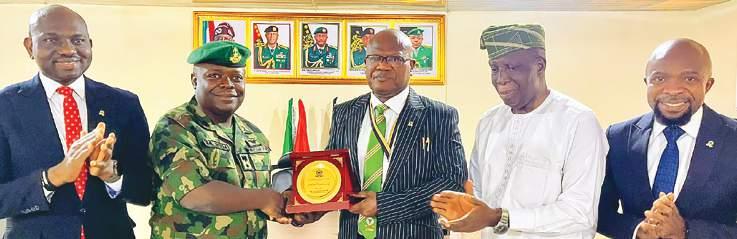
CIBN COURTESY VISIT TO THE ARMY CANTONMENT IKERE EKITI...
L-R: Registrar/Chief Executive Officer, CIBN, Mr. Akin Morakinyo, ACIB; Commanding Officer of the 148 Battalion, Ikere Ekiti State, Lieutenant Colonel S. A. Inusa; President/Chairman of Council, CIBN, Prof. Pius Deji Olanrewaju, Ph.D., FCIB; Past President, CIBN, Dr. Femi Okundayo, FCIB; and Director of Membership Services, CIBN, Mr. Tolu Adeyemi, during a courtesy visit to the Army Cantonment, Ikere Ekiti State, at the weekend
Court Filings Claim Wiretapping Equipment in El-Rufai's Abuja Residence
As ICPC files corruption, abuse of office charge before March 5
Enumah in Abuja Court documents tendered by Independent Corrupt Practices and Other Related Offences Commission (ICPC) have revealed that wiretapping equipment as well as some sensitive security documents were in the house of detained former Kaduna State governor, Mallam Nasir El-Rufai.
The court documents included various exhibits attached with the counter affidavit of ICPC in opposition to the alleged human rights abuse claimed by the former governor and chieftain of the opposition African Democratic Congress (ADC), who had been in the custody of the anti-corruption agencies for about two weeks.
El-Rufai had on February 16 honoured an invitation by Economic and Financial Crimes Commission (EFCC), and was detained and interrogated for three days. He was arrested by Department of State Services (DSS) upon his release on February 18 by EFCC, before he was handed to ICPC.
The former governor had since remained in ICPC's custody, with the agency accusing him of not cooperating with their investigation.
Miffed by his arrest and continued detention by the agencies of the federal
government, El-Rufai, through his team of lawyers led by Oluwole Iyamu, SAN, filed a fundamental rights suit at a High Court of the Federal Capital Territory (FCT), alleging that his trial is political.
EFCC, Attorney-General of the Federation (AGF), DSS, and ICPC were first to fourth respondents in the suit marked: FCT/HA/CV/658/2026.
In its counter affidavit to El-Rufai's affidavit in support of the originating summons, ICPC submitted that contrary to the applicant's claim, he was being held legally, following the order of a magistrate court obtained on February 19, 2026.
Besides, ICPC in the court process, alleged that it recovered from El-Rufai's Abuja residence equipment, allegedly, used for wiretapping conversations of National Security Adviser (NSA), Mallam Nuhu Ribadu.
Beyond the corruption and abuse of office allegations, DSS was seeking to prosecute El-Rufai on a threecount charge bordering on alleged cybercrime offences.
El-Rufai's arraignment could not go on as planned last week since he was still in the custody of ICPC.
In the counter affidavit filed on February 26 by ICPC's lawyer, Osuobeni Akponimisingha, the com-
mission stated the former governor was formally invited to answer to various corruption allegations as governor of Kaduna State between 2015 and 2023.
In a five-paragraph affidavit deposed to in support of ICPC's counter affidavit, the commission lamented that the former governor, who became very popular as Minister of the Federal Capital Territory (FCT) during the administration of former President Olusegun Obasanjo, refused to volunteer any statement when confronted with documents and exhibits of ICPC's preliminary investigation against him.
According to the deponent, David Efuk, the commission, in its bid to investigate corruption allegations against El-Rufai, obtained several documents from banks and other institutions, but efforts to confront the applicant with their findings from investigation were unsuccessful.
In one of the petitions, the former governor was being called upon to explain the whereabouts of €1.4 million; 180 suspicious payments totalling N2,158,799,199 from a Consolidated Revenue Account linked to Kaduna State’s IGR account; and transfers to undisclosed accounts amounting to N428,122,180.18, among others.
Family denies allegations, decries media trial
Efuk recalled that while efforts to arrest the former governor at Nnamdi Azikiwe International Airport, Abuja, by DSS failed, El-Rufai later agreed to visit the commission on February 18, and was subsequently arrested for interrogation.
On February 18, 2026, about 7pm, the applicant was released to DSS by EFCC to be handed over to the commission.
On February 19, 2026, the com- mission obtained a remand order to keep the applicant in its custody for 14 days, which will lapse on March 5, 2026.
Efuk disclosed that ICPC on the same February 19 executed a duly signed search warrant on the premises of El-Rufai at No. 12 Mambila Street, Aso Drive, Asokoro District, Abuja. He stated that the search was witnessed by the applicant’s wife, Hadiza Isma el-Rufai, and his son, Hon. Mohammed Bello el-Rufai.
According to Efuk, "The commission retrieved sensitive security documents capable of compromising national security."
He recalled how the former governor had while speaking on a national television station (Arise Television) admitted to tapping telephone conversations of Ribadu.
Sustain Tantita’s Pipeline Surveillance Deal, Security Expert Tells Tinubu, NSA, N’Assembly
Warns against scrapping ‘strategic national instrument’ protecting oil revenue
Sunday Aborisade in Abuja
Legal practitioner and security expert, Mr. Blessing Agbomhere, has urged President Bola Tinubu to sustain the Niger Delta petroleum pipeline surveillance contract coordinated by Government Ekpemupolo, warning that terminating the arrangement could reverse gains recorded in crude oil production and national revenue recovery.
In a public communication addressed to the President, the National Security Adviser and the leadership of the National Assembly, Agbomhere described the surveillance framework operated by Tantita Security Services Nigeria Limited and other indigenous
firms as “a strategic national instrument” critical to Nigeria’s economic stability and security architecture.
The All Progressives Congress (APC) Chieftain in the South-South geopolitical zone, said Nigeria’s oil sector had faced an unprecedented crisis in recent years, as organised crude theft and large-scale pipeline vandalism slashed production below the country’s OPEC quota, leading to billions of dollars in lost revenue and mounting fiscal pressures.
According to him, conventional security deployments struggled to contain criminal networks operating across the creeks and offshore installations of the Niger Delta, worsening investor confidence and
macroeconomic instability.
Agbomhere, however, credited the community-based surveillance model anchored on local intelligence and grassroots participation as a turning point.
Under Ekpemupolo’s coordination, he said, the initiative dismantled illegal tapping points, destroyed clandestine refining camps and disrupted illicit crude transport networks, leading to improved stability across major trunk lines.
He maintained that oil output has since recorded measurable increases, boosting inflows into the Federation Account and strengthening fiscal predictability.
Beyond revenue recovery, he
argued that integrating local actors into a lawful security framework has reduced incentives for sabotage, fostered youth engagement and enhanced intelligence collaboration between host communities and federal authorities.
“The surveillance contract has functioned not merely as a protective shield for pipelines but as a stabilising mechanism for regional peace,” he stated.
Agbomhere also cautioned against recent calls for the cancellation of the contract, suggesting that opposition to the deal should be scrutinised to ensure it is not driven by interests threatened by intensified anti-theft operations.
“During the search operations, the commission retrieved electronic magnetic equipment allegedly capable of tapping conversations," the deponent stated.
He claimed that El-Rufai had refused to give consent to enable the commission access the equipment.
While claiming that, “The search also retrieved sensitive security documents of various security agencies of the government," the commission accused the detained ADC chieftain of threatening likely prosecution witnesses, observing that one of such witnesses has written to the commission seeking protection.
ICPC accordingly urged the court to dismiss the applicant's suit on grounds that his detention was backed by an order of court.
The commission claimed, “ICPC does not arbitrarily arrest or detain suspects unlawfully, nor pose any physical danger to them.
“ICPC’s mandate is to investigate cases of corruption, abuse of office and related offences, and where there is prima facie evidence, prosecute alleged offenders.
“ICPC can only charge a person to court when investigations are concluded.
“Where investigation is ongoing, ICPC may request an alleged offender to report to its office daily until investigations are concluded or, where necessary, remand the alleged offender pending conclusion of investigations."
It promised to draw up charges against the applicant before March 5, when the detention order will lapse.
Among documents attached to ICPC's counter affidavit were petitions alleging corruption and abuse of office, remand order for 14 days, search warrant, and a statement made by El-Rufai to ICPC.
The former governor had in his statements on oath dated February 19 and 20 declined to respond to questionings by ICPC, promising to do so only before the court.
He stated, “I am a leading member of the African Democratic Congress (ADC), which I consider the only surviving opposition party in Nigeria, and that is the real reason I am being investigated.
“Regarding this question and any other questions, I have, on the advice of counsel, decided to exercise my right to silence.
“I believe that after nearly two years of intensive investigation, the ICPC should present its findings before a judicial tribunal and not to me.
“I will respond to any allegations only in a court of law. I do not believe these investigations amount to law enforcement.
“This is political persecution which only a judge can decide upon.”
The family of the detained former governor also countered claims by the commission that wiretapping equipment were recovered from El-Rufai's residence during a search recently.
The family, in a statement, described the claims as falsehoods, theatrical posturing "apparently designed to prosecute a media war rather than adhere to the rule of law".
Hon. Mohammed Bello El-Rufai, who signed the statement on behalf of the family, said they were compelled to set the record straight and expose what they claimed to be a "malicious intent behind this orchestrated smear campaign".
Mohammed Bello El-Rufai, who currently represents Kaduna North Federal Constituency, and is Chairman, House of Representatives Committee on Banking Regulations, stated, “I had tried to stay off social media to focus on Ramadan, my family and my work on behalf of the excellent people of Kaduna North. But I have chosen to break my silence to put an end to a blatant lie.”
Speaking on the right to silence and non-cooperation, the federal lawmaker accused ICPC of attempting to weaponise the ex-governor’s silence with the claim that he refused to cooperate.
Mohammed stated, "We must educate the commission on the most basic tenet of Nigerian jurisprudence: The Constitution of the Federal Republic of Nigeria guarantees every citizen the right to remain silent. This is not an act of non-cooperation; it is a fundamental human right. No law enforcement agency, regardless of its frustration at a failed operation, is entitled to draw any negative inference from a citizen's decision to exercise this constitutional hermetic seal.
"That the ICPC believes silence implies guilt is a confession of their own inquisitorial mind-set and their disregard for the very laws they are sworn to uphold.
Alex
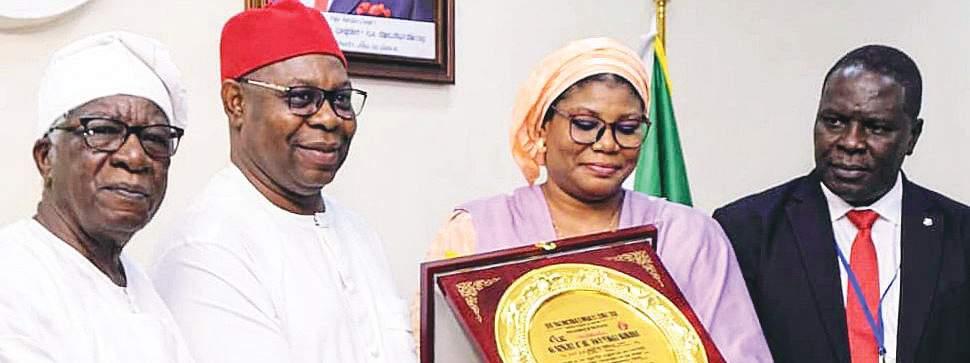
PRESENTATION OF THE SDGS LEADERSHIP ACTION AWARD...
L-R: Special Adviser, Center for Convention on Democratic Integrity Nigeria, Prof Oluyemisi Akinyemiju; representative of the Governor of Delta State/ Deputy Governor, Monday Onyeme; Director, CCDI- Maryland, United State, Amina Almad-Mimi; and Permanent Secretary, CCDI, Olufemi Aduwo during presentation of the SDGs Leadership Action Award to the Governor of Delta State, in Asaba… recently
Amupitan Seeks NPC’s Support to Rebuild Trust, Safeguard Credible Elections in 2027
Independent National Electoral Commission (INEC) has appealed to National Peace Committee (NPC) and other critical stakeholders to intensify efforts to rebuild public trust and strengthen peaceful participation in Nigeria’s electoral process ahead of the 2027 general election.
INEC Chairman, Professor Joash Amupita, SAN, made the appeal yesterday at the stakeholders’ Briefing and Presentation of the Annotated Peace Accord in Abuja.
The event brought together leaders of political parties, heads of security agencies, and civil society organisations, underscoring broadbased commitment to peaceful and credible elections.
Former Head of State and Chairman of NPC, General Abdulsalami Abubakar, GCFR, was represented at the event by Convener of the peace committee, Most Revd. (Dr.) Mathew Hassan Kukah.
Amupitan, in a statement by INEC’s Director of Voter Education and Publicity, Mrs. Victoria EtaMessi, underscored the urgency of restoring confidence in the electoral system, describing the prevailing trust deficit as a major concern for the commission.
The INEC chairman described
Nigeria’s electoral landscape as diverse, complex, and highly competitive, stressing that democratic growth must be anchored not only on legality but also legitimacy.
He stated, “So for us, we appeal to the National Peace Committee to help us in the area of building trust. The trust deficit is such that anywhere you go, it’s palpable.
“If voters will not participate, then whoever emerges…it is also in our own interest that everybody continues to participate. We’ll get it right one day.
“Let the process be so transparent that whoever emerges will not only have legality but legitimacy.”
Amupitan added that the commission was open to scrutiny and constructive criticism.
He stated, “Constitutionally, INEC is the custodian of Nigerian democracy and elections. Whatever comments are made, we don’t get angry. We take them, process them and see how we can improve.”
Amupitan emphasised that while INEC continued to refine its processes, the responsibility of credible elections could not rest on the commission alone.
He called on political parties to strengthen voter mobilisation and internal discipline, stating that sustained civic engagement is vital to reversing declining turnout.
Earlier, Abdulsalami reaffirmed
the committee’s commitment to providing a neutral platform for dialogue, mediation, and confidence-building.
He stated that since 2015, the
The national chairman of the Peoples Democratic Party (PDP), Kabiru Tanimu Turaki, SAN, has said the party was not conducting any state or council elections for now. In a statement, Turaki said, "Our members and the general public are hereby notified that our party is not conducting congresses in any part of the country.
"The false information is being circulated by expelled members of our party, who now have clearly shown their unrelenting
appendages to the All Progressives Congress (APC), in a bid to kill our party and derail our democracy.""
According to the PDP national chairman, "This false information and illegal association is one of the plans in the playbook of those who had mortgaged the fate of our party to the president and the APC, in return for political appointments and other favours.
"We cannot surrender our party to people who want to use the platform for negotiation with the ruling party, as they did during the just concluded FCT Area Council Elections.
Peace Accord had served as a stabilising instrument in Nigeria’s electoral process.
He described the Annotated Peace Accord as a strengthened
framework designed to provide clarity, guidance, and preventive engagement among stakeholders.
“The responsibility of safeguarding our democracy rests with
all of us,” he stated, calling for sustained collaboration, restraint, and responsible conduct from political actors, institutions, and citizens.
Fintiri Assumes Leadership in Adamawa APC, Pledges Party Unity
Daji Sani in
Adamawa State Governor, Ahmadu Fintiri, has formally assumed leadership of All Progressives Congress (APC) in the state.
The ceremony, held in Yola, was supervised by APC North East Vice Chairman, Comrade Mustapha Salihu, and Minister of Livestock Development, Idi Mortar Maiha.
Fintiri reiterated that his emergence as the party leader was a collective decision, emphasising his commitment to unity and party cohesion. He pledged to work to strengthen the party and ensure its success in the state.
The governor's reception into APC was attended by top party officials and supporters, who welcomed him warmly.
Fintiri's defection from Peoples
Congresses
"This disposition is obviously against the principles of multiparty democracy, which is the best option for a heterogenous and pluralistic society like ours.
"We, therefore, urge all our members and the general public to discountenance the said planned congresses in the said states. What the party is currently undertaking is the digital membership registration, which has commenced and is progressing well.
"We will keep our members updated about the developments concomitant with the new political realities unfolding," Turaki stated.
Democratic Party (PDP) to APC was seen as a significant boost to the party in Adamawa State.
His leadership was expected to bring new energy to APC, with many hoping for improved performance in future elections.
The governor's commitment to party unity was seen as a positive step towards achieving this goal.
APC North East Vice Chairman,
Salihu, praised Fintiri's leadership, saying it would bring development and progress to the state.
Maiha also welcomed Fintiri to the party, expressing confidence in his ability to lead.
Fintiri's assumption of leadership was seen as a major coup for APC in the state. His popularity and influ-ence were expected to attract more supporters to the party.
The governor promised to work with party members to strengthen APC and ensure its success, emphasising the importance of unity.
His leadership was expected to bring new opportunities for the party in Adamawa State, while his experience and influence were seen as key assets in moving the party forward.
DHQ to Review Operation Safe Corridor
Linus Aleke in Abuja
The Defence Headquarters (DHQ), has announced plans to review Operation Safe Corridor, just as the deradicalisation and reintegration initiative has continued to expand.
The proposed review came weeks after the Chief of Defence Staff (CDS), General Olufemi Oluyede, commended the growth of the non-kinetic programme under the leadership of Brigadier General Yusuf Ali.
The CDS, who also served as Chairman of the Operation Safe Corridor National Steering Committee, described the initiative as a critical component of Nigeria’s security architecture.
He noted that while kinetic military operations created the conditions for stability, structured rehabilitation and reintegration efforts help consolidate those gains and prevent a resurgence of violence.
In a statement last month, the Director of Defence Information, Major General Samaila Uba, quoted General Oluyede as
saying since its establishment in 2016, Operation Safe Corridor has processed thousands of participants through a structured Disarmament, Rehabilitation and Reintegration framework.
According to him, properly managed surrender pathways weakened insurgent cohesion, generated valuable intelligence and contributed to long-term peace.Despite these achievements, the programme has continued to attract criticism at home, even as several countries facing insurgency have shown interest in studying the model.
Critics argued that rehabilitating and reintegrating surrendered insurgents amounted to rewarding criminality rather than enforcing punishment.
Others contend that the government appeared to prioritise former fighters over victims of terrorism, calling for similar initiatives focused on the welfare and recovery of those affected by insurgent violence. Responding during a press
conference at DHQ in Abuja, the Director of Defence Media Operations, Major General Michael Onoja, confirmed that a comprehensive review of the programme was under way.
He explained that Operation Safe Corridor was conceived as a collaborative policy of the DHQ, the Borno State Government and relevant ministries, departments and agencies to provide a structured pathway for the deradicalisation and rehabilitation of surrendered insurgents.
While acknowledging that the programme has recorded measurable successes, Onoja admitted that challenges have emerged over time, making a review necessary.
He disclosed that discussions had already been held with the programme’s coordinator and that, in collaboration with the Ministry of Humanitarian Affairs and the Borno State Government under the Borno Model, a revised framework would soon be unveiled.
Adedayo Akinwale in Abuja
Yola
Chuks Okocha in Abuja
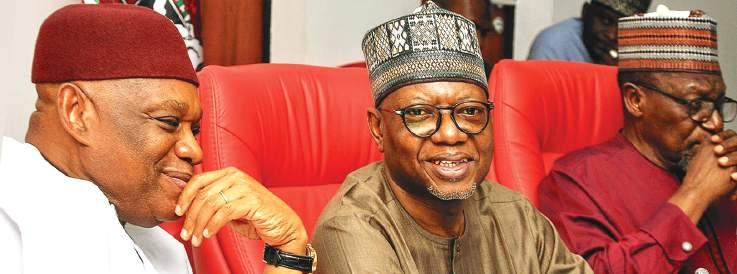
2026 BUDGET DEFENCE...
L-R: Members of the Senate Committee on Finance, Senator Orji Uzor Kalu; Chairman of the Committee, Senator Sani Musa and Senator Yahaya Abdullahi at
and conclusion of the 2026 Budget Defense of the Ministry and the remaining Agencies held yesterday by Senate Committee on Finance.
Wike Blasts Amaechi, ADC Leaders over Electronic Transmission of Election Results
Insists his position on 2027 unchanged Blames
Olawale Ajimotokan in Abuja and Funmi Ogundare in Lagos
Minister of the Federal Capital Territory (FCT), Nyesom Wike, has berated former Minister of Transportation, Chibuike Amaechi, and the other opposition leaders in African Democratic Congress (ADC), accusing them of duplicity over the contentious electronic
transmission of election results in the 2026 Electoral Act.
Wike made the rebuke yesterday at his monthly media parley.
There had been a groundswell of opposition to the Electoral Act, which was recently signed by President Bola Tinubu, especially with regard to the proviso that allowed manual transmission of results where electronic transmission
failed because of bad network.
parties for low voter turnout, defends security measures prohibit electronic transmission of results, the new Electoral Act sought to prevent disenfranchisement by allowing manual transmission where there was a glitch in electronic transmission.
Wike said Amaechi, as Minister of Transportation, was the person who persuaded the late President Muhammadu Buhari not to ratify the provision that approved electronic transmission of results. He questioned the former minister’s volte face on a provision he once opposed.
The FCT minister stated, “Re-
member under Buhari, the issue of electronic transmission came. People like Rotimi Amaechi, they were in government, they said ‘no, don’t sign, if you sign you lose election’.
“And this is the same person now coming out in the public to say there should be electronic transmission, but he refused simply because he felt his boss would be affected.”
He insisted that rather than
Benue State Govt Disburses N56m to Victims of Yelewata Attack
Benue State Government said it disbursed N56 million to 1,000 individual households in the state, which were affected in the bloody attack on Yelewata community in June last year by bandits.
The disbursement came as observers called for accountability over N1.275 billion donations made to Yelewata community by First Lady, Senator Oluremi Tinubu, and other donors.
The 1,000 households got N50,000 each in cash transfer.
Yelewata, in Guma Local Government Area, a border town between Benue and
Nasarawa states came under heavy attack by suspected armed herdsmen in June 2025, resulting in the death of over 200 persons, with thousands displaced.
The displaced persons had been camped at the International Market in Makurdi.
While briefing newsmen yesterday in Makurdi, Chairman, Technical Committee for the implementation of donations to IDPs in Benue State, Deborah Aber, said the attack had attracted the attention of President Bola Tinubu, who visited the state.
Aber, who is also Secretary to the State Government (SSG),
said after Tinubu’s visit, the first lady came with a huge donation in the sum of N1 billion to try to ease the IDP crisis in the state.
She added that following the first lady’s visit, the state had other donations from Nasarawa State Government, which gave N150 million, United Bank for Africa (UBA), which donated N100 million, and DirectorGeneral, Department of State Services (DSS), who sent a donation of N25 million, totalling 1,275,000,000.
Aber explained that the governor set up a committee to ensure judicious utilisation of the donations, and saddled
Resign If Interested in Elective Positions, Edo Govt Tells Political Appointees
Felix Omoh-Asun in Benin
The Edo State Government has asked all public servants, political appointees, and government functionaries serving in the state public service interested in contesting for political office to immediately resign their appointment.
According to a statement by the Secretary to the State Government (SSG), Umar Musa Ikhilor, any public officer, who intended to contest for any elective position
in the forthcoming electoral cycle must tender his or her resignation on or before 1st March, 2026, prior to participating in any party primaries or electoral process.
"This directive is issued in strict compliance with the provisions of the Electoral Act (Amendment) 2026, and is aimed at ensuring that all aspiring candidates do not run the risk of disqualification by the relevant electoral authorities," he said.
The state government emphasised that this requirement was intended to
promote fairness, transparency, and a level playing field for all aspirants, while also safeguarding the integrity and neutrality of public institutions.
Public office holders were reminded that the responsibilities of governance must not be compromised by partisan political engagements.
All affected officers were therefore advised to take immediate and necessary steps to comply with this directive within the stipulated timeline.
her with the responsibility of chairing the committee.
Wike, a former governor of Rivers State, who succeeded Amaechi, stated, “Now we are here, they did not say there should not be electronic transmission. All they said is in case, and which is likely, let us not disenfranchise people by not allowing their votes to be counted.”
Wike maintained that his position on President Bola Tinubu and the candidates aligned with him in the 2027 general election remained unchanged, adding it has remained the same since he declared support for the president before the 2023 election.
He stressed that his political alignment with Tinubu was driven by his quality of leadership and political choices available, adding that Peoples Democratic Party (PDP) appeared not to have learnt and reflected on previous political outcomes.
Wike said, “My position has not changed. I told you in 2023 that even as a PDP man, I was going to work for the president. That is what I did because I believe, and rightly so, that the other parties did not present serious candidates.” The FCT minister also described PDP as farcical. He said the party did not consult him when selecting the candidates they intended to field, including in the recent FCT Area Council elections.
Benin: DSS Arrests Suspect in Attack on Obi, Others
Court grants accelerated hearing in UN building bombing trial
Chuks Okocha and Linus Aleke in Abuja
Department of State Services (DSS) has arrested a suspect in connection with the recent attack on the 2023 Labour Party presidential candidate, Mr. Peter Obi, and other political figures in Benin City, Edo State.
Gunmen had opened fire on a political meeting February 24 in Benin City, where Obi and several others narrowly escaped.
Following the incident, a social media user identified as Udeme Monday Stephen allegedly claimed responsibility for the attack in posts on X and threatened further violence.
Security sources disclosed that the DSS immediately commenced covert investigations, deploying forensic tools to trace the origin of the online threats.
The suspect, said to be 26 years old and a school teacher in Rivers State, was subsequently arrested and was currently in custody.
He was expected to be charged in court upon the conclusion of investigation.
A senior security official stated that DSS acted on credible intelligence and reaffirmed its mandate to investigate threats to national security, regardless of political, ethnic or religious considerations.
In a separate development, the Federal High Court in Abuja approved the DSS request for accelerated hearing in the longrunning trial of five men charged in connection with the August 26, 2011 bombing of the United Nations building in Abuja.
Justice Emeka Nwite granted the application after it was moved by prosecuting counsel, Alex Izinyon (SAN), who relied on the 2022 Practice Directions issued by Chief Judge of the Federal High Court for terrorism-related cases.
During proceedings, a DSS operative testified in a trialwithin-a-trial to determine whether statements made by the defendants were voluntary.
The witness, a computer forensic expert attached to the service’s technical department, told the court that all interviews were recorded using tamper-proof forensic equipment compliant with the Evidence Act and international standards. He maintained that the recording devices could not be edited or paused without automatically closing and digitally sealing the session.
He also stated that in line with standard procedure, only the defendants’ faces were captured in the recordings to protect the identity of interviewers.
Further hearing in the case was adjourned until March 4.
Izinyon stated that the matter had been pending for several years and urged the court to allow day-to-day proceedings where possible to ensure expeditious determination. Defence counsel did not oppose the request, and the court accordingly granted accelerated hearing.
George Okoh in Makurdi
the continuation
PHOTO: JULIUS ATOI
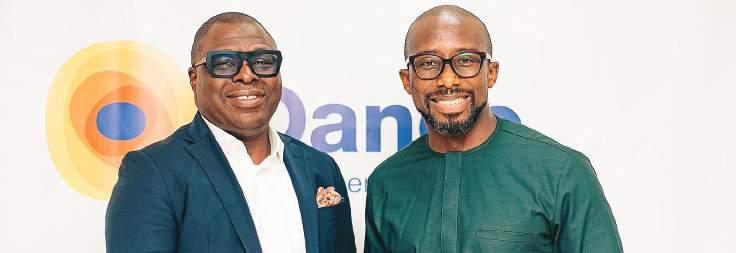
IPPG PAYS COURTESY VISIT TO OANDO...
Yilwatda Dismisses Claims Nigeria
Drifting Towards One-party State
Adedayo Akinwale in Abuja
electoral competitiveness to its robust internal structures, technology-driven membership system, and transparent approach to party administration.
He said APC’s adoption of elec- tronic registration had fundamentally strengthened party organisation and mobilisation.
The chairman attributed the party’s expanding membership and
National Chairman of All Progres- sives Congress (APC), Nentawe Yilwatda, has dismissed claims that Nigeria is drifting towards a one-partySpeakingstate.during a public presentation in Abuja, Yilwatda said the movement of politicians from opposition parties into APC was a natural outcome of political competition and organisational strength.Yilwatda, in a statement by his Special Adviser on Media and Communications Strategy, Abimbola Tooki, said, “It is fair because many of those parties are already dying. “Their members want to survive politically, and they see the APC as the most organised platform. Just like in a market, people choose what works best.”
greatest military in the world and we’re using it. I don’t want to see it (the war) go on too long. I always thought it would be four weeks. And we’re a little ahead of schedule.
“But right now we want everyone to stay inside. It’s not safe out there. And it’s about to get even less safe, the president said. We haven’t even started hitting them hard. The big wave hasn’t even happened. The big one is coming soon,” he told CNN.
So far, the president said, “the biggest surprise” has been Iran’s attacks against Arab countries in the region: Bahrain, Jordan, Kuwait, Qatar and the United Arab Emirates. “We were surprised,” Trump said. “We told them, ‘We’ve got this,’ and now they want to fight. And they’re aggressively fighting. They were going to be very little involved and now they insist on being involved,” he added.
Trump pointed to the Iranian nuclear threat as having been a major issue in the region for some time. “You have to understand, they were living under that dark cloud for years. That’s why you could never have peace,” he said.
On who might emerge to lead Iran, Trump said, “We don’t know who the leadership is. We don’t know who they’ll pick. Maybe they’ll get lucky and get someone who knows what they’re doing.”
The Iranians, he said, lost “a lot in terms of leadership” because of the initial strikes.
“Forty-nine people,” Trump said. “It was an amazing strike.” “They got a little bit arrogant” by meeting all in one place, he added. “They thought they were undetectable. They weren’t undetectable. We were shocked by it.” Trump said it was unclear who was now leading the country.
“They don’t even know who’s leading them now,” Trump said. “We went down 49” Iranian leaders. Those were the leaders, and some
of them were being considered,” Trump said. But with more than four dozen killed, “we don’t know who’s leading the country now. They don’t know who’s leading. It’s a little like the unemployment line,” he added.
The president said that his team tried to negotiate with the Iranians but “we couldn’t make a deal with these people.” Every new offer, he said, was met with a walk-back of previous offers.
“The Iranians wouldn’t agree to end their enrichment of uranium, " Trump said. “They had all that enriched stuff. They looked at redoing it there, but it was in such bad shape, the mountain had basically collapsed,” Trump said.
Trump said he asked his team for a list of all the Iranian or Iranianbacked attacks against the US and US allies and interests.
“Over the last 47 years. I said, ‘give me all of the attacks.’ If I told you all of them I’d still be talking,” he said.
The latest military operation is part of a long-term campaign to eliminate the Iranian threat, Trump said. “We took out Soleimani last time,” referring to the January 3, 2020, US drone strike against Iranian major general Qasem Soleimani. “He was an unbelievably violent, vicious general,” he added.
Separately, Trump said the war was the "last best chance" of addressing the threat posed by Iran's ballistic missiles and nuclear programme. He told the New York Post he will not rule out sending ground troops into Iran if necessary. In the same vein, the US military death toll climbed to six.
Dubai,
Others Announce Limited Flight Resumption
In a similar development, the government of Dubai, in the United Arab Emirates, said Monday that both of its major airports would
reopen later in the day for "limited" flights, several days after both facilities were shuttered due to the US-Israeli attacks on Iran and Iran's retaliatory missile and drone fire.
"Dubai Airports announces a limited resumption of flights from Dubai International Airport (DXB) and Dubai World Central – Al Maktoum International Airport (DWC) starting this evening," the Dubai government said on its official X account.
Dubai International Airport is the world's busiest commercial aviation hub by passenger volume, with some 95.2 million people transiting through the airport last year, according to Dubai Airports.
"Dubai Airports urged passengers not to go to the airport unless they have been contacted by the relevant airline to confirm their flight departure time," the administration noted.
Much of the airspace and many airports in the Middle East have remained closed since Saturday, leaving tens of thousands of people stranded in the region and some European nations contemplating evacuation operations.
Several other international airlines cautiously resumed a small number of flights from the United Arab Emirates on Monday, providing the first opportunity for travelers stranded by sweeping airspace closures to leave the country after the US and Israel bombarded Iran, and Iran struck back at targets across the Middle East.
Long-haul carriers Etihad Airways and Emirates, based in Abu Dhabi and Dubai, along with budget carrier FlyDubai, said they would operate select flights from the country, where air traffic was suspended Saturday and defense systems have intercepted Iranian missiles and drones.
At least 16 Etihad flights left Abu Dhabi to evacuate stranded
He explained that the digital register gave the party accurate and verifiable data on its members, including their locations and contact details, enabling effective commu- nication, mobilisation, and planning duringYilwatdaelections.stated that the system also enhanced the credibility of party primaries by ensuring that only duly registered members participated.
The chairman added, “Our electronic registration gives us real-time access to our members.
OIL MARKET IMPACTED AS IRAN CLOSES STRAIT OF HORMUZ, VOWS TO ATTACK ERRANT SHIPS
passengers during a three-hour window Monday, according to tracking service Flightradar24, heading to destinations including Islamabad, Paris, Amsterdam, Mumbai, Moscow and London. The airline's website, however, said all of its regularly scheduled commercial flights remained suspended until Wednesday afternoon.
Dubai International Airport, Abu Dhabi's Zayed International Airport and Hamad International Airport in Doha, Qatar, are key hubs for travel between Europe, Africa and Asia. All three were all directly affected by Iranian strikes over the weekend.
At least 11,000 flights into, out of and within the Middle East have been canceled since Saturday, impacting more than 1 million passengers, according to an analysis by aviation analytics firm Cirium.
Iran Death Toll Reaches 555
At least 555 people have been killed in US-Israeli strikes across Iran, the Iranian Red Crescent Society said yesterday, amid another wave of intensive attacks and Iranian counterstrikes on Israel and United States assets in the Middle East region.
About 35 people were killed on Monday morning in southern Iran’s Fars province, according to the Mehr news agency. The outlet also reported more than 20 people killed in an attack on Niloofar Square in Tehran.
Besides, two people were killed in the central city of Sanandaj as several residential buildings next to the city’s police station were destroyed. US and Israeli forces dropped six missiles on different parts of the city, including densely populated neighbourhoods, Iranian media said.
Videos verified by Al Jazeera showed huge clouds of smoke
We know who they are, where they live, and how to reach them. This allows us to mobilise efficiently and conduct better, more credible primaries.”
billowing behind buildings near the international airport in the central Iranian city of Kermanshah. Iranian authorities reported that the death toll from an Israeli attack on a girls’ school in Minab on Saturday rose to 180.
Hossein Kermanpour, the head of public relations at Iran’s Ministry of Health, added that the “same type” of missile was used to attack the Gandhi Hospital in Tehran on Sunday. The hospital was badly damaged, and patients were evacuated.
The Israeli military on Monday said Iran had launched more missiles and that air defences were operating to intercept the projectiles. It called on residents to take shelter and remain in protected spaces until informed.
White House: 49 Senior Regime Leaders Killed
The operation against Iran has killed 49 of "the most senior Iranian regime leaders," White House press secretary Karoline Leavitt said yesterday. Trump also gave that figure earlier Monday to the New York post, saying, "We're right on schedule, way ahead of schedule in terms of [Iranian] leadership — 49 killed — and that was, you know, going to take, we figured at least four weeks, and we did it in one day."
Leavitt outlined objectives of the campaign against Iran, which she said include: Destroying Iran's missiles and Navy; stopping the regime from making and using IEDs and roadside bombs; and guaranteeing that Iran can never obtain a nuclear weapon.
In a post on X, she said the regime "was fully committed to rebuilding their nuclear programme, and they refused to make a deal, despite months of extensive talks and good faith efforts by President Trump's top negotiators.
Yilwatda said APC had linked its membership register to the National Identity Management Commission (NIMC), a move he said had helped to clean and validate the party’s database, eliminate duplication, and improve internal accountability.
Red Cross: Middle East Hostilities Putting Civilians in Danger
The spiralling war in the Middle East is putting civilians in grave danger, the head of the International Committee of the Red Cross warned, saying a broad conflict would outstrip any ability to help. "Widening hostilities across the Middle East are putting civilian lives in grave danger," said ICRC president Mirjana Spoljaric.
"The scale of major military operations flaring across the Middle East risks embroiling the region -- and beyond -- into another large-scale armed conflict that will overwhelm any humanitarian response."
Ayatollah Ali Khamenei's Wife Dies from Injuries
Also, the wife of Iranian Supreme Leader Ayatollah Ali Khamenei, who was killed himself in the initial USIsraeli strikes on Tehran Saturday, has also died of her injuries, Iran's semi-official Tasnim news agency said Monday. Mansoureh Khojasteh Bagherzadeh, 79, died of her wounds on Monday, three days after the strike that killed her husband and several senior Iranian commanders, Tasnim reported.
Gulf States Consider Military Response
The Gulf Cooperation Council convened via video-link, with the members' foreign ministers saying afterwards that they would "take all necessary measures to defend their security and stability ... including the option of responding to the aggression." Jordan, which has also been intercepting missiles and drones over the past two days, said five people have been injured and a number of homes damaged across the kingdom since the start of Iran's reprisals.
Chairman, Independent Petroleum Producers Group (IPPG) & Managing Director/Chief Executive Officer, Aradel Holdings, Adegbite Falade (left) and Managing Director, Oando Energy Resources Nigeria Limited (OERNL), Dr Ainojie 'Alex' Irune, at Oando Plc Headquarters in Lagos during a courtesy visit by the IPPG Secretariat, ... yesterday
NAF Airstrikes Eliminate Terrorist Commanders, Fighters, Dismantle Headquarters in Sambisa Forest
Linus
aleke in abuja
The Nigerian Air Force (NAF) has confirmed the elimination of high-value terrorist commanders and their fighters following a precision airstrike conducted in the Sambisa Forest axis of Borno State.
The operation, carried out by the Air Component of Operation Hadin Kai under the Joint Task Force (NorthEast), targeted insurgents’ strongholds in the Yuwe general area on February 28, 2026.
According to the NFA Director of Public Relations and Information, Air Commodore Ehimen Ejodame, the mission was
executed after detailed Intelligence, Surveillance and Reconnaissance (ISR) missions verified the presence of structures serving as command hideouts and logistics depots for terrorist leaders.
Ejodame stated that the early morning air interdiction was intelligence-driven and carefully coordinated to ensure precision.
The NAF strike aircraft subsequently engaged the confirmed targets, delivering accurate bombardments that destroyed key facilities and dismantled what was described as a critical command-and-control hub within the Sambisa axis.
“Post-strike battle damage
assessments, supported by credible intelligence, confirmed the neutralisation of several senior commanders and fighters believed to have been coordinating attacks within the theatre
of operations. The strikes also disrupted supply chains and significantly weakened the insurgents’ operational capabilities,” Ejodame said.
The Air Force disclosed that surveillance flights have
continued over the area to monitor fleeing elements and identify additional verified targets, maintaining sustained pressure on terrorist remnants attempting to regroup.
Reacting to the
development, the Chief of the Air Staff, Sunday Kelvin Aneke, commended the professionalism and precision of the aircrew and supporting teams involved in the mission.
UniOsun Dismisses 250 Ghost Workers Allegation, Affirms Credibility of Personnel Records
yinka Kolawole in Osogbo
The management of the Osun State University yesterday dismissed allegations circulated by Sally Tibbot Consulting Nigeria Limited on the institution’s personnel audit records, describing them as unfounded and misleading. The university was recently
Ex- House Member, Shina Peller, Pushes for Credible Opposition
Former member of the House of Representatives, Hon Shina Peller, has warned that if democracy must survive in the country there must be a credible voice for the opposition.
Peller while criticizing the alleged attempt to emansculate the opposition Peoples Democratic Party (PDP) following the mass exodus of its governors and other top politicians in the
country, emphasised that the only prospect for democracy is the existence of a voice for the opposition. He maintained that without a credible voice for the opposition democracy is doomed in Nigeria.
Peller, who represented Iseyin/Itesiwaju/ Kajola/Iwajowa Federal Constituency in the 9th National Assembly, speaking in Iseyin at the 2026 Ramadan Lecture
titled, “The importance of Community Development in Islam,” expressed concerns on the attempt by some political actors to ensure that they silence the voice of the opposition, stating that such a move would bring calamity on the nation’s political space. The lecture, which was in honour of his late magician father, Prof. Abiola Peller who died in 1997, attracted scores of Muslim faithful across the Oke Ogun zone.
Branch NG Emerges Best Financial Service Company
Branch NG, one of Nigeria’s leading digital financial services companies, has emerged as the winner of the 2026 Financial Service Company of the Year category at the National Brand Excellence and Leadership Awards held in Lagos last Friday.
The recognition was conferred on the company during Nigeria’s Brand Week 2026, organised by the Institute of Brand
Usman
Management of Nigeria (IBMN), to honour exceptional achievements by businesses in the year under review across the sub-region.
Branch Nigeria was crowned the winner following the verdict of the Board of Fellows Research Report conducted by the IBMN. The award recognises brands and organisations that apply brand management best practices to analysis, planning, implementation and policies
Onoja Appointed
Nume Ekeghe
The Board of Directors of Lovonus Microfinance Bank Limited has approved the appointment of Usman Onoja as chairman, following the retirement of Alfred Okoigun from the role after more than a decade of pioneering leadership.
Okoigun has since transitioned to Chairman of Lovonus Group of
designed to achieve their corporate objectives.
Speaking on the selection criteria, the convener of the award, who also doubles as the Registrar/Chief Executive Officer of IBMN, Desmond Esorougwe, described the selection of Branch NG as the outcome of rigorous research and findings, with ratings that place the financial institution well above its peers across various parameters.
Chairman of Lovonus MFB
Companies, marking the end of an era that saw the bank record significant milestones. Under his stewardship, Lovonus MFB expanded its customer base, strengthened its balance sheet and secured land for the construction of the Group’s permanent headquarters. His elevation was commemorated at a send-off ceremony in Lagos, where
stakeholders paid tribute to his contributions to the institution’s stability and growth.
In a statement, Onoja acknowledged the transformational strides recorded under Okoigun’s leadership, noting that the bank bolstered its capital base, enhanced governance structures, broadened its service offerings and deepened its commitment to financial inclusion.
Asari-Dokubo Installs Son as Chief in Rivers
Blessing ibunge in Port Harcourt
Dabaye Amakiri I and Amanyanabo of Elem Kalabari in Rivers State, Alhaji Mujahid Abubakar Dokubo-Asari, haveformally presented his son, Alabo Briebibo Dienyefa Dokubo-Asari, to the Kalabari nation as a chief.
The ceremony held at the weekend marked the climax of more than two
months of rigorous traditional rites, a process anchored on ancestry, character scrutiny, and communal endorsement.
In the Kalabari tradition, a chieftaincy is neither ceremonial nor hereditary by mere declarati;n, it was learned. It is earned through a structured pathway requiring presentation before chiefs of houses and families tied to the candidate’s paternal lineage.
“At every stage, Chief
Dienyefa was introduced, examined, and affirmed. His lineage was verified and his conduct assessed to ensure he was worthy and without blemish.
“Having satisfied the customary requirements, he was formally installed to occupy his father’s personal chieftaincy stool, a position initiated in 2004 and to bear the title Dokubo-Asari II,” a source said.
accused of having 250 ghost workers within the system.
A statement issued on behalf of the Directorate of Internal Audit and made available to THISDAY by the university’s Public Relations Officer, Ademola Adesoji, confirmed that the Director of Internal Audit, Mr. Adenrele Adewumi, said claims suggesting the
existence of “fake staff” in the university were inconsistent with verified audit findings.
He said: “As the statutory authority responsible for overseeing the university’s internal audit processes, I state unequivocally that the allegations are unfounded, misleading, and not supported by verifiable audit records.
VFD Group Successfully
VFD Group Plc has successfully raised N27.2 billion through its Series 1 Commercial Paper (CP) issuance under its N50 billion CP Programme following strong investor demand that resulted in a 100 per cent oversubscription of the initial offer.
The Series 1 issuance was originally launched with a target raise of up to N15 billion. However, driven by robust participation from institutional and eligible investors, the offer was oversubscribed by
“Our external auditors, who have conducted comprehensive personnel, assets and financial audits of the university since January 2023, thoroughly reviewed the status of the 58 staff members referenced and confirmed their legitimacy under the provisions of the University Establishment Law (2006).
Raises N27.2bn via CP Issuance
approximately N15 billion, prompting the company to upsize the issuance to N27.2 billion.
The CP was issued across two tenors, 270 days and 364 days, attracting a broad base of qualified institutional investors and high-net-worth participants within Nigeria’s domestic debt market.
A Strong Vote of Market Confidenc. The significant over subscription underscores sustained investor confidence
in VFD Group’s diversified business model, disciplined capital management framework, and long-term growth trajectory.
Commenting on the successful issuance, Executive Director, Finance, VFD Group Plc, Folajimi Adeleye, said:“The strong investor demand and subsequent upsizing of the issuance to N27.2 billion reflect the resilience of our credit profile and the market’s confidence in our strategic direction.”

27 February 2026
FEDERAL HIGH COURT RESTORES STATUS QUO, SUSPENDS INTERIM ADMINISTRATOR AND LIFTS MAREVA ORDERS
Green Energy International Limited and Lekoil Oil and Gas Investments Limited confirm that the Federal High Court sitting in Lagos has ordered that the parties maintain the status quo ante bellum — the position prior to the appointment of the Interim Administrator — pending determination of the pending applications.
The Court further suspended the Interim Administrator from further activity and lifted all Mareva orders affecting the companies’ bank accounts. The matter has been adjourned to 22 April 2026.
As a result:
1. Management authority remains with the duly constituted leadership of the companies.
2. All prior freezing restrictions have been lifted.
3. Operations continue in the ordinary course without interruption.
The companies will continue to pursue their jurisdictional challenge and arbitration proceedings in accordance with the governing agreements.
Operations at Otakikpo (PML 11) continue uninterrupted and remain in full compliance with applicable regulatory and contractual requirements.
Case No. FHC/CP/237/2026
Legal Counsel: Wole Olanipekun & Co.
God’s Grace House
5 Maple Close Osborne Foreshore Estate Phase II Ikoyi, Lagos Tel: +234 808 952 1444 Website: www.woleolanipekun.com & Tope Adebayo LP Tel: +2347088699147
Website: https://topeadebayolp.com/contact/ For further enquiries:
Green Energy International Limited
Corporate Communications Email: info@greenenergy.ng Tel: +234-807-777-7856
Lekoil Nigeria Limited Corporate Communications Email: media@lekoil.com Tel: +234 201 277 0560
Kemi Olaitan in Ibadan
With Liverpool in Focus, Galatasaray Drop Osimhen from Cup Tie Tonight
Onuachu to be in action for Trabzonspor, Ndidi listed for Besiktas tomorrow
Duro Ikhazuagbe
Ahead their UEFA Champions League Last 16 clash with Liverpool a week from today, Galatasaray will not risk playing Victor Osimhen in tonight’s Turkish Cup tie at Alanyaspor.
Osimhen is one of the several key players left out of the squad for them to observe ‘active rest’, according to an official statement by the Turkish champions yesterday.
Interestingly, Osimhen scored a goal and made an assist for Galatasaray to beat Alanyaspor 3-1 at the weekend in the Super Lig fixture in Istanbul.
The Turkish champions are leading the Round 4 of the Cup championship on nine points in Group A. Alanyaspor are second on seven points.
Galatasaray have a congested schedule that will see them play six matches in 19 days including a two-legged UEFA Champions League against Liverpool.
Paul Onuachu who leads the Turkish Super Lig as top scorer this season will be leading Trabzonspor in tonight’s Cup clash away at Basaksehir. Trabzonspor are third in the Group A standing on same six points as their hosts this evening.
Super Eagles Captain, Wilfred
will take on Rizespor in the same Round 4 of the Cup competition. Besiktas are leading Group C on seven points from same seven

at Alanyaspor
three matches played so far with Gaziantep and Fenerbahçe tied on same six points as second and third on the log.
Paul Onuachu...to lead Trabzonspor against Basaksehir tonight
Kida: FIBA to Decide NBBF Board’s Constitutionality, Tenure
Board meets in Lagos, takes decisions on 2026 programmes, sponsorships
Duro Ikhazuagbe
The Nigeria Basketball Federation (NBBF) led by Engr Amadu Musa Kida, rose from its board meeting in Lagos on Sunday evening, insisting that it will abide by the decision of the world basketball governing body, FIBA, on the petition filed by some members of the federation challenging its tenure.
There have been back and forth over wether the Kida-led NBBF board should have exited office at the end of January against the October 2026 date it said it is its terminal date.
The meeting presided over by Kida who also doubles as the Chairman of the board of the Nigerian National Petroleum Corporation Limited (NNPCL), said that there have been lots of engagements over its mandate.
“There have been engagements with some stakeholders and the National Sports Commission (NSC). Yes, we are talking of matters of constitutionalities. And the final decision is going to come from FIBA, the world body.
“As you are aware, there is a petition before FIBA on the legitimacy and others. All that have been collapsed into one file now before FIBA. And so, we wait for the final decision,” hinted the NBBF President.
In the communique issued after
the board meeting attended by seven of the nine members, Kida expressed profound appreciation to President Bola Tinubu, GCON, for his sustained support for basketball and sports development in Nigeria.
He further acknowledged the strategic backing of the leadership of the National Sports Commission, particularly the Chairman and the Director-General, Malam Shehu Dikko and Hon Bukola Olopade respectively, for their continued collaboration with the Federation.
The communique signed by board members Felix Awogu and Ugo Udezue, stated that the board deliberated extensively on Nigeria’s participation in the upcoming FIBA Women’s World Cup Qualifiers scheduled for 11th–17th March 2026 in Lyon, France.
“The Board reaffirmed its full commitment to ensuring seamless participation of D’Tigress at the qualifiers, including logistics, preparation, welfare, and competitive readiness.
“The Board also emphasized
the importance of maintaining Nigeria’s dominant standing in African women’s basketball and strengthening its global competitiveness.“
The communique also hinted that the Board formally approved the 2026 NBBF Budget, covering:National team programmes (Men, Women, Youth); International competition participation; Domestic league operations; Grassroots and development programmes; and Administrative and governance operations.
The Board also approved the engagement of Pamodzi Sports Consulting, a leading international sports consultancy firm, to support sponsorship acquisition, commercial strategy, and structured partnership development.
Can Barcelona Overturn Atletico’s Huge Advantage Tonight?
Barcelona suffered a humbling 4-0 defeat in the semi final first leg of the Spanish Copa del Rey in Madrid a fortnight ago and must now find a way to overturn the four-goal deficit at Camp Nou tonight.
Nigeria’s Ademola Lookman who scored and provided an assist in the four-nill crushing of the Catalan giants, will be aiming
to consolidate his conquering of Barcelona in Camp Nou.
Hansi Flick’s side can take some confidence in the fact that they sit at the top of La Liga and are scoring freely. They head into the game off
the back of a 4-1 demolition of third-placed Villarreal over the weekend, in which 18-year-old star Lamine Yamal grabbed his first career hat-trick.
However, Diego Simeone’s Atletico will back themselves to hold off Barca while also looking to exploit the hosts’ weaknesses on the counter.
Promoter Lists Nigeria in Floyd Mayweather Historic Boxing Tour
Boxing icon, Floyd Mayweather, who is staging return to the ring has been listed to conclude 2026 with a proposed landmark bout in Nigeria during the festive “Detty December” season.
According to Nigerian-born Boxing Promoter, Keane Anis, CEO of Frontrow Fight Series and Head of The Money Team (TMT) Africa, discussions are ongoing to bring Mayweather back to Nigeria for a historic exhibition bout.
“I brought Floyd Mayweather to Nigeria four years ago when he first expressed his desire to fight
for exhibition
in the motherland.
“I can confirm that Floyd still wants to stage a ‘Motherland Rumble’ in Nigeria before the 2027 elections, provided the right conditions are in place,” Anis stated. The proposed Nigerian event is expected to become one of the largest sporting and entertainment spectacles ever hosted in West Africa.
Mayweather is preparing for a high-profile return to the global spotlight with a series of exhibition bouts scheduled across three continents in 2026.
The undefeated boxing legend will begin his international exhibition tour in Athens, Greece, this June, followed by a mega fight event in Las Vegas, USA in September, before concluding the year with the proposed landmark bout in Nigeria.
At 49 years old, Mayweather will face renowned kickboxing champion Mike Zambidis at the Telecoms Center in Athens, Greece. The event, titled “Battle of the Legends,” is expected to attract massive global attention as two combat sports icons meet in an exhibition showdown.
Super Falcons Seek Redemption Against Cameroon’s Lionesses
Reigning African champions Nigeria are keen to redeem themselves this afternoon after losing to a late goal by Cameroon’s Indomitable Lionesses on Saturday in the first of two friendly matches in the Cameroonian capital, Yaounde.
Both teams will clash again this Tuesday at Yaounde’s Military Stadium to draw the curtain on a two-match arrangement proposed by the two countries’ football federations to prepare the teams for this year’s Women Africa Cup of Nations (WAFCON) finals.
The Lionesses, who play Ghana, Mali and Cape Verde in Group D at this year’s Women Africa Cup of Nations in Morocco, scored in added time of the second period at the same Military Stadium on Saturday evening, in what many see as a timely reality check for 10-time continental champions Nigeria.
Yvana’s Mbomezomo’s shot from outside the box in added time beat debuting goalkeeper Comfort Erhabor for the only goal of the match. However, Erhabor was composed and confident in goal in her first game for Nigeria, and must be proud of her day in
the office.
Second-half substitutes Joy Omewa, Precious Christopher, Folashade Ijamilusi, Esther Onyenezide and Michelle Alozie sought to put more pressure on the Lionesses but goalkeeper Ange Bawou was in fine fettle and was a bulwark against the Super Falcons. Tonight, Coach Justin Madugu is sure to change tactics and may adjust playing personnel as the Falcons, who defeated the Lionesses 1-0 in front of the latter’s fans in the Final of the 2016 Women AFCON, will surely go for a win in this one.
Africa’s best for the past two years, goalkeeper Chiamaka Nnadozie may come into the fray, with Alozie likely to start, alongside Oluwatosin Demehin, Osinachi Ohale and Glory Ogbonna in defence, while Onyenezide, Christopher, Ucheibe, Ngozi OkobiOkeoghene and Jennifer Echegini are still available in midfield.
Captain Rasheedat Ajibade, Gift Monday, Rinsola Babajide, Chinwendu Ihezuo and Ijamilusi are the options for Madugu in the foreline.
AHEAD WAFCON
Ndidi, who just returned to Turkey after mourning his late father back in Delta State will not be in action until Wednesday when his club Besiktas
Victor Osimhen...rested from cup tie
Floyd Mayweather...listed
fight during the “Detty is December” in Nigeria
Amadu Musa Kida...NBBF President
WAR IN THE MIDDLE EAST, UNCERTAINTY IN THE WORLD
shut-down of the Strait of Hormuz by Iran, the most important choke-point for global trade, which handles about 14.5 million barrels of crude oil transportation daily, about 20% of global oil supply, three quarters of that going to China, India, Japan and South Korea, the whole world is in a bind. Over 150 oil vessels are stranded at the mouth of the Strait. Global energy markets have been destabilized, driving up the cost of benchmark crude Brent and the US WTI by over 10% at a point, pared down later to about 8% over the weekend. Some experts project that the spot price of oil could reach as high as $100 per barrel depending on how much longer the Strait of Hormuz remains closed, despite the attempt by the V8 group in OPEC+ to adjust production quota to 206, 000 barrels per day to drive down prices. The whole of the Middle East has been drawn into the conflict. Air travel across the Middle East has been shut down. Beyond its direct retaliation against the enemies, Iran has specifically targeted US military bases in the Gulf States, and taken the war to US allies in the region - drawing in Qatar, Oman, Jordan, UAE, Bahrain, Saudi Arabia, Iraq, Kuwait and Yemen. Iranian missiles have rained down on not just Tel Aviv and Beit Shemesh in Israel,
Prime Minister of Israel, Benjamin Netanyahu
but also the international airports in Dubai and Kuwait and close to the famous Burj Khalifa in Dubai. Travel markets are down, defence stocks are up, airline stocks are losing, precious
metals -gold and silver – have risen around 2% as investors are flocking to safe havens. In the face of the spreading uncertainty, companies cannot plan, countries are worried, and there have been fears about a World War III with the world now divided between a group led by the United States, Israel and their allies and another group led by Iran, Russia, China, North Korea and their allies. It is unclear when this nightmare will end. It is easier to know when a war begins, not when it will end. President Trump has said this will last for about four weeks, and that the Iranians are now willing to reach a deal. Ali Larijani, Iranian Security Chief, has made it clear that Iran does not plan to sit at a negotiating table with the United States. Iran’s Islamic Revolutionary Guard Corps (IRGC) has vowed that they will fight on “until the enemy is decisively defeated.” Gun to gun, missile to missile, drone to drone, Iran may not be able to sustain a prolonged war, and may be that is Trump what is banking upon, but history teaches us that smaller nations can stand up to stronger military forces as in the examples of Vietnam against France, the United States and China; Afghanistan against the USSR and the US; Ethiopia vs.
Italy; Greece vs. Italy; and Finland against the USSR. Trump is threatening to avenge the killing of American servicemen. More may still die in the theatre of war, provoking negative reactions across the US. Other countries of the world, including Nigeria, have an obligation to protect themselves. Nigeria’s Ministry of Foreign Affairs has issued a travel advisory to Nigerians in the affected countries. The newly appointed Inspector General of Police has placed his men on alert, especially now that some pro-Iranian, Shi’a Muslims in Nigeria are expressing open support for Iran. Even Sheik Ahmad Gumi, a Sunni cleric and Muslim scholar, has been quoted as saying Ayatollah Khamenei is “a hero of the Jihad.” Other Nigerians are more interested in the fact that the spot price of crude oil would go up significantly, resulting in a 1970s-like energy shock, almost jubilating in a global crisis that may end up worsening their lives, if the country fails to plan ahead. Nigerian Muslims who were protesting that the 2027 initial election time table should be reminded of the irony that whereas they claim they cannot vote during Ramadan, one of the world’s most intense wars is currently being fought by Muslims in the Middle East in the month of Ramadan!
Senate Backs Down on CAC Registrar’s Removal After Apology, Orders Fresh Budget Presentation
Sunday Aborisade in Abuja
The Senate Committee on Finance on Monday rescinded its earlier resolution seeking the removal of the Registrar-General of the Corporate Affairs Commission (CAC), Hussaini Ishaq Magaji (SAN), following his apology and renewed commitment to cooperate with the National Assembly.
The committee had last
Thursday recommended that President Bola Tinubu remove the CAC boss over his repeated failure to honour invitations and alleged disregard for its oversight functions.
But at a fresh session on Monday, the committee reversed itself after Magaji appeared before lawmakers, tendered an unreserved apology and announced the creation of a dedicated liaison office to strengthen engagement
between the commission and the National Assembly.
Chairman of the committee, Senator Sani Musa, had earlier rebuked the registrar for what he described as persistent refusal to appear before the panel or delegating junior officers in his place.
Musa said, “This committee is not happy with you for your persistent refusal to appear before it.
“The Constitution grants us oversight powers over all revenue-generating agencies. At our last sitting, we recommended your removal, and you appeared shortly after. We want an explanation.”
Responding, Magaji accepted full responsibility and assured the lawmakers that the communication lapses that led to his absence had been addressed.
“Mr. Chairman, I sincerely
Lafarge Africa Honours Trade Partners at the 2025 Customer, Transporter Awards
Segun Awofadeji in Gombe
Lafarge Africa Plc, a leading innovative and sustainable building solutions company and manufacturer of premium cement brands, has celebrated its outstanding trade partners at the 2025 Customer & Transporter Awards.
The colourful ceremony held on Saturday brought together customers, transporters, and key stakeholders including the Honourable Commissioner for Housing Lagos State, Hon Moruf, Akinderu Fatai, the Honourable Commissioner for Women Affairs, Cross Rivers State, members of the Board of Lafarge Africa Plc – Mrs. Adenike Ogunlesi, Mrs. Olusola
Oworu and Mrs. Elenda OsimaDokubo, and management and staff of the company; to honour exceptional performance and reinforce the strong partnerships that continue to drive the company’s growth across Nigeria.
The annual awards ceremony, regarded as the apex of Lafarge Africa’s commercial success, recognizes the invaluable contributions of customers and transporters who ensure the company’s products reach every part of the country.
The 2025 edition celebrated partners whose dedication, integrity, and resilience have strengthened the company’s market leadership despite evolving economic realities.
Elder Ubong Bassey Obot of Ubotex Nigeria Limited emerged
the National Volume Champion.
Igwe Cosmas Ezeumeh Chizoba of C.C. Umeh and Sons Limited and Chief Etim Effiong Okon of Batoframoje Enterprises secured the titles of first and second runners-up, respectively.
As the champion, Ubong Obot received a 2026 Toyota Land Cruiser. C.C. Umeh and Sons Limited and Batoframoje Enterprises were awarded a 2026 Toyota Prado and a 2026 Toyota Fortuner, respectively.
Additionally, B.I.G MultiQuest Nigeria Limited was recognized as the National Winner - Best Transporter category and was awarded a 2026 Toyota Hilux.
Two customers who emerged as National Growth Champions
Zulum Unveils Infrastructure
received 15KVA Generating Sets, while 4 regional champions were rewarded with a Toyota RAV 4 cars each.
Other winners received prizes including a Changan CS55, GAC S3, Hyndai Creta cars, 13KVA solar inverters, 80-inch Hisense TVs, deep freezers among others.
Welcoming guests to the event, the Group Managing Director/ CEO, Lafarge Africa Plc, Lolu Alade-Akinyemi, expressed deep appreciation to the partners for their loyalty and commitment to the business.
Lolu Alade-Akinyemi noted that Lafarge Africa’s growth story would be incomplete without its partners’ market insights, trust, and consistent support.
Push as World Bank Reaffirms Devt Support for Borno
Michael Olugbode in Abuja
Borno State governor, Prof. Babagana Zulum has reiterated his administration’s commitment to post-conflict reconstruction and sustainable development following the commissioning of multiple infrastructure and education projects across the state, amid growing international development partnerships.
The projects were formally inaugurated by the Nigeria Country Director of the World Bank, Dr. Mathew Verghis, who described the investments as critical milestones in strengthening human capital development and economic resilience in regions recovering from insurgency.
Verghis praised the Borno State Government for prioritising education and infrastructure as
pillars of recovery, noting that long-term stability in conflictaffected regions depends largely on access to quality education, functional infrastructure, and inclusive economic opportunities.
The newly inaugurated facilities include three modern mega schools designed to expand access to quality learning for children in vulnerable communities, as well as major road infrastruc-
ture projects aimed at easing movement within Maiduguri metropolis.
The educational facilities include the Government Secondary School Mainusari, the Mega Primary School Maimusari, and the Command Secondary School Maiduguri, all equipped with modern classrooms, learning materials, and student support facilities.
apologise to the committee. We have now created a dedicated liaison office to handle interactions with the National Assembly. I assure you this will not happen again,” he said.
Following his apology, several senators appealed for leniency, describing the CAC boss as a committed and patriotic public servant.
Senator Diket Plang (Plateau Central) said he had known Magaji for years as a respectful and dedicated Nigerian who would not deliberately undermine the Senate.
Senators Ned Nwoko (Delta North), Jibrin Isa (Kogi East) and
Labour
Orji Uzor Kalu (Abia North), who had initially moved the motion for his removal, also urged the committee to forgive him. The motion to rescind the earlier resolution was moved by Senator Jibrin Isa and seconded by Senator Nasir Musa Zango Daura (Katsina North). It was unanimously adopted through a voice vote.
However, the committee stood down consideration of the CAC’s 2024 and 2025 budget proposals, describing the presentation as inadequate, and directed the registrar to return on Thursday with a more detailed submission.
Party: Electoral Act Alone Cannot Guarantee Credibility,
Chuks Okocha in Abuja
Fair Election in 2027
The Labour Party (LP) has said the credibility of the 2027 general election would depend not solely on statutory provisions or institutional mechanisms, but on the vigilance, determination, and collective resolve of the Nigerian people.
The Interim National Chairman, Senator Esther Nenadi Usman, at the Citizens’ Townhall on the Electoral Act, 2026, in Abuja, said the controversy surrounding the provision in Section 60(3) of the Act was unnecessary if political parties could deploy well-trained, vigilant, and capable agents across all polling units.
Usman noted that Form EC8A was the primary source for collating results, which should be countersigned by candidates or polling agents.
“I understand the concerns expressed, particularly by opposition parties, about the possibility that the fallback to Form EC8A in the event of network disruptions could be abused.
“However, I have consistently
maintained that the success or failure of any political party at a polling unit ultimately depends on the party’s preparedness and presence at that polling unit,” she stated.
According to her, the responsibility of ensuring that the votes were protected, properly documented, and accurately reflected on the INEC Result Viewing (IReV) portal lay with political parties.
“We must all remember that the IREV is primarily for viewing results and keeping records, not collation,” she said.
The National Chairman stated that the Labour Party has learnt some lessons from the last presidential election, stating that the party realised that the foundation of electoral success lies in meticulous grassroots preparation, particularly the deployment of agents.
She disclosed that the party was committing significant resources and energy toward ensuring effective representation across the 176,974 polling units nationwide.
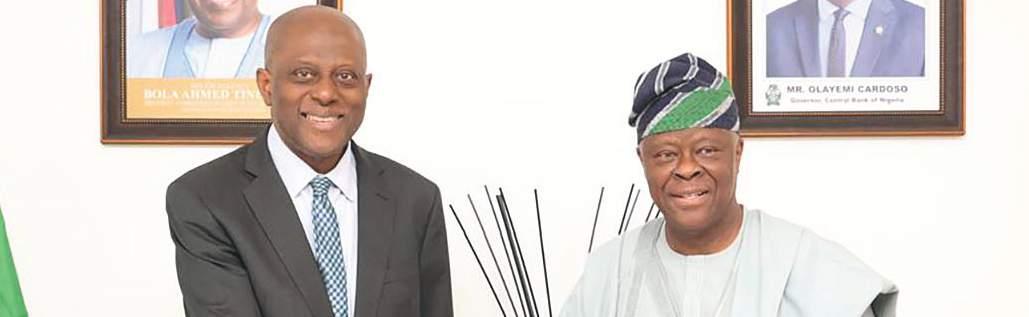
DISCUSSING KEY ECONOMIC ISSUES...
Governor of the Central Bank of Nigeria (CBN), Mr. Olayemi Cardoso (left), and the Minister of Finance and Co-ordinating Minister of the Economy, Mr. Wale Edun, after a strategic meeting at the CBN Head Office, Abuja, on Monday
TUESDAY
abati1990@gmail.com
WITH REUBEN ABATI

War in The Middle East, Uncertainty in The World
On Saturday morning, February 28, the world woke up to learn of “Operation Roaring Lion” by the Israeli Defence Forces (IDF) and “Operation Epic Fury” by the American military forces -a joint operation against the state of Iran that has turned out to be the most aggressive military operation, and deployment of sophisticated military arsenal since World War II. It was not as shocking as it turned out to be, given the fact that the allies - the US and Israel - had never at any time ruled out the possibility of military conflict. Rather, the stealth, opportunistic character and the surprise element of the invasion exposed the hypocrisy of the imagined promise that the parties involved were indeed moving towards a deal, advertised after meetings in Geneva and Oman. Last week, the negotiators rose with the promise that a technical review meeting will be held on Monday, March 2, and said “significant progress” had been made. The Israelis and the Americans did not wait for Monday to come. They struck. They attacked Iran with missiles, bombs, drones, fighter jets and the most sophisticated weaponry in contemporary times. More than 72 hours later, where do things stand? What is the global response? What is the effect on the world? What comes next? What is going to happen in Iran after Ayatollah Ali Khamenei? Can the world contain the Middle East or are we watching the early moments of a conflagration which has been described as World War III? It seems to me that these issues can be discussed under the outlines of nuclear pretext, legal justification, leadership death, regional escalation, the possible role of the United Nations, how other countries are affected and the implications for what is meant to be a rules-based international order. Before our very eyes, the Middle East has just become the most dangerous flashpoint in the world because it connects all the notorious problems that we have to grapple with: energy security, religion, sovereignty, international human rights law, and great power competition for dominance. The excuse given by both Israel and the United States is that Iran is a rogue state, of “hard, terrible people” as Trump says, who must never be allowed to develop nuclear capabilities. Iran is considered the leading country in the axis of evil, which under the Islamic rule, after the Islamic Revolution of 1979, has consistently posed a threat to Israel, which the Iranians seek to destroy, espoused

through such statements as “Death to Israel” and “Death to America”. Israel insists that it must survive, and the Islamic state of Iran leading an assault through its proxies – the Hezbollah in Lebanon, and the Houthi rebels in Syria and Yemen must be stopped. The hostility is mutual.
The United States, even before Trump, had insisted that Iran cannot be allowed to develop nuclear powers – a reflection of the changing dynamics of international relations. Iran used to be a darling of the United States before the 1979 Revolution. Under the Pahlavi dynasty, Iran was a signatory to the Nuclear Non-Proliferation Treaty of 1970. But with the collapse of that dynasty, the new Islamic leaders of Iran embarked on the acquisition of the technology. In 1979, the United States and its allies determined that Iran could not be allowed to become a nuclear power. Iran insisted that its nuclear programme was for civilian and medical purposes. What followed was the imposition of sanctions on Iran by the United States after a group of radical Iranian students attacked the US Embassy in Tehran and captured hostages. The sanctions were re-imposed in 1987, and further expanded in 1995. The US did not give up on its advocacy that Iran was not good enough for nuclear power. In July 2006, the UN Security Council passed Resolution 1636 which reaffirmed the
provisions of the Nuclear Non-Proliferation Treaty (1970) and the findings of the International Atomic Energy Agency that Iran had refused to clarify its intentions. Iran, at the time under Mahmoud Ahmadinejad as President refused. In December 2006, the Security Council imposed more sanctions on Iran – Resolution 1737. Others followed – Resolutions 1747 in 2007 and 1929 in 2010, all targeted at halting Iran’s Uranium enrichment programme, with a plan to cripple the country, with grave consequences for its people and the economy. Following negotiations, and Iran’s agreement to limit its uranium enrichment programme, the Permanent 5+1 and the European Union reached an Iran Nuclear Deal programme, monitored by the International Atomic Energy Agency, (IAEA) and known as the Joint Comprehensive Plan of Action (JCPOA), dated July 14 2015. The United States under President Donald Trump withdrew from the JCPOA in 2018 and imposed fresh economic sanctions. Iran also withdrew in retaliation, turned its back on the IAEA, and set fire to the US flag at Iran’s parliament. By 2025, relations between both countries deteriorated even much further. In June 2025, Israel attacked Iran, with American support, in what is now known as the 12-day war when they bombed Iranian nuclear sites – in Fordow, Natanz and Isfahan.
In one sentence, there has been no love lost between the US, Israel and Iran since the Iranian Revolution, but the nuclear pretext also raises a moral question: why should Iran not have a nuclear programme which other countries have? Why should the United States dictate what options are best suited for other countries whereas Article 2 of the United Nations Charter is clear about the sovereign equality of all states? It is hard to accept that the current belligerence by the US and Israel is the long-standing nuclear subject. The more substantive issue is Trump’s megalomania and overreach. This is the second time in one month that he has removed the leaders of a sovereign country – Venezuela and now Iran, and he is busy threatening Cuba. His justification is vague and controversial. Just recently, he gave a State of the Union address at the US Congress, for 1 hour 47 minutes but he told no one about his intention to wage war against Iran. He spoke about Iran for only three minutes! US law requires Trump to seek Congressional approval, but again just as he treated the Supreme Court with contempt, he has again violated the Congress which he
regards as redundant. Operation Epic Fury is therefore a one-man show, an illegal violation of US law by a full-blown dictator who has usurped the powers of both the judiciary and the legislature of the United States. Trump has also re-written the rule book in international law, turning might into right and the dubious entitlement of power. He did not bother to notify the United Nations. He has simply imposed a global climate of uncertainty which will affect global trade, co-operation and stability. In the execution of his Operation Epic Fury, he has ignored the international system. America has not only decapitated Iranian leadership – 48 Iranian military, political and security leaders killed in one day, unarmed civilians, and school children were not spared either and Trump does not care. By that America has been turned into a thug nation, and yet this is the same country whose traditional foreign policy process was based on the promotion of peace, justice, and human rights. President Trump has simply changed all that in the pursuit of his “America First agenda”. What could be his real strategic interest? Personal ego, and the same is true for Israeli Prime Minister, Benjamin Netanyahu. Both leaders have political problems at home, with loss of popularity in the polls at a time both face critical elections- the 2026 legislative election in Israel (October 2026) and the midterm elections in the US (November 2026), which would be a referendum in real terms. The other strategic reason for the US is the desperate search for energy dominance and the toxic competition with China. Whoever controls energy controls the world. Be it in Venezuela, Greenland or Iran, we see Trump’s obsession with China playing out. China is a major oil partner with Venezuela. Trump has blocked that and seized control. China buys oil from Iran. Blocked. Trump wants Greenland, by all means, if possible, for national security reasons, to stop China and Russia’s influence in that Arctic region. The predicted “Coming Conflict with China” is now as real – a clash of the hegemons- as predicted in a 1997 book of the same title by Richard Bernstein and Ross H. Munro.
It is the world that suffers in consequence. The United Nations has been reduced to a paper tiger. The world faces a certain recession, the end of which no one knows. Is this the end or the brutalization of diplomacy? With the
US President Donald Trump