FG Confirms $1.5bn Drawdown from UAE Facility, Says Staggered Borrowing Will Lower Debt Costs
Nume Ekeghe
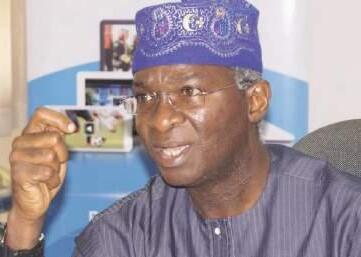
The Minister of Finance and Coordinating Minister of the Economy, Taiwo Oyedele, has confirmed that Nigeria has drawn the first
$1.5 billion under its $5
financing arrangement with First Abu Dhabi Bank (FAB), explaining that the government deliberately structured the facility to reduce borrowing costs by accessing
funds only when required.
Speaking on the sidelines after the Federal Executive Council (FEC) meeting in Abuja yesterday, Oyedele said the facility, which had received legislative approval,
was designed to refinance costly debt, fund infrastructure projects and support budget implementation.
“The approval for that loan went to the National Assembly, so
everybody is aware of it. It’s for refinancing of expensive debts, financing of infrastructure, as well as budgets. So, we don’t want to start making press releases each time we do a draw down. It is not
Agbakoba: State Police Can Become Tools of Oppression Without Crucial
www.thisdaylive.com
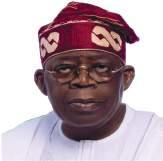
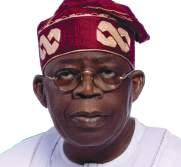
At Inauguration of More Road Projects, Tinubu Says His Government was Reflating Local Economy
Says administration fulfilling promise to uplift living standards of Nigerians
Returns to Karu, inaugurates roads, one week after water supply project, says it’s part of urban decongestion
Oyedele: We’re Working with Petrol Marketers, Regulators on Appropriate Fuel Pricing
Vows to ensure fairness in downstream petroleum sector FEC approves new reforms of NYSC, to be headed by civilians
Includes professional training for corpers to boost their employability Okays N2.078tn for road projects in 10 states, N34.398bn for construction of Gboko airstrip Approves N286bn for maritime infrastructure, safety projects
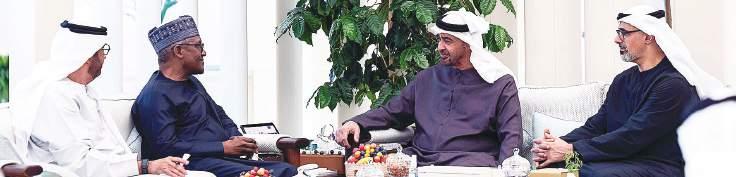
Industry and Advanced Technology and ADNOC Managing
and
His Excellency Dr. Sultan Al Jaber, UAE Minister of
Director
Group CEO; Alhaji Aliko Dangote; His Highness Sheikh Mohamed bin Zayed Al Nahyan, President of the United Arab Emirates; and Sheikh Khaled
Deji Elumoye in Abuja
President Bola Tinubu has inaugurated newly rehabilitated and expanded roads from Karu Interchange to Customs Clinic
after Tinubu opened the satellite town water network in the same Karu district.
expor
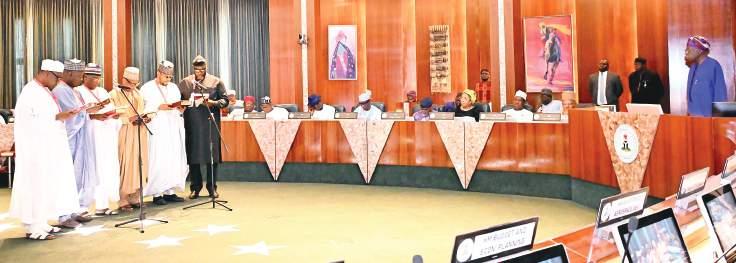
SWEARING IN OF MEMBERS OF NPC AND REVENUE MOBILISATION ALLOCATION AND FISCAL COMMISSION...
Newly appointed Commissioners of the Revenue Mobilisation Allocation and Fiscal Commission take their oath of office before
the swearing in ceremony at the Presidential Villa, Abuja, yesterday
Report: Nigeria, Russia, Israel, USA, Ranked Among Least Peaceful Countries
Estimates
Dike Onwuamaeze
Nigeria, along with Russia, Israel, United State of America (USA), Sudan and other countries, has been listed among the 119 least peaceful countries in the 2026 Global Peace Index (GPI), which was published by the Institute for Economics and Peace.
Key findings of the report obtained yesterday, showed that there are119 countries in the world that are less peaceful now than they were in 2008.
It stated that the number of conflicts was at its highest point since the end of World War II, with 61 active state-based conflicts in 2024, with the number having doubled in the last 15 years.
The report noted that the expansion has been driven almost entirely by internationalised intrastate conflicts, which have increased by more than 175 per cent since 2010.
The 2026 GPI revealed a world struggling with the economic consequences of a record-high number of conflicts that are increasingly interconnected and difficult to resolve.
It added that “global peacefulness
in 2026
economic impact of violence at 10.5% of global GDP
deteriorated for the 12th consecutive year, driven by a profound geopolitical shift, known as the ‘Great Fragmentation’, characterised by the rising influence of middle powers and the waning strength of traditional European powers.”
According to the report, Nigeria was ranked 142 out of 163 countries with an index score of 2,755.
It stated that Iceland remained the most peaceful country in the world for the 19th consecutive year, followed by New Zealand, Switzerland, Slovenia, and Ireland.
It ranked Russia as the least peaceful country, with Sudan, the Democratic Republic of the Congo, Ukraine, and Israel completing the bottom five.
The report stated that peace in the USA deteriorated by four per cent in 2025, mainly due to an increase in political instability, which deteriorated by 38.5 per cent, the largest fall since the inception of the GPI.
Mauritius was the only African country that was ranked among the 30 most peaceful countries while 12 African countries featured in the list of 30 least peaceful countries.
The report estimated that global
economic impact of violence was $21.8 trillion in constant PPP terms in 2025, which was equivalent to 10.5 per cent of global GDP, or $2,657 per person.
It said that expenditure on peacebuilding and peacekeeping was $49.2 billion in 2025, just 0.5
per cent of total military spending in purchasing power parity (PPP) terms.
The report noted that rapid technological revolution in warfare was leaving international law and diplomacy far behind.
It said: “For the first time in
history, machines are making lifeand-death combat decisions faster than any human can review them, and the international frameworks meant to govern them lack global commitment.”
The report expressed concern that drones have become the defining
weapon of modern warfare, spreading faster than any government could keep up with. It revealed that drone attacks rose roughly 11,500 per cent between 2018 and 2025, and 565 different armed groups carried out at least one attack in that period.
Akpan Ekpo: Nigeria Requires Double-digit Economic Growth to Reduce Poverty
Calls for new economic development philosophy
Dike
Emeritus Professor of Economics and Public Policy, University of Uyo, Akwa Ibom State, Professor Hogan Akan Ekpo, has urged policy makers in Nigeria to embrace a new economic development philosophy that should intentionally formulate and implement policies that could achieve double-digit economic growth over 20 years to make a dent on multi-dimensional poverty plaguing its citizens.
Ekpo, a former Director General of the West African Institute of Financial and Economic Management, made this declaration in his lecture titled “The State of the Nigerian Economy, 2015-2026: Dialogue With Citizens,” in which he stated that a new economic development philosophy was urgent because Nigeria’s attempt to build a capitalist market economy for 66 years has resulted in the “development of underdevelopment” that has resulted in mass poverty, backwardness and
Pi-CNG Chair Lists Achievements, Set to Expand Refuelling, Charging Networks
Emmanuel Addeh in Abuja
The Executive Chairman of the Presidential Initiative on Compressed Natural Gas and Electric Vehicles (Pi-CNG & EV), Ismaeel Ahmed, has outlined the achievements recorded by the agency in the one year since his appointment by President Bola Tinubu.
While setting out plans to expand the country’s Compressed Natural Gas (CNG) refuelling and Electric Vehicle (EV) charging infrastructure, Ahmed stated that the foundation has been largely laid for nonhydrocarbons powered transportation in the country.
In a progress report marking his
first year in office, Ahmed described the period as one of hard work, learning and collaboration, noting that although he formally assumed office on October 31, 2025, work on the initiative began immediately after Tinubu entrusted him with the responsibility of driving Nigeria’s alternative transport energy programme.According to him, one of the major milestones achieved during the period was the rapid expansion of the country’s CNG-converted vehicle fleet, with tens of thousands of vehicles across Nigeria now running on the cleaner fuel. To sustain the momentum, Ahmed said the initiative launched the
100,000 Conversion Kit Programme and introduced the “Convert Now, Pay Small Small” financing scheme to make vehicle conversion more affordable by allowing Nigerians to spread the cost over time.
He also highlighted the expansion of the agency’s mandate to include electric vehicles, following approval by President Tinubu, saying this has broadened the scope of Nigeria’s transition to cleaner transport energy.
As part of the expanded mandate, Ahmed noted that the Northern Corridor of CNG and EV was launched, leading to the deployment of 40 CNG buses, seven electric buses and more than 200 CNG-powered tricycles in Kano.
He added that the initiative has also facilitated the commissioning of CNG and Liquefied Compressed Natural Gas (LCNG) stations in Kano, Katsina, Gombe, Kaduna and Owerri, describing the facilities as the foundation for a nationwide rollout of EV charging infrastructure.
Looking ahead, Ahmed said the agency would, over the next 12 months, focus on expanding refuelling and EV charging networks across the country, deploying additional mass transit buses and tricycles, scaling up vehicle conversion financing and attracting more private sector investment into the alternative transport energy ecosystem.
hopelessness.
He explained: “The forecast is that the economy would grow by 4.49 per cent in 2026; the current growth rate is about 4.2 per cent.
“But it should be stated that growth is not development. An economy must grow at least double-digit sustained for 20 years to have a dent on poverty reduction.
“There must be intentionally formulated and implemented policies to fast-track sustained growth and inclusive development.”
According to him, there was need for a paradigm shift in Nigeria’s economic development philosophy towards the formulation and implementation of a developmental state philosophy that would fast-track growth and development.
He said: “Under this scenario, the state, that is, the ruling class would represent not only the interest of the working class and other vulnerable groups but would also perceive development of the country as the central role of governance. This can only take place under a market socialist framework.
“We can study the examples of China, Singapore, Malysia, Indonesia and others and craft home grown solutions to reset our economy.”
According to him, the income per capita of Nigerians fluctuated between 2015 and 2025 from
$2585.73 to $868.
He noted that the growth rate of income per capita has not been impressive, adding that it was therefore, not surprising why about 130 million Nigerians are in multidimensional poverty.
Ekpo, who is a former vice chancellor of University of Uyo, noted that the revised methodology that estimated the rate of unemployment rate at 4.5 per cent in 2023 could suggest that the economy was at full employment output and send wrong signals to policy makers not to worry much about unemployment.
He also attributed the downward trending inflation rate to methodological manipulation by the National Bureau of Statistics, which rebased the Consumer Price Index using 2024 as the base year.
“This exercise brought down the rate of inflation which does not reflect the reality in the market place,” the former member of the Central Bank of Nigeria’s Monetary Policy Committee said. Ekpo averred that the lack of sustained industrial and manufacturing growth and ongoing oil dependence for foreign exchange are suggesting that economic diversification efforts remained incomplete.
He said: “The industrial sector exhibits a clear downward trend, declining from 23.71 per cent in 2015 to about 16.78 per cent in 2025.
Onwuamaeze
President Bola Ahmed Tinubu during
PHOTO: GODWIN OMOIGUI
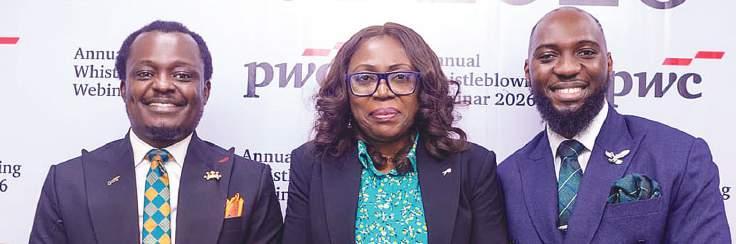
L-R: Associate Director, Forensic Services, PwC Nigeria, Mr. Adeola Adekunle; Chief Compliance Officer, Union Bank of Nigeria, Dr. Abigail Duopama-Obomanu; and Senior Manager, PwC Nigeria, Mr. Olajide Shodeinde, in a panel session at the PwC’s 2026 Annual Whistleblowing Webinar held at the PwC Nigeria Head Office, Victoria Island, Lagos, last Friday
Tanzania, Dangote Group Explore Multi-billion-dollar Investment in Infrastructure, Energy, Fertiliser
President Samia appoints minister to coordinate strategic partnership
President Samia Suluhu Hassan of Tanzania has held high level talks with President and Chief Executive of Dangote Industries Limited, Aliko Dangote, on a major expansion of the Group’s investments in Tanzania, with discussions focusing on transport infrastructure, fertiliser
production, power generation, ports and regional trade.
The meeting, held at the State House in Dar es Salaam, reaffirmed the long-standing partnership between Tanzania and the Dangote Group while opening discussions on a new phase of investments aligned with the country’s industrialisation and
economic transformation agenda, a statement by Dangote Group revealed.
Speaking after the meeting, Dangote said Tanzania remains one of Africa’s most attractive investment destinations, noting that the Group had identified several strategic sectors capable of delivering significant economic value.
“We have identified areas that can deliver significant value for Tanzania, and we are ready to work together to develop them for our mutual benefit,” he said.
The discussions covered a broad range of projects, including port development, the construction of a 40-kilometre concrete access
AfCFTA, UNDP, Nigeria Demand Urgent Action to Put Women at Centre of Africa’s Economic Integration
African leaders yesterday made a compelling case for placing women at the heart of the African Continental Free Trade Area (AfCFTA), warning that the continent’s ambition to create the world’s largest single market would remain unrealised unless governments urgently remove structural barriers limiting female entrepreneurs and traders.
Speaking at the 2026 HerAfCFTA Regional Conference in Abuja, the Secretary-General of the AfCFTA Secretariat, Wamkele Mene; Nigeria’s Minister of Industry, Trade and Investment, Dr. Jumoke Oduwole, and the United Nations Assistant SecretaryGeneral and Director of the Regional Bureau for Africa, Ahunna Eziakonwa, said women already constitute the backbone of Africa’s informal and small business economy but remain excluded from the policies, financing and infrastructure required to scale their enterprises across the continent.
The conference, themed “Women Advancing Africa’s Economic Transformation through Intra-African Trade: Scaling Impact,” drew ministers, trade commissioners, development partners, business leaders and women entrepreneurs from across Africa.
Collectively, the speakers argued that Africa’s future economic prosperity, industrialisation and strategic autonomy would depend on how quickly governments transform the AfCFTA from a legal framework into a practical platform that enables women-owned businesses to trade seamlessly across borders.
Eziakonwa described the cur-
rent global environment as one characterised by fractured supply chains, rising protectionism and weakening multilateral cooperation, insisting that Africa could no longer depend on external markets to drive its development.
“We do not have time for a slow lane,” she declared.
“Every day we delay is a day of lost opportunity, lost trade, lost jobs and lost potential.”
She described the AfCFTA as a strategic necessity capable of helping Africa retain value, build resilient supply chains and reduce dependence on exports of raw materials.
According to her, although 49 African countries have ratified the agreement, implementation remains slow, stressing that treaties alone would not create jobs or improve livelihoods.
The UNDP regional chief urged African governments to harmonise regulations, simplify customs procedures, modernise logistics infrastructure, establish interoperable digital payment systems and eliminate barriers slowing the movement of goods and services across the continent.
She argued that Africa had a unique opportunity to demonstrate that economic integration could succeed even as much of the world moved towards protectionism.
“In a world that is disintegrating, Africa chooses integration. In a world that is building walls, Africa chooses bridges,” she said.
Eziakonwa maintained that women must be central to that vision, noting that they dominate informal crossborder trade despite operating under difficult conditions.
Drawing from African history, she cited the Aba Women’s Revolt of 1929, Queen Nzinga of Angola and generations of market women across West Africa as examples of women’s longstanding role in shaping African commerce.
“If women cannot navigate the AfCFTA market, then Africa has built a market for only half of its people,” she warned.
She called for immediate reforms, including simplified regulations for women traders, increased investment in trade infrastructure and digital
systems, and greater representation of women in trade negotiations and policy formulation.
Earlier, Mene said African women were already demonstrating extraordinary entrepreneurial capacity despite significant structural constraints.
He disclosed that 83 per cent of Nigerian women identify as entrepreneurs, significantly higher than the continental average of 51 per cent, while women account for over 40 per cent of employment in micro, small and medium-sized enterprises.
road to support port operations, development of a special trade zone, a proposed 2,000-megawatt coal fired power plant, a urea fertiliser plant and transport infrastructure linking Mtwara with Mbamba Bay in southern Tanzania.
Dangote also explained the commercial and technical considerations behind the Group’s decision to locate its planned East African refinery in Lamu, Kenya, while extending an invitation to the Government of Tanzania to participate in the investment.
President Samia welcomed the Dangote Group’s continued confidence in Tanzania and directed relevant ministries and government agencies to commence detailed technical discussions on the proposed investments in line with the country’s legal, policy and development priorities.
She also appointed the Minister of Planning and Investment to coordinate the strategic partnership with Dangote Industries Limited, with both sides expected to begin formal negotiations in the coming days.
A Tanzanian government
delegation led by the Minister was expected to visit Nigeria to advance discussions and develop implementation frameworks for the proposed projects.
According to a statement from the Directorate of Presidential Communications, the Government remains committed to strengthening partnerships with the private sector as part of efforts to mobilise productive investment, accelerate industrialisation, promote technology transfer, and create sustainable employment opportunities.
Dangote Industries already operates one of Tanzania’s largest industrial investments through its $500 million cement plant in Mtwara, which has an annual production capacity of three million tonnes and supplies both the domestic market and neighbouring countries.
The latest engagement deepens the partnership between Tanzania and the Dangote Group and reinforces the company’s position as one of Africa’s leading private sector investors driving regional industrialisation, infrastructure development, and economic integration.
FG Registers 32m Students in Digital Education Data Platform
Kuni Tyessi in Abuja
The federal government has fixed Wednesday, July 1, 2026, for the official unveiling of the Digital National Education Management Information System, DNEMIS, as part of efforts to modernise education administration through technology and data-driven governance.
Ahead of the launch, the National Project Coordinator of the Special Programmes Operations and Implementation Unit, SPOIU, in the Office of the Minister of Education, Mr. Adebayo Onigbanjo, disclosed on Monday in Abuja that more than 32 million students had already been enrolled on the digital platform.
According to Onigbanjo, the platform forms the backbone
of the Nigeria Education Data Infrastructure, NEDI, an initiative under the Nigeria Education Sector Renewal Initiative, NESRI, designed to provide reliable, timely and integrated education data for planning, budgeting, policymaking and service delivery.
“For many years, education planning relied on fragmented systems, inconsistent reporting structures and limited access to reliable data.
DNEMIS changes that by ensuring that every learner, every school, every teacher and every investment in education is captured within a system that supports evidence-based decision-making,” he said.
He described education data as a strategic national asset, stressing that the digital platform would strengthen
governance, transparency and accountability across the education sector.
Responding to questions on how the platform would help address Nigeria’s out-of-school children challenge, Onigbanjo said the availability of accurate data would enable government to identify learning gaps, monitor students’ progress and make targeted investments where they are most needed.
“If you don’t measure, you can’t get a good sense of the data. Today, we already have 32 million students on the platform, and that gives us an indication of where learners are.
“We are also understanding their journey from when they start school and when they drop out. That gives us insight into their challenges and
where investments need to go.
“Every school becomes visible, every student gets counted, every teacher is known, and every government expenditure on education becomes trackable. To a greater extent, this will stop wastage,” he stated.
Onigbanjo explained the ultimate objective is to provide visibility into the educational journey of every learner from entry into formal education until completion.
“We are trying to achieve the ability to have visibility of all learners from the day they begin formal education until they leave the system. This provides government with the information needed to plan effectively and improve learning outcomes,” he added.
Michael Olugbode in Abuja
Peter Uzoho
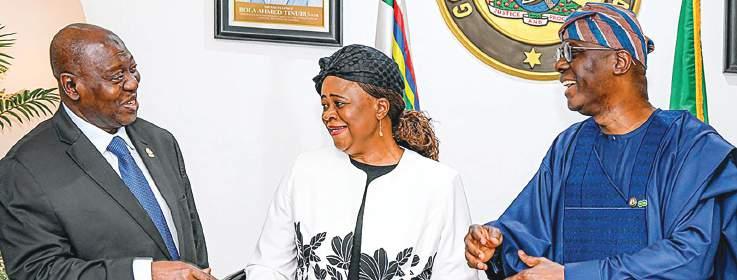
COURTESY CALL BY THE APPEAL
COURT PRESIDENT...
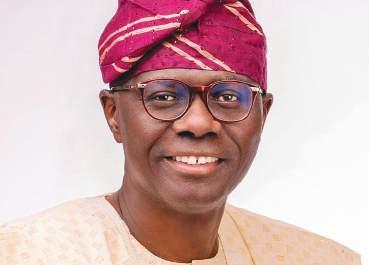
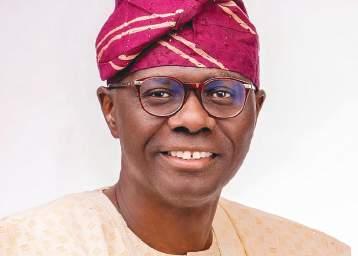
Lagos State, Mr. Babajide Sanwo-Olu during a courtesy call by the Appeal Court President at the Lagos House, Marina, on Monday
Godson Ohuruogu: Dearth of Skilled Manpower, Investments Bane of Agriculture Mechanisation Firm
expands access, deepens policy, youth engagement
Managing Director of TracTrac Mechanization Services Limited, Mr. Godson Ohuruogu, yesterday declared that lack of skilled tractor operators and mechanics remained some of the biggest obstacles to the country’s agricultural mechanisation drive.
He warned that importing thousands of tractors without the manpower to operate and maintain them would do little to transform food production.
Ohuruogu who spoke at a media engagement in Abuja, said the country’s mechanisation challenge extended beyond access to equipment, adding that inadequate human capacity continued to undermine investments in the sector.
He also dismissed suggestions that government policy remained the biggest barrier to mechanisation, insisting that attracting private investment posed a real challenge in the sector
According to him, Nigeria currently lacks sufficient qualified tractor operators and mechanics to sustain a modern mechanisation ecosystem, a development that had discouraged investment and
limited the impact of previous tractor intervention programmes.
However, he disclosed that the company plans to train about 3,000 tractor operators beginning next year to bridge the widening skills gap.
He said, “You can buy 50,000 tractors, but if there are no operators, the tractors will simply remain idle.”
TracTrac boss explained that many government tractor intervention programmes have struggled because tractors were deployed to farming communities where there were no trained operators to use them.
Beyond the shortage of operators, Ohuruogu identified the lack of skilled mechanics as another critical weakness, warning that inexperienced operators often damage new tractors through poor handling and inadequate maintenance.
He noted that routine checks such as monitoring engine oil levels and timely servicing are frequently ignored, resulting in equipment failures within a short period.
He also identified the shortage of spare parts as a major constraint, saying many imported tractors arrive without adequate after-
sales support, forcing farmers to wait several months whenever components fail.
To address the problem, he advocated stronger investment in local tractor manufacturing and assembly, arguing that domestic production would improve access to spare parts, reduce maintenance delays and strengthen the mechanisation value chain.
Ohuruogu revealed that TracTrac is partnering a Nigerian-owned manufacturer, Bespoke, based in Ilorin, to deploy 565 locally assembled tractors to smallholder
farmers and Mechanisation Service Providers (MSPs) under a pilot programme.
He said the initiative is being closely monitored and could be expanded significantly if the machines continue to perform satisfactorily.
The TracTrac chief executive also dismissed suggestions that government policy remained the biggest barrier to mechanisation, insisting that the real challenge is attracting private investment into the sector.
According to him, govern-
ment alone cannot provide the estimated 250,000 tractors required to adequately mechanise Nigerian agriculture.
He pointed out that while government interventions remained important, the private sector must provide about 98 per cent of the investment needed to close the country’s mechanisation deficit.
Ohuruogu urged investors to take advantage of opportunities in the sector, noting that a tractor purchased for less than N20 million could generate between N8 million and N10 million annually over
several years if properly deployed. He further identified fragmented farmlands, high acquisition costs, low awareness of mechanisation services and poor accessibility as additional constraints limiting the sector’s growth.
According to him, the company is tackling these challenges through technology, demand aggregation, partnerships with financial institutions, local equipment manufacturers and government agencies, while also supporting the implementation of Nigeria’s National Agricultural Mechanisation Policy.
CIFCFIN Seeks Suspension of ICAN’s Forensic Certification Programme, Petitions APBN
The Chartered Institute of Forensics and Certified Fraud Investigators of Nigeria (CIFCFIN) has called for the suspension of a forensic accounting certification programme being conducted by the Institute of Chartered Accountants of Nigeria (ICAN), saying the initiative requires clarification regarding its legal and regulatory basis.
NELFUND Condemns Alleged Unethical Practices by Tertiary Institutions
Kuni Tyessi in Abuja
Nigerian Education Loan Fund (NELFUND) has condemned alleged reports that some tertiary institutions are delaying or refusing to refund students whose tuition fees had already been paid before the NELFUND disbursement. This is contained in a statement issued on Monday in Abuja by Director of Strategic Communications of NELFUND, Mrs. Oseyemi Oluwatuyi.
Oluwatuyi also expressed concern over alleged reports that
some institutions have arbitrarily increased tuition fees and other charges. She said the student loan scheme, introduced by the administration of President Bola Tinubu, was established to remove financial barriers to higher education and not to create additional burdens for students.
The director said NELFUND was already engaging the affected institutions and relevant authorities to ensure that eligible students received refunds of tuition fees already paid before the loan disbursements.
According to her, the engagement is also aimed at ensuring that tuition fees and other institutional charges remain fair, transparent and in line with the objectives of the scheme.
Oluwatuyi reaffirmed NELFUND’s commitment to protecting the interests of students and preserving the integrity of the scheme.
She urged all participating institutions to uphold the objectives of the initiative and ensure that students fully benefitted from the intervention.
The institute has also petitioned the Association of Professional Bodies of Nigeria (APBN), urging it to intervene by facilitating discussions between both organisations and advising ICAN to suspend the Certified Forensic Accountant of Nigeria (CFAN) certification programme pending the resolution of the issues raised.
In a statement titled “Protecting the Integrity of Forensic Accounting Certification in Nigeria,” signed by its Registrar and Chief Executive, Dr. Isa Salifu, CIFCFIN said its position was not intended to discourage professional education or prevent any institution from equipping its members with relevant knowledge in forensic accounting, fraud risk management, compliance, auditing or related disciplines.
According to the institute, continuous professional education and collaboration among professional bodies remain essential to strengthening Nigeria’s capacity to combat financial crimes.
Rather, Salifu explained that the issues raised centre on statutory responsibilities, professional identity and the need to avoid public misunderstanding regarding professional certification in the forensic and fraud investigation
sector.
He stated that CIFCFIN was established by the Chartered Institute of Forensics and Certified Fraud Investigators of Nigeria (Establishment) Act, 2022, which, according to him, created a specialised professional institute responsible for the training, regulation, supervision, certification and advancement of forensic and fraud investigation practice in Nigeria.
He noted the institute’s statutory responsibilities include professional education, certification, ethics, standards, competence development and regulation within the multidisciplinary field of forensic and fraud investigation.
Referring to information published on ICAN’s official faculty page, Salifu said the institute advertises a training programme leading to the award of the Certified Forensic Accountant of Nigeria (CFAN) designation.
According to him, this development makes it necessary for the legal and professional basis of the certification to be clearly explained.
While acknowledging ICAN’s longstanding contributions to the development of accountancy education and professional practice in Nigeria, Salifu maintained that
the existence of a broad statutory mandate for accountancy does not necessarily supersede the specific responsibilities assigned by law to a specialist professional institute. He stated that where legislation establishes a dedicated professional body for a specialised field, the statutory responsibilities assigned to that body should be recognised and respected.
The CIFCFIN registrar said the institute was seeking clarification on several issues arising from the certification programme.
Among them are whether ICAN possesses the statutory authority to confer the Certified Forensic Accountant of Nigeria designation, whether the certification overlaps with or duplicates the statutory responsibilities assigned to CIFCFIN, and whether holders of the designation would be subject to the regulatory standards, ethical requirements and disciplinary framework applicable to forensic and fraud investigation practitioners.
He also called for clarification on the safeguards in place to ensure that employers, regulators, the courts, international partners and members of the public are not confused regarding the regulatory status of the certification.
James Emejo in Abuja
Bennett Oghifo
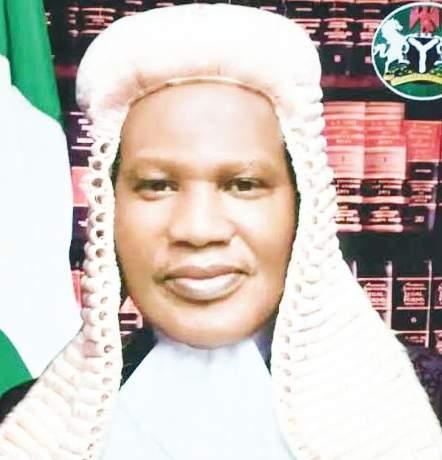
L-R: Chief Judge of Lagos State, Justice Kazeem Alogba; President, the Court of Appeal of Nigeria, Hon. Justice Monica Dongban-Mensem and Governor of
Nigeria’s electricity Distribution Companies (Discos) collected a total of N203.61 billion from customers in April 2026, representing a 3.81 per cent increase over the preceding month, even as overall billing efficiency weakened marginally despite higher energy received and billed during the period.
The latest Commercial Performance Factsheet released by the Nigerian Electricity Regulatory Commission (NERC) yesterday showed that the 11 Discos received electricity worth N302.96 billion in April, up 3.13 per cent from March. Of this amount, they billed customers N252.43 billion, an increase of
2.43 per cent.
However, billing efficiency, which measures the proportion of energy received that was successfully billed, declined by 0.57 percentage points to 83.32 per cent, indicating that nearly 17 per cent of energy supplied was not billed, the NERC data indicated.
The report showed that while the value of billings rose to N252.43 billion, the amount collected from customers increased even faster to N203.61 billion, resulting in a collection efficiency of 80.66 per cent, an improvement of 1.07 percentage points over March. NERC also reported an improvement in the sector’s revenue recovery performance, with the average allowed tariff standing
at N124.39/kWh, while the actual average collection was N102.13/ kWh, representing a revenue recovery efficiency of 82.11 per cent, up 1.06 percentage points from the previous month.
A breakdown of the Discos’ billing performance showed that Enugu Electricity Distribution Company recorded the highest billing efficiency at 92.77 per cent, followed by Eko with 91.56 per cent, Ibadan at 88.55 per cent, Abuja at 86.77 per cent, and Kano at 84.56 per cent.
Ikeja posted a billing efficiency of 84.16 per cent, slightly above the industry average, while Benin recorded 73.98 per cent, Jos 69.50 per cent, Yola 66.35 per cent,
and Kaduna had the weakest performance at 62.81 per cent.
In terms of energy volumes, Abuja Disco received the largest allocation valued at N51.13 billion, followed closely by Ikeja with N49.31 billion and Eko with N42.72 billion. Abuja also recorded the highest total billings at N44.36 billion, ahead of Ikeja’s N41.50 billion and Eko’s N39.12 billion.
On revenue collection, Abuja retained the top position with N37.55 billion, narrowly ahead of Ikeja at N37.34 billion and Eko at N36.87 billion.
The commission’s data showed that Benin Disco achieved the highest collection efficiency among all operators at 95.52 per cent, followed
by Eko with 94.26 per cent, Port Harcourt at 91.41 per cent, Ikeja at 89.97 per cent, and Abuja at 84.63 per cent.
At the lower end of the ranking, Kano recorded a collection efficiency of 49.89 per cent, Kaduna posted 55.38 per cent, Jos 58.93 per cent, Yola 68.61 per cent, Enugu 70.66 per cent, and Ibadan 71.63 per cent.
The report also highlighted significant differences in revenue recovery performance across the distribution companies.
Eko Disco emerged as the only operator to recover more than its approved average tariff, recording a revenue recovery efficiency of 102.09 per cent, with an average collection of N128.43/kWh against
an allowed tariff of N125.80/kWh. Other strong performers included Port Harcourt with a recovery efficiency of 90.39 per cent, Abuja at 89.77 per cent, Ikeja at 88.89 per cent, and Benin at 86.65 per cent. Enugu posted a recovery efficiency of 81.22 per cent, marginally above the regulatory benchmark of 80 per cent.
OYEDELE: WE’RE WORKING WITH PETROL MARKETERS, REGULATORS ON APPROPRIATE FUEL PRICING
Deji Elumoye in Abuja
The federal government, yesterday, said it was in talks with petrol marketers and industry regulators to address concerns over fuel pricing and promote a more transparent pricingMinisterregime. of Finance and Coordinating Minister of the Economy, Taiwo Oyedele, made the comments while briefing newsmen after the Federal Executive Council (FEC) meeting chaired by President Bola Tinubu at the Council Chambers of State House, Abuja.
There had been mounting concerns over the refusal of petrol marketers to reduce fuel prices, despite the return of global crude oil prices to pre-US-Iran war levels, following the peace deal between the two nations. Crude oil prices now hover between $75 and $76 perInbarrel. the formal reaction to the issue of appropriate pricing of petroleum products in Nigeria, following the drop in global oil prices, the federal government also pledged to ensure fairness in all dealings in the downstream sector of the petroleum industry.
FEC also approved new reforms in the National Youth Service Corps (NYSC), with Minister of Youth Development, Ayodele Olawande,
announcing that the service would henceforth be civilian-led.
Olawande disclosed that the scheme established 53 years ago, which had traditionally been headed by senior military officers, would now include professional trainings for corps members to enhance their employability.
Minister of Works, Senator David Umahi, told newsmen at the session that FEC had approved N2.078 trillion for road infrastructure across 10 states, in pursuit of the federal government’s drive to expand and modernise Nigeria’s transport network.
On his part, Minister of Aviation and Aerospace Development, Festus Keyamo, said the federal government had approved N34.398 billion for construction of an airstrip in Gboko, Benue State.
Keyamo said the contract awarded to CCECC Nigeria Limited, when completed, would serve agricultural operations, strengthen security, and support humanitarian and emergency medical services in the area.
Minister of Environment, Balarabe Lawal, who briefed newsmen on behalf of Minister of Marine and Blue Economy, Alhaji Gboyega Oyetola, said the council approved maritime infrastructure and safety projects worth about N286 billion to modernise port operations, strengthen
maritime safety, and protect Nigeria’s marine environment.
Oyedele, who opened the session, said consultations were ongoing with market operators and regulators to ensure adjustments in the pump prices of refined petroleum products to reflect prevailing global crude oil prices in a fair and balanced manner.
He stated, “We are working to strike a balance between ensuring operators remain commercially viable and protecting Nigerians from unfair pricing.”
He explained that while marketers often responded to increases in global crude oil prices by raising pump prices on the basis of replacement costs, reductions in prices tended to be slower because of existing stock purchased at higher costs.
According to him, government’s objective is to strike an appropriate balance between safeguarding the commercial sustainability of operators and protecting consumers from exploitative pricing practices.
The minister stated that the Federal Competition and Consumer Protection Commission (FCCPC) and Nigerian Midstream and Downstream Petroleum Regulatory Authority (NMDPRA) were already addressing the issue within the framework of the Petroleum Industry Act (PIA).
Oyedele added that fiscal
measures introduced by the Tinubu administration, including the suspension of Value Added Tax (VAT), excise duty, and the surcharge on petroleum products, had helped to cushion the effect of global energy price increases, keeping fuel prices lower than those in neighbouring countries.
He implored transport operators benefiting from the federal government’s investments in the Presidential Compressed Natural Gas (CNG) Initiative—including subsidised vehicle conversion kits—to pass the resulting cost savings on to commuters by offering more affordable transport fares rather than maintaining petrol-based pricing.
Olawande, who spoke on new reforms in NYSC, explained that the scheme would retain its one-year duration, while introducing flexible, skills-based training programmes within the service year.
Under the new arrangement, he said NYSC would be civilian-led, while the military would continue to oversee the security of corps members nationwide.
According to the youth development minister, “Graduates enrolled in specialised streams, such as the proposed Digital Corps, may spend additional time in training before deployment to their primary places of assignment to earn professional certi-
fications that enhance employability and self-employment opportunities.”
He explained that the reforms were designed to consolidate youth development programmes under the NYSC for better coordination, monitoring, and accountability.
Olawande said the reform framework emerged from extensive consultation involving the youth development and education ministries, Office of the Special Adviser to of the President on Policy Coordination, and young Nigerians, with the objective of repositioning the scheme as a stronger platform for youth empowerment, skills development, and national integration.
He said the reforms were designed to strengthen national unity, promote skills development, create jobs, and empower young people.
Key components of the reform included the digitalisation of NYSC operations, enhanced security and welfare for corps members, improved orientation camp facilities through stronger partnerships with state governments, and redesigning of the passing-out parade into a formal graduation ceremony.
Others were introduction of professional identity certification for corps members and amendment of the NYSC Act to align the scheme with current national development priorities.
INAUGURATION OF MORE ROAD PROJECTS, TINUBU SAYS HIS GOVERNMENT WAS REFLATING LOCAL ECONOMY
represented by Vice President Kashim Shettima, said the road projects and other infrastructure were in fulfilment of his promise to resolve urban congestion and uplift the living standards of Nigerians.
He stated that when he assumed office in 2023, his administration “recognised that true development must reach where the people actually live, work, and commute”.
The president said, “Indeed, this project stands as a clear testament to our promise to resolve urban congestion and uplift the living standards of our people. It is a direct product of our Renewed Hope Agenda in action.”
He explained that for years the Karu corridor, which served as a critical gateway between the FCT and neighbouring states, grappled with severe traffic congestion that drained the productivity and energy of residents.
Tinubu said the newly constructed and rehabilitated roads had dramatically cut down “daily
travel times, eliminates frustrating gridlocks, and ensures that businesses in this densely populated area can thrive under the right conditions”.
The president said, “A premium road network must also prioritise the safety of its users both day and night. To ensure maximum security along this corridor, the Federal Capital Territory Administration has installed modern solarpowered streetlights along the entire road network, illuminating dark stretches, drastically reducing night-time crime, and improving visibility for motorists.”
He attributed the rapid physical transformation across Abuja to “the dogged, relentless and focused supervision” of the Minister of FCT, Nyesom Wike, stating that the aggressive implementation of his administration’s urban renewal master plan is visible for all to see.
He stated, “I sincerely commend the Minister and his team. By prioritising high-density, strategic satellite nodes like Karu along-
side the city centre, the FCT Administration is validating our governance philosophy: that the wealth of this territory must yield practical, everyday comfort for all socio-economic classes.
“I also commend the contractor Abdul-Val Nigeria Limited for quality work and timely delivery. They have demonstrated that Nigerian firms can match international benchmarks for quality, structural integrity, and project management.”
Tinubu charged traditional rulers, market women, youth leaders, and the entire Karu residents to protect the roads from vandalism, indiscriminate roadside dumping that clogged drainage systems, and ensure the roads served as a secure foundation for their “commerce, safety, and long-term community pride.”
Earlier, Wike said the support given to the administration of the FCT by Tinubu was unprecedented and a demonstration of his commitment to the wellbeing and welfare of the people.
Wike stated that residents of the territory and its environs were overwhelmed by the developmental strides in the FCT and assured them of that the momentum would be sustained. The minister commended the steadfastness and commitment of the contractor that handled the infrastructure project in Karu and environs, particularly in aligning with the agenda of the federal government to transform the state of infrastructure across the country. Presenting the project’s overview, Coordinator of Satellite
drawdown reported last week.
A Bloomberg report had cited people familiar with the transaction, to have Nigeria had accessed approximately $1.5 billion over the past two weeks through a Total Return Swap with First Abu Dhabi Bank, marking the first utilisation of the broader $5 billion financing package.
Towns Development Department (STDD) FCT, Hon. Zulkiflu Abdulkadir, said improving the state of infrastructure in the satellite towns and area councils as well as uplifting the lives and livelihoods of the residents were critical to the development of the FCT.
He said the project, which comprised the installation of solar-powered street lights, construction of drainages and walkways, would improve economic and social activities in Karu town, being the most populated satellite town in FCT.
The minister said the government intentionally opted for a phased disbursement structure instead of drawing the entire facility at once, saying the approach would minimise financing costs and improve debt management efficiency.
“So, the loan is meant to be a draw down in tranches, and
Shedding more light on the reforms, Special Adviser to the President on Policy Coordination, Hajia Hadiza Bala-Usman, said, “The safety aspect of our corps members still remains with the military, but the operational leadership of the NYSC will be civilian-led.
“The security will continue to be anchored and implemented by the Nigerian military, increasing the length.”
To give legal backing to the reforms, FEC directed AttorneyGeneral of the Federation (AGF), in collaboration with Ministry of Youth Development, to initiate an amendment to the NYSC Act and its regulations to enable the immediate implementation of the approved reforms.
While acknowledging the challenge of brain drain, the presidential adviser explained that the government was focused on producing more graduates, particularly in STEM fields, and equipping them with relevant skills so they could contribute to national development, whether they remained in Nigeria or eventually returned with global experience.
Council also approved the establishment of a National Snakebite Treatment and Research Centre, alongside a package of health sector interventions valued approximately N73.9 billion. This was part of efforts to strengthen healthcare delivery and expand access to essential medical services nationwide.
Minister of Health and Social Welfare, Professor Muhammad Ali Pate, told newsmen, “The new centre will provide specialised treatment, conduct research on snakebite prevention and management, ensure sustainable access to quality anti-venom, and partner with international institutions.”
According to the minister, Nigeria recorded an estimated 43,000 snakebite cases annually, many of which he said resulted in
Continued on page 20
one of the advantages of that is, if you, if you need $5 billion and you take everything at once, you start paying interest, even though you’re not spending all of it now. “So, this has been structured in a way that makes us even more efficient in the cost of borrowing by taking what we need part time.”
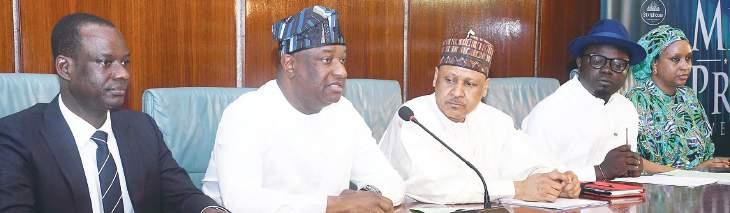
Minister of Power, Joseph Tegbe
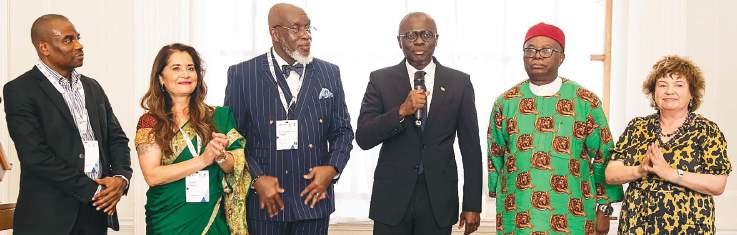
NIGERIA CLIMATE INVESTMENT SUMMIT IN LONDON...
CPPE: Senate’s Call for Ban on Textile Fabrics Imports Threat to N10 Trillion Garment, Tailoring Industry
Centre for the Promotion of Private Enterprise (CPPE) has warned that Senate’s resolution calling for a ban on textile fabric imports can impose substantial collateral costs on Nigeria’s over N10 trillion garment-making and tailoring industry, disrupt critical supply chains, and jeopardise millions of jobs and livelihoods.
The view was expressed yesterday by Chief Executive Officer of CPPE, Dr. Muda Yusuf, in a public statement, titled, “Senate’s Textile
Import Ban Resolution Risks Doing More Harm Than Good.”
Yusuf called for structural reforms rather than import prohibition.
He stated, “The proposed textile import’s ban risks undermining a vibrant garment and fashion ecosystem that supports millions of Nigerians while generating substantial domestic value addition.
“It could also adversely affect the furniture industry, encourage smuggling and reduce customs revenue.
“The challenge confronting Nigeria’s textile industry is fundamentally one of competitiveness rather than import penetration.”
Yusuf said, “Sustainable revival will require structural reforms that improve productivity, reduce production costs, revive cotton production, expand access to affordable finance and leverage government procurement to stimulate domestic demand.”
He said while the objective of reviving Nigeria’s textile industry was legitimate and commendable, an outright import prohibition was
Nigeria’s Displaced Population Tops 3.7m,
unlikely to achieve that objective. Yusuf stated that the proposal reflected a narrow view of the textile industry’s challenges and overlooked the extensive linkages within Nigeria’s textile, garment, fashion, furniture, and creative economy value chains.
He said Nigeria’s fashion, garment-making, and tailoring industry was substantially larger than the textile manufacturing segment that the proposed ban would benefit.
He stated, “Conservatively valued at about N10 trillion, the
Stakeholders
Push Private Sector to Unlock IDPs’ Economic Potential
Nigeria’s worsening displacement crisis, which has forced more than 3.7 million people from their homes, is increasingly being viewed as not only a humanitarian emergency but also a missed economic opportunity, with stakeholders urging the private sector to invest in displaced populations as a source of labour, entrepreneurship, and agricultural growth.
The appeal came in Abuja during a strategic engagement convened by Amahoro Coalition.
Government officials, business leaders, and development partners at the forum said the country’s internally displaced persons (IDPs) should be integrated into produc-
tive sectors instead of remaining dependent on humanitarian assistance.
According to the latest assessments by International Organisation for Migration (IOM), Nigeria is home to one of Africa’s largest internally displaced populations, with more than 3.7 million people uprooted by insurgency, armed banditry, communal conflicts, and climate-related disasters.
The displacement placed enormous pressure on humanitarian agencies while leaving a significant pool of skilled and economically active citizens outside the formal economy.
Opening discussions at the forum, Strategy Custodian and Partnerships Lead of Amahoro
Coalition, Tito Mbaithi, said the prevailing approach to displacement must change if Nigeria hoped to convert a growing social challenge into an engine of economic recovery.
Mbaithi said displaced Nigerians possessed years of farming experience, business knowledge, and vocational skills that remained largely untapped because interventions had focused overwhelmingly on emergency relief instead of economic inclusion.
He said evidence from across the continent showed that displaced communities were capable of generating substantial economic activity when provided with access to finance, markets, employment opportunities, and supportive
public policies.
He maintained that agriculture presented, perhaps, the greatest opportunity for such integration, particularly in northern Nigeria, where insecurity had displaced thousands of experienced farmers from some of the country’s most productive agricultural belts.
According to him, deliberate investment in displaced farmers and entrepreneurs would not only improve livelihoods but also strengthen food production, deepen value chains, and stimulate rural economies.
industry provides livelihoods for an estimated 10 million Nigerians and is one of the country’s most vibrant creative economy sectors.
“Textile fabrics are critical intermediate inputs for this ecosystem. Restricting imports would disrupt production, increase costs, reduce consumer choice and threaten thousands of micro, small and medium enterprises engaged in fashion, tailoring and garment manufacturing.
“The garment industry also generates substantial domestic value addition through design, tailoring, branding, embroidery, merchandising and retailing. In many cases, the local value added exceeds the value of the textile inputs.
“Public policy should, therefore, protect this broader value chain.”
Yusuf also said textile fabrics were equally important inputs for Nigeria’s rapidly growing furniture industry, where they are extensively used in upholstered furniture, office furniture, hotel furnishings, and mattresses.
“A supply disruption would increase production costs and weaken the competitiveness of the sector,” he said.
Yusuf stressed that the decline of Nigeria’s textile industry was primarily the consequence of longstanding structural constraints rather than import competition.
The constraints, according to him, included high energy costs, expensive credit, poor infrastructure, logistics bottlenecks, obsolete technology, smuggling, weak access to long-term finance, and policy inconsistency.
He said, “Textile manufacturing is one of the most energy-intensive industries globally. Operating within a high-cost production environment has severely undermined the competitiveness of local manufacturers.”
Yusuf pointed out that imported textile fabrics already attracted combined import duty and Import Adjustment Tax (IAT) of between 35 and 45 per cent.
“Yet these tariff protections have not restored the industry’s competitiveness because the core problem lies in production economics rather than import penetration,” he said.
He added, “An import ban therefore addresses a symptom while leaving the underlying causes unresolved. Sustainable industry revival requires lower production costs, improved productivity and stronger enforcement of the existing tariff regime.”
CPPE said domestic textile manufacturers currently lacked the capacity to meet the quantity, quality, and diversity of fabrics required by Nigeria’s fashion and furniture industries.
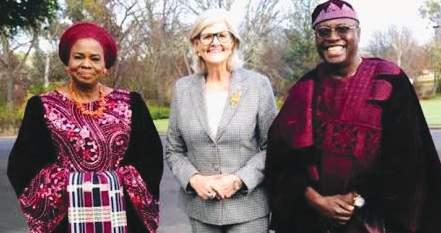
L–R: Oke Epia, CEO, SOStainability; Malini Mehra, CEO, GLOBE Legislators; Chidiebere Onyia, Secretary to the Government of Enugu State, representing the Governor; Babajide Sanwo-Olu, Governor of Lagos State; Sam Onuigbo, President, GLOBE Legislators; and Catriona Lang, former UK Ambassador to Nigeria, during the Nigeria Climate Investment Summit (NCIS) held at Mansion House, City of London, United Kingdom, last week Tuesday Niger Pensioners Ask Gov Bago to Probe Missing N19.5 Billion Oil Theft: Nigerian Navy Dismantles Illegal Distribution Channel, Recovers 22,870 Litres of AGO in Rivers
Laleye Dipo in Minna
Pensioners in Niger State have asked Governor Mohammed Umaru Bago to institute a probe into what they described as missing N19.5bn pension fund released to the state pension board since 2024.
The N19.5bn, according to the Pensioners, is part of the N25bn released to the Pensions Board by the government also in 2024 for the payment of outstanding gratuities. According to the alternate chairman of the Joint Action Committee of the Niger State Union of Pensioners, Mr. Stephen Daniel Zitta, who spoke with newsmen in Minna, only N6.5bn of the N25bn was disbursed in the payment of outstanding pensions and gratuities The payment after verification,
according to Mr. Daniel Zitta, went to 2 batches of local government pensioners and 11 batches of state pensioners.
Zita said in the last 14 months, payments have been stopped with the state Pensions Board, blaming the situation on the Ministry of Finance while the ministry on its part claimed all monies approved were released to the Board.
Nigerian Navy dismantled an illegal distribution channel for stolen petroleum products in Rivers State, recovering about 22,870 litres of suspected illegally refined Automotive Gas Oil (AGO) during an intelligence-led operation under Operation Delta Sentinel.
The operation, which targeted the movement of illegally refined petroleum products through creek corridors in the state, was carried out by personnel of Nigerian Navy Ship (NNS) SOROH following credible intelligence.
According to Director of Naval Information, Navy Captain Abiodun
Folorunsho, personnel deployed to the Orashi Forest area of Okolomade Community in Abua/Odual Local Government Area, bordering Ogbia Local Government Area of Bayelsa State, acted on reports of suspected movement of illegally refined products.
Folorunsho said, “On arrival, the patrol team intercepted a wooden boat conveying 36 sacks of suspected illegally refined Automotive Gas Oil (AGO) along an adjoining creek. To further exploit the intelligence, aerial surveillance was conducted using a drone, leading to the identification of additional concealed stockpiles hidden under vegetation and inside ponds within the general area.
“A detailed search subsequently led to the recovery of an additional 45 sacks of suspected illegally refined AGO concealed at different locations, bringing the total recovery to 81 sacks containing approximately 22,870 litres.”
Folorunsho said the operation also denied criminal elements the use of the intercepted wooden boat for transporting illicit petroleum products.
He stated, “The recovered products and the wooden boat were handled in accordance with extant anti-crude oil theft procedures, further disrupting the logistics chain supporting illegal refining activities in the Niger Delta.”
Linus Aleke in Abuja
Michael Olugbode in Abuja
Dike Onwumaeze
DIGITAL PAYEXPO 2026...
L-R: Executive
Capital Market Academics Seek Urgent Policy
Intervention to Reverse Declining Credit to Private Sector
Raise concerns over widening fiscal deficits, low capital expenditure implementation
The Capital Market Academics of Nigeria (CMAN) has called for urgent policy intervention to reverse the declining credit to the nation’s private sector, arguing that sustainable economic growth ultimately depends on productive private sector investment and not solely on financial sector expansion.
The nation’s foremost financial markets think tank, with an assemblage of researchers, lecturers, economists and professionals from universities, research institutes, regulatory agencies and private sector organisations, also raised concerns over widening fiscal deficits, and low implementation of capital expenditure.
Addressing a press conference in Abuja, Monday, the President of CMAN, Prof. Uche Uwaleke, applauded economic reforms embarked upon by the President Bola Tinubu administration, which previous governments could not execute.
He cited the removal of fuel subsidy, noting that although it has been painful, it addressed a policy that had become fiscally unsustainable, encouraged inefficiency and diverted
scarce public resources away from productive investments.
“Similarly, the unification of the foreign exchange market corrected long-standing distortions associated with multiple exchange rates, improved transparency and enhanced investors’ confidence.
“Although the adjustment initially imposed significant costs on businesses and consumers, it is our considered view that a marketreflective exchange rate remains more sustainable than maintaining an artificial exchange rate through continuous intervention.
“We also commend the ongoing fiscal and tax reforms aimed at broadening the tax base, simplifying tax administration and creating a more efficient, equitable and growthoriented fiscal framework capable of supporting long-term economic development.
“ In particular, CMAN commends the Honourable Minister of Finance and Coordinating Minister for the Economy, Professor Taiwo Oyedele, for his exemplary leadership as Chairman of the Presidential Committee on Fiscal Policy and Tax Reforms, as well as the dedicated members of the Committee, whose painstaking
work culminated in the enactment of the Nigerian Tax Acts 2025.
“We believe that these landmark tax laws provide a more coherent, transparent and investment-friendly tax regime that, if effectively implemented, will strengthen domestic revenue mobilisation, improve the ease of doing business and enhance Nigeria’s competitiveness as an investment destination,” he said.
The CMAN President observed
the macroeconomic improvements have equally been reflected in the Nigerian capital market, with investor confidence considerably strengthened, foreign portfolio participation soaring and market performance remaining impressive.
He said, “These achievements deserve commendation. They demonstrate that sound macroeconomic policies, when consistently implemented, are capable of restoring
investor confidence and improving market performance.
“However, we are persuaded that economic success should not be measured solely by rising stock prices, improving reserves or favourable sovereign ratings. The true measure of economic reform is whether it improves the welfare of ordinary citizens.
“Indeed, as observed by both the World Bank and the International
Monetary Fund, many of the positive macroeconomic gains have yet to translate into improved living conditions for households and businesses.
“This remains Nigeria’s most pressing economic challenge. Despite stronger banks and improving financial market indicators, access to affordable credit remains extremely limited, particularly for small and medium enterprises that constitute the backbone of employment generation.”
Olubadan, Ogiyan of Ejigbo, Ataoja of Osogbo Land Begin Commissioning of Landmark Projects by Osun State Govt
Yinka Kolawole in Osogbo
The Imole Campaign Council (TICC) has announced the schedule of the commissioning of a series of landmark projects executed by Governor Ademola Adeleke.
Director-General of TICC, Senator Kamorudeen Oyewumi, said, in a statement, that the two-day event will be headlined with the commissioning of the five-span Lameco overhead bridge on Wednesday, while two other
critical road projects in Ejigbo will be formally launched on Thursday.
His Imperial Majesty Oba Rasheed Adewolu Ladoja, Arusa 1, the Olubadan of Ibadan land, will perform the ribbon-cutting ceremony of the Lameco’s five-span overhead bridge, which will also have in attendance the Ataoja of Osogboland, HRM Oba Jimoh Adetunji Olanipekun, Larooye 11, and other critical stakeholders in Osogbo and beyond.
The five-span Lameco bridge
was built to solve perennial traffic congestion along that axis, improve connectivity, and stimulate economic activities in the Osun State capital, underscoring the Adeleke administration’s sustained commitment to addressing age-long challenges and improving the quality of life for residents of Osogbo and environs.
On Thursday, the Ogiyan of Ejigbo, HRM Oba Omowonuola Oyeyode, Oyeyosin 11, will perform the commissioning ceremony of the 12-kilometre
At NMDPRA Legal Advisers’ Forum, FG Warns Oil Marketers
Umar assures of certainty, predictability in regulatory
Emmanuel Addeh in Abuja
The Minister of State for Petroleum Resources (Oil), Senator Heineken Lokpobiri, yesterday warned oil marketers against exploiting the country’s deregulated petroleum market for excessive profits, stressing that the federal government would not allow deregulation to become a licence for profiteering at the expense of Nigerian consumers.
Lokpobiri, who spoke at the 2026 Nigerian Midstream and Downstream Petroleum Regulatory Authority (NMDPRA) General Counsel and Legal Advisers Forum in Abuja, maintained that while the government remained committed
to a market-driven downstream sector, the regulator retained the statutory responsibility to ensure fairness, consumer protection and strict compliance with the Petroleum Industry Act (PIA).
The minister specifically expressed concern that despite the de-escalation of tensions involving Iran and the United States, which had eased pressure on international crude oil prices, retail prices of Premium Motor Spirit (PMS) and other petroleum products had yet to reflect corresponding reductions.
According to him, market forces should ordinarily restore equilibrium, but the regulator must ensure that deregulation does not
become an avenue for arbitrary pricing and excessive profiteering.
“Following the de-escalation of tensions between Iran and the United States, we expected to see commensurate downward adjustment in the prices of PMS and other petroleum products. However, that has not yet happened.
“While we believe that market forces will eventually restore equilibrium, the regulator also has a statutory responsibility to ensure that deregulation does not become an avenue for profiteering. This must be done in line with the extant provisions of the Petroleum Industry Act,” he said.
Lokpobiri also stressed that deregulation was not only about allowing prices to be determined by market forces, but also about ensuring consumers received value for money, noting that one of the regulator’s critical responsibilities is guaranteeing that consumers receive the exact quantity of petroleum products they pay for.
“When someone pays for 10 litres of Premium Motor Spirit, they should receive exactly 10 litres, not less,” he maintained.
The minister argued that the country’s petroleum industry had moved beyond merely asking whether operators were complying with regulations, insisting that
regulators themselves must now be held accountable for providing clear, transparent and predictable regulatory frameworks capable of attracting long-term investments.
According to him, the more important question today is whether regulatory authorities are carrying out their responsibilities in a manner that gives investors sufficient confidence to commit capital over the long term.
He noted that while compliance would always remain the foundation of an effective regulatory system, regulatory certainty had become the next critical objective if Nigeria hoped to compete successfully for global
Ejigbo-Ilawo-Iwo Road (first phase) and six-kilometre Ejigbo-Isoko-Aye Road (first phase), two critical road projects that will enhance connectivity between Ejigbo and neighbouring towns.
The commissioning will be followed by the flag-off of the remaining portion of the road projects as a demonstration of the resolve by the Adeleke administration to strengthen local economies by improving road network in the state.
investment.
“The PIA gave us the architecture. What we must now build is the culture, the institutional habits, the interpretive discipline, and the regulatory character that make the law’s objectives real for every investor evaluating Nigeria against any other destination in the world,” he said. The minister added that the full deregulation of the downstream petroleum sector under President Bola Tinubu had eliminated the era of persistent fuel shortages, paving the way for the operationalisation of the Dangote Refinery and several other refining projects currently under development.
Ndubuisi Francis in Abuja
Director, Intermarc Consulting, Nigeria, Mr.Toba Otusanya; Convener and Managing Director, Intermarc Consulting, Nigeria, Dr. Adeyinka Adeyemi; and Senior Business Development Leader and Country Manager, Visa West Africa,Mr. Damola Giwa, during the Digital PayExpo 2026 held at Landmark Centre, Lagos ... recently
SERVICE OF SONGS IN HONOUR OF CHIEF DENNIS UKA IKENGA...
L-R : Vice President, U.S Renal Care, Mrs. Nkechi Ikenga; Chairman/CEO, St. Racheal ‘s Pharmaceuticals , Pharm. Akinjide Adeosun; and the Managing Director/CEO, Transcorp Power Plc, Engr. Peter Ikenga, at the Service of Songs in honour of Chief Dennis Uka Ikenga, held in Lagos....recently
ECOWAS Court Goes Digital, Targets
Faster Justice for 400 Million West Africans
Regional court launches electronic filing, virtual case management Sets 2030 deadline for fully paperless judiciary
The Community Court of Justice, ECOWAS, yesterday formally launched its Electronic Case Management System (ECMS), ushering in what it described as the most significant digital transformation in its history and setting an ambitious target to become a fully paperless regional judicial institution by 2030.
The unveiling of the multilingual digital platform at the Court’s headquarters in Abuja, it stated, marked the end of decades
of largely paper-based judicial administration and the beginning of a technology-driven justice system designed to make litigation faster, cheaper and more accessible to over 400 million citizens across the 15 ECOWAS member states.
Speaking at the historic ceremony, President of the Court, Justice Ricardo Cláudio Monteiro Gonçalves, declared that the launch represented far more than the deployment of new software.
He described it as, “the beginning of a new era in which
technology strengthens access to justice, enhances efficiency and promotes transparency in the administration of justice,” adding that digital transformation would strengthen rather than diminish the Court’s commitment to judicial independence, fairness and the rule of law.
According to him, while technology would automate court processes and improve efficiency, judicial decisions would continue to be firmly anchored on the law and the principles of justice.
The ceremony, attended by senior ECOWAS officials, diplomats, judges, legal practitioners, civil society organisations, development partners and the media, was held under the theme: “Advancing Digital Justice: Enhancing Access, Efficiency and Transparency through Electronic Case Management.”
The ECMS is a secure, web-based platform operating in English, French and Portuguese that enables litigants and lawyers to file cases electronically, receive court notifications, monitor proceedings in real
Marwa Inaugurates Historic Weapons Training for NDLEA Officers, Inducts AK-47 Rifles After 36 Years
The National Drug Law Enforcement Agency (NDLEA) on Monday formally commenced the induction of assault rifles and advanced pistols into its operational structure for the first time since its establishment 36 years ago, marking a significant shift in its strategy to confront increasingly armed and violent drug trafficking syndicates.
The landmark development was unveiled by the Chairman/Chief Executive Officer of the agency, Brigadier General Buba Marwa (rtd), during the inauguration of a specialised Train-the-Trainer Course on Weapon Handling at the NDLEA Academy in Jos, Plateau State.
The training, which focuses on the handling of AK-47 Type 56-1 rifles and HS-9/CF98A pistols, is designed to produce pioneer instructors who will subsequently train officers across the country’s commands before the weapons are deployed for operational use.
Represented by his Chief of Staff, Colonel Murtala Aminu, Marwa said the initiative reflected the changing realities of Nigeria’s anti-drug war, noting that drug trafficking organisations had evolved into heavily armed criminal networks capable of confronting law enforcement officers.
“The nature of the war we fight has evolved,” he said. “Drug trafficking organisations are no longer mere commercial criminal enterprises; they are armed, organised and ruthless. Our officers face increasing danger in the field, and it would be unconscionable to send men and women into harm’s way without the tools and training to protect themselves and the public they serve.”
He stressed the programme was not merely about introducing firearms but about protecting the lives of personnel while strengthening the agency’s capacity to combat organised crime.
Marwa attributed the milestone to the support of President Bola Tinubu, commending him for prioritising the strengthening of the agency’s operational capabilities.
He also acknowledged the Office of the National Security Adviser (ONSA) for facilitating the immediate release of an initial consignment of firearms and ammunition, which enabled the commencement of the training programme.
Providing details of the procurement process, Marwa disclosed that the acquisition of the weapons, initiated in 2023 through China North Industries Corporation (NORINCO), had reached its final phase.
According to him, thousands of
AK-47 rifles, pistols and ammunition are expected to arrive shortly, while a comprehensive distribution and accountability framework has already been approved to ensure transparency in their deployment.
He added that the agency was collaborating with the Nigerian Air Force to airlift the weapons to commands across the country for secure distribution.
Marwa described the pioneer
participants as the foundation upon which the NDLEA’s future weapons-handling culture would be built, charging them to uphold professionalism, discipline and strict adherence to safety standards.
“You are the first. You are the standard-bearers. The operational culture, the safety ethos and the professional discipline that will define how the NDLEA handles weapons all begin here,” he said.
time, manage documents digitally and participate in virtual hearings from anywhere in the world.
The system also automates Registry operations, creates electronic case files with comprehensive audit trails and eliminates the cumbersome manual processes that have traditionally slowed judicial proceedings.
For lawyers practising before the Court, applications can now be filed electronically from cities such as Dakar, Accra, Praia, Banjul or Monrovia without the need to physically deliver documents to the Court’s Registry in Abuja.
Litigants can equally monitor the progress of their cases online while judges and Registry staff will manage proceedings through integrated digital workflows.
The Court expects the innovation to reduce administrative bottlenecks, shorten case processing time, lower litigation costs and significantly improve transparency and accountability in the regional justice system.
Providing insight into the origins of the project, Acting Deputy Chief Registrar and ECMS Project Team Manager, Mrs. Marie Saine, said the platform was conceived as part of the Court’s long-term institutional
reform agenda under its Justice 2030 Strategic Plan and aligned with the broader ECOWAS Vision 2050, which seeks to build modern, effective and people-centred regional institutions.
She said the Court recognised that its traditional paper-based system had become increasingly inadequate for a regional institution serving citizens across fifteen countries with three official languages and multiple legal systems.
According to her, filing cases required physical submission of documents to the Registry, case tracking depended largely on paper files, while serving judicial documents across the region often proved slow, costly and unpredictable.
“These were not failures of the people working within the system,” she explained.
“They were the limitations of a system that had not kept pace with the scale and complexity of the Court’s mandate. The ECMS was conceived to remove those barriers, reduce delays, cut costs and place this Court where it belongs—within reach of every person in our Community who needs it.”
Primaries: APC Group Slams Ondo Govt for Deploying State Resources to Vilify Party Leadership, NWC
A coalition of All Progressives Congress (APC) stakeholders and members in Ondo State has risen in defence of the party’s National Working Committee (NWC) over a decision to review the outcomes of the party’s senatorial and House of Representatives primaries.
The coalition described the move as a necessary corrective measure to uphold the party’s constitution and integrity.
The group, operating under the aegis of Ondo APC Progressive Minds Alliance (OPMA), expressed support for the national leadership’s
decision, which they said was taken in the best interest of the party and its electoral fortunes in the upcoming general election.
OPMA, which described itself as a coalition of “progressive-minded stakeholders, loyal party members, and believers in internal democracy”, commended President Bola Tinubu for providing visionary leadership that had strengthened APC’s internal mechanisms across the country.
The group also applauded APC National Chairman, Professor Nentawe Yilwatda, and the national leadership of the party for their
unwavering commitment to due process and adherence to the party’s constitution.
OPMA Coordinator, Wole Ogunlade, stated that the group rejected the narrative propagated by some protesting women and youths in the state, insisting that NWC acted within its constitutional powers in reviewing the primary election outcomes.
Ogunlade stated, “The Ondo APC Progressive Minds Alliance salutes our respected National Chairman, Prof. Nentawe Goshwe Yilwatda, for his courage and integrity in ensur-
ing that the party’s constitution is not subverted by any individual or group.
“We also commend our father and leader, President Bola Ahmed Tinubu, for his unyielding commitment to the rule of law and internal party democracy.
“We are equally grateful to our illustrious son, the Minister of Interior, Hon. Olubunmi Tunji-Ojo, whose exemplary leadership continues to inspire us in Ondo State. His dedication to the party’s ideals and his respect for the NWC’s authority are qualities we deeply admire.”
Michael Olugbode in Abuja
Michael Olugbode in Abuja
Acting Group Politics Editor DEJI ELUMOYE
Email: deji.elumoye@thisdaylive.com
08033025611 sms only
State Police: Tinubu’s Reform for Security and Fears of Political Power Grab
Iyobosa Uwugiaren examines the issues enveloping President Bola Tinubu’s reform for the Nigeria Police Force, and fears of political power grab being expressed by some stakeholders.
When Ebonyi State Governor, Hon. Francis Nwifuru was quoted as saying he had the power to “consume and destroy opposition members during a political gathering”, the comment quickly moved beyond political show business.
In a country already debating the creation of state police and its implications for the political environment, it landed as something more disturbing—a reminder of how concentrated state power can become when unchecked.
For many Nigerians, Governor Nwifuru’s remark sharpened an uncomfortable question-now sitting at the centre of the national conversation: if governors already command vast political influence, what happens when they also gain operational control over armed police structures within their states—as currently being proposed?
That question has become more urgent as the country moves closer to constitutional amendments that could establish state police, in response to Nigeria’s deepening security crisis marked by banditry, kidnapping, terrorism and widespread communal violence.
Across the country, insecurity has reached frightening levels. Rural communities face repeated attacks, urban centres continue to battle violent crime, and entire states have seen displacement of populations. And the Nigeria Police Force, centrally controlled from Abuja, is widely seen as overstretched, under-resourced, and often too distant to respond swiftly to local threats. It is against this backdrop that the debate over state police has returned with renewed intensity.
President Bola Tinubu said his decision to send the State Police Bill to the National Assembly is aimed at reforming Nigeria’s security system by allowing states to establish their own police forces alongside the Nigeria Federal Police Force.
According to the President, the current centralised policing structure has become overstretched in addressing growing security challenges such as terrorism, banditry, kidnapping, armed robbery, and communal conflicts.
He believes that creating state police will improve security by bringing law enforcement closer to the people, enabling faster responses to crime, strengthening intelligence gathering, and promoting more effective policing based on local knowledge.
Tinubu described the proposal as part of his administration’s broader effort to strengthen the country’s security architecture, enhance
public safety, and give state governments a greater role in maintaining law and order while working in collaboration with the federal police.
At the same time, the proposal has generated vigorous debate, with supporters arguing that it will strengthen security, while critics have expressed concerns about the potential misuse of state police by political office holders, especially the state governors and the need for robust constitutional safeguards.
Uba Sani’s Case: Security Must Be Local
Among the strongest advocates is Kaduna State Governor, Senator Uba Sani, who argues that Nigeria’s security challenges cannot be effectively managed from a single command structure in Abuja.
According to him, security is inherently local. Officers recruited from the communities they serve understand the terrain, languages, cultural dynamics and social networks that are critical for intelligence gathering and crime prevention. This local familiarity, he argues, is essential for preventing crime rather than merely reacting to it.
Governor Sani, who is an unrepentant advocate of true federalism, maintains that state police would not replace the Nigeria Police Force but complement it. While the federal police would retain responsibility for terrorism, interstate crime and national security threats, state police would focus on community-level policing, rapid response and intelligencedriven operations.
He further argues that decentralisation would improve accountability, as citizens would have greater access to law enforcement officers operating within their immediate environment. For him, Nigeria’s size, population and complex-
ity make it unrealistic for a single centralised force to effectively secure every community.
Yet even as the security argument strengthens, political suspicions around the reform are also growing.
Atiku Abubakar’s Fear over Timing
Former Vice President Atiku Abubakar has questioned the timing and political context surrounding renewed efforts to introduce state police.
While not opposing the idea outright, he has argued that introducing such a fundamental restructuring of Nigeria’s security system at a sensitive political period raises legitimate concerns about motive.
According to him, reforms of this magnitude must be clearly insulated from partisan influence to avoid creating the perception that they are designed—or could be used—to shape political outcomes.
His concerns reflect a wider apprehension among opposition figures and civil society organisations who fear that, without strong safeguards, state police could be used by governors to intimidate political opponents, restrict opposition activity, or influence electoral competition.
But, supporters of the reform reject this interpretation, insisting that the push for state police is driven by long-standing security concerns rather than political calculation. They point out that the idea has been debated for decades across constitutional conferences, security summits and governance reform panels.
‘’Some people are insufferable. How could those who have tolerated multifarious public and private security outfits in the country to supplement policing be against state police establishment and still be mouthing refederalisation’’, a senior lawyer and human rights activist, Jiti Ogunye queries.
Governor Nwifuru’s Remarks and Public Anxiety
Still, remarks attributed to Governor Nwifuru have intensified public anxiety around the
For now, the country remains suspended between necessity and caution—between the promise of safer communities and the fear that the instruments of protection could, in the wrong hands, become instruments of control.
proposal. For critics, the issue is not only what was said, but what it symbolises. If a sitting governor can openly suggest overwhelming political dominance over opponents, they argue, it raises legitimate questions about how such authority might be exercised if extended into operational control over armed policing structures.
The fear is that state police, instead of becoming tools for improved security, could become instruments of political enforcement in highly competitive and often polarised state environments.
Why the Debate Will Not Fizzle Out
Despite these concerns, pressure for reform continues to mount. Nigeria’s security challenges have become increasingly localised and complex. Armed groups operate across state boundaries, rural communities remain vulnerable to attacks, and urban crime continues to evolve in difficulty. Many citizens feel disconnected from a policing system that appears distant and reactive rather than preventive.
Supporters of decentralisation argue that the current model is no longer fit for purpose and that maintaining a fully centralised police force is increasingly untenable for a country of Nigeria’s size.
However, opponents of state police often point to Nigeria’s First Republic, when regional governments operated their own police forces. Allegations of political interference, abuse of power and suppression of opposition were said to have contributed to instability and eventually to the centralisation of policing under military rule. And that historical memory continues to shape present-day resistance to decentralisation, particularly among those who fear a repeat of past mistakes in a modern democratic context.
Legal Safeguards Being Proposed
To address these fears, constitutional experts have proposed a range of safeguards aimed at preventing political abuse of state police. One of the most important proposals is the establishment of independent State Police Service Commissions responsible for recruitment, discipline, promotions and transfers. These bodies, according to experts, would include representation from civil society, the legal profession, traditional institutions and retired security experts, and operate independently of governors.
Tinubu
nwifuru
Disu
LAWYER
TUeSday, j U ne 30, 2026
/Users/mac/Desktop/untitled folder/images.jpg
The Three Contestants for NBA President
Chief Olumuyiwa akinboro, San Mrs Oyinkansola Badejo-Okusanya, San Mr Lateef Omoyemi akangbe, San
LAWYER
The ContestantsThreefor NBA President
Sharia Court of Appeal’s Jurisdiction on Declaration of Title to Land
Page IV
Lagos Expands Forensic, Cybersecurity Capacity to Boost Prosecution
Page V
Fashola Seeks Governance Beyond Politics at NBA Ikeja Law Week
Page V
Smart v Idiokita and the Illegality of Arrest by Proxy
Page VI
‘We must acknowledge with candour, that public perception of the judicial process hasn’t always been favourable….Frustration about delays, concerns about integrity….access to justice. These perceptions, whether wholly justified or not, cannot be ignored. They call upon us to reflect, reform and restore; for ultimately, justice….exists for the people.' - HE Bola Ahmed Tinubu, GCFR, President, Federal Republic of Nigeria
Appraisal of Public Interest Lawsuit Seeking to Halt NYSC Deployments to Alleged "High-
Page X
Federalism Beyond Police Reforms
Definition of Federalism
On the face of it, it appears that Nigeria is operating a Federal State/Federalism. Federalism is a system of government where power isn’t concentrated solely at the centre, that is, in the hands of a National/Federal Government, but shared between the National and SubNational Governments, which in Nigeria, is the Federal, State and Local Governments. In AGF v AG Lagos (2013) LPELR-20974(SC) per Aloma Mariam Mukhtar, JSC (later CJN) the Supreme Court held thus: “The purport of Federalism is succinctly put by the former constitutional Lawyer and scholar, Professor Ben Nwabueze, in his book 'Federalism in Nigeria Under the Presidential Constitution' thus:- “Federalism is an arrangement whereby powers of Government within a country are shared between a national, country-wide Government and a number of regionalised (i.e. territorially localised) Governments, in such a way that each exists as a Government separately and independently from others operating directly on persons and property within its territorial area, with a will of its own and its own apparatus for the conduct of its affairs. Federalism is thus, essentially an arrangement between Governments, a constitutional device by which powers within a country are shared among two tiers of Government”.
Appearances of Federalism in Nigeria
Some of the elements of Federalism are present here - Nigeria is known as the Federal Republic of Nigeria; she has a written constitution that is supreme - see Section 1(1) & (3) of the 1999 Constitution of the Federal Republic of Nigeria (as amended) (the Constitution) and AG Lagos v AGF & Ors (2003) LPELR-620(SC) per Umaru Atu Kalgo, JSC, where the Supreme Court stated thus: “Nigeria is no doubt a Federal Republic with a Federal Constitution….”. Powers appear to be distributed, whether between the Legislature, Executive and Judiciary (Federal and State) (see Section 4-6 of the Constitution) or between the Federal, State and Local Government (see Sections 5 & 7 of the Constitution); and there is the supremacy of Acts of the National Assembly (NASS) over State laws. Nigeria has a Bicameral Legislature - the House of Representatives representing the population, the Senate representing the States equally. There’s also the rigidity of the process of amendment of the Constitution, requiring the input of the State Houses of Assembly, that is, most of the nation (see Section 9 of the Constitution).
Nigerian Reality: Quasi-Federalism/Centra-lisation/ Unitary System
1)Bloated Exclusive Legislative List
In reality, Nigeria operates at best, quasi-Federalism or some even argue, a Unitary system of governance, because hitherto, some key elements of Federalism glaringly missing from the structure, make it impossible to call it Federalism. Power is centralised in the Federal Government, with a bloated Exclusive Legislative list, not even Concurrent or the Residual Legislative List, which should be the case if true Federalism is being practised - that is, most things would be in the hands of the State and Local Government, with only items such as defence, currency, immigration, foreign affairs, perhaps some health and education, being in the hands of the Federal Government. The federating units - the States, would be the owners of all the resources within their own territories, as opposed to the strange arrangement that obtains where Section 1 of the Land Use Act 1978 (LUA) vests all land (albeit only the surface of the land) within the States in the Governors to hold in trust for the people, while Section 44(3) of the Constitution puts all the minerals underneath the land or therein, in the hands of the Federal Government.
2)Lack of Fiscal Autonomy
In short, Federalism envisages fiscal autonomy for the federating units, a situation in which the States have an independent source of revenue generation stemming from the control/management of their own resources, and from there, making contributions to the Centre, and not the opposite which currently obtains, where the Federal Government controls all the sources of revenue generation in all the States, and rather inefficiently too, while giving the States percentages from their own resources, and making them dependent on the Centre for monthly allocations. In AG Lagos v AGF & Ors (Supra) the Supreme Court stated thus: “Nigeria is…a Federal Republic with a Federal Constitution, in which the Legislative powers of the Federal Government through the National Assembly, and the legislative powers of the State Governments through the State Assemblies, were clearly defined. These consist of the Exclusive Legislative list on which only the National Assembly can legislate; the Concurrent Legislative List which is shared between the National Assembly and the State Assemblies, and the remaining which is called the Residual list not included in the Exclusive or Concurrent List, which only the State Assemblies can legislate on”. In AG Lagos v AGF & Ors (2024) LPELR-80160(SC) per Mohammed Lawal Garba, JSC, the Supreme Court held thus: “In the case of Attorney-General, Abia State v Attorney-General of the Federation
onikepo braithwaite
onIkepo BraIThwaITe
onikepo.braithwaite@thisdaylive. com onikepob@yahoo.com
“On the face of it, it appears that Nigeria is operating a Federal State/Federalism…. In reality, Nigeria operates at best, quasi-Federalism or some even argue, a Unitary system of governance, because hitherto, some key elements of Federalism glaringly missing from the structure, make it impossible to call it Federalism….. the State Police Executive Bill 2026….marks a significant constitutional advance in decentralising security. Yet, true Federalism demands more than Police reform. It requires fiscal autonomy, resource control, and genuine devolution of powers….. State Police is a necessary step, but it is not a magic-wand cure for insecurity….”
(2006) All FWLR (Pt. 338) 604 at 674-675, Niki Tobi, JSC…said:- "The Constitution of the Federal Republic of Nigeria, 1999, like most Constitutions, does not provide for a residual list…..Etymologically, residual merely means that which remains. In legislative or parliamentary language, residual matters are those that are neither in the Exclusive or Concurrent Legislative Lists; that is what remains, or is not covered by the Exclusive and Concurrent Legislative Lists”.
The fact that Nigerian States don’t enjoy any meaningful fiscal autonomy, depending largely on monthly Federal allocations, and many of their resources have been left to lie fallow and dormant, has given a foothold to local and foreign illegal miners/prospectors to plunder these resources for their own benefit, such as some Chinese who were arrested in Kwara State for illegal mining running through all the local governments of the State, charged to court and convicted for their unlawful activities,
Of course, some argue that it may be better to put the mineral resources of Nigeria in one questionable Federal Government, than in the hands of many State Governments, of whom concerns have been raised about capacity and accountability.
For example, there is a former Governor of one of the Northern States, who is reported to have become fabulously wealthy from illegal gold mining done for his own personal benefit instead of that of the State, leaving his people to suffer in penury, illiteracy and insecurity. Furthermore, if you compare the areas where there are the most violent attacks, displacing residents who have fled to IDP camps for refuge, one will discover that they may very well be the areas most richly endowed with gold and
rare earth minerals. This issue however, is a story for another day.
3)Neutrality of the Judiciary
Additionally, a neutral Judiciary is another element of Federalism; but, quite regularly, the independence of the Nigerian Judiciary is called into question, whether at the Federal or State level. A recent case in view is that of the political parties’ deregistration case, in which Justice Lifu of theFederal High Court, Abuja, disobeyed the order of the Court of Appeal staying proceedings in the case pending the determination of an appeal in the matter scheduled for October 2026, and still went ahead to purport to deregister the parties, as if playing a script of those seeking to muster all opposition.
Again, Justice Isha Dashen of the Federal High Court, Lokoja, who had given judgement compelling INEC to register another opposition party, NDC, set aside the judgement on the application of an allegedly unregistered political party that claimed that their logo was being used. while they weren’t joined in the initial suit. It is trite law that when a court delivers a ruling or judgement, it becomes functus officio on that application or in that case, that is, generally it lacks the power to revisit that ruling or judgement, and the only option left for parties is to appeal the decision. However, in Refuge Home Savings & Loans Ltd v Garkuwa & Ors (2023) LPELR-59982 (SC) per Adamu Jauro, JSC, the Supreme Court stated circumstances in which a court can set aside its judgement/decision/order thus: “The power to do so may be conferred by Statute or Rules of Court, or may be exercised by the Court under its inherent jurisdiction.
This power or jurisdiction may be exercised, where for instance, the judgement, ruling, order or decision sought to be set aside is null and void ab initio, or there was a fundamental defect in the proceedings which vitiates and renders the same incompetent and invalid”. The question is whether the party is unregistered, and if so, whether it can be entertained; and whether either of the two aforementioned conditions was present in the NDC case, necessitating the setting aside of the initial order. If not, a Judge blatantly abusing court process, would certainly raise questions about judicial neutrality, the lack of which undermines the rule of law, a strong pillar on which Federalism rests upon.
State Police Executive Bill 2026
To accommodate State Police, by virtue of Section 9(1) & (2) of the Constitution, Section 214 of the Constitution which provides for only one Nigeria Police Force (NPF), can be amended by two-thirds majority of the Senate and House, approved by resolutions at least 24 State Houses of Assembly, before going for Presidential assent. The hitherto centralised Nigerian policing architecture established by Section 214, has been another factor evincing the fact that Nigeria isn’t really practising Federalism in the true sense of the word. While issues such as those arising from the creation of non-viable units (States) heavily dependent on the Federal Government for funding thereby weakening Nigeria’s Federalism, resource control and devolution of powers from the Exclusive Legislative List are yet to be addressed, one area where decentralisation has finally gained legislative traction, is policing.
The detailed Constitution of the Federal Republic of Nigeria, 1999 (Sixth Alteration) Bill, 2026 (SB. 1055) aka State Police Executive Bill 2026 (SPEB) has cleared NASS, and is awaiting approval by at least 24 State Houses of Assembly under Section 9(2) of the Constitution. The SPEB seeks to restructure Nigeria’s unitary policing architecture, starting from the amendment of Section 214 of the Constitution to create a dual Police system, Federal Police Service (FPS) and State Police Services (SPS).
The SPEB clearly divides the functions of the FPS and SPS. The FPS is responsible for FCT policing, enforcement of Federal laws, protection of Federal institutions/assets, and handling of inter-State, organised crime, terrorism, cybercrime, arms trafficking, border security, and other national-security matters. The duties of the SPS include enforcement of State laws, maintenance of public safety and order, prevention/detection of local offences, and protection of life and property within the State. The SPS assumes traditional internal security and local law enforcement duties set out in Section 4 (a)-(c) of the Police Act 2020, previously carried out by the old NPF.
The SPEB provides for procedural safeguards where no State can begin operational policing by its SPS, until such SPS has been certified to have met the minimum standards set by an Act of NASS. And, until a State meets these requirements, the FPS continues to play the policing role there.
The SPEB doesn’t appear to alter the internal organisational structure of the FPS; however, the highest rank of a Police Officer in the SPS, will be the Commissioner of Police of the State (see the new Section 215(4) of the Constitution). The State Police Commission is to appoint, promote, transfer, dismiss and exercise disciplinary control over persons holding offices in the SPS, other than the office of Commissioner of Police of the State, who is recommended by the National Police Council (NPC) to the State Governor for appointment subject to confirmation of the State House of Assembly. The process of appointment of the SPS State Commissioner, while it raises questions about the extent of State security autonomy, appears to be designed to act as a moderating national filter that provides some national oversight and standards, to prevent Gubernatorial capture of the SPS, as the NPC is to include all State Attorneys-General, Zonal Retired Commissioners and Civil Society Representatives.
The SPS is expected to be primarily funded by respective State resources, but the SPEB allows the Federal Government to provide grants and financial assistance to support the SPS.
Conclusion
The passage of the SPEB, marks a significant constitutional advance in decentralising security. Yet, true Federalism demands more than Police reform. It requires fiscal autonomy, resource control, and genuine devolution of powers. Until these deeper structural issues are addressed and State institutions demonstrate the capacity and will to govern responsibly, Nigeria will remain a quasi-Federal State in practice. State Police is a necessary step, but it is not a magicwand cure for insecurity that has lasted for decades. Its effectiveness will ultimately be determined by implementation, funding, oversight, and political restraint at both Federal and State levels. SPEB is a welcome beginning, in the security sector. Whether it becomes a model for deeper Federal restructuring or merely another half-measure, will depend on how the implementing legislation is crafted and, more importantly, on whether political actors at both Federal and State levels, are prepared to relinquish control in pursuit of a more balanced Federation.
Inspector General of police, olatunji disu
Sharia Court of Appeal’s Jurisdiction on Declaration of Title to Land
Facts The Respondent instituted the action leading to this appeal against the Appellant, claiming entitlement to the house that was gifted to her late husband by his late maternal uncle, (Ibrahim Tungar Kade), which they have been in possession of, and occupied for over 40 years before the death of her husband. At trial, the Respondent called four witnesses. Two witnesses testified in support of her claim, that Ibrahim Tungar Kade had gifted the disputed house to her late husband. The remaining two witnesses testified regarding a document prepared at the House of the Village Head, regarding the gift of a farm, which was not the subject-matter of the suit, and their evidence did not relate to the alleged gift of the disputed house.
In defence, the Appellant denied the Respondent’s claim; he contended that the house formed part of the estate of his maternal grandfather - Isah. He asserted further that his mother, Aishatu, was entitled to inherit a share of the property. In support of his case, the Appellant called three witnesses, all of whom testified that the house belonged to Isah.
At the conclusion of the trial, the court found that the house constituted inheritable property and consequently, entered judgement in favour of the Appellant. Dissatisfied with the decision, the Respondent appealed to the Sharia Court of Appeal, Kebbi State. The Sharia Court of Appeal set aside the judgement of the trial court, and held that the house had been validly gifted by Ibrahim Tungar Kade to the Respondent’s late husband, thereby affirming the Respondent’s entitlement to the property.
The appeal by the Appellant to the Court of Appeal, Sokoto Division, was unsuccessful. The Court of Appeal dismissed the appeal and affirmed the decision of the Sharia Court of Appeal. Still dissatisfied, the Appellant appealed further to the Supreme Court.
Issue for Determination
The Supreme Court adopted the sole issue formulated by the Appellant for the determination of the appeal, to wit: Whether the lower court was right in holding that the Respondent’s case falls within the purview of Section 277(2) of the Constitution of the Federal Republic of Nigeria, 1999 (as amended), hence, the Sharia Court of Appeal, Kebbi State, has jurisdiction to entertain the appeal which is in relation to declaration of title to land.
Arguments
Arguing the sole issue, the Appellant submitted that jurisdiction is fundamental to the validity of judicial proceedings, and that any decision rendered without jurisdiction is a nullity. He argued that the jurisdiction of a court is determined by the Claimant’s case, as disclosed in the statement of claim. Relating this principle of law, he submitted that the claim of the Respondent relates to declaration of the title and legal right of ownership of the house in dispute, having asserted that the property was gifted to her late husband by his maternal uncle - Ibrahim Tungar Kade. He contended that the central issue before the trial court was the determination of the true owner of the property, and that any finding on the validity of the alleged gift necessarily required a prior determination of title to the house. The Appellant posited that the Upper Sharia Court, ought to have first made an inquiry regarding the rightful and true owner of the house in dispute.
The Appellant argued that the house does not belong to Ibrahim Tungar Kade, the maternal uncle of the Respondent’s late husband; hence, Ibrahim cannot give a gift of what he does not have – Ibrahim v Ogunde & Ors (2009) LPELR-1411(SC). That the gift can only be valid, if the ownership of the house in dispute resided in Ibrahim Tungar Kade exclusively. He argued further that from the standpoint of Islamic law of inheritance, the house in dispute belonged to the five children of the original owner, who is also the grandfather of the Appellant. Under Islamic law, a valid gift can only be made by a person who is the lawful owner of the property. He maintained that since the house belonged to his maternal grandfather – Isah, and formed part of his estate, Ibrahim could not have validly transferred the property by way of gift. He submitted that the Respondent was therefore, required to establish her root of title to the property. He argued further that the dispute between the parties was fundamentally one relating to declaration of title and ownership of land, which falls outside the jurisdiction of the Sharia Court of Appeal under Section 277(2) of the Constitution of the Federal Republic of Nigeria, 1999 (as amended). That
In the Supreme Court of nigeria Holden at abuja
On Friday, the 4th day of july, 2025 Before their lordships
Mohammed Lawal Garba
Ibrahim Mohammed Musa Saulawa adamu jauro
Habeeb adewale Olumuyiwa abiru abubakar Sadiq umar justices, Supreme Court SC/CV/80/2024
Between
Ummaru Matankari appellaNt And Hajiya rabi Yaron Manya reSpoNDeNt
(Lead Judgement delivered by Honourable Mohammed Lawal Garba, JSC)
only the High Court of Kebbi State possessed the requisite jurisdiction to determine such a dispute. He therefore, urged the Supreme Court to allow the appeal, set aside the judgements of the lower courts, and remit the matter to the Chief Judge of Kebbi State for reassignment to a Judge of the court, sine the dispute relates to declaration of title to land.
Responding to the submissions of the Appellant, the Respondent argued that the jurisdiction of a court is determined by the Claimant’s case, and not by the Defendant’s defence. She argued that her claim bordered on the entitlement to the house given as a gift to her late husband by Ibrahim Tungar Kade, in which they have been in occupation for over 40 years, and it was only after the demise of her late husband that the Appellant decided to lay claim to the house.
Relying on Section 277(2)(c) and (e) of the 1999 Constitution (as amended), she submitted that
“….the law is firmly established that the Sharia Court of Appeal of a State is not vested with the statutory jurisdiction to entertain and adjudicate over appeals involving the issue or question of pure declaration of ownership or title to land simpliciter, since it is not an issue or question relating to Islamic personal law as provided for in the Constitution”
law, it is the subject- matter of the dispute that confers jurisdiction on the court, and it is not permissible for a Judge to entertain any dispute in respect of which he has no subject-matter jurisdiction. In determining jurisdiction, the claim of the Plaintiff is the sole determinant. Where the subject-matter is not within the jurisdiction of the court, then there is nothing to adjudicate and the decision reached in the absence of jurisdiction is a nullity.
Relating the principle above to the present case, the Apex Court held that by the provisions of Section 277 (1) and (2) of the 1999 Constitution (as amended), the Sharia Court of Appeal is vested with the requisite constitutional jurisdiction to adjudicate and exercise appellate and supervisory jurisdiction in all civil proceedings involving questions of Islamic personal law regarding “wakf, gift, will or succession etc”, where the donor or deceased person is a Muslim.
The Supreme Court held that word “gift” has been defined in the case of Hari v Tsoho (2016) 4 SQLR (Pt. III) 563, thus: “The idea of a gift under the Islamic law, is the transfer of a corpus of a thing to the donee. Thus, in order to be valid, the gift must satisfy the following conditions :- (a) a declaration of the gift by the donor; (b) Acceptance of the subject-matter of the gift by the donee himself or by his agent; and (c) Possession should be delivered by the donor to the donee”.
Based on the definition of “gift” highlighted above, and the nature of the claim of the Respondent before the trial court, it is beyond argument that the Sharia Court of Appeal has the requisite constitutional jurisdiction to entertain and adjudicate over the appeal by the Respondent against the judgement of the Upper Sharia Court, since the subject-matter of the claim was a gift and not one of pure ownership of the house in question. It was the Appellant who denied the claim of the Respondent before the trial court and counter-claimed that the house was owned by his maternal grandfather.
Their Lordships held that the law is firmly established that the Sharia Court of Appeal of a State is not vested with the statutory jurisdiction to entertain and adjudicate over appeals involving the issue or question of pure declaration of ownership or title to land simpliciter, since it is not an issue or question relating to Islamic personal law as provided for in the Constitution.
disputes involving gifts, succession, and other questions of Islamic personal law fall within the appellate jurisdiction of the Sharia Court of Appeal, where the donor or deceased person is a Muslim. She contended that the present dispute squarely deals with the validity and effect of a gift under Islamic law and therefore, falls within the jurisdiction of the Sharia Court of Appeal. The Respondent submitted further that the evidence before the trial court established that Ibrahim had gifted the house to her late husband, and that there was no genuine dispute regarding the existence of the gift. Accordingly, both the Sharia Court of Appeal and the Court of Appeal were right to assume jurisdiction and determine the matter. She argued that the Appellant, having maintained before the trial court that the property formed part of an estate subject to Islamic inheritance, cannot subsequently contend that the dispute was solely one of title to land. She therefore, urged the Supreme Court to dismiss the appeal and affirm the judgement of the Court of Appeal.
Court’s Judgement and Rationale
In its decision on the sole issue, the Supreme Court held that where the enabling statute, including the Constitution, does not vest a court with jurisdiction over a matter, neither the court nor the parties can confer such jurisdiction upon it. Their Lordships affirmed that this principle applies equally, under both English common law and Islamic law and procedure.
The Supreme Court held that in Islamic
The Supreme Court observed further that Respondent’s claim before the trial court did not involve the issue of validity of the gift of the house to her husband, since it was not disputed the issue is not relevant in the determination of the nature of the claim and whether the Sharia Court of Appeal has the jurisdiction to adjudicate on the appeal against the decision of the trial court. Since the validity of the gift was not challenged before the trial court, it therefore did not constitute the primary issue for determining jurisdiction. Also, the Appellant’s counter-claim at the trial court, was totally based on inheritance of the house in accordance with Islamic law principles. Both claims therefore, involved questions of Islamic personal law. The question or issue of the validity of a gift only becomes relevant and material when and where it is specifically challenged and in dispute between parties.
The appeal against the decision of the trial court on the basis of the issue of inheritance and succession on which the Appellant based his Counter-claim for the house in dispute, was a valid and competent appeal involving questions of Islamic Personal Law over which the Sharia Court of Appeal possesses the requisite constitutional jurisdiction to adjudicate by dint of the provisions of Section 277(2) (c) of the Constitution.
Having confirmed that the subject-matter is that of gift, the Sharia Court of Appeal is vested with jurisdiction to entertain such matters. Section 277(1) of the 1999 Constitution vests the Sharia Court of Appeal with jurisdiction to exercise appellate and supervisory jurisdiction in civil proceedings involving questions of Islamic Law, which the court is competent to decide in accordance with the provisions of subsection (2) of that section.
The Supreme Court thereby affirmed the concurrent decisions of the Sharia Court of Appeal and the Court of Appeal.
Appeal Dismissed.
Representation
Yakubu S. Bawa for the Appellant.
Ahmed Mohammed Jega for the Respondent.
Honourable Mohammed Lawal Garba, JSC
Lagos Expands Forensic, Cybersecurity Capacity to Boost Prosecution
Capacity to Boost Prosecution
Stories by Steve Aya
Lagos State Governor, Babajide Sanwo-Olu has said the State is investing heavily in forensic science and cybersecurity, to close the evidence gap that often hinders successful prosecution of criminal cases in Nigeria. The Governor made the disclosure while declaring open the 2026 Global Forensics Summit in Lagos, organised by the International Academy of Forensics in collaboration with The Guardian Newspaper Nigeria..
Represented by the Permanent Secretary in the Ministry of Justice, Mrs Aderinsola Olanrewaju, Mr Governor said many criminal cases fail in court, not because suspects are unavailable, but because investigators are unable to present credible scientific evidence capable of withstanding judicial scrutiny. He described the disconnect between investigations and successful prosecution, as one of the biggest challenges facing Nigeria’s criminal justice system.
Mr Governor said Lagos has
responded by investing in modern forensic infrastructure, including the establishment of West Africa’s first DNA and Forensic Centre in 2017. According to him, the ISOaccredited facility has supported investigations involving homicide, sexual offences and human remains identification, while a second phase covering toxicology and forensic chemistry is currently underway.
Sanwo-Olu also highlighted key justice sector reforms introduced by the State, including virtual
court proceedings, the Lagos Criminal Information System and the prohibition of media parade of suspects. He added that Lagos was the first sub-national government in Nigeria, to establish a fully operational Cybersecurity Operations Centre for real-time monitoring and response to cyber threats.
Speaking on the Summit theme, “Forensic Investigation and Criminal Intelligence: Strengthening the Administration of Justice in the Age of Technological
Advancement”, the Governor noted that crimes have become increasingly sophisticated, making technologies such as artificial intelligence, digital forensics and cyber intelligence indispensable tools in modern investigations. He urged stakeholders to uphold the highest standards in evidence collection, and analysis to strengthen public confidence in the justice system.
Earlier, Emeritus Professor of Botany at the University of Lagos and Distinguished Fellow
of the International Academy of Forensics, Prof Dele Olowokudejo, described the Summit as a strategic platform for collaboration among experts in forensic science, law, security, academia and public administration. He said technological advancements have not only transformed criminal activities, but also provided powerful tools for combating crime and improving justice delivery.
In a keynote address, the Chief Judge of Lagos State, Justice Kazeem Alogba, represented by
Justice Olutoyin Ipaye, stressed that justice remains the foundation of nation-building and sustainable development. Also speaking at the event, retired Judge and legal scholar, Justice Alaba Omolaye-Ajileye, underscored the importance of Nigeria’s legal framework in supporting forensic investigations, noting that digital evidence, forensic accounting and cyber intelligence have become critical tools in tackling modern crime and strengthening the administration of justice.
Fashola Seeks Governance Beyond Politics at NBA Ikeja Law Week
Former Lagos State Governor and Senior Advocate of Nigeria , Babatunde Fashola, has called for a governance model driven by strong institutions, accountability and continuity, rather than partisan politics, as the 2026 Nigerian Bar Association (NBA), Ikeja Branch Law Week got underway in Lagos.
Fashola made the call while
delivering the Keynote Address at the opening plenary of the week-long event held at the Lagos Marriott Hotel, Ikeja. His lecture, titled "Law, Leadership and the Ballot: Governance Beyond Politics", centred on the role of the legal profession in promoting good governance and institutional reforms.
The Law Week, themed "Altering the Status Quo:
Going Against the Norm", brought together senior Lawyers, Judges, policymakers, academics and other stakeholders to examine governance, economic policy and institutional accountability in Nigeria.
Chairman of the Law Week Planning Committee, Chukwudi Enebeli, SAN, said the programme was designed
NGO Urges Full Implementation of Anti-Torture Act, End to Impunity
Human rights organisation, Avocats Sans Frontières France (ASF France), has called on the Federal Government to expedite the implementation of the Anti-Torture Act, 2017, saying the continued delay has denied victims justice, protection and rehabilitation.
to stimulate robust discussions on Nigeria's governance challenges and generate practical recommendations for strengthening public institutions and improving service delivery.
Speaking at the event, Chairman of the NBA Ikeja Branch, Adeniyi Quadri, described the annual Law Week as an important platform for national dialogue, noting that the legal profession has a critical role to play in advancing transparency, the rule of law and institutional reforms.
Other activities lined up
ASF France said although the Anti-Torture Act was enacted more than eight years ago, its Implementing Rules and Regulations (IRR) are yet to be fully
The organisation made the call on Thursday in Abuja, to commemorate the International Day in Support of Victims of Torture, urging the authorities to ensure accountability for perpetrators and strengthen support for survivors across the country.
for the Law Week include a Business Forum on Nigeria's economic future, a Bar and Bench Session, the Alao AkaBashorun Memorial Lecture, a Young Lawyers' mentoring session and community engagement programmes. The annual event is expected to conclude with recommendations aimed at deepening collaboration between the legal profession, government and other stakeholders in promoting good governance and sustainable national development. operational, a development it said has hampered effective investigation, prosecution and victim support under the law.
Nigerian Law School Class of 1976 to Mark 50th Call to Bar Anniversary
Country Director of ASF France Nigeria, Angela Uwandu Uzoma-Iwuchukwu, welcomed the Federal Ministry of Justice's announcement that the IRR was at the gazetting stage, expressing hope that the process would pave the way for full implementation of the legislation.
She urged the Government to follow up the gazetting of the regulations with the training of law enforcement personnel, adequate funding for rehabilitation programmes, and the prosecution of persons responsible for acts of torture, stressing that, survivors had waited too long for justice.
According to the Organisation, it has provided legal assistance to more than 1,000 victims of torture in Nigeria since 2009 through legal aid, advocacy and documentation, while continuing to support efforts aimed at improving access to justice for survivors.
Members of the Nigerian Law School Class of 1976, are set to celebrate the 50th anniversary of their Call to the Bar with a golden jubilee event scheduled to hold on Saturday, July 4, 2026, in Lagos.
The celebration is expected to bring together members of the class, distinguished guests and members of the legal profession, to commemorate five decades of legal practice and service.
According to an invitation issued by the organising committee, the anniversary celebration will begin at 3:00 p.m. at The Metropolitan Club, located at 15 Kofo Abayomi Street, Victoria Island, Lagos. Guests attending the event are expected to appear in formal attire, while each invitation admits the holder and one guest. The organisers have appointed retired Supreme Court Justice Clara Bata Ogunbiyi and retired Court of Appeal Justice Oludotun Adefope-Okojie as RSVP contacts for the event. Both jurists are members of the Nigerian Law School Class of 1976, and are coordinating attendance for the milestone celebration.
The golden jubilee marks 50 years since members of the class were called to the Nigerian Bar, providing an opportunity to celebrate their contributions to the legal profession, the Judiciary and public service. The event is expected to feature reunions, reflections on the class's achievements and recognition of its enduring impact on the nation's legal system.
Lagos State Governor, Babajide Sanwo-Olu
Former Minister of Power, Works and Housing, Babatunde Raji Fashola, SAN
Hon. Justice Jumoke Pedro (left) and her Husband, Nigeria's Ambassador to Australia, Ambassador Olufemi Pedro (right) after presenting his Letter of Credence to Her Excellency, the Honourable Ms Sam Mostyn AC, Governor-General of the Commonwealth of Australia (middle)
Smart v Idiokita and the Illegality of Arrest by Proxy
This article by learned Senior advocate of nigeria, ebun-Olu adegboruwa, discusses the ugly practice of “arrest by proxy” or arrest in lieu, which persists as a disturbing feature of law enforcement in nigeria, despite the enactment of Section 7 of the administration of Criminal justice act 2015 prohibiting such arrest, vis-à-vis the recent Supreme Court decision in Smart v Idiokita which offers a powerful judicial reaffirmation of this fundamental principle, and a timely opportunity to interrogate the continuing malaise
Introduction
From time immemorial, criminal liability has always been personal. You cannot transfer the responsibility of a crime from one person to another, no matter their relationship, and in the absence of any joint agreement to commit a crime, one person cannot be held liable for the criminal action of another. The law enforcement agencies in Nigeria are well aware of this basic principle of our criminal law jurisprudence, but they still proceed to arrest citizen A for the alleged offence of citizen B. In some cases, a father is arrested for the alleged criminal conduct of his son or vice-versa, or one business partner is held liable for the conduct of his co-partner.
Although the courts have pronounced upon this
principle of law in many cases, it became imperative to insert a specific clause in the Administration of Criminal Justice Act in 2015 (ACJA), in order to arrest the ugly trend. This notwithstanding, Police officers in particular, have refused to respect the rights of citizens in this regard. The decision whether or not a person commits an offence is from the inner mind of the offender and since only God knows the heart of a person, no human being is to suffer for the conduct of another.
One way to end this malady, is to hold the particular Police officer who violates this principle personally liable for his misconduct. If for instance, the case ends up in court, any award of damages should be paid by
“By virtue of Section 7 of the Administration of Criminal Justice Act, 2015, a person shall not be arrested in place of a suspect. The provision is to the effect that, a person cannot be arrested for a crime suspected to have been committed by another person. Criminal responsibility is personal, and not transferable….There is no vicarious culpability in criminal offences, and a person cannot be held responsible for the offence of a family member”
the offending officer, in addition to possible demotion in rank or outright dismissal.
The Facts of the Case
The facts of this case are as reported in Smart v Idiokita (2026) 20 NWLR (Pt.2044) 63.
The 1st Respondent, by an application for enforcement of fundamental rights sued the 2nd to 6th Respondent and the Appellant as the 1st to 6th Respondent respectively, seeking a declaration that his arrest and detention by the 6th Respondent from 10th to 13th August, 2021 on the Appellant’s instigation was unconstitutional, illegal, unlawful and an infringement on his fundamental rights as guaranteed under Sections 34, 35 and 41 of the 1999 Constitution (as amended); and a declaration that the threat of his father’s arrest by the 3rd to 5th Respondent on the Appellant’s instigation was unconstitutional, illegal, unlawful and posed a likelihood of infringement on his fundamental rights as guaranteed under Sections 34, 35 and 41 of the Constitution. The 1st Respondent also sought inter alia, the sum of N20,000,000.00 as damages against the 2nd to 5th Respondent for the infringement of his fundamental rights; and the sum of N10,000,000.00 as damages against the Appellant for instigating his arrest and detention for four days without trial, and continuous threats to life, harassments and trauma he suffered in violation of his
fundamental rights.
The 1st Respondent’s case was that, he was allegedly approached by the Appellant to prevail on his son to pay the Appellant money arising from a business transaction. The 1st Respondent claimed that he was not part of the alleged business transaction between the Appellant and his son; that as a result of his inability to get his son to pay the Appellant’s money, he was allegedly arrested and detained unlawfully at the Delta State Police Headquarters under the command of the 6th Respondent between the 8th to 13th August, 2021; and that the 1st Respondent claimed that the arrest and detention were at the Appellant’s instigation. The 1st Respondent also claimed that after his detention at the Delta State Police Headquarters, he was again invited to Zone 5 Headquarters of the Nigeria Police Force, BeninCity, Edo State, where he was allegedly subjected to persistent harassment, and the 2nd and 5th Respondent threatened to arrest and detain him if he failed to produce his son. Consequently, he filed the application for the enforcement of his fundamental rights. When the application came up for hearing at the trial court, the Appellant’s Counsel informed the court that, in opposing the application, he filed the Appellant’s counter-affidavit and a motion on notice for extension of time to regularise the counter-affidavit. However, the trial court delivered a Bench ruling to the effect that because the counter-affidavit and the motion were not found in the court’s file, the Appellant and
ebun-Olu adegboruwa, SaN
Smart v Idiokita and the Illegality of arrest by Proxy
the 2nd to 6th Respondent had no counter-affidavit and other processes in response to the application. It directed the 1st Respondent’s Counsel to move the application. After hearing the application, the trial court delivered its judgement wherein it dismissed the 1st Respondent’s case. Dissatisfied, the 1st Respondent appealed to the Court of Appeal. The Court of Appeal allowed the appeal and granted the reliefs sought, but made a downward review of the financial reliefs. Aggrieved, the Appellant appealed to the Supreme Court, which dismissed the appeal.
Judgement of the Supreme Court
1. The Prohibition of Arrest in Lieu By virtue of Section 7 of ACJA, a person shall not be arrested in place of a suspect. The provision is to the effect that, a person cannot be arrested for a crime suspected to have been committed by another person. Criminal responsibility is personal, and not transferable. And, nobody should be arrested in lieu of a suspect. There is no vicarious culpability in criminal offences, and a person cannot be held responsible for the offence of a family member. In the instant case, since the Appellant and the 2nd-6th Respondent failed to rebut the affidavit of the 1st Respondent, the Court of Appeal was right to hold that Section 7 of ACJA was applicable to the facts and circumstances of the case. The finding of fact by the Court of Appeal could not be faulted, having regard to the unchallenged evidence to the effect that the Appellant was arrested and detained at the Delta State Police Headquarters on the instigation of the Appellant because of an offence allegedly committed by his son. Furthermore, there was unchallenged affidavit evidence that the 2nd to 6th Respondent harassed and threatened to arrest the Appellant, if he failed to produce his son and his photographs.
Per Ogbuinya, JSC at pages 96-97, paras. E-C:
“It is gleanable from the record, the bedrock of the appeal, that on the instigation of the Appellant, the 1st Respondent was arrested and detained by the 2nd - 6th Respondent in lieu of his son, John Samuel Ita, who had a stillborn business transaction with the Appellant. The concrete and classic evidence on record, the spinal cord of appeal, amply demonstrate that the 1st Respondent was a stranger to that business transaction that was mired in the quicksand of fiasco. The doctrine of subrogation which flourishes in the sanctuary of civil law has no atom of shelter in the sphere of criminal jurisprudence. Indisputably, the 2nd - 6th Respondent, on the prompting of the Appellant, wrongly employed the doctrine against the 1st Respondent. In the firmament of criminal law, criminal responsibility is personal to a particeps criminis. There is no transfer of criminal responsibility, even in the presence of proven consanguinity between a culprit and an innocent. Indeed, vicarious liability has no legitimate residence in the expansive hemisphere of criminology. The provision of Section 7 of the ACJA, an ambitious provision with a commendable mission to shield innocent citizens against unlawful arrest and incarceration by officers of law enforcement agencies, who act on the false information on commission of crimes fed on them by overzealous and pretentious complainants, concretises this hallowed principle of criminal law. Indubitably, the lower court’s decision, sought to be impugned, did not, in the least, disclose any ounce of hostility to the letters and spirit of the law as to magnet the reprobation of this court. Per contra, the lower court acted ex debito justitae when it nullified the decision of the trial court which was per incuriam par excellence. I accord it an unfiltered endorsement”.
The Duty of Court in Respect of Separation of Powers and Protection of Rights of Citizen
The courts must never interfere in the exercise of executive powers, particularly in the mandate of the Police to investigate crimes. However, the courts must endeavour always to balance the principles of separation of powers, and the protection of the rights of the citizen against oppressive executive actions. Per Ogunwumiju, JSC at pages 92-93, paras. F-D: “In the circumstances, I have to agree with the opinion of the court below, as stated on pages
326 - 327 of the record of appeal that:
‘Now to the manner of complaints of these breaches, the Appellant in paragraphs 9, 10, 11, 13, 14, 15, 16, 17, 19 & 24 of the affidavit at page 21 - 23 of the records are chronological narration of events and acts of harassment, intimidation, threats, embarrassed, harassment in church and actual arrest detention beyond 24 hours (4 days) without reason at Asaba and Benin City, twice with pressure to produce bank statements and BVN between 15th June and November 2021. It is important to note that, there were no charges pressed against him except for him to produce his son or pay up the debt on the transaction, the matter was taken from Warri to Asaba and then to AIG, Benin, Zone 5. He denied consistently that he was not part of the transaction, nor aware of the deposit made to his son. From the above, there were threats, actual detention beyond 24 or 48 hours, even though both had a court within 5km radius, the 1st to 5th Respondent refused to do the needful legally; they instead, employed the tactics of intimidation, blackmail, breaches and directive to produce his son or pay the debts. Clearly, the allegation was that his son who did the transaction absconded and the father/Applicant was responsible. The Applicant’s freedom was unjustly withheld, his fundamental rights infringed upon”.
The Special Nature of Procedure for Enforcement of Fundamental Rights
The proceedings in habeas corpus as incorporated in the fundamental rights enforcement rules, are special. The procedure and the course of action in the enforcement of fundamental human rights, are sui generis. Declaratory reliefs can be granted on originating summons in deserving cases. The Fundamental Rights (Enforcement Procedure) Rules is a statutory provision pursuant to Chapter IV of the 1999 Constitution and its provisions are not subject to the common law rules of any High Court, particularly in relation to the issue of enforcement of declaratory reliefs. Where the court is satisfied that there was or exists violation of the fundamental right of an applicant, the court is bound to make a declaration to that effect. The affidavit evidence sworn to and filed with regard to the violation of the right of an applicant constitutes legal and acceptable evidence where there is no counter-affidavit and/or there was
“What is required presently, is the will power on the part of the authorities to nip this evil practice in the bud, by holding investigating Police officers personally liable for damages, resulting from such illegal acts of arrest by proxy. Unless and until this is done, we will continue to have cases of innocent persons who are not in any way connected with the offence alleged, having to suffer the fate of the real suspect”
default of appearance by the respondent, so long as the court was competently seised of jurisdiction. The requirement of oral evidence, arises from the fact that the court has the discretion to grant or refuse a declaratory relief, and its success depends entirely on the strength of the Plaintiff’s own case and not on the defence. A declaration sought by an Applicant cannot be made on admission, or in default of counter-affidavit. The proposition of the law is applicable in general, but is not applicable to fundamental rights cases. The genre of fundamental rights cases are special and sui generis, and meant to protect the individual from other powerful individuals and the State if need be.
When Court Will Consider Police Report or Extra-judicial Statement in Application for Enforcement of Fundamental Rights
Per Ogunwumiju, JSC. at page 93, paras. D-F: “The Police - 2nd to 6th Respondent herein, did not deem it fit to file a counter-affidavit at trial to contest the affidavit of the 1st Respondent. The court cannot look at Police reports, or other information not legally tenable before it. For the court to consider such statements, it must be attached to the counter-affidavit of the 2nd - 6th Respondent who were the 2nd - 6th Defendant at trial. The counter-affidavit must have been sworn to by the investigating Police officer who took the extra-judicial statement which the Police want to use to justify the complicity of the person they arrested for the crime for which he/she was arrested”.
The Duty of Citizens to Report Commission of Crime to Police
Generally, it is the duty of citizens of Nigeria to report cases of commission of crime to the Police for their investigation, and what happens after such report is entirely the responsibility of the police. The citizens cannot be held culpable for doing their civic duty, unless it is shown that it is done mala fide
The Treatment of Affidavit Evidence Where Unchallenged
A court is obliged to act, on unchallenged affidavit evidence. The exception to the rule, is where the facts are obviously untrue to the judicial knowledge of the court and are in the category of facts which the court is under a duty to take judicial notice pursuant to Section 122 of the Evidence Act. In the instant case, the Appellant and 2nd to 6th Respondent had the opportunity, but failed to file a counter-affidavit to the 1st Respondent’s affidavit. The Court of Appeal was on solid legal footing to rely on the unchallenged affidavit evidence, to allow the appeal and grant the reliefs sought. The exceptions did not apply.
When Court Must Act on Facts Deposed to in Affidavit
Where the facts deposed to in an affidavit are cogent and capable of proving the case of the Applicant, a court of law is legally obliged to act on it. In the instant case, the unchallenged affidavit evidence acted upon by the Court of Appeal was natural,
reasonable and probable in the entire circumstances of the case. The 1st Respondent deposed to the fact that he was arrested and detained beyond the time allowed by law at the Delta State Police Command, Asaba, on the instigation and malicious report by the Appellant on a business wherein he played no role. The fact was uncontroverted and justified a grant of the relief for unlawful arrest pursuant to Sections 34, 35 and 41 of the 1999 Constitution (as amended). Furthermore, the 1st Respondent stated that the 2nd to 6th Respondent threatened to arrest him and subjected him to persistent harassment, if he did not produce his son and his photographs. The fact was also not controverted, and was capable of proving the relief to stop threat of further arrest and incessant harassment of the 1st Respondent, pursuant to Section 33 of the Constitution.
The Need to Read Pleadings and Depositions in Affidavit Evidence as a Whole Pleadings, including depositions in affidavit evidence, must be read as a whole, and not in isolation.
The Duty of Court to Limit Itself to Facts in Pleadings in Statement on Oath or in Affidavit Evidence
A court must confine itself and its observation to any facts within the pleadings, as stated in the statement on oath or affidavit evidence proffered before it. Any extraneous facts not legally before the court amount to mere speculations, conjecture, and a court making a case for the other party. In the instant case, the Court of Appeal was right to set aside the judgement of the trial court based on speculations. The Appellant and the 2nd to 6th Respondent did not file any counter-affidavit to oppose any of the assertions of the 1st Respondent in his affidavit, and did not appeal against the ruling of the trial court refusing to look at the affidavit filed by the Appellant which was not in the court’s file. Therefore, the trial court could only consider the 1st Respondent’s affidavit. Anything else outside that affidavit was legally speculative, and not sworn facts which the court could use to determine the credibility of the 1st Respondent’s application.
Conclusion
Despite the avalanche of statutory and case law authorities prohibiting the invidious act, law enforcement agencies have not ceased to arrest citizens in lieu of suspects under investigation. Part of this is due to lazy investigation, leading to arbitrary tactics that violate the fundamental rights of citizens. What is required presently, is the will power on the part of the authorities to nip this evil practice in the bud, by holding investigating Police officers personally liable for damages, resulting from such illegal acts of arrest by proxy. Unless and until this is done, we will continue to have cases of innocent persons who are not in any way connected with the offence alleged, having to suffer the fate of the real suspect. As happened in the case of Smart v Idiokita under review, the offending Police officers are left in the system to continue their wickedness against other victims.
Ebun-Olu Adegboruwa, SAN
Inspector General of Police, Olatunji Disu
“My Commitment is to Leave Behind a Stronger, Better NBA”
nigerian Lawyers are preparing for a change of baton, to usher in a new administration of national officers of the nigerian Bar association (nBa). For the office of NBA President, the options are three Senior advocates of nigeria, chief olumuyiwa Akinboro; Mrs oyinkansola Badejo-okusanya, and Mr Lateef omoyemi Akangbe. as is customary before the nBa general elections, THISday LaWyeR reached out to the three Presidential candidates, to share their manifestos with Lawyers. In this interview with onikepo Braithwaite and Jude Igbanoi, only one of the three candidates, the one who doesn’t appear to have an axe to grind with the eCnBa, Mrs oyinkansola Badejo-okusanya responded, and shares not only her aspirations and plans, if elected as nBa President, but the legacy she intends to leave behind
Kindly give a brief overview of your career as a legal practitioner, including any roles, if any, which you may have played in the Nigerian Bar Association (NBA) in the past, and the support you have provided to the Association
I am a legal practitioner with over two decades of experience spanning private practice and public service.
I am a Partner at ALP NG & Co. and Co-Head of its Litigation and Dispute Resolution Practice, a Fellow of the Chartered Institute of Arbitrators, a CEDR Accredited Mediator and a Senior Advocate of Nigeria.
Before qualifying as a Lawyer, I worked as a Human Resources professional in the oil industry, and later as Practice Manager at Aluko & Oyebode, one of Nigeria's leading law firms. I subsequently had the privilege of serving the Government and People of Lagos State, first as Senior Special Assistant to the Governor on Justice Sector Reform, and later as General Counsel to the Governor, where I contributed to significant legal and institutional reforms within one of Africa's largest sub-national justice systems.
My relationship with the Nigerian Bar Association (NBA) has been equally longstanding, but, more importantly, it has been one of quiet and consistent service rather than
“I
episodic participation. I was called to the Bar in May 2002 and, by August of that same year, I was attending my first Annual General Conference in Ibadan. Self-sponsored. I didn’t even have a job. My husband drove me to the Conference, and came back at the end of the week to pick me up. That journey marked the beginning of a lifelong commitment to the NBA. Since then, I have attended virtually every Annual General Conference, regardless of where it was held or the sacrifices required to get there. Over the years, I have had the privilege of serving the NBA in numerous capacities, at both Branch and national levels. My journey of service began as Assistant Secretary of the Lagos Branch in 2005. Since then, every administration has presented opportunities to contribute, and I have accepted each one with the same sense of duty, irrespective of who occupied the office of President or whether the role was prominent or behind the scenes. I have served as a Delegate of the Lagos Branch to the 2006 NBA Elections, Member of the Lagos Branch Building Committee, Member of the Technical Committee on Conference Planning (TCCP) under the administrations of A.B. Mahmoud,
measure my contribution to the NBA, by the privilege of having served whenever I was called upon….The knowledge that people know that I can be depended upon to offer selfless service, every time I am called upon. To me, that is the true foundation of leadership”
SAN and Paul Usoro, SAN, two-time Chair of the Lagos Branch Dinner Committee (2021 and 2022), Member of the Future of the Legal Profession Committee (2021), Member of the Conference Investigation Committee (2022–2023), Alternate Chair and subsequently Chair of the Annual General Conference Planning Committee in 2023 and 2024 respectively, and a co-opted member of the National Executive Council since 2022. I was deeply honoured to receive the NBA Presidential Award of Merit in recognition of my service as Chair of the Annual General Conference Planning Committee.
Looking back, I do not see these appointments as isolated achievements but as evidence of something much more important: a consistent commitment to the Association over many years. Different Presidents. Different responsibilities. The same willingness to serve.
During my tenure in public service, I worked to ensure that the NBA received the support it required for its programmes and initiatives. I have contributed to policy formulation, continuing legal education and law reform efforts, while personally mentoring many younger colleagues, opening doors for them and supporting their professional development. Through our firm, ALP NG & Co., which shares my commitment to the profession, we have continued to sponsor NBA Conferences, Branch activities and capacity-building programmes, while providing mentorship, financial assistance and professional guidance to lawyers across the country.
My support for the Association however, has extended well beyond holding office. I have never viewed the NBA merely as an Association to which I belong. I have always regarded it as an institution that deserves my time, my expertise and my resources, and I have invested all of them willingly.
Consequently, I measure my contribution to the NBA, by the privilege of having served whenever I was called upon. Titles and visibility come and go;
what endures is the trust one earns through years of dependable service. The knowledge that people know that I can be depended upon to offer selfless service, every time I am called upon. To me, that is the true foundation of leadership. I have never believed that service requires an audience.
Why should Nigerian Lawyers entrust you with leading the affairs of the NBA for the next two years? What edge do you believe you have over the other contenders for the office of NBA President? What are the main pillars of your campaign, your blue print, and how do you intend to deliver on your promises during your two-year tenure? Its on the lips of every Nigerian Lawyer that the legal profession in Nigeria is in need of urgent change and reengineering to meet with present global trends. What would you do differently from your predecessors in office, if voted in as President?
I have enormous respect for every colleague who has offered himself or herself for this office. Anyone willing to serve the NBA, deserves our respect. This election is therefore not about who is more worthy as a Lawyer; it is about who is best equipped to lead the Bar at this particular moment in its history.
And, I believe I bring three things that, taken together, are relatively uncommon.
First, is my breadth of experience. My entire career has traversed the corporate world, private practice and public service. I understand the realities of building a law practice, the challenges facing Lawyers in the corporate world, and the demands of public service. I have supported reform in one of Africa's largest sub-national justice systems. These experiences have taught me not only how to formulate policies, but, more importantly, how to implement them. The second, is a proven record of service. My commitment
Mrs oyinkansola Badejo-okusanya, SAN
“My commitment is
to the NBA did not begin with this election. For decades, I have served the Association in different capacities, supported its programmes, mentored young Lawyers and contributed my resources and experience without seeking recognition. Leadership should be the culmination of service, not the beginning of it.
Third, is my ability to build consensus. The NBA is a diverse Association with over 140 Branches, and Lawyers from different backgrounds, generations and practice areas. Progress requires a President who can unite people behind shared objectives, listen respectfully to differing opinions and build institutions rather than personalities. I do not see the Presidency of the NBA, as a position to occupy; I see it as an institution to strengthen. And, my campaign is built on a simple but ambitious vision: a Bolder Bar that works for every Lawyer and leads Nigeria by the strength of its ideas, its values and its example.
I am not asking Lawyers to vote for me, because I have the loudest campaign or the longest résumé. I am asking them to entrust me with the stewardship of an institution that has successfully shaped my life and my career. I have spent more than two decades serving the law, and this is another another opportunity to serve.
The crux of my manifesto reflects this vision and can be summarised as follows:
Lawyer welfare and sustainable professional development - Welfare is not only about the assistance provided in times of distress, or rebates and handouts. It is also about the opportunities we create for Lawyers to earn better, practise better and become globally competitive, by acquiring new skills, embracing technology, accessing quality continuing legal education, and competing effectively in an increasingly global legal market.
Institutional strengthening is also a priority. We must build an NBA that is transparent, financially accountable, technologically driven and responsive to its members. The NBA Secretariat must be strengthened, so that the institution endures beyond individual office holders. Personalities will come and go, but the Secretariat, our governance systems and our institutional memory must become stronger with every administration.
The rule of law and justice sector reform is pivotal to who we are as Lawyers. The NBA must cease to be merely a commentator on national events, and remain the foremost voice in defence of constitutional democracy, judicial independence and the protection of fundamental rights. Our influence should extend beyond reacting to being be more proactive, and helping to shape policy and legislative reform before problems become crises. We must also be intentional about promoting judicial efficiency, to restore the faith of ordinary citizens in the justice system.
Inclusion and succession planning - We must deliberately create opportunities for young Lawyers, female Lawyers Lawyers with disability, Lawyers in the public service, academia and the military and para-military services from every part of our country – whether in the rural areas or the urban centres, to participate meaningfully in the leadership and future of the profession.
We also cannot ignore, the changing nature of legal practice. Artificial intelligence, digital justice, cross-border transactions and evolving client expectations are reshaping our profession. The NBA must prepare Nigerian Lawyers not simply to respond to these changes, but to lead within them. That requires investment in technology, innovation, new practice areas and continuous learning.
Delivery, however, is what matters. I believe promises must be accompanied by a credible implementation strategy. My experience in government and institutional leadership, has taught me the importance of setting measurable priorities, establishing timelines, assigning responsibility and reporting regularly to stakeholders. Every manifesto point must meet the test of achievability, scaleability and sustainability. As President, I will ensure that our programmes are not merely announced but executed, monitored and evaluated. Members should be able to see tangible progress throughout the tenure, not just at its conclusion.
As for what I would do differently from my predecessors, my answer is that I have no desire to erase anyone’s legacy. Every President has served under different circumstances, and has made valuable contributions to the growth of our Association. Every President has built part of the house. My responsibility is to make sure that the house is stronger when I leave it, than when I entered it. Not to diminish their achievements, but to build upon them. Leadership is not always about beginning history. Sometimes it is about advancing it, which is just as important.
Where I hope to make a distinct contribution is by placing greater emphasis on implementation, institutional continuity and measurable outcomes. Too often, we celebrate good ideas, but fail to embed them in systems that survive changes in leadership. I want to institutionalise reform, so that every administration starts from a higher point than the last. Ultimately, this election is not about me. It is about the future of our profession. And, I think the question before Nigerian Lawyers is not simply, "Who should be the next President of the NBA?" The more important question is, "What kind of Bar do we want to become? What kind of Bar should we be?" Because the President we choose will determine not only what the NBA does over the next two years, but what it stands for.
If I am entrusted with this responsibility, my commitment
to Leave Behind a Stronger, Better NBA”
is to leave behind an NBA that is stronger, more united, more relevant and better prepared for the opportunities and challenges of the future than the one I inherited. Now, these challenges cannot be solved by business as usual. They require a President who has not only practised law successfully, but who has built policy, managed complex projects, driven reform, and inspired people to believe that change is possible. The NBA must move from being a reactive Association, to becoming a future-ready institution.
Endorsements by regional forums has again become a major campaign issue in this election, just like the previous ones. Would you say this is still necessary at this level of development in the legal profession, where some good and potentially competent candidates may be shut out of the system?
Regional forums have historically contributed to consultation and consensus-building, within the profession. However, as our profession continues to evolve, competence, vision, integrity, and capacity to deliver must remain the overriding considerations.
I believe endorsements should guide conversations, not determine outcomes.
The NBA belongs to all Lawyers. Every member must retain the freedom, to support the candidate they genuinely believe can build a Bar that works for everyone.
My focus is not on endorsements. My focus is on earning the trust and confidence of Lawyers through ideas, competence, and a practical roadmap for change.
Discipline within the Bar remains a major challenge, with many Lawyers (including senior ones) appearing before the Disciplinary Committee, yet, often facing light sanctions or escaping accountability. How will you address this issue? Additionally, what measures will you take to curb the abuse of court processes?
The legal profession derives its legitimacy from public confidence. When professional misconduct goes unchecked, every Lawyer suffers reputational damage.
Disciplinary processes must be fair, timely, transparent and consistent, regardless of rank, influence, or seniority.
At the same time, discipline must not be viewed only through the lens of punishment. We must strengthen ethics education, mentorship, and professional training.
On abuse of court process, the NBA must work closely with the Bench and relevant stakeholders to promote ethical advocacy and discourage conduct that undermines the administration of justice.
A Bolder Bar must be both compassionate and accountable.
What level of confidence/trust do you have in the Electoral Committee of the Nigerian Bar Association (ECNBA) to conduct a credible, free, and fair election that will usher in the next leadership? Some of you had raised questions
“I believe I bring three things that, taken together, are relatively uncommon. First is my breadth of experience….The second, is a proven record of service…. Third, is my ability to build consensus”
about the establishment of the ECNBA and issues relating to the IT Providers for the elections. Have those concerns been addressed?
Every election derives legitimacy from the confidence participants have in the process.
While concerns have been raised regarding aspects of the electoral framework, it is important that those concerns continue to be addressed transparently and proactively.
My expectation is simple: every eligible Lawyer must be able to vote freely, securely, and seamlessly, and every vote must count.
The NBA deserves an election, whose outcome reflects the genuine will of its members.
The welfare of young and mid-level Lawyers, including issues of exploitative employment practices and inadequate mentorship, remains a pressing concern. What specific policies or initiatives will you pursue as NBA President, to protect and empower the next generation of legal practitioners?
This question goes directly to the heart of my campaign.
Too many Lawyers today are struggling with poor remuneration, limited opportunities, inadequate mentorship, and exploitative work environments. That is why restoring economic dignity, is my number one priority.
My administration will pursue:
* Advocacy for living wages.
* Workplace standards and protections.
* Structured mentorship programmes.
* Technology and innovation training.
* Career development opportunities.
* Mental health and wellness support.
*Access to domestic and international opportunities.
Young Lawyers should not merely survive the profession. They should be able to build meaningful and rewarding careers within it.
To what extent do you intend to enforce the 2023 Legal Practitioners Remuneration Order, especially with regard to Lawyers who undercharge for their professional fees?
The Remuneration Order is one of the most important instruments available for restoring economic dignity to Lawyers. A profession cannot thrive, when its services are consistently undervalued. My administration will support robust implementation through awareness, education, compliance mechanisms, and engagement with stakeholders.
However, enforcement alone is not enough. We must also create conditions that enable Lawyers to command fair fees, develop sustainable practices, and compete effectively in an evolving legal marketplace.
The objective is clear: Lawyers must earn better.
The NBA has historically been a strong voice in defending the rule of law, human rights, and judicial independence. In the face of ongoing challenges such as insecurity, executive overreach, and threats to the Judiciary, how will you ensure the Association remains proactive and fearless in its public interventions?
The NBA must remain the conscience of the legal profession, and one of the strongest defenders of constitutional democracy. My administration will be bold enough to defend the rule of law, without fear or favour.
Whether the issue concerns judicial independence, human rights, executive excesses, or threats to constitutional governance, the NBA must speak clearly, consistently, and courageously.
Silence is not neutrality. Silence can become complicity.
A Bolder Bar must always stand on the side of justice. Financial transparency and prudent management of NBA resources have been areas of member
concern. Many Branches have been complaining that they don’t get their check-off dues promptly and completely. There has always been buck-passing between NBA and the Supreme Court. Where really lies the challenge? Why are Branches not getting their entitlements from annual practising fees? What will you do to ameliorate this, if voted in?
The real issue is transparency. Branches deserve to know what is collected, what is due, when it is due, and how distributions are calculated. My administration will undertake a comprehensive review of the collection and distribution process, and establish a transparent reporting framework accessible to branches. This is entirely consistent with my commitment to a modern NBA Secretariat, that delivers measurable value.
Trust grows where transparency exists.
The issue of CLE points is one that is currently causing disaffection between Lawyers and the NBA. Some have argued that if strictly enforced, many Lawyers would be unjustly shut out from plying their trade. Also, it does appear as if Lawyers in diaspora weren’t taken into consideration. What are your plans on this?
Continuing Legal Education is important. No profession can remain relevant, without continuous learning.However, professional development, should not become a barrier to participation.
The current framework requires review to ensure accessibility, affordability, flexibility, and inclusion, especially for Lawyers outside major urban centres and those in the diaspora. The objective must be competence, not exclusion. Technology gives us opportunities, to make legal education more accessible than ever before.
Access to justice for ordinary Nigerians, is often hindered by high legal costs and systemic delays. As President, how would you position the NBA to advocate for reforms that improve access to justice, while protecting the economic interests of practising Lawyers?
Access to justice and economic dignity, are not competing values. We can, and must achieve both.
The NBA should advocate for procedural reforms, technology-driven justice delivery, legal aid expansion, and measures that reduce delays. At the same time, Lawyers must be fairly compensated for their services.
The challenge is not choosing one over the other. The challenge is building a system that serves citizens, while sustaining professional practice.
A healthy justice system requires both accessible justice, and economically viable Lawyers.
Looking to the future of the legal profession in Nigeria, what legacy would you like to leave as NBA President, and how will you measure the success of your two-year tenure?
If elected, I want my tenure to be remembered as the period when the NBA became more relevant to the everyday realities of Lawyers.
I want Lawyers to say:
“This was the administration that restored economic dignity to the profession”.
“This was the administration that made the NBA work for its members.”
“This was the administration that moved Lawyers from surviving to thriving.”
Success will not be measured by rhetoric, ceremonies, or headlines. It will be measured by whether Lawyers earn better, live better, and practice better.
That is the vision.
That is the mission.
That is what #BBOLD means.
A Bolder Bar That Works For Everyone Mrs Oyinkansola Badejo-Okusanya, SAN
Mrs Oyinkansola Badejo-Okusanya, SAN
Introduction
The recent suit reportedly instituted by Messrs. Olukunle Edun, SAN, and John AikpokpoMartins, seeking judicial intervention to prevent the National Youth Service Corps (NYSC) from posting Corp members to what they describe as "high-security-risk States", has understandably attracted public sympathy and media attention.
At first glance, the suit appears noble, compassionate, and well-intentioned. After all, who would argue against the safety of Nigerian youths? Who would oppose measures aimed at protecting NYSC members from insecurity? Yet, public discourse must rise above emotions and sentiments. Good intentions, however commendable, do not necessarily translate into sound law, effective governance, workable public policy, or sustainable solutions. The true test of every publicinterest action lies not merely in the nobility of its objective, but in the legality, practicality, enforceability, and societal utility of the remedies it seeks. It is against this background, that this commentary respectfully examines the conceptual, legal, practical, and policy challenges inherent in the suit.
My purpose is not to diminish the patriotic motives of the Applicants. Far from it. Rather, it is to interrogate whether the litigation itself is capable of achieving its stated objectives, and whether the courts are the proper forum for resolving the issues raised.
Public-Interest Litigation Must Remain SolutionOriented. Public-interest litigation occupies an important place in every constitutional democracy. Historically, public-interest suits have expanded civil liberties, promoted governmental accountability, protected vulnerable groups, and strengthened constitutional governance. However, public-interest litigation was never intended to become an avenue for symbolic activism, or headline-grabbing interventions that offer little or no realistic pathway toward solving the problem complained of. A lawsuit may attract public applause and media attention, yet, contribute virtually nothing to resolving the underlying challenge.
The ultimate question therefore remains: “Will the reliefs sought, if granted, make Nigeria safer?” If the answer is uncertain, then the utility of the litigation itself becomes questionable.
The Foundational Problem: What is a "HighSecurity-Risk State"?
This is perhaps, the most fundamental weakness in the entire action. The suit proceeds on the assumption that there exists an identifiable category known as "high-security-risk states". One immediately asks: Which States are those? Who designated them? By what legal authority? Under what statute? Pursuant to what regulation? Based on what objective criteria? For what duration? This is because to the best of public knowledge, no Nigerian law presently classifies States into "safe States," "unsafe States," "high-risk States," or "low-risk States". Neither the Constitution nor the NYSC Act, contain any such categorisation. No Gazette appears to have established such classifications. No known judicial decision has done so. No statutory agency appears vested with the authority to officially classify Nigerian States, in the manner contemplated by the suit. The concept therefore, appears more political and descriptive than legal and definitional. Yet, courts adjudicate legal rights, legal duties, and legal statuses; not abstract descriptions lacking legal certainty.
Nigeria has No Completely Safe State
Another conceptual difficulty is that, insecurity is not confined to any particular region of Nigeria. Kidnapping has occurred in Abuja. Terror attacks have occurred in the Federal Capital Territory. Banditry has occurred in parts of the North-West. Insurgency, banditry and terrorism have affected parts of the North-East and North-West. Cult violence has occurred in the South-South. Communal conflicts, kidnappings and banditry have occurred in North-Central States. Kidnappings and violent crimes have occurred in parts of the South-East and South-West. Indeed, hardly any State can honestly claim absolute immunity from security challenges.
If insecurity exists in varying forms and degrees nationwide, where exactly should NYSC members be posted? Would the court be expected to draw a security map of Nigeria? Would it establish categories of risk? Would it update such categories weekly, monthly, or annually?
These questions reveal the inherent difficulties in the reliefs sought. Who determines security risk? This issue deserves particular emphasis.
Security assessment is a highly specialised and dynamic exercise. It involves intelligence gathering; threat analysis; military evaluation; operational surveillance; risk forecasting; strategic response planning. These are functions traditionally performed by security agencies and executive authorities.
Courts are not Intelligence Institutions
Appraisal of Public Interest Lawsuit Seeking to Halt NYSC Deployments to Alleged "High-Security-Risk States"
This article by Sylvester Udemezue examines whether the recent public interest lawsuit seeking to restrain the national youth Service Corps (nySC) from deploying Corps members to “high-security-risk States” out of concern for the safety of young nigerians, offers a viable path forward, or risks substituting judicial intervention for the more urgent tasks of security sector reform, intelligence improvement, and governance
Judges are not security analysts. The judicial process, is not designed for continuous threat assessment. A courtroom is therefore, ill-suited to determining whether Zamfara is more dangerous than Benue, whether Borno is safer than Plateau, or whether Kaduna is presently riskier than the Federal Capital Territory. Such determinations require expertise, information, and operational capacities that courts do not possess.
The Suit Appears to Invite the Court into a Policy Arena The Constitution establishes a clear separation of powers. The Judiciary interprets law. The legislature makes law. The executive formulates and implements policy. Security deployment decisions are quintessential executive functions.
The question of where NYSC members should be posted, subject of course, to applicable laws, is primarily an administrative and policy question. The courts can intervene where rights are clearly violated, or where governmental action is unlawful. But, where the dispute essentially concerns policy preferences and administrative judgements, judicial restraint becomes necessary. Otherwise, courts risk being transformed into super-administrators, supersecurity advisers, and super-policy makers. That was never the constitutional design.
The Bankruptcy Analogy
An analogy may help illustrate the point. Suppose a person files an action seeking an order restraining a company from appointing an individual as a director, on the ground that the proposed appointee is an undischarged bankrupt. The obvious question would be: Where is the declaration of bankruptcy? Which court declared him bankrupt? When was the order made? A bankruptcy allegation cannot
“Judges are not security analysts. The judicial process, is not designed for continuous threat assessment. A courtroom is therefore, ill-suited to determining whether Zamfara is more dangerous than Benue, whether Borno is safer than Plateau, or whether Kaduna is presently riskier than the Federal Capital Territory”
simply be presumed. It must first be established, through a recognised legal process. Similarly, before a court can be asked to prohibit deployment to "high-security-risk States", one would expect some prior legal, statutory, administrative, or authoritative designation identifying those States. Absent of such designation, the court is effectively invited to create the classification itself. That is where the conceptual difficulty lies. What Constructive Engagement Preceded the Litigation?
Another important question concerns process. Litigation should ordinarily be a last resort, not the first. One therefore, wonders: Did the Applicants formally engage the NYSC before approaching the court? Did they submit policy memoranda? Did they seek meetings with relevant authorities? Did they propose security reforms? Did they advocate legislative amendments? Did they recommend specific redeployment frameworks? Did they engage the Ministry of Youth Development? Did they consult security agencies? If such engagements occurred, they should be publicly highlighted, because they would demonstrate a genuine effort to solve the problem before resorting to litigation. If they did not occur, then legitimate questions arise as to whether litigation was prematurely chosen over dialogue and policy engagement. Public-interest litigation should complement constructive engagement, not replace it.
Existing Redeployment Mechanisms Already Exist
The suit also appears to overlook an important practical reality. The NYSC already operates redeployment mechanisms. Corps members are not entirely without remedies. Applications for redeployment are routinely considered under various circumstances, including medical grounds; marital grounds; compassionate grounds; and exceptional circumstances. The obvious question therefore is: Are corps members who genuinely face security concerns presently denied consideration? If deficiencies exist, would administrative reform not offer a faster and more practical solution than years of litigation? One must be careful not to create the impression that NYSC members are completely helpless, when existing mechanisms already provide avenues for relief.
The Enforcement Problem
Assuming the Applicants succeed, another challenge emerges. How exactly would the judgement be enforced? Would the NYSC cease deployments to entire States? Would deployment
decisions depend on daily security reports? Would a single attack render a State ineligible? Would improved security automatically restore eligibility? Who would make these determinations? The court? The NYSC? The Attorney-General? Security agencies? The practical difficulties appear, endless. A remedy that cannot be clearly implemented may ultimately create more confusion than certainty.
The Real Solution Lies Elsewhere
The tragedy of insecurity in Nigeria, cannot be solved through deployment restrictions. Restricting postings does not eliminate terrorism. It does not stop banditry. It does not dismantle kidnapping syndicates. It does not improve intelligence gathering. It does not strengthen law enforcement. It does not address unemployment. It does not cure governance failures. At best, it manages one consequence of insecurity, while leaving the root causes untouched. The real solution lies in comprehensive security reform, improved intelligence architecture, better policing, economic development, stronger institutions, and more effective governance. Those are the measures, capable of producing lasting change.
Conclusion
The concern for the welfare and safety of NYSC members is entirely legitimate, and deserves universal support. However, respect for the objective of a lawsuit does not preclude scrutiny of its assumptions, methodology, and practicality. With the greatest respect to the distinguished Applicants, the suit appears to raise more questions than it answers. It seeks reliefs, founded upon a classification that has not been clearly defined. It invites the Judiciary into a field traditionally occupied by security experts and policy makers. It presents significant enforcement difficulties. It overlooks existing administrative mechanisms. And most importantly, it offers no obvious pathway toward addressing the root causes of insecurity. Public-interest litigation is at its most effective when it produces practical solutions, strengthens institutions, and advances constitutional governance. Where a lawsuit is unlikely to achieve those objectives, society must have the courage to ask difficult questions; not out of hostility to the litigants, but out of commitment to meaningful and lasting solutions. Nigeria's insecurity challenge is real. Its consequences are painful. Its victims deserve protection. But, not every public problem is amenable to judicial resolution. Sometimes the most effective remedy lies not in the courtroom, but in constructive engagement, policy reform, institutional strengthening, and responsible governance. That, respectfully, is the conversation we ought to be having.
Sylvester Udemezue (Udems), Proctor, The Reality Ministry of Truth, Law and Justice
Sylvester Udemezue
Business Special
Bello: Nigeria Must Prioritise Cassava as Key Food-security Crop
The Chief Innovation & Commercialisation Officer at Matna Foods Limited, a Cavista Holding Company, Dr. Tony Bello, in this interview with Raheem Akingbolu , stresses that as the world’s largest producer of cassava, Nigeria possesses a strategic opportunity to transform agricultural production into industrial value creation and export competitiveness. Excerpts:
Nigeria is seeing renewed attention on agriculture as a driver of jobs, food security, and industrial growth. What is driving this shift, and how can it be sustained beyond rhetoric?
Several global and domestic developments have converged to place agriculture back at the center of economic and national policy discussions. The COVID-19 pandemic exposed vulnerabilities in global supply chains and reminded nations that food security is inseparable from national security.
The Russia-Ukraine conflict disrupted grain, fertilizer, and energy markets across the world, while continuing geopolitical tensions in the Middle East have reinforced concerns about supply chain resilience, inflation, and economic stability. These events have fundamentally changed how governments, investors, and businesses think about agriculture.
Besides, food security is no longer viewed solely as a social issue. It is increasingly recognised as an economic, industrial, and national security imperative. Countries are realising that dependence on global markets on critical food and agricultural inputs carries risks that extend far beyond agriculture. The ability to feed a nation has become a strategic capability, much like energy security, manufacturing capacity, and technological competitiveness. Nigeria faces its own realities. Rising food inflation, youth unemployment, foreign exchange pressures, insecurity in farming communities, and increasing demand for affordable food have heightened awareness of agriculture’s strategic importance.
The encouraging development is that agriculture is no longer being discussed solely through the lens of farming. Increasing attention is being given to value chains, processing, manufacturing, logistics, exports, and industrial development. This shift is significant because agriculture creates volume, while industrialization creates value. For too long, success was measured primarily by production volumes. Today, the conversation is gradually shifting toward value creation, competitiveness, jobs, and prosperity.
Ultimately, the challenge before Nigeria is not whether agriculture matters. The challenge is whether we can transform agriculture into a sustainable engine of industrialization, job creation, and prosperity. If we succeed, agriculture will become far more than a food security strategy. It will become one of the most powerful drivers of Nigeria’s economic transformation.
Why is agriculture still central to Nigeria’s long-term economic development, despite years of policy discussions around diversification?
Agriculture remains central to Nigeria’s long-term economic development because every prosperous nation must ultimately solve three interconnected challenges: food security, economic security, and industrial security. Agriculture sits at the intersection of all three. While discussions about economic diversification have often focused on reducing dependence on oil and gas, diversification is not simply about creating new sectors. It is about building productive sectors capable of creating jobs, generating wealth, supporting
industries, and improving living standards. Agriculture is uniquely positioned to achieve these objectives, but agriculture alone is not enough. Production alone is not enough. The real objective must be industrialization. Agriculture creates volume, industrialization creates value, markets create revenue, and prosperity emerges when value and revenue are sustained over time. This distinction is critical because prosperity is not measured solely by hectares cultivated or tons harvested. Prosperity is measured by industries built, jobs created, exports expanded, incomes generated, and wealth retained within the economy.
Youth participation in agriculture remains low. What practical changes are needed to make the sector attractive, profitable, and scalable for young Nigerians?
I believe the narrative around youth participation in agriculture has evolved significantly over the past decade. While there is certainly room for improvement, it would be inaccurate to suggest that young people are absent from the sector. In many respects, the foundation for today’s youth engagement was laid during Nigeria’s Agricultural Transformation Agenda under the leadership of Dr. Akinwumi Adesina. One of his most memorable messages was that the future billionaires of Nigeria would emerge not from oil and gas, but from agriculture. That message helped reshape perceptions about the sector and encouraged many young Nigerians to
see agriculture as an opportunity rather than a fallback option. Today, evidence of that shift is visible across the ecosystem. Institutions such as Lagos Business School have developed agribusiness management programmes that attract entrepreneurs and professionals seeking opportunities in food and agriculture. The participants in many of these programmes are young business leaders, innovators, and investors who recognize the opportunities emerging across agricultural value chains. Platforms such as LinkedIn have also become vibrant communities where young entrepreneurs are leading conversations around value-chain development, industrialization, investment, innovation, and commercialisation. Many of the most innovative agricultural businesses in Nigeria today are youth-led. Companies and platforms such as Thrive Agric, AFEX, Tomato Jos, ReelFruit, Nuli, Halo Tractor, AER Foods, XPJ, Alana Green, and KADI Xchange demonstrate the growing influence of young entrepreneurs in transforming agricultural value chains.
Cassava is one of Nigeria’s most strategic crops. Beyond food security, what economic and industrial value does it offer?
To understand cassava’s true potential, it helps to look beyond Nigeria. Every major economic region has historically built its food security and industrial development around one or more strategic staple crops. In the United States, wheat and potatoes became platforms for food security and
industrial value creation. Across Europe, potatoes and corn played similar roles. In Latin America, maize evolved from a staple crop into an industrial platform supporting food products, ingredients, animal feed, sweeteners, starches, and exports. In Asia, rice has performed a similar function. What these regions have in common is that they did not stop at food security. They transformed staple crops into engines of industrialisation, employment, exports, and economic growth.
Nigeria’s equivalent staple crop is cassava. It remains the country’s most important food-security crop and supports millions of Nigerians through products such as garri, fufu, akpu, lafun, flour, tapioca, and starch. Historically, cassava’s role was associated primarily with subsistence and food security. Today, however, cassava is increasingly emerging as a strategic industrial crop. This is where the real opportunity begins.
Nigeria leads global cassava production, yet much of its value is lost to low processing capacity. Where are the most critical gaps across the value chain, including processing ecosystems such as Matna?
This is, perhaps, one of the most important questions confronting Nigeria’s cassava industry today. The reality is that Nigeria has already won the production race. As the world’s largest producer of cassava, the country consistently produces more than 60 million metric tons annually. The challenge is no longer production.
The challenge is industrialisation. The challenge is transforming production into value, value into revenue, and revenue into sustainable profitability. For many years, conversations about cassava focused primarily on increasing production. Yet production alone does not create prosperity. Prosperity emerges when production is connected to processing, processing is connected to markets, and markets are connected to sustainable demand. This is where many of the gaps in the value chain remain. The industry has invested heavily in production and processing capacity but significantly less in market development, commercialisation, innovation, and ecosystem integration.
The first generation of cassava investors focused largely on processing facilities. Many of those investments struggled because feedstock security was not adequately addressed. The second generation focused on backward integration by combining farming and processing operations. This created a stronger foundation and helped improve supply security. However, much of the industry remained concentrated on producing commodities such as HQCF and native cassava starch. While these products are important, they remain largely commodity products. The greatest opportunity lies further downstream.
One of the most revealing findings from recent industry analyses is that installed processing capacity is not the primary problem. Capacity utilisation is. Across the cassava processing sector, many factories operate significantly below installed capacity.
Bello
Pathway Champions N300bn CP Programme for Pivot Integrated
Oluchi
Chibuzor
Pathway Advisors Limited has announced its role as Lead Issuing House to a N300 billion Commercial Paper Programme for Pivot Integrated Energy Services Limited, reinforcing its leadership in capital market advisory and energy sector finance.
The transaction was formally concluded with the execution of programme documentation in Lagos, following the completion of all regulatory and programme clearances.
Speaking at the event, Founder and Chief Executive Officer of Pathway Advisors Limited, , Mr. Adekunle Alade, emphasised the strategic significance of the Commercial Paper
issuance in financing working capital, thereby enabling high-growth energy businesses to scale efficiently and sustainably.
He said, “Nigeria’s downstream energy sector is undergoing a profound transformation, accelerated by the removal of fuel subsidies, the emergence of domestic refining capacity, and rising demand for reliable product supply across the country and the broader West African region. Companies like Pivot Integrated Energy Services Limited with a vertically integrated model, a strong track record, and a clear growth mandate are exactly the kind of issuers that the capital markets should be financing.”
In his comments, CEO/
Managing Director of Pivot Integrated Energy Services Limited, Babajide Babatope, described the commercial paper programme as a pivotal step in the company’s strategy to expand its supply capacity and strengthen its position as a leading integrated energy provider in Nigeria and West Africa.
He stated, “Nigeria’s downstream energy market demands scale, speed, and the right capital structure to compete effectively. This commercial paper programme gives us the financial firepower to support our growing volumes, reinforce our supply chain, and serve our customers with greater reliability across the regions we operate in.”
WACT-APMTerminals Nigeria Announces First Nigerian Managing Director
WACT-APM Terminals
Nigeria has announced the appointment of Courage Obadagbonyi as Managing Director, effective 1st July succeeding Jeethu Jose.
This appointment reflects the organisation’s continued focus on developing strong leadership from within its global talent pool while ensuring sustained growth and operational excellence.
A seasoned executive with over two decades of international experience, Courage Obadagbonyi has held leadership roles across finance, operations, and general management at leading global organizations including APM Terminals, General Electric, and Lafarge. Prior to this appointment, he served as Chief Financial Officer for the APM
Terminals Nigeria cluster, with responsibility for financial strategy across Nigeria and San Pedro, Cote D’Ivoire. He also served in an acting capacity as the Managing Director of APM Terminals Apapa between 2025 and March 2026, further strengthening his operational leadership experience.
Speaking on his appointment, Courage Obadagbonyi said: “I look forward to building on the strong foundation already in place at WACT. The terminal plays a critical role in connecting businesses in Eastern Nigeria to global markets, and we will continue to focus on safe, reliable and efficient operations.’’ Chief Executive Officer, APM Terminals Nigeria,
Frederik Klinke, noted that the appointment reflects the company’s commitment to leadership development and longterm growth: “Across APM Terminals globally, we see strong collaborations and talent development across our teams. This appointment reflects the depth of experience within our organisation and continued focus on building capabilities that support sustainable growth. Nigerians have continued to distinguish themselves through exceptional performance and leadership. Colleagues from our Apapa and Onne terminals have contributed their expertise internationally, while also bringing back valuable best practices to strengthen operations in Nigeria.”
LiquidCrest Marks 30 Years of Service As Licensed Bank
Jessica Erobomhan
LiquidCrest Microfinance Bank, formerly known as Owotutu Microfinance Bank, has announced a milestone in its institutional journey, marking thirty years of financial services to Nigerian individuals, traders, and small businesses.
The firm in a statement reiterated the bank’s continued evolution from a community-rooted financial cooperative into a technology-driven microfinance institution licensed by the Central Bank of Nigeria.
Originally established as Owotutu Microfinance Bank, the institution built its foundation on the needs of underserved communities, providing access to credit
and savings solutions at a time when formal financial services remained out of reach for many Nigerians.
Ag. Managing Director, LiquidCrest Microfinance Bank, Ayobami Alabi: “Our growth from Owotutu to LiquidCrest is a story of staying true to the people we serve while improving the capacity to serve them better,” Every system we have upgraded, every product we have introduced, has been driven by one question: what does the Nigerian business owner or salary earner actually need?”
The bank’s evolution has been anchored on a mission to drive financial inclusion, particularly for MSMEs that remain underserved by conventional banking institutions. LiquidCrest’s SME and Micro Business
Loan product, which provides credit from N50,000 to N2,000,000 for individual borrowers and up to N10,000,000 for corporate borrowers, with flexible repayment terms, represents a direct response to the working capital gap that continues to constrain small business growth in Nigeria.
“Financial inclusion is not a tagline. It is the reason this institution has survived and grown across three decades,” said Eyitayo Raufu, Head of Sales, LiquidCrest Microfinance Bank. “We have watched businesses start, stumble, and scale because they had access to the right financing at the right time. That legacy is what we carry into the next phase of this institution.”
Saharan Blend (Algeria), Djeno (Congo), Zafiro (Equatorial Guinea), Rabi Light (Gabon), Iran Heavy (Islamic Republic of Iran), Basrah Medium (Iraq), Kuwait Export (Kuwait), Es Sider (Libya), Bonny Light (Nigeria), Arab Light (Saudi Arabia), Murban (UAE) and Merey (Venezuela).
L-R: WACTAPM Terminals Nigeria outgoing Managing Director, Jeethu Jose (left) and WACT-APM Terminals Nigeria incoming Managing Director, Courage Obadagbonyi.
Profit-taking Persists as Stock Market Deckine by N2.34tn
Kayode Tokede
The domestic stock market opened the week on a negative note, as profit-taking in MTN Nigeria Communications (MTNN) Plc and 44 others caused the overall capitalization to close lower by N2.34 trillion. As MTN Nigeria depreciated by 10 per cent, the Nigerian Exchange Limited All-Share
Index (NGX ASI) dipped by 3,647.10 basis points, or 1.57 per cent to close at 228,401.92 basis points. Also, market capitalisation depreciated by N2.34 trillion to close at N146.565 trillion.
Sectoral performance was negative as the Insurance (-1.3per cent), Banking (-1.2per cent), Consumer Goods (-0.6per cent), Industrial Goods (-0.4per cent) and Oil and Gas (-0.1per
cent) indices declined.
As measured by market breadth, market sentiment was negative, as 12 stocks gained relative to 45 losers. UPDC recorded the highest price gain of 9.23 per cent to close at N3.55, per share. Sovereign Trust Insurance followed with a gain of 4.08 per cent to close at N2.04, while Cornerstone Insurance rose by 3.45 per cent to close at N6.00, per share.
Neimeth International Pharmaceuticals appreciated by 3.03 per cent to close at N8.50, while Livestock Feeds up by 1.92 per cent to close at N7.95, per share.
On the other hand, Learn Africa, Unilever Nigeria and MTNN led the losers’ chart by 10 per cent each to close at N9.00, N126.00 and N747,00 respectively, per share.
Austin Laz & Company and
Abbey Mortgage Bank followed with a decline of 9.94 per cent each to close at N3.17 and N7.25 respectively, while Universal Insurance lost 9.90 per cent to close at 91 kobo, per share. Meanwhile, the total volume traded advanced by 156.4 per cent to 996.47 million units, valued at N43.73 billion, and exchanged in 61,813 deals. Transactions in the shares of Ikeja Hotels topped the activity chart with
PRICES FOR SECURITIES TRADED AS OF JUNE 29/26
ROLLING OUT THE WELCOME MAT
President Tinubu has done remarkably well for the North, argues ABUBAKAR
'Operation Kosaye’, a coordinated security initiative driven by the NSA and IGP, is commendable, writes ADEDAMOLA OGUNYEMI
GAYA
See page 21
LESSONS FROM STARMER'S EXIT
People want leaders who are in touch, contends SEUN AWOGBENLE
See page 21
EDITORIAL
PLATFORMS
THE NEW OFFENSIVE AGAINST INSECURITY
Nigeria's security crisis has evolved into one of the gravest challenges confronting the nation since after the civil war ended in 1970. What began two decades ago as an extremist religious uprising in Borno State under the dreaded Boko Haram sect has, over the years, metastasized into a frightening web of insecurity. Today, the country contends with insurgency, terrorism, kidnapping, banditry, armed robbery and a growing network of violent criminal groups operating across virtually every geopolitical zone.
Perhaps the most disturbing aspect of this evolution is that regions once regarded as relatively peaceful are no longer immune. The Southwest, long considered one of Nigeria's safest regions, has increasingly come under siege. Kidnappings along major highways, attacks on farming communities and criminal incursions into forest reserves have become recurring nightmares. States like Kwara and Oyo have witnessed disturbing security breaches, while neighbouring Kogi, Benue and Taraba continue to battle relentless attacks by armed criminal gangs.
Against this gloomy backdrop, last week's dramatic rescue of five kidnapped victims at the Ogbere axis of the SagamuBenin Expressway offers some hope to Nigerians.
The incident itself was tragically familiar. Armed kidnappers emerged from the thick forest bordering the expressway, opened fire indiscriminately at moving vehicles, caused multiple collisions and abducted five innocent travellers. Like countless other victims before them, they were marched deep into the forest where ransom negotiations began almost immediately.
The criminals demanded between N40 million and N50 million from each captive and threatened death should their families fail to comply. Ordinarily, Nigerians have sadly become accustomed to such horrifying stories ending differently. Victims often spend weeks or months in captivity. Families sell property, borrow heavily or exhaust life savings to pay ransoms. Some victims never return alive.
But this time, something changed. Within twenty-four hours, the Nigeria Police Force successfully located the kidnappers' hideout, rescued all five victims alive, neutralised four kidnappers in a fierce gun battle while another escaped with gunshot wounds in a new offensive against insecurity. Four additional suspected kidnappers were arrested
during follow-up operations, alongside scores of other criminal suspects.
This was no ordinary rescue operation.
It was the first major public demonstration of “Operation Kosaye” which literally means "No Place for Criminals", a coordinated security initiative jointly driven by the Office of the National Security Adviser (NSA), Mallam Nuhu Ribadu, himself a retired police officer and the Nigeria Police Force (NPF) under Inspector-General of Police (IGP), Mr. Tunji Disu.
Importantly, this successful new offensive under reference is a demonstration of what is possible when intelligence, coordination, technology and operational capacity work together under a unified command structure. For years, one recurring criticism of Nigeria's security architecture has been poor inter-agency collaboration. Intelligence was often compartmentalised. Agencies worked in silos. Valuable information sometimes failed to reach those who needed it most. The Office of the National Security Adviser was created precisely to prevent such fragmentation. Its statutory responsibility extends beyond advising the President. It serves as the nation's principal coordinating institution, ensuring that intelligence gathered by various security agencies is harmonised, analysed and deployed effectively against emerging threats. The success recorded at Ogbere illustrates the enormous value of that coordinating role.
Under Mallam Nuhu Ribadu's leadership, the NSA's office has increasingly focused on improving intelligence sharing, operational synergy and strategic collaboration among security agencies. That coordination, working seamlessly with the operational leadership of the Inspector-General of Police, translated intelligence into swift action.
Rather than allowing kidnappers days or weeks to disappear into vast forests, security forces moved rapidly, deployed
technology including drones, tracked the criminals and mounted a rescue operation that not only saved lives but eliminated key members of the gang. This is precisely how modern security operations are expected to function.
Indeed, Operation Kosaye appears to represent more than just another police exercise. It signals an evolving doctrine that recognises criminals do not respect state boundaries. Kidnappers exploit jurisdictional limitations, moving freely across state lines while security agencies struggle with fragmented responses. Operation Kosaye directly addresses this weakness. By integrating Lagos and Ogun commands into one operational framework, supported by the strategic coordination of the NSA's office, criminals are denied the luxury of exploiting administrative boundaries.
Equally commendable is the emphasis on technology. The use of drones to establish precise coordinates of the kidnappers' location significantly improved operational efficiency while reducing risks to the hostages. This reflects the changing face of policing globally. Today's battle against organised crime is increasingly intelligence-driven rather than manpower-driven. Technology, surveillance, data analytics, aerial reconnaissance and rapid communication now constitute the backbone of effective security operations. Nigeria cannot afford to remain behind.
Another striking feature of the operation is the speed of response. In security management, time is often the difference between life and death. The longer kidnappers retain custody of victims, the more complicated rescue operations become. Criminals disperse, relocate hostages or fortify their hideouts. The rescue of all five victims within twenty-four hours demonstrates what efficient intelligence coordination and decisive leadership can achieve.
Equally remarkable were the testimonies of the rescued victims themselves. Many openly admitted they had previously criticised the Nigeria Police. After experiencing first-hand the courage displayed by officers who entered dense forests under heavy gunfire to rescue complete strangers, they publicly changed their perception. One victim described the rescue as something he never imagined possible in Nigeria.
Ogunyemi, a security strategist and consultant, writes from Abuja
President Tinubu has done remarkably well for the North, argues ABUBAKAR GAYA
People want leaders who are in touch, contends SEUN AWOGBENLE
ROLLING OUT THE WELCOME MAT LESSONS FROM STARMER'S EXIT
When my family travelled along the Abuja–Kaduna–Zaria–Kano road recently, it was our little daughter who exclaimed ‘this road is different now.’ Our six-year-old daughter, Hadassah, is chatty. Always running commentaries on things around her. I was not surprised at her observation. It is a road we have travelled regularly from when she was a baby. When I prodded her to say the ‘difference’ she observed, she wittily said, ‘can’t you see you’re driving better and faster’. And we got the message. The ‘better’ means that I was not slowing down to dodge potholes and craters that used to define this critical road.
It was at that moment that it dawned on me that even if, as adults, we chose to see only the bad aspect of the Bola Ahmed Tinubu government, our children, including infants and kids, are observing the transformation being wrought in their environment. There is a common saying in Hausa: if you want to know the details of what happened at an event, ask a child who was at that event; not the adults. The adults would naturally want to sound politically and socially correct, but not the child. The child will in typical child-like innocence, point at the major actors at the event, who said what, how it was said, and every other detail that an adult will not disclose for whatever reason.
This is the case of policy and leadership analysis in Nigeria. It is worrisome how some northerners are painting an anti-north image of President Bola Tinubu. Each time I hear such narrative, I wonder if there are things I know that these critics do not know. But I also remember that in Nigeria, politics is an extremely prejudiced game, so partisan that even the apolitical may be swayed into aligning with a political philosophy because it comes with the loudest noise. As someone who has lived in Kano and Abuja and is familiar with the northern states through visits and temporary residency, I can with certainty say that I know the north and its people. The north is usually and historically united. Knitted by religion, food, culture, language (even with diverse ethnic groups) and all the values we hold dear. This has been the nature of the north hence the expression ‘northern hegemony.’ However, in recent decades, that hegemony has been split asunder by politics with all its bitterness and divisive tendencies.
This is the only explanation to justify the narrative that Tinubu is anti-north. Those who promote such tale are driven by the deluding influence of partisan politics. For, this is indeed a delusion, an illusionary spin to blight Tinubu just to spite his government. As a northerner who has seen democratic governments evolve in the 4th Republic since 1999, I can say with my chest out that Tinubu has out-performed expectations in the north. He has not only been pro-north in resource-sharing and political appointments, he has also been overtly gracious
to the north in the distribution and execution of critical infrastructure.
The list is long of projects sited in the north or connecting the north to other parts of the country and even outside the country. An abridged checklist: Rehabilitation and expansion of the Abuja–Kaduna–Kano expressway; construction and upgrading of the Kano–Kongolam Road, including the Kano-Hadejia section of that all-important axis; the Sokoto–Badagry Superhighway, a 1,068-km, six-lane highway featuring an integrated rail line stretching across northern states from northwestern Nigeria and linking the region through south west states to coastal Lagos. For details, this project connects Illela in Sokoto State (at the Nigeria-Niger Republic border) to Badagry in Lagos State, coursing across Kebbi, Niger, Kwara, Oyo, Ogun, and Ondo states.
The Kaduna-Kano-Katsina-Maradi Railway is yet another ambitious trans-Sahara rail corridor connecting several northern states to Niger Republic, a revolutionary project that would give a booster shot to trade in the north.
The north is Nigeria’s undisputed food basket and agro-economy hub. From agrarian to pastoral agriculture, these roads and many more not listed, especially shorter connecting roads linking state-to-state and city-to-city are planned to serve as conveyor belts for the movement of goods, personnel and farm produce from the innermost markets and farmlands to city centres and markets. This is a carefully scripted marshal plan that grossly favours the north. The Federal Government data states that 48 of the 260 Special Intervention Projects nationwide are located in the North-West (Kaduna, Kano, Katsina, Jigawa, Kebbi, Sokoto and Zamfara), the highest for any geopolitical zone.
President Tinubu deserves credit for leaving agriculture in the firm hands of the north where Senator Abubakar Kyari (Borno State) is the minister. And he did not just leave it at that, he added real value to the sector with financing, tractor procurement, strategic partnerships with relevant agencies including the African Development Bank (AFDB) for a $134 million initiative to empower farmers with irrigation and storage capabilities to enable year-round agricultural production across 500,000 hectares.
Gaya, a public policy analyst, writes from Kano
In January 2025, I made a bold prediction that UK Prime Minister Keir Starmer may not survive the far-right onslaught and could soon be forced to resign. For context, I made that tweet barely six months into his premiership. At the time, not much had suggested he would not last in post, but I had seen enough to know his chances of seeing through his electoral mandate were very grim.
Almost 18 months after my gambit, Keir Starmer has now finally resigned and is set to depart by July 18; if there are no counter nominations to Andy Burnham. The former mayor of the Greater Manchester area, who has since been dubbed the King of the North, may now become the King of the North and South as prime minister. I will come back to Andy in a moment.
Now, I say this as someone who has watched almost all the Prime Minister's Questions (PMQs) Starmer has had during his premiership, bar none: I think he was a fairly decent prime minister who loved his country with relentless conviction and unshakeable determination. But as we have come to see it, not only do nice men not make good politicians; good intentions are also sometimes not enough. In my assessment at least three challenges may have made his premiership almost untenable.
The first was that he was unlucky to be prime minister at a time when ultra-nationalist far-right sentiment has gained massive popularity at home and abroad. In the UK he has had to contend with the popularity of Nigel Farage’s Reform Party and now Restore UK. Abroad, he has had to deal with Trump’s version of America, which is significantly more inward-looking, especially with the introduction of tariffs. There has also been a significant breakdown in the special relationship between the US and the UK, which has endured since the end of the Second World War. So, in essence, Keir Starmer is PM in a world that is significantly different from what we used to know. For that alone he deserves some grace.
The second challenge was his series of bad judgements that constantly threw his government and party into crisis. Notable was his decision to remove the winter fuel payments for pensioners, appointing Peter Mandelson as ambassador to Washington without proper vetting or, some would say, entirely overlooking the vetting process. There was also the issue of VAT on private schools and the inheritance tax on farmers, which was later revised but only after several protests.
The last one is on the personality of Keir Starmer. He is perceived by the public as standoffish, out of touch and uncharismatic. He is heavily criticised for his style, which comes off as overly choreographed and lacks authenticity. This is contrary to the Farage-esque style, which is considered slightly more relatable. Many people believe that he had become so templated that he was sounding all and the same on almost every issue. This is in part one of the reasons he is not viewed favourably by the British public.
By July 19, the United Kingdom would be getting its seventh prime minister in a decade, with Andy Burnham expected to be coronated as prime minister. He’s possibly the most popular Labour politician today and viewed by many inside the Labour Party as someone who can moderate the influence of Farage’s reform, and that much was evident in the Makerfield by-election. He has had tremendous success as mayor of Greater Manchester, but the challenge is whether that skillset would be enough to deliver as prime minister.
The socio-economic challenges that beset the Starmer Premiership are not likely to suddenly disappear because Burnham is PM. The fundamental challenges of economic growth, cost of living crisis, defence investment, high energy bills and NHS waiting lists. These issues are going to remain, and how Burnham manages to address them would be pivotal. But with the war in the Middle East and Ukraine not likely to end soon, Burnham already has his work cut out.
In hindsight I believe that the Starmer situation presents a number of lessons for our politics and politicians. There are enough lessons on legitimacy, popularity and knowing when to bow out with grace. There are also vital lessons on political will and the ability to deliver change within the shortest possible time. Those who are elected into office make it a priority to deliver on the change they are voted for, which is to improve the well-being and socio-economic conditions of the people – a reenactment of the true intention of politics, which is to serve the greater good and common interest.
Finally, I think the most important lesson here is on the evolution of politics. There is a new demand for politicians to be original, authentic and relatable. The people want leaders who can show that they are in touch. They are tired of overly choreographed politicians, who have the same response to everything. Those who are in the vocation of politics have to show that they understand this demand; else, they could soon be given the Starmer treatment.
Awogbenle, the Founder of Policraft, writes from the United Kingdom. He can be reached via seunawogbenle@gmail.com.
Editor, Editorial Page PETER ISHAKA
Email peter.ishaka@thisdaylive.com
PLATFORMS FOR PUBLIC ACCOUNTABILITY
Agora Policy delivers digital information for informed public oversight
Last Thursday in Abuja, policymakers and members of the civil society gathered for the unveiling of two critical platforms by Agora Policy: The 'Policy Registry’ and the 'Local Governance Accountability (LGA) portal'. The digital platforms, developed with support from MacArthur Foundation, are geared towards giving the Nigerian public relevant tools to become more active players in the policy space themselves and to hold policymakers to account.
While we commend Agora Policy for the initiative, we must remind the public that Nigeria's governance deficit is not solely a product of bad leadership. It is also a product of bad information--the kind of structural opacity that makes it nearly impossible for citizens to know what their governments are doing, the amount of money each tier generates both from Federation Account Allocation Committee (FAAC) and Internally Generated Revenues (IGR) and who is responsible for what.
The two portals (accessible at www.lgaportal.org and www. policyregistry.org) represent a serious attempt to shift the terms of civic engagement in Nigeria. Together, they address different layers of the same problem: that public information, which should be freely accessible, has historically been scattered, gatekept, or simply unavailable. The LGA Portal is the more urgent of the two, and for good reason. This is the tier of government responsible for primary healthcare, basic education, local infrastructure, sanitation, and rural development, but it has long operated without any meaningful public oversight. And it remains the least effective.
and compare it with neighbouring councils. A journalist investigating corruption in a particular LGA can pull historical allocation data in minutes rather than filing freedom of information requests that may never be answered. A civil society organisation monitoring local governance can use the portal's visualisation tools to identify patterns such as councils that consistently receive high allocations but show little development or structural funding gaps that explain why certain communities lag behind. Community leaders and members can use the data to have informed discussions with local officials about local needs and priorities.
One of the reasons local government officials operate with impunity is that most Nigerians cannot name their chairpersons and councillors, let alone hold them accountable
EDITOR SHAKA MOMODU
DEPUTY EDITOR WALE OLALEYE
MANAGING DIRECTOR ENIOLA BELLO
DEPUTY MANAGING DIRECTOR ISRAEL IWEGBU
CHAIRMAN EDITORIAL BOARD OLUSEGUN ADENIYI
EDITOR NATION’S CAPITAL IYOBOSA UWUGIAREN THE OMBUDSMAN KAYODE KOMOLAFE
EDITOR-IN-CHIEF/CHAIRMAN NDUKA OBAIGBENA
The LGA portal has set out to provide a single, searchable repository of the allocations by Federation Account Allocation Committee (FAAC) to all 774 local government areas from May 1999 to date, tracking over ₦3.88 trillion across more than 322 months of data. For instance, a resident of Ibeju-Lekki or Kumbotso can now look up exactly how much money their local council received in any given month over the past two decades
GROUP EXECUTIVE DIRECTORS ENIOLA BELLO, KAYODE KOMOLAFE, ISRAEL IWEGBU
DIVISIONAL DIRECTORS SHAKA MOMODU, PETER IWEGBU, ANTHONY OGEDENGBE
Beyond financial data, the portal also aggregates LGA profiles, land mass, population figures, headquarters locations, date of creation, and the names and party affiliations of elected officials. This last feature matters more than it may first appear. One of the reasons local government officials operate with impunity is that most Nigerians cannot name their chairpersons and councillors, let alone hold them accountable. A platform that makes this information available in a standardised, searchable format is a prerequisite for any meaningful community-level accountability.
The Policy Registry addresses a different but related gap. Nigeria's policy landscape suffers from fragmentation: laws, regulations, executive orders, and sector-specific policy documents are scattered across official websites, gazette archives, and private collections, with no single authoritative source. The registry consolidates these documents, spanning sectors from petroleum to health to agriculture, into one searchable, downloadable database. For researchers, analysts, journalists, and even policymakers themselves, this reduces the time and cost of policy work considerably.
What Agora Policy and its partners have done with these platforms is to bring further legibility to the policy landscape in Nigeria and to further empower citizens and civic groups with additional tools to hold duty bearers to account. The next step is to ensure that civil society, the media, and citizens actually use these platforms and use them well to bring about meaningful changes in the Nigerian society.
Letters in response to specific publications in THISDAY should be brief (150-300 words) and straight to the point. Interested readers may send such letters along with their contact details to opinion@thisdaylive.com. We also welcome comments and opinions on topical local, national and international issues provided they are well-written and should also not be longer than (750- 1000 words). They should be sent to opinion@thisdaylive. com along with photograph, email address and phone numbers of the writer.
PECULIARITIES OF BAUCHI STATE POLITICS
On several instances in the past, the people of Bauchi State have demonstrated that there is no room for imposition of candidates on the electorate. In 2007, when former Governor Ahmadu Muazu tried to install the Secretary to State Government, Nadada Umar on the PDP ticket, former governor Isa Yuguda of the defunct ANPP won the election through protest votes. Likewise, in 2015, Isa Yuguda anointed Auwal Jatau on the PDP mandate only to lose to APC’s M. A. Abubakar, also through protest votes.
In 2019, the APC’s direct primary elections that preceded the general election were controversial and therefore considered by most active political actors at the time as a sham. They protested and at different levels worked against the party to bring Gov. Bala Mohammed of PDP. In 2023, in probable revenge, MA Abubakar of APC had his supporters back Bala Mohammed of PDP to contribute to the efforts at defeating retired Air Marshal Sadiq Baba Abubakar of APC.
Going by all that has transpired and given the outcomes of the just concluded primary elections across the political parties in the state, except APM and APC, all the other political parties came out clean. NNPP’s Ahmed Shuaibu, ADC’s Halliru Jika, PDP’s Usman Sufi and PRP’s Shehu Buba were the creations of either circumstances or personal political efforts. However, in APM, Yakubu Adamu is Governor Bala Mohammed’s making while Ali Pate allegedly single-handedly made MA Abubakar in APC.
As the 2027 general elections draw closer, INEC in accordance with the Electoral Act, will lift the ban on campaigning and all these contestants will go to the field to sell their respective candidature to the electorate.
For former governor MA Abubakar of the APC, the people of Bauchi State will easily vet him. His score sheet of 2015 - 2019 will be brought out of the shelves, cleaned and analysed. His record in infrastructure, education, healthcare, economic and social development,
agriculture, rural development, empowerment, security, employment, science and technology as well as energy will be rated by the electorate. Also, with the fact that Bauchi State has many civil servants, MA’s record of past relationships with workers will also be a determining factor in rating the former governor.
Yakubu Adamu of APM, Halliru Jika of ADC and Shehu Buba of PRP will have to campaign tirelessly and rigorously to convince all doubting Thomases that they have all the leadership experience, political dynamism, administrative acumen, leadership guts and the prerequisite global network to govern Bauchi State. NNPP’S Ahmed Shuaibu, though doubtlessly experienced and credible, together with PDP’s Usman Sufi will need to do a lot in creating a statewide political front that will see them become frontline contenders in the 2027 race to the government house on Yakubun Bauchi road.
Mukhtar Jarmajo, Misau, Bauchi State
BUSINESS WORLD
RATES AS AT Jun E 29, 2026
Fuel Inflation Persists as Diesel Soars 86%, Petrol Climbs 55%, Kerosene Up 37% in One Year
Emmanuel Addeh in Abuja
Nigerians continued to contend with elevated energy costs in May as the prices of the country’s three major fuels remained substantially higher than they were a year earlier, with diesel recording the sharpest annual increase of 86.4 per cent.
In the same vein, petrol rose by 55.31 per cent while household kerosene climbed by 36.62 per cent, the latest Price Watch reports released by the National Bureau of Statistics (NBS) showed.
Although the three fuels exhibited varying monthly movements, the year-on-
year figures suggested that households, transport operators, manufacturers and businesses are still paying significantly more for energy than they did in the corresponding period of 2025, underlining the persistence of fuel inflation across the economy.
According to the NBS data, the average retail price of Automotive Gas Oil (diesel) increased from N1,758.26 per litre in May 2025 to N3,277.47 in May 2026, representing an annual increase of 86.4 per cent, the highest among the three petroleum products tracked by the bureau. Diesel also posted the largest monthon-month increase, rising by
32.44 per cent from N2,474.69 recorded in April.
The sharp rise in diesel prices remained significant because the product is widely used by industries, commercial transport operators, manufacturers and businesses that rely on self-generated electricity, making it a key input cost across several sectors of the economy.
Petrol, the country’s most widely consumed transport fuel, also maintained a strong upward trajectory, the NBS report showed. The average retail price paid by consumers rose to N1,596.25 per litre in May from N1,027.76 in the corresponding period of last
year, translating to an annual increase of 55.31 per cent.
However, on a monthly basis, the increase was comparatively moderate at 4.13 per cent from the N1,532.93 recorded in April.
Household kerosene, which remains an important cooking fuel for many families despite the growing adoption of Liquefied Petroleum Gas (LPG), recorded the slowest annual increase among the three fuels. The average retail price stood at N2,971.94 per litre in May, up 36.62 per cent from N2,175.29 recorded a year earlier.
Although still too high for many families, unlike diesel and petrol, kerosene prices
showed signs of easing on a monthly basis, with the average retail price per litre declining marginally by 0.17 per cent from N2,976.94 in April.
But the average retail price per gallon dropped by a much steeper 10.8 per cent to N11,949.39 from N13,396.23 recorded in the previous month. Nevertheless, on a year-on-year basis, the average price per gallon was still 40.88 per cent higher than the N8,482.22 recorded in May 2025.
A THISDAY analysis of the three NBS reports showed that while diesel experienced the steepest annual and monthly increases, petrol
prices continued to rise at a slower pace, whereas kerosene was the only fuel to record a month-on-month decline. However, all three products remained considerably more expensive than they were a year ago, underscoring the sustained pressure on household and business expenditure. State-by-state data further highlighted wide disparities in fuel prices across the federation. For diesel, Nasarawa recorded the highest average retail price at N3,785.84 per litre, followed by Plateau at N3,576.40 and Ebonyi at N3,574.75.
The federal government has said it is progressing arrangements for a second tranche of about N701 billion to settle part of the power sector’s legacy debt to Generation Companies (Gencos).
This is as the Association of Power Generation Companies (APGC), accused the government of excluding them from the design of the
bond programme and forcing terms on member firms.
The Nigerian Bulk Electricity Trading Plc (NBET), confirmed the move in concurrence to an earlier disclosure by the Minister of Power, Joseph Tegbe, who had said that the second tranche would commence in July 2026.
Acting Chief Financial Officer (CFO) of NBET, Emily Yenvel, revealed the progress being made towards the second tranche of about
N729 billion, in response to THISDAY’s inquiry about the settlement.
“The federal government is progressing arrangements for the second tranche of approximately N701 billion in line with the presidential approval. The proceeds will be deployed towards eligible beneficiaries in accordance with executed Settlement Agreements and applicable transaction requirements,” Yenvel told THISDAY.
Yenvel said the settlement is being implemented under the Presidential Power Sector Debt Reduction Programme (PPSDRP) through the Presidential Power Sector Debt Reduction Committee (PPSDRC) of which NBET is a member.
She explained that the N501 billion Series I issuance was the first tranche of the approved programme. She added that payments under this tranche were being
implemented in accordance with the approved framework, executed settlement agreements and applicable transaction requirements.
She stressed that the payments were phased, adding: “Therefore, comparing a beneficiary’s total verified legacy debt with the amount received under the first tranche does not reflect the overall programme, as verified entitlements are being settled over successive phases.”
The NBET CFO also clarified that the APGC was not part of the settlement negotiations and as it is not a contractual party to the individual Settlement Agreements. Accordingly, she said NBET’s role was limited to implementing the executed agreements with the respective Gencos and the approved implementation framework.
Peter Uzoho
Food Commodities Pri C e
Global Average Gross Agricultural Income Projected to Increase by 9%
The global average gross agricultural income per worker is projected to increase by 9 per cent by 2035, driven by productivity gains and broadly stable agricultural prices.
This is according to a new report released today by the Food and Agriculture Organisation of the United Nations (FAO) and the Organisation for Economic Cooperation and Development (OECD).
The report projected that global cereal (grain) production will increase steadily, reaching a record 3.22 billion tonnes by 2035.
The growth, according the report, will be driven mainly by yield improvements of 0.9 per cent annually, while the land area under cereal cultivation is expected to expand by just 0.1 per cent annually, less than half the rate recorded during the previous decade.
However, the report
estimates that if the frequency of shocks observed in recent years continues, there is a 25 percent probability that agricultural incomes in 2035 will be lower than current levels.
The report released yesterday, titled, ‘OECDFAO Agricultural Outlook 2026-2035’, warned that short term risks are also significant, as recent energy price hikes and resulting reductions in fertiliser use are likely to affect agricultural production in 2027.
It also warned that while high-income countries will likely be able to absorb these shocks, low-income countries face deteriorating food security.
Speaking on the report, the FAO Director-General QU Dongyu said to sustain productivity growth in agrifood systems, “we must strengthen their resilience. Resilience is not about surviving the last shock; it is about preparing for the next one.
“By investing today in
diversified trade corridors, regional reserves of critical agricultural inputs, resilient
Peter Uzoho
Ikeja Electric has announced the appointment of Mrs Ogochukwu Onyelucheya as its Acting Chief Executive Officer, effective 1 July 2026, as the company strengthens its leadership to accelerate growth, innovation, and service excellence across the power sector value chain.
The utility firm announced this in a statement signed
infrastructure, and a more diversified energy mix across agrifood systems that reduces
by its Head, Corporate Communications, Kingsley Okotie.
The appointment follows the transition of Mrs Folake Soetan, who has served as Chief Executive Officer since 2020 and will be taking on broader strategic responsibilities across the energy sector.
Commenting on the development, Chairman of Ikeja Electric, Mr. Kola
dependence on oil, we can transform vulnerability into preparedness and ensure that temporary disruptions do not become food security crises.”
Adesina, praised Soetan’s transformational leadership and enduring impact on the organisation.
“Folake has been instrumental in transforming Ikeja Electric into a more resilient, customer-focused, and performance-driven organisation. Her leadership reflects the very essence of innovation, resilience, and impact,” Adesina said.
Reflecting on her time as
CEO, Soetan said: “It has been an honour to lead Ikeja Electric and work alongside a team committed to delivering value to customers and communities. As I take on this new role across Sahara’s Power and Upstream businesses, I look forward to supporting the Group’s vision of delivering sustainable, inclusive, and impactful energy solutions across Africa.”
NDPHC Highlights AI Role in Transforming Nigeria’s Power Sector
Peter Uzoho
Ikeja Electric Appoints Onyelucheya CEO GECF
Scribe, Nigeria’s
Mshelbila Predicts Global Gas to Stabilise in Q3
(GECF), Nigeria’s Philip Mshelbila, has predicted that global natural gas markets were on track to stabilise during the third quarter of this year with the reopening of the Strait of Hormuz following the ceasefire between the US and Iran.
Group Business Editor
Eromosele Abiodun
Deputy Business Editor
Chinedu Eze
Comms/e-Business Editor Emma Okonji
Asst. Editor, Energy
Emmanuel Addeh
Asst. Editor, Money Market
Nume Ekeghe
Correspondents
KayodeTokede(CapitalMarkets)
James Emejo (Finance)
Ebere Nwoji (Insurance)
Reporter
Peter Uzoho (Energy)
Mshelbila, who spoke at the Reuters Global Energy Forum in New York, maintained that despite the current distortions currently being witnessed in the natural gas market, there will be a marked change between July and September.
“If we assume that the Strait (of Hormuz) is now open and will remain open, our view is actually that in the course of this next quarter we will begin to see some re-stabilisation in the market,” Mshelbila said.
The Managing Director and Chief Executive Officer of the Niger Delta Power Holding Company (NDPHC), Jennifer Adighije, has underscored the growing impact of Artificial Intelligence (AI) and Machine Learning (ML) in transforming operations across Nigeria’s power sector, particularly within NDPHC’s generation assets.
Speaking during an engagement with the Nigerian
Economic Summit Group (NESG), Adighije explained that the integration of advanced digital technologies is significantly improving efficiency, reliability, and performance across the company’s power plants.
According to Adighije, NDPHC has adopted AI-powered predictive maintenance systems that enable engineers and plant operators to detect potential equipment failures before they occur.
She said this proactive approach allows the company to prevent unexpected breakdowns, reduce forced outages, and minimize maintenance-related costs.
She noted that the deployment of AI tools marks a major shift in operational strategy, moving from traditional maintenance models to more intelligent, datadriven systems capable of improving decision-making in real time.
“We have moved beyond preventive maintenance to predictive maintenance,” Adighije said. She explained that unlike preventive maintenance, which relies on scheduled servicing regardless of equipment condition, predictive maintenance uses real-time data analytics, machine learning algorithms, and sensor-based monitoring to assess equipment health and forecast faults with greater precision.
D&B, Anthropic Partner to Transform AI-driven Compliance through Claude
Dun & Bradstreet (D&B), a global provider of data and analytics, has announced a collaboration with Anthropic to bring D&B risk data directly into Claude, in a move expected to reshape how enterprises handle onboarding and compliance.
According to a statement by Dun & Bradstreet, the partnership will embed Dun
& Bradstreet’s Commercial Graph™️, a global database of business identities and risk indicators, into Claude, enabling organizations to automate due diligence workflows using AI capabilities.
Corporate onboarding has traditionally relied on manual verification and lengthy processing cycles. With this integration,
financial institutions and other regulated entities will be able to automate Know Your Customer (KYC) and Know Your Business (KYB) processes within a single interface.
Commenting on the collaboration, Nauman Lakhani, Group Director Products at Dun & Bradstreet South Asia Middle East Africa,
said, “The value of this collaboration lies in connecting AI with trusted business context, making it usable in real-world decision environments where accuracy and confidence matter. Embedding verified data directly into workflows can help organizations strengthen governance and make decisions with greater clarity.”
Comercio Partners Unveils Expansion Drive
Sunday Ehigiator
Comercio Partners Limited has marked its 10th anniversary with plans to expand its operations across the financial services value chain, signalling a new phase of growth as it seeks to become a one-stop financial institution serving clients across Africa.
Speaking at the firm’s
anniversary celebration held over the weekend in Lagos, Co-Founder of Commercio Partners Limited, Steve Osho, said the company’s next phase of development is aligned with its vision of empowering clients through tailored financial solutions that address their short, medium and long-term needs.
According to him, the
investment banking firm, which currently operates across trading, asset management, advisory and real estate, is building additional business lines to broaden its offerings.
Reflecting on the company’s journey over the past decade, Co-Founder Tosin Osunkoya described the firm’s growth from a vision shared by three
young entrepreneurs into a leading financial services institution.
He said, “What started as the dream of three young men has bloomed into a formidable institution. Over the last ten years, we have witnessed events that have shaped global finance and challenged businesses everywhere.
Emmanuel Addeh in Abuja
Secretary General of the Gas Exporting Countries Forum
Madhurii Sarkar-Amoda, Community and Stakeholder Development Manager at Segilola Resources Operating Limited
For decades, companies have measured the success of their community investments by the number of projects delivered. Yet the true measure of impact is not what is built, but what continues to create value long after the ribbon-cutting ceremony.
For many years, Corporate Social Responsibility (CSR) has served as the primary framework through which organisations contribute to the development of their host communities. While these efforts have delivered important benefits, many have remained dependent on continued corporate support. Once the funding ends or the company exits, the sustainability of the project often comes into question.
This challenge is prompting a shift in how businesses think about development. Increasingly, organisations are recognising that sustainable impact requires more than infrastructure, donations, or short-term interventions. It requires ownership. Communities must be active participants in shaping and sustaining the initiatives designed to improve their lives.
Community ownership has therefore emerged not only as a development imperative, but also as an economic one. When communities have a meaningful role in decision-making and management, projects are more likely to be maintained, protected, and positioned to create long-term value. This is particularly relevant in the mining sector, where operations are finite and companies must consider how communities can continue to thrive long after extraction activities have ended.
At Segilola Resources Operating Limited (SROL), Nigeria’s first large-scale commercial gold mining company, this principle has shaped
our approach to community development. We have learned that the most sustainable outcomes rarely come from projects delivered to communities. They come from projects built with communities and ultimately owned by them.
That philosophy begins with participation.
Rather than imposing external assumptions about development priorities, we work through existing governance structures and community leadership to identify needs, define priorities, and co-create solutions.
The objective is not simply to deliver projects, but to help establish systems that communities can manage, strengthen, and sustain independently.
One example is the Ogere-Ekun Golden Water Factory in Iperindo. Governed by a Board of Trustees made up of community representatives, the factory will provide local stakeholders with direct oversight and accountability. Supported by production facilities, water infrastructure, storage systems, and power generation assets,
it’s designed as a self-sustaining, revenuegenerating enterprise.
Its significance extends beyond access to clean drinking water. The factory demonstrates how development projects can evolve into community-owned economic assets that generate value beyond a company’s direct involvement. More importantly, it illustrates how community development can move beyond philanthropy and become a mechanism for local wealth creation. By placing ownership and responsibility in the hands of the community, the project creates opportunities for long-term economic participation rather than long-term dependence.
The same principle underpins our Livelihood Restoration Programmes.
Through the distribution of plantain suckers, cocoa seedlings and agricultural inputs, community members are equipped with resources that can strengthen productivity, improve livelihoods, and generate sustainable income. The focus is not simply on providing support, but on creating pathways to economic resilience.
Economic inclusion also extends to employment. At SROL, 27% of the workforce comes from host communities. By investing in local talent and skills development, businesses can create opportunities that extend beyond direct employment and contribute to broader economic growth.
Infrastructure development plays an equally important role. Projects such as the rehabilitation of the Imogbara/Odo-Ijesha Road corridor improves access to markets, reduces transportation barriers, supports local commerce, and unlocks economic opportunities that extend far beyond the project’s lifespan.
Taken together, these initiatives demonstrate that community ownership is
not simply a social responsibility strategy; it is a business strategy. Communities that have a stake in development initiatives are more likely to protect shared assets, maintain infrastructure, and support the long-term success of projects. This helps strengthen trust, improve stakeholder relationships, and contribute to a more stable operating environment.
For mining companies, the value of this approach is particularly significant. Mining operations are finite by nature, making it essential to create opportunities that can outlast the life of a mine. Communityowned initiatives help build self-sustaining economic systems that continue generating value long after extraction activities have ended. In doing so, they create a stronger foundation for both community prosperity and long-term business success.
Community ownership challenges the traditional notion of CSR by redefining what constitutes successful development. Rather than creating short-term interventions, it creates lasting economic systems that strengthen local capacity, expand opportunities for shared prosperity, and support sustainable development for generations.
The future of sustainable development will not be defined by the number of projects companies build, but by the number of opportunities they create for communities to build and sustain themselves. When ownership is placed in the hands of local stakeholders, development becomes more resilient, more impactful, and better positioned to endure. In the end, the most successful development projects are not those that communities depend on, but those they can confidently own, grow, and pass on to future generations.
• Madhurii Sarkar-Amoda is the Community and Stakeholder Development Manager at Segilola Resources Operating Limited.
REA: Mini-Grids, Solar Infrastructure to Power Industrial Clusters, Boost Manufacturing Competitiveness
Dike Onwuamaeze
The Rural Electrification Agency (REA) has said that it is designing programmes, smarter power system that would scale up mini-grids and solar infrastructure to power industrial production with cleaner energy and boost manufacturing competitiveness. This, it said, means focusing on energy for industrial clusters, markets, agricultural processing zones, technology hubs, ports, logistics corridors and commercial centres.
“Scaling Mini-Grids and Solar Infrastructure for Industrial Production,” which he delivered at the Lagos Chamber of Commerce and Industry (LCCI) “Renewable Energy Outlook Conference 2026.”
The Managing Directoir/ Chief Executive Officer of REA, Mr. Abba Aliyu, said in his address titled,
The theme of the conference was, “Powering Nigeria’s Energy Transition: Policy,
Investment and IndustrialScale Deployment.”
Aliyu said: “The world is entering an age where electricity is no longer just a social service but the operating system of modern economies. The opportunity is even clearer: if Nigeria gets this transition right, we can use renewable energy not
only to expand access, but to power industry, support manufacturing, create jobs, strengthen exports and position ourselves as a regional clean energy hub. This is the lens through which I want to approach today’s topic: scaling mini-grids and solar infrastructure for industrial production.”
Aliyu also said that the Nigerian Electricity Regulatory Commission’s Mini-Grid Regulations 2026 has expanded the space for commercially viable distributed energy projects, with isolated mini-grids of up to 5MW and interconnected mini-grids of up to 10MW.
NIMASA Launches Seafarers’ Discharge Book Portal
The Nigerian Maritime Administration and Safety Agency (NIMASA), has launched the Seafarer Discharge Book Management Portal, a digital platform designed to streamline the application, verification, processing and issuance of Seafarers’ Discharge Books.
The portal was unveiled as part of activities marking the
2026 Day of the Seafarer celebration in Lagos, themed “Carrying the World Trade. Carrying the Risk,” underscoring the Agency’s commitment to improving service delivery, enhancing
maritime safety standards and strengthening the global competitiveness of Nigerian seafarers through digital innovation.
Speaking at the launch, the Director General of NIMASA, Dr. Dayo Mobereola, described the platform as a significant milestone in the Agency’s digital transformation agenda.
According to him, “As we celebrate the men and women who keep global trade moving, it is imperative that we also provide them with efficient and secure systems that support their professional development.”
Heineken Announces Nomination of Oliveira as CEO
The Supervisory Board of Heineken N.V. has announced the nomination of Rafael (Rafa) Oliveira as the company’s new Chair of the Executive Board and Chief Executive Officer.
The Supervisory Board will nominate Rafa to be appointed for a period of four years, effective 1 October 2026, at an
Extraordinary General Meeting of Shareholders to be held on 5 August 2026.
Rafa, it said in a statement, will join HEINEKEN from JDE Peet’s N.V., where he has served as CEO since 2024. Following Keurig Dr Pepper’s acquisition of JDE Peet’s, he has
been appointed to lead Keurig Dr Pepper’s planned Global Coffee Co. (annual revenue $16 billion), a new publicly traded business combining its coffee operations with JDE Peet’s, underscoring his proven ability to lead complex global enterprises.
“We are delighted to welcome Rafa to
HEINEKEN. He is a dynamic, visionary leader with an exceptional track record of leading global consumer businesses and delivering transformational growth. Throughout his career, Rafa has consistently transformed complex challenges into clear organisational priorities, aligning teams
around what matters most, and driving disciplined execution of strategy. He combines strategic clarity with operational rigour and strong people leadership to deliver superior results. The Supervisory Board is confident that his energy and strategic acumen will accelerate the execution of
the company’s EverGreen 2030 strategic agenda and create sustainable value for all our stakeholders. With Rafa at the helm, we look forward to building on HEINEKEN’s strong foundations and continuing our journey of long-term, balanced growth,” the statement added.
PRESS CONFERENCE ON WAR AGAINST INTERNATIONAL DRUG CARTELS...
L-R: Director, International Affairs/Provost Marshal, National Drug Law Enforcement Agency (NDLEA), Tunde John; Chief of Staff to the Chairman, NDLEA, Lt. Col. Shehu Mijinyawa; Director, Media and Advocacy, NDLEA, Femi Babafemi, and Director, External Relations, NDLEA, ACG. Nnoruka Kenechi, during a press briefing on the outcome of a major operation against an international drug cartel operating in Nigeria held at the NDLEA headquarters in Abuja ... recently
Agbakoba: State Police Can Become Tools of Oppression Without Crucial Safeguards
Seeks constitutional independence for EFCC, INEC, CBN, Police
Wale Igbintade
A former President of the Nigerian Bar Association (NBA), Dr. Olisa Agbakoba, SAN, has warned that without strong constitutional safeguards, state police could easily become instruments of political oppression rather than effective tools for maintaining law and order.
He, however, urged the federal government to use the proposed creation of state police as an opportunity to implement far-reaching constitutional reforms that would insulate key democratic institutions from executive interference.
He, therefore, called for constitutional guarantees to secure the operational independence of institutions such as the EFCC, INEC, the Central Bank of Nigeria (CBN), and the Nigeria Police Force.
In a letter dated June 26, 2026, to the Secretary to the Government of the Federation (SGF), George Akume, Agbakoba commended President Bola Tinubu for transmitting to the National Assembly an Executive Bill seeking to amend Section 214 of the 1999 Constitution to establish state police.
While describing the initia-
tive as a major step toward improving internal security and community policing, Agbakoba warned that state police could become “tools of oppression” if constitutional safeguards were not put in place to prevent abuse by state governors.
He argued that the experience of State Independent Electoral Commissions (SIECs) and local government councils, institutions he said have been largely captured
by state executives, demonstrated that devolution without institutional independence would merely replace one problem with another.
“Devolution without institutional protection is reform in name only,” Agbakoba said, stressing that institutions lacking constitutional guarantees inevitably become instruments of executive power rather than servants of the Constitution and the people.
To address the challenge,
Agbakoba urged Nigeria to adopt a constitutional model similar to that of South Africa, where institutions supporting constitutional democracy were expressly insulated from executive control.
He noted that Chapter 9 of South Africa’s Constitution guarantees the independence of institutions such as the Public Protector, Human Rights Commission, Electoral Commission
and Auditor-General through constitutional protection, secure tenure, guaranteed funding and accountability to Parliament rather than the executive.
According to him, Nigeria should grant constitutional independence to strategic institutions including the Nigeria Police Force, the Independent National Electoral Commission (INEC), the Economic and Financial Crimes Commission (EFCC), and the
Independent Corrupt Practices and Other Related Offences Commission (ICPC). He also want such extended to the Central Bank of Nigeria (CBN), the National Judicial Council (NJC), the Attorney-General of the Federation, the AccountantGeneral of the Federation, the National Human Rights Commission (NHRC), the Code of Conduct Bureau (CCB) and the Office of the Public Defender.
Atiku: There’s Fresh Plot to Keep ADC Off Ballot
Politicians risking lives of INEC staff by stealing result sheets, Amaechi warns
Chuks Okocha in Abuja
Presidential candidate of the African Democratic Congress (ADC), Atiku Abubakar, has alleged there’s a fresh and coordinated attempt by desperate elements within the ruling establishment to manipulate the democratic process and deny Nigerians the right to freely choose their next president. This was as his running mate, Rotimi Amaechi, has accused politicians of stealing result
sheets at unit level during polls, inadvertently putting the lives of INEC staff at risk.
In a statement by his Senior Special Assistant on Public Communication, Phrank Shaibu, Atiku disclosed that he had received credible information indicating that renewed efforts might be underway to use political and legal machinations to keep the ADC off the ballot ahead of the 2027 general election.
Atiku said there was a coordi-
Yilwatda, Aiyedatiwa, Zulum, APC Chiefs in Osogbo, Honour Basiru to Bury Mother
Yinka Kolawole in Osogbo
The National Chairman of the All Progressives Congress (APC), Professor Nentawe Yilwatda, the Governor of Borno State, Babagana Zulum, his counterpart in Ondo State, Lucky Aiyedatiwa, were all in Osun State for the burial of Mrs Sidikat Basiru, mother of the National Secretary of the APC, Senator Ajibola Basiru. Hundred of sympathisers
also besieged the APC National Secretary’s residence and the burial site.
They all graced the janazah prayers for Basiru’s mother at Ansa ru-deen Mosque in Osogbo before the remains of Mrs Basiru were interred.
Mrs Basiru’s death was announced on Sunday.
Other political figures who attended the event included APC governorship candidate
for Oyo State, Sharafadeen Alli; APC gubernatorial candidate in Osun, Bola Oyebamiji; and former deputy governor in the state during governor Rauf Aregbesola administration, Titi-Laoye Ponle among others.
While Yilwatda and Zulum attended the prayer at the mosque, Aiyedatiwa arrived minutes after the conclusion of the burial rites and headed to Basiru’s residence where he commiserated with him.
nated onslaught by anti-democratic elements within the ruling party aimed at ensuring that the ADC was excluded from next year’s ballot.
“We are fully aware of their plots. While they seek to sow confusion within the opposition, we know their real target is the ADC because it represents the most credible alternative.
“We, therefore call on all Nigerians—not just ADC members and supporters—to rise in defense of democracy and reject any attempt by the ruling party to cherry-pick which opposition parties are permitted to participate in the next general election.
“Our message to the APC and the hooded men plotting in dark chambers is simple: you may conspire, but you will not succeed. If the APC is truly confident in its popularity, why is it so terrified of the ADC?” Atiku queried.
While hoping that the information did not materialise, Atiku said recent developments have made it impossible to dismiss such warnings lightly.
“The pattern has become all too familiar. First, institutions that ought to be neutral are drawn into
partisan contests. Then, frivolous litigations suddenly gain unusual momentum.
“Administrative powers are selectively deployed. Political pressure is mounted behind closed doors. Before long, democracy itself becomes the casualty,” he said.
Amaechi: Politicians Steal Result Sheets, Risk Lives of INEC Staff Presidential running mate of the ADC, Rotimi Amaechi, has accused politicians of stealing result sheets at unit level during polls, amd by implication, risking the lives of INEC staff members.
Amaechi urged youths to stand and see results countered before leaving the polling stations, explaining that it’s when they leave the polling units that the outcome of the polling could be tampered with.
Amaechi warned that politicians steal result sheets at the risk of the lives of ad-hoc staff of the Independent National Electoral Commission (INEC).
Addressing a group of youths, the former Rivers State governor said, “On the day of election in your Ward and in your Unit, you finish voting, you stand for the counting. I have been a politician
all my life, I have never worked anywhere before.
“I left university in 1987 and joined politics that same year, so you won’t teach me. Unit level is where they vote.
“Politicians steal result sheets at the unit level risking the life of the INEC adhoc officer. As he comes, show us the result sheet or you are not going because politicians don’t care about your life, some parents must stop their children who want to be adhoc staff.”
He charged Nigerians to always insist on their votes being counted at the polling units during elections, adding: “If there is a result sheet, we will queue up and when they finish counting, if you don’t upload it you are not going
“If we finish the election and there are one million persons in front of INEC and trust me if you do all these, ADC can mobilize one million people to INEC office.
“Don’t forget that there is an election that would have been rigged in Nigeria, the election that made Kwankwaso governor, how many of you remember that, when they looked outside and saw 500 persons what did they do, they announced.”
PHOTO: ENOCK REUBEN
NBC LOGISTICS SAFETY PARTNERSHIP AWARD...
L-R: Supply Chain Director, Nigerian Bottling Company (NBC) Ltd., Franz Schepping; recipient of the Logistics Safety Partnership Award, Apanisile Adekunle; Managing Director, NBC Ltd., Goran Sladic; and Corps Commander, Ojodu Zonal Command, Lagos State, Olusanjo Olumotanmi, during the Nigerian Bottling Company (NBC) Logistics Safety Partnership Awards, where NBC recognised its logistics partners for their outstanding commitment to safety, in Lagos ... recently
Be Proactive in Your Crusade Against Insurgency and Banditry, Ndume Tells FG
CDS advocates coordinated responses to tackle emerging complex security threats in Africa
Deji Elumoye, Linus Aleke in Abuja and Onuminya Innocent in Sokoto
Former Senate Leader, Senator Ali Ndume, has renewed his call on the federal government to be proactive in its crusade against insurgency and banditry.
Ndume’s call came in the aftermath of Monday’s abduction of students sitting for the ongoing National Examinations Council (NECO) examinations in the Lassa, Askira/Uba Local Government Area of Borno State, by terrorists.
Reports said the terrorists, who
stormed the school, had disguised as members of the military and the newly created Forest Guard security outfit, shot sporadically before abducting about 42 students and women selling food items within the school premises.
we don’t know the fate of children of Mussa, who were kidnapped last month.
their two eyes closed.”
Top Boko Haram, ISWAP commanders surrender as troops intensify operations against terrorists in northeast for coordinated continental responses and strengthened military cooperation across Africa to address the wideranging and evolving security threats facing the continent.
Ndume, the senator for Borno South senatorial district, where the school is located, stressed that the federal government, in collaboration with the sub-nationals, needed to do more to convince Nigerians that they were up and doing as regards emergency on security.
He stated, “This fresh abduction is disconcerting, coming at a time when
“I want to appeal to security forces to redouble their efforts and ensure the safe return of the 42 students of Mussa Primary and Junior Secondary School, those kidnapped in Ngoshe; those abducted along Buratai-Biu Road and those abducted today.
“The way to disabuse the minds of Nigerians that the terrorists are overwhelming the government and security personnel is to take the battle to their hideouts and reassure Nigerians that they can conveniently sleep with
Ndume hailed the efforts of the security agencies on the ground, who pursued and secured the release of some of the victims, for their prompt intervention in confronting the bandits. He called for more synergy among all security agencies to nip further attacks in the bud.
CDS Advocates Coordinated Responses to Rising Complex Security Threats in Africa
Chief of Defence Staff (CDS), General Olufemi Oluyede, called
Synergy is Strategic Necessity in Military Operations, CAS Tells His Commanders
Army renews commitment to defend Nigeria as COAS calls for prayers
The Chief of Air Staff (CAS), Air Marshal Sunday Kelvin Aneke, has reaffirmed that synergy among the Armed Forces was indispensable to success in contemporary military operations, urging future commanders to embrace strategic leadership, jointness and innovation as critical enablers of operational effectiveness.
At the same time, the Nigerian Army has reaffirmed its commitment to defending Nigeria’s sovereignty and territorial integrity, with the Chief of Army Staff (COAS), Lieutenant General Waidi Shaibu, calling for prayers for the Armed Forces and the nation’s leaders as they confronted the country’s evolving security challenges.
Aneke made this assertion while delivering a lecture titled: “Military Strategic Leadership: My Perspective” to participants of Air War Course 12/2026 at the Air Force War College Nigeria (AFWCN), Makurdi.
The CAS noted that the complexity of today’s security environment
demanded leaders who possessed foresight, adaptability and a collaborative mindset capable of delivering decisive military outcomes.
The course participants comprised senior officers of the Nigerian Air Force, Nigerian Army and Nigerian Navy, as well as allied officers from Botswana, Cameroon, Ghana and the Kingdom of Morocco.
Aneke observed that effective military leadership extended beyond command authority, stressing that it involved inspiring personnel, shaping institutions and translating national strategic objectives into operational success.
According to a statement by the Director of Public Relations and Information, Nigerian Air Force, Air Commodore Ehimen Ejodame, the “Synergy is not optional; it is a strategic necessity.
“Integrated planning and coordinated execution enable commanders to achieve effects beyond the capability of any single Service.
“The deliberate integration of airpower with surface forces
enhances operational effectiveness and remains central to addressing contemporary security challenges.”
Army Recommits to Defending Nigeria
The Army has reaffirmed its commitment to defending Nigeria’s sovereignty and territorial integrity, with the Chief of Army Staff (COAS), Lieutenant General Waidi Shaibu, calling for prayers for the Armed Forces and the nation’s leaders as they confront the country’s evolving security challenges.
The pledge was made during the Inter-Denominational Church Service held to mark the Nigerian Army’s 163rd Anniversary Celebration, where the Service reflected on its legacy of patriotism, resilience and sacrifice while renewing its dedication to national service.
Represented by the Commander, Army Headquarters Garrison, Abuja, Major General Maxwell Dangana, the COAS described the anniversary as an opportunity to appreciate
God’s faithfulness, honour fallen and serving heroes, and recognise the courage and professionalism of personnel deployed across various operational theatres.
“This occasion provides us with an opportunity to thank God for His mercies, reflect on our journey, celebrate our accomplishments, honour our heroes and renew our commitment to the defence of our dear nation.
“It is also a moment to appreciate the sacrifices and dedication of our personnel who continue to serve with courage and professionalism in various operational theatres across the country.
“For 163 years, the Nigerian Army has remained a symbol of patriotism, resilience, sacrifice and unwavering commitment to national service.
“Throughout its illustrious history, the Army has continued to adapt to emerging security challenges while remaining steadfast in its constitutional responsibility of defending Nigeria’s sovereignty and territorial integrity.”
Oluyede stated that the complex challenges included terrorism, violent extremism, transnational organised crime, maritime insecurity, cyber threats, and humanitarian crisis, all of which continued to undermine stability across African states.
According to a statement by Director of Defence Information, Major General Samaila Uba, the CDS emphasised that the Military Staff Committee (MSC) of the African Union (AU), as the principal military advisory body to the Peace and Security Council (PSC), played a critical role in providing professional military guidance and strategic assessments to support informed decision-making on conflict prevention, crisis response, and peace support operations.
Speaking at the Induction and Orientation Programme for members of the MSC of the AU Peace and Security Council, hosted by Defence Headquarters in Abuja, Oluyede reaffirmed Nigeria’s unwavering commitment to promoting peace, security and stability across the continent.
He was represented at the event by Director of Search and Rescue, Defence Headquarters, Air Vice Marshal Idi Sani.
In her remarks, Head of the PSC Secretariat of the African Union Commission, Ms Neama Chusi, underscored the importance of the MSC, describing it as the only subsidiary organ established under the Protocol Relating to the Establishment of the PSC.
Northern Elders Progressive Movement (NEPM) commended President Bola Tinubu’s administration for what it described as significant progress in tackling insecurity and advancing infrastructure development across Nigeria.
In a press statement by its SecretaryGeneral, Mallam Yusuf Abubakar, the group said the federal government’s
achievements in key sectors showed strong commitment to preserving national unity and strengthening democratic governance.
According to the movement, the administration has demonstrated determination and political will in confronting security challenges, particularly in the North-west where military operations have recorded notable successes against criminal elements.
The elders said the progress made in degrading the operational capacity of bandits across several states deserved recognition and encouragement, stressing that the armed forces had intensified operations deep inside notorious forest hideouts.
“While isolated attacks still occur, there is no doubt that our gallant Armed Forces have dismantled criminal enclaves and restored hope to affected communities,” the statement read.
Top Boko Haram, ISWAP Commanders Surrender as Troops Intensify Operations
Joint Task Force (North East), Operation Hadin Kai (OPHK), recorded another major breakthrough in its counter-terrorism campaign, with top Boko Haram and Islamic State West Africa Province (ISWAP) commanders abandoning their enclaves and surrendering to troops following sustained military operations across the North-east.
The latest breakthrough, the military said, was driven by credible, timely and actionable intelligence.
The military also revealed that the surrender of the senior terrorist leaders came amid intensified operations by Operation Hadin Kai, which had continued to weaken the insurgents’ operational capacity and dismantle their command structures.
Confirming the development, Acting Military Information Officer of Joint Task Force North East Operation Hadin Kai, Captain Mohammed Goni, said the surrendered commanders were being processed in line with established military procedures.
Linus Aleke in Abuja
IPNX LONG SERVICE AWARD...
L-R: Head of Treasury and Finance Unit, ipNX, Olamide Sipe; Head of Admin Services, ipNX, Destiny Ilabija; Group Executive Director, Commercials, ipNX, Bimpe Olaleye; Group Executive Director, Corporate Services and Human Resources, ipNX, Folashade Efiong-Bassey; Head of Product Management and Governance, ipNX Business, Peter Uwadone; Head, Marketing & Corporate Communications, ipNX, Mobolaji Caxton-Martins, and Head of Transmission/Core Network, ipNX Infrastructure, Mac-Donald Utaka, at the ipNX Long Service Awards held in Lagos…. recently
ADC, Labour Party Acknowledge Receipt of INEC Access Codes Ahead of 2027 Elections
Court orders commission to generate, release access code to Rickett’s leadership in ADA
the various offices from INEC. In fact, we received the INEC codes from them since yesterday.”
African Democratic Congress (ADC) and Labour Party (LP) have acknowledged the receipt of the access codes from independent National Electoral Commission (INEC) for the upload of their candidates’ names for the 2027 general election.
National Publicity Secretary of ADC, Mallam Bolaji Abdullahi, told THISDAY that the party had received the access codes from INEC.
Abdullahi said, “We have received the access codes for
Similarly, LP National Publicity Secretary, Ken Asogwa, stated that the party had received the access codes from INEC.
Asogwa said, “I was just told that the national chairman, Senator Esther Nenadi Usman, has received the INEC codes.”
It was gathered that All Progressives Congress (APC) had also received the access codes from INEC but it was not certain if the party had commenced the issuance of the access codes to nominated members because of challenges
Court Orders Substituted Service in Suits against Senators Lawan and Ireti Kingibe
Alex Enumah in Abuja
Justice Salim Ibrahim of the Federal High Court, Abuja, yesterday, ordered service of court processes on Senator Ahmad Lawan, a former Senate President, through substituted means.
Equally to be served through a similar means is the senator for the Federal Capital Territory (FCT), Senator Ireti Kingibe.
The two separate court documents are in respect of their emergence as candidates of their respective political parties for the 2027 general election.
Ibrahim issued the orders while delivering ruling in two separate motions ex parte filed by aggrieved aspirants.
While Hassan Kafayos is challenging the emergence of Lawan as candidate of All Progressives Congress (APC) for Yobe North Senatorial District, one Mubarak Tijani is seeking the nullification of Kingibe’s candidacy of African Democratic Congress (ADC).
When the matter came up yesterday, Kafayos’ lawyer, Francis Mgboh, told the court that the application became
necessary following inability of the court bailiff to serve Lawan, who is currently Chairman, Senate Committee on Defence. He said the senator had been evasive.
Mgboh said the motion sought an order permitting the claimant to effect the service of all the court processes filed in the suit against Lawan through any adult person seen in the office of the Chairman, Senate Committee on Defence.
Ibrahim granted the application and adjourned the matter until July 20 for hearing.
In the suit against kingibe, the plaintiff’s lawyer, Moses Awuru, claimed that all efforts to serve Kingibe were unsuccessful, hence their application for substituted means through her legislative aide.
Ibrahim consequently granted the motion ex-parte and adjourned the matter until July 21 for further mention.
In the main suit, Tijani prayed the court to nullify the purported result of the FCT Senatorial primary election that produced Kingibe as candidate of ADC for the 2027 poll.
it was currently facing. Investigation by THISDAY in several states revealed that many aggrieved aspirants had filed petitions at the APC national secretariat through the party’s appeal committees. In some states, party leaders and stakeholders had intervened to prevent disputes from escalating.
Court Orders INEC to Generate, Release Access Codes to Akin Rickett’s Leadership
A Federal High Court in Abuja ordered INEC to generate and release access codes for the registration of All Democratic Alliance (ADA) as a political party to the Chief Akin Rickettled leadership.
Justice Peter Lifu, in a judge-
deaths, disabilities, and severe socioeconomic consequences, particularly in the North-east, North-west, and North-central zones, where the burden was greatest.
FEC equally approved N6.9 billion for the procurement of 10 compressed natural gas (CNG)-powered blood donation mobile clinics for the National Blood Service Agency to improve blood donation, collection, and distribution nationwide.
Pate said, “The council further approved N62 billion for the procurement of tuberculosis TB commodities to strengthen Nigeria’s response to one of the world’s highest TB burdens, while reducing dependence on foreign donors and supporting future local production of TB medicines.
“In addition, FEC approved about N5 billion for the procurement of reproductive health and family planning commodities through the National Primary Health Care Development Agency to improve maternal health services and expand access to voluntary family planning nationwide.
“These approvals underscore the Tinubu administration’s commitment to strengthening health infrastructure, expanding access to essential medicines, and promoting local pharmaceutical manufacturing.”
ment yesterday, gave the commission 72 hours within which the access code must be released to the pro tem secretary of the association.
Lifu faulted the electoral body for releasing the access code to one Umar Ardo, who was not a recognised pro tem secretary of the political association and consequently declared the action of INEC as illegal, wrongful, null and void.
The court ordered INEC to open its portal for a period of one week to enable the plaintiff upload necessary documents, including membership register into INEC’s custody as required by law.
Gombe APC Candidates Receive INEC’s Nomination Forms
FEC further approved N2.078 trillion for road infrastructure across 10 states, as part of the federal government’s drive to expand and modernise Nigeria’s transport network.
Umahi told newsmen that the council cleared 23 major road projects spread across Adamawa, Taraba, Ebonyi, Kwara, Cross River, Kogi, Lagos, Niger, Oyo, and Plateau states.
He said the programme targeted construction and rehabilitation of strategic corridors to boost connectivity, ease the movement of people and goods, and stimulate economic activity.
The minister said FEC also ratified a presidential approval to augment by N15 billion a road contract awarded in 2022 in Gashua, Yobe State, citing higher construction material costs.
In addition, the council approved N15.246 billion for Phase II of the Yola–Fufore–Gurin Road following completion of Phase I.
On the Lagos–Ibadan Expressway, Umahi said Council approved the Full Business Case for its operation and maintenance under a modified Swiss Challenge procurement.
Tinubu directed the ministry to proceed with procurement for reconstruction of deteriorating sections using concrete pavement
APC governorship and National Assembly candidates in Gombe State yesterday received INEC forms issued through the party’s national secretariat as duly elected and certified party flag bearers.
At a brief ceremony held in his office at Government House, Gombe, Governor Muhammadu Yahaya formally presented the INEC nomination forms to the candidates, signifying the completion of the party’s internal nomination process and the beginning of the legal process for the submission of candidates to INEC.
Those who received the INEC forms included the APC governorship candidate, Dr. Jamilu Isiyaku Gwamna, who had earlier emerged as
technology to enhance safety and longevity, the minister disclosed.
He said FEC also approved the reconstruction of about 400.9 kilometres of federal roads under a tax credit arrangement to be executed by Dangote Group at a cost of N1.8325 trillion.
The package replaced an earlier 2022 contract, and was expected to accelerate delivery of key road infrastructure.
Umahi added that the first 118 kilometre section of the Abuja–Kaduna–Kano highway, valued at N137 billion, had been completed, while the remaining 164 kilometres was due for completion in November.
Lawal, addressing the session on behalf of Oyetola, said FEC approved maritime infrastructure and safety projects worth about N286 billion for port modernisation, enhanced maritime safety and security, and environmental protection.
He said the council approved four strategic initiatives to boost port efficiency, enhance navigational safety, and improve environmental protection across coastal and inland waterways.
Lawal said FEC authorised the purchase of two pollution-control vessels for roughly N59.05 billion to tackle plastic pollution and other marine waste in Nigerian waters,
the party’s candidate after securing an overwhelming mandate from members.
Other who received their nomination forms were APC’s senatorial candidates: Yahaya for Gombe North Senatorial District, DCP Ahmed Mohammed Deba (Rtd.) for Gombe Central, and Hon. Jerry Damara for Gombe South.
Similarly, the party’s six House of Representatives candidates received their forms. They included Hon. Usman Bello Kumo (Akko Federal Constituency), Hon. Ali Isa JC (Balanga/Billiri), Hon. Fatima Binta Bello (Kaltungo/ Shongom), Hon. Inuwa Garba (Yamaltu/Deba), Hon. Sadam Bello (Gombe/Kwami/Funakaye), and Hon. Jamilu Shabewa (Dukku/Nafada).
creeks, and inland channels, and to improve navigational safety.
Council also approved the acquisition of six pilot cutter boats at an estimated cost of N80.03 billion. The vessels will ferry marine pilots to and from ships, aid navigation through port channels, and support coordination with the Nigerian Ports Authority (NPA).
In addition, FEC granted approval for two firefighting boats valued about N34.06 billion to strengthen emergency response to fires on vessels, oil terminals, jetties, and other port facilities.
Lawal also said the council approved N112.85 billion for capital and maintenance dredging of the Escravos Channel under a publicprivate partnership (PPP) between Nigerian Ports Authority (NPA) and private sector operators.
The dredging was intended to improve channel access, remove obstructions, bolster pollution surveillance, maintain navigational aids, and raise overall maritime safety and efficiency, he said.
He described the four approvals as a strategic investment in Nigeria’s blue economy that would enhance navigational safety, boost port performance, protect the marine ecosystem, and create economic opportunities.
Chuks Okocha, Alex Enumah in Abuja and Segun Awofadeji in Gombe
OYEDELE: WE’RE WORKING WITH PETROL MARKETERS, REGULATORS ON APPROPRIATE FUEL PRICING
FiNaNCiaL iNCLUsiON ON THEiR MiNds.…
L-R: assistant director, Consumer Protection & Financial Inclusion, Central Bank of Nigeria (CBN) temitope akin-Fadeyi; President, National association of Microfinance Banks, abubakar ahmad; Chairman, Committee of e-Business Industry Heads (CeBIH)/Chief Partnership Officer, Wema Bank Plc, ajibade Laolu-adewale; director, Consumer Protection & Financial Inclusion, CBN, dr. aisha IsaOlatinwo; deputy director, Financial Policy and Regulation, CBN, Michael akuka, and divisional Head, enterprise support services, Nigeria Inter-Bank settlement system (NIBss), Bolanle enigbokan, at the National Financial Inclusion strategy 4.0 in abuja... recently
NECA: Businesses Bearing Significant Burden of FG’s Economic Policies
Onyebuchi Ezigbo in abuja
The Nigeria Employers Consultative Association (NECA) has said that many business enterprises, particularly Micro, Small and Medium Enterprises (MSMEs), have been contending with significant challenges of adjusting to federal government economic policies.
It said that though the policy reforms are desirable, it creates challenging environment, such
as “high energy costs, persistent inflationary pressures, exchange rate volatility, multiple taxation, infrastructure deficits, logistics constraints, regulatory complexities, and weakened consumer purchasing power continue to affect business performance across sectors.”
Speaking at the opening of the 5th Nigerian Employers’ Summit 2026 held in Abuja yesterday, the President of NECA, Dr. Ifeanyi Okoye, said that challenges such as high energy costs, persistent
Irri Technical College Project: Oborevwori Decries Delay
Delta State Governor, Rt. Hon. Sheriff Oborevwori, yesterday summoned the contractor and consultant of Irri Technical College in Isoko South Local Government Area of Delta State over delay in handling the project.
The governor, who fumed during an unscheduled inspection visit to the project site, described the delay in completing the project as unacceptable.
He lamented that the contract, awarded in 2019, had remained unfinished after seven years.
Oborevwori said the contractor had failed to demonstrate sufficient competence and commitment to deliver the
project on record time.
The governor told Journalists that he was not convinced by assurances that the project would be completed by August this year, noting that significant aspects of the work were yet to commence.
“I spoke with the commissioner and he told me he had reached out to the contractor, who said the project would be completed by August. But from what I have seen here, I am not sure that timeline is realistic.
“The workshop has not even started. The landscaping will also take some time, and some sections of the roofing are still incomplete. What you see in front is different from what is behind the buildings, so I decided to inspect the entire project.
Ekiti Farmers Commend Philanthropist on Agric Devt
Farmers in Ekiti State, under the aegis of Ekiti Farmers Forum, have thrown their weight behind the proposed Ekiti Farm Summit, describing it as a major step towards repositioning the agricultural sector and improving the welfare of farmers across the state.
This is just as they lauded a philanthropist in the state, Dr. Oluwatosin Ademola Ojo, for his continuous support towards providing basic agricultural needs for farmers in Ekiti State.
The farmers, in a statement issued after their meeting held in Ado Ekiti, disclosed
that his farming and feeding initiative as well as the Sade-Ademola Foundation have been supporting Ekiti farmers, maintaining that the gesture would go a long way in enhancing productivity, improving farming activities, and enabling farmers to achieve bountiful harvests.
They noted that strategic support and interventions in the agricultural sector remain critical to achieving food security and economic growth in the state, urging other stakeholders to continue to prioritise agriculture, which they described as the backbone of the state’s economy.
N’Assembly Would Continue to Support Farmers to Boost Food Security , Says Sen Mustapha
Distributes N1.5bn farm inputs to farmers in Kwara
Hammed shittu in Ilorin
The Chairman of the Senate Committee on Agriculture, Production Services and Rural Development, Senator Saliu Mustapha, yesterday said that the National Assembly would continue to initiate programmes capable of supporting and strengthening farmers to boost food security in the country. Mustapha stated this in Ilorin when he flagged off the distribution of farm inputs worth N1.5billion to smallholder farmers in Kwara State.
2,500 bags of UREA fertiliser, 1,000 knapsack sprayers, 250 power tillers, and 500 water pumps aimed at boosting agricultural productivity and enhancing food security.
The inputs distributed are 5,000 bags of NPK fertilisers,
Beneficiaries of the empowerment programme included members of the All Farmers Association of Nigeria (AFAN), Rice Farmers Association, Kwara State Association of Fish Farmers, the AMANA Farmers Association of Nigeria, the Nigerian Women for Agricultural Progress, the Nigeria Association of Women in Agriculture, the Agric Section of the Kwara State Chamber of Commerce.
Court Cases: CSOs Urge Senate to Reject Fasina’s Ambassadorial Nomination
A coalition of civil society organisations(CSOs) has called on the Senate Committee on Foreign Affairs to decline the confirmation of Professor Abayomi Sunday Fasina as Nigeria’s ambassador-designate, citing pending allegations of sexual harassment, workplace victimisation, abuse of office, and an ongoing investigation by the Independent Corrupt
Practices and Other Related Offences Commission (ICPC).
In a petition addressed to the Senate President through the Chairman of the Senate Committee on Foreign Affairs, the coalition argued that confirming Prof. Fasina while multiple legal proceedings remain unresolved would undermine public confidence in Nigeria’s commitment to
accountability, integrity, and the rule of law.
The coalition explained that Prof. Fasina is currently involved in two separate cases before the National Industrial Court relating to allegations of sexual harassment and workplace victimisation, while another case arising from his tenure as Vice-Chancellor of the Federal University Oye-Ekiti (FUOYE)
resulted in a judgment against the institution over alleged abuse of authority and denial of promotion.
The organisations equally noted that the ICPC is investigating allegations against the former vice-chancellor, insisting that these unresolved matters raise serious concerns about his suitability to represent Nigeria on the international stage.
Sokoto, Turkish Varsities Partner on Transnational Education
Sokoto State University, Sokoto, has announced a strategic academic partnership with a Turkish university to drive research collaboration and transnational education programmes, marking another milestone for the 12-year-old institution.
The Vice Chancellor of the university, Prof. Mohammed Bello Yerima, disclosed this at a press briefing in Sokoto yesterday to herald the institution’s 8th combined convocation ceremony slated for this week.
Prof. Yerima said the collaboration would open new windows for SSU students and lecturers to
access international research platforms, joint degree programmes, and faculty exchange opportunities with the Turkish partner institution.
He described the development as a testament to the university’s rapid growth since its establishment, noting that SSU has, within a short
period, positioned itself among Nigeria’s emerging world-class universities.
“The university, which was birthed about 12 years ago, has become a worldclass institution. We have done exploits in terms of research and made significant breakthroughs in the area of staff development,” the VC stated.
Radiant diGiLog Unveils AI Platform to Boost Productivity
An indigenous firm, Radiant diGiLog, has unveiled an allin-one workforce management and productivity platform for tracking attendance, shifts, payroll, and human resource operations.
The platform, also known as Radiant diGiLog, was launched during the Route to Market West Africa Exhibition 2026, in
Lagos, where business leaders and others gathered to discuss business growth and market development opportunities.
The Managing Director of Radiant diGiLog, Mrs. Tayo Babatunde, who disclosed in a statement yesterday, added that the platform was also launched in other selected markets, including
the United Kingdom, South Africa, Uganda and Canada.
She said the platform was designed to help organisations to improve visibility, accountability and execution.
According to Babatunde, the platform was developed in response to growing business demand for better visibility into workforce activities,
operational performance and task execution.
She said businesses had continued to rely on manual processes, spreadsheets, WhatsApp groups and fragmented reporting systems to manage work execution, often creating productivity gaps, delays and accountability challenges.
sylvester idowu inWarri
Onuminya innocent in sokoto
Martinelli Guns Down Japan for Brazil to Reach Last 16
Gabriel Martinelli scored a dramatic 95th-minute winner as Brazil came from behind to beat Japan 2-1 and set up a World Cup last-16 tie against Norway or Ivory Coast.
In the other Round of 32 fixture, fourtime winners Germany were knocked out of the 2026 World Cup, losing to Paraguay 4-3 in a thrilling penalty shootout after it finished 1-1 after extra time. Arsenal forward Kai Havertz and Newcastle’s Nick Woltemade both had their spot-kicks saved by goalkeeper Orlando Gill.
With just seconds left, Brazil won possession back on the edge of the Japan box and Bruno Guimaraes slipped the ball into Martinelli, who took a touch before slotting in off the post.
It was a heartbreaking end for Japan, who had more than matched Brazil in the first half and battled valiantly in the second, but Carlo Ancelotti’s side kept pushing and got their reward in final moments.
Japan were comfortable in the first half and Kaishu Sano pounced on Danilo’s loose pass to drive past Casemiro and drill the ball into the bottom corner to give his side the lead.
Brazil struggled to respond before half-time but looked a different side after the break with Casemiro rising to power home Gabriel’s back-post cross 10 minutes after the restart.
The goal had been coming and the five-time World Cup winners nearly took the lead in stunning fashion three minutes later.
Vinicius Jr received the ball 10 yards inside the Japan half, nutmegged his marker, drove into the box, jinked past another defender and stabbed his shot towards the far corner - only for Japan keeper Zion Suzuki to tip it on to the post. Japan regrouped from there and while Brazil continued to push forward, chances were limited.
That is until Ao Tanaka lost the ball on the corner of his own box and was ruthlessly punished by Martinelli and Brazil.
Wimbledon: ‘Old Man’ Djokovic through to Next Round
A resilient Novak Djokovic launched his latest bid for a record 25th Grand Slam title with a battling win over China’s Wu Yibing in the first round at Wimbledon.
The 39-year-old has been tied with Australia’s Margaret Court on 24 major titles since the 2023 US Open.
But he started his campaign for the standalone record with a gritty 6-4 5-7 6-4 6-4 win on a rowdy Centre Court to maintain his 100% win rate in 21 first-round matches at SW19.
“It felt really challenging for me today,” said Djokovic, who had not played since his third-round defeat by Brazilian teenager Joao Fonseca at the French Open.
“I’m feeling happy but not the freshest. It didn’t feel like the first round to be honest.”
The Serb was at various points tense, frustrated and amused during an electric match under the roof of Wimbledon’s main show court.
“You’ve got to love what Djokovic does. You have to respect him - he brings fire, intensity, desire and love to the sport,” three-time Wimbledon singles champion John McEnroe said on BBC TV.
“I’ve seen him hundreds of times and you still look at him and go: ‘wow, this guy still wants it this bad’.”
Elephants Lay Ambush for Haaland in Texas
As Côte d’Ivoire, Norway battle for Last 16 berth
In what could genuinely be one of the toughest Round of 32 clashes to call, an enterprising Ivory Coast team will take on a Norway side spearheaded by the best striker on the planet. Who reaches the last 16 out of two teams separated by only two places in the world rankings in the Texas heat? To the winners, the prize is a meeting with Brazil who earlier defeated Japan in a nail-biting 2-1 clash.
The Ivorians opened the scoring in all three of their group games, only the second African nation ever to achieve the feat at a World Cup.
A narrow win over a defensively disciplined Ecuador side was followed by a painful stoppage-time defeat to Germany. They steadied the ship with a 2-0 win over Curacao, thanks to a brace from previously much-maligned former Arsenal star, Nicolas Pepé. Norway has brought entertainment to the World Cup on several levels. Their legions of supporters have produced immense energy and passion with their intoxicating chants. On the pitch, Norway’s three matches have produced 15 goals with exactly five per game, the last of those was a 4-1 defeat where
risked against France but should slot in at right-back.
The football world’s collective tongues are wagging over the considerable talents of Ivorian winger Yan Diomande. The 19-year-old RB Leipzig man is being courted by several of Europe’s most powerful clubs, with a big move likely in the summer. Feared for his pace, trickery and dribbling, the rumoured Liverpool target will come into direct confrontation with clubmate Antonio Nusa on Norway’s right flank, a player dubbed as ‘the Norwegian Neymar’ in some quarters. Their battle could be pivotal in determining the victor. Man City goal-machine Erling Haaland will be hungry to add to his tally of four goals at the World Cup so far. Arsenal playmaker Martin Ødegaard will supply most of his service. Haaland will be closely watched by Atalanta’s Kouakou Kossounou and the supremely gifted 22-year-old Sporting Lisbon man, Ousmane Diomande.
Davnotch Announces Prize Money Increase for Its Annual Tournament
Nigeria’s tennis players have been over the moon in response to Davnotch’s increased prize money of its sponsored annual national open tennis championship.
Davnotch’s Managing Director, Emmanuel Ochei, unwrapped the package at the just concluded sixth stanza of the annual Davnotch Tourney held at the DayoAkindojuCenter Court Tennis Arena of the Moshood Abiola National Stadium, Abuja.
He noted that the offer, effective next (seventh) edition, will have the men’s champion carting home N1million, just as N800,000 prize is stake for the women’s champion.
According to Ochei, the increment aims at boosting players’ overall welfare in tune with the current best global practices.
Men’s champion, Yusuf Abubakar,
expressed gratitude to Davnotch for “providing a resourceful platform for his personal growth and that of tennis generally in Nigeria in view of the fact that the victorious Nigeria Davis Cup team composed of predominantly products of Davnotch’s serial annual sponsorship. Also, Success Ogunjobi, the women’s top player in the country, also said that she remains grateful to Davnotch for the “soul lifting and inspiring gesture” which according to her, is the necessary springboard towards excellence.
Similarly, Yusuf Wasiu, men’s wheelchair tennis best and Nigeria’s serial paralympian, observed that Davnotch’s sponsorship of wheelchair tennis has given him a new lease of life.
CAF’s Scribe, Adamu, Hails NFF on Landmark Legacy Projects
following his inspection of the ongoing NFF-FIFA Players’ Hostel and new training pitches situated at the Package B of the MKO Abiola National Stadium, Abuja.
Adamu said he was impressed by the scale and quality of the mammoth infrastructure, describing it as a legacy investment that would shape the future of Nigerian football. According to him, the facility will provide a solid foundation for the development of young talents and strengthen the country’s football ecosystem for generations to come.
“Being a Nigerian and seeing what is being built here, I can only be proud.
The future looks extremely bright. This is the type of facility that will help produce the next Jay-Jay Okochas and many more great players. It is important for a country of Nigeria’s size to have infrastructure capable of accommodating all the national teams and age-grade categories, while bringing together talented players from across the country to be nurtured. I congratulate the leadership of the NFF for this laudable legacy project,” Adamu stated.
“I want to thank the NFF and the Government of Nigeria because I am here for a specific mission on a working visit, planning for the CAF Congress and the CAF Awards that the Confederation intends to organise here in Nigeria. Even though Nigeria is home for me, I have been received very well, and I thank the NFF President and the leadership for their hospitality,” he said.
Gusau reaffirmed the Federation’s commitment to delivering the project
within the agreed timeline. He disclosed that the construction contract is for a two-year period, and that work has now reached the fifteenth month since it officially commenced in March last year, leaving approximately nine months to completion. He expressed confidence that the contractors will meet the deadline, noting that the Federation will continue to work closely with all stakeholders to ensure steady progress.
Gabriel Martinelli celebrating his winning goal as Brazil knocked out Japan in the Round of 32 of the 2026 World Cup ...last night
Novak Djokovic...cruised into the next round of the 2026 Wimbledon yesterday
Olawale Ajimotokan in Abuja
Acting General Secretary of the Confederation of African Football (CAF), Samson Adamu, on Monday heaped plaudits on the leadership of Nigeria Football Federation, led by Alhaji Ibrahim Musa Gusau MON,
coach Ståle Solbakken rested several key names, including Erling Haaland, skipper Martin Odegaard and highlyregarded right-sided attacker Antonio Nusa. Julian Ryerson was not
POLITICAL PARTIES, THE COURTS AND THE PATH TO 2027
rested largely on his reading of Section 225A of the 1999 Constitution, which gives INEC the authority to register or deregister political parties, with a view to “sanitizing the political space.” But was there any prior scrutiny by INEC, due diligence and investigation by INEC to ascertain the claims against the five political parties or was it merely enough to consider the claims by third-party litigants?
Curiously, the learned judge seemed to have anticipated the response he received subsequently from the Court of Appeal when in his conclusions, he wrote inter alia that:
“If any party wants to suspend the operation of an order fixing a case for judgment, they must seek specific order staying the effect of those orders. Fixing a case for judgment is an order of Court. That order is still extant. In my considered view, this is the implication of the Court’s decision in the case of Zenith Bank Plc vs. John (2015)...Moreover and more importantly, the National Judicial Council by a circular …dated 16th June, 2025 directed as follows:-
Henceforth, matters that have reached an advanced stage or have been adjourned for judgment should not be transferred, irrespective of complaint by any of the “Theparties”implication of the above directive is very discerning to a legal mind. Judgment of a Court should not be delayed or stayed or suspended. The judex is a man under authority. He complies implicitly with superior directives particularly as a public servant and judicial officer in line with his oath of office. In the absence of any specific order putting on hold the judgment of the Court coupled with the fact that there is no inferred abuse of Court process and counsel has adopted all their processes while the Court has statutory time to deliver its Judgment, I hold that there is no legal impediment to the delivery of the Judgment of this Court.”
The Court of Appeal thinks otherwise, relying exclusively on the principle of the hierarchy of courts and its own intervention. The Superior Court pointedly accused Justice Peter Lifu of “judicial rascality.” The public and the affected parties think that judicial rascality as alleged must not just be talked about, it must be sanctioned. But here is Justice Peter Lifu quoting the authority of the National Judicial Council. Is the NJC superior to the appellate Court when no wrongdoing has been established against it? There are many Nigerians out there who believe that there is more than meets the eye in Justice Peter Lifu’s judgment and this is where the Nigerian judiciary runs into troubled waters again and repeatedly. Mr. Atedo Peterside succinctly summarizes this general public sentiment when he wrote in his X handle that “the cure for judicial rascality is disciplinary action. Glossing over rascality whilst relying on Appeal Courts alone to overturn obnoxious judgments encourages more judges to go into the lucrative business of delivering procurable obnoxious judgments”. The very suggestion that judges are running “a lucrative business” and that they can be “procured” is more the reason why steps must be taken to protect the integrity of the same institution that is described as the “last hope of the common man.” The NJC is saddled with the assignment of ensuring the discipline of judges. Is the NJC asleep or awake? The word “rascality” should never be used together in the same phrase with the judiciary. This is the main problem. Nigerians have become so skeptical they are even now saying that the people should not expect impartiality from a judiciary that has
case in point. His views might still generate disagreement from some quarters, but they are enunciated with convincing detail from his side, and the issue although one of the most controversial historical events narrated in the book is presented with extremely credible memorial recollection.
been over-motivated with mansions as official residence in Abuja and elsewhere.
My inclination is to defend the judex and as- sume that they may well be victims of group libel and/or blackmail, precisely because it would be an overkill to tar the entire judiciary with the same brush. But there is trouble with this submission when you consider the kind of somersault that we have now just witnessed in the Federal High Court in Lokoja on the matter of the eligibility of the Nigerian Democratic Congress (NDC) as a political party. The alleged culprit in this case is Justice Isa H. Dashen who has now overturned an earlier judgment delivered on December 10, 2025 by the same court ordering the Independent National Electoral Commission (INEC) to register the NDC. It has now suddenly occurred to the Federal High Court in Lokoja that its earlier decision was constitutionally defective because the Peace Movement Party (PMP) was not joined, hence denied a fair hearing, and the NDC which was registered had stolen the PMP logo. On Friday, the Court said the NDC should be de-registered, the status quo should be restored, pending when all legal issues are resolved, and INEC, the NDC, and the PMP should be joined as parties. This is extremely shocking. The NDC as a political party and its leaders have screamed out loud and clear that they will be rushing to the Court of Appeal
because there has been a miscarriage of justice and that Justice Dashen’s judgment was arrived at per incuriam, that is in error, more so as it appeared to have acted as an appellate court over its own judgment. By so doing, the court exercised a jurisdiction that it did not have, jurisdiction being the bone, pith and marrow of the judicial process.
The general rule in Nigeria is that once a court has already delivered a final judgment in a case, it is already rendered functus officio on that particular matter. In other words, it no longer has the power to modify a final order it already made. It cannot act as an appellate court over its own decisions (Adegoke Motors Ltd. vs. Adesanya). The same principle about the hierarchy of courts indicated in the earlier case reviewed, also applies here, and that is why an appellate court assumes the authority to review decisions made by the lower courts. It is trite law that there are exceptions to this and in this particular matter, the rule will apply to (a) circumstances where the earlier summary judgment was obtained by fraud. There is no clear evidence that the Federal High Court judgment directing INEC to register the NDC in December 2025 was obtained by fraud (b) where the defence has a meritorious case for non-appearance and judgment was entered, but again that didn’t happen in this case, (c) where
judgment was given without service on the main party; (d) where a miscarriage of justice can be established, (e) where there has been a lack of jurisdiction, the fons et origo of the entire process, and (e) where there have been clerical mistakes, ambiguities or errors requiring clarification, that is the slip rule. Without all of this being established, the Court of Justice Dashen constituted itself into an Appeal Court, and acted as a judge and jury in its own case and decided that the matter of the PMP must be addressed de novo. The main issue is the right to fair hearing. Incidentally, the PMP is not even a registered political party in Nigeria. If the PMP insists, as it does that the NDC used its two-finger victory logo, the best it could have done would have been to file a suit for “passing off” and the Court could have in the circumstance ordered that the Nigeria Democratic Congress (NDC) should change its logo. Beyond legalese, there is also something to be said for discretion and proportionality. What is proper in the eyes of the right-thinking, reason- able members of society? What is fair? If the PMP was denied fair hearing, the appropriate place to go would have been the Appeal Court. The NDC was registered as a political party, its officials were restored. The party has taken part in electoral processes to date: membership registration, party congresses and primaries, due submissions to and interactions with INEC, the emergence of candidates, the emergence of Presidential candidates only for a Court in Lokoja to show up and upturn all of that. The judge should have been more circumspect, given the tense political atmosphere in the country. The case is now before the Court of Appeal. The NDC leadership is convinced that the party will remain on the ballot, and that there has been a miscarriage of justice and an abuse of court process by the Federal High Court in Lokoja. There are clear legal issues that the Court of Appeal would address: whether or not the court was functus officio, whether or not there has been an abuse of court process and whether or not the process/outcome is sound in law? The Court will do its work and hopefully expeditiously, and so we wait.
Meanwhile, it is being argued that the two cases cited above about the eligibility or validity of opposition political parties and their bona fides can be traced to the Tinubu administration’s plan to impose a one- party state on Nigeria. At least two Presidential candidates claim that there is a grand plan to stop them at all costs because they constitute a threat to Tinubu. The leadership of the ADC and the Labour Party have also expressed misgivings about the courts. This is the perception. But in reality, Tinubu may not even be the one interfering in every instance. He may in fact be innocent and it could be the system overreaching itself or certain unscrupulous agents acting in Tinubu’s name, in a bid to leave nothing to chance. The best that the President can do as a leader is to leave the institutions of state better than he met them and for it to be said that he gave democracy a chance, and allowed peace, justice, and fair- ness to reign no matter the odds. The stability of the country should be more important to all political gladiators. The judiciary must be above reproach. Where allegations of outright misconduct can be established against judges, sanctions must be applied to sustain public trust and the rule of law.
THE GOWON STORY: POST-COLONIAL NATION-BUILDING IN WEST AFRICA: AN INTIMATE NARRATIVE lack of confidentiality that would be considered unusual in most political leader’s biographies. As a result, his comments on major issues such as the founding of ECOWAS and the conduct and conclusion of the Nigerian civil war as well as his views on the need for representative governance provide valuable insights for conscientious readers. The work coming at this late stage of his life also provides General Gowon with the opportunity to philosophise extensively on the depth of his devotion to the Christian faith that shaped his youth and now strengthens his belief in humanity’s future.
The author’s main desire appears to be to provide a fair and objective depiction of major experiences of his life as a leader building a post-colonial leadership role in West Africa which he inherited almost by accident. In order to tell this incredible story believably General Gowon and his editors have cobbled together a comprehensive document based largely on his reminiscence of events and dilemmas that are related in memorable anecdotes that are very convincing and vitally positive aspects of this remarkable book. As a consequence, the story told is replete with reflections, opinions and revelatory information about public affairs that are interpreted in terms of intimacy and
The lasting impression that one gets from a thorough reading of this voluminous work is that the author always advocated decency in human relationships in the formulation of government policy. He endured serial violations of his principles in the pursuit of his objectives. The tale of how he was hounded and accused of having plotted a coup while in exile, and how he was eventually cleared of the accusation,
which he denies ever having been true, is a cautionary one. Anecdotes about his personal life, especially the deep and compassionate alliance that his marriage to his wife Victoria has proven to be, confirm the genuinely solid devotion to decency in human relations at the core of his being. Narrating the events and circumstances that led to the civil war, the ultimate duty of command of his entire career he expresses the belief that his duty was to restore peace and unity rather than to record a triumphant conquest. His adherence to these standards explains his relationship to the cerebral academic Ukpabi Asika who accepted his request to represent the Igbo ethnic group’s resistance against secession and persuade them to return to unity in the spirit of No Victor No Vanquished at the end of the civil war, which was the ultimate achievement of the Gowon story that has now been told by the man who lived it.
•A review by Lindsay Barrett
Chief Justice of Nigeria, Justice Kudirat Kekere-Ekun
FEC BRIEFS THE MEDIA...
L-R: Minister of Finance, Mr. Taiwo Oyedele; Minister of Aviation and Aerospace Development, Mr. Festus Keyamo; Minister of Information and National Orientation, Mohammed Idris; Minister of youth development, comrade Ayodele Olawande, and Special Adviser to President on Policy Coordination, Hadiza Bala-Usman, jointly
after the Federal Executive Council meeting (FEC), at the Presidential Villa Abuja ...yesterday
TUESDAY
WITH REUBEN ABATI
Political Parties, The Courts And The Path To 2027
As Nigeria moves closer to the 2027 general elections, it is important to remind all the actors involved in this process to act in a responsible manner and not engage in any untidy or sharp practice that may raise doubts or anxiety about the integrity of the elections. An impression that our democracy is under assault in any form whatsoever is enough to derail the exercise and create a perception of wrong-doing or deliberate mischief. In particular, two recent developments relating to the judiciary - the Justice Peter Lifu case in the matter of the proposed deregistration of the African Democratic Congress (ADC), Accord Party (AP) and 3 other political parties; and then the decision of the Federal High Court, Lokoja sitting as an appeal court over its December 10, 2025 decision on the registration of the Nigeria Democratic Congress (NDC). Both are unfortunate, especially as the judiciary is considered a temple of justice whose officers are expected to be above suspicion like Caesar’s wife. The judex have a bounden duty to cloak their judgements with the clean garment of fairness, impartiality and justice, no matter
whose ox is gored. They are not to descend into the arena. But it is now more fashionable than ever for litigants and observers alike to impugn the integrity of our courts. They claim to know our judges. The pervasive perception
is that a Nigerian judge can be bribed, and the judiciary which is supposed to be an independent arm of government has now been joined at the hips with the machinations of the Executive, the ruling party, or the highest bidder. The injury is self-inflicted. The rule of law is threatened in the eyes of the ordinary man on the street.
In the Justice Peter Lifu case, it is argued that the learned Judge of the High Court simply overruled an earlier decision of the Court of Appeal, delivered on May 22, 2026 to the effect that the suit – Incorporated Trustees of NFFL vs. INEC & Ors (FHC/ABJ/CS/2637/2027) which was filed by the National Forum of Former Legislators at the Federal High Court, Abuja requesting the deregistration of five political parties, for failing to meet necessary performance thresholds to be registered, should be put on hold. Justice Lifu’s court ignored the Court of Appeal and went ahead to deliver judgment, directing INEC to deregister the political parties. It was a very angry Court of Appeal taking up the matter subsequently that accused Justice Lifu of brazenly violating “the hierarchy of courts”, thus committing “the gravest form of judicial
LINDSAYBARRETT
misconduct”, in fact “judicial rascality.” The Appeal Court has now adjourned until July 7, for the hearing of the appeal and to enable parties in the suit to file and exchange their briefs of argument.
It would be difficult to argue that Justice Peter Lifu acted, without being aware of the previous decision of the Court of Appeal. There is also the matter of whether or not the former legislators had a locus standi in the matter. It would ap- pear that the Nigerian Supreme Court prefers a more liberal approach to a strict approach on the subject of locus standi particularly where public interest is involved in pursuit of the protection of public rights (Centre for Oil Pollution Watch v. NNPC, Fawehinmi v. Akilu) or where the issues raised concern the interpretation of the Constitution (Attorney General of the Federation v. Abubakar, Inakoju v. Adeleke; AG Ondo State v. AG Federation). However, some lawyers may well prefer a restrictive approach which will require the litigant to demonstrate the specific injury or damage that he or she may have suffered, and the arguments on this and allied issues were canvassed in court. Justice Lifu’s decision
The Gowon Story: Post-Colonial NationBuilding In West Africa: An Intimate Narrative
The story of the growth of Nigeria from independence in 1960 to its present day manifestation as Africa’s most populous nation, sometimes regarded as a symbol of unrealized potential for the entire continent, cannot be properly told without mention of the problematic years of 1966 to 1975 under the leadership of General Yakubu Gowon. This remarkable saga is uncovered in nearly 900 pages and 36 chapters of narration by the General in a revelatory autobiography entitled MY LIFE OF DUTY AND ALLEGIANCE which has been published in Nigeria in the
92nd year of his life. The anecdotal accuracy and emotional intimacy of the story as narrated by the author exposes the demonstrably devout example of his attitude of humility and honesty towards governance that was unfortunately truncated with his overthrow. It is therefore very relevant that readers of the book should contemplate why the narrative commences not with his accession to power but with a reflective chapter on his removal from office. This formula of each chapter dealing with a critical event or decision in the course of his life and professional career in a random rather
than chronological order enhances the historical veracity of the book and thus improves the intellectual experience that the narrative delivers.
In outlining his early life as the son of a pioneering native missionary evangelist in Northern Nigeria Gowon relates a very articulate recollection of colonial youth and education. This upbringing helped to build the character and attitudes that inspired his responses towards national service as a military officer later in life. The values of moral veracity and respect for order that he inculcated early in life were profoundly activated when he was persuaded
to accept the responsibility for the restoration of discipline in Nigeria’s armed forces as a result of a coup d’etat in the planning of which he had played no part. An interesting consequence of a careful reading of this book is the eventual conclusion that some of the most important outcomes of well-known historical events might have occurred because of irresponsible human attitudes. General Gowon’s recollections of the breakdown of the Aburi Accord, which led to the outbreak of the Nigerian civil war is a