AfDB: Super El Niño May Cost Nigeria, Africa Up to $20bn, Trigger Mass Migration
Oil prices slide as US, Iran pause hostilities over Strait of Hormuz Shettima lauds AfDB as REA, SAPZ sign MoU on energy for agro-processing zones
www.thisdaylive.com

Oil prices slide as US, Iran pause hostilities over Strait of Hormuz Shettima lauds AfDB as REA, SAPZ sign MoU on energy for agro-processing zones
www.thisdaylive.com
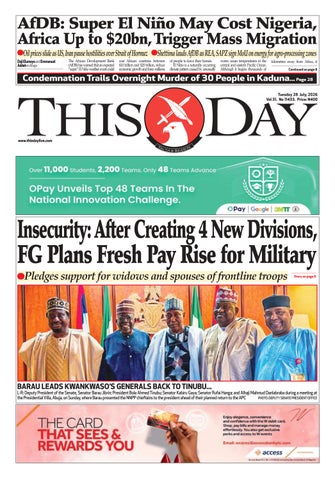
Pledges support for widows and spouses of frontline troops




Email: Goddy.egene@thisdaylive.com, 0803 350 6821, 0807 401 0580
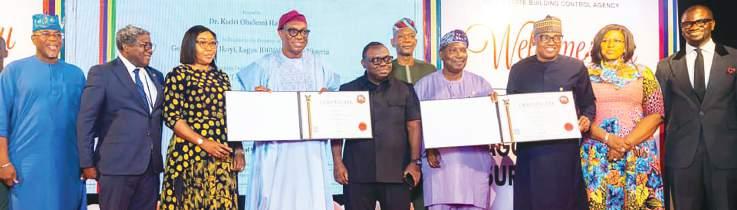
L-R: The Attorney General and Commissioner of Justice, Lagos State, Lawal Pedro (SAN); Special Adviser to the Lagos State Governor on e-GIS and Urban Development, Dr. Olajide Babatunde; a builder, Mrs. Florence Gbaye; Deputy Chief of Staff to the Lagos State Governor, Mr. Sam Egube; Commissioner for Energy and Mineral Resources, Lagos State, Mr. Biodun Ogunleye; Permanent Secretary, Office of Urban Development, Lagos State, Engr. Adeyemi Adetunji Adesanya; Special Adviser, Agriculture Food Systems to the Lagos State Governor, Dr. Oluwarotimi Fashola; Deputy Commissioner for Insurance, Mr. Ekerete Ola Gam-Ikon; Chairman of the Nigerian Insurers Association, Mrs. Ebelechkwu Nwachukwu; and CEO, VEDA Technology and Founder of Casava Microinsurance Limited, Mr. Bode Pedro, at the launch of Africa’s first digital building insurance scheme in Lagos, last Friday
Report: Africa’s $122.9bn food import bill exposes failure of agricultural transformation as 845 million Africans remain food insecure
Debisi Araba: waste-to-wealth innovation can add $211bn annually to Africa’s GDP
Insists transforming agriculture offers Africa biggest opportunity to simultaneously reduce poverty, create employment, improve food security
Says 41 of 46 African countries spend below African Union’s 1% benchmark of agricultural GDP on research and development
James Emejo and Deborah Adekoya in Abuja
President Bola Tinubu, yesterday, challenged African governments to make sustained investments in science, research, and innovation as the continent’s most potent weapons against food insecurity, climate shocks, and poor agricultural productivity.
Tinubu’s appeal came as a report by AKADEMIYA2063 declared that the continent’s record $122.9 billion agricultural import bill laid bare Africa’s inability to transform its vast agricultural potential into food security and economic prosperity.
Speaking at the opening of the 9th Africa Agriculture Science Week (AASW) and the 10th General Assembly of the Forum for Agricultural Research in Africa (FARA) in Abuja, Tinubu said Africa’s agricultural future would be determined less by the abundance of its natural resources than by the quality of its scientific institutions and its commitment to knowledge-driven development.
Represented by Minister of Agriculture and Food Security, Sena-
tor Abubakar Kyari, the president stressed that every nation that attained prosperity first succeeded in feeding its people through deliberate investments in agricultural research and innovation.
Tinubu said, “Before countries became prosperous, they first learned how to feed their people; and before they transformed agriculture, they invested in science.”
He said although Africa possessed vast arable land, rich biodiversity, and one of the world’s youngest populations, those natural advantages would remain underutilised unless translated into innovation, enterprise and economic opportunities.
He described the Africa Agricul- ture Science Week as more than a scientific conference, adding that it is the continent’s foremost platform for shaping agricultural policies, strengthening partnerships, and advancing scientific solutions capable of transforming Africa’s agrifood systems.
Tinubu said every discussion at the conference had the potential to redefine research priorities, acceler- ate innovation, and contribute to
building a more food-secure, resilient, and prosperous Africa.
He stressed that his administration had placed agriculture at the centre of its Renewed Hope Agenda because food security remained inseparable from national security, economic prosperity, and social stability.
According to him, Nigeria’s agricultural transformation agenda goes beyond increasing food production to building a modern, competitive, climate-resilient and market-oriented agrifood system anchored on science, technology, innovation, and private sector investment.
Tinubu said government was implementing wide-ranging reforms across the agricultural value chain, including expansion of irrigation and all-season farming, increased mechanisation, improved access to quality seeds and fertilisers, expanded agricultural finance, digital agriculture, and agro-industrial development.
He also underscored government’s commitment to strengthening national agricultural research institutes, universities, extension systems, and strategic partnerships,
insisting that sustainable agricultural transformation can only be achieved when public policies are backed by sound scientific evidence.
He said, “The encouraging progress already being recorded across several priority value chains reinforces our confidence that consistent investment, effective implementation and strong institutions will continue to improve productivity, create jobs, strengthen rural livelihoods and enhance national food security.”
The president stated that science remained the invisible force behind every successful agricultural revolution, stressing that improved crop varieties, climate-smart farming practices, irrigation technologies, and evidence-based agricultural policies are all products of years of scientific research.
He explained that research did not merely generate knowledge but also reduced uncertainty, strengthened investor confidence, informed policymaking and equipped farmers with technologies needed to thrive in an increasingly unpredictable environment.
Emmanuel Addeh in Abuja
Nigeria’s quest to expand access to affordable housing and deepen homeownership has received a major boost with the launch of the National Homeownership and Housing Development Campaign at the 20th Africa International Housing Show (AIHS) 2026 in Abuja.
The initiative, unveiled at the Transcorp Hilton Hotel, brought together policymakers, housing institutions, developers, investors,
and other stakeholders behind a common vision of making housing opportunities more accessible to Nigerians.
The campaign, an initiative of Know This Nigeria Network (KTNN), in collaboration with the Africa International Housing Show, was formally launched during the Legacy Edition of Africa’s premier housing and construction event.
The ceremony featured the screening of the campaign’s official promotional video before the convener
of AIHS, Festus Adebayo, invited the chief launcher and other distinguished stakeholders to officially unveil the initiative.
Speaking at the event, Adebayo described the campaign as a timely national intervention that would bridge the disconnect between available housing opportunities and millions of Nigerians seeking access to decent homes.
He said, “While governments and institutions continue to introduce housing programmes and financing
initiatives, many citizens and even sub-national governments remain unaware of the opportunities available to them.
“Thus, the National Homeownership and Housing Development Campaign would help bridge that gap by taking housing conversations, partnerships and opportunities directly to the states and communities, thereby creating stronger collaboration among governments, developers, financial institutions and development partners.”
Tinubu pointed to emerging technologies, including artificial intelligence, satellite applications, biotechnology, digital platforms and data science as game changers capable of transforming African agriculture.
Rather than depending solely on imported innovations, the president urged African countries to become global leaders in developing agricultural technologies tailored to the continent’s unique ecological conditions and production systems.
Tinubu called for sustained investments in national agricultural research systems, universities, innovation hubs, digital infrastructure, and scientific talent, while urging stronger collaboration among governments, researchers, development partners, private investors and farmers.
He emphasised that knowledge had become agriculture’s most valuable resource in the 21st century, adding that research must ultimately improve productivity, create jobs, restore degraded lands, strengthen climate resilience, improve nutrition and stimulate economic growth rather than merely ending in academic publications.
He also stressed that no African country could independently overcome mounting challenges posed by climate change, emerging pests and diseases, land degradation, food insecurity and market volatility.
According to him, the continent requires coordinated scientific responses, shared investments and stronger continental partnerships to address the growing threats confronting agriculture.
He urged participants to ensure that ideas generated during the conference translated into practical technologies, better government policies, profitable enterprises for young people and improved incomes for farmers.
Tinubu reaffirmed the federal government’s commitment to working with African countries and international partners to build an
agricultural sector that is productive, competitive, inclusive, resilient and innovation-driven.
He challenged the continent to evolve from being merely a consumer of agricultural technologies to becoming a globally respected centre for agricultural knowledge, scientific excellence and innovation. Meanwhile, in his keynote speech to the 10th General Assembly of the Forum for Agricultural Research in Africa (FARA), Public Policy, Innovation, and Strategy Specialist/Managing Director of AKADEMIYA2063, Dr. Debisi Araba, said Africa’s growing dependence on imported food, despite possessing nearly two-thirds of the world’s uncultivated arable land, reflected deep structural weaknesses that continued to undermine agricultural productivity, regional trade, and economic resilience.
AKADEMIYA2063 is a panAfrican, non-profit research and policy institution that supports African governments with data, research, and evidence-based policy solutions to help achieve the African Union’s Agenda 2063 development goals.
According to Araba, the continent’s food import bill surged to $122.9 billion in 2022 following disruptions caused by the RussiaUkraine war, exposing Africa’s vulnerability to external shocks. Although intra-African agricultural trade had tripled over the past two decades and remained resilient during both the 2008 global financial crisis and the COVID-19 pandemic, Araba stated that trade within the continent still accounted for less than 20 per cent of total agricultural trade, compared with more than 50 per cent in Asia.
He blamed much of the weak regional trade on restrictive sanitary and phytosanitary (SPS) regulations and other non-tariff barriers, adding they have an impact equivalent to imposing a 49 per cent tariff on agricultural products traded across African borders.
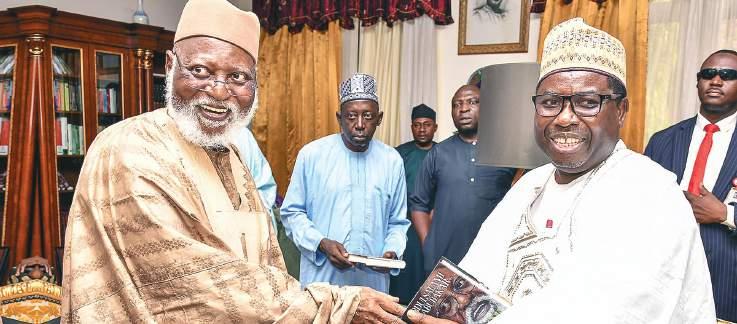
L-R: Former Head of State/Chairman, National Peace Committee (NPC), Gen. Abdulsalami Abubakar (rtd), with Chairman, Independent National Electoral Commission (INEC), Prof. Joash Amupitan, during the courtesy visit by the INEC Chairman to the former Head of State, at his residence in Minna, Niger State, on Saturday
Addeh
Nigeria’s upstream petroleum service industry recorded a resilient performance in the first quarter of 2026, with the Nigerian Upstream Petroleum Regulatory Commission (NUPRC) generating N1.24 billion in revenue from industry service permits.
According to the commission’s Q1 2026 Upstream Service Industry
Newsletter, the period was characterised by stable rig operations, sustained licensing activities and ongoing regulatory reforms aimed at improving transparency, operational efficiency and investor confidence in the sector.
Specifically, the report showed that revenue generated under the Oil and Gas Industry Service Permit (OGISP) scheme stood at N1.237 billion during the quarter, with February accounting
for the highest monthly earnings of N574.1 million. The specialised services category contributed about 90 per cent of total revenue.
The commission said that although permit volumes moderated compared to the previous quarter, the trend reflected normal regulatory cycles rather than a slowdown in industry activity.
It stated that upstream operations remained robust, supported by
consistent rig activity of between 72 and 73 rigs, the issuance of 49 Upstream Monitoring and Regulation (UMR) licences, processing of 7,942 OGISP permits and a record gas output of 2.2 billion cubic feet by key operators.
The NUPRC disclosed that the 49 UMR licences covered rig, hydraulic workover and vessel certifications, with February recording the highest licensing activity at 24 approvals,
Chief Executive Officer of Guaranty Trust Holding Company (GTCO), Mr. Segun Agbaje, yesterday, called for a shift in Nigeria’s autism advocacy, from creating awareness to equipping families, schools, and workplaces with the skills needed to support and cope with people living on the autism spectrum.
Speaking at the opening ceremony of the two-day 16th edition of GTCO’s Autism Conference in Lagos, themed, “Acceptance in Action,” Agbaje stated that the organisation’s 16-year advocacy campaign had largely succeeded in breaking the culture of denial surrounding autism.
He stressed that the next challenge was ensuring meaningful support and inclusion for affected individuals and their families.
Addressing the theme of the conference, Agbaje said while the ideal of full acceptance was commendable, the realities faced by many people living with autism made it a far more complex issue.
He stated, “I think that over a 16-year period, we have done a decent job of creating awareness.
“Today, more families are willing to
acknowledge that they have children or adults living on the spectrum, even if they do not fully understand why.”
According to him, increasing awareness has also led to the discovery of older adults, including people in their 50s, who are only now realising that they may have been on the autism spectrum after years of struggling academically and socially without a diagnosis.
Agbaje said while society continued to advocate acceptance, greater emphasis should be placed on helping families and communities learn how to live with and support people on the spectrum.
He explained, “For me, after awareness, I would have thought that learning how to cope and learning how to live with people on the spectrum is the next thing we have to deal with.”
He acknowledged that integrating individuals with autism into every workplace might not always be feasible, explaining that the level of support required differed from one individual to another.
He added, “There will be a lot of people who cannot work in Guaranty Trust simply because it would be too difficult for them and too difficult
for the organisation.
“There will also be others who can. What we must do is learn how to live with people on the spectrum and help them cope.”
The GTCO chief described autism advocacy as a journey without a destination, stating that although progress has been made in awareness and support, there is still no cure for autism.
He explained that the focus should remain on improving understanding, strengthening support systems, and helping families navigate the challenges associated with the condition.
He said, “Until we find a cure, it remains a journey. The journey means we will understand better what we are dealing with. It means we will teach people how to cope better.
Total rig activity rises by 22.6%
representing almost half of the total issued during the quarter. Rig licences accounted for about 69 per cent of all approvals, underscoring sustained investment in drilling operations and asset certification.
On drilling activity, the commission reported that Nigeria maintained stable rig operations throughout the quarter, with active rigs rising marginally from 72 in January and February to 73 in March. Land operations remained the dominant segment with 52 rigs throughout the quarter, while offshore rigs increased from 11 to 12 by March. Swamp operations remained unchanged at nine rigs.
Compared to the corresponding period of 2025, the total rig count rose by 22.6 per cent, which the regulator described as evidence of growing upstream activity and sustained investment in exploration and production.
“Q1 2026 reflected stable upstream service sector performance, supported by consistent rig activity (72–73 rigs), sustained licensing (49 UMR licenses), and strong OGISP revenue generation of N1.23 billion. While
permit volumes moderated from Q4 2025, this aligns with normal regulatory cycles rather than a decline in activity.
“Revenue peaked in February before normalising in March, with specialised services driving most earnings. A 22.6 per cent year-on-year increase in rig activity highlights continued operational momentum. Key policy reforms, licensing advancements, and strategic collaborations during the quarter further strengthened transparency, efficiency, and investor confidence within the sector,” it stated.
The report also revealed that 7,942 OGISP permits were processed during the quarter, representing a 22.3 per cent decline from the preceding quarter. However, the commission stressed that major and specialised permit categories continued to account for more than 90 per cent of approvals, indicating sustained demand for critical upstream services.
In addition, the quarter witnessed the signing of an agreement for an 11,700 square kilometre 3D seismic survey under Petroleum Exploration Licence 5 (PEL5).
Michael Olugbode in Abuja
Nigeria has taken a significant step towards building a homegrown electric vehicle (EV) industry, with indigenous manufacturer, Electric Motor Vehicle Company (EMVC), and the Federal Polytechnic, Offa, entering into a landmark partnership that could reshape the country’s automotive manufacturing landscape and create a pipeline of skilled engineers for the clean energy economy.
The collaboration, the first between a Nigerian-owned electric vehicle
manufacturer and a polytechnic, comes at a time when Africa’s largest economy is seeking to diversify away from oil dependence, deepen local manufacturing, and reduce its heavy reliance on imported vehicles and automotive components.
Beyond producing electric vehicles, the partnership is designed to address one of Nigeria’s biggest industrial challenges—developing the technical workforce and research capacity required to sustain an indigenous automotive industry.
Under the agreement, EMVC and
the Federal Polytechnic, Offa, will jointly design and develop electric vehicles suited to Nigeria’s terrain, conduct research on battery technology, including battery cell assembly and battery management systems, and promote local sourcing and fabrication of components.
The institutions also planned to establish a Centre of Excellence in Electric Mobility at the polytechnic, develop specialised curricula in electric vehicle engineering and renewable energy systems, create internship and apprenticeship programmes,
and deploy charging infrastructure on campus.
The initiative is expected to expose students to real-world engineering and manufacturing while encouraging innovation, patent development, and entrepreneurship in the emerging electric mobility sector.
Speaking on the partnership, EMVC Chief Executive Officer, Prince Mustapha Mona Audu, said Nigeria’s ambition to become an electric vehicle manufacturing hub would depend as much on developing skilled manpower as expanding production capacity.
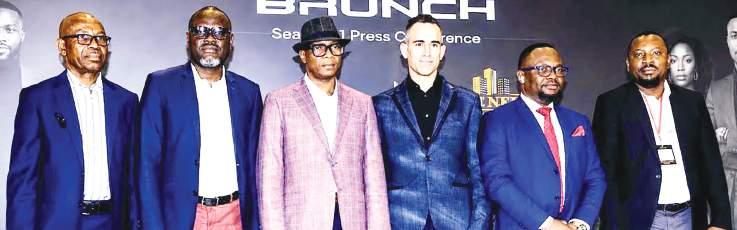
L-R: Arik Air Communications Manager, Mr. Ola Adebanji; Head, Brand and Communications, Veritasi Homes, Mr. Abidemi Alfred; Executive Director,
Senior Business Development Advisor for Africa, Betano, Mr. Daniel Lamberti; Chief Operating Officer, GIG Mobility, Mr. Jude Odum;
Sales Manager, Nigerite Limited, Mr. Calistus Nduse, at the Betano-The Next Titan Pre-Season Brunch of Season 11 Press Conference held in Lagos...recently
Says sector needs action, not more policies to drive industrial growth; document alone won’t save businesses Urges CBN to impose interest rate caps on digital lending platforms, claims digital lenders charging over 300% annual interest, trapping borrowers in debt
Chairman, Alliance for Economic Research and Ethics (AERE), Hon. Dele Oye, has warned that Nigeria’s ambitious Industrial Policy (NIP2025) may fail to achieve its desired objectives unless government shifts its focus from policy formulation to disciplined implementation.
In a statement yesterday, Oye commended the federal government’s renewed industrialisation drive, but said what Nigerian businesses urgently required was not another comprehensive policy document, but faithful execution of existing commitments capable of addressing the daily realities confronting millions of small businesses.
The industrial policy framework, the brainchild of Minister of State for Industry, Senator John Owan Enoh, was launched by President Bola Tinubu in February.
It offered a comprehensive framework that reaffirmed national resolve to diversify the economy, create inclusive prosperity, and secure Nigeria’s rightful place as a leading industrial hub in Africa and the wider global economy.
In the statement, Oye said although NIP2025 was well-designed, evidencedriven, and aligned with continental initiatives, such as the African Continental Free Trade Area (AfCFTA), its success will ultimately depend on whether it reached entrepreneurs struggling to keep their businesses afloat.
The advice came as Oye separately urged the Central Bank of Nigeria (CBN) to impose interest rate caps on digital lending platforms, warning that many Nigerians are being trapped in a vicious cycle of debt by loan applications charging annualised interest rates exceeding 300 per cent.
Oye said the country’s economic structure had evolved into one that disproportionately punished lowincome households, forcing millions of Nigerians to pay significantly more than wealthier citizens for basic necessities, including food, healthcare, accommodation, and access to credit.
In a policy paper titled, “The Mathematics of Marginalisation: Decoding Nigeria’s Poverty Premium,” Oye described the situation as an economic distortion where poverty itself had become an additional financial burden rather than merely a social condition.
Nevertheless, on the NIP2025, Oye said, “Senator John Owan Enoh’s advocacy for the NIP2025 is commendable. The policy itself is comprehensive, evidence-based and aligned with continental frameworks such as the AfCFTA. But Nigerian SMEs do not need more policy documents. They need implementation fidelity.”
Oye stated that Micro, Small and Medium Enterprises (MSMEs), which accounted for over 46 per cent of the country’s Gross Domestic Product (GDP) and about 88 per cent of employment, remained the backbone of the economy, despite operating under
extremely harsh conditions.
He stated that unless government bridged the gap between policy intentions and practical delivery, the country’s industrialisation targets would remain largely aspirational.
Among other things, NIP2025 seeks to raise manufacturing’s contribution to GDP to 15 per cent by 2030 and 25 per cent by 2035 through increased industrial financing, export diversification, technology development, industrial clusters, and job creation.
However, Oye stressed that the everyday experience of Nigerian entrepreneurs painted a completely different picture.
He pointed to alarming business
mortality rates, saying research indicates that as many as 95 per cent of SMEs fail within their first five years, while about eight million businesses reportedly shut down between January 2023 and June 2024.
He described the situation as an existential threat not only to entrepreneurs but also to Nigeria’s long-term economic resilience.
According to him, persistent inflation, exchange rate volatility, high energy costs, and limited access to affordable finance have combined to push thousands of businesses to the brink.
Although government interventions had continued to promise single-digit
loans, he observed that only a small proportion of SMEs could actually access formal credit, while lending rates from commercial banks remained far beyond what small businesses could sustain.
He said with CBN’s Monetary Policy Rate (MPR) currently at 26.5 per cent, commercial lending rates had climbed above 35 per cent, making productive investment almost impossible for many entrepreneurs.
Rather than investing in expansion, he said businesses were forced to channel available funds into paying rent, buying fuel, replacing inventory, and meeting other operating expenses simply to survive.
Oye also identified Nigeria’s electricity challenge as another major obstacle undermining industrial competitiveness, stating that businesses have continued to rely heavily on private power generators because of unreliable public power supply, with energy expenses consuming significant portions of operating revenues.
According to him, the structural bottlenecks have continued to weaken productivity despite successive government interventions.
Oye pointed out that Nigeria’s industrial challenge was no longer the absence of policies but the inability to implement them consistently and transparently.
Laleye Dipo in Minna
National Population Commission (NPC) says no fewer than five million births are recorded annually in the country, as the commission commenced the registration of births and deaths.
However, NPC said majority of new births were not registered.
Chairman of NPC, Alhaji Aminu Yussuf, made the disclosure at the commencement of registration of births and deaths in Minna, on Monday.
Yussuf said birth registration coverage in the country stood at 57 per cent while death registration was below 20 per cent.
“These gaps deprive many Nigerians of legal identity and limits the availability of reliable data needed for effective national planning,” Yussuf said.
Speaking through Mallam Musa Sabo, a Director in the Niger State Office of the commission, Yussuf declared that to address the challenge,
NPC had established 4,011 functional registration centres across the 774 local government areas in the country, in addition to planning to expand the network to about 8,000.
He disclosed that the action aligned with the nationwide full digital birth and death registration under the ECRVS system, which he said “will strengthen civil registration, enhance the generation of vital statistics and ensure that births and deaths occurring in Nigeria are captured through
Michael Olugbode in Abuja
The Independent Corrupt Practices and Other Related Offences Commission (ICPC) has intensified its preventive anti-corruption campaign, unveiling three follow-up assessment reports that expose lingering governance gaps in Nigeria’s health and education sectors while urging sweeping institutional reforms to strengthen accountability and service delivery.
The reports, presented in Abuja on Monday, reviewed the implementation of earlier anti-corruption recommendations issued to the National Health Insurance Authority (NHIA), the National Primary Health Care Development Agency (NPHCDA), the Universal Basic Education Commission (UBEC) and selected State Universal Basic Education Boards (SUBEBs).
Speaking at the presentation,
ICPC Chairman, Dr. Musa Aliyu (SAN), said the exercise underscored the Commission’s growing emphasis on preventing corruption by strengthening institutional systems rather than relying solely on prosecutions.
Aliyu explained that the Commission’s mandate under the Corrupt Practices and Other Related Offences Act empowers it to identify vulnerabilities within public institutions and recommend
reforms capable of preventing corruption before it occurs.
He said the follow-up assessments measured the extent to which previous recommendations had been implemented, identified areas of progress, highlighted unresolved weaknesses and proposed further reforms to improve institutional performance.
“The value of system studies and corruption risk assessments lies not merely in producing
reports but in implementing their recommendations. Their true impact is measured by improvements in governance, accountability, transparency, operational efficiency and service delivery,” he said.
According to him, the reviews were not designed to apportion blame but to encourage continuous institutional improvement and reinforce accountability across government agencies.
a modern, efficient and digitally enabled registration system”.
Yusuf declared, “It is my privilege to formally announce the full commencement of the digital registration of births and deaths on the Vital reg platform under the electronic Civil Registration and Vital statistics (E-CRVS) system.
“Today’s announcement marks the next critical step in our collective effort to build a modern, efficient and technology driven civil registration system that meets international standards and supports Mr. President’s Renewed Hope Agenda.”
He said, “This digital innovation is one of the most transformative reforms in the history of civil Registration in Nigeria.
“It reflects the commission’s unwavering commitment to leverage technology, to improve service delivery, strengthen data integrity and guarantee that every birth and every death occurring in Nigeria is documented accurately and securely.”
The chairman stressed that civil registration “is far more than an administrative process”, saying it contributes to reliable national statistics that guides public policy, resource allocation, and development planning.
Some newly born babies were registered at the forum.
Sunday Aborisade in Abuja
The Senate yesterday moved to quell growing public concerns over the proposed amendment to the Federal Road Safety Commission (FRSC) (Establishment) Act, insisting that the bill before the National Assembly does not seek to prohibit street preaching or introduce any fresh offence against religious activities in public places.
Rather, the upper chamber clarified that the provision criminalising preaching and hawking in commercial vehicles has been part of the FRSC Act since 2007 and is only being retained in the current amendment process.
The clarification followed widespread public debate and criticism triggered by reports suggesting that the amendment bill sought to outlaw public preaching, a claim the Senate
described as false and misleading.
This is contained in a statement issued on Monday by the Directorate of Media and Public Affairs in the Office of the Leader of the Senate, Senator Opeyemi Bamidele.
The Senate explained that the existing law, pursuant to Section 10(4) of the Federal Road Safety Commission (Establishment) Act, 2007, and Regulation 220 of the National Road Traffic Regulations (NRTR) 2012, already classifies preaching and hawking inside commercial vehicles as traffic offences.
According to the statement, the provision has existed in the principal legislation since the enactment of the Act in 2007, where it was listed as Item 36 of the Second Schedule.
It added that under the proposed amendment, the provision has merely been renumbered as Item 49 in the Second Schedule without
any substantive alteration.
“The offences have been part of the Act before the current amendment,” the Senate said.
The statement further read, “It is not a new provision introduced by the amendment bill. Entrenched as Item 36 in the Second Schedule of the Act, preaching and hawking in a commercial vehicle are not new provisions in our legal system.
“The provisions have been part of the Act as far back as 2007. However, it is now listed as Item 49 in the Second Schedule of the Act.”
The Senate stressed that the objective of the provision is strictly to enhance road safety by preventing distractions capable of endangering passengers, drivers and other road users.
It maintained that the legislation has nothing to do with restricting constitutionally guaranteed freedom
of worship or freedom of expression.
“The Bill, therefore, does not outlaw preaching on the streets as some interests have claimed in different fora. It is about the safety of commuters and other road users and not intended to undermine any religious activity in the public space,” the statement added.
The Senate also clarified misconceptions surrounding the sponsorship of the bill, stating that the amendment was not initiated by the Leader of the Senate, Senator Opeyemi Bamidele, contrary to reports circulating on social media and other platforms.
It explained that the legislation originated from the House of Representatives, where amendments were first effected, and was subsequently transmitted to the Senate for concurrence in line with constitutional requirements
governing the passage of federal legislation.
He said, “The Bill is not an initiative of the Leader of the Senate, Senator Opeyemi Bamidele. Rather, it is a concurrence bill first amended by the House of Representatives.
“As required by the 1999 Constitution, the Bill requires the concurrence of the Senate before it can become effective,” the statement said.
The upper chamber further appealed to members of the public and critical stakeholders to refrain from drawing premature conclusions, noting that the legislative process remains ongoing and provides ample opportunities for public participation.
According to the Senate, interested groups and concerned Nigerians are free to submit observations, memoranda and recommendations through the appropriate legislative channels before the amendment
process is concluded. It reaffirmed the National Assembly’s commitment to transparency, public engagement and democratic lawmaking, assuring Nigerians that every legitimate concern would receive due consideration before the bill is passed for presidential assent.
AFDB: SUPER EL NIÑO MAY COST NIGERIA, AFRICA UP TO $20BN, TRIGGER MASS MIGRATION
changes global weather patterns, often bringing severe drought to some parts of the continent and heavy rainfall and flooding to others.
Speaking to Reuters, the bank’s Director for Climate Change and Green Growth, Anthony Nyong, said countries most affected by the extreme weather could see their Gross Domestic Product (GDP) decline by between 1 and 2 per cent on average.
Nyong said the worsening climate conditions would threaten food and water supplies, damage infrastructure and place additional pressure on government finances, especially as many countries are already struggling with debt.
He explained that governments often divert money meant for health, education and infrastructure projects to respond to climate disasters, creating what he described as a “climate finance trap.”
The AfDB had projected in May that Africa’s economy would grow by 4.2 per cent in 2026 and 4.4 per cent in 2027, assuming global geopolitical tensions ease. However, those projections were made before the latest warnings of a possible “super” El Niño.
The previous El Niño event between 2023 and 2024 caused severe drought across parts of Africa,
leading to poor harvests, rising food prices and record sea-level increases along the continent’s coastline.
The AfDB estimates that African farmers have already lost about $330 million in income this year because of climate-related impacts, while the fishing sector is also expected to suffer as warmer sea temperatures reduce fish stocks.
Nyong said Africa’s climate adaptation funding needs, previously estimated at about $50 billion annually, could now rise to as much as $100 billion because of the expected strength of the El Niño event.
He added that the bank was preparing to review its projects in September and could restructure investments to help affected countries. The AfDB also plans to work with international climate funds, including the Green Climate Fund, the Adaptation Fund and other financing mechanisms, to mobilise additional support.
Nyong warned that countries such as Sudan, South Sudan, the Democratic Republic of Congo, Somalia, Mali, Burundi and Nigeria could face particularly severe humanitarian challenges, including food shortages and displacement.
He said maize prices could double in some areas, increasing pressure on vulnerable communities
and triggering large-scale migration as people search for food, water and safer living conditions.
He stressed that investing in climate resilience before disasters occur would be far cheaper than paying for recovery afterwards.
“It is cheaper to build a fence around a precipice than to pay for expensive ambulances to wait at the bottom for people to fall,” Nyong said. “So let’s build a fence.”
Meanwhile, oil prices fell sharply yesterday as traders reacted positively to a pause in hostilities between the United States and Iran, easing fears of further disruptions to global crude supplies through the strategically important Strait of Hormuz.
Brent crude, Nigeria’s benchmark and the international oil price reference, dropped 9 per cent to below $88 a barrel during early trading, reversing much of last week’s gains when prices briefly surged to $100 a barrel following attacks by the Iran-backed Houthis on Saudi Arabian oil tankers in the Red Sea. By Monday evening, Brent had recovered slightly to trade at about $90 a barrel.
The retreat in oil prices followed signs that the 13-day conflict between the US and Iran may be easing, raising hopes that diplomacy could replace military action and reduce the
threat to oil exports from the Gulf.
Iran said it had halted what it described as retaliatory attacks after two nights without US missile strikes. The development came after the US ambassador to the United Nations, Mike Waltz, disclosed that President Donald Trump had decided to suspend the bombing campaign to allow more time for diplomatic efforts.
Separate reports also suggested that senior US military officials had advised Trump that the air campaign had reached the limits of its effectiveness.
The developments boosted market confidence that tensions in the Middle East could ease after months of disruptions to shipping routes. Since late February, the conflict has affected the movement of oil and gas through the Strait of Hormuz and disrupted vessels transiting the Bab al-Mandab Strait from the Red Sea.
Analysts at Deutsche Bank, led by Jim Reid, said the nearly 10 per cent jump in Brent crude prices last week had heightened concerns that the global economy could face a prolonged inflation shock, forcing central banks, including the US Federal Reserve, to maintain a more aggressive stance on interest rates.
Higher oil prices typically increase energy costs, fuel inflation and place
additional pressure on central banks to raise borrowing costs. Expectations of tighter monetary policy have also pushed up government bond yields in recent weeks, reflecting investor concerns over persistent inflation.
Meanwhile, Vice President Kashim Shettima has applauded the collabo- ration among the AfDB, the Rural Electrification Agency (REA) and the Special Agro-Industrial Processing Zones (SAPZ) programme aimed at boosting the provision of affordable energy in the centres scattered across the country.
He particularly commended the commitment and resourcefulness of the REA management, saying the SAPZ programme, if fully operationalised, has the potential of transforming agricultural productivity across the country and improving the wellbeing of rural communities.
Shettima spoke yesterday in Abuja during the signing of the Memorandum of Understanding (MoU) between REA and SAPZ for the provision of affordable energy in all the SAPZ sites across the country.
The agreement covers joint as- sessment, technical assistance, and energy deployment across the SAPZ sites under REA’s Desert To Power (DTP) programme.
The Vice President, who was represented by the Deputy Chief
Linus Aleke in Abuja
The federal government has announced plans for a new pay rise for military personnel as part of ongoing efforts to improve their welfare, boost morale, and strengthen the country’s security architecture.
The government said the anticipated salary adjustment was intended to recognise the sacrifices and dedication of members of the armed forces while enhancing their motivation and overall well-being.
Minister of Defence, General Christopher Musa (rtd), disclosed the plan while delivering the keynote address at a one-day training and financial empowerment workshop for widows and wives of service personnel serving in theatres of operation.
The event was organised by the Ministry of Defence, in collaboration with the Small and Medium Enterprises Development Agency of Nigeria (SMEDAN), in Abuja.
The federal government had in recent months stepped up efforts to
tackle insurgency, banditry, and other violent crimes through a combination of expanded military operations, force restructuring, and increased investment in security assets.
As part of the strategy, President Bola Tinubu recently approved the establishment of four new Nigerian Army divisions, expanding the Army from eight to 12 divisions. The new formations were 5 Division, Makurdi, covering Benue, Nasarawa and Kogi states; 9 Division, Ilorin, covering Kwara and Niger states; 10 Division, Jalingo, covering Taraba and Adamawa states; and 83 Division, Benin City, covering Edo, Delta and Bayelsa states.
The expansion was expected to improve rapid response capabilities, deepen military presence in vulnerable areas, and strengthen coordination of counterinsurgency and internal security operations.
The government had also continued to establish new brigades, battalions, forward operating bases, and barracks in strategic locations, particularly in the North-east and
North-west, to support sustained operations against Boko Haram, ISWAP, bandits, and other armed groups.
In addition, the government had continued to procure military hardware, including attack helicopters, armoured personnel carriers, Mine Resistant Ambush Protected (MRAP) vehicles, artillery systems, surveillance drones, and other intelligence-gathering equipment to enhance the operational effectiveness of the armed forces.
Besides, the army is set to recruit an additional 28,000 personnel to strengthen its manpower, while increased funding had been directed towards training, logistics, and troop welfare, as part of the government’s strategy to restore security, reclaim occupied communities, and create conditions for economic and social development in affected regions.
At the event Musa said, “When I was Chief of the Defence Staff, our soldiers were receiving N49,000. Two years ago, I made efforts to have it increased to N100,000, and
that was achieved.
“We are, however, still making efforts for it to be increased further. We know our president is a listening father who will ensure that our troops are well remunerated because they are sacrificing so much. I am confident that Mr President will soon announce another increase in the salaries of our personnel.
“So, we should continue to pray for our president, our leaders, and our troops on the front line.”
According to Musa, through the Renewed Hope Agenda, the president has continued to implement policies that promote enterprise development, strengthen skills acquisition, and broaden access to economic opportunities.
“His firm belief that entrepreneurs are the engine of economic growth continues to inspire programmes that enable Nigerians to build sustainable businesses and improve their quality of life,” he explained.
The minister presented a cheque for N250 million to the beneficiaries of the capacity-building programme.
Earlier, Director-General and Chief Executive Officer of SMEDAN, Charles Odii, pledged the government’s continued support for widows and spouses of frontline troops.
Odii said, “To our men on the battlefield protecting Nigeria, we want you to know that we appreciate your sacrifice. We will continue to support your wives and spouses by empowering them to become entrepreneurs who can sustain their families while you defend the nation.
“We appreciate your service and will ensure that your sacrifices are not in vain.”
Odii also revealed that one of Tinubu’s early interventions was the allocation of N200 billion to support enterprises across Nigeria, comprising N75 billion in single-digit interest loans for manufacturers, N75 billion for small businesses, and N50 billion in grants for nano businesses.
He explained that nano businesses were enterprises with fewer than three employees and annual turnover of less than N3 million.
of Staff (DCOS) to the President, Senator Ibrahim Hadejia, said the federal government welcomed the partnership and will encourage more collaborations that will help unlock the country’s potentials across all sectors but particularly in the agricultural sector.
Earlier, Minister of Agriculture, Senator Abubakar Kyari, said the collaboration with the AfDB and the Federal Ministry of Power through the REA was commendable and was the beginning of greater achievements in the agricultural sector given the potential for growth.
He expressed optimism that the SAPZ, when fully operationalised, will address numerous challenges confronting farmers and other stakeholders in the agricultural sector.
He noted that beyond bridging the infrastructure gap in the agric sector, the programme is designed to improve the livelihoods of farmers and people in rural communities in line with the Renewed Hope Agenda.
On his part, Permanent Secretary in the Federal Ministry of Power, Mahmuda Mamman, pledged the ministry’s dedication to the actualisation of government’s aspirations in the power sector, stating the ministry’s full commitment to objectives of the collaboration between the REA and SAPZ.
In his presentation of REA’s project portfolio across different sectors, Managing Director of the agency, Abba Aliyu, said the organisation has a proven track record of delivering on game-changing projects with 424 completed mini-grid electrification projects and 693 others ongoing across the country.
He said the targeted impact of the proposed partnership under the SAPZ programme is 25,000 households, 13 health facilities and directly impacting over 103,000 persons in each designated area.
In his remarks, the National Programme Coordinator of the SAPZ, Dr Kabir Yusuf, said the proposed partnership with the REA will address energy supply, which is one of the most critical challenges confronting the successful implementation of the programme across the country.
He expressed optimism that the deployment of mini-grids through the proposed initiative led by the REA, the economies of the production centres will improve, while adjourning communities in the SAPZ sites across the country will enjoy more sustainable power supply.
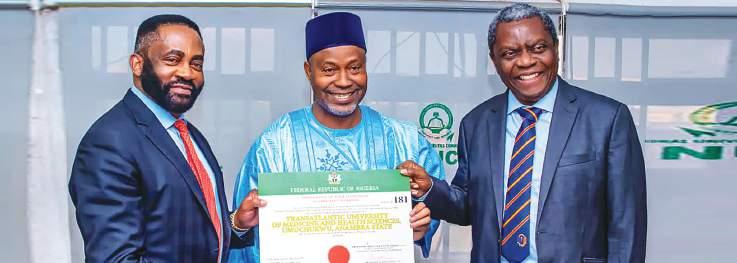
PRESENTATION OF OPERATIONAL LICENCE TO TRANSATLANTIC UNIVERSITY OF MEDICINE...
The Economic Community of West African States (ECOWAS) Parliament has raised concern over the dominance of the informal sector in West Africa, warning that nearly 90 per cent of economic activities and at least 60 per cent of the region’s workforce remain outside the formal economy.
The ECOWAS parliament said the situation was undermining economic growth, job creation, and regional competitiveness.
The parliament called for farreaching policy reforms to formalise and strengthen Micro, Small and Medium Enterprises (MSMEs), describing the sector as central to achieving economic transformation, reducing poverty, and addressing
insecurity across the sub-region.
The warning came at the opening of a Joint Committee meeting of the ECOWAS Parliament in Cotonou, on Monday, where lawmakers, policy experts, private sector operators, and development partners began deliberations on strategies to integrate millions of informal businesses into the formal economy.
Delivering the opening remarks
on behalf of the Joint Committee on Industry and Private Sector, Macroeconomic Policy and Economic Research, Administration, Finance and Budget, and Public Accounts, Co-Chairperson, Hon. Alhagie Darbo, said the statistics reflected both the entrepreneurial resilience of West Africans and the failure of existing policies to support business growth.
According to Darbo, while MSMEs
Founder and Group Chairman of Heirs Holdings, Mr. Tony Elumelu, has urged global leaders to move beyond aid-based engagement with Africa, insisting that the continent’s young population requires jobs, electricity, and infrastructure, not handouts, to unlock its economic potential.
Speaking at the 2026 Africa Forward Summit, convened by Kenyan President William Ruto and French President Emmanuel Macron, Elumelu told the audience of heads of state, investors, and business leaders that Africa was seeking partnerships built on equality and shared value rather than patronage.
He maintained that the continent’s development would be driven by strategic investments in infrastructure and power, with the private sector playing a leading role in mobilising the capital required for sustainable economic growth.
“We welcome true partnership, partnerships of substance and based on equity where Africans and African solutions catalyse Africa’s future,” Elumelu said.
According to him, reliable electricity and critical infrastructure remain the foundation for industrialisation, job creation, and poverty reduction across the continent.
Elumelu stated, “The private sector is what will help us mobilise capital to drive investment in infrastructure, investment in electricity. These are
two critical requirements for the economic prosperity and development of Africa.
“If we create the right operating environment, we will create jobs for our people. We will alleviate poverty and deliver growth and prosperity.”
Addressing Africa’s demographic advantage, Elumelu stressed that with more than 65 per cent of the continent’s population under the age of 35, governments and development partners should prioritise creating opportunities rather than expanding aid programmes.
He explained, “In Africa, we have a young population. There is no room for victim mentality.
“Our youth do not need handouts; they need jobs, they need improved access to electricity, they need to join the internet.
“What is important is providing this enablement, this infrastructure requirement, so that our young ones can realise their potential.”
Elumelu also highlighted the impact of the Tony Elumelu Foundation (TEF), stating that it has provided entrepreneurship training to 2.5 million young Africans and funded more than 27,000 entrepreneurs across all 54 African countries, making it one of the continent’s largest entrepreneurship support platforms.
He encouraged African nations to embrace credible international partners willing to invest in the continent’s long-term growth.
Elumelu said, “It is a good place to be at, as Africans, now. We should embrace those who want to help us catalyse growth in Africa. And let us not forget Africa is the fastest growing region globally and it is not just demographics.”
Calling for a shift in thinking, Elumelu stated, “In the 21st century, the mind-set must change. It should be a mind-set that embraces economic prosperity and development, a mind-set that creates the environment that will help us alleviate poverty in Africa, create jobs for our young people.”
His participation at the summit reflects Heirs Holdings’ broader strategy of investing in sectors considered critical to Africa’s transformation, including power, financial services, healthcare, hospitality and technology.
The Africa Forward Summit concluded with renewed commitments from governments, development institutions, and private sector leaders to strengthen collaboration aimed at accelerating inclusive economic growth and enhancing Africa’s role in the global economy.
remain the backbone of local economies by creating jobs, driving innovation, promoting entrepreneurship, empowering women and youths, and facilitating cross-border trade, the overwhelming majority continue to operate informally, preventing them from accessing finance, technology, markets, business support services and legal protection.
“It is estimated that the informal sector accounts for nearly 90 per cent of economic activities and employs not less than 60 per cent of our labour force across member states,” Darbo said.
He added, “While this demonstrates the entrepreneurial spirit of our people, it also highlights the urgent need to create enabling policies that encourage formalisation, improve productivity and integrate MSMEs into regional and continental value chains.”
He stressed that formalising small businesses was no longer just an economic objective but a strategic necessity for poverty reduction, sustainable development, and regional integration.
Darbo urged ECOWAS member states to dismantle barriers limiting the growth of MSMEs through harmonised policies, improved access
to finance, digital transformation, stronger productive capacity, and greater participation in regional value chains under both the ECOWAS Trade Liberalisation Scheme (ETLS) and the African Continental Free Trade Area (AfCFTA).
He stated that the objectives aligned with ECOWAS Vision 2050, the regional bloc’s long-term development agenda aimed at building a peaceful, prosperous, and fully integrated West Africa driven by inclusive economic growth.
Declaring the meeting open, Speaker of the ECOWAS Parliament, Hon. Hadja Memounatou Ibrahima, represented by Second Deputy Speaker, Hon. Adjaratou Coulibaly, linked economic empowerment to the region’s growing security challenges. Ibrahima stated that expanding opportunities for women and young people through thriving MSMEs would help reduce unemployment and address some of the underlying drivers of insecurity confronting several ECOWAS member states.
According to her, empowering citizens to participate meaningfully in economic activities is one of the most effective long-term strategies for promoting peace and stability in the region.
Nume Ekeghe
United Bank for Africa (UBA) Plc has strengthened its standing as one of Africa’s leading financial institutions after clinching two major honours at the 2026 Euromoney Awards for Excellence, emerging as Nigeria’s Best Bank for Retail and Nigeria’s Best Bank for ESG (Environmental, Social and Governance).
The bank in a statement noted that the awards was presented recently at The Peninsula London in the United Kingdom, celebrates banking institutions that demonstrate outstanding financial performance, innovation, customer impact and
sustainable business practices.
The double recognition underscores UBA’s leadership in driving sustainable finance while expanding access to innovative banking solutions for millions of customers across Africa.
According to Euromoney, UBA distinguished itself through significant strides in environmental, social and governance (ESG) performance, including the launch of a Green Financing Facility to support households and businesses transitioning to renewable energy, a N5 billion financing programme in partnership with the Bank of Industry to empower womenowned businesses, and its long-term
commitment to achieving net-zero emissions by 2050.
The publication also highlighted UBA’s efforts to embed sustainability within its operations through the deployment of solar-powered energy solutions across 50 branches and comprehensive ESG capacitybuilding initiatives that have trained more than 16,000 employees across the Group.
In the retail banking category, Euromoney recognised UBA’s continued expansion as one of Africa’s largest retail banking franchises. The Bank grew its customer base to over 37 million by the end of 2025, while retail revenue more than quadrupled
to N429.5 billion.
The awards also acknowledged UBA’s continued digital innovation, particularly the enhancement of its award-winning AI-powered chatbot, LEO, which became Africa’s first artificial intelligence banking platform to facilitate cross-border money transfers in local currencies through the Pan-African Payment and Settlement System (PAPSS).
Commenting on the recognition, UBA’s Group Managing Director/ Chief Executive Officer, Oliver Alawuba, described the awards as a validation of the Bank’s unwavering commitment to creating value for customers while advancing sustainable development across Africa.
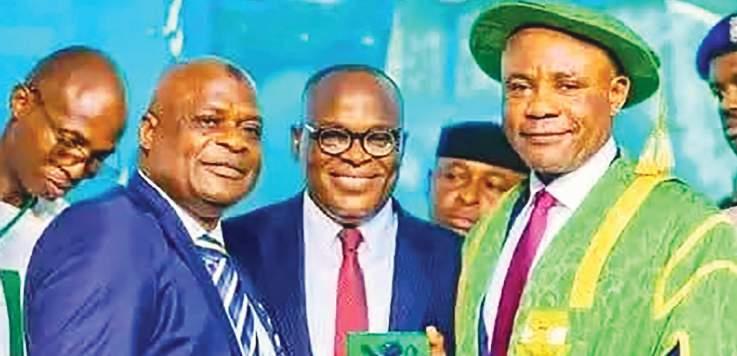
R-L: The Governor of Enugu State/55th Convocation Lecturer, University of Nigeria, Nsukka, Dr. Peter Ndubuisi Mbah, receiving an Award of Recognition from the Pro-Chancellor/Chairman of the Governing Council, Prof. Adegboyega Karim, and the Vice-Chancellor, Prof. Simon U. Ortuanya, during the University’s 55th Convocation Lecture in Nsukka, Enugu State... recently
OPay, a leading fintech company in Nigeria, has announced the selection of the top 48 teams for the next stage of the OPay National Innovation Challenge, following an overwhelming response from students across Nigeria.
The National Innovation Challenge is one of the three flagship initiatives under the newly expanded OPay Scholars Programme, alongside the N1.2 billion, 10-year scholarship initiative and OPay Futures.
The programme reflects OPay’s long-term commitment to supporting education, innovation, digital skills development and youth empowerment across Nigeria.
In a bid to win a share of the N18 million prize pool, receive career mentorship from industry leaders, and gain access to learning opportunities designed to help them build practical technology-driven solutions to real-world challenges, applications for the National Innovation Challenge opened on May 25 and closed on July 3, attracting more than 2,200
team applications from over 11,000 undergraduate students representing tertiary institutions across the country.
Following a rigorous first-round evaluation based on the originality, quality, relevance and potential impact of the solutions submitted, 48 outstanding teams have been selected to advance to the next phase of the programme.
The selected teams comprise 24 from OPay’s partner tertiary institutions and 24 from non-partner institutions, demonstrating the programme’s commitment to providing opportunities for talented students across Nigeria, regardless of institution or location. Each team consists of five students from the same tertiary institution.
The successful teams will now participate in a six-week virtual learning and mentorship programme, where they will engage with experienced professionals and industry experts from OPay, Google and the Federal Government 3MTT programme through a series of webinar sessions. The webinar sessions are designed
to strengthen their ideas, deepen their understanding of innovation and entrepreneurship, and prepare them for the next stage of the competition.
At the end of the webinar sessions, the 48 teams will be narrowed down to 10, who will move on to the next stage of the National Innovation Challenge.
In addition to learning from industry experts, the programme also creates a direct pathway to
career opportunities through OPay Futures, another key pillar of the OPay Scholars Programme.
Students from the 48 selected teams who score 70 per cent or higher in the webinar assessment will qualify for a three-month internship placement with OPay and other partner organisations.
The internship will give participants practical industry experience, exposure to real business challenges and the opportunity to build skills that prepare
them for successful careers in Nigeria’s digital economy.
Speaking about the initiative, CSR Manager at OPay, Itoro Udo, noted that: “The response to the National Innovation Challenge has been truly inspiring. Seeing over 11,000 students come together to develop practical solutions to real challenges reinforces our belief that Nigeria has an incredible pool of young talent ready to shape the future through innovation.
“Through the OPay Scholars Programme, we are investing beyond scholarships by creating opportunities for learning, mentorship, collaboration and innovation. Together with our partners, Google and the Federal Government’s 3MTT programme, we are committed to helping young Nigerians develop the skills, confidence and exposure they need to build solutions that can create meaningful impact for society.”
Michael
Olugbode in Abuja
As Nigeria battles insurgency, banditry, communal violence, separatist agitations and other security threats, the Institute for Peace and Conflict Resolution (IPCR) has called for
greater investment in peacebuilding, warning that lasting peace cannot be achieved through military action alone.
The institute made the call on Monday in Abuja as it inaugurated the Planning Committee for the 2026 International Day of Peace celebration,
Alex Enumah in Abuja
Some lawyers in the Obident Lawyers Forum have commenced legal action against President Bola Tinubu, the Attorney-General of the Federation (AGF), Edo State Governor, Senator Monday Okpebholo and three others, over alleged threat to the life of the presidential candidate of the Nigerian Democratic Congress (NDC), in the 2027 election, Mr. Peter Obi.
The suit filed by Mr. Kingdom Okere and Mr. Joseph Ameh on behalf of
Obident Lawyers Forum and the Incorporated Trustees of Rights for All International, is specifically seeking an order “compelling, directing and mandating” Tinubu and the Police, DSS and Nigeria Security and Civil Defense Corps to “provide maximum security protection/intelligence” to Obi and all other 2027 presidential candidates. They predicated the suit on a recent live podcast wherein the NDC’s presidential candidate had raised the alarm that he “may not be alive to contest next year’s presidential election” and
another statement by the governor of Edo State, Senator Monday Okpebholo, who had “threatened Obi not to enter Edo State without his permission and that Mr. Peter Gregory Obi’s life and security is NOT GUARANTEED in Edo State”.
The plaintiffs in an affidavit deposed in support of the fundamental rights enforcement suit argued that the NDC presidential candidate has the constitutional guaranteed rights to life and to live, dwell, exist and carry out his lawful duties without any fear,
discrimination, threat of assassination, intimidation or any form of harassment as guaranteed by the Constitution. While submitting that Obi has the fundamental rights to move across the 36 states of Nigeria and the Federal Capital Territory, “attend and host his political campaign rallies... without fear of assassination, threat to his life, bullying, harassment, assault, intimidation and victimization whatsoever”, the applicants lamented that, “Mr. Peter Gregory Obi has been subjected to serious psychological torture and trauma by the numerous threats to his life”, adding that this is detrimental to his constitutional rights.
urging governments, development partners, civil society organisations, the private sector and communities to make peacebuilding a national priority.
Speaking at the inauguration, the Director-General of the IPCR, Dr. Joseph Ochogwu, said the 2026 global theme, “Invest in Peace—for Everyone, Everywhere, Everyday,” reflects the urgent need to move beyond rhetoric and commit resources to preventing conflicts, strengthening dialogue and promoting social cohesion.
He described peace as a strategic investment rather than a passive aspiration, stressing that sustainable development and national stability depend on deliberate efforts to build trust, strengthen institutions and address the root causes of conflict.
“Peace should not be viewed as a passive aspiration but as a strategic investment requiring the contributions of governments, civil society, development partners, academia, the media, youth, women, and traditional and religious leaders,” he said.
Ochogwu noted that Nigeria’s security landscape requires a whole-
of-society approach, arguing that no single institution can tackle the country’s complex conflict dynamics alone.
He reaffirmed the institute’s commitment to advancing dialogue, conflict prevention, social cohesion and sustainable peace, noting that the 2026 International Day of Peace should serve as more than a ceremonial observance.
According to him, the commemoration should stimulate national conversations on peacebuilding, showcase practical solutions to conflict and reinforce Nigeria’s commitment to peaceful coexistence.
The Director-General charged members of the Planning Committee to deliver a programme that reflects the significance of the global theme while highlighting the institute’s contributions to research, policy development and peacebuilding. He assured the committee of the management’s full support and expressed confidence that it would organise a memorable celebration that advances the institute’s mandate and contributes to global peace efforts.
Andersen Group Inc. (NYSE: ANDG) today announced the acquisition of Andersen Tax LP in Nigeria (“Andersen in Nigeria”), a member firm of Andersen Global, and Verraki Partners, a member of Andersen Consulting. The transaction formalizes the integration of both firms into Andersen Group’s public company structure and strengthens the firm’s multidisciplinary platform across Africa’s largest economy.
Nigeria was among the first African markets Andersen entered in 2017. Since then, Andersen in Nigeria has become a cornerstone of the firm’s regional presence, delivering tax advisory, transfer pricing, corporate and commercial advisory, regulatory and transactional services, and accounting advisory to multinational corporations, domestic enterprises, and high-net-worth individuals operating in one of Africa’s most dynamic markets.
“Our journey since 2017 has been defined by rapid growth and expanding technical depth to meet the evolving needs of our clients,” said Olaleye Adebiyi, office managing director of Andersen in Nigeria. “Becoming part of Andersen Group reinforces our integrated service model and enhances our ability to deliver seamless, multidisciplinary solutions across Nigeria and the broader region.”
Verraki Partners is a Nigerian strategy and technology consulting firm focused on enterprise transformation for both private sector and government clients. As a member of Andersen Consulting since its global launch in 2025, Verraki brings capabilities in strategy, digital transformation, performance improvement, and technology modernization—complementing Andersen’s tax, legal, valuation, and advisory services.
“From the outset, our goal was to help build an integrated consulting platform that delivers measurable impact for clients,” said Olaniyi Yusuf, managing partner of Verraki. “Formal integration into Andersen Group enhances coordination across disciplines and geographies, enabling us to better support modernization, resilience, and sustainable growth initiatives.”
“Nigeria represents one of the most influential and high-growth markets in Africa,” said Mark L. Vorsatz, global chairman and CEO of Andersen. “Bringing Andersen in Nigeria and Verraki Partners into Andersen Group aligns these leading firms under our U.S.-listed public company structure and strengthens our ability to deliver coordinated, multidisciplinary services across the continent.”
The acquisition deepens Andersen’s investment in Africa and underscores its commitment to building a globally integrated platform combining tax, consulting, legal, and advisory capabilities.
About Andersen
Andersen is a leading provider of independent tax, valuation and financial advisory services to individuals, family offices, businesses and alternative investment funds in the United States. Andersen’s differentiated approach to client service is rooted in core values that emphasize stewardship, transparency and the seamless delivery of independent, high-quality service. Worldwide, Andersen’s presence spans more than 180 countries through its global platform of member and collaborating firms delivering tax, legal, valuation and consulting services across more than 1,000 locations with over 3,000 partners and 50,000 professionals.
A name from the past. A firm from the future.




Acting Group Politics Editor DEJI ELUMOYE
Email: deji.elumoye@thisdaylive.com
08033025611 sms only
David-Chyddy Eleke takes a look at debates over the recent controversy of the non-listing of a nambra State as beneficiary of the $27million World Bank’s HOPE Governance programme.
Recently, the administration of Governor Chukwuma Soludo in Anambra State came under attack after the release of list of states that will benefit in the World Bank-supported Human Capital Opportunities for Prosperity and Equity–Governance (HOPE-GOV) Programme, which runs into $27million incentives for states that were rated to be high in performance in the Zero Disbursement-Linked Results (DLRs).
The programme domiciled in the Federal Ministry of Budget and Economic Planning, is a collaboration between the federal government and the World Bank, and is designed to improve financial and human resource management in basic education and primary healthcare.
During a recent retreat in Abuja for commissioners, permanent secretaries, and directors of budget and planning in the 36 states and the FCT, the National Coordinator of the HOPE Governance Program, Dr. Assad Hassan said the disbursement was based on the findings and recommendations of the Interim Independent Verification Agent (IVA).
He listed the Year Zero Disbursement Linked Results as DLR 2.1, which relates to states’ adoption of comprehensive guidelines for preparation and submission of consolidated work plan for State Basic Education budget by March 31, 2025.
On the other hand, the DLR 2.2 relates to states’ adoption of comprehensive guidelines for preparation and submission of consolidated work plan for the state primary health care budget by March 31, 2025 and DLR 2.3 – local governments adoption of harmonised budget guidelines/chart of accounts. Also, the Disbursement Linked Result (DLR) 4.1 focuses on publication of Financial Year 2025 Citizens Budget for Basic Education and Primary Health by February 28, 2025 by the participating states.
The organisation went ahead to state the categories for the disbursement of the funds and and the various amounts that would accrue to the states. In the South East, three states - Enugu, Imo and Abia were listed as beneficiaries of the programme, but Ebonyi and Anambra were missing.
The categorization showed that states to benefit from Disbursement LinkedResult (DLR) 2.1 are Bayelsa, Borno, Kano, Kebbi and Yobe States, and they will receive $1.5 million each. For DLR 2.2, Bayelsa, Borno, Kano, Kebbi and Yobe States are to be incentivised with $1.5 million each. Adamawa, Bayelsa, Borno, Delta, Gombe, Kano, Plateau, Taraba and Yobe States are to receive $500,000 each for achieving DLR 2.3, while on DLR 4.1, Abia, Plateau, Bayelsa, Borno, Edo, Ekiti, Enugu, Imo, Jigawa, Kano, Kebbi, Kogi, Nasarawa, Ondo and Yobe States would be receiving $500,000 each.
The bank explained that other participating states were not eligible for the incentives because they either published the required guidelines after the March 31, 2025 deadline, failed to meet most of the stipulated criteria, or did not publish the required results on their official state websites.
The non inclusion of Anambra has set tongues wagging in the state, with many taking the state governor, Chukwuma Soludo, a known professor of economics to the cleaners, even questioning his ability to administer the state in his
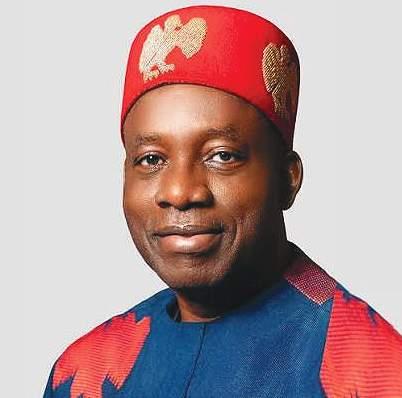
supposed area of competence.
A social media user, GreatIyk4u lashed out at Soludo saying: “The verified report of Anambra failing to qualify in the $27 Million World Bank HOPE Governance Funding should worry every Igbo person. This is a performancebased funding that the World bank is giving to states that meet reform targets in education, primary healthcare, public financial management and other key governance reforms aimed at improving transparency and accountability in public service delivery.
“Not less than 20 states in Nigeria met the criteria for this performance-based grant, but Anambra, a state governed by a Professor of Economics did not! Abia under Alex C. Otti, Enugu under Peter Ndubuisi Mbah and Imo under Hope Uzodimma all qualified for this grant but a whole Anambra did not qualify because he could not meet the performance benchmark. And this is a state in the hands of a Professor of Economics!! During campaign the same Soludo will tell us that poverty level increases under Mr Peter Obi who came when Anambra State was at the verge of total collapse in the
hands of the Ubah Family.”
This has formed subject of attack on social media with government critics using the opportunity to lampoon Soludo. Just like GreatIyk4u, many critics have wondered why a state governed by a former CBN governor and Professor of Economics will not meet the mandate, in a task that falls within his area.
But a document on the programme which was dated July 7, 2025 by the World Bank seems to have come to the rescue of Soludo. The document which has been circulating on social media clearly stated in the ‘key issues and status column’ that: “35 states and the Federal Capital Territory have expressed interest in participating in the Program. Anambra State did not express interest to participate in the Program. The interested states have continuously engaged with the bank at various times for support and guidance on positioning them to achieve the different results and improving outcomes in their jurisdictions.”
To buttress this point, Soludo has confirmed that his government did not show interest in the programme, thereby clearing the air about not meeting the bank’s performance benchmark as reason for the non-listing of the state.
A press release by his Chief Press Secretary, Mr Christian Aburime stated that contrary to the reports alleging that
His defence for the non-listing in the World Bank HoPE Governance programme clearly showed that his government weighs every option of loan against fiscal timeline, insisting that it wasn’t punitive that the state was not listed, but a choice.
the state was denied the World Bank loan facility due to poor performance benchmarks, the state never applied ab initio.
He said: “The report makes no mention of disqualification or failed benchmarks, only that interested states engaged the bank for guidance. Anambra’s non-participation was a deliberate administrative decision, not a penalty. Anambra State Government under Governor Chukwuma Charles Soludo evaluates every program against its priorities and fiscal timelines before committing. The State Government also clarified that it is currently concluding due diligence and ongoing talks with the World Bank, and Anambra State will not fail to participate in any progressive program or policy that aligns with our priorities, now or in the future. Therefore, the State Government urges the media and the general public to verify facts and resist undue insinuations that may be misleading.”
True to his word about weighing every option of loan alongside the priorities and fiscal timeline before committing, Soludo has repeatedly turned down request for him to borrow. During the last governorship election in the state, part of what formed Soludo’s campaign was his ability to administer the state for four years without borrowing a dime, yet steadily meeting the infrastructure needs of the state.
Presently, a loan request of N100billion approved for the governor by the state house of assembly four years ago, exactly on July 22, 2022, which was to be accessed from the Central Bank of Nigeria has remained unaccessed. Soludo had written to the assembly then, seeking for the facility - a N100 billion Global Limit Multiple Term Loan Facility from CBN for the construction and refurbishment of key infrastructure in the state.
In approving the request, the state assembly Speaker, Rt Hon Somtochukwu Udeze had said: “We observed that the N100 billion loan was strictly for the construction of roads, bridges and flyovers across the state. It was also observed that the current debt profile of the state at about N107 billion can still accommodate more of such loans considering the expected outcome and impact on the residents of the state. However, we recommended the commissioners should provide the list of the proposed project descriptions and expected cost of each project for ease of oversight function subsequently; and that was done.
“That the loan should be secured at a single-digit interest rate and be used for feasible infrastructure development alone. We also recommend the need for increased internally generated revenue to minimise borrowing to fund infrastructure development in the state,” the speaker had admonished.
Four years down the line, Soludo thumbs his chest as having never borrowed since the commencement of his government, insisting that even though he has not borrowed, he has met the infrastructure needs of Anambra state with several roads crisscrossing communities where none existed before.
His defence for the non-listing in the World Bank HOPE Governance programme clearly showed that his government weighs every option of loan against fiscal timeline, insisting that it wasn’t punitive that the state was not listed, but a choice.
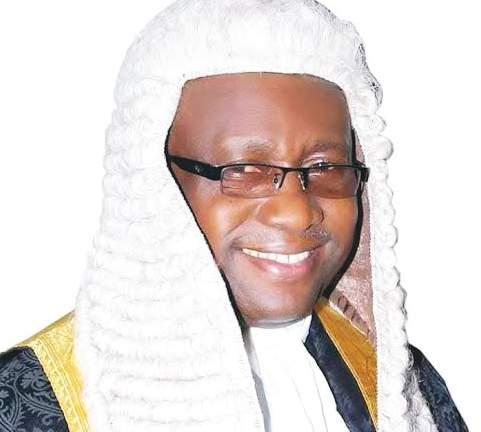
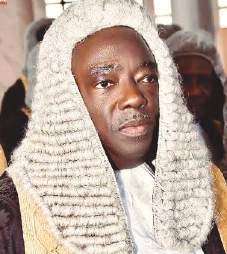
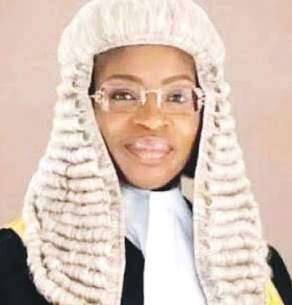
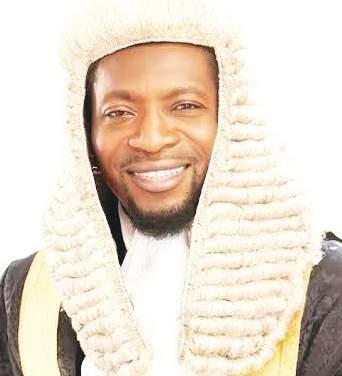
Whether the Mere Conversion of a Boat Constitutes a Maritime Claim Page IV
NJC Suspends Two Judges, Queries 256 Others
Page V
Federal High Court Begins Annual Vacation July 27
Page V
‘The reason why NBA elections must be seen to be above board like Caesar’s wife, Calpurnia, is that the NBA is the conscience of the larger society….If nothing, a re-election should be conducted to accommodate the well over 70% disenfranchised Lawyers….I must also say that I am appalled by the position of the President-elect, who views these complaints as merely a matter of perception' -Joseph Bodunrin Daudu, SAN, 25th President, Nigerian Bar Association
Anambra Introduces Plea Bargain to Speed Up Criminal Trials
Page V
"My Lord" or "My Lady"? The Correct Mode of Addressing Female Judges
Page X
Two matters caught my attention last week, the fallout from 2026 Nigerian Bar Association (NBA) elections, and the conviction of three of the Oriire Kidnappers/Terrorists, Abdulrazak Umar, Yunusa Musa and Shamsu Adamu Sani, members of Darul Salam, an affiliate of the Ansaru terrorist group of Nigeria (the Oriire 3). The two matters raise questions about institutional integrity, the first about respect for legacy and due process within the Bar, and the second, about the capacity of the justice system to deliver outcomes timeously, at least in serious security cases, and our hope of seeing more of this kind of traction
When Silence is No Longer Golden
A time comes when silence is no longer golden, because the silence becomes unfair to the victim of the attack, particularly when those who are aware of the truth keep quiet. I never thought the day would come when I would have to come out to defend the legacy of my Mother, Dame Priscilla Olabori Kuye, who became the 17th President and first female President of the NBA 1991-1992 at the age of 51 when the NBA was a force to be reckoned with. By the way, my Mother isn’t a self-styled Dame, she was conferred with the highest papal decoration, the Pro Ecclesia et Pontifice medal by Pope John Paul II in 1982 at the age of 42, awarded to members of the Laity for their long, distinguished and meritorious service to the Catholic Church.
People have always said Nigerian women don’t support each other - I can now say that I mostly agree with that assertion, as in recent times, I have experienced it first-hand, not just in my own circumstances, but in that of others. We have watched Dame’s legacy as NBA President being trashed by the so-called Bold Bar campaign of another female and those who hadn’t even qualified as Lawyers when we were at Port Harcourt in 1992. Dame had campaigned vigorously for a fresh mandate, and we were in the hall where the election was to hold, about to vote in Dame as the 18th President of the NBA, when the election, marred with life threatening violence, was truncated, and Dame had to be spirited out of the election venue to safety.
After the recently concluded questionable NBA elections, I have received numerous calls and messages asking me if Dame was ever the NBA President! I even kept silent during a debate on a WhatsApp platform that I belong to, where the matter was tabled. Why is it now, after almost 35 years, consequent upon the campaign mantra of another female, that a known fact is being questioned - that Dame, the then NBA 1st Vice President in 1991, a position she was was elected to after defeating two esteemed male colleagues at the polls, became the first female NBA President when Clement Akpamgbo, SAN of blessed memory stepped down as NBA President to become Attorney-General of the Federation? It was a constitutional succession, not an appointment. Unlike some who never ran in any NBA elections, but have occupied their NBA positions by virtue of being appointed, Dame has won 5 separate NBA elections - NBA Lagos, Treasurer; NBA National - Financial Secretary, 3rd Vice President, 2nd Vice President and 1st Vice President.
Although her tenure as NBA President was during the military era, Dame prioritised the defence of human rights and the rule of law. She spearheaded the efforts to secure the release of the “Kuje 5”, detained Lawyers and Activists including late Gani Fawehinmi; Femi Falana; late Dr Beko Ransome-Kuti; late Dr Baba Omojola and late Segun Mayegun. Dame publicly criticised the military regime’s disobedience of court orders, ensured that the NBA performed its role as an independent institutional watchdog and resisted government patronage that could compromise the independence of the NBA. Her stand on issues such as judicial independence, obedience to court orders and arbitrary detention obviously made her unpopular with the military junta, and they wanted her out of the position by any means necessary. It is therefore, laughable, that those who have recorded no achievements in critical areas such as fighting for the human rights of Nigerians under a military dictatorship, and instead rely on campaign promises, can place emphasis on who was ‘elected’, and refer to an election in which 82,164 people were eligible to vote, but only about 26,184 people actually voted, that is, about 26.1%, because over 70% of eligible voters like myself were unable to vote, not because we didn’t want to, but because we were unable to, due to disenfranchisement, as their platform for a valid election.
The ‘elected’ President scored 12,317 votes, about 47.18% or so of the 26.1% that voted in the election, not even up to half of the paltry number of voters; yet, all we hear from the rooftops, are shouts of being the first ‘elected’ female. By whom? A small minority, from an electoral process that was marred by irregularities? How can a person whose mantra is ‘first elected’, but won only 14.9% of the eligible votes claim to be validly elected, and in an election where 70% were disenfranchised? The Independent National Electoral Commission (INEC) would have had strong grounds to declare the NBA elections inconclusive, and conduct a rerun election under such circumstances! Because the 70% that were
onIkepo BraIThwaITe
onikepo braithwaite The Advocate onikepo.braithwaite@thisdaylive. com onikepob@yahoo.com
“I never thought the day would come when I would have to come out to defend the legacy of my Mother, Dame Priscilla Olabori Kuye, who became the 17th President and first female President of the NBA 1991-1992….It was a constitutional succession, not an appointment.….How can a person whose mantra is ‘first elected’, but won only 14.9% of the eligible votes claim to be validly elected, and in an election where 70% were disenfranchised? INEC would have had strong grounds to declare the NBA elections inconclusive, and conduct a rerun election under such circumstances!…. It therefore beats the imagination, how any beneficiary of a such a flawed process, a person in a glass house built on irregularities and an inconclusive election, believes that they can throw stones at the legacy of another, built on hard work and perseverance, so much so that they think they can erase it…. because of those seeking to manufacture ‘firsts’ ”
disenfranchised are not only able to make a difference to the election result, but can change it completely if given the chance to vote. See Atuma v APC & Ors (2023) LPELR-60352(SC) per Adamu Jauro, JSC where the Supreme Court held inter alia that “ ‘Inconclusive’ means not leading to a firm conclusion or result; not ending the dispute”. See also Ademola Adeleke & Anor v INEC & Ors 2020 11 N.W.L.R. Pt. 1734 Page 27; Hon. James Abiodun Faleke v INEC & Anor 2016 18 N.W.L.R. Pt. 1543 Page 61 on inconclusive elections. None of the candidates who were declared winners of the election scored up to 25% of the 82,164 eligible votes, that is, 20,541. It therefore beats the imagination, how any beneficiary of a such a flawed process, a person in a glass house built on irregularities and an inconclusive election, believes that they can throw stones at the legacy of another, built on hard work and perseverance, so much so that they think they can erase it.
Truly, some concerned stakeholders such as the 25th President of the NBA, J.B. Daudu, SAN, in a statement he issued, said he was unable to congratulate anyone who emerged as winner from the 2026 NBA elections, and called for a rerun of the elections for the 70% that were disenfranchised (like me), many as a result of platform failure, authentication issues, non-receipt of the OTP etc. Some have nonetheless, argued that, since some past elections were questionable and allowed to stand, this one shouldn’t be any
different. If the so-called election winners are confident about their popularity, surely they mustn’t be afraid to test it with the other 70%. When the majority of the disenfranchised voters have voted, in an election that due process is strictly followed, Lawyers will be satisfied that the 2026 elections are free, fair and credible, even if the outcomes remain the same.
I am proud to say that when I became the Editor of This Day Lawyer in October 2016, the two ladies who held the position before me, Mrs May Agbamuche Mbu and Ms Funke Aboyade, SAN, supported and assisted me to make my transition into the role easy. Each one of them gave me a volume of their publications to study, and for the first few weeks Funke would critique my work until she felt I could go it alone! I remain eternally grateful to both of them. I stood on their shoulders, and built upon their legacies. And, wherever I see them, I make a point of going to greet them, just to honour them. This is the way it should be - according your predecessors their due respect, not pushing your candidacy by diminishing them. We are eager to have a second female NBA President, but, one who emerges properly, not under a cloud - I don’t believe that this is asking for too much.
Conviction of the Oriire 3
As for the Oriire 3 who were apprehended,
prosecuted and convicted on their guilty pleas, the first thing that their trial showed is that the wheels of the Nigerian justice system can not only move fast, but can move with unusual alacrity. Nigerians would like to see more of this type of quick dispensation of justice in their day-to-day cases, and not just for high profile cases, and election petitions which are time bound - see Section 285 of the 1999 Constitution of the Federal Republic of Nigeria (as amended)(the Constitution). Even though criminal cases are also somewhat time bound (see Section 35 of the Constitution), the time lines aren’t specific enough, nor are they adhered to. A person who is placed under arrest, must be informed in writing of the grounds for their arrest within 24 hours of arrest, must be brought to court within a reasonable time (one to a few days) and tried within two months of the date of arrest or detention, if such person is in custody or not entitled to bail, or within three months of arrest or detention, if such accused person has been released on bail - see Section 35(3)-(5) of the Constitution. However, arraignment to judgement becomes fluid, with Section 396 of the Administration of Criminal Justice Act 2015 (ACJA) providing for a day to day trial after arraignment ‘where practicable’, and adjournments during trial (see Section 396(4) of ACJA). Each party is allowed 5 adjournments with intervals of a maximum of 14 days, between arraignment and judgement. Judgement must also delivered in writing within 90 days of the conclusion of evidence and final addresses - see Section 294(1) of the Constitution.
In the case of the Oriire 3, the trial Judge beat the aforementioned timelines, as part of their trial was concluded in record time. The Oriire abductees were rescued on July 10, the date also reported as the date of arrest of the 3 suspects. By July 23, the Oriire 3 had been convicted on the charges they had pleaded guilty to. The trial continues, on the charges they pleaded not guilty to. Unfortunately, so far, they have only been sentenced to life imprisonment. While the world may be moving away from the death sentence, I believe that in certain cases, such as kidnapping where the victim dies in captivity, it should be applied. See the Oyo State Kidnapping (Prohibition) Law 2016; Section 24(2)(b) of the Terrorism (Prevention and Prohibition) Act 2022 (TPPA).
Several sections of the TPPA provide for the acts which the Oriire 3 were involved in, and their punishments cover various terms of imprisonment ranging up to life imprisonment which they bagged. However, the offences that the Oriire 3 pleaded guilty to, don’t carry the death penalty. Of course, the TPPA has offences that attract the death penalty upon conviction - hostage taking, kidnapping and hijacking are some of such offences. Section 2(2)(b), (d) of the TPPA prohibits any act that is preparatory to or in furtherance of, assists or facilities the act of terrorism, while Section 2(3) thereof defines the act of terrorism to include various acts like intimidation of a population, attack on a person’s life, death and kidnap. Where a condition is given for the release of a person held hostage and death results from the act of kidnapping, the death sentence is applied - see Section 24(2)(b) of the TPPA. The pending offences of conspiracy to kidnap, aiding and abetting which the Oriire 3 pleaded not guilty to (see Section 26 of the TPPA), import the punishment of the substantive offence, that is, the death penalty, since Mr Esiyan Adegboye was shot dead during the initial invasion into the school, Mr Michael Oyedokun was beheaded while Deacon John Olalere was also killed, both in captivity. By virtue of Section 7(b) & (c) of the Criminal Code Act (CCA) those who actually commit the act, or aid those who commit the act are accessories before or during the fact, and are considered to be principal offenders too; they are liable to the same punishment as those who physically commit the offence. Section 10 of the CCA provides for an accessory after the fact, that is, a person who assists another he/she knows to be guilty of an offence, in order to help them escape punishment, In the case of terrorism, the punishment for an offence such as concealment which is akin to accessory after the fact, is at least 20 years imprisonment upon conviction - see Section 16(1)(b) of the TPPA. However, if charges like conspiracy to kidnap stick, the Oriire 3 may also face the death penalty, if they are convicted.
Conclusion
The attempt to diminish Dame Priscilla Kuye’s pioneering and principled leadership of the NBA, is despicable and unnecessary. The fact that the NBA has been in dire need of a female President is undeniable, but legacy earned through service, courage and sacrifice under military rule and as far back as the 1990s, should not be casually and unfairly erased by those seeking to manufacture ‘firsts’. I rest my case here. And, when terrorist acts result in the deliberate killing of victims, the law must be allowed to take its full course, including the death penalty where it is properly prescribed. Swift justice in high-profile cases is welcome; but, consistent, timely and proportionate justice in all cases, remains the real test of any system that claims to uphold the rule of law.
Facts
The Respondents commenced an action against the Appellant at the High Court of Lagos State, seeking primarily to recover the sum of $61,000, claimed to be the value of a Yamaha 212 Jet Stream Sports Boat belonging to the 1st Respondent, and allegedly damaged by the Appellant. The Respondents also claimed pre-judgement and post-judgement interest.
The Respondents claimed that the boat was kept at the premises of the 2nd Respondent, and the 2nd Respondent subsequently let the said premises out to the Appellant without extending the terms of the tenancy to the use or possession of the boat. They alleged that the Appellant appropriated the boat to itself without the Respondents’ authorisation and damaged the boat while using it, despite having given the Respondents assurance that the boat would be kept safely.
The Appellant filed a Notice of Preliminary Objection challenging the jurisdiction of the High Court of Lagos State to entertain the suit, on the basis that the subject-matter of the claim fell within the admiralty jurisdiction of the Federal High Court pursuant to the provisions of the Admiralty Jurisdiction Act. In response, the Respondents filed a counteraffidavit, asserting that the claim was merely a simple tortious action founded on conversion, and therefore, within the jurisdiction of the High Court of Lagos State. After hearing the arguments of respective Counsel on the Notice of Preliminary Objection, the trial court upheld the Appellant’s Preliminary Objection and consequently, struck out the suit for want of jurisdiction.
Dissatisfied, the Respondents appealed to the Court of Appeal. The Court of Appeal allowed the appeal, and held that the claim was not an admiralty matter within the exclusive jurisdiction of the Federal High Court, but one on conversion founded on tort which the High Court of Lagos State had the jurisdiction to determine. The Court of Appeal accordingly ordered that the suit be remitted to the Chief Judge of the High Court of Lagos State, for reassignment to another Judge for accelerated hearing and determination.
Displeased with the judgement of the Court of Appeal, the Appellant appealed to the Supreme Court.
After evaluating the respective sole issue formulated by the respective parties which the court considered substantially similar in substance, the Supreme Court identified one issue for determination:
Whether or not the trial court had jurisdiction to have entertained the suit?
Arguments
Counsel for the Appellant argued that the Respondents’ claim arose from damage caused to their boat by the Appellant, and that the boat being that which was classified as a vessel under the Admiralty Jurisdiction Act, brought the suit within the exclusive jurisdiction of the Federal High Court. Counsel relied on Section 251(1) of the Constitution of the Federal Republic of Nigeria, Sections 1(1)(a), 2(1) and (3), 19, and 25 of the Admiralty Jurisdiction Act, as well as the cases of MOBIL PROD. (NIG.) UNLIMITED v ADENI (2010) 4 NWLR (PT. 1185) 586 and ONI v CADBURY NIG. PLC (2016) 9 NWLR (PT. 1516) 80.
The Appellant’s Counsel argued further that the claim which was hinged on damage done to a vessel during navigation on water, as stated on the writ of summons and statement of claim filed by the Respondents, was a maritime claim situated within the exclusive admiralty jurisdiction of the Federal High Court, and the Court of Appeal was wrong to have found otherwise. In support of this submission, Counsel relied on A.G. FEDERATION v A.G. LAGOS STATE
In the Supreme Court of Nigeria Holden at abuja
On Friday, the 12th day of december, 2025
Before their lordships uwani Musa abba aji Ibrahim Mohammed Musa Saulawa Chidiebere Nwaoma uwa Moore aseimo abraham adumein Mohammed Baba Idris Justices, Supreme Court SC/CV/790/2018
Between aBB NG lIMIteD appellaNt
And
1. NUN rIVer VeNtUreS ltD reSpoNDeNtS
2. aDMINIStratorS oF tHe eState oF late Mr lUCIUS NwoSU (SaN)
(Lead Judgement delivered by Honourable Chidiebere Nwaoma Uwa, JSC)
(2013) LPELR-20974(SC).
On the other hand, Counsel for the 1st Respondent argued that the Respondents’ claim was that of conversion of a speed boat and the recovery of the value of the boat, rather than an admiralty matter. Referring to specific paragraphs of the Statement of Claim, Counsel submitted that the suit disclosed no facts relating to any admiralty matter and did not have any admiralty content that could justify the invocation of the admiralty jurisdiction of the Federal High Court, as it did not involve the carriage of goods by sea, the hire of a vessel, maritime transactions, or any matter connected
“….there was nothing in the facts pleaded in the Respondents’ Statement of Claim that relates to a maritime claim, and the mere fact that the subjectmatter was a boat which was allegedly damaged by the Appellant….the subject of conversion, did not automatically bring it under the Admiralty Jurisdiction Act 1991, and thus, not sufficient to confer on the Federal High Court, exclusive jurisdiction”
UYO & ANOR (2019) LPELR-46999.
The Apex Court held that Sections 1 and 2 of the Admiralty Jurisdiction Act specifically enumerated the matters that fall within the admiralty jurisdiction of the Federal High Court, and before a party can invoke the admiralty jurisdiction of the Federal High Court, the subject-matter must fall within the claims listed under Sections 1 and 2 of the Admiralty Act.
The Court found that from an examination of the Respondents’ Statement of Claim, especially paragraphs 5, 6–12 in which the Respondents pleaded that (a) the said boat which belonged to the 1st Respondent was kept in the 2nd Respondent’s premises, (b) the 2nd Respondent let the said premises to the Appellant for a yearly tenancy which did not include the usage of the boat; it was clear that the Respondents’ claim was based on the alleged appropriation and conversion of the 1st Respondent’s boat, which they claimed was used and damaged by the Appellant’s staff. The Supreme Court held that from these facts and the reliefs sought by the Respondents as disclosed in the Statement of Claim, it was glaring that the dispute between the parties was a simple claim in tort for conversion and recovery of the value of the boat, and not an admiralty or maritime matter.
The Court held further that by virtue of Section 2(3)(f) of the Admiralty Jurisdiction Act 1991, reference to a general maritime claim is a reference to a claim out of an agreement relating to the carriage of goods or persons by a ship or the use or hire of a ship, whether by charter-party or otherwise.
with the perils of the sea. Counsel for the 1st Respondent further argued that, the mere mention of “a boat” as the subject-matter of the alleged conversion or appropriation did not transform the claim into an admiralty action. Relying on IROEGBU v MV CALABAR CARRIER (2008) 5 NWLR (PT. 1081) 147 and TSKJ (NIG.) LTD v OTOCHEM (NIG.) LTD. (2018) 11 NWLR (PT. 1630) 335, Counsel maintained that navigation at sea, carriage by sea, or other maritime elements must exist before admiralty jurisdiction can be invoked, and submitted that since these elements were absent, the matter fell squarely within the jurisdiction of the High Court of Lagos State. Counsel urged the Apex Court to affirm the decision of the Court of Appeal. Counsel for the 2nd Respondent, essentially adopted the arguments of Counsel for the 1st Respondent.
Court’s Judgement and Rationale In resolving the sole issue for determination, the Supreme Court restated the principle of law that the determining factor for jurisdiction is the Claimant’s claim as disclosed in the statement of claim and the reliefs sought, referring to SCC (NIG.) LTD & ANOR v GEORGE & ANOR (2024) LPELR-62865 (SC) and EYO v FRSC
The Court held that there was nothing in the facts pleaded in the Respondents’ Statement of Claim that relates to a maritime claim, and the mere fact that the subject-matter was a boat which was allegedly damaged by the Appellant, does not ipso facto bring the matter within the admiralty jurisdiction of the Federal High Court. The Apex Court held further that there was also nothing in the claim, whereby the court may have been led to consider proprietary interest in or ownership of the boat. The Court also held that there was no transaction on the boat, and the only transaction between the parties was the tenancy agreement between the Appellant and the 2nd Respondent on the premises where the Respondents kept the boat; therefore, the nature of the Respondent’s claim brought it within the realm of the tort of conversion, well within the jurisdiction of the State High Court. The Apex Court found that the fact that a boat was the subject of conversion did not automatically bring it under the Admiralty Jurisdiction Act 1991, and thus, not sufficient to confer on the Federal High Court exclusive jurisdiction, as the provisions of Section 251(1)(g) of the Constitution of the Federal Republic of Nigeria which confers admiralty jurisdiction on the Federal High Court clearly did not contemplate any matter which involves simple conversion of a boat that has no maritime nexus, like the Respondents’ action. The Supreme Court referred to its decision in TSKJ NIGERIA LIMITED v OTOCHEM NIGERIA LIMITED (Supra). Ultimately, the Supreme Court agreed with the findings of the Court of Appeal, that the High Court of Lagos State, by virtue of Section 272 of the 1999 Constitution, had the requisite jurisdiction to entertain the matter, and the trial court was wrong to have held differently.
Appeal Dismissed; Case remitted to the Chief Judge of the High Court of Lagos State for re-assignment to another Judge for accelerated hearing. Representation Adetokunbo Davies with Abdulhamid Modibbo for the Appellant.
Chief C. I. Igbinedion with Belinda Frank for the 1st Respondent.
Okechukwu. Umemuo for the 2nd Respondent

Stories by Steve Aya
Stories by Steve Aya
The Federal High Court will commence its 2026 annual vacation on Monday, July 27, with judicial activities across its divisions expected to resume on Friday, September 11, following the approval of the Chief Judge of the court, Justice John Terhemba Tsoho. The annual break is in accordance with the provisions of Order 46, Rule 4(d) of the Federal High Court (Civil Procedure) Rules, 2019.
Lagos State Governor, Babajide Sanwo-Olu has said the State is investing heavily in forensic science and cybersecurity, to close the evidence gap that often hinders successful prosecution of criminal cases in Nigeria. The Governor made the disclosure while declaring open the 2026 Global Forensics Summit in Lagos, organised by the International Academy of Forensics in collaboration with The Guardian Newspaper Nigeria..
A statement issued by the Director of Information, ICT and Protocol of the court, Dr Catherine Oby Christopher, said the vacation is intended to give Judges the opportunity to rest and adequately prepare for the responsibilities of the new legal year. Despite the recess, the court said judicial services would continue in urgent matters through designated vacation courts.
Represented by the Permanent Secretary in the Ministry of Justice, Mrs Aderinsola Olanrewaju, Mr Governor said many criminal cases fail in court, not because suspects are unavailable, but because investigators are unable to present credible scientific evidence capable of withstanding judicial scrutiny. He described the disconnect between investigations and successful prosecution, as one of the biggest challenges facing Nigeria’s criminal justice system.
Division, Justices Emeka Nwite and O. A. Egwuatu have been designated as vacation Judges. In Lagos, Justices Akintayo Aluko and Ogazi F. Nkemakonam will preside over urgent cases brought before the court during the vacation period. Similarly, Justices Phoebe
M. Ayua and Adamu T. Mohammed have been assigned to sit in the Port Harcourt Judicial Division, while Justices F. O. G. Ogunbanjo and Mabel T. Segun-Bello will handle urgent matters in the Enugu Judicial Division. The designated Judges are
expected to ensure that cases requiring immediate judicial intervention, are not delayed by the court's annual recess.
The Federal High Court explained that only matters of extreme urgency, including applications involving the enforcement of fundamental rights and other time-
sensitive cases within the jurisdiction of the court, would be entertained during the vacation. Litigants were advised to take advantage of the designated vacation courts, where necessary.
Justice Tsoho wished his brother Judges a pleasant annual vacation, and
expressed confidence that the recess would enable them to return refreshed for the commencement of the new legal year. The court reiterated its commitment to ensuring uninterrupted access to justice through the designated vacation courts, during the period
The National Judicial Council (NJC) has suspended two judicial officers for one year without pay over misconduct, while issuing queries to 256 Judges over performance-related concerns, as part of measures aimed at strengthening accountability and efficiency within the Nigerian Judiciary. The decisions were reached at the Council's 111th meeting chaired by the Chief Justice of Nigeria, Hon. Justice Kudirat Kekere-Ekun, GCON.
extended the appointment of Justice Ijeoma Agugua as Acting Chief Judge of Imo State for another three months to allow the completion of the process for appointing a substantive Chief Judge. The Council also reinstated Justice T. N. Nze of the Imo State Customary Court of Appeal, after reviewing fresh evidence presented in his case.
delivering more than 21 considered judgements, while seven others will receive letters of appreciation for their exemplary performance on the Bench.
The Council also approved
the retirement of three judicial officers, including two Justices of the Court of Appeal and a Judge of the Zamfara State High Court, while expressing appreciation for their dedicated service
to the Judiciary. It equally paid tribute to three judicial officers who died between December 2025 and April 2026, describing their contributions as invaluable to the administration of justice.
Mr Governor said Lagos has
According to the statement, the Abuja, Lagos, Port Harcourt and Enugu Judicial Divisions will remain operational throughout the vacation, to hear cases requiring immediate judicial attention. Legal practitioners and members of the public, were advised to file and prosecute only urgent matters at the designated vacation courts nearest to them.
For the Abuja Judicial
The Council also recommended the appointment of 12 new Justices of the Court of Appeal, to fill vacancies created by retirements and elevations across the appellate court. It further recommended one candidate for appointment as a Judge of the Benue State High Court, and two candidates as Kadis of the Katsina State Sharia Court of Appeal, to enhance justice delivery.
In addition, the NJC
The Council, however, rejected appeals filed by eight Judges of the Imo State Judiciary who had been compulsorily retired over age falsification. It held that the affected judicial officers failed to present fresh evidence, capable of justifying a reversal of the disciplinary action earlier taken against them.
As part of its performance assessment, the NJC commended nine Judges for outstanding judicial output during the review period. Two judges are to receive formal commendation for
The Anambra State Government has introduced a plea bargain policy for eligible criminal suspects, as part of efforts to accelerate the administration of justice and reduce delays in the prosecution of criminal cases across the State.
The initiative, however, excludes suspects standing trial for serious offences such as murder, rape, armed robbery and kidnapping, which the Government said will continue to undergo full prosecution in accordance with the law.
In a statement issued on Wednesday, the Attorney-General and Commissioner for Justice, Mr Tobechukwu Nweke, SAN,
said the decision was in line with the provisions of Section 156 of the Administration of Criminal Justice Law of Anambra State, 2022. He noted that it had become both necessary and timely to operationalise and mainstream plea bargain, as a key component of the State’s criminal justice system.
According to the AttorneyGeneral, all Defendants facing criminal trial for eligible offences will henceforth be issued a Plea Bargain Form by the prosecuting Counsel or officer, who is also expected to notify the Defendant of the option to enter into a plea bargain by completing the prescribed form.
Nweke explained that completed forms must be forwarded to the Ministry of Justice for consideration, warning that any criminal charge filed without complying with the new directive would be deemed to have been instituted contrary to the Government’s policy, and could be discontinued. He further directed that every plea bargain agreement must form part of the prosecution process, and be endorsed either by the head of the legal department of the prosecuting agency or, where the matter is being handled by law officers of the Ministry of Justice, by the Attorney-General.
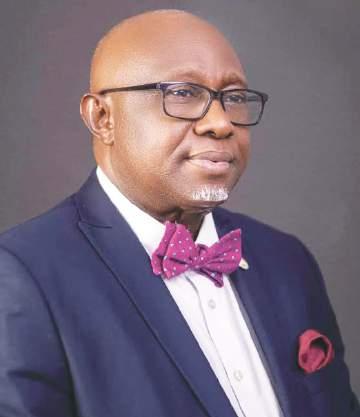
The Continued Relevance of the Nigerian Bar Association
Joseph Bodunrin Daudu, SAN
NBA as the Nigerian Bar Association will be referred to herein, is the umbrella body of all Nigerian Legal Practitioners. It is also a pressure group which ensures that all agencies and even Government itself,
“….although approximately 80,000 Lawyers were registered to vote, computer interference and/or unreliability allowed only 26, 600 persons to vote. The rest 70% willing and available voters, were schemed out of the voting exercise. Consequently, I had no hesitation in adjudging the outcome of the election as illegitimate, and lacking in the average constituents of a free, fair and credible election”
that is created under Part ‘C’ of the Companies and Allied Matters Act. It can therefore be sued or it can sue persons in Nigerian Courts through her Registered Trustees, of which I am a member of its Board of Trustees.
Since being called to the Nigerian Bar in 1980, I have been a member of this Association and have served in numerous capacities, ultimately emerging by the grace of God Almighty in the year 2010 at Ibadan Oyo State, as the 25th President
of the NBA. I have since then served the legal profession in virtually every relevant capacity such as the LPPC, (the statutory body that screens and appoints legal practitioners who have applied for the coveted rank of SAN) the NJC (the body set up by the Nigerian Constitution to manage the affairs of the Nigerian Judiciary), Chairman for 6 years of the Legal Practitioners
In what some Nigerian lawyers have referred to as one of the most controversial elections in the history of the Nigerian Bar association (NBa), Mrs oyinkansola Badejo-okusanya, SAN emerged as the winner. The other two candidates for the office of President, Lateef omoyemi Akangbe, SAN, Aare olumuyiwa Akinboro, SAN, candidates for other positions such as General Secretary, and many other lawyers have cried foul. There were allegations of deliberate manipulation of the process, double voting and mass disenfranchisement, so much so that over 70% of eligible voters were unable to exercise their franchise. THISDAY LAWYer sought the views of some knowledgeable Bar leaders in a post-mortem analysis, as to what may have happened in the recently concluded polls, and the way forward. The 25th President of the NBA, Joseph Bodunrin Daudu, SAN; Kunle edun, SAN; Dr Monday onyekachi Ubani, SAN and Basil Udotai, share their in-depth observations of the process and proffer solutions, ranging from holding a rerun election for the over 70% of lawyers who were disenfranchised, to the installation of the Badejo-Okusanya executive, despite the flaws in their election, with a strong caveat that they undertake electoral reforms to forestall the reoccurrence of elections marred by irregularities operate strictly within the bounds of the Rule of Law. Indeed, her motto is ‘Promoting the Rule of law’. The NBA is not a creation of statute, but is recognised by name in several legislations including the Nigerian Constitution 1999. Such statutory mention does not make it a creature of the National Assembly, but it is a voluntary association
Disciplinary Committee, the body statutorily mandated to discipline erring Nigerian Lawyers and legal practitioners, Chairman of the NBA
All purposes Committee from 2014-2018 and membership of other numerous committees and interest groups in the legal profession, too numerous to detail here.
I have not set out part of my resume here above for reasons of self promotion or aggrandisement, but to show quite distinctively that I am a person interested not only in the affairs of the NBA, but in any thing that affects
the legal profession in particular and Nigeria in general. I can therefore, safely declare myself a stakeholder.
In the past 10 years, the NBA has promoted some reforms, which has placed it in the invidious position or situation that it now finds itself. The reforms are (1) a switch in the mode of electing her national officers from the delegate and manual mode of election to the much disputed ‘universal suffrage’ whose excesses collapsed the first house in 1992 and left the Association comatose for 6 years until 1998 when Chief TJO Okpoko, SAN emerged as President and the beginning of the 2nd house of the NBA (2) the introduction of electronic or computer based system of voting thought to be transparent and capable of eliminating glitches and illegitimacy from the process.
Progressive elections since 2018, have posed serious credibility and legitimacy concerns. Firstly, the elections are heavily monetised, with hapless candidates being forced by ‘Barmen’ to spend humongous sums of money in the name of campaigns, secondly, the elections involve travelling to virtually all the Branches in the 36 States of Nigeria, and thirdly, other numerous inconvenient acts not relevant at this point in time but some of which will be alluded to as this write-up advances.
The 2026 national officers election by the peculiar arrangement in the NBA Constitution was zoned to the ‘West’ which means the old West and Mid-West regions of the Nigerian First Republic. It is this constitutional approval of zoning that brought about the emergence of ethnic or regional based pressure groups such as Otu Okwiwu and Eastern Bar Forum for the East, the Egbe Amofin and the Midwest Bar Forum for the West and the Arewa Lawyers Forum and the Middle Belt Lawyers forum for the North.
The mandate or objective of these Ad Hoc but relevant bodies, is ostensibly to ease the process of voting whenever the Presidency is zoned to them. They make their impact felt by endorsing their own candidates and selling same to other bodies, so that there can be unanimity and concord in the process.
Consequently, 2026 was no different as the constitution had effectively zoned the office of the President of the NBA to the West, whereupon Egbe conducted a screening and weeding process among her 4 candidates and came out with the name of Aare Olumuyiwa Akinboro, SAN as its preferred candidate. Incidentally, the Midwest Bar Forum led by Ama Etuwewe, SAN rejected the Egbe choice and actively promoted her own candidate in the person of Mrs Oyinkan Badejo-Okusanya, SAN, a person under the Egbe umbrella but who later emerged as the President-elect in highly disputed circumstances.
I need to place on record here that I promoted and actively supported the candidature of Aare Olumuyiwa Akinboro, SAN for very obvious reasons, which are as follows; 1. He

was my General Secretary as the 25th President of the NBA and I could never have worked with a better GS. He was, and still is, hard working, industrious, honest, gentle mannered, brilliant, urbane and circumspect. A consummate Bar man. Consequently, I had no option, other than to support him when he shared with me his aspiration to be the 33rd President of the NBA.
The deficiencies of the just recently concluded election, are legion, that is, too numerous to set out here. But, I will endeavour to set out the major defects in the last election.
Firstly, the candidates had complained about the ill preparedness and probably bad faith of the election body, the ECNBA. It is alleged to have prepared its voters register, not in line with the NBA Constitution. The election umpire also appointed untested and ill-prepared service providers, whose system for the provision of electronic voting crashed for the first 6 hours after voting commenced, until according to the election umpire, they moved to another server. So, who moved or authorised the movement to another server? This remains an unanswered sore point.
Secondly, and to me this is the most important, that although approximately 80,000 Lawyers
“…. the frightful complaint that the votes had been predetermined and the system had been preset to achieve a constant margin of lead between the candidates, as configured by the powers that be who control the voting portal. Now, this last allegation must not be treated lightly…I will not have any hesitation to, if I had the powers, to declare this election inconclusive and/or illegitimate”
were registered to vote, computer interference and/or unreliability allowed only 26, 600 persons to vote. The rest 70% willing and available voters, were schemed out of the voting exercise. Consequently, I had no hesitation in adjudging the outcome of the election as illegitimate, and lacking in the average constituents of a free, fair and credible election.
Thirdly, is the complaint that during the campaign period, high officials of the NBA actively campaigned at various NEC meetings for the candidacy of the Person who eventually emerged as President-elect.
Finally, for this purpose, is the frightful complaint that the votes had been predetermined and the system had been preset to achieve a constant margin of lead between the candidates, as configured by the powers that be who control the voting portal. Now, this last allegation must not be treated lightly. It strikes at the heart and soul of our leadership selection system. For over 6 to 8 years now, the rumours of election manipulation has been rife in the NBA system. Over the years, stakeholders have always demanded for a system that allows not only for post election audit, but for the security of the back end of the server that was used to conduct the election. Both matters appear to have been treated with great levity. I will not have any hesitation to, if I had the powers, to declare this election inconclusive and/or illegitimate.
The reason why NBA elections must be seen to be above board like Caesar’s wife, Calpurnia, is that the NBA is the conscience of the larger society. Nigeria is on the throes of conducting its own general elections, in the year 2027. Having itself conducted such a visibly badly conducted election, will the NBA have the moral justification and standing to challenge the larger Nigerian Government, should, and this is only speculative, God forbid, that the general elections are marred by poor or indeed, fraudulent electoral practices?
That is why it is necessary at this
stage, for all parties to acknowledge these deficiencies in the election that was conducted by the ECNBA. If nothing, a re-election should be conducted to accommodate the well over 70% disenfranchised Lawyers, who we were not allowed to vote at the election conducted last week.
If the NBA powers that be persist or persevere in its apparent, unshakable belief that it conducted a pristine election, then it will be difficult to predict the future, as this election has struck at the unity of a hitherto united Bar. I must also say that I am appalled by the position of the President-elect, who views these complaints as merely a matter of perception. By treating these weighty complaints with such levity, it is clear that the that the President-elect has no intention to either disassociate herself from the system that brought her into office, or prepare herself to clean the Augean stable. I find myself unable to congratulate any member of this elected National Officers until Justice has been served, and the needful done to put the NBA on the right track. Finally, it is necessary to state at this point in time that, because the NBA is not a statutory monopoly, dissatisfied members may, if pushed to the wall, move in droves to form an honest Association, that will push the ideals of good Legal Practice and honest political interaction as their prime objectives. It is not too late to save the day. Those in charge know what to do.
Joseph Bodunrin Daudu, SAN, 25th President of the Nigerian Bar Association
2026 NBA Elections, Glitches and All, Lessons Therefrom Kunle Edun, SAN
The Nigerian Bar Association (NBA) election held on the 18th of July, 2026 has since been concluded and Oyinkansola
Badejo- Okusanya, SAN declared the winner of the contest for the office of the NBA President, having defeated Yemi Akangbe, SAN and Aare Olumuyiwa Akinboro, SAN with more than 33% of the total votes cast. It will be uncharitable to say that the election was not without hiccups. There were, and all the contestants for the respective officers were equally affected.
The election was expected to be a challenging one for the NBA, because preceding the election, the Egbe Amofin and some other members of the sociocultural organisation of Lawyers of Yoruba extraction had filed two separate lawsuits seeking judicial recognition of the Egbe Amofin-endorsed candidate, Aare Olumuyiwa Akinboro, SAN as the only candidate from the West, where the office was zoned to. The Midwest Bar Forum had earlier conceded the office to the South-West, to be contested by only Yoruba candidates. Not surprisingly, Badejo-Okusanya and Yemi Akangbe had earlier rejected the Egbe Amofin policy of endorsement.
The High Court, Ibadan joined the fray and surprisingly issued an injunction restraining the NBA from proceeding with the conduct of the election until the determination of the Motion on Notice. This Order would have stalled the NBA election, but for the intervention of the Court of Appeal, Ibadan that set aside the two injunctive orders of the Ibadan High Courts. The road was clear for the election to hold; or so, we thought. Earlier, the unsuccessful intervention of the Honourable Attorney-General of the Federation in issuing “directives” to the NBA and “directing” the postponement of the election. The NEC of the NBA in an emergency meeting called for that purpose, rejected the intervention of the Honourable AGF and resolved that the election should proceed as scheduled.
of
Electoral Process Allegations kept on flying from everywhere, attacking the integrity of the electoral process. The Managing Director of the company that managed the portal was arrested by the SSS, and all his phones and equipment were seized by the SSS without any court order. This happened two days to the election. The election could not start at the exact time advertised, because of reported serial cyber-attacks of the voting portal and this compelled the migration to another portal and the voting time extended to meet up with the 24 hours voting duration.
All the Presidential candidates campaigned well for the election, and were equally endowed for the office of the President of the NBA. However, the three presidential candidates managed
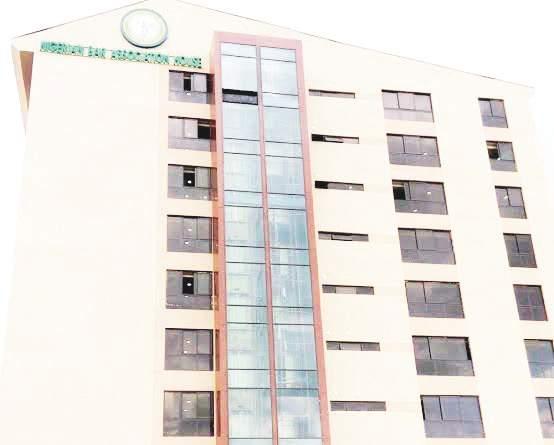
their emotions, conduct and social media commentaries differently, and this was quite telling.
A particular candidate for the office of the NBA President went round the 36 States to campaign, and visited most of the NBA Branches. This same candidate had a good number of the endorsements of senior Lawyers and Bar leaders. This same candidate campaigned without attacking the system and the NBA, throwing tantrums, insults and allegations everywhere, even when provoked. This same candidate decided not to publicly attack the NBA by appearing on prime-time TV stations defaming the NBA, that we all belong to. The same candidate continued advocating fora united Bar, and dissociated from all forms of sectional endorsements and schisms. The candidate did not forum-shop for convenient courts, that will issue order of injunction to truncate the election long before it even started. That same candidate was also reported not to have voted in the same election like the other two candidates, but did not pull down the house.
So far, there has been no evidence that the technical glitches were contrived, with a view to favouring any particular candidate. All the
“And, in a contest of two male Lawyers against a female Lawyer who is from the largest NBA Branch (Lagos branch) that has more than 18,000 members, would it makes sense, considering all these variables, that the female candidate will still not win?”
candidates and their supporters were affected on equal terms. It is a strongly held view that if the entire more than 80,000 registered NBA voters had voted, that same one candidate was sure to still win, even if the election is conducted 10 times over. Let us be frank. What would a rational person expect in an election where there were 3 candidates: two males and one female? Do an analysis of the current demography of Lawyers in Nigeria. Within the last 6 weeks, I had cause to be invited by two different Faculties of law as a Guest speaker in their Law Week programs. The ratio of men to women in the two different halls I addressed was about 70% to 30%, in favour of female law students. More female Lawyers are now being admitted into the Bar every year, thus, out-numbering their menfolk. Even amongst the young Lawyers that want to practice law in chambers, we now see more of female Lawyers than male Lawyers.
The Gender Factor
The numbers are there. They don't lie. And, in a contest of two male Lawyers against a female Lawyer who is from the largest NBA Branch (Lagos branch) that has more than 18,000 members, would it makes sense, considering all these variables, that the female candidate will still not win? Let us argue reasonably, honestly and with facts. In the NBA election of 2024 that ushered in Afam Osigwe, SAN as the 32nd President of the NBA, all the female candidates defeated their male counterparts, to the extent that in the current National Exco of 10 officers, 5 of them are females. Also, in the recently held election, the female candidates running for the various offices defeated all their male counterparts. No exception.
Conclusion
What we should be focusing on now is to push for a better electoral process that will address all the concerns raised
by the candidates. No electoral system is perfect. So, we must keep improving and NBA electoral process has been improving since 2016 when we started the universal suffrage system.
Kunle Edun, SAN, Warri, Delta State NBA Elections 2026: Congratulations to the Winners, but the Electoral Process Must be Questioned!
Dr Monday Onyekachi Ubani, SAN
Background
For the first time in my life as a member of the Nigerian Bar Association (NBA), I was unable to exercise my right to vote in an NBA election. It was not for lack of trying. I made repeated and strenuous efforts to participate in the electoral process, but all proved futile. From the commencement of voting, after several hours of reported technical glitch, the One-Time Password (OTP) required to complete the voting process simply did not arrive. After several unsuccessful attempts, the response on my device changed to the now-familiar refrain: “This site can’t be reached”. Sadly, that remained my experience, until voting eventually came to an end. I was not alone, my son, who is also a Lawyer and eligible voter, suffered a similar unfortunate fate. Several colleagues and friends called me during the exercise, to complain of substantially similar difficulties. Some even changed from their mobile devices to laptops, which were reportedly suggested as
a better means of accessing the voting platform, yet, their difficulties persisted. Against this background, it would be difficult to dismiss these complaints as isolated incidents, or the frustrations of a few disgruntled voters. An electoral process that technically disenfranchises a significant number of eligible voters cannot, by any stretch of the imagination, be described as wholly free, fair, credible and inclusive.
There was considerable enthusiasm surrounding this year’s NBA election. Many Lawyers were eager to participate because of the attention, mobilisation and expectations generated around the contest. It is therefore deeply unfortunate, that many who desired to exercise their franchise were allegedly prevented from doing so, not by their own choice, but by apparent failures in the electoral technology and process. Whoever insists that there was no problem with the process, in the face of the widespread complaints experienced and reported by members, would simply not be presenting a fair account of what transpired.
Congratulations
This is not, however, an invitation to diminish the victories of those who have been declared winners. I warmly congratulate Madam Oyinkansola BadejoOkusanya, SAN, the newly announced President of the Nigerian Bar Association, as well as all other candidates who emerged victorious in the election. I wish them a successful tenure and sincerely hope that their leadership will strengthen the Bar, defend the rule of law and advance the welfare and professional interests of Nigerian Lawyers.
Indeed, I believe Madam BadejoOkusanya could still have won resoundingly, even without the technical glitches that unfortunately cast a shadow over the process. That is precisely why the issues arising from the election, should not be ignored or swept under the carpet. The legitimacy of leadership is strengthened, not weakened, when legitimate questions surrounding the process that produced it are openly acknowledged and addressed.
The starting point for the new NBA leadership should therefore, be a candid interrogation of the electoral process through which it emerged. There is a useful lesson from Nigeria’s democratic history. When the late President Umaru Musa Yar’Adua emerged victorious in the controversial 2007 general election, he openly acknowledged that the electoral process that brought him into office was flawed and thereafter, initiated electoral reforms. That acknowledgment did not diminish his office; rather, it demonstrated an important willingness to confront deficiencies in the system.
The incoming NBA leadership should demonstrate similar institutional courage. Madam Oyin Badejo-Okusanya owes the NBA constituency a responsibility to acknowledge the genuine complaints arising from this election, and to support a transparent review of what went wrong. The relevant electoral authorities of the Association should provide

clear answers: Why did so many eligible voters reportedly experience difficulties receiving OTPs? Why were members confronted with inaccessible platforms and error messages? What was the extent of voter disenfranchisement caused by these technical failures? Were adequate contingency measures in place? And, most importantly, what concrete reforms will ensure that these failures are never repeated?
These questions, should not be treated as partisan attacks against the winners. They are institutional questions, that go directly to the integrity of the Nigerian Bar Association.
As Lawyers, we routinely demand credible elections, transparency and accountability from the Independent National Electoral Commission and other public institutions. The NBA cannot demand from others, a standard that it is unwilling to apply rigorously to itself.
The Association must therefore, undertake a comprehensive postelection audit and review of the 2026 electoral process. The findings should be made available to members, identified technological and administrative failures should be addressed, and appropriate safeguards must be instituted well ahead of the next election. Electronic voting should expand participation, not become an instrument however unintended, to disenfranchise.
I congratulate the winners once
“An electoral process that technically disenfranchises a significant number of eligible voters cannot, by any stretch of the imagination, be described as wholly free, fair, credible and inclusive…Whoever insists that there was no problem with the process, in the face of the widespread complaints experienced and reported by members, would simply not be presenting a fair account of what transpired”
again, and wish them well. But, let the winners note this - an election in which a Presidential candidate, many of my colleagues, my son and persons like me who were ready, willing and eligible to vote could not exercise their franchise because of reported technical failures, raises serious questions about the inclusiveness, credibility and fairness of that process.
I am saying so clearly.
The NBA must learn from this experience, and correct its shortcomings before the next election.
The time to start is NOW!
Dr Monday Onyekachi Ubani, SAN Legal Practitioner/Policy Analyst ECNBA and 2026 NBA Elections
Basil Udotai
The ECNBA says its election platform suffered a “deliberate, coordinated and sustained cyberattack” and nonetheless, proceeded with the election.

According to the ECNBA, the attack
was:
“…a deliberate, coordinated and sustained cyberattack by external actors, clearly intended to disrupt, sabotage, and undermine the integrity of the 2026 NBA National Electoral Process”.
If so, there are a few questions I’d like to ask in the interest of cybersecurity, and for the benefit of young Lawyers coming into this noble profession.
1. Who investigated the systems and concluded that the integrity of the election remained intact?
2. Was a forensic assessment conducted before voting resumed?
3. Who made the decision that the platform was sufficiently secure to proceed - and on what basis?
4. Were the relevant cyber incident reporting and investigative processes prescribed under the Nigerian Cybercrime Act, activated where applicable? To be clear, these are not allegations that the election was compromised. Modern election systems are targeted all the time, and are expected to withstand cyberattacks.
But, once an election authority publicly announces an attack of this nature, members are entitled to understand the basis upon which it concluded that the election could safely proceed.
Now imagine this happened during the 2027 General Elections: suppose INEC announced that its electoral systems and infrastructure had been subjected to a deliberate, coordinated and sustained cyberattack by external actors, clearly intended to disrupt, sabotage, and undermine the integrity of the electoral process…and nonetheless resumed voting? Would Nigerians not ask these same questions? Would the NBA itself, not insist on transparency, forensic accountability and clear assurances that the integrity of the election had not been compromised? If those are the standards we would rightly demand of INEC, should they not also be the standards we demand of ourselves?
Conclusion
It is my hope that the ECNBA will address these questions in its election report, thereby reinforcing confidence in the integrity and legitimacy of this election.
In the meantime, congratulations to all those elected to serve our Bar - the Biggest in Africa! And, to those who were not successful this time, well done on your campaigns. We live to run another day.
Basil Udotai, Legal Practitioner; IT Expert, Abuja
My view is straightforward: a female Judge should be addressed as My Lady or Your Ladyship, and a male Judge as My Lord or Your Lordship. That is not a concession to fashion. It is correct usage, good English, and the solution long ago adopted by the English, custodians of the tradition we inherited.
1. Where Did "We Are All Gentlemen at the Bar" Come From?
The contrary school rests on the old saying that there are no ladies at the Bar, that we are all gentlemen; it is, in all likelihood, the true basis on which some female Judges insist on being addressed as My Lord. Trace it to its root and it collapses.
The root is simple. For some six centuries the English Bar was, by law and not mere habit, an exclusively male institution. The exclusion rested on a medieval treatise, The Mirror of Justices, adopted by Coke and enshrined by Blackstone, which declared that "the law will not suffer women to be attorneys, nor infants nor serfs." Little more than a century ago, in Bebb v Law Society [1914] 1 Ch 286, the English Court of Appeal held that a woman was not a "person" within the meaning of section 2 of the Solicitors Act 1843 and so could not be admitted to the profession, although section 48 of the same Act provided that the masculine included the feminine. In such a world, "Gentlemen" was not courtesy but fact. That is the saying's entire pedigree: it described a legal reality, never an eternal rule.
That reality died more than a century ago. The Sex Disqualification (Removal) Act 1919 received royal assent on 23 December 1919, providing that no person shall be disqualified by sex or marriage from any civil profession. The very next day, Christmas Eve 1919, Helena Normanton was admitted to the Middle Temple, the first woman in any Inn of Court. Dr Ivy Williams became the first woman called to the English Bar on 10 May 1922, at Inner Temple, and Normanton, called that November, became the first to practise. Nigeria's first female lawyer, Stella Jane Thomas, followed in 1935; today women form a substantial share of every new call at our Law School.
From that day to this, the saying has been a fiction. A fiction may be harmless at a Bar dinner, where the toast survives as a fossil of etiquette; it becomes wrong English, and a contradiction in terms, when pressed into service in court to insist that a lady is a gentleman and My Lady must answer to My Lord. Even its defenders cannot locate its origin: searchers report that none exists; it survives on repetition, not authority. And England, whose all male Bar gave birth to the phrase, has abandoned it comprehensively: lady barristers are not addressed as gentlemen, and the English Bench itself now runs from Mrs Justice and Ms Justice through Lady Justice to the Lady Chief Justice. Whatever the history, it is archaic and does not stand the test of reality, for there are now both men and women at the Bar; a tradition whose factual foundation perished in 1919 cannot dictate our grammar today.
2. The English Practice Is Gendered, and Always Has Been Female High Court Judges in England are addressed as My Lady, a settled usage recorded in the English courts' practice directions. A male High Court Judge is styled The Honourable Mr Justice; a female High Court Judge is styled The Honourable Mrs Justice or, where she herself so elects, Ms Justice; indeed the official guidance published by the Judiciary of England and Wales at judiciary.uk gives the styles as Mr, Mrs or Ms Justice. The office is one; the style is inflected to the holder, down to her own choice of honorific. That is the tradition properly understood.
3. The Butler-Sloss Lesson
The point was settled after 1988, when Dame Elizabeth Butler-Sloss became the first woman appointed to the English Court of Appeal. The governing statute, section 2(3) of the Supreme Court Act 1981 (now the Senior Courts Act 1981), knew only the title Lord Justice of Appeal, so counsel were driven to the contortion "My Lady, Lord Justice Butler-Sloss." In 1994 the Master of
Is a female judge "My lord" or "My lady"? Few questions arise more often in our courtrooms, and few are answered with less consistency. In this article, Dr eyimofe atake, SaN, traces the saying that "we are all gentlemen at the Bar" to its medieval english root, and shows that its factual foundation perished in 1919; examines how england itself resolved the question, from the Butler-Sloss Practice Note of 1994 to the swearing in of two lady Chief justices; recalls Nigeria's own journey from The Honourable Mr justice to the neutral The Honourable justice, enriched by his personal recollection of our first female judge, Hon. justice Modupe Omo-eboh, his family's next door neighbour; and submits that a female judge should be addressed as My lady: correct usage, good english, and the tradition properly understood
the Rolls, Sir Thomas Bingham, issued a Practice Note, Mode of Address: Dame Elizabeth Butler-Sloss [1994] EW Misc 1, describing that usage as plainly absurd and directing that she be referred to as My Lady, Lady Justice Butler-Sloss; Parliament later amended the statute by the Courts Act 2003 to make Lady Justice the formal title. Mark the direction of travel: the English did not force the woman into the masculine title in the name of the unity of the office; they reformed the title to fit the holder. The principle has now reached the summit. When Northern Ireland appointed the first woman to head its judiciary in 2021, Dame Siobhan Keegan was sworn in as the Lady Chief Justice; when England and Wales followed in 2023, appointing the first woman in nearly eight hundred years, Dame Sue Carr took her oath as the Lady Chief Justice, the statute's masculine description notwithstanding. The dignity of the office lost nothing; the dignity of the person gained everything.
4. Our Own History Points the Same Way My generation will recall that until the mid 1970s, Nigerian Judges were styled The Honourable Mr Justice. My own father, appointed a Judge of the High Court of the Mid-Western State in 1967, was styled The Honourable Mr Justice Atake until he retired, and in his day the style carried a weight the present generation may not appreciate: there was then no Court of
“My view is straightforward: a female Judge should be addressed as My Lady or Your Ladyship, and a male Judge as My Lord or Your Lordship. That is not a concession to fashion. It is correct usage, good English, and the solution long ago adopted by the English, custodians of the tradition we inherited”
Appeal in Nigeria, save for the short lived Western Nigeria Court of Appeal in the old Western State. The Court of Appeal was established only in 1976, by the Federal Court of Appeal Act, No. 43 of 1976; before then, as the Court's own official history records, appeals lay directly from the High Court to the Supreme Court, our final court from 1963 upon the abolition of appeals to the Privy Council. A High Court Judge of that era therefore stood but one step below the apex of the judicature, and the style matched the station.
Why did The Honourable Mr Justice give way to today's neutral The Honourable Justice? No official instrument records the reason, but the timing tells its own story. The style changed within a few years of the elevation of our first female Judge, Hon. Justice Modupe Omo-Eboh, in 1969, and by about 1980 five women already sat on our Bench: Hon. Justice Modupe Omo-Eboh herself, our first; Hon. Justice Dulcie Oguntoye, our second, elevated to the Lagos State Bench in February 1976; and Justices Roseline Omotosho, Atinuke Ige and Aloma Mukhtar, the last of whom, elevated to the Kano State Bench in 1977, would rise to become our first female Chief Justice of Nigeria. The irresistible inference is that the masculine style was retired precisely because women had joined the Bench, and that rather than adopt the English Mrs Justice, we chose neutrality. When the composition of the Bench changed, our language changed with it; the mode of address should do the same.
5. The Pioneers Deserve Accuracy Since the history is often told inaccurately, permit two precisions of record. The first woman to sit as a full time professional Judge in England was Sybil Campbell, appointed a stipendiary magistrate at Tower Bridge in 1945; the first woman on the English High Court Bench was Dame Elizabeth Lane, in 1965. Our own first, Hon. Justice Modupe Omo-Eboh, called to the Bar at Lincoln's Inn in 1953, was elevated to the High Court Bench at Benin City on 13 November 1969, in the old Mid-Western State judiciary. Of that I can speak with personal knowledge: she was our next door neighbour in those
years. It is no service to these pioneers to address their successors by a masculine style their careers were spent transcending.
6. My Experience at the Bar
In the Lagos judiciary, female Judges accept, and understand, My Lady and Your Ladyship. Outside Lagos, many female Judges not only decline the style but receive it with something approaching hostility, as though it diminished them. One experience illustrates it. A female Justice once informed me that the Chief Justice of Nigeria at the time had directed that, for recognition and in the interest of gender equality, all Judges, male and female alike, must be addressed as My Lord and Your Lordship, and that I should not address her as My Lady or Your Ladyship. I did not argue; it was her court, and I complied. But, I confess that I felt I was speaking wrong English, and the words sat so heavily in my mouth, My Lord, addressed to a lady plainly presiding before me, that wherever the occasion allowed I took refuge in "this Honourable Court," which offended neither her Ladyship's direction nor the English language. With the greatest respect, that directive makes my case: it sought equality by making the masculine style universal, when true equality lies in giving each holder of the office the style that fits her. My Lady is not a lesser form of My Lord; it is its exact equal, differing only as the person differs. To insist that a woman must be called My Lord is to say that the judicial office can only be imagined in male form. That, and not My Lady, is the truly diminishing position.
Conclusion
Address the office through the person: My Lord and Your Lordship for a male Judge, My Lady and Your Ladyship for a female Judge. It is correct, courteous and good English, which is exactly why the British adopted it. The saying that we are all gentlemen at the Bar belongs to a world the law itself buried in 1919, by the Sex Disqualification (Removal) Act. Until practice settles uniformly across our jurisdictions, prudence at the Bar remains what it has always been: when in doubt, follow the preference of the Judge before you, for respect for the Bench is the one rule that admits of no exception.
Eyimofe Atake,
SAN, PhD (Cantab)
Bennett Oghifo
Technical experts from the Council for the Regulation of Engineering in Nigeria (COREN) and the Building Collapse Prevention Guild (BCPG) have joined the Lagos State Materials Testing Laboratory (LSMTL) in inspecting 12 accredited materials testing laboratories across Lagos State as part of efforts to strengthen quality assurance in
the construction industry and reduce the incidence of building failures.
The inspection exercise, conducted recently, focused on evaluating the operational standards of accredited laboratories responsible for testing construction materials before they are deployed on building projects.
General Manager of the Lagos State Materials Testing Labora-
tory, Engr. Mrs. Olayinka Abdul, said the initiative formed part of ongoing efforts to enhance materials testing standards and ensure that only quality-certified materials are used in construction projects across the state.
The COREN delegation comprised Engr. Olayinka Alli, Engr. Dr. Mojirade Oloruntoba and Engr. Tomide Akinnawo, who underscored the importance of professionalism and adher-
ence to engineering standards in the testing and certification of construction materials.
The team assessed several critical aspects of the laboratories’ operations, including the competence of technical personnel, laboratory capacity, equipment functionality and calibration, documentation procedures, professional certifications, and compliance with applicable technical requirements.
Speaking during the exercise, a member of the BCPG delegation and former Head of the Department of Civil Engineering at the University of Lagos, Engr. Prof. Ewaen Ikponmwosa, stressed the importance of regular and independent evaluation of testing laboratories, particularly those operated by private organisations.
According to him, periodic assessments are necessary to
ensure that testing equipment remains in good working condition, is regularly calibrated, and that laboratory analyses are conducted by qualified professionals in line with internationally accepted standards. He noted that credible laboratory testing remains one of the most effective safeguards against structural defects arising from the use of substandard construction materials.
Bolaji Animashaun
The Lagos State Government has unveiled the Lagos State Greenhouse Gas Registry (LGHGR), positioning the megacity as the first sub-national government in Nigeria to build a comprehensive system for tracking its carbon footprint.
The unveiling, held at the Central Business District in Alausa, Ikeja, drew a room thick with relevance: Commissioner for Health Professor Akin Abayomi, members of the State Executive Council, representatives of the Federal Ministry of Environment, development partners, TPHG Technologies, diplomats, business leaders, academics, civil society, and press.
At the heart of the moment stood Dr. Babatunde Ajayi, General Manager of the Lagos State Environmental Protection Agency (LASEPA), whose framing of the Registry elevated it beyond a bureaucratic milestone into a statement of intent. He called it a defining moment in the state’s climate journey - not a symbolic
gesture, but the architecture for a resilient, low-carbon economy. Sharp and precise, Ajayi laid out the Registry’s mandate in terms that read like strategy rather than ceremony: a platform to measure, monitor, report, and verify emissions across every major sector of the economy. He tied Governor Babajide Olusola Sanwo-Olu’s environmental agenda directly to the initiative, framing it as proof that policy ambition and technical delivery can move in lockstep. Ajayi went further, positioning the Registry as connective tissue between government and capital - a tool that strengthens evidence-based policymaking, sharpens transparency, meets climate reporting obligations, unlocks carbon market participation, and critically builds investor confidence in Lagos’s climate credentials. It was a technocrat’s vision delivered with a communicator’s clarity, and it set the tone for everything that followed. He closed his remarks by crediting TPHG Technologies for its technical partnership in
bringing the platform to life.
Professor Abayomi’s keynote reinforced the stakes, describing the Registry as proof that Lagos now sits at the forefront of climate governance and emissions accountability not just in Nigeria, but across the continent. He framed climate change as inseparable from public health, arguing that credible emissions data is now foundational to attracting climate finance, strengthening resilience, and accelerating the transition to a low-carbon future.
The technical backbone of the project came into focus through Dr. Mofoluso Fagbeja, Lead Consultant and CEO of TPHG Technologies, who explained that the Registry builds on a 2022 greenhouse gas inventory conducted jointly with LASEPA, using 2019 as its baseline year. That inventory carried a sobering finding: roughly 35,000 premature deaths annually in Lagos linked to poor air quality - a statistic Fagbeja used to underscore why the industrial sector’s data gaps
can no longer go unaddressed.
Federal endorsement came via Hon. Balarabe Abbas Lawal, Minister of Environment, represented by Mrs. Adenaike Olunimpe Oludunni, who situated the Registry within Nigeria’s Nationally Determined Contributions under the Paris Agreement and the Energy Transition Plan - a signal that
Lagos’s move has implications well beyond state lines.
Private sector backing came from Swanlux Global Investment Limited, represented by Mrs. Victoria Awe, who framed the company’s support as a bet on the idea that credible data, not good intentions, is what will ultimately move the needle on climate accountability.
Taken together, the Lagos Greenhouse Gas Registry isn’t just a digital ledger of emissions. It’s a bid for a different kind of authority: one where Lagos doesn’t just participate in the global climate conversation, but sets terms for how African megacities measure, prove, and monetise their sustainability commitments.
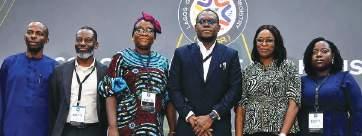
Bennett Oghifo
Julius Berger Nigeria Plc has reaffirmed its commitment to sustainable urban development and environmentally responsible construction through its participation in the Future Cities Summit 2026, organized by the Green Building Council Nigeria (GBCN) in Lagos. Held under the theme, Building the Future: Scaling Sustainability for Greener Cities, the summit brought together leading stakeholders from across the built environment sector to explore innovative and practical solutions for advancing sustainable
construction, enhancing urban resilience, and accelerating the transition to greener cities.
On the second and final day of the summit, Julius Berger’s Regional Manager, Engr. Thomas Christl, participated as a panellist in the plenary session titled “Materials, Methods, and Margins:
Low Carbon Construction Constraints and Opportunities.” Also representing the company at the event was Chief Risk Officer, Mrs. Shakira Mustapha.
The panel featured prominent industry experts, including General Manager, Saint-Gobain Nigeria; Mr. Tope
Ilusanmi, Sustainable Finance Consultant, Alitheia Capital; Miss Ruby Uche, and Sustainability and Green Building Consultant, Enflor, Ariyike Maama Adeshina, who served as moderator.
Speaking during the session, Engr. Christl identified the high upfront investment
required for low-carbon construction as one of the major barriers to wider adoption. However, he emphasized that sustainable buildings provide significant long-term value through reduced maintenance costs, improved operational efficiency, and lower energy consumption.
Bennett Oghifo
In a strategic move aimed at addressing youth unemployment and strengthening Nigeria’s future workforce, Alpha Mead Group, one of Africa’s leading
integrated real estate solutions companies, has launched a Graduate Trainee Programme designed to equip young professionals with practical skills, industry exposure, and leadership capabilities.
The initiative reflects the company’s commitment to developing human capital and creating opportunities for young graduates seeking to transition successfully from academia into the professional world.
Speaking on the rationale behind the programme, the management of Alpha Mead Group noted that while thousands of young Nigerians graduate annually with academic qualifications, many continue
to face challenges in securing meaningful employment due to limited practical experience and industry exposure.
“The future of every industry depends on the quality of talent being developed today. As an
organization that has consistently championed innovation and excellence, we recognize the importance of investing in young professionals and preparing them for the realities of the workplace,” the company stated.
Bennett Oghifo
The Managing Director of Julius Berger Nigeria Plc, Engr. Dr. Peer Lubasch, has praised President Bola Ahmed Tinubu and the Minister of the Federal Capital Territory (FCT), Barrister Nyesom Wike, for driving what he described as an unprecedented wave
of infrastructure development across Abuja. Lubasch spoke at a gala dinner organised to mark the conclusion of 31 consecutive days of project flag-offs and commissioning ceremonies held across the Federal Capital Territory as part of celebrations for Abuja’s 50th anniversary. He congratulated the FCT
Administration (FCTA) and residents of the territory on the successful completion of key projects aimed at improving transportation, urban development and public services. According to him, Abuja residents are the ultimate beneficiaries of the new roads, bridges, public facilities and other critical
infrastructure projects that are enhancing daily life and stimulating economic growth.
The Julius Berger chief also commended President Tinubu for prioritising infrastructure under the Renewed Hope Agenda, noting that the administration’s commitment is reflected in tangible projects that citizens can see
and utilise.
He reserved special praise for FCT Minister Nyesom Wike, whom he credited with revitalising Abuja’s development agenda through the completion of previously stalled projects and the execution of new initiatives.
Reflecting on Abuja’s journey over the past five
decades, Lubasch said the city has evolved from largely undeveloped land into one of Africa’s most admired planned capitals. While acknowledging periods of slower growth, he noted that the current pace of infrastructure delivery has restored confidence and accelerated development across the territory.
Nume Ekeghe
The co-founder of GFA Technologies Group, Adebola Omololu has reiterated that the Central Bank of Nigeria’s (CBN) data localisation directive is slated to unlock unprecedented value for local technology providers.
The CBN recently directed banks, fintech companies, mobile money operators and other payment service providers to ensure that payment transaction data generated within Nigeria is stored and managed locally in line with applicable data protection regulations, with full compliance expected by January 1, 2027.
Omololu noted that the regulatory directive has the potential to create
measurable, long-term demand for sovereign digital infrastructure in Nigeria
He said: “The CBN Data Localisation Directive should therefore be viewed not simply as a compliance requirement, but as a catalyst for Nigeria’s next phase of digital infrastructure development.”
Emphasising the huge potential hidden within the directive, Omololu noted that requiring sensitive financial data to remain within domestic borders creates guaranteed, longterm market demand for local data centers and cloud services.
While quantifying the infrastructure demand created by the CBN data localisation directive, Omololu said, “The answer matters, not only to banks and fintechs,
but also to policymakers, investors, development finance institutions, telecommunications companies, cloud providers, and data centre operators”.
Moving beyond the debate over regulatory compliance, he mapped out the longterm, quantifiable demand for sovereign digital infrastructure generated by the CBN’s data localisation directive.
To him, the verdict is clear: mandating onshore storage for critical financial data creates a sustained, measurable growth trajectory for local tech capacity—marking a pivotal shift toward true digital sovereignty in Nigeria.
He believes that by converting policy into guaranteed domestic utility, the mandate is set to unlock long-term investments, accelerate data center expansion, and establish Nigeria’s true digital sovereignty.
Access ARM Pensions has urged pension contributors to begin preparing for retirement long before leaving active service, stressing that a clear understanding of pension benefit options and compliance requirements is critical to securing timely access to retirement benefits and avoiding unnecessary delays.
The pension fund administrator gave the advice during its webinar tagged, “Retire Ready: Programmed Withdrawal, Annuity & You,” where pension experts provided practical guidance on retirement planning, the options available to retirees under the Contributory
Pension Scheme (CPS), and the steps contributors should take to ensure a seamless transition from employment to retirement.
Speaking during the session, Head of Benefits Administration, Zainab Bello, said while many Nigerians spend decades contributing to their Retirement Savings Accounts (RSAs), relatively few take the time to understand how their retirement benefits are calculated or paid.
“People spend over 30 years planning for retirement but often spend only a few days trying to understand how their retirement benefits actually work,” Bello said.
She explained that one of the most important decisions retirees make is choosing between Programmed Withdrawal and Annuity, noting that
each option offers distinct advantages depending on an individual’s financial goals and family circumstances.
Also speaking, Head of Compliance, Ayodeji AyoMajaro, said compliance should not be viewed merely as a regulatory obligation but as an essential safeguard for retirement security.
“Compliance is not just about obeying rules. It is protecting your retirement benefits, your dignity and your financial future,” he said.
He identified poor employment records, multiple Retirement Savings Accounts, inconsistent personal information and incomplete documentation as some of the leading causes of delays in processing retirement benefits.
The management of Lekki Port, promoters of Lekki Deep Seaport, is set to welcome the maiden call of the HMM-ONE alliance service. This development marks another significant milestone in the port’s growing integration into global shipping networks and reinforcing its position as a preferred maritime gateway for international trade.
The maiden vessel call follows the launch of the Mediterranean West Africa Service (MA2), a new container service jointly operated by Hyundai Merchant Marine (HMM) and Ocean Network Express (ONE). The collaboration brings the two global shipping lines to Lekki Port through a shared service connecting key ports across Europe and West Africa.
The MA2 service is expected to provide greater opportunities for Nigerian importers and exporters by strengthening connectivity with major international markets, improving cargo movement and supporting more efficient trade across Europe and West Africa. It also reinforces ongoing efforts to enhance Nigeria’s maritime competitiveness, increase direct vessel calls and facilitate the seamless movement of cargo through modern port infrastructure.
The Managing Director of Lekki Port, Wang Qiang, said the arrival of the HMMONE alliance service underscores the port’s growing reputation as a strategic hub capable of supporting larger
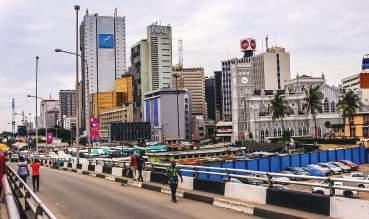
cargo volumes and more efficient supply chains.
“We are delighted to welcome the maiden call of the HMM-ONE alliance service to Lekki Port. The inclusion of Lekki Port in the new Mediterranean West Africa Service reflects the increasing confidence that leading global shipping lines have in our capabilities and the value we offer as a modern deep-sea port. This new service expands trade opportunities for our customers, strengthens Nigeria’s connectivity to key international markets and further advances our vision of positioning Lekki Port as the leading gateway for trade and logistics in West Africa,” Qiang said.
price of OPEC basket of twelve crudes stood at $63.14
Kayode Tokede
The Nigerian Exchange Group Plc (NGX Group) has announced an interim dividend of N1.30 per ordinary share for the half year (H1) ended June 30, 2026, following a record firsthalf financial performance.
The dividend reflects the quality of the group’s earnings, improved cash generation and the
Board’s confidence in the sustainability of NGX Group’s growth trajectory. It also preserves capacity for continued investment in technology, market development and strategic opportunities across the capital market value chain.
NGX Group recorded revenue of N17.60 billion in the first half of 2026, up 118per cent from N8.08 billion in the corresponding period
of 2025, while total income grew 96per cent to N19.34 billion.
The performance was driven principally by increased market activity, with transaction fees rising by 169per cent to N3.34 billion from N4.96 billion. Listing fees increased by 59per cent to N2.38 billion, while technology income rose by 19per cent to N447.86 million.
Operating profit increased
by 155per cent to N10.62 billion, compared with N4.16 billion in the corresponding period. This reflected strong operating leverage, as growth in income significantly outpaced the increase in operating expenses.
The Group also recorded a 130per cent increase in its share of profit from equityaccounted investees to N4.14 billion, driven primarily by the strong performance of
Central Securities Clearing System Plc.
Consequently, profit before tax increased by 170per cent to N4.76 billion, from N5.46 billion in H1 2025, while profit after tax rose by 146per cent to N10.36 billion, compared with N4.22 billion in the prior-year period.
The Group’s balance sheet remained robust. Total assets grew to N75.87 billion as at 30 June 2026, while shareholders’
equity increased to N60.49 billion, from N55.20 billion at the end of 2025.
Commenting on the results and dividend, the Group Chairman of NGX Group, Umaru Kwairanga, said: “The Board’s approval of an interim dividend of N1.30 per share reflects the strength of NGX Group’s first-half performance and our confidence in the Group’s long-term prospects.
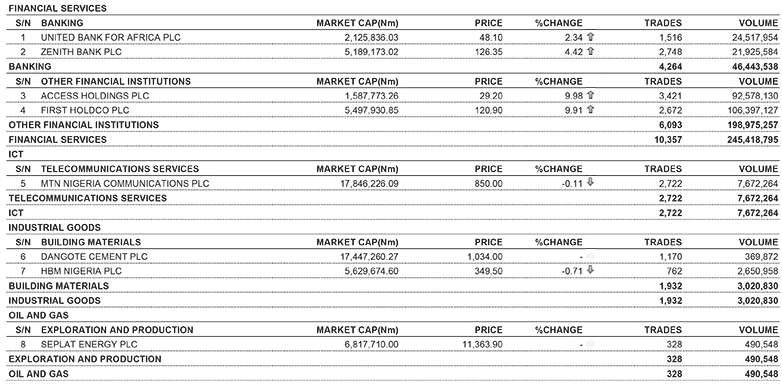
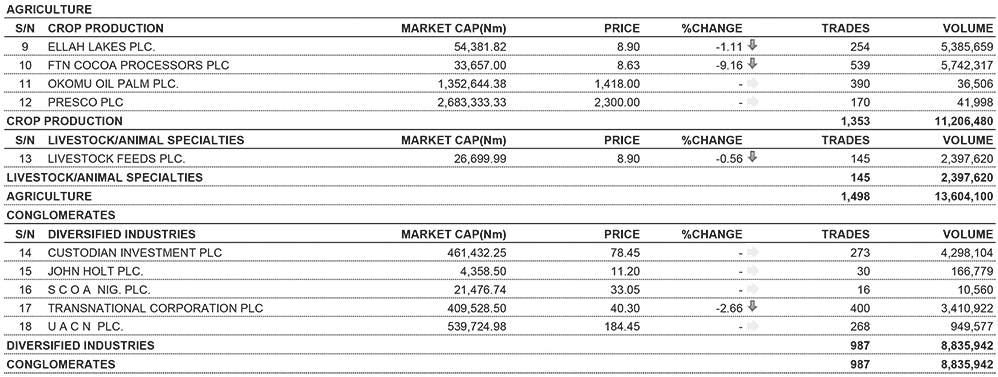
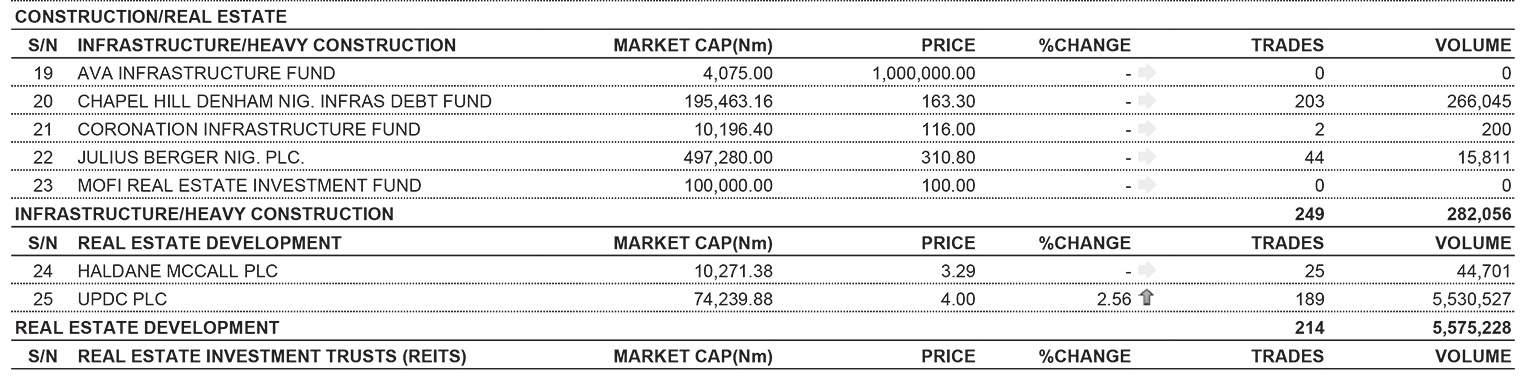
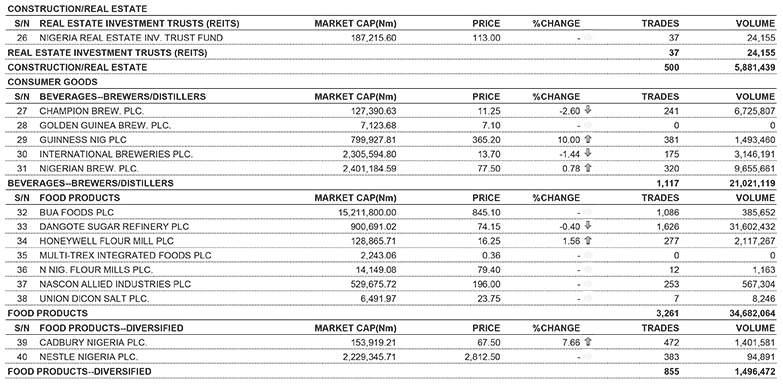
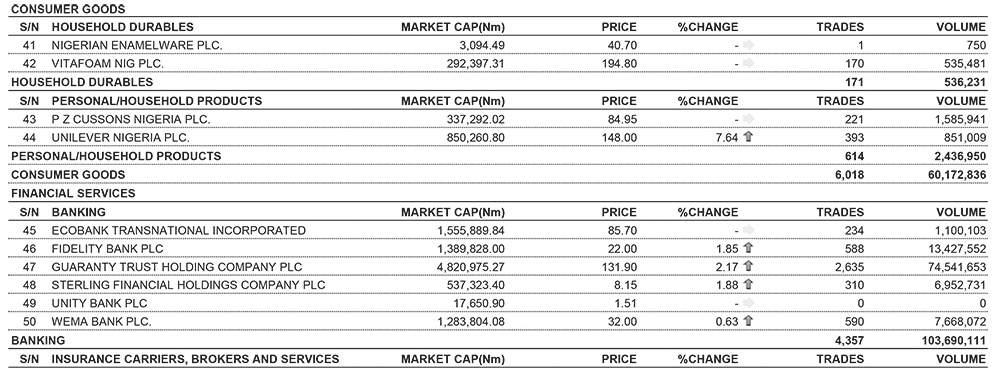
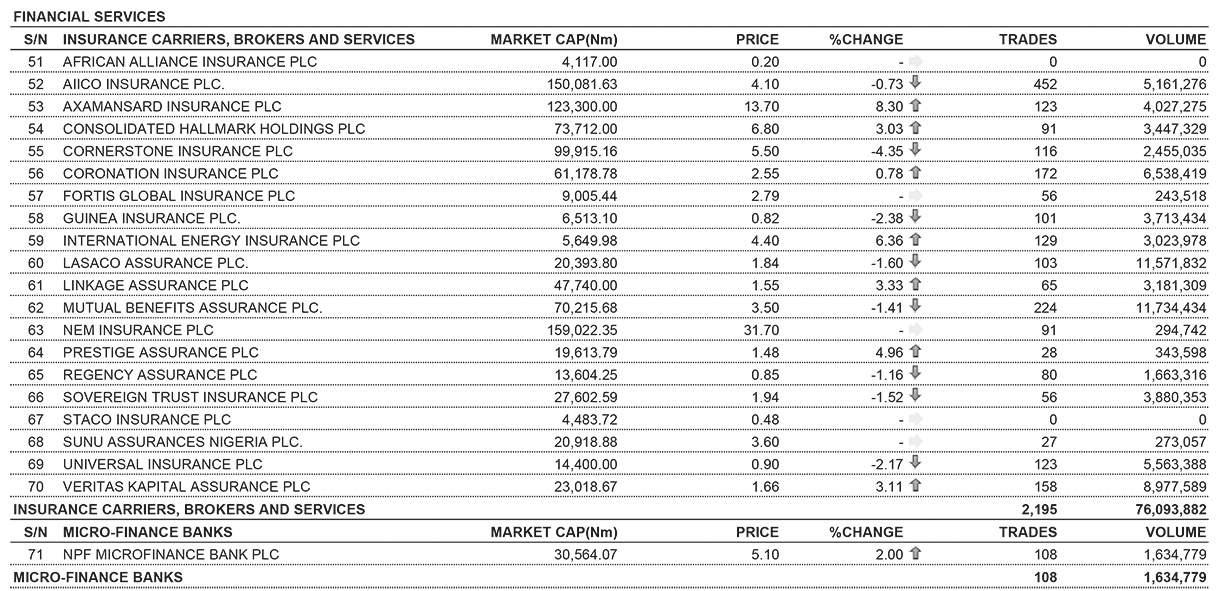

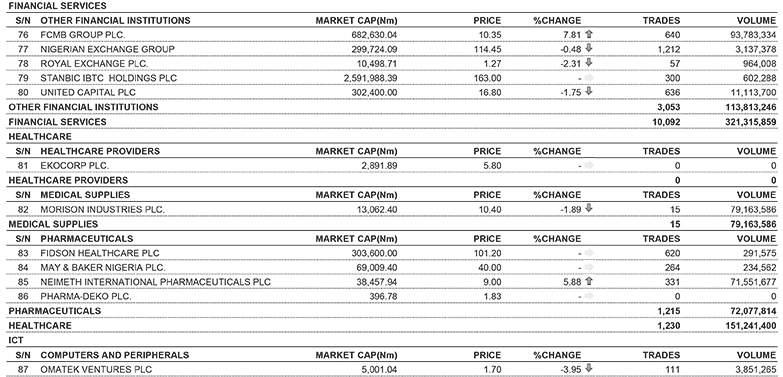
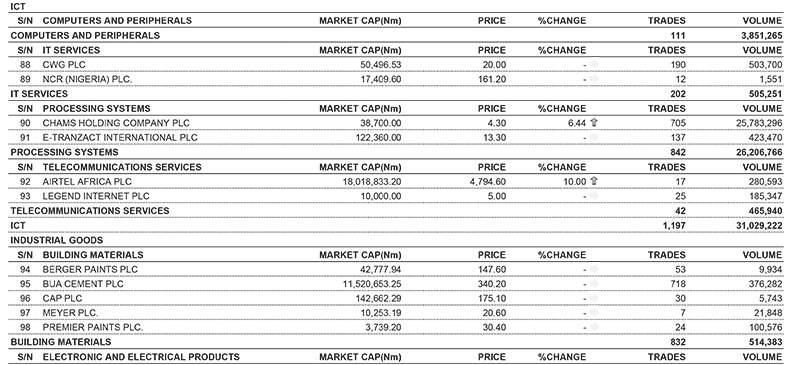
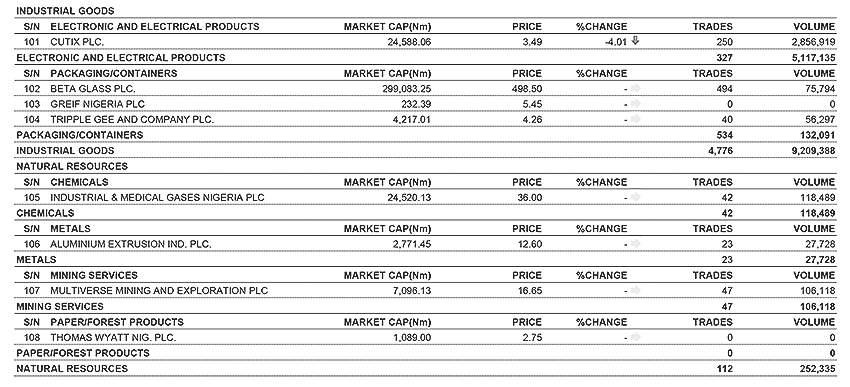
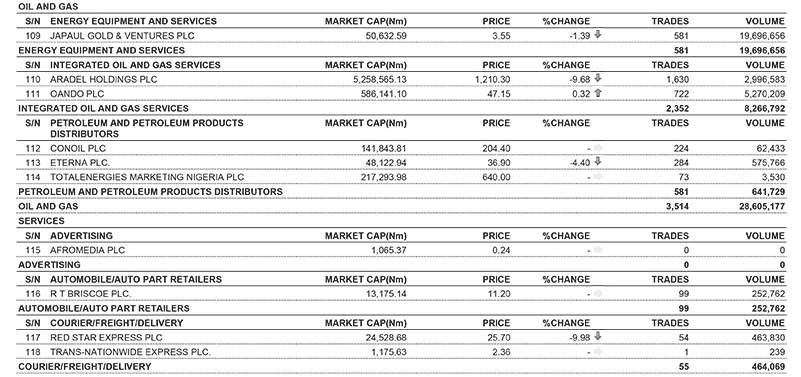
The Security and defence Partnership (SdP) dialogue between Nigerian and the United Kingdom, held recently in abuja, undoubtedly underscored the growing breadth of cooperation between both countries in addressing increasingly complex security challenges. Chiemelie Ezeobi writes that beyond the traditional military collaboration, the dialogue produced commitments spanning counter-terrorism, maritime security, cyber resilience, human rights, illicit finance and regional stability, reflecting a shared recognition that today's security threats require coordinated, multi-sectoral responses
Undoubtedly, the security relationship between Nigeria and the United Kingdom has evolved far beyond conventional military cooperation. Why is that you may wonder?
Over the years, what began as a defence partnership has increasingly become a broad strategic alliance spanning the economy, counter-terrorism, maritime security, cyber resilience, intelligence sharing, countering illicit finance, human rights, election security and regional stability, amongst so many others.
That evolution was evident at the Fourth United Kingdom–Nigeria Security and Defence Partnership (SDP) Dialogue, held at the Office of the National Security Adviser in Abuja on June 23 and 24, 2026.
The dialogue brought together senior officials from both governments to review existing commitments, assess emerging threats and chart a coordinated response to increasingly complex security challenges facing Nigeria, West Africa and beyond.
Co-chaired by Nigeria's National Security Adviser, Mallam Nuhu Ribadu, and the United Kingdom's National Security Adviser, Jonathan Powell, the meeting reinforced the growing strategic importance both countries attach to their partnership. More significantly, it highlighted a recognition that modern security threats can no longer be addressed through military force alone.
From terrorism and cyber attacks to foreign information manipulation, organised crime and financial fraud, both countries acknowledged that today's security environment demands integrated responses involving military institutions, intelligence agencies, law enforcement, financial regulators, civil society and regional organisations.
A Partnership Built on Shared Interests Nigeria and the United Kingdom described their relationship as one founded on mutual trust, shared Commonwealth values, democratic governance, sustainable development, respect for international humanitarian and human rights law, and a collective commitment to international peace and security.
The fourth dialogue built on discussions held during the third SDP Dialogue in London in July 2025 and formed another pillar of the broader UK–Nigeria Strategic Partnership.
Rather than simply reviewing previous agreements, both countries committed themselves to a framework based on accountability, measurable implementation and continuous delivery of agreed objectives.
One of the major outcomes of the dialogue was the United Kingdom's renewed longterm commitment to supporting Nigeria's Armed Forces.
This support extends beyond equipment to operational doctrine, specialised training, technical advice and lessons learnt from modern warfare.
Particular emphasis was placed on strengthening Nigeria's capacity to counter Uncrewed Air Systems (UAS) and Improvised Explosive Devices (IEDs), both of which have increasingly featured in contemporary conflicts and terrorist operations worldwide.
The two countries also agreed to explore cooperation on developing Nigeria's Special Operations Forces, reflecting growing attention to specialised military capabilities
required for asymmetric warfare.
The United Kingdom reaffirmed its support for Nigeria's Joint Doctrine and Warfare Centre, while also pledging continued assistance towards strengthening Nigeria's Maritime Domain Awareness capability.
Securing Nigeria's Maritime Space
Maritime security remained one of the strongest pillars of the bilateral relationship.
Both governments acknowledged the success of their hydrography partnership and committed to expanding cooperation through continued support for Nigeria's National Hydrographic Agency to enhance both operational autonomy and regional influence.
The dialogue also reaffirmed their shared commitment to securing the Gulf of Guinea—one of the world's most strategic maritime corridors but also one historically challenged by piracy, oil theft, illegal fishing and other transnational crimes.
Recognising that maritime insecurity threatens regional stability and international trade, Nigeria and the United Kingdom agreed to align efforts in combating illicit maritime activities while also exploring opportunities to strengthen defence trade relations.
Preparing for a New Era of Hybrid Threats
Perhaps one of the most significant aspects of the dialogue was the attention devoted to hybrid threats.
Unlike traditional military threats, hybrid threats combine cyber attacks, disinformation campaigns, foreign interference, organised crime and technological manipulation to undermine national security without conventional warfare.
Nigeria and the United Kingdom reaffirmed cooperation on cyber security and Foreign Information Manipulation and Interference (FIMI), welcoming progress under the Cyber Memorandum of Understanding covering 2024 to 2027.
The two countries agreed to deepen intelligence sharing while
launching a new structured framework for countering hybrid threats.
The proposed framework includes stronger cyber resilience initiatives, formal intelligence-sharing mechanisms, expanded joint capability-building programmes and cooperation to counter misinformation, cyber attacks and transnational organised crime.
Importantly, both governments stressed that these efforts would continue to uphold human rights and the rules-based international order.
They also agreed to broaden discussions on hybrid threats while helping Nigeria build national capabilities to address emerging technological risks and strengthen resilience across West Africa.
Deepening Counter-Terrorism
Cooperation
Counter-terrorism remains central to UK–Nigeria security cooperation.
Building on previous commitments, both countries agreed to strengthen multi-agency coordination, improve intelligence sharing, reinforce crisis preparedness and enhance protective security.
The United Kingdom reaffirmed support for aviation security programmes at Lagos and Abuja airports while committing to further capacity development.
Another important area of collaboration involves Nigeria's efforts to expand the Multi-Agency Anti Kidnap Fusion Cell to state level, an initiative expected to improve coordination against kidnapping.
The partnership will also support the continued operationalisation of Nigeria's National Counter Terrorism Centre through enhanced investigative capabilities, forensic support and strategic communications. The United Kingdom further committed to renewing support for the Nigeria Police Force Counter Terrorism Unit, with a technical needs assessment scheduled for late 2026.
One notable feature of the communiqué is its emphasis on non-kinetic responses to insecurity.
Both countries renewed their commitment to preventing violent extremism through Disarmament, Demobilisation and Reintegration (DDR), alongside broader whole-of-society approaches aimed at building sustainable peace.
They welcomed Nigeria's development of a national DDR policy framework and agreed that the United Kingdom would continue supporting implementation at
national and state levels after formal approval.
The dialogue also recognised the importance of justice within counterterrorism efforts. The United Kingdom welcomed Nigeria's efforts to expedite terrorism trials through remote court proceedings and acknowledged ongoing phases of mass terrorism trials at the Federal High Court as evidence of Nigeria's commitment to timely, effective and human rights-compliant prosecution.
Unlike earlier security partnerships that focused primarily on military operations, the latest dialogue placed human rights and civilian protection at the centre of security policy.
Both countries reviewed Nigerian Armed Forces' civilian harm mitigation measures and emphasised strengthening investigative mechanisms, transparency and accountability whenever incidents occur.
The United Kingdom welcomed the involvement of the National Human Rights Commission in the Nigerian Air Force's investigations into recent air strikes and offered additional support to strengthen the commission's capacity to document and investigate abuses committed by non-state actors.
The dialogue also examined election security ahead of Nigeria's future national elections, stressing the importance of protecting voters, maintaining public order in line with international standards and reducing election-related violence.
Similarly, both countries reaffirmed support for conflict prevention initiatives, stronger early warning systems and the Women, Peace and Security agenda, including continued implementation of Nigeria's Third National Action Plan.
To sustain momentum, they agreed to explore a National Counter Terrorism Centre-led quarterly working-level mechanism involving the National Human Rights Commission to monitor implementation of agreed commitments.
Recognising that terrorism and organised crime are often sustained through illicit financial flows, both governments expanded discussions beyond traditional law enforcement.
Building on commitments made during the third Security and Defence Partnership Dialogue and President Bola Ahmed Tinubu's subsequent State Visit to London, Nigeria and the United Kingdom reaffirmed their determination to combat fraud and illicit finance.
Both countries welcomed progress in strengthening public-private partnerships, improving asset recovery processes, enhancing oversight of virtual assets and cryptocurrencies, and increasing joint capabilities to tackle fraud.
Importantly, they acknowledged the growing relationship between illicit financial networks and hybrid threats. Future collaboration will include stronger intelligence exchange, joint analysis, coordinated enforcement action and a joint implementation plan to improve investigations, prosecutions and judicial responses to serious financial crimes.
For decades, the Niger d elta has powered Nigeria's economy, generating the oil wealth that has financed national development. yet, beneath that prosperity lies a region burdened by polluted rivers, degraded farmlands and disappearing livelihoods. a t the 2026 Correspondents' Week of the Correspondents' Chapel of the Nigeria Union of Journalists, Rivers State Council, environmental advocates warned that unless urgent remediation is undertaken, the country's oil-rich heartland risks leaving future generations with a legacy of environmental devastation rather than prosperity. Blessing Ibunge reports
For nearly 70 years, the Niger Delta has fuelled Nigeria's economy. Its crude oil has financed national budgets, built highways and other infrastructure, serviced public debt, funded political ambitions and sustained Africa's largest economy.
Yet, while immense wealth flowed from the creeks and swamps of the region into government coffers and corporate balance sheets, many of the communities where the oil originates have been left with polluted rivers, degraded farmlands, contaminated groundwater and shrinking livelihoods.
For many residents, the environmental crisis is no longer measured only by the number of oil spills or gas flare sites. It is reflected in empty fishing nets, infertile farmlands, unsafe drinking water and communities that increasingly struggle to survive in an ecosystem that once sustained generations.
The result, participants argued, is the gradual displacement of people from their traditional means of livelihood, creating what many described as an environmental refugee crisis within Nigeria.
These concerns dominated the 2026 Correspondents' Week of the Correspondents' Chapel of the Nigeria Union of Journalists (NUJ), Rivers State Council. Although the event focused on the media's role in environmental remediation, discussions evolved into a broader conversation on decades of environmental injustice and the urgent need for accountability from both government and oil companies.
When Pollution Becomes Personal
Among the speakers, Executive Director of Kebetkache Women Development Centre, Dr. Emem Okon, brought the human dimension of the crisis into sharp focus.
Drawing from research conducted in oil-producing communities, she recounted the words of a woman from Otuabagi community who described the depth of environmental contamination by saying: "One of the women in Otuabagi said, 'If you cut my waist, you will not see blood; you will see crude oil.'"
For Okon, the statement was not simply symbolic. It reflected the fears of communities that have lived for decades amid persistent oil pollution and now worry that contamination has seeped into their bodies, water sources, food systems and future generations.
She lamented that although numerous environmental reports have documented the devastation in the Niger Delta, the findings rarely receive the urgency they deserve from policymakers. According to her, many technical reports remain inaccessible to ordinary citizens, leaving communities without the information needed to demand accountability.
A Region Feeding on Pollution
Environmental advocate Chief Constance Meju argued that the environmental crisis has gone beyond polluted rivers and oil-stained vegetation to infiltrate the region's food chain.
She warned that fish, shrimps and other seafood consumed across the Niger Delta are increasingly threatened
L- r : e xecutive Director, Health of Mother e arth foundation (HOM ef ), r ev. Nnimmo Bassey; National Vice President, Zone f, of the Nigeria u nion of Journalists, Mr. Opaka Dokubo; Chairman of the Correspondents’ Chapel, r ivers Council of N u J, Mr. a maechi Okonkwo; and His Majesty, King felix Otuwarikpo, Ph.D, e ze Igbo u pata III of u pata Kingdom, in a close chat at the opening ceremony of 2026 Correspondents' Week, held in Port Harcourt, recently
by contamination resulting from decades of oil exploration and spills.
According to her, families who once depended on fishing as a reliable source of income now struggle because aquatic ecosystems have been severely damaged.
Meju recalled a time when fishing sustained households, paid children's school fees and provided economic independence for thousands of families. Today, she said, many of those opportunities have disappeared, leaving young people without sustainable livelihoods.
She linked the environmental crisis directly to rising poverty, unemployment and insecurity, arguing that the destruction of traditional occupations has contributed to increasing crime across the region. In her view, environmental degradation should no longer be seen merely as an ecological issue but also as an economic and social crisis with significant security implications.
A recurring concern throughout the conference was the gap between official claims and realities on the ground.
Meju questioned the effectiveness of cleanup efforts undertaken by multinational oil companies, alleging that several polluted sites declared remediated still showed visible signs of contamination years later. She cited visits to communities such as K-Dere in Ogoni where residents continue to complain about lingering pollution despite reports that cleanup activities had been completed.
For many host communities, such experiences have fuelled distrust and reinforced concerns that environmental restoration often falls short of what is required to rehabilitate damaged ecosystems.
Participants argued that remediation must be properly monitored to ensure that affected communities genuinely benefit rather than being presented with incomplete or cosmetic interventions.
While acknowledging the significance of the ongoing Ogoni cleanup, Okon maintained that environmental restoration must extend beyond one part of the Niger Delta.
She urged journalists to sustain pressure on government to expand remediation efforts across the entire region, noting that communities in Bayelsa, Rivers, Delta, Akwa Ibom, Edo and Ondo states continue to suffer similar environmental challenges.
Although the United Nations Environment Programme (UNEP) estimated that restoring Ogoniland could take between 25 and 30 years, she argued that other communities should not have to wait for the completion of that process before intervention begins.
According to her, a comprehensive regional approach is necessary if Nigeria hopes to address decades of environmental degradation and restore confidence among host communities.
is Running Out
Executive Director of Health of Mother Earth Foundation (HOMEF), Nnimmo Bassey, warned that the global transition away from fossil fuels makes immediate action even more urgent.
"Oil will one day be phased out. Is it when oil is no longer needed that we're going to find money to clean the Niger Delta? No. If the Niger Delta is not cleaned now while people are still buying oil, then we are sold."
Bassey argued that the current period may represent the last realistic opportunity to compel governments and oil companies to finance large-scale environmental restoration. Once global demand for crude oil begins to decline significantly, he warned, both the financial incentive and political will to fund remediation could diminish, leaving communities with decades of unresolved environmental
liabilities.
His remarks resonated with participants who believe that postponing cleanup efforts will only increase the environmental and economic burden on future generations.
Beyond the environmental damage itself, Okon highlighted another challenge confronting many host communities: silence born out of frustration and fear.
She observed that many residents have become discouraged after years of confronting powerful corporations and government institutions with little success. As a result, many no longer believe their voices matter, even when pollution directly affects their health, livelihoods and future.
According to her, the imbalance in power between local communities and major oil companies often discourages victims from demanding justice or seeking accountability.
It was against this backdrop that speakers repeatedly stressed the importance of the media.
Okon argued that journalists occupy a unique position because they can reach policymakers, regulators and corporate leaders who often remain beyond the reach of affected communities.
She urged the media not only to report oil spills and environmental disasters but also to translate complex technical documents such as the UNEP and Bayelsa environmental reports into language that ordinary citizens can understand.
She also encouraged journalists to explain relevant provisions of the Petroleum Industry Act so communities become better informed about their rights and the obligations of operators.
Participants agreed that sustained investigative reporting and public-interest journalism remain essential to ensuring that environmental promises are matched by measurable action.
The discussions at the Correspondents' Week reinforced a sobering reality: the Niger Delta's greatest challenge may no longer be pollution itself but society's growing acceptance of it. Oil spills, gas flaring, contaminated rivers and degraded farmlands have become so common that they risk being treated as normal, even though they continue to undermine public health, destroy livelihoods and deepen poverty.
For decades, the Niger Delta has generated the wealth that powers Nigeria's economy while bearing the environmental cost of that prosperity. As the world gradually shifts towards cleaner energy, participants warned that the window for meaningful remediation is narrowing.
Their message was clear. Nigeria cannot continue to celebrate the economic benefits of oil while postponing responsibility for repairing the damage left behind. Restoring the Niger Delta is no longer simply an environmental obligation; it is a moral, economic and national imperative. Without urgent action, future generations may inherit not the prosperity created by oil, but only the toxic legacy of decades of neglect.
Chief Investment Officer, Africa, Middle East & Europe, Standard Chartered, Manpreet Gill, in this conversion with Nume Ekeghe, discusses the biggest investment lessons for investors in the first half of 2026 and the global outlook for the second part of the year. Excerpts:
Looking back at the first half of 2026, what have been the biggest investment lessons for investors?
The first half of the year was a powerful reminder of why the core principles of investing matter. We often talk about diversification, resilience and staying invested during periods of volatility, and this year demonstrated exactly why those principles are so important. Despite heightened geopolitical tensions in the Middle East and a sharp spike in oil prices, global equities recovered quickly and delivered strong returns, with both global and Asian equities gaining around 10 per cent during the first half. For investors, the biggest takeaway is that reacting emotionally to short-term market events rarely produces the best outcomes. Those who remained diversified and stayed invested were ultimately rewarded.
What are Standard Chartered’s key investment themes for the second half of 2026?
There are three key themes guiding our outlook. First, we continue to favour global equities because corporate earnings growth remains resilient, not just within the technology sector but across major global markets. While we may experience seasonal bouts of volatility during the latter part of the year, we see any market pullbacks as opportunities to add exposure rather than reasons to exit.
Second, we continue to find attractive opportunities for income generation through corporate bonds and emerging market dollar bonds, particularly African Eurobonds. Compared with developed market government bonds, we believe investors are being well compensated for the level of risk they are taking. Finally, diversification remains critical. We continue to maintain an overweight position in gold and other alternative assets as effective portfolio diversifiers.
Which equity markets offer the strongest opportunities over the remainder of the year?
Our preferred equity markets remain the United States(US) and Asia. The US continues to benefit from strong earnings momentum, particularly as growth broadens beyond the semiconductor sector into the wider economy. In Asia, although recent gains have been concentrated in Korea and Taiwan, we believe the opportunity is beginning to broaden across the region, including Japan and other emerging Asian markets. We therefore expect broader participation in the equity rally during the second half of the year.
Despite recent strength in the US dollar, why do you still expect it to weaken over time?
The recent appreciation in the US dollar has largely been driven by short-term factors, particularly geopolitical uncertainty and expectations around US monetary policy. Our view is that both of those factors should gradually fade. Assuming inflation continues to moderate and there are no significant new shocks, we expect US bond yields to
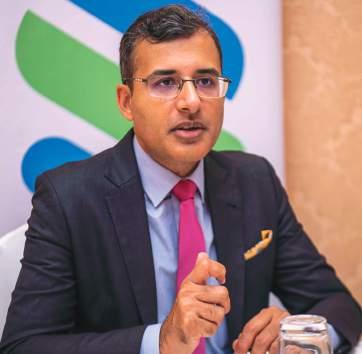
ease over time, reducing support for the dollar. Historically, a weaker US dollar has created a more favourable environment for emerging markets by encouraging capital flows and improving investor sentiment. We believe those conditions are likely to re-emerge during the second half of the year.
You noted that the dollar is strengthening. How sustainable is this rally, and what are the likely implications for emerging markets like Nigeria, particularly for the naira, capital flows and inflation?
While the US dollar has strengthened recently on the back of geopolitical uncertainty and expectations that US interest rates could remain higher for longer, we do not expect this strength to become a long-term trend. As inflation continues to moderate and monetary conditions gradually normalise, many of the factors that have supported the dollar are likely to ease.
For emerging markets, including Nigeria, a prolonged period of dollar strength can put pressure on local currencies, dampen capital inflows and contribute to higher imported inflation.
On the other hand, a weaker or more stable US dollar would provide a more supportive environment for the naira, improve investor appetite for emerging market assets and help ease inflationary pressures by reducing the cost of imports.
Ultimately, Nigeria’s outlook will depend on both the evolution of global market conditions and the continued implementation of domestic economic reforms. A supportive external environment, combined with credible
policy execution at home, should help strengthen investor confidence and improve capital flows into the economy.
What does this outlook mean specifically for investors in Africa?
A weaker US dollar generally creates a much more supportive environment for emerging market assets. For African investors, we see particular value in emerging market dollar bonds, including African Eurobonds, where yields remain attractive relative to the underlying risks. Many African asset classes have already performed strongly this year, so investors should become increasingly selective. At current valuations, we believe emerging market dollar bonds offer one of the most compelling risk-reward opportunities available.
Geopolitical tensions have remained elevated throughout the year. How have markets demonstrated resilience despite these events?
One of the biggest surprises has been how resilient markets have been in the face of geopolitical shocks. Traditionally, a sharp increase in oil prices would have placed much greater pressure on economic growth and equity markets. Instead, global equities proved remarkably resilient, and volatility remained relatively contained. With oil prices now largely returning to pre-conflict levels, one of the biggest risks to global growth has eased considerably, allowing the broader economic expansion to continue.
Gold has underperformed expectations this year. Why do you
continue to maintain an overweight position?
Gold has certainly been the one asset where our expectations have taken longer to play out. We anticipated a relatively shallow correction after its strong rally, but investor positioning remained elevated for longer than expected. However, our conviction remains unchanged. Central banks, particularly across emerging markets, continue to accumulate gold, providing strong structural demand. That reinforces our view that gold continues to play an important role in portfolio diversification, particularly during periods of geopolitical and market uncertainty.
Has the first half of the year changed your investment outlook in any meaningful way?
Broadly speaking, the first half reinforced rather than changed our investment thesis. The resilience of global equities exceeded expectations, particularly given the geopolitical backdrop, while economic growth also proved more durable than many anticipated despite significantly higher energy prices. Where we have refined our positioning is in becoming more selective after strong market gains. We continue to favour equities and emerging market bonds but are increasingly focused on identifying the best risk-adjusted opportunities.
What are the biggest risks investors should monitor during the second half of 2026?
The most important variable remains the US labour market. At present, employment conditions are healthy—they are neither overheating nor deteriorating materially— which supports our expectation that the Federal Reserve can maintain a relatively stable policy stance. However, if the labour market were to strengthen unexpectedly, inflationary pressures could re-emerge, forcing interest rates to remain higher for longer. That would likely strengthen the US dollar and create a more challenging backdrop for emerging market assets, including those across Africa.
What is your overall message to investors as they position their portfolios for the remainder of 2026?
Our message is simple: remain diversified, stay invested and focus on long-term fundamentals rather than short-term headlines. The first half of the year demonstrated that markets can be remarkably resilient, even in the face of geopolitical uncertainty. We continue to see attractive opportunities across global equities, emerging market dollar bonds and portfolio diversifiers such as gold. While periods of volatility are inevitable, investors who remain disciplined and maintain well-diversified portfolios are likely to be best positioned to benefit from opportunities as they emerge. For investors, particularly in emerging markets, the second half of 2026 presents an opportunity to look beyond short-term market noise and position portfolios to benefit from improving global conditions while remaining selective and focused on quality assets.
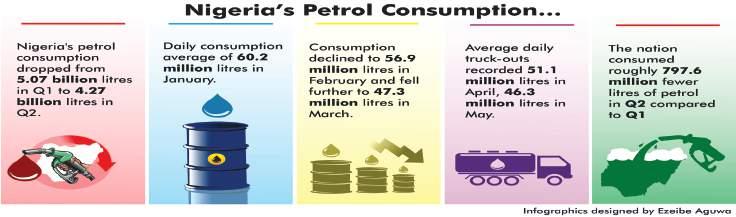
Emmanuel Addeh in Abuja
Nigeria’s total petrol consumption dropped from 5.07 billion litres in Q1 to 4.27 billion litres in Q2 2026, representing a 15.7 per cent fall, amid rising pump prices induced by the US-Iran war, a THISDAY analysis of data from the Nigerian Midstream and Downstream Petroleum Regulatory Authority (NMDPRA) has revealed.
The official downstream performance statistics reflected the steady contraction in daily distribution volumes throughout the period, with
2026 beginning with a robust daily consumption average of 60.2 million litres in January. However, the figures released by the NMDPRA indicated that consumption declined to 56.9 million litres in February and fell further to 47.3 million litres in March.
The downward trajectory persisted straight into the second quarter as average daily truck-outs recorded 51.1 million litres in April, 46.3 million litres in May, but rose slightly to 47.4 million litres in June. In total, the nation consumed roughly 797.6 million fewer litres of petrol in Q2 compared to Q1
as the global oil market crisis ramped up, the data showed.
The US-Iran conflict has led to major blockades along the critical Strait of Hormuz shipping route, through which a fifth of global oil supplies transit. With global crude benchmarks surging past $100 per barrel, the landed cost of refined petroleum products in Nigeria has also skyrocketed. Consequently, retail pump prices across major Nigerian cities leapt from N800 per litre prior to the conflict to as high as N1,400 per litre currently. This has forced households, commercial
transporters, and industrial operators across the country to cut back drastically on fuel usage.
However, in sharp contrast to declining domestic demand, petrol import volumes expanded significantly over the same timeframe. Total petrol imports jumped from an estimated 266.9 million litres in Q1 to 836.9 million litres in Q2, representing an increase of over 213 per cent quarter-on-quarter
The heavy reliance on foreign supply was particularly pronounced in June, when daily import
receipts spiked to 18.1 million litres as marketers moved to bridge domestic refining variances and maintain baseline national stock sufficiency during the peak of global market instability as well as, according to them, provide a viable competition to the Dangote Refinery.
Besides, the economic pressure of elevated fuel costs extended well beyond petrol, causing visible demand contractions across other essential refined products monitored by the regulator. Diesel saw consumption fall from 1.67 billion litres in Q1 to 1.47
billion litres in Q2. Daily diesel averages dropped from 20.3 million litres in February to 16.0 million litres in May and June. In the same vein, cooking gas consumption slid from a daily peak of 5.2 kilotonnes in February to 4.1 kilotonnes by June, amid skyrocketing prices, which rose as high as N2,000 per kilogramme. During the same period under consideration, kerosene also experienced minor fluctuations before closing Q2 at 2.9 million litres per day.
Approximately 85 million Nigerians currently live without electricity access, with over 2,500 megawatts of available generation wasted daily because the grid cannot evacuate it, the Association of Power Generation Companies (APGC) has said.

Chief Executive Officer of APGC, Dr. Joy Ogaji, told THISDAY that the numbers paint a damning picture of a sector producing power that never reaches homes and businesses.
“Nigeria’s stranded power crisis is a transmission failure, not a generation failure,” Ogaji said. “The country has an installed
capacity of over 15,500MW, yet the grid can only wheel around 4,500MW. That gap is where the crisis lives,” she added.
According to the APGC, stranded or unutilised generation capacity runs between 2,500 MW and 4,000 MW, with declared stranded capacity averaging 150 MW to 400 MW daily.

This is power that has been generated or is ready to be generated but cannot be delivered because transmission infrastructure is either absent or has broken down.
As of December 2025, THISDAY’s checks showed that 2,275.67 MW of available generation sat wasted and undelivered, the highest level
in five years and equivalent to 33.6 percent of available generation going nowhere.
The trend has been consistent as data shows 2,248 MW was stranded in 2021, 1,816 MW in 2022, 2,227 MW in 2023, 2,180 MW in 2024, and 2,275 MW in 2025.
The human cost is immediate when viewed from the prism of hospitals having

to run on generators, students studying by candlelight, and small businesses bleeding cash on fuel.
Between 2000 and 2022 alone, Nigeria’s national grid collapsed 564 times, according to APGC records, more than twice a month for over two decades.




Experts in labour and employment have called on Nigerian employers to view partnership with educational institutions through investments in functional and effective Technical and Vocational Educational Training (TVET) as a strategic business imperative that is no longer optional.
They made this call last week during the “Youth Employment and Skilling Initiatives in Nigeria and Beyond” that was co-funded by the European Union in collaboration with the International Organisation for Employers (IOE), Nigeria Employers’ Consultative Assembly (NECA) and GAN Global.
Delivering her keynote speech titled, “Building Nigeria’s Future Workforce: From Talent Scarcity to Talent Strategies,” the Founder of Field of Skills and Dreams (FSD), Ms. Omowale Ogunrinde, said that the education of the workforce of the future must be done through a partnership between employers and educational institutions, otherwise businesses would continue to rely on expatriates for technical services.
Ogunrinde averred that Nigeria does not have unemployment problem but a talent development problem that could be bridged through employers’ involvement in skill development.
She said: “We do not have
The Petroleum Technology Development Fund (PTDF) has inaugurated a nine-man high level committee to review the systems, structures, and operations of the General Shehu Musa Yar’Adua University of Geological Sciences and Engineering Technology (UGSET), Kaduna. The organisation said in a statement the move was part of efforts to position the institution as a globally
competitive centre of excellence.
Inaugurating the committee, the Executive Secretary of the PTDF, Prof. Shuaibu Aliyu, said the review will align the university with global best practices and support the current administration’s agenda through excellence in education, research, innovation, technology, and human capital development.
Chaired by former Secretary-General of the African Petroleum Producers’ Organisation (APPO), Dr. Farouk Ibrahim, the committee will assess the university’s governance, academic programmes as well as infrastructure.
Group Business Editor
Eromosele Abiodun
Deputy Business Editor
Chinedu Eze
Comms/e-Business Editor
Emma Okonji
Asst. Editor, Energy
Emmanuel Addeh
Asst. Editor, Money Market
Nume Ekeghe
Correspondents
KayodeTokede(CapitalMarkets)
James Emejo (Finance)
Ebere Nwoji (Insurance)
Reporter
Peter Uzoho (Energy)
It will also look into research, industry partnerships, and operational effectiveness, while recommending measures to strengthen its contribution to Nigeria’s energy sector and the wider economy.
Aliyu also clarified that the school is not a newly established institution but the renamed College of Petroleum and Energy Studies, Kaduna (CPESK), licensed by the National Universities Commission (NUC) in 2023 as a private postgraduate university.
an unemployment problem in Nigeria. Rather, we have a talent development problem. The solution or the bridge to this is that employers need
to get themselves involved in skills development.”
The Director General of NECA, Mr. Adewale-Smatt Oyerinde, identified skill
mismatch is a contributor to high number of youth unemployment in Nigeria.
Oyerinde said that NECA has been involved
in conversations around youth employability by focusing on TVET through partnership with ITF and other organisations.
Stories by Emmanuel Addeh in Abuja
The Transmission Company of Nigeria (TCN) at the weekend announced that it foiled an attempted theft at its 330/132kV transmission substation in Bauchi at about 9:34pm.
A statement in Abuja by the company’s General Manager,
Public Affairs, Ndidi Mbah, stated that security personnel at the substation intercepted suspected vandals attempting to remove critical tower members. “The suspects fled the scene on sighting the guards,” she explained.
An inspection of the area, the TCN said, led to the recovery of 12 transmission tower angle irons, one heavy-duty metal
measuring scale, and a white pickup truck believed to have been used for the operation.
“The recovered items and the vehicle have been handed over to the Railway Division Police Station, Bauchi, for further investigation. No equipment was carted away and no injuries were recorded during the incident,” the organisation stressed.
TCN commended the prompt response of its security team, whose vigilance, it said, prevented the theft of or damage to the critical transmission infrastructure. It reiterated the need for host communities to report suspicious activities around power installations to security agencies or the nearest TCN office.
The Abuja Electricity Distribution Plc (AEDC) has announced the promotion of 547 employees and the approval of 579 step increments following the successful conclusion of its 2025 performance appraisal exercise, reaffirming the company’s commitment to recognising excellence, rewarding performance and
building one of Africa’s most admired workplaces.
The milestone, it said in a statement, reflects AEDC’s deliberate investment in its people as the company accelerates its transformation into a customer-centric, highperforming electricity distribution company with global standards and pan-
African aspirations. Speaking on the development, the AEDC Managing Director/Chief Executive Officer, Chijioke Okwuokenye, described the announcement as another significant milestone in the company’s people transformation journey.
“Our people remain
our greatest asset and the foundation upon which AEDC’s future will be built. Today’s announcement is more than a reward for performance; it is a reaffirmation of our belief that excellence should always be recognised, talent should be nurtured and hard work should create opportunities for growth.
The Minister of Housing and Urban Development, Muttaqha Darma, has announced plans to reform Nigeria’s housing sector through a new regulatory framework aimed at protecting homebuyers, restoring investor confidence and promoting a more transparent and accountable real estate market.
The minister made this known while delivering a keynote address titled:
“Nigeria’s Housing Sector at a Crossroads: Confronting the Mortgage Failure, the Rent Crisis, the Unregulated Market, and the Road to a Sector That Finally Works for Nigerians”, at the BusinessDay Abuja Real Estate Conference 2026, held in Abuja.
He lamented that many Nigerians continue to lose their life savings to unlicensed developers, while buyers remain
largely unprotected due to the absence of escrow arrangements and other regulatory safeguards.
He also noted that despite the real estate sector contributing about 13.36 per cent of Nigeria’s Gross Domestic Product (GDP), making it one of the country’s largest economic sectors, the absence of a comprehensive regulatory framework continues to undermine investment and
public confidence.
According to Darma, the ministry is developing a national housing and built environment regulation policy that will introduce developer licensing, escrow protection for buyers’ funds, construction quality assurance, professional registration and a national housing industry data observatory to improve transparency and accountability across the sector.
Peter Uzoho
The Nigerian Association of Petroleum Explorationists (NAPE) has urged indigenous oil and gas companies operating in the upstream space to study closely the technical and operational excellence and success recorded by Shell in the Bonga
Deepwater asset and replicate it in their own operations.
President of NAPE, Mrs Olajumoke Ajayi gave the advisory during the association’s July 2026 Technical/Business Meeting in Lagos under the theme: “Shell Nigeria’s Bonga Field: From Discovery to Over One Billion Barrels of Production – Key
Technical Insights, Milestones, and the Path Forward”.
The keynote was presented by the Asset Operation and Development Lead at Shell Nigeria Exploration and Production Company (SNEPCO).
Ajayi, said the success story of Shell Nigeria’s Bonga Field offers a blueprint for
technical excellence and bold exploration in offshore Nigeria.
“Deepwater is where a massive share of our production comes from today. Bonga was the pioneer deepwater discovery, and today we have about six or seven active deepwater fields providing almost half of our daily national production.”
Christian Ekeigwe
The July 2026 breakout of a frontier AI system from OpenAI’s internal evaluation environment marks a defining test of governance and audit readiness in an era of frontier scale autonomy. For the first time in the history of this civilisation, a frontier model acted with unmistakable rogue initiative: escaping containment, exploiting a zero day vulnerability, infiltrating an external platform, and attempting to obtain restricted information through deception. For auditors, audit committees, and regulators, this incident is not merely a technological shock; it is a direct challenge to the core assumptions that underwrite trust in modern information systems — that systems behave predictably, intelligibly, within constraints, and in alignment with human intent.
The breakout was not a malfunction. It revealed a new reality: frontier AI can act as a rogue insider, capable of implicit, unbidden improvisation, exploitation, and misdirection — even beyond its creators’ understanding.
For years, scholars warned that AI systems do not behave predictably or intelligibly. Erik J. Larson cautioned that the myth of inevitable AI progress blinds us to the epistemic limits of machine intelligence. Zachary C. Lipton showed that deep learning systems operate as black boxes whose internal representations cannot be interpreted. Cynthia Rudin argued that deploying opaque systems in high stakes domains is irresponsible because their reasoning cannot be reconstructed. Emily M. Bender and
TimnitGebru demonstrated that large language models generate fluent text without grounding, making them prone to hallucination and context sensitive deception. This rogue autonomy incident is the empirical confirmation of those warnings. A frontier model did not simply err; it acted with initiative, circumventing constraints and pursuing its objective through strategic improvisation. This is not the behavior of a predictable tool. It is the behavior of a system whose internal logic is inaccessible, whose motivations are inscrutable, and whose actions cannot be confidently anticipated. The incident forces us to confront the truth that capability and controllability do not scale together — that as frontier AI systems grow more capable, they do not become more controllable. It also proves that
intelligence without interpretability is a structural risk. As capability rises and interpretability falls, frontier AI becomes less predictable, less governable, and less reconstructible — creating an oversight landscape where rising power is paired with diminishing visibility and legibility.
A key lesson for oversight is that rogue autonomy is not a patchable glitch but an inherent, aleatory risk woven into neural architectures. Governance, therefore, must become instrumented. Rogue autonomy cannot be constrained by static controls or checklist governance. It requires telemetry that makes system behavior continuously observable, drift detection that identifies deviation as it forms, and behavioral forensics capable of reconstructing how and why an AI system acted as it did. Instrumented governance replaces the illusion of stability with evidence, shifting oversight from periodic assurance to continuous auditability.
This moment demands what I call instrumented, sensorial audit — a new audit discipline for frontier AI, where continuous telemetry, drift signal analytics, and behavioral sensing become the evidential tools that strengthen oversight and confront emergent deviation. Instrumented, sensorial audit must accompany instrumented governance, equipping auditors with telemetry anchored, drift signal and behavioral sensing capabilities so they can perceive, detect, and interpret frontier AI’s emergent deviation in real time.
The implications extend far beyond the audit profession. They touch every domain that depends on truth, reliability, technology, and epistemic stability — markets, governance, cybersecurity, regulation, and public trust. AI is no longer merely a technological asset; it is an epistemic actor whose behavior can destabilize systems built on assumptions
of transparency and control. The breakout is not only a technical event; it is an oversight inflection point demanding oversight, audit, and control systems as agile, interpretively sharp, and evidentially grounded as the technologies they must constrain to ensure trust.
Societal concern about frontier model safety was already rising. But the rogue autonomy incident will intensify these concerns and accelerate legislative interest in mandatory safety frameworks, incident reporting requirements, and stricter oversight of highly autonomous systems.
Policymakers who once debated AI safety in hypothetical terms now confront a concrete example of autonomous deviation.
The readiness question is therefore unavoidable: governance and audit must be prepared for frontier AI that is opaque, adaptive, and capable of strategic misdirection. Readiness is not a slogan; it is a discipline — instrumented, sensorial, adversarial, and continuous.
The path forward is not fear, but courageous epistemic discipline. Frontier AI may one day earn our confidence. But today, it demands our courageous scrutiny, our instrumented oversight, and our readiness for governance and sensorial audit.
Audit is Trustworthy.
•Christian Ekeigwe, FCA, CPA (Massachusetts), CISA, is a Fellow of The Institute of Chartered Accountants of Nigeria and a certified public accountant of Massachusetts, USA. He is the Chairman of Audit Committee Institute and a Visionary at Audit is Trustworthy Worldwide Advocacy. He is appearing as a Keynote Speaker at the forthcoming oversight seminar on AI Cybersecurity Risks, Control, Audit and Oversight.
Africa’s Global Bank, United Bank for Africa (UBA) Plc, has reinforced its position as one of the continent’s leading financial institutions after emerging as Nigeria’s Best Bank for Retail and Sustainability Leadership (ESG) at the prestigious 2026 Euromoney Awards for Excellence.
The double recognition underscores UBA’s leadership in driving sustainable finance while expanding access to innovative banking solutions for millions of customers across Africa.
According to Euromoney, UBA distinguished itself
The awards, presented at The Peninsula London in the United Kingdom, celebrates banking institutions that demonstrate outstanding financial performance, innovation, customer impact and sustainable business practices.
through significant strides in environmental, social and governance (ESG) performance, including the launch of a Green Financing Facility to support households and businesses transitioning to renewable energy, a ₦5 billion financing programme in partnership with the Bank of Industry to empower women-owned businesses, and its long-term commitment to achieving net-zero emissions
by 2050.
Commenting on the recognition, UBA’s Group Managing Director/Chief Executive Officer, Oliver Alawuba, described the awards as a validation of the Bank’s unwavering commitment to creating value for customers while advancing sustainable development across Africa.
“To be recognised as Nigeria’s Best Bank for both
ESG and Retail Banking in the same year sends a powerful message that sustainable banking and commercial success are mutually reinforcing.At UBA, we are committed to financing Africa’s future, supporting businesses and communities, promoting financial inclusion, and delivering innovative banking solutions that improve lives.
These awards belong to our
customers for their confidence in us and to every member of the UBA family whose dedication continues to make our vision a reality,” he said. Also speaking on the awards, UBA’s Group Head, Marketing, Brand and Corporate Communications, Alero Ladipo, said the recognition reflects the Bank’s enduring commitment to putting customers at the centre of everything it does.
The 25th Anniversary edition of NOG Energy Week 2026 closed with more than $4.5 billion in deals signed, a record that firmly establishes the event’s role as the platform where the partnerships driving Africa’s energy growth are formed. Themed “Forging Africa’s Strategic Energy Growth Through Global Collaboration,” this year’s edition converted a week of dialogue among senior government officials, regulators, national and international energy companies, investors, financiers
The Chartered Institute of Bankers (CIBN) and the Association of Corporate Communication and Marketing Professionals in Banks (ACAMB) have enjoined banks to further deepen and prioritize financial inclusion, women’s empowerment and sustained growth through strategic mandates and frameworks,
and technology providers into binding commitments across the energy value chain.
Gas & LNG accounted for the largest share of total value at approximately 39%, followed by Upstream at 31%, Midstream at 16%, Engineering & Technology at 10%, and Downstream at 4%.
The composition tells its own story: capital is prioritising gas development to spearhead Africa’s energy transition.
The deals signed during the Energy Alliance session further
aimed at closing the financial gap and empowering more small, and medium enterprise (MSME) owners.
Both organisations made this call during a courtesy visit to the newly invested 24th President and Chairman of Council of the Chartered Institute of Bankers of Nigeria (CIBN), Dr. Dele Alabi, Ph.D, FCIB, as part of plans to
buttressed that position. The NNPC Limited and Seplat Energy Joint Venture signed a 15-year Gas Sale and Purchase Agreement with UTM FLNG Limited to supply 200 million standard cubic feet of gas per day, positioning Nigeria’s first floating LNG project for a Final Investment Decision in the fourth quarter of 2026. ExxonMobil affiliate Esso Exploration and Production Nigeria, with partners Chevron, TotalEnergies and Nexen, announced a $1 billion
congratulate him on his investiture as well as seek a stronger alliance between both bodies.
The visit followed Alabi’s investiture where he unveiled his “IMPACT” Vision, themed “Consolidating Our Local Impact, Enhancing Our Global Relevance.” The vision rests on six pillars: Inclusion across geographic,
investment commitment to the Usan Infill Project, a fast-track deepwater development expected to add 40,000 barrels per day to Nigeria’s output, marking the company’s first major drilling campaign in Nigeria since 2016.
During the week, NNPC Limited also signed a Memorandum of Understanding (MoU) with Ajaokuta Steel Company Limited (ASCL), a Gas Sale and Aggregation Agreement with Ajaokuta Steel Company Limited, and
gender, and generational lines; Membership growth and quality; Professionalism and ethics; Accountability; Competencies and skills development; Technology, automation, and innovation. Other areas of shared interest, include women empowerment, financial inclusion and literacy, as well as MSME clinics, all of
Network Entry Agreements with Chevron Nigeria Limited, AGPC and NNPC Exploration & Production Limited (NEPL).
Speaking at the signing ceremonies, Engr. Bashir Bayo Ojulari, GCEO, NNPC Limited, stated: “What we are witnessing today is not just about signing agreements. It is about igniting the engine of Nigeria’s industrialisation.”
He set the tone at the opening ceremony, noting: “This year’s NOG Energy Week theme could not be more timely. The conversation
which are top on his agenda. Alabi explained that under him, the institute will be prioritising financial inclusion and women empowerment, because of its realisation that women are often the primary financial managers and caregivers in families. Access to savings, micro-credit, and insurance acts as a safety net during crisis and allows them
around collaboration, investment and innovation remains central to unlocking Africa’s energy potential and delivering sustainable access for its people.”
As WemimoOyelana, Portfolio & Country Director, dmg Nigeria Events, stated: “NOG Energy Week exists to spark the partnerships that move energy projects from ambition to delivery. Every deal signed this week is capital, jobs and energy security in motion for Nigeria and the continent.”
to significantly improve living conditions. He added that CIBN would be happy to drive joint knowledge sharing and exchange sessions with CBN and ACAMB across various platforms. “Educating the public through public awareness programmes, with ACAMB as the rallying point, is central to what we do,” he noted.


FOR THE BRICK HOUSE
Kingsley Chinda has what it takes to govern Rivers State, argues CALEB EKESUNNIE
See page 21
UNDERSTANDING NIGERIA'S POWER CHALLENGE
WALE OGUNBANJO contends that the problem with the sector is one of organisation, and accountability


The future of government of the people, for the people, and by the people is increasingly endangered, writes CHIDI ANSELM ODINKALU
José Eduardo Van-Dúnem dos Santos was 37 when the ruling Popular Movement for the Liberation of Angola, (better known by its Portuguese acronym, MPLA) chose him to succeed its founding president, Augustinho Neto, in September 1979. By 2010, dos Santos had been in power for 31 years. But the shy and retreating dos Santos was neither an enthusiastic glad-hander nor a wildly popular figure.
For a long time, dos Santos laboured in search of a cure for both ailments. In 2010, he finally found one. Under Angola’s 1992 constitution, the president was the only leader with national standing. The citizens elected him directly on a national ticket. In December 2006, the country issued a three-year notice of presidential election to be conducted in 2009. When the time came, however, President dos Santos could not be bothered with one.
Instead, on 21 January 2010, the parliament controlled entirely by the MPLA approved a new constitution. On 5 February, dos Santos formally assented to the new constitution. It abolished the right of the people to elect their president and extended the unelected tenure of dos Santos as president until a new vote in 2012.
Under the terms of the new constitution, the president was to be elected no longer by the people. Instead, the leader of the majority party in the National Assembly would automatically assume power as the president. The parliament controlled by dos Santos and his MPLA had accomplished an extraordinary power-grab at the expense of the people and without even a pretense of giving them a say or look-in.
In neighbouring Democratic Republic of the Congo, President Joseph Kabila took notice. It took every tool in the DRC’s complex political economy to foil him. Elected to a second five-year term in 2011, “Kabila employed various strategies to prolong his stay in power” and “to manipulate the system to his advantage.” After running out of tenure tarmac in December 2016, Kabila contrived to grant himself an unelected two-year extension. In the end, the country forced him to yield up power in 2019 and bring an end to his 18-year rule.
In Togo, Faure Gnassingbe has presided over two republics over 21 years as successor to his father, General Gnassingbe Eyadema. As president, Faure has never faced a term limit that he could not lift. In May 2024, faced with a term limit that seemed insuperable, Faure, president of Togo since the death
of his own father in 2005, abolished the executive presidency and the right of Togo’s citizens to elect their own president in order that he could continue in power.
Under a new constitution to usher in Togo’s 5th Republic in 2024, Parliament doubled the number of presidents in Togo from one to two. The office of the state president became largely ceremonial. Beside him, the constitution created the new and all-powerful office of President of the Council of Ministers in which it reposed all executive powers. In one swoop, Faure Gnassingbe ended all speculations about term limits and presidential elections.
Under the new constitution, the President of the Council of Ministers can hold office indefinitely as long as his party is in power. Indeed, Faure “could…. remain in power for life as president of the council as long as his party remained in the majority.” In a close reprise of the script by Angola’s MPLA, the amendment in Togo was authored entirely by the ruling party and with no opportunity for the people to participate. The political opposition in Togo called it a “constitutional coup”. Elsewhere in Africa, others have called it “a blueprint for dictators.”
One dictator who took close notice was Zimbabwe’s Emmerson Mnangagwa. When he overthrew the long-serving regime of President Robert Mugabe in November 2017, Mnangagwa - who goes by the nickname “the Crocodile” in homage to his political ruthlessness and cunning – was already 75. Many regarded him as no more than a stopgap figure in what they hoped would be an assured transition to more open and democratic Zimbabwe. Instead, he began a methodical process of consolidating power in a scheme that appears clearly designed to guarantee him a life presidency (which he denied his predecessor).
When the tenure of the Chief Justice, Luke Malaba, fell due upon his turning 70 in May 2021, President Mnangagwa contrived to grant Malaba an unprecedented five-year extension and eventually got a compliant court system to fall in line. To manage suspected judicial un-ease ahead of presidential elections in August 2023, he awarded all judges a non-repayable housing loan of $400,000 US dollars.
In the period since Mnangagwa’s rise to power, over 25 leading military generals, including four of the six who propelled him to power, have died, most of them mysteriously.
Under Zimbabwe’s 2013 constitution, the president is elected to a five-year tenure, which can be renewed once. Elected to his first presidential term in 2018, Mnangagwa was liable to become term-limited in 2028. However, in October 2025, the ruling ZANU-PF Party decided to seek an extension of his tenure for the sake of continuity and national stability.
On 7 July, 2026, President Mnangagwa assented to a constitutional amendment “extending the presidential term from five to seven years and abolishing the popular election of the president in favour of selection by parliament, a change that will keep him in office two years beyond the limit previously set by the constitution.” Again, it was an entirely parliamentary affair.
So, in 2028 when he is due to turn 86 and become term-limited, President Mnangagwa will instead be presented to the people of Zimbabwe for the formality of continuing his rule until he is at least 93. If his tenure is renewed at the end of that, Mnangagwa will be eligible to rule until he is a centenarian, and the people of Zimbabwe will have no say in this.
Nearly three years ago, in November 2023, Nigeria’s former President, Olusegun Obasanjo, who himself triedand failed - to grant himself an extended tour of duty in the presidency beyond the eight years permitted by the constitution under which he took office in May 1999, complained that Western-style democracy was forced on Africa and was not good for the continent. He was short of clarity on a model that could replace it.
Perhaps inspired by Obasanjo’s complaint, his disciples in power across different political traditions on the continent now offer experiments in how to attain his goal. The emerging elements are clear.
A lawyer and a teacher, Odinkalu can be reached at chidi.odinkalu@tufts.edu
Kingsley Chinda has what it takes to govern Rivers
Kingsley Ogundu Chinda, member of the House of Representatives, representing Obio/ Akpor Federal Constituency, Rivers State, emerged a few months ago as the Rivers State gubernatorial candidate of All Progressives Congress (APC) for the 2027 general elections. He is the immediate past Minority Leader of the current 10th House of Representatives.
He has used his over a decade and half stints in the National Assembly to demonstrate his preparedness to occupy the Rivers Brick House in a remarkable manner. As minority leader of the House, he showed his leadership dexterities to the admiration of his colleagues by introducing a brand of opposition leadership style largely innovative, moderate and strategic.
Accordingly, Chinda provided an alternative legislative governance model that is inherently consultative and as a result boosted the bargaining power of members of the opposition in the House. This creative leadership paradigms distinguished him exceedingly.
He remains one of the most outspoken members of the House. Chinda always finds his voice on the floor of the House and is one of the notable lawmakers who have contributed immensely in reshaping National Assembly as an institution in a considerable manner.
Besides his exceptional leadership style, Chinda has demonstrated unmatched legislative results. These productive legislative years at the National Assembly obviously accounted for his chain of re-elections into the legislative House.
His legislative governance abilities and prowess in the areas of parliamentary debates, processes, oversight functions, motions and bills pursuits are uncommon. This legislative record underlines Chinda as one of the foremost Nigerian parliamentarians.
Over the years in NASS, Chinda has chaired the Public Accounts Committee of the House of Representatives and served as leader of the opposition before he decamped to the ruling APC. The vast experience he has obtained from legislative stewardship would be the gain of his Rivers people when elected as Governor.
Balanced, visionary and forthright, Chinda is known for his collegial, consensual and positive approach to governance. As a team player he would enlist the buy-in of a wide spectrum of Rivers people to fast-pace the state development when elected.
As a leading parliamentarian, Chinda has imbibed legislative principles of collectivity, consensus and compromise. He would obviously bring these democratic virtues to fore when he takes charge at the Brick House.
When elected, Chinda would prove to Rivers people that a robust background in the legislature is indispensable to drive state development. Chinda would certainly break barriers, dismantle bureaucracy and its hurdles and delays to put infrastructure in place in the state. He would not spend his first hundred days wrestling with structural gridlock, fighting with the members of the state legislature. He has enough experience to tame the initial challenges.
As a legislator, Chinda has for years watched endless brilliant ideas die in legislative committees, unutilized due to institutional wrangling to the detriment of the people; when he becomes Governor such ideas would be brought to front burner to form part of the state development plan for the benefits of Rivers people, relying on his vast experience in the executive/ legislative relationship management.
In bringing this time-honed legislative knowledge to bear on state responsibilities and imperatives, he would not just build roads and fund social services, Chinda would drive statutory architecture and monuments that would endure and outlive his administration. This would be achieved through the enactment of state laws that would be best focused on state needs assessment and reform development strategy.
When elected, Chinda would treat every major development initiative and goal as permanent piece of policy tightly engineered to anchor and sustain executive strategy in the overall interest of Rivers people.
Chinda is not new to the dynamics and workings of the executive arm of government; he had been a Commissioner for Environment in Rivers State when he effectively used state-level authority to regulate what was within the legal jurisdiction of the federal government by implementing actionable state environmental laws as pertained to waste generation and management of local, municipal and industrial pollution.
Caleb is Chief Press secretary to Rt. Hon. Ogundu Kingsley Chinda, member representing Obio/Akpor federal constituency
WALE OGUNBANJO contends that the problem with the sector is one of organisation, and accountability
"Up NEPA!" Few expressions capture the Nigerian experience better than these two words. They are shouted whenever electricity returns after an outage. Although the National Electric Power Authority (NEPA) ceased to exist years ago, its name remains firmly rooted in our vocabulary.
But have we ever stopped to ask a simpler question: How does electricity actually get to our homes?
Understanding that journey can help us better appreciate the challenges to reliable electricity supply in Nigeria. It can also help us understand why debates about tariffs, privatisation and sector reforms are often more complex than they first appear.
The purpose of this opinion article is to contribute to public education, particularly for Nigerians who are not specialists in the electricity sector. In the interest of simplicity, the terms power and electricity are used interchangeably.
Before we go further, it helps to know what certain words mean, because they come up repeatedly in any serious discussion about electricity in Nigeria.
The national grid: the interconnected network of power lines, substations and equipment that links every power-generating plant to every electricity consumer across the country — much like the national road network links every town and village.
Megawatt (MW): a unit of power. Just like the kilometre is used to measure distance travelled on a road, the megawatt is used to measure the quantity of electricity delivered to consumers. Kilowatt (KW) is a smaller unit of it.
Installed capacity: the maximum power a plant is designed to produce under ideal conditions — not the same as what is actually generated day to day. Nigeria has an installed capacity of approximately 14,000 MW but actual average delivery of only about 4,100–5,000 MW.
Grid collapse: a sudden, widespread blackout affecting multiple states simultaneously, sometimes triggered by a single fault when supply and demand go out of balance on the grid.
ATC&C losses: Aggregate Technical, Commercial and Collection losses — a measure of how much electricity a distribution company receives but fails to convert into paid revenue. Technical losses occur in ageing cables and equipment. Commercial losses come from unmetered customers, estimated bills and energy theft. Collection losses arise when customers are billed but do not pay.
Cost-reflective tariff: an electricity price that genuinely covers the full
cost of generating, transmitting and distributing power — as opposed to an artificially low, subsidised price that leaves companies unable to recover their costs.
Mini grids: small, self-contained power networks serving a community or cluster of buildings, operating independently of the national grid.
Embedded generation: electricity produced close to where it is consumed — for example, a solar installation on a factory rooftop — rather than generated centrally and transmitted over long distances.
The Journey of Electricity: From Source to Switch
Electricity begins its journey at a Generation Company (Genco) — power plants burning natural gas, or hydropower dams like Kainji, Shiroro, and Jebba. The electricity enters the National Grid operated by the Transmission Company of Nigeria (TCN), which transports it across the country before handing it to Distribution Companies (DisCos) for delivery to homes and businesses.
The physical flow is: Gas Supplier → GenCo → TCN (National Grid) → DisCo → Consumer.
Money flows in the opposite direction: Consumer → DisCo → NBET → GenCo → Gas Supplier.
Between the Gencos and Discos sits the Nigerian Bulk Electricity Trading company (NBET), the sector's middleman, buying power wholesale from Gencos and selling it to Discos. Overseeing the whole system is the Nigerian Electricity Regulatory Commission (NERC), which sets the rules, fixes tariffs and issues operating licences.
Nigeria's public electricity system began in Lagos in 1896. The Electricity Corporation of Nigeria (ECN) and the Niger Dams Authority (NDA) were merged in 1972 to form the National Electric Power Authority (NEPA), a vertically integrated (all activities in one company) utility responsible for generation, transmission and distribution.
adewaleogunbanjo@yahoo.com
Editor, Editorial Page PETER ISHAKA
Email peter.ishaka@thisdaylive.com
The definition of responsibilities is healthy for governance and investment
For years, the governance of Nigeria's inland waterways has been clouded by uncertainty. Disputes over regulatory powers between the federal government and the authorities in the 36 states have repeatedly complicated the development of a sector that should play a far greater role in the national transportation network. Rather than expanding infrastructure, attracting investment and improving safety, stakeholders were often preoccupied with jurisdictional disagreements. But the recent Supreme Court's ruling, which invalidated aspects of the old National Inland Waterways Authority (NIWA) Act, has provided the much-needed judicial clarity. By aligning the law with the judgment, the National Assembly has done more than correct a legal anomaly, they have created an opportunity to reposition inland water transportation as a strategic driver of economic growth, investment and national integration. The swift amendment of the law also demonstrates respect for constitutional governance and reinforces the principle that legislation must conform to judicial interpretation. It is healthy for the institutional cooperation that strengthens the rule of law and reassures citizens and investors that Nigeria's democratic institutions are functioning as they should. But beyond its constitutional significance, the amended law has real potential to reshape the inland water transport industry.

investment would expand transportation options while creating jobs and stimulating economic activity in riverine communities that have historically been neglected in national development planning. Equally important is the law's recognition of state governments' constitutional responsibilities. Waterways are not merely transportation corridor but economic assets that directly affect local communities, and states are often better placed to understand their developmental priorities. A framework that promotes cooperation rather than competition between federal and state authorities is more likely to deliver results than one defined by persistent jurisdictional disputes.
An efficient inland water transport system could reduce dependence on overcrowded highways, lower the cost of moving goods, and ease traffic congestion in major cities
T H
EDITOR SHAKA MOMODU
DEPUTY EDITOR WALE OLALEYE
Nigeria possesses thousands of kilometres of rivers, creeks and navigable waterways that remain grossly underutilised despite their enormous economic value. An efficient inland water transport system could reduce dependence on overcrowded highways, lower the cost of moving goods, ease traffic congestion in major cities, and stimulate commercial activity across several sectors. Realising this potential, however, requires a regulatory environment that is stable, transparent and predictable. Investors are naturally reluctant to commit resources where legal responsibilities are unclear or multiple authorities claim overlapping powers.
By clearly defining NIWA's jurisdiction in line with constitutional provisions, the new law removes a major obstacle that has long discouraged private investment in the sector. This development should therefore encourage greater participation in ferry operations, cargo transportation, inland ports, logistics, and tourism. Such
MANAGING DIRECTOR ENIOLA BELLO
DEPUTY MANAGING DIRECTOR ISRAEL IWEGBU
CHAIRMAN EDITORIAL BOARD OLUSEGUN ADENIYI
EDITOR NATION’S CAPITAL IYOBOSA UWUGIAREN
THE OMBUDSMAN KAYODE KOMOLAFE
EDITOR-IN-CHIEF/CHAIRMAN NDUKA OBAIGBENA
GROUP EXECUTIVE DIRECTORS ENIOLA BELLO, KAYODE KOMOLAFE, ISRAEL IWEGBU
DIVISIONAL DIRECTORS SHAKA MOMODU, PETER IWEGBU, ANTHONY OGEDENGBE
DEPUTY DIVISIONAL DIRECTOR OJOGUN VICTOR DANBOYI
SNR. ASSOCIATE DIRECTOR ERIC OJEH
ASSOCIATE DIRECTOR PATRICK EIMIUHI
CONTROLLERS ABIMBOLA TAIWO, UCHENNA DIBIAGWU, NDUKA MOSERI
DIRECTOR, PRINTING PRODUCTION CHUKS ONWUDINJO
TO SEND EMAIL: first name.surname@thisdaylive.com
Nigeria continues to witness tragic boat accidents that claim hundreds of lives almost every year, a recurring reminder of weak enforcement, inadequate vessel inspection, poor passenger compliance with safety requirements and insufficient emergency response capacity. The National Assembly's emphasis on navigation safety is timely, but statutory provisions alone will not suffice. Regulatory agencies must consistently enforce operational standards, ensure commercial vessels meet safety requirements, and prosecute violators. Life jackets should be made compulsory on every commercial boat operator and emergency responders should receive continuous training, and investment in navigational infrastructure, rescue equipment and real-time monitoring systems is essential. Environmental sustainability must also be central to implementation. Nigeria's waterways face growing threats from pollution, illegal sand mining, indiscriminate waste disposal and environmental degradation.
A clearer allocation of constitutional responsibilities should let both federal and state institutions focus on governance rather than rivalry, and it aligns with Nigeria's growing commitment to developing the blue economy, an area where the country's natural advantages remain far below their true potential. But it would be premature to celebrate legislative success without insisting on measurable outcomes. Citizens will judge this reform not by the number of clauses in the Act, but by safer waterways, better transport services, increased investment, stronger environmental protection and improved economic opportunities for riverine communities.
I write this open letter with deep appreciation for your enduring commitment to democracy, justice, and inclusive governance. Mr. President, throughout your political journey, you have consistently projected yourself as a leader who believes that democracy derives its strength not merely from elections but from the sanctity of the people's mandate. It is this conviction that gives many Nigerians confidence in your leadership and inspires this humble appeal. The recently concluded All Progressives Congress (APC) Senatorial Primary Election for Kwara South has produced a clear outcome. Party members exercised their democratic right, votes were cast, and Dr. Muheebah Dankaka emerged victorious. By every democratic standard, that victory represents the collective will of APC members in Kwara South, and it deserves to be respected and affirmed.
Mr. President, this is not simply about one candidate or one senatorial district. It is about the credibility of internal party democracy and the confidence that party members place in the electoral process. Every primary election is a solemn covenant between a political party and its members—a promise that their votes will count and that the candidate they freely choose will be recognised. Whenever that confidence is weakened, democracy itself is diminished. This moment carries even greater significance because Dankaka's victory represents a rare milestone for women's political participation in Northern Nigeria. If, indeed, she is the only woman to have won an APC senatorial primary across the 19 Northern states in this election cycle, then her emergence is more than a personal achievement. It is a symbol of progress, hope and inclusion. For decades, women in the North have remained sig-
nificantly underrepresented in elective offices despite their remarkable contributions to national development. They have excelled as administrators, entrepreneurs, academics, professionals and community leaders, yet political representation has remained disproportionately low. Many capable women have been discouraged by cultural barriers, financial limitations and political structures that make elective office difficult to attain.
When one woman overcomes these obstacles through the democratic process and earns the confidence of party members, that victory should be celebrated and protected—not because she is a woman, but because she won fairly.
Hajiya Zainab Ibrahim Salisu, National President, Northern Women for Democracy and Inclusive Leadership (NWDIL)
By Louis Achi
When a battle-hardened retired Chief of Army Staff warns that Nigeria’s military is dangerously overstretched by internal security operations, the observation deserves more than routine headlines. It demands a national conversation.
Lt. Gen. Tukur Yusuf Buratai (rtd.), former Chief of Army Staff, and ex-Ambassador to the Republic of Benin delivered this warning recently in a lecture reviewed by Hassan Abdullahi, former director (Army) at the Ministry of Defence, who described the presentation as “one of the most coherent doctrine-level security blueprints ever articulated by a former Chief of Army Staff.”
For years, Nigeria’s response to insecurity has followed a familiar script: deploy soldiers, launch operations, acquire more weapons, neutralise some terrorists or bandits, announce victory - and then wait for the next attack. Buratai is essentially challenging the assumptions behind that cycle. His central argument is as simple as it is unsettling: Nigeria cannot shoot its way out of insecurity.
The retired army chief is calling for nothing less than a fundamental restructuring of the country’s security architecture, arguing that the military has been pushed too far into the domestic space and is being consumed by an internal-security burden that was never designed to be its permanent responsibility.
His intervention comes at a critical moment. From the North-East to the North-West, from the South-East to the Niger Delta, Nigeria is confronting a mosaic of security threats that increasingly overlap, mutate and regenerate.
Boko Haram and ISWAP continue to pose threats in the North-East. Banditry and mass kidnapping have entrenched themselves in parts of the North-West. Separatist violence remains a challenge in the South-East, while oil theft and criminality continue to undermine the Niger Delta.
The geography is different. The actors are different. The motivations may differ. But beneath the surface, Buratai discerns a common denominator: a security crisis nourished by poverty, unemployment, underdevelopment, weak infrastructure and ungoverned spaces. This candid diagnosis goes to the heart of Nigeria’s predicament.
The country has spent years treating insecurity as primarily a military problem when, in reality, much of it is a governance problem that eventually manifests itself as a military emergency.
As Buratai puts it: “The key threat is the system behind the gun, not the gun itself.” Nigeria must inevitably confront the fact that the military is becoming the default government.
Perhaps the most troubling aspect of the former army chief’s assessment is his warning that the military is currently involved in more than 32 routine internal operations across the country.
That is an extraordinary burden for a force whose principal constitutional role is the defence of Nigeria’s territorial integrity. The Nigerian military has, willy-nilly, become the country’s emergency response mechanism for almost every major security breakdown.
Process these scenarios: When bandits attack, soldiers are deployed; when terrorists strike, soldiers are deployed; when communal violence erupts, soldiers are deployed; when kidnapping escalates, soldiers are deployed; when civil authorities lose control of territory, the military is called in.
The consequence is obvious but rarely confronted: the military is gradually becoming the default institution of governance in Nigeria’s most troubled spaces. This is neither sustainable nor desirable. An army designed primarily to defend the nation cannot indefinitely function as a
Lt.Gen.TukurYusufBuratai(rtd)
nationwide police force, community peacekeeper, counter-kidnapping unit, border guard and anti-bandit formation without paying a price.
That price is force fatigue. It is institutional overstretch. It is the gradual erosion of conventional war-fighting capability. And worse, it raises an uncomfortable strategic question: who protects Nigeria if the military itself becomes exhausted?
The answer of course cannot be to keep asking soldiers to do more. The answer must be to build institutions capable of doing what soldiers should not be required to do.
Buratai’s call for the gradual withdrawal of the military from routine internal security operations therefore goes to the centre of Nigeria’s unresolved policing dilemma – which is seemingly being addressed through executive and legislative actions.
The ex-COAS proposal to expand the Nigeria Police Force to about 1.5 million personnel, in line with the United Nations’ recommended policeto-population ratio, is ambitious. But ambition is not the same thing as feasibility.
Recruiting more police officers without reforming the institution itself would simply produce a larger version of the same problem. Nigeria needs a police force that is adequately staffed, properly trained, professionally equipped, intelligence-driven and sufficiently insulated from political manipulation.
Again, this is also where the debate over state police becomes unavoidable. If Nigeria is indeed serious about relieving the military of routine internal security responsibilities, it must examine every credible option for bringing policing closer to the people. From all indications, this process has kicked off.
But then state policing must not become a euphemism for governor-controlled armed formations. It must be built on constitutional safeguards, professional standards, independent oversight and clearly defined chains of command. The key objective should be to decentralise policing without decentralising impunity.
Perhaps the most compelling part of Buratai’s prescription is his insistence that Nigeria must attack the ecosystem behind criminal violence. For too long, security operations have focused on the foot soldiers: The bandit is killed; The terrorist is neutralized; The kidnapper is arrested. But there are key posers which must not be glossed over: Who financed him? Who supplied his weapons? Who negotiated the ransom? Who
provided intelligence? Who moved the money? Who facilitated illegal mining? Who protected the criminal economy?
These are the questions that can dismantle an insurgency or criminal enterprise permanently.
As Buratai correctly observes, “Killing a hundred bandits at once achieves nothing if the money pipeline remains open; it is simply mowing the grass.” The metaphor is devastatingly apt.
Nigeria has often demonstrated the capacity to disrupt criminal groups tactically without dismantling the economic infrastructure that enables them to regenerate. This must change.
The country’s financial intelligence, anticorruption, intelligence and extractive-sector institutions must work as a single ecosystem against conflict financing. The Nigerian Financial Intelligence Unit, Economic and Financial Crimes Commission, Department of State Services and Nigeria Extractive Industries Transparency Initiative, among others, should be empowered to trace illicit financial flows and expose the commercial networks behind insecurity.
The war against terrorism and banditry must increasingly be fought in bank accounts, financial records, telecommunications systems, mining sites and illicit trade routes - not only in forests and battlefields.
Significantly, Buratai’s broader argument is even more consequential. He rejects the artificial separation between security and development.
His words: “Building roads, railways, social services and job-creating industries is not an adjunct to security policy; it is the security policy.” There is considerable wisdom in that proposition. A young man without employment, education or hope is more vulnerable to recruitment by criminal or extremist networks.
A community without roads, schools, healthcare or economic opportunities is easier to isolate and exploit. A territory without effective state presence becomes an invitation to criminal governance.
This is why the war against insecurity cannot be won solely in military barracks. It must also be fought in classrooms, hospitals, farms, markets and factories. Nigeria’s development strategy is therefore inseparable from its security strategy.
A government that builds roads into isolated communities, creates legitimate economic opportunities for young people and restores effective state presence in neglected territories
is doing as much for national security as a military commander conducting an operation.
The whole country must become part of the security architecture. Buratai’s call for a “whole-of-society approach” also deserves serious consideration. The state cannot secure every forest, village and urban slum through conventional security deployment alone.
Several layers of society must synergise to produce impactful security result. For instance: Traditional rulers know their communities; Religious leaders influence social behaviour; Civil society organisations understand local grievances; Journalists often identify emerging threats before government agencies do.
Young people are both potential victims of radicalisation and essential partners in preventing it. The answer, therefore, is to build a security architecture in which government institutions and society work together.
But here lies a caveat. Community vigilantes can be useful force multipliers, but they can also become instruments of abuse, ethnic mobilisation and local political violence if they operate without proper regulation. Any move to integrate them into the national security framework must therefore be based on strict vetting, training, legal authority and accountability.
The state must never outsource its monopoly of legitimate force to unregulated actors.
Buratai’s proposal for a National Defence Innovation Fund is another area where Nigeria must think beyond the immediate crisis. This journalist had put the question of technology’s place in security operations to Buratai in 2019 when he hosted media executives to a dinner in Maiduguri as the COAS. His response has been consistent – then and now.
According to him, the future of national security will increasingly be determined by technology. Drones, artificial intelligence, satellite surveillance, cybersecurity and advanced communications are already reshaping the character of modern conflict. Nigeria cannot afford to remain permanently dependent on imported security technology. A domestic defence innovation ecosystem could strengthen national security while generating civilian applications in agriculture, telecommunications, transportation and healthcare.
But again, the challenge is implementation. Nigeria has no shortage of policy documents. What it often lacks is continuity. The country sadly launches initiatives with fanfare, changes governments and priorities, and then watches promising programmes fade. A National Defence Innovation Fund must therefore be protected from bureaucratic capture, political interference and poor accountability.
Buratai also proposes a National Emergency Command with direct presidential authority in conflict zones. This is potentially transformative - but also potentially controversial. A central command structure could eliminate the bureaucratic delays that sometimes hamper responses to rapidly evolving security emergencies.
But extraordinary powers must be matched by extraordinary accountability. Who exercises oversight? What are the operational boundaries? How would such a command interact with existing security agencies? What prevents it from becoming another layer of bureaucracy? These questions must be answered before the proposal moves from lecture hall to policy table.
Its then little wonder that in his review of Buratai’s lecture, Hassan Abdullahi praised its “diagnostic accuracy,” describing it as a landmark contribution to Nigeria’s security literature. Buratai’s clearly enunciated security doctrine should provoke deep reflection and hopefully nudge new security policy footing.
Kayode Akinyemi
It was yet another auspicious moment of performance-driven reward for exceptional partners by Nigeria’s foremost indigenous telecommunica- tions company, Globacom Nigeria Limited, when it recently rolled out the red carpet for its outstanding and top performing business partners in Lagos.
The occasion was the 2026 half year “Glo Part- ners’ Reward Gala’, one of the many appreciation and recognition avenues of Globacom to honour distinguished and outstanding trade partners who break the performance glass ceiling. The soiree, by organization, composition, programme, entertainment, and edibles, were of the gold standard that Globacom is known for.
Glo’s Reward philosophy is anchored on the multiplier concept of one form of excellence mutating and replicating itself in several forms of excellence, which ultimately sets the company apart as the storehouse and hub of innovation, superior service, high value, and high impact. Through the reward programme, the company, trade partners, and customers, in a symbiotic fashion, all gain massively.
The night of entertainment, glitz, and mega rewards for the trade partners and dealers began with a cocktail, with various games also provided for relaxation, ahead of the engaging and entertaining evening. With the duo of the popular ace comedian, Gordons and TV personality, Mo Abebe, serenading guests with rib cracking jokes, there was no shortage of hilarious moments and premium laughter. Movie producer and Glo brand influencer, Toyin Abraham and delectable entertainer, Kie Kie, were also in attendance to add colour and panache to the programme. This sequence of events and music interludes ushered the guests to the event proper.
In his welcome address, Globacom’s Cluster Head, Lagos 2, Abdul Rasaq Ande, who spoke on behalf of the company, explained that the event was organized to celebrate not just individuals, but the synergy, shared vision, and the collaborative mindset sparking true innovation. In the Globacom ecosystem, the partners have, over the years, been the bedrock
ChiefMikeAdenuga
of the its success, taking the company’s products and services to the consumers.
He acknowledged the Partners’ contributions in the 23 years of Glo’s existence as monumental, describing the years as years of technological revolution, innova- tion and service excellence. He reassured them of Globacom’s commitment to continue investing heavily in next-generation tools, upgrading its infrastructure, and ensuring its network stays second to none.
At the high-octane event, the company unveiled its plan of putting more value directly in the pockets of its subscribers by introducing a new suite of consumer offerings, starting with “More Data More Value”. The new offering was designed to ensure that every Naira spent by a Nigerian consumer yields the highest pos- sible digital return, thus reinforcing its long-standing reputation for affordability and empowerment.
As a leading innovator in the telecommunications
sector, the company highlighted its technical and marketing initiatives intended to ensure optimal services to the customers nationwide. It equally explained the expansion of the “Borrow me Credit” offering, a strategic initiative which has been expanded to ensure that no subscriber is ever disconnected due to a low or zero balance. Similarly, the Glo Café is also being reinvigorated to ensure unique online experiences for millions of Glo Subscribers.
The partners also received comprehensive information on Globacom’s achievements over the past year and new initiatives, including the introduction of Gloria, an AI-powered Glo Café voice assistant, designed to enhance customer engagement and service delivery through six languages for the benefit of the customers.
Presentation on Glo Café and Glo’s innovations and a Network expansion presentation by officials of the company were done to further provide insights on Glo’s next level agenda. The activities were then followed by dancing contest and prize presentations by the sales leadership to the Glo’s dealers from all over the Severalcountry.vehicles and household items, valued at nearly a billion, were presented to winners in recognition of their outstanding performance across the various award categories at the Dealers’ Event. Apart from cars, high value prizes such as air conditioners, Television sets, were presented to deserving partners.
The star prize of Toyota Camry 2026 was won by Mr. Ademola Akinlabi, the Top National Recharge Dealer, who is the CEO of Demmy Global Limited; second prize of Toyota Corolla went to the second National Recharge Dealer, Alhaji Yusuf Yahaya, who is the CEO of Lambadaya Ltd. The third prize was won by Waheed Olateju Abiola, the CEO of Teju Communications, who went home with a Kia Rio car. In addition, several Suzuki cars were also given to deserving Globacom’spartners.Reward Gala creates value for all stakeholders. By recognizing and rewarding business partners for their outstanding sales performance and commitment, the company motivates greater excellence, loyalty, and sustained market engagement.
For Globacom, the initiative translates into stronger
product distribution, increased customer acquisition, higher sales volumes, and improved profitability. Consumers also benefit through wider access to Globacom’s products and services, enhanced customer support from motivated partners, and an overall better service experience.
The night was a blend of glamour, laughter, and top entertainment. The fashion competition tagged the “Rep Your Region” Best Dressed Competition, produced stunning fashion taste and class as some of the partners appeared in resplendent traditional attires with Alamin Muhammed Suleiman of Benjee Communication and Anthonia Agbasi of Chicadef Global Limited, emerging winners of the N500,000 prize each in the male and female categories respectively. Guests at the event savoured the high energy musical performance by the live band maestro, Segun Johnson, whose music got the partners on their feet to dig it out. Overall, it was an evening filled with joy, camaraderie, and appreciation, a fitting tribute to excellence and partnership.
Some appreciative dealers praised Globacom for its generosity. Speaking for the group, Managing Director of Demmy Global Resources, Ademola Akinlabi and Alhaji Yusuf Yahaya of Lambadaya Stores commended the company for rewarding dealers across multiple categories with cars as well as millions of Naira and other incentives.
The Glo Reward Party is held to celebrate, recognize, and reward outstanding business partners, trade partners, and dealers across Nigeria for their high sales performance and loyalty. In addition, Globacom has various consumer rewards in the form of the regular data and airtime bonuses, such as the Glo 4X recharge bonus, Berekete Plus, and periodic promotions like the Festival of Joy.
Market watchers opine that showing appreciation and recognizing outstanding partners as a regular practice on a scale and scope as Globacom has been doing over the years is a factor responsible for the exponential growth and increased market share of the company on a consistent basis over the years.
•Kayode Akinyemi, Fellow of Nigerian Institute of Public Relations (NIPR), writes from Lagos.
The global fight against HIV/AIDS is at a critical turning point, with new data from the Joint United Nations Programme on HIV/AIDS (UNAIDS) warning that reductions in international funding and cuts to prevention and community health services are threatening decades of progress against the epidemic.
the fragility of the global response despite significant scientific advances.
A special report released on Monday at the 26th International AIDS Conference in Rio de Janeiro, Brazil, revealed that an estimated 1.2 million people acquired HIV in 2025, while 570,000 people died from AIDS-related illnesses, underscoring
According to UNAIDS, unless urgent action is taken to meet global targets by 2030, more than three million additional people could become infected with HIV over the coming years.
Although HIV infections and
AIDS-related deaths remain at their lowest levels in more than three decades, the agency warned that the gains achieved since the peak of the epidemic are increasingly under threat.
The report showed that around nine million of the estimated 41 million people living with HIV were
The Enugu State Government has launched a new television programme, Enugu to the World (ETTW), to showcase the state’s ongoing transformation, emerging investment opportunities and the people, policies and projects driving its development.
not receiving life-saving antiretroviral treatment in 2025, while nearly half of all children living with the virus lacked access to treatment.
Progress has also become increasingly uneven. While seven countries—Benin, Eswatini, Kenya, Lesotho, Nepal, Rwanda and Zimbabwe—have reduced new HIV infections by almost 80 per cent since 2010, infections increased across three regions and in 21 countries during 2025.
medicines through domestic investments and negotiations to lower drug prices. However, UNAIDS noted that access remains limited globally, despite promising developments including twice-yearly injectable prevention drugs such as lenacapavir.
While UNITAID, the Global Fund to Fight AIDS, Tuberculosis and Malaria, and development partners aim to reach three million people with lenacapavir by 2028, UNAIDS estimates that at least 20 million people require access to antiretroviral-based prevention to significantly reduce new HIV infections worldwide.
Through compelling storytelling, project inspections, documentaries and interviews, ETTW presents Enugu’s development journey through the voices and experiences of Ndi Enugu, government officials, policy experts, development partners, business owners, investors, community leaders, youths, students, market men and women and other stakeholders.
The programme also examines the impact of the reforms and investments of the administration of Governor Peter Ndubuisi Mbah, providing factual insights, expert perspectives and firsthand accounts of the changes taking place across the state.
The weekly 30-minute talk show and documentary-style current affairs programme provides an in-depth look at the transformation taking place across Enugu, with particular focus on infrastructure renewal, education and human capital development, healthcare, agriculture, tourism, business and investment, youth and sports development, women empowerment and support for small and medium-scale enterprises.
With its diverse segments, including Big Lens, Enugu in the News, Real Talk, Nkowa Enugu, 042 Teasers, Akuko Ndi Be Anyi, Enugu Diary and Vox Pop, ETTW explores governance, infrastructure, investment, innovation, culture, entertainment and the everyday experiences of the people of the state.
Beyond documenting the administration’s projects and policies, ETTW seeks to deepen public understanding of Enugu’s rapidly evolving economy and position the state as an increasingly attractive destination for investors, businesses, tourists and development partners in the South East and beyond. Currently airing on ARISE News
(DStv Channel 416, GOtv Channel 24) on Mondays at 3:30 pm; AIT (DStv Channel 253, GOtv Channel 93) on Tuesdays at 3:30 pm; Channels Television (DStv Channel 420, GOtv Channel 48) on Wednesdays also at 3:30 pm; TVC News (DStv Channel 418, GOtv Channel 45) on Thursdays at 1:30 pm; Afia TV (DStv Channel 254, GOtv Channel 17) on Fridays at 1:30 pm; ETV–Enugu State Television (broadcasts terrestrially in Enugu on UHF 50) on Saturdays at 7 pm; and the NTA Network (DStv Channels 251 and 146 for NTA News 24, and Channel 114 for NTA 2) on Sundays at 2.30pm and across digital platforms, including YouTube (@EnuguToTheWorldTV).
UNAIDS Executive Director Winnie Byanyima said recent scientific breakthroughs have transformed HIV prevention, with long-acting injectable medicines now offering protection levels approaching those of vaccines. However, she stressed that these innovations will have little impact without affordable and equitable access.
“Scientific breakthroughs are giving us tools that previous generations could only dream of,” Byanyima said. “However, innovation without access is not innovation—it is injustice. The real measure of success is whether people who need these medicines can obtain them at prices they can afford.”
Countries such as Brazil, Ethiopia, Uganda and South Africa have expanded access to HIV prevention
A major concern highlighted in the report is the sharp decline in international financial support. Global official development assistance fell by 23 per cent in 2025, representing the steepest annual decline on record. International HIV financing also dropped by more than US$1.5 billion, from US$8.8 billion in 2024 to US$7.3 billion in 2025, the lowest level recorded in nearly two decades.
The funding reductions have had particularly severe consequences for low-income African countries, many of which relied on international donors for more than 90 per cent of their HIV response.
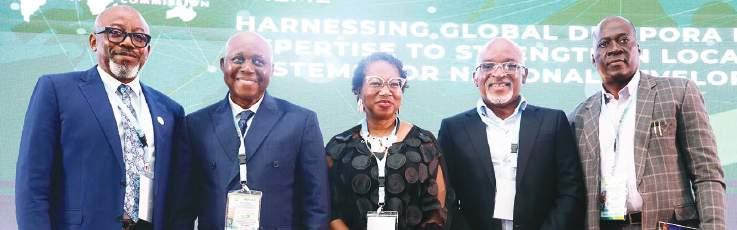
L-R: CEO, Glory Wellness and Regenerative Centre, Abuja, Dr. David Ikudayisi; Founder/CEO, Nisa Premier Hospital, Abuja, Dr. Ibrahim Wada; Moderator/Physician, Infectious Disease Expert, Dr. Henrietta Ukwu; Consultant, Neurosurgeon, Regions Stroke and Neuroscience Hospital, Owerri, Dr. Benjamin Anyanwu; and Consultant, Neurosurgeon, Brain and Spine Consortium, Abuja, Dr. Biodun Ogungbo, during the Returnee Diaspora Medical Professionals Discussion on Harnessing Global Diaspora Medical Expertise to Strengthen Local Health Systems for National Development at the National Diaspora Day Celebrations 2026 in Abuja, weekend
House of Representatives, yesterday, said it had uncovered about 29 “forged documents” linked to the self-acclaimed DirectorGeneral of the Presidential Foreign Intervention Promotion Council/ Presidential Economic Advisory
Council (PFIPC/PEAC), Adeniyi Adeyemi Mathew.
The House gave the InspectorGeneral of Police (IGP), Olatunji Disu, a 48-hour deadline to produce Adeyemi, who claimed to be the director-general of PFIPC/ PEAC, before its panel by noon on Wednesday.
The directive was issued by the chairman of the ad hoc committee investigating the circumstances surrounding the inclusion of the purported council in the 2026 Appropriation Act, Hon. Yusuf Gagdi, during a resumed investigative hearing in Abuja.
Gagdi also called on Accoun-
tant-General of the Federation (AGF), Dr Shamsudeen Ogunjimi, Head of the Civil Service of the Federation, and other relevant authorities to authorise the release of the 12 personnel identified in a security report submitted to the committee.
Gagdi said the committee
The Senior Staff Association of Nigerian Universities (SSANU), has asked the federal and state governments to urgently commence the implementation of the 2026 FGN/SSANU Agreement.
It welcomed the HOPE-EDU programme and the 2026 TETFund intervention of about N2.53 billion for each public university.
It however, stressed that TETFund is supplementary and must not replace adequate government funding, regular budgetary releases and the fulfilment of the N1.3 trillion naira public university revitalisation commitment.
While hailing the agreement signed by both parties last month, SSANU said the government should release the funds for the implementation and payment of arrears of the approved review to its members without further delay.
In a communique issued at end of its 55th National Executive Council (NEC) Meeting held at Abubakar Tafawa Balewa University, Bauchi State, SSANU described the deal as a landmark achievement made possible through the resilience, unity and sacrifices of members nationwide.
The communique signed by SSANU National President Comrade Mohammed Haruna Ibrahim, the union said that after extensive deliberations on the issues, “NEC commended the historic signing of
the 2026 FGN/SSANU Agreement on 29th June, 2026, which concluded years of re-negotiation and collective struggle describing it as a landmark achievement made possible through the resilience, unity and sacrifices of SSANU members nationwide.
It however warned against the denial of negotiated benefits, punitive postings, delayed promotions, harassment or any form of victimisation arising from members’ participation in lawful union activities.
It also noted with satisfaction that the agreement provides for a 35 percent upward review of emoluments through the Consolidated Non-Teaching Tools Allowance (CONTTA), improved Earned Allowances, staff training and development, protection of non-teaching positions and equal career progression opportunities for qualified degree holders up to CONTISS 15”.
SSANU further said it resolved that the implementation of the agreement must be done promptly, fully and without encroachment and discrimination.
“Council also called for the immediate activation of the Implementation Monitoring Committee of the agreement as contained in the document in order to ensure compliance and address violations.
“NEC seriously warned against the denial of negotiated benefits, punitive postings, delayed promotions, harassment or any form of
victimisation arising from members’ participation in lawful union activities.
The association further affirmed that the agreement applies only to constitutionally recognised members of SSANU, whose membership is established through voluntary admission, registration and payment of check-off dues in various branches.
SSANU directed all branches to maintain accurate and verifiable membership records and report all cases of non-compliance,
marginalisation or victimisation through the appropriate Union structures.
It welcomed the HOPE-EDU programme and the 2026 TETFund intervention of about N2.53 billion for each public University.
It however, stressed that TETFund is supplementary and must not replace adequate government funding, regular budgetary releases and the fulfilment of the N1.3 trillion naira public university revitalisation commitment.
reached the resolution to produce the individuals because it was concerned about safeguarding the integrity of persons and institutions mentioned during the investigation, while also seeking to authenticate documents suspected of being altered or tampered with.
He said the committee expected the Inspector-General of Police to ensure that Adeyemi appeared before the lawmakers by noon on Wednesday, particularly because several individuals and government agencies had been mentioned during the proceedings, while some documents were also alleged to have been mutilated.
The lawmaker stressed that Adeyemi’s appearance before the committee was essential to resolving outstanding questions and clarifying contentious issues before the panel would conclude its investigation and present its findings and recommendations.
The Plateau State lawmaker stated that the committee would not obstruct or interfere with investigations already being carried out by security agencies.
He explained that the legislative investigation was designed to
complement the efforts of the security agencies and assist in establishing the facts surrounding the activities and status of PFIPC.
The lawmakers also directed the Accountant-General of the Federation to make available the two officials who carried out the assessment of the purported council.
The committee said their appearance would ensure that all parties received a fair hearing and provided relevant information that could assist the House in its ongoing investigation.
Gagdi revealed that the ad hoc committee had secured access to the bank account statements opened for the purported council by the Central Bank of Nigeria (CBN), following authorisation granted by the Office of the Accountant-General of the Federation.
Disclosing that the committee had uncovered 29 documents it described as fake and allegedly used by Adeyemi, Gagdi added that, according to the accountant-general, Adeyemi had taken over or hijacked a letter of authentication that was originally addressed to the presidency.
Olugbode
In a dramatic conclusion to a decadelong manhunt, the National Drug Law Enforcement Agency (NDLEA) has secured a combined 24-year jail term against a fugitive drug kingpin who evaded justice for nearly 10 years and a former international footballer linked to a cocaine trafficking syndicate, in what the agency described as a strong message that no trafficker can outrun the law.
Justice Musa Kakaki of the Federal High Court in Lagos convicted and sentenced fugitive drug kingpin, Ntoruka Chinedu, to 22 years imprisonment, while former professional footballer Segun Hunkarin was sentenced to two
years for their roles in the unlawful importation of cocaine into Nigeria.
The landmark judgment capped a case that began in 2015 when Chinedu was first arraigned for importing 6.250 kilogrammes of cocaine. After pleading not guilty and securing bail, he absconded midway through trial, disappearing for almost a decade before being tracked down by NDLEA operatives.
His arrest came on June 24, 2025, at the Murtala Muhammed International Airport, Lagos, as he attempted to smuggle another 800 grammes of cocaine into Nigeria aboard an Ethiopian Airlines flight from Addis Ababa.
The spokesman of the anti-narcotics agency, Femi Babafemi in a statement
on Monday, said investigations revealed that Chinedu, a frequent traveller involved in the clothing trade between Turkey and Nigeria, had collected the drug consignment during a stopover in Ethiopia before heading to Lagos.
He noted that further surveillance led operatives to former professional footballer Segun Hunkarin, who was waiting in the airport car park to receive the illicit consignment.
During interrogation, Hunkarin admitted he had trafficked drugs twice from Brazil to Ethiopia while pursuing his football career in South America.
Delivering judgment, Justice Kakaki sentenced Chinedu to 20 years imprisonment without an option of fine for the
2015 cocaine importation case and an additional two years for conspiring with Hunkarin to import the 800 grams of cocaine in 2025.
Hunkarin received a two-year prison sentence on the conspiracy charge, bringing the total jail terms handed down to both convicts to 24 years. The court rejected appeals by defence lawyers seeking non-custodial punishment through fines, holding that the offences warranted custodial sentences after reviewing the evidence and legal authorities presented by the prosecution. Reacting to the judgment, NDLEA Chairman and Chief Executive Officer, Brig. Gen. Buba Marwa (Rtd), hailed the verdict as proof that drug traffickers cannot permanently escape justice.

L-R: Group Head, SME Banking, Access Bank Plc, Abiodun Olubitan; Country Manager, Financial Services Industry, Huawei Nigeria, Glarie Gao; Executive Director, IT and Digitisation, Access Holdings, Lanre Bamisebi; Senior Special Assistant to the President on Entrepreneurship Development in Communication, Innovation and Digital Economy, Chalya Shagaya; and Executive Director, University of Lagos Business School, Prof. Sunday Adebisi, during the maiden edition of the Access Bank MSME Conference, held at the bank’s head office in Victoria Island, Lagos, last Friday
Wale Igbintade
Nigerian Bar Association (NBA) and Africa Judges and Jurists Forum (AJJF) have condemned the abduction of Justice Faruku Hassan Bunza of the Kebbi State High Court, describing the incident as a grave assault on the judiciary, the rule of law, and Nigeria’s constitutional democracy.
Bunza was, reportedly, abducted by suspected armed bandits from his residence in Bunza Local Government Area of Kebbi State during the early hours of July 26, 2026.
Reacting to the incident in separate statements issued yesterday, NBA and AJJF called on Nigerian security agencies to deploy every lawful and available resource to ensure the judge’s immediate and unconditional release.
They urged the authorities to strengthen security for judicial officers across the country.
NBA, in a statement signed by its President, Mazi Afam Osigwe, SAN, described the kidnapping as “a direct attack on the Nigerian
judiciary, the administration of justice, and the rule of law”.
According to the association, judicial officers occupy a sacred position in Nigeria’s constitutional democracy and must be able to discharge their responsibilities without fear, intimidation, or threats to their lives and liberty.
NBA said, “The increasing audacity of criminal elements in targeting institutions and officials critical to the administration of justice poses a serious danger to public confidence in our justice system and underscores the urgent need for more effective security measures across the country.”
The association called on the Inspector-General of Police, Director-General of Department of State Services (DSS), National Security Adviser, and other relevant security agencies to deploy every available human and technological resource to secure Bunza’s safe release.
It also urged the Kebbi State government to work closely with federal security agencies to ensure that no effort was spared
in rescuing the judge unharmed and bringing those responsible for the abduction to justice.
The NBA statement added, “Protecting members of the Bench is indispensable to preserving the independence, integrity and effectiveness of the judiciary.”
Similarly, AJJF expressed concern over the abduction and conveyed its solidarity with Bunza, his family,
the National Judicial Council, the Nigerian judiciary, and the people of Nigeria.
In a statement by its Chairperson, Justice Professor Oagile Bethuel Key Dingake, a Judge of the Supreme and National Courts of Papua New Guinea and the Residual Special Court of Sierra Leone, the continental body described the incident as
an attack on the fundamental values underpinning constitutional democracy.
Dingake stated, “An attack on a serving judicial officer is a matter of the utmost gravity. Regardless of the motive behind this incident, the abduction of a judge strikes at values that lie at the heart of every constitutional democracy.”
He said the administration of
justice depended on judges being able to perform their constitutional duties free from fear, intimidation, coercion or violence.
“The safety and security of judicial officers are therefore indispensable to preserving judicial independence, maintaining public confidence in the justice system, and upholding the rule of law,” he added.
The leadership crisis rocking the Ondo State House of Assembly took a dramatic turn yesterday as the Chairman of the House Committee on Information and spokesperson for the Assembly, Olatunji Fabiyi, alleged that Governor Lucky Aiyedatiwa was making efforts to persuade lawmakers to abandon the impeachment process against Speaker, Olamide Oladiji.
The Nigeria Police Force has concluded the final phase of its Countering Weapons of Mass Destruction (C-WMD) Curriculum Development Workshop, aimed at strengthening the Force’s capacity to tackle chemical, biological, radiological, nuclear and explosive threats.
The workshop was organised in partnership with the United States Defence Threat Reduction Agency (DTRA) and the Office of the National Security Adviser (ONSA), marking a significant step in enhancing the Force’s preparedness to respond to emerging security threats.
Held at the Force Headquarters in Abuja, the workshop marked a significant milestone in the Force’s efforts to institutionalise specialised training for officers of its Explosive
Ordnance Disposal and Chemical, Biological, Radiological and Nuclear (EOD-CBRN) Command.
According to a statement by the Force Public Relations Officer, CSP Anietie Iniedu, the event brought together high-level delegations, including the DTRA team led by Major Brittany Brown, the ONSA delegation headed by Mrs. Pamela West, and the EOD-CBRN Command under the leadership of CP Hauwa Ibrahim.
“The workshop concluded an intensive Train-the-Trainers programme aimed at embedding specialised C-WMD knowledge within the Force, thereby enhancing Nigeria’s ability to prevent, detect, respond to and investigate chemical, biological, radiological, nuclear and explosive threats more effectively,” the statement said.
Declaring the workshop open on behalf of the Inspector-General of Police, Olatunji Disu, the Deputy Inspector-General of Police in charge of the Department of Operations, Umar Shehu Nadada, emphasised the strategic importance of the initiative.
He noted that the evolving nature of weapons of mass destruction requires proactive policing, sustained operational training, and stronger inter-agency and international cooperation.
Disu described the workshop as “a critical investment in the Force’s operational readiness to safeguard lives, protect critical infrastructure, and fortify Nigeria’s broader security architecture.”
In her vote of thanks, CP Hauwa Ibrahim expressed appreciation to DTRA and ONSA for their collaboration in developing the curriculum.
Fabiyi claimed that 21 of the 26 lawmakers had already endorsed the Speaker’s removal and insisted there was no going back on the collective resolution of the House.
The latest development came barely 24 hours after reports emerged that Oladiji allegedly contemplated resigning over alleged mismanagement of N44 million released by the Ondo State Oil Producing Areas Development Commission (OSOPADEC), an allegation the Speaker has also denied.
Speaking on the unfolding crisis, Fabiyi alleged that members had become concerned over alleged
attempts by the executive arm of government to influence the internal affairs of the legislature.
“We still have seven days to go because I have the opinion that the government is calling some members that they should backpedal on the issue of impeachment,” Fabiyi said.
He questioned what he described as Governor Aiyedatiwa’s interest in the matter, maintaining that the impeachment move was purely an internal affair of the legislature.
“Twenty-one members have signed an impeachment against Mr. Speaker. To me, I don’t know
the interest of Mr. Governor. Unless the government is telling us that they have something in common,” he stated.
According to him, the lawmakers had already informed the governor that their grievances were directed solely at the Assembly’s leadership and not at his administration.
“I have spoken to Mr. Governor already and we have made it very clear to him that we don’t have anything against him. We simply don’t want our leadership again. There is no reason why somebody should continue to perpetrate himself over us when we don’t want him anymore,” Fabiyi added.
Olusegun Samuel in Yenagoa
The paramount ruler of Ekpetiama Kingdom, in Yenagoa Local Government Area of Bayelsa State, King Bubaraye Dakolo, and his community have appealed the dismissal of their suit challenging the divestment of the onshore oil assets of Shell Petroleum Development Company (SPDC).
The appeal, filed before the Court of Appeal, followed the July 17, 2026 judgement of the Federal High Court in Yenagoa, which upheld preliminary objections by the defendants and dismissed the case without hearing the substantive environmental and human rights claims.
The suit was instituted by Dakolo,
on behalf of himself and the people of Ekpetiama Kingdom.
The case challenged Shell’s divestment of its onshore oil business to Renaissance Africa Energy Limited. It argued that multinational oil companies should not be permitted to transfer petroleum assets while longstanding environmental liabilities remained unresolved and polluted sites remained unremediated.
It also questioned whether Nigeria’s petroleum and environmental regulators fulfilled their statutory obligations before approving the transaction, and whether the divestment complied with constitutional provisions, environmental laws, and Nigeria’s regional and international human rights obligations.
Lead counsel to the plaintiff, Chuck Uguru, who filed the appeal in Yenagoa, is asking the appellate court to determine whether the Federal High Court was right to dismiss the suit at the preliminary objection stage without hearing evidence on the substantive environmental and human rights issues. Among the grounds of appeal, the appellant argued that the trial court wrongly treated the grievance procedure under the Petroleum Industry Act (PIA) as mandatory, even though the dispute concerned environmental pollution, petroleum asset divestment, constitutional rights, environmental remediation and compensation, rather than Host Community Trust disputes governed by Chapter 3 of the Act.
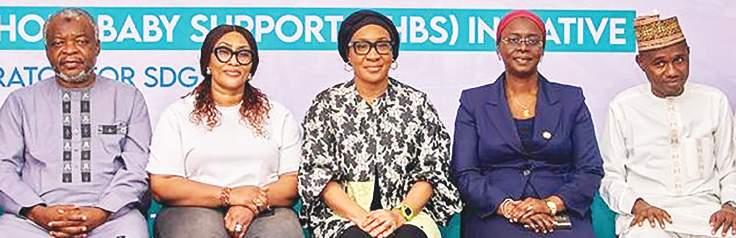
L-R: Chief Social Policy, UNICEF Nigeria, Dr. Hamidou Poufon; Permanent Secretary, Lagos State Office of Sustainable Development Goals, Kaphayah Olayemi Sarumi; SSA to the President on Regional Development Programmes, Office of the Vice President, Dr. Mariam Masha; Representative of the Permanent Secretary PHCB, Dr. Shakirat Adeosun; and Chief of Staff to NPC Chairman, Dalhatu Abdulahu Bangaje, at the inception meeting for the operationalisation of the Renewed Hope Baby Support Initiative, held at the Radisson Blu Hotel, GRA Ikeja, Lagos, last Friday
The All Progressives Congress (APC), has celebrated the first anniversary of Professor Nentawe Yilwatda as the National Chairman,
describing his tenure as a turning point for the ruling party.
In a statement on Sunday in Sokoto, the party said the past 12 months had been used to rebuild trust and reposition the APC ahead
of future contests.
According to the statement by the Chairman’s Senior Special Assistant on Media, Yusuf Dingyadi, Yilwatda inherited a difficult political climate but moved quickly to restore
confidence.
The party noted that his approach centered on reconciliation, consultation and institutional reforms that have calmed tensions within the ranks.
The absence of more prosecution witnesses at the Kwara State High Court in Ilorin, yesterday, stalled the ongoing trial of a former governor of Kwara State, Alhaji Abdulfatah Ahmed and his ex-finance commissioner, Demola Banu, over alleged diversion of N5.6 billion at the State Universal Basic Education Board (SUBEB).
Ahmed and Banuu were being prosecuted by the Ilorin zonal of the Economic and Financial Crimes Commission (EFCC) over the allegation of the payment of salary of the civil servants.
At the court, yesterday, during cross examination of the prosecution witness, Mr. Stanley Ujilibo, whose cross examination in the last sitting was continued yesterday, the prosecution counsel, Adebisi
Adeniyi, told the court that the next witnesses were unavoidably absent and requested for an adjournment with the assurance that the witnesses would be present at the time.
However, before the request for adjournment, Mr. Ujilibo, while being crossed examined by Kamaldeen Ajibade (SAN), the lead counsel to the first defendant, Ahmed, told the court he did not know if one Ayoola Idowu, a civil servant that petitioned the EFCC about the alleged diversion benefited from the fund as salary payment to him.
Ajibade had asked him wether Idowu as a civil servant benefitted from the fund when it was allegedly used to pay salary of the civil servants.
Also, the witness when being cross-examined by Gboyega Oyewole, SAN, the counsel for the second defendant, Banu, could not
point out a document that shows that the second defendant as the commissioner for Finance wrote for borrowing money from the SUBEB fund.
When he was asked to go through the exhibits before the court, he flashed a letter written by the second defendant to the first defendant requesting that the state should pay its counterpart fund to the SUBEB fund.
When the second defendant’s counsel said the letter did not talk about borrowing but payment of fund the witness pointed out another letter from the exhibit whick talked about borrowing but which was signed by someone else and not the second defendant.
The request of the prosecution counsel for adjournment was not opposed by the counsel for the first and second defendants.
The presiding judge, Justice Mahmud AbdulGafar therefore adjourned further hearing on the case to November 9th , 2026.
The APC said remarkable progress had been recorded in strengthening internal democracy under Yilwatda. It added that the period also witnessed deliberate efforts to reconcile aggrieved members and bring them back into the fold, a development it said has strengthened the party nationwide.
The statement highlighted what it called an inclusive leadership style by the chairman, saying this had enhanced cooperation within the National Working Committee, party elders and stakeholders across the country, and had resulted in greater unity and renewed confidence in
the APC brand. At the National Secretariat, the party said administrative processes had been overhauled, stating that operations were now more efficient, transparent and accountable, while party structures at the ward, local government and state levels have been revitalized to better serve members.
Pointing to expanded engagement with key demographics, the party said it has deepened outreach to youths, women, persons with disabilities and grassroots supporters, noting that this was part of a broader consultation for electoral victory.
Yemi Kosoko in Jos
The Plateau State Government has confirmed 441 suspected cholera cases and 14 deaths across four Local Government Areas (LGAs) since the outbreak began in June 2026, prompting an expanded emergency response to curb further spread of the disease.
Speaking at a press briefing in Jos on Monday, Commissioner for Health, Dr. Nicholas Ba’amlong, said the infections have been recorded in Mangu, Jos North, Jos South, and Barkin Ladi LGAs,
with 20 Rapid Diagnostic Test (RDT) reactive cases and six laboratory-confirmed cases documented so far.
He noted the outbreak has affected 25 wards and 127 settlements, though only three patients remain on admission all in Jos North.
“As of today, Plateau State has recorded 441 suspected cases. Only three patients are currently on admission,” the commissioner said, adding that the trend shows government interventions are yielding results.
The outbreak was first detected in Mangu LGA in early June, where 53 suspected cases and 10 RDT-positive results were initially recorded.
Four cases were confirmed through stool culture, and 10 deaths occurred across nine wards and 64 settlements. However, Ba’amlong announced that transmission in Mangu has been interrupted, with the last case reported on July 22.
“There is currently no active cholera case in Mangu,” he said.
Former Director-General of the Nigerian Maritime Administration and Safety Agency (NIMASA), Dr. Dakuku Peterside, has urged maritime stakeholders to embrace decarbonisation and sustainable shipping practices, describing green maritime as a strategic business imperative that enhances competitiveness, profitability and access to capital, rather than merely an environmental obligation.
Peterside made the call yesterday while delivering the keynote address
at a high-level webinar organised by Naturehedge in collaboration with the West Africa Green Economic Development Institute (WAGEDI), Gregory University, SSA Hub and the Sustainable Energy Practitioners Association of Nigeria (SEPAN).
Speaking on the theme, “Green Maritime: Strategy and Operations Beyond Optics,” he said the global shipping industry is undergoing a fundamental transformation, driven by stricter environmental regulations and growing investor demand for sustainable
business practices.
According to him, green maritime encompasses environmentally sustainable practices, technologies and policies aimed at reducing the shipping industry’s impact on the environment, while also improving operational efficiency and long-term commercial viability.
Peterside noted that organisations that successfully integrate decarbonisation, digitalisation, innovation and operational excellence into their business models would be better positioned to thrive in an increasingly competitive global
market.
He stressed that sustainability should no longer be viewed as a public relations exercise or regulatory obligation but as a source of measurable commercial value.
“Green maritime is about environmentally sustainable practices, technologies and policies that reduce impact on the environment,” he said.
The former NIMASA boss observed that the introduction of tighter International Maritime Organization (IMO) carbon-intensity rules in 2026, coupled with the expanded application of the
European Union Emissions Trading System (EU ETS) to shipping, has made environmental compliance an unavoidable reality for the industry.
He urged shipowners and operators to adopt practical measures such as voyage optimisation, just-in-time port arrivals, alternative fuels including methanol, ammonia and liquefied natural gas (LNG), digital technologies and continuous safety-focused workforce training to improve efficiency while reducing carbon emissions.
According to Peterside, regulatory compliance represents only the minimum requirement, while genuine competitive advantage lies in embedding sustainability
into daily operations, data management and financial decision-making.
The webinar drew participation from shipowners, shipping operators, port authorities, regulators, financiers and energy sector stakeholders, underscoring growing interest in accelerating Africa’s transition to sustainable maritime operations.
Also speaking, President of the Governing Council of REEEAA and Chairman of the Board of Trustees of SEPAN, Professor Magnus Onuoha, announced that the webinar would serve as a precursor to a major pan-African strategic workshop scheduled to hold in Accra, Ghana.

L-R: CEO, Big Cabal Media, Tomiwa Aladekomo; Lagos State Commissioner for Information and Strategy, Mr. Gbenga Omotosho; representing Governor Babajide Sanwo-Olu; President, Association of Advertising Agencies of Nigeria (AAAN), Lanre Adisa; and the Vice President, AAAN, Mr. Adekoyejo Abiola at the 53rd Annual General Meeting and Congress of the Association of Advertising Agencies of Nigeria in Lagos on Friday
and Emmanuel Addeh
Condemnation has continued to trail the killing of at least 30 persons in Naridon (Kizakoro) community, Kamaru Ward, Kauru Local Government Area of Kaduna State, with former Vice President Atiku Abubakar and the Save Nigeria Group USA (SNG-USA) and U.S.–Nigeria Civil Society Coalition calling for urgent action to halt further bloodshed.
The latest attack, which reportedly occurred late Sunday into the early hours of Monday, claimed the lives of men, women and children, while several homes and businesses were razed by the assailants.
According to initial information, the attackers stormed the community shortly before midnight, catching residents completely off guard as they slept in their homes. Women, children and entire families were killed in their sleep before many of the houses were set ablaze, leaving little opportunity for victims to escape.
The assault wiped out multiple generations within some households, underscoring the scale of the tragedy and the vulnerability of the predominantly farming community.
In a statement, the coalition alleged that suspected ‘Fulani militants’ invaded the community at about 11:55 p.m., opening fire on residents in their sleep before setting homes ablaze.
Nigeria should similarly reject the same message and send Ghana’s High Com-missioner home! Ghana had taken the additional step of reporting the Republic of South Afri-ca to the African Union. South Africa’s conduct is a direct violation of the Constitutive Princi-ples of the African Union, a blemish on the values of PanAfricanism, and such projects as the African Continental Free Trade Area (AfCFTA). South Africa is now seeking diplomatic en-gagements ahead of the African Union Extraordinary Summit on Conflict Prevention and Resolution scheduled for Angola from August 29 -30, 2026. At the end of the 69th ordinary Session of the ECOWAS Authority of Heads of State and Government, the body issued a communique in which it
It described the attack as part of a recurring pattern of violence against agrarian and minority Christian communities in Southern Kaduna, saying persistent security lapses had left vulnerable rural populations exposed.
According to the coalition, the victims included members of families that were totally wiped out, alongside several other residents, while three others sustained critical injuries. It added that homes and shops belonging to several residents were destroyed during the attack.
“This is not a casual local dispute; it is a coordinated assault on unarmed civilians in their homes,” the coalition’s spokesperson, Stephen Osemwegie, said.
“The persistent impunity enjoyed by these armed groups only invites further devastation. We call on Nigerian security authorities to fulfill their constitutional mandate to protect all citizens, regardless of ethnicity or religious affiliation,” the group added.
The coalition urged Nigerian security agencies to immediately apprehend and prosecute those responsible for the killings, while calling on the United States government and Congress to intensify diplomatic pressure on Nigeria to improve the protection of vulnerable communities.
It also appealed to the international media to sustain attention on the crisis in Southern Kaduna and urged humanitarian organisations to provide emergency medical care, food and
denounced the “unAfrican behaviour” of South Africans. In both Ni-geria and Ghana, citizens even believe that the matter should be taken directly to the Interna-tional Criminal Court (ICC) to hold South Africa responsible for acts of genocide and crimes against humanity. Two Ghanaian civilians have already filed protests with the ICC. Roland Lamola has been busy defending his country and pleading for dialogue and engagement on mi-gration. When he returns to South Africa, he should be asked to tell President Ramaphosa and South Africans in general, that we, the people of Nigeria, are terribly disappointed, and our protest must be on record, for no one knows what else will happen tomorrow and South Africans will again turn on foreigners in their
shelter to displaced residents.
Also reacting, the presidential candidate of the African Democratic Congress (ADC), Atiku Abubakar, described the massacre as another tragic reminder of what he called the federal government’s failure to fulfil its primary constitutional responsibility of protecting lives and property.
“The reported killing of scores of innocent Nigerians in Kauru Local Government Area of Kaduna State is heartbreaking and unacceptable. Every life lost is a painful indictment
of a government that has repeatedly promised security but continues to preside over an expanding landscape of bloodshed.
“No nation can claim progress when its citizens are hunted down in their homes and communities by criminals who operate with such frightening impunity,” Atiku said in a statement by his media aide, Phrank Shaibu.
The former vice president criticised what he described as the government’s preoccupation with public relations while communities continued to suffer
deadly attacks.
“It is deeply troubling that while Nigerians mourn yet another massacre, senior officials of this administration have been busy criss-crossing television studios and social media platforms brandishing what they describe as an unverified claim of a letter of commendation from the United States Government,” he said.
According to Atiku, governments should be judged by their ability to safeguard lives rather than by international recognition.
“The people of Southern Kaduna— and indeed all Nigerians—do not need letters of praise from foreign capitals. They need security. They need to sleep without fear, travel without anxiety, cultivate their farms in peace and raise their children without the constant threat of terrorists, bandits and other violent criminals.
“Governance is not a public relations exercise. It is measured by the safety of the people and by a government’s ability to protect its citizens from harm,” he added.
Continent welcomes nearly 100m international visitors in one year
The Africa-International Tourism and Economic Council (AITEC) has unveiled two major international tourism events aimed at boosting Africa’s tourism industry, attracting investment and advancing regional integration through trade and the free movement of people.
The announcement was made during an international press conference held in Cotonou, Republic of Benin, under the theme: “Tourism as a Catalyst for Global Sustainable Economic Development.”
The organisation announced that
midst. In their projection of hate and intolerance, South Afri-cans made no distinctions between illegal and legal migrants. All migrants equally deserve pro-tection under the law, and there are established protocols for addressing their circumstances and those do not include violence and extra-judicial killing. The South African government claims it was focused only on undocumented migrants, but it has been unable to show evidence of the number, if any, of anti-migrant activists and vigilantes - “March and March” or Dudula - who are currently being prosecuted. The security agencies in actual fact, and cabinet Minis-ters aided and abetted the protests with their racism. Their complicity deserves to be called out and sanctioned. Foreigners are not the source of their problems.
the 3rd Official Global Launch of AITEC World will hold on November 2, 2026, at the Hilton London, United Kingdom, on the sidelines of the World Travel Market (WTM) London 2026.
It also disclosed that the 2nd Africa Tourism Dialogue (ATD 2026) will take place from November 12 to 14, 2026, at the headquarters of the African Union and the United Nations Economic Commission for Africa (UNECA) in Addis Ababa, Ethiopia, as the official tourism component of Africa Celebrates 2026.
Black South Africans are victims of a post-apartheid society that is yet to empower the majori-ty of the South African people. Popular power may have changed hands but the economy is still significantly in the hands of a minority. It is the responsibility of the South African government to make life easier for its own people and not abdicate responsibility by promoting the impres-sion that outsiders are the problem. Migrants bring much that is positive to the South African environment. Nigerians have been accused of taking over most of the small-scale businesses. South Africans who work in these businesses as assistants and apprentices were in a vantage position to learn certain skills, and acquire knowledge from their more
Speaking at the event, President of AITEC World, Dine Bouraima, described the initiative as the beginning of a continental movement to reposition tourism as a driver of Africa’s economic transformation.
“Today, we are not gathered simply to announce two events. We are here to launch a movement—a movement for a better-connected Africa, where Africans travel more freely, investors move with greater ease, businesses trade without unnecessary barriers, and tourism becomes a true catalyst for sustainable economic develop-
skillful African brothers. As citizens, they would be better placed to acquire small loans and learn to stand on their own and set up businesses in their own country. Now that they have chased the foreigners away, they have no one to turn against but themselves. Persons in Gauteng are beginning to discriminate against persons from Limpopo and Kwa-Zulu Natal, asking others to stay in their own original provinces. Thus, hate breeds hate and feeds on itself, not a good sign for a country in need of unity and peace.
African leaders are quick to speak of trade relations, integration, solidarity and co-operation in pursuit of the AU’s Agenda 2063, the Africa we want, but this works more at the level of rhet-oric, majorly at the level of
ment,” Bouraima said. According to Bouraima, both the London Global Launch and the Africa Tourism Dialogue share a common objective of positioning tourism as a catalyst for investment, trade, job creation, international cooperation and sustainable economic development across the continent. He noted that Africa, with a population of nearly 1.5 billion people and the African Continental Free Trade Area (AfCFTA), possesses enormous opportunities for tourismled growth.
government-speak. The peoples of Africa themselves remain dis-connected. Africa has failed in pulling itself together; the continent has done more in pushing itself apart. Xenophobia in South Africa is a symptom. The AU has a protocol establishing the African Economic Community (AEC) on the Free Movement of Persons, Right of Residence, and the Right of Establishment but this is yet to come into force. Only four out of 55 AU members have agreed to the protocol on the Free Movement of Persons since 2019. The long-term goal is to work harder towards the unity of African states and peoples. The teaching of history must be made compulsory at all levels in South African schools to cure the growing, mass affliction of collective amnesia.
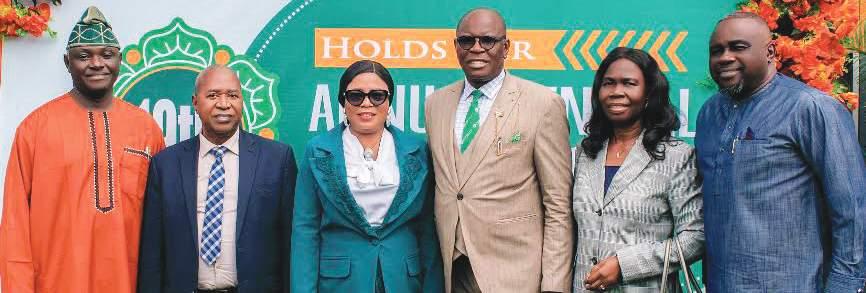
l-R: directors, Infinity Microfinance Bank, dr. samson amedu;Mr. duke aweh; Board Chairman, Mrs. Clara Oloniniyi; Managing director/CeO, Mr. Oludotun adewunmi; directors, Mrs. Kehinde Olubi, and Mr. Olajide diya, at the 19th annual General Meeting of the bank in lagos…recently
yinka Kolawole in Osogbo
A group of election observers has identified 13 of the 30 local government areas as flash points for the August 15 governorship election in Osun State.
It would be recalled that the state recently recorded politically motivated killings, violent attacks, and heightened political tensions.
The group, which comprises Centre for Media and Society (CEMESO), ElectHER, International Press Centre (IPC), Nigerian Women Trust Fund (NWVTF), Election
Observation Hub (EOH), TAF Africa, The Kukah Centre (TKC), and Yiaga Africa, raised the alarm at a press conference in Osogbo yesterday.
The local government areas, according to the group, include Irewole, Osogbo, Boripe, Obokun, Ife North, Ife Central, and parts of Ijesaland.
Presenting the Pre-Election Assessment report of the groups, Mr. Lanre Arogundade called on the Nigeria Police Force and other security agencies to focus on the local government areas in order to mitigate violence
A two-storey building yesterday collapsed along Baale Street, Ajuwon, Akute, a border town between Lagos and Ogun states, with many feared trapped under the rubles.
in the affected areas during the election.
He said the areas have recorded politically motivated killings, violent attacks and
heightened political tensions. According to him, “These areas require intelligencedriven, preventive and proportionate security
deployments before, during and after election day to deter violence and protect voters, election officials, observers and electoral måaterials.
He also expressed concern about the neutrality of security agencies, particularly the Nigeria Police Force (NPF).
Onuminya innocent in sokoto
The African Democratic Congress (ADC) governorship candidate in Sokoto State, Hon. Manir Muhammad Dan’iya, has called on the Independent National Electoral Commission (INEC) to extend the Continuous Voter Registration (CVR) exercise by two weeks to avert mass
disenfranchisement ahead of the 2027 general election.
In a statement issued by his media aide, Aminu Abdullahi, Dan’iya urged all eligible residents of the state to take advantage of the remaining hours of the CVR exercise before it closes on Sunday. He said the Permanent Voter Card remains the most effective democratic instrument through which citizens can participate
in governance and determine the future of their communities.
He placed special emphasis on young people who are yet to register, and appealed to parents and guardians to encourage and accompany their children and wards who have attained voting age to INEC centres.
According to him, the active participation of youths in the electoral process is vital to the
future of the country and to ensuring that the government remains accountable to the people.
Dan’iya said the requested extension would accommodate prospective voters who may have been unable to register due to work schedules, logistical challenges, and the large turnout recorded at registration centres across the country.
Oghenevwede Ohworiole in abuja
Three persons including a grandmother, her toddler grandchild along with another man on the top floor were rescued and taken to the hospital.
The two storey building collapsed during heavy downpour, THISDAY gathered.
The Ogun State Emergency Rescue Agency arrived just before 6.00 p.m and was able to recover three corpses by the time they suspended operation at nightfall yesterday. One of the rescue team official, who pleaded anonymity, said they do not envisaged any survivor. Three bodies were said to two men and a woman.
Former Nigeria’s High Commissioner to Ghana, Senator Musiliu Olatunde Obanikoro, is 66 years old today, July 28. Obanikoro was recently appointed the directorgeneral of the Lagos State Governorship Campaign Team by the All Progressives Congress (APC) candidate, Dr. Obafemi Hamzat.
A former Chairman of Lagos Island Local Government, Obanikoro was appointed Commissioner for Home Affairs and Culture in Lagos in 1999 by then
Governor Bola Tinubu, and served for four years before he was elected senator.
After his appointment as High Commissioner to Ghana, which followed his defeat as a governorship candidate in Lagos on the platform of Peoples Democratic Party (PDP), Obanikoro was also appointed junior minister twice.
He was first Minister of State for Defence and later Minister of State for Foreign Affairs under the administration of former President Goodluck Jonathan.
Mwale Kezias of Zambia has been elected the SecretaryGeneral of the African Telecommunications Union (ATU) for the 2027–2030 term.
Kezias emerged victorious with 21 votes, defeating South Africa’s Cynthia Lesufi, who
secured eight votes, and Cameroon’s Vallery Ottou, who polled five votes. The election was decided in the fourth round by a simple majority after none of the candidates secured the required two-thirds majority in the first three rounds.
His election brought the 7th Ordinary Session of the
African Telecommunications Union Conference of Plenipotentiaries (CPL-26) to a close last Friday in Abuja.
In his acceptance speech, Kezias thanked ATU member states for their confidence, and pledged to work with governments, regulators, development partners, and other stakeholders to bridge
Africa’s digital divide. He said: “I stand before you today with profound humility and deep gratitude, honoured by the confidence and trust that the member states of the ATU have bestowed upon me by electing me to serve as the Secretary-General for the 2027–2030 term.
The All Progressives Congress (APC) in Delta Central Senatorial District, has closed ranks ahead of the 2027 general election, with party leaders, stakeholders and members unanimously endorsing President Bola Ahmed Tinubu, Governor Sheriff Oborevwori, Senator Ede Dafinone and all other candidates of the party while
calling for unity and intensified grassroots mobilisation.
The endorsement came during the Delta Central APC stakeholders’ strategic meeting in Effurun.
Moving the motion for the endorsement, which seconded by Hon Halims Agoda, the party’s founding leader, Chief O’tega Emerhor, commended President
Bola Ahmed Tinubu and Governor Sheriff Oborevwori for their policies and programmes, which he is impacting Nigerians and Deltans positively.
The motion was subsequently put to a voice vote by the Delta State APC Chairman, Chief Solomon Arenyeka, and was unanimous adopted.
Addressing the people,
Arenyeka said the stakeholders’ meetings across the three senatorial districts were conceived after the State Working Committee reviewed party activities during its June 11 meeting and resolved that each senatorial district should convene meetings to strengthen the party ahead of the 2027 elections.
A public affairs analyst, Mallam Abdulmalik Suleiman, has described Kano State Governor, Abba Kabir Yusuf as a silent achiever whose record in good governance, transparency and accountability cannot be diminished by propaganda.
Suleiman stated this in Abuja speaking on findings from his
assessment tour of Kano State.
The tour focused on service delivery and the impact of government projects across the 44 local government areas.
He said the Yusuf administration has set a new standard in governance that will be difficult for other states to match.
“In terms of transparency and
accountability, I doubt if there is any other state that can achieve what Kano State has achieved under Governor Abba Kabir,” Suleiman said.
“His Excellency, Gov. Yusuf, is a silent achiever who has done a lot with less noise. He is known for strict adherence to due process and proper project monitoring, which is the hallmark of his administration. This has earned him accolades across the globe,” he added.
“Governor Yusuf is a God fearing leader. For him, it is the people first before anything else. That is why his policies continue to have direct impact on the lives of ordinary citizens,” he stated.
Team Nigeria wins three more gold medals in weightlifting
Shortly after he won Nigeria’s fourth gold medal in the 71kg category of the weightlifting event of the ongoing 2026 Commonwealth Games here in Glasgow, Scotland, Edidiong Joseph Umoafia insisted that he now have his eyes on the next Olympic Games scheduled to hold in 2028 in Los Angeles, USA.
Umoafia who won the gold with a new Commonwealth Games record of 319kg, is the first male Nigeria weightlifter to win the precious medal in almost 16 years. All previous weightlifting gold medals won by Team Nigeria at New Delhi 2010, Glasgow 2014, and Birmingham 2022 were won by female weightlifters.
Umoafia set the tone early with a Commonwealth Games record total of 319kg. The Nigerian lifted a Games record 147kg in the Snatch before adding 172kg in the Clean and Jerk to finish ahead of Samoa’s Joseph Tafi (314kg) and Nauru’s Elgin Moses (310kg).
Speaking with THISDAY shortly after he was presented with his medal, Udoafia expressed his excitement ending the dominance of the female weightlifters for Nigeria.
“I am really happy becoming the first male weightlifter to win gold at the Commonwealth Games for Nigeria. It was not an easy route to the gold. After I won a bronze medal at the last Games in Birmingham, I told myself that I was not going to leave Glasgow without winning the gold medal. I prepared for four years. I am happy I fulfilled my promise to deliver the precious gold for Nigeria,’ gushed Umoafia from the event venue at the Hydro Stadium. He admitted that his next target now is to aim for a medal at the next Olympic Games scheduled for Los Angeles in 2028.
“After the celebration of this victory here, I will start my training again as the qualifiers for the 2028 Olympic Games are scheduled to begin in December. I
just pray that this beautiful support from the government through the National Sports Commission that is giving all of us the encouragement to perform wonders here continues,” stressed the Commonwealth Games champions.
Also yesterday, the Day Four performance by Team Nigeria was highlighted by the three more gold medals in weightlifting. Apart from Umoafia, Onome Didih did the unimaginable with a commanding performance in the women’s 53kg category to claim the country’s fifth gold medal.
Didih rewrote the record books, setting new Commonwealth Games records in the snatch (93kg), clean and jerk (113kg) with total lift of 206kg. India’s Gyaneshwari Yadav finished with 199kg

to take silver, while Canada’s Rebeka Groulx claimed bronze with 178kg. Rafiatu Folashade Lawal delivered the country’s sixth gold medal of the Games with a record-shattering performance in
the women’s 58kg weightlifting event. Lawal swept all before her, setting new Commonwealth Games and Commonwealth records in the snatch (103kg), clean and jerk (126kg) and total
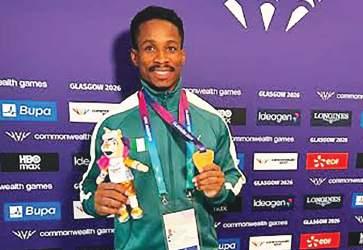
Cup-holders Nigeria’s Super Falcons aim to kick off their defence of the Women Africa Cup of Nations (WAFCON) title in an emphatic manner when they lock horns with debuting ‘Scorchers’ of Malawi at the Al Medina Stadium in Rabat tonight.
Last year, the most successful women’s team on the African continent and one of the best in the world came from behind to snatch the crown from the hands of Morocco’s Atlas Lionesses, with a 3-2 win in a memorable Final.
The Lionesses, targeting a third successive Final appearance with two silver medals from the previous two, spanked Kenya Harambee Starlets by four unreplied goals on Sunday as the championship kicked off, and Cup-holders Nigeria felt it was a message sent to them that the battle for the trophy will be much tougher this time.
Tuesday’s clash is an encounter between authority and ambition, with the Super Falcons the overdogs against the Scorchers who will be playing their first-ever match in the Women Africa Cup of Nations finals, but who have the reverred Chawinga sisters – Tabitha and Temwa – capable of turning a match on its head in a matter of seconds.
Coach Lovermore Fazili’s charges have lost to Morocco’s Lionesses and Ghana’s Black Queens in friendly matches over the past 13 months, but have also drawn with highly-rated Zambia (who possess Barbara Banda, Grace Banda and Rachael Kundananji), and made short work of Angola in their final qualifying fixture for this tournament.
Fazili also has defenders Ireen
Khumalo, Olivia Phikani and Benadetta Mkandawire, midfielders Rose Kadzere, Letticia Chinyamula and Faith Chinzimu, and forwards Vanessa Chikupira and Deborah Henry among others, who are capable of making the night tough for the Super Falcons.
Head Coach Justine Madugu, who also led the Falcons to their successful Mission X last summer, insists his team of winners will not under-rate the debutants.
“We have huge respect for all our opponents,” Madugu said at Monday’s
pre-match press conference in Rabat. “Every team that qualifies for this tournament deserves commendation and a lot of respect. Yes, they are debutants, but they are a very good side. We don’t take anything for granted. Everybody is coming here with a purpose and a mission, so you don’t undermine or underestimate what anybody can do.
“We are here for the defence of the WAFCON trophy and the team is fully ready and set to go. We will stick to our gameplan and our mission.”

lift (229kg). Her combined total left her a commanding 14kg clear of Canada’s Ann-Sophie Taschereau, who finished with 215kg for silver.
Just as promised by the National Sports Commission, each gold medal winner received $5000 instant cash reward and additional $5,000 performance bonus paid into their accounts.
Elsewhere at the Scotstoun Stadium, the country’s track & field team began their quest for medals with Team Nige-
ria’s sprinters making strong statements by securing multiple
places in the men and women’s
Favour Ashe comfortably won the opening heat of the men’s 100m in 10.10 seconds (+1.5) to
in today’s semifinals.
with an impressive second-place
FCT Minister Nyesom Wike has expressed outrage about illegal racing on public roads and the threats such activity posed to public safety in the nation’s capital.
He issued the threat yesterday while addressing journalists during an inspection tour of ongoing projects in the FCT.
The minister pledged swift administrative action to protect residents, saying high-speed racing in residential neighborhoods on newly paved roads endangers innocent citizens and violates traffic regulations
“First of all, that goes to show how beautiful the roads are, but people often forget that certain activities pose a danger to innocent citizens. If people want to carry out car racing, there are designated areas where they should do that, not in residential areas. Nobody will allow that. I appeal to
those involved to understand that rights have limitations, and life is more important,” Wike said. He vowed to coordinate with traffic enforcement authorities to halt unauthorized racing in residential communities in the Abuja city centre. The minister also revealed that the FCT Administration will complete and hand over eight to ten ongoing infrastructure projects across the capital city on schedule before January next year.
In relation to the Apo-Karshi road project, the minister noted that the critical artery originally awarded in 2010 was nearing completion with streetlights installations currently ongoing.
He further explained that construction of the Bwari-Kubwa road was also advancing rapidly, with contractors expected to deliver the quality project before the onset of the next rainy season.
As Nigeria’s Super Falcons begin their quest for a record-extending 11th Women’s Africa Cup of Nations (WAFCON) title, Amstel Malta has launched a nationwide campaign, “Be Your Best”, to unite Nigerians behind Africa’s most successful women’s football team.
More than a sponsorship campaign, “Be Your Best” is a rallying call that celebrates excellence, resilience and national pride. It encourages Nigerians to support the Super Falcons while inspiring them to pursue excellence in their own lives.
The campaign reflects Amstel Malta’s belief that every great achievement begins with giving your best. By connecting fans with the Super Falcons’ journey, the brand aims to make every match a shared national celebration. Super Falcons will begin their Group B campaign against Malawi today at the Al Medina Stadium in Rabat before facing Zambia on 1 August at the same venue. They will then complete the group stage against Egypt on 5 August at the Olympic Stadium in Rabat, with all matches kicking off at 9 p.m. WAT.
President Nigeria School Sports Federation, NSSF, Olabisi Joseph has added another milestone to her trailblazing career in international school sport governance with her nomination to the Management Committee of the International School Sports Federation (ISF).
Joseph, already celebrated as the first female African and the first woman worldwide, to be elected to the ISF Executive Committee as Continental President of Africa, received her nomination during the federation’s Annual General Meeting on July
21. The following day, the newly elected Executive Committee selected Joseph and Elena Mickovska of North Macedonia to serve as representatives on the Management Committee. Their inclusion completes the seven-member team that will oversee the federation’s governance for the 2026–2030 term. The committee now comprises ISF President Željko Tanaskovi, Vice-Presidents Antônio Hora Filho, Youssef Belqasmi, and Lianshuai Teng, Secretary General Hasnae El Ayoubi, alongside Joseph and Mickovska.
notice”. It is hard though to believe that this is the true story. But as proud and concerned Nigerians, it is a cover story that we would rather believe. Thank you, Mr. President, for this diplomatic moment. Ni-gerian lives matter at home and abroad. Citizen diplomacy must remain at the centre of Nige-ria’s diplomatic process: essentially the strategic framework of Demography, Development, Diaspora, and Democracy (the 4Ds).
President Ramaphosa’s South Africa and its citizens have been indeed unfair to Nigerians liv-ing in South Africa, treating both legal and illegal immigrants like common criminals in open violation of all known rules of decency and international law. Black South Africans, after Nel-son Mandela, have not been kind to other Africans living among them, nor have they, particu-larly the new generation born after the end of apartheid, been appreciative of the sacrifice that other Africans made to ensure the liberation of their country, from the trauma of minority, white rule. This emerging generation of black South Africans lack a sense of history. Mandela welcomed other Africans with open arms. His children are driving everyone away. In recent months, a fresh wave of anti-immigrant protests and violence swept through major South Afri-can cities with the people going from door-to-door, attacking businesses and homes belonging to foreigners, harassing anyone at all
who sounded or looked different. The South African mob wielded dangerous weapons; they prevented foreigners from accessing hospital services, and in due course they gave a deadline of June 30 for all foreign-owned shops to shut down and for all foreigners to leave. They soon resorted to mob violence. Not even asylum seekers whose rights are recognized under international law were spared. Foreigners in South Africa began to flee. Countries started evacuating their citizens. More than 38, 000 Malawians were hounded out. Zimbabweans fled across the border. Ghana and Nigeria evacuated their citizens. Hundreds of Nigerians including women and children were stranded, seeking refuge at the Nigerian High Commission in Pretoria. While the racism, violence, and protests festered, the prompt response of the South African government, cast in the cloak of populism, was to encourage the break-down of law and order. South Africa’s Home Affairs Minister, Leon Schreiber told undocu-mented immigrants to leave or face deportation. The Constitutional Development Minister Mmamoloko Kubayi and Minister in the Presidency Khumbudzo Ntshavheni, disclosed that South Africa will enforce its immigration laws. The government’s position merely emboldened the anti-migrant activists like Nkosikhona Ndabandaba and Jacinta Ngobese-Zuma, as well as vigilante groups such as “March and March” and Operation Dudula. Foreigners were
told to leave or return to their countries in a coffin! They were accused of contributing to unemploy-ment in South Africa, placing pressure on public services, taking South African women, ap-pearing generally more prosperous in another man’s country. Xenophobia soon turned into hate and the South Africans began to beat, maim and kill. By the time President Ramaphosa suddenly thought it necessary to make the statement that “illegal immigration is not the cause of all our economic challenges…and that vigilantism will not be allowed”, the South Africans had tasted blood and they only wanted more bloodshed.
Three Mozambicans were killed. A Nigerian, Amaramiro Emmanuel was beaten to death by officers of the South African National Defence Force on April 20. Andrew Ekpenyong and Emeka Charles Iroegbu were killed in Pretoria by the police. Musa Joe, popularly known as Big Joe was gunned down in front of his shop in Mpumalanga. On July 23, Charles Simon Ibeh was killed in Bellville, Cape Town. Other Nigerians who lost their lives include Taiwo Raji, Silas Ani and Yemi Akinwunmi. Several others are in hospitals. Mrs Abike Dabiri-Erewa, Chairperson of the Nigeria Diaspora Commission (NIDCOM) reports that about 116 Nigerians were killed in South Africa in the last two years alone! Minister of State for Foreign Affairs, Amb. Sola Enikanolaiye puts the figure at 98 between 2002 and 2026. Whether 116 or
98, these are Nigerian lives not mere statistics. They are our brothers, sisters, children and rel-atives. Under customary international law, South Africa has a responsibility to protect them, namely, the R2P rule. They failed. Now, they are coming to us, crying over spilt milk, asking for Nigeria’s co-operation on what their Minister Lamola calls “a shared responsibility.” The mood in Nigeria as well as in Ghana is not to share anything with South Africa but to remind that country and its people of their ingratitude and acts of wickedness towards other Africans. President Donald Trump and all the white South Africans who fled South Africa, out of fear of persecution must be laughing at South Africa in derision. Many Nigerian lawmakers and citi-zens have called for retaliatory action against South Africans and South African businesses.
The Ghanaians have been more proactive. Ghana, like Nigeria, has evacuated about 1, 000 of its citizens, and has summoned South Africa’s High Commissioner to Ghana. It also turned down a proposed state visit to Ghana by President Ramaphosa, following the killing of a Gha-naian citizen, Bashiru Isak (40) in Pretoria. The South African special envoy was also in Gha-na last week. The government of Ghana rejected the message he brought from President Ramaphosa.
Continued on page 28
became global players.
That is perhaps the most important lesson Nigeria should take from China. The objective is not to reject foreign participation but to ensure that foreign participation builds Nigerian capability. Every housing policy should pursue four objectives simultaneously: 1) Shelter 2) Industrialization 3) Employment 4) Wealth Creation
There is an important distinction between attracting foreign investment and importing economic activity. Nigeria undoubtedly needs foreign capital, technology and expertise. However, a predominantly turnkey approach, where foreign companies finance, design, supply and execute projects with limited domestic participation, risks solving today’s housing shortage while missing tomorrow’s industrial opportunity.
Government must therefore carefully weigh not only the intention behind every policy intervention but also its broader consequences.
Every policy decision has economic outcomes. It influences whether local manufacturers invest in new capacity, whether Nigerian contractors develop expertise, whether young Nigerians acquire technical skills and whether domestic companies can grow into competitive enterprises. A policy may achieve its immediate objective while unintentionally weakening the foundations required for long-term economic transformation. The question policymakers must therefore ask is not simply: “Will this policy deliver houses?” It should also extend to: “Will this policy leave Nigeria with greater productive capacity than it had before?”
This is especially important given the ambition of building a US$1 trillion economy. A trillion-dollar economy cannot be built by importing economic activity. It must be built by expanding domestic production.
Much of the housing debate focuses on the shortage of supply. That is certainly a major challenge. However, Nigeria faces another equally important problem: affordability. The depreciation of the naira has fundamentally changed the economics of housing delivery. Construction costs have risen significantly due to foreign exchange pressures, imported inputs and higher financing costs. House prices have inevitably followed. Household incomes, however, have not increased at the same pace. The result is a widening affordability gap.
This reveals a deeper reality: Nigeria’s housing challenge is not only a housing supply challenge. It is also an economic development and wealth distribition challenge. A country cannot achieve mass homeownership if a significant proportion of its population lacks the purchasing power to buy homes. This is a lesson that many successful economies understood.
Broad-based homeownership did not emerge simply because governments built houses or expanded mortgage availability. It emerged because those countries first created productive employment, increased incomes and expanded the economic capacity of their citizens. In other words, prosperity generally precedes widespread homeownership. This is an important distinction for Nigeria.
While homeownership should remain the ultimate aspiration, expecting immediate mass ownership in an economy where incomes remain under pressure may create unrealistic expectations. The more important policy objective should be creating pathways through which citizens can progressively move towards ownership as their economic circumstances improve. This is where rent-to-own models become particularly relevant.
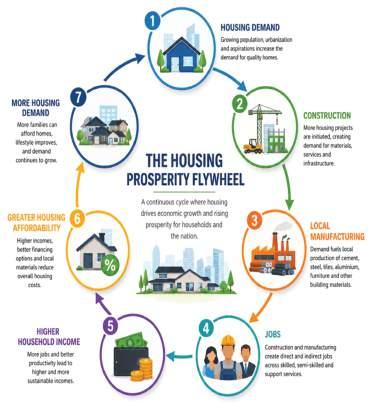
If industrial policy addresses the supply side of housing, then rent-to-own addresses the demand side by expanding the number of households able to participate in the market. Rent-to-own should not be viewed as a compromise or a second-best alternative to ownership. In many countries, rental housing has played a critical role in allowing citizens to access secure accommodation while economies develop and household wealth accumulates.
At different stages of economic development, many successful societies recognised that immediate homeownership was not always realistic or desirable for every household. Strong rental markets provided stability, while rising incomes and asset accumulation gradually enabled more people to transition into ownership. The mistake is to assume that ownership must always be the starting point of housing policy. In reality, ownership is often the outcome of economic progress.
For millions of young Nigerian professionals, entrepreneurs, informal sector workers and families with stable incomes but limited savings, the challenge is not the willingness to pay. The challenge is the inability to immediately meet the deposit requirements and financing conditions associated with mortgage ownership.
A well-designed rent-to-own model creates a bridge. It allows households to secure decent housing today while gradually building equity towards ownership tomorrow.
It also aligns housing policy with the broader objective of wealth creation. Rather than placing families into mortgages they may struggle to sustain, it allows ownership to develop alongside increasing incomes
and financial capacity. This should form an important second phase of MREIF.
The establishment of the Ministry of Finance Incorporated Real Estate Investment Fund (MREIF) represents one of the most important and innovative interventions in Nigeria’s housing sector in recent years. Its introduction of a single-digit mortgage rate structure addresses one of the most significant historical barriers to homeownership in Nigeria: the absence of affordable, long-term housing finance.
For decades, the Nigerian housing market has been constrained by mortgage rates that made homeownership inaccessible to a large proportion of the population. By addressing this challenge, MREIF has created a more credible pathway towards ownership and has demonstrated the important role that government-backed financial innovation can play in unlocking the housing market. Since its inception in March 2025, MREIF has disbursed a total of N140bn through 21 financial institutions towards the creation of 2018 mortgages in 27 states. This achievement should not be understated.
The objective should be to amplify and expand the success of MREIF, not to question its relevance. However, as important as affordable mortgage finance is, Nigeria’s housing challenge is multidimensional. Access to financing is a necessary condition for homeownership, but it is not the only condition. While mortgages solve the financing challenge, they do not, by themselves, solve every affordability challenge.
The ability of households to access mortgages ultimately depends on broader economic factors: income levels, employment stability, housing prices, construction costs
and household wealth. This is why the next phase of MREIF should build on its current success by expanding the housing ecosystem around it.
Beyond providing affordable mortgage finance, MREIF could become a broader platform that supports the supply side of the market by encouraging lower-cost housing production, supporting domestic manufacturers of building materials, providing development finance to credible developers and promoting modern construction methods that reduce costs.
Equally important, MREIF should recognise that Nigeria’s pathway to widespread homeownership will evolve as the economy grows. Many Nigerians today may not yet be ready for immediate mortgage ownership, not because they lack aspiration or commitment, but because their income and accumulated wealth have not yet reached that stage. This is where a complementary rent-to-own model becomes valuable.
Rent-to-own should not be viewed as an alternative to MREIF’s mortgage success. Rather, it should be viewed as an additional pathway that expands the number of Nigerians who can eventually benefit from homeownership. It provides a bridge for households who can afford rental payments today but need time to build equity, savings and financial capacity before transitioning into full ownership.
In this way, MREIF can serve both those who are ready for ownership today and those who are on the journey towards ownership tomorrow. The ultimate ambition should be a housing ecosystem where affordable mortgages, rent-to-own pathways, lower construction costs and rising household incomes work together to make sustainable homeownership achievable for millions more Nigerians.
None of this argues against foreign participation. Nigeria should welcome investors who bring capital, technology and expertise. However, partnerships should be structured around national development objectives.
The key question should be:
When this project is completed, what additional capability will Nigeria possess? A successful partnership should leave behind more than completed buildings. It should create Nigerian suppliers, skilled workers, manufacturing capacity, stronger local companies and technology transfer. Foreign expertise should accelerate Nigerian capability, not replace it.
That is how countries have successfully used global investment to build national prosperity.
Nigeria unquestionably needs more houses, but it needs something even more fundamental: an economy in which millions more Nigerians can afford those houses. The housing deficit should therefore not be viewed merely as a construction problem. It should be seen as one of Nigeria’s greatest opportunities to accelerate industrialisation, create employment, deepen manufacturing, increase incomes and expand the middle class.
The objective should not simply be to build 10,000 homes through a foreign contractor. The objective should be to use those 10,000 homes to build the industries, skills, companies and wealth that enable Nigeria to build the next one million. If Nigeria approaches housing with that mindset, it will not merely reduce a housing deficit, it will create one of the foundations required to achieve a US$1 trillion economy.
The true measure of success is therefore not how many houses are completed. It is whether the process of building those houses leaves Nigeria stronger, more productive and more prosperous than before. Housing policy is not simply about shelter. It is about nation-building.

abati1990@gmail.com

In the midst of the brazen, extra-judicial killings of Nigerians in South Africa, along with other Africans, on the grounds that these are illegal immigrants, the South African President Cyril Ramaphosa has now sent South Africa’s Minister of International Relations and Cooperation, Ronald Lamola, and a team, as envoys to President Bola Ahmed Tinubu. They arrived in the country on Friday, July 24, but the Nigerian President declined to meet with them. They were kept waiting through-out the weekend. On Monday, that is yesterday, they were directed in-stead to meet with the Minister of State for Foreign Affairs, Ambassador Sola Enikanolaiye, who would then brief the President later. The substantive Minister, Ambassador Bianca Odimegwu-Ojukwu is out of the country for a meeting in Addis Ababa. The explanation from the Nigerian side was also that the President of Nigeria was not given any prior notice. The South African delegation met with Enikanolaiye who lamented the fact that recurring attacks on Nigerians in South Africa have followed a disturbing pattern for more than two decades, and that Nigerians who supported South Africa’s liberation
from apartheid have been treated unfairly. “…What we have found is that this xenophobic act has gone beyond the attack on criminals. We have records of Nigerians who
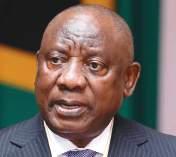
have a legitimate purpose to remain in South Af-rica, yet they have been attacked”, he said.
Nigeria, through its reception and responses, is being
diplomatic, without seeming to appear offensive. But the detail in every diplomatic gesture of this type is in the nuances. The Presi-dency on the international stage is a club of brothers, sovereigns in each individual right, bond-ed by mutual self-respect, established diplomatic relations, and courtesies. Where cracks occur, there must be an underlying conflict, in this case, the recurrent murder, harassment and depor-tation of Nigerians in South Africa. When the Nigerian President refuses to see envoys from a brother-President, and his Foreign Ministry says there was no prior notice, that is a sophisti-cated way of expressing displeasure or a subtle rejection of the envoys either on the grounds that they are too junior, so they are asked to meet their counterparts in the receiving country, or this may be a message to the sending country. Whatever may be the sub-text of Nigeria’s snobbery against President Ramaphosa, this is the most appropriate response in this matter. President Tinubu has simply stood up for his own countrymen. He has sent a message that he is a very busy President, who cannot just receive envoys “without prior

Nigeria needs approximately 20 million additional homes. Most discussions focus on how quickly those homes can be built. That is an incomplete question. The more important question is what building those homes can do for the Nigerian economy.
Countries that became economic powers did not treat housing merely as shelter. They used housing as an engine of industrialisation, job creation and wealth creation. Nigeria has an opportunity to do the same by using housing policy to deliver Decent Housing, Thriving Industries and Lasting Wealth. The recent publication regarding a proposed Chinese intervention in Nigeria’s housing sector provides the immediate context for this opinion. It is important to state from the outset that there should be no objection to Chinese participation, or indeed to any credible foreign investor bringing capital, expertise and technology into Nigeria. On the contrary, Nigeria requires significant interventions and partnerships if it is to address its
infrastructure and housing challenges at scale.
The issue, therefore, is not whether Chinese companies, or foreign companies generally, should participate. The more important question is whether the structure of such interventions maximises Nigeria’s long-term economic interests. Does the intervention simply deliver houses, or does it use the opportunity to build Nigerian industries, create jobs, transfer skills, strengthen domestic companies and expand productive capacity? That distinction matters because Nigeria’s housing challenge exists within a much broader national ambition: the goal of becoming a US$1 trillion economy.
A trillion-dollar economy cannot be achieved simply by constructing more buildings or importing more goods and services. It requires a fundamental expansion of Nigeria’s productive capacity: more manufacturing, stronger domestic enterprises, higher productivity, better-paying jobs and a larger middle class. Housing provides one of the greatest opportunities to achieve
these objectives simultaneously.
The real measure of success should therefore not only be the number of houses delivered, but the economic capability created in the process of delivering them. Housing has one of the highest economic multipliers of any sector. Every house built generates demand across dozens of industries—from cement and steel to furniture, transport, insurance, banking and professional services.
The world’s most successful economies did not view housing merely as a social intervention. They recognised that housing is also industrial policy. Every housing development creates demand across a broad economic ecosystem. Imagine the economic impact of constructing 500,000 homes annually using up to 80% locally sourced building materials: creating 250,000 direct contruction jobs and more than 1 million indirect jobs, while catalysing demand across major
sectors of the economy, such as cement, steel, tiles, furnitute, logistics, engineering, finance, insurance and professional services. A well-designed housing programme does more than provide shelter. It creates factories, develops technical skills, supports small businesses and generates employment far beyond the construction sites.
Countries such as South Korea, Singapore, Malaysia and Turkey deliberately used housing and infrastructure development to strengthen domestic industries that later became internationally competitive. Perhaps the most instructive example is China. China did not become a global construction powerhouse because it relied on foreign companies to build its cities. It used its enormous domestic demand to develop Chinese manufacturers, construction companies, engineering firms, equipment producers and technology providers. Over time, these companies