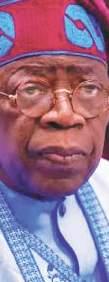
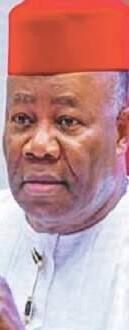
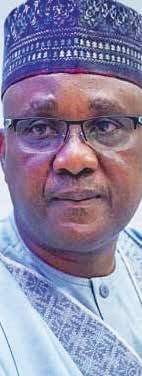
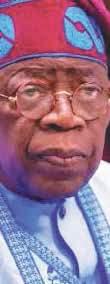
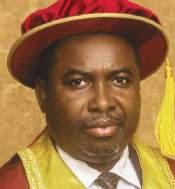
Agbakoba Seeks Privatisation of NNPC, Phased Exit from IOC JV, PSC Arrangements
Warns PIA framework still undermines section 162 of constitution Applauds Tinubu’s executive order on direct remittance of oil revenues Tanimu Yakubu: Executive Order 9 not intrusion into legislative functions by President
Bar Association, NBA, and Senior Partner at Olisa Agbakoba Legal (OAL), Dr. Olisa Agbakoba (SAN), yesterday called for the privatisation
of the Nigerian National Petroleum Company (NNPC) Limited and a phased exit from joint venture and Production Sharing Contract (PSC)
arrangements with international oil companies to strengthen efficiency and transparency in the oil sector. He also has commended
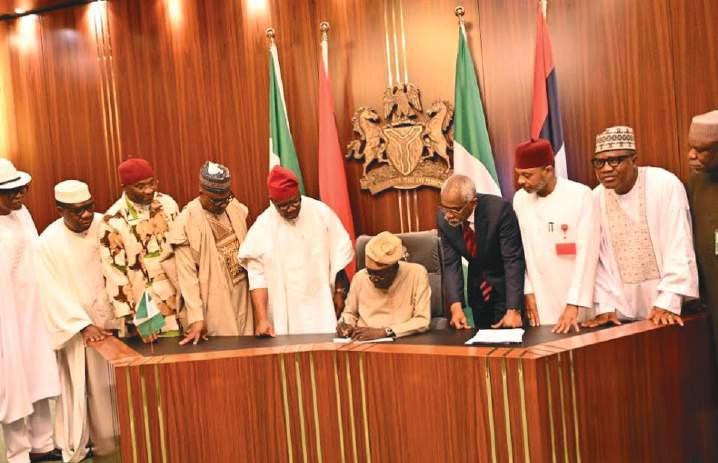
President Bola Ahmed Tinubu for signing the Executive Order 9 (EO9) mandating the direct remittance of oil and gas revenues Continued on page 8 to the Federation Account, describing the move as a decisive step
www.thisdaylive.com
ARISE News Channel Celebrates 100 Leading African Women on International Women’s Day
Emmanuel Addeh in Abuja ARISE News Channel will mark International Women’s Day 2026 with the celebration of 100 of Africa’s most accomplished and
influential women at the ‘Africa Women of Impact Awards’, a high-level recognition platform
spotlighting leadership across governance, business, law, healthcare, technology and the creative industries. According to the official list of final awardees, the honourees reflect
a cross-section of
Nigeria Out of the Woods, Tinubu Declares
at Interfaith Breaking of Fast with Governors
Says best yet to come Pledges state police to tackle insecurity Canvasses unity, sacrifice among citizenry NGF lauds president for bridging religious divides
President Bola Tinubu, last night, held an interfaith breaking of fast with governors across political divides, with a declaration that Nigeria was out of the woods, although the best was yet to come.
Tinubu also assured that the country had emerged from its economic and security challenges, and pledged state police to combat insecurity.
Speaking during the fast breaking with 20 governors, two deputy governors, and top government officials at State House Banquet Hall, the president was emphatic and optimistic, saying, “We are out of the woods, we are out of the dark tunnel of uncertainty.”
He stressed resilience in the midst of current efforts to rescue the country.
Continued on page 8
NIGERIA PAVILION, 2026 PARIS INTERNATIONAL AGRIC SHOW IN FRANCE...
L-R: Governor of Katsina State, Dr. Dikko Umaru Radda; Managing Director, Zenith Bank, Mrs. Adaora Umeoji; Group Managing Director, Access Holdings Plc, Mr. Innocent C. Ike; and Chairman, Zenith Bank, Mr. Jim Ovia, at the Nigerian Pavilion during the 2026 Paris International Agric Show in Paris, France, yesterday
James Emejo in Abuja and Sunday Ehigiator in Lagos Former president of the Nigerian
Deji Elumoye in Abuja
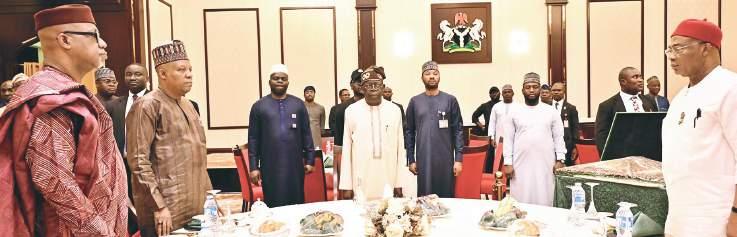
TINUBU BREAKS FAST WITH GOVERNORS...
L-R: Ogun State Governor, Mr. Dapo
Gencos: Regulatory, Operational Risks
Responsible for 25.8% Power Utilisation
Decry N6.2tn debt, neglect of capacity payments Say only 35% of invoiced amounts settled in recent years
Addeh in Abuja
Nigeria’s power generation companies have attributed the country’s persistently low electricity output averaging about 4,000 megawatts from an installed capacity of 15,500MW, to deep-rooted regulatory distortions and operational constraints within the electricity market.
The 4,000MW average generation represents roughly 25.8 per cent utilisation of the total installed grid capacity, a figure the generation companies described as an anomaly for a country of Nigeria’s size and energy needs.
In a detailed clarification issued in Abuja, the Association of Power Generation Companies (APGC), the umbrella body of the Gencos, said misconceptions surrounding capacity payments, Power Purchase Agreements (PPAs), and market design have obscured the real reasons behind what it termed ‘stranded and underutilised’ capacity in the sector.
Signed by its Chief Executive Officer, Dr. Joy Ogaji, the association said the Nigerian Electricity Supply Industry (NESI) was structured as a contract-based market, but critical elements of those contracts are either being ignored or applied selectively, thereby transferring disproportionate risks to Gencos.
Under standard electricity
market arrangements globally, the Gencos argued that generators are compensated not only for the energy actually dispatched and consumed but also for the capacity they make available to the grid. This, they said, ensures that plants recover fixed costs incurred in maintaining readiness to generate power.
However, the Gencos argued that in Nigeria, capacity made available is no longer fully recognised within the commercial framework. Instead, they explained that only “called-up” capacity, the portion of electricity the transmission network can wheel and the distribution companies can take, is being settled.
According to the association, this practice has disincentivised investment in recovering mechanically unavailable capacity, estimated at about 7,000MW of the 15,500MW installed base. With no assurance of being paid for available capacity, Gencos contended that there is little commercial justification for committing fresh capital to plant rehabilitation.
“From the foregoing, the legacy Gencos and the NIPP plants in the market have been operating without adequate sector risk protection, hence exposed to various operational and regulatory risks.
“This singular reason has kept the sector at about 4,000 MW of
average grid generation, for many years, notwithstanding an installed capacity of 15,500MW. This is a clear anomaly in the market, and Gencos, for the record, have kept the records of such losses to date, as a regulatory risk,” the APGC explained.
The group pointed out that electricity, unlike other commodities, cannot be stored at generation plants. Once produced, it is metered and transmitted instantaneously for consumption. As such, it stated that generation planning depends heavily on
system instructions and contractual guarantees embedded in PPAs.
Under existing rules, APGC argued that Gencos declare their available capacity daily in line with their Net Dependable Capacity (NDC), which forms the basis for allocation by the System Operator (SO) to distribution companies. But the association said that even when plants are ready to generate at declared levels, they are frequently instructed to ramp down to ensure grid stability.
In such circumstances, the Gencos argued that natural
justice and contractual provisions require that they be paid for the declared available capacity, including the energy that would have been generated but for system constraints.
They maintained that fuel costs, labour expenses, operations and maintenance charges, and financing obligations are incurred upfront to keep plants operational, regardless of whether energy is eventually dispatched.
The association further decried what it described as a troubling scenario in which only a handful
of active PPAs are recognised in the market. It warned that the absence or weak enforceability of PPAs makes it difficult to secure Gas Supply Agreements (GSAs), since gas suppliers require firm contractual backstops before committing volumes.
The group also decried the about N6.2 trillion owed Gencos in outstanding receivables. The debt, it said, does not even reflect their full contractual entitlements, given that only about 35 per cent of invoiced amounts have been settled in recent years.
Experts Prescribe Policy Discipline, Coordinated Approach to Drive African Integration
Senate to back reforms on capital market innovations, efficiency, transparency
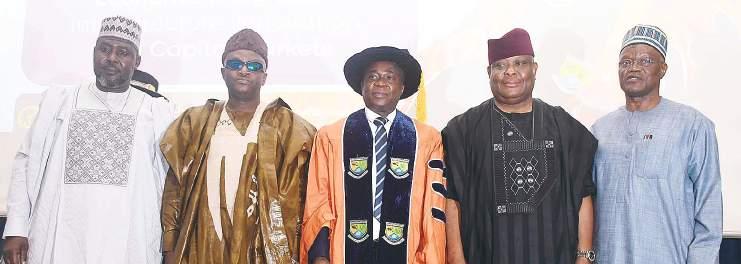
Eminent experts from across the country and beyond, the academia, as well as leading public and private sector players have called for deliberate and coordinated efforts, stronger policy discipline, macroeconomic stability and far-reaching market reforms to achieve Africa’s economic integration.
They converged yesterday, in Abuja at the third Prof. Uche Uwaleke (PUU) Colloquium on
Capital Markets, with the theme, “Future-proofing Africa-wide Economic Integration: Infrastructure, Innovation, and Capital Markets, which was convened by Nigeria’s first professor of capital markets, Prof. Uche Uwaleke.
Some of the personalities at the event were Nigeria’s Representative at the World Trade Organisation (WTO), Prof. Ngozi Egbuna; Director General, Debt Management Office (DMO), Patience Oniha; Accountant
Lagos International Financial Centre Excites Tinubu
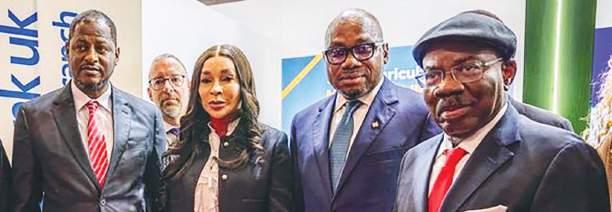
Lagos State Governor, Mr. Babajide Sanwo-Olu, has disclosed that President Bola Tinubu was excited about the establishment of the proposed Lagos International Financial Centre (LIFC).
A statement signed by Gboyega Akosile, who is Sanwo-Olu’s Special Adviser –Media and Publicity, the Governor made the disclosure on Sunday evening during the welcome dinner in honour of the delegates at the Nigeria Foreign Direct Investment Training Programme holding at the Moller Institute, University of Cambridge, England.
The training was at the behest of the Lagos International Financial Centre, organised by TheCityUK, and funded by the Foreign Commonwealth and Development Office of the United Kingdom.
In his opening remarks, Sanwo-Olu was quoted to have said stakeholders should be proud that Tinubu was in support of the establishment of the LIFC.
Sanwo-Olu, who is the Chairman of the LIFC, said the initiative was not about any particular person or region but about the country to position Nigeria in global space.
He said: “President Tinubu is
aware of this meeting and our activity. He was very excited when I spoke with him for almost one-hour yesterday (Saturday).
“He is really expecting a memo from us on this, a high-level paper just to ventilate his thought process. He wants to take leadership and ownership of it, which we all can expect.
“We should be thankful that we have a President who can see very quickly and support what we are trying to build, the idea we are trying to conceive, and the growth we are trying to give the country.
“So under his leadership, we
all should be proud that if we get this, which we will by God’s grace, given the calibre of the turnout, we will get to the final line.
“We have actually been changing the face of many things, and it is a starting point. I think in the next two days, we are going to further ventilate the idea. It is not about any particular person or region; it is about the country and the conversation on how big the country is that will need to use that platform to position the country in that global space where people can truly know that we are serious,” he added.
General of the Federation (AGF), Shamsedeen Ogunjimi; serving and retired vice chancellors of various public and private universities; capital market regulators, and lawmakers, including the Senate Committee Chairman on Capital Markets and Institutions, Senator Osita Izunaso, among others.
The experts noted that while the African Continental Free Trade Area (AfCFTA) provides a historic opportunity to expand intra-African trade and catalyse industrialisation, its success was heavily dependent on a disciplined implementation and institutional alignment across member states.
A communique issued at the colloquium alluded to the central role of macroeconomic stability, underscoring the fact that Africa’s integration agenda cannot thrive amid volatile exchange rates, high inflation, fiscal imbalances and policy inconsistency.
According to the experts, sustainable cross-border capital flows and long-term infrastructure financing require predictable monetary policy frameworks, price stability and credible fiscal management.
They also cited infrastructure deficits as a major constraint to integration, adding that inadequate
transport networks, unreliable energy supply and gaps in digital connectivity constitute barriers limiting intraAfrican trade and competitiveness. According to them, energy security, in particular, constituted a fundamental to industrial expansion and regional value chain development.
The participants equally recommended a more active role for the capital markets in mobilising long-term domestic savings into productive investments that can transform economies.
The experts also called for innovative funding models, including blended finance structures, infrastructure bonds, green bonds and strengthened public-private partnerships.
Acknowledging that AfCFTA provides a strong legal framework, they, however, noted that persistent non-tariff barriers, customs bottlenecks and inconsistent standards remain significant bottlenecks, even as they canvassed improved trade facilitation systems and closer alignment with global trade obligations to ensure smoother movement of goods and services.
Also, financial integrity and transparency were observed as critical foundations to investor confidence.
Emmanuel
Ndubuisi Francis in Abuja
Abiodun; Vice President, Senator Kashim Shettima; President Bola Ahmed Tinubu; and Imo State Governor, Mr. Hope Uzodimma, during President Tinubu’s break of fast with governors at the Presidential Villa, Abuja, on Monday
JAC AUTOLAND AND ACCESS BANK PARTNERSHIP...
L-R: Head, Corporate Sales, Elizade JAC Autoland Limited, Mr. Oluwaseun Ayanbadejo; Chief Operating Officer, Elizade JAC Autoland Limited, Mr. Arvind Bhardwaj; Managing Director and Chief Executive Officer, Elizade JAC Autoland Limited, Mr. Demola Ade Ojo; Regional Director, SME Banking, Lagos and South West, Access Bank Plc, Mr. Arinze Kenechukwu; Regional Director, Consumer Banking, Lagos and West, Access Bank Plc, Mr. Charles Oguibe; and Group Head, Products and Segments, Access Bank Plc, Mrs. Chizoba Iheme, at the official signing ceremony to formally launch the strategic partnership between Access Bank and Elizade JAC Autoland Limited, held in Lagos…recently
Automotive Policy Must Become Law to Unlock Investment, Experts Warn
The Director-General of the National Automotive Design and Development Council, Joseph Osanipin, has called for Nigeria’s automotive policy to be formally enacted into law.
He stressed that the industry requires legal backing to achieve sustainable progress.
He warned that investors were unlikely to fully commit resources unless the regulatory framework governing the sector was supported by legislation.
Osanipin made the remarks in Abuja while addressing members of the House of Representatives Press Corps at a capacity-building workshop yesterday.
The training session was organised by the council in partnership with the House Committee on Media and Public Affairs under the theme, “Strengthening Sectoral Policy Communication and Legislative Reporting on Nigeria’s Automotive Industry Development.”
According to the council’s chief executive, the Nigeria Automotive Industry Development Plan already provides strategic guidance for the sector, but long-term industrial expansion depends on firm legal certainty.
He explained that companies considering major investments in vehicle assembly and component manufacturing require assurance that incentives and policy protections would remain in place beyond changing government
administrations.
Osanipin revealed that the council intends to deepen engagement with lawmakers at the National Assembly in order to strengthen the legal framework supporting automotive development.
He emphasised that globally, the automotive sector was among the most capital-intensive industries and requires consistent policies over time before investors are willing to deploy significant funds.
He added that legislative backing
REA Signs MoU with ECOWAS to Electrify 15 Public Institutions
Emmanuel Addeh in Abuja
The Rural Electrification Agency (REA) has signed a Memorandum of Understanding (MoU) with the Economic Community of West African States (ECOWAS) Commission under the Regional Off-Grid Electricity Access Project (ROGEAP) in a step toward improving electricity access in public institutions.
The agreement, signed yesterday, provides grant funding support from ECOWAS for the electrification of 15 public health and education facilities in Nigeria using solar photovoltaic (PV) systems.
Following the signing of the REA-ECOWAS MoU, REA also
entered into a separate agreement with the Niger State Government to facilitate state-level collaboration and co-financing for selected project sites within the state, a statement from the organisation said.
The ECOWAS partnership, it said, marked the formal commencement of Nigeria’s pilot implementation phase under ROGEAP which is a regional initiative supported by the World Bank to expand off-grid electricity access across West Africa and the Sahel.
Under the agreement, ECOWAS will provide a grant of $700,000 to support the installation of solar PV systems in rural health centres and schools located in the FCT, Niger
State, and Nasarawa State. The project will be implemented by REA as the technical and financial implementing agency.
Speaking at the signing ceremony, the Managing Director of the REA, Dr. Abba Aliyu, described the agreement as a strong demonstration of regional collaboration driving national development.
“This partnership with ECOWAS reinforces Nigeria’s commitment to expanding reliable electricity access to critical public institutions. Electrifying health centres and schools means improving healthcare delivery, enhancing learning conditions, and strengthening community development,” he stated.
Reflecting on the regional
Obi Flags UTME Registration Challenges in Anambra
Chuks Okocha in Abuja
Peter Obi, the Labour Party’s presidential candidate in the 2023 election has expressed concerns regarding the difficulties encountered by candidates registering for the 2026 Unified Tertiary Matriculation Examination (UTME) in Amawbia, Awka South Local Government Area of Anambra State. In a statement shared via his X handle on Monday, the former Anambra governor decried the hardship experienced by students at the Amawbia office of the Joint
Admissions and Matriculation Board, describing the situation as a repeat of last year’s challenges.
“Last year, concerns were raised about the hardship students faced at various centres across the country, particularly at the Amawbia, Anambra State, office of the Joint Admissions and Matriculation Board, following the proscription of several CBT centres over alleged infractions.
“The expectation was that corrective measures would follow. Sadly, as I passed there again last Friday, I met the same crowd and confusion. Upon further inquiry, I
was informed that similar situations exist in some other states across Nigeria,” he said.
Obi noted that while authorities may have valid reasons for sanctioning CBT centres, a more balanced approach should be considered to prevent students from suffering.
“While authorities may have valid reasons for sanctioning centres, a more balanced and humane approach is possible. Centres under investigation could be allowed to continue offering limited services under strict monitoring to prevent further lapses.
significance of the project, President of the ECOWAS Commission, Dr. Omar Touray, stated: “This pilot phase in Nigeria is a cornerstone of our regional strategy to eliminate energy poverty.
“By providing sustainable solar solutions to schools and clinics, we are not just lighting up buildings; we are powering the future of West Africa. This collaboration with the REA demonstrates how regional grants can be effectively localized to touch the lives of the most vulnerable citizens.”
would stabilise the industry, boost local manufacturing and fast-track Nigeria’s industrialisation drive.
Using the forum, he also urged journalists reporting on legislative and economic matters to interpret policies within their broader industrial context, especially those aimed at safeguarding domestic production.
Drawing parallels with global trade patterns, Osanipin noted that many countries routinely introduce protective measures to strengthen local industries and expand technological capacity.
Such approaches, he said, support employment creation, technology transfer and long-term economic resilience.
He further disclosed that Nigeria has already recorded progress in domestic automotive innovation, including the local design and production of tricycles built with indigenous materials, as well as increasing capacity in compressed natural gas vehicle assembly.
The council, he added, has trained more than 15,000 technicians nationwide, a move intended to strengthen after-sales services and ensure technical sustainability across the industry.
Nigeria currently spends trillions of naira each year importing vehicles and spare parts, a trend the council
hopes to reverse through a localisation strategy focused on producing selected automotive components domestically.
Osanipin explained that while no country produces every vehicle part, Nigeria has identified components that could be manufactured locally and was collaborating with assemblers and producers to scale up domestic capacity.
He also revealed that international automakers, including Toyota, Volkswagen, and Ford have inspected Nigerian facilities and expressed surprise at the level of infrastructure available in the country.
According to him, some of Nigeria’s production equipment ranks among the most advanced on the African continent, although this progress receives little public attention.
The council’s head linked automotive development to broader economic goals, noting that the sector promotes industrial diversification, preserves foreign exchange and positions Nigeria to benefit from continental trade arrangements through stronger local content.
Osanipin stressed that a better understanding of sectoral policies among legislative reporters would improve public discourse and support evidence-based policy decisions.
Bagudu Urges Ministerial Aides to Strengthen Public Policy Advisory, Implementation
James Emejo in
Minister of Budget and Economic Planning, Senator Abubakar Bagudu, yesterday urged ministerial aides to support their principals in enhancing public policy formulation and implementation.
The minister spoke at the opening of a capacity-building workshop for special advisers and technical assistants to ministers, organised by the Ministerial Aides Network (MANET) in partnership with the Konrad Adenauer Stiftung (KAS). Bagudu highlighted the vital role of special advisers and technical assistants in improving governance, national planning, and efficient
public service delivery, praising MANET and KAS for sustaining initiatives that enhance the skills, professionalism, and effectiveness of political appointees and technical aides across government.
He said, “The Ministry of Budget and Economic Planning started as the National Planning Commission, reflecting Nigeria’s constitutional federal system with federal, state, and local levels of government.
“Our role remains to regularly evaluate the skills needed for national development, suggest training and organisational reforms, and work together with development partners.”
The minister stressed that no
nation can achieve its development goals without strong institutional capacity, noting that advisers, consultants, and technical experts play a key role in shaping policy, strengthening institutions, and supporting ministers in fulfilling their mandates.
He observed that ministers and political appointees often enter office via different routes—political leadership, professional expertise, or public service—and may require technical support to perform effectively.
He therefore, highlighted the importance of organised technical assistance and continuous capacity development for ministerial aides.
Abuja
Juliet Akoje in Abuja
COLLOQUIUM ON THE CAPITAL MARKET...
L-R: Chairman, Senate Committee on Science and Technology, Senator Aminu Iya Abbas; Deputy Vice Chancellor, Research, Innovation and Linkages, Nasarawa State University, Keffi (NSUK), Dr. Ngharbu K’tsu; Prof. Uche Uwaleke; Chairman, Senate Committee on Capital Market, Senator Osita Izunaso; and Vice Chairman, Senate Committee on Capital Market, Senator Peter Jiya, at the 3rd Prof. Uche Uwaleke (PUU) Colloquium on the Capital Market, themed “Future Proofing Africa Wide Economic Integration: Infrastructure, Innovation and Capital Market”, held in Abuja, yesterday
JRB: Tax Identification Won’t Lead to Automatic, Arbitrary Deductions from Payers’ Bank Accounts
Executive Secretary, Joint Revenue Board (JRB), Mr. Olusegun Adesokan, has dismissed erroneous claims that tax identification will subject taxpayers’ bank accounts to automatic and arbitrary deductions by financial institutions.
Adesokan who commended taxpayers who have already obtained their tax IDs, he said the speculations were unfounded, adding that concerns about automatic taxation of people’s money through tax identification were particularly false.
He gave the clarification as a cross-section of taxpayers retrieved their new tax IDs through the new Tax ID portal which was launched on January 1, 2026, as Nigeria’s centralised taxpayer database.
The portal is jointly managed by JRB and the Nigeria Revenue Service (NRS).
He stressed that tax reforms were well-conceived and designed to support the poor as well as support economic growth, adding that reforms have provided a lot of incentives for low-income earners and all categories of taxpayers and businesses.
Adesokan said, “I commend patriotic taxpayers who stood in solidarity with the government on this tax reforms. I thank every taxpayer who was not swayed by the negative propaganda against the reform and the Tax ID.
“Now, it is obvious that the speculation that monies will be deducted arbitrarily from people’s bank account from January 1, 2026, was unfounded. It is also obvious that the rumour about automatic taxation of people’s money once they get a Tax ID is also false.”
The JRB ES further urged taxpayers who are yet to retrieve their tax IDs to do so through the official portal, noting that platform was designed as a self-service system to ensure seamless use, possessing strong data protection safeguards in compliance with regulations of the Nigerian Data Protection Commission.
He further noted that implementation of the reforms had begun at both national and subnational levels, stating that JRB, alongside partner agencies, remained optimistic about smooth execution, while calling for continued public cooperation.
However, a cross-section of taxpayers who retrieved their new tax IDs through the portal commended the platform, describing it as user-friendly and efficient for quick access.
The platform enables individuals to obtain a unique 13-digit number using their National Identity Number, while businesses can retrieve theirs using registration numbers issued by the Corporate Affairs Commission (CAC) and other designated government agencies.
The portal seeks to harmonise the hitherto fragmented taxpayer data across national and subnational systems into a single database aimed at improving coordination, strengthening revenue administration, and enhancing data security.
The project forms part of ongoing fiscal and tax reforms implemented by the administration of President Bola Tinubu. Feedback from taxpayers was obtained through a structured questionnaire shared across digital platforms such as Facebook, X, Instagram, and WhatsApp, as well as through telephone interviews.
The survey targeted users who had attempted retrieval of their tax IDs and requested details of their experience.
According to the JRB Help Desk team that conducted the poll, respondents answered four questions, three closed-ended and one open-ended, following which responses were compiled and analysed.
“At the end of the poll, we collated all the responses and analysed them. More than 98 percent of the respondents said they had a seamless experience retrieving their Tax ID”, according to the Head of the team.
Nigeria has taken a decisive step to reinforce its environmental commitments, with the validation of its Seventh National Report to the Convention on Biological Diversity at a high-level workshop in Abuja on Monday.
The validation workshop, brought together government officials, environmental experts, civil society actors, researchers, development partners, and community representatives to review and endorse the country’s latest biodiversity performance assessment.
Director of Forestry, Hajiya Halima Bawa-Bwari, said the exercise was a defining moment for Nigeria’s environmental governance.
Bawa-Bwari said the national report went far beyond a routine international obligation.
According to her, the document serves as a critical reflection of Nigeria’s achievements, gaps, and future priorities in conserving its vast biological wealth.
Bawa-Bwari stated, “The National Report is not just a statutory submission. It is a mirror of our collective journey — our progress, our challenges and our aspirations in protecting the natural heritage entrusted to us.”
She emphasised that biodiversity underpins food security, climate resilience, economic livelihoods and cultural identity across the country.
Bawa-Bwari warned that accelerating ecosystem degradation, habitat loss, and climate pressures demanded coordinated and urgent action.
Bawa- Bwari, who was represented by Ahmed Labaran, Assistant Director, Forestry,
commended the contributions of ministries, research institutions, civil society organisations, local communities, and development partners in shaping the draft report.
She said biodiversity conservation required sustained collaboration, innovation and inclusivity.
Participants were urged to ensure that the final document aligned with the Kunming-Montreal Global Biodiversity Framework, which set ambitious targets for halting and reversing biodiversity loss by 2030.
“Our deliberations must strengthen national resolve, integrate biodiversity into development planning, and mobilize the financial and technical resources required for implementation,” she said, calling for integrity and professionalism in validating the report.
Minister of Environment, Malam Balarabe Lawal, in his remarks, described the Seventh National
Report as coming at a pivotal time for global and domestic biodiversity action.
Lawal stressed that Nigeria’s revised National Biodiversity Strategy and Action Plan (NBSAP) remained the country’s principal roadmap for translating global environmental commitments into measurable national outcomes.
The minister, who was represented by Deputy Director, Forestry, Tijani Ahmed, said the validation process must guarantee that the report was evidence-based, comprehensive, and reflective of realities on the ground.
“The report must not end as an international filing exercise,” the minister stated. “Its findings should inform policy coordination and decisions, guide resource mobilisation, and strengthen accountability in implementing the NBSAP.”
Nigeria, UK Step Up Crackdown on Trafficking into Southeast Asia Scam Compounds
Michael Olugbode and Sunday Ehigiator in Abuja
National Agency for the Prohibition of Trafficking in Persons (NAPTIP) and British High Commission on Monday joined forces to spotlight and combat a disturbing surge in the trafficking of Nigerians into forced cyber-fraud operations across Southeast Asia. At a landmark survivor-centred event in Abuja, authorities, diplomats, and international partners amplified the voices of recently rescued Nigerians, who were
deceived with fake overseas job offers and trafficked to Myanmar, Laos, Cambodia, and Thailand.
Many were forced to operate sophisticated online scam schemes under harsh, coercive, and degrading conditions.
The forum, themed, “Confronting the Global Scam Centre Crisis: Perspectives of Nigerian Survivors,” marked a shift towards survivorled advocacy, allowing victims to voluntarily recount how they were recruited, transported and confined in guarded compounds where refusal to cooperate often
resulted in threats, intimidation, and psychological abuse.
The event followed a coordinated rescue mission involving NAPTIP, Nigerian Ministry of Foreign Affairs, Nigerian Embassy in Bangkok, and British anti-trafficking NGO EDEN.
Their joint intervention, including field coordination near the Thai–Myanmar border, and welfare support at Bangkok’s Immigration Detention Centre, secured the safe return of 23 Nigerian nationals earlier this month.
Officials cited alarming global
data to underscore the scale of the crisis. A 2026 report by the Office of the United Nations High Commissioner for Human Rights, titled, “A Wicked Problem,” estimated that at least 120,000 people were currently trapped in forced scam operations inside Myanmar, with more than 300,000 victims spread across Southeast Asia.
Survivors identified so far originated from no fewer than 66 countries, highlighting the transnational scope of the crime.
Speaking at the event, UK Deputy High Commissioner
in Abuja, Gill Lever, described the survivors’ testimonies as both courageous and critical to prevention efforts.
“We are here to listen,” she said.
Lever added, “Their bravery in speaking out will help expose criminal networks that prey on vulnerability and deception. The UK stands shoulder to shoulder with Nigeria and other partners to ensure survivors receive traumainformed care and that perpetrators are held accountable.”
Representing Director-General of NAPTIP, Hajiya Binta Bello, the
agency’s Director of Public Enlightenment, Mrs. Kehinde Akomolafe, reaffirmed Nigeria’s zero-tolerance stance against trafficking syndicates exploiting digital platforms to lure unsuspecting youths abroad.
“The testimonies we have heard today reveal the brutal reality of trafficking into scam centres,” she said. “These operations strip victims of their dignity, freedom and identity. NAPTIP remains committed to prevention, prosecution and protection, while strengthening partnerships to dismantle these networks.”
James Emejo in Abuja
PHOTO: ENOCK REUBEN
Tragedy Averted as Fire Engulfs Old International Terminal of Murtala Muhammed Airport, Lagos
Chinedu Eze
A major tragedy was averted yesterday at the old terminal of Murtala Muhammed International Airport (MMIA), Lagos, known as Terminal I, when fire engulfed the building, but was brought under control by fire fighters, as emergency responders evacuated the structure, ensuring only minimal damage.
The fire was said to have started at the server room of the facility, and spread vertically to the last floor of the building.
No death was reported, but six people were injured.
Three international flights were diverted. A British Airways flight was diverted to Nnamdi Azikiwe International Airport, Abuja, while Lufthansa and Emirates Airlines flights were diverted to Malabo, Equatorial Guinea. The airspace was reopened at about 7:26pm, when Ethiopian Airlines flight departed the airport to Addis Ababa.
Federal Airports Authority of Nigeria (FAAN) confirmed that a crane was successfully deployed to support rescue operations at the Control Tower, and all 14 persons initially trapped were safely rescued and fully evacuated from the facility.
FAAN said, “A total of six casual-
THISDAY learnt that 14 Air Traffic Controllers, engineers, and other officials, who were on duty at the time of the fire, which started about 3pm, were evacuated with a crane that was quickly deployed by the company handling the reconstruction of the terminal.
ties — comprising three males and three females — were recorded, all of whom are in stable condition.”
One of the affected persons was said to have been transferred to FAAN Headquarters Hospital for medical evaluation.
FAAN said as an additional safety precaution, the sixth floor of the facility was completely evacuated to support ongoing emergency operations and risk mitigation.
It stated, “Preliminary findings from the Airport Fire Service indicate that the fire originated from the server room on the first floor of Terminal 1.
“The fire within the departure hall is now largely under control, while responders continue close monitoring to prevent any spread to adjoining sections of the terminal.”
Giving details of the fire incident, Managing Director of FAAN, Mrs. Olubunmi Kuku, told newsmen that the incident would have led to fatalities if not for the prompt activation of emergency procedures that made it possible to get everyone out of the terminal.
Kuku stated, “What was important was to make sure that we were able to activate our emergency operating procedures and get everybody out of the building, with no fatality, due to all of the coordination done by the agencies.”
She said emergency responders took the lead to ensure there were no lapses, and the situation was brought under control.
The managing director stated, “There is an airport manager who’s pretty much the chief safety and chief
security officer of the airport, along with his team members as well.
“He’s taking charge of that operation. There’s a standard procedure that we follow when it comes to emergencies.”
She disclosed that at the point of interface with newsmen, the cause of the fire and the exact point it started were yet to be established. Although, it was generally believed to have started from the server room and billowed to the top of the terminal.
Kuku said, “But within the area where we believe the fire started from, there was nothing happening at that time.
“Rather, what we did was to have people who were sort of moving things out, because you do know that there’s a major renovation coming up. There are renovation
activities that are happening within the airport premises, yes.
“I cannot say more than that at this time. Of course, you can look behind me (the terminal) and you see that it did not escalate to the roof.
NIGERIA OUT OF THE WOODS, TINUBU DECLARES AT INTERFAITH BREAKING OF FAST WITH GOVERNORS
Acknowledging complaints alongside progress, including one from “my son, the farmer from Niger (Governor Mohammed Bago)”, Tinubu told the governors, “The result of hard work is more work. But as long as we bridge together and we move together and determine to rescue this country, the best is yet to come to Nigeria.”
The president addressed insecurity, reaffirming a key promise:
“To those unemployed, what I promise we will establish state
police to combat securities in our local governments.”
He also called for unity, sacrifice, and inclusivity during the coinciding Ramadan and Lent periods.
Tinubu praised the governors’ commitment, commended Borno State Governor, Babagana Zulum, for Ramadan feeding initiatives, and called for empowerment of the youth and grassroots development.
He stated, “You know what it means – discipline, sacrifice, faith, perseverance, strong determina-
tion for us to continue to bridge together, pray together, and love one another. Love for the community, love for our neighbours, and service for humanity.”
The president hailed the governors for their achievements, and added that he was not expecting a large turnout amid party congresses and local engagements.
“I thank God for what we’ve been able to achieve together… We’ve seen progress. We’ve seen commitment to duty,” he said.
Tinubu reiterated his call to
spread development opportunities to local governments, saying, “Let’s go further to embrace the young ones and all the supporters… with compassion and let’s spread the development opportunity across to the grassroots.”
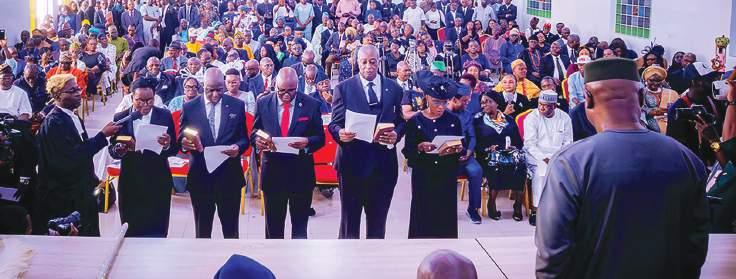
The dinner, marking the third consecutive year of Tinubu’s annual tradition of breaking the fact with officials across faiths, featured prayers by State House Chief Imam, Abdulwaheed (Muslim) and Taraba State Governor Agbu Kefas (Christian).
AGBAKOBA SEEKS PRIVATISATION OF NNPC, PHASED EXIT FROM IOC JV, PSC ARRANGEMENTS
toward reclaiming Nigeria’s fiscal sovereignty.
Relatedly, the Director General, Budget Office of the Federation (BoF), Tanimu Yakubu, yesterday said the EO9, mandating the direct remittance of oil and gas revenues to the federation account, does not amount to an intrusion into legislative competence.
The DG Budget spoke against the backdrop of concerns that the EO9 amounted to an incursion into law making by the President.
Agbakoba who made his remarks yesterday, in a formal submission on behalf of OAL to the Implementation Committee, chaired by the Minister of Finance, Mr. Adebayo Olawale Edun, applauded the president for what he called a bold constitutional intervention.
According to him, “For years, Nigeria’s sovereignty over its most critical natural resources has been effectively abdicated through layers of unjustified deductions and structural arrangements that drained public revenue.
“This Executive Order begins the vital work of restoring to the Federation the revenues constitutionally due to the federal, state and local governments under Section 162 of the 1999 Constitution (as amended). It is a commendable and courageous action.”
He noted the Order addresses long-standing concerns about the fiscal architecture of the Petroleum Industry Act (PIA), which he argued has failed to adequately protect the Federation’s revenue interests.
“The significance of this Order cannot be overstated. Nigeria’s fiscal challenges, debt sustainability pressures, revenue shortfalls, and constrained public investment are in no small measure attributable to the erosion of oil and gas revenues under the existing PIA framework.
“This directive has the potential
to unlock substantial incremental revenues and restore public confidence in the transparency and accountability of the sector.”
Agbakoba explained the EO9 eliminates the management fee on Profit Oil and Profit Gas, redirects Frontier Exploration Fund proceeds to the Federation Account, mandates direct payment of Royalty Oil, Tax Oil, Profit Oil and Profit Gas by operators, and suspends gas flare penalty payments into designated funds.
However, he maintained that while the Order was revolutionary, it does not go far enough.
“NNPC Limited remains an amorphous entity whose precise role and legal character are still undefined,” he stated, referring to the Nigerian National Petroleum Company Limited.
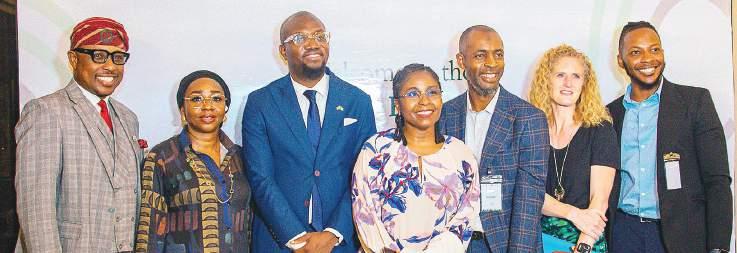
Nigeria alongside leaders from South Africa, Kenya, Zimbabwe, Ethiopia, Mauritius, Sudan, Côte d’Ivoire, Niger as well as accomplished African women in other parts of the world.
Besides, the awards scheduled for March 8, 2026 will bring together women whose works have shaped institutions, driven enterprise and influenced policy both on the continent and globally.
Among several others, in governance and public life, the list includes former Nigerian First Lady Aisha Buhari; Executive Director of UNAIDS (Uganda), Winnie Byanyima; and South African politician and activist, Helen Zille. Their recognition signals the awards’ emphasis on women who have operated at the highest levels of public policy and international engagement.
In the same vein, the business and finance sector will feature leaders such as Ibukun Awosika, former Chairman of First Bank of
“Our position is clear: NNPC should simply be an oil company with no statutory functions. It should be privatised. Nigeria does not need a state oil company participating in commercial operations. The government’s role should be limited to collecting rents and taxes.”
He added that NNPC has historically absorbed between 50 and 70 per cent of public oil and gas revenues through various structural mechanisms, a trend he said undermines the constitutional intent of Section 162.
It is important to note that Section 162 of the 1999 Constitution (as amended) establishes the Federation Account and mandates that all revenues collected by the Government of the Federation, except those expressly exempted,
Nigeria Plc; Halima Dangote, Executive Director at Dangote Group; and economist Arunma Oteh of Saïd Business School, University of Oxford . In all, their careers reflect the growing influence of African women in boardrooms and global financial institutions. Also, healthcare and science will be prominently represented. Among those to be honoured are Prof. Bosede Afolabi of the College of Medicine, University of Lagos, and Dr Iman Abuzeid, physician and Chief Executive Officer of Incredible Health. Their inclusion underscores the critical role women are playing in advancing medical innovation and strengthening health systems.
From the energy and regulatory space, Oritsemeyiwa Eyesan, Commission Chief Executive at the Nigerian Upstream Petroleum Regulatory Commission (NUPRC) is listed among the awardees, highlighting progress in sectors historically dominated by men. The creative and cultural indus-
must be paid directly into that account.
It provides that these funds shall be distributed among the federal, state and local governments in accordance with a revenue allocation formula approved by the National Assembly, thereby creating a constitutional framework for the sharing of nationally generated income.
The section also entrenches the principle of derivation, requiring that not less than 13 per cent of revenue derived from natural resources be returned to the producing states.
In addition, it mandates that each state to maintain a State Joint Local Government Account into which allocations meant for local
Continued on page 28
tries will feature filmmaker Kemi Adetiba and Operatic Soprano (The Metropolitan Opera, South Africa), Pretty Yende, representing Africa’s expanding global cultural footprint. In technology and corporate leadership, executives such as Pamela Maynard of Microsoft MCAPS are also on the list, reinforcing the continent’s growing participation in the global knowledge economy. Beyond corporate and political leadership, the awards will also spotlight philanthropy and social enterprise. Zouera Youssoufou, Chief Executive of the Aliko Dangote Foundation, is among those to be recognised , reflecting the event’s focus on impact-driven leadership that extends beyond profit to community development and social transformation.
By deliberately curating a list that spans sectors and geographies, Arise’s 2026 Africa Women of Impact Awards will present a structured narrative of African progress through female leader-
Earlier, Governor Hope Uzodinma of Imo State, representing Chairman of Nigeria Governors’ Forum (NGF), AbdulRahman AbdulRasaq of Kwara State, hailed the president for fostering national unity amid religious and ethnic tensions during an interfaith breaking of fast.
Uzodinma described the gathering as divinely inspired, saying, “It is not usually often that the Muslim Ramadan fast coincides with the Lent season, the last time was 33 years ago.
“This convergence is a special situation created by God to remind us Christians and Muslims not to allow religious and ethnic differences to guide our thoughts and our political activities.”
Uzodimma praised Tinubu’s leadership, saying the president has brought a lot of inclusivity and harmony to bear on governance in Nigeria.
He said from his long political experience, never in the history of the country had it had a leader, like Tinubu, who chose to deliberately remove politics from core issues of governance to promote national unity and progress.
Highlighting the gains of collaborative progress, the Imo State governor said, “You’ve done this and forged national partners in progress with governors. There are also challenges with governors. So this period of fasting is a holy
ship. The honourees represent both established figures and contemporary executives shaping emerging industries, offering a generational blend of experience and innovation.
As the International Women’s Day approaches, the event will serve not only as a celebration of individual accomplishment but also as a statement about Africa’s development trajectory. The awards seek to characterise women not as peripheral contributors but as central actors in economic management, institutional reform, healthcare delivery, cultural production and global diplomacy.
In convening 100 leaders under one platform, Arise is positioning the Africa Women of Impact Awards as a benchmark recognition for excellence on the continent.
Arise’s decision to unveil the 100 Women of Impact list on International Women’s Day will align the event with a global movement advocating gender equality
period that God has enjoined us to support the less privileged. In your wisdom, you invited us to come and eat together.”
Uzodimma said, “My brother governors will continue to partner you. We have appreciated the new reform policies you’ve given to state governments to operate, the support and the interventions, the ingenuity you have brought to bear, and the new tax reform you’ve introduced.
“We pray to Almighty God to give you strength, good health, stronger wisdom in navigating the access of the country. We continue to pledge our loyalty, to the glory of Almighty God.”
Vice President Kashim Shettima, Chief of Staff to the President, Hon Femi Gbajabiamila, and some ministers also attended the gathering.
The governors in attendance included Agbu Kefas of Taraba, Abba Yusuf of Kano, Alex Otti of Abia, Dapo Abiodun of Ogun, Monday Okpebholo of Edo, Usman Ododo of Kogi, Babagana Zulum of Borno, Inuwa Yahaya of Gombe, Ahmed Aliyu of Sokoto, Sheriff Oborevwori of Delta, Mohammed Bago of Niger, Umar Namadi of Jigawa, and Abdullahi Sule of Nasarawa. Others were Francis Iwunfuru of Ebonyi, Bassey Otu of Cross River, Gabriel Mutfwang of Plateau and Hyacinth Alia of Benue, among others.
and women’s empowerment. The platform is expected not only to celebrate individual accomplishments but also to amplify conversations around representation, access to opportunity and systemic reform.
As preparations advance, the Africa Women of Impact Awards are positioned to become one of the most significant recognitions of female excellence on the continent. By convening leaders across generations and disciplines, Arise will not only celebrate achievement but also project a forward-looking vision of Africa, one increasingly shaped by women at the forefront of enterprise, governance, science, culture and philanthropy.
In doing so, the event will reaffirm a central message of International Women’s Day: That sustainable development and inclusive growth are inseparable from women’s leadership, innovation and resilience.
•See Pages 16-19 for African Women of Impact
FAAN MD, Mrs. Kuku
AFRICA WOMEN OF IMPACT AWARD 2026
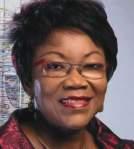
ABOYADE FUNKE (SAN) Lawyer, Principal Partner, Aboyade & Co
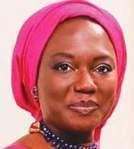
UKEJE, NNENNA Politician, House of Representatives.
TILAHUN ALEMU, BETHLEHEM Entrepreneur, SoleRebels
ZILLE, HELEN Politician, Activist, Democratic Alliance (DA).
NIGERIA
SOUTH AFRICA
NIGERIA
NIGERIA
SOUTH AFRICA
NIGERIA
NIGERIA
NIGERIA
SOUTH AFRICA
NIGERIA
NIGERIA
SOUTH AFRICA
ETHIOPIA
NIGERIA
SOUTH AFRICA
SOUTH
NIGERIA
NIGER
Politics
Acting Group Politics Editor DEJI ELUMOYE
Email: deji.elumoye@thisdaylive.com
08033025611 sms only
Ondo at 50: Burden of Governance and Unrealised Potential
Fidelis David reports that by any historical measure, Ondo State at 50 is a paradox of promise and paradox of performance, a land richly endowed by nature and history, yet still wrestling with the burdens of governance, uneven development and unrealised potential.
The jamboree, glamour and highpowered ceremonies of Ondo State’s 50th anniversary have come and gone. The speeches have been delivered, the drums have been beaten, the fireworks have faded, the music has gone silent and the dignitaries have returned to Abuja, Lagos, Ibadan and other places. What remains is a deeper question that cannot be masked by pageantry: what has five decades of statehood truly delivered for the Sunshine State and its people?
From its birth in 1976 out of the old Western State, Ondo was conceived as a political answer to a people’s demand for dignity, identity and proximity to power. The agitation led by the Ondo Provincial Movement under Chief G.B.A. Akinyede and his contemporaries was not about cartography but about control of destiny. Their success affirmed Ondo as a moral and intellectual project, not just a geographical one.
Long before statehood, Ondo Province was an economic nerve centre of the Western Region. Cocoa, palm produce and timber from its soil financed regional structures such as Cocoa House in Ibadan. That productive heritage translated into a culture that prized education, discipline and public service.
This intellectual DNA was echoed by Prof. Taiwo Oyedele in his Golden Jubilee lecture in Akure titled “Ondo State: Yesterday, Today and Tomorrow – Agenda Setting for the Next 50 Years” when he described Ondo as “a deliberate creation rooted in a rich heritage of culture, exceptional intellect, and unwavering courage.” He reminded the audience that the founding vision placed education at the centre of development, noting that Ondo once earned the reputation of having “the highest concentration of educated elites in Nigeria.”
That tradition produced figures who shaped Nigeria’s political, legal, economic and cultural life, from Chief Adekunle Ajasin and Chief Adebayo Adefarati in governance, to Gani Fawehinmi and Akinola Aguda in law, Joseph Sanusi in finance, and cultural exports like King Sunny Ade, Omotola Jalade-Ekeinde and Mo Abudu. Ondo became not only a state but a supplier of national excellence.
President Bola Tinubu, represented by the Minister of Interior, Dr. Olubunmi Tunji-Ojo, acknowledged this civic pedigree. He commended Ondo citizens for their “resilience, industriousness and civic responsibility,” noting their disciplined participation in the last general elections. “Every citizen counts, and every voice matters,” the President said, framing Ondo’s democratic culture as part of its national contribution.
Recent administrations have also expanded roads, schools, hospitals and security frameworks, while the current government’s five-point agenda on security, infrastructure, economic diversification, human capital and transparent governance seeks to consolidate gains.
Yet Ondo’s story is also one of arrested promise. Despite vast endowments in oil, gas, bitumen, forests and coastline, the state remains fiscally dependent on federal allocation. Industrialisation has been fragmented, lacking the scale to absorb labour or drive exports.
Infrastructure development has been uneven. While highways link major towns, many rural communities remain isolated, and public transport systems are weak. Education and healthcare, once proud symbols of Western Region governance now struggle with underfunding and manpower gaps.
Youth unemployment remains one of the state’s gravest burdens. Ondo produces graduates faster than it produces opportunities. Migration to Lagos and abroad has become a silent development policy.
Even Prof. Oyedele, while praising Ondo’s
human capital investment, warned that reforms must deepen. Though the state ranks favourably in poverty reduction and fiscal transparency, he noted that Ondo still lags in ease of doing business. “This is an opportunity,” he said, “to set a target to be among the top five states in Nigeria within five years.”
Perhaps the ugliest contradiction lies in Ondo’s oil-bearing communities. In Ilaje and Ese-Odo, crude flows, but poverty remains entrenched. Environmental degradation persists alongside weak infrastructure, making resource wealth a source of grievance rather than prosperity.
It is this contradiction that drew scathing criticism from rights activist and former presidential candidate, Omoyele Sowore, who dismissed the Golden Jubilee celebrations as hollow. “Ondo @50 has been reduced to little more than spectacle and fluff under Hon. Lucky Orimisan Aiyedatiwa’s watch,” Sowore declared.
“There are no refurbished schools to showcase, no bridges built, no completed roads to commission, no hospitals to open, and no concrete security achievements to speak of except Amotekun commander shooting at his men. Instead of milestones, citizens are offered pageantry; instead of progress, some physical dance performance.
“At 50, Ondo State is not marking development or renewal, but merely dancing around its own stagnation while thuggery thrives and governance remains conspicuously absent,” Sowore concluded.
Politically, Ondo has endured periods of instability, impeachments, succession crises and abrupt policy reversals that stalled long-term planning. Development has too often been reduced to short-term projects rather than enduring systems.
Corruption and abandoned projects have further eroded trust. Each incomplete hospital or half-built road stands as a monument to squandered opportunity.
President Tinubu’s message framed the jubilee as “not only a celebration of the past but a vision for the future.” He pointed to agriculture, education, technology, tourism and the blue economy as sectors where
yet ondo’s story is also one of arrested promise. Despite vast endowments in oil, gas, bitumen, forests and coastline, the state remains fiscally dependent on federal allocation. Industrialisation has been fragmented, lacking the scale to absorb labour or drive exports.
Ondo could excel, pledging federal support under the Renewed Hope Agenda.
Addressing the youth, the President described them as “the architects of the next fifty years,” urging them to drive innovation and civic responsibility. His words underscored a central truth: Ondo’s future will be shaped less by its soil than by its systems.
Oyedele echoed this in his personal reflection, recalling how a N500 village scholarship enabled his secondary education decades ago. That story, he said, illustrated Ondo’s true strength community investment and shared upliftment. He challenged the state to move from subsistence agriculture to agroindustrial processing, from raw bitumen to refined value chains, and from analogue governance to digital efficiency.
If Ondo’s first 50 years were about survival and identity, the next must be about systems and scale. Economic diversification must be real cocoa into chocolate, bitumen into industrial parks, coastline into a blue economy hub. Human capital must translate into enterprise. Oil communities must receive justice, not just derivation.
Youth empowerment must move beyond token programmes to sustainable industrybacked innovation hubs. Governance must outlive administrations, anchored in continuity, transparency and digital delivery.
As Oyedele concluded, the next phase demands “audacious vision, meticulous planning and disciplined execution.” And as President Tinubu pledged, the Federal Government will stand as partner, not spectator.
The question, however, remains: will Ondo finally turn memory into machinery and promise into prosperity? If it does, Ondo @ 100 will not merely be a celebration.
Aiyedatiwa
LAWYER
Electoral Act 2026: The Pros and Cons
President Bola ahmed Tinubu, GCFR
Senate President, Godswill akpabio, GCON
Speaker, House of Representatives, dr Tajudeen abbas, GCON
LAWYER
Electoral Act 2026: The Pros and Cons
Retroactivity of Procedural Laws: Scope and Application
Page IV
‘In 2023….we were actually in an election, during the Lenten season. So, when you look at the calendar, and see that we’re going to be having elections when it is Muslim or Christian fasting taking place, then there won’t be any certainty with respect to the timetable for elections, and that may hamper or hurt the way we prepare for elections” - Samson Itodo, Executive Director, Yiaga Africa
Constitutional Timelines and Electoral Certainty
Page V
Electoral Amendment Bill 2026: Clarifying the Architecture of Electronic Transmission and Collation
Page VI
2026 Electoral Act as Determinant of Nigeria’s Future Electoral Democracy
Page VII
Electronic Transmission of Results: Much Ado About Nothing
The National Assembly (NASS) has been in the spotlight lately, on account of the somewhat impactless amendments that were made to the Electoral Act 2022 (EA 2022), particularly on the electronic transmission of results. Sadly, many Nigerians do not believe that NASS has ever played its role properly in the Fourth Republic, believing that, had NASS performed optimally, stemming from the enactment of good laws, we would have benefited from more positive changes in the country. We can start by scrutinising the functions of NASS, and situating them, if possible, with some of the issues on the front burner in Nigeria today, to determine whether there is any merit whatsoever, to the people’s opinion of NASS.
Functions and Powers of the National Assembly Sections 4(1)-(5), 8, 9, 11(1)-(4), 58, 88, 89, 143, 305(2), 6(b)-(d), (and the Exclusive and Concurrent Legislative Lists) of the 1999 Constitution of the Federal Republic of Nigeria (as amended)(the Constitution) set out the functions of NASS. These duties range from making laws for the peace, order and good government of the Federation, to the creation of States and boundaries; amendment of the Constitution; approving the budget and passing the appropriation Bill; taking over the role of any of the State Houses of Assembly (SHA) when they are unable to perform (except the power to remove a Governor); overriding the President and enacting laws, should the President fail to assent to Bills; investigative and oversight functions, screening of appointees for various offices, including Ministers; removal of the President and Vice President for gross misconduct; and giving approval or withholding of same, when a state of emergency is proclaimed by the President or a Governor,, and extending such a Proclamation - see INEC v Musa (2003) LPELR-24927(SC) per Emmanuel Olayinka Ayoola, JSC, on the legislative functions of NASS; SPDC (Nig) Ltd v Speaker, House of Representatives & Anor (2023) LPELR-59844(CA) per Mohammed Mustapha, JCA, on the investigative powers of NASS.
From the foregoing, it is obvious that indeed, NASS has a very active and important role to play in nation building, as its functions are extensive. Though the primary purpose of government is the security and the welfare of the people (see Section 14(2)(b) of the Constitution), regrettably, Nigerians believe that the primary purpose of the Nigerian Legislature, whether Federal or State (like majority of Politicians), is self-interest, self-perpetuation and self-preservation, instead of representing the interests of Nigerian citizens; that instead of acting as a check and balance, particularly on the Executive arm of government, and holding it accountable, NASS has mostly been too cosy with the Executive, simply capitulating its wishes. Worse still, most SHA, appear to be under the control of their Governors. Gone are the days when Governors were impeached and removed (Rivers State excepted); now Governors use their SHA to remove their Deputies at will, and to do their bidding.
Insecurity
Take for example, the issue of insecurity in Nigeria, we only always blame the Executive for insecurity, or the Judiciary, when we are not happy with decisions in cases that have arisen from insecurity, for instance, Appeal No. SC/CR/1026/2022 Judgement delivered on March 7, 2025 Sunday Jackson v The State per Mohammed Baba Idris, JSC (Helen Moronkeji Ogunwumiju, JSC, Dissenting).
But, is the Legislature blameless? I think not. With security being paramount, one would have imagined that, over the years, NASS would have taken the problem of insecurity more seriously. NASS, in conjunction with Houses of Assembly of two thirds of the States (see Section 9(2) of the Constitution), could have amended Section 214(1) of the Constitution to allow for State Police, or some effective alternative, instead of keeping it as a fruitless debate for over a quarter of a century! Again, NASS and every SHA should have made laws prohibiting open grazing in FCT, Abuja, all the Federal roads and highways in Nigeria, and in the States respectively, since open grazing isn’t only an easy avenue for criminals to take advantage of to commit heinous crimes, but it has frequently led to clashes between Farmers and Herders who forcefully go into people’s farms to graze their cattle on their crops. Instead, there’s radio silence on it. See the 2017 Kogi State Case of State v Haruna Usman, in which 15 year old Usman, a Herder, was found guilty of culpable homicide punishable with death, but ordered to be held at the Governor’s pleasure because of his age, for stabbing one Happy David to death, having warned Usman not to graze his cattle on their farmland which had been sprayed with chemicals.
I watched a movie last week called “The Herd”, and it was an eye opener. In short, it was about a criminal gang that stole cattle belonging to Herders in Ekiti. They disguised themselves as Herders, and blocked the highway with cattle pretending to be herding them, and while the commuters waited for the fake Herdsmen to clear their cattle from the road before they could proceed, they opened fire on innocent commuters. All the commuters in the traffic back up, were kidnapped. A newly wed couple, were among the abductees. The bridegroom was shot and killed, his body subsequently cut into pieces, and sold to a Church Pastor who doubled as a human parts seller. The kidnappers asked for a ransom of N50 million for each abductee, and interestingly, the ransom was to be delivered to somewhere in Kogi State, not Ekiti. This movie depicted an organised criminal enterprise,
oNIkePo BraIThwaITe
onikepo braithwaite The Advocate onikepo.braithwaite@thisdaylive. com onikepob@yahoo.com
“Sadly, many Nigerians do not believe that NASS has ever played its role properly in the Fourth Republic, believing that, had NASS performed optimally, stemming from the enactment of good laws, we would have benefited from more positive changes in the country…in the EA 2026…..Religious practices, shouldn’t be a consideration….The new Section 60(3)… is inconsequential…. no more indirect primaries…. it is easily subject to abuse…. Some of the weighty loopholes, have survived the amendment exercise - Sections 29(5) & 135(1) of the EA 2022…..the EA 2026…the electoral process may be worse off….”
using open grazing as its springboard, which, in reality, is a source of insecurity in Nigeria. Surely, all hands should be on deck to stop it. Yet, NASS has continually failed to put in place the aforementioned laws that can cut open grazing, the feeder of this criminal enterprise from the root, in order to engender peace and order in Nigeria. It’s not only about debating on the budget for defence and arms on the floor of NASS, it is also about enacting effective laws that can complement budgetary and other efforts.
Electoral Act 2026
So, why is anyone surprised at the failure and neglect of NASS, in the matter of the amendment of the EA 2022 for a better electoral process to enhance democracy, when they have hitherto been so nonchalant about security, the primary purpose of government?
1) Religion
The purport of Section 10 of the Constitution, is that Nigeria is a secular State. Yet, with full knowledge of this, where NASS should have seized the opportunity to uphold the Constitution and reaffirm the fact that Nigeria is a secular State, in the EA 2026, NASS reduced the mandatory notice period for elections from 360 to 300 days, because some Muslims complained that the 2027 general elections would fall during the Ramadan season. With the reduction in the notice period, the election can hold anytime from about December 30th, 2026 and January 1st, 2027, 150 days before May 29 (see Section 132(2) of the Constitution).
Nigeria isn’t an Islamic State. It will also be Lent for the Christians during the original 2027 election
proviso, in the Nigerian context, therefore, appears to be absurd, almost rendering the electronic transmission of results futile and nonsensical.
3) Section 84(2)
Nomination of candidates will only be by direct primaries or consensus candidate; no more indirect primaries. Again, this may have been a good initiative, but, in the Nigerian context, it is easily subject to abuse. Without proper INEC supervision, direct primaries could turn out to be somewhat anti-democratic, a way of ensuring that it is the Aspirants who the party leaders support, that will be the ones to secure the party tickets, while the richest Aspirant can simply pay off the others to become the Consensus Candidate. The indirect primaries, may have been a sort of compromise between both. I remember in 2019, when APC used the direct primaries system in Lagos. I watched a video in which Delegates were openly threatened, with a severe warning that their leaders had issued instructions on how to vote, which must be followed. Since Delegates had to line up on specific queues earmarked for each candidate, there was no secret ballot - they were therefore, constrained to vote the way they were commanded to, in order to avoid any repercussions.
While Nigerians were fixated on electronic transmission of results, they forgot about how easy it will now be for unqualified candidates to be elected, particularly with the abolition of indirect primaries.
Some Surviving Loopholes
1) Section 29(5)
dates set, but Christians didn’t complain. The 2023 general elections, took place during Lent. Religious practices, shouldn’t be a consideration.
2) Section 60(3): Electronic Transmission
The new Section 60(3) of the EA 2026, is inconsequential. While the initial version of the amendment by the House of Representatives appeared to be what Nigerians desire, in the harmonised version that was enacted, the proviso clearly states that, in all cases “….the Form EC8A shall remain the primary source of collation and declaration of the result”. When NASS should capitulate to the desires of the people, as in complete electronic transmission without this proviso, they don’t; when they shouldn’t, as in bringing religion into State contrary to Section 10 of the Constitution, they do! Ordinarily, if we were in circumstances where election malpractice is rare, there would be nothing wrong with Section 60(3), because it settles any controversy about what prevails between Form EC8A and IREV, particularly for the purposes of election petitions. Unfortunately, allegations of election fraud and rigging are the order of the day in Nigeria, thereby shedding a different light on this provision. Should good laws not be made, to fit the prevailing circumstances?
For one, the purport of the proviso in Section 60(3) is that, the election process is more or less manual, which it is anyway, since what is imputed into IREV is from a manual Form EC8A. Secondly, if for example, the Form EC8A that was transmitted to the IREV in real time is subsequently altered with the connivance of the Presiding Officers, and IREV then differs from the contents of the physical Form EC8A, EC8A shall prevail. This
Some of the weighty loopholes, have survived the amendment exercise - Sections 29(5) & 135(1) of the EA 2022. I had argued in the past, that Section 29(5) of the EA 2022 allows only a person of the same political party who partook in the primaries, to challenge the constitutional requirements of the successful candidate at the Federal High Court as a pre-election matter, if it is suspected that such candidate gave false information in an affidavit or other documents to contest the election, and that this provision is too narrow. See Akinlade & Anor v INEC & Ors (2019) LPELR-55090(SC) per Ejembi Eko, JSC. That considering the fact that constitutional requirements are crucial, candidates from other parties who are involved in petitions related to suspected lying candidates, should also be able to raise questions about false qualifications in their election petitions, as they are also directly affected. Alas! There was Section 134(1)(a) & (3) of EA 2022, which appears to have allowed candidates to raise these issues in their petitions, but, it has now been deleted from the new Section 138 of the EA 2026 which replaces the old Section 134. Fellow Aspirants of the same party, may be reluctant to go to court.
2) Section 139(1) Replacing the Old 135(1) Section 138 of the EA 2026 replaces 134 of the EA 2022 on the grounds of an election petition, while the old Section 135(1) on noncompliance to the EA survived verbatim as 139(1) of the EA 2026. It provides for invalidation of an election for noncompliance, with a proviso that, if there was substantial compliance with the EA and the noncompliance didn’t substantially affect the outcome of the election, the election cannot be invalidated. See Buhari v INEC & Ors (2008) LPELR-814(SC) on substantial compliance. A heavy burden of proof, is placed on the Petitioner (see Wike v Peterside (2016) LPELR-40036(SC) per Kudirat Motonmori Olatokunbo Kekere-Ekun, JSC (now CJN), sometimes proof beyond reasonable doubt, as some of the noncompliances alleged during elections border on criminality.
This state of affairs hasn’t changed, under the EA 2026. For the Petitioner, it is still an uphill task. In Maku v Al-Makura & Ors (2016) LPELR-48123(SC) per Walter Samuel Nkanu Onnoghen, JSC (later CJN), the Supreme Court held thus: “It is now settled law that, where a ground for challenging the return of a candidate in an election is by reason of corrupt practices or noncompliance with the provisions of the Electoral Act, the Petitioner has the duty of proving: (a) That the corrupt practice or noncompliance took place; and, (b) That the corrupt practice or noncompliance substantially affected the result of the election. See Section 138(1)(b) and 139(1) of the Electoral Act, 2010 (as amended)”. In Lawal v Adebayo & Ors (2009) LPELR-4023(CA) per Clara Bata Ogunbiyi, JCA (as she then was), the Court of Appeal held: “It is trite law….that where an election was so badly conducted that it was not substantially in accordance with the law under which it was conducted, the election remains vitiated and is liable to be nullified. This was laid down in the case of Onoh v Okey (1995) 5 NWLR (Pt.602) page 240”.
Conclusion
Whether in security or electoral matters, NASS doesn’t appear to have stepped up to the plate in the way that it should. In the 10th NASS, while the House of Representatives has sought to do better, in the Senate, it has mostly been business as usual, with the impression that the Senate may sometimes overwhelm the House into falling in line, as Nigerians have witnessed recently in two important and controversial legislations - the Tax Reform Acts, and now, the Electoral Amendment Act. The bitter truth with respect to the EA 2026, is that the electoral process may be worse off, and as it stands, what transpired following the 2023 general elections will recur in 2027 - there may most likely be a bevy of election petitions. Let us wait and see!
Senate President, Godswill akpabio, GcoN
Speaker, house of representatives, dr Tajudeen abbas, GcoN
Retroactivity of Procedural Laws: Scope and Application
Facts
The Respondent commenced the suit at the High Court of Akwa Ibom State in 2008, by a Writ of Summons. Following a series of interlocutory applications in which leave was granted to the Respondent, the writ was subsequently amended. However, before the commencement of trial, the Appellant filed a preliminary objection contending that both the original and the amended writs were defective ab initio, on the ground that the original writ was not signed by Counsel and that the amended writ could not cure that defect. After hearing the parties, the trial court dismissed the objection.
Dissatisfied with the ruling of the trial court, the Appellant appealed to the Court of Appeal. The Court of Appeal affirmed the decision of the trial court, and dismissed the appeal. Still dissatisfied, the Appellant further appealed to the Supreme Court, challenging the decision of the lower court on three grounds.
Issue for Determination
The Supreme Court adopted the sole issue formulated by the Appellant in its determination of the appeal, to wit:
“Whether the lower court was right in holding that the writ of summons was properly filed before the trial court once it was signed by the Registrar of the said court even though it was not signed by the Legal Practitioner who issued same.”
Argument
Counsel for the Appellant argued that the trial court lacked jurisdiction to determine the suit, because the originating Writ of Summons was not signed by Counsel for the Respondent and was therefore, incurably defective. He contended that the original writ bore only the name and address of Counsel, without any signature. He faulted the reliance of the Respondent on the provisions of High Court of Akwa Ibom State (Civil Procedure), 1989, arguing that requirement for signing is not dependent on whether a specific rule of court expressly mandates it. He contended that such rules cannot override a foundational requirement established by statute and binding precedent. In support of his position, he cited the cases of Buhari v Adebayo (2022) 13 NWLR (Pt. 1848) 533 (SC) at 598–599; Ashaka v Nwachukwu (2024) 9 NWLR (Pt. 1942) 149 (SC) at 173, Para. D; and Network Securities Ltd. v Dahiru (2022) 14 NWLR (Pt. 1850) 351 (SC) at 374 Counsel relied further on Section 91(4) of the Evidence Act, 1990, which requires documents to be signed or otherwise authenticated by their makers, and argued that the provision has constitutional force by virtue of Section 315(1) of the Constitution of the Federal Republic of Nigeria 1999 (as amended). He also placed reliance on judicial authorities such as Okafor v Nweke (2007) 10 NWLR (Pt. 1043) 521 (SC) and SLB Consortium Ltd. v NNPC (2011) 9 NWLR (PT. 1252) 317 (SC) to submit that, proper authentication of court processes is fundamental.
In his further submission, Counsel argued that the High Court of Akwa Ibom State (Civil Procedure) Rules 1989, when read together and harmonised with superior Federal legislation such as the Legal Practitioners’ Act and the Evidence Act, a duty is imposed on legal practitioners to sign originating processes they prepare and
Honourable tijjani abubakar, JSC
In the Supreme Court of Nigeria Holden at abuja On Friday, the 4th day of June, 2025
Before their lordships
John Inyang Okoro
Helen Moronkeji Ogunwumiju
Tijjani abubakar
Haruna Simon Tsammani
Mohammed Baba Idris Justices, Supreme Court SC/471/2015
Between
IFirst Bank of Nigeria Plc appellant And
Obong-Ifiok (dr) anny asikpo Respondent
(Trading under the name and style of abbny educational Publishers)
(Lead Judgement delivered by Honourable Tijjani Abubakar, JSC)
file. He relied on Kwara Investment CO. Ltd. v Garuba (2000) 10 NWLR (Pt. 674) 25 (SC) and Keystone Bank Ltd. v J.O.A.S. (NIG.) LTD. (2015) 1 NWLR (Pt. 1439) 98 (SC) to submit that an unsigned writ is worthless and incapable of invoking the jurisdiction of the court. Also, that since the suit was not initiated by due process of law, all proceedings founded upon it is a nullity, irrespective of the merits of the claim. He relied on Okarika v Samuel (2013) 7
NWLR (Pt. 1352) 19 (SC) and FBN PLC v Maiwada (2013) 5 NWLR (Pt. 1348) 444 (SC), as well as the principle enunciated in Madukolu v
“Statutory instruments and subsidiary legislation, particularly rules of procedure, are not retrospective in operation, unless they explicitly so provide. To insist otherwise, would be to expose litigants and legal practitioners to uncertainty, insecurity, and a constantly shifting procedural goalpost”
well-established principle of law against the retrospective application of procedural or substantive statutory amendments, unless expressly provided for, or necessarily implied. Reliance was placed on the following decisions in urging the court to dismiss the appeal - Adesanoye v Adewale (2000) 9 NWLR (Pt. 671) 127 and Afolabi v Governor of Oyo State (1985) 2 NWLR (Pt. 9) 734.
Court’s Judgement and Rationale Deciding the appeal, the Supreme Court noted that the suit was commenced in 2008, at a time when the 1989 Rules was still applicable. The Supreme Court held that, by virtue of Order 5 Rule 15 of the 1989 Rules, a writ of summons is validly issued once it is signed by the Registrar or a duly authorised officer of the court, and that the Rules imposed no requirement for the signature of a legal practitioner. Their Lordships reaffirmed the statutory interpretation principle - expressio unius est exclusio alterius (which literally means, “the express mention of one thing excludes all others”) to hold that the court cannot read into a rule what is not provided therein.
Notably, the learned Justices of the Supreme Court distinguished the authorities relied upon by the Appellant, particularly SLB Consortium Ltd v NNPC (Supra), explaining that it was decided under Order 26 Rule 4(3) of the Federal High Court (Civil Procedure) Rules, 2000, which expressly required pleadings to be signed by a legal practitioner or party. The Supreme Court also distinguished the decision in Okafor v Nweke (Supra), holding that the mischief addressed in those cases - namely, the signing of court processes by law firms or entities that do not qualify as legal practitioners - did not arise in the present case.
The Supreme Court also rejected reliance on the provisions of the Legal Practitioners’ Act and Section 91(4) of the Evidence Act, holding that neither statute independently imposes a mandatory obligation that Writ of Summons must be signed by legal practitioners, where the applicable rules of court do not provide for such.
Nkemdilim (1962) 1 ALL NLR 587 (SC). In this regard, he maintained that for a court process to be valid, it must be signed by a legal practitioner duly enrolled to practice in Nigeria, and that any omission in that respect is not a mere irregularity. He therefore, urged the court to hold that the unsigned writ of summons was incompetent, that the trial court lacked the jurisdiction to determine the suit, ab initio.
Countering the submissions above, Counsel for the Respondent argued that the complaint of the Appellant was founded on an alleged procedural defect, namely the absence of a Counsel’s signature on the Writ of Summons. The Respondent submitted that the complaint was misconceived, because the suit was commenced in 2008 under the 1989 Rules. By virtue of the 1989 Rules, a writ is valid once it is issued and signed by the Court Registrar, and that the 1989 Rules does not contain any requirement for the signature of a legal practitioner. He argued further that the signature requirement introduced by the 2009 Rules, could not apply retrospectively. In support of the above, he invoked the
Remarkably, the Supreme Court held that procedural rules and statutory instruments are not retrospective unless expressly stated, and that a process which was valid under the law in force at the time it was issued cannot be invalidated by later amendments. Their Lordships held that a court process filed in compliance with the rules of court existing at the time cannot be invalidated retroactively by subsequent amendments. Statutory instruments and subsidiary legislation, particularly rules of procedure, are not retrospective in operation, unless they explicitly so provide. To insist otherwise, would be to expose litigants and legal practitioners to uncertainty, insecurity, and a constantly shifting procedural goalpost.
Flowing from the above, the Supreme Court resolved the sole issue against the Appellant and dismissed the appeal. The court also ordered costs in the sum of N4,000,000.00 (Four Million Naira Only) against the Appellant, in favour of the Respondent.
Appeal Dismissed.
Representation
Jerry Akpan with Edikan J. Akpan for the Appellant.
Francis Ekanam with Emen Ekanem for the Respondent.
Reported by Optimum Publishers Limited, Publishers of the Nigerian Monthly Law Reports (NMLR)(An affiliate of Babalakin & Co.)
Electoral Act 2026: The Pros and Cons
Last week, President Bola ahmed Tinubu, GCFR, signed into law, the electoral act 2026. There have been .sharp divisions about the Law, and the recently released timetable for the 2027 elections, with some complaining that the Independent National electoral Commission (INeC), shouldn’t have scheduled the elections to hold during the period of Ramadan, the Muslim fasting period, although it also coincides with the Christian Lent, which is also fasting season for Christian faithfuls. after all, the 2023 elections were held during Lent. But, before the speedy assent to the electoral act 2026 by the President, there had been so much strife and debate over certain provisions in the Bill. Festus okoye; Dr Monday onyekachi Ubani, SAN; Jonathan Gunu Taidi, SAN; Samson Itodo; Jide ojo and Ferdinand oshioke orbih, SAN analyse some salient provisions of the act, in the face of these apprehensions
Constitutional Timelines and Electoral Certainty
Festus Okoye
On Friday, 13th February, 2026, the Chairman of the Independent National Electoral Commission (INEC), Professor Joash O. Amupitan, SAN, announced the Timetable and Schedule of Activities for the 2027 General Election. In accordance with Sections 76(2), 116(2), 132(2), and 178(2) of the Constitution of the Federal Republic of Nigeria, 1999 (as amended), the Commission set the Presidential and National Assembly Elections for 20th February, 2027 and the Governorship and State Houses of Assembly Elections for 6th March, 2027.
Through a stroke of electoral craft, the National Assembly Conference Committee on Electoral Matters finished its work on Monday, 16 February, 2026. The Senate and the House of Representatives deliberated on and approved the Committee's recommendations on Tuesday, 17 February, 2026,
and the President of the Federal Republic of Nigeria gave assent to the Bill on Wednesday, 18 February, 2026.
To properly understand the context of our electoral process and the issues at stake, it is important to emphasise that, constitutionally, INEC does not share the task of setting election dates with any other government body, agency, or commission. The only condition is that, it must perform this duty in accordance with the Electoral Act. The Electoral Act 2022, which underpins the Commission's release
“To meet the one hundred and fifty (150)day threshold, Presidential and Governorship elections may only be held between 30 December 2026 and 16 March 2027”
of the Timetable and Schedule of Activities, no longer exists, and has been replaced by the Electoral Act 2026. Therefore, the Commission must review the items in the Timetable and Schedule of Activities, to ensure they align with the provisions of the Electoral Act 2026.
Two related issues, are at stake. The first is that a symbiotic relationship exists between the powers of INEC to set the dates for the Presidential and National Assembly Elections and the Governorship and State Houses of Assembly Elections under Section 132(1) of the Constitution, and the constitutional restriction imposed under Section 132(2) in setting those dates.
For context and a clear understanding of the issues, it is important to outline the provisions of Section 132(1) and 132(2) of the Constitution.
Section 132(1) provides that “An election to the office of the of President shall be held on a date to be appointed by the Independent National Electoral Commission in accordance with the Electoral Act”. Section 132(2), on the other hand, provides that “An election to the said office shall be held on a date not earlier than one hundred and fifty days and not later than thirty days before the expiration of the term of office of the last holder of that office”.
Therefore, in full compliance with these existing legal and regulatory provisions, the Commission scheduled Saturday, 20 February, 2027, for the Presidential and National Assembly Elections, and Saturday, 6 March, 2027, for the Governorship and State Houses of Assembly Elections. As noted by the Commission, the INEC Regulations and Guidelines for the Conduct of Elections, which have been in
place since 2019, specify that elections for the offices of President and Vice President, as well as the National Assembly, shall be held on the third Saturday of February in any general election year. Elections for the offices of Governor, Deputy Governor, and the State Houses of Assembly shall take place two weeks later.
Therefore, it is crucial to analyse the provisions of the Constitution of the Federal Republic of Nigeria, 1999 (as amended), and the Electoral Act, 2026, regarding the issues involved in setting dates for the Presidential and National Assembly Elections, as well as the Governorship and State Houses of Assembly Elections, and other miscellaneous matters arising from the signing of the Electoral Act, 2026. A clear understanding of the significance and democratic value of these issues will emphasise the importance of adhering to the Constitution and the law, stressing the need for fidelity to both.
The framers of the Constitution included 150-day and 30-day deadlines for these types of elections in Section 132(2) and the corresponding provisions in Sections 76(2), 116(2), and 178(2). In their wisdom, they incorporated these deadlines directly into the Constitution, underscoring that all authorities and individuals must strictly adhere to them. By embedding these provisions in the Constitution rather than the Electoral Act, the framers elevated their significance and underscored their importance.
In ANPP & Ors v Goni & Ors (2012) LPELR7830(SC) and Marwa & Ors v Nyako & Ors (2012) LPELR-7837(SC), it was emphasised that the time fixed by the Constitution is as unchangeable as the Rock of Gibraltar or Mount Zion; that such time cannot be extended, expanded, prolonged,
National Assembly
electoral Act 2026: The Pros and cons
or in any way increased; and that if the required action is not taken within the prescribed period, it lapses.
It is evident that the Constitution is not a typical document. It surpasses mere legislation. The Constitution is the grundnorm and the fundamental law of the land. It is not simply a legal document, but an organic instrument that confers powers, establishes rights, and imposes limitations. It governs the affairs of the nation-State, defines the authorities of government bodies, and regulates the relationship between citizens and the State. Once the powers, rights, and restrictions outlined by the Constitution are recognised as valid, their existence cannot be contested in a court of law. This principle is affirmed in numerous judgements, including Marwa & Ors v Nyako & Ors (Supra).
The Supreme Court of Nigeria has also cautioned against “an unrestrained inclination to disregard the Constitution, and treat its terms with irreverence and disrespect”. Since the Constitution is the highest law in the land, its provisions override any other Act or law, and are binding on all persons and authorities in Nigeria. Any action by a government body, individual, or institution that conflicts with the Constitution is unconstitutional, null, and void.
The implication is that, we must not, under any circumstances, and for political or personal convenience, manipulate constitutional timelines. This is evident in how the framers of the Constitution set the schedule for the constitutional duration for the President, Governors, and members of the National and State Assemblies.
Under Section 135(2) of the Constitution, the President shall vacate office after four years from the date on which, in the case of a person first elected as President under the Constitution, he took the Oath of Allegiance and the Oath of Office; and in any other case, from the date the person last elected to that office under the Constitution took the Oath of Allegiance and Oath of Office, or would have taken such oaths but for his death.
Accordingly, the tenure of the current President and Governors of the Federal Republic of Nigeria will conclude on 28 May, 2027, and the National and State Assemblies will be dissolved on 8 June, 2027.
According to Sections 76(2), 116(2), 132(2), and 178(2) of the Constitution, elections for these offices must be held not earlier than one hundred and fifty (150) days and not later than thirty (30) days before the current officeholders’ terms end. This suggests that the country could face a constitutional crisis if a presidential or gubernatorial election is not held on or before 27 April 2027.
Under Section 134 of the Constitution, a candidate for the office of President shall be considered duly elected when, in an election with more than two candidates, he has the highest number of votes and has secured at least one-quarter of the votes cast in each of at least two-thirds of all the States of the Federation and the Federal Capital Territory, Abuja.
If no candidate meets this constitutional threshold, a second election shall be held between the candidate with the most votes, and one of the remaining candidates who secured a majority of votes in the greatest number of States. Where more than one candidate satisfies this latter criterion, the candidate with the highest total number of votes among them shall become the second candidate.
The Commission must hold this second election within twenty-one (21) days of announcing the results. To be duly elected in the second election, a candidate must secure a majority of the votes cast and at least a quarter of the votes in at least two-thirds of the Federation’s States and the Federal Capital Territory, Abuja. If this does not happen, the Commission must organise a third election within twenty-one (21) days of the previous result, and a candidate shall be deemed duly elected if they obtain a simple majority of the votes cast.
All these constitutional processes must be completed within the 150-day and 30-day windows. To prepare for potential second and third elections, the Commission needs to count back forty-two days from the 30-day constitutional deadline. Thirty days plus forty-two days totals seventy-two days. Therefore, it would be risky to hold
a presidential or gubernatorial election after 17 March 2027.
To meet the one hundred and fifty (150)-day threshold, Presidential Governorship elections may only be held between 30 December 2026 and 16 March 2027. To organise elections within this period, the electoral management body must carefully adjust all other timelines specified in the Electoral Act, including those related to submitting registers of members by political parties, conducting party primaries, nominating and withdrawing candidates, publishing the final list of candidates, campaigning, and related matters.
The Electoral Act 2026, has amended certain timelines, requiring the electoral management body to update its timetable and schedule of activities accordingly. This is because, while the constitutional deadlines for conducting elections and the final dates for the President, Governors, and National and State Assembly members to vacate office are fixed, the specific dates and times for other activities are set by the Electoral Act.
Under the Electoral Act 2026, the Commission can give notice of elections not later than 300 days before the date appointed for the election, compared to 360 days under the Electoral Act 2022. The submission period for the list of duly nominated candidates by political parties is now 120 days, down from 180 days under the previous Act. The period for displaying the full names and addresses of all nominated candidates, has been reduced from 150 days to 60 days. Previously, the Commission had 20 days to invite political parties that nominated candidates to inspect their identity on sample materials. This has been increased to 60 days before the election.
Two other significant changes occurred in Sections 60(3) and 84-88 of the Act.
Section 60(3) of the Electoral Act 2026 provides that “The Presiding Officer
“The full implication is that, the compilation and declaration of election results at all stages of the process are manual. The proviso has removed all forms of presence from the electronic transmission of results, making manual collation the primary method of result collation and declaration”
shall electronically transmit the results from each polling unit to IREV portal, and such transmission shall be done after the prescribed Form EC8A has been signed and stamped by the Presiding Officer and/or countersigned by the candidates or Polling agents where available at the Polling Unit: Provided that in all cases, the Form EC8A shall remain the primary source of collation and declaration of the result”.
The full implication is that, the compilation and declaration of election results at all stages of the process are manual. The proviso has removed all forms of presence from the electronic transmission of results, making manual collation the primary method of result collation and declaration.
Furthermore, the electronic transmission of results by the Presiding Officer is sent to the IREV portal, which is not a collation system but a platform created by the Commission for uploading and publishing images of polling unit results for public viewing. IREV functions the same way as the portal for candidate nominations, observer accreditation, media accreditation, and polling agent accreditation.
Secondly, the Electoral Act 2026, abolished Indirect Primaries, leaving only Direct Primaries and Consensus as methods for candidate nomination. All direct primaries must be carried out in accordance with each political party’s guidelines.
A party adopting a consensus candidate must obtain written consent from all cleared aspirants, indicating their voluntary withdrawal from the race and their endorsement of the consensus candidate. If a party cannot secure written consent from all aspirants to select a consensus candidate, it shall revert to conducting direct primaries for candidate nominations for elective positions.
A special convention or nomination congress will be held to ratify consensus candidates at designated centres at the National, State, Senatorial, Federal, and State Constituencies.
The Commission, as the sole authority constitutionally empowered to set election dates and determine the timing of other electoral activities in accordance with the Electoral Act, must exercise due diligence when deciding whether it can reschedule the Presidential and National Assembly Elections, as well as the Governorship and State Houses of Assembly Elections, without causing a constitutional crisis. It must recognise that the earliest possible window is January 2027, since extending into late March would violate strict constitutional timelines. The Commission also needs to consider the two scheduled offcycle Governorship elections — Ekiti State on 20 June, 2026 and Osun State on 8 August, 2026 — alongside the Electoral Act’s sequential timelines for other electoral activities.
Conclusion
As a people and as a nation, we must avoid political, personal, ethnic, and religious expediency and act in the national interest. We must sidestep avoidable errors and legal complications that ultimately undermine the electoral process and our democratic practices. Fidelity to the Constitution and adherence to the rule of law and due process enable forward-looking, proactive nations to view their constitutions as living documents capable of adapting to changing realities in science, technology, the economy, social relations, and governance. This is why the Constitution provides mechanisms for its own amendment, as it cannot anticipate every circumstance. We often fail to foresee constitutional and electoral deadlocks, waiting until they happen before implementing ad hoc measures. When this occurs, we expend energy resolving issues that could have been avoided through foresight and careful planning.
Festus Okoye, Legal Practitioner; former INEC National Commissioner
Electoral Amendment Bill 2026: Clarifying the Architecture of Electronic Transmission and Collation
Dr Monday Onyekachi Ubani, SAN
From the look of things, Nigeria’s National Assembly tactically harmonised both chambers on the Electoral Amendment Bill 2026, thereby eliminating the necessity for a conference committee. With identical versions passed by the Senate and the House of Representatives, the Bill received Presidential assent timeously.
Three Major Provisions
At the core of the amendment are three major provisions relating to electronic transmission. First, is the mandatory Electronic Transmission of Results. And, second, is the statutory Recognition of the IREV Portals. The third, is the fallback to Form EC8A in cases of Communication Failure. Under the proposed framework, where there
chairman, Independent National electoral commission, Prof Joash Amupitan, SAN
electoral Act 2026: The Pros and cons
is no communication failure, results recorded at each polling unit on Form EC8A, duly signed by the Presiding Officer and countersigned by party agents, must be uploaded to the IREV portal immediately after announcement. Where electronic transmission fails due to communication challenges, the duly completed and signed EC8A becomes the primary document for collation.
Our Legislators appear to justify this proviso as a pragmatic safeguard, against any anticipated technological or network failures that may disrupt or invalidate the electoral process.
Stakeholders’ Concerns
Stakeholders have, however, expressed concerns, despite this legislative rationale. Critics argue that the fallback clause may inadvertently create a window for a possible manipulation. Arguably, given that we have achieved improvements in Nigeria’s telecommunications infrastructure, some consider the proviso unnecessary and potentially capable of generating confusion, evidentiary disputes, and post-election litigation. Although the Bill passed both chambers, public confidence remains cautiously divided.
Recommendations for Institutional Clarity
As the Bill has become law, certain regulatory clarifications from INEC will be indispensable. They are that INEC Guidelines must mandate immediate electronic transmission upon completion, announcement and signing of results at the polling unit, in the presence of party agents, security personnel, and voters. The temporal element must be precise, to prevent delayed uploads that may undermine transparency.
Secondly, there must be clear definition of what constitutes “Communication Failure”. The Guidelines must clearly define what constitutes “communication failure”, and who determines the existence of such failure at the polling unit. The objective threshold or duration before failure is declared, must also be spelt out clearly.
We must note that, where clear parameters are absent, discretionary interpretation may fuel avoidable disputes and election petitions.
And, finally political parties must invest in voter education and deploy competent, technologically literate agents at both polling and collation centres. The success of any electoral reform depends not merely on statutory text, but on operational vigilance. All political parties must take note of this advice, and strategise appropriately.
Amid the intense focus on electronic transmission, a less discussed but critical development, appears to be the removal of the reform previously introduced under Section 137 of the 2022 Electoral Act, which aimed to reduce the burden of calling multiple polling unit witnesses where documentary evidence suffices.
Judicial precedents and interpretations have consistently required petitioners to call witnesses from each disputed polling unit, even where documentary irregularities are apparent on the face of the record. Reform on that section became necessary, and it was agreed that witnesses are no longer necessary in the face of overwhelming reliable documentary evidence. That reform did not scale through, by my observation. If the reform is indeed, removed or diluted, which nobody seems to notice, litigants will continue to face the onerous obligation of producing agents as witnesses from every contested polling unit, in spite of limited time frame to prove his petition.
This unnoticed provision in the new amendment Bill has profound implications for access to electoral justice, and will require my deeper examination in subsequent analysis.
While the amendment may not represent the full spectrum of reforms many Nigerians desire, it nonetheless, signifies institutional movement. Electoral reform is evolutionary, and not necessarily revolutionary.
Nigeria remains our only country. We must not pray for its failure. Our collective vigilance, goodwill, and commitment to electoral integrity must guide the process forward. Progress may be incremental, but with sustained institutional engagement and civic responsibility, the desired destination is attainable.
Let us have faith, and keep hope alive!
Dr Monday Onyekachi Ubani, SAN, Legal Practitioner and Policy Analyst
2026 Electoral Act as Determinant of Nigeria’s Future Electoral Democracy
Jonathan Gunu Taidi, SAN
The Electoral Act 2026
The recently enacted Electoral Act 2026 represents an attempt to recalibrate Nigeria’s electoral architecture, following the operational controversies of the 2023 general elections conducted by the Independent National Electoral Commission (INEC). From the perspective of electoral jurisprudence and governance standpoint, any amendment to the electoral legislation must be evaluated across three parameters: Electoral Transparency; Institutional Accountability; and Technological Certainty.
The Act ought to strengthen result transmission clarity, tighten timelines for dispute resolution, enhance internal party democracy, and reduce discretionary ambiguities within INEC. In accomplishing this, the Act becomes a progressive document, taking us further along our quest for a hitch- free, fair and transparent election system.
However, if the amendments introduced vague drafting around electronic transmission, weakened judicial oversight, or reduced enforceability of compliance mechanisms, then, at best, we are looking at cosmetic changes rather than the structural reform we urgently needed.
The amendment on the conduct of primary elections is a commendable one, but INEC’s oversight must be retained and effectively regulated accordingly. Similarly, the increase
“….the removal of the reform previously introduced under Section 137 of the 2022 Electoral Act, which aimed to reduce the burden of calling multiple polling unit witnesses where documentary evidence suffices…. That reform did not scale through, by my observation…..litigants will continue to face the onerous obligation of producing agents as witnesses from every contested polling unit, in spite of limited time frame to prove his petition”
in punishment for electoral offences is another step in the right direction towards strengthening our democracy.
The fundamental issue is not the passage of a new Act. The real question is, implementation integrity. Nigeria’s electoral challenge has historically been less about absence of law, and more about enforcement discipline.
The test of the 2026 Act will therefore lie in: operational clarity, judicial interpretation, administrative compliance by INEC, and political party conduct.
IREV, BVAS and Technological Integrity
Two major technological instruments remain central:
BVAS (Bimodal Voter Accreditation System) and IREV (INEC Result Viewing Portal)
BVAS substantially reduced incidents of manual accreditation fraud. Biometric verification, introduced a measurable improvement in voter authentication.
The controversy has been less about accreditation, and more about what happens after accreditation. There is a need to further strengthen post-accreditation processes and procedures, to guarantee accuracy of the accredited facts and figures.
IREV
The legal and political dispute following 2023 elections, centred on whether electronic transmission of results was mandatory or discretionary.
The Supreme Court’s position clarified that the IREV is primarily a viewing portal, and not the legally determinative collation mechanism unless expressly made so by statute. That distinction created political dissatisfaction, but legally aligned with the wording of the then Electoral Act, 2022.
The 2026 Act must therefore:
Clearly state the legal status of electronic transmission as mandatory and not merely discretionary, otherwise the risk survives the amended Act:
Remove ambiguity between “upload” and “collation”:
Define consequences for failure of technological compliance for both the staff, INEC and the election itself.
Technology in elections must be legally binding, not administratively optional, if not, confidence deficits will persist. With the increased participation of young Nigerians, both at home and in the diaspora in the 2023 electoral process and the voter turnout, it becomes imperative to address the issues raised as a result of the aftermath of the 2023 elections, otherwise, the 2027 electioneering cycle will witness an air of unprecedented voter and political apathy arising from widespread lack of confidence in the system and, consequently, in the outcome as well.
2027 Elections During Ramadan and Lent
The 2027 general elections are projected to fall within Ramadan, a sacred fasting period observed by Muslims, and also within Lent, observed by Christians.
It is necessary to approach this rationally and yet, carefully. Nigeria is constitutionally stated to be a secular State by virtue of Section 10 of the 1999 Constitution of the Federal Republic of Nigeria (as amended) which prohibits the adoption of State religion. The Constitution does not elevate, privilege, or subordinate governance to any religion. Public institutions must operate on neutral constitutional principles, not theological considerations.
The real institutional issue, is not whether elections fall within Ramadan or Lent. The deeper governance concern, is electoral design and execution strategy. Responsibility properly lies with INEC to design a system that minimises friction, eliminates prolonged electoral windows, and reduces opportunities for manipulation.
Nigeria’s current practice of staggered elections across different days and weeks, has several implications:
It creates extended periods of political tension. It increases operational costs.
It widens the window for logistical breakdowns and litigation.
It fuels complaints about clashes with religious or social activities that are dynamic and calendar dependent.
When elections are compressed into a single national electoral day, many of these secondary controversies reduce significantly. Countries with significantly larger populations, have demonstrated that scale is not an excuse for fragmentation.
For example, India conducts national elections involving hundreds of millions of voters, within a defined and tightly managed electoral window. While India may phase voting across regions for security reasons, results management and institutional coherence are centralised and technologically structured to preserve integrity and transparency.
Nigeria’s voter population, is materially smaller. With robust logistics planning, security coordination, and digital integration, conducting major elections within one unified electoral day is not administratively impossible. The barrier is not capacity. It is operational will and systems optimisation.
If Nigeria is to reduce suspicion and religious tension narratives, INEC must:
Fully institutionalise real time electronic transmission of results.
Make result uploads legally binding, and not merely administrative.
Provide public viewing dashboards accessible to citizens nationwide.
Deploy redundancy systems, to eliminate excuses of server failure.
Integrate accreditation, collation, and publication into one transparent chain.
By strengthening structure, INEC can neutralise the religious debate entirely. Ultimately, the credibility of 2027 will not be determined by whether it falls in Ramadan or Lent. It will be determined by whether Nigerians believe the process was transparent, efficient, technologically verifiable, and constitutionally grounded. That is the standard a secular democracy must pursue.
Senate in Session
electoral Act 2026: The Pros and cons
Final Thoughts
The conversation around these issues, reflects three broader tensions: Trust deficit in electoral institutions; Ambiguity in technological enforcement; and Politicisation of religious identity. Nigeria must move from personality-driven politics, to system-driven credibility. If the 2026 Electoral Act cures technological ambiguity and enforces accountability, it may well restore public confidence and engender increased participation. If not, the 2027 elections will be judged not by law, but by perception. And, perception, in electoral democracy, is everything.
Jonathan Gunu Taidi, SAN, former NBA General Secretary; Bencher
Electoral Act 2026: When Electoral Laws Undermine Electoral Integrity
Samson Itodo
On 18 February, 2026, President Bola Ahmed Tinubu signed the Electoral Act 2026 into law, barely twenty-four hours after both chambers of the National Assembly passed the Bill in a rushed, opaque process that alarmed, civil society groups, and opposition political parties across the country. In a political context where public confidence in elections remains fragile, the passage and assent to the Electoral Act 2026 raise a disturbing question: can electoral laws themselves become instruments of electoral subversion?
The answer, based on a careful reading of the most contested provisions in the Act, is a resounding yes. Laws that govern elections, carry special obligations. They must be clear, inclusive, participatory in their formulation, and above all, designed to strengthen, not undermine, the integrity of the electoral process. Although the Electoral Act 2026 introduces notable technological reforms, critical elements of its design risk undermining the very objectives it purports to advance.
Electoral Technology: Legal Recognition and Structural Ambiguity
The Electoral Act 2026 contains significant provisions, on the deployment of technology in Nigerian elections. First, Section 47 provides legal recognition for the Bimodal Voter Accreditation System (BVAS) device for electronic voter accreditation. Secondly, Sections 60 and 62, mandate electronic transmission of polling unit results to the INEC Results Portal (IReV). Third, the Electoral Act establishes the hierarchy and primacy of physical results forms, over electronically transmitted results. These new provisions respond to longstanding controversies, regarding the legal status of innovations introduced through INEC regulations and guidelines and the interpretation of the relationship between electronically transmitted results and physically collated forms which has been a subject of intense electoral disputes.
Biometric Voter Accreditation and Discretionary Thresholds
Section 47 governs the accreditation of voters at polling units. Sub-section (1) requires voters to present their Permanent Voters Card (PVC) to the Presiding Officer for accreditation. Sub-section (2) mandates that: To vote, the Presiding Officer shall use a Bimodal Voter Accreditation System or any other technological device that may be prescribed by the Commission, for the accreditation of voters, to verify, confirm or authenticate the particulars of the intending voter in the manner prescribed by the Commission.
This provision has three important implications. First, it legally mandates the use of a biometric device (specifically named as BVAS), moving accreditation beyond manual verification. Second, it allows flexibility by permitting 'any other technological device' that INEC may prescribe,
enabling the Commission to upgrade or substitute devices without requiring legislative amendment. Third, it retains the power vested on INEC to determine the manner of voter verification.
The technology failure contingency is addressed by Section 47(3): where the BVAS or equivalent device fails in any polling unit and a replacement device is not deployed, the election in that unit shall be cancelled and rescheduled within 24 hours, but only where INEC determines that the result would “substantially affect” the overall outcome in the constituency.
Electronic Transmission and Primacy of
From EC8A
Section 60 governs counting procedures at the polling unit level. Sub-section (3) introduces what is arguably the most consequential technology provision in the Act: The Presiding Officer shall electronically transmit the results from each polling unit to IREV portal and such transmission shall be done after the prescribed Form EC8A has been signed and stamped by the Presiding Officer and/or countersigned by the candidates or Polling agents where available at the Polling Unit: Provided that in all cases, the Form EC8A shall remain the primary source of collation and declaration of the result.
This provision resolves a major ambiguity from the 2022 Act, by explicitly designating Form EC8A as the 'primary source of collation and declaration'. Electronic transmission to IReV is a mandatory, real-time verification tool, but not the instrument of legal declaration. Physical result sheets retain legal primacy.
Section 60(5) further requires the Presiding Officer to transmit results, including total accredited voter numbers to the next level of collation. Collation officers must reconcile transmitted data with physical forms before announcing results (Section 62(4)). Section 60(6) further criminalises wilful contravention of Section 60, with penalties including a fine of not less than N500,000 or imprisonment of not less than six months, or both.
Undoubtedly, electronic data of results and accredited voters provide an independent audit trail, against which manipulated physical forms can be identified. Public access to polling unit results on the IReV can deter large-scale result falsification at the collation stage. However, there are vulnerabilities that this dual verification system creates that could significantly undermine the integrity of elections. If IReV upload is delayed or incomplete, collation
“The Constitution does not elevate, privilege, or subordinate governance to any religion. Public institutions must operate on neutral constitutional principles, not theological considerations”
officers lose the verification instrument and revert to paper-only collation. The 'primary source' designation of Form EC8A renders electronically transmitted results on the IReV of no legal effect. It assigns superior legal authority to physical result sheets, the very instruments most historically associated with result falsification. Consequently, the verification value of electronic transmission may be rendered procedurally subordinate, and legally inconsequential.
Results Management and the Collation Vulnerability Nigeria's elections have historically been compromised at the collation stage, where results are aggregated and transmitted from polling units to ward, local government, and State collation centres. It is in this chain between the announcement of results at a polling unit and their final certification, that manipulation usually occurs. The introduction of the INEC Result Viewing Portal (IReV) under the 2022 Electoral Act was designed to close this window, by enabling real-time public verification of results.
The original reform proposal before the National Assembly mandated that presiding officers upload results immediately after counting and signing, in real time, while polling agents and party representatives were still present to verify uploads against announced results. This was the provision, that could have transformed Nigerian elections. It was rejected. What Nigerians got instead, is a provision that recognises IReV and mandates electronic transmission of Form EC8A, but crucially, retains physical result sheets as the primary source of collation and results declaration, thereby creating a loophole for manipulation.
The Electoral Act 2026 partially adopts this reform, but ultimately retreats from its transformative potential. While electronic transmission is mandated, the retention of physical forms as the primary legal instrument creates a residual loophole. Where electronic uploads are delayed, incomplete, or contested, collation officers may revert to paper-based collation. The verification mechanism thus, becomes contingent rather than determinative.
Regulatory Responsibility and Institutional Safeguards
Given the deficiencies in the Electoral Act 2026, a significant burden now falls on INEC to fill regulatory gaps that the Legislature failed to address. INEC must urgently publish a revised electoral timetable for the 2027 elections to provide political parties, candidates, security agencies, and civil society with the certainty they need to prepare. More importantly, INEC must issue clear and detailed regulations defining the results management process, including transparent verification procedures. The Commission must also conduct nationwide simulations of electronic result transmission across all polling units.
Conclusion
In conclusion, the Electoral Act 2026 reflects
both progress and regression. It formalises the use of electoral technology, and establishes a statutory audit framework. Yet, by subordinating electronic transmission to physical result forms, it preserves a vulnerability at the very stage where electoral manipulation has historically occurred. When electoral law embeds loopholes or elevates historically vulnerable mechanisms of manipulation, legislative design places electoral integrity at risk. In this sense, the Electoral Act 2026 illustrates a deeper paradox: electoral laws, when insufficiently conceived, may inadvertently undermine the integrity they are intended to protect.
Samson Itodo, Election, Democracy, and Public Policy Enthusiast; Executive Director of Yiaga Africa
Electoral Act 2026: Gains and Missed Opportunities
Jide Ojo
Introduction
Nigeria is earnestly preparing for her eighth general elections, in 2027. Ahead of that, machinery was set in motion by critical actors and stakeholders, to play their part in the upcoming epochal event. The country’s Judiciary had made profound statements on our last Electoral Act passed in 2022. The Supreme Court, among other things, said the INEC designed result viewing portal known as IREV is unknown to our laws, and as such, could not be the basis upon which alleged electoral fraud of 2023 general elections could be based.
INEC in February 2024 published its 526-page official report on the 2023 General Elections. By December 2024, immediate past INEC Chairman, Prof Mahmood Yakubu, said the Commission has come up with 142 recommendations to improve the future electoral process. By February 2024, the National Assembly inaugurated House of Rep and Senate Committees on electoral reforms. On Wednesday, February 18, 2026, President Bola Ahmed Tinubu signed the electoral Bill 2026 into law. All efforts were geared towards ensuring better future elections.
National Assembly and Electoral Reforms
The Senate and House of Representatives had been playing pivotal roles, in engendering electoral reforms since 2001 when the first Electoral Act was passed. Controversies led to the annulment and replacement of the 2001 effort with another Electoral Act in 2002. Since then, we have had 2006, 2010, 2022 and now 2026 Electoral Acts, making a total of six electoral Acts since this
Senate President, Godswill Akpabio, GcoN
Speaker, House of representatives, Dr Tajudeen Abbas, GcoN
electoral Act 2026: The Pros and cons
Fourth Republic started in 1999. Since the first successful effort at amending the Nigeria’s 1999 Constitution in 2010, the grundnorm has been altered five times, with the sixth effort in the offing. The million-dollar question has been, has Nigeria’s electoral democracy improved with all these law reforms? The answer is yes.
There has been significant progress made, in our electoral process. Once upon a time, ballot box snatching and stuffing was the order of the day. Underage and multiple registration were very common. Electoral violence was also a defining factor of Nigeria’s election up till 2011. However, with the infusion of technology, gradually the electoral process is getting sanitised. With the customisation and colour-coding of ballot papers, thugs no longer see any utility value in snatching and stuffing ballot boxes. With the introduction of Permanent Voters Card ahead of 2011 general elections by Prof Attahiru Jega’s INEC, the credibility quotient of Nigeria’s National Register of Voters soared, as voters biometrics captured at registration are now embedded in microchip contained in the PVC. By 2015, when INEC introduced the Smart Card Reader (SCR), that device became another game changer especially as it eliminates impersonation, under age voting and multiple voting. In fact, ex-President Muhammadu Buhari said he would not have won the 2015 Presidential election, but for the deployment of SCR.
However, the courts, including the Supreme Court, said SCR is unknown to our election jurisprudence, even though it was not said to be illegal. That device had to be captured in the 2022 Electoral Act in Section 47(2) when it stated “To vote, the presiding officer shall use a smart card reader or any other technological device that may be prescribed by the Commission, for the accreditation of voters, to verify, confirm or authenticate the particulars of the intending voter in the manner prescribed by the Commission”. In 2020, INEC came up with another innovation, the INEC Result Viewing Portal which it first deployed in Nasarawa State Constituency election. It was meant to enhance transparency in the result collation management value chain. Thus far, it has been used in several off-cycle Governorship elections, 2023 general elections and the by elections. IREV had enabled those who want to do parallel vote tabulation in their various situation rooms, to do so. However, it’s not a result collation device or database, because it is just a mere upload of the already published EC8A result sheet which had been given to the Polling Agents and the Police, and a copy of which is taken to the Ward Collation Centre to serve as primary ingredients of the collation process. A copy is even pasted at the Polling Unit, for public to view.
Though there was no formal mention of transmission of result to IREV portal in the Electoral Act 2022, however, the National Assembly said in the following provisions contained in Section 60(5) that “The presiding officer shall transfer the results including total number of accredited voters and the results of the ballot in a manner as prescribed by the Commission”. In fact, in Section 60(6) there was a penalty prescribed for non-compliance when the law said “A presiding officer who wilfully contravenes any provision of this section commits an offence and is liable on conviction to a fine not more than N500,000 or imprisonment for a term of at least six months”.
Incidentally, the Supreme Court allegedly said IREV is unknown to our electoral law, even though it was contained in INEC’s guidelines. This is why the 10th National Assembly decided to have it spelt out in the newly signed Electoral Act 2026.
Highwire
Drama over Electronic Transmission of Results
I followed the recent highwire drama by opposition lawmakers and a section of the civil society, who protested and wanted electronic transmission of results without any fail-safe proviso option. To me, it’s all grandstanding and showmanship. There is nowhere in the world where electronic transmission of result is relied upon 100%. There must and should be a fallback position or Plan B, if technology fails. That is already guaranteed in Section 60(3) of the newly signed Electoral Act 2026.
The most important thing is that, the EA 2026 has now given full legal backing to the IREV portal, and makes electronic transmission of EC8A result sheet mandatory. Election tribunal and other courts will no longer say it is unknown to our electoral jurisprudence.
Salient Provisions in Electoral Act 2026
It is saddening to me that the number of days for INEC to issue Notice of Election and Timetable of Activities has been reduced from 360 days to 300 days, in order to accommodate concerns raised by a section of Nigeria’s Muslim community that the already announced date of February 20 and March 6 by INEC will coincide with Ramadan in 2027. For God’s sake, as it coincides with Ramadan, so it is with the Lenten period of Christians. Assuming the date for the general elections has been inserted in the Constitution as is the case in USA and Ghana, will those agitating for elections not to fall within Ramadan ask that the Constitution be altered to accommodate their belief? When I went to observe Ghana’s Presidential election run-off in 2008, the poll date fell on Sunday and Ghana’s Christian community did not raise an eyebrow. They simply had their church service, on Saturday.
The removal of Indirect Primary from the tripod of Direct, Indirect and Consensus which was in the 2022 Electoral Act, is also a double-edged sword. While Indirect Primary is prone to vote trading and delegate inducement given the smaller number of electors, the Consensus option that has been retained has the capacity to engender “Baba sò pe” Politics, where a handful of elders determines who gets the party nomination tickets. Imposition of candidates will likely now be the order of the day as is currently the practice in some of the political parties, where one powerful individual or a powerful group determines the party flag-bearers under the guise of adopting the consensus mode of party primary.
The other provision that says election funds should be released to INEC six months to the general election, is a dangerous provision. Six months may be too short, for INEC to do many of its multi-billion procurement.
The one-year provision in the Electoral Act 2022 should have been retained.
Missed Opportunities
It is unfortunate that NASS kept the sixth
“The Electoral Act 2026 partially adopts this reform, but ultimately retreats from its transformative potential….reflects both progress and regression. It formalises the use of electoral technology, and establishes a statutory audit framework. Yet, by subordinating electronic transmission to physical result forms, it preserves a vulnerability at the very stage where electoral manipulation has historically occurred”
giving priority to the Electoral Act, when they know that there may be need for consequential alteration of the Electoral Act when the Constitution is eventually altered. What the 10th NASS has done, like their 9th NASS counterpart, is to put the cart before the horse. They passed the Electoral Act, before the Constitution amendment.
Other opportunities the current reform has missed, include lack of provision for early voting, voting by proxy, Diaspora voting, and voting by prisoners. Expanding voting rights including reducing age qualification to seek election from 25 years to 21 years as is the case in Ghana, are all lost in the current round of electoral reform.
Conclusion
Now that we have a new Electoral Act 2026, it behooves INEC, National Orientation Agency, the Media and Civil Society Organisations to study this new piece of legislation and educate the masses on the key provisions. Political parties and candidates should note that, rather than putting their hopes on electronic transmission of results to the IREV portal, they should mobilise resources and ensure that they field a corps of well-trained Polling Agents, who can be their whistleblowers when electoral fraud is afoot and whose exhibits and oral testimonies in court and tribunal carry weight in determining electoral fraud cases. I do hope that INEC, political parties and other stakeholders who are duty bearers in the electoral process, will keep fidelity with the new Electoral Act 2026 in the performance of their electoral duties.
Jide Ojo, Development Consultant, Author and Public Affairs Analyst
Electronic Transmission of Results: Much Ado About Nothing
Ferdinand Oshioke Orbih, SAN
The Electoral Act 2022
Section 60 of the Electoral Act, 2022, outlines the procedure for counting votes and handling election forms at the polling unit. Specifically, Section 60(1) mandates the Presiding Officer, after counting votes, to enter the scores for each candidate into a form prescribed by INEC. This form must be signed and stamped by the Presiding Officer and counter-signed by candidates or their polling
agents, as per Section 60(2). Crucially, Section 60(3) requires the Presiding Officer to give copies of the completed forms to polling agents and the police officer present. Furthermore, Section 60 (4) states that the Presiding Officer shall "transmit the result including the total number of accredited voters and the results of the ballot in a manner prescribed by the Commission." Section 60 (5) then provides that the Presiding Officer shall transfer the results, along with the ballot paper account and the tendered ballot paper statement, to the collation officer of the ward, in a sealed envelope.
Complementing the provisions of Section 60, Section 62(1) of the Electoral Act 2022, stipulates that after recording and announcing the result, the Presiding Officer shall deliver the same along with election materials under security to a person prescribed by the Commission. More significantly, Section 62(2) mandates the Commission to "compile, maintain and update, on a continuous basis, a register of election results to be known as the National Electronic Register of Election Results which shall be a distinct database or repository...". This provision is the statutory basis for the IReV portal, which is designed for transparency and public access to election results.
Additionally, Section 118(1) of the State Government (Basic Constitutional and Transition Provisions) Act, 1991, designates the Chief Electoral Officer of the Federation or a delegated officer, to announce election results. Section 118(2) criminalises the unofficial announcement of results, reinforcing the official process.
Judicial Interpretation and the Role of IReV Notwithstanding the provisions of the Electoral Act 2022, particularly Section 60(4) and Section 62(2), the Supreme Court has consistently held that the electronic transmission of results to the IReV portal is not a mandatory condition precedent for the validity of an election. The Apex Court has clarified that, while the IReV portal is a laudable technological innovation aimed at enhancing transparency, it does not supersede the manual collation process as the primary and legally recognised method for determining election results.
In Oyetola & Anor v INEC & Ors (2023) LPELR-60392(SC), the Supreme Court addressed the question of whether the law requires immediate transmission of polling unit results to the INEC database during the poll. The Court emphasised that the Electoral Act 2022, while providing for electronic transmission, does not make it the sole or mandatory means of collation. The manual collation of results, evidenced by the signed and stamped forms (Form EC8A, EC8B, etc.), remains the legally recognised method.
This position was reiterated in Atiku & Anor v INEC & ORS (2023) LPELR-61556(SC), where the Supreme Court further clarified that the failure to transmit results electronically to the IReV portal, or any glitches encountered during such transmission, does not invalidate an election result that has been properly collated manually and declared. The Court held that the IReV portal is a technological innovation for transparency, but the primary evidence of election results remains
Constitution alteration effort in limbo while
President Tinubu Signing the 2026 electoral Act into Law
electoral Act 2026: The Pros and cons
the physical forms signed at the polling units and subsequent collation centres.
More recently, in Lawal v. Maitawalle & Ors (2024) LPELR-61856(SC) and Ifeanyi & Anor v INEC & Ors (2024) LPELR-61713(SC), the Supreme Court maintained this stance. These judgements consistently affirm that the provisions of the Electoral Act 2022, regarding electronic transmission are largely discretionary or directory, rather than mandatory, in the sense that their non-compliance does not automatically nullify an election where manual collation was properly conducted. The Court of Appeal had similarly held in Aguebor & Anor v INEC & Ors (2023) LPELR-61331(CA) that the law does not require immediate electronic transmission, as a condition for result validity.
In summary, while the Electoral Act 2022, provides for the electronic transmission of election results from polling units to the IReV portal, and INEC is statutorily mandated to maintain the National Electronic Register of Election Results, the Nigerian appellate courts have consistently interpreted these provisions to mean that electronic transmission is not a mandatory requirement for the validity of an election. The manual collation process, involving the physical forms signed by electoral officials and party agents at the polling units and subsequent collation centres, remains the legally recognised and primary method for determining election results. The IReV portal serves as an important tool for transparency and public viewing, but its non-functionality or failure to transmit results electronically does not, by itself, invalidate an election where the manual process was duly followed.
The Electoral Act 2026
The point must be made that, the National Assembly has been most proactive in the area of the reformation of our electoral laws. For this, it deserves commendation. Most of the problems bedevilling our elections have received legislative intervention as soon as they reared their ugly heads. Whether or not these interventions have achieved their desired outcomes, is another matter altogether. A look at few examples of these interventions will suffice.
The legal principle that Courts do not have the jurisdictional competence to choose candidates for political parties was virtually cast in stone, until it was watered down through series of legislative interventions. These interventions were informed by the reality that impunity reigned supreme in political parties, when it came to choosing and/or substituting candidates for election. When political parties were not substituting candidates who won their primary election without any reason, they were busy putting forward as candidates, those who did not participate in the primaries. In 2006, the National Assembly intervened by amending the Electoral Act to state that before a political party can change or substitute its candidate for an election, it must have and state a “cogent and verifiable reason” for doing so. The National Assembly further watered down the principle that, Courts do not have the jurisdiction to choose candidates for political parties by amending the Electoral Act to state that a candidate who complains that the provisions of the Electoral Act were breached during the conduct of the primary election, may approach the court for redress.
Again, when the National Assembly observed that persons who did not participate in primaries and who did not participate in the actual election were being declared as winners by Election Tribunals as a result of the nullification of the result of some candidates who won the elections, it rose to the occasion by amending the Electoral Act to the effect that a Court can only declare as winners of an election, candidates who participated in all the stages of the election.
other example of legislative solution to an electoral problem, is the enactment of Section 34 of the Electoral Act which provides as follows: It shall not be necessary for a party who alleges non-compliance with the provisions of this Act for the conduct of elections to call oral evidence if originals or certified true copies manifestly disclose the non-compliance alleged.
Section 34 quoted above was enacted to ease
the burden of Petitioners in election Petition who were bound to call witnesses, polling unit by polling unit to prove the allegations contained in their Petition. In Rivers State for example, there are 4,442 polling units. A Petitioner who alleges over-voting in these polling units, is duty bound to call 4,442 witnesses to prove those allegations and hence, the above legislative intervention. However, it must be stated that the stand of the Court has not shifted from the need to call witnesses polling unit by polling unit, notwithstanding the enactment of Section 34 of the Electoral Act.
The Positives of the Electoral Act 2026
The protests generated by the amendment or otherwise pertaining to the transmission of election results from the polling units to the INEC Result Viewing (IreV) portal in real time, has drowned all the other positives in the amendments carried out by the National Assembly in the 2026 Electoral Act. It is perhaps, necessary to highlight some of these positively ventilating amendments.
Voter apathy has been of concern in our democracy. Since 2003, voter turn out has been in rapid decline. For instance, in 2003, 69% of the registered voters turned out to vote. This can be compared to the paltry 26% that turned out to vote, in the last general elections of 2023. One of the major causes of low voter turn out, is the millions of uncollected permanent voters cards (PVCs). The 2026 Act has tried to address this problem, by making it possible for voters to download their PVCs directly from INEC website instead of going through the tedious and cumbersome process of physically paying a visit to INEC offices to do so. This is a step in the right direction.
Another positive step in the right direction, is the provision of the 2026 Electoral Act that reduces the time for release of funds to INEC from twelve months to six months.
The Controversies Surrounding the Amendment
We must begin by pointing out that it was the spectacular failure of the Public Affairs Department of the National Assembly (if it has any), to properly enlighten the populace about the rationale for the amendments that led to the current controversies and protests surrounding them, as we shall demonstrate anon.
There are two major controversies currently
“These analysts seem to forget that the result in Form EC8A filled at the polling unit, remains the primary result. Any other result generated from it, whether in IReV or otherwise, can only be described as secondary. The secondary should never be preferred, to the original. To do that, would be akin to preferring a photocopy to the original”
surrounding the amendments to the Electoral Act. The first one is about Section 60 of the Electoral Act, pertaining to transmission of election results in real time from the polling units to the IreV. The second one is the Timetable that puts the holding of the elections squarely during the Ramadan (Muslim fasting period) and Lent (Christian Fasting) period.
E-Transmission of Results
We put the blame for this controversy on the National Assembly, who failed to carry out proper public enlightenment on this amendment and mischievous politicians. A provision making e-transmission of election result compulsory and making the results in IreV superior to the Form EC8A result from the polling units in case of a conflict between the two, would have been problematic and chaotic. It is immaterial that there is internet coverage for 85% or 95% of the country. What of the areas that do not have internet coverage, do we automatically disenfranchise the electorate in those areas? What if there are transmission glitches arising from malfunctioning BVAS machines or internet coverage on election day, are we disenfranchise the voters in areas where such glitches occurred? Banks are supposed to have the most efficient internet servers. Yet we still have glitches in their system, to the extent that credited sums of money are reversed within seconds, and one has to manually cross-check the status of such transactions. What if a presiding officer discovers that he/she made mistakes in the entry of the results after the same had been transmitted in real time whilst being at the polling unit; should such errors be left uncorrected and the result from the unit rendered useless? It is easy to ask from the comfort of our homes why there should be mistakes in the Result Form in the first place. But, anyone who has ever been to a polling unit on an election day and witnessed the pressure on presiding officers, would know that mistakes can and do occur during the filling of result forms. Some analysts have postulated that the National Assembly should have added a clause to the effect that, in the case of a conflict the Form EC8A-result from the polling unit and the electronically transmitted result in the IReV, the IReV result shall prevail. These analyst seem to forget that the result in Form EC8A filled at the polling unit, remains the primary result. Any other result generated from it, whether in IReV or otherwise, can only be described as secondary. The secondary should never be preferred to the original. To do that, would be akin to preferring a photocopy to the original. It would be dangerous to put forward the compulsory e-transmission of election result as the universal talisman that would solve all our electoral problems. It has been argued, albeit erroneously, that e-transmission of election result is not subject to manipulation. Anyone familiar with computers should know that it is highly subject to manipulation. If you make IReV the beginning and the end
of election results, the battle ground will shift from the present collation centres to the control of the INEC servers. In such an event, he who controls the INEC servers will win the election. It is because of this genuine fear of manipulation that we currently have very strict provisions for the use of electronically generated documents in the Evidence Act. The Supreme Court has held in a plethora of decided cases that IReV is a viewing portal, not a legal collation system. Data uploaded to it cannot override manually collated figures. The stand of the Court in this regard, cannot be faulted. Furthermore, it is doubtful whether the National Assembly cannot validly legislate on which evidence a Court of Law should prefer, having regard to the doctrine of separation of powers under the Constitution. The Doctrine states that there are three arms of Government; the Legislature, the Executive and the Judiciary and no one arm should try to control another in the performance of their functions.
Elections during Muslim Ramadan or Christian Lenten Season
A serious paradox about Nigerians is that we are one of the most religious people on earth, but very ungodly and unspiritual. Despite this, we continuously try to mix State issues with religious issues; a situation akin to mixing oil and water. Let us not digress. The important thing that we often forget or choose to forget is that, Nigeria is a secular State. Very often, we politicise and weaponise religion. Nowhere is it written in the Holy Koran or Holy Bible, that we should not come out to vote on election day. There is therefore, no scriptural support in both Islam and Christianity for the view that election cannot be held during the holy month of Ramadan for Muslims and Lenten Season for Christians, respectively. What is to be said about the traditional religion adherents? Where do we place them, in this argument?
Every Christian or Muslim knows that, the Lenten Season or Holy Month of Ramadan are not static. Instead they move from one period to another every year. If we are to align our election calendar with the fasting period for Muslims and Christians, then we would have to amend the Electoral Act on a yearly basis. That would be ridiculous, to say the least. So, let us take out religion from politics, or take politics out of religion.
Conclusion
Very often, in Nigeria, while trying to solve one problem, we create some more serious ones. The National Assembly did their best in steering a middle course in providing for the e-transmission of election results, and at the same time, preserving the pride of place accorded to Form EC8A from polling units. In doing so, the National Assembly has saved the country from a load of potential problems, some of which we have dealt with above.
The current controversy about e-transmission of election results and holding of elections during the Muslims and Christian fasting periods, are needless and baseless. It is what William Shakespeare would have have described as, much ado about nothing.
Ferdinand Oshioke Orbih, KSG, DSSRS,
SAN
Mbah Intensifies Push for Productivity-led Economy asYoung Innovators Win at Enugu Hackathon
Oriarehu Bonny
Youth innovators at the weekend won big at the maiden edition of the state backed Enugu Campus Hackathon competition.
The Campus Hackathon is an innovation platform to consolidate the state’s place as a rising hub for youth-led digital enterprise and venture creation in line with the Enugu State Digital Transformation Strategy.
An elated Enugu Governor, Dr Peter Mbah who witnessed the grand finale described the campus hackathon as part of his administration’s bold innovation drives to move the state from a consumption-driven economy to a productivityled economy.
Speaking during the grand finale, Mbah described the youths as the heartbeat of knowledgedriven and digital economy.
In the main category of the hackathon, which was
delivered in collaboration with Genesys Tech Hub, The Garage, and Capitis Global Ventures, Growdex, an AI-powered advertising automation platform that enables creators and businesses to create, publish, and optimize ads across multiple channels from a single dashboard, won the star prize of $5,000 in investment grant.
Zaddy Express, a techenabled logistics and ondemand delivery platform delivering fast, reliable, last-mile solutions for individuals and businesses, came second and won $3,500 investment grant.
Linia Finance, a fintech platform providing accessible, data-driven credit and financial tools to Micro, Small, and Medium Enterprises, MSMEs, and underserved individuals came third and got $2,500 investment grant.
According to the Special Adviser to the Governor on Digital Economy and MSMEs, Arinze Chilo-
Offiah, the winners will in addition to the cash grants, undergo a sixmonth post-hackathon incubation programme with Genesys Tech Hub, valued at over US$10,000, where they are to gain structured mentorship, product refinement, investor readiness, and scaling support.
Chilo-Offiah, who doubles as the DirectorGeneral of the Enugu State SME Centre, said the focus of the hackathon on universities was deliberate.
Meanwhile, Governor Mbah said the Enugu Campus Hackathon was designed to identify and accelerate high-potential technology talents across tertiary institutions in the state.
He added that Hackathon reflects his administration’s deliberate strategy to build a modern, innovation-driven economy anchored on enterprise, technology and privatesector growth.
Popoola Advocates for Collaborative Alignment to Drive Sustainable Capital
Group Managing Director and Chief Executive Officer of Nigerian Exchange Group, Temi Popoola has called for continued collaboration among regulators, exchanges, and international partners to effectively channel sustainable capital flows across emerging markets.
Speaking at the International Finance Corporation conference in Cairo during a panel session themed, “Capital Mobilisation for Sustainability, Transition and Resilience,” Popoola provided insights into the evolving landscape for developing economies.
He acknowledged that emerging markets are navigating structural considerations, including the development of ESG data and reporting infrastructure, policy frameworks, funding costs, and market liquidity.
He also noted a growing global investor appetite for sustainable assets, supported by innovation in labelled instruments and the ongoing enhancement of regulatory standards.
“Emerging markets have a significant opportunity to contribute to the future of sustainable capital flows. Realising this potential calls for constructive alignment, robust disclosure standards,
policy consistency, and synergy across the capital market ecosystem,” ,” Popoola said.
He highlighted the importance of evolving disclosure frameworks, noting that stronger reporting standards can enhance transparency, support risk assessment, and help attract long-term investment.
Drawing on Nigeria’s experience, he pointed to the country’s green and sustainable bond market, which began with Africa’s first certified sovereign green bond in 2017. Since then, the market has expanded across sovereign, sub-national, and corporate issuers, with repeated oversubscription reflecting growing investor confidence.
Rotary International District 9111 Organises District Team Leadership Seminar
Rotary International District 9111 is set to host its District Team Leadership Seminar (DTLS), a strategic training programme designed for incoming executives who will serve during the 2026–2027 Rotary year.
According to District 9111 Governor-Elect, Bukola Bakare, the seminar will equip incoming officers with a clear understanding of the responsibilities and expectations of their respective roles.
“The incoming officers will be trained on the specifics and expectations of their offices,” she said.
The training, themed “Creating Lasting Impact,” will take place at Festival Hotel from February 27 to 28, 2026.
Bakare noted that the seminar will be attended by District 9111 officers, committee chairmen, and cabinet members.
“We are training the leaders who will manage the district in the 2026–2027 Rotary year,” she added.
She further explained that participants will gain in-depth knowledge of Rotary operations, strengthen professional networks, and develop essential leadership, team-building, and management skills.
The Chairman of the DTLS Committee, Samson Okenyi, stated that participants will receive training in effective communication, action planning, goal setting, and time management.
“This essential training is designed to hone the skills of our new leaders so they can perform effectively and efficiently,” he said, urging district leaders to take the programme seriously. He added that the knowledge gained will also benefit participants in other areas of their lives, including business management, marriage, and personal finance.
Kayode Tokede
L-R: Managing Director/CEO, Alpha Morgan Bank, Mr. Ade Buraimo and Deputy Speaker of the House of Representatives of Nigeria, Rt. Hon. Benjamin Okezie Kalu,during a courtesy visit to the Deputy Speaker by the Management of Alpha Morgan Bank in Abuja... recently
The price of OPEC basket of twelve crudes stood at $63.14 a barrel on Monday, according to OPEC Secretariat calculations.
The OPEC Reference Basket of Crudes (ORB) is made up of the following: Saharan Blend (Algeria), Djeno (Congo), Zafiro (Equatorial Guinea), Rabi Light (Gabon), Iran Heavy (Islamic Republic of Iran), Basrah Medium (Iraq), Kuwait Export (Kuwait), Es Sider (Libya), Bonny Light (Nigeria), Arab Light (Saudi Arabia), Murban (UAE) and Merey (Venezuela).
OPEC DAILY BASKET PRICE As At 24 t H n OV e M be R , 2025
NGX Issues Advisory on Zichs Agro, Others over Price Movements
Kayode Tokede
NGX Regulation Limited (NGX RegCo), the independent regulatory arm of Nigerian Exchange Group, yesterday issued an advisory to the investing public in response to notable price movements observed in the shares of some listed companies over recent trading sessions.
Specifically, the notice by the regulator is in the backdrop of suspension placed on trading in the shares of Zichis Agro-Allied Industries Plc pending the outcome of a regulatory investigation into recent trading activities.
A market bulletin issued to dealing members stated that Exchange actions followed on what is described as extraordinary price movements
in which the stock price of Zichis Agro-Allied recorded extra-ordinary 772per cent to close at N17.36 per share on Friday, February 20, up from its January 20 listing by introduction price of N1.81per share.
The Agro-Allied company listed 600 million ordinary shares by introduction on the NGX Growth Board on 20 January 2026. The shares were priced at N1.81 per share at
listing, valuing the company at approximately N1.19 billion. Qualinvest Capital Limited acted as Lead Issuing House, while Anchoria Investment and Securities Limited served as Lead Stockbroker.
The company’s rapid price surge since listing appears to have triggered regulatory scrutiny, especially as the rally significantly outpaced broader market performance.
NGX RegCo in a statement
stated market bulletin issued is standard market surveillance functions, the advisory serves as a measured reminder for investors to prioritize informed and disciplined decision-making.
“The Exchange continues to monitor market activities closely in line with its mandate to ensure a fair, orderly, and transparent market.
NGX RegCo encourages all investors to base their
decisions on publicly available information, including a thorough assessment of company fundamentals, financial performance, and risk profile. Investors are also advised to exercise due diligence, avoid speculative trading based on unverified information, and consult licensed intermediaries such as stockbrokers or investment advisers when needed,” the statement added.
PRICES FOR SECURITIES TRADED AS OF FEBRUARY /23/26
JOSHUA OCHEJA contends that El-Rufai is an insider who moralises against the system
AND THE LADY DIED...
It’s puzzling the nation keeps wasting some of its best, writes CHETA NWANZE
BEYOND LEGEND INTERNET’S NGX AWARD
The recognition signals broader confidence in Nigeria’s capital market and in the telecoms sub-sector, argues SOLA ONI See page 21
EL-RUFAI AND THE ‘CODE OF SILENCE’
My father once told me a story about how he was constantly undermined by some folks at his workplace. He mentioned that their motives were mischievous. He remained unperturbed. He only took note of their actions and related them to their motives. At some point, they thought they were succeeding. However, he kept his records and timelines up to date. He waited patiently for the right time to strike, and he did after a miscalculation by one of them. At the end of the day, he had the last laugh. And they lived to regret their actions. This story is not real. It was made up to explain how Nasir elRufai broke the “code of silence” with his recent actions. In high-level politics, the "code of silence" isn't just about keeping secrets; it’s about maintaining deniability.
El-Rufai’s recent outburst is indicative of someone who conflicts with himself. And he is going about it the wrong way, too. He is bringing to the fore everything he was a part of when the going was good. He alluded to being an “accidental public servant”. And he indeed made some mistakes. It is normal to make mistakes. But it is abnormal to live in denial by framing oneself as a saint among sinners. This is the A-Z of his recent predicament.
Emotional intelligence is a complex concept. Its political definition differs from its literary meaning. El-Rufai is articulate, persuasive, and evokes public sympathy. But he failed the political emotional intelligence test by confusing personal "brilliance" for a shield against a system that operates on the "code of silence." He also failed the survivalist test of discretion that the “code of silence” reveres. This is what happens when you try to be clever by half. As a former Director General of an agency, minister, and state governor, he is a creation of a “system” that rewards and punishes in equal measures. These roles are prone to scrutiny. Those with these roles are glasshouse owners in Nigeria. Glasshouse owners are always circumspect, unless they want to be mischievous. And such behaviour comes at a political price.
El-Rufai’s stewardship as governor of Kaduna State is under scrutiny. The talk around town is that there is substantial evidence that his books are not exactly clean. I can bet that El-Rufai is politically dizzy at the moment. Any politician would be dizzy in El-Rufai’s current situation. I haven’t seen a politician on the radar of the EFCC, ICPC, and DSS simultaneously in our recent history.
El-Rufai is the first. He always wants to be the first in everything. The “enfant terrible” is his nickname. But I can tell from a distance that this is not a good “first”. His saving grace would be that he did not act like a politician while he held sway. In the political world, some things are not meant for public consumption. Discretion is the better part of valour. The law is not objective; it operates like a computer. It does not advise you; it merely processes the data you give it. El-Rufai will likely be charged in court. He will likely be remanded and might be denied bail. If the law wants to be an "ass," El-Rufai will spend a good time in remand. The law and politics are friends. It may be objective in its text, but the timing of its application is often where it "shakes hands" with politics. No amount of public sensationalism can swing things in his favour. We all know politics is a brutal, slippery floor. There is very little room for a second chance. Once you are down politically, it is usually difficult to rise again. Then such a politician will bear the political title of "elder statesman," as someone who still has a voice but no longer has a vote or a seat at the table.
Hakeem Baba-Ahmed, another strong opposition voice, was recently quoted as saying, “El-Rufai is difficult to advise, and it's better if he stops digging.” I agree with this position. El-Rufai might end up digging the pit of his fall. A political pit is often deep. There is a politician in Nigeria who dug his own pit and has not been successful in getting out of the pit despite several attempts. I don’t know what prompted El-Rufai to take this path. It was a brazen effrontery to cause reputational damage to the “system” he benefited immensely from. If the law could advise, some politicians would have been relevant today.
El-Rufai admitted on live TV that he
knew someone who tapped the phone conversation of the National Security Adviser, and he boasted about it. He made it impossible for the “system” to ignore him. What argument would his lawyers advance in his defence? Was he quoted out of context, or is he a victim of political persecution? I cannot recall any politician in Nigeria who acted like El-Rufai and had pleasant stories to tell afterwards. The Tinubu he is vehemently against was once his benefactor. What would the APC be like without Tinubu, even before he was elected president in 2023? This was the platform that made El-Rufai the governor of Kaduna state for eight years. My concern is that his attacks against Tinubu have been personal. Once you can read between the lines of his recent posturing, you will see that his strategy is not logical. It appears dead on arrival. This is not political persecution.
Dhananjay Jagannathan, a professor of philosophy at Hunter College – City University of New York, in his work, “Morality and the Aims of Politics," argued that “Any political moralism that is worth defending must account for the complex relationships between goods at the level of society and goods that matter in individual lives.” He warns that moralism becomes a "tug of war" when a leader tries to act like a "saint" while managing a "stormy" political landscape. The recent El-Rufai saga exemplifies this, being an act of political moralism solely for political expediency. We must take note of this and be circumspect in our public postulations on the El-Rufai saga. He gambled wrongly because he is a product of the same system he is hell-bent against. It's only natural for the system to fight back. When the system fights you, your chances of survival are slim. Section 174 of the 1999 Constitution is one of the most controversial sections of our Constitution. It states thus: "The Attorney General of the Federation (acting on behalf of the President) has the power to discontinue any criminal proceedings at any stage before judgment.” This is instructive. I don’t envy El-Rufai. He has boxed himself into an unholy corner. He is a “system insider” who has broken the “code of silence." A system insider who moralises against the “system” is viewed as treacherous. And he would be treated as such. This is my take. And I stand to be corrected.
Ocheja, PhD, is a military historian and alumnus of the Nigerian Defence Academy
It’s puzzling the nation keeps wasting some of its best, writes CHETA
NWANZE
AND THE LADY DIED...
The death of Ifunanya Nwangene from a snakebite in Abuja was not a freak accident. It was the predictable outcome of a health system in total collapse, a system in which critical medicines vanish from capital city hospitals and survival depends on a lethal lottery of geography and wealth. The response to my recent write-up on this told me something important. Nigerians are exhausted. Exhausted by shortages, by costs, by the relentless need to be their own emergency services, their own advocates in corridors of medical power.
That exhaustion has a twin. It lives in our sports administration.
Grace Anigbata won the high jump at Nigeria's Olympic trials in 2016. She was 18. Her jump of 1.7 metres beat everyone else. She did not go to Rio. The justification offered was staggering: "At age 18, she still has time." Instead, an athlete who had not even competed at the trials was sent, and she did not make it past the first round. I wrote about this in 2017, predicting that Grace would eventually turn out for another country, and that Nigerians would later fall over themselves to claim her. Today, while Grace has not turned out for another nation, as far as I know, she has never been to the Olympics. A great potential wasted, and the cycle continues.
If she does turn out for someone else, she would not be alone. The list is now long enough to shame any country that pretends to value its own talent. Florence Ekpo-Umoh defected to Germany in 1995. Francis Obikwelu switched to Portugal in 2001 after alleging unjust treatment by officials at the Sydney Olympics. Glory Alozie left for Spain the same year. Femi Ogunode moved to Qatar in 2009 after being inexplicably left off Nigeria's rosters for two major competitions.
Salwa Eid Naser, born Ebelechukwu Agbapuonwu, became a world champion for Bahrain after switching at 16. Annette Echikunwoke won Olympic silver for the USA in 2024, her Nigerian dream killed by the Athletics Federation's failure to conduct mandatory drug tests before Tokyo 2020. Favour Ofili announced her switch to Turkey in 2025, citing administrative negligence that cost her two Olympic appearances. Favour Ashe followed to Qatar this year.
What connects them is not merely individual frustration. It is a system that has perfected the art of rewarding failure while punishing excellence. The officials who oversaw the Rio farce were never queried, much less fired. The minister responsible remained in office, preening in an outdated uniform. No consequences. None.
This is the rentier mentality I wrote about in 2017, and it applies as neat-
ly to healthcare as it does to sports. We expect to collect from anything we can claim as Nigerian without doing the work required to build. A young athlete trains for years, and we send someone else to the Olympics because "she still has time." A singer is bitten by a snake in our national capital, and the hospital lacks antivenom because procurement is broken and storage is undermined by unreliable electricity. A novelist loses her child in a premium private hospital, and the response is a task force, another committee to treat symptoms while the disease rages unchecked.
We claim success we did not work for. When Anthony Joshua wins, we celebrate his Nigerianness, even though Nigeria did not contribute to building him. When Grace Anigbata or Favour Ofili eventually wins a medal for another country, we will do the same. When a tragedy strikes, we form committees. But we never fix the supply chains, never hold the officials accountable, never build the infrastructure that would make excellence possible at home.
The consequence is not just lost medals or preventable deaths. It is a deeper corrosion. A generation of young Nigerians learns that effort within the system yields nothing. They learn to look outward, to seek the exit. They japa from healthcare, from academia, from sports. And those who remain are forced into the exhausting work of being their own emergency services, their own advocates, their own support systems.
Until we break this cycle, until we start holding people accountable and building institutions that actually deliver, the exhaustion will persist. It will persist because it is the rational response to a state that has, for too long, failed to guarantee the most basic of dignities: the chance to live, to compete, to excel, without having to leave home to do it.
Nwanze is a partner at SBM Intelligence
The recognition signals broader confidence in Nigeria’s capital market and in the telecoms sub-sector, argues SOLA ONI
BEYOND LEGEND INTERNET’S NGX AWARD
Legend Internet Plc has reached a significant milestone in Nigeria’s capital market, winning the Market Debut Excellence Award at the 2025 NGX Made of Africa Awards. Conferred by the Nigerian Exchange Limited, (NGX), the accolade recognises companies that deliver strong execution, transparency, and governance during their transition to public markets.
For Legend, the award is more than recognition, it is a clear signal to investors that the company’s Main Board listing was executed with credibility, discipline, and strategic clarity. Listed on 24 April 2025, Legend has quickly emerged as a notable player in Nigeria’s telecommunications and digital infrastructure sector. Its focus on last-mile fibre broadband, especially Fiber-to-the-Home (FTTH) and Fiberto-the-Room (FTTR) solutions, aligns directly with Nigeria’s rising demand for high-speed connectivity.
This infrastructure-led approach, combined with an expanding suite of digital services, gives Legend scalable revenue pathways and long-term growth potential. Crucially, the NGX award validates that the company’s listing met demanding standards of governance and disclosure of NGX, a tangible reassurance for investors oriented towards sustained returns.
Beyond the company, the recognition signals broader confidence in Nigeria’s capital market and in the telecoms sub-sector. A robust market debut demonstrates that domestic firms can satisfy public-market expectations while creating shareholder value, strengthening the ecosystem for future listings. Nigeria, with a population exceeding 200 million and steadily increasing internet penetration, remains a major digital growth frontier. Legend’s fibre network supports households, enterprises, and public institutions, while its digital services open new channels for monetisation and customer engagement.
The company’s social impact complements its commercial aims. By widening broadband access, Legend helps boost productivity, improve education and healthcare delivery, and promote inclusion. Such outcomes enhance the company’s appeal to investors who factor environmental, social, and governance (ESG) considerations into capital allocation decisions. Operational
discipline and governance underpin this recognition. Compliance with NGX’s Post-Listing Requirements and consistent, transparent disclosure are essential for preserving investor confidence. The award underscores Legend’s ability to combine strategic execution with solid corporate conduct.
Industry analysts regard the accolade as a meaningful benchmark rather than a ceremonial token. Within the telecommunications services segment, the award signals that Legend blends operational strength with strategic focus, positioning it to generate sustainable shareholder value over time.
The company’s agenda centres on continued investment in fibreoptic infrastructure and scaling its digital services. Both urban centres and underserved regions present opportunities as demand for reliable, highspeed connectivity intensifies. Legend’s FTTH and FTTR capabilities provide a competitive advantage in deploying lastmile solutions efficiently. For investors, the value proposition lies in the mix of infrastructure scale, product innovation, and governance. Recurring revenue from subscriptions, enterprise contracts, and digital offerings provides visibility into future cash flows. When paired with operational discipline, these elements support long-term value creation.
The award also has systemic implications. It bolsters market credibility and may encourage other technology and telecom enterprises with strong governance to pursue public listings. A larger pool of well-managed issuers could deepen liquidity and broaden the investor base, benefiting Nigeria’s capital market overall. Monitoring execution will be crucial for converting recognition into measurable returns. Investors should track network rollout milestones. Leadership quality and board composition will remain important governance signals. Effective oversight and a track record of execution increase the odds that strategic plans translate into operational results.
Investors should also consider Legend’s partnerships, fiberdeployment rate, and unit economics, notably customer acquisition costs and lifetime value when assessing upside. Strategic partnerships with builders, real estate developers, and local governments can accelerate rollout and reduce unit costs. Similarly, robust capital allocation discipline and prudent leverage will determine how rapidly the company converts infrastructure investments into profitable cash flow. These operational and financial dynamics will shape the pace and durability of Legend’s value creation and resilience.
Oni, an Integrated Communications Strategist, Chartered Stockbroker, Commodities Broker and Capital Market Registrar, is the CEO, Sofunix Investment and Communications
Editor, Editorial Page PETER ISHAKA
Email peter.ishaka@thisdaylive.com
UBEC, TRAPPED FUNDS AND THE COURTS
Local governments must be able to access critical resources for development
In 2009, the ECOWAS Court ordered authorities in the country to provide, as of right, free and compulsory education to every Nigerian child. The Federal High Court has similarly declared that all Nigerians are entitled to education as a legal and human right. Since neither the federal government nor any of the states has given effect to these judgments, it is little surprise that Nigeria still records one of the highest numbers of out-of-school children globally. Meanwhile, in 2023, the federal government established the National Commission for Almajiri and Out-of-School Children to eradicate illiteracy and provide basic education, vocational training, and social support to vulnerable children.
Today, the Universal Basic Education Commission (UBEC) has a problem it can no longer be attributed solely to the states. For over a decade, the commission has reported unaccessed funds earmarked for universal basic education (UBE) — N50 billion in 2010, N80.9 billion in 2015, and N263 billion as of December 2024, with 34 states yet to draw down their allocations. Despite recent interventions, over N250 billion remains trapped as of mid2025. UBEC has long blamed states for failing to provide counterpart funding. That explanation, while partly accurate, masks a deeper structural defect: a framework that subordinates the 774 local governments to state executives, reducing a constitutionally recognised third tier to administrative dependency.
to access federal funds without routing through State Universal Basic Education Boards.
Crucially, the Court ordered UBEC to formally notify all SUBEBs and LGEAs that local governments may remit matching grants directly and access funds without state intermediation. The ruling was unequivocal: states are not constitutional gatekeepers to basic education funds allocated to local governments. UBEC, of course, has appealed the judgment, and the 37 SUBEBs are also seeking leave to appeal. While the judgment remains binding unless set aside on appeal, it only adds another layer to the problems of local government areas in the country.
The hundreds of billions trapped within UBEC are not merely unspent funds. They reflect a federation that has long refused to allow its third tier to function as designed
T H I S D AY
EDITOR SHAKA MOMODU
DEPUTY EDITOR WALE OLALEYE
MANAGING DIRECTOR ENIOLA BELLO
DEPUTY MANAGING DIRECTOR ISRAEL IWEGBU
CHAIRMAN EDITORIAL BOARD OLUSEGUN ADENIYI
EDITOR NATION’S CAPITAL IYOBOSA UWUGIAREN
THE OMBUDSMAN KAYODE KOMOLAFE
The UBE Act promises compulsory, free basic education with learning materials and essential support. But there have been challenges of implementation. On 13 October 2025, Justice Emeka Nwite of the Federal High Court, Abuja declared Local Government Areas autonomous constitutional entities, in a case filed by a private citizen, Sesugh Akume. The court struck down provisions of the UBE Act that made them appendages of state structures, empowered local governments to pay matching grants directly to UBEC and authorised them
T H I S D AY N E W S PA P E
EDITOR-IN-CHIEF/CHAIRMAN NDUKA OBAIGBENA
GROUP EXECUTIVE DIRECTORS ENIOLA BELLO, KAYODE KOMOLAFE, ISRAEL IWEGBU
DIVISIONAL DIRECTORS SHAKA MOMODU, PETER IWEGBU, ANTHONY OGEDENGBE
DEPUTY DIVISIONAL DIRECTOR OJOGUN VICTOR DANBOYI
SNR. ASSOCIATE DIRECTOR ERIC OJEH
ASSOCIATE DIRECTOR PATRICK EIMIUHI
CONTROLLERS ABIMBOLA TAIWO, UCHENNA DIBIAGWU, NDUKA MOSERI DIRECTOR, PRINTING PRODUCTION CHUKS ONWUDINJO TO SEND EMAIL: first name.surname@thisdaylive.com
Letters to the Editor
Castrated as they are by the governors, many of these local government areas remain unable to deliver on their primary mandate of providing basic social infrastructure, including primary healthcare, primary education, feeder roads and modern markets. But in another landmark judgement on local government autonomy in July 2024, the Supreme Court ruled that henceforth, allocations from the federation account are to be paid directly into individual local government account and no more through the State Local Government Joint Account.
With that judgment, the highest court in the country effectively nullified Section 162 (6) of the 1999 constitution which established the joint account into which monies due to the councils from the federation account are paid for onward disbursement to them by the states. Typically, implementing the judgement has not been easy because many of the governors oppose the idea of local governments in their states having direct accounts with the Central Bank of Nigeria (CBN). Apart from that, there is also the lack of capacity at the local government level with funding part of the problem.
For local governments to be accountable for grassroots development, they must be able to access critical resources. That’s the meaning of the various court judgments. The hundreds of billions trapped within UBEC are therefore not merely unspent funds. They reflect a federation that has long refused to allow its third tier to function as designed.
Letters in response to specific publications in THISDAY should be brief (150-300 words) and straight to the point. Interested readers may send such letters along with their contact details to opinion@thisdaylive.com. We also welcome comments and opinions on topical local, national and international issues provided they are well-written and should also not be longer than (750- 1000 words). They should be sent to opinion@thisdaylive. com along with photograph, email address and phone numbers of the writer.
UI’S 58 FIRST-CLASS LAW GRADUATES
“It can never be in my faculty!”
This was my immediate reaction to the news that 58 students graduated with first-class degrees from the Faculty of Law, University of Ibadan (UI), recently. To say the least, I was astounded. At that moment, I realised that my reality is different from the reality of my counterparts in UI. Apparently, in UI, if you earn a first class, the lecturers are willing and very excited to award it. From all indications, judging from the recent stellar performance, UI lecturers are not afraid to reward excellence with deserving grades. I am extremely happy for UI students!
In my school, the opposite is the case. My faculty is still trapped in the era of “producing many first-class graduates lowers the standard of the faculty.” As a result, students’ results are allegedly subjected to some gatekeeping modalities.
Interestingly, the release of the UI graduate list coincided with one of my lecturers sharing with my class how the results of his former bright student—who is now also our lecturer—were moderated. That moderation cost her a firstclass degree; nevertheless, she graduated top of her class. According to him, she would have been the first to break the “no-first-class” jinx in the faculty. Instead, the system deprived her of that beautiful achievement. Although the faculty has produced a few first-class graduates in recent years, the practice of result gatekeeping is allegedly still in place.
This is not only my reality but also the reality of many students in other institutions. Needless to say, some faculties in our tertiary institutions still wear the “nobody makes a first class here” badge. Some lecturers even pride themselves on being the weapon fashioned against the academic success of their students. You know them. The “A is for God, B is
for me, and C is for exceptional students” lecturers! You can only imagine the emotional torture that hardworking students in such faculties and departments endure. You can only imagine the kind of melancholy that accompanies the release of results each semester. You can only imagine how demoralising it would be for diligent students to keep putting in their best effort after repeated heartbreaks. Even the most determined mind will despair and bank on fate to graduate with “a good result.”
Perhaps these faculties, departments, and lecturers do not really understand the gravity of their actions on students. Perhaps they do, but they just do not care! After all, as some of the lecturers would say, “since I didn't graduate with a first class, no one who passes through me will!”
Ezinwanne Onwuka, ezinwanne.dominion@gmail.com.
BUSINESS WORLD
RATES AS AT F E b R u AR y 23, 2026
Report: Lagos Consumes More Fuel Than 11 Nigerian States Combined
Stories by Emmanuel Addeh in Abuja
In line with its status as Nigeria’s commercial nerve centre, data from the Nigerian Midstream and Downstream Petroleum Regulatory Authority (NMDPRA), has shown that Lagos state consumes more petrol than the combined total of 11 states in the country.
A THISDAY analysis of the agency’s presentation to the Federation Account Allocation Committee (FAAC) in January relating to the nation’s December
2025 usage, indicated that while a total of over 1.97 billion litres of petrol were distributed nationwide during the month, Lagos alone accounted for 257.7 million litres, representing about 13.04 per cent of total national supply.
By comparison, the 11 leastconsuming states, including Jigawa, Ebonyi, Bayelsa, Yobe, Ekiti, Taraba, Gombe, Kogi, Borno, Zamfara and Katsina, jointly recorded 257.3 million litres. Their combined share of national distribution stood at 13.02 per cent, slightly below Lagos’ standalone share.
The difference between Lagos and the combined 11 states was 408,567 litres, the data showed, underscoring the scale of concentration in fuel consumption within Nigeria’s commercial capital.
Jigawa emerged as the lowest-consuming state in the country, recording 13.4 million litres, equivalent to just 0.68 per cent of national supply. Ebonyi followed with 14.5 million litres (0.73 per cent), while Bayelsa posted 16. 9 million litres (0.86 per cent).
In the same vein, Yobe received 18.4 million litres
(0.93 per cent), Ekiti 21 million litres (1.06 per cent), and Taraba 22.9 million litres (1.16 per cent). Besides, Gombe recorded 24.6 million litres (1.25 per cent), Kogi 25.25 million litres (1.28 per cent), Borno 25.5 million litres (1.30 per cent), Zamfara 26.88 million litres (1.36 per cent), and Katsina 27.69 million litres (1.40 per cent).
Together, these 11 states consumed less than the volume consumed by Lagos alone in December, according to the NMDPRA’s document to FAAC.
In terms of high
consumption, after Lagos, Ogun State ranked second with 132.24 million litres, accounting for 6.69 per cent of the national total.
The Federal Capital Territory (FCT) followed with 112.22 million litres, representing 5.68 per cent.
The analysis further showed that Oyo recorded 93.51 million litres (4.73 per cent), narrowly ahead of Kano, which posted 93.2 million litres (4.72 per cent).
These five: Lagos, Ogun, FCT, Oyo and Kano jointly accounted for 688.94 million litres, representing 34.86 per
cent of total national petrol distribution for the month. In effect, five locations absorbed more than one-third of all petrol supplied nationwide during the month under consideration.
Similarly, Delta received 87.4 million litres (4.43 per cent), while Adamawa recorded 86.36 million litres (4.37 per cent). Edo posted 60.6 million litres (3.07 per cent), Rivers 59.5 million litres (3.01 per cent), and Kaduna 59.2 million litres (3 per cent).
FG Seeks Funding to Expand Clean Cooking Access for 5m Homes
The federal government has called for strong global financing support to accelerate clean cooking access for five million Nigerian households by 2030.
Minister of State Petroleum Resources (Gas), Ekperikpe Ekpo, made the appeal at a high-level dialogue on Advancing Energy Access and Clean Cooking, during the 2026 International Energy Agency (IEA) Ministerial Meeting in Paris, France.
Ekpo told the global gathering that Nigeria’s clean cooking agenda is anchored on a clear presidential mandate and embedded within broader gas sector reforms under the ‘Decade of Gas’ Initiative and the Petroleum Industry Act (PIA), which he said have strengthened regulatory certainty and improved investor confidence across the gas value chain.
“Nigeria’s clean cooking agenda is built around a
clear presidential directive to deliver a nationwide Liquefied Petroleum Gas (LPG) grassroots expansion programme targeting 5 million households by 2030. This target is central to our strategy for reducing energy poverty, improving public health, empowering women and youth, expanding the domestic gas market, and advancing our climate and forest conservation objectives”, he said.
The minister further outlined ongoing national implementation efforts, including the rollout of LPG penetration programmes across the six geopolitical zones, designed to drive grassroots adoption and build a sustainable domestic cooking gas ecosystem, particularly in rural and underserved communities.
Making a strong investment pitch, Ekpo urged development partners
and private investors to support a structured financing framework, to enable Nigeria meet the 5 million household target.
He highlighted the Midstream and Downstream Gas Infrastructure Fund (MDGIF), established under the PIA, as a key vehicle to catalyse investments in gas infrastructure and expand access nationwide.
“For Nigeria, clean cooking is not solely a health or
climate intervention. It is a pillar of economic inclusion, gender empowerment, domestic industrialisation and environmental stewardship. With structured financing, coordinated multilateral engagement and strong private sector participation, universal clean cooking in Nigeria is achievable within this decade,” he added.
Foo D Commo DITI e S Pr IC e To DAY
LOTUS Bank, REA Partner to Deepen Renewable Energy Access in Nigeria
LOTUS Bank Limited, one of Nigeria’s leading ethical, non-interest banking service providers, has reaffirmed its commitment to inclusive, sustainable development of the country through a strategic partnership with the Rural Electrification Agency (REA), aimed at expanding access to renewable energy solutions across underserved communities.
In a demonstration of its commitment, LOTUS Bank signed a Memorandum of Understanding (MoU) with the REA in Abuja, under which it will provide accessible funding of up to N100 billion to empower certified Renewable Energy Service Companies (RESCOS)
Speaking during the signing of the deal, Managing Director/CEO of LOTUS Bank, Dr. Isiaka Ajani-Lawal, described the collaboration
as a clear reflection of the bank’s mission to harness ethical finance to address critical, important and national development needs.
“LOTUS Bank was established to redefine the impact that financial institutions can have on the society we serve – not simply through financing, but through partnership, empowerment, and shared prosperity.
“Our involvement with REA and the DARES program underscores our commitment to supporting sustainable development goals, while driving financial inclusion across Nigeria. We believe non-interest finance must go beyond innovation — it must deliver tangible socio-economic value to all segments of society,” Ajani-Lawal assured.
Speaking, the Managing Director/CEO of the REA, Abba Abubakar Aliyu, emphasised the importance of addressing financing barriers
NISO: Report of Grid Failure in South-east Incorrect
The Nigerian Independent System Operator (NISO) has disputed a claim that a ‘system collapse’ occurred, resulting in a total blackout across the South-east region of Nigeria.
In a statement in Abuja on Sunday, it clarified that a ‘protection trip’ was recorded on some 330kV transmission lines around
the Onitsha transmission station, explaining that the tripping of these lines led to a temporary and localised outage affecting certain areas supplied through the impacted transmission corridors.
However, it said the national grid remained stable and fully operational, while generation across other regions was not disrupted and system frequency remained within acceptable operational limits.
for off-grid energy developers.
He said: “While Nigeria has made strides in expanding energy access, financing remains a key constraint for RESCOs. Collaborations like
Group
Eromosele
Deputy
Comms/e-Business
Asst. Editor, Energy
Emmanuel Addeh
Asst. Editor, Money Market
Nume Ekeghe
Correspondents
KayodeTokede(CapitalMarkets)
James Emejo (Finance)
Ebere Nwoji (Insurance)
Reporter Peter Uzoho (Energy)
“Our attention has been drawn to certain media reports alleging that a system collapse occurred at approximately 11:54 hours on Thursday, 19th February 2026, resulting in a total blackout across the South-east region. We wish to categorically state that no system collapse occurred on the Nigerian national grid on the said date and time.
“At approximately 11:47 hours, a protection trip was recorded on some 330kV transmission lines around the Onitsha transmission station. The tripping of these lines led to a temporary and localised outage affecting certain areas supplied through the impacted transmission corridors.
this are essential in unlocking private sector investment and delivering sustainable energy solutions at scale.”
The partnership is expected to accelerate clean energy
project delivery, reduce financing bottlenecks, and stimulate private sector participation — a development that supports Nigeria’s National Electrification
Strategy and Implementation Plan (NESIP) and contributes to Sustainable Development Goal 7 (SDG7) for affordable, reliable, and clean energy for all.
FT: Almost 50 Firms Coordinating $90bn Russian Oil Smuggling Operation
Almost 50 companies have been involved in coordinating to mask the origin of Russian oil, moving crude worth at least $90 billion, an investigation of the Financial Times has found.
FT uncovered the network due to an IT blunder, the report carried by oilprice. com said, stressing that the 48 identified entities all share
a single private email server.
The oil smuggling network includes firms and persons linked to Russia’s top oil producer, state-controlled Rosneft, and these have been in coordination to mask the origin of Russian crude, especially of Rosneft.
The profits are estimated very conservatively at $90 billion, the report said, but are
likely much higher, according to FT’s investigation.
The US slapped sanctions on Rosneft in October 2025, effectively cutting off a major market for the Kremlin-controlled firm. The Russians and their connections were not deterred as they intensified the smuggling operations.
Since October 2025, one
company part of the network, Redwood Global Supply, has been the single biggest exporter of Russian crude oil, according to the investigation. Redwood Global Supply was sanctioned by the UK in December 2025 together with 13 other “entities and individuals involved in supporting the Russian energy sector.”
Housing Ministry Holds Seminar on Data Protection
In line with the provisions of the Nigeria Data Protection Act (NDPA), an awareness seminar on annual data protection and compliance audit has been organised for the Directors of the Federal Ministry of Housing and Urban Development.
The NDPA 2023, a statement from the ministry said, represents a landmark achievement in Nigeria’s digital governance framework. It establishes
clear obligations for all public and private institutions to safeguard personal data, promote accountability, and strengthen trust in the digital ecosystem.
In his opening remarks, the Permanent Secretary in the ministry, Dr. Shuaib Belgore, urged staff to imbibe a strong culture of data accountability in order to build and sustain public trust by safeguarding information
entrusted to them.
While reaffirming the ministry’s commitment to full compliance with the NDPA, he described data protection as both a legal and moral obligation, emphasising that as a ministry responsible for delivering housing solutions and driving urban development nationwide, it manages a significant volume of sensitive information that must be handled with utmost responsibility.
He noted that the seminar underscores the fact that data protection goes beyond regulatory compliance to fostering a culture of accountability, discipline, and professionalism in the collection, processing, storage, and sharing of data. He explained that even a single lapse in data management could have serious consequences for the institution and the citizens it serves.
LG Council Chairman Light-up Rivers Communities After Decade of Blackout
Blessing Ibunge in Port Harcourt
Etche Local Government Council Chairman in Rivers State, Mr Chima Njoku has created history after he light-up over 40 communities that have been in blackout for about 10 years.
During his campaign, Mr Njoku had promised the people of Etche, especially
the over 100 communities within three clans (Okehi, Mba and Ozuzu) and other parts of the LGA that he would restore electricity in their area which had been dead for years.
It was gathered that since the LGA falls within the Port Harcourt Electricity Distribution Company (PHEDC) jurisdiction which has allegedly failed the area, the Chairman
resulted to restoring the electricity from the Aba Power, Nigeria’s newest power distribution company (DisCo) based in Aba, Abia State.
The effort, it was further gathered, became fruitful as many communities in the area are now celebrating the resurgence of a new city (Etche) lively with the new supply of power.
Edise Ekong, the Aba
Power Senior Brand and Communication Manager, who confirmed the development to journalists, explained that Etche chairman, Njoku approached his utility for power supply. He said “We were initially sceptical since the LGA falls within the Port Harcourt Electricity Distribution Company (PHEDC) jurisdiction.
TCN Returns Shiroro-Mando Transmission Line to Service
The Transmission Company of Nigeria (TCN) yesterday announced the successful return of the 330kV Shiroro–Mando Transmission Line 2 to service, following the completion of repair works.
The line was energised
at approximately 8:32pm on February 19, 2026, after TCN engineers concluded extensive technical interventions aimed at ensuring the integrity and operational reliability of the infrastructure.
The restoration was
executed with strict adherence to safety and quality standards, a statement in Abuja by the General Manager, Public Affairs, Ndidi Mbah said.
With Line 1 and 2 now operational, both circuits of the Shiroro–Mando 330kV
transmission corridor are fully functional, the TCN stressed, noting that the restoration reinforces bulk electricity transmission to Kaduna Electric’s franchise area, enhances network flexibility, and strengthens overall system reliability.
Stories by Emmanuel Addeh in Abuja
Kayode Tokede
FEaturEs Operation AWKWARD: Recalibrating Harbour Security Architecture and Defence Strategy
To recalibrate strategy, tactics, techniques and procedures in the defence of Nigeria’s maritime domain, the Western Naval Command (WNC) recently held Operation AWKWARD 2026, a harbour defence exercise aimed at boosting operational readiness. Chiemelie Ezeobi writes that exercises of such nature enable the navy to identify operational gaps and address them proactively during periods of relative calm, which in turn strengthens its capacity to respond effectively in times of crisis
As maritime threats grow increasingly complex and asymmetric, the Nigerian Navy (NN) continues to fine-tune its operational posture to safeguard critical national assets.
In line with this objective, the Western Naval Command (WNC) recently held Operation AWKWARD 2026, a harbour defence exercise designed to test operational readiness, strengthen harbour security architecture and recalibrate strategy, tactics, techniques and procedures for the defence of Nigeria’s maritime domain. The exercise was flagged off onboard Nigerian Navy Ship (NNS) KADA in Apapa, Lagos, by the Flag Officer Commanding (FOC), Western Naval Command, Rear Admiral Abdullahi Abubakar Mustapha, who described the operation as a critical platform for assessing the preparedness of men and equipment under realistic conditions.
Testing Readiness and Recalibrating Strategy
According to Rear Admiral Mustapha, Operation AWKWARD aligns with the mission of the Chief of the Naval Staff, Vice Admiral Idi Abbas “to deploy a highly motivated and professional naval force capable of safeguarding Nigeria’s maritime interests and collaborating effectively with other agencies in defence of Nigeria’s sovereignty”.
Noting that such exercises enable the navy to identify operational gaps and address them proactively, he added that “gaps identified would help us recalibrate our strategy, tactics, techniques, and procedure so that we are better able to defend our maritime space”.
Professionalism and International Recognition
On the other hand, the FOC noted that the Nigerian Navy’s professionalism has continued to attract the interest of partner nations. “If you observed, most partner countries want to come to Nigeria to train with the Nigerian Navy because of the high level of professionalism displayed by our Navy. This also attests to the recent ranking of our Navy as top 22 in the world.”
He added:“Most countries want to train with us, want to train with our special forces. So this exercise gives the opportunity for our men to be more proficient in their equipment and also in their seamanship.”
Securing the Harbour and Supporting Economic Activities
Rear Admiral Mustapha explained that although Operation AWKWARD is essentially a harbour defence exercise,
its impact extends beyond military preparedness.
“This overall helps in stabilising the maritime space for economic activities to thrive. It is essentially harbour defence exercise, but most of the drills can be applied at sea.”
Clarifying the scope, he said:“So we’re not going beyond the harbour, but we’re going along the channels and along most of the terminals because the harbour encompasses both the Navy base and the entire maritime assets, MP, and all the infrastructure along the channel.”
He further disclosed that the exercise would run along critical navigation points. Thus, it extended to the fairway buoy and they were back within the next two days. This was after boats were launched by all vessels with boats from units under command like Tarkwa Bay and Badagry, who met the boats midway for the exercises.
Strengthening Harbour Defence Architecture
Earlier, the Commander Nigerian Navy Ship (NNS) BEECROFT, Commodore Aiwuyor Adams-Aliu, said the exercise underscored the command’s emphasis on readiness and harbour defence.
He said: “The flag off underscores the importance the command places on operational readiness, harbour defence, and the continuous professional development of our personnel.”
According to him, the exercise was designed to test systems and personnel under realistic conditions, adding that while testing their collective readiness, it also reinforced the security architecture of their harbour and adjoining waters.
He added:“In an increasingly complex maritime environment, threats to ships, installations, and personnel demand vigilance, discipline, and swift response. Exercises of this nature provide a platform to rehearse procedures, validate communication channels, and ensure that every unit and individual understands their role in safeguarding our assets and maintaining operational superiority within our Area of Responsibility.
“Rigorous training, realistic drills, and continuous evaluation during periods of relative calm strengthen our capacity to respond effectively in times of crisis. Our commitment to preparedness today directly translates into the preservation of lives, equipment, and mission success tomorrow.”
From Ebonyi Roots to Nairobi Lights: Rooting for Janine Obasi’s Continental Dream
In a few weeks’ time, a stage in Nairobi will host more than a children’s beauty pageant. It will host ambition, culture and the quiet confidence of an eight-year-old Nigerian girl who already understands the power of representation.
Janine Nneoma Obasi will be among young contestants converging on Kenya’s capital from March 28th to April 4th, 2026 for the Mini-Miss Africa pageant. As Nigeria’s representative, and the current Mini Miss Africa Nigeria and Miss KAT (Kids Are Talented) London, she arrives not as a newcomer, but as a child already tested by competition and expectation.
Yet for Obasi, the crown is secondary to what it allows her to say. “I want to be a role model for kids in Africa and to promote African and Nigerian values and culture,” she said.
Away from the pageant lights, Obasi is all motion and curiosity. She swims, dances,
runs, practises gymnastics and rehearses her stage walk with the same enthusiasm. Her connection to performance was instinctive
long before it became formal, emerging naturally as she grew.
But when did this all start? Her mother, who saw it early said: “As her mother, I noticed her interest in modelling when she was about five or six,” she recalls. “At first, I ignored it. I did not really like all those things. But when I saw her passion growing stronger, I decided to look at the positive side of it and that decision changed everything.”
That change of heart altered the family’s direction. A chance encounter with an Instagram advert led them to the London edition of Miss KAT (Kids Are Talented), a competition designed to spotlight children with diverse abilities.
“I made inquiries and realised it was a contest for talented kids,” she explains. “I applied for her, and she won the online contest.”
The win did more than earn a title; it expanded the horizon. With confidence
growing, Obasi auditioned for Mini-Miss Africa, where her cultural expression and poise stood out, earning her the national crown as Mini Miss Africa Nigeria.
Now, Nairobi beckons, a continental stage where she will compete for the title of Little Miss Africa. Preparations are underway, but so is reflection. Though she will turn nine in March, Obasi already speaks in the language of identity and purpose, shaped by a journey supported, rather than controlled, by parental guidance.
Her story is not simply about pageantry. It is about a child learning to occupy space, a mother learning to trust a dream, and a country preparing to be represented by one of its youngest ambassadors.
When Janine Obasi steps onto that stage in Kenya, she will do so not just to compete, but to carry a piece of Nigeria with her-confidently, deliberately, and on her own terms.
L-R: Navy Captain Godfrey Osuobeni, Fleet Operations Officer; Commodore Hyacinth Nwaka, Command Admin Officer; Commodore Aiwuyor Adams-Aliu, Commander NNS BEECROFT; Rear Admiral Abdullahi Abubakar Mustapha, Flag Officer Commanding Western Naval Command; Commodore Bashir Mohammed Sule, Command Operations Officer; and Navy Captain Ali Ignatius Ejeh, Commanding Officer NNS KADA, at the flag off of Operation AWKWARD
Some of the deployed boats for the operation
Obasi
AT THE AGUSTO &CO 2026 ECONOMIC ROUNDTABLE...
L-R: Group Treasurer, Africa Consumer Business, Tolaram, Mr. Deepak Bhojak; Country Director, World Bank in Nigeria, Mr. Mathew Verghis; Chairman, 2026 Economic Roundtable, Mr. Fola Adeola; Managing Director, Agusto and Co Limited, Yinka Adelekan; Managing Director, Access Bank Plc, Mr. Roosevelt Ogbonna; Managing Director, Cowry Asset Management, Mr. Johnson Chukwu; and; Executive Director, Agusto and Co, Mr.Isaac Babatunde, at the Agusto &Co 2026 Economic Roundtable in Lagos, Nigeria ... recently
El-Rufai Slams N1bn Law Suit on ICPC, Others for Alleged Unlawful Invasion of Residence
Detained former Kaduna State Governor, Mallam Nasir El-Rufai, has instituted a N1 billion fundamental rights enforcement suit against Independent Corrupt Practices and Other Related Offences Commission (ICPC) over alleged unlawful invasion of his Abuja residence.
In the suit filed on his behalf by his team of lawyers, led by Oluwole Iyamu, SAN, El-Rufai, who was taken into ICPC’s custody last
Wednesday, prayed the court to declare that the search warrant issued on February 4 by Chief Magistrate, Magistrate’s Court of the FCT (second respondent), authorising the search and seizure at his residence was invalid, null and void.
He said the search warrant was “null and void for lack of particularity, material drafting errors, ambiguity in execution parameters, overbreadth, and absence of probable cause thereby constituting an unlawful and unreasonable search in violation
of Section 37 of the Constitution”. ICPC; Chief Magistrate, Magistrate’s Court of the FCT, Abuja Magisterial District; I-G; and Attorney-General of the Federation (AGF) were named as first to fourth respondents, respectively, in the suit marked: FHC/ABJ/CS/345/2026.
In the suit dated and filed February 20, the ex-governor is specifically seeking a declaration that the invasion and search of his residence at House 12, Mambilla Street, Aso Drive, Abuja, on February 19 about
2pm, and executed by agents of ICPC and Inspector General of Police, “under the aforesaid invalid warrant, amounts to a gross violation of the applicant’s fundamental rights to dignity of the human person, personal liberty, fair hearing, and privacy under Sections 34, 35, 36, and 37 of the constitution.”
He urged the court to declare that “any evidence obtained pursuant to the aforesaid invalid warrant and unlawful search is inadmissible in any proceedings against the
applicant, as it was procured in breach of constitutional safeguards”.
El-Rufai sought an order of injunction restraining the respondents and their agents from further relying on, using, or tendering any evidence or items seized during the unlawful search in any investigation, prosecution, or proceedings involving him.
El-Rufai also sought, “An order directing the 1st and 3rd respondents (ICPC and IG) to forthwith return all items seized from the applicant’s premises during the unlawful search,
NAFDAC Seals 18 Warehouses in Niger, As NSCDC Warns against Destruction of Public Infrastructure
Laleye
National Agency for Food and Drug Administration and Control (NAFDAC) sealed 18 warehouses in Bida and Minna in Niger State.
But the sealed warehouses were discovered to have been reopened “illegally” on Monday.
Nigeria Security and Civil Defence Corps (NSCDC) in the state also warned against the deliberate destruction of public infrastructure.
NAFDAC officials first sealed the warehouse located in Bida on Saturday before carrying out a similar exercise in Minna the next day.
The building in Bida was said to be housing expired consumables dangerous for human consumption.
The goods in the warehouse were valued at over N100 million and included beverages, expired dairy milk, candies, bottled water and pasta.
After the Bida exercise, NAFDAC officials moved to Minna, where they carried out the same exercise.
However, as at Monday, it was gathered that the Bida warehouse had been reopened for business without the approval of NAFDAC or the expired items cleared from the store.
State Coordinator of NAFDAC, Mr. James Kigbu, confirmed the
sealing of the warehouses, but denied that the outpost in Bida had been reopened.
According to Kigbu, “We closed the warehouse in Minna so that the owner will come out. The Minna office is closed, the Bida office has not been reopened.”
He advised consumers to report any suspicious activities or products to the nearest NAFDAC office.
Meanwhile, NSCDC warned against wilful destruction of public infrastructure in the state.
State Commandant of NSCDC, Mr. Suberu Siyaka Aniviye, said in Minna that the office of National Security Adviser had directed that steps be taken to stop persistent
Fraudsters Impersonate NILDS DG, Institute Issues Public Disclaimer
The National Institute for Legislative and Democratic Studies (NILDS) has raised alarm over what it described as a disturbing wave of impersonation targeting its Director-General, Abubakar Sulaiman, warning members of the public to be wary of fraudulent individuals operating through unauthorized phone numbers and digital platforms.
In a public disclaimer issued on Monday, the Institute disclosed that unscrupulous persons have been
contacting unsuspecting citizens under false pretense, claiming to represent or act on behalf of the Director-General.
NILDS categorically distanced Prof. Sulaiman from any such communication, stressing he does not solicit funds, political support, or confidential information through unofficial phone lines, SMS messages, WhatsApp platforms, or unverified social media accounts. The Institute cautioned the public to disregard any suspicious messages purportedly originating from the Director-General through unofficial
channels, describing such approaches as fraudulent and criminal.
According to the statement, all legitimate and official correspondence from the Director-General or the Institute is transmitted strictly through verified and authorized institutional channels.
It further urged members of the public who receive dubious requests or communications in the name of the Director-General to promptly report such incidents to relevant security agencies for investigation and appropriate action.
destruction of fibre-optic cables and other telecommunications facilities during road construction and civil engineering activities across the state and the country.
Aniviye expressed concern over the growing incidents of damage— both accidental and negligent—to underground telecommunications infrastructure, particularly fibre-optic cables.
He stated that such disruptions had far-reaching implications for national security, economic activities, digital connectivity, and public communication systems in Niger State.
He made the remarks while exchanging views with Niger State Commissioner for Works and Infrastructure, Mr. Kabiru Abbass.
together with a detailed inventory thereof.
“An order awarding the sum of N1,000,000,000.00 (one billion Naira) as general, exemplary, and aggravated damages against the respondents jointly and severally for the violations of the applicant’s fundamental rights, including trespass, unlawful seizure, and the resultant psychological trauma, humiliation, distress, infringement of privacy, and reputational harm.”
The above sum includes N300 million as compensatory damages for psychological trauma, emotional distress, and loss of personal security; N400 million as exemplary damages to deter future misconduct by law enforcement agencies and vindicate the applicant’s rights; and N300 million as aggravated damages for the malicious, highhanded and oppressive nature of the respondents’ actions, including the use of a patently defective warrant procured through misleading representations.”
Meanwhile, the plaintiff is also demanding the sum of N100 million as cost of filing the suit, including legal fees and associated expenses.
Ondo Signs MOUs for Deep Sea Port, $4bn Fertiliser Plant
The Ondo State government yesterday signed two key Memoranda of Understanding (MOUs) for a Deep Sea Port and a $4 billion petrochemical fertiliser plant, marking a major push to reposition the state as an industrial and investment hub.
The agreements were executed at the Ondo State Investment Summit 2026 held at the International Centre for Culture and Events (The Dome), Akure, where the state government formalised a partnership for the development of a Deep Sea Port project under which it will hold 12.5 per cent equity, while private partners will control 87.5 per cent.
A second MOU was signed with Resident Fertiliser for the establishment
of a $4 billion petrochemical fertiliser plant in the Southern Senatorial District of the state.
Governor Lucky Aiyedatiwa described the signings as proof that his administration was shifting Ondo from an economy of promises to an economy of production.
“This summit is not a ceremonial gathering. It is a commitment to measurable outcomes. Every engagement here will be tracked, and by the 2027 edition, we will present implemented projects and visible economic impact,” he said.
Using the occasion of his first anniversary in office, the governor declared that Ondo was now open for business, industry, innovation and global partnerships, stressing that the era of dependence on civil service-driven growth was over.
“Investors do not go where there is potential alone. They go where there is structure, certainty and political will, and Ondo State offers all three,” Aiyedatiwa stated.
He explained that under his administration’s “OUR EASE” agenda, government had simplified processes, strengthened institutions and accelerated approvals to create a friendlier investment climate.
Rather than plead for opportunities, the governor said the state was presenting concrete advantages, including its 75 kilometres of Atlantic coastline, vast bitumen reserves, strong agricultural base in cocoa, oil palm and rubber, solid minerals such as limestone and granite, oil-producing communities in Ilaje and Ese-Odo, and connectivity to at least seven neighbouring states.
Sunday Aborisade in Abuja
Fidelis David in Akure
Dipo in Minna
Alex Enumah in Abuja
OFFICIAL LAUNCH OF THE CIRCULAR ECONOMY FUND...
L-R: President, LAGRA, Oluwafemi Idowu-Adegoke; Special Adviser to the Governor of Lagos State, Office of Climate Change & Circular Economy (OCCE), Titilayo Oshodi; Policy Adviser, Economic Affairs and Public Diplomacy, Consulate-General of the Kingdom of the Netherlands in Lagos, Opeyemi Orinowo; Chairman of the Board, Circular Business Platform, Esiri Agbeyi; Senior Lecturer, University of Lagos, AbdulGaniy Adelopo ( PhD); Executive Secretary, Circular Business Platform, Natalie Beinisch and Director, GIVO, Victor Boyle-Komolafe, during the official launch of the Circular Economy Fund (CEF) hosted by the Intense Group, in Lagos ... recently
Akpabio, Odumegwu-Ojukwu, ECOWAS Parliament Urge Deeper West African Integration
Michael Olugbode in Abuja Nigeria’s Senate President, Godswill Akpabio, and President of the ECOWAS Parliament, Mémounatou Ibrahima, have jointly framed regional integration as West Africa’s most urgent strategic imperative.
Similarly, Nigeria’s Minister of State for Foreign Affairs, Amb. Bianca Odumegwu-Ojukwu urged West African states to accelerate regional economic integration and strengthen institutional cooperation to address emerging political, economic, and security challenges across the sub-region.
They warned that fragmentation in a competitive global order would deepen economic vulnerability and political instability.
They spoke at the Sixth Legislature’s Parliamentary Seminar and First Extraordinary Session for 2026 in Abuja.
Akpabio described the moment as decisive, arguing that in a world increasingly shaped by hardened trade blocs and geopolitical rivalry, isolated economies risk marginalisation.
According to him, West Africa must act collectively if it intends to negotiate global markets from a position of strength rather than dependence.
“The lesson of history is unmistakable: regions that cooperate endure; those that fragment decline,” he said.
Echoing that position, Ibrahima stressed that with nearly five decades
of integration experience, ECOWAS must not simply accompany continental reforms but lead and coordinate them effectively.
She reminded lawmakers that over 400 million citizens look to the Parliament for tangible improvements in trade, security and democratic governance.
Central to both addresses was the operationalisation of the African Continental Free Trade Area (AfCFTA), which they described as a transformative instrument capable of reshaping the region’s economic architecture.
Akpabio warned that if goods cannot move seamlessly across borders — from Lagos to Accra, Dakar to Abidjan — then integration remains aspirational.
Ibrahima reinforced this concern, noting that intra-regional trade still accounts for less than 10 percent of West Africa’s total trade, while most economies continue exporting raw commodities with minimal value addition.
“Our responsibility is clear,” Ibrahima said. “AfCFTA must become a lever for structural transformation.”
Both leaders underscored the decisive role of lawmakers in harmonising national legislation with regional commitments, dismantling non-tariff barriers, strengthening oversight and ensuring policy coherence.
Without legislative alignment, they cautioned, trade agreements risk remaining symbolic.
On security, Akpabio, who was
represented by the Deputy Senate President, Barau Jibrin, described instability as “the enemy of integration,” warning that constitutional disruptions and insecurity erode investor confidence and weaken economic cooperation. Ibrahima aligned with this view, calling for stronger intelligence sharing, enhanced regional solidarity, and the effective deployment of collective security mechanisms to confront terrorism and transnational crime.
Beyond macroeconomic reforms, the two leaders emphasised inclusivity.
Ibrahima highlighted the need for women, youth, civil society and the private sector to fully participate in AfCFTA implementation, while Akpabio urged policies that support small entrepreneurs, industrialisation and value addition within the region.
“Let us refine our minerals here,
process our cocoa here, assemble our machinery here,” Akpabio said, warning against continued dependence on exporting raw materials and importing finished goods.
Both leaders also reaffirmed Nigeria’s commitment to regional leadership grounded in shared prosperity rather than dominance.
As the largest economy in the bloc, Akpabio acknowledged that Nigeria’s stability was inseparable from that of its neighbours.
“If the tide rises for one and recedes for others, stability falters. We must rise together,” he declared. Both leaders insisted the imperative of a coordinated push for deeper economic and political integration.
Their combined message was that the AfCFTA must move beyond conference halls into factories, ports, farms and digital platforms.
In a global system that rewards
organised blocs, West Africa faces a defining choice — deepen integration and shape its destiny collectively, or remain fragmented and economically exposed.
On her part, Odumegwu-Ojukwu urged West African states to accelerate regional economic integration and strengthen institutional cooperation.
Odumegwu-Ojukwu, who was represented by the Head ECOWAS National Unit at the Ministry of Foreign Affairs, Amb. Nonyelum Afoekelu, in her opening remarks at the First Parliamentary Seminar and First Extraordinary Session of the ECOWAS Parliament, an event which was part of activities marking the Golden Jubilee of the Economic Community of West African States (ECOWAS), stated that regional leaders should use the platform to recommit to the future of integration and shared prosperity.
She said the programme comes at a critical time when West Africa must consolidate its integration agenda, strengthen institutional coherence and collectively respond to socio-economic and security threats affecting the region.
She described the seminar as a strategic platform for reflection, renewed commitment and practical policy dialogue aimed at deepening regional cooperation, harmonising legislation and accelerating the realisation of ECOWAS objectives. She also described the keynote theme of the seminar, “Deepening Regional Integration through the African Continental Free Trade Area (AfCFTA): Opportunities and Challenges for the Expansion of Intra-Community Trade within the ECOWAS Region,” as highly relevant to the region’s development trajectory.
Akume: FG Committed to Tackling Ecological Challenges of Oil-producing Communities
Olawale Ajimotokan in Abuja
The Secretary to the Government of the Federation, Sen George Akume has assured oil-producing communities of the resolve of the government to address the ecological and environmental challenges ravaging their ecosystem.
Akume made the assurance yesterday in Abuja when he hosted a delegation of traditional rulers from Okpe Kingdom, led by the Orodje of Okpe Kingdom, His Royal Majesty Orhue 1, Maj. Gen. Felix Mujakperuo (Rtd).
Enugu Imposes N150m Advert Permit Fee on Parties, Candidates for 2026, 2027 Polls
Emmanuel Ugwu-Nwogo in Umuahia
Political parties and candidates participating in electoral contests in Enugu State in 2026 and 2027 would be required to pay N150 million fee for advertising permit.
General Manager of Enugu State Structures for Signage and Advertisement Agency (ENSSAA), Mr. Francis Aninwike, announced the mandatory fee Monday during a management meeting.
Aninwike said the advertising permit fee covered local, state federal (general) elections in 2026 and 2027, meaning payment of the fees would take effect from party primaries that would precede the 2027 election campaigns.
Aninwike, who unveiled the “Outdoor Promotion and Visual Campaign Guidelines for 2026 and 2027 General Elections,” stated that the directive was in line with the agency’s statutory mandate.
According to him, ENSSAA has the mandate to regulate outdoor
advertising and ensure orderliness, environmental aesthetics, and lawful conduct of campaign activities across Enugu’s 17 local government areas.
He explained the N150 million fee granted political parties and candidates the right to deploy campaign materials and engage in visual promotions, including rallies, banners, branded vehicles, T-shirts, caps, handbills, buntings, and street campaigns across both urban and rural areas.
Aninwike stated, “Every political
party and candidate must obtain a campaign permit from ENSSAA before deploying any form of visual campaign or outdoor promotional materials.
“The statutory fee for the permit is N150 million, payable to the Enugu State Government account.”
Aninwike said the fee for political advertisements was imposed to prevent visual pollution, ensure a level playing field, maintain professional standards in outdoor advertising, and protect public infrastructure.
The SGF said the immense contributions of the oil communities to the country’s economy, particularly in safeguarding critical national assets, including oil wells and pipelines were deeply valued and would never be taken lightly.
He acknowledged that decades of oil exploitation in the oil-producing communities had led to issues such as environmental degradation, coastal and gully erosion, flooding, and other ecological challenges, stressing government was fully aware of these consequences and had instituted measures to address them.
He assured that the Office, through the Ecological Project Office (EPO) will work in collaboration with the Federal Ministry of Environment, to develop a deliberate and strategic response to address the ecological concerns raised by the Orodje.
Akume lauded the Orodje for his meritorious service to the nation in the Nigerian Army and recognised the long-standing and significant role the oil and gas sector has played in
driving Nigeria’s economic growth.
“The government recognises the immense contributions of your great kingdom, the Okpe kingdom, to the economic development of this country.
“We want to thank you for protecting these oil wells and pipelines. These are great assets that contribute to our country’s economy. We thank you and your leadership for protecting these assets,” Akume said.
He further underscored the commitment of the Tinubu-led administration in addressing some of the ecological problems facing the oil-producing communities by establishing the Federal University of Environment and Technology (FUET) in Ogoniland, aimed at producing skilled manpower to address ecological and technical issues arising from oil exploitation.
In addition, he stressed that oil companies operating in host communities have statutory obligations to fulfil their Corporate Social Responsibility (CSR) commitments to the host communities.
GUINNESS WORLD RECORD ATTEMPT FOR LARGEST SOCIAL MEDIA MARKETING LESSON TRAINING...
L-R: Permanent Secretary, Ministry of Wealth Creation and Employment, Mrs. Lolade Aina; Social Media Marketing Strategist, Ms. Becky Joe; and Commissioner for Wealth Creation and Employment, Hon. Akinyemi Ajigbotafe, at the Guinness World Record attempt for the largest Social Media Marketing lesson, training 3,000 Lagos youths by Becky Joe, at the UNILAG Indoor Sports Hall, Lagos… recently
Tinubu Felicitates Ex-First Lady, Hajia Aisha Buhari, at 55
Describes her as an amazon, voice of the unheard, courageous and principled woman ever certain as Northern star Lauds her resilience, discipline and contributions to nation building
Deji Elumoye in Abuja
President Bola Tinubu has felicitated former First Lady, Hajia Aisha Buhari on the occasion of her 55th birthday.
The President, in a sixparagraph message to Mrs Buhari on Monday described the ex-first lady as an amazon, voice of the voiceless, courageoys and principled wiman ever certain
as the Northern star. Tinubu also lauded the celebtant’s resiloence, discipline and contributions to nation building.
The President in the birthday message stated, inter alia:
“I join the family and friends of Hajiya Aisha Buhari to congratulate her on her 55th birthday. 55 is a significant milestone, and I celebrate with the former First Lady on this occasion.
“Hajiya Buhari is an Amazon, a courageous and principled woman. She is not afraid to stand alone on matters bordering on her values and ideals. She is as ever certain as the North Star; a woman for all seasons.
“Through her foundation, the Aisha Buhari Foundation, she has upheld the rights of women and children and provided succour to many families.
“She is a voice for the unheard and the forgotten, championing causes that preserve family values and human dignity.
“I thank Hajiya Buhari for her contributions to our nation.
And I commend her resilience and discipline.
“I wish her a happy 55th birthday, and I pray that God Almighty continue to keep her and her family in good health.”
BWSO: Bala Wunti Will Aspire for 2027 APC Guber Ticket
Segun Awofadeji in Bauchi
It has been declared that Dr. Bala Maijama’a Wunti will aspire for the 2027 gubernatorial ticket of the ruling All Progressives Congress (APC) in Bauchi State in response to the clarion calls on him from different segments of the society.
Dr. Bala Maijama’a Wunti is a Nigerian oil and gas technocrat, and former Managing Director of NAPIMS and PPMC.
The declaration was made on Sunday by the Chief Coordinating Officer of Bala Wunti Support Organisation (BWSO), Sha’abdin Danladi Zalanga, while addressing a group of physically challenged people comprising the blind, visually impaired and deaf and dumb.
He stressed that, “There have been calls beckoning on him to declare his interest in having the party ticket and eventually be the next governor of Bauchi State. Well-meaning personalities in Bauchi State have called on him to express interest.”
He added that, “He has listened to the calls and agitations by the people, he has consulted widely and has decided to aspire for the gubernatorial ticket.”
Sha’abdin Danladi Zalanga added that, “His aspiration is not personal, it is not selfish, not self-centred but for the people of Bauchi State, especially people like you, the physically challenged and
vulnerable in the society.”
“Bala Maijama’a Wunti wants to ensure that people enjoy dividends of democracy, people feel positive impact of good governance and live standard life,” he added.
The CCO of BWSO stressed that, “He has been assisting people because God gave him the opportunity to do so. He will do more when he gets the mandate to do so as the
next Governor of the State.”
He added that, “His focus is on how to make life more bearable for people with special needs, he is not happy seeing people going on the streets begging for alms when they can live a better life with a little support.”
According to him, “You people with special needs are his primary constituency and priority. Therefore,
he has directed us to interact with you, feel your impulse and support you during this Holy month of Ramadan.”
Dini Zalanga then called on the people to intensify prayers for Allah to grant him success in his aspirations, stressing that, “With your prayers and support, the set objectives will be achieved.”
He then announced that Bala
Maijama’a Wunti, has directed the Support Organisation to give each of them a bag of rice and undisclosed amount of money to enable them navigate the ongoing Ramadan fasting.
Leaders of the various groups who spoke differently, commended Bala Maijama’a Wunti for answering the calls on him to aspire for the 2027 gubernatorial ticket of the APC.
They agreed that he is the right person to become the next governor of the state considering his past records of services to the nation and particularly to the people of Bauchi State.
They assured that they are ever ready to work for the support until he secures the party and will vote massively for him in the main election in 2027.
It was an unprecedented gathering of prominent dignitaries in Uvuru, Aboh Mbaise Local Government Area of Imo State as former Presidents Olusegun Obasanjo and Goodluck Jonathan, alongside the wife of late Dr. Nnamdi Azikiwe, Uche, gathered to celebrate Chief Success Obioma Akagburuonye on his 60th birthday event. Obasanjo who was the father of the day, in his speech, thanked God for the day and praised Akagburuonye’s mother, saying: “I congratulate you, Mama Success, and I congratulate myself. At 104 last year I was here, and now you’re 105. I will be here again when you turn 110. I’m not congratulating you
for your age but for the product of your womb.”
In his usual display of strength and dancing steps, Obasanjo while thrilling the crowd inside the Church and at the school field premise of the book launch praised Akagburuonye for his contributions to his community, state and nation and wished him well in his future endeavours.
Jonathan, in his remarks, said: “I am delighted with friends and associates to celebrate with Chief Success. I believe we’re here to celebrate resilience and impact, and that’s what Success represents. He is a successful entrepreneur, and his journey is a lesson to all of us, not about where the journey starts, but where it ends. Tenacity opens doors.”
Jonathan further noted that through Akagburuonye’s Hope Rising foundation and other initiatives, thousands have benefitted from scholarships, housing, and clean water supply, adding that he has invested not only in people but in nation-building.
The occasion who had the Imo State Governor, Senator Hope Uzodimma, represented by the Deputy Governor, Chinyere Ekomaru, described Akagburuonye as “a dedicated philanthropist and passionate politician, a God-fearing man whose gestures are versatile.”
He added, “Having his mother still alive at this age is an amazing grace. Celebrating you today is worthy of it, and it’s no surprise you attract two former presidents
and other dignitaries.”
The General Superintendent of the Assemblies of God Church, Reverend Abel Amadi in his sermon, urged Akagburuonye to continue serving humanity with integrity, noting that “success breeds envy, but even Jesus Christ faced trouble while doing good.”
In his response, the celebrant, Chief Akagburuonye expressed gratitude to God, saying: “Most things I wished, God has accomplished, because God’s time is the best.”
He commended Governor Hope Uzodimma for making insecurity a thing of the past in Imo State and shared his joy at seeing former President Obasanjo, whom he said is like a father figure.
He recalled his journey, stating: “My case would have been complicated, but thank God for everything because I have no skeleton in my cupboard.”
He also remembered bringing telephone services to Mbaise in 2001 and building the Noah’s Ark Assemblies of God Church as a fulfillment of his promise to God. Other dignitaries that attended the occasion are: former Ohanaeze Secretary General, Ambassador Okey Emuchay, Nze Fidelis Ozichukwu Chukwu, Reuben Abati (who was the book reviewer), Bishop Anthony Muse from US, Bishop Njoku, Bishop Dan Jacobs, Bishop Titus Akanabu, Chief Alex Ubaka Achebe (who came for the occasion from UK) among others.
PHOTO: ETOP UKUTT
Amby Uneze in Owerri
Hajia Aisha Buhari
SWEARING-IN CEREMONY OF NEW JUDGES...
Ekiti State Governor, Mr Biodun Oyebanji, administering the oath of office for the five newly inaugurated high court judges during the swearing-in ceremony held at the Conference Hall, Governor’s Office, Ado-Ekiti...on Monday.
Dickson: Serving with Integrity in Nigeria an Uphill
Former Governor of Bayelsa State and incumbent senator for Bayelsa West, Seriake Dickson, yesterday, declared that serving Nigeria with honesty in public office was an arduous task, citing a climate he described as hostile to integrity and defined by propaganda and misrepresentation.
Dickson spoke at the National Assembly complex in Abuja while responding to a Transparency in Leadership Award conferred on him by Centre for Credible Leadership and Citizens Awareness.
Drawing from nearly two decades of public service at both state and federal levels, the lawmaker said his experience in governance had exposed him to the realities of operating within an “unfavourable public service environment”.
He said, “It is not easy in this country to serve with honesty within the public realm. In a society where everyone is often painted with the same brush, it is a tough environment to serve,
Task, But Honest Public Officers Exist
a society filled with propaganda, blackmail, and misrepresentation.”
Dickson’s political trajectory spans multiple layers of government. He served as Commissioner for Justice and Attorney-General of Bayelsa State under former President Goodluck Jonathan between 2006 and 2007.
He was subsequently elected to represent Sagbama/Ekeremor Federal Constituency in the House of Representatives from 2007 to 2012, before emerging Governor of Bayelsa State, a position he held for two terms.
In 2020, he was voted into the senate to represent Bayelsa West Senatorial District.
Reflecting on his years in office, Dickson said he relied on a personal creed anchored on service to humanity and reverence for God to navigate the challenges of public life.
According to him, the tendency to generalise and vilify public officeholders has made it increasingly difficult for upright officials to function without being tainted by the wider perception of corruption
and misconduct in the system.
He stated, “In a society where the public space is polluted and narratives are easily twisted, those who choose the path of honesty often find themselves under intense scrutiny and unfair attacks.”
However, Dickson maintained that he had remained steadfast in
his commitment to transparency and accountability, insisting that integrity in public office is not only possible but also necessary for national progress.
He stated, “But despite all that, I can say from my own experience that there are honest Nigerian public officers. There are hardworking and patriotic
Nigerians. They may be few, but they exist.”
He stressed that the existence of corruption and misconduct in certain quarters should not eclipse the contributions of those who work diligently and ethically within public institutions.
Dickson urged civil society organisations to broaden their
searchlight and identify deserving individuals across various sectors for recognition, stating that public commendation of integrity would help reinforce ethical standards in governance.
“I urge you to recognise and appreciate such people. They are present in all walks of life,” he said.
Yilwatda Inaugurates Governing Council of The Progressive Institute
Adedayo Akinwale in Abuja
The National Chairman of the All Progressives Congress (APC), Prof. Nentawe Yilwatda, has inaugurated the governing board of The Progressives Institute (TPI).
The Governing Council was inaugurated on Monday at the APC National Secretariat in Abuja.
He described the development as a major milestone in
the institutional strengthening of the APC and the Nigerian political landscape.
He said the inauguration concluded the process of establishing the governance structure of the Institute, which was unveiled on September 6, 2024, and positioned TPI as the intellectual engine and policy think tank of the party.
The chairman emphasised that the APC, despite being the ruling party, ensured strict compliance with all statutory and regulatory requirements to guarantee TPI’s independence, credibility, and sustainability as a non-state institution, underscoring
the party’s commitment to the rule of law.
He noted that the institute was established on the directive of the national leader of the party, President Bola Tinubu as part of a concerted and deliberate effort, not only to strengthen the ideological and the research capacity of the APC, but to encourage a research and ideological driven orientation in other political parties in Nigeria.
The chairman revealed that the Institute has been registered with the Corporate Affairs Commission (CAC) as a Company Limited by Guarantee and has been approved by the Federal Ministry
of Education as an approved training organisation.
Yilwatda further noted that it has also been approved by the National Board for Technical Education.
He said even though the party was in power, it ensured that the process of establishing the Institute complied with all relevant laws and regulatory requirements. According to him, “This is to underscore our Party’s commitment to the rule of law and to ensure that the Institute can effectively operate as an independent, self-sustaining non-state organisation.”
The All Progressives Congress (APC) has received a donation of N100 million from youths of Kogi State towards the procurement of the Presidential Nomination and Expression of Interest Forms for President Bola Tinubu ahead of the 2027 general election.
National Chairman of the APC, Prof. Nentawe Yilwatda, while receiving the donation at the APC National Secretariat in Abuja, described the gesture as unprecedented and deeply symbolic of the growing confidence Nigerian youths have in the leadership and performance of President Tinubu. He noted that the donation marked a defining moment in the
nation’s democratic journey, as the youths were not seeking personal benefits or political appointments, but were instead driven by a sincere desire to support the President’s continuity in office.
The chairman, in a statement by his Special Adviser on Media and Communications Strategy, acknowledged the president’s commitment to youth inclusion, pointing to the unprecedented number of young Nigerians appointed into strategic leadership positions, including top military, party, and public sector roles.
He noted that this deliberate policy has redefined youths not as “leaders of tomorrow,” but as “leaders of today.” According to him, “The Kogi
youths cited measurable improvements in the economy, positive national indicators, enhanced security in their state, and inclusive governance as reasons for their action.”
He said, Tinubu, working closely with the Kogi State Government, has strengthened security through decisive military support and the provision of enabling logistics to curb criminal activities within communities.
Yilwatda also commended the infrastructural and social development initiatives of Kogi State Governor, Usman Ododo, particularly in road construction, cultural revitalisation, youth empowerment, and leadership development programmes such as the RISE initiative.
Yinka Kolawole in Osogbo
Former Osun State gubernatorial Aspirant, Senator Iyiola Omisore, yesterday, played host to a powerful six-man delegation of the All Progressives Congress (APC) Elders’ Forum otherwise known as Igbimo Agba Osun in his country home, Ile Ife, yesterday . The delegation which included politicians included Chief Shuaib Oyedokun, Mr. Sola Akinwumi, Sir Kunle Odeyemi, Alhaji Ajao, Prof Mojeed Alabi, and the forum
Secretary, Hon. Akin Omolaoye. The team was on the mission to reconcile Senator Omisore with the party following the crisis and misgivings that followed the primary election towards the 2026 governorship election in the state.
The 2026 governorship primary of APC in Osun State had produced Mr. Bola Oyebamiji after some aspirants were allegedly disqualified to contest the primaries.
Speaking about the need to encourage all and sundry
to work for the success of the party at the poll, Chief Shuaib Oyedokun, pleaded that Otunba Omisore and his team should get involved in the electioneering to secure victory to the party.
In similar vein, speaker after speaker recalled the landmark roles the Ile Ife born politician has always played ever since the inception of the current political dispensation. They recalled Omisore’s roles in the march towards the victory of President Bola Tinubu.
Sunday Aborisade in Abuja
Adedayo Akinwale in Abuja
NIGERIA REVENUE SERVICE E-INVOICING STAKEHOLDERS WORKSHOP...
L-R: Deputy CTO, eTranzact, Gbenga Akanbi; General Manager, Public Sector Division, eTranzact, Sunday Agboola; Mbami Shomgwa from Nigeria Revenue Service; Executive Director, Public Sector Division, eTranzact, Abubakar Achimugu; Lead, Technical Consultant, NRS e-invoicing; Sadiq Arogundade; Group Head, Federal Government Partners, eTranzact, Adedayo Adejokun; and e-invoicing MBS Project Manager, NRS, Mohammed Bawa, at the Nigeria Revenue Service e-invoicing stakeholder workshop organised by eTranzact Plc in Abuja...recently
PDP: Many Things Went Wrong at FCT Polls
Saraki tasks members on deepening party’s growth in Kwara
The National Publicity Secretary of the Peoples Democratic Party (PDP), Ini Ememobong, has expressed disappointment with the recently concluded FCT Area Council election, stating that numerous aspects of the process were flawed.
Ememobong made this statement during a television programme monitored in Abuja.
The FCT area council election, conducted by the Independent National Electoral Commission
(INEC) at the weekend, resulted in the ruling All Progressives Congress (APC) securing five councils, while the PDP won in Gwagwalada Area Council.
Reacting, the national spokesman of the PDP said, “A lot of things went wrong in that election and preparatory to it. The curfew, which all critical stakeholders had said was absolutely unnecessary, having a 22-hour curfew before an election, could also have had an impact.
“There was also dissonance between what the minister said and what the FCT police command
said.
“At the end of the day, the minister is not a voter in the FCT, but he was on parade. We need to remind Mr Minister (Wike) that he is not the governor of the FCT. The crowd he was carrying alone could compromise election integrity, and there are many factors we need to fix.
“If this is a foreshadowing of what 2027 would be, opposition parties are already meeting and will soon come out with a joint position. Elections cannot just be a date on the calendar; elections
Okutepa: Conduct of FCT Area Council Elections Treason Against Our Democracy
Obidient movement rejects election results
Chuks Okocha in Abuja
A former chairman Body of Benchers and Senior Advocate of Nigeria (SAN), Mr. Jibrin Okutepa, has described Saturday’s Area Council elections in the Federal Capital Territory as “treason against democracy” in Nigeria.
He particularly expressed grave concerns about the state of democracy in Nigeria, stressing that democracy was in serious danger in the country.
Okutepa, who stated these in a series of posts on X on Sunday, however, warned that the 2027 general election would be “more terrible and brazen.”
He also said staff of the Independent National Electoral Commission (INEC) were not alive to their responsibility in some cases, emphasising that the mutilation of election results and arbitrary additions of votes as seen on forms EC8As on social media spoke volume of the rot in the conduct of elections in Nigeria.
While condemning the conduct of the elections, he insisted that it was “democratic sabotage” and “gangsterism in practice”.
Okutepa particularly noted that the declaration of a work-free day by the FCT Minister, Nyesom Wike on Friday, February 20, 2026, was a prelude to the alleged rigging
that took place.
“To call what happened on Saturday 21st February 2026, an election is completely an abuse of language. It is anything, but a free, fair and credible election.
“What happened on Saturday was never a free fair and credible election. It was democratic sabotage where people were prevented from coming out to vote due to unlawful and unconstitutional declarations of work-free day and restrictions of movement of people on the day of election.
“Those who engaged in this democratic imposition have committed treason against the people and against Nigerian constitution. The electoral malpractices were unconstitutional.”
“The Nigerian constitution provides that Nigeria shall be a democratic state and that sovereignty belongs to the people. It provides that no part of Nigeria shall be taken over or governed otherwise than by democratic means.
“Stealing and stuffing ballot papers, thumb printing ballot papers to adding votes to make a particular person or party rejected by the people to be declared winner are all acts of democratic oppression and corruption. It is unconstitutional and treasonable felony,” he stressed. Okutepa urged Nigerians to
speak the truth about what happened, adding that rather than commending what happened in FCT, the people should be bold and courageous to call it what it is.
Meanwhile, the Obidient Movement, has rejected the outcome of the election, describing the process as a “brazen assault” on democracy, while mourning the killing of one of its polling agents during the exercise.
Addressing journalists at the movement’s secretariat in Abuja, yesterday, the National Coordinator of the Obidient Movement Worldwide, Dr Yunusa Tanko, alleged widespread irregularities, voter suppression and violence, which he said undermined the credibility of the poll.
Tanko said the Obidient Movement and its supporters had backed the African Democratic Congress candidate for AMAC chairmanship, Dr Moses Paul, popularly known as Dr Mo, in what he described as a coalition for change inspired by the vision of a new Nigeria.
“We address you today with a heavy heart, filled with both profound disappointment and righteous anger. The results of the Abuja Municipal Area Council (AMAC) chairmanship election, held last Saturday, are not just a political setback; they are a brazen assault on the very foundations of our democracy.
must reflect the will of the people.”
Meanwhile, a former Senate President, Dr Abubakar Bukola Saraki, has urged the members of the PDP to continue to strengthen and deepen the party’s growth in order to ensure the electoral success of the party in next year’s general election in the state.
Saraki stated this in Ilorin, yesterday, in a statement issued by his Local Press Officer, Mallam Abdulqadir Abdulganiyu while hosting another round of Iftar with party leaders, ward executives and stakeholders from Ilorin West local government area of the state.
The Ramadan outreach cut
governments are paid. Overall, Section 162 is intended to ensure transparency, equitable distribution and constitutional protection of revenues accruing to the Federation.
On international oil companies (IOCs), Agbakoba argued that while Section 2(3) of the Executive Order redirects payment channels under PSC, it leaves intact the deeper structural problems within Joint Venture (JV) and PSC frameworks.
“The fundamental problem is not simply where payments are made, but the underlying contractual frameworks that determine how much is paid, by whom, and on what terms.
“Under existing JV and PSC arrangements, cost recovery structures and profit-sharing formulas often suppress the Federation’s net revenue. Section 2(3) does nothing to disturb these underlying economics.”
He therefore urged the Implementation Committee to incorporate a phased withdrawal programme from JV and PSC arrangements with IOCs, structured over a defined transition period.
“A properly structured, legislatively backed phased transition will respect Nigeria’s treaty obligations while ensuring that our constitutional sovereignty over petroleum resources translates into economic reality. Abrupt abrogation may trigger arbitration, but a managed transition removes that risk and restores fairness to the fiscal regime,” he added.
across Kwara State, aiming at strengthening ties with party faithful and the wider community during the holy month.
The statement stated that, the engagement was part of Saraki’s deliberate effort to maintain close interaction with party members and citizens throughout Ramadan, while encouraging unity, devotion, and service to the spiritual period among the people.
“Following the breaking of fast, the Waziri Ngeri of Ilorin, joined worshippers for the Ishai prayer and the daily congregational Taraweeh, in keeping with his tradition of observing the spiritual
Agbakoba reaffirmed OAL’s readiness to support the committee’s work and the broader review of the PIA.
“Our objective is simple: Nigeria’s most critical economic sector must be governed by a legal and regulatory framework that fully serves the national interest and protects the constitutional revenue entitlements of all three tiers of government.”
In the meantime, the BoF, Tanimu Yakubu, yesterday said the EO9 does not amount to an intrusion into legislative competence.
The DG Budget spoke against the backdrop of concerns that the EO9 amounted to an incursion into law making by the President.
However, in a statement, Tanimu said EO9 does not create law but rather enforces constitutional custody of federation revenues.
The BoF boss, who doubles as Secretary, Implementation Committee on Executive Order 9, further argued that “Section 80(1) of the Constitution (1999, as amended) is mandatory: all revenues or other moneys raised or received by the Federation shall be paid into and form one Consolidated Revenue Fund of the Federation.”
He stressed that public revenue cannot, therefore, lawfully be retained, applied, or warehoused outside constitutional funds.
According to him, “Section 162 complements this rule by requiring revenues accruing to the Federation to be paid into the
period among the people,” it stated. Saraki, therefore, urged the members of the PDP to continue with their membership drive that would assist the party to emerge victorious in the future polls in the state.
He commended party executives, stakeholders, and members across the state for their steadfast commitment to the growth and stability of the party.
He encouraged them to remain dedicated and assured them that those who continued to work diligently for the party would be duly recognised and rewarded.
Federation Account for distribution in accordance with constitutional allocation principles.
“The order of legality is clear: revenue must first enter constitutionally recognised accounts before it can be appropriated, shared, or spent.
“EO9 operationalises these provisions in the oil and gas sector by directing direct remittance of petroleum revenues—including royalties, taxes, profit oil and gas, penalties, and related receipts—into constitutionally recognised accounts, and by tightening reconciliation and transparency across collection, custody, and reporting.”
Tanimu stated that EO9 does not intrude into legislative competence, adding that “Section 60(1) preserves the procedural autonomy of the National Assembly; EO9 does not regulate legislative procedure, amend the Petroleum Industry Act (PIA), or repeal any statute.”
The EO9 remained an executive instrument issued under Section 5 to ensure faithful execution of the constitution and applicable laws. He said, “If any party disputes the constitutional validity of EO9, the judiciary remains the proper forum for determination.
“Pending any judicial pronouncement, the executive is duty-bound to protect Federation revenues, uphold constitutional supremacy, and strengthen fiscal integrity for FAAC distributions, budget credibility, and macroeconomic stability.
Chuks Okocha in Abuja and Hammed Shittu in Ilorin
AGBAKOBA SEEKS PRIVATISATION OF NNPC, PHASED EXIT FROM IOC JV, PSC ARRANGEMENTS
ALTERNATIVE BANK BUSINESS FORUM...
L-R: Managing Director, Johnvents Group, Mrs. Caroline Omotosho; Global President and Founder, Cocoa Farmers Alliance Association of Africa, Mr. Adeola Adegoke; High Chief Fulani Folorunsho; Executive Director, Commercial and Institutional Banking, Lagos and South West, The Alternative Bank, Mr. Korede Demola Adeniyi; Chief of Staff to the Ondo State Government, Prince Olusegun Omojuwa; Grand Imam of Akure Kingdom, Sheikh Dr. Abdulhakeem Yayi Akorede; and Deputy Managing Director, AgroTraders Limited, Mr. Taiwo Ayoade, at the Business Forum organised by The Alternative Bank to mark the launch of its presence in Akure, Ondo State… recently
Military Commander Escapes Lakurawa Terrorists’ Ambush Unscathed in N’West
The Commander Sector 2 of the Joint Task Force North West Operation Fansan Yamma, Major General Bemgha Koughna, has escaped unscathed after his convoy came under an ambush by suspected Lakurawa Terrorist Group (LTG) near Mayama Hill in Kebbi State.
Demonstrating remarkable leadership and tactical skill, during the daring encounter, the commander, who also doubles as the General Officer Commanding (GOC) 8 Division, Nigerian Army, successfully foiled the attack, ensuring the safety of his troops while neutralising several insurgents.
According to Lieutenant Colonel Olaniyi Osoba, the spokesperson for Sector 2 Operation Fansan Yamma, the attack occurred while the convoy was en route
to visit frontline troops deployed in the state.
“As the convoy moved through the volatile forested terrain, it came under sudden and heavy fire from armed terrorists.
“Demonstrating exceptional leadership and tactical skill, Major General Koughna and his troops responded decisively, neutralising five terrorists and repelling the ambush.
“The operation not only ensured the safety of the convoy but also disrupted the insurgents’ plans, sending a strong deterrent message to terrorist groups terrorising communities in the area.
“Following the counter-ambush, troops conducted a thorough sweep of the site, recovering a substantial cache of weapons and intelligence materials,” the spokesperson said.
He revealed that items seized from the terrorists included one OJC gun, one PKT gun, two AK-47 rifles, four AK-47 magazines, a
bandolier of PKT ammunition, several rounds of 12.7mm ammunition, a camel bag containing N840,000, two mobile phones, and
five motorcycles. “The successful operation underscores the unwavering commitment of the 8 Division of
the Nigerian Army to protecting civilians and eliminating terrorist threats across the North-West region,” he concluded.
Bugaje: National Assembly Lost Credibility over Electoral Act Passage
Chuks Okocha in Abuja
Chairman of the Movement for Credible Election, Usman Bugaje, has slammed the National Assembly for “losing credibility” over the passage of the 2026 Electoral Act, stating that the approved bill diverged from Nigerians’ expectations.
Bugaje spoke amid controversy over the new Electoral Act.
The discussion was sparked by
Senate Leader Opeyemi Bamidele’s earlier claim that the Electoral Act 2026 was shaped by extensive consultations with civil society groups, the National Assembly (INEC) and other stakeholders, reflecting the majority’s wishes.
But Bugaje strongly disagreed, saying, “I don’t agree with the position of the Senate Leader, Opeyemi Bamidele. And I don’t think Nigerians agree with his position.
“It is very sad that someone of his standing would speak in this manner. Is he assuming that Nigerians do not know what happened in
the Senate? His own colleagues came out chanting ‘APC ole.’ The cameras were there. Nigerians saw it. You cannot insult our intelligence by pretending otherwise.”
He accused the Senate of deliberately blocking mandatory real-time electronic transmission of results and introducing ambiguity instead of clarity.
“The Senate resisted mandatory real-time electronic transmission of results. When pressure mounted, they introduced ambiguity instead of clarity. These things happened in full public view,” he added.
Bugaje argued that prior contro-
versies had already eroded public trust in the legislature.
“Before this, there was the issue of the tax law, the version signed was reportedly different from what was passed. A committee was set up. Till today, Nigerians have heard nothing about that committee.
“So when the National Assembly has already lost credibility, what reason do we have to simply believe verbal assurances?” he said. At the heart of his criticism was the absence of what he described as a clear, mandatory provision for real-time electronic transmission of results.
of Tinubu’s Legal Victories El-Rufai Sponsored Muslims to Hajj Despite Blanket Ban on Pilgrimages, Cleric Alleges
A member of the Kaduna State Special Hajj Committee, Sheikh Haliru Maraya, has alleged that a former governor ofthe state, Nasir El-Rufai, sponsored Muslims to Hajj throughout his eight-year tenure despite his administration’s ban on sponsorship of Christian and Muslim pilgrimages.
Maraya made the disclosure, yesterday, at a press conference in Kaduna.
In July 2015, two months after assuming office, El-Rufai announced the cancellation of government sponsorship of Muslim and Christian pilgrimages, stating that the state was heavily indebted to the tune of over N74.297 billion, comprising N28.840 billion in domestic debt and N45.44 billion in foreign debt.
However, Maraya disclosed that the ban was selectively applied as the El-Rufai government was sponsoring Muslims to Hajj.
He said, “At face value, the policy appeared to apply uniformly
to both Muslim and Christian pilgrims. However, subsequent developments revealed a divergence between policy pronouncement and policy implementation.”
According to him, El-Rufai sponsored a total of approximately 985 pilgrims to Saudi Arabia, comprising 730 officials and 255 sub-officials.
He maintained that, “There is no record of any Christian pilgrim receiving government sponsorship to Jerusalem” during the same period.
Maraya pointed out that, “while Christian pilgrimage to Jerusalem was effectively halted, sponsorship for pilgrimage to Saudi Arabia continued under alternative classifications.”
He explained that the El-Rufai administration sponsored pilgrims to Saudi Arabia as officials, including medical personnel, clerics and administrative staff, to facilitate pilgrimage operations.
Maraya added that, “The second category, later termed ‘sub-officials,’ effectively functioned as direct
government sponsorship, covering airfares, accommodation, feeding, and basic travelling allowances.”
Providing a breakdown of the figures, he said, “In 2015 alone, 95 officials were sponsored for pilgrimage, while in 2016, 91 officials and 40 sub-officials were sponsored.
“In 2017, 89 officials and 30 sub-officials travelled. In 2018, 95 officials and 45 sub-officials were sponsored, while in 2019, 90 officials were sponsored.”
Speaking further, Maraya said, “Although the global COVID-19 pandemic disrupted pilgrimage activities in 2020 and 2021, sponsorship resumed in 2022 with 100 officials and 40 sub-officials.
“By 2023, the number rose to 170 officials and 100 sub-officials.”
The Islamic cleric said it was necessary to clarify what he described as the duplicity of ElRufai’s ban and the recent decision by Governor Uba Sani to lift the eleven-year suspension of Kaduna State Government sponsorship of Christian pilgrimage to Jerusalem.
Atoyebi Hails Fagbemi as
Bennett Oghifo
The convener of the Bola Ahmed Tinubu Ideological Group, Hon. Bamidele Atoyebi, has praised the Attorney General of the Federation and Minister of Justice, Prince Lateef Fagbemi, SAN, as the quiet architect of the Tinubu administration’s legal stability and one of the country’s foremost legal minds.
In a detailed assessment of the performance of the Ministry of Justice under President Bola Tinubu, Atoyebi credited Fagbemi with securing landmark victories that have strengthened fiscal accountability, protected Nigeria’s constitutional integrity and saved the country billions of dollars in potential liabilities.
He said that in his first year in office between 2023 and 2024, the Federal Ministry of Justice
secured 250 convictions.
The convictions included 160 for various criminal offences, 87 terrorism-related cases and three novel convictions targeting the radicalisation of children and violence against women.
Atoyebi noted that Fagbemi’s tenure has also been marked by aggressive asset recovery and highlevel negotiations. In April 2024, the ministry concluded negotiations with Glencore International A.G., resulting in a $50 million penalty and compensation for the company’s past activities in Nigeria.
In February 2024, the Attorney General oversaw the signing of an asset sharing agreement with the Bailiwick of Jersey, facilitating the return of £2,125,944 in proceeds of corruption.
“In February 2026, the Federal Government recorded another
major victory after defeating UK based firm European Dynamics in an international arbitration. The legal team successfully proved that the company failed to deliver a functional e procurement system, saving Nigeria $6.2 million.
“The outcome made Nigeria the first African country to defeat the firm in such proceedings.
The Attorney General also closed the long running Process and Industrial Developments dispute in the United Kingdom courts, recovering a $200 million bond and $10 million in legal costs. The resolution ended a decade long legal battle that had exposed Nigeria to a potential liability of over $11 billion. In addition, the ministry intervened in the £15 billion Petro Union case, blocking what was described as predatory litigation based on forged documents from the 1990s.
Linus Aleke in Abuja
John Shiklam in Kaduna
dECORaTEd WiTH NEW RaNK…
L-R: Executive Director, Finance and Administration, Delta State Oil Producing Area Development Commission(DESOPADEC), Chief Kome Akpobor; Ijogho Monday, who was promoted from Inspector to the rank of Assistant Superintendent of Police (ASP), and ASP Adewole Aderomu, during the decoration of Ijogho with his new rank in Warri…yesterday
10 Killed in Fresh Attacks on Plateau Communities, Tensions Rises in Barkin Ladi, Riyom
Four traders feared killed in Ambush on way to Pankshin
yemi Kosoko in Jos
At least 10 people have been confirmed dead following coordinated night attacks on two communities in Plateau State, heightening fears of renewed violence in the troubled region.
The assaults, which occurred on Sunday between 7:30p.m and 9:00p.m, targeted Ratatis and Dorowa Babuje in Barkin Ladi Local Government Area, as well as Jol community in
neighbouring Riyom Local Government Area. Local leaders said the incidents were carried out by armed groups who struck almost simultaneously.
Initial reports from the Berom Youth Moulders Association (BYM) indicated that seven persons were killed in Ratatis, Dorowa Babuje, with three others sustaining serious injuries. The victims were rushed to nearby hospitals for treatment, while details of the attack remained sketchy.
Oyebanji Swears In Five Ekiti High Court Judges
Gbenga sodeinde in ado ekiti
Ekiti State Governor, Biodun Oyebanji, yesterday swore in five new Judges into the Bench of the state’s High Court, declaring that the appointments would strengthen the state’s judiciary and accelerate the dispensation of justice.
Speaking at the ceremony held in Ado-Ekiti, the governor described the judiciary as “the cornerstone of our democracy, the guardian of rights, the interpreter of our laws, and the last hope of the common man.”
Further updates yesterday morning revealed a broader scale of violence. The National President of BYM, Barrister Solomon Dalyop, stated that
Edu LGA
Hammed shittu inIlorin
nine people were killed in Dorowa Babuje and one in Jol during the separate attacks. According to Dalyop, the attackers who invaded Jol
arrived on motorcycles from the Manga axis, despite earlier warnings to security agencies about suspicious movements in the area. He noted that
personnel of Operation Rainbow were already deployed and succeeded in repelling the attackers, preventing higher casualties.
Imposes Curfew over Kwara Community
The Chairman of Edu Local Government Area of Kwara state, Alhaji Abdullahi Bello, yesterday imposed a curfew on the community with immediate effect.
The imposition of a curfew in the town, according to THISDAY checks, was due to the terrorists’ attack at Gbugbu
town last Sunday in the town. During the attack, two people were reportedly killed, while a businessman and a young girl were also attacked in the town.
In a statement issued yesterday and signed by him, Alhaji Bello imposed a curfew on the community from 4 p.m. to 6 a.m. daily until further notice.
The announcement was made
shortly after an emergency security meeting was held at the local government council yesterday.
The statement read: “The Council has intensified the enforcement of the curfew in Gbugbu community and directed that all vehicular and pedestrian movements be completely restricted from 4 p.m. to 6 a.m. daily until
Attack
further notice.
“This decision will allow security operatives to carry out routine security assignments within the community,” the statement added.
The council chairman urged residents of the community to go about their daily activities within the period of 4 p.m. to 6 a. nd cooperate with the security agencies throughout the period.
“With the addition of the five new Judges, I am convinced that the Ekiti State judiciary is strengthened, reenergized, and repositioned for better, effective, and timely dispensation of justice,” he said.
The governor explained that the increasing socioeconomic activities and growing public confidence in the judicial system had led to a rise in the volume of cases before the courts, thereby placing heavy demands on serving Judges.
Oyebanji said the appointments were in line with Section 271(2) of the 1999 Constitution, which empowers the governor to appoint Judges on the recommendation of the National Judicial Council (NJC). He noted that the process was carried out with fidelity to the rule of law and in the best interest of justice.
The Kaduna State Police Command yesterday said it has neutralised suspected bandits and recovered at least 30 firearms in recent operations across the state.
The state Commissioner of Police, Rabiu Muhammad, disclosed this yesterday during a press briefing in Kaduna.
Muhammad said the breakthroughs were recorded within the last two weeks through intelligence-led offensives targeting bandits’ camps and criminal hideouts in Kajuru, Tafa, Igab,, i and Kauru LGAs.
He said several camps were dislodged after fierce gun battles between operatives and the suspects, leading to
the neutralisation of some of them, while others escaped with gunshot wounds.
“As a result of these operations, several suspected notorious bandits were arrested, and five gunrunners were apprehended. A significant cache of arms and ammunition was also recovered,” the CP said.
According to him, items
recovered include three English-made AK-47 rifles, 21 fabricated firearms, one SMG rifle, two English-made pistols, and four locally fabricated pistols.
He added that a large quantity of hard drugs believed to have been supplied to criminal elements was also seized during the raids.
Outcry as Funeral Plans for Prince Ponnle Stir Cultural Debate
Wale igbintade
Tension is mounting in Ada, Osun State, following the circulation of a strongly worded open letter challenging key aspects of the burial arrangements for the late Prince Ayantunde ‘Baba MicCom’ Ponnle.
The letter, authored by an indigene of Ada, Jacob
Ogunleye Oladapo of Ile Aoogun, has sparked widespread debate across the town, with residents expressing concerns over what is described as a potential violation of established Yoruba cultural and royal burial traditions.
In the open letter, sighted by THISDAY, Ogunleye metaphorically addressed the late 85-year-old prince as he
“lies in the mortuary awaiting burial.”
He paid glowing tribute to the deceased, describing him as one of Ada’s most accomplished sons who devoted nearly 70 years of his life to enterprise, community service, and the Christian faith.
He noted that the prince passed on peacefully, honourably, and with dignity.
However, Ogunleye raised concerns that have reportedly been discussed in town squares, markets, private homes,s and social gatherings in Ada.
He identified two major aspects of the funeral programme released by the children and extended family of the late prince as contentious.
MFM Ajah Mega Axis Trains Pastor, Workers, Members
The Mountain of Fire and Miracles Ministries (MFM), Ajah Mega Axis, has held a capacity building retreat and impartation service, with the theme” Excellence in Ministry” to empower pastors, ministers and workers in a bid to unlock their true potential.
The workers’ capacity
building retreat, which was characterised by intensive prayers, vibrant worship sessions, and impactful teachings was aimed at strengthening ministerial effectiveness, enhancing departmental coordination, and advancing church growth initiatives across the axis.
The programme included: House fellowship leadership training; evangelism and church growth training, training on how to nuture children and teens to become purpose driven as well as solution to the society and the world at large.
It also had specialised worker orientations, focus on equipping volunteers, improving service delivery, and fostering church growth
The training, which was well attended by pastors, ministers, workers including overseers, departments and groups across the axis, attracted facilitators from the international headquarters of the church.
It’s All to Play for at Estadio Metropolitano Tonight!
As Lookman’s Atlético Lay Ambush for Club Brugge Without Onyedika
Duro Ikhazuagbe
This evening’s UEFA Champions League fixture between hosts Atlético Madrid and Belgian side, Club Brugge at the Estadio Metropolitano, promises to be full of fireworks after the first leg of the playoff for the Last 16 ticket ended in a thrilling 3-3 draw. There will be all to play for as either side can pick the ticket at stake.
For Ademola Lookman who hit the ground in Madrid with aplomb, scoring in almost every game that he has played so far, this is another big occasion to justify why Atletico paid €40million to lure him away from Atalanta. He certainly will be expected to repeat his magic in this
CHAMPIONS LEAGUE
crucial encounter.
Last Wednesday, Atletico we’re heading for at least a slim advantage but for the 89th-minute strike by Christos Tzolis. That goal effectively gave Ivan Leko’s side the zest of arriving here in the Spanish capital with the hope of getting something positive this evening. Brugge are dreaming of a repeat of how they hit the Last 16 the last time when then led by Nicky Hayen, they upset Europa League holders Atalanta 3–1 in Bergamo to advance into the Champions Leagueround of 16 as 5–2 aggregate winners. They won the first leg with a slim 2-1 victory
back home.
But today, Diego Simeone’s side with leaky defence at the weekend, conceding twice as Espanyol came to town, will do everything to avoid a repeat. Fortunately, they were ruthless at the other end of the pitch to return to winning ways in La Liga. Brugge, on the other hand claimed three successive domestic victories since losing 1–0 to Union Saint-Gilloise at the start of the month.
While captain Hans Vanaken avoided a yellow card last week that would’ve earned him a suspension for the return leg, holding midfielder, Nigerian international
Raphael Onyedika was booked for the third time in the Champions League this season and will thus serve a one-game ban today. If is going to be a big miss for the Belgian side. Coach Leko admitted when Onyedika got that card that he’s going to be a big minus for his side.
22-year-old Félix Lemaréchal, who started at the weekend, is set to partner the highly-rated Aleksandar Stankovi tonight.
On the injury front, Brugge are still without third-choice goalkeeper
Dani van den Heuvel and Cisse
Sandra. Lynnt Audoor is a doubt with a muscle injury, but Ludovit Reis was back in the matchday squad last week.
However, after blowing away
Team Edo Lead Niger Delta Games Medal Chart with 22 Gold
Felix Omoh-Asun in Benin
Team Edo have sustained the lead in the ongoing second edition of the Niger Delta Games, tagged Edo ‘2026’ in Benin City.
In an unprecedented dominant display in swimming and weightlifting events, Edo, the host state, towered with 22 gold and 12 silver against second and third placed Delta (14 Gold) and Bayelsa (13 Gold) respectively.
As at 7pm on Monday evening, Edo had won seven gold medals as their chess, traditional wrestling and other athletes were dominating.
The officially released medals table before the close of events on Day Four, showed Edo State leading the medal standings with 22 gold, 12 silver and 13 bronze medals, totalling 47 medals. Delta State followed with 14 gold, 19 silver and 11 bronze medals (44 total), while Bayelsa State sits third with 13 gold, 7 silver and 11 bronze medals (31 total).
The Executive Chairman of the
Edo State Sports Commission, Desmond Enabulele, in a chat with sports journalists, expressed satisfaction with the state’s impressive outing so far, attributing the success to strategic planning, discipline and early preparation ahead of the competition.
According to him, the 12-day closed camping with intensive training he arranged for the athletes played a crucial role in the buildup and bonding that sharpened their competitive edge.
“Our decision to embark on a 12-day closed camping was deliberate and strategic. It gave our athletes the opportunity to bond, train rigorously and cultivate the winning mentality required for a competition of this magnitude,” Enabulele said.
“What we are witnessing today is not accidental. It is the product of careful planning, technical discipline and the resilience of our athletes.”
He charged Team Edo athletes and coaches to remain focused and determined to sustain the state’s
commanding lead on the medals table.
Enabulele heaped praise on Team Edo athletes and coaches for their outstanding performances in swimming, athletics, para powerlifting, chess, Taekwondo and weightlifting events.
“I must specially applaud our athletes and coaches for their exceptional outings in Swimming, Athletics, Para Powerlifting, Chess and Taekwondo. Their dedication, discipline and fighting spirit have not only strengthened our lead at the Games but have also positioned Edo State as a formidable force,” he concluded.
Barcelona on same soil in the domestic Coppa del Rey, Simeone men must have been emboldened to face the challenge this evening, targeting to pull through to the Last 16.
CHAMPIONS LEAGUE TODAY
Atlético v C’Brugge
Leverkusen v Olympiacos
Inter Milan v Bodo/Glimt
Newcastle v Qarabag
WEDNESDAY
Atalanta v Dortmund
Juventus v Galatasaray
PSG v Monaco
R’Madrid v Benfica
PREMIER LEAGUE
Everton 0-1 Man Utd
Heineken Ignites UCL Fever in Nigeria with ‘Fans Have
More Friends’ Campaign
As the UEFA Champions League reaches decisive second-leg playoffs, Heineken has ignited the excitement in Nigeria with its global sponsorship platform, ‘Fans Have More Friends’ (FHMF).
The campaign highlights the power of shared fandom as the driving force behind Europe’s biggest club nights.
With first-leg results setting the stage for dramatic returns, Nigerian supporters are following their stars across Europe closely. Victor Osimhen’s Galatasaray will travel to Turin on Wednesday holding a commanding 5–2 advantage over Juventus after the first leg in Istanbul, where the Nigerian forward provided two assists in a dominant display.
After the 2-0 first leg home defeat, the path is tougher for Bruno Onyemaechi’s Olympiacos as they travel to face Bayer Leverkusen in Germany.
Tonight in Madrid, Raphael Onyedika’s Club Brugge have a crucial date with Ademola Lookman’s Atlético. Both Lookman and Onyedika scored in their first-leg 3-3 draw and both Super Eagles
players will be aiming to secure their teams’ progress. Unfortunately, Onyedika will not be in action due to yellow cards suspension. Across Lagos and other major cities, viewing centres and sports lounges are preparing for another surge in crowds. From neighbourhood screens to premium sports bars, communal match viewing remains at the heart of Nigeria’s Champions League culture — an atmosphere Heineken is tapping into as the tournament intensifies. The Fans Have More Friends campaign brings together Heineken’s global sponsorships across football, Formula 1, and music festivals under one idea: shared passion creates real human connections.
Research commissioned by Heineken across markets, including Nigeria, supports this insight. Seventy-five per cent of respondents said their fandom helped them meet new people, while 59 per cent credited it with forming some of their closest friendships. Football emerged as one of the strongest social connectors, with 72 per cent agreeing that language is no barrier to making football friends in a bar.
Top-four Battle Intensifies at Nathaniel Idowu-Ajegunle U-14 League
Week 5 of the Nathaniel IdowuAjegunle Under-14 Football League delivered drama, goals, and plenty of talking points. The day began with Fortune Football Academy squaring off against Ajegunle United Sporting Club, and it didn’t take long for sparks to fly.
Akinola Olajide opened the scoring in the 9th minute, giving Fortune FA an early advantage. But Ajegunle United SC responded swiftly, as
James Solomon’s 14th-minute free kick, fumbled just over the goal line by the goalkeeper, restored parity and set the tone for a thrilling contest.
The first half swung back and forth, with both sides creating chances.
Eze Miracle put Ajegunle United SC ahead in the 37th minute, only for Fortune FA’s Adetola Faizor to level matters three minutes later. The match ended 2-2, a fair reflection of the balance between the teams. Olajide’s
standout performance earned him the Man of the Match award.
Elsewhere, Bright Futures Football Academy underlined their credentials with a commanding 3-0 victory over Best of Best Football Academy, strengthening their grip near the top of the table. Coal City Football Academy bounced back from defeat in style, brushing aside Michael May FA with another 3-0 scoreline. Ode Michael struck in the 24th minute
before Alebiosu Segun added a brace in the 31st and 40th minutes, his sharp finishing earning him Man of the Match honors.
Strong Dove Football Academy continued their winning streak, edging Young 11 Football Academy 1-0 thanks to Ajadi Ibrahim’s decisive 20th-minute goal. Saheed Olayinka’s solid display at the back also drew praise, earning him the Man of the Match award.
Ademola Lookman (right) was on target in the first leg just as his Super Eagles teammate, Raphael Onyedika (left) also scored for Club Brugge. Onyedika will be missing in action this evening due to card suspension
Nigerian fans savoring the excitement of the Champions League powered by Heineken
STRENGTHENING AIR SURVEILLANCE PATROL...
L-R: Pilot, CSP Sunday Abraham; CSP Nuradeen Kusa; CP Police AirWing, CP Martin Nwogoh; Executive Secretary/CEO, Lagos State Security Trust Fund, LSSTF, Dr. Ayo Ogunsan; CP Lagos State Command, CP Olorundare Jimoh; Director, Admin, LSSTF, Mr. Adegbola Lewis; Director, Flight Operations, Police Airwing, ACP Oyewuwo Tesleem and Engineer, CSP Silver Gwamma during the maiden regular Air Surveillance Patrol Initiated by LSSTF with Police Airwing Command at the Airport, Ikeja Lagos….yesterday
TUESDAY
abati1990@gmail.com
WITH REUBEN ABATI
The Recent Elections in FCT, Kano and Rivers
The elections, held over the weekend, Saturday, February 21, were interesting for the obvious reason that they were clearly the litmus test cases for the Electoral Act, 2026 which was signed into law by President Bola Ahmed Tinubu on Tuesday, February 18, 2026. The President had promised last week that we were “all going to see democracy flourish” and Senate President Godswill Akpabio added that the amendments to the Electoral Act 2022 will “enable us to conduct free and fair elections in Nigeria that will be acceptable to the international community and all Nigerians, that will meet the yearnings and aspirations of all Nigerians as democrats.” The major bone of contention in passing the new law was Section 60 (3) on whether or not the best deal for Nigeria would be the mandatory, real time electronic transmission of results from the polling unit to the INEC Results Viewing Portal (IREV). After much controversy, the National Assembly chose a hybrid format: manual and electronic which in real terms did not appear any new, or revolutionary.
The underlying principle remained the same nonetheless: to ensure the integrity, transparency and accountability of the electoral process and rebuild confidence and trust. The test came, just three days after the President gave his assent, in the shape of elections. In Abuja, the Federal Capital Territory, FCT, elections were held in the six municipal areas to elect six Chairmen and 62 councillors. In Rivers State, there were by-elections to fill two vacant seats in the House of Assembly – Ahoada East II and Khana II state constituencies, and in Kano, two more seats also needed to be filled, the previous occupiers having died - Kano Municipal and Ungogo constituencies. Did the elections give the impression of a flourishing democracy? Can the elections be considered acceptable to all Nigerians? Did they meet “the yearnings and aspirations of all Nigerians as democrats?” The obvious answer is in the negative. The elections have ignited fears and anxieties about what to expect in the general elections of 2027, they have raised questions about the electoral process in terms of management, and the role of stakeholders – the electoral commission, INEC, state actors, security agencies, political parties and the voting public, as well as the credibility of results. In an earlier commentary in this column titled “Senate And The Electoral Act Amendment” (ThisDay, February 10), I concluded by saying that “the best electoral framework can be designed with good intentions; it would take more than an amended Electoral Act to prevent electoral fraud.” Civil society activists, the opposition, and many Nigerians were not convinced that the Electoral Act 2026 was the best for Nigeria, nor did anyone assume that it would end up as the magic cure for electoral malpractices. The cynics have just been proven right as it would appear that nothing has changed. In Abuja, the FCT, the results as announced showed the ruling All Progressives Congress (APC) winning in five of the six municipal areas: Abuja Municipal, Bwari, Kwali, Abaji and Kuje. The People’s Democratic Party (PDP ) won in Gwagwalada. Dr. Gbenga Olawepo-Hashim,
a PDP chieftain has said that the PDP’s victory is a clear indication of the party’s resurgence. Others claim that the APC deliberately allowed the PDP to win in at least one area council to give the impression that there was actually a fair competition for the people’s votes. The truth lies elsewhere. The PDP was able to win in Gwagwalada because the APC candidate who got 17, 788 votes does not have as much local support as the winner, Mohammed Kasim of the PDP. Other political parties performed poorly in all the area councils, because they did not have strong structures on the ground. The ADC in particular, ran a disorganized, discordant campaign driven more by the personalities and ambitions of those with an eye on the party’s Presidential ticket rather than a deliberate and organized team work. The best showing posted by the ADC was in Abuja Municipal with 12, 109 votes less than a third of the APC’s winning votes of 40, 295 votes. The party got 1,366 votes in Gwagwalada, 4, 254 in Bwari, a mere 37 votes in Abaji, (where there was a large voter turnout), in Kuje (716 votes) and Kwali. (1, 073). As expected, there have been disputations about the results across board, with the opposition parties alleging that the votes were rigged. Even with its 5 – 1 victory, the ruling APC has complained about the delay of results in two wards in Kuje: Central and Kabi, and also the results from Gudun Karya ward. Dr. Moses Paul, the ADC candidate in Abuja Municipal is inconsolable. He alleges that some of his agents were threatened and voters were suppressed in favour of the ruling party. In a statement on Sunday, February 22, Dr. Paul who has lived in Abuja for 40 years says “No force in history has ever defeated an idea whose time has come”. Even the PDP is complaining. Ini Ememobong, spokesperson of the PDP says many things went wrong in the FCT elections. The PDP has already set up a legal team led by its National Legal Adviser, Shafi Bara’u to challenge the results and asked aggrieved candidates to get ready to go to court. With
so much confusion over area councils’ election in the Federal Capital Territory, it may be said that the battle for the 2027 general elections may have started, and the expectations that the spate of litigations would be reduced may be no more than mere wishful thinking. Voter turn-out, voter apathy was an issue in Abuja. Out of a total number of registered voters of 1, 680, 315, only about 239,000 voters showed up to vote, representing about 15%. The whole idea of democracy is that it would be participatory, inclusive, free, fair and credible. Democracy is also meant to be of the people, by the people, for the people. When the people refuse to show up on polling day, it means they have their doubts about the process, they do not trust it, or they are afraid to participate. The Electoral Act 2026 obviously has not built any trust or confidence. Those who argue that the turn out in the FCT shows an improvement compared to the past miss the point: 15% by all considerations is a failure rate in simple mathematics, it is not good enough to argue that in the 2022 Area Council elections in Abuja, only 9.4% of registered voters showed up. It was not only in Abuja that the people failed to turn out in large numbers (except perhaps in Abaji), voter apathy was also recorded in Rivers and Kano states. Political parties, the INEC and the National Orientation Agency have a lot to do to educate the voting public and invest more in voter mobilization. The elections on February 21 are the second set of elections conducted under Professor Joash Amupitan, the first being the Anambra elections in November 2025 but there are bigger challenges ahead in Ekiti (June 20), Osun (August 8) gubernatorial elections and the general elections of 2027. For the people’s votes to count, they must come out to vote, and perform their civic duty as responsible citizens. INEC has been commended for the peaceful conduct of the recent elections but that should not push INEC to become triumphant. There have been reports of voters not finding their names in designated polling units. INEC denies migrating voters from one unit to another but admits that it created split units, which were located a few metres away from the original polling units known to voters in order to reduce congestion on election day, and that voters were informed accordingly four days before voting day. In Kuje Area Council, election results were not announced until Sunday afternoon, February 22, due to a “logistical error” involving a collation officer. It was most clever of INEC to have avoided the use of the phrase “technical glitches” although it talked about “the difficult terrain of Kabi ward which delayed the final collation of Area Council results.” What kind of difficult terrain, please? In most parts of the FCT, INEC officials arrived early, much earlier than the voters who arrived in trickles or did not even bother to vote in many places. INEC can only count the votes cast, those who stayed away failed to make a statement about their choice, and the naysayers obviously include those who are most vocal on social media and beer parlours, but when it is election day, they disappear. Elections are won and lost at polling units not on social media.
Vote buying was recorded in Abuja. The Economic and Financial Crimes Commission (EFCC) deployed its officers in the FCT, and ended up arresting 20 persons for vote buying and selling. Over 17 million Naira was seized. One of the suspects was arrested with N13.5 million in his possession. Those who sell and buy votes are saboteurs. They and their sponsors deserve stiff punishment. The impunity remains because they always get away with it. The EFCC did certainly much better than other security agencies. In one polling unit in Nyanya General Hospital, there is a video in circulation showing persons trying to buy votes, with the police and Civil Defence officers in attendance doing nothing while party agents took up the matter. In Rivers State, there were two by elections: in Ahoada East to fill the seat vacated by Hon. Edison Ehie, and in Khana Constituency II to replace Hon. Dinebari Lolo who died. Turn-out was low, and the two seats were won by the APC. Governor Simi Fubara described the election as a “family affair” and urged the people in both constituencies to vote for the APC. Voting materials did not arrive early- a minus for INEC. But the results did not come as a surprise with Governor Fubara having deported himself from the PDP to the APC, and his Godfather, Minister Nyesom Wike breathing down everybody’s neck in Rivers to justify his much-advertised loyalty to the APC and President Bola Tinubu. Rivers State is now a perfect case of state capture!. In Kano, the APC similarly won the House of Assembly by-elections in Kano Municipal and Ungogo. Voter apathy was also a problem. In the 2023 general elections, both constituencies recorded a total turn-out figure of 130, 000 viz: Kano Municipal – 60, 000 and Ungogo – 70, 000 but this time around voter participation was less than 17, 000 in both constituencies – less than 15% of the voter turn-out in 2023. The two winners were sons of their predecessors who both died on December 24, 2025. Their sons have now been elected to replace them on the same day, February 21, 2026. There was almost no contest in Kano State. The New Nigeria People’s Party (NNPP) did not participate because the two candidates, who defected along with Governor Abba Kabir Yusuf to the APC were previously handpicked for the position, out of compassion, by the NNPP leader, Dr. Kwankwaso. The PDP and the ADC also stayed away, citing the Ramadan season and the small scope of the by-elections. Gov. Yusuf may celebrate the victory as evidence of his capacity to deliver Kano state to the ruling APC which he recently joined, but definitely this is not a true test of the future of Kano politics. Kano is a major political battleground where political competition is fierce. Elections in that state in 2027 would be a tough battle among gladiators, except of course, the APC manages to capture the entire state politically and completely but that looks like a very long shot. The same people of Kano who did not show up in these by-elections will troop out en masse in 2027. They have an independent mind of their own.