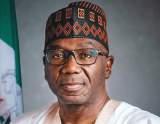
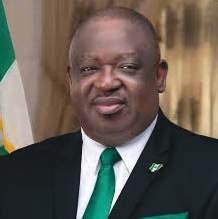
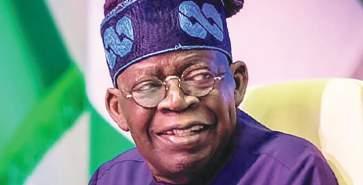
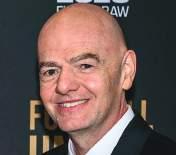
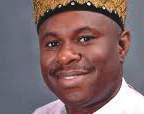
Kwankwaso: Obi and I Signed Agreement on One Term, Power to Shift to North After
Says solution to insecurity lies in political will, intelligence gathering, improved welfare for security personnel, greater public participation Hints they’ll hold talks with terrorists
Funmi Ogundare
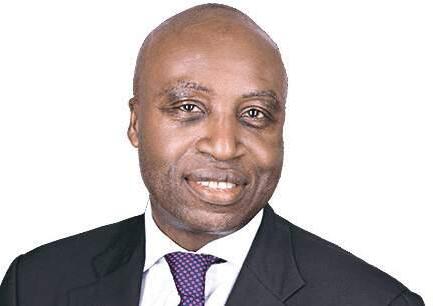
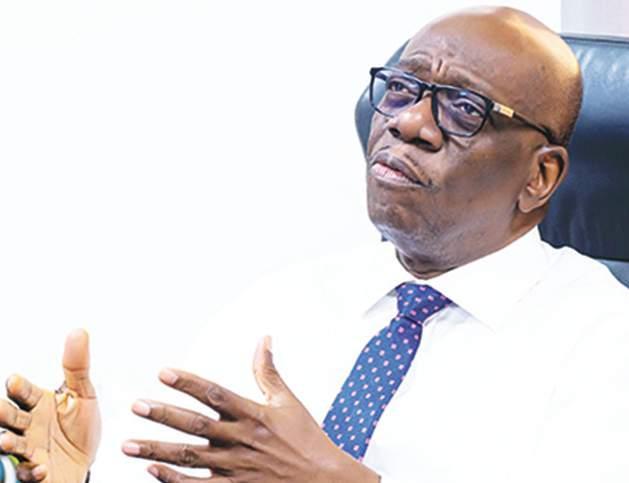
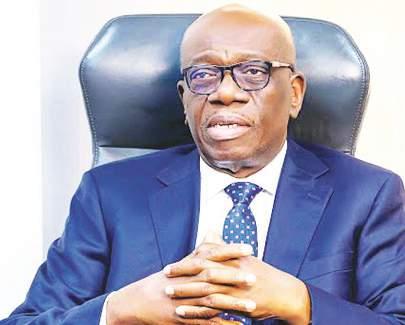
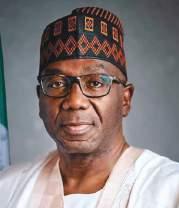
Former Kano State governor and vice presidential candidate of Nigeria Democratic Congress (NDC), Senator Rabiu Kwankwaso, yesterday,
disclosed that he and the party’s presidential candidate, Mr. Peter Obi, had signed an agreement
committing to a single four-year presidential term, after which power would return to the north in 2031.
Speaking in an interview on Channels Television’s Politics Today, Kwankwaso explained that the
understanding was reached following
Continued on page 8
Oyedele: Tinubu Hasn’t Borrowed Up to N80trn,
Blames Debt Rise on FX, Legacy Liabilities
Says FG generated N21.6trn tax revenue in six months, external reserves hit 17-year high Senators raise concerns over rising debt, poor budget implementation despite higher revenues Monguno warns failure to implement Appropriation Act could amount to impeachable offence
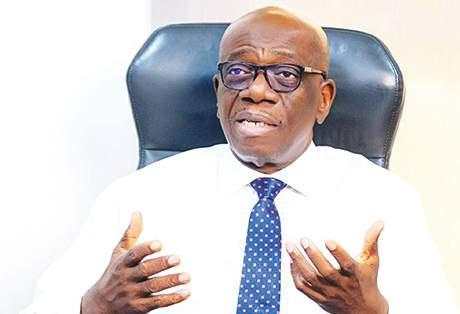
The Minister of Finance and Coordinating Minister of the Economy, Mr. Taiwo Oyedele, yesterday mounted a robust defence
of President Bola Tinubu’s borrowing record, insisting that contrary to
Continued on page 8
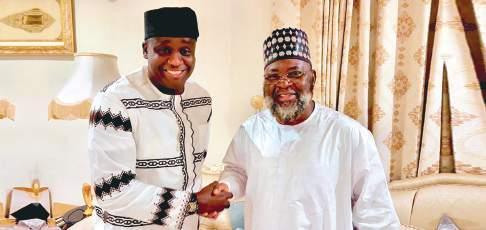
COURTESY VISIT...
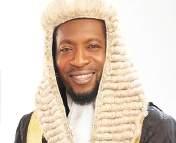
Kwara State House of Assembly Speaker and APC governorship candidate, Rt. Hon. Salihu Yakubu Danladi (left) and National Chairman of Jama’atul Izalatul Bid’ah Wa Iqamatul Sunnah (JIBWIS) Nigeria, Dr. Abdullahi Bala Lau, during a courtesy visit of the former to the religious leader in Abuja, over the weekend
Sunday Aborisade in Abuja
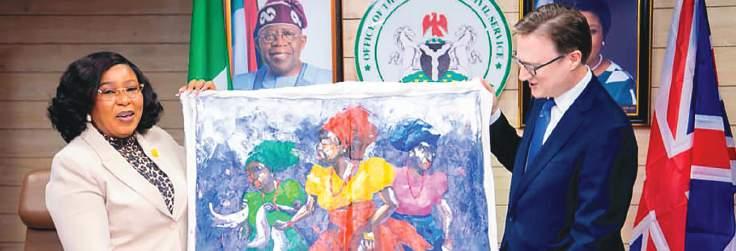
OUTGOING BRITISH HIGH COMMISSIONER TO NIGERIA VISITS HEAD OF SERVICE...
Head of the Civil Service of the Federation, Mrs. Didi Esther Walson-Jack (left), presenting a parting gift to the outgoing British High Commissioner to
Montgomery, during a farewell courtesy visit in Abuja, yesterday
W’African Nations Approve $27bn NigeriaMorocco Gas Pipeline to Move 30Bcm Annually
Ekpo
Emmanuel Addeh in Abuja
The Economic Community of West African States (ECOWAS) has approved the implementation of the $27 billion Nigeria-Morocco Gas Pipeline, a 6,900-kilometre energy infrastructure project designed to transport up to 30 billion cubic metres (bcm) of natural gas annually from Nigeria through 13 West African countries to Morocco before linking with Europe.
The milestone was reached at the weekend in Lungi, Sierra Leone, where Heads of State and Government of the regional bloc signed the Inter Governmental Agreement (IGA) for the project during the 69th Ordinary Session of the ECOWAS Authority, signalling the formal transition of the project from planning to implementation.
Nigeria’s Minister of State for Petroleum Resources (Gas), Ekperikpe Ekpo, who joined the Nigerian delegation led by Vice President Kashim Shettima, hailed the unanimous endorsement by member states, characterising it as a major breakthrough for regional energy cooperation.
Describing the agreement as a
defining milestone, Ekpo said the project has now moved decisively from vision to implementation, reflecting the shared resolve of West African leaders to deliver one of the continent’s most strategic energy infrastructure projects.
According to him, the pipeline will unlock Nigeria’s vast natural gas resources, strengthen regional energy security, expand export opportunities and accelerate industrial growth across the sub region.
Highlighting Nigeria’s strategic advantage, the minister stated: “For Nigeria, this is particularly important because we hold approximately 215.19 trillion cubic feet of proven natural gas reserves, the largest in Africa, and we see gas as a central pillar of our economic transformation, industrialisation and energy security strategy.
“This agreement gives further momentum to our ambition to move from being merely a gas rich country to becoming a gas powered economy and a dependable regional and global energy partner.”
Ekpo stressed that the project would deliver broad economic benefits beyond gas exports.
“The pipeline will also catalyse
investment, create jobs and support power generation, fertiliser production, petrochemicals, manufacturing and other gas based industries across participating countries,” he said.
He reaffirmed the commitment of the administration of President Bola Tinubu to expanding gas production, developing critical infrastructure and maximising the value of Nigeria’s
abundant gas resources through increased domestic utilisation and strategic exports.
Ekpo also thanked ECOWAS member states for their unanimous support, describing it as a strong demonstration of regional solidarity and collective commitment to Africa’s energy future.
Speaking at the summit, Chair-
man of ECOWAS and President of Sierra Leone, Julius Maada Bio, announced the formal signing of the agreement.
“We have already signed the West Africa Morocco gas pipeline. Don’t be surprised when the gas comes your way,” Bio said, expressing confidence that the project would become a reality.
Earlier, Morocco’s National Office of Hydrocarbons and Mines (ONHYM) and the Nigerian National Petroleum Company Limited (NNPC) said the project aims to connect West Africa’s abundant gas resources to key regional markets while creating a new development corridor linking West Africa, the Sahel, Morocco and Europe.
FATF to Countries: Tighten Oversight on Virtual Assets
Says criminals increasingly using stablecoins to move illicit funds
Global anti-money laundering (AML), anti- terrorist financing watchdog, Financial Action Task Force (FATF), has urged governments across the world to tighten oversight of the digital asset sector, warning that criminals are increasingly using stablecoins to move illicit funds.
The warning was contained in the global regulator’s just-released seventh annual Targeted Update on Implementation of the FATF Standards on Virtual Assets
for Youth Agritech, Food Security
The federal government has called for stronger collaboration with Heifer International and other development partners to accelerate youth-led agricultural innovation and strengthen Nigeria’s food security.
Minister of State for Agriculture and Food Security, Dr Aliyu Abdullahi, made the call at the grand finale of the fifth edition of the Agriculture, Youth and Technology (AYuTe) Challenge in Abuja. Abdullahi said the government alone could not transform the agricultural sector, stressing that partnerships with organisations such as Heifer International were
critical to nurturing innovative young entrepreneurs and scaling technology-driven farming solutions.
“We recognise that the government alone cannot do this. We need ecosystem builders like Heifer International to continue providing the platforms, funding and mentorship that bridge the gap between brilliant ideas and market-ready solutions,” the minister said.
He added that the federal government was implementing policies to remove barriers preventing young Nigerians from venturing into agriculture.
According to him, the government is facilitating access to land, affordable credit and modern farming inputs
while building partnerships that will ensure innovations developed through competitions such as the AYuTe Challenge are deployed on farms across the country.
The minister described food security as a national priority under President Bola Tinubu’s administration, saying Nigeria must move beyond subsistence farming to technology-driven commercial agriculture.
“As a nation, we are at a critical junction where traditional farming methods alone can no longer meet the demands of our rapidly growing population. We must transition from subsistence farming to technologydriven, high-yield commercial agriculture,” Abdullahi said.
(VAs) and Virtual Asset Service Providers (VASPs), which centred on jurisdictional compliance with FATF Recommendation 15 (R.15).
R.15 was amended in 2019 to extend anti-money laundering (AML) and counter-terrorist financing (CFT) obligations to VAs and VASPs.
It called for greater international progress on regulatory, licensing, and registration regimes, as criminal groups increasingly capitalised on regulatory gaps to funnel billions in illicit proceeds through the virtual asset sector.
FATF’s call came on the heels of the recent Article IV Consultation report of the International Monetary Fund (IMF) on Nigeria, which stated that the country accounted
for about 60 per cent of stablecoin inflows into sub-Saharan Africa.
Although IMF acknowledged that the digital assets lowered cross-border transaction costs, it warned that their rapid adoption threatened the naira’s sovereignty and risked triggering “digital dollarisation”.
IMF prescribed bringing stablecoins and other virtual asset activities within the established regulatory framework, aligning domestic rules with emerging international standards.
To counter digital dollarisation, IMF advised Nigerian authorities to maintain a credible and stable domestic currency, pointing out that recent macroeconomic reforms and tighter monetary policy have
started to restore confidence in the naira.
The multilateral lender further recommended clarifying the treatment of stablecoin issuers and formalising rules through entities like Securities and Exchange Commission (SEC) and Central Bank of Nigeria (CBN). It stressed the need for better monitoring of crypto-asset transactions and blockchain flows to mitigate risks, like money laundering and illicit financing. While raising the latest global alarm on digital assets, FATF said most identified criminal activities now involved dollar-backed stablecoins and warned that gaps in regulation continued to create opportunities for illicit finance.
Renewable Firm Pledges More Investment in Nigeria’s Clean Energy Sector
Olusegun Samuel in Yenagoa
A renewable energy firm, All On, has said it’s committed to more investments and innovations to achieve clean and sustainable energy in Nigeria, especially in the rural communities.
Speaking during the celebration of ‘Decade of Impact with All On at 10 Hackathon’, aimed at inspiring the next generation of clean energy innovators in Nigeria, the Chief Executive Officer of All On, Caroline
Eboumbou, stated that for the past 10 years, the firm has invested in people, businesses, and partnerships that are expanding access to clean energy across Nigeria. She described the All On Partnerships for Energy Access, as a foremost impact investment company in Nigeria’s energy access sector, and builds on that commitment, giving young innovators the opportunity to develop practical solutions that will help shape the future of our energy sector.
According to her, as it celebrates a decade of expanding energy access across Nigeria, the Hackathon reflects its belief that the next decade of impact will be shaped not only by the investments it makes, but also by the innovators it inspires. The firm aims to achieve this by creating opportunities for young people to develop practical solutions to real-world challenges, which All On is helping build the talent, ideas, and leadership that will drive Nigeria’s clean energy future.
Ndubuisi Francis in Abuja
Nigeria, His Excellency Dr. Richard
Emmanuel Addeh in Abuja
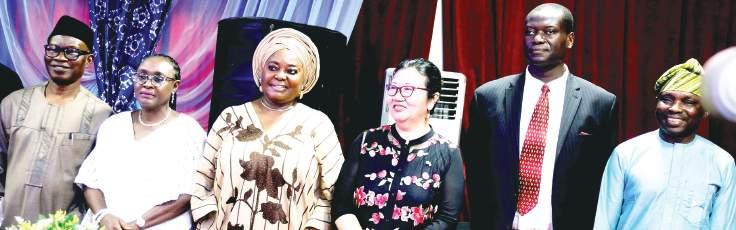
VISIT OF THE CHINESE CONSUL GENERAL TO GRACE SCHOOLS IN GBAGADA...
L-R: Deputy Head of School, Grace Children School, Mr. Paul Ibe; Head of School, Grace Children School, Dr. Nike Akindayo; Chief Executive Officer, Grace Schools, Mrs. Olatokunbo Edun; Consul General, Chinese Embassy, Ms. Yan Yuqing; Finance Director, Grace Schools, Mr. Ademola Edun; and Head of Chinese Unit, Department of Linguistics, African and Asian Studies, University of Lagos, Dr. Adetoro Banjo, during the visit of the Chinese Consul General to Grace Schools in Gbagada, Lagos ... recently
Court Upholds FCCPC’s Powers to Regulate Over N400bn Consumer Airtime Lending Market
Dismisses WASPAN’s suit, validates DEON regulations Says FCCPC, NCC have complementary regulatory mandates FCCPC resumes enforcement after vacation of restraining order
James Emejo in Abuja, Dike Onwuamaeze and Wale Igbintade in Lagos
The Federal High Court in Lagos has delivered a judgement affirming the powers of the Federal Competition and Consumer Protection Commission (FCCPC) to regulate Nigeria’s digital consumer lending market, including airtime and data lending services, in a landmark ruling expected to reshape oversight of the country’s estimated N400 billion airtime credit industry.
Justice Ambrose Lewis-Allagoa
dismissed in its entirety a suit filed by Wireless Application Service Providers Association of Nigeria (WASPAN), and held that FCCPC acted within its statutory and constitutional powers in issuing the Digital, Electronic, Online and Non-Traditional Consumer Lending (DEON) Regulations.
The judgement removed the legal obstacle that had temporarily restrained the commission from enforcing the regulations against operators in the digital lending ecosystem, including providers of Airtime Credit Services (ACS).
Delivering judgement in Suit No. FHC/L/CS/760/2026, Lewis-Allagoa held that the challenged provisions of the DEON Regulations were intra vires FCCPC and constitutionally valid as measures designed to protect consumers and prevent anti-competitive conduct.
Kemi Pinheiro, SAN, led WASPAN’s legal team, while Olufunke Aboyade, SAN, represented FCCPC.
The court held that FCCPC’s regulatory jurisdiction derived from Sections 16(2)(c), 16(3) and 17(2)(d) of the 1999 Constitution (as amended), as well as Item 60(a) of the Exclusive Legislative
List, which conferred economy-wide authority over competition and consumer protection matters.
Lewis-Allagoa further held that Sections 104 and 105 of the Federal Competition and Consumer Protection Act (FCCPA), 2018, gave FCCPC precedence in competition and consumer protection issues, while sector regulators retained their technical, licensing, and prudential responsibilities.
According to the court, the relationship between FCCPC and sector regulators is complementary rather than conflicting.
FG, NASS Back Complementary Regulation as NERC Unveils Grid Audit Guidelines
The federal government and the National Assembly have reaffirmed their commitment to ensuring seamless collaboration between federal and state electricity regulators as Nigeria transitions to a decentralised electricity market.
Besides, the Nigerian Electricity Regulatory Commission (NERC) has introduced new guidelines for periodic technical audits of the national transmission network.
The commitments were made at a workshop in Abuja on: “Legal, Policy and Regulatory Harmonisation Between Federal and State Institutions on the Decentralisation of the Nigerian Electricity Supply Industry (NESI),” where participants stressed that effective coordination among regulators would be critical to sustaining a unified electricity market.
Speaking at the event, the Special Adviser to the President on Power and Chairman of the Presidential Task Force on Power Sector Reset and Restoration, Mr. Rilwan Lanre Babalola, described electricity as the foundation for industrialisation, economic competitiveness, job creation and national prosperity.
He urged stakeholders to approach the ongoing reforms as partners working towards a single
Nigerian electricity market rather than institutions competing over regulatory jurisdictions.
“Every major reform creates new opportunities. It also creates new interfaces. As federal and state institutions assume their respective responsibilities, questions will naturally arise regarding regulatory boundaries, market oversight, technical standards and commercial arrangements. That is not a weakness of the reform. It is the natural consequence of institutional evolution.
“Our responsibility is to ensure that these questions are resolved through dialogue, cooperation and mutual respect. The Electricity Act decentralises aspects of governance. It does not decentralise the physics of electricity.
“Our networks remain interconnected. Our markets remain interdependent. Our prosperity remains shared. That is why harmonisation is not optional. It is fundamental to preserving one efficient Nigerian electricity market,” he stressed.
Also speaking, Chairman of the Senate Committee on Power, Senator Enyinnaya Abaribe, said the legislature would continue to support legal frameworks that enable federal and state regulators to perform complementary functions.
“Ultimately, the success of decen-
tralisation should not be measured merely by the number of States that established electricity markets or obtained transfer orders. Rather, success should be measured by whether Nigeria achieves a coherent, efficient, bankable and integrated electricity market where federal and State institutions perform complementary rather than competing roles.
“We therefore require harmonised rules governing the relationship between NERC and State Electricity
Regulatory Commissions,” he stressed.
The Minister of Power, Chief Joseph Tegbe, and Chairman of NERC, Dr. Musiliu Oseni, also stressed the need for harmonisation of regulatory and operational activities across the Nigerian Electricity Market.
Meanwhile, NERC has announced the issuance of the Guidelines on the Procedures for Technical Audit of the Transmission System and Network Data Validation 2026, which took effect on July 20, 2026.
“Concurrency means coexistence, not displacement,” the judge held, adding that DEON Regulations do not usurp the statutory powers of Nigerian Communications Commission (NCC).
The court found that the regulations, when construed as consumer protection and competition measures rather than a licensing regime for communications services, fell squarely within FCCPC’s powers under Section 163 of FCCPA, read together with Sections 1, 2, 17 and 18 of the Act.
Lewis-Allagoa also rejected WASPAN’s contention that the regulations conflicted with the Nigerian Communications Act, 2003, holding that both statutes can be harmoniously interpreted.
He ruled that where competition and consumer protection issues arose, FCCPA provided the applicable legal framework, subject to the constitution.
Although the court dismissed FCCPC’s preliminary objection challenging its jurisdiction, it proceeded to determine the substantive issues in favour of the commission.
The judge declined all the declarations sought by WASPAN, refused all the reliefs contained in the Originating Summons, and dismissed the suit in its entirety.
He also discharged the four interim ex parte injunctions granted on April 15 restraining enforcement of the DEON Regulations, holding that the basis for the orders has ceased to exist following
the dismissal of the substantive suit. Lewis-Allagoa observed that a statutory regulator should not ordinarily be restrained from performing its lawful statutory duties.
Granting FCCPC’s cross-reliefs, the court affirmed that the commission was empowered under Section 163 of FCCPA to regulate conduct in the digital, electronic, online, and non-traditional consumer lending market, including preventing anti-competitive practices and protecting consumers.
The court further clarified that FCCPC’s authority operated alongside—not in place of—NCC’s regulatory powers under the Nigerian Communications Act.
Recognising the public importance of the issues, the court made no order as to costs.
The suit arose from FCCPC’s introduction of DEON Regulations, a framework designed to strengthen oversight of Nigeria’s digital lending industry following widespread concerns over the conduct of some online lenders.
The commission subsequently extended the framework to Airtime Credit Services, under which subscribers received airtime or data in advance and repaid later with an associated service charge.
WASPAN argued that airtime lending was a telecommunications value-added service regulated exclusively by NCC under the Nigerian Communications Act.
CPPE Commends FG’s Unveiling of Social Intervention Programmes, Describes It as Important Shift in Economic Reforms
Dike Onwuamaeze
The Centre for the Promotion of Private Enterprise CPPE has commended the Social Intervention Programmes (SIPs) that was unveiled by the federal government, describing it as an important shift in the reform agenda from restoring macroeconomic stability to ensuring that the benefits of reform get to the masses.
The CPPE stated this yesterday in a policy brief on SIPs titled “Strengthening The Legitimacy of Economic Reforms” where it
commended it as a timely and commendable policy initiative.
The SIPs, which is supported by the World Bank, is comprised of five flagship interventions, namely the Nigeria Community Action for Resilience and Economic Stimulus Additional Financing (NG-CARES AF), the Solutions for Internally Displaced and Host Communities Programme (SOLID), and the three Human Capital Opportunities for Prosperity and Equity (HOPE) programmes—HOPE-GOV, HOPEPHC and HOPE-EDU.
Yusuf said: “Together, they
signal an important shift in the reform agenda: from restoring macroeconomic stability to ensuring that the benefits of reform translate into improved welfare, greater inclusion and shared prosperity.”
He said that there is a broad consensus that the administration’s economic reforms have substantially strengthened macroeconomic fundamentals such as exchange-rate stability, fiscal transparency, external reserves and improved investor confidence.
He, however, remarked that macroeconomic stability, while necessary,
is not sufficient because the enduring test of any reform programme is its ability to improve living standards through lower inflationary pressures, higher productivity, stronger employment and rising household incomes.
“Against this backdrop, the SIPs assume strategic importance. Beyond providing temporary relief to vulnerable households, it strengthens the social legitimacy of the reform process by demonstrating that economic reforms are ultimately intended to improve citizens’ welfare, not merely to deliver favourable macroeconomic indicators,” Yusuf said.
Emmanuel Addeh in Abuja
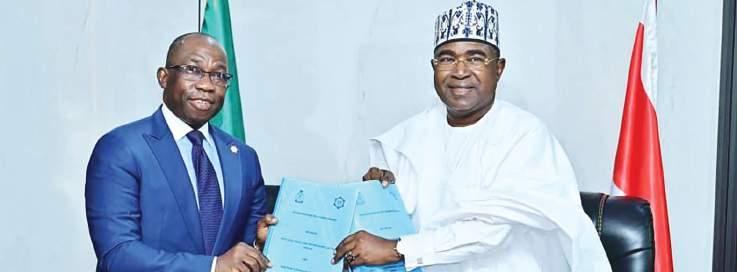
SIGNING OF MEMORANDUM OF UNDERSTANDING...
Director General, Nigerian Copyright Commission (NCC), Dr. John Asein (left) and Chairman/Chief Executive Officer of the National Drug Law Enforcement Agency (NDLEA), Brig Gen. Mohamed Buba Marwa (Rtd), exchanging copies of signed Memorandum of Understanding (MoU) on collaboration between the two agencies in the fight against drug trafficking and piracy, at the NDLEA national headquarters in Abuja... recently
Recapitalisation: 11 Days to Deadline, No Merger Plans Among Insurance Firms as
Operators Struggle to Make it Via Capital Raising
Just 11 days to the insurance sector’s recapitalisation deadline slated for July 31 by National Insurance Commission (NAICOM), none of the existing 60 insurance and reinsurance firms has considered merger and acquisition as a survival option.
Yet no single company has been announced to have met the required capitalisation.
THISDAY findings reveal that the firms are still struggling to maintain their stand-alone status in the face of the exercise.
From what is happening among the operators, the operating firms prefer to woo investors in the NGX market rather than diluting their ownership structure.
Among those wooing investors in the NGX market are Guinea Insurance, which is seeking N5.8 billion through rights issue, Linkage Assurance, seeking N16.3 billion offer, Lasaco Assurance seeking to raise N18.47 billion, SUNU Assurance looking for N9.34 billion, Sovereign Trust looking for N5.02 billion, and Universal Insurance seeking to raise N15 billion from the NGX market.
Few days ago, capital market reports showed that, currently, eight
insurance firms were in Nigerian Exchange Limited seeking to raise an estimated N78.66 billion through various capital raising options.
Aside the aforementioned firms, Regency Insurance Plc is also in the market for the same purpose. They are seeking funds through rights issue, public offers, private placement, special placements, and equity injections by existing shareholders.
While some of the firms have concluded their deals, others are
at various stages of conclusion.
But recently, Commissioner for Insurance, Mr. Olusegun Omosehin, in response to THISDAY’s enquiries on the possibility of the firms making it on standalone basis through attraction of investors, said the problem with insurance operators was that they hardly wanted to consider merger option.
According to Omosehin, the problem they had in the previous exercises was that investors they
were hoping on to raise capital always backed out at the last moment.
A staff of NAICOM said, on condition of anonymity, “Many companies have made significant progress, I don’t have merger details.”
From the Nigeria Insurers Association (NIA), the umbrella body of insurance underwriters, a staff said, also anonymously, because they were not authorised to speak to the public on the matter, “The
recapitalisation process is still on, there is no merger information at our disposal.”
Generally, there is no concrete word on merger for now with regard to the recapitalisation process.
“I think many companies are trying to see if they can raise the money on their own through Rights Issue/Private Placement,” a source from the industry said.
The source added, “We are in the process of our verification
Options
exercise with NAICOM and we have been given Ernst & Young as our verification consultant by the regulator.
Recently Omosehin said he admired the progress already made by several operators in raising capital.
According to him, they have engaged investors, improved governance arrangements, and submitted to the verification processes required under the new framework.
143 Firms Advance to Final Bid for 50 Oil, Gas Blocks
Emmanuel Addeh in Abuja
No fewer than 143 companies have advanced to the final commercial bidding stage of Nigeria’s 2025 Licensing Round, where they will compete for 50 oil and gas blocks spread across the country’s major hydrocarbon basins.
The Nigerian Upstream Petroleum Regulatory Commission (NUPRC) announced that the successful bidders, having met the requirements at the prequalification stage, will participate in the Commercial Bid Conference scheduled for today at the Conference Centre of the Transcorp Hilton Hotel,
Abuja.
According to the commission, participation in the conference is strictly by invitation and limited to companies that successfully passed the rigorous screening and prequalification process.
The licensing round features 50 oil and gas blocks comprising 16 Niger Delta Onshore blocks, 18 Niger Delta Shallow Water blocks, one Niger Delta Deep Offshore block, three Benin Basin Onshore blocks, four Anambra Basin Onshore blocks, four Chad Basin Onshore blocks and four Benue Trough blocks.
NUPRC stated that bids would
be evaluated using a combination of commercial and technical parameters, including the signature bonus, work programme commitments and performance security commitments.
The overall weighted technical and commercial scores will determine the eventual winners.
The commission noted that the 2025 Licensing Round was announced on November 11, 2025, in accordance with the Petroleum Industry Act (PIA), 2021, while the bid portal was opened on December 1, 2025, to enable interested investors to register for participation.
It recalled that a pre-bid conference was held on January 14, 2026, at Eko
Tinubu Appoints Ayodele Fayose, Junaid Bindawa as Chairmen of REA, NSIWC
Deji Elumoye in Abuja
President Bola Tinubu, yesterday, announced 26 new appointments into 10 federal government agencies and commissions, with former governor of Ekiti State, Ayo Fayose, emerging as chairman of the Rural Electrification Agency (REA), and Major General Junaid Bindawa (rtd) as Chairman of the National Salaries, Incomes and Wages Commission.
In a release by presidential spokesperson, Bayo Onanuga, Fayose heads the board of REA, with Alhaji Ahmadu
Abubakar and Engineer Ilyasu Ibrahim Makinta appointed as members and non-executive directors.
The incumbent DG of the agency, Abba Abubakar Aliyu, and three executive directors previously appointed make up the remaining board members. The President made eight other appointments to the Wages Commission, along with Major General Bindawa.
A former member of the House of Representatives from Lagos, Olajumoke Okoya-Thomas, is the new secretary of the commission.
Dr. Ogbole Ene Lilian, Oladele Olatubosun, and Yakubu Umar Barde, representing Benue, Oyo and Kaduna, were appointed as commissioners.
Dr. Mai Adamu Yau, from Borno, Ginika Florence Tor (Enugu), Engineer Lawrence Okoh (Edo) and Bello Morenike Iyabode (Kogi) were appointed as members of the Commission.
Tosin Johnson Adeyanju, who was previously appointed the Executive Secretary of the National Lottery Trust Fund (NLTF), has now been moved to the Revenue Mobilisation, Allocation and
Fiscal Commission as Secretary. Tinubu also appointed Dr Abuh Mohammed as Director-General of the National Population Commission, Dr Akinola Odeyemi as Managing Director of the Nigerian Bulk Electricity Trading (NBET), and Dr Anthony Inalegwu Godwin as chairman/CEO of the Nigeria Atomic Energy Commission.
Engineer Julius Oloro, a former council chairman, is the new CEO of the Kwarabased National Centre for Agricultural Mechanisation(NCAM), replacing Dr A.R. Kamal, who died last January.
Hotels and Suites, Lagos, to provide prospective bidders with detailed guidance on the procedures and requirements for the exercise.
Registration and submission of applications for prequalification closed on February 27, 2026, while the evaluation process was concluded on March 16, 2026.
According to the regulator, 286 companies initially submitted ap-
plications for prequalification, out of which 196 met the stipulated requirements to proceed to the technical and commercial bid phase. Of the prequalified companies, 143 eventually submitted a total of 200 bids, qualifying them for the Commercial Bid Conference, which marks the final competitive stage of the licensing process before the announcement of successful bidders.
Musa Disowns Trending Report Alleging Threat to Resign from Tinubu’s Cabinet
Linus Aleke in Abuja
The Minister of Defence, Christopher Musa, has dismissed as false a trending report alleging that he threatened to resign from President Bola Tinubu’s cabinet, describing the claim as baseless and urging the public to disregard it.
The minister reaffirmed his commitment to the Tinubu administration and its efforts to strengthen Nigeria’s security architecture, stressing that only information released through official channels should be considered credible.
In a statement by his Special Assistant on Media, Leah KatungBabatunde, the minister said the attention of his office had been drawn to what she described as a malicious and entirely fabricated
rumour circulating on online and social media platforms, alleging that he intended to step down from office.
“We wish to state unequivocally and in the strongest possible terms that these rumours are absolute falsehood borne out of complete mischief.
“General Christopher Gwabin Musa (Rtd) remains fully focused on his national security mandate, deeply committed to his duties, and completely dedicated to piloting the nation’s defence strategy with results already being seen.
“The general public is hereby urged to completely disregard this fake news. We strongly advise media outlets and internet users to desist from spreading unverified information and seek clarifications from the office,” She said.
Ebere Nwoji
Jonathan: Oil Industry Must Lead Tech Devt, Urges Collaboration with Govt
Former President Goodluck Jonathan has emphasised the need for the oil industry to spearhead technological advancement in Nigeria to address what he terms a “national dilemma”.
Jonathan stressed the importance of collaboration between oil companies and the government to enhance technical capacity and promote the production of locally-made solutions.
Speaking at Sweet Crude Dialogue in Yenagoa, organised by De Mangrove Conversations, the former president highlighted the oil companies’ huge investments in equipment and logistics for their production activities, which ultimately fall back on the Nigerian economy.
He advocated a shift in approach
on the part of the oil companies, stating that leveraging the country’s oil resources is crucial for technological development.
He emphasised the need for the oil industry to work closely with the government to enhance technical capabilities and manufacture essential equipment domestically, in order to assist the country’s diversification drive.
Jonathan stated, “So, we can’t continue this way as a nation. Let me say, use what you have to get what you want.
“Since we have the oil, if we must develop technologically, we should start from the oil industry, it’s a national dilemma. We make sure that the oil companies participate with the government to develop the technical capacity and manufacture
some of the needs of the oil industry, we can diversify to other aspects.
“I’m happy today. I’m saying this because of the local content, the Nigerian Content Development Management Board that has been represented. That is one of the reasons why, when I was in office, that law came to be.
“And that is the only way we can change the story of the oil industry. If we can develop some of these little things, these little, little things used in the oil industry. If they cannot be developed within the country, then, as a nation, we are not getting anything from the oil industry, it will not help our economy.”
Jonathan said the focus should not just be selling crude oil.
“Yes, we earn money from that,
but that does not create too many jobs. That does not diversify the economy,” he said.
He added, “What will diversify the economy is the other aspect of the operations of the oil industry. That means that the amount of local production of most of the things we need in the oil industry.”
He, however, commended the oil firms, saying, “You are doing well.”
Jonathan also commended the Nigerian Content Development Management Board for promoting local content. He emphasised the need to develop small-scale solutions within the country to benefit the economy.Jonathan also expressed optimism about the potential for legislative frameworks, such as the Petroleum Industry Act, to drive positive
changes in the oil industry and address community concerns.
He encouraged ongoing dialogue and collaboration among stakeholders from various backgrounds to drive progress in the oil industry and beyond.
He expressed confidence that with sustained efforts and adherence to relevant legislation, the younger generation would inherit a more prosperous and sustainable industrial landscape.
The chief host of the event and Governor of Bayelsà State, Senator Douye Diri, lamented that oil and gas resources from the Niger Delta had powered the Nigerian federation, built cities, and funded government, yet the communities where the wealth were drawn from lacked basic amenities and live in
OYEDELE: TINUBU HASN’T BORROWED UP TO N80TRN, BLAMES DEBT RISE ON FX, LEGACY LIABILITIES anywhere near the N75 trillion to N80 trillion being attributed to the present administration.
Instead, he explained that the sharp increase in Nigeria’s public debt was largely the result of the naira’s exchange rate adjustment, the securitisation of inherited Ways and Means advances, and refinancing of maturing obligations rather than fresh borrowing.
Oyedele spoke during a fourhour interactive session with the Senate Committee on Finance, chaired by Senator Sani Musa, where he also disclosed that the federal government generated N21.6 trillion in tax revenue between January and June 2026, representing a 49 per cent increase over the corresponding period of last year.
The meeting, which brought together the nation’s entire
economic management team, turned into a searching review of the economy as senators commended improvements in revenue generation, but questioned the country’s rising debt profile, weak budget implementation, delayed capital releases and the utilisation of import duty waivers.
Providing a detailed explanation of the debt profile, Oyedele rejected claims that the Tinubu administration had borrowed up to N80 trillion.
He said, “For external loans, we always require the approval of the National Assembly. What usually happens is that once the National Assembly approves a borrowing plan, many people interpret that as money already borrowed.
“We have not even taken half of what the National Assembly approved.”
He explained that the figures being cited in public discussions did not reflect actual borrowing undertaken by the current administration.
According to him, over N40 trillion of the increase in Nigeria’s debt stock resulted solely from the revaluation of existing foreign debts following the depreciation of the naira after the exchange rate reforms.
He added that another N33 trillion arose from the securitisation of Ways and Means advances inherited from the previous administration rather than new loans contracted by President Bola Tinubu’s government.
He added, “The actual amount this administration has borrowed is nowhere near what many people believe.
“Even for domestic borrowing,
much of it is refinancing. Debt that was borrowed previously matures, and the government raises new debt to refinance it. That is not new borrowing.”
Responding to concerns that improved revenue generation should have reduced the country’s borrowing needs, Oyedele explained that government expenditure still substantially exceeded available revenues because of growing statutory obligations.
Oyedele said, “If our expenditure requirement is N10 and our projected revenue is N6, we borrow N4. If revenue later increases to N7, we still need to borrow N3 because expenditure remains N10.”
According to him, major expenditure pressures include debt servicing, implementation of the new national minimum wage, salary adjustments across
KWANKWASO: OBI AND I SIGNED AGREEMENT ON ONE TERM, POWER TO SHIFT TO NORTH AFTER
extensive discussions between both leaders and their political platforms. He added that the agreement had been documented both within the party structure and between the two leaders.
According to him, the arrangement is based on the principle of equity and national unity, with the presidency remaining in the south for four years before returning to the north.
Kwankwaso stated, “I personally believe him, and I don’t think, based on what I now know about him, he will change his mind when the time comes.
“We have accepted to put it on paper. We have done one for the party, and we have done another one between the two of us.”
Asked to explain the agreement, Kwankwaso said, “After four years, we will continue to work together as a group, as a party, as friends and brothers, and after our four-year term, from 2027 to 2031, power returns to the north. That is the general agreement.”
He stated that before the 2023 elections, representatives of Labour Party (LP) and New Nigerian Peoples Party (NNPP) constituted a joint committee to examine the manifestos and political direction of both parties.
He said the committee concluded that both leaders shared similar visions for Nigeria and recommended closer collaboration after the election.
Kwankwaso said, “The committee looked at our blueprints and the political situation in the country. At the end of the day, we all accepted that there was a need to work
together as people of like minds, who are committed to bringing positive change to Nigeria.”
The former governor of Kano State said his assessment of Obi had changed following months of engagement, describing him as a principled politician with a genuine commitment to Nigeria.
He stated, “I now know that Peter Obi is a very serious politician. He has the country in mind. He is somebody one can rely on. When we compared our blueprints, we realised that with only a few adjustments, we shared virtually the same vision and mission for the country.”
Kwankwaso said the proposed alliance would prioritise tackling insecurity, reviving the economy, rebuilding infrastructure, and improving education.
He described insecurity as Nigeria’s most pressing challenge, stating that violence has spread from the North-east to the North-west, North-central and parts of southern Nigeria.
“Our first priority is insecurity. We also have to address the economy, infrastructure, and education because no country can develop without providing quality education for its citizens,” he said.
On how an Obi-Kwankwaso administration would address insecurity, the former Minister of Defence said the solution lied in political will, intelligence gathering, improved welfare for security personnel, and greater public participation.
He stated, “The first thing is political will. Once that is established, and you know what to do, you can mobilise the military and the
public effectively.
“Communities know those behind these crimes, but many are afraid to volunteer information because of past experiences. We will restore their confidence.”
Kwankwaso also said dialogue should not be ruled out in addressing insecurity, stressing that engagement with all stakeholders, including terrorists, where necessary, should complement military operations.
“Of course, we will talk. We will sit down with them. We will talk to everybody. Where military action is required, we will also not hesitate to deploy the security agencies,”
transformation and is now firmly focused and on a trajectory of sustainable growth, enhanced profitability and long-term value creation for its numerous stakeholders and shareholders.
Undoubtedly, it is another stellar performance delivering robust growth across key performance indicators and reinforcing its position as one of Africa’s leading financial services groups.
This performance underscores the strength of the Group’s franchise, the quality of its earnings, and the benefits of the strategic decisions taken over the past year.
The performance builds on the strong momentum established in the first quarter of 2026 and signals a defining shift in FirstHoldCo’s journey from recovery and repositioning to disciplined growth, greater efficiency, and sustainable value creation.
Following one of the most
he said.
Although he declined to directly criticise the administration of President Bola Tinubu, Kwankwaso maintained that the current security situation suggested that more decisive leadership was required.
He said, “The Nigerian military is capable, well-trained locally and internationally. I see no reason why they should not be properly equipped with the necessary resources to defeat terrorists and other criminal elements. What is needed is strong political will and the right directives.”
comprehensive and transparent balance sheet clean ups in the Nigerian financial services industry, which addressed legacy asset quality concerns and strengthened the Group’s capital position, FirstHoldCo is beginning to reap the rewards of a stronger, healthier, and more resilient institution.
Today, the Group is better capitalised, more efficient, increasingly diversified, and well positioned to capitalise on emerging opportunities across the financial services landscape.
At the heart of the Group’s performance is an increasingly resilient earnings platform. Noninterest income rose to N497.1 billion, supported by impressive performance across electronic banking, trade services, brokerage, funds transfer and other transaction-led businesses. This complemented a healthy net interest margin of 9.5%, driven
the public service, education financing through NELFUND and other statutory commitments.
Beyond defending the debt profile, Oyedele painted an optimistic picture of Nigeria’s economic outlook, saying reforms initiated over the last three years had rescued the economy from severe distress and restored macroeconomic stability.
He said, “Three years ago, our economy was on the brink of severe distress. Today, we have made significant progress.
“Macroeconomic fundamentals are improving, investor confidence has returned, fiscal revenues are increasing and the economy is better positioned for sustained domestic and external growth.
“These reforms were not easy, but they were necessary. Without them, it would have been almost impossible to stabilise the economy.”
According to him, Nigeria’s Gross Domestic Product grew by 3.8 per cent in the first quarter of 2026 compared with 3.13 per cent recorded in the corresponding period of 2025, with the non-oil sector accounting for much of the expansion.
He disclosed that tax collections climbed to N21.6 trillion during the first half of the year, representing a 49 per cent increase over the same period last year.
Oyedele attributed the improvement to ongoing tax reforms, increased digitalisation of revenue administration and
by disciplined pricing, an improved funding mix, lower funding costs, and continued optimisation of the balance sheet.
The result is an earnings profile that is not only stronger, providing a solid foundation for sustainable growth regardless of market conditions.
Another key highlight worthy of note during the period was the continued improvement in operational efficiency. This became apparent in the Group’s cost-to-income ratio improving to 44.2% from 50.5% in H1 2025, understandably reflecting disciplined cost management and the ability to translate revenue growth into stronger profitability.
This performance demonstrates the benefits of ongoing investments in technology, improving operational excellence and productivity enhancement, positioning the Group to generate greater value.
stronger compliance.
“Allowing tax evasion to persist amounts to taxing honest taxpayers while rewarding non-compliance. That is not the kind of country we seek to build,” he said.
He also disclosed that Nigeria’s external reserves had risen above $51 billion, the highest level in 17 years, providing more than ten months of import cover, while net reserves stood at approximately $40 billion.
Although inflation remained one of the country’s most pressing economic challenges, he said coordinated fiscal and monetary measures were beginning to moderate price pressures.
He said, “Inflation remains one of our greatest macroeconomic challenges because it directly affects household welfare and purchasing power.
“However, coordinated fiscal and monetary policies are beginning to moderate inflation.”
The minister also defended the federal government’s tax incentives and import duty waivers, saying many public discussions exaggerated their fiscal cost.
According to him, figures often quoted represented the value of imported goods covered by the incentives rather than the actual value of tax concessions granted.
He explained that many of the waivers covered military hardware, food imports, pharmaceuticals, compressed natural gas equipment,
Continued on page 21
FirstHoldCo’s prudent risk management practices continued to drive improvements in asset quality during the period. Impairment charges declined by 37.4% year-on-year, while pre- provision operating profit increased by 42.2%, reflecting the underlying strength of the franchise, stronger risk management performance, while the Group continues to focus on reducing non-performing loan exposures. Another proof point in the risk management capability is the approximately N91.9 billion in recoveries during the first half of the year, demonstrating sustained success in extracting value from legacy exposures and reinforcing management’s commitment to prudent risk stewardship. As part of its growth strategy and strict monitoring, the Group remains focused on reducing
Olusegun Samuel in Yenagoa
poverty.
Represented by the Deputy Governor, Peter Akpe, Diri said Bayelsà State had refused to accept that the story could not be written.
Former President Jonathan
STRATEGISING ON WAY FORWARD...
Presidential candidate of the Social Democratic Party (SDP), Prince Adewole Adebayo (left) and presidential candidate of the Accord Party, Dr. Gbenga OlawepoHashim, during a meeting ... recently
NBA Upholds Own Constitution, Releases Voters’ List in Just Concluded Bar Election
The Electoral Committee of the Nigerian Bar Association (ECNBA), yesterday, released the list of eligible members, who voted in the just concluded election of the. elitist association, as sorted by respective branches and mandated by its own constitution.
In a memo dated July 19, 2026,
addressed to “all candidates, eligible voters, agents, observers and branch chairmen” signed by the Chairman and the Secretary of the electoral body, Aham Ejelam, SAN, and Ibrahim Aliyu Nasarawa, the ECNBA said it was upholding its own contitution.
The memo read in part: “Distinguished colleagues, pursuant to the provisions of Part V of the
Constitution of the Nigerian Bar Association, which mandates the Electoral Committee, within twelve (12) hours after the close of voting, to publish the list of voters from each of the branches and transmit same by email to all candidates at the election, the Electoral Committee of the Nigerian Bar Association (ECNBA) hereby publishes the list of members who successfully
voted in the 2026 NBA National Elections, sorted by branch.
“This list contains the names of members who exercised their franchise in the election, arranged by branch.
“Certain personal details have been redacted in compliance with applicable data privacy laws and the Committee’s obligations to protect voter confidentiality. This
Miyetti Allah President Gets N2bn Bail in Alleged $2.63m Money-laundering Trial
The National President of the Miyetti Allah Kauta Kore, Alhaji Bello Bodejo has been granted bail in his alleged $2.63 million money-laundering trial.
Justice Inyang Ekwo of a Federal High Court, in Abuja, on Monday, admitted him to bail in the sum of N2 billion with two sureties in like sum.
Justice Ekwo, in a ruling on the defendant’s bail application held that one of the sureties must have a three-year tax clearance and must reside in Abuja.
The judge in addition held that the second sureties must have a land worth N2 billion in Abuja, and also held that documents of the property shall be verified by the court registrar.
The judge equally ordered Bodejo to submit his international passport with the registrar of the court and must not travel outside the country without the leave of the court.
Justice Ekwo granted the application on the grounds that the offences with which the defendant was charged were bail-able, adding that the court has the discretionary power to exercise this in his favour.
The court subsequently fixed October 5, 6 and 7 for commencement of trial.
Bodejo is facing money-laundering charge of about $2.63 million.
In count one, Bodejo was alleged to have, on or about January 11, 2022 in Abuja, without lawful authority, accepted a cash payment of the sum of $100,000 in physical currency from
Sa’idu Abubakar a former AccountantGeneral (AG) of Bauchi State who is currently in the lawful custody of the Nigerian Police Force.
It said the sum exceeded the statutory cash transaction threshold of N5 million prescribed under Section 1(a) of the Money Laundering (Prohibition) Act, 2011 (as amended), without routing the said transaction through a financial institution as required by law.
“You thereby committed an offence contrary to Section 16(1)(d) of the Money Laundering (Prohibition) Act, 2011 (as amended) and punishable under Section 16(2)(b) of the same Act,” it read.
In count two, Bodejo was alleged to have, on or about the January 21, 2022 in Abuja, without lawful authority
NADF Deploys 1,884 Digital Extension Officers in New Initiative to Boost Food Productivity
The National Agricultural Development Fund (NADF) has commenced a nationwide training of 1,884 agricultural extension personnel and food security specialists under a new digital extension programme aimed at accelerating technology adoption, improving farm productivity and strengthening food security architecture in the country.
The four-day training, which commenced in Lafia, Nasarawa State, marked the first phase of the Grassroots Digital Extension
Corps (GDEC) initiative and will be replicated across the remaining five geopolitical zones.
Speaking at the opening, Executive Secretary/Chief of NADF, Mr. Mohammed Ibrahim, said rebuilding Nigeria’s extension system had become imperative to raising agricultural productivity and connecting farmers with modern innovations.
Represented by the fund’s Head of Policy and Advocacy, Mrs. Yejide Olarinde, he said the nationwide programme would train 1,110 Agricultural Extension Agents and 774 Food Security Specialists,
creating a new cadre of professionals equipped with digital skills to support farmers and improve food security planning.
According to him, every participant who successfully completes the programme will receive a digital tablet preloaded with approved extension manuals, training materials and advisory resources to facilitate field operations.
He noted that the initiative is expected to improve farmers’ access to timely information, modern production techniques and climate-smart agricultural practices.
accepted a cash payment of the sum of
$200,000.00 in physical currency from Sa’idu Abubakar, a former AG of Bauchi State who is currently in the lawful custody of the Nigerian Police Force, which exceeded the transaction threshold.
Count three accused him of accepting a cash payment of another $100,000.00 on or about October 26, 2022 in Abuja, without lawful authority from Abubakar.
In count four, the defendant was alleged to have, on or about February 7, 2024 in Abuja, without lawful authority accepted a cash payment of the sum of $980,000.00 in physical currency from Abubakar.
Arraigned
The former Managing Director of the Warri Refining and Petrochemical Company Limited, Jimoh Yisawu, was on Monday arraigned before a Federal High Court in Abuja.
He was arraigned before Justice Inyang Ekwo, on an eight-count criminal charge bordering on alleged corruption and money laundering. However, the court has granted him bail in the sum of N500 million and one surety in like sum.
Following his not guilty plea to all the counts, his lawyer, Wale Balogun, SAN, drew the court’s attention to the bail application of his client.
Responding, prosecution counsel, Mr. Ekele Iheanacho, SAN, said the
publication is made in fulfilment of the Committee’s constitutional obligations.”
The document, according to the ECNBA, contained Names of members who successfully cast their votes in the 2026 NBA National Elections, arranged alphabetically by branch.
It also contained branch affiliation of each voter, noting that certain personal details have been redacted in compliance with applicable data privacy laws.
In the document, too, is the total number of voters per branch and the overall national total of members who participated in the election.
The publication, the ECNBA stated, was made in strict fulfilment of the Committee’s constitutional obligation under Part V of the NBA Constitution and was transmitted to all candidates at the election.
“Part V of the NBA Constitution expressly mandates that the Electoral Committee shall, within twelve (12) hours after the close of voting, publish the list of voters from each of the branches and shall also transmit same by email to all candidates at the election.
“This publication is made in direct compliance with that constitutional provision. The ECNBA reaffirms its commitment
to transparency, openness, and accountability in the administration of this election,” it stated.
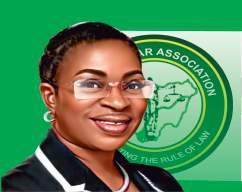
The NBA, had weekend elected Mrs. Oyinkansola Badejo-Okusanya, SAN, as its first female president. Although a notable female legal practitioner, Dame Priscilla Olabori Kuye, had once served as the first female president of the NBA between 1991 and 1992. Kuye, who was elected NBA First Vice President, assumed the office of President, after the then President Clement Akpamgbo was appointed Attorney-General of the Federation (AGF) during the administration of then Head of State, General Ibrahim Babangida. Kuye, a life member of the Body of Benchers (BoB) and a former chairman, Human Rights Committee of the NBA, had been pushing for the election of a female president of the NBA.
Badejo-Okusanya was however elected at the Bar’s 2026 election as the 33rd president of the umbrella body for lawyers in the country. Her victory at the poll, which held between July 18 and 19, 2026, made her the first woman to be elected into that position and second to occupy the office.
Nevertheless, Badejo-Okusanya’s emergence came with its own dust as the election intensely contested.
Gets N500m Bail
prosecution had filed a counteraffidavit opposing the application and urged the court to refuse bail. Balogun, however, argued that the prosecution had earlier granted Yisawu administrative bail and had already seized his international passport. He urged the court to maintain the existing bail terms.
After taking arguments from counsel representing parties, Justice Ekwo held that the defendant was entitled to bail, and subsequently admitted him to bail in the sum of N500 million with one surety in like sum.
According to the judge, the surety must be a responsible Nigerian with landed property in Abuja and must submit proof of ownership to the
court registrar. The judge also directed the defendant to deposit his international passport with the court and barred him from travelling outside Nigeria without the court’s permission. Pending the perfection of the bail conditions, the court ordered that Yisawu should remain in the custody of the prosecution.
The case was adjourned until October 25, 26 and 27, 2026, for trial.
In the Charge marked: FHC/ABJ/ CR/361/2026, dated and filed on June 22, 2026, the prosecution claimed that Yisawu “indirectly converted the ag- gregate sum of over $789,950… being proceeds of unlawful activity,” contrary to Section 18(2)(b) and punishable under Section 18(3) of the Act.
James Emejo in Abuja
Alex Enumah in Abuja
Alex Enumah in Abuja
Alex Enumah in Abuja
SIGNING CEREMONY FOR THE EXECUTION OF THE CONCESSION CONTRACT...
L-R: Company Secretary, Odujinrin & Adefulu, Mayokun Alabi-Isaiah; General Manager, Exploration and Development, FIRST E&P, Anita Edo-Osagie; Deputy General Manager, Corporate Business and Relations, FIRST E&P, Segun Owolabi and Executive Director, Corporate Services, FIRST E&P, Emmanuel Etomi, at the signing ceremony for the execution of the concession contracts on Petroleum Prospecting Licences (PPLs) 2000 and 2003 between FIRST E&P and the Nigerian Upstream Petroleum Regulatory Commission (NUPRC), held in Lagos ... recently
ECOWAS Member States Sign Historic Inter- governmental Agreement for African Atlantic Gas Pipeline
African Atlantic Gas Pipeline (AAGP) project has received a major boost towards its actualisation as Heads of State of ECOWAS Member States signed the Intergovernmental Agreement (IGA) for the project at the ECOWAS Summit in Freetown, Sierra Leone, at the weekend.
AAGP is a transformative regional infrastructure project designed to unlock West Africa’s vast natural gas resources, connect them to major demand centres, integrate African energy markets, and establish a strategic development corridor linking West Africa, the Sahel, Morocco, and Europe.
Designed to deliver 30 billion cubic metres of gas per year, the project has sovereign backing from Nigeria, Morocco, ECOWAS member countries, and Mauritania, and spans nearly 6,900 kilometres along the West African Atlantic coast.
Jointly led by Nigerian National Petroleum Company Limited (NNPCL) and Morocco’s Office National des Hydrocarbures et des Mines (ONHYM), the project is intended to strengthen energy access, drive industrialisation, and deepen regional integration
across the continent.
According to a statement signed by Chief Corporate Communications Officer of NNPCL, Andy Odey, the latest signing by the ECOWAS member states gives practical effect to the approval granted at the 66th Ordinary Session of the ECOWAS Summit in Abuja in December 2024.
It also concludes the institutional process coordinated by ECOWAS following the 2022 Memorandum of Understanding between Nigeria and Morocco, and reaffirms the strong commitment of the participating states to the project.
The statement said a subsequent ceremony will complete the intergovernmental framework with signatures by the Kingdom of Morocco and the Islamic Republic of Mauritania.
Initiated under the shared vision of the late President Muhammadu Buhari and His Majesty King Mohammed VI, the project continues to enjoy the full support of President Bola Tinubu.
It is being jointly promoted by NNPCL and Morocco’s Office National des Hydrocarbures et des Mines (ONHYM), with strong backing from ECOWAS, participating countries, and international partners.
Significant progress has already been achieved, including completion of Front-End Engineering Design (FEED) studies, finalisation of route reconnaissance surveys, advancement of environmental and social studies, and establishment of key legal, regulatory, and commercial frameworks.
The milestones position the project for implementation.
AAGP, the statement added, will run from Nigeria to Morocco through 13 Atlantic coastal countries, with interconnections serving
landlocked Sahel nations.
Linked to the Maghreb–Europe Gas Pipeline, AAGP will create a new energy corridor with an annual capacity of 30 billion cubic metres (bcm), including up to 15 bcm for supply to Morocco and European markets. It will enhance regional gas supply, support electricity generation, drive industrialisation, enable value addition to natural resources, and foster new industrial value chains and sustainable employment across West Africa.
Group Chief Executive Officer of NNPCL, Bayo Ojulari, said the signing by West African Heads of State gace AAGP the sovereign foundation required to move from vision to delivery.
Ojulari stated, “This milestone reflects the clear mandate of His Excellency President Bola Ahmed Tinubu GCFR.
“The AAGP is central to delivering that mandate by providing the infrastructure required to bring about 3 bcf/d of Nigerian gas to market. NNPC Limited is
proud to co-lead this endeavour with ONHYM.”
Director-General of ONHYM, Mrs. Amina Benkhadra, said the event represented another major milestone in the realisation of AAGP, a strategic project jointly developed by ONHYM and NNPC Ltd. under the visionary leadership of His Majesty King Mohammed VI and His Excellency President Bola Tinubu.
“The project fully reflects His Majesty’s vision for an integrated Atlantic Africa,” Benkhadra said.
Digital Violence: NHRC, NBA Women Forum Mobilise Against Online Attacks on Women Lawyers
The National Human Rights Commission (NHRC) and the Nigerian Bar Association Women Forum (NBAWF) have launched a renewed institutional push to confront the growing wave of digital violence against women in the legal profession, warning that online abuse is increasingly being used to intimidate, silence and undermine women’s participation in public life.
The two organisations, at a high-
Jennifer Etuh Foundation: 3,194 Receive Free Medical Treatment, as 9,601 Intervention Given in Osun Community, Ifewara
Yinka Kolawole in Osogbo
No fewer than 3,194 patients received free medical treatment while 9 ,601 interventions were given at this year
Jennifer’s Etuh Foundation free medical outreach in Ifewara Medical Center, in Atakumansa West Local Government Area of Osun State. Also, during the five-day medical outreach a total number of male patients stood at 1,081 while female was 2,110.
Speaking at the end of outreach with THISDAY, Dr. Anjolaoluwa Idowu, Project Coordinator, ProHealth International, noted that this year outreach goal was to reach 3,000 patients but the foundation exceeded
the number.
She emphasized the outreach delivered comprehensive medical services to over 3,000 people, including medical consultations, general and specialized surgeries, eye, dental care, eye surgery, obstetrics and gynaecology, laboratory services, medications, and health promotion.
The project coordinator further made clear that well over 120 medical personnel participated at this year outreach in an effort to address medical challenges fully in the area.
In her remarks, Mrs. Christiana Afolayan - Progam Officer, Jennifer Etuh Foundation (JEF) stressed that the foundation organized a five-day free medical outreach in Ifewara to
raise awareness on goitre prevention and treatment, provide free surgeries for eligible patients, and expand access to quality healthcare.
Afolayan praised this year outreach for impressive turnout of the people in the area and commended the Jennifer Etuh Foundation who organized the outreach for the yearly medical advancement in the country.
level seminar in Abuja on Monday, called for greater awareness of legal remedies, improved reporting mechanisms, stronger institutional collaboration and enhanced digital security to protect women lawyers, judges, academics, law students and other women in the justice sector from technology-facilitated abuse.
The seminar, organised around the theme, “Digital Violence and Privacy: Legal Remedies for Cyberbullying, Image-Based Abuse and Online Harassment Targeting Women in Law,” brought together legal practitioners, judicial officers, human rights advocates and digital rights experts to examine the growing threats posed by the misuse of technology.
The development comes against the backdrop of the increasing use of social media and other digital platforms as tools for professional engagement, public advocacy and civic participation.
created new frontiers for human rights violations.
She said women in the legal profession were increasingly exposed to digital attacks capable of damaging their reputation, compromising their privacy and threatening their personal and professional security.
According to her, the abuses were not simply the unpleasant consequences of modern technology but serious violations of fundamental rights to dignity, privacy, equality and freedom from discrimination.
She warned that the consequences extended beyond individual victims, as persistent online harassment could intimidate women into silence and discourage them from seeking leadership positions, participating in public debates or maintaining a visible professional presence.
“Digital violence can silence women, restrict their participation in public life and undermine their professional advancement,” she said.
the legal instruments available to victims of digital violence.
However, she said the principal challenge was increasingly becoming the lack of awareness among victims and the public about the remedies available to them.
Also, while speaking on the purpose of this year outreach, Jennifer Etuh Foundation media liaison, Lady Florence Tenufa, opined that the outreach Nigeria’s South-West bears the country’s second-highest burden of goitre, with a prevalence of 29%, while Osun State ranks third in the region at 24%.
However, the same platforms have also created new avenues for cyberbullying, cyberstalking, identity theft, doxxing, online intimidation, non-consensual sharing of intimate images and coordinated attacks against women.
Opening the seminar on behalf of the Executive Secretary of the NHRC, Chief Tony Ojukwu, the Commission’s Director of Legal Services, Hajiya Rabi Anwar, said technological advancement had transformed communication and professional practice but had also
Anwar said the NHRC’s mandate to protect and promote human rights covered both physical and digital spaces, stressing that the emerging nature of online abuse required institutions to adapt their strategies and strengthen cooperation.
She identified the Cybercrimes (Prohibition, Prevention, etc.) Act, the Violence Against Persons (Prohibition) Act, the Nigeria Data Protection Act, 2023, and constitutional protections for fundamental rights as some of
“Many victims do not know where to report, how to preserve digital evidence or which institution has the responsibility to intervene,” she said. She explained that the seminar was therefore designed to move beyond theoretical discussions by providing participants with practical knowledge on litigation and other remedies, preservation of digital evidence, content takedown and de-indexing procedures, data protection complaints, cybersecurity and strategic advocacy. She urged participants to use the knowledge acquired to protect themselves, assist victims and contribute to the development of a stronger national response to digital violence.
The NHRC further pledged to sustain its partnership with the NBA Women Forum and work towards translating the recommendations of the seminar into concrete policy initiatives and institutional action.
In her remarks, the National Chairperson of the NBA Women Forum, Mrs Agnes Fache-Omoya, described digital violence as a serious human rights and professional challenge that could affect virtually every aspect of a woman’s life. Michael Olugbode in Abuja
Peter Uzoho
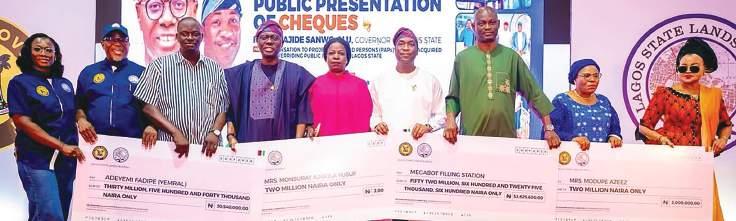
LAGOS COMPENSATES 150 BENEFICIARIES FOR LANDS ACQUIRED BY STATE...
L-R: Executive Secretary, Land Use and Allocation Committee (LUAC), Mrs. Ajetunmobi Ololade; Permanent Secretary, Lands Bureau, Mr. Kamar Olowoshago; a beneficiary; Governor of Lagos State, Mr. Babajide Sanwo-Olu; another beneficiary; Deputy Governor, Dr. Obafemi Hamzat; beneficiaries; and the Secretary to the State Government (SSG), Barr. ‘Bimbola Salu-Hundeyin, during the public presentation of cheques to 150 beneficiaries compensated for lands acquired by the Lagos State government, held at Adeyemi Bero Auditorium, the Secretariat, Alausa, Ikeja, yesterday
Group Kicks Against Exclusion of Nigerians Turning 18 Before 2027 Polls
The Founder and Convener of the Nation of Justice (NOJ), Mr. Jyde Adelakun, has urged President Bola Tinubu to take immediate constitutional and executive steps to ensure that Nigerians who will attain the age of 18 before the 2027 general election are not denied the right to vote.
In an open letter dated July 17, 2026 and addressed to the president, Adelakun argued that hundreds of
thousands of young Nigerians risk being disenfranchised under the current provisions of the Electoral Act 2026 because eligibility to register as voters is tied to age at the time of registration rather than on election day.
The petition was also copied to Vice President Kashim Shettima, the Attorney General of the Federation and Minister of Justice, the leadership of the National Assembly, the National Identity Management Commission (NIMC) and the National Orientation Agency (NOA).
The group maintained that while the Independent National Electoral Commission (INEC) remains constitutionally independent, the presidency possesses sufficient constitutional powers to initiate reforms capable of addressing the situation.
“Your Excellency should exercise the powers that are constitutionally yours to ensure that no Nigerian who turns 18 before the 2027 general election is denied the right to vote. These young citizens deserve to be enfranchised, not excluded by an avoidable gap
in the law,” Adelakun said.
Adelakun stressed that the group was not asking the president to interfere with INEC’s constitutional independence, noting that Sections 153 and 158 of the Constitution shield the electoral body from external direction or control.
Instead, he argued that the executive should exercise powers that are constitutionally vested in the presidency to initiate legislative amendments and provide the necessary resources for implementation.
Court Reserves Ruling on Admissibility of Key Evidence in N152m Oak Homes Fraud Trial
Justice Musa Kakaki of the Federal High Court in Lagos has fixed October 27 2026, to rule on the admissibility of documents the prosecution seeks to tender in the ongoing trial of property developer Olukayode Olusanya and his company, Oak Homes Ltd, over an alleged N152 million property fraud.
The judge fixed the date after hearing extensive arguments from both the prosecution and the defence on whether four offer letters, allegedly showing attempts by the defendants to resell the disputed properties, should be admitted in evidence.
At Monday’s proceedings,
prosecuting counsel, Chief Superintendent of Police Monday Omo-Osagie, informed the court that the matter was for continuation of trial and that the prosecution was ready to call its third witness.
The prosecution also moved a Motion on Notice dated July 7 and filed on July 8, 2026. Counsel to the first defendant, Adeleke Agboola (SAN), and counsel to the second defendant, Jude Ehiedu, did not oppose the application, which Justice Kakaki granted as prayed.
The prosecution then called the nominal complainant, Anthony Ugbebor, who narrated how he became involved in the transaction.
Ugbebor told the court that he petitioned the Assistant Inspector- General of Police, Zone 2 Command,
Lagos, on December 10, 2023, after concluding that Olusanya had fraudulently handled the property transaction.
According to him, he entered into an agreement with the first defendant in November 2017 after receiving assurances that Oak Homes was a reputable developer capable of delivering a retirement home in Nigeria.
He said he accepted the offer by signing and returning the agreement via email before making payments in accordance with the contract.
“The contract was structured as a performance milestone contract. In other words, it was based on verifiable, satisfactory and completed work at various stages of the project from start to finish,” the witness said.
WHO: Poor Access to Diagnosis, Treatment Driving Hepatitis Surge in Africa
Onyebuchi
Ezigbo in Abuja
The World Health Organization (WHO) has said that far too many people in Africa still live with viral hepatitis, without knowing it despite efforts being made by member states to eliminate its threat. It blamed lack of timely diagnosis, treatment and care for the limited progress so far made at curtailing the disease within the continent.
In a message to mark the World Hepatitis Day 2026 under the theme
“Hepatitis: Let’s break it down”, WHO Regional Director for Africa, Dr. Mohammed Janabi called on governments, partners, health workers and communities to break down the barriers that prevent people from accessing lifesaving hepatitis services.
He said that despite achieving a 25 percent decline in new hepatitis B infections between 2015 and 2024, “millions of people across the WHO African Region still lack timely diagnosis, treatment and care,
while viral hepatitis claims far too many lives”.
In his words, “Eliminating viral hepatitis is within our reach, but only if proven interventions are available to everyone who needs them”.
“Far too many people still live with viral hepatitis, without knowing it. Delayed diagnosis means that many only seek care once serious liver disease has developed, while access to testing and treatment is still uneven, especially in underserved communities.
Ugbebor testified that he made four payments between November 2017 and December 2020, totaling N152 million, representing 80 per cent of the N190 million purchase price for two second-floor flats in the development.
He described the money as his life savings, equivalent to about $400,000 at the prevailing exchange rate.
“My income is in dollars. After I made the payments, the defendant started acting in a suspicious manner, basically taking my patience and simplicity for stupidity,” he told the court.
According to the petition, INEC fixed the presidential and National Assembly elections for January 16, 2027 and closed the Continuous Voter Registration exercise on July 26, 2026, even though the Electoral Act allows voter registration to continue until 90 days before an election.
The letter noted that citizens who attain the age of 18 between July 27, 2026 and January 16, 2027 will legally qualify as adults on election day but will be unable to vote because they were below the qualifying age when voter registration closed.
Describing the situation as an avoidable injustice, Adelakun said those affected had committed no offence and were being excluded solely because of the timing of their birth.
He called on Tinubu to direct the Attorney General to prepare and transmit an Executive Bill to the National Assembly seeking amendments to the Electoral Act.
Among the proposed changes is a provision allowing citizens who are 17 years old but will attain 18 years before election day to register in advance, with their voter eligibility taking effect immediately upon reaching adulthood.
The petition also urged the president to request expedited legislative consideration of the proposed amendment through a
certificate of urgency and publicly commit to granting presidential assent immediately after its passage.
In addition, Adelakun appealed to the federal government to present supplementary budget estimates to fund expanded voter registration infrastructure, including biometric equipment, registration centres and personnel across the country.
He further requested presidential directives to agencies under the executive arm, including the National Identity Management Commission (NIMC), to fast track the issuance of National Identification Numbers (NIN) to citizens between the ages of 16 and 18, while asking the National Orientation Agency to intensify nationwide voter registration awareness campaigns.
The letter also proposed that the Federal Ministry of Education and the National Youth Service Corps (NYSC) support lawful voter registration drives in schools and communities, insisting that such measures would not compromise INEC’s independence.
Adelakun further urged the presi- dent to convene the Council of State to build national consensus around electoral inclusion and to personally address the nation on the importance of ensuring that all eligible young Nigerians are able to participate in the democratic process.
PRNigeria Founder, Yushau Shauib, Seeks End to Alleged Institutional Bullying
Communication expert and founder of PRNigeria, Alhaji Yushau Shuaib, has called for an end to what he termed as “institutional bullying” across the country.
He made the call on Monday in Abuja, during the presentation of the mid-year activities of Image Merchants Promotion Limited (IMPR), publishers of PRNigeria, Economic Confidential, Spokespersons Digest, and several other specialised digital platforms.
The event witnessed the unveiling of several books PR, Journalism, governance among others.
Shuaib, was last year withdrawn from the Senior Executive Course (SEC 47), of the National Institute for Policy and Strategic Studies (NIPSS), over issues relating to institutional discipline, freedom of expression, due process, digital privacy, and the responsibilities of leadership institutions.
Recalling his travail at the institute, the founder of PRNigeria, stressed the need for institutions to respect the fundamental rights of individual, including course participants.
“The memoir chronicles my experience at the National Institute for Policy and Strategic Studies (NIPSS), detailing events that culminated in my withdrawal from
the Senior Executive Course (SEC 47).
“It recounts my perspective on issues surrounding institutional discipline, freedom of expression, due process, digital privacy, and the responsibilities of leadership institutions.
“Among the issues discussed are my allegation that private email correspondence belonging to my media organisation was unlawfully accessed during disciplinary proceedings; the attribution to me of authorship of a publication I maintain I neither wrote nor endorsed; and my contention that expressions of institutional regret were misconstrued as admissions of misconduct.
Alex Enumah in Abuja
Wale Igbintade
Emmanuel Addeh in Abuja
INVESTITURE CEREMONY OF ROTARIAN OLUKAYODE OSOKOMAIYA...
L-R: Past President, Rotary Club of Ikeja, (Dr.) Sola Akinsiku; Past Assistant Governor, Tosin Kadiri; Immediate Past President, Kuburat Olanrewaju Lawal; President, Olukayode Osokomaiya; District Governor Nominee, Ade Oyenekan; Past President, Emeka Ibe; and Investiture Committee Chairman and Past President, Kayode Situ, at the investiture ceremony of Rotarian Olukayode Osokomaiya as President of the Rotary Club of Ikeja, held in Lagos ... recently
ICPC Begins Investigation of ‘Fake’ Agency
Gbajabiamila visits body, answers query House c’ttee summons SGF for allocating office to agency, speaker asks c’ttee to follow evidence Head of service admits not doing due diligence Police apprehend, detain four officers over extortion of ICPC chairman in Abuja
The Chairman of the Independent Corrupt Practices and other related offences Commission (ICPC), Dr. Musa Aliyu, has disclosed that investigation surrounding the existence and operations of the Presidential Foreign Investment Promotion Council (PFIPC) was ongoing.
President Bola Tinubu had recently given 30 days ultimatum to the anti-graft agency to investigate Adeniyi Adeyemi, the man who paraded himself as the Director General of the agency.
Speaking yesterday in Abuja during a public hearing organised by the House of Representatives ad hoc committee, he said the investigation has commenced following the directive of the President.
He stated: “Following the President’s directive, we have commenced investigation, we appeal to this committee to give us three days to come back and update the committee on the investigation.”
The ad hoc committee has summoned the Secretary to the Government of the Federation (SGF), Senator George Akume, for questioning over allocation of office to the ‘fake’ agency.
The committee also summoned the Salaries and Wages Commission, the Federal Character Commission, Minister of Budget and National Planning, Atiku Bagufu, Minister of Finance, Taiwo Oyedele, the Minister of Foreign Affairs, Bianca Ojukwu, the Accountant General of the federation, Dr. Shamseldeen Ogunjimi and Minister of Justice, Lateef Fagbemi to appear it by 10:00a.m. today.
The Head of Civil Service of the Federation, Didi Walson-Jack, while speaking at the public hearing, stated that the establishment of agency was not under the purview of the Head
of service .
The office of Head of Service, on the contrary, was responsible for approving the administrative structure of federal government agencies.
Walson-Jack added that no office was allocated to the council, adding that the office the council was using was part of the offices allocated to the SGF, who could reallocate as it deems fit.
She explained that the request from the council for approval of its organisational structure was submitted on August 6, 2020, which was denied because it lacked prerequisite documents.
Walson-Jack noted that the issuance of an authorised establishment was undertaken through an established administrative process coordinated by the Organisation, Design and Development Department.
She added that the HoS followed an established administrative practice of collating requests from participating organisations and processing them in batches for approval.
The Head of service admitted not doing due diligence to cross check the document submitted by the council at that time was not genuine.
She stated: “When all these problems came up, and I said, bring the documents, and immediately I saw it because I am a lawyer with over 30 years’ experience. I said there is something wrong with this.
“At that point when I discovered it, I said we need to have another level of verification, and we need to have a lawyer on the team that will receive legal documents, so that the lawyer can access every legal document.
“And I’d like to share with you that we’ve already begun the process of reviewing our standard operating procedures to ensure that we have a lawyer working in that department,
and that we have different layers of verification of documents.
“So we concede that we didn’t do the best we ought to have done in cross-checking that document at the time it was presented.”
Walson-Jack authorised establishments to organisations, providing the approved staff and authorised positions.
She noted that for newly established organisations, requests for authorised establishment and a provisional recruitment waiver were processed concurrently.
According to her, The provisional recruitment waiver allowed organisations to recruit personnel into approved positions.
The Head of Service revealed that during the 2025 annual manpower project defence exercise, representatives of the the council, Patricia Akhigbe, who represented Adeyemi appeared before the OHCSF to discuss their organisational structure and staffing requirements.
Akhigbe explained that they were participating in the manpower defence process for the first time and required authorised personnel to facilitate operations.
Walson-Jack said the Council submitted documents such as the letter
of appointment of the Director General and the organisation’s mandate during the bilateral engagement.
She emphasised that the request was reviewed by the office of the Head of service and incorporated into the fourth batch of submissions for the year, which was approved on July 18, 2023.
The Head of service said her office approved the Council’s request, authorising an establishment with a workforce.
Speaking, Director of Banking Services, Central Bank of Nigeria, Hamisu Ibrahim said the office of the Accountant General of the Federation on 39th July, 2025 directed the Apex Bank to open an account for the council.
He said one was a Dollar account, while the other was a Pound account, but added that there was no transaction on that account till today.
In his ruling, the chairman of the committee, said: “the office to the SGF should appear before us with additional information and explained why the office was allocated to the office under investigation
“Salary and wages commission, federal character commission , and budget office of the federation should appear before the communion tomorrow (today) by 10a.m.”
Gagdi also told the CBN to furnish the committee with details of all financial transactions of the council from the day of the opening of the account till date.
Gbajabiamila at ICPC, Testifies, Responds to Questions
The Chief of Staff to the President, Hon Femi Gbajabiamila, has honoured an invitation extended to him by the ICPC over the ongoing investigation into PFIPC.
Counsel to the Chief of Staff, Jiti Ogunye, who made this disclosure in a release, stated that Gbajabiamila appeared before ICPC probe panel in Abuja on Monday at 15.00 hours.
According to the counsel, the Chief of Staff testified before the panel and responded to all questions put across to him.
Ogunye in the brief release entitled: “Gbajabiamila Responds to ICPC Invitation over Ongoing Investigation into ‘PFIPC’ Fake Agency”, stated: “In full cooperation with the ICPC acting as directed by the President of Nigeria, I hereby confirm that my client, Femi Gbajabiamila, Chief of Staff to the
President of Nigeria, responded to the invitation of the Independent Corrupt Practices Commission (ICPC) and appeared at about 15:00hrs on Monday, July 20, 2026, as part of the ongoing investigation into the activities of the ‘PFIPC’ fake agency, among others.
“My client gave his testimony, responded to questions accordingly, and has returned to his duty post.” Gbajabiamila had last week instituted filed a N15 billion defamation suit against Prince Adeniyi Adeyemi Matthew. The suit filed at a High Court of the Federal Capital Territory (FCT), Abuja, borders around the alleged demand of 48 per cent kickback from a N27.3 billion take-off grant approved for a federal agency.
In the suit filed at the FCT High Court, Gbajabiamila demanded the sum of N10 billion as general damages, N5 billion as aggravated damages, and N200 million as the cost of the action, and an order compelling Matthew to publish a full retraction and apology in five national newspapers.
He also asked the court to direct the defendant to pin the apology on all social media platforms and online channels where the alleged defamatory statements were published for 30 days.
DSS to Appeal Life Sentences Given Ansaru Terror Commanders, Seeks Maximum Fine
The Department of State Services (DSS) is set to appeal the life sentences imposed on two senior commanders of the Ansaru terrorist group by a Federal High Court in Abuja,
insisting that the punishment did not adequately reflect the gravity of their alleged crimes.
Justice Emeka Nwite, yesterday, sentenced Mahmud Usman, also known as Abu Bara’a, Abbas and Mukhtar, the self-proclaimed Emir
Niger APC Moves to Reconcile Aggrieved Members, Holds Emergency Meeting
Bago asks members to work for success of party in 2027
Laleye Dipo in Minna
The leadership of the All Progressives Congress (APC) in Niger, weekend, held a stakeholders’ meeting to reconcile aggrieved members. The aggrieved APC members some of who were former political office holders and those that lost the primary elections into various
positions two weeks ago pulled out of the party and announced their joining of the main opposition party the African Democratic Congress (ADC).
However, last weekend the APC held an emergency stakeholders meeting at Government House where Governor Mohammed Umaru Bago charged all members to work
for the success of the party in next year’s election.
“It is the duty of every member of APC in the State to serve as foot soldiers and campaign not only for themselves, but for President Bola Ahmed Tinubu” Bago said at the meeting.
He decried the actions of some APC members as “unacceptable”
saying “as beneficiaries of the ruling party, no one should be seen trying to sabotage the party’s success”.
He therefore asked all APC members in the State to work assiduously and as a team with sincerity of purpose and contribute immensely to the growth of the party and for the overall wellbeing of citizens.
of Ansaru, and Abubakar Abba, also known as Mahmud al-Nigeri and Malam Mamuda, to life imprisonment after they pleaded guilty to all 32 counts preferred against them.
However, a senior DSS official said the Service considered the sentences too lenient and would challenge the judgment on appeal in pursuit of the maximum penalty.
The official also disclosed that the Service found it significant that the two men altered their position on the charges shortly after the abduction of pupils and teachers in Oriire, Oyo State, by individuals believed to be members of the same Ansaru organisation.
“For the nearly 60 days the kidnappers held on to the pupils and teachers of Oriire, the Ansaru commanders in our custody changed. One of the top conditions the abductors gave was the unconditional release of these same Ansaru commanders in exchange for the Oriire kidnap victims,” he said.
He explained that the two defendants had initially maintained their innocence before later indicating they were undecided on how to plead.
“From ‘not guilty plea,’ the two men at the penultimate court session, said they were undecided on what plea to take. Justice Nwite even had to hand them an ultimatum to make up their minds on or before Monday’s sitting. After the Oriire rescue, they came to court to plead guilty to all the charges,” he added. According to the official, imposing only life sentences on the two Ansaru commanders would not deliver justice for the two Oriire teachers who were beheaded during the abduction.
“The reason the terrorists beheaded the two Oriire teachers was to put pressure on government to release these two Ansaru commanders.
“It, therefore, wouldn’t be fair to see two men beheaded and their families are made to live with the losses without adequately bringing the culprits to book,” he declared.
Deji Elumoye, Alex Enumah, Adedayo Akinwale and Linus Aleke in Abuja
Linus Aleke in Abuja
Acting Group Politics Editor DEJI ELUMOYE
Email: deji.elumoye@thisdaylive.com
08033025611 sms only
Too Many Silks, Too Little Prestige
Following the shortlisting of 89 candidates for the conferment of the prestigious rank of Senior advocate of Nigeria for the 2026 exercise, analysts are calling on the Chief Justice of Nigeria, Justice Kudirat KekereEkun, to sanitise the selection process to restore the rank’s dwindling glory, Davidson Iriekpen writes.
Last month, the Legal Practitioners’ Privileges Committee (LPPC) shortlisted 89 candidates for the conferment of the prestigious rank of Senior Advocate of Nigeria (SAN) for the 2026 exercise. The list comprises 77 legal practitioners under the advocacy category and 12 academics who have advanced to the final stage of the annual SAN conferment process.
The committee said it found that the candidates passed several assessment stages, including the advocates’ first and second filtration exercises, academic pre-qualification, academic first attrition exercise, independent appeals hearing, and chambers inspection.
The LPPC cautioned that inclusion on the short list does not amount to a successful application. It therefore invited the general public “to comment on the integrity, reputation, and competence of the shortlisted candidates.”
The committee asked members of the public to submit comments to the Office of the Secretary, Legal Practitioners’ Privileges Committee, Supreme Court, Abuja, by July 15.
It said any “complaint or adverse representation against a candidate must be accompanied by a verifying affidavit deposed to by the author before a superior court of record in Nigeria or before a notary public in Nigeria.” The committee added that such comments or complaints must be submitted in 20 copies.
The rank of Senior Advocate of Nigeria is the highest distinction conferred on legal practitioners in Nigeria. It is awarded annually to lawyers and academics who have distinguished themselves in legal practice, legal scholarship, and contributions to the development of the legal profession.
Members of the Inner Bar, as SANs are fondly called, enjoy privileges, including reserved seats in the front rows of all courts and priority for their cases. They are also distinguishable from other lawyers by their attire, called ‘silk ‘, which is styled differently from the gown worn by other lawyers.
However, many legal practitioners have raised concerns over the new conditions for lawyers wishing to attain the rank. They raised concerns because the number of lawyers assigned by the LPPC for the award has been increasing for three consecutive years, while the quality has been declining.
In 2025, 72 candidates were shortlisted. While many thought the number would go down this year, it has rather increased.
Although LPPC announced in 2022 that the application for SAN rank would carry a non-refundable processing fee of N600,000, THISDAY has learnt that the amount has since been increased to over N1million.
This has sparked concern among lawyers, who decried what they called the “commercialisation” and “politicisation” of the bar’s highest honour and privilege, similar to the United Kingdom’s inner bar rank, known as the Queen’s Counsel (QC).
While people have different views about the rank, depending on which side of the divide they stand, some want it abolished completely as they deem it an unfair trade practice to confer special privileges on certain persons by way of ranking. Others believe that it is good to encourage healthy competition, but that substantial reform is required to make it strictly merit-based and transparent.
Lawyers who spoke to THISDAY said the award of the SAN rank was supposed to be based on proven integrity by those who had developed the hard work and legal skills required. They lamented that the manner in which the award is being conferred now leaves much to be desired.
Some of the lawyers who did not want their names in print called for a review of the guidelines for the award of the prestigious rank. They bemoaned the huge sums required to apply for the rank.
“Over N1,000,000 is just the amount; when the committee comes to inspect the offices of applicants and their libraries, they do get much more than that,” said a lawyer.
In the UK, where Nigeria copied the SAN title, the rank of QC or KC, depending on the gender of the monarch, which was first established in 1597, has about 1,600 to 1,900 members, while in Nigeria, where SAN was established in 1975, over 1,250 lawyers have been conferred with the title.
Observers believe that with the large number of SANs churned out every year, the title has not only lost quality and value, but that the number of those holding the title would exceed that of ordinary lawyers in the near future.
“The prestigious award has been bastardised and compromised. It is losing its value and quality because it is now given to all Tom, Dick and Harry. As with everything else, it is now going to the highest bidders. It has also been tribalised and based on quota, and this has reduced the prestige attached to the rank,” a SAN told THISDAY.
“I think for a moment that if there was a qualifying exam to become a SAN, do you think we would have a large number of them like we have today? How many consultants and specialists do we have in the medical and other fields today? Of course, they are all few. You know why? Because they write very rigorous examinations. But to become a SAN, there are no exams,” another SAN said.
Even the sharp increase in the number of senior advocates has not gone down well with the Body of Senior Advocates of Nigeria (BOSAN). After the release of the list of lawyers shortlisted for the rank in 2020, BOSAN wrote a letter to the then Chief Justice of Nigeria, Justice Ibrahim Tanko Muhammad, urging him not to elevate any lawyer to the premium rank until 2024 to enable them to revamp the elevation process.
The body criticised the 2020 elevation process for conferring the rank on an unprecedented 72 senior lawyers. It warned that unless the LPPC undertook a holistic review of the process, the rank risked losing its prestige and standing among stakeholders. It pledged its members’ commitment to providing expertise and support at every stage of the review process.
However, this alarm was ignored as the number of SANs continued to increase.
In 2021, the Supreme Court placed what were supposed to be fresh hurdles for lawyers seeking to be conferred with the rank.
Among other requirements, the ap -
many lawyers and analysts hope the Chief Justice of nigeria, Justice Kudirat Kekere-Ekun, will address the selection process for senior Advocates of nigeria to prevent the title from losing its prestige.
plicants were to face a panel of selected serving retired Supreme Court justices and senior lawyers for an oral interview as part of the final stage of the screening process. During the oral interview, applicants will be subjected to rigorous questioning to verify the claims in their application forms.
But THISDAY gathered that the selection process is still characterised by influence-peddling, favouritism, bigotry, and bribery, among other issues. Analysts have proposed that candidates must demonstrate active, successful litigation across multiple superior courts of record, including High Courts and the Supreme Court, to prevent the elevation of lawyers who only handle political, election petition, or single-witness cases.
Recently, a retiring justice of the Supreme Court, Justice Addu Aboki, called on the CJN and the LPPC to review the requirements for conferring the rank to reduce unnecessary pressure on the court. He confirmed that undue pressure was mounted on the Justices of the Supreme Court by lawyers seeking the title.
Also, another retired Justice of the Supreme Court recently attributed the overcrowding of appellate court dockets to lawyers’ pursuit of SAN elevation.
Presently, every candidate who desires to be elevated to SAN is required to have at least five concluded judgments of the Court of Appeal and four concluded judgments of the Supreme Court.
Out of desperation, it is now believed that lawyers fund appeals and even revive dead ones to secure the minimum number of judgments to ground their application for elevation.
This is why many are suggesting that the LPPC should raise the qualification for SAN to 15 or 20 years post-call.
In 2022, Mr. Ebun-Olu Adegboruwa (SAN) proposed some far-reaching reforms to both the Supreme Court and LPPC. According to him, the court cases to be relied upon in selecting successful applicants should span many areas of legal practice, including civil cases such as land law, chieftaincy, commercial law, election petitions, matrimonial causes, constitutional law, and criminal trials, as well as other areas of law.
“We should not have a Senior Advocate who only conducted election petitions or one who only attended to NDLEA or EFCC cases with only one witness who pleaded guilty and was summarily convicted, or those who handled only political cases. How do we have a SAN who cannot conduct a criminal trial? In the same vein, the cases should cover all the superior courts of record, such as the High Court, Federal High Court and the National Industrial Court and indeed the appellate courts,” he explained.
Adegboruwa further said: “Why should a law teacher apply for the rank of SAN if he has never practised and has no intention ever to practise law? This does not detract from the value of law teachers, but that career path is entirely different from courtroom advocacy. Law teachers who also practise law as advocates should apply only for the rank of advocate.
“For all categories of awardees, none should be considered for the rank if he/ she is not an active member of any of the sections of the NBA, has not attended at least five consecutive meetings of his local NBA and provided concrete evidence of active participation in NBA affairs,” he added.
Many lawyers and analysts hope the Chief Justice of Nigeria, Justice Kudirat Kekere-Ekun, will address the selection process for Senior Advocates of Nigeria to prevent the title from losing its prestige.
Justice Kekere-Ekun
LAWYER
Babalakin & Co’s Art
Initiative: Shaping Nigeria’s Next Generation of Artists
Managing Partner, Babalakin & Co., Mr Wale akoni, SaN
LAWYER
Babalakin & Co’s Art Initiative:ShapingNigeria’s NextGenerationofArtists
Effect of Unilateral Deletion of a Party in an Appeal Without Leave
Page IV
‘I commend the Executive move, to decentralise policing. But, that is not the only thing to decentralise. We have to also decentralise the issue of mineral rights, what we call resource control' -Senator Henry Seriake Dickson, Lawyer; NDC Senator representing Bayelsa West Senatorial District; Governor, Bayelsa State 2012-2020
Badejo-Okusanya Wins NBA Presidency Amidst Allegations of Mass Disenfranchisement and Anomalies
Page V
Oba Nsugbe to Deliver CIArb Nigeria 2026 Keynote Address
Page V
Justice Ekwo Seeks Mandatory Moot Trials for Law Students
Page V 2026 NBA Elections: A Credibility Crisis?
Page VI
ManagingPartner,Babalakin&Co.,MrWaleakoni, SaN
PFIPC: The Limits of Matthew’s Allegations
The NBA Elections and Issues of Credibility
The red flags concerning the NBA elections were already obvious, and I certainly raised them prior to the elections in my piece of 16/6/26 “NBA Elections: That Candidates May Win ‘Fair and Square’ ”. That the company, Mikrodigital Connect selected to conduct the electronic voting was not only low on corporate governance, but had no track record of competence, while there were no public records of registration with NDPC of the other company, Thanelinc, selected as Data Protector. So, that the platform crashed at the beginning of the process and didn’t work seamlessly and efficiently, is no surprise. All I advocated for, was an outcome where, win or lose, participants would be satisfied that the process was fair. Instead, candidates and Lawyers alike, are complaining. Many are complaining that they couldn’t vote. As for me, I don’t think I voted. After several attempts, I received my OTP, made my selections, but when I submitted my choices, the system seemed unresponsive and I didn’t receive any acknowledgment/email that I had voted successfully. I couldn’t get back into the system. In short, I didn’t /couldn’t vote.
Voice of Reason
I like to think that my voice is sometimes a voice of reason, when there are debates on matters of public interest. Such a voice is necessary to bring clarity to the issues for determination, because the Nigerian court of public opinion usually delivers its judgement based on who may be more popular; ethnicity; religion; emotions; who they perceive to be the underdog, particularly if Government is involved and Government isn’t in their good books; on who has the loudest voice in a situation and speaks first, and not necessarily whether the voice is correct or truthful; and sometimes, on outrightly false information or allegations. Just as crowds are quick to deliver mob justice and physically lynch the innocent, as was done to late 74 year old Mrs Bridget Agbahime in Kano in 2016 over false allegations of blasphemy against Islam, so also does the court of public opinion indulge in reputational lynching, without ample evidence.
Court of Law vs Court of Public Opinion
The court of public opinion delivers their judgement many a time, not based on the elements of a good judgement that a court of law is mandated to deploy - most importantly, fair hearing of the parties involved - see Section 36(1) of the Constitution - this principle of fair hearing should apply, even in the informal court of public opinion. In Nwokoro & Ors v Ashue (2023) LPELR-59744(SC) per Adamu Jauro, JSC, the Supreme Court held thus: “...Irrespective of the style adopted however, the following essential components are expected to be situated somewhere in every good judgement: 1. Introduction of issues between the parties. 2. Cases of either side to the litigation going by the pleadings/processes. 3. Evidence adduced by either side. 4. Resolution of the issues of fact and law. 5. The Court's decision and reasons for arriving at the decision”.
The law obviously plays little or no role, in the court of public opinion’s decision making process, only when it favours them. So, for example, people strongly cite their right to freedom of expression donated by Section 39(1) of the Constitution, but do not cite Section 45 which limits that freedom with laws such as the Cybercrimes Act and Criminal Defamation Laws which exist in various States, and the FCT (see the Penal Code Act). This month, in Ghana, a female Tik Toker, Camilla Alhassan was convicted and sentenced to one year imprisonment by the Accra Circuit Court 1, for making false claims that President John Mahama sacrificed 32 cows to gain political power, and that the Ghanaian Government’s distribution of sanitary pads to flood victims was a cover-up. She pleaded guilty. Her actions breached Section 208(1) of Ghana’s Criminal Code Act 1960 (Act 29) which provides thus: “Any person who publishes or reproduces any statement, rumour, or report which is likely to cause fear and alarm to the public or to disturb the public peace knowing or having reason to believe that the statement, rumour or report is false is guilty of a misdemeanour”. Claiming ignorance that the statement or rumour is false is no defence, unless there is evidence to show that prior to publication, the perpetrator took reasonable measures to verify the accuracy (see Section 208(2) thereof). This defence would obviously not be available to a Defendant, who is the originator and ‘disseminator’ of a false story. Unfortunately, the rational way of decision-making, is not always followed by the courts themselves, let alone the court of public opinion that usually delivers its judgement akin to a lynch mob - they collectively accuse, pursue, take on the role of judge and jury, and deliver their verdict based on misinformation, rumours, unconfirmed accusations and social media. This can be destructive. Matthew appears to lack integrity, while his testimony is contradictory, indicating a lack of credibility, Recently, Malama Ummulkhair, an Islamic Teacher who was reported to have lost her way somewhere in Kaduna while trying to locate the venue of an Islamic lecture, asked some children for directions; the children may have been frightened, and were reported to have started shouting that she was a kidnapper, and the rumour immediately spread like wild fire. Possibly, she was wearing a hijab, the way she appears in her photos in the news. Without any proof, she was attacked, despite the fact that the Imam whose lecture she was attending, confirmed that he knew her. The Police were reported to have rescued her from the attack, and took her into protective custody for her own safety. Nevertheless, based on an unconfirmed rumour started by children, the crowd stormed the Police Station, dragged Malama Ummulkhair out and burnt her to death. Numerous
onikepo braithwaite
onIkepo BraIThwaITe
onikepo.braithwaite@thisdaylive. com onikepob@yahoo.com
“The red flags concerning the NBA elections were already obvious, and I certainly raised them prior to the elections…. I didn’t /couldn’t vote….The UN publicly denied…any affiliation with Matthew or his fake agency…..the SGF’s Office issues appointment letters and allocates offices at the Federal Secretariat, why are they not being accused?….How were staff employed in a ‘fake’ agency?…How was the PFIPC included in the 2026 Appropriation Act…Why aren’t the Budget Office and staff being accused?…. why are these lapses being targeted only at Hon. Gbajabiamila?….The court of public opinion should be motivated by the truth, and not by the ‘Crucify him, Crucify him’ syndrome”
arrests have been made, but that won’t bring Malama Ummulkhair back to her family. Her vicious murder based on a rumour, and judgement delivered by the court of public opinion, sentence carried out via mob justice or rather, injustice, is permanent. May Allah comfort those she left behind. Amen. Most importantly, those who murdered Malama Ummulkhair, must face the full wrath of the law. It is undeniable that there have been kidnappings, too many to enumerate, many of them carried out by so-called Muslims falsely in the name of Islam, and more for financial benefit, but that certainly doesn’t mean every Muslim must be suspected, and without reasonable cause for that matter. And, even if there’s reasonable cause in a situation, the public must learn to exercise restraint, and let the law take its course. Similarly, because Nigerians have witnessed all sorts of corruption from successive governments, including the Tinubu administration, doesn’t mean that every single allegation against the Government or its officials, must be true. A proper investigation is always necessary, and a one-sided narrative pushed by social media doesn’t qualify as a proper investigation.
The Presidential Foreign Investment Promotion Council Saga In the last few days, Nigerians have followed the debates about one possibly self-styled ‘Prince’ Adeniyi Adeyemi Matthew and his allegedly fake agency, the Presidential Foreign Investment Promotion Council (PFIPC), where in exercising his own right to freedom of expression, his statements have directly impugned on Chief of Staff to the President, Rt. Hon. Femi Gbajabiamila’s right to
respect for his dignity protected by Section 34(1) of the Constitution (and his reputation).
Before we go into Matthew’s main allegation against Hon. Gbajabiamila, it’s apposite to examine the integrity and credibility of Matthew, from what we know about him. I saw an online writeup that exposes Matthew as one with a penchant for fraudulent misrepresentation, who has moved from scam to scam. In 2016, he paraded himself as an Ambassador and President-General of the World Youth Organisation, which he claimed was affiliated with the United Nations (UN). The UN publicly denied this, and any affiliation with Matthew or his fake agency. Matthew was also sacked from his job with the Osun State Government, for fraudulent activities.
As a Lawyer, this would be the first red flag for me - the credibility of Matthew, which from the foregoing, appears to be almost zero. And, in litigation/dispute resolution, when the disposition of a party or witness in a case is that of a liar or unreliable, not much weight can be attached to the evidence such person gives. In Onuoha & Ors v State (1989) LPELR-2704(SC) per Chukwudifu Akunne Oputa, JSC, the Apex Court held thus: "...there are many hallowed and time honoured factors to be considered when dealing with the question of veracity and credibility of a witness and prominent among these are:- 1. His knowledge of the facts to which he testifies 2. His disinterestedness 3. His integrity 4. Whether the evidence is contradictory or is contradicted by the surrounding circumstance…..There is no magic in the words 'I believe' or 'I do not
believe." These words will not and cannot turn an apparent falsehood into truth and vice versa. Belief and disbelief should really represent a fair and impartial appraisal of all the facts and surrounding circumstances of any given case”. Matthew appears to lack integrity, while his testimony is contradictory, indicating a lack of credibility.
Sometime in October 2025, Hon. Gbajabiamila stated that the NIPC brought to his attention the existence of the PFIPC, seeing as there may have been an overlap between their roles. Hon. Gbajabiamila reported the matter to the Police and DSS for their investigation, based upon which Matthew was arrested and detained for about 3 weeks. As a Lawyer, the second red flag for me would be, why report something to the law enforcement agencies, if I will be implicating myself, if truly, I’m involved in the scam? After all, even when arrested, a suspect has the constitutional right to remain silent and not to implicate themselves! See Section 6(2) (a) of ACJA 2015. In June, 2026, Matthew suddenly alleged that he paid Hon. Gbajabiamila the sum of N400 million in exchange for appointment as Director General of PFIPC, and that the latter demanded an additional N200 million. When Presidential spokesman, Mr Onanuga denounced the purported appointment letter bandied by Matthew as a forgery, as the office of the Secretary to the Government of the Federation (SGF) and not the Chief of Staff to the President, issues appointment letters, also pointing out the difference between the alleged forged letterhead and that of the Presidency, Matthew subsequently, changed his story in an interview with Seun Okinbaloye on Channels TV’s Politics Today, and claimed that the letter from Hon. Gbajabiamila was temporary, to be replaced by one from the SGF, since the Chief of Staff doesn’t issue appointment letters. Why would Hon. Gbajabiamila, a Lawyer by training, issue a letter of appointment that he isn’t empowered to issue, and give it to a third party to publicise and get him into trouble? It doesn’t add up. One would imagine that at this point the public would be more interested in verifying the authenticity of the purported appointment letter and the statements made by Matthew to DSS during his arrest, but, instead, they have chosen to take the word of a person that appears to be unreliable, without tangible evidence. Hon. Gbajabiamila has obviously denied issuing any appointment letter to Matthew. See Onuoha & Ors v State (Supra). It is trite law that he who alleges must prove. The burden of proof lies on Matthew to prove the authenticity of the appointment letter purportedly issued by Hon. Gbajabiamila, and his allegations. I watched Matthew’s interview with popular blogger and justice warrior, VeryDarkMan, and it is obvious that Matthew is changing his story as he goes along. In the video, when he was asked if he had met Hon. Gbajabiamila before, he stated that he had not. He was then asked if he had spoken to him on the telephone. He said Yes. VeryDarkMan then asked whether it was a video call or how could he say conclusively that the person whom he claimed to have spoken to on the telephone, was Hon. Gbajabiamila. He said he couldn’t. But, in the later interview with Seun Okinbaloye, when asked the same question, Matthew changed his response and stated that he knew he was talking to Hon. Gbajabiamila because he saw the number the intermediary, one Tanimola called, and knew that it was Hon. Gbajabiamila’s telephone number. Two different responses to two different people, to the same question! Who is Tanimola? Does/did he exist? Even if he existed, what’s his connection?
Pertinent Questions
It is obvious that there is something fishy going on with the PFIPC and Government, and there are glaring lapses in governmental processes that this saga has revealed. The question is, why are these lapses being targeted only at Hon. Gbajabiamila? As we have been told, it is the SGF’s Office that issues appointment letters and allocates offices at the Federal Secretariat, why are they not being accused? How were staff employed in a ‘fake’ agency? Which office is responsible for such employments? How was the PFIPC included in the 2026 Appropriation Act with a N1.3 billion allocation, despite Government denouncement? Why aren’t the Budget Office and staff being accused? After all, Hon. Gbajabiamila doesn’t prepare the budget, and the final budget document that is eventually passed to the President for his assent, isn’t the line by line version of the budget.
Conclusion
Until many of these pertinent questions are answered, it would amount to putting the cart before the horse for anyone, including the court of public opinion, to lay the blame of this saga on Hon Gbajabiamila, based solely on the testimony of untrustworthy witness and/or dislike of Government/Officials.. From my observations, I also see an opportunity seized by some to get Hon. Gbajabiamila out of his position as Chief of Staff to the President, calling for him to step aside based on allegations that point mostly at others.
I was out of the country last week. If someone claims that they saw me shooting someone in Lagos last Wednesday, must I step aside from my role as the Advocate and Editor of This Day Lawyer, based on such a nonsensical allegation, because this allegation though baseless, is serious? Even if the shooter looks like my identical twin, should my alibi not be investigated, and my whereabouts ascertained first?
Matthew’s freedom of expression is not at large; it is limited by the truth, the law and Hon. Gbajabiamila’s rights - see Section 45(1)(a) & (b) of the Constitution. The court of public opinion should be motivated by the truth, and not by the ‘Crucify him, Crucify him’ syndrome. Nonetheless, Nigerians are eagerly awaiting the responses to the pertinent questions that I
posed.
Effect of Unilateral Deletion of a Party in an Appeal Without Leave
Facts The Appellant through its agent – the 2nd Respondent, agreed to purchase 13,000,000 shares held by the Federal Government of Nigera Nigercem Plc, from the 1st Respondent for the sum of N7,020,000.00. The Appellant issued a cheque for the amount in favour of the 1st Respondent, and the 1st Respondent conveyed the approval of the National Council on Privatisation to the Appellant. However, the 1st Respondent cancelled the sale midway before executing the Share Transfer Forms, and returned the un-cashed cheque to the Appellant. The Appellant subsequently discovered that, the said shares had been sold to the Ebonyi State Government.
Aggrieved, the Appellant filed an action against the Respondents and the Nigerian Stock Exchange at the Federal High Court, Lagos State, by an Amended Originating Summons. The Appellant sought the determination of the questions whether the Appellant is not entitled to the beneficial ownership of the shares, after the initial acceptance of payment by the 1st Respondent and the approval of the sale by the National Council on Privatisation, and whether it is not entitled to the whole proceeds of any purported sale to a third party, or to have the said sale set aside. The Appellant therefore, sought a declaration that it is entitled to the beneficial ownership of the said shares.
The trial court delivered its judgement in which it answered the Appellant’s questions in the negative, and dismissed the Appellant’s claims. Dissatisfied, the Appellant appealed to the Court of Appeal. However, the Court of Appeal upheld the decision of the trial court and dismissed the appeal.
Aggrieved, the Appellant appealed to the Supreme Court. The parties filed and exchanged their respective briefs of argument. The 1st Respondent in its Brief of Argument, raised a preliminary objection to the hearing of the appeal.
Arguments on the Preliminary Objection Counsel for the 1st Respondent submitted that the appeal is incompetent, because the Appellant unilaterally removed the Nigeria Stock Exchange which was the 2nd Defendant at the trial court as a party in the appeal, without first seeking and obtaining the leave of court.
Counsel argued that the Appellant’s failure to maintain the parties from the trial court renders both the appeal at the Court of Appeal and the Supreme Court incompetent, and strips the Apex Court of jurisdiction to decide the instant appeal. He relied on Order 4 Rule 6 of the Supreme Court Rules 2024, Order 16 Rules 1-4 of the Court of Appeal Rules, 2021 and the case of APEH v PDP (2018) 1-2 SC (PT. IV), and urged the Court to strike out the appeal.
In response, Counsel for the Appellant submitted that the 1st Respondent ought to have filed a cross-appeal on the issue it raised, and having failed to do so, it was precluded from raising it before the court. Counsel explained that the point had been made at the Court of Appeal that it was a mistake of the Appellant’s Counsel in failing to ensure that the Record of Appeal properly reflected the oral application for the withdrawal of the case against the 2nd Defendant at the trial court, against whom no claim was made in the suit and who was never a necessary party. Counsel argued that the 2nd Defendant’s initial inclusion was a misjoinder and its subsequent absence is a non-joinder, neither of which should defeat the proceedings.
Resolution of the Preliminary Objection
The Apex Court held that the character of a case, including the parties, must be constant from the proceedings at the trial court right up to the ladder of appeals; and the only permissible alteration of parties, is where the leave of court to effect same has been duly sought and obtained. The Court held that where such requisite leave is not sought and obtained, the court will be bereft of jurisdiction to entertain the matter. The Supreme Court held further that the unilateral removal of a party from an appeal by another party, even if that party never actively participated in the suit at the trial court and even when the matter appears solvable without that party, is a fundamental procedural irregularity that is of grave significance. The Apex Court held additionally that, in Nigerian appellate jurisdiction, it is firmly established that once a party is properly joined to a suit at the trial court, he remains a party throughout the trial and is
In the Supreme Court of Nigeria Holden at abuja
On Friday, the 12th day of december, 2025
Before their lordships Helen Moronkeji Ogunwumiju adamu jauro jummai Hannatu Sankey Obande Festus Ogbuinya abubakar Sadiq umar Justices, Supreme Court SC/212/2019
unchanged even on appeal, unless and until he is formally removed by an order of either the appellant court or the court concerned.
The Court held that it had painstakingly examined the record of appeal before it, but was unable to find any record of any oral application for the striking out of the name of the 2nd Respondent from the case before the trial court. The Court held that as a matter of fact, an application for the removal or striking out of a party to a suit that will consequently lead to the amendment of the processes before the court, can only be brought by way of a motion on notice. For these reasons, the Apex Court upheld the 1st Respondent’s preliminary objection, found the appeal incompetent and struck it out. However, notwithstanding the peremptory determination of the appeal based on the upholding of the preliminary objection, the
“……..once a party is properly joined to a suit at the trial court, he remains a party throughout the trial and is unchanged even on appeal, unless and until he is formally removed by an order of either the appellate court or the court concerned”
conclusion, and the cancellation constituted a counter-offer that destroyed the original offer. Counsel submitted that the specific provisions of Sections 151 and 152 of CAMA 1990 which require an executed instrument of transfer and registration of title to pass overrides the general law of contract, and since these steps were not completed, legal title remained with the Federal Government. Counsel argued additionally that, a constructive trust cannot arise from an inchoate contract.
Counsel for the 2nd Respondent argued on his part that, while the basic ingredients of a contract may have been present, the specific mandatory requirements of Section 151 of CAMA for a share transfer were not met, as there was no executed instrument of transfer. Counsel submitted that the return of the un-cashed cheque to the Appellant also indicated a lack of consideration, and that the transaction was not consummated. He contended that the Appellant’s remedy, if any, lies in damages and not in asserting ownership.
Resolution and Rationale
The Apex Court held that generally, in ascertaining the validity of a contract, the elements of offer, acceptance, consideration and intention to create legal relations must exist conjunctively, and there must be no element capable of vitiating it. The Court held however, that the provision of Section 151 of CAMA 1990 (now Section 174 of CAMA 2020) clearly provided the exact, precise and only manner by which the purchase and transfer of shares is concluded, and by that provision, the bar had been raised, such that it is not enough to have just the elements of a valid contract elements in respect of shares, the law mandates that in order to reflect such purchase, there must be an execution of an instrument of transfer of shares between the parties, after which the law requires that the name of the transferee must be entered into the company’s register of members. The Court held that until this is done, the transferor remains the holder of such shares.
Apex Court decided to deliberate on the merit of the substance of the appeal, in the interest of a final closure for the parties. The Court cited ZENITH BANK PLC v JOHN & ORS 92015) LPELR-24315 (SC) in aid of its resolve in this regard, and proceeded to consider the issues raised by the Appellant.
Issue for Determination
Whether the lower Courts erred in concurrently holding that the contract for the sale of shares was invalidated, solely because the Appellant’s name was not yet entered in the company’s register of members pursuant to Section 151 of the Companies and Allied Matters Act.
Arguments
Counsel for the Appellant argued that a valid and binding contract was concluded upon its payment for the shares and the approval by the National Council on Privatisation on the transaction, relying on GADZAMA v RIMS MERCHANT BANK LTD (1997) 4 NWLR (PT. 498) 234. Counsel contended that Section 151 of CAMA 1990 (applicable at the material time) governs the procedural formality of registration, and does not negate the underlying contract or transfer of title to a purchaser. Counsel also argued that the principle of constructive trust applies, and the 1st Respondent held the shares as trustee for the Appellant after the contract was concluded, and the 1st Respondent breached that trust by selling the shares to a third party.
Counsel for the 1st Respondent argued conversely that the transaction was a mere “agreement to sell” that was cancelled before
The Apex Court held that from the facts in the record of appeal, the transaction between the Appellant and the 1st Respondent through the 2nd Respondent had been rendered inchoate the moment the 1st Respondent failed and/or refused to fill and execute the Share Transfer Forms, and subsequently returned the Appellant’s un-cashed cheque through the 2nd Respondent. The Court held that evidently, the Appellant could not establish the execution of an instrument of transfer of the said shares; and in light of the provisions of Section 151 of CAMA 1990 applicable at the material time, it was crystal clear that the legal ownership of the shares was still vested in the Federal Government and not the Appellant. The Apex Court found that the Appellant could not therefore, lay any claim to the 13,000,000 shares of Nigercem Plc which it had sought to purchase from the 1st Respondent. On the issue relating to constructive trust, the Apex Court referred to its decision in IBEKWE v NWOSU (2011) LPELR-1391 (SC) in which it held, placing reliance on the English case of LYSAGHT v EDWARDS (1876) CHD. 499, that constructive trust would only come in as an equitable remedy against one who has obtained property by wrongdoing, where property has been acquired in such circumstances that the holders of the legal title may not in good conscience retain the beneficial interest.
The Court held that based on the facts of the case, the 1st Respondent cannot be said to be a constructive trustee of the Appellant, going by the extant law governing the transaction and the fact that the un-cashed cheque was returned to the Appellant. The Court held that the case would probably have been different and the court could have construed a constructive trust against the 1st Respondent, if the cheque was cashed by the 1st Respondent and still, it failed to file the Transfer of Shares Forms in favour of Appellant.
After considered the issues, the Apex Court found that even on the merit, the appeal was deserving of a dismissal. However, having found earlier that the appeal was ab initio incompetent on the basis of the preliminary objection raised by the 1st Respondent, the Supreme Court struck out the appeal.
Appeal Struck Out.
Representation
Chief Chijoke Okoli, SAN, Chief Isaac Anumudu with others for the Appellant. Ayo Olanrewaju with others for the Respondent. Uwaifo L. Ogedegbe for the 2nd Respondent.
Reported by Optimum Publishers Limited, Publishers of the Nigerian Monthly Law Reports (NMLR)(An affiliate of Babalakin & Co.)
Honourable Jummai Hannatu Sankey, JSC
Badejo-Okusanya Wins NBA Presidency Amidst Allegations of Mass Disenfranchisement and Anomalies
Stories by Steve Aya
Stories by Steve Aya
Senior Advocate of Nigeria, Mrs Oyinkansola Badejo-Okusanya, has been elected the 33rd President of the Nigerian Bar Association (NBA), defeating two other Senior Advocates in the Association’s 2026 national officers' election. She secured 12,317 votes, representing 47.18% of the total votes cast, to emerge victorious, and will lead the Association for a two-year term from 2026 to 2028.
Lagos State Governor, Babajide Sanwo-Olu has said the State is investing heavily in forensic science and cybersecurity, to close the evidence gap that often hinders successful prosecution of criminal cases in Nigeria. The Governor made the disclosure while declaring open the 2026 Global Forensics Summit in Lagos, organised by the International Academy of Forensics in collaboration with The Guardian Newspaper Nigeria..
11,024 votes, Afam Okeke as General Secretary with 8,478 votes, Aghogho Gladys as Assistant General Secretary with 14,312 votes, and Chinelo Audrey Ofoegbunam as Welfare Secretary with 14,911 votes.
A member of her campaign team, Aminu Gadanya, SAN, stated that the President -elect remained committed to promoting unity within the Bar, by extending a "handshake
of friendship" to all aggrieved candidates following the keenly contested election.
Speaking after the announcement of the results, outgoing NBA President, Afam Osigwe, SAN, revealed that the election survived determined attempts to derail the process, including a cyberattack that compelled the ECNBA to rebuild and migrate its ICT infrastructure to a more secure
server. He said despite efforts by some individuals to undermine the credibility of the process, the Committee remained resolute in ensuring that the election was successfully concluded.
Osigwe urged the newly elected officers to be magnanimous in victory, and appealed to unsuccessful candidates to rally behind the new leadership in the interest of the Association. He noted that
the cyberattack underscored the need for stronger data protection measures, and stressed that the unity of the Bar must remain paramount. According to him, the NBA must continue to uphold the rule of law, and preserve the integrity of its electoral processes.
The outgoing NBA President further disclosed that the ECNBA would undertake a comprehensive review of the
election, particularly the technical and cybersecurity challenges encountered during the exercise. He said the review would help strengthen confidence in future NBA elections, improve electoral integrity, and enhance the Association’s cybersecurity framework, while ensuring that future leaders of the Bar continue to emerge through a credible process determined solely by Lawyers.
Appeal Court Upholds N5 Million Damages Against Police
Represented by the Permanent Secretary in the Ministry of Justice, Mrs Aderinsola Olanrewaju, Mr Governor said many criminal cases fail in court, not because suspects are unavailable, but because investigators are unable to present credible scientific evidence capable of withstanding judicial scrutiny. He described the disconnect between investigations and successful prosecution, as one of the biggest challenges facing Nigeria’s criminal justice system.
Mr Governor said Lagos has
Chairman of the Electoral Committee of the NBA (ECNBA), Aham Ejelam, SAN, announced the results at the NBA National Secretariat in Abuja on Sunday after the conclusion of the election, which experienced delays due to technical challenges and a cyberattack. Ejelam disclosed that Mrs Badejo-Okusanya defeated her closest rival, Lateef Akangbe, SAN, who polled 7,934 votes, while the third candidate, Olumuyiwa Akinboro, SAN, secured 5,855 votes. A total of 26,106 votes were recorded in the exercise.
Mrs Badejo-Okusanya’s election also marks a significant milestone in the history of the Association, as she becomes only the second woman to serve as NBA President after Dame Priscilla Kuye, who held the office between 1991 and 1992. Other officials elected include Oghenero Okoro as First Vice-President with
The Court of Appeal, Lagos Division, has affirmed the judgement of the Federal High Court awarding N5 million in damages against the Inspector-General of Police (IGP) and other Police officers for violating the fundamental rights of Lagos Lawyer, Kola Sodiya, following his arrest and detention over a civil property dispute.
In a unanimous judgement delivered on July 10, 2026, a three-member panel led by Justice Yargata Byenchit Nimpar dismissed the appeal filed by the Inspector-General of Police, the Assistant Inspector-General of Police, Zone 2, Onikan, the Officerin-Charge of Legal, Zone 2, and two other Police Officers. The appellate court upheld the March 28, 2022 decision of Justice Ambrose LewisAllagoa of the Federal High
Court, Lagos, which held that Sodiya's constitutional rights had been violated.
The dispute arose from Sodiya's arrest over allegations of forgery and falsification of documents relating to a property located at No. 1 Banjoko Street, Harmony Estate, Ifako-Gbagada, Lagos. The Police argued that the arrest was based on criminal allegations, and maintained that they acted within their constitutional and statutory powers to investigate complaints before subsequently arraigning the Lawyer before a competent court.
However, the Court of Appeal rejected the Police’s arguments, holding that they failed to establish any reasonable suspicion of criminal conduct before arresting the Respondent. The court noted that Sodiya was arrested at
about 5.30am, despite the existence of a pending civil suit over the disputed property and previous legal advice indicating that the matter was essentially civil in nature.
In the lead judgement, Justice Nimpar held that, although the Police possess statutory powers to arrest without a warrant in appropriate circumstances, such powers must not be deployed to interfere in disputes that are purely civil. The court further relied on evidence showing that a subsequent Police investigation found the allegations against the Lawyer to be unsubstantiated, and recommended that the dispute be resolved through the civil courts. Justice Nimpar consequently ruled that Sodiya's arrest and detention violated his constitutional rights to personal liberty
and dignity, adding that the officers involved acted outside the protection of their official duties and could therefore, be held personally liable for abusing their powers.
Justices Muslim S. Hassan and Paul Hamed Bassi, concurred with the lead judgement. In his concurring opinion, Justice Hassan stressed that the Police have no statutory authority, to employ criminal investigations as a tool for intervening in civil disputes already pending before a court. He added that constitutional guarantees of fundamental rights must be jealously protected, except where restrictions are expressly permitted by law.
Justice Ekwo Seeks Mandatory Moot Trials for Law Students
A Judge of the Federal High Court, Justice Inyang Ekwo, has called for Moot and Mock Trial exercises to be made compulsory for all students of the Nigerian Law School, describing practical courtroom advocacy as indispensable to the training of future legal practitioners.
essential to producing competent advocates.
NGO Urges Full Implementation of Anti-Torture Act, End to
Impunity
Oba Nsugbe to Deliver CIArb Nigeria 2026 Keynote Address
Human rights organisation, Avocats Sans Frontières France (ASF France), has called on the Federal Government to expedite the implementation of the Anti-Torture Act, 2017, saying the continued delay has denied victims justice,
The Nigerian Branch of the Chartered Institute of Arbitrators (CIArb), has announced renowned international arbitration expert, Oba Nsugbe, KC, SAN, as the Keynote Speaker for its 2026 Annual Conference and Gala Night scheduled to hold from November 4 to 6 at the EUI Centre, Port Harcourt, Rivers State, as preparations gather momentum for one of the country's foremost dispute resolution gatherings.
The Institute said Nsugbe's participation underscores its commitment to promoting excellence in arbitration and alternative dispute resolution (ADR), while bringing
protection and rehabilitation. The organisation made the call on Thursday in Abuja, to commemorate the International Day in Support of Victims of Torture, urging the authorities to ensure accountability for perpetrators and strengthen
together leading practitioners, policymakers, academics and business leaders to examine emerging trends shaping the profession at this year's Conference.
A distinguished legal practitioner at both the English and Nigerian Bars, Nsugbe has built an extensive international practice covering commercial litigation, arbitration, public international law, investment treaty disputes and complex cross-border commercial matters, with particular emphasis on Africa-related disputes.
According to the Organisers, Nsugbe's Keynote Address will set the tone for
support for survivors across the country.
ASF France said although the Anti-Torture Act was enacted more than eight years ago, its Implementing Rules and Regulations (IRR) are yet to be fully
discussions on the Conference theme, "Beyond Dialogue: Delivering Excellence in Arbitration and ADR", which seeks to examine how the dispute resolution community can respond to growing demands for efficiency, innovation, commercial awareness and excellence in service delivery, amid an increasingly complex global business environment.
The Conference will also feature the participation of the President of the Chartered Institute of Arbitrators, Cesar Pereira C.Arb, FCIArb, alongside leading arbitration practitioners, Judges, senior advocates, academics and ADR professionals
from Nigeria and other jurisdictions. Organisers said the gathering is expected to provide a platform for robust discussions on contemporary arbitration practice, institutional reforms, and the future of alternative dispute resolution across Africa.
They expressed confidence that this year's Conference would rank among the most significant arbitration and ADR gatherings in the region, offering participants opportunities for knowledge sharing, professional development and strategic networking with some of the world's foremost experts in commercial dispute resolution.
Justice Ekwo made the call on Wednesday, while presiding over the 10th Annual Moot and Mock Trial for Nigerian Law School Externs, organised by J-K Gadzama LLP at the Hon. Justice Niki Tobi Moot Court, located on the Pent floor within the J-K Gadzama Court. The programme, an initiative of Senior Advocate of Nigeria and Life Bencher, Chief Joe-Kyari Gadzama, is aimed at strengthening practical advocacy skills among aspiring Lawyers. Represented at the event on behalf of the Chief Judge of the Federal High Court, Justice Ekwo commended Gadzama and his law firm for sustaining the initiative over the past decade. He urged the Director-General of the Nigerian Law School to consider making moot and mock trial exercises a compulsory component of legal training, noting that practical courtroom experience is
The event attracted leading figures in the legal profession, including the Director-General of the Nigerian Law School, Dr Olugbemisola Titilayomi Odusote; the Head of Academics, Dr J. U. Ebuara; Chief Bolaji Ayorinde, OFR, SAN, FCArb; Prof Maxwell M. Gidado, OON, SAN; and representatives of the Body of Benchers. Seventeen Nigerian Law School externs participated in the exercise, assuming various courtroom roles, including counsel, witnesses, registrar and court clerk, while demonstrating advocacy skills in jurisdictional arguments, cross-examination and evidentiary objections.
In her remarks, the DirectorGeneral of the Nigerian Law School praised Gadzama for his sustained investment in legal education, and his commitment to mentoring young Lawyers through practical advocacy initiatives. Other dignitaries, including Chief Ayorinde, Prof Gidado and Mr Felix N. Ereke, who represented the Chairman of the Body of Benchers, also lauded the Senior Advocate for his contributions to capacity building within the legal profession.
NBA President-Elect, Mrs Oyinkan Badejo-Okusanya, SAN
Oba Nsugbe, KC, SAN
2026 NBA Elections: A Credibility Crisis?
Candidate for NBA President, Lateef Omoyemi Akangbe, SAN - ‘This election was shambolic. It is a shame to the Bar’ Thank you Distinguished Colleagues.
Some of you succeeded in voting. The vast majority of you did not. Some of you tried for hours, and were locked out by a platform that was never built to carry the weight of your democratic will. You were disenfranchised, not by choice but by infrastructure. Not by apathy but by failure. I saw the Branch Chairmen who spent the night fielding calls from members who could not vote, and did not know why. Now, let me say plainly what every Lawyer in Nigeria, and the general public already knows.
This election was shambolic. It is a shame to the Bar.
The question that must be asked, and answered, is a simple one: why the rush?
The ECNBA unilaterally moved the NEC-approved election date from 20 July to 18 July, without obtaining NEC approval. At the meeting of 15 July 2026, in the presence of the Honourable Attorney-General of the Federation and the Chairman of the Body of Benchers, an agreement was reached to postpone by one week to allow proper sensitisation on the new SMS-based voting mechanism, a mechanism that had been adopted less than forty-eight hours before the original election date. That agreement was not honoured. The ECNBA changed the verification method from email to SMS on 16 July and, rather than giving the membership the time to adjust, insisted that the election proceed two days later. Eighty-two thousand Lawyers were expected to navigate a new authentication system they had never tested, on a platform they had never used, in the middle of the night.
The result was predictable. The platform collapsed within its first hour. The ECNBA attributed this to a “deliberate, coordinated, and sustained cyberattack”. Whether that claim is true or not, and it remains unverified by any independent authority, it does not answer the question that matters: why did the attack succeed? A cyberattack on an election platform is not an unforeseeable act of God. It is the single most predictable threat, in any online election in 2026. In any serious deployment, the platform would have been subjected to rigorous stress testing and ethical hacking long before election day, to identify and close precisely these vulnerabilities. A platform built to withstand an attack, would have degraded under pressure. This one did not degrade. It disappeared. This was not a cybersecurity failure, but a capacity failure. And, it is a capacity failure that was foreseeable, foreseen, and warned about, in writing, since June.
I, a presidential candidate in this election, was completely disenfranchised. I could not vote.
The Chairman of the ECNBA and the NBA President personally sent me over five separate links, to access the voting portal. Not one of them worked. Let that settle for a moment. The two most senior officials overseeing this election intervened directly to help a presidential candidate cast his ballot, and even their intervention could not overcome the failure of the platform they deployed. If the Chairman and the President of the Association cannot get the system to work, for a candidate they are personally assisting to access the voting portal; what happened to the ordinary member in Jalingo or Ado-Ekiti who had no one highly placed to call?
The numbers tell the story.
Let me help the profession visualise the scale of what happened.
In the 2022 NBA National Elections, 58.61% of the total number of eligible voters cast their ballots, with the winner scoring about 22,342 votes. In the 2024 election, 56.4% cast their ballots, and the purported winner of that election, the sitting NBA President, Mazi Afam Josiah Osigwe, SAN, scored approximately 20,435 votes. Those were imperfect elections, but they were elections in which the majority of the profession participated and the outcome, whatever one’s view of the process, carried the visible weight of democratic participation.
In this election, with 82,164 accredited voters, the ECNBA’s own reported figures suggest that approximately 27% of eligible voters cast their ballots. Not even a third of the profession voted. 27%. The total number of Lawyers who managed to vote in the entire 2026 election, is roughly the same as the number of votes a single candidate received in 2024. The sitting President won his own election two years ago, with almost the same number of votes as the total electorate that voted yesterday. We have gone
The Nigerian Bar association’s general elections held on Saturday, july 18, 2026, have been widely condemned by leading candidates as deeply flawed and lacking credibility. despite 82,164 accredited voters, turnout plunged to approximately 27%, a sharp regression from over 56% in previous elections, amid platform collapse, untested last-minute changes to SMS authentication, prolonged glitches, massive disenfranchisement and reports of double voting. Below are excerpts of statements made by Presidential Candidate lateef Omoyemi akangbe, SaN, and General Secretary Candidates, Okey leo Ohagba and chidi ezenwafor who lay their complaints, while the first two revealed that they themselves were unable to vote! They described systemic failures that suppressed participation, eroded trust, and undermined the Bar’s moral authority to demand transparency and accountability from others ahead of the 2027 general elections
from nearly 60% participation to 27% in four years. This is a catastrophic regression. And, let me be clear about the cause: that 27% figure, if the ECNBA’s numbers are to be believed at all, does not reflect voter apathy. It reflects voter suppression. Not for want of trying, but through a calculated combination of systemic failure, platform collapse, untested authentication changes, and the stubborn insistence on proceeding with an election that everyone involved knew was not ready. Thousands of Lawyers who wanted to vote, who tried to vote, who stayed awake for two consecutive nights to vote, were locked out by a platform that could not carry them, and an electoral body that would not wait for them. An election with this level of suppressed turnout, is not a democratic exercise; it is rather, a controlled outcome dressed in the language of democracy.
There are also credible, documented reports of voters who were able to cast their ballots more than once on the same platform. If the system permitted double voting, the integrity of every single ballot is in question. One member, one vote is not a slogan. It is a constitutional guarantee. If the platform could not enforce it, the platform was not fit for purpose, and the results it produced are tainted at source.
This election cannot pass any credibility test. Let us be honest with ourselves, about what the Nigerian Bar Association is. We are the organised body of legal practitioners in the largest economy in Africa. We are the profession that holds others to account. We are the institution that demands transparency from government, that insists on accountability from public officers, that challenges the Judiciary when it falls short, and that defends the rule of law when no one else will.
How, then, can we accept an election in which our own platform collapsed, our own verification system was changed without adequate notice, our own members were locked out for hours, our own presidential ballot displayed one candidate's photograph
“This election was shambolic. It is a shame to the Bar….This election cannot pass any credibility test….an election in which thousands of eligible, willing, determined voters were prevented from casting their ballots by a platform that was not fit for purpose cannot, in good conscience, be treated as though it produced the unimpeachable will of the profession….Taken together, these developments cast a shadow over what ought to have been a credible, transparent and technologically efficient election”
and not the others — a defect that was not corrected until after voting had commenced and only after alarm had already been raised by candidates — and our own turnout was driven to levels that would embarrass a village council election? If we cannot conduct our own internal affairs with integrity, what moral authority do we have to demand integrity from anyone else?
This question is not academic. Nigeria faces general elections in 2027. The courts will be called upon to adjudicate disputes. The public will turn to the NBA, to assess whether the rule of law was upheld. If the Bar’s own most recent election was a spectacle of systemic failure, disenfranchisement, and unanswered questions, the profession’s voice on the conduct of the national elections will carry no weight. We will have forfeited the moral authority to hold others to a standard we could not meet ourselves. That is not a future any Lawyer in this country should accept.
I will not, in this statement, discuss outcomes, numbers, or declarations. That is not what this moment requires.
What this moment requires is honesty. And the truth is this: an election in which thousands of eligible, willing, determined voters were prevented from casting their ballots by a platform that was not fit for purpose cannot, in good conscience, be treated as though it produced the unimpeachable will of the profession. The administrative collapse was too deep, too widespread, and too welldocumented to be papered over with a result.
I am reviewing all my options alongside my team. I will communicate a comprehensive, fully informed, and principled position on next steps shortly. When I do, it will be grounded in evidence, anchored in law, and driven by a single objective: the protection of the democratic rights of every member of this Association who was denied their vote. Every screenshot, every failed authentication, every locked-out voter is being documented, catalogued, and preserved. Accountability is not optional. It is coming. This campaign was never about one man. It was about the proposition that the NBA can be better, that it must be better, and that the Lawyers of this country deserve an Association that works for them.
Thank you for your courage. Thank you for your sacrifice. Thank you for staying.
Lateef Omoyemi Akangbe, SAN, FCIArb Candidate for NBA General Secretary, Okey Leo Ohagba - ‘A Call for Introspection’
Distinguished Bar Leaders, Colleagues, I say a deep, sincere thank you.
The 2026 national elections, particularly the contest for the office of the General Secretary, were marred by substantial systemic irregularities from the outset. The prolonged delay in opening the
portal, sudden domain migrations, and widespread authentication glitches, did not merely disenfranchise a vast majority of our colleagues, but also severely undermined the institutional framework required for a transparent exercise.
The structural failure of the platform was so absolute that even I, as a candidate for the office of General Secretary, was completely prevented from casting my own vote, with the system repeatedly displaying an error message, even when I switched devices. When the platform systematically locks out voters, up to and including the candidates themselves, it erases any pretence of a level playing field. This exact challenge unfortunately applied to thousands of other distinguished colleagues across various Branches, who were similarly denied their constitutional right to vote.
The operational challenges witnessed on the portal suggest structural anomalies that seem to align more with a pre-determined direction, than reflecting the authentic, collective will of Nigerian Lawyers.
An election process that is structurally flawed cannot easily produce a legally sound, or morally legitimate winner for the office of General Secretary. To accept a result generated under such heavily compromised circumstances, would be a disservice to the noble tenets of equity, transparency, and fairness that we stand for as ministers in the temple of justice.
Even if the system had declared me the winner, I would not have been proud to celebrate a victory arising from a process that seemed so heavily compromised and fundamentally flawed. A true leader must only assume office on the clear, unvitiated mandate of his colleagues…..we must collectively pause and reconsider the validity of an outcome that does not mirror the transparent standard our constitution demands.
Okey Leo Ohagba
Candidate for NBA General Secretary, Chidi Ezenwafor - ‘The anomalies…call into question, the integrity of the process’
Upon commencement, it became apparent that certain candidates already had votes reflected against their names before the official opening of the polls, placing them in an early lead - a pattern that persisted throughout the day. This naturally raises serious concerns, that deserve a transparent and satisfactory explanation.
As of 8:00 p.m., approximately 23,000 votes had been cast out of over 82,000 eligible voters, representing only about 28% voter turnout after nearly 12 hours of voting. Throughout the process, the voting platform experienced repeated glitches, and prolonged periods of downtime. Many of our supporters were unable to vote due to failure to receive One-Time Passwords (OTPs), while calls to the designated help lines reportedly went unanswered. Taken together, these developments cast a shadow over what ought to have been a credible, transparent and technologically efficient election.
Chidi Ezenwafor
Mr lateef Omoyemi akangbe, SaN Okey leo Ohagba
chidi ezenwafor
On Saturday, 4th july, 2026, Nigerian law School Class of 1976 celebrated 50 years of their Call to the Bar, with a dinner at the Metropolitan Club, Victoria Island, lagos. Here are some of the eminent personalities, who attended the event.....
L-R: Bankole Oluwajana; Chief Wole Olanipekun, CFR, SAN; Emmanuel Eboh, SAN; former CJ, Edo State, Hon. Justice Cromwell Idahosa (Rtd); Tomi Joseph, SAN
Olori Ladun Sijuade (left) and Mrs Ronke Eso
L-R: Justice Atilade (Rtd); Mr Femi Adefope; former CJ of Lagos, Hon. Justice Ayotunde Phillips (Rtd)
Former FCT CJ, Hon. Justice Lawal Hassan Gumi, (Rtd)
Hon. Justice Adewale Abiru, JSC (right) and Justice Atilade (Rtd)
Former Chief Judge of Lagos State & Chairman of the Organising Committee, Hon. Justice Olufunmilayo Atilade (Rtd)
Babalakin & Co’s Art Initiative: Shaping Nigeria’s Next Generation of Artists
Over the past few years, the law Firm of Babalakin & Co. has come up with an excellent intervention in the creative industry. The Babalakin Annual Art competition & exhibition, has so far, succeeded in showcasing the ingenuity of young artists whose works may otherwise have remained unseen. There are also attractive financial rewards, presented to the winners of the Competition. This year’s edition came with a package of N10 million. Managing Partner of Babalakin & co., Mr Wale Akoni, SAN spoke to onikepo Braithwaite and Jude Igbanoi about the importance of the steps that the Firm has taken to invest in young artists, giving them a platform to showcase their works, while also introducing them to the legal and commercial structures necessary to build sustainable careers. One of the objectives of the Competition, is to evolve into a leading platform where creative talent across africa, is discovered
What is the essence of this Art Initiative started by Babalakin & Co.? What legacy do you hope this initiative
will leave for the next generation of artists?
Our defining philosophy has always been excellence without compromise. Since 1988, the firm has remained committed to delivering
“The connection between law and the arts, lies in the fact that creative works generate legal rights. The law provides the framework through which those rights are protected, managed, and commercialised. It enables artists to retain ownership of their work, control how it is used, and derive value from it”
practical, solution-oriented legal services with professionalism, integrity, and an unwavering focus on client value.
What is the connection between the law and the arts? What type of intervention can Lawyers provide for artists? Is it Intellectual Property, Trademarks and Patents?
We see the iconic painting of “Tutu” by renowned artist, Ben Enwonwu for example. Do all the copies emanate from him? Does
he get royalties from them? How does the Art Competition and Exhibition address the predominantly informal nature of Nigeria’s creative industry, particularly in promoting formalisation, legal compliance and professional standards?
The connection between law and the arts, lies in the fact that creative works generate legal rights. The law provides the framework through which those rights are protected, managed, and commercialised. It enables artists to retain ownership of
Mr Wale Akoni, SAN
Initiative: Shaping
their work, control how it is used, and derive value from it.
Lawyers support artists in areas such as copyright, trademarks, licensing, contracts, royalties, and dispute resolution. Using Ben Enwonwu’s work as an example, the relevant question is whether reproductions of the work have been authorised by the copyright owner. Where reproductions are licensed, the rights holder may be entitled to royalties; where they are not, issues of copyright infringement may arise.
The Art Competition and Exhibition seek to address the informal nature of the creative industry, by introducing participants to professional and legal structures that support artistic practice. Beyond exhibiting their work, participants are exposed to concepts such as intellectual property protection, licensing, contracts, and rights management. The objective is to encourage artists to approach their work, as both a creative endeavour and a professional undertaking. What challenges do young Nigerian artists face in protecting their intellectual property, and how does the competition help address these issues?
The Nigerian Government has increasingly recognised the creative industry as an important contributor to economic growth, employment, and diversification. Recent developments, including the Copyright Act, 2022 and broader intellectual property policy initiatives, reflect an intention to create a more supportive environment for creatives.
Babalakin & Co’s Art Exhibition & Competition complements those efforts, by investing in talent at the earliest stages of development. It provides young artists with a platform to showcase their work, while
Next Generation of Artists
also introducing them to the legal and commercial structures necessary to build sustainable careers. In that sense, it supports the broader objective of transforming creativity into the delivery and sustained generation of measurable economic value.
How are participants educated or sensitised about their legal rights, including copyright ownership, licensing, and moral rights?
The development of any creative economy, requires participation from both the public and private sectors. While the Government establishes the regulatory framework, private institutions often provide the practical opportunities through which those frameworks become meaningful.
Initiatives such as Ba-
“A significant portion of creative activity in Nigeria still operates informally, often without sufficient understanding of ownership rights, contract provisions, or best practices. Babalakin & Co’s Art Exhibition & Competition seeks to address this, by exposing participants to structure”
balakin & Co’s Art Exhibition & Competition create awareness, expose artists to professional standards, and encourage engagement with structures that support the commercialisation of creative works. They also help bridge the gap between talent and opportunity by connecting artists to professionals, businesses, and audiences who can contribute to their growth.
How can collaborations between law firms, media, and policymakers strengthen support systems for young artists?
A significant portion of creative activity in Nigeria still operates informally, often without sufficient understanding of ownership rights, contract provisions, or best practices. Babalakin & Co’s Art Exhibition & Competition seeks to address this, by exposing participants to structure.
Beyond the exhibition itself, artists are introduced to concepts relating to intellectual property, documentation, licensing, and necessary etiquette to navigate their careers. Our objective is not simply to identify talent, but to encourage a mindset that views artistic practice as both a creative and professional
endeavour.
How does this Art Exhibition initiative complement existing Government policies such as the economic diversification agenda and existing regulatory frameworks aimed at promoting Nigeria’s creative sector?
Nigeria has made significant progress with the Copyright Act, 2022, but more work remains. The focus must now shift from legislation to enforcement. Registration of intellectual property, dispute resolution, royalty collection, and protection against infringement, should be particularly accessible. The Government must also incentivise investment in the creative sector through favourable policies, with the ultimate objective of creating an ecosystem where creativity is not only protected but can also be converted into sustainable economic value.
What role do private sectorled initiatives like this play in strengthening the legal and institutional environment for artists in Nigeria?
The challenge is not the absence of rights, but the lack of awareness of those rights. Many young artists do not fully understand copyright ownership, licensing, assign-
Mr Wale Akoni, SAN
Babalakin & co’s Art Initiative: Shaping Nigeria’s Next Generation of Artists
ments, moral rights, or the commercial implications of sharing their work. Recognising this gap, the competition extends beyond showcasing talent. The top qualifying participants will undergo post-exhibition training, where the Lawyers at Babalakin & Co. will provide practical guidance on boilerplate clauses, intellectual property protection, and the business of art. We consider this as important as the competition itself.
Looking ahead, how can the legal and regulatory environment in Nigeria evolve to better support the next generation of artists emerging from initiatives like this?
No single institution, can build a thriving creative economy. Law firms provide the legal structures that protect and commercialise creative works; the media provides visibility and market access; policymakers establish the regulatory framework within which the industry operates. When these stakeholders collaborate, they create an environment where talent can be discovered, protected, financed, and monetised. These partnerships are essential, if Nigeria is to maximise the economic potential of its creative sector.
What social value does the initiative bring to communities beyond the legal sector?
Art has always served as a means of expression, reflection, and social engagement. Beyond the legal aspects of the initiative, the Art Exhibition & Competition creates opportunities for young people to tell their stories, share their perspectives, and engage with broader audiences.
It also contributes to cultural development, by providing visibility for emerging artists whose work may otherwise remain unseen. In many respects, the initiative is about creating opportunities, encouraging
creativity, and reinforcing the idea that artistic talent deserves recognition and support.
In what ways has the competition influenced public perception of the legal profession?
The Art Exhibition & Competition demonstrates that Lawyers are not merely advisers in times of dispute; they are also enablers of growth and innovation. Through this initiative, the public sees the legal profession actively contributing to the development of culture, creativity, and entrepreneurship. It reinforces the point that law is not simply a tool for regulation; it is also a framework for creating opportunities and preserving value.
What role does social
“Our vision for the competition, is longterm. Our objective is to have a legacy, in the arts and creative space. We expect the Competition to evolve into a leading platform for discovering young artists, education, and professional development across Africa”
media play in promoting emerging talent discovered through the initiative?
Social media has fundamentally changed how artists build audiences and access opportunities. Today, a talented artist can gain visibility far beyond the physical location of an exhibition. Through the competition, participating artists benefit from exposure across digital platforms, allowing their work to reach collectors, galleries, businesses, and members of the public who may not otherwise encounter it. For many emerging artists, that visibility can be as valuable as the competition itself, because it creates pathways for future engagement and professional growth.
Are there legal education components embedded in the competition, such as educating artists on contracts and royalties?
Yes. The competition was intentionally designed to go beyond the exhibition of artwork. Following the exhibition, qualifying participants will receive practical training from Lawyers at Babalakin & Co. on issues such as intellectual property protection, red flags in contracts, licensing,
royalties, and the commercial aspects of artistic practice. We believe that creative talent and legal understanding, should develop together. An artist who understands both the creative and business aspects of their work, is generally better positioned to protect and derive value from it.
Looking ahead, how do you envision the competition evolving over the next 5–10 years?
Our vision for the competition, is long-term. Our objective is to have a legacy, in the arts and creative space. We expect the Competition to evolve into a leading platform for discovering young artists, education, and professional development across Africa. We would like to see stronger institutional partnerships, increased participation from emerging artists, increased mentorship opportunities, and engagement with galleries and collectors. Ultimately, the goal is to create a pipeline, through which talented artists can transition from emerging creatives to recognised professionals.
Thank you, Learned Silk
Mr Wale Akoni, SAN
Wadephul: Without Security, People Cannot Invest, Build Prosperous Lives
I want Germany and Nigeria to build a more reliable partnership
German Minister of Foreign Affairs, Johann Wadephul, will be in Nigeria today on an official visit and will hold meetings with the Economic Community of West African States (ECOWAS). For Germany, Nigeria is no longer just Africa’s demographic giant or largest market. It is an indispensable partner for regional stability in the Sahel and Lake Chad, for clean energy, for critical supply chains, and for a rules-based multilateral order under strain. For Nigeria, Germany offers engineering, investment and a new promise: faster visas, joint manufacturing, and a partnership of equals. From economic powerhouses to cultural giants, Germany and Nigeria share a dynamic connection that reaches far beyond engineering and football. In this exclusive interview with MICHAEL OLUGBODE, Wadephul addresses everything from trade, security, and visa reforms to renewable energy and local value chains, laying out a vision for a modern, equal partnership. He speaks candidly on unlocking opportunities for Nigeria’s vibrant youth and boosting German investment. From migration and climate to business, technology and regional stability, his message is clear: Germany sees Nigeria not just as a friend, but as a crucial ally for the future
Minister Wadephul, this is your first time in Nigeria as a foreign minister, although you have already had plenty of exchange with Nigerian diplomacy, like last year’s Binational Commission in Berlin. What is special about this relationship and what do you want to get out of this trip for Germany?
First of all, I’m delighted to finally be here. Nigeria has long been a very important partner for Germany—not only because of its size and economic and political weight, but because of the energy and creativity of its people. However, this visit is about listening as much as talking. We live in a world where no country can solve today’s challenges alone, whether it is security, climate, economic transformation or migration. Germany wants to build and deepen existing partnerships based on mutual respect, shared interests, and common values. My hope is that my visit contributes to making our strong bonds even stronger for exactly that: A reliable partnership of longstanding friends.
When people in Nigeria hear ‘Germany’, they often think of engineering, football or cold weather. What would you like Nigerians to associate with Germany ten years from now?
I think we will happily keep football and engineering! Let’s not talk about the recent World Cup, though. And yes—although the weather is beyond my control and because I am from northern Germany, which may sometimes be rainier than the rest of my country—the cooler weather also has advantages and its own charm. But if I could add something, it would be partnership. I would like young Nigerians to think of Germany as a country that believes in talent, innovation and opportunity. A place to study, to do business, to develop new technologies together, and to tackle global challenges side by side—no one can do it alone. The future should be about what we can achieve together. And yes, we are working hard on improving and speeding up our visa application system and have already reformed immigration laws for qualified foreign workers.
The foreign policy of your administration follows the guiding principles of security, freedom and prosperity. How do you want to achieve this? What role does Nigeria play in it?
Those three goals are deeply connected. Without security, people cannot invest and cannot build prosperous lives or make free choices. Without freedom, there is no accountability—and no innovation. Without prosperity, security is much harder to sustain. That’s why our foreign policy focuses on building resilient and reliable partnerships. Nigeria is an indispensable partner in that effort: the giant of Africa, the largest economy in the region, a cultural beacon—and a democratic country with a lively public debate. Your success matters far beyond your borders. Whether we are talking about regional stability, multilateralism, or clean energy, trade, and the digital economy, we want to work together as equals.
Europe talks a lot about Africa’s potential,
but investment does not seem to match the rhetoric. What would you say to young Nigerians wondering whether Germany is truly open for business?
I would tell them: judge us by what we do. German companies are already investing in Nigeria, creating jobs and building long-term partnerships, for example in the Pharma sector with the German Pharma company Bayer, in the construction sector with Knauff, in the energy sector with Siemens, in the cosmetics sector with Beyersdorf. But I also believe we can do and should do much more. Nigeria has an extraordinary entrepreneurial spirit, and Germany has experience in manufacturing, technology and vocational training. That’s a very promising combination. We want more German businesses to discover Nigeria as a market of the future, but also as a partner of today. Precisely because I want to boost mutual investment and trade and local value chains, I am bringing a German business delegation, and I am going to meet with Nigerian entrepreneurs.
As you know, security remains one of our key challenges, and you consider this a guiding principle for Germany. Where do you see the potential of a security cooperation between
an African and a European nation?
Security challenges have always had complex causes. When it comes to security with regard to defence cooperation, Nigeria and Germany are collaborating in various aspects of training. Most notably, for over two decades, there has been an established German Technical Advisory Group assisting in the professional formation of Nigerian military personnel – based on Nigerian needs. Now, for the first time, this program is funded jointly as a means to strengthen our partnership on equal terms. However, lasting security goes beyond military cooperation and also depends on strong institutions, economic opportunities and trust between citizens and the state. And we remain committed to the joint efforts of making the North-east of Nigeria and the whole Lake Chad Basin a safer place for its citizens. Germany and Nigeria are cooperating at all levels; formats like our Binational Commission help set political frameworks on which we can build our projects and dialogue during visits like this.
The majority of Nigeria’s population are youths. What advice would a German foreign minister give to our youths who look at the future with hope and uncertainty?
First of all, I wouldn’t presume to lecture young Nigerians. Every generation has to find its own path. I understand that Nigerians already know the value of curiosity. But I would say, if young Nigerians asked me, keep learning new skills, ask difficult questions, stay open to different perspectives and never stop believing that you can shape your own future.
What are you looking forward to most during your stay?
Officially, I should probably say all of my meetings – and I truly do look forward to them. I will have meetings with (the Nigerian) foreign minister, Ms Odumegwu-Ojukwu, as well as with the President of the ECOWAS Commission, Mr Touray, who are both very important partners and great interlocutors. But beyond that, I’m looking forward to experiencing Nigeria myself: meeting entrepreneurs, talking to artists, hearing different perspectives and, of course, tasting the food. I have already been told that I shouldn’t leave without trying jollof rice! Visits like these are ultimately about meeting people, hearing their stories, understanding their aspirations and thus building connections. Those conversations are often what stays with you long after you’ve returned home.
Wadephul
LATEEF OMOYEMI
AKANGBE, SAN, FCIArb
Legal Practitioner
Seventh Floor, St. Nicholas House, Catholic Mission Street, Lagos Island, Lagos loakangbe@sooblaw.com | 0803 324 7080a
THANK YOU.
A Statement by Lateef Omoyemi Akangbe, SAN
19 July
2026
Distinguished Colleagues,
Thank you.
Before I say anything else, before I address anything else, I owe you that. Thank you.
Thank you to every lawyer who stayed awake for two nights to cast a single vote. You refreshed a broken portal at 1 AM, at 3 AM, at 5 AM. You set alarms. You tried on your phones, on your laptops, on borrowed devices. You sent screenshots to your branch WhatsApp groups documenting every error, every timeout, every failed authentication. You did not give up. You did not go to bed. You did not surrender your franchise to a system that was collapsing around you.
Some of you succeeded in voting. The vast majority of you did not. Some of you tried for hours and were locked out by a platform that was never built to carry the weight of your democratic will. You were disenfranchised not by choice but by infrastructure. Not by apathy but by failure.
I saw you. I saw the young lawyer who posted at 4 AM that she had been trying for four hours and could not get past the authentication screen. I saw the senior lawyer who stayed up with his associates so they could try together. I saw the branch chairmen who spent the night fielding calls from members who could not vote and did not know why.
Thank you to every one of the 141 branches of the Nigerian Bar Association. From the largest branches in Lagos and Abuja to the smallest in the remotest parts of this country, your chairmen, your secretaries, your executive committees, and your members showed up for this election with a determination that the system did not deserve. You mobilised. You encouraged. You held your members together through a night of chaos. The branches are the backbone of this Association, and last night you proved it.
What you all did over these two nights was not just an act of voting. It was an act of defiance against a system that made it as hard as possible for you to be heard. The Bar will not forget it. I will not forget it.
Now let me say plainly what every lawyer in Nigeria and the general public already knows.
This election was shambolic. It is a shame to the Bar.
The question that must be asked, and answered, is a simple one: why the rush?
The ECNBA unilaterally moved the NEC-approved election date from 20 July to 18 July without obtaining NEC approval. At the meeting of 15 July 2026, in the presence of the Honourable Attorney-General of the Federation and the Chairman of the Body of Benchers, an agreement was reached to postpone by one week to allow proper sensitisation on the new SMS-based voting mechanism, a mechanism that had been adopted less than forty-eight hours before the original election date. That agreement was not honoured. The ECNBA changed the verification method from email to SMS on 16 July and, rather than giving the membership the time to adjust, insisted that the election proceed two days later. Eighty-two thousand lawyers were expected to navigate a new authentication system they had never tested, on a platform they had never used, in the middle of the night.
The result was predictable. The platform collapsed within its first hour. The ECNBA attributed this to a “deliberate, coordinated, and sustained cyberattack.” Whether that claim is true or not, and it remains unverified by any independent authority, it does not answer the question that matters: why did the attack succeed? A cyberattack on an election platform is not an unforeseeable act of God. It is the single most predictable threat in any online election in 2026. In any serious deployment, the platform would have been subjected to rigorous stress testing and ethical hacking long before election day to identify and close precisely these vulnerabilities. A platform built to withstand an attack would have degraded under pressure. This one did not degrade. It disappeared. Within one hundred and twenty minutes of the scheduled commencement and the alleged cyber-attack, I formally wrote to the Chairman and Members of the ECNBA demanding the immediate suspension of the election and the preservation of all data for independent audit. That demand was ignored. The ECNBA chose to press on. This was not a cybersecurity failure but a capacity failure. And it is a capacity failure that was foreseeable, foreseen, and warned about, in writing, since June.
I, a presidential candidate in this election, was completely disenfranchised. I could not vote. The Chairman of the ECNBA and the NBA President personally sent me over five separate links to access the voting portal. Not one of them worked. Let that settle for a moment. The two most senior officials overseeing this election intervened directly to help a presidential candidate cast his ballot, and even their intervention could not overcome the failure of the platform they deployed. If the Chairman and the President of the Association cannot get the system to work for a candidate, they are personally assisting to access the voting portal; what happened to the ordinary
member in Jalingo or Ado-Ekiti who had no one highly placed to call?
The numbers tell the story.
Let me help the profession visualise the scale of what happened.
In the 2022 NBA National Elections, 58.61 per cent of the total number of eligible voters cast their ballots, with the winner scoring about 22,342 votes. In the 2024 election, 56.4 per cent cast their ballots, and the purported winner of that election, the sitting NBA President, Mazi Afam Josiah Osigwe, SAN, scored approximately 20,435 votes. Those were imperfect elections, but they were elections in which the majority of the profession participated and the outcome, whatever one’s view of the process, carried the visible weight of democratic participation.
In this election, with 82,164 accredited voters, the ECNBA’s own reported figures suggest that approximately 27 per cent of eligible voters cast their ballots. Not even a third of the profession voted. Twenty-seven per cent. The total number of lawyers who managed to vote in the entire 2026 election is roughly the same as the number of votes a single candidate received in 2024. The sitting President won his own election two years ago with almost the same number of votes as the total electorate that voted yesterday. We have gone from nearly 60 per cent participation to 27 per cent in four years. This is a catastrophic regression.
And let me be clear about the cause: that 27 per cent figure, if the ECNBA’s numbers are to be believed at all, does not reflect voter apathy. It reflects voter suppression. Not for want of trying, but through a calculated combination of systemic failure, platform collapse, untested authentication changes, and the stubborn insistence on proceeding with an election that everyone involved knew was not ready. Thousands of lawyers who wanted to vote, who tried to vote, who stayed awake for two consecutive nights to vote, were locked out by a platform that could not carry them and an electoral body that would not wait for them. An election with this level of suppressed turnout is not a democratic exercise; it is rather a controlled outcome dressed in the language of democracy.
There are also credible, documented reports of voters who were able to cast their ballots more than once on the same platform. If the system permitted double voting, the integrity of every single ballot is in question. One member, one vote is not a slogan. It is a constitutional guarantee. If the platform could not enforce it, the platform was not fit for purpose, and the results it produced are tainted at source.
This election cannot pass any credibility test.
Let us be honest with ourselves about what the Nigerian Bar Association is. We are the organised body of legal practitioners in the largest economy in Africa. We are the profession that holds others to account. We are the institution that demands transparency from government, that insists on accountability from public officers, that challenges the judiciary when it falls short, and that defends the rule of law when no one else will.
How, then, can we accept an election in which our own platform collapsed, our own verification system was changed without adequate notice, our own members were locked
out for hours, our own presidential ballot displayed one candidate’s photograph and not the others — a defect that was not corrected until after voting had commenced and only after alarm had already been raised by candidates — and our own turnout was driven to levels that would embarrass a village council election? If we cannot conduct our own internal affairs with integrity, what moral authority do we have to demand integrity from anyone else?
This question is not academic. Nigeria faces general elections in 2027. The courts will be called upon to adjudicate disputes. The public will turn to the NBA to assess whether the rule of law was upheld. If the Bar’s own most recent election was a spectacle of systemic failure, disenfranchisement, and unanswered questions, the profession’s voice on the conduct of the national elections will carry no weight. We will have forfeited the moral authority to hold others to a standard we could not meet ourselves. That is not a future any lawyer in this country should accept.
I will not, in this statement, discuss outcomes, numbers, or declarations. That is not what this moment requires.
What this moment requires is honesty. And the truth is this: an election in which thousands of eligible, willing, determined voters were prevented from casting their ballots by a platform that was not fit for purpose cannot, in good conscience, be treated as though it produced the unimpeachable will of the profession. The administrative collapse was too deep, too widespread, and too well-documented to be papered over with a result.
I am reviewing all my options alongside my team. I will communicate a comprehensive, fully informed, and principled position on next steps shortly. When I do, it will be grounded in evidence, anchored in law, and driven by a single objective: the protection of the democratic rights of every member of this Association who was denied their vote. Every screenshot, every failed authentication, every locked-out voter is being documented, catalogued, and preserved. Accountability is not optional. It is coming.
This campaign was never about one man. It was about the proposition that the NBA can be better, that it must be better, and that the lawyers of this country deserve an Association that works for them.
Whatever comes next, know this: I entered this contest to Elevate the Bar. That mission did not begin with this election, and it does not end with it. The Bar is bigger than any single election, any single candidate, and any single result. The work continues. The fight for a Bar that is transparent, accountable, and worthy of the profession it represents continues. And I am not going anywhere.
Thank you for your courage. Thank you for your sacrifice. Thank you for staying.
Lateef Omoyemi Akangbe, SAN, FCIArb Candidate for President Nigerian Bar Association
A STORY OF HOPE ABDULSALAM
OLESIN writes that reasonable investment is restoring public confidence in Kwara’s healthcare system
page 21
THE KANO MODEL COMES OF AGE
Faith leaders are Africa's firewall against disinformation, argues SENATOR IROEGBU
RABILU HARUNA contends that emphasis should shift from resolving disputes to building a shared future
BUILDING A NEW PEACE ARCHITECTURE FOR PLATEAU
Peace is one of the few public policies that cannot be legislated into existence. It cannot be imposed by executive orders, negotiated solely in conference halls, or sustained through military deployments. Lasting peace grows from trust, and trust grows when people believe that the process leading them there belongs equally to everyone.
It is therefore encouraging that the Plateau State Government is reportedly considering another comprehensive peace initiative following the recommendations of the Presidential Peace Committee that recently briefed President Bola Ahmed Tinubu. The President's deep interest in restoring lasting peace to Plateau State presents perhaps the greatest opportunity in decades for the state to fundamentally rethink its approach to conflict management and reconciliation.
Every sincere effort towards peace deserves public support.
Yet support for peace should never exclude honest reflection.
History has a remarkable way of reminding societies that good intentions, however noble, do not always produce the desired outcomes. Twenty-two years ago, Plateau State embarked upon what remains one of the most comprehensive peace engagements in its history. The Plateau Peace Conference of 2004 assembled representatives of ethnic nationalities, religious organisations, traditional institutions, women, youth, civil society, and government to search collectively for solutions to recurring violence.
The conference confronted difficult questions that many preferred to avoid. It examined indigeneity, citizenship, traditional institutions, land ownership, political representation, justice, religion, and security. Its report, Plateau Resolves, became an important historical document and an ambitious attempt to diagnose the state's deepest challenges.
Few would disagree that the conference succeeded in identifying many of the structural issues confronting Plateau. Where opinion continues to differ is whether the process ultimately produced the broad social consensus required for lasting reconciliation.
That distinction is important. A peace conference may produce an excellent report and yet fail to produce sufficient public ownership. Reports become meaningful only when communities recognise themselves in both the process and the outcome.
The passage of time invites another important reflection. Many recommendations contained in Plateau Resolves were never fully implemented. Some required constitutional reforms beyond the authority of the Plateau State Government. Others became victims of changing political priorities after the State of Emergency ended. Some remained subjects of disagreement among stakeholders whose interpretations of history differed considerably.
This reality should not diminish the efforts of those who participated in the 2004 conference. On the contrary, it should encourage today's leaders to study that experience with humility before embarking upon another ambitious undertaking.
Every successful institution learns from its previous attempt before beginning a new one.
That is why the present moment calls for careful thinking.
If the objective is simply to revisit the conversations of 2004, Plateau risks reopening old debates without necessarily discovering new solutions. If, however, the objective is to build a peace architecture capable of responding to the realities of today and beyond, then the state has an opportunity to begin on an entirely new foundation.
The Plateau of today is remarkably different from the Plateau of 2004. A generation has grown up since then. New constitutional debates have emerged. The economy has changed. Technology has transformed communication. Population movements have altered social relationships. Thousands of young people have known no other home except Plateau, regardless of the ancestral origins of their families.
Equally important, President Bola Ahmed Tinubu has introduced a new national momentum for reconciliation in Plateau State. His interventions
on behalf of victims of violence, his commitment to critical infrastructure, and his insistence on peaceful coexistence create an opportunity that should not be constrained by frameworks developed under entirely different historical circumstances.
This is why Plateau should resist the temptation to simply produce another edition of an earlier document.
Instead, it should establish what may appropriately be called the Plateau Peace and Shared Prosperity Charter (PPSPC).
The significance of the name is deliberate. The emphasis shifts from resolving disputes to building a shared future.
The emphasis shifts from competing historical narratives to common aspirations.
The emphasis shifts from conflict management to peace development.
Unlike a conventional peace conference that concludes with a report, the Plateau Peace and Shared Prosperity Charter should be conceived as a permanent state-building program built on five carefully sequenced phases.
The first phase should be a threemonth independent review and learning process. This should critically examine previous peace initiatives in Plateau State, including the Plateau Resolves of 2004, reports of judicial commissions, community peace accords, academic studies and recommendations made by religious and traditional institutions over the last twenty-five years. The purpose of this phase would not be to reopen old arguments but to identify areas of consensus, lessons learnt, and recommendations that remain relevant.
Running concurrently should be the establishment of a Strategic Media and Public Engagement Committee, comprising respected journalists, broadcasters, communication scholars, digital media experts, community radio practitioners, religious communication specialists and representatives of the creative industry. Its mandate would be to design a comprehensive communication strategy that promotes factual reporting, counters misinformation, encourages responsible public discourse, and keeps citizens accurately informed throughout the peace process. Peace is sustained not only by good policies but also by credible communication.
Haruna writes from Jos, Plateau State
ABDULSALAM OLESIN
writes that reasonable investment is restoring public confidence in Kwara’s
healthcare system
Faith leaders are Africa's firewall against disinformation, argues SENATOR IROEGBU
A STORY OF HOPE THE KANO MODEL COMES OF AGE
Every community has a hospital that tells a story. Some tell stories of neglect, where broken equipment gathered dust, overstretched health workers struggled with limited resources, and patients travelled long distances in search of quality care. Others tell stories of hope, where government investment restores confidence in public healthcare and brings life-saving services closer to the people.
For many years, Kwara belonged largely to the first category. Decades of underinvestment left many public health facilities in poor condition. Specialist services were limited, and access to quality healthcare remained a challenge, especially for rural communities. Many residents who could afford it sought treatment outside the state, while those who could not often settled for inadequate care.
Under the administration of Governor AbdulRahman AbdulRazaq, however, a different story is unfolding. It is a story reflected not in political rhetoric but in upgraded hospitals, improved healthcare outcomes, renewed confidence among development partners, and the growing number of Kwarans who can now access quality medical services within the state.
Unlike many reforms that begin with headline-grabbing projects, Kwara’s healthcare transformation started with the basics. The administration focused on rebuilding the primary healthcare system, strengthening secondary facilities, investing in modern medical equipment, expanding health insurance coverage, and improving the welfare and capacity of health workers.
The results are increasingly visible across the state.
Nearly 200 primary healthcare centres have been renovated, equipped and solarised under programmes supported by the Basic Healthcare Provision Fund, the World Bank-assisted IMPACT Project, and state resources. Of these, 83 have been upgraded to modern Level-2 facilities with labour rooms, laboratories, pharmacies, immunisation units, clean water, reliable electricity, staff quarters, and perimeter fencing. Communities including Alapa, Magaji Ngeri, Ago Oja, Aboto-Alfa, Ijagbo, Babanloma, Oro, and Lade now have health facilities that are not only functional but also capable of delivering quality services closer to the people.
The reforms extend well beyond primary healthcare. General hospitals in Patigi, Lafiagi, Kaiama, Yashikira, Oro, and other parts of the state have undergone major upgrades, while the former General Hospital, Ilorin, has been transformed into the Kwara State University Teaching Hospital (KWASUTH). More than a change of
status, the upgrade positions the institution as a centre for specialist healthcare, medical education, and the training of future health professionals.
Nothing symbolises this ambition more than the ultramodern Intensive Care Unit recently completed at KWASUTH. Commissioned by the First Lady, Senator Oluremi Tinubu, during her official visit to Kwara State, the facility is the largest Intensive Care Unit in North Central Nigeria. It significantly expands the state’s capacity to manage critically ill patients and complex surgical cases, reducing the need for emergency referrals outside Kwara.
The administration has also prioritised modern diagnostics. At the inception of the AbdulRazaq administration, much of the state’s diagnostic infrastructure was outdated or no longer met contemporary standards. Rather than continue relying on obsolete technology, the government procured a state-of-the-art 1.5 Tesla MRI machine and a 160-slice CT scanner, significantly strengthening the diagnosis of neurological, oncological, spinal, and other complex medical conditions. Modern ultrasound machines have also been distributed to health facilities, while Sobi Specialist Hospital has received new ophthalmic equipment to strengthen eye care services.
Complementing these investments is a state-of-the-art Oncology Centre under construction in partnership with ASR Africa. When completed, it will improve access to cancer diagnosis and treatment, sparing many families the emotional and financial burden of travelling outside the state for specialised care.
Healthcare infrastructure alone, however, cannot deliver better outcomes without qualified professionals. Like many parts of Nigeria, Kwara has not been immune to the migration of doctors, nurses, and other health workers. The state’s response has been both pragmatic and proactive.
Olesin
is a public affairs commentator based in Ilorin, Kwara State
Nigeria's most effective answer to disinformation may not be found inside government ministries or technology companies, but in unlikely places: the mosque, the church and the traditional palace. That idea was named the Kano Model, a simple but powerful proposition that places religious and traditional leaders at the centre of the fight to build public resilience against misinformation, disinformation and information manipulation.
Today, that idea has taken a decisive step forward. In Abuja, between 24 and 25 June 2026, Alkalanci, the Hausa language verification platform, convened the largest edition yet of its fact-checking and media literacy training. Supported by the MacArthur Foundation and in collaboration with the Centre for Democracy and Development, the workshop gathered Islamic clerics and scholars from across Northern Nigeria under a single roof for the first time. It followed earlier sessions in Kano, Sokoto, Gombe, Kaduna and Maradi in neighbouring Niger Republic. More than 120 clerics and teachers have now passed through the programme, across six cities and two countries. What began as a modest experiment in one emirate has matured into a movement.
The timing could hardly be more consequential. Nigeria is moving steadily towards the 2027 general elections, a season when domestic misinformation predictably surges. Across the Sahel, military governments battle violent extremism while geopolitical rivalries intensify and foreign powers compete for influence through information operations as much as through diplomacy or arms. Artificial intelligence now allows fabricated videos, cloned voices and manipulated images to circulate at alarming speed. This is no longer merely a media challenge. It is a national security challenge.
The significance of Abuja lies not only in scale but in institutional weight. The two most authoritative bodies in Nigerian Islam lent their voices to the cause. The Nigerian Supreme Council for Islamic Affairs (NSCIA), led by the Sultan of Sokoto, and Jama'atu Nasril Islam (JNI) both charged clerics with becoming guardians of truth. Speaking through its Secretary-General, Professor Is-haq Oloyede, the NSCIA grounded the appeal in scripture, recalling that Surah Al-Hujurat instructs believers to verify information before acting upon it. Verification, the Council argued, is not an import but a divine injunction.
That moral framing changes the conversation entirely. For decades, governments have tried to combat disinformation through regulation, censorship and technology. Each has a role, yet
none reaches the deeper question of trust. People do not always believe institutions. They believe people they know. Across Northern Nigeria and much of Africa, few voices command greater trust than religious leaders and traditional rulers. Every Friday, every Sunday, and at countless community gatherings, millions receive guidance from imams, pastors, scholars, and emirs. When those trusted voices urge citizens to pause before forwarding a message, verify a viral clip or question an inflammatory rumour, they build a social firewall no algorithm can match. This is precisely where traditional institutions become decisive. The programme has drawn consistent endorsement from the emirates. The Emir of Kano was represented at the pioneering session, the Sultan of Sokoto at another, the Emirate of Gombe at a third. When a Sarkin Alkali speaks for the Sultan, or a royal envoy addresses assembled imams, the message carries an authority no government circular can rival. As the Emir of Gombe's representative reminded an earlier gathering, truthfulness is not merely an ethical duty. It is an act of faith.
The threats, meanwhile, are evolving. Alkalanci's Editor, Alhassan Bala, warned that the coming election season will bring a surge of misinformation from domestic actors, alongside foreign information manipulation and interference. Deepfakes, the synthetic speeches, videos and audio, are now cheap enough to flood any campaign, adding a dangerous new layer. The JNI's Secretary-General, Professor Khalid Abubakar Aliyu, went further still, urging clerics to remain resolutely apolitical, to verify before they speak, and cautioning politicians against enticing religious leaders into partisan corners. In a country where a single doctored clip can inflame a community overnight, a clergy trained to pause and verify is a national security asset.
Iroegbu is a security, geopolitics and development analyst. senator.iroegbu@ yahoo.co.uk
Editor, Editorial Page PETER
ISHAKA
Email peter.ishaka@thisdaylive.com
NEW NBA EXCO AND OUR JUSTICE SYSTEM
The Nigerian Bar Association must promote the rule of law
The Nigerian Bar Association (NBA) has elected a new executive. Although there were initial glitches in the online voting, the process was relatively free and fair with minimal acrimony at the end. It is also noteworthy that the new NBA will be led by a recognisable woman, Oyinkansola Badejo-Okusanya, SAN. Just as the Chief Justice of Nigeria, president of the Court of Appeal and Director General of the Nigerian Law school are all women of considerable qualification, experience and expertise. We welcome this unintended gender equity development, which perhaps presents an opportunity for the women to lead a moral rebirth of the justice system in Nigeria against the backdrop of previous failures and decline.
While we congratulate the new NBA leadership, we hope that under Badejo-Okusanya, the association will begin to act as the bulwark of social justice and defender of the rule of law and democracy as it was in the past. To rekindle public interest in the association, the new executive must also be open and transparent in words and deeds, especially considering that indiscipline among lawyers has reached an intolerable level. The impunity with which members of the profession now engage in illegal and fraudulent activities has called to question the ability of the Legal Disciplinary Committee of the NBA to sanitise the profession. To return the legal profession to that enviable position it used to be, the association must tackle these challenges.
because of the type of judgments that have been repeatedly delivered in recent times, the notion of the judiciary as the last hope of the common man has been shredded. Equality before the law presupposes that all individuals are subject to the same law. Where it is eroded or lacking, democratic rule is also imperilled. The general notion is that justice in Nigeria is increasingly for the rich, and politically influential.
The association should act as the bulwark of social justice and defender of the rule of law and democracy
T H I S D AY
EDITOR SHAKA MOMODU
DEPUTY EDITOR WALE OLALEYE
MANAGING DIRECTOR ENIOLA BELLO
DEPUTY MANAGING DIRECTOR ISRAEL IWEGBU
CHAIRMAN EDITORIAL BOARD OLUSEGUN ADENIYI
EDITOR NATION’S CAPITAL IYOBOSA UWUGIAREN THE OMBUDSMAN KAYODE KOMOLAFE
EDITOR-IN-CHIEF/CHAIRMAN NDUKA OBAIGBENA
GROUP EXECUTIVE DIRECTORS ENIOLA BELLO, KAYODE KOMOLAFE, ISRAEL IWEGBU
DIVISIONAL DIRECTORS SHAKA MOMODU, PETER IWEGBU, ANTHONY OGEDENGBE
DEPUTY DIVISIONAL DIRECTOR OJOGUN VICTOR DANBOYI
The NBA has a critical role to play in reversing this. Judges, attorneys, legal scholars and intellectuals are all first and foremost lawyers and members of the NBA before anything else. To that extent, the NBA has a statutory obligation to guide and guard the conduct and integrity of the legal profession. That requirement now demands urgent action, and in redirecting, especially at a period when courts of the same jurisdictions are nullifying one another, and lawyers are acting as proxies for unwholesome practices on the bench.
The new NBA is assuming office at a time when there are serious moral and ethical challenges facing the nation’s justice system and the judiciary ahead of the 2027 general election. And
DIRECTOR, PRINTING PRODUCTION CHUKS ONWUDINJO TO SEND EMAIL: first name.surname@thisdaylive.com
Letters to the Editor
Indeed, one area that calls for attention is the role of judges in political matters. Even though not entirely their making, a handful of judges now decide the ultimate outcome of elections, often at variance with the verdict of voters expressed at the ballot. This anomaly has become so commonplace that some wealthy political catalysts now ignore conventional political campaigns and wait on compromised judges to deliver their desired outcomes. The battle for a depoliticised judiciary must proceed in tandem with a conscious anti-corruption crusade in both the bar and the bench. This requires that lawyers must return to the best tradition of legal practice. Presentations and judgments must have the integrity and erudition to stand scrutiny.
Letters in response to specific publications in THISDAY should be brief (150-300 words) and straight to the point. Interested readers may send such letters along with their contact details to opinion@thisdaylive.com. We also welcome comments and opinions on topical local, national and international issues provided they are well-written and should also not be longer than (750- 1000 words). They should be sent to opinion@thisdaylive. com along with photograph, email address and phone numbers of the writer.
A COSTLY CHEAPENING OF EDUCATION
There is no denying the fact that quality education is expensive. Educational infrastructure often costs a fortune, as do the human resources that make quality education possible.
Following the uproar that greeted the decision of the federal government to increase the registration fee for WAEC and NECO from N27,000 to N50,000, the government backed down, deciding to maintain the old registration fees for now. As commendable as the decision was, it speaks of the kind of hastiness that underpins indecisiveness. Why didn’t the government consult widely before pronouncing the decision only to hastily beat a retreat when Nigerians railed against it?
As for those Nigerians who joined the chorus criticizing the decision, it is important to remember that good things don’t come cheap. In a country where poverty is used as a rod for everyone’s back, it is easy to chalk everything down to poverty while completely missing the point.
As far as education is concerned in Nigeria, the dan-
ger has long been clear that an entire generation now stands a real chance of missing out on the kind of quality education that crucially formed the backbone of the country as it sought to move on from years of debilitating colonialism.
Under the watch of successive Nigerian governments, public education has taken one devastating hit after the other. More than ever, poorly remunerated teachers standing in decrepit and crumbling classrooms have provided just the right amount of explosives that education has needed to explode in Nigeria.
To add to this catalogue of woes is the fact that a deleterious culture of examination malpractice seems to be finding its feet quickly among Nigerian schools and students. In many schools across Nigeria, examinations, including national examinations, have become experiments in express and egregious cheating, with indulgent students allowed to go all the way and malleable supervisors content to look away.
The situation and perception of public education in
Nigeria have become so bad that many Nigerians now believe that formal education is a waste of time. Some Nigerian entertainers have exacerbated the situation by declaring in their songs that “school is a scam.”
Amidst this poor image of education in Nigeria, the temptation is strong to interpret every action of the government as an attempt to make the lives of Nigerians much harder. While this may be true, to think that is all there is to it would be a massive mistake.
There is simply no comparison between an educated mind and a mind that lacks education. The difference is like that which exists between light and darkness.
In a society obsessed with poverty as much as it is preoccupied with money, it has become unfortunately easy to conflate and compare education with being successful or lack of success. But that completely misses the point.
Kene Obiezu is a lawyer and writer
BUSINESS WORLD
RATES AS AT July 20, 2026
Nigeria’s Gas Output Hits 1.43 Tscf in H1 as Non-associated Volumes Lead
Stories by Emmanuel Addeh in Abuja
Nigeria’s upstream gas sector recorded a major milestone in the first half of 2026, posting total gas production of 1.43 trillion standard cubic feet (Tscf), reinforcing the growing importance of natural gas to the country’s economic diversification.
The latest production figures released by the Nigerian Upstream Petroleum Regulatory
Commission (NUPRC) also revealed a significant shift in output patterns during the six-month period, with Non-associated Gas (NAG) production surpassing Associated Gas (AG) production for the first time. This signalled a potential long-term change in upstream development priorities, as Nigeria has most times ‘stumbled’ on gas while searching for crude oil. In essence, historically, Nigeria’s gas production has been dominated by
gas produced alongside oil. However, the latest figures suggested that both international and indigenous operators are increasingly investing in dedicated gas assets, helping to establish a more reliable gas supply that is less dependent on crude oil production.
According to the data, during the first half of the year, non-associated gas production reached 717.54 billion standard cubic feet (Bscf), ahead of the 708.70 Bscf recorded for associated gas.
The overall production of 1.43 Tscf was supported by consistently strong monthly output. January recorded 241.71 Bscf, representing an average daily production of 7.80 billion standard cubic feet per day (Bscf/d), while February followed with 218.70 Bscf, averaging 7.81 Bscf/d, and March produced 243.28 Bscf, equivalent to 7.85 Bscf/d.
Also, production remained steady during the second quarter, with April recording 238.08 Bscf, averaging 7.94
Bscf/d. May delivered the highest monthly output of the period at 245.97 Bscf, representing 7.93 Bscf/d, while June closed the half year with 238.49 Bscf, translating to an average daily production of 7.95 Bscf/d.
The performance further underscored the strategic role of the gas sector as Nigeria continues to leverage its abundant reserves to support domestic industrialisation, expand power generation and strengthen its position
in international energy markets.
With the ‘decade of gas’ initiative, the country is also seeking to reduce its dependence on crude oil revenues, with natural gas increasingly becoming central to its energy transition strategy and providing critical feedstock for electricity generation, fertiliser production, manufacturing and petrochemical industries.
The African Development Bank (AfDB) has urged African countries to halt the export of raw critical minerals and instead focus on local processing, beneficiation and regional value chains to unlock greater economic value from the continent’s vast mineral resources.
The call was made at the Ministerial Forum on Critical
Minerals, Value Chains, and Beneficiation held in Abidjan, Côte d’Ivoire, where African ministers, representatives of continental institutions, the private sector and development partners adopted a declaration aimed at accelerating industrialisation through value addition.
In a communiqué issued at the end of the meeting,
participants stressed that Africa, which holds about 30 per cent of the world’s critical mineral deposits, must move away from the long-standing practice of exporting unprocessed minerals and instead build competitive industries capable of creating jobs, particularly for women and young people.
The forum noted that
despite possessing large reserves of cobalt, lithium, graphite, rare earths, platinum group metals, copper, manganese and nickel, Africa continues to capture only a negligible share of the economic value generated from these resources because most are exported in raw form for processing abroad.
According to the participants, the current model has shifted industrial development, employment opportunities and technological expertise outside the continent, while fragmented national approaches have weakened Africa’s bargaining power in global mineral value chains.
To reverse the trend, the
forum called for greater investment in power, transport infrastructure and geological mapping, alongside coherent public policies, investment-friendly regulations and stronger governance of the mining sector to support local processing and beneficiation.
Ministry of Justice Seeks New Measures to Address AI-driven
Emma Okonji
The Federal Ministry of Justice, in collaboration with its foreign and local partners, is seeking new ways to prosecute cybercrime offenders, especially the Artificial Intelligence (AI) assisted cybercrimes.
The stakeholders in Nigeria’s criminal justice system also called for stronger digital evidence management, inter-agency collaboration and continuous capacity building to help the country stay ahead of increasingly sophisticated cybercrimes.
They made the call during a specialised training on Cybercrime, Artificial Intelligence (AI) and Digital Evidence for members of
the Joint Case Team on Cybercrime (JCTC) and designated Federal High Court judges in Lagos.
The Director of Public Prosecutions of the Federation, Mr. Rotimi Oyedepo (SAN), while speaking on sideline of the training, said cybercrime has evolved beyond conventional hacking and online fraud.
According to him, AI assisted crimes, deepfakes, voice cloning, ransomware attacks, cryptocurrency enabled offences, identity theft and complex transnational cyber networks, are some of the new forms of cybercrimes.
“Our response cannot remain static. It must be innovative, intelligence driven, collaborative and forward looking. Cybercrime
TCN Boosts Yobe Power Supply with New 60MVA Transformer
The Transmission Company of Nigeria (TCN) has commissioned a new 60MVA, 132/33kV mobile power transformer at its Damaturu Transmission Substation in Yobe State, increasing the facility’s capacity and improving electricity supply across the state.
TCN said the transformer was successfully energised, raising the substation’s
transformation capacity from 120MVA to 180MVA, a statement in Abuja by the General Manager, Public Affairs, Ndidi Mbah said.
The company stated that the additional capacity would enhance the operational flexibility and reliability of the substation by providing redundancy during maintenance and unexpected outages, while also enabling it to meet growing electricity demand in the area.
Group Business Editor
Eromosele Abiodun
Deputy Business Editor
Chinedu Eze
Comms/e-Business Editor Emma Okonji
Asst. Editor, Energy
Emmanuel Addeh
Asst. Editor, Money Market
Nume Ekeghe
Correspondents
KayodeTokede(CapitalMarkets)
James Emejo (Finance)
Ebere Nwoji (Insurance)
Reporter
Peter Uzoho (Energy)
With the upgrade, TCN said more bulk electricity would now be available to the Yola Electricity Distribution Company (YEDC) for distribution to customers in Damaturu, Buni Yadi, Babangida, the Yobe State University Teaching Hospital and neighbouring communities.
The transmission company explained that the project forms part of its ongoing investment programme funded through its Internally Generated Revenue (IGR), which is aimed at expanding and reinforcing Nigeria’s electricity transmission network.
can not be tackled by isolated institutions because investigations increasingly crossed national borders and involved multiple agencies.”
Oyedepo said.
Speaking about the training, Oyedepo said its inclusion of judges strengthened the criminal justice process
because cybercrime investigations ultimately ended in the courtroom.
“With the four days training, participants are
now better equipped to identify red flags, conduct diligent investigations and build stronger prosecutions,” Oyedepo further said.
HBM: Our Sustainability Initiatives Continue to Impact Lives, Strengthening Communities
Dike Onwuamaeze
The Group Managing Director/Chief Executive Officer of HBM Nigeria Plc, Mr. Lolu AladeAkinyemi, has reaffirmed the company’s commitment to sustainable development, saying its investments in communities, environmental stewardship, and local capacity development have
continued to improve lives and create long-term value across Nigeria.
Speaking during a recent media engagement in Lagos, to provide insights on the company’s name change to HBM Nigeria Plc from formerly Lafarge Africa Plc, Alade-Akinyemi said that sustainability is central to HBM Nigeria’s business strategy, with the company
consistently increasing its investments in initiatives that positively impact host communities while driving inclusive economic growth.
He said: ““Our sustainability initiatives continue to impact lives and strengthen communities because we believe strongly in sustainability, and we put our money where our heart is. Every year, we continue
to increase our investments because creating shared value for our communities is fundamental to who we are as a business. We will continue to grow our business sustainably, invest in research and innovation, create opportunities for Nigerians and deliver value to our customers, shareholders and communities.”
WAPP Marks 20 Years of Regional Power Cooperation, Lists Milestones
Stories by Emmanuel Addeh in Abuja
The West African Power Pool (WAPP) has celebrated the 20th anniversary of the signing of its Convention, marking two decades of efforts to integrate electricity systems and promote regional power trade across West Africa.
The Convention, signed
NLNG has honoured former Minister of Power, Prof. Bart Nnaji, for his enduring contributions to science, innovation and the development of The Nigeria Prize for Science and Innovation as he marked his 70th birthday.
At a colloquium organised in his honour, the company highlighted Nnaji’s more than
Peter Uzoho
The Nigerian Content Development and Monitoring Board (NCDMB), in partnership with Renaissance Africa Energy Company Limited, has commenced a specialised human capital development programme aimed at equipping 300 young
on July 6, 2006, by the organisation’s founding member utilities, established the institutional framework for energy cooperation and the development of a regional electricity market within the Economic Community of West African States (ECOWAS).
In a statement reflecting on the organisation’s journey, WAPP highlighted major
two decades of involvement in the growth, governance and international recognition of the Prize, describing him as one of its earliest advocates and a key figure in its evolution.
Speaking at the event, the Managing Director and Chief Executive Officer of NLNG, Adeleye Falade, represented by the General Manager, External Relations
Nigerians with industryrelevant skills in mechanical, electrical and instrumentation engineering.
The exercise which is under the NCDMB–Renaissance Oil and Gas Field Readiness Training Programme, is designed to equip young Nigerian graduates with industry-relevant technical
milestones that have shaped the evolution of the West African Regional Electricity Market over the past two decades.
Among the achievements was the launch of the first phase of the regional electricity market on June 29, 2018, which enabled bilateral electricity trading between neighbouring countries and
and Sustainable Development, Sophia Horsfall, said Nnaji had remained a pillar of the initiative since its inception in 2004.
According to Horsfall, the renowned engineer and academic has provided intellectual leadership, strategic direction and sustained advocacy that have helped shape the Prize’s vision,
and professional skills required for successful careers in the oil and gas sector.
laid the foundation for a more integrated regional market.
The organisation also identified the inauguration of its Information and Coordination Centre in November 2023 as a significant step towards improving the coordination and reliability of operations across the interconnected regional power system.
strengthen its credibility and advance its role in promoting scientific innovation and national development.
She recalled that Nnaji delivered the keynote address at the inaugural Grand Award Night held in Abuja on October 9, 2004, where he spoke on “Leapfrogging Science and Technology in Nigeria.”
Speaking at the kick-off ceremony, the Executive Secretary of NCDMB, Felix Ogbe, said the initiative aligns with the Board’s mandate of building local capacity, deepening Nigerian participation in the oil and gas sector and creating opportunities that support economic growth.
Represented by the Assistant Manager Human Capacity Development, Mr. Tari Bufazi, the NCDMB boss said the trainees will acquire practical industry exposure, culminating in globally recognised certifications.
NEsTLE NiGERia UNVEiLs TEXT aNd WiN PROMO….
l-R: Commercial Manager, Nestle Nigeria Plc, Boladale Odunlami; Corporate Communications Manager, Nestle Nigeria Plc, Victoria uwadoka; Category Manager, Beverages, Nestle Nigeria Plc, Gilbert tweneboahKoduah; Zonal Coordinator, Federal Competition & Consumer Protection Commission (FCCPC), south-west Office, dr. Olubunmi Otti, and Regulatory affairs Manager, Nestle Nigeria Plc, edidiong Peters, during the unveiling of the 2026 Milo text and Win Promo in lagos...yesterday
Jigawa Gov Finds Empty State Secretariat, SSG, Head of Service, Commissioners Absent
ibrahim shuaibu in dutse
Jigawa State Governor, Umar Namadi, yesterday expressed disappointment over widespread absenteeism among top government officials after an unscheduled inspection of the state secretariat revealed that several key offices were locked during official working hours.
The governor’s surprise visit, aimed at monitoring workers’ attendance and
assessing the commitment of public servants to their duties, found the secretariat largely deserted, with only a few messengers and security personnel present in many ministries.
Among the offices found locked were those of the Secretary to the State Government (SSG), the Head of Service, and the AccountantGeneral of the state.
Several commissioners and permanent secretaries were
NAS Urges Climate Action as Health Risks Intensify across Nigeria
ayodeji ake
The Nigerian Academy of Science (NAS) has warned that climate change is no longer a distant environmental concern but an unfolding public health emergency, urging governments, communities and the media to take urgent, coordinated action to protect Nigerians from its growing impacts.
The warning was made at a media roundtable themed “Climate Change, Health, and the Nigerian Reality”, held at the Academy’s secretariat, recently in Lagos, where scientists and journalists examined the link between climate change and the country’s worsening health challenges.
Opening the event on behalf of the Academy’s President,
Professor Abubakar Sambo, the Public Affairs Secretary, Prof. Chinedum Babalola, said science must move beyond academic publications and directly influence public policy and everyday life.
“This roundtable is one of the key ways the Academy publicises the impact of science on our daily lives. Science must not remain in journals and laboratories. It must speak to policy, to business, and to the Nigerian people,” Babalola said.
He noted that Nigeria is already experiencing the devastating consequences of climate change through recurrent flooding, cholera outbreaks, prolonged heatwaves, worsening air pollution and declining food security.
This is to notify the general public that the Abuja Hash House Harriers a kennel of the Hash House Harriers, is a social running club founded in 1997 and is NOT in any way affiliated with the business name registered as “ Abuja Hash House Harriers” with BN number 9681945. All kennels of the Hash House Harriers and the general public should please take note.
SIGNED: DAVID EZE KENOYE GM. For the Abuja Hash House Harriers. The Proud Kennel.
also absent from their offices during the inspection.
The governor, however, met the Commissioner for Works in his office, while
the permanent secretaries of the Ministries of Health and Livestock Development were also at their duty posts.
Of the state’s 18
commissioners, only one was found in the office during the inspection.
Reacting to the situation, Governor Namadi described
the level of absenteeism as unacceptable, and warned that his administration would not tolerate indiscipline or poor commitment in the civil service.
Members of the National Union of Road Transport Workers (NURTW) yesterday staged protests across major motor parks in Osun State, passing a vote of no confidence in the leadership of a factional state Chairman of the union, Nurudeen Alowonle.
The protesters alleged that Alowonle had become a security threat to the union, claiming that his activities had disrupted transportation businesses across the state and endangered the safety of passengers.
According to the protesters, the alleged actions of Alowonle and his associates
have driven many members of the union out of business, as commuters have reportedly lost confidence in the safety of public transportation in recent times.
The protest, which began as early as 6:30 a.m., spread across major motor parks in Osogbo, the state capital. The demonstrators carried placards
calling for Alowonle’s arrest and improved security at motor parks across Osun State. The protesters also disrupted activities at several motor parks, asking passengers and transport operators to vacate the premises as they protested what they described as the worsening security situation.
SDP Criminal Trial Stalls as Court Defers Bank Evidence Hearing
sunday aborisade in abuja
The criminal trial involving former National Chairman of the Social Democratic Party (SDP), Shehu Musa Gabam, was yesterday adjourned till August 17, 2026, after the court was unable to sit, delaying the presentation of documentary evidence the prosecution said it intended
to tender.
The case involves allegations of criminal breach of trust, misappropriation of funds and other financial offences against Gabam and other defendants.
The allegations remain before the court and have not been determined.
Speaking with journalists after the adjournment, the current National Chairman
of the SDP, Prof. Abubakar Sadiq Gombe, said members of the prosecution team, defence counsel and officials of Zenith Bank, who had been subpoenaed to produce the party’s bank statements, were present in court before the proceedings were postponed.
According to him, the bank officials arrived with the requested financial records,
but the documents could not be admitted into evidence because the court did not sit.
“We were fully prepared for the hearing. Our legal team was present, and the subpoenaed bank officials came with the statement of account. Unfortunately, the court could not sit, so the matter has now been fixed for August 17,” Gombe said.
Plateau: ADC Ready for 2027 Despite Legal Distractions,
An African Democratic Congress (ADC) governorship candidate in Plateau State, retired Brigadier-General John Sunday Sura, has stated that his entry into politics is driven by a desire to restore integrity, character, and people-centred leadership to the state.
Speaking during an
interactive session with journalists in Jos, Sura, who traced his political journey, explained his departure from both the PDP and APC, and outlined his vision for Plateau State if elected governor.
The aspirant, who retired from the Nigerian Army in 2019, said he immediately joined politics after observing what he described as a
leadership vacuum. “I saw that we need leadership that is people-driven, leadership that requires integrity, leadership that must also have character.”
He recalled contesting the PDP governorship primaries in 2019 but failed to secure the ticket. Despite the setback, he said he remained loyal to the party and worked
Says Sura
“assiduously” to ensure its candidate won the election. However, he became disillusioned after one year in office, insisting that the administration failed to meet expectations. “I don’t know how to pretend. My leaving the PDP was because there was no performance in the government of Plateau State,” the retired officer stated.
Police Operatives Arrest Murder Suspects in Akwa lbom
Okon Bassey in uyo
Operatives of the Akwa Ibom State Police Command have arrested two suspects in connection with alleged conspiracy and gruesome murder of a 26-year-old man, late Nsikak Joshua, in Oboetim Ikot Ekong village, Nsit Ibom Local Government Area of the
state.
The case was reported at the police station on July 14, 2026, at about 8:30 p.m. by one Mr. Ekere, 52, father of the deceased. He alleged that his only son was beaten to death by one Otobong Nelson also known as ‘Efok Ikid’, alongside Inemesit Robert, Utibe Clement, and Victor Robert, all residents of
the same village.
The complainant further stated that on July 14, 2026, at about 8:40 a.m., the suspects allegedly brought the corpse of his son to his residence armed with spades, forcefully demanded that he indicate where the deceased should be buried, dug a shallow grave within his
compound, buried the corpse, and thereafter threatened him against reporting the incident to the police.
Upon receipt of the report, detectives commenced immediate investigation. Acting on credible intelligence, operatives arrested Otobong Nelson and Utibe Clement on July 17, 2026, at about 3:45 a.m.
yemi Kosoko in Jos
GCR Upgrades Axxela’s National Scale Long-term Issuer Rating to A+(NG)
Oriarehu Bonny
Axxela Limited, a leading gas and power portfolio company in sub-Saharan Africa, has announced that GCR has upgraded its long-term issuer rating to A+(NG) and affirmed its short-term issuer rating at A1(NG), with a Stable Outlook.
The upgrade reflects Axxela’s robust business model, and strong earnings performance, and sustained financial profile, reinforcing the company’s ability to deliver long-term
value while maintaining financial discipline.
GCR also upgraded the long-term issue rating for Axxela Funding 1 Plc’s NGN16.4 billion series 1 senior unsecured bond to A+(NG); and the NGN11.5 billion series 1 senior secured bond to A+(NG)(EL) respectively.
Commenting on the milestone, the Group Chief Executive Officer, Moshood Olajide said, “The ratings upgrade by GCR is a strong endorsement of Axxela’s disciplined approach to business. Beyond
held by the commission in Abuja.
recognising our financial strength, it reflects the resilience of our business model and the confidence in our strategic direction.”
“Over the past few years, we have continued to make significant strides across the business by expanding our natural gas infrastructure, strengthening our operational footprint, advancing our sustainability agenda, and maintaining an unwavering commitment to operational excellence and safety.’’
Stakeholders drawn from government, industry, international development organisations and the private sector have expressed strong support for the Nigerian Communications Commission’s (NCC) initiative to provide zero-rated access to educational platforms and digital learning content for students and learners across Nigeria. The endorsement was made during the first public consultation forum on the proposed framework titled “Zero-Rated Access to Educational Platforms and Content in Nigeria,”
Participants described the initiative as a significant step towards promoting not only connectivity, but also equitable access to education and digital inclusion across the country.
During the deliberations, participants emphasised the importance of stronger collaboration among stakeholders, as well as sustained investments in network expansion and infrastructure upgrades by telecommunications operators and Internet Service Providers (ISPs).
In his opening remarks, the Executive Vice Chairman and Chief Executive Officer of the NCC, Dr. Aminu
Maida, disclosed that the Industry Committee established to develop the initiative had carefully examined its technical, policy, regulatory and commercial dimensions. He explained that the committee subsequently developed a consultation paper to facilitate stakeholder engagement and gather public input on the proposed framework. Represented by the Director, Policy, Competition and Economic Analysis Department at NCC, Ayuba Shuaibu, Maida stressed that broad-based stakeholder participation was critical to developing a framework that reflects industry realities while advancing national educational objectives.
Guinness Unveils N400m Consumer Promo
Sunday Ehigiator
Guinness Nigeria has launched a nationwide consumer rewards promotion with over N400 million in cash and prizes up for grabs, including a daily N1 million cash prize, N100,000 for 1,000 winners, and a brand-new Toyota Land Cruiser Prado as the grand prize.
The National Consumer Promotion (NCP), tagged ‘Open For More’, is aimed at rewarding loyal consumers while creating opportunities
for more Nigerians to benefit from the brand’s nationwide campaign.
According to the company, consumers can participate by purchasing specially marked bottles of Guinness Foreign Extra Stout or Guinness Smooth, checking for the unique code beneath the crown cork, and entering the code on the designated promotion website for a chance to win.
Speaking on the launch, Marketing and Innovations Director of Guinness Nigeria, Ramanathan Solayappan,
said the initiative reflects the company’s enduring relationship with Nigerian consumers and its commitment to creating memorable experiences beyond the product.
“Nigerians have made Guinness part of their celebrations, milestones, and everyday moments for over seven decades. The ‘Open For More’ promotion is our way of rewarding that loyalty by giving consumers genuine opportunities to win prizes that can make a meaningful difference in their lives,” he said.
iDICE Opens Applications for Growth Lab to Support High-potential Nigerian Startups
The iDICE Startup Bridge program, an initiative under the Federal Government of Nigeria’s Investment in Digital and Creative Enterprises (iDICE) Programme implemented by the Bank of Industry has opened applications for Growth Lab, a 12-week acceleration programme that will select 12 tech-enabled Nigerian startups, from the 6 geopolitical zones, for intensive growth support, investment readiness training, and access to up to $350,000 in funding.
In a statement, the organisers said that the programme represents the next stage in the iDICE Startup Bridge’s founder support pathway.
“Growth Lab is the Startup Bridge accelerator programme, designed for startups that have developed an MVP and require structured support to scale. The programme focuses on strengthening venture fundamentals and preparing companies for external investment,” the statement stated.
According to the National
Coordinator of the Programme, Ife Adebayo, “Selected founders will gain access to structured growth support, investment readiness preparation, access to industry experts, market expansion pathways, a $100,000 cash investment (or Naira equivalent) for 7.5% equity upon entering the programme (terms and conditions apply), and up to $250,000 in potential follow-on investment should certain growth conditions be met.”
Emma Okonji
Saharan Blend (Algeria), Djeno (Congo),
(Equatorial Guinea), Rabi Light (Gabon), Iran Heavy (Islamic Republic
Basrah Medium (Iraq), Kuwait Export (Kuwait), Es Sider (Libya), Bonny Light (Nigeria), Arab Light (Saudi Arabia), Murban (UAE) and Merey (Venezuela).
The Nigerian stock market opened the new week on a positive note as the capitalisation appreciated by N1.76 trillion, reflecting sustained investor confidence and continued buying interest in large-cap stocks.
The 10 per cent gain in BUA Cement, and First Holdco Plc lifted the
Nigerian Exchange Limited All-Share Index (NGX ASI) to 2,721.83 points or 1.12 per cent gain close at 246,183.96 basis points.
Consequently, the NGX ASI in its Month-to-Date and Year-to-Date returns settled higher at +7.3per cent and +58.2per cent, respectively.
Also, market capitalisation rose by N1.76 trillion to close at N158.812 trillion.
Meanwhile, investor
sentiment was broadly negative as 31 decliners narrowly outpaced 29 gainers.
Custodian Investment and NEM Insurance emerged the highest price gainer of 10 per cent each to close at N75.90 and N30.80 respectively, while BUA Cement followed with a gain of 9.98 per cent to close at N303.10, per share.
First Holdco rose by 9.95
per cent to close at N105.50, while FTN Cocoa Processors appreciated by 9.94 per cent to close at N9.29, per share. On the other side, Sunu Assurance led others on the losers’ chart with 10 per cent to close at N3.60, per share. Tripple Gee & Company followed with a decline of 9.77 per cent to close at N3.51, while ABC Transport lost by 9.62 per cent to close at N7.05, per
share Abbey Bank shed 9.00 per cent to close at N9.10, while Wapic Insurance depreciated by 7.69 per cent to close at N2.40, per share.
Also, the total volume traded rose by 24.17 per cent to 851.634 million units, valued at N49.595 billion, and exchanged in 56,873 deals.
Transactions in the shares of First Holdco led the activity with 203.938 million shares
worth N21.515 billion. Access Holdings followed with account of 190.716 million shares valued at N4.824 billion, while United Bank for Africa (UBA) traded 29.186 million shares valued at N1.391 billion. Zenith Bank traded 24.709 million shares worth N2.869 billion, while Sterling Financial Holdings Company traded 23.604 million shares worth N187.385 million.
PRICES FOR SECURITIES TRADED AS OF JULY 20/26
INAUGURATION OF RENEWED HOPE ICT CENTRE...
L-R: Chairman of the Governance Advisory Council (GAC), Lagos State, Prince Tajudeen Olusi; Senator representing Lagos Central District and facilitator, Sen. Wasiu Sanni-Eshinlokun; former Chairman, All Progressives Congress (APC), Lagos State, Hon. Babatunde Balogun; Vice Chairman, Mainland Local Government, Hon. Wale Jimoh; and Special Adviser to the Governor of Lagos State on Housing, Barakat Odunuga-Bakare, during the commissioning of the Renewed Hope ICT Centre at Ijero Baptist Primary School, Ebute Metta, Lagos ... recently
Atiku Seeks Probe into ‘Unexplained’
N12.8 Trillion in 2026 Budget
Presidential candidate of the African Democratic Congress (ADC), Atiku Abubakar, has called on the National Assembly to rise above partisan considerations and immediately commence a comprehensive, lineby-line investigation into every allocation under the Service-Wide Vote, particularly the N2.19 trillion personnel provision.
He said parliament must insist on full disclosure of the beneficiaries, legal basis, and spending framework for every kobo appropriated under the heading.
“A government that cannot explain where trillions of naira are going has forfeited the moral authority to demand sacrifice from its citizens. It is time to open the books, expose the truth and restore integrity to Nigeria’s budgeting
process. The Nigerian people deserve nothing less.”
Speaking through his Senior Special Assistant on Public Communication, Phrank Shaibu, Atiku described the 2026 federal budget as the most brazen assault on transparency and fiscal responsibility in Nigeria’s democratic history, following shocking revelations surrounding the unprecedented allocations concealed under the
Service-Wide Vote (SWV).
Atiku said the discovery that 84 per cent of the entire 2026 budget was concentrated in just 10 Ministries, Departments and Agencies (MDAs), with an astounding N12.8 trillion warehoused under the Service-Wide Vote in the Ministry of Budget and Economic Planning, exposed what appeared to be a deliberate architecture for opaque and unaccountable spending.
He noted that while the Service-Wide Vote stood at N638 billion in the 2025 budget, it has inexplicably ballooned to N12.8 trillion in the 2026 Appropriation Act—an astonishing increase of approximately 1,918 per cent in just one year.
is carrying an eye-watering N2.19 trillion personnel provision under the Service-Wide Vote.
“Who exactly are the workers earning N2.19 trillion? Where are they? What offices do they occupy? What agencies do they belong to? This is not budgeting; it is budgetary absurdity. Nigerians deserve to see the payroll.”
House Begins Consideration of Tinubu’s State Police
The House of Representatives, has commenced consideration of the Executive Bill seeking the establishment of State Police, transmitted to the National Assembly by President Bola Tinubu as part of ongoing constitutional reforms aimed at strengthening Nigeria’s internal security framework.
Speaking during a meeting of the House Committee on Constitution Review on Monday, the Deputy Speaker of the House and Chairman of the Constitution Review Committee,
Bill, May Adopt Senate Version
Hon. Benjamin Kalu, disclosed that the House could adopt the version of the State Police Bill already passed by the Senate, subject to only minor amendments where necessary. Kalu recalled that before the National Assembly embarked on recess, the House had on June 11 passed its own Constitution Alteration Bill on State Police.
However, following the transmission of the Executive Bill by President Tinubu, lawmakers on July 14 rescinded that decision to pave the way for consideration of the President’s
Accord: We Must Field Presidential Candidate in 2027, Else It’ll Affect Adeleke
Chuks
Fresh crisis might tearing down the Accord Party over the insistence of Governor Ademola Adeleke that the party should not field any presidential candidate against President Bola Tinubu at the 2027 general election.
Adeleke had been quoted as saying the Accord would not field a presidential candidate candidate at the 2027 general election because of its support for President Bola Tinubu reelection bid.
Osun State Chairman of the Accord Party, Pastor Victor Akande, during a radio programme, warned Governor Adeleke against actions capable of costing him his re-election.
Also, the Gbenga Hashim Solidarity Movement (GHSM) has cautioned that if the party did not field any presidential
candidate like other political parties, it could be an albatross on Governor Adeleke.
The Gbenga Hashim Solidarity Movement (GHSM) cautioned that the Osun State governor, Ademola Adeleke rejection that Accord party would not field a presidential candidate in the 2027 general election could cause the governor his reelection bid this year.
In a statement by the South-West Coordinator of GHSM, Alhaji Abass Olaniyi, the movement said the comments credited to the Osun Accord Chairman regarding Adeleke’s endorsement of President Bola Tinubu and Accord’s presidential candidate, Dr. Gbenga Hashim, were based on fabricated documents, deliberate misrepresentation of facts and a distortion of political timelines.
proposal.
He said the House initially approved the Police Constitution Alteration Bill on June 11, but reversed the decision after the president forwarded an Executive Bill, explaining that the move was necessary to allow lawmakers consider the proposal from the Commander-in-Chief of the Armed Forces.
The deputy speaker stated that the president, given his constitutional responsibility for national security, was in the best position to introduce comprehensive legislation capable of addressing the country’s growing security challenges.
non-performing loans, accelerating recoveries, strengthening portfolio quality, and initiating high quality assets capable of engendering sustainable long-term returns.
Another significant and commendable milestone during the period was the restoration of FirstBank’s Capital Adequacy Ratio ahead of schedule, this is evidence of the effectiveness of the Group’s recapitalisation and earnings retention endeavours.
As of June 30, 2026, FirstBank’s Capital Adequacy Ratio stood at 16.7%, while liquidity ratio remained exceptionally strong at 52.2%.
This achievement provides a solid platform for future expansion and strengthens the Group’s ability to support customers, pursue growth opportunities and create
He explained that the Executive Bill had already scaled first and second readings in the House, while the extensive stakeholder engagement held during the National Assembly Open Week effectively served as the required public hearing, thereby satisfying the constitutional and legislative requirements for the bill’s consideration.
Kalu reminded members that the Constitution Review Committee comprised all its members and not only the leadership, stressing that every member had a responsibility to thoroughly scrutinise the legislation to ensure it reflected the aspirations and expectations of Nigerians.
long-term value.
The Group’s non-banking businesses continued to gain traction and are now playing an increasingly important role in earnings diversification.
The Investment Banking and Asset Management businesses recorded N46.0 billion in gross earnings and N27.4 billion profit before tax, supported by an asset base of N572.3 billion. These businesses are helping to deepen customer relationships, broaden revenue streams and position FirstHoldCo as a truly diversified financial services group.
The Group Chairman of First HoldCo Plc, Mr. Femi Otedola, CON, described the results as a significant achievement in the Group’s transformation journey. He posited, “the first half of
“President Tinubu owes Nigerians a detailed explanation. No responsible government can expect citizens to accept a nineteen-fold increase in a notoriously opaque budgetary provision without disclosing exactly who will spend the money, what it will be spent on, and under what legal authority.
“Should the Tinubu administration fail to come clean on this unprecedented N12.8 trillion Service-Wide Vote, Nigerians would be justified in suspecting that these enormous sums are being stashed away to bankroll the APC political machinery and President Tinubu’s re-election bid in 2027. A government with nothing to hide does not conceal trillions behind opaque budgetary headings,” Atiku said.
The former Vice President further queried how the Federal Ministry of Finance, the nation’s principal treasury institution, has a personnel allocation of only N54.8 billion, while the Ministry of Budget and Economic Planning
2026 marks an important turning point for FirstHoldCo. These results affirm that the bold decisions the Board took to strengthen the institution were the right ones. We are witnessing the benefits of a stronger balance sheet and improved profitability.”
In his own view, Wale Oyedeji, the Group Managing Director, said:
“Our H1 2026 performance reflects far more than strong numbers, it demonstrates the resilience of our franchise, the dedication of our people and the success of the strategic actions we undertook to reposition the Group for the future.
Over the past year, we have worked deliberately to strengthen our balance sheet, restore capital, improve asset quality, and enhance operating efficiency. The results show that those efforts are deliver-
Atiku said while the combined allocations to education, defence and agriculture fell below the amount hidden under the Service-Wide Vote, trillions of naira have been parked under vague and discretionary headings with no clearly defined obligations.
He warned that such unprecedented concentrations of unmarked funds inevitably raise serious questions about their intended use and demand the highest level of public scrutiny.
“The 2026 Appropriation Act is fast becoming a document that reeks of fiscal manipulation. At a time when Nigerians are being asked to endure hardship, government cannot simultaneously hide trillions behind budgetary euphemisms and expect public trust.
“Every unexplained trillion is a trillion diverted from classrooms, hospitals, security, food production and economic growth.”
ing meaningful outcomes and creating a stronger foundation for long-term growth.”
Adding further, Wale said, “we are particularly encouraged by the restoration of FirstBank’s capital adequacy ratio ahead of plan, the continued growth of our transaction-led businesses and the increasing contribution of our Investment Banking and Asset Management franchise.’ With restored capital, strong liquidity, improving asset quality and a diversified earnings platform, FirstHoldCo enters the second half of 2026 from a position of strength. The Group remains focused on disciplined growth, prudent risk management, operational excellence, and the delivery of sustainable value for shareholders and all stakeholders.
Okocha in Abuja
Juliet Akoje in Abuja
Chuks Okocha in Abuja
OFFICIAL LAUNCH OF YOKURO SKIN CARE...
INEC Begins PVC Distribution in Osun as Adeleke’s Campaign Raises 10 Major Posers
APC national scribe says party’s candidate’ll empower farmers, improve welfare of civil servants
The Independent National Electoral Commission (INEC), yesterday, announced the commencement of the distribution of Permanent Voter Cards (PVCs) to eligible voters ahead of the August 15, 2026, Osun State governorship election.
This was as the Imole Campaign Council (TICC), the campaign organisation of Governor Ademola Adeleke, asked the electoral body to strengthen safeguards ahead of the election, raising 10 concerns from recent off-cycle elections across the country.
In another development, the National Secretary of the All Progressives Congress (APC), Ajibola Basiru, has assured residents of Ila that the party’s governorship candidate, Asiwaju Munirudeen Bola Oyebamiji (AMBO), would prioritise the welfare of civil servants, empower farmers and improve critical sectors of the economy if elected governor of Osun State.
In a press statement by the Resident Electoral Commissioner (REC) in Osun State, Mrs. Oluwatoyin
‘Ultramodern
Babalola, the Commission said the exercise was targeted at those who registered, transferred their voter registration, applied for replacement of lost or damaged PVCs, or updated their records during the recently concluded Continuous Voter Registration (CVR) exercise.
According to the Commission, the PVC collection exercise would begin at the Registration Area (RA) level across the state from Wednesday, July 22, to Tuesday, July 28, 2026, between 9:00 a.m. and 3:00 p.m. daily, including weekends.
INEC disclosed that after the Registration Area distribution, the exercise would continue at its Local Government Area offices from Wednesday, July 29, to Friday, August 7, 2026, also between 9:00 a.m. and 3:00 p.m. daily, including weekends.
The Commission explained that the phased distribution was designed to make the collection process easier and more accessible for voters across the state.
Mrs. Babalola urged all eligible voters to collect their PVCs within the stipulated period, stressing that the Permanent Voter Card remains
Equipment, Non-Kinetic Measures Reducing Insecurity in N’West’
Onuminya
Innocent in Sokoto
A Senior Special Assistant to the National Chairman of the All Progressives Congress (APC) on Media, Yusuf Abubakar Dingyadi, has said the federal government’s deployment of ultramodern security equipment and the use of non-kinetic measures have led to a reduction in recurring security challenges across Nigeria.
Dingyadi, a veteran journalist and public affairs commentator, stated this in a statement in Sokoto.
He noted that while insecurity remained a source of serious concern to government and stakeholders, concerted efforts were yielding results in previously volatile areas.
According to him, the federal
government has intensified operations specifically in Zamfara, Kaduna, Kebbi, Katsina, and Sokoto States, which he described as the epicentre of banditry in the country.
He said various security agencies were working to safeguard the lives and property of law-abiding citizens.
The SSA acknowledged that the menace of terrorism, banditry and other sundry crimes has persisted in parts of the country. However, he stressed that authorities at all levels of government have not relented in the fight against criminal elements.
While deploring the activities of criminal elements across the nation, Dingyadi expressed optimism that “there is light at the end of the tunnel.”
the only valid means of accreditation for participation in the governorship election
However, speaking at a press conference in Osogbo, the DirectorGeneral of the council, Senator Kamarudeen Oyewumi, noted that the concerns were informed by reports of accredited election observers, reviews conducted by the council’s election surveillance team, publicly available evidence and experiences shared by voters during recent elections.
He stressed that the campaign
electric vehicles, manufacturing inputs and industrial raw materials aimed at protecting consumers and supporting domestic production.
“We do not want to impose excessive taxes that would ultimately increase the prices of goods and services and make life more difficult than it already is,” he said.
Earlier, the Chairman of the Senate Committee on Finance, Senator Sani Musa, described the session as one of the most comprehensive engagements between the National Assembly and the nation’s economic managers.
“We have never had a meeting where the minister came with his entire team. This means that whenever there are questions the minister may not answer directly, the relevant directors who are knowledgeable in those areas can provide the necessary clarifications,” he said.
Musa disclosed that the committee would scrutinise the country’s debt sustainability and investigate whether import duty waivers were utilised strictly for the purposes for which they were granted.
At the close of the meeting, Musa said both the executive and legislature had agreed that the country’s budgeting framework required fundamental reforms.
“We also felt that what the National Assembly legislators and the executive need to look at is the budget framework itself
council identified alleged shortcomings observed during the 2026 Federal Capital Territory Area Council election, the Ekiti State governorship election and several bye-elections conducted in states including Enugu, Nasarawa, Ondo, Rivers, Kano and Kebbi, urging the INEC to ensure such issues do not recur in Osun.
“Among the issues highlighted were the alleged deployment of insufficient ballot papers and other sensitive election materials, concerns over the distribution of Permanent
because you can see so many line items that keep repeating every year, adding more pressure to the budget,” he added.
Musa advocated a transition to a performance and priority-based budgeting model similar to those adopted in many successful economies.
He said, “Nations have been adopting performance and prioritybased budgeting systems and it has been working for them.
“I strongly support that because I know it is good for Nigeria. All we need to do is scrutinise recurrent expenditure, scrutinise overhead costs, and manage our budget in a way that aligns spending with available revenue.
“The revenue-to-GDP ratio should reflect positively so that ordinary Nigerians can see tangible benefits.”
He also urged stronger coordination between fiscal and monetary authorities and called for reforms to speed up government payment processes.
The sharpest criticism, however, came from Senate Chief Whip, Senator Tahir Monguno, who questioned why rising government revenues had failed to translate into improved implementation of successive national budgets.
“If revenue performance has improved so significantly, it appears inherently contradictory that the government is still struggling to implement the budget. Where is
Voter Cards (PVCs), alleged cases of already thumb-printed ballot papers, technical challenges associated with the Bimodal Voter Accreditation System (BVAS), and reports of voting without PVCs.”
The campaign council also decried the concern over reports that political parties without candidates allegedly appeared on ballot papers and result sheets in some recent elections, saying such incidents could undermine public confidence in the electoral process.
Oyewumi equally cited findings
the revenue going?” he asked. Monguno lamented that despite impressive performances by revenue-generating agencies, the 2025 Appropriation Act had remained substantially unimplemented, compelling the National Assembly to extend its lifespan until September.
He expressed concern that implementation of the 2026 budget had also barely commenced.
He said, “The dividends of democracy are delivered through the implementation of the budget, particularly capital projects. If the budget is not being implemented, then the fundamental purpose of government is undermined.
“For example, the security of lives and property is the primary responsibility of government. Yet all the security agencies that have appeared before this committee informed us that they have received zero capital releases.
“Why is the budget not being implemented? Failure to implement an Appropriation Act amounts to a breach of the law, and such a breach is an impeachable offence,” Monguno warned.
He also demanded clarification on why about N1.7 trillion out of approximately N3.7 trillion reportedly accruing to the Federation Account in the preceding month was retained rather than distributed among the three tiers of government.
Responding, Oyedele assured
by election observer groups, including Yiaga Africa and the Nigeria Civil Society Situation Room, which he said identified challenges such as vote buying, BVAS-related accreditation issues, lapses in results management and breaches of ballot secrecy in previous elections.
The council further called for the deployment of additional BVAS machines and election personnel to polling units with large numbers of registered voters, arguing that this would reduce delays and minimise voter disenfranchisement.
lawmakers that Federation Account Allocation Committee distributions were being carried out strictly in accordance with constitutional and statutory provisions and pledged continued transparency in debt management and public expenditure.
Also speaking, Senator Adamu Aliero expressed concern over the country’s rising debt profile despite acknowledging the infrastructure projects being undertaken by the current administration.
He observed that while former President Muhammadu Buhari’s administration borrowed about N75 trillion, public estimates suggested that the Tinubu administration had borrowed between N75 trillion and N80 trillion, underscoring the need for greater public clarification on the debt figures.
Aliero also lamented that budget implementation remained well below expectations.
While acknowledging major infrastructure projects such as the Lagos-Calabar Coastal Highway and the Sokoto-Badagry Highway, he stressed that many other critical roads across the country were yet to receive adequate attention.
The committee subsequently resolved to sustain its oversight of the nation’s public finances, debt management and implementation of fiscal reforms as lawmakers sought greater accountability for improved revenues and public expenditure.
Yinka Kolawole in Osogbo
L-R: Marketing Manager, Yokuro Skin Care, Oluwaseun Longe; Founder of Yokuro Skin Care and General Practitioner, Dr. Adetola Adegoke; and Brand Ambassador, Blaze Javu, at the official launch of Yokuro Skin Care, held at SOTO Gallery, Ikoyi, Lagos ... recently
OYEDELE: TINUBU HASN’T BORROWED UP TO N80TRN, BLAMES DEBT RISE ON FX, LEGACY LIABILITIES
Fasuba Tips Kanyinsola for Greatness as First Batch of Team Nigeria Athletes Storm Glasgow
Duro Ikhazuagbe
As the first batch of Team Nigeria athletes and officials storm Glasgow, Scotland today ahead of the official opening ceremony of the 2026 Commonwealth Games on Thursday, former African record holder in the men’s 100m, Olusoji Fasuba, has tipped Kanyinsola Ajayi to become one of Africa’s all-time greatest sprinters.
Fasuba whose national 100m record of 9.85secs lasted for 20 years before it was broken this year by the American collegiate NCAA champion, told THISDAY yesterday that the
pace at which Ajayi is progressing, the 21-year-old Nigerian sprinter is gradually turning into a phenomenon.
“Kanyinsola Ajayi’s progress has been exceptional. What stands him out is the consistency of his improvement. He has shown that he can compete with the very best in the world, and if he continues on this path, I believe he can become one of Africa’s all time great sprinters,” began the former African record holder now an officer of the British Royal Navy.
On his national record recently concerned to the archive, Fasuba congratulated the new Nigerian sprint king, stressing that he enjoyed
it while it lasted for the 20 years no sprinter in the land came close to matching it.
“As for my records, I set both the African and Nigerian 100m records in May 2006. I was privileged to hold the African record for 15 years and the Nigerian record for 20 years.
“Those are achievements I will always cherish, but records are meant to be broken. I am genuinely delighted that another Nigerian has raised the standard,” he noted.
Fasuba however have a message for Kanyinsola Ajayi. “My message to Kanyinsola is simple. Do not stop here. Keep pushing. Breaking the Nigerian
record is only one milestone. Now go after the African record and continue lowering your personal best. That is how legacies are built. Every step forward strengthens Nigerian athletics and inspires the next generation to dream even bigger.”
Fasuba whose 15-year-old daughter Annabelle has also taken to the track, following in the footsteps of her father and mother who were great Team Nigerian athletes before pursuing other careers outside track & field, is excited that after several years of only Nigerian ladies winning laurels while the men took back seats, Kanyinsola Ajayi and Samuel Ogazi have taken
No Movement for Super Eagles as World Cup Winner Spain Leapfrogs Argentina to Top
Despite their absence from the 2026 World Cup, Nigeria’s Super Eagles have maintained their position on the latest FIFA Rankings released on Monday.
The Super Eagles remain the 26th best team in the world in the month under review. Before the World Cup kicked off in North America, Nigeria played world cup bound teams like Iran, Portugal and Poland.
Super Eagles were held to a draw by Poland before they fell 2-1 to Portugal in pre-World Cup warm-up.
The Atlas Lions of Morocco are the highest ranked African team at sixth globally, they are followed by another 2026 World Cup finalists Senegal, who are now 18th best team in the world.
Egypt, who reached the Round of 16 of the 2026 World Cup are the third best African team as they are now ranked 24th having moved five places up.
Spain’s La Roja who beat Argentina 1-0 reclaimed pole position in the FIFA/Coca-Cola Men’s World Ranking . La Roja, who had surrendered the summit in April, also opened up a sizeable lead over their closest rivals and 2026 edition runners-up Argentina (2nd, down 1).
The 2022 champions relinquished their crown and the number one spot after losing 1-0 after extra-time
in the final at the New York New Jersey Stadium. The Top Ten of the FIFA ranking
has undergone a significant shake-up after 105 matches were played in the most recent ranking period, 104 of which came at the recent global showpiece. Brazil (5th, up 1) and Morocco (6th, up 1) both leapfrog Portugal (7th, down 2), who were eliminated in the Round of 16 by the eventual winners.
Quarter-finalists Belgium (8th, up 1) move ahead of their neighbours in the Netherlands (9th, down 1) while co-hosts, Mexico (10th, up 4), return to the top ten for the first time since March 2022 at the expense of Germany (12th, down 2).
This latest update to the rankings reflects the results at the FIFA World Cup 2026, with the top 90 accounting for most of the changes as a direct consequence of how the tournament’s 48 teams performed.
up the mantle to reverse the drift.
“Now the feats of Kanyisola and Samuel Ogazi have the potential to inspire a new generation of Nigerian male sprinters and quarter-milers after years in which our women have carried the nation’s sprinting success,” concludes Fasuba.
Just last weekend, Kanyisola Ajayi again beat Jamaica’s reigning World Championship star Oblique Seville in the London Leg of the 2016 Diamond League. The Nigerian lad had earlier beat Seville at the Prefontaine Classic in USA.
Despite initial fear that he may prefer running in the Diamond league to competing for Nigeria at the Commonwealth Games, Knayisola
Messi
Ajayi is already in Team Nigeria’s camp in Scotland, waiting for the track &field events to begin on July 27. The First batch of Team Nigeria athletes and officials will depart their pre-Commonwealth Games 2026 training camp in Aberdeen, Scotland for host city, Glasgow, today. The second batch will move into the Games Village on Friday 24 July 2026, joining teammates already on ground for the opening days of competition.
The phased movement follows weeks of intensive training and acclimatization in Aberdeen, where Team Nigeria has fine-tuned preparations for one of the biggest sporting events on the Commonwealth calendar.
Admits ‘Pain is Immense’ after Losing World Cup Final
Lionel Messi admitted yesterday that “the pain is immense” and that it “will take time to heal” after Argentina lost 1-0 to Spain in the World Cup final.
Ferran Torres’ extra-time strike saw Spain crowned world champions for a second time, ending Argentina’s defence of the title they won in 2022.
Messi has now lost two World Cup finals after Argentina were defeated 1-0 by Germany in 2014.
At 39 years old, Messi is unlikely to feature at the 2030 tournament, though he is yet to clarify his international future.
“The pain is immense, and this wound will take time to heal. But I also hold onto all the good things,” Messi wrote on social media.
“The matches we turned around by giving it our all - moments that will remain in our memories forever - and the support of an entire country
which, combined with this group’s hard work and effort, brought us back among the world’s elite once again.
“It is hard to fully appreciate our achievement right now, but this group reached two consecutive World Cup finals.
“Thank you from the bottom of my heart for every greeting and message. Once again, we managed to unite as a country and stand together, sharing the immense pride of being Argentine.
“I also want to congratulate Spain on winning the championship.”
Messi contributed eight goals and four assists as Argentina reached the final for the third time in the past four World Cups. He played a key role in his side coming from behind to beat Egypt and England in the knockout stages, but could not overcome a Spain side that conceded one goal in the whole tournament.
Champions Pocket N37m, Six Cars at 12th National Derby Races in Sokoto
Magatakarda Wamakko Cup, Governor Ahmed Aliyu Cup, and the coveted President Bola Ahmed Tinubu Cup, which alone gulped over N37 million and six brand new cars in prizes.
Dignitaries that thronged the turf for the epochal event include Governor Ahmed Aliyu Sokoto who was represented by his Deputy, Engr. Idris Muhammad Gobir. Also present were Senator Aliyu Magatakarda Wamakko, Minister of Labour and Employment, Alhaji Muhammadu Maigari Dingyadi, and Minister of State for Works, Barrister Bello Muhammad Goronyo. The international flavor of the derby was evident, with horses and jockeys from Nigeria, Niger, Chad, Cameroon and Burkina Faso competing fiercely across the categories. Organizers said no fewer than 500 participants featured in the various races, making it one of the most competitive editions yet.
Super Eagles...no movement in FIFA Ranking released yesterday
Kanyinsola Ajayi (second, left) tipped for greatness after winning the London Leg of the World Athletics Diamond League at the weekend
Lionel Messi...was left distraught after Argentina lost the 2026 World Cup final 1-0 to Spain on Sunday night
Onuminya Innocent in Sokoto
The Sen. Aliyu Magatakarda Wamakko International Race Course in Durbawa, Kware Local Government Area, came alive as the 12th edition of the National Horse Racing Derby ended in grand style, with winners carting home over N37 million and six vehicles.
Tagged “Sokoto 2026”, the weeklong equestrian fiesta was organised by the Nigerian Derby Horse Racing Association to commemorate the third anniversary of the administration of Governor Ahmed Aliyu Sokoto. It drew horse owners, jockeys and spectators from across Nigeria and neighboring West African countries.
The grand finale was headlined by five prestigious races. They include; the Sultan’s Cup, Governor’s Cup, Sen. Aliyu
WAS THE WORLD CUP 2026 A SUCCESS?
Belgium vs Senegal in the Round of 32 at 3- 2. The Teranga Lions of Senegal almost defeated Belgium! Argentina vs Cabo Verde which ended 3-2. Cabo Verde, a country of 529, 000 people, the smallest country at the World Cup, which does not even have a properly organized national team had a fairy tale run, with its 40-year-old goalkeeper, Vozinha, who put up a memorable, remarkable performance. That was a match! Cabo Verdeans nearly disgraced Argentina. In the Round of 16, Norway knocked out Brazil 2-1 to get to the quarter finals for the first time. Almighty Brazil was thrown out. Eng-land defeated Mexico in the Round of 16, but the same England was so disappointing in the semi-final match against Argentina playing a needless defensive game after going ahead with a goal in the first half. They would later redeem their brand in the third-place play-off in which they defeated France. This was England’s best outing at the World Cup since 1966 when they won the trophy, and now a bronze medal that was considered not good enough, even if they won 6 -4 against one of the best teams in the world in the 2026 tournament. There was also Argentina against Egypt, which Messi’s team won 3-2 in the Round of 16. Egypt felt cheated, so heartbroken, and had to complain about the officiating. On the whole, the World Cup 2026, in its expanded format projected the beautiful game so well, there is even now a lobby for fur-ther expansion to 64 teams in future editions.
The continent of Africa got a record 10 slots, nine of the teams reached the knock-out stage, and African countries were no spectators as they gave a good account with the competent per-formances by Morocco and Egypt, which both made it to the Quarter finals, and the Round of 16, before being eliminated by France and Argentina respectively. DR Congo, appearing in the World Cup finals for a second time since 1974, drew against Portugal 1-1, defeated Uzbek-istan, 3 -1 and almost gave England a scare in the Round of 32, eventually losing 2- 1. Our neighbour, Ghana, didn’t do too badly either, especially in their 0-0 match against England, and their 1 – 0 defeat of Panama. But the star team from Africa was Cabo Verde which rec-orded a draw against Spain, the eventual winners of the tournament, held Uruguay to a 2-2 draw, and again drew with Saudi Arabia and almost defeated Argentina! Cote D’Ivoire did well too. I will rather not talk about South Africa – those xenophobes – whose country should be busy answering questions at the International
Court of Justice (ICJ). Nigeria, which by the way did not qualify for the World Cup, was everywhere at the tournament but actually nowhere in particular. While 10 other African countries were competing with the rest of the world on the field of play, Nigeria was busy in the cheerleading corner through its artistes. Afro-beat artiste Odogwu Burna Boy sang and danced with waist-twisting Colombian sensation, Shakira at the opening in Mexico Stadium on June 11, and at the interlude of the closing in MetLife Stadium in New Jersey on July 19. Other Nigerian artistes - Rema, Davido and Ayra Starr -provided enter-tainment at other forums while football was being played by capable nations. Nigeria was also a provider of talented footballers for other countries – a total of 15 players of Nigerian descent represented other countries at the World Cup. While this recognition of Nigerian talent and stardom is remarkable, Nigerians would rather have their country on the mainstage at the World Cup but that was something we could not do. Having missed the last two World Cup finals (2022, 2018), Nigeria should work harder to make it to the next World Cup in 2030 and the time to start is now not yesterday. Other countries start the preparations for the next World Cup, the moment a particular one ends. Nigeria’s story is different. The Nigeria Foot-ball Federation (NFA) usually waits till the last minute for the qualifying games to begin before running helter-skelter to get a coach, a team and oftentimes, the players are demoralized by the usual lack of organization and a sense of direction. The problem is that nobody ever learns from past mistakes in Nigeria’s House of Football. Meanwhile, there are very clear lessons to be learnt from the just concluded FIFA World Cup 2026 about the excitement that football attracts, the co-ordination and organization by the world football body, FIFA, the high standards of the facilities in all the venues, and the quality of play showing off modern football as an advanced art and science. The weather was treach-erous in many places: extreme, potentially dangerous weather with temperatures as high as 33C but in the end it was the world’s biggest sport that triumphed. The heat, humidity and poor air quality did not stop the fans from turning out in their numbers, an average of about 65,500 spectators per match and a record-breaking total of 6.81 million across the 104 match-es. There were tender family moments that added colour to the tournament, the Viking row with which Norway left an even bigger impression off the field of play,
the display of natural beauty in the stands and at the fan centres, and the spectacle of mothers, and WAGs travelling all the way to the tournament to see their loved ones in action. The mothers of Vozinha (Cabo Verde), Ismael Saibari (Morocco), Lamine Yamal (Spain) Nico Williams (Spain) celebrated special moments with their sons. Lamine Yamal was surrounded by family, especially his little brother, Keyne who was just as actively involved as his super star sibling. It was heartwarming also seeing Marc Cucurella sharing his World Cup glory with his wife and three children! The diversity at the World cup was projected not just by the ethnic mix of some of the national teams, but also by the individuality of some of the players – Nico Williams with Ghanaian par-ents playing for Spain, and Lamine Yamal with a Moroccan father and a mother from Equa-torial Guinea.
FIFA World Cup 2026 was played against the background of major geopolitical events: the 250th Independence anniversary of the United States, with President Donald Trump seeing it as part of his self-glorifying Freedom 250 personal project. He was at the final match of the World Cup, and when Spain won, and took the trophy and the medals, Trump lingered around for the celebrations until he was politely nudged off the spotlight. It was also typical of him to have inserted himself into the process when he got FIFA to suspend a red card that had been issued to an American player, one of those Nigerian exports, Folarin Balogun. There was also the on-going war in the Middle East between the United States/Israel and Iran. The Iran na-tional team was treated as unwelcome guests in the United States. Immigration arrangements were marred by prejudice and discrimination. FIFA-grade referee from Somalia, Omar Artan was barred from entering the United States despite having a valid travel visa. He would have been the first Somali to officiate at a World Cup. The national team of Senegal was subjected to humiliating security checks at the tarmac as they arrived. But by far the most embarrassing moment of the World Cup was the racism on display, especially the xenophobic abuse of Kylian Mbappe by Paraguayan Senator, Celeste Amarilla, who incensed by France’s victory over Paraguay during the knock-out stage referred to Mbappe, eventual Golden Boots winner, and world record holder for the most goals at the World Cup, as a “colonized Cameroonian, who sucked on coconuts as a child and the most educated creatures he ever
listened to were chimpanzees.”. Mbappe responded by calling her a “a despicable woman, unworthy of her po-sition.” The government of Paraguay distanced itself from Amarilla’s comments. The French Football Federation lodged a complaint. There was also the Argentina vs. England semi-final clash, which had all the undertones of a re-enactment of the unresolved tension of the 1982 Falklands war. After a tension-soaked adversarial match which Argentina won 2-1, some of the Argentine players put up a banner “Las Malvinas son Argentinas”, turning the encounter into a political conflict, against FIFA’s established rules. FIFA is investigating. By a twist of irony, when Argentina lost the final match to Spain on Sunday, July 19, only one song matched the occasion: “Don’t Cry For me, Argentina”, complete with pathos.
All things considered, this was a successful World Cup, and the biggest beneficiaries are all the players and teams that made history, no surprise that the four teams that got to the finals are the FIFA-ranked top four men’s teams in the world – Spain, Argentina, France and England; Gianni Infantino, who has now been endorsed by 200 of FIFA’s 211 member associations to be elected to a fourth term as FIFA President, despite his bootlicking, subservience, cozying up, to US President Trump and of course, the host nations – Canada, Mexico and the United States who had brilliant days in the sun. Football is also mythical and one myth has again been confirmed, namely that the reigning Ballon d’Or winner never wins the World Cup and so it has been this year as it was in the examples of France’s Ousmane Dembele (2026), Italy’s Gianni Rivera (1970), Netherland’s Johan Cruyff (1974) and Marco van Basten (1988, 1992), France’s Michel Platini (1986), Italy’s Roberto Baggio (1994), and Brazil’s Ronaldo (R9), (1998). FIFA World Cup 2026 was also a commercial success with a record-breaking total prize pot of $871 million, with the champions Spain, taking home $51 million, with gold rings for every member of the team, and the runners-up, Argentina - $34 million, and England in third place, $30 million. Every team also got something extra ($12.5 million). My oh my. That was a profitable enterprise. The money train now moves to Morocco, Spain and Portugal in 2030 as host countries, with a further expanded 64-team format, to mark the centenary of the World Cup. It will be a shame if Nigeria again fails to show up, not necessarily for the money, in 2030, but national pride, now so badly wounded.
BEYOND THE PITCH: WHAT NIGERIA’S WORLD CUP ABSENCE SAYS ABOUT THE ECONOMY
Nigeria’s football history is marked by familiar cycles: coaching instability, administrative disputes, inconsistent youth development, underfunded grassroots programmes, declining school sports and planning that becomes urgent only after qualification campaigns have gone wrong. These are not isolated sporting problems. They resemble the wider national habit of short-termism and weak policy execution. Development plans change with political transitions. Infrastructure projects are abandoned midway. Regulatory uncertainty discourages investors. Public institutions struggle with continuity. Too much depends on personalities; too little is protected by systems.
This is where football becomes a lesson in development economics. Economists distinguish between endowment and productivity. A country does not become prosperous simply because it has oil, land, minerals, population or talent. It prospers when it organises those assets efficiently. Raw potential must be refined into value. The same is true of football. A talented child kicking a ball in a street or school field may possess extraordinary promise, but without scouting, coaching, nutrition, education, medical support and competitive pathways, that promise may never mature.
Nigeria’s grassroots football system remains too fragmented. Many academies depend on private sacrifice. School competitions, once a vital pipeline for discovering young talent, have weakened in many parts of the country. Local leagues lack consistent organisation and financing. Scouts and coaches operate without adequate institutional backing. In such a system, a few stars will still emerge because Nigerian talent is deep. But many more will be lost before they are ever seen.
The consequences extend beyond football. A serious grassroots sports economy creates jobs for coaches, referees, scouts, physiotherapists, analysts, administrators, broadcasters, marketers, kit producers, transporters, event managers and media professionals. It supports small businesses and local economies. It provides young people with structure, discipline, and opportunity, and can reduce social vulnerability while expanding productive employment.
This is why football should be treated not merely as an entertainment policy, but as an industrial policy. Modern sport generates revenue, creates jobs, builds brands, drives tourism, supports technology, attracts sponsorship and strengthens national influence. Countries that understand this integrate sports into
education, health, youth development, urban planning, private investment and national branding. They do not leave talent development to chance or policy to improvisation.
Perhaps the clearest evidence of Nigeria’s unconverted potential is the number of footballers of Nigerian heritage representing other countries. Across the tournament, players of Nigerian descent are wearing the colours of several nations, highlighting the country’s remarkable talent export. England boasts Bukayo Saka, Eberechi Eze and Noni Madueke; France has Michael Olise; the United States has Folarin Balogun; and Canada features Tani Oluwaseyi, Promise David and Owen Goodman. Austria’s captain, David Alaba, also traces his roots to Nigeria, as do Switzerland’s Manuel Akanji and Noah Okafor. Germany fields Jamal Musiala and Felix Nmecha, South Africa has Ime Okon, and Norway is represented by Antonio Nusa.
Together, these players tell a powerful story. Even in the absence of the Super Eagles, Nigeria’s imprint is present on the global stage. The country’s talent is not missing from world football; it is simply being organised, refined and showcased by other systems. Their choices should not be reduced to questions of patriotism. At the elite level, athletes make rational career decisions. They seek stable administration, professional coaching, transparent systems, competitive exposure and environments that maximise their development.
Where countries provide those conditions, they attract and retain talent. Where they do not, they lose it.
This mirrors one of Nigeria’s deepest economic contradictions. For decades, the country exported crude oil and imported refined petroleum products. The raw material was Nigerian, but much of the value addition occurred elsewhere. Football now presents a similar metaphor: Nigeria produces raw human talent, but other countries often refine, package and extract the highest value from it.
That is not just a sporting loss. It is a clear institutional failure.
Football also offers an important lesson about national cohesion. At its best, the national team is one of the few institutions capable of temporarily suspending Nigeria’s divisions. Ethnicity, religion, region and politics recede when citizens unite behind a common shirt. A goal can create a shared emotion that speeches rarely achieve. In a country struggling with distrust, insecurity and economic anxiety, such moments matter.
Social cohesion is not sentimental. It has economic significance. Societies with higher levels of trust tend to function better. They attract investment more easily, reduce transaction costs and sustain stronger institutions. When football creates moments of shared national pride, it contributes to civic confidence. World Cup absence therefore deprives Nigeria not only of sporting prestige, but also of a rare platform for collective belonging.
The reforms required are not mysterious. Grassroots development must become systematic rather than episodic. School sports must be revived as a genuine national pipeline. Coaching education should receive sustained funding. Sports science, analytics, nutrition and medical support must become normal parts of player development. Football administration must prioritise transparency, financial accountability and long-term planning. Commercial rights must be managed professionally. Private investors must see predictability. Leadership must be measured by outcomes, not promises. These changes require deliberate policy choices and consistent implementation. But the deeper reform is cultural. Nigeria must stop treating talent as a substitute for structure. Talent is a gift; structure is what protects the gift from waste. A brilliant striker may lift a crowd, but only a serious football system can produce generations of brilliant players. A gifted entrepreneur may build a company, but only a serious economy can multiply such companies. A visionary leader may inspire reform, but only durable institutions can sustain it.
Nigeria’s World Cup absence should therefore be read as a case study in national development. The country continues to produce world-class individuals across many fields, yet struggles to build world-class institutions capable of converting individual excellence into collective prosperity. The same governance weaknesses that constrain industrialisation also weaken sports administration. The same policy inconsistency that discourages investment undermines youth development. The same institutional fragility that limits productivity also limits football success.
Countries rarely become globally competitive by relying solely on natural advantage. They succeed by better organising people, capital, ideas, and institutions than their competitors. Nigeria has the people. It has passion. It has the market. It has the diaspora. It has a football culture. What remains insufficient is the system.
The lesson from the pitch is clear. Nigeria’s problem is not the absence of talent. It is the absence of institutions strong enough to transform talent into sustained advantage. Until this changes, the country will remain a prolific exporter of gifted individuals while importing the systems that allow others to succeed.
The World Cup has merely made that imbalance visible. The real question is whether Nigeria will finally learn from it.
•Dr Dakuku Peterside is the author of Leading in a Storm and Beneath the Surface.
President Bola Tinubu
PRESENTATION OF THE BOOK “SANWO-OLU:AGAINST ALL ODDS...
L-R: Senate Majority Leader Opeyemi Bamidele, Deputy Governor Dr Kadri Obafemi Hamzat, Britannia-U Managing Director Uju Ifejika, House of Representatives Deputy Speaker Benjamin Kalu, Deputy Senate President Barau Jibrin, author Ademola Olaniran,Governor Babajide Sanwo-Olu, Imo State Governor Hope Uzodinma, Borno State Governor Prof. Babagana Zulum, Lagos Assembly Speaker Mudashiru Obasa and Coronation Bank Chairman Aigboje Aig-Imokhuede at the presentation of the book “Sanwo-Olu:Against all odds” in Lagos ... yesterday
TUESDAY WITH REUBEN ABATI
abati1990@gmail.com
The straight-forward, honest and correct answer to the question raised above is: Yes. Spain won at the end of the day on Sunday, July 19, 1- 0 against Argentina, defending champions since Qatar 2022, and that was the climax of a tournament that lasted for 39 days during which 104 matches were played , by 48 teams from six Federations, participating (for the first time in the World Cup finals), in three countries – Canada, Mexico and the United States in 16 host cities -11 in the United States (Atlanta, Boston Dalla, Houston, Kansas City, Los An-geles, Miami, New York City/New Jersey, Philadelphia, San Francisco Bay Area and Seat-tle; 3 cities in Mexico – Guadalajara, Mexico City and Monterrey, and two cities in Canada – Toronto and Vancouver. This was the longest, most expansive, indeed the most expensive tournament ever in the history of the World Cup with tickets selling as high as $2,000 and over $10, 000 on the day of the final match.
Spain’s victory was very well deserved. Supporters of Argentina and particularly the team’s talisman,
Lionel Messi, had hoped that Argentina would win the World Cup back-to-back, but that did not happen. Argentina actually failed to get one shot on target. Instead, Spain dominated the game from start to finish, with 20 shots and 12 on target until Ferrand Torres scored the winning goal in the 106th minute.
The tally could even have been higher were it not for Argentine goalkeeper, Emiliano Mar-tinez, who was busy throughout until he got a shot that made the difference from Torres. It was a sad goal, but it was also perfectly made. It was a historic moment. Spain is the first na-tion ever to hold both the men’s and women’s FIFA World Cup titles at the same time. It is al-so the first country to be the reigning men’s Champion of the World Championship, the Euro-pean Championship and the Olympics Championship simultaneously. In addition, Spain won the Golden Ball in the final (Rodri), best young player (Pan Cubarsi) and the Best Goalkeeper with Golden Gloves (Unai Simon). The Spanish team
DAKUKU PETERSIDE
conceded only one goal and scored 14 goals throughout the tournament. To be fair, Argentina could have been beaten by more than one goal. The best team won. Spain played throughout as a complete team, with possession and positional football to win their Second World Cup title. Argentina relied heavily on their goalkeeper, Emiliano Martinez, and Lionel Messi, easily the best player in the world who was reduced to tears at the end of what may well be, at 39, his last World Cup appearance. He will always be remembered as a legend of the tournament with 21 World Cup goals and clearly a first rank artist of the game at club, national and international levels, a genius and a master builder.
But despite the hype that heralded the final match, it was not even the most exciting match of the tournament. In that category would be the match between Netherlands and Japan in Group F which ended 2-2, Algeria vs Austria, 3- 3, and
Continued on page 23
Beyond the Pitch: What Nigeria’s World Cup Absence Says About the Economy Was the World Cup 2026 A Success?
The final whistle has sounded, the floodlights have dimmed, and the curtain has fallen on yet another FIFA World Cup. On the grandest stage of football, Spain has emerged as worthy champions, enthralling billions with skill, resilience, and the timeless beauty of the round-leather game. Yet, beyond the celebrations and heartbreak on the pitch lies another story—one of nations absent from the spectacle and diminished by that absence. Nigeria is among them. With the euphoria now fading, this is the moment for sober reflection: to ask how a country of over 200 million people, blessed with immense footballing talent, human resources and a good dose of resilience continues to watch the world’s biggest sporting festival from the sidelines; what this persistent failure reveals about the state of our economy and governance; and why our absence is far more than a footballing disappointment—it is
a metaphor for a nation steadily losing its place on the global stage.
Nigeria has never lacked talent. That much is clear across football, music, technology, literature, medicine, academia, business and the creative industries. Nigerians excel worldwide, often in highly competitive environments. The difficulty has always been less about discovering ability than organising it. We produce brilliance but too often fail to build the systems that sustain it.
Football exposes this contradiction with painful clarity. A gifted player can win a match; only a robust system can build a winning football culture. Nations that perform consistently in most World Cups invest patiently in youth academies, school sports, coaching education, sports science, medical support, data analysis, transparent administration and long-term planning. They understand that football is not merely a game
of passion. It is an industry of structure.
Nigeria has too often relied on individual brilliance to compensate for institutional weakness. That approach may produce unforgettable moments, but it rarely produces sustained competitiveness. It also mirrors the wider economy and points to policy failures: natural resources without sufficient value-addition, large markets without sufficient productivity, energetic citizens without enabling systems, ambitious plans without disciplined continuity.
The economic cost of World Cup absence is not limited to prize money. Yes, participation brings direct financial rewards. But the larger value lies in the multiplier effects: sponsorship, merchandising, media spending, hospitality, tourism, advertising, broadcasting rights, player visibility and national branding. The World Cup is one of the most powerful platforms for projecting a country’s image. It places
a nation before global audiences, investors, tourists, brands and diaspora communities. When Nigeria misses that stage, it forfeits more than football matches. It loses a moment of commercial energy, national visibility and emotional connection. The country loses an opportunity to strengthen its soft power. In today’s world, national image is not decorative; it has economic value. It affects tourism, exports, investor confidence, international influence and policy credibility.
The real failure, however, does not begin on match day. It begins in the years before the match, in the neglected foundations that eventually show up as poor outcomes. In football, as in economic management, collapse is rarely sudden; it is often the final expression of accumulated disorder.