Oyedele: Modern Tax System Must Be Anchored on Trust, Fairness, Accountability Between
Taxpayers, Government
Nwabueze: goal of reform is to ensure every Nigerian taxpayer has access to fair hearing, effective redress mechanisms
Abuja Minister of Finance and Coordi-
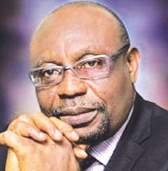
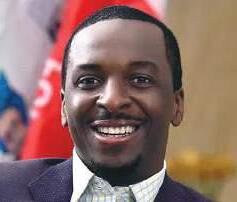
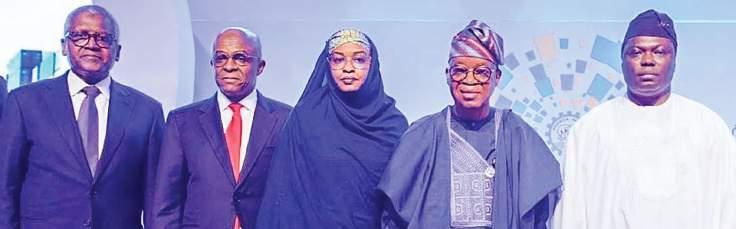
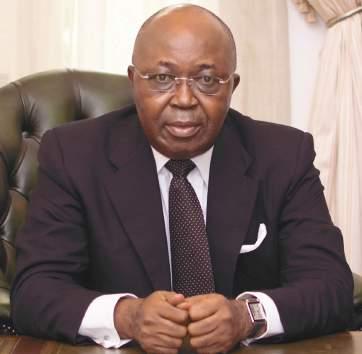
nating Minister of the Economy, Mr. Taiwo Oyedele, yesterday declared that a modern tax system
must not only prioritise efficient revenue collection, but also fairness, accountability, transparency, and trust, noting that “taxpayers must have confidence that disputes will be resolved fairly, promptly, and without unnecessary administrative bottlenecks”.
Katung, Sani, Yero, Oshiomhole, Uzodimma, Abiodun, Igiagbe, Ndubueze, Mbata also get senate tickets, Sokoto senator eyes guber seat In Delta, Okowa defeats Nwoko, Dafinone floors Omo-Agege
Five top-ranking senators, among several others, yesterday,consolidated their grip on the political structures of the All Progressives Congress (APC) after emerging victorious in their respective senatorial primaries
ahead of the 2027 general election.
Tinubu: Killing of Abducted Oyo Teacher Barbaric, We Are Working to Arrest Killers
Promises timely rescue of other victims Says bandits, collaborators’ll be apprehended Urges N’Assembly to expedite action on enactment of state police law
We’ll not give in to terror but ready to listen to their demands, declares Makinde Don’t let Mussa become another Chibok, northern senators warn Nigeria-US military kill 20 ISIS/ISWAP fighters as target operations continue Trump Holds Off Planned Iran Attack After Request from Qatari, Saudi, UAE Leaders...
President Bola Tinubu has condemned as barbaric the reported killing of one of the abducted teachers from the Esiele community in Oyo State, promising that the security was working round the clock to arrest the bandits and rescue the victims.
Bandits had last Friday invaded the Esiele community in Oriire Local Government Area of Oyo State and abducted staff, students, and pupils of Community Grammar School, Baptist Nursery and Primary School and L.A. Primary School.
According to a statement by the presidential spokesperson,
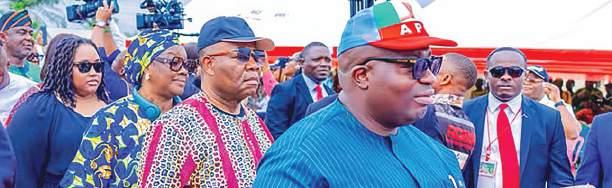
AKPABIO BEGINS JOURNEY TO 2027...
President of the Senate, Godswill Akpabio; his wife, Unoma and Director, City Boy Movement, Akwa Ibom State, Iniabasi Akpabio, queuing to be counted during the
Congress (APC), Senatorial Primaries in his Ward, Ukana West 2, Essien Udim Local Government Area, Akwa Ibom State, yesterday. PHOTO:
James Emejo in
Deji Elumoye, Sunday Aborisade, Linus Aleke in Abuja and Kemi Olaitan in Ibadan
President of the Senate, Godswill Akpabio; Deputy President of the
Deji Elumoye, Sunday Aborisade in Abuja, John Shiklam in Kaduna, Segun Awofadeji in Bauchi, James Sowole in Abeokuta,
Amby Uneze in Owerri, Jonathan Eze in Lagos, Onuminya Innocent in Sokoto and Yemi Kosoko in Jos
wellness within reach
with W Health loan
The W Health Loan provides women with access to financing for eligible healthcare services
*Terms and conditions apply
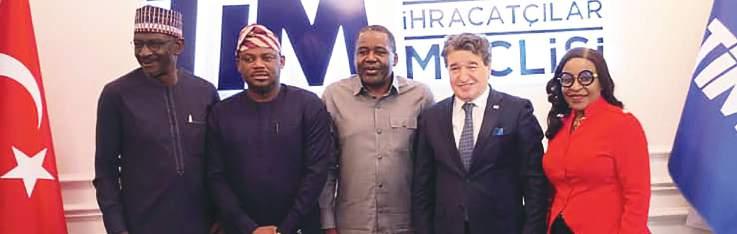
5TH EDITION OF MSME STUDY TOUR...
L-R: Managing Director, Nigerian Export-Import Bank (NEXIM) Abba
Special Adviser to the President on Micro, Small, and Medium Enterprises (MSME) and Job Creation, Tola Johnso; Deputy Chief of Staff to the President, Ibrahim Hadeija; Representative of the Türkiye Exporters Assembly (TIM), Mr. Mittat Samsama and the Executive Director/CEO, Nigerian Export Promotion Council (NEPC), Nonye Ayeni, at the 5th edition of the MSME Study Tour, held in Istanbul, Turkey, recently
AFC Commits $100m to Tech Funds to Drive Africa’s Digital Industrialisation
The Africa Finance Corporation (AFC) yesterday announced that its Board has approved a commitment of up to $100 million to invest in Africa-focused technology fund managers.
The launch comes at a pivotal moment for Africa, a statement from the institution explained.
The continent’s digital economy is projected to contribute over $700 billion to GDP by 2050, driven by a fast-growing, digitally connected population and accelerating enterprise adoption of technology.
Yet despite this momentum, a persistent gap in long-term institutional capital continues to constrain the development and scaling of high-potential technology businesses across the continent.
Through this commitment, AFC would deploy catalytic capital in leading Africa-focused technology Funds and in particular Africanowned fund managers.
In doing so, the AFC aims to address the underrepresentation of local capital in venture funding by catalysing greater participation from African institutional investors and deepening local ownership within the ecosystem.
Africa’s venture capital ecosystem has demonstrated real potential – the continent has produced nine unicorns, some of its leading fund managers have generated returns of up to 128 times the capital originally
invested, and African start-ups raised US$3.8 billion in 2025 alone.
Yet local institutional capital remains significantly underrepresented across many fund cap tables, with the majority of venture funding continuing to flow from international sources. AFC’s commitment is designed to shift that dynamic.
President and CEO of AFC, Samaila Zubairu, said: “Across the continent, young Africans are not waiting for the digital economy to arrive; they are seizing the moment — adopting technology, creating markets and solving real economic problems faster than infrastructure has kept pace.
“That is the investment signal.
AFC’s $100 million Africa-focused Technology Fund will accelerate the convergence of growing demand, rapid technology adoption, youthful demographics and the enabling infrastructure we are building.
“Digital infrastructure is now as fundamental to Africa’s transformation as roads, rail, ports and power — enabling productivity, payments, logistics, services, data and cross-border trade, while creating jobs and industrial scale.”
As part of the initial deployment, AFC has made anchor commitments to Lightrock Africa Fund II and Future Africa Fund III, positioning the Corporation across the full innovation lifecycle – from
early-stage venture capital through to growth-stage scaling.
These initial commitments represent the first tranche of a broader deployment, with AFC actively evaluating a pipeline of additional Africa-focused funds spanning a range of strategies and stages, with further commitments expected in the near term.
Managing Partner & CEO, Lightrock, Pal Erik Sjatil said: “We are delighted to welcome
Africa Finance Corporation as an anchor investor in Lightrock Africa II, deepening a strong partnership shaped by our collaboration on high-impact investments across Africa, including Moniepoint, Lula, and M-KOPA.
“This commitment reflects a shared conviction in the opportunity to back high-growth, technology-enabled businesses with proven business models, strong fundamentals, and clear
pathways to profitability.
“With aligned capital, a longterm perspective, and a shared focus on value creation, we are well positioned to support exceptional management teams and scale category-leading businesses that deliver attractive financial returns alongside measurable environmental and social outcomes.”
Future Africa is a venture capital firm that backs founders building
technology-enabled solutions to Africa’s most pressing challenges, with a portfolio that includes some of the continent’s most celebrated technology companies.
AFC’s investment in Future Africa Fund III strengthens the pipeline of innovation at the earlystage end of the market, backing founders solving important problems spanning financial inclusion, digital infrastructure, consumer technology and education.
Mastercard,Yellow Card Partner to Advance Stablecoin Payment in Emerging Markets
Emma Okonji
Mastercard and Yellow Card, a licenced stablecoin infrastructure provider operating across Africa and other emerging markets, have announced a strategic partnership to accelerate stablecoin-enabled payment innovation across Eastern Europe, the Middle East, and Africa (EEMEA), with plans for broader global expansion.
The partnership would focus on developing practical, compliant applications for stablecoin payments across four key verticals: cross-border remittances, B2B settlement, digital loyalty ecosystems, and treasury management. Both companies will work with banks,
financial institutions, and regulatory stakeholders to pilot solutions designed to improve payment efficiency, reduce settlement friction, and lower costs for businesses and consumers.
Nigeria is one of the partnership’s initial focus markets, alongside Ghana, Kenya, South Africa, and the United Arab Emirates.
The collaboration is expected to establish joint working groups to identify high-impact use cases and create interoperable solutions within the Mastercard network that connect traditional financial infrastructure with blockchain-powered payments.
Speaking on the significance of the partnership for Nigeria and the broader African market, the
Vice President of Operations and Managing Director for Yellow Card Nigeria, Lasbery Oludimu, said:
“For markets in Africa, the real opportunity is to improve how value moves within and across borders, especially for remittances, B2B settlement, treasury management, and digital asset security. Mastercard and Yellow Card are exploring these use cases across key markets, including Nigeria, Ghana, Kenya, South Africa, and the UAE.”
Oludimu further said: “This collaboration is designed to create interoperable solutions between traditional finance and blockchain payments within the Mastercard network, enhancing payment efficiency and reducing
costs for businesses and consumers in Nigeria and other emerging markets.”
Oludimu added that the partnership represents an important shift in how stablecoins are being viewed within the financial ecosystem.
“For Nigeria specifically, the practical change is that stablecoins can move from being seen mainly as a crypto product to becoming part of the broader payment infrastructure.
“When a global financial network like Mastercard works with a stablecoin infrastructure provider like Yellow Card, it helps create a bridge between traditional finance and blockchain-powered payments.”
Dangote Group Driving Africa’s Industrialisation, Says NCCIMA DG
Ibrahim Oyewale in Lokoja
The Director General of the Niger Chamber of Commerce, Industry, Mines and Agriculture (NCCIMA), Adamu Salihu, yesterday described the Dangote Group as a transfor- mative force in Africa’s economic renaissance, saying the conglomerate was “not only industrialising Nigeria, but indeed the whole of Africa.” Salihu, was quoted to have said this in a statement made available to the newsman in Lokoja.
Speaking ahead of the Dangote Special Day at the 22nd Niger
National Trade Fair in Minna, Salihu said the Chamber would use the event to further showcase the achievements of the Group to the people of Niger State, Nigerians and the wider African business community. According to him, Dangote Group’s continued investments in cement, sugar, salt, fertiliser, agriculture and energy have become a model of indigenous industrialisation and proof that African entrepreneurs could build globally competitive enterprises.
The NCCIMA Director General
explained that the theme of this year’s fair, ‘Public-Private Partnership as a Panacea for Nigeria’s Growth and Stability,’ was deliberately chosen to underscore the critical role of collaboration between government and the private sector in driving sustainable development.
He said Dangote Group’s investment profile aligns closely with the development priorities of Niger State, particularly in agriculture, where the company’s rice and sugar businesses complement the state’s vast arable land and ongoing drive to become Nigeria’s leading
food production hub.
Salihu expressed optimism that the Group’s Vision 2030 strategy would help unlock large-scale investments in agriculture, mining and agro processing in Niger State, sectors in which the state enjoys both comparative and competitive advantages.
The Dangote Group currently operates across more than a dozen African countries, with interests spanning cement, sugar, salt, fertiliser, petrochemicals, agriculture and energy.
The company says its core mission
is to build local manufacturing capacity, create jobs and reduce dependence on imports across the continent.
Salihu said the Group’s backward integration strategy and local sourcing model have created wealth for Nigerians by stimulating domestic production and reducing the nation’s dependence on imports.
He described the Dangote Petroleum Refinery as a landmark project that has reshaped Nigeria’s energy landscape by conserving foreign exchange, eliminating fuel shortages, promoting competition
and opening new opportunities for indigenous investors.
According to Salihu, the positive impact of the refinery extends to states such as Niger, where lower logistics costs and improved fuel availability are expected to support manufacturing, agriculture and commerce.
He added that Dangote Group’s commitment to local content, technology transfer and infrastructure development demonstrates how African-owned companies could drive the continent’s industrial transformation.
Bello;
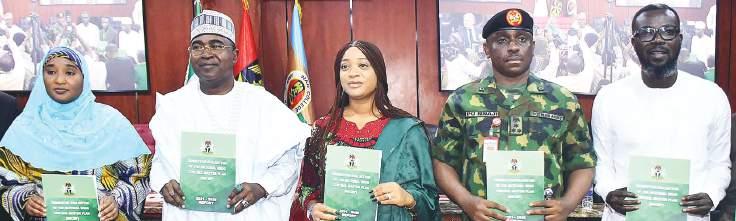
NATIONAL DRUG CONTROL MASTER PLAN CONSULTATIVE FORUM...
L-R: Minister of state, Ministry of Education, Prof. Suwaiba Sai’d Ahmed; Chairman/Chief Executive Officer, National Drug Law Enforcement Agency (NDLEA), Brig. Gen. Mohamed Buba Marwa (Rtd); Akwa Ibom State First Lady, Mrs. Hellen Enoh Obareki; Representative of the Commander, Army War College Abuja, Brig. Gen. Paul Inanji; and Country
Nigeria, United Nations Office on Drugs and Crime, Mr. Cheikh Toure, during the National Drug Control Master Plan Consultative Forum in Abuja, yesterday
NMDPRA Vows to Sanction Oil Firms Operating in Free Trade Zones without Permits
The Nigerian Midstream and Downstream Petroleum Regulatory Authority (NMDPRA) has warned that oil and gas companies operating in free trade zones, export processing zones and other designated
areas without the requisite licences or permits would face sanctions in line with the Petroleum Industry Act (PIA) 2021.
In an industry circular signed by the agency’s Acting Chief Executive, Abiodun Adeniji, the regulator stressed that no opera-
tor involved in midstream and downstream petroleum activities was exempt from its regulatory oversight, regardless of location.
The circular, addressed to managing directors and chief executives of oil and gas midstream and downstream companies,
petrochemical and fertiliser firms, as well as oil import and export terminal operators, reiterated that the authority remains the statutory regulator for technical, commercial, operational and licensing matters in the sector under the PIA.
According to the NMDPRA,
Oyetola: Nigeria Expanding Port Capacity to Lead Regional Trade
The Minister of Marine and Blue Economy, Adegboyega Oyetola, yesterday said Nigeria was expanding its port capacity and implementing major maritime reforms aimed at positioning the country as the leading trade and logistics hub in West and Central Africa.
Oyetola said this while declaring open the Mid-year Session of the Board of Directors of the Port Management Association of West and Central Africa (PMAWCA) in Victoria Island, Lagos.
The meeting had as its theme, “Ports of the Future: Combining Logistical Resilience with Inclusive Community Development.”
The minister said the federal government had approved the development of additional deep seaports across the country to strengthen supply chain resilience and improve Nigeria’s competitiveness in the global maritime industry.
According to him, “Approvals have therefore been granted for the development of additional deep seaports across the country to complement existing infrastructure, strengthen supply chain resilience, and reinforce Nigeria’s position as the preferred maritime and logistics hub for West and Central Africa.”
The Minister, in a statement issued by his S.A. Media, Bolaji Akinola, added that the administration of President Bola Ahmed Tinubu remained committed to modernising the nation’s ports through infrastructure upgrades, digital transformation and improved operational efficiency.
He noted that coordinated policy interventions and stronger interagency collaboration had signifi-
cantly reduced logistics bottlenecks at major seaports, stating: “These efforts have contributed to improved cargo evacuation, reduced vessel waiting time, greater operational efficiency, and a more predictable business environment for port users and investors.”
He described the federal government’s National Single Window initiative as a landmark reform designed to streamline cargo clearance through digital integration of government agencies and port operations, adding that existing seaports would undergo comprehensive upgrades, including channel deepening, to attract larger vessels.
“These upgrades are critical to ensuring that our ports remain globally competitive and capable of supporting larger volumes of trade in the years ahead,” the minister stated.
On maritime security, Oyetola
said the implementation of the Deep Blue Project had eliminated piracy in Nigerian waters and drastically reduced maritime crimes across the Gulf of Guinea.
He noted that the achievement had restored investor confidence and strengthened the region’s attractiveness as a secure maritime corridor for international commerce.
The minister charged delegates to advance initiatives that would “strengthen logistical resilience in port operations and regional supply chains,” while also promoting sustainable port management, innovation, digital transformation and inclusive community development linked to maritime activities.
In his welcome address, Managing Director of the Nigerian Ports Authority and President of PMAWCA, Dr. Abubakar Dantsoho, said West and Central Africa was witnessing a major resurgence in maritime infrastructure investment,
with more than $27 billion worth of port projects underway or recently announced across the sub-region.
Dantsoho cited major projects including the $20 billion SimandouMorebaya Deep Sea Port project in Guinea, the $2 billion Port San Pedro project in Côte d’Ivoire, the $1.5 billion Lekki Deep Sea Port in Lagos, and port developments in Ghana and Senegal.
He also highlighted ongoing investments in Nigeria’s Apapa and Tin Can Island ports, alongside a $600 million investment by APM Terminals.
He said ports in West and Central Africa must move beyond their traditional role as cargo gateways and become drivers of broader blue economy growth.
According to him, “the future of the sector lies in areas such as renewable marine energy, aquaculture, sustainable fisheries, coastal tourism and marine biotechnology.”
its mandate covers all midstream and downstream petroleum operations across Nigeria, including the continental shelf, territorial waters, exclusive economic zone, industrial zones, free zones and export processing zones.
The authority clarified that all petroleum operations involving refining, processing, storage, bulk transportation, pipelines, gas transportation networks, terminals, jetties, wholesale supply, importation, exportation, distribution and sales of petroleum products and natural gas remain subject to its oversight.
It specifically warned that operators within free zones and similar designated areas cannot claim exemption from compliance with the PIA and regulations issued pursuant to the law.
The regulator further stressed that no individual or company is permitted to establish, construct or operate any midstream or downstream petroleum facility without obtaining the appropriate licence, permit or authorisation from the authority.
Besides, NMDPRA invoked Section 48(1) of the PIA, noting that any ministry, department or agency whose actions may affect midstream and downstream petroleum operations must first consult the authority before issuing regulations, guidelines, enforcement directives or taking actions relating to the sector.
According to the circular, the authority reserves the right to
review recommendations from such government institutions and communicate its decision, which must subsequently be complied with.
In addition, the regulator cited Section 309 of the PIA, which provides that where provisions of any other law conflict with the PIA, the provisions of the petroleum law would prevail.
“In view of the foregoing, any person engaging in midstream and downstream petroleum operations without an appropriate licence, permit or authorisation from the Authority shall be subject to sanctions in accordance with the relevant provisions of the PIA,” the circular stated.
The latest directive is expected to tighten regulatory scrutiny in Nigeria’s oil and gas sector, particularly in free trade and export processing zones where some operators have historically claimed varying regulatory exemptions.
“The operation of any midstream or downstream petroleum facility within a free zone, export processing zone or similar area does not exempt such a facility and its operations from compliance with the provisions of the PIA and regulations made thereunder.
“No person shall establish, construct, operate or undertake any midstream or downstream petroleum activity except with an appropriate licence, permit or authorisation granted by the Authority in accordance with the PIA,” the organisation maintained.
Addeh
The governments of Adamawa and Kaduna states have officially issued Certificates of Occupancy (C of Os) for critical mini-grid project sites being developed by the Rural Electrification Agency (REA).
The approvals, a statement in Abuja by the REA said, serves as a bold and commendable step toward accelerating energy access and renewable energy deployment within their respective states.
According to the statement, the mini-grid project sites are being developed under the REA’s
Minimum Subsidy Tender (MST) programme.
The approvals, granted within hours of engagements with the chief executive of the REA, the organisation explained, underscore a strong commitment by both state governments to enabling infrastructure deployment, supporting private sector participation, and removing the administrative bottlenecks that often delay project implementation.
Speaking on the development, the Managing Director of the REA, Abba Aliyu, commended both governors for their ‘exceptional’
responsiveness and proactive leadership, noting that such decisive actions send a powerful signal to investors, developers, and financing institutions about the readiness of states to support large-scale electrification projects.
The MST programme, the REA stressed, is a key deployment framework under the Nigeria Electrification Project (NEP), designed to accelerate electrification in pre-selected, underserved communities with strong economic growth potential through a competitive, private sector-led tender process. Under the framework, com-
munities are identified, verified, and sensitised by the REA, while developers compete for the capital grant support required to deploy sustainable mini-grid infrastructure.
The programme is being rolled out in phases, with the first phase prioritising over 163 sites across multiple states, including Abia, Anambra, Bauchi, Cross River, Kano, Niger, Ondo, Ogun, Plateau, and Kebbi.
To improve operational efficiency, encourage economies of scale, and strengthen long-term sustainability, the REA stated that sites are packaged into state-based lots.
Collectively, the programme, it said, is expected to deploy approximately 213.436 MWp of solar PV capacity across participating communities.
“In Adamawa State, Certificates of Occupancy were issued for three major interconnected mini-grid sites currently under development. These include Kofare in Yola South LGA, which features 19,220 projected connections and an 8.0 MWp solar capacity; Mbamba in Yola South LGA, with 2,282 projected connections and a 0.8 MWp capacity; and Saminaka in Fufore LGA, offering 4,660 projected connections and a 2.5 MWp capacity.
Representative
PHOTO: ENOCK REUBEN
Emmanuel
in Abuja
Kasim Sumaina in Abuja
Emmanuel Addeh in Abuja
CARDFORTE EXECUTIVE COURTESY VISIT TO INTERSWITCH HEAD OFFICE...
L–R: Lead, Network and Partner Relations (Domestic), Verve International, Oluwaseyi Binuyo; Co-founder and Chief Executive Officer, Cardforte, Seun Lawal; Regional Head, Governance and Regional Operations, Verve International, Grace Adeniyi; Co-founder and Executive Director, Cardforte, Tunde Aka-Bashorun; and Head, Verve Digital and New Business, PayToken (Payment Cards and Tokens), Interswitch, Abiodun Adebisi, during a courtesy visit by Cardforte Executives to the Interswitch Head Office in Lagos on Friday
Trump Holds Off Planned Iran Attack After Request from Qatari, Saudi, UAE Leaders
The US President Donald Trump has held off his planned attack on Iran, following interventions by some of the leaders of the Gulf State.
According to Trump, he was asked by Qatari Emir, Sheikh Tamim bin Hamad Al Thani; Saudi Crown Prince, Mohammed bin Salman; and UAE President, Mohamed bin Zayed Al Nahyan “to hold off on our planned Military attack” on Iran, “which was scheduled for tomorrow.”
Trump said the Gulf leaders had noted “that serious negotiations are now taking place, and that, in their opinion, as great leaders and Allies, a deal will be made, which will be very acceptable to the United States of America, as well as all countries in the Middle East, and beyond.
“This Deal will include, importantly, NO NUCLEAR WEAPONS FOR IRAN!” he wrote on his Truth Social platform.
“Based on my respect for the above mentioned Leaders, I have instructed Secretary of War, Pete Hegseth, The Chairman of The Joint Chiefs of Staff, General Daniel Caine,
and The United States Military, that we will NOT be doing the scheduled attack of Iran tomorrow, but have further instructed them to be prepared to go forward with a full, large scale assault of Iran, on a moment’s notice, in the event that an acceptable Deal is not reached.”
Before Mr. Trump’s announcement, Iran had said it conveyed another amended set of terms for a potential peace deal.
Tehran said it was focused entirely on an agreement to end the war and has not yet “discussed any details regarding nuclear matters.”
But Trump had warned Sunday that “the Clock is Ticking” for Iran to accept a peace agreement, and “there won’t be anything left of them if the Islamic Republic’s leaders don’t get moving, FAST.”
The White House Deputy Press Secretary, Anna Kelly, has also said, “Iran must renounce their nuclear ambitions for good.”
In an interview with Fox News yesterday, Kelly said,”Nothing has changed” in regard to Iran and that Mr. Trump remaine focused on the
Relief for Airlines, Passengers as Dangote Refinery Reduces Jet
Dangote Petroleum Refinery & Petrochemicals, has reduced the price of its aviation fuel (Jet A1) to N1,650 per litre from N1,750 per litre, in a move aimed at easing cost pressures on airlines and ensuring uninterrupted fuel supply across the country.
The company also offered a 30-day interest-free credit facility backed by bank guarantees (BG) for marketers and airline operators and a shift from a dollar-denominated pricing structure to a naira-based model.
Group Chief Branding and Communications Officer of Dangote Group, Mr Anthony Chiejina,
disclosed this in a statement yesterday.
These interventions come amid growing concerns over the rising operational costs faced by domestic carriers, with aviation fuel accounting for a significant portion of airline expenses.
Industry stakeholders have repeatedly warned that escalating Jet A1 prices were placing severe financial strain on operators and threatening the sustainability of flight operations.
According to the statement, the refinery’s decision is expected to provide relief to airline operators by lowering fuel procurement costs, improving operational stability, and supporting efforts to moderate airfares.
country’s nuclear programme.
“The Iranian ability to enrich has been totally decimated by Operation Midnight Hammer,” she said, referring to the June 2025 strikes on several Iranian nuclear facilities.
“This enriched uranium that they possess, they can’t keep it. President Trump has been very clear about that. That is one of the red lines in
these negotiations.
“The president has made our red lines in these negotiations very clear: Iran must renounce their nuclear ambitions for good.”
Meanwhile, oil prices and stock markets worldwide swung through a shaky Monday with uncertainty about what would happen with the Iran war.
The S&P 500 swiveled between gains and losses before finishing with a dip of 0.1%, its second loss since setting an all-time high last week.
The Dow Jones Industrial Average added 159 points, or 0.3%, and the Nasdaq composite fell 0.5% after both indexes likewise yo-yoed.
Stock prices moved in the opposite direction of oil prices, which have been twitchy because of uncertainty about how long the Iran war will keep the Strait of Hormuz closed and prevent oil tankers from delivering crude.
The price for a barrel of Brent crude oil, the international standard, went from a high of $112 overnight to below $107 in the morning before turning back higher.
ITF Invests N3.6bn on Business Incubation, Launches Global Certification for Artisans
The Industrial Training Fund (ITF) yesterday said it is investing about N3.6 billion on business incubation and capacity training programmes for artisans.
It also announced a major shift in the country’s skills development architecture with the rollout of international certification examinations for artisans under its Skill-Up Artisans (SUPA) programme.
This came as the fund commenced a pilot phase to test a new model that moves Nigerian artisans from local training certificates to globally recognised qualifications in partnership with a Turkish accreditation body.
Speaking during the exercise in Abuja, ITF Director, Special Duties, Mr. Kayode Surajudeen Alakija, said over 120,000 trainees are participating in the first batch of examinations across multiple trade areas.
He said the initiative reflected government’s commitment to transforming skills acquisition into a globally competitive framework capable of lifting Nigerian artisans into international labour markets.
He told THISDAY, “We are delivering on what we promised Nigerians. You will recall that the SUPA programme started in 2024 under the directive of the President. It is an initiative we have had to run with diligently as part of a broader national skills reform agenda.
“Today, we are fulfilling one of those promises. What we have here is an internationally recognised education body from Turkey conducting certification examinations for our trainees. This is a pilot phase,
but it marks a critical step toward full-scale implementation across the country.”
Alakija explained that the pilot exercise was deliberately concentrated in the FCT to ensure security, coordination, and quality control, while laying the groundwork for nationwide rollout once the system is fully tested and standardised.
He noted that the certification model is designed to ensure Nigerian artisans can work competitively anywhere in the world, adding that the reform is anchored on competence rather than patronage or informal assessment systems.
He said, “If you write and pass this exam on embroidery, auto mechanics, or other trades, it means you can work anywhere in the country and beyond. The essence is to give Nigerian artisans globally competitive certification that reflects real skill, not just attendance.
“This is not arbitrary selection. It is performance-based. It is the certification body that determines competence. That is how we ensure credibility and global acceptance of the qualification.”
The ITF director also disclosed that the programme includes a structured transition pathway that moves successful candidates from theoretical examinations into practical assessments, followed by integration into a digital “marketplace” platform where certified artisans can be matched with real-world job opportunities.
He added that the programme has three exit pathways—international labour mobility, domestic employment opportunities, and business incubation support funded
through the intervention support
According to him, “There is a marketplace on our website where certified artisans will be listed. If you need a plumber or an electrician in a location, you can access verified professionals, and there will be feedback mechanisms for quality control.
“We are also investing about N3.6 billion in business incubation. Those who qualify will receive equipment support worth up to N5 million to start their own businesses. This is about creating entrepreneurs, not just job seekers.”
Alakija stressed that Nigeria’s skills challenge was not a lack of training alone, but the absence of globally relevant certification and quality assurance systems, stressing that “ignorance is more expensive than training” in the long run.
He said, “If you don’t train them, you cannot blame them. And if you say training is expensive, try ignorance. Ignorance is even more expensive.
“You can invest millions in equipment, but without trained operators, those machines will be destroyed. There is no amount spent on training that is too much if it delivers productivity.”
Also, Director, Technical and Vocational Skills Training Department, ITF, Mrs. Nancy Ndidi-Amaka Ekong, said the SUPA programme had already impacted over 200,000 artisans since inception, with projections rising significantly as rollout expands nationwide.
She said the intervention is focused not only on technical competence but also on ethics,
finishing quality, pricing discipline, and professionalism—areas she identified as major weaknesses among local artisans.
She said, “Our artisans are talented, but many lack finishing quality, ethical discipline, and project management skills. These gaps are why foreign competitors often take over jobs that should belong to Nigerians.”
Ekong explained that poor workmanship, delays, and unethical practices have contributed to declining trust in local artisans, adding that the SUPA programme is designed to reverse that trend through structured retraining and certification.
According to her, “A tailor tells you five days and delivers in six months. Sometimes they change your design or mishandle materials. These are issues of ethics and professionalism.
“We are building a full bouquet of skills—technical, ethical, and managerial—to ensure Nigerian artisans can compete globally and restore trust in their services.”
She added that the FCT pilot will be extended to all 36 states after evaluation, with implementation partnerships involving state governments, private training centres, and accredited institutions capable of meeting international examination standards.
The SUPA programme, a flagship federal government initiative coordinated by the ITF, is designed to upskill, license, and empower 10 million Nigerian artisans through globally benchmarked certification and structured enterprise support systems.
James Emejo in Abuja
PHOTO: SUNDAY ADIGUN
PwC: Africa Must Scale the Right AI to Unlock Growth
Emma Okonji
Against the backdrop of a new AI performance report showing that 82 per cent of organisations across Africa are experimenting with artificial intelligence through pilot projects, but only a fraction have achieved enterprise-wide adoption, PwC has urged African countries to move beyond experimentation and scale the right AI solutions to unlock business growth, boost productivity, and drive economic transformation.
The PwC in its AI performance findings, which was released yesterday, stated that organisations across Africa were demonstrating strong intent in adopting AI but
TINUBU:
falling behind global leaders in translating that ambition into measurable returns.
The latest AI performance research showed widespread experimentation, yet only moderate progress in scaling AI and using it to drive growth and reinvention.
Speaking about the report findings, PwC Africa CEO, Dion Shango, was quoted to have said, “Africa’s challenge is both adopting AI at scale and implementing it fast enough to remain competitive.
“While more than 82 per cent of organisations are running AI pilots, this is not yet translating into enterprise-wide impact. The organisations that will win are not those running the most pilots,
but those that scale the right AI to transform how they create value.”
According to Shango, many organisations continue to treat AI as a series of isolated experiments, adding that while the approach builds capability, it does not deliver transformation.
“Without scale, AI remains incremental rather than a driver of sustained value creation,” Shango further said.
Consulting and Risk Services Leader, PwC West Market, Olufemi Osinubi, said:
“Focusing AI only on efficiency is a narrowing strategy. The real opportunity lies in using AI to unlock growth, expand into underserved markets, and create entirely new
business models.”
Chief AI Officer, PwC Nigeria, Christopher Ogirri, said: “Africa’s structural complexity—fragmented markets, infrastructure gaps, and a growing youth population—positions it well for AI-enabled convergence, if organisations design for ecosystems rather than sectors.”
The findings highlighted some of Africa’s most pressing challenges to include: Financial inclusion, Energy access, and Healthcare, adding that AI enables organisations to address these ecosystem challenges, yet adoption of this approach remains limited.
Addressing the foundation’s gap that constrains scaling, the report findings said scaling AI would
require strong foundations, including trusted data, modern technology architecture, and clear governance frameworks.
Africa Cloud and Digital Leader, PwC South Africa, Mark Allderman, highlighted that without these elements, organisations struggle to move beyond experimentation and realise consistent returns, adding that gaps in investment, data modernisation, cloud adoption, and access to AI talent continue to constrain progress.
The PwC’s AI performance study gathered survey responses from 1,217 senior executives—all director-level or above—primarily from publicly listed companies with $1 billion or more in revenue in 25 sectors across
KILLING OF ABDUCTED OYO TEACHER BARBARIC, WE ARE WORKING TO ARREST KILLERS
Bayo Onanuga, security operatives were working around the clock to rescue the victims and apprehend the bandits as well as their collaborators within the community.
Tinubu sympathised with Governor Seyi Makinde, the government, and the people of Oyo State for the unfortunate incident and assured them that the federal government wouldcollaborate with the state government to rescue the victims.
“The federal government is working with the Oyo State government to rescue all the victims. I commend the Inspector-General of Police and the Commissioners of Police in Oyo and Kwara States for their quick intervention and the deployment of a tactical and the Intelligence Response Team (IRT) team to rescue the victims.
“The IGP, following my instructions, is personally leading the tech-driven operation. We expect
“I am saddened by the reported killing of one of the teachers kidnapped by the gunmen, who invaded the community. I sympathise with Governor Seyi Makinde and commend the steps he has taken on the matter. I sympathise with the families of the kidnapped victims.
a breakthrough soon. The bandits and all their local collaborators will be fished out and made to face the full wrath of the law.
“Cases of kidnapping further make imperative the establishment of state police to man some of our underserved areas. The National Assembly should accelerate the enactment of the law creating state police,” the president said.
We’ll Not Give in to Terror But Ready
Makinde, has declared that the state government would not surrender to terror, even as it remained willing to listen to the demands of the abductors responsible for the kidnapping of pupils, students, and teachers in Oriire Local government area of the state.
Speaking on the incident during a briefing with journalists at his Ikolaba, Ibadan residence, Makinde said the government’s priority remained the safe and timely return of all victims.
are returned safely,” the governor stated.
He, however, noted that the government was prepared to engage with the abductors in a bid to peacefully resolve the situation.
“Whatever it is they demand, we are ready to listen to them and address what we can as a state government. But the children and their teachers must be released timely,” he added.
Primary and Nursery School in Oriire Local Government Area.
The governor also confirmed that one of the victims was killed during the attack, noting that the rescue operations were still ongoing.
Describing the situation as “fluid and difficult” for security operatives on ground, he appealed for responsible reportage of the incident, stressing that the matter involved lives and should not be sensationalised.
to Listen to Their Demands,
Declares Makinde
Oyo State Governor, Seyi
“We will not give in to terror. We will do everything to ensure that our children and their teachers
Makinde confirmed that seven students were abducted from Community Secondary School, while 18 children and seven teachers were kidnapped from First Baptist
Opeyemi Bamidele; former Senate Chief Whip, Orji Uzor Kalu and former Senate Leader, Ali Ndume, all secured APC tickets for another term in the senate.
While Akpabio, Barau, Bamidele and Ndume emerged either unopposed or by affirmation, Kalu recorded a crushing landslide victory over his lone challenger in Abia North Senatorial District.
In Akwa Ibom State, supporters and APC faithful turned out in large numbers at Methodist School Ukana in Essien Udim Local Government Area to affirm Akpabio as the party’s candidate for Akwa Ibom North West Senatorial District.
The Senate President, who was the sole aspirant for the ticket, participated in the primary at his ward centre amid what party members described as a carnival-like atmosphere, with singing, dancing and open celebrations dominating the venue.
Party faithful said the massive turnout reflected confidence in Akpabio’s political leadership and appreciation for what they described as his effective representation over the years in various public offices, including commissioner, governor, minister and now Senate President.
The Returning Officer, Gabriel Ekong, commended party members for the orderly conduct of the exercise, while officials of the Independent National Electoral Commission monitored the process alongside civil society groups and other stakeholders.
Speaking after his affirmation, Akpabio thanked party faithful for what he described as their unwavering confidence in him and pledged continued quality representation at the National Assembly.
He also reaffirmed his commitment to strengthening the APC in Akwa Ibom and supporting the policies of President Bola Ahmed Tinubu.
Akpabio urged voters to support Tinubu, Akwa Ibom State Governor Umo Eno and all APC candidates in the forthcoming elections, promising to continue attracting more federal projects and democratic dividends to the district.
Similarly, Barau secured the APC ticket for Kano North Senatorial District after a unanimous affirmation by party members at the APC headquarters in Bichi Local Government Area of Kano State.
Thousands of APC supporters from the 13 local government areas that make up Kano North attended the exercise, which was supervised by party officials and monitored by INEC Chairmanrepresentatives. of the APC Electoral Committee for the Kano North Senatorial Primary Election, Shehu Isa Direba, asked party members to affirm Barau as the party’s candidate, a request that was greeted by a thunderous “yes” from the crowd.
The Chairman of the APC National Assembly Primary Elections Committee for Kano State, Musa Yahaya, also sought the endorsement of party members, who unanimously backed the Deputy Senate President.
Leader of the INEC monitoring team, Abdulrahman Haruna, later expressed satisfaction with the peaceful and orderly conduct of the process.
Kano State Governor, Abba Kabir Yusuf, represented by his deputy, Murtala Sule Garo, praised the conduct of the primary and expressed optimism that APC candidates would perform strongly in the 2027 elections.
“We are one family in APC. Insha Allah, before noon on election day, Senator Barau will secure his seat, while President Tinubu and all our candidates will emerge victorious,” he said.
Responding, Barau thanked party members for the confidence reposed
in him and praised Tinubu for what he called effective leadership of the country and the APC.
He also commended Governor Yusuf for efforts at repositioning Kano State and urged voters across the state to support all APC candidates in the general elections.
“Please, let us not waver in our support for Mr President. President Tinubu means well for Northern Nigeria and is doing extremely well for us,” he stated.
In Ekiti State, Senate Leader Opeyemi Bamidele was returned unopposed as the APC senatorial candidate for Ekiti Central, further consolidating his dominance in the district.
His emergence followed the
release of the list of cleared aspirants by the APC National Organising Secretary, Sulaiman Arugungu, which showed Bamidele as the sole cleared aspirant for the district.
In Abia State, Orji Uzor Kalu recorded one of the most emphatic victories of the APC senatorial primaries nationwide after polling 65,651 votes to defeat Philip Nto, who secured 2,103 votes in the direct primary election conducted across the 57 wards of Abia North Senatorial District.
The exercise, which covered the five local government areas in the district, attracted 69,441 accredited voters out of 72,028 registered party members.
Announcing the result in
Umuahia, Chairman of the Abia North Senatorial National Assembly Primary Election Committee, Chinedu Christian Kanu, described the exercise as peaceful, transparent and credible.
In Borno, Senator Ali Ndume, emerged the APC senatorial candidate for Borno South.
The ranking Senator was returned unopposed through an affirmation process at the venue of the primary held in Maiduguri, Borno State capital.
The former Senate Leader had emerged as consensus candidate as his main rival for the seat, Abdullahi Askira, withdrew voluntarily from
Makinde disclosed that an opera- tional centre has been established at the Oyo State Police Headquarters, where the Commissioner of Police would provide verified updates on the operation.
On security reinforcement efforts, the governor announced that two surveillance aircraft procured by the state government had arrived in Nigeria and were currently being reassembled at the Nigerian Air Force hangar in Lagos. He said the aircraft were expected to become operational before the end of June and would help monitor border areas between Oyo and Kwara States, as well as the international border with the Republic of Benin.
Makinde assured residents that the government remainedcommitted to securing the state and ensuring the safe return of the abducted victims.
He also urged residents to
OYEDELE: MODERN TAX SYSTEM MUST BE ANCHORED ON TRUST, FAIRNESS, ACCOUNTABILITY BETWEEN TAXPAYERS, GOVERNMENT
Ombud’s website, toll-free call center, and case management system in Abuja.
The initiative aimed to strengthen taxpayer protection and improve dispute resolution in the fiscal system and remains a key to ongoing tax reforms aimed at improving fairness, transparency, and compliance.
Oyedele, described the digital platforms as a milestone in the country’s fiscal reform journey.
He said the reforms go beyond revenue generation, stressing that a modern tax system must be anchored on fairness, accountability, transparency, and trust between taxpayers and government institutions.
He noted that while disputes are inevitable in any tax system, what matters is the existence of credible and accessible mechanisms for resolving them in a timely and transparent manner.
According to the minister, the new digital platforms will improve access to dispute resolution services
by enabling taxpayers across the country to engage the office of the tax ombud more easily, lodge complaints online or via the call centre, and track the progress of their cases.
Oyedele said the services would be provided free of charge, adding that the use of technology would help eliminate delays and improve efficiency in handling taxpayer complaints.
He said the initiative aligned with broader tax reform objectives, including simplifying tax administration, reducing arbitrariness, protecting taxpayers’ rights, encouraging voluntary compliance, and building a fair and globally competitive fiscal system.
In his remarks, Chief Executive, Office of the Tax Ombud, Dr. John Nwabueze, said the initiative represented a major milestone in building a more accessible and responsive tax dispute resolution framework.
Nwabueze said the reform aligned with the federal govern-
ment’s Renewed Hope agenda under President Bola Tinubu, noting that the administration’s push for fiscal reform was reshaping the country’s revenue administration architecture around fairness, accountability, and public trust.
He commended the President for what he described as “visionary leadership” in driving tax system reforms, and also acknowledged the role of key fiscal authorities in the reform process, particularly Oyedele, and the Executive Chairman, Nigeria Revenue Service (NRS), Dr. Zacch Adedeji.
According to him, the office of the tax ombud was created as an independent and impartial institution to provide taxpayers with accessible mechanisms for complaints handling, dispute resolution, and mediation, thereby reducing the burden of litigation and improving administrative efficiency.
Nwabueze explained that the newly launched digital platforms
are designed to transform the taxpayer experience by enabling seamless engagement with the office through online and telephone channels, real-time case tracking, and improved access to taxpayer guidance and support services.
He added that the systems are also expected to enhance transparency and accountability in tax administration, while promoting voluntary compliance through faster and more efficient resolution of disputes.
He said, “The digital platforms reflect global best practices in public service delivery and reinforce our commitment to innovation, professionalism, and citizen-centred governance.”
The tax ombud further stressed that trust in tax administration must be continuously earned through transparency, consistency, and engagement with stakeholders, calling for stronger collaboration with the media, civil society organisations, and professional bodies to deepen taxpayer education nationwide.
Africa, Asia, Europe, the Middle East, North America, and South America. Fieldwork was conducted in October and November 2025.
Dion Shango
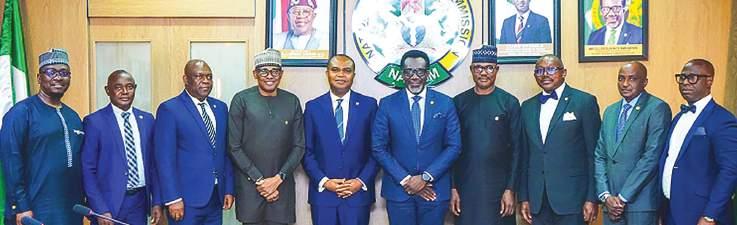
STANBIC IBTC EXECUTIVE COURTESY VISIT TO NAICOM...
L-R: Head, Corporate Communications, NAICOM, Halilu Abba; Deputy Director, Supervision, NAICOM, Cypril Amadi; Chief Executive, Stanbic IBTC Insurance Brokers, Anselem Igbo; Deputy Commissioner, Finance and Administration, NAICOM, Ekerete Ola Gam-Ikon Chief Executive, Stanbic IBTC Holdings, Chuma Nwokocha; Commissioner for Insurance and Chief Executive Officer, National Insurance Commission (NAICOM), Olusegun Omosehin Deputy Commissioner, Technical, NAICOM, Dr. Usman Jankara Jimada; Chief Executive, Stanbic IBTC Insurance, Jide Orimolade; Director, Legal, Enforcement and Market Development, NAICOM, Dr. Talmiz Usman; and Deputy Director, Innovation and Regulation, NAICOM, John Falade, during a recent courtesy visit to NAICOM by Stanbic IBTC executives In Lagos..recently
Pope to Issue First Major Work to Address Ethical Challenges of AI
Catholic Pontif, Pope Leo XIV, is billed to release his inaugural encyclical titled “Magnifica Humanitas” on May 25, to address the ethical challenges of Artificial Intelligence (AI), labour rights, and global peace.
Vatican City announced on Monday that Pope Leo will address the rise of AI in his first in-depth text outlining his concerns, adding that it would be unveiled on May
25 by the pontiff himself.
The document, known as an encyclical, is likely to decry the use of AI in warfare and address how the technology is challenging workers’ rights.
“Magnifica Humanitas” (Magnificent Humanity) was formally signed by the pope last Friday ahead of publication, a Vatican statement said.
Leo, the first American pope, will take part in a Vatican presentation of
the text, a break from papal tradition, and will be joined by Chris Olah, co-founder of the AI company, Anthropic.
Popes usually do not normally present their writings in public, but allow Vatican cardinals and press officials to do so.
Encyclicals are one of the highest forms of teaching from a pontiff to the Church’s 1.4 billion members.
“A pope’s first encyclical typically outlines his priorities, focusing on
what he sees as serious social and moral issues for the modern world,” said John Thavis, a retired Vatican correspondent who covered three papacies.
Monday’s statement said the text would address “the protection of the human person in the age of artificial intelligence.”
The Catholic Pontif has been speaking forcefully in recent weeks against the direction taken by world leadership, and drew the
NAFDAC Clears BON Bread after Viral Shelf-life
Sunday Ehigiator
The National Agency for Food and Drug Administration and Control (NAFDAC) has cleared the manufacturer of BON Bread of wrongdoing after an investigation into allegations that the bread remained fresh for an unusually long period without spoilage.
The agency, in a statement signed by its Director-General/ CEO, Mojisola Adeyeye, explained that investigations confirmed that Food & Food Integrated Company Limited, makers of BON Bread, complied with regulatory and food safety standards.
The controversy began in April after a viral TikTok video posted by one Ms Love Dooshima showed a loaf of bread allegedly remaining free from mould for nearly two months. The video sparked widespread public debate over food preservatives, bread safety,
and consumer protection.
Although the complainant did not initially identify the bread brand, BON Bread later acknowledged that the product in question was theirs and described the allegations as misleading.
Reacting to the public concern, NAFDAC said it immediately launched a scientific investigation into the matter.
“NAFDAC has concluded investigations into public concerns regarding the extended shelf life of BON Bread and confirmed that the manufacturer, Food & Food Integrated Company Limited, is in compliance with regulatory standards,” the agency stated.
NAFDAC said its investigation included an inspection of the company’s bakery facility in Abuja, as well as laboratory analysis of bread samples collected from both the production site and the open market.
According to the agency, “Findings revealed that the bread contained calcium propionate, an approved preservative commonly used in bread production, within the permissible limits specified by the Codex Alimentarius, the internationally recognised food standards framework.”
The agency further stated that laboratory tests found no harmful or prohibited substances in the bread samples.
“Laboratory analysis further confirmed that the bread samples did not contain objectionable substances, including bromate or non-nutritive sweeteners,” NAFDAC said.
It added that the company had maintained regulatory compliance since it began operations in 2006 and had successfully undergone several licence renewals without penalties or product recalls.
“The Agency therefore assures the public that Food & Food Integrated
Company Limited is not in violation of any NAFDAC regulation,” the statement added.
NAFDAC also urged Nigerians to report concerns about regulated products at any of its offices nationwide to ensure prompt, evidence-based investigations.
Reacting to the outcome of the investigation, BON Bread founder and Chief Executive Officer, Maria Umeagwukadilo, said the company remained committed to quality and transparency.
She noted that all ingredients in the bread were clearly listed on the packaging and stressed that the company was confident in the safety
ire of President Donald Trump by criticising the U.S.-Israeli war on Iran.
The document, which has been in the works for months, is expected to address a range of social issues and may offer the Church’s fullest guidance on workers’ rights in decades.
Leo, the 14th pope to choose that name, signed the text on May 15, the 135th anniversary of an encyclical by Pope Leo XIII, who called for better pay and conditions for labourers.
Controversy
of its products.
“We eat this bread daily with our families and friends and know it never lasts beyond seven days naturally,” she said.
Umeagwukadilo also cautioned Nigerians against accepting all social media claims as facts, noting that the controversy had negatively affected livelihoods linked to the business.
Meanwhile, Dooshima maintained that her action was not targeted at any particular bread brand but was intended to raise awareness about food safety.
“If the results show the bread is safe, we will come out and tell the public,” she said.
He marked his first year as pope on May 8, and had warned about the risks of AI several times.
He decried its use in warfare in a speech at Europe’s largest university last week, citing conflicts in Ukraine, Gaza, Lebanon and Iran as showing “the inhumane evolution of the relationship between war and new technologies in a spiral of annihilation”.
The pope’s invitation to Olah, co-founder of the AI company Anthropic may reflect Olah’s research into mechanisms involved in the neural networks that are the basis of AI.
Anthropic has clashed with the Trump administration, notably by insisting on guardrails restricting how its models can be used for military purposes such as targeting weapons autonomously or domestic surveillance.
The pontiff released one other major document in his first year, finishing an apostolic exhortation started by the late Pope Francis that called for widespread changes to the global market system to address rising wealth inequality.
The last encyclical was issued by Francis in October 2024. It urged Catholics to abandon the “mad pursuit” of money and devote themselves to their faith.
Normalcy Returns to Ondo After Gunshots Disrupt APC Senate Primary
Fidelis David in Akure
confusion, with many assuming the city was under a robbery attack.
The deceased was a former principal of Army Day Secondary School, Auchi, Edo State.
He is survived by wife and six children.
The Editor of THISDAY, Shaka Momodu, has lost his elder brother, Engineer Zeberu Momodu. A community leader, Momodu, died after a brief illness. He was 68. He was buried in Auchi, Edo State, yesterday, according to Islamic rites.
Normalcy has returned to Akure, the Ondo State capital, following Monday’s gunfire that disrupted the All Progressives Congress (APC) primary election for the Ondo Central Senatorial District and triggered widespread panic across parts of the city.
The incident, which occurred at Ward 5, Ebenezer African Church Primary School, Amudipe Street, during the party’s senatorial primary, had sent residents, motorists and traders scampering to safety amid fears that armed robbers had invaded the area.
Residents around the scene said the sporadic gunshots initially sparked
The false alarm spread rapidly across Akure, forcing many business owners to shut their shops while commuters hurriedly abandoned the area.
“I was inside my shop when people started running and shouting that robbers had entered Akure. Everyone immediately locked up and fled because nobody knew exactly what was happening,” a trader at Okelisa market recounted.
However, visits to major parts of the state capital later in the day showed that calm had been restored, with residents resuming normal activities and commercial transport
operators back on the roads. Security operatives were also seen stationed around the Ondo Central collation centre at St. Peter’s Unity Secondary School, Akure, as party officials continued collation activities under tight surveillance.
The restoration of calm was followed by a clarification by the Ondo State Police Command, which dismissed widespread reports of an alleged armed robbery attack in the stateThecapital. Police Public Relations Officer (PPRO), DSP Jimoh Abayomi, said preliminary investigations showed that the gunshots were linked to activities of suspected political thugs and not armed robbers as earlier speculated.
L-R: Executive Secretary/CEO, Lagos State Security Trust Fund, LSSTF, Dr.
bulletproof vests and helmets to the Commissioner of Police, Lagos State Command,
Report: Number of Displaced Children
Rose 46% to 13m Globally in 2025
35,000 children forced from their homes daily
Emmanuel Addeh in Abuja
The number of children displaced internally by conflict and violence worldwide rose by 46 per cent to about 13 million in 2025, highlighting the worsening impact of wars and insecurity on children across several regions of the world.
New data released by the Internal Displacement Monitoring Centre (IDMC) and analysed by Save the Children showed that an estimated 35,000 children were forced from their homes every day on average last year due to conflict and violence.
The figures represented a sharp increase from the estimated 9 million child displacements recorded in 2024, underscoring what humanitarian agencies described as an ‘unprecedented’ global crisis affecting children.
According to the report, conflict overtook climate-related disasters as the leading cause of displacement globally for the first time in 2025, with 32.3 million internal displacements linked to violence and insecurity, compared to 29.9 million caused by disasters.
The report noted that many children were displaced multiple times as conflicts intensified in several regions, particularly in
the DRC, Gaza and Sudan.
The IDMC defines internal displacement as each instance in which a person is forced to move within their own country within a given year, meaning some children may have been uprooted repeatedly.
The humanitarian organisation said the growing displacement crisis reflected a broader deterioration in the safety and welfare of children globally.
It cited an earlier report showing that a record 520 million children were living in active conflict zones in 2024, representing more than one in every five children globally and marking a 60 per cent increase since 2010.
In addition, verified incidents involving killings, maiming, sexual violence and other grave abuses against children surged by 373 per cent within the same period, indicating the increasing brutality of modern conflicts, the report said.
“The rise in displacement comes as more children than ever are growing up surrounded by war and violence. A report by Save the Children in 2025 revealed that a record 520 million children were living in active conflict zones in 2024, or over one in five globally, which is up 60 per cent since 2010.
“UN verified incidents of killing,
maiming, sexual assault and other grave violations against children meanwhile surged 373 per cent in the same period showing the increasing brutality of conflicts for children.
“In 2025, 32.7 million children were living in internal displacement – more than four in five of these due to conflict and violence, while over 19 million children were living outside their countries as refugees or asylum seekers, according to the latest data from 2024,” it stated .
The report further stated that
about 32.7 million children were living in internal displacement in 2025, with more than 80 per cent displaced by conflict and violence, while over 19 million children were living outside their countries as refugees or asylum seekers.
A senior adviser on migration and displacement at Save the Children, Melinda van Zyl, described the figures as staggering, warning that behind every statistic was a child exposed to trauma, violence and uncertainty. According to her, many displaced
children are forced to abandon their homes, schools, friendships and communities, often after witnessing extreme violence and destruction.
“Last year, an estimated more than 35,000 children each day on average were forced to flee their homes due to conflict and violence – with some children in places like DRC, Gaza and Sudan forced to leave their homes two, three or even more times.
“The statistics are staggering, but a displaced child is not just a number. Behind each number
is a child who has most likely witnessed the kind of violence or destruction no child should ever have to see, before having to leave behind everything that they know, including their schools, their friends, and their communities to face an uncertain future,” she explained .
Also, Save the Children called on governments and the international community to intensify efforts to prevent conflicts, promote peace and ensure accountability for violations against children.
Ogun LG: Release Probe Report on Alleged Funds Diversion, CSO Tells EFCC, ICPC
Alex Enumah in Abuja
The Economic and Financial Crimes Commission (EFCC) and the Independent Corrupt Practices and other related offences Commission (ICPC), have been asked to make public their findings from investigations of alleged diversion of the Ogun State Local Government (LG) funds under the current administration.
The request was made in Abuja on Monday by a group of Civil
Society Organisations (CSOs), which made the call on Monday in Abuja, cited the lack of openness in the award of contracts as the way the LG funds were being managed.
The group, on the platform of Lygel Youths & Leadership Initiative (LYLI), stated that, “the most glaring internal crisis of this administration remains the strangulation of the third tier of government.”
Speaking on behalf of the group, the Executive Director,
Lekan Oladapo, explained that without a robust and functioning local government administration, there was hardly any programme of the federal government that can work in any part of the country, Ogun State inclusive.
“We recall the 2023 petition by the former Chairman of Ijebu East Local Government, Hon. Wale Adedayo, who courageously affirmed that the Ogun State Government had consistently
Sani, Fagbemi, Osigwe Seek Independent, Stronger, Judiciary at Kaduna NBA Week
John Shiklam in Kaduna
Kaduna State Governor, Senator Uba Sani, has said the independence and integrity of the judiciary must never be compromised.
According to him, “the judiciary remains indispensable guardian of constitutional order, protectors of civil liberties, defender of due process, and custodians of societal equilibrium.”
Sani stated this yesterday at the inauguration of the Kaduna Bar Centre, named after former Chief Justice of Nigeria, Mohammed Bello.
The event was part of activities marking the Law Week of the Kaduna Branch of the Nigerian Bar Association (NBA).
The governor noted that during
periods of uncertainty and national strain, “it is often to the judiciary that citizens turn for reassurance that justice, fairness, and reason shall ultimately prevail.
“As a government, we fully recognise the pivotal role of the judiciary and the legal profession in sustaining democratic stability, advancing peaceful coexistence, protecting rights, resolving disputes, and deepening public confidence in governance.
“Our administration therefore remains committed to supporting initiatives that strengthen judicial infrastructure, enhance institutional capacity, improve access to justice, and promote professional excellence within the legal ecosystem.”
Also speaking, the Attorney
General of the Federation and Minister of Justice, Lateef Fagbemi, SAN, described the commissioning of the Justice Mohammed Bello Bar Centre as symbolic of the enduring strength, resilience, and progressive vision of the legal profession in Nigeria.
Fagbemi commended the governor for his commitment to the advancement of justice, institutional development, and the rule of law in Kaduna State, particularly his support for the completion of the Bar Centre project.
The minister also paid tribute to the late Chief Justice of Nigeria, describing him as “an icon of judicial integrity, intellectual distinction, and statesman whose contributions to Nigerian jurisprudence remain
indelible.”
He said the Bar Centre should serve not just as an administrative facility but as “the intellectual heartbeat of the legal community” and a hub for continuing legal education, policy discourse, innovation, professional collaboration, and access to justice initiatives.
Fagbemi further stressed the need for collaboration among the Bar, the Bench, and the executive in the national interest while respecting the constitutional independence of each institution.
“Such collaboration does not diminish the role or authority of any arm of government or institution. Rather, it strengthens governance, deepens democracy, and enhances justice delivery,” he added.
In his remarks, President of the NBA, Afam Osigwe, SAN, commended the Kaduna Branch for successfully completing the construction of the centre, noting the contributions of past leaderships of the NBA and the Kaduna State Government towards the completion of the project.
Osigwe urged NBA branches across the country to invest in infrastructure that would not only provide meeting spaces for lawyers but also generate revenue for their branches.
“I want to use this opportunity to remind the various branches of the NBA that it is very important not only for the branches to increase their income but to utilise it in putting in place structures like this,” he said.
withheld federal allocations and Ecological Funds meant for the 20 local governments in the state.
“Despite the administration’s denials, the reality on ground has indeed shown that the Local Governments have operated under a ‘zero allocation’ reality, where they are unable to perform basic functions like rural road grading or maintaining primary health centers without begging the state executive for ‘intervention funds.
“This is a direct affront to the Supreme Court’s ruling on financial autonomy for Nigeria’s 774 local governments. It is also a direct assault on President Bola Ahmed Tinubu’s efforts to reposition the grassroots for quality developments,” the group said.
It also questioned what it described as the “closed-door” nature of public procurement in Ogun State.
The group cited a case in April 2026 when civil society groups like the, Right Thinkers Global Initiative (Eagleping), were forced to invoke the Freedom of Information (FOI) Act just to get details on the N1.39 billion New Ogun State House of Assembly Complex project.
It challenged the state government to show the people one major, newly constructed and fully functional state hospital built from the ground up in the last seven years.
Ayodele Ogunsan, presenting the keys of the operational vehicles for Violent Crime Response Unit,
CP Fatai Tijani, at the Police Command Headquarters, Ikeja
LAWYER
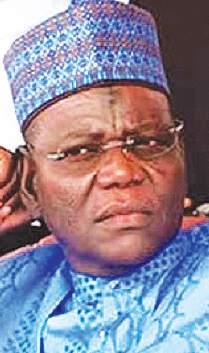
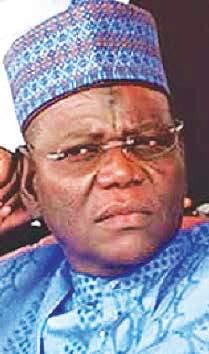
Sule Lamido
LAWYER
PDPvsLamido:IstheApex
Court Interfering with Internal Party Affairs?
Quotable
‘….This is the Achilles heel of our system. We need the States and Local Governments, to function effectively. And, that’s the way we can fight insecurity, that’s the way we can tackle the issue of out-of-school children, so that we can bring back the educational levels to the same, or better than the ones I enjoyed.’ - Ambassador Yusuf Maitama Tuggar, CON, former Minister of Foreign Affairs
Sule Lamido
Of Homeland Security, Presidential Pardon and 2027 Elections
Recently, two developments captured my attention - the appointment of Retired Major General Adeyinka Famadewa as President Tinubu’s Homeland Security Adviser (HSA), and Hon. Farouk Lawan’s reported bid to secure the All Progressives Congress (APC) ticket, to return to the House of Representatives.
Homeland Security
Did the President read my piece of November 25, 2025 “Insecurity and Six Suffocating Challenges”, in which I had stated that the third suffocating challenge was the lack of a Ministry of Homeland Security? I had argued that such an agency/dedicated structure is required to defend Nigeria’s internal security against terrorism, kidnapping, herdsmen attacks and insurgency - a central agency working with the different security agencies who presently appear to work almost in silos, such as the Police, SSS and NIA etc - “ensuring cohesion between them for a more effective response to internal security, as opposed to the amorphous system that Nigeria currently operates….”.
The primary purpose of government is the security and welfare of the people (see Section 14(2)(b) of the 1999 Constitution of the Federal Republic of Nigeria (as amended)(the Constitution), and by virtue of Section 151(1) & (3) thereof, the President is empowered to appoint Special Advisers to assist him in performing his functions; they hold office at the President’s pleasure, and shall cease to hold office when the Presidency ceases, unless, of course, their services are terminated beforehand.
Given the persistent failure of our existing security architecture, this new office of the HSA represents a necessary attempt at a more coordinated response to internal threats. Understandably, concerns have been raised about duplication of efforts, or an overlap between the National Security Adviser (NSA), Interior Ministry and the HSA. As one amusing and mischievous headline I saw over the weekend called the situation between the NSA and HSA ‘Kishiya’, which in Hausa refers to co-wives of the same husband/rivals! These roles need not clash or rival each other. A solidary, cohesive and coordinated relationship, is most likely to achieve better, effective and harmonious results.
While the NSA has a broader national and international scope, coordinates foreign security policy, concentrates on external threats, intelligence, and is the principal Advisor to the President on national security, a HSA should concentrate more on operations and execution, the day-to-day protection of the people and country from internal security threats, terrorist attacks and the like, and coordination among the domestic security agencies, particularly the SSS (see Section 2(3) of the National Security Agencies Act 1986). Issues such as border control, customs and immigration remain firmly in the hands of the Ministry of Interior, so there need not be any overlap.
I saw a video in which a Northern man said that the HSA shouldn’t have been from the South West, but from the South East or South South, and that the NSA had been sidelined. If he knew anything about the functions of the different security agencies, he would know that if anyone may have complained about Kishiya, it could be the DG SSS, not the NSA. Even the functions of the Police aren’t necessarily the same as Homeland Security - see Section 4 of the Nigeria Police Act 2020.
I generally do not like engaging in discussions about ethnicity. I’m a firm believer in the brightest and the best for any position, and I believe that we have the brightest and the best from every part of Nigeria. But, the bitter truth is that Nigerians are very tribalistic people. If they had the chance, they would do worse than those who they are criticising. Most Ghanaians I know - I don’t know what part of Ghana they are from - they just say they are from Ghana. The moment we start to ask ourselves whether we would choose to fly with an incompetent Pilot because we are from the same village, or attend the same Church or Mosque and endanger our lives, or instead, fly safely with the best Pilot, irrespective of their ethnicity or religion - I know that the answer would be the latter; the moment we also start to look at governance and positions in the same light, Nigeria will become a better place! The man in the video said that, Yoruba would be the spoken language in security meetings; I guess the same way Hausa has been the spoken language at most security meetings since Nigeria gained independence! In case the man in the video may have missed out on history, allow me to make a few observations - out of a total of 29 Nigerian Chiefs of Army Staff (COAS), 21 have been from the North. Lt General Alani Akinrinade had been the only South West COAS, a position he held for only 6 months, while Lt General Azubuike Ihejirika from the South East, held the position from 2010-2014. Late Lt General Taoheed Lagbaja, the second South West COAS, was appointed by President Tinubu in 2023. Out of 10 NSAs, apart from Rtd Colonel Kayode Are (South West) who held the position in an acting capacity for only two weeks, and late General Andrew Azazi (South South), the 8 other NSAs have been from the North. From NSO to SSS, out of 13 DGs, 7 have been from the North; before the present DG, Adeola Ajayi, only Colonel Are had
onikepo braithwaite
onIkepo BRAITHwAITe
onikepo.braithwaite@thisdaylive. com onikepob@yahoo.com
The Advocate
“Did the President read my piece of November 25, 2025 “Insecurity and Six Suffocating Challenges”, in which I had stated that the third suffocating challenge was the lack of a Ministry of Homeland Security?….The appointment of a HSA is a welcome and timely development…..the success of the HSA will probably depend on on the clarity of the mandate of the office….. ‘de jure’ (by law), Lawan appears to be unencumbered and free to run...But, ‘de facto’….the pardon cannot wipe away the reality of his crime…..a Presidential pardon may restore a person’s legal rights, but it cannot restore public trust…..The FHC insists… that Nyame’s pardon didn’t obliterate the legal consequences of his crime….”
been DG SSS. Even INEC, Prof Joash Amupitan, SAN from Kogi State (North Central), is the first Yoruba speaking INEC Chairman. The plan was that INEC should be headed by the minority ethnic groups, but this was broken when Profs Humphrey Nwosu and Maurice Iwu from the South East were made Chairman, and then Profs Attahiru Jega and Mahmood Yakubu (who had an unprecedented two terms) from the North West and North East respectively.
Ultimately, merit must be the motivating factor in appointments, though inclusive representation helps to build unity in a diverse nation, such as Nigeria.
Conviction, Pardon and Elections
As the commencement of the electoral cycle leading up to the 2027 general elections progresses, seeing the display of Nigerian politicians across the political parties, many wonder how many of them are qualified to run for any positions, and what will be the fate of the country in their hands. While I don’t want to sound like a pessimist and say the future looks bleak, in Nigerian parlance, I can safely say things look “one kind”, that is, not too encouraging.
1) Hon. Farouk Lawan
And, when I say qualified, I’m not referring to educational qualifications, but the qualification of a person such as Hon. Farouk Lawan, who was convicted by the FCT High Court in 2021 for receiving a $500,000 bribe out of a $3 million solicitation, to remove Zenon Petroleum from the list of firms allegedly indicted for fuel subsidy. The Supreme Court eventually upheld Lawan’s 5 year sentence. Having served his prison sentence, Lawan was released in October 2024. In October 2025, he received a pardon from President Bola Tinubu, GCFR. By virtue of Section 175(1) of the Constitution, the President can grant such pardon - see Falae v Obasanjo & Ors (No. 2) (1999) LPELR-6585 (CA) on the main types of pardon - 1) a free/full pardon that is without conditions; 2) a pardon that is subject to conditions and 3) a commutation of sentence. Lawan is said to want to contest and reclaim his former House of Representatives seat representing Bagwai/Shanono Federal constituency, Kano. We must therefore, assume that he was granted a free pardon under Section 175(1)(a), not subject to any conditions, in which case Section 66(1) (d) of the Constitution which bars a person convicted of an offence involving dishonesty from running for an election within a period of less than 10 years before the date of an election
to a legislative house, would be inapplicable to Lawan. In Falae v Obasanjo (No. 2) (Supra), the Court of Appeal held: “A pardon is an act of grace by the appropriate authority which mitigates or obliterates the punishment the law demands for the offence, and restores the rights and privileges forfeited on account of the offence…. The effect of a pardon is to make the offender a new man (novus homo), to acquit him of all corporate penalties and forfeitures annexed to the offence pardoned”. In FRN v Achida & Anor (2018) LPELR-46065(CA), the Court of Appeal defined Pardon inter alia as: “….the act of officially nullifying punishment, or other legal consequences of a crime”. This means that, ‘de jure’ (by law), Lawan appears to be unencumbered and free to run, as President Tinubu’s pardon has not only made him a new man, it appears to have obliterated and nullified the 10 year impediment of Section 66(1) (d) of the Constitution in relation to him. But, ‘de facto’, Lawan was convicted of bribery/corruption, and the pardon cannot wipe away this reality.
2) Senator Jolly Nyame
Contrastingly, in a recent Federal High Court (FHC) case in the Jalingo Judicial Division - FHC/JAL/CS/6/2026, Senator Jolly Nyame who had been convicted on corruption charges relating to misappropriation of public funds in 2018, was granted a pardon by late President Muhammadu Buhari in 2022 under Section 175(1) of the Constitution, on age and health grounds and thereafter, released from prison. The FHC held that Nyame’s pardon was Presidential clemency based on health grounds and not a full pardon, thereby rendering him ineligible to run for the Taraba North Senatorial seat until 2028, thereby insisting that the 10-year post-conviction period under Section 66(1)(d) of the Constitution must be allowed to elapse; that Nyame’s pardon didn’t obliterate the legal consequences of his crime - see FRN v Achida & Anor (Supra). Is the FHC decision confusing the grounds for Nyame’s pardon, with a pardon that is subject to conditions? See Falae v Obasanjo (No. 2) (Supra). With respect, one can argue that they aren't the same. There are always grounds for exercising the prerogative of mercy in favour of a pardonee, such as the convict turning their life around in prison by learning a trade or getting an education, good behaviour, terminal illness, old age etc. A pardon that is subject to conditions, on the other hand, is one in which such pardon may require restitution or repayment of misappropriated funds, or other terms attached thereto. Can Nyame’s case be distinguished from Lawan’s, because Lawan had completed his sentence before he was pardoned, while Nyame was pardoned before he completed his sentence? Or is it that, no matter the grounds for exercising the prerogative of mercy, or whether the sentence is completed or not, once it’s a free/full pardon, the legal consequences are obliterated, in which case the FHC decision in Nyame’s case may easily be reversed on appeal? Nevertheless, some argue that giving any person that has been adjudged to be dishonest the ticket of APC whose campaign mantra is supposedly ‘fight against corruption’, shows hypocrisy and insincerity, and it should be discouraged.
Conclusion
The appointment of a HSA is a welcome and timely development. If properly structured with clear terms of reference, it has the potential to bring much-needed focus, coordination, and operational efficiency to Nigeria’s internal security architecture — something that has been conspicuously absent for years. However, the success of the HSA will probably depend on on the clarity of the mandate of the office, and how well a synergy between the different agencies is achieved. In the long run, a Presidential pardon may restore a person’s legal rights, but it cannot restore public trust. When an elected official, convicted of accepting a bribe to manipulate State policy, seeks to return to the same National Assembly where laws and policies related thereto are made, it sends a troubling message; and, if such a person is given the ruling party ticket for that matter, it sends an even more troubling message that, in Nigeria, consequences for the powerful are temporary, or even non-existent.
As we head into the 2027 elections, the real question is not whether Hon. Farouk Lawan is legally eligible to contest, but whether a political party that rode to power on the promise of fighting corruption can/ should, in good conscience, field a candidate with such a record.
The growing perception that the system protects its own, even after conviction, as well as encourages this new pattern being formed by politicians who the law has adjudged to have been caught with their hands in the cookie jar, being given a new lease of life without facing the legal consequences of their actions, are quite damaging to Nigeria’s democracy. It tells Nigerians that, some people are indeed, somehow above the law. Already, this perception exists in the minds of many, in relation to so-called repentant terrorists who are forgiven, and not prosecuted.
General Adeyinka Famadewa
Justiciability of Party Actions that Amount to Constitutional Transgression
Facts
The National Executive Council (NEC) of the Appellant at its 101st meeting that held on 24th July, 2025, further to the approval of a memorandum presented by its National Organising Secretary, sanctioned the conduct of the Appellant’s National Convention slated for 15th and 16th November, 2025 in Ibadan, Oyo State. On 27th October, 2025, the 1st Respondent who is a member of the Appellant party visited the Appellant’s Secretariat, to purchase a nomination form for election into the office of the National Chairman. However, he was denied the same, on the ground that the period for the sale of nomination forms for party offices had elapsed. Aggrieved, the 1st Respondent filed an Amended Originating Summons dated 10th November, 2025 at the Federal High Court, seeking amongst other declaratory and injunctive reliefs, a declaration that the Appellant is in breach of its Constitution and Guidelines by deliberately denying him the nomination form, and an order of mandatory injunction compelling the Appellant to make the form available for purchase by him. The 1st Respondent also sought an order prohibiting the 2nd Respondent from aiding or recognising the Appellant’s conduct of election into the office of its National Chairman, until the Appellant makes nomination forms for election into the office available for purchase by the 1st Respondent and all eligible party members desirous of contesting.
The Appellant reacted by filing a Notice of Preliminary Objection, challenging the jurisdiction of the trial court to entertain the suit, alongside a counter-affidavit opposing the claims in the Originating Summons. Nevertheless, the trial court assumed jurisdiction and proceeded to hear the Originating Summons, and grant the reliefs sought therein. The Court also made an order, that the Appellant’s National Convention be put on hold until the nomination form was made available to the 1st Respondent. Rather than comply with the order, the Appellant approached a court of coordinate jurisdiction with the trial court, and secured a parallel order to override the trial court’s subsisting order.
The Appellant then went on to hold the Convention, contrary to the trial court’s order. Thereafter, the Appellant lodged an appeal against the decision of the trial court, before the Court of Appeal. The Court of Appeal affirmed the trial court’s decision, and dismissed the appeal. Dissatisfied, the Appellant appealed to the Supreme Court. The parties filed their respective briefs of argument. The 1st Respondent also raised a preliminary objection. Similarly, the 3rd to 5th Respondent filed a notice of preliminary objection, challenging the competence of the appeal.
Arguments on Preliminary Objection
Respective Counsel for the 1st Respondent and the 3rd-5th Respondent argued that the grounds of appeal are, in substance, grounds of fact or at best mixed law and fact, and the Appellant’s failure to obtain prior leave rendered the Notice of Appeal incompetent and the appeal fundamentally defective.
Counsel for the Appellant argued conversely, that the grounds did not require the Apex Court to reassess evidence or make fresh findings of fact, but were simply calling for a determination of whether the Court of Appeal correctly applied the law to the undisputed fact which related to jurisdiction and statutory interpretation. Counsel submitted that the grounds are therefore, grounds of pure law and no leave was required for their determination.
Court’s Decision
The Supreme Court held that where the complaint in a ground of appeal attacks the conclusion of law reached by a court on the basis of undisputed facts, such a ground is one of law simpliciter and in such circumstances, no leave is required to appeal, as the Appellant is entitled to proceed as of right. The Court concluded that the two grounds of appeal which question the legal reasoning and conclusion of the Court of Appeal on jurisdiction, fall squarely within the category of grounds of law, and are therefore competent without the need for prior leave. On this basis, the Apex Court dismissed the preliminary objection and proceeded to consider the main appeal.
Issue for Determination in Main Appeal
The Court adopted the sole issue formulated by the Appellant as follows:
Was the lower court not in error when it held that the 1st Respondent’s claim which centred on the Appellant’s
Honourable Stephen Jonah adah, JSC
In the Supreme Court of Nigeria Holden at abuja
On Thursday, the 30th day of april, 2026
Before their lordships
Mohammed Lawal Garba Chioma egondu Nwosu-Iheme Haruna Simon Tsammani Stephen Jonah adah abubakar Sadiq umar Justices, Supreme Court SC/CV/164/2026
Between peopleS’ DeMoCratIC partY (pDp)
appellaNt and
1. alHaJI SUle laMIDo reSpoNDeNtS
2. INDepeNDeNt NatIoNal eleCtoral CoMMISSIoN (INeC)
4. HoN. aMaH aBraHaM NNaNNa (pDp CHaIrMaN, aBIa State)
5. tUrNa alaBH GeorGe (pDp SeCretarY, SoUtH-SoUtH Geo-polItICal ZoNe)
(Lead Judgement delivered by Honourable Stephen Jonah Adah, JSC)
failure to sell a nomination form to the 1st Respondent to enable him contest for the office of National Chairman, is one that is justiciable and within the jurisdiction of the trial court?
Arguments Counsel for the Appellant argued that contrary to the reasoning of the Court of Appeal, the 1st Respondent’s claim was outside the jurisdiction of the Federal High Court because the claims were primarily and essentially against the Appellant which is a political party and were based on an intra-party issue. Counsel argued that the principal reliefs sought by the 1st Respondent
“...….the court will not hesitate to intervene, where party actions breach statutory and constitutional provisions….where the acts complained of concern the performance of statutory or oversight obligations of a party to the suit such as INEC, a claim for injunctive relief enforcing or restraining such act as sought by the 1st Respondent before the trial court, transcends the real of internal party affairs and becomes justiciable…such matters implicate legal rights beyond mere intra-party disagreements”
fill a vacant position in any of these bodies, shall be conducted in a democratic manner, and allowing for all members of the party or duly elected delegates to vote in support of a candidate of their choice. The Court held that political parties, though voluntary associations, are subject to the discipline of the law when their actions affect civil rights and obligations of their members and others, and the courts will not hesitate to intervene where party actions breach statutory or constitutional provisions. The Court held that the 1st Respondent’s claim goes beyond the internal affairs of the Appellant, his right was violated by the Appellant and he called out the 2nd Respondent – INEC which under the Constitution and the Electoral Act, has the duty of oversight and control of political parties. The Court held that where the acts complained of concern the performance of statutory or oversight obligations of a party to the suit such as INEC, a claim for injunctive relief enforcing or restraining such act as sought by the 1st Respondent before the trial court, transcends the real of internal party affairs and becomes justiciable, and accordingly, a Plaintiff cannot be precluded from approaching the court to enforce compliance with statutory duties, as such matters implicate legal rights beyond mere intra-party disagreements. The Apex Court held that this was the crux of the 1st Respondent’s claim, and the Court of Appeal was right when it held that trial court had the jurisdiction to hear and determine the claim in the circumstance.
The Supreme Court thereafter, proceeded to decide on the status of the National Convention held by the Appellant in the face of the subsisting order of the trial court directing the Appellant to suspend its scheduled National Convention pending compliance with trial directive to the Appellant, to make the nomination form available to the 1st Respondent to enable him participate in the election scheduled to take place during the said Convention, which the Court raised suo motu.
The Apex Court held that court orders, whether rightly or wrongly made, must be obeyed until set aside by due process and once a party knows of an order or court, whether it be valid or not, he is obliged to obey. The Court held that the Appellant’s action by not appealing the order directing it to suspend the National Convention, but rather approaching a court of co-ordinate jurisdiction to override the trial court’s order and thereafter, proceeding to hold the National Convention, amounted to engaging in multiplicity of actions over the same subject-matter and clearly abused the court process, ridiculing the administration of justice in Nigeria. The Supreme Court held that it is settled law that once an abuse of court process is established, the court is not only entitled, but duty-bound to invoke its inherent jurisdiction to prevent the misuse of its process, and this includes the power to dismiss or strike out the offending action, as the justice of the case may demand. The Apex Court referred to MAIN STREET BAN REGISTRARS LTD v TEMITOPE O. OSHINUGO & ORS (2024) LPELR-62980(SC).
were against the Appellant and the only relief sought against the 2nd Respondent was dependent on the successful grant of the principal reliefs, hence the trial court acted without jurisdiction and the Court of Appeal was wrongly affirmed the trial court’s decision. Conversely, the Respondents in their respective briefs argued that the 1st Respondent’s claim complained of the Appellant’s infractions and the violations of its Constitution and Guidelines in a manner that directly affected the 1st Respondent’s right to vie for an office within the party as an eligible member, which was a matter within the jurisdiction of the trial court. Counsel submitted that the Court of Appeal was thus right to have affirmed the decision of the trial court.
Court’s Judgement and Rationale
The Supreme Court held that, the decisions that internal or domestic affairs of a political party are not to be meddled with by the courts remain the law, however, where, as in the instant case, a political party violates its own Constitution or undermines the Electoral Act and the Constitution of the Country, the court must intervene to prevent anarchy and ensure the survival of democracy in Nigeria. The Court referred to Sections 223 and 228 of the Constitution and more particularly, Section 82(3) of the Electoral Act, which provides that the election of members of the executive committee or other governing body of a political party, including the election to
The Supreme Court found that the Appellant abused the process of the court to conduct the National Convention, in defiance of the subsisting order of the trial court forbidding it from conducting the same, pending compliance with the directive to make the nomination form available to the 1st Respondent. Consequently, the Court declared the Appellant’s Convention conducted on 15th and 16th November, 2025, null, void and of no effect.
The Court held further that the cross-appeal filed in the appeal, in the circumstance of the decision in the main appeal, was dismissed.
Dissenting Opinion
Dissenting, Hon. Haruna Simon Tsammanni, JSC opined that the appeal was meritorious because the issues before the trial court regarding the Appellant’s desire to contest for a leadership position in the Appellant do not affect the administrative actions of INEC, but were directed against the internal and domestic party affairs of the Appellant, which the Courts have held over time to be political dispute and non-justiciable. His Lordship also opined that although the Appellant’s disobedience of the trial court’s order was despicable, it was not raised by any of the Respondents to the appeal, either in the cross-appeal or notice of contention, or argued; hence, there was no basis for the appeal to be dismissed on that ground.
Appeal Dismissed by the Majority Decision of the Supreme Court.
Representation
Paul Erokoro, SAN with others for the Appellant. Jeph Njikonye, SAN with others for the 1st Respondent. O. A. Adeyemi, Esq. with another for the 2nd Respondent.
J. B. Daudu, SAN with others for the 3rd – 5th Respondent.
NJC Recommends 12 New Appeal Court Justices
Stories by Steve Aya
The National Judicial Council (NJC) has recommended the appointment of 12 new Justices of the Court of Appeal to President Bola Ahmed Tinubu,GCFR, following deliberations at its 111th meeting held on May 13, 2026.
The meeting was chaired by the Chief Justice of Nigeria, Hon. Justice Kudirat Kekere-Ekun, GCON, according to a statement issued by the Council’s Deputy Director of Information, Kemi BabalolaOgedengbe. The NJC said the appointments were aimed at filling vacancies, created by the elevation and retirement of judicial officers nationwide.
Those recommended for elevation to the Court of Appeal are Abdulhammeed Mohammed Yakubu, Monisola Oluwatoyin Abodunde, Raphael Ajuwa, Elias Ojie Abua, Mbalamen
Jennifer Ijohor, Sabiu Bala Shuaibu, James Kolawole Omotosho, Emeka Nwite, Dauda Njane Buba, Sanusi Kado, Ademola Enikuomehin and Julcit Veronica Dadom.
The NJC also recommended Christine T. Clement Ende for appointment as a Judge of the Benue State High Court, while Ibrahim Abdullahi Yakubu and Bala Salisu Daura were nominated as
Kadis of the Katsina State Sharia Court of Appeal.
In a major policy decision, the NJC clarified that retired public servants remain eligible for judicial appointments, noting that the 1999 Constitution does not bar their appointment to the Bench. The Council said the position was supported by the Court of Appeal judgement in the Ayoola
v Baruwa case. Under the new policy framework, retired public servants seeking judicial appointments must have at least 10 years left before the mandatory retirement age. Applicants are also required to disclose criminal records, employment history, financial status and other obligations.
The NJC further extended the tenure of Justice
Ijeoma Agugua as Acting Chief Judge of Imo State by three months, from March 26 to June 26, 2026, pending the appointment of a substantive Chief Judge. It also commended Justice Ononeze-Madu, for declining to be sworn into office outside constitutional procedures.
On disciplinary matters, the NJC rejected appeals filed by eight Imo State Judges challenging their compulsory retirement over alleged age falsification. It also suspended Justice Ibrahim D. Shekarau of the Nasarawa State High Court and Justice Edward A.E. Okpe of the FCT High Court for one year without pay, over separate acts of judicial misconduct involving breach of due process and fair hearing principles.
IRS Slaps N66.4bn Tax Fraud Charge on Saipem, Two Directors
The Nigeria Inland Revenue Service (IRS) has filed a six-count criminal charge against oil and gas firm Saipem Contracting Nigeria Limited and two of its senior Directors, Michele Poggi and Giani Di Petro, over alleged tax fraud amounting to N66.4 billion and $938,080 between 2014 and 2019.
The company and its Directors were charged before Justice Daniel Osiagor of a Federal High Court, Lagos, following
Court Rejects Bid to Stop N1.9bn Fraud Prosecution
Justice Musa Kakaki of the Federal High Court in Lagos, has dismissed an application filed by two men seeking to stop their prosecution over an alleged N1.9 billion MTN airtime fraud.
The Defendants, Timothy Fashina Oluwabukola and Anthony Imonina Odemerho, had asked the court to disqualify the Prosecutor, Deputy Commissioner of Police, Emmanuel Jackson, arguing that he had retired from service and no longer had the authority to continue
The two men are being prosecuted by the Police Special Fraud Unit (PSFU), Ikoyi, Lagos, over allegations of conspiracy, unauthorised access to MTN Nigeria’s computer systems, unlawful manipulation of authorisation codes, and conversion of airtime valued at N1.9 billion. According to the prosecution, the Defendants allegedly gained illegal access to MTN’s Application Programming Interface (API) platform between January and April 2024, obtained airtime without
authorisation, converted it to data and sold it to members of the public.
The Prosecutor, however, opposed the application, insisting that the Police authorities were legally empowered to authorise him to continue the prosecution even after retirement. He also argued that the AttorneyGeneral of the Federation does not have exclusive powers over criminal prosecutions.
In his ruling, Justice Kakaki upheld the arguments of the prosecution, and dismissed the Defendants’ application, clearing the way for the continuation of the trial.
The court subsequently adjourned the matter to September 29, 2026, for continuation of hearing. The Defendants had earlier pleaded not guilty to charges bordering on cybercrime, unauthorised access to computer networks and money laundering under the Cybercrime Act and the Money Laundering Act.
an investigation into the firm's tax compliance records during the six-year assessment period.
Prosecutor Moses Ideho, informed the court that the Defendants failed to deduct and remit multiple categories of taxes, including Companies Income Tax, Tertiary Education Tax, Capital Gains Tax, Withholding Tax, Value Added Tax, Stamp Duties, and the Nigeria Police Trust Fund levy, while carrying out taxable business operations in Nigeria. The alleged illegal acts are contrary to sections of the Federal Inland Revenue Service (Establishment) Act 2007, and the Companies Income Tax Act, Cap C21 Laws of the Federation of Nigeria 2004.
At the scheduled arraignment on Friday,
the Defendants were conspicuously absent, but were represented by B. A. Sodipo, SAN, leading three other Lawyers. The defence informed the court that a Notice of Preliminary Objection had been filed, on behalf of the Defendants.
The Prosecutor told the court that he was served with the Defendants' notice on Thursday, and requested time to respond. Consequently, Justice Osiagor adjourned the matter to June 29 for hearing of the preliminary objection. The charges allege that the Defendants failed to remit taxes, submitted false returns, and wilfully neglected to pay assessed taxes, resulting in the huge sum remaining unpaid to the Federal Government.
EFCC Arraigns Blessing CEO Over Alleged N36m Fraud
The Economic and Financial Crimes Commission (EFCC) has arraigned social media influencer and relationship therapist, Blessing Nkiruka Okoro aka Blessing CEO, before a Federal High Court in Lagos, over an alleged N36 million fraud. Blessing CEO was arraigned on Friday before Justice D.I. Dipeolu, on a two-count charge bordering on obtaining money by false
pretence and stealing.
During proceedings, defence Counsel, P.I. Nwafor, told the court that the Defendant had refunded N24 million to the Petitioner, and requested a short adjournment to enable settlement of the outstanding balance.
According to the defence, the nominal Complainant had agreed to prevail on the EFCC to discontinue the case once
NASS Moves to Amend Data Protection Law
The National Assembly has commenced moves to review the National Data Protection Act, 2023, amid rising cyber threats, digital privacy concerns, and the rapid growth of Artificial Intelligence technologies.
Chairman of the Senate Committee on ICT and Cyber Security, Senator Afolabi Salisu, disclosed this in Abuja during the opening of a three-day Data Protection Awareness Workshop organised for members of the Joint National Assembly Committee on ICT.
Salisu said the planned review became necessary following emerging global developments, including AI innovation, increasing cross-border cybercrime and new international standards such as the United Nations Convention on Cybercrime. According to him, stronger laws are required to safeguard Nigeria’s interests in
the digital space.
He noted that cybercriminals now deploy AI tools, digital platforms and weak data systems to target individuals, businesses and government institutions, adding that Nigeria has witnessed growing cases of identity theft, financial fraud, ransomware attacks, data breaches and digital espionage.
The lawmaker also raised concerns over the misuse of personal data by online platforms and mobile applications, warning that many digital services collect users’ information without proper consent or adequate safeguards.
According to him, lawmakers must improve their understanding of digital systems to effectively regulate the sector, stressing that poor knowledge of the digital space could weaken legislative outcomes. He added that the workshop would help lawmakers
assess the implementation of the 2023 Act, and identify areas requiring amendment.
Similarly, Chairman of the House Committee on ICT and Cybersecurity, Hon. Stanley Olajide, described data as a critical asset in the modern economy, saying Nigeria’s future prosperity could depend more on data than oil. He called for stronger legal and institutional measures to protect digital assets, and ensure accountability for data breaches.
The National Data Protection Act was enacted in 2023 to regulate personal data processing, protect privacy rights and establish the Nigeria Data Protection Commission as the country’s main data regulator, although stakeholders continue to push for stronger enforcement and regular updates to address evolving cyber threats.
the balance is paid. However, prosecution Counsel, S.I. Suleiman, maintained that the Federal Government was the Complainant in the matte, and urged the court to proceed with the arraignment.
Justice Dipeolu held that ongoing discussions between the Defendant and the Complainant could not halt court proceedings, and directed that the charges be read to the Defendant.
One of the charges alleged that Blessing CEO obtained N36 million under the false pretence of securing a lease for a six-bedroom detached duplex, contrary to the Advance Fee Fraud and Other Fraud Related Offences Act, 2006. She was also accused of fraudulently converting the money for personal use. The Defendant pleaded not guilty to the charges, following which the prosecution sought a trial date, and asked the court to remand her in a correctional facility pending trial.
Her Lawyer, however, informed the court that the defence had only just been served with the charges, and requested that she be remanded in EFCC custody pending the perfection of her bail application. Justice Dipeolu granted the request, and adjourned the matter till June 5, 2026, for trial.
Blessing Okoro aka Blessing CEO
Chief Justice of Nigeria, Hon. Justice Kudirat Kekere-Ekun, GCON
Constitutional, Legal and Practical Issues in Direct Primaries and Consensus Option
This article by Festus Okoye thoroughly examines the various issues concerning party primaries, from aspirants to nomination of candidates, primaries, register of members, party defection, internal party affairs and litigation, making comparisons with the older electoral Laws
Introduction
Most political parties are preparing for their primaries to nominate candidates for the Presidency, the Governorship, and the National and State Assemblies, if they choose to do so. Some will nominate presidential candidates. Some will endorse the presidential candidate of other parties. Some will nominate gubernatorial candidates and candidates for the National and State Assemblies. Some may not have the capacity to field candidates, and may trade off their seats to those excluded from other parties or to disgruntled, ambitious candidates from those parties.
However, with the tight and contentious provisions of the Electoral Act, 2026, and the self-inflicted and planted crisis in most political parties, party primaries and nomination processes may throw up more disputes than imagined. The party primary and nomination processes may also breed a new army of the angry, who may be short-changed by the contentious primaries and nomination processes of the parties and by their unwillingness, and to some extent, inability, to challenge their exclusion.
Party Nominations: Matters Arising
There is no doubt that the methods of nominating candidates for various elective positions in Nigeria have been evolving, fluctuating, and at times, regressing. Sometimes, the political party primarily determines who becomes its candidate, as outlined in its constitution; at other times, party godfathers dominate candidate selection. There are periods when the party aims to be genuinely democratic, with candidates nominated through the procedures set out in the party’s constitution. Conversely, there have been instances where party leaders submitted the names of
individuals who did not participate in the primaries, to the electoral management body.
Occasionally, courts have intervened to restore order to the nomination process. At the same time, they emphasise that the party is sovereign and must have the authority to decide its candidates. At other times, the National Assembly has amended the Electoral Act to bring sanity to the party nomination process. However, it seems that political parties still find ways to circumvent due process and remain comfortable with their poor electoral conduct.
What then is the problem, and why are the political elite running in circles over internal party processes, the conduct of primaries and the nomination of candidates? Why are the parties not getting it right in screening, conducting primaries and nominating candidates? Why have the various amendments to the law failed to bring sanity to the process? Why has judicial intervention not been effective, in keeping the courts away from party issues and challenges?
The Electoral Act, 2010, specified only two methods for nominating candidates for various offices created under the Constitution of the Federal Republic of Nigeria, 1999 (as amended). Under Section 87 of the now-repealed Electoral Act, 2010, political parties may select their candidates solely through indirect or direct primaries. The procedures for indirect primaries are clearly outlined, and the steps for direct primaries are likewise detailed in Section 87 of the Act. Under Section 85(1) of the Act, a political party wishing to convene a meeting, congress, conference, or convention must give the electoral management body 21 days’ notice of its intention to do so. The Electoral Act, 2010, did not
“A Court therefore, has no jurisdiction to determine who a political party should sponsor. Nomination or sponsorship of a candidate for election is a political matter solely within the discretion of the party, as it is a pre-primary election affair of the party. However….the Courts have jurisdiction….to examine whether the conduct of the primary elections was in accordance with the party's constitution and Guidelines”
provide for the consensus option in party primaries.
Under Section 85(2) of the same Act, the electoral management body may observe a meeting, congress, conference, or convention, whether or not it is invited.
Section 87 of the Act set out transparent procedures for nominating candidates. In direct primaries, the party must conduct them in accordance with its guidelines, ensuring that all aspirants have an equal opportunity to be voted for. The party must also declare the aspirant with the highest number of votes as the winner of the primaries, and submit the name to the electoral management body.
Section 87 of the Act also contains detailed provisions governing the conduct of indirect primaries. Under Section 87(9), any party that fails to comply with the nomination process and procedures, shall have its candidate for election disqualified from contesting that position. The Act does not define the term ‘aspirant', but the Judiciary, in various pronouncements during the operation of the Electoral Act, 2010, clarified who qualifies as an aspirant.
The Electoral Act, 2022, introduced the option of selecting candidates by consensus, in primary elections. Section 84(9) of the Act provides that a political party selecting a consensus candidate must obtain the written consent of all cleared aspirants, confirming their voluntary withdrawal from the race and their endorsement of the consensus candidate. If a political party cannot secure the written consent of all cleared aspirants to a consensus candidate, it must revert to direct or indirect primaries to nominate candidates for elective positions.
Section 155 of the Act defines an aspirant and a candidate. It defines an “Aspirant” as a person who aspires to or seeks to contest an election for a political office, and a “Candidate” as a person who has received a political party’s nomination to contest an election for any elective office.
If a political party fails to comply with the provisions of the Act during its primaries, its candidate for the election shall not be included in the election for that position.
Section 84(14) removes the High Courts' jurisdiction to hear pre-election matters, and confers exclusive jurisdiction on the Federal High Court in this regard. It provides that an aspirant who alleges that any provisions of the Act or a political party's guidelines have not been followed in the selection or nomination of a candidate may apply to the
Federal High Court for redress.
However, Section 29(5) of the Electoral Act, 2022, confers locus standi only on any aspirant who participated in his political party’s primaries and who has reasonable grounds to believe that any information given by his political party’s candidate in the affidavit, or any document submitted by that candidate in relation to his constitutional requirements to contest the election, is false. Such an aspirant may file a suit in the Federal High Court against that candidate, seeking a declaration that the information contained in the affidavit is false.
In some cases, decided under the Constitution and the Electoral Act, 2022, it is the prerogative of the party to determine whom to sponsor for various positions in accordance with its constitution and guidelines. The Supreme Court, in a line of authorities, has held that the courts will not determine for a political party who to sponsor, or who its candidate should be.
The various courts, especially the Supreme Court of Nigeria, have laid down irreducible minimums and principles that must guide the conduct of primaries and the sponsorship and nomination of candidates.
1. Political parties must be allowed to run their affairs, and it is not the courts’ responsibility to choose candidates for political parties. Accordingly, the Courts have held that the sponsorship and nomination of candidates is the responsibility of the political party. The Courts have consistently held that the right of a Political Party to nominate or sponsor a candidate is a domestic right of the party, and that a member of the party has no legal right to be nominated or sponsored by his party. A Court therefore, has no jurisdiction to determine who a political party should sponsor. Nomination or sponsorship of a candidate for election is a political matter solely within the discretion of the party, as it is a pre-primary election affair of the party. However, where the political party conducts its primary and a dissatisfied contestant at the primary complains about the conduct of the primaries, the Courts have jurisdiction, by virtue of the provisions of Section 87(9) of the Electoral Act, to examine whether the conduct of the primary elections was in accordance with the party's constitution and Guidelines. This is because, in the conduct of its primaries, the Courts will never allow a political party to act arbitrarily or as it pleases. A political party must obey its own Constitution. Per Olabode Rhodes-Vivour, J.S.C in PDP & Anor v Sylva & ors (2012) LPELR-7814(SC) (Pp. 35-36).
2. Political parties must not act arbitrarily in party primaries, or in the nomination of candidates. They must act within the confines of their constitutions and electoral
Festus Okoye
Constitutional, legal and Practical Issues in Direct Primaries and Consensus Option
from page VI
guidelines, and in accordance with the provisions of the Electoral Act. See A.P.C v Marafa (2020) 6 NWLR (Pt. 1721), 383, and Yar’Adua v Yandoma (2015) 4 NWLR (Pt. 1448), 123.
3. To activate the jurisdiction of the Courts in relation to primaries and sponsorship, a Plaintiff must first show that he is an aspirant who participated in the primary election sought to be challenged, and secondly, that his grievance falls within the narrow provisions of Section 285(14) of the Constitution and Section 84(14) of the Electoral Act. Both conditions must be satisfied for complaints concerning the nomination or selection of candidates of a political party to be justiciable. See UBA v Moghalu & Ors (2022) LPELR-57876 (SC); UBA v Ozigbo & Ors (2021) LPELR-566672(SC); APGA v Anyanwu & Ors (2014) LPELR - 22182 (SC); PDP & Anor v Lawal & Anor (2022) LPELR-59169 (SC).
4. It is the responsibility of the party’s National Executive Committee to organise primaries, not the State Executive Chapter or Committee of the political party. See the case of Emeka v Okadigbo (2012) 18 NWLR (Pt. 1331) at 55; Emenike v D.P.P. (2012) NWLR (Pt. 1315) 556 at 594, 600, 602; and Yar’adua & Ors v Yandoma & Ors (2014) LPELR-24217(SC) (Pp. 106-109).
5. It is mandatory for the political parties to hold their congresses at the constituency headquarters, for the purpose of electing their candidates
6. Where a political party fails to comply with the provisions of Section 84(13) of the Electoral Act, 2022 in conducting its primaries, a candidate who is said to have emerged from a primary election conducted in deliberate violation, breach and non-compliance with the provisions of the Act, shall not be included in the election (Alagbaoso v INEC & Ors (2023) LPELR-59702(SC)).
There are similarities and troubling provisions in the Electoral Act, 2022 that are repeated and/or retained in the Electoral Act, 2026. There are draconian and anti-democratic provisions in the Electoral Act, 2022 that have been tightened to render political godfathers, incumbents and anti-democratic forces more powerful and more menacing.
The Electoral Act, 2026, retains most of the features of the 2022 Act, addresses some of its loopholes, and, at the same time, introduces draconian and anti-democratic provisions. It removes some of the guardrails in the Electoral Act, 2022, that were designed to prevent political godfathers from imposing candidates on their parties, and from manipulating the party’s internal mechanisms to secure predetermined sponsorship for some candidates and to exclude others.
Direct Primaries
The Electoral Act, 2022, sets out clear and detailed provisions for direct primaries. It provides that a political party adopting the direct primaries procedure, shall ensure that all aspirants are given an equal opportunity to be voted for by the party's members. In the case of presidential primaries, all registered members of the party shall vote for aspirants of their choice at a designated centre in each ward of the Federation; the same procedure shall be adopted for direct primaries in respect of Gubernatorial, Senatorial, Federal and State Constituencies. Special conventions or congresses shall be held to ratify the candidate with the highest number of votes at designated centres for the National, State, Senatorial, Federal and State Constituencies, as the case may be.
In place of the safeguards in Section 84(4) of the Electoral Act, 2022, which require registered members of the party to vote for aspirants of their choice at designated centres in the 8,806 registration areas or wards, Section 86 of the Electoral Act, 2026 simply provides that all direct primaries shall be conducted in accordance with each political party’s guidelines.
The implication is that each political party designs its own direct primary framework, which may exclude party members. It also suggests that direct primaries may effectively be another form of indirect primaries, designating who votes and where the vote will take place. It also suggests that, direct primaries are whatever the party defines and designates as such. Can an aspirant challenge the party’s guidelines, or are they part of the party's internal affairs, for which courts are stripped of jurisdiction?
Consensus Candidates
Section 84(9) of the Electoral Act, 2022, provides for the Consensus Candidate. It provides that a political party that adopts a consensus candidate shall secure the written consent of all cleared aspirants for the position, indicating their voluntary withdrawal from the race and their endorsement of the consensus candidate. Where a political party is unable to secure the written consent of all cleared aspirants for the purpose of a consensus candidate, it shall revert to direct or indirect primaries for the nomination of candidates for the aforesaid elective positions. A special convention or nomination congress
shall be held to ratify the choice of consensus candidates at designated centres at the National, State, Senatorial, Federal and State Constituencies, as the case may be. Section 87 of the Electoral Act, 2026, adopts the same wording as Section 84(9) of the Electoral Act, 2022. It provides that a political party that adopts a consensus candidate shall secure the written consent of all cleared aspirants for the position, indicating their voluntary withdrawal from the race and their endorsement of the consensus candidate. If a political party is unable to secure the written consent of all cleared aspirants for the purpose of a consensus candidate, it shall revert to direct primaries for the nomination of candidates for the elective positions. A special convention or nomination congress shall be held at designated centres at the National, State, Senatorial, Federal and State Constituencies, to ratify the choice of consensus candidates.
Does this consensus involve all members of a political party? Consequently, does it include the party executives at the 8,809 electoral wards across the country? More concretely, who convenes the meeting to reach a consensus? Who selects those who will participate in the consensus process? Does consensus crystallise the moment the Governor or a godfather endorses or anoints an aspirant? Will nomination forms be sold to those who indicate interest in running for positions after the Governor has endorsed and/or appointed a candidate?
Cleared, Uncleared Aspirants and Litigation
Both the Electoral Act, 2022, and the Electoral Act, 2026, introduce a new twist to the contentious issue of what constitutes a political party’s internal affairs. Section 84(9) of the Electoral Act, 2022, and Section 83(5) and (6) of the 2026 Act provide that no Court in Nigeria shall have jurisdiction over any suit or matter concerning the internal affairs of a political party. If such an action is brought in violation of Section 83(5) and (6), no interim or interlocutory injunction shall be granted by the Court; instead, the Court shall suspend its ruling and deliver it at the stage of final judgement, while also granting an expedited hearing to the case. Upon conclusion, the Court shall impose costs of no less than N10,000,000.00 on the Counsel who filed the action, and no less than N10,000,000.00 on the Plaintiff/Applicant. Additionally, the Court may require the offending parties to pay any costs, including solicitors' fees, incurred by it if it is joined as a party.
Can an uncleared aspirant be considered an aspirant under the Constitution and the Electoral Act? This is given that a political party may decide to clear only “aspirants” from a specific local government, communities with a large voting bloc, a particular religious group, or aspirants with
“There are similarities and troubling provisions in the Electoral Act, 2022 that are repeated and/or retained in the Electoral Act, 2026.There are draconian and antidemocratic provisions in the Electoral Act, 2022 that have been tightened to render political godfathers, incumbents and anti-democratic forces more powerful and more menacing”
the necessary resources or influential backers. Can this group of uncleared “aspirants” challenge their denial of nomination forms or their disqualification in court? What if they decide to challenge their non-clearance? Are they ready to deposit no less than N10,000,000.00 as a penalty on the Counsel who filed the action, and no less than N10,000,000.00 on the Plaintiff/Applicant? Additionally, are they ready to pay the Commission any costs, including solicitors' fees, incurred by the Commission if it is joined as a party?
However, Section 285(14) provides that an aspirant can go to court on the issues set out in subsection 14, which are pre-election issues. It states that “pre-election matter” means any suit by an aspirant who complains that any of the provisions of the Electoral Act or any Act of the National Assembly regulating the conduct of political party primaries, and the provisions of a political party’s guidelines for the conduct of party primaries, have not been complied with by a political party, in respect of the selection or nomination of candidates for an election; an aspirant challenging the actions, decisions or activities of the Independent National Electoral Commission in respect of his participation in an election; an aspirant who complains that the provisions of the Electoral Act or any Act of the National Assembly have not been complied with by the Independent National Electoral Commission (INEC) in respect of the nomination of candidates of political parties for an election, the timetable for an election, the registration of voters and other activities of the Commission in respect of preparation for an election; or a political party challenging actions, decisions or activities of the INEC disqualifying its candidate from participating in an election.
The Direct Primaries, as set out in Section 86 of the Electoral Act, and the Consensus option, as set out in Section 87 of the Act, effectively foreclose the option of going to court. While the Party Guidelines pigeonhole the issues and present them as internal party affairs, the Consensus option appears to limit locus standi to cleared aspirants.
Moreover, Section 29 of the Electoral Act makes it clear that only an aspirant who participated in the primaries of his political party who has reasonable grounds to believe that any information given by the political party’s candidate in the affidavit or any document submitted by that candidate in relation to his constitutional requirements to contest the election is false, may file a suit at the Federal High Court in the Federal Capital Territory or in the jurisdiction the cause of action arose, against that candidate seeking a declaration that the information contained in the affidavit is false.
Furthermore, the so-called aspirant who participated in the primaries has nothing to gain because, if the Court determines that any information in the affidavit is false only in relation to constitutional eligibility requirements, the Court shall issue an order disqualifying the candidate and the sponsoring political party.
The bigger challenge for aspirants is that, they have no recourse when their party treats them cavalierly. In the case of direct primaries, they may be caught by the draconian provision that strips the courts of jurisdiction over internal party affairs and imposes a heavy fine on the Plaintiff and Counsel. In the second issue relating to the consensus option, the aggrieved individual does not fall within the definition of an aspirant under Section 29 of the Electoral Act 2026.
Party Defection
Those who may wish to jump ship are also
precluded from doing so. Section 77 of the Electoral Act, 2026 provides that a party shall maintain a digital register of its members containing the name, sex, date of birth, address, State, Local Government, ward, polling unit, National Identification Number and photograph, in both hard and soft copies. Each political party shall make such register available to the Commission not later than 21 days before the date fixed for the party primaries, congresses or conventions. Only members whose names are contained in the register shall be eligible to vote and be voted for in party primaries, congresses and conventions. A political party shall not use any other register for party primaries, congresses and conventions except the register submitted to the Commission. A party that fails to submit the membership register within the stipulated time, shall not be eligible to field candidates in the election.
Register of Party Members
At a meeting of the Commission with political parties on Tuesday, 24th March, 2026, parties agreed, based on the provisions of the Act, that the submission of the register of members originally fixed for 1st April 2026 to 21st April 2026 should be adjusted. This means that political parties must conduct their primaries between the 23rd of April and the 30th of May 2026 in accordance with Section 77 of the Electoral Act, 2026. Therefore, the register of members must be submitted to the Commission not later than 21 days before the conduct of their primaries. The final deadline for this is 10th May 2026. Direct primaries under the Electoral Act, 2026, have reduced party members in the 8,809 electoral wards to mere onlookers, as most parties are exploring the consensus option, which prevents any contact with party members. The opacity of the consensus option is evident in the Governors’ stranglehold and in the adoption of the doctrine of endorsement and anointing in candidate selection. In all this, it is the electoral process that is being diminished. The consensus framework, though facially inclusive, operates in practice as a mechanism for predetermined outcomes driven by political incumbents and power brokers.
More troubling is the deliberate contraction of judicial oversight through provisions that characterise critical aspects of candidate selection as internal party affairs, while simultaneously imposing punitive costs on litigants. This creates a chilling effect on aspirants and effectively insulates political parties from accountability, even in cases of clear procedural abuse. The resulting framework produces a class of politically excluded actors who are left without meaningful legal remedies.
Political parties and their leaders must root parties in their membership, and one way to do so is through their participation in party activities, especially in primaries to determine who amongst their leaders and critical stakeholders can best represent them in contests with other political parties and candidates. The present configuration reduces them to mere onlookers and non-stakeholders in the democratic and electoral process, and it is not good for party membership and our democratic growth.
Law-making is a serious constitutional undertaking, and all key stakeholders must remain vigilant throughout the law-making process, including during amendments or repeal. The Electoral Act, 2026, contains many draconian and anti-democratic provisions, and, unfortunately, Nigerians must approach the 2027 general election with these provisions still in the statute book. The continued operation of these provisions raises serious concerns about the legitimacy of candidate emergence processes and, by extension, the credibility of the electoral system itself. If left unaddressed, these structural deficiencies may deepen political alienation, strengthen elite control, and weaken public confidence in the electoral process.
Festus Okoye, Lawyer; former INEC National Commissioner
INEC Chairman, Professor Joash Ojo Amupitan, SAN
PDP vs Lamido: Is the Apex Court Interfering with Internal Party Affairs?
The internal crisis that has bedevilled the People’s democratic Party (PdP) for a while now, has a greater possibility of ensuring that what used to be Nigeria’s main opposition railroads itself into self-destruct mode. The recent judgement of the Supreme court in PDP v Sule Lamido & ors, is a clear attestation that the party may be its own worst enemy. The several factions of the party which consequently emerged, are a salutary pointer to that fact that the party’s chances in the 2027 general elections may be almost non-existent. Dr Sam Amadi gives an in-depth review of the Supreme Court judgement, and what it portends for PdP’s chances in the forthcoming elections, making suggestions to the Supreme Court to develop a more coherent jurisprudence that lower courts can follow, on adjudication concerning the internal affairs of political parties
Introduction
The recent decisions by the Supreme Court on the matter of disputes about leadership in the Peoples Democratic Party (PDP), try to clarify an important new lexicon in political jurisprudence in Nigeria. That lexicon is ‘internal affairs of a political party’. Of course, this is not the first time the Supreme Court of Nigeria has used the phrase in determining matters relating to management of a
political party and the conduct of elective primaries. In the famous case of Onuoha v Okafor (1984) SCN, the Supreme Court held that choosing the candidate for an election is an internal affair of the party, subject to its internal mechanisms and constitution. The court cannot impose a candidate on a party, because it is a voluntary organisation to be managed according to rules made by the party. Since then, the highest court in the land has
“The problem with Supreme Court’s jurisdiction in relation to what is loosely called ‘internal affairs of a political party’ is that, it is not stable and principled”
varied its position. In some cases, it has asserted authority to review decisions of parties relating to what may appear as ‘internal affairs’ of the party. In other cases, it has restrained itself from reviewing such matters, in deference to the political branch.
The problem with Supreme Court’s jurisdiction in relation to what is loosely called ‘internal affairs of a political party’ is that, it is not stable and principled. The Supreme Court has vacillated between extreme deference to no deference, from insisting on compliance with internal rules before deference, to full deference without compliance with internal rules. The most damaging aspect of the Supreme Court decisions on non-justiciability of internal affairs of political party, is that they do not provide for lower court a coherent analysis of the issues which will constitute an intelligent guidance for
lower courts faced with suits arising from partisan activities. The result of this incoherence, is that we see a disarray in the decisions of lower courts. This creates uncertainty with party management, both on the side of the election management body and the party managers.
The uncertainty and unpredictability, are unbearable burdens to the development of democracy in Nigeria. The present effort by the Supreme Court in the case of PDP v Alhaji Sule Lamido and Ors (Appeal No: SC/CV/164/2026) to clarify the concept of ‘internal affairs’ of a party, has not succeeded. It has left a problem for application, for lower court Judges. The fact that the court is divided in its decision as to whether the subject- matter of the case is justiciable, further complicates the applicability of the decision to complex political cases in the future. This piece will review the decision, in the light of political jurisprudence
PDP vs Lamido: Is the Apex court Interfering with Internal Party Affairs?
of the court.
The Supreme Court as a Political Institution
The starting point of this review of the Supreme Court decision in PDP v Lamido, is to say that it further confirms that the Supreme Court is a ‘political institution’. This description is from Professor Robert Dahl, the eminent US political scientist. In his justly famous article titled “The Supreme Court and National Decision-Making”, he argues that the work of the Supreme Court goes beyond adjudication to policymaking. In his views, the court also protects political dominance, and occasionally, blocks the policies of the ruling coalition from attack.
In the Nigerian context, the idea of the Supreme Court as a political institution goes to the notion that in its adjudicatory function, the Supreme Court is guided by strategic considerations of national cohesion, stability, and democratic progress. These commitments vary with seasons, and the pedigree and personality of the leadership of the court. Because Nigeria is not deliberately and deliberatively ideological in its politics, we do not see the full colour of ideological divides, and muscular expression in the decisions of the court. But, anyone who has a keen eye, could easily see the variation in the decisions of the court, when they are about democracy and development.
The Supreme Court as a political institution, is the idea that the court plays a political role of signalling to the rest of the political sector the values and ideals that should regulate politics. The most important role in this regard, is for the court to establish certainty about what each actor in the political landscape can do, and how the relationship between the actors is regulated. The lack of clarity about the principles that guide political actions diminishes legal certainty and, ironically, increases the intervention of courts in the political domain. The courts often lament that, political disputes readily find their way into the courts. But, they fail to trace this crisis of judicialisation of politics, to the indeterminacy of Supreme Court’s decisions.
This phenomenon of judicialisation of politics reechoes Alexis Tocqueville who argues in Democracy in America that, in America, no soon does a political dispute arise than it becomes a legal dispute. There may be something in the political culture of the United States, that makes it liable to transform all political disputes into legal fight. It may be its extreme individualism, that feeds into litigiousness. For Nigeria, the reason might be legal indeterminacy. The Supreme Court recently, has become ad hoc and contingent in its decisions. The reason is that, oftentimes, its decisions are incompletely theorised. It does not take time to logically establish the basis for the differences it draws between two concepts, such that the lower court or political managers may
know with significant precision when one concept is applicable and not the other. I will illustrate this problematic behaviour with the distinction the court tries to draw between matters that are internal affairs and therefore, not justiciable and those that are pre-election matters and therefore. justiciable. This theoretical failure is also a problem arising from too much focus on statutory provisions, and less on concepts and theories.
What is an Internal Affair of the Party and What Does it Matter?
The major issue in the PDP v Lamido case, is whether the matter relating to nomination to political leadership is a matter that the court can adjudicate. The ancillary issue is whether the Federal High Court can exercise jurisdiction on a matter not substantively against INEC, or related to pre-election matter or any of the issues which it has exclusive jurisdiction. The facts of the case are straight forward. Mr Sule Lamido, a notable leader of PDP wanted to contest party position in a proposed party congress. He made efforts to purchase the nomination form, but was denied one. He went to court to force the party to allow him to purchase the nomination form, and participate in the elective congress. The Federal High Court
“The majority, especially the lead Justice, Stephen Jonah Adah, seems to argue sensibly that any matter that relates to failure of party officials to follow the provisions of the party constitution or laws, is a matter that the court can exercise jurisdiction”
exercised jurisdiction and granted an order stopping the proposed congress, and requested the party to answer to the suit. In the suit, the Plaintiff joined INEC, asking for a prohibition order against it.
The Defendants disobeyed the court order, and went ahead to hold the congress. The Court of Appeal nullified the congress on the basis of disobedience of court order, upholding exercise of jurisdiction by the trial court. This decision came to the Supreme Court for review on appeal. The appeal challenges the decision of the Court of Appeal, on the ground that the subject-matter of the suit was not justiciable, because it is an internal affair of the party which a court should not adjudicate. A slim majority of the five Justices of the Supreme Court dismissed the appeal, holding that the matter was justiciable. The court also dismissed the appeal because of the disobedience of court order, in holding the congress. The minority disagree on both the justiciability of the subject-matter of the suit, and the dismissal of the appeal based on disobedience to court order.
It is difficult to clearly analyse the decisions of both the majority and the minority, as regard setting clear judicial policy on management of party affairs. Some of the distinctions the court draws about pre-election matters and internal affairs of the party are not convincing, and do not provide an intelligible guide to lower court Judges and party managers.
The majority, especially the lead Justice, Stephen Jonah Adah, seems to argue sensibly that any matter that relates to failure of party officials to follow the provisions of the party constitution or laws, is a matter that the court can exercise jurisdiction.
He argues that “Lawlessness in the political arena, also manifests in the brazen conduct of party affairs in defiance of internal rules and statutory prescriptions. Political parties, though voluntary associations, are subject to the discipline of the law when their actions affect civil rights and obligations of their members and others. Internal democracy is not a slogan; it is a legal imperative. The courts will not hesitate to intervene where party actions breach statutory or constitutional provisions”. This paragraph contains wide range of considerations.
First, there is no doubt that where the actions of a party breach the Constitution or a provision of the law, it is reviewable. Even if it is an internal affair of the party, it is justiciable. When the party breaches its internal rules, it can be adjudicated by the court at the request of an aggrieved member. Where the party’s management violates the civil rights and obligations of its members and other, the court can exercise jurisdiction. The list is comprehensive. So, what is then excluded from the categories of matters that are not internal matters of the party?
The argument of Justice Adah is that where, as in this case, a member of a party in good financial standing as a member is denied the opportunity to be nominated for election into the party leadership - something that people would reasonably call ‘internal affairs of the party’- the aggrieved member can seek judicial redress. The minority decision rejects this argument. It does not agree that, such matters should trigger the jurisdiction of the court. They are matters of internal affairs of the party. As the minority thinks
Sule Lamido
PDP vs Lamido: Is the Apex court Interfering with Internal Party Affairs?
the only political matters that are justiciable are pre-election matters, and actions in the nature of injunction and specific performance against INEC. At page 33 of the dissenting judgement, Justice Haruna Simon Tsammani argues weirdly that you cannot sue INEC for its constitutional and executive functions.
The case revolves around interpretation of Section 283(4), 252 and 223(1) of the Constitution and Section 83 of the Electoral Act. Citing such landmark cases like Magaji v APC (2024) and Ufomba v INEC and ors (2017) the court restated its distinction between internal matters, which are non-justiciable and pre-election matters, which are justiciable. But, these distinctions are not convincing. The logic seems to be that, because internal matters do not arise from codification, they are not justiciable. Pre-election matters are codified; therefore, they are justiciable. This distinction goes to the source of the right that is being claimed or the wrong being complained against, and not about the nature of the right or the wrong. The court’s logic in the distinction it makes about pre-election matter is that it relates to primaries. And, because the statute (Section 83 of the Electoral Act) provides for the right of an aspirant who is aggrieved about a primary election to challenge it in court, that removes it from internal matter of the party and therefore, justiciable. This is not the best way to comprehend pre-election matter. Pre-election matter should include all matters that arise before election, and relating to the conduct of electoral process before the actual voting. Pre-election matters are readily justiciable because the electoral law has provided for right and process for remedy. But, they are still internal matters. But those cognisable by statute. The problem with the decisions by the Supreme Court about internal matters of the party, is failure to clearly define what is internal matter, before clearly establishing what kind of internal matter is justiciable and which is not. In dissenting with the majority opinion, Justice Tsammani cited APC v Bala Suliaman and Ors (2022) where the Supreme Court made the distinction between conducting of congress and primary. Conduct of congress to elect party leaders is internal matter, and not justiciable; conduct of primary to elect candidates is not internal affair, and justiciable. In a memorable phrase, he interpreted Section 82(3) of the Electoral Act 2022 to state that whereas, there is a right to vote, there is no right to be nominated. So, the failure of the party to provide Lamido with nomination papers is an internal affair of the party, and not justiciable. As he puts it, “It follows therefore that, while primary elections of political parties are justiciable, matters relating to party congresses or conventions of political parties are non-justiciable” (page 41). This is oversimplification.
Argument in Search of Logic
The problem with the Supreme Court’s varied decisions on how courts should handle what it calls ‘internal affairs’ of political parties is that it confuses the concepts of ‘internal matters’ and ‘political question’. Internal matter of a political party, is anything that relates to its governance and internal directions. Political parties, as voluntary organisations, have a right to make their own rules for self-regulation. As long as those rules do not violate the Constitution or statutes, and are not unlawful for other reasons, the court should not override or anyway interfere in the working of the rules. This is deference. And, the logic is that, the members of the party are entitled to manage themselves as they choose. This is in furtherance of the rights to self-determination and political association.
The court approach of blanketing ‘internal affairs’ of a political party as non-justiciable, and then struggling to distinguish internal matters from pre-election matters, or distinguishing ‘right to vote’ from ‘right to nomination’ is not logical. All of them are internal matters of the court, by proper definition. The difference is between which is a political question that is not amenable to judicial determination, and legal questions that are judicially manageable. Whether a matter is a pre-election matter in
“…it will serve the fortunes of democracy in Nigeria if the Supreme Court as a foremost political institution, develops a more coherent jurisprudence that clarifies to lower courts when to adjudicate internal matters of parties and when not to do so”
the technical sense in which the Electoral Act defines it, or an internal matter in that it relates to contest over leadership of the party, the yardstick for determining whether it is justiciable is whether it is a matter that relates to whether the party failed to apply its rules to the detriment of members, or whether it relates to an exercise of discretion or outcome of a political processes that are not amenable to judicial determination. Even when the matter is a claim of violation of the rules of game in a political party, the court may undertake other considerations before exercising jurisdiction. Like, determining whether the applicant for judicial review has exhausted available remedies before approaching the court. The problem will not be that it is an internal matter that is non-justiciable. But, that it is not ripe for judicial determination or that it is better handled politically. It is conceptually wrong to argue that internal matters of political parties are non-justiciable, as the Supreme Court has been suggesting for a long time. The incoherence of such argument shows in the fact that, the court has never been consistent in applying the label to real facts. Sometimes it lets in a matter that is an internal matter of a political party, under a dubious categorisation or differentiation. For one, there is nothing inherently different, between disputes about primary and disputes about congress. They are all internal matters of the party. What the court could say is that, where a statute has provided who should vote in a primary, then violations of such provisions lend to judicial determination as a matter of statute. But, where the right to participate in a congress is derived from the constitution of the party or other established conventions, the justiciability of claims founded
on that is not readily justiciable based on statute, but on the determination of the rights and obligations of member of a political organisation. Whether the court will take on such a matter will depend on the substantiality of its legal element and whether the claim is judicially manageable, not that it is an internal matter of the party. Normatively and semantically, an internal matter of a political party is justiciable, once it is founded on some claim of right.
Call for a Better Jurisprudence
It is important that the Supreme Court recovers clarity, in the jurisprudence of political actions. It is good that the judicial policy would be for politicians to be allowed to make their own mistakes and learn from them, as one of the Justices put it. It should be good policy to limit judicial involvement in political disputes. But, the right approach to solving the problem of judicialisation of politics is not to confuse the language of adjudication. Internal matters of political parties should be justiciable once they relate to alleged breach of internal rules of the party, or deny of right or entitlement in an irregular or wrongful manner. The court can control the flow of political questions, by developing a theory of substantiality. What level of legal breach could trigger judicial oversight? In what circumstances should the court refer the dispute to the political branch for determination, and how would it assess which matters require such reversion to the political branch? It will be difficult, to establish a proper jurisprudence of political actions. But, it will serve the fortunes of democracy in Nigeria if the Supreme Court as a foremost political institution, develops a more coherent jurisprudence that clarifies to lower courts when to adjudicate internal matters of parties and when not to do so.
Dr Sam Amadi
Dr Sam Amadi
Acting Group Politics Editor DEJI ELUMOYE
Email: deji.elumoye@thisdaylive.com
08033025611 sms only
Kwara APC: Defining Moment for Yahaya Seriki
saadat yetunde yusuf writes that the all Progressives Congress faces a defining moment in making the right choice to sustain the O to ge momentum and win the 2027 general elections in Kwara state.
Politics often presents moments that define not only the future of a party, but also the character of its leadership culture. For the All Progressives Congress (APC) in Kwara State, the build-up to the 2027 governorship race is gradually becoming one of such defining moments.
At the center of the conversation is Ambassador Abdulfatai Yahaya Seriki Gambari, popularly known as Amba, a successful businessman, goal-getter political strategist, results-proven grassroots mobilizer, and founder of Kursi Group of Companies.
His growing political profile within the APC is no longer speculative; it reflects years of visible sacrifice, party loyalty, organizational influence, and expanding economic relevance. His emergence is significant not simply because he seeks political office, but because it represents a broader question confronting the APC in Kwara: should the party reward consistency, loyalty, and long-term investment in its political structure, or embrace poor reward system?
To understand the momentum around Seriki, one must revisit the political transformation that reshaped Kwara in 2019. The O’toge revolution remains one of the most remarkable political shifts in the state’s democratic history. It dismantled an entrenched political structure and repositioned the APC as the dominant political force in Kwara. But that victory did not happen by accident. It was built through strategic coordination, grassroots mobilization, and internal compromise by key actors committed to a common objective. Among those central figures was this enigma, Abdulfatai Seriki.
When Governor AbdulRahman AbdulRazaq emerged as the APC governorship candidate in 2019, Seriki stepped aside and accepted the responsibility of serving as Director-General
of the campaign. It was a decision that demonstrated unusual political maturity in an environment where personal ambition often overrides collective interest.
That campaign eventually produced a historic electoral victory and fundamentally altered the political direction of the state.
Since then, Seriki has maintained a
reputation for consistency within the APC fold. In moments where political disagreements could have triggered division, he chose party stability over personal frustration. Even when many supporters believed he deserved greater political consideration, he remained committed to the party’s broader objectives. That consistency has now become one of his strongest political assets. In contemporary Nigerian politics, loyalty is frequently transactional and temporary. Alliances
shift quickly, and many politicians abandon structures once personal expectations are not immediately met. Seriki’s political trajectory appears different. His supporters argue that he has repeatedly demonstrated the capacity to subordinate personal ambition to collective party success.
This perception explains the increasing support around his possible governorship ambition. The recent APC Unity Rally in Ilorin further amplified that momentum.
Far beyond a routine political gathering, the rally projected a party attempting to consolidate internally ahead of the next electoral cycle. Seriki’s visible role at the event reflected his growing influence within the APC structure and reinforced the perception that he has become the party’s most prominent mobilizing figures in Kwara.
The rally also carried strategic symbolism.
The large turnout, enthusiastic street participation, and chants openly identifying with his political movement revealed a level of grassroots emotional connection that political parties often struggle to manufacture artificially. In Nigerian politics, emotional capital matters. It influences voter behavior, strengthens political identity, and sustains long-term loyalty.
More importantly, the rally communicated a message of party discipline at a time when internal disputes continue to weaken political organizations across the country. Seriki’s public appeal for members to remain loyal to the APC regardless of future outcomes reflected political restraint and organizational maturity.
-Dr Yusuf writes from Ilorin East LGA.
NOTE: Interested readers should continue in the online edition on www.thisdaylive.com
2027: As Race to Represent Idemili North/South Gathers Momentum...
David-Chyddy Eleke looks at the scramble by anambra politicians for tickets of political parties for the 2027 poll to represent Idemili North and South Federal Constituency in the House of Representatives.
Idemili North and South Federal Constituency is made up of two local government areas in Anambra State. Both local government areas are considered the most populous in terms of voter concentration in the entire state, and fall within Anambra Central senatorial zone, but bordering the popular commercial city, Onitsha which though is in Anambra North senatorial district.
Given the above features and the cosmopolitan nature of Anambra State, it is not a surprise that the people of the area are very politically aware, a feature which usually makes elections keen and competitive.
In the run up to next year’s general election, political gladiators in the area are already warming up to pick the tickets of their various political parties for the contest of the House of Representatives seat of the area.
Some of the parties expected to be on the
ballot are; the ruling All Progressives Grand Alliance (APGA); an emerging force in the state political space, Nigeria Democratic Congress (NDC) and the All Progressives Congress (APC), which is the ruling party in the country. Bearing in mind the competitive nature of the election, political parties have to choose their best candidates to be able to compete favourably. While the incumbent member of House of Representatives for the area, Hon Harris Okonkwo is running for a second term on the platform of NDC with few challengers, APGA has four candidates already cleared for the primary election of the party. They included Paschal Metuh, Kenechukwu Igboebisi, Ikenna Iyiegbu and Ifeanyi
Ibezi, but sources said just two have the capacity to compete. They are Dr Ifeanyi Ibezi and Hon Ikenna Iyiegbu.
While both men would be going all out to battle it out this coming Saturday to determine who picks the flag, the zoning arrangement and equity that exists in the area have already put Iyiegbu at advantage against Ibezi, as electorates would be more disposed to a candidate from Idemili South Local Government Area where Hon Okonkwo hails from.
Presently, the people of the area seem disposed to having a representative from Idemili South, because of the zoning formula and the need for the people of the zone to equal the number of turns already taken by their counterpart in Idemili North which leaves Okonkwo at an advantageous position for the seat.
But Okonkwo who is positioned for the
position is being challenged by four other candidates for the ticket of NDC. They are Chuka Ezewune, Eric Anyaneme, Ifeanyi Mbanusi and Chiogo Ikokwu.
Sources said Okonkwo stands a better chance to fly the party’s ticket for several reasons. He is an incumbent in the position, and NDC needs to field a candidate who has both the financial capability and the popularity to match other candidates from other parties.
Also, Okonkwo has remained consistent in being a supporter of the presidential hopeful of the party, and his support as an incumbent would be useful for Peter Obi in ensuring a landslide victory in Anambra State at the presidential election.
NOTE: Interested readers should continue in the online edition on www.thisdaylive.com
seriki
Ibezi
Iyiegbu
okonkwo
NSDC: Sugar Industry Can Boost Economy, Tackle Unemployment,
Sunday Ehigiator
The Executive Secretary and Chief Executive Officer of the National Sugar Development Council (NSDC), Mr. Kamar Bakrin, has said Nigeria’s sugar industry possesses the capacity to stimulate economic growth, create massive employment opportunities and help address insecurity across the country.
Bakrin stated this during a strategic meeting between the NSDC and the Nigeria Customs Service (NCS) at the Customs Headquarters in Abuja.
He explained that the successful implementation of the Nigeria Sugar Master Plan II (NSMP II) would help reverse the country’s dependence on sugar imports by encouraging large-scale local production and investment.
According to him, the sugar sector could convert over $1 billion currently spent annually on sugar imports into investments capable of driving industrialisation and rural development.
“If Nigeria succeeds in developing a proper sugar sector, one of the things we would do is convert an annual outflow of over one billion dollars into jobs, security, and industrialisation,” Bakrin said.
“The sector can create 250,000 direct jobs and an additional indirect 750,000 jobs across its value chain, primarily across about 12 states. The beauty of it is that these are rural jobs, not city jobs.”
The NSDC boss noted that the development of sugar estates would help tackle insecurity by creating employment opportunities for youths in rural communities.
“When you have sugar
projects, you don’t have unrest or any security challenge because you create so many jobs for the youths,” he stated.
Responding, the Comptroller-General of Customs, Mr. Bashir Adewale Adeniyi, expressed support for the sugar sector transformation agenda, noting that the industry aligns with Nigeria’s economic priorities.
“The potential for job creation, security, rural development, and the added value in terms of energy that we can use speaks directly to Nigeria’s economic priorities,” Adeniyi stated.
He assured the NSDC of Customs’ readiness to strengthen intelligence sharing, quota enforcement, operational collaboration and data transparency to ensure effective implementation of the NSMP II.
Verraki’s Report Highlights $12bn Investment Opportunity in Nigeria’s Healthcare Sector
Verraki, a member of Andersen Consulting, has released a new report titled, “Private Sector Investment in Nigeria’s Health Sector: High-Return Capital in a System Under Strain,” highlighting significant opportunities for private capital in Nigeria’s healthcare ecosystem.
The report reveals that Nigeria faces a hospital bed deficit requiring over $12 billion in investment, alongside broader gaps across diagnostics, pharmaceutical manufacturing, and
digital health.
“Healthcare in Nigeria is no longer just a social imperative, it is an economic opportunity,” said Dr. Stanley Cookey, Health Sector Lead at Verraki.
“However, capturing this opportunity requires disciplined execution, strong local insight, and the right enabling environment.”
The report also notes that private providers already account for over 60% of healthcare delivery, underscoring the sector’s reliance on
It identifies six priority investment areas and outlines key risks, including regulatory complexity, infrastructure deficits, and talent shortages.
Verraki emphasises that expanding health insurance coverage, strengthening regulatory frameworks, and improving infrastructure will be critical to unlocking sustained private sector investment.
Ogbechie: Eterna Committed to Growth, Shareholder Value
Kayode Tokede
The Chairman of Eterna Plc, Mr. Gabriel Ogbechie, has said the management is committed to increasing its fundamentals and strengthening shareholders value.
Speaking virtual during the company’ s 33rd Annual General Meeting (AGM), he noted that the Company remained resilient amidst a dynamic operating environment shaped by geopolitical tensions disrupting energy trading, economic reforms, pricing volatility, and industrywide transitions within the downstream sector.
The shareholders at the AGM approved the company’s audited financial statements for the year ended December 31, 2025, alongside other resolutions presented by the Board.
The meeting provided an opportunity for the
Company to reflect on its performance for the 2025 financial year, strategic milestones achieved across its business operations, and its outlook for sustained growth within Nigeria’s evolving energy landscape.
The Chaitman stated that Eterna recorded a revenue of N302.4 billion in 2025, supported by operational efficiency initiatives, disciplined execution of business strategy, and continued growth across key business segments.
“Our performance underscores the strength of our business, driven by the unwavering dedication of our people and the consistent execution of our long-term strategic vision. We remain committed to building a stronger, more sustainable business that continues to deliver value to shareholders,” he said.
Commenting on the Company’s outlook, the Managing Director/ Chief Executive Officer,
Mr. Olumide Adeosun, stated that Eterna remains strategically positioned to maximise emerging opportunities within the industry through its mid-term strategic focus on asset expansion and sustainability, precisely the expansion of our retail station footprint and transformation of select existing stations to flagships.
“The Company will continue to strengthen its operational capacity through targeted investments across its retail network, lubricant operations, aviation business, and other growth-focused initiatives aimed at enhancing efficiency and creating long-term stakeholder value,” he stated.
Shareholders at the meeting commended the Board and Management for the Company’s performance, strategic direction, and commitment to sustainable growth.
The price of OPEC basket of twelve crudes stood at $63.14 a barrel on Monday, according to
Djeno
Zafiro (Equatorial Guinea), Rabi Light (Gabon), Iran Heavy (Islamic Republic of Iran), Basrah Medium (Iraq), Kuwait Export (Kuwait), Es Sider (Libya), Bonny Light (Nigeria), Arab Light (Saudi Arabia), Murban (UAE) and Merey (Venezuela).
Shareholders Laud NAHCO for N12.18bn Dividends, 278.44m Bonus
Kayode Tokede
Shareholders of Nigerian Aviation Handling Company (NAHCO) Plc over the weekend commended the board and management of the leading ground handling group for impressive performance and sustained improvements in shareholders’ returns.
At the annual general meeting, shareholders
approved the payment of N12.18 billion in cash dividends and distribution of 278.44 million ordinary shares of 50 kobo each as bonus shares for the 2025 business year.
The N12.18 billion gross cash dividend for the 2025 business year represented an increase on N11.58 billion paid for the 2024 business year, marking five consecutive years of increase in payouts in the company’s long history of
unbroken dividend payment.
Shareholders received a dividend per share of N6.25 for the 2025 business year compared with N5.94 paid for the previous year. Also, with the bonus issue of one ordinary share of 50 kobo each for every seven ordinary shares held, shareholders saw an automatic 14.3 per cent increase in their shareholdings. A shareholder with 1,000 shares received additional bonus shares of about 143 shares, increasing
total shareholding to 1,143 shares.
At the meeting, shareholders said they were impressed with NAHCO’s sustained performance and the investorfriendly disposition of the board of the company.
They noted that NAHCO has continued to witness strong fundamental performance every year, which has also seen consecutive improvement in dividends to shareholders.
President, Association for
the Advancement of Rights of Nigerian Shareholders (AARNS), Dr Faruk Umar said the fundamental performance of the company has given shareholders hope for continuous improvement in dividends.
He said investors’ confidence in NAHCO is reflective of the operational results of the company, which have continued to improve every year.
He said: “They have done
very well. NAHCO is a delight to us as shareholders. Look at the results, look at the share price and look at our dividends; everything is so remarkable. Last year, the price was N80 per share, today it is over N200, that’s an increase of more than 150 per cent. They keep growing the business, which gives us hope of higher dividends. We believe the dividend next year will be much higher.”
THE TRIAL OF EL-RUFAI
Is El-Rufai above the law? asks ADAMU MUHAMMED
See page 21
PILGRIMAGE TO MECCA: COUNTING THE COST
ABBA MUHAMMED argues for cost differentiation between perennial pilgrims and first timers
See page 21
A credit rating upgrade may improve investor sentiment, but it does not translate into improved living standards, contends FELIX OLADEJI
CREDIT UPGRADES AND ECONOMIC REALITY
The recent decision by S&P Global Ratings to upgrade Nigeria’s sovereign credit rating from B- to B has been widely celebrated as evidence that recent economic reforms are beginning to restore investor confidence in the country’s economy. According to the agency, improvements in foreign exchange market reforms, rising oil production, and greater policy coordination contributed to the positive outlook. At face value, the upgrade appears to validate the Federal Government’s ongoing reform agenda and signals renewed optimism about Nigeria’s macroeconomic direction. Yet beneath the headlines lies a more difficult question: does a stronger sovereign rating necessarily reflect improving economic realities for ordinary Nigerians?
Credit ratings occupy an important place in global finance. They shape investor perceptions, influence borrowing conditions, and affect how international markets assess a country’s economic stability. For governments seeking foreign investment and external financing, upgrades from major rating agencies carry symbolic and practical significance. In Nigeria’s case, the latest revision reflects growing confidence that recent reforms may be improving fiscal and monetary coordination.
However, sovereign ratings often reveal only one dimension of economic performance. They primarily assess a state’s capacity to manage debt obligations and maintain macroeconomic stability— not necessarily the broader social consequences of economic policy. As a result, there can be a widening disconnect between positive market indicators and lived economic realities on the ground.
Nigeria’s recent reforms have undeniably altered the macroeconomic landscape. The liberalization of the foreign exchange market and the removal of fuel subsidies were designed to address long-standing distortions within the economy. International financial institutions and credit agencies have largely interpreted these moves as signs of policy seriousness and fiscal discipline. Yet while markets may respond positively to reform signals, the social costs of adjustment have been significant.
Inflation continues to place enormous pressure on households across the country. Rising food prices,
transportation costs, and energy expenses have deepened economic hardship for millions of Nigerians. The depreciation of the naira, while intended to improve market efficiency, has also increased the cost of imported goods and weakened purchasing power. For many citizens, the language of economic stabilization feels increasingly disconnected from everyday experience.
This tension highlights a broader challenge within contemporary economic governance: the gap between macroeconomic indicators and human welfare. A credit rating upgrade may improve investor sentiment, but it does not automatically translate into improved living standards, reduced unemployment, or stronger social protection systems. Economic recovery measured through international confidence can coexist with widespread domestic vulnerability.
The emphasis on oil production within the rating upgrade further exposes the structural fragility of Nigeria’s economy. Despite decades of discussion about diversification, oil remains central to fiscal stability and foreign exchange earnings. Improved production levels may strengthen short-term revenue flows, but they also reinforce the country’s continued dependence on a volatile global commodity market. The deeper challenge is not simply increasing oil output, but reducing the extent to which national stability depends upon it.
Moreover, Nigeria’s reform trajectory reflects a familiar pattern within developing economies navigating international financial expectations. Governments are often encouraged to pursue liberalization policies aimed at improving market credibility, attracting
investment, and strengthening fiscal sustainability. While such reforms can produce macroeconomic benefits, they may also generate social dislocation if not accompanied by adequate safeguards and inclusive economic policies.
Another important issue concerns the meaning of “confidence” itself. International markets and rating agencies evaluate economies through frameworks that prioritize fiscal indicators, debt management, and investor predictability. Citizens, however, experience economic confidence differently—through employment opportunities, affordable living conditions, access to public services, and economic security. These two forms of confidence do not always move in the same direction.
The Nigerian government now faces the difficult task of translating macroeconomic stabilization into broader social legitimacy. Sustained reforms require public trust, and public trust depends not only on international recognition but also on visible improvements in material conditions. Without this connection, economic reforms risk appearing technocratic and externally validated rather than socially grounded.
At the same time, the rating upgrade should not be dismissed outright. Restoring investor confidence matters for economic growth, external financing, and long-term fiscal management. Countries facing persistent instability cannot easily attract the investment necessary for infrastructure development, industrial expansion, or technological modernization. The challenge therefore is not whether reforms should occur, but how they are managed and distributed.
Nigeria’s current moment reflects a delicate balancing act between market credibility and social stability. The government seeks to reassure international investors while simultaneously addressing rising domestic pressures linked to inflation and inequality. Achieving both objectives requires more than macroeconomic adjustment alone. It demands inclusive growth strategies capable of ensuring that the benefits of reform extend beyond financial markets.
Oladeji writes from Lagos
Is El-Rufai above the law? asks ADAMU MUHAMMED
THE TRIAL OF EL-RUFAI
The recent call by former a presidential aide, Lauretta Onochie for the release of former Kaduna State Governor, Nasir El-Rufai, has once again exposed a dangerous tendency among sections of Nigeria’s political elite: the deliberate politicisation of accountability and the weaponisation of public sentiment against the institutions of justice.
From emotional social media campaigns to alarmist accusations of political persecution, the growing attempt to portray El-Rufai as a victim of state oppression is deeply misleading. It is an orchestrated effort to intimidate investigative institutions, undermine judicial processes, and manipulate public opinion before the courts have had the opportunity to determine the facts.
Democracy does not function on sentiments. The rule of law is not built on emotions, propaganda, political affiliations, or media outrage. It is built on evidence, procedure, and judicial determination. This is the inconvenient truth many of El-Rufai’s defenders appear unwilling to accept.
The statement credited to Onochie, demanding El-Rufai’s immediate release while alleging political intimidation, exemplifies the disturbing trend of attempting to substitute legal reasoning with political theatrics. Her argument essentially assumes that because El-Rufai belongs to the opposition, he must automatically enjoy immunity from investigation or prosecution. That is not democracy. That is political exceptionalism. The core question Nigerians should ask is simple: Is Nasir El-Rufai above the law?
If the answer is no, then he must submit himself fully to the legal process like every other citizen. If there are allegations against him bordering on abuse of office, financial misconduct, illegal wiretapping, or other grievous infractions reportedly under investigation, then the proper place to clear his name is in court, not on social media platforms or through orchestrated political campaigns.
Ironically, many of those now shouting “political persecution” were either silent or openly supportive when state institutions pursued political opponents during previous administrations. Some even applauded the aggressive use of anti-corruption agencies when it suited their political interests. It is therefore hypocritical to suddenly discover democratic sensitivities only when one of their own becomes the subject of investigation.
Even more troubling is the attempt to create a false binary between opposition politics and criminal accountability. In any functional democracy, opposition status does not confer legal immunity. Being a critic of the government does not exempt anyone from investigation where credible allegations exist.
The opposition cannot arrogate to itself the role of intermediary between the Nigerian state and the judiciary. Neither political parties nor pressure groups determine guilt or innocence. Courts do.
Investigative agencies do not require opposition approval before carrying out their constitutional responsibilities.
The dangerous narrative being pushed by El-Rufai’s supporters seeks to delegitimize any legal action against opposition figures, regardless of evidence. By this logic, every investigation involving a politician outside the ruling party automatically becomes “political persecution.” Such reasoning is not only intellectually dishonest but also destructive to democratic institutions.
It is important to remind Nigerians that due process includes investigation, arraignment, bail hearings, prosecution, defence, and judicial determination. Selectively embracing only the parts of due process that favour the accused while condemning lawful investigation is not a defence of democracy. It is an assault on justice.
If indeed El-Rufai believes the allegations against him are fabricated, then the courts provide him with the constitutional avenue to challenge them. He is not without legal representation. He is not denied access to judicial remedy. He is not the first politically exposed person to face investigation. What then exactly is the basis for the hysteria?
The notion that his detention alone proves persecution is legally weak and politically manipulative. Courts routinely decide matters concerning bail, detention, and prosecutorial procedure based on the specifics of each case. These are judicial matters, not political popularity contests.
Furthermore, the repeated claim that El-Rufai’s release is being tied to political conditions such as returning to the ruling party remains speculative and unsupported by verifiable evidence. Serious democratic discourse cannot be built on rumours, insinuations, and politically convenient conspiracy theories.
What is perhaps most ironic about the current campaign is that El-Rufai himself was never known as a political moderate during his years in power. He was often unapologetically combative, dismissive of dissenting voices, and unrestrained in deploying state power against perceived opponents. Many Nigerians still remember the numerous controversies that trailed his administration in Kaduna State, including accusations of political intolerance and divisive governance.
Muhammed writes from Kaduna State
ABBA MUHAMMED argues for cost differentiation between perennial pilgrims and first timers
PILGRIMAGE TO MECCA: COUNTING THE COST
Hajj is a sacred Islamic religious pilgrimage and one of the pillars of Islam, an annual event that is obligatory, at least once in a lifetime for all Muslims that are capable. Quran Al-Imran, Ayah 97 says, “And pilgrimage to the House is a duty that mankind owes to Allah, (for) those who can afford the expenses”. This is why millions of Muslims around the world travel to Makkah and Madinah in Saudi Arabia to fulfill this important religious obligation.
=The cost for Hajj is determined by national arrangements, and it varies from country to country by distance and quality of service. Additionally, every country is allocated number of permissible pilgrims, an important limiting factor. As such, depending on the location of the Nigerian pilgrim, it costs between N8,327,000 ($5,550) and N8,784,000 ($5,856) as computed by the National Hajj Commission of Nigeria (NAHCON). All exchanges are at N1,500/$.
Going by the global standard, the major costs for Hajj are accommodation, flight, ground transport and Visa. Even though this cost principle still holds for the fare computation by NAHCON, it is still hard to understand why hajj fare is more than $5,500 for the Nigerian pilgrim. Especially for a country with less than $50 a month as its minimum wage and a GDP per capita of less than $1,000. It is even more bewildering when the much talked about subsidy by the federal and states governments are put into play.
The cost and the earning capacity of the Nigerian pilgrim is in stark contrast when compared to rich countries like the United States (US) and United Kingdom (UK). Depending on comfort and other variables, it is between $5,000 (N7.5m) and $10,000 (N15m) in the US and £3,500 (N6.85m) - £7,000 (N13.7m) in the UK. Meanwhile, the US is more than twice the distance to Saudi Arabia, and has a GDP per capita of about $85,000 (85 times higher than Nigeria). This is regardless of Nigeria’s advantage of economy of scale, and the abysmal quality of services for pilgrims.
Using booking.com, it would be noticed there are cheap and decent accommodations (hostels) in Madinah, for as low as N270,419 for nine nights per adult from 25 May - 3 June 2026. Some of these accommodations with air conditions are just 1.5km from the city centre. For Makkah, some accommodations come in at N260,311. These costs and days may not be exact, but they can serve as references. Moreover, for a considerable number of Nigerian pilgrims, the accommodations provided are usually not comfortable and may be informal. Nevertheless, NAHCON’s accommodation in Makkah is N1,280,683 and Madina is N450,330 (without days).
For flights from Lagos - Jeddah (the farthest distance from Nigeria), Skyscanner lowest quote for May 25 - Jun 14, 2026, came in at N945,580 for a well-regarded international airline, and others are not
too far along. The NAHCON’s template puts the price at N3.2m, throwing out the leverage that comes with number and time for best rates.
While there could be room for cost reduction on ground transportation and others, it may be necessary for the Hajj Commission to give clarity on the costs associated with Visa. Because it is understood that Hajj Visas are free (for first time pilgrims) and it is SAR 2,000 ($532.87/ N799,305) for subsequent visits. In cases of subsequent visits, the payments are even half for pilgrims under 15 and free for under seven years. But the NAHCON Masahir package goes for N1.750m with no differentiation for first timers and children. Another cost item of interest is the feeding cost at Makkah and Madina accommodation, which lands at N515,474 ($344). It may be of better value to expunge it and instead invest time in educating pilgrims on how they could manage their feeding and costs.
An interesting perspective is the comparisons using distance, cost and economic position of selected countries. One example is the Philippines, with a GDP per capita of $3,985. A company advertised hajj package in 2025 for P350,000 ($5,987/ N8.981m) which includes Visa, health, flight, accommodation in Makkah and Madinah, sacrifice, daily meals and freebies. Meanwhile, Manila (Philippines) - Jeddah (Saudi Arabia) is 8,500km and 10h 37min of flight time. In Indonesia (with a GDP per capita of $4,952), the announcement from the hajj commission for 2025 was Rp89.4mil (USD 5,524/ N8.286m) per person. But the actual payment for the pilgrim after the deduction of subsidy from the government (which is 62% of the announced cost) stands at Rp55.4m (USD3,425 / N5.138m). Again, the distance between Jakarta (Indonesia) - Jeddah is 8,000km, with a flight time of 9h 54min. For Malaysia, with a GDP per capita of $11,867, it is RM33,300 ($7,867/ N11.5m). But with the subsidies for 40% lowest income group in the country, the cost is RM12,356 ($2,919/ N4.38m). As expected, Kuala Lumpur (Malaysia)Jeddah is 7,052km and flight time of 8h 47min.
Muhammad writes from Kofar Gadon – Kaya, Kano, bmyusuf1@yahoo.com.
Editor,
Editorial Page PETER
ISHAKA
Email peter.ishaka@thisdaylive.com
DIGITAL SWITCH OVER AND MATTERS ARISING
The resuscitation of the DSO is commendable
After missing several deadlines, Nigeria has once again rekindled the Digital Switch Over (DSO) project to align the country with the International Telecommunications Union (ITU) requirements. The Minister of Information and National Orientation, Mohammed Idris, announced that the project is to be launched nationwide on 17 June 2026, with 100 free television channels for Nigerian subscribers as additional benefit of the roll out. The resuscitation of the DSO is a laudable development, though the scheme has failed to deliver on any of the hyped benefits to the country after all the fanfare and expectations that greeted its pilot launch in Jos, Plateau State, on 30 April 2016.
The projection that $1 billion will be unlocked from spectrum has been blighted by logistical hiccups and other economic losses and accumulated debts to service providers, caused by delays in the completion of the DSO. Apart from erratic transition progress, regulatory bottlenecks and funding gaps have mitigated the auctioning of the 700/800 MHz bands to mobile operators. The inability of the Nigerian Communications Commission (NCC) to auction some 5G spectrum slots resulted in its failure to meet its revenue targets. Experts continue to warn that the groundswell of constraints in meeting migration deadlines could cause Nigeria massive loss of revenue totaling N9.3 trillion, putting the sub-Saharan Africa at risk of losing thousands of jobs.
from analogue to digital broadcasting in Nigeria.
One of the main benefits of the roll out, to be managed by the National Broadcasting Commission (NBC), is the anticipated transition from analogue to digital terrestrial broadcasting. President Bola Tinubu had approved a N10 billion grant to the NBC, which will enter into strategic partnership with the Nigerian Communications Satellite Limited (NIGCOMSAT) to enhance nationwide coverage and expedite the DSO process and ensure successful rollout of the digital switchover dividends. Beyond the vaunted conversion of Free-to Air-analogue to digital broadcasting, the successful realisation of the DSO will boost the flailing effort in diversifying the Nigerian economy, with it holding so much promise in job creation and value chain addition.
The successful realisation of the DSO will boost the flailing effort in diversifying the economy, with it holding so much promise in job creation and value chain addition
EDITOR SHAKA MOMODU
DEPUTY EDITOR WALE OLALEYE
MANAGING DIRECTOR ENIOLA BELLO
DEPUTY MANAGING DIRECTOR ISRAEL IWEGBU
CHAIRMAN EDITORIAL BOARD OLUSEGUN ADENIYI
EDITOR NATION’S CAPITAL IYOBOSA UWUGIAREN THE OMBUDSMAN KAYODE KOMOLAFE
Licensed local manufacturers of Set-Top Box (STB) had in the past voiced concerns over alleged preferential treatment accorded foreign competitors at the expense of the 13 licensed local manufacturers. The issue, according to them, could potentially stymie local production capacity and technology transfer with risk of job contraction. That outcry was beside the alarm voiced over delays in project funding and outright misappropriation of N10 billion grant towards the local manufacturing of STB. With Nigeria projecting the manufacturing of 12 million STBs, failure to address these issues could potentially undermine the transition
EDITOR-IN-CHIEF/CHAIRMAN NDUKA OBAIGBENA
GROUP EXECUTIVE DIRECTORS ENIOLA BELLO, KAYODE KOMOLAFE, ISRAEL IWEGBU
DIVISIONAL DIRECTORS SHAKA MOMODU, PETER IWEGBU, ANTHONY OGEDENGBE
The move to relaunch the DSO is an opportunity at image redemption for the NBC, whose horrendous handling of the project largely resulted in missed switchover deadlines in 2007, 2012, 2015 and 2017. In those years, while Nigeria strutted, less resourced countries, including in Africa, completed their switchover programmes.
The DSO is a matter of strategic national importance. Unfortunately, however, its implementation for several years without a legal framework is synonymous with the country’s usual arbitrary approach to matters of national importance and aspiration.
In 2021, the late President Muhammadu Buhari’s administration carried out an elaborate flag-off ceremony of the second phase in Lagos with the establishment of a 13-member ministerial task force headed by then Minister of Information and Culture, Lai Mohammed. The launch followed the approval by the Federal Executive Council of N9.4billion for the payment of outstanding debts to service providers. There were projections at the time that the broadcasting industry and digital economy will grow through increased advertising, revenue from Nollywood and value-added services. It is therefore our hope that the June launch of the DSO will turn those aspirations to reality.
Letters in response to specific publications in THISDAY should be brief (150-300 words) and straight to the point. Interested readers may send such letters along with their contact details to opinion@thisdaylive.com. We also welcome comments and opinions on topical local, national and international issues provided they are well-written and should also not be longer than (750- 1000 words). They should be sent to opinion@thisdaylive. com along with photograph, email address and phone numbers of the writer.
INSIDE NIGERIA’S TELECOM QUALITY STRUGGLE
Every day, across Nigeria, the frustrations of Nigeria’s digital age often arrive without warning. It happens in the small things. And the big ones. Take the case of a business owner who attempts to complete a critical bank transfer, only for the network to freeze. Consider a student who joins an online lecture and suddenly disappears from the session because the connection collapses. Or perhaps, a trader waits endlessly for a Point-of-Sale transaction approval while impatient customers walk away.
For many, it has become an exhausting routine.
The irony is difficult to ignore. Nigeria’s telecom sector is undergoing one of its biggest modernisation drives in history, yet consumer dissatisfaction remains widespread. While operators continue to expand 4G and 5G networks and spend heavily on upgrades, users still complain that service quality often falls painfully short of expectations.
The truth is that today’s Nigerian telecom user demands far more than simple voice calls. Consumers expect smooth video conferencing, uninterrupted streaming, real-time digital payments, reliable cloud access, and fast browsing. But explosive data consumption is stretching existing infrastructure to its limits.
Many Nigerians adapt by adopting what has now become a national coping mechanism, the “multi-SIM survival strategy.” It is increasingly common to find individuals carrying two, three, or even four SIM cards, constantly switching between networks in search of a stable signal. This growing dependence on multiple operators reflects declining consumer confidence in network consistency.
To be fair, the telecom industry is not ignoring the problem.
The Nigerian Communications Commission (NCC), recognising that consumer patience has worn paper-thin,
intensified its oversight of operators. It introduced stronger consumer protection measures. The crown jewel of this enforcement era is the Consumer Compensation Framework, which officially took effect in April 2026. Under the framework, telecom operators are required to compensate subscribers whenever service quality falls below approved performance benchmarks. Compensation comes in the form of airtime credits automatically issued to affected users in locations where disruptions occur. Reports indicate that some subscribers have already received compensation messages from operators following previous service disruptions. While many consumers welcome the initiative, others argue that modest airtime credits cannot fully compensate for business losses, missed opportunities, or failed financial transactions caused by prolonged outages.
Elvis Eromosele, elviseroms@gmail.com
BUSINESS WORLD
Group Business Editor Eromosele Abiodun
Email oriarehu.eromosele@thisdaylive.com
08056356325
RATES AS AT M A y 18, 2026
Weak Regulation, Entrenched Interests Stall
Six-month Oil Contracting Directive
Peter Uzoho
Nigeria’s push to shorten oil and gas contracting cycles to six months under the Presidential Executive Order on Local Content has remained stuck between policy intent and project delivery as the Nigerian Content Development and Monitoring Board (NCDMB), the chief implementing agency, has been delaying activating the policy.
THISDAY’s findings showed that till date, the contracting cycle still lasts well longer than the six months period provided by the presidential directive, with attendant disincentive to industry players.
The delay has sparked concern and frustration among industry operators and service companies who warned that it was eroding confidence and slowing investment inflow into the
industry that is seriously searching for fresh capital deployment to the sector.
Signed in March 2023, the Executive Order was designed to cut Nigeria’s notoriously long contracting cycle to six months, reduce project costs, and make the country competitive for upstream capital.
The directive mandated NCDMB, the Nigerian Upstream Petroleum Regulatory Commission
(NUPRC), and other agencies to streamline approvals, eliminate duplication, and enforce timelines.
Although there has been an increase in contracting activities since Q4 2024, with more expressions of interest, tenders, pre-qualifications, and technical/commercial evaluations moving through the system, service companies and operators say the tempo is not translating into timely contract awards
and project execution.
A chief executive of one of the indigenous oil service firms, who spoke to THISDAY on condition of anonymity for fear of victimisation, said that implementation of the sixmonth contracting cycle directive has been lagging despite ongoing reforms in the Nigerian oil and gas sector.
“There is an ongoing change that is happening within the contracting cycle. Yes, the
president gave an order for the contracting cycle to be cut to six months, which is a laudable one. But the delay by NCDMB in implementing this is the problem.
“They keep telling the investment community that there is such a policy in place, which is good. But in actual fact, they are not delivering that six-month contracting cycle.”
The federal government has signed contracts worth over N690 billion for the construction and rehabilitation of major roads in the Southwest and North-west, stressing that it is intensifying efforts to modernise the country’s transport infrastructure under President Bola Tinubu.
The contracts, signed at the
headquarters of the Federal Ministry of Works in Mabushi, Abuja, covered four major road projects in Kaduna, Oyo, Ogun and Osun states, with all the roads to be constructed using Continuously Reinforced Concrete Pavement (CRCP) technology.
Speaking during the signing ceremony, the Minister of Works, David Umahi, described the projects as strategic national infrastructure aimed at
improving connectivity, stimulating economic growth and enhancing transportation efficiency across the country.
According to him, the projects reflect the federal government’s commitment to delivering durable and sustainable infrastructure capable of serving Nigerians for decades.
“Our vision is to build roads that will last for generations. Under the Renewed Hope
administration, we are determined to deliver infrastructure that can serve Nigerians for up to 100 years through the adoption of rigid pavement (concrete) technology,” Umahi stated. He noted that the reconstruction of the Mando-Birnin Gwari Road in Kaduna State was particularly significant because it formed part of Tinubu’s campaign promises during the 2022/2023 electioneering period.
The minister also commended the selected contractors for their competence and previous performance, stressing the government’s growing confidence in indigenous construction firms. He urged the companies to immediately mobilise to site and ensure steady progress within the agreed timelines.
The projects include the reconstruction of the 122-kilometre Mando-Birnin
Gwari Road in Kaduna State by Messrs J. Patel and Sons Nigeria Limited at a cost of N178.1 billion. Also approved is the dualisation of the IbadanIjebu Ode Road linking Oyo and Ogun states, awarded to Messrs JRB Construction Company Limited for N295.9 billion. The project covers 114.5 kilometres in a single carriageway equivalent.
L-R: Chairman of Dangote Group, Aliko Dangote; Managing Director, Nigerian Ports Authority (NPA) and President of the Port Management Association of West and Central Africa (PMAWCA), Dr. Abubakar Dantsoho; Permanent Secretary, Federal Ministry of Marine and Blue Economy, Mrs. Fatima Mahmood; Minister of Marine and Blue Economy, Dr. Adegboyega Oyetola, and the Governor of Taraba State, Dr. Agbu Kefas, during the opening ceremony of the Mid-Year Session of the Board of Directors of PMAWCA hosted by NPA in Lagos… yesterday
Emmanuel Addeh in Abuja
Foo D Commo DITI e S Pr IC e To DAY
TCN, AfDB Begin New Compensation Phase for Alaoji–Onitsha Line Project
The Transmission Company of Nigeria (TCN), in collaboration with the African Development Bank (AfDB), has flagged off the second phase of the Resettlement Action Plan (RAP) and Livelihood Restoration Programme (LRP) for the Alaoji–Onitsha transmission line project.
The compensation exercise covered Project Affected Persons (PAPs) in Abia and Imo States, with the official flag-off ceremony held in Imo State, a statement by the company stated.
The project, it said, entails the upgrade of the existing
138-kilometre, 330kV single circuit transmission line to a 330kV double circuit quad conductor configuration spanning Alaoji to Onitsha.
Managing Director/ Chief Executive Officer of TCN, Sule Abdulaziz, represented by Assistant General Manager and Project Manager AfDB, and Nigeria Transmission Expansion Project Phase One (NTEP1), Omobola Odusoga-Bola, commended the government for its commitment to the implementation of the project and the timely compensation of affected persons.
He explained that the current phase centres on compensating persons whose crops fall within the
IEA: Global Oil Demand to Shrink by 420,000bpd Amid M’East Crisis
Global oil demand is projected to contract by 420,000 barrels per day (bpd) in 2026 as the ongoing Middle East conflict continues to disrupt supply flows and trigger extreme volatility in international crude markets, the International Energy Agency (IEA) has said.
In its May Oil Market Report, the Paris-based agency stated that world oil demand will average 104 million bpd
this year, which is about 1.3 million bpd lower than its pre-conflict forecast.
The sharpest decline is expected in the second quarter of 2026, when demand is projected to plunge by 2.45 million bpd year-on-year, with the Organisation for Economic Cooperation and Development (OECD) countries accounting for 930,000 bpd of the drop and non-OECD nations contributing 1.5 million bpd.
transmission line corridor, following an earlier phase in which individuals whose structures were impacted received compensation.
He further disclosed that TCN is implementing a livelihood restoration programme targeting petty traders operating along the
existing Right of Way (RoW).
The CEO revealed that 210 small business owners had been identified within the TCN corridor, while 64
Group Business Editor
Eromosele Abiodun
Deputy Business Editor
Chinedu Eze
Comms/e-Business Editor
Emma Okonji
Asst. Editor, Energy
Emmanuel Addeh
Asst. Editor, Money Market
Nume Ekeghe
Correspondents
KayodeTokede(CapitalMarkets)
James Emejo (Finance)
Ebere Nwoji (Insurance)
Reporter
Peter Uzoho (Energy)
According to the IEA, the petrochemical and aviation sectors are currently the worst hit, although higher fuel prices, slowing economic growth and energy-saving measures are expected to further weaken consumption in the coming months.
On the supply side, global oil production fell by another 1.8 million bpd in April to 95.1 million bpd, bringing cumulative losses since February to 12.8 million bpd, it said.
The agency disclosed that output from Gulf producers affected by the closure of the Strait of Hormuz was running 14.4 million bpd below prewar levels, describing the situation as an “unprecedented supply shock”.
beneficiaries drawn from 32 communities would receive practical vocational training and start-up support across a range of trades.
FG to Upgrade Makoko, Gishiri Slums in Lagos, Abuja
The Minister of Housing and Urban Development, Muttaqha Darma, has reaffirmed the commitment of the federal government to transforming Nigeria’s informal settlements, like Makoko in Lagos and Gishiri in Abuja into dignified, liveable communities.
Darma made this commitment during a visit to his office in Abuja by the
Nigeria Institute of Town Planners (NITP), led by its National President, Dr. Ogbonna Chime.
The minister identified specific areas in Nigeria, such as Makoko in Lagos state, Gishiri in Abuja, some settlements in Kano and Port Harcourt that require upgrading from slum conditions.
He pledged that the
ministry’s forthcoming urban development policy would prioritise upgrading these areas to make them habitable for the people living there.
Acknowledging that a regional and urban development law enacted in 1992 has yet to be implemented, Darma committed to thoroughly reviewing the law, noting that collaboration with
the Regional Development Ministry would be essential in determining how to achieve full implementation. He reaffirmed the administration’s commitment to utilising indigenous consultants exclusively, describing this as a deliberate strategy to drive employment, transfer skills, and grow local capacity in the built environment sector.
Nigeria Urged to Get New Buyers as UAE Exit Threatens Oil Market Stability
Peter Uzoho
The Chairman of the Petroleum Technology Association of Nigeria (PETAN), Mr Wole Ogunsanya, has called on the Nigerian National Petroleum Company Limited (NNPC) and other oil producers in the country to urgently develop markets for Nigerian crude
outside the Organisation of Petroleum Exporting Countries (OPEC) quota system.
Ogunsanya argued that this would enable the country to cushion the impact of the United Arab Emirates (UAE)’s exit from OPEC and to secure supply for its growing domestic refining capacity, which he said would hit 1 million barrels per day
soon.
The PETAN chair made the call while speaking to journalists at the just-concluded Offshore Technology Conference (OTC) 2026, in Houston, Texas, United States.
“When OPEC gives you a quota, it’s left for you to find who is going to buy it. And we have one of the best crude
oil in the world. So we need NNPC and all producers to market Nigerian production,” he said.
Reliability, he added, is critical to retaining buyers, saying: “If they don’t have it, it doesn’t matter how good our crude oil is, how sweet it is, they want reliability and they’ll go somewhere else to find that crude.”
Nasarawa Orders Suspension of Mining Operations in Udege
Igbawase Ukumba in Lafia
The Nasarawa State Goverment has ordered Lideal Mining Company to immediately suspend mining operations at Endo community in Udege, Nasarawa Local Government Area of the state. Consequently, the state government has equally directed immediate cessation
of all forms of mining operations and movement of raw materials from the mining site by the firm, without further delay.
Addressing Journalists at a press conference on Wednesday in Lafia, the state Commissioner for Environment and Natural Resources, Margarate Elayo, said the decision was taken
after series of engagements, stakeholders consultations, security report surrounding mining activities within the affected cadestral unit, saying the directive was issued in public interest.
The commissioner explained that the directive was for the company to commence immediate withrawal of facilities, mining equipments,
machineries, trucks and personnel from the mining site. Elayo explained further that the directive was in line with governor Abdullahi Sule led administration’s commitment to uphold lawful mining practices and maintain peace in host communities and other established procedures aims to guarantee peace, and investors confidence in the state.
Dettol Cool Campaign Shows Nigerians Easy Way to Stay protected
Dettol Cool has building on the momentum of its first edition, which introduced the #OwnTheSweat campaign to communities across the country, returned with a more immersive approach.
In a report, the company said that with #OwnTheSweat 2.0, the focus was on deeper, more
engaging experiences within environments where movement and physical activity are part of everyday life.
“Over the past two months, soaring temperatures across Nigeria have made staying fresh and comfortable more difficult. From navigating
crowded spaces in sweltering conditions to repeatedly wiping away sweat, the discomfort has been widespread. For those with active lifestyles or constantly on the move, maintaining proper hygiene has become even more demanding,” it said.
“The initiative came to
life through a series of popup activations engaging participants in real time and reinforcing the connection between active living and everyday hygiene. Rather than simply promoting freshness, the initiative demonstrated how it fits seamlessly into daily routines.
Stories by Emmanuel Addeh in Abuja
Makanjuola: Quiet Architect of Enduring Legacies Bags Lifetime Achievement Award
During the 2026 University of Leicester Alumni Awards Dinner held at the National Space Centre, London, United Kingdom, last week, one name stood out among the awardees. He is the quintessential Aderemi Makanjuola, the Chairman of Caverton Offshore Support Group who is one of the most successful business men in Nigeria. Fifty years after exiting his Alma Mater, the prestigious institution recognised alumni whose lives have demonstrated sustained, transformative impact across multiple domains and Makanjuola was chosen. He was honoured with a Lifetime Achievement Award. This was a defining moment in the life of this quiet architect of enduring legacies who silently built his empires first in banking, and later dominated the shipping and aviation industries. Oluchi Chibuzor reports
There is a particular breed of Nigerian businessman that the world rarely gets to see. Not because he hides, but because he builds. While others hold press conferences to announce their intentions, he is already laying foundations. While others seek recognition, he is quietly changing the trajectory of institutions, industries, and individual lives. Mr. Aderemi Muyinudeen Makanjuola, Chairman of Caverton Offshore Support Group Plc, Chancellor emeritus of Edo State University, and one of the most consequential yet understated figures of his generation, is precisely that breed.
He goes simply by “Mr.” A deliberate choice, perhaps, for a man who holds multiple honorary doctorates and national distinctions but prefers the unadorned title that reminds him, and those around him, of where he started. There is no grandiosity in this man’s presentation. And yet, the evidence of his life’s work is written in lecture theatres, diagnostic laboratories, trained pilots, healed patients, employed youth, and a publicly listed company that has fundamentally reshaped West Africa’s aviation and marine logistics landscape.
To understand Aderemi Makanjuola is to understand that legacy is not built in a single dramatic moment. It is assembled, slowly and deliberately, across decades of smart decisions, disciplined investment, and an almost stubborn insistence on giving back.
THE MAKING OF A MIND
Born in Lagos on the 24th of November, 1948, Aderemi Makanjuola’s intellectual formation began in earnest at Ahmadiyya College, Agege, Lagos where he rose to become Senior Prefect in the 1969/70 academic year. It was an early signal of the leadership character that would define his entire life, chosen by peers and teachers alike not because he was the loudest, but because he was the most reliable.
His path to higher education took him first to the University of Sofia in Bulgaria in 1971 for language studies, an experience that planted in him an appreciation for cultural breadth and intellectual curiosity that few Nigerian professionals of his era could claim. From Sofia, he arrived at the University of Leicester, England, in 1973, where he read Economics, graduating in 1976 with a BA (Honours), Second Class Upper Division.
A year later, he completed a Master of Science in Manpower Planning under Management Science at the University of Manchester. These were not merely credentials. They were the architecture of a worldview. A young Nigerian man, moving through Europe in the mid-1970s, absorbing not just coursework but context, understanding how economies were structured, how institutions functioned, how capital flowed, and how nations could be built.
He returned to Nigeria in 1977 not with arrogance, but with tools. “My connection to Leicester runs deep. My eldest son followed in my footsteps at that same institution. And the friendships I made there, fifty years ago, are still very much alive today. Some of those same friends are here in this room tonight. That is not coincidence. That is the measure of an institution, and the measure of what bonds forged in youth can endure.”
Aderemi Makanjuola, remarked during his accceptance Speech at the University of Leicester Alumni Awards, 2026
LEARNING TO READ MONEY AND MEN
If his academic years built the mind, his banking career built the instincts. Starting as a Youth Corps member at Union Bank of Nigeria’s Kano branch in December 1977, Makanjuola would spend more than two decades in the financial sector, rising through the ranks with a patience and precision that marked everything he would later do. From Corporate Finance Officer to Sub-Manager, from Assistant Manager to Deputy Manager in Recruitment and Manpower Planning, each role added a layer of institutional knowledge. He understood credit, people, and organisations from the inside out. By the time he moved to DEVCOM Merchant Bank as Assistant General Manager in 1989, he was no longer simply a banker. He was an operator, a strategist, a builder of teams. His ascent at DEVCOM was swift and logical: General Manager in 1990, Executive Director in 1992, and Executive Vice-Chairman by 1994. He also served as Chairman of FBNBank Senegal from 2014 to 2020, extending his financial governance footprint across West Africa’s Francophone corridor.
Two decades in banking gave Makanjuola something more valuable than a title: the ability to identify opportunity before it became obvious. When the Nigerian oil and gas sector began to demand serious logistics infrastructure in the late 1990s, he saw it before almost anyone else did.
BUILDING WEST AFRICA’S LOGISTICS BACKBONE
In 1999, at the age of fifty-one, Aderemi Makanjuola made a pivot that most seasoned bankers would consider reckless. He walked away from the security of executive banking to build something from scratch. Beginning with Le Global Oilfield Services and then Caverton Marine Limited, he entered the offshore logistics space with the conviction that Nigeria’s extractive economy would eventually demand world-class aviation and marine support, and that a Nigerian company could and should provide it.
He was right. Caverton Helicopters Limited followed in 2002, and in 2008, he formally consolidated his ventures into Caverton Offshore Support Group Plc. By May 2014, Caverton achieved a milestone that few founder-led logistics companies in Africa had reached: a listing on the Nigerian Stock Exchange. It was not merely a financial event. It was a statement, that Nigerian enterprise, built with discipline and vision, could stand on the floor of a public market and invite the nation to share in what had been created.
Today, Caverton Offshore Support Group is recognised as one of West Africa’s most critical providers of integrated marine and aviation logistics. Its helicopters transport personnel to offshore oil platforms. Its vessels supply rigs across the Atlantic. Its training facilities, including the first fullflight helicopter simulator in sub-Saharan Africa, have produced pilots and engineers who now power the entire sector and sought after in Nigeria, West Africa and globally. And through it all, Makanjuola
invited his children to serve as directors and staff of the companies he founded.
This was not nepotism; it was succession planning in the most honest sense, a deliberate transfer of knowledge, responsibility, and vision from one generation to the next. A family company, yes. But one with the governance architecture of a public institution.
THE LAGOS EXPERIMENT
Not all of Makanjuola’s most consequential contributions are measured in share prices or corporate milestones. Some are measured in the number of crimes that did not happen. In 2007, when then-Governor Babatunde Fashola of Lagos State was grappling with a city-wide security crisis and sought private sector collaboration, Aderemi Makanjuola became the pioneer Chairman of the Lagos State Security Trust Fund (LSSTF), a post he would hold for eight years, from 2007 to 2015. The LSSTF was a genuinely innovative model: a public-private partnership, established by law, that would harness the resources and urgency of the private sector to fund and modernise security infrastructure across Nigeria’s most populous state. It was not a glamorous assignment.
There were no ribbon cuttings, no branded announcements. The work was patient, unglamorous, and often invisible. Yet the infrastructure built and sustained under his chairmanship, the equipment procured, the personnel trained, the coordination frameworks established, would go on to save lives across Lagos for years after his tenure ended. It was perhaps the purest expression of Makanjuola’s character: choosing the assignment where he could do the most good, rather than the one that would generate the most visibility.
EDUCATION AS MOST DURABLE INVESTMENT
If you walk into a lecture theatre at the Federal University of Technology, Minna; or at Summit University, Offa; or at Lagos State University, and thousands of students are seated before a lecturer, absorbing knowledge that will shape their futures, you may not know that the building around them was made possible by one man’s conviction that education is the most durable investment a human being can make in their country. Between 2014 and 2018, Aderemi Makanjuola donated 500-seater lecture theatres to three Nigerian universities. Not plaques. Not endowments in name only. Actual structures, fully equipped, immediately functional, filling a gap that years of underfunding had left yawning across Nigeria’s higher education system. He did not stop there. In 2019 and 2020, he funded state-of-the-art Molecular Biology Diagnostic Laboratories at Lagos State University College of Medicine (LASUCOM) and at Edo State University, Uzairue, institutions that now have the capacity to diagnose diseases with precision that previously required referral to private facilities or trips abroad. He donated dialysis machines to St. Nicholas Hospital. He funded scholarships.
Makanjuola
ALL FOR HEALTHY LIVING...
El-Rufai Gets N100m Bail in Alleged Wiretapping Trial, FG Calls First Witness
You lied, we didn’t deny el-Rufai food, medical care, ICPC tackles wife, son Family, senator, others protest, express fear
Detained former Kaduna State Kaduna, Mallam Nasir el-Rufai, has been granted bail in his trial on alleged breach of national security.
Justice Joyce Abdulmalik of the Federal High Court in Abuja, yesterday, admitted el-Rufai to bail in the sum of N100 million naira with one surety in like sum.
As part of conditions attached to the bail, Justice Abdulmalik, ordered that the proposed surety must reside in either Maitama or Asokoro districts of Abuja and must deposit the original Certificate of Occupancy of a landed property at the court registry.
The said surety, according to the judge, must be a federal civil servant not below Grade Level 17 and must also provide evidence of
SDP
salary payments for at least three months, authenticated by a letter from the manager of the bank within the jurisdiction of the court.
Besides, the surety is to depose to an affidavit of means, enter into a bail bond, and submit a recent passport photograph to the court registry.
The court also directed that a verification letter from the surety’s immediate department be submitted, alongside a tax clearance certificate covering the last six months.
Meanwhile, Justice Abdulmalik has ordered el-Rufai to deposit all valid international passports with the court, and can only travel with the court’s permission.
The judge further ordered the defendant to report to the headquarters of the Department of State Services every last Friday of the month by 10 a.m. to sign
Leaders
an attendance register pending the determination of the case.
The judge warned that failure to comply would lead to an automatic revocation of the bail.
The court additionally directed the defendant to submit a letter of attestation from the Chairman of the Kaduna Traditional Council.
Shortly after admitting el-Rufai to bail, following the order for accelerated trial, the federal government commenced its case by calling its first witness who testified under the court’s protection with the name APC.
The witness, a personnel of the DSS, narrated how he was detailed to monitor the programme where el-Rufai had claimed that he wiretapped the communications of the NSA and two others that he should be arrested and detained.
The flashdrive and a letter of
compliance were tendered and admitted in evidence, following which the prosecution then urged the court to play the programme, which was granted.
After watching the video for more than 20 minutes, there was an audio seizure prompting the prosecution to pray for an adjournment to enable him come with a clean device.
Justice Joyce Abdulmalik subsequently granted the request and adjourned to Tuesday for continuation of trial.
Meanwhile, the Independent Corrupt Practices and other related offences Commission (ICPC), has refuted claims by el-Rufai’s wife, Aichatou El-Rufai, and his son, Bello, that the agency disapproved food and medical care for the former governor.
ICPC’s spokesman, Mr Okor Odey, described the claims by
Meet INEC, Insists NEC Decisions on Leadership Changes Binding
The leadership of the Social Democratic Party (SDP) yesterday, insisted that all decisions taken by its National Executive Committee (NEC) regarding recent leadership changes in the party remained valid, binding and in full compliance with the party’s constitution.
Speaking after a closed-door meeting with officials of the Independent National Electoral Commission (INEC) in Abuja, the National Chairman of the party, Sadiq Gombe, said the party attended the engagement “out of respect for the electoral body.”
He said the meeting was in response to an invitation extended by the commission as part of efforts to resolve internal disputes through alternative dispute resolution mechanisms.
Gombe stated that the meeting with INEC was attended by 11 members of the party’s National Working Committee
(NWC), alongside other critical stakeholders of the SDP.
“We came here in response to the invitation extended to us by INEC. As a law-abiding political party, we felt it was necessary to honour the invitation and also use the opportunity to clarify issues relating to our internal processes,” he said.
The SDP chairman maintained that the NEC meeting held on March 9, 2026, validly ratified the appointments of the current members of the NWC and also approved disciplinary actions affecting the former National Chairman of the party, Shehu Musa Gabam.
According to him, “The NEC meeting of March 9 was properly convened in accordance with the provisions of our constitution.
“At that meeting, decisions were taken concerning the leadership of the party, including the ratification of the current National Working Committee and disciplinary
measures involving the former national chairman.”
Gombe stressed that the meeting was formally communicated to INEC ahead of time and was monitored by officials of the commission.
“We duly notified INEC about the NEC meeting. Officials of the commission monitored the proceedings and certified true copies of the resolutions reached at the meeting were subsequently submitted to the commission,” he said.
the former governor’s family as false and misleading.
Speaking with journalists in Abuja, Odey explained that ICPC’s access control protocol, which permitted visitor access between 9:00 am and 6:30 pm, was a standing institutional policy that applied to all persons in custody.
He added that the families of all defendants and suspects in ICPC custody, including the family in question (El-Rufai), were duly informed of this protocol and have, until this incident, been in compliance.
He further revealed that on the particular Friday, May 15 2026, one of Mr El-Rufai’s wives and a housemaid were permitted to bring food to the defendant on “no fewer than three (3) occasions between 10:30 am and 5:30 pm.
“This is documented in the visitor register, which records the names of family members and the purpose of each visit, and is available for independent verification (see entries 11, 12, 41, 43, 49, and 50),” he said.
He added that visitors, including family members, legal counsel, and medical personnel, were permitted to visit, deliver food, and consult with persons in custody, but that entry was strictly prohibited after 6:30 pm.
Odey also noted that el-Rufai’s wife had admitted in the trending
video that she arrived at 7:00 pm, 30 minutes after the official access window closed.
“It is also on record that she has, on prior occasions, exceeded her permitted visiting duration. Furthermore, the woman herself admitted in the same video that she had delivered both breakfast and lunch to her husband earlier that day, thereby contradicting the allegation that the ICPC denied him access to food,” he said.
On the claims by el-Rufai’s son that medical personnel were denied access to his father, Odey explained that the commission only requested proper identification of the personnel in question and confirmation from the defendant or his family before granting supervised access, as part of standard security procedures.
“A medical personnel came here on Thursday and said he came to review the result of Mr El-Rufai’s tests with him. He didn’t particularly identify as a medical doctor, but he identified as medical personnel.
“The ICPC was not informed that someone would come to review his test results, but the man came at 3 p.m., and we asked him to identify himself. Normally, Mr El-Rufai or his family would write whenever they needed something, but in this case, no one wrote to us.
FG to Professionalise Caregiving, Declares 2026 ‘Year
Kuni Tyessi in Abuja
The federal government has pledged to reposition caregiving as a professional sector and a core pillar of Nigeria’s economic development. To drive the vision, the federal government said it has embarked on institutional reforms to replace outdated systems with agile, datadriven structures, and efforts are underway to ensure full domestication and enforcement of the Child Rights Act and to strengthen the implementation of the Violence Against Persons
of Families, Social Development’
Prohibition Act at the grassroots level.
Speaking at the 2026 National Caregivers Summit in Abuja on Monday, the Minister of Women Affairs and Social Development, Imaan Sulaiman-Ibrahim, said the initiative marks a shift from treating social development as charity to recognizing it as a national economic imperative.
At the summit themed, “Future Now: Promoting Inclusion for Every Nigerian Child”, the minister said the gathering was convened to address the Care Economy and the social
infrastructure that sustains human dignity.Sulaiman-Ibrahim said the Renewed Hope Agenda of President Bola Tinubu signaled a shift from statistics to people-centered development.
Under the agenda, the government launched the Renewed Hope Social Impact Intervention Programme (RHSII-774) to extend social protection, economic safety nets, and human capital interventions to all 774 local government areas.
Her words: “We gather not merely
for dialogue, but to address one of the most fundamental pillars of nation-building: the Care Economy and the social infrastructure that sustains human dignity.
“No nation can attain sustainable prosperity when a significant segment of its productive population is constrained by invisible and unsupported care responsibilities.
“To all caregivers across Nigeria, you are the silent pillars of our national productivity, the custodians of compassion, and the guardians of our collective future.”
L-R: Barr. Kayode Oyedeji, Company Secretary, CIBA Hospitality Limited; Ade Adegbite, Executive Director, CIBA Hospitality Limited; Stanley Mbakwe, CEO, Leyvian Enterprise; and Peter Chukwudi Eze, Logistic and Strategy Manager, CIBA Hospitality Limited, at a press conference to announce the Terra Delyssa Organic Extra Virgin Olive Oil in Lagos…Friday
Sunday Aborisade in Abuja
Adedayo Akinwale and Alex Enumah in Abuja
IBIDUN IGHODALO FOUNDATION VISIT TO GBAGADA GENERAL HOSPITAL...
Nigerian Army Deploys Troops to Benin Republic to Defend Democracy
The Chief of Army Staff (COAS), Lieutenant General Waidi Shaibu, has said the deployment of Nigerian troops to the Republic of Benin was aimed at defending democracy, ensuring security, and supporting peaceful electoral processes in the West African sub-region.
Speaking at the Chief of Army Staff Annual Conference in Abuja, Shaibu said the deployment under Operations Atileyin Alaafia 1 and 2 reflected Nigeria’s commitment to strengthening regional security architecture and enhancing collective responses to emerging threats across neighbouring countries.
According to him, “Consequently, we have continued to disrupt criminals network, degrade adversary capabilities and restore relative calm in previously volatile areas.
“We are also not oblivious of the security situation around our contiguous countries with Nigeria, which necessitate the deployment of troops for Operation Atileyin
Alaafia 1 and 2 to restore democracy, ensure security, and the peaceful conduct of elections in the Republic of Benin.”
The army chief stressed the importance of sustaining
collaboration among security agencies and regional partners in addressing evolving security challenges.
“Equally important is the need to deepen joint and interagency
cooperation while integrating technology, innovation, and real-time intelligence into our operations,” he said.
Shaibu further noted that commanders at all levels must
remain adaptive, mission-focused, and committed to strengthening inter-agency and multinational cooperation in ongoing operations.
He added that the Nigerian Army would continue to promote
intelligence sharing, strategic partnerships, and collaborative mechanisms designed to deny criminal and terrorist groups freedom of action within Nigeria and across neighbouring countries.
PDP: APC Has Earned Unsafe Schools Legacy, Suggests Whole-of-Society Strategy
The Peoples Democratic Party (PDP), has condemned the killings and abduction of school teachers and children, saying it remained one of the legacies of the All Progressives Congress, (APC) administration.
In a statement by the PDP National Publicity Secretary, Ini Ememobong, the party said the killing of the mathematics teacher, one of those abducted from three schools in OyoState, was yet another indication of the helplessness that has defined the APC-led federal government in the
management of the nation’s security.
The PDP said, ‘’Under this administration, insecurity is no longer a crisis in Nigeria, it is now the lived reality of our citizens.
‘’What was once an alarming anomaly has been normalised by a government that has demonstrated, repeatedly, that it lacks either the capacity to fight it or the will to reverse it.
‘’This latest abduction and killing is one addition to a now endless catalogue of victims, catalysing a ransom economy that has quietly consumed trillions of Naira from
the pockets of ordinary Nigerians.
‘’We extend our deepest sympathies to the families of the deceased and kidnap victims. We charge the government to move beyond their vintage performative assurances of bringing culprits to book.
‘’Instead, they should deploy practical, sustained, and resultsdriven security interventions. Not press releases or condolences only.
‘’The targeting of schools is not incidental. It is a direct assault on Nigeria’s future. For a country already carrying one of the highest out-of-school child populations in
the world, every attack on a school deepens a crisis that was already at emergency levels.
“Left unchecked, this will inevitably result in a drop in school attendance and lower literacy penetration nationwide. The long-term cost to national development is a burden no future administration should be left to inherit.
‘’Under this APC administration, the kidnapping of students has become a norm rather than an exception. Sadly, the government’s response has been, at best, half-hearted and disparate.
‘’We admonish the president to deploy even half the energy, tact, and strategies he and his team invest in constricting the political space against the opposition, toward building a security architecture that protects lives.
‘’A whole-of-society approach to security, firmly backed by genuine political will, community engagement, and institutional coordination, can deliver the sustainable results that Nigerians have been promised and denied for too long.
‘’The government must choose between taking on security headlong or owning up to its failure,’’ he stated.
Industry Leaders Applaud Information Minister over Directive on Advertising Debt
Raheem Akingbolu
Leading voices within Nigeria’s advertising and marketing communications industry have rallied behind the Federal Government’s directive mandating the settlement of media debts within 45 days, describing the move as a decisive and long-awaited intervention capable of restoring financial discipline and stability across the sector.
The directive, championed by the Honourable Minister of Information and National Orientation, Alhaji Mohammed Idris, has continued to generate strong reactions from practitioners and industry stakeholders, many of whom insist that chronic payment delays have over the years weakened agencies, destabilised media organisations and fuelled job losses across the communications value chain.
For many operators, the policy signals more than a regulatory
adjustment. It represents an attempt to confront one of the industry’s most damaging structural prolonged culture indebtedness that has steadily eroded confidence, strained operations and left many businesses struggling to survive.
Among the strongest voices backing the directive is former APCON Chairman, Udeme Ufot, who described the Minister’s intervention as both timely and necessary.
According to Ufot, the Nigerian advertising industry has for years operated largely as a “buyers’ market”, where advertisers wield disproportionate influence over agencies and media houses, often leaving service providers financially exposed and unable to insist on payment discipline without risking key commercial relationships.
“The structure of the industry tends to put advertisers in a dictatorial advantage,” he said,
warning that the persistent absence of payment discipline has contributed significantly to the decline and eventual collapse of several media organisations.
He noted that many agencies and media owners have historically been forced to absorb enormous financial pressure simply to keep client relationships intact, a reality he believes has continued to undermine the long-term health of the industry.
Also reacting to the development, former President of the Association of Advertising Agencies of Nigeria (AAAN), Bunmi Oke, described the directive as an important and commendable step towards reforming the industry’s financial culture.
She, however, stressed that the real value of the policy would ultimately depend on the strength of its enforcement framework and the ability of institutions within the sector to ensure measurable compliance.
According to Oke, declarations
alone would not be sufficient to change entrenched practices unless backed by coordinated regulatory processes and clear accountability mechanisms capable of driving adherence across the advertising ecosystem.
In her view, even the most well-intentioned reforms can lose momentum without a functional governance structure to sustain implementation and industry-wide cooperation.
For Steve Babaeko, Group Chief Executive Officer of X3M Ideas and President of the International Advertising Association (IAA), Nigeria Chapter, the directive represents a breakthrough many practitioners have waited decades to see.
Babaeko observed that the media debt challenge has remained deeply rooted within the industry for years, driven largely by a chain of delayed financial obligations that eventually weakens agencies and leaves media
organisations battling severe cash flow pressures.
He warned that the long-term sustainability of Nigeria’s media ecosystem depends heavily on a disciplined payment culture, noting that financially distressed media institutions cannot effectively fulfil their broader responsibilities to democracy, culture and economic development.
Also lending her voice to the growing industry consensus, Managing Director and Chief Executive Officer of Vert Ideé, Olamide Blessing-Kayode, FRPA, described Minister Idris’ intervention as a necessary step towards dismantling a debt culture that has weighed heavily on operators within the sector for years.
According to her, media houses and advertising agencies have routinely financed campaigns from their own resources while enduring payment cycles stretching between
six and 12 months. This situation, she said has placed extraordinary pressure on businesses across the industry.
“This directive is more than a policy statement; it is an attempt to reset the culture of debt that has weakened agencies and media houses for years,” Blessing-Kayode said. “The era where advertisers use the media industry as free credit must come to an end. If properly enforced, this will protect jobs, strengthen cash flow across the value chain and create a healthier, more sustainable advertising ecosystem.”
She added that the introduction of a mandatory 45-day payment threshold, commercial interest on delayed payments and restrictions preventing advertisers from switching agencies without settling outstanding obligations signals a more serious commitment to financial accountability within the industry.
Linus Aleke in Abuja
Chuks Okocha in Abuja
L-R: Minister,Trinity House, Olu Victor; mother of late Pastor Mrs. Ibidunni Ighodalo, Chief Mrs. Monilola Ajayi; Chairman of the board, Ibidunni Ighodalo Foundation and Senior Pastor Trinity House, Pastor Ituah Ighodalo; Executive Director Ibidunni Ighodalo Foundation, Mrs. Grace Ogunniyi; and Social Welfare Officer, Gbagada General Hospital, Mr. Stephen Agoola during the visit of the Ibidunni Ighodalo Foundation to the Gbagada General Hospital in Lagos at the weekend
PHOTO: SUNDAY ADIGUN
INVESTING IN THE FUTURE...
L-R: Host,Chairman/CEO Nigva Centre/F.C.I. International Limited, Mr. Fortune Idu; Director Airworthiness Standard, NACC, Engr. Balang Godwin; Representative of Permanent Secretary Ministry of Aviation, Mrs. Rabiyatu Tukur Aliyu; Director General, Nigeria Civil Aviation Authority(NCAA), Capt. Chris O. Onajomo;Deputy Comptroller of Customs, Head Quarter Abuja; Mr. Ahmed Labaram; Representative of National Security Advisor, Cdre Oscar O. Mbanu and Deputy Director Federal Ministry of Aviation/AD, Mr.
of Remotely Piloted Assisted Portal(RPAS),at the 6th Edition of 3 days Drone Technology Conference and Exhibition on Drone Tecx, by
the
2027: AGF Joins Jonathan in Asking Court to Dismiss Suit against Eligibility
The Attorney-General of the Federation (AGF) and Minister of Justice, has joined former President Goodluck Jonathan in asking a Federal High Court in Abuja, to dismiss the suit seeking to stop Jonathan from contesting for President in 2027.
The AGF and Jonathan, who were 3rd and 1st respondents respectively, in the suit filed by an Abuja-based lawyer, Mr. Johnmary
Jideobi, prayed Justice Peter Lifu, to dismiss the suit “with substantial cost”, for being an abuse of court process and a waste of judicial time. They made the appeal while adopting their separate briefs of argument against the suit.
In the originating summons, Jideobi requested, among others, that the court determines “whether in view of the combined provisions of sections 1(1), (2) and (3) and 137(3) of the 1999 Constitution, the 1st defendant is eligible, under any
circumstances whatsoever, to contest for the office of the president of the Federal Republic of Nigeria.”
Jideobi argued that Jonathan had exhausted the constitutional limit allowed for a president, having completed the tenure of the late Umaru Musa Yar’Adua before serving another full term after the 2011 election.
In an affidavit filed in support of the suit, Emmanuel Agida, who deposed on behalf of the Jideobi, averred that Jonathan was sworn
in as president on May 6, 2010, following Yar’Adua’s death and another oath on May 29, 2011 after winning the election.
Meanwhile, the plaintiff also filed a motion asking the judge to recuse himself in the matter for alleged bias, because the court shortened their 14 days requirement to reply to Jonathan’s counter affidavit and preliminary objection.
In his response to both the motion and originating summons,Jonathan through his
Awele Ideal Joins Others to Advocate Justice, Protection of Women at United Nations CSW70 in New York
Women advocate Awele Ideal joined global leaders, policymakers, and legal professionals at the United Nations Headquarters in New York for the 70th session of the Commission on the Status of Women, where conversations focused on justice, gender equality, women’s inclusion, and the protection of women and girls across the world.
The United Nations CSW70 conference focused on strengthening access to justice for women and girls, promoting equitable legal systems, eliminating discriminatory laws and practices, and advancing the participation of women in public life and decision making.
The conference also examined the role of justice systems in protecting women and girls from violence, exclusion, and structural inequality.
According to Awele, “participating in the global conference represented more than professional recognition. It reflected years of personal experiences, resilience, and advocacy that shaped her commitment to defending vulnerable people and speaking for those whose voices are often ignored.
Speaking during the conference engagements, Awele emphasized that many women and girls across the world are still excluded from spaces where important decisions are made despite ongoing conversations about equality.
“Many girls and women are kept out of the rooms where
decision making happens. For how long should this continue? Justice delayed is justice denied and justice denied is justice stolen,” she said.
She also stressed the importance of ensuring women are not only represented but genuinely heard in conversations that affect their
provide timely information to security agencies, saying, “If you see something strange, say something and expect us to do something.”
Don’t Let Mussa Become Another Chibok, Northern Senators Warn
The Northern Senators Forum has raised the alarm over the abduction of 42 students and children from Government Day Secondary School (GDSS), Mussa, in Askira-Uba Local Government Area of Borno State, warning against a repeat of the prolonged tragedy that followed the 2014 Chibok schoolgirls’ kidnapping.
The forum, through its Chairman, Abdulaziz Musa Yar’adua, condemned the attack and called on the federal government and security agencies to launch immediate and coordinated rescue operations to secure the safe return of the victims.
In a statement issued, yesterday, Yar’Adua described the abduction, which reportedly occurred on Friday, May 15, as “an attack on
lives and futures.
“At the United Nations CSW70, we advocate that voices of women and girls must be heard in order to drive meaningful changes. We must support the voices of those who are able to show up and with our voices, amplify the voices of those who are prevented from
innocent children and a direct assault on the right to education and the future of Northern Nigeria.”
He said, “We strongly condemn the abduction of 42 students and children from GDSS Mussa in Askira-Uba Local Government Area of Borno State. This attack on innocent children in school is unacceptable and a direct assault on the right to education and the future of Northern Nigeria.”
The forum specifically urged the federal government, the Joint Task Force Operation Hadin Kai and other security agencies to intensify efforts towards rescuing the pupils without delay.
According to the statement, “We call on the federal government, the Joint Task Force Operation Hadin Kai and all relevant security agencies to immediately intensify rescue operations and secure the safe and unconditional release of all the abducted children.”
The senators warned that the nation could not afford another prolonged kidnapping crisis similar to the Chibok incident, which drew global outrage and left many
participation,” she added.
Awele’s passion for justice is deeply connected to her own life story. According to her, difficult experiences during childhood influenced her decision to pursue a legal career and become an advocate for oppressed people, especially children.
families in anguish for years.
“We must not allow this incident to become another prolonged tragedy like the Chibok abduction. Every hour counts, and the families of these children cannot endure another decade of uncertainty and pain,” he said.
The forum also expressed solidarity with the people and government of Borno State, insisting that urgent and decisive measures must be taken to halt recurring attacks on schools and vulnerable communities in the North-East.
“The Northern Senators Forum stands with the people of Borno State and demands decisive, coordinated action to rescue the victims and prevent a recurrence of such attacks on our schools,” the statement added.
Nigeria-US Military Kill 20 ISIS/ISWAP Fighters as Target Operations Continue
In a related development, the Nigerian military has disclosed that coordinated operations involving Nigerian and United States
lawyer, Chief Chris Uche, SAN, asked the court to dismiss the suit with a cost of N50 million.
He cited two previous judgments such as the Federal High Court between Andy Solomon and Jonathan; and that of Court of Appeal between Cyracus Njoku and Jonathan, which he said were dismissed.
Uche further submitted that the amendment to Section 137(3) of the Constitution, which barred officials, who had sworn to an oath previously for more than twice, from seeking the same office, could not be applied retroactively against Jonathan, who contested in 2015.
He argued that Jideobi was trying to weaponise litigation as a means of political exclusion when the Nigerian Constitution grants every qualified citizen the right to seek for the highest office in the land.
“He has no locus standi to bring this action and no cause of action has crystallised,” he said.
Uche submitted further that for Jideobi to have locus, he
forces have led to the elimination of more than 20 ISIS/ISWAP fighters, as joint counterterrorism operations continued across North-east Nigeria and the wider Sahel region.
In a statement, the Director of Defence Information, Major General Samaila Uba, said the Defence Headquarters, working in close coordination with the United States Africa Command, carried out additional air strike operations against ISIS militants in the general area of Metele.
According to him, “The Defence Headquarters, in close coordination with United States Africa Command, wish to update the general public on the continuation of coordinated operations against ISIS militants across the North East Nigeria, with additional air strike operations successfully executed in the general area of Metele.
“Following observed convergence and migration of terrorist elements, multiple air strikes were conducted resulting in the elimination of more than 20 ISIS/ ISWAP fighters.
must demonstrate how Jonathan’s contesting affects him directly, and must also show he is a registered voter to prove he is interested in who governs him.
Similarly, the Director of Civil Litigation and Public Law of the Ministry of Justice, Maimuna Lamin Shiru, asked the court to dismiss Jideobi’s claim in its entirety. In objecting, Jideobi’s lawyer, Ndubuisi Ukpai submitted that the issue of being a registered voter was never a condition for bringing the suit before the court, while urging the court to dismiss the objections and counter affidavit of Jonathan and the Ministry of Justice.
Although, the second respondent, Independent National Electoral Commission (INEC), was served with the suit but, it did not appear in court nor was represented by any lawyer, warranting the court to foreclose it as a party in the suit. Meanwhile, Justice Lifu has adjourned till May 26 for ruling in the recusal application as well as judgment in the main suit.
“The ongoing operations follow the neutralisation of ISIS commander Abu-Bilal al-Minuki and are part of sustained efforts to disrupt terrorist networks, remove them from the battlefield and deny the terrorists any safe haven within Nigeria.”
He noted that the ongoing operations formed part of broader efforts to dismantle terrorist networks, degrade their operational capabilities, and prevent them from establishing safe havens within the country.
Uba also reaffirmed the commitment of the Armed Forces of Nigeria to defending the nation’s sovereignty, territorial integrity, and national security against terrorism and other security threats.
“The Armed Forces of Nigeria will continue to aggressively defend the sovereignty, security and territorial integrity of the nation.
“Terrorists who threaten our citizens, communities and national stability will be located and defeated. There will be no safe haven for all terrorists anywhere in Nigeria,” Uba said.
Oysola Olakunle, during
NCAA Launching
Nigva at Airport, Ikeja, Lagos.
Okon Bassey in Uyo
Alex Enumah in Abuja
TINUBU: KILLING OF ABDUCTED OYO TEACHER BARBARIC, WE ARE WORKING TO ARREST KILLERS
THE ROAD TO THE SENATE...
L-R: The Returning Officer for the All Progressives Congress (APC) Ogun East Senatorial District Primary Election, Dr. Wale Bello; Chairman of Ijebu-Ode Local Government, Hon. Dare Alebiosu; and the Ogun State Governor, Dapo Abiodun, during the announcement of Governor Abiodun as the winner of the APC Ogun East Senatorial District Primary Election held at Itoro Hall, Ijebu-Ode, on Monday.
Askira, who is the Deputy Speaker of the Borno State House of Assembly premised his decision not to contest for the ticket with Ndume on extensive consultations and appeals from party stakeholders within the district.
Ndume, in a release shortly after he was pronounced winner at the venue of the primary, thanked the APC stakeholders in Borno South, delegates and all the party faithful for the confidence reposed in him to continue to represent their interest at the National Assembly.
He equally hailed his erstwhile rival, Askira who threw in deference to the party elders in the senatorial zone.
“I want to thank our elders in Borno South Senatorial District for their unwavering support for me. I want to reassure them that I will continue to promote their interest at all times.
“I must not fail to commend Hon Askira who listened to persuasions and appeals of the party leaders and took the decision to drop his aspiration. Your loyalty to the party is exemplary.”
Ndume further called on the party stakeholders to remain united, and “continue to work as one united political family as the country prepares for the general elections.
If Ndume wins at the polls in January, 2027, he would be returning to the National Assembly for a record fifth term.
In Edo State, while Senator Adams Oshiomhole secured his return ticket to represent Edo North, Senator Joseph Ikpea Igiagbe also won his re-election ticket for Edo Central.
Also, in Delta State, Senator Ede Dafinone has defeated Senator Ovie Omo-Agege to clinch the APC ticket for Delta Central while former governor Ifeanyi Okowa floored Senator Ned Nwoko in the battle for Delta North.
Katung, Sani, Yero, Win Senate Tickets
Former Kaduna State Governor, Mukhtar Ramalan Yero, Senator Sunday Katung and former Senator Shehu Sani,have emerged winners of the APC senatorial primary elections in Kaduna North, Kaduna South and Kaduna Central senatorial districts.
Yero defeated two other aspirants in the election to secure the APC ticket ahead for 2027 election.
Announcing the result in Zaria,
the Returning Officer, Hassan Saleh, said Yero polled 6,060 votes to defeat Muhammad Mu’azu Mukaddas, who scored 1,044 votes, and Yusuf Bala Ikara, who secured 372 votes.
Speaking shortly after the exercise, Yero commended party members and stakeholders for the peaceful conduct of the primary election.
He also extended a hand of fellowship to his co-contestants and urged party members to unite ahead of the 2027 general election.
The former governor thanked party supporters and stakeholders for the confidence reposed in him, pledging to provide quality representation if elected.
Yero, who was deputy to late governor, Patrick Yakowa, on the platform of the PDP, was sworn in as governor on December 15, 2012, following Yakowa’s death in a helicopter crash in Bayelsa State on December 15, 2012.
He was however defeated by Nasir El-Rufai during the 2015 elections. He defected to the APC under Governor Uba Sani’s administration.
In Kaduna South, incumbent Senator Sunday Katung defeated his predecessor, Danjuma Tella Laah, and Michael Auta to retain the ticket for the seat.
According to the results announced by the returning officer, Katung polled a total of 7,453 votes, while Laah and Auta scored 1,370 and 878 votes, respectively.
The results were announced at the collation centre at the Jema’a Local Government Secretariate on Monday.
In the Kaduna Central senatorial district, Shehu Sani, who represented the area in 2015 to 2019, scored 9,105 to defeat former Speaker of the Kaduna state House Assembly, Yusuf Zailani who 1,021.
Shettima Yerima, who withdrew from the race also scored 1,253 votes. The results were announced in Kaduna by the returning officer Samira Jibrin.
Lamido Quits Senate Race, Eyes Guber
Senator Ibrahim Lamido, representing Sokoto East Senatorial District, has said he would not seek re-election to the National Assembly in 2027, citing the legislature’s lack of executive power to tackle worsening insecurity in his constituency.
The lawmaker made the announcement during an interview with journalists in Sokoto over the week, saying his decision was driven by the persistent security
crisis that has displaced thousands and disrupted livelihoods across Sokoto East.
Lamido revealed that his focus has now shifted to the governorship race in Sokoto State, arguing that only an executive office can provide the authority and resources needed to confront banditry, kidnappings, and communal attacks.
“I wanted to contest for governor because of the insecurity affecting my people. As a senator, I do not have the executive powers needed to address the situation effectively,” Lamido stated bluntly.
He explained that residents across Sokoto East had repeatedly urged him to seek higher office, insisting that a governor’s constitutional powers, operational control, and access to security logistics were essential to restore stability.
Uzodimma, Ndubueze, Mbata Secure APC Senatorial Tickets in Imo
Imo State Governor, Senator Hope Uzodimma, incumbent senator, Patrick Ndubueze and Alex Mbata, have emerged senatorial candidates for the APC. in the State.
Uzodimma defeated his rival, former governor of the State, Senator Rochas Okorocha to become the candidate of the Imo West (Orlu zone) while Senator Ndubueze emerged victorious for Imo North (Okigwe zone) after other contestants excluding former Senator Ifeanyi Araraume,stepped down for him.
Mbata who was also the 2023 candidate for the party also returned as a cencensus candidate when other contestants stepped down for him for Imo East (Owerri zone).
While showing appreciate to his co-contestants Mbata said, “I, Prince Dr. Alex Mbata, extend my deepest appreciation and heartfelt gratitude to my distinguished brothers and sister in the Owerri Zone Senatorial race; Hon. Belusochukwu Enwere Michael, Dr. Obinna Ibe, Dr. Chijioke Kaduru, Hon. Osita Okpara and Dr. Chetachi Nwoga -Ecton for their patriotic and statesmanlike decision to unanimously withdraw from the contest for my humble self in the collective interest of our great party and the continued stability of Owerri Zone.
“Your rare demonstration of political maturity, uncommon sacrifice, and commitment to party cohesion stands as a defining moment in our democratic journey.”
Saliu Mustapha Confirms
Participation in Kwara APC Guber Primary on Thursday
Frontline governorship aspirant of the APC in Kwara State, Saliu Mustapha, has said he remained in the race for the party’s governorship ticket and would participate in the APC gubernatorial primary election scheduled for Thursday, May 21, 2026.
The senator dismissed widespread reports that he either withdrew from or lost the APC Kwara Central Senatorial primary election in Ilorin, insisting that he never participated in the contest in the first place.
According to him, his political focus has always been on the governorship race and not the Senate.
Mustapha, who currently represents Kwara Central in the National Assembly, clarified that the only APC nomination forms he obtained were for the governorship election ahead of the 2027 general poll.He added that he also successfully underwent the party’s governorship screening exercise in Abuja earlier this month.
The clarification followed confusion within the Kwara APC after a purported list of cleared senatorial aspirants surfaced online bearing Mustapha’s name alongside that of AbdulRahman AbdulRazaq.
The development triggered speculations across political circles, especially as government officials had earlier maintained that Governor AbdulRazaq was the sole aspirant for the Kwara Central Senate seat.
In a statement issued by his Media Assistant, Nasif Sholagberu, the senator urged party faithful, journalists and the general public to disregard claims linking him to the senatorial primary.
Ogun Deputy Governor’s Name Missing on Cleared List, Abiodun Wins Senate Ticket
Amid the frenzy that charaterised the senate primary elections, the name of the Ogun State Deputy Governor, Alhaja Noinmot SalakoOyedele, was missing from the list of cleared aspirants for Ogun West Senatorial District by the All Progressives Congress (APC).
This was as the Ogun State Governor, Dapo Abiodun, has reportedly clinched the senate ticket for Ogun East, a day after incumbent
senator and former governor Gbenga Daniel withdrew from the race, citing security concerns.
Although details of the election process has yet to be released, reports from the field however showed that Abiodun has emerged the APC Senate candidate for Ogun East
But in the list sighted online by THISDAY, four aspirants – Senator Tolulope Odebiyi, Senator Gbolahan Dada, Mr Ojugbele Jimoh Olusola and Taiwo Olayiwola Walis, were listed in the senatorial district.
Among the four aspirants that were cleared for the contest, Ojugbele, was selected as Consensus Candidate for today’s primary.
The exclusion of the Deputy Governor’s name, has sparked reactions among party faithful and supporters across Ogun West, especially as was the only female among aspirants for senatorial primary.
Findings revealed that Salako-Oyedele had purchased her nomination forms and embarked on consultations across the five local government areas in Ogun West ahead of the primaries.
Some supporters of the deputy governor also expressed surprise over the exclusion, insisting that she fulfilled necessary requirements and remained actively involved in consultations leading to the exercise.
The development has since generated conversations within political circles in Ogun State, with some party members demanding clarification over the circumstances surrounding the list.
The Plateau State All Progressives Congress (APC) Primaries Electoral Committee has invalidated earlier results circulated from the Pankshin/ Kanke/Kanam (PKK) House of Representatives primary election, insisting that only one official declaration was recognised. And it was the one returning Hon. Yusuf Adamu Gagdi as winner.
Committee Chairperson, Stella Okotete, addressing journalists in Jos, said the purported results previously announced were unauthorised and should be disregarded.
She emphasised that only the duly appointed returning officer, Nandom Andrew Kura, had the constitutional mandate to declare the outcome of the primary election. Okotete also presented the
approved list of election officials, reaffirming that no other individual was empowered to announce results for the PKK federal constituency. Kura, speaking to newsmen at the APC secretariat, confirmed that he conducted the election across all 36 electoral wards of the constituency and subsequently declared Hon. Yusuf Gagdi winner with: 29,207 votes out of 31,150 total votes cast. Kura dismissed claims of parallel results, describing them as “a figment of imagination,” and insisted that the process was properly documented with videos, photographs, and accreditation records.
He condemned the circulation of an earlier declaration attributed to one Monday Daspan, calling it an act of impersonation.
“Anybody that announced results for PKK other than my humble self is an impostor,” Kura said, adding that the incident had damaged his professional reputation and may attract legal action.
Hon. Yusuf Adamu Gagdi, after receiving the official declaration, told journalists that he was aware of only two announcements — the legitimate one by Kura and the earlier one he described as fraudulent.
Gagdi alleged that the unauthorised announcer, Daspan, was not appointed by the electoral committee and was simultaneously involved in conducting primaries in another constituency.
PDP Declares 12 Elected Candidates for 2027 Reps Elections in Bauchi
The Peoples Democratic Party (PDP) has conducted primaries for the House of Representatives in Bauchi State for the twelve Federal Constituencies of the state.
The results of the exercise was announced by Alhaji Ali Ibrahim, Chairman of the House of Representatives Primary Election Committee for Bauchi State, The results were announced in Bauchi while addressing journalists at the party secretariat.
“I, having been duly appointed by the National Working Committee (NWC) of the Peoples Democratic Party to serve as Chairman of the House of Representatives Primary Election Committee for Bauchi State, hereby announce the results of the Party’s primary elections conducted by affirmation on 17th May, 2026 across the various federal constituencies in Bauchi State.
COOPERaTiNG FOR dEVELOPMENT…
L-R: Head of division of West africa II, BMZ, Ms Karen Pfundt; deputy director-General of the Federal Ministry of economic Cooperation and development, BMZ, Mr. Philip Knill; ambassador of Germany to Nigeria, Ms annett Gunther; Minister of Budget and economic Planning, senator abubakar Bagudu, and the Permanent secretary of the Ministry, dr. deborah Odoh, during the Nigeria-Germany development Cooperation negotiations in abuja…recently
Police Rescue 30 Foreign Nationals, Dismantle Cross-Border Human Trafficking Syndicate
Linus aleke in abuja
The Nigeria Police Force has recorded a significant breakthrough in its crackdown on transnational organised crime with the rescue of 30 foreign nationals and the dismantling of a crossborder human trafficking syndicate operating within the Federal Capital Territory and neighbouring communities.
The operation also led to the arrest of 13 suspects linked to the criminal network.
In a statement, the Force Public Relations Officer, DCP Anthony Placid, said those arrested include: Abdul Ngaki, identified as the principal suspect and leader of the syndicate, alongside Fatimah Kulibali, Ahmad Kasango, Sidibe Musa, Muhammad Dembele, Saidu Traore, Ali Koulibaly, Abdul Ngeki,
Ahmed Sirma, Laya Bando, Aisha Dembele, Abi Togo, and Awa Tesure.
According to the statement, investigations began after intelligence reports revealed the disappearance of several foreign nationals within Nigeria under suspicious circumstances.
Preliminary findings showed that the syndicate targeted vulnerable young persons from West African countries, particularly Mali and Gabon, by luring them with false promises of migration opportunities to Europe and lucrative employment in Nigeria.
Victims were reportedly persuaded to pay processing and transportation fees before being moved to residential locations in Mararaba and Karu, Nasarawa State, where they were held in exploitative and restrictive conditions.
Further investigations
Centre Commends NiMet’s Transformation
The Nigerian Meteorological Agency (NiMet) has been commended for its ongoing transformation and rebirth, which has placed Nigeria as a reference destination for climate science action, including accurate weather forecasting and real-time warnings for farmers, aviation operators, sailors, and other critical sectors.
A group, First Green White Resources Centre (FGWR), a pan-Nigeria research initiative for measurable development, made the commendation at a press conference in Abuja recently.
Specifically, the centre lauded the uncommon vision, commitment, and dedication of the DirectorGeneral/CEO of NiMet, Professor Charles Anosike, who doubles as Nigeria’s Permanent Representatives at the World Meteorological Organisation (WMO), noting that the recent approvals by the federal government of a consolidated salary structure and reviewed condition of service for the agency’s workers would remain lasting legacy
in the history of NiMet.
In his speech titled: ‘Rebirth of Nigerian Meteorological Agency: Sustaining Climate Science for Action’, the Founder of FGWR, Bonaventure Phillips Melah, noted that for the management of NiMet, the past two years and a few months have been marked by unprecedented achievements.
While the workers are counting the many bountiful harvests that are outcomes of the initiatives, policies, reforms and schemes which combined to bring them enhanced welfare, skills acquisition and overall wellbeing.
FGWR recalled that approvals for the new salary structure and condition of service, were contained in a letter written by the Secretary to the Government of the Federation (SGF) and addressed to the chairman, National Salaries, Incomes and Wages Commission, which stated that the federal government had approved the recommended consolidated salary structure for NiMet with an effective date of June 1, 2026, as well a new Staff Condition of Service for the agency.
revealed that victims who were unable to meet additional financial demands were forced into participating in staged kidnapping schemes allegedly orchestrated by the syndicate.
Under the arrangement, victims were compelled to contact their relatives in their home countries while pretending to have been kidnapped, thereby putting
pressure on family members to pay ransom into accounts controlled by the criminal network.
Acting on credible intelligence, operatives of the
Intelligence Response Team (IRT) carried out coordinated operations on 7 May 2026 at identified hideouts along Barrister Road, Rugan Dakachi, Nasarawa State.
Nigeria Better Without Crude Oil, Renowned
Blessing ibunge in Port Harcourt
Renowned environmental activist and Executive Director of Health of Mother Earth Foundation (HOMEF), Dr Nnimmo Bassey, has declared that Nigeria was economically and socially better off before crude oil became the country’s dominant source of revenue.
Environmentalists Insists
This was as host communities of the Niger Delta region called for a review of the Petroleum Industry Act (PIA), saying it is putting the responsibility of oil theft and pipeline vandalism on the communities.
Bassey spoke yesterday in Port Harcourt, Rivers State, in his keynote speech at the 2026 Correspondents’
Week of the Correspondents’ Chapel of the Nigeria Union of Journalists, with the theme: ‘The Imperatives of Comprehensive Cleanup of the Niger Delta Environment: Role of the Media’.
The programme was organised by the Correspondents Chapel with support from Renaissance Africa Energy Company Limited, operator of NNPC/ Renaissance/
TotalEnergies/AENR joint venture, and the Nigeria LNG Limited, Kebetkeche Women De-velopment Centre, and HOMEF.
In his address, the environmentalist said Nigeria’s dependence on oil has destroyed agriculture, weakened infrastructure development, and entrenched economic dependency, despite decades of petroleum wealth.
Ogun ADC Aspirant Challenges APC, PDP Counterparts to Debate
James sowole in abeokuta
The African Democratic Congress (ADC) gubernatorial aspirant for Ogun State ahead of the 2017 elections, Dr Biodun Collins Ogundipe, has challenged his counterparts in the All Progressives Congress (APC), Senator Solomon Adeola,
and Hon Ladipupo Adebutu of the Peoples Democratic Party (PDP) to a debate on their vision to move the state forward.
Ogundipe, an aerospace engineer and Artificial Intelligence expert popularly known as BCO, threw the challenge in Abeokuta, Ogun State, during his meeting
with party leaders. members and supporters in Ogun Central.
The meeting, held at Idiaba, Abeokuta, attracted stakeholders from the six local government areas of Abeokuta South, Abeokuta North, Odeda, Obafemi/ Owode, Ifo, and Ewekoro.
According to Ogundipe,
Nigerians are already tired of the APC and are now looking for an alternative since the Peoples Democratic Party (PDP) had been disorganised, apart from the fact that the aspirant is from the same Remo Local Government Area where the incumbent Governor, Dapo Abiodun, hails from.
Lagos Guber: Group Backs Gbeleyi as Hamzat’s Running Mate
segun
James
A group, the Allied Forces for Lagos Growth, has welcomed the tip by President Bola Ahmed Tinubu and the leadership of the All Progressives Congress (APC) to present Mr. Ayo Gbeleyi as the running mate to the party’s consensus governorship
candidate, Dr. Kadri Obafemi Hamzat, ahead of the 2027 general election.
It stated that the decision is a clear signal that the future of Lagos would be anchored on competence, fiscal discipline, and economic vision.
“Gbeleyi brings to this ticket a depth of experience that few can match. His career spans
finance, housing policy, public sector reform, and private sector engagement — the very fields that must drive Lagos toward its goal of becoming Africa’s foremost economic destination.
“As Lagos State Commissioner for Finance, Gbeleyi took charge of one of the most complex fiscal environments on the continent. He managed the state’s annual budgets, shaped its revenue strategy, and reinforced the fiscal architecture that continues to underpin Lagos’s financial credibility today. That role was not routine administration — it was economic leadership at the highest sub-national level in Nigeria,” it stated.
SWDC Secures Rail Licence to Drive Regional Economic Transformation
Chinedu Eze
The South West Development Commission (SWDC) has announced that it has secured a provisional rail operating and track access licence from the Nigerian Railway Corporation (NRC), paving the way for SWDC-led passenger and freight rail services across
existing rail corridors in the Southwest and marking a major step toward strengthening regional connectivity and driving economic transformation across the region. In other words, the Commission will use the existing rail infrastructure in the region to start rail service, moving passengers to different
destinations in the region with rail links.
The Commission explained that the licence it obtained was not to build new rail lines, but to operate passenger and freight services on existing rail corridors already connecting communities, businesses, industrial hubs, and economic centres across the South West.
The license authorized the Commission to operate on both narrow and standard gauge rail networks and supports the launch of the South-West Rail, Agro-Industrial & Logistics (SW-RAIL) platform, a regional initiative aimed at improving logistics competitiveness, unlocking agro-industrial growth.
sunday Okobi
GOWON: STEADY SYMBOL AND VOICE FOR ONE NIGERIA
Even then, the forces of division had reached an advanced stage. The nation tragically split into two warring factions as the former Eastern Region declared itself the Republic of Biafra pitted in a civil war against the rest of the nation.
Gowon was transformed from national leader to a war hero who fought and ended a bloody and unnecessary civil war (1967-70). He ended the war and reunited the country with the attendant tasks of reconciliation, reconstruction and rehabilitation of the war affected sections of the country.
It is to the credit of his genteel leadership that the war ended with minimal bitterness on all sides. There were no successor guerrilla factions or unresolved residual conflicts.
In the post war era, Gowon followed up with fundamental nation building policies. To his credit are the establishment of a unified national command for
the armed forces and the police which has preserved these institutions as forces of national cohesion to date.
He established the National Youth Corps scheme, the National Unity Secondary Schools and the Federal Character quota system for appointments and representation in federal government agencies. This is in addition to introducing an indigenous national currency, the Naira to replace the colonial British Pound Sterling.
He also established the Economic Community of West African States (ECOWAS) as an instrument of cohesion and integration among West African States. All these institutions have survived till date.
Even after leaving office, Gowon has continued to work towards national unity and harmony. He has shunned partisan politics in spite of pressures. He has avoided the building of a political presence or personality cult.
In a nation still wracked by divisive forces and tendencies,
GENERAL GOWON: A MENTOR AND ROLE MODEL
in St. Bartholomew’s Primary School, Wusasa, I was always excited to see him in Government College (later Barewa College) Zaria uniform whenever he visited his parents in Wusasa. I was then looking forward to attending Government College Zaria like him for my post-primary education. Unfortunately, I was admitted only at Katsina-Ala Middle School instead of Zaria.
After my secondary education, I gained admission into the Nigeria College of Arts, Science and Technology, Zaria where I saw some of my fellow students wearing military uniform and was told they belonged to the College Cadet Corps. I was fascinated by the jungle hat which ignited my interest in army uniform. I consequently decided to join the College Cadet Corps where the foundation for my military career was laid.
During my service years, General Gowon became a mentor, role model, leader and boss whose impact on my career was quite profound and has continued to shape my military values, professionalism, some beliefs, and world view even until today. My admiration for General Gowon goes beyond our personal friendship and more succinctly defined by his loyal service to Nigeria, motivated by his avowed commitment to evolving a strong, united and prosperous Nigeria. In later years after public service, his love for Nigeria further manifested in his pet project “Nigeria Prays,” galvanizing efforts at moral rebirth and attracting divine blessings for our beloved country.
it is to General Gowon’s abiding credit that he has not been associated with any of the trending ethnic, religious or geopolitical movements ravaging today’s Nigeria. He has instead remained one steady symbol and voice for a United, diverse and inclusive nation.
Gowon was not and has never been associated with corruption nor did he have any overt corporate interests or involvements. Instead, he has continued to live a simple and modest life as a shining example to younger generations.
In times of crises, he has been available for national service as a mediator and conciliator. At other times, he has led the nation in prayer under his pet project: Nigeria Prays.
Successive governments have easily resorted to his experience and counsel, often consulting him in dealing with contemporary problems of governance and statesmanship.
Like many Nigerians, I was looking forward to reading General Gowon’s memoirs someday.
EID AND THE EPIDEMIC OF EMPTY POCKETS
ram, a goat, a male sheep, bull, camel or cow – what is called a Qurbani animal- which is then divided into three portions and distributed between the family, second to outsiders or members of the extended family and friends; and the third portion is reserved for those in need. In countries where animal slaughter is frowned upon, Muslims in those countries donate to charity. The essence of the Edi del Fitr therefore is single-minded devotion to Allah, a mirror of loyalty and the resolve to do good to all men with love and the purity of heart. My earliest recollection of the eid el adha or Ileya (“let us go home”) as Yorubas call it, is that of a colourful, communal festival, a celebration of togetherness. Although it was a Muslim festival, nobody was excluded: Everyone participated in it, especially in Yorubaland where every family has a Christian wing, Muslim members and some traditional religion worshippers. Whenever it was time for any festival, religious divisions disappear and the community celebrates together. My fondest memory of Ileya was the slaughter of rams. Days before the festival, Muslim families would tether down rams in front of their houses. There was hardly no Muslim family that did not prepare for the eid: parents would buy new clothes for their children causing much excitement among tailors and seamstresses who were sure to get tailoring jobs. In those days, they were called tailors, not the fancy titles of nowadays where tailors are referred to as fashion designers or fashion stylists. Early on the eid day, Muslim children turned out in bright, elegant, new clothes, and followed their parents to the prayer ground. Christian children would not go to the eid ground, but we were very much part of the entire process. We knew that once the ram was slaughtered at the eid grounds, the festival had begun. The Muslims would return home and begin the slaughtering of those rams in front of their homes. Within two hours, food was bound to be ready, and it was the proper time to start going to the homes of Muslim friends whose parents were generous with food, fried meat, and drinks. It was neither greed nor hunger that took us to
one Muslim home or the other, it was simply that we were also participants.
In those days, some families bought about four or five rams, depending on the level of affluence or the size of the family. But even before eid day, it was the usual practice for Muslim children to bring the rams that had been bought by their parents to the playing field in the neighbourhood after school hours. The bigger the ram bought by your parents, the more boastful you were. Ram fights were organized, and the champion ram and the owner were both celebrated. People placed bets at the school field, in this case, Nawair-ud-deen Primary School, the same field where we played football, but during eid, it also became a place for ram fights. The rams were distinguished by their size and horns. The boys who brought them to the field had nicknames for them: Dharmendra, Amitabh Bachchan, Bruce Lee, Kolu, Gidigbo, Jendor, Gudu, Eje. Those who won the bets smiled home. Those who lost would still return the following day, oftentimes bringing another ram. Some of the rams fought as if they were on drugs! One day, the unexpected happened. One ram that behaved like a bull, fiercely aggressive, charged at another ram. It drew blood. Before we knew it, the other ram slumped and was on the ground. Pandemonium broke out. The two brothers that came with the ram broke down in hot tears. They were inconsolable. We all had to follow them home to beg their parents. The belief then was that you cannot use a dead animal or any animal with deformity, not even a broken horn, to celebrate the eid. When we got to the boys’ home, their father, an Alhaji, treated the incident as if it was a non-issue. That same day, he replaced the deceased ram with a live one, and on eid day we showed up to join the celebration. But the boys stayed away from the field. They didn’t bring a ram again that season. Ileya was also a season for music. We used to be entertained in the evenings by itinerant groups who sang both folk and religious songs. They were called “ajiwere” – the precursor of fuji music. The singers had a special kind of inflection with their songs and drums. They
This distinguished soldier, offcer, gentleman, nationalist and outstanding statesman has served Nigeria well and embodied our finest values.
History will remain fair to him as a grateful nation salutes him on the occasion of the public presentation of his Autobiography that will be a reference point of public service with sincerity, compassion and commitment with the patriotic belief in One Nigeria as a nation of diverse cultures, history and beliefs the hallmark of our strength and resilience enamored by the belief and faith in God. United we Stand and Divided we Fall.
Live Long our amiable, warm-hearted and charming General, I commend this Autobiography to all Nigerians, Africans and to all lovers of Nigeria across the World.
• A tribute to General Yakubu Gowon, GCFR by General Ibrahim Babangida on the occasion of the launching of his autobiography ‘My Life Of Duty & Allegiance’
Duty and Allegiance’, tells a unique story, and is indeed a gift to Nigeria and the world. It gives readers a rare opportunity of going back in time to read first-hand account of some of the most significant events in our nation’s history. I have had the privilege of perusing an advance copy of the book and I can say that it is not only engaging, but also filled with many historical records that would be of interest to historians, policy makers, bureaucrats, administrators, and the general public. From my personal recollections and knowledge of some of the happenings in the military and the nation, the memoir will provoke healthy conversations.
Before I end this tribute, let me express my gratitude to my one-time Commander-in-Chief for not allowing the business, strategic and political differences that he and I might have had to affect the mutual respect and friendship either in or out of Service. On behalf of my family, I am congratulating General Yakubu Gowon for taking time to write his memoirs and bequeathing to our country and the world, a treasure trove of history, that will no doubt remain one of the best works of its kind. I also congratulate Her Excellency, Mrs Victoria Gowon for remaining a strong pillar of support to her husband in this project.
I am glad that he has finally brought this much anticipated project to life. The book ‘My Life of
also competed among themselves. Days and even weeks after the main festival, Muslim families still shared meat, deep-fried, well sauced, wrapped in old newspapers. Ileya meat was sweet. The eid of those days was a festival of joy and unity. Over the years, everything has changed. I am not even sure if young people, today’s Gen Z still stage ram fighting competitions at school fields ahead of eid. The eid has become a festival for the rich, now that a ram is as expensive as N500, 000 for a small sized one, and big rams like those I described earlier as costly as N750, 000 or even one million Naira. Parents who managed to buy one ram out of pride and a sense of obligation would never allow their children to gamble with such a huge expense in the name of ram fighting. Whereas many Muslim families in those days bought more than one ram, many Muslim families today would rather pool resources together with friends and share on Sallah day. You are not likely to find anybody displaying a ram in the frontage of their homes, or overnight as was once the case, whoever manages to buy a ram has to protect it, either hide it within the compound or assign a security guard to watch over it. Not everyone distributes Sallah meat these days. We used to hear that the best animal for Sallah sacrifice is a ram, but I understand that some families now buy a cow and share among themselves. Better still, others wait till after the eid prayer on Sallah Day before quickly rushing to the ram market by which time the cost of rams would have crashed. People have simply become very creative. There is an epidemic of empty pockets and empty values that has driven a wedge between us. Only the rich still manage to live well, and especially those who are lucky to have access to government corridors and treasury. As it is with Sallah, so it is with Christmas every December. Charity suffers, a sense of community is dying, there is no free food to share.
In a recent report, the National Bureau of Statistics (NBS) put the inflation figure for April 2026 at 15. 69%, up from 15.38% in March, a 0.31% increase. Food inflation stood at 16.06% on a year-on-year
•Lt General Danjuma (rtd), GCON, is a former Chief of Army Staff during the military era and the first Defence Minister during the current civilian dispensation.
basis, with the highest rates recorded in Enugu, Kwara, and Adamawa states. Again, in those days, Christians and Muslims celebrated together but now with all the concerts about Christian genocide in Nigeria, it is doubtful if Christians will share meat with meet with Muslims. Religion, derived from the Latin word, religare, means to bind together, but trust is broken in or land…the country is no longer safe, religion no longer binds us together, it divides us.
The bigger problem is the erosion of faith. How many Muslims are actually a true servant and lover of the Almighty Allah? How many are like Prophet Ibrahim? How many can stand by the truth even when confronted with it? We are in the season of false innocence where there is a gap between private morality and public morality. Nigeria has been misdirected, misled and wrongly built by persons who are so religious they go to Mecca every year, and then follow it up with Umrah in a loud demonstration of piety. Prophet Ibrahim loved God and promoted Him as the true and only one God. It was his faith that defined the essence of the Festival of Sacrifice, not outward appearances. What we are left with today is mere appearances not the reality of love and faith. It is not certain for example that the eid will be celebrated with much freedom in the Middle East which is currently a theatre of war. Even here, there will be Ojude Oba, the cultural and historic festival of the Ijebu people which coincides with the eid el Kabir. But the Ojude Oba is more of a historic and cultural display than a religious festival. And in Northern Nigeria, there will be Durbars and horse races in front of the Emir’s palace. This year, it is election season in Nigeria and as the parties hold their primaries, there is no sense of faith and loyalty, rather the politicians, many of whom are Muslims, are busy promoting violence, protests and fraud. As we celebrate eid el adha, let every individual faithful search his or her conscience and may the truth of self-discovery set us all free and grant us the grace of awareness. Eid Mubarak. Barka da Sallah.
General Gowon
A ROYAL ENDORSEMENT...
L-R: Commissioner for Housing in Lagos State, Hon. Moruf Akinderu-Fatai; Member, Governing Council of the Nigeria Police Academy, Mr. Toyin Ajibogere;
Bamidele; his wife, Mrs. Oluyemisi Bamidele; Mr. Folusho Bamidele and Odofin of Iyin Ekiti, High Chief Ayodeji Esan during a courtesy visit to the monarch after the senatorial primary election at Ward B in Iyin Kingdom, Ekiti State …. Monday.
Gowon: Steady Symbol and Voice for One Nigeria
Perhaps no other former Nigerian leader embodies our national history as much as General Yakubu Gowon. For this, he deserves the salute of our nation as his Autobiography is presented at the ripe age of 91 years and still in good health.
Like most patriotic Nigerians, I am joined by my family to wish him many more years of service to our country and humanity. Today, we celebrate him as we recall his illustrious story of selfless and outstanding service to our dear fatherland.
A celebration of General Gowon will be incomplete without acknowledging that behind most of his giant strides in life there is his Wife, a wonderful Lady, Victoria
General Yakubu Gowon
From that time on she had been a great pillar of support to the General and as the 3rd youngest First Lady of Nigeria, she was graceful, modest, very kind, simple and down to earth.
He assumed national leadership at an auspicious moment in our history. A series of crises enveloped the nation following the January 1966 military overthrow of the first civilian government. The forces of division threatened the continued existence of the nation. Even the military as a unifying institution faced existential crises. Yakubu Gowon therefore assumed power with a triple mandate at a moment of grave national necessity. He was challenged to keep the nation united. He was called
THEOPHILUS DANJUMA
GUEST COLUMNIST
upon to also keep the military united as an instrument of national unity. Above all, he and his colleagues faced the challenge of resuming the task of nation building from where the colonialists and founding fathers had left off. It is to General Gowon’s eternal credit that he faced all these historic challenges with courage, wisdom and characteristic humility. Perhaps his Middle Belt origins facilitated his task by reducing the polarising tendency of national leadership at that stage. None of the major tripartite regions could claim him as representing their interest but that of the nation as a whole.
Continued on page 23
General Gowon: A Mentor and Role Model
Iam delighted to pay this tribute to Nigeria’s foremost living statesman, former Head of State, war-time Commander-in-Chief, my military boss, and international icon, HE General Dr Yakubu Gowon, GCFR on this momentous occasion of the public presentation of his autobiography, today. General Gowon is not only a household name in Nigeria, but also a globally acknowledged leader with impeccable
record and outstanding credentials in leadership, nation building, military strategy, peacebuilding, and conflict resolution amongst many other noble endeavours.
As Nigeria’s Head of State during one of the most turbulent periods in our nation’s history, General Gowon exhibited immense courage and sterling character in steering our beloved country from the brink of disintegration to a united, stable
TUESDAY
abati1990@gmail.com
and strong nation. His well recorded slogan of “No victor, no vanquished” after the Civil War set the tone for his highly effective post-war policies of “reconciliation, reconstruction and rehabilitation” which helped to speedily heal the scars of the war and put Nigeria on the path to sustainable recovery. He will forever be remembered as a leader whose love for his country and fellow citizens was unwavering,
even in the most trying of times. On a personal note, I have been fortunate to know General Gowon since my teenage years in Wusasa Zaria, more than seven decades ago, where our paths first crossed. That marked the beginning of what has become a lifelong relationship and friendship between us. As a student
Continued on page 23
Eid And The Epidemic of Empty Pockets
Ileya Festival is the Yoruba word for the Eid al-Adha or Eid al Kabir festival which falls on May 26 - May 27 this year, 2026, in Nigeria, and since it is celebrated for three days by the Muslim faithful, it will run till Friday, May 29th. For Muslims who are already on a pilgrimage to Mecca and Medina in Saudi Arabia, a once in a lifetime obligation for those who can afford it, the fifth pillar of Islam, the Day of Arafah falls on May 26, and it is the day after, that the faithful celebrate the Eid, the second of the two Eids in the Muslim
calendar, the other being the Eid el fitr, the festival of breaking the Fast, considered the lesser eid which comes after the Ramadan. The Eid el Kabir, known as the Greater Eid is next week, the first 10 days of the Dhul Hijjah having started yesterday. It is celebrated in remembrance of the sacrifice that the Prophet Ibrahim undertook following a dream in which Allah (SWT) appeared to him and commanded him to sacrifice whatever he treasured most. Prophet Ibrahim chose to sacrifice his son Ismail in the name of Allah, but as he went to perform the sacrifice at
Mount Arafat, Allah intervened and substituted the son with a ram. Prophet Ibrahim is regarded as a devoted man of faith, a seeker and speaker of truth, and a friend of the Almighty Allah. The Greater Eid is celebrated as an act of faith and loyalty in commemoration of his original example. “Indeed, Ibrahim was a whole ummah by himself devout to Allah, unswervingly upright, and he was not of the associators. He was thankful for Allah’s Graces. He selected him and He guided him to a straight Path. And We gave him good in this world, and in the Hereafter he shall be of
the righteous. Then We have inspired you: “Follow the way of Ibrahim with exclusive devotion to Allah, and he was not of the Mushrikun” (Surah Nahl, 16: 120 -123). And it is further written in Surah an-Nisa, Ayah 125 that: “Who can be better in religion than one who submits his whole self to Allah, does good and follows the way of Ibrahim the true in faith?” It is now that time of the year when Muslims, remembering Prophet Ibrahim, sacrifice an animal, a
Wife of Oluyin, Olori Oluwatoyin Ajakaiye; Oluyin of Iyin Kingdom, Oba Adeola Ajakaiye (Oyinyosaiye Uyin III); Leader of the Senate, Senator Opeyemi
PHOTO: OFFICE OF THE LEADER OF THE SENATE.
Hansatu Gowon, nee Zakari, that he married on April 19, 1969 at the Cathedral Church of Christ Marina, Lagos.