Food inflation elevated Severe in Anambra, Kogi, Benue, others
James Emejo in Abuja The Consumer Price Index (CPI)
www.thisdaylive.com
James Emejo in Abuja The Consumer Price Index (CPI)
www.thisdaylive.com
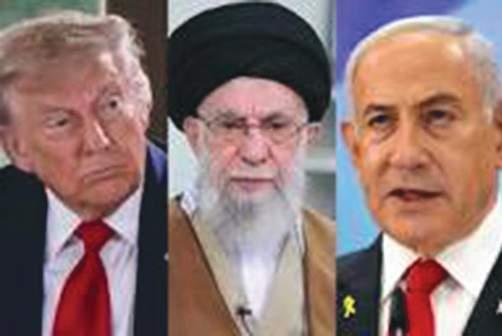
S’Africa rebuffs US pressure to distance itself from Iran Iran hits key UAE oil port, Dubai airport
Emmanuel Addeh in Abuja
The North Atlantic Treaty Organisation (NATO) and European countries yesterday ruled out sending warships to the strait of Hormuz, despite
threats from Donald Trump that NATO faces “a
efforts to reopen the strait. “There was never a joint decision on whether to intervene. That is why
the question of how Germany might
First lady, Akpabio, Ribadu, Edun, Alake, Idris, Christopher Musa, five other ministers on president’s entourage To hold bilateral meeting with UK Prime Minister, Keir Starmer, culminating in signing of MoUs, agreements between both nations To witness signing of £746m financing deal for refurbishment of Apapa quays, Tin can port complex Idris to UK investors: Tinubu’s reforms driving global confidence in Nigeria
Deji Elumoye and Olawale Ajimotokan in Abuja
President Bola Tinubu, accompanied by his wife, Senator Oluremi Tinubu, will depart Abuja today for a State Visit to the United Kingdom (UK) as guests of Their Majesties King Charles III and Queen Camilla. This comes as the Minister of Information and National Orientation, Mohammed Idris, assured investors in the UK of a favorable business environment in Nigeria, stating that ongoing economic and governance reforms under the administration of President Bola Tinubu are boosting global confidence and creating new opportunities for trade, investment, and international cooperation.
Continued on page 8
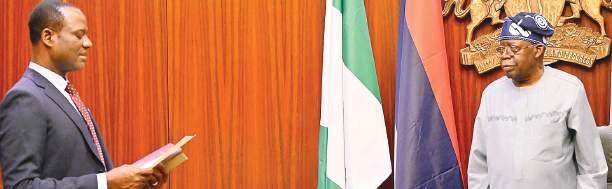
TAIWO OYEDELE TAKING THE OATH OF OFFICE...
Mr. Taiwo Oyedele (left) taking the oath of office as the new Minister of state for Finance before President Bola Ahmed
Abuja, yesterday
STATE






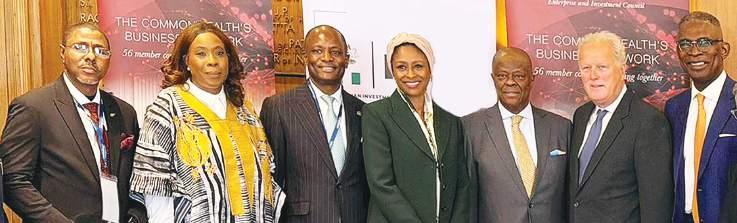
L-R: Chief Executive Officer, Central Securities Clearing System Plc (CSCS), Mr. Shehu Shantali; Lagos State Commissioner for Commerce, Cooperatives, Trade and Investment, Mrs. Folashade Bada Ambrose; Group Managing Director/CEO, Nigerian Exchange Group, Mr. Temi Popoola; Executive Secretary and Chief Executive Officer of the Nigerian Investment Promotion Commission (NIPC), Ms. Aisha Rimi; Minister of Finance and Coordinating Minister of the Economy of Nigeria, Mr. Wale Edun; Chairman of the Commonwealth Enterprise and Investment Council, Lord Marland; and Country Chair, Nigeria, Commonwealth Enterprise and Investment Council, Mr. Olasupo Shasore, SAN, at the Nigerian United Kingdom Investment Roundtable organised by NIPC in London, yesterday
I’ll prioritise revenue growth, fiscal sustainability, new minister assures
President Bola Tinubu has charged the new Minister of State for Finance, Taiwo Oyedele, to strengthen the nation’s economy as well as consolidate economic stability while pursuing accelerated growth.
In an address delivered yesterday, shortly after administering the oath of office on the new appointee at the State House, Abuja, the President explained that, “it didn’t take much for me to decide where you fit and where you need to be to further help the country, it is a very challenging job to look at the fiscal policy and responsibility that comes with it at the time that economic stability is being experienced, but without exponential growth, it is always very difficult, but you fit the bill.”
Tinubu said the decision to appoint Oyedele was deliberate, noting that his expertise and commitment made him the right choice for the demanding role.
Expressing confidence in Oyedele’s ability following his swearing-in as Minister of State for Finance, he described the new Minister as a dedicated professional well suited to help steer Nigeria’s fiscal reforms.
The President stressed that managing fiscal policy and ensuring financial discipline remain critical tasks for the government as it seeks to sustain reforms and strengthen the nation’s economic foundation.
He commended Oyedele for his contribution to the reform of Nigeria’s tax framework, noting that the country’s previous tax structure had become obsolete and required a comprehensive overhaul to align with modern economic realities and progressive thinking.
Tinubu described the new State Minister for Finance as a highly determined and committed individual who has demonstrated strong capacity for public service.
He also expressed appreciation to the appointee for accepting the call to serve the nation, describing the occasion as an important moment in the administration’s effort to deepen economic reforms.
His words: “This is a very good day and Taiwo I thank you for accepting to serve your country, whether that you rewritten the entire tax policy of this country that it was obsolete, archaic and fundamentally against every progressive thinker, you are just a very dedicated and highly determined individual.”
The President also acknowledged the support of Oyedele’s family, particularly his wife, for standing by him despite the demands of public service and the challenges of balancing time and responsibilities.
“I thank you. I congratulate you. I congratulate your wife for being able to stand our challenge of time management and absence for long hours. “This is additional
responsibility, and I hope you continue to encourage him and support him adequately,” Tinubu further stated.
Speaking with newsmen after being sworn in, Oyedele declared that his immediate priority would be to strengthen revenue generation, improve spending efficiency, and ensure fiscal sustainability in order to support Nigeria’s economic stability and growth.
The State Finance Minister explained that the ministry’s agenda would align closely with
the broader priorities of the federal government.
According to him, a key focus of the administration was revenue mobilisation to enable government meet the growing demands on the treasury at both the federal and sub-national levels.
The minister also emphasised the need to enhance spending efficiency, stressing that government must maximise the value derived from every Naira earned in order to effectively meet the needs of Nigerians.
Oyedele added that debt management and fiscal sustainability would remain central to the ministry’s policy direction, underscoring the importance of aligning fiscal policy with other national strategies, including monetary, trade, and international economic policies.
He said: “So the priorities are the priorities of the government, the priorities for our country, because the Ministry of Finance will not operate in isolation.
“And those issues are mostly
around revenue mobilisation, so you can have enough revenue to meet the increasing demand of the public on the treasury, both at the federal level as well as sub-national. “And then there’s also the issue around spending efficiency and priority, because for every one Naira that we earn, how can we optimise the value we get from it to meet the needs of our people? And of course, you know, issues around debt management and fiscal sustainability is also important.”
Enumah
A witness of the Economic and Financial Crimes Commission (EFCC) has admitted not interviewing a former Central Bank of Nigeria (CBN) Governor, Mr. Godwin Emefiele, during their investigation of procurement fraud allegations.
The witness, David Jaiyeoba, who is the 12th Prosecution Witness (PW12), admitted this yesterday, during cross-examination by Emefiele’s lawyer, Mr. Mathew Burkaa, SAN.
Emefiele is standing trial on an amended 20-count charge bordering on criminal breach of trust, forgery, abuse of office, conspiracy to obtain
by false pretence, and obtaining money by false pretence while serving as CBN Governor.
The EFCC, in the charge marked: FCT/HC/CR/577/2023, alleged that the former CBN Governor knowingly obtained by false pretence the sum of $6,230,000 purportedly meant for international election observers for the 2023 general election.
Besides, the anti-graft agency is also claiming that Emefiele conferred corrupt advantages on two companies—April 1616 Nigeria Ltd and Architekon Nigeria Ltd in the award of contracts.
He, however, denied all the counts preferred against him in the charge.
Answering questions from
Lauds his bold commitment to ideals of progressive governance and constitutional democracy
Deji Elumoye in Abuja
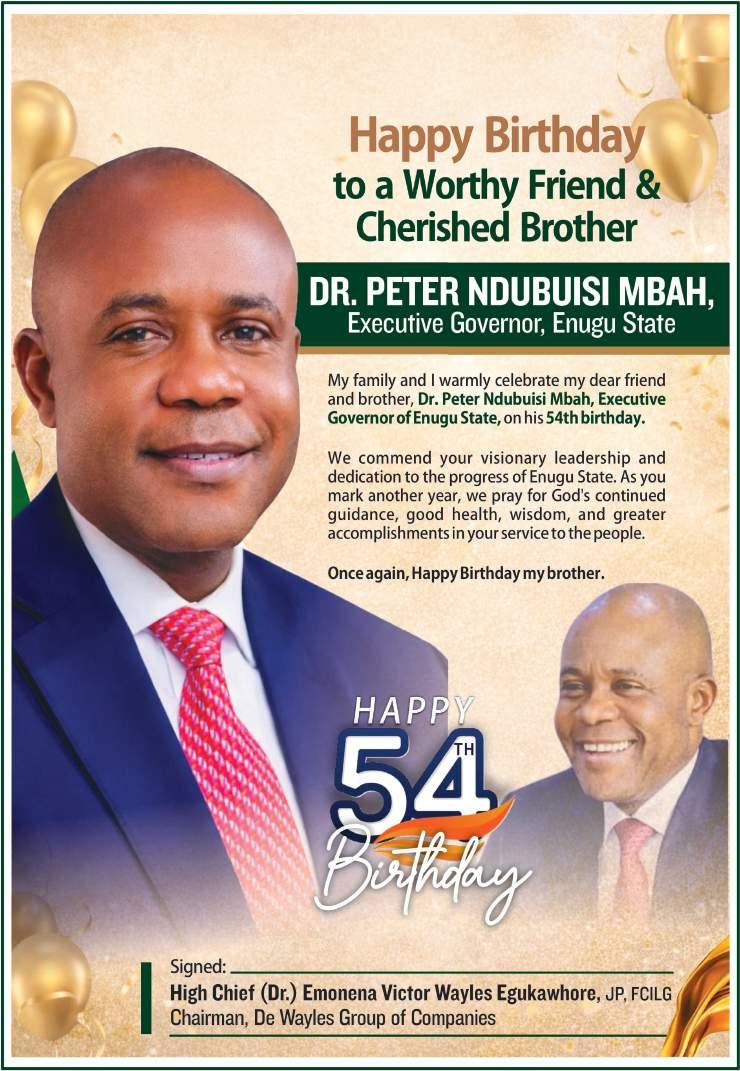
President Bola Tinubu has felicitated Governor Peter Mbah of Enugu State on his 54th birthday on March 17, 2026.
The President, in a release issued on Monday by his Adviser on Information and Strategy, Bayo Onanuga, celebrated the lawyer and philanthropist,
highlighting the tremendous progress recorded in Enugu State under his leadership over the past two years.
Tinubu particularly lauded Dr Mbah’s bold commitment to the ideals of progressive governance and constitutional democracy, as exemplified in his administration’s transformational projects and programmes.
“During my official visit to Enugu in 2025, I witnessed firsthand what good and competent leadership, as demonstrated by Mbah, can accomplish when anchored on vision and service to the people.
“Dr Mbah’s inclusive governance and partnership with other Southeast governors is repositioning the region for economic and
political transformation”, the President remarked.
Tinubu wished the Enugu governor good health and renewed strength as he continues his good work in the state.
Mbah was a private-sector player who had achieved success in the oil and gas sector before he was elected governor of Enugu State in 2023.
Emefiele’s lawyer at yesterday’s proceedings, Jaiyeoba told Justice Hamza Muazu of the High Court of the Federal Capital Territory (FCT) that he did not personally interview Emefiele, but his team did.
According to him, the findings of the EFCC were based on documents and statements of suspects who were arrested during the course of the investigation.
“My evidence never mentioned April 1616. However, the defendant is not a signatory to the account of April 1616. I cannot remember if he is a director or shareholder,” he said.
He added that the defendant was neither a signatory, director, nor shareholder of Archiketon Nigeria Limited.
He admitted he had not visited the CBN Governor’s residence, the specific Archiketon renovation site alleged in the case, nor any other project locations.
The witness told the court that their findings on the renovation projects were based on statements provided by the company’s director.
Jaiyeoba also noted that he was aware of the committee in the CBN that vets and handles the bidding process of contracts, but could not recall the name.
He said he did not interview the officers involved.
“My team did, but personally,
I was not part of that interview because the team had to be divided.
“One operated within Lagos while the others operated in Abuja.
“The Abuja team interacted with these officials due to proximity and distance,” he explained.
When asked if Emeifele was a member of the Major Contract Tender Committee that handled the procurement process, he replied: “I cannot remember.”
The witness was also questioned on the properties he had mentioned in the last proceedings. Burkaa asked if he was aware that the Court of Appeal had overturned the forfeiture order for the properties and presented him with the judgment.
Responding, Jaiyeoba told the court that he was seeing the judgment for the first time, but affirmed that while the defendant contested the forfeiture order, he never made a claim to $2 million (part of the items listed for forfeiture) as his property.
In June 2025, the Court of Appeal in Lagos overturned the forfeiture order and directed a fresh hearing by the lower court.
Jaiyeoba then acknowledged that the EFCC was bound by the Court of Appeal’s decision. When asked why he tendered the Code of Conduct forms of the defendant, the witness noted that he was not aware of the judgment.
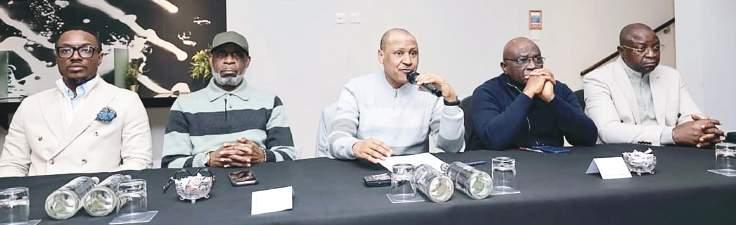
L-R: Senior Special Assistant to the President on Digital Media, Mr. Otega Ogra; Minister of Solid Minerals Development, Dr. Dele Alake; Minister of Information and National Orientation, Mr. Mohammed Idris; Special Adviser to the President on Information and Strategy, Mr. Bayo Onanuga; and Special Adviser to the President on Media and Public Communication, Mr. Sunday Dare, during an interactive session with Nigerian media practitioners in the United Kingdom at Hilton Kensington Hotel, London, ahead of President Bola Ahmed Tinubu’s state visit, yesterday
James Emejo in Abuja
Minister of Budget and Economic Planning, Senator Abubakar Bagudu, yesterday reaffirmed the federal government’s commitment towards achieving $1 trillion economy by 2030.
Bagudu reiterated the importance of strong policy coordination and strategic planning, adding that the
$1 trillion economy aspiration would be pursued vigorously.
He spoke while receiving the new Minister of State for Budget and Economic Planning, Dr. Doris Uzoka-Anite, on her assumption of duty on Monday.
The minister said the President Bola Tinubu administration planned to achieve the objective by growing the economy at seven per cent
annually, explaining that the upcoming National Development Plan (2026–2030) will guide economic reforms, investment priorities, and development initiatives across the country.
In a statement, Bagudu welcomed Uzoka-Anite’s appointment and told her that, as the official planning authority of the country, the Federal Ministry of Budget and
Economic Planning was responsible for preparing and coordinating national development plans, harmonising fiscal and economic policies, providing policy advice to the president, and coordinating development initiatives across the federal, state, and local levels.
The minister recalled recent discussions at the National Economic Council (NEC), which
The Minister of Works, David Umahi, yesterday denied allegations of negligence in the killing of five engineers working for NELAN Consulting Engineers in Ebonyi State, saying the incident occurred amid a violent communal crisis and that authorities at the time took swift action to investigate the crime.
The minister’s response followed a protest in Abuja by individuals identified as family members and sympathisers of the slain engineers, who demanded justice four years after the incident.
In a statement issued in Abuja by his Senior Special Assistant on Media, Francis Nwaze, Umahi said the protest had drawn the attention of his office but insisted that his administration as governor of the state did not abandon the case. He expressed sympathy for the families of the victims, describing the deaths as a painful tragedy, but maintained that the matter had been treated with seriousness while he served as governor.
According to the statement, the disappearance of the engineers occurred on November 3, 2021, during the height of the violent communal conflict between Effium and Ezza-Effium groups in Effium.
The minister said the engineers were not targeted in isolation but were victims of a broader crisis that claimed several lives and destroyed property during the conflict.
Umahi stated that immediately the information reached him as governor, he mobilised security agencies and initiated search and investigative operations to determine
the fate of the victims and identify those responsible.
He added that he personally visited the scene with security operatives and was directly involved in the search efforts, stressing that the state government never treated the matter lightly.
The statement noted that the investigations led to the arrest of suspects who allegedly confessed to committing the crime, adding that they had remained in custody since then while the case continued in court.
“The unfortunate disappearance of the engineers occurred at the height of the violent Effium vs. Ezza Effium communal conflict, a crisis that consumed lives and properties and threw the area into severe insecurity. The engineers were not singled out in isolation; they were victims of a wider conflict that tragically claimed many lives during that period.
“Immediately the information about the incident reached the then Governor of Ebonyi State, Senator David Umahi, he swiftly mobilised security agencies and launched intensive search and investigative efforts to determine the whereabouts of the engineers and bring the perpetrators to justice.
“He personally visited the incident site with security operatives and was directly involved in the search efforts. He never treated the matter lightly and never looked away from the responsibility of the state to pursue the truth.
“These efforts led to the arrest of individuals involved in the dastardly act. Those arrested confessed to committing the crime, and they have
remained in custody since then.
The matter is still before the court, and the judicial process continues even after Senator Umahi left office as governor.
“It must therefore be clearly understood that the government under Senator Umahi did not abandon the matter, suppress it, or fail to act. Swift investigative actions were taken, arrests were made, and the suspects were handed over to the justice system, where the case continues to be prosecuted,” he stated.
The minister also said the violent communal crisis that engulfed the Effium area at the time created a dangerous security environment that led to the loss of several innocent lives, including the engineers.
While expressing sympathy with
the families, Umahi urged that public discourse on the issue be guided by facts and the ongoing judicial process.
The engineers: Nelson Onyemeh, Ernest Edeani, Ikechukwu Ejiofor, Samuel Aneke and Stanley Nwazulum were employees of NELAN Consulting Engineers, an Enugubased firm supervising the Abakaliki Ring Road project financed by the African Development Bank (AfDB).
They were reportedly abducted while carrying out supervisory work on the project in Effium community in Ohaukwu Local Government Area.
The incident occurred at a time when violent communal clashes between Effium and Ezza-Effium groups had created widespread insecurity in the area.
identified several key policy priorities to accelerate national development, including improved coordination among federal, state, and local governments, especially since state governments accounted for about 48 per cent of public expenditure.
He said other priorities involved increasing investment in security, securing ongoing funding for transformative infrastructure, and strengthening enforcement against illegal activities in the extractive sector, particularly crude oil theft and illegal mining.
Bagudu stated that the ministry continued to coordinate international development partnerships to support Nigeria’s economic growth. He explained that one recent milestone was the upgrade of bilateral relations between Nigeria and China to a comprehensive strategic partnership, which had led to several cooperation agreements focused on economic development.
In her response, Uzoka-Anite stated that for Nigeria to attain the desired level of growth, 95 per cent of economic development must be driven by the private sector, with the federal government contributing five per cent.
She advised that the Renewed Hope Agenda should be led by the private sector to achieve its objectives.
According to her, “I have no doubt that Mr President can achieve the $1 trillion economy, as he has started by laying the
foundation for that to happen through the introduction of economic reforms and the implementation of the National Development Plan (NDP).”
She took the opportunity to thank the president for the chance to serve in his administration in various roles, first, as Minister of Industry, Trade and Investment, then as Minister of State for Finance, and now as Minister of State for Budget and Economic Planning.
Permanent Secretary, Ministry of Budget and Economic Planning, Dr. Deborah Odoh, welcomed the minister of state’s assumption of office at a critical period when the government hoped to significantly drive growth.
Odoh said, “We are confident that your distinguished experience in public service, finance, and economic management will further strengthen the ministry’s work as we continue to advance the government’s economic reform agenda and improve the quality of national planning and budgeting.”
Odoh hoped that Uzoka-Anite’s insights, guidance, and engagement would add value to the work of the ministry and its agencies.
She said the new minister’s presence would undoubtedly help strengthen the collective capacity of the leadership team as the management continues to deliver on the ministry’s mandate in support of the president’s Renewed Hope Agenda.
The Minister of State Petroleum Resources (Gas), Ekperikpe Ekpo, yesterday said he had received briefings concerning reports of gas seepage observed in the ground and surrounding water bodies in Bille Community, within the Oil Mining Lease (OML) 18 corridor in Rivers State.
Ekpo, according to a statement in Abuja by his spokesman, Louis Ibah, reassured the public that the federal government had taken prompt and coordinated action to investigate and address the situation.
“Indeed, following reports from residents of Bille and adjoining communities indicating unusual bubbling in nearby water bodies, relevant regulatory agencies and operators immediately activated a joint response mechanism.
“The Nigerian Upstream Petroleum Regulatory Commission (NUPRC) and the National Oil Spill Detection and Response Agency (NOSDRA), together with operators active within the OML 18 area, commenced immediate field investigations to determine the source and nature of the occurrence.
“As part of the ongoing response,
two joint investigation visits have already been conducted at the affected locations. During these inspections, relevant samples were collected and forwarded for laboratory analysis,” Ekpo stated.
He explained that preliminary assessments conducted so far have not established any direct link between the bubbling and oil pollution, pipeline leakage, or other operational failures within the oil and gas infrastructure in the area.
However, the minister emphasised that final laboratory results were being awaited to provide
definitive scientific clarification.
In furtherance of the federal government’s commitment to transparency and environmental protection, the minister said he has directed the NUPRC to intensify its technical investigations, undertake additional site visits, and maintain continuous monitoring of the affected locations.
“The commission, working closely with operators in the area, remains fully committed to identifying the exact source of the gas seepage and ensuring that appropriate remedial actions are taken swiftly once investigations are concluded,” the minister explained.
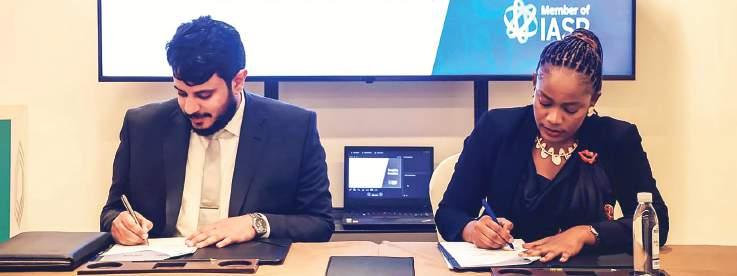
L-R: Chief Executive Officer of Saudi Arabian ICT giant, Dhahran Techno Valley Holding Company (DTVC), Mr. Mohammed Abusharifah; and Chief Executive Officer of SID and Special Adviser to the Governor of Anambra State on Innovation and Business Incubation, Ms. Chinwe Okoli, during the signing of a Memorandum of Understanding to accelerate tech investment in Anambra at the Anambra Government House, yesterday
Ogundare
Governor Babajide Sanwo-Olu of Lagos State yesterday unveiled a $25 million Lagos Education Access Fund (LEAF) aimed at expanding access to quality basic education and improving learning outcomes for children across the state.
The initiative launched at Lagos House, Marina, is expected to facilitate the enrolment of up to 50,000 out-of-school children aged between six and 14 years into formal education, while also strengthening foundational literacy and numeracy for about 150,000 pupils already in public schools.
The programme is being implemented through Lagos State Universal Basic Education Board (LSUBEB), in partnership with Education Outcomes Fund (EOF) and other development partners as part of efforts to promote inclusive and equitable basic education in the state.
Speaking at the unveiling, SanwoOlu reaffirmed his administration’s commitment to ensuring that every child had access to free and quality
basic education, describing education as a key driver of social mobility, human capital development, and economic growth.
He stated that the intervention built on the gains recorded under Project Zero, an initiative launched in 2021 to identify and reintegrate out-of-school children into the education system, through which over 36,000 children had been returned to the classrooms.
The governor added that the fund aligned with the state’s T.H.E.M.E.S+ development agenda, particularly its focus on education and technology as catalysts for building a knowledge-driven society.
He stated, “The importance of community participation in sustaining educational development, cannot be overemphasised. More than 360 parents and guardians have been trained in vocational skills, such as fashion designing, catering, soap making, and hairdressing to enhance their capacity to support their children’s education.”
Sanwo-Olu commended the development partners, including Children’s Investment Fund Founda-
tion, Federal Ministry of Education, and Ministry of Foreign Affairs, for their contributions towards improving education outcomes in Lagos State.
Earlier, in his remarks, Commissioner for Basic and Secondary Education, Jamiu Tolani Alli-Balogun, described LEAF as a transformational initiative capable of
strengthening the state’s education ecosystem and accelerating access to quality learning opportunities.
Chief Executive Officer of Education Outcomes Fund, Amel Karboul, explained that the initiative was anchored on an innovative results-based financing model that prioritised measurable outcomes, such as enrolment, retention, and
completion rates.
According to Karboul, “The programme will leverage data-driven technology and monitoring systems to ensure that children are not only enrolled, but remain in school and achieve improved learning outcomes.”
In her remarks, Eunice Ogolo announced the foundation’s $10
million support for the initiative, underscoring the urgency of addressing the challenge of out-of-school children.
Ogolo reaffirmed CIFF’s commitment, as an anchor funder, to supporting the vision of a Lagos where every child acquired basic literacy and numeracy skills and had the opportunity to thrive.
Ndubuisi Francis in Abuja
Officials of the Ethiopian government have approached Nigeria’s Investments and Securities Tribunal (IST) to understudy the legal mechanism through which complaints arising from investments in the Nigerian capital market were resolved. Ethiopian Ambassador to Nigeria, Legesse Geremens Haile, disclosed this during a courtesy visit to IST Chairman, Hon. Aminu Jinaidu,
Nigerian Safety Investigation Bureau (NSIB) has commenced investigation into a railway incident involving a passenger train operating on the Rigasa–Idu rail corridor.
The occurrence took place at approximately 09:16 hours along the Jere–Asham section, near Asham Station in Kaduna State. The section of the track where the event occurred is located on a downward gradient.
The train, identified as KA2, NSIB said, departed Rigasa Railway Station in Kaduna at the commencement of its scheduled journey to Idu Station in Abuja.
A statement issued on Monday by Director, Public Affairs and Family Assistance, NSIB, Mrs. Funke Arowojobe, hinted that the train operated within the scheduled service window of 07:15 to 10:01 and arrived at Jere Station at 08:52 before departing again at 08:59 to continue the journey towards Abuja.
Arowojobe stated, “Upon arrival at Jere Station, a rear locomotive was attached to the train to provide additional operational support for the onward movement along the corridor. Shortly after departure from Jere station, the rear locomotive became detached while the train proceeded along the downward gradient toward
the Asham section.
“The detached locomotive subsequently rolled forward and struck the rear portion of the train, resulting in a serious operational occurrence.
“At the time of the incident, the train consisted of two locomotives positioned at the front and rear, one power car, two business class coaches, and six standard passenger coaches.
“The train conveyed a total of 429 passengers. Onboard personnel included 46 crew members as well as 24 security personnel assigned to the service. No fatalities were recorded but some passengers sustained injuries.
in Abuja.
Haile revealed that his country now had a capital market system, including the Ethiopian Exchange and the Capital Market Administration, to serve the interests of investors.
He stated that every investor needed assurance from institutions that could receive and respond to their complaints in a timely manner.
The ambassador added that they approached IST to understudy the legal mechanism through which complaints from investments in the Nigerian capital market were addressed.
While praising the tribunal for
the excellent work it had done so far in the Nigerian capital market, the Ethiopian envoy said his country hoped to sign a Memorandum of Understanding (MoU) with the tribunal soon.
With African Continental Free Trade Area (AfCFTA) coming into effect, Haile said Africans needed to work together in the spirit of Pan-Africanism.
He expressed Ethiopia’s desire to strengthen its political and economic relations with Nigeria.
Haile expressed optimism that knowledge gained from the visit would be useful as Ethiopia continued to develop and strengthen its own capital market institutions.
According to him, collaboration and learning from established systems, such as Nigeria’s, can play an important role in building strong and credible investment frameworks in Ethiopia.
Responding, the IST chairman assured Ethiopia of the tribunal’s readiness to support the development and stability of that country’s emerging capital market through the sharing of Nigeria’s experience in investment dispute resolution. He stated that the tribunal would do everything within its capacity to ensure that the Ethiopian capital market stood firmly on its feet.
Dubai civil aviation authority grounds all flights to Dubai
Chinedu Eze
As Iran continues to launch missile to the United Arab Emirates with the end of the war between Iran, United States and Israel not in sight, Emirates Airlines has again announced suspension of all flights to Dubai. The announcement was contained in its latest travel update on Monday March 16 and advised that all travelers should not go to Dubai International Airport.
The suspension of services follows advice issued by the Dubai Civil Aviation Authority (DCAA) on Monday morning, which grounded all DXB flights.
In its latest announcement, Emirates stated that all Emirates flights to and from Dubai remain suspended until further notice. It said it is working closely with the relevant authorities to assess the situation and support
the safe resumption of operations when possible.
“Customers are reminded not to travel to the airport at this time and to continue checking this page for the latest updates. The flights’ suspension comes after US and Israeli strikes on Iran, in what US President Donald Trump described as a “major combat operation”, forcing airlines to reroute services that would normally cross the region.
Emmanuel Addeh in Abuja
Africa’s biggest telecoms operator MTN Group has rebounded to an annual profit and said on Monday it would pay shareholders a dividend that exceeded guidance and planned to buy back shares.
The strong performance in the year ended December 31 followed a difficult 2024 for the group, when its largest business, MTN Nigeria, was hit by sharp
currency devaluations, surging inflation and high interest rates.
For the full year 2025, strong performances in MTN Nigeria and MTN Ghana, as well as 3.6 billion rand in cost savings, delivered a profit before tax of 47.4 billion rand ($2.81 billion).
That compared to a restated loss before tax of 4.1 billion rand in 2024, a Reuters report said.
At the market opening in Johannesburg, South Africa-
headquartered MTN shares surged 7.4 per cent before paring gains to trade 4.8 per cent higher.
The operator declared a final dividend of 500 cents per share, up 45 per cent, and 35 per cent above the 370 cents minimum MTN had guided for the period.
Group Chief Executive Officer, Ralph Mupita, said in a media call reported by Reuters that MTN would introduce an enhanced framework, targeting an annual
distribution of 40 per cent to 60 per cent of equity-free cash flow in shareholder remuneration, effective now.
The framework includes a minimum cash dividend of 40 per cent of equity free cash flow, with an additional 20 per cent available for further cash payouts or share repurchases.
Mupita said the board had approved a buyback of up to 6 billion rand, “to be executed
According to a statement issued yesterday, by presidential spokesperson, Bayo Onanuga, King Charles would host Tinubu and his wife at Windsor Castle from Wednesday, March 18, to Thursday, March 19.
The state visit is the first by a Nigerian leader in 37 years with Tinubu as the first Nigerian leader to be hosted by the British monarch at Windsor Castle.
Nigeria and the United Kingdom share a deep history of ties and a special bond. The purpose of this visit is to strengthen bilateral relations and explore avenues for collaboration on issues such as immigration, trade, investment, and cultural exchange.
While at Windsor Castle, Their Majesties would invite the President and the First Lady to view a special
exhibition of items from the Royal Collection related to Nigeria. Later, the King and the President would hold private discussions and meet with organisations engaged in interfaith dialogue, both nationally and internationally.
The Royal Family would host a State Banquet in honour of the Nigerian guests in the evening. Tinubu would also hold a bilateral meeting with Prime Minister Keir Starmer at 10 Downing Street, which would lead to expanded bilateral engagement between senior officials of the two countries. The meeting would culminate in the signing of various Memoranda of Understanding and agreements, including those on trade, investment, defence, and cultural cooperation.
The President would witness
the signing of the landmark £746 million financing deal between the UK Export Finance (UKEF) and the Nigerian Ports Authority (NPA) and Federal Ministry of Finance to support the refurbishment of two of Nigeria’s major national maritime infrastructure - the Lagos Port Complex (Apapa Quays) and the Tin Can Island Port Complex.
Also, Tinubu would be the guest of honour at the Nigerian Modernism exhibition, showcasing modern arts and culture, and will also attend a reception with Nigerian and British business leaders and the diaspora community.
Members of the President’s entourage include: Senate President, Godswill Akpabio; Attorney General and Minister of Justice, Prince Lateef Fagbemi (SAN); Minister of Solid Minerals, Dele
Alake; Minister of Information and National Orientation, Mohammed Idris; Minister of State for Foreign Affairs, Ambassador Bianca Ojukwu; Minister of Finance and Coordinating Minister of the Economy, Wale Edun; and Minister of Industry, Trade and Investment, Dr. Jumoke Oduwole.
Others are Minister of Culture and Creative Economy, Hannatu Musawa; Minister of Communications and Digital Economy, Bosun Tijani; Minister of Defence, General Christopher Musa (rtd); National Security Adviser, Malam Nuhu Ribadu; and Director-General of the National Intelligence Agency, Ambassador Mohammed Mohammed.
The President will return to the country at the conclusion of the State Visit.
contribute militarily does not arise. We will not do so,” the Chancellor, Friedrich Merz, said.
He added: “This Iranian regime must come to an end,” but that “based on all the experience we have gained in previous years and decades, bombing it into submission is, in all likelihood, not the right approach.”
For his part, the country’s Defence Minister, Boris Pistorius, said: “This is not our war, we have not started it. What does Donald Trump expect from a handful of European frigates in the strait of Hormuz that the mighty US navy cannot manage alone? This is the question I find myself asking.”
Also, Keir Starmer said the UK would not be “drawn into the wider war” but was working on “a viable plan”. “Ultimately, we have to reopen the strait of Hormuz to ensure stability in the (oil) market. That is not a simple task,” said the prime minister. He did not rule out any form of action but said it would have to be agreed by as “many partners as possible”.
Besides, Italy’s Foreign Minister, Antonio Tajani, said on Monday that “diplomacy needs to prevail” and his country was involved in no naval missions that could be extended to the area. He cast doubt on expanding the remit of existing EU missions in the Red Sea to the strait of Hormuz, “since they are anti-piracy and defensive missions,” the Guardian UK reported.
The position taken by the three major European countries was striking because they had avoided criticising Trump over his decision, alongside Israel, to attack Iran 17 days ago. Soon after the first strikes, the US president said the goal of the military campaign was regime change, but the war has since become a wider regional
conflict, causing energy prices to soar.
Australia, France and Japan have also said they had no plans to send warships.
But at a press conference on Monday, Trump repeated his call on allies to help reopen shipping in the strait, saying “some are very enthusiastic about it and some aren’t”. He reiterated he was “not happy with the UK”, but he thought it would be involved.
Trump had called on other countries to enter the war by sending ships to the strait to protect commercial vessels and unblock oil shipments.
Raising the pressure, he told the Financial Times: “It’s only appropriate that people who are the beneficiaries of the strait will help to make sure that nothing bad happens there. If there’s no response or if it’s a negative response, I think it will be very bad for the future of NATO.”
EU foreign ministers meeting on Monday decided against extending the remit of their small naval mission in the Red Sea. A proposal to change the mandate of Operation Aspides to help secure the strait drew little enthusiasm from member states, said the EU’s foreign policy chief, Kaja Kallas.
“There was in our discussions a clear wish to strengthen this operation, but for the time being there was no appetite in changing the mandate,” Kallas said.
European ministers have said they need to know more about the US’s and Israel’s war aims.
The Estonian foreign minister, Margus Tsahkna, said US allies in Europe wanted to understand Trump’s “strategic goals. What will be the plan?”
Greece, which provides the headquarters for Operation Aspides,
also said on Monday it would not engage in any military operations in the strait.
S’Africa: No Reason to Cut Ties with Iran
South Africa has no reason to cut ties with Iran, its Director General of Foreign Affairs, Zane Dangor said, after the new US ambassador was quoted as saying the country’s association with the Islamic Republic was an impediment to good relations with Washington.
In an interview with Reuters, Dangor also rejected some other Trump administration demands, such as dropping South Africa’s genocide case against Israel, scrapping Black empowerment laws or accepting a refugee programme for whites.
Dangor was speaking against the backdrop of the US and Israeli war on Iran, a conflict placing increased strains on governments navigating relationships with Tehran, and a sharp deterioration in Pretoria’s ties with the US during President Donald Trump’s second term.
In August Trump imposed a 30 per cent tariff on imports from South Africa, a move that could cause tens of thousands of job losses at a time when a third of South Africans are out of work.
“We have not any reason to cut ties with Iran,” Dangor said, but he added: “we are not absolutely uncritical of Iran,” noting that President Cyril Ramaphosa’s government had admonished the republic for its crackdown on protesters in January, and for attacking neighbours in the latest war with the United States.
“(But) we cannot be pulled into the sort of sphere of influence politics that great powers want to pull us into, and that in this
opportunistically over three years from 2026”.
The group’s service revenue rose 22.7 per cent to 218.5 billion rand, led by strong growth of 54.9 per cent and 35.9 per cent in Nigeria and Ghana, respectively, the mobile operator said.
In the pre-paid segment, where competitive pressures are severe, MTN South Africa reported overall service revenue growth of 2 per cent, the report added.
Idris to UK Investors: Tinubu’s Reforms Driving Global Confidence in Nigeria
Meanwhile, the Minister of Information and National Orientation, Mohammed Idris, has assured investors in the United Kingdom (UK) of a favorable business environment in Nigeria, stating that ongoing economic and governance reforms under the administration of President Bola Tinubu are boosting global confidence and creating new opportunities for trade, investment, and international cooperation.
Idris said this in London at a World Press Conference preceding the official visit of the President to the UK on the invitation of King Charles III.
instance includes the US,” he said.
In his first media interview, new US Ambassador Leo Bozell was quoted by News24 as saying “an association with Iran is an impediment to good relations with the United States.”
“You (the United States) have a particular relationship with Iran ... that many in the developing world (do not) have,” Dangor said.
South Africa’s relationship with the US has been at a low since Trump accused its Black majority government of persecuting its white minority, repeating false claims about land seizures from white farmers circulating on far-right chat rooms.
According to the minister, early signs of progress from the economic reforms were already bearing significant gains, with investor confidence improving across key sectors of the economy.
“Inflation has halved since 2023, trade surplus is expanding, and the Central Bank’s Purchasing Managers’ Index has recorded fifteen consecutive months of growth, reflecting renewed momentum in Nigeria’s manufacturing and services sectors,” he said.
He reaffirmed Nigeria’s openness to responsible investors from around the world, assuring that government policies supported regulatory transparency, tax incentives and full repatriation of profits.
He added that the President’s visit would also provide an opportunity to deepen collaboration between both countries in key areas, including trade and investment,
security cooperation, climate action, education, and technological innovation.
He said: “We deeply value our long-standing partnership with the United Kingdom and look forward to strengthening collaboration in the years ahead.
“This visit highlights the historic and strategic relationship between Nigeria and the United Kingdom, a partnership built on deep diplomatic, economic, cultural, and democratic ties.”
The minister similarly expressed optimism that the country’s democracy has continued to strengthen over more than two decades of uninterrupted democratic governance since 1999, anchored in vibrant institutions, an active civil society, and a free press.
Idris averred that the administration of President Tinubu was committed to ensuring that democracy delivers real benefits to citizens through the Renewed Hope Agenda, which focuses on stabilising the economy, expanding opportunities, strengthening social protection, and investing in long-term national development. He listed some of the landmark reforms undertaken by the government, including the removal of the petrol subsidy and the harmonisation of multiple foreign exchange regimes, designed to restore fiscal transparency, promote economic sustainability and improve investment predictability.
According to Idris, these reforms, including a series of presidential executive orders in the oil and gas sector, made the country Africa’s
INFLATION CONTINUES DOWNWARD TREND, DROPPED TO 15.06% IN FEBRUARY, 12TH STRAIGHT MONTHLY DECLINE
benchmark interest rate to 26.5 per cent from 27 per cent.
Year-on-year, headline inflation reduced by 11.21 per cent compared to 26.27 per cent in February 2025.
Month-on-month, however, inflation increased to 2.01 per cent in February, a 4.89 per cent jump compared to -2.88 per cent in January, the NBS stated in its CPI report for the month under review.
Year-on-year, food inflation stood at 12.12 per cent compared to 26.98 per cent in February 2025.
However, on month-on-month, the food index rose by 10.70 per cent to 4.69 per cent compared to -6.02 per cent in January.
The NBS attributed the spike in food inflation to the rate of increase in average prices of beans, carrots, okazi leaf, cassava tuber, crayfish, millet flour, yam flour, snails, avenger (ogbono/ apon) - dried ungrinded, and cow peas among others.
The “All items less farm produces
and energy” or core inflation, which excludes the prices of volatile agricultural produces and energy, stood at 15.88 per cent, year-on-year in February, indicating 9.78 per cent decline compared to 25.66 per cent in February 2025.
Month-on-month, however, core inflation increased to 0.89 per cent compared to -1.69 per cent in January.
Also, year-on-year, urban inflation stood at 15.53 per cent compared to 28.49 per cent in February 2025.
Also, month-on-month, the urban index rose to 2.55 per cent in February compared to -2.72 per cent in January.
On the other hand, rural inflation stood at 13.93 per cent year-on-year compared to 22.73 per cent in February 2025.
Month-on-month, rural inflation increased to 0.71 per cent compared to -3.29 per cent in February.
At state level, year-on-year, headline inflation was highest in
Kogi (23.57 per cent), Benue (22.85 per cent), and Anambra (22.09 per cent), while Katsina (7.78 per cent), Imo (11.66 per cent) and Ebonyi (11.71 per cent) lowest rise in prices.
Month-on-month, however, the highest price increases was in Enugu (5.92 per cent), Ogun (4.39.per cent) and Anambra (4.11. per cent), while Zamfara (-2.14 per cent), Bauchi (-1.23 per cent), and Katsina (-1.06 per cent) recorded a decline.
Year-on-year, food inflation was highest in Kogi (26.91.per cent), Adamawa (23.12 per cent), and Benue (21.89 per cent), while Katsina (5.09.per cent), Bauchi (7.09 per cent), and Imo (7.65 per cent) recorded the slowest rise. However, month-on-month, the food index was highest in Bayelsa (8.81 per cent), Ebonyi (8.51 per cent) and Edo (7.72 per cent), while Katsina (-0.70 per cent), Nasarawa (0.17 per cent), and Kano (1.39 per cent) decline in the review period.





















Four pillars are critical for Nigeria’s democracy: electoral reform, judicial reform, freedom of speech, and the security of life and property. These pillars are the practical guardrails required for a democracy that is durable and productive.
Among these pillars, electoral reform is foundational. Elections do not simply select leaders; they determine whether power is accepted as legitimate, whether institutions are trusted, and whether governance will be effective. Where elections are credible, authority is strengthened. This understanding was clearly articulated by the Justice Mohammed Uwais led Electoral Reform Committee, whose recommendations emphasised independence of the electoral body, transparency, credible dispute resolution, and firm enforcement of electoral rules.
young Nigerians, nearly three-quarters of those aged 18 to 35 report a lack of trust in the system's ability to deliver free and fair elections. These figures signal a serious democratic fault line beyond reputational concerns.
Subsequent reforms centered on the adoption of digital tools, including biometric voter registration, Permanent Voters’ Cards, and, electronic accreditation. These innovations reflected institutional intent and public demand: technology as a guardrail against manipulation and a basis for public confidence. That intent reached its apex in 2015, widely regarded as a benchmark for our democracy. Progress, however, proved fragile and post 2019 and 2023 elections, public trust has regressed due to uneven use of technology, weak enforcement and increased reliance on courts to determine electoral outcomes.
Today, surveys indicate that less than 50 percent of Nigerians have confidence in the electoral commission, with distrust deepest in the South-South and South-East. Among
The costs of a weak electoral system are profound: increased violence, unaccountable governments and compromised institutions. Nigeria confronts a clear democratic risk. The persistent review of electoral laws, the growing demand for transparency, and declining public confidence all point to the conclusion that credible electoral reform is urgent and unavoidable. For instance, concerns about the potential for administrative discretion by electoral officers, to permit manual transmission of results in the event of network failure can be addressed with clear operational guidelines, stronger safeguards, and transparent procedures that ensure technology remains a tool for accountability.
Following the assent to the Electoral Act 2026, attention must now turn to effective implementation and the strengthening of public confidence in the electoral process. GoNigeria’s approach will remain practical and inclusive: supporting voter registration and participation;
encouraging informed public debate on electoral transparency and responsible use of technology in elections; engaging institutions and stakeholders on closing the gap between law and implementation; and amplifying citizen demand for elections that are credible, verifiable, and beyond reasonable dispute. GoNigeria is committed to ensuring, through advocacy, stakeholder engagement, and informed analysis, that elections in Nigeria are decided by the people and trusted by the people.
www.GoNigeria.com
The above Statement was signed by the Convener and released on behalf of GoNigeria, which has the following 24 Advocates at its helm: Atedo Peterside CON [Convener], Abubakar Siddique Mohammed, Aisha Yesufu, Arunma Oteh, Ayisha Osori, Obonganwan Barbara Etim James, Binta Max Gbinije, Dike Chukwumerije, Dudu Mamman Manuga, Folarin Falana (Falz), Hamzat Lawal, Ibrahim Dahiru Waziri, Kashim Ibrahim-Imam, Bishop Matthew Kukah CON, Muhammad Ali Pate, HH Muhammad Sanusi II (Emir of Kano), Ngozi Coker, Nuruddeen Lemu, Osita Chidoka, Salamatu Hussaini Suleiman, Sola Akinyede OON, Tomiwa Aladekomo, Tony Rapu, and Yemi Adamolekun.


17th March 2026






Measure of Damages for Dishonoured Bills Under Section 57 of the Bills of Exchange Act Page IV

'We have opened up the principle of Federalism, to the extent that Local Governments are now getting their money. But, how they use it, is in your hands. So, don’t bombard me alone; look at the Local Governments too, and equally, the sub-nationals….' - Bola Ahmed Tinubu, GCFR, President, Federal Republic of Nigeria
Emmanuel Nwude, Lawyers, Sentenced Over Property Fraud
Four Policemen Remanded Over Owode-Onirin Market Massacre
Page V
Court Dismisses UBA’s Bid to Remove Prosecutor
Aikpokpo-Martins vs Deputy Speaker Benjamin Kalu: A Prosecution that Should Never Have Been
Deletion of Section 134(3) of the 2022 Electoral Act
Part of the latest debate on the Electoral Amendment Act 2026 (EAA), is about the alteration of Section 134 of the 2022 Electoral Act (2022 EA) - replacing it with the new Section 138 of the EAA, but deleting therefrom, Section 134(3) of the 2022 EA, which, in a holistic but somewhat convoluted way, appeared to allow candidates to question the constitutional qualifications or disqualifications of other candidates, in election petitions, if there were allegations that such candidates didn’t meet the criteria set out in the 1999 Constitution of the Federal Republic of Nigeria (as amended)(the Constitution) for elective office.
To tell the truth (and let the devil be ashamed!), I don’t know why I hadn’t really considered Section 134(3) of the 2022 EA; instead, I was fixated on Section 29(5) thereof (which survived unscathed in the EAA, still as 29(5)), and only applies to aspirants challenging fellow aspirants on their qualifications as a pre-election matter at the Federal High Court. I had even gone ahead to argue in favour of having a type of Section 134(3), because I believe that candidates of opposing parties who participate in elections against themselves, and not just fellow aspirants fighting for party tickets, have sufficient interest to make such challenges; not fully realising that though such a provision was hiding in the 2022 EA, it wasn’t really making the required impact. And, instead of improving upon Section 134(3) in order to weed out unsuitable candidates, it has been deleted!
People are complaining that the deleted Section 134(3) was about stopping candidates from challenging other candidates, concerning allegations of presenting forged certificates to INEC; but, it goes beyond that - forged certificates are only one aspect; age, citizenship, sponsorship by a political party; mental health, undischarged bankrupts, those who have been sentenced to death or imprisonment, or convicted of an offence involving dishonesty within a period of less than 10 years before the election in question etc, were all covered by the 2022 EA’s Section 134(3). This provision should not have been deleted; instead, it should have been improved upon and altered, to expressly state that a ground to challenge an election in a petition, would be that a candidate doesn’t meet the qualifications set out in Sections 65, 106, 131 or 177 of the Constitution, or stands disqualified by virtue of Sections 66, 107, 137 or 182 of the Constitution. Instead it was removed.
How can the deletion of Section 134(3) of the 2022 EA be good lawmaking, within the threshold of Section 4(2) of the Constitution which directs the Legislature to make laws for the peace, order and good government of Nigeria? It is a ‘Carte Blanche’ for people of unsound mind, or those of questionable character who have presented forged certificates, or those who have other constitutional impediments, to be able to easily slip through the cracks unchallenged, because henceforth, by virtue of Section 29(5) of the EAA, only fellow aspirants have the right to make these challenges. Aspirants however, may be threatened with expulsion from their political party, or with other disciplinary actions for going to court without exploring intra-party dispute resolution mechanisms, or compensated by their political party for not making challenges, while the candidates who they face in the election are now barred by statute from exercising this right.
Proof Beyond Reasonable Doubt
Of course, some of these challenges such as lying about one’s age on Form CF001 or any other INEC document, or presenting forged certificates to INEC etc, border on criminal offences such as perjury and forgery, proof of which those making such allegations must discharge beyond reasonable doubt, as it is trite law that ‘he who alleges must prove’. This may be one reason why candidates who raised such allegations under the 2022 EA’s Section 134(3) may not have succeeded, as the mere mention or allegation is certainly inadequate - they may have failed to discharge the requisite burden of proof. In ACN v Lamido & Ors (2012) LPELR-7825(SC) per Mahmoud Mohammed, JSC (later CJN), the Supreme Court held thus: “The allegation of forgery being a criminal offence, must be proved beyond reasonable doubt”. And, the Apex Court concluded in Okon v PDP (2023) LPELR-60099(SC) that where this burden of proof that a document is forged isn’t discharged, such allegation fails. See the case of
onikepo braithwaite
ONIkEPO BrAIThwAITE
onikepo.braithwaite@thisdaylive. com
onikepob@yahoo.com
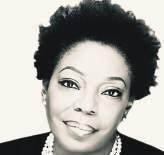
“How can the deletion of Section 134(3) of the 2022 EA be good lawmaking….Can statutory provisions, be used to curtail constitutional provisions?….a candidate in an election has the locus standi, real stakes and special interest in an election that he/she has participated in….The new Section 138, purports to rob/ deny candidates of their locus standi/right to challenge constitutional qualifications of other candidates, and the right to fair hearing…. a fundamental right that mustn’t be breached…NASS must refrain from making self-serving laws, or laws that serve only the interests of incumbent politicians. A good law not only stands the test of time, but serves the public good”
Uzodinma & Anor v Ihedioha & Ors (2020) LPELR-50260(SC) per Kudirat Kekere-Ekun, JSC (now CJN), where neither the Petitioner nor INEC adduced any evidence to support their claim that the Respondent tendered forged result sheets.
In Abubakar v INEC & Ors 2020 12
N.W.L.R. Part 1737 Page 37, the Supreme Court held that allegations of forgery and presenting false information to INEC are serious and grievous, “not matters or things one party alleges, and then folds his arms to see how the other party wriggles out of it”.
The National Assembly (NASS) appears to have turned such important provisions on constitutional qualifications and disqualifications for elective office into toothless bulldogs, by effectively restricting any challenge concerning them to only aspirants in Section 29(5) of the EAA. But, is the deletion of Section 134(3) of the 2022 EA lawful?
The matter of challenging constitutional qualifications and disqualifications do not fall within the purview of Section 6(6)(c) of the Constitution which ousts the jurisdiction of the courts only on matters pertaining to the Fundamental Objectives and Directive Principles of State Policy. Also see Section 6(6)(b) of the Constitution. Can statutory provisions be used to curtail constitutional provisions, when the first provision of the Constitution, Section 1(1), proclaims its supremacy and bindingness on all persons and authorities in Nigeria? I think not.
Locus Standi
A community reading of Sections 1(1), (3), 6(6)(b), (c) & 36(1)(right to fair hearing) of
the Constitution, points to the irresistible conclusion that all persons have the right to bring their disputes to court, except those excluded in Section 6(6)(c), once they have the requisite locus standi to institute same, which clothes the court with jurisdiction - see the locus classicus on jurisdiction, Madukolu v Nkemdilim 1962 2 S.C.N.L.R. 341. In Opobiyi & Anor v Muniru (2011) LPELR-8232(SC) per Olufunlola Oyelola Adekeye, JSC, the Supreme Court held thus: “Locus standi is the legal capacity to institute an action, in a court of law”.
In Anyawu v Emmanuel & Ors (2025) LPELR-80882(SC) per Jamilu Yammama Tukur, JSC, the Supreme Court held thus: “Locus standi requires that a Plaintiff demonstrate a sufficient interest in the subject-matter of the suit, and that such interest is one that the law recognises and protects….When determining jurisdictional issues such as locus standi, it is well-established that the Court must scrutinise the Plaintiff’s statement of claim to ascertain their standing….he must show that he has real stakes in the subject- matter, and must be able to establish that he suffered or is likely to suffer from the Defendant’s act or conduct”. Similarly, in Inter Ocean Oil Development Co (Nig) & Ors v Fadeyi & Anor (2024) LPELR-62449(SC) per Haruna Simon Tasmania, JSC, the Supreme Court held: “The burden or onus is on the Plaintiff to show that he has the requisite locus standi. To do that, he has to disclose his special interest or actual threat or
injury that he has suffered, or will suffer from the act of the Defendant complained of. In other words, he must show that his civil rights and/or obligations have been, or are in danger of being infringed upon, and that he has sufficient legal interest in seeking the redress in a Court of law”. I submit that it is as clear as crystal, that a candidate in an election has the locus standi, real stakes and special interest in an election that he/she has participated in, and would directly suffer injury if a fellow candidate who is constitutionally unqualified, is declared and remains the winner of the election; just like all aspirants have special interest in the primaries they partake in, and Section 29(5) of the EAA recognises this special interest by allowing them to exercise their right to challenge the qualifications of fellow aspirants, if they so desire. It should be the same, for candidates. If for instance, the Respondent was convicted of some money laundering offence less than 10 years before the election in question, or presented a forged WASC result to INEC, a Petitioner who was the runner up in the election, has even more interest than an aspirant who may have won the primary, but not the actual election, because if such Petitioner is able to discharge the burden of proof beyond reasonable doubt on the allegation, then automatically he/she is declared the winner of the election if they have met the constitutional threshold to be declared winner of the election. See PDP & Ors v Degi-Eremienyo & Ors (2020) LPELR49734(SC) per Ejembi Eko, JSC where the Supreme Court held: “It is clearly fraudulent for one person to allegedly bear several names that he uses variously, chameleonically to suit the changing environment….The sanction for presenting to INEC Form CF001 containing false facts about the personal particulars or information of the candidate, by virtue of Section 31 (6) of the Electoral Act, is an order issued by the High Court, disqualifying such candidate from contesting the election…..The sum total is that the joint ticket of the 1st and 2nd Respondents sponsored by the 1st Respondent, was vitiated by the disqualification of the 1st Respondent. Both candidates disqualified, are deemed not to be candidates at the Governorship election conducted in Bayelsa State. It is hereby ordered that INEC, (the 4th Respondent herein), declare as winner of the Governorship election, the candidate with the highest number of lawful votes cast with the requisite constitutional (or geographical) spread”.
The new Section 138, purports to rob/deny candidates of their locus standi/right to challenge the constitutional qualifications of other candidates, and the right to fair hearing. This is unconstitutional, as is trite that a good law must not only be clear and fair, but in alignment with the Constitution, while also addressing any problems related thereto. I submit that, the new Section 138 of the EAA which excludes the old Section 134(3), is unfair to candidates, and can therefore, not be described as a good law. It is incomplete. It is also discriminatory, contrary to Section 42(1)(b) of the Constitution, giving candidates with questionable qualifications an unfair advantage over those who are eminently qualified. See Lafia Local Government v Government of Nasarawa State & Ors (2012) LPELR-20602(SC) on the guarantee to every citizen, freedom from discrimination.
Conclusion
The resultant effect of the deletion of the 2022 EA’s Section 134(3), is the denial of a Plaintiff who wants to challenge a fellow candidate’s qualifications, the right to fair hearing, a fundamental right that mustn’t be breached - see Lafia Local Government v Government of Nasarawa State & Ors (Supra) on the importance of upholding fundamental rights. The deletion also evinces the fact that, the law only protects the interest of aspirants and not that of candidates with regard to constitutional qualifications and disqualifications, which is absurd.
If the House of Representatives can amend the recently passed EAA to criminalise dual party membership, then surely, the National Assembly (NASS) can also re-insert Section 134(3) or a new and improved version of it into the EAA, as leaving it out appears to make the replacement Section 138 of the EAA fail the tests of constitutionality and that of a good law. NASS must refrain from making self-serving laws, or laws that serve only the interests of incumbent politicians. A good law not only stands the test of time, but serves the public good. A good law promotes accountability, not inculpability and immunity.
s
Fact
The 1st Respondent was operating a current account with Account No. 0023648377 with the Appellant. Between 26th March, 2015 and 29th April, 2015, the 1st Respondent made various deposits totalling N700,037,240.23 into the said account. The 1st Respondent claimed that it issued several payment instructions to the Appellant which were dishonoured, and which caused the 1st Respondent to lose several business opportunities for which those funds were to be deployed. Consequently, the 1st Respondent filed an action before the High Court of the Federal Capital Territory seeking inter alia, a declaration that the Appellant’s blockage of the 1st Respondent’s account and its refusal to honour the 1st Respondent’s instructions to transfer various funds into various accounts specified by the 1st Respondent, were wrongful and without any lawful justification. The 1st Respondent also sought orders directing the Appellant to lift the blockage of its account; interest on the sum standing in the 1st Respondent’s credit at the rate of 21% per annum with effect from 4th July, 2016 up to the date of the judgement; post-judgement of interest at 10% per annum; and N2,500,000.000.00 as general damages, for breach of contract by the Appellant and loss suffered by the 1st Respondent for the blockage of its account.
The Appellant filed a Statement of Defence and Counter-Claim, wherein it joined the 2nd and 3rd Respondent as Co-Defendants in the Counter-Claim. The Appellant claimed that the 1st Respondent had agreed to discharge the 3rd Respondent’s indebtedness to the Appellant, and it was on this basis that the Appellant placed a lien on the sums in the 1st Respondent’s account. The Appellant counterclaimed for a declaration that it is entitled to the sum of N700,000,000.00 standing in the credit of the 1st Respondent in its Account No. 0023648377 with the Appellant’s FCMB Branch, or a declaration that it is entitled to place a lien on the said amount. The Appellant also sought an order directing the Respondents to immediately transfer the said sum from the 1st Respondent’s account to the 3rd Respondent’s Account No. 0013498269 with the Appellant’s Bank, to partly liquidate the 3rd Respondent’s indebtedness to the Appellant.
After the close of trial and adoption of written addresses, the trial court delivered its judgement wherein it found that there is no contractual relationship between the 1st Respondent and the Appellant regarding the payment of the 3rd Respondent’s indebtedness, and thereby held that the Appellant’s blockage of the 1st Respondent’s account and its refusal to honour the 1st Respondent’s transfer instructions were illegal and unjustifiable. The trial court awarded the 1st Respondent pre-judgement interest of 16% per annum on the sum of N700,037,240.23 standing in its credit, 10% post-judgement interest, and general damages of N35,000,000.00.
Dissatisfied, the Appellant appealed to the Court of Appeal which dismissed the appeal, and affirmed the decision of the trial court. Aggrieved, the Appellant lodged a further appeal at the Supreme Court. Issue for Determination
The Supreme Court adopted the sole issue formulated by the 2nd and 3rd Respondent: Whether the Court of Appeal was right in the circumstances of the case, in affirming the judgement of the trial court which awarded 16% as pre-judgement interest on the funds deposited with the Appellant by the 1st Respondent, and in addition, N35,000,000.00 only as general damages.
Arguments
Counsel for the Appellant submitted that, once a party has been fully compensated for the loss or harm suffered by him, it should not be open to the court to award him any other kind of additional damages that may look like a bonus. Counsel further submitted that the award of general damages is improper, where the quantum of loss is certain. It was also submitted that pre-judgement interest is in the nature of a special claim, and cannot be properly awarded on the basis of the equitable principle of breach of fiduciary relationship, but on satisfactory proof of entitlement by the Claimant Counsel for the Appellant argued that there was no evidence to satisfactorily prove that the 1st Respondent was entitled to pre-judgement interest, and in the
In the Supreme Court of Nigeria Holden at abuja On Wednesday, the 4th day of June, 2025
Before their lordships uwani Musa abba aji Ibrahim Mohammed Musa Saulawa emmanuel akomaye agim Chioma egondu Nwosu-Iheme Jamilu yammama Tukur Justices, Supreme Court SC/CV/757/2022
Between
uNITy BaNK PLC aPPeLLaNT And
1.eFORCe INTeRSeRVICe LTd ReSPONdeNTS
2. aLHaJI aBBa M. uSMaN
3. LOdIGIaNI NIGeRIa LTd
(Lead Judgement delivered by Honourable Chioma Egondu Nwosu-Iheme, JSC)
absence of such evidence, there was no legal justification for the Court of Appeal to uphold the trial court’s award of 16% pre-judgement interest to the 1st Respondent.
Conversely, Counsel for the 1st Respondent submitted that although the law guards against double compensation, it does not bar the award of damages under different heads in deserving situations, such as where it is glaring from the surrounding circumstances of the case and nature of the injury suffered, that the injured party would not be adequately compensated for his loss, especially where such injury was inflicted by the other party’s flagrant and wilful act(s). Counsel argued that the flagrant dishonouring of a cheque or transfer instructions by the relevant banker, coupled with the anguish and grave injury caused to the drawer’s credit and reputation, puts such cases in a special case of
“……..all the heads of damages itemised under Section 57 of the Bills of Exchange Act which comprise of the amount of the bill, interest thereon from the time of presentation or maturity, and the expenses of noting or expenses of protest, shall ordinarily be due to the 1st Respondent as of right, and the Court may even proceed further to award general damages for breach of contract as it did in the instant case, or even punitive damages”
The Apex Court held that it was evident in the 1st Respondent’s averments in its Statement of Claim in the records, that the 3rd Respondent had a loan obligation to the Appellant and the 1st Respondent which was a company in which one of the Directors of the 3rd Respondent was the Managing Director, had made a conditional offer to the Appellant to buy the three properties of the 3rd Respondent used to secure the loan as consideration for the payment of the 3rd Respondent’s outstanding loan agreed with the Appellant by the 3rd Respondent, further to which, the 1st Respondent deliberately funded its account with the Appellant as a sign of good faith. However, the 1st Respondent’s conditional offer could not be consummated into an agreement because the condition stipulated by the 1st Respondent (that the outstanding amount has to be an amount agreed to be so outstanding between the Appellant and the 3rd Respondent) could not be achieved, and in spite of this non-agreement, the Appellant proceeded to place a lien on the funds deposited by the 1st Respondent as lien against the 3rd Respondent.
The Supreme Court held that generally, the act of a subsidiary company cannot be imputed to the parent company, nor can the act of the parent company be imputed to the subsidiary company because a subsidiary company has a separate legal entity different from the parent company. The Supreme Court held that although it is not in evidence that the 1st Respondent and the 3rd Respondent are related as parent company/subsidiary company or vice versa, however, even if they were, they still maintain separate legal personality such that the act of one cannot be imputed to the other.
The Apex Court agreed with the Court of Appeal that the 1st Respondent was a third party to the debt liability of the 3rd Respondent to the Appellant, regardless of whether the 1st Respondent had offered to assist the 3rd Respondent to discharge its loan obligations to the Appellant, because there was no agreement between the 1st Respondent and the Appellant in this regard, hence, no valid and enforceable contract existed between them. The Court held that it was thus, mischievous of the Appellant to assume that, even though the proposal made to it by the 1st Respondent could not be consummated, it has the locus standi to put a lien on the 1st Respondent’s funds and deal with the funds as it pleased, probably for the mere fact that the 1st and 3rd Respondent shared a common director.
The Supreme Court held that the Appellant breached the banker/customer relationship between it and the 1st Respondent, which is distinct from the failed transaction between them in relation to the 3rd Respondent. The Court held that under Section 57 of the Bills of Exchange Act which made provisions for the measure of damages against a party who dishonours a bill of exchange such as a cheque, once a bill is proved to be dishonoured under the section, all the damages payable for that breach shall (mandatory) be deemed to be liquidated damages.
their own that is sui generis, and a successful Plaintiff becomes entitled to recover on several heads of damages, even without pleading or proving the said damages. He referred to HIRAT BALOGUN v NBN (1978) SC 155.
Counsel for the 1st Respondent argued further that in commercial transactions, a party that holds on to the money of another and deprives the other person of its use for a long time without justification, is liable to pay compensation by way of interest, even where interest is not claimed in the writ. Counsel urged the Apex Court, to affirm the concurrent findings of the Court of Appeal and the trial court.
Counsel for the 2nd and 3rd Respondent on his part, argued that the Appellant had breached the provisions of Section 57 of the Bills of Exchange Act by failing to honour the Respondent’s transfer instructions and under the said provision, the measure of damages was liquidated damages. Counsel argued that the award of damages and pre-judgement interest to the 1st Respondent by the trial court was thus, rightly affirmed by the Court of Appeal.
Court’s Judgement and Rationale Having examined these background facts, the Supreme Court reiterated the long settled position of the law that for a contract to come into existence, there must be a definite offer by the offeror, and a definite and unconditional acceptance of the terms of the offer by an offeree. The Court relied on N.N.P.C v FUNG TAI ENG. CO. LTD (2023) 15 NWLR (PT. 1906) 117
On what liquidated damages is, the Apex Court held that damages is said to be liquidated when it is assessed beforehand by parties to an agreement, or fixed by some statute. The Court referred to RUTHLINZ INTERL INVEST. LTD v IHEBUZOR (2006) 8 NWLR (PT. 983) 435. The Court concluded that it thus, goes without saying that all the heads of damages itemised under Section 57 of the Bills of Exchange Act which comprise of the amount of the bill, interest thereon from the time of presentation or maturity, and the expenses of noting or expenses of protest, shall ordinarily be due to the 1st Respondent as of right, and the Court may even proceed further to award general damages for breach of contract as it did in the instant case, or even punitive damages.
In conclusion, the Supreme Court found that the Court of Appeal properly considered the judgement of the trial court, and came to the right conclusion when it affirmed the judgement, hence, there was no reason for the Supreme Court to interfere with the finding.
Appeal Dismissed.
Representation
P. O. Aihiokhai with I. K. Eshiett for the Appellant. A. Oyedele with Tomisin Ologunorisa for the Respondent. Reported by Optimum
Publishers of the Nigerian Monthly Law Reports (NMLR)(An affiliate of Babalakin & Co.)
Stories by Steve Aya
Emmanuel Nwude, and his two Lawyers, Emmanuel Ilechukwu and Rowland Kalu, were recently sentenced to one year imprisonment each by Justice Mojisola Dada of the Ikeja Special Offences Court. They were convicted for forgery and dealing in property previously forfeited to victims of crime.
The Defendants were arraigned in March 2018 on an amended 15-count charge, including conspiracy, forgery, fabricating evidence, and dealing with property forfeited to victims following an earlier conviction. They pleaded not guilty, leading to a lengthy trial spanning several years, with multiple hearings, appeals, and cross-examinations.
During the proceedings, the prosecution called five witnesses and tendered extensive documentary
evidence, while the defence challenged the charges, filing no-case submissions and appeals. The Court of Appeal dismissed Nwude’s appeal, ordering him to proceed with his defence in the trial court. Both Lawyers testified for themselves, and the matter was repeatedly adjourned to allow for filing of final addresses before the judgement was delivered.
Justice Dada found the Defendants guilty on 13 counts, including forgery and dealing with property that had been ordered forfeited as restitution to victims of Nwude’s earlier frauds, while acquitting them on two counts related to false statements to public officers. Each convict, was sentenced to one year imprisonment.
The case traces its roots
to a 2005 judgement by Justice J.O.K. Oyewole, which ordered Nwude and his company, Emrus Auto Nigeria Limited, to forfeit property and assets used to defraud Banco Noroeste S.A of Sao Paulo, Brazil, and Stanton Development Corporation. Following his prison term, Nwude engaged Ilechukwu and Kalu to recover a property, Plot Y, Mobolaji
Johnson, Oregun, Lagos, which had been sold to third parties as part of restitution to victims.
Using a Power of Attorney under Mankris Ventures Ltd, Nwude and his Lawyers attempted to evict the rightful owners, G.C. Nweze & Co., prompting a fresh petition and investigation by the Commission. This led to the fresh charges, under which they were ultimately convicted.
The judgement underscores the Judiciary’s resolve to enforce property restitution orders, and penalise attempts to undermine court rulings. It also serves as a reminder of the long reach of justice, even years after a crime, in protecting victims and maintaining the integrity of legal processes in Nigeria.
Four Police officers have been remanded at Kirikiri Custodial Centre, over the shooting and killing of seven traders at OwodeOnirin International Spare Parts Market in Kosofe, Lagos. The accused—Manu Bala, 41, Jibrin Samaila, 47, Ibrahim Garuba, 29, and Ibrahim Kashimu,
26—were ordered held, pending legal advice from the Lagos State Director of Public Prosecutions (DPP).
The officers face a sevencount charge, including conspiracy and murder, relating to the August 27, 2025 attack at the busy market. Prosecutors allege that the accused opened
fire on traders with AK-47 rifles, killing six men in cold blood, while others remain under investigation.
Victims named in the charges include Bamidele Dare Mufutau, Adebayo Adewale Mathew, Adeoye Taiye, Abraham Idowu Temilola, Akinboye Oluwaseyi Olamilekan, and
Justice Deinde Dipeolu of the Federal High Court, Lagos, has dismissed a motion filed by United Bank for Africa (UBA) Plc, three individuals, and a company seeking to disqualify Emmanuel A. Jackson from prosecuting a $950,000 fraud case. The ruling clears the way for the continuation of the criminal trial, which has been ongoing since 2020.
UBA, along with Chibueze Ojeh, Obinna Nwosu, Emeka Njoku, and Castle Equipment & Logistics Limited, face a five-count amended charge marked FHC/AWK/25/2020. The Defendants are accused of conspiracy, obtaining by false pretence, fraud, and issuing dud cheques, allegedly defrauding Chief Nnamdi Vincent Ezenwa, MD/CEO of Vinna Investment Limited.
The Defendants argued that Jackson, a retired Deputy Commissioner of Police, lacked constitutional authority to prosecute the case after retiring in April 2025. They filed the motion citing Section 174 of the Constitution, Sections 66(1)
and (2) of the Police Act 2020, and Section 106 of the Administration of Criminal Justice Act (ACJA) 2015, claiming his continued prosecution was ultra vires and unlawful.
In response, the Police Special Fraud Unit (PSFU) countered that Jackson was formally retained and authorised in writing, to act as the Police’s legal consultant and prosecutor.
Sunday Ubani, a PSFU officer, explained that the Police had engaged Jackson to handle civil and criminal matters, including ongoing cases, and that his authority did not require a separate fiat from the Attorney-General.
Justice Dipeolu upheld the PSFU’s objection, ruling that Jackson’s prosecution of the case is lawful, dismissing the Defendants’ motion. The Judge emphasised that the Police have the authority to engage legal counsel for prosecution, and that barring Jackson would not serve justice.
The charges allege that between April 3 and June 30, 2013, the Defendants, acting in concert, deceived Chief
Nnamdi Vincent Ezenwa, by falsely claiming they could sell U.S. Dollars at N159 per Dollar. They collected a total of N294,150,000 (approximately $1.85 million), but, transferred only $900,000 to intended recipients in Italy, converting the remaining $950,000 for personal use.
The trial is now set to continue, with the next hearing scheduled for June 4, 2026. The case remains one of Nigeria’s high-profile financial fraud prosecutions, highlighting the role of both banking institutions and law enforcement in tackling complex multi-million-dollar scams.
Akeem Aderemi Adeoye. The alleged offences contravene Sections 223 and 233 of the Criminal Law of Lagos State, 2015, prescribing punishments for murder and conspiracy. Police Prosecutor, Mr. O.W. Ologun, told the court the officers were brought forward to secure a remand order while awaiting the DPP’s guidance to determine if a prima facie case exists. Chief Magistrate Mrs E. Kubeinje, granted the application, ensuring the accused persons remain in custody.
The matter has been adjourned to April 15, 2026, for further mention. Human Rights Lawyer, Mr Femi Falana, SAN, representing
the victims’ families, hailed the arraignment as a critical step toward justice for the slain traders. Falana described the killings as “cold-blooded”, and said the victims’ families are awaiting justice. “The souls of the deceased are yearning for justice”, he added, emphasising that the case must be handled transparently and fairly.
The formal charges state that the accused officers and others now at large, conspired to commit felony and unlawfully killed the seven traders at OwodeOnirin Market, Lagos, by shooting them with AK-47 rifles, a crime punishable under the Criminal Law of Lagos State.
The Independent Corrupt Practices and Other Related Offences Commission (ICPC) has arraigned a visa agent, Adediwura Adesina Stanley, before the Lagos State High Court, Ikeja, for alleged conspiracy, forgery, and use of false documents to obtain a United Kingdom visa. Stanley appeared before Justice Ismail Ijelu, alongside two accomplices, Olufemi Samuel Adewunmi and Oluwayemi Oyinkan, who are still at large.
The anti-graft agency alleged that, Stanley conspired with his accomplices to forge
documents, including a corporate payslip and a bank statement purportedly issued by United Bank for Africa (UBA). The forged documents were allegedly intended to deceive the United Kingdom Visas and Immigration, a division of the UK Home Office, into granting a visa.
The prosecution, led by Yvonne Williams-Mbata, with Roseline Eze and Oluwayemisi Pereira, prayed the court to take the Defendants’ plea. Stanley pleaded not guilty, to the 20-count charge filed against him.
Following the plea,
Stanley’s Lawyer, Olabampe, informed the court that a bail application had been filed and served on the prosecution. In response, the ICPC opposed the application, arguing that the Defendant posed a flight risk, noting a previous instance where he allegedly absconded while facing another charge.
After hearing arguments from both sides, Justice Ijelu granted Stanley bail in the sum of N10 million with stringent conditions. The court ordered that Stanley deposit his international passport with
the Registry, and refrain from any international travel pending the conclusion of the trial.
The Judge emphasised that the conditions were intended to ensure the Defendant remains available for the proceedings, and to mitigate any risk of flight. Stanley complied with the court’s directives, before being released on bail.
The matter has been adjourned for the commencement of trial, as the ICPC prepares to present its evidence against Stanley and his alleged accomplices, in the case.
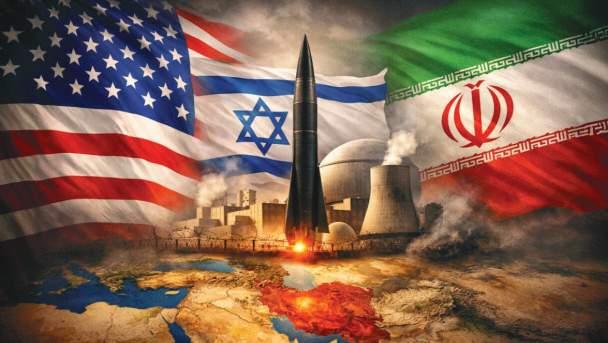
The world has experienced unease and palpable tension in the past few weeks, with the escalation of the crisis between, Israel, uSa, and Iran. The strike on the compound of the Supreme Leader of Iran, ayatollah ali Khamenei by america and Israel which resulted in the death of the 86 year old ayatollah, has inevitably put the world on edge. apart from missile attacks on Israel in retaliation, Iran has bombed other countries in the Middle east said have ties with uS, such as military bases. There are heightened fears as to whether this could escalate to World War III, particularly if China, Russia and other world powers contemplate taking sides. With the vast oil resources of the Gulf Region, and Iran supplying 20% of the world’s crude oil, the closure of the Strait of Hormuz, implications of the crises are resonating globally, and Nigeria is not excluded. Oil prices have since escalated, noticeably. It is a mixture of sadness and joy for Nigeria because, while the Government could record gains by the increase in crude oil prices, particularly if it succeeds in ramping up production, the accompanying increase in fuel prices is sad news for Nigerians because of its inflationary impact. Jonathan Gunu Taidi, SAN; Felix eghie Patrick Sugaba and Dr Akpor Mudiaga odje, examine the global implications of the war, and its possible effects on Nigeria
Middle East Conflict, Global Oil Shock, and Nigeria’s Familiar Energy Vulnerability
Jonathan Gunu Taidi, SAN Background
The latest military confrontation between US/Israel and Iran, has once again reminded the world of a long-standing geopolitical reality: instability in
the Middle East rarely remains a regional affair. Within hours of the escalation, global oil markets reacted sharply, sending crude prices upward and triggering ripple effects across energydependent economies worldwide. For Nigeria, the consequences were almost immediate. Within forty-eight hours of the escalation, domestic fuel prices surged across
“While the country remains one of Africa’s largest crude oil producers, its heavy reliance on imported refined petroleum products, means that global oil shocks often hurt Nigerian consumers faster than they benefit the national treasury….domestic refining capacity must be strengthened….long-term economic diversification remains essential”
major cities, transport costs began climbing, and businesses already struggling with high operating expenses, faced yet another wave of economic pressure.
The development illustrates a recurring paradox, in Nigeria’s economic structure. While the country remains one of Africa’s largest crude oil producers, its heavy reliance on imported refined petroleum products, means that global oil shocks often hurt Nigerian consumers faster than they benefit the national treasury.
The Global Energy Shock
The Middle East remains the epicentre of global oil supply. A significant percentage of the world’s crude oil exports move through strategic maritime corridors in the region, most notably the Strait of Hormuz. Whenever tensions rise around this corridor, global energy markets react swiftly due to fears of supply disruptions.
The US/Israel vs Iran confrontation has therefore, triggered a predictable surge in crude oil prices. Energy traders, anticipating potential disruptions to shipping routes and oil infrastructure, quickly priced geopolitical risk into the market.
For energy-importing nations, this translates directly into higher fuel costs. For developing economies such as Nigeria, the impact can be particularly severe, because energy
costs influence virtually every sector of the economy.
Transportation, food supply chains, electricity generation, and manufacturing all depend heavily on petroleum products. When fuel prices rise sharply, inflationary pressures inevitably follow.
Nigeria’s Immediate Economic Impact
The most visible impact in Nigeria, has been the rapid increase in pump prices. Filling stations adjusted their prices almost overnight, as international market signals filtered through the downstream petroleum sector.
Transport fares began rising across cities and inter-State routes, affecting millions of Nigerians who depend on public transportation. Small businesses relying on petrol-powered generators also faced increased operating costs, a reality that further strains already fragile enterprises.
The situation is particularly concerning, because Nigeria’s economic environment is still grappling with the aftermath of fuel subsidy removal and currency volatility. A sudden external shock from international oil markets, compounds these domestic challenges.
In effect, global geopolitics has once again entered the daily economic life of the average Nigerian.
The Oil Revenue Paradox
Interestingly, the same crisis creating hardship for Nigerian consumers, could also produce short-term fiscal gains for the Nigerian Government.
Higher global crude oil prices typically translate into, increased export revenues for oil-producing countries. In theory, Nigeria could benefit from stronger foreign exchange inflows and improved Government earnings, if oil prices remain elevated.
However, structural constraints limit the extent of this advantage. Nigeria’s crude oil production has struggled to meet its output quota in recent years, due to pipeline vandalism, underinvestment, and operational inefficiencies. Consequently, even when global prices rise significantly, Nigeria often lacks the production capacity required to fully maximise the windfall.
This reality reinforces the persistent contradiction within the Nigerian energy sector: the country produces crude oil, yet, imports most of the refined fuel it consumes.
Nigerians Caught in the Crossfire
Beyond economic consequences, the conflict has also created humanitarian concerns. Several Nigerians working or residing within parts of the Arab Peninsula, have reportedly been stranded due to heightened security tensions and disruptions to international travel. Flight cancellations, airspace restrictions, and security alerts have complicated movement
across parts of the region. For many Nigerians in diaspora communities, geopolitical tensions that appear distant from home can quickly become immediate personal risks.
The Nigerian Government’s response will therefore, require careful diplomatic coordination to ensure the safety and possible evacuation of affected citizens, should the conflict escalate further.
Lessons for Nigeria’s Energy Strategy
If there is a strategic takeaway from the current crisis, it is the urgent need for Nigeria to accelerate reforms within its energy sector.
First, domestic refining capacity must be strengthened. The country’s long-standing dependence on imported petroleum products exposes the economy to international volatility.
Second, Nigeria must position herself more effectively within global energy markets, by stabilising crude production and improving investment conditions in the oil and gas sector.
Third, long-term economic diversification remains essential.
An economy heavily dependent on petroleum revenues, remains
“This war, is the manifestation of a long-term desire of the Israeli Prime Minister. His political career, is built around the transformation that is currently unfolding in the Middle East. The objective is simple: Israeli hegemony in the Middle East. Once Iran crumbles, every opposition to Israeli aspiration regarding Palestine, crumbles with it. Hamas would be gone. Hezbollah would be gone”
vulnerable to geopolitical shocks originating thousands of kilometres away. Energy security is no longer merely a technical policy issue, it is a national economic survival strategy.
A Familiar Wake-Up Call
The US/Israel and Iran conflict may eventually de-escalate, as many geopolitical crises often do. Oil markets may stabilise, and global attention may shift elsewhere. Yet, for Nigeria, the lessons should not be temporary.
Every new crisis in the Middle East, tends to expose the same structural weaknesses in Nigeria’s energy architecture. Rising oil prices bring temporary fiscal optimism, but immediate domestic hardship.
Until Nigeria builds a more resilient and self-sufficient energy system, external conflicts will continue to shape the economic realities within its borders. In that sense, the current crisis is not merely an international story. It is also a reminder that national economic stability increasingly depends on how effectively countries prepare for shocks beyond their control.
Jonathan Gunu Taidi, SAN, Bencher; Former General Secretary, NBA
Felix Eghie Patrick Sugaba
“This war allows us to do what I have yearned to do for 40 years: smite the terror regime hip and thigh. This is what I promised, and this is what we shall do”.
Prime Minister Netanyahu (March 2026)
The heading of this article is
deliberately constructed to reflect the “yearnings” of the Israeli Prime Minister, as he readily admitted.
Unarguably, it is a war that was cleverly crafted by Netanyahu, hoisted and gleefully executed frontally by a President that is allegedly plagued by a mental disorder known as ``Malignant Narcissist``.
Let’s get it straight. Iran is not, and has never been a threat to the US. Iran had never been in possession of any missile, that was capable of travelling the distance and hitting any part of America. As for the Nuclear brouhaha, the world was informed in June last year that the Iranian nuclear plant had been obliterated and the problem laid to rest, courtesy of the onslaught by US B2 bombers. Having hoodwinked and deluded us last year, President Trump is telling us to stomach another round of bombardment that is predicated on the same reasons. Not surprising, the US cannot wrap its hands around the motivation for the war it embarked upon. President Trump has given us as many reasons as his many tongues could effortlessly obfuscate, and as many as there are presidential advisers and cohorts. Almost all the initial reasons that were dangled before the world, have metamorphosed into opaque and embellished narratives
that are astonishing to say the least. There is no spin that is massive enough, to blind everyone to reality. This war, is the manifestation of a long-term desire of the Israeli Prime Minister. His political career, is built around the transformation that is currently unfolding in the Middle East. The objective is simple: Israeli hegemony in the Middle East. Once Iran crumbles, every opposition to Israeli aspiration regarding Palestine crumbles with it. Hamas would be gone. Hezbollah would be gone. The talk of a two state solution would be gone. This is the play book of Netanyahu, to which Trump strongly agrees.
It was easy to conceptualise this war. What the US and Israel probably did not factor into their plans and execution, was the mountain of debris that would rain on the world. To begin with, it is now obvious to any discerning mind that we are in for a prolonged war. This is not the first time, that the US would be involved in bogus adventures. It lost the Vietnam war, not because the strength of its military force depreciated. It lost it because the moral justification was too flimsy and hollow, to drive the will to continue. Iraq was a quagmire. The US invaded Iraq over conjured excuses, that became its albatross. It paid dearly in terms of human casualties. Even in Afghanistan where there was a modicum of justification, the US could not properly define and set its mission on a proper trajectory.
Any war that has no proper moral underpinnings, risks disaster. In The Art of War written by Sun Tzu, the author opined that wars must be grounded in “legitimate moral authority”. According to him, “War is a matter of vital importance to the State; the province of life or death, the road to survival or ruin. It is mandatory that it be thoroughly studied”. He warned that a “war without a clear moral and strategic justification, risks dragging the State into a long conflict that could ultimately destroy the State itself”.
Donald Trump`s war on Iran can be said to be a war that is launched out of vain reasons: pride, shared personality cult, military muscle flexing, etc. It is a gamble that has inflicted enormous consequences, on the entire world. What Israel and the US probably did not reckon with, or undermined was the capability and the strategic nature of the nation of Iran. Again, in the Art of War, Sun Tzu warns about underestimating an enemy; never assume the enemy is incapable; respect the enemy’s potential; don’t be overconfident; know yourself, and know the enemy. In the case of Iran, it is obvious that Trump and Netanyahu were not schooled in Sun Tzu`s rules of war.
We are probably faced with a long conflict, and the consequences are
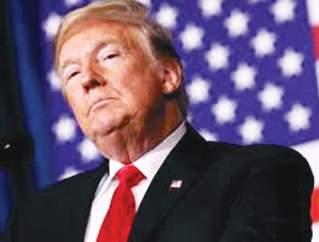
mounting by the day. After two weeks of relentless bombings by the US and Israel, the world is waking up to the fact that these two countries have embarked on a dream chase. The reasons behind the war have become an illusion, a mirage that is elusive to the eye. Iran’s response, did not come as a surprise to observers. Aware of its strategic geographical position in the world, Iran has gone ahead to cut its pound of flesh.
Oil prices have gone beyond the $100 mark. Prices of goods and commodities, are soaring all over the world. The shipping industry is reeling from the crises in the strait of Hormuz, a vital shipping lane that is now virtually under the control of Iran. The aviation sector is disrupted, and airlines are piling up huge debts. Tourism, which is a major sector in the Middle East, has gone on recess for now.
There is a dimension which seems absent, in the current space of discussion over this war. That is, the role of the International community and the United Nations. We were here before. We are back to the very reason, the League of Nations failed. The UN has become toothless and irrelevant. The US which was not a signatory to the League of Nations, seems hell bent to destroy the institution. As we count, Nicaragua, Panama, Iraq, Libya, Iran, the question is,
“….war without a clear moral and strategic justification, risks dragging the State into a long conflict…Donald Trump’s war on Iran, can be said to be a war that is launched out of vain reasons: pride, shared personality cult, military muscle flexing, etc…What Israel and the US probably did not reckon with… was the capability and the strategic nature of the nation of Iran…underestimating an enemy…”
who is next? This is the reality of our world in which, might is right. If Trump decides to invade Greenland or Colombia, he would do so without a blink from any nation. Trump knows it, we all know it. What we may not know is how bleak the future is, because Trump is not alone in a world that is drenched with nuclear arsenal. Perhaps, it is time for the European Union, China and Russia to re-examine their foreign policies, and fine tune their security architecture. There is a need to checkmate this bully master of the world, before it plunges the world into WW3.
Amid these crises, there seems to be a silver lining for some countries. Confronted with declining oil distribution and consequent rise in prices, the US has announced the lifting of sanctions against Russia. Russia desperately needs the money, to firm its economy and prosecute the war in Ukraine. Nigeria must equally, take advantage of the situation. This period is reminiscent of the Gulf windfall. But, unlike that windfall that was irredeemably squandered, the country must take advantage of this period, set its agenda right and embark on developmental projects that are meaningful and verifiable. We hope the countries involved, will find adequate reasons to bring an end to the war as soon as practicable. Meanwhile, we urge the Government to do whatever it can, to cushion the impact of the war on the citizens as much as possible.
Felix Eghie Patrick Sugaba Zurich, Switzerland
Israeli and American Attacks On Iran: Global Implications and Path of International Law
In the Beginning
Indeed, in the beginning was the issue of the proposed uranium emporium and aspirations by Iran, which is a country Israel had long in ages perceived as an existential threat.
Israel perceived especially post- 1979, that the Iranian Islamic leadership has so much regard and reverence for their their fundamental Shia Islamic beliefs.
And one of such, is to eliminate and evaporate the country of Israel from the face of the earth.
These Iranians who are known in biblical records as Persia, have never hidden their quest to expropriate Israel and all it represents.
Now the big brother America, obviously an ally of Israel for obvious reasons, together with her unflinching proclivity to be pivotal in world affairs, chose Israel for this partnership of war, notwithstanding the ironic fact that the same US had in the 1940's also partnered Iran in that region's political concatenation and for regional strategic stability.
Strikes Against Iran and Assassination of the Iranian Islamic Ruler
Surprise, surprise, was what welcomed the world some weeks ago, as the dualistic union from the Israeli and American Forces sent the Iranian spiritual leader into the extra-terrestrial. They both also contemporaneously,
struck Iran in combative dual modes and modules.
Indeed, the scientific cliche states that, in every reaction, there is an equal and opposite reaction. Iran was pummelled, and has been consistently hammered. And, so, Iran therefore, had to respond by striking other Arab nations perceived to be American and Western puppets, who have also warehoused military bases in their nations in the Middle East, such as the United Arab Emirates, Bahrain, Kuwait, Jordan, and more - they all became targets of the Iranians.
It is instructive to also remember that, the Iranians who are actually called Persians, view themselves as the purest breed of the Arabs, and as such, their distinctive blue eyes, they allege, makes them of more superior quality together with their Shia practice of Islam.
Indeed, this subhead should proceed with the budget benchmark for a barrel of our Bonny light crude oil in 2026. We note that it was based on approximately 65 USD. As the war started and as at now, the barrel of the crude on the international market is about 80 USD.
Whilst Nigeria will enjoy a boom from this increase, its joy will be short-lived, as the same cannot be said about obtaining and maintaining a conservative fuel price in Nigeria. It is simply bad news for Nigerians on fuel and diesel, including energy and gas.
As we write these presents, a litre of fuel is staunchly selling at N1,300 per litre, whilst diesel is N1,62O per litre.
The implications of the war on the oil and gas sector of Nigeria cannot therefore, be overemphasised.
As expected, this soaring prices for fuel and diesel have gazumped the general market as price of food stuffs, transportation and all services are fast skyrocketing.
Nigeria is hit indeed, considering the fact that our NNPCL is now purchasing imported crude as feedstock for Dangote refinery, to keep prices of refined products within the reach of the common man.
The Central Bank of Nigeria also injected 500 million USD into the economy to cushion forex demands, and the pressure same may cause the still dwindling Naira and our economic policies.
Nigeria is also bleeding as the war has unwittingly shifted the world's focus and attention on the unfortunate attacks on our military bases in the North, to the middle east war, thus, robbing Nigeria of the sympathy, empathy and aids expected from developed Nations.
Inclusive of this, is the fear of job losses and salary cuts.
Indeed, once the oil and gas sectors are unstable and denied inflow because of the middle east war, there will a corresponding cut in jobs, salaries and the hitherto quality of life of the workers and even the middle class. So, our leadership must now put forward policies that will ease our pains as it were, during the ongoing war. These may include, incentives for small businesses and farmers. Target food boosting enterprises, and encouraging unskilled and skilled labour for self sufficiency
Some Nigerians Still Stranded in Iran
Reports abound of several Nigerians stranded in Iran, in the course of the renewed middle east war.
However, the Ministry of Foreign Affairs has told us publicly that they are making serious moves, to bring back these unfortunately stranded Nigerians. They are presently working with Armenia, a country sharing boundaries with Iran, as some Nigerians are now exiting through that channel already, even though dangerously so.
Whilst we commend the President on this one, we are equally quick to lament the inordinate delay by our Government, in taking steps to evacuate our said citizens.
Iran playing It's Role of Economic Importance to the World, by Restricting Access through and from the Straits of Hormuz, Which Facilitates
“…once the said Strait of Hormuz is restricted or shut down by the Iranians, the world will continue to sneeze repeatedly….This is why Iran is potentially dangerous, till now. It is technically responsible for allowing the exportation of about 2O% of the crude oil into the world, through the Strait of Hormuz”
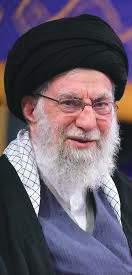
Over 20% of the World's Oil
That strait is responsible for exporting 20% of the world's oil and gas into the world. By restricting access therefrom, Iran is stamping its feet down to influence oil prices that will harm both Israel and the USA, and also on non combatant countries in the war.
Economic Relevance of Iran to the World at this Time of War
As one of the largest producers and exporters of oil, Iran naturally sits amongst the world's economic powers. And, as such, once the said Strait of Hormuz is restricted or shut down by the Iranians, the world will continue to sneeze repeatedly.
War No Longer Won Solely on Firepower Alone, but, Now, Also With the Strength of Economic Power
This is why Iran is potentially dangerous, till now.
It is technically responsible for allowing the exportation of about 2O% of the crude oil into the world, through the Strait of Hormuz.
A fortiori, once it says no way, and blocks the said Strait as it has now done, the world will quiver as it is presently doing today.
International Energy Agency Orders 400 million Barrels of Crude from Reserves of 32 Countries as a Result of Iran's Closure of the Strait of Hormuz
According to the Executive Director IEA, Mr Faith Birol, the decision was reached amongst its 32 members, unanimously to launch the "largest ever release of emergency oil stocks in the history of the agency".
Meantime, Iran has vowed never to open the Strait of Hormuz, for oil to reach either the US or Israel.
This is the force of economic power, as well as relevance. And,
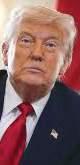
the severe impact of its application during war times.
United Nations Condemns the Attacks on Iran.
The United Nations had since condemned the attacks on Iran, and also Iranian reprisals on Arab countries, as an affront on the sovereignty of nations under its charter.
We recall that in 1945, the now strikers of US, China, Russia, France and great Britain, all agreed to follow peaceful means to settle grievances, rather than war. Alas, that is now observed more in the breach, than observance. And, this has made radical scholars in international law to posit that :
"Might is Always Right in International Law".
Conclusion
As adumbrated above, the middle east war between the Israeli, US and Iran may snowball beyond their collective ambitions and goals to further hurt the entire world, if not immediately truncated. And, it is usually the innocuous citizens of these triumvirate of fighters that will sadly, bear the heavy negative impact of this war. And, which will also sadly include innocent citizens of countries that are bystanders like Nigeria.
No doubt:
"we are therefore, all in this together ".
In this connection, Let all therefore, take heed in the very apposite observation of former President Bill Clinton of the US that:
"The Most Expensive Peace, is Still Better than the Cheapest War ".
Dr Mudiaga Odje LLD, LLM (Merit) (London), BL; Member, British Council; Constitutional Lawyer
Introduction
It is no longer news that the complaint lodged against the Deputy Speaker of the House of Representatives, Hon. Benjamin Okezie Kalu, by legal practitioner, John AikpokpoMartins at the Legal Practitioners Disciplinary Committee (LPDC) for sundry infractions of the Legal Practitioners Act and other statutes, was dismissed as legally unmeritorious and untenable.. The Application alleged that the Deputy Speaker engaged in conduct unbecoming of a legal practitioner, in connection with his admission to the Nigerian Bar (the Bar) in 2011.
Specifically, the application contended that:
i. The Deputy Speaker made a false declaration on 23rd April, 2010 in his Nigerian Law School registration form, stating that he was not engaged, and would not engage in employment or NYSC service during his Law School programme;
ii. By virtue of Section 2(3) of the National Youth Service Corps Act, 1993 (NYSC Act), a Corps member must serve continuously for one year, and not engage in other endeavours during that period;
iii. The alleged simultaneous participation in the NYSC programme and Law School necessarily implies that the Deputy Speaker did not meet the 70% attendance requirement prescribed by the Council of Legal Education (CLE) and, therefore, was not qualified to be called to the Bar;
iv. The Deputy Speaker's purported participation in the NYSC programme during his Law School year, constituted a breach of Sections 13(1)(b), 13(3), and 13(4) of the NYSC Act, and that such alleged breaches call into question his fitness and character to have been admitted as a legal practitioner;
v. And, in the alternative, that the Deputy Speaker did not attend the Law School or did not meet the requisite attendance and qualification requirements, and falsely declared that he was not engaged in NYSC during his Law School.
School Admission Process
The Applicant had contended that, had the Law School been aware of the alleged concurrent participation in the NYSC programme and attendance of the Law School, the Deputy Speaker would not have been admitted or certified for Call to the Bar. Therefore, the Deputy Speaker was, allegedly, fraudulently enrolled as a legal practitioner in Nigeria.
We shall consider the allegations seriatim, at end of which it will become clear, that it was a sheer abuse of the regulatory process of the LPDC.
The Applicant primarily accused the Deputy Speaker of two professional offences under the LPA: · infamous conduct in a professional respect; and · obtaining enrolment by fraud.
The LPA allows for sanctions to be imposed for professional misconduct where a "person who is a member of the legal profession is judged by the [LPDC] to be guilty of infamous conduct in any professional respect". The wording of this provision immediately indicates that, for the LPDC to hear and determine the Application, it must relate to the capacity of the Deputy Speaker as a legal practitioner. Furthermore, for the sanctions to be imposed in relation to this misconduct, the subject of the charge must be in respect of member of the legal profession, and the conduct must be "infamous conduct in any professional respect"- that is, it must relate to the person's conduct as a legal practitioner. The LPDC has taken a similar view, in its finding in Soyemi v Lawal that:
"It is not enough the legal practitioner be guilty of infamous conduct only, but must be conduct arising out of, or pertaining to his profession".
The foundational difficulty for the Applicant was that, every act he alleged against the Deputy Speaker - the simultaneous undertaking of NYSC and Law School, and the alleged misrepresentation made at the time of his Law School registration in April 2010 - occurred between March 2010 and September 2011, a period during which the Deputy Speaker was not a legal practitioner. The Deputy Speaker was called to the Bar on 6 September, 2011 and enrolled on 5 October, 2011. The entirety of the conduct relied upon by the Applicant, predates those events.
It follows that when the alleged conducts occurred, the Deputy Speaker was not a member of the legal
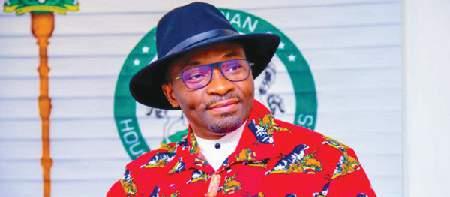
profession within the meaning of Section 12(1) (a) read together with Sections 2(1) & 24 of the LPA. At the relevant time, the Deputy Speaker was at best, a student at the Law School, not a legal practitioner. It was hardly surprising therefore, that the charge of infamous conduct could not be sustained on the facts alleged.
Obtaining Enrolment by Fraud
Section 4(1) of the LPA, which sets out the conditions for entitlement to be called to the Bar, does not prohibit simultaneously serving in the NYSC while studying at the Law School.
The section prescribes citizenship, production of a qualifying certificate, good character, and payment of call fees. There is no provision in the LPA - nor any regulation made by the CLE under Section 4(3) thereof - that disqualifies an aspirant from call to the Bar by reason of having served in the NYSC concurrently with Law School.
Secondly, the LPDC is not statutorily empowered to enforce provisions of the NYSC Act, so it does not avail the Applicant to rely on its provisions in the Application. Nevertheless, it is pertinent to state that, arising from the Deputy Speaker's declaration in the Law School registration form (which we address below), the seeming confluence between the timing of the Deputy Speaker's service year and his studies at the Law School is perhaps, the most potent aspect of the Applicant's complaint. However, an in-depth analysis of the NYSC Act shows that the Applicant's reliance on Section 2(3) thereof, in particular was misplaced, as nothing therein prohibited educational or professional development during the service year.
Against the backdrop of the foregoing, the only plausible basis for the application was the proper legal meaning of the phrase “fraudulently enrolled" as used in Section 7(1) of the LPA, which is analysed as follows.
Meaning of “Fraudulently Enrolled"
Under the LPA, a person may be sanctioned where "the Legal Practitioner's Disciplinary Committee is satisfied that the name of the person was “fraudulently enrolled”. Section 7(1) of the LPA sets out the conditions upon which a person becomes entitled to enrolment, thus: "a person shall be entitled to have his name enrolled if, and only if: (a) he has been called to the Bar by the Benchers; and (b) he produces a
“….in the absence of evidence of fabrication of a Certificate of Call to the Bar so as to falsely obtain enrolment, an allegation under Section 12(1)(c) of the LPA was not made out…..In the absence of cogent evidence of reliance, the allegation collapsed into mere conjecture….The Deputy Speaker was assessed, trained, examined, and certified by the competent statutory authorities. There is no evidence that those authorities were misled, or that the certificate was procured by deception”
certificate of his call to the Bar to the Registrar”.
No More
However, the Application related to alleged acts of the Deputy Speaker leading up to his admission as a student of the Law School, not as to his conduct at the point of being called to the Bar, or at the point of being enrolled at the Supreme Court; no fraud was alleged by the Applicant in this regard. On the contrary, the Applicant expressly conceded that the Deputy Speaker was called to the Nigerian Bar on 6 September, 2011, and was issued a Call to Bar Certificate by the Body of Benchers on that date. Accordingly, in the absence of evidence of fabrication of a Certificate of Call to the Bar so as to falsely obtain enrolment, an allegation under Section 12(1)(c) of the LPA was not made out.
Presumption of Regularity
Furthermore, Section 168(1) of the Evidence Act 2011 (as amended) provides that "when any judicial or official act is shown to have been done in a manner substantially regular, it is presumed that formal requisites for its validity were complied with". The gist of this presumption is that, all acts are presumed to have been done rightly and regularly until the contrary is proved, with the onus of proving the contrary resting on the person who alleges such contrary position (Sani v APC [2023] 17 NWLR (Pt. 1912) 109 @ 150 (F) (SC).
In the absence of cogent and affirmative evidence rebutting this presumption, the Deputy Speaker's Call to the Bar and enrolment must be deemed regular and valid. The burden of rebutting the presumption rested squarely on the Applicant, who had to demonstrate, by cogent evidence, that there was something that rendered the Call to Bar Certificate invalid; a condition required by law, that he woefully failed to meet.
The Specific Allegations didn’t Rebut the Presumption of Regularity
We now turn to the specific allegations of the Applicant, and ask whether they were legally capable of rebutting the presumption of regularity.
It is important to stress that, arising from Section 4(4) of the LPA, it is the Body of Benchers that has the statutory authority to issue the Certificate of Call to the Bar. Consequently, the LPDC cannot usurp the role of the Body of Benchers, to invalidate that which the Body of Benchers is deemed to have regularly and validly done.
Secondly, the declaration relied upon by the Applicant is, on its face, an administrative statement contained in a registration form. It is not an affidavit, nor was it made before a commissioner for oaths, a notary, or any person authorised to take sworn statements. The Application did not point to any statutory provision rendering such declaration a sworn instrument, which attracts penal consequences under the law relating to perjury or false statements on oath.
The absence of statutory foundation for the declaration is exceedingly important, because the proceedings before the LPDC are by nature quasi-criminal and quasi-judicial. Accordingly, pursuant to Section 36(8) and 36(12) of the Constitution of the Federal Republic of Nigeria, 1999 (as altered), the Deputy Speaker can neither be tried nor punished by the LPDC, unless the concurrent undertaking of Law School studies and the NYSC programme has been defined as a wrong by written law, and the punishment for such contravention also prescribed by law. See the recent decision of the Supreme Court in Ibrahim v Nigerian Army.
Finally, the Applicant's contention that the Deputy Speaker procured his admission to the Nigerian Bar by fraudulent misrepresentation, is criminal in character. Thus, by virtue of Section 135(1) of the Evidence Act (as amended), such allegations are required to be proved beyond reasonable doubt. In practical terms, this means the Applicant must do far more than raise suspicion, or point to overlapping dates. He must establish, with credible and compelling evidence, each ingredient of fraudulent misrepresentation. In Ikpa v State [2018] 4NWLR (Pt. 1609) 175 at P.208, paras. E-F, the Supreme Court defined fraudulent misrepresentation as: "a false statement that is known to be false, or is made recklessly without knowing or caring whether it is true or false and that is intended to induce a party to detrimentally rely on it."
Therefore, the Applicant was required to show that the Deputy Speaker intended that the CLE or Law School relied on the representation, to issue a qualifying certificate to the Deputy Speaker. More importantly, the Applicant must also go beyond speculation and convincingly prove that the Law School or CLE relied on the unsworn declaration in issuing the qualifying certificate.
However, the Application failed to establish that the CLE or the Law School relied on the declaration, as a basis for issuing the qualifying certificate. The Applicant did not produce any evidence demonstrating that:
·the declaration formed a decisive or material basis for admission;
·the CLE would have refused admission had it known of the alleged NYSC participation; or the qualifying certificate was issued in reliance on the said declaration.
In the absence of cogent evidence of reliance, the allegation collapsed into mere conjecture. The LPDC couldn’t have embarked on a voyage of discovery to infer fraud from mere temporal overlap of events, without strict proof that the impugned declaration induced the issuance of the certificate. The Deputy Speaker was assessed, trained, examined, and certified by the competent statutory authorities. There is no evidence that those authorities were misled, or that the certificate was procured by deception.
Conclusion
The failure of the application against the Deputy Speaker, demonstrates the dangers in deploying the mechanism for regulating the conduct of legal practitioners for mischief and witch-hunt without consequences. A lot, however, needs to be said for sanctioning such frivolous complaints as a deterrence to others.
Acting Group Politics Editor DEJI ELUMOYE
Email: deji.elumoye@thisdaylive.com
08033025611 sms only
a s Nigeria gradually moves toward the political calculations that will shape the 2027 general elections, a critical question continues to dominate the national conversation: how strong are the opposition parties against the ruling a ll Progressives c ongress? Jonathan Eze reports.
Nigeria’s political landscape ahead of the 2027 polls is increasingly defined by an unusual paradox: vocal opposition rhetoric on one hand and the expanding structural dominance of the ruling All Progressives Congress (APC) on the other. While opposition figures across the country have intensified criticism of the ruling party, the balance of political power still tilts decisively toward the APC.
Public discourse often suggests that dissatisfaction with economic pressures and governance challenges could create an opportunity for opposition parties. Yet, a deeper examination of Nigeria’s political structure, the distribution of power across states, and the internal dynamics of opposition parties paints a far more complicated picture.
While opposition figures frequently project confidence about defeating the ruling party, the organisational strength, geographical spread, and internal cohesion of the APC continue to give it a formidable advantage.
At the same time, persistent divisions within opposition parties threaten to weaken their ability to present a credible alternative.
In reality, Nigeria’s opposition appears to be confronting a structural and strategic dilemma that may ultimately determine whether the country witnesses a genuinely competitive electoral contest or a continuation of APC dominance.
Several prominent political actors outside the APC have intensified their criticism of the ruling party in recent months, warning that Nigeria risks drifting toward a system where the opposition becomes increasingly marginal.
Former Osun State governor and influential political figure, Rauf Aregbesola, has been particularly vocal in his assessment of the APC’s conduct in government and its relationship with opposition parties.
Aregbesola recently argued that the ruling party’s actions toward opposition figures reveal a deep sense of insecurity rather than confidence. According to him, a government that truly believes in its popularity would not resort to intimidation or suppression of dissenting voices.
According to him “If the APC is confident of its strength, it will not be so desperate in going after opposition members everywhere.”
For Aregbesola and several others who have
distanced themselves from the ruling party, the path to political change lies in the ability of the opposition forces to unite and present a formidable electoral coalition.
Former Rivers State governor and erstwhile Minister of Transportation, Hon Rotimi Amaechi, has also warned that Nigeria’s political system could gradually tilt towards one-party dominance if opposition parties fail to organise themselves effectively.
Amaechi has repeatedly emphasised that the opposition must abandon internal rivalries and work together to defend democratic competition.
In one of his recent interventions, he urged political actors across party lines to mobilise against what he described as the growing consolidation of political power by the ruling party.
According to him: “The opposition parties should come together… PDP, ADC, Labour and others must unite if democracy is to remain competitive.”
Across several states, including Edo, Oyo, and parts of the South-South and the South-east, similar concerns have been expressed by opposition leaders who believe that the political playing field is increasingly tilting towards the ruling party.
Yet beyond these warnings lies a difficult reality: the opposition’s greatest challenge may not be the APC itself, but its own internal divisions.
Fragmentation of the Opposition Nigeria’s opposition landscape today
is characterised by fragmentation across multiple parties and competing political ambitions.
A former Chairman of the Peoples Democratic Party (PDP) in Lagos state, and now a chieftain of the African Democratic Congress (ADC), Tunde Shelle told THISDAY that the opposition parties are ready to wrestle power from the APC.
He, however, lamented that the current administration has taken over everywhere illegitimately, and that they have demonised democracy and virtually undermined all structures and organs. He added that state governors and party chieftains are all defecting to the APC through coercion and oppression, thereby tilting towards a one-party state.
His words: “ADC as a party is prepared but the truth is that the ruling party is choking us. They are trying to kill the party the way they killed PDP. They are fighting us by dragging us to court through proxies, and now, they are using the electoral law to hinder us. We are just starting our e-registration exercise, yet they are not giving us sufficient time.
“I call on the Nigerian people to join us and rescue this country. They are feeling the hunger, the insecurity, and the economic mismanagements. We are counting on them to join us in this fight to unseat the APC.”
The seemingly three most visible opposition platforms, the Peoples Democratic Party (PDP), the Labour Party (LP), and the African Democratic Congress (ADC) are all maintaining their own leadership structures, ideological leanings, and political calculations.
Rather than operating as complementary forces against a dominant ruling party, these groups often function as rivals for the same pool of voters and political influence.
For now, nigeria’s opposition faces a defining challenge: transforming political rhetoric into organisational strength. Until that transformation occurs, the ruling APC’s dominance of the political landscape is likely to remain firmly intact.
This fragmentation significantly weakens the opposition’s capacity to build momentum nationwide.
In many states, opposition parties split the anti-incumbent vote among themselves, inadvertently strengthening the ruling party’s position.
The situation is further complicated by persistent leadership struggles within some of these parties. Internal disputes over party leadership, control of structures, and candidate selection frequently consume energy that might otherwise be directed toward building strong electoral campaigns.
In practical terms, this means that while opposition parties may appear vibrant in political rhetoric, their organisational coherence remains fragile.
In contrast to the opposition’s fragmentation, the ruling APC continues to enjoy a remarkable level of institutional consolidation.
One of its most significant advantages lies in its control of a large majority of Nigeria’s state governments. With about 30 states currently under APC control, the ruling party commands extensive grassroots networks across the federation.
State governors wield enormous political influence. They control party structures at the state level, maintain extensive patronage networks, and shape the direction of political mobilisation within their territories. This makes governors indispensable political assets during elections.
In states governed by the APC, the party benefits not only from incumbency but also from the political machinery that comes with control of government institutions and grassroots mobilisation.
Furthermore, the APC has continued to attract defections from opposition parties. Politicians seeking stronger political platforms or improved electoral prospects often gravitate toward the ruling party, thereby weakening opposition structures.
Over time, this steady stream of defections has expanded the APC’s reach and reinforced its position as Nigeria’s most dominant political organisation.
NOTE: Interested readers should continue in the online edition on www.thisdaylive.com
The recent collapse of a school building in Ogba, within the Ojodu Local Council Development Area (LCDA) of Lagos State, has reignited concerns over structural safety and the urgent need for proactive monitoring systems in Nigerian buildings.
The incident, which occurred on Monday, March 9,
2026, involved a four-storey building at Yemco Schools located at 11, Adu Street, Aguda, Ogba. Although the collapse raised alarm among residents and stakeholders in the built environment, tragedy was narrowly averted as pupils and staff of the school were successfully evacuated before the structure gave way.
The Building Collapse Preven-
tion Guild (BCPG), Ojodu Cell, described the development as a stark reminder of the importance of early warning mechanisms in preventing loss of life in the country’s rapidly expanding urban centres.
In a statement jointly signed by the Coordinator of BCPG Ojodu Cell, Surv. Prince Abiodun Adegoke, FNIS; the General Secretary, Arc. Dom Ibeh, MNIA;
and the Public Relations Officer, Bldr. Femi Ishola, MNIOB, the guild stressed that the fortunate evacuation of occupants of the Yemco school building demonstrated how timely alerts and early detection of structural distress could save lives.
According to the guild, buildings often exhibit warning signs before eventual collapse. These tell-tale indicators, it noted,
include concrete spalling, visible cracks on walls or columns, bulging surfaces, unusual vibrations, and noticeable deflection of floors or beams.
“These signs should never be ignored,” the statement said. “When such early warnings are observed, they provide a crucial window for intervention that can prevent catastrophic structural failure.”
The Yemco school building collapse has also drawn comparisons with the tragic collapse of a five-storey school building at 63, Massey Street, Ita-Faaji, Lagos Island, which occurred on March 13, 2019. The incident, which claimed the lives of about 20 pupils and left several others injured, remains one of the most devastating building disasters involving a school in Lagos.
Fadekemi Ajakaiye
Following the successful delivery of the first phase of Ilupeju Gardens, Design Union Limited, in partnership with the Lagos State Development and Property Corporation (LSDPC), has commenced significant progress on Phase 2 of the residential development, offering prospective homeowners fresh opportunities within the well-planned estate in Ilupeju, Lagos.
The new phase of the project, located at 13–20 Esther Osiyemi Street, Ilupeju, is currently under construction and is scheduled for completion in the second quarter of 2027. Phase 2 is

positioned adjacent to the already completed Phase 1, allowing both sections of the estate to share core infrastructure and facilities while maintaining a cohesive residential environment.
Developers of the project say the estate is designed to provide a calm and organised living space within the bustling Lagos metropolis, offering families and professionals a practical alternative for comfortable urban living.
According to the developers, the estate’s strategic location within Ilupeju places residents within easy reach of key commercial and residential districts in Lagos, while still maintaining a relatively relaxed neighbourhood atmosphere.
Construction activities on Phase 2 commenced after the successful completion and occupation of Phase 1. Work is currently progressing steadily on site, with the structural
carcasses of several residential blocks already approaching completion.
The development comprises 17 residential blocks designed across three housing categories to accommodate different segments of the housing market.
The first category, identified as Type A, consists of four-bedroom maisonettes occupying the first to fourth floors of designated blocks, with one-bedroom penthouses located on selected top floors.
The second category, Type B, includes one- and two-bedroom apartments designed primarily for individuals, young professionals and small households.
The third category, Type C, comprises three-bedroom apartments intended for families seeking larger residential spaces within the estate.
The mix of housing units has been structured to offer a range of accommodation options to
prospective buyers, allowing them to select homes that align with their lifestyle preferences, family size and financial capacity.
Industry observers note that such mixed-housing developments are increasingly gaining popularity in Lagos, where developers are seeking to create communities that accommodate diverse demographics within the same residential environment.
One of the major attractions of the Ilupeju Gardens development, according to the developers, is its secure title structure. The estate carries a letter of allocation issued directly by the Lagos State Development and Property Corporation, providing clarity in ownership documentation. This arrangement, they explained, offers reassurance to buyers and investors regarding the legitimacy and security of property titles within the development.
Bennett Oghifo
Pumpkin Property, a fastgrowing real estate development firm committed to creating modern, affordable, and sustainable housing solutions across Nigeria, has announced a groundbreaking initiative that integrates highspeed satellite internet into its housing projects, redefining modern living standards in the country. Under this initiative, homebuyers in selected Pumpkin Property estates will receive Starlink hardware, professional installation, and three months of complimentary high-speed internet subscription upon purchasing a home. The initiative will initially be available in Prime Living Estate and Prime View Estate located within Millennium City, Kaduna, as well as Pumpkin Homes located in
Funmi Ogundare
Karsana, Abuja.
Pumpkin Property focuses on developing well-planned residential communities supported by essential infrastructure—including road networks, drainage systems, street lighting, and modern utilities—while embracing innovative technology that enhances residents’ quality of life.
To support the rollout of this initiative, Pumpkin Property has entered into a collaboration agreement with Konga Online Nigeria Limited for the supply, installation, and technical support of Starlink hardware and related connectivity products across Pumpkin housing projects and real estate developments in Nigeria.
In addition, Pumpkin Property has partnered with TD Africa, an authorized distributor of Starlink
solutions in Africa. Through this partnership, Pumpkin Property will have direct access to the latest Starlink hardware, including Starlink kits and accessories, ensuring reliable deployment within its estates.
Starlink, the satellite internet constellation developed by SpaceX, delivers high-speed broadband connectivity through a network of lowEarth orbit satellites. The technology expands access to reliable internet in regions where traditional fibre or terrestrial infrastructure remains limited. As Elon Musk explained:
“Starlink is designed to provide high-speed, lowlatency broadband internet to places where access has been unreliable, expensive, or completely unavailable.”
Speaking on the initiative, the CEO of Pumpkin Holdings
Limited, Mr Oladeji Bamidele, emphasized the growing importance of digital infrastructure in modern housing developments.
“Connectivity has become as essential as electricity and water in modern communities. By integrating Starlink technology into our housing developments, we are ensuring that our homeowners enjoy reliable high-speed internet from the moment they move in. This initiative reflects our commitment to building future-ready communities across Nigeria.”
By integrating satellite connectivity into its housing projects, Pumpkin Property is positioning itself at the forefront of technology-enabled real estate development in Nigeria, setting a new benchmark for smart living communities.
Prospective homeowners
and investors interested in the Starlink-powered homes at Prime Living Estate and Prime View Estate in Millennium City, Kaduna, and Pumpkin
Homes in Karsana, Abuja, are encouraged to contact Pumpkin Property for further information on availability and purchase options.
The partners disclosed that the proposed facility, which will be located in Lagos, is designed to produce up to 45,000 tonnes of food-grade rPET resin annually, with operations expected to commence in the first half of 2027.
The initiative is aimed at converting post-consumer PET bottles into high-quality recycled materials for packaging
Indorama Ventures Public Company Limited, in partnership with Nigerian Breweries Plc and Genesis Power and Energy Solutions Limited, has announced plans to establish one of Africa’s largest recycled polyethylene terephthalate (rPET) production facilities in Lagos, as part of efforts to strengthen sustainable packaging and circular economy infrastructure in the region.
applications, thereby addressing the growing demand for recycled content while reducing plastic waste and improving recycling systems in Nigeria.
According to the partners, the project will also create economic value through job creation and increased participation across the recycling value chain.
Executive President of Petchem and Chairman of the ESG Council at Indorama Ventures, Yash Lohia,
described the collaboration as a major milestone in the company’s global recycling strategy.
“This partnership marks a defining milestone in our global recycling journey. By establishing our largest recycling facility to date and one of the largest rPET sites in Africa, we are bringing our global expertise, proven technologies and longterm vision for circularity to a region with immense growth
potential,” he said. Lohia noted that the investment reflects the company’s commitment to scaling sustainability solutions and building resilient packaging systems that generate long-term environmental and economic value.
Indorama Ventures currently operates 20 recycling facilities across 11 countries and has recycled more than 160 billion post-consumer PET bottles
globally. The Nigeria facility will represent the company’s first recycling investment in Africa and its largest recycling plant to date.
Chairman and Chief Executive Officer of Genesis Energy, Akinwole II Omoboriowo, said the project underscores the role of strategic partnerships in advancing climate-resilient industrial development across Africa.

A Mutual fund (Unit Trust) is an investment vehicle managed by a SEC (Securities and Exchange Commission) registered Fund Manager. Investors with similar objectives buy units of the Fund so that the Fund Manager can buy securities that willl generate their desired return.
An ETF (Exchange Traded Fund) is a type of fund which owns the assets (shares of stock, bonds, oil futures, gold bars, foreign currency, etc.) and divides ownership of those assets into shares. Investors can buy these ‘shares’ on the
floor of the Nigerian Stock Exchange. A REIT (Real Estate Investment Trust) is an investment vehicle that allows both small and large investors to part-own real estate ventures (eg. Offices, Houses, Hospitals) in proportion to their investments. The assets are divided into shares that are traded on the Nigerian Stock Exchange.
GUIDE TO DATA:
Date: All fund prices are quoted in Naira as at 9th March 2026, unless otherwise stated.

It is a programme designed to strengthen Lagos’ safety architecture, argues ADEWALE MARTINS
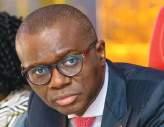
See page 21
celebrates Sylvester Nwakuche’s one year stewardship at the Nigeria Correctional Service
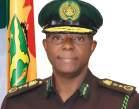
See page 21 EDITORIAL
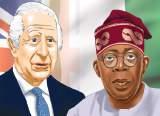
A decentralised system without regional integration would offer new opportunities to criminals, argues K BOLANLE ATI-JOHN
Nigeria stands at a critical juncture in the evolution of its internal security architecture. After decades of operating one of the most centralized policing systems among federal states, the country is now actively considering constitutional reform to establish State Police. President Bola Tinubu’s endorsement of this shift has moved the debate from theoretical abstraction to legislative possibility. Yet as the National Assembly proceeds with constitutional amendment, a deeper question demands attention: would State Police, alone, resolve Nigeria’s security crisis? The question reframes the entire debate, moving it from institutional politics to strategic design. And the answer is more complex than the current political momentum suggests.
Nigeria’s security crisis is not simply a product of over-centralization, but of a deeper mismatch between the institutional design of policing and the geographic scale of modern insecurity. The case for decentralization is compelling. Section 214 of the 1999 Constitution establishes a single national police force, with operational command ultimately residing in Abuja. This structure, designed to preserve national cohesion and prevent regional abuse of coercive power, has proven illsuited to Nigeria’s contemporary threat environment. Banditry, kidnapping, insurgency, and organized criminal networks now operate across wide geographic spaces, exploiting the gap between centralized command and local vulnerability. Governors and community leaders argue, with considerable justification, that they understand their terrain better than distant federal authorities and could respond more effectively with direct control over policing resources.
But diagnosing the problem as simple over-centralization risks producing an incomplete solution. Many threats are intensely local, requiring proximity, community knowledge, and rapid response. Yet the most dangerous threats, banditry corridors spanning multiple states, arms trafficking routes, insurgent logistics networks, operate across jurisdictions. A purely federal model is too distant for local threats. A purely state-based model would be too fragmented for threats that ignore state boundaries. The structural reality is that Nigeria’s policing architecture is simultaneously too centralized to respond effectively to local threats and
too fragmented to manage threats that move across jurisdictions.
This explains why the State Police debate, while necessary, must be framed with greater analytical precision. Creating thirty-six separate state forces may enhance responsiveness within individual states, but without coordination mechanisms, it could simply replace one form of institutional weakness with another. Criminal networks excel at exploiting jurisdictional seams. A decentralized system without regional integration would offer them new opportunities.
The political economy of reform complicates the picture further. State Police enjoys support from governors who seek greater autonomy and local elites who desire security forces responsive to their interests. Federal security agencies, by contrast, have reasons to resist losing authority and resources. These competing interests are not merely obstacles to be managed; they are the terrain on which institutional outcomes will be determined. Any reform that ignores this political landscape, treating institutional design as a technical exercise rather than a political contest, risks producing arrangements that look good on paper but function poorly in practice.
What Nigeria requires, therefore, is not simply decentralization but a layered security architecture that matches the scale of specific threats. Such an architecture would operate at three levels, each with distinct functions, accountability mechanisms, and coordination requirements.
At the federal level, the Nigeria Police Force would retain responsibility for threats that transcend state boundaries: counterterrorism, organized crime,
border security, and national intelligence coordination. Federal institutions would also set and enforce professional standards, ensuring that policing across the country meets minimum benchmarks for training, human rights compliance, and investigative competence. This federal layer provides strategic oversight and prevents the fragmentation that would leave Nigeria vulnerable to sophisticated transnational threats.
At the state level, constitutionally established State Police would deliver local presence, community engagement, and rapid response to incidents within their jurisdictions. Governors and state assemblies would exercise oversight, but with critical safeguards. Recruitment standards must be nationally benchmarked to prevent the creation of ethnic or political enclaves. Training doctrine must be nationally accredited to ensure professional consistency. Useof-force protocols, detention procedures, and disciplinary systems must be insulated from executive capture through independent oversight bodies with real investigative authority.
The fear that governors could transform state police into instruments of political intimidation is not theoretical. Nigeria’s competitive electoral environment provides strong incentives for incumbents to deploy security forces against opponents. Safeguards must therefore be constitutional and statutory, not dependent on goodwill. Independent police service commissions at state level, appointed through transparent processes with guaranteed opposition representation, can provide one layer of protection. Civilian oversight bodies with investigative powers and public reporting requirements provide another. Digital auditing of operations and useof-force incidents would enable external monitoring.
Between these federal and state layers lies the most neglected dimension of Nigeria’s security architecture: regional coordination. Criminal networks operate across state boundaries, yet neither federal nor state structures alone can effectively track and interdict mobile threats. What is needed are regional operational platforms within each geopolitical zone that integrate federal and state assets for intelligence fusion, joint operations, and cross-border pursuit.
Rear Admiral Ati-John (rtd) writes from Lagos
It is a programme designed to strengthen Lagos’ safety architecture, argues ADEWALE MARTINS
In modern governance, public safety is not sustained by weapons and patrol vehicles alone. It rests equally on the well-being, morale, and operational readiness of the men and women entrusted with protecting society. Increasingly, forward-thinking leaders around the world recognise that the effectiveness of security institutions depends as much on human welfare as it does on strategy and infrastructure.
In Lagos State, Governor Babajide Sanwo-Olu has embraced this philosophy with remarkable pragmatism. His administration’s recent extension of a free eye care programme to more than 1,000 police officers of the Nigeria Police Force Zone 2 Command represents far more than a medical outreach. It is a deliberate effort to strengthen the operational capacity of the police as a cornerstone of Lagos’ broader security architecture.
By prioritising the health of officers responsible for maintaining law and order, Sanwo-Olu is reinforcing an often overlooked truth: a secure society depends on the physical and mental fitness of those who safeguard it.
The two-day medical outreach, held at the Zone 2 Police Command headquarters on King George V Road in Onikan, offered comprehensive health checks to officers serving across Ogun State and Lagos State jurisdictions.
Medical professionals conducted blood pressure screening, consultations and detailed eye examinations, with many officers receiving corrective glasses after diagnosis.
More than 1,000 officers are expected to benefit from the initiative, which is being implemented as part of the Sanwo-Olu Police Care Initiative, a broader welfare programme designed to improve the well-being and effectiveness of security personnel.
The programme is organised by the Lagos State Ministry of Transportation in collaboration with the police command, reflecting a whole-of-government approach to strengthening security institutions.
While the initiative may appear modest at first glance, its strategic significance cannot be overstated. Policing is an intensely demanding profession that requires constant alertness, situational awareness, and physical endurance. Vision problems, untreated health conditions, and fatigue can significantly undermine operational performance.
By bringing preventive healthcare directly to officers, the state government is ensuring that those tasked with protecting millions of residents remain fit for duty.
The daily responsibilities of police officers in a bustling megacity like Lagos are immense. From traffic control to crime prevention and emergency response, officers are required to remain vigilant under intense pressure.
Yet the demanding nature of their work often leaves little time for personal
health care. Many officers postpone medical consultations or routine checkups because their schedules make it difficult to visit hospitals or clinics. Over time, minor health issues can develop into serious conditions that impair performance and affect overall quality of life. The free eye care initiative directly addresses this gap.
For officers who spend long hours monitoring traffic, reading reports, conducting surveillance, or navigating complex urban environments, good eyesight is essential.
Corrective glasses provided during the outreach are not merely medical aids; they are tools that enhance the precision and effectiveness of policing.
One of the beneficiaries, Inspector Olusola Ogundare, described the programme as both timely and transformative. He noted that the medical consultations addressed health concerns many officers had long ignored. Several participants received immediate prescriptions for reading glasses, while others were advised to seek further diagnostic tests.
For many, the outreach served as a wakeup call about the importance of preventive healthcare.
The initiative aligns closely with the THEMES+ Agenda of the Sanwo-Olu administration, which emphasises Transportation, Health, Education, Environment, Security and Social Inclusion as pillars of governance.
According to Hassan Adekoya, the Senior Special Assistant to the governor on Transportation and Logistics, the programme is deliberately designed to integrate social inclusion with security management.
By extending the outreach to the Zone 2 Police Command, the state government is recognising the interconnected roles of Lagos and neighbouring Ogun State in regional security.
The decision to include the command reportedly followed an urgent appeal from police authorities who had learned about earlier phases of the programme.
Governor Sanwo-Olu approved the expansion promptly, demonstrating responsiveness to the needs of law enforcement personnel.
Martins writes from Lagos State
HENRY UDUTCHAY celebrates Sylvester Nwakuche’s one year stewardship at the Nigeria Correctional Service
A
On 23rd April 2026, the Nigeria Correctional Service (NCoS) pauses to celebrate a significant milestone, which is the first anniversary of the appointment of Sylvester Ndidi Nwakuche as the substantive Controller General of Corrections (CGC). Though his stewardship effectively began earlier, when he assumed office in acting capacity on 14th December, 2024, his confirmation on 23rd April 2025 marked the formal beginning of a new chapter in the evolution of correctional administration in Nigeria. One year on, the imprints of his sterling leadership are visible across the Service, and they are quietly transformative, purposeful and deeply human in orientation.
There is no doubt that the appointment of Nwakuche stands as a testament to the foresight and commitment to institutional renewal demonstrated by the President Bola Ahmed Tinubu. In selecting a seasoned correctional professional whose career has been defined by discipline, integrity and reform-mindedness, the President has affirmed his administration’s resolve to strengthen the nation’s security and justice institutions. The decision has proven to be both timely and strategic, as the Nigeria Correctional Service continues its transition from a purely custodial system to one rooted in corrections, proper reformation, rehabilitation and reintegration.
Equal commendation must be extended to the Minister of Interior, Dr. Olubunmi Tunji-Ojo, whose dynamic leadership and steadfast support have provided the policy environment within which the ControllerGeneral has been able to operate with clarity and purpose. The synergy between the Ministry and the Service has strengthened institutional coordination and created renewed momentum for reforms that place professionalism, accountability and measurable impact at the centre of correctional governance.
Within this one year of substantive leadership, Nwakuche has pursued a reform agenda that speaks both to the welfare of his personnel and the transformation of correctional practice. One of the most widely appreciated milestones has been the regularisation of promotion processes and the prompt payment of promotion arrears which is an issue that had historically weighed heavily on staff morale. By ensuring that officers receive not only their deserved promotions but also the financial recognition attached to them without undue delay, the ControllerGeneral has reaffirmed a fundamental leadership principle, heralding that the strength of the Service lies in the dignity and motivation of its workforce.
Beyond internal administration, the Controller-General has also widened the horizon of stakeholder engagement. Under his watch, the Service has deepened partnerships with relevant MDAs, civil society organisations, development partners, faith-based institutions and philanthropic bodies. These
collaborations have brought renewed attention to reformatory and rehabilitation programmes, educational opportunities for inmates, skills acquisition initiatives, and reintegration support. In this expanding network of partnerships, the Service is increasingly being seen not merely as a place of confinement but as a critical arena for social transformation and behaviour modification.
Equally noteworthy has been his vigorous advocacy for the implementation of non-custodial measures as provided for under the Nigeria Correctional Service Act 2019 and other extant regulations.
Through sustained engagement with the judiciary, legal practitioners and justice institutions, the Controller- General has championed alternatives such as parole, probation, community service and restorative justice frameworks. This advocacy is gradually shifting the national conversation toward smarter sentencing practices that reduce overcrowding while promoting accountability and rehabilitation.
Indeed, the past year has revealed a leadership style that is both pragmatic and visionary. Nwakuche has demonstrated that correctional administration is not merely about managing correctional facilities; it is about nurturing hope within walls that often appear hopeless. It is about reminding society that those who have erred can still be restored, and that a humane correctional system ultimately strengthens the fabric of public safety as well as national security.
Like a steady lighthouse guiding vessels through uncertain waters, his administration has provided clarity of direction at a time when correctional services around the world are grappling with questions of relevance and reform. Under his watch, the Nigeria Correctional Service continues to evolve nay patiently, deliberately and with an eye toward global best practices.
As the Service commemorates this first anniversary of his substantive appointment, the moment is both celebratory and reflective. It is a time to acknowledge the strides already made while renewing commitment to the journey ahead. For institutions, like nations, are shaped by the character of those who lead them.
Editor, Editorial Page PETER ISHAKA
Email peter.ishaka@thisdaylive.com
President Tinubu’s visit offers both countries an opportunity to renew links for their mutual benefits
As President Bola Tinubu begins a State Visit to the United Kingdom as guest of King Charles III, Nigeria has come under international focus. While in the UK, the president will be treated to the traditional British hospitality of ceremony, pomp, and effusive oratory. Tomorrow, the president and his wife, Oluremi, will be hosted to a reception at Windsor Castle in Windsor. To underscore the importance of the State Visit, Thames Valley Police said at the weekend that it was working with the Royal Borough of Windsor and Maidenhead, the Royal Household and other stakeholders to coordinate security arrangements. The police said permanent airspace restrictions over Windsor Castle will be enforced from 7am to midnight tomorrow as part of a broader security operation for the presidential visit.
Instructively, the State Visit is coming 37 years after a similar one undertaken by former military president, General Ibrahim Babangida and his late wife, Mariam. Like in that earlier visit, the special relationship between Nigeria and the UK will dominate proceedings. After India, Nigeria is Britain’s next largest former colony. Despite our formal independence in 1960, the UK and Nigeria have maintained very strong cultural and economic links. Many Nigerians see the UK as their choice alternative destination for work, study and leisure. A good number of Nigerians have also grown to call the UK home either by naturalisation or long residence. The present leader of Britain’s Conservative Party, Ms. Kemi Badenoch, is of Nigerian origin and became British only by naturalisation.
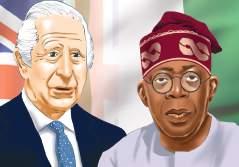
more recent entry of American, French, Chinese and South African companies. Yet in recent years, Nigeria has come to face severe institutional and internal security and cohesion challenges that could benefit from the UK’s deep knowledge of our country and its own nation-building experience.
At a time when the global order is changing rapidly, there is an urgent need for traditional alliances and relationships to be renewed and strengthened. Recent developments in the world ought to instruct both the UK and Nigeria to renew their links and strengthen their historic ties for mutual and strategic survival. For instance, we expect that President Tinubu will use the opportunity of his London outing to address some recent untruths about Nigeria. One of these is the lie that there might be genocidal killings of Christians in parts of the country.
T H I S D AY
EDITOR SHAKA MOMODU
DEPUTY EDITOR WALE OLALEYE
MANAGING DIRECTOR ENIOLA BELLO
DEPUTY MANAGING DIRECTOR ISRAEL IWEGBU
CHAIRMAN EDITORIAL BOARD OLUSEGUN ADENIYI
EDITOR NATION’S CAPITAL IYOBOSA UWUGIAREN THE OMBUDSMAN KAYODE KOMOLAFE
T H I S D AY N E W S PA P E R S L I M I T E D
EDITOR-IN-CHIEF/CHAIRMAN NDUKA OBAIGBENA
GROUP EXECUTIVE DIRECTORS ENIOLA BELLO, KAYODE KOMOLAFE, ISRAEL IWEGBU
This falsehood needs to be addressed with facts and figures. The insecurity challenge we confront is taking casualty tolls from among Nigerians irrespective of faith and religious beliefs. This argument needs to be the basis for seeking additional UK cooperation in Nigeria’s current battle against general insecurity and jihadist insurgency from the Sahel.
Over and above historical and cultural links dating back many centuries, Nigeria and the UK share strong and expansive economic links, including in fields as diverse as oil, gas, energy and general trade and commerce. Besides, of Nigeria’s foreign investors, British companies still retain a pride of place in spite of the
DIVISIONAL DIRECTORS SHAKA MOMODU, PETER IWEGBU, ANTHONY OGEDENGBE
DEPUTY DIVISIONAL DIRECTOR OJOGUN VICTOR DANBOYI
SNR. ASSOCIATE DIRECTOR ERIC OJEH
ASSOCIATE DIRECTOR PATRICK EIMIUHI
CONTROLLERS ABIMBOLA TAIWO, UCHENNA DIBIAGWU, NDUKA MOSERI
DIRECTOR, PRINTING PRODUCTION CHUKS ONWUDINJO TO SEND EMAIL: first name.surname@thisdaylive.com
As we wrote recently, the peaceful, even if not perfect, coexistence of the world’s two major faiths— Christianity and Islam—is at the core of Nigeria’s strength and survival. While we admit that the capacity of the state has been weakened by sundry cartels of criminal gangs operating all over the country (including in religiously and ethnically homogenous communities), there is no evidence to suggest that the multitude of violent outbursts that occur almost on daily basis has any religious colorations or undertones. Managing the fallout of these developments would therefore require the cooperation of traditional allies like the UK.
Overall, we hope President Tinubu’s State Visit will benefit Nigeria through productive bilateral interactions with the British authorities.
Letters in response to specific publications in THISDAY should be brief (150-300 words) and straight to the point. Interested readers may send such letters along with their contact details to opinion@thisdaylive.com. We also welcome comments and opinions on topical local, national and international issues provided they are well-written and should also not be longer than (750- 1000 words). They should be sent to opinion@thisdaylive. com along with photograph, email address and phone numbers of the writer.
As political activities begin to gather momentum ahead of Nigeria’s 2027 general elections, troubling signs of intolerance toward opposition voices are beginning to emerge across the country. In a democracy as diverse and politically vibrant as Nigeria, the early signals of hostility toward opposition parties should concern not only political actors but every citizen who values democratic governance. Elections are not merely contests for power; they are tests of a nation’s commitment to fairness, participation, and freedom of expression.
Recent incidents involving attacks and harassment of members of opposition parties, particularly the African Democratic Congress (ADC) in states such as Edo, Cross River, and the fracas in Oyo state PDP congress have raised serious questions about the political climate in the country. Reports of disrupted meetings, intimidation, and violent confrontations paint a worrying picture of an environment where political competition risks being replaced by political suppression. If these trends continue unchecked, they could
undermine the credibility of the democratic process long before ballots are cast. Nigeria’s democracy has endured decades of struggle to reach its current stage. The right to political participation, peaceful assembly, and freedom of association are pillars upon which the nation’s democratic system rests. When opposition parties cannot organize meetings, hold rallies, or engage voters without fear of attack or intimidation, democracy itself becomes weakened. A healthy political system requires competition, dissent, and the ability for alternative voices to be heard.
President Bola Ahmed Tinubu recently reaffirmed his commitment to democratic principles while hosting members of the opposition at the Presidential Villa. His statement that he remains a true democrat was welcomed by many observers who hope that the administration will safeguard the political freedoms guaranteed by the constitution. Such assurances from the highest office in the country are important in setting the tone for the conduct of political actors nationwide.
However, the reality on the ground in some states appears to tell a different story. In several parts of the federation, opposition groups claim they face deliberate obstacles when attempting to organize political activities. Allegations range from denial of venues for rallies to the use of security agencies to frustrate gatherings. These actions, whether directly ordered or tolerated by state authorities, risk creating the impression that some political leaders are uncomfortable with genuine democratic competition. State governors play a critical role in protecting democratic rights within their jurisdictions. While political rivalry is inevitable in any democratic society, it should never translate into hostility toward lawful opposition activities. A governor who prevents opposition parties from functioning freely does not strengthen his political standing; rather, he weakens the democratic structure he was elected to uphold. True leadership requires tolerance, restraint, and respect for political plurality.
Tochukwu Jimo Obi, Obosi, Anambra State
Despite electricity crisis, 68% of Nigeria’s power generation capacity remains idle.
Nigeria’s grid- connected power plants have a combined installed capacity of 13,625MW.
Average capacity available for dispatch to the national grid stands at only 4,384MW.
Emmanuel Addeh in Abuja
Amid Nigeria’s persistent electricity supply crisis, new operational data has revealed that roughly 68 per cent of the country’s installed power generation capacity remained idle in February, highlighting the deep structural constraints limiting electricity supply to homes and businesses.
A factsheet released by the Nigerian Electricity Regulatory Commission (NERC) showed that Nigeria’s grid-connected power plants have a
combined installed capacity of 13,625 megawatts (MW).
However, the average capacity available for dispatch to the national grid during the month stood at only 4,384MW.
This represents a Plant Availability Factor (PAF) of 32 per cent, meaning that 9,241MW or approximately 68 per cent of the country’s installed generation capacity was unavailable for dispatch during the period.
The data, which covered 28 grid-connected generation plants, illustrated the wide gap between Nigeria’s theoretical electricity
generation capacity and the power actually available to the national grid.
According to the regulator, the 4,384MW available generation capacity recorded in February represented an 11 per cent decline compared with January 2026, indicating worsening operational constraints across several power stations.
Average hourly electricity generation in February stood at 4,102 MWh/h.
Monthly lower grid voltage now 302kV, while the monthly average upper grid voltage reached 351kV.
Monthly average lower grid frequency is 49.28 Hz, while the monthly upper grid frequency is 50.69Hz.
Despite the limited capacity available to the grid, the report showed that most of the operational plants were running close to their maximum available output.
The regulator reported that average hourly electricity
generation in February stood at 4,102 megawatthours per hour (MWh/h). This represents a 7 per cent decline in generation compared with January, reflecting the reduced availability of generating
However, the report showed that the Load Factor which measures how much of the available capacity was actually utilised reached 93 per cent, indicating that almost all operational generation capacity was deployed to produce electricity.
Besides, the regulator noted that the 93 per cent load factor
represents a 3 percentage point improvement compared with January, suggesting that the power plants that remained operational were utilised more intensively.
In effect, while 4,384MW was available for dispatch, the grid produced an average of 4,102MW, leaving a reserve margin of only 282MW, or about 6.4 per cent of available capacity.
In practical terms, such a narrow reserve margin significantly reduces the system’s ability to absorb sudden generation losses or respond to demand fluctuations.
Beyond generation constraints, the data also revealed instability in key operational parameters of the national grid, particularly voltage and frequency stability, which are critical indicators of system reliability. On voltage performance, the factsheet showed that the monthly average lower grid voltage dropped to 302 kilovolts (kV), while the monthly average upper grid voltage reached 351kV. Both figures fell outside the prescribed grid operating band of 313.50kV to 346.50kV.
Emmanuel Addeh in Abuja
Oil prices rose yesterday as investors’ focus returned to threats facing Middle East oil facilities, despite US President Donald Trump’s call for nations to help safeguard the Strait of Hormuz, a vital artery for global energy shipments.
Nigeria’s benchmark, Brent crude futures, climbed $1.27, or 1.2 per cent, to $104.41 a

barrel, after settling up $2.68 on Friday. US West Texas Intermediate (WTI) crude gained 54 cents, or 0.6 per cent, at $99.25 a barrel, after settling up nearly $3 in the previous session. Both contracts have surged more than 40 per cent this month to their highest since 2022, after the US-Israeli attacks on Iran prompted Tehran to halt shipping through the Strait of Hormuz,
choking off a fifth of global oil supply in the biggest disruption ever.
While the US weekend strikes appeared to have targeted military, rather than energy, infrastructure, they still pose supply risks since Iranian oil is about the only oil moving through the Strait of Hormuz for now, a Reuters report said.
Over the weekend, Trump threatened further strikes on

Iran’s Kharg Island, which handles about 90 per cent of its exports, after hitting military targets there, to spur a defiant response of more retaliation from Tehran.
Iranian drones hit a key oil terminal in Fujairah in the United Arab Emirates shortly after the Kharg attacks. Oil loading operations at Fujairah have since resumed, four sources said, but it was unclear if they were back
to normal.
Fujairah, outside the Strait of Hormuz, is the outlet for about 1 million barrels per day of the UAE’s flagship Murban crude oil - a volume equal to about 1 per cent of world demand.
On Sunday, Trump said he was demanding that other countries help to protect the key energy route, adding that Washington was in talks with several nations about

policing it.
The US is also in contact with Iran, Trump said, but expressed doubt that Tehran was prepared for serious talks to end the conflict. At the weekend, the International Energy Agency (IEA) said more than 400 million barrels of oil reserves will begin flowing to the market soon, a record draw aimed at combating price spikes caused by the Middle East war.




The Republic of Togo has expressed interest in increasing the volume of electricity it currently purchases from Nigeria through the Niger Delta Power Holding Company (NDPHC), as part of efforts to meet growing power demand and extend reliable electricity supply to newly connected customers across the country.
The request was made during a strategic meeting between the management of NDPHC and a delegation from the Compagnie Energie Electrique du Togo (CEET), the national electricity utility of the Republic of Togo, a statement by NDPHC revealed.
The delegation was led by the Director-General of (CEET), Mr. Débo- K’mba BARANDAO, who paid a visit to NDPHC’s management in Abuja. to strengthen existing collaboration and explore
opportunities for expanding cross-border electricity trade.
CEET, headquartered in Lomé, currently purchases about 75 megawatt-hours (MWh) of electricity from NDPHC on a bilateral basis, a supply arrangement that has helped the West African country maintain stable electricity delivery and support economic activities.
The imported electricity contributes to sustaining quality, reliable and affordable power supply for households, businesses and public institutions in Togo.
During the engagement, the Director-General of CEET commended NDPHC for the consistency of its electricity supply and the role the partnership has played in improving power reliability within Togo’s electricity network.
He noted that the collaboration has been beneficial to both organisations
NLNG has demonstrated its dedication to media development in Nigeria through the successful completion of the second edition of the #NLNGChangeYourStory workshop for 2026, which took place in Lagos.
The workshop convened 40 participants representing diverse media outlets to
examine the changing landscape of journalism shaped by artificial intelligence and digital communication. Discussions centered on how new media technologies can support real-time reporting, extend audience reach across borders, and foster deeper, more effective engagement on digital platforms, a statement by the firm said.
and has strengthened regional energy cooperation in West Africa.
According to him, the utility company is currently experiencing increasing
Group Business Editor
Eromosele Abiodun
Deputy Business Editor
Chinedu Eze
Comms/e-Business Editor
Emma Okonji
Asst. Editor, Energy
Emmanuel Addeh
Asst. Editor, Money Market
Nume Ekeghe
Correspondents
KayodeTokede(CapitalMarkets)
James Emejo (Finance)
Ebere Nwoji (Insurance)
Reporter
Peter Uzoho (Energy)
Speaking at the event, the General Manager, External Relations and Sustainable Development at NLNG, Sophia Horsfall, described the workshop as part of the company’s broader effort to strengthen engagement with the media while supporting professional excellence in journalism.
She noted that the initiative reflects NLNG’s belief that well-informed reporting plays an important role in shaping public understanding of critical sectors such as energy, economic development, and sustainability.
She encouraged participants to leverage the insights and practical knowledge gained during the workshop to elevate the quality, depth, and credibility of their reporting.
electricity demand following the onboarding of new customers, including industrial and commercial users, as well as ongoing efforts by the Togolese government to
expand access to electricity across the country.
Responding, the Managing Director and Chief Executive Officer of NDPHC, Jennifer Adighije, reaffirmed the
company’s readiness to deepen collaboration with CEET and continue supporting electricity exports to neighbouring countries in the West African sub-region.
Emmanuel Addeh in Abuja
Barclays at the weekend raised its 2026 Brent crude forecast to $85 per barrel, citing ongoing supply disruptions linked to the Iran war that have sharply reduced oil flows through the Strait of Hormuz.
The bank said oil flows
Stories by Peter Uzoho
Thirty-three young graduates of engineering, geology and related disciplines recently in Port Harcourt, Rivers State, underwent opening formalities for a 12-month training programme in pipeline engineering, corrosion control and
through the Strait of Hormuz route have fallen to a trickle and production shut-ins in Gulf countries have climbed to more than 10 million barrels per day.
The revised forecast assumes the situation in the Strait of Hormuz normalises within two to three weeks, Barclays said in a research
monitoring.
Organised under the Renaissance Africa Energy Company Limited and MJD Oilfield Services Limited Nigerian Content Human Capital Development (NC HCD) Training Programme, in partnership with the Nigerian Content Development and Monitoring
note. “If however, the market internalises that it might take four to six weeks for that, we could see 2026 Brent re-price to $100/b,” the bank added.
Oil prices have risen despite efforts by the International Energy Agency (IEA) to release strategic reserves, as uncertainty
Board (NCDMB), the training is geared towards developing expertise for protection and sustenance of the country’s energy infrastructure.
In an address at the event, the Manager, Human Capital Development, NCDMB, Mrs. Tarilate Bribena-Teide, who represented the Executive Secretary of the Board, Felix
around the duration of the conflict continues to support markets.
Brent futures on Friday settled at $103.14 a barrel, up $2.68, or 2.67 per cent . Barclays said the path of least resistance for oil prices remains higher until there is an inflection point in the conflict.
Ogbe, said pipeline pigging, a process involving insertion of devices called pigs into pipelines for cleaning, gauging, etc. to ensure integrity of the system, and corrosion control, protect the pipelines, prevent costly failures, and safeguard the environment and the economy.
Esso Exploration and Production Nigeria Ltd. (EEPNL) has hosted a focused Supplier Diversity engagement, tagged: ‘Meet the Member Buyer,’ reaffirming its focus on deepening supplier diversity, inclusive sourcing and local capacity development within Nigeria’s energy sector.
During the holy month of Ramadan, moments of reflection, benevolence, and togetherness take center stage in homes and communities around the world. It is a time when families and friends gather to share meals, strengthen bonds, and celebrate the spirit of unity that defines the season.
This year, Terra Seasoning Cube captures that spirit through a Ramadan story that reflects the universal longing for home, community, and belonging.
The campaign highlights quiet but meaningful moments, a young woman observing Maghrib prayer in a new city,
The session held in Lagos was designed to deepen collaboration and broaden procurement access for women-owned businesses.
It convened WEConnect international members and certified women-owned businesses operating across various segments of the energy value chain.
a thoughtful message from home reminding her how far away she is, and a neighbour in the kitchen preparing the evening meal. In that kitchen, the familiar routine of unwrapping and crushing a Terra Seasoning Cube into a pot becomes more than a cooking step, it becomes a gesture of hospitality and care.
In many ways, it mirrors Terra’s brand promise of unwrapping joy and unleashing taste, transforming everyday meals into moments worth sharing. Soon, a simple invitation is extended. What follows is a shared Iftar table filled with laughter, conversation, and warmth, two
In his remarks, Executive Director, Development, EEPNL, Etabuko Arbihire emphasised that Esso’s Supplier Diversity Programme goes beyond policy declarations.
He noted that the initiative establishes structured, practical pathways enabling capable women-owned enterprises to participate meaningfully in procurement opportunities within the oil and gas sector. Abirhire highlighted that driving inclusion in a technically demanding and highly regulated industry requires more than simply opening vendor registration platforms.
households connecting over a meal in a way that reflects the true spirit of Ramadan.
A key message captures the heart of the story, “Wherever life takes you, home is who you share Iftar with.”
According to Chief Marketing Officer at TGI Group, Probal Bhattacharya, “Ramadan is a time that celebrates compassion, benevolence, and togetherness. At Terra, we believe the meals shared during Iftar create meaningful moments of connection. Terra Cube celebrates how food can bring people together at Sahoor and Iftar, and thereby make anyone feel at home, wherever they may be.
It reflects our brand belief that when you unwrap Terra, you also unwrap joy and unleash taste that brings people closer.” In a country as diverse as Nigeria, where cultures and traditions intersect daily, food continues to serve as a powerful bridge between people and communities. In the end, Terra’s message goes beyond seasoning food. It speaks to seasoning life’s moments with warmth, generosity, and community. Because during Ramadan, home is not always defined by a place sometimes, it is simply the table where someone welcomes you to break your fast.
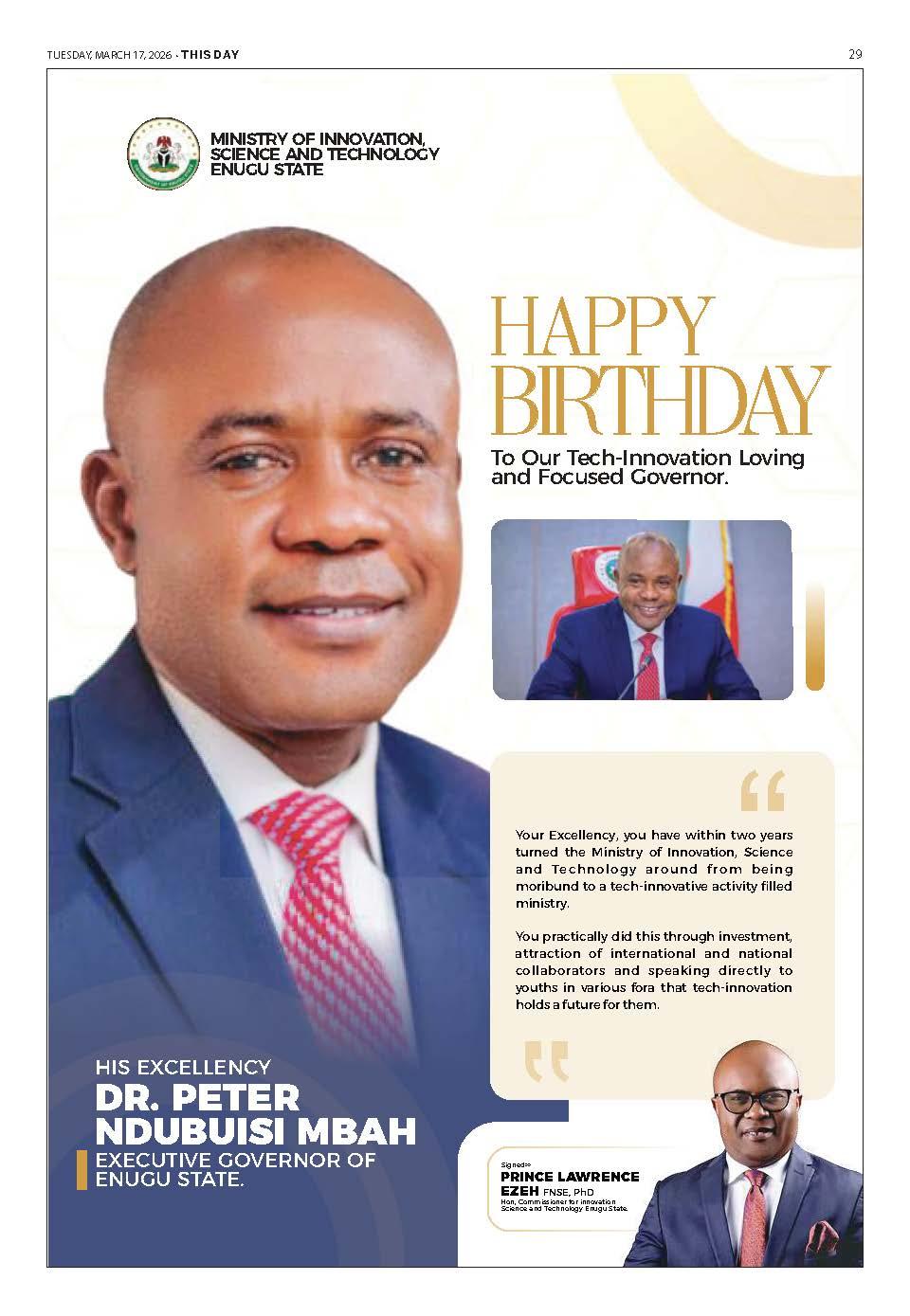
Kayode Tokede
The iDICE Startup Bridge Programme has officially launched, introducing a structured pathway designed to support aspiring entrepreneurs and early-stage founders across Nigeria’s 36 states and the Federal Capital Territory (FCT) to move from idea to validation, and from early traction to scale.
Commenting on the broader vision behind the programme and its strategic significance, Vice President Kashim Shettima, who is the Chairman of the iDICE Steering Committee, noted that; “iDICE (Investment in Digital and Creative Enterprises) was created to unlock sustainable jobs and economic inclusion for Nigeria’s youthful population.”
Managing Director and Chief Executive Officer of the Bank of Industry, Dr. Olasupo Olusi, reaffirmed BOI’s role in strengthening the country’s innovation pipeline.
“As the implementing agency of the iDICE Programme, the Bank
The iDICE Startup Bridge operates under the broader Investment in Digital and Creative Enterprises (iDICE) Programme, an initiative of the Federal Government of Nigeria implemented through the Bank of Industry (BOI) and financed by the African Development Bank (AfDB), Agence Française de Développement (AFD), and the Islamic Development Bank (IsDB).
of Industry is proud to support the iDICE Startup Bridge through which we are creating clear pathways for ideas to become enterprises, and enterprises to become engines of growth. In 2025, we achieved a record total disbursement of N636 billion to enterprises across various sectors in Nigeria, marking the largest annual disbursement in the bank’s history and reinforcing our position as the nation’s leading development finance institution for industrial and enterprise growth,” he said.
Speaking on the programme’s intent and outcomes, Head of Founders Lab, iDICE Startup Bridge, Cindy Ezerioha, highlighted the programme’s structured approach:
When the Ramadan moon is sighted in the night sky, it signals the beginning of a special season marked by reflection, generosity, and shared moments. Across homes and communities, kitchens come alive in the early hours of Sahoor and again at sunset as families prepare to break their fast at Iftar. From the aroma of meals being cooked to the joy of gathering around the table, Ramadan becomes a time when everyday moments carry deeper meaning. This Ramadan, Golden Terra Soya Oil celebrates these moments with a heartfelt reminder for Nigerians to Pour Pure Love into every meal and every moment shared.
Throughout the holy month, love expresses itself in meaningful ways across homes and
communities. It is seen in the spirit of giving, as families extend kindness through Sadaqah and Zakat al-Fitr, supporting those who have less and reminding us that blessings are meant to be shared. It is also reflected in the beauty of community, where breaking the fast together turns a simple meal into a powerful symbol of unity. Around the Iftar table, neighbours become family, strangers become friends, and food becomes a language of connection.
According to Executive Director at TGI Group, Deepanjan Roy, “As a Group, we believe brands have a responsibility to go beyond products and contribute meaningfully to the wellbeing of the communities they serve. Through Golden Terra,

our goal this Ramadan, is to inspire families to Pour Pure Love by making healthier cooking choices for themselves and by sharing meals and moments of care with those around them.”
In the words of Chief Marketing Officer at TGI Group, Probal Bhattacharya, “’Pure Love’ is a message inspired by the everyday care we see from our consumers in their kitchens. From preparing Sahoor to making nourishing dishes for Iftar, these meals are acts of love for self, family and friends. This Ramadan, we want to continue encouraging consumers to pour pure love into those moments by choosing oils that support heart health and the wellbeing of their loved ones.”
Kayode Tokede
Bitget said it, has introduced a major structural upgrade to its trading interface, elevating traditional financial assets such as stocks, commodities, and forex into a standalone product category alongside crypto trading. The update reflects a broader shift in how exchanges are evolving as crypto infrastructure increasingly supports global financial markets. Across the industry, exchanges have begun adding traditional assets to their platforms, including equities, indices, and precious metals.
“Crypto infrastructure is gradually becoming the settlement layer for global financial markets,” said Gracy Chen, CEO of Bitget. “The future of exchanges will not be defined by whether they offer crypto or traditional assets, but by how effectively they integrate both. Our goal with this update was to move beyond simply listing traditional products and instead build an environment where crypto and TradFi can operate as equal components of a unified trading ecosystem.”
According to Bitget, “the structural change reflects how modern traders increasingly manage portfolios across multiple asset classes rather than identifying strictly as crypto or stock traders. The new layout aims to simplify navigation while giving traditional financial products greater visibility and strategic importance within the platform. The update also aligns with Bitget’s broader Universal Exchange (UEX) strategy, which focuses on bringing crypto-native assets, tokenized securities, and traditional markets into a single trading infrastructure.”
Kayode Tokede
The domestic stock market section hit a major milestone yesterday, with the Nigerian Exchange Limited All-Share Index (NGX ASI) crossing the 200,000 basis point mark, buoyed by strong investor demand and broad-based gains across key sectors.
The benchmark index rose 1.55 per cent to close at 201,474.89 basis points, up from 198,407.30 basis points in the previous trading session.
This brings the month-todate (MTD) return of the NGX ASI to 4.48per cent and the year-to-date (YTD) return to 29.47per cent , reflecting strong market momentum. Also the market
capitalisation expanded to N129.33 trillion, up from N127.36 trillion previously, as large-cap stocks led gains across the market.
Group Managing Director and Chief Executive Officer of Nigerian Exchange Group, Temi Popoola described the milestone as a sign of growing confidence in Nigeria’s capital market. “Nigeria’s ongoing reforms
are strengthening domestic capital formation, and the market is responding positively. Increased participation by local investors, improving corporate fundamentals, and continued market modernisation are reinforcing the role of the capital market as a catalyst for long-term wealth creation and sustainable economic growth.”
Trading activity remained
robust, with total deals rising to 72,700 while investors exchanged 948.1 million shares valued at N49.15 billion. Financial services stocks dominated transactions by volume, reflecting heightened investor interest in the sector.
Chief Executive Officer of Nigerian Exchange Limited, Jude Chiemeka attributed the milestone to sustained demand and active
participation across the market. “Crossing the 200,000-point mark reflects strong investor engagement and consistent demand across key sectors. At Nigerian Exchange Limited, we remain focused on deepening market liquidity, enhancing trading infrastructure, and ensuring efficient price discovery to support a resilient and transparent marketplace.”
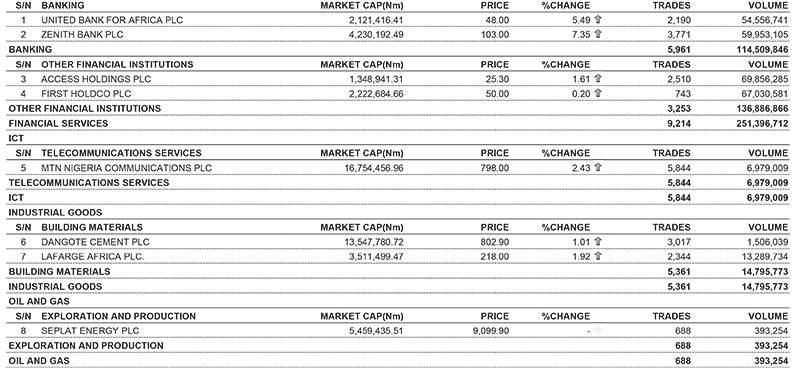
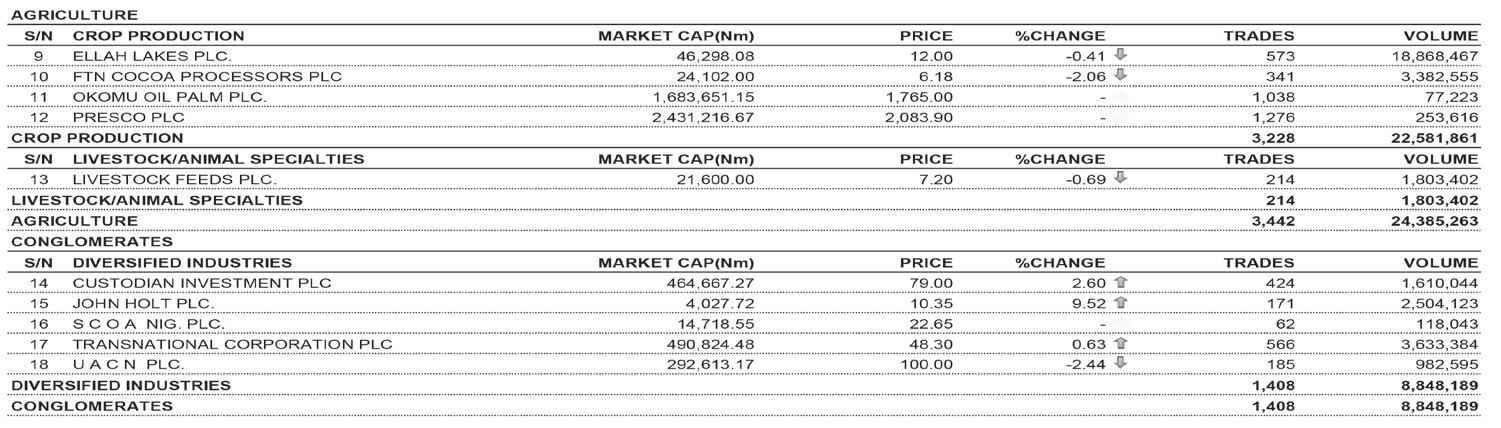
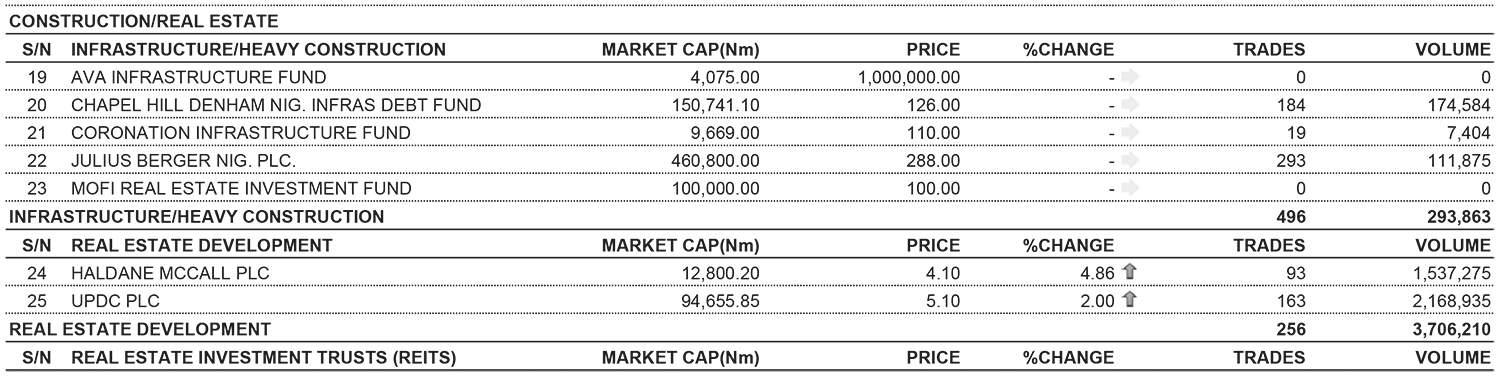
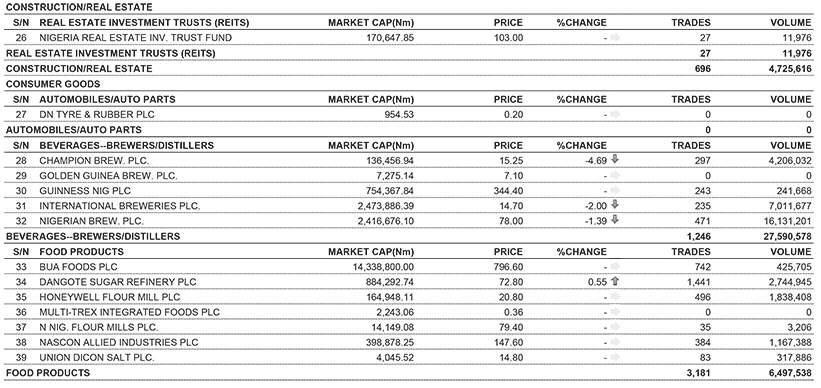
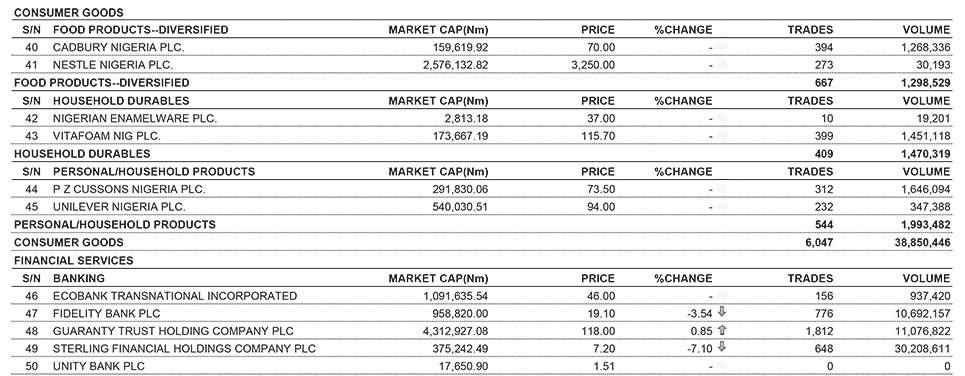
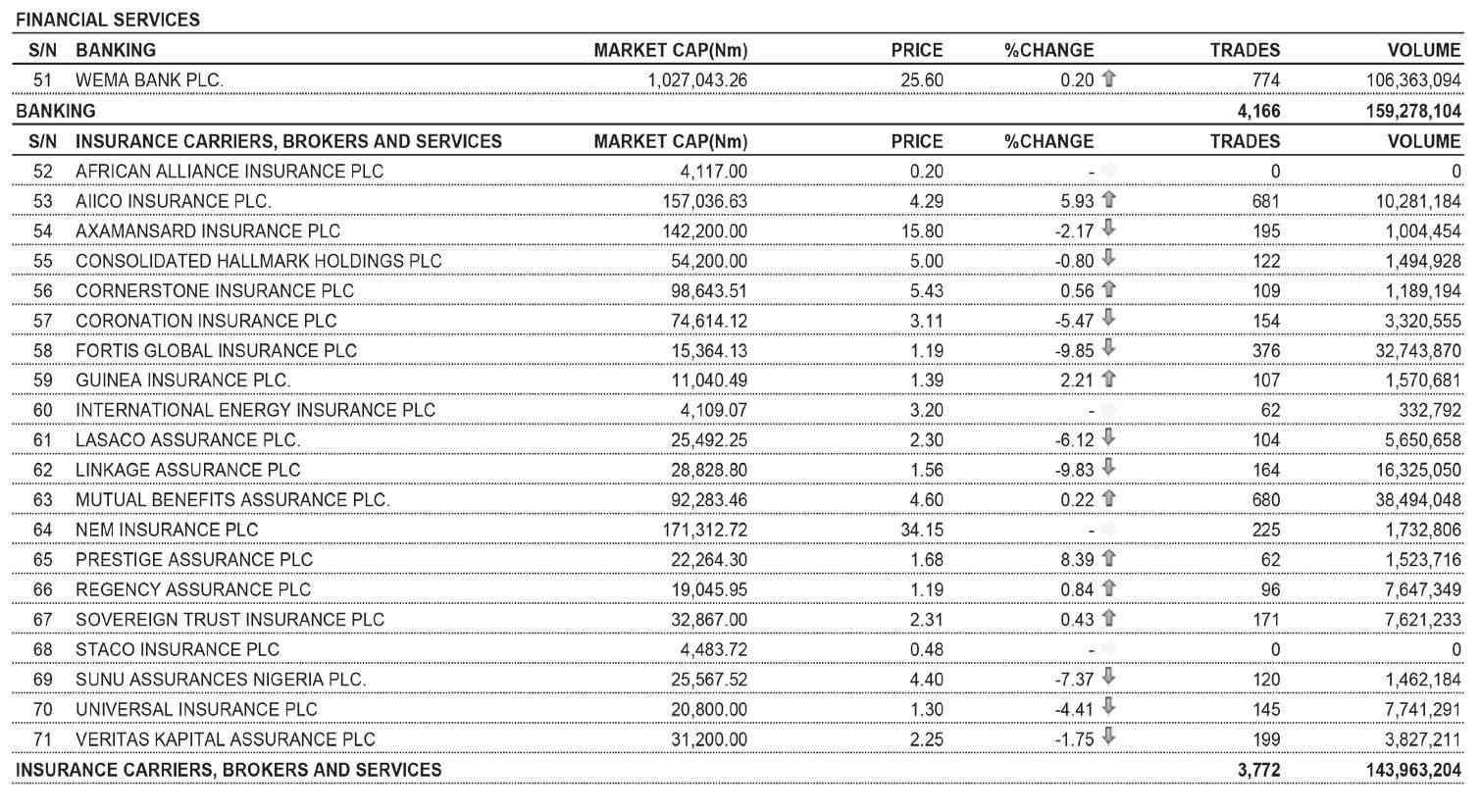

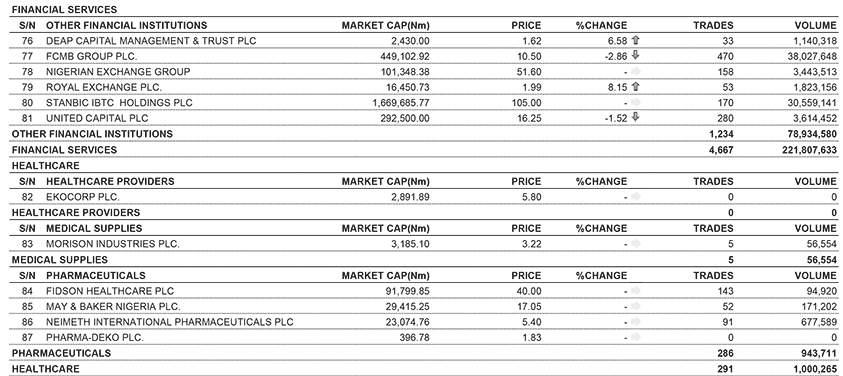
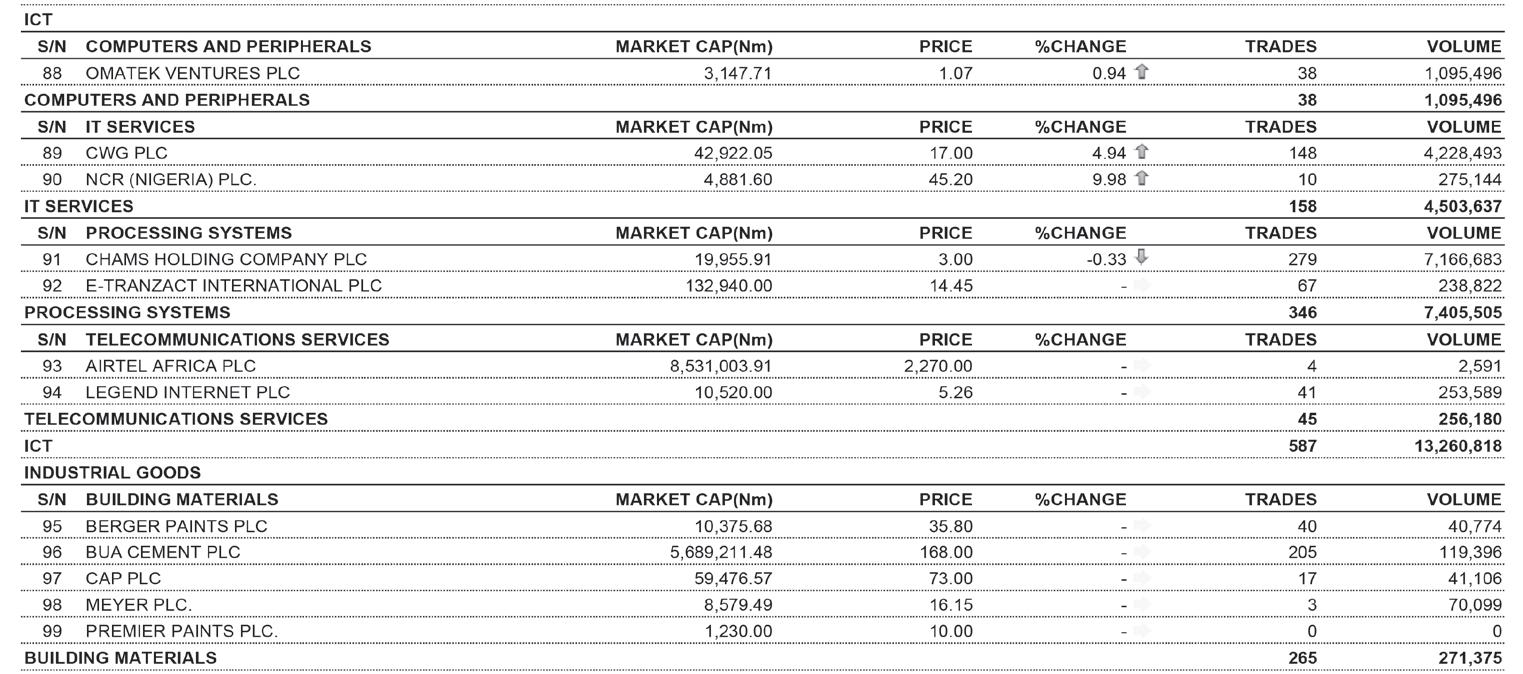
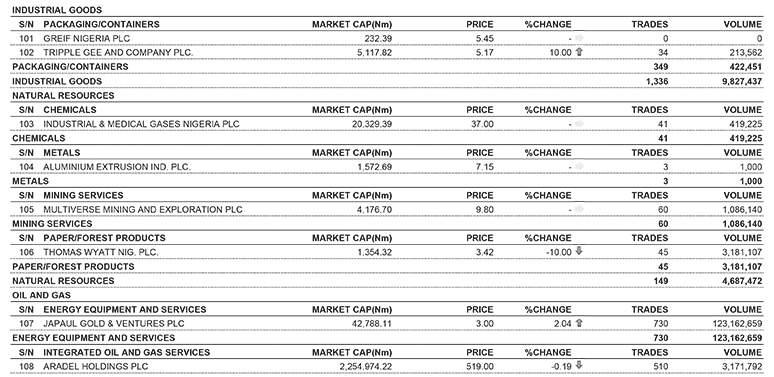
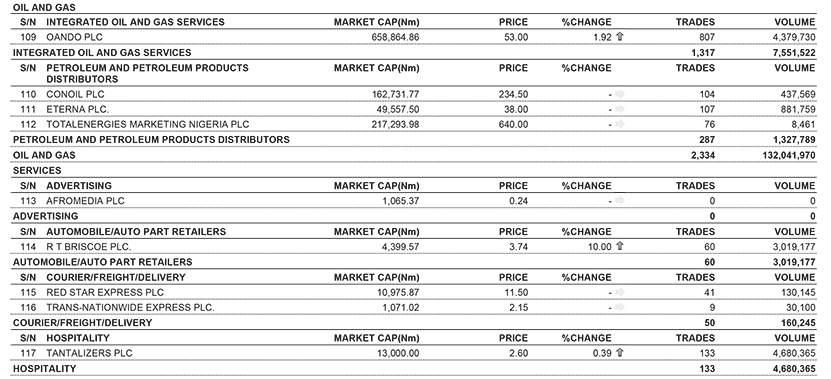
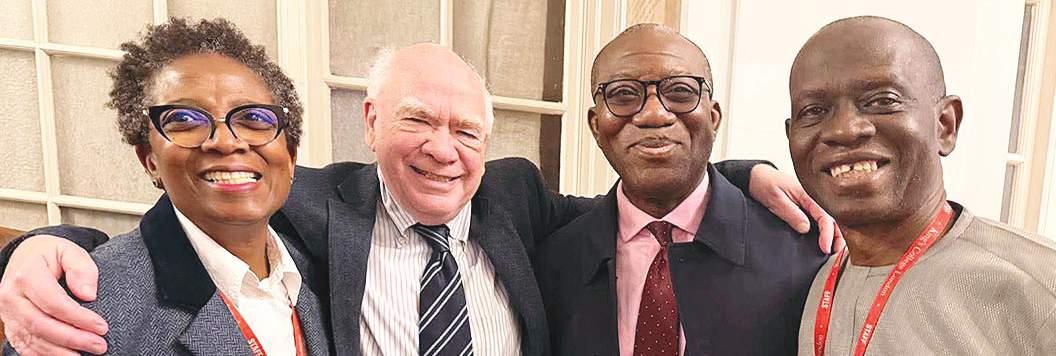
L-R: Vice President at King’s College London, Professor Funmi Olonisakin; former Head of Department of War Studies at King’s College London, Professor Lawrence Freedman; former Governor of Ekiti State, Dr. Kayode Fayemi; and Professor of African Studies at King’s College London, Professor Abiodun Alao, during the memorial held at King’s College London for the late Professor Jack Spence, erstwhile Director of Research at Chatham House and Professor in the War Studies Department, who passed away in London…recently
Muhammad Sabiru in Maiduguri
About four explosives were said to have been detonated simultaneously at different locations in Maiduguri, the Borno State capital.
The EIDs were said to have been detonated by suspected ISWAP and Boko Haram terrorists.
However, several injured people have been seen struggling with pains at the scenes of the incident and hospitals, after the blasts.
Victims have been evacuated to Maiduguri specialist hospital, Umaru
THISDAY gathered that the blasts happened around 7:00pm at University of Maiduguri Teaching Hospital, Post office, and Monday market, but casualty levels were yet to be ascertained.
Ebere Nwoji
National Pension Commission (PenCom) has explained reasons for the introduction of Personal Pension Plan to informal sector operators. PenCom said the plan was mainly to provide financial protection to people in the informal sector of the economy, especially women who work their entire lives contributing so much to the economy, without financial protection at their old age.
PenCom Director-General, Ms. Omolola Oloworaran, addressing market women on Personal Pension Plan, said that was why the commission decided to celebrate this year’s International Women’s Day in a special way with market women to sensitise them on the need
to key into the pension plan and save themselves from old age poverty.
Oloworaran stated, “At the National Pension Commission, we believe that every Nigerian woman deserves dignity, security, and independence in old age.
“That is why we introduced the Personal Pension Plan. This plan allows market women, traders, artisans, farmers, and other self-employed Nigerians to start saving small amounts today for a secure tomorrow.
“You can start with as little as N1,000, you can contribute daily, weekly, or monthly, depending on how business goes. And your savings will be professionally invested to grow over time.”
Oloworaran, who took the Personal Pension Plan campaign to Mile 12 food
Shehu hospital and the University of Maiduguri Teaching Hospital (UMTH)
A victim’s relative told THISDAY that they were breaking their fast when the deafening sound erupted and he saw his friend on the ground.
“We all thought he was dead, but he was resuscitated at the hospital. I still cannot hear anything due to the loud sound.
“I saw over 50 people on the ground, because the incident happened in a crowded area of the market, and at the peak hour of the day when people are struggling to leave,” he said.
Confirming the incident, the police public relations officer, Borno State command, Nahum Daso, said a Police EOD Unit has been deployed to the Monday Market and UMTH Gate.
He advised the residents to remain calm but vigilant following the bomb explosions.
He said incident occurred at around 7:20pm, and assured the people that joint security operatives and emergency responders had been deployed to the scenes.
According to a statement, the Police EOD Unit and Base 13 Maiduguri were on the ground, and assessments were ongoing.
“Residents have been advised to avoid the areas. Emergency contact numbers have been released: 0806 807 5581 and 0802 347 3293.
the attack as despicable, cruel, and cowardly, targeting innocent people in the holy month of Ramadan.
In a statement, Special Adviser to the Governor on Media, Dauda Iliya, called for increased vigilance and heightened security measures, particularly in places of worship, as the festive period beckons.
“I am deeply saddened by the explosions that occurred in parts of the metropolis on Monday evening.
stuff market in Lagos, also assembled market women from over 32 trade associations in various markets in Lagos, with their leaders, at the Alausa secretariat to educate them on the benefits inherent in keying into the Personal Pension Plan.
She stated, “Today, Nigeria’s pension industry manages over N28 trillion in pension assets for more than 11 million Nigerians. The system is safe, transparent, and trusted. And now we are extending those same benefits to women in the informal sector.
“And because this is International Women’s Day, we are doing something special. From 9 to 13 March, every contribution made by a woman into her Personal Pension Plan account will receive a matching contribution,
up to a specified limit.
“That means when you save, we also add to your savings. We call this initiative Give to Gain. Save small today. Gain big tomorrow.”
Encouraging the women further, she said, “So, I encourage every woman here today: open your Personal Pension Plan account, start saving today encourage your sisters, your friends, and your daughters to do the same.
“Let us build a future where Nigerian women grow older with dignity, confidence, and financial independence.”
“Further updates are expected as more information becomes available,” he said.
Terrorists had recently attacked Ajilari community, an outskirt of Maiduguri, in an attempt to infiltrate the town but were repelled by Nigerian troops.
The attack was repelled by the combined security operatives, including troops from the land and air components of Operation Hadin Kai, the Police, and the Civilian Joint Task Force.
Governor Babagana Zulum condemned the explosions and called for calm and vigilance.
Zulum, who is currently in Saudi Arabia for the Lesser Hajj, described
“My thoughts and prayers are with the families of the victims and those injured as a result of the blast. The act is utterly condemnable, barbaric, and inhumane.
“The recent surge in attacks is not unconnected with intense military operations in the Sambisa forest and other hideouts of the insurgents,” said Zulum.
The governor, therefore, assured people of the state that the military and other security agencies were on top of the situation, as adequate measures had been taken to forestall any security breach in Maiduguri and the entire state.
He called on residents to remain calm, go about their usual activities, and report any suspicious movement or activity to security agencies.
David-Chyddy
Eleke in Awka
An Imo State High Court sitting in Owerri, the state capital, presided over by Justice J. M. Njaka has ordered the management of Fidelity Bank Plc to pay a total sum of N337, 905,965 to one of its customers, Ifeco Communications Limited. The amount is said to be part of excess amount allegedly deducted by the bank from the account of the company domiciled in the bank.
It was gathered that out of this amount, N327,905,965 represented excess charges, including excess COT, legal fees and management fees wrongly charged on Account No. 4010471004 belonging to the company, while N10,000,000 is for damages.
In the suit number HOW/260/2016, Ifeco Communications Limited which is the 1st plaintiff and Pretoria City Hotel and Resort Limited being the 2nd
plaintiff had dragged the bank to the court, seeking a declaration of the court that the hotel, by the Audit Report of Ambrose Ekoh and Co., is only indebted to the defendant.
The plaintiffs, through their legal counsel, Ben Osaka, SAN, with Charles Agusiobo Esq., also sought a declaration of the court that by the Audit Report, the 1st plaintiff is not indebted to the refund of the sum of N428, 638,075 being the excess amount charged.
Segun Awofadeji in Bauchi Civil Society Organizations (CSO) in Bauchi State have called for the establishment of a regulatory council to check multiple registration and taxation by different government ministries, departments, and agencies.
This formed part of the core decisions reached at the end of a 2-day training on self-regulation for 20 CSOs organized by the Bauchi State Network of Civil Society Organizations (BASNEC) with the aim of strengthening accountability, transparency, and operational standards in the CSO sector.
Addressing the training session yesterday, the Chairman of BASNEC, Mr. Jinjiri Garba, said the absence of a unified regulatory framework had created challenges for CSOs, noting the forum would enable participating organizations to meet minimum operational requirements that could align their activities with global best practices.
He explained further that such a regulatory council, similar to those of the Nigerian Medical Council and the Pharmaceutical Council of Nigeria, if established, would not only promote unity among CSOs but ensure that all the groups register under one authority
for effective coordination and monitoring of their activities.
According to Jinjiri Garba, “Many organisations are doing excellent work in communities, but without proper structures and compliance with standards, they may face challenges accessing support “.
Also speaking during the training, a lawyer and Executive Director of an NGO “WE AID INITIATIVE,” Barrister Gambo Wakili, told the participants they would serve as ambassadors of accountability and ethical conduct by ensuring CSOs play credible and impactful roles in community development.
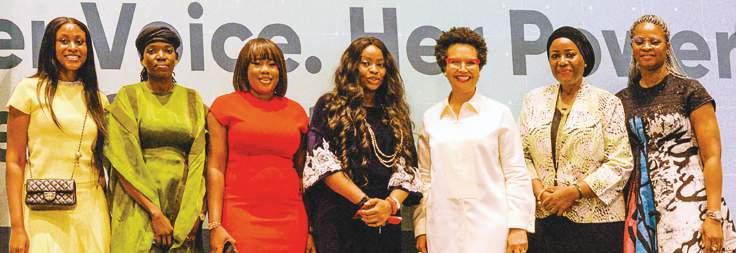
L-R:
Sunday Aborisade in Abuja
President Bola Tinubu’s nominee as Chairman of the Board of the Nigerian Upstream Petroleum Regulatory Commission (NUPRC), Senator Magnus Abe, yesterday said the surge in global oil prices caused by tensions between Iran and the United States presents a strategic opportunity for Nigeria to strengthen its energy sector and boost national revenue.
Abe spoke with journalists shortly after appearing before the Senate Committee on Petroleum Resources (Upstream) for screening as Chairman of the Board of the Nigerian Upstream Petroleum Regulatory Commission (NUPRC).
The committee, chaired by Senator Eteng Jonah Williams, screened nominees forwarded by Tinubu for appointment as chairman and non-executive commissioners of the commission’s board.
In line with the Senate’s tradition for former lawmakers appearing for confirmation, Abe was asked to “take a bow and go,” having previously served two terms in the National Assembly.
The former senator who represented Rivers South East, in the 7th and 8th National Assembly, was also the Chairman of the Committee in the 8th Senate.
Speaking on the implications of the escalating global crisis for Nigeria’s fuel prices, Abe described the situation as a worldwide challenge rather than a purely domestic issue.
“This is a very difficult time for the entire planet. It is not just a Nigerian challenge; it is a global challenge,” he said.
He explained that although rising crude prices could worsen fuel costs for citizens, the development also holds potential benefits for Nigeria’s oil-dependent economy.
“You must look at the balancing act. Prices will definitely be affected, but revenues from our oil sales will also be positively affected. There will be some measure of balance in what will happen,” he said.
Abe also called for global prayers for an end to the conflict, stressing that beyond the economic consequences, the crisis was already claiming lives.
“Human beings are actually dying. Our prayers should be that this conflict, which in my opinion is unnecessary and harmful to the entire world, should quickly come to an end so that we can begin to recover,” he added.
Despite the uncertainties in the international energy market, Abe urged Nigeria to seize the moment to expand investment in gas development and marginal oil fields.
APC Rift Deepens
He said, “If the price of oil is going up, it gives us an opportunity to invest in marginal fields that otherwise would not have been profitable.
“If gas supplies are being disrupted globally, this is an opportunity for Nigeria to optimise its own gas production, which will create jobs and new opportunities.”
He also expressed appreciation to the president for nominating him to serve on the board of the regulatory commission.
“I am sincerely grateful to Mr.
President, the Commander-in-Chief of the Armed Forces, Bola Ahmed Tinubu, for considering me and other members of the board worthy of service to this country.
“I see it as a great privilege and an opportunity to contribute to the Renewed Hope Agenda,” Abe said.
The former lawmaker assured Nigerians that the incoming board would work with industry stakeholders to strengthen the regulatory framework governing the petroleum sector.
According to him, the framework
established by the Petroleum Industry Act provides solutions to several longstanding challenges in the industry, including oil theft and tensions with host communities.
“With the Host Communities Fund, the host communities themselves are now stakeholders. They benefit from production, and nobody destroys what he is eating,” Abe said.
Earlier during the screening, one of the nominees for non-executive commissioner on the NUPRC board, Engr. Paul Jezhi, told lawmakers that
discrepancies in crude oil measurement at custody transfer points had remained a major challenge in the sector. He noted that the deployment of modern metering technology could significantly reduce the problem.
“The discrepancies in crude oil at the custody point have been a long-time issue. But modern meters can now record measurements within a margin of plus or minus one to five, and when such meters are deployed, these discrepancies will largely disappear,” Jezhi said.
Ezigbo
The Nigerian Academy of Science (NAS) has appealed to the federal and state governments to prioritize investment in scientific research, innovation, and development as a key driver of national growth and sustainable development.
It said that this could be done through deliberate, long-term investment in science, robust research systems, and strong research institutions.
The appeal came against the backdrop of persistent underinvest-
Gbenga Sodeinde in Ado Ekiti
Fresh tension has emerged within the All Progressives Congress (APC) in Ekiti State following a controversial endorsement at a constituency meeting in Iworoko, as a former Deputy Speaker of the State House of Assembly, Rt. Hon. Hakeem Jamiu, has publicly dissociated himself from the move. Jamiu, who currently represents Irepodun-Ifelodun Constituency II in the Ekiti State House of Assembly, denied supporting the reported endorsement of Mr. Boluwatife Fayose, son of former Ekiti State governor, Ayodele Fayose, as a consensus
candidate for the constituency ahead of the party’s forthcoming primaries.
Reports had suggested the endorsement was adopted during a constituency meeting held in Iworoko Sunday, with claims that the lawmaker supported the arrangement.
However, in a statement issued on Sunday, Jamiu described the reports as misleading, clarifying that although he attended the meeting, he neither participated in nor endorsed any consensus decision.
According to him, the APC had not adopted consensus as the mode of selecting candidates for
the State and National Assembly primaries.
He explained the last stakeholders’ meeting held at Jibowu Hall, Government House, only approved consensus for the selection of chairmanship and councillorship candidates in the forthcoming local government elections.
“The party has not recommended consensus for State and National Assembly primaries. It was only for chairmanship and councillorship positions that consensus was approved at the last stakeholders’ meeting, and no other meeting has been held since then,” he said.
ment in research, development, and governance challenges within educational and research institutions.
It also followed a growing demand for science-based solutions to national challenges such as climate change, energy transition, public health, food security, and industrial competitiveness.
In a statement signed by NAS President, Prof. Abubakar Sambo and Public Affairs Secretary, Prof. Chinedum Babalola, the Academy noted that countries that have achieved sustained economic growth and technological competitiveness have done so through deliberate, long-term investment in science, robust research systems, and strong research institutions.
The Nigerian Academy of Science
which is the foremost independent scientific body in Nigeria said that investments in science must extend beyond funding projects to include human resources capacity building, investment in research infrastructure, and strong institutional systems that underpin effective research and innovation.
Irrespective of financial investment in the nation’s knowledge institutions, the Academy stresses that proper governance in educational institutions and research institutes is critical to ensuring transparency, accountability, and operational efficiency.
The Academy further emphasized that the appointment of chairmen and external members of governing councils of universities and research institutions should be based
strictly on merit, with preference given to individuals who possess relevant academic qualifications and demonstrable experience in the governance and administration of tertiary institutions to ensure effective oversight, stability, and institutional credibility.
According to NAS, recent appointments of non-technocrats and non-specialists as chief executives of research institutes and science-based agencies should be reviewed and, where necessary, such appointments should be reversed to ensure the leadership of these institutions is entrusted to individuals with appropriate technical expertise, proven research credentials, and the capacity to advance national scientific and innovation objectives.
James Sowole in Abeokuta
Former president, Chief Olusegun Obsanjo, has been scheduled to speak during exhibition of traditional and herbal medicine, which is part of activities to celebrate the 2026 Lisabi Festival.
The Alake and Paramount Ruler of Egbaland, Oba Adedotun Gbadebo, disclosed this at a news conference to herald activities for the 39th edition of Lisabi Festival.
The monarch, who was sup-
ported by other high chiefs of Egbaland, said the festival would feature prominently wearing of adire and other traditional attires at events.
According to the monarch, the theme for this year’s celebration: Internship Apprenticeship Training in Education: Opportunities and Challenges”, underscores the need to inculcate learning of skills in education curriculum for solve unemployment and stimulate development.
Oba Gbadebo said the yearly celebration has been of great benefits to the entire Egba sons and daughters as the past editions which had attracted indigenes from both from home and diaspora, featured award of scholarships to students in various categories and levels of education. He added that several developmental and social amenities like sinking of boreholes and beautification projects were provided by sons and daughters of the
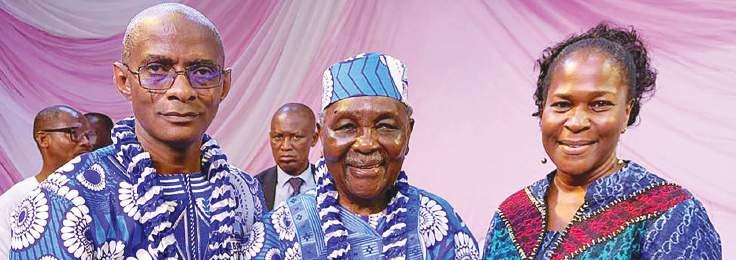
L-R: Chief Executive Officer, The Bible Society of Nigeria, Pastor Samuel Sanusi; former Nigerian Head of State, General Yakubu Gowon (rtd.); and Founder, Rainbow Book Club, Mrs. Koko Kalango, at the 60th anniversary of The Bible Society of Nigeria in Lagos…recently
Two witnesses of the Economic and Financial Crimes Commission (EFCC), on Monday, narrated before a Federal High Court, Abuja, how millions of naira were paid into the accounts of the companies linked with a former Attorney General of the Federation (AGF) and Minister of Justice, Abubakar Malami, his wife Hajia Bashir Asabe and his son, Abdul-aziz Abubakar Malami.
The defendants are standing trial
before Justice Joyce Abdulmalik on a 16-count money laundering charges involving N8. 7 billion.
The prosecution had at the last adjourned date opened its case against the defendants by calling its first witness (PW1), David Ajoma, a compliance officer with Sterling Bank.
However, at Monday’s proceedings, prosecution counsel, Mr. Jubrin Okutepa (SAN) called two new witnesses who gave graphic details of how millions of naira were
paid into the accounts belonging to Meethaq Hotels Limited, Rayhaan Bustan and Agro Allied Ltd and Khadimiya for Justice and Development Initiative.
First to testify was the 2nd prosecution witness (PW2), Simon Daniel Kwayil, a Compliance Officer with Union Bank, Area 3, Garki, Abuja, who told the court how in December 2025, his bank received a letter from the EFCC requesting for bank documents such as account opening, statement of
account and certificate of compliance with respect to account No: 0179011105 belonging to Meethaq Hotels Limited.
He said following the request, Union Bank on December 23, 2025 forwarded the aforementioned documents to the commission.
The said documents were tendered and admitted in evidence and marked as exhibit B series after the defence counsel reserved its objection to their admissibility.
He told the court that the sole
David-Chyddy Eleke in Awka
Anambra State Governor, Professor Chukwuma Soludo, will today be sworn in for a second term in office at the Dr. Alex Ekwueme Square in Awka, the state capital.
Soludo had on November 8 last year won re-election in as landslide victory.
Several dignitaries are expected at the event, including Vice President Kashim Shettima.
Ahead of the swearing in ceremony, the state capital is already wearing a new look, with major roads spruced up. The venue of the event has since last week been
experiencing upgrade, while major decorations started on Sunday.
Security around the state has also been tightened, with huge security deployment around the state capital, mostly by operatives of the Anambra State police command and their counterpart at Nigeria Security and Civil Defense Corps (NSCDC).
While the police deployed operatives, including 100 newly trained and equipped personnel on armed and combat training from Police College, Oji River, NSCDC said it had deployed men for surveillance and intelligence gathering.
Spokesperson of the state police command, SP Tochukwu Ikenga, in a press release, said, “The command, in collaboration with other security agencies, has stepped up security advocacy and public sensitisation as well as operations across the state, to ensure a peaceful and hitch-free event.
“Recall that the police command received one hundred (100) well trained and equipped personnel on armed and combat training from the Police College Oji River, a few days ago.
“The officers shall complement the strategically deployed personnel
Blessing Ibunge in Port Harcourt
The Obio/Akpor Local Government Council Chairman, Dr. Gift Worlu, has disclosed the council has concluded plans to organise “Business and Economic Summit” aimed at boosting the economy of the area and creating employment opportunities for the people of the area. This was as the council boss has reminded media practitioners that they have a duty and responsibility
to save the country. Dr. Worlu disclosed the planned summit yesterday, during a courtesy call on him by Officials of the Rivers State Council of the Nigeria Union of Journalists (NUJ), at the council headquarters, Rumuodomanya.
Worlu regretted that despite the presence of several higher institutions of learning and multinational oil companies in the LGA, the people of the area are suffering from abject poverty and unemployment. He stated that while the people
of the area suffer from industrial wastes discharged by companies operating in the area, people from outside the LGA are those benefitting from contracts and supplies.
“Consciously, where do we stay to discuss how we can make people to be more economically viable? No where. In Obio/Akpor now for example, there are many institutions of learning. We have so many companies; multi-billion Naira companies operating in Obio/ Akpor.
to critical locations, strengthened patrols, and enhanced intelligence gathering to maintain law and order before, during, and after the inauguration ceremony.
“The command also urges residents, stakeholders, and visitors expected for the event to remain law-abiding and cooperate with security personnel as efforts are being made to guarantee the safety of all dignitaries and members of the public.”
signatory to the account is the 2nd defendant (Hajia Bashir Asabe) based on the resolution of the Board of Meethaq Hotels Limited.
According to the witness, between February 2, 2024 and April 3, 2024, there were instant transfers in the region of N48 million from the Meethaq Hotels Limited account in favour of Abubakar Malami and A.A. Malami and Co.
He narrated that the Meethaq Hotels Limited’s statement of account showed millions of naira as inflows and out flows.
Specifically, the banker disclosed that between December 5, 2022 to April 14, 2023, the hotel received over N99 million as inflows into its account.
While under cross-examination by the defence counsel, Mr. Joseph Daudu SAN, the witness said no money was transferred into the accounts from any government agency.
He further added that he did not know the purpose of the transactions.
In his own evidence, the 3rd prosecution witness, Olomotane Egoro, a Compliance Officer with Access Bank, Central Business District, Abuja, said sometimes in 2025, his bank received a letter from the EFCC requesting for certain documents including
account openings, statement of account of Agro Allied Limited and Khadimiya for Justice and Development Initiative.
The two letters were admitted in evidence and marked as exhibits C1 and C2 respectively. In the case of exhibit C1, which relates to bank documents in respect of Agro Allied Ltd, the witness told the court that the sole signatory to the account was Abdul-aziz Malami Abubakar (3rd defendant). He disclosed that Agro Allied Limited took a loan of N400 million from the bank which was paid into its account on October 9, 2020. Egoro however said the N400 million loan was fully paid on July 14, 2022.
According to Egoro, the N400m loan was disbursed to New Horizon Ltd on October 1, 2020, the sum of N100m was sent into New Horizon Ltd in five transactions of N20 million each, while on October 9, 2020, the sum of N100 million was sent into the account of Rayhaan Bustan.
With respect to exhibit C2, which contains banks documents of account No: 0828310158, belonging to Khadimiya for Justice and Development Initiatives, PW3 said the signatories to the account are Abdul-aziz Malami; Usman Abubakar and Farouk Abubakar.
A former Minister of Power and Chairman of Geometric Power, Professor Bart Nnaji, has described a report of his purported involvement in partisan politics as baseless, stressing that he is not a registered member of any political party.
In a statement issued yesterday by the Senior Manager, Brand Media Communications, Aba Power, Edise Ekong, the two-time Minister of Science and Technology expressed surprise that a politician claimed in a report that the federal government had been coercing him to work with the five South-east state governments to provide electricity to them.
Geometric Power provides electricity to nine local government areas (LGAs) in the Aba ring-fenced area of Abia State.
In the statement, Nnaji denied being coerced by the federal government and any affiliation with any political party in Nigeria.
“Professor Nnaji does not belong to any political party, let alone registering for anyone online. He has no plans of registering with any political party having served Nigeria at the federal level twice as Minister of Science and Technology and later as Minister of Power and under different administrations,” the statement said.
Nnaji insisted that his “interest in helping different parts of the country,
including his geopolitical zone of the South-east, to get constant, quality, and affordable electricity is well established”.
“Nnaji does not require the federal government to coerce him to work for the development of basic infrastructure in the South-east or any other geopolitical zone nor does he require to register with any political party whatsoever to achieve that vision,” the statement explained.
According to the statement, the former minister is proud that Aba Power now supplies electricity to Etche LGA in the Rivers State, and would continue to provide Nigerians with affordable power wherever possible.
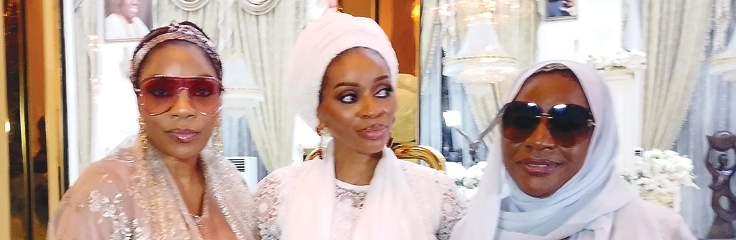
L-R: Madam Yinka Oredola; Mrs. Folashade Okoya and Olori
Alleges APC planning to impose expelled member on leadership Insists despite defections, APC will be rejected at polls in 2027
Ruling party is delusional, declares PDP Removal of certificate forgery to protect Tinubu from prosecution, says party chieftain
African Democratic Congress (ADC) has alleged plans by the ruling All Progressives Congress (APC) to ensure that President Bola Tinubu emerged the sole presiden-tial contender on the ballot in 2027.
ADC said that was part of an elaborate plot by the ruling party for next year’s general election.
It said the plot included mounting pressure on Independent National Electoral Commission (INEC) to recognise Mr. Nafiu Bala Gombe, an expelled member of ADC, as the party’s National Chairman.
In a statement by ADC’s National Publicity Secretary, Mallam Bolaji Abdullahi, the party described the move as a calculated attempt by elements within the ruling establishment to manufacture confusion within ADC and weaken the only viable opposition platform left in the country.
The party maintained that there was no legal basis for any confusion as its leadership remained firmly under Senator David Mark following a combined meeting of the National Working Committee (NWC) and National Executive Committee (NEC) witnessed by INEC officials in July 2025.
The party vowed to employ every legitimate means to resist plots by
anti-democratic forces within the ruling party to end competitive democracy in Nigeria.
ADC said, in the statement, “This brazen attempt to undermine and destabilise the opposition ahead of the 2027 general election is, reportedly, being driven by an APC governor, in collaboration with a senior security official based in Abuja, as part of the plot to impose President Tinubu on Nigerians as the sole presidential contender in 2027.
‘’At the centre of this scheme is Mr. Nafiu Bala Gombe, an expelled member of the ADC, who has recently been parading himself as a leader of the party while collaborating with external political interests.
‘’Mr. Gombe, who once claimed to be Deputy National Chairman under the former National Chairman, Ralph Nwosu, was duly expelled from the ADC after engaging in actions that were inconsistent with the party’s constitution, its principles, and the collective decisions of its leadership.
‘’It is, therefore, shocking, though not surprising, that elements within the ruling establishment are now attempting to use him as a willing instrument of destabilisation and plot to forcefully take over the leadership of the ADC.
‘’The objective is clear: to manufacture confusion within the ADC,
sponsor illegitimate leadership claims, and ultimately cripple the only credible opposition platform that Nigerians are increasingly looking to as a genuine alternative, thereby leaving Nigerians no choice in the next general election, despite widespread suffering that the ruling party has brought on the people.
“It may be worth reiterating that a properly constituted combined meeting of the National Working Committee (NWC) and National Executive Committee (NEC), witnessed by officials of INEC, transferred leadership to the coalition led by Senator David Mark
and Rauf Aregbesola in July 2025.
‘’This exercise was duly acknowledged by INEC with a formal recognition of the David Mark leadership in September 2025. And most recently, on March 6, a Federal High Court had dismissed a case challenging Mark’s leadership of the party, affirming a well-grounded Supreme Court judgement that matters of leadership are wholly an internal affair of political parties.”
ADC added, “We, therefore, wonder at the level of desperation that is driving these anti-democratic
forces to continue in their sinister efforts to impose expelled individuals on the party or manipulate its internal structures through external political pressure on judges and electoral officials.
‘’Nigeria’s democracy cannot thrive where the ruling party seeks to capture, infiltrate, or manufacture opposition parties for its own political convenience and survival. Such actions represent a dangerous assault on democratic pluralism and the constitutional right of Nigerians to freely organise and support credible political alternatives.”
ADC called on the general public, members, and democratic institutions to “disregard the activities and claims of Mr. Nafiu Bala Gombe and those backing his illegitimate adventure”. The party stated, “We know them and their game plans and we will resist them by all means necessary. We will defend our democracy.
“The ADC remains united, focused, and committed to building a strong democratic alternative for Nigerians. No amount of intimidation, infiltration, or political engineering will derail this mission.”
Kasim Sumaina in Abuja
Corps Marshal, Federal Road Safety Corps (FRSC), Shehu Mohammed, yesterday, ordered the nationwide deployment of personnel and logistics for the 2026 Eid-El-Fitri Special Patrol Operations scheduled to hold from March 17 to 22, as part of efforts to guarantee safe travels for motorists during the festive period.
The special patrol, which is in line with the corps’ statutory responsibility
Sunday Ehigiator
Former Features Editor of THISDAY, Mr. Adeola Akinremi has announced the publication of his debut poetry collection, ‘Scattered Ground,’ marking his transition into literary expression.
The collection, released in March 2026, reflects Akinremi’s experiences as a journalist, public policy expert and international development consultant, bringing together themes of climate change, displacement, war, governance and personal memory. Akinremi, who previously served as Features Editor and U.S. Correspondent for THISDAY, is widely recognised for his investigative
reporting and commentary on major national and global issues.
He has received several honours, including the Nigeria Media Merit Award for Newspaper Reporter of the Year and Features Writer of the Year, as well as the Diamond Award for Media Excellence.
His journalism has also attracted international attention. In 2016, he exposed a speech plagiarism controversy involving former Nigerian president Muhammadu Buhari and former U.S. president Barack Obama, a revelation that sparked global reactions and led to an official apology from Nigeria’s presidency.
According to the author, the
poems in ‘Scattered Ground’ emerged from years of reporting on conflict, climate crises and political upheavals across continents.
The collection explores the ‘scattered ground’ of modern life, a metaphor for displacement, fractured identities and the search for belonging in a rapidly changing world.
“Journalism gave me the world as it is. Public policy is the way I intervene with government decisions with consequences on human lives. Poetry gives me the world as it must be felt,” Akinremi was quoted to have said in a sentence, describing the book as an attempt to capture “the grief behind the dateline, the hope beneath the headline.”
of ensuring safer road use across Nigeria, is designed to reduce road traffic crashes, fatalities and injuries, while ensuring free flow of traffic on major highways.
The operation will witness increased patrol visibility, strategic deployment of rescue teams, and enhanced public enlightenment campaigns to guide motorists and other road users during the Sallah celebrations.
most attractive destination for oil and gas investment for two consecutive years, attracting over $8 billion in Final Investment Decisions from major international companies.
“Each of these investment dollars represents jobs for Nigerians, technical skills development, revitalised communities, and stronger revenues for governments at all levels,” he said.
Idris reiterated that the historic Customs Single Window, a unified digital platform which Nigeria would soon launch, would connect trade agencies, importers, and exporters in order to streamline documentation processes and significantly improve efficiency in international trade.
He further disclosed that Nigeria recently exited the Financial Action Task Force grey list after implementing significant reforms to
According to the corps marshal, the period of Eid-El-Fitri celebrations is traditionally characterised by high vehicular movement across the country as Muslim faithful travel to celebrate with family and loved ones.
He stated that the corps had mobilised its operational assets to manage the expected surge in traffic and prevent avoidable road crashes caused largely by speeding,
combat money laundering and illicit financial flows, a development that strengthens the country’s credibility within the global financial system and improves the ease of doing business.
Idris added that the government was implementing reforms in the mining sector to promote transparency, eliminate speculative licence holding, and ensure that only serious investors participate in the development of Nigeria’s mineral resources.
He revealed that Nigeria’s external reserves had strengthened significantly, crossing the $50 billion threshold as of February 2026, with part of the reserves now held in gold as part of the country’s diversification strategy.
Idris highlighted ongoing major infrastructure investments across the country, including the
dangerous driving, overloading, use of mobile phones while driving, route violations, and other traffic infractions.
He disclosed that the corps would maintain 24 hours’ patrol operations along critical road corridors nationwide, supported by standby rescue teams, operational ambulances, tow trucks, patrol vehicles, and motorbikes to ensure prompt response to emergencies.
Lagos–Calabar Coastal Highway, the Sokoto–Badagry Super Highway, and the Ajaokuta–Kaduna–Kano Gas Pipeline were designed to improve economic connectivity and strengthen industrial growth.
On security, Idris stated that the government has strengthened intelligence sharing and operational coordination among security agencies to confront terrorism, banditry, and organised crime, while also expanding cooperation with international partners, including the United Kingdom and the United States.
He asserted that Nigeria’s Navy, touted as Africa’s strongest naval fleet according to the 2026 Global Firepower Index, is leading the establishment of a Combined Maritime Task Force to secure the Gulf of Guinea.

L-R: Representative, APC Renewed Hope Women’s Network (RHWN), South South, Ms. Rona Maren; Representative, RHWN, FCT, Ms. Loveth Igwemere; Co founder, RHWN, Amb. Bilkisu Umar; APC
National Women Leader, Dr. Mary Alile; Convener, RHWN and Representative, North West, Mrs. Joyce Viyanto Ibrahim; and South East Representative, RHWN, Ms. Chidinma Ibekwe, during the group’s delegation visit presenting a symbolic cheque of two million, six hundred thousand naira for the Expression of Interest and Nomination Form for the position of APC National Women Leader to Dr. Mary Alile to contest for a second term in office at the party’s national headquarters in Abuja, yesterday
Adedayo Akinwale in Abuja
All Progressives Congress (APC) has confirmed that it would maintain the current zoning arrangement for National Working Committee (NWC) positions ahead of its March 27 and 28 National Convention.
National Publicity Secretary of APC, Felix Morka, in a statement, emphasised that the
Iran
Key UAE Oil Port, Dubai Airport
The United Arab Emirates’ (UAE) biggest port and oil storage facility, Fujairah, and Dubai’s international airport have come under further drone attacks as Iran continues to target Gulf transport and oil infrastructure.
Flights were temporarily suspended on Monday after a fire broke out near the airport after a “drone-related incident”. A fire also raged after a drone attack on the strategically important port and industrial zone at Fujairah, one of the largest oil storage facilities in the region.
And a rocket attack on a car killed a Palestinian national on the outskirts of the UAE capital, Abu Dhabi, the city’s Media Office reported. The attack occurred in the Al Bahia area, it said.
UAE air defence systems intercepted six ballistic missiles and 21 drones on Monday, the Defence Ministry said. Iran has launched over 1,900 missiles and drones at the UAE since the war between the US and Israel, and Iran, began.
Monday’s drone strike was the third incident since the start of the war near Dubai’s airport, which is the world’s busiest for international passengers. Some flights were delayed, while others were cancelled altogether, in another
existing zoning arrangement for NWC positions remained valid and applicable to the upcoming National Convention.
Morka stated, “As contained in the published All Progressives Congress (APC) 2026 Schedule of Nationwide Congresses, National Convention, and Related Activities, the existing zoning arrangement for National working Committee positions across states within the
hit to the UAE’s image of safety and stability.
The country’s energy sector came under attack as a drone hit an oil storage tanker on Saturday, and another drone hit the oil facilities on Monday, causing a fire. Oil loading activities at the port were halted for a time while damage assessments were carried out.
Fujairah sits on the UAE’s eastern coast, on the Gulf of Oman - rather than the Persian Gulf - and so vessels do not need to navigate the Strait of Hormuz to reach it.
The location means the port plays a “crucial” role in “helping keep global supplies moving” when the Strait of Hormuz is blocked by Iran, Dubai-based Justin Harper, editor of CEO Middle East - who regularly speaks to Dubai’s oil industry executives - told the BBC.
“If tensions with Iran disrupt the chokepoint, the UAE can still export oil through Fujairah via pipelines from the oilfields in Abu Dhabi,” he said.
Iran hitting a storage tanker and oil facilities at Fujairah “shows the vulnerability of Gulf infrastructure”, Stanley told the BBC.
Besides, NATO allies have cast doubt over the alliance’s role in reopening the Strait of Hormuz in a fresh blow to Donald Trump.
geo-political zones remains valid and applicable to the upcoming for National Convention
“Accordingly, aspirants purchasing and submitting Expression of Interest and Nomination Forms for national offices ahead of the National Convention are advised to be strictly guided by the existing zoning arrangement.”
Meanwhile, a group, the Prince Simon Ali Support Organisation,
The US president had called for “about seven” countries to help reopen the Strait of Hormuz, warning NATO that the bloc faces a “very bad future” if allies refuse to help the US open up the maritime chokepoint, which has been under Iranian control since the war began.
German chancellor Friedrich Merz’ spokesperson said “This war has nothing to do with NATO. It’s not NATO’s war,” per Politico, echoing doubt from the foreign minister and defence minister.
The UK has also expressed an unwillingness to involve NATO, with Sir Keir Starmer saying that it “won’t be and it’s never been envisioned to be a NATO mission.”
Meanwhile, Greece has refused any military involvement in the Persian waterway and Italy has called for diplomacy to prevail.
The price of oil reached the one of the highest peaks since July 2022 on Monday, peaking at $104 per barrel as the fuel costs continue to soar.
Israel Plans for at Least Three More Weeks of War
Israel said yesterday it had detailed plans for at least three more weeks of war as it pounded sites across Iran overnight, while Iranian drone attacks temporarily shut Dubai airport and hit a key oil facility in the United Arab
bought nomination and expression of interest form for National Chairman of APC, Professor Nentawe Yilwatda.
Director-General of the organisation, Mr. Dominic Alancha, told journalists yesterday in Abuja that they decided to obtain the form for Yilwatda following the decision of the party to retain the position of National Chairman in the North-central.
Emirates.
The US-Israeli war on Iran is now entering its third week with no clear end in sight, largely shutting the Strait of Hormuz, through which 20 per cent of the world’s oil and liquefied natural gas flow, pushing up energy prices and raising fears of a spike in global inflation.
Israeli military spokesperson Lt. Col. Nadav Shoshani told reporters there were detailed operational plans for the war with Iran for the next three weeks, and other plans extending further ahead.
Israel has said it wants to weaken Iran’s capacity to threaten it, striking ballistic missile infrastructure, nuclear facilities and the security apparatus, and that it still has thousands of targets to hit.
“We want to make sure that they are as weak as possible, this regime, and that we degrade all their capabilities, all parts and all wings of their security establishment,” Shoshani said.
Iranian Foreign Minister Abbas Araqchi for his part said Tehran had not asked for a ceasefire or exchanged messages with the US, according to Iran’s semi-official Student News Network.
In a post on X, Araqchi also said that some “neighbouring states” that host US forces and permit attacks on Iran were also actively encouraging the killing of Iranians. “Stances should be promptly clarified,” he said.
Alancha said they believed Yilwatda had the capacity and the competence to move the party forward and to lead it into the upcoming elections, where victory would be guaranteed.
Alancha said they believed in his ability, and that was why they made that call in January.
He stated, “Today, we are here again to consolidate on our earlier position. We are here to make payment for his form, his Expression of Interest and Nomination Form.
“I am not doing this as an individual. We are doing this under the Prince Simon Ali Support Organization. That is why I felt it was necessary to address you, because you are also part of this family. “We want to let you know that we did not just stop at calling for the retention of zoning and endorsing the National Chairman for continuity. We have gone a step further to ensure that we purchase his nomination form for him so that he can continue.”
Adedayo Akinwale in Abuja
The Chairman of the Independent National Electoral Commission (INEC), Prof. Joash Amupitan, SAN, has said as Nigeria continues to deepen its democratic process, ensuring credible elections remained a foremost priority.
Amupitan stated this yesterday in Abuja during the courtesy visit of the Alumni Association of Institute of Security Studies (AANIS).
He noted that the gathering underscored the vital connection between effective security management and the integrity of the electoral process.
The chairman stressed that the theme for their upcoming 2nd Annual Lecture, “Credible Election and National Security in Nigeria,” was both timely and critical.
Amupitan said it highlighted the interconnectedness of credible elections in fostering national stability, peace, and security.
“As Nigeria continues to deepen its democratic process, ensuring credible elections remains a
foremost priority.
“These elections are the bedrock of our democracy, and their integrity directly impacts our national security.
“It is therefore imperative that our security agencies, policymakers, and stakeholders work in harmony to uphold transparency, fairness, and security during every electoral cycle.”
Amupitan commended AANIS for its unwavering commitment to building the capacity of the nation’s security professionals, saying, “your efforts are integral in strengthening our nation’s resilience against threats that may undermine our democratic development.”
He assured them that INEC remained committed to conducting free, fair, and credible elections, leveraging innovative approaches and strengthened collaborations.
The chairman said the commission recognised that a secured environment was foundational for the success of the nation’s electoral processes and, ultimately, her progress.
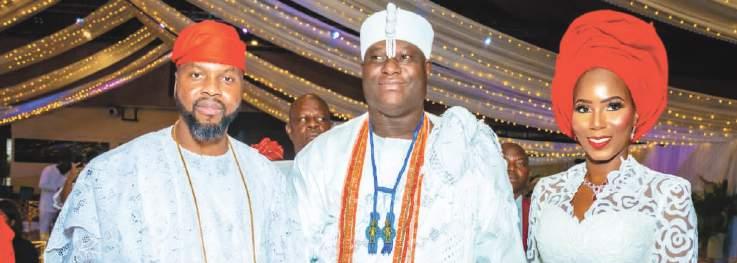
L-R: Group CEO of RED | For Africa/ celebrant, Adebola Williams; His Imperial Majesty, Ooni of Ife, Oba Adeyeye Enitan Ogunwusi, Ojaja II, and Mrs. Kehinde Williams, during the 40th birthday celebration of Adebola Williams in Lagos...recently
Linus aleke in abuja
The Federal Capital Territory (FCT) Police Command has dismissed as false a letter circulating in a community within the territory, which alleged that terrorists were planning an imminent attack.
The Command also announced the deployment of security personnel to the affected communities to
prevent any possible threat and reassure residents of their safety.
In a statement, the police said they were aware of publications dated March 15 and 16, 202,6 claiming that suspected bandits had sent a letter through a student of a private school in Kungaboku Community, warning of a planned attack on the village and the neighbouring Paze
sunday aborisade in abuja
The Nigeria Democratic Congress (NDC) has launched a digital membership registration portal as part of efforts to expand its national footprint and strengthen internal organisation ahead of future political engagements.
The unveiling, held in Abuja, was led by the party’s National Leader, Henry Seriake Dickson, alongside the National Chairman, Cleopas Moses, and the National Secretary, Ikenna Morgan Enekweizu.
Several state chairmen and other party leaders and stakeholders also attended the event.
Dickson said the digital platform marks a significant step toward modernising the party’s operations while encouraging wider political participation among Nigerians at home and in the Diaspora. According to him, the portal will allow Nigerians across the country to register easily as members while enabling the party to maintain accurate and well-managed membership records.
He expressed appreciation to Nigerians for the encouragement and support the party has received since its emergence, noting that many citizens have already indicated their readiness to join the new political platform.
segun awofadeji in Bauchi
Amid widespread speculations that the Bauchi State Governor, Senator Bala Mohammed, might defect to the All Progressives Congress (APC), a political pressure group has been launched in the state with the aim of displaying unalloyed solidarity, support, and loyalty for the governor.
The new group, ‘The Kaura Force Movement’, which was formally launched yesterday during a press conference held at the NUJ Press Centre in Bauchi, vowed (as a new political pressure group) to
agitate for his elective office in his (Governor Mohammed) political journey of 2027, saying: “We will not allow him to walk alone.”
Although Governor Mohammed has not publicly denied the defection rumours, a political support group has expressed its unwavering commitment and solidarity to him.
While addressing journalists, the leader of the group, Mohammed Maiwada Bello, said that the governor’s landmark achievements in the state deserve their support and loyalty.
community.
According to the reports, the threat was allegedly issued in retaliation for the neutralisation of a bandit commander during a recent
security operation carried out by the FCT Police Command’s Anti-Kidnapping Unit in collaboration with troops of the 7 Guards Battalion of the Guards
Brigade.
However, the Command said a thorough investigation into the matter revealed that the letter did not originate from any terrorist group.
Rather, the police stated that the message was the handiwork of mischief makers seeking to create fear and panic among residents of the community.
Felix Omoh-asun in Benin
A group, Concerned Ovia North-east Voice, in Ovia North-East Local Government Area of Edo State, has protested what it described as the imposition of a non-indigene and nonparty member of the All
Progressives Congress (APC) to contest as the chairman of the LGA.
The aggrieved members alleged that the move was being orchestrated by former Deputy Governor of the state, Lucky Imasuen, whom they accused of attempting to impose one Christopher
Eriamatoe for the position.
In a letter addressed to the Edo State Governor, Monday Okpebholo, signed by Mr. Lugard Iyenoma, and made available to journalists in Benin City, the group appealed for an urgent intervention to halt the alleged plan.
According to the letter, “Mr. Christopher Eriamatoe is not a member of our great party, and as such, cannot be given such a vital position in the local government area where he once worked against us as media agent to the former Governor Godwin Obaseki in the election that brought you in as the state governor.”
James sowole in abeokuta
A coalition of political leaders, traditional stakeholders, professionals, and youth groups across Ijebuland in Ogun State has revealed its position on the Ogun East senatorial election in 2027.
Pointedly, the coalition known as Ijebu Lokan Movement, after
consultations with communities and critical stakeholders in the district, declared that the next senator of Ogun East must come from Ijebuland and outside the Remo federal constituency.
The movement, in a statement signed by the group’s Head of Media and Strategy, Bode Mebude, unequivocally rejected and condemned the senatorial
ambitions of both Senator Gbenga Daniel and Prince Dapo Abiodun.
The statement read: “Their aspirations for the Ogun East Senate seat represent a clear attempt to perpetuate political domination by the Remo axis at the expense of justice, fairness, and equitable representation within Ogun East senatorial district.
“For years, the Remo bloc has occupied strategic political positions within Ogun East and Ogun State. It is, therefore, politically unjustifiable and morally indefensible for the same axis to seek to monopolize the senatorial seat that rightly belongs to the broader interests of Ogun East.
The South-West Development Commission (SWDC) has begun work on ‘Transformed Communities’ (TransComs), a project structured to support clusters of contiguous farming communities through coordinated improvements in essential infrastructure, farming, small-scale agro-processing, enterprise support, and skills
development.
The project, which is to be undertaken in collaboration with the Foundation for Technology Innovation and Sustainable Development (FTID) as technical partner, will expand economic opportunity and improve quality of life in rural and semi-urban areas across the Southwest region. TransComs is being jointly
developed under a structured implementation framework, with rollout expected to proceed in phases, subject to formal approvals and intergovernmental coordination.
At a meeting with the FTID Executive Director Prof. Banji Oyelaran-Oyeyinka, SWDC Executive Director (Commercial and Environmental
Development) Alhaji Fatai Ibikunle, said the project was a priority for the commission.
According to him, though South-west is Nigeria’s leading economic region, wide disparities persist between major urban centres and rural communities where food production and other agricultural activities take place.
sunday Ehigiator
The Child Survival and Development Organisation of Nigeria (CSDON) has taken its humanitarian outreach programme to the Special Correctional Centre for Girls in Idi-Araba, Lagos, where it offered support and
encouragement to young inmates. It also donated essential items and gave educational assistance.
Speaking during the outreach on behalf of CSDON’s founder, Mrs Onari Duke, the Project Manager, Robin Oderinde, said the programme reflects the
organisation’s commitment to uplifting vulnerable women, girls and children, particularly those in correctional care.
According to her, the theme of the outreach underscores the belief that while the girls may be physically confined, their hopes, dreams and future possibilities remain limitless.
“Sometimes in life, people find themselves in places they never imagined. Circumstances change, mistakes happen, and challenges arise. But one thing I want every single girl here to remember is this: your current situation does not define who you are or who you will become,” she said.
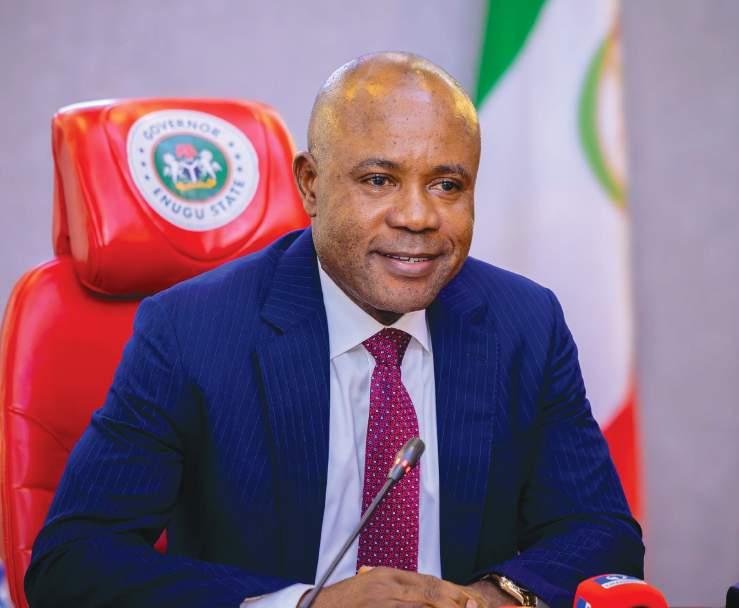
“I don’t see that happening too soon. The conflict could have been resolved through diplomacy. But we are in a season whereby diplomacy is being brutalized, and the United Nations Security System is weak.”
“Forget the UN and its hypocrisy and double standards. At the last meeting of the United Nations Security Council, 13 members obviously instigated by the United States and Israel voted overwhelmingly to ask Iran to stop any further attacks in the Gulf states. Only Russia and China abstained from voting, and also refused to use their veto power, perhaps because of the support for the resolution in the larger assembly by 135 countries. Russia insisted that the Resolution was unbalanced. China had put forward another resolution questioning the legitimacy of the US and Israeli Operation, but that other proposal was ignored. This is partly why I believe that the United Nations is in urgent need of reform.”
“But have you heard the opinion that there is a Biblical basis for this war? It is a prophecy foretold in the Bible about the conflict between the descendants of Abraham, the Isaac line versus the Ishmael line, an eternal fratricidal warfare. The Bible also talks about the coming of the anti-Christ. I believe this is a war of survival.”
“Have you also heard that the Prophet Muhammad (SAW) prophesied, 1,400 years ago, that the River Euphrates will produce a mountain of gold, over which 99% of combatants will die? But let us stay away from these religious interpretations. What we know is that Israel wants to be the dominant power in the Middle East. The United States says it is supporting Israel because Iran cannot be allowed to acquire nuclear power and enrich uranium, because it will become a threat to the world and its neighbours. Trump calls Iran “the evil empire”. PM Netanyahu says Iran has “industries of death.” Both attacked Iran on February 28 to force a regime change, but to their dismay, that has not happened”.
“What has happened is that the entire world has been thrown into a bind. The cost of everything including food and petrol has gone up. Iran has dragged all the Gulf States and the entire Middle East into the conflict by attacking American allies hosting US military bases within the region. The war has now reached a point where President Trump is calling on NATO allies and other countries to get involved and send warships to help protect the Strait of Hormuz”
“The last time I checked nobody has answered him. Japan. Australia. Even Britain which had talked about sending minesweepers to the Strait is no
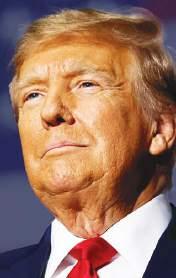
longer so enthusiastic. He tried to blackmail China by planning to put his visit to Beijing scheduled for March 31 to April 2, on hold.”
“Blackmail”
“I don’t see China getting involved in a war it has said has neither legitimacy nor legal basis. The UK says it will not be drawn into a wider war. NATO allies are reluctant despite Trump’s threats. Israel and the US should go and finish what they started. They have done enough damage to other countries already.”
“To themselves too. This is election year in both the US and Israel. Midterm elections in the US, legislative elections in Israel. If the cost gets too high for both countries, the people will speak with their votes.”
“What happened to diplomacy?”
“Trump is not interested in diplomacy. He is not an Obama who tried to make peace with Iran under the 2012 JCPOA agreement or the Iran nuclear deal. In May 2018, Trump pulled the US out of that deal. Even recent attempts to renegotiate with the Iranians were frustrated by Trump when he joined Israel
to launch a pre-emptive attack on Iran wiping out the country’s leadership. For Trump, might is right. Now he is eyeing Cuba after Venezuela, after Iran.”
“Really, I don’t see this war ending very soon, especially now that Israel has sent ground troops, from its 91st division, into Southern Lebanon, to fight the Hezbollah.”
“But how are we responding in Nigeria? Other countries are looking for ways to help their citizens. Institutions are getting involved to protect national interests. Even the US is planning to release 172 million barrels of crude from its Strategic Petroleum Reserve to stabilize petrol prices. The same US has also eased sanctions on Russian oil, a temporary measure that will last till April 11. All the 32 member countries of the International Energy Agency (IEA) have promised to release about 400 million barrels of crude in response to supply concerns. In Thailand, the authorities have asked staff at government agencies to work from home, and use the stairs instead of elevators. In the Philippines, the government has introduced a 4-day week, and directed government departments to cut down on energy use. India is talking to Iran to allow the passage of 22 Indianflagged vessels stranded in the Strait.”
“South Korea has placed a price tag on the pump price of petrol. Britain is putting pressure on retailers not to increase the price of fuel.”
“What are we doing in Nigeria? We have people in Saudi Arabia, Qatar, UAE, Dubai, everywhere in the Middle East. Some Nigerians were among the injured in Dubai during a recent drone attack by Iran.”
“I hear Nigeria has started evacuating willing Nigerians from Iran in particular through the Armenian border.”
“Who told you?”
“I saw a statement by the Nigerians in Diaspora Commission (NIDCOM) to that effect.”
“But why would you say willing Nigerians? Would anyone want to stay in a war zone?”
“Don’t you know our people? Even if World War III breaks out, some Nigerians will refuse to leave the war zone. In fact, they may even volunteer to join the war, if the pay is right.”
“But what would any Nigerian be looking for in Iran”
“I don’t think there is any country in this world where you will not find a Nigerian. Go to Afghanistan, there are Nigerians there! There are also many Nigerians living in Alaska surrounded by glaciers, mountains and wilderness.”
“So, what is the government’s plan to reduce the
UK-NIGERIA: A RESET -BUILDING ON THE PAST AND LEAPING INTO THE FUTURE inflows reaching about $21 billion in 2024, according to central bank estimates.
A significant share of these remittances originates from Nigerians resident in the United Kingdom, making the diaspora corridor one of the most important economic bridges between both countries. British investment has also played a long-standing role in Nigeria’s economy.
Major British-linked companies operate in Nigeria and recent data shows that the stock of UK foreign direct investment in Nigeria stood at about £385 million in 2023, highlighting the need to revitalize and scale investment flows between both economies.
This visit is therefore expected to focus heavily on unlocking new capital flows into Nigeria’s infrastructure, technology, energy and financial sectors.
Security Cooperation: Quiet but Significant
Security cooperation between Nigeria and the United Kingdom is one of the most substantive, though often understated, pillars of the bilateral relationship. For over three decades, British and Nigerian armed forces have collaborated on training, intelligence sharing, counter-terrorism strategy, and military professionalization. Sandhust for Nigeria Military is the Harvard of elite Military training. British military advisory teams have trained hundreds of Nigerian military personnel, including specialized counterterrorism and civil-military relations units within the Armed Forces of Nigeria. In recent years, this cooperation has deepened through the UK–Nigeria Security and Defence Partnership, which focuses on:
•counter-terrorism operations
•counter-terrorist financing investigations
•intelligence coordination
•cyber-security cooperation
•kidnapping response frameworks
Under this framework, the United Kingdom has also supported the strengthening of Nigeria’s National Counter-Terrorism Centre (NCTC) and assisted in developing the Multi-Agency Kidnap Fusion Cell, improving Nigeria’s ability to coordinate responses to security threats.
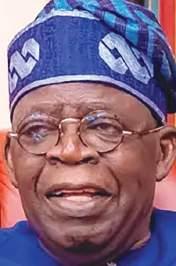
On the operational side, British military assistance has included:
•training of 150 Nigerian Special Forces personnel (“Panther” units) for counter-terrorism deployment
•donation of counter-insurgency training facilities for the Nigerian Armed Forces
•provision of counter-IED equipment and non-lethal military hardware to support operations against insurgent groups.
These efforts reflect a shared recognition that West African stability is inseparable from Nigeria’s internal security, and that both nations benefit from strengthening Nigeria’s capacity to confront terrorism, organized crime, and regional instability.
As insecurity in the Sahel increasingly spills southward, security cooperation is likely to feature prominently in President Tinubu’s discussions in
people’s suffering at home? Food prices, transportation costs and fuel prices have gone up. Even if inflation is easing.”
“You are quoting the February 2026 headline inflation figure which is 15.06%. The Iran war started on February 28. Wait for the inflation figure in March.”
“It is always very difficult to plan in this country. Petrol is now about N1, 300 per litre. Diesel is N1, 700 per litre. Overnight, the cost of living has skyrocketed. But the other side of it, is that the experts have been talking about an oil windfall for Nigeria. The Nigerian Economic Summit Group says Nigeria stands to benefit, potentially earning between N2.3 trillion in the short term, and up to N30 trillion if the conflict escalates.”
“How did they arrive at the figures? How much oil are we producing? How much of our oil and gas production are we selling at the current market value? We probably sold our crude in the futures market already and collected payment upfront when there was no energy market shock? No wonder the Nigeria Labour Congress (NLC) is already asking for wage increase, tax reliefs and a cost-of-living allowance. Typical Nigerian response.
A palliative-mentality.”
“I don’t think wage indexation as recommended by the Labour Congress is the way to go. It is a self-fulfilling prophecy. If the government increases wages for public sector workers, what will happen to the people in the private sector or the informal sector? You can’t force an employer of labour to increase wages just because there is a war economy.”
“I agree with Labour though that the Iran Oil windfall should not end up like the Gulf Oil windfall. I don’t know how much Nigeria will benefit, that depends on productivity, but we must insist on transparency and accountability.”
“Whatever windfall that comes to Nigeria, goes straight into the Federation account. That is what Executive Order No. 9 of 2026 says, so the money will still be shared.”
“Ha. In that case, then the money should be set aside and used to fund healthcare, education, public transportation security – projects that will be of benefit to all Nigerians, not a few sharing a windfall. We need to strengthen Nigeria’s local refining capacity and stop importing petrol.”
“For your information, the NMDPRA is still issuing fuel import licenses, further driving up cost.”
“I thought they stopped fuel import licences”.
“Go and check.”
“Who do I ask now? Everybody is in London to see the King and the Queen.”
London.
The First Major Visit in Nearly Four Decades Diplomatic engagements between Nigeria and the United Kingdom have remained active over the years, but a formal state-level engagement of this scale by a Nigerian leader in London has not occurred in nearly four decades.
The last comparable high-profile engagement dates back to the late 1980s during the era of military leadership, making President Tinubu’s visit the first opportunity in almost 37 years to redefine the relationship at the highest strategic level.
That passage of time itself explains why a reset is necessary.The world has changed. Britain has redefined its global posture following Brexit, seeking deeper economic partnerships beyond Europe. Nigeria, meanwhile, is undergoing its own transformation under President Tinubu’s structural reform programme, aimed at stabilizing the macroeconomy and restoring investor confidence.
President Tinubu’s Reform Narrative
President Tinubu arrives in London at a time when Nigeria is implementing its most significant economic reforms in decades. Exchange-rate unification, fiscal restructuring, tax reforms, and subsidy removal are gradually repositioning Nigeria’s economic fundamentals.
These reforms are designed to restore credibility, attract investment, and strengthen macroeconomic stability. For partners such as the United Kingdom, the message is clear:
Nigeria is not simply seeking aid. Nigeria is seeking investment, technology transfer, and mutually beneficial economic partnerships.
The Bigger Picture
The deeper significance of this visit lies in what it signals about the future of Nigeria’s diplomacy. Nigeria is no longer content to maintain relationships defined only by history. It is seeking partnerships defined by strategy, investment, and shared responsibility in shaping global narratives.
The United Kingdom, for its part, must also decide the nature of its engagement with Africa’s largest democracy. And to booth, one of Africa’s largest economy. For too long, London has sometimes appeared a detached observer when contentious narratives about Nigeria surface in global discourse—despite possessing perhaps the deepest institutional understanding of the country among Western partners.
Moments such as the recent international debate around allegations of religious persecution in Nigeria illustrate how a measured and informed voice from the United Kingdom could have helped calm tensions at the time, rather than allow speculation to shape perception.
A renewed partnership should therefore mean something more than trade statistics and diplomatic visits. It should mean engagement, candor, and strategic alignment.
When President Tinubu arrives in London on Tuesday , he is not simply visiting a former colonial capital. He is engaging a nation whose financial markets, diaspora networks, universities, and security institutions remain deeply intertwined with Nigeria’s own trajectory.
During Mr President’s last outing to Türkiye, the metaphor was clear: Nigeria was choosing a corridor to global markets. In London, the metaphor is different. If Türkiye represents a corridor between continents, the United Kingdom represents a gateway into the world’s financial, technological, and diplomatic ecosystems.
Right now. This moment in history. President Tinubu embodies the Nigerian dream. He carries the weight of the sum total of the hopes and aspirations of a 230 million population. And that this historic visit is taking place now during his time as President speaks to his transformational leadership. The moment has found it’s man and history is made.
And the task before both countries now is simple- to ensure that the bridge built by history becomes a highway to the future.
•Sunday Dare is the Special Adviser on Media and Communication to Nigeria’s President, Bola Tinubu. GCFR.

L-R: Head of Dentistry, Federal Ministry of Health, Dr. Gloria Uzoigwe; Brand Manager, Pepsodent, Lauretta Amie; President, Nigerian Dental Association, Dr. Emedom Elias; Head of Corporate Affairs, Communications and Sustainability, Unilever Nigeria Plc, Zainab Obagun and Head of Supply Chain, Unilever Nigeria Plc, Abayomi Alli during a Press Conference to announce the celebration of the 2026 World Oral Health Day by Pepsodent in Lagos... yesterday
abati1990@gmail.com
“Bros, looks like President Trump’s Operation Epic Fury in Iran is beginning to look like an Operation Epic Mistake. Three weeks after, Iran is still standing strong, and threatening not to negotiate. The country’s Defence Minister, Abbas Araqchi insists they are ready to keep fighting for as long as it takes. The new Supreme Leader, Motjaba Khamenei, the son of the late Ayatollah Khamenei, says the Strait of Hormuz will remain closed. Let the world cry if it may.”
“I agree. It is easy to start a war, but you cannot predict how or when it will end. America went into this war, what Trump considers an operation, but it has turned into something long and arduous. Nothing extraordinary, nothing heroic. President Trump had said it will end in four to five weeks, Chris Wright, the US Energy Secretary, says it will be over in a matter of weeks. Pentagon Officials, including Pete Hegseth, Secretary of War, and the Philippines Department of War gave a projection of
eight weeks. Here we are, it is getting worse, with fears that this could degenerate into World War III.”
“The Iranians are taking a heavy blow though.”
“They say they remain stable and strong. The message from Iran is one of defiance.”
“Iran is not a match for America in every respect. They have lost over 800 people including 170 school girls in Minab about 17, 000 persons have been injured, the Iranian Navy has been compromised. The country’s Air Force has been weakened. They also lost their Supreme Leader in the course of this fight. The new leader is in the hospital. The Americans are even gossiping that he is gay.”
“Gay or not gay, Iran has the whole world, and the entire Middle East at its mercy. I am not persuaded by the Western propaganda that Iran will be humiliated. Trump may be facing another Vietnam (1955 -1975). Or Afghanistan (2001 -2021). Or Cuba during the Bay of Pigs invasion (1961), or Operation Eagle Claw in Iran (1980). The Iranians are a very proud people, who trace their civilization to an ancient era. It would be wrong to underestimate them.”

“Their main bargaining power is the Strait of Hormuz, the 22 nautical-miles passage for crude oil and global trade that they have turned into a chokehold, making it difficult for the world to breathe. About 20% of the global crude oil supply passes through that route with countries like Japan, India, China and South Korea getting over 70% of their crude supply through the Strait. Other trade items like fertilizers, electronics, toys, household items too. The shipping companies are now facing not just massive disruptions, but higher costs of freight and insurance. Crude oil has gone up to as high as $110 per barrel. The experts say it will hit $200 if the war continues to escalate.”
“Some countries are cutting a deal. India for example. China too. Since February 28, China has received up to 11.7 million barrels of crude through that route. Understandably, both India and China are calling for a peaceful resolution.”
Continued on page 39

Early this week President Bola Ahmed Tinubu will travel to the United Kingdom for what may prove to be one of the most consequential diplomatic engagements of his Presidency. It will be the first time a Nigerian leader will be berthing on the banks of the Thames on a State Visit in nearly four decades. Only very few such State visits in the past, by an African leader, have carried more symbolic and strategic weight. In November 1977, Egyptian President Anwar Sadat made a historic journey to Jerusalem, becoming the first Arab leader to set foot on Jewish soil since the biblical Exodus—when Moses led the Israelites out of Egypt. That moment was more than a diplomatic gesture; it signaled a strategic rethinking of a relationship defined for decades by history, suspicion, and conflict.
President Tinubu’s visit to London may not carry the drama of Sadat’s visit to Begin, but its implications for the future of UK–Africa relations could prove just as significant. At first glance, Nigeria–UK relations may appear familiar- two countries bound by history, language, legal traditions, and dense
people-to-people ties. Yet the significance of this visit lies not in nostalgia but in strategic renewal. The agenda is forward-looking: investment, financial cooperation, technology partnerships,
security coordination, education linkages, and diaspora engagement. But beyond the formal programme, the visit carries a deeper message: Nigeria and the United Kingdom are repositioning one of Africa’s most important bilateral relationships for a new global reality.
Few international partnerships between Africa and Europe carry the institutional depth of Nigeria–United Kingdom relations. From colonial administration to Nigeria’s independence in 1960 and through more than six decades of diplomatic engagement, the two nations have maintained enduring links across:
•governance and legal systems
•finance and banking
•security cooperation
•education and research
•trade and migration
•Security
Today, more than ever, the human connection alone is immense. More than 300,000 Nigerians live in the United Kingdom, forming one of the largest
African diaspora communities in Europe. Nigerian students also rank among the largest foreign student populations in British universities, strengthening the intellectual bridge between both societies. The economic relationship is equally significantTotal bilateral trade in goods and services reached approximately £8 billion in the four quarters ending mid-2025, with UK exports to Nigeria valued at £5.6 billion and imports from Nigeria at £2.3 billion. Nigeria’s exports to the UK are dominated by oil and gas products, while British exports to Nigeria include industrial machinery, refined petroleum products, pharmaceuticals, consumer goods, and financial services. Despite these flows, the relationship still operates below its full potential.
Remittances and the Diaspora Economy
The financial ties between both countries extend far beyond trade. Nigeria remains one of the largest recipients of diaspora remittances globally, with
Continued on page 39