IMF: Nigeria’s Debt Level Sustainable, But Paying 50% of Tax Revenue on Interest Concerning
Insists core parameters of $5bn UAE loan deal still unknown
Emmanuel Addeh in Abuja and Nume Ekeghe in Lagos
www.thisdaylive.com
Military Rescues Gen Rabe’s Widow
Captivity, Pays Condolence Visit to Family
Terrorists raid Niger communities
Abubakar, a former Director of Defence Information, who was abducted alongside her husband by bandits in Katsina State some weeks ago, but died in captivity. According to a statement by
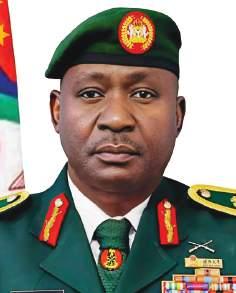
Director of Defence Information, Major General Samaila Uba, the rescue followed intensified searchand-rescue operations conducted by troops of Operation Fansan Yamma in the affected areas.
Despite Existing Appeal Court Order, Justice
Lifu Directs INEC to Deregister ADC, 4 Others
You’re playing with fire, ADC warns govt’s agents, says judge is threat to democracy We’ll be on the ballot in 2027, confident Mark tells members It’s judicial rascality, Atiku slams court Adeleke: deregistration ruling violates appeal court order Obi warns against politicising institutions Your order won’t stand, Sowore blasts court Adebayo demands INEC’s full independence
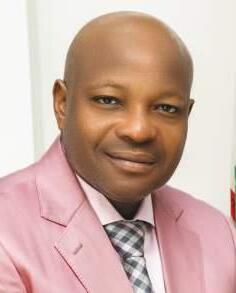
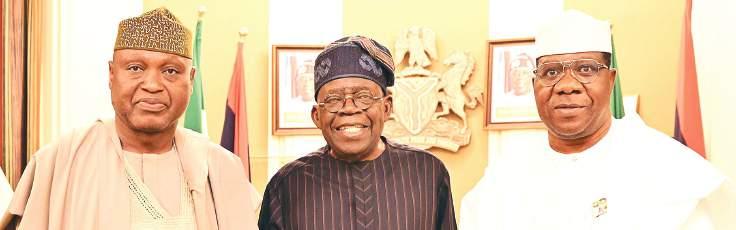
L–R: The Executive Secretary, Solid Minerals Development Fund (SMDF), Hajiya Fatima Umaru Shinkafi; Chairman, Senate Committee on Solid Minerals, Sen. Ekong Sampson; Minister of Solid Minerals Development, Dele Alake and Chairman, House Committee on Solid Minerals, Hon. Gaza Gbefwi, during the Launch of the SMDF Early-Stage Mineral Exploration and Research Grant Endowment Programme (EMERGE). Application opens on July 10 on smdf-emerge.com.ng
The statement explained that sustained offensive operations and mounting pressure on criminal elements led troops to make Presidential candidate of the African Democratic Congress (ADC), Alhaji Atiku Abubakar, has
Continued on page 6
Email: wcares@accessbankplc.com
Linus Aleke in Abuja and Laleye Dipo in Minna The military has rescued Mrs Amina Abubakar, widow of the late Major General Rabe
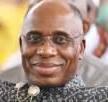
Amaechi
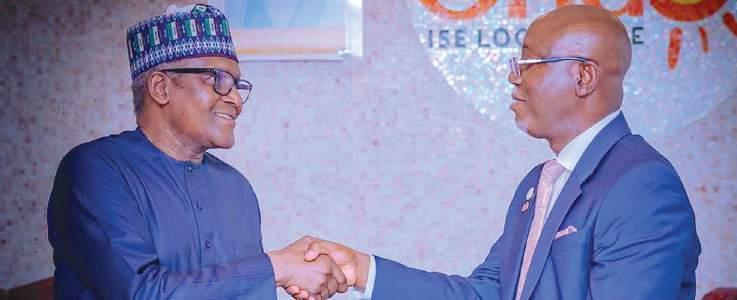
DANGOTE’S COURTESY VISIT TO AIYEDATIWA...
L-R: President of Dangote Group, Alhaji Aliko Dangote, and Ondo State Governor, Lucky Aiyedatiwa, during a courtesy visit to Aiyedatiwa in Akure, where the former revealed plans to build Nigeria’s biggest industrial zone in the Sunshine State... yesterday
Shettima: FG to Roll Out 10,000 Electric Tricycles By August
Says Tinubu’s priority is to move nation from fragmented transport system to integrated logistics chain
Deji Elumoye in Abuja
The federal government has finalised plans to roll out 10,000 electric tricycles for use as part of a broad plan to ease public transportation across Nigeria.
The tricycles would be distributed by the North East Development Commission (NEDC) in August this year, for use across the northeast region and beyond.
Vice President Kashim Shettima, who disclosed this yesterday, during a courtesy visit by ‘The Transporters for Tinubu/Shettima 2027,’ said the President, “has approved the replication of the initiative in other parts of the country by the various regional development commissions.”
He noted that the priority of the administration of President Bola Tinubu was to move Nigeria from a fragmented transport system to an integrated logistics chain where ports, rail lines, CNG-powered trucks, inland waterways, airports and local feeder roads work together to support commerce, agriculture, industry and national integration.
Shettima explained that the federal government’s transport reform agenda
was anchored on the nationwide rollout of Compressed Natural Gas, major port upgrades and a stronger logistics chain.
This, he said, was aimed at improving working conditions for transport workers across road, rail, maritime, aviation and pipeline operations.
The vice president maintained that the Tinubu administration was determined to build a transport economy that lowers the cost of movement, reduces delays at ports, connects farms to markets, strengthens national productivity and gives transporters a more dignified place in the country’s development process.
“Our vision is an unbroken logistics chain, where a container moves from a deep-sea port to a rail wagon, then to a CNG-powered truck, then to a trader in Ariaria Market or Maiduguri, without delay or policy failure,” he added.
He said the Presidential Compressed Natural Gas Initiative has begun to prove that Nigeria can use its domestic gas resources to reduce the cost of transportation, especially for heavy-duty vehicles, while government continues to address the technical and infrastructure concerns affecting smaller vehicles.
“We said CNG could cut fuel costs
by over 60 per cent, and many called it a fantasy. Today, heavy-duty trucks run on Nigerian gas, proving sceptics wrong and returning money to your pockets,” he stated.
Shettima added that the administration was also pushing reforms in the maritime sector through the operationalisation of Lekki Deep Sea Port, the development of the National Single Window and renewed attention to inland waterways, saying the objective
is to make Nigerian ports more efficient and globally competitive.
“Before this administration, clearing a container could become an encounter with frustration, corruption, and decay. We promised to unlock the blue economy. Today, with Lekki Deep Sea Port operational, the National Single Window taking shape, and inland waterways receiving attention, our ports are preparing to compete with the world’s best,” he said.
Stronger Inflows from
Oil,
The Vice President also assured transporters that the Federal Government would continue to support policies that promote affordable fuel, insurable fleets, bankable contracts and dignified working conditions.
“This administration shall continue to stand with the Nigerian transporter. We shall continue to fight for affordable fuel, insurable fleets, bankable contracts, and dignified working conditions. We shall build roads that last, rails that
Gas Royalties,
stretch across this great nation, ports that breathe, and airports that reflect our pride,” Shettima said. Earlier in his remarks, Technical Adviser to the Vice President on Transportation, Logistics and Innovation, Segun Obayendo, said the group, which constitutes a critical engine of Nigeria’s socio-economic survival, was unanimous in its endorsement and support for the Tinubu/Shettima presidency in the 2027 presidential election.
CIT, Import Duties, VAT Raise FAAC Allocations for April to N2.257trn
Strong inflows from Companies Income Tax (CIT), import duties, and Value Added Tax (VAT) raised allocations to the three tiers of government for April to N2.257 trillion, a N217 billion increase over the N2.04 trillion disbursed by the Federation Account Allocation Committee (FAAC) in the preceding month.
This was revealed at the delayed monthly FAAC meeting for May which was held in Abuja yesterday. The amount shared was from a gross revenue of N3.184 trillion garnered in the reference month.
Citing a communique issued at the end of the meeting, the Director of Press and Public Relations, Office of the Accountant-General of the Federation (OAGF), Bawa Mokwa, disclosed that a total of
Group Defends Akpabio, Challenges Oshiomhole’s Claims on NNPCL, Senate Leadership
Tells Edo senator to provide evidence for allegations made during recent interview
Sunday Aborisade in Abuja
The Northern Democratic Front (NDF) has come to the defence of Senate President Godswill Akpabio and officials of the Nigerian National Petroleum Company Limited (NNPCL), disputing allegations recently made by Senator Adams Oshiomhole.
They called for restraint in public commentary on issues relating to
the National Assembly and public institutions.
In a statement issued yesterday by its National Publicity Secretary, Abdullahi Suleiman, the group expressed concern over remarks attributed to Oshiomhole during a recent interview, saying public officials should support their allegations with verifiable evidence and allow relevant institutions to address any claims of wrongdoing.
The NDF said while elected officials have a responsibility to raise concerns on matters of public interest, such interventions should be guided by facts, due process and respect for democratic institutions. According to the group, allegations involving officials of the NNPCL, the Senate Committee on Public Accounts and the leadership of the Senate should be subjected to established investigative and
oversight mechanisms rather than public exchanges.
The organisation also questioned the circumstances surrounding actions reportedly taken in connection with the committee’s oversight activities involving former NNPCL Group Chief Executive Officer, Mele Kyari, arguing that all parliamentary processes should strictly conform with Senate rules and established procedures.
N2.257 trillion was distributed from the April 2026 Federation Account revenue, to the federal, state and local governments.
While Petroleum Profit Tax (PPT) and Hydrocarbon Tax recorded significant declines during the month, stronger inflows from CIT import duties, VAT and oil and gas royalties made up for the losses and raised the distributable pool available for disbursement to the relevant tiers.
According to the communique, the N2.257 trillion distributable revenue comprised N1.260 trillion statutory revenue, N747.088 billion VAT revenue and N250 billion Augmentation.
It emerged that from the gross revenue of N3.184 trillion available in April, N113.756 billion was deducted as cost of collection, while N813.839 billion went for transfers, refunds and savings.
The communique revealed that gross statutory revenue rose to N2.378 trillion in April, from N1.699 trillion in March, representing an increase of N678.224 billion.
Also, gross VAT revenue increased to N806.617 billion in April from N664.425 billion during
the preceding month of March, signalling a N142.192bn surge. According to the communique, the higher revenue performance stemmed from improved collections from several major tax and non-tax revenue sources.
The federal government received the sum of N787.351billion from the N2.257 trillion distributable revenue available for the reference month while states received N772.360 billion.
The 774 local government councils received N540.152 billion, while oil-producing states shared N157.25 billion as 13 per cent derivation revenue.
Equally, from the N1.26 trillion statutory revenue, the federal government received N580.942 billion, states got N294.661 billion and local governments got N227.172bn.
Under the derivation principle, the oil-producing states also received N157.254 billion as derivation revenue from the statutory component.
For the VAAT revenue, the federal government received N74.709 billion, states got N410.898 billion, while local governments received N261.481 billion.
Ndubuisi Francis in Abuja
COURTESY VISIT...
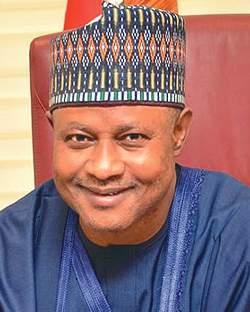
L-R: Chairman, Board of NIMASA, Yusuf Hamisu Abubakar; Governor of Kaduna State, His Excellency, Uba Sani; Actor & Flavours of Nigeria Cultural Ambassador, Uzee Usman; and Convener of Flavours of Nigeria Festival, Chukwuebuka Anyaduba, during a collaboration visit to the Executive Governor on Flavours of Nigeria Festival in Canada
Says global financial markets moving away from subjective, judgment-based benchmarks towards transaction-based reference rates that reflect actual market activity Philip Ikeazor describes initiative as milestone in financial market modernisation
Governor of the Central Bank of Nigeria (CBN), Mr. Olayemi Cardoso, yesterday launched the Nigeria Overnight Financing Rate (NOFR) to significantly deepen Foreign Exchange (FX) market stability, strengthen price discovery, and boost investor confidence.
The initiative, a collaborative effort between CBN, Financial Markets Dealers Association (FMDA), and
European Bank for Reconstruction and Development, is aimed at anchoring the financial system on a more transparent and transaction-based benchmark.
Speaking at the ceremony held at the apex bank’s headquarters in Abuja, Cardoso described the reform as a defining step in the country’s financial market evolution. He said it reinforced the central bank’s broader agenda of building a more resilient, efficient and credible financial system
capable of supporting sustainable economic growth.
He stated, “The introduction of NOFR represents a significant milestone that reinforces the central bank’s continuous commitment to building a more resilient, efficient and credible financial services sector.”
According to Cardoso, benchmark interest rates remain central to the functioning of any modern financial system, as they serve as reference points
for pricing financial instruments, guiding investment decisions, and ensuring effective transmission of monetary policy across the economy.
Cardoso stressed that global financial markets were increasingly moving away from subjective, judgment-based benchmarks towards transaction-based reference rates that reflect actual market activity, a shift Nigeria must fully align with to maintain credibility and competitiveness.
MAN to FG: Suspend Proposed Ban on Single-use Plastics Below 80 Microns
Urges govt to implement 2024 plastic circularity roadmap
Dike Onwuamaeze
The Manufacturers Association of Nigeria (MAN) has expressed concern over the proposed implementation of the National Environmental (Plastic Waste Control) Regulations 2026, which banned single-use plastics below 80 microns by the National Environmental Standards and Regulations Enforcement Agency (NESREA) and called for its suspension.
MAN made the call yesterday in a statement titled, “Manufacturers Association Call for the Suspension of NESREA’s Proposed Ban on Single-Use Plastics Below 80 Microns Pending Regulatory Impact Assessment.”
The association noted that the, “proposed regulation is premature, lacks sufficient empirical justification, and poses significant risks to Nigeria’s economy, industrial sector, employment landscape, and the livelihoods of millions of citizens.
The NESREA, according to MAN, “seeks to prohibit the production and use of single-use plastic products below 80 microns in thickness pursuant to Section 26(1); impose taxes on shopping bags with wall thicknesses ranging from 30 to 50 microns under Section 26(2), and restrict a wide range of plastic products listed in the Eleventh Schedule.”
The Director General of MAN, Mr. Segun Ajayi-Kadir, noted that, “the proposed measures could significantly disrupt industrial production, undermine
investments in the plastics value chain, threaten thousands of direct and indirect jobs, and impose substantial socio-economic costs on manufacturers and consumers alike.”
Ajayi-Kadir stated that NESREA should focus on the full implementation of the comprehensive Plastic Circularity Roadmap, which the federal government developed in 2024 through the National Plastic Action Partnership in collaboration with the Federal Ministry of Environment.
He said the roadmap provided a strategic framework for achieving plastic waste reduction through enhanced collection systems, recycling infrastructure, Extended Producer Responsibility (EPR), circular economy initiatives, public awareness campaigns, and investments in waste management.
“Unfortunately, many of the critical recommendations contained in that roadmap are yet to be fully implemented.
“It is, therefore, difficult to understand why the government is proceeding with a new prohibition regime without first evaluating the effectiveness of existing measures and implementing the agreed roadmap designed specifically to address plastic pollution in a sustainable and inclusive manner,” he said.
MAN further noted that international experience has shown that banning thin plastic bags and other thin plastic products rarely delivers the intended environmental outcomes.
It stated that “Kenya’s 2017 ban led to factory closures and job losses, yet banned bags continue to circulate through smuggling.
“Bangladesh’s 2002 ban remains largely unenforced after two decades, while South Africa and India experienced only temporary reductions before usage rebounded.”
In contrast, MAN stated that countries such as Germany, South Korea and the Netherlands have achieved high recycling rates through Extended Producer Responsibility (EPR) systems without disrupting local industry or
of Transportation, Hon. Rotimi Amaechi, as his running mate for the 2027 general election.
Party leaders, have however, described the team as a “unity and rescue ticket.”
Announcing the decision, ADC National Publicity Secretary, Mallam Bolaji Abdullahi, said Amaechi’s emergence followed broad consultations within the party and reflected his strong performance as runner-up in the party’s presidential primaries as well as his track records of service to his state and the country.
According to him, Amaechi’s extensive experience across both the legislative and executive arms of government, as former Speaker of the Rivers State House of Assembly, two-term Governor of
increasing the daily cost of living.
MAN added: “The proposed ban raises serious concerns regarding its economic implications. Nigeria’s plastic manufacturing industry remains one of the country’s largest and most significant light manufacturing sectors, supporting hundreds of manufacturing facilities, thousands of small and medium enterprises, and an extensive value chain that stretches from petrochemicals and packaging to food processing, pharmaceuticals, retail trade, agriculture, logistics, and recycling.
Rivers State, and former Minister of Transportation, made him qualified to complement Atiku’s leadership. He said the choice strengthened the party’s national appeal, and bolstered its campaign to offer Nigerians an experienced and credible alternative ahead of the 2027 presidential election.
Abdullahi said after extensive consultations with party leaders, coalition partners, youth and women stakeholders, and representatives of all geopolitical zones, the ADC was proud to announce that Amaechi has been selected as the Vice-Presidential Candidate of our great party for the 2027 Presidential Election.
‘’This recommendation follows the successful conclusion of the ADC
Explaining the design of the new benchmark, he said NOFR was developed in collaboration with market stakeholders to reflect real-time transactions in the Nigerian interbank market, thereby ensuring greater accuracy and reliability.
Cardoso said, “By anchoring the benchmark on observable transactions, NOFR enhances market integrity and credibility, reduces reliance on subjective estimates, minimises the risk of manipulation and improves price discovery and transparency.”
Cardoso stated that the reforms were critical to strengthening investor trust and deepening financial markets, adding that confidence remained the foundation of liquidity and stability in any financial system.
He said, “The result of all of that is deeper financial markets, and that is what we all crave for. Markets get deeper when they are trusted and when they are transparent.”
On monetary policy effectiveness, the CBN governor said NOFR would significantly enhance the transmission of policy decisions across financial markets, thereby strengthening the central bank’s ability to maintain price stability.
He said, “What we are attempting to do here is to ensure that we have an effective monetary policy transmission mechanism supporting the delivery of the price stability mandate of the
Presidential Primaries, in which Rt. Hon. Amaechi emerged as the runner-up, earning widespread support from party members across the federation and demonstrating his enduring appeal as one of Nigeria’s most experienced and respected political leaders.
‘’The proposed partnership between His Excellency Atiku Abubakar and Rt. Hon. Rotimi Amaechi represents more than a political alliance; it is the coming together of two tested statesmen with the experience, national reach, and leadership capacity required to rescue Nigeria from its current challenges and reposition the country for a new era of prosperity, security, and inclusive development.
‘’Rt. Hon. Amaechi brings to
central bank.
“If you don’t have that, then there is a very major missing piece.”
The CBN governor explained that the reform was part of a wider transformation of the country’s financial architecture aimed at supporting innovation, digitalisation, and the development of more sophisticated financial instruments, including derivatives and term benchmark products. He said NOFR was not only designed for current market needs but also to prepare Nigeria for future financial complexity.
Cardoso said modern economies required forward-looking institutions capable of supporting evolving market structures.
Earlier, CBN Deputy Governor, Economic Policy Directorate, Mr. Philip Ikeazor, described the launch as a major milestone in the country’s journey towards a more modern, resilient and globally aligned financial system. Ikeazor said the introduction of a credible transaction-based benchmark reflected Nigeria’s commitment not only to reform but also to actively shape global best practices in financial market development. He stated, “Today is an important milestone, not simply because we are introducing a new benchmark, but because we are collectively taking another step towards stronger markets.”
this ticket one of the most comprehensive public service records in contemporary Nigerian politics. His experience spans all major pillars of democratic governance.
“He served with distinction as Speaker of the Rivers State House of Assembly, making him one of the longest-serving legislative leaders in Nigeria’s Fourth Republic.
‘’He subsequently served two terms as Governor of Rivers State, where he oversaw significant investments in infrastructure, education, healthcare, and public sector reforms.
“At the national level, he served as Minister of Transportation, leading some of the most ambitious transportation and rail modernization initiatives in Nigeria’s history,’’ Abdullahi stated.
James Emejo in Abuja
ATIKU PICKS AMAECHI AS RUNNING MATE
10TH ICC AFRICA CONFERENCE ON INTERNATIONAL ARBITRATION...
L-R: Executive Director, Emadeb Energy Group, Gbesoye Debo-Olujimi; President of the International Chamber of Commerce (ICC) and International Court of Arbitration, Claudia Salomon; and Chairman/CEO, Genesis Energy Group, Akinwole II Omoboriowo, during a fireside chat on how business leadership shapes confidence, stability and long-term value in cross-border activity across Africa at the 10th ICC Africa Conference on International Arbitration, held in Lagos ... recently
Agcoms Hails Tinubu’s $70m Tractor Initiative to Boost
Food Security Strategy
Says mechanisation key to economic, agricultural transformation
James Emejo in Abuja
Agricultural equipment provider, Agcoms International Trading Limited, has endorsed President Bola Tinubu’s food security agenda, describing agricultural mechanisation as a critical driver of economic growth, rural prosperity, and transformation of Nigeria’s agricultural sector.
Chief Executive Officer of Agcoms, Mr. Okoli Chijioke, said the administration’s sustained emphasis on modernising agriculture through increased access to mechanised farming equipment represented one of the most effective pathways to raising productivity, strengthening agricultural value chains, and attracting a new generation of Nigerians into farming.
He said the federal government’s mechanisation programme gained significant momentum in January, when the National Agricultural Development Fund (NADF) announced a $70 million agreement with Agcoms for the supply of 2,000 tractors and other mechanised farming equipment, including 100 combine harvesters.
Agcoms, an authorised John
Deere dealer and NADF partner, stated that its ongoing collaboration with the federal government-backed fund aligned with broader efforts to boost food production and enhance food security nationwide.
Chijioke said the initiative had been recognised by the government as one of the 40 key milestones recorded during the first two years of the Tinubu administration.
Beyond equipment supply, Agcoms said the programme incorporated local assembly of the machinery in Nigeria, a move expected to facilitate skills transfer and create jobs, as well as deepen the country’s long-term technical capabilities in agricultural mechanisation.
The initiative also includes operator training, maintenance support, and after-sales services aimed at ensuring sustainability, maximising equipment utilisation, and improving productivity across farming communities.
The company recalled that the mechanisation drive was first unveiled by Tinubu during his Independence Day address in October 2024, when he announced Federal Executive Council approval
for the establishment of a local assembly plant for John Deere tractors, combine harvesters, disc ridgers, bottom ploughs, and other agricultural equipment. The project was conceived as part of a broader strategy to modernise agriculture, expand food production, and strengthen national food security.
Commenting on the president’s Democracy Day 2026 remarks,
Chijioke, in a statement, said the renewed national focus on mechanisation reflected growing recognition of the role technology and modern farming equipment played in building a more productive and competitive agricultural sector. He described mechanisation as one of the most important productivity enablers in modern agriculture, stressing that successful
implementation requires more than simply providing equipment.
According to him, sustainable outcomes can only be achieved when machinery deployment is supported by operator training, maintenance systems, financing solutions and dependable after-sales services.
He said such an integrated approach would enable farmers to improve efficiency, increase output and contribute more effectively to national food security objectives.
Chijioke commended the federal government’s commitment to strengthening agricultural productivity, adding that Agcoms remains committed to supporting ongoing efforts to expand mechanisation across the country through technical expertise, equipment support and field experience.
IsDB Group Affiliates to Host 14th Private Sector Forum from June 16 to 19 in Baku
Sunday Okobi in Baku, Azerbaijan
Affiliates of Islamic Development Bank (IsDB) Group, including Islamic Corporation for the Insurance of Investment and Export Credit (ICIEC), Islamic Corporation for the Development of the Private Sector (ICD), and The International Islamic Trade Finance Corporation (ITFC), in collaboration with the IsDB Group Business Forum (THIQAH), have announced the 14th edition of the Private Sector Forum (PSF 2026), to
Lagos Created 320,000 Jobs, Backed 20,000 Businesses with N15bn in One Year
James
The Lagos State Government has disclosed that it disbursed more than N15 billion to over 20,000 small and medium-scale businesses through the Lagos State Employment Trust Fund (LSETF).
Disclosing this yesterday, the Executive Secretary of LSETF, Ms. Feyisayo Alayande, during a media parley in Ikeja, Lagos, said the Fund has helped to create over 320,000 direct and indirect jobs since its establishment over the past decade.
Alayande who presented the agency’s 10-year impact report and outlined its contribution to employment generation, enterprise
development and wealth creation said the fund, established in 2016 to tackle unemployment and support entrepreneurship, has become a critical driver of economic empowerment by providing access to finance, skills development, market opportunities and technology support for Lagos residents.
According to her, the agency has also helped preserve more than 173,000 jobs that could have been lost, while over 82,000 small businesses have benefited from capacity-building programmes designed to strengthen their operations and improve sustainability. She revealed that more than 30,000 young people have been
trained and connected to employment opportunities through various interventions, while the Lagos Innovates initiative has supported over 1,200 technology startups and developed more than 3,300 tech talents.
Alayande described the figures as evidence that targeted investments in entrepreneurship and human capital development can deliver measurable economic benefits.
“Over the past decade, we have disbursed more than N15 billion through over 20,000 loans to micro, small and medium enterprises. We have created over 320,000 jobs and saved another 173,000 jobs that could have been lost,” she said.
be held from June 16 to 19, 2026, at Baku Convention Centre, in Baku, Republic of Azerbaijan.
Held on the side-lines of the IsDB Group Annual Meetings, the forum will be organised in collaboration with Ministry of Economy of the Republic of Azerbaijan and the Export and Investment Promotion Agency of the Republic of Azerbaijan (AZPROMO), under the high patronage of President of the Republic of Azerbaijan, His Excellency, Mr. Ilham Aliyev.
With the theme, “Regional Integration for Sustainable Prosperity,” PSF 2026 is aimed at reinforcing the pivotal role of the private sector in fostering sustainable economic growth, enhancing trade and investment flows, and
unlocking opportunities for strategic partnerships across IsDB member countries, including Nigeria.
“At a time when enhancing regional value chains and economic resilience have become increasingly important, the forum will serve as a strategic platform for key stakeholders to explore new business opportunities, exchange knowledge, and foster deeper economic Integration among member countries,” the organisers said yesterday in a statement issued to herald this year’s annual meeting in Baku.
PSF 2026 will spotlight emerging opportunities in key sectors, such as infrastructure, energy, technology, healthcare, and finance, while promoting cross-border investment and trade.
Through high-level dialogues, B2B and B2G meetings, start-up engagement, and knowledge-sharing sessions, the forum aims to strengthen public-private collaboration, support entrepreneurship and SMEs, and promote innovation-driven growth across member countries’ economies. The event, according to the Communication Director, Ahmed Ghezeleh, is expected to attract over 1,500 participants, including high-level government officials, presidents, and CEOs of leading local and international companies, multilateral development institutions, chambers of commerce, and industry, business associations, investment promotion agencies, investors, entrepreneurs, and financial institutions.
Abiodun Charges NYSC Members on Patriotism, Security Consciousness, Electoral Integrity
James Sowole in Abeokuta
Governor Dapo Abiodun of Ogun State has charged members of the 2026 Batch “B” Stream I of the National Youth Service Corps (NYSC) to embrace patriotism, discipline, and security consciousness as they commence their year of national service.
The governor gave the charge while formally declaring open the 2026 NYSC Batch “B” Stream I Orientation Course at the NYSC Orientation Camp,
Gateway Stadium, Sagamu. Abiodun, who was represented by the Commissioner for Sports Development, Mr. Wasiu Isiaka, congratulated the corps members on the successful completion of their academic programmes and subsequent mobilisation for national service.
He described the occasion as a significant milestone in their lives and a testament to their hard work, perseverance, and determination. He commended the management of
the NYSC for sustaining the scheme for more than five decades, noting that it remains one of Nigeria’s most enduring platforms for national integration, youth development, and nation-building. According to the governor, the deployment of the corps members comes at a critical period in the nation’s development, urging them to deploy their knowledge, creativity, and innovative ideas towards building a more prosperous, peaceful, and united Nigeria.
Segun
Inflation Rises Further to 15.93% Amid
Food,
Energy,
Commodity Price Pressures
Severe in Yobe, Anambra, Sokoto, others
James Emejo in Abuja
The Consumer Price Index (CPI), which measures the rate of change in prices of goods and commodities, increased further to 15.93 per cent in May, compared to 15.69 per cent in April, National Bureau of Statistics (NBS) said yesterday.
The latest increase marks the third consecutive rise in inflation after a prolonged period of disinflation, suggesting that underlying price pressures in the economy remains persistent, despite recent moderation in monthly price movements.
According to the CPI report, for the review period, month-on-month,
headline inflation eased to 1.75 per cent in May, from 2.13 per cent in the preceding month, indicating that although prices continued to rise, the pace of increase slowed compared to April.
Average annual rate of headline inflation for the 12 months ending May 2026 stood at 18.36 per cent, representing a significant decline compared to 30.57 per cent recorded in the corresponding period of 2025.
Food inflation, a major driver of household spending, stood at 16.96 per cent year-on-year in May compared to 24.55 per cent in May 2025.
NBS attributed the movement in food prices to changes in the
average prices of onions, maize grains, melon (egusi), water yam, cassava flour, crayfish, fresh pepper, tomatoes, wheat grain, cassava tuber, yam tuber, sweet potatoes, fresh ginger, plantain and cowpea, among others.
Month-on-month, food inflation moderated to 2.98 per cent, from 3.63 per cent recorded in April, reflecting slower increases in food prices during the review period.
The average annual rate of food inflation for the 12 months ending May 2026 stood at 16.99 per cent, compared to 33.21 per cent recorded in May 2025.
Similarly, core inflation, which excludes the prices of volatile
agricultural produce and energy, stood at 16.82 per cent year-on-year in May, compared to 24.92 per cent in the corresponding month of last year.
On a month-on-month basis, however, core inflation accelerated to 1.94 per cent, from 1.03 per cent in April, suggesting renewed pressure from non-food components of the inflation basket.
The average 12-month core inflation rate stood at 19.59 per cent, lower than the 27.05 per cent recorded in May 2025.
Urban inflation stood at 16.07 per cent year-on-year in May, while month-on-month urban inflation rose slightly to 1.99 per cent from
1.86 per cent in April.
The average annual urban inflation rate for the 12 months ending May 2026 was 18.27 per cent, compared to 32.55 per cent recorded a year earlier.
Similarly, rural inflation stood at 15.60 per cent year-on-year in May.
Month-on-month, the rural index slowed considerably to 1.17 per cent from 2.80 per cent recorded in April.
The average annual rural inflation rate for the 12-month period ended May 2026 was 18.19 per cent, lower than the 28.36 per cent reported in May 2025.
At the state level, year-on-year headline inflation was highest in
DESPITE EXISTING APPEAL COURT ORDER, JUSTICE LIFU DIRECTS INEC TO DEREGISTER ADC, 4 OTHERS Chuks Okocha, Alex Enumah, Sunday Aborisade in Abuja and Yinka Kolawole in Osogbo
The presidential ambition of former Vice President Atiku Abubakar and the re-election bid of Osun State Governor, Senator Ademola Adeleke, were yesterday threatened by a judgement of the Federal High Court, Abuja, which ordered Independent National Electoral Commission (INEC) to deregister African Democratic Congress (ADC), Accord Party, and three other political parties.
Justice Peter Lifu issued the directive to INEC, while delivering judgement in a suit instituted by Incorporated Trustees of the National Forum of Former Legislators.
The judgement was delivered in defiance of an order of the Court of Appeal staying further proceedings
on the matter pending the hearing and determination of an appeal filed by Accord Party.
ADC rejected the Federal High Court judgement, describing it as a threat to democracy and political stability.
In a statement by its National Publicity Secretary, Mallam Bolaji Abdullahi, ADC warned of dire consequences that might follow any attempt to remove the party from the ballot.
But National Chairman of ADC, Senator David Mark, appealed to the party’s members and supporters not to despair over Lifu’s judgement, as the party would be on the ballot at the next elections.
Mark spoke yesterday in Abuja while receiving a delegation of ADC candidates, who paid him a courtesy visit.
As rejection trailed the Federal
High Court judgement ordering the de-registering of parties, Atiku, in a statement on X by his media aide, Paul Ibe, condemned the order as the height of judicial rascality. He described the judgement as a desperate attempt by the ruling All Progressives Congress (APC) to undermine the opposition and entrench a one-party state ahead of the 2027 general election.
Osun State Governor, Ademola Adeleke, described the judgement as an abuse of court process and a direct violation of a subsisting order of the Court of Appeal. Adeleke said this in a statement by his spokesperson, Mallam Olawale Rasheed.
Presidential candidate of Nigeria Democratic Congress (NDC), Mr. Peter Obi, also criticised the Federal High Court judgement ordering the deregistration of some political
MILITARY RESCUES GEN RABE’S WIDOW FROM CAPTIVITY, PAYS CONDOLENCE VISIT TO FAMILY
contact with the bandits at Tunga Village, resulting in the successful recovery of Mrs Abubakar.
It added that during the encounter, the bandits shot the victim before abandoning her and fleeing the scene due to the overwhelming pressure from advancing troops.
The statement said Mrs. Abubakar was immediately evacuated and was currently receiving medical attention at a military medical facility, where she was said to be responding to treatment.
The armed forces reaffirmed their commitment to ensuring her full recovery and providing all necessary support to the bereaved family during this difficult period.
It stated that troops would continue ongoing operations aimed at tracking down and neutralising the perpetrators, as well as intensifying efforts to rid affected communities of terrorists and bandits across Katsina State and other parts of the country.
Earlier accounts indicated that troops of Operation Fansan Yamma had rescued the widow following a violent encounter with armed bandits in Matazu Local Government Area of Katsina State.
The rescue came barely three days after the death of her husband and after she had spent over two weeks in captivity.
Major General Abubakar (rtd) and his wife were abducted on May 30 while travelling along the Matazu axis of the Marabar Musawa–Kafinsoli Road in
Katsina State.
He reportedly died on June 13 after spending about two weeks in captivity, with reports attributing his death to complications arising from diabetes and hypertension.
Military sources said the rescue operation, conducted under Operation Clean Sweep III, followed sustained intelligenceled offensives in Matazu and neighbouring communities after the initial abduction.
Troops were said to have engaged the bandits at Tunga Village during a search-and-rescue mission, forcing them to flee under heavy military pressure.
A source was quoted as saying, “The bandits shot her and fled when we made contact at Tunga Village. We have rescued Mrs Abubakar. She is bleeding; we have given her first aid and are moving her for urgent medical attention.”
The source further confirmed that the victim was stabilised by troops before being evacuated to a medical facility.
Follow-up operations, according to the source, have been intensified in the area, with troops continuing a coordinated pursuit of fleeing bandits and suspected kingpins believed to be responsible for the attack and earlier abduction.
Security sources reaffirmed that the military remained committed to bringing the perpetrators to justice.
A delegation from the Defence Headquarters (DHQ), led by Chief
of Administration (Army), Major General I.M. Abdullahi, paid a condolence visit to the family of Abubakar.
According to a statement by Media Information Officer of Joint Task Force (North West) Operation Fansan Yamma, Lieutenant Colonel Aliyu Danja, the delegation conveyed the condolences of the Chief of Defence Staff (CDS), General Olufemi Oluyede, and the Armed Forces of Nigeria (AFN) to the bereaved family, as well as the government and people of Katsina State.
At the family residence in Katsina, Abdullahi described the late Abubakar as a dedicated and patriotic officer, who served the nation with distinction throughout his military career.
He stated that the deceased made significant contributions to the growth of the Nigerian Army and the country’s security architecture.
Abdullahi assured the family that the armed forces and relevant security agencies would do everything possible to ensure those responsible for the General’s death were brought to justice.
Abdullahi stated, “Major General Abubakar served the Nigerian Army and the nation meritoriously for over three decades. His years of dedicated service and sacrifice will not be forgotten, and his legacy will continue to inspire officers and soldiers of the Armed Forces of
parties.
Obi, in a release by his media office, warned against attempts to politicise and weaken key institutions of state.
Equally, the presidential candidate of African Action Congress (AAC), Omoyele Sowore, on Monday, in a statement posted on X, dismissed Lifu’s judgement as undemocratic and inconsistent with the principles of a multi-party system.
Similarly, the presidential candidate of Social Democratic Party (SDP), Adewole Adebayo, regretted that with judicial pronouncements like the one by Lifu, Nigeria was yet to attain true democracy.
In a statement yesterday in Abuja by his media office, Adebayo demanded full independence for INEC.
A three-member panel of the Court of Appeal, led by Justice Mohammed Danjuma, had on May 22 ordered Lifu to stay “further proceedings in Suit No. FHC/ABJ/ CS/2637/2025 pending the hearing and determination of this appeal”.
The appeal marked: CA/ABJ/ CV/569/2026, which was filed by Accord, had the forum of former
The discussion focused on the outcome of the fund’s recently concluded Article IV Consultation on Nigeria.
Ebeke explained that although Nigeria’s debt profile compared favourably with many other countries, the amount being spent on servicing debt was limiting the government’s ability to fund critical sectors such as health, education, security and social protection.
According to him, Nigeria’s debt-to-GDP ratio, which remains in the mid-30 per cent range, is relatively low compared to many peer countries, while the structure of the debt portfolio also provides some comfort.
Ebeke stated “Our latest assessment in the Article 4 that we just published on June 9, basically concludes that Nigeria’s debt is sustainable. And second, the risk of sovereign stress is actually moderate. So we don’t see Nigeria as a high risk in terms of a debt-distressed country.
“But Nigeria faces a very strong challenge in terms of interest to revenue ratio. So we actually estimate that in 2025 to 2028, the interest to revenue ratio, how much the federal government pays out of the tax it collects is actually about 50 per cent.”
lawmakers, INEC, Attorney-General of the Federation, ADC, Action Alliance (AA), Action Peoples Party (APP), and Zenith Labour Party (ZLP) as first to seventh respondents.
The appellate court held in the enrolled order dated May 22, and signed by Deputy Chief Registrar of the court, Josephine Ekperobe, “Pursuant to Order 4 Rules 10 and 11 of the Court of Appeal Rules, 202, the application filed on 04/05/2026 is granted staying further proceedings in Suit No. FHC/ABJ/CS/2637/2025 pending the hearing and determination of this appeal.
“This appeal is adjourned to 27/10/2026 for the hearing of the appeal.”
Besides Accord, APP had also asked Lifu to stay further proceedings pending the hearing and determination of its appeal challenging the ruling of the court, which accepted the amendment of the processes of the plaintiff without order.
The plaintiff in the suit by Incorporated Trustees of the National Forum of Former Legislators,
He added, “When you have more than 50 per cent of your tax collection devoted to repaying interest on your federal government debt, it leaves you very little room to actually pay for health, education, cash transfer, including security.
“So that’s why our focus has been on ensuring that Nigeria has a very robust domestic revenue mobilisation plan that takes into account the realities of today, high inflation, high poverty, high food insecurity, but also working very, very strongly to ensure that the new tax laws are well implemented and the enforcement is strong.”
Ebeke sated, that a significant portion of Nigeria’s external debt consisted of concessional loans rather than expensive commercial borrowings, thereby reducing the country’s exposure to high financing costs.
He stated, “First is that the debt-to-GDP ratio that you just showed is still very low in the 30s.
Compared to many other countries, Nigeria has a low debt-to-GDP ratio.
“Second is the composition of that debt. You have a good balance between domestic and foreign debt. Third, you also have the maturity profile. This debt is
marked: FHC/ABJ/CS/2637/2026, had prayed the court to order INEC to deregister ADC, Accord, Action Peoples Party (APP), Action Alliance (AA), and the Zenith Labour Party (ZLP) on the grounds that they failed to satisfy constitutional requirements relating to electoral spread and performance.
The plaintiff submitted that the political parties failed to comply with the provisions of Section 225A of the Nigerian constitution, adding that INEC has no residual discretion to retain their registration, the parties having failed to satisfy the minimum threshold prescribed under the above law.
But the concerned political parties had through their lawyers challenged the jurisdiction of the court on the grounds that the plaintiff lacked the necessary locus standi to initiate the suit in the first place.
After listening to all parties, Lifu, on May 22, fixed June 5, for judgement.
However, following the absence of the judge on June 5, judgement was later adjourned to a date to be
Continued on page 20
actually mostly long-term rather than very short-term. So that also helps Nigeria in terms of rollover risk and refinancing needs.”
The IMF official stressed that the real challenge lay in the country’s weak revenue position relative to its debt obligations. He emphasised the need for stronger domestic revenue mobilisation, particularly through effective implementation of the newly enacted tax laws.
Ebeke stated, “That’s why our focus has been on ensuring that Nigeria has a very robust domestic revenue mobilisation plan that takes into account the realities of today, high inflation, high poverty, high food insecurity, but also working very strongly to ensure that the new tax laws are well implemented and the enforcement is strong.”
On the controversial $5 billion total return swap arrangement approved by Senate with First Abu Dhabi Bank of the United Arab Emirates, IMF expressed reservations, citing concerns over transparency, complexity and potential hidden costs.
Ebeke stated that while the transaction might appear attractive on the surface, the details of
Yobe at 24.94 per cent, followed by Anambra 23.29 per cent and Sokoto 22.60 per cent. However, Niger recorded the lowest headline inflation rate at 3.07 per cent, followed by Plateau 7.10 per cent, and Edo 7.73 per cent.
Statistician-General of the Federation, Semiu Adeniran
HAPPY BIRTHDAY CELEBRATION...
L-R: Lagos State Commissioner for Commerce, Cooperatives, Trade and Investment, Mrs. Folashade Ambrose-Medebem; Lagos State Commissioner for Tourism, Arts and Culture, Mrs. Toke Benson-Awoyinka; and Publisher and Founder of Genevieve Magazine, Mrs. Betty Irabor, at the tourism commissioner’s birthday celebration in Ikoyi ... recently
Border Security: FG, States, Traditional Rulers Push for Early Warning Systems
Defence minister: Effective border management critical to national security
The federal government, subnational authorities and traditional rulers yesterday agreed to strengthen collaboration on border security through the deployment of early warning and early response mechanisms, amid concerns over cross-border crimes.
At a one-day high-level national workshop on “Border Security, Resilience and Cross Border Cooperation” organised by the National Boundary Commission (NBC) in Abuja, the federal
government reaffirmed its commitment to securing Nigeria’s borders through stronger collaboration among agencies, border states, traditional institutions and neighbouring countries.
At the event, the Minister of Defence, Gen. Christopher Musa (rtd) pointed out that effective border management remains critical to national security and development, a statement by the Head of Information, Press and Public Relations at the NBC, Chinwe Udouwem, stated.
Represented by his Special Adviser,
Rear Admiral Olusanya Bankole (rtd), Musa said that Nigeria’s borders were not merely territorial lines but strategic spaces for trade, interaction and shared heritage.
Besides, he emphasised that the borders also serve as frontline areas against transnational crimes, irregular migration, smuggling and emerging security threats.
The minister stressed the need for a shift from traditional security approaches to proactive strategies, including early warning systems, technology-driven
NBC DG says securing borders
surveillance and stronger intelligence sharing with neighbouring countries.
“Resilient borders are not only secured, they are adaptive, inclusive and capable of withstanding security threats, climate change and economic disruptions,” the minister maintained.
Earlier, the Director General of the NBC, Adamu Adaji, said Nigeria’s border management requires collective action, noting that the country shares about 4,454 kilometres of land borders with Benin, Niger, Chad and Cameroon, as well as about 853-kilometre coastal
stretch.
requires collective action
Adaji explained that the NBC has established cross-border cooperation platforms involving border communities, traditional rulers, local authorities, security agencies and civil society organisations to promote dialogue, information gathering and conflict prevention.
In the same vein, the workshop featured presentations on strengthening cross-border cooperation, maritime governance and the blue economy, as well as drone technology, border
Billions at Stake as Local Manufacturers Challenge Foreign Dominance in Meter Rollout
A major confrontation is brewing in Nigeria’s electricity sector as indigenous meter manufacturers have drawn a battle line against a World Bank-backed procurement framework, warning that the country’s ambitious metering programme could become a missed opportunity for industrial growth, job creation and economic self-reliance.
The Association of Meter Manufacturers of Nigeria (AMMON) has refused to lift a court injunction stalling aspects of the Distribution Sector Recovery Programme (DISREP) unless the federal government provides legally enforceable guarantees that Nigerian firms will secure a significant share of the contracts.
At the heart of the dispute is the procurement process under DISREP ICB 2, a key intervention designed to tackle Nigeria’s huge electricity metering deficit.
AMMON argues the current arrangement risks handing a substantial portion of the market to foreign suppliers while local manufacturers, who have invested heavily in production capacity, remain on the sidelines.
In a strongly worded com- munication to the Bureau of Public Enterprises (BPE), the
association demanded that no less than 50 per cent of all meters under the programme be reserved for qualified indigenous manufacturers.
As an alternative, it proposed mandatory Completely Knocked Down (CKD) and Semi-Knocked Down (SKD) arrangements compelling foreign contractors to partner with local assembly plants.
The manufacturers contend the dispute has gone beyond electricity meters and now represents a critical test of President Bola Tinubu’s “Nigeria First” industrialisation policy.
“We have invested billions of naira in factories, equipment, manpower development and technology transfer. We are prepared to meet demand. The real question is whether government is prepared to match its rhetoric with action,”
AMMON said.
Industry stakeholders say the standoff has exposed growing tensions between Nigeria’s drive for local content development and procurement conditions often attached to international development financing.
AMMON warned that allowing foreign suppliers to dominate the programme would undermine efforts to build domestic manufacturing capacity, worsen pressure on foreign exchange reserves and
deny the economy thousands of potential jobs.
The association’s distrust of official assurances is rooted in previous experiences, where local manufacturers reportedly made substantial financial commitments in anticipa- tion of contracts that were either delayed or never fully implemented.
Accordingly, the group is demanding immediate execution of existing contracts under the National Competitive Bidding (NCB 1) programme within two weeks and activation of outstanding contracts under the Presidential Metering Initiative involving about 750,000 meters.
The association also took a swipe at some foreign bidders, alleging that several lack genuine manufacturing footprints and merely function as intermediaries.
“Some of these companies have no factories and no local value addition. They simply import and supply. That does nothing for Nigeria’s industrial growth,” a senior industry source said.
The controversy now places newly appointed Minister of Power, Engr. Joseph Tegbe, at the centre of a delicate balancing act. While the government is under pressure to accelerate meter deployment and improve electricity billing transparency, it
must also reconcile those objec- tives with its local-content and industrialisation commitments.
Energy analysts say the outcome of the dispute could set a far-reaching precedent for indigenous participation in future infrastructure projects financed through multilateral institutions.
Beyond the courtroom and procurement documents, the battle carries significant implications for Nigeria’s manufacturing sector, investor
confidence and economic policy direction.
For millions of electricity consumers awaiting prepaid meters, it could determine how quickly the metering gap is closed.
For local manufacturers, however, it is shaping into a defining struggle over whether Nigeria’s infrastructure expansion will also serve as a catalyst for domestic industrial develop- ment—or become another lost opportunity.
resilience and peacebuilding for national security.
The Commandant of the National Defence College, Rear Admiral Abdullahi Ahmed, in his remarks, called for greater cooperation among nations, stressing that no country can manage border challenges in isolation.
Also speaking, the Deputy Governors and Chairmen of the State Boundary Committees of Nigeria’s border states that attended the workshop commended the NBC for promoting cross-border advocacy and pledged stronger collaboration towards improving border security and tackling transboundary crimes.
Traditional rulers along Nigeria’s international borders, led by the Emir of Machina, Dr. Bashir Bukar, in his comments, urged the government to strengthen engagement with traditional institutions, describing them as vital communication channels at the grassroots.
The monarch described traditional rulers as the “first eyes and ears” of border communities, explaining that they should be involved as partners in security coordination rather than mere spectators.
According to the statement, the workshop ended with stakeholders reaffirming commitment to building secure, resilient and economically productive borders for Nigeria.
NYSC Raises Security Concerns Over Shared Camp Access in Katsina
Sardauna
The National Youth Service Corps (NYSC) has raised security concerns over lack of separate entrance and demarcation of the adjoining Katsina State Government-owned Youth Craft Village from its Orientation Camp in the state.
Citing security concerns and the need to comply with the operational protocols established by the scheme’s national headquarters, the NYSC urged the state government to provide an exclusive entrance and demarcate the agency from its camp.
Speaking on Monday during the swearing-in ceremony for the 2026 Batch “B” Stream I corps members
deployed to the state, the state NYSC Coordinator, Mr. Evans Okwor, said the gesture would enable NYSC to have absolute control over entrance into the camp.
He said, “In view of the increasing scare of insecurity in the country, we appeal for the restructure of the orientation camp to create a separate entrance gate for the NYSC to access the camp.
“This will help us to have control over entrance into the orientation camp. The present situation where we share entrance with some state agencies is infringing on security protocols as structured by the NYSC Directorate Headquarters.”
He noted, however, that while
the female hostels had undergone some renovation, the male hostels remained in a dilapidated condition, a development he said was affecting the state’s capacity to accommodate more corps members. Okwor reaffirmed his commitment to the objectives of the NYSC despite the challenges and pledged the scheme’s continued delivery of quality services in health, education, social enlightenment and rural development.
He expressed appreciation to the Katsina State Government, security agencies and other stakeholders for their sustained support and collaboration in promoting youth development and national service.
Francis
in Katsina
Michael Olugbode in Abuja
Emmanuel Addeh in Abuja
ACAMB’S 30TH ANNIVERSARY CELEBRATION...
L-R: President, Association of Corporate Communication and Marketing Professionals in Banks (ACAMB), Jide Sipe; Representative of Wema Bank, Precious Akpan; Vice President 2, Morolake Onifade; Representative of Alpha Morgan, Tolu Onipede; and General Secretary, ACAMB, Olugbenga Owotoomo, during a tree planting initiative put together to flag off the 30th anniversary celebration of ACAMB, held at Providence Street, Lekki Phase 1, Lagos ... recently
NASS, NELFUND Move to Expand Student Loan Scheme
to 7 Million Beneficiaries
Fund records over N282bn disbursement to 1.6 million students Expansion to include vocational, technical and skills acquisition programmes
The National Assembly (NASS) and Nigerian Education Loan Fund (NELFUND) have commenced moves to expand the federal government’s student loan scheme from about 1.6 million direct beneficiaries to seven million students across tertiary institutions and vocational centres nationwide.
The planned expansion, stakeholders said on Monday, was aimed at deepening access to education and driving broader socio-economic transformation through increased support for students and trainees.
The initiative was unveiled during a national sensitisation programme on the student loan scheme organised by Senate Committee on Tertiary Education and TETFund, in collaboration with NELFUND in Abuja.
Speaking at the event, Managing Director of NELFUND, Akintunde Sawyerr, disclosed that the scheme had so far disbursed more than N282 billion and directly benefited about 1.6 million Nigerian students.
According to Sawyerr, the impact of the programme extends beyond individual beneficiaries to millions of family members and communities across the country.
He stated, “Today, 1.6 million Nigerian students have directly benefited from the NELFUND scheme. If we consider that the average Nigerian family consists of about five people, it means we are directly and indirectly impacting nearly 10 million lives.”
Sawyerr added that NELFUND was seeking broader stakeholder support to expand the scheme’s reach to about seven million beneficiaries through inclusion of students in tertiary institutions, vocational centres,
technical colleges and skills acquisition programmes.
He explained that the planned expansion would significantly increase the number of Nigerians benefiting from the intervention and strengthen efforts aimed at enhancing workforce development and national productivity.
Deputy President of the Senate, Senator Barau Jibrin, described the sensitisation campaign as critical to the success of the programme.
Jibrin stressed that many eligible students were yet to take advantage of the opportunity due to limited awareness.
He said, “No matter how beneficial a programme is, if the intended beneficiaries are not adequately informed about it, its impact will be limited.
“People need to understand what the programme entails and how they can access it. That is exactly what this sensitisation campaign is all about
and should be taken round the entire six geopolitical zones.”
Chairman of House Committee on Students Loans, Scholarships and Tertiary Education Financing, Hon. Ifeoluwa Ehindero, said the programme had become a major intervention in widening access to higher education for indigent students.
Ehindero stated that the sensitisation exercise would further deepen public understanding of the opportunities provided by the scheme and encour-
age wider participation. According to him, the fund has achieved significant milestones since its launch, reaching more than 1.5 million students and disbursing over N282 billion in educational support.
Earlier, Chairman of Senate Committee on TETFund, Senator Muntari Dandutse, said the programme formed part of the National Assembly’s oversight responsibility and commitment to promoting equitable access to education.
Ribadu: New Postcode System to Boost National Security
Ohwovoriole in Abuja
The National Security Adviser (NSA), Mallam Nuhu Ribadu, has stated that the new National Digital Alphanumeric Postcode System (NDAPS) infrastructure which is going to be deployed in the country would enhance national security.
The NSA spoke in Abuja, yesterday, at a stakeholders’ engagement on the NDAPS with the theme, “Operationalising the Nigerian
Digital Alphanumeric Postcode for National Security and Public Safety.”
The NSA, Ribadu who was represented by the Head, National Centre for Counter Terrorism (NCCT), Gen. Adamu Kaka, said the NDAPS will enhance national security and public safety.
He added, “Today’s engagement appropriately focusses on its implications for national security and public safety.
“The challenges confronting our nation today require security
agencies to continuously adapt and embrace innovative tools that enhance operational effectiveness.
“Whether in policy, in policing, intelligence gathering, emergency response, disaster management, border security, financial crime investigations or law enforcement operations, the ability to accurately identify and locate persons, places and incidents can significantly improve decision-making and response outcomes.
portunity to strengthen institutional coordination, improve service delivery and enhance situational awareness across multiple sectors.”
In his remarks, the Minister of Communications and Digital Economy, Dr. Tijani Bosun said, “Alphanumeric postcode means that every single building will have a unique code as the PMG mentioned in her presentation, even those in the rural area will now have a unique code, the same way you have everywhere in the world.
He noted that the initiative would be a significant legacy for this administration, enjoying the backing of President Bola Tinubu, and supported with budgetary allocation.
Criminal Networks
NDLEA Sells Drug Barons’ Assets for N6.1bn, Sends Warning to
The National Drug Law Enforcement Agency (NDLEA) has dealt a major financial blow to drug trafficking syndicates, raising over N6.1 billion from the auction of properties confiscated from convicted drug kingpins across the country.
The assets, which include a six-storey luxury hotel in Victoria Island, Lagos, and three other high-value properties, were forfeited to the federal government following court orders obtained under Nigeria’s asset recovery laws. The Victoria Island hotel
accounted for the bulk of the proceeds, attracting a winning bid of N5.9 billion during a public auction conducted in Abuja on Monday. Altogether, four properties were successfully sold, while bids submitted for four others fell below the approved reserve prices and were consequently rejected.
The exercise marked one of the most significant asset recovery auctions conducted by the anti-narcotics agency in recent years and underscores a growing determination by authorities to target not only drug traffickers but also the wealth accumulated from illicit activities.
Announcing the results, the Head of Asset Recovery and Management Unit at the Federal Ministry of Justice, Tamarantare Francis Ali-Bozi, disclosed that Tope Ojo and Tunde Olonishakin Estate Firm emerged the successful bidder for the Victoria Island hotel. Other successful bidders included FSS Limited, which secured a property in Lekki Phase 1, Lagos, with an offer of N219.5 million; A-BNB Global Innovations Limited, which won a block of flats in Ejigbo, Lagos, for N104 million; and Fazeen Global Link Limited, which acquired a property in Akure, Ondo State, for N29.36 million.
“National security today is increasingly linked to our ability to harness technology, data and innovation in support of governance and public safety objectives.
“Therefore, the Nigerian Digital Postcode System presents an op-
Over
2.3m
“The first set of locations, ‘areas, states’ will be released in October this year, and I am pushing them hard to actually ensure that we cover a significant number of states before the end of the year.”
According to him, the NDAPS will transform the way things are done, adding, “It will transform everything that we do. You know that situation where you purchase something on Instagram or TikTok or on a website? There’s still the challenge of getting my goods. It takes forever. This is going to transform that significantly.
“We’re going from premium standard in addressing. This is going to be one of the best on the African continent.
Children in 25 States Enroll in Nigeria Learning Passport Programme, Says UNICEF
Amby Uneze in Owerri
The United Nations Children’s Fund (UNICEF) has reiterated its commitment in supporting Imo State to build an inclusive and sustainable Digital learning Eco system, stating the platform has enrolled more than 2.3 million children in 25 states of the federation since it’s national rollout in 2022.
Additionally, the global body said it would continue to encour-
age efforts to expand connectivity, increase access to devices strengthen accountability mechanism and invest in teacher capacity so that no child is left behind.
Chief of Field Office (CFO) UNICEF, Enugu, Mrs. Juliet Chiluwe, stated this at the launch of the Nigeria Learning Passport (NLP) held in Owerri, the Imo State Capital, emphasising the programme demonstrates the power of technology to reach children
wherever they are. Together with Microsoft, GPE, Airtel, HIS Towers Tecno and the government of Imo State, Mrs. Chiluwe said that UNICEF is working to ensure that every child has access to quality learning opportunities. According to the UNICEF Chief, the platform’s online and offline functionality, coupled with zero rated access for Airtel users, helps to remove barriers for learners including those in underserved communities.
Sunday Aborisade in Abuja
Oghenevwede
Michael Olugbode in Abuja
Email: deji.elumoye@thisdaylive.com
08033025611 sms only
Beyond Politics: How Christian Academy is Reframing Fight against Insecurity
Iyobosa Uwugiaren examines the strategic impact of the Kaduna Christian academy--an initiative of the Department of State Services recently inaugurated.
In a country where conversations about insecurity are often dominated by military operations, intelligence gathering, and law-enforcement responses, a modest educational institution in Kaduna State is offering a different perspective on what it takes to build lasting and enduring peace.
The recent inauguration of the Kaduna Christian Academy in Ungwan Bulus, Sabon Tasha, Kaduna State, has attracted national attention not only because of the personalities involved but also because of the powerful idea underpinning the project: one of the most effective weapons against extremism, violence, and hopelessness.
The academy, donated to the Christian community through associates of the DirectorGeneral of the Department of State Services (DSS), Mr. Oluwatosin Adeola Ajayi, was officially inaugurated recently by Minister of Defence, General Christopher Musa.
The event drew government officials, traditional rulers, religious leaders, community stakeholders, and residents who gathered to celebrate what many described as a transformative investment in the future of the community.
However, beyond the ribbon-cutting ceremony lies a deeper story—one that speaks to the changing understanding of security in the country and the recognition that classrooms can sometimes accomplish what guns cannot.
Located within the Sabon Tasha axis of Kaduna State, the academy stands as a symbol of opportunity in a region that has witnessed its share of social and security challenges.
For many families in rural and semi-urban communities, access to quality education remains limited. Economic hardship often forces parents to choose between survival and schooling, while inadequate infrastructure continues to affect educational outcomes.
Many education experts say the new academy seeks to bridge part of that gap by providing foundational education to children, particularly those from less privileged backgrounds.
On their part, community leaders say the institution represents more than a physical structure, saying it is an investment in human potential.
Indeed, every classroom built creates opportunities for learning. Every child enrolled gains a chance to acquire the skills needed to navigate an increasingly complex world. Every teacher employed contributes to the intellectual development of a new generation.
In many communities in Kaduna State, where unemployment, poverty, and social exclusion can create fertile ground for criminal recruitment and extremist narratives, education offers an alternative pathway. That conviction was central to the message delivered during the inauguration ceremony.
One phrase echoed repeatedly throughout the inauguration event : “weapon of mass instruction.” The expression, used by senior officials, captures an emerging security philosophy of the Director-General of the DSS that sees education as a strategic tool for combating insecurity.
For decades, government’s response to terrorism, banditry, kidnapping, and violent extremism has focused largely on kinetic measures—military deployments, intelligence operations, and law-enforcement activities.
While these remain important and strategic, policymakers and security experts increasingly acknowledge that military victories alone cannot eliminate the conditions that allow insecurity to thrive.
The argument has always been that illiteracy, unemployment, social marginalization, and lack of opportunity often create environments where extremist ideologies and criminal networks find recruits.
By investing in education, experts say, governments and communities seek to address those vulnerabilities before they evolve into security threats.
For Defence Minister, General Musa, the academy embodies that philosophy.
He described education as one of the most effective instruments for countering terrorism and violent extremism,
arguing that informed and empowered citizens are less susceptible to manipulation by criminal elements.
His remarks reflected a growing consensus among security experts worldwide that lasting peace requires more than battlefield successes. It requires the creation of opportunities that give young people reasons to invest in society rather than reject it.
The project has also generated conversations because of its connection to the leadership of the Department of State Services.
Traditionally, intelligence agencies operate behind the scenes, conducting sensitive operations far from public view. Their work is often associated with surveillance, threat detection, and national security enforcement.
The academy presents a different dimension.
Although the school was donated through associates rather than directly by the agency, many observers view the initiative as reflecting a broader commitment to community development and nation-building.
For supporters, the project demonstrates that security should not be viewed solely through the lens of enforcement. Rather, they argue, genuine security is achieved when communities have access to education, healthcare, economic opportunities, and social inclusion.
In this sense, the academy serves as a reminder that security institutions and development objectives are often interconnected.
A child who receives quality education today may become a teacher, engineer, entrepreneur, doctor, or public servant tomorrow. That transformation benefits not only the individual but society as a whole.
Perhaps one of the most remarkable aspects of the initiative is its interfaith dimension.
Stakeholders at the inauguration noted that the same network of donors had previously supported the establishment of an Islamic school for Muslim communities in Danbushiya,
While soldiers may secure territory and intelligence agencies may prevent threats, the task of securing the future often begins in a school. And in a nation searching for enduring solutions to complex security challenges, that lesson may prove one of the most valuable solutions.
located within Chikun Local Government Area. The significance of that gesture was not lost on attendees.
In a state with a complex history of religious tensions, the decision to support educational institutions serving both Christian and Muslim communities sends a powerful message about inclusion and coexistence.
Religious leaders from different faith traditions praised the initiative as an example of practical interfaith engagement. Rather than emphasizing differences, they argued, the projects demonstrate a commitment to shared progress and mutual respect.
Education has long been recognized as a bridge-builder. Schools create spaces where young people learn not only academic subjects but also civic values, tolerance, cooperation, and respect for diversity.
By investing across religious lines, the donors and the DSS have contributed to a narrative of unity rather than division.
At a time when sectarian tensions continue to challenge many societies, such symbolism carries considerable weight.
The initiative has received strong endorsement from public officials at both state and federal levels.
Through his representative, Governor Uba Sani of Kaduna State described the academy as a beacon of hope and transformation.
The governor emphasized that education remains one of the most powerful tools for personal empowerment and societal development.
According to him, every investment in learning contributes to stronger communities and a more prosperous future.
His support reflects a broader belief that educational development must be central to efforts aimed at achieving sustainable peace.
Sani has consistently advocated partnerships between government, private citizens, and community organizations to expand educational opportunities.
For him, initiatives such as the academy complement public-sector efforts and demonstrate the positive impact that collaborative action can achieve.
The Federal Government has similarly embraced the broader message behind the project.
Dss DG, Ajayi
Gen musa
sani
LAWYER
TUeSday, j U ne 16, 2026
/Users/mac/Desktop/untitled folder/images.jpg
electoral
‘We are Confident
in the Integrity of NBA’s Electoral Process’
Chairman,
Committee of the nigerian Bar association (eCnBa), aham ejelam, San
‘We are Confident in the Integrity of NBA’s Electoral Process’
Quotables
‘Fellow Nigerians, 27 years ago, many doubted democracy would survive here, because of our diversity. Today, our diversity sustained our democracy. The road ahead is steep, but June 12 reminds us that Nigerians do not break; we bend, we bleed, but we do not break.' - HE Bola Ahmed Tinubu, GCFR, President, Federal Republic of Nigeria
‘Bringing them back is what we’re doing today, but it’s not the solution….Its not going to end, because the Government of South Africa doesn’t seem interested in taking a tough stand to this very embarrassing situation facing us on the continent of Africa.' - Hon. Abike Dabiri-Erewa, OON, Chairman/CEO, Nigerians in Diaspora Commission
Federal High Court Announces 2026 Annual Vacation
Page V
Punuka Annual Lecture Highlights Financing, Value Creation in Nigeria’s Hospitality Sector
Page V
CMSA Business Summit Targets Stronger, More Resilient Capital Market
Page V
State Police: The Constitutional Imperative for Security, Federalism and National Renewal
Page VII
NBA Elections: That Candidates May Win ‘Fair and Square’
Condolences
Before I go into the Word for Today, I must express my heartfelt condolences to the family of Rtd Major General Rabe Abubakar, who died over the weekend, in the captivity of a gang said to be led by one Kachallah Muhammadu. We saw the video showing the late General in captivity, with a painful looking swollen foot. It is extremely sad and disheartening, to see someone who served this country as a soldier, lose his life this way. May Allah forgive him his shortcomings, and grant him Jannah.
Introduction
Ihave always tried to stay away from the politics of the Nigerian Bar Association (NBA), outside being just a member in right-standing. However, as a member of the NBA with no stake in any camp aside from the camp of due process and credible elections, it has become impossible to ignore the recent controversy concerning the upcoming NBA elections for national officers, scheduled to hold on July 20, 2026. The NBA elections go beyond the Association. Our elections should serve as a precedent for national elections, seeing as Lawyers are considered to be the vanguards of rule of law, and must therefore, be a shining example of everything good about democracy in their affairs - fairness, transparency, integrity and credibility, so as not to erode public trust.
Upcoming NBA Elections: Matters Arising
All disputes, except those excepted by the Constitution, can be litigated in the courts - see Section 6(6)(b) & (c) of the 1999 Constitution of the Federal Republic of Nigeria (as amended) (the Constitution) - and, of course, Lawyers are the ones who represent litigants. Both Petitioners and Respondents alike, call upon Lawyers to represent them in their election petitions. It would therefore, be absurd, if those who are called upon to handle these situations, appear to be incapable of upholding the rule of law in their own affairs, when in actuality, the primary purpose of the NBA and legal practitioners is defending the rule of law - see Part 1 Clause 3(11) of the NBA Constitution 2015 (as amended in 2025)(NBA Constitution).
Incidentally, This Day Lawyer’s interview of the week on page 8-10, is with the Chairman of the Electoral Committee of the NBA (ECNBA),, Aham Ejelam, SAN, who seeks to clarify the second and third matters arising listed here.
1) Establishment of 2026 ECNBA
Unfortunately, there have been complaints concerning how the ECNBA, the body that conducts the NBA elections was constituted/ members appointed, with some alleging that it was done in breach of the NBA Constitution - see Part II Clause 10(3) of the NBA Constitution; Fawehinmi v NBA & Ors (No. 2) (1989) LPELR-1259(SC) per Andrews Otutu Obaseki, JSC on the role of the NBA Constitution, being to regulate its affairs.
2) Selection of IT Companies
The choices alleged to have been made by the ECNBA with regard to the IT Companies that will conduct the elections, Mikrodigital Connect for electronic voting and Thanelinc Nigeria Limited for Data Protection, have been called into question by two of the three Presidential candidates, and apparently, for good reasons too. The challenges of the candidates, point to calls for due diligence, transparency and unimpeachable processes for the conduct of the elections. The complaining Presidential Candidates, have demanded that the appointments of these companies be reviewed and set aside. Mikrodigital is alleged to be a sole proprietorship, an unknown business name and not a limited liability company, lacking competence or any track record whatsoever in electronic voting; also very low on corporate governance, as it is alleged to have owed the Corporate Affairs Commission fees for six years (2020-2025) since its registration in 2019, the arrears cleared between May 31 and June 1, 2026, coinciding with the period of Mikrodigital’s selection to conduct the elections.
In a Press Statement issued on Friday, June 12, 2026, the ECNBA defended itself by stating that Mikrodigital defeated 18 other companies to win the selection process. Naturally, this has made people ask what type of organisations the other 18 contenders are, if the winner doesn’t appear to be an ‘A’ list company. The ECNBA stated emphatically that its decision to select Mikrodigital was based on ‘Demonstrated performance’ - an important question to ask, would be whether demonstrated performance should be holistic, or just performance at an interview. It has also been alleged by one of the Candidates, that the sole proprietor of Mikrodigital, the Secretary of the ECNBA and the DG of the Campaign Council of one of the Presidential Candidates, all share strong ties to the same Nigerian State.
“How then, can the ECNBA justify the non-use of NIN as a security tool, because of Lawyers who have violated the law and failed to do what is legally compulsory for all Nigerians? Is that not undermining the rule of law? After all, the NIMC Act is an 11 year old law, not one that was enacted last week….For the 2026 NBA elections to be credible, the process must not only be fair, it must be seen to be fair. Anything less erodes public confidence in the Bar, and sets a dangerous precedent for our national democracy…. Our elections must reflect the highest standards that we preach to the rest of the country. Nothing less is acceptable. All that is required is a level playing field for credible elections, where those candidates who win ‘fair and square’, emerge victorious”
While ordinarily, such connections should not matter in principle, they fuel understandable concerns, particularly in light of questions over why Mikrodigital - a company seemingly skating on thin ice - was chosen to handle the electronic process in the first place. Another allegation levelled against the other company selected as the Data Protector, Thanelinc, was that there are no public records of its registration with the Nigeria Data Protection Commission (NDPC) as a Data Protection Compliance Company, and requisite certification to conduct the data protection role that it was selected for by the ECNBA. See Sections 5 & 33 of the Nigeria Data Protection Act 2023 (NDP Act). It appears that Thanelinc’s data protector role aligns with the framework of those that may require registration with NDPC. However, in the aforementioned Press Statement, the ECNBA didn’t state categorically that Thanelinc had the NDPC registration. In law, such an allegation must be directly controverted. The way to have put this particular allegation to rest, would have been to simply provide the NDPC registration details of Thanelinc. This was not done.
While I’m not in a position to confirm or deny the allegations levelled against these two companies, another important question is, why choose companies that may not be perfect for the assignment and have clouds hanging over their heads, in the first place?
If the allegations are found to be true, then it is troubling that the ECNBA selected companies that may, prima facie, be unfit to conduct our NBA elections credibly. Even
if according to the ECNBA, their live performance was decisive, due diligence on corporate governance, financial standing, and regulatory compliance should precede demonstrations. Holistic evaluation (past verifiable projects in such high-stakes elections), matters for public confidence.
3) Voter Authentication/NIN Issue
The issue of using the National Identification Number (NIN) for voter authentication/ accreditation, which the ECNBA allegedly agreed to with stakeholders, but didn’t incorporate into the voting process, has also been raised. A way in which members could maybe use the NINs as a secret password to enter the voting platform, so that the NBA, IT Companies, and no other third party has access the NINs.
The argument on one side is that, with only the SCN + OTP, the election can easily be compromised. That those in control of the voting process can feed in SCNs of members without their knowledge (as the SCNs of all members who have paid their practicing fees are readily available at the NBA Secretariat, while those who have paid their Branch dues are also available at the Branch Secretariats), create alternative email addresses/phone numbers where the OTPs can be sent to, and cast votes for the hackers' preferred candidate using members’ hijacked details. This was one of the accusations levelled against the 2018 ECNBA, in which for example, using the details of several members of the NBA Ahoada Branch, their OTPs were allegedly
sent to fake emails instead of their registered accounts, and others voted in their stead/they were unable to vote.
But, with the NIN, unless the member makes their NIN available to others, they do not readily have access to it, thereby making it almost impossible to use the details of members to vote in their absence, because of the missing NIN link.
One of the responses of the ECNBA to this complaint, is that the NBA Constitution provides that all NBA Members are eligible to vote once they are members of a Branch and have paid their Bar Practicing Fees. That NIN as an authentication tool, may therefore appear to be inserting an additional condition (which isn’t part of the NBA Constitution). Concerns were also raised by the ECNBA about female Lawyers who may have married, but haven’t changed their NINs, and Lawyers in Diaspora who may not have NINs. Is this really the case? No. It isn’t. Adding NIN isn’t necessarily an extra eligibility requirement, but a security measure. It doesn’t alter eligibility, it enhances and strengthens it. Now, the ECNBA insists that there are time constraints and incorporating NIN is no longer feasible, given that the elections are just a little over a month away. While practical hurdles may exist, the ECNBA could have initiated earlier harmonisation or phased integration. Credibility demands addressing systemic risks, rather than defaulting to convenience.
In Fawehinmi v NBA & Ors (No. 2) (Supra), the Supreme Court held inter alia that the NBA Constitution isn’t a statutory instrument nor a subsidiary legislation, but a private document regulating the NBA’s affairs. It therefore, goes without saying that, the NBA Constitution is inferior to the laws of the land. By virtue of Section 16(a) of the National Identity Management Commission Act 2007 (NIMC Act), it is mandatory that every Nigerian citizen must enrol for and obtain an NIN, and this is obviously applicable to Nigerians living abroad, as they are not excepted. It is possible to obtain NIN in about 40 countries outside Nigeria, and NIN is also a prerequisite for the renewal of passports - see Section 27 of the NIMC Act. This is a law, which all Nigerians are bound by. As for the change of circumstances of female Lawyers, such as change of surname as a result of marriage, Section 22(1) of the NIMC Act provides that they must notify NIMC of this development, and the NIMC Regulations stipulate that this notification must be done within 30 days of such change. Therefore, the argument about the disenfranchisement of thousands of eligible NBA members who don’t have NIN, or Nigerian Lawyers in the Diaspora who do not have the NIN, or married female Lawyers who haven’t regularised their status with NIMC but are eligible to vote, that they would be excluded from voting in the elections, appears to fall flat on its face. It is even an offence punishable by a fine of N100,000 or 6 months imprisonment or both, for those required to obtain the NIN, not to - see Section 30(1)(a) & (2) of the NIMC Act. How then, can the ECNBA justify the non-use of NIN as a security tool, because of Lawyers who have violated the law and failed to do what is legally compulsory for all Nigerians? Is that not undermining the rule of law? After all, the NIMC Act is an 11 year old law, not one that was enacted last week.
Pertinent Questions
If Lawyers, Officers in the Temple of Justice, cannot conduct credible elections, then, who can? If Lawyers, whose primary purpose in society is to uphold the rule of law, blatantly disregard it regularly to achieve their own agendas/goals, then such society, sadly, will very easily descend into a Hobbesian State.
Conclusion
The NBA exists first and foremost, to uphold the rule of law. When those who are called upon to defend justice in Nigeria cannot conduct their own affairs with transparency, fairness, and integrity, they lose the moral authority to lecture the nation. Lawyers cannot demand from others, what they refuse to practice themselves. For the 2026 NBA elections to be credible, the process must not only be fair, it must be seen to be fair. Anything less erodes public confidence in the Bar, and sets a dangerous precedent for our national democracy.
The ECNBA, the candidates, and all members of the NBA must rise above personal and sectional interests. Our elections must reflect the highest standards that we preach to the rest of the country. Nothing less is acceptable. All that is required is a level playing field for credible elections, where those candidates who win ‘fair and square’, emerge victorious. I however, request that Lawyers read the interview of the ECNBA Chairman, for more information on the preparations for the upcoming elections. onikepo
Jurisdiction of Appellate Court to Grant Ex-Parte Interim Orders
Facts The 1st and 2nd Respondent are the Plaintiffs in a creditor’s action at the Federal High Court in Suit No. FHC/L/ CS/2127/2025, where they seek to recover approximately $2 billion, allegedly borrowed by the 3rd Respondent from a consortium of lenders, and guaranteed by the Appellant, the 4th and 5th Respondent. Along with their originating processes, they filed an Ex-parte application for interim preservative orders which was granted by the court against the Appellant, and the 3rd to 5th Respondent. Upon receipt of the originating processes and the Ex-parte Orders, the affected parties filed an application to discharge the orders, and simultaneously wrote a petition to the Chief Judge of the Federal High Court, accusing the trial Judge of bias, and requesting a transfer of the case to another Judge of the court. At the intervention of the Chief Judge, the matter was transferred to another Judge. This informed the appeal by the 1st and 2nd Respondent, who furnished the Chief Judge with a copy of the Notice of Appeal with a request for a copy of the petition lodged by the Appellant and the 3rd to 5th Respondent, so that the 1st and 2nd Respondent could make representations to the Chief Judge. The matter was re-assigned to a new Judge of the Federal High Court. At the proceedings of 20th November, 2025, before the new Judge, the attention of the court was drawn to the outstanding issues, including the pending Notice of Appeal and application for stay of proceedings before the appellate court. Further to this, the trial court discharged the Ex-parte preservative orders on the ground that same had lapsed by effluxion of time. Dissatisfied with the decision, the 1st and 2nd Respondent filed a Notice of Appeal to the Court of Appeal on 21st November, 2025. Along with the Notice of Appeal, they filed a Motion on Notice seeking a suspension of the orders of the trial court, and injunctive relief. Subsequently, on 26th November, 2025, they filed Motion Ex-parte and withdrew the Motion on Notice filed earlier. The Court of Appeal heard the Ex-parte application and granted same on 27th November, 2025.
The Appellant, piqued by the decision of the Court of Appeal, lodged an appeal to the Supreme Court. The 1st and 2nd Respondent, on their part, raised a Notice of Preliminary Objection.
Issues for Determination
The Preliminary Objection challenged the competence of the appeal, mainly on the basis that the grounds relate to issues of fact and mixed law and facts for which the Appellant ought to have sought and obtained the leave of court before filing.
On the substantive appeal, two issues were considered by the court in its determination of the appeal, thus:
i. Considering amongst others, the stage of the proceedings (inter parties) leading to the decision of the trial court (appealed to the lower court) and the stage of the proceedings at the time of the lower court‘s orders of 27th November, 2025, (Ex-parte and without a record of appeal or processes filed at the lower court as exhibits) vis-à-vis the provisions of Sections 239-242 of the 1999 Constitution and the Rules of the lower court, whether the lower court was correct and had the jurisdiction to make its Ex-parte Orders of restorative and restraining injunction.
ii. In view of the entire circumstances of the proceedings before the lower court, which culminated in its Ex-parte Orders of 27th November, 2025, whether the said Ex-parte Orders of the lower court staying proceedings of the trial court were rightly made.
Arguments
Arguing the Preliminary Objection, the 1st and 2nd Respondent submitted that the grounds of appeal are in substance grounds of mixed law and fact, stating that classification of ground of appeal is not determined by ingenuity of Counsel or its labelling, but by the real substance of the complaint as shown in its grounds and particulars – ALLANAH v KPOLOKWU (2016) 6 NWLR (PT. 1507) 1. They posited that the complaints here are directed at the exercise of judicial discretion in granting the Ex-parte Orders. They, therefore, argued that these grounds cannot be classified as grounds of law, but at best grounds of mixed mixed law and facts requiring prior leave of court before appeal.
The Appellant countered the submission, arguing that by Section 131 of the Evidence Act, the onus rests on the objectors to establish their assertion that the grounds of appeal are not of law, but they failed to discharge this burden. Importantly, that Section 233(2)(a)-(e) of the 1999 Constitution expressly confers rights of appeal in matters involving questions of law alone, constitutional application or interpretation, and alleged contravention of fundamental rights provisions. The Appellant submitted that its grounds of appeal fall squarely within the constitutional categories, including breach of Sections 239-242, and 36 of the Constitution, and the relevant provisions of the Court of Appeal Rules, 2021 in the grant of the Ex-parte Orders. It relied on AIC Ltd v TECHNIP (2023) 4 NWLR (Pt. 1875) 537.
On the substantive issues, the Appellant submitted on issue one that the Ex-parte application before the Court of Appeal, which resulted in the Ex-parte proceedings and orders, was not initiated by due process of law, and that the subject of the orders was not jurisdictionally available
In the Supreme Court of nigeria Holden at abuja
On Monday, the 1st day of june, 2025
Before their lordships
Mohammed Lawal Garba Tijjani abubakar Chioma egondu nwosu-Iheme
Haruna Simon Tsammani
Stephen jonah adah justices, Supreme Court SC/CV/1130/2025
Between
Neconde energy limited appellant
And
1. FBNQuest Merchant Bank limited 2. First trustees limited 3. Nestoil limited 4. ernest azudialu-obiejesi
Nnenna obiejesi respondents
(Lead Judgement delivered by Honourable Stephen Jonah Adah, JSC)
to the court as constituted. The Appellant submitted that the jurisdiction of the Court of Appeal to grant Ex-parte Orders, especially mandatory and prohibitive orders, is an exception to the general rule and regulated by a very strict regime. That the mandatory and prohibitive orders granted by the Court of Appeal in this instance could not have been accommodated within its jurisdiction to grant Ex-parte Orders, as the court was exercising appellate jurisdiction under Section 240 of the Constitution, not an original jurisdiction under Section 239 thereof. Thus, its jurisdiction is donated by the trial court and since the proceedings before the trial court was inter parties, the Court of Appeal lacked the jurisdiction to make Ex-parte Orders of injunction on issues arising from the inter parties proceedings. The Appellant argued further that, there was no appeal entered before the court and the originating processes as well as the ruling which formed the basis of the appeal, were not before the court before making the Ex-parte Orders.
On their part, the 1st and 2nd Respondent contended that the Court of Appeal has the power to make injunctive orders to preserve the res, where there is an appeal pending. That the filing of their Motion on Notice before substituting it with the Motion Ex-parte cannot operate as a permanent waiver of their right to seek Ex-parte relief, as withdrawal of an application is without prejudice to bring a fresh application on the same or similar relief. ALADE v ALIC (NIG.) LTD (2010) 19 WLR (PT. 1226)
“…. applications shall, as a general rule, be brought on notice to the adverse party. The requirement is not a mere procedural formality,; it is a fundamental safeguard of the constitutional right to fair hearing, and the adversarial character of judicial proceedings. The law recognises narrow and exceptional circumstances in which a court may entertain an application ex-parte….application for substituted service”
of law, constitutional interpretation, fair hearing and jurisdiction. The appeal questions the proper interpretation and application of Section 240 of the Constitution, and Order 7 Rule 2 of the Court of Appeal Rules, 2021, as well as breach and non-observance of Sections 239 to 242 of the Constitution, together with complaints about denial of right to fair hearing under Section 36 of the Constitution. Grounds complaining of wrongful interpretation or application of constitutional and statutory provisions are, in law, grounds of law simpliciter. Likewise, issues touching on fair hearing and jurisdiction occupy a special and fundamental position in adjudication, as they strike at the competence and legality of the entire proceedings. Appeals on the foregoing questions, lie as of right under the relevant constitutional provisions. No prior leave of court is required before filing the appeal. Consequently, the Preliminary Objection failed, and the court dismissed same.
Deciding issue one, the Supreme Court held that by Order 6 Rule 1(a)of the Court of Appeal Rules 2021, applications shall, as a general rule, be brought on notice to the adverse party. The requirement is not a mere procedural formality,; it is a fundamental safeguard of the constitutional right to fair hearing, and the adversarial character of judicial proceedings. The law recognises narrow and exceptional circumstances in which a court may entertain an application ex-parte, one of the most common being an application for substituted service. Outside such limited and clearly defined exceptions, the jurisdiction to proceed ex-parte must be exercised with utmost restraint and circumspection. In this case, no exceptional circumstance existed to justify the invocation of the Ex-parte procedure. There was no urgency or special circumstance warranting the denial of the opponents’ right to be heard before Orders affecting their interests were made. Further, the appeal before the Court of Appeal was interlocutory with the principal controversy before the trial court. Courts of law must be vigilant to ensure that interlocutory proceedings remain ancillary to, and not destructive of the principal action. Interim injunctions are granted sparingly and are never intended to confer perpetual advantage upon one party. Their purpose is limited: to hold the balance of convenience for a short period until the court can properly inquire into the merits of the case – MOHAMMED v VIRGIN TECHNOLOGIE LTD & ANOR. (2026) LPELR83068(SC). The reliefs sought by the Motion Ex-parte before the Court of Appeal, seek a reversal of acts already carried out pursuant to an earlier order of court. It has a mandatory and restorative character, unlike ordinary interim injunctions which are preservatory. Such relief substantially grants immediate affirmative relief, before the determination of the substantive issue. The relief, no doubt, cannot be said to be given Ex-parte by any court.
111. They argued that failure to compile a record of appeal, is not a basis to challenge an Ex-parte Order. Further, they submitted that provisions of Order 6 Rule 1(a) of the Court of Appeal rules which require every application to be by notice of motion, does not fetter with the statutory and inherent powers of the court to made preservative orders ex-parte.
Arguing issue two, the Appellant submitted that the Ex-parte Orders of the Court of Appeal were in three layers – (i) restorative injunction; (ii) interim restraining injunction; and (iii) stay of proceedings before the trial court. The Appellant posited that the cumulative effect of the orders is that, equitable remedies were conferred upon parties who are not willing to prosecute the very action they initiated. Further, that the far-reaching orders were made without affording the Appellant an opportunity to be heard, in contravention of its constitutional right to fair hearing. It relied on the decision in WAGBATSOMA v F.R.N. (2018) 8 NWLR (PT. 1621) 199 AT 218, in support of its submission that the proceedings before the Court of Appeal was fundamentally defective and liable to be set aside.
The 1st and 2nd Respondent countered the submissions above, stating that the Appellant misread both the facts and the law. On the contention that the order of stay of proceedings was defective and made without jurisdiction as no similar application was first made at the trial court, they submitted that the general principle admits of well-recognised exceptions, such as where it is impracticable to make such application first to the trial court. They contended that the courts allow injunction pending appeal under special circumstances, and that the grant of the Ex-parte Orders did not amount to breach of the Appellant’s right to fair hearing.
Court’s Judgement and Rationale Deciding the Preliminary Objection, the Supreme Court referred to Section 233(2) of the 1999 Constitution, on when an appeal shall lie as of right to the Supreme Court. The court scrutinised the grounds of appeal and found that, in line with the law, the complaints embodied therein are strictly on questions
The Apex Court observed further that, the Ex-parte Order was granted when the appeal had not yet been entered. In interlocutory appeals, the trial court is not automatically divested of jurisdiction over the substantive suit merely because a Notice of Appeal has been filed. The trial court remains competent to proceed with the hearing of the matter, until the appeal is duly entered before the appellate court. It follows that the application for interim injunction filed before the lower court, at a stage when the Record of Appeal had not been transmitted and the appeal had not been entered, was fundamentally misconceived. It amounted to a misuse of the appellate process. This Supreme Court, accordingly, resolved this issue in favour of the Appellant.
Resolving issue two raised, the Apex Court held that the Ex-parte Orders of the Court of Appeal did not only exceed the recognised purpose of interim Ex-parte reliefs, the court also granted an order staying further proceedings in the substantive suit initiated by the party who sought the order of stay of proceedings. A litigant who voluntarily invokes the jurisdiction of a court, is ordinarily presumed to desire the expeditious determination of his claims. The Order of stay effectively paralysed the proceedings, without any demonstrable legal necessity It served no legitimate adjudicatory objective, and finds no support in the established principles governing the grant of Ex-parte reliefs. Ex-parte jurisdiction is an exceptional jurisdiction, to be exercised sparingly, cautiously and only in circumstances of real urgency. It is not a mechanism for obtaining strategic advantages, or frustrating the orderly progress of judicial proceedings. This issue was also resolved in favour of the Appellant.
Appeal Allowed.
Representation
Chief Wole Olanipekun, SAN; Bode Olanipekun, SAN; Mofesomo Tayo-Oyetibo, SAN with others for the Appellant.
Babajide Koku, SAN; Victor Ogude, SAN; Omosanya Popoola, SAN with others for the 1st and 2nd Respondents.
Dr Muiz Banire, SAN with Others for the 3rd Respondent. Chinenye Edmund Obiagwu, SAN with Others for the 4th Respondent.
Kehinde Ogunwumiju, SAN; Chikaosolu Ojukwu, SAN; Ademola Abimbola, SAN with others for the 5th Respondent.
Honourable Stephen Jonah Adah, JSC
Federal High Court Announces 2026 Annual Vacation
Stories by Steve Aya
The Federal High Court has announced that its 2026 annual vacation, will commence on July 27. The vacation shall end on September 11, with normal court activities expected to resume on September 14.
The announcement was made pursuant to Order 46, Rule 4(d) of the Federal High Court (Civil Procedure) Rules, 2019, and was approved by the Chief Judge of the Federal High Court, Hon. Justice John Terhemba Tsoho.
Despite the vacation, the court stated that judicial services would not be completely suspended, as designated vacation courts would remain operational to hear urgent and timesensitive matters during the period. According to the notice, only cases requiring immediate
judicial intervention will be entertained, while litigants and legal practitioners have been advised to file such matters at the nearest designated vacation court.
The court identified the Abuja, Lagos, Port
Harcourt and Enugu Judicial Divisions, as the centres that will remain open throughout the vacation to handle emergency cases.
In Abuja, Justices J. O. Abdulmalik and O. A. Egwuatu will serve as
vacation Judges, while Justices Akintayo Aluko and Ogazi F. Nkemakonam have been assigned to the Lagos Division. The Port Harcourt Division will be handled by Justices P. M. Ayua and A. T. Mohammed. For the
Enugu Division, Justices F. O. G. Ogunbanjo and M. T. Segun-Bello will preside over urgent matters filed during the vacation period.
The Notice, signed by Catherine Oby Christopher, stated that the Chief Judge
extended his goodwill to judicial officers and court personnel, wishing them a restful vacation, while reaffirming the court’s commitment to ensuring access to justice through the designated vacation courts.
Court Fines Indian Sailors, Vessel, $6m for Cocaine Trafficking
A Federal High Court in Lagos has convicted 11 Indian sailors and a merchant vessel, MV Aruna Hulya, over the importation of 31.5 kilograms of cocaine into Nigeria, ordering fines and restitution payments totalling about $6 million.
Justice Joseph Chukwujekwu Aneke delivered the judgement after adopting a plea bargain agreement reached between the National Drug Law Enforcement Agency (NDLEA) and the Defendants, leading to their conviction under Section 25 of the NDLEA Act.
The case stemmed from
the seizure of 31.5 kilograms of cocaine concealed in Hatch
Three of the vessel at the GDNL Terminal, Apapa Port, on January 2, 2026. The illicit consignment was discovered by NDLEA operatives during an intelligence-led operation.
Following the discovery, the vessel’s master, Sharma Shashi Bhushan, and 10 other crew members were arraigned on a two-count charge bordering on drug trafficking before the Federal High Court in Lagos.
In its judgement, the court ordered each of the convicted Defendants to pay a statutory fine of N100,000. The vessel,
listed as the 1st Defendant, was further directed to pay restitution of $5.3 million to the Federal Government or its equivalent in Naira. The court also ordered three principal officers of the vessel to pay $100,000 each as restitution, while the remaining crew members were directed to pay $50,000 each.
Reacting to the judgement, NDLEA Chairman, Rtd Brigadier General Mohamed Buba Marwa, described the conviction as a clear warning to international
Punuka Annual Lecture Highlights Financing, Value Creation in Nigeria’s Hospitality Sector
Stakeholders in Nigeria’s tourism and hospitality industry have called for increased investment, innovative financing models and stronger public-private partnerships to unlock the sector’s vast economic potential and drive sustainable growth. The call was made at the 2026 Punuka Annual Lecture held at the PAS
World Centre, Lekki Phase 1, Lagos, with the theme: “Development, Financing and Value Creation in Nigeria’s Hospitality Sector”.
Delivering the Keynote Lecture, Ian McAuley examined opportunities and challenges within Nigeria’s hospitality industry, stressing the need for strategic investments,
improved infrastructure, and policies capable of attracting both local and foreign investors to the sector.
McAuley noted that the hospitality industry remains a critical driver of economic growth, job creation and tourism development, adding that unlocking its full potential would require deliberate efforts to improve
access to financing and create an enabling business environment.
Chairman of the event, Tein George, underscored the importance of sustained collaboration among government agencies, investors and industry operators, in advancing the growth of the sector and enhancing its contribution to national development.
CMSA Business Summit Targets Stronger, More Resilient Capital Market
The Capital Market Solicitors Association (CMSA) has said its 2026 Annual Business Summit will focus on developing practical policy recommendations aimed at strengthening investor confidence, deepening market resilience and ensuring the long-term growth of Nigeria’s capital market.
Speaking at a press conference in Lagos,
Chairman of the Summit Planning Committee and former Bauchi State Governor, Mohammed Abdullahi Abubakar, SAN. said the July 1 Summit would be held under the theme, “Structural Resilience and Market Permanence”. Abubakar noted that the event would bring together regulators, market operators, investors, legal practitioners and other stakeholders, to examine
strategies for sustaining growth in the capital market while reinforcing the role of solicitors in promoting market integrity and investor protection.
According to him, discussions at the Summit are expected to generate actionable recommendations that will support policy reforms, enhance regulatory effectiveness and improve collaboration among key
players within the financial ecosystem.
In her remarks, CMSA Chairperson, Simisola Eyisanmi, said the Summit would focus on building strong institutional foundations, capable of sustaining market growth beyond temporary bullish cycles. She stressed that lasting resilience can only be achieved through deep structural reforms, rather than short-term speculative gains.
drug trafficking syndicates seeking to use Nigeria as a transit point for narcotics, stressing that the country would no longer tolerate such criminal activities.
Marwa commended officers of the agency’s Apapa Strategic Command and its Directorate of Prosecution and Legal Services for securing the conviction, reaffirming the NDLEA’s commitment to intelligencedriven operations aimed at combating drug trafficking through the nation’s ports, airports and land borders.
BNLF Marks 25 Years, Sets Agenda for UK-Nigeria Ties
The British Nigeria Law Forum (BNLF) is set to celebrate its 25th anniversary with the Nigeria Summit 2026 in Lagos, bringing together legal practitioners, business leaders, policymakers and investors to deepen commercial and professional ties between the United Kingdom and Nigeria.
The Summit, themed “ANew Dawn in Law, Investment and Opportunity in UK–Nigeria Relations”, will focus on strengthening cross-border collaboration and exploring emerging opportunities in trade, investment, legal services, technology and other key sectors of both economies.
Founded to foster stronger relationships between legal professionals in Nigeria and the United Kingdom, BNLF has over the past 25 years evolved into a platform for promoting legal excellence, knowledge sharing, mentorship and policy dialogue between stakeholders in both jurisdictions.
Organisers said the 2026 Summit builds on the success of the inaugural Nigeria Summit held in Lagos in 2025, which attracted senior government officials, regulators, Lawyers, investors and business executives. The event provided a forum for discussions on investment protection, dispute
resolution, technology, innovation and cross-border transactions, while also facilitating new business and professional partnerships.
Among the dignitaries expected at this year’s Summit are Florence Eshalomi, who will chair high-level policy roundtables aimed at advancing commercial engagement between the two countries. The Summit is also being organised in collaboration with the Nigerian Bar Association, its business and legal practice Sections, and the Nigerians in Diaspora Commission.
Speaking ahead of the event, BNLF Chair, Kash Balogun, said the UK and Nigeria share one of the most important bilateral relationships on the African continent, noting that stronger connections among businesses, investors, professionals and institutions are essential to unlocking its full potential.
Also commenting, Genevieve Nwodo Wakeley-Jones said BNLF remains committed to building bridges between jurisdictions, and creating opportunities for meaningful collaboration. She noted that the organisation is focused on facilitating conversations and partnerships, that will drive future growth and development between both countries.
L-R: Guest Speaker, Mr Ian McAuley; Managing Partner of PUNUKA Attorneys & Solicitors, Mrs Elizabeth Idigbe, and Chairman of the Occassion, Mr Tein George at the recently held Punuka Annual Lecture 2026
L-R: Aniete Obot; Noble Obasi; Chairperson, CMSA, Simisola Eyisanmi; Chairman, CMSA 2026 Annual Business Summit Planning Committee/ former Governor of Bauchi State, H.E. Muhammed A.Abubakar, SAN; Vice Chair, CMSA, Planning Committee, Mabel Okereke; and Publicity Secretary, CMSA, Ololade Agboola, during the CMSA Pre-2026 Annual Business Summit Media Parley at Lekki Phase 1, Lagos... last Wednesday
Introduction
Crime detection and prevention come with their own challenges, strategies and peculiarities. In most cases, the details of what goes into criminal prosecution are largely unknown to the public. Law is very unique in its interpretation and application and unless properly guided, Prosecutors face very deadly landmines in the course of handling serious criminal cases.
Without doubt, the real prosecution starts from the period of investigation, arrest, detention and interrogation of the Defendant. The process is so technical, that any little error can be costly for the Prosecutor. Especially in cases involving capital offences such as armed robbery or kidnapping where fatality has occurred, emotions run high and the tendency is to always assume the guilt of the Defendant. From that primitive perspective, all that matters is to get the Defendant convicted at all costs, including possible coercion to obtain the famed confessional statement to ground conviction.
Although the Administration of Criminal Justice Act 2015 and the Administration of Criminal Justice Laws of the various States of the Federation have attempted to simplify the process of interrogation of the Defendant through video evidence and confirmation by Counsel, the case of Hussaini v State has provided basic guidelines for this fundamental process that all investigators, prosecutors and Defendants should become familiar with, especially in cases where the Defendant is an illiterate. The pain of losing a case due to technical errors can be very deep when one considers the fate of the family of the deceased victim, the efforts of law enforcement officers to apprehend the Defendant, and the resources expended by the State to prosecute him.
Facts of the Case
The facts of the case of Hussaini v State (2026) 3 NWLR (Pt.2031) 199 are that sometime in June, 2016, the Appellant with other co-Defendants conspired to rob and did rob one Tijjani Mohammed (now deceased) of his Samsung phone and money in the sum of N1,800, whilst armed with knives and cutlasses. Thereafter, they stabbed him in his chest and stomach which subsequently led to his death. They were charged with offences of Criminal Conspiracy contrary to Section 97 of the Penal Code, Culpable Homicide punishable with death contrary to Section 221 of the Penal Code and Armed Robbery contrary to Section 1(2) of the Robbery and Firearms (Special Provisions) Act, 1990. Upon arraignment at the trial court, the Appellant pleaded not guilty to the three-count charge. The prosecution called seven witnesses, and tendered thirteen exhibits. The Appellant testified for himself, and called no witness. At the conclusion of the hearing, the trial court found the Appellant guilty of the three count charge, and he was subsequently convicted and sentenced to death by hanging. Aggrieved by the decision of the trial court, the Appellant appealed to the Court of Appeal, which affirmed the judgement of the trial court. Further aggrieved, the Appellant lodged an appeal to the Supreme Court. At the Supreme Court, the Appellant contended largely that the procedure adopted by the prosecution witnesses in recording and translating the retracted confessional statements of the Appellant was wrongful and ought to be rejected' and that the Respondent failed to discharge the burden placed on it to establish the three-count charge against the Appellant. The Supreme Court dismissed the appeal.
The Mode of Obtaining Confessional Statements of Suspects or Accused Person by the Police
The mode of obtaining confessional statements by the Police is to first administer the customary words of caution to the suspect or accused, informing the suspect or accused of his right to keep silent as his words may be used against him. If the suspect or accused speaks or writes another language different from English language, the suspect or accused will make his statement in the language he understands. If he can write in vernacular, he should be allowed to write. If he cannot write, the Investigating Police Officer (IPO) who understands the said native language will write it down on his behalf. The statement will be read over to him, he will confirm it and sign or put his mark or signature. Thereafter, an interpreter, usually the same IPO, will translate the statement to English language. The suspect or accused, the English version and the vernacular version of the statements will be taken to a Senior Police Officer, if the statement is confessional in content. The suspect or accused will confirm before the Senior Police Officer that indeed, he made the vernacular statement without duress. The Senior Police Officer will counter-sign the English version. Where the accused or suspect can read and write
Hussaini v State and Police Interrogation Guidelines
This article by ebun-Olu adegboruwa, SaN discusses the Supreme Court’s decision in Hussaini v State (2026) 3 NWlr (Pt. 2031) 199 which provides clear, practical guidelines on the proper mode of obtaining and admitting confessional statements. The decision is particularly instructive for Investigators, Prosecutors, and defence Counsel handling matters involving illiterate accused persons. This article distils the key principles from the case to promote procedural compliance, and reduce avoidable technical acquittals
English, he would write his statement. Where he cannot write but can speak English, he can be helped by the IPO to write it. The statement would be read over to him, before he puts his mark or signature. If confessional in content, he would be taken before a Senior Police Officer to confirm that he indeed, gave the statement without duress. The interpreter may be sourced from the Police, or from numerous non-uniform clerks etc who work with the Police.
The important legal point is that, the Police (Investigating Police Officer), where he understands the language of the suspect or accused will record in that language and can also be the interpreter who interprets the native language to English. Occasions may arise where the I.P.O cannot understand the language of the suspect or accused. In that case, an interpreter will write the statement of the suspect or accused in the native language, read it to the suspect or accused, and interpret it into English (the language of the court). The suspect or accused must understand what has been put down, and the interpreter must indicate that he read over the words written to the suspect or accused who understood the same before he signed. The suspect or accused is only obliged to sign the statement in his native language.
It is important in both instances that the I.P.O. as interpreter or whoever else is called to perform that function, must give
“The important legal point is that, the Police (Investigating Police Officer), where he understands the language of the suspect or accused will record in that language and can also be the interpreter who interprets the native language to English….Once it is shown that the contents of a document were read and interpreted to the accused and he understood the same, such document is admissible”
evidence at trial regarding the circumstances under which the statement was taken. Failure to give evidence on oath by the interpreter, renders the statement inadmissible. In the instant case, the requirement was met by PW3 and PW5, the Police officers who recorded and interpreted the appellant’s confessional statements, The Appellant was cautioned by the Police officer who recorded and took his statements and he was informed of his rights in Hausa, the language he understood, and he signed them. Thereafter, the statements were translated into English language, which was duly signed by the Investigating Police Officers as interpreters.
What the Supreme Court decided in Queen v Okoro (1960) SCNLR 292:
Per Ogunwumiju, J.S.C. at page 226, paras C-G:
‘
’With respect to the Appellant’s misconceived contention in Queen v Nnana Okoro (supra), it is in law and facts distinguishable from the instant appeal. The Supreme Court in that case was of the opinion that it might consider the issue, but did not give a categorical statement that it would be illegal for the Police officer who took the statement to also interpret the same. All the court said was that “had the statement been the only evidence against the Appellant; we might have had to consider whether a conviction thereon was justified”. Subsequent authorities of this court have walked away from the proposition (if there ever was) that it is undesirable for a Police officer who took the statement to interpret the same. What has been consistent is that the interpreter must be called to give evidence on oath at trial, which took place in the instant appeal. These authorities support the consistent position of this court that, where the recorder and the interpreter of a statement are the same, so long as the person confirms on oath before the court the circumstances of the taking and recording of the statement, the statement would be admissible’’.
The Language Extra-Judicial Statement
of
an Accused Should be Recorded
The extra-judicial statement of an accused person should be, whenever practicable, be recorded in the language spoken by the accused. The rationale is to avoid technical arguments, which could be raised. It is not an invariable practice, but one to ensure the correctness and accuracy of the statement made by the accused person. In other words, it is the practice and procedure of the Police to record the statement of the accused person and interpret the same, so long as the officer followed the laid down procedure in obtaining the statement of the suspect or accused, and the said statement is recorded in the language he understands and it is interpreted to him.
Whether Extra-Judicial Statement Recorded and Interpreted by Same Person is Admissible
The fact that a statement was recorded and interpreted by one and the same person does not automatically render the statement or confessional statement inadmissible, especially where the Defendant was represented by a Counsel who raised no objection to the admissibility of such document. Once it is shown that the contents of a document were read and interpreted to the accused and he understood the same, such document is admissible. In the instant case, the requirement of the law was complied with as the police officers (PW3 and PW5) who recorded the statements were in court and testified during the trial. They were bound by solemn affirmation to state the truth and there was no form of objection at trial that the exhibits so admitted, being the confessional statements were wrongly interpreted.
The Nature of Work of Police Officers Who
Investigate
Crime Police officers are the organs of State mandated to carry out their duties, without let or hindrance and without fear or favour. A Police officer investigating a crime is not acting in his own interests, and his official actions would not violate any of the twin pillars of natural justice. In the instant case, the investigation of the case by the Police officers, including the taking of statements from the Appellant, was not conducted in a manner that compromised the interests of the Appellant.
Ebun-Olu Adgnoruwa, SAN
ebun-Olu adegboruwa, SaN
Security, Federalism and the Imperative of Constitutional Evolution
History teaches a simple but profound lesson: when a State struggles to guarantee the safety of its citizens, every other promise of government becomes uncertain. Economic prosperity retreats before insecurity. Education suffers, when children fear going to school. Agriculture declines, when farmers abandon their lands. Investment evaporates, where criminality flourishes. Ultimately, the legitimacy of government itself, is tested by its capacity to secure lives and property.
It is therefore, no coincidence that the framers of the Constitution of the Federal Republic of Nigeria, 1999 (as amended), placed security at the heart of governance.
Section 14(2)(b) provides in clear and unequivocal terms:
“The security and welfare of the people shall be the primary purpose of government”.
This constitutional declaration, is neither ornamental nor aspirational. It is the foundational obligation of the Nigerian State. Every institution of government derives legitimacy, from its capacity to fulfil this sacred constitutional mandate.
Today, however, Nigeria confronts a security reality, vastly different from that contemplated by earlier generations. Terrorism, banditry, kidnapping, farmer-herder conflicts, communal violence, organised crime, cybercrime and transnational criminal networks have exposed the limitations of a highly centralised security architecture.
At the centre of this debate lies Section 214(1) of the Constitution, which provides:
“There shall be a police force for Nigeria, which shall be known as the Nigeria Police Force and, subject to the provisions of this section, no other police force shall be established for the Federation or any part thereof.”
For decades, this provision has maintained an exclusive Federal monopoly over policing. While conceived with the legitimate objective of preserving national unity, experience has demonstrated that a nation of over 200 million people, spread across diverse ethnic, linguistic, geographical and cultural communities, cannot indefinitely rely upon a singular centrally controlled policing structure.
The question before Nigeria today is therefore, not whether security should remain a national responsibility. I firmly believe it must. The question, is whether security can be more effectively achieved through a constitutional framework that combines Federal coordination with local responsiveness.
The growing consensus across the Federation, suggests that the answer lies in the establishment of State Police. State Police as a Fulfilment of Federalism
The agitation for State Police, is often misunderstood as a call for fragmentation. It is nothing of the sort.
Rather, it is a call for the completion of Nigeria’s Federal project.
Federalism is not merely a constitutional arrangement; it is a philosophy of governance founded upon the principle that, public authority should be exercised at the level closest to the people, except where compelling national interests require otherwise.
The Supreme Court has repeatedly affirmed the Federal character of the Nigerian constitutional order. In AttorneyGeneral of Ogun State v Attorney-General of the Federation (1982) 3 NCLR 583, the Court emphasised and rightly so, that powers within the Federation are constitutionally distributed between the Federal Government and the States.
Similarly, in Attorney-General of Lagos State v Attorney-General of the Federation (2004) 18 NWLR (Pt. 904) 1, the Supreme Court reaffirmed that neither level of government is intended to be subordinate to the other within its constitutional sphere.
The logic underlying these decisions is unmistakable: Federalism thrives where responsibility follows capacity, and where governance remains responsive to local realities.
Security therefore, is no exception.
A Police officer recruited from, familiar with, and accountable to a local community possesses advantages that no centrally deployed officer can easily replicate. Such an officer understands local languages, customs, terrain, social networks and emerging threats. He is not merely stationed within the community; he is part of it.
Sir Robert Peel, regarded as the father of modern policing, famously observed:
“The Police are the public, and the public are the Police”.
This principle remains as relevant today, as it was in nineteenth-century England. Effective policing depends not merely on force, but on trust, local intelligence and community cooperation.
State Police, it must be emphasised, seeks to institutionalise these principles within the Nigerian Federation.
Comparative Lessons from Successful Federations
Nigeria’s current centralised policing arrangement, is increasingly an anomaly among Federal systems.
The United States operates Federal, State, County and Municipal Police institutions. Canada combines Federal policing with Provincial and local police services. Germany, Australia and India similarly maintain multi-layered policing structures, that reflect their Federal character.
James Madison, one of the principal architects of American federalism, explained in Federalist No. 45:
“The powers delegated by the proposed Constitution to the federal government are few and defined. Those which are to remain in the State governments, are numerous and indefinite.”
The wisdom behind this principle lies in the recognition that governance becomes more effective when local institutions
State Police: The Constitutional Imperative for Security, Federalism and National Renewal
This article by Dr Olukayode Ajulo, SAN discusses the need for State Police, saying that it is the completion of nigeria’s Federal project, citing as examples countries such as america, Canada and India who maintain multi-layered policing structures, that reflect their Federal character
are empowered to address local challenges.
Nigeria’s security challenges increasingly demand a similar constitutional evolution.
Decentralisation as a Safeguard Against Abuse
Paradoxically, one of the strongest arguments for State Police is not merely efficiency, but liberty. The concentration of coercive power in a single institution, has always troubled constitutional thinkers.
Montesquieu warned:
“Constant experience shows us that every man invested with power is apt to abuse it”.
Lord Acton later echoed the same concern:
“Power tends to corrupt, and absolute power corrupts absolutely.”
The constitutional response to this danger has never been the elimination of power, but its distribution, regulation and accountability.
State Police, properly constituted and effectively supervised, represents not an expansion of arbitrary power, but a diffusion of authority within a framework of constitutional safeguards.
In truth, Federalism itself is one of humanity’s most successful mechanisms for preventing the excessive concentration of governmental power.
The Proposed Constitutional Framework
The ongoing constitutional amendment process, provides a historic opportunity to modernise Nigeria’s security architecture.
The proposed framework, contemplates the establishment of two constitutionally recognised policing institutions:
1. A Federal Police Service responsible for national security, inter-State crimes, terrorism, border protection and other federal concerns; and
2. State Police Services established by individual States through legislation enacted by their respective Houses of Assembly.
The constitutional amendment process itself guarantees legitimacy. It requires approval by twothirds of both chambers of the National Assembly, endorsement by at least twenty-four State Houses of Assembly, and presidential assent.
This rigorous procedure ensures that the reform emerges from a broad national consensus rather than partisan expediency.
Following the constitutional amendment, the National Assembly would enact comprehensive legislation
“While conceived with the legitimate objective of preserving national unity, experience has demonstrated that a nation of over 200 million people, spread across diverse ethnic, linguistic, geographical and cultural communities, cannot indefinitely rely upon a singular centrally controlled policing structure”
establishing minimum national standards concerning recruitment, training, discipline, accountability, operational procedures and respect for human rights.
No State Police Service, I submit should become operational until it demonstrates institutional readiness and compliance with those standards.
The objective must never be merely to create more police agencies. The objective must be to create better policing institutions.
Accountability, Professionalism and Constitutional Safeguards
Critics of State Police frequently raise concerns about abuse by state governments. These concerns are legitimate and deserve serious engagement.
However, the answer to potential abuse is not perpetual centralisation. The answer is robust constitutional safeguards.
The proposed framework provides for oversight by a reconstituted National Police Council comprising representatives of federal and state governments, Attorneys-General, traditional institutions, civil society and relevant professional bodies.
At the state level, independent Police Service Commissions would supervise recruitment, discipline, promotions and personnel administration.
The appointment and removal of senior police officers would be subject to multiple layers of institutional scrutiny, thereby insulating law enforcement from partisan manipulation.
Professor A.V. Dicey’s enduring principle remains instructive:
“No man is above the law.”
Neither governors nor presidents should control police institutions without constitutional restraint.
State Police must therefore be accountable not to political office holders but to the Constitution and the rule of law.
National Security and National Unity
Support for State Police does not imply hostility to federal authority.
Indeed, the Supreme Court’s observations in Dokubo-Asari v. Federal Republic of Nigeria (2007) 12 NWLR (Pt. 1048) 320 remind us that:
“The corporate existence of Nigeria as a united, harmonious, indivisible and indissoluble sovereign nation is certainly greater than any citizen’s liberty or right.”
National unity remains paramount.
For this reason, the proposed constitutional framework must wisely preserve federal authority in exceptional circumstances involving terrorism, insurrection, complete breakdown of public order, or situations requiring coordinated national intervention.
The objective is cooperation rather than competition between federal and state institutions.
The relationship should resemble a partnership, not a rivalry.
Learning from History Without Being Imprisoned by It
Opponents of the State Police frequently invoke the abuses associated with regional police during the First Republic.
History should indeed be respected, yet history
should not become our prison. The lesson of the First Republic is not that the State Police is inherently dangerous. Rather, it is that policing institutions require constitutional safeguards, independent oversight and democratic accountability.
The Nigeria of 2026 is not the Nigeria of 1960. Our constitutional institutions are now stronger, our democratic culture is deeper, and our understanding of human rights protections is significantly more advanced.
The appropriate response to historical imperfections is institutional improvement, not constitutional stagnation.
President Tinubu’s Historic Opportunity
Great constitutional reforms often emerge when political courage meets historical necessity.
President Bola Ahmed Tinubu is a man who emerged for a structure, a democratic structure and he has repeatedly demonstrated a willingness to confront difficult national questions and pursue reforms long considered politically unattainable.
The debate over State Police presents such an opportunity. Future generations must remember this moment, as the point at which Nigeria finally reconciled its security architecture with its federal character.
Just as previous generations confronted constitutional questions relating to fiscal federalism, democratic governance and electoral reforms, our generation must confront the challenge of building a security framework capable of protecting twenty-first century Nigeria.
Conclusion: Completing the Federal Promise
The debate over the State Police, at its core, personally for me, is a debate about the future of the Nigerian federation, an issue I have been closely engaged with since the heyday of my unyielding involvement in Afenifere Renewal Group and as a rights activist.
It is a debate about whether security should remain distant or become responsive; whether governance should remain excessively centralised or become intelligently decentralised; whether constitutional federalism should exist merely in theory, or flourish in practice.
The establishment of State Police, accompanied by strong constitutional safeguards, independent oversight mechanisms and national standards, offers a balanced path toward a safer and more effective federation. This is not a call for division, it is a call for constitutional maturity, it is not a retreat from national unity, as it is an affirmation that unity is strengthened when governance works.
As Abraham Lincoln wisely observed:
“The legitimate object of government is to do for a community of people whatever they need to have done but cannot do at all, or cannot do so well, for themselves”.
The Nigerian people seek security. The Constitution commands the government to provide it. Federalism offers a framework through which it may be more effectively achieved.
The unfinished business of Nigerian federalism now stands before us, and the time has come to complete the promise.
Dr Kayode Ajulo, OON, SAN, Attorney-General and Commissioner for Justice, Ondo State
Dr Kayode Ajulo, OON, SAN
‘We are Confident in the Integrity of NBA’s Electoral Process’
On Monday july 20, 2026, nigerian Lawyers will go to polls to elect their national officers. The past few election cycles of the nigerian Bar association (nBa), have been trailed with criticisms and suspicion. Will this year’s election be different? onikepo Braithwaite and Jude Igbanoi sought out the chairman of the Nigerian Bar Association electoral committee (ecNBA), Aham ejelam, SAN to tease out some of the pressing issues surrounding the forthcoming elections, the level of preparedness of the Committee and other matters arising, including the choice of IT Providers and the process of authentication of voters
Elections into the national offices of the Nigerian Bar Association is just a few weeks away, July 29, 2026 to be precise. As the Chairman of the Electoral Committee of the NBA (ECNBA) what level of preparedness can you assure Nigerian Lawyers of?
The 2026 NBA National Elections are scheduled for Monday, 20th July 2026, and I can assure all Nigerian Lawyers that the Electoral Committee is on track. The Final Voters List has
been published, and is available for inspection on www.ecnba. org.ng. The voting platform has been developed by our appointed Electronic Voting Service Provider, Mikrodigital Connect, and is currently undergoing the remaining stages of security certification and readiness testing ahead of Election Day. Our published timetable sets out every remaining milestone, from platform configuration and penetration testing, through trial
“The 2026 NBA National Elections are scheduled for Monday, 20th July, 2026, and I can assure all Nigerian Lawyers that the Electoral Committee is on track”
messaging to voters, to authentication testing in early July. We are not behind on any of these milestones, and I am confident that we will deliver a credible election on the scheduled date.
What was the reason for the pre-election litigation? A group was said to have approached the court to stop the election. Is that true? If so, what’s the status of that case? How confident is the ECNBA that there will be no further litigation to disrupt the July 20 election date? There were some pending appeals by some disgruntled candidates. Have the appeals been determined? How were they settled?
I am aware of the reports concerning litigation aimed at the election. The Electoral Committee's position is that, it operates strictly within the
framework of the NBA Constitution 2015 (as amended in 2025), and any party with a grievance is entitled to seek redress through the appropriate channels, whether the appropriate channel is the court or the internal dispute mechanisms provided under the Constitution are issues to be determined by the courts since the matters are sub judice. On the question of appeals by candidates following the screening exercise, I can confirm that all appeals filed before the National Officers Election Appeals Committee were duly considered and determined, in accordance with Part VIII of the Second Schedule to the Constitution, before the publication of the Final List of Qualified Candidates. Every aspirant whose name did not appear on that list was individually notified of the Committee's decision, and had the opportunity to be heard
chairman, electoral committee of the Nigerian Bar Association (ecNBA), Aham ejelam, SAN
‘We are Confident in the Integrity of NBA’s Electoral Process’
on appeal. That process is concluded.
As for further disruption, I will say only this: the Electoral Committee has conducted every stage of this process; screening, voter verification, candidate publication, service provider procurement strictly in accordance with the Constitution and with full documentation. We are confident in the integrity of our process, and remain focused on delivering the election on 20th July, 2026.
The issue of the process of selection and choice of IT Provider for the balloting has remained contentious. Apparently while one of the two companies selected is alleged not to meet good corporate governance standards, the other doesn’t appear to be registered with the NDPC as a Data Protection Compliance Company. Kindly, comment on this. In the past, the allegation has been that the process of picking the IT provider for the election has always been opaque and not open for scrutiny
This is an important question, and I want to address it candidly. Following a Request for Proposal issued on 21st April, 2026, the ECNBA received nineteen (19) bids. These were reviewed, and evaluated down to a shortlist of six (6) companies that met the minimum technical and eligibility requirements. The shortlisted companies were then subjected to an interview and assessment process on 25th May, 2026, and I want to emphasise that this stage involved the participation of candidates and their nominated IT consultants, who made valuable contributions to that exercise. This was a deliberate decision by the Committee to bring transparency and scrutiny into a process that, as you stated, has historically been criticised as opaque.
At the conclusion of that process, Mikrodigital Connect was appointed as the Electronic Voting Service Provider, with effect from 1st June, 2026, and is responsible for the management of IT operations, development, deployment, and supervision of the secure digital voting platform for this election, while Thanelinc Nigeria Limited has been engaged as the Data Protection Officer (DPO). The two entities are resolutely in alignment with the ECNBA, on the mission and commitment to deliver credible elections in this 2026 NBA National Elections.
On the specific point regarding NDPC registration, Thanelinc Nigeria Limited was appointed as Data Protection Officer for this election, and its role includes ensuring that all data handling in connection with the election complies with the Nigeria Data Protection Act 2023 and applicable NDPC regulations. I will not be drawn into commenting on the corporate registration status of any specific entity in this forum, that is a matter of public record that can be independently verified, and if there are specific compliance questions, they are properly addressed to the entities themselves or to the NDPC directly. What I can confirm is that the Committee's appointments were made following
Chairman, Electoral Committee of the Nigerian Bar Association (ECNBA), Aham Ejelam, SAN
due diligence, and the Committee continues to hold both appointed entities accountable to the terms of their engagement.
I would also note that this Committee has, from the outset, taken the unusual step of involving candidates and their technical consultants in the assessment process specifically to address the historical criticism of opacity that you've referenced. That door remains open.
I believe involving candidates and their technical consultants directly in the assessment stage represents a meaningful departure from the way this process has historically been criticised, and I would welcome any further suggestions on how to make future iterations of this process even more open.
What about the fact that the NIN is supposed to be used as a voter verification tool.
Apparently, this has not been incorporated into the process, raising questions as to how credible the elections can/will be.
Do you plan to include the NIN, since two of the Presidential candidates have complained about this omission?
On NIN, I am aware that this has become a subject of public discussion, including a suggestion that the National Identification Number be incorporated into the voter authentication process. The Committee took this suggestion seriously, and commissioned a full technical assessment of its feasibility. That assessment identified serious
“No person, not even ECNBA officials, not the service provider's personnel, not anyone else will have access to how any individual voter casts his/her ballot. All votes are encrypted and anonymised at the point of submission”
concerns. First, the Final Voters Register does not currently contain the NIN of any voter, and the register has already been verified and frozen, there is no operationally feasible way to collect this data for over 80,000 voters before Election Day. Second, and this is a point I want Lawyers to really understand: a significant number of our female colleagues changed their surnames on the Supreme Court Roll following marriage, but many have not updated their NIN records to reflect that change. Under a NINbased authentication system, these colleagues, fully eligible voters would fail authentication simply because the name on their NIN doesn't match the name on the Roll. That is not a hypothetical; it is a near-certainty affecting potentially thousands of our members, and there is no way to fix it before 20th July.
Third, our members in the diaspora present a similar problem. Many Nigerian Lawyers who have lived abroad for years, either never enrolled for a NIN because enrolment has historically required physical presence in Nigeria or enrolled years ago and have had no opportunity to update their records since. A NIN-based system would lock these members out entirely, not because they're ineligible, but because of an administrative requirement they have no practical way to satisfy from where they live.
Fourth, integrating the NIMC verification system into a live voting platform this close to an election, introduces a dependency on external government infrastructure that is outside anyone's control, if that system experiences downtime or delays on Election Day, voters using it would simply be unable to authenticate, with no fallback.
Our current SCN-plus-OTP system is two-factor authentication, it is a recognised global standard, it has been built, tested, and is ready. It directly addresses the impersonation concern that NIN is meant to solve, without introducing any of the risks I've just outlined.
So to answer your question directly:
no, NIN will not be incorporated into this election. Not because the suggestion lacks merit in principle, but because, on the facts, it would disenfranchise thousands of eligible members, including a disproportionate number of our female colleagues and our diaspora members for the sake of addressing a risk our existing system already mitigates. I would rather defend a sound technical decision, than a popular one that harms our own members.
I would add one final point. I have seen commentary on this and other matters from members of this Bar, including some who operate as bloggers, that has, in my respectful view, crossed the line from legitimate scrutiny into misrepresentation. I want to be measured here: scrutiny is welcome, and always will be. But, our members remain bound by the Rules of Professional Conduct regardless of the platform they choose to speak on, and where commentary becomes demonstrably false or deliberately inflammatory, this Committee will not fail to remind such persons that our profession deserves better than that, particularly at a moment when public confidence in this process matters most. Controversies have trailed the last few elections, from the disqualification of candidates by ECNBA to allegations of malpractice here and there through the IT Platform. What guarantee can you give to Lawyers this time around, that the voting platform is fully reliable and there is no way to manipulate it, and that the elections will be free, fair and credible? What specific measures has the ECNBA put in place to ensure a seamless voting process, with regard to server capacity and contingency for technical failures? I want to be very direct here. The voting platform employs a two-factor authentication model; Supreme Court Number verification followed by a One-Time Password sent to the voter's registered email and phone number combined with end-to-end encryption, immutable audit logs, and
‘We are confident in the Integrity of NBA’s electoral Process’
real-time monitoring. Complete ballot secrecy is guaranteed. No person, not even ECNBA officials, not the service provider's personnel, not anyone else will have access to how any individual voter casts his/her ballot. All votes are encrypted and anonymised, at the point of submission.
On server capacity and contingency: the platform is undergoing independent penetration testing and security certification in the days ahead, followed by full authentication and readiness testing in early July, which will include load testing to simulate Election Day traffic. These are not optional steps, they are mandatory gates that must be passed before the platform is certified for use.
I will not stand here and tell you that any system, anywhere, is beyond the theoretical possibility of failure. What I can tell you is that this Committee has built in the testing, the redundancy checks, and the oversight mechanisms to identify and resolve issues before Election Day, not during it. Was the voter authentication process glitch-free? Lawyers hope that the compilation of the Voters List was successful this year, unlike in the past where Lawyers were unable to vote because though they found their names on the Preliminary Voters List, their names did not appear on the Final Voters List. Can you assure Lawyers, that nothing like that will happen this time around?
I understand this concern, and it is a fair one given our history. I want to assure Lawyers that this year's process has been different. The Preliminary Voters List was published on 19th May, 2026, and members were given until 27th May, 2026 to verify their details including a self-service facility that allowed members to update their email addresses and phone numbers directly, with email changes secured by OTP verification. This was the first time such a self-service tool has been available to members.
Following the closure of that verification window, the register was frozen, and the Final List of Eligible Voters was published on 3rd June, 2026, compiled directly from the verified register. I am not in a position to guarantee that not a single name will present an issue in a register of over 80,000 members, isolated administrative errors can occur, but I can say that the process this year has been more rigorous, more transparent, and gave members more tools to correct their own records than any previous election. Any member who identifies a discrepancy should contact us immediately at support@ ecnba.zohodesk.com.
With just a few weeks to election, has your Committee lifted the ban on election campaigns? Notice No. 4 strictly prohibits campaign materials, gifts, philanthropy, endorsements by Branches/National Officers/ Geographical groups, and financial inducements, with disqualification
as a sanction. What are the dos and don’ts of the campaign? How is the ECNBA monitoring compliance? Are there any ongoing complaints/investigations? What steps are being taken to prevent godfatherism, proxy campaigning, or elite capture within Branches/ Sections, which have historically undermined NBA internal democracy?
The campaign period opened on 10th June, 2026 and runs until 18th July, 2026, with 19th July designated as a campaign-free day before the election. Notice No. 4 remains fully in force.
To be clear on the dos and don'ts: candidates may canvass support through lawful means, engaging with members directly, presenting their manifestos, participating in scheduled debate sessions. What is prohibited is the distribution of campaign materials, gifts, philanthropic gestures timed to the campaign, endorsements by Branches, National Officers, or geographical groupings, and any form of financial inducement. The sanction for breach, is disqualification.
On monitoring, the Committee receives and reviews complaints as they arise. I will not discuss the specifics of any ongoing matter in this interview, as doing so would compromise the fairness of the process to the parties involved. What I will say is that no complaint received by this Committee goes unaddressed.
On godfatherism and elite capture, these are real concerns in our Bar's
“So, to answer your question directly: no, NIN will not be incorporated into this election. Not because the suggestion lacks merit in principle, but because, on the facts, it would disenfranchise thousands of eligible members….”
history, and I will not pretend otherwise. What I can say is that the safeguards built into this election; the published timetable, the transparent procurement process, the independent appeals mechanism, and the secrecy guarantees of the voting platform itself, are all designed to reduce the influence of any single individual or bloc over the outcome. The vote, ultimately, belongs to each individual member, cast in secret, and no Branch leader or National Officer can see how any member voted.
It appears that there is a need for voter-education, as many older Lawyers who are neither computer literate or internet savvy, always have challenges casting their votes online. Should Lawyers expect some tutorial on the step-by-step process of casting their ballot in the election?
Yes. We are acutely aware that a significant proportion of our membership, particularly senior colleagues, may not be comfortable navigating an online voting process.
To that end, the ECNBA has issued a Comprehensive Guide to Electronic Voting, setting out the step-by-step procedure from accessing the portal through to receiving a confirmation receipt. This Guide has been published and circulated. We are also conducting zonal and Branch-level voter sensitisation sessions between 1st and 5th July, 2026, specifically to walk members through the process in person. I would encourage every Branch to ensure their members, especially older colleagues, attend these sessions.
How will Lawyers be assured that ECNBA will be fully transparent with result collation, audit and declaration?
Collation, audit validation, and security verification of results will take place on 20th and 21st July, 2026, immediately following the close of voting, with official results declared on 21st July, 2026. The platform's immutable audit logs means that every vote cast is recorded in a man-
ner that can be independently verified, without compromising the secrecy of individual ballots. The collation process will involve the Electoral Committee, the Electronic Voting Service Provider, and is subject to the oversight obligations of our Data Protection Officer. We intend for the process to be one that any observer, candidate, or member can have confidence in.
After the election, what protocols have been put in place for postelection petitions/appeal process, if and when any appeal arises?
The protocol is constitutional and well established. Any candidate wishing to challenge the outcome of the election has seven (7) days from the declaration of results that is, until 27th July, 2026 to file a petition. The National Officers Election Appeals Committee then has twenty-eight (28) days to determine all petitions filed, which gives us a target date of 18th August, 2026 for final resolution of any post-election disputes. This timeline is published, and known to all candidates in advance. What would you say have been your greatest challenges in this important assignment so far?
Honestly, the greatest challenge has been balancing speed with rigour.
An election of this scale over 80,000 eligible voters, 145 Branches, National Officers and GCB positions, generates an enormous amount of administrative and technical work, and every one of those steps has a constitutional deadline attached to it. Add to that the reality that every decision this Committee makes is scrutinised, sometimes in real time on social media, often before the Committee itself has had the opportunity to explain its reasoning. Managing that environment, making sound decisions under time pressure, while also communicating clearly with over 80,000 members has been, without question, the defining challenge of this assignment.
Thank you. I would encourage every member to visit www.ecnba.org.ng to review the published timetable, and read the Guide to Electronic Voting ahead of 20th July 2026.
Thank you, Learned Silk.
chairman, electoral committee of the Nigerian Bar Association (ecNBA,) Aham ejelam, SAN
FEaturEs
How HYPREP's Intervention is Transforming Ogoniland a Decade After
Blessing Ibunge reports that 10 years after the launch of the Ogoni Cleanup, the Hydrocarbon Pollution Remediation Project (HYPREP) says its interventions are beginning to deliver tangible environmental, social and economic benefits across Ogoniland, bringing renewed hope to communities once devastated by decades of oil pollution
For many years, the people of Ogoniland in Rivers State lived with the consequences of environmental degradation caused by oil exploration and repeated hydrocarbon spills. Polluted soil, contaminated groundwater and destroyed livelihoods became defining realities for many communities.
Today, however, residents are witnessing signs of recovery as the Hydrocarbon Pollution Remediation Project (HYPREP) advances the implementation of the Ogoni Cleanup Programme.
The cleanup exercise was formally launched by the Federal Government at the Bodo waterfront on 2 June 2016, while the HYPREP Project Coordination Office was established in February 2017 to oversee and coordinate the implementation process.
Marking the 10th anniversary of the cleanup initiative and the establishment of the project office, HYPREP Project Coordinator, Prof. Nenibarini Zabbey, reflected on the progress recorded so far and outlined how the intervention is gradually restoring both the environment and livelihoods in Ogoniland.
According to him, the project has continued to record significant milestones through the active participation of Ogoni communities and collaboration with regulators, government agencies, International Oil Companies (IOCs), civil society organisations and other stakeholders.
He expressed appreciation to local and international partners for their support and reaffirmed HYPREP's commitment to fully restoring the hydrocarbon-impacted environment and rebuilding livelihoods in affected communities.
"The project's transformative actions are evident in key milestones across the thematic areas highlighted thus," Zabbey stated.
Advancing Environmental Remediation
At the heart of HYPREP's mandate is the restoration of lands and ecosystems damaged by hydrocarbon contamination.
According to Zabbey, substantial progress has been made in remediating sites identified by the United Nations Environment Programme (UNEP).
"The Project Coordinator disclosed that we have closed out 30 of the 65 sites that UNEP investigated and recommended for remediation. Currently, 17 medium-risk complex sites are being remediated, while detailed site characterisation of the remaining 18 high-risk complex sites is progressing towards scoping for remediation execution."
Beyond land remediation, HYPREP has intensified efforts to restore mangrove ecosystems, which play a critical role in supporting biodiversity and sustaining local fishing communities.
Prof. Zabbey explained that the project is leading what is regarded as the world's largest restoration of oil-degraded mangroves.
According to him, "As of today, a total of 1,537,885 mangrove seedlings of different species (red, white and black) have been planted. The successful cleanup of over 1,000 hectares of shoreline and the restoration of 560 hectares with thriving, multi-species mangroves are stimulating biodiversity recovery and enhancing local fisheries. Phase 2 of the shoreline cleanup and mangrove restoration is underway."
Improving Water Supply and Healthcare
Access to clean water and quality healthcare remains a major component of HYPREP's
intervention strategy.
Prof. Zabbey disclosed that the project is steadily moving towards achieving comprehensive potable water coverage across Ogoniland.
"Forty-nine communities have so far been reticulated through multiple water schemes and booster stations designed to deliver safe drinking water across Ogoni, as well as through the construction of wind-powered water facilities in sparsely populated communities to foster inclusivity."
He also highlighted progress in healthcare infrastructure.
"The Ogoni Specialist Hospital and the 43-bed cottage hospital are nearing completion, significantly enhancing local healthcare delivery. We have strengthened three hospitals and a health centre, while an additional four health facilities in Ogoni are currently being strengthened through renovation and the supply of state-of-the-art medical equipment.
"To enhance emergency and referral services, HYPREP has donated five ambulances to four general hospitals and one health centre in Ogoni, even as the project conducts periodic medical outreaches in the area. We have launched a three-year comprehensive human health biomonitoring study
in Ogoniland. The study is being carried out by the World Health Organisation's International Agency for Research on Cancer (IARC)."
Empowering People Through Skills and Jobs
Beyond environmental restoration, HYPREP says it is investing heavily in people through skills acquisition, job creation and economic empowerment initiatives.
Prof. Zabbey noted that the project aligns with the Renewed Hope Agenda of President Bola Tinubu's administration by integrating environmental cleanup with human capacity development.
"Under the current administration, HYPREP has transformed the socioecological landscape of Ogoniland through the Ogoni Cleanup. The project has been brought closer to the people through the initiation of people-centred programmes.
Prominent among them are the creation of over 7,000 direct jobs and the training of Ogoni youths and women in high-demand skills in creative arts, cabin crew services, seafaring, and mechatronics.
"Other high-demand skills training programmes initiated for Ogoni youths and women include commercial diving and underwater welding, mud logging, full stack development, cybersecurity, GIS and cloud mapping, rigging, among others.
HYPREP has also trained 5,000 Ogoni youths and women in 21 skill sets, including argon welding and metal fabrication, offshore/ onshore operations, crane operation, solar panel and CCTV installation, and data analytics, and has provided beneficiaries with start-up kits.
"To build local capacity in environmental management, the project has established 31 environmental clubs in secondary schools, initiated a robust internship programme for undergraduates, and trained over 2,500 Ogoni youths with International Maritime Organisation (IMO) certification, who are community workers at various HYPREP shoreline cleanup and mangrove restoration sites. The socio-economic study of Ogoni has been completed, and the study report will be launched in the coming weeks.
"Other social impact initiatives include the award of educational support grants and scholarships to over 1,000 Ogoni undergraduate and postgraduate students, business support grants to 60 SMEs, and training for 300 people living with special needs across five skill sets. HYPREP's engagement of 1,000 youths in civil security, as a non-kinetic security approach, and the proactiveness of the Central Representative Advisory Committee (CRAC) in land dispute mediation and conflict resolution have enhanced peacebuilding and security in Ogoniland. Equally, the robust engagement with ex-artisanal refiners in Ogoni is yielding social, economic and environmental dividends."
Renewed Hope for Ogoniland
Established in response to the extensive environmental and socio-economic damage caused by decades of oil exploration, HYPREP was designed to implement the recommendations of the UNEP report on Ogoniland and restore communities affected by pollution.
Ten years after the launch of the cleanup exercise, the project says its interventions are delivering measurable results across environmental remediation, healthcare, potable water supply, skills development, job creation and community empowerment.
While significant work remains, the progress recorded so far reflects a gradual but steady effort to restore environmental integrity, improve socioeconomic wellbeing and build a more sustainable future for the people of Ogoniland.
One of the sites undergoing cleanup exercise in Ogoniland, Rivers State
Project Coordinator of HYPREP, Prof Nenibarini Zabbey
Optiva Capital Restates Commitment to Building Wealth, Opportunity, Legacy across Africa
Oluchi Chibuzor
As Africa’s economic landscape continues to evolve, Optiva Capital Partners is redefining what it means to be an investment immigration company. Beyond providing global mobility solutions, the firm is expanding its impact through healthcare, women empowerment, wealth retention, and support for Africa’s creative economy.
Speaking during an interactive session with business editors, Chairman of Optiva Capital Partners, Franklin Nechi, said the company’s vision is anchored on a simple principle: commercial success must create broader societal value.
“At Optiva, we do not see profit and purpose as competing priorities. They reinforce each other,” he said. “Businesses that create access, opportunity and agency will define Africa’s future.” Nechi explained that Optiva’s commitment to social impact is reflected in its investments in healthcare infrastructure and maternal care. According to him,
wealth cannot be separated from health. Wealth without health is meaningless. If a family loses a mother or child to a preventable condition, no amount of financial success can compensate for that loss.”
The company’s healthcare interventions have focused on improving access to quality medical services, particularly for women and children, helping to strengthen health outcomes and build trust within underserved communities.
A key pillar of Optiva’s growth strategy is women empowerment. More than 70 percent of the company’s workforce are women, many occupying leadership positions.
“It was intentional, but not for optics. It was for performance,” Nechi noted. “Women play a central role in investment decisions, family wealth planning, education and healthcare spending across Africa. Any company that ignores this reality is ignoring one of the continent’s most important economic shifts.”
Through its International Women’s Day initiatives and support for women-focused
empowerment programmes, Optiva seeks to increase visibility, capability and access to opportunities for women entrepreneurs and professionals.
The company is also investing in Africa’s rapidly growing creative economy. Nechi described sectors such as music, film, fashion and entertainment as powerful drivers of economic growth and global influence.
“The creative economy is one of Africa’s strongest exports. It creates jobs, attracts investment and enables young Africans to earn globally while building wealth locally.”
According to him, Optiva supports creatives by helping them access global markets, secure mobility opportunities and structure assets that allow them to retain and multiply the value they create.
Looking ahead, Nechi believes the future belongs to Africans who combine mobility, strategic investment and long-term planning. “Africans who embrace global access control their mobility. Those who embrace smart investment control their capital. Those who plan strategically control their legacy.”
Sunbeth Quotes N150.41bn Multi-series CPs on FMDQ Exchange
Kayode Tokede
FMDQ Securities Exchange Limited has approved the quotation of Sunbeth Global Concepts Limited’s N150.41 billion Series 1 - 3 Commercial Papers (CPs) under its N200.00 billion CP Programme, representing an aggregate issuance of N150.41 billion.
As one of the notable multi-series CP issuances in the Nigerian capital markets, the quotation underscores the increasing adoption of market-based
financing solutions by corporates and reflects FMDQ Exchange’s continued role in enabling efficient capital formation and market development.
Commenting on the CP quotation, Group Chief Operating Officer, FMDQ Group, Ms. Tumi Sekoni in a statement stated: “The quotation of Sunbeth Global Concepts Limited’s CPs is a powerful demonstration of the depth and maturity of Nigeria’s capital markets.
“At FMDQ Exchange,
we remain steadfast in our commitment to providing a transparent, efficient, and well-regulated platform that empowers dynamic corporates to access the financing they need to grow and contribute to economic development.
“Sunbeth’s multiseries issuance reflects growing investor confidence in wellstructured Nigerian corporate credits, and we are proud to serve as the listing platform of choice for this transaction.”
Golden Terra Oil Launches Get Gold Promo
There is a golden reward for every wise choice, especially for consumers who value quality products that help them create wholesome, delicious meals for their families. Building on this belief, Golden Terra Oil has launched the Get Gold Promo, a nationwide consumer reward campaign that gives shoppers free Terra Gold seasoning packs with every qualifying purchase of Golden Terra Oil.
Designed to reward loyal consumers and attract value-conscious shoppers seeking quality cooking essentials, the promo adds extra flavour, convenience and value to everyday cooking. It also reinforces Golden Terra Oil’s longstanding reputation as a trusted household name, known for its purity, quality, and its role in nourishing families across Nigeria. Under the Get Gold Promo, consumers who purchase a 5-litre keg
of Golden Terra Oil will receive a 100-piece Terra Gold seasoning pack worth N1,200, free, while shoppers who purchase a 1-litre pouch will receive a 20-piece Terra Gold seasoning pack worth N240, free.
Chief Marketing Officer, TGI Group, Probal Bhattacharya, said, “The Get Gold Promo is an exclusive offer to our well-deserving consumers who choose Golden Terra Oil. Every consumer deserves more, and this promo is our way of saying thank you for the trust they place in our brand. We understand the realities of today’s economy, and we remain committed to delivering not only quality products but also added value that makes a meaningful difference in our consumers’ everyday lives. Through this initiative, we are rewarding loyalty while bringing together the purity of Golden Terra Oil and the great taste of Terra Gold in one exciting offer.”
The Get Gold Promo is expected to drive excitement across retail outlets and markets nationwide, while strengthening consumer loyalty and encouraging more families to enjoy the winning combination of healthy cooking and delicious flavour.
Golden Terra Oil is a premium, all-purpose cooking oil made from 100% pure soya beans, sourced and manufactured in Nigeria. It is rich in PUFA (Polyunsaturated Fatty Acids) proven to deliver numerous health benefits, like reducing cholesterol, maintaining a healthier heart, enhancing nerve function, boosting brain health, and supporting muscle strength. Discerning consumers trust Golden Terra Oil to bring an unmatched balance of Taste & Health to every dish cooked with it. Available in various sizes, including 1000ml pouch, 700ml and 1.4L bottles, and 3L, 5L, and 25L kegs.
The price of OPEC basket of twelve
following: Saharan Blend
Djeno (Congo), Zafiro (Equatorial Guinea), Rabi Light (Gabon), Iran Heavy (Islamic Republic of Iran), Basrah Medium (Iraq), Kuwait Export (Kuwait), Es Sider (Libya), Bonny Light (Nigeria), Arab Light (Saudi Arabia), Murban (UAE) and Merey (Venezuela).
2025FY: FCMB Group Reports N202.1bn PBT, N87.0bn in Q1
Kayode Tokede
FCMB Group Plc has announced its audited financial results for the year ended Dec. 31, 2025, and its unaudited results for the first quarter ended March 31, 2026. For the 2025 financial year, the Group’s profit before tax rose 81 per cent year-on-
year to N202.1 billion from N111.9 billion in 2024, while profit after tax increased 142 per cent to N177.3 billion, leading to Return on equity improving to 23.2 per cent.
The strong earnings momentum continued into the first quarter of 2026, with profit before tax and profit after tax increasing by 148 per cent and 137 per cent, respectively, to N87.0
billion and N76.5 billion.
All business divisions recorded double-digit growth and contributed positively to profitability during the period. In 2025, the banking subsidiary grew profit before tax by 110 per cent to N163.3 billion, while the consumer finance, investment management and investment banking
businesses recorded profit growth of 107 per cent, 29 per cent and 90 per cent, respectively. In the first quarter of 2026, profit growth across the divisions was 97 per cent for banking, 99 per cent for consumer finance, 54 per cent for investment management, and 322 per cent for investment banking.
The banking subsidiary, First City Monument Bank Limited, benefited from the deployment of proceeds from its 2024 capital raise and higher yields on earning assets, resulting in growth in net interest income and return on equity.
Gross revenue grew 42.5 per cent to N1.13 trillion in 2025, largely driven by a 61.7 per cent growth in
interest income and a 17.3 per cent growth in earning assets, which grew from N4.18 trillion to N4.90 trillion. The same drivers supported a strong start to 2026, with gross revenue growing by 26.7 per cent to N320.2 billion in the first quarter, compared with N252.7 billion in the corresponding period of 2025.
PRICES FOR SECURITIES TRADED AS OF JUNE 15/26
STATE POLICE IS NOT THE ANSWER
OBIAGELI “OBY” EZEKWESILI argues for a comprehensive restructuring of the Federation
GARLANDS FOR OSOFISAN AT 80
OLU OBAFEMI pays tribute to Femi Osofisan, playwright, novelist, and public intellectual See page 21
CHIDI ANSELM ODINKALU urges the SEDC to go for a business model suited to its unique mission
THE SEDC WILL NEED PROTECTION FROM POLITICAL EXTORTION
When he presented his budget proposals for 2024 to Nigeria’s National Assembly, the first full year of appropriations under his presidency, President Bola Ahmed Tinubu identified as his priorities human asset development, poverty reduction and fighting insecurity. In the first week of February this year, his official spokesperson, Bayo Onanuga, appeared to forget that when he acknowledged that 133 million Nigerians were multidimensionally poor but claimed that had nothing to do with the Federal Government. According to Mr. Onanuga, the states and local governments were responsible for that.
On the same day, 450 kilometres away, Vice-President, Kashim Shettima, provided a full rebuttal of Mr. Onanuga’s escape into sovereign abdication. The occasion was the launch of the Stakeholder consultation of the SouthEast Development Commission, (SEDC) for its regional development plan called South-East Vision 2050 (SEV2050). At the event, Vice-President Shettima went beyond merely reaffirming the leadership and responsibility of the Federal Government in eliminating poverty. He also underscored that this had to be “inclusive, sustainable, and anchored on peace and productivity.”
The event in Enugu was the coming out promenade of the SEDC. The Commission is one of the seven regional development commissions now in existence under President Tinubu’s Ministry of Regional Development. There is one for each geo-political zone of the country in addition to the Niger Delta Development Commission (NDDC), the oldest and richest of these development commissions.
SEV2050 was clearly a pitch for political support and constituency building by the Commission. The Commission achieved the significant feat of lining up the public support of the governors of all five states of the south-east. By contrast, when its counterpart for the north-west organized similar event at the beginning of the year, none of the seven governors of the zone attended and invitees were guests of the Senate North-West Caucus.
As its primary mission, the SEDC Act of 2024 charges the Commission with responsibility to “receive and manage funds from allocations of the Federation Account for the reconstruction and rehabilitation of roads, houses and other infrastructural damages suffered by the region as a result of the effect of the Civil War….” The SEDC is the only regional development commission with an explicit
mission of post-war reconstruction. One question that the consultation put before the Commission was: reconstruction from which war?
Anambra State Governor, Chukwuma Soludo, addressed this question in his remarks arguing that the region was in recovery from not one war but “two major wars”. One was the Nigeria-Biafra war, which was supposed to have officially ended on 15 January 1970. The second was what he called “an internal war of selfdestruction that has been on since 2021.”
Some people may argue that his dating of this second conflict to 2021 is either artificial or unrealistically recent.
It was notable that Governor Soludo failed to say who the parties were to this second war. Pointedly, however, he noted that “after the (first) civil war, there was a promise of rehabilitation and reconstruction; and…. this is yet to happen.” What he left unsaid was that the failure to fulfill that promise made what he described as the second war all but inevitable. Whether that was deliberate or inadvertent is immaterial.
Even as it sought to project an ambition over the next quarter century, the SEV2050 consultation could not escape the enduring backdrop of reconstruction that frames its search for a mission. The mistake will be to focus on brick and mortar and forget to prioritise a reconstruction of minds, memories, and mentalities.
Vice-President Shettima acknowledged as much with some deftness in his opening remarks when he paid tribute to “a region defined not only by memory, but by motion.” Like Governor Soludo, what he left unsaid was even more eloquent. It was impossible to miss the fact that he felt unable to affirm that this motion led to movement or progress.
How to transform motion into movement and ultimately to regional progress more than half a century after the end of the conflict whose memory continues to define independent Nigeria is
what the SEDC seeks.
On show were early signs of constructive competition among the states of the south-east. It begs to be harnessed. But even as the states competed to advertise their states in Enugu, the event equally advertised the daunting challenges that confront the Commission. Three were evident.
One is a crisis of mismatched expectation. In Enugu, Governor Soludo illustrated this burden. Having advised the Commission to be realistic in its ambitions, he nevertheless asked it to lead the delivery of a “Marshall Plan” for the south-east, a reference to the US-led plan for Europe’s reconstruction after World War II. According to Governor Soludo, this regional Marshall Plan should include a regional security framework, and “super inter-state infrastructure” such as regional railways and regional highways.
The problem, however, is that an SEDC that purports to lead on the former is likely to antagonize the state governors and a Commission that claims to lead on the latter will be on a fool’s errand. At a controversial encounter with the Senate committee on the SEDC this past week, it emerged that the Commission only received N16 billion over its first 16 months of existence and in fact none in its first nine months. It has so far received no capital funds.
Two is the problem of evolving a viable business model for the SEDC. In establishing the regional development commissions, President Tinubu did not clearly articulate a mission or strategy for them. They were instead expected to find their path through the foliage of Nigeria’s bureaucratic and political Byzantiums. In the absence of this clarity of mission, the commissions labour under a mis-match between expectation and reality.
Within the various regions, ordinary citizens crave instant attention from these commissions. Ranged against them, political elites from the regions see a new patronage vehicle to be milked in the model of the NDDC.
For long, the NDDC has defined the business model of the regional development commissions. Under this model, these commissions operate largely as front offices for extortion which holds the fate of citizens of the concerned region(s) hostage in carve ups by political insiders sharing development funds as private loot.
A lawyer and a teacher, Odinkalu can be reached at chidi.odinkalu@tufts.edu
OBIAGELI “OBY” EZEKWESILI argues for a comprehensive restructuring of the Federation
STATE POLICE IS NOT THE ANSWER
The Tinubu administration’s renewed push for State Police has reopened one of the most consequential public policy debates in Nigeria’s democratic history. The proposal has gained momentum because it speaks directly to a painful reality confronting millions of Nigerians. The country’s security architecture is failing. Terrorism, banditry, kidnapping, violent extremism, communal conflicts and organised criminality have overwhelmed the capacity of a centrally controlled police force to secure lives and property across a country of more than 230 million people. For many citizens, therefore, State Police appears to be an obvious and long overdue solution.
The attraction of the proposal is understandable. Recent Afrobarometer findings show that 79 percent of Nigerians consider kidnapping and abduction a serious national problem; 33 percent personally know someone who has been kidnapped within the last five years; and 63 percent say they or a family member felt unsafe in their home or neighbourhood during the previous year. These are not merely security statistics. They are indicators of a profound crisis of state effectiveness and citizen confidence.
Yet the fact that State Police is necessary does not mean it is sufficient. The danger confronting Nigeria today is that the country may once again mistake a symptom for the disease itself. The security crisis is real, but it is not fundamentally a policing crisis. It is the manifestation of a deeper constitutional, governance and political economy crisis that has steadily eroded state capacity, weakened accountability and undermined the effectiveness of public institutions.
The central question before Nigeria should not be whether governors ought to control police forces. The more important question is whether the constitutional architecture governing the Nigerian federation remains fit for purpose. It is this broader question that must frame the State Police debate. For the evidence increasingly suggests that Nigeria’s insecurity is inseparable from the country’s dysfunctional federal arrangement.
At the heart of the problem lies a constitutional order that concentrates excessive authority, fiscal resources and political power at the centre. Although Nigeria describes itself as a federation, many of its institutional arrangements bear the characteristics of a highly centralised state. The most visible expression of this over-centralisation is found in the legislative lists established by the 1999 Constitution.
The Constitution allocates powers among three categories - the Exclusive Legislative List, the Concurrent Legislative List and residual powers reserved for the states. In principle, such arrangements are common in federations. In practice, however, Nigeria’s distribution of powers is exceptionally skewed toward the federal government. The Exclusive
Legislative List contains sixty-eight items reserved solely for the Federal Government, while the Concurrent List contains only a limited number of shared subjects. Constitutional scholars have long observed that this structure gives the federal government overwhelming dominance over governance and development functions.
This imbalance matters because the State Police debate focuses on only one item among dozens. Police is merely one of sixty-eight subjects constitutionally monopolised by the Federal Government. The same Exclusive List centralises authority over prisons, mines and minerals, railways, arms and ammunition, and numerous other strategic functions. Consequently, removing policing from the Exclusive List without addressing the wider constitutional architecture would amount to treating a symptom while leaving the underlying condition untouched.
The question therefore is not whether policing should be decentralised. It should. The deeper question is why policing alone should be decentralised while dozens of other functions remain trapped within a constitutional framework inherited from military command structures rather than democratic federal design. The State Police debate is ultimately a debate about symptoms. The Exclusive Legislative List is where the disease resides.
This arrangement is neither accidental nor historically inevitable. Scholars of Nigerian federalism have documented how the concentration of powers accelerated during decades of military rule. Functions that were previously exercised by regions or shared among different levels of government were progressively transferred to the centre. The 1999 Constitution largely preserved that military-era command structure. What Nigerians often describe as federalism today is therefore, in many respects, a unitary system wearing federal clothing.
The consequences of this constitutional distortion are evident across every major sector of national life. Insecurity is one manifestation. Economic underperformance is another.
Ezekwesili is Founder, SPPG - School of Politics, Policy and Governance (TheSPPG.org)
OLU OBAFEMI pays tribute to Femi Osofisan, playwright, novelist, and public intellectual
GARLANDS FOR OSOFISAN AT 80
Come July, it will be five decades since we met and rapidly grew a bond of friendship which has transformed into a sibling relationship. It is a relationship which, I must confess, has produced the greatest laughter sessions of my life,: a relationship which many of our younger friends, colleagues and students found covetable, because, as it were, we do not relate as friends who are fond of each other. We poke fun at each other in a way that produces marvel and wonder among onlookers but which, I have long come to understand, gives each of us cherished joy, internal satisfaction and fulfillment. I have benefitted, acquired tremendous, unquantified, unquantifiable, non-material, ineffable benefits from this enduring relationship with him, and it is my silent anxiety and genuine hope that he has returned some reward from the affection that he has lavished on me.
I cannot determine now how the friendship evolved because, acquaintances do no automatically translate into friendship. The story of our relationship is certainly not a fitting subject for a moment such as this when everyone wants to slice their piece, metaphorically speaking, from the ebullient side of a great man of letters: one of Africa's s most prolific playwrights , most staged dramatists, poets, novelists, polemicists, biographers journalists, media/public intellectuals, who allowed himself to be my bosom friend and elder brother ( I must now give it to him now that he has left me in my seventies and crossed the bridge to the land of the Octogenarians).The story teller's compelling narrative must wait for another day however tempting the nudge to tell his story is. I take solace in the fact that I had, in the past two occasions - in 2006 when he turned 60 and 2016, when he celebrated his Septuagenarian, organizers of his birthday parties had given me the rare opportunity to give the Keynote Lectures of the occasions. These are besides the essays I have published on your works, beginning with the 1982, overcited "Revolutionary Aesthetics in Nigerian Theatre, published in Africa's leading peer reviewed journal, African Literature Today". Emeritus Professor Femi Osofisan, your plays that I and my students of Ajon Players and Drama students have staged, including Morountodun, which I produced in 1983 as Convocation Play at the University of Ilorin, a play which gave my only daughter, her name, Morountodun. I am glad that our friendship hasn't been all jangle and banter, merry- making and jollity, important for the bouquet of laughter, and tension--easing which have helped nourish our appreciable longevity.
I have never had ample opportunity to appreciate, in reasonable depth, the sacrifices which you have had to make for me in the course of the journey of our friendship. There may never be a chance to show gratitude to you and I know you really don't yearn for such recompense for a friendship genuinely cultivated.
Which shall I recollect for audience attention?
Is it your numerous travels to many
functions organized for me anywhere?
Your journeys from Ibadan, through the heart of Yorubaland of Oyo, Ekiti, Ondo, through Kabba and the hardly passable road to Akutupa? I recall, with deep but unexpressed appreciation, your driving all the way in the middle of the rains to join me in burying my father in 2014.
To my people, any Olu Obafemi event is incomplete without Femi Osofisan in cherished attendance. He always honours us without being mindful of the road hazards implicated in the journeys. Only last year, repeating the exercise of the previous year, you had to take a taxi from Ibadan to Lagos to be able to fly to Abuja, and traveled in the night from Abuja to Lokoja to be able to join in the Olu Obafemi Annual International Colloquium. How much more can one expect to reap from a friendship which hardly offers any benefit outside of the value invested in the very idea/ ideal of genuine feeling of love?
Or should I recall the genuine support you gave me in moments of distress? On one of such occasions, you took me, on road, from Ibadan to Ijaw land to the riverine City of the Bekederemo- Clark to visit our great literary Patriarch, J.P. Clark. I had just lost a contest which you imagined would weigh me down, and you wanted some relief, some soothing balm? These are some of the exemplars in practice, of the task of soul- nourishing by a great man of literature and reconstructor of society.
I am genuinely enamoured that you have fulfilled the prayer, dream and prophecy of your best friend, Emeritus Professor Biodun Jeyifo, in one his last chats with me, when he turned 80 in January, before he passed on to the great beyond. He had prayed for you and I that that we will cross the precipitous hills before the bridge collapses. Happily, his prayers have been answered on you. You have sauntered, literally, into the Octogenarian season.
I join Professor Adenike Osofisan, your darling wife and your children, Wale, Yemi, Akin and Oyintomi, and the art and theatre family across Africa and the Globe, celebrating your graceful ride to the Seasons of the Octogenarians. Happy birthday, my beloved friend and brother.
Obafemi is Emeritus Professor of English, University of Ilorin
Editor, Editorial Page PETER ISHAKA
Email peter.ishaka@thisdaylive.com
THE FALL OF ANOTHER GENERAL
Major General Rabe Abubakar, former military spokesman, dies in captivity
Since January 2026, the country has witnessed a renewed upsurge in the murderous activities of bandits and Boko Haram insurgents, with attacks growing bolder and casualties climbing higher. From the abduction of school children and their teachers in Ogbomosho, Oyo State, to the sacking of communities in Kwara, Sokoto, Zamfara, Katsina and Niger States, Nigerians are daily reminded that the nation is under siege and nowhere is safe from the activities of these deadly marauders. As it is happening to other Nigerians, the roll call of high-calibre victims keeps increasing by the day. Tragically, the latest name etched on that grim register is retired Major General Rabe Abubakar, a former military spokesman who was abducted alongside his wife somewhere in Katsina State and confirmed dead after being held for about two weeks. Fortunately, the wife has been rescued.
We express our deepest condolences to the family of the deceased general. For about 35 years, Abubakar served in the Nigerian Army with distinction. He came into limelight as the Director of Defence Information and became the calm and measured voice of the military during some of its most turbulent periods. He briefed the nation through the heat of the counter-insurgency operations, defended the integrity of the Armed Forces before local and international media, and worked tirelessly to bridge the gap between soldiers in the trenches and citizens at home. He was a familiar voice to Nigerians during critical periods, articulating the military’s position with clarity and restraint. Officers and soldiers who served under Abubakar recall a man of discipline, intellect, and uncommon loyalty to the system.
The end came not in a daring special force rescue operation, but in the hands of the criminals who held him hostage. That a General of the Nigerian Army, a man who once coordinated military communications across three services, could be abducted and kept in custody until he died mysteriously without consequence is a damning indictment of how far we have fallen as a nation. Nigerians are now confronted with the uncomfortable question: If an army General is not safe, who else is?
The ungoverned spaces where these criminals breed must be reclaimed and dominated while political will must be matched by military firepower such that no terrain within Nigeria is too difficult to access
T H I S D AY
EDITOR SHAKA MOMODU
DEPUTY EDITOR WALE OLALEYE
MANAGING DIRECTOR ENIOLA BELLO
DEPUTY MANAGING DIRECTOR ISRAEL IWEGBU
CHAIRMAN EDITORIAL BOARD OLUSEGUN ADENIYI
EDITOR NATION’S CAPITAL IYOBOSA UWUGIAREN THE OMBUDSMAN KAYODE KOMOLAFE
T H I S D AY N E W S PA P E R S L I M I T E D
EDITOR-IN-CHIEF/CHAIRMAN NDUKA OBAIGBENA
GROUP EXECUTIVE DIRECTORS ENIOLA BELLO, KAYODE KOMOLAFE, ISRAEL IWEGBU
DIVISIONAL DIRECTORS SHAKA MOMODU, PETER IWEGBU, ANTHONY OGEDENGBE
DEPUTY DIVISIONAL DIRECTOR OJOGUN VICTOR DANBOYI
SNR. ASSOCIATE DIRECTOR ERIC OJEH
Abducted on a quiet road in the state he once helped to secure, Abubakar waited for the rescue that never came. For 14 harrowing days, his family, colleagues, and the nation watched the clock.
Abubakar’s death is not an isolated tragedy. It is a grim reminder of a country haemorrhaging under repeated assaults and exposes the scale of a crisis that touches every Nigerian household. Insecurity has moved from the fringes to the centre of Nigerian life. Farmers have abandoned ancestral lands in Kebbi, Sokoto, Niger, Zamfara, Kwara and Benue States. The highways across the Northwest, Northeast and the Northcentral have become unsafe, same as schools and worship places in the rural communities. Bandits in multiple numbers roam around our forests in motorcycles brandishing automatic weapons and largescale ammunition with guts and confidence. Fear has become a national currency, and it is impoverishing us all.
Defeating this threat requires a more pragmatic approach. Authorities must prioritise intelligence-led operations, improve inter-agency coordination, and invest in real-time surveillance and community policing. The ungoverned spaces where these criminals breed must be reclaimed and dominated while political will must be matched by military firepower such that no terrain within Nigeria is too difficult to access. The tragic loss of Abubakar should jolt the people to demand more than the usual grief so that no other patriot dies waiting for a rescue that never comes. May the gentle soul of Major General Rabe Abubakar rest in peace.
Letters in response to specific publications in THISDAY should be brief (150-300 words) and straight to the point. Interested readers may send such letters along with their contact details to opinion@thisdaylive.com. We also welcome comments and opinions on topical local, national and international issues provided they are well-written and should also not be longer than (750- 1000 words). They should be sent to opinion@thisdaylive. com along with photograph, email address and phone numbers of the writer.
NIGERIA IS AT WAR WITH BANDITS
The loss of an Army General, whether retired or in active service, at the hands of ragtag bandits, insurgents or terrorists is heartbreaking and a major loss to the nation.
What Nigeria is witnessing today can no longer be described merely as insurgency or banditry. Nigeria is at war.
Over the years, the country has suffered painful losses of highly trained military officers in the fight against terrorism and armed criminal groups. These incidents clearly show the scale, sophistication, and dangerous evolution of insecurity across the country.
In November 2021, Brigadier General Dzarma Zirkusu was killed in an ambush while commanding the 28 Task Force Brigade in the Chibok area of Borno State.
In November 2025, Brigadier General Musa Uba was killed in an ISWAP ambush near Wajiroko along
the Damboa–Wajiroko Road in Borno State.
On April 9, 2026, Brigadier General Oseni Omoh Braimah, a Brigade Commander, was killed during a coordinated Boko Haram/ISWAP assault that overran a military base in Benisheikh, Kaga Local Government Area of Borno State.
Today, June 13, 2026, the Katsina State Government announced the death of retired Major General Rabe Abubakar, a former Director of Defence Information, who died while in captivity after being abducted by bandits.
Similarly, in September 2018, retired Major General Idris Alkali was killed by a mob in Plateau State, another painful reminder that even retired senior military officers are not spared from the growing insecurity.
Reaching the rank of General in the Nigerian Army is an extremely competitive and merit-based process that often requires between 25 and 35 years of dedi-
cated service, sacrifice, discipline, and commitment to the nation.
These are not ordinary individuals. Generals and indeed all well-trained security personnel, whether active or retired, are strategic national assets. Their experience, intelligence, leadership, and institutional knowledge are invaluable to any country.
When a nation begins to lose such high ranking officers to terrorists and bandits, it is a clear indication that the threat has grown beyond ordinary criminality.
The time has come for Nigeria to fully confront this reality and respond with the seriousness, unity, and determination that war demands, despite the heavy consequences that often come with prolonged conflict and guerrilla warfare. The survival, stability, and future of the country depend on it.
Zayyad I. Muhammad, Abuja
BUSINESS WORLD
RATES AS AT Jun E 15, 2026
Despite Output Rise, Nigeria Underproduces Crude Oil by 35.3m Barrels
Emmanuel Addeh in Abuja
Nigeria produced about 35.3 million barrels less crude oil and condensate than projected in its 2026 budget between January and May, highlighting the gap between the government’s fiscal assumptions and actual oil sector performance despite a steady recovery in output in recent months.
A THISDAY analysis of monthly data released by
the Nigerian Upstream Petroleum Regulatory Commission (NUPRC) showed that combined crude oil and condensate production averaged 1.61 million Barrels Per Day (BPD) in the first five months of the year, falling short of the federal government’s budget benchmark of 1.84 million bpd.
According to the upstream regulator’s figures, the country’s production performance improved progressively after dropping
to a low of 1.48 million bpd in February. Besides, combined output stood at 1.63 million bpd in January and declined to 1.48 million bpd in February. However, it recovered to 1.55 million bpd in March, rose further to 1.66 million bpd in April and reached 1.70 million bpd in May, the highest level recorded since July last year.
But a review by THISDAY indicated that the upward trend was insufficient to bridge the gap between
projected and actual output target underpinning the N68.32 trillion 2026 federal budget by the Bola Tinubu administration.
An analysis of the NUPRC data showed that Nigeria produced a total of approximately 242.6 million barrels of crude oil and condensate between January and May. By contrast, the budget benchmark implied expected production of about 277.8 million barrels over the same 151-day period.
The difference translated into a production shortfall of about 35.3 million barrels, representing an underperformance of approximately 12.7 per cent relative to the government’s budget benchmark output.
The figures underscore the continuing challenge facing Africa’s largest oil producer as it seeks to increase output sufficiently to support government revenues, improve foreign exchange earnings and reduce pressure
on public finances. The 2026 budget was anchored on a benchmark oil price of $64.85 per barrel, and an exchange rate of N1,400 to the United States dollar. The budget also allocates N4.799 trillion for statutory transfers and N15.8 trillion for debt service. It sets aside N15.4 trillion for recurrent expenditure and N32.2 trillion for capital expenditure.
The continuous improvement paradigm of the Dantsoho-led management of the Nigerian Ports Authority (NPA) has received global acknowledgement as the World Bank has named Nigeria’s Tin Can Island
Port and Lagos Port in Apapa among the world’s top 20 most improved container ports over the last five years, The World Bank in its Container Port Performance Index (CPPI) for 2025 listed Tincan Island Ports Complex and Apapa Port Complexes in the category of Top 20
Port Improvement.
The CPPI report, which is the sixth edition, evaluates container port performance based on vessel turnaround time and operational efficiency using global benchmark.
The report, compiled by the World Bank and S&P Global Market Intelligence,
ranked Tin Can Island Port 10th globally among ports that posted the highest improvements between 2020 and 2025, while Lagos Port was 12th on the list.
The Container Port Performance Index provides a consistent, data-driven measure of global port efficiency by focusing
on vessel time in port. It enables comparisons across ports and over time, helping identify where performance is improving and where challenges remain.
This development is coming on the heels of the NPA’s frontline contribution to the sustenance of National Trade Surplus through it’s
provision of the platform for Nigeria’s successive attainment of trade surplus year-on-year since 2024 and most recently that of of N7.54 trillion in the first quarter (Q1) of 2026 as reported by the National Bureau of Statistics (NBS).
Eromosele Abiodun
Food Commodities
FG, Alberta Deepen Cooperation on Gas Devt, Energy Transition
Nigeria and the Canadian Province of Alberta have taken steps to strengthen bilateral cooperation in the gas sector, with a focus on energy transition, emissions reduction and capacity development.
This came to the fore when the Minister of State Petroleum Resources (Gas), Ekperikpe Ekpo, held bilateral discussions with Alberta’s Minister of Energy and Minerals, Brian Jean, in Calgary, Canada, a statement by Ekpo’s spokesman, Louis Ibah, said.
During the meeting, Ekpo reaffirmed Nigeria’s commitment to leveraging its over 215 trillion cubic feet (Tcf)
of proven natural gas reserves as a transition fuel to drive economic growth, enhance energy security and support lower-carbon development.
“Nigeria is positioning natural gas as the cornerstone of its energy transition and seeks strong global partnerships to advance cleaner production and emissions reduction,” Ekpo said.
On his part, Jean highlighted Alberta’s progress in emissions management, including carbon capture and methane reduction initiatives, and expressed the province’s readiness to support Nigeria through technical cooperation, knowledge sharing and capacity development.
Both parties identified
Aquiline, LBS Move to Boost Nigeria’s Security Leadership
Aquiline Consulting Limited, in partnership with Lagos Business School, PanAtlantic University (LBS), has launched an executive education program aimed at strengthening strategic leadership capacity across Nigeria’s security sector amid rising threats and constrained resources.
The Advanced Leadership Course for Senior Executives in Security (Public & Private) will take place from
September 14 to 18, 2026, bringing together senior leaders from government, law enforcement, corporate security, and critical infrastructure organisations. The programme is designed to equip participants with strategic, operational, and leadership capabilities to navigate an increasingly complex, rapidly evolving security landscape.
opportunities for collaboration in carbon capture, methane emissions reduction, gas monetisation and human capital development.
The meeting concluded with an agreement to establish a joint technical working group, develop a Memorandum of Understanding (MoU)
covering key areas of cooperation, facilitate technical exchanges on carbon capture and emissions reduction.
It will also promote
Group
Eromosele
Deputy
Chinedu Eze
Comms/e-Business
Asst. Editor, Energy
Emmanuel Addeh
Asst. Editor, Money Market
Nume Ekeghe
Correspondents
KayodeTokede(CapitalMarkets)
James Emejo (Finance)
Ebere Nwoji (Insurance)
Reporter
Peter Uzoho (Energy)
According to Academic Director of the programme, Isaac Orolugbagbe, “Technology is an important enabler, but it is not a substitute for leadership. The ability to anticipate risks, make sound strategic decisions, and lead organisational transformation will determine how effectively institutions respond to today’s security challenges.”
Speaking on the timeliness of the programme, Onyekachi Adekoya, Managing Director of Aquiline Consulting, said: “Investing in leadership development is essential to building stronger, more responsive security institutions. This programme is designed to equip leaders not just to respond to today’s challenges, but to anticipate and shape the future of security in Nigeria and across Africa.”
academic and capacitybuilding partnerships, and explore broader collaboration in petrochemicals and energy industrialisation.
As part of his ongoing nationwide assessment of housing projects, the Minister of Housing and Urban Development, Muttaqha Darma, has inspected the Lagos ‘Renewed Hope City’ Project located in Ibeju-Lekki, Lagos State, revealing a 90 per cent completion rate.
The inspection visit was aimed at assessing the
progress of the project, which comprises a total of 2,084 housing units, ahead of its planned commissioning in October, a statement from the ministry said. Darma said the project was being delivered under a Public-Private Partnership (PPP) arrangement between the federal government and private sector developers,
saying that the model remains a strategic approach to accelerating housing delivery across the country. He noted that the FMBN financing would provide shelter for thousands of Nigerians, describing the intervention as a demonstration of the bank’s commitment to delivering on its mandate.
Expressing satisfaction with the level of work completed, Darma stated that the project was nearing readiness for offtake. “I have seen more than 80 per cent completion. In fact, I can say between 85 and 90 per cent because all of the houses already have fittings. Some of them are ready for occupation,” he said.
Expert: Tegbe Must Ramp Up Completion of Stalled Power Projects
Stories by Peter Uzoho
Energy finance expert and Chief Executive Officer of New Hampshire Capital Limited, Mr. Odion Omonfoman, has said the Minister of Power, Joseph Tegbe, must be “absolutely bullish” on completing stalled strategic power projects if Nigerians are to see real improvement
in electricity supply before May 2027.
In his stakeholder advice note, obtained by THISDAY, Omonfoman framed his recommendations around one hypothetical question: “If appointed as the minister of power today, what would be my immediate policy focus before this administration ends its first term?”
His answer centred on aggressive execution, with transmission delivery as the lead item.
Borrowing from the Minister of the Federal Capital Territory, Nyesom Wike’s reputation for infrastructure delivery, Omonfoman said Tegbe must identify stalled strategic power projects, especially critical transmission bottlenecks,
and drive them to completion within 12 months.
“The transmission network remains the choke point,” Omonfoman stated.
Despite improvements in generation, he observed that the Transmission Company of Nigeria (TCN)’s constraints keep over 2,000MW stranded and unable to reach homes and businesses.
‘Falcon’s 32 Years Signals Stability, Growth in Energy Sector’
Falcon Corporation Limited has said it is marking over three decades of unbroken operations, using the milestone as a deliberate signal of where the company is headed and stressing that this marks stability and growth in the energy sector.
Founded in 1994, Falcon said it has spent 32 years building licensed gas distribution infrastructure,
developing proven logistics capacity, establishing an LPG Tank Farm and Jetty facility, sustaining operational presence in Ikorodu, Lagos, one of Nigeria’s most active industrial corridors.
The company said that foundation has now become the launchpad for accelerated growth and market expansion.
“As we reflect on how far we have come since 1994, it
is also important that we take a moment to recognise the scale of what has been built”, Chief Executive Officer, Falcon Corporation, Mrs. Audrey Joe-Ezigbo said.
“Today, Falcon is a respected and established brand within our industry.
That reputation has not come easily, it has been earned overtime through consistent delivery,
responsible operations, and a commitment to operational excellence,” she explained. Thirty-two years as an indigenous Nigerian energy company in a sector shaped by multinational capital, joint venture structures, and volatile operating conditions, the company has grown by competing on integrity, focused execution, community trust, and operational discipline.
Attah: Economic Reforms Must be Measured by Actual Productivity
Te Managing Director/ Chief Executive Officer of Renaissance Africa Energy Company, Mr. Tony Attah, has called for a decisive shift from policy rhetoric to measurable outcomes in Nigeria’s reform journey, stressing that reliable energy supply remains the clearest indicator of real economic transformation.
Attah made the call in Abuja
at the 20th Annual Conference of the Nigerian Bar Association Section on Business Law (NBA-SBL), where he joined industry and policy leaders to examine whether ongoing macroeconomic reforms are translating into tangible results.
He noted that while reforms were underway, their true impact must be measured by improvements in productivity
and industrial performance, particularly through consistent and affordable power supply.
“Energy is the single most important input into Nigeria’s real sector, and today, it is also its biggest constraint,” Attah said, pointing to the persistent reliance on expensive selfgeneration by businesses as a key driver of high operating costs. Positioning Renaissance
within this context, Attah described the company as a timely and strategic response to Nigeria’s economic inflection point.
He said the company’s vision was anchored on enabling energy security and industrialisation through sustainable operations, while advancing African-led value creation.
Stories by Emmanuel Addeh in Abuja
ProPerty & environment
Environmentalists Demand Emergency Action to Tackle Ecological Problems in Niger Delta
Bennett Oghifo
Environmental rights advocates have raised fresh concerns over what they describe as mounting ecological disasters in the Niger Delta, warning that decades of oil and gas exploitation have left the region littered with environmental hazards that continue to threaten lives, livelihoods and ecosystems.
The alarm was sounded by an environmental activist and Director of the Health of Mother Earth Foundation (HOMEF), Nnimmo Bassey, during the Correspondents’ Week of the Nigerian Union of Journalists (NUJ), Rivers State Council, where he delivered an address on the theme, “The Imperatives of Comprehensive Cleanup of the Niger Delta Environment, Role of the Media.”
Bassey described the Niger Delta as one of the most
environmentally devastated regions in the world, blaming the crisis on nearly seven decades of crude oil and gas extraction, weak regulation and the failure of both government and multinational oil companies to adequately address environmental damage.
Tracing the origins of Nigeria’s petroleum industry, he noted that the entire country was designated as a single oil bloc under Shell D’Arcy during the colonial era. According to him, the industry was established primarily to serve colonial interests, creating a legacy of exploitation that paid little attention to the welfare of host communities or environmental sustainability.
He argued that this pattern has persisted in the post-colonial era, resulting in widespread environmental degradation across the Niger Delta and
other oil-producing areas.
According to Bassey, oilproducing territories have effectively become sacrifice zones where environmental protection is subordinated to profit. He warned that continued expansion of fossil fuel extraction across Africa threatens ecologically sensitive regions, including the Niger Delta, the Saloum Delta in Senegal, the Okavango Delta in Namibia, the Virunga region in the Democratic Republic of Congo and Uganda’s Lake Albert basin.
He said the Niger Delta remains the most alarming example, citing estimates that the equivalent of one Exxon Valdez-scale oil spill occurs annually in the region, releasing approximately 260,000 barrels of crude oil into the environment every year.
The environmental advocate
noted that several landmark studies have documented the devastating consequences of oil operations in the region. Among
them is the Niger Delta Environmental Survey conducted between 1991 and 1997, which reportedly confirmed extensive
soil and water contamination, biodiversity loss and worsening poverty linked to oil extraction activities.
From Celebration to Ambition: Marketsquare Charts the Future
Having celebrated a decade of steady growth and expansion, Marketsquare is looking beyond its achievements to the opportunities that lie ahead. Founder and Chief Executive Officer of Sundry Markets Limited, Mr. Ebele Enunwa, discusses with journalists the significance of the company’s 10-year milestone, the strategic decisions that have driven its success, and how Marketsquare intends to shape the future of Nigeria’s organised retail sector through innovation, customer focus and sustainable growth. Bennett Oghifo reports
Marketsquare recently celebrated its 10th anniversary. Looking back, what does this milestone mean to you and to the organisation?
This anniversary is both a celebration and a moment of reflection. When we opened our first store in Yenagoa in 2015, we had a clear vision: to build a retail brand that would deliver world-class shopping experiences while remaining deeply rooted in the needs of Nigerian consumers. Ten years later, seeing Marketsquare grow into one of the country’s leading indigenous supermarket chains is immensely gratifying, but it is also humbling because this journey has only been possible through the dedication of our employees, the loyalty of our customers, and the trust of our partners. Reaching this milestone is particularly significant because it has been achieved against the backdrop of one of the most challenging business environments in recent history. We have navigated economic recessions, foreign exchange volatility, inflationary pressures, supply chain disruptions, and changing consumer behaviour. Yet, through resilience, innovation, and disciplined execution, we have continued to grow. For us, 10 years is not simply about longevity. It is evidence that Nigerian businesses can build enduring institutions that create value, generate employment, and contribute meaningfully to national development. It gives us confidence that our best years are still ahead of us.
When Marketsquare began operations, did you imagine it would grow to its current scale?
We always believed in the
potential of the business because we believed in the potential of Nigeria. From the outset, our ambition was never to build just another supermarket chain. We wanted to create a retail institution that Nigerians could identify with; one that would consistently deliver quality, convenience, and value while contributing to the country’s economic growth. Did we anticipate every milestone? Probably not. Business growth is rarely linear, and every stage of our expansion came with new challenges and opportunities. What has remained constant, however, is our commitment to excellence.
Rather than chasing rapid expansion, we focused on building a strong foundation. We invested in systems, people, governance, and customer experience. Looking back, I believe that a disciplined approach has been one of the key reasons for our sustained growth.
What would you say has been the defining factor behind Marketsquare’s success over the past decade?
If I had to identify one defining factor, it would be consistency. In retail, customers make a choice every day. They return to businesses they trust; businesses that consistently deliver quality products, fair pricing, excellent service, and a pleasant shopping experience. Our philosophy has therefore been simple: never compromise on the customer experience. Beyond that, we have remained committed to building a strong organisational culture. We have invested in our people because motivated employees create satisfied customers. We have built lasting relationships with suppliers because a strong supply chain is fundamental to retail success. We have also embraced
innovation where it improves efficiency and enhances the customer experience. Success is rarely the result of one big decision. It is usually the outcome of thousands of small decisions made consistently over time.
Marketsquare has expanded significantly over the years. What principles have guided your expansion strategy?
Our expansion has always been deliberate. Every new location is selected after careful analysis of customer demand, economic potential, accessibility, and long-term sustainability. We are not interested in opening stores simply to increase our numbers. Every store must strengthen our network and deliver value to the communities we serve. Another important principle has been inclusiveness. While major commercial centres remain important, we have also recognised the enormous opportunities that exist in emerging cities across Nigeria. Modern retail should not be limited to a few urban centres. Our objective has always been to make quality
retail experiences accessible to more Nigerians, regardless of where they live.
What opportunities do you see for organised retail in Nigeria over the next decade?
The opportunities are enormous. Nigeria has one of Africa’s largest populations, a growing middle class, increasing urbanisation, and a youthful demographic that is embracing modern retail experiences. These fundamentals present tremendous long-term opportunities. At the same time, consumers are becoming more discerning. They expect greater convenience, wider product choices, digital integration, and a consistently high standard of service. Retailers that understand these changing expectations and continue to innovate will be well positioned for future growth. I believe organised retail still has significant room for expansion in Nigeria, and Marketsquare intends to play a leading role in that transformation.
Technology is reshaping
the global retail industry. How is Marketsquare preparing for this future?
Technology is becoming central to every aspect of retail, from inventory management and supply chain optimisation to customer engagement and business intelligence. As part of our Vision 2030 strategy, we are making significant investments in digital transformation to improve operational efficiency and enhance the shopping experience. This includes leveraging data analytics to better understand customer preferences, exploring artificial intelligence to optimise operations and continuously upgrading our systems to improve service delivery. However, while technology is important, it should never replace the human element of retail. Our goal is to use technology to empower our people and make shopping easier, faster, and more enjoyable for our customers.
Marketsquare has consistently championed Nigerian suppliers and local manufacturers. Why is this so important to your business model?
Supporting local businesses is both a commercial strategy and a national responsibility.
The strength of our shelves depends on the strength of Nigerian producers. By working closely with local manufacturers, farmers, and SMEs, we are helping to build stronger supply chains while also creating opportunities for businesses to grow. When local businesses succeed, jobs are created, communities prosper, and the economy becomes more resilient. We see ourselves as partners in that ecosystem, and we will continue to expand opportunities for Nigerian suppliers to grow alongside us.
What leadership lessons have you personally learned over the past decade?
Perhaps the most important lesson is that leadership is about people. Strategy is important, but strategy only becomes meaningful when people believe in it and are inspired to execute it.I have also learned the importance of remaining calm during periods of uncertainty. Every business experiences difficult moments. What distinguishes successful organisations is not the absence of challenges but their ability to respond thoughtfully and remain focused on long-term objectives. Finally, I have learned that humility is essential. No leader has all the answers. Listening; to employees, customers, partners, and communities has been one of our greatest strengths.
As Marketsquare enters its second decade, what will define the company’s next chapter?
The next chapter will be defined by purposeful growth. We will continue expanding our footprint, but growth alone is not our objective. We want to deepen our impact by creating more jobs, strengthening partnerships with Nigerian suppliers, embracing innovation, investing in sustainability, and delivering even better experiences for our customers. Ultimately, our ambition is to build one of Africa’s most respected retail brands; one that is recognised not only for its commercial success but also for its contribution to society. Ten years have given us a strong foundation. The next ten years present an opportunity to build an institution that will endure for generations, and that is the journey we are now embarking upon.
Enunwa
L-R: Chief Executive Perfect Rental & Events Limited, Patricia Osazuwa; MD Karts Events Limited, Damilola Okunade; MD IOR Rentals Limited, Richard Ilesanmi; and Chief Executive Jason Davids Rental and Events Limited, Taiwo Oderinlo, at Rental Professionals Society of Nigeria during Expo 3.0 Conference held in Lagos... recently
WHEN TINUBU RECEIVED EKITI GOVERNOR AND SENATE LEADER...
L-R: Ekiti State Governor, Biodun Oyebanji; President Bola Ahmed Tinubu and Senate Leader, Opeyemi Bamidele at the Presidential Villa Abuja on Thursday
Tinubu to Judges: Let Justice Be Swift, Fair
Describes a compromised legal system as a threat to democratic stability Inaugurates Court of Appeal, Abuja division office Hails FCT minister for domesticating his policy thrust
President Bola Tinubu on Monday charged the Nigerian judiciary to ensure swift, fair justice that is blind to a litigant’s status or tribe, insisting that a compromised legal system threatens democratic stability. Instead of widespread citizen frustration with prolonged case backlogs and slow adjudication, he maintained that the administration of justice must be both fair and swift so that the common man can
have confidence in the judiciary as his last hope.
Speaking in Abuja while inaugurating the Court of Appeal, Abuja Division building complex, Dakibiyu, the President, who was represented by Vice President Kashim Shettima, said the new appellate court building reinforces his Renewed Hope Agenda and his administration’s determination to give the operators of the nation’s justice system a befitting home.
He said: “To My Lords Justices,
as you move into this complex, Nigeria asks one thing of you: let justice be swift. Let it be fair. Let it be blind to status, tribe, or purse. Let the common man feel that this Court is truly his last hope.
“On this note, and to the glory of Almighty God, I hereby commission the Court of Appeal, Abuja Division Building Complex, for the service of justice and for the benefit of the Federal Republic of Nigeria.”
Tinubu noted that it was unac-
ceptable that the Abuja division of the appellate court operated from a cramped, temporary space for too long, even as he said a nation that seeks justice must respect the temple of justice.
“When I visited and saw the condition, I gave a simple instruction: fix it. Today, we have fixed it,” he stated, just as he commended the FCT Minister, Nyesom Wike, for timely delivery and for domesticating his demonstration’s judicial reforms in the nation’s capital
UK to Ban Social Media Access for Children U-16
Sunday Ehigiator
British Prime Minister Keir Starmer has announced plans to ban children under the age of 16 from accessing major social media platforms, in what the government describes as one of the world’s toughest efforts to protect young people from harmful online content.
The proposed legislation, expected to be introduced before the end of the year and implemented from 2027, will restrict access to platforms including YouTube, TikTok, Instagram, Facebook, Snapchat and X, while also imposing tighter controls on
online gaming, livestreaming services and interactions between children andStarmerstrangers. said the move was driven by growing evidence that social media platforms were negatively affecting children’s mental health and exposing them to addictive and harmful content.
Starmer, in a televised address yesterday, argued the government could no longer ignore the risks facing young people online and pledged what officials described as “world-leading action” to strengthen digital safety protections. Under the proposals, messaging
services such as WhatsApp are expected to remain exempt. The government is also considering additional safeguards, including overnight curfews for young users and measures to curb infinite scrolling features on platforms used by minors. Further details are expected to be unveiled in July.
The announcement follows a government consultation involving teenagers who tested social media restrictions and app-based time-limit tools.
Officials said overwhelming support was also received from parents, with many calling for
MILITARY RESCUES GEN RABE’S WIDOW FROM CAPTIVITY, PAYS CONDOLENCE VISIT TO FAMILY Nigeria.”
He subsequently a National flag to the family in honour of the late officer’s service and sacrifice.
Responding on behalf of the family, Alhaji Dikko Mu’azu Ruma, the Gado da Masun Katsina, expressed appreciation to the CDS and the armed forces for their support.
He said, “On behalf of the entire family, the good people of Batsari Local Government Area and, indeed, Katsina State, we sincerely thank the Chief of Defence Staff and the Armed Forces of Nigeria for standing by us, especially during this trying period.”
Earlier, the delegation visited Katsina State Government House, where they were received by Deputy Governor, Mallam Faruk Jobe, on behalf of the governor.
During the visit, Abdullahi
conveyed the condolences of the CDS and the armed forces to the state government and the people over the loss of one of Katsina’s distinguished sons.
In his remarks, Jobe described the death of Abubakar as a painful loss to both Katsina State and the nation.
He called for greater collaboration among stakeholders to tackle the prevailing security challenges and assured the delegation of the state government’s continued support for military operations aimed at restoring peace and stability across the North-west.
Abdullahi thanked the state government for its sustained support to the military, stressing that such cooperation remains vital to achieving lasting peace and security in the region.
Special prayers were offered at both the family residence
and Government House for the peaceful repose of the soul of the late Abubakar.
Terrorists Raid Six Niger Communities
Terrorists in their hundreds, riding on motorcycles, raided six communities in Borgu Local Government Area of Niger State, killing a village head and six other Villagers
The incidents took place between Sunday night and early Monday.
According to reports, the villages attacked are Sangale, Sagamu, Tungan -umaru, Ankara Raba-goro, and Pissa
The terrorists were said to have invaded the communities from the Kainji National Park, where they were believed to have been hibernating.
stronger measures to limit children’s exposure to online harms.
Starmer said the UK’s approach was partly influenced by developments in Australia, which became the first nation to ban social media access for users under 16 in December.
However, Britain plans to go further by restricting livestreaming and online interactions between children and strangers across gaming platforms and other digital services.
“We’re not prepared to stand by while harmful content and addictive online experiences continue to affect our children,” Starmer said, adding that stronger safeguards were needed to ensure young people were protected in the digital world just as they are in physical spaces.
“You took the assignment to deliver this project in May 2024. By July, contractors were on site. You promised 16 months. You delivered in record time. No excuses. No variation. Just results. Nigerians can see the difference. We are proud of your dedication to duty,” the President told the minister.
Tinubu maintained that the project aligns with his administration’s priorities, “which aim to improve governance and the rule of law by implementing judicial reforms, restructuring the judiciary, and increasing funding to ensure a just, rule-based society.”
“This complex is world-class. With two large and eight smaller courtrooms, cases will now receive speedy attention. This will go a long way toward ensuring justice for all, upholding the rule of law, maintaining law and order in the Federal Capital Territory, and reducing congestion in our correctional centres. This is how you honour the Judiciary. This is how you strengthen democracy.
“Distinguished ladies and gentlemen, the Renewed Hope Agenda is not a slogan. It is action. We said we would restore the dignity of our institutions. We are doing it for the Judiciary. We are doing it in health, education, roads, and power. Brick by brick, we are rebuilding Nigeria.”
Thanking the FCT Minister
further for domesticating his administration’s policies on judicial reforms, the President said, “I am therefore pleased by the concrete efforts made by the Minister of the FCT to domesticate this policy thrust by building more courts, constructing befitting residences for judicial officers, digitising judicial processes in the Territory, and providing solid support for legal education.
For the judges, Tinubu acknowledged that they serve the nation under immense pressure, even as he listed what he described as the heavy docket being carried by the Abuja Division of he appellate court, including election petitions, constitutional matters.
“The eyes of Nigeria are on you. You deserve an environment that matches the weight of your responsibility. This complex is not a favour. It is your right. And we will do more,” he added.
Earlier, President of the Court of Appeal, Justice Monica DongbanMensem, said the impact of the complex on the administration of justice cannot be overemphasized. She noted that before the court complex was built, the Abuja Division of the Court of Appeal was operating with only two courtrooms, adding that the lack of infrastructure had slowed the speedy delivery of justice over the years.
Ex-registrar: Why Unilorin Remains
Most Patronised University in Nigeria
Hammed Shittu in Ilorin
Ex-registrar of the University of Ilorin (UNILORIN) Emmanuel Obafemi for the umpteenth time yesterday revealed the secret behind the institution’s status as one of the most patronized universities in Nigeria.
He said that the no-strike policy on UNILORIN attracted admission seekers to the over 50-year-old.
Mr. Obafemi said this in Ilorin, Kwara State, at a special Senate programme in honour of the 9th vice chancellor of the school, late Prof. AbdulGaniyu Ambali.
Late Prof. Ambali last week died after a brief illness and was later buried in Ilorin according to Islamic rites.
However, Mr. Obafemi said,
“late Prof. Ambali met the culture of no-strike by the Academic Staff Union of Universities (ASUU) and other unions. Despite pressure from everywhere, he maintained that there would be no strike and throughout his period as vice chancellor there was no strike.
“This made the university one of the first-choice universities. Candidates know when they would enter and when they would finish.”
He hailed the welfarist disposition of the late Prof. Ambali, adding that, “for the four years I served as registrar under him, Prof. Ambali, every staff got a bag of rice each at the end of each year.”
The university used the forum to announce plans to immortalise Prof. Ambali, as the institution’s Senate, former vice-chancellors, academics and stakeholders celebrated his enduring legacy of service, humility and transformative leadership.
Addressing members of the university community at the institution’s auditorium in Ilorin, Egbewole described Ambali as an exceptional administrator whose tenure left indelible marks on the growth and development of the university. He said while the university was mourning the loss of a distinguished scholar and leader, it was equally celebrating a life filled with remarkable accomplishments.
Deji Elumoye in Abuja
ASSOCIATION OF PROFESSIONAL FOOD SERVICE PROVIDERS OF NIGERIA...
L-R: General Secretary, Association of Professional Food Service Providers of Nigeria (APFSPN), Gbemisola Alabi; Chef Raguel Fox of Island Gurl Foods; Vice President of APFSPN, Dunni Layode; President of the Association, Oluwatobi Fletcher; and the Association’s Public Relations Officer, Titilayo Williams, at the briefing to announce the Town Hall Meeting and Induction of New Members themed The Business Behind The Plate, held in Lagos... yesterday
Relief for Nigerians as Dangote Refinery
Cuts Petrol Price by N75 to N1,175/Litre
Nigeria’s downstream petroleum market received a major boost yesterday as Dangote Petroleum Refinery announced a significant reduction in its petrol ex-gantry price, cutting the rate by N75 per litre, from N1,250 to N1,175 per litre.
The new pricing, which takes effect from 12am today, June 16, comes amid the recent de-escalation of geopolitical tensions in the Middle East and a sharp decline in international crude oil prices.
In a notice issued to customers, the refinery said, “Following the de-escalation of tensions in the Middle East, which has impacted energy prices, we wish to inform you that we have reviewed our Premium Motor Spirit (PMS) gantry/coastal price.”
The refinery also reduced its coastal loading price by N100,575 per metric tonne, lowering the rate from N1,595,790 per metric tonne to N1,495,215 per metric tonne.
According to the communica-
tion, all outstanding unloaded gantry volumes will be repriced at the new rate from the effective date.
The latest adjustment is expected to trigger fresh competition across Nigeria’s downstream market, with private depot operators likely to respond with further price reductions in the coming days.
The development follows a sharp correction in global oil markets after the United States and Iran moved closer to a diplomatic agreement that could restore stability to the Strait of Hormuz, a critical global oil shipping route.
Over the past week, heightened tensions between Iran, Israel and the United States had pushed crude oil prices higher on fears of supply disruptions.
However, optimism surrounding a possible peace deal had reversed those gains, dragging international oil prices lower.
Industry players said the reduction could translate into lower pump prices nationwide if marketers passed on the cost
savings to consumers.
The latest cut also reinforces Dangote Refinery’s growing influence over Nigeria’s fuel
pricing landscape, as market participants increasingly adjust their pricing strategies in response to movements from the 650,000
barrels-per-day facility.
With crude oil prices retreating and market sentiment improving, analysts expect further downward
adjustments across petrol and diesel prices if global energy markets remain stable in the coming weeks.
ECOWAS Seeks Renewable Energy Revolution to Power Rural Development
Michael Olugbode in Abuja
The ECOWAS Parliament has launched a fresh push for a renewable energy revolution across West Africa, declaring that access to electricity must become the cornerstone of efforts to tackle poverty, unemployment, food insecurity and economic stagnation in the region’s vast rural communities.
At the opening of a five-day Delocalized Joint Committee Meeting in Dakar, Senegal, lawmakers warned that despite possessing some of the world’s richest solar resources, West Africa remains trapped in an energy paradox that has left millions of people without access to electricity
and denied rural economies the opportunity to prosper.
The gathering which brings together parliamentarians, government officials, development partners, energy experts and private-sector stakeholders from across the ECOWAS region is focusing on how renewable energy can be deployed to transform rural communities, boost agricultural productivity and stimulate inclusive economic growth.
Speaking on behalf of Speaker of the ECOWAS Parliament, Rt. Hon. Hadja Memounatou Ibrahima, Fourth Deputy Speaker Hon. Billay Tunkara said the region could no longer afford to treat renewable energy merely as an electricity
project.
Instead, he argued, it should be seen as a strategic economic tool capable of transforming the fortunes of rural populations that continue to suffer from poor infrastructure, limited opportunities and persistent deprivation.
According to him, expanding access to clean energy would unlock new opportunities for farmers, women entrepreneurs and young people while accelerating industrialisation and strengthening regional development.
“Renewable energy is not merely a technical response to electricity demand. It is a key driver in transforming economic activities, particularly in rural areas,” he said.
The renewed focus on rural electrification comes amid growing concerns that West Africa’s development ambitions are being undermined by chronic energy shortages.
Across the region, millions of households remain disconnected from national grids, while businesses spend huge sums on dieselpowered generators to compensate for unreliable electricity supply. Energy experts have long identified inadequate access to power as one of the biggest obstacles to economic development in the region, limiting industrial growth, constraining agricultural value chains and weakening healthcare and education services.
Kwara APC Elders Back Danladi’s Governorship Candidacy, Dismiss Criticism as Mischief, Envy
Sunday Ehigiator
A group of elders and stakeholders of the ruling All Progressives Congress (APC) in Kwara State rallied behind the party’s governorship candidate, Speaker of the Kwara State House of Assembly, Rt. Hon. Salihu Danladi, declaring that he emerged from the party’s primary election through a transparent process and remained the most popular aspirant across the state.
The stakeholders, from the three senatorial districts of the state, also dismissed recent criticisms of Danladi’s emergence, describing them as products of “mischief and envy” by supporters of aspirants who lost at the APC governorship primary.
Addressing journalists in Ilorin yesterday, the group, led by Chairman of the Lower River Niger Basin Development Authority, Mallam Lateef Alakawa, said the
May 22 governorship primary was peaceful, credible, and supervised by a committee sent from the APC national headquarters and chaired by former Minister of State for Defence, Senator Musiliu Obanikoro.
Among those present at the briefing were Ambassador Nurudeen Mohammed, Hon. Hassan Oyeleke, Alhaji Mustapha Kobe, Mallam Abdulrazaq Lawal, Hon. Adamu Sabi, Lawyer Kayode Towoju, Mallam Sadu Salahudeen, Dr. Wasiu Tejidini, Lawyer Bamidele Aluko, members of the Kwara State House of Assembly, all 16 APC local government chairmen, council chairmen, and other party stakeholders.
Delivering a prepared speech, Alakawa said, “The general public is aware of the fact that our party held its primaries for all the elective offices, including the governorship ticket, in a peaceful atmosphere. The
results of the governorship primary were announced by the chairman of the panel that was sent from Abuja to conduct the exercise, Hon. Musiliu Obanikoro, in the presence of all loyal party members at the Banquet Hall along Ahmadu Bello Way, Ilorin.”
He stated that Danladi emerged winner of the exercise and none of the defeated aspirants had formally challenged the outcome.
Alakawa said, “The governorship primary that was held on May 22, 2026 produced the incumbent Speaker of the State House of Assembly, Rt. Hon. Yakubu Danladi- Salihu, as winner.
“Since that time, none of the other gubernatorial aspirants has raised a complaint on the outcome of the exercise. And as a team player, the APC gubernatorial candidate has since extended the hand of fellowship to his co-contestants.”
According to the stakeholders,
Danladi has also embarked on consultations with traditional rulers and key political figures across the state, receiving their blessings and assurances of support ahead of the 2027 governorship election.
Highlighting the speaker’s credentials, Alakawa described him as an experienced politician and a youth leader with widespread grassroots appeal.
He stated, “The credentials of Danladi-Salihu are in the public domain. Apart from being an engineer, he has garnered enough political experience as the state’s number three citizen in the last seven years. Our candidate is also a youth who enjoys the support of the mammoth youth population.”
The APC elders also defended Governor AbdulRahman AbdulRazaq against allegations that he imposed a preferred candidate on the party.
they said, “On the so-called elders’ disparaging comments on our leader, Governor AbdulRahman AbdulRazaq, we want to clarify that the governor did not impose any gubernatorial candidate on the party.
“The governor allowed a free contest in the gubernatorial primary while he was not directly in charge of the conduct of the exercise. He, as a democrat, only accepted the outcome of the exercise which was adjudged peaceful, free and fair by those that supervised it.”
The group recalled that Obanikoro, while announcing the results of the primary, declared Danladi winner with 94,990 votes.
“From Central to North and South, party leaders, stakeholders and members turned up heavily to affirm the choice of Danladi-Salihu who polled more than 65 per cent of the total ballots,” Alakawa said.
He added that support for the
speaker cut across the three senatorial districts, with strong backing from local government areas in Kwara North and Kwara South. The stakeholders maintained that the results demonstrated Danladi’s overwhelming popularity within the“Theparty.above illustration showed that Danladi-Salihu won the gubernatorial primary convincingly. What we expected of the so-called elders is to join hands with our governor and other stakeholders to ensure the victory of our governorship candidate and all other candidates of the APC at the poll,” the statement said. The group accused critics of the process of acting against the interests of the party and the state. it said, “The conduct of these elders has shown that they are not patriotic members of the APC and do not mean well for our dear Kwara State.
Peter Uzoho
PHOTO: SUNDAY ADIGUN
NASENI-TROMENT FOR HARVARD-LED MALARIA PROGRAMME CLOSING DINNER...
L-R: CEO/Co-Founder, NASENI-Troment Biotechnologies Limited, Dr. Selim Hani; Team Lead, Science of Defeating Malaria Initiative, Professor Dyann F. Wirth; EVC/CEO of NASENI, Khalil Suleiman Halilu; and Dr. Sami Hani, Board Member, NASENI-Troment Biotechnologies, during the dinner organised for delegates of the initiative in Abuja at the weekend
DESPITE EXISTING APPEAL COURT ORDER, JUSTICE LIFU DIRECTS INEC TO DEREGISTER ADC, 4 OTHERS communicated to parties.
A counsel to one of the parties told journalists that they were served notice barely a few minutes to the judgement delivery.
Lifu, in the judgement, agreed with the plaintiff that INEC ought to deregister the affected parties for breaching Section 225 of the 1999 Constitution.
The judge subsequently made an order directing INEC to forthwith deregister the five political parties, adding that the commission should not field them in subsequent elections.
You’re Playing with Fire, ADC Warns, Says Justice Lifu is Threat to Nation’s Democracy
ADC rejected the Federal High Court judgement ordering its de-registration, describing the ruling as a threat to democracy and political stability. It warned of the dire consequences that might follow any effort to remove the party from the ballot.
In a statement by its National Publicity Secretary, Mallam Bolaji Abdullahi, ADC said the controversial judgement was the clearest evidence yet of the desperation of the ruling party and the govern- ment to ensure that President Bola Tinubu held on to power by any means necessary, even if it meant subverting democracy and throwing the country into a crisis.
The party emphasised that the constitution granted only INEC the power to register or de-register a political party.
ADC vowed to challenge the ruling through all lawful means, while urging its members to remain calm and await further directives.
The party warned against any attempt to use the judiciary as an instrument to undermine democracy and plunge Nigeria into a major political crisis.
Abdullahi said, in the statement, ‘’We are deeply alarmed by the judgment reportedly delivered by Justice Peter Lifu of the Federal High Court, Abuja, in a case filed by the so-called National Forum of Former Legislators seeking the de-registration of the ADC and four other political parties.
“This judgement stands in direct conflict with constitutional principles and all known judicial processes and procedures. The facts are straightforward. The plaintiffs had argued that the ADC and four other political parties failed to satisfy constitutional requirements relating to continued registration.
‘’However, in its counter-affidavit filed before the court in May, INEC, the constitutional body empowered
with the registration, regulation, and supervision of political parties in Nigeria, categorically maintained that the ADC had not violated any registration requirements, had not failed any constitutional electoralperformance threshold, and that no legally recognised basis existed for its de-registration.”
ADC stated, ‘’INEC further made it clear that the de-registration of a political party cannot be driven by political pressure, sentiment, or the wishes of interested parties. It must be based strictly on constitutionally established grounds, none of which had been proven against the ADC.
‘’Apart from INEC’s firm position in support of the party, the ADC finds it troubling that the trial judge was aware of a subsisting order of the Court of Appeal issued on May 22, 2026, directing a stay of proceedings on the matter.
“The judge, however, chose to flagrantly and contemptuously disregard a clear order of a superior court in a manner that brings into question all known judicial traditions.”
The statement said, ‘’The ADC considers this development not merely a legal dispute, but a dangerous escalation capable of destabilising the nation’s democratic process.
‘’Our position is anchored on the role that agents of the ruling party have played in this matter. It would be recalled that the case has been championed directly by individuals working with the President’s Chief of Staff.
‘’The decision of the Attorney- General of the Federation and Minister of Justice, who is a second defendant in the matter, to join the matter as a plaintiff in April, is an absurdity, which sends a signal that is impossible to ignore.”
The party stated, ‘’We are, there- fore, left in no doubt that this latest development is a continuation of the ruling party’s persistent efforts to undermine the opposition, especially the ADC. We also find the timing of this ruling quite curious.
‘’Despite all the obstacles placed in its way, the ADC has risen to the task and met all benchmarks and deadlines. Therefore, coming at a time when the party has concluded its primaries and is fielding candidates for all positions in the next election, especially the presidential election, it is clear what this is all about.”
Abdullahi stated, ‘’The ADC would like to warn that any attempt to eliminate the country’s major opposition party through judicial manoeuvring, thereby sabotaging the political aspirations of hundreds of its candidates, is a direct invitation
to anarchy.
‘’This is why we consider this ruling reckless, provocative, and even incendiary. Those who believe they can manipulate institutions of state to narrow the democratic space must understand that they are playing with forces far greater than partisan interests.
‘’At a time when millions of Nigerians are struggling under crushing economic hardship, escalating insecurity, widespread unemployment, and growing national anxiety inflicted by the APC, it is deeply disturbing that powerful forces appear more interested in eliminating political opposition than confronting the real crises facing the country.
‘’From our standpoint, the issue before the country is no longer simply about party registration. It is about whether the Nigerian people will be allowed genuine political choices in 2027.
“It is about whether democracy will remain a contest decided by voters at the ballot box or by powerful interests operating through institutions that ought to remain impartial.”
The statement added, ‘’Let it be clearly stated: the ADC will not stand by while the democratic rights of millions of Nigerians are threatened. We reject any and all attempts to intimidate, suppress, deregister, or politically extinguish our party and other opposition parties through means that offend both the spirit and the letter of the constitution.
‘’Nigeria is a nation of law, not a nation governed by the whims and caprices of agents of the ruling party. Therefore, as a law-abiding political party, the ADC will vigorously challenge this judgment through every lawful and constitutional avenue available to us.”
ADC said, ‘’We shall mobilise all democratic stakeholders. We shall defend the rights of all our candidates, members, supporters, and the millions of Nigerians who are looking to the ADC as a credible alternative for national renewal.
‘’Make no mistake, this is another act of desperation by the ruling party and the government to hand President Tinubu a second term without contest. This will not work. We therefore warn those who are seeking to manufacture a civilian dictatorship to understand that democracy cannot be strangled without consequences for national stability.
‘’The responsibility for any ten- sion or crisis arising from efforts to weaponise the judiciary against legitimate political opposition will rest squarely with those who are
pursuing this dangerous and illegitimate path.”
Abdullahi said, ‘’The ADC will petition the National Judicial Council (NJC) over the judicial rascality demonstrated by the presiding judge of the Federal High Court, whose conduct has continued to bring the institution of the judiciary into disrepute.
‘’We call on all our members, candidates, supporters, and coalition partners across the country to remain calm, vigilant, and steadfast. Whatever it takes, the ADC will be on the ballot so long as the 2027 election is to hold.
‘’Further directives will be communicated through the appropriate channels.’’
Don’t Despair, ADC Will Be on the Ballot in 2027, Mark Assures Party Faithful
National Chairman of the ADC, Senator David Mark, called on party members, supporters, and candidates not to despair over the judgement delivered by Lifu.
Mark, while receiving a delegation of the party’s candidates, who paid him a visit in Abuja, described the judgement as “an arrow fired at the heart of Nigeria’s democracy”, assuring party faithful that the decision would be overturned by superior courts.
He recalled that the Court of
the agreement remained largely unknown and could expose Nigeria to significant risks under adverse economic conditions.
“Right now, the parameters of the deal are not known to many. In terms of transparency, we think that those transactions are usually opaque and complex,” he said.
Ebeke explained that one of the major concerns related to the possibility of margin calls if the value of pledged assets declined or if the naira depreciated significantly.
He stated, “We understand that there’s over-collateralisation. Nigeria had to pledge 133 per cent in terms of domestic bonds in order to meet the requirements of the deal.
“We think that with this abundant collateral that you put out there, the yield is actually very expensive because you have similar opportunities with the Eurobond where you don’t actually even need collateral and you can still have access to funds.”
According to him, countries that have historically relied on such transactions often do so because
Appeal had earlier ordered a stay of proceedings in the matter and adjourned further hearing to October 27, 2026. He questioned how a judgement could validly be delivered while the subsisting order of the appellate court remained in force.
In a statement by his Special Adviser, Media and Publicity, Kola Ologbondiyan, Mark said, “The judgement cannot stand. It will be set aside because it does not pass the test of law and due process. Our democracy must be protected from actions that seek to undermine the constitutional rights of political parties and the choices available to Nigerians.”
He urged ADC candidates and supporters across the country to remain calm, focused, and committed to the party’s mission, stressing that there was no cause for alarm.
He stated, “The ADC will be on the ballot in 2027. I assure all our candidates, members, and supporters that this temporary setback will be overcome through the judicial process. We remain resolute and confident in the rule of law.”
Mark reaffirmed the party’s commitment to strengthening democratic institutions and providing Nigerians with a credible political alternative ahead of the 2027 general election.
It’s Judicial Rascality, Atiku Slams Court
they lack access to international capital markets, a situation he said does not currently apply to Nigeria.
“We think that Nigeria retains market access. Nigeria can issue Eurobonds and Nigeria can actually have a more transparent and less opaque way of raising funds,” he stated.
IMF also reiterated its warning about worsening poverty levels in Nigeria and called on the federal government to strengthen social protection mechanisms to cushion the effects of ongoing economic reforms.
Ebeke stated that poverty levels were already elevated before the current administration’s reforms began, but acknowledged that inflation and rising food prices had worsened living conditions for many Nigerians.
“High inflation, high food inflation pushed a lot more people into poverty. The World Bank estimates that as of end-2025, the poverty rate is 63 per cent. So this is a huge concern for all of us,” he said.
He urged the government
Former Vice President and presidential candidate of the ADC, Atiku Abubakar, reacted to the Federal High Court judgement, which ordered INEC to deregister the party, describing it as judicial rascality.
In a statement on X, Atiku’s media aide, Paul Ibe, described the ruling as the manifestation of a bid to entrench a one-party state. Ibe revealed that a pending appeal and an active stay-of-action order already existed to counter the high court’s decision. Atiku labelled the decision the height of judicial rascality and a desperate attempt by the ruling party to undermine the opposition ahead of the 2027 elections.
He said, “The so-called deregis- tration of the African Democratic Congress along with other parties by Justice Peter Lifu may yet be the biggest manifestation of Tinubu’s hell-bent bid to undermine the op- position and entrench a de facto one-party state. The judgment is the height of judicial rascality.
“The Court of Appeal presided over by Justices Mohammed A. Danjuma, Adebunkunola A. Ban- joko, Oyejoju O. Oyewumi had in Appeal CA/ABJ/CV/569/2026 and suit No. FHC/ABJ/CS/2637/2025 ordered Justice Peter Lifu to stay further action on the matter until the hearing and determination of
Continued
to ensure that social protection programmes, especially cash transfers, became a permanent feature of public spending.
Ebeke stated, “Our recommendations have always been balanced. On the one hand, it is important to preserve macroeconomic stability. Without it, you’re going to increase poverty even further.
“But on the other hand, equally important, you need to have a social safety net in place and fiscal policies that can actually reach out to the most vulnerable Nigerians.”
IMF maintained that while Nigeria would eventually need to raise more domestic revenue to finance development priorities, any future tax increases should be accompanied by visible improvements in public services.
Ebeke said, “As you’re contemplating raising more revenue, you need to have a very strong social contract.
“So, now if you want to tax more, you have to equally provide to the population very good services and public goods.”
INAUGURATION OF THE TINUBU TORCH BEARER...
First Lady Senator Oluremi Tinubu (left) handing over the Torch in a symbolic presentation to the National Women Leader of the APC, Mary Alile Idele, when the First Lady inaugurated the Tinubu Torch Bearers in Abuja ... recently
Yari: I’ve No Link to Allegedly Seized Gold, My Adversaries Behind It, I’ll Take Action
The senator for Zamfara West, AbdulAziz Yari, has denied any connect whatsoever to the allegedly seized bars of gold worth N4 billion at Kano Airport, saying his adversaries were behind the negative attribution.
In a statement titled: “Re: False and Malicious Attempt to Link Senator Abdulaziz Yari to Alleged Gold Seizure” by his Chief of Staff, Hon. Abdullahi Abdulkarim Tsafe, Yari vowed to take legal action against everyone behind the false news
The statement read in part: “Our attention has been drawn to a malicious, reckless and politically
motivated publication seeking to link the Distinguished Senator representing Zamfara West Senatorial District, Senator Abdulaziz Abubakar Yari, to the recent seizure of gold bars by the Economic and Financial Crimes Commission (EFCC) at the Mallam Aminu Kano International Airport.
“We wish to state categorically and without any equivocation that Senator Abdulaziz Yari has absolutely no connection whatsoever to the matter being sensationally reported by some online platforms and their sponsors.
“The publication is false, defama-
tory, mischievous and clearly designed to tarnish the hard-earned reputation of Senator Yari, who has remained one of the most influential political figures in Nigeria and a steadfast supporter of the Renewed Hope Agenda of President Bola Ahmed Tinubu.
“It is instructive that while the EFCC publicly identified individuals arrested in connection with the incident, nowhere in its statement was Senator Yari named as a suspect or person of interest.
“The desperate attempt by political adversaries to drag his name into
the matter exposes the real motive behind this coordinated campaign of calumny.”
Dwelling on those alleged to be behind the false and malicious report, he wrote further: “We are fully aware of the individuals and interests behind this latest round of propaganda. These are elements who have become increasingly uncomfortable with Senator Yari’s growing stature, political relevance, national acceptance and cordial relationship with President Bola Ahmed Tinubu.
“Having failed repeatedly in their efforts to diminish his standing
through legitimate political means, they have now resorted to the weaponisation of falsehood, blackmail and media manipulation.
“Let it be clearly stated that Senator Yari will not be distracted by these acts of political brigandage. He remains focused on delivering quality representation to the people of Zamfara West and contributing meaningfully to national development.
“Furthermore, our legal team has been directed to immediately commence actions against all individuals, groups and media platforms involved in originating, sponsoring, publish-
ing and amplifying these malicious allegations.
“Those responsible for these evil and defamatory lies will be compelled to substantiate their claims before the appropriate judicial authorities.
“Freedom of expression does not confer a licence to malign innocent citizens, destroy reputations or advance partisan interests through fabricated narratives.
“We, therefore, urge members of the public to disregard the publication in its entirety. It is nothing more than a politically orchestrated smear campaign lacking any factual basis.”
DESPITE EXISTING APPEAL COURT ORDER, JUSTICE LIFU DIRECTS INEC TO DEREGISTER ADC, 4 OTHERS the Appeal before it. The hearing for the appeal was scheduled for the 27th of October 2026.
“That order was dated 22nd of May 2026. Nigerians and the international community can see the level of desperation of the ruling party to either have their way in the 2027 elections or destroy our democracy that was purchased at a huge cost.”
Adeleke: Deregistration
Violates Existing Order, Urges Calm, Kicks Off Campaign
Osun State Governor, Ademola Adeleke, described the judgement of the Federal High Court deregistering five political parties as an abuse of court process and a direct violation of a subsisting order of the Court of Appeal.
In a statement by his spokesperson, Mallam Olawale Rasheed, Adeleke stated that the appeal court had made an order for a stay of proceedings by the Federal High Court. He expressed surprise that the lower court still proceeded to deliver a ruling on a matter already acted upon by the Court of Appeal.
Adeleke stated, “It is on record before Honourable Justice Peter Lifu that in the record of proceedings of the Court of Appeal of 22nd May, 2026 and which was put before his Lordship as Exhibit MAC 2 the Court of Appeal specifically pronounced that ’The delivery of the judgement is still part of the proceedings of the Court.’”
The governor urged the people
of the state to be calm as the Court of Appeal was taking up the matter today, Tuesday. He assured the public that the “efforts to stop Osun people from exercising their voting rights will fail by the special grace of Almighty God. The Rule of Law and Humanity shall prevail at the end of the day”.
Adeleke said, “I call on Osun people to remain calm and be assured that our rights will be affirmed and our party, the Accord will be on the ballot on August 15th.
“We will not only be on the ballot; we will win overwhelmingly the forthcoming governorship election. We should remain calm and forge ahead with mobilisation of our people.
“I also want to assure our people that the flag off of our campaign is holding as scheduled tomorrow. They want to distract us. We are going ahead and we are winning this election”, the state governor posited.
“Our lawyers are taking all the necessary steps to right the wrong.”
Adeleke also dismissed an application for tenure elongation by Osun APC chairmen.
The governor, who spoke at a press conference on the political developments in the state, said dismissal of the elongation chairmen’s request conformed with the stipulations of the constitution while the judgement further validated the precedent set by the Supreme Court ruling that tenure elongation was unconstitutional.
He stated, “The court also holds
that the sacked chairmen have no legal foundation to file the case in the first place. Based on this ruling, it is clear the Yes/No chairmen’s tenure, if at all they have any, elapsed October 2025.”
Based on the judgement, he called on the Inspector General of Police to direct the Osun State police command to stop their current support for the “Yes/No chairmen”.
“I specifically direct the Commissioner of Police to stop providing further security cover for the illegal occupation of the council Secretariats by the sacked chairmen,” Adeleke said.
Obi Warns Against Politicising Institutions
Presidential Candidate of Nigeria Democratic Congress (NDC), Mr. Peter Obi, criticised the Federal High Court judgement ordering the deregistration of some political parties.
Obi warned that actions perceived to weaken the independence of key national institutions could undermine public confidence in the country’s democratic and legal systems.
Obi, in a statement by his media office, said strong nations were built on institutions that operated independently and commanded public trust. He stressed that politi- cal considerations should not be allowed to overshadow the sanctity of democratic structures.
Obi stated that the development
could further diminish citizens’ confidence in the judiciary and the rule of law.
According to him, the strength of any economy depends largely on the credibility of its institutions, particularly the judiciary, which provides assurance to investors and businesses.
He recalled concerns he expressed during the controversy surrounding the removal of former Chief Justice of Nigeria, Justice Walter Onnoghen, stating that the long-term effect of actions affecting the perceived independence of institutions often extends beyond immediate political considerations.
Obi stated that investors were generally able to navigate security, policy, and market risks, stressing, however, that they become wary when there is uncertainty about the rule of law or when judicial institutions are perceived as susceptible to political influence.
Obi said, “Strong economies are built on trust. Investors can manage security risks, policy risks and even market risks. What they fear most is uncertainty in the rule of law and a judiciary that is perceived to be vulnerable to political pressure.”
It Won’t Stand, Sowore Blasts Court Order
Presidential candidate of African Action Congress (AAC), Omoyele Sowore, condemned the Federal High Court ruling that directed INEC to deregister five political parties.
Sowore said on Monday that the judgement was undemocratic and inconsistent with the principles of a multi-party system.
In a post on X, he stated that it was unacceptable for parties to be deregistered when they had already concluded their primaries and were preparing for future elections.
Sowore stated, “It shall not stand. I totally condemn the deregistration of political parties that have already concluded their primaries and are preparing for general election. Such an action is undemocratic and unjustifiable in a multi-party democracy.”
SDP Presidential Candidate, Adewole Adebayo, Seeks INEC’s Full Independence
The presidential Candidate of Social Democratic Party (SDP), Adewole Adebayo, declared that Nigeria had not yet attained true democracy, describing the current system as mere “civilian rule” lacking the core ingredients of accountability, rule of law, credible elections, and citizens’ welfare.
Adebayo, according to a statement by his media office in Abuja, said while the country had enjoyed uninterrupted civilian governance since 1999, successive administrations had failed to deepen democratic values, leaving the nation worse off than it was decades ago.
“Since 1993, only two things have changed — our problems have become bigger, and our democratic space has become
smaller,” he said.
The SDP chieftain warned that the twin challenges of poverty and insecurity, if left unaddressed, could degenerate into instability or worse.
“Poverty has grown and given birth to insecurity. If we fail to address both, they may eventually give rise to instability, revolution, or even genocide,” he stated.
Salaam: ADC’s Deregistration Can’t Stand
Governorship candidate of African Democratic Congress (ADC) in Osun State, Dr. Najeem Salaam, told members and supporters of the party to remain calm following the Federal High Court judgement ordering the deregistration of ADC and four other political parties. Salaam, in a statement, described the judgement as incapable of standing, insisting that it does not mark the end of the legal process or the party’s political aspirations. According to him, the Nigerian constitution provides clear avenues for appeal and judicial review. He expressed confidence that the judicial process would ultimately protect the democratic rights of Nigerians, who had identified with ADC.
He stated, “The judgement is neither the end of the legal process nor the end of our political journey. Democracy is governed by the rule of law, and we are confident that the appropriate legal processes will correct any miscarriage of justice.”
Nigeria’s Democracy Under Threat Without Electoral Reforms, Forensic Oversight, Says CIFCFIN Chairman
Bennett Oghifo
The Founder and Chairman of the Governing Council of the Chartered Institute of Forensics and Certified Fraud Investigators of Nigeria (CIFCFIN), Dr. Iliyasu Gashinbaki, has raised concerns over the state of Nigeria’s democracy, warning that the country risks a deepening electoral crisis ahead of the 2027 general election if urgent reforms
are not implemented.
In a Democracy Day statement issued on June 12, 2026, Gashinbaki argued that democracy should not be viewed as a gift but as a system that requires constant vigilance and forensic safeguards to preserve its integrity.
According to him, allegations surrounding the nation’s political landscape, including claims of widespread irregularities during recently
concluded party primary elections, fears of the emergence of a one-party state, concerns about judicial independence, and alleged attempts to compromise the electoral process, should not be dismissed as mere political rhetoric.
He warned that such developments represent familiar warning signs that have historically preceded democratic decline in several countries.
APC Elders Caucus Kicks against Emergence of Danladi as Party’s Guber Candidate in Kwara
Hammed shittu in Ilorin
The latest sign of deepening divisions within the Kwara State chapter of the All Progressives Congress(APC) seemed to have emerged yesterday as the party’s elders caucus kicked against the emergence of the Speaker of the state House of Assembly, Rt. Hon. Yakubu DanladiSalihu, as the governorship candidate of the party ahead of next year’s general election.
The elders’ caucus said that Rt. Hon. Danladi lacks the statewide appeal, acceptability, and political strength required to unite the APC and effectively challenge an increasingly resurgent opposition in the state.
Speaking at a press conference in Ilorin, the Chairman of the party’s elder caucus, Chief James Bamisaiye Ayeni, who spoke on behalf of other party’s elders caucus members, opined that: “We do
not believe that the purported emergence of Rt. Hon. Yakubu Salihu Danlad, I, as the APC governorship candidate, represent the strongest political option available to the party at this critical moment.”
Other party elders and caucus members at the event included Senator Mohammed Ahmed (Kwara North), Senator Makanju Ajadi (Kwara South), and Hon. Salman Jawondo (SAN) (Kwara Central).
Access Holdings Appoints Sa’adu Jijji as MD/CEO of Access ARM Pensions
Nume Ekeghe
Access Holdings Plc has announced the appointment of Mr. Sa’adu A. Jijji as the Managing Director/Chief Executive Officer of Access ARM Pensions Limited, as the group continues to strengthen its leadership team and position the pension business for its next phase of growth.
The appointment, which has received all requisite regulatory approvals, underscores Access
Holdings’ commitment to enhancing governance, operational excellence, and long-term value creation across its subsidiaries.
Mr. Jijji is a seasoned executive with over two decades of experience in the financial services sector, spanning pension fund administration, investment management, actuarial consulting, and corporate strategy. He has held senior leadership roles at Premium Pension Limited, Alexander
Forbes Consulting Actuaries Nigeria, and Pension Alliance Limited (PAL Pensions), where he served as acting MD/ CEO. In that role, he oversaw pension assets exceeding N1.2 trillion, delivering sustained growth, operational efficiency, and strong regulatory compliance.
He holds a Master of Business Administration (MBA) from the Saïd Business School, University of Oxford, and a Bachelor’s degree in Business Administration.
OmoeKOH Empowers Lagos SMEs with N200m
sunday Ehigiator
Lagos-based youth empowerment platform, OmoeKOH, OmoeKOHhas injected over N200 million in grants, business support packages, and productivity tools into the small and medium enterprises (SME) ecosystem, as part of efforts to support young entrepreneurs, innovators, and creative minds across the state.
The intervention was unveiled at the maiden OmoeKOH Wealth and Impact
Summit held at the Wole Soyinka Centre for Culture and the Creative Arts, National Theatre, Iganmu, Lagos, where more than 5,000 youths, traders, business owners and technology enthusiasts gathered to explore opportunities for enterprise development and wealth creation.
The initiative, convened by the Founder, Alhaji Imran Oladimeji Hamzat, comes barely three weeks after the launch of the movement, which was established to identify, celebrate
and empower young Nigerians who have been building businesses and careers with limited support.
Speaking at the summit, the Deputy Governor of Lagos State, Dr Kadri Obafemi Hamzat, represented by the state Commissioner for Wealth Creation and Employment, Hon. Akinyemi Bankole Ajigbotafe, commended the initiative for complementing government efforts aimed at job creation and entrepreneurship development.
Sule Installs Ex-Chief Judge, Alaku, as New Aren Eggon
igbawase Ukumba inLafia
The Nasarawa State Governor, Abdullahi Sule, has formally installed and presented the Staff of Office to a former Chief Judge of the state, Justice Ahmed Ubangari-Alaku(rtd), as the new Aren Eggon, the paramount traditional ruler of the Eggon Nation.
Ubangari-Alaku ascended the revered stool of Aren Eggon on May 5, 2023, following the approval of his selection by
Governor Sule.
Sule, while speaking during the ceremony in Nasarawa Eggon last Saturday, urged the royal father to discharge his duties with justice, fairness, and the fear of God.
“As you are aware, traditional rulers remain indispensable partners in governance and community development. They serve as custodians of our cultural heritage, promoters of peace and unity, as well as mediators in conflict resolution,”
he said.
The governor said that his administration had integrated traditional institutions into the machinery of governance through their involvement in government affairs at various levels.
According to him, the collaboration between government and traditional rulers has contributed significantly to peace, stability, and harmonious coexistence among the diverse people of the state.
Operator of the NNPCL/Chevron Joint Venture
2026
NNPCL/CNL JV NATIONAL UNIVERSITY SCHOLARSHIP AWARDS
Chevron Nigeria Limited (“CNL”), operator of the Nigerian National Petroleum Company Limited/CNL Joint Venture (“NNPCL/CNL JV”), hereby announces the commencement of the 2026 NNPCL/CNL JV National University Scholarship Awards Scheme
The programme seeks to support academic excellence and promote educational development among Nigerian undergraduate students in accredited universities nationwide Applications are invited from eligible candidates through the designated online application portal.
Eligible Categories
1. Standard Eligibility Category (General Undergraduate Applicants)
Full-time SECOND YEAR (200 Level) students enrolled in any accredited Nigerian University studying any of the underlisted courses:
Accountancy
Agricultural Science
Architecture
Business Administration/Economics
Computer Science
Environmental Studies/Surveying
Geology/Geophysics/Geoinformatics
Law
Mass Communication/Journalism
Engineering
Dentistry
Pharmacy
Medicine/Surgery
Eligibility Requirement Applicants must:
· Possess a minimum Cumulative Grade Point Average (CGPA) of 3.5 on a 5.0 grading scale; and
· Have at least six (6) O'Level credits obtained in one sitting.
2. Special Needs Category (Blind / Visually Impaired Students)
Full-time SECOND YEAR (200 Level) students with visual impairment enrolled in any accredited Nigerian university are also eligible to apply under this category
Eligibility Requirements
Applicants must:
· Provide valid medical certification of visual impairment issued by a recognised medical institution or government-approved hospital;
· Possess a minimum Cumulative Grade Point Average (CGPA) of 2.5 on a 5.0 grading scale; and
· Have at least five (5) O'Level credits.
Application Procedure
Eligible candidates should complete their applications online via the official application portal below:
· Only applications submitted via the official portal will be considered. The scholarship application system is administered by SCHOLASTICA.
Application Deadline
All applications must be submitted no later than midnight, June 30, 2026. Only shortlisted candidates will be contacted.
Important Information
· Applicants will be required to participate in a Computer-Based Test (CBT).
· Selection will be based on a combination of academic performance and CBT results.
· Applicants must ensure that all information submitted is accurate, complete, and verifiable
· Any applicant found to have submitted false information, or forged documents will be disqualified at any stage of the process or have awards withdrawn.
· Applicants under the Special Needs (Blind/Visually Impaired) category must provide valid medical certification of visual impairment issued by a recognised medical institution or government-approved hospital. Verification of submitted documentation may be carried out at any stage of the selection process.
· Applicants under this scheme are not eligible to apply for other scholarship programmes sponsored by Chevron Nigeria Limited, its Joint Venture partners, or affiliates, including the Agbami Medical & Engineering Professionals Scholarship (AMEPS).
· The scholarship is fully funded; applicants are not required to make any payment at any stage of the application or selection process.
· Chevron Nigeria Limited does not appoint agents or representatives to assist applicants. Any such claims should be disregarded.
· Successful candidates cannot transfer the scholarship to another institution or course of study once awarded.
Hany’s Own Goal Deny Salah Perfect Birthday Gift as Belgium Hold Egypt
Duro Ikhazuagbe
Egypt’s Mohamed Salah got close to receiving a perfect 34th birthday present yesterday in the Pharaohs’ opening Group G fixture of the 2026 FIFA World Cup with Belgium in Seattle.
But a Mohamed Hany’s 66th minute blunder, under pressure from substitute Romelu Lukaku, turned into his own net a low cross by Thomas
2026 WORLD CUP
Meunier for Belgium’s 1-1 equaliser.
And so, Egypt continue to search for their first ever World Cup victory since 1934 when they started to participate in the Mundial.
The Pharaohs took the lead in the 21st minute through Al Ahly midfielder, Emam Ashour, who thundered a 20-yard strike into the
bottom corner past Thibaut Courtois. He converted a through pass from Salah.
Egypt were backed by a passionate support base on the USA’s west coast
After going ahead, they nearly doubled their lead before the break when Mostafa Zico’s drilled strike across goal was tipped behind by
Belgium keeper Courtois. Salah also had a second-half header well-saved by Courtois and goalscorer Ashour failed to hit the target on the rebound.
Belgium manager, Rudi Garcia, introduced the Red Devils’ all-time leading goalscorer Lukaku in the 66th minute - and seconds later his presence spooked Hany into his error.
A few minutes before the equaliser, his club team-mate Kevin de Bruyne had struck the outside of the post
pressured Egypt to score an own goal last night as Belgium shared points with the Pharaohs
2002 on Teranga Lions Minds as they Open Group I Campaign against France Tonight
Duro Ikhazuagbe
Ahead of today’s opening game of Group I of the 2026 FIFA World Cup between finalists at the last edition France, and (African champions before they were stripped) Senegal, today at the MetLife Stadium in New Jersey, fans of the Teranga Lions will be hoping for a repeat of what happened in 2002.
That year in the edition jointly hosted by Japan/ Korea, Senegal famously defeated France 1-0 in the opening match of the 2002 World Cup. That victory propelled the Senegalese to their best outing so far, reaching the quarter final. Since the , the West Africans have been unable to repeat the feat. In two other outings since then, the best they have achieved is reaching Last 16. They have been unable to keep a clean sheet in 11 World Cup Finals matches. The Senegalese Lions have been largely unconvincing in their pre-World Cup preparations.
who missed the final two months of the 2025-26 season after picking up a thigh injury during a training session at Al-Hilal is back to the fold. The former Chelsea centre-back played eight minutes as a substitute during Senegal’s final pre-World Cup friendly against Saudi Arabia, and could now start against France tonight.
Nicolas Jackson who was sent off for two bookable offences against Saudi
Arabia in that friendly, will not be suspended for the World Cup opener.
The Chelsea striker is expected to lead the line for the Lions, while getting support from Sadio Mane and Iliman Ndiaye on the wings.
For France, the ambition to reclaim the trophy they lost to Argentina at Qatar 2022 is strong. Les Bleus believe that they were good to win the trophy back-to-back starting with the Russia
2018 victory. To get that dream of playing in third successive final, they willed a will need a positive result against Senegal today.
Coach Didier Deschamps who won the cup with France as hosts in 1998 is seeking to enter record book, winning it again for Les Bleus.
On paper, France have the most complete team of all the 48 countries in this expanded 2026 edition.
from a free-kick as Belgium started to take control.
The seven-time African champions Egypt spent the final moments holding on and managed to avoid defeat at a World Cup for only the third time.
Despite being record seven-time Africa Cup of Nations winners, Egypt have a poor record across their previous three World Cup appearances, and have now failed to win any of their eight games since their debut 92 years ago.
Debutants Cape Verde Stun European Champions Spain with Draw
Debutants Cape Verde produced one of the biggest World Cup shocks of recent times by holding Spain to a goalless draw in Atlanta yesterday.
The third-smallest country in terms of population to qualify for a World Cup, Cape Verde were 67th in FIFA latest rankings and many expected them to be swept aside by second-ranked Spain in their opening Group H contest.
However, the reigning European champions were laboured in attack for long spells and on the occasions Spain threatened the Cape Verde goal, 40-year-old goalkeeper Vozinha kept them at bay with numerous fine saves.
The introduction of Lamine Yamal as a second-half substitute injected life into Spanish side, but the Barcelona teenager - making
his first appearance for almost eight weeks following his recovery from a hamstring injury - could not produce a decisive moment on his World Cup debut. Ferran Torres wasted Spain’s best chance in the first half, connecting with Marc Cucurella’s header back across the six-yard box, but hitting the crossbar under pressure from Vozinha.
Mikel Oyarzabal, scorer of their Euro 2024 winner against England, was denied by a superb block from Shamrock Rovers’ Roberto Lopes in the closing moments. And as Spain pushed late on, they were almost caught out at the other end - but they avoided the ignominy of defeat as defender Diney Borges headed a corner straight at goalkeeper Unai Simon.
Tunisia Sack Coach Lamouchi after 5-1 Defeat by Sweden
Tunisia have sacked coach Sabri Lamouchi after they were trounced 5-1 by Sweden in their opening World Cup group game. Lamouchi thus becomes the first coach to be sacked at the ongoing World Cup.
He was only in charge of the Carthage Eagles for five matches. Former coach Mounher Kabairer is expected to be appointed in an interim capacity as new coach in time for Tunisia’s next World Cup tie against Japan on June 20.
Hard fighting Blessing Otu stroked her way into the second round of the on -going 47th edition of the Central Bank of Nigeria Senior Tennis Championship holding at the Tennis Courts of the Moshood Abiola National Stadium in Abuja.
set but “I punctured all her tricks to win the match and move on. I wish I can continue like this with the rest of my games.”
Playing in the women’s single’s category, Blessing dismissed the tough challenge from her opponent, Kelvin Bebe- Emmanuella.
Kalidou Koulibaly
However, Pape Thiaw’s Lions are not the team to be written off even when they appear not to be showing convincing forms.
NFF Deputy Scribe, Ikpeme, Presents Book on Sports Devt in Nigeria
he felt a “compelling responsibility to contribute meaningfully to the discourse on sports development in our nation.”
The
He stated further: “Over the course of my career as a lecturer and sports administrator at both the state and national levels, I have had the privilege of accumulating a wealth of knowledge and hands-on experience within Nigeria’s sporting
landscape. I have distilled these insights and observations into a comprehensive volume titled Perspectives on Sports Development in Nigeria: Challenges and Ways Forward.
“The book offers an in-depth examination of eleven sports across eleven dedicated chapters, with a twelfth chapter devoted to the critical subject of anti-doping, a topic of
growing urgency in contemporary sports administration.”
An erudite academic, Ikpeme lectured at the University of Calabar for several years, before serving as Sole Administrator of the Cross River State Sports Council. He was appointed as deputy secretary general (technical) of the NFF in 2007, before becoming the Deputy General Secretary in March 2015.
Blessing won in two straight sets of 6-1, 6-3 in her first game of the Round of 32 to advance into the Round of 16.
Speaking in a post match interview immediately after her match, Blessing who will be 19 years old in September, said she capitalized on the left handed playing style of her opponent. She said she capitalised on her weaknesses to gain upper hand.
“Bebe is a very good and tough player. But I studied her game adopted the game plan to succeed and it worked for me.
Blessing admitted that Bebe attempted to fight back in the second
Another member of the Otu family, John Otu defeated Mohammed Abdusalam 2-1 (6-2, 6-7, 6-1 ) in the Round of 64 of the men’s single’s category to advance into the Round of 32. But the third Otu in the tournament, Thomas Otu, was not that lucky like his other two siblings as crashed in the first game.
He was sent packing by Danjuma Isaac in two straight sets of 6-0, 7-5 . In other matches, Michael Emmanuel defeated Ibrahim Aminu to advance while Drimiya Mevi outclassed Seyi Ogunsakin by beating him 2-1 ( 6-7, 6-3, 6-1).
Another winner is Mohammed Dahiru that stopped Toby Ruby 6-3, 6-4 as Sylvanus Agang beat Egena Peter 6-1, 6-1. Michael Chima had to use his experience in the game to stop hard fighting Mathew Abamu 7-5, 7-6 in a game that could have gone either way..
Romelu Lukaku (with the ball)
Senegal’s Teranga Lions will open their World Cup campaign against France today
The Deputy General Secretary of Nigeria Football Federation, Dr Emmanuel Ikpeme, MON will on Thursday make a public presentation of a book on sports development in Nigeria, titled Perspectives on Sports Development in Nigeria: Challenges and Ways Forward.
former university lecturer and highly-experienced administrator said he authored the book because
GROUND BREAKING OF JOS ULTRA MODERN ABATTOIR...
PAULEJIME GUEST
COLUMNIST
Senegal: Faye-Sonko Fallout, IMF and Lessons for Africa
We had warned in April 2024 that the political partnership between President Diomaye Faye and Prime Minister Ousmane Sonko in Senegal might not stand the test of time. Their falling out after two years has vindicated that prediction, which was based on the history of godfatherism in African politics.
Kenneth Kaunda was considered the father of Zambia’s independence, but after governing the country for 27 years, his nationality was questioned by his successor, labour leader Frederick Chiluba. In the name of politics, Chiluba had claimed that Kaunda was a Malawian, not a Zambian. This false claim was only reversed two years after Kaunda lost the presidency to Chiluba in 1991. West Africa is replete with godfatherism gone sour, including President Adama Barrow vs former vice president Ousainou Darboe in the Gambia, Governor Chris Ngige of Nigeria’s Anambra State vs Andy Uba, and Godwin Obaseki vs Adams Oshiomhole of Edo State, also in Nigeria. However, Rivers State in Nigeria’s Delta region holds the record for the most pitfalls in political godfatherism. Former governors Peter Odili, Rotimi Amaechi and Nysom Wike, now the Abuja Minister, and serving governor Sim Fubara are among the dramatis personae.
In The spiritual side of Aso Villa, Reuben Abati, a former presidential spokesman, wrote about “… something supernatural about power and closeness to it.” Aisha Buhari, Nigeria’s former First Lady, also blamed powerful “cabals” that “hijacked” the government of her husband, late General Muhammadu Buhari.
Superstition or speculations aside, Faye and Sonko, as former tax collectors, were friends who came to power in 2024 riding on the crest of the PASTEF party - the “African Patriots of Senegal for Work, Ethics and Fraternity,” founded by Sonko, who continues to enjoy a cult following, especially among Senegal’s restive youths.
Established in 2014, the Patriots pledged allegiance “to the fundamental principles and values of the Republic of Senegal, as defined by the Constitution freely adopted by the Senegalese people…” They commit to “strengthening …national unity…” and “...consolidation of Senegalese democracy,” and also promise to “contribute to the emancipation… …political, cultural and economic unity of the African peoples.”
Sonko’s self-acclaimed anti-establishment stance and fight against corruption cost him his tax administration job. He later served as the mayor of Senegal’s southeastern Ziguinchor in Casamance, home to the MFDC separatist group, which signed a historic peace deal with the Dakar government in 2025.
Graduating to a firebrand politician, Sonko had bruising running battles with the government of former President Macky Sall, who probably had an axe to grind with him. As a tax administrator, Sonko handled a case involving Sall’s younger brother, Aliou Sall. Four years after the elder Sall assumed the presidency, he issued a decree in August 2016 sacking Sonko from the civil service for “breach of the obligation of professional discretion.”
Sonko contested the 2019 presidential election and lost but came in a surprising third. His endless battles with the government landed him a two-year jail term, which ruled him out of the 2024 presidential vote.
Bassirou Diomaye Faye’s story from prisoner to Senegal’s youngest president in 20 days is not straightforward. After losing his job as a tax administrator, he became a freelance opposition activist who also ran into trouble with the authorities and was jailed for “defaming magistrates and contempt of court” over Sonko’s legal trials.
The pair, thus, ended up in jail and were only freed 20 days before the 24th March 2024 presidential election. The Sall regime had also dissolved Sonko’s PASTEF, for allegedly organising violent anti-government protests. This only strengthened the Sonko-Faye political bond and convinced Sonko to pick Faye and rally his supporters behind him. Faye contested the presidential election as an independent candidate and defeated Sall’s anointed candidate.
Many commentators felt it was a political miscalculation by Sonko, already an MP, to have accepted an appointment in Faye’s cabinet as Prime Minister, instead of playing the kingmaker until Faye served out his
mandate. However, Sonko claimed he made the offer, but Faye rejected it, preferring that both men work as a team in his cabinet. Faye has not refuted this claim.
Perhaps, having anticipated his inevitable split with Faye, Sonko did not resign his seat in parliament, and shortly after his dismissal as Prime Minister on 22 May 2026, the gulf between the two men all but deepened. In an apparent “show of popularity”, Sonko has returned to parliament and resumed his seat, and following the resignation of the parliamentary Speaker, he has also assumed that position and has been talking tough.
As the more politically exposed of the duo, Sonko is using his communication and oratory skills to a telling effect, blaming Faye for the pair’s falling out. He claims that he never received any salary as Prime Minister (this has not been contradicted) and that Faye deviated from PASTEF’s philosophy.
Faye is also accused of nursing an ambition for a second mandate and allying with the political structure of Macky Sall, his and Sonko’s erstwhile common political foe.
Areas of disagreement between Sonko and Faye include Faye’s decision to bring to Senegal on political asylum, Guinea-Bissau’s former president, Umaro Embalo, who organised a self-military coup in November 2025 to avoid an electoral defeat. Sonko’s objection forced Embalo to flee Dakar to Morocco.
Sonko was believed to be behind the closing of French military bases in Senegal and the controversial passing of Senegal’s anti-LGBT law. He and Faye also disagreed on the management of a special government fund, with Sonko insisting on full public disclosure. The first two measures did not go down well with Paris and its Western allies. Faye’s critics believe he panders too much to France, which he has visited several times since assuming office, unlike Sonko’s pan-Senegal and pan-African sentiments and insistence on the PASTEF project.
What commentators have not emphasized enough is the possible roles played by Macky Sall and France in Senegal’s hidden debt to the International Monetary Fund (IMF). Under his administration, Senegal accumulated an estimated US$13 billion debt, a debt-to-GDP ratio of 132% at the end of 2024. The Faye-Sonko government tried to navigate the situation by selling bonds through the Dakar-based Central Bank of West African States, BCEAO, which uses the CFA franc, controlled by the French Treasury. But this did not stop the IMF from suspending its US$1.8 billion credit facility to Senegal required to restore public finances.
IMF’s facility/bailout is notorious for its conditionality, such as subsidy removal, downsizing/retrenchment,
currency devaluation, inflation and high cost of living, resulting in hardship for the poor masses. Faye is said to favour fact-tracking negotiations with the IMF, while Sonko advised caution. Before paying the debt, Senegalese citizens are entitled to ascertain the roles played by Sall and France, why, how and under what conditions it was incurred. African countries have unsavoury experiences of dubious debts accumulated by some governments against national interests. Faye has since dissolved the Sonko-led cabinet and replaced it with a new 30-member structure. Several members of the old cabinet are retained, but PASTEF has boycotted the new government.
With its commanding majority of 130 members in Senegal’s 165-seat Parliament, PASTEF can censure or frustrate Faye’s government if he chooses to go it alone. Local elections are scheduled for 2027 ahead of the presidential vote in 2029. Under the constitution, Faye could invoke his presidential powers to dissolve parliament in November, two years after its inauguration, while PASTEF could also use its majority to call for an early vote or impeach the president.
Like Faye, Sonko intends to run for the presidency in 2029. Addressing PASTEF’s Congress after his split with Faye, Sonko claims: “Our (PASTEF) revolution is currently under threat precisely because… not everything that is happening in Senegal at the moment is solely down to internal factors…” However, he insisted: “… no attempt to sabotage this revolution will succeed because the people, standing shoulder to shoulder with PASTEF, will provide the necessary guarantees so that we can finally liberate our country.”
In the interest of Senegal, and to avoid a looming seismic political crisis, Faye and Sonko owe a duty to themselves and the scores of their compatriots who sacrificed their lives or were clamped into jail during PASTEF’s national protests that preceded to sink their differences and rise above personal egos.
Also, what is playing out in Senegal is a warning and an instructive lesson to other African countries, including Nigeria, the World’s most populous Black nation, on the dangers of external loans. There might be nothing wrong with debts if only they are incurred transparently and for development-linked projects, activities or programmes for the common good.
The African alternative framework to structural adjustment programmes (AAF SAP), espoused by Nigeria’s late Professor Adebayo Adedeji in 1989, is still relevant today.
•Ejime is a Global Affairs Analyst and Consultant on Peace & Security and Governance Communication
Diomaye Faye & Ousmane Sonko
Minister of Livestock Development, Idi Mukhtar Maiha (L), with Plateau State Governor, Caleb Mutfwang, during the ground breaking of the Jos Ultra Modern Abattoir in Heipang... yesterday