Oil Price Tumbles to $90 As Trump Insists Choice of New Iran Leader ‘Big Mistake’
Backs Lamido in convention dispute Party says battle not over, heads to apex court Wike seeks end to feud, urges rebuilding Anyanwu: There’s no victor, no vanquished
Chuks Okocha, Alex Enumah, Olawale Ajimotokan in Abuja and Sunday Ehigiator in Lagos
The Court of Appeal, Abuja, yesterday, declared as unlawful the November 15-16, 2025 national convention of Peoples Democratic
(PDP) that produced the Taminu Turaki-led national executive of the party. A three-member panel of the appellate court, in the judgement, held that the convention was done
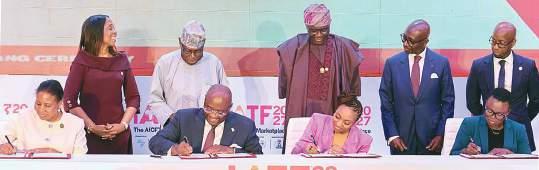
L-R: Sitting: H.E. Francisca Tatchouop Belobe, Commissioner for Economic Development, Trade, Tourism, Industry and Minerals, African Union Commission; Dr. George Elombi, President and Chairman of the Board of Directors of Afreximbank; Dr. Jumoke Oduwole, Minister for Industry, Trade and Investment; and Cynthia Gnassingbe, Director, Partnerships and Private Sector, AfCFTA.
Standing: Mrs. Kanayo Awani, Executive Vice President, Intra African Trade and Export Development, Afreximbank; Chief Olusegun Obasanjo, Chair, IATF; Mr. Babajide Sanwo Olu, Governor of Lagos State; Mrs. Lois Ekra, Deputy Chair, IATF; and Mr. Joseph Ifebunandu, Head, Banking Legal Services, Afreximbank, during the Intra African Trade Fair 2027 (IATF2027) host signing ceremony in Lagos, Nigeria, held March 9
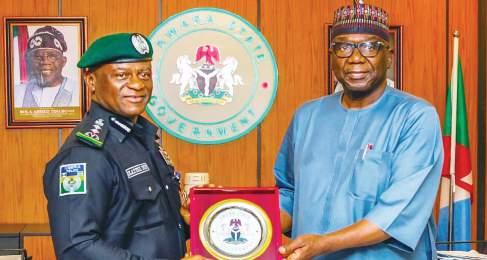
L-R: New Inspector-General of Police Tunji Disu, receiving a souvenir from Governor AbdulRahman AbdulRazaq, during his operational visit to Ahmadu Bello House in Ilorin, Kwara State, on Monday






expor




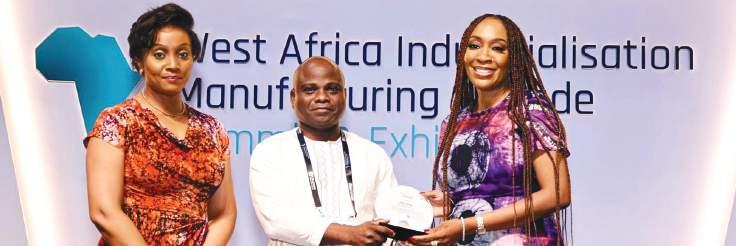
L R: Strategic Communications, Office of the Minister of state for Industry, Ministry of Industry, Trade and Investment, Mrs. Ifeoma Williams; Director General of Economic Attractiveness and Diplomacy, Simidélé S. Seth
TEBE, presenting the Woman of the Year Award to the Chief Operating Officer, Nigeria Machine Tools Limited, Mrs. Obehi Ojeaga, in recognition of her exceptional leadership which has significantly impacted West Africa Industrialisation, Manufacturing and Trade at the gala night and award of the West Africa Industrialisation, Manufacturing and Trade Summit 2026, held at the Landmark Event Centre in Lagos … recently
46.7%
Statutory payments slump to N726bn from N1.27tn Gas output rebounds 5.3% to
Emmanuel Addeh in Abuja
Nigeria’s national oil company, the Nigerian National Petroleum Company Limited (NNPC Ltd) recorded N2.571 trillion in revenue in January 2026, representing a 46.7 per cent decline from the N4.82 trillion reported in the previous month, even as both oil and gas sales improved during the period.
The figures, contained in the NNPC Monthly Report Summary for January 2026 released yesterday pointed to a sharp contraction in monthly earnings despite relatively stable crude oil production, increased hydrocarbon sales volumes and strong pipeline availability across key upstream infrastructure.
The N2.571 trillion revenue recorded in January reflected a N2.249 trillion decline compared to the N4.82 trillion posted in December, highlighting the volatility that continues to characterise Nigeria’s petroleum earnings.
Although the report did not provide an explanation for the sharp revenue drop, the data showed that sales volumes for both crude oil and natural gas actually increased in January, suggesting that the decline in earnings may have been influenced by factors outside the operational data captured in the report.
Besides, crude oil and condensate production during the month averaged 1.64 million barrels per day (bpd). A breakdown of the production figures
showed that crude oil contributed 1.39 million bpd, while condensate accounted for 0.25 million bpd, bringing the combined total to the 1.64 mbpd recorded for the period.
Compared with December’s total production of about 1.60 million bpd, January output represented a 2.5 per cent month-on-month increase.
Despite the improvement, production levels remained broadly within the narrow band observed throughout the past year, where total crude and condensate output fluctuated mostly between 1.60 million bpd and 1.69 million bpd.
This indicated that while output has stabilised somewhat after years of disruptions linked to pipeline vandalism and oil theft, Nigeria has yet to achieve the significant production expansion needed to raise petroleum earnings sustainably.
Data on crude oil and condensate sales also showed an improvement during the month. Total oil sales stood at 24.75 million barrels in January, up from 22.79 million barrels in December, representing a month-on-month increase of approximately 8.6 per cent.
Similarly, the January figure represented a strong recovery from November’s 19.98 million barrels, although it remained below the 26.71 million barrels recorded in October, which was the highest level within the period shown in the report.
The rise in oil sales volumes made
the sharp decline in overall revenue particularly striking, as higher sales would typically support stronger earnings unless prices or payment flows changed significantly.
Natural gas operations, meanwhile, recorded notable growth during the period under review. The report showed that gas production rose to 7,283 million standard cubic feet per day (mmscfd) in January. This represented a 5.3 per cent increase from the 6,914 mmscfd produced in December.
Although the January figure marked a rebound in output, it was not the highest level recorded in the past year,
as earlier peaks of 7,640 mmscfd and 7,722 mmscfd were recorded around mid-2025.
Nevertheless, the improvement indicated a renewed upward momentum in gas production following the drop to 6,284 mmscfd in September, when output reached its lowest level in the period covered by the report.
But gas sales improved in tandem with production. According to the data, gas sales reached 4,978 mmscfd in January, rising from 4,754 mmscfd recorded in December, representing a 4.7 per cent increase.
The January sales figure matched the peak level recorded earlier in July,
and represented a significant recovery when compared with the 3,443 mmscfd recorded in September, when gas sales temporarily dipped.
The report also disclosed that profit after tax for January stood at N385 billion, compared to N351 billion last December and N502 billion in November last year. Statutory payments made by the company during the period were reported at N726 billion, as against N1.27 trillion last December.
When measured against the total monthly revenue of N2.571 trillion, this represented approximately 28.3 per cent of the company’s earnings
transferred to the federation in the form of statutory obligations. In all, operational indicators across key petroleum infrastructure remained relatively strong during the month. The report showed that upstream pipeline availability stood at 96 per cent, reflecting stable evacuation capacity for crude oil production. Similarly, the Obiafu–Obrikom–Oben (OB3) gas pipeline recorded 96 per cent availability, while the Ajaokuta–Kaduna–Kano (AKK) pipeline recorded 92 per cent availability, indicating steady utilisation levels across the country’s expanding gas transmission network.
The United States Embassy in Abuja has warned of a possible terrorist threat targeting American facilities and U.S.affiliated schools in Nigeria, urging U.S. citizens in the country to take additional security precautions.
In a security advisory issued by the embassy on late on Monday evening, American nationals were advised to
remain vigilant, especially when travelling to the U.S. Embassy in Abuja, the U.S. Consulate General in Lagos, and institutions affiliated with the United States.
“The U.S. Embassy in Abuja informs U.S. citizens of a possible terrorist threat against U.S. facilities and U.S. affiliated schools in Nigeria,” the advisory, which was first sighted on X, formerly known as Twitter, stated.
James Emejo in Abuja
The federal government yesterday hosted a high-level meeting with the leadership of Médecins Sans Frontières (MSF) Nigeria, also known as “Doctors Without Borders”, to discuss the renewal of the Federal Cooperation Agreement, and to bolster collaboration for uninterrupted humanitarian operations across the country.
Minister of Budget and Economic Planning, Senator Abubakar Bagudu,
reaffirmed the federal government’s commitment to supporting humanitarian efforts while recognising key challenges impacting service delivery across several states.
Bagudu listed the challenges to include limited infrastructure in many local government areas, weak laboratory capacity due to electricity and equipment gaps, and insufficient or poorly maintained ambulance and emergency services. Others limitations include uneven health-system performance across
wards and regions, persistent disparities in development indicators, especially in northern states, community perceptions affecting acceptance and participation in programmes, and the need for better allocation and management of public resources.
In a statement issued by the ministry’s Director, Information and Public Relations, Mrs. Julie Osagie-Jacobs, Bagudu said the government remained committed to improving coordination, account-
ability, and long-term development planning. He highlighted ongoing efforts to strengthen health systems, expand economic opportunities, support agriculture, and promote sustainable local structures that reduce reliance on external aid.
Speaking on behalf of MSF, Country Director, Dr. Pitchou Kayembe, expressed gratitude for the collaboration with the federal government and reiterated MSF’s commitment to maintaining lifesaving humanitarian services.
The embassy urged U.S. citizens to adopt precautionary security measures, including varying their travel routes and schedules when visiting U.S. diplomatic facilities or related institutions.
“The Embassy recommends that U.S. citizens take additional precautions when travelling to the U.S. Embassy, the U.S. Consulate General in Lagos, and U.S. affiliated schools, to include varying times and routes,” it said.
According to the advisory, heightened awareness of surroundings and avoiding predictable routines could significantly reduce personal risk.
“Increasing awareness of your surroundings, avoiding predictable routines, and reviewing general security precautions with your family can help reduce your risk,” the embassy added.
As part of the recommended safety measures, the embassy urged American citizens to remain alert in public places and avoid large gatherings.
Among the specific actions
outlined were: “Be aware of your surroundings; keep a low profile; review your personal se-curity plans; vary your regular routes; keep your cell phone charged in case of emergency; stay alert in public places; avoid crowds and demonstrations; and familiarise yourself with emergency exits when entering buildings.”
The embassy also encouraged U.S. citizens to remain informed about security developments and travel risks in Nigeria by consulting official travel guidance.“For additional information about threats and risks to travellers in Nigeria, please visit the Nigeria Country Information page on travel.state.gov,” it noted.
Despite the advisory, the embassy confirmed that its consular services remain operational.
“The Consular Sections of Embassy Abuja and Consulate General Lagos remain open,” the statement added, urging citizens to continue monitoring official communication channels for further updates.
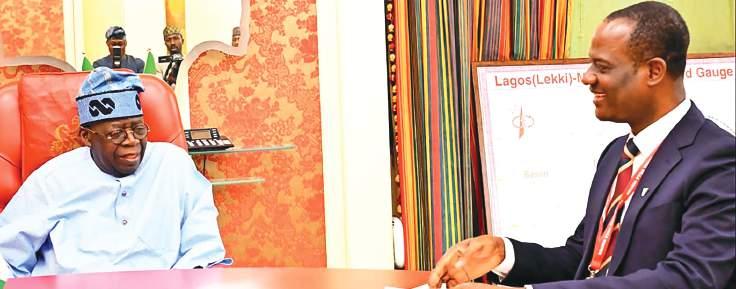
President Bola Ahmed Tinubu and Minister of state for Finance designate, Mr. Taiwo Oyedele, during an audience with President Tinubu at the Presidential Villa, Abuja, yesterday
With few days to the regulatory deadline set by the Central Bank of Nigeria (CBN) for banks to comply with the revised capital requirements, Globus Bank Limited has successfully crossed the N200 billion minimum capital threshold required for commercial banks operating with national licences.
THISDAY learnt from banking industry sources that the apex bank has completed the verification of the lender’s recent capital raise and subsequently issued a No-Objection Letter confirming that the bank’s paid-up capital now exceeds the regulatory benchmark.
A banking official with knowledge of the development said the regulatory confirmation followed a review of the funds raised by the institution, noting
that the exercise formally establishes the bank’s compliance with the capital requirement introduced by the central bank.
According to findings, the capital increase followed a two-stage fundraising programme undertaken by the bank between 2024 and 2025.
The lender reportedly entered the recapitalisation programme with a paid-up capital base of about N45.8
billion. In 2024, it raised an additional N53 billion, bringing its capital to approximately N98.5 billion.
Further capital mobilisation in 2025 through a combination of a rights issue for existing shareholders and a private placement targeted at strategic investors brought in more than N102 billion, pushing the bank’s total paid-up capital above the N200 billion regulatory threshold.
Market observers noted that the central bank’s No-Objection Letter indicates that the regulator has completed its review of the capital raise and confirmed that the funds satisfy the prudential conditions required for banks operating under a national licence.
The recapitalisation programme forms part of broader banking sector reforms introduced by the CBN under
Governor Babajide Sanwo-Olu, yesterday, took another bold step to operationalise the Lagos State Electricity Law and strengthen the institutional framework required for effective regulation of the electricity market in the state.
Sanwo-Olu inaugurated a fiveman Board of Lagos State Electricity Regulatory Commission (LASERC), marking a major milestone in the state’s journey towards building a modern, reliable and independent electricity market.
He approved the appointment of Mr. Alexander Akinwunmi Ogunbiyi, an energy financing expert with over three decades of leadership experience, to serve as Chairman of the board in Non-
Executive capacity. Mrs. Temitope George, a seasoned legal, regulatory, and governance executive, was appointed by the governor as LASERC’s Chief Executive Officer.
The move further accelerated Lagos’ gradual transition from the phase of legislation to building institutional backbone that will transform the electricity market in the state.
The board will play a pivotal role in strengthening transparency, fairness, regulatory certainty, and investor confidence in the Lagos electricity ecosystem.
Swearing in the LASERC board members, Sanwo-Olu said the full operation of the agency would give
life, leadership, and direction to the Lagos electricity market, stressing that the inauguration of the commission’s board would further unbundle power distribution and attract more investment in the sector.
He said, “The LASERC board now has the opportunity to establish collaboration and work together with the stakeholders in the sector. The mandate of the Board is to serve the interests of Lagosians and bring about purposeful regulatory reform that will strengthen the sector.
“The board inauguration follows the enactment of the Lagos State Electricity Law 2024, which is in alignment with the Federal Electricity Act 2023.
President Bola Tinubu, Monday afternoon, received in audience Minister of State for Finance nominee, Taiwo Oyedele, at State House, Abuja.
Oyedele’s visit marked his first official audience with Tinubu since his nomination as Minister of State for Finance was made public last week.
The meeting, which took place at the first floor office of the president, according to sources, served as an opportunity for both men to
exchange views on Nigeria’s ongoing fiscal reform agenda and the government’s strategy to strengthen public finance management.
Before his appointment, Oyedele had been engaged with the president and other top government officials on issues relating to tax reforms, revenue mobilisation, and broader economic policy initiatives.
During those engagements, discussions focused on measures aimed at improving tax administration, expanding Nigeria’s revenue base, and strengthening the country’s fiscal framework.
He served as Chairman of the Presidential Committee on Fiscal Policy and Tax Reform, which produced four new consolidated tax laws of Nigeria that took effect from January this year.
As Minister of State for Finance, Oyedele is expected to work closely with Minister of Finance and Coordinating Minister of the Economy, Wale Edun, to advance policies designed to enhance revenue generation, promote fiscal discipline, and improve the efficiency of the country’s public finance system.
This establishes an independent, transparent, competitive and investor-friendly regulatory market which created State Electrification Fund in underserved communities.
“This law formally empowers LASERC as a regulator of all electricity utilities and providers in Lagos. The Board’s activities will give life, leadership and direction in the sector. The agency must make itself accessible to all stakeholders in the market and must not be the cog in the wheel of progress
in the Sanwo-Oluindustry.”reminded the board members that the regulatory commission was not established to create a snag in the market, but to collaborate with operators to make the industry flourish and give Lagosians value for their money.
The governor urged the regulator to bring about a system in the state’s electricity market that would lessen the burden of overpricing on consumers and create a win-win market.
the leadership of Olayemi Cardoso. Announced on March 28, 2024, the initiative gave banks a 24-month window beginning April 1, 2024, to meet revised capital thresholds, with the compliance deadline set for March 31, 2026.
Under the framework, commercial banks with international authorisation are required to maintain a minimum capital base of N500 billion, while those with national and regional licences must hold N200 billion and N50 billion respectively.
Analysts say the stronger capital base is expected to enhance Globus Bank’s ability to undertake larger transactions, support corporate clients and deepen participation in trade finance and public sector business.
The bank, which commenced operations in 2019, currently operates about 50 branches across the country and is understood to be pursuing further expansion as part of its growth strategy.
The enlarged capital base will support the bank’s plans to expand its lending activities, strengthen its digital infrastructure and broaden its physical footprint as competition intensifies within Nigeria’s banking sector.
Olawale Ajimotokan in Abuja
The Head of the Civil Service of the Federation, Mrs. Didi Esther WalsonJack has assured that a thorough investigation would be conducted to determine the immediate cause of yesterday’s fire incident that gutted a section of the Federal Ministry of Science, Technology and Innovation at the Federal Secretariat Complex Phase 2, Abuja. She affirmed in a statement that the investigation was to avert future occurrences and also assess the structural integrity of the building. Her office noted that following the containment of the fire, necessary precautionary measures had also been implemented to secure the affected area.
It said a comprehensive assessment was currently underway to ascertain the extent of the damage to the property.
The fire on the fourth floor of the building that also houses of the Head of the Civil Service of the Federation, reduced the office of the National Board for Technology Incubation (NBTI) to charred remnants with nothing salvaged after the Federal Fire Service officers from nearby Asokoro, and other emergency response agencies were swiftly mobilised to the scene.
A plume of smoke thickened over the federal secretariat and was visible over the entire Central Business District. Traffic into and out of the Federal Secretariat was also disrupted as security agents were seen diverting traffic.
The fire also sent many workers, who had reported for duty early in the day, scampering for safety as many also attempted to evacuate the building through the stairways. One of the responders from the fire service suffered severe burn during the emergency response and was subsequently hospitalised.
Briefing reporters on the fire outbreak, Walson-Jack said the fire was unfortunate.
She also added that the incident was an eye-opener for all public workers on strict compliance with safety measures.
“A fire outbreak is never something anyone wants to happen because there will obviously be damage, but we do not yet know the extent of the damage to property and the building.
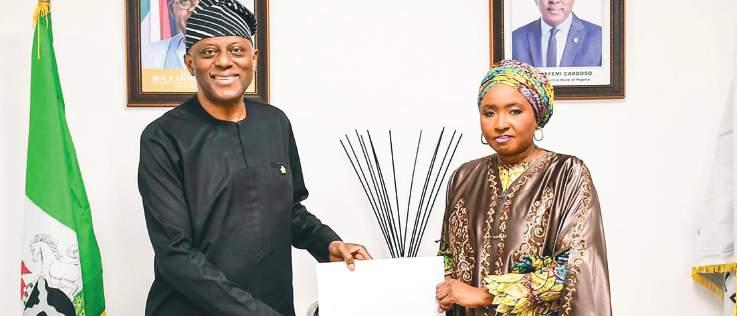
The Governor, Central Bank of Nigeria (CBN), Mr. Olayemi Cardoso (left) and the Executive Secretary, Solid Minerals Development Fund, Hajiya Fatima Shinkafi, after the CBN recently took delivery of responsibly sourced gold refined to London Bullion Market Association (LBMA) Good Delivery standards into its foreign reserves under the domestic gold purchase programme.
Cybersecurity threats have emerged as the dominant concern for risk managers in the banking industry, with a large majority of Chief Risk Officers (CROs) warning that digital vulnerabilities pose the most immediate danger to financial institutions.
According to a survey by Ernst & Young (EY), about 86 per cent of chief risk officers identified cybersecurity risks as the foremost challenge facing their organisations, reflecting growing anxiety over increasingly sophisticated cyberattacks, expanding digital infrastructure and geopolitical tensions that heighten exposure to cyber threats.
In today’s fast-changing financial landscape, the organisation stated that banks must therefore adopt a holistic and forward-looking approach to risk management.
In its 15th annual Global Bank Risk Management report, EY, a frontline global professional services firm, provided a comprehensive and insightful analysis of the evolving priorities and challenges faced by
CROs in the banking sector globally.
The survey report, it said, highlighted the dynamic, non-linear, and interconnected nature of risks confronting banks, underscoring the imperative for integrated, strategic risk management in an increasingly volatile and complex environment.
The report also pointed to a renewed focus on credit risk amid softer economic conditions and the rise of private credit, alongside persistent concerns around cyber threats, technology vulnerabilities, and digital fraud, emphasising that successful risk governance requires not only advanced technology and data capabilities but also a cultural shift towards embedding risk as a strategic priority at the highest levels of the organization.
On the imperativeness of the report, EY Managing Partner for West Africa, Anthony Oputa, said the report served as a vital resource for banking leaders seeking to understand and respond to the shifting risk landscape.
“EY remains steadfast in its avowed mission to help financial institutions build stronger, fairer
and more sustainable businesses through innovative and integrated risk management practices,” Oputa noted.
According to the report, CROs are increasingly involved in shaping business strategy, leveraging AI and data analytics to anticipate risks and drive informed decision-making.
The report identified cybersecurity and technology risk as the foremost concern for 86 per
cent of CROs, followed by credit risk at 62 per cent, and data risk at 41 per cent. Digital fraud and financial crime risk also remain prominent, reflecting the increasing sophistication of threats in digital dispensation.
This evolving risk landscape, it said, demands that banks accelerate the adoption of advanced technologies, with 55 per cent of CROs prioritising AI-enabled capabilities
to enhance risk management effectiveness.
Corroborating, Ashish Bakhshi, Head, Clients & Industries Leader, EY West Africa, noted that the risk environment today is characterised by volatility and complexity, driven by rapid technological innovation and shifting regulatory landscapes.
According to Bakhshi, banks must embrace a strategic mindset that balances risk mitigation with
growth opportunities, adding that EY is dedicated to partnering with financial institutions to harness these capabilities and build resilient, future-ready organisations.
To manage these high-priority risks, the report stated that 52 per cent of CROs are focusing on improving governance and controls, while 43 per cent are enhancing risk identification and assessment capabilities.
Emmanuel Addeh in Abuja
The Managing Director and Chief Executive Officer of the Niger Delta Power Holding Company (NDPHC), Jennifer Adighije, has said that the company was taking steps to address previous delays in the 570mw Alaoji Power Plant, stressing that the NDPHC has a new completion target of Q3, 2027.
Speaking when she took the the leadership of the House of Representatives Committee on Power on a tour of the plant in Abia state, Adighije explained that the management of NDPHC had compelled the contractor to submit a revised recovery plan to ensure timely completion of the project,
but clearly that is not possible. With the revised schedule, we are now working towards completion by the third quarter of 2027,” Adighije said.
Ogun, Federal Agencies Fine-tune Security for Gateway Airport Hajj
James Sowole in
Security agencies responsible for airport operations in Nigeria have pledged to collaborate with Ogun State Government to ensure seamless Hajj operations at Gateway International Airport, Iperu-Remo.
The commitment was made on Monday during a strategic security meeting between representatives of the state government and key security agencies at the airport located in Ikenne Local Government Area of the state.
At the meeting, Ogun State Commissioner for Transportation, Gbenga Dairo, said the airport possessed the required infrastructure, facilities and management capacity to handle Hajj
operations.
Dairo added that the facility had also been recognised by the Nigeria Civil Aviation Authority (NCAA) for the purpose.
According to him, the airport forms a key component of the state government’s economic development agenda and has positioned Ogun State prominently on the global aviation map.
Dairo affirmed that the airport was fully prepared for Hajj operations, stating that NCAA has already certified the facility for domestic commercial flights after granting all necessary approvals.
He said, “The intention is for Hajj operations to take place at Gateway International Airport this year.
Representatives of the National Drug Law Enforcement Agency, Nigeria Police Force, Nigeria Immigration Service, Nigeria Customs Service, the Department of State Services, and the NCAA are here to outline the minimum requirements for a successful operation and assess the facilities available at the airport.”
He said the agencies expressed satisfaction with the infrastructure and management capacity in place to support the operations.
“We have assured them that the state government is ready to provide everything required to ensure seamless operations for pilgrims and for the benefit of the state and the country,” he said.
“Previously we experienced some slippages, and we had to compel the contractor to come up with a recovery plan, which they have now done. Initially we had envisaged that the project would be completed by the end of this year,
Accompanied by the Executive Director, Generation, Abdullahi Kassim, and Executive Director, Corporate Services, Omoregie Ogbeide-Ihama, the NDPHC CEO assured the committee that the company remained committed to providing both technical and financial support to ensure the project progressed without further setbacks.
“We are prepared as management
to provide all the necessary support in terms of engineering, and we have been doing that. That is why we are gaining traction. In terms of finances, we ensure that we meet our obligations to the contractor. We are not owing the contractor, so there is absolutely no reason to envisage any slippages for now,” she added.
She also commended President Bola Tinubu for approving the power sector refinancing plan, which she said would improve liquidity in the electricity market and enable completion of ongoing projects.
Kuni Tyessi in Abuja
Nigerian Education Loan Fund (NELFUND) has commended the management of Delta State University (DELSU), Abraka, for its student-friendly directive allowing students with verified or disbursed status under the NELFUND scheme to participate in their first semester 2025/2026 examinations.
According to a statement signed by NELFUND spokesperson, Oseyemi Oluwatuyi, the directive issued through
an internal memorandum from the Office of the Deputy Vice-Chancellor (Academic), permits students whose status on the NELFUND platform shows “Verified” or “Disbursed” to sit for their examinations upon presentation of evidence of NELFUND status.
The statement said Managing Director/Chief Executive of Nigerian Education Loan Fund (NELFUND), Mr. Akintunde Sawyerr, described the move as a commendable example of institutional collaboration in support of Nigerian students.
It said, “We warmly welcome this student-centred approach by Delta State University. It reflects a clear understanding of the purpose of the NELFUND scheme, which is to ensure that no Nigerian student is denied access to education because of financial constraints.
“At NELFUND, we are very pleased to see institutions taking practical, youth-friendly steps that allow students who have successfully completed the application process to continue their academic activities without disruption.”
A special Business Series edition to celebrate women and launch the gen.w platform
12 March, 2026 11:00 AM (WAT)
Live on @ubagroup



Scan the code to Register


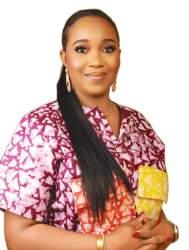

Emmanuel Addeh in Abuja
The Dangote Refinery said yesterday that it will continue to prioritise the Nigerian market in its fuel supply arrangements, but stated that it was seeking to buy more crude from Nigeria’s government to help soften the impact of rising fuel costs.
This came as the 650,000 barrels per day facility located in Lagos raised the gantry price of petrol to N1,175 per litre from N995, marking the third upward adjustment within a week, while that of diesel was increased to N1,620 per litre.
The refinery gets about five cargoes of crude a month from the state-run Nigerian National Petroleum Company Limited (NNPC Ltd), Dangote Refinery Chief Executive Officer, David Bird, said at a briefing in Lagos.
The facility can “easily” take 13 or more cargoes, he added. He stressed: “We’re designed around Nigerian crude, so we actively seek additional Nigerian crude cargoes,” noting “That’s the potential that we have been in discussions with the government about.”
Bloomberg reported that the US-Israel war on Iran has upended the oil market, sending crude prices soaring. Dangote Petroleum Refinery & Petrochemicals, which buys most of its feedstock from the market, said purchasing more oil from the government in local currency will help remove the costs paid to traders and avoid foreign-exchange expenses.
The Dangote Refinery stated that it will prioritise domestic supplies even though it paused sales of petrol and diesel pending the publication
of higher rates for wholesalers, after raising prices of petrol by about 14 per cent last week.
Crude prices surged on Monday as more major Middle East producers cut output, including OPEC leader Saudi Arabia, with a standstill of tanker traffic through the vital Strait of Hormuz choking off supplies to the rest of the world. According to Bird, Dangote’s refinery is not immune to the changes in the global energy environment.
“In the space of a week, the crude oil price has doubled, freight rates have tripled, the insurance market in similar orders of magnitude,” he lamented.
The facility has the capacity to produce as much as 75 million litres of petrol per day, depending on domestic demand. “We can meet whatever the country requires,”
Bird said.
Before the Dangote refinery opened in 2024, Nigeria had to import almost all its fuel and shortages were recurrent. “Nigeria will continue to enjoy supply security,” Bird assured.
Besides, Bird said he could not guarantee there would be no further price increases, given that Dangote, a private enterprise, was “fully exposed to the international commodity market”. The global increase in crude oil prices, transport costs and insurance costs, he said , had weighed heavily on Dangote’s expenses.
He said any move to stabilise the market had to come from the government. “That is the role of the government if they want to intervene in the economy when it comes to the cost of energy,” he
stressed.
Separately on its X handle, the refinery posted what it tagged: “8 key talking points from a Media Chat with the Managing Director/ CEO, Dangote Petroleum Refinery, David Bird”.
“Dangote Refinery will continue to meet Nigeria’s fuel demand despite global supply disruptions and market volatility. Domestic refining gives Nigeria supply security, ensuring the country avoids fuel shortages and queues even when global markets are“Evendisrupted.under the crude-for-naira arrangement, Nigerian crude is purchased at international benchmark prices, meaning the refinery does not receive discounted crude. Import dependent countries are the worst hit as the global oil crisis escalates.
“Global oil markets are experiencing extreme volatility, with crude prices rising from the mid-$60 range to nearly $120 per barrel within a week. The refinery is fully exposed to international commodity markets, including crude oil prices, freight rates, insurance, and financing costs.
Nigeria, African Export-Import Bank (Afreximbank), African Union Commission (AUC), and African Continental Free Trade Area (AfCFTA) Secretariat yesterday signed Hosting Agreement for the 2027 Intra-African Trade Fair (IATF2027) to be hosted in Lagos. Lagos will also host Creative
Africa Nexus 2026 (CANEX), another initiative of Afreximbank, this year.
The signing ceremony took place at Wole Soyinka Centre for Culture and Creative Arts in Lagos.
The agreement formalised Nigeria’s role as host of Africa’s premier trade and investment platform, reinforcing the country’s commitment to advancing intraAfrican trade and accelerating
implementation of AfCFTA.
Scheduled to take place November 5 – 11, 2027, IATF2027 is targeting US$50 billion in trade and investment deals, 100,000 visitors, 2,500 exhibitors, and participation from over 100 countries.
The fair will be held under the theme, “Global Africa Repositioned – From Market Access to Market.” It will feature diverse programmes,
notably, trade exhibitions; AfCFTAfocused trade and investment forum; Global Africa Day, to strengthen ties with Africa’s diaspora; a B2B (Business-to-Business) & B2G (Business-to-Government) platform; Creative Africa Nexus (CANEX) to showcase Africa’s creative economy; Sub Sovereign Governments Network for regional and local governments integration;
in flagrant disobedience to an order of court.
Delivering judgement in the appeal brought by a faction of the party said to be loyal to Oyo State Governor, Seyi Makinde, the appellate court stated that it was wrong of the party to have proceeded with the convention, and in disregard of a subsisting order restraining it until conditions set by the Federal High Court were complied with.
Justice Peter Lifu of the Federal High Court in Abuja, had on November 14, 2025 ordered PDP not to go ahead with the convention until the chairmanship nomination form was sold to an aspirant and former governor of Jigawa State, Sule Lamido.
Dissatisfied, the appellants had approached the appellate court seeking an order nullifying the trial court’s judgement.
However, Justice Uchechukwu Onyemenam, who delivered the unanimous judgement of the appellate court, observed that PDP, instead of appealing against the Federal High Court’s decision, opted for a court of coordinate jurisdiction, where it got a favourable judgement that wasTheobeyed. court held that the denial of Lamido the opportunity to exercise his right by purchasing nomination form for the position of national chairman could not be an internal affair of PDP, adding that internal affairs are not absolute.
The appellate court held, “Where a party deliberately breached 1999 Constitution, Electoral Act 2022 and its own Constitution and Guidelines, has gone beyond any internal affairs that courts cannot adjudicate upon.
The court must by law, intervene and resolve the matter in line with the position of the law.”
Onyemenam took a swipe at the Turaki faction for disobeying a lawful order and resorting to self-help by running around a court of coordinate jurisdiction to get favourable judgement. The court held that the action was a direct affront to the authority of court, which must not be condoned for whatever reason, adding that resorting to selective obedience of court judgments cannot be helpful to the “Noparty. court will fold its hand while its authorities are being rubbished. The action of the appellant is condemnable as it is contemptuous,” the court held. Aside from dismissing the appeal,
Onyemenam also awarded a cost of N2 million against PDP.
PDP: Battle Not Over, Heads to Supreme Court
Unfazed by the judgement of the appeal court, the PDP leadership yesterday said the battle was not over yet, as it immediately headed to the Supreme Court.
A statement by PDP National Publicity Secretary, Ini Ememobong, said, ‘’Earlier today, the Court of Appeal delivered a judgment on appeals arising from the judgments delivered by Justice Omotosho and Justice Lifu, and a ruling by Justice Abdulmalik.
‘’The panel of the court, presided over by Hon. Justice Mohammed
Ambi-Usi Danjuma, upheld the suspension of the National Legal Adviser (and by extension other officers like the National Secretary and National Organising Secretary).
‘’The court also upheld the judgements of Justices Omotosho and Lifu of the Federal High Court, Abuja. The appeal against the interlocutory orders of Justice Abdulmalik was dismissed.
‘’The operationalisation of this judgement will, without fail, work untold hardship on our members. To avert this, while we are consulting with critical organs of our party on the way forward.”
Ememobong stated, ‘’We have also instructed our lawyers to immediately
Continued on page 35
special days for countries, public and private sector to showcase their trade and investment potentials, tourism and cultural highlights; Africa Automotive Show; AU Youth Start-up pavilion for African youth start-ups; and Africa Research and Innovation Hub (ARIH) for the academia and researchers.
President of Afreximbank, Dr. George Elombi, said when the bank proclaimed Nigeria as the host of IATF2027, it knew “an elephant had been cited”.
Elombi express satisfaction that Nigeria accepted to host the trade.
According to him, from the success recorded at Afreximbank’s annual meeting held in Abuja, June last year, “The success of the IATF in Lagos is already assured. But someone had to deliver the elephant to us, and someone had to deliver Nigeria to us. That is the person of the president, Bola Ahmed Tinubu.
“To him (Tinubu) we owe our gratitude, and to him we look up for the success of the IATF2027. We are assured that President Tinubu will deliver the elephant to us. That is why we are here today.”
Tinubu, who was represented by Minister of Industry, Trade, and Investment, Dr. Jumoke Oduwole, expressed delight at the opportunity
for Nigeria to host the trade fair, saying Nigeria would do everything to ensure its success.
Oduwole said Nigeria was fully prepared to host IATF 2027. She said Nigeria was committed to working with other partners and stakeholders to make the event a defining moment in terms of transforming the AfCFTA Marketplace, building trust for business communities, creating one African market, fostering international trade, and creating job opportunities for people in the African continent.
Former President Olusegun Obasanjo, who chairs the IATF 2027 Advisory Board, commended Tinubu, Governor of Lagos State, Babajide Sanwo-Olu, the private sector operators, and others whose commitment was instrumental in accepting to host the continental trade fair.
In his remarks, Sanwo-Olu assured that the forthcoming CANEX 2026 and IATF 2027 would be the best on the African continent.
The governor expressed the commitment of Lagos State Government to make CANEX 2026 and IATF 2027 a masterpiece that will represent Africa very well.
Sanwo-Olu, who witnessed
since 2022.
Stocks rallied and oil fell after it was reported that Trump said the US-Israeli war with Iran was “very far ahead of schedule” and “very complete, pretty much.”
Brent crude, the global oil benchmark, slid below $90 a barrel after the president’s comments. It had surged overnight, hitting its highest intraday level since mid-2022. The US benchmark dropped to about $85 a barrel, after surging above $119 earlier.
Stocks opened the session lower, but pared declines as the oil slide moderated, then rallied into the close after Trump’s latest remarks. The Nasdaq composite led indexes with a gain of 1.4 per cent. The Dow industrials rose 239 points after being down almost 900 points in
early trading.
One turning point came when France’s Finance Minister said the Group of Seven advanced economies was prepared to release strategic oil reserves to stabilise the global energy market if necessary. The remarks came after an extraordinary meeting of the group and as Gulf oil producers cut production amid shipping disruptions in the Strait of Hormuz.
The bond markets remained volatile, with the 10-year US Treasury yield pushing above 4.2 per cent before retreating back near 4.1 per cent. The dollar turned lower late in the day. Investors in recent days have feared that the energy-price spike could feed inflation and damp growth, raising the spectre of stagflation.
Trump yesterday warned that Iran made a “big mistake” by choosing Mojtaba Khamenei as its new supreme leader, as Washington accused Tehran of holding the world hostage through escalating military actions and threats to global energy supplies amid the expanding Middle East war.
Trump had repeatedly dismissed Iran’s new leader as unacceptable and suggested he would not last long without US approval, a remark that Iranian officials rejected as interference in the country’s internal political process. Also, Trump indicated yesterday that the ongoing war will be short-lived.
The leadership transition came days after the death of Ali Khamenei in US-Israeli strikes, an event that dramatically escalated tensions and
triggered a succession process that culminated in the appointment of his son, Mojtaba, marking the first quasi-dynastic transfer of power in the Islamic Republic.
But Iran defended the appointment, with its political and military establishment calling for unity under the new leader as the war with Israel and its allies continued to intensify across the region.
The conflict had already disrupted energy shipments through the Strait of Hormuz and driven global oil prices sharply higher, raising fears of broader geopolitical and economic fallout if the war continued to spread beyond Iran and Israel.
Russia on Monday threw its weight behind Iran’s new leadership, with President Vladimir Putin congratulating Mojtaba Khamenei
Continued on page 36
and pledging Moscow’s “unwavering support”. Putin described Russia as a reliable partner for Tehran at a time when the country was facing what he called armed aggression.
British Prime Minister Keir Starmer warned that the conflict could have far-reaching economic consequences, cautioning that prolonged hostilities in the Middle East may disrupt global oil flows and place additional strain on already fragile international markets.
Trump: Iran’s New Supreme Leader Big Mistake, War to End Soon
“I think they made a big mistake” in selecting Mojtaba Khamenei,
Continued on page 36
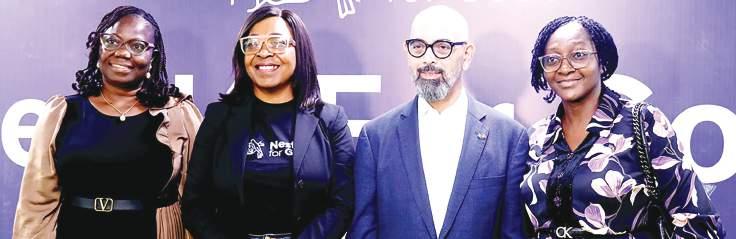
L R: Managing Director and Chief Executive Officer, Kamary Nutrition Consult and representative of the Chairman, Lagos Chapter, Nutrition Society of Nigeria (NSN), Mrs. Amaka Okwesilieze Nwaora; Corporate Affairs and Sustainability Lead, Nestle Nigeria, Mrs. Victoria Uwadoka; Managing Director, Nestle Nigeria, Mr. Wassim Elhusseini; and Assistant Director, Industrial Development Department, Federal Ministry of Industry, Trade and Investment, Mrs. Esther Abimbola Popoola, at the launch of the Nestle for Good campaign held in Ilupeju, Lagos, yesterday
The federal government has intensified efforts to halt worsening desertification and environmental degradation across northern Nigeria with the validation of nine Strategic Catchment Management Plans aimed at restoring degraded landscapes and protecting water resources.
The plans are being developed under the Agro-Climatic Resilience in Semi-Arid Landscapes Project (ACReSAL), a major climate resilience initiative supported by
World Bank and implemented by Federal Ministry of Environment, in collaboration with other key federal agencies.
At a high-level validation workshop in Abuja, government officials, development partners, and environmental experts warned that millions of Nigerians in the northern region were already grappling with severe ecological pressures that threatened food security, livelihoods, and community stability.
Nigeria’s Minister of Environment, Balarabe Lawal, said the environmental crisis confronting
the region was no longer theoretical but a daily reality for farmers, herders, and rural communities.
Lawal said advancing deserts, erratic rainfall patterns, shrinking water bodies, and degraded farmlands were steadily eroding agricultural productivity and deepening poverty across the 19 northern states and the Federal Capital Territory (FCT).
“These are not abstract environmental concerns. They threaten the food on our tables, the income of our farmers and herders, and the stability of our communities,”
Lawal said.
According to the minister, the ACReSAL project represents Nigeria’s most comprehensive response yet to the growing environmental emergency, bringing together Federal Ministry of Environment, Federal Ministry of Water Resources and Sanitation, and Federal Ministry of Agriculture and Food Security to drive coordinated climate resilience interventions.
He explained that the Strategic Catchment Management Plans formed the backbone of the intervention, providing a detailed
roadmap for restoring degraded landscapes, protecting watersheds, and strengthening sustainable resource management across vulnerable ecosystems.
Representing Minister of Water Resources and Sanitation, Joseph Utsev, Director of Hydrology, Abohwo Ngozi, said the workshop was convened to review and validate the final nine catchment management plans developed under the ACReSAL framework.
Ngozi stressed that the plans will guide integrated management of critical water catchments, while
Michael Olugbode in Abuja
Executive Secretary of National Human Rights Commission (NHRC), Tony Ojukwu, on Monday issued a strong call for urgent regional action to end gender-based violence, warning that millions of women and girls across Nigeria and West Africa continue to suffer abuse in silence.
Ojukwu made the appeal while delivering a keynote address at the International Women’s Day event organised by the Women’s Forum of the ECOWAS Court of Justice in Abuja.
He stressed that breaking the silence around gender violence was essential to achieving justice
and equality.
Speaking on the theme, “Rights. Justice. Action. For All Women and Girls,” the NHRC boss warned that gender-based violence remained one of the most widespread human rights violations in the world, stripping women and girls of dignity, safety, and opportunity.
He said while International Women’s Day was often marked with speeches and celebrations, the deeper challenge lied in confronting the realities that many women faced daily.
Ojukwu said, “Silence has too often been the accomplice of violence. Too many women suffer in silence because they fear stigma, retaliation or disbelief. Today we
must declare with one voice that silence is no longer an option.”
The human rights chief, who was represented by the commission’s Director, Women and Children Department, Mrs. Ngozi Okorie, painted a troubling picture of the scale of abuse. He said Nigeria alone accounted for about 10 per cent of global survivors of gender-based violence, with an estimated 20 million women affected.
Citing data from Nigeria Demographic and Health Survey 2018, he said nearly one in three Nigerian women between the ages of 15 and 49 had experienced physical or sexual violence at some point in her life.
Ojukwu also disclosed that
Linus Aleke
The Chief of the South African Army (CSSA), Lieutenant General Lawrence Khulekani Mbatha, has said South Africa, and indeed the African continent, was under constant bombardment in cyberspace, underscoring the growing importance of cyber defence capabilities.
Speaking during a working visit to Nigeria, Mbatha also expressed interest in studying
the Nigerian Army Cyber Warfare Command model, noting that such capabilities could provide useful insights for South Africa’s defence structure.
“In South Africa, signals capability currently sits within Defence Intelligence, but the need for cyber capability is clear. We are under constant bombardment in cyberspace,” he said.
He explained that South Africa was still undergoing a transformational and transitional phase in
building cyber capabilities, with resource allocation remaining a major challenge.
“The concept exists and the need is defined, but implementation is determined by available resources. From what I have learned here, based on your mandate and operational exposure, this capability is not just a concept but a reality. I will take this back into my own strategic environment where research is conducted,” he added.
NHRC received 3,724,822 complaints of human rights violations in 2025, a figure he described as both alarming and revealing of the scale of rights abuses across the country.
According to him, the complaints ranged from gender-based violence and child rights violations to abuses against other vulnerable groups.
He said the figures were compiled through the commission’s 36 state offices and the Abuja Metropolitan Office, reflecting growing public awareness of the commission’s mandate and increased willingness
by victims to report violations.
Ojukwu stated, “In Kano State alone, the commission recorded 3,019 complaints between January and December 2025. Out of these, 2,276 were resolved, while 743 cases remain under investigation.”
He added that the commission’s human rights monitoring dashboard recorded 670 cases of child abandonment in December 2025 alone, warning that such cases highlight the deeper social consequences of discrimination and violence against women and girls.
addressing growing environmental threats facing communities across northern Nigeria.
She warned that desert encroachment, degraded soils, and unpredictable rainfall were already undermining food production and threatening the livelihoods of millions of farmers and pastoralists.
“As we meet here in Abuja, millions of citizens across the northern states are battling advancing deserts, unreliable rains, and shrinking water bodies,” she said.
“These are real pressures that threaten the food on our tables and the economic survival of our rural communities,” she added.
National Coordinator of ACReSAL, Abdulhamid Umar, represented by Shettima Adams, said the validation exercise marked a critical step in translating years of environmental planning into concrete actions on the ground.
Umar disclosed that the nine catchment plans covered Malenda, Oshin-Oyi, Gurara-Gbako, Aloma-Konshisha, Benue-Mada, Sarkin-Pawa-Kaduna, ZungurGongola, Gaji-Lamurde, and Hawul-Kilange.
According to him, the catchments cut across several states, including Adamawa, Bauchi, Benue, Borno, Gombe, Kaduna, Kano, Katsina, Kebbi, Kogi, Kwara, Nasarawa, Niger, Plateau, Taraba, Yobe and Zamfara, as well as FCT.
A Federal High Court in Abuja has awarded N3million damages against the Nigerian Army for the assault, threat to life of a civilian staff of the Command Secondary School, Ipaja, Lagos, Mr. Ambrose Akhigbe.
Justice James Omotosho in his judgement subsequently ordered the army authorities to pay Akhigbe the sum of N3 million as compensation for what he suffered suffered as a result of the action of the defendants. Akhigbe, an Assistant Director in Command Secondary School, Ipaja, Lagos, had in November 2024, instituted legal action against the
Nigeria Army, the Chief of Army Staff, General Officer Commanding 81 Division, Commandant, Command Day Secondary School, Lagos, Lieutenant Akubor, Private Sani Mustapha, Private Ahmed Usman and Private Manniru Mukaila, who were 1st to 8th respondents respectively, over alleged threat to life, assault, battering, maltreatment amongst others. According to him, the respondents, particularly the 5th, 6th and 7th, had on June 10, 2024, at Command Secondary School, Ipaja, Lagos, violated his right when they beat him up and nearly killed him for allegedly making videos of inhumane punishments meted
out on the SSS3 girls who were asked to roll on muddy, dirty water. While claiming that the defendants’ action amounted to a gross violation of his right to respect of his personal dignity and not to be subjected to any inhumane and degrading treatment as guaranteed under Sections 34(1) of the Constitution and Article 4 and 5 of the African Charter on Human and People Rights, he had asked the court to order the respondents, jointly and severally to pay him the sum of N500 million only as compensation for the gross infringement of his fundamental right guaranteed by the Constitution of the Federal Republic of Nigeria.
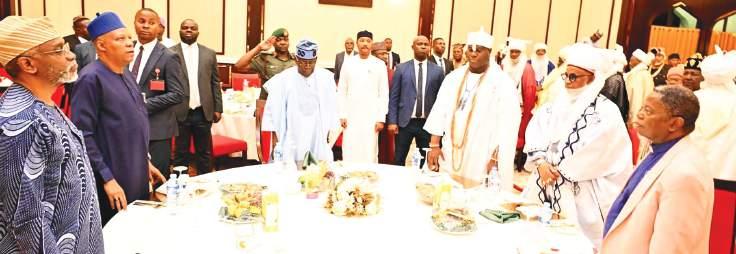
L-R: Chief of Staff to the President, Femi Gbajabiamila; Vice President Kashim Shettima; President Bola Ahmed Tinubu; Ooni of Ife, Adeyeye Enitan Ogunwusi; Etsu Nupe, Yahaya Abubakar and CAN President, Daniel Okoh, during the interfaith breaking of fast with Traditional Rulers and Religious leaders at the State House, Abuja. … yesterday
President Bola Tinubu on Monday evening assured all Nigerians that the nation will never allow agents of instability to undermine its peace, unity, and sovereignty.
Tinubu gave the assurance while hosting religious and traditional leaders for an interfaith breaking of the fast at the State House, Abuja, acknowledging their critical roles in promoting peace, stability, and moral guidance within their communities.
He said: “Yes, we are challenged; the terrorists are very desperate now because they are getting barraged and defeated, they leave trails of blood in their wake. But I assure you of one thing: Nigeria will never surrender. We are not discouraged. We are going to win and win well.”
The President promised to continue to make the most of the opportunity given to him to lead the country by sustaining the trajectory of the economy’s growth and prosperity.
According to him: “I am just grateful, one person among millions, that
I have been given the opportunity to serve. And all I can do is promise that I will continue to be faithful in discharging my duty. I can report that the economy has turned the corner.
“It is getting better. Pensioners are getting their relief gradually. We have saved Nigeria from bankruptcy.
“It was very daunting and challenging when we took over. But today I can say with pride and joy that we have survived. No governor in this country is running around the banks to borrow money to pay the salaries of their workers”.
He reaffirmed his commitment to intensifying investment in critical sectors such as agriculture and education to leave a lasting legacy for future generations.
Tinubu urged Nigerians not to lose hope, assuring them that his administration remains focused on building a safer, more secure, and prosperous nation for all.
Earlier un his remarks, the Etsu Nupe, Yahaya Abubakar, expressed gratitude to the President for hosting leaders of the two major religions at
the breaking of fast, which symbolises unity. He prayed for God’s guidance, protection, and for peaceful coexistence in the country, and for the President’s success.
The Etsu Nupe represented the President, the Nigeria Supreme Council for Islamic Affairs (NSCIA) and the Sultan of Sokoto, Sa`ad Abubakar. President, Christian Association of Nigeria (CAN), Archbishop Daniel
Okoh, representing Dr Stephen BabaPanya, President of The Evangelical Church Winning All (ECWA), assured President Tinubu of the church’s support for the administration in its determination to transform the
economy and strengthen the country’s security architecture. Traditional rulers and religious leaders from the six geo- political zones of the country attended the event.
The Savannah Centre for Diplomacy, Democracy, and Development (SCDDD) has announced that its founder and Board Chairman, Professor Ibrahim Gambari, CFR, OCORT, has been appointed Distinguished Visiting Scholar at the Centre for Africana Studies, University of Pennsylvania, Philadelphia, USA.
Founded in 1740 by the diplomat, author, and scientist Benjamin Franklin, the University of Pennsylvania has long been a hub of global scholarship.
Its Centre for Africana Studies has established itself as “a Centre of Scholarship to many students who seek knowledge on African culture, history, and contemporary development,” providing “renowned scholars the opportunity to impact global scholarship,” according to the university.
The appointment, conveyed in a letter dated February 13, 2026, by the Director, Centre for Africana Studies, University of Pennsylvania, Professor Wale Adebanwi, is effective from January 1 to August 31, 2026, and may be renewed at the end of the term.
Professor Adebanwi wrote: “It is our pleasure to welcome Professor Ibrahim Gambari as a Distinguished Visiting Scholar. His global experience in governance, diplomacy, and
development will be invaluable to our students and faculty alike.”
On the significance of the appointment, Executive Director, Savannah Centre, Ambassador Sani Saulawa Bala, said: “We are thrilled that our founder and Chairman’s expertise remains in demand globally. His extensive experience, reputation for excellence, and impeccable character will greatly contribute to the sterling record of UPENN’s Centre for Africana Studies.
“As a Distinguished Visiting Scholar, Professor Gambari will share his vision on global good governance and the mission of the Savannah Centre, which he founded as a non-governmental organisation to promote a peaceful world through solid diplomacy, inclusive and impactful decision-making, and
sustainable development.
“This appointment provides a unique opportunity to engage with students and scholars from Nigeria, Africa, and the world, to advance ideas that promote peace, democracy, and development globally.”
Professor Gambari is a renowned scholar and diplomat whose career spans academia and international service. His roles include senior lecturer and full professor at Ahmadu Bello University, Zaria; Director General of the Nigerian Institute of International Affairs; Minister of External Affairs of Nigeria; Nigerian Ambassador and Permanent Representative to the United Nations; and UnderSecretary of the United Nations, serving under four consecutive UN Secretaries-General.
The Nigeria Security and Civil Defence Corps (NSCDC) has dismantled a suspected criminal syndicate linked to kidnapping, arms trafficking, illegal mining and the production of counterfeit United States dollars, arresting 16 suspects in coordinated intelligence operations across Kano, Edo and Yobe states.
The arrests were carried out by the Commandant General’s Special Intelligence Squad (CG-SIS) in collaboration with the NSCDC Kano State Command and operatives deployed to the BUA Cement Company in Okpella, Edo State. Commander of the CG-SIS, Commandant Apollos Dandaura, disclosed during a briefing that the suspects were apprehended for offences including criminal conspiracy, suspected kidnapping,
unlawful possession of firearms, illegal mining, printing of counterfeit foreign currency and obtaining money by false pretense.
According to him, the operation exposed a network of criminals involved in economic sabotage and organised crime spanning multiple states.
One of the key suspects, Abbas Garkuwa, was arrested for allegedly printing counterfeit United States dollars and defrauding victims through fraudulent currency exchange deals.
Dandaura said the suspect was apprehended on February 27 at Kwankwasiya City along Zaria Road in Kumbotso Local Government Area of Kano State with fake $600,000 — estimated to be worth nearly N1 billion.
According to him, investigations revealed that Garkuwa had earlier issued counterfeit dollars amounting
to $6,200 to a victim after collecting N9 million under the guise of a currency exchange transaction.
He reportedly received N5.5 million through his Zenith Bank account and also arranged a fake N8 million transfer through an accomplice, Kabiru Ketti, in order to deceive the victim.
Items recovered from him include chemical containers, counterfeit production materials, plain sheets, ATM cards, a travel ticket to Cameroon, identification cards and substances suspected to be charms.
Further investigation linked the counterfeit currency operation to another suspect, Usman Muazu of Tanturus in Gombe State, who is currently at large.
In another breakthrough, operatives arrested Sulaiman Mallam Uba in Kano while in possession of six brand-new locally fabricated rifles.
A fresh controversy has erupted in the Senate over Nigeria’s delegation to the 2026 session of the United Nations Commission on the Status of Women (CSW) in New York, as Senator Natasha Akpoti-Uduaghan alleged that she was excluded from the official delegation despite indications that she was earlier being prepared for the trip.
The dispute surfaced as the global conference on gender equality and women’s empowerment commenced yesterday in New York, drawing government officials, activists, and policymakers from across the world.
At the centre of the controversy
was the Senator representing the Federal Capital Territory, Ireti Heebah Kingibe, who chairs the Senate Committee on Women Affairs.
Kingibe had earlier taken a strong position during a Senate budget presentation session, reportedly warning that she would boycott the international conference if Akpoti-Uduaghan was excluded from the delegation.
The FCT senator, according to sources at the meeting, said, “If Senator Natasha Akpoti is not going to attend the programme, it means I am not going to attend too.”
The remark was widely interpreted within the National Assembly as an expression of solidarity with the
Kogi Central senator. However, subsequent developments appeared to contradict that position.
In a letter dated March 5, 2026, addressed to Natasha AkpotiUduaghan sighted by THISDAY last week, Kingibe clarified that only two senators had been officially nominated and registered for the CSW meeting by the Senate leadership.
“For the sake of clarity, I can confirm that at this stage, only two members of the Senate have been officially nominated by the Senate President and have confirmed registration: myself and Senator Adeniyi Adegbonmire,” the letter stated.

The attention of the Federal Ministry of Works has been drawn to spate of cases of unlawful Sale/Purchase of. Road Camps and the Federal Government Offices along the Highways Nationwide, despite warnings and efforts on the part of the Federal Ministry of Works to stop perpetrators of such acts of sabotage to Government of the Federation to desist from such unwarranted actions.
2. It is Pertinent to state that, the Federal Ministry of Works sought and successfully secured a Presidential Approval dated 9th June 2008 exempting Road Camps/Federal Government Offices along Highways Nationwide from sale of Federal Government Landed Properties. The Exemption is to ensure the Honourable Minister, Federal Ministry of Works' mandate under the Federal Highway Act is duly carried out in the interest of the Public and same is consistent with the provision of the Act especially Section 3.
3. Arising from above, any purported sale or purchase of such Road Camps/ Federal Government Offices along the Highway is not only a fragrant breach of Section 3 of the Federal Highway Act 2021, but Criminal, an act of economic sabotage, trespass and mischief to say the least.
4 The Public is therefore advised not to be involved in the sale or purchase of such Camps and Offices or to do any act inconsistent with the Presidential Approval of 9th June, 2008 exempting Road Camps/ the Federal Government Offices along Highways Nationwide from Sale/Purchase as a Federal Government Land in their best interest, as such may lead to Legal Action and consequent necessary sanctions.
5. Be Warned.
Further enquiries about the above properties, should be addressed to the Honourable Minister, Federal Ministry of Works, Mabushi, Abuja.
Published in accordance with Caveat Emptor (Buyers Beware) Legal Principle this 10th day of March, 2026
Signed: PERMANENT SECRETARY, FEDERAL MINISTRY OF WORKS
THI s DAy • TUES DaY March 10, 2026
Acting Group Politics Editor DEJI ELUMOYE
Email: deji.elumoye@thisdaylive.com
08033025611 sms only
Of recent, Deputy Speaker of the house of representatives, hon. Benjamin Kalu has been in the eye of the storm following the scrutiny of his academic records regarding his National Youth Service corps certificate and Nigerian Law School records. Adedayo Akinwale writes.
These are not the best of times for the Deputy Speaker of the House of Representatives, Hon. Benjamin Kalu following allegations levelled against him regarding his National Youth Service Corps (NYSC) certificate and Nigerian Law School records.
Trouble started when a former First Vice President of the Nigerian Bar Association (NBA), Mr. John Aikpokpo-Martins dragged Kalu before the Legal Practitioners’ Disciplinary Committee (LPDC) and the NYSC concerning allegations that he enrolled into Nigerian law school while serving.
The issue was further escalated when a group, the Coalition of South East Youth Leaders (COSEYL) called for the immediate and independent probe of Kalu over the validity of his enrollment as a legal practitioner and the authenticity of his participation in the NYSC scheme.
Another group, Union of Igbo Youth, challenged COSEYL to produce evidence against the Deputy Speaker on the alleged irregularities in his NYSC certificate and Nigerian Law School records.
Interestingly, Kalu isn’t new to scrutiny, he has had to fight several battles at different times. But this raging issue, it appears, will dominate the political scene for the time being.
The bone of contention is not that complicated. To lay the issue bare, in 2010, a man named Benjamin Okezie Osisiogu applied to the Nigerian Law School. That man is now Benjamin Okezie Kalu. On April 23, 2010, he swore an oath as part of that application: “I am not and will not be engaged in any employment nor serve in the National Youth Service Corps during the period of my course at the Nigerian Law School.”
Surprisingly, his NYSC discharge certificate, number A001773067 was issued on March 8, 2011. Which means he completed his service year
from March 9, 2010 to March 8, 2011. It is safe to say that the service year commenced two weeks before he swore he would not serve during Law School. Also, the service year ended the same month he would have been completing his studies. One could say the two timelines do not just overlap; they are almost perfectly aligned.
In the legal profession, it’s a known fact that the Nigerian Law School does not allow students to serve in the NYSC
during their course of study. The rules are strict, the attendance requirements are demanding, and the idea of a student simultaneously serving as a corps member somewhere else while attending lectures and writing exams is practically impossible.
Nevertheless, the question on the lips of many is how did he do it? How did Benjamin Kalu manage to be in two places at once? How did he keep an oath that forbade NYSC service while holding a certificate that proves he served? How did he navigate the contradiction between
the Law School’s requirements and the NYSC’s demands?
Having realised that the critical questions being asked about his records in the Nigerian Law School and NYSC will not go away anytime soon, Kalu was forced to react in a statement issued by his Chief Press Secretary, Levinus Nwabughiogu, that he remains a duly qualified legal practitioner and a respected public servant whose professional credentials have been examined at multiple stages of his career.
To the surprise of all, Nwabughiogu who is always combative chose a different path this time around. He demanded that relevant statutory bodies should be allowed to examine any petition placed before them to do their job.
The Deputy Speaker was of the opinion that attempting to present speculation as an established fact was therefore premature, misleading, and inconsistent with the principles of fairness and due process which civil society organisations themselves claim to defend.
“Ordinarily, the Office would not dignify speculative claims and politically coloured narratives with an official response. However, in the interest of public clarity and to prevent deliberate misinformation from gaining traction, it has become necessary to address the issues raised.
“First and foremost, it must be clearly stated that the allegations being circulated remain unproven claims arising from a petition that has neither been substantiated nor determined by any competent authority. Kalu remains a duly qualified legal practitioner and a respected public servant whose professional credentials have been examined at multiple stages of his career,” he maintained.
NOTE: Interested readers should continue in the online edition on www.thisdaylive.com
Iyobosa Uwugiaren argues that the question facing Edo South voters ahead of 2027 general election, is not simply who wins the senatorial seat, but who possesses the political experience and influence required to effectively represent the district within Nigeria’s vastly competitive federal system.
The unfolding political manoeuvres in Edo State, especially in Edo South Senatorial District ahead of the 2027 general elections, have once again exposed the complex underlying political forces that define Nigeria’s politics.
A recent move by a controversial politician and Minister of the Federal Capital Territory, Nyesom Wike, to allegedly influence the political configuration in Edo State by promoting a close political ally, Omoregie Ogbeide-Ihama, for the Edo South Senatorial seat has elicited penetrating conversation within the state’s political circles.
Critics argue that the attempt by an external political powerbroker to shape the outcome of a senatorial race in Edo State will raise serious questions about political autonomy and internal democracy within the All Progressives Congress (APC) in the state.
However, supporters of the move frame it as part of the strategic calculations that characterize Nigeria’s political scene.
But, irrespective of the interpretation, the controversy has reignited discussions about the type of political leadership Edo South needs in 2027.
In that debate, one name that continues to feature prominently is Osagie Ize-Iyamu, a veteran political strategist and experienced politician whose long-standing presence in Edo politics has made him a significant figure in the state’s political landscape.
Athough, there are others aspiring for the Senatorial seat, including, Mathew Urhoghide and Valentine Asuen, many observers argue that, in an environment where external interests
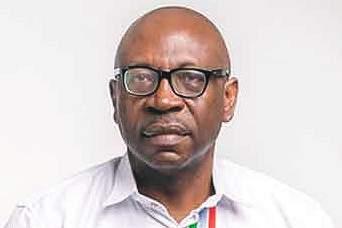
and political manoeuvres increasingly shape local contests, Edo South may benefit from representation by Osagie Ize-Iyamu - a seasoned political actor with deep roots, wide-ranging networks, and strategic capacity within the Nigerian political ecosystem. Nigeria’s political setting has long been characterized by the influence of
powerful political actors who attempt to shape outcomes beyond their immediate jurisdictions. The alleged intervention of Wike in the Edo South senatorial race reflects this broader pattern of political power projection.
But one thing is very clear: such intrusions often provoke resistance from local stakeholders who see them as attempts to impose candidates without adequate consultation with the
electorate. In many cases, these controversies give emphasis to the importance of political figures who possess both local legitimacy and the strategic capacity to traverse the complex web of national political alliances.
Within this context, the question facing Edo South voters is not simply who wins the senatorial seat, but who possesses the political experience and influence required to effectively represent the district within Nigeria’s vastly competitive federal system.
Another element that has strengthened the conversation around the Edo South senatorial race is the growing perception among many political observers and community leaders that the district has not received adequate attention from the current federal government. Many stakeholders argue that Edo South—despite being one of the most economically vibrant districts in Edo State, with over 54 percent of voting population, and home to the state capital—has not benefited equitably from federal appointments, large-scale infrastructure projects, or strategic development initiatives.
In Nigeria’s federal political structure with diverse interests, representation in the National Assembly often plays a critical role in swaying the distribution of federal opportunities. Senators frequently serve as key intermediaries between their constituencies and the federal government, promoting for projects, appointments, and policy interventions that benefit their districts.
NOTE: Interested readers should continue in the online edition on www.thisdaylive.com

Chairman, NBa Lagos, Mrs Uche akingbade
“Increasing Women’s Representation in Governance Remains an





Circumstantial Evidence based on Speculation: Whether Sufficient to Ground a Conviction Page IV

V
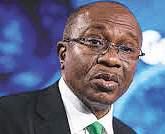
V ‘EFCC Forced Me to Lie Against Emefiele’, Alleges Witness
‘State Police has come to stay, and the Police should be able to contribute their own part, in making it succeed. Police are not afraid, our jobs are not being taken. It’s just an issue of partnership”Olatunji Disu, Inspector General of Police, Federal Republic of Nigeria A Case for the Bifurcation of the Nigerian Judicial and Legal System
VI Resolving the Jurisprudential Intricacies of Admissibility of Electronic Bank Statements and Other Documents
VII UK Blogger, Badejo, Docked Over Suleman's Defamation
Appreciation
Before I proceed, first, I must express my deep appreciation to the Chairman & Editor-in-Chief of This Day & Arise Media Group, Prince Nduka Obaigbena, CON, and Arise Global Media Ltd, for counting me worthy to be selected as one of the 100 Women of Impact in Africa for the year ending March 2026. I thank you.
Felicitation
Happy 2026 International Women’s Day and Month. This year, the theme is, ‘Give to Gain’; but, I prefer to focus on the theme being used in some regions such as Australia, ‘Balance the Scales’, which, in this context, simply means, tipping the measuring scale from the higher side, which is the side of the men, in order to raise the lower side of the women, thereby making the two sides of the scale equal, that is, to achieve gender equality and fairness.
Narrative of Male Superiority from the Beginning of Time
The religious accounts of the beginning of mankind, the creation of Adam and Eve, the fact that woman was formed from the ribs of Adam, has lent credence to the questionable claim that men are superior to women - see Genesis 1:27; 2:21-22; Quran Surah Az-Zumar 39:6.
And, even in most societies or cultures that had their own beliefs before the advent of Christianity and Islam, the concept of male superiority was also established, as a result of qualities such as the greater physical strength of man; division of labour, where based on the men being physically stronger, they were assigned tasks that were synonymous with governing and taking responsibility, such as warrior, protector, and hunter. The fact that a man could impregnate several women at a time on a daily basis, while a woman could only give birth at 9 month intervals, would also add to this narrative of male superiority.
However, we have, and have had, many women who are stronger than men, such as Queen Amina of Zazzau (now Zaria) who ruled for over 30 years in the 16th century.
But, today, physical strength is relevant in areas like sports. In politics, governance, workplace and education, intellect, capacity and such qualities are required, not brute force, and these qualities are possessed by both female and male. So, why are we still discussing gender discrimination in 2026?
The Apple and the Tree
1)My Mother
This apple didn’t fall far from the tree, as my Mother, Dame Priscilla Kuye is the first and only female President of the Nigerian Bar Association (NBA) so far, a Bar Association that is recognised as the largest in Africa. 35 years later, the NBA is yet to produce another female President.
2)My Grandmother
My grandmother (Mother’s Mother), Chief Mrs Elizabeth Adeyemi Adekogbe (Grandma), who died in 1968 at the age of 52, was a trailblazer; an Educationist, a Journalist who wrote for newspapers such as the Nigerian Tribune, to advocate for women’s rights; a Politician and Nationalist. In 1952, along with 12 others, Grandma co-founded of Women’s Movement of Nigeria which later metamorphosed into National Council of Women’s Societies (NCWS). Grandma started her political journey in Action Group, where she was the Financial Secretary of the Western Region Women’s Wing. She served as the Councillor in the Ijebu Eastern District Council, for many years. But, possibly because of her Nationalist leanings, she ended up as the Women’s Leader of National Council of Nigeria and the Cameroons (NCNC). Grandma and others such as Margaret Ekpo, were some of those who worked assiduously for universal suffrage, for the Nigerian woman to be able to vote; and in 1951, in the Western and Eastern Regions, their efforts yielded fruit for tax paying women. In 1954, with the deletion of the tax paying proviso, all women gained the right to vote from the age of 21. Possibly due to cultural constraints, women in the North weren’t able to vote till 1979. See Sections 3 & 5 & Schedules 3, 4 & 5 of the Constitution of the Federation of Nigeria 1960 (Independence Constitution) that is, the Regional Constitutions of the Northern, Western and Eastern Regions respectively. Also see Section 14 of the Western Region Constitution on voting rights. As Women’s Leader of NCNC, Grandma mobilised the women to support Nigeria’s independence. Grandma also advocated for education for females, as she believed that education would empower women.
At a time when people in Europe and USA still believed that Africans swung from trees, lived in caves and dressed in animal skins, Grandma was busy being the first Nigerian woman to represent the country at an international Women’s Rights Conference, International Council for Women in Helsinki, Finland in 1954, and also Montreal, Canada, also visiting USA in 1957 under the US Foreign Leaders’ Project to observe the role of women in public affairs. Would Grandma and the Other Female Pioneers Feel that the Gender Scale has been Balanced?
onikepo braithwaite
oNIKePo BrAIThwAITe
Advocate onikepo.braithwaite@thisdaylive. com onikepob@yahoo.com
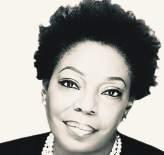
“Grandma and others….were some of those who worked assiduously for universal suffrage, for the Nigerian woman to be able to vote;….. one of the most effective ways to narrow the gap of gender inequality, whether in elective positions or appointments, or in the workplace generally, is by enacting legislation to specifically address this issue….the scales, are still rather unbalanced, particularly when it comes to elective positions…. education for females….is imperative… creates awareness. Females must have equal access to opportunities…job training..career development. Mentorship programmes for women, are also crucial”
How far have Nigerian women fared, over 70 years after the Pioneers’ notable interventions? Would the Pioneers feel that Nigerian women have made satisfactory progress, and their efforts have been well built upon and crowned with resounding success?
1) Education
As far as female education is concerned, I think not. Though more women are educated today, we have certainly not reached the Promised Land. I saw a Polaris Bank advertisement on Arise TV, which declares that there are 7.2 million girls out-of-school in Nigeria, which accounts for well over half of the out-of-school children population, meaning that there are more girls out-of-school than boys. The advertisement goes on to state that, only a paltry 9% of underprivileged girls attend Secondary School. This is a breach of the educational objectives set out in Section 18(3) of the 1999 Constitution of the Federal Republic of Nigeria (as amended)(the Constitution).
2) Politics and Elective Positions
But, what would Politicians like Grandma and Iyalode of Ibadan, Senator Wuraola Esan (Mother of late Prof Jadesola Akande, OFR), the first Nigerian woman to be a Senator, representing Ibadan West in 1960, think about how women have fared in politics? Would they be happy with the status of women in politics and governance today? Would they believe that the scales have been balanced? No, sadly, they would not, because the scales are not balanced at all - far from it. For one, since the days of Grandma, it seems that it’s only Women’s Leader that is reserved for women in the leadership positions within the political parties, for obvious reasons.
I think the Pioneers would be unhappy, seeing as their efforts, instead of yielding more fruit, haven’t really developed and didn’t become as well grounded as they would have hoped for. The focus and strength of the Pioneers are obvious, as they were able to make notable
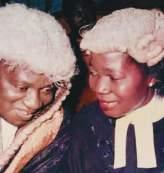
is 50%-50%. The Federal Government should take a cue from Kwara.
Reserve Seats for Women Bill
What are the reasons for the scales being tilted against women? Is it that today’s women are not as forceful as the Pioneers? Is it cultural? Is it financial? Or is there active discrimination against women, contrary to Section 42(1)(a) of the Constitution? See Lafia Local Government v Government of Nasarawa State & Ors (2012) LPELR-20602(SC) on the importance of upholding fundamental rights, and the guarantee to every citizen, freedom from discrimination. 0r is it a combination of the foregoing? Some are of the view that child bearing and rearing, are also responsible for gender disparity; that while a man can impregnate 100 women and continue as if nothing has happened, one pregnancy and looking after a young child may make a woman lose momentum, and if she decides to have even more children, more momentum is lost in family responsibilities. A woman’s career need not suffer, because of this.
Whatever the reasons, one of the most effective ways to narrow the gap of gender inequality, whether in elective positions or appointments, or in the workplace generally, is by enacting legislation to specifically address this issue. Countries like Rwanda and South Africa enacted such laws, years ago. Presently, Nigeria has the RSWB in the pipeline.
This Bill proposes a constitutional amendment, to add seats reserved for women, in the National and State Houses of Assembly, on account of female under-representation in the Legislature, despite being the larger bloc in the voting population. 37 seats each are proposed for the Senate and House of Representatives, one per State plus the FCT, and a total of 108 in the State Houses of Assembly, that is, 3 seats per State. I guess that, aside from the other available seats to contest for, women can also contest amongst themselves for the women only seats.
Discrimination Against Women in Other Areas 1) Inheritance
impact at a time when the world was still quite conservative, and much less permissive. Ironically, starting from Ibadan, Senator Esan has been the only female Senator from there, almost 66 years on! The outing of Nigerian women in politics which appeared promising during the Pioneers’ time, has been rather poor. In over 65 years of independence and four Republics, Nigeria has had only one Female Governor, Dame Virgy Etiaba, CON, who governed Anambra State for about 3 months when Peter Obi, CON was impeached. Presently, there are about 8 female Deputy Governors, and I don’t believe that any one of them is being tipped as a likely successor to take over from their Principals as Governor. There has also never been a female Vice President, let alone President. But, even USA which Nigeria models her governance system after, only had her first female Vice President, Kamala Harris in 2020, almost 250 years post-independence. Since Independence, Nigeria also doesn’t appear to have had up to 20 Female Senators in total, as opposed to almost 1,000 Male Senators (a paltry 2%). Presently, there are only 4 Female Senators out of 109! In politics, the scales aren’t balanced, but tipped against the women instead. So much so that, the Reserve Seats for Women Bill (RSWB) is currently being considered.
As for the Federal cabinet appointments, it is unfortunate that most of those selected are usually put in Junior Minister roles. This time around, out of a total of 48 Ministers, only 7 are female (14.58% of the cabinet). There are 3 substantive female Ministers (one for Women’s Affairs), while the 3 others are Ministers of State. This is grossly inadequate. The imbalance in the scale, is glaring. In 2021, under Governor Abdulrahaman Abdulrazaq, the Kwara State Political Offices (Gender Composition) Bill was passed, ensuring that at least 35% of cabinet positions go to women. Ekiti State under Governor Fayemi, followed suit. Today, in Kwara, gender composition in the cabinet
Many native laws and customs, are skewed against women. For example, the barbaric and repugnant custom in some parts of Nigeria, where a widow is forced to drink the water used to bathe her husband’s corpse to prove to her in-laws that she had no hand in his death. Or the widow is forced to shave her hair, get remarried to her husband’s brother or sleep in the same room with her husband’s corpse. These awful traditions, don’t appear to apply to widowers. Some States have however, enacted laws to prohibit these inhumane practices, such as the Enugu State Prohibition of Infringement of a Widow’s and Widower’s Fundamental Rights Law 2001. Over the years, there has been movement in the Supreme Court decisions from cases such as Subaru v Sunmonu (1957) 12 F.S.C. Page 33 & Mojekwu v Iwuchukwu (2004) 11 N.W.L.R. Part 883 Page 196 which appeared to uphold inheritance customs that were discriminatory against women, to Anekwe & Anor v Nweze (2014) LPELR-22697(SC) which declared discriminatory, a custom which barred women who had no male children for their husbands, or that which barred female children from inheritance, unconstitutional, unjust, and inhuman.
2) Forced Marriage for the Girl Child
The Child Rights Act 2003 which has been domesticated in practically every State in Nigeria, in Section 21 provides that any individual under the age of 18 is a child, and strictly prohibits child betrothal and marriage. The girl child is the one who has suffered mainly from this, being forced into early marriage, resulting in some of them having Vesicovaginal Fistula (VVF) from having to engage in sexual intercourse before they are fully developed and having children too.
3) Unequal Pay
Though Section 17(3)(e) of the Constitution directs State policy to ensure that there’s equal pay for equal work “without discrimination on account of sex”, in reality, pay gaps occur, and women sometimes earn less than men, for doing the same job. To curtail this, there must be pay transparency, legislation with punishments for those who continue to discriminate against women as far as pay is concerned.
Conclusion
Though we have had women such as Indira Ghandi, Margaret Thatcher, Benazir Bhutto, Angela Merkel, Hillary Clinton, Ellen Johnson Sirleaf, Nancy Pelosi, Amina Mohammed, Ngozi Okonjo-Iweala, and Sanaa Takaichi, who have certainly made giant strides in politics and governance, there is still so much more to achieve with women in politics and governance in Nigeria; the scales, are still rather unbalanced, particularly when it comes to elective positions. Aside from legislation specifically to narrow the gap of gender inequality, Nigerian political parties themselves must also reserve leadership roles other than the obvious Women’s Leader, for women. Like Grandma believed, education for females is non-negotiable, it is imperative. Education creates awareness. Females must have equal access to opportunities, be it education, job training or career development. Mentorship programmes for women, are also crucial. These measures, will go a long way to bridge the gender disparity gap.
Facts
This appeal arose from a judgement of the Court of Appeal, wherein the acquittal of the Appellant and the 2nd and 3rd Respondent was set aside, and the matter remitted for retrial before a different Judge.
The 2nd and 3rd Respondent and the nominal complainant (PW 1) are Chinese nationals, directors and shareholders of BN Ceramics Industry Nigeria Limited, while the Appellant was the Company Secretary. Following a special resolution reached at an extra-ordinary general meeting of the company, its share capital was increased from 10 million to 20 million. Further, by a letter titled Relinquishment of Shares, allegedly signed by PW 1, he purportedly relinquished 3,760,000 ordinary shares to the company for proper re-allotment. Another special resolution was reached at the company’s extra-ordinary general meeting, where the shareholding of the company was re-allotted, with PW 1 left with only 1,880,000 shares. PW 1, who denied being informed about the meetings and signing the letter of relinquishment of shares, instructed his solicitor to write a petition to the Police.
The Police carried out its investigation, leading to the filing of a 13-count charge against the Appellant and the 2nd and 3rd Respondent at the Federal High Court, Abuja. The charge was amended to 15-counts bordering on offences of conspiracy, forgery, uttering false documents, and money laundering. The accused persons, pleaded not guilty.
At trial, the prosecution called five witnesses, including a forensic document examiner and hand writing expert, and tendered several exhibits. The case of the 1st Respondent was that the Appellant, 2nd and 3rd Respondent, conspired to make use of forged documents to cheat PW 1 out of the company, gained access to the company’s accounts and made several questionable transfers to offshore accounts. Under cross-examination, PW 1 stated that he was not sure who forged his signature, but suggested that it might have been one of the Defendants, while PW5 testified that the disputed signature did not belong to PW1 or any of the Defendants. Upon the close of the prosecution’s case, the Defendants entered a no-case submission. The trial court dismissed counts 6–15 on this basis, but retained counts 1–5, which related to conspiracy, forgery, and uttering false documents. In their defence, the Defendants denied any involvement in the alleged forgery. The Appellant explained that, as the Company Secretary, he merely processed and filed documents with the Corporate Affairs Commission (CAC) upon instruction of the 3rd Respondent who was the Managing Director. He testified that he used a contact named Ugolo Johnson to obtain and submit the forms at CAC, and sent the forms to a person called Roy (an administrative office of the company) to take to the Directors for their signature. The Defendants also maintained that PW 1 had been notified of the meetings via telephone and e-mail, but chose not to attend the meetings.
In its judgement, the trial court held that although the relinquishment letter was forged, the prosecution failed to link the forgery to any of the Defendants. The court held further that no proof of conspiracy or uttering of false documents and noted that the failure to call key witnesses, such as Roy and Ugolo Johnson, the CAC filing agent, was fatal to the prosecution’s case. The Defendants were accordingly, acquitted and discharged.
Dissatisfied, the prosecution appealed to the Court of Appeal. The appellate court held that the documents were indeed, forged, and reasoned that those who benefited from the forged documents could be inferred to be the masterminds. It concluded that the trial court inadequately evaluated the evidence, allowed the appeal, set aside the acquittal, and remitted the matter for retrial before a different Judge. Displeased with the judgement of the Court of Appeal, the Appellant appealed to the Supreme Court.
Issue for Determination
“Whether the evidence on record supports the judgement reached by the lower court, with regard to the Appellant?”
Arguments
The Appellant argued that the prosecution failed to prove the offence of forgery against the Appellant beyond reasonable doubt, as required under Section 36(5) of the 1999 Constitution and Section 135 of the Evidence Act, 2011. Relying on IGBIKIS v STATE (2017) 11 NWLR (PT. 1575) 126, Counsel contended that there was no evidence that the company resolutions were forged, particularly as the meetings in question were undisputed. He maintained that no evidence linked him to the alleged forgery of the Letter of Relinquishment of Shares, emphasising that he merely acted on board instructions and was absent from the meeting. He submitted further that benefiting from a forged document is not an element of forgery, and, in any event, the Appellant did not derive benefit, since the restructuring only reflected
“Speculation….refers
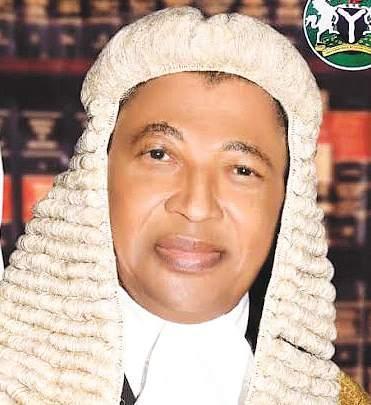
Honourable Adamu Jauro, JSC
In the Supreme Court of Nigeria Holden at abuja
On Friday, the 13th day of June, 2025
Before their lordships
Mohammed Lawal Garba adamu Jauro
Jummai Hannatu Sankey Moore aseimo abraham adumein Obande Festus Ogbuinya Justices, Supreme Court SC/CR/222/2021 Between
1. Inspector General of Police …. Respondents
2. Hao aijun
3. Liu yangxi
(Lead Judgement delivered by Honourable Adamu Jauro, JSC)
additional investment by the 3rd Respondent. He distinguished the present case from the authority of ODIAWA v F.R.N (2008) ALL FWLR (PT. 439) 436 relied on by the Court of Appeal, noting that the decision involved strong circumstantial evidence directly linking the accused to the crime, unlike the present case. Importantly, he submitted that the prosecution failed to call four vital witnesses who are Roy, Ugolo Johnson, and two other Directors present at the meeting, thereby creating doubt that ought to be resolved in favour of the Appellant, relying on SALE v STATE (2016) 3 NWLR (PT. 1499) 392; as well as Section 167(d) of the Evidence Act. He argued that the failure to call these witnesses amounted to withholding evidence, which should be presumed unfavourable to the prosecution. Finally, he contended that the trial court properly evaluated the evidence and rightly acquitted the Defendants, and that no circumstances warranted a retrial, relying on OKOMALU v AKINBODE (2006) 9 NWLR
to an opinion or conclusion formed on the basis of incomplete information, and supported by little or no evidence. It is a form of imaginative guesswork, and has no place in deciding cases or resolving disputes…..Any decision based on speculation or conjecture,
cannot be sustained”
(PT. 985) 338. The 1st Respondent, on the other hand, argued that it was undisputed that the documents in question were forged. Relying on ODIAWA v F.R.N. (Supra), Counsel submitted that the offence is complete once forged documents are found in the actual or constructive possession of a person, even if that person did not author them. He contended that a proper evaluation of the evidence, would show that the masterminds were those who benefited from the forged documents. He maintained that the lower court was right to order a retrial in the interest of justice, and urged the court to affirm its decision. The Supreme Court noted that the brief of arguments filed by the 2nd Respondent, aligns with the position of the Appellant. The court thereby, struck out the brief in line with its decision in OBASANJO & ANOR v WURO BOGGA (NIG) LTD & ORS (2022) LPELR-58486 (SC)
Court’s Judgement and Rationale
In deciding the appeal, the Supreme Court reiterated that the burden of proving the guilt of an accused person rests squarely and exclusively on the prosecution, flowing from the constitutional presumption of innocence under Section 36(5) of the 1999 Constitution and Section 135 of the Evidence Act, 2011. The prosecution must prove every essential element of the offence charged beyond reasonable doubt, and failure to discharge this burden is fatal to its case - HASSAN v STATE (2024) LPELR-80028 (SC). Proof beyond reasonable doubt does not mean proof beyond all doubt or beyond any shadow of doubt. In proving its case beyond reasonable doubt, the prosecution may rely on a confessional statement, eyewitness evidence, or circumstantial evidence, as held in SAMAILA
v STATE (2023) LPELR-61132 (SC).
In this case, the prosecution relied on circumstantial evidence and re-emphasised the long-standing principle that, circumstantial evidence is not inferior to direct evidence and may, in some cases, be the best available evidence. Relying on authorities such as IJIOFFOR v STATE (2001) LPELR-1465 (SC); NASIRU v STATE (2021) LPELR-55637 (SC), the Court explained that circumstantial evidence is admissible in criminal cases, and may ground a conviction where it forms a complete and unbroken chain leading irresistibly to the guilt of the accused. However, for circumstantial evidence to ground a conviction, it must be cogent, complete, compelling, unequivocal, and incompatible with the innocence of the accused person. It must overwhelmingly lead to only one irresistible conclusion: that the accused, and no one else, committed the offence - EFFIOM v STATE (2024) LPELR-61790 (SC); ONWUTA v STATE OF LAGOS (2022) LPELR-57962 (SC).
Applying these principles to the instant case, the Supreme Court observed that, although forensic evidence established that the Letter of Relinquishment of Shares was forged, there was no evidence linking the Appellant to the forgery. Witnesses, including the nominal complainant, the forensic document examiner and the handwriting expert, testified that the forged document was not signed by the Appellant or by the 2nd and 3rd Respondent. Their Lordships noted further that the Appellant’s evidence, corroborated by the 2nd and 3rd Respondent and unchallenged by the prosecution, was not rebutted. On the settled principle that uncontradicted and credible evidence must be accepted, the Court accepted the Appellant’s evidence, relying on MILITARY GOV. OF LAGOS STATE v ADEYIGA (2012) LPELR-7836 (SC).
Furthermore, the Supreme Court held that the prosecution’s case against the Appellant was based on speculation and suspicion, rather than legitimate inference. The court reiterated that suspicion, no matter how strong, cannot ground a conviction. In this regard, the court expounded on the concepts of “inference” and “speculation” in the context of circumstantial evidence thus - In cases where the prosecution relies on circumstantial evidence to establish its case against an accused person, it will inevitably rely on inferences drawn from certain established facts. To succeed, the prosecution must show that these inferences, taken together, prove the guilt of the accused with mathematical accuracy. An inference is, however, completely different from speculation, conjecture, or guesswork, and one should not be confused with the other. An inference refers to a conclusion drawn from established facts and empirical evidence, arrived at through logical reasoning. Speculation, on the other hand, refers to an opinion or conclusion formed on the basis of incomplete information, and supported by little or no evidence. It is a form of imaginative guesswork, and has no place in deciding cases or resolving disputes. While the former is permissible, the latter is forbidden territory for any court of law. Any decision based on speculation or conjecture, cannot be sustained - IVIENAGBOR v BAZUAYE & ANOR (1999) LPELR-1562 (SC); ISONGUYO v STATE (2022) LPELR-60912 (SC).
On the offence of uttering under Section 468 of the Criminal Code, the Court found no evidence that the Appellant knowingly or fraudulently uttered a false document. The required mens rea - knowledge of falsity and fraudulent intent - was not established. On the offence of conspiracy, the Court reiterated that conspiracy is complete upon proof of an agreement between two or more persons to commit an unlawful act, or to do a lawful act by unlawful means. Although conspiracy is often proved by inference from surrounding circumstances, there must be evidence of a meeting of minds. The court held that no such evidence existed against the Appellant.
On the order of retrial of the Appellant made by the Court of Appeal, the Supreme Court, relying on its decision in ESEU v PEOPLE OF LAGOS STATE (2024) LPELR-62005 (SC) held that ordering a retrial where the prosecution’s evidence is manifestly insufficient, would amount to giving it a second opportunity to repair its defective case.
Finally, the Supreme Court found that the judgement of the Court of Appeal was perverse, because it was against the weight of evidence - ANI v STATE (2024) LPELR-62746 (SC). Flowing from the above, the Supreme Court resolved the issue in favour of the Appellant and allowed the appeal, by setting aside the order for re-trial as it relates to the Appellant. The judgement of the trial court acquitting and discharging the Appellant was accordingly, restored. Appeal Allowed.
Representation
Eloka J. Okoye for the Appellant. Clement Chinaka with Emma Ibediro for the 1st Respondent.
A.J. Osayande for the 2nd Respondent. A.T. Kehinde, SAN with Ifeoma C. Nnamdi-Okonkwo and Ifunanya C. Anigbogu for the 3rd Respondent.
Stories by Steve Aya
Drama unfolded at the Lagos Special Offences Court in Ikeja on Friday as Henry Omoile, a co-Defendant in the alleged $4.5 billion fraud trial involving former Central Bank of Nigeria (CBN) Governor, Godwin Emefiele, told the court that he lied in the statement he made to the Economic and Financial Crimes Commission (EFCC).
Omoile made the claim while testifying during a trial-withintrial before Justice Rahman Oshodi, which was instituted to determine the voluntariness of statements he allegedly made to EFCC investigators during the probe.
According to him, the statements marked as Exhibits TWT 1–4 were not genuine confessions, insisting that investigators dictated what he should write. “I did not confess in that statement. I lied in my statement. EFCC threatened that if I did not write what they wanted, they would charge me to court”, he told the court.
The former CBN Governor is facing a 19-count charge border-
ing on receiving gratification and making corrupt demands while in office, while Omoile is being prosecuted on a three-count charge relating to unlawful acceptance of gifts as an agent.
Both Defendants have pleaded
not guilty to the charges.
However, under crossexamination by Prosecution Counsel, Rotimi Oyedepo, SAN, Omoile admitted that he was cautioned before writing the statement and that he signed
the cautionary words. He also acknowledged that although the EFCC filed a counter-affidavit opposing his claims, he did not present the document before the court.
Omoile further alleged that
EFCC investigators pressured him to implicate Emefiele, claiming that the head of the investigative team promised he could secure bail or possibly avoid prosecution, if he cooperated. He, however,
admitted that he did not file any formal complaint against the investigators over the alleged threats. Justice Oshodi adjourned the matter until April 17, 2026, for adoption of final written addresses.
Justice Akintayo Aluko of the Federal High Court in Lagos has ordered the remand of United Kingdom-based Nigerian blogger, Maureen Omorinola Badejo, at the Kirikiri Correctional Centre, pending the determination of her bail application over alleged defamation.
Badejo was remanded after she pleaded not guilty to charges of conspiracy and defamation, brought against her by operatives of the International Police (Interpol) attached to the Force Criminal Investigation Department (ForceCID) Annex, Alagbon, Ikoyi, Lagos.
The Prosecutor, Morufu Ajani Animashaun, told the court that the blogger and others still at large, allegedly committed the offences beginning in November 2021 by publishing and transmitting defamatory statements and videos through her YouTube channel and Facebook platform against Apostle Johnson Suleman and one
Dickson Osagie. Animashaun alleged that Badejo falsely accused Apostle Suleiman of having an illicit sexual relationship, and also claimed that the cleric was in unlawful possession of firearms and ammunition without a valid licence. The prosecution further alleged that the blogger portrayed the cleric as a cultist, rapist,
assassin and ritualist, while also publishing statements capable of placing both Suleman. and Osagie in fear of death or bodily harm.
According to the Prosecutor, the alleged acts contravene provisions of the Criminal Code Act, including Sections 516, 376, 204, 408(1) and 323, as well as Sections 24(1)(b) and 24(2)(a) of the Cybercrimes (Prohibition,
Prevention, etc.) Act, 2015. Following her plea, the Prosecutor asked the court to remand the Defendant pending trial, arguing that she posed a flight risk and had previously been placed on a watchlist. Justice Aluko subsequently adjourned the matter to March 16 for ruling on her bail application, and ordered that she remain in custody until then.
The Federal High Court of Nigeria (FHC) has announced that it will commence its 2026 Easter
The Attorney-General of the Federation and Minister of Justice, Prince Lateef Fagbemi, SAN, has taken over the prosecution of former Attorney-General of the Federation, Abubakar Malami, SAN, and his son, Abdulaziz, in a fivecount charge bordering on terrorism financing and illegal possession of firearms filed by the Department of State Services (DSS).
The Director of Public Prosecutions of the Federation, Rotimi Oyedepo, SAN, disclosed this when the case came up before Justice Joyce Abdulmalik of the Federal High Court in Abuja.
Oyedepo told the court that the DSS had transmitted the case file to the office of the AGF. He therefore, applied for an adjournment to enable the Attorney-General review the file and take an informed decision.
Counsel to the Defendants, Adedayo Adedeji, SAN, said he did not oppose the request, but added that, if the prosecution fails to proceed at the next adjourned date,
he would ask the court to strike out the charge.
Responding, the DPPF argued that the defence’s suggestion to strike out the charge was premature and speculative, at this stage of the proceedings.
After listening to both parties, Justice Abdulmalik adjourned the matter till March 10, 2026 for trial.
Malami and his son are being prosecuted by the DSS over alleged terrorism financing and unlawful possession of firearms, including a Sturm Magnum weapon and several cartridges, contrary to the Terrorism (Prevention and Prohibition) Act, 2022 and the Firearms Act, 2004.

vacation from April 7 to April 13.
In a statement issued on Friday by the court’s Director of Information, Dr Catherine Christopher, the decision was said to be in line with Order 46, Rule 4(c) of the Federal High Court (Civil Procedure) Rules 2019 (as amended).
According to the statement, the Chief Judge of the FHC, John Terhemba Tsoho, approved the vacation period, adding that
normal court sittings will resume on April 14 across all judicial divisions.
The FHC, however, said the core judicial divisions in Abuja, Lagos, Port Harcourt and Enugu will remain open during the vacation, to attend to matters of extreme urgency.
It stated that only cases relating to enforcement of fundamental rights, arrest or release of vessels, and matters of dire national interest, would be entertained during the

period. The court also announced that Justices Emeka Nwite and Musa S. Liman would serve as vacation Judges in Abuja, while Justices Akintayo Aluko and Ogazi F. Nkemakonam would handle matters in Lagos. Similarly, Justices Phoebe M. Ayua and Adamu T. Mohammed will serve in Port Harcourt, while Justice Mabel T. Segun-Bello will handle urgent matters in Enugu during the vacation period.
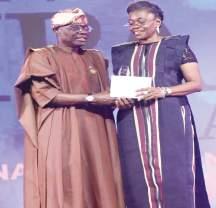
Introduction
To begin, I would like to make a distinction between a legal and judicial system. A legal system is the all-encompassing body of Constitution, statutes, regulations, law enforcement, courts, and legal professionals, with emphasis on the legal professionals, which is a key component of today’s advocacy for the bifurcation of the Nigerian Legal system. A Judicial system, on the other hand, is the court based, Judiciary led, interpretative arm of government, which is vested with the responsibility of interpreting, applying and enforcing law, and resolving disputes to deepen jurisprudence within the Nigerian legal ecosystem.
At present, Nigeria operates a Federalist legal system where the Constitution, law enforcement, courts and legal profession derive authority to exist and operate from a centralised Federal system. For instance, in the United States of America, which our democracy is designed after, States are empowered to enact their own Constitution to clearly outline the structure of governance within the federating unit, to enshrine and protect individual rights, and delegate powers not delegated to the Federal Government.
Presently, under the Nigerian legal system, there is only one Federal Constitution, which was bestowed to the nation by the military leaders during the transitional interim National Government of General Abdulsalam Abubakar. The Constitution is not truly rooted in its preamble which quips: “We the people...”; rather, it was imposed on the people of the Nigeria without any democratic or representative input from the people.
With the advent of democracy in the Fourth Republic, this Constitution has been able to exist as the working template of the entire Federation, with periodical amendments on certain issues of national importance by the National Assembly - albeit through rigorous processes and procedures. This rigidity is rooted in Section 9(2) of the Constitution, which provides that: “Act of the National Assembly for the alteration of this Constitution, not being an Act to which Section 8 of this Constitution applies, shall not be passed in either House of the National Assembly unless the proposal is supported by the votes of not less than two-thirds majority of all the members of that House and approved by resolution of the Houses of Assembly of not less than two-thirds of all the States”. This has led to stalemate, on significant matters of national importance.
Writer’s Postulation
The postulation of this writer is that, a bifurcation of the Nigerian legal system as it relates to legislative processes and procedure, will enable the State Houses of Assembly legislate themselves on matters pertaining to the States, while the National Assembly will legislate itself on matters pertaining to the Federal Government with the requirement of concurrence only on matters that relate to the generality of the country’s population and Federation as a whole. This would lead to true Federalism as envisaged by our founding fathers, and devolution of powers for Enhanced Local Autonomy and Responsiveness, Fiscal Decentralisation (Resource Control), Promotion of Healthy Competition, Protection Against Central Tyranny, Effective Management of Diversity, Increased Citizen Participation and Improved Judicial Independence.
Bifurcation of Law Enforcement
Additionally, similar bifurcatory mechanism is required in respect of the nation’s law enforcement bodies, and its legal practitioners. The case for bifurcation of the law enforcement bodies within the Nigerian Federation is an ongoing discussion, with several advocacies and attempts at State and Community policing in recent times, such as OPC, Bakassi Boys, Amotekun and Ebube Agu. It is needless to say that, the current Federal system of policing is inadequate and ineffective with the current staff strength of approximately 371,800 personnel in a country of well over 180 million citizens. Other than the abysmal personnel strength, the terrain knowledge factor is also an issue: how can Police officers from Lagos or Ibadan effectively police a remote village in Sokoto or Borno, without geographical wherewithal? The knowledge and intelligence gap will be so evident owing to their alien status within the terrain. Also, in terms of intelligence gathering, it will require more time and effort to gain the trust of the local community, due
This article by James Abati goes through different levels of the Nigerian legal and judicial system, making a case for the bifurcation of quite a few of the institutions and offices within the sector; separating the office of the attorney-General and Minister or Commissioner of Justice; separating the roles of Barristers and Solicitors, as is done in the uK; having Federal and State/Community Police; also having a States and Federal court system, each going all the way to their own Supreme Court, asserting that these divisions will make the Nigerian system function more effectively and efficiently
to trust deficit. For this reason, the advocacy for Community and State policing, cannot be overemphasised. The collective benefits outweigh the well-touted apprehension/fear of abuse by the State Governments. With the present Federal law enforcement system, this fear still exists with countless cases of abuse by the Federal Government, only that the Federal Government has a monopoly of misuse. More so, this fear of abuse fuelled by political interference can be curtailed, by adopting a system whereby the public elects Police Chiefs, as is the case with Sheriffs in the United States. If we can adopt such a measure, we can begin to focus on the benefits - Improved Intelligence and Crime Prevention, Increased Trust and Legitimacy, Tailored Local Solutions, Reduced Response Times, Accountability, Collaboration and Lower Crime Rates, for better security of lives and property of the citizenry. I dare repeat: the benefits of State and Community policing, outweigh the disadvantages.
Tough times require tough measures, the security situation in the country has deteriorated to a point where State and Community policing can no longer be optional, it is imperative on the Government to revamp its security architecture to the level and standard of sophistication applicable in well developed climes.
“We cannot continue to apply a system that has consistently failed to provide the necessary oversights, safeguards and protections required in modern day Nigeria, while the world continues to evolve and render our operating systems nugatory. We need bold reforms and ideas….”
Bifurcation of Nigerian Legal Practitioners
On the issue of bifurcation of the Nigerian legal practitioners, the appeal of this writer is for the separation of the qualification of legal professionals from the present Barrister and Solicitor of the Supreme Court of Nigeria, to either Barrister or Solicitor of the Supreme Court of Nigeria, not both. The reason is clear: in more advanced climes, Barristers and Solicitors have separate qualifications, allowing them to specialise in different areas. Solicitors focus on client management and preparing cases for trial, as well their core specialty of advisory services and legal administration, while Barristers specialise in advocacy and providing expert legal opinions.
This division ensures independent, expert representation in court, creates checks and balances in complex cases, and maintains high standards in both professions. Furthermore, such division allows for deeper training and distinct regulatory bodies. For instance, in the U.K., Solicitors undergo a year long LPC training, as prerequisite of their qualification as a Solicitor, while Barristers undergo a year long BPTC training, both trainings independent of each other, unlike the lumped up Barrister-at-Law (BL) training obtainable in Nigeria. Likewise, there is greater oversight on Barristers and Solicitors, which are governed by separate regulatory bodies: the Bar Standards Boards (BSB) for Barristers and the Solicitors Regulation Authority (SRA) for Solicitors, unlike the compulsory Nigeria Bar Association (NBA) regulation in Nigeria. We desperately need to update and modernise our legal conventions, systems and practices, to be in tune with global best standards and practices.
Another case point of the case for bifurcation of legal professionals in Nigeria, is the contentious Attorney-General of Federation and States/Minister and Commissioner of Justice designation portfolio within the Federal and State Executive Councils. The point has been made by several commentators and writers, that the role of the AGF/AGs ought to be strictly legal, devoid of political considerations, as is the case in the USA, while the Minister/Commissioner of Justice portfolio can be retained as a political designation. This separation will ensure that the AGF/
AGs remain the Nation and States’ Chief law officers, loyal to the Constitution, accountable to the people, and charged with the responsibility of safeguarding public interest by ensuring laws are properly enforced without political interference, while the Minister/Commissioners of Justice focus on implementing Government policies in the justice sector, under the direction of the President /Governor, who holds executive power.
More importantly, upon separation of both offices, the AGF/AGs should be strictly by election, as is the case is most of the American States. Distinguished public prosecutors and legal practitioners shall be eligible to present themselves for election into the office of the AGF/AGS, so that there’s a proper vetting of their legal agenda before election to the office to ensure accountability and neutrality in the discharge of their constitutional functions.
Furthermore, on the issue of the bifurcation of the judicial system, the court system should be delineated into State and Federal court system, where the matters falling within the jurisdiction of the States can be effectively and efficiently dealt with within the State legal ecosystem, from the State High court to the State Appeal court and then the State Supreme Court, while Federal matters are similarly dispensed with in line with the Federal legal ecosystem. The adoption of such a system would lead to greater improvement in the administration of justice within the Nigerian Judicial System, by reducing the burden on the existing courts, expanding the capacity of the courts and increasing the time, efficiency and speed with which justice is served.
Conclusion In conclusion, we need to adapt and change with the times, as the Latin maxim says: "Tempora mutantur, et legesmutantur in illis" (Times change, and laws change with them). We cannot continue to apply a system that has consistently failed to provide the necessary oversights, safeguards and protections required in modern day Nigeria, while the world continues to evolve and render our operating systems nugatory. We need bold reforms and ideas, which can only be implemented by sincere, upright and honest leaders.
My hope is that we one day get it right! James Abati, Lawyer, Public Commentator, Lagos
Introduction
The admissibility regime for computer-generated bank statements and electronic public documents under the Evidence Act 2011, remains a contested issue in Nigerian jurisprudence. The core issue centres on whether compliance with Section 84 alone suffices, or whether electronic bank statements and electronically-generated public documents must satisfy a dual statutory threshold—namely, both the regime governing bankers’ books (Sections 89–90), for statement of accounts, and Sections 102-104 for public documents and the special provisions regulating electronic evidence (Section 84). This issue can be sketched into a deeper question: Is Section 84 an autonomous gateway, or must it operate cumulatively with the traditional bankers’ books and public documents frameworks under the Evidence Act?
One school of thought holds that where there is compliance with Section 84, properly identifying the source of the electronic record, the manner of production, the particulars of the device involved, and the reliability of the computer system that produced the document, backed up by a certificate, such electronically-generated bank statements and public documents are properly authenticated without more. Conversely, another school of thought emphasises that modern bank statements are inherently computer-generated documents. As such, their admissibility is governed jointly by Sections 89–90 (Bankers’ Books Provisions) and Section 84 (Electronic Evidence Regime), read alongside Section 1 (Relevance).
In Kubor & Anor v Dickson & Ors (2012) LPELR – 9817 (SC), the Supreme Court held that public documents electronically generated must comply with both Sections 84 and 104 of the Evidence Act. According to the Apex Court, every electronic public document must comply with Section 84 of the Evidence Act, and must also be certified as required under Section 104 of the Act.
In Kalu & Anor v Ohuabunwa & Ors (2015) LPELR-26016 (CA), the Court of Appeal followed the Supreme Court’s decision in Kubor v Dickson (Supra), where the data generated from the computer of the ICT Department of INEC Headquarters, Abuja, for Voter Accreditation figures for March 28, 2015, National Assembly Election in Abia North Senatorial District accompanied by a Certificate of Compliance made by the Head of ICT Unit at INEC Headquarters under Section 84(4) of the Evidence Act and also duly certified by the INEC Deputy Director, Legal, as a certified true copy by INEC, was held to have been properly admitted.
Also in Abubakar & Anor v INEC & Ors (2019) LPELR – 48488 (CA), it was held that computer printouts (Exhibits P87, P88, and P89), obtained from the website of the 1st Respondent (INEC), were public documents and should have been certified by the 1st Respondent, a public body in the custody of the public documents, as secondary evidence under Sections 102 and 104. Furthermore, in FRN v Ojo & Anor (2018) LPELR-4554 (CA), it was held that information extracted by PW10, a forensic officer of EFCC, from the phone of the 1st Respondent was held inadmissible, because such electronically generated evidence must be certified in accordance with Section 104 and must comply with the preconditions laid down in Section 84(2) of the Evidence Act. In considering the admissibility of entries in books of accounts, electronic records in the course of business, or bank statements, Sections 51, 84, 89, and 90 of the Evidence Act are relevant. Significantly, Section 84 allows a statement to be admissible in a document produced by a computer. Under Section 89(h), secondary evidence of the existence, condition, or contents of an entry in a banker’s book is admissible. One of the conditions is that it is to be established that the copy has been examined with the original entry and found
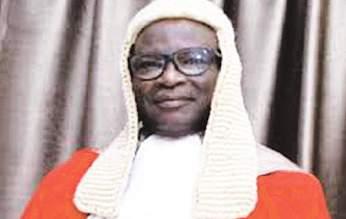
This a rticle by Hon. Justice (Professor) Alaba Omolaye- Ajileye examines the admissibility regime for computer generated bank statements and other electronic public documents under the evidence act 2011, and concludes that Sections 84, 89-90 & 102-104 are all relevant
to be correct, for which proof must be given by someone who has examined the copy with the original entry and may be given orally or by affidavit.
In UBN v Agbontaen (2018) LPELR-44160 (CA), the appellant had argued that the applicable provisions for admissibility of the entries are simply Sections 51, 89 (i) (h), and 90 (1) and not Section 84, but the respondents were of the contrary view, insisting that provisions of Section 84 of the Act were also applicable.
The Court of Appeal, per Osaji JCA (as he then was), relying on Kubor v Dickson (Supra), held that the bank statements sought to be tendered originated from computers and, whether tendered as original or secondary evidence, must comply with the requirements of Section 84 of the Evidence Act before they can be admitted.
In Attorney-General of the Federation v Princewill Ugonna Anuebunwa (2022) LPELR-57750 (SC), the Supreme Court, by way of obiter, pronounced that a computerised bank statement of account would first be required to be certified by a bank officer to ensure that no one, illegally or without authorisation, tampered with the source data as officially imputed in the computer. Also, the court held further that certification must include that the computer was operational or in good
“The correct jurisprudential position is that Section 84 governs how electronically-generated documents are proved, while Sections 89–90, and Sections 102-104, govern what qualifies as admissible banker’s book evidence and the nature of public documents, respectively. When read harmoniously, both regimes must be satisfied in a manner that promotes reliability, fairness, and doctrinal coherence”
working order when the document was generated.
The case, Daudu v FRN (2018) LPELR (SC), however, presents a different scenario. Certification under Sections 89 and 90 was held to be sufficient to meet the requirements of Section 84. Indeed, the certification in that case did not reflect on the face of the documents but was only presumed.
The Real Issue
The real issue here is whether Section 84 operates as a general provision that supersedes the earlier admissibility threshold of documentary evidence, or must it be read harmoniously with special statutory provisions like those governing bankers’ books and public documents?
The position is taken that Section 84, in its magnificence, has not expressly abrogated the existing admissibility threshold of documentary evidence. Therefore, Section 84 should not be interpreted as rendering the bankers’ books provisions or provisions guiding the admissibility of public documents redundant.
A coherent reconciliation emerges when we distinguish between the nature of the document, governed by Sections 89–90 or Sections 102-104, and the mode of proving its electronic generation, governed by Section 84. Sections 89–90 and 102-104 determine the nature of the documents, whereas Section 84 determines the authenticity of the electronically-generated documents. Under this model, the provisions of Sections 89 and 90 (for Bankers Books) and Sections 102 -104 (for public documents) are complementary, with Section 84. If Section 84 alone were treated as sufficient in all cases, Sections 89–90 and Sections 102 -104 would become practically obsolete. That would violate the canon against statutory redundancy. Conversely, if Sections 89–90 and 102 -104 were treated as sufficient, without Section 84 compliance, the special safeguards for electronic authentication would be undermined. Therefore, the better position is cumulative through integrated compliance as adumbrated in Kubor v Dickson (Supra). Considering
the foregoing, the decision of the Supreme Court in Kubor v Dickson and the Apex Court’s obiter dictum in Attorney-General of the Federation v Princewill Ugonna Anuebunwa (Supra), should be preferred to Daudu v FRN.
In respect of public documents, it is essential that Internet printouts of public documents be certified in accordance with Section84 and 104 of the Evidence Act 2011 because certification serves as the statutory guarantee of authenticity, integrity, and official provenance. Public documents are presumed genuine only when produced in the manner prescribed by law. An uncertified printout obtained from the website of a public institution lacks the formal assurance that it is a true and complete reproduction of the official record. Websites are susceptible to alteration, updates, administrative errors, cyber-intrusion, or unofficial uploads, and without certification, there is no evidential safeguard confirming the document’s source, accuracy, or date of extraction. Permitting parties to rely solely on self-generated website printouts, without certification, would undermine the reliability of documentary evidence, erode procedural safeguards, and expose the court to the risk of admitting inaccurate, manipulated, or incomplete records. Certification under Section 104, therefore, operates as a critical filter, preserving both the integrity of public records and the credibility of judicial proceedings
Conclusion
The apparent conflict between the authorities, is not irreconcilable. The correct jurisprudential position is that Section 84 governs how electronically-generated documents are proved, while Sections 89–90, and Sections 102-104, govern what qualifies as admissible banker’s book evidence and the nature of public documents, respectively. When read harmoniously, both regimes must be satisfied in a manner that promotes reliability, fairness, and doctrinal coherence. Such an integrated interpretation resolves the jurisprudential conflict while preserving the integrity of Nigerian evidence law in this digital age.
Hon. Justice (Professor) Alaba OmolayeAjileye, Visiting Professor, National Open University of Nigeria
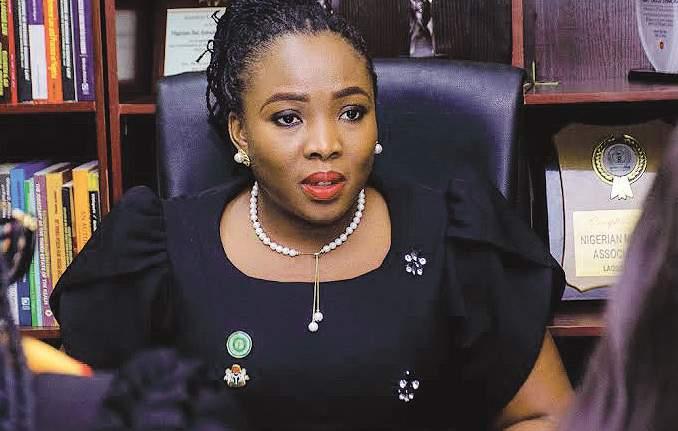
The Nigerian Bar association (NBa) is unarguably, the largest professional body in africa. Of the 129 Branches of the NBa, Lagos is the largest, and one of the most vibrant. It is also on record that, in the over six decades of the association, no Female Lawyer had ever emerged as Chairman of the Branch. This narration changed last year, when, for the first time, Mrs Uchenna Akingbade was elected as the first Female chairman of NBA Lagos. To celebrate International Women’s day which fell on March 8 and International Women’s Month, it is apt that onikepo Braithwaite and Jude Igbanoi (who are also members of NBa Lagos Branch), tracked down this Bar amazon to conduct this interesting interview. She spoke about gender inequality, her passion, her vision for NBa Lagos and what she hopes to achieve in her two-year tenure
You made history as the first female Chairman of the largest Branch of the Nigerian Bar Association (NBA), NBA Lagos. Many are still euphoric about your emergence. Share with us the journey to this momentous
event. My journey to this office, has largely been one of service and faith. Becoming Chairman was never part of the plan. In fact, occupying any political office was not something I saw myself ever doing. I have never really considered myself
“Becoming the 28th Chairman of the NBA Lagos Branch and the first woman to occupy that office since the Branch’s establishment, is deeply humbling. Interestingly, my campaign was never framed around becoming the first female Chairman. I ran a gender-neutral campaign focused on ideas, service, and institutional progress”
a politician. What I have always been, however, is a creature of service. Throughout my life, I have consistently found myself serving in different capacities. Leadership responsibilities often came either by assumption, or by being entrusted with them by others. In almost every space I have found myself, service has been the constant. Over time, I became actively involved in the activities of the NBA, serving on several Committees before eventually being co-opted into the 2023–2025 Executive Committee of the NBA Lagos Branch. Through these engagements, I developed a deep appreciation
for the needs of our members and the direction the profession must take in a rapidly changing world.
When the opportunity arose to seek the mandate of the Branch, the vision was clear: to build a Bar Without Barriers—one that is inclusive, forward-looking, and responsive to the professional, welfare, and developmental needs of Lawyers.
Becoming the 28th Chairman of the NBA Lagos Branch and the first woman to occupy that office since the Branch’s establishment, is deeply humbling. Interestingly, my campaign was never framed around becoming the first female Chairman. I ran a gender-neutral campaign
focused on ideas, service, and institutional progress. So, when the historic significance of the moment attracted considerable attention after the election, I must admit, I felt somewhat overwhelmed by it. While it is a personal milestone, I see it more as a collective moment for the profession, reflecting the gradual opening of leadership spaces to a more diverse and inclusive Bar.
Despite the fact that there are probably as many women as men in the legal profession, why do women seem to be lagging behind when it comes to the top leadership positions, not just in the legal profession, but generally?
I believe the issue is largely structural, rather than a question of competence. Women are well represented within the legal profession, numerically. However, when we begin to examine leadership positions across institutions—whether at the Bar, within law firms, professional bodies, or even within the Judiciary —the numbers begin to decline significantly. The statistics clearly show that there is a leadership gap. The reasons are multifaceted. Historically, many professional structures were not designed with the realities of women’s lives in mind, particularly around balancing career progression with family responsibilities. There are also socio-cultural expectations, that sometimes shape how leadership roles are perceived for women. In many instances, women are expected and indeed, more comfortable playing more supportive roles rather than stepping forward to lead from the front. These dynamics can affect career trajectories and leadership participation, over time.
However, the narrative is gradually changing. With intentional mentorship, leadership development, and stronger institutional support, we are beginning to see more women stepping confidently into leadership spaces across the profession. This gradual shift, is both necessary and encouraging.
Some of the challenges identified as hampering women in attaining high positions at the Bar and the Bench are marital issues, raising a family, and societal prejudices. How can these be surmounted?
It begins with recognising
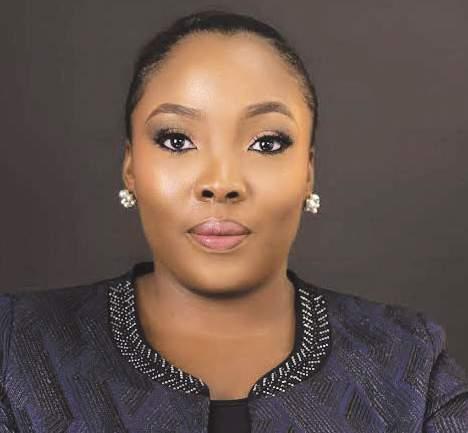
that these are not merely personal challenges; they are structural issues that require both societal and institutional responses.
First, society itself must continue to evolve in the way women are perceived and supported. There needs to be a recalibration of the socio-cultural expectations, placed on women. If women are to thrive professionally, there must be stronger support systems, both within institu- tions and within the home.
Society must also embrace the reality that competence and leadership capacity, are not gender-specific attributes.
Second, institutions must create supportive professional environments that allow women to thrive, without feeling compelled to choose between family responsibilities and professional advancement.
Third, mentorship is critical. Women at different stages of their careers need guidance, encouragement, and exposure to leadership pathways. It is never too early—and certainly never too late—to invest in
“If women are to thrive professionally, there must be stronger support systems, both within institutions and within the home. Society must also embrace the reality that competence and leadership capacity, are not gender-specific attributes”
mentorship and leadership development.
At NBA Lagos, we are intentionally promoting programmes that strengthen women’s leadership capacity. Our col- laboration with WIMBIZ on the Women in Law Mentoring Programme is one example of such deliberate efforts.
Ultimately, the goal is not preferential treatment, but equitable opportunity.
Is NBA Lagos involved in the clamour for Reserved Seats in the Legislature for women?
The NBA is fundamentally a professional body committed to the rule of law, democratic governance, and promotion of the welfare of Lawyers.
While NBA Lagos may not be directly involved in political advocacy for specific legislative structures, we support initia- tives that enhance inclusive participation in governance and promote fairness in representation.
The conversation around reserved seats for women, raises important questions about representation and democratic participation. Some view it as necessary to correct historical imbalances, while others prefer structural reforms that create equal opportunities within existing democratic frameworks.
What is clear, however, is that Nigeria cannot afford to exclude half of its population from decision-making spaces. Whether through affirmative
action or broader systemic reforms, increasing women’s representation in governance remains an important national conversation.
On assumption of office, what challenges did you encounter and how have you been dealing with them?
One of the most immediate challenges, has been managing expectations within a very large and dynamic Branch. NBA Lagos is the largest Branch in the country, with over 20,000 members, and the needs and expectations of our members are understandably diverse.
At the heart of this challenge, is people management. Leading a body of Lawyers requires a high degree of emotional intelligence, and the ability to balance multiple interests. Different segments of the Bar come with different priorities and expectations, and navigating these varying interests while maintaining fairness and objectivity, is one of the most demanding aspects of the office.
Another dimension of the challenge, is the sheer scale of responsibility that comes with the role. While I knew the office would be tasking, it is in reality a full-time job.
Our (myself and members of the Exco) approach has been to adopt structured planning, collaborative leadership, and transparent communication. We work closely with Committees,
“Increasing Women’s representation in Governance remains an Important National conversation”
stakeholders, and members of the Bar, to ensure that our initiatives are not only well conceived, but also effectively implemented.
Ultimately, leadership at the Bar requires patience, consultation, a willingness to listen, and an open mind. With those principles, we continue to navigate the challenges and move the Branch forward.
What has been your focus as Chairman? What legacy would you like to leave behind?
My focus has been on three key pillars:
1. Capacity Building – ensuring Lawyers have access to practical training and professional development opportunities.
2. Lawyers’ Welfare – promoting fair remuneration, improved professional standards, and support systems for members.
3. Institutional Strengthening – improving the structures and systems that support the work of the Branch.
A major priority is also the completion of the NBA Lagos Bar Centre, which will serve as an important institutional hub for the Branch.
If there is one legacy I hope to leave behind, it is a stronger, more inclusive, unified and forward-looking Bar—one that creates opportunities for every Lawyer to thrive.
Lawyers complain about delays in receiving Stamp and Seal after paying practicing fees. How have you handled this in Lagos?
It is important to clarify that the processing and issuance of Stamp and Seal fall under the jurisdiction of NBA National, not the Branches. That said, since the reintroduction of paid Stamp and Seal, the processing timeline has generally improved. In my own case, without invoking my office in any way, I received mine within about two weeks.
In some instances, delays occur because applications are not properly completed or uploaded on the portal. However, at the Lagos Branch, whenever members bring legitimate delays to our attention, the Secretariat—under the leadership of the Branch Secretary—has mechanisms in place to follow up with the national body to ensure that excessively delayed requests are tracked and resolved.

The introduction of electronic seals, is also expected to significantly reduce these challenges. Has the deployment of electronic seals commenced in Lagos Branch?
Yes. NBA National has commenced the rollout of electronic seals, and their use is already live. This is a commendable development, as it represents an important step in the modernisation of legal practice administration. Electronic seals are designed to complement the traditional stamp and seal system, while providing greater convenience for Lawyers who increasingly work in digital environments. I am also aware that young Lawyers were granted access to the electronic seals free of charge, as part of the rollout. While I have not personally used the electronic seal yet, the relatively minimal complaints from members suggest that the system is functioning reasonably well. For further guidance on the modalities and usage, members may contact NBA National.
What role has NBA Lagos
“My focus has been on three key pillars:
• Capacity Building – ensuring Lawyers have access to practical training and professional development opportunities.
• Lawyers’ Welfare – promoting fair remuneration, improved professional standards, and support systems for members.
• Institutional Strengthening – improving the structures and systems that support the work of the Branch….also the completion of the NBA Lagos Bar Centre…”
played in prison decongestion and Police station visits?
NBA Lagos has consistently supported initiatives aimed at promoting access to justice, and reducing unnecessary detention.
We recently secured a partnership with a major corporate organisation, to support a prison decongestion exercise. The funds for this initiative have already been domiciled with the Branch, and we are currently working with the correctional facilities to identify inmates who are incarcerated solely because they are unable to pay fines. We expect this exercise to be concluded shortly, and anticipate securing the release of a good number of affected inmates.
Beyond this, the Branch has continued to show support for judicial-led prison decongestion exercises, whenever the Chief Judge calls for collaboration.
Our Human Rights Committee has also remained very active, through regular Police Duty Solicitor visits to Police stations across our jurisdiction (Lagos, Ikoyi etc). These visits are aimed at ensuring that detainees are held or released in accordance with their constitutional rights, and that those who require legal representation receive assistance.
In addition, the Branch conducts legal clinics within correctional facilities, where lawyers take up deserving cases on a pro bono basis,
thereby expanding access to justice while also contributing to the decongestion of correctional centres.
What is the state of the Lagos Branch Bar Centre?
The NBA Lagos Bar Centre project, remains one of the most important institutional projects of the Branch. It is central to our identity and long-term growth. Significant progress has been made, and our administration is committed to accelerating the completion of the project.
Our goal is to ensure that the Bar Centre becomes a functional hub for professional development, meetings, and institutional activi- ties of the Branch.
How would you rate the Tinubu administration on rule of law, security, corruption, and the economy?
As Lawyers, our role is to continually emphasise the importance of the rule of law, institutional integrity, and constitutional governance.
Nigeria is currently navigating significant economic and security challenges, and it is important that governance responses remain firmly anchored in the rule of law and respect for fundamental rights.
The legal profession will continue to play its role in holding institutions accountable, promoting justice, and contributing constructive perspectives on national development.
Ultimately, strong institutions and adherence to the rule of law are essential for addressing issues of insecurity, corruption, and economic stability.
Thank you, Mrs Akingbade.
The Real Estate Developers Association of Nigeria (REDAN) and the Centre for Housing and Sustainable Development, University of Lagos, have raised alarm over the escalating cost of cement and other building materials, warning that the trend could significantly undermine housing delivery, stall construction projects and worsen Nigeria’s housing deficit.
At a joint press conference held Thursday, industry stakeholders expressed deep concern over the rapid rise in the prices of essential construction inputs, particularly cement, which they said has become a major threat to the sustainability of the country’s real estate and construction sectors.
Speaking at the briefing, Professor Timothy Nubi, Founding
Director, Centre for Housing and Sustainable Development, University of Lagos, described the situation as a critical challenge that could slow down a sector that has recently emerged as a major contributor to Nigeria’s economic growth.
According to him, the building and construction industry remains a vital component of the nation’s economy, contributing significantly to employment generation and Gross Domestic Product (GDP).
“The building and construction sector is a vital component of Nigeria’s economy,” Nubi said. “Last year, it surpassed the oil sector for the first time in terms of contribution to GDP growth, marking a major milestone. As we navigate global uncertainties, we cannot afford to lose this momentum.”
He noted that the recent
surge in cement prices has sent shockwaves through the construction sector because of the central role the material plays in building projects.
“Cement is a key input in construction and any increase in its price has far-reaching implications for project costs, timelines and overall affordability of housing,” he said.
Nubi explained that the price of cement has risen by more than 30 per cent within the last quarter alone, while the prices of other construction materials such as steel, wood, granite and sharp sand have also recorded significant increases.
According to him, steel prices have risen by about 20 per cent while sharp sand prices have jumped by roughly 25 per cent during the same period.
“These price hikes are being driven by a combination of
global market trends, logistics challenges and increasing local demand,” he said.
he noted, has led to rising construction costs across the country, forcing many developers and contractors to rethink project plans.
Bennett Oghifo
Real estate development firm, Meritabode Nigeria Limited, has commenced the first physical allocation of plots to subscribers in its newly launched premium estate, marking the milestone as part of activities celebrating the company’s 14th anniversary.
Speaking during the allocation ceremony, the General Manager of the company, Ofure Oseni,
explained that the anniversary celebration was designed as “14 Days of Meritabode,” symbolising the company’s 14 years of operations in Nigeria’s real estate sector.
According to Oseni, the allocation exercise represents a major step in delivering on promises made to investors who subscribed to the estate shortly after its launch last year.
“We actually started the
anniversary activities about 14 days before March 1st. We call it the 14 Days of Meritabode, and it represents the 14 years of our existence. One of the major highlights is what we are doing today — the first major allocation in this estate,” Oseni said.
He noted that over 30 subscribers were allocated plots during the exercise, explaining that the estate was designed as a mixed-use development consist-
ing of residential, investment, and commercial zones.
The residential segment, he said, is structured as a free-build zone, allowing subscribers flexibility in building their homes according to personal preferences.
“This estate is divided into two major segments — the freebuild residential area and the investment zone. The investment zone is designed for developers who want to build terraced
apartments, semi-detached homes, and other residential units for rental or commercial purposes,” Oseni said.
He added that a commercial section within the estate had also been designated for businesses such as shopping malls, hotels, banks, and schools.
According to him, the estate offers various plot sizes to suit different investor needs, including 450 square metres and 600
square metres for residential and investment purposes, while commercial plots begin from 1,200 square metres.
Oseni acknowledged that affordability remains a relative concept in Nigeria’s current economic environment but stressed that Meritabode had introduced flexible payment structures to make property ownership accessible to the middle class.
Fadekemi Ajakaiye
In the annals of PWAN Group Success Summits, February 12, 2026 will forever shimmer like a torch lit at twilight — a day
when legacy bowed gracefully to leadership, and vision found new hands.
It was an exponential, emotional afternoon in the restless commercial heartbeat of Lagos.
Across boardrooms, living rooms and digital screens, stakeholders in Nigeria’s foremost real estate network marketing conglomerate gathered for their customary monthly summit.

The air was thick with anticipation, though few knew they were about to witness history.
At the centre of it all stood the Global President and Founder of PWAN Group, Dr. Jayne Obioma Onwumere — visionary, trailblazer, and custodian of a dream that had grown beyond imagination. With measured composure but unmistakable emotion, she delivered words that would redefine the future of the organization.
“I will be stepping down fully as the Group Managing Director of PWAN Group. So, effective February 12, 2026, Professor Julius Oyedemi takes over as the second substantive GMD of PWAN Group.”
And just like that, the mantle shifted.
A Passing of the Torch Leadership transitions are often proceedural. This was not. This was personal. This
was prophetic.
The announcement was not merely about succession; it was about stewardship. Dr. Onwumere did not exit the stage abruptly. With motherly assurance, she pledged to remain present — guiding, handing over, strengthening the bridge between yesterday and tomorrow.
“I love PWAN passionately,” she declared. “No matter what happens, I know that there are great men and women who will uphold this company.”
Then, turning to the man of the hour, Prof. Julius Olaniyi Oyedemi, she offered the first congratulatory salute. It was both ceremonial and deeply intimate.
She said: “I am bringing you in at a difficult time. But I know that the good God will give you the grace to navigate every difficult situation.”
Dr. Onwumere’s office at the PWAN Homes building would be vacated for Prof. Julius.
Authority was not symbolic; it was structural. He would have the power to add or remove. Leadership was now his to shape.
The Critical Moments That Define Men
Rumours had whispered that favoritism was at play. Dr. Onwumere confronted them head-on. “Some people have said I favour Prof. Julius. But there are critical points in every person’s life. Who shows up for you at those moments?”
She rewound the clock to the turbulent aftermath of COVID-19 and the EndSARS protests in 2020/21, a season when uncertainty hovered over businesses nationwide. There was a vacuum in PWAN Homes, the flagship company she and her husband founded. Prof. Julius had called her while on his way out of Lagos, offering insight, direction, and support.
Fadekemi Ajakaiye
The Nigerian Conservation Foundation (NCF), Nigeria’s premier environmental nongovernmental organisation, has appointed Kunle Olawoyin as the new Director of Communications, Policy and Advocacy, effective March 2, 2026. Kunle, who has previously served as Head of the Media and Public Affairs Unit at
NCF from 2009 to 2015, will lead NCF’s communication, policy and advocacy agenda in support of the organisation 2025-2030 strategy. He will work with various teams to strengthen NCF’s public voice, influence environmental policy outcomes, shape national and continental narratives on climate change, biodiversity conservation and environmental pollution. Kunle is a seasoned com-
munications and advocacy expert with a demonstrated history of managing strategic campaigns, influencing policy and advocacy at national and international levels. A trained journalist, he started his career as a cub reporter with Rhythm 93.7 FM. He has also worked with National Interest Newspapers, and National Mirror Newspapers where he gained hands-on experience in reporting, editing, and
news production.
Prior to this new appointment, he has served as Media and Communications Officer at Oxfam GB and Oxfam International, before joining Save the Children International, where he held key roles including Media and Communications Manager for Nigeria, Regional Media and Communications Manager for West and Central Africa, and most recently, Media Manager
at the Global Media Unit of the world leading child rights organisation. His work has strengthened the visibility and impact of organizations he has served, and his expertise will now be leveraged to position NCF as a credible thought leader and partner in environmental conservation across Nigeria and Africa.
Kunle holds a Higher National Diploma in Mass
Communication from The Polytechnic, Ibadan, a master’s degree in communication studies from Lagos State University, a Bachelor of Laws (LLB) from the National Open University of Nigeria, and a Master of Laws (LLM) from Nasarawa State University, Keffi. He also holds certificates in Advanced Writing and Reporting from Pan-Atlantic University among other professional certifications.
By Edafe Cosmas Mudiaga
The signing of the Petroleum Industry, PIA, Act in 2021 by late former President, Mohammadu Buhari, seemed to have positively changed the nation’s Oil and Gas sector for good. Perhaps, the joy was to be short-lived. However, before going further, perhaps the new Executive Order issued by the President and Commander-in-Chief of the Armed Forces of Nigeria, President Bola Ahmed Tinubu, needs some clarifications. And that clarification has to do with some misinformation being conveyed to the Nigerian public by the Order and those who ‘convinced’ the President to tow that line.
The Executive Order is clearly sending a very wrong signal to the investing community. It is a discouraging factor for investment in the deep-water frontiers of the Nigerian Oil and Gas industry. What we are saying clearly to the international community is that we can use Executive Orders to change any aspect of our laws without even any notice. The long absence of a governing law for the oil industry is the major reason why investment in our deep-water frontiers shrank. Things have begun to change since the PIA was promulgated in 2021. But this singular act of using an Executive Order to change the provisions of the law is clear signal to the investing public that Nigeria is unsafe for deep-water investment.
Nigeria is not a lawless nation. So, it is hard to believe that governance at the highest level can be reduced to such an executive convenience. An Executive Order is not a weapon to repeal, suspend or override laws duly passed by the National Assembly. That path undermines constitutional democracy and weakens institutional integrity. If a law requires amendment, the proper route is through legislative review; not executive overreach. The rule of law is not optional; it is the backbone of our republic. Without mincing words, the Executive Order 9 will impact negatively on the lives of ordinary Nigerians in a number of ways. First, it will hamper NNPC’s ability to carry out its energy security mandate as a national oil company, as enshrined in the PIA. This includes servicing domestic product demand in case of shortages and being the energy provider of the last resort. Secondly, the EO9 will affect the ability of NNPC to assume obligations and liabilities for government, especially in situations where Royalty and Tax oil barrels are used by Government to access loans from international lenders. In this case NNPC usually assumes the role of sponsor/ borrower on behalf of government. Thirdly, the EO9 may render the administration of existing PSC Gas Development Agreements (GDAs), Gas Sales and Purchase Agreements (GSPAs) and other auxiliary agreements ineffective. This will have a direct negative impact on our power sector and national revenue derived from gas sales.Largely, the spread of wrong information orchestrated by this order may threaten oil industry stability, investor confidence, and badly affect investment and development of Nigeria. So, we set out to clarify the following: Direct remittance of Royalty and Taxes from Production Sharing Contract (PSC) to FAAC
The Executive Order directs that Royalty and Taxes from PSC should be paid directly to FAAC. The truth is that Royalty and Taxes from the PSCs are already being remitted directly to FAAC. This is already the existing practice. One point to note is
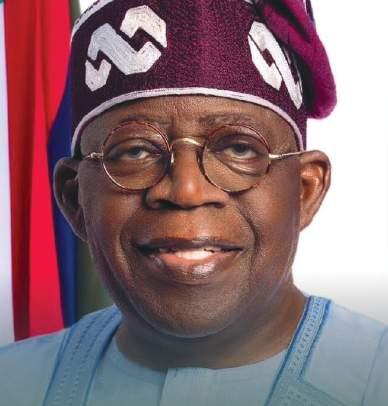
that Royalty and Taxes from the PSCs are lifted as barrels of oil. They are NEVER in raw cash. Nigerians should note that the underlying Commercial Contracts governing the PSCs are designed in such a way that Royalties and Taxes are lifted as barrels of oil by the Concessionaire. NNPC Limited is designated as the concessionaire in the governing agreements, as well as in the PIA.
The way the Oil and Gas industry works, NNPC Limited as the Concessionaire has the responsibility to lift and commercialize (sell) these barrels. On monthly basis, NNPC Limited remits all value realized from sales of Royalty and Tax barrels to the FAAC. Another clarification that Nigerians need to know is that Government had borrowed money from international lenders and pledged these barrels from PSC Royalty and Tax for the repayment of interest and principal. These loans were contracted with NNPC Limited as the sponsor/borrower on behalf of the Government. So, what NNPC Limited does on monthly basis is to settle the lenders from the value realized from the PSC Royalty and tax liftings and then remit the balance to the FAAC. Sometimes, the value from Royalty and Taxes cannot cover the amount needed to settle lenders in a given month. In this circumstance, often times, NNPC Limited goes to their own share of Profit Oil (the Management Fee) to settle this obligation.
30% PSC Profit Oil/Gas given to NNPC as Management Fee by Section 64 of the PIA
Under the current PIA framework (Section 64), NNPC Limited does NOT retain 30% of the Federation’s oil revenues as is being WRONGLY ‘propagandised’. 30% of Profit Oil/Gas is not the same as 30% of the Federation’s oil revenues derived from Production Sharing Contracts.
To clarify, 30% of Profit Oil/Gas is the
residual value left after:
- ROYALTY has been deducted and paid to the Government,
- COST (CAPEX and OPEX) of production has been deducted by operating companies (usually IOCs). This is to recover the cost of development and production which the operating companies have borne. It is good to note that the operating companies bears 100% of the cost of development and production.
- TAXES have been deducted and paid to the Government. The tax rate is 50% for most PSCs in Nigeria.
To arrive at what the oil industry call profit oil, you must deduct Royalty, Cost, and Tax. These are the three major fiscal sharing metrics in a PSC. These three take about 90% of the gross PSC revenue. The remaining 10% is the Profit Oil. The Concessionaire share of PSC Profit oil is about 35% of the 10%. In line with section 64 of the PIA, the Management fee which NNPC takes is only 30% of (35% of 10% of gross revenue). This will give you about 1.05% of the gross PSC revenue. It is wrong and mischievous to give the Nigerian masses the impression that NNPC Limited is taking 30% of PSC revenue. Clearly, 30% of the PSC Profit Oil translates to about 1.05% of the PSC revenue. Perhaps, it is good to explain the role of NNPC in the management of the PSCs in the Nigerian oil and gas industry. NNPC has no fewer than 500 staff who are dedicated to PSC lines of activity and whose daily engagements are focused on operating the PSCs. These are professionals working on the rigs, production platforms, maintenance operations, seismic operations, crude oil trading, planning and budget administration, and cost monitoring and reviewing process. These are trained personnel who work across 39 PSC blocks in Nigeria, out of which 14
blocks are currently producing. It is the activities of these professionals that make profit oil possible. On daily basis, they work with the Operating companies from conception of oil and gas project to development and to production. All they do is to ensure that the operations are profitable and value adding to Nigeria. Suffice it to say that this is the role that NNPC needs to play as the national oil company. Stripping the NNPC of the Management fee could affect their viability as a company and negatively impact their ability to fund critical aspects of Oil and Gas development in Nigeria.
Selective Enforcement of 162(1) of the 1999 Constitution.
It’s understandable that pronouncement of EO9 is hinged on the doctrine of gross remittance of all revenue to the federation account, a doctrine established by Section 162(1) of the 1999 Constitution (as amended). That is to say no “at source” deduction. However, we are also aware that there are many other “at source” deductions which the government has approved. Let’s check some of these “at source” deductions: The Federal Inland Revenue Service, FIRS, does what is called Cost of Collection and the legal basis for that is the FIRS Establishment Act and the agency takes FOUR PER CENT of all non-oil taxes they collect. In the same vain, the Custom Services takes SEVEN PER CENT of all duties. The Deepwater Tax stands at $3 per barrel reduction on production sharing cost, PSC. The legal basis for this is the Tax Incentive Order of 2024. The Non-Associated Gas, NAG, Tax Credits, which gets its legal basis from the Tax Incentives Order 2024, has an impact of $1 per mscf. The Dispute Settlement Agreement has its legal basis within various dispute settlement agreements and these cover recovery of billion-dollar legacy debts which are deducted directly from NNPC profit oil.
As can be seen from the table above, the question is why the Executive Order did not stop all “at source” deductions? As the purveyors of EO9 claim, the Executive Order was meant to “restore the Constitution” by stopping all “at source” deductions. But the same government is allowing billions to go out through other “at source” deduction mechanisms. If you claim that those are the cost of operation for those agencies, then why do government think that NNPC should not recover their cost of operations for managing the PSC on behalf of the Federation. Government should quickly roll out executive order 10 to stop these deductions.
Finally, looking at the issues raised in this thesis, it is advisable that Federal Government should look at section 44(3) of the 1999 Constitution of Nigeria, which states that “notwithstanding the foregoing provisions of this section, the entire property in and control of all minerals, mineral oils and natural gas in, under or upon any land in Nigeria or in, under or upon the territorial waters and the Exclusive Economic Zone of Nigeria shall vest in the Government of the Federation and shall be managed in such manner as may be prescribed by the National Assembly”.
The PIA is a creation of the National Assembly that prescribes how the oil and gas industry in Nigeria should be managed. It is absolutely wrong to overlook this fact and use a mere executive fiat to amend an Act of parliament. Nigeria is not a banana republic.
•Mudiaga, an oil and gas expert, wrote in from Port-Haercourt.
Bolaji Ogundele
There is a certain kind of man who enters a room and does not announce himself, and yet, somehow, the room knows. The air shifts. Conversations pause. Eyes follow. This is the quiet, authoritative gravity of Christopher Airemiokhai Iluobe, born on Christmas Day, 1964, in the small town of Ivue-Uromi, in Nigeria’s Edo State, and known to the world, from the glittering corridors of Beverly Hills to the runways of New York, as Chris Aire, the King of Bling.
But kingship, as Aire himself would tell you, is not merely about the sparkle of a crown. It is about the weight of what it means to carry one.
The story of Chris Aire could have been scripted in Hollywood, and fittingly so, because Hollywood eventually came to him. The son of Joseph Agimenlen Iluobe, a prosperous Nigerian oil mogul, young Christopher grew up in Benin City, attending the prestigious Immaculate Conception College. His father’s world was one of commerce and pipelines, a world he wanted his son to inherit. But the boy from Uromi was drawn to a different kind of richness.
In 1983, at 18, Chris Aire boarded a flight to the United States with dreams considerably larger than his luggage. He enrolled at California State University, Long Beach, and quickly discovered that the American dream demanded a ferocious price. He paid it without flinching, flipping burgers on overnight shifts, sleeping in the worn leather seats of a battered BMW on the streets of Los Angeles. He apprenticed for six years under jeweler, Paul Banayan, earned his diamond-grading diploma from the Gemological Institute of America, and in 1996, with exactly $5,000 saved, struck out on his own.
“It was a leap of faith and I took that leap of faith”, he once said. “I was very confident in my faith because I believe whatever it is that puts the inspiration in your mind has within it its own fulfillment”.
In 1997, fate intervened in a hotel lobby. Aire spotted NBA legend Gary Payton and, with the fearless audacity that has since become his trademark, approached him with prototypes in hand. Payton placed a $50,000 order. That transaction did not merely save Aire’s business; it launched an empire.
From that singular moment of faith and grit, the Chris Aire brand grew into one of the most recognisable names in global luxury. His clients became a breathtaking roll call: Will Smith, Angelina Jolie, Oprah Winfrey, Jay-Z, LeBron James, Kobe Bryant, Muhammad Ali, Denzel Washington, Naomi Campbell, Madonna, Meryl Streep, Al Pacino, and Colin Powell, to name but a fraction.
In 2004, he made fashion history by sending Naomi Campbell down a runway draped in a diamond tunic top, the first jeweler ever to stage a show at New York Fashion Week. The following year, a Victoria’s Secret model wore his $41 million diamond dress, (three thousand hours in the making). These were not mere extravagances; they were declarations that a Black man from Uromi, Nigeria, had arrived at the summit of the world’s most exclusive industry, and had no intention of leaving. His trademarked Red Gold collection and Beverly Hills flagship boutique, opened in 2014, stand as monuments to his philosophy of “Glamour Meets Street.”
Chris Aire, founder and President of Solid 21 Incorporated, creators of the Chris Aire fine jewelry and timepiece brand, also has his flagship boutique located in Beverly Hills, California, with a presence in Abuja, Nigeria.
And then there are the watches. If Chris Aire’s jewelry speaks the language of adornment, his timepieces speak something altogether more intimate; the language of legacy. Conceived entirely from his artist’s mind, each Aire timepiece is a limited edition work of wearable sculpture, produced in numbers so deliberately small that possession of one becomes a statement of extraordinary distinction. They are not merely instruments for telling time. They are instruments for stopping it, objects so arrestingly beautiful that the world pauses to admire them. His watches have become among the most fiercely coveted accessories in the wardrobes of the world’s high and mighty. Heads of state, captains of industry, entertainment royalty, those for whom ordinary luxury long ceased to suffice, seek out Aire’s timepieces with quiet but determined hunger. There is something about owning one that cannot be replicated: the knowledge that only a handful of human beings on earth share the privilege.
Word now filters through the most discreet corridors that Aire is preparing to unveil yet another collection, new limited editions commissioned by clients who have personally approached him with one request: that he regale them, yet again, with his genius. These are not passive consumers browsing a catalogue. They are connoisseurs, patrons in the classical sense, who trust no one else with something as irreplaceable as time itself.
Those who have spent time in Chris Aire’s company, truly in his company, beyond the cameras and the ceremonies, invariably encounter something they did not expect. Beneath the diamonds and the prestige is a man of profound, contemplative spirituality; someone who has taken deliberate time to study himself and his universe, to map the invisible forces at work in human life, and to locate, at the centre of all things, the quiet, immovable supremacy of God.
This writer has had the privilege of personal interactions with Aire across the past year, and what emerges, unmistakably, is a man who understands creation not just as the craft of fashioning extraordinary objects from gold and diamonds, but in the cosmic sense, recognising that all creativity flows from a divine source. He speaks of inspiration with reverence that borders on the devotional. “I see a painting and I’m inspired,” he once said.
“Or I look at a little kid doing something; I look at trees sometimes and I’m inspired; or I look at old art”. These are not the musings of a craftsman. They are the reflections of a pilgrim who has found the sacred hidden within the ordinary.
When asked the secret of his success, his answer is disarming in its simplicity: “Grace. The ability to see things before their physical manifestation.” His Aire for Life Foundation channels this belief into action, empowering communities through art, nurturing the latent brilliance in those whom circumstance has overlooked.
For all his global stature, there is one address Chris Aire returns to with a devotion no premiere could rival. It is the address of family.
This writer first encountered him in Yokohama, Japan, a city as far from Uromi as a map could possibly manage, and the moment was quietly revelatory. He was with his wife, Atinuke, a woman of warm and grounded presence, and what struck most powerfully was not the setting but the naturalness with which both of them kept returning, in conversation, to their children. Not as a topic of boast, but as a living, breathing centre of gravity. Their children were not merely mentioned; they were present, in spirit, in every sentence. Here was a man who carries his home with him wherever the world takes him. Atinuke is no mere consort in this story. She is a partner in the most complete sense, and the warmth between them speaks of a love deepened by time and shared purpose. His business philosophy, “CAF,” (Customers Are Family), is not a marketing slogan. It is a direct extension of how he lives.
Nigeria’s Ambassador in Diamonds
For all the international grandeur of his biography, Chris Aire remains, stubbornly, joyfully, and without apology, Nigerian. He opened his first Nigerian boutique at the Transcorp Hilton in Abuja in 2012, visits children at the Fortune of God orphanage, and sources his gold and gemstones directly from African mines he has personally invested in, conflict-free, untouched by the shadow of child labour. “There is going to be a time when Africa, starting with Nigeria, becomes the envy of the luxury market”, he has said, with the conviction of a prophet who has already seen the future.
This vision resonates powerfully with Nigeria’s current trajectory. President Bola Tinubu has spoken repeatedly about the indomitable Nigerian spirit, the industrious, world-conquering energy of a people who transform scarcity into abundance. In Chris Aire, that spirit finds its most dazzling embodiment. He left his homeland with a dream and five thousand dollars, and went on to dress the most celebrated human beings on the planet.
“Nigerian people don’t want to do what they’re told to do; instead they are inspired when they see one of theirs being true to a dream.” By being true to his own dream, through sleepless nights, cold hotel lobbies, and the blinding lights of New York Fashion Week, Chris Aire has given millions of Nigerians the most powerful gift an individual can bestow upon a nation: the image of their own possibility.
The Crown and What It Carries
He is 61 years old, a Christmas child from Edo State who has spent a lifetime unwrapping the extraordinary gifts that fate, faith, and ferocious work have placed in his path. He is a husband who lights up when his wife enters the room. A father who, in conversation on the other side of the world, finds a way to bring his children into the story. An African who has never allowed distance to dilute his roots. A Nigerian who has carried his nation’s flag into the most exclusive rooms on earth, and planted it there with a jeweler’s precision and a patriot’s pride.
The King of Bling, it turns out, wears his crown with something rarer than gold. He wears it with grace.
•Bolaji Ogundele is an Abuja-based journalist and public affairs analyst
Kayode Tokede
Seplat Energy Plc, Nestle Nigeria Plc, among others have emerged as the most expensive listed stocks on the Nigerian Exchange Limited (NGX).
The growth in some of these stocks are influenced by impressive corporate earnings and massive foreign investors participation.
As of March 6, 2026, the stock price of Seplat Energy closed for trading at N9,099.90 per share, while Nestle Nigeria and Airtel Africa closed at N3,250.00 and N2,270.00 per share, respectively on the bourse.
Trading at N9,099.90 per share as of March 6, 2026 simply means a potential investor with N1,000,000 can only own an estimated 109.9 units of Seplat Energy stocks (without NGX, SEC, among other fees) on the NGX.
Findings by THISDAY revealed that the stock
price of Seplat Energy has appreciated by 56.7per cent in its Year-till-Growth (YtD) from N5,809.00 per share it closed for trading in 2025.
Seplat Energy delivered transformational growth in 2025, with group production rising 148per cent to 131,506 boepd and revenue surging 144per cent to $2.73 billion, reflecting the first full-year consolidation of offshore assets and strong onshore performance driven by the completion of the Sapele Gas Plant and new well activity.
For Nestle Nigeria, the multinational company’s stock price has appreciated by nearly 66 per cent YtD from N1,958.00 per share it closed for trading in 2025.
Other stocks trading above N1,000 per unit as of March 6, 2026 are: Presco Plc, N2,315.40; Okomu Oil Palm Plc, N1,765.00; Aradel Holdings Plc, N1,300.40
and Geregu Power Plc, N1,141.50.
The likes of Dangote Cement, MTN Nigeria Communications Plc, are the only two stocks trading above N500 per unit as of March 6, 2026.
Dangote Cement has seen modest increase in 2026, reaching N815.00 per share from N809 per share when it closed in 2025.
For MTN Nigeria Communications, its stock price closed March 6, 2026 at N790, about 55 per cent YtD growth from N511 per share it opened for trading this year.
Capital market analysts expressed that these stocks remain major drivers of the Nigerian stock market, stressing on their contribution to Nigeria’s economy growth.
The MD/CEO, Globalview Capital Limited, Mr. Aruna Kebira stated that market forces have continued to be a major driver in these prices on the NGX.
Pathway Advisors Limited has said that it is pleased to have acted as the Lead Issuing House, Financial Adviser, and Transaction Sponsor to the N11.45 billion oversubscribed Series 2 Commercial Paper Issuance under the N25 billion Commercial Paper Programme of Lekki Gardens Estate Limited, approved by the Securities and Exchange Commission (SEC).
Originally offered at N10 billion, the March 2026 issuance attracted strong participation from institutional and corporate investors, resulting in a notable oversubscription and subsequent upsizing to N11.45 billion.
The strong demand, it said, underscores sustained investor confidence in
Lekki Gardens’ proven development track record, robust governance framework, solid liquidity position, and strong project execution capabilities.
Commenting on the successful transaction, Founder and CEO of Pathway Advisors Limited, Mr. Adekunle Alade, noted that: “The oversubscription underscores Pathway’s strong ability to mobilize capital from both institutional investors and high-net-worth individuals (HNIs). It also reflects our expertise in navigating complex regulatory environments and structuring effective capital solutions that enable our clients to achieve their funding objectives.”
Commenting on the successful issuance,
Managing Director of Lekki Gardens Estate Limited, Richard Nyong, stated: “The strong investor participation and oversubscription recorded in this issuance reflect the market’s confidence in Lekki Gardens’ business model, governance standards, and proven track record in delivering quality developments. We remain committed to executing our projects efficiently while creating long-term value for our investors and stakeholders.”
In her remarks, Director of Lekki Gardens Estate Limited, Mrs. Emily Atebe, said, “We appreciate the strong investor response and confidence shown in Lekki Gardens through this oversubscribed issuance.”
Sunday Ehigiator
Indomie instant noodles maker, Dufil Prima Foods Plc, has announced the 18th edition of the Indomie Heroes Awards (IHA), unveiling a nationwide call for nominations to recognise Nigerian children whose acts of bravery, compassion and ingenuity are shaping their communities.
The company said the 2026 edition introduces key changes aimed at broadening participation, including an expanded eligibility age bracket and an earlier call for nominations across the country. Under the revised criteria, children aged 0 to 16 years are now eligible to participate in the programme, compared to the previous age limit of 15. Organisers said the adjustment was designed to ensure that more inspiring stories of young Nigerians are captured and celebrated. The company also announced that nominations have opened earlier than in previous editions, giving parents, guardians, teachers and community leaders more time to submit entries before the deadline in June 2026.
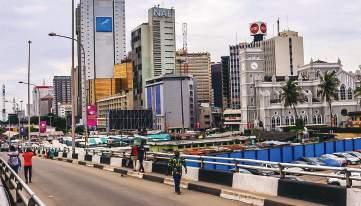
Speaking at the official launch held over the weekend, the Group Corporate Communications and Events Manager at Dufil Prima Foods, Temitope Ashiwaju, said the initiative continues to reflect the organisation’s belief that courage has no age limit. According to him, the decision to expand the age bracket and open nominations earlier would create greater opportunities for communities across the country to spotlight inspiring young Nigerians whose actions embody courage, empathy and leadership.
Kayode Tokede
The stock market section of the Nigerian Exchange Limited (NGX) commenced the new week on a positive, crossing the 197,000 basis points on investors demand for Aradel Holdings Plc and 25others.
As observed by THISDAY, Aradel Holdings, among other listed Oil & Gas companies, recorded a
significant increase following the increase in crude oil prices fueled by an escalating geopolitical tensions in the Middle East.
With Aradel Holdings gaining 3.05 per cent and Oando Plc appreciating by 9.97 per cent, the NGX All-Share Index advanced by 0.12 per cent or 228.83 basis points to close at 197,196.98basis points from 196,968.15 basis points the stock market closed for
trading last week.
This brings the NGX ASI Month-to-Date and Year-toDate returns to +2.3per cent and +26.7per cent, respectively.
Consequently, the market capitalisation closed at N126.584 trillion, representing an increase of 0.11per cent or N146.87 billion from N126.44 trillion the stock market opened for trading this week.
Sectoral performance was
mixed as the NGX Oil & Gas Index gained 2.1 per cent and NGX Consumer Goods Index appreciated by 0.6 per cent, while the NGX Insurance Index declined by 3.1per cent and NGX Banking dropped by one per cent. In addition, the NGX IIndustrial Goods index closed flat.
As measured by market breadth, market sentiment was negative (0.6x), as 26 stocks gained relative to 41 losers.
Conoil led the gainer’s chat when its stock price appreciated by 10 per cent to close at N185.90 per share, followed by Legend Internet Plc that gained 10 per cent to close at N7.04 per share.
The stock price of Omatek also advanced by 10 per cent to N2.42 per share.
On the losers chart, Alex dropped by 10 per cent to close at N13.95 per share and SCOA posted a 9.9 per cent decline to close at N30.95
per share on NGX. RT Briscoe with a decline of 9.87 per cent N10.87 per share joined the top three losers. The total volume traded increased by 32.6per cent to 762.53 million units, valued at N31.23 billion, and exchanged in 86,488 deals. Access Corp was the most traded stock by volume at 48.27 million units, while Aradel was the most traded stock by value at N5.07 billion.
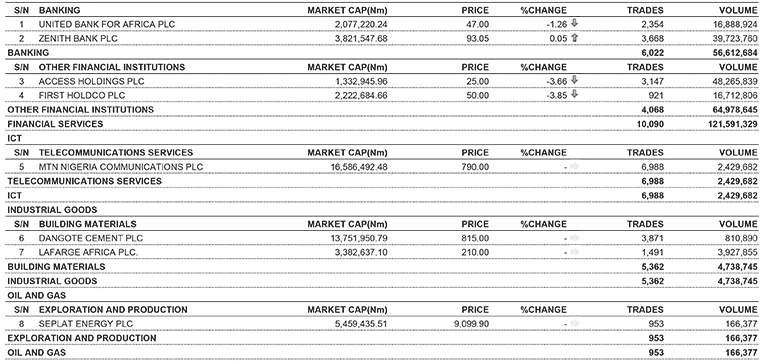
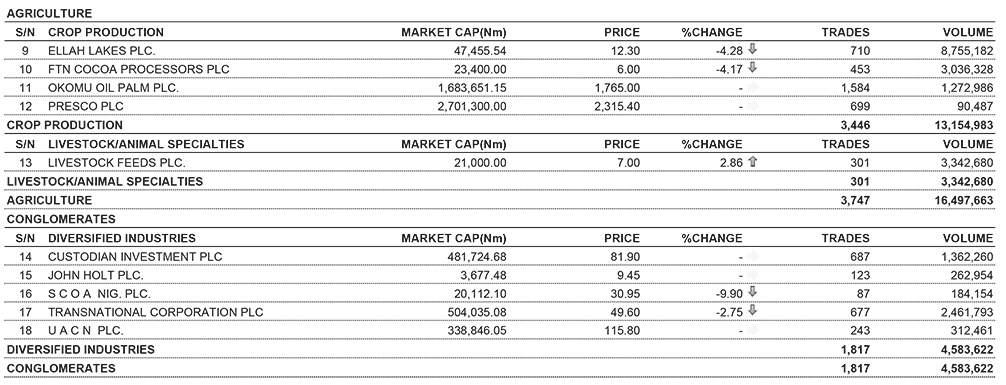
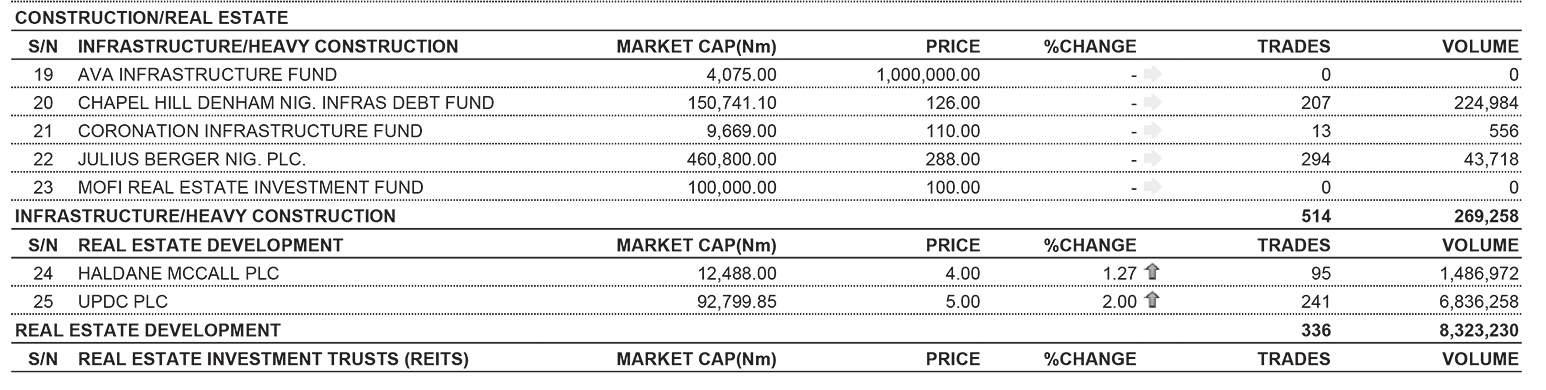
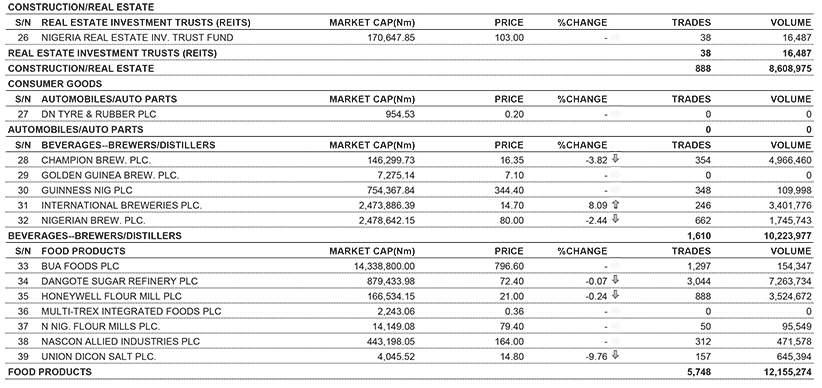
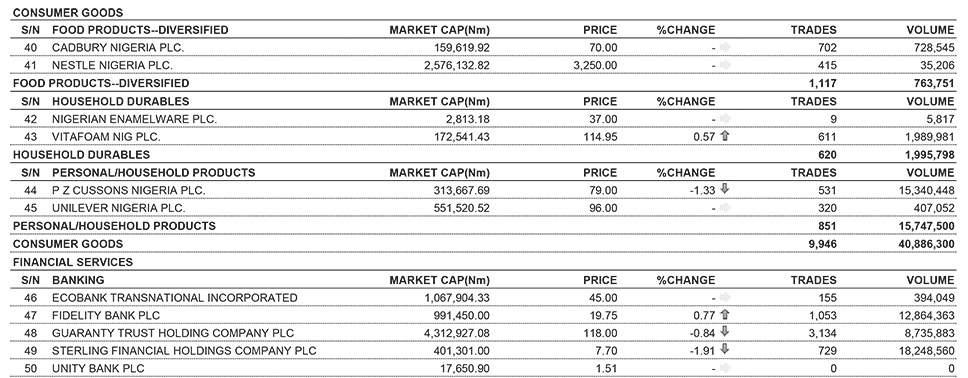
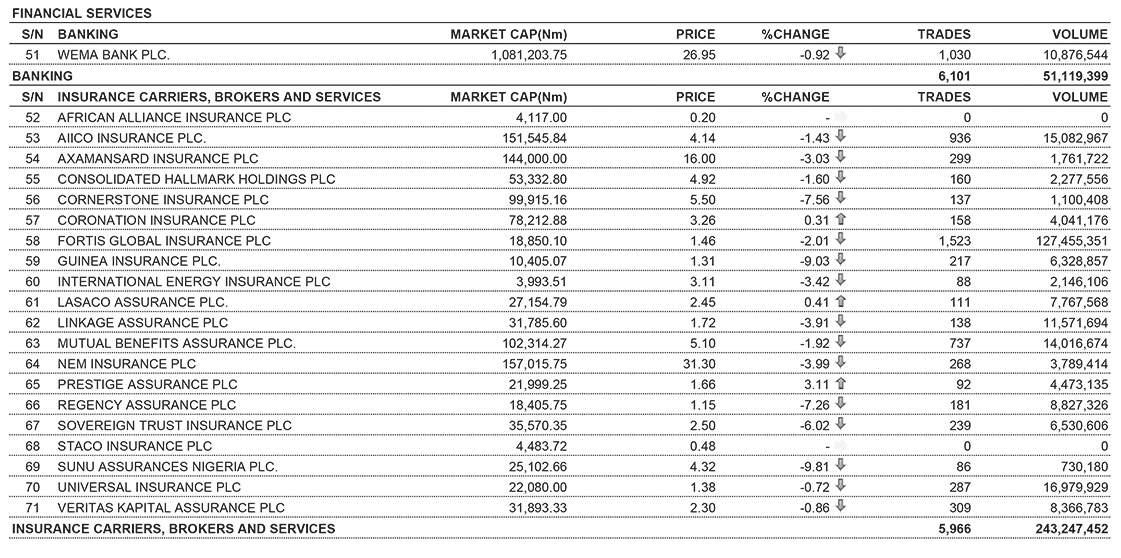

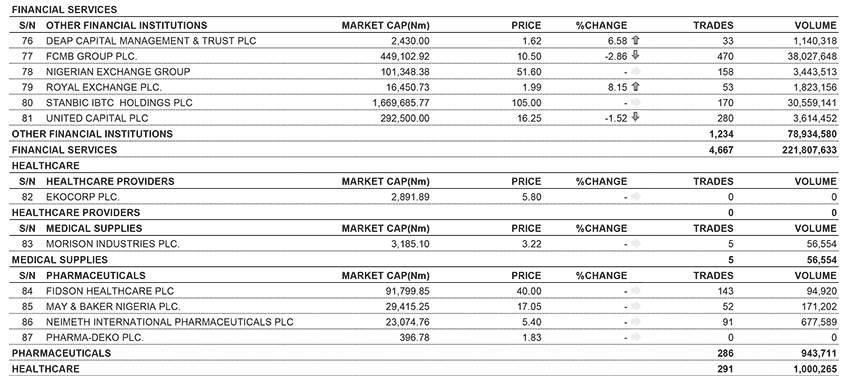
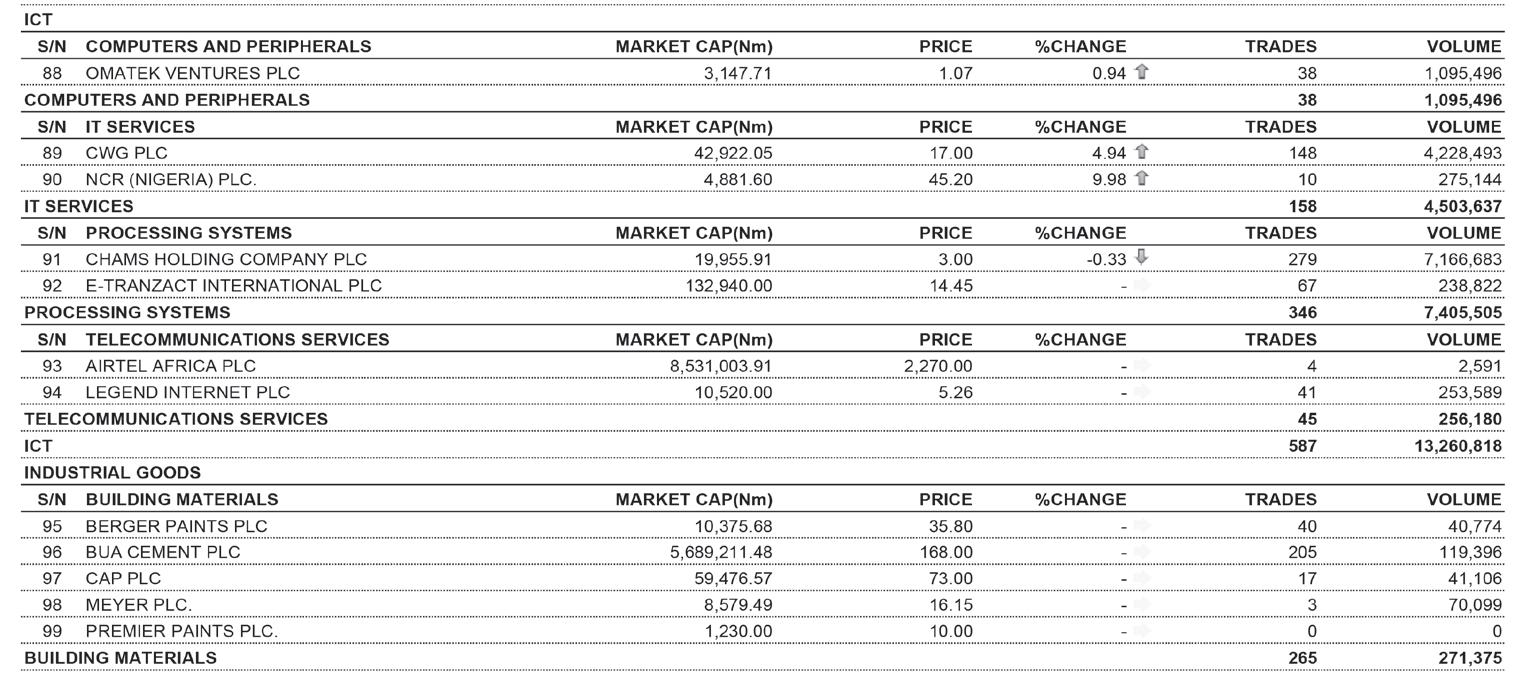

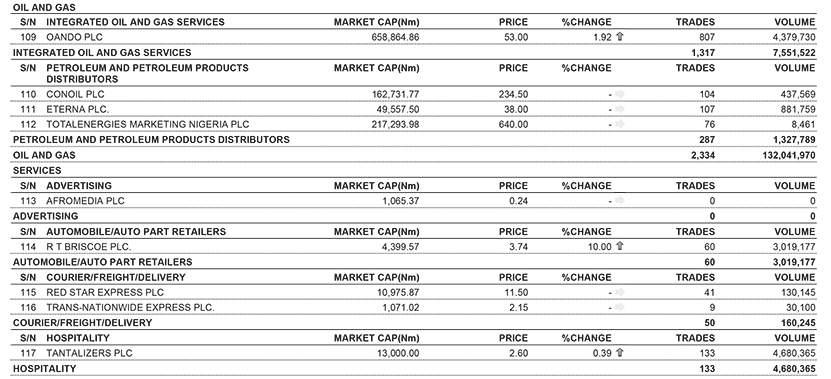

A Mutual fund (Unit Trust) is an investment vehicle managed by a SEC (Securities and Exchange Commission) registered Fund Manager. Investors with similar objectives buy units of the Fund so that the Fund Manager can buy securities that willl generate their desired return.
An ETF (Exchange Traded Fund) is a type of fund which owns the assets (shares of stock, bonds, oil futures, gold bars, foreign currency, etc.) and divides ownership of those assets into shares. Investors can buy these ‘shares’ on the
floor of the Nigerian Stock Exchange. A REIT (Real Estate Investment Trust) is an investment vehicle that allows both small and large investors to part-own real estate ventures (eg. Offices, Houses, Hospitals) in proportion to their investments. The assets are divided into shares that are traded on the Nigerian Stock Exchange.
GUIDE TO DATA:
Date: All fund prices are quoted in Naira as at 5 March 2026, unless otherwise stated.
Offer
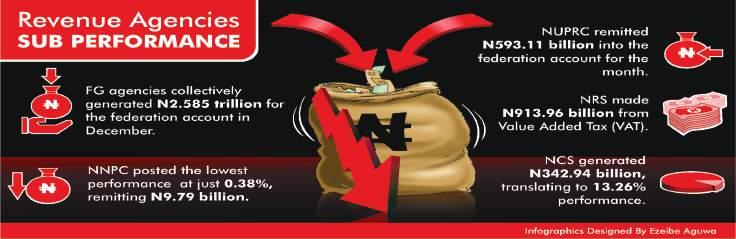
Stories by Emmanuel Addeh in Abuja
All the federal government’s major revenue-generating agencies fell short of their expected contributions to the Federation Account in December 2025, according to details presented at the February meeting of the Federation Account Allocation Committee (FAAC).
An analysis of the Central Bank of Nigeria (CBN), Federation Account Component Statement for the period showed that none of
the agencies met up to 40 per cent of their expected performance benchmarks, with the Nigerian National Petroleum Company Limited (NNPC Ltd) recording the weakest remittance level.
The document, reviewed at the FAAC Post-Mortem SubCommittee (PMSC), indicated that the agencies collectively generated N2.585 trillion for the federation account during the month, but their individual performances were significantly below optimal expectations.
According to the report, NNPC posted the lowest
performance level at just 0.38 per cent of expected revenue, remitting N9.79 billion into the CBN component statement in December.
The extremely low contribution from the national oil company stood out sharply when compared with other agencies, despite the fact that oil remains the backbone of Nigeria’s revenue structure.
Besides, the Nigerian Upstream Petroleum Regulatory Commission (NUPRC) recorded a 22.94 per cent performance, remitting N593.11 billion
into the federation account for the month.
Although the amount represented one of the larger contributions in absolute terms, the percentage performance showed that the upstream regulator still fell significantly short of its expected revenue potential for the period.
Similarly, the Nigeria Revenue Service (NRS) revenue contribution from Value Added Tax (VAT), amounted to N913.96 billion, representing 35.35 per cent performance.
However, a THISDAY
analysis showed that even this level of remittance underscored the broader trend of underperformance across the federal government’s revenue collection architecture.
Despite being the highest contributor among the listed categories, the percentage still reflected a shortfall relative to the anticipated remittance levels.
Also, collections from the NRS EMTL Account (Electronic Money Transfer Levy) were significantly smaller, standing at N39.91 billion, representing 1.54 per
Nigeria’s electricity Distribution Companies (Discos) generated over N207.49 billion in revenue in December 2025, despite persistent nationwide power outages and declining energy supply across the country.
A factsheet released by the Nigerian Electricity Regulatory Commission (NERC) on the commercial performance of the Discos showed that while electricity supply dropped significantly during the month, the utilities still maintained

strong revenue collections, driven largely by relatively high billing and collection efficiencies.
The data showed that although the total energy received by the Discos fell to N309.65 billion worth of electricity in December, representing a 9.53 per cent decline compared to the previous month, the companies billed consumers N258.66 billion and eventually recovered N207.49 billion from customers.
Overall collection efficiency
stood at 80.22 per cent, indicating that the utilities successfully collected fourfifths of all electricity bills issued within the period.
The figures highlighted the paradox in Nigeria’s power sector where consumers continue to face erratic supply and frequent blackouts, yet electricity distributors maintain strong revenue inflows.
A breakdown of the data showed that the Discos collectively billed customers N258.66 billion, while actual

collections reached N207.49 billion, representing a marginal 0.62 per cent drop in revenue collected compared to the previous month.
However, the billing efficiency improved to 83.53 per cent, up by 4.82 percentage points, suggesting that the utilities were able to convert a higher proportion of the electricity received into billable energy.
The sector also recorded an improvement in revenue recovery efficiency, which
rose to 79.62 per cent, reflecting better alignment between the approved tariffs and the actual revenue realised. The data further indicated that the average tariff allowed by the regulator stood at N124.30 per kilowatt hour, while the actual average revenue collected by the Discos was N98.97/kWh.
Among the electricity distributors, Eko Disco posted the strongest revenue recovery performance with 99.45 per cent efficiency, collecting

cent performance. In the same vein, the Nigeria Customs Service (NCS) generated N342.94 billion, translating to 13.26 per cent performance, another indication that trade-related revenues also failed to reach projected levels in December. Customs revenues are typically expected to be buoyed by import duties and other trade-related charges, but the data showed that collections were still below expectations for the month under review.
N125.11/kWh against an allowed tariff of N125.80/ kWh.
Ikeja Electric also performed relatively strongly, recording 85.32 per cent recovery efficiency, with an average collection of N104.34/kWh compared to an approved tariff of N122.30/kWh.
Similarly, Abuja Disco recorded 84.43 per cent recovery efficiency, collecting N106.04/kWh out of an allowed N125.60/kWh tariff.

L–R: Registrar/Secretary to the Council, National Institute of Marketing of Nigeria (NIMN), Thelma Okoh; Founder/CEO, AT3 Resources, Tosin Adefeko; Commissioner for Commerce, Cooperatives, Trade and Investment, Lagos State, Folashade Bada Ambrose-Medebem; President/Chairman of Council, NIMN, Bolajoko Bayo-Ajayi; Managing Director/ CEO, FITC, Dr. Chizor Malize and CEO, ACT Foundation, Osayi Alile at the NIMN LeadHER Conference in Lagos… recently
The Commonwealth Enterprise and Investment Council (CWEIC) has declared that it is using its network to facilitate the establishment of manufacturing firms and advancement of the growth of Small and Medium Enterprises (SMEs) in Nigeria.
This was disclosed in Lagos by the Chief Executive Officer of CWEIC, Ms. Samantha Cohen, during her visit to Nigeria.
Cohen said: “I think that manufacturing is the key to unlocking economic prosperity, and creating more manufacturing facilities on the continent as a whole, and in Nigeria, is really important
because the cost of living for local people become so much more expensive when you have to manufacture offshore.
She added: “One of our Strategic Partners is called Russel Smith Group, they are pioneering additive manufacturing in Nigeria. They are also building one of the biggest factories in the world in additive manufacturing in Lagos.It is going to be transformative for Lagos.
“They are partnering with another company, an Australian tech company, which is a fantastic example of Commonwealth collaboration as well. We can say to them, this market is growing very quickly and there are
manufacturing opportunities.”
She explained that the reason additive manufacturing can work so well in Nigeria is because the country has all
General of the Nigerian Maritime Administration and Safety Agency (NIMASA), Dr Dayo Mobereola has applauded the contributions of women to the development of the Nigerian Maritime industry.
In a goodwill message to mark the 2026 International Women’s Day with the theme “Give to Gain”, Dr Mobereola celebrated the strength, expertise and invaluable contributions of women to the sector emphasising that the industry has gained progress, innovation and sustainable growth through their efforts.
Comms/e-Business
Asst.
Asst.
Nume Ekeghe
Correspondents
KayodeTokede(CapitalMarkets)
James Emejo (Finance)
Ebere Nwoji (Insurance)
Reporter Peter Uzoho (Energy)
According to him, “I celebrate your strength, expertise, and invaluable contributions to our maritime industry. The theme #GiveToGain reflects your daily impact. Through your professionalism, leadership, and resilience across seagoing, regulatory, technical, and administrative roles, you give excellence and our sector gains progress, innovation, and sustainable growth.”
He further commended the dedication of women in the industry and reaffirmed his commitment to “a maritime industry where every woman is empowered to lead and thrive”.
the raw materials.
Cohen said: “So this Russel Smith Group is manufacturing through 3D printing using powdered metal.You have
all the raw materials here. You can create 3D parts for cars, for defense, for farming equipment, for mining equipment. And that is
happening here in Lagos. And things that you can pilot in Lagos can then be duplicated and modeled in other parts of Nigeria and Africa.”
Stories by Emmanuel Addeh in Abuja
The Managing Director and Chief Executive Officer of the Niger Delta Power Holding Company (NDPHC), Jennifer Adighije, has said that the company is taking steps to address previous delays in the 570mw Alaoji Power Plant, stressing that the NDPHC has a new completion target of
Q3, 2027.
Speaking when she took the the leadership of the House of Representatives Committee on Power on a tour of the plant in Abia state, Adighije explained that management had compelled the contractor to submit a revised recovery plan to ensure timely completion of the project, stressing that the company has a new target of Q3, 2027.
“Previously we experienced some slippages, and we had to compel the contractor to come up with a recovery plan, which they have now done. Initially we had envisaged that the project would be completed by the end of this year, but clearly that is not possible. With the revised schedule, we are now working towards completion by the third quarter of 2027,”
Adighije said. Accompanied by the Executive Director, Generation, Abdullahi Kassim, and Executive Director, Corporate Services, Omoregie OgbeideIhama, the NDPHC CEO assured the committee that the company remained committed to providing both technical and financial support to ensure the project progressed without further setbacks.
The Nigerian Electricity Management Services Agency (NEMSA) and the Association of Power Generation Companies (APGC) have reaffirmed their commitment to strengthening collaboration aimed at promoting electrical safety, enforcing technical standards, and enhancing the efficient utilization of electricity across Nigeria.
This renewed commitment was expressed during a visit by the Managing Director/ Chief Executive Officer of APGC, Dr. Joy Ogaji, to the headquarters of NEMSA in Abuja, a statement by
NEMSA’s spokesperson, Ama Umoren, said.
Speaking during the meeting, Ogaji commended NEMSA for its critical regulatory role within the Nigerian Electricity Supply Industry (NESI), particularly in the enforcement of technical standards, inspection of electrical installations, and certification of electricity meters and instruments. She noted that these functions remain fundamental to ensuring the safety, reliability, and sustainability of Nigeria’s power infrastructure.
Ogaji emphasised the
need for increased public awareness of NEMSA’s activities, especially in meter testing, certification, and compliance monitoring.
According to her, greater visibility of the Agency’s work would encourage compliance with established standards and ultimately promote the efficient use of electricity across the country.
She further proposed the establishment of regular collaborative engagements between NEMSA and APGC as a platform for knowledge sharing, improved coordination, and sustained progress within
the power generation sector. In his response, the Managing Director/CEO NEMSA & CEIF, Olusegun Adesayo, welcomed the delegation and expressed appreciation for the visit and the spirit of partnership demonstrated by APGC. Adesayo reiterated NEMSA’s readiness to work closely with APGC and other stakeholders within the Nigerian Electricity Supply Industry to ensure strict compliance with electrical standards, improved operational safety, and enhanced service delivery across the power value chain.
Dike Onwuamaeze
The Matna Foods Company Limited is strengthening economic empowerment and job creation for youths and women through strategic collaboration with key government ministries in Ondo State. These ministries include the Ministry of Agriculture and Rural Development, the
Ministry of Women Affairs, and the Ministry of Youth and Sports Development.
The collaboration is aligned with the implementation of the Women in Sourcing and Enterprise (WISE) Program, an initiative designed to empower 3,000 youth outgrower farmers in cassava value chain.
In his opening remarks, the Managing Director of
Matna Foods Company Limited, Mr. Oska Seyi Aiyeleso, emphasised that the WISE Program is designed to create long-term economic value while strengthening local agricultural supply chains.
Aiyeleso, who is also the managing director of Agbeyewa Farms, said that,”this initiative is about building a sustainable
ecosystem that empowers farmers while ensuring reliable feedstock for agroprocessing.
“By connecting young farmers directly to structured markets, we are not only creating jobs but also laying the foundation for inclusive agricultural growth that benefits communities across Ondo State.”
Dr Nicky Okoye
Nigeria’s nominal GDP, in my opinion, is not a true reflection of the purchasing power of the Nigerian people. Those who depend solely on nominal GDP are either uninformed or know and are pretending they do not know that millions of Nigerians who live across Nigeria’s vast heartland do not need to convert their purchasing power in naira into US dollars to spend it. In addition, valuing the productivity of the majority of Nigerians, you have to do it in local currency, the Naira, as most of us are not paid, nor is our labour valued, in US dollars. In this respect, the cost of living in Ifitedunu, Dunukofia LGA, Anambra State, which is my hometown, cannot be equated with my cost of living in New York City, USA. However, as ridiculous as this sounds, nominal GDP calculations equate the cost of living in New York, Paris, or London with the cost of living in my hometown, Ifitedunu, Dunukofia LGA, Anambra State. Whenever I go home, I can live (feeding only) comfortably off thirty-five thousand naira, for one entire week, which is less than thirty dollars ($30.00) equivalent. My country home is fully paid off, so I have no mortgages. The family farm produces all kinds of food crops from which I can take my pick. The generous village folks would always bring the new yams from time to time, and they do not charge crazy city prices. This is what nominal GDP calculations are doing, and African economists have not raised an objection to this. To be honest, most reports I have read that attempt to define and calculate the wealth of Africa’s many nations and communities are simply very wrong and, at best, misleading.
Purchasing Power Parity (PPP) is a much more accurate basis for calculating a nation-state’s GDP. This formula accounts for the cost of living in the local environment and then produces an average for the entire nation-state. As most rural populations across Nigeria’s heartlands will most likely live as I do when I am in Ifitedunu, then it is safe to say that our low cost of living should be taken into account. Using PPP - GDP calculations may not provide you with the exact position of the national wealth of a Nation, but it does define a much more accurate picture of the purchasing power of the people in relation to their realistic local environmental costs. In other words, PPP is a much more accurate standard to use when defining a market penetration strategy for a new product or service entry into a particular nation-state.
The Value of National Assets is almost totally ignored when calculating the wealth of a nation-state. I will address this much more when I address the five pillars of Understanding the Next One Hundred Trillion Dollars. Sometimes I wonder what the value of Nigeria’s total asset portfolio would be if it accounts for all assets. In this case, we are talking about our total assets for all Nigerians and not necessarily just the Federal Government; after all, when calculating GDP, economists do not focus exclusively on Government spending. In order to get a more accurate calculation of Nigeria’s total asset portfolio, you will have to include all of Nigeria’s real estate assets, all lands, including farm lands, all

SwitzerlandatasessionforDigitalAssetMarketsinSwitzerland
industrial estates, all mineral resources, all oil and gas resources, including proven reserves, music files, intellectual property, services capacity, etc. Nigeria’s total asset position will be monumental. By now, we should have taken the necessary steps to evaluate our own National capacities and our Nation’s capabilities ourselves, and, in turn, to demand that we be heard internationally and that our more accurate figures for calculating our national economies be accommodated. It is my hope that this process can start now.
Collateralization for loans and lending has always been based on assets, and in some cases, verified cash flows. In any event, the verified revenues or cash flows can be used to repay the debt, whereas the collateral is always held in escrow as a hedge against default. This collateralised hedging is almost always used to secure loans and debt facilities at the individual, enterprise, and even nation-state or sub-national levels. In many cases, when nation-states borrow, international financial institutions typically use tax revenue ratios relative to GDP. These institutions also use VAT (Value Added Tax) collectables, customs duties, and royalties or revenues from the sale of crude oil, natural gas, or mineral resources. In this respect, these institutions can indicate how much the particular National government in question can afford to repay its debts over a given period. If we discount the illegal activities of unscrupulous government officials, a strong asset base can extend a nation-state’s ability to borrow and invest further in infrastructure development and the creation of new jobs. This would mean that a strategic approach to valuing assets and using them as collateral in projecttied funding mechanisms can unlock monumental value for African nation-states. This is what our Digital Asset Markets Strategy is all about. We advise that we all move slowly, as we do not want this approach to be abused. As we implement a Digital Asset Markets Strategy for Nigeria and subsequently Africa, we can reposition Nigeria and Africa over the next ten years as the basket of global productivity, monumental wealth and exceptional real value. When you relate this approach to
a large, expanding, productive youth population, then Nigeria and Africa will become unstoppable in the 21st century and beyond.
The Five Pillars for Understanding the Next One Hundred Trillion Dollars
1. Digital Asset Markets Strategy: The Digital Asset Markets, and developing a Digital Asset Markets Strategy for National Development, Sub-National Development, Enterprise Development and Community Development, will define the next twenty-five years like never before. Valuations of assets, nation states, and even enterprise balance sheets will all have to be reappraised within this new digital asset industry framework.
2. Global Population Growth: The growth patterns of the World’s geographical populations are instructive and are leading indicators of the next geographical areas that will experience explosive economic growth. Positioning for these growth patterns, as they relate to purchasing power, consumer trends, and market dynamics, will be significant in the coming years.
3. China Strategy: The Case for China and the need to position national development strategies in line with China’s growth trajectory will become paramount. In much the same way, the Chinese sent hundreds of thousands of its people to study in the West, and these newly minted intellectuals came home to China to reposition China; we as Africans, must prepare to send our next generation of engineers to China for similar educational exchanges and deep study of the Chinese model for innovation and development. A China Strategy is fundamental, and I will take this out as a separate topic for future articles in this series.
4. Africa Content Strategy: The Case for Africa, and the repositioning of Africa’s greatest assets, which include Africa’s human resource capacity, must be integrated into all National Development plans. In addition, Africa’s
digital asset classes and future digital asset markets will need to take centre stage in filling the funding gap for Africa’s development. More on this in future series.
5. Technology and Innovation: Access to 21st-century technologies will define the winners and losers in the struggle that Leaders will have to undertake to position their nation-states to benefit from the value which will be created from the Next Hundred trillion Dollars in global GDP. Some of us will focus on designing and developing new technologies through innovation, as China is currently doing, whereas other nation-states will focus on positioning their engineers to study under the best in the World to gain valuable insight and knowledge, as China has done in the past. Technology has always made a difference, whether it is on the battlefield, as the French Dictator, Napoleon, could not defeat the slave armies of Haiti. I attribute that mostly to the fact that the technologies available to both sides were almost on par. This resulted in Haiti’s independence in the year 1804 after the slave army, led by Toussaint Louverture, a formerly enslaved man, who rose to become a feared, powerful general and military genius, leading to the defeat of the French armies under the command of the mighty Napoleon of France, during the prime of his military career, for that matter. Again during the invasion and conquest of Africa, where European colonisers used very small and insignificant numbers of armed troops to defeat and overwhelm almost all of Africa’s tribal forces, this can only be due mostly to the invention and use of the highly technical “Maxine Gun”, a machine gun, way ahead of its time, that could kill thousands of African warriors in one battle, who only had spears, bows and arrows to fight back.
•Nicky Okoye Global Investment Advisor Founder Global Investment Advisory Community


KALU OKORONKWO contends that Nigeria should focus on deep structural reforms within the existing policing system

THE BWALA INTERVIEW AND LIMITS OF POLITICAL SPIN
The real test of a government spokesperson is fidelity to reality while defending policy, argues PAT ONUKWULI
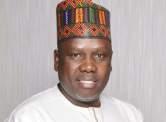
During an interfaith breaking of the fast with members of the Senate at the Presidential Villa in Abuja recently, President Bola Ahmed Tinubu signaled openness to exploring the creation of state police as part of broader security reforms, describing Nigeria as “extremely challenged” by terrorism, banditry and insurgency.
The new Inspector-General of Police, Mr.Olatunji Disu, has also inaugurated a committee to examine possible frameworks for state police.
Given the constitutional amendments required to establish state police, governors under the Nigeria Governors’ Forum have intensified their calls for decentralisation, arguing that local policing would enable quicker and more effective responses to security threats.
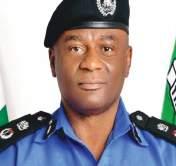
limitations, including manpower shortages, logistical constraints and overstretched operational responsibilities. Yet structural reform alone cannot guarantee effective policing. The more fundamental question is: who controls the instruments of force and how those instruments are used?.
Perhaps the most troubling risk associated with state police lies at the intersection of policing and politics. Nigeria’s political system remains intensely competitive and deeply personalised. In many states, political loyalty often determines access to power, influence and economic opportunity. In such situations, control of armed security institutions becomes enormously consequential.
ABIMBOLA DAYOADEWOYE pays tribute to Owobo, son of theater legend Hubert Ogunde
See page 21 See page 21
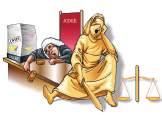
At first glance, the renewed push for state police appears both logical and timely. Nigeria is grappling with worsening insecurity: banditry across the NorthWest and North-East, kidnappings along highways, violent communal clashes, and the growing audacity of organised criminal networks.
The proposal therefore sounds persuasive. After all, if security challenges are local, policing should also be local. But beneath this appealing logic lies a troubling question Nigeria must confront: will creating state police solve the security crisis, or will it merely decentralise the dysfunction already embedded within the system?
The uncomfortable truth is that Nigeria’s security crisis is not primarily the result of an institutional gap. Rather, it stems from weak accountability, a fragile governance culture, and inconsistent political will. Creating new policing structures without addressing these deeper failures may simply multiply the problem.
Nigeria’s central challenge in security governance is not the absence of institutions; it is the absence of institutional discipline and political accountability. Across the country, episodes of insecurity often generate dramatic headlines but very little consequence. Public officials associated with serious security failures frequently remain in office without meaningful scrutiny. Investigations into security breaches rarely produce transparent findings or systemic reforms.
Introdu cing state police in such an environment could easily reproduce these same weaknesses, only this time across 36 different political jurisdictions. The question therefore becomes unavoidable: if accountability is weak at the federal level, what guarantees exist that it will be stronger at the state level? Without strong
oversight institutions, decentralisation risks becoming nothing more than a decentralisation of impunity.
Advocates of state police often cite federal systems such as the United States, Canada and Australia, where policing is largely decentralised. However, these comparisons overlook a critical difference. In those countries, police institutions operate within strong oversight systems, independent judicial structures, professional training regimes and transparent disciplinary mechanisms.
In those climes, civilian review boards investigate police misconduct while independent prosecutors handle abuse of power. Institutional cultures emphasise professionalism and public accountability. In short, decentralisation works effectively in those systems because accountability institutions already exist. Without such safeguards, decentralisation can easily become a pathway to localised authoritarianism.
Another argument frequently advanced by supporters of state police concerns the structural weaknesses of Nigeria’s centralised policing architecture. Critics note that the Nigeria Police Force operates under federal command despite Nigeria’s federal political structure. They argue that this arrangement creates bureaucratic distance between security institutions and local communities.
Academic research has reinforced this view. For example, a study published in the Journal of Legal Studies and Research argues that states are closer to their communities and may therefore respond more effectively to local crime patterns if empowered with their own police forces. Other researches on police reforms similarly observe that rising insecurity including banditry, kidnapping, terrorism and communal violence has intensified calls for decentralised policing across Nigeria.
These arguments are not without merit. Nigeria’s police system faces severe capacity
Under a state police system, appointments, promotions and operational priorities could easily be tainted by political patronage. Leadership positions might be a reward for party loyalty rather than professional competence, while recruitment could gradually favour political loyalists over trained law enforcement professionals.
The danger is clear: institutions designed to enforce the law could gradually become instruments for enforcing political power. Democratic systems depend on the neutrality of security institutions. Once policing becomes politicised, the boundary between law enforcement and political intimidation begins to erode.
Nigeria has already witnessed periodic accusations of security agencies being deployed during elections or political disputes. Granting operational control of police forces directly to state political authorities could intensify these risks. State police could easily become instruments of political power rather than guardians of public safety.
Nigeria’s political environment remains deeply competitive and often intolerant of opposition. In such a climate, statecontrolled security outfits could become tools for political intimidation, election manipulation and the suppression of dissent.
History already offers warning signs. Even federally controlled security agencies have occasionally faced accusations of political misuse. Transferring policing authority to governors who already wield enormous influence over state institutions may blur the line between law enforcement and political enforcement. The result could be a patchwork of security regimes where the neutrality of policing varies from state to state.
Okoronkwo is a communications strategist, a leadership and good governance advocate
The real test of a government spokesperson is fidelity to reality while defending policy, argues PAT ONUKWULI

In politics, language is both shield and sword. It defends governments from the arrows of criticism, yet it can just as easily pierce the credibility of those who wield it carelessly. Words can illuminate reality or attempt to obscure it; they can clarify public understanding or cloud it with convenient fog. The recent Al Jazeera interview featuring presidential spokesperson Daniel Bwala, conducted by the famously relentless Mehdi Hasan, offered a masterclass, not in effective communication, but in the perilous art of political overreach.
The encounter, now widely circulated online, has been described by viewers as a “car crash.” The metaphor is apt. One could almost hear the screech of rhetorical brakes and the shattering of credibility as the interview unfolded. Bwala entered the studio with the unenviable task of defending the administration of Bola Ahmed Tinubu before a host renowned for forensic questioning. To sit across from Hasan on live television is not a casual conversation; it is a gladiatorial arena of facts, framing, and intellectual stamina. And to his credit, Bwala began well. At first, he adopted a defensible posture. He acknowledged that events had overtaken some of his previous criticisms of Tinubu. Circumstances, he suggested, had changed; new realities had reshaped his assessment of the president’s performance. In politics, this is not a sin but a virtue. Intellectual evolution, when candidly explained, is preferable to stubborn ideological rigidity. To revise one’s judgement in light of new information is not hypocrisy but maturity, not a betrayal of principle but recognition of complexity.
Had Bwala remained on that terrain, he might have emerged from the encounter intact. But then came the fatal misstep; indeed, the cardinal sin of the entire episode. Instead of continuing along the narrow but credible path of contextual explanation, he veered into outright denial of statements he himself had previously made. In the age of the internet, that is an extraordinarily unwise strategy. The digital archive has a long memory. To deny what one had said is to wage war not merely against critics but against evidence itself. It is a battle no spokesperson can win.
A more honourable path was available. Rather than denying his earlier criticisms, Bwala could have acknowledged them openly and argued that his perspective had evolved. He could have said that circumstances, responsibilities, and access to new information had altered his judgement. That would have been intellectually defensible and politically credible. Instead of contradiction, there would have been continuity; instead of denial, explanation.
Political communication scholars have long warned against this mistake. The American strategist James Carville once captured part of the problem with
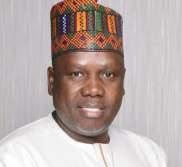
characteristic bluntness: “When you’re explaining, you’re losing.” Yet there is an even deeper truth beneath that aphorism: when you deny the obvious, or worse, deny your own recorded words, you are not merely losing the argument; you are forfeiting the trust that makes persuasion possible in the first place.
Veracity is an expensive currency in public discourse. Once it is spent recklessly, it is almost impossible to replenish. What began as a legitimate defence of policy gradually sounded like an attempt to repaint reality itself. Nigerians who grapple daily with economic hardship do not require foreign journalists to tell them what their wallets already know. Inflation, fuel costs, and currency volatility are not abstract statistics; they are lived experiences.
To deny those experiences is to deny the public’s own testimony. In rhetoric, this creates what scholars call cognitive dissonance, a jarring clash between official narrative and lived reality. When the gap becomes too wide, the audience stops listening. The messenger loses authority, and the message collapses with him.
Greek mythology offers a powerful metaphor for this dynamic. In the story of Icarus, the young man fashions wings of wax and feathers to escape captivity. His father warns him not to fly too close to the sun. But intoxicated by the thrill of flight, Icarus ascends higher until the wax melts, and he plummets into the sea.
Political spin obeys a similar law of gravity. A spokesperson may rise impressively on the wings of eloquence and loyalty. Still, if he flies too close to the sun of exaggeration, or worse, the heat of denial, the wax of credibility melts. What follows is not a graceful descent but a spectacular collapse.
The tragedy of the interview is that it did not have to unfold this way. The stronger argument, the one Bwala briefly touched upon, was that policies often look different in hindsight than they do in opposition. Governance reveals complexities that campaigning conceals. A critic who later becomes a defender can plausibly explain that governing realities altered his perspective. This is not unusual; it is the ordinary evolution of political judgment.
Dr. Onukwuli is a legal scholar and public affairs analyst. patonukwuli2003@yahoo.co.uk
ABIMBOLA DAYO-ADEWOYE pays tribute to Owobo, son of theater legend Hubert Ogunde
In Yoruba cosmology, lineage is likened to gold — precious, immutable, impossible to counterfeit. You either inherit it, or you do not. Few rising actors in Nigeria today embody that truth as compellingly as Owobo Ogunde. As the son of the late theatre legend Hubert Ogunde — widely revered as the father of modern Nigerian theatre — Owobo was born into a household where performance was not profession alone, but calling. The Ogunde name carries historical weight, etched into the evolution of Nigeria’s dramatic tradition. To be born into such a lineage is to inherit both privilege and expectation.
But pedigree, as Owobo’s journey makes clear, is merely prologue. For many, theatre is an aspiration discovered in adolescence. For Owobo, it was environment. By the age of six, he had already appeared as Oriade Kingigbe in ‘Aropin N’tenia’, stepping into a world that most children only glimpse from the audience. Long before he understood the full weight of his surname, he was immersed in rehearsal rooms — absorbing the discipline, structure, and ritual of performance. His earliest memories were shaped by stage lights and backstage whispers, by watching actors transform and stories unfold before live audiences.
At fourteen, he secured his first major role with the National Troupe of Nigeria, marking the formal beginning of his professional journey. It was an initiation into a demanding world — one that required stamina, humility, and the understanding that applause is earned, never assumed. During those formative years, he appeared in productions such as ‘Ayanmo’ (1984–1986), ‘Obafemi Awolowo’ (1987), and an adaptation of ‘Things Fall Apart’ (1981), experiences that sharpened both his technical discipline and emotional range.
Yet even with this early immersion, Owobo resisted the comfort of inherited identity. Seeking refinement beyond familiarity, he pursued formal training at the prestigious Oxford School of Drama in the United Kingdom. There, removed from the protective aura of legacy, he was simply another actor in training — expected to earn his place through craft, not lineage. The experience proved transformative. Exposure to diverse performance methodologies expanded his range and deepened his interpretive instincts. It reinforced a principle that would quietly guide his career: talent may open doors, but training sustains longevity.
Then came an unexpected pivot. Owobo stepped away from acting altogether, transitioning into software development. He earned a computing degree from Brunel University and built a successful career in technology, rising from software developer to Consulting Programme Director within the financial services industry. It was a trajectory defined by structure, strategy, and corporate precision. For some, such a move might signal retreat from artistic ambition. For
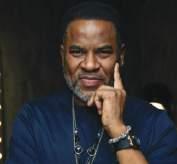
Owobo, it was recalibration.
Technology offered a different kind of stage — one governed by logic, architecture, and systems thinking. The analytical rigour of coding mirrored, in surprising ways, the architecture of performance. Character building, like programming, requires precision, patience, and attention to unseen frameworks. Both demand discipline. Both reward preparation. Though the theatre lights dimmed temporarily, the foundation remained intact. And then, as it often does in stories shaped by preparation, opportunity arrived.
A chance meeting with acclaimed filmmaker Kunle Afolayan altered the trajectory once more. What began as a dinner conversation between two custodians of theatrical heritage evolved into creative collaboration. The result was Owobo’s casting as Bàṣọrun in the Netflix epic Aníkúlápó. To audiences, his performance felt like an arrival — commanding, composed, unforgettable. As Bàṣọrun, Owobo radiated authority with measured restraint. Every glance was deliberate; every line delivered with gravitas. He resisted theatrical excess, opting instead for emotional intelligence and internal control. His portrayal balanced intensity with composure, evoking both power and quiet calculation.
The performance resonated widely, earning critical recognition and positioning him among the industry’s most compelling re-emergent talents. But this was no overnight ascent. It was inheritance refined by preparation. In just two years since his return to the screen, Owobo’s trajectory has been strikingly upward. His choice of projects reflects careful intentionality: culturally grounded narratives, spiritually textured scripts, and roles that interrogate power, identity, and tradition.
Among them is Iwe Ala, a production he describes as spiritually demanding and artistically immersive. The film required not only performance, but surrender — an engagement with indigenous cosmology and layered symbolism that stretched him both emotionally and intellectually.
Dayo-Adewoye is a media consultant, author, blogger, and co-host of the Seriously Doughnuts podcast.
Editor, Editorial Page PETER ISHAKA
Email peter.ishaka@thisdaylive.com
Besides tackling corruption, there is need to overhaul the entire judicial structure
The concerns raised by both the Economic and Financial Crimes Commission (EFCC) and Independent Corrupt Practices and Other Related Offences Commission (ICPC) over persistent delays in judicial determination of corruption cases deserves attention. But the challenge of justice administration in Nigeria goes beyond the delay in corruption cases. It is a general problem that has festered over several decades, now compounded by the appointment of sitting judges as members of election petition tribunals and commissions of enquiry. With that assignment which many crave and lobby for, other cases in their courts are usually adjourned for several months or in some instances, years.
The Chief Justice of Nigeria (CJN), Justice Kudirat Kekere-Ekun, recently waded in by saying that where judges familiarise themselves with relevant laws and case management techniques, their decisions would come with minimal delay. “The modern judge is not a passive arbiter. While impartiality remains paramount, judges are expected to exercise informed and active control over proceedings to ensure fairness, efficiency, and procedural discipline,” said Kekere-Ekun who called on Judges to curb delay tactics that compromise the trial process. “Undue or routine adjournments to rule on issues of admissibility should be discouraged, as they contribute to delay and undermine the momentum of trial proceedings.”

ies are ill-equipped, lawyers are requested by judges to submit photocopies of legal authorities cited by them in their submissions.
Indeed, the trouble with the Nigerian judiciary can be located in the entire structure, starting from the court gatemen to bailiffs to clerks to registrars down to messengers and typists—officials who equally play important roles in the dispensation of justice. Oftentimes, these judicial personnel are responsible for the delay of cases in our courts. For instance, when bailiffs refuse to serve court processes simply because they could not extort money from the litigants/counsels, there is bound to be a delay. That explains why in many courts, there are several instances when litigants would get to court only to learn that their case files have either been misplaced or lost.
The trouble with the Nigerian judiciary can be located in the entire structure, starting from the court gatemen to bailiffs to clerks to registrars down to messengers and typists
T H I S D AY
EDITOR SHAKA MOMODU
DEPUTY EDITOR WALE OLALEYE
MANAGING DIRECTOR ENIOLA BELLO
DEPUTY MANAGING DIRECTOR ISRAEL IWEGBU
CHAIRMAN EDITORIAL BOARD OLUSEGUN ADENIYI
EDITOR NATION’S CAPITAL IYOBOSA UWUGIAREN
THE OMBUDSMAN KAYODE KOMOLAFE
However, beyond the action of some Judges, the rules of procedure in our courts have also placed undue emphasis on technicalities which are invariably exploited to delay hearing of cases. In some instances, cases which commence at the customary/area courts and magistrate courts are also pursued to the Supreme Courts by aggrieved parties. Other challenges include working conditions that are detrimental to a speedy determination of cases by Judges. Owing to lack of accommodation in some jurisdictions, judges are compelled to share court rooms. As law librar-
T H I S D AY N E W S PA P E R S L I M I T E D
EDITOR-IN-CHIEF/CHAIRMAN NDUKA OBAIGBENA
GROUP EXECUTIVE DIRECTORS ENIOLA BELLO, KAYODE KOMOLAFE, ISRAEL IWEGBU
DIVISIONAL DIRECTORS SHAKA MOMODU, PETER IWEGBU, ANTHONY OGEDENGBE
DEPUTY DIVISIONAL DIRECTOR OJOGUN VICTOR DANBOYI
SNR. ASSOCIATE DIRECTOR ERIC OJEH
ASSOCIATE DIRECTOR PATRICK EIMIUHI
CONTROLLERS ABIMBOLA TAIWO, UCHENNA DIBIAGWU, NDUKA MOSERI
DIRECTOR, PRINTING PRODUCTION CHUKS ONWUDINJO
TO SEND EMAIL: first name.surname@thisdaylive.com
Letters to the Editor
While there have been efforts to address some of these challenges, not much has been achieved in that direction. Two years ago, the House of Representatives mandated its Committee on Constitutional Review to seek practical solutions to this nagging problem of delay in justice administration. The Benjamin Kalu-led committee was tasked with consulting experts, civil society, and citizens to gather inputs for meaningful reforms with December 2025 set as deadline. The resolution followed the adoption of a motion titled, “The need to review Nigeria’s justice and judicial system to restore public trust in the judiciary and address the delay in providing justice,” sponsored by Ganiyu Ayuba.
Beyond dealing with the foregoing issues, we also support the idea of the alternative dispute resolution mechanism being practiced in some states. Many Nigerians are hardly involved in interminable litigations in the “regular” courts which are patronised in urban centres. In most rural communities in the country, disputes are largely resolved through mediation and arbitration. The traditional judicial mechanism has worked effectively from time immemorial. A few of the 36 states have also adopted it by introducing the imported multi-door system and mediation centres. It is a worthwhile idea.
Letters in response to specific publications in THISDAY should be brief (150-300 words) and straight to the point. Interested readers may send such letters along with their contact details to opinion@thisdaylive.com. We also welcome comments and opinions on topical local, national and international issues provided they are well-written and should also not be longer than (750- 1000 words). They should be sent to opinion@thisdaylive. com along with photograph, email address and phone numbers of the writer.
Last month’s Area Council elections across the Federal Capital Territory revealed a frightening possibility: that voter apathy could keep the Nigerian voter away from the ballot box, effectively ceding critical ground to the merchants and mercenaries who continue to sell the country to bad leadership and crippling underdevelopment.
After months of somewhat muted campaigning, February 21st, 2026, opened the ballot box for Nigerians living in the FCT to elect their Area Council area council chairmen.With the recent push for financial autonomy for local government areas around the country based on a Supreme Court judgment and their crucial proximity to Nigeria’s long-neglected grassroots, Nigerians were expected to storm the polling units and mount the ballot boxes. Rather, many Nigerians tellingly chose to remain in their homes as the election witnessed a disappointingly low voter turnout.
The failure of leadership In Nigeria is well-documented. The catastrophic cost of this failure of leadership curses Nigerians with the insecurity that plagues the country, the
crumbling infrastructure, grinding poverty, and crippling healthcare. But it is time for the Nigerian voter to look hard at themselves.
Nigeria did not descend into the doldrums by magic. It took the efforts of those determined to ruin the country to make it happen. In the same way, it will take the efforts of patriotic Nigerians to dig the country they love out of the hole into which it has fallen. It will take sacrifice. The least of those sacrifices is becoming a voter in the real sense of the word, which entails political participation culminating in voting on election day. This is the least demand that can be made. 2027 is around the corner.
There is a direct causal link between voter apathy and bad leadership. When those who should vote stay away from voting and guarding their votes because of their distrust of national institutions, more space opens up for the mercenaries and merchants who trade in Nigeria’s future and commonwealth to do business. Their business is a business of death, and until Nigerians do something, they will continue
to die at the hands of those whose greed is their life. Every vote is a choice, a conscience, a decision, and a crucial piece of history. In fact, the vote is the most crucial part of any democracy. It may be a choice, but while the choice must not be compelled to be exercised in a particular manner, conscience and indeed survival demand that it should be exercised in a conscientious manner.
Every voter is a country. Every vote is a country. No matter how inconsequential it may seem, there is always an enormous amount of significance and substance hanging on every vote. The vote for the soul of any country must never be left to electoral brigands or chance
To refuse to vote at all is to surrender to the forces bent on tearing Nigeria apart without a fight. Whatever happens, refusing to vote is not an option. Nigerians must seize the bull by the horns, and it all begins with ink on the thumb and thumb on a ballot paper.
Kene Obiezu, keneobiezu@gmail.com
Akwa Ibom State stands at a crossroads of political and economic transformation under the leadership of Governor Umo Eno.
Less than three years in the saddle, his tenure is marked by strategic maneuvers aimed at repositioning the state for sustainable growth.
This journey, characterised by significant political realignments, ambitious fiscal policies, and a renewed focus on infrastructure development, reflects a governance approach that prioritises long-term benefits over short-term gains.
Through his actions, Eno is not merely navigating the complexities of Nigerian politics; he is architecting a vision that seeks to elevate Akwa Ibom to new heights of prosperity.
The pivotal moment in this transformation came on February 26, when Governor Eno met with President Bola Tinubu at the Presidential Villa in Abuja. While this meeting may have appeared routine on the surface, it represented a critical juncture in Akwa Ibom's political landscape.
It was more than a working visit; it was a strategic alignment that signalled the governor's commitment to securing federal collaboration for the benefit of his people. Eno's ability to forge relationships with national leadership is rooted in his understanding that cooperation with the federal government can be instrumental in unlocking essential resources and opportunities for the state.
The backdrop to this meeting was Eno's bold political decision to defect from the Peoples Democratic Party (PDP) to the All Progressives Congress (APC). This move, made official on June 6, 2025, was not a mere act of political opportunism but rather the culmination of extensive consultations with a wide array of stakeholders across Akwa Ibom.
By engaging traditional rulers, political leaders, business stakeholders, youth groups, and community influencers, Eno demonstrated a commitment to inclusivity and collective decision-making. In a political climate often characterised by backroom deals and unilateral decisions, his emphasis on consultation framed the defection as a strategic necessity rather than a desperate grasp for power.
Critics of political realignments often question the motivations behind such moves, arguing that governance should transcend party lines. However, Eno's perspective highlights the practical realities of Nigeria's federal structure. Political alignment between state and federal leadership can significantly impact project approvals, funding allocations, and economic partnerships.
By aligning Akwa Ibom with the All Progressives Congress, Eno positioned the state to benefit from reduced bureaucratic friction and increased access to federal resources.
His assertion that this shift was made "from a position of strength" reinforced the narrative that Akwa Ibom was not politically isolated but strategically leveraging its resources for greater relevance on the national stage.
The implications of Eno's political
repositioning extend beyond mere symbolism. His administration’s commitment to fiscal expansion is evident in the signing of the N1.58 trillion 2026 budget, one of the most ambitious fiscal plans in the state’s history.
The budget reflects a significant increase from its initial proposal of N1.39 trillion, underscoring the administration's confidence in revenue projections and its commitment to capital expenditure.
With approximately 74 per cent of the budget allocated for capital projects, Eno is prioritising investments in infrastructure, education, healthcare, and technology—critical components for driving long-term growth.
The implementation record of the 2025 budget, with over 80 per cent of allocations executed, further reinforces the effectiveness of Eno's governance approach. In a country where many Nigerian states struggle with underperformance, this level of execution signals disciplined management and effective coordination between the executive and legislative branches.
The synergy between these two arms of government is essential for translating budgetary commitments into tangible outcomes for citizens. Moreover, the recent budget review, which resulted in an additional N194 billion allocation after legislative scrutiny, reflects a functioning democratic process where ministries and agencies are held accountable for their proposals.
This participatory approach to budgeting counters narratives of unilateral decision-making and suggests a commitment to transparency and collaboration within the governance
framework. At its core, Eno's vision for development extends beyond the mere construction of infrastructure. It encompasses a holistic understanding of what constitutes progress for Akwa Ibom's citizens.
Development, in this context, means investing in education to equip children with the skills they need to compete in a global economy. It involves strengthening healthcare systems to ensure families are not financially devastated by illness. It is about creating jobs to reduce youth restiveness and crime, and building infrastructure that connects rural farmers to markets, thereby enhancing economic opportunities for all.
Nigeria's development arena is fraught with contradictions, as the nation grapples with persistent poverty and inequality, despite being Africa's largest economy. Governance challenges, including corruption and weak institutional frameworks, have historically hindered progress.
Eno's focus on accountability and performance is crucial in addressing these systemic issues. By publicly setting performance expectations for his administration, he is instilling a sense of urgency within the bureaucracy that is often lacking in public institutions.
A noteworthy aspect of the 2026 budget is its recognition of the interplay between physical and human capital investments. Modern economic research emphasises that infrastructure development must be complemented by the cultivation of human capacity. Roads without
skilled entrepreneurs cannot drive industry; hospitals without trained personnel cannot improve health outcomes. Eno's administration is cognisant of this dynamic and aims to balance investments in infrastructure with those in education and healthcare, recognising their interconnectedness in fostering sustainable growth.
Local government effectiveness also plays a pivotal role in achieving long-term development goals. Many rural communities in Nigeria rely heavily on local councils for essential services, yet these local governments often struggle with funding shortages and weak execution capacity. Eno's administration has the opportunity to strengthen grassroots impact by channelling resources and accountability mechanisms down to local levels. A commitment to supporting local governments can accelerate rural transformation and improve living standards for citizens in these areas.
In an era defined by digital innovation, Eno's administration has the potential to embrace e-governance as a means to enhance efficiency, and improve service delivery. By digitising processes such as procurement, tax administration, and civil service operations, Akwa Ibom can lead the way in transparency and accountability within Nigeria's broader federal framework. If Eno's alignment with the federal government opens doors to digital reform partnerships, the long-term governance dividends could be substantial.
Recognition of performance within the administration is another critical element of Eno's governance philosophy. By publicly acknowledging the achievements of commissioners and government officials, such as awarding the Commissioner for Culture and Tourism for the success of Christmas Unplugged 3.0, Eno is fostering a culture of excellence and innovation within the public sector. In an environment often criticised for inertia, incentivising results can motivate officials to pursue creative solutions to the challenges facing the state.
By aligning Akwa Ibom with the federal centre under President Tinubu, Eno is betting on the power of synergy over isolation. The rationale is clear: when state and federal governments share a common policy direction, coordination improves, leading to accelerated project delivery and tangible benefits for citizens. While the efficacy of these strategies will ultimately be judged by the outcomes—completed roads, equipped hospitals, improved schools, and reduced poverty—the framework Eno has constructed reflects calculated pragmatism rather than impulsive politics.
Navigating the complexities of governance in Nigeria demands a nuanced understanding of ethnic sensitivities, economic volatility, and citizen expectations. Eno's recent actions suggest he is attuned to these realities, prioritising leverage over limelight, coordination over confrontation, and measurable progress over mere rhetoric. If his administration can sustain implementation discipline while expanding human capital investments alongside infrastructure growth, Akwa Ibom may emerge as one of Nigeria's most strategically managed states.
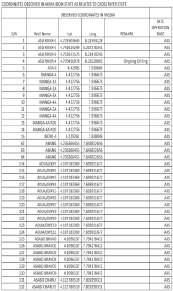
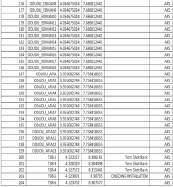
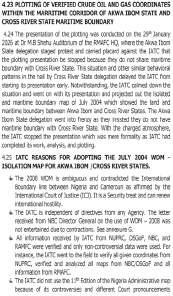
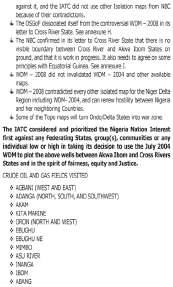
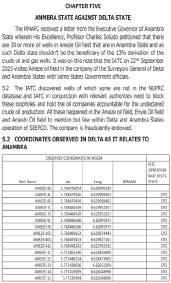
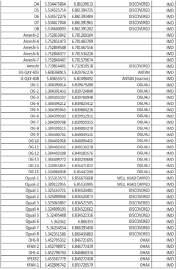
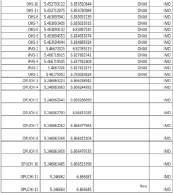
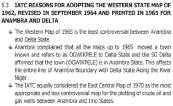
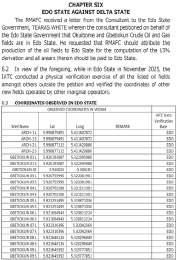
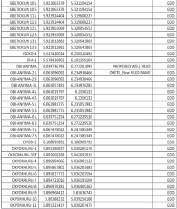
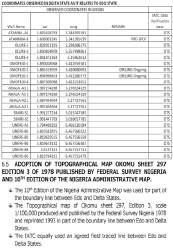
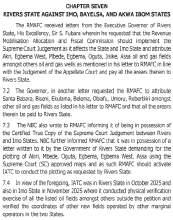
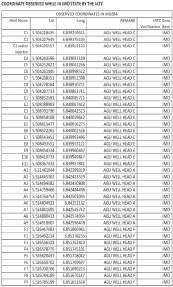
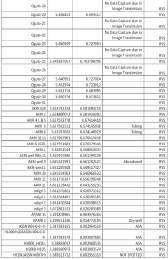
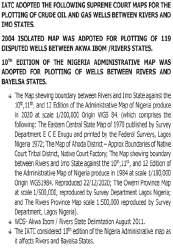
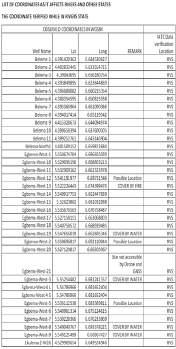
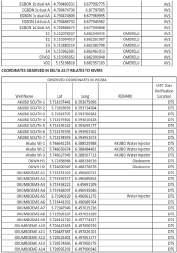
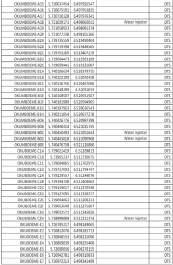
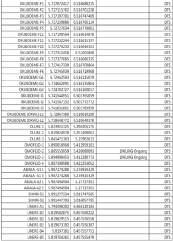
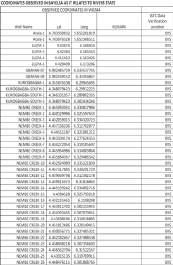
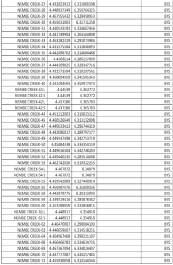
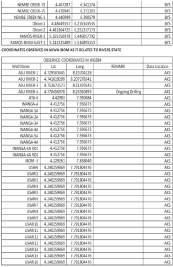
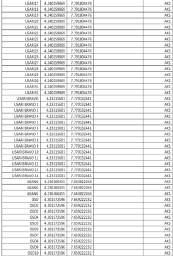
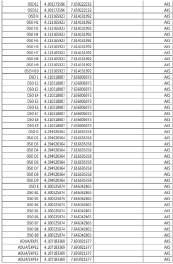
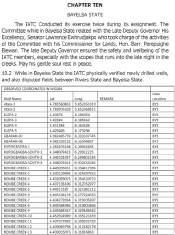
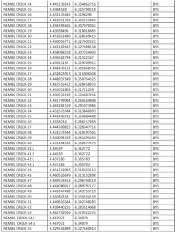
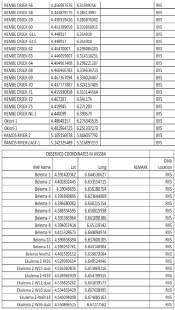
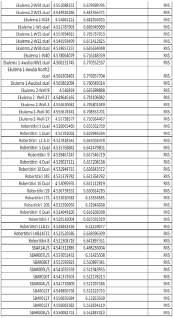
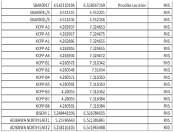
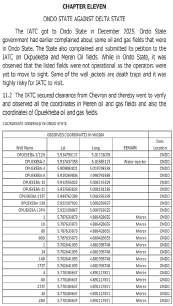
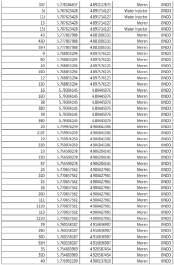
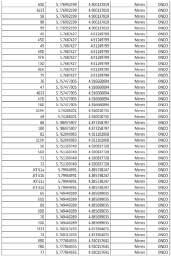
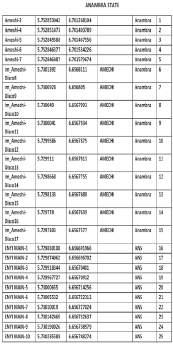
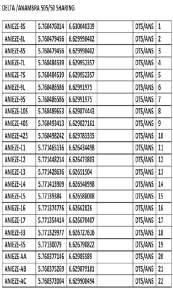
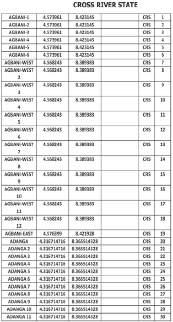
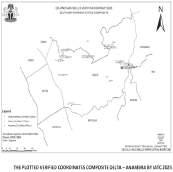
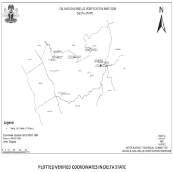
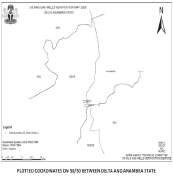
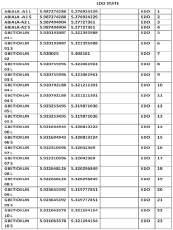

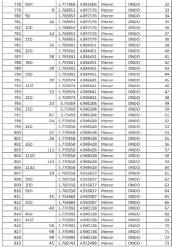
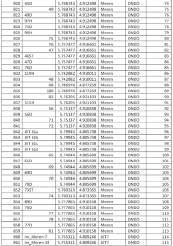
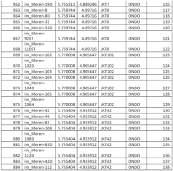
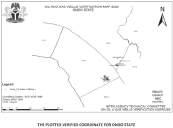
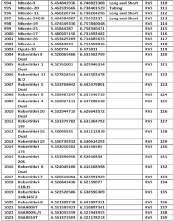
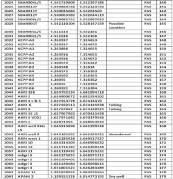
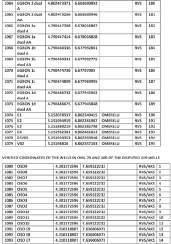
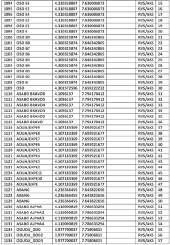
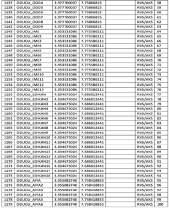
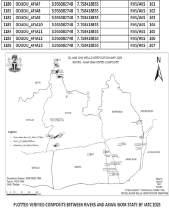
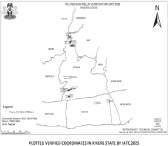
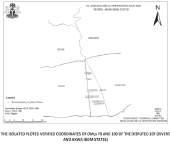
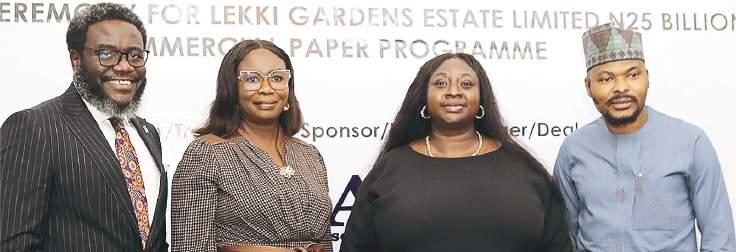
L R: Managing Director, FirstCap Limited, Mr. Ukandu E. Ukandu; Executive
and Chief Executive
Lekki
Inspector-General of Police (IGP), Mr. Olatunji Disu, has said he would do everything humanly and administratively possible to recapture all communities overrun
by bandits in Kwara State and other parts of the country. Disu stated this yesterday in Ilorin, the Kwara State capital, while addressing officers and men of the state police command during his maiden visit to the state since
assumption of office.
He stated, “Criminals could not chase us out of our communities. I know Kwara State and I know the problems we are having. I am in the state for an operation.
“I am also here to say, thank
you for all you have been doing. All of you seated there have been wonderful. I have come to say, thank you for everything you have been doing to assist us.
“At the same time, I want to beg you for more cooperation.
Criminals cannot pursue us out of our towns.
“We are the owners of the towns. And we will not allow that to happen. We have to take back our homes, we have to take back our communities. That is why
I am here to tell you that all of us will take back our communities.”
The IGP added, “I have visited Governor Abdulraman AbdulRazaq and thanked him. He has been very wonderful by providing a lot of things to support the police command in the state.
The Federal Government on Monday launched the distribution of Presidential Emergency Food and Nutrition items to vulnerable households in Plateau State, marking the grand finale of a nationwide intervention aimed at cushioning the impact of rising food insecurity across the country.
The flag-off ceremony held in Jos was led by the Minister of Humanitarian Affairs and Poverty Reduction, Dr. Bernard M. Doro, who described the initiative as both a national responsibility and a deeply personal homecoming.
“Plateau State is my home… the land where I was raised,” the Minister said, emphasizing that the
intervention targets households most affected by climate shocks, insecurity, displacement, and economic hardship.
He noted that women, children, the elderly, and persons with disabilities remain the most impacted by recent disruptions to livelihoods and food systems.
Dr. Doro explained that the food and nutrition support is part of a broader reform under the One Humanitarian–One Poverty Response System (OHOPRS), a new national framework designed to link emergency relief to long-term social protection and poverty-exit pathways.
“Our objective is clear: to break the cycle of repeated humanitarian dependency,” he said, adding that
beneficiaries will be integrated into the expanded National Social Register to access programmes such as conditional cash transfers, livelihood support, skills development, and micro-enterprise financing.
He also announced ongoing work with the Presidency on the 2026 National Anticipatory Action Framework, which will enable early response to climate-related disasters such as flooding.
The Minister expressed gratitude to President Bola Ahmed Tinubu for placing the welfare of vulnerable Nigerians at the centre of the Renewed Hope Agenda, and commended Plateau State governor, Barr. Caleb Mutfwang, for strong collaboration with the federal government.
The Rivers State House of Assembly has confirmed five commissioner-nominees sent by Governor Siminalayi Fubara for consideration.
It, however, rejected four nominees during their screening yesterday, at the plenary presided over by the Speaker, Martins Amaewhule.
The nominees cleared were Tonye Bellgam, Temple Nwofor, Peters Nwagor, Lekue Kenneth and Amairigha Edward Hart, while Datonye Alasia, Charity Deemua, Tamuno Williams and Otonye TKD
Amachree nomination were rejected. During the plenary, it was discovery that Datonye Alasia was disqualified for poor performance.
OTDK Amachree was rejected because he has over 11 petitions against him from his community on his alleged involvement in community cases.
Charity Demua was not accepted because she could not tender required tax documents, and Tamuno Williams was disqualified for allegedly misleading the public on the activities of the Assembly.
Speaking on the essence of the screening, Amaewhule said it was to give the state the best of hands to
assist the government in delivering the dividends of democracy to the people.
The House, thereafter, directed the Clerk of the House to transmit the Resolution of the House, confirming five nominees out of a list of nine to the governor.
Fubara, had forwarded the nominees to the House, in pursuant to Section 192 of the Constitution of the Federal Republic of Nigeria,1999 as amended.
The governor had sent the nominees for screening recently, after the fresh peace pact brokered by President Bola Tinubu, having sacked all his cabinet members.
In his remarks, Governor Mutfwang praised the initiative, describing it as a timely buffer while Nigerians await the longterm benefits of ongoing national economic reforms.
“Mr. President recognizes the need to ensure that while people are waiting for the bigger results, they do not go hungry,” he said.
The governor highlighted the unity displayed at the event— featuring the minister, the APC national chairman, and the state government—as a sign of a new era of cooperation. He assured the APC national chairman of Plateau’s political support and announced plans to distribute subsidized fertilizer to
farmers across all local governments to boost food production.
“We owe the people of Nigeria the responsibility of producing food because we are the food basket of the nation,” he said.
Also speaking at the event, APC national chairman and former Minister of Humanitarian Affairs, Prof. Nentawe Yilwatda Goshwe, revealed the intervention was part of a N25 billion special programme approved by the president to support vulnerable and crisis-affected communities nationwide.
He commended Dr. Doro for faithfully implementing the programme as designed, describing it as a continuation of Plateau’s legacy of integrity in public service.
“I am going to visit some places in town. I am visiting my officers who have been there for months. I am going to encourage them to do more.”
Disu exonerated some Fulani herdsmen from banditry and kidnap for ransom.
He said, “I say with all authority that we have a lot of Fulani people assisting us in doing our job. At the same time, I beg them to be of greater assistance. They should gather more information and give same to us.
“The way it is going it is dangerous, not all Fulani are bad. We have good Fulanis who have been our neighbours for thousands of years.”
He promised to put the welfare of the police at the front burner, saying, “I want to give you my words that I will look into the welfare of policemen.”
Alex Enumah
The Executive Director, Citizens Advocacy for Social and Economic Rights (CASER), Frank Tietie, has disclosed the advocacy group has written to the Minister of Marine and Blue Economy, Dr. Adegboyega Oyetola, on the alleged refusal of the Director General (DG/CEO) of the Nigerian Maritime Administration and Safety Agency (NIMASA), Dr. Dayo Mobereola, to respond to a lawful request for information submitted in pursuance of Freedom of Information Act (FOI).
Tietie made the disclosure on Monday, while speaking with
journalists on the agency’s alleged noncompliance to its request, shortly after he presented the acknowledged copy of the letter at the Ministry in Abuja He stated that an earlier request served on NIMASA on February 20, 2026, a copy which is also made available, specifically sought public records relating to safeguards for the protection of female staff with NIMASA.
Other information he claimed to have requested from the agency are: Administrative and unjustifiable postings, procurement processes and internal governance procedures within the agency.
While reinforcing his demand for the request, Frank Tietie, acknowledged that under Section 4 of the Freedom of Information Act, NIMASA was required to respond within seven (7) days either by providing the requested information or by stating specific statutory exemption relied upon, adding that NIMASA has not done either.
The Agency’s silence, the Rights Activist said, constitutes a clear breach of its statutory obligations under the Freedom of Information Act which reflects an unacceptable disregard for the law governing transparency in public administration.
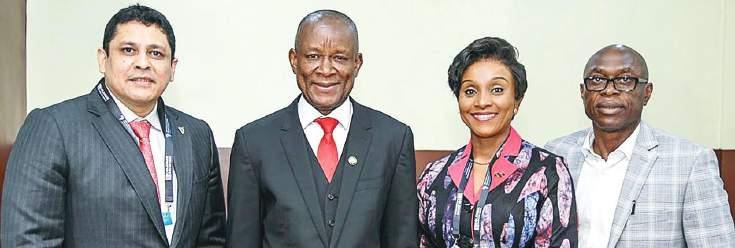
L
Okocha in Abuja
Governor of Zamfara State, Dauda Lawal, has defected from Peoples Democratic Party (PDP) to the ruling All Progressives Congress (APC).
The defection was confirmed in a press statement by his media aide, Nuhu Anka.
The decision, according to the statement, followed extensive consultations with political stakeholders, elders, and supporters across the state.
According to the statement, the governor took the decision after careful consideration of the prevailing political situation and the need to prioritise stability, progress, and sustainable development in
the state.
“The government and PDP family of Zamfara State wish to formally inform the public of an important political development following wide consultations with stakeholders, political leaders, elders and supporters across the state,” the statement said.
It added that after reviewing the circumstances, Lawal resolved to leave the PDP and formally align with APC.
Anka explained that the governor’s decision was largely influenced by the lingering internal crisis within the PDP at both the national and state levels.
He stated that the party had been grappling with leadership disagreements and structural
Sunday Aborisade in Abuja and Gbenga Sodeinde in Ado Ekiti
Leader of the Senate, Opeyemi Bamidele, has disclosed that All Progressives Congress (APC) had mapped out a mobilisation strategy aimed at delivering at least 10 million votes for the re-election of President Bola Tinubu from the South-west zone alone in the 2027 general election.
Bamidele, who also chairs Ekiti APC 2026 Governorship Election Campaign Council, said the June 20 governorship poll in the state would serve as a referendum on the leadership of Governor Biodun Oyebanji, citing the administration’s development strides and people-oriented programmes since assuming office.
The senate leader spoke in Ado Ekiti after inaugurating the 57-member governorship election campaign council.
He expressed confidence that the re-election of the governor would be “a walkover for the All Progressives Congress”.
The inauguration ceremony was
attended by Deputy Governor of Ekiti State, Chief Monisade Afuye; Speaker of Ekiti State House of Assembly, Rt. Hon. Adeoye Aribasoye; and APC National Secretary, Ajibola Basiru.
Others were Chairman of the board of Nigerian Ports Authority, Dayo Adeyeye; and former Senator for Ekiti Central, Bode Ola, alongside serving members of the National Assembly and other party stakeholders.
Charging party leaders and members to brace up for the election, Bamidele said Oyebanji’s performance had set a new benchmark in the history of the state.
Bamidele said the governor “has been consciously paddling the oars of our state with courage and vision, confidence and synergy, as well as patriotism and unalloyed commitment to the well-being of over 3.8 million residents of Ekiti State”.
Beyond the governorship election, the senate leader said APC was already setting its sights on the 2027 general election.
challenges, which he said had created uncertainty and distractions capable of affecting governance and service delivery.
“These challenges have continued to generate uncertainty and distractions that may hinder effective governance and the delivery of democratic dividends to the people of Zamfara State,” the statement added.
take legal steps to appeal same to the Supreme Court-being the apex court in the land; to conclusively adjudicate on this matter.
‘’We are hopeful that the apex court will expeditiously settle this matter in the interest of democracy. We urge our members to stand firm, trusting that soon this battle will be over and we shall be more than conquerors.
‘’The battle to rescue our party from the hands of government agents masquerading as opposition leaders must be fought, and we are determined to do so and win.
Stay firm, stand strong.”
PDP indicated desire to approach the Supreme Court over the judgement.
Speaking shortly after the appellate court upheld the judgements against the conduct of the party’s convention that produced him as national chairman, Turaki faulted the decisions of the appellate court.
He stated, “The court has no business meddling a purely political matter.”
Turaki added that the internal affairs of political parties were to be left to the parties to resolve by themselves.
He said, “We have asked our lawyers to collect the Certified True Copy (CTC) of the judgement, which the court says would be ready by tomorrow. As soon as it is received they will advise us on what steps to take.”
A PDP faction said to be loyal to the governor of Oyo State, Seyi Makinde, had appealed judgments of the Abuja division of the Federal High Court, which halted the convention as well as restrained the Independent National Electoral Commission (INEC) from partici-
The governor assured residents that his administration remained committed to tackling security challenges and advancing development across the North-west state.
Anka said the move to APC was aimed at aligning with a political platform that would provide greater unity, stability, and improved collaboration with the federal government for the benefit
pating, monitoring or recognising the outcome of the convention, as well as a ruling on the authentic leadership of the party.
Former acting National Secretary of PDP, Samuel Anyanwu, described the appeal court verdicts as victory to all PDP members.
Anyanwu spoke with journalists shortly after Monday’s appeal court proceedings.
Wike Seeks End to PDP Feud, Urges Rebuilding After Court Annuls Convention
Minister of the Federal Capital Territory (FCT), Nyesom Wike, called on the warring factions within PDP to collapse their personal egos and interests in a bid to rebuild the party’s fractured foundation.
Speaking to journalists yesterday in Abuja, Wike described the appellate court’s verdict as a “vital reminder” that political parties must operate strictly within the boundaries of the Nigerian constitution, the Electoral Act, and internal party guidelines.
“When you say you are violating the constitution, the Electoral Act, and INEC guidelines, it is no longer within the realm of internal affairs,” Wike said.
He dismissed the long-held argument that the party’s leadership disputes were beyond judicial intervention.
“The court must come in and ask, ‘Why would you violate the laws?’” Wike said.
On the path forward and with the party’s primary elections for the 2027 cycle looming, Wike warned aggrieved members that a further
of the people. He disclosed that the final decision was reached after a meeting held at Government House, Gusau, where senior government officials and key political stakeholders deliberated on the matter under the coordination of the deputy governor.
Lawal also appreciated members of the PDP for their support over
appeal to the Supreme Court would only result in a “waste of time” and leave PDP too weak to serve as a formidable opposition.
He stated, “Leave your personal interests. Let us sit down and see how we can forge ahead. The law has spoken. This is an opportunity for the PDP to look inwards and say, ‘Enough is enough’.”
The FCT minister revealed that the National Caretaker Committee had already swung into action, securing a venue near the National Stadium in Abuja to host a fresh National Convention on March 29 and 30, 2026. He said the choice of venue was strategic, as Eagle Square—the traditional site for such gatherings—is currently slated to host the National Convention of the ruling All Progressives Congress (APC) during the same window.
Two PDP members, Adelaja Adeoye and Segun Showunmi, indicated their readiness to contest the 2027 governorship elections in Lagos and Ogun States, respectively.
Adeoye, a PDP chieftain and media strategist, had emerged as a prominent voice within the opposition party in Lagos, positioning himself as part of a new generation determined to revitalise the party in Nigeria’s commercial capital.
Fondly called Laja Adeoye, he had been active in internal party discussions on strategies to reposition PDP ahead of the 2027 elections.
the years, noting that prevailing political realities made the defection necessary.
“With this move, the governor reaffirms his commitment to strengthening unity, enhancing security, accelerating development and ensuring that Zamfara State fully benefits from stronger cooperation with the Federal Government,” the statement said.
His political journey included key roles in party communication and grassroots mobilisation.
Adeoye holds a degree from the University of Lagos and a master’s degree in Property Development and Management from Lead City University. He is also a real estate entrepreneur and communications strategist.
In neighbouring Ogun State, Showunmi, a former spokesperson to Atiku Abubakar during his presidential campaign, formally announced his intention to contest the governorship election.
Showunmi, who is also the convener of the political movement known as “The Alternatives”, made his intention known earlier in 2026, citing the need to address development gaps in healthcare, education, and infrastructure in the state.
Speaking on his ambition, Showunmi said governance in Ogun must prioritise the welfare of citizens across all communities.
“We need to design Ogun not to work for the person in Oke-Mosan, but to work for every person in the nooks and crannies of the state,” he said.
Showunmi also expressed concern over the state of public infrastructure, including the historic Sacred Heart Hospital, and called for leadership driven by consensus, character, and genuine public interest.
Although he had reportedly attracted interest from other political platforms, including Labour Party (LP) and Action Alliance, Showunmi maintained his ties with PDP, where he is widely regarded as a bridge-builder and youth advocate.
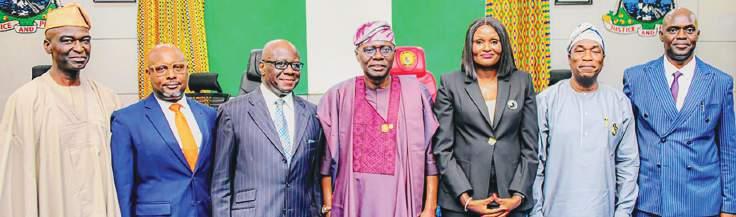
SANWO OLU INAUGURATES BOARD OF STATE ELECTRICITY REGULATORY COMMISSION...
L R: Board members of the Lagos State Electricity Regulatory Commission (LASERC), Non Executive, Mr. Bello Wasiu Oladimeji; Licensing and Compliance Executive, Mr. Olakunle Falola; Chairman, Mr. Alexander Ogunbiyi; Governor of Lagos State, Mr. Babajide Sanwo Olu; Chief Executive Officer, Mrs. Temitope George; Deputy Governor, Dr. Obafemi Hamzat; and Engineering Executive, Engr. Adekunle Olopade, during the formal inauguration of the board at the Lagos House, Ikeja, yesterday
Chuks Okocha in Abuja
Presidential hopeful, Mr. Peter Obi, has asked the current administration to put an end to the perceived persecution of political opponents disguised as criminal prosecution.
Obi made this call in a post on X, yesterday, saying the integrity of the rule of law in Nigeria was non-negotiable and that, “its degradation undermines our economic development and threatens national stability.”
Trump told NBC News.
He earlier described Ayatollah Ali Khamenei’s son as a “light weight”. Trump also said it’s “too soon to talk about” seizing Iran’s oil but he “doesn’t rule it out”.
Besides, Trump said Monday that the war against Iran would be a “short-term excursion,” while insisting that the United States and Israel “haven’t won enough” against Tehran.
Trump’s comments at a gathering of congressional Republicans at his golf club in Doral, Florida, cast further uncertainty over his timeline after he said in a CBS News interview that the conflict was “very complete, pretty much.”
Trump said in a speech, “We took a little excursion because we felt we had to do that to get rid of some people. And I think you’ll see it’s going to be a short-term excursion.”
The 79-year-old repeated his boasts about the destruction of the Iranian navy, air force and missile programme. But Trump — whose earlier CBS comments indicating an end to the war was in sight had caused stocks to jump and oil prices to drop — added that the United States and Israel had more to do.
“We’ve already won in many ways, but we haven’t won enough,” Trump said, calling for “ultimate victory” against Iran. Referring to the killing of former supreme leader Ayatollah Ali Khamenei and other Iranian leaders, Trump added that the United States “will not relent until the enemy is totally and decisively defeated.”
US Secretary of State, Marco Rubio, on Monday accused Iran of trying to “hold the world hostage” through its retaliatory missile and
He described as worrisome the recent arrests and continued detention of key leaders from the African Democracy Congress (ADC), including Abubakar
drone strikes across the Gulf region.
Speaking at a state department event honouring wrongfully detained Americans and hostages, Rubio said the United States remains “well on our way” to achieving its objectives in the ongoing conflict.
“I think we are all seeing right now the threat this clerical regime poses to the region and to the world. They are trying to hold the world hostage,” Rubio said. “They are attacking neighbouring countries, their energy infrastructure, their civilian population. The objective of this mission is to destroy their ability to continue to do that, and we are well on our way to achieving that,” AFP quoted him as saying.
The remarks come weeks after the United States and Israel carried out attacks on Iran on February 28, which included the killing of Ayatollah Ali Khamenei, the Islamic republic’s longtime supreme leader. Since then, Iran has launched missile and drone strikes targeting Israel and Gulf Arab states, which host US military bases.
Rubio highlighted the case of Robert Levinson, a former FBI agent who disappeared on Kish Island in 2007, stating that Levinson’s presumed death underscored the nature of the Iranian regime.
“Levinson is particularly a reminder of the nature of the regime that we’re dealing with in Tehran,” Rubio said.
“They were founded, unfortunately, on an assault on the brave men and women of our foreign and civil service,” referring to the 1979 US embassy hostage crisis in Tehran.
The secretary of state was joined at the event by family members of Levinson and other Americans who were wrongfully detained abroad.
Putin Offers “Unwavering Support” to New Supreme Leader
The Russian leader congratulated
Malami, a former Attorney General of the Federation, and Mallam Nasir El-Rufai, ex-governor of Kaduna State.
According to Obi, the timing of the arrests— coinciding with their commitment to ensure the current administration was voted out in 2027 — raised serious questions.
Mojtaba Khamenei on Monday morning following his appointment by the regime’s Assembly of Experts. Putin said he was confident Khamenei would continue his father’s work “with honour” and unite the Iranian people “in the face of severe trials”.
He added that Russia would continue to stand by Tehran, saying he wished to confirm “unwavering support for Tehran and solidarity with our Iranian friends”.
China: Choice of Iran’s New Leader Constitutional Matter
The Chinese government has also warned against any targeting of Khamenei by the US-Israeli military campaign.
A Chinese foreign ministry spokesperson said yesterday that the election of Mojtaba Khamenei as Iran’s third supreme leader was a decision based on the country’s constitution.
Spokesperson Guo Jiakun made the remarks at a daily press briefing in response to a related query, saying China has noticed relevant media reports.
Iran’s Assembly of Experts announced on Sunday that Mojtaba Khamenei, son of Ali Khamenei, had been selected as Iran’s new supreme leader, according to media reports.
Mojtaba Khamenei, born in 1969, is the son of Iran’s late Supreme Leader Ali Khamenei, who was killed in the joint U.S.-Israeli strikes.
Starmer Warns of Bigger Impact on Economy
The longer the Iran war goes on, the more likely the impact on the economy, UK Prime Minister, Keir Starmer said yesterday. Addressing the war in Iran, Starmer acknowledged that the longer the conflict went on the greater the
“The methods used in their apprehension contradict the principles of rule of law. Prosecutorial decisions must be grounded in concrete evidence and probable cause, transparently presented without ulterior motives.
“The undue denial of bail or unjustly stringent conditions imposed on bail leave little doubt
likely impact on the UK’s economy.
The prime minister said, “The job of government is obviously to get ahead, to look around the corner, to work with others, and the chancellor speaks to the governor of the Bank of England on a daily basis, with looking cross-departmental within government, assessing the risks, monitoring and talking to our international partners as well about what more we can do together to reduce the likely impact on people here and businesses here,
that the government is wielding criminal prosecution as a weapon against its political opponents.
“The situation surrounding Malam El-Rufai is particularly concerning; his repeated transfers between the EFCC, ICPC, and DSS suggest a desperate search for any charge that might stick, straying dangerously close to a
of course.
“But it is important to acknowledge that that work is needed, because people will sense, you will sense I think, that the longer this goes on, the more likely the potential for an impact on our economy, impact into the lives and households of everybody and every business.
“And our job is to get ahead of that, to look around the corner, assess the risk, monitor the risks, and work with others in relation to that.”
fishing expedition rather than a credible investigation.
“I firmly believe that Nigeria requires a civil and criminal justice system that instills confidence in every citizen—that no one should fear persecution for their political beliefs or actions disapproved by those in power.
“The criminal trial process must adhere strictly to legal standards. As we approach a critical election period, the government must cease its efforts to undermine political opponents under the pretense of battling corruption, and wrong doing.
“I wholeheartedly support the fight against corruption, and wrong doing, but it must be conducted with integrity and transparency, starting with those currently in power rather than targeting opponents.
“A credible anti-corruption and anti wrong doing campaign cannot afford to be selective,” Obi wrote.
the signing of the agreement, expressed the readiness of Lagos for the historic IATF 2027, aimed at creating opportunities for trade and investments across the African continent.
He said the hosting of the fifth Intra-African Trade Fair in Lagos next year would be a defining time for Africa to take its rightful place in the comity of nations. The governor assured that Lagos State will put every necessary thing in place to ensure that the event was the best IATF to be hosted in Africa.
Sanwo-Olu stated, “We will do it knowing fully well that it is a time for Africa to take its rightful place in the global space. I want to assure you that the CANEX (Creative Africa Nexus 2026) event coming up in Lagos later in the year will be a masterpiece.
“It will be one of the biggest that you have seen because Lagos is not just a commercial economic nerve centre of our country; it is the entertainment capital of Africa, and we will bring our A-game to its fullness. You will see a CANEX that you have never seen before, and we will be true with our promise.”
The governor said, “For the big one, IATF 2027, we will ensure
that not only would we put our best foot forward, we will also not disappoint all of you. The President of the Federal Republic of Nigeria, Asiwaju Bola Tinubu, is committed to the event. He had run this State (Lagos) at some point, and it is still the energy and the spirit of Lagos that he’s taken to the Federal Government. He has given both the minister and myself a marching order to ensure that next year at IATF 2027, Nigeria represents Africa very well.
“We will be doing it with everything we have. We will do everything possible to ensure that it will be the best IATF that we have seen on the continent of Africa. On behalf of the people and the government of Nigeria, we are excited. We are happy that they have given us this responsibility, and indeed Lagos will be playing host to the two big events.”
Held biennially, IATF provides a platform for businesses in Africa and the rest of the world to showcase their goods and services to visitors and buyers, while exchanging information and exploring opportunities. The fourth IATF2025, hosted in Algiers, Algeria, in 2025, was a resounding
success with US$48.3 billion in trade and investment deals signed during the weeklong continental exposition event. It was attended by over 112,000 visitors (physical and virtual), from 132 countries. A total of 958 buyers also participated in the event.
IATF2027, which is the fifth edition, is expected to convene thousands of exhibitors, buyers, investors, and policymakers from across the continent and the diaspora, catalysing trade and investment deals, trade and market information exchanges, industrial partnerships, and cross-border investment aligned with Africa’s industrialisation and economic integration agenda.
The signing ceremony brought together senior government representatives, continental institutions, and business leaders, marking a significant step towards delivering a transformative trade platform for Africa.
Speaking at the event, representatives of African Union Commission and AfCFTA affirmed their commitment to work collaboratively with stakeholders to make the intra-African trade fair 2027 a success.
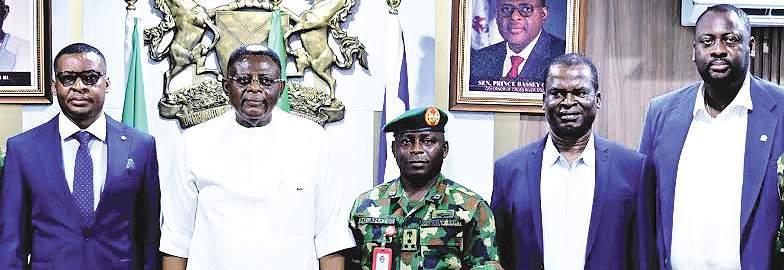
L-R: Deputy Governor of Cross River State, Dr.Peter Odey; Cross River State Governor, Prince Bassey Otu; Commandant, Amphibius Training School, Calabar, Brig. Gen. Mathias.Ibawa Amatso; Secretary to Government of State, Prof. Anthony Owan-Enoh, and Special Adviser, Forensic and Intelligence, Chief Coco Henshaw, during a courtesy call on the governor by the Commandant of Amphibious Training School in Calabar…yesterday
Fidelis david in akure and George Okoh in makurdi
Residents of Ilu-Abo in Akure North Local Government Area of Ondo State were thrown into panic meyesterdayfter suspected gunmen abducted a council secretary and two other persons during an attack on a poultry farm along Kajola Road.
The victims include Joseph Aladesuyi, the Secretary of Okeluju Local Council Development Area (LCDA), Akoko North-West Local Government Area of Ondo State, who was attacked while heading to his farm in the company of his daughter.
Eyewitnesses said the assailants, believed to be about 10 in number,
The Governor of Cross River State, Bassey Otu, has reaffirmed his administration’s commitment to deepened collaboration with the military to strengthen maritime and internal security in the state.
The governor gave the assurance when he received the Commandant of the Amphibious Training School, Matthias Ibawa Amatso, who paid him a courtesy visit in Calabar alongside senior officers of the institution.
Welcoming the delegation in company of his Deputy, Dr. Peter Odey, Secretary the Government of the State, Prof. Owan Enoh, Governor
Otu expressed delight at what he described as a “commendable gesture of institutional harmony,” noting that the visit symbolised the strong synergy that must exist between government and security institutions in the pursuit of peace and development.
He described the Amphibious Training School as a strategic asset to the state and the nation, particularly given Cross River’s extensive riverine and maritime terrain. “Let me warmly welcome you on behalf of the government and good people of Cross River State,” the governor said.
Gideon arinze in enugu
The Managing Director and Chief Executive Officer of S. Mobile Tech, Dr. Ifeanyi Adonu, has urged Nigerian youths to embrace opportunities in the digital economy, stressing that technology and telecommunications remain critical drivers of business growth and job creation.
Adonu made the call in Enugu yesterday after he received the ‘Icon of Entrepreneurship Award’ from the Nigeria Union of
Journalists (NUJ), Enugu State Council.
In his address, Adonu noted that the world is rapidly becoming digital, and encouraged young people to acquire relevant technological skills that would enable them to develop applications, create innovations, and compete in the evolving global economy.
He explained that his company, S. Mobile Net Zone Limited, operates as a major distribution partner of MTN Nigeria, handling airtime, data, and other telecommunications products across the South-east.
ambushed the victims and opened fire, confusing ithe areabefore whisking the council official away to an unknown destination.
A community source, who
‘Reasons
spoke on the condition of anonymity, said the attack happened suddenly, leaving residents in shock.
“They were heavily armed and started shooting to scare
people away. Everyone ran for safety before they took the victims into the bush,” the source said.
Aladesuyi, who also runs a commercial farm in
the area, was said to have been travelling to the farm when the gunmen struck. His daughter, however, was reportedly left behind by the attackers.
yinka Kolawole in Osogbo
The Osun State Governor’s Office has fired a major salvo at the governorship candidate of the All Progressives Congress (APC), Bola Oyebamiji, listing 23 reasons he is not fit to be the governor of the state.
In a direct onslaught that might dictate the tone of the
state governorship campaign, the Governor’s Office, through the spokesperson to the Governor, Mallam Olawale Rasheed, said the records and performance of the state Governor, Ademola Adeleke, are well known to the public, declaring that “it is time to expose why the APC candidate is not fit for the governorship.
“The APC candidate has three broad records on which his qualifications, competency, and suitability for the governorship can be assessed. Going by those three spaces, the candidate failed all the tests by all accounts.
“The governor will be opening up details of each of the points from March 11, when
the campaigns will officially start. Abridged versions of those reasons are, however, provided below for the public to know: As the head of Osun State Investment Company (OSICOL), the APC candidate mismanaged the resources of Osun State, as evidenced in the handling of state properties in Lagos and Abuja.
sunday Ehigiator
Atlantis Pediatric Hospital has expressed confidence in the professionalism of its medical team following the interim suspension of its Chief Medical Director by the Medical and Dental Practitioners Investigation Panel (MDPIP). The panel is investigating
the circumstances surrounding the death of Nkanu Esege, the 21-month-old son of renowned Nigerian author Chimamanda Ngozi Adichie.
The incident reportedly occurred at Euracare Multi Specialist Hospital, while a coroner’s inquest into the matter is currently underway.
In a statement issued
yesterday, the management of Atlantis Pediatric Hospital said it received a letter dated February 25, 2026, but delivered on March 5, notifying it of the panel’s decision to place its Chief Medical Director on interim suspension.
While acknowledging the communication, the hospital said it has reservations regarding the development and would engage appropriate professional and regulatory support to address issues arising from the decision. Despite the suspension, the hospital maintained that it remains confident its medical professionals acted within the bounds of professional responsibility.
sunday Okobi
Safety For Every Girl (SFEG) has announced that the 2026 period summit will take place on March 13, 2026, in Lagos.
With the theme: ‘#HerSafetyHerPower’, the second edition of the world’s first-ever period summit will expand the conversation on
women’s safety by bringing together leaders in the media, advocacy, and youth engagement.
Among those to headline the highlight of the event, an exclusive Keynote Fireside Chat, include cinematic powerhouse, Ruth Kadiri, who will join a deep-dive conversation to be moderated by SFEG Founder,
Chioma Nwigwe. The organisers said the session would explore ‘The Narrative Frontier’, dissecting how storytelling and media can be leveraged as strategic tools to challenge the architecture of silence surrounding women’s safety. The summit will feature a formidable intergenerational lineup, including executive coaches
Laila St. Matthew-Daniel and Dr. Glory Edozien, as well as cultural catalysts Beauty Tukura and Alex Unusual. Strategic insights will be shared by Olori Coitus, Elizabeth Osho, and Chimezie Arogundade, with fresh perspectives from teenage trailblazers Simisola Gbadamosi and Angel-Divine Onyebuchi.
St. Joseph’s College (SJC), Ondo, founded in 1956 by the De La Salle Brothers, has concluded arrangements to celebrate its 70th Founder’s Day (Platinum Anniversary) with a series of activities designed to honour the school’s rich heritage and contributions to education in Nigeria.
According to the Chairman of the Central Planning Committee, Chief Yele Ogundipe, the week-long celebration will feature several events bringing together students, alumni, staff, and distinguished guests from across the country.
The celebration will
commence on Wednesday, March 18, with a Platinum Jubilee Walk. Later in the day, an inter-school football match between St. Joseph’s College, Ondo and Methodist High School, Okitipupa will take place at the Ondo Sports Stadium.
On Thursday, March 19,
activities will continue with the launching of the Endowment Fund and commissioning of projects in the school compound. The programme will proceed on Friday, March 20, with a medical outreach for members of the community at the Ondo Town Hall.
Group Sports Editor: Duro Ikhazuagbe Email: duro.ikhazuagbe@thisdaylive.com 0811 181 3083 SMS ONLY
Duro Ikhazuagbe
Foremost Nigeria’s football coach and administrator, Chief Adegboye Festus Onigbinde is dead. He was aged 88 years.
The passage of the Modakeke, Osun State High Chief was announced by one of his daughters, Mrs Bolade Adesuyi.
According to the statement, the first indigenous Nigerian coach of the then Green Eagles, died on Monday evening.
“We announce the passing of this great man, a Modakeke High Chief, the first indigenous Nigerian Super Eagles coach, father, husband, grand father, Chief Festus Adegboye Onigbinde who passed unto the great beyond a couple of minutes ago, “ observed the statement from the family.
The statement added that the family thanked God for the fulfilled life and contributions made by the late Chief Onigbinde to the nation and world at large as a football coach of repute.
He was a member of CAF and FIFA’s Technical Study Group member in his life time, contributing meaningfully to global football development.
The family promised to announce the final funeral arrangements at the appropriate time.
Onigbinde, one of Nigeria’s most respected football administrators and coaches, shot to limelight when he guided Water Corporation of Ibadan
to the quarter finals of the African Champions Cup in 1977. With a very limited budget, he managed to fill the vacuum created by IICC and Rangers both involved in the African Cup Winners Cup competition that year.
Water Corporation eventually lost to Horoya of Guinea but Onigbinde became a household name in Nigeria immediately
He first took charge of the national team in 1983, succeeding Brazilian
coach Otto Gloria. During his tenure, he led the then Green Eagles to the final of the 1984 Africa Cup of Nations, where Nigeria finished runners-up.
Nearly two decades later, Onig-
Lookman aiming to continue good run with Atlético against Spurs
Duro Ikhazuagbe
Galatasaray’s talisman in Europe this season, Nigerian striker, Victor Osimhen, will be under strict caution as Liverpool invade the Rams Park in Istanbul this evening for the first leg of the UEFA Champions League Last fixture.
The power-playing Super Eagles striker who has started building another cult-figure amongst Galatasaray’s fans, may be tempted to slow down as he aims to lead the Turkish Lig champions to another first leg advantage just like they did against Juventus in the playoffs.
Osimhen who is already on a yellow card from the second leg of the Playoff at Juventus, now risk a one-match ban in the UEFA Champions League should he bag another booking in today’s home game against Liverpool.
This, perhaps, is the dilemma facing the Okan Buruk’s side who are playing in their first Last 16 game since 2013/14 season this evening. Kickoff is from 6.46pm.
The Reds are going to be without Brazil international Alisson through injury. His absence means Giorgi Mamardashvili is poised to make his first appearance for Liverpoolsince

the FA Cup win over Barnsley on 12 January.
The Georgian has featured 11 times for Liverpoolin all competitions this season.
Liverpoolare also without Italian forward Federico Chiesa, who has not made the trip to Istanbul because of illness.
Elsewhere in Madrid, Osimhen’s Nigerian teammate, Ademola Lookman and his Atlético colleagues will be aiming to ensure that they gain a good advantage in their Last 16

first leg clash with another English team-Tottenham Hotspur at the Estadio Wanda Metropolitano.
For Lookman in particular, the Champions League has been a good hunting ground to announce his arrival in Spain. He scored in his first Champions League starting game for Atlético. He has now gone to score in four of his last competitive appearances of at least 60minutes for the Madrid side. Will Lookman add Spurs amongst his latest victims tonight?
Last season, Atletico exited the Champions League in this Round
Galatasaray v Liverpool
Atalanta v B’Munich
Atlético v Tottenham
Newcastle v Barcelona
WEDNESDAY
Leverkusen v Arsenal
Bodo/Glimt v Sporting
PSG v Chelsea
R’Madrid v Man City
of 16. They were without Lookman then. This is also the seventh time since 2018/19 season that they will be qualifying for this stage of the Champions League. They have only progressed to the next round three times out of their last six times here. Winning four of their last fixtures coming into today’s clash with Tottenham, is a big confidence boosting for the LaLiga side. With Tottenham who are sitting precariously just one point above relegation zone in the Premier League with 29 points use the Champions League for a turnaround? It is doubtful but this is Champions League where anything is possible.
binde etched his name further into Nigerian football history when he became the first indigenous coach to lead the national team to the 2002 FIFA World Cup. He guided the Nigeria national football team to the tournament
co-hosted by Japan and South Korea. Widely respected for his discipline, tactical knowledge and commitment to youth development, Onigbinde remained an influential voice in Nigerian football long after his coaching career
Heineken Activates “Fans Have More Friends” Campaign for UCL Round of 16 in Nigeria
As the Round of 16 of the UEFA Champions League gets underway from this evening, Heineken is bringing fans together in Nigeria through its global “Fans Have More Friends” campaign.
The initiative will see premium match-viewing experiences hosted in Lagos at select venues, including GreenHouse at 6, Olu Holloway Road, Ikoyiand Hunger Games at 31, Kofo Abayomi Street, Victoria Island, this Tuesday and Wednesday.
According to organisers of the viewing-experience, beyond the big screens and high-definition match coverage, fans can expect live music sets, ice-cold Heineken served throughout the night, interactive “predict and win” games, and opportunities to walk away with
premium Heineken merchandise.
The goal, according to organisers, is to create more than just a viewing party — but a full match-night celebration that blends football, music and friendship in one space. Maria Shadeko, Portfolio Manager for Premium Beer at Nigerian Breweries Plc, said the initiative reflects how deeply football is woven into Nigeria’s social culture.
“In Nigeria, Champions League nights are about connection,” she said. “Friends come together, strangers become friends, and everyone shares the same emotions from kick-off to the final whistle. Through Heineken’s ‘Fans Have More Friends’ platform; we are celebrating that spirit of togetherness.”
Gov. Diri Restates Commitment to Sports Devt, Dedicates Newstap/ SWAN Award to Late Dep. Gov.
Bayelsa State Governor, Senator Douye Diri, has said that that his government is committed to making the state the Mecca of Sports in Nigeria; saying that his administration’s investment in sports is already yielding the desired dividend.
He stated this last Friday when he received the ‘Best Sports Governor Award’ at the second edition of the annual Newstap/ SWAN Five Star Award in Lagos.
Gov. Diri who was represented by the state’s Commissioner for Sports, Hon. Daniel Igali and the Chairman of the state’s House of Assembly Committee on Sports, Hon. (Bar-
rister) Tare Porri, explained that his decision to invest in massive sports development in all the Senatorial Zones of the state, was to create job opportunities for the youths, fight youths restiveness, develop their talents and make them useful citizens of the country.
“In Bayelsa State, we have succeeded in engaging the youths in meaningful activities through sports and that’s why we are embarking on massive sports development.
“Right now, the dividend is already coming in as the state is now making top podium finish at both the National Sports Festival and the Niger Delta Games.
President of the Nigeria Boxing Federation (NBF), Wale Edun, has praised the courage and sportsmanship displayed by hundreds of boxers who took part in the National Open Commonwealth Games Trials at the Brai Ayonote Boxing Complex, National Stadium, Lagos.
The four-day event drew 128 boxers — 121 men and 27 women — with 10 emerging champions across the weight categories. Among them were two UK-based Diaspora fighters, Patricia Mbata and Kenneth
Anigboro, who claimed victories in the women’s +70kg and men’s 90kg divisions respectively. Edun, who also serves as Nigeria’s Minister of Finance, described the conduct of the athletes as exemplary. “I am excited with the turnout of boxers within and outside the country for the trials because, as a federation, we want to give every Nigerian the opportunity to wear the green and white colours in major competitions like the Commonwealth Games. Our boxers showed maturity and sportsmanship throughout the exercise,” he said.
with the Republic of Cameroon, and the Nigerian Supreme Court has said so twice to establish this fact.” Governor Eno advises his brothers in Cross River State to avoid emotions, sentiments and propaganda. Meanwhile, Governor Bassey Otu of Cross River state argues that Akwa Ibom has no boundary with Cameroon, it is in fact 28 nautical miles away from the coast, and that based on new mapping, and coordinates, Cross River is indeed a littoral state, the only navigational entry into Nigeria is through the Calabar estuary, and that the 200 metres isobath, as well as the outward seabound extension of the Continental shelf is in Cross River State. To say otherwise is to turn Cross River into a landlocked state which it is not. The government of Cross River state insists that the Supreme Court was misled because the ICJ never said Cross Rivers is not a littoral state, nor does the Green Tree agreement so indicate. Besides, in mapping out actual boundary line of the territories belonging to Nigeria in August 2008, the National Boundary Commission applied a “Technical Option” instead of the “Historic Title Option” and awarded the 76 oil wells in Western Bakassi to Akwa Ibom in error.
Gladiators have been lined up on both sides, lawyers, cartographers and surveyors are all at work. The Cross Riv-er state government argues that there is in fact an inter-agency report, presenting fresh facts, which the Federal Government has an obligation to exhume and implement. The Cross River and Akwa Ibom elites are divided. They belong to the same political party, the ruling All Progressives Congress (APC), but nobody wants to be re-membered as the person who negotiated away 76 oil wells. There is ego involved, there is greed also. And there is politics. When they meet in public, they show much amity, and say the right things, but there is oil in their eyes! Governor Bassey Otu is seeking a second term in office in 2027. He wants justice for his people. He is of the firm opinion that the loss of Bakassi should not have resulted in the loss of oil wells. He does not want Cross River to be cheated. He has his people’s support. If he succeeds in retrieving the 76 oil wells, he will become the people’s hero and raise questions about the commitment of his predecessors in that office. As he puts it, “the ceding of part of Bakassi was for Nigeria’s peace; it was not for Cross River State
Abia for it is you who empowered us to build a new system, one that prioritises sincerity over deceit, purpose over greed and compassion over cold indifference.
On Enyimba Hotel, I would like to congratulate the leadership of the Greater Aba Development Authority, GADA, especially the Director General, Architect Uche Ukeje and the Chairman of the Board, Ide John Udeagbala and the entire network of partners, especially the Aba Chamber of Commerce, Industry, Mines and Agriculture (ACCIMA), for leading the charge to revive what has always been a beautiful dream, one that weaves the peerless brilliance of our fathers with the bespoke orientation of the modern times. It seemed impossible at first considering the many false starts and failures that attended recent attempts at completing this project but here we are, filled with expectations — confident that the disappointment of living with a stalled dream has now come to an end.
You have seen enough to know that whence we set our sight on a project and come together for a flag off ceremony, it becomes inevitable that the project must be delivered and commissioned for public use on time. Port Harcourt Road, Ohanku Road, Omenuko Bridge, Umuahia-Uzuakoli-Akara-Alayi-Abiriba Road and Aguiyi Ironsi Boulevard are only but a few examples of the many bold projects that were delivered to the consternation of those who previously doubted our resolve; just like the reclaimed Ovom erosion site and its network of adjoining roads. A few years ago, the situation at Ovom was seemingly hopeless but in less than 2 years, we filled a 42-metre gorge that stretched over 600 meters, enough to contain an 8-storey building. With rigid pavement technology and necessary control measures, we have not only ended what could have been an interminable disaster, we have also forestalled a recurrence of an environmental nightmare of such magnitude in the vicinity. To the glory of God, what was once a dead zone has emerged as irrefutable evidence of Aba’s renaissance and return from the nadir of despair. The cost of the project was enormous but as we have demonstrated time and time again, no price is too steep to pay to protect lives and property in any part of the State.
As we push forward to actualise the vision of our fore fathers which begun under the watch and direction of Ukpabi Asika, it is fitting that we spare a moment to acknowledge the immense contributions of visionaries like Dee Sam Mbakwe, Governor of old Imo State who laid the foundations and pulled all the stops to fast-track the delivery of Enyimba Hotel project. It is regrettable that Dee Sam’s goal was aborted by the unfortunate and tragic political development of the 1980s which effectively torpedoed the delivery timeline. On this most auspicious afternoon, we are obliged to also thank the leadership
to forfeit its oil wells. Enough of Nonsense. Cross River State cannot take rubbish anymore. What is our right is our right. We are full-fledged Nigerians, and no-body can deny us.” He calls on the people of Cross River to remain optimistic. Governor Eno is also just as asser-tive: “We are also in APC. We shall enter wherever they enter; we shall go to any extent to protect our re-sources”. This has become a very oily matter that should not be left in the hands of militants. It should be phrased as a public policy issue. There should be honest conversations among the stakeholders to make a peaceful resolution easy, with-out greed on both sides. The bond of brotherhood between the people of Akwa Ibom and Cross River must not be broken. The Nigerian Upstream Regulatory Commission (NUPRC) had asked the Revenue Mobilisation Alloca-tion and Fiscal Commission (RMAFC) to establish the exact locations of new
and disputed oil wells. Where is the report of the inter-agency committee of the NUPRC, the office of the Surveyor-General and the National Bounda-ry Commission put together by RMAFC? Coordinates do not lie. Where are the coordinates? Which state owns what? And where? What is the truth? Where is the maritime boundary of Cross River state? Cross River alleges that the oil wells in OML 114 and OML 123 oil fields – 67 in total are within its boundary, based on the Nation’s Administrative Map 11th edition and the 2004 well dichotomy study map. Ultimately the matter would have to go back to the Supreme Court and both parties should have an open mind. In the face of fresh facts and information, the Supreme Court can arrive at a different conclusion but let it be on record that justice is done. Only the Su-preme Court has the power to overrule itself.
Meanwhile, this presents the President an op-
portunity to change Nigeria’s energy sector and ensure efficiency. More than 17 years after Southern Bakassi was handed over to Cameroon, the joint mixed commission has not resolved the maritime boundary demarcation between Nigeria and Cameroon. There are ungoverned spaces on the high seas between both countries, which have now become a playing field for illegal drilling, and oil theft. Pi-rates from as far away as China and Somalia are operating freely in the Gulf of Guinea and Nigerian waters, stealing profits and resources that are meant for the country. These oil thieves probably have Nigerian collabora-tors, collecting rent on our behalf. The Federal Government is looking for revenue, and yet we have oil wells that are being compromised. The subject therefore goes beyond the dispute between two states. Nigeria can benefit more by learning to manage its resources below and above the sea, more efficiently.
On March 5, 2026, President Bola Ahmed Tinubu brought the nightmare over OPL 245 to an end by resolving the conflicts among parties that had become a subject of international arbitration at the International Centre for Settlement of Investment Disputes (ICSID). OPL 245 has now been converted into two development licences: PML 102 and 103, and two exploration licenses, PML 2011 and PML 2012, bringing much relief to the partners, Agip/Eni, NNPC and Shell Exploration and Production Company Ltd. OPL 245 is a deep-water offshore area, approximately 150 km off the Niger Delta, considered to be a prolific asset holding nine billion barrels of crude. Due to legal issues, conflicts, investigations, disagreements and court cases across the world – Italy, United King-dom, Nigeria, the Netherlands and the United States, no oil barrel has been drilled from the acreage. For more than 15 years, there have been disputes, involving the oil companies, Malabu Oil and Gas, the Federal Government, and non-governmental organisations (NGOs). An oil block which could have brought significant eco-nomic and social benefits to the Nigerian people, was delayed by politics. Nigeria acted in public interest in 2011 by signing
and members of ACCIMA for the efforts made over the decades to keep the dream alive. In the same vein, we also owe it to history to acknowledge the commitments of multiple stakeholders in the Aba business and social ecosystems to see to the completion of the edifice in the years that uncertainty loomed large. Today, we remember titans like Nze C. O. Maduako, Chief Leo Ike Okoye, Chief Dr. S. C. Okolo, Chief Sam Ejimofor and Lord Chief Dike Udensi. These fathers as we have heard in an earlier chronicle partnered with ACCIMA to reclaim and salvage what had become a failed project by the mid-1990s. We may try but it would be impossible to fully capture our debt of gratitude to these business leaders who pooled personal resources to keep hope alive at a most difficult period. These city guardians and others like them, entrepreneurs and builders of note, embody the resilient energy of this metropolis. We are happy that some of them are still with us but what can be taken for granted is that even death cannot erase the footprints of giants in the sands of time. Currently, we are considering a list of proposals on how best to honour and preserve the legacies and memories of the men and women whose fire of faith in the eternal destiny of this city never went dim, even in its darkest hours. We owe it as a duty to remind the present and future generations of the exploits of those who walked this path before us. For the project we have come to flag off, it may interest us to note that we thought long and hard to draw up a structured public-private partnership arrangement that would make Enyimba International Hotel truly special when its doors open for business. Distinguished ladies and gentlemen, it is my pleasure to announce that we have welcomed a global hospitality brand, Radisson Blu, to drive the delivery of this project and our rationale is clear: the vision-bearers set out to build a prestigious, landmark hospitality business; it is therefore certainly not in our place to dilute, or detract from the dream that gave this structure its foundational appeal. Ultimately, we are going to deliver an international 5-star hotel right here in Aba — one that speaks to the aspiration and foresight of those who broke the earth here 54 years ago. Thankfully, we have secured the commitment and partnership of a giant player in the global hospitality business to enable us achieve what our forebears intended. The choice of Radisson Blu was intentional; after experiencing their signature hotel and Convention Centre in Kigali a few years ago, we insisted on getting them into the room where the choice of a preferred partner was made. Thanks to one of our brothers, Hon. Chuka Odom, former Commissioner in this state and one-time Federal Minister who intervened, Radisson Blu was invited and the rest is now history. Over the next 12 months, our team shall work closely
the Resolution Agreement of April 2011. The story is told at great length in a book by Mohammed Bello Adoke, former Attorney General of the Federation and Minister of Justice titled: OPL 245: The Inside Story of the $1.3bn Nigerian Oil Block (Conrad Press, 2025, 271pp.)
The historic settlement agreement that President Tinubu has presided over shows courage and pragmatism. It will pave the way for activities to commence at the commercially viable asset. It also sends a clear signal to investors that Nigerian is ready for business and legacy issues are considered important. There may be no production in any of the four blocks in the next four years, considering the scope of efforts required, but the current outcome is a ma-jor turning point in the OPL 245 saga. What President Tinubu has done is to take a pragmatic view of the mat-ter. Why should Nigeria continue to lose the many opportunities it could gain from the development of OPL 245?
The current Attorney General and Minister of Justice, Lateef Fagbemi SAN says the resolution of the OPL 245 dispute will “reposition Nigeria’s economy”. BusinessDay newspaper reports that “Tinubu’s economic diplomacy could generate $41
with the civil engineering partners to deliver a 120-room facility, one that would be befitting of Aba’s rising stature as a major commercial and industrial destination in West Africa and beyond. Also to be delivered within the same period is a best-in-class convention centre to cater to the needs of businesses and public sector organisations seeking to find the perfect blend of novelty and class for their events. The Radisson Blu Enyimba International Hotel will be run with an eye on value for customers, shareholders and all other stakeholder groups. The outlook is that 18 months after the business welcomes its first customer, the demand would escalate so rapidly that the only option would be to kick off the construction of another 130-room facility within this same vicinity. We are projecting that over the next 4 years, this venture will grow to a 250-room 5-star hotel, catering to local and international guests and events.
In the last 33 months, we have made strategic investments to bring the Aba business environment in good alignment with the demands of a 5-star hotel ecosystem. I am aware that many had struggled to understand the lag in execution since we first made the commitment to revive and complete this project in 2024. The explanation, however, is a straightforward one; in addition to taking time to draw up a robust operating agreement with partners, we were also conscious of our limitations at the time with respect to developing a suitable ecosystem for a top-of-the-class hospitality outfit.
Over the last 2 years, we have done nothing but prepare Aba to become a prime destination for business travels and events. We have since changed popular perceptions about this city by the magnitude of investments in road infrastructure development, urban sanitation, security, health and the general network of systems that individuals and organisations consider when making travel decisions. We understand that there are little to zero sentiments in business so it was clear to us that nobody would willingly travel to destinations that are characterised by filth, poor road network, deficient social services and widespread insecurity. We may not have hit the bull’s eye on every decision-parameter but clearly, the conversation has shifted. Aba has not only emerged as one of the cleanest urban destinations in the country, it has also become one of the most orderly, secured and peaceful towns in the region.
Evidently, the question is no longer whether a 5-star hotel can thrive in Aba, it is now whether there will be enough spaces to meet demands, even outside the peak seasons. What is likely going to happen as soon as the doors of Enyimba International Hotel are opened is that the industry standard would move northward, service levels would improve across board in response
billion, and create 200, 000 jobs”, boost oil production and revenue. The NNPCL is excited that this would also allow for the development of the Zabazaba-Etan deepwater project of about 150, 000 barrels per day. It is all well and good. We urge President Tinubu to extend the same pragmatism to other projects as well: the Mambilla Hydro project, OPL 231 (with the Koreans), Aluminium Smelter Company (with the Russians) and the Lagos-Kano Railway Project (with the Chinese). More importantly, President Tinubu has corrected the error of the Buhari years. President Buhari scandalized the OPL 245 Resolution Agreement of 2011. He claimed government money was missing. For years, persons were hounded, driven into exile, harassed. But it turned out no government money was missing. Mohammed Adoke who gives a harrowing account of victimization, intrigues, trials and eventual triumph in his book has been vindicated yet again. Eni and Shell too. For more than six years, Adoke was mentioned in one court or the other in three continents. He lived in exile for safety reasons. What if he had died for doing nothing wrong? Who will fight for his family? The Federal Government owes him an apology.
to competition, new players would move in to cater for different customer groups and create jobs; connected industries, especially entertainment, would grow and inevitably, new investments on multiple frontlines would develop, further boosting the economic output of the city. It is therefore safe to say that we have come to ignite a spark that would reset the Aba business compass over the next decade. I appreciate that a few players in the industry may be a little anxious but here is the good news: this is an invitation to adapt and make the most of the emerging opportunities in the ecosystem. For sure, the days of mediocrity is coming to an end but what would, however, be a constant is that for every business that makes efforts, there will always be a subset of the market to serve. The truth we now have to inevitably embrace is that the bar will continue to move and it will not be restricted to any particular ecosystem, it will affect all of us.
The best response to what now seems inevitable is not to resist; the most rational response would be to evolve. At any rate, it is not just the businesses that need to learn and relearn, the emerging Aba will also demand much more from all of us. As individuals, our sense of stewardship will fundamentally shift to reflect the spirit of the age. A strategic metropolis like Aba can only thrive on the commitment of the residents to the prompt discharge of their civic obligations. Payment of taxes and other statutory revenue will no longer be optional; it will now become the most important requirement for plugging into the network of opportunities that this city offers. Let me reiterate a call I made at the beginning of the year where I reminded us that the time has come for us to begin to view taxes as an investment in our individual businesses because that is exactly what it is — committing a portion of what you earn regularly to further expand your advantages and capacity to earn more through new layers of social infrastructure.
Distinguished ladies and gentlemen, this is our project, I now invite us to offer all the required support to make it a reality. Let me, as I conclude, thank all of you for honouring us with your esteemed presence, especially our partners from Raddison Blu and several other dignitaries who travelled from far and near to be with us for this epoch-making event. May God bless and lead us safely to our various destinations.
•The above is the text of an address presented by Governor Alex C. Otti, OFR, on Wednesday, February 25, 2026, at Enyimba Hotel premises Aba following the successful commissioning of the Ovom land reclamation and road projects and the flag off of a new round of civil engineering works at Enyimba International Hotel and Convention Centre.
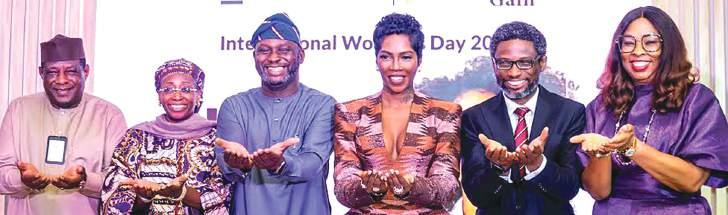
OF
L-R: Executive Director, Large Enterprises, Bank of Industry (BOI), Mr. Shekarau Omar; Executive Director, Public Sector and Interventions Program, BOI, Ms. Mabel Ndagi; Managing Director/CEO, BOI, Dr. Olasupo Olusi, Keynote Speaker and Afrobeats Queen, Tiwa Savage, Executive Director, Micro, Small and Medium Enterprises (BOI), Mr. Oluwatoyin Edu and Executive Director, Risk Management and Technology, BOI, Mrs. Ifeoma Uz’Okpala at the Bank of Industry 2026 International Women’s Day Celebration in Lagos ... yesterday
TUESDAY
abati1990@gmail.com

There is an urgent assignment for President Bola Ahmed Tinubu. It is the need to intervene and seek to resolve the festering conflict between Cross Rivers State and its neighbouring Akwa Ibom State, both once together as a com-munity, until state creation in 1987, and now the politics of oil, the fight over 76 oil wells has driven them apart. The number of oil wells has since increased to 238, the reason the fight is threatening to become messy. Section 44(3) of the 1999 Constitution, the Minerals and Mining Act 2007, and Item 39, Schedule II of the Exclusive Legis-lative List vest the ownership, control and management of all mineral resources, including oil and gas in the Feder-al Government. The states gain through derivation (at 13%), and with oil as the mainstay of the Nigerian econo-my, it is not a source of revenue that any state would be willing to play around with. Most of the 36 states are un-productive. Every month they wait for either Federal Allocation, or their share of oil proceeds.
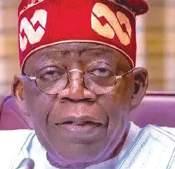
With the Federal Government now invoking the spirit of Section 162 and the Executive Order No.
9 of 2026 which require all oil and gas revenues, including royalties, taxes and profits to be paid directly into the Federation Account, it means there will be more money for the states to share. No state wants to lose whatever it thinks belongs to its people. The Tinubu administration also has a responsibility to forestall the possibility of border clashes, and communal conflicts or militancy between the brotherly people of Akwa Ibom and Cross River. Oil, the black gold, beneath our soil also divides us as we have seen in the bitter, prolonged fight between Eg-weama, Nembe and Elepa communities in Bayelsa over the ownership of Elepa 1 and 2 oil wells, which has now been peacefully resolved, or the boundary disputes over ten oil wells in the Anambra River Basin between Anambra and Delta States, the brewing conflict between Ogun and Ondo states over the ownership of the oil wells in Eba island, and the controversy over the Soku oil wells between Rivers and Bayelsa states. The key thing in the matter between Cross River and Akwa Ibom is
that 76 oil wells were ceded to Akwa Ibom following the 2002 loss of the Bakassi Peninsula to Cameroon at the International Court of Justice (ICJ) which rendered Cross River, a non-littoral state, and made it ineligible for derivation revenue. In two different, but related, decisions the Supreme Court of Nigeria since 2012, has consistently affirmed that the 76 oil wells belong to Akwa Ibom State. Cross Riv-er, 14 years later, has returned to the same issue to argue that the Supreme Court was wrong, having been fed with wrong information. The question is why has it taken Cross River state this long to suddenly wake up and re-open the matter?
Akwa Ibom is also adamant insisting that no agency, no individual, no committee can overrule the Supreme Court, which has ruled in favour of Akwa Ibom twice. Governor Umo Eno is on record as having said: “We are not sharing maritime boundaries with Cross River state, but

The prominence of our story is in the dreams of our fathers, the resilience of our mothers and the adventurous disposition of our young people. 54 years ago, Ajie Ukpabi Anthony Asika, then Military Administrator of the Old East Central State, set out to build a standout hospitality outfit to announce our unending faith in the promises of the future. The vision of Enyimba Hotel in 1972 was in complete defiance to the social setbacks and economic anxiety of the time; it was a rallying cry to our people to look to the future with boundless optimism, confident that this city, like the mythical phoenix, will rise from the ashes of its ruins and thrust itself into the borderless skies to the marvel of those who once wrote it off.
The dream of a magnificent hotel overlooking the Aba River had its foundations in hospitality but there was more: it was a summon to the can-do-mindset of our people; an invitation to look beyond the misery of the hour, to follow the opportunities of the day, unyielding in the conviction that no adversity is strong enough to crush the spirit of a determined people — that what had been lost in the civil war pales into insignificance when measured against what lay ahead. Foundation for the

and
Governor Sam Mbakwe in 1981 and finally stopped with the termination of the 2nd republic. Five decades and four years have passed since the foundational outlook of the structure that would eventually be called Enyimba Hotel was first put together. Apparently, it has endured years of exposure to the elements and intrusion by uninvited and unwanted guests. However, like a mighty oak, this elegant edifice continues to stand firmly, unmoved and undestroyed by the passage of time and the hostility of a constellation of forces. This project, it will interest us to note, towers beyond 7 storeys of uncompleted suites and hallways; it tells with metaphorical accuracy, the story of Aba through the lens of time. This structure essentially captures the undying force of Enyimba City, its power to evolve and the grandeur of its ambitions. We have gathered this afternoon as witnesses to history, to curate a story that would live eternally in the annals of time; Aba is back. Enyimba is rising and the dream that was once stalled, shall now rise to meet the glory of the skies.
Nothing speaks to Enyimba’s rise and ascent as the project we just commissioned at Ovom, about 400 meters away from this ground. To imagine that the entire stretch
was written off, not-too-long ago, points us to the errors of pessimism because in truth, no situation is entirely irredeemable.
For those who wonder why we are not erecting billboards to announce our achievements, the expressions on the faces of the landlords, residents, business owners, school children and artisans within and around Ovom this afternoon offered a telling answer because the records of our achievements are clearly written, not on beautiful graphic images that litter the highway, but in the hearts, minds and lived experiences of ordinary people. By focusing solely on development initiatives that improve the daily business experiences of our brothers and sisters, our administration has effectively banished the old political tradition of excessive self-promotion. Abia is getting better with each passing day and the credit for the massive transformation that has happened here and in other parts of the State since May 29, 2023, belongs to all of you for refusing to believe the lie that the fault was in our stars — for not giving up, even when hope was seemingly evaporating. You are the heroes of the New