Crude Oil Price Jumps 8% After Trump Declares US-Iran Ceasefire Over
IMF leaves Nigeria’s 2026 growth forecast at 4.1% and 4.3% for 2027 S&P Dow Jones may reclassify Nigeria as frontier market
IMF leaves Nigeria’s 2026 growth forecast at 4.1% and 4.3% for 2027 S&P Dow Jones may reclassify Nigeria as frontier market




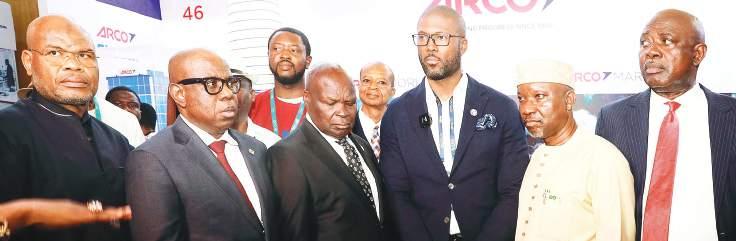
L-R: Minister of Petroleum, Republic of Niger, Mr. Hamadou Tinni; Group Chief Executive Officer, NNPC Limited, Mr. Bashir Bayo Ojulari; Minister of Energy and Power, Zimbabwe, Hon. July Gabriel Moyo; Managing Director, Arco Maintenance and Engineering Limited, Mr. Michael Okoigun; Minister of State for Petroleum Resources (Gas), Rt. Hon. Ekperikpe Ekpo; and Minister of State for Petroleum Resources (Oil), Sen. Heineken Lokpobiri, at the Arco Group Plc stand during a tour of the exhibition hall at the 25th anniversary celebration of NOG Energy Week in Abuja on Tuesday
Peter Uzoho in Abuja
German Ambassador to Nigeria and ECOWAS, Annett Günther, has disclosed that Nigeria lost an estimated $1.5 billion to gas flaring in 2024 after burning 5.3 billion cubic meters of associated gas, placing the country seventh globally in flare volumes.
Günther made the assertion yesterday in Abuja during a fireside chat at the ongoing 25th Nigeria Oil and Gas (NOG) Energy Week, with the theme, “Advancing Energy Ambitions for Competitive and Resilient Economies.”
She said Germany had commissioned a new project to convert flare gas into economic value for Nigerian households, industry, and potentially hydrogen production, as part of a nearly two-decade partnership now anchored on a Joint Declaration of Intent on Bilateral Energy Transition Dialogue signed in 2025.
“Just for context, 5.3 billion cubic meters of gas was flared in 2024 in Nigeria which makes it the seventh rank in the world and that equals an economic loss of US$1.5 billion,” the envoy said.
She added, “So, this new programme now is to work together and find out how to utilise those flare gases more efficiently, bring down emissions,
generate additional value, and use the gas to supply households and industry or even maybe to produce hydrogen.”
Günther traced the bilateral relationship to 2008, when both countries created the German-Nigerian Energy Partnership.
She explained that the framework was extended in 2012 with a dedicated energy desk at the German-Nigerian Chamber of Commerce, and supplemented in 2013 with the Nigerian Energy Support Programme (NESP).
According to her, NESP, delivered by GIZ, has run for more than 10 years and is now in its sixth phase.
She added that in 2021, Germany opened the German-Nigerian Hydrogen Office, branded the H2 Diplomacy Office, to explore low-carbon hydrogen opportunities.
The latest milestone, she said, came in 2025 with the signing of the Joint Declaration of Intent on Bilateral Energy Transition Dialogue and Cooperation.
Günther stated, “So, it has been steps and steps and our cooperation is evolving because I think the major part is, we want to support Nigeria to implement its energy transition plan.
“We want to contribute in various sectors and want to coordinate over these many systems and also we must
Bank of Agriculture (BOA), in partnership with Japtini Food & Retail Company Limited, has flagged off the 2026 farming season input distribution under the federal government’s Renewed Hope Smallholder Support and Value Chain Programme in Taraba State, with more than 15,000 smallholder farmers set to benefit.
The initiative, launched in Jalingo, is financed by BOA through Farmers Aggregation Companies (FACs) and provides farmers with essential agricultural inputs, including fertilisers, agrochemicals, and improved high-yield seedlings to boost productivity, strengthen livelihoods, and enhance national
food security.
Speaking at the flag-off ceremony, through the bank’s North-East Zonal Head of Finance, Hajiya Hauwa Sule Garba, Managing Director and Chief Executive Officer of Bank of Agriculture, Mr. Ayo Sotinrin, said the federal government was committed to supporting smallholder farmers as a pathway to achieving food security, rural prosperity, and sustainable economic growth.
According to him, investing in farmers is synonymous with investing in Nigeria’s future.
Sotinrin stated, “I am glad that today, we have a government and an institution that are invested in the success of rural farmers in a way that has not always been the case. This support comes with
not forget that climate issues always come along when we talk about energy, especially oil and gas.”
The ambassador outlined three focal areas for the bilateral partnership, saying the first is low-carbon energy carriers and power generation, covering photovoltaic, low-carbon and free hydrogen, natural gas infrastructure, and shared commitment to global climate goals.
While Nigeria looks toward achieving net zero in 2060, she said Germany also wanted to go net zero in 2045, a bit earlier.
She said her country had keen interest to work together with Nigeria to source some of the important cleaner carriers of energy.
Günther stressed that global disruptions had made diversification urgent, recalling all the global disruptions that
happened in the Middle East and the Russian-Ukraine conflict.
“So, everybody wants to diversify because you never know what’s going to happen next and that’s why even for the German government, this cooperation is very important also for our companies,” she added.
She stated that the second pillar was skill development and private sector mobilisation.
“So that’s why it’s very critical and our development of the GIZ programme is now connected with Siemens Energy and the EU programme and they have started a programme,” Günther stated. She said the newest initiative, commissioned by the German Foreign Office, sought to translate the energy partnership into concrete flare-gas commercialisation.
Olawale Ajimotokan in Abuja
Minister of Information and National Orientation, Mohammed Idris, has said a strong and inclusive national identity system was indispensable for effective governance, national planning, financial inclusion, digital transformation and the successful implementation of the Renewed Hope Agenda.
He asserted this yesterday in Abuja while receiving the DirectorGeneral and Chief Executive Officer of the National Identity
Management Commission (NIMC), Dr Abisoye Coker-Odusote, and her management team that paid a visit to present the landmark provisions and strategic implications of the newly enacted NIMC Act 2026.
“Identity management is at the heart of the reform agenda of Mr. President, because if you are reforming, you have to know who you are reforming for. If you don’t know the number of people that you have and the demography and what they represent, how do you plan for them?” Idris said.
He said the federal government had intensified efforts to achieve universal digital identity enrolment across the country through a strengthened partnership between the Ministry of Information and
responsibility.
“Farm with everything you have. Apply these inputs correctly, and let your harvest demonstrate that when Nigerian farmers receive the right support, they deliver exceptional results.”
He stated that the Renewed Hope Smallholder Support and Value Chain Programme was designed to reach two million smallholder farmers across the country, with plans to distribute more than 10 million bags of fertiliser.
Sotinrin disclosed that over 200,000 farmers had already been financed nationwide, while more than 1.1 million bags of fertiliser and 16,470 metric tonnes of improved seeds had been deployed under the programme.
Alex Enumah in Abuja Economic and Financial Crimes Commission (EFCC) on Wednesday arraigned former Managing Director of Port Harcourt Refining Company (PHRC), Mr Ahmed Dikko, before the Federal High Court, Abuja.
Dikko was arraigned alongside a company, Masterpiece Projects & Investment Ltd, on a 12-count criminal charge bordering on money-laundering.
According to the charge, Dikko
National Orientation and the NIMC as part of President Bola Tinubu’s Renewed Hope Agenda.
The minister stressed that achieving universal identity coverage required sustained public enlightenment and grassroots mobilisation, urging NIMC to deepen its collaboration with the National Orientation Agency (NOA), whose presence in all the 774 Local Government Areas provided an effective platform for reaching every Nigerian.
He lauded the leadership of Dr. Coker-Odusote for the Commission’s transformation over the past three years, noting that the enrolment of over 136 million Nigerians and legal residents into the National Identity Database was a significant
progress toward building a reliable national identity ecosystem.
“The 136 million already captured is very significant, but we still have about 100 million Nigerians left, and they also ought to be captured. Every Nigerian deserves to be included in our national planning,” he stated. In addition, he thanked the Commission for maintaining a secure identity ecosystem without any reported data breach, assuring NIMC that all public communication platforms under the Federal Ministry of Information and National Orientation, including the News Agency of Nigeria (NAN), would be fully deployed to support nationwide sensitisation on the benefits of digital identity.
was alleged to have used about N218.4 million to acquire a property in Katampe extension in Abuja, without passing the funds through a financial institution, contrary to the Money Laundering (Prevention and Prohibition) Act, 2022. He, however, pleaded not guilty to the entire counts read against him.
Following his not guilty plea, prosecution counsel, Mr Ekele Iheanacho, SAN, asked the court to fix a date for the commencement of trial.
However, Ikechukwu Ajunwa, SAN, who represented the defendants, informed the court of the bail application for the former managing director, adding that Dikko has complied with the conditions of the administrative bail earlier granted by the anti-graft agency and would not interfere with the trial or jump bail. Responding, the prosecution urged the court to decline the bail application on grounds contained in his counter-affidavit and written address filed before the court.
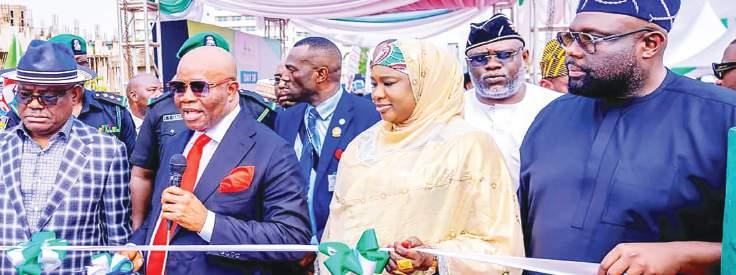
L-R: Minister of the Federal Capital Territory (FCT), Nyesom Wike; representative of President Bola Tinubu and President of the Senate, Godswill Akpabio; Minister of State for the FCT, Mariya Mahmoud; Chairman, Senate Committee on Diaspora, Senator Aniekan Bassey; and Chairman, Senate Committee on the Niger Delta Development Commission (NDDC), Senator Asuquo Ekpenyong, during the commissioning of Transit Way N2 from the Central Business District to Wuse District, with two bridges, by Akpabio on Tuesday
Exports rise to 14.8m tonnes, Nigeria remains world’s 7th largest exporter Africa posts 39.8m tonnes of exports, eyes 121.1 mtpa of new liquefaction capacity
Nigeria consolidated its position as one of the world’s leading exporters of Liquefied Natural Gas (LNG) in 2025, helping Africa strengthen its role in the global market as worldwide LNG trade climbed to an all time high of 436.98 million tonnes (Mt), the latest World LNG Report 2026 by the International Gas Union (IGU) has shown.
The report said global LNG
trade expanded by 25.74 Mt, or 6.3 per cent, over 2024 levels, driven largely by increased production from the United States, Qatar, Malaysia, Angola and Nigeria, while Canada and Mauritania/Senegal joined the ranks of LNG exporting nations for the first time.
Nigeria increased its LNG exports by 1.0 Mt to 14.78 Mt in 2025 from the previous year, making it the world’s seventh largest LNG exporter with a 3.4
per cent share of global exports. The country ranked behind only the United States, Qatar, Australia, Russia, Malaysia and Indonesia, while remaining Africa’s biggest LNG supplier.
According to the report, Nigeria’s higher exports contributed to Africa’s overall LNG shipments rising by 1.8 Mt to 39.77 Mt in 2025. The increase was supported by stronger production from Nigeria, Angola, Mozambique and the newly com-
missioned Mauritania/Senegal LNG project, although lower exports from Algeria and Egypt moderated the continent’s overall growth.
The report noted that while North America accounted for the largest increase in exports, Africa remained an increasingly important source of incremental LNG supply as countries on the continent continue to monetise their vast natural gas reserves.
Globally, the United States
Ahmad Sorondinki in Kano
United Nations Children’s Fund (UNICEF) has begun consultation with government and partners in Kano, Jigawa, and Katsina states to shape the Federal Government of Nigeria/UNICEF Country Programme for 2028–2032.
Chief of UNICEF Kano Field Office, Shafeeq Ur-Rehman, said on Wednesday in Kano that the new programme must address climate shocks, insecurity, urbanisation, and other challenges affecting children.
“We are here to listen, to learn
and to co-create - not to present predetermined solutions,” he said at the consultation in Kano.
Ur-Rehman said the plan must be government-led, evidence-based, and integrated across education, health, nutrition, WASH, child protection, and social protection.
He added that the consultation aimed to identify the most critical child rights deprivations in the three states and develop scalable solutions for the next five years.
He thanked the governments for their commitment to improving child welfare in the North-west.
Speaking on behalf of Kano
State Government, and the two partners, the acting permanent secretary in the ministry of budget and planning, Alhaji Abdulmumini Ajumawa, extended appreciation to UNICEF for its longstanding partnership and support in advancing the well-being of children and vulnerable populations.
Ajumawa said UNICEF had remained a trusted partner in strengthening systems across health, nutrition, education, WASH, child protection, social policy and emergency response.
He stated that the impact of the collaboration was evident in the
Kuni Tyessi in Abuja
The Federal Ministry of Education has dismissed reports linking the Minister of Education to delays in the resumption of newly recruited staff at the Nigerian Education Loan Fund, NELFUND, insisting the agency has no approval for fresh recruitment.
Sources at the ministry told ThisDay that NELFUND is “overstaffed” and struggling with personnel without office space or
clear schedules of duty.
“The report in the media that the Honourable Minister of Education’s directive delayed NELFUND employees’ resumption is not only false but misleading,” the source said.
“We can authoritatively state that there is no approval for any recruitment exercise in NELFUND at this time.”
According to the source, the issue was first addressed at a meeting between the NELFUND Executive
Management team and the chairman, Mr. Jim Ovia, in Lagos.
At the meeting, the chairman was said to have halted the recruitment process, citing the absence of board approval and the fact that management had not formally discussed any hiring plans.
The source alleged that when three Executive Directors asked the Managing Director for proof of authorization, their request was ignored.
progress recorded across many development indicators, though significant challenges remained.
Ajumawa stated, “The North-west region continues to face challenges, including child malnutrition, learning poverty, limited access to quality healthcare, inadequate water and sanitation, child protection concerns, climate vulnerabilities and socio-economic inequalities.”
retained its position as the world’s largest LNG exporter after increasing shipments by 22.3 Mt to 110.74 Mt in 2025, accounting for a quarter of global exports. Qatar ranked second with 81.51 Mt, while Australia placed third with 80.32 Mt. Together, the three countries supplied about 62 per cent of global LNG exports during the year.
The IGU said Asia Pacific remained the world’s largest LNG exporting region with 138.76 Mt, while North America posted the strongest growth after exports surged by 25.3 Mt to 113.91 Mt.
The Middle East exported 98.03 Mt, while Africa’s exports reached 39.77 Mt despite declines from some producers.
On the demand side, Europe emerged as the biggest growth market for LNG, with imports increasing by 26.1 Mt to 126.2 Mt as countries sought to replace lower Russian pipeline gas supplies and replenish storage.
Asia remained the largest importing region overall at 168.7 Mt, although imports into the continent declined by 9.2 Mt owing mainly to lower purchases by China and India. Africa also became a
stronger LNG importing region, with imports rising from 2.7 Mt to 9.8 Mt almost entirely because of Egypt’s increased requirements. The report highlighted Africa’s growing strategic importance in the future LNG market, noting that the continent accounted for 121.1 million tonnes per annum (mtpa) of proposed liquefaction capacity awaiting final investment decisions at the end of 2025.
Mozambique alone represented about 45 mtpa through the Rovuma LNG, Mozambique LNG and other offshore developments, making it Africa’s biggest prospective LNG growthInvestormarket.confidence in LNG also remained strong globally during the year, with 68.4 mtpa of liquefaction capacity reaching final investment decision, the highest annual level since 2019.
Global liquefaction capacity expanded by 30.1 mtpa to 524.5 mtpa following new projects in the United States, Canada and Mauritania/Senegal, although utilisation eased slightly because of maintenance activities and commissioning challenges at newly completed plants.
The federal government, financial regulators and climate finance stakeholders have begun discussions on sweeping regulatory reforms aimed at unlocking domestic financing for Nigeria’s carbon market and accelerating investment in clean cooking, renewable energy and naturebased projects.
The discussions took place in Abuja under the Policy and Regulatory Innovations for Scaling Markets (PRISM) Nigeria initiative, a policy engagement programme designed to integrate carbon markets into Nigeria’s domestic
financial system, allowing carbonlinked revenues to be recognised as investable assets capable of attracting local capital.
The initiative is being implemented by the Clean Cooking Alliance (CCA) in partnership with the Nigeria Off-grid Market Acceleration Programme (NoMAP) and the Global Off-Grid Solar Association (GOGLA), in collaboration with the Office of the Senior Special Assistant to the President on Climate Finance and Stakeholder Engagement and the Nigerian Alliance for Clean Cookstoves.
Delivering the keynote address, the Senior Special Assistant to the
President on Climate Finance and Stakeholder Engagement, Ibrahim Shelleng, said the workshop came at a critical time as Nigeria shifts from climate policy development to implementation. He argued that climate finance should no longer be viewed solely as international funding, stressing that domestic resources must become the cornerstone of Nigeria’s climate strategy.
“Domestic finance brings ownership, and it brings speed. Our communities cannot wait two to three years for international validation processes; we must look inward to raise the finance our climate projects need,” he said.
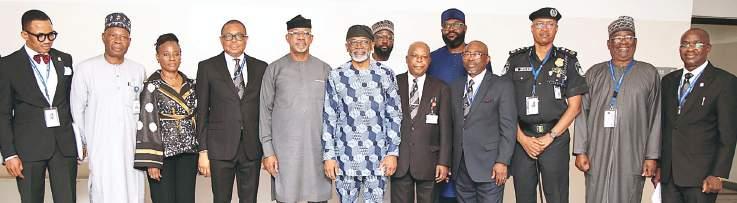
L-R: Attorney General and Commissioner for Justice, Ondo State, Dr. Olukayode Ajulo (SAN); Director-General, National Institute of Police Studies, Prof. Olu Ogunsakin; Senior Special Assistant to the President on Administration and Operations, Mrs. Oyinade Nathan-Marsh; President, Nigerian Bar Association, Mazi Afam Osigwe (SAN); Chairman, Nigeria Governors’ Forum Committee on State Police and Governor of Ogun State, Prince Dapo Abiodun; Chief of Staff to the President, Rt. Hon. Femi Gbajabiamila; Special Assistant to the President on Legal Matters, Tomi Belgore; Attorney General of the Federation and Minister of Justice, Chief Lateef Olasunkanmi Fagbemi (SAN); Senior Special Assistant to the President on Planning and Research, Mr. Dubem Moghalu; Attorney General and Commissioner for Justice, Lagos State, Mr. Lawal Pedro (SAN); representative of the Inspector-General of Police, DIG Isyaku Mohammed; Director-General, NGF Secretariat, Dr. Adulateef Shittu; and Director-General, Nigerian Law Reform Commission, Prof. Dakas Dakas, in a group photograph after the inauguration of the Presidential Working Group on State Policing at the State House, Abuja, on Tuesday
Describes infrastructure as greatest enabler of economic prosperity Inaugurates newly constructed Collector Road C01, bridge in FCT, says it’s a promise kept
President Bola Tinubu has declared that the infrastructure development in the Federal Capital Territory (FCT) serves as a blueprint for the transformation his government is bringing to the rest of Nigeria.
Tinubu stated that the administration was replicating Abuja’s modernisation, including roads, bridges, and other infrastructural development across the country to ensure equitable development.
Speaking yesterday in Abuja while inaugurating the newly constructed Collector Road C01, complete with its bridge, within the Institution and Research District, Tinubu described infrastructure as the greatest enabler of economic prosperity.
“When you build roads, you open up districts. When you open up districts, you invite investment. And when investment comes, Nigeria grows,” the president, who was represented by Vice President Kashim Shettima, said.
Maintaining that the modernisation of the nation’s capital was a sample of the kind of transformation his administration was bringing to the entire country, Tinubu vowed that the administration would stop at nothing
in its development drive. He pledged to keep investing in cities, satellite towns, and rural communities “because every Nigerian deserves the dividends of good governance”.
Tinubu stated, “The transformation of Abuja is a microcosm of the transformation we are bringing to the entire Federal Republic of Nigeria.”
He recalled a pledged he made when he came into office, not to allow governance to become a series of abandoned dreams and half-hearted efforts.
The president said the newly constructed Collector Road C01, with its bridge, had already generated hundreds of direct and indirect jobs for the youth during construction, observing that it “is the macro economy at work at the grassroots level.
“We promised Renewed Hope. And today, as we stand on this newly constructed Collector Road C01, complete with its bridge, we are not just looking at the physical road; we are looking at a promise kept.”
Tinubu recalled that when the Body of Benchers cried out to his administration during the Nigeria Law School Call to Bar ceremony last year for relief from traffic gridlock and lack of access, he listened and called the FCT minister, Nyesom Wike, to action.
“I told him, ‘Look, we cannot have the legal luminaries of our nation navigating potholes to train our future advocates. We cannot have students arriving late to lectures because of a lack of a simple bridge.’
“We did not just talk about it. We approved it under emergency procurement. And today, just months later, here we are.”
The president said moving between the institutions was a daily headache for students, lecturers, and residents alike. He expressed delight that his
administration had restored ease of movement.
He stated, “We have enhanced safety. But beyond that, we are creating an environment where academia and professional institutions can thrive without the baggage of structural neglect.”
Tinubu commended the FCT minister, saying he has proven once again that when he is given a job, he does not sleep until it is done.
Earlier, Wike thanked the president and vice president for gracing Day 21
of the project inauguration exercise across the nation’s capital.
He assured residents that the Tinubu administration remained committed to ensuring that every district in the FCT received the attention of the current government.
Wike also seized the opportunity to appreciate the president for the resources made available to the FCT and for removing the FCTA from the Treasury Single Account (TSA).
Minister of State for FCT, Dr Mariya Mahmoud, on behalf of the
management team and residents of FCT, expressed gratitude to Tinubu for his unwavering support for the current leadership of the territory which, according to her, had culminated in the unprecedented execution of projects across the FCT. Mahmoud assured the president of the support and cooperation of residents of the territory in the protection and maintenance of facilities provided by government as well as sustenance of people-oriented programmes and policies.
Wale Igbintade
A Federal High Court in Lagos has nullified the N60 billion sanction imposed by Advertising Regulatory Council of Nigeria (ARCON) on Facebook Nigeria Operations Limited over alleged unapproved advertisements targeted at the Nigerian market, holding that the regulator acted outside its statutory powers and violated the company’s
constitutional right to fair hearing. Delivering judgement in Suit No. FHC/L/CS/2205/2024, Justice Yellim Bogoro declared ARCON’s Notice of Violation/Demand for Compliance dated October 21, 2024, unconstitutional, unlawful, null and void, and restrained the regulator from taking further steps to enforce the sanction.
The judge held that ARCON lacked the statutory power to impose
Sunday Ehigiator
Nigeria has taken a significant step towards achieving its target of producing two million metric tonnes (MT) of sugar annually, as National Sugar Development Council (NSDC) graduated the first cohort of specialists trained under its flagship residential capacity-building programme designed to drive the implementation of National Sugar Master Plan (NSMP) 2.0. The programme, held at Nigeria Sugar Institute (NSI), Ilorin, is aimed at developing a highly skilled workforce capable of improving efficiency across Nigeria’s sugar value chain, from sugarcane cultivation
to industrial processing, as the country intensifies efforts to reduce dependence on sugar imports.
Speaking at the graduation of the pioneer cohort, Executive Secretary and Chief Executive Officer of NSDC, Kamar Bakrin, said the future of Nigeria’s sugar industry depended on building professionals with the technical expertise to improve both farm productivity and factory efficiency.
According to Bakrin, National Sugar Master Plan 2.0 places strong emphasis on strengthening critical areas, such as land preparation, irrigation, high-yield seed cane production, and factory operations to transform the sector into a profitable
and sustainable industry.
Bakrin stated, “Neither field productivity nor factory efficiency, on its own, can move the needle greatly.
“True sustainability, and the ultimate elimination of our import dependency, demands that we fuse the two. Under the performancedriven framework of NSMP 2.0, we are holding operators to strict accountability.
“We must develop personnel who master both leading-practice cane yields and peak extraction efficiency to unlock long-term economic viability.”
Bakrin stated that the response from industry stakeholders to the
maiden programme exceeded expectations, highlighting the urgent need for skilled technical personnel across the sector.
he said, “The market’s response to the maiden initiative has already shattered expectations. The overwhelming demand and deep engagement from stakeholders underscore an acute technical talent deficit that the NSDC is systematically addressing to support rapid sector expansion.”
The pioneer cohort comprised 39 professionals, who underwent intensive residential training between June 29 and July 3, while a second cohort of 41 participants was scheduled to begin training on July 13.
fines for alleged criminal violations under the Advertising Regulatory Council of Nigeria Act, 2022, without a prior conviction by a court or other competent tribunal.
The dispute arose after ARCON accused Facebook Nigeria of exposing advertisements on Facebook and Instagram to the Nigerian market without obtaining prior approval from the Advertising Standards Panel, contrary to the ARCON Act and the Nigerian Code of Advertising.
In its notice, the regulator directed the company to immediately stop exposing unapproved advertisements to Nigerian audiences and demanded payment of N60 billion for what it described as repeated violations.
Facebook Nigeria, through its counsel, Mofesomo Tayo-Oyetibo, SAN, challenged the notice. It argued that ARCON had no legal authority to determine criminal liability or impose punitive sanctions through an administrative notice without first affording the company a fair hearing.
The company also maintained that it neither owned nor operated Facebook or Instagram, contending that both platforms are owned and controlled by Meta Platforms Inc., a separate foreign corporate entity.
ARCON, represented by Akinlolu Kehinde, SAN, opposed the suit, arguing that Facebook Nigeria
represents Meta’s operations in Nigeria and should, therefore, bear responsibility for regulatory breaches relating to advertisements displayed on the platforms.
The regulator further contended that its notice was merely a regulatory compliance measure giving the company the option of complying with its directives, paying the prescribed violation fee or facing prosecution.
Bogoro rejected the regulator’s arguments.
The court held that Facebook Nigeria was a distinct legal entity from Meta Platforms Inc. and ruled that ARCON failed to produce sufficient evidence establishing that the Nigerian company owned, operated or controlled Facebook or Instagram.
According to the judge, mere assertions that Facebook Nigeria represents Meta’s interests in Nigeria are insufficient to impose liability for the alleged advertising infractions. On the issue of fair hearing, the court held that ARCON violated Section 36 of the constitution by making allegations and simultaneously imposing a substantial financial sanction without first giving the company an opportunity to respond. Bogoro further held that Section 57(4) of the ARCON Act expressly required the regulator to accord any alleged violator fair hearing before imposing any penalty.
Asset to add
Emmanuel Addeh and Peter Uzoho in Abuja
American energy giant, ExxonMobil, through its Nigerian affiliate, Esso Exploration and Production Nigeria Limited, yesterday announced the commencement of the on-block execution of the $1 billion Usan Infill Project in the Oil Mining Lease (OML 138), after over 10 years of delay.
The project, which is a fast-track deepwater investment, is designed to unlock 40,000 barrels per day of new oil production and deliver $1.2 billion in additional revenues to Nigeria over the next four years.
For its part, the Nigerian Upstream Petroleum Regulatory Commission (NUPRC) lauded the company and its partners for committing $1 billion to the activities at OML 138, stressing that the the announcement
was particularly significant because Esso Exploration and Production Nigeria –ExxonMobil’s affiliate – had not undertaken any drilling operation since 2016.
Managing Director of Esso Exploration and Production Nigeria and Chairman of ExxonMobil Affiliates in Nigeria, Mr. Jagir Baxi, announced the milestone at the 25th Nigeria Oil & Gas Energy Week in Abuja, confirming that a world-class deepwater drilling rig will arrive on block next month alongside massive subsea equipment.
Other joint venture partners in the OML 138 are NNPC Limited, Chevron, TotalEnergies and Nexen.
“Esso Nigeria, on behalf of the OML 138 partners, is proud to announce commencement of the on-block execution of a cumulative 1 billion-dollar investment at the Usan Field by next month that will unlock
around 40,000 barrels per day of new deepwater oil production,” Baxi said.
Unlike multi-year greenfield Final Investment Decisions (FIDs), the Usan Infill Project is a short-cycle campaign built for speed, Baxi said, noting that the first new production will come within six months of on-block start, with peak output of 40,000 bpd achieved in 18 months.
The entire investment was designed in roughly 18 months after advanced seismic acquisition and processing was completed in mid-2024, THISDAY learnt.
“This project is different from other major greenfield FIDs in that this project is a short-cycle investment designed to deliver first new production within around six months from start of on-block execution,” he explained. Over $300 million has already been committed by the
Project execution starts in August, first oil expected in six months
138 partners spend $16bn, produce 350m barrels in 14 yrs
partners ahead of on-block work.
The 2022 renewal of OML 138 for another 20 years, Baxi noted, created the most important signal of confidence in the asset, the stakeholder partnerships, and the supporting regulatory framework, the international oil firm added.
The impact on national finances will be immediate, Baxi stressed, adding that the Usan Infill Project was expected to generate a further $1.2 billion in revenues to Nigeria over the next four years, with first of these new revenues beginning to flow this year.
Baxi disclosed that in 14 years, the OML 138 partners have invested about $16 billion to develop and produce over 350 million barrels of oil. He added that that output has delivered roughly $4.6 billion in value to Nigeria. The new infill
wells are designed to squeeze more from the asset using existing subsea infrastructure, maximising recovery while keeping costs competitive.
Baxi said the campaign will introduce two “step-out” technologies to Esso Nigeria’s portfolio, adding that one well will be the most complex extended-reach well ever drilled at Usan, stretching over 4 kilometres to tap an untapped part of the field.
Secondly, several wells will use world-class intelligent drilling and completion technologies to target multiple narrow zones of oil within the trajectory of a single wellbore, according to Baxi, pointing out that “Both these step-outs will ensure the most cost-efficient investment that also maximises resource recovery which ultimately will deliver maximum value to Nigeria.”
Beyond barrels and dollars, Baxi
measured Usan’s impact through its people, saying the Usan FPSO is run by nearly 400 professionals, “the vast majority being Nigerians,” working offshore on the 320-meter vessel stationed in 850 meters of water, 100 km from shore.
James Emejo in Abuja
Central Bank of Nigeria (CBN), yesterday, reaffirmed that the standard N100 banknote remained legal tender across the country.
CBN warned that individuals and businesses rejecting the note were acting in breach of the law.
The clarification came against the backdrop of reports that the currency denomination was being rejected
by some members of the public, businesses, and other stakeholders, apparently due to doubts about its continued legal tender status.
However, in a statement issued by CBN’s acting Director, Corporate
Communications Department, Mrs. Hakama Sidi-Ali, the apex bank stressed that both the commemorative N100 banknote introduced to mark the country’s centenary and the standard N100 banknote remained
Passes N11.074trn Customs
Moves to legalise digital healthcare, advances e-Health bill Clears Marwa for NDDC, begins screening of Tinubu’s AMCON chair nominee
Senate yesterday approved a revenue target of N11.074 trillion for the Nigeria Customs Service (NCS) in the 2026 fiscal year, while also endorsing an expenditure proposal of N1.295 trillion, following the agency’s strong revenue performance in 2025.
Equally yesterday, the senate took a major step towards the digital transformation of Nigeria’s healthcare system by passing for Second Reading a bill seeking to establish a comprehensive legal and institutional framework for electronic healthcare services across the country.
The proposed National E-Health Bill, 2026 (SB. 758), sponsored by Deputy Senate President Barau Jibrin, aims to provide the legal foundation for the regulation, coordination, development, and integration of digital health services in Nigeria.
Senate also confirmed Dr. Zainab Marwa as the North-east representative on the Governing Board of Niger Delta Development Commission (NDDC), and commenced the confirmation process for Mr. Lamido Yuguda Abubakar as Chairman of the Board of Asset Management Corporation of Nigeria (AMCON), in fresh moves
to strengthen the leadership of the two key federal intervention agencies.
The approval of NCS’ revenue target came after the consideration of the report of Senate Committee on Customs, Excise, and Tariffs, chaired by Isah Jibrin.
Presenting the report, Jibrin said the committee scrutinised NCS’ 2025 budget implementation before examining its 2026 estimates.
He disclosed that although the service was assigned a revenue target of N6.5 trillion for 2025, it generated N7.2 trillion, representing about 110.5 per cent of its target.
He said the agency’s revenue performance could have been even stronger but for fiscal policy measures introduced to encourage local production, as well as disruptions in global trade arising from the Russia-Ukraine conflict, which affected imports, including wheat.
On budget implementation, the committee stated that while the customs service had an approved expenditure of N1.132 trillion for 2025, it spent about N591 billion during the period.
Jibrin attributed the relatively low budget implementation to delays in securing approvals from government agencies, including the Bureau of Public Procurement, explaining that projects not executed
in 2025 would be carried forward into the 2026 fiscal year.
He said the service was targeting N11.074 trillion in revenue next year through wider deployment
of technology, improved revenue recovery mechanisms, real-time systems audit, and enhanced trade facilitation initiatives.
Continued on page 36
valid for all transactions.
CBN explained that the commemorative N100 note was introduced as a special edition and did not replace the existing standard version, urging Nigerians to disregard claims suggesting otherwise.
The bank cautioned businesses, financial institutions, and other stakeholders against refusing the standard N100 note, stressing that such actions violate the provisions of the CBN Act and erode public confidence in the national currency.
The central bank warned that it would not hesitate to invoke appropriate enforcement measures against any individual or organisation found rejecting the note.
It reiterated its commitment to preserving the integrity of the Naira, sustaining public confidence in all duly issued banknotes, and ensuring seamless currency circulation across
the country.
The bank urged members of the public to continue accepting and transacting with all banknotes officially issued by CBN, advising anyone requiring further clarification to contact the bank through its official communication channels.
According to Hakama SidiAli, “The CBN strongly cautions individuals, businesses, financial institutions, and other economic agents against rejecting the standard 100 banknote. Such rejection constitutes a violation of the provisions of the CBN Act and undermines confidence in the national currency.
“The bank will not hesitate to apply appropriate enforcement measures against any person or entity found to be in breach.
“The bank remains committed to safeguarding the integrity of the Naira, ensuring confidence in all duly issued banknotes, and promoting smooth currency circulation across the country.”
Specifically, Brent crude futures were up by as much as 8.05 per cent as of yesterday evening, hitting $80.05 a barrel, while U.S. West Texas Intermediate (WTI) crude climbed 7.5 per cent to $75.72 per barrel.
Trump said earlier that the memorandum of understanding signed with Iran to end the conflict was “over,” adding he didn’t want to engage with Tehran any longer.
An agreement brokered by Pakistan last month to provide a 60-day window for negotiations, came under strain after the U.S. launched fresh strikes on Iran. The U.S. airstrikes were in response to Iranian attacks on three commercial vessels that were transiting the Strait of Hormuz, U.S. Central Command said on Tuesday.
In retaliation, the Iran’s Revolutionary Guards then said they targeted U.S. military sites in Bahrain and Kuwait early yesterday. The attacks renewed concerns about tanker traffic through the Strait of Hormuz, which carried about onefifth of global energy supply before
the war began in late February.
Iran exports 90 per cent of its crude via Kharg Island, which sits 16 miles (26 km) from Iran’s coast in the northern end of the Gulf, and about 300 miles (483 km) northwest of the strait. Seizing Kharg would give the U.S. the ability to severely disrupt Iran’s energy trade.
At least four oil and gas tankers have turned back from attempting to transit the strait, ship-tracking data showed, as renewed attacks on vessels heightened safety concerns.
After the U.S. and Iran signed their truce last month, oil prices tumbled to pre-war levels of about $70 and traders amassed large short positions in oil futures, betting prices would fall further.
Since the start of the conflict, nations have drawn down their inventories to make up for the supply shortfall.
Also, Nigeria’s Dangote Group plans to finance a proposed 700,000-barrel per day oil refinery in Kenya through internal cash flow, bonds and an initial public offering,
a senior company executive told Reuters.
The refinery, East Africa’s largest refining project, is expected to take up to three years to build and would supply refined petroleum products to Kenya and neighbouring countries, helping to reduce East Africa’s dependence on imported fuels, the report said.
It would also fulfil Dangote’s ambition to expand fuel-processing capacity across Africa following the start-up of its 650,000-barrel-per-day refinery in Lagos.
“The site has been selected, soil tests are under way, and design and engineering work has commenced. Kenya was the choice from the beginning,” Edwin Devakumar, Dangote Industries’ vice president for oil and gas, told Reuters.
The refinery, which would be built on the island of Lamu, off the coast of Kenya, would mark Dangote Group’s biggest refining investment outside Nigeria and would cost about $17 billion , it was learnt.
Devakumar said the refinery would be financed through a mix of internally generated cash, bonds and proceeds from a planned initial public offering. He did not disclose the project’s exact cost, but said it would be comparable to that of the Lagos refinery.
Built by Aliko Dangote, ranked as Africa’s richest man by Forbes, the Lagos refinery had cost more than $20 billion by the time it began operating in 2024.
It will take around 30 months to build the facility in East Africa’s largest economy, it was learnt, even as there had been conflicting messages on the project’s location for months, with Tanzania and the Kenyan port of Mombasa also mooted.
Nigerian billionaire Dangote was in Tanzania late last month, where he held talks with President Samia Suluhu Hassan and explained the commercial and technical considerations behind the Group’s decision to locate the planned East
Continued on page 35

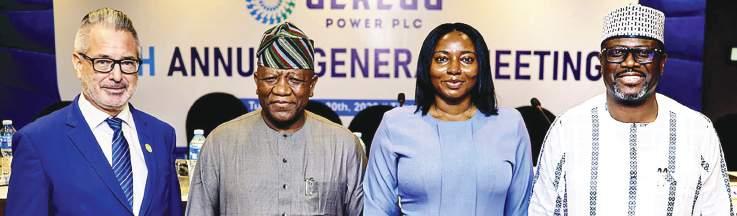
L-R: Chief Executive Officer, Geregu Power Plc, Mr. Sean Manley; Board Chairman, Sen. Abdul-Aziz Abubakar Yari; Company Secretary, Ms. Gbeminiyi Shoda; and Non-Executive Director, Dr. Abdullahi Abdulkarim Tsafe, at the 14th Annual General Meeting of Geregu Power Plc held in Abuja ... recently
of the ANAP Foundation, Atedo Peterside, yesterday urged Nigerians, especially young people, to participate actively in future elections, arguing that a massive voter turnout would overwhelm vote buyers and make large-scale election rigging significantly more difficult.
Besides , the founder of Stanbic IBTC urged the Independent National Electoral Commission (INEC) to allow all registered voters to cast their ballots even without Permanent
Voter Cards (PVCs).
Speaking during an interview on Channels Television, Peterside dismissed claims that votes do not count in Nigeria, insisting that politicians would not invest heavily in campaigns and vote buying if elections were predetermined.
He maintained that Nigeria’s demographic advantage lies with its youth, who have the capacity to shape electoral outcomes if they register and vote in large numbers.
“If votes don’t matter, nobody will campaign. Nobody will even bother
to speak to you. In fact, the larger the number of voters that turn out, the more difficult it is to rig an election. Again, the larger the number of voters that turn out, the more money you have to spend if you’re trying to buy votes because you may just be overwhelmed,” he said.
According to him, Nigerians between the ages of 18 and 25 constitute a formidable voting bloc capable of determining the outcome of elections across the country.
“If the young people between 18 and 25 all decide to vote in
one election for one candidate, be it in the presidency, Senate or House of Representatives, most constituencies, their selection will win that election. You would have to do massive rigging to disqualify all their votes because they are the majority,” Peterside stated. He explained that this informed the voter mobilisation campaign being driven by ‘GoNigeria’, a nonpartisan civic initiative of the ANAP Foundation aimed at encouraging first time voters and other eligible Nigerians to register ahead of the
Former Kaduna State governor, Nasir El-Rufai, has denied allegations by the Independent Corrupt Practices and Other Related Offences Commission (ICPC) that he violated a court order by allegedly abusing the privilege of a court approved medical visit, insisting that he merely exercised rights guaranteed under an existing court order.
In a statement issued yesterday by his Media Adviser, Muyiwa Adekeye, El-Rufai also demanded the immediate and unconditional release of his personal physician, Prof. Bello Abubakar, who was arrested by the anti-corruption agency for allegedly making false statements.
The rebuttal followed an ICPC statement issued on July 7 in which the commission accused the former governor and his physician of abusing the privilege of a medical visit and violating a court order.
But rejecting the allegations, El-Rufai described the ICPC’s account as inaccurate and misleading, maintaining that his absence from court on July 6 resulted from an unresolved medical condition rather than an attempt to evade trial.
According to the statement, Abubakar had visited the ICPC facility in the preceding week after coordinating with the commission’s attending doctor, but was allegedly kept waiting for more than two hours before being denied access to his patient.
It added that following the denial, El-Rufai’s family formally requested that he be taken to the National Hospital, Abuja, for a consultation with the physician on July 7, a request it said had already been communicated to the hospital before the family became aware of the July 6 court sitting in Kaduna.
“It was against this background, an unresolved medical need, a documented denial of access to his physician the week before, and Malam El-Rufai’s continuing ill health, that the scheduled trip to Kaduna on 6th July became untenable. He did receivenot travel that day for that reason,” the statement said.
The former governor’s lawyers further argued that the ICPC was already aware of the outstanding medical request and therefore erred in suggesting that El-Rufai had no immediate medical complaints or deliberately avoided appearing in court.
The statement also disputed the commission’s claim that El-Rufai breached a court order during his hospital visit, insisting that the only applicable order was that of April 1, 2026, issued by Justice R. M. Aikawa, which entitled him to medical care while in custody.
“The only order in existence on this subject is the order of Justice Aikawa of 1st April 2026. That order directs that Malam El-Rufai be afforded access to medical care in custody; it does not regulate, restrict, or impose conditions on who may see or be seen by him while that access is being
exercised,” it stated.
According to the rebuttal, the ICPC merely complied with its legal obligation by facilitating the hospital visit and could not subsequently claim that the exercise amounted to a violation of the same order.
On the events at the National Hospital, El-Rufai’s camp alleged that while the family had requested a 5 p.m. appointment to minimise public attention, the ICPC unilaterally rescheduled the consultation to 10 a.m. without prior notice.
It said that after meeting privately with Professor Abubakar, El-Rufai waited in a public area of the hospital
for about an hour while officials prepared a medical report required before his return to custody.
According to the statement, some individuals who became aware of his presence requested to greet him, while others approached him after recognising him at the hospital.
“The ICPC’s narrative that this visit was converted into a political meeting takes no account of its own conduct. It was the Commission that moved the appointment from a quiet 5:00pm slot to a high traffic 10:00am slot... A narrative of political theatre engineered by the defence is not supported,” the statement argued.
2027 general election.
Peterside welcomed INEC’s decision to extend the Continuous Voter Registration exercise, saying the electoral commission deserved commendation for giving more Nigerians the opportunity to enrol before the deadline.
“So let’s applaud them for doing something positive because some of us feared that INEC was in a hurry to impose a deadline, lock out all these people and possibly reduce the number of registered voters by making sure that many of the younger ones are disenfranchised.
“I think many of these deadlines are much too early. The 10th of July was too restrictive. It was never feasible. So adding two more weeks is something positive,” he said.
While applauding the extension, Peterside argued that voter registration would have little meaning if registered citizens were prevented from voting because they had not collected their PVCs.
He urged INEC to adopt a system that would enable registered voters to download their voter credentials or use alternative means of identification on election day, stressing that responsibility for making PVCs available rests with the electoral commission and not voters.
“If somebody has registered and in the past he didn’t have his voter’s card, but he has a passport or he has the name, I think he should
be allowed to vote. Because if he didn’t collect his PVC, that should not disqualify him.
“If somebody has registered, the responsibility for getting his PVC to him should be INEC’s. Allow him to download his PVC and go and vote. Otherwise, the PVC is being used as an instrument to disenfranchise selected voters, and it happens massively across the country, and it must stop,” he argued. Peterside further alleged that the process for distributing PVCs has over the years been susceptible to abuse, claiming that voter cards belonging to certain groups could sometimes be deliberately withheld, thereby denying eligible citizens the opportunity to vote.
Beyond electoral administration, Peterside said Nigeria’s democracy requires broader institutional reforms, identifying electoral reform, judicial reform, improved security and protection of freedom of speech as the four pillars necessary for credible elections.
He argued that insecurity discourages voter participation while restrictions on free expression undermine democratic competition.
On the judiciary, Peterside criticised the prolonged incarceration of former Kaduna State Governor Nasir ElRufai despite being granted bail, saying the conditions attached to his release were practically impossible to fulfil.
The African Bar Association (AFBA), the umbrella body of lawyers of African origin and those in the diaspora, has named the Chairman of the Alliance for Economic Research and Ethics (AERE), Dele Oye, as a recipient of its 2026 Medal of Merit in recognition of his leadership and contributions to the growth and transformation of Nigeria’s organised private sector.
In a letter conveying the award, the association said Oye was selected after reviewing his achievements in leading the organised private sector
through the various positions he has held, particularly as President of the Nigerian Association of Chambers of Commerce, Industry, Mines and Agriculture (NACCIMA) and Chairman of the Organised Private Sector of Nigeria (OPSN).
AFBA said Oye’s tenure was marked by transparent, accountable and effective leadership, noting that the organised private sector under his stewardship recorded sustained growth while remaining free of financial mismanagement.
According to the association, his achievements have set a benchmark worthy of emulation across Africa.
The Medal of Merit will be presented during the opening ceremony of the African Bar Association’s 2026 Annual Conference, scheduled for September 21, 2026, at the Hilton Cabo Verde Dos Hotels in Sal, Cape Verde. The conference will hold from September 20 to 24.
Part of the letter read: “On behalf of the Governing and Executive Councils of the African Bar Association (AFBA), I dutifully write to inform you of your well-deserved nomination as a recipient of the 2026 African Bar Association Medal of Merit in management of the organised private sector in Nigeria while serving as
President of the Nigerian Association of Chambers of Commerce, Industry, Mines and Agriculture (NACCIMA).
“As the foremost association of lawyers of African origin and those in the diaspora, we continuously recognise and celebrate the contributions of African professionals in their various fields, whether through employment, appointments, elections or private enterprise.
“We have carefully followed your achievements in managing Nigeria’s organised private sector through the various offices you have occupied, particularly as President of NACCIMA.


While headlines often focus on crime and dishonesty, countless acts of goodwill go unnoticed. across Nigeria, ride-hailing drivers are quietly rewriting that narrative, showing that the greatest journeys are sometimes defined not by distance travelled, but by lives touched through honesty, empathy and trust. Bukola Lasisi writes that through simple but remarkable gestures, these ridehailing drivers are proving that beyond every fare lies an opportunity to restore faith in humanity
In an era when stories of crime and mistrust often dominate public discourse, a different narrative is quietly unfolding on Nigerian roads.
Between one trip and the next, ridehailing drivers are returning expensive phones, helping vulnerable passengers, responding to medical emergencies and extending trust to complete strangers, proving that acts of kindness still thrive in everyday life.
For one female passenger, losing her iPhone after an InDrive trip felt like losing a part of her life. Convinced she would never recover the device, she resigned herself to the loss. Unknown to her, the driver, Edet Edet, had discovered the phone after completing the journey. Rather than ignore it or take advantage of the situation, he immediately returned it.
"I honestly thought I would never see it again," the passenger recalled.
Although she offered him a reward, Edet declined.
"There was no need for that. Helping people feels right," he said.
His honesty later prompted the grateful passenger to send him a token of appreciation. A similar incident played out on one of Lagos' busiest routes when Adewale Olaoye found a Samsung Galaxy S24 Ultra left behind by a passenger travelling between Ikeja and Victoria Island. "I didn't even think twice. It's not mine. That's all I needed to know," he said.
The passenger, visibly relieved, admitted: "I thought I had lost it forever. In this city, once something like that disappears, you just accept it."
Going Beyond the Job
For Oluwatosin Soboyejo, returning a forgotten phone became a mission that lasted several hours.
After discovering the device in his vehicle late at night in Oshodi, he retraced his route, questioned people, charged the phone and eventually contacted the owner through a saved number.

"The only thing I wanted was for her not to feel that panic for too long," he said.
His determination transformed what could have been another lost item into a story of restored trust.
Compassion in Moments of Need
Kindness was not limited to returning valuables.
After completing a trip from Igboefon to Badore in Lagos, Chukwuemeka Uka noticed that his passenger, who was sick and physically challenged, had no one to assist her into her home.
He declined the fare, got out of his vehicle and helped her inside.
"It was not complicated," he said. "She just needed help getting inside."
When Every Second Counts
Some journeys became matters of life and death. In Port Harcourt, a driver rushed back to retrieve essential delivery items after learning that a pregnant passenger had gone into labour shortly after arriving at the hospital. Mother and baby were later confirmed safe, and the driver was invited to meet the newborn.
On a rainy night in Lagos, Solomon Asein also answered an urgent call for help when a passenger's brother was rushed to hospital after being stabbed during a robbery incident. Navigating heavy traffic and poor visibility, he drove the passenger to the hospital without hesitation. Two days later, he received the news that the victim had survived surgery.
In another case, a driver trusted a passenger experiencing network problems to pay later instead of insisting on immediate payment. Days afterwards, the passenger returned, paid the fare and added more in appreciation. Taken together, these stories reveal a side of Nigeria's ride-hailing community that rarely makes headlines. While most journeys end with a simple drop-off, some become powerful reminders that honesty, compassion and trust still shape everyday encounters between strangers. These drivers demonstrate that the greatest journeys are sometimes measured not in kilometres travelled, but in lives touched. The editorial team thanks inDrive for its assistance in preparing this material and for connecting us with the drivers featured in these stories.
One hundred high school students drawn from 20 schools located in Nnewi South Local Government Area of Anambra state were in May 2026 trained on how to administer first aid to persons experiencing cardio-pulmonary crises and other common medical emergencies.
The training organised and sponsored by a non-profit organisation, JDM Global Foundation, was meant to expose the participants to the techniques of resuscitating
people facing heart and lung-related medical crises.
Welcoming the participants to Ukpor, the venue of the training and headquarters of Nnewi South Local Government Area, the president and founder of the Foundation, Lolo Jennifer Madubuko who was represented by the Secretary of the Foundation's Board of Trustees, the Venerable Okey Ifionu, said the training was part of her organisation's "commitment to saving life, creating awareness,
empowering young people and building a healthier and safer community."
She said that "knowledge is power, but life-saving knowledge is priceless."
According to her, many lives are lost every day because people do not know what to do during health emergencies.
The training, she explained, was in line with the vision of her organisation to bring succour and improved standards of living to the less privileged.
"The purpose of this programme is to equip participants with simple skills such as cardiopulmonary resuscitation, first aid, or quick response, which can make the difference between life and death," she said, adding "At the Foundation, the emphasis is on promoting health awareness, humanitarian services, education for the disadvantaged, and community development.
We believe that every young person should have the
opportunity to learn practical skills that can help families, schools, churches, and communities in moments of health crises."
Beneficiaries of the training are expected to return to their various schools and communities to share and teach others what they have learned. Awards were given to the best three performing students during the training. Present at the event were some dignitaries from the local government
Council and principals of some of the participating schools.
In his own remarks, the chairman of Nnewi South Local Government, Chief George Ezeogidi, commended JDM Foundation for her commitment to the health and well-being of Nigerians. He recalled that the training was the seventh in the series of programmes sponsored by the organisation in different parts of Nigeria to offer relief to the disadvantaged.
emeka emole
"At a time when many seek to define Nigeria by its challenges, you continue to work with remarkable resilience and consistency to redefine our national image through knowledge-driven engagement, informed advocacy and constructive dialogue on global platforms.
"I have taken time to carefully assimilate the deeply insightful and well-articulated paper you presented at Chatham House.
"With profound admiration, I consider it necessary to reiterate that you have continued to demonstrate that leadership is not merely about occupying public office, but about deploying the power of ideas and intellect to advance enduring solutions that promote the greatest level of happiness for the greatest number of persons in our society.
"Your presentation on the 2027 Elections, electoral integrity, security reforms, and the State Police initiative once again projects Nigeria before the international community as a nation committed to democratic advancement, institutional reforms and responsible governance.
"You are indeed abundantly exhibiting the marks of a statesman, one who understands that the battle for national progress is fought not only through politics but also through ideas, research, policy and intellectual leadership.
"The South-east and indeed Nigeria can take pride in a leader who continues to earn respect for our country in international circles while contributing meaningfully to the strengthening of our democracy. Nigeria is better represented when our leaders speak with knowledge and vision.
The above was the feedback from Uche Agbaeze Okocha, one of the Nigeria diaspora delegates to the engagement the Deputy Speaker of the House of Representatives, Rt. Hon. Benjamin Kalu had at Chatham House, the Royal Institute of International Affairs, at St. James Square, London on the 22nd of June, 2026.
The globally renowned policy think thank had invited Hon. Kalu to address them on the topic 'Nigeria's 2027 Elections: How To Ensure Electoral Integrity Amid A Deepening Security Crisis's.
The format was 20 minutes for opening presentation and 40 minutes question and answer session. Kalu wasted no time in taking charge of the conversation.
"Nigeria's democracy turned 27 this year. 27 uninterrupted years of constitutional government. Seven consecutive general elections. A federation of over 230 million people, across 250 ethnic nationalities and more than 500 languages, still voting, still building, still insisting that the ballot is the only legitimate way to change power.
"We have not arrived. We say so freely, because a democracy that declares itself complete stops growing. But I want this distinguished audience to hold two ideas simultaneously: that Nigeria's challenges are real, and that Nigeria's response to them is equally real. Both are true. And the international
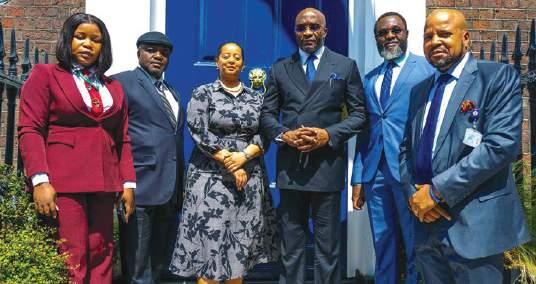
conversation about Nigeria has, for too long, been fluent in the first and silent on the second."
With that opening salvo, Kalu deftly refocused the direction of the conversation. Instead of a bemoaning of the challenges facing Nigeria, Kalu chose to debunk stereotypes and present Nigeria as a work in progress with greater emphasis on the work being done and the progress being recorded.
Like a seasoned matador in a Spanish bull-ring, he reigned in the rampaging beast of the framing of Nigeria as a country in crises free fall and redirected the energy to suit a more acceptable outcome.
A thoroughbred academic with 2 Ph.Ds built upon a number of Masters Degrees and a foundation in Law, the Deputy Speaker had done his homework. He had developed a well-researched paper with verifiable data to tear down stereotypes and present the facts as stubborn as they are. He was a delight to watch.
From his opening presentation to his session fielding questions from the audience made up of diplomats, academics, policymakers, Members of the Nigerian Diaspora community and interested participants, Kalu was in his elements. He may have been abroad but he carried on proceedings like he was on his home turf.
Those familiar with Chatham House sessions know that it is a lion's den. Politicians are reluctant to speak at Chatham House because they are independent and if you don't know your onions, they can embarrass you during questioning. Not for Kalu. He was ready for them and it showed in his performance.
A few elements contributed to his mastery of the topic in discussion. As the Chairman of the 10th House of Representatives Committee on the Review of the 1999 Constitution, he is very familiar with all the work that had been done to strengthen the
Constitution to answer the critical posers inherent in the topic of discussion.
It also so happens that he is directly involved in introducing and championing legislation to address the key issues in discuss.
From electoral reforms to gender inclusiveness, rights of displaced persons to participate in the electoral process to reforming the policing architecture of Nigeria, Kalu has either sponsored Bills to address these issues or he is the major driver of conversations around them.
Hear Kalu: "As Chairman of the House Committee on the Review of the 1999 Nigerian Constitution, I have sat at the intersection of every question this address has raised: electoral law, security architecture, constitutional reform, the protection of the displaced and the decentralisation of policing. It has been the defining work of my legislative life. And I can tell you, from that vantage point, that Nigeria's democracy is not retreating; it is advancing; imperfectly, sometimes painfully, but still advancing. We choose reform over resignation. We choose to build even when building is hard, even when the work is unfinished, even when the critics are watching for failure."
Members of the House of Representatives who accompanied Kalu to Chatham House were full of pride and commendation for his outing.
From Hon. Bello Kaoje from Kebbi State to Hon. Adebayo Balogun from Lagos State and Hon. Abubakar Nalaraba from Nassarawa State, they were unanimous in their summation.
Hon. Benjamin Okezie Kalu is an asset to Nigeria and the pride of his colleagues.
Instructively, the Deputy Speaker did not present Nigeria as a country that has figured out its challenges. He displayed humility and willingness to take lessons even while making a strong case for Nigeria's progress.
In his words: "To the distinguished policymakers, diplomats and scholars in this room, I say this with genuine humility: we do not come here as a country that has figured it out. We
come as a country that is figuring it out, in real time, under real pressure. If there are things you are seeing from where you sit that we are not seeing from where we stand, we want to know. If your analysis reveals gaps in our legal framework that our legislative process missed, we welcome your analysis and feedback. If your experience in other democratic contexts offers lessons that could strengthen what we are building, we are listening."
The Chatham House top brass, usually understated in the traditional British taciturnity, could scarcely hide their satisfaction at the performance of their choice of speaker.
Tighisti Amare, Director, Africa Programme at Chatham House has already enquired about Kalu's availability for another expanded conversation. "We will be glad to welcome you again", she enthused.
It is important that more conversations like the one Kalu held at Chatham House are held on the global stage regularly and extensively. The global North cannot continue to frame Africa with images of negativity.
This has assumed one of the driving principles of Kalu's international engagements. As a guest of the European Parliament last fall, he spent a full week holding an average of five meetings daily with diverse parliamentary and policy interest groups. The interest was palpable. Kalus was a refreshingly different voice in African-originated, global conversations. Kalu was also at Istanbul, Turkiye earlier in the year to participate in the 151st Interparliamentary Union General Assembly. He presented a resolution on post-conflict peace-building which was adopted by the General Assembly. Parliamentarians from all over the world stood and applauded Kalu's brilliance. As Kalu concluded at Chatham House, "Nigeria is not a problem awaiting international solutions. Nigeria is a possibility, one that is day by day, reform by reform, election by election, making itself real."
In Rt. Hon. Benjamin Okezie Kalu, Nigeria has a worthy asset.
•Emole writes from London

We must tell ourselves uncomfortable truths about insecurity and those who enable it, argues TOLULOPE OGUNMUKO
FELIX OLADEJI contends that while reducing borrowing may contribute to fiscal discipline, sustainable prosperity depends equally upon strengthening government's capacity to generate stable revenue See page 17

Tinubu’s directive is a necessary first step, but its value will be judged by the inquiry’s independence, scope, and outcomes, argues PAT ONUKWULI

Nigeria is familiar with scandal, but familiarity must not become surrender. It has seen oil subsidy fraud, pension theft, the Maina affair, and, more recently, the Humanitarian Affairs ministry was placed under anti-corruption scrutiny following Betta Edu’s suspension. Yet the current controversy surrounding the office of the Chief of Staff to the President poses a more delicate danger. It sits near the nerve centre of power and places a heavier burden on the Presidency itself.
At the heart of the matter is the alleged Presidential Foreign Intervention Promotion Council, a body the Presidency says does not exist. Prince Adeniyi Adeyemi Matthew is accused by the Presidency of falsely presenting himself as its DirectorGeneral, forging appointment and approval documents, and operating what officials describe as a fraudulent structure centred on a fictitious government body. Reports further allege that he maintained 34 bank accounts linked to such entities and was arraigned before the Federal High Court in Abuja on charges of fraud and forgery.
The controversy has gained wider traction because Adeyemi was allegedly not operating in obscurity. Reports suggest that he had offices at the Federal Secretariat in Abuja, was associated with senior government figures, engaged with National Assembly leaders, had civil servants posted to the alleged office, and received foreign delegations under the guise of official authority. If established, these details would shift the matter from alleged impersonation to a disturbing question of institutional access, administrative vigilance, and how easily symbols of the state can be borrowed or abused.
Adeyemi has denied wrongdoing and accused the Chief of Staff, Femi Gbajabiamila, of falsehood and corruption. He maintains that the controversy is not a one-person fiction but a deeper story of official proximity, alleged payments and disputed authority. That dispute must be tested by evidence, not emotion. If documents were forged, the law should say so. If public officials enabled or concealed any part of the scheme, the office must not serve as a shield.
President Bola Tinubu’s reported directive to the Independent Corrupt Practices and Other Related Offences Commission to investigate the alleged fake agency, with a 30-day deadline, is welcome. But it must not become a ceremonial response to a damaging headline. Its value lies not in the announcement, but in the independence, reach and consequences of the inquiry. It must establish not only whether documents were forged or an agency fabricated, but also whether negligence, internal collusion, or abuse of proximity gave the alleged structure the appearance of state authority.
That is the Presidency’s burden of trust. It is not merely to deny what it deems false, but to prove that the state can distinguish truth from theatre, authority from impersonation, and access from abuse. Government must not become a marketplace of seals, signatures and whispered proximity. It must prove that the house of power has doors, rules and consequences.
Such controversies wound the public psyche. They teach citizens to distrust the seal, doubt the signature, suspect the memo, and laugh bitterly at reform. A public burdened by inflation, insecurity, and sacrifice begins to see governance not as service but as a transaction; not as stewardship but as performance. The scandal then becomes larger than the accused: a referendum on governance itself.
The external cost is equally severe. Every controversy near the Presidency weakens Nigeria’s image among investors, diplomats, development
partners and its diaspora. It suggests a state struggling to police its corridors, authenticate its documents and protect its institutions from impostors, intermediaries and insiders. It tells the world that procedure may be porous, proximity may outweigh the law, and influence may be passed to authority. What is required now is a response that is measured, not muted; decisive, not reckless; transparent, not performative; and loyal to the Presidency without indulging those around it. The office must be protected from falsehood, but never used to shield misconduct. Due process must guide the inquiry, but it must not become a veil behind which uncomfortable truths are hidden. To defend the institution credibly, the Presidency must first dispel the shadows around it.
A credible investigation should establish whether access was misused, whether any official or intermediary solicited or received money, whether internal collaborators gave the appearance of authority, and whether negligence allowed a fictitious structure to appear legitimate. If the accuser lied, prosecution should follow. If insiders assisted him, exposure should follow. If senior figures are implicated, rank must not be a refuge. There must be no sacred cows, no privileged silences, no cosmetic probes, and no convenient ambiguities.
Adjectives, denials, and crafted statements will not restore the government’s image; only evidence, accountability, and consequences can. President Tinubu’s reported directive is a necessary first step, but its value will be judged by the inquiry’s independence, scope, and outcomes. Ultimately, this is a test of whether power can investigate power, whether proximity can submit to scrutiny, and whether Nigeria can choose cleansing over concealment, principle over protection, and public trust over private convenience.
Ultimately, the Presidency’s burden of trust will be lifted not by announcing a probe, but by proving that no door is beyond its reach.
Dr. Onukwuli is a legal scholar and public affairs analyst. patonukwuli2003@yahoo. co.uk
We must tell ourselves uncomfortable truths about insecurity and those who enable it, argues TOLULOPE OGUNMUKO

I am by no means a security expert. My expertise lies elsewhere: in understanding how the human body works –including how it defends itself against threats. Doctors spend years studying what happens when protective systems fail. Once the body's defence mechanism begins to break down, trouble is rarely far behind.
The body's security can be compromised by external or internal factors. External invaders such as bacteria, viruses and parasites are relatively easy to understand. Internal threats are often more complicated. Many medics would agree that severe autoimmune diseases can be among the most difficult conditions to treat. In those situations, the body essentially attacks itself.
Ironically, HIV, once considered a death sentence, can now be controlled remarkably well with modern medicine. Yet severe autoimmune diseases still leave specialists scratching their heads. No amount of rice, protein shakes, herbal mixtures, prayers, or wishful thinking can correct a malfunctioning immune system. What is required is targeted treatment.
As I reflect on Nigeria's security situation, I cannot help but think of autoimmune diseases. Nigeria's security architecture has been breached repeatedly over the years. Yet it is only now, with insecurity spreading into North-Central and Western Nigeria, that many people seem to appreciate the scale of the problem. The reality, however, is that this disease has been festering for a long time. We simply did not appreciate how sick the patient had become.
A few weeks ago, I drove for about two hours through the North-West of England with friends and family on a day trip. It was an uneventful journey. We laughed, argued about music, stopped for snacks and arrived safely. It then occurred to me that this is precisely the sort of journey families in Ibadan should be making to Komu in Oyo State, home to the KAP Film Village and Resort.
Instead, conversations are increasingly dominated by stories of insecurity. The recent kidnapping of children in the area serves as a grim reminder that what should be a thriving tourist corridor is now discussed through the prism of fear. How do you market a tourist destination when the surrounding headlines are dominated by reports of kidnappings? How do you convince families to embark on leisure trips when children can be abducted and disappear for weeks without meaningful leads? How do you build a tourism industry in an environment where fear has become a travelling companion?
A society begins to malfunction when ordinary activities become extraordinary acts of courage. One of the greatest casualties of insecurity is not
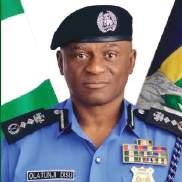
necessarily what is lost today. It is what may never happen tomorrow.
When I was a medical student at the University College Hospital, Ibadan, our set — Class of 2012 and eventual graduates of 2016 — looked forward to our public health medicine rural posting in Igbo-Ora. For many of us, it was much more than a posting. It was an adventure. We travelled from Ibadan in university buses and spent weeks immersed in rural life. We interacted with traditional rulers and community leaders. We learnt medicine in a different environment. We organised bonfire nights. We formed friendships that have endured for over a decade. Some of those friendships became relationships. Some of those relationships became marriages.
As our set approaches ten years after graduation, I often look back fondly on those experiences. They shaped us not only as doctors but as people. Then an uncomfortable question enters my mind.
Would parents today willingly allow their children to embark on the same journey? Would universities feel comfortable transporting hundreds of students from relatively safer urban centres into rural communities for weeks at a time? Would students themselves feel secure enough to embrace such an experience?
The tragedy of insecurity is not merely that it kills. It also steals possibilities. It steals memories before they are made. It steals friendships before they are formed. It steals opportunities before they are discovered.
The hydra-headed challenge of insecurity in Nigeria can be analysed from countless perspectives. Indeed, we often suffer from what I call analysis paralysis. Poor governance. Unemployment. Poverty. Ungoverned spaces. The political economy of insecurity. Porous borders. Arms trafficking from the Sahel. Weak institutions. Corruption. Religious extremism. Ethnic tensions. The list is endless. Yet one common denominator remains: bad behaviour flourishes when consequences are absent.
Dr Ogunmuko (@thowluwh on X) is a physician, medical educator and founder of The Muko Foundation. He writes from Manchester, United Kingdom.
FELIX OLADEJI contends that while reducing borrowing may contribute to fiscal discipline, sustainable prosperity depends

The recent assertion by a senior World Bank official that Nigeria's principal fiscal challenge is low government revenue rather than excessive public debt has once again brought the country's public finance debate to the forefront of national discourse. The statement challenges one of the most persistent assumptions within Nigeria's economic conversation—that borrowing itself constitutes the country's greatest fiscal vulnerability. Instead, the World Bank argues that while Nigeria's debt remains relatively moderate by international standards, the government's capacity to generate sufficient revenue remains critically weak. Supporters of this assessment contend that strengthening domestic revenue mobilisation offers a more sustainable path toward fiscal stability than focusing exclusively on reducing public borrowing. Yet beyond the immediate debate lies a broader policy question: is Nigeria's economic future constrained primarily by how much it borrows, or by how little revenue it generates to finance national development?
The argument in favour of prioritising revenue reform is rooted largely in the fundamental role that public revenue plays within modern economies. Governments require stable and predictable revenue to finance essential public services, invest in infrastructure, maintain national security, strengthen healthcare systems, improve education, and support long-term economic development. While borrowing can supplement public finance, sustainable development ultimately depends upon a government's ability to generate sufficient domestic income to meet its obligations without excessive dependence on external financing.
Supporters therefore argue that Nigeria's fiscal challenge should be understood primarily as a revenue problem rather than a debt problem. Compared with many emerging and advanced economies, Nigeria's public debt-to-GDP ratio remains relatively modest. The more pressing concern is that government revenue, particularly tax revenue, remains among the lowest globally relative to the size of the economy. Consequently, even moderate levels of debt create significant fiscal pressure because a substantial proportion of government income is devoted to debt servicing. This reality limits fiscal space for development expenditure while reducing the government's capacity to respond effectively to economic shocks.
Recent developments within the global economy reinforce these arguments. Governments around the world continue to face mounting expenditure demands arising from inflationary pressures, climate adaptation, infrastructure investment, demographic changes, healthcare expansion, and technological transformation. In this increasingly complex environment, countries possessing stronger domestic revenue systems are generally
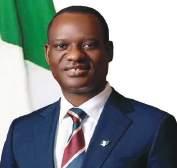
better positioned to finance development priorities while maintaining fiscal stability. Revenue generation has therefore become not merely a financial necessity but a strategic pillar of national resilience. Furthermore, stronger public revenue creates opportunities that extend far beyond balancing government budgets. Stable fiscal resources enable governments to invest consistently in roads, electricity, ports, digital infrastructure, scientific research, education, healthcare, and agricultural productivity. These investments strengthen private sector confidence, improve productivity, stimulate employment, and enhance long-term economic competitiveness. In this sense, revenue mobilisation should be viewed not simply as an accounting exercise but as an essential instrument of national development.
Yet the case for caution remains equally compelling. Revenue mobilisation should not be equated with increasing tax burdens indiscriminately. One of the greatest misconceptions surrounding fiscal reform is the assumption that higher government revenue necessarily requires imposing more taxes on already struggling citizens and businesses. While taxation remains an important component of public finance, sustainable revenue generation depends equally upon expanding the productive economy, improving tax administration, broadening the tax base, reducing informality, strengthening compliance, and encouraging economic growth.
This concern is particularly relevant within Nigeria's current economic context. Many households continue to experience inflationary pressures, declining purchasing power, and rising living costs. Businesses similarly face high operating expenses arising from unreliable electricity, exchange-rate volatility, infrastructure deficits, and security challenges.
Under these conditions, aggressive increases in tax rates could potentially discourage investment, reduce business competitiveness, and further constrain economic activity. Revenue reform must therefore balance fiscal necessity with economic sustainability.
Editor, Editorial Page PETER ISHAKA
Email peter.ishaka@thisdaylive.com
The North must confront difficult truths that have too often been avoided or obscured by political correctness
The 2nd Liberty Symposium recently held in Abuja with a focus on the security and socio-economic challenges that now define northern Nigeria and their impact on the people. While the region possesses enormous demographic, agricultural, mineral, commercial, and human capital advantages, according to participants, it continues to grapple with persistent insecurity, economic underperformance, infrastructure deficits, youth unemployment, weak institutional coordination, and adverse perceptions that often overshadow its vast opportunities.
Convened by the Liberty Media Group Chairman, Alhaji Tijjani Ramalan, some of the speakers at the conference included the Emir of Kano, Khalifa Muhammad Sanusi II; former Niger State Governor, Dr Babangida Aliyu; Minister of Information and National Orientation, Alhaji Mohammed Idris Malagi. Also in attendance were several policymakers, regulators, media executives, business leaders, security experts, academics, and other critical stakeholders committed to advancing the peace, prosperity, and sustainable development of Northern Nigeria.

risks becoming a development challenge. Subnational governance reforms must be accompanied by enhanced institutional accountability, fiscal responsibility, transparency, and citizen engagement to ensure sustainable outcomes. Private sector investment remains central to unlocking the productive capacity of Northern Nigeria, particularly across agriculture, manufacturing, renewable energy, mining, technology, logistics, creative industries, and digital economies.
The session observed that no society can transform itself by refusing to interrogate the factors responsible for its stagnation. As participants agreed, northern Nigeria cannot aspire to lead the future while remaining unwilling to critically examine the structures, attitudes, and leadership failures that continue to undermine its progress. They also noted with concern that despite being one of the most resource-endowed regions on the African continent with vast agricultural land, mineral deposits, strategic geography, cultural influence, and a youthful population, Northern Nigeria continues to underperform relative to its immense potential.
No society can build a prosperous future while millions of children remain disconnected from modern education, economic opportunity, and pathways to productive citizenship
The engagement noted that over the last decade, prolonged insurgency, banditry, farmer-herder conflicts, communal violence, and other forms of instability have significantly impacted economic productivity, social cohesion, investment confidence, and human development outcomes across the region. Participants further observed that ongoing national conversations around constitutional restructuring, devolution of powers, and the proposed establishment of State Police represent significant opportunities for rethinking governance systems and strengthening subnational capacity for development and security management. Participants therefore affirmed that the future prosperity of Northern Nigeria will depend not only on security interventions and governance reforms but also on the deliberate construction of productive economic power, inclusive institutions, responsible media ecosystems, and strategic partnerships capable of unlocking the region’s full potential.
One of the conclusions from the conference is that youth populations constitute Northern Nigeria’s greatest strategic asset. However, without adequate investments in education, skills development, entrepreneurship, technology, and job creation, this demographic advantage
T H I S D AY
EDITOR SHAKA MOMODU
DEPUTY EDITOR WALE OLALEYE
MANAGING DIRECTOR ENIOLA BELLO
DEPUTY MANAGING DIRECTOR ISRAEL IWEGBU
CHAIRMAN EDITORIAL BOARD OLUSEGUN ADENIYI
EDITOR NATION’S CAPITAL IYOBOSA UWUGIAREN THE OMBUDSMAN KAYODE KOMOLAFE
T H I S D AY N E W S PA P E R S L I M I T E D
EDITOR-IN-CHIEF/CHAIRMAN NDUKA OBAIGBENA
GROUP EXECUTIVE DIRECTORS ENIOLA BELLO, KAYODE KOMOLAFE, ISRAEL IWEGBU
DIVISIONAL DIRECTORS SHAKA MOMODU, PETER IWEGBU, ANTHONY OGEDENGBE
DEPUTY DIVISIONAL DIRECTOR OJOGUN VICTOR DANBOYI
SNR. ASSOCIATE DIRECTOR ERIC OJEH
ASSOCIATE DIRECTOR PATRICK EIMIUHI
CONTROLLERS ABIMBOLA TAIWO, UCHENNA DIBIAGWU, NDUKA MOSERI
DIRECTOR, PRINTING PRODUCTION CHUKS ONWUDINJO
TO SEND EMAIL: first name.surname@thisdaylive.com
Participants identified the persistence of mass poverty, low educational attainment, youth dis-empowerment, social exclusion, and weak human capital outcomes as fundamental threats to the future competitiveness of the region. They also identified the enduring Almajiri phenomenon as one of the most urgent moral, social, educational, and developmental questions confronting Northern Nigeria. They acknowledged the historical and cultural significance of traditional Islamic education but emphasized that no society can build a prosperous future while millions of children remain disconnected from modern education, economic opportunity, digital literacy, and pathways to productive citizenship.
As agreed, any honest conversation about the future of Northern Nigeria must confront difficult truths that have too often been avoided, deferred, or obscured by political correctness, sectional sensitivities, and the fear of uncomfortable conversations. According to participants, the challenge is no longer merely educational; it has become an economic, security, governance, and human development imperative. They called for a bold and comprehensive reform agenda that preserves the strengths of traditional learning while fully integrating modern education, vocational skills, civic values, entrepreneurship, technology, and economic empowerment.
Letters in response to specific publications in THISDAY should be brief (150-300 words) and straight to the point. Interested readers may send such letters along with their contact details to opinion@thisdaylive.com. We also welcome comments and opinions on topical local, national and international issues provided they are well-written and should also not be longer than (750- 1000 words). They should be sent to opinion@thisdaylive. com along with photograph, email address and phone numbers of the writer.
I write with deep concern over the Senate’s call for the suspension of the terrorist rehabilitation and reintegration programme. As Senator Adams Oshiomhole rightly said, “It does not make even common sense to grant pardon, rehabilitate and reintegrate criminals.” His words reflect the fear of millions of Nigerians living in the shadow of terrorism.
The first risk is betrayal of victims. In Borno, Yobe, Adamawa and beyond, families buried their children, mothers lost husbands, and entire villages were erased by these same criminals. To pardon and retrain them now sends a painful message: that taking lives comes with no permanent consequence. Justice must not be sacrificed for convenience.
Second, there is the security risk of relapse. Terrorism is not just about lack of skills. It is ideology. Many who pass through “de-radicalisation camps” return to the bush once pressure comes. We have seen cases of “repentant” fighters leading attacks months after graduation. Nigeria cannot afford to release trained killers back into communities that are still bleeding.
Third, the programme demoralizes our soldiers. A young man in the Nigerian Army risks his life daily to fight insurgents. Then he hears that the same man he captured yesterday is being fed, trained, and prepared for reintegration today. It breaks morale. It tells our troops their sacrifice means less than the comfort of the enemy.
Fourth, it creates injustice among citizens. There are
thousands of poor, law-abiding youths in Maiduguri and across the North who have no job, no skill, and no government support. Yet government finds billions to train and resettle terrorists. What message does that send? That crime pays faster than patience and honesty? That is dangerous for our youth.
Fifth, community acceptance is impossible. No village that lost 100 people to Boko Haram will welcome a “repentant” fighter as a neighbor tomorrow. Reintegration without community consent is not peace - it is planting a time bomb. Forgiveness cannot be forced by government policy.
Email: deji.elumoye@thisdaylive.com
08033025611 sms only
Peoples Democratic Party’s candidate for the 2027 governorship election in Ebonyi State, Ifeanyi Chukwuma Odii, in this interview speaks on how Nigeria can develop to become a strong economic nation, outlines his gubernatorial agenda to include economic diversification, industrialisation, infrastructure, healthcare, security, party politics and why he believes Ebonyi deserves a new direction.
You contested the 2023 governorship poll and back in the race for 2027. What inspired your decision to run again?
Leadership remains Nigeria’s greatest challenge. Every nation is blessed with human and natural resources, but without the right leadership those resources cannot be translated into prosperity for the people.
That conviction informed my decision to contest in 2023, and it remains the reason I am running again. Although the outcome of the last election did not reflect the aspirations of many of our supporters, I remain convinced that Ebonyi State deserves purposeful and visionary leadership.
For years, I have contributed to the development of Ebonyi as a private citizen through philanthropy. Through our foundation, we have invested in education, healthcare, youth empowerment and housing. We have built homes for indigent families and supported thousands of people across the state. Every one of those interventions is verifiable.
However, I also realised that there is a limit to what an individual can achieve without public office. Government has the capacity to implement policies that positively affect millions of lives. That is why I decided to offer myself once again for service.
My ambition is not driven by personal interest. It is driven by the desire to build a prosperous Ebonyi where opportunities are available to everyone.
What lessons did you learn from the 2023 election?
The biggest lesson is that democracy can only thrive when every legitimate vote counts. Many Nigerians have become discouraged because they believe their votes no longer matter. We must restore public confidence in the electoral process.
We have carefully reviewed everything that happened during the last election. As a result, we are much better prepared organisationally and strategically.
Another important lesson is voter education. Citizens must understand that protecting their votes is the same as protecting their future. We will continue to mobilise people at the grassroots to participate actively in the democratic process and remain committed to ensuring that every lawful vote is counted.
You have unveiled the “ANYI GEMEYA” agenda as your blueprint for Ebonyi State. What inspired this vision, and what does it seek to achieve?
My vision is to make Ebonyi State the preferred investment destination in Nigeria while improving the livelihoods and capacity of our people. Everything in the Anyi Gemeya agenda is driven by one central objective—to create opportunities for our people to prosper. I want to build a state where every citizen has the opportunity to create wealth, earn a decent living and enjoy a better quality of life.
The agenda is built on four pillars: accelerated economic development and industrialisation; development of new and existing infrastructure; youth and human capital development; and institutional reform anchored on the rule of law and security. These pillars are interconnected because sustainable development cannot happen in isolation.
Why do you believe you are the right person to lead Ebonyi State at this time?
Leadership is about vision, competence and the ability to deliver results. For more than two decades, I have built successful businesses, created jobs and managed complex organisations.
Beyond business, I have remained actively involved in the development of Ebonyi through the Ebele and AnyiChuks Foundation, where we have carried out numerous humanitarian and community development initiatives.
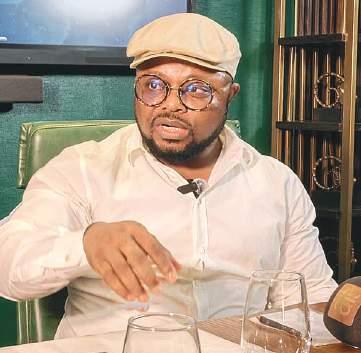
These experiences have given me a deep understanding of the aspirations and challenges of our people. I have travelled across the state, interacted with farmers, traders, artisans, professionals, students and traditional rulers. I understand their struggles because I have listened to them. My administration will therefore be driven by practical solutions rather than empty promises.
Economic development is the first pillar of your agenda. How do you intend to transform Ebonyi’s economy?
Ebonyi must move beyond dependence on monthly allocations from the Federation Account. A sustainable economy is one that creates wealth from its own resources.
Our state is blessed with fertile agricultural land, abundant solid minerals and significant tourism potential. These comparative advantages must be harnessed to build a diversified economy. Agriculture will receive special attention because it remains our strongest economic asset. We intend to promote mechanised farming, establish agroindustrial processing zones, encourage year-round irrigation and strengthen access to finance for farmers and small businesses.
Rather than exporting raw produce,
we want to encourage value addition. Rice, cassava, maize and other crops should be processed within Ebonyi before they are sold. That approach creates industries, generates employment and increases government revenue.
We will also improve the ease of doing business by creating an environment that encourages entrepreneurship and private investment.
Agriculture remains the backbone of Ebonyi’s economy. What will your administration do differently?
A - Agriculture has enormous potential to transform Ebonyi State if we move beyond subsistence farming. My administration will encourage mechanised agriculture and modern farming techniques to increase productivity. We will establish Special Agro-Industrial Processing Zones that will enable us not only to produce crops but also process and package them for local consumption and export.
We also intend to promote all-year-round irrigation farming so that our farmers can cultivate beyond the rainy season. Access to finance remains a major challenge for farmers, so we will work with financial institutions and development partners to improve funding for farmers and Micro, Small and Medium Enterprises.
In addition, we will set aside between 400 and 500 hectares of arable land to attract major local and foreign investors into commercial agriculture, particularly in rice production
my vision is to make Ebonyi state the preferred investment destination in nigeria while improving the livelihoods and capacity of our people. Everything in the Anyi Gemeya agenda is driven by one central objective—to create opportunities for our people to prosper.
and other high-value crops.
We will also invest in improved seedlings, agricultural research, extension services and technology transfer so that our farmers can compete favourably with others across the country.
Beyond agriculture, your manifesto speaks extensively about industrialisation. How do you intend to transform Ebonyi into an industrial hub?
Industrialisation is essential if we are serious about creating sustainable jobs and expanding our economy. Ebonyi has abundant natural and human resources, but we must create the right environment for industries to thrive. My administration will develop industrial clusters with the necessary infrastructure to attract small, medium and large-scale manufacturers. We will also improve the ease of doing business by simplifying government processes and removing unnecessary bottlenecks that discourage investors.
An Economic Council will be established to drive productivity, competitiveness and policy reforms that support industrial growth. For poorly performing state-owned enterprises, we will undertake reforms, including privatization where necessary, to improve efficiency and ensure better value for the people.
In addition, we will develop quality standards for products made in Ebonyi so they can compete successfully in both national and international markets.
What specific measures will you introduce to grow businesses in the state?
A thriving business environment requires fairness, inclusiveness and access to opportunities. One issue I addressed in the manifesto is the treatment of non-indigenes. Ebonyi belongs to everyone who lives, works and contributes to its development. My administration will not discriminate against anyone because of where they come from. Investors and residents must have confidence that their businesses and legitimately acquired properties are protected under the law.
We will also work with the Federal Government and neighbouring countries, particularly Cameroon, to expand export opportunities by leveraging the Trans-African Highway that passes through Abakaliki.
Our farmers and entrepreneurs should have access to regional and international markets.
Furthermore, we will facilitate access to finance for farmers and Micro, Small and Medium Enterprises, while introducing intervention programmes that support small businesses. Trade promotion initiatives will also be implemented to increase the visibility of Ebonyi products and businesses across Nigeria and beyond.
Ebonyi is blessed with solid mineral resources. What is your plan for the mining sector?
Mining has enormous potential to contribute significantly to our economy, but it must be properly regulated.
My administration will establish an institution to coordinate mining activities in the state and work closely with the Federal Ministry of Solid Minerals to ensure proper licensing and compliance.
We will document and publicise the mineral deposits available in Ebonyi to attract credible investors while ensuring that host communities benefit from mining activities. We will also encourage greater participation of Ebonyi citizens and indigenous businesses throughout the mining value chain, creating employment and supporting local economic development.
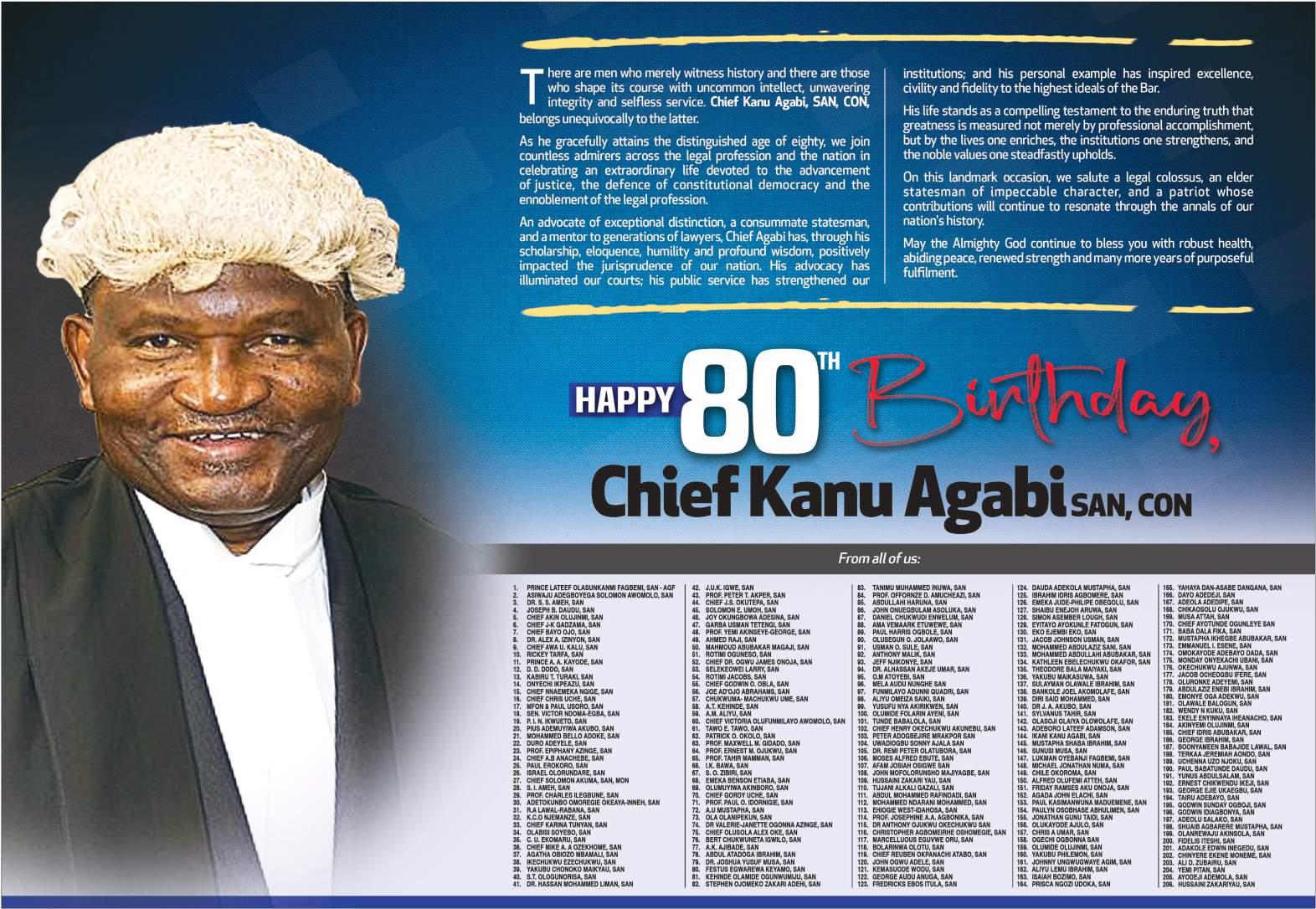
A Mutual fund (Unit Trust) is an investment vehicle managed by a SEC (Securities and Exchange Commission) registered Fund Manager. Investors with similar objectives buy units of the Fund so that the Fund Manager can buy securities that willl generate their desired return.
An ETF (Exchange Traded Fund) is a type of fund which owns the assets (shares of stock, bonds, oil futures, gold bars, foreign currency, etc.) and divides ownership of those assets into shares. Investors can buy these ‘shares’ on the
floor of the Nigerian Stock Exchange. A REIT (Real Estate Investment Trust) is an investment vehicle that allows both small and large investors to part-own real estate ventures (eg. Offices, Houses, Hospitals) in proportion to their investments. The assets are divided into shares that are traded on the Nigerian Stock Exchange.
GUIDE TO DATA:
Date: All fund prices are quoted in Naira as at 6th July 2026, unless otherwise stated.
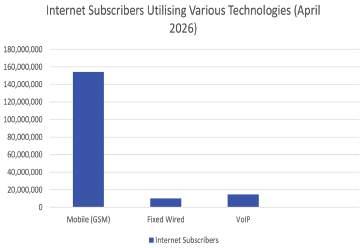
Stories by emma Okonji
Statistics on the number of active subscribers for data (internet) services, utilising the different technologies for internet connectivity, has revealed that subscribers utilising mobile (GSM) technology, continued to maintain lead with 154,347,260 internet subscriptions as at April 2026.
The statistics also showed that the number of active subscribers utilising fixed
The Chairman, Senate Committee on ICT and Cybersecurity, Senator Shuaib Salisu, has said the National Digital Economy and E-Governance Bill is ready and will be delivered for presidential assent and passage into law in few weeks.
According to him, the bill has passed through the first and second readings in the National Assembly and currently going through the third reading, before it will be presented for presidential assent and approval to make it a law.
After its passage, the
wired technology for their internet connectivity, improved significantly to reach 156,662 as at April this year, up from 137,074 as at March 2026.
The improvement on the utilisation of fixed wired technology for internet connectivity has been attributed to the recent campaign on Fibre-To-TheHome (FTTH) across Mobile Network Operators (MNOs) offering data services for internet connectivity.
Telecom operators are
document will automatically transform from National Digital Economy and e-Governance Bill into National Digital Economy and e-Governance Act 2026, Salisu said.
The Senate Committee Chairman on ICT and Cybersecurity said this in Lagos during the AI Summit organised by T&A Legal.
He explained that bill remained important, hence he quickly moved to amend it in 2024, with a further amendment in 2025 and 2026 to bring it to par with the United Nations Convention
currently laying fibre optic cables for internet connectivity to various Nigerian homes and they have advised that fibre optic cable with standard specifications, be factored into all building designs from the foundation level, to enable easy plug and connect for fast internet access.
The statistics, which THISDAY obtained from the official website of the Nigerian Communications Commission (NCC), showed that internet subscriptions
against Cybercrime document.
“That bill has gone through first reading. It has gone through second reading. It is in the third reading. In the next few weeks, that bill will be passed into law and it will no longer be a bill, but an Act that will be addressed as National Digital Economy and E-Governance Act 2026,” Salisu said.
According to him, “One of the first things I did as committee chair was to amend the bill in 2024. But in December 2025, the United Nations adopted some new activities under
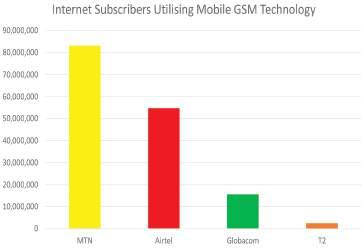
via the mobile phones, continued to lead across other licensed technology deployed by operators for internet connectivity.
The statistics put the total number of internet subscribers utilising various technologies for their internet connection at 154,724,088 as at April 2026.
From the released figure, mobile technology alone accounted for 154,347,260, while fixed wired technology accounted for 156,662 and Voice over Internet Protocol (VoIP) accounted for 220,166.
the UN Convention against Cybercrime, and we had to amend the bill again in 2026 to be at par with the UN Convention against Cybercrime.”
The National Digital Economy and E-Governance Bill (NDEEB 2024), was proposed in 2024 by the Federal Ministry of Communications, Innovation and Digital Economy to provide a unified legal framework for digital transactions, electronic signatures, and paperless public administration in Nigeria.
The statistics showed a steady lead in internet connectivity from the utilisation of mobile technology for seven consecutive months.
In November 2025, mobile GSM internet subscribers reached 144,151,655, while fixed wired internet subscribers reached 83,417 and the wired/wireless internet subscribers reached 313,713. VoIP internet subscribers reached 238,496, which brought the total internet subscribers utilising the various technologies, to 144,787,281.
story continues online on www.thisdaylive.com
In October 2025, mobile GSM internet subscribers reached 142,004,662, while fixed wired internet subscribers reached 73,778 and the wired/wireless internet subscribers reached 313,713. VoIP internet subscribers reached 239,672, which brought the total internet subscribers utilising the various technologies, to 142,631,825.
The bill seeks to shift Nigeria away from paperbased systems by granting electronic transactions, contracts and digital signatures the same legal weight as traditional paper documents
The key objectives of the bill in addressing legal certainty, is to recognise electronic time-stamps as legally binding, removing long standing ambiguities in digital commerce. In the area of e-Governance, the bill mandates digitisation of government services across Ministries, Departments and
Market data a s at Wednesday, JuL y 8, 2026
Agencies (MDAs), aiming to reduce paperwork, combat corruption and improve citizen access to public services. The bill also sets baseline standards for transparency, personal protection and online dispute resolution for consumers. Salisu who read part of the bill to the audience, said:
“The bill seeks to strengthen legal certainty and promote public confidence in integrity and reliability of electronic transactions, communication and records.
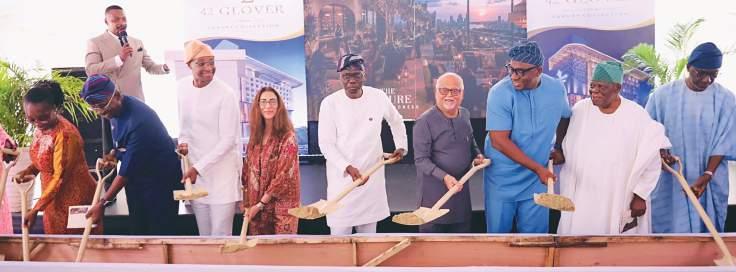
L-R: GM Lagos State Material Testing Laboratory, Mrs Olayinka Abdul; CEO, Commissioner for Lagos State Physical Planning, Dr Yinka Olumide; Group CEO of FCMB Group Plc, Mr Ladi Balogun; Mrs Poonam Keswani; Governor of Lagos State, Mr Babajide Olusola Sanwo-Olu; Group MD of Artee Group, Haresh Keswani; Deputy Chief of Staff to the Governor of Lagos State, Mr. Sam Egube; Founder and Chairman of Coleman Technical Industries Limited, Asiwaju Solomon Kayode Onafowokan and Chairman, Lekki Port LFTZ Enterprise LTD, Mr Abiodun Muritala Dabiri during the ground breaking of a landmark mixed-use development on Glover Road, Ikoyi Lagos… recently
Stories by Emma Okonji
The Director General/CEO of the National Office for Technology Acquisition and Promotion (NOTAP), Dr. Obiageli Amadiobi, has stressed the need for collaboration among government, industry and investors, to address the infrastructure deficit in the country.
Amadiobi said this during the National Engineering Science and Technology Essay Competition (NESTEC) awards ceremony organised by the Blue Apple Educational Foundation, BAEF in Abuja.
Amadiobi who was
represented by the Director of Technology Innovation and Commercialisation at NOTAP, Mrs. Ada Mokolo Oladunke, also called for the launch of massive Intellectual Property (IP) awareness campaign across the country.
She emphasised the need for the commercialisation of local innovations, stressing it is the ultimate pathway to national development. She said the nation should transform raw knowledge into economic wealth for sustainable development and that the first step to securing whatever idea one has is to patent it.
The National Engineering
The Nigerian Communications Commission (NCC) has called on Nigerian students to actively protect telecommunications infrastructure across the country, describing such facilities as critical national assets that support education, innovation, economic growth and digital connectivity.
The Executive Vice Chairman and Chief Executive Officer of NCC, Dr. Aminu Maida, made the call during a courtesy and familiarisation visit by the newly elected leadership of the National Association of Nigerian Students (NANS) to the commission’s head office in Abuja.
Science and Technology Essay Competition transitioned from a purely theoretical essay contest into a rigorous, hands-on launchpad for prototype development and
commercialisation.
Themed: ‘Commercialisation of Innovative Ideas- The Pathway to National Development’, the event brought together top industry
Group Business Editor
Eromosele Abiodun
Deputy Business Editor
Chinedu Eze
Comms/e-Business Editor
Emma Okonji
Asst. Editor, Energy
Emmanuel Addeh
Asst. Editor, Money Market
Nume Ekeghe
Correspondents
KayodeTokede(CapitalMarkets)
James Emejo (Finance)
Ebere Nwoji (Insurance)
Reporter
Peter Uzoho (Energy)
The EVC, who was represented by the Director, Public Affairs Department, Mrs. Nnenna Ukoha, congratulated the newly elected NANS President, Akinteye Babatunde, and members of the association’s executive council on their emergence while commending the smooth transition in the leadership of the student body. Maida noted that the longstanding relationship between the NCC and NANS has continued to flourish because of mutual respect, dialogue and constructive engagement, and expressed confidence that the current leadership would build on the achievements of its predecessors.
professionals, academia, and student innovators, with a determination to bridge the gap between academic research and commercial reality.
In his opening address, the President of BAEF Akan Michael, welcomed attendees and laid out the foundation’s bold new vision.
Oluchi Chibuzor
Artee Group today officially broke ground on 42 Glover Luxury Collection, a landmark mixed-use development that is set to redefine luxury living, hospitality and lifestyle experiences in Lagos.
The groundbreaking ceremony, held at 42 Glover Road, Ikoyi, brought together the Governor of Lagos
State, Babajide SanwoOlu, senior government officials, business leaders, development partners, and invited guests to celebrate the commencement of one of Lagos’ most ambitious luxury developments.
Developed by Evergreen Glover Investments Limited, a subsidiary of Artee Group, 42 Glover Luxury Collection has been envisioned as a destination where
contemporary architecture, sustainable innovation and premium lifestyle experiences come together within one iconic address.
Designed as a fully integrated lifestyle destination, the development will feature luxury retail, world-class fine dining, a distinguished 5-star hotel, a dedicated wellness studio and beautifully landscaped terrace gardens, creating an
exceptional environment for residents, visitors and businesses alike. At the heart of the project is a commitment to sustainable development. Through the integration of vertical gardens, landscaped terraces and environmentally conscious architectural design, 42 Glover reflects a vision of modern luxury that embraces nature while contributing positively to the urban landscape.
The UK-Nigeria Tech Hub has launched the Nigeria Innovation Cluster Exchange (NICE), an initiative funded by the UK-Nigeria tech hub, under the UK Government’s Digital Access Programme and implemented by The Nest Innovation Technology Park.
Speaking about the initiative, Co-founder of The Nest Innovation Technology Park, Oluwajoba Oloba, said:
“Today, we are moving from celebrating isolated pockets of brilliance to engineering a collective national engine for growth. NICE provides architecture to unify our myriad of ESOs and startups, allowing them to function like a coordinated army of ants. We are not just launching a programme; we are activating the connective tissue Nigeria’s economy has long demanded.”
Developed with insights from the 2025 UK Digital Trade and Innovation Tour, coordinated by the UK-Nigeria Tech Hub in collaboration with the Office for Nigerian Digital Innovation (ONDI), NICE adapts global best practices to the Nigerian context. The initiative aims to tackle the “coordination deficit” in a country where National Bureau of Statistics (NBS)
data showed over 53 per cent youth underemployment, and fewer than 10 per cent of startups survive beyond their third year.
The pilot programme will strengthen Nigeria’s innovation clusters—defined as geographically and sectorally concentrated networks of ESOs, startups, manufacturing firms, and state agencies through four primary objectives.
Nigeria’s leading ICT company, ipNX, recently hosted an intimate and thoughtfully curated long service awards ceremony to celebrate employees whose dedication, loyalty, and contributions have played a pivotal role in the company’s growth and success over the years.
Held in Lagos, the event brought together the awardees and leadership in a warm and reflective setting designed to honour employees who have
dedicated 10, 15, 20, 25 and even 35 years of service to the organisation. In an era where employee retention has become increasingly uncommon, the milestone represented not only years of service but also a shared commitment to excellence, resilience, and purpose.
The specially curated experience celebrated the stories, achievements, and impact of employees who have grown alongside the organisation, helping to shape ipNX into one of Nigeria’s
most respected indigenous technology companies.
Speaking at the ceremony, Group Managing Director of ipNX, Ejovi Aror, who himself has spent over 35 years with the organisation, having transitioned from Telnet Nigeria, paid tribute to the award recipients and reflected on the critical role they have played in the company’s journey.
“Today is more than a celebration of years served; it is a celebration of belief, perseverance, and the
extraordinary impact that committed people can have when they dedicate themselves to a shared vision. Every one of you being honoured today represents the values that have sustained this organisation through every challenge and every milestone. Your loyalty has helped build not just a company, but a legacy. We are proud of what we have achieved together, and even more excited about the future we will continue to create together,”Aror said.
Industry stakeholders have continued to debate the issues around Artificial Intelligence governance in Nigeria, designed to unlock the country’s digital economy while safeguarding citizens’ rights. While some are calling for collaborative approach to AI governance, others are of the view that innovation without regulation will pose risk and that regulation without innovation is stagnation, writes Emma Okonji
The on-going debate on the planned regulation of Artificial Intelligence (AI) in Nigeria, was again brought to the front burner by T&A Legal, during the hosting of its 2026 AI Summit in Lagos.
Themed: ‘Artificial Intelligence in Nigeria: Balancing Regulation and Innovation,’ the summit brought together key voices from the public and private sectors to deliberate on the opportunities, challenges, and regulatory framework required to position Nigeria as a leader in responsible AI adoption across Africa.
Co-founding Partner of T&A Legal, Oluseyi Adisa, in her welcome speech, said while countries across the world were still experimenting with governance models, Nigeria has a unique opportunity to develop an AI framework tailored to its realities.
According to her, while AI will present enormous economic opportunities, with projections indicating it can contribute billions of dollars to Nigeria’s Gross Domestic Product (GDP) and transform agriculture, healthcare, education, governance and other critical sectors, the gains must be supported by appropriate safeguards against emerging risks such as algorithmic bias, data misuse, deepfakes, cyber threats, privacy violations and election interference.
Expressing her concerns at the summit,

CEO, CarbonAI, Debola Ibiyode, called for caution and diplomacy in regulating AI in Nigeria. According to her, “Innovation without regulation is a risk, while regulation without innovation is stagnation.”
Balancing rapid technological growth with robust guardrails has become the defining challenge of the tech ecosystem, as Nigeria accelerates its adoption of Artificial Intelligence. Sustainable economic growth from AI can only be unlocked through a framework of Responsible AI and a new global and local approach, she said.
Ibiyode challenged the notion that
regulation acts as a brake on economic progress. Instead, she argued that without clear rules, the trust required for commercial success will collapse.
She however said at some point, without regulation, economic growth would not happen because there would not be profitability.
“As humans, we know how to do one thing well: to always seek the negative part of a good thing. We need to put regulations in place so citizens are protected from threats like deepfakes,” Ibiyode further said.
Other stakeholder were of the view that regulation could not be inherently
bad. According to them, where regulation is done right, it encourages innovation, it encourages investment, it encourages trust in the ecosystem. And that’s why we’re not inherently against regulation, they said. They however said when regulation is done wrong, the risk would outweigh the benefit for the entire ecosystem. “So we believe that when we’re regulating AI, for example, it’s important to start from a place of understanding what exists. So what are the current laws? What are the gaps? And then we begin to ask ourselves, do we need new regulation? they further said.
During a panel session at the AI summit, panelists had divergent views about AI governance in Nigeria.
The CEO, Pop Central, a media platform for the young audience, Mr. Yinka Obebe, painted a scenario about AI governance by describing it as a large empty field that is fenced and locked up, while preventing people from using it.
He explained that countries like America and China were already ahead of other countries in AI development, yet they are not regulating AI. He therefore wondered why Nigerian government should ever think of regulating AI, insisting that regulation will stifle innovation around AI.
The story continues online on www.thisdaylive.com
Recently, Expressions Influencer Agency, an offshoot of EXP Agency Group organised a conference in Lagos where clients and content creators brainstormed on evolving trends in the media landscape and its effect on traditional media and Africa’s future. CEO of Expressions Influencer Agency, David Boon, in an exclusive chat with Oluchi Chibuzor, emphasised the imperative of adapting to the new media reality or face setbacks. Excerpts
We would like to start by asking you what critical factors underscored your decision to launch the new content creation conference and platform. What do you hope to achieve?
The decision to launch the Media Shift: Nigeria – Live was driven by a fundamental shift in the media landscape. We are seeing a clear and sustained move of media spend by brands towards digital and social platforms, where they are delivering stronger, more measurable returns on investment. This is not a trend—it is a structural shift in how brands engage audiences for a better return on their investment. As an agency group that focuses on consumer engagement, we believe it is critical not only to respond to this change, but to lead it across our markets in Africa.
The purpose of the platform is therefore twofold: Firstly, it is about education and alignment—bringing brands and creators together to better understand how influencer marketing can be executed with greater intent, strategy, and accountability. Secondly, it is about raising the standard of the category. Too much of what exists in the market today is still driven by vanity metrics. Our objective is to shift the focus towards performance-led campaigns— where success is defined by meaningful engagement, measurable outcomes, and
the ability to consistently outperform benchmarks and drive performance that matters, performance that has an impact on the Brand.
Ultimately, the Media Shift event is designed to help shape a more mature, effective, and results-driven media of influence ecosystem in Nigeria.
The conference had the theme,
‘Winning With Influence’! Can you expatiate further on this bearing in mind that there are not much legacy systems to cite?
“Winning With Influence” speaks to a shift away from using influencer marketing purely for reach, and towards using it as a performance-driven channel that delivers measurable business outcomes.
What we already have is platform and process 10+ years old from our partner, and with this a growing body of proven results that clearly demonstrates its effectiveness when executed strategically.
For example, our partner, with over a decade of experience in influencer marketing, has successfully delivered end-to-end campaigns at scale—completing 568 campaigns in the year ended June 2025, with 96 percent outperforming goals / benchmarks. These outcomes were not driven by scale alone, but by smart campaigns that resulted in results that had a direct impact on the brand, together with improved efficiency across key metrics (CTM; CPC; etc.)
At Expressions, we are seeing similar results. In our first year of operation, the campaigns we have executed across the continent have all consistently exceeded performance targets and benchmarks, delivering strong return on investment for our clients.
So, “Winning with Influence” is ultimately about moving the brand from visibility to value. It is about applying the right strategy, the right mix of creators, and the right measurement frameworks to ensure that influencer marketing is not just impactful, but accountable and results-driven.
Eromosele Abiodun
APM Terminals Apapa, has brought together key government agencies and importers in a concerted effort to resolve operational bottlenecks affecting cargo clearance on the National Single Window (NSW) platform, as authorities pledged to fine-tune the system and improve trade facilitation across the nation’s ports.
At a Stakeholders and Customer Engagement Forum held at the terminal in Lagos, representatives of the National Single Window Project, the Standards Organisation of Nigeria (SON), National Agency for Food and Drug Administration and Control (NAFDAC), Nigeria Agricultural Quarantine Service (NAQS), National Drug Law Enforcement Agency (NDLEA) and the Joint Task Force met directly with customers to address concerns ranging from permit processing and Harmonised System (HS) Codes to documentation errors and regulatory overlaps.
Welcoming participants, the Managing Director of
APM Terminals Apapa, Kamal Alhraishat, said the company organised the forum to create an open platform where customers could openly discuss operational challenges with the relevant government agencies.
“We want customers to be vocal about the issues they are facing so that together we can find practical solutions and continue improving the cargo clearance process,” he said.
APM Terminals
Apapa Government Relations Manager, Olayinka Akinlade, said the engagement reflected APM Terminals’ commitment to supporting efficient trade by connecting customers directly with agencies responsible for processing import documentation.
According to her, many of the concerns raised by customers stem from the ongoing transition to the National Single Window platform, “making continuous stakeholder engagement essential to ensuring a smooth implementation.”
Director of Operations, National Single Window,
Peter Ekunkoya, said resistance to change, payment-related issues and user adaptation were among the early challenges encountered during deployment. He, however, assured stakeholders that the platform was steadily improving.
“The National Single Window is designed to eliminate delays and make trade transactions easier. We encourage stakeholders to continue asking questions and providing feedback because we are committed to resolving operational issues,” he said.
Deputy Director at NAFDAC, Ayankop Ayankop, described the implementation as a learning process, noting that the agency had overcome most of its initial technical challenges and was experiencing steady improvements in platform operations.
Similarly, Chief Standards Officer of SON, Iliya Shall, identified incorrect documentation, inadequate awareness and improper use of Harmonised System Codes as some of the most common causes of delays experienced by importers.
Technology-driven credit rating agency, DataPro, has upgraded the longterm credit rating of Dangote Cement Plc to AA+ from AA, citing the company’s sustained financial strength, resilient operating performance, and continued leadership in Nigeria and the African cement industry.
In its latest rating report, the agency also affirmed Dangote Cement’s short-term rating at A1 and maintained a Stable
Outlook. The rating, which is valid until June 16, 2027, followed a comprehensive assessment of the company’s capitalisation, earnings quality, liquidity, corporate governance, regulatory compliance, and the sustainability of its financial performance over the medium to long term.
According to the company’s Business Development & Client Services Manager, Mr. Kehinde Rasheed, the
upgrade reflects the company’s consistently strong fundamentals, underpinned by its dominant market position, widely recognised brand, robust asset base, healthy earnings profile and experienced management team. It noted that these strengths continue to reinforce the company’s ability to meet its financial obligations promptly despite prevailing macroeconomic and industry challenges.
The founder of the Initiative for Peace, Forgiveness and Love for One Another (IPFLOA), Kingsley Atoe, has urged Nigerians to embrace love, tolerance and peaceful coexistence, describing them as indispensable to the country’s development and stability.
Speaking with journalists in Lagos, Atoe said the nation’s current challenges, including insecurity, economic hardship and increasing social divisions,
underscore the need to promote values that unite rather than divide citizens.
“In a time when headlines are dominated by insecurity, inflation and division, the conversation we need to have most is also the simplest: love and peace,” he said.
According to him, peace and trust are not only moral ideals but also strategic requirements for sustainable development, noting that communities and institutions thrive where people have
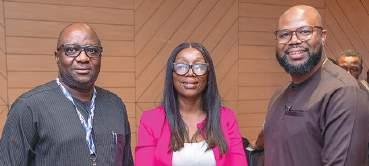
confidence in one another.
“Without peace and trust, roads crumble, schools under-perform and businesses close—not always because of a lack of funds, but because of a lack of trust,” he stated.
Atoe, who is a member of the United Nations Peace Ambassadors Foundation, disclosed that IPFLOA has begun a nationwide campaign to encourage peaceful coexistence among Nigerians, irrespective of their ethnic or religious backgrounds.
Kayode Tokede
The Nigerian stock market for the third consecutive trading session this week has appreciated by N8.49trillion over investors’ demand for highly capitalized stocks such as Dangote Cement Plc, Airtel Africa Plc and MTN Nigeria Communications Plc.
According to THISDAY findings, the market
capitalisation of listed stocks on the Nigerian Exchange Limited (NGX) that closed for trading activities at N147.103 trillion last week, gained N8.48 trillion or 5.77per cent to close at N155.585 trillion yesterday. Also, the NGX All-Share Index moved from 229,240.34 basis points, up by 13,219.64 basis points or 5.8 per cent to close at 242,459.98 basis points. Consequently, the NGX ASI in its Month-to-Date and Year-
to-Date returns settled higher at +5.7per cent and +55.8per cent, respectively.
Opening for trading this week, the stock market gained N3.168 trillion to close at N150.271 trillion on investors’ demand for large and medium capitalised stocks amongst which are; Aradel Holdings, Dangote Cement, Lafarge Africa, Nigerian Exchange Group and MTN Nigeria Communications .
The NGX ASI gained 4,937.89 basis points or 2.15 per cent to close at 234,178.23 points.
The previous day, the stock market sustained its positive momentum with a gain of N1.865 trillion on sustained demand for large-cap stocks signals improving market confidence as investors continue to position in fundamentally sound equities.
The NGX ASI gained
2,905.05 basis points qr 1.24 per cent to close at 237,083.28 basis points. Also, market capitalisation rose by N1.865 trillion to close at N 152.136 trillion.
The upturn was driven by price appreciation in large and medium capitalised stocks amongst which are; Dangote Cement, Aradel Holdings, MTN Nigeria Communications, Lafarge Africa and Vitafoam Nigeria.
In addition, the market capitalisation yesterday gained N3.45 trillion as sustained buying interest continued to strengthen investor sentiment across the bourse.
The NGX AII gained by 5,376.70 basis points or 2.27 per cent to close at 242,459.98 basis points. Similarly, the overall market capitalisation value rose by N3.45 trillion to close at N155.586 trillion.
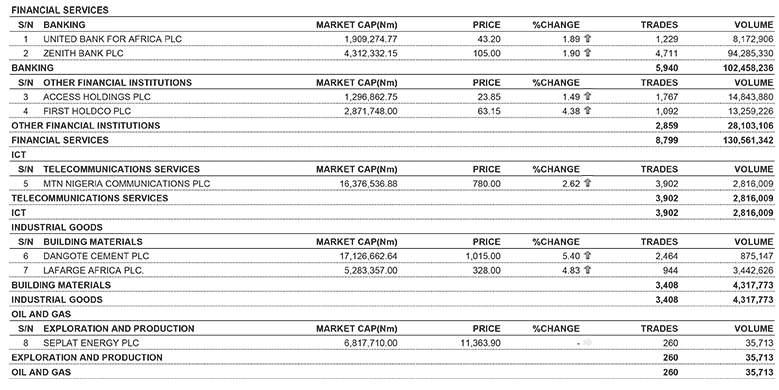
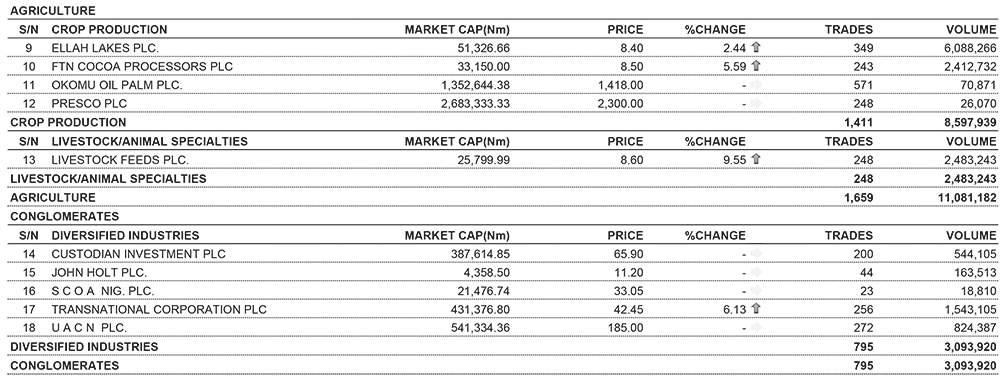
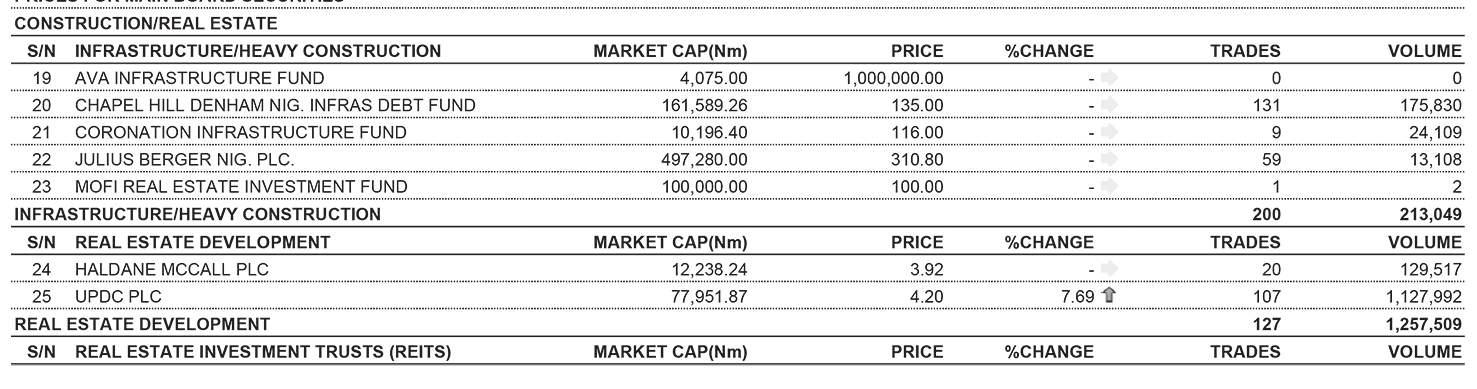
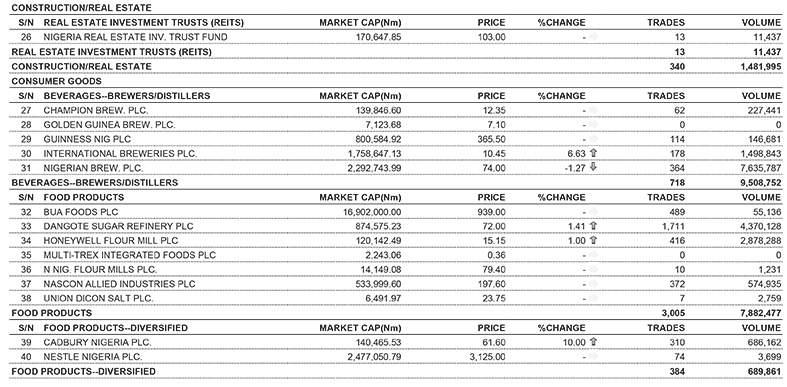
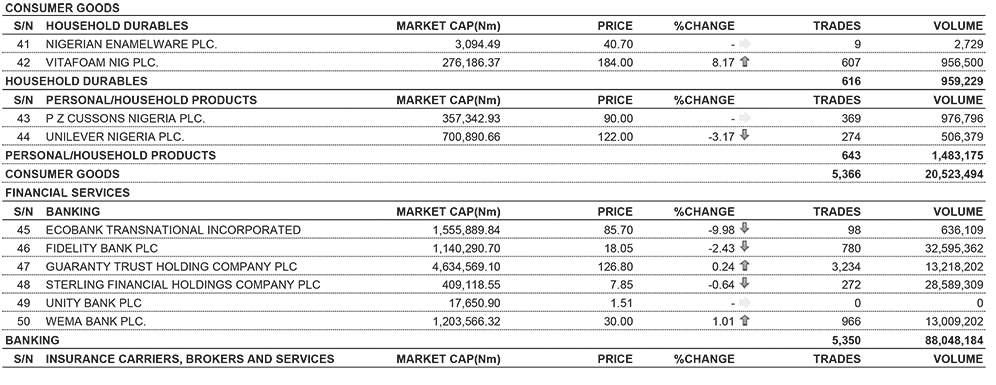
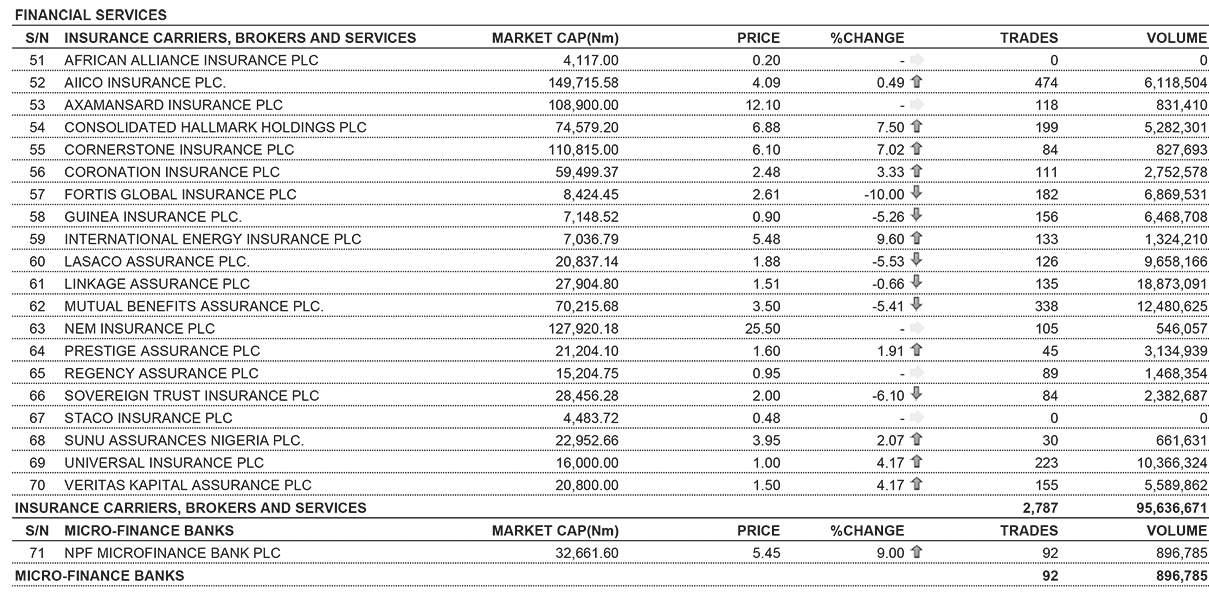

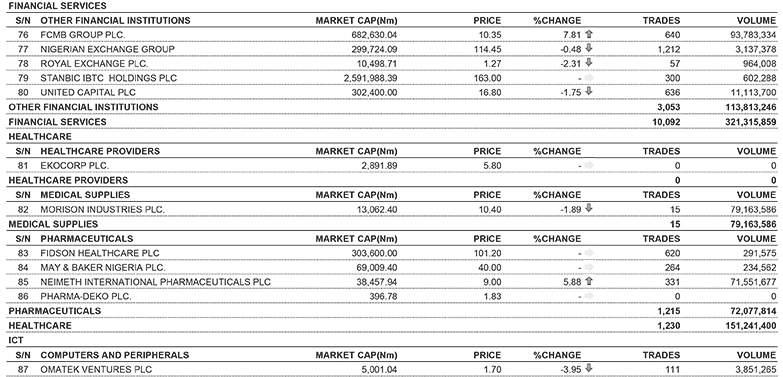
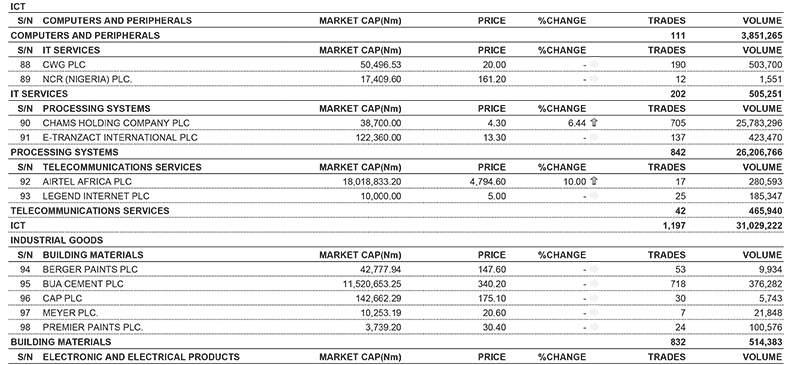
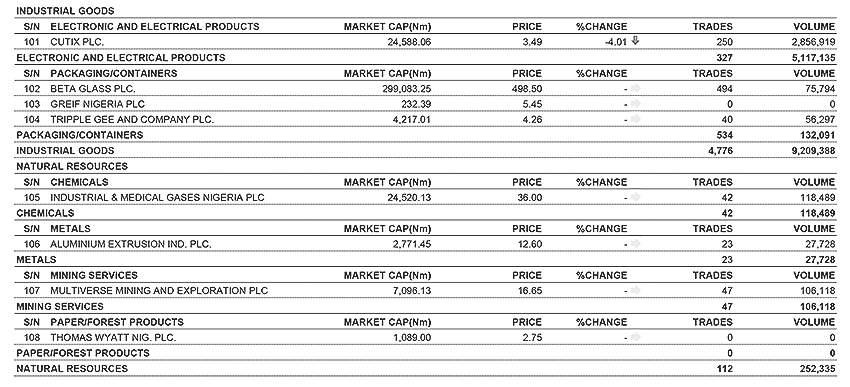
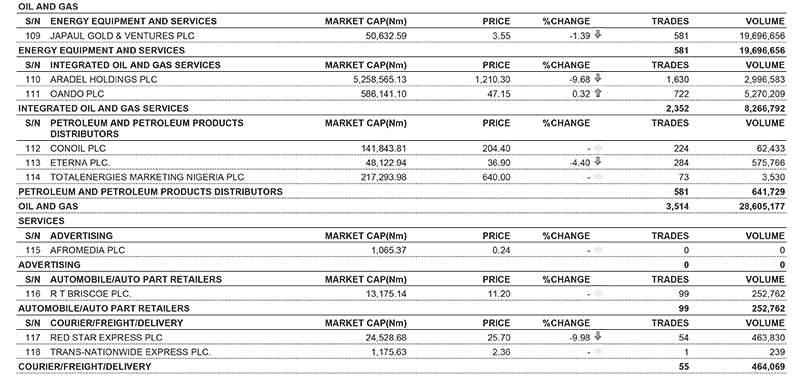
Edited by Oke Epia |

By Tauni Lanier
Nigeria did everything the playbook asked. It still had to fly to London during London Climate Action Week to be graded. A case study in why the successor to failed aid and venture philanthropy is repeating their central mistake.
London Climate Action Week (LCAW) has come to an end. With more than 1000 events planned during the week, it was impossible to keep abreast of everything and every announcement. The week after LCAW keeps one busy, reading impressions, announcements, and criticisms.
Global South and the Development Paradox: Three waves of external capital have tried, and failed, to develop the Global South: bilateral and multilateral aid, then venture philanthropy, then Chinese infrastructure lending. Earlier instalments of this series argued they failed for the same reason — each treated development as a capital-deficit problem when it was a governance and institutional-capacity problem. A fourth wave has now arrived. It is called climate finance, and it is being sold explicitly as the successor to all three: more rigorous than aid, more scalable than philanthropy, less geopolitical than Beijing. I spent LCAW inside its engine room moderating a Nigerian carbon-market panel at Mansion House and keynoting a summit on whether distributed-solar attributes can become procurement-grade instruments in sub-Saharan Africa. This piece uses Nigeria as the case study, because Nigeria is the closest thing the fourth wave has to a model student.
The collapse of aid and the retreat of philanthropy have cleared the field. Climate finance now carries the “innovation” narrative that venture philanthropy or philanthrocapitalism carried fifteen years ago, covering market discipline, measurable outcomes, business rigour, and private scale. New instruments are bringing some of the same structural errors. The conditionality that moved from policy (the IMF) to agenda (the foundations) is now migrating a third time, into market infrastructure: ratings, standards, verification, “bankability.” And the concessional money private capital needs to move is disappearing at exactly the moment everyone is told to mobilise it. And market infrastructure continues to be based on mainly lessons learned from the North American and European arenas. Climate finance is not failing because it is the wrong idea. It is at risk of failing because the people building it are conflating moving capital with reducing the hazard and because we are still trying to import what can only be built. Climate Finance must be built for regions by regional actors.
Understanding the Vacuum: The numbers describe not a gap but a vacuum. Development assistance from OECD donors fell 6 percent in 2024 to USD 214.6 billion, the first decline in six years. Then came the cliff: preliminary 2025 figures show ODA fell to USD
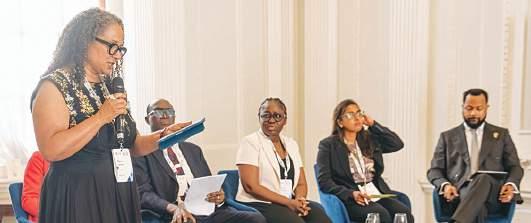
174.3 billion, a 23.1 percent contraction, the largest single-year fall on record, with a further 5.8 percent drop projected for 2026.
The United States, which provided USD 63.3 billion in 2024, about 30 percent of all global aid (USAID’s own budget request that year was roughly USD 32 billion), has led the retreat. Thirty per cent of the world’s aid, withdrawn at speed, is enough to leave a continent-sized hole. The philanthropic backstop is going the same way. Warren Buffett, whose Berkshire shares underwrote the modern Gates Foundation, resigned its board in 2021 and has confirmed the Foundation receives nothing from his estate; the Gates Foundation itself plans to wind down entirely by 2045. The era of the permanent, growing mega-donor is not threatened. It is scheduled to close.
Underneath both sits the debt machine that never stopped. Global public debt hit a record USD 102 trillion in 2024; developing countries’ net interest payments reached USD 921 billion, up 10 percent in a year.
Sixty-one developing countries now spend 10 percent or more of government revenue servicing interest, and 3.4 billion people live in countries that spend more on debt interest than on health or education in Africa, roughly 751 million people, some 57 percent of the continent. Aid in its steepest recorded decline, philanthropy announcing its own sunset, debt service crowding out the health and education budgets that build the institutions development requires.
The official response arrived three days before London Climate Action Week. At their summit in Évian on 15–17 June 2026, the G7, who between them provide some 70 percent of global ODA issued a Leaders’ Declaration on Mutually Beneficial International Partnerships, “recommitting” to development finance. Read closely, it is not a recommitment to aid; it openly concedes that ODA “is insufficient to meet developing countries’ needs,” then pivots to something else: mobilising private capital “at scale,” helping partner countries “self-finance,” strengthening domestic tax collection, and using concessional resources “strategically where they are most needed,” rationed to the least-developed and shock-vulnerable. It is, in other words, a recommitment to the fourth-wave model of private mobilisation, blended finance, and self-reliance issued by the same governments whose aid just fell 23 percent. To be clear, the cutters are assuring the world the cut will be fine. There
is something real in it: a sharper focus on debt vulnerability, on economic sovereignty and country ownership, on reforming a fragmented development architecture. Nigeria will test each one. But notice what the official answer to the vacuum is: not to refill it. But to tell the countries standing in it to go and attract the private capital that will. Into that vacuum walks the fourth wave, and Nigeria walks in to meet it.
Nigeria has done everything right: Every wave needs a story, and every story begins where the last one’s credibility ended. The IMF said: give us policy control and capital will work. The foundations said: give us metrics and grants will work. China said: give us infrastructure and trade will work. Climate finance says something more seductive: you don’t need our charity; you have assets we will pay a market price for. Nigeria’s pitch in London was exactly this, and it deserves to be taken seriously because Nigeria has done the hard part. The country now has a genuine sovereign climate architecture: the Climate Change Act 2021, the National Council on Climate Change, NDC 3.0, the Electricity Act 2023 that unbundled the power sector and opened mini- and off-grid investment, a National Carbon Market Activation Policy projecting up to USD 2.5 billion a year in carbon revenue by 2030, and membership of the African Carbon Markets Initiative. The Nigeria Climate Investment Summit’s own framing names the task precisely: “catalysing climate policy progress into financial flows for green projects.” The policy progress is real. The financial flows are the open question. Here is what the case study exposes. Nigeria built the institutions that I have argued are the only durable path yet, still had to fly to Mansion House to be assessed. Not by the IMF. Not by a foundation. By the City of London’s Transition Finance Council, by ratings agencies, by carbon-standard bodies, by integrity raters. The summit even introduced a new instrument for this, the Sustainability Policy & Practice Spotlight, a framework profiling the ESG performance of corporate Nigeria to demonstrate “readiness” to foreign capital. The country that did the sovereign, institution-building work still cannot convert it into capital without the blessing of private infrastructure it does not own and cannot vote on. Conditionality has migrated a third time, from policy to agenda to market plumbing. The IMF’s conditionality was explicit (privatise,
liberalise) and therefore contestable. The foundation was implicit (fund this disease, hit these metrics) and harder to argue with. The new conditionality is encoded in what counts as “bankable,” “investment-grade,” “procurement-ready,” “high-integrity.” You can argue with a finance minister; you cannot negotiate with a methodology. And the bodies that write the methodologies, such as Verra, Gold Standard, the index providers, the rating houses, answer to no electorate and, unlike even a foundation, carry no public mission. At each step the conditionality became less visible and more total.
Nature as Underpriced Assets: On my panel at the Nigeria Climate Investment Summit (NCIS), the framing that nature is “Nigeria’s underpriced asset” - its 9–11.1 million hectares of forest reframed as a carbon “goldmine” and offered, sincerely, as the route to capital. It is. It is also the oldest extraction logic in the book, wearing green. Monetising natural capital for Global North buyers risks rebuilding the resource-extraction model that oil already ran in Nigeria. When a low-emitting country sells carbon credits so that high-emitting buyers can keep emitting and still claim net zero, the value tends to pool where it always has, with intermediaries, verifiers, brokers and offset purchasers, while “beneficiation of asset-bearing communities,” to use the phrase from the sovereign-wealth seat on my panel, arrives last, if at all. Nigeria has watched this film before six decades of oil, much of it exported as raw value, with the Niger Delta carrying the externalities. A carbon market built on the same architecture would be the same story in a lower-carbon font. We do not have to speculate about whether the social layer gets delivered. We have the data. Reviewing 29 sovereign and development-bank sustainable-finance frameworks, the Just Transition Finance Lab found that of roughly 630 references to climate, social or community issues, only about six explicitly mention “just transition.” In the COP29 estimate of what developing countries need, about USD 2.4 trillion a year by 2030, the slice allocated to a just transition is roughly USD 40 billion, under 2 percent. The green economy could create 24 million jobs by 2030 even as coal phase-out alone displaces up to 17 million workers, ~80 percent concentrated in a handful of regions. The social dimension is not contested. It is simply unpriced, and what is unpriced does not get delivered.
Edited by Oke Epia |

It is impossible to discuss Nigeria’s climate change policy ecosystem without copious mention of the Climate Change Act of 2021. And that invariably means the name Sam Onuigbo, sponsor of the law, remains etched in the annals of the country’s foundational efforts to tackle the world’s overarching existential challenge. Those who know can readily testify to the tenacity of conviction and unyielding persistence that drove him to dismantle formidable hurdles against passage of the climate change bill. Those hurdles spanned two consecutive assemblies and several minefields of politics, bureaucracy, and elite conspiracies. His memoirs, should he choose to write one, would be very revealing indeed.
However, what is now revealed and re-echoing across the globe is Onuigbo’s emergence as President of GLOBE Legislators (Global Legislators for a Balanced Environment), the first platform for parliamentary engagement championing climate action at the United Nations (UN) and the first ever Focal Point for the UN Framework Convention on Climate Change (UNFCCC). It is a clear case of a gold fish having no hiding place.
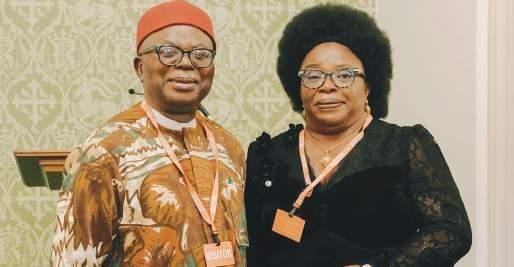
• Rt. Onuigbo and his wife at the inauguration
He was inaugurated at a high-profile event at the UK Parliament last month during the 35th anniversary celebration of GLOBE, themed ‘building political resilience and public consensus for climate action.’ According to the organisers, “for 35 years, GLOBE has been at the forefront
of driving parliamentary action on climate change and sustainable development across party lines.” Onuigbo’s inauguration marks “a new chapter for GLOBE to reforge cross-party consensus for urgent action on climate change” and a renewed commitment to “ensuring that parliamentarians
Senator representing Kogi Central in Nigeria’s National Assembly, Natasha Akpoti-Uduaghan, sure knows how to steal the show. At a time when it is fashionable to distribute rice to constituents, this delectable politician chose to add some green ingredients to her constituency empowerment scheme. A statement from her office this week announced the “Growing Kogi Central, Building Our Future” project, which seeks to “restore degraded land, curb soil erosion, improve biodiversity, strengthen food security and create economic opportunities through the cultivation of fruit and indigenous tree species.” According to her office, the programme would involve “planting mango,
guava, orange, moringa, neem and other indigenous trees valued for their

environmental, nutritional, medicinal and commercial benefits.” While rice, tomatoes, and vegetable oil would appear to suffice for today, the planting of trees, economic species for that matter, would serve to feed tomorrow’s generations. This page, however, hopes that this is not a move to ‘greenwash’ Natasha’s tumultuous political career.
“
are the centre of democratic debate on climate change and play their role in driving forward implementation in this new era of climate action.” The event, held during this year’s London Climate Action Week (LCAW), was graced by Members of Parliament (MPs) from across the world, including Deputy Speaker of Nigeria’s House of Representatives, Rt. Hon. Benjamin Kalu. There were keynote video messages from Hon. Al Gore, co-founder and former Chair of GLOBE Legislators, and Yuriko Koike, Governor of Tokyo, former GLOBE Legislators’ Board Member, and President of GLOBE Japan. Other speakers included Nigar Arpadarai MP, COP29 High-level Champion; Member of Parliament of Azerbaijan; Kamal Kishore, Special Representative of the UN Secretary General & Head of UNDRR; Nick Mabey OBE, Founder & Chair of London Climate Action Week; Co-founder & CEO of E3G; Paolo Vieira, Global Director, NDC Partnership, and GLOBE’s immediate past CEO, Malini Mehra. The team at SOStainability warmly associates with this global milestone and wishes the Right Honourable Sam Ifeanyichukwu Onuigbo, FCIS, FNIM, KJW, a successful tenure.
“From our records, we are expecting about 18 million Nigerians to be exposed to flooding in 2026. Over 2,000 hectares of farmlands will be affected. 8,794 educational facilities will be affected, and healthcare centres 3,808.”
–Nigeria Hydrological Services Agency (NiHSA)
Edited by nseobonG okon-ekonG |
This week’s feature by Iyke Bede is a collaborative effort between
and Gamble Aware NG through its Safer Gaming for Africa newsletter, highlighting conversations and insights shaping responsible gambling and player protection across the continent
Player protection in regulated gambling markets is increasingly being tested not at the level of policy design, but in the gap between what frameworks prescribe and what actually happens when risk becomes visible in real player interactions.
While regulatory systems across jurisdictions continue to evolve with stronger expectations around responsible gambling, experts say the central challenge has shifted from creating rules to ensuring those rules are consistently applied in practice, particularly in digital environments where behavioural signals are constantly generated but not always correctly interpreted or acted upon.
This was a key focus at a recent Early Intervention and Player Protection virtual event organised by the Gamblepause Initiative Africa, where practitioners examined how gambling-related harm is identified and managed in both online and retail environments. The discussion highlighted a shared concern among speakers that effective player protection now depends less on the existence of policy and more on the quality of operational execution, human judgement, and the ability to recognise behavioural change before harm escalates.
Sherene Fernando, Associate Director of Advisory Services at the Responsible Gambling Council in Toronto, Canada, said regulatory frameworks remain essential because they define expectations, set minimum standards and clarify operator responsibilities. However, she cautioned that “policy alone cannot prevent gambling-related harm”, stressing that the real issue is not whether systems exist, but whether they are consistently used in practice to produce meaningful protection outcomes for players.
Regulators are increasingly shifting their focus from compliance as documentation to compliance as performance, meaning operators are no longer only assessed on whether they have player protection systems in place, but on whether those systems are actively working as intended.
According to Fernando, regulators are increasingly shifting their focus from compliance as documentation to compliance as performance, meaning operators are no longer only assessed on whether they have player protection systems in place, but on whether those systems are actively working as intended. This shift is pushing operators to move beyond passive tools such as information provision and self-service support, toward more active frameworks that involve observation, judgement, escalation and timely intervention.
She described this as part of a broader global transition from a narrow compliance mindset to a duty-of-care approach, where operators are expected to take a more proactive role in identifying and responding to risk rather than placing full responsibility on players. In this model, player protection is no longer treated as an add-on function, but as an operational responsibility embedded within core
systems and frontline decision-making.
In online gambling environments, Fernando noted that behavioural monitoring systems already track indicators such as spending patterns, gambling frequency and changes in activity over time. However, she stressed that while technology plays a critical role in identifying risk signals, it cannot independently determine the correct response.
“Technology can identify the risk, but people decide what to do with it,” she noted, highlighting the continued importance of human judgement in translating data into meaningful intervention.
She also warned that many organisations operate with strong frameworks on paper but struggle in execution, where staff uncertainty often limits effective intervention. In practice, employees may be unclear about when to step in, how to escalate concerns, or how to balance customer service expectations with player protection responsibilities. The result is that warning signs may be visible yet not acted upon in time.
For Fernando, the effectiveness of any player protection model depends heavily on frontline capability, supported by clear escalation pathways, continuous training, leadership reinforcement and organisational cultures that give staff confidence to act, further emphasising that alignment between regulation, operational systems and people is essential, with frontline teams occupying the critical point where risk becomes visible, and intervention becomes possible.
While Fernando focused on system design and operational execution, Muuluka Nalubamba, founder of GamAid Zambia, approached the issue from behavioural and human perspectives, arguing that
gambling-related harm is often evident long before it is disclosed verbally. She noted that many individuals experiencing gamblingrelated distress do not immediately recognise what is happening, while others delay disclosure due to shame, fear of judgement, financial secrecy and concern about consequences such as restrictions on their gambling behaviour.
As a result, Nalubamba said, behavioural change often becomes the earliest and most reliable indicator of risk. Shifts in gambling frequency, spending patterns, communication style and emotional regulation can signal emerging harm before individuals acknowledge it directly, making behaviour a more accurate signal than self-reporting in many cases.
She stressed that gambling behaviour should not be understood solely as financial decision-making or lack of control, but as the outcome of multiple interacting factors, including psychological processes, emotional states, cognitive biases, reward mechanisms and environmental conditions. In particular, she highlighted how digital accessibility and constant availability of gambling platforms have intensified exposure and increased the frequency of engagement opportunities.
With more than two decades in banking, a career that spans retail, commercial, corporate and public sector finance, and a reputation for operational excellence, Emem Usoro, the Deputy Governor in charge of Operations at the Central Bank of Nigeria (CBN) has emerged as one of the most influential women in Nigeria’s financial system, writes Emmanuel Addeh
Emem Usoro’s journey from the commercial banking floor to the highest levels of the country’s apex bank is one defined by preparation, resilience and an unwavering commitment to institutional development.
Although today she is known as one of Nigeria’s leading banking executives, Usoro’s academic journey began outside finance, having earned a bachelor’s degree in Biochemistry from the University of Uyo, before pursuing a Master of Business Administration at Obafemi Awolowo University.
Recognising that leadership in modern finance requires continuous learning, she invested heavily in executive education, attending the Lagos Business School, Harvard Business School and several other globally respected institutions, including Columbia Business School, the Wharton School of the University of Pennsylvania, the National University of Singapore Business School, Harvard Kennedy School and the University of Pretoria.
This culture of continuous self-development would later become one of the defining characteristics of her career. Rather than relying solely on experience, she consistently sought exposure to global best practices in leadership, corporate governance, strategy and financial management.
Before joining the CBN, Usoro had already established herself as one of the country’s accomplished banking executives.
Her professional career spans over 23 years across virtually every critical area of banking, including operations, credit administration, branch management, relationship management, marketing, retail banking, commercial banking, corporate banking, advisory services and strategic business development.
Her rise within the banking industry reflected both versatility and consistency, building a reputation for handling increasingly complex assignments while delivering measurable business growth.
Usoro’s appointment as Executive Director, North, at United Bank for Africa (UBA) represented one of the defining moments of her commercial banking career. There, she supervised banking operations across one of the country’s most strategically important regions, managing retail, commercial, corporate and public sector banking while helping expand financial services to previously underserved communities.
One of the less publicised but significant aspects of Usoro’s banking career is her commitment to financial inclusion. While overseeing northern operations at UBA, she worked extensively on expanding banking access to unbanked populations, particularly women, rural dwellers and small businesses.
Her efforts aligned with broader national objectives aimed at bringing millions of Nigerians into the formal financial system.
For her, financial inclusion goes beyond opening bank accounts. It involves creating access to savings, credit, insurance, digital payments and financial literacy. By supporting these initiatives, Usoro contributed to expanding economic participation across communities where formal banking penetration had historically remained low.
Her work also reinforced the growing recognition that banking institutions have responsibilities that extend beyond profit-making to broader economic development.
Years before her appointment to the apex bank, Usoro had already become a role model for women pursuing careers in finance. Featuring prominently in UBA’s Superwoman series, she shared insights into balancing leadership responsibilities with family life while navigating a profession traditionally dominated by men.
Rather than portraying gender as an obstacle, she argued that competence, preparation and
continuous value creation remain the strongest credentials for leadership, encouraging women to embrace opportunities, support one another and remain committed to excellence.
Her philosophy was captured in one simple but powerful belief: women rise by lifting other women. That perspective has continued to define her public engagements and mentoring efforts.
In September 2023, President Bola Tinubu appointed Usoro as Deputy Governor of the Central Bank of Nigeria, a nomination subsequently confirmed by the Senate. The appointment came at a critical period for Nigeria’s financial sector, with the apex bank pursuing reforms aimed at restoring confidence, strengthening governance, improving operational efficiency and accelerating financial innovation.
Her extensive background in commercial banking made her a natural fit for the role. Unlike many regulators whose experience is largely bureaucratic, Usoro arrived at the CBN with deep practical knowledge of banking operations, customer service, risk management and business development. That combination of regulatory authority and industry experience has proved valuable in navigating the complex operational demands of the institution.
As Deputy Governor for Operations, Usoro oversees some of the most critical directorates within the Central Bank. Her responsibilities include Banking Services, Finance, Information Technology, Currency Operations, Branch Management and Risk Management. These functions form the operational backbone of the apex bank. From ensuring the smooth circulation of currency across the country to maintaining robust payment infrastructure and strengthening institutional risk management, the scope of her responsibilities touches virtually every aspect of the Bank’s internal effectiveness.
Without resilient operational systems, even the best policy decisions can struggle to achieve intended outcomes. Her portfolio therefore places her at the heart of the institution’s day-to-day effectiveness.
Before recently returning to oversee operations, Usoro served as Deputy Governor responsible for the Corporate Services Directorate. Her mandate covered Human Resources, Corporate Communications,
Legal Services, Security Services, Medical Services, Procurement and Support Services.
Although these departments operate largely behind the scenes, they remain essential to institutional performance. During her tenure, the directorates reportedly became more integrated, coordinated and better aligned with the broader objectives of the Central Bank.
By strengthening internal governance and organisational capacity, she helped reinforce the systems required to support policy implementation across the institution.
One of the additional responsibilities she assumed was serving as Chairman of the Board of the Nigerian Security Printing and Minting Plc (NSPM). The organisation occupies a strategic position within Nigeria’s financial architecture as the country’s producer of currency notes, coins and security documents.
During her leadership, the organisation pursued reforms aimed at improving production efficiency, reducing waste, strengthening technological capability and enhancing operational management.
The emphasis on efficiency reflected a broader philosophy that institutions must continuously modernise if they are to remain relevant in an increasingly digital financial environment.
Those who have worked with Usoro frequently point to her meticulous preparation and structured decision-making. Rather than seeking public attention, she has built her reputation through execution, organisational discipline and consistent delivery.
Throughout her career, she has demonstrated an ability to manage large teams, oversee complex operations and coordinate multiple stakeholders simultaneously. Such capabilities become especially valuable within institutions like the Central Bank, where operational decisions often have nationwide implications.
Her approach reflects a leadership philosophy that places institutions above individuals and systems above personalities.
Away from banking, Usoro has also invested time in philanthropy through the Nnana Usoro Foundation, established in 2015. The foundation focuses on three major pillars: healthcare, education and economic empowerment.
Its healthcare programmes have supported free medical outreaches in partnership with healthcare organisations, providing consultations, surgeries, eye care, dental care, malaria treatment and other medical interventions for underserved communities.
In education, the foundation provides scholarships, grants and vocational training support for disadvantaged students. Its economic empowerment initiatives assist small businesses and grassroots entrepreneurs with resources designed to promote sustainable livelihoods.
These programmes reflect an understanding that financial inclusion and national development ultimately depend on healthier, better educated and economically empowered citizens.
Usoro’s contributions have attracted recognition from professional institutions and academic organisations. She is a Fellow of the Chartered Institute of Bankers of Nigeria, one of the profession’s highest distinctions.
She has also received an honorary Doctor of Business Administration degree from Akwa Ibom State University in recognition of her contributions to banking and leadership.
More recently, she received the ARISE Women Trailblazers Award, celebrating women whose professional accomplishments continue to inspire others. While awards do not define a career, they often reflect the esteem in which peers and institutions hold an individual.
Public tributes have also offered glimpses into the personal values behind the professional accomplishments. At the funeral of her mother,
the late Deaconess Eno Nnana Usoro, Vice President Kashim Shettima described the CBN Deputy Governor as “a mother’s dream fulfilled,” attributing her success to discipline, faith, sacrifice and perseverance.
The tribute highlighted qualities that many colleagues have similarly associated with her career: humility, consistency and commitment to excellence. Such recognition reinforces the idea that leadership is measured not only by titles held but by the values demonstrated over time.
High public office inevitably attracts intense scrutiny, and Usoro’s tenure at the Central Bank has been no exception. In recent weeks, some online platforms published allegations suggesting that she failed to declare certain assets upon her appointment as Deputy Governor. The reports also delved into aspects of her private life.
Usoro has, however, unequivocally denied the allegations, maintaining that the asset in question had been duly declared to the appropriate authorities and rejected claims of any breach of Nigeria’s asset declaration requirements. To date, no court of competent jurisdiction or statutory authority has established any wrongdoing against her, and the allegations remain unproven.
For many experienced public servants, such episodes underscore the realities of occupying strategic national offices, where professional accomplishments are sometimes accompanied by intense public and media scrutiny. While transparency and accountability are indispensable in public service, they are equally complemented by the fundamental principle that allegations should be subjected to due process before conclusions are drawn.
Rather than being distracted by the controversy, Usoro has remained focused on the demanding responsibilities of overseeing the Operations Directorate of the Central Bank. By continuing to discharge these responsibilities, she has disappointed her detractors, reinforcing a career that, thus far, has been defined more by professional accomplishment and institutional service than by unproven accusations.
Nigeria’s financial sector continues to evolve rapidly, requiring leaders capable of balancing innovation with stability, technology with governance and ambition with institutional responsibility.
For young professionals entering banking today, Usoro’s career offers several enduring lessons. It demonstrates the value of continuous learning, adaptability, technical competence and disciplined leadership.
Her transition from commercial banking to public service also illustrates how private sector experience can enrich national institutions when combined with integrity and strategic vision.
Perhaps most importantly, her journey underscores that sustainable leadership is built over decades rather than moments.
Usoro’s story is ultimately one of steady progression rather than sudden ascent.
From her early years in commercial banking to executive leadership at UBA and now the Central Bank, each stage of her career has built upon the last, expanding her influence while deepening her expertise.
As Deputy Governor for Operations, she occupies one of the most consequential positions within Nigeria’s financial system, helping ensure that the country’s apex bank remains operationally resilient in an increasingly complex global economy. Her career reflects the convergence of technical knowledge, strategic leadership, institutional discipline and public service.
While history will ultimately judge the long-term impact of today’s financial reforms, Usoro has already secured a place among the distinguished professionals who have shaped modern Nigerian banking.
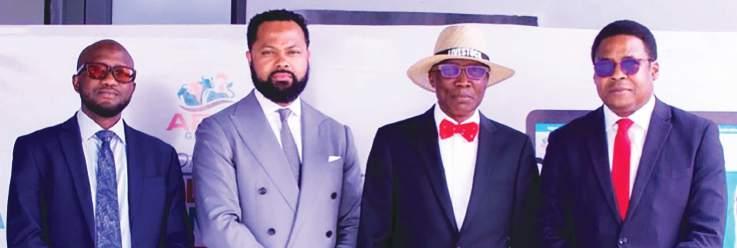
L-R: Associate, Nigeria Sovereign Investment Authority (NSIA), Zayyad
Vice President, NSIA, Iruansi Itoandon,
Bill empowers NAFDAC with advanced tracking technology Creates multi-agency task force to dismantle counterfeit medicine syndicates
Sunday Aborisade in Abuja
Senate on Wednesday took a major step towards strengthening Nigeria’s war against counterfeit medicines by passing for Second Reading a bill prescribing a maximum jail term of 15 years, multi-million-naira fines, total asset forfeiture, and mandatory compensation for victims of fake drug-related offences.
The proposed legislation, titled, “Counterfeit Medical Products, Fake Drugs and Unwholesome Processed Foods (Prohibition and Control) Bill, 2026,” seeks to repeal and replace the existing 2004 law, which lawmakers described as obsolete and incapable of addressing the sophistication of modern counterfeit drug syndicates.
Leading the debate, the sponsor of the bill, Senator Suleiman Umar Sadiq (APC, Kwara North), painted a grim picture of the dangers posed by fake medicines, describing them as “weapons of mass destruction” that constitute a grave threat to public health and national security.
According to him, the existing legal framework has become ineffective against criminal networks that now deploy advanced manufacturing techniques, digital platforms, and cross-border smug-
gling operations to flood Nigerian markets with counterfeit products.
“Healthcare is a fundamental responsibility of government, and Nigerians deserve medicines that are genuine, safe and effective,” Sadiq said.
“Sadly, this expectation is too often betrayed by criminal networks whose only objective is to profit at the expense of human lives,” he added.
He warned that the counterfeit trade had expanded beyond prescription drugs to include adulterated cosmetics, contaminated packaged water, and other unwholesome processed foods sold in open markets, motor parks, roadside shops, and online platforms.
To address the growing menace, the bill proposed stiffer sanctions, including prison terms of up to 15 years for convicted offenders, substantial financial penalties, forfeiture of assets linked to the crime, and compulsory financial compensation to victims or their families.
The legislation also sought to strengthen the enforcement powers of National Agency for Food and Drug Administration and Control (NAFDAC), enabling it to deploy modern product tracking and tracing technologies capable
of detecting counterfeit medical products across the supply chain.
In addition, it proposed the establishment of a national multi-agency task force comprising NAFDAC, Nigeria Police, Nigeria Customs Service, Nigeria Immigration
Service, and Pharmacy Council of Nigeria to coordinate intelligence gathering and dismantle cross-border smuggling networks.
To fast-track prosecution, the bill vested exclusive jurisdiction over counterfeit drug cases in the
Federal High Court, provided for accelerated trial procedures, and recognised electronic evidence in criminal proceedings.
Lawmakers unanimously supported the proposed legislation, with President of the Senate, Senator
Godswill Akpabio, referring it to Senate Committee on Health (Secondary and Tertiary) for further legislative scrutiny. The committee was expected to submit its report to the senate in the coming weeks.
Akume says Tinubu committed to protecting Nigerians from drug abuse as Marwa pushes national action plan UNODC, health ministry demand measurable outcomes
Michael Olugbode in Abuja
The federal government on Wednesday reaffirmed its resolve to dismantle drug trafficking networks, curb the growing menace of substance abuse, and expand access to treatment and rehabilitation.
The government declared that Nigeria could not achieve sustainable development while its youth remained vulnerable to illicit drugs.
The renewed commitment was made by Secretary to the Government of the Federation, Senator George Akume, at the
Kuni Tyessi in Abuja
Nigeria and the Kingdom of Saudi Arabia have agreed to deepen consular cooperation with a focus on visa facilitation, the welfare of Nigerians in the Kingdom, and the repatriation of detained citizens.
This was the outcome of a courtesy visit by Nigeria’s Ambassador to Saudi Arabia, Dr. Yakubu Gambo, to the Saudi Deputy Minister of Foreign Affairs for Consular Affairs in Riyadh yesterday as contained in a statement signed by the media aide to Amb. Gambo, Idris Sarauta.
According to the statement, the meeting came shortly after Gambo attended a farewell ceremony hosted by the Dean of the Diplomatic Corps for the outgoing Ambassador of India and the Chargé d’Affaires of the United States.
During discussions, both officials reviewed ongoing issues affecting Nigerians in Saudi Arabia, including visa processes and measures to facilitate the release and repatriation of eligible Nigerians currently in detention. They also committed to strengthening collaboration to curb irregular migration.
Speaking at the meeting, Amb Gambo reaffirmed Nigeria’s commitment to expanding bilateral relations with Saudi Arabia beyond the annual Hajj and Umrah pilgrimages.
In response, the Saudi Deputy Minister pledged the Kingdom’s continued support for improved consular cooperation to better serve Nigerian citizens in the Kingdom.
The engagement underscores Abuja’s push to protect Nigerians abroad and diversify Nigeria-Saudi relations into trade, security, and migration management.
opening of National Drug Use Summit in Abuja.
Top government officials, security agencies, development partners, and civil society groups gathered at the forum to chart a coordinated national response to drug use and trafficking.
Represented by Permanent Secretary, General Services Office, Dr. Adamu Kana, Akume said the administration of President Bola Tinubu remained firmly committed to preventing illicit drug use, dismantling trafficking syndicates, and strengthening rehabilitation programmes across the country.
He stated, “On behalf of the Federal Government of Nigeria and President Bola Ahmed Tinubu, I reaffirm our unwavering commitment to every initiative aimed at preventing illicit drug use, dismantling trafficking networks, expanding access to treatment and rehabilitation, and promoting the wellbeing of all Nigerians.”
He stressed that the growing threat posed by illicit drugs demanded urgent national attention, warning that no nation can attain sustainable development while its young population was trapped by substance abuse.
Akume said, “No nation can achieve sustainable development when its young population is threatened by drug abuse and addiction.
“No society can attain lasting
peace and prosperity when criminal networks engaged in illicit trafficking continue to undermine its institutions and exploit its vulnerabilities.”
He added that under the Renewed Hope Agenda, the federal government was strengthening institutions, promoting mental health, empowering young people, and building resilient communities to confront emerging social challenges.
The summit, themed, “Addressing Illicit Drug Use and Trafficking: A Call to National Action,” was jointly organised by National Drug Law Enforcement Agency (NDLEA), Federal Ministry of Health and Social Welfare, and United Nations Office on Drugs and Crime (UNODC).
In his welcome address, Chairman and Chief Executive Officer of NDLEA, Brigadier-General Buba Marwa (retd.), said the gathering was designed to mobilise a comprehensive National Action Plan capable of addressing Nigeria’s evolving drug problem through a whole-of-government and whole-of-society approach.
Marwa said the complexity of the drug challenge had outgrown the capacity of any single institution, making stronger collaboration imperative.
He stated, “The scale of this challenge demands a whole-ofgovernment and whole-of-society
response, one that mobilises every stakeholder—government institutions, communities, families, development partners, the private sector, religious and traditional leaders, civil society and the media.” According to him, the proposed National Action Plan would strengthen prevention, treatment, rehabilitation, policy implementation, data collection and community resilience.
Highlighting the agency’s recent achievements, Marwa disclosed that the NDLEA arrested 29,262 suspects over the last 18 months, seized 5.3 million kilogrammes of assorted illicit drugs with an estimated street value exceeding N1.5 trillion, and secured 5,225 convictions.
He also revealed the agency conducted 6,645 drug prevention sensitisation programmes across schools, markets, worship centres, workplaces, correctional facilities and communities, reaching nearly five million Nigerians.
In addition, he said 13,508 persons battling substance use disorders received counselling, treatment and rehabilitation through the agency’s 31 rehabilitation centres nationwide.
Marwa highlighted the launch of the Alternative Development Initiative, designed to help cannabis farmers transition from illicit cultivation to legitimate agricultural enterprises and other sustainable sources of livelihood.
L-R: Ambassador of the State of Qatar to Nigeria, Ambassador Yousef bin Hassan Al-Hail; First Lady of Nigeria, Senator Oluremi Tinubu; and Consul at the Embassy of the State of Qatar, Khalifa Hamad Al-Khalifa, during the ambassador’s courtesy visit to the First Lady at the Presidential Villa, Abuja, yesterday
Chairman of the Economic and Financial Crimes Commission (EFCC) Ola Olukoyede has handed over 1, 452 hostel items recovered from cybercrime operation to the Federal Ministry of Education.
While handing the items to the Minister of Education, Dr Tunji Alausa, yesterday in Abuja,
Olukoyede said they were recovered during a major anti-cybercrime operation in 2024.
According to him, the items comprise 501 double-step bunk beds, 939 mattresses, and 12 wooden beds with mattresses recovered during a special operation code-named ‘operation Eagle Flush.
Olukoyede also said the handover was in line with the federal govern-
ment’s policy of deploying proceeds of crime to critical social sectors.
While explaining that the assets were recovered under Operation Eco-Forge, he described it as the single largest cybercrime operation involving the education sector.
According to him, about 792 suspects were arrested during the operation including 193 foreign nationals.
”All the suspects were investigated, prosecuted and convicted, while the foreign nationals were repatriated after serving their jail terms.”
The EFCC chairman said the decision to hand over the recovered items to the education sector was deliberate.
“Children and youth remain the greatest victims of corruption
and financial crimes and should therefore be the first to benefit from recoveries.
“President Bola Tinubu made this decision fully conscious of the fact that investing recovered assets in education will secure the future of our young people.
”This is not the first time proceeds of crime are being deployed to education.
Tasks CSOs with budget tracking, climate action, ethical governance Sanwo-Olu urges constructive partnership for accountable governance
Wale Igbintade
President Bola Tinubu yesterday declared that civil society organisations (CSOs) are no longer in opposition to government but have become indispensable partners in governance, urging them to play a more active role in promoting accountability, monitoring public spending, advancing climate action and strengthening ethical leadership.
He called on the organisations to deepen their engagement in ensuring transparency, promoting sustainable development, fostering national unity, tracking budget implementation and supporting ethical governance.
The President made the call at the maiden Southern Civil Society Organisation (CSO) Summit in Lagos, themed “Nigeria First on Sustainable Development.”
Represented by the Secretary to the Government of the Federation (SGF), George Akume, Tinubu said the federal government now regards CSOs as critical partners in nation-building rather than critics or opponents of government.
According to him, the era of viewing CSOs solely as opposition voices had ended, stressing that they are now “co-architects of national development” whose contributions to transparency, social accountability and community development are vital to the success of the administration’s Renewed Hope Agenda. Tinubu commended Nigerian
civil society groups for their role during the COVID-19 pandemic, particularly in promoting public health awareness, supporting vulnerable communities and strengthening grassroots accountability.
He also praised faith-based and community organisations for their interventions during climate-related disasters, describing their efforts in assisting affected communities, mobilising volunteers and demanding transparent institutional responses as acts of patriotism.
The president said the summit’s theme underscored the need to place Nigerians at the centre of every public policy, partnership and investment.
“’Nigeria First’ does not mean Nigeria alone. It means that every policy, partnership and public investment must prioritise the welfare of Nigerians while ensuring development remains inclusive, climate-resilient and future-oriented,” he said.
Tinubu noted the summit aligns with his administration’s Renewed Hope Agenda and its eight priority areas: economic reform, food security, national security, infrastructure, education, healthcare, industrialisation, digitalisation and good governance.
Describing the Renewed Hope Agenda as a social contract with Nigerians, the president said CSOs remain indispensable stakeholders in achieving its objectives through constructive engagement with
government.
On food security, Tinubu warned that forecasts of prolonged rainfall and flooding across parts of the country require urgent efforts to build climate-smart and floodresilient agricultural systems.
He advocated stronger support for farmers and fishermen, improved storage and transportation infrastructure, and greater protection of wetlands and mangrove ecosystems to safeguard livelihoods.
The president also highlighted the
economic potential of the marine and blue economy, renewable energy and climate innovation in tackling unemployment and poverty, urging young Nigerians to seize opportunities in solar energy, aquaculture, waste management and climate services.
He called for closer collaboration among government, civil society and the private sector to expand opportunities for youths and women.
Tinubu reaffirmed his administration’s commitment to transparency
and accountability, inviting CSOs to deepen their involvement in budget tracking, community monitoring, data sharing, citizens’ scorecards and other social accountability initiatives aimed at improving public service delivery.
He identified climate change as a major threat to public health and economic development, warning that recurring floods continue to increase the incidence of cholera, malaria and other water-borne diseases.
”Last year, a forfeited university facility was handed over to the ministry of education and now operates as the Federal University of Applied Sciences, Kachia in Kaduna State,” he said.
Olukoyede also cited the Student Loan Fund as another beneficiary of recovered assets and disclosed that part of the fund was sourced from proceeds of crime recovered by the EFCC under the provisions of the Proceeds of Crime Act.
He added the support covered tuition and monthly stipends, giving many young Nigerians who could not afford school the opportunity to study.
He linked the intervention to crime prevention, noting that financial pressure pushed many students into cybercrime.
“We discovered that most of these students go into financial crimes because they cannot afford to pay their school fees, yet they genuinely want to be educated,” he said.
Olukoyede added that the latest handover would further improve infrastructure and facilities in secondary and tertiary institutions. He also said that the commission would continue to work with the ministry to ensure the assets were properly utilised.
The Minister of Education, who received the items on behalf of the federal government, commended the EFCC for the recovery efforts.
The humanitarian medical organisation, Médecins Sans Frontières (MSF)/Doctors Without Borders, has concluded its threeyear emergency response to the devastating diphtheria outbreak in Kano State after supporting the vaccination of more than 835,000 children, describing immunisation as the key factor behind the sharp decline in infections.
The organisation, however, warned that the disease remains a major threat to children unless health authorities sustain routine immunisation, disease surveillance and rapid access to treatment.
MSF announced the end of its emergency intervention following the completion of a two-phase mass vaccination campaign carried out in partnership with the Kano State Ministry of Health.
The intervention followed one of Nigeria’s worst recorded diphtheria outbreaks, which claimed over 1,260 lives in Kano alone, most of them children.
According to MSF, more than 14,707 children received treatment during the emergency through MSF-run and supported treatment centres, including both facility-based and home-based care programmes.
The organisation also strengthened referral systems, disease
surveillance, data management and community mobilisation while supporting the state’s vaccination drive.
Across two vaccination rounds, 835,028 doses of diphtheria vaccines were administered to children. The second phase, conducted between June 20 and 24, 2026, reached 486,948 children across 20 wards after the first round vaccinated 348,080 children, which ended on April 27.
MSF Project Coordinator in Kano, Abdoul-Aziz Djibrilla, said the outbreak placed enormous pressure on families, healthcare workers and health facilities across the state.
“Kano experienced a critical diphtheria outbreak that placed enormous pressure on families, healthcare workers and health facilities,” Djibrilla said. He noted that although infections had declined considerably in recent months, largely because of the vaccination campaigns, the disease had not been eliminated.
“Although the number of cases has declined in recent months, mainly due to mass vaccination campaigns, the disease remains a serious health threat to children in Kano, driven by low immunisation coverage, overcrowding, delayed care-seeking, and malnutrition,” he added.
L-R: Lagos State Commissioner for Wealth Creation and Employment, Hon. Akinyemi Ajigbotafe; Deputy Governor, Dr. Kadri Obafemi Hamzat; Head of Service, Mr. Olabode Agoro; Special Adviser to the Governor on Tourism, Arts and Culture, Hon. Idris Aregbe; and Permanent Secretary, Ministry of Wealth Creation and Employment, Mrs. Ololade Olasupo Aina, at the
Culture Graduation Ceremony, themed “Creating Wealth, Elevating Lagos Creatives,” held at Adeyemi
on Tuesday
Awaits ICPC findings before taking action Insists no petition before it, budget line originated from executive
ADC: Only independent inquiry acceptable Atiku wants inclusion of ADC, PDP, NDC in probe I spoke with Gbaja through late Tanimola, Says Adeniyi
Chuks Okocha and Sunday Aborisade in Abuja
The Senate has stepped down a motion seeking a full-scale investigation into the controversial N1.303 billion budgetary allocation to the fictitious Presidential Foreign Intervention Promotion Council (PFIPC), choosing instead to await the outcome of a probe already ordered by President Bola Tinubu.
The decision came after the Deputy Senate President, Barau Jibrin, who presided over plenary, ruled that the upper chamber should refrain from debating the matter since the presidency had already directed the Independent Corrupt Practices and Other Related Offences Commission (ICPC) to investigate the controversy.
The motion, sponsored by Senator Suleiman Kawu (APC, Kano South), sought an urgent probe into the budgetary allocation, operations and legal status of the PFIPC, amid allegations that the council was a non-existent government agency.
It was titled, “Urgent Need to Investigate the Budgetary Allocation, Operations and Controversy Surrounding the Purported Presidential Foreign Intervention Promotion Council (PFIPC) to Safeguard the Integrity of the Senate and the Federal Government.”
The motion warned that the
controversy had raised serious concerns over the integrity of the National Assembly’s appropriation process and its constitutional oversight responsibilities.
Presenting the motion, Kawu said the allegations surrounding the council had dominated public discourse in recent weeks, with conflicting claims over its existence, mandate and budgetary allocation.
He argued that the controversy threatened the credibility of the Senate and called for an investigation into what he described as possible administrative failures, internal collaboration or fraudulent activities that allegedly led to the inclusion of the council in the 2026 Appropriation Act under Budget Code 0111062001.
The lawmaker urged the Senate to mandate its Committees on Ethics, Code of Conduct and Public Petitions, as well as Appropriations, to unravel how the N1.303 billion allocation was proposed, scrutinised, justified and eventually approved.
He also sought an investigation into the ministries, departments and agencies, as well as officials responsible for inserting the budget line, and whether any funds had already been released, committed or spent under the allocation.
According to him, the proposed investigation should also determine
whether any bank account had been opened or operated in connection with the council.
However, immediately after the motion was presented, Jibrin ruled that the Senate should not proceed with deliberations on the issue.
He noted that the executive arm had already initiated an investigation through the ICPC following President Tinubu’s directive.
The Deputy Senate President said it would be inappropriate for the Senate to embark on a parallel investigation while the executive probe was underway, urging lawmakers to await the outcome before deciding on any legislative intervention.
The controversy surrounding the PFIPC, has intensified in recent weeks following a public dispute between the presidency and the man claiming to be the council’s Director-General, Adeniyi Adeyemi Mathew.
The Chief of Staff to the President, Femi Gbajabiamila, had publicly disowned both the agency and its purported chief executive, describing the organisation as unknown to the Presidency.
Mathew, however, rejected the claim initially, insisting that the council existed and alleging that Gbajabiamila was fully aware of its operations.
He further alleged that the Chief of Staff collected N400 million from
him to facilitate his appointment and later demanded 48 per cent of the N1.303 billion appropriated for the council in the 2026 budget.
The allegations have generated widespread public concern over the integrity of the budget process and renewed calls for accountability.
The Senate had also distanced itself from the controversy, insisting that it had no petition before it to warrant any legislative intervention.
Chairman of the Senate Committee on Media and Public Affairs, Senator Yemi Adaramodu (APC, Ekiti South), said the upper chamber could not comment officially on the matter because no formal complaint had
been submitted to it.
He acknowledged reports indicating that the purported agency had a budget line in the 2026 Appropriation Act but maintained that the controversy originated within the executive arm of government. Adaramodu stressed that the National Assembly neither created nor inserted the budget line and therefore could not be held responsible for the alleged existence of a non-existent agency.
He also explained that the Senate had no constitutional responsibility to verify the identities or appointments of heads of government agencies that did not require legislative confirmation.
The National Health Insurance Authority (NHIA), said Nigeria has made significant progress in its efforts to achieve Universal Health Insurance Coverage (UHC), as health insurance enrolment has risen to over 22 million showing acceleration of the implementation of mandatory health insurance across the country. Speaking at the Annual General Meeting of the Nigerian Association of Insurance and Pension Editors (NAIPE) in Lagos on Tuesday, the Director-General of NHIA, Dr. Kelechi Ohiri, said the Authority had moved beyond policy formulation to delivering measurable improvements in healthcare access, service quality
Commission to appeal judgement
Alex Enumah in Abuja
Justice Peter Kekemeke of the High Court of the Federal Capital Territory (FCT) sitting at Maitama, Abuja, has ordered the Economic and Financial Crimes Commission (EFCC), to pay former Minister of Power, Dr. Olu Agunloye, the sum of N10 million as compensation for damages suffered as a result of the commission’s libelous publication.
Justice Kekemeke in a judgement delivered on Wednesday, held that
the anti-graft agency indeed damaged the reputation of the former minister through a libelous publication on it social media handles.
Agunloye had instituted a N1 billion defamation suit against the EFCC, over defamatory publication on the commission’s website and X (formerly Twitter) handle, entitled “EFCC Arraigns Agunloye over $6billion fraud”. The claimant in the suit marked: FCT/HC/CV/1199/2024, and filed by his lawyer, Adeola Adedipe, SAN, stated that EFCC has damaged his good
name and dragged his integrity into murky waters, when it portrayed him as a corrupt and fraudulent individual through a post published on its official website and other allied online platforms, with the caption, “EFCC arraigns Agunloye over $6billion fraud”.
He therefore sought a declaration of the court that the post is false and defamatory of him.
Agunloye also sought an order for EFCC to retract the defamatory publication against him and tender unreserved apologies.
He further sought the payment of compensation of N1billion as general and exemplary damage to him.
Delivering judgement, Justice Kekemeke held that elements of defamation: publication of a statement in permanent form; the publication refers to someone; it injures the person’s reputation in the sight of reasonable members of the public, must be present before someone could be said to have been defamed.
He held that in the instant case, the contentious publication is in permanent form, adding that Agunloye’s name was mentioned.
and consumer protection, in line with the federal government’s health sector reform agenda.
Describing implementation as the defining challenge of the current phase of reforms, Ohiri said:
“Nigeria has the policy. Nigeria has the legislation. The decisive variable is now implementation — consistent, rigorous and accountable execution that converts political commitment into healthcare access for real Nigerians.”
He added that the progress recorded so far demonstrated that sustained collaboration among the federal government, states, healthcare providers, Health Maintenance Organisations (HMOs), employers and development partners was beginning to translate reform into tangible results for citizens.
According to him, the number of Nigerians covered by health insurance has climbed to 22.03 million, representing a 35 per cent year-on-year increase, driven by stronger partnerships with State Social Health Insurance Agencies (SSHIAs), wider engagement with Ministries, Departments and Agencies (MDAs), organised labour, employers and the private sector, as well as the gradual implementation of the mandatory health insurance provisions of the
NHIA Act.
He explained the transformation of the former National Health Insurance Scheme (NHIS) into the NHIA represented a fundamental institutional reform that has strengthened regulation, consumer protection, accountability and strategic purchasing, while providing the legal and operational framework required to achieve Universal Health Coverage. Ohiri said improving the experience of enrollees remained central to the Authority’s reform agenda. He disclosed that NHIA had strengthened its complaints management system, introduced faster resolution timelines, intensified compliance monitoring of HMOs and healthcare providers, and enforced sanctions where standards were breached.
According to him, so far, 3,878 complaints have been resolved, representing an 87 per cent resolution rate, with 95 per cent concluded within prescribed timelines, over N14.2 million refunded to enrollees, and non-compliant facilities sanctioned. He added that the Authority had also introduced service standards, including the one-hour treatment commencement expectation for enrollees requiring urgent care, to ensure that health insurance translates into timely, quality care.
L-R: Representative of Minister of Health and Social Welfare, Mrs. Olufowobi Yusuf; Permanent Secretary, Office of the Secretary to the Government of the Federation, Dr. Ibrahim Kana; Chairman/Chief Executive Officer of the National Drug Law Enforcement Agency (NDLEA), Brig Gen. Mohamed Buba Marwa (Rtd) and Representative of the Country Director, United Nations Office on Drugs and Crime (UNODC), Dr. Akanudomo Ibanga, during the National Drug Use Summit
and Juliet
The plenary in the House of representatives turned rowdy yesterday following the disagreement among lawmakers over a motion seeking to summon President Bola Tinubu.
The lawmaker representing Okpe/ Sapele/Uvwie federal constituency in Delta State, Hon. Benedict Etanabene, had raised a point of privilege to draw the attention of the House to a June 29 circular by the Accountant General of the Federation, Shamseldeen Ogunjimi.
Ogunjimi, had through the memo directed all federal ministries, departments, and agencies (MDAs) to immediately stop processing payments for constituency and Zonal Intervention Projects (ZIPs) unless they had been
African facility.
Meanwhile, the International Monetary Fund (IMF) has maintained Nigeria’s economic growth forecast at 4.1 per cent for 2026 and 4.3 per cent for 2027, leaving unchanged its previous projections contained in its April 2026 World Economic Outlook (WEO) despite heightened global uncertainty stemming from the Middle East conflict.
In its July 2026 World Economic Outlook (WEO) Update, titled, “Global Economy in Crosscurrents of War and Technology,” released yesterday, the Washington-based institution noted that Nigeria’s growth outlook remains broadly stable, supported by improved macroeconomic stability and favourable terms of trade as an oil-exporting nation, although higher prices for essential goods are expected to aggravate poverty and food insecurity.
For Sub-Saharan Africa, the IMF predicted that the region’s growth would remain at 4.3 per cent in 2026 before improving to 4.5 per cent in 2027, representing a minimal 0.1 percentage point upward revision from its April forecast.
The report stated: “Nigeria is supported by improved macroeconomic stability and favorable terms-of-trade effects, though higher prices for essentials are expected to further aggravate poverty and food insecurity.”
formally vetted by the Ministry of Special Duties and Intergovernmental Affairs.
The lawmakers had at different times planned a showdown with the executive over the slow implementation of the budget, which was stalling the execution of constituency projects.
But the leadership of the House always found ways to placate the lawmakers.
Checks revealed that since 2025, local contractors had been protesting the debt backlog for projects executed for the federal government.
Protesters, under the aegis of the All Indigenous Contractors Association of Nigeria (AICAN), had blocked the gates of the ministry of finance and the national assembly complex to press home their demands.
However, in December 2025, Tinubu
Speaking during a virtual briefing on the report, the Division Chief in the IMF’s Research Department, Deniz Igan, said Nigeria remains one of the region’s stronger-performing large economies, with growth underpinned by policy reforms that have improved macroeconomic stability.
“Just to give you a sense, the two largest economies in the region: Nigeria is expected to grow at 4.1 per cent, quite stable, and this is supported by improved macroeconomic stability and favourable terms of trade, with Nigeria being an oil exporter.
“At the same time, tighter prices so there is some offset to that positive terms-of-trade effect because higher prices for essentials are expected to aggravate poverty and food insecurity,” Igan added.
The IMF also left Nigeria’s 2027 growth projection unchanged at 4.3 per cent, reinforcing its view that recent macroeconomic reforms were helping to strengthen resilience despite a challenging external environment.
Globally, the Fund projected economic growth to moderate to three per cent in 2026, down from 3.5 per cent in 2025, as the economic fallout from the Middle East conflict offsets part of the gains from the accelerating artificial intelligence (AI)-driven technology cycle.
On SSA’s outlook, Igan added: “The broader outlook for Sub-
set up a multi-ministerial committee to resolve the saga, with outstanding payments at about N1.5 trillion.
In January, the federal government said it had commenced disbursing funds to contractors for “verified contracts”.
Displeased by the recent circular issued by Ogunjimi, Etanabene urged the House to summon the President to address lawmakers on the delay in implementing the 2025 budget.
The lawmaker was of the opinion that the circular would further hamper the execution of the Appropriation Act.
Etanabene argued that the issue was not new, recalling that the House had previously invited the accountant-general, ministers, and other officials to address budget implementation delays without any meaningful resolution.
He pointed out that lawmakers could
Saharan Africa is faring within this picture. Let me start by noting that we actually had seen a broad-based pickup in growth in 2025 in the region. We had an acceleration of growth to 4.5 per cent.
“Now, the war obviously has clouded the outlook for 2026, and we are now projecting a softening of growth to 4.3 per cent in the region as a whole.”
She explained that the deterioration in the outlook extends beyond higher energy costs, noting that rising fertiliser prices are coinciding with the planting season in several African countries and could weigh heavily on agricultural output.
“This is beyond the cost of energy for the region. What matters also is the increase in fertilizer prices that we have seen, and this is coinciding with the planting season in some countries, and it may hurt the agricultural sector, in addition to all the other impacts of energy prices. The agricultural sector accounts for a large share of some Sub-Saharan economies,” the IMF said.
According to Igan, the regional outlook masks wide differences in country performance, reflecting disparities in policy space, reform implementation and exposure to both the Middle East conflict and the global technology value chain.
“Again, the overall picture, the relatively small softening to 4.3 per cent is masking substantial
no longer explain to their constituents why projects approved in the budget had yet to commence.
“The budgets are not being implemented presently in Nigeria today. We are implementing the 2024, 2025 and 2026 budgets concurrently. This is not in the best interest of everybody.
“I wish to move the motion that this House invite Mr. President to come in the soonest to brief this house and explain the need for this circular,” he said.
It was at this point that the lawmakers were sharply divided. While some supported the motion, others did not.
The lawmakers’ inability to reach a compromise on the motion to summon the President threw the Green Chamber into a rowdy session.
It took the Speaker, Hon. Tajudeen Abbas, took several minutes to restore
divergence across countries. This reflects primarily the differences in policy space, how reform implementation has been going even before the shock arrived, but also how exposed different economies have been, both to the war and to the technology chain.
“Basically, what we are seeing is that the oil-importing, non-resourceintensive economies are more adversely affected by the higher energy and food prices, while some larger economies in the region are continuing to benefit from earlier stabilisation and reform efforts,”
Igan stressed.
On artificial intelligence, Igan said African countries stand to benefit from AI adoption but only if they significantly strengthen digital infrastructure and invest in human capital.
“In terms of the AI issue, what is important to recognise is that, in order for countries to benefit, there are preconditions how well they were already integrated into the technology chains, and, going forward, how well they can position themselves in terms of adopting AI.
“We have done several analyses there, and one thing to note is that while Sub-Saharan Africa is poised to benefit from some of the adoption of AI, there is a need for more investment in infrastructure and in skills upgrading in order to reap even greater benefits,” she added.
calm during the plenary.
Abbas explained that the motions raised on a point of privilege were not subject to debate.
Immediately after the Speaker restored calm and normalcy on the floor, Hon. Alex Mascot also moved a motion on urgent public importance, lamenting poor funding and delay in the release of appropriated public funds for critical sectors of the economy, including security.
The controversial motion however enjoyed overwhelming support from the majority of members across party lines.
The lawmakers, who supported the motion shouted down some of the lawmakers who opposed the motion.
Mascot argued that the powers of appropriation in the National Assembly, and that the credibility of the budget rested not only on the size of the figures appropriated, but on the fidelity, timeliness with which appropriation funds were released, cash-backed, and utilised for ministries, departments, and agencies.
He recalled that during the 2026 budget defence sessions, Ministers and Heads of MDA disclosed deeply troubling levels of funding of the 2025 budget, including sectors that recorded zero capital releases for the entire fiscal year, and others that received only a token, a fraction of their appropriated capital votes.
The lawmaker stressed that Tinubu at the Federal Executive Council of 10th December, 2025 expressed grave displeasure at the backlog, directed the immediate settlement of verified contractor liabilities of about N1.5 trillion.
He added the National Assembly approved the borrowing in excess of N1 trillion specifically to finance the settlement of outstanding obligations on completed and verified capital projects, in addition to dedicated provisions in the 2026 Appropriation Act for contractor liabilities.
Mascot expressed concern that, notwithstanding the clear directive of the President, the legislative approvals and the ministerial assurances released to MDAs remained slow.
Be noted: “If I may say nonexistent, stalling critical projects, escalating contract costs, exposing contractors to insolvency, and rising non-performing loans and eroding public trust in the budget of the Federal Republic of Nigeria, approved by this Parliament.
“The House is disturbed by recent newspaper reportage of a federal treasury circular dated 29th June, 2026 issued by
the Office of the Accountant General of the Federation, halting payments for zonal intervention and constituency projects, unless a certificate of verification and compliance is first obtained from the Federal Ministry of Special Duties and Intergovernmental Affairs.”
The Speaker ruled that the House would constitute an Ad-hoc Committee that would interface with the relevant fiscal authorities on the state of releases, the settlement of contractor liabilities and the utilisation of approved borrowings, and report back to the House within four weeks for further legislative action.
He said the ad hoc committee would comprise the Chairman, Committee on Appropriations, as Chairman, and the following as Members: the Chief Whip of the House; the Minority Whip; the Chairman, Committee on Finance; the Chairman, Committee on Aids, Loans and Debt Management; the Chairman, Committee on Budget and National Planning; the Chairman, Committee on Public Accounts; the Chairman, Committee on Constituency Projects; and any other Members.
Abbas maintained that the issue of summoning the President, as included in the debate of Masco, could not be adopted by the House, noting that such action is unparliamentary.
The House of Representatives, has called for urgent executive action to dismantle Nigeria’s growing ransom economy by strengthening financial intelligence coordination and enforcing strict compliance with the country’s anti-money laundering laws to disrupt criminal financing networks.
The resolution followed the adoption of a motion sponsored by Hon. Ademorin Ali Kuye at plenary, yesterday, where lawmakers expressed concern over the increasing sophistication of financial channels used to facilitate ransom payments and finance kidnapping, terrorism and other organised crimes across the country.
The House noted that Sections 14(2) (b) and 33(1) of the 1999 Constitution (as amended) placed the responsibility on the federal government to protect the lives of citizens, maintain public order and safeguard Nigeria’s economic sovereignty.
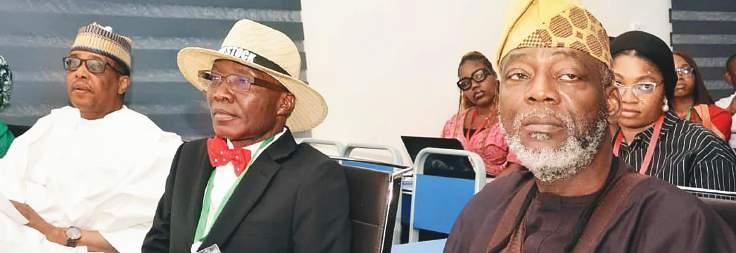
Sunday Aborisade in Abuja Presidential candidate of the Nigeria Democratic Congress (NDC), Peter Obi, yesterday, called for fair and transparent treatment of former Kaduna State governor Nasir El-Rufai.
Obi warned that any perception of selective justice could undermine public confidence in Nigeria’s democratic institutions.
The NDC flagbearer, who is currently in the United States, said he was emotionally moved after watching a viral video of El-Rufai’s wife, Hajiya Asiya El-Rufai, expressing distress over what she described as the treatment meted out to her husband.
In a statement posted on his X account titled, “A Wife’s Tears, A Nation’s Conscience: Let Justice Have a Heart,” Obi stressed that democracy could only thrive where the rule of law is upheld and every citizen is guaranteed equal protection under the law.
According to him, regardless of the allegations against El-Rufai or any other Nigerian, the justice system must remain transparent, impartial and consistent with due process.
He argued that while law enforcement agencies had a constitutional responsibility to investigate and prosecute alleged offences, such powers must be exercised professionally and without actions that could be interpreted as punishment before conviction.
Obi maintained that the bail conditions imposed on suspects should be reasonable and should not amount to pre-trial sanctions capable of eroding confidence in the nation’s judicial process.
“I woke this morning in America and was deeply moved by an emotional viral video of Hajiya Asiya El-Rufai, prompting deep reflection on our nation’s future.
“Regardless of the allegations against Mallam Nasir El-Rufai or any other
Ahmad Sorondinki in Kano
The Kwankwasiyya Movement has dismissed comments credited to a former governor of Borno State, Ali Modu Sheriff, that Mr. Peter Obi, presidential candidate of the NDC, has no meaningful political future in Northern Nigeria ahead of the 2027 elections.
In a statement by its Spokesperson, Habibu Sale Mohammed Mailemo, the movement said it received the remarks “with profound disappointment” alongside millions of Nigerians and freedom-loving Northerners.
The movement described the comments as unfounded and as reflecting a patronising view of Northern voters.
“These comments betray a view that millions of citizens are incapable of making independent political decisions without the
approval of a few self-appointed political gatekeepers.
“Let it be stated unequivocally: no individual has the mandate to decide for the entire North.
Northern Nigeria is home to diverse political opinions, aspirations, and convictions. Its electorate has repeatedly demonstrated that it cannot be reduced to stereotypes or dictated to by political elites,” the statement read.
The Kwankwasiyya Movement cited the 2023 presidential election as proof that voters across the region exercised independent judgment.
“Our National Leader, Senator Rabiu Musa Kwankwaso, correctly observed that the outcome of the 2023 presidential election clearly disproves the claim that any candidate is incapable of attracting support across regional boundaries.
citizen, justice must be transparent and fair, with reasonable bail conditions that should not be seen as punitive before trial. In a democracy governed by the rule of law, institutions exist to protect every citizen’s rights, regardless of their background.”
The former presidential candidate further cautioned against any appearance of selective justice, saying unequal
application of the law could weaken public trust and threaten national cohesion.
He urged security agencies and other institutions responsible for enforcing the law to discharge their responsibilities strictly in accordance with due process and constitutional safeguards.
Obi said Nigeria’s progress
depended on building institutions that treat all citizens equally, irrespective of political affiliation, ethnicity or social status.
“We must resist any hint of selective justice that erodes public trust and threatens national unity. Those tasked with enforcing our laws must act professionally and strictly follow due process,” he stated.
He added that a society founded on justice, fairness and respect for human dignity remained essential to the vision of a better Nigeria.
“Let us strive for a Nigeria where the law is paramount, and where every citizen is guaranteed dignity and justice. This is the foundation of the New Nigeria we envisage,” Obi said.
SENATE PASSES N11.074TRN CUSTOMS 2026 BUDGET, OKAYS N1.295TRN EXPENDITURE
The committee chairman also explained that the proposed N1.295 trillion expenditure comprised N421 billion for personnel costs, N307 billion for overheads, and N565 billion for capital projects.
He said the capital allocation would largely fund the completion of the Nigeria Customs Service headquarters and other ongoing infrastructure projects.
Jibrin stated that the agency’s principal source of funding remained the four per cent Free-on-Board value of imports as provided under the Nigeria Customs Service Act.
“The committee, having considered the proposed 2026 budget, recommends that the Senate approve the proposed revenue target of N11.074 trillion and the expenditure estimate of N1.295 trillion for the 2026 financial year,” he stated.
During the debate, the deputy senate president commended both the committee and ComptrollerGeneral of Customs for surpassing the 2025 revenue target while maintaining what he described as prudent spending.
He stated, “They were expected to generate N6.5 trillion but ended up collecting N7.2 trillion. That is a remarkable achievement worthy of commendation.”
Following the adoption of the committee’s recommendations, Senate unanimously approved both the N11.074 trillion revenue target and the N1.295 trillion expenditure proposal for NSC for the 2026 fiscal year.
Senate Moves to Legalise Digital Healthcare, Advances E-Health Bill
Senate yesterday took a major step towards the digital transformation of Nigeria’s healthcare system by passing for Second Reading a bill seeking to establish a comprehensive legal and institutional framework for electronic healthcare services across the country.
The proposed National E-Health Bill, 2026 (SB. 758), sponsored by Jibrin, aims to provide the legal foundation for the regulation, coordination, development and integration of digital health services in Nigeria.
It is titled, “A Bill for an Act to Provide for a Comprehensive Legal and Regulatory Framework for the Development, Coordination and Integration of Electronic Health Services in Nigeria and for Related Matters, 2026 (SB. 758).”
Leading the debate on the general principles of the legislation, Jibrin said the bill had become imperative as countries around the world increasingly embraced digital technologies to improve healthcare delivery, expand access to medical services, reduce costs, and strengthen health outcomes.
According to him, Nigeria cannot afford to remain behind as global healthcare systems rapidly adopt electronic medical records, telemedicine platforms, artificial intelligence, mobile health applications, electronic prescriptions, wearable health technologies, and integrated health information systems.
He stated that despite years of investment in healthcare infrastructure, Nigeria’s health sector had continued to grapple with systemic challenges, including reliance on paper-based medical records, loss of patient information, duplication of
diagnostic tests, delayed treatment, and avoidable medical errors.
He also lamented the inability of many healthcare institutions to securely exchange patients’ medical records because of the absence of interoperable digital systems.
The deputy senate president said millions of Nigerians, particularly those living in rural and underserved communities, still faced significant obstacles in accessing specialist medical care due to inadequate manpower and geographical barriers.
He stated that the bill would address the problem by providing a legal framework for telemedicine, enabling patients in remote communities to consult qualified medical specialists without travelling long distances.
The proposed legislation, he said, sought to bridge those gaps by establishing clear regulatory standards for electronic healthcare services nationwide.
Jibrin stressed that the bill placed strong emphasis on the protection of patients’ health information, describing medical records as one of the most sensitive categories of personal data
He explained that the legislation contained robust safeguards to guarantee the confidentiality, integrity, and security of patients’ electronic medical records in line with existing data protection laws.
The lawmaker listed the expected benefits of the legislation to include improved access to healthcare services, especially in rural communities, reduced waiting time in hospitals through digital appointment systems and electronic patient management, strengthened disease surveil-
lance, and faster public health emergency response through real-time health information management.
He also said the bill would stimulate innovation, create employment opportunities, and contribute to the expansion of Nigeria’s digital economy.
Following the debate, Senate overwhelmingly supported the bill and passed it for Second Reading. The proposed legislation was then referred to Committee on Health for further legislative work before it would return to the chamber for consideration of its report.
Senate, yesterday, confirmed Dr. Zainab Marwa as North-east representative on the Governing Board of NDDC.
The red chamber also commenced the confirmation process for Mr. Lamido Yuguda Abubakar as Chairman of the Board of AMCON. Marwa’s confirmation followed the adoption of the report of Senate Committee on NDDC after the nominee was screened and found qualified for the position.
Presenting the report, Vice Chairman of the committee, Senator Patrick Ndubueze, who stood in for the committee chairman, Senator Asuquo Ekpeyong, urged the senate to confirm the nominee in line with the provisions of the NDDC Establishment Act. Senate subsequently approved the recommendation through a voice vote supervised by Senate President Godswill Akpabio.
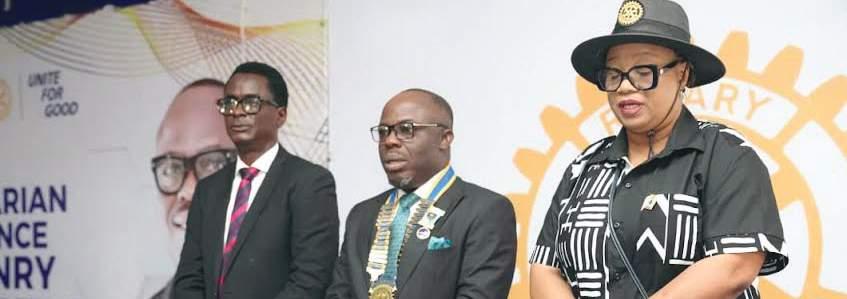
L- R: Team Lead, Secured Lending Product, First Bank Limited, Mr Musiliu Olokodana; Rotary District 9111 Governor 2025-2026, Henry Akinyele, and District Governor 2026-2027, Bukola Bakare, during the Rotary International District 9111 Community Empowerment programme for 140 beneficiaries held in Lagos…
Boniface Okoro in umuahia
Controversy is trailing the All Progressives Congress (APC) primary elections in Abia State as stakeholders in Abia South senatorial district and Ukwa East/Ukwa West federal constituency rejected results published by the State Working Committee (SWC), insisting that their preferred candidates emerged winners.
The SWC list shows Hon. Erondu Uchenna Erondu Jnr. as the winner of the Abia South senatorial primary, while incumbent lawmaker, Chief Chris Nkwonta, got the return ticket for the Ukwa East/Ukwa West federal constituency.
But parallel pro-APC groups in Abia South and Ukwa are contending that Prince Paul
Ikonne and Samuel Okezie Nwogu won the senatorial and federal constituency primaries, respectively.
The groups, which met separately in Aba and Obehie, Ukwa West, last Tuesday and Sunday, thanked President Bola Tinubu, the APC National Working Committee (NWC) and the Imo State Governor, Hope Uzodimma, for “upholding” the candidacies of Ikonne and Nwogu.
Addressing journalists in Aba, spokesman of the Abia South stakeholders, Hon. Chinwe Nwanganga, said: “The real congresses produced Ikonne and Nwogu as candidates.
“Your leadership role ensured a transparent, credible process that has strengthened
Michael Olugbode in abuja
The federal government has extended its condolences to the Government and people of China following the devastating landslide that struck Tanchang County in Gansu Province, killing at least 21 people and leaving several others affected, as Abuja reaffirmed the enduring strategic partnership between the two countries.
In a statement issued yesterday, the spokesperson for the Ministry of Foreign Affairs, Kimiebi Ebienfa, described the disaster as a tragic incident and said Nigeria stood in solidarity with China as rescue teams continued efforts to reach victims and support affected communities.
The landslide occurred on Tuesday in Tanchang County, a mountainous area in northwestern China’s Gansu Province, where heavy rainfall triggered the collapse of earth and debris, burying homes and disrupting
transportation. Emergency responders were immediately deployed to search for survivors, evacuate residents and provide humanitarian assistance.
Expressing the Federal Government’s sympathy, Ebienfa said Nigeria shared in China’s grief over the lives lost.
“The Federal Government of Nigeria expresses deep condolences to the Government and people of the People’s Republic of China following the tragic landslide that struck Tanchang County in Gansu Province on Tuesday, July 7, 2026,” he said.
He added: “Nigeria mourns the loss of lives in this disaster, which has claimed at least 21 lives, with others affected amid the rescue operations. Our thoughts and prayers are with the families of the deceased, the injured, and all those who have lost loved ones or property in this unfortunate incident.”
internal democracy,” he told the president and NWC.
The group argued that equity demands the seats go to their areas, noting that Obingwa LGA has held the Abia South Senate seat for 20 of the last 28 years. They
said Ikonne, former NALDA executive secretary, has the political muscle to defeat Senator Enyinnaya Abaribe in 2027.
“With Ikonne’s candidacy, Tinubu’s 2027 tsunami will start in Abia South,” Nwanganga added.
In Obehie, the Asa Development Union (ADU) and New Ukwa Progressive Initiative (NUPI) also rallied for Nwogu.
The ADU National Secretary, Sir Boniface Nwigwe, said Nwogu’s emergence “ushered in a new era of joy” for Asa people who have not produced a NASS member in 19 years. NUPI Chairman, Dr. Akanwa Franklin, described it as a “restoration of confidence and equity.”
sunday Okobi
Former Vice President, Prof. Yemi Osinbajo (SAN), former Lagos State Governor, Babatunde Raji Fashola (SAN), and philanthropist, Chief Kesington Adebukunola Adebutu, are among eminent Nigerians expected to headline the Ambassadors
National Youth Summit, a national discourse focused on equipping young Nigerians with leadership and entrepreneurial skills to drive economic growth and development.
The summit, in its eighth edition, is sponsored by Chief Adebutu, the Odole Oodua of Ile-Ife and Asoju
Oba of Lagos, through his Kesington Adebukunola Adebutu Foundation (KAAF), in furtherance of his longstanding commitment to youth development across Nigeria.
The event, scheduled for August 29, 2026, in Victoria Island, Lagos, is expected to attract over 3,500 young leaders and entrepreneurs from the
36 states of the federation and the Federal Capital Territory (FCT).
As part of the event, participants will compete for business grants, mentorship opportunities and other forms of enterprise support aimed at helping young innovators transform their ideas into sustainable businesses.
Esther Oluku
The Coroner Court investigating the death of Mr. Pelumi Onifade, a young journalist with Gboah TV, who was reportedly shot and arrested while covering the #EndSARS protests on October 24, 2020, has directed the key witnesses to begin testifying at the inquest despite continued
delay in the release of the autopsy report.
At the latest hearing on the inquest, which took place on July 7, the investigating Magistrate, Mrs. Temitope Oladele, explained that the Department of Pathology and Forensic Medicine of the Lagos State University Teaching Hospital (LASUTH) was contacted regarding the court’s
earlier order for it to produce the autopsy report for the late journalist.
She said the court received feedback from LASUTH that the report had been substantially completed but was awaiting the endorsement of the medical examiner who had examined it before it could be formally issued, and was expected to
be ready in about two weeks, as the medical examiner was away at the moment.
Mr. Alimi Adamu, the lawyer representing Media Rights Agenda (MRA) and the parents of the late journalist, who were both present in court, welcomed the feedback but emphasised the critical importance of the autopsy report to the inquest.
President Bola Ahmed Tinubu has approved the reconstruction of the AdoIjan- Ilumoba- Ikole road in Ekiti State. The road project is to be funded through the Renewed Hope Infrastructure Project Fund of the Federal Government of Nigeria.
The letter communicating
the President’s approval for the road construction was dated July 1, 2026, addressed to the Honourable Minister of Works, Engr Dave Umahi, Chairman of Nigeria Revenue Service, Mr Zach Adedeji and copied to Govenor Biodun Oyebanji.
This development is coming
barely seven months after construction work commenced on the Itawure-Aramoko-Ado Ekiti road following the president’s approval.
The Ado-Ijan-IlumobaIkole road, which connects the South-west region with the Federal Capital Territory (FCT), and provides access to
the Federal Polytechnic, Afe Babalola University, Ekiti Agro Allied International Cargo Airport, Ekiti Knowledge Zone, and Federal Institute of Transport Technology, has been in a deplorable condition for many years following persistent neglect by previous administrations.
The Ogun State All Progressive Congress (APC) gubernatorial candidate for the 2027 election, and the incumbent Senator representing Ogun West senatorial district, Solomon Adeola, has flagged off the re-electrification project
for over 50 communities across OgunWatersideLocalGovernment Area and other parts of Ogun East senatorial district.
Adeola, popularly known as Yayi, flagged off the project during a town hall meeting with the people of the communities, including traditional rulers, religious and community leaders, youth representatives and other stakeholders in the area.
The re-electrification project covers more than 50 communities in Ogun Waterside and Ijebu East Local Government Areas, where thousands of residents have lived without electricity for over a decade. The benefitting communities include Onikintimbo, Gbegude, Olorunsogo, Malofe, ItebuManuwa, Mile 3, Mile 4, Igede, Oni,Alo, Olojumeta, Ibiade,Agodo, Tigara, Igbafo, Ilushin,Agbure, Efire, Lomiro, Obu, Ayede, Abigi, Ayila, Ita Ogun, Ita Otu, Makun Omi, Igbo Edu, Ode Omi, Awodikora,
Duro Ikhazuagbe
The first quarterfinal fixture of the 2026 FIFA World Cup between France and Morocco in Boston tonight presents a perfect chance for the Atlas Lions to get their revenge against Les Bleus.
The two teams are part of the six European sides plus one each from Africa and South America remaining in this tournament that started the new 48-team format introduced by FIFA at this edition.
Four years ago in Qatar, France stopped Morocco’s fairytale run in the semifinal stage. Despite the defeat, the Atlas Lions were celebrated by the whole of Africa for making the continent proud. It was the first time an African team will reach the Last 4 stage.
But tonight, the Atlas Lions who are aiming to equal their historic semifinal run in 2022, will not be playing as rookies anymore. Their performance of three wins and two draws in this tournament tells the story of a team determined to shock the powerhouses in global football left in this 2026 edition in North America. The draws against Brazil and the Netherlands are respectable results, while they were ruthless in the 3-0 demolition of Canada in the last 16 round. That result must have boosted their confidence heading into this quarter-final tonight.
Morocco have not lost in their past 34 matches, but they have never beaten France, who have won seven in a row and 11 of their past 12 matches.
Yassine Bounou will expectedly
THURSDAY
France v Morocco (9pm)
FRIDAY
Spain v Belgium (8pm)
SATURDAY
Norway v England (10pm)
SUNDAY
Argentina v Switzerland (2am)

remains the starting goalkeeper and will be central to the Atlas Lions hopes of keeping a clean sheet.
Achraf Hakimi provides an attacking outlet at right-back and has chipped in with one goal during the tournament. Sofyan Amrabat’s midfield role will be crucial in disrupting France’s rhythm, a task he performed admirably against Spain in 2022. Azzedine Ounahi can equally prove to be the secrete weapon of mass destruction!
The only worry now is Ismael Saibari who has scored three goals for Morocco at this tournament and is suspected to be nursing muscle problems.
For Coach Mohamed Ouahbi, the tournament in North America has become a huge addition to his CV. Atlas Lions win against France this evening will only elevate him to the position of a legend in Morocco’s history. Morocco are unbeaten under Ouahbi’s watch with six wins and four draws in 10 games.
But against France tonight, Ouahbi will realize that ambition alone cannot decide the outcome of football. The two coaches will play vital roles in deciding where the pendulum of victory swings.
Without doubt, France have a strong squad available for this quarter-final.
Kylian Mbappé has been the standout performer of the tournament with seven goals, and there are no reported injury concerns surrounding him. He almost singlehandedly powered the team to final in Doha four years ago.
The midfield trio of N’Golo Kanté, Aurélien Tchouaméni, and Adrien Rabiot has provided a solid platform throughout, and Coach Didier Deschamps is unlikely to make wholesale changes after five consecutive wins.
William Saliba and Ibrahima Konaté have formed a reliable centre-back partnership, and with Mike Maignan in goal, France have conceded just twice
The race for FIFA World Cup 2026 glory enters its decisive stage this week as eight nations battle for four semifinal places, with football’s biggest stars and one of the tournament’s greatest surprise packages set to take centre stage live on SuperSport.
Argentina captain Lionel Messi, France forward Kylian Mbappé, Norway striker Erling Haaland and England captain Harry Kane headline a quarter-final lineup that also features the tournament’s last remaining African representatives, Morocco, unbeaten Spain and an in-form Belgium side.
The action begins today at 9pm when France takes on Morocco in a clash between one of the tournament favourites and Africa’s last remaining team.
On Friday at 8:00 pm, Spain meet Belgium in a contest between two of the tournament’s most consistent teams. Spain remain the only nation yet to concede a goal at the World Cup, while Belgium arrive full of confidence after convincing knockout victories over Senegal and the United States.
Saturday at 10:00 pm, Norway
will face England in one of the most anticipated quarter-finals after stunning Brazil in the previous round.
Haaland has scored seven goals in seven consecutive matches, while Kane has kept England’s title hopes alive with six goals and one assist.
The final quarter-final game kicks off on Sunday at 2am as defending champions Argentina face Switzerland. Argentina’s close calls against Cape Verde and Egypt provided some of the best games of
the tournament, while Switzerland have quietly emerged as one of the surprise packages after eliminating Colombia on penalties.
Every quarter-final will air live on SS World Cup Central (DStv Ch. 202, GOtv Ch. 61), with dedicated Pidgin commentary on SS WC Naija (DStv Ch. 204, GOtv Ch. 62), bringing the drama even closer to home.
The race for the Golden Boot adds another layer of intrigue to the quarter-finals. Messi leads the
standings with eight goals, followed by Mbappé and Haaland on seven, while Kane remains close behind on six. Every remaining contender still has the opportunity to shape both the title race and the individual honours.
Beyond the live action, SuperSport’s coverage continues with round-theclock highlights, analysis and magazine programming, including The Morning Cup, ensuring fans never miss the biggest talking points from football’s biggest tournament.
across the group stage and round of 16. Ousmane Dembélé’s four goals at this tournament add a second attacking dimension beyond Mbappé, giving France multiple avenues to goal.
France arrived at this stage in imperious form, winning all five of their matches and conceding just twice. Deschamps has a squad that blends experience with genuine attacking brilliance, and Mbappé’s seven goals at this tournament alone make
France a formidable proposition for any opponent. Will history smile on Morocco? Or will France go past Atlas Lions once more to reach the semifinal? France’s Coach Deschamps should remember that half of Les Bleus’s World Cup defeats this century have been inflicted by African teams (three out of six). Will Morocco become the fourth team to inflict pains on France? Ninety minutes will decide it all.
The Portuguese Football Federation (FPF) has confirmed the departure of national team coach Roberto Martinez following Portugal’s last-16 loss to Spain.
Martinez had already announced that he would be leaving the role he had held since January 2023.
Portugal finished second in their World Cup group, drawing with Colombia and DR Congo and beating Uzbekistan 5-0, and defeated Croatia in the last-32 before Monday’s tournament exit.
“The Portuguese Football Federation announces that it officially ended its contractual relationship with the national team coach, Roberto Martinez, and his coaching staff this Wednesday,” the FPF said in their statement.
Martinez, 52, led Portugal to the
UEFA Nations League title in 2025, but his side departed Euro 2024 at the quarter-final stage with a penalties defeat to France.
His decision to consistently start Cristiano Ronaldo has come under considerable scrutiny in the past two global tournaments, with BBC pundit Chris Sutton saying the Spaniard was “pandering”to the 41-year-old forward.
Speaking after the 1-0 loss to Spain, Martinez said: “I came to Portugal with the objective of winning the World Cup and because I haven’t won it wouldn’t make sense to continue. My contract ends today.”
The FPF stated that it had already begun the search for a successor “with the aim of continuing to promote the ambition and winning culture” within the national team set-up.
South Africa has announced a formidable 36-member squad for the 2026 Commonwealth Fencing Federation Championships in Lagos, underscoring its reputation as one of Africa’s fencing powerhouses. At the heart of the team are two seasoned épée specialists: Sergey Losevskiy and Alexandra Lancaster. Both competed at the African Championships in Lagos last year and now return to lead the charge. Losevskiy, who once fenced
for Russia before committing to South Africa, has become a cornerstone of the men’s épée squad. Based at TFS Johannesburg/Blues Fencing Club, he has captained the national team through major continental tournaments, bringing a wealth of experience and leadership.
Lancaster, meanwhile, stands as the leading figure in the women’s squad.
A silver medalist at the African Senior Championships, she carved her name into history as the first South African
woman épéeist to advance beyond the pool rounds at the Senior World Championships. Her presence signals both ambition and resilience in a team eager to make its mark.
For Louise Lombard, President of the Fencing Federation of South Africa, the squad represents a blend of promise and maturity.
“We have a largely young squad, with some athletes making their international debut in Lagos,” she explained.
“Several development fencers from
rural areas will be traveling abroad for the first time, thanks to club funding. At the same time, our senior athletes—who have come close to medals in past Commonwealth competitions—bring valuable experience. This is a squad of multiple ages and weapons, and one with great potential,” Lombard who is also the team manager said.
The team’s composition reflects that diversity: six fencers will compete in the veteran épée event, while eleven will battle in the senior épée category,
split between six men and five women. Four athletes will take on the foil event. In the U-23 division, South Africa will field eight épéeists, four foilists, and two sabreurs.
Having hosted the last Commonwealth Junior Fencing Championships, South Africa arrives in Lagos with momentum. The junior successes have set the stage, and now the senior squad seeks to consolidate that progress with a strong showing on the continental stage.
I will restrict myself to just four. The first is the immediate issue regarding the allegation against Gbajabiamila. This is no longer about the credibility of Adeyemi, whatever anybody may think about him. It is now about the credibility of the presidency that should be, like Caesar’s wife, above reproach. So, on that score, President Tinubu has a decision to make.
The second issue is about a job racketeering ring that sells public appointment slots in Abuja—from the ‘juicy’ political offices to regular jobs. This, of course, predates the Tinubu administration. A former desk officer at the Federal Character Commission (FCC), Haruna Kolo, once told an ad hoc committee of the House of Representatives that he indeed fronted for a former Chairperson, Ms Muheeba Dankaka, to sell employment slots. Although Dankaka denied the allegation, she similarly accused other commissioners of selling jobs. The United Nations Office on Drugs and Crime (UNODC) confirmed this emblem of shame in its report that 32 per cent of Nigerians who secured jobs in the public service in 2019 claimed to have paid a bribe. The submission, according to then UNODC Country Representative, Dr Oliver Stolpe, was not based on mere perception but rather on empirical findings backed by the National Bureau of Statistics (NBS). In fact, Stolpe co-signed the 92-page report titled, ‘Corruption in Nigeria: Patterns and Trends’, with the then NBS Statistician General, Dr Yemi Kale.
Meanwhile, during the August 2023 scandal involving the dropping of a ministerial nominee, Ms Maryam Shetty, then All Progressives Congress (APC) National Chairman and former Kano State Governor, Dr. Abdullahi Ganduje, said something very revealing: “The president asked whether I had nominated Shetty. I said no. He asked how then her name appeared on the list. I told him I had no idea whatsoever.” Although I defended Shetty at the time because I believed (and still do) that she was unjustly treated, I made this point: If the president knew nothing about his own ministerial nominee, you begin to wonder how many names got on the list behind his back, which then raises questions about the credibility of such appointments.
The third issue is about how Adeyemi succeeded in getting an allocation of N1.3 billion into the 2026 budget which was assented to by President Tinubu in April. With my little knowledge of how Abuja works, this scam doesn’t require much rigour. That’s why I have written more than a dozen columns on the need to reform the budgeting process in Nigeria. Notable are ‘Ningi and the Underground Budget’, ‘The Illusion of Budget Performance’, ‘Budget War and Dysfunctional Envelope System’,
‘Buhari and the Budget Palaver’, ‘Nigeria’s 2016 Zero Budget!’ and ‘Of Government and Budget Blues’. The kernel of these interventions has always been to underscore the fact that what we call budget in Nigeria is essentially the sharing of money. I have also repeatedly referenced a Twitter thread by ‘Laolu Samuel-Biyi who once concluded: “If you want to keep hope alive in Nigeria, don’t look at the budget”. Bottomline: Adeyemi is not the first Nigerian to write his way into our budget and will definitely not be the last until we do something about it.
Now to the fourth issue of establishing a ‘fictitious’ agency. Anybody who has read the report of the Presidential Committee on the Restructuring and Rationalisation of the Federal Government Parastatals, Commissions and Agencies will not be surprised by this scandal. Chaired by former Head of Service, Mr Steve Oronsaye, the committee (established in August 2011 by former President Goodluck Jonathan) identified 541 federal government agencies, 50 of which had no enabling laws! The report also identified 55 agencies that were not under the supervision of any ministry and many of them, according to the committee, “receive more budgetary allocations for personnel than they require because that component of their budget is usually inflated”. Interestingly, dozens of such federal agencies have been added since the Oronsaye Report was submitted in April 2012.
I have always believed there are many agencies that started as ‘one-man business’ before they found their way into the public record. For instance, until March 2017, most Nigerians (including this reporter) were under the impression that a paramilitary organisation going by the name ‘Peace Corps of Nigeria (PCN)’ was an organ of the federal government given the visibility of its men and their offices in all the 36 states. Then in March 2017, the Economic and Financial Crimes Commission (EFCC) filed a 90-count criminal charge against Mr Dickson Akoh who, as it turned out, founded the organisation as an NGO on 10 July 1998. Akoh, the ‘National Commandant’ and PCN trustees were accused of money laundering and obtaining money under false pretense. More curious still, this development came after both chambers of the National Assembly had already passed the bill for formal recognition of PCN as a government agency!
Although the late President Muhammadu Buhari refused assent on grounds of duplication of security agencies, then deputy senate president, Ike Ekweremadu, had in plenary enjoined his colleagues not to lend support to the organisation. “A lot of people have been deceived. The Senate should not be a stamp for fraud,” Ekweremadu
warned. But it was the contribution of the then Minority Leader, Godswill Akpabio (the current Senate President), that was the most brutal: “...Youth have been taken advantage of and people have lost money, millions of Naira and then someone brings a law to legitimise what we know is a fraud,” Akpabio said. “Some of them are Field Marshals and they have not gone to any war. Many of them are Lieutenant-Generals. I have seen some saluting as Brigadier-Generals. I have seen them in public occasions where the youth use their clothes to clean the seats for the Commandant-General. This thing is 419. We cannot make a law for an individual to collect millions of Naira.”
Today, the Federal Government has many cases in court against Akoh who was arrested last December by the EFCC and arraigned over alleged misappropriation of N60 million. But PCN is still very much in business going by the information on its website: “...Recognising the impact of its work, the Federal Government of Nigeria signed a Memorandum of Understanding (MOU) with the Corps to support and validate its operations nationwide…” The hyperlink then leads readers to a report of 18th July 2025 on the same website: “The Honourable Minister of Budget and Economic Planning, Senator Abubakar Atiku Bagudu, signed on behalf of the Federal Government, while the National Commandant of the Peace Corps of Nigeria, Dr Dickson Akoh, signed on behalf of the organisation.”
The statement added: “This MoU represents the Federal Government’s formal recognition of the Peace Corps of Nigeria as a vital partner in advancing key national development priorities particularly in peacebuilding, civic education, volunteerism, and youth engagement...”
If the EFCC is prosecuting an organisation for fraud and a Federal Government ministry is reportedly signing an MoU with its proprietor, it stands to reason that there is a disconnect somewhere. We cannot continue to run our government like this! And that is why Tinubu must not waste this moment. Yes, I am aware that the Independent Corrupt Practices and Other Related Offences Commission (ICPC) has been directed to investigate the Adeyemi/Gbajabiamila issue but apparently the presidency still doesn’t understand that there is a difference between a scandal and a mirror, and Nigeria has just been handed the latter. The greatest mistake would be to reduce this affair to a contest of narratives between powerful individuals. What has been exposed is a deeper institutional malaise.
Long after recriminations between a sitting Chief of Staff and a man now on trial for allegedly forging the presidency’s own letterhead may have faded from memory, one question will remain: How
does a fake agency find its way into a signed Appropriation Act, operate for the better part of a year undetected by any internal safeguard, and be exposed only because a rival agency complained of an overlap in its own turf?
Mr President, this is not a crisis to be managed until it passes. It is a mandate handed to you fully formed. In order to fix what allowed this to happen in the first place, we must strengthen budget scrutiny, insist that every appropriation is tied to a verifiable legal entity, and ensure that no office is too big to escape institutional checks. Therefore, to restore the integrity of the Nigerian State and its institutions, we need structural reforms, beginning with an audit of all federal agencies, their mandates and how they originated so that we can begin to separate the wheat from the chaff.
A presidency that emerges from this affair having tightened its own house will have gained far more than it lost. One that waits for the news cycle to pass will have wasted a lesson that was written into the nation’s own budget book.
essentially to memorialise.
However, what the book succeeds in doing, and does exceptionally well, is to preserve the texture of a public life in the words of those who encountered it most closely: the men and women who served Buhari, depended on his judgement and admired his convictions as well as outsiders who had their views over his handling of our national security, economic decisions and others issues whose effects outlive his stewardship. In his own tribute included in the collection, Shehu writes that Buhari was “drawn to public service, discipline, and patriotism, and the unity of Nigeria as one nation and one idea.” Whether regarded as his greatest virtue, his principal limitation, or some complex fusion of both, that conviction runs through the pages.
Long after passions have cooled and partisan certainties have faded, records such as this will remain indispensable for understanding not only who the man Muhammadu Buhari was, but also the many ways in which Nigerians and the wider world choose to remember him. One year after his passing, ‘Tributes and Condolences in Honour of Muhammadu Buhari’ stands as an archival intervention for which I commend both Mallam Garba Shehu and Sardaunan Katsina, Ambassador Abubakar. In a country where historical narratives are frequently revised as quickly as they are formed, the preservation of contemporaneous voices is itself a public service.
The Minister of Defence, General Christopher Musa, has ordered security personnel to engage armed bandits and terrorists immediately without waiting for further instruc- tions from command.
This was as the Sokoto State Governor, Ahmed Aliyu, has unveiled a fresh security intervention worth N27.127 billion, as part of efforts to contain banditry and other violent crimes across the state.
Speaking yesterday in Sokoto during the commissioning of security assets, Musa said the era of delay in responding to attacks must end, and that any operative who failed to act on the grounds of awaiting orders would be viewed as collaborating with criminals.
Issuing what amounted to a shoot-on-sight directive, the minister warned that inaction would no longer be tolerated.
“Anybody who refuses to shoot or kill any bandit or terrorist in the name of waiting for an order, we will treat you like a bandit,” he declared.
He stressed that troops must be proactive once deployed to their areas of operation.
The directive came as the Sokoto State Government handed over 62 operational vehicles and security equipment worth N27.127 billion to security agencies.
The procurement, according to officials, was aimed at strengthening the fight against banditry, terrorism and kidnapping not only in Sokoto but across the Northwest region.
Musa noted that the new armoured vehicles and tactical equipment would significantly improve operational mobility, intelligence gathering and force protection for troops on the ground.
He described the intervention as timely and critical given the persistent security challenges in the region.
The defence minister praised Aliyu for what he called strategic leadership and responsible governance.
He said the governor’s consistent support to security agencies with logistics and equipment had
set Sokoto apart as a model of state-government collaboration in tackling insecurity.
Aliyu, while presenting the assets, gave a breakdown of the procurement. He said the items included bulletproof vehicles, Buffalo Armoured Personnel
FRC,
Carriers, 320 motorcycles, 3,200 security gadgets, 2,000 bulletproof helmets and vests, 200 night-vision goggles, thermal devices and other tactical equipment.
He explained that the distribution formed part of his admin- istration’s sustained investment
in security since assuming office.
The governor further disclosed that Sokoto had already spent over N36 billion on security interventions.
The previous spending, he said, covered operational vehicles, motorcycles, the construction of
military and police barracks, the establishment of the Sokoto State Community Guard Corps, and support for the Nigerian Air Force Base in the state.
While receiving the equipment, Musa cautioned personnel against mismanaging the assets.
Dike Onwuamaeze
The Executive Chairman of Financial Reporting Council of Nigeria (FRC) Dr. Rabiu Olowo, along with the members of the National Organising Committee (NOC) of the National Corporate Governance Summit (NCGS), has declared that the success of the ongoing economic reforms is largely dependent on the quality of governance underpinning decisions at both our public/private sector
organisations.
According to them, investors today are increasingly attracted not only by market opportunities but by the quality of a country’s governance systems that protect investments.
Olowo stated this in Lagos at a press conference on the oncoming 3rd National Corporate Governance Summit 2026 that is scheduled for July 21and 22, 2026, at the Oriental Hotel, Victoria Island, Lagos, which would be attended by
Vice President Kashim Shettima as the guest of honour.
The theme of this conference is “Implementing Good Governance for Economic Acceleration: Consolidating Public/ Private Sector Partnership.”
He said: “While significant reforms are ongoing to reposition the economy, their success will largely depend on the quality of governance underpinning decisions at both our public/ private sector organisations.”
According to him, the third
NCGS is expected to deliver tangible outcomes that would shape governance practice in Nigeria.
“The summit will generate practical recommendations to strengthen governance implementation across public- and private-sector institutions.
“It will deepen collaboration among policymakers, regulators and the business community and promote policy dialogue that supports sustainable economic growth,” he said.
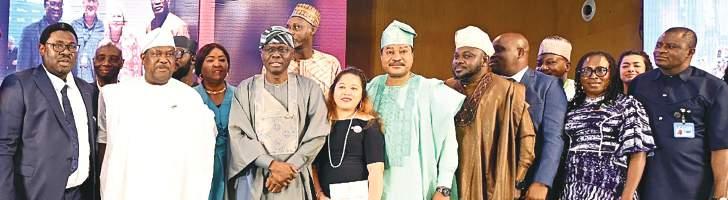
L-R: Director-General, CSCHEI and National Convener, Civil Society Organisations Summit 2026, Hon. Kunle Yusuff; President Bola Tinubu, represented by the Secretary to the Government of the Federation, Senator George Akume; Governor of Lagos State, Mr. Babajide Sanwo-Olu; President, Association of Diplomatic Women in Nigeria (ADWiN), Ruby Ross Maribao; Nigerian diplomat and national civil society leader, Amb. Bolaji Akinremi; Special Assistant to the President on Climate Change Matters, Comrade Yusuf Kelani; Senior Special Assistant to the President on Industrial Training and Development, Hon. Adamson Ayinde; Special Adviser to the Governor of Lagos State on SDGs, Dr. Oreoluwa Finnih; and Special Envoy, West Africa International Human Rights Protection Service (IHRPS), Amb. Charles Omini, during the 2026 Southern Civil Society Organisations Summit in Lagos, yesterday
olusegun.adeniyi@thisdaylive.com

According to investigation by Nigerian Presidency, this man (with photo of Prince Adeniyi Matthew) created a fake government agency called Presidential Foreign Intervention Promotion Council, appointed himself as Director General, secured office space at the Federal Secretariat in Abuja, opened multiple Central Bank accounts, got N1,302,978,784 (that’s almost a million dollar) allocation in the 2026 budget, summoned ambassadors to meetings, held strategic sessions with ministers, and even represented Nigeria at international conferences. Nigeria is a different country!!
My powerful Ghanaian friend, Mustapha Sanah (HRH Dalun-Lan Tapha Muhammadu II) forwarded the foregoing message to me last Friday before adding his own terse line: “Above is circulating widely on WhatsApp in Ghana. Is it a credible tale?” I responded with one word: ‘Yes!’ Apparently shocked, he also replied with one word: ‘Wow!’ Based on my little experience from another life, I would have located this scandal in the Office of the Secretary to the Government of the Federation
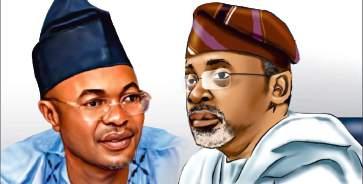
(OSGF). But it is the Chief of Staff to the President, Mr Femi Gbajabiamila, who Adeyemi has named as an accomplice while accusing the presidency of shrouding the entire saga in “a cloud of public
misrepresentation, institutional denial, and deliberate attempts to silence legitimate questions that concern a matter of public interest.”
That serious questions are being asked about the
The man who first informed the world of the passing of President Muhammadu Buhari has just co-edited a comprehensive testimonial to his life: ‘Tributes and Condolences in Honour of Muhammadu Buhari’. Compiled by former presidential spokesman, Mallam Garba Shehu and former National Intelligence Agency (NIA) Director-General, Ahmed Rufai Abubakar, the book is a fitting tribute to the leader the duo served and, by their own account, believed in. That the volume will be publicly presented on Monday to mark the one-year anniversary of Buhari’s death lends added poignancy to the occasion.
A senior colleague who has always treated me like a beloved aburo, Shehu brought an advanced copy of the book to my office two weeks ago. Nearly a thousand pages, the volume is vast and intentionally so. Assembled in the collection are condolence messages, tributes, editorial obituaries, and reflections from heads of state, governors, senators, military commanders, diplomats, and journalists from across the world. From former and sitting African Presidents to political and business leaders on the continent and beyond, the expression of sorrow is deep and genuine. But it would be disingenuous to suggest that this publication settles the debates surrounding
Buhari’s legacy.
Upon his passage last year, I argued that any serious assessment of the Buhari Years in office should resist both canonisation and condemnation. That remains my position. Besides, the tributes in the collection may have been unedited but they were carefully selected. Which means that readers who are seeking a comprehensive reckoning regarding the Buhari presidency will necessarily have to look elsewhere. But then, to expect otherwise would be to misunderstand the nature of a publication designed
integrity of Nigerian institutions and the credibility of systems designed for oversight in our country is no longer in doubt. A man publicly declared a ‘scammer’ by the federal government was able to access the Central Bank of Nigeria (CBN) to open TSA accounts, secure a government domain account from the National Information Technology Development Agency (NITDA), receive a waiver from the Office of the Head of the Civil Service of the Federation (OHCSF) to employ 300 staff members, and get the Office of the Accountant General of the Federation (OAGF) to second three senior officials to his ‘office’. He also had a tete-a-tete with the Chairman of the Economic and Financial Crimes Commission (EFCC), secured office space at the Federal Secretariat, held sessions with the House of Representatives Deputy Speaker, hosted ambassadors and performed many other ‘official’ functions at home and abroad. Most of these events happened after he had reportedly been flagged, which points to the fact that Adeyemi did not act alone.
There are many layers to this controversy but