Oil Tumbles to $92 after Trump Announces Two-week Ceasefire
Ojulari:
Lagos
Raised
Ojulari:
Lagos
Raised




Long-term illness after COVID to cost leading economies in Europe, Americas, East Asia $135bn annually
Ndubuisi Francis in Abuja
The current oil and gas crisis triggered by the blockade of the Strait of Hormuz is “more serious than the ones in 1973, 1979 and 2002 together”, the head of the International Energy Agency (IEA), Fatih Birol, has warned.
Birol’s warning came amid a new study, which revealed that the effect of long-term illness suffered by people after Covid-19 infections was estimated to cost 38 leading economies in Europe, the Americas, and East Asia, otherwise known as the Organisation for Economic Cooperation and Development (OECD) countries, about $135 billion a year, and would dog their economies for at least a decade.
Speaking during an interview in France, the IEA chief said, “The world has never experienced a disruption to energy supply of such magnitude.”
According to him, European countries, as well as Japan, Australia, and others, would suffer, but countries most at risk are developing nations, which would suffer from higher oil and gas prices, higher food prices, and a general acceleration of inflation.
The IEA member countries agreed last month to release part of their strategic reserves. Some of this had already been released, and the process continues, said Birol.
In reaction to strikes by Israel and the US, Iran had almost entirely blocked traffic in the Strait of Hormuz, through which about 20 per cent of world oil and gas regularly flowed, creating a
surge in energy prices.
Meanwhile, the effect of long-term illness suffered by people after Covid-19 infections was estimated to cost 38 leading economies in Europe, the Americas and East Asia – Organisation for Economic Cooperation and Development (OECD) countries – about $135 billion a year, and dog their economies for about a decade.
The OECD study showed the direct health-care costs of long Covid infection combined with the wider effect of people leaving the workforce, and lower productivity will have a lasting effect.
Economic growth could be reduced by as much as 0.2 per cent, according to OECD, because the virus continues to spread, swelling the ranks of people with long Covid.
The projected hit to GDP from lower productivity, increased absence, or employees quitting work altogether will dwarf extra health spending burdens stemming from the sickness, said the OECD study published on Wednesday.
The paper is a rare attempt to quantify the economic effects from so-called long Covid, which has a debilitating effect on sufferers but remains poorly understood scientifically and is patchily monitored for data collection.
“This work is important because it provides for the first time a comprehensive estimate of the economic burden of long Covid across EU and OECD countries,” said Guillaume Dedet, the publication’s coordinator and a senior health economist at the Paris-based
organisation.
Dedet added, “It shows that the costs of Covid-19 did not end with the acute phase of the pandemic: the virus continues, and will continue, to weigh on societies and economies for years to come.”
The report estimated losses of between 0.1 and 0.2 per cent of GDP, amounting to a total loss of $135 billion annually across all OECD countries, in scenarios where “low or moderate” residual coronavirus transmission led to ongoing new cases.
The economic fallout of long Covid is “substantial and mainly stems from the indirect costs from reduced productivity and participation in the workforce,” the report stated.
Its predictions were probably an underestimate of the true burden, it added.
OECD said the repercussions were more serious because they added to existing problems, including sluggish growth and productivity in ageing workforces.
Economists had previously struggled to quantify the effect of long Covid on employment and economic growth because few countries continued tracking people who were affected by the condition after the pandemic’s peak.
OECD drew on new survey evidence from the US showing a lasting increase in health-related absence and exit from the labour market, as well as academic studies from the UK,
Australia and elsewhere.
It said all available data from highincome countries gave a consistent message: “persistent post-infection symptoms are not only a health challenge but also a structural brake on economic output.”
While many countries had developed policies for long Covid recognition and response, important gaps often remained, the report said. These included the provision of long-term care pathways for patients and the training and support of healthcare workers.
Government action on long Covid is often focused on the health sector, with limited co-ordination with employment, education and social protection policies,
the paper said.
Long Covid — defined as a condition lasting at least three months after the initial viral infection — has been estimated to affect 18 million adults in the United States. Sufferers report symptoms including shortness of breath, fatigue and cognitive decline — brain fog — lasting months or years.
Scientists are unsure about exactly why some people experience long Covid and how the condition should be treated. Research suggests the viral infection triggers a heightened immune response and chronic inflammation in long Covid sufferers, indicating that damping these could be a way to tackle the condition.
Michael Olugbode in Abuja
Growing concerns over Nigeria’s widening skills gap took centre stage in Abuja on Wednesday, as education stakeholders warned the country risks undermining its industrial ambitions without a radical overhaul of its technical training system.
At a high-level session of the BEAR III Programme convened by United Nations Educational,
Scientific and Cultural Organisation (UNESCO), the Federal Ministry of Education Nigeria acknowledged that current training models are failing to keep pace with the rapidly evolving demands of industry—particularly in agro-processing, a sector seen as critical to job creation and economic diversification.
Director of Technology and Science Education, Mrs. Patricia Ogungbemi, delivered a blunt
Peter Uzoho
The Nigerian National Petroleum Company Limited (NNPCL) has said crude oil production grew from a historic low of 960,000 barrels per day (bpd) in 2022 to an average of 1.71 million bpd and a peak production of 1.84 million bpd in 2025. The company attributed the growth to the establishment of the integrated energy security for pipelines in the Niger Delta.
A statement quoted the Group Chief Executive Officer of NNPCL Bayo Ojulari, to have made the disclosure at the Parliamentary Roundtable on the State of Pipelines Security which held yesterday at the National Assembly, in Abuja.
Speaking on the success of the security arrangement, Ojulari explained that it was not accidental, and that it involved an “integrated energy security model that combines legislative and executive policy align-
ment, actionable intelligence, kinetic deployment capabilities, regulatory oversight, industry cooperation, and community embedded surveillance mechanisms.”
He said the resurgence of production due to the effective tackling of the twin menace of oil theft and pervasive pipeline sabotage has led to the restoration of investors’ confidence in the nation’s oil and gas sector.
In his welcome address, the
President of the Senate, Senator Godswill Akpabio, represented by Senator Jimoh Ibrahim, called for collaboration among agencies and stakeholders in resolving all challenges impeding production growth.
On his part, the Speaker of the House of Representatives, who was represented by the Leader of the House, Hon. Julius Ihonvbere, urged the forum to evaluate the progress made so far with a view to ensuring fairness and equity.
assessment: Nigeria is producing graduates who are increasingly disconnected from the realities of modern workplaces.
While investments in infrastructure and technology have grown, she warned that the human capacity needed to drive those systems remains weak.
“There is a dangerous mismatch between what is taught and what is required,” she said. “Machines are evolving, industries are advancing, but the workforce is not keeping up at the same speed.”
Ogungbemi pointed to emerging trends such as automation, smart packaging, and sustainable production systems, noting that many Technical and Vocational Education and Training (TVET) institutions have yet to integrate these realities into their curricula.
She described the ongoing Labour Market Analysis (LMA) as a critical diagnostic tool, but stressed that data alone would not solve the problem without decisive policy action and sustained funding.
“What we are confronting is not just a training issue—it is a
structural challenge that affects productivity, competitiveness, and national growth,” she added. The warning comes amid rising youth unemployment and growing frustration among employers who say graduates often lack practical, job-ready skills.
Stakeholders at the event argued that unless Nigeria urgently retools its education system to prioritise hands-on, industry-driven learning, sectors like agro-processing—despite their vast potential—may struggle to absorb the millions entering the labour market each year.
Kano State Commissioner for Education, Ali Makoda, reinforced the urgency, describing work-based learning as a “non-negotiable pathway” to addressing the crisis.
According to him, states are beginning to recognise that traditional classroom models alone cannot solve unemployment challenges.
“We must embed learning within the workplace,” he said. “The future of education is not just in classrooms, but in factories, farms, and production lines.”
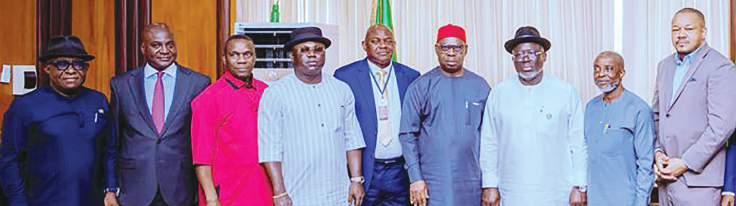
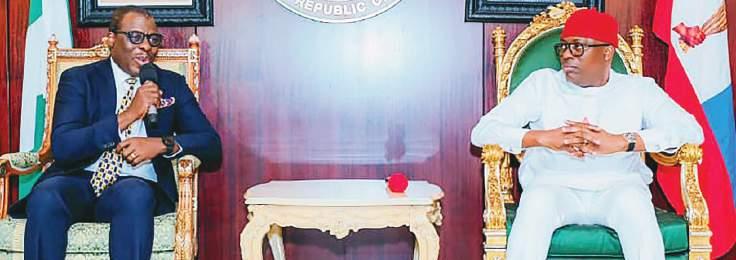
L-R: Commissioner for Economic Planning, Delta State, Mr. Sunny Ekedayen; Attorney-General and Commissioner for Justice, Mr. Ekemejero Ohwovoriole, SAN; Commissioner for Finance, Sir Fidelis Tilije; Commissioner for Energy, Engr. Michael Anoka; Lead Partner, Details Commercial Solicitors, Mr. Ayoli Jemidi; Delta State Deputy Governor, Sir Monday Onyeme; Delta State Governor, Sheriff Oborevwori; CEO, Power Acumen Consulting Limited, Dr. Matthew Edevbie; and MD/CEO Designate, Infrastructure Bank Plc, Erabor Okogun, after a strategic meeting on improved power supply in Asaba, yesterday
Cuts transmission losses from 10% to 7%, targets further drop Agency pushes real-time grid monitoring with SCADA, IoT rollout
The Nigerian Independent System Operator (NISO) yesterday marked its first anniversary, with the announcement of a major policy direction, including advanced plans to begin the ‘islanding’ of the national power grid to curb persistent system collapses.
Speaking during the event in Abuja, NISO’s Managing Director and Chief Executive Officer, Mohammed Bello, said the move to segment the grid represented a critical shift in Nigeria’s electricity management strategy, aimed at isolating faults and preventing disturbances in one part of the network from triggering nationwide outages.
The development comes one year after NISO was activated under the Electricity Act 2023, with a mandate to oversee system operations, market administration, planning, and enforcement of regulatory instruments within the Nigerian Electricity Supply Industry (NESI).
Bello said the segmentation of the
grid would enhance resilience by ensuring that when faults occur, only affected sections are isolated, allowing other parts of the system to continue operating. This, he noted, would significantly reduce the frequency and scale of grid collapses that have historically disrupted electricity supply nationwide.
According to him, the past year has seen NISO prioritise grid stability, market transparency, coordinated system planning and regional integration. These pillars, he said, are central to repositioning Nigeria’s power sector to support economic growth and national development.
“We also developed our scope for grid islanding to enhance system resilience during (grid) disturbances. We believe that segmenting the grid into different islands will help in alienating or isolating disturbances happening in one island, so that a disturbance on one island should not cascade to the other island.
“Therefore, whenever we have a disturbance on the grid somewhere, it should not affect the remaining
part of the national grid. The grid islanding project is also a win. We believe that we’ll have segments of the system islanded, so that in terms of operations, in terms of system disturbances, the part of the grid that is disturbed will be islanded, and allowing the remaining part of the grid to continue in operations, so that there won’t be system collapses,” Bello assured.
The agency, he said, is also making progress in improving system reliability through the enforcement of the ‘Free Governor Mode’ of operation among Generation Companies (Gencos). This measure, which ensures better frequency response from power plants, he said, will contribute to improved grid stability.
However, the NISO CEO acknowledged that compliance remains uneven, adding that enforcement would be strengthened going forward.
According to him, NISO has also initiated a comprehensive effort to address weak protection
Michael Olugbode in Abuja
A senior United Nations official has issued a strong warning that governments and institutions risk deepening instability and policy failure if they continue to sideline young people, insisting that meaningful youth inclusion is now a critical condition for peace, stability, and sustainable development.
Speaking in Abuja at an interactive session with youth, the United Nations Assistant Secretary General for Youth Affairs and Head of UN Youth Affairs, who is currently on an official visit to Nigeria, Mr. Felipe Paullier, said global institutions are failing to evolve at the pace required to match today’s rapidly changing realities, particularly the demographic shift driven by an unprecedented youth population.
The event, themed “Open-Door Youth Engagement,” convened
youth-led organizations, young women’s groups, youth peacebuilders, innovators, students, young professionals, persons with disabilities, and underserved youth communities for an interactive dialogue with representatives of the government and the United Nations.
According to Paullier, young people now represent the largest, most educated, and most interconnected generation in history, especially in developing countries like Nigeria.
However, this demographic advantage is being undermined by persistent gaps in access to quality education and limited opportunities for meaningful participation in governance.
He noted that: “Engaging young people in policy is not just an option—it is a condition if we want to achieve peace, stability, and
effective solutions.”
He said the UN acknowledged a growing disconnect between policy formulation and real-world impact, describing the process of closing this gap as complex but urgent.
He admitted that while global frameworks exist, including the United Nations Sustainable Development Goals (SDGs) and youth-focused strategies, implementation at the national level remains inconsistent.
He emphasized that governments must move beyond rhetoric and adopt clear, actionable commitments that integrate youth voices into decision-making processes.
He said central to this effort is the UN’s broader development roadmap, which includes commitments to embed youth participation not only at global levels but also within country-level governance and policy execution.
coordination across the grid. The lack of harmonised relay settings, he noted, has contributed to system disturbances in the past. To tackle this, Bello said the agency was working to standardise protection systems, with the process expected to be completed within months.
Besides, he disclosed that NISO has accelerated the implementation of the Supervisory Control and Data Acquisition and Energy Management System (SCADA/EMS), alongside the deployment of telemetry infrastructure across electricity trading points. These systems, he pointed out, are expected to transition grid management from manual processes to automated, data-driven operations.
Bello explained that with the ongoing deployment of Internet of Things-based monitoring devices across generation units, transmission interfaces, and substations, the agency aims to achieve full end-to-end visibility of the grid.
NISO emphasised that this would also align with regulatory directives requiring Distribution Companies (Discos) to install monitoring systems on key feeders, ultimately enabling real-time coordination across the entire electricity value chain.
“On grid visibility, monitoring, and control, a key priority has been improving our ability to
‘super grid’ initiative
see, understand, and manage the national grid in real time. In this regard, we have accelerated implementation of the SCADA EMS project, working very closely with the Nigerian Electricity Regulatory Commission (NERC) to ensure that the grid monitoring infrastructure tool, which is a valuable tool for the system operations, is completed and operational.
“It’s a work in progress and we are seeing the progress of this. We have also reached advanced stages in the deployment of the telemetry system across the grid at the electricity trading points. We believe that this telemetry system will enhance the efficiency and effectiveness of the electricity market, thereby enabling us to have settlements almost in real-time if we want,” Bello said.
In the electricity market, NISO said it has strengthened compliance with market rules, improved coordination among participants, and initiated upgrades to market management systems to support real-time operations and efficient settlement processes. The MD added that enhanced data transparency is also being pursued to support informed decision-making and build investor confidence.
He noted that the agency is also playing a key role in managing the
interface between emerging state electricity markets and the national wholesale market, following recent reforms that allow subnational governments to establish and regulate their own electricity systems. On system planning, he reported significant progress, including support for the development of the Integrated Resource Plan and the submission of a revised Transmission Expansion Plan, stressing that it is advancing frameworks for renewable energy integration.
In addition, NISO said it is reviewing proposals for a “super grid” initiative aimed at strengthening transmission infrastructure and supporting long-term sector growth through coordinated, least-cost planning.
The CEO also highlighted progress in reducing transmission losses, which he described as a major challenge at the agency’s inception. Losses, which previously stood at nearly 10 per cent, costing billions of naira monthly, he said, have now been reduced to about 7 per cent. According to him, efforts are ongoing to bring this down further to between 5 per cent and 6 per cent in line with regulatory targets, explaining that these losses were costing between N5 billion to N8 billion monthly hitherto.
A team of experts from the British Museum and the University of Oxford in England has paid a familiarisation visit to the Nigerian Railway Corporation (NRC) Legacy Museum in the railway compound in Ebute Meta, Lagos, with the aim of strengthening collaboration for the preservation and revival of Nigeria’s railway heritage.
The visit was led by Professor Paul Bagu, an anthropologist from the University of Oxford, alongside Mrs. Julia Hudson.
The team explored key sections of the museum, including the historic Old Running Shed, where ageing locomotives and coaches are housed.
During the visit, Professor Bagu expressed keen interest in the restoration and preservation of these locomotives, emphasizing the importance of international collaboration.
Speaking during the tour, Professor Bagu noted that “the NRC Legacy Museum represents a valuable repository of Nigeria’s industrial and cultural history. There is significant potential for collaboration in areas such as conservation, restoration, and knowledge exchange to ensure these assets are preserved for future generations.”
A major highlight was the discussion around the historic coach used by Queen Elizabeth II during her
visit to Nigeria. The experts acknowledged the historical link between Britain and Nigeria’s railway system and emphasized the need to leverage this shared heritage.
Bagu further added that: “The historical connections between Britain and Nigeria’s railway development present a unique opportunity to build partnerships that celebrate and preserve this shared heritage.” Drawing from regional experience, he also referenced a railway heritage initiative in Freetown, Sierra Leone, where dedicated individuals and enthusiasts have contributed significantly to the revival and sustainability of a museum.
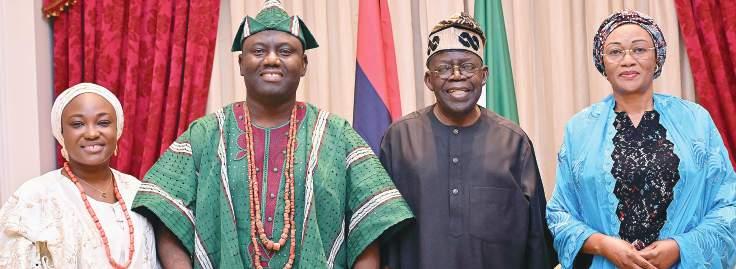
L-R: Wife
German organisation accuses political class of rent-seeking Ranks Nigeria 82 in political transformation, 111 on economy, 78 in governance index Says democratic institutions failing to deliver dividends
Emmanuel Addeh in Abuja
Nigeria’s political and economic elite have largely continued to operate in a “business as usual” manner despite worsening living conditions for the majority of citizens, according to the Bertelsmann Stiftung’s Transformation Index (BTI) 2026.
The report, which assesses governance, democracy and market economy performance across 137 developing and transition countries, painted a stark picture of a country grappling with deepening socioeconomic hardship, even as entrenched power structures remain largely unchanged.
Covering the period from February 2023 to January 2025, the BTI 2026 highlighted a widening disconnect between Nigeria’s ruling class and ordinary citizens, noting that while key economic reforms have been introduced under President Bola Tinubu, their short-term effects have significantly worsened living conditions.
Overall, it ranked Nigeria 82 out of 137 countries in political transformation; 111 out of 137 nations in economic transformation and 78 out of 137 in governance index and
described the country as a ‘moderate autocracy’ in politics, very limited in the economic transformation index and moderate in the governance index.
The BTI, an independent German foundation, ranks how countries steer social change towards democracy and market-based systems, assessing the quality of governance using expert assessments to identify successful strategies.
“In the past decade, the country has experienced weak or negative economic growth, declining rev-
enues, mounting public debt, and a worsening security situation. Although some efforts have been made to strengthen anti-corruption institutions, the country’s political elite appears to be continuing with business as usual,” it pointed out.
For Nigeria, inflation, it said, surged to over 30 per cent in 2024, driven largely by currency depreciation and the removal of fuel subsidies. Although these reforms align with long-standing recommendations from international financial institutions, the report noted that insufficient
mitigation measures have left millions of Nigerians exposed to rising costs of living.
Citing World Bank estimates, the report stated that the poverty rate climbed from 40 per cent in 2018 to 56 per cent in 2024, reflecting the combined effects of slow economic growth, high inflation and structural inequalities.
Despite a new minimum wage of N70,000 introduced in 2024, the report observed that rising fuel prices and persistent inflation have eroded its real value, with compliance uneven
across both public and private sectors.
Yet, amid these pressures, Nigeria’s political system, it contended, continues to be dominated by elite interests. The BTI described a governance structure where “private rent-seeking is the rule rather than the exception,” with public resources often captured and distributed among political actors across regions to maintain stability within the system.
According to the report, this arrangement, while ensuring a degree of elite cohesion, has done little to improve the welfare of the
broader population.
“Nigeria has an elaborate administrative structure across its territory. Besides the federal government in Abuja, there are 36 state and 774 local governments. At each level, executive, legislative and judicial institutions are in place. The federal government consists of numerous ministries, departments and agencies with overlapping responsibilities. Staffing contributes to a high recurrent non-debt expenditure cost of about 40 per cent – 50 per cent of the federal budget each year.
Deji Elumoye in Abuja
Vice President Kashim Shettima has commended the Kaduna State Government for pioneering the establishment of a Council on Skills.
Specifically, he said the Kaduna State Council on Skills is a national model for workforce development,
youth employment, and inclusive economic growth.
In a letter addressed to Governor Uba Sani, the Vice President, who is also Chairman of the National Council on Skills (NCS), praised the state for the successful inauguration of the council, describing the move as a strategic institutional response to Nigeria’s pressing human capital
and unemployment challenges.
The commendation followed deliberations at the most recent session of the National Council on Skills, where Kaduna’s efforts were highlighted as a major policy milestone in advancing coordinated skills development across the federation.
He noted that by creating a dedicated institutional framework for skills development, Kaduna State had demonstrated “a proactive commitment to addressing the unemployment gap and fostering human capital development in line with our national objectives.”
said in the letter.
Edo Govt Tackles Critics, Affirms Huge Leap in Infrastructural
The Edo State Government has stoutly defended its performance amid rising criticism, insisting that significant progress has been recorded across key sectors in the last 18 months of the administration of Governor Monday Okpeholo. The state Commissioner for Communication and Orientation, Prince Kassim Afegbua, in an interaction session with journalists in Benin yesterday, dismissed recent protests and allegations of poor governance, describing critics as “faceless individuals” lacking political credibility.
Afegbua said the current administration has remained focused on addressing inherited challenges, including infrastructural decay, weak social services and security concerns.
According to him, the government has embarked on aggressive road construction and rehabilitation projects across the state. He listed ongoing works to include the Ramat Park flyover, the Adesuwa Junction flyover on Sapele Road, and the reconstruction of Ekewan Road, as well as several internal roads within Benin City and other parts of the state.
He added that major inter-city routes, including the
Ekpoma–Uromi road, are nearing completion, while maintenance works are ongoing on the Benin–Ekpoma–Auchi axis to improve mobility.
Afegbua noted that despite setbacks caused by early rains, the government has continued to fasttrack infrastructure delivery, with several roads already completed or at advanced stages.
In the education sector, he disclosed that about 80 public schools have so far been renovated and equipped with basic facilities such as desks, chairs and improved roofing, compared to the poor conditions inherited by the administration.
According to Shettima, the establishment of the council “aligns perfectly with the Renewed Hope Agenda of President Bola Tinubu and sets a benchmark for other sub-national entities.”
The Vice President further described the Kaduna initiative as evidence of an integrated vision for economic transformation.
“This milestone is a testament to your administration’s vision of integrated economic growth,” he
He added the National Council on Skills views the Kaduna Model as “a vital template for the ‘BottomUp’ approach to skills acquisition,” stressing that such a model is essential for ensuring that vocational and technical training initiatives effectively reach the grassroots. Shettima also called for sustained collaboration between the National Secretariat and the Kaduna State Council to harmonise standards and scale the impact of ongoing interventions.
Michael Olugbode in Abuja
The federal government has renewed its pledge to safeguard women’s and girls’ rights, promising to expand their influence in Nigeria’s leadership and development sectors.
Speaking at the annual Renewed Women’s Voice and Leadership (RWVL) planning meeting, organized by ActionAid Nigeria in partnership with
Global Affairs Canada, Minister of Women Affairs, Imaan Sulaiman-Ibrahim, emphasized that the government will intensify collaborative efforts to ensure women gain greater access to leadership roles, productive assets, and socio-economic opportunities. Represented by Ebele Obiefuna, the Minister lauded ActionAid’s role in strengthening women’s organizations and driving empowerment programs
nationwide. “We value this partnership and reaffirm our commitment to initiatives that create lasting impact for women across Nigeria,” she said. Highlighting government support, Minister of Budget and Economic Planning Abubakar Bagudu, represented by Mrs. Tonia Okangbe, assured participants that ministries would back programs advancing women’s leadership and rights.
Nume Ekeghe
FTSE Russell, one of the world’s leading index compilers providing benchmarks and analytics to institutional investors globally has restored Nigeria to Frontier Market status in its March 2026 semi-annual classification review.
This upgrade underscores improving investor confidence and a steady
rebound of the Nigerian Exchange Limited.
The reclassification, which moves Nigeria from “Unclassified” back into the Frontier Market category, takes effect in September 2026, aligning with the provider’s annual frontier market review and the semi-annual review of its Global Equity Index Series.
This milestone comes three years
after Nigeria was downgraded to “Unclassified” in September 2023, a decision driven by liquidity challenges and delays in capital repatriation that then sidelined the country from global investment benchmarks.
This upgrade signals that key issues have eased enough to warrant renewed inclusion.
This decision reflects more than a technical adjustment. It shows a
gradual rebuilding of credibility in Nigeria’s equity market after years of foreign exchange constraints, investor caution, and regulatory bottlenecks that had previously deterred portfolio inflows.
They stated: “FTSE Russell confirms through the March 2026 interim review that Nigeria will be reclassified from Unclassified to Frontier market status and that
Greece continues to meet all the requirements for reclassification from Advanced Emerging to Developed market status, with both reclassifications scheduled to take effect in conjunction with the FTSE Frontier annual review and the FTSE Global Equity Index Series September 2026 semi-annual review, effective from the open on Monday 21 September 2026.”
Chuks Okocha, Adedayo Akinwale in Abuja, Sunday Ehigiator in Lagos and Onuminya Innocent in Sokoto
National Chairman of African Democratic Congress (ADC), Senator David Mark, has assured members of the party and Nigerians, in general, that there is no cause for concern regarding the recent challenges of the party, as the situation is handled and everything is under control. The comments were contained in a statement he issued to commemorate his 78th birthday.
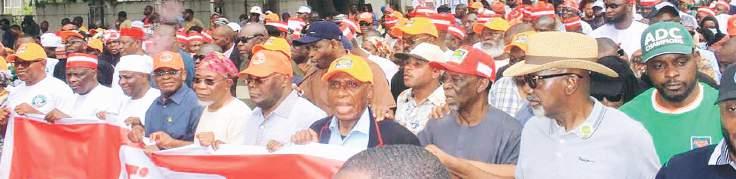
Mark’s remarks came as ADC leaders protested at the headquarters of the Independent National Electoral Commission (INEC) in Abuja yesterday, questioning the legitimacy of the electoral umpire, and demanding the
resignation or sack of its chairman, Professor Josh Amupitan.
The protest drew the full weight of the party’s leadership, including Mark; National Secretary, Ogbeni Rauf Aregbesola; former Vice President Atiku Abubakar; former Minister of Transportation, Chibuike Amaechi; 2023 presidential candidate of Labour Party (LP), Peter Obi; and leader of Kwankwasiya Movement, Rabiu Musa Kwankwaso,.
But mocking the opposition protest, National Chairman of the ruling All Progressives Congress (APC), Professor Nentawe Yilwatda, said opposition parties that could not manage their internal affairs could not be trusted with the delicate task of governing a complex federation like Nigeria.
Mark, in the press statement to celebrate his 78th birthday, said challenges were a natural part of any growing institution.
“What is important is our collective resolve to overcome them,” he added. He assured that the leadership of ADC was united, determined, and focused on strengthening the party and upholding democratic values.
The ADC national chairman stated, “Let me reiterate that we are fully committed to the survival of democracy and the development of our dear nation, Nigeria.
“We will continue to work tirelessly, guided by discipline, integrity, and patriotism, to ensure that our democratic institutions are preserved and that the dividends of democracy
reach all our people” Mark said at 78 he had been inspired more than ever to contribute his quota to national unity, peace, and progress. He appreciated God for the gift of life, grace, and the journey of 78 years.
“I am deeply thankful for His protection, guidance, and countless blessings over the years,” he said.
The former senate president also appreciated his family members for their love, patience, and support, adding that their encouragement has been a constant source of strength to him.
ADC Leaders Protest at INEC Headquarters, Escalate Call for Amupitan’s Resignation
state he governed for eight years, 1999-2007, during which he laid the foundation for its modernisation.
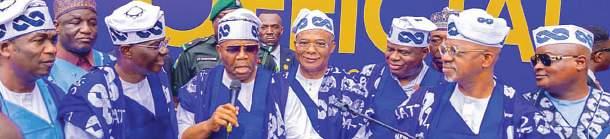
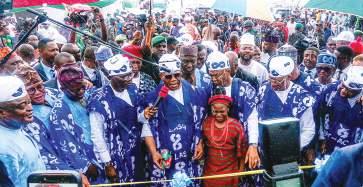
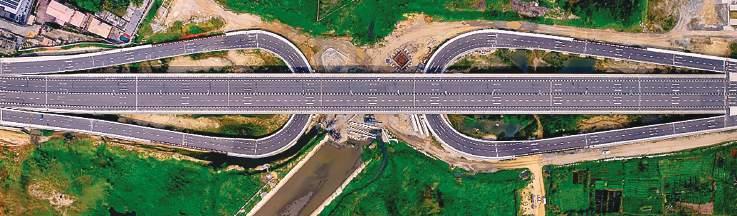
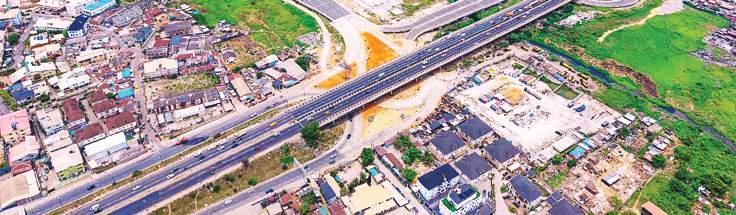
Tinubu inaugurated the newly constructed Ojota-Opebi Link Bridge, which he had envisioned during his time as Governor of Lagos State in 2002, but was now delivered by Governor Babajide Sanwo-Olu.
The bridge, a 5.04-kilometre transport corridor, is one of the three key Lagos projects inaugurated on Wednesday by Tinubu on the first day of his two-day official visit to the state.
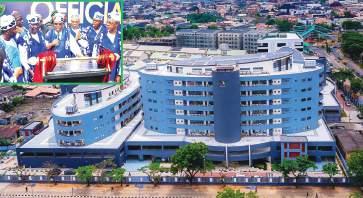
The other projects were the five-storey Lagos State Geographic Information Service (LAGIS) Building and Lagos Multi-Agency Building, both in Alausa.
A statement signed by Special Adviser, Media and Publicity, to Lagos State Governor, Gboyega Akosile, said Tinubu was represented by Senate President Godswill Akpabio, who was joined by All Progressives Congress (APC) governors led by their chairman, Imo State Governor Hope Uzodinma.
Lagos State cabinet members, members of the state Lagos House of Assembly, Governor’s Advisory Council (GAC) members, local government chairmen, and Lagos APC members attended the commissioning ceremonies.
Tinubu congratulated Lagos residents, saying the projects delivered by Sanwo-Olu speak to the importance of putting people’s wellbeing at the centre of development.
He said the projects sent a clear message that the government of Lagos State had not been overwhelmed by the mobility challenges facing the state.
Tinubu pointed out that the unrelenting effort to proffer solutions to the challenges made Lagos the best, and one of the most progressive states in the country.
He stated, “The Ojota-Opebi Link Bridge is more than an infrastructure; it is a bridge to opportunities. In a busy city like Lagos, vehicular movement is more than just commuting; it is associated with the city’s economic wellbeing. When traffic flows, productivity improves.
When time is saved, businesses grow. When access is made easier, living standards get improved.
“This is an achievement that speaks to the importance of making the well-being of the people the centre of development. Lagos government has continued to show that it understands that development must be seen, felt and must be experienced by the citizens. The Ojota-Opebi Link Bridge project being inaugurated today sends a clear message that the government of Lagos State has not been overwhelmed by the mobility challenges facing the state.”
Tinubu thanked the Lagos State government for naming the new Administrative Complex after him, and said he accepted the honour with humility.
The president said the LAGIS Building represented the future of an effective and transparent land administration system. He stressed that the role of data and technology in land management was not optional, but essential to strengthening planning and improving the economic value of land.
Tinubu said the projects aligned with his Renewed Hope vision, which he said sought to build a modern country that would be digitally enabled and economically strong.
He said with the quality of the projects, Sanwo-Olu had raised the bar in project delivery, urging other states to emulate and replicate.
The Administrative Complex commissioned yesterday is an investment in efficiency, coordination, and better service delivery. The edifice will strengthen the government’s capacity for improved service to the people.
The president said, “Let me emphasise that these achievements are more than the ability of one man; it showcases the system that is working. It is about public service that continues to deliver the dividends of democracy to the masses.”
Sanwo-Olu said the projects were distinct but complementary investments, with each addressing a critical aspect of governance. The
bridge, he said, would address congestion and mobility around Ikeja-Maryland-Ojota corridor, while improving the quality of life for commuters.
The governor said the Ojota-Opebi Link Bridge would improve the efficiency of traffic circulation, with a noticeable impact beyond the immediate environs of the bridge. He said the road project was completed with walkways, bicycle lanes, solar-powered street lighting, and embedded service ducts.
He stated, “We have built, not just for today’s needs, but with a clear eye on the ever-expanding demands of the future. As part of this project, we have integrated a comprehensive stormwater management system to address the long-standing challenge of flooding along the Odo-Iya-Alaro corridor, thereby strengthening environmental resilience.”
TUMBLES
Sanwo-Olu stated, “The LAGIS Building represents the evolution of that legacy: from horseback exploration to advanced digital geographic systems. At its most fundamental, is the elimination of legacy paper-based bottlenecks in land administration; the strengthening of property rights; the unlocking of previously underutilised capital; and a direct and material improvement in our Ease of Doing Business.
“The third project, the MultiAgency Administrative Complex, directly addresses another priority of this administration: the need to improve the speed, efficiency and coordination of government services, and the comfort and wellbeing of the personnel delivering these services. By bringing multiple agencies into a single, well-designed environment, we are enabling the integration and responsiveness of public service
However, hours later, it rose slightly after losing $14.83, or 13.57 per cent, at $94.44 a barrel, while West Texas Intermediate (WTI) futures slumped $17.92, or 15.87 per cent, to $95.03. Prices had touched $120 per barrel at the height of the crisis.
Besides, European benchmark natural gas prices tumbled 20 per cent at opening in Amsterdam after the U.S ceasefire that could lead to reopening of the Strait of Hormuz.
No LNG cargo has transited the Strait of Hormuz in over a month, as two vessels carrying Qatari LNG were forced to abandon an attempt to exit the route in what would have been the first export of Qatari LNG since the war began.
Despite the evident market relief with commodities prices slumping and equities rallying after the ceasefire announcement, the physical supply tightness in the LNG market is set to continue.
This came as the Group Chief Executive Officer of NNPC, Bayo Ojulari, stated yesterday that as a result of the establishment of an integrated energy security for
ADC intensified its confrontation with INEC at a high-profile protest by its leaders at the commission’s headquarters in Abuja, yesterday.
In a symbolic act of defiance, the party opened the protest by singing Nigeria’s old national anthem, “Arise, O Compatriots.”
Shortly after, the party marched to the INEC headquarters in Abuja, where it delivered a strongly-worded letter to the INEC chairman, Professor Joash Amupitan, demanding his immediate resignation or removal from office.
In the letter dated April 8, 2026, the party laid out a series of grave allegations, legal and constitutional arguments, and political warnings.
The letter signed by the national
delivery in Lagos. It is a significant step towards achieving 21st century, citizen-focused public service.”
Explaining why the Administrative Complex was renamed Bola Ahmed Tinubu Administrative Complex (BATAC), Sanwo-Olu said the decision was based on the recognition of Tinubu’s vision and contributions to institutional development in Lagos State.
The Administrative Complex, situated on approximately 2.01 hectares of land within Government Secretariat precinct, comprises four vertical blocks and provides over 7,362 square metres of modern, purpose-built office accommodation. It was completed with a penthouse, conference facilities, parking capacity for over 300 vehicles, and fully integrated mechanical, electrical, fire safety, and external infrastructure systems
chairman, Mark, and national secretary, Aregbesola, was handed over to an INEC official at the commission’s head-office.
They included the call for immediate resignation or removal of Amupitan.
“The ADC did not hedge its position. It made a direct and unequivocal demand: the INEC Chairman must either resign immediately or be removed,” the opposition party demanded.
ADC said its demand for Amupitan’s resignation was not as a political disagreement, but a matter of institutional integrity, citing alleged gross misconduct, abuse of office, and clear violations of constitutional boundaries.
In its view, the credibility of INEC itself was now at stake.
At the heart of the letter was an allegation that INEC, under Amupitan’s leadership, was no longer acting as a neutral umpire.
ADC stated that the commission’s actions and correspondence suggested alignment with factional interests within the party. ADC warned that this undermined public trust in the electoral process and raised fears about the fairness of future elections.
The party took issue with what it called the chairman’s attempt to interpret court rulings in public.
ADC said that crossed a constitutional line, stressing that only the judiciary has the authority to interpret its judgements.
According to ADC, any attempt by INEC to interpret court judgements, especially in a way that appears partisan, amounts to a breach of the doctrine of separation of powers. Beyond the immediate dispute, ADC placed INEC’s actions in a
Continued on page 36
AFTER TRUMP ANNOUNCES TWO-WEEK CEASEFIRE
pipelines in the Niger Delta, output grew from 960,000 barrels per day in 2022 to an average of 1.71 million bpd and a peak production of 1.84 million bpd in 2025,
But shipping sources said the Iranian navy threatened ships attempting to pass through the Strait of Hormuz without Tehran’s permission with destruction on Wednesday and that transit through the waterway remained shut.
Iran had said it would halt its attacks if strikes against it stopped and that safe transit through the Strait of Hormuz would be possible for two weeks in coordination with Iranian armed forces, according to a statement by Foreign Minister Abbas Araqchi.
Iran could open the strait in a limited and controlled way on Thursday or Friday ahead of a meeting between U.S. and Iranian officials in Pakistan, a senior Iranian official involved in the talks told Reuters on Wednesday.
Shippers were still seeking clarity on the logistics, while refiners inquired about new crude loadings, in response to
the ceasefire deal.
Trump said the U.S. had received a 10-point proposal from Iran, which he called a workable basis to negotiate, and that the parties were a long way towards reaching a definitive agreement for long-term peace.
Also yesterday, NNPC confirmed that national crude oil production had grown from a historic low of 960,000 barrels per day in 2022 to an average of 1.71 million barrels per day and a peak production of 1.84 million barrels per day in 2025, owing to the establishment of the integrated energy security for pipelines in the Niger Delta.
Group Chief Executive Officer, Ojulari, a statement from the national oil company said, made the disclosure at the Parliamentary Roundtable on the State of Pipelines Security which was held at the National Assembly, in Abuja.
Speaking on the success of the security arrangement, Ojulari explained that it was not accidental, and that it involved an “integrated energy security model that combines legislative
and executive policy alignment, actionable intelligence, kinetic deployment capabilities, regulatory oversight, industry cooperation, and community embedded surveillance mechanisms”.
He said the resurgence of production due to the effective tackling of the twin menace of oil theft and pervasive pipeline sabotage has led to the restoration of investors’ confidence in the nation’s oil and gas sector.
In his welcome address, the President of the Senate, Sen. Godswill Akpabio, represented by Senator Jimoh Ibrahim, called for collaboration among agencies and stakeholders in resolving all challenges impeding production growth.
On his part, the Speaker of the House of Representatives, who was represented by the Leader of the House, Prof. Julius Ihonvbere, urged the forum to evaluate the progress made so far with a view to ensuring fairness and equity. The Parliamentary Roundtable on the State of Pipelines Security
Continued on page 34

L-R: Territory Director for Africa, TeKnowledge, Mr.Olugbolahan Olusanya; Chief Growth and AI Officer, Microsoft Middle East and Africa, Olatomiwa Williams; and Chief Executive Officer and President, TeKnowledge, Aileen Allkins, at the press conference to announce TeKnowledge’s expanded role as a delivery partner for Phase 2 of Microsoft’s AI National Skilling Initiative in Nigeria held in Victoria Island , Lagos ... recently
Chiemelie Ezeobi
The United States government has ordered the evacu-ation of its staff and their family members at its em-bassy in Abuja over what it described as the current deterioration of security across Nigeria.
The order from the U.S. Department of State directed non-emergency workers and U.S. government employees’ family members to begin leaving Nigeria.
Pegging the overall Travel Advisory for Nigeria at Level 3: Reconsider Travel, to warn
Americans, the U.S. government stated that issues like crime, terrorism, unrest, kidnapping, and inconsistent availability of health care services were prevalent, with some areas having increased risk.
For those who still wanted to travel, despite the advisory, the
U.S. government, warned them against travelling to some northern states as well as southern states, like Delta, Imo, Abia, Anambra, Bayelsa, Enugu, and some parts of Rivers State, due to the high risk of terrorism and kidnapping.
The American government
Chief Justice of Nigeria (CJN), Justice Kudirat Kekere-Ekun, yesterday issued a stern warning to legal practitioners against turning the profession into a profit-driven enterprise.
Kekere-Ekun cautioned that the growing trend of prioritising financial gain over justice threatened the integrity of the legal system.
Speaking at the opening of the 2026 Annual Conference of Nigerian Bar Association Section on Legal Practice (NBA-SLP) in Lagos, the CJN said the legal profession must not be reduced to “transactional advocacy”.
She stressed that lawyers had a higher duty to uphold justice, protect the rule of law, and act with ethical responsibility.
Kekere-Ekun stated, “There is growing concern that, in some instances, briefs are undertaken primarily for monetary gain, without sufficient regard to the enforcement of clients’ rights or the development of sound legal principles.”
She warned that such practices risked eroding public confidence in the justice system and diminishing the noble standing of the legal profession.
She emphasised that lawyers were not merely advocates for clients but also “ministers in the temple of justice”, with a duty to assist the courts in achieving fair outcomes, discourage frivolous litigation, and
ensure that legal processes were not used as tools of delay, oppression, or abuse.
The CJN’s remarks came amid broader concerns about delays in the administration of justice and allegations of unethical practices within the legal profession.
Highlighting the rapidly evolving nature of legal practice globally, she stated that advancements in artificial intelligence, digital innovation, and cross-border transactions were reshaping how legal services were delivered.
While these developments presented new opportunities, she cautioned that they must not come at the expense of ethical standards.
“The legal profession today stands at a critical juncture,” she said, urging practitioners to embrace innovation while preserving the core values of integrity, competence, and fidelity to the rule of law.
Kekere-Ekun stressed the need for stronger collaboration between the Bench and the Bar, saying the synergy is necessary to build a legal system that is responsive, resilient, and capable of meeting modern demands, while maintaining public trust.
In a move seen as part of efforts to modernise the legal practice, the CJN commended the NBA-SLP for launching a Law Firm Directory. She described the initiative as a significant step towards enhancing transparency, credibility, and accessibility within
the profession.
She also highlighted the importance of mentoring young lawyers, stating that the future of the Bar depends on the values instilled in the next generation of practitioners.
pegged states like Borno, Jigawa, Kogi, Kwara, Niger, Plateau, Taraba, Yobe, and northern Adamawa at Level 4 due to terrorism, crime, and kidnapping, while North-west states like Bauchi, Gombe, Kaduna, Kano, Katsina, Sokoto, and Zamfara were cited for unrest, crime, and kidnapping.
Warning against any travel to those states, the advisory said, “The security situation in these states is unstable and uncertain due to civil unrest. Widespread violence between communities and armed crime, including kidnapping and roadside banditry. Security operations to counter these threats may occur without warning.”
Stressing that terrorist attacks remained a threat across the country, including at markets, shopping centres, hotels, places of worship, and public gatherings, the advisory alleged that violent crimes, including armed robbery, carjacking, and kidnapping for ransom, were widespread. It said U.S. citizens were perceived as wealthy and were frequent targets. Health-wise, the travel advisory described health services in Nigeria as limited and inconsistent, stating that medical facilities generally do not meet U.S. or European standards.
Declaring the conference open, the CJN expressed optimism that the deliberations would produce practical solutions that would help to strengthen legal practice and improve the administration of justice in Nigeria.
Kekere-Ekun acknowledged the keynote address delivered by Taoheed Olufemi Elias, saying his contributions continue to elevate Nigeria’s presence in international legal circles.
In the south, the advisory warned against travel to Abia, Anambra, Bayelsa, Delta, Enugu, Imo, and Rivers states (excluding Port Harcourt) due to crime, kidnapping, and unrest, adding, “Crime is widespread in Southern Nigeria. There is a high risk of kidnapping, violent protests, and armed gangs.”
The State Department urged U.S. citizens considering travel to Nigeria to enrol in the Smart Traveler Enrollment Program for important updates. It also said they should exercise caution while travelling, avoid demonstrations and large gatherings, and establish personal safety and “proof of life” protocols.
Michael Olugbode in Abuja
A growing disconnect between policy promises and real-life protection for vulnerable children has come under sharp scrutiny as lawmakers across West Africa begin high-level deliberations in Freetown.
The ECOWAS Parliament on Wednesday opened a five-day Joint Committee Meeting aimed at tackling what officials increasingly describe as an “implementation crisis” in child protection systems across the region.
While West African governments have, over the years, adopted multiple frameworks to safeguard children—including the ECOWAS Child Policy and Strategic Plan of Action (2019–2030)—parliamentarians say the reality on the ground tells a different story.
Across major cities and border
communities, the number of children forced into street life continues to rise, driven by poverty, displacement, family breakdown, and weak social safety nets.
In many cases, these children operate in legal blind spots—exposed to exploitation, trafficking networks, forced labour, and abuse—despite the existence of laws meant to protect them.
“The issue is no longer about absence of frameworks, but the failure to make them work,” a delegate at the session noted, underscoring the urgency of shifting focus from policy adoption to enforcement.
The meeting, hosted in Freetown, brings together multiple parliamentary committees to examine how gaps in legislation, enforcement, and cross-border coordination continue to undermine child protection efforts.
Particular attention is being paid to the challenges posed by regional mobility. With children frequently moving across borders—either independently or through informal networks—differences in national laws and weak data-sharing systems have created loopholes that traffickers and exploiters readily exploit.
Officials say this has made child protection not just a national concern, but a regional security and human rightsTheissue.choice of Sierra Leone as host country reflects its recent legislative reforms, including the revised Child Rights Act (2025), which is being positioned as a benchmark for aligning domestic laws with international standards.
Delegates are expected to closely examine Sierra Leone’s approach, particularly its efforts to strengthen
coordination between institutions, expand rehabilitation services, and improve data systems for tracking vulnerable children.
Beyond conference rooms, lawmakers will engage directly with affected communities through field visits to areas where children in street situations congregate, as well as centres providing care and reintegration services. The aim, according to organisers, is to ground policy discussions in lived realities and ensure that future legislation reflects the complexity of challenges on the ground.
Civil society organisations and frontline practitioners are also playing a central role, using a public hearing platform to highlight persistent gaps in service delivery, including shortages in shelter, limited access to education, and weak family reunification systems.
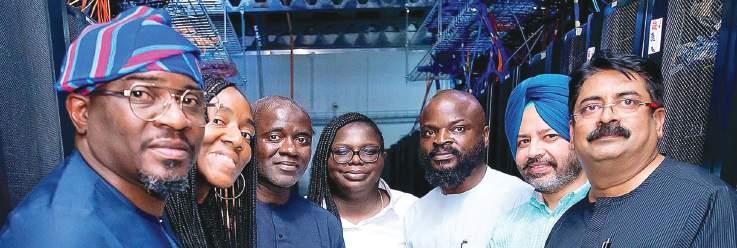
L-R: Femi Adeniran, Director, Corporate Communications & CSR, Airtel Nigeria; Princess Oforitsenere Emiko, Board Member/Commissioner South-South, NCC; Dr. Aminu Maida, Executive Vice Chairman/CEO, NCC; Kemi Ariyo, Director, Information Technology, Airtel Nigeria; Chief Idris Olorunnimbe, Board Chairman, NCC; Harmanpreet Singh Dhillon, Chief Technology Officer, Airtel Nigeria; and Dinesh Balsingh, CEO, Airtel Nigeria, during the tour of Airtel Nigeria Data Centre by the chairman, board representatives, and officials of the Nigerian Communications Commission (NCC) in Lagos, recently
Tehran says Strait of Hormuz remains closed on Israel’s attacks on Lebanon US military states it’s ready to resume fighting if diplomacy fails
Emmanuel Addeh in Abuja
A two-week Pakistan-brokered ceasefire aimed at ending a 40-day conflict between the United States and Iran was off to a precarious start yesterday, with both sides accusing each other of violating the terms just hours after it began.
Also, Iranian authorities were said to be treating the Strait of Hormuz as still closed, in response to Israel’s attacks on Lebanon where 254 persons were killed Wednesday, despite the ceasefire, Iranian state media reports said.
The conditional ceasefire agreed between the US and Iran had a provision for the temporary reopening of the crucial maritime channel. Effectively, the strait has remained closed as traffic had not immediately increased in the hours after the ceasefire announcement.
Tehran said on Wednesday that it would offer safe passage in coordination with its armed forces, though its coast guard said any ship trying to transit without permission would be “targeted and destroyed”.
Israel has launched huge strikes across Lebanon today, killing over 250 people, with Trump later clarifying that Lebanon wasn’t included in the ceasefire deal. Iran threatened to retaliate if the strikes were not
“immediately halted.”
Besides, Iran’s Islamic Revolutionary Guards Corps threatened a military response against “aggressors in the region” if there was not an immediate halt to attacks in Lebanon, where Israel has targeted the Iranbacked Hezbollah armed group. And other Persian Gulf nations reported dozens of Iranian missile and drone attacks since the cease-fire was announced.
That violence, coupled with confusion over the Strait of Hormuz — which President Trump had insisted must be reopened as a condition of the cease-fire — and disagreements about the 10-point framework for talks released by Iran underscored the fragility of a truce that both sides have sought to frame as a victory.
Israel, which said the truce did not extend to Lebanon, on Wednesday carried out one of its largest strikes against Hezbollah since that front opened up following the militant group’s rocket attacks on Israel in solidarity with Iran in March. Pakistan said the truce was supposed to include Lebanon.
Further highlighting the fragility of the truce, Persian Gulf countries continued to report dozens of Iranian missile and drone attacks on Wednesday. And Iran’s state media
reported that an oil refinery on Lavan, an Iranian island in the Persian Gulf, was struck by unspecified “enemies.”
Meanwhile, top U.S. General, Dan Caine, said on Wednesday U.S. troops stood ready to resume fighting if Tehran failed to strike a negotiated settlement as the Trump administration sought to portray the war as a decisive victory against Iran.
The remarks came a day after
Trump came from the brink of a threatened civilisation-ending assault on Iran on Tuesday night, two hours before a deadline he had set for Tehran to open the blockaded Strait of Hormuz. U.S. and Iranian officials are set to meet in Pakistan for talks on Friday.
“We hope that Iran chooses a lasting peace,” Caine, Chairman of the Joint Chiefs of Staff, told a Pentagon
news conference. “A ceasefire is a pause and the joint force remains ready, if ordered or called upon, to resume combat operations -- with the same speed and precision as we’ve demonstrated over the last 38 days,” Reuters reported.
Despite the ceasefire, Saudi Arabia’s crucial East-West oil pipeline, currently its only outlet for crude exports, was hit in an
Iranian attack. Saudi Arabia said it intercepted nine drones over a few hours yesterday while Kuwait said a number of facilities were attacked by Iranian drones. Tehran, which demonstrated its ability to cut off Gulf energy supplies through its grip on the strait, has claimed victory and says it is entering the talks without trust in U.S. negotiators.
Juliet Akoje in Abuja
The joint Committees on Petroleum Resources of the National Assembly on Wednesday rejected three petitions challenging the exclusive pipeline surveillance contract and simultaneously expressed strong confidence in Tantita Security Services, security agencies, and the NNPCL for their roles in reviving Nigeria’s oil production. Available data indicated that crude oil output has risen to approximately 1.8 million barrels per day as of April, up significantly from around 900,000 barrels per day recorded in 2022 when the surveillance contract was initiated.
This decision followed a motion presented by the Chairman of the House Committee on Petroleum Resources (Midstream), Henry Okojie, during a one-day parliamentary roundtable focused on pipeline security and efforts to combat crude oil theft.
Okojie noted that Tantita and relevant security agencies have made substantial progress in safeguarding the nation’s oil infrastructure, which has in turn boosted national oil revenues.
At the roundtable, the Speaker of the House of Representatives, Abbas Tajudeen emphasized that ongoing
Michael Olugbode in Abuja
Nigerian-born physician and global pharmaceutical executive, Dr. Henrietta Ukwu, has been recognised in the prestigious Marquis Who’s Who, one of the world’s leading biographical publications that profiles individuals for outstanding professional achievement, leadership, and global impact.
Dr. Ukwu currently serves as Executive Vice President and Chief Regulatory Officer at Novavax Inc., where she oversees global regulatory strategies for product development and registration.
In this role, she maintains high-level engagements with regulatory authorities around the world, including the U.S. Food and Drug Administration, European Medicines Agency, UK’s MHRA, Health Canada, and Australia’s TGA.
Reflecting on the recognition, Dr. Ukwu described it as a validation of her lifelong dedication to global health.
“Being included in Marquis Who’s Who highlights not just individual achievements but the collective efforts of the teams I have had the privilege to work
alongside,” she said.
Dr. Ukwu’s career spans more than three decades in the pharmaceutical industry.
She played a pivotal role during the COVID-19 pandemic, leading the regulatory approvals that secured Emergency Use Authorization for the Novavax COVID-19 vaccine in the United States and across multiple global markets.
Before her tenure at Novavax, she held senior leadership positions at Otsuka Pharmaceutical Companies U.S. and Pfizer Pharmaceuticals, where she oversaw regulatory affairs and quality operations at
a global level.
She began her career at Merck & Co., leading regulatory approvals for landmark products such as the VARIVAX chickenpox vaccine and the HIV/AIDS drug Crixivan.
Dr. Ukwu is widely recognised for her contributions to HIV/AIDS treatment, helping transform the disease from a fatal condition into a manageable chronic illness.
Her leadership has earned her multiple accolades, including PharmaVoice 100 honours, the TOPRA Inspirational Leadership Award, and recognition among the Top Blacks in Health Care.
geopolitical tensions in the Middle East and the prolonged RussiaUkraine conflict have heightened the urgency for alternative energy solutions.
He added that crude oil remains the world’s dominant primary energy source, particularly in transportation, where it powers about 95 percent of vehicles, aircraft, and ships.
He further explained that recent global disruptions, including the closure of the Strait of Hormuz, have triggered price hikes and supply shortages, posing serious risks to Nigeria’s economic stability.
He stressed the country must respond decisively, noting the roundtable reflects the National Assembly’s readiness to take the lead.
According to the Speaker, understanding the need for the surveillance contract requires acknowledging the difficult history of Nigeria’s oil industry.
While petroleum discovery has generated significant foreign exchange, it has also caused environmental damage and social unrest.
He pointed out that the Niger Delta has long experienced agitation, often leading to pipeline vandalism, oil theft, and illegal refining, fueled by community desperation and weak enforcement systems that created instability in the sector.
At one point, he said Nigeria was losing billions of dollars annually, with between 10 and 30 percent of crude production lost to theft an issue that threatened national revenue and undermined the country’s credibility
as a reliable oil producer.
It was against this backdrop that the federal government introduced the pipeline surveillance contract, incorporating private security firms and community-based participation to protect oil infrastructure.
These measures, he explained, were based on the understanding that effective protection of pipelines is impossible without the cooperation of host communities.
The collaboration between private surveillance operators, security agencies, and local communities has since led to notable improvements in daily production levels.
The Speaker highlighted clear evidence of progress, stating that many illegal tapping points have been dismantled, production has increased significantly, and oil deliveries to export terminals are nearing full recovery compared to past losses when output dropped to as low as 700,000 barrels per day.
He added that current production levels of about 1.8 million barrels per day are largely attributable to these surveillance efforts.
Additionally, the initiative has created thousands of jobs for youths in the Niger Delta, many of whom were previously involved in agitation, offering them lawful means of livelihood and involving them directly in securing oil assets.
Despite these gains, he acknowledged that challenges remain, particularly in areas such as accountability, transparency, and the effectiveness of certain surveillance mechanisms.
Images of major projects such as Opebi-Ojota Link Bridge, Multi-Agency Complex and LAGIS, executed by the Lagos State Governor, Mr. Babajide Sanwo-Olu and inaugurated by President Bola Tinubu, who was represented by the Senate President, Senator Godswill Akpabio. Governors Uzodinma, Abiodun, Diri, Zulum, others were among dignitaries present at the events, on Wednesday






Email: deji.elumoye@thisdaylive.com
08033025611 sms only
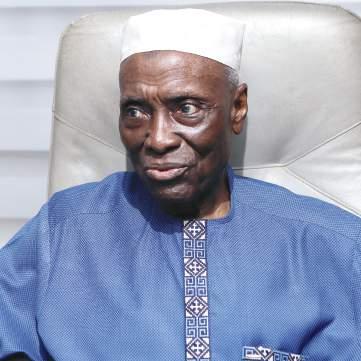
Former Inspector-General of Police, alhaji Musiliu Smith, in this interview lauds the current steps being taken by both federal and sub national governments towards ensuring creation of state police to boost strong internal security system in the country. Folalumi Alaran brings excerpts.
Please tell us a bit about how you started your early life.
I was born on the 17th April, 1946, at Offin, Lagos State, to the illustrious, highly religious Smith family. My parents were the late Alhaji Liasu Akande Smith and Alhaja Abadat Eniola Smith. My family placed a high premium on education. Therefore, all their children are highly educated. I attended Primary School at Ansar ud Deen Primary School Alakoro, from 1952 to 1959, where one of my classmates was His Royal Majesty, Alaiyeluwa Oba Rilwan Osuolale Akiolu, the Eleko of Eko. We have since been together till now, and we were both in the Police service too.
From 1960 to 1964, I was at Ansar ud Deen College, Isolo, for my secondary education, and thereafter did my ‘A’ levels through Government-organised tuition classes. I worked briefly as an Accounts Clerk at Lagos City Council before I gained admission to read Sociology at the University of Lagos, Akoka, as one of the pioneer students in the Department between 1967 and 1970.
Upon graduation, I had a brief stint as Assistant Secretary at Lagos State Ministry of Works before I joined the Nigeria Police Force in 1972. I joined as an Assistant Superintendent of Police and rose to the pinnacle of my career as Inspector General of Police (IGP) till I retired in 2002.
In the course of my career, I was privileged to be appointed by General Abdul Salam Abubakar as a member of the Provisional Ruling Council (PRC) till governance was handed over to the civilian government in 1999.
My growing up years was good, systematic, memorable and beneficial, though characterised with religious and cultural discipline, which shaped my life to be focused and integrity-based.
How do you join the Nigerian Police Force and what was the motivation?
While in secondary School, I took pleasure in reading newspapers (which I still do) and subscribed to a foreign magazine called “True Detective”. The magazine outlines how crimes are investigated, how suspects are arrested and prosecuted. It was, no doubt, foundational to my interest in joining the Police Force, coupled with the fact that I loved wearing uniform. My choice was supported by my parents with reservations.
I thank them for trusting my instinct. We were always looking to increase knowledge in my family and reading was one of the things we enjoyed.
When you told your parents that you wanted to join the police...?
Yes, that was what I told them. They didn’t object; they were educated, so there was no objection at all. My grandfather was also very educated. Nobody stopped me. I always encourage people, whatever you want to do, the important thing is to prepare yourself well.
How easy was it for you to rise through the ranks in the police, and were you able to handle the pressure?
I didn’t rise through the ranks. I came in as a graduate. I was a member of the first set of Sociology graduates to join the police. All of us performed very well.
You were the Inspector General during President Olusegun Obasanjo’s tenure?
Yes, I was the IG.
You conducted elections during that period?
Not just one person, not just me, everyone in the Police had a role to play. Everyone has to play their role. Our elections are getting better and better; there are improvements
and I expect the improvements to continue.
What are your views on the issue of State Police, which many governors are clamouring for now?
This is a welcome development if well implemented. The current IG has submitted a proposal on State Police. This will improve our internal security, once there is strong internal security in the country, a strong economy will follow.
How would you assess the level of security in the country and ho do we overcome the challenges?
The state of security was engendered by lack of vision, planning, population explosion, poverty, inflation, lack of priority to invest in the education of our youth, inadequate funding of security agencies, corruption and lack of mentoring. Our youths are not well impacted. There is a decline in standard of living, economic hardship is biting harder, this menace should have been tackled ahead of time.
The economic hardship and ostentatious lifestyles of a few have driven our youths out of
school to fraud and robbery and now to kidnapping for ransom, banditry and in extreme cases to terrorism due to wrongful indoctrination.
In my opinion, we can overcome insecurity with serious adequate investment in the education of our youths, proper funding of security agencies and encouragement of officers who work in these agencies. Businesses should be encouraged to thrive so that youths can be meaningfully engaged.
Who is Alhaji Musiliu Smith that many of us do not know about?
I don’t hide anything. I encourage the younger ones to be transparent in their activities. The sky is the limit if you keep to those principles.
How were you able to balance your professional life with your family life?
My family was very supportive, which allowed me to have a good work life balance.
I mean your personal family life. As a police officer who moved from one place to another, did you take your family with you?
No. It would disrupt their education. It is not a good idea, it doesn’t make sense to move the whole family around, especially in this country. The risk is too much. Very few people still do that. Children are happier when they are in a stable place. The important thing is to give your children a good educational foundation.
This is a welcome development if well implemented. The current IG has submitted a proposal on state Police. This will improve our internal security, once there is strong internal security in the country, a strong economy will follow.
You and Oba Akiolu were classmates?
Yes, we were classmates only in primary school at Ansar-ud-Deen, Alakoro, from 1952 to 1959.
Are some of your classmates still around?
You must have heard about about Waheed Kassim, a retired DIG, though not from primary school. Very few of us are still around. Many of us went to different schools.
What childhood pranks do you still remember that make you laugh?
We were lucky in our time, we had very strict teachers. You didn’t meet teachers like Alhaji Alao Bashorun. He was our principal at Isolo. About 70% to 80% of our teachers were graduates. They were very strict, especially Bashorun—he could face anybody. If you want children to turn out well, you must ensure strong leadership in schools. If leadership is good, students won’t have the opportunity to misbehave. Alhaji Alao Bashorun, may his soul rest in peace. We stayed close to him until his last days. Do you know Late Professor Nurudeen Alao? He was at Isolo too, an old student.
Was there any conflict between your faith as a muslim and your job as a police officer?
I didn’t see any conflict because we were properly brought up in a good Muslim home and combined both without any issues. Tell us about some of your personal lifestyle.
I don’t joke with my newspapers, I read from front to back. When raising children, make such things available to them. I started reading newspapers before I was 12 because my father was a surveyor who later became Chief Surveyor. Brigadier-General Mobolaji Johnson encouraged him to help set up the Lagos State Survey Department. As a senior officer, he received newspapers daily, and I would read them. Such exposure is important. I even used my allowance to buy True Detective. That helped me later in life.
Do you still interact with the Police hierarchy?
Yes, many of them are my boys. The current IG was my personal assistant for over four or five years. I encouraged him, we are very close. If you misbehave, I will correct you. I advise them to be good examples to younger officers.
What lesson do you want young Nigerians to learn from your career?
Ensure that if your parents have the opportunity to educate you, don’t miss it. If you do, you create a major problem for yourself. Younger ones may overtake you. Some will encourage you, though. I have helped many students gain admission to universities and sponsored them. In my family, we don’t joke with education. I sponsor many children from both the South and the North because I have travelled across Nigeria. That is why I am known nationwide. Some parents lack opportunities, it is not always their fault. Is Nigeria where it is supposed to be?
Many people are not where they should be, it’s not entirely their fault.
Sometimes the economy creates challenges. Serious-minded people must come together to fix things for the benefit of everyone. As for me, I will continue supporting students.
Governor Peter Mbah of Enugu State’s almost three-year-old tenure is fast becoming a compelling case study in how contested political beginnings can evolve into performance-based legitimacy. Jonathan Eze writes.
Peter Mbah has, within a relatively short span in office, redefined the contours of subnational leadership in Nigeria, evolving from a governor whose 2023 electoral victory was fiercely contested into one whose governance style is increasingly anchored on visible performance and strategic development.
His emergence from the polls in Enugu State was anything but tranquil. The election was challenged on grounds that ranged from procedural infractions to broader questions of legitimacy, casting an early cloud over his administration.
Yet, rather than remain ensnared in prolonged political defensiveness, Mbah has pursued a deliberate and calculated pivot, one that places governance delivery at the center of public discourse.
This transition from political contestation to constructive governance is perhaps the most defining feature of his administration.
In a political environment where disputed mandates often translate into inertia or excessive politicking, Mbah has chosen a different route. His approach reflects a clear understanding that legitimacy, while legally determined, is ultimately consolidated through performance.
It is in this context that his ambitious and multi-sectoral development agenda must be situated.
At the core of Mbah’s governance philosophy is a bold infrastructure and human capital development strategy.
Flagship among his initiatives is the Enugu Smart Green Schools project, an education reform programme designed to integrate digital learning, innovation, and sustainability into the state’s basic education system.
More than a symbolic intervention, the project represents a forward-looking investment in the next generation, positioning Enugu as a potential leader in technologydriven education within the South East.
Complementing this is the rollout of Type-2 Primary Healthcare Centres across all wards in the state, a move aimed at decentralizing healthcare delivery and ensuring that quality medical services are accessible at the grassroots.
This initiative speaks to a governance model that is not only urban-centric but also attentive to rural inclusion, an important consideration in a state with diverse demographic realities.
Urban renewal has also emerged as a visible hallmark of the administration. The reconstruction and expansion of major roads within Enugu metropolis, improved drainage systems, and the modernization of transport infrastructure all point to a government intent on transforming the state’s physical and economic landscape.
These projects are not merely cosmetic; they are designed to enhance mobility, stimulate commerce, and attract investment.
Perhaps one of the most ambitious undertakings is the Enugu Air project, which seeks to establish a state-backed airline.
While still evolving, the initiative underscores Mbah’s broader economic vision to position Enugu as a regional hub for business, tourism, and connectivity.
In tandem with this is the establishment of a Command and Control Centre equipped with surveillance technology to strengthen security architecture, alongside broader investments in digital governance systems aimed at improving efficiency and transparency in public administration.
What distinguishes these interventions is not only their scope but also the speed and coordination with which they are being executed. Mbah’s leadership style bears the imprint of a corporate, resultsoriented, decisive, data-driven, and focused on measurable outcomes.
This has introduced a new tempo to governance in Enugu, one that contrasts sharply
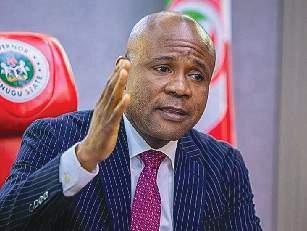
with the slower, more incremental approaches often associated with subnational administrations.
Unsurprisingly, this performancedriven approach has attracted commendation from prominent Nigerian figures across political divides. President Bola Tinubu has acknowledged the administration’s infrastructural strides and economic vision, highlighting it as an example of proactive governance.
Former Vice President Atiku Abubakar has similarly noted the scale of reforms underway, while former governor of Anambra state, Peter Obi has consistently emphasized the importance of prudent and impactful leadership, an ethos that resonates with ongoing developments in Enugu.
Regional counterparts, including Governor Hope Uzodimma, have also pointed to Mbah’s projects as reflective of a growing competitive dynamic among South East governors.
Indeed, beyond Enugu, Mbah’s vision is contributing to a broader recalibration of leadership expectations in the South East. His emphasis on scale, innovation, and execution is gradually raising the
benchmark of governance in the region.
In a part of the country long constrained by infrastructural deficits and economic underperformance, such an approach introduces a new template, one that prioritizes tangible outcomes over political theatrics.
However, it is important to note that no administration is without critiques. Questions are being asked in some quarters about the sustainability of the pace of development, the financing of large-scale projects, and the inclusiveness of decision-making processes in Enugu state.
These concerns, while not unique to Enugu, underscore the need for continuous engagement, transparency, and institutional strengthening to ensure that the gains of today do not become the burdens of tomorrow.
Politically, the implications of Mbah’s governance trajectory are already becoming evident. The opposition landscape, which was significantly energized during the 2023 elections under the Labour Party, has since experienced notable shifts.
The governor’s principal challenger, Dr Chijioke Edeoga, from the Labour Party platform has defected, first to the Peoples Democratic Party and later to the All Progressives Congress (APC), a development that has effectively fragmented opposition cohesion and altered the balance of political forces within the
It is important to note that no administration is without critiques. Questions are being asked in some quarters about the sustainability of the pace of development, the financing of large-scale projects, and the inclusiveness of decision-making processes in Enugu state.
state. In Nigeria’s electoral context, where incumbency advantage often intersects with party structure and elite consensus, such realignments are significant.
Combined with visible governance outcomes, they suggest that Mbah may approach the 2027 gubernatorial election with considerable leverage. While it would be premature to declare the contest a foregone conclusion, the indicators point toward a potentially smoother political path compared to the turbulence of 2023.
Yet, the ultimate determinant of his political future will not be opposition weakness alone, but the sustainability and inclusivity of his governance model.
Development, to be politically rewarding, must be both visible and felt across all segments of society. Rural communities, urban dwellers, youth populations, and the business class must all perceive tangible benefits from the administration’s policies.
In sum, Governor Mbah’s tenure is fast becoming a compelling case study in how contested political beginnings can evolve into performance-based legitimacy. His administration has demonstrated that governance, when approached with clarity of vision and decisiveness of action, can transcend the limitations of electoral disputes. From Smart Green Schools to healthcare expansion, from urban renewal to ambitious economic projects like Enugu Air, the trajectory is one of deliberate transformation.
If sustained, this momentum holds the potential not only to secure his political future but also to leave an enduring imprint on the governance architecture of Enugu State and the wider South East.
In a nation where the gap between political promise and governmental performance often remains wide, the Mbah example offers a different narrative, one where ambition is matched with execution, and where leadership is measured not merely by rhetoric, but by results.
Former Governor Godwin Obaseki’s frequent engagement with some of the world’s most renowned institutions on education transformation does not only underscore the global success of the EdoBEST initiative, but also provides a useful toolkit for framing other initiatives like OxTrack to improve their quality on scale for resounding impact Crusoe Osagie writes
Again, His Excellency, former governor of Edo State, Godwin Obaseki was at University of Oxford’s historic Rhodes House in the United Kingdom, exchanging ideas with some of the world’s most respected thinkers on education reform.
This time, the focus was OxTrack, a social impact spin-out initiative emerging from the University of Oxford’s education research ecosystem, designed to improve teacher effectiveness and strengthen learning outcomes across developing countries.
The OxTrack Initiative
OxTrack is the product of more than two decades of rigorous research by scholars at Oxford into teacher knowledge and classroom practice across Africa and South Asia. The research involved assessments of approximately 100,000 teachers across multiple countries and helped develop psychometrically robust indices of teacher professional knowledge, measuring how well teachers understand how children learn, how they apply knowledge, how they manage diverse classrooms, and how they evaluate learners.
The initiative emerged after researchers discovered that many teachers tasked with preparing students for primary mathematics and reading comprehension tests were themselves unsure of the correct answers. This revelation triggered large-scale studies across several African countries that confirmed deep systemic gaps in teacher preparation and pedagogical knowledge.
To address this, OxTrack was designed as a mobile-based professional development and assessment platform that allows teachers to test their knowledge across a wide range of teaching competencies. Through periodic assessments and personalised feedback—including AI-enabled tutoring tools—teachers can track their professional growth, benchmark themselves against peers, and identify areas for improvement.
Importantly, the system also provides a private professional profile for teachers, enabling them to demonstrate verified competencies for career advancement, improved remuneration, and greater professional recognition. By 2025, pilot programmes had already been deployed among tens of thousands of teachers in Nigeria and Kenya.
For policymakers and education leaders, OxTrack offers a powerful new data infrastructure capable of generating real-time insights into teacher quality and classroom practice at scale.
Obaseki’s Experience
Obaseki’s participation in these high-level discussions was hardly coincidental. As former governor of Edo State, Nigeria, he led the design and implementation of EdoBEST—the Edo Basic Education Sector Transformation Programme—which has emerged as
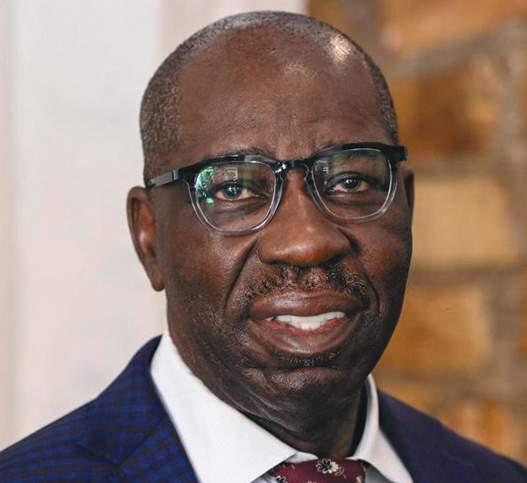
one of Africa’s most widely studied and celebrated education reform initiatives.
Launched in 2018, EdoBEST fundamentally re-engineered the Edo state’s public primary school system by combining teacher retraining, digital lesson delivery, real-time classroom monitoring, and strong governance reforms. Teachers were equipped with tablets loaded with structured lesson guides, while supervisors monitored classroom activities and learning outcomes using digital dashboards.
The programme was built on a simple but powerful premise: improving teacher effectiveness is the fastest and most sustainable path to improving learning outcomes.
Under the reform, thousands of teachers were retrained and supported with structured pedagogy, while data from classrooms allowed the government to monitor attendance, lesson completion, and student progress in near real time.
The results were significant.
Independent evaluations and international development partners reported measurable improvements in literacy, numeracy, teacher attendance, and classroom engagement.
Global Recognition
The impact of EdoBEST quickly attracted global attention.
Development institutions including the World Bankhighlighted the programme as a leading example of how technology, data, and strong political leadership can transform education systems in developing countries on.
World Bank analyses of foundational learning in Africa have
cited EdoBEST as an innovative model for large-scale teacher professional development and accountability systems, noting that the programme demonstrated how structured pedagogy combined with digital monitoring can significantly improve classroom practice.
The programme has also been featured in global policy discussions on education reform and has been studied by education researchers, multilateral agencies, and governments looking for scalable solutions to the continent’s learning crisis.
EdoBEST as a Model for Africa
Beyond Edo State, the reform’s influence has steadily spread across the continent.
Several national and subnational governments across Africa have studied and adopted elements of the EdoBEST framework as part of their own education transformation efforts. Countries and states exploring similar structured pedagogy reforms have drawn lessons from EdoBEST’s integrated approach—combining teacher capacity development, digital learning tools, robust data systems, and strong leadership.
The initiative has also become a reference case in international education policy circles, where it is frequently cited alongside other successful education reforms for demonstrating how systemic change can be achieved within a relatively short period when leadership, technology, and accountability mechanisms align.
Lessons for OxTrack
It was therefore fitting that
Oxford invited Obaseki—who is also a fellow of the Oxford Next Horizon programme—to contribute to discussions on how OxTrack could achieve large-scale impact.
In his intervention, Obaseki emphasised that for OxTrack to truly transform education systems, it must avoid a tokenistic or pilot-only approach. Africa, he noted, is rapidly becoming the world’s largest reservoir of human capital, and the continent’s future prosperity depends on the quality of its education systems. To address this challenge, education reforms must be able to scale quickly and reach millions of learners and teachers within a short period of time.
Drawing from the EdoBEST experience, Obaseki stressed the importance of making teachers—not policymakers or administrators—the primary drivers of transformation.
In his view, reforms gain momentum when teachers themselves are empowered with tools, data, and professional incentives that allow them to improve continuously.
According to Obaseki, successful reforms must combine strong policy direction with bottom-up ownership from teachers and school leaders. When teachers can see their progress, benchmark themselves against peers, and access targeted support, they are more likely to embrace change and improve classroom practice. This insight aligns closely with the philosophy behind OxTrack, which seeks to provide teachers with individualised data about their professional knowledge and performance.
If implemented at scale, OxTrack could become a powerful complement to broader education reforms— providing governments with the tools to understand teacher performance while empowering teachers to develop professionally.
The Oxford discussions therefore represented an important convergence between cutting-edge academic research and real-world policy experience.
While OxTrack offers sophisticated measurement tools rooted in decades of research, EdoBEST demonstrates how such tools can be integrated into a functioning education system and scaled across thousands of teachers and schools.
For global education reformers, the lesson is clear: data and technology are most powerful when combined with leadership, teacher engagement, and systemic policy change.
As universities like Oxford continue to innovate in education research and policymakers like Obaseki bring practical implementation experience to the table, the possibility emerges of building education systems that are not only better measured—but also fundamentally transformed.
In the world of luxury and elegance, Eyakenoabasi Effiong-Bob is a name that commands attention. As the mastermind behind Eno Basse Diamond, she is redefining the Nigerian jewellery scene with her breathtaking designs and unyielding passion for authenticity. Driven by a desire to tell African stories through design, she's crafted a brand that's as unique as it is captivating. Eyakenoabasi Effiong-Bob's story unfolds, revealing the allure of the Aura Experience. Writes MARY NNAH

In the heart of Lekki, Lagos, a captivating afternoon unfolded, weaving together the threads of scent, presence, and fine jewellery. Eyakenoabasi Effiong-Bob, the visionary founder of Eno Basse Diamond, hosted the Aura Experience, an intimate soiree that left guests in awe. As they sipped champagne and indulged their senses, Effiong-Bob shared the inspiration behind this multisensory event. "So today's event is called the Aura Experience. It's a way for us to engage with our very loyal clients and people that have been present with us and people that want to know more about diamonds, want to know more about what it is that we do," she explained, her passion radiating like the diamonds themselves.
The evening's highlight was the unveiling of a stunning multi-gemstone ring, featuring ruby, sapphire, and emerald - a true masterpiece. This exquisite piece showcases Effiong-Bob’s dedication to craftsmanship and her commitment to telling African stories through design.
"I'm very particular about telling our African stories through design," she says, her voice filled with conviction. "I'm also very passionate about making pieces that last beyond us”, she noted.
But her journey to this moment was nothing short of remarkable. A civil engineer by training, she traded her corporate career for the world of jewellery design, driven by a passion for crafting heirloom pieces that transcend time.
"I worked for an oil and gas company for a minute," she recalled. "I have always loved and been fascinated by jewellery. Most especially because my mother used to sell gold back in the 90s. And I was always fascinated by jewellery."
This fascination would eventually lead her to train in Italy as a goldsmith and become a certified gemologist through
17-year-old Nigerian student, Uchenna Scott-Ananaba, will this fall join the league of Nigerian students shining as beacons of academic excellence globally, having scored an impressive 1540 out of 1600 in the Scholastic Aptitude Test (SAT), THISDAY has learnt.
This comes against the backdrop of an equally sterling performance of 8As and 1B in the West African Senior School Certificate Examination and a Joint Admissions and Matriculation Board score of 358.
If all goes well, Uchenna will resume his college education at one of the most prestigious universities in the world this September, thanks to the solid academic foundation provided by his alma mater, Vine Crest College, Iperu-Remo, Ogun State.
globally competitive academic talents, explained that at the core of the school’s vision is the development of strong academic and social support systems in line with global best practices to help students compete favourably with their counterparts around the world.
“We are deliberately strengthening our academic enrichment programmes and deepening our culture of excellence across the curriculum by investing in teacher capacity, expanding learning resources and nurturing critical thinking. We are positioning our students to consistently compete and excel in global assessments like the SAT and to gain admission into Ivy League universities,” she said.
She noted that by combining strong foundational teaching with individualised mentoring, students are equipped with the skills and confidence to excel in both local and global examinations.
the Gemological Institute of America.
As a gemologist and goldsmith, Effiong-Bob, is meticulous about quality and authenticity. "I've seen people buy all sorts of fake things," she says, her voice tinged with concern. With synthetic gemstones flooding the Nigerian market, she's on a mission to educate and empower. "It's getting very saturated. It's something that we should speak up more about," she urges. Her dedication has earned her a reputation as a trusted name in fine jewellery.
The Aura Experience was more than just a showcase - it was a celebration of Nigerian craftsmanship and the power of diamonds to evoke emotions, spark memories, and transcend generations. "Diamonds are forever”, she said, her voice filled with conviction. "It doesn't need a lot of maintenance. What it does is a little polishing and cleaning now and then." As she looks to the future, her vision is clear: to create pieces that tell stories, evoke emotions, and become a part of Nigerian heritage.
With over 200 designs to her name, Effiong-Bob, is a true master of her craft. Her designs blend traditional craftsmanship with modern elegance, using diamonds, gold, and natural gemstones to create pieces that are both timeless and contemporary. Whether it's a custom-made brooch for the Medical Women's Association of Nigeria or a bespoke piece for a discerning client, her creations are always infused with a sense of purpose and passion. As she says, "I'm so particular about jewellery that transcends us. Anything that cannot live forever is not something that I play with."
Uchenna’s SAT score, according to examiners, places him within a very competitive global academic bracket, enhancing his opportunities for admission into highly selective universities around the world.
Speaking with THISDAY on his academic journey, the young ScottAnanaba stated that his academic good fortune would not have been possible without the solid platform provided by his secondary school, Vine Crest College.
“A major part of my academic success comes from the environment at Vine Crest College. From the very beginning, my teachers recognised my potential and pushed me to work harder than I thought I could.
“Being at a growing school meant that there were frequent one-on-one interactions with teachers, so I always had guidance, advice and support whenever I needed it. That personal attention made a huge difference in keeping me focused and motivated.”
He added that, in addition to the support given to him by members of the school administration, the school’s culture of discipline, rigorous learning and positive moral values inspired both academic aspiration and character.
“My final year at VCC was particularly rigorous. We had night classes, extended boarding hours and midnight study sessions that demanded a lot of discipline and commitment. At first, it was challenging to keep up with the pace, but the school’s structured programme taught me how to manage my time, stay consistent and approach problems systematically.
“Vine Crest College didn’t just teach me academic content; it created an environment that pushed me to be my best, provided personal mentorship and gave me the tools to achieve excellence.
I am grateful for the role the school played in shaping my academic success and my character,” he said.
The Executive Director, Vine Crest College, Mrs Folasade Phillips, who also spoke with THISDAY on how the school is positioning itself to produce
While recognising the role of family in providing early and lifelong support for children’s overall development and well-being, Uchenna’s mother, Mrs ScottAnanaba, opined that although family plays an important role, parents must partner with the school institution to achieve the best outcomes for their wards.
According to her, in situations where children spend a significant portion of their time at school, it becomes important for parents to entrust them to a school administration capable of harnessing their potential while helping them cultivate strong moral values.
“I think one of the swiftest roads to success is when you entrust your child to an institution that knows what is best for your child. The school helps you to identify your child’s strengths and weaknesses and supports improvement where it is needed.”
She explained that no child can succeed academically without discipline and, as such, parents should allow schools to enforce appropriate discipline while working hand in hand with school authorities.
“Parents need to concede to whatever disciplinary actions the school metes out to their children, except in cases where individuals may act out of cruelty. We need to believe that the school has the child’s best interest at heart.
“In the case of Uchenna, we allowed the school as much leeway as we allowed ourselves. We were not one of those parents who say you cannot discipline my child. The school knows the boundaries. Go ahead, discipline the child, correct the child and encourage the child. Throughout his stay at VCC, our son had as much confidence in the school, its administration and its faculty as he did in us,” she said.
Uchenna’s achievement reflects the growing potential of Nigerian students to compete on the global academic stage when supported by strong institutions, committed teachers and cooperative families. His journey underscores the importance of a holistic educational environment that nurtures talent, discipline and ambition, positioning young Nigerians to excel and make meaningful contributions in the global knowledge economy.

The initiative positions Lagos as a leader in innovative governance practices, contends KABIRU OLOWOLAYEMO
See page 21
AND CONFLICT BETWEEN LIQUIDITY AND LENDING
SOLA ONI argues that a stronger capital base should translate into better discipline, not higher risk-taking

See page 21

Nigerians shouldn’t gloss over some lessons from President Tinubu’s condolence gesture on the Plateau the other day, writes MONDAY PHILIPS EKPE

Many details of last Palm Sunday’s massacre in Angwa Rukuba inside Jos metropolis are out there, and have remained raw in the minds of Nigerians and lovers of humanity on the planet. Not surprisingly, President Bola Tinubu is being viciously condemned from various quarters for his personal handling of that situation, particularly his visitation. Few persons who have attempted to defend him or explain the contentious aspects have had to stutter. Part of the statement by presidential spokesperson, Mr. Bayo Onanuga, reads: “Upon arrival in Jos, the visit encountered some logistical challenges. While the road distance from the airport to Jos township is approximately 40 minutes, the runway does not support night flights due to the absence of navigational aids. The constraints made it unfeasible to drive into town, meet victims for on-the-spot assessment, and return to the airport before dusk.
“Consequently, state and federal officials decided to bring representatives of the affected community to a hall adjoining the airport so the President could meet with them promptly while adhering to flight restrictions.” That’s expected and it fits his job description. Public Relations will always strive to promote and safeguard any payer’s image. Only that the entire story unwittingly walked itself right into what in social media activism is categorised and cynically dismissed as “you go explain tire”! The bloodbath took place on March 29 and President Tinubu’s trip to the state was on April 02, four clear days apart. Within that period, Governor Caleb Muftwang of Plateau State, the mourner-in-chief had to travel to Abuja, away from the venue of the fresh, gripping human suffering, to officially brief the commander-in-chief. Can’t say how awkward that feels. And what better description of absurdity?
Considering the numerous, perhaps overwhelming, issues contesting for the head of state’s attention, however, it might be unfair to damn his failure to promptly show up in what was once Nigeria’s most tranquil state.
Truth is, the fiasco produced by his eventual call there was largely avoidable and self-inflicted. But this humble contribution isn’t about bashing Tinubu. Enough of that has already been documented on the internet and other platforms for whoever cares to study presidential visits, condolences, genuinely staying in touch with the masses, and planning and executing presidents’ movements. Even at that, the interpretations drawn from these interest areas shouldn’t be lost on us.
No doubt, in terms of the number of casualties, attackers’ choice of location
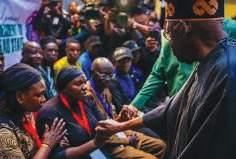
and timing, sheer bravado of the operation and the cold impunity and futile anger that are set to trail it, that particular festival of bloodletting does not even rank among the first 10 percent of the rounds of woes caused by the monsters of terrorism, insurgency, banditry and kidnapping which have held Nigeria captive for two decades. Sadly, it’s among the worrying bits of these enduring national agony, shame and helplessness. Those who love to dismiss the criminalities as northern maladies simply lack the capacity to smell coffee or are condemned to a mindset of ‘us’ and ‘them’, an attitude that has left the nation more divided, to the joy of the soulless, murderous marauders.
But then, even in the midst of these dizzying morbid occurrences and the ever-increasing prospects for desensitisation towards violence and deaths, the carnage that ushered in this year’s Christianity’s Holy Week was forced into our consciousness both for its mischievous placement and highly emotive visualisations. In no time, the still and motion pictures of Rhoda Favour Ayuba clutching onto her dying/dead son, chanting words of desperation, defiance and love while drenched in the blood of the departing/departed, became the face of the tragedy. For many, it was another déjà vu.
The infamous Soweto Uprising of June 16, 1976 showcased a similar sight. Hector Pieterson, a young school boy, snatched his badly injured colleague from the spot she was shot by the apartheid police and ran as much as he could - away from flying bullets - towards safety and help. That macabre drama became historic instantly. The world, including those who were indifferent to the gruesome plight of the Black majority in South Africa, couldn’t ignore his passion, courage and sacrifice. That was in an era without access to the sort of sophisticated information and communication technologies available today.
My immediate reaction to Rhoda’s anguish was a mental return to the day I visited the Apartheid Museum in Soweto. I was certainly not alone in that outburst
of emotions. Looking at the debacle that presidential drop-in turned out to be, one wonders if the president’s handlers cared to bother about the feelings of the generality of Nigerians, the sensitivity of the schedule and the opportunity it presented to exhibit true leadership and empathy. It won’t be surprising if one of the personnel even suggested that Tinubu should settle for video or conference calls with the grieving citizens.
Why should it be? Touching down at Yakubu Gowon Airport in Heipang, less than one hour’s drive from the scene of the barbaric assaults, to hurriedly meet with his traumatised audience was enough proof that the event was only perfunctory, just to “fulfil all righteousness”. What stopped Tinubu’s minders from reviewing the travel to enable him to spend at least three hours in the state capital to have a feel of a city seized by grief? Couldn’t the other programmes have been shifted a bit to demonstrate government’s premium, if any, on human souls? Wherever there are operational lapses, people are at the mercy of conjectures. They include thinking that Tinubu also feared for his own life. Onanuga’s effort has actually left more questions behind.
“Under 10 minutes”, the president who will soon tour the country in search of votes for his second term in office tried to justify his presence there. “I know your pain”, he told Rhoda. “I saw in the video how you held on to your son and felt the agony in your heart. Only God can give you joy and comfort. No amount of money can compensate for your loss. As a government, we will do our best to support and comfort you.” Sounds benevolent but how many people in that gathering bothered to believe him?
Our leaders should generally do more to show true compassion for the people they claim to lead. What do they gain, for instance, from visiting venues of tragedies formally dressed in suits, ‘agbadas’ and other exotic wears? To rob in their importance, perhaps. Beyond offensive optics, dejected people are further abused when they sense aloofness of any kind from those saddled with catering for their security and welfare.
The longsuffering people of Nigeria deserve to be led by persons who possess good physical, emotional and intellectual strengths, who can withstand the rigours of humane governance. But as the value of the electorate in determining electoral fortunes dwindles rapidly, chances are that Nigerian people may not enjoy optimum respect from their rulers anytime soon.
Dr Ekpe is a member of THISDAY Editorial Board
@monday_ekpe2
The initiative positions Lagos as a leader in innovative governance practices, contends KABIRU OLOWOLAYEMO
SOLA ONI argues that a stronger capital base should translate into better discipline, not higher risk-taking

In an era where public trust in governance is increasingly tied to transparency, efficiency, and measurable outcomes, the $500 million Human Capital Opportunities for Prosperity and Equity and Governance (HOPE-GOV) Programme stands as a bold experiment in redefining how government works for the people. At the forefront of this transformative initiative in Nigeria is Lagos State Governor, Babajide Sanwo-Olu, whose administration has not only embraced the programme but is actively shaping it into a model for accountable governance and impactful public service delivery.
The HOPE-GOV Programme, supported by the World Bank and the Federal Government of Nigeria, is designed to address systemic inefficiencies in critical sectors such as health, education, and governance. More than just another policy framework, it represents a paradigm shift—from traditional input-based budgeting to a results-driven governance model that prioritises tangible improvements in citizens’ lives.
For Governor Sanwo-Olu, the programme is not merely a bureaucratic obligation but a moral commitment to the people of Lagos. Speaking at a public sensitisation forum at Lagos House, Marina, he underscored the central philosophy driving the initiative: governance must deliver real, measurable outcomes that directly impact the welfare of citizens. This emphasis on accountability reflects a broader evolution in public administration, where performance is judged not by intentions or expenditure levels, but by actual results on the ground.
At the heart of the HOPE-GOV framework is the concept of outcome-based financing. Unlike conventional systems where funds are disbursed based on projected inputs or planned activities, this model ties financial flows to verified results. In practical terms, this means that improvements in school enrolment, healthcare access, and institutional efficiency are not just aspirational goals but prerequisites for funding. It is a system that rewards effectiveness and penalises inefficiency, thereby incentivising better governance.
Lagos State’s adoption of this framework is particularly significant given its status as Nigeria’s economic nerve centre. With a rapidly growing population and increasing pressure on public services, the need for efficient resource management has never been more urgent. By aligning with the HOPE-GOV Programme, the Sanwo-Olu administration is positioning Lagos as a leader in innovative governance practices, setting standards that other states may soon emulate.
The governor’s commitment to transparency is evident in the mechanisms being deployed to ensure accountability. These include enhanced financial
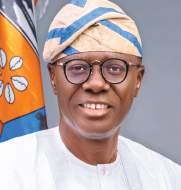
reporting systems, rigorous monitoring and evaluation processes, and the use of data analytics to track performance across sectors. Such measures not only improve internal efficiency but also build public confidence by making government operations more visible and understandable to citizens.
The emphasis on human capital development is another defining feature of the programme. In a state where the future is intrinsically linked to the quality of its human resources, investments in education and healthcare are not just social interventions but strategic imperatives. The HOPE-GOV Programme seeks to bridge existing gaps in these sectors by ensuring that resources are directed towards initiatives that yield measurable improvements in learning outcomes and health indicators.
Commissioner for Economic Planning and Budget, Ope George, highlighted this shift towards data-driven governance, noting that the programme strengthens both financial and human resource management systems. By linking funding to performance metrics, Lagos is effectively institutionalising a culture of accountability that transcends political cycles and administrative changes.
The role of the World Bank in supporting the initiative adds an additional layer of credibility and technical expertise. As a global institution with extensive experience in development finance, the World Bank brings not only funding but also best practices and rigorous standards that help ensure the programme’s success. According to its procurement specialist, Engr Akin Onimole, the focus of HOPE-GOV goes beyond procedural compliance to delivering real improvements in citizens’ lives, a perspective that aligns closely with the Sanwo-Olu administration’s vision.
One of the most compelling aspects of the programme is its potential to address longstanding systemic bottlenecks. In many developing contexts, inefficiencies in public service delivery are often rooted in weak institutional frameworks, poor data management, and lack of accountability.
Olowolayemo writes from Surulere, Lagos State
It is encouraging that Nigeria’s latest bank recapitalisation has been declared a success by the Central Bank of Nigeria (CBN). Capital levels have increased, balance sheets are stronger, and confidence appears to have been restored. However, if history is any guide, this is only half the story. The previous recapitalisation also seemed impressive until reckless investments, insider abuses, and weak risk controls exposed its flaws. This time must be different. Our banks must recognise that recapitalisation is not a victory; it is a responsibility.
The central question is clear: if banks channel fresh capital into speculation or related-party lending, the cycle of boom and bust will persist. However, if they deploy it into the real economy, it could mark a turning point. Nigeria’s private sector, particularly SMEs, continues to face a shortage of affordable credit. Manufacturing, agriculture, and technology require financing, not promises. Yet lending cannot grow meaningfully under current borrowing costs. Interest rates remain elevated as the CBN prioritises inflation control. While this objective is necessary, it also imposes a constraint. Tight monetary policy discourages the very lending needed to drive growth, and this tension cannot be ignored.
The solution lies in policy coordination. Inflation in Nigeria is largely driven by structural factors, including energy costs, foreign exchange instability, and supply constraints. Monetary tightening alone cannot address these issues. Fiscal authorities must tackle the root causes. Without such alignment, high interest rates will continue to crowd out private sector access to credit. Banks, however, must also adjust their priorities. Stronger capital should translate into better discipline, not higher risk-taking. Governance failures were at the heart of past excesses, and they must not be repeated. The CBN has a critical role here, moving beyond routine compliance checks to proactive, risk-based supervision. Early intervention and strict enforcement will be key to maintaining stability.
Digital banking is another area that demands urgent attention. Financial inclusion remains uneven, with millions still outside the formal system. Investment in digital platforms, agent networks, and fintech partnerships can expand access, reduce costs, and improve efficiency. New capital should be directed toward systems that deepen the financial system, rather than merely inflate balance sheets. Export financing also remains underdeveloped, despite its potential to boost foreign exchange earnings and reduce reliance on imports. The commodities ecosystem requires government support through infrastructure development and appropriate policies. Commodities exchanges can further support exports by providing price transparency, improving market access, and enabling producers to hedge against price volatility, thereby enhancing confidence in export markets.
Equally important is the need to protect and finance local innovators and entrepreneurs. Many promising Nigerian inventors and startups struggle to access credit due to lack of collateral or perceived risk. Banks should develop tailored products that recognise intellectual property, ideas, and early-stage innovation as viable assets. Supporting innovation is not just about funding new businesses, it is about building future industries, creating jobs, and reducing dependence on imports. A forward-looking banking sector must see inventors not as high-risk clients, but as drivers of long-term economic value. It can be tempting for banks to channel excess liquidity into the capital market. With larger capital bases, they may find equity investments more attractive than lending to the real sector. While this approach may deliver short-term gains, it carries significant risks if not properly managed. Heavy bank participation in the stock market can overheat valuations and push share prices beyond their underlying fundamentals. The consequences, such as market corrections, weakened investor confidence, and financial instability, can make this a costly gamble.
Banks must avoid becoming speculative players. However, a new policy on margin lending to qualified securities dealers under strict supervision by the Securities and Exchange Commission (SEC) and the Nigerian Exchange Limited (NGX) could be a win-win for both banks and the capital market. Oversight should extend beyond capital adequacy to how funds are deployed. Prudential limits, stress testing, and close monitoring of investment portfolios will help prevent excessive risk-taking. The focus should remain on stability, not short-term market performance.
Nigeria can also learn from countries where recapitalisation delivered lasting benefits without widespread abuse. In Canada and Malaysia, regulators combined higher capital requirements with strict supervision and strong corporate governance.
Oni,
an Integrated Communications Strategist, Chartered Stockbroker, Commodities Broker and Capital Market Registrar, is the Chief Executive Officer, Sofunix Investment and Communications
Editor, Editorial Page PETER ISHAKA
Email peter.ishaka@thisdaylive.com
The abuse of hard drugs increases the country’s vulnerability to crimes
For years, the National Agency for Food and Drug Administration and Control (NAFDAC) has linked the current challenge of internal security within the country largely to uncontrolled influx and use of psychotropic medicines such as Tramadol and other chemicals. The National Drug Law Enforcement Agency (NDLEA) Chairman, Mohammed Buba Marwa, has also repeatedly warned that the situation in Nigeria is "frightening" even as he has championed a "win the war" approach that places premium on destroying the supply networks and reducing demand through rehabilitation and public enlightenment. Despite these warnings, the challenge of drug abuse seems to be growing across the country.
We support the efforts of the NDLEA to contain the inflow of psychotropic medications, which are drugs that affect behaviour, mood, thoughts, and perception. We also appeal to our regulatory authorities to see this warning as a wake-up call.
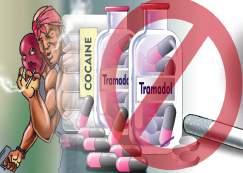
The consequence of ignoring the danger of prescription but commonly misused drugs can be dire. We are already seeing the effect of how several years of violence, insurgency, and now banditry can destabilise a country and undermine its development. Following his numerous interactions with bandits in Zamfara State a few years ago, Sheikh Ahmad Gumi confirmed that most of the people he encountered were junkies. Yet because of them we have for years embarked on expensive military operations while thousands of our people have either been killed or displaced. There is also a profound threat to food security given that many farmers now find it risky to go to the field to plant and harvest crops.
Criminal groups under the influence of narcotics and other
The NAFDAC, Nigeria Customs Service (NCS) and Standards Organisation of Nigeria (SON) must attend to regulatory compliance and prevent fake and substandard pharmaceutical consignments from our shores as well as ensure that only safe and quality regulated products are available for distribution.
Abuse of drugs and substance is a global phenomenon. The United Nations Office on Drugs and Crime (UNODC) and the World Health Organisation (WHO) Expert Committee on Drug Dependence, had warned about the dire implications of the growing abuse of Tramadol by some African and West Asian countries. This, according to them, could lead to intoxication similar to other opioid analgesics with the consequence of the breakdown of central nervous system (CNS), depression, coma, cardiovascular collapse, seizures and respiratory depression up to a respiratory arrest.
EDITOR SHAKA MOMODU
DEPUTY EDITOR WALE OLALEYE
MANAGING DIRECTOR ENIOLA BELLO
DEPUTY MANAGING DIRECTOR ISRAEL IWEGBU
CHAIRMAN EDITORIAL BOARD OLUSEGUN ADENIYI
EDITOR NATION’S CAPITAL IYOBOSA UWUGIAREN THE OMBUDSMAN KAYODE KOMOLAFE
T H I S D AY N E W S PA P E R S L I M I T E D
EDITOR-IN-CHIEF/CHAIRMAN NDUKA OBAIGBENA
GROUP EXECUTIVE DIRECTORS ENIOLA BELLO, KAYODE KOMOLAFE, ISRAEL IWEGBU
DIVISIONAL DIRECTORS SHAKA MOMODU, PETER IWEGBU, ANTHONY OGEDENGBE
DEPUTY DIVISIONAL DIRECTOR OJOGUN VICTOR DANBOYI
SNR. ASSOCIATE DIRECTOR ERIC OJEH
ASSOCIATE DIRECTOR PATRICK EIMIUHI
CONTROLLERS ABIMBOLA TAIWO, UCHENNA DIBIAGWU, NDUKA MOSERI
DIRECTOR, PRINTING PRODUCTION CHUKS ONWUDINJO TO SEND EMAIL: first name.surname@thisdaylive.com
Criminal groups under the influence of narcotics and other drugs are also gaining notoriety by ganging up with terrorists, drug traffickers and pirates in the Gulf of Guinea. Federal Capital Territory (FCT) officials have also singled out scavengers under the influence of hard drugs, as the catalysts of many criminal activities, including kidnapping which are on the rise in Abuja. These homeless people have no means of livelihood and are willing tools to be exploited for arson and breach of public peace and order. In many parts of the country, abduction of people is now a thriving business as hardly a day goes by without news of people being kidnapped for ransom either in their homes or on their way to work or while travelling on the road. Unfortunately, some of these insurgents, bandits and kidnappers are hooked to psychotropic drugs which they consume before carrying out their despicable acts. Government has a shared responsibility to address this problem in a manner that will ensure that criminals addicted to psychotropic drugs are prevented from exploiting the weak. There is also a need to review our value system, particularly at home and in schools. Parents have the obligation to discreetly vet the kind of company their children keep so as to safeguard them from being introduced to drugs and crimes.
Letters in response to specific publications in THISDAY should be brief (150-300 words) and straight to the point. Interested readers may send such letters along with their contact details to opinion@thisdaylive.com. We also welcome comments and opinions on topical local, national and international issues provided they are well-written and should also not be longer than (750- 1000 words). They should be sent to opinion@thisdaylive. com along with photograph, email address and phone numbers of the writer.
Yobe State is administratively divided into three senatorial districts or geopolitical zones, known as Zones A, B, and C, which are used for both political representation and administrative convenience.
These are Zone A (Yobe East), Zone B (Yobe South) and Zone C (Yobe North).
Presently, of those racing to succeed Gov. Mai Mala Buni, the major emerging 2027 gubernatorial aspirants include Senator Ibrahim Mohammed Bomai (Zone B), Abubakar D. Aliyu (Zone B), and Musa Mustapha (Zone A). Senator Ibrahim Mohammed Bomai represents Yobe South APC Senatorial District at the National Assembly, Senator Ahmed Ibrahim Lawan, APC Yobe North, while Senator Ibrahim Gaidam APC represents Yobe East. Nigeria’s tradition of rotating leadership among senatorial zones at the state level, for Yobe in this instance, dictates that after Zone A’s turn where the current Governor hails from, it is widely expected that Zone B should
produce the next governor. However, looming large over Yobe’s political landscape is former Gov. Geidam, who, after serving two terms as governor, was instrumental to crowning Gov. Buni as his successor in 2019, and deftly stepped aside as a senator and is now Nigeria’s Minister of Police Affairs.
But as party stakeholders are busy positioning themselves ahead of the 2027 elections, political analysts are worried that the race across the state’s three senatorial districts may not tilt in favour of power balancing among the three. This is because the alliance that has shaped Yobe’s leadership for over a decade, that of a family-backed political structure has renewed freshly the debate about who will inherit Yobe’s gubernatorial seat in 2027.
A careful consideration of this historical context reveals that since the return to democratic rule in 1999, there is palpable fear that Governor Buni, a son-in-law of Ibrahim Gaidam, is set to play the Buni/Gaidam he-
gemony card, threatening to rear its head once again in Yobe, fuelling the fear that Buni may anoint a candidate from the same Zone A like him, in the person of Sen. Musa Mustapha, a.k.a, Coolers. Sen. Musa Mustapha, the current Senator representing Yobe East, who took over from Geidam after he was appointed minister, is also the father-in-law of Sen. Ibrahim Geidam. The speculation, smelling nepotism, is that Sen. Musa Mustapha's emergence as Governor will pave the way to the Senate for Gov. Buni in 2027.
Insiders further revealed that for the Yobe guber race, Plan B for Gov. Buni is the current Secretary to the State Government, Baba Mallam Wali (BMW), from Zone C, who will have served 12 years as SSG if he completes his tenure with Gov. Buni, having served four years with Gov. Gaidam and eight with Gov. Buni. Mohammad Imam, Potiskum, Yobe State
08056356325
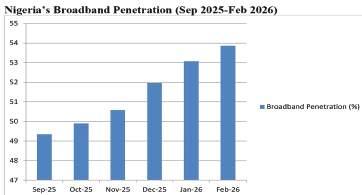
Nigeria’s broadband penetration has improved, reaching 53.86 per cent in February 2026, up from 53.07 per cent recorded in January 2026.
Also, the number of active subscribers for data (internet) services on each of the licensed service providers utilising different technologies, improved, reaching a total of 153,134,987 in February 2026, up from 151,555,145 recorded in January 2026. According to the statistics released by the Nigerian Communications Commission (NCC), of
Emma Okonji
Following the United States and Israel war on Iran, which has disrupted global energy markets, the Chairman, Zinox Group, Leo Stan Ekeh has stressed the need for capacity building in Nigeria’s technology sector, in order to avoid the ripple effect of the war in Nigeria.
Ekeh, in a statement, said the recent escalation in the US-Israel conflict with Iran delivered a sharp reminder of Nigeria’s economic vulnerability. According to him, “As oil prices surged past $100 per
the 153,134,987 internet subscribers, mobile internet subscribers utilising the Global System for Mobile Communication (GSM) network accounted for 152,476,943 as of February 2026, followed by Wired and Wireless technologies offered by Internet Service Providers (ISPs), which accounted for 313,713 internet subscribers in February 2026.
Voice over Internet Protocol (VoIP) technology, offered by operators like Smile Communications, accounted for 219,741 internet subscribers within the same period, while internet subscribers utilising the Fixed Wired Technology,
barrel and fuel costs climbed by 35 per cent at Nigerian pumps, a troubling paradox emerged: Nigeria, a major crude oil producer with Africa’s largest privatelyowned refinery now operational, still found itself buffeted by global energy shocks originating thousands of miles away.”
The exposed vulnerability on Nigeria’s economy, he said, has extended beyond energy, affecting the technology sector and other sectors that rely heavily on importation.
“Nigeria’s technology sector offers a particularly instructive case study in the
accounted for 124,590 internet subscribers within the same period.
According to the statistics, broadband penetration reached 49.34 per cent with a subscription figure of 106.9 million in September 2025, and it increased to 49.89 per cent with a subscription figure of 108.2 million in October 2025, and there was a further increase, which reached 50.58 per cent with a subscription figure of 109.7 million in November 2025.
In December 2025, broadband penetration reached 51.97 per cent, with a subscription base of 112.7 million, and it increased
costs of import reliance, and the transformative potential of local capacity as the pathway to economic stability and technological sovereignty.
Against this backdrop, Zinox Technologies stands as a compelling counter-narrative to re-write the wrongs. As Nigeria’s first indigenous computer manufacturer, Zinox demonstrates what becomes possible when vision, investment, and commitment to local capacity converge.” Ekeh said.
He therefore called for support for indigenous companies like Zinox Technologies to drive
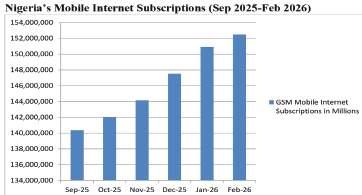
again to 53.07 per cent with a subscription base of 115.04 million in January 2026, before reaching 53.86 per cent with a subscription base of 116.7 million in February 2026.
For internet subscribers, the statistics showed a mix of decrease and increase in internet subscriptions in the last 10 months.
According to the statistics, in May 2025, Mobile GSM subscriptions reached 141million, followed by Wired/Wireless subscriptions with 289,369 subscriptions. VoIP internet subscriptions reached 212,151, while Fixed Wired internet subscriptions reached 14,599, bringing the
technology transformation by focusing on local assembly and manufacturing of computer hardware and digital devices, adding that such support will not only reduce reliance on foreign imports but will also create jobs, transfer knowledge, and strengthens national capacity.
“The implications are significant. Every locally assembled device represents a step away from foreign exchange exposure. It also signals a shift in mindset — from consumption to production. In a country where demand for technology continues to
total internet subscriptions for the month of May 2025 to 141.6 million.
In June 2025, Mobile GSM subscriptions dropped to 140.6 million, followed by Wired/Wireless subscriptions with 289,369 subscriptions.
VoIP internet subscriptions reached 212,470, while Fixed Wired internet subscriptions reached 26,794, bringing the total internet subscriptions for the month of June 2025 to 141.2 million.
In July 2025, Mobile GSM subscriptions dropped again to 138 million, followed by Wired/Wireless subscriptions with 289,369 subscriptions. VoIP internet subscriptions
rise, especially with the acceleration of digital adoption, the importance of local manufacturing cannot be overstated.
“Beyond economics, there is also a strategic dimension. Technology is no longer just a commercial tool; it is a defense tool and a national asset. Countries that control their technology supply chains are better positioned to innovate, secure their data, and compete globally,” Ekeh added.
According to him, local capacity development has a multiplier effect. It stimulates ancillary industries such as
reached 210,456, while Fixed Wired internet subscriptions reached 29,489, bringing the total internet subscriptions for the month of July 2025 to 138.7 million. In August 2025, Mobile GSM subscriptions increased to 139.8 million, followed by Wired/Wireless subscriptions with 289,369 subscriptions. VoIP internet subscriptions reached 220,054, while Fixed Wired internet subscriptions increased to 29,490, bringing the total internet subscriptions for the month of August 2025 to 140.3 million.
logistics, retail, maintenance, and technical services. It also fosters entrepreneurship, as more Nigerians gain access to affordable and reliable technology tools needed to participate in the digital economy.
“The current global crisis offers clarity. If the Strait of Hormuz is not reopened or supply chains to imports are fractured, only countries with strong domestic manufacturing capacity will weather the storm. Those dependent on imports suffer disproportionately.”

Oghenevwede Ohwovoriole in Abuja
The Nigerian Communications Commission (NCC) has introduced a new regulation ‘Telecommunications Identity Risk Management System (TIRMS) to curb fraudulent transactions in the nation’s digital ecosystem.
The Executive Vice Chairman (EVC), of the NCC, Dr. Aminu Maida made the disclosure in his address at a one-day Stakeholders Forum on Telecommunications Risk Management System (TIRMS), in Abuja.
Maida who was represented by the Executive Commissioner Stakeholders Management at NCC, Rimini Makama, said: “The Mobile Station International Subscriber
Directory Number (MSISDN) commonly known as the SIM or mobile phone number has evolved into a critical identifier underpinning financial transactions, digital authentication, and access to essential services across all sectors of our economy.
“This evolution, however, has created new and challenging vulnerabilities. The fraudulent use of churned, recycled, swapped, and barred MISISDN’s has become a significant vector for financial fraud and identity theft, eroding public trust in our digital platforms and undermining the identity of systems we have worked hard to build.
“It is in direct response to these challenges that the Commission has initiated the TIRMS Platform. The TIRMS Platform is a secure,
‘Paga Processed $11bn across 169 Transactions in 2025’
Paga Group, Africa’s premier financial services infrastructure company, has revealed that the compan’s total value processed grew between 2021 and 2025, reaching $11 billion across 169 million transactions in 2025 alone, equivalent to over $1.5 billion processed monthly.
The company, which gave
Group Business Editor
Eromosele Abiodun
Deputy Business Editor
Chinedu Eze
Comms/e-Business Editor
Emma Okonji
Asst. Editor, Energy
Emmanuel Addeh
Asst. Editor, Money Market
Nume Ekeghe
Correspondents
KayodeTokede(CapitalMarkets)
James Emejo (Finance)
Ebere Nwoji (Insurance)
Reporter
Peter Uzoho (Energy)
the information in Lagos while marking its 17th anniversary in building Africa’s financial services infrastructure, said its net revenue grew five times over the same period, demonstrating the durability and scalability of its business model.
Group Chief Executive Officer & Chairman of the Group Board and the Paga Nigeria Board, Tayo Oviosu, said: “What began as a consumer payments business built on a nationwide agent network has evolved into a full-stack financial services infrastructure provider, offering its platform to enterprises through Paga Engine, while continuing to serve consumers through the Paga app and merchants through Doroki.
According to him, Paga Labs serves as the company’s dedicated engine for frontier innovation, identifying emerging technologies, bringing them to market-readiness.
regulatory backed, crosssectoral platform designed to provide a uniform approach for managing all risks relating to the integrity
and utilisation of registered MSISDN’s on the Nigerian communications network.”
The Director Cybersecurity and Internet Governance,
Olatokunbo oyeleye, in her remarks said, “As rightly noted, digital trust is the operating licence of modern economy. Without
it, nothing scales and with it everything accelerates. For our sector, this trust must be embedded across the entire value chain.”
Dike Onwuamaeze
The Piggyvest, Nigeria’s savings and investment platform, has said that it disbursed over N3 trillion and serviced more than 6 million subscribers since its inception 10 years ago.
Piggyvest declared this when it hosted its “10 Anniversary Gala” in Lagos, which it used to unveil its vision of becoming, “the
financial operating system of the Nigerian household.”
The gala featured co-founders, investors, regulatory partners, ecosystem leaders, customers, current and past staff of Piggyvest.
The Co-founder and Chief Marketing Officer, Piggyvest, Mr. Joshua Chibueze, presented, “The Behavioural Portrait,” that walked through key data
points on how money has moved through Piggyvest over the past decade.
Chibueze revealed that the platform now processes over N61,000 in savings every second, up from N49,000 the previous year, and highlighted that users save toward goals ranging from rent and vacations to business investments and gadgets.
CEO of PocketApp, Ayo
Akinola, spoke on the role of regulatory partners in Piggyvest’s journey in a presentation titled, “Trust is Built Together,” which recognised the Central Bank of Nigeria, the Nigeria Deposit Insurance Corporation (NDIC), and the Securities and Exchange Commission (SEC) as partners whose oversight had shaped the platform’s growth.
Truecaller, the leading global communications platform, has announced the expansion of its Business Chat platform, making it accessible to global channel partners and enterprise solution providers.
Global Head, GTM at Truecaller, Priyam Bose, said: “The definition of success for modern enterprises has fundamentally evolved. It’s no longer just about delivery - it’s about earning attention, establishing credibility, and driving meaningful conversion.
“By opening up market access to our global partners, we’ve created a powerful gateway for brands to engage with over 500 million active users where they already interact daily through communication that is contextual, trusted, free from clutter, and designed to initiate actions. For existing customers, the outreach opportunity extends to an additional high-impact channel, strengthening the overall customer experience journey.”
Kulipa, a Paris-based stablecoin-native card issuing infrastructure platform, which operates in Nigeria, European Union, and Argentina, with US expansion underway through BIN sponsorship, has announced it has raised $6.2 million in seed funding co-led by Flourish Ventures and 1kx, with participation from White Star Capital and Fabric Ventures.
Google and UpSkill Universe, sub-Saharan Africa’s leading AI and business skills training partner, have announced a major redesign of the Google Hustle Academy programme. For the first time, the free training initiative is open to everyone, not just business owners. The new curriculum is focused on equipping
Founder and CEO of Kulipa, Axel Cateland, said: “Stablecoins have proven their value as a settlement layer, but using them in everyday financial products is still early. Card issuance is the bridge between onchain balances and real-world payments. We built Kulipa to give regulated fintech platforms the compliant, capital-efficient infrastructure they need to
individuals and entrepreneurs with practical AI skills.
Small businesses are the engine of Africa’s economy, creating over 80% of jobs on the continent. To help them grow, the Hustle Academy was launched in 2022, providing bootcamp-style training on business strategy, digital skills, AI, and leadership.
operate at global scale.”
Since launching its infrastructure in February 2025, Kulipa has issued more than 120,000 cards, signed 20 customers, including Flutterwave, Solflare, nSave, and Ready, and achieved 70 percent month-overmonth transaction volume growth. Founder & CEO of Flutterwave, Olugbenga Agboola, said “At Flutterwave,
The program has since trained over 18,000 SMEs, with many reporting increased revenue and job creation.
Now, as AI reshapes the job market, the program is evolving. The 2026 edition is built for anyone in SubSaharan Africa, including employees, students, and jobseekers, who wants to
we’re focused on building payment infrastructure that works across markets at scale. As stablecoins become a more practical settlement option, it’s important that businesses can turn those balances into real-world spending. “Partnering with Kulipa allows us to extend stablecoin value into globally accepted payments in a compliant, scalable way.”
use AI to advance their career. To meet the needs of a diverse audience, the new format includes short, 60-minute webinars and more immersive, high-impact bootcamps. These sessions are laser-focused on putting AI to work immediately in areas like digital commerce, marketing, and growth strategy.
Madhuri Sarkar Amoda
Before Segilola, there was no model to follow. Nigeria’s extractive sector has a community relations story, but it largely belongs to oil and gas, and it was not the best. Decades of environmental degradation in the Niger Delta, displacement without redress and communities treated as obstacles rather than partners left behind a legacy of deep, justified mistrust between extractive companies and the people whose land they operated on. These failures did not stay in the Niger Delta. They travelled north, south, east, west, into the consciousness of every Nigerian community that has ever watched a company arrive with promises and leave with resources.
When Segilola Resources Operating Limited (SROL) began developing the Segilola Gold Mine in Osun State, we were walking into that history. We were also walking into a legal vacuum. Nigeria’s large-scale gold mining sector, for all practical purposes, did not exist in the formal, regulated sense before us. There was no industry association we could benchmark against, sector-specific community relations framework developed by peers or local precedent to borrow from.
We had to build the architecture ourselves, in real time, on live ground and what followed was one of the most instructive professional experiences of my career. Here is what I learned.
The Oil and Gas Shadow Is Real. Acknowledge It.
One of the first things I understood was that we were not just introducing a new company to a community. We were introducing a new industry, against the backdrop of one that didn’t have a good reputation. Communities in Nigeria do not distinguish cleanly between “oil” and “gold,” between offshore and open-pit. What they know is that large foreign-linked extractive operations have historically arrived, extracted and left damage behind.
We had to be honest about that history rather than dismissive of it. Acknowledging the Niger Delta context openly, naming the trust deficit that preceded us, was not a liability. It was the beginning of credibility. Communities do not trust companies that pretend they are entering a blank space. They trust companies that demonstrate they understand the landscape they are entering.
Cultural Governance Is Not a Soft Issue. It Is an Operational One.
One of the most consequential decisions we made early was to integrate traditional governance structures into our operations, not as ceremonial formality but as functional architecture.
In Yoruba communities, traditional rulers are not figureheads. They are living institutions with authority, legitimacy, and reach that no corporate campaign can replicate. Excluding them or treating them as signatories to be managed would have been a fundamental error.
We brought community and traditional leaders into processes where their involvement made a material difference. One example: community employment. Mining projects often struggle to meet local employment quotas because the hiring process is managed entirely internally, creating suspicion about who gets in and why. We structured the recruitment process to include community leaders directly. They participated. They vouched for it. And because of that trust and visibility, we not only met
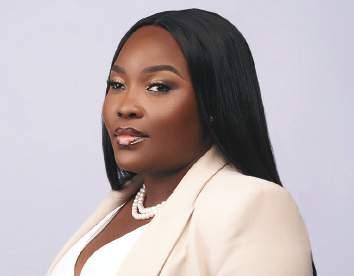
our community employment targets, we exceeded them.
That is not a soft outcome. That is an operational result, achieved through cultural intelligence.
Marginalized Groups Must Have a Seat at the Table, Not Just a Mention in the Report.
When we were establishing our Community Development Agreement (CDA) committees, we made a deliberate choice that I consider one of the most important decisions of the framework’s design: we insisted that the women’s leader and the youth leader were seated at the table alongside the traditional and community leaders.
This was not automatic. In many community governance structures, these voices are present in practice but absent in formal decision-making.
Women carry the weight of community life, particularly in agricultural communities affected by mine development. Young people bear the long-term consequences of decisions made today. If they are not in the room, the framework is incomplete regardless of how well-documented it is. Their inclusion brought something no consultation process can manufacture: a diversity of lived experience informing what the community actually needed. Representation is not a checkbox. It is the difference between a community agreement that holds and one that erodes.
Build for the Long Term, Even When Short-Term Pressure Is Loudest.
The pressure in extractive projects is always toward speed. Production timelines, investor milestones, regulatory deadlines. Sometimes, community relations can feel like the thing that slows everything down. However, it is actually the thing that keeps everything moving. Communities that feel heard, respected, and genuinely partnered with do not disrupt operations. They protect them. The trust we
built through visible, consistent, high-quality community engagement has been one of the most significant contributors to operational continuity at Segilola.
That is not incidental but structural.
When you build community relations as a genuine function, not a reputational shield, the returns are durable.
If you are building a community relations framework in a sector or geography where no template exists, here is the honest version of the advice:
You will not get it right immediately. The framework will be revised. Relationships will be tested. Some things you design carefully will fail, and some things you improvise will work better than anything you planned. What matters is that you enter with genuine intent, cultural humility, and the discipline to keep listening even when operations are demanding your attention elsewhere.
We did not build a perfect community relations framework at Segilola. We built one that is honest, adaptive, and rooted in real relationships with real people. That, I have come to believe, is what sustainable looks like in practice. What are your thoughts? I’d love to hear your stories.
• Madhuri Sarkar Amoda is the Community and Stakeholder Development Manager at Segilola Resources Operating Limited, operators of Nigeria’s first legal large-scale gold mine.
As deadline of July 31, 2026 given to insurance companies to shore up their capital draws closer, Ebere Nwoji looks at trends in the market and possibility of firms wishing to raise money from the stock market achieving their desired success.
Four months to the end of recapitalisation mandate in insurance industry, precisely July 31,2026, there is palpable fear of volatility in the performance of insurance sector in terms of market value, investor confidence and possibility of operating firms seeking to raise capital from market achieving reasonable success.
But before now the sector has been showing positive signs of growth in terms of overall performance.
For instance, few months after the National Insurance Commission (NAICOM) announcement of the recapitalisation as mandated by the Nigeria Insurance Industry Act (NIIRA 2025), insurers and industry analysts were in the upbeat of heart due to positive signs shown in the operations of the sector. Precisely, in December 2025, the NGX Insurance Index Return showed +65.64 percent growth.
Insurance sector contribution to NGX was at 0.97 per cent of total market cap (as of Dec 2025), up from a lower base. The combined market value of the top 10 insurers was over N1 trillion (as of Sept 2025). Estimated fresh capital to be raised was put at approximately N600 billion while total gross premiums (H1 2025) was N1.98 trillion up 54.2 per cent YoY. These figures came from both NGX daily weekly report and National Bureau of Statistics.
Sector analysts said NAICOM’s latest regulatory push was directly translating into significant increase in the market value of insurance firms, with the NGX Insurance Index delivering a 65.64 per cent return in 2025 just as investors expected a stronger, more credible industry.
A forthright ago, report by the National Bureau of Statistics (NBA) positioned insurance sector as recording highest growth among other finance services sectors of the economy in the last quarter of 2025, saying insurance sector recorded a massive surge of 21.37 percent even above banking sector. This was attributed to on going recapitalisation exercise and the new regulation in the industry NIIRA 2025, which NAICOM the regulator tagged “industry game changer.”
Indeed going by the recapitalisation update given by NAICOM intermittently since the announcement of the recapitalisation mandate in August 2025,the Nigerian insurance sector is currently experiencing a profound transformation driven by the mandate.
However as the deadline for the recapitalisation draws near, a kind of volatility especially in the market value of insurance set in.
While latest report on banks whose recapitalisation deadline elapsed yesterday (Tue March 31st, 2026) said at the last count (as at Mon March 30th), the exercise caused the market value of 13 banks listed on Nigerian Exchange to quadriple as new capital raised and capital gained lifted banks’ market value above N20 trillion. In the insurance sector, the top ten listed insurers as at Q3/Q4 2025, combines market capitalisation exceeding N1 trillion. This analysts said showed investor confidence in the quoted firms. Expectations were high that the best will come this year.
Industry Boom
However since early this year, though the big 10 insurers are still waxing strong, on a general note, insurance market value has been very fluctuating. By March 30th 2026, insurance index dropped by 1.4 per cent

according to NGX report.
Further report shows that the sector market value in recent times experienced volatility as a whole. While a report says the sector witnessed -4.6 per cent weekly decline subsequent report on the sector’s market value said it gained 2.14 per cent on the single day.
Summaringly in March going by NGX report the Nigeria insurance sector index has delivered a year -to-date return of6.6 percent
This fluctuation has heightened now that more insurance firms are approaching the NGX for capital raising. Among those wooing investors in the NGX market are: Guinea Insurance seeking for N5.8 billion through rights issue, Linkage Assurance seeking for N16.3 billion offer, Lasaco Assurance seeking to raise N18.47 billion, SUNU Assurance for N9.34 billion, Sovereign Trust looking for N5.02 billion and Universal Insurance looking to raise N15 billion.
These companies have announced their capital raising programms on the NGX and the amount they are seeking and have announced same to the media. Some have already met the statutory requirements with regulators like the CBN and have effected the statutory deposits required.
The challenge
But what is worrisome is that what is happening at the floor of Nigeria Exchange on the part of quoted insurance firms does not give joy to operators and finance analysts. In fact, finance and investment experts said it falls below expectation and poses danger especially to small and weak firms approaching the market for capital raising.
This is because in their interpretation of the situation, rights issues are typically priced at a discount to the current market price to encourage uptake. High volatility therefore makes it difficult to set a stable discount.
In the view of the analysts, if market price falls below the rights issue price after announcement, the offer becomes unattractive, risking under subscription. They further said if the price swings upward, the discount might appear overly generous, leading to oversubscription and potential shareholder dilution where renounced rights were taken up by new investors.
For public offers, the analysts said volatile share prices could deter retail investors who fear that the price might drop immediately
after they subscribe, eroding the value of their investment.
They were also of the view that heightened volatility often signaled uncertainty about a company’s ability to meet the recapitalisation deadline or its future profitability and this could weaken investor confidence, especially among minority shareholders.
Again institutional investors might demand larger discounts or more favourable terms to compensate for risk, squeezing the company’s ability to raise the full target amount.
They further said with volatility, firms with volatile stocks might experience low subscription rates, forcing them to extend offer periods, rely on underwriters, or seek alternative funding (e.g., private placements) at higher costs.
For now none of these firms in the market has confirmed to the media that their offers have been fully subscribed. Some of their workers who spoke to THISDAY on anonymity ground said performance was below expectation but that there was hope that market would pick up.
NAICOM’s Stand
At the last media chat with the commissioner for Insurance, Mr Olusegun Ayo Omosehin, he clearly stated that no single insurance firm had crossed recapitalisation huddle .He however said July 31st deadline remained sacrosanct Omosehin, however said no less than 20 insurance underwriting firms have officially written the commission on their recapitalisation efforts informing the commission that they were ready for verification.
He said given this information, his office had assigned verifiers to look into their books and report back to his office within a timeframe of three weeks.
In his response to journalists’ question on the possibility of grace period for the exercise to enable firms meet the required minimum capital and remain in business, Omosehin said the July 31st recapitalisation deadline was sacrosanct and would not be shifted for any reason.
According to him, it goes beyond his power as insurance commissioner because it was stated by NIIRA25 and cannot be shifted by any authority except with the amendment of the law.
He said currently all insurance firms in the system were going through NAICOM’S scanning machine and that the result of the scanning would soon be made known.
He however said NAICOM as regulator encouraged insurance firms who did not have a stand alone stamina to go into marriages with other companies to be able to remain alive.
He however said the problem the operators had in the past which is likely going to happen again is that as many are going through public offers, right issues, private placement, their investors usually raise hopes of bringing in money thereby making the firms not to look for mergers and acquisition but that at the dying minute, they would come up with excuses on why they could not bring in money by that time the deadline would have been at hand and the companies would began to look for merger with any available firm if only to remain in business.
He said such emergency mergers come with problem as he pointed that in the previous recapitalisation, a good number of operating firms who consummated such adhoc mergers carried a lot of liabilities which some of them are still grappling with. He advised operating firms to make adequate arrangement in their bid to meet the recapitalisation exercise.
NIIRA 2025
But the President of Nigerian Council of Registered Insurance Brokers (NCRIB), Mrs Ekeoma Ezeibe is very optimistic that with the new insurance regulation in place, there is no doubt that th sector would take its pride of place in the economy.
He attributed the drivers of growth witnessed in the industry to the signing of the NIIRA 2025 by president Bola Ahmed Tinubu. “NIIRA is a transformative insurance legal framework that has provided for so many things among which are the increase in the share capital of insurance industry through risk base or minimum capital requirement whichever is higher.
“NIIRA also increased the professional indemnity of insurance brokers to N100bn or 50 percent of each company’s previous year’s revenue which ever is greater”. “NIIRA went on to strengthen claims processing measures so that customers’ trust in insurance is enhanced”.
She noted that other protective measures it has put in place include shorter period of time to settle claims, creation of accident victim compensation fund for victims of uninsured drivers or hit and run drivers adding that it also created policy holders protection fund for insurance companies that have become insolvent.
“The act gave the regulator the power to settle claims from statutory deposit of any insurer with the CBN an insurer who have not settled claim within the time the law allows, it also increased fines and penalties that the regulator will give operators who have committed one infraction or the other,” she stated.
While hopes are high on NIIRA 2025 as the insurance sector’s game changer, operators who want to remain in business should take clue from what the insurance commissioner said happened to firms in the past exercise and begin on time to run against the rain before it drenches them.
Following the signing of NIIRA2025 insurance firms were mandated to shore up their operating capital from N2 billion to N10 billion for firms underwriting life business, from N3 billion to N15 billion for general business underwriters and from N10 billion to N35 billion for reinsurers. The firms were given between August 2025 to July 31st 2026 to meet the new capital requirement.

A Mutual fund (Unit Trust) is an investment vehicle managed by a SEC (Securities and Exchange Commission) registered Fund Manager. Investors with similar objectives buy units of the Fund so that the Fund Manager can buy securities that willl generate their desired return.
An ETF (Exchange Traded Fund) is a type of fund which owns the assets (shares of stock, bonds, oil futures, gold bars, foreign currency, etc.) and divides ownership of those assets into shares. Investors can buy these ‘shares’ on the
floor of the Nigerian Stock Exchange. A REIT (Real Estate Investment Trust) is an investment vehicle that allows both small and large investors to part-own real estate ventures (eg. Offices, Houses, Hospitals) in proportion to their investments. The assets are divided into shares that are traded on the Nigerian Stock Exchange.
GUIDE TO DATA:
Date: All fund prices are quoted in Naira as at 7 April 2026, unless otherwise stated.
Offer
Nume Ekeghe
Nigeria’s Bank Verification Number (BVN) database expanded to 68.6 million in March 2026, reinforcing the steady deepening of the country’s financial identity architecture as the system transitions from rapid expansion to a more measured phase of consolidation.
Latest data from the Nigeria Inter-Bank Settlement System showed that the BVN registry grew by 754,128 in the first quarter of the year, translating to a 1.1 per cent increase from the 67.8 million recorded at the end of 2025. This reflects continued adoption of the biometric identity system across the banking sector, with growth maintaining a steady, sustainable pace.
The expansion builds on a strong 2025 performance,
when the industry added about 4.3 million new BVN registrations, largely driven by the Non-Resident BVN (NRBVN) initiative. The programme, which enables Nigerians in the diaspora to enrol remotely, significantly broadened access to the domestic financial system and strengthened crossborder participation in banking services.
Early 2026 data indicates that enrolment continues to be supported by both domestic onboarding and diaspora participation, reinforcing the role of the BVN as a critical enabler of financial inclusion and system-wide identity verification.
This trajectory is further reflected in the system’s five-year growth pattern, which highlights both scale and consistency.
BVN enrolments rose from 56 million in 2022 to 60.1 million in 2023, representing a 7.3 per cent increase, before advancing to 63.5 million in 2024, 5.7 per cent growth and 67.8 million in 2025, 6.8 per cent growth. The 2026 first-quarter increase signals a continuation of this upward trend, albeit at a more measured pace consistent with a maturing system.
Overall, the data underscores a BVN framework that is not only expanding in size but also deepening in relevance, with its role in strengthening identity management, enhancing financial system integrity, and supporting broader inclusion becoming increasingly entrenched across Nigeria’s banking ecosystem.
As NOG Energy Week marks its landmark 25th anniversary, the 2026 edition will convene stakeholders from across Africa and around the world, in line with the theme, “Advancing Energy Ambitions for Competitive & Resilient Economies.”
Scheduled for 5–9 July 2026 in Abuja, the Strategic Conference will move beyond high-level dialogue to focus on eight critical thematic pillars designed to support the creation and execution of strategies that strengthen Nigeria and the wider continent’s position as indispensable partners in achieving global energy security.
With global geopolitics reshaping supply chains and energy security rising to the top of national agendas, Africa, and Nigeria in particular, are positioning themselves as increasingly dependable and investable sources
of oil, gas and LNG (liquefied natural gas) for international markets. Against this backdrop, NOG Energy Week 2026 has unveiled its full strategic conference programme, outlining a coordinated agenda to address supply stability, infrastructure gaps, and long-term energy competitiveness across the region. In an increasingly fragmented global energy landscape where diversification of supply is essential, the event will also place strong emphasis on strategic partnerships and regional alliances, making NOG Energy Week a key platform for deal-making, capital alignment, and cross-border collaboration.
This year’s agenda reflects a fully integrated energy systems approach, connecting upstream growth with midstream infrastructure and downstream market
systems required to deliver energy at scale. This is particularly relevant as Africa and Nigeria continue to strengthen their position through ongoing developments across the energy value chain, reinforcing their role as emerging supply anchors in a tightening global market. Recognising that national energy security is anchored in upstream growth, the conference will also prioritise midstream and downstream infrastructure development to support processing, refining, distribution, and delivery across an increasingly diversified energy mix.
Central to the 2026 discussions is the role of gas and LNG as the strategic foundation for industrial development and export-led growth, as national attention continues to focus on gas as a primary solution to industrial energy.
Sunday Ehigiator
Nigerian fintech firm Nomba and Globus Bank have announced a sub-1 per cent non-performing loan (NPL) ratio on a N21.3 billion credit portfolio, signalling a shift from volume-driven lending to performancebased credit delivery in the country.
The companies disclosed this in a joint statement yesterday, noting that the facility, deployed across key sectors of the economy, is underpinned by a data-driven underwriting model that prioritises repayment performance over disbursement size.
According to the
statement, the credit portfolio spans wholesale and retail (39 per cent), professional services (28 per cent), food and hospitality (11 per cent), oil and gas (11 per cent), and fast-moving consumer goods (8 per cent).
The firms said the result stands in contrast to prevailing industry benchmarks, where NPL ratios for business lending often exceed 5 to 10 per cent.
Managing Director/ Chief Executive Officer of Globus Bank, Elias Igbinakenzua, said the partnership reflects a shift towards disciplined, infrastructure-led lending.
“What distinguishes this facility is not its size but the quality of
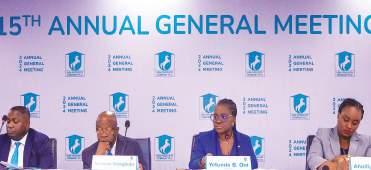
the underlying credit decisions. The NPL performance of this portfolio is clear evidence of what can be achieved when capital is deployed based on verified transaction data,” he said.
On his part, Chief Executive Officer of Nomba, Yinka Adewale, said the company is focused on redefining the credit narrative in Nigeria.
“The Nigerian credit conversation has been driven by how much has been disbursed. We believe the more important question is how much has been repaid and why. Our sub-1 per cent NPL on N21.3 billion is proof that the model works,” he said.
price of OPEC basket of twelve crudes stood at $63.14 a barrel on
Kayode Tokede
Shareholders of Nigerian Aviation Handling Company (NAHCO) Plc will receive a combined dividend of cash and bonus shares as the company sustained its impressive trajectory with double-digit growths across all key indicators in 2025.
The board of directors of
NAHCO has recommended payment of increased cash dividend of N12.18 billion for the 2025 business year as against N11.58 billion paid for the 2024 business year.
Shareholders will receive a dividend per share of N6.25 for the 2025 business year compared with N5.94 paid for the previous year.
The board has also recommended a bonus issue of one ordinary share
of 50 kobo each for every seven ordinary shares held, automatically increasing the number of shares held by each shareholder by 14.3 per cent. This means that a shareholder currently with 1,000 shares will receive additional bonus shares of about 143 shares, increasing total shareholding to 1,143 shares.
The qualification date for the cash and scrip
dividends is Friday, May 1, 2026 while the cash dividends will be directly credited to shareholders’ bank accounts on Friday, May 15, 2026, after approval at the company’s annual general meeting.
The combined dividend payment highlighted NAHCO’s continuing impressive performance, with net profit rising by 40 per cent in the immediate
past business year. Audited report and accounts of NAHCO for the year ended December 31, 2025 showed that total revenue rose by 21.8 per cent from N53.54 billion in 2024 to N65.21 billion in 2025.
The report also showed that profit before tax jumped by 30 per cent to N24.256 billion in 2025 as against N18.702 billion in 2024. Profit after tax grew by 39.91 per
cent from N12.865 billion in 2024 to N17.999 billion in 2025. Earnings per share rose by 40 per cent from N6.60 in 2024 to N9.24 in 2025. Chairman, Nigerian Aviation Handling Company (NAHCO) Plc, Dr Seinde Fadeni, said the company has consistently demonstrated its commitment to value creation for shareholders and all its stakeholders as shown in its growth trend.
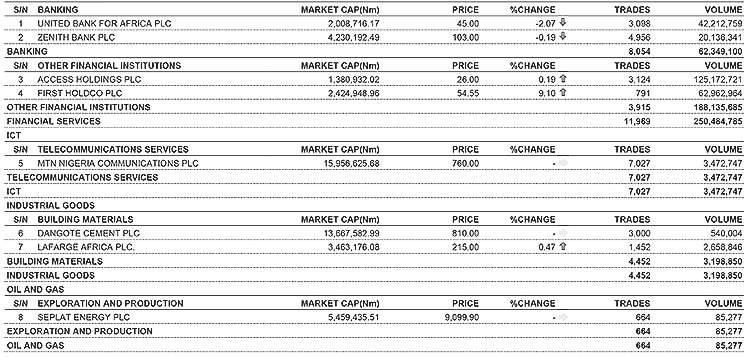
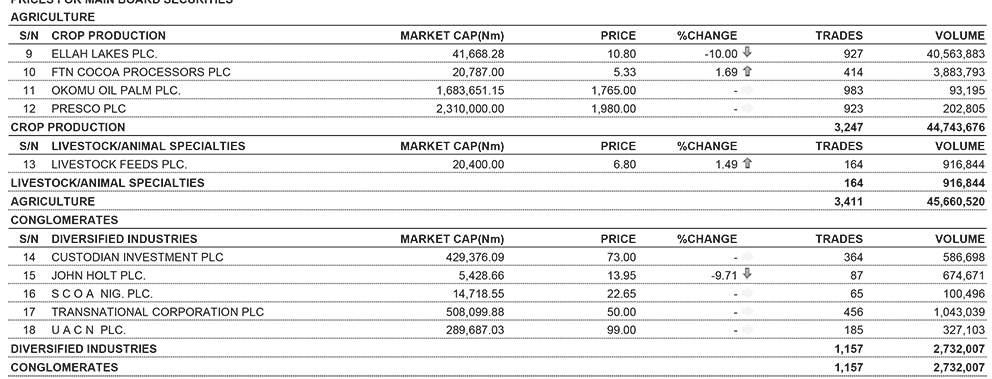
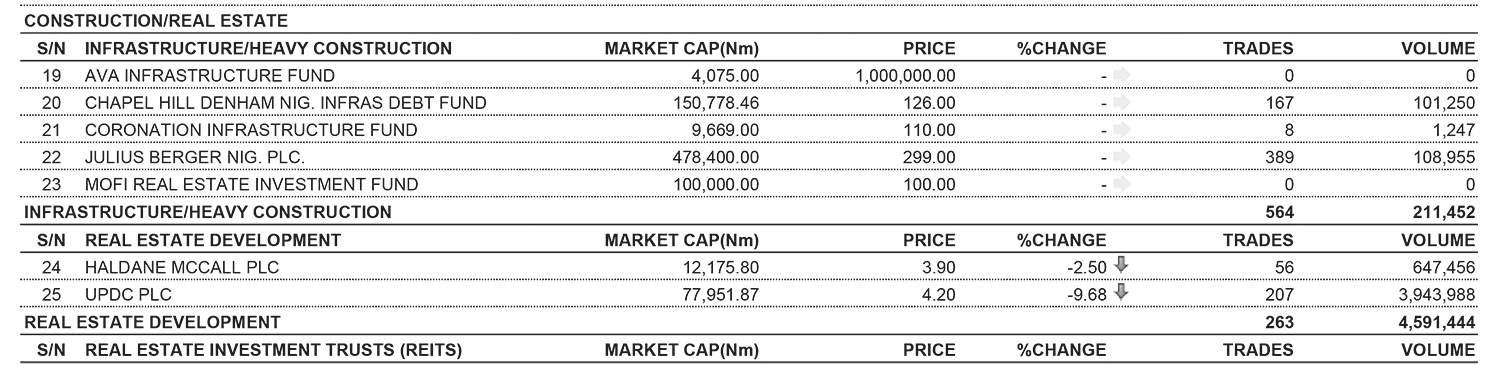
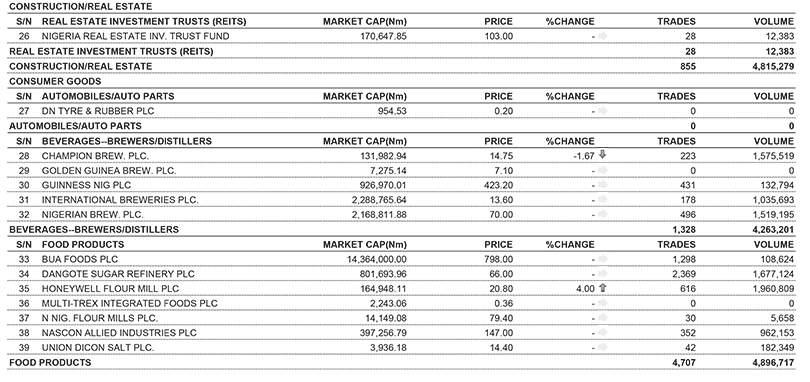
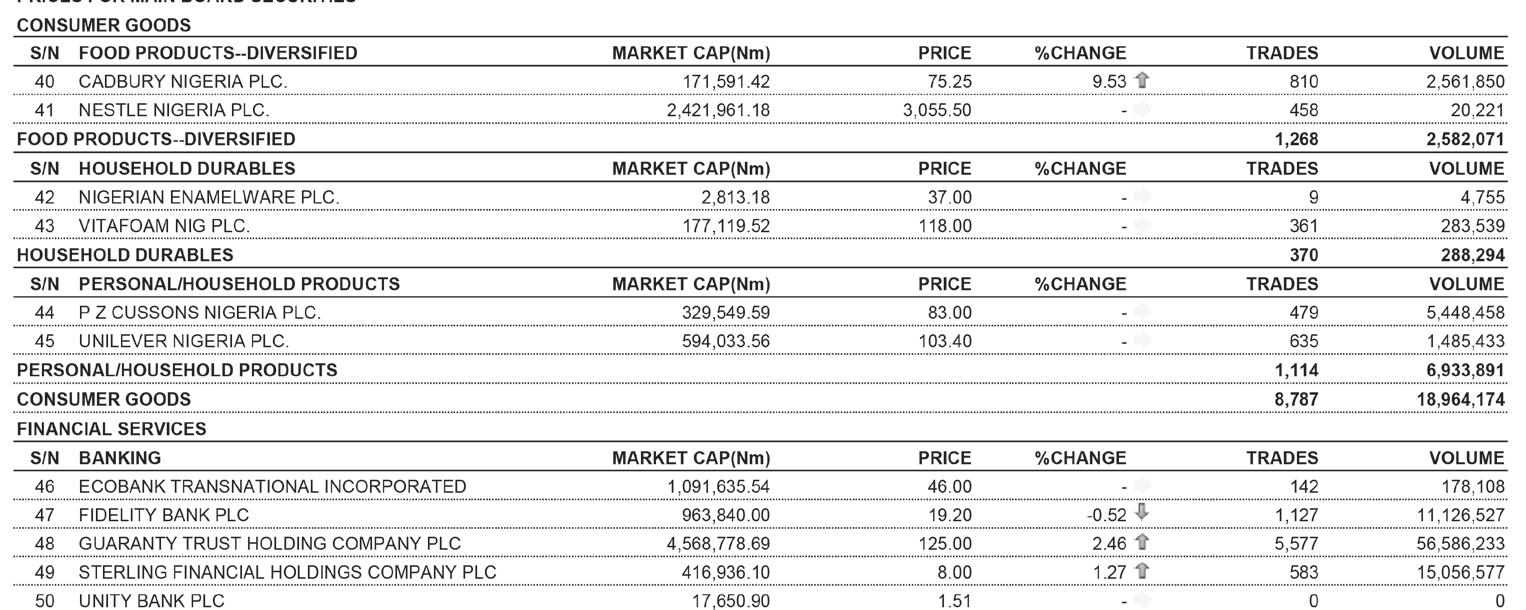
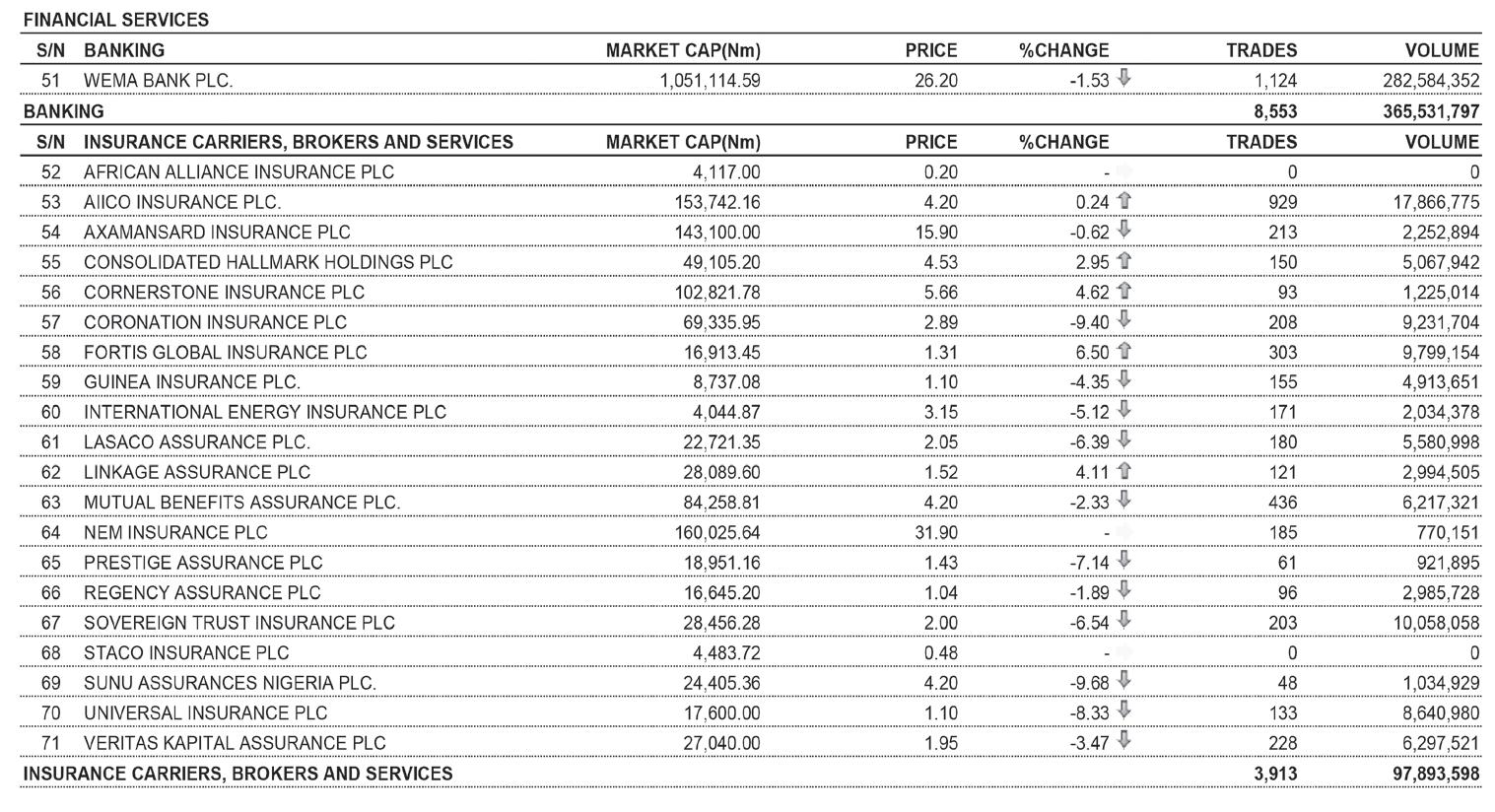

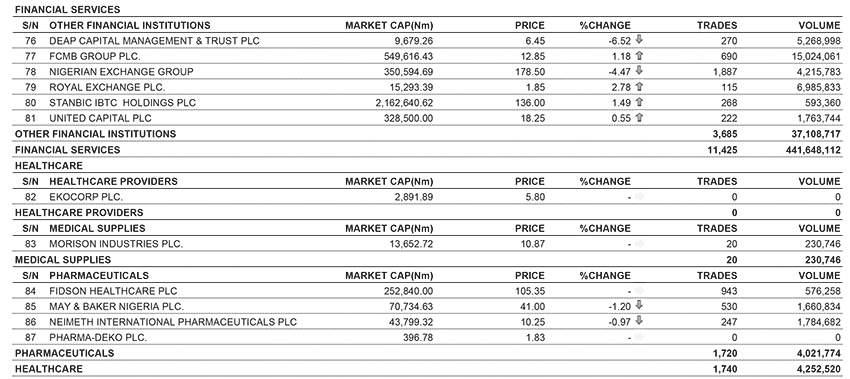
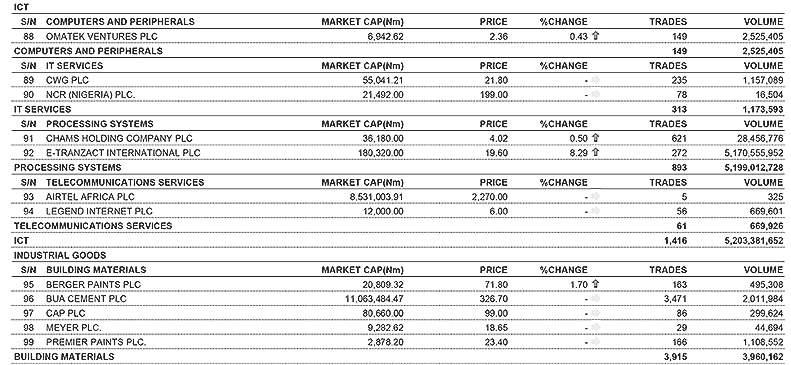


With the Nigerian political class imposing on the people like conquistadors over their subjects the search for citizen liberators has never been so dire writes Crusoe Osagie
Democracies are sustained not merely by constitutions or elections but by the vigilance of the people who inhabit them. When citizens lose the courage to question authority, democracy gradually becomes a hollow ritual. In recent years, developments in both the United States and Nigeria have raised serious questions about leadership style, political accountability, and the willingness—or unwillingness—of citizens to resist policies they consider unjust.
The leadership of Donald Trump in the United States and that of Bola Ahmed Tinubu in Nigeria offer an interesting comparative lens through which to examine these questions. While the political systems and historical contexts of both countries differ significantly, there are striking parallels in the frustrations many citizens express about the way power is exercised.
Yet the most striking contrast lies not in the behavior of leaders but in the reactions of the people they govern.
For decades, American politics—regardless of whether a Democrat or Republican occupied the White House—operated within certain unwritten boundaries. Presidents disagreed with the press but rarely treated journalists as enemies. Official policies were typically communicated through formal channels such as White House press briefings, official statements, and congressional consultations.
Many observers believe that the presidency of Donald Trump has tested or crossed several of these long-standing norms.
One of the most obvious examples is the manner in which presidential communication has increasingly shifted from formal institutional channels to personal social media platforms. Trump has frequently used his preferred platform, Truth Social, to announce policy positions, attack critics, and comment on sensitive geopolitical matters—sometimes even before official government agencies release formal statements.
This development has forced Americans to adapt to a situation in which crucial information about government policy often appears first as a social media post rather than as a carefully prepared government briefing.
Another boundary that critics argue has been crossed involves the tone and treatment of political opponents and the media. Trump has repeatedly labeled journalists and media organizations as dishonest or unpatriotic and even suggested legal action against them. Critics argue that such rhetoric challenges long-standing democratic norms about the independence of the press.
A third line relates to the increasingly personal nature of political communication. Presidents traditionally projected a certain level of restraint and decorum in public discourse. In contrast, Trump’s direct and often confrontational style—characterized by insults, nicknames for opponents, and emotional social media posts—has dramatically altered the tone of presidential communication.
Finally, critics note the unprecedented use of artificial intelligence-generated images and provocative messaging in presidential social media posts, sometimes promoting political narratives in sensationalized ways.
To supporters, these actions represent transparency and authenticity. To critics, they represent a breakdown of the institutional dignity traditionally associated with the presidency.
For many Nigerians observing global politics, the frustration felt by segments of the American public toward the Trump administration echoes sentiments expressed toward the administration of President Bola Tinubu.
In Nigeria, economic hardship, rising inflation, fuel subsidy removal, and the increasing cost of living have intensified public dissatisfaction with government policies. Many Nigerians perceive the government as insensitive to the struggles of ordinary citizens.
Similarly, in the United States, critics of Trump
argue that some of his policies—particularly on immigration and economic nationalism—have been implemented with a degree of aggressiveness that they consider heavy-handed.
In both countries, the central complaint is similar: a perception that leaders are exercising power without sufficient empathy for the ordinary citizen.
However, this is where the similarities begin to diverge sharply.
The real difference between the United States and Nigeria lies in the reaction of the people.
In Nigeria, public dissatisfaction often finds expression primarily on social media. Young Nigerians have built entire digital careers around political commentary and criticism online. For a few weeks, a policy announcement may dominate Twitter spaces, Facebook discussions, and online blogs.
Then the storm passes.
The hardship remains, but the resistance fades. Life continues under what many Nigerians describe as the culture of “suffering and smiling.”
In the United States, however, disagreement with government policies frequently moves beyond online expression into organized civic action.
This reality reflects the famous line from the American national anthem that describes the country as the “Land of the Free and the Home of the Brave.” For many Americans, bravery in this context means confronting power directly. When citizens disagree with government policies, they march. They protest. They challenge policies in courts. They mobilize communities. And sometimes they pay the ultimate price.
in Action
A notable example occurred during controversies surrounding the enforcement of immigration policies under the Trump administration.
While the government maintained that deportations were lawful and necessary, many Americans believed the manner of implementation was excessively harsh and inconsistent with the
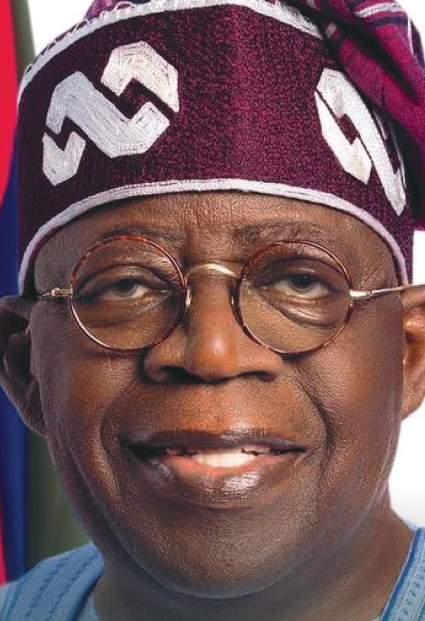
moral spirit of the nation.
Communities across various states organized to resist what they perceived as unjust treatment of immigrants. Volunteers helped vulnerable families avoid sudden deportations, provided legal assistance, and mobilized protests across cities.
For these citizens, the issue was not simply legality—it was about preserving what they believed to be the American moral identity.
Such resistance illustrates a critical democratic principle: governments may possess legal authority, but citizens retain moral authority to challenge policies they consider unjust.
In democratic societies, persistent public resistance sometimes forces governments to reconsider their decisions.
Even leaders known for their stubbornness can be compelled to change course when confronted with sustained civic pressure. When public outrage becomes too strong to ignore, resignations, policy reversals, or dismissals of officials often follow. These moments represent victories for civic courage.
They demonstrate that democracy is not merely about voting during elections—it is about continuous engagement between citizens and power.
Nigeria’s greatest political challenge may not be its leaders but its citizens’ tolerance of poor leadership.
Over decades, Nigerians have developed an extraordinary ability to endure hardship without sustained resistance. Governments impose painful economic policies, and public outrage erupts briefly before gradually fading.
In such an environment, leaders quickly learn an important lesson: Nigerians may complain, but they rarely persist long enough to force change.
This culture of resignation creates a vicious cycle in which accountability becomes rare and leadership becomes increasingly detached from
the suffering of the people.
Among contemporary Nigerian activists, one figure who has consistently challenged authority is Omoyele Sowore.
Sowore, a journalist and activist, has built his reputation around relentless confrontation with political power. Through protests, court battles, and persistent criticism of government policies, he has attempted to demonstrate that citizenship requires courage.
Many Nigerians may disagree with his political ideology or question his political viability as a national leader. Yet even his critics acknowledge that he represents one of the few consistent voices of resistance in Nigerian politics.
The lesson from his activism is not that he is a messiah. Rather, it is that democracy requires citizens willing to challenge authority.
If even five percent of Nigerians embraced the same spirit of civic resistance—peaceful but relentless—Nigeria’s political landscape could change dramatically.
Nigeria’s search for liberators may not ultimately produce a single heroic figure.
History shows that nations are rarely transformed by one individual alone. Instead, change emerges when ordinary citizens collectively decide that injustice has become intolerable.
The United States is far from perfect, and its political system remains deeply polarized. Yet its citizens repeatedly demonstrate a willingness to confront authority when they believe their values are threatened.
Nigeria’s challenge is different. The country does not lack voices of criticism; it lacks sustained civic courage.
Until Nigerians move beyond temporary outrage and embrace consistent civic engagement, the search for liberators will remain incomplete.
For in the end, the true liberators of any nation are not politicians.
In a bid to strengthen oral health awareness and build lifelong habits, Pepsodent, in collaboration with the Nigerian Dental Association (NDA) and the Federal Ministry of Health (FMOH), recently launched the 2026 World Oral Health Day campaign, themed “Do The 2”. The initiative urges Nigerians to brush twice daily — morning and night — and to visit the dentist at least twice a year, reinforcing simple but vital practices for healthier teeth and gums. Chiemelie Ezeobi writes that the campaign also underscores a broader shift toward preventive healthcare, emphasising awareness, early detection and community engagement over treatment alone
In homes across Nigeria, the nightly routine often ends with lights switched off and families settling into bed. Yet, for many, one important step is still missing — brushing their teeth before sleep. Health experts say this simple omission leaves teeth exposed to bacteria overnight, increasing the risk of cavities, plaque build-up, gum disease and bad breath. It is this everyday habit that has inspired a renewed national conversation around oral hygiene, as stakeholders in the health sector, government and the private sector unite to promote a simple but powerful message: brush twice daily.
At the heart of this movement is Unilever through its Pepsodent 2026 World Oral Health Day (WOHD) campaign, themed “Do The 2”, a call designed to be memorable, practical and capable of shaping behaviour across generations. The campaign emphasises two key actions — brushing day and night and visiting the dentist at least twice a year — as the foundation of lifelong oral health.
Through a partnership involving the Nigerian Dental Association, the Federal Ministry of Health and community stakeholders, the initiative aims to reach 500,000 Nigerians through schools, markets, neighbourhood activations and dental camps across major cities including Lagos, Ibadan, Enugu, Port Harcourt, Abuja and Kano. Health professionals say the campaign goes beyond marketing, representing a coordinated public health effort to close gaps in awareness and access to dental care, particularly in communities where professional services remain limited.
Oral Health as National Priority
Delivering the keynote address at the press conference marking the 2026 World Oral Health Day, the Unilever Personal Care Research and Development Head of Africa, Nwakamma Uchenna, described the event as both a celebration of progress and a call to sustain momentum in improving oral hygiene across the country.
“It is an honour to host oral health stakeholders in commemoration of 2026 World Oral Health Day. This serves as an opportunity to commend the progress made thus far in the promotion of good oral hygiene in Nigeria, and a call to continue prioritising oral health as a key component of our well-being this year and beyond,” he said.
Uchenna stressed that oral health remains closely linked to overall wellbeing, noting that neglecting routine dental care can lead to serious health complications.
“Prevention is the most effective strategy against oral health challenge because poor dental hygiene can lead to various complications like gum disease, tooth decay, and even systemic conditions like diabetes and heart disease,” he explained.
According to him, sustained partnerships have been central to expanding dental care access across Nigeria.
“It is amazing how in five years, these programs have reached over 700,000 Nigerians. Last year, 2025, consumers in 20 states pan Nigeria participated and benefited from the program. At a ratio of 57,000 people to one dentist, it is more than convincing that this partnership is necessary,” he added.
He also highlighted the success of schoolbased oral health education programmes, noting that early habits play a decisive role in preventing long-term dental problems.

“For instance, the Pepsodent Schools Program has been helpful in driving the importance of brushing day and night among pupils. Through it, they learnt the proper way to brush and as at today, it has reached 11,803,774 pupils,” he said.
Driving Awareness, Access Through Partnership
Speaking on behalf of the brand, Pepsodent Brand Manager, Lauretta Amie, emphasised that the campaign reflects years of sustained investment in oral health awareness and community outreach.
“It’s another year to celebrate the World Oral Health Day with Pepsodent and appreciate the confidence of oral hygiene in white teeth and healthier smiles,” she said.
Amie explained that the “Do The 2” campaign is designed not only to promote good habits but also to address widespread misconceptions about dental care.
“The campaign aims to inspire a conscious fight against oral health challenge by encouraging people to brush twice a day — morning and night. Brushing the teeth once a day is not enough, it leaves the teeth exposed to bacteria overnight, thereby increasing the risk of cavities, plaque build-up, gum disease, bad breath and tooth decay,” she stated.
She noted that night-time brushing is particularly critical because it removes food particles and acids accumulated during the day.
“To guard against this, the ‘Do The 2’ campaign encourages night-time brushing which will help to remove the food particles and sugar acids while offering a 24-hour protection support when paired with a morning routine,” she explained.
The campaign, she added, combines education, screenings and demonstrations across multiple locations.
“It will involve 50 schools, a World Oral Health Day activation led by the Nigeria Dental Association in 17 NDA chapters and the setting up of dental camps across Lagos, Ibadan, Enugu, Port Harcourt, Abuja and Kano,” Amie said.
Government Commitment to Preventive Oral Healthcare
Representing the Federal Ministry of Health, the Head of Dentistry, Dr. Gloria Uzoigwe, underscored the importance of preventive healthcare in reducing
the burden of oral diseases nationwide.
“On behalf of the Federal Ministry of Health, I am honored to join you today on this occasion of joint press conference to commemorate World Oral Health Day. This annual observance is more than a symbolic occasion, it is a call to action, reminding us that oral health is integral to overall health and well-being, as it is always said that ‘the mouth is a gateway to the body’,” she said.
Uzoigwe noted that oral diseases remain among the most common health challenges in Nigeria, despite being largely preventable.
“Dental caries, gum disease, and oral cancers affect millions, often leading to pain, reduced productivity, and diminished quality of life. Yet, with proper awareness, preventive care, and access to affordable treatment, these burdens can be significantly reduced,” she explained.
She reaffirmed the government’s commitment to strengthening policies that integrate dental care into primary healthcare services.
“Our partnership with Unilever demonstrates the power of publicprivate collaboration in advancing national health priorities,” she said.
Also speaking at the event, the President of the Nigerian Dental Association, Dr. Elias Emedom Martins, described oral health as a shared responsibility requiring sustained commitment from individuals, professionals and institutions.
“Today marks yet another milestone in our effort to highlight the importance of oral health as we assemble to mark the commencement of WOHD 2026 Campaign as a global campaign that strives to emphasize the significance of oral health in our daily lives,” he said.
Martins stressed that oral health affects more than physical comfort, influencing productivity, confidence and social interaction.
“Oral health is not only about healthy clean teeth and gums but also about how oral health affects our ability to perform the task of eating, speech, learn, work and relate with others,” he explained.
He warned that limited awareness and access to dental services continue to worsen oral health challenges in many communities.
“In Nigeria, oral health challenges are made worse by decreased access to oral care majorly due to poor awareness and inadequate resources due to poor economic indices,” he said.
The association, he added, is encouraging preventive practices as the most effective solution.
“Oral diseases can be prevented through simple daily habits like twice daily tooth brushing, flossing, proper tooth brushing techniques, regular dental check-ups, and avoidance of poor oral habits,” he stated.
Health to Schools, Markets and Communities
Beyond speeches and policy commitments, the campaign’s strength lies in its community-based approach, driven by collaboration among key stakeholders including the NDA, FMOH, Lagos State Ministry of Health, Unilever and other partners who came together to officially kick off WOHD 2026 activities.
Following the launch, the campaign moved swiftly from conference halls into communities through structured outreach programmes designed to reach families directly where they live, learn and work.
School engagement programmes educated pupils on the importance of brushing twice daily through demonstrations and interactive sessions, while dental professionals provided product sampling and free screenings. Similar activations took oral health education to markets, schools and neighbourhood centres across 17 NDA chapters nationwide, reaching communities in 50 schools and extending preventive care to populations with limited access to dental services.
Complementing these efforts were Dental Camps providing structured clinical support in key locations within Oyo State, delivering oral examinations, scaling and polishing, and referrals for further treatment. They served as vital access points for professional dental care, particularly where facilities are limited.
The campaign highlights a broader shift toward preventive healthcare, prioritising awareness, early detection and community engagement rather than treatment alone. Its simple message remains: brush twice daily, visit the dentist regularly, and protect your smile for life.
Edited by nseobonG
The Africa Gaming Expo (AGE) 2026 provided a powerful opening note for what has become a defining period for BetKing, placing the brand at the centre of conversations shaping the future of gaming across the continent, writes Nseobong Okon-Ekong
As one of Africa’s most influential gaming gatherings, AGE 2026 brought together industry leaders, regulators, innovators, and stakeholders from across West Africa, reflecting the region’s growing importance in the global gaming ecosystem. With thousands of participants converging in Lagos, the event served as both a meeting point and a launchpad for new ideas, partnerships, and industry direction.
At the heart of the conference was BetKing’s Managing Director, Gossy Ukanwoke, who took centre stage, reinforcing the company’s leadership position within the industry. His participation highlighted key themes around sustainability, compliance, innovation, and the long-term evolution of gaming in Africa, issues increasingly critical as the sector matures.
BetKing’s role as dinner sponsor further underscored its prominence at the event, positioning the brand not just as a participant but as a key driver of industry engagement and collaboration.
Milestone Moment:
The momentum from AGE Lagos comes at a significant milestone for the company, as BetKing celebrates its eighth anniversary in Nigeria.
Over the past eight years, BetKing has evolved from a fast-growing entrant into a structured and resilient gaming brand operating in one of Africa’s most competitive markets. Its journey reflects a broader shift within the industry from rapid expansion



to a more deliberate focus on sustainability, customer trust, and regulatory alignment.
The anniversary, themed ‘Season of Plenty’, goes beyond celebration, symbolising a transition into a new phase of growth. Through nationwide reward campaigns and enhanced customer engagement initiatives, BetKing is reinforcing its commitment to delivering long-term value to its users while strengthening its market position.
Innovation Meets Culture:
Complementing its industry presence and milestone celebration is BetKing’s continued push for innovation, exemplified by the launch of Chicken Keke, a new virtual crash game inspired by everyday Nigerian life.
Blending entertainment with cultural familiarity, Chicken Keke introduces a playful yet engaging experience where players navigate a high-risk, high-reward



format rooted in a uniquely local concept. The game reflects a growing trend in African gaming: the localisation of content to drive deeper engagement and relevance among users.
By integrating cultural elements into gameplay, BetKing is not only enhancing user experience but also redefining how gaming products resonate with African audiences.
quarter that signals what’s next
Taken together, BetKing’s strong presence at AGE Lagos, its eighth anniversary milestone, and the launch of Chicken Keke point to a company entering a new phase of strategic clarity and influence. This is no longer just a story of growth, but one of consolidation, innovation, and leadership.
As Africa’s gaming industry continues to expand, driven by technology, mobile
penetration, and a youthful population, companies that combine scale with local relevance and responsible operations will shape its future.
In that evolving landscape, BetKing’s activities in the first quarter of 2026 position it firmly at the centre of that transformation, not just participating in the industry’s growth, but actively helping to define it.
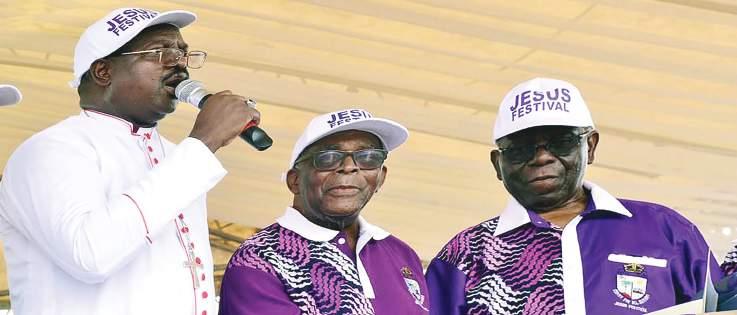
L-R: Bishop, Diocese of Lagos West, Rt Rev. James Olusola Odedeji; the celebrant and former Chairman of Ecobank Nigeria Ltd, John Agboola Odeyemi; and former Chairman, International Chamber of Commerce, Nigeria, Olusegun Osunkeye, during the 2026 Jesus Festival/Odeyemi’s 87th birthday celebration in Lagos on Monday
The Managing Director and Chief Executive Officer of Nigeria Liquefied Natural Gas (NLNG) Limited, Adeleye Falade, has revealed that the company has contributed over N250 billion to the Rivers State government through employee taxes.
Speaking during a visit to the Government House, Port Harcourt yesterday Falade disclosed that NLNG has also generated over $30 billion
in revenue since inception, with the federal government receiving 49 per cent stake, including approximately $9 billion in taxes.
He said: “Since the inception of the company we have generated in excess of $30 billion in terms of revenue. We paid shareholders of which the federal government has gotten 49 per cent of that. We have paid an additional $9 billion in taxes to the federal government just by reason of this investment.
“In the last 10 years, as a company through employee tax we have been able to pay N250 billion to Rivers State government and every year it continues to get more and more. In the last three years from 2023 till date about N138 billion has been paid with the highest being last year that the company remitted about N46 billion.
“In the first three months of this year we have already done N39 billion, almost equally what we did the
whole of last year. Maybe because of the very peaceful environment that we enjoy, the kind of intervention we enjoyed from you last year has enabled our operations to go at scale,” he said.
He expressed appreciation to Governor Siminalayi Fubara for maintaining a strong working relationship with the company, particularly in addressing pipeline vandalism and ensuring a stable operating environment.
The Permanent Secretary, State House, Mr. Temitope Fashedemi, has urged staff to uphold a culture of excellence and professionalism in service delivery, setting the standard in public service.
Fashedemi, according to a release issued on Wednesday by Director (Information & Public Relations) at the State House, Mr. Abiodun Oladunjoye, made the call in Abuja during the 2025 State House Ministerial Rewards and Recognition Ceremony held to honour outstanding staff contributions.
The Permanent Secretary, represented by Director, Internal Audit, Dr. Adenike Akintola, welcomed participants and commended their dedication to service.
His words: “I warmly welcome you all to this remarkable occasion as we gather to celebrate excellence, dedication and outstanding achievement.
“Today’s ceremony is about recognising individuals whose hard work and dedication have contributed significantly to the success of the State House and public service”.
Fashedemi stressed that excellence in public service remained a re-
sponsibility, noting that every action and decision impact governance outcome positively or negatively.
“In public service, excellence is not merely a goal, it is a responsibility, as every task and decision have direct consequences.”
He congratulated the awardees, describing them as role models whose performance sets standards for others within the system.
The Permanent Secretary urged the honourees to remain committed and continue striving for greater accomplishments in their respective duties.
He also commended organisers of the event, including the Office of the Head of Civil Service of the Federation, management of the State House, and members of the award committee for a job well done.
Fashedemi said the ceremony, initially scheduled for 2025 was rescheduled due to unforeseen exigencies affecting official engagements.
A total of seven awardees drawn from 15 departments were honoured with plaques, commendation letters, and cash gifts for outstanding performance.
The recipients include Dr. Agbor Ebuta of the State House Medical Centre for his proactiveness in
saving a six-month old baby; Mr. Isah Mohammed, a driver from the Transport Department, and Mr. Gabriel Jagaban from the Office of the Permanent Secretary.
Others are the ICT Department for innovation, the Squash Team from the Sports Unit for their performance at the last Federal Public Service Games (FEPSGA).
Also honoured are Mr. Akanu Oluwagbenga of the Pension Unit of the Department of Administration for reform initiatives, and Dr Seidu Bello, a dental surgeon for
his humanitarian impact.
Responding on behalf of the awardees, Dr. Bello expressed gratitude to the management for the recognition and described the honour as both motivating and challenging.
“Being selected among many staff for this honour is a great privilege, and we sincerely appreciate the management for finding us worthy”.
Bello said the recognition would inspire greater productivity and encourage other staff to strive for excellence in service delivery.
Falade noted that the improved security conditions in recent times have enabled the company to scale up operations, boosting productivity and revenue.
He reiterated NLNG’s commitment to contributing to socio-economic development in Rivers State through investments in education, youth empowerment, and community development initiatives.
According to him, the company has invested billions of naira in school renovation projects under its General Memorandum of Understanding (GMOU), as well as vocational training programmes aimed at building local capacity in the Niger Delta.
He said the company’s performance continues to improve, citing significant remittances in recent years and expressing optimism that 2026 would record even higher returns, driven by a peaceful operating environment and sustained government support.
The NLNG boss maintained that continued collaboration with the Rivers State government and host communities remains essential to achieving long-term economic growth and stability in the region.
Fubara, in his remarks, reaffirmed his administration’s commitment to sustaining a robust partnership with
the company, describing its success as vital to the growth of both the state and the nation.
Fubara stressed that continued government support for NLNG and other corporate organisations operating in the state would translate into broader economic gains for Nigeria, noting that the fortunes of the state, the federal government, and private enterprises are closely linked.
“We are the ones here. If we don’t support you and you don’t succeed, we also will not succeed, and the country will not succeed. So you can always count on our support,” the governor said, assuring the company of seamless collaboration across all levels of government.
The governor also appealed to NLNG’s leadership to support the revitalisation of the Bonny General Hospital, urging the company to reintroduce incentives that previously attracted medical personnel to the facility.
He recalled that in earlier years, the hospital thrived due to NLNG’s strong community engagement and incentive structures, which made postings to Bonny attractive for health workers. However, he expressed concern that the facility had deteriorated, forcing residents to seek care from unqualified providers.
Emma Okonji
Following the ongoing US and Israel war on Iran, which has disrupted global energy markets, the Chairman, Zinox Group, Leo Stan Ekeh, has stressed the need for capacity building in Nigeria’s technology sector, in order to avoid the ripple effect of the war in Nigeria.
In a statement yesterday, Ekeh said the recent escalation in the US-Israel conflict with Iran has delivered a sharp reminder of
Nigeria’s economic vulnerability.
According to him, “As oil prices surged past $100 per barrel and fuel costs climbed by 35 per cent at Nigerian pumps, a troubling paradox emerged: Nigeria, a major crude oil producer with Africa’s largest privately-owned refinery now operational, still found itself buffeted by global energy shocks originating thousands of miles away.”
The exposed vulnerability on Nigeria’s economy, he said, has extended beyond energy, affect-
ing the technology sector and other sectors that rely heavily on importation.
“Nigeria’s technology sector offers a particularly instructive case study in the costs of import reliance, and the transformative potential of local capacity as the pathway to economic stability and technological sovereignty.
“Against this backdrop, Zinox Technologies stands as a compelling counter-narrative to re-write the wrongs. As Nigeria’s first indigenous computer manufacturer,
Zinox demonstrates what becomes possible when vision, investment, and commitment to local capacity converge.” Ekeh said. He therefore called for support for indigenous companies like Zinox Technologies to drive technology transformation by focusing on local assembly and manufacturing of computer hardware and digital devices, adding that such support will not only reduce reliance on foreign imports but will also create jobs, transfer knowledge, and strengthen national capacity.
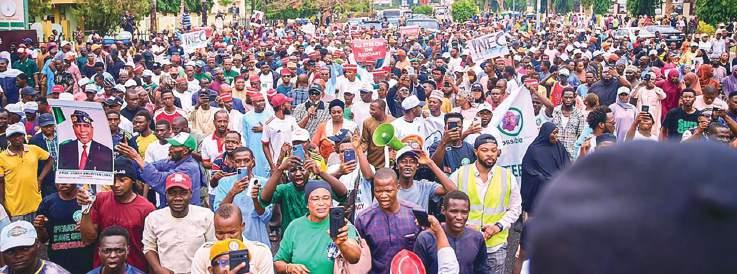
Crowd that accompanied ADC leaders to protest the de-recognition of its leaders by INEC at the commission’s headquarters in Abuja, yesterday
The Chairman of the Independent National Electoral Commission (INEC), Prof. Joash Amupitan, has called on the National Broadcasting Commission (NBC) to ensure stricter internal editorial guidelines within media organisations ahead of the 2027 elections.
Amupitan stated this yesterday in Abuja at the 81st General Assembly of the Broadcasting Organisations of Nigeria (BON).
The chairman in a statement issued yesterday by INEC’s Director of Voter Education and Publicity, Mrs. Victoria Eta-Messi said in the 2027 general election, the most dangerous weapon will not be a ballot-snatcher’s gun, but a smartphone user’s lie amplified by an uncritical broadcast station.
He said there was a need to ensure that Nigeria’s airwaves remained a sanctuary for truth, not a megaphone for chaos.
Amupitan described the information space as the new frontline of democratic contestation, noting that elections are no longer fought solely at polling units but increasingly within the media ecosystem.
He stated: “As we sit here today, April 8, 2026, the countdown has begun: 283 days remain until the Presidential and National Assembly Elections on January 16, 2027, and 304 days until the Governorship and State Houses of Assembly Elections
was convened by the Joint Senate and House of Representatives Committee on Petroleum Resources. It had in attendance the Senate President, Speaker of the House of Representatives, National Security Adviser, Minister of Defence, and representatives of oil industry regulatory agencies.
The roundtable also featured presentations by the Chief of Defence Staff, Inspector General of Police, Director General of the Department of State Services, Commandant General of the Nigerian Security and Civil Defense Corps, and private security companies.
Meanwhile, higher oil and gas prices due to the U.S.-Israeli war on Iran could boost Exxon Mobil’s first-quarter upstream earnings by
on February 6, 2027.”
The INEC Chairman pointed out that the credibility of those polls would depend not only on logistics and technology, but on how responsibly the airwaves are managed.
He also highlighted Section 96(1) of the Act, which prohibits abusive, slanderous, or inflammatory language capable of provoking ethnic, religious, or sectional tension.
Amupitan warned that in a plural society such as Nigeria, careless political broadcasting could inflame divisions and destabilise the electoral environment. According to him, the line between robust political debate and incitement must never be blurred.
Amupitan further reminded broadcasters of the statutory 24-hour “cooling-off period” preceding polling day, during which political advertisements and campaign broadcasts are prohibited.
The provision, the INEC Chairman explained, was designed to protect voters from last-minute propaganda, misinformation, or emotional manipulation capable of distorting electoral judgment.
“Elections are not only about campaigning; they are also about reflection. The law creates a quiet space for citizens to make independent decisions free from undue influence,” he noted.
While defending the regulatory framework, the INEC chairman acknowledged the constitutional
up to $2.9 billion, outweighing the impact of disruptions to some of its oil and gas production in the Middle East, the U.S. oil producer said on Wednesday.
Downstream earnings, however, could see a hit of about $5.3 billion in part because of timing effects, though Exxon said in a regulatory filing it will see a lift in earnings in later quarters when oil and gas shipments are delivered.
The conflict that began on February 28 sent oil prices skyrocketing as much as 65 per cent, with some oil and gas fields in the Middle East shutting in production after the Strait of Hormuz - a conduit for a fifth of global energy flows - was effectively closed.
Benchmark Brent crude prices averaged $78.38 per barrel during
guarantee of freedom of expression under Section 39 of the 1999 Constitution (as amended), noting that regulation must be carefully balanced to preserve media independence.
Amupitan stressed that the airwaves, as a finite public resource, impose a corresponding duty on the State to ensure equitable access,
particularly during elections.
He added: “With 22 registered political parties, fairness is not optional; it is statutory. You must provide a level playing field, ensuring that no single interest group monopolises the airwaves.”
The INEC Chairman noted that violations attract stiff penalties, includ-
ing fines running into millions of naira for media organisations and principal officers, and in certain instances, imprisonment.
“The sanction regime underscores the seriousness with which electoral fairness in media coverage is treated under the law,” he explained.
The INEC Chairman warned that the convergence of traditional broadcasting and digital platforms has further complicated regulation, as broadcast content is now rapidly amplified online.
“Broadcast content is no longer confined to radio and television. It is clipped, amplified, and weaponised online within minutes,” he said,
Segun Awofadeji in Bauchi
A caucus of All Progressives Congress (APC) in Bauchi State has opposed an alleged plan by the APC national leadership to admit the state governor, Bala Mohammed, into the party.
The group cited the governor’s past comments on the policies of the President Bola Tinubu administration, adding that his criticisms have caused division and acrimony.
But a chieftain of APC in the state, Comrade Aliyu Ilelah, said only self-centred politicians and APC’s enemies, who did not Tinubu’s victory in 2027, would oppose Mohammed’s move to defect to the party.
Speaking Tuesday night after a meeting in Abuja, the leader of the
the first quarter, up 24 per cent from the previous three months, according to LSEG data.
Exxon said its first-quarter oil and gas production will be 6 per cent lower due to the war compared with the fourth quarter, when it produced 5 million barrels of oil equivalent per day. Assets in Qatar and the UAE accounted for 20 per cent of Exxon’s global oil production in 2025, the company said in the filing.
Exxon will report its full firstquarter results on May 1. Investors closely watch the company’s earnings snapshot, which details the market factors that impacted earnings, for signals about how the broader oil sector will perform when results are released next month, a Reuters report stated.
caucus, Senator Sama’ila Dahuwa, representing Bauchi North, said the group opposed Mohammed’s planned admission into APC.
Dahuwa, who chaired the meeting, said, “The caucus, after exhaustive deliberations, unequivocally rejects the move.”
The caucus expressed concern that Mohammed had consistently engaged in public attacks against Tinubu and APC, including statements perceived to undermine the party’s unity and integrity.
He stated, “Till today, he has neither retracted such statements nor made any formal efforts aimed at reconciliation with the leadership and the members of the party. He has no public apology to our knowledge.
“In view of the foregoing, the caucus firmly holds that his admis- sion into APC at this time will be detrimental to the party, cohesion, credibility and electoral prospects in Bauchi State.”
The caucus further declared that it would not support any move capable of compromising the party’s stability and fortunes.
It condemned what it described as failure to consult critical stakeholders within the Bauchi APC on matters of such political importance, describing the omission as inconsistent with internal democracy and inclusiveness.
The caucus said it would formally communicate its position to the party’s national leadership and demand strict adherence to due
process and established structures. Only Selfish Politicians Oppose Bauchi Governor’s Defection to APC, Says Ilelah A chieftain of APC in the state, Comrade Aliyu Ilelah, said only selfish politicians, who were enemies of Tinubu’s victory in 2027, would oppose Mohammed’s defection to APC.
Ilelah, flanked by hundreds of his supporters, spoke yesterday when he addressed reporters in Bauchi, while reacting to a caucus meeting of APC stalwarts led by Dahuwa, which opposed the move to accept Mohammed into APC ahead of 2027.
Fidelis David in Akure
Former Minister of Works and Chairman of Nigerian Ports Authority (NPA), Senator Dayo Adeyeye, and Ondo State Governor Lucky Aiyedatiwa dismissed claims that Nigerians were yet to feel the impact of President Bola Tinubu’s policies, insisting that tangible benefits are already reaching citizens across the country.
Adeyeye spoke during a visit to the governor and Deji of Akure, Oba Aladetoyinbo Ogunlade, where he briefed them ahead of the relaunch
of South-West Agenda for Asiwaju (SWAGA), SWAGA, 2.0 to champion the re-election of Tinubu in 2027.
He expressed confidence that Tinubu would win more states in the upcoming election.
The founder of SWAGA stated that the impact of government policies were evident in key areas of national life, particularly in welfare and education.
“When pensioners receive their gratuities and students access loans, are they not feeling it? These are practical results of the policies,” he said.
According to him, recent reforms have restored financial stability to sub-national governments, enabling them to meet long-standing obligations.
Adeyeye stated, “Before now, many states could not pay salaries or pensions. But today, they have the resources to function effectively. That is a direct impact on the lives of the people.” He claimed the country was already on the brink before Tinubu assumed office in 2023, warning that failure to act decisively would have plunged Nigeria into deeper crisis.
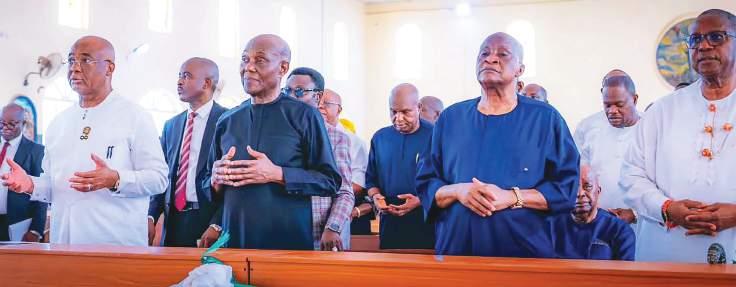
The federal government has frowned on claims that Nigeria is on the brink of collapse, insisting that the country is stable, resilient, and on a clear path to recovery and growth. Minister of Information and National Orientation, Mohammed Idris, stated this yesterday at the 81st General Assembly and
23rd Annual General Meeting of Broadcasting Organisations of Nigeria (BON), held in Abuja. Idris said, “I want to unequivocally refute the insinuation that Nigeria is on the brink. On the contrary, we are daily exhibiting resilience and tackling our security and economic challenges more decisively,”
He referenced recent success-
ful operations in Zamfara and Niger states, where security forces neutralised bandits and disrupted planned attacks within a short period, as evidence of steady progress through sustained military operations and improved intelligence coordination.
The information minister stated, “Coordinated operations by the armed forces and other security
agencies have led to sustained gains in several parts of the country.“Incidents of large-scale insurgent control have significantly decreased, and we are strengthening intelligence and rapid response systems to protect life andIdrisproperty.” stated that the economic indicators remained positive and
Yemi Kosoko in Jos
Plateau State Governor, Caleb Mutfwang, convened an expanded meeting of the State Security Council, bringing together heads of security agencies and chairmen of the 17 local government areas as part of renewed efforts to reinforce peace and stability across the state.
The meeting, held at Government House, Jos, reviewed the security situation over the past week and explored proactive strategies to prevent further breaches, while consolidating ongoing peacebuilding initiatives.
Briefing journalists after the meeting, Commissioner of Police, Bassey S. Ewah, said the session provided an opportunity for security chiefs to assess recent developments and chart a coordinated approach to the maintenance of order.
According to him, the state government has adjusted the existing curfew for movement in Jos North Local Government Area to run from 6am to 6pm, with security agencies directed to ensure strict enforcement.
Ewah stated, “His Excellency summoned this meeting to review the past week and enable us plan effectively for the days ahead. The curfew has now been adjusted with restrictions from 6:00 p.m.
to 6:00 a.m., and we have been directed to ensure strict compliance.”
He said restrictions on commercial motorcycle operations and regulated tricycle movements remained in force, stressing that security agencies are fully committed to upholding law and order.
On enforcement, the police chief warned that violators of the curfew will face prosecution.
“Anyone arrested for violating the curfew will be prosecuted. Laws are meant to be obeyed; if you break them, you must face the consequences,” he stated.
Responding to reports of alleged protests circulating on social media, Ewah dismissed the claims, insisting that the situation across the state remains calm.
He said, “The government is not siding any faith. All decisions are aimed at ensuring peace. To the best of my knowledge, there have been no protests and no breakdown of law and order.”
He urged residents to cooperate with security agencies, emphasising that inter-agency collaboration remained strong.
“We operate as one team, and I assure citizens that we will continue to work tirelessly to ensure peace,” he added.
Chairman of Association of Local Governments of Nigeria (ALGON) in Plateau State, Hamisu
Anani, also described the meeting as crucial in addressing recurring security concerns, particularly within the Jos metropolis.
Anani explained that local government councils were adopting tailored approaches to address threats based on their unique circumstances.
He stated, “Each local government will develop strategies based on its peculiarities. We are working closely with security chiefs,
reviewing reports from the field, and strengthening collaboration to effectively tackle insecurity across the state.”
The meeting was attended by the deputy governor, Ngo Josephine Piyo; Special Adviser on Security and Commander of Operation Rainbow, General Gagji Shipi; and Gbong Gwom Jos and Chairman of Plateau State Council of Chiefs and Emirs, His Majesty Da Jacob Gyang Buba.
pointed to recovery and renewed investor confidence, stating that ongoing reforms are already yielding results.
He said, “Nigeria’s foreign reserves are strengthening, investor confidence is improving, and reforms in both the oil and non-oil sectors are expanding revenue streams. These decisions, though difficult, are stabilising public finances and creating a more transparent economic environment.”
He highlighted Nigeria’s recent return to Frontier Market status, as recently announced by FTSE Russell, a global financial index, as a strong signal of global confidence in the country’s economy.
Idris added that the reclassification reflected improved foreign-exchange liquidity, greater market transparency, and greater ease of capital repatriation.
He said, “This development confirms that Nigeria is once again a viable destination for global in- vestment, with international funds expected to increase participation in our capital market.”
He urged the media to ensure responsible and accurate report-
History teaches us that the most dangerous threats to democracy arrive through the quiet accumulation of administrative decisions that collectively drain the oxygen from political competition. Nigeria has walked this road before. In the First Republic, the deliberate destruction of opposition in the Western Region helped set the stage for military intervention. It was not much different in the Second Republic. In the Third Republic, the annulment of June 12 election demonstrated what happens when political choices are voided by those who fear the outcome. The road to 2027 is therefore about far more than who wins the presidency. It is about whether Nigeria remains committed to the principle that power can be contested fairly, openly, and without fear.
On that score, we may sympathise with INEC, given the bad behaviour of the
political class, made worse by our judicial environment. Increasingly, our elections are no longer determined through votes cast by citizens at polling units but by courtroom decisions. At a consultative meeting held with stakeholders in Lokoja on 12th November 2019, former INEC chairman, Prof Mahmood Yakubu lamented: “…I must admit that the plethora of court cases and conflicting judgements delivered on the eve of elections in Nigeria are stressful to the commission and costly to the nation.”
The current crisis may yet find resolution. The courts may untangle the competing claims, and the ADC may regain its organisational footing. But the alarm has already been raised, and it would be reckless to ignore it. This issue goes beyond partisanship. When the opposition is stifled, it is not just one party that loses, it is the entire country that pays the price. For, in
ing, especially as the country approached another election cycle. Idris said the broadcast media played a critical role in shaping public perception and maintaining national unity, and it must continue to uphold the highest standards of professionalism, fairness, and accuracy.
He commended BON for its role in strengthening professionalism in the industry and encouraged stakeholders to continue to work together to build a media landscape that supported democracy, development, and national unity. He also stated that the federal government would continue to engage openly with Nigerians as it implemented reforms to build a more secure, resilient, and prosperous nation. The 81st BON AGM was attended by Chairman of Independent National Electoral Commission (INEC), Professor Joash Amupitan; DirectorGeneral, National Broadcasting Commission (NBC), Mr. Charles Ebuebu; Director-General, Nigerian Television Authority (NTA), and Chairman, BON, Comrade Salihu Dembos, among others.
the end, a democracy without choice is no democracy at all. It is the architecture of one, with the soul removed. Therefore, the immediate priority is clear. INEC must find a path that resolves its legal obligations without creating a situation where no credible opposition party can contest the presidential election next year. The courts must act with urgency on substantive suits involving the internal affairs of political parties, recognising that the clock of the electoral calendar waits for no one. And the ruling APC, if it truly believes in democratic competition as it claims, should resist the temptation to fish in the troubled waters of opposition dysfunction. They must understand that what is won without contest is won without legitimacy. And what is held without legitimacy is held on borrowed time. A word, as the old saying goes, is enough for the wise.
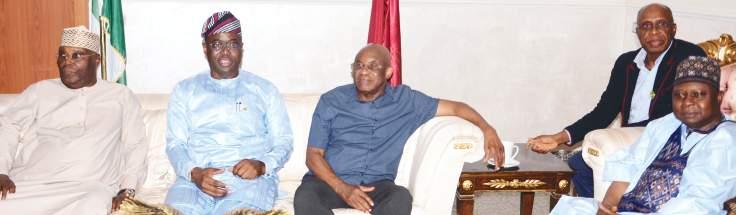
Former Vice President, Atiku Abubakar;
The Delta State Government is poised to firmly tackle the epileptic power supply situation in the state with the unveiling of “Light Up To Industrialise Delta Initiative” by Governor Sheriff Oborevwori in Asaba.
The initiative is a bold attempt at driving an ambitious programme that would ensure a round-the-clock electricity supply in the state to galvanise industrialisation.
The State Commissioner for Economic Planning, Mr. Sunny
Ekedayen, outlined the strategic roadmap being championed by the Oborevwori’s administration to reposition the state as a hub of industrial growth driven by stable electricity. These positions flowed from a strategic meeting between Governor Oborevwori and officials of Power Acumen Consulting Ltd (PACL), Detail Solictors and Nigeria Infrastructure Bank (NIB), held in Government House, Asaba, on Wednesday.
Ekedayen disclosed that Governor Oborevwori had “approved the
engagement of Power Acumen Consulting Limited to undertake a comprehensive diagnostic assessment of Delta’s electricity ecosystem.”
This is the outcome of extensive fieldwork conducted since late 2025 by the consultants, interfacing with stakeholders and analysing infrastructure and institutional gaps across the power value chain, he explained.
An interim report submitted by the firm had recommended a sweeping overhaul of the state’s electricity laws and policy framework, he further noted, saying it was an
indication of deep-rooted structural deficiencies that the government was now poised to address.
Ekedayen said, “A detailed and actionable roadmap will be delivered in the coming weeks. A key reform component would be the establishment of a State Electricity Commission to regulate and coordinate the evolving power sector.
“In the not-too-distant future, Deltans will begin to experience measurable improvements in electricity supply.”
Similarly, the Commissioner
for Energy, Mr. Michael Anoka, threw more light on the operational framework of the initiative, describing it as a “bold and transformative programme” designed to unlock Delta’s industrial potential.
Anoka explained the state would capitalise on its existing power generation capacity, particularly from Okpai and Ughelli, where significant volumes of electricity currently remain underutilised.
“Our priority is not generation, but efficient transmission and distribution,” he said, noting that the government aims to achieve
24-hour electricity
He further disclosed ongoing collaboration with Power Acumen Consulting and Benin
Distribution Company to strengthen distribution networks, alongside plans to develop an independent State electricity grid.
He explained this was an unprecedented move expected to optimise power delivery from multiple generation sources, including Okpai, Transcorp Ughelli and Sapele.
broader democratic context. It warned that interference in the internal affairs of political parties, or the elevation of factional actors, threatened the foundation of Nigeria’s multi-party system. The party described this as not just improper, but also dangerous to democratic pluralism.
ADC further rejected the legitimacy of individuals claiming leadership outside its recognised structure.
It pointed out that such individuals had previously participated in party processes that dissolved the former leadership.
As a result, the party said any attempt to now rely on the same authority was contradictory and legally untenable.
To strengthen its case, ADC laid out a detailed timeline of its internal decisions in 2025.
It highlighted its National Executive Committee (NEC) and National Working Committee (NWC) meetings that were attended by INEC officials, properly documented, and formally communicated to the commission.
The party emphasised that INEC itself had acknowledged those processes and even reflected the new leadership on its official portal, reinforcing its claim to legitimacy.
ADC’s Letter Concluded with Clear Escalation Pathway, Obi Declares
Former Anambra State Governor, Peter Obi, warned that INEC’s failure to meet ADC’s demands, as contained in its protest letter, would trigger a coordinated response, including judicial proceedings and broader civic action.
It was a signal that the party was prepared to take the battle beyond correspondence, to both legal and public arenas.
“This letter marks a significant escalation in tensions between the ADC and INEC, moving from pro-
cedural disputes to a direct challenge to institutional authori-ty,” he said.
Obi urged Nigerians to join ADC to reject one-party state and defend the country’s democracy
Obi made the call on X, yesterday, where he urged citizens to unite in defence of democratic values.
He stated, “We, members and leaders of the ADC, and other well-meaning Nigerians, lovers of democracy, are saying that our democracy must not be killed.
“We say NO to a one-party system and for that, today, we’re calling out Nigerians who believe in unity, peace, and security of our country to join us as we defend democracy in our land.”
The member representing Kebbe/ Tambuwal constituency in the House of Representatives, Abdussamad Dasuki, accused INEC under Amupitan of becoming a threat to Nigeria’s multi-party democracy.
Dasuki made the statement while joining ADC in Sokoto State, citing the commission’s alleged collusion with those plotting to stifle opposition parties and turn Nigeria into a one-party state.
The lawmaker’s decision to join ADC came amid a wave of defections from other parties, including Peoples Democratic Party (PDP), Dasuki’s former party.
He cited PDP’s protracted leadership crisis as reason for his exit, stating that the party’s capacity to function effectively as an opposition platform has been weakened.
Dasuki specifically pointed to INEC’s refusal to recognise the Mark leadership of ADC as evidence of the commission’s plot to stifle opposition.
He stated, “The refusal to recognise legitimate leadership within opposition
parties is not accidental. It is part of a broader, well-orchestrated plan to weaken alternative voices and ensure that only one party remains viable ahead of 2027.”
The lawmaker warned that if left unchecked, such tendencies could reverse Nigeria’s democratic gains.
He called on citizens, civil society organisations, and the international community to defend democratic institutions and uphold the rule of law.
“We must rise collectively to resist any attempt to derail our democracy. Nigeria belongs to all of us, not to a select few seeking to monopolise power,” Dasuki declared.
Yilwatda: ADC, Others That Can’t Manage Their Affairs Can’t Be Trusted with Nigeria
National Chairman of All Progressives Congress (APC), Professor Nentawe Yilwatda, said African Democratic Congress (ADC) and other parties that could not manage their internal affairs, reconcile tendencies, enforce discipline, or build consensus, could not be trusted with the delicate task of governing Nigeria. Yilwatda stated this known in Abuja while speaking on key issues affecting the social, political and economic management of the country.
The chairman, in a statement by his Special Adviser of Media and Communications Strategy, Abimbola Tooki, insisted that in a period of national transition and democratic consolidation, Nigeria could not afford to gamble its future on confusion, instability, or politically disoriented alternatives.
Commenting on the internal crises currently ravaging the main opposition parties, Yilwatda said the situation was a clear and disturbing reflection of their lack of preparedness for national leadership.
He stated, “The persistent implo-
sions, factional wars, legal battles, ego clashes and ideological emptiness that define many opposition parties today are not just political setbacks, but warning signs of deeper structural weakness and managerial incompetence,”
Yilwatda claimed that it would be dangerous and politically irresponsible for Nigerians to hand over the future of the country to political actors who had repeatedly shown that they could not maintain order within their own house.
He added, “A party that cannot govern itself cannot govern Nigeria. If a political platform is constantly trapped in self-inflicted crisis, consumed by internal sabotage, and weakened by poor management, it simply has no business asking Nigerians for the mandate to lead this country.
“While political parties must comply with the law and electoral regulations, the APC preference is always to defeat its opponents at the ballot box and not in backroom arrangements, procedural traps or legal technicalities.”
The chairman emphasised that true democratic legitimacy came from earned victory, not engineered outcomes, and that history was kinder to leaders and parties whose mandates were clearly validated by the people.
He stated, “Victory is sweeter when it is earned. It is more legitimate when it is freely given by the people. As a party, we believe that the strongest mandate is one secured through persuasion, performance, organisation and political engagement.”
The APC national chairman said Nigerians must be discerning enough to separate noise from capacity, propaganda from preparation, and opportunism from genuine leadership.
He stressed that the ruling party remained the only truly national, deeply structured, ideologically
resilient and electorally durable political platform capable of delivering on the present aspirations and future expectations of Nigerians.
He stated that APC had over time demonstrated the institutional maturity, national spread, political discipline, and administrative capacity required to manage the complex demands of a nation as large, diverse, and strategically important as Nigeria.
He said the party was not merely preparing for the next election cycle, but was actively working to deepen governance, strengthen democratic culture, improve public trust, and build a stronger foundation for national development.
Yilwatda maintained that while governance naturally came with pressures, contestations and difficult decisions, APC remained committed to supporting policies and reforms that will place Nigeria on the path of long-term stability, productivity and prosperity.
He stated that the task before the current administration was not a cosmetic one, but a serious nation-building responsibility that required courage, patience, sacrifice, and political steadiness.
Yilwatda said, “The All Progressives Congress is not an ad hoc coalition held together by convenience. It is a tested and enduring political machine, built on structure, spread, experience and the capacity to respond to the real needs of Nigerians.
“We are the only party with the institutional strength and national reach to carry the weight of both the present and the future of this country.”
Yilwatda stated that APC, as the governing party, fully understood the weight of the historic obligation and would continue to provide the political backbone required to sustain reforms and deliver democratic dividends to Nigerians.
He added that while APC continued to evolve, reform and strengthen its internal processes, many opposition parties remained trapped in a cycle of instability that made them unfit for serious democratic competition. He further said a repositioned and confident APC was not afraid of political competition and did not seek victory through the technical disqualification of opponents.
Yilwatda said APC believed in democratic contest, popular legitimacy, and the power of persuasion, adding that the party derives greater strength and credibility when it wins elections through the trust and support of the Nigerian people.
On the current security situation in the country, Yilwatda described the new phase in the trial of over 500 terrorism-related suspects as a major demonstration of state seriousness, institutional resolve, and respect for the rule of law.
He said the development marked an important shift in the national security architecture, from merely announcing arrests to ensuring judicial accountability and lawful consequences for acts of terror and violent criminality. According to him, this is not just a security story but also a governance story, a rule-of-law story, and a public trust story.
He explained that for citizens to have confidence in the state, they must see that criminal acts were not only confronted militarily, but also prosecuted credibly and transparently within the framework of the law.
Yilwatda stated, “What we are seeing is movement beyond arrests towards institutional accountability. That matters greatly. It shows that the Tinubu administration is not only fighting insecurity on the battlefield, but also in the courtroom, in the intelligence space, and within the wider framework of state institutions.”

L-R: Executive Director, Risk Management, Ministry of Finance Incorporated (MOFI), Mrs. Kemi Babalogbon; Honourable Minister for Finance and Coordinating Minister of the Economy, Mr. Wale Edun; Managing Director, Lotus Capital, Mrs. Hajara Adeola; Chairman, Buraq Capital, Mallam Mustapha Bintube, and Managing Director, STL Trustees, Mrs. Funmi Ekundayo, during the Non-Interest Ministry of Finance Incorporated Real Estate Investment Fund (MREIF) presentation in Abuja...recently
Felix Omoh-asun in Benin City
Former Commissioner representing the South-south at the Code of Conduct Bureau (CCB) and member of the House of Representatives, Ehiozuwa Johnson Agbonayinma, yesterday dumped the All Progressives Congress (APC), describing the management of APC in Edo State as undemocratic.
He adduced alleged undue interference and marginalisation by the party in the state as a reason for leaving the party.
Agbonayima, who represented Egor/Ikpoba Okha federal constituency between 2015 and 2019, announced his exit from the APC in Benin-City,
alleging that the party has been hijacked by people he said are monopolising the activities of the party.
He said it was painful that other people, including Senator Adams Oshiomhole (Edo North) and Pastor Osagie Ize-Iyamu, a senatorial aspirant for Edo South senatorial district, who are not from his local government area and senatorial district, are now the sole administrators of the party, dictating what happens in his local government area and his Ikpoba-Okha Ward 6.
The former federal lawmaker said he cannot continue to remain in a party where politicians who worked against the APC during the
The Adeleke Campaign Organisation has stated that the Osun State All Progressives Congress (APC) campaign organisation and its DirectorGeneral, Wole Oke, are living in the old world as “the state 2026 political map is fully and firmly in favour of Governor Ademola Adeleke and his party, Accord Party, with old APC bases now Accord strongholds.”
The Adeleke Campaign Organisation asserted, while refuting statements credited to Hon. Wole Oke, who claimed that since the governor won with only 28,000 votes in 2022 and since he and others had since defected, the APC will win the state in August.
Describing the postulations as mere fantasy without grounding in reality, the governor’s campaign group said the Osun State political map across the nine federal constituencies has shifted significantly from the 2022 allegiance pattern, predicting that the governor will win the August election with a margin of over 200,000 votes.
While slamming Oke for
his anti-party activities against Governor Adeleke in the 2022 polls, the governor’s campaign group declared that the exit of a few black sheep was compensated for by mass defection from APC to Accord Party across the nine federal constituencies, the rejection of the few defectors by their own people, and the surging approval rating of Governor Adeleke across the state.
The organisation mocked the state APC for its failure to unveil its manifesto for the August elections, while commending Governor Adeleke for pushing forward his people-based five-point agenda in several languages and for sharing with the public his compendium of achievements from 2022 to date.
“The governor’s winning team remains tactically and strategically intact and is now strengthened by an army of society stakeholders, grassroots groups, labour movements, and activists for justice in Osun State local administration. Osun’s map is today more than 90 percent yellow, including Boripe LGA, where Mr. Gboyega Oyetola hails from.
last elections were now dictating what happened within the party.
In his letter of resignation addressed to the Ikpoba-Okha Ward 7 chairman of the APC, Agbonayinma said:
“As a foundation mzs and activities, I regret to inform you of my decision to resign my membership of the All Progressives Congress (APC) with immediate effect.
“How can I, as one of those who helped, who worked intelligently for this government, and those who fought us, be the ones dictating, now telling me that I’m no longer a person?”
Commenting on the distribution of federal
appointments allotted to the state, the ex-lawmaker accused Senator Oshiomhole of blocking his appointment as acting chairman of CCB and also diverting all other appointments to Edo North.
Kemi Olaitan inibadan
No fewer than 300 independent National Identification Number (NIN) enrolment agents yesterday raised concern over alleged unpaid commissions, forceful loan recoveries, and what they described as contractual breaches by key stakeholders in Nigeria’s identity enrolment ecosystem.
They lamented that their livelihoods have been severely affected since 2021, when they were engaged to support
the country’s mass identity registration drive.
The aggrieved agents, while speaking with journalists in Ibadan, Oyo State, at a press conference, explained that they were recruited through a firm, which was an accredited Frontend Enrolment Partner (FEP) of the National Identity Management Commission (NIMC), with a contractual agreement to receive $1 commission per successful enrolment.
According to them, to facilitate
their operations, they secured loans worth over N4.1 million each under the AGSMEIS scheme from NIRSAL Microfinance Bank, with the understanding that repayments would be deducted from their monthly commissions.
However, the agents alleged that after initial payments in April and May 2021, commission payments were halted for several months, creating financial strain.
“Although arrears for 2021 were eventually paid in
March 2022, they claimed that commissions from January 2022 onward remain largely unpaid despite NIMC achieving its enrolment targets.”
The group further accused the microfinance bank of initiating aggressive loan recovery actions through the Central Bank’s Global Standing Instruction (GSI) framework, resulting in deductions from their personal accounts, as well as accounts belonging to relatives and business associates.
A scholar of International Relations and Strategic Studies and Special Envoy on Peace and Security to the Plateau State Government, Professor Chris Kwaja, has said his decision to contest the Plateau North senatorial seat is driven by a “thorough gap analysis” of the zone’s leadership and the urgent demand for peace, stability, and inclusive representation.
Speaking during an interactive session with
journalists in Jos, Kwaja said Plateau North mirrors Nigeria’s diversity, and must be led by someone capable of uniting its ethnic, religious, and political identities. He noted that decades of recurring conflict in the zone have exposed weaknesses in leadership and representation.
According to him, “Leadership must be representational. The biggest challenge a leader will have is when their convening power is questioned
and when they cannot bring people from all spheres of life to sit as brothers and sisters.”
Kwaja, a former Commissioner for Local Government and Director of Research in the Governor’s Office, said his experience in academia, civil society, and government has equipped him with the networks and credibility needed to speak for the people.
He emphasised that effective representation goes beyond political rhetoric.
“A senator’s role is not about distributing grinding machines. It is about designing a marshal plan for peace, security, and stability, as well as mobilising the networks necessary to implement it,” he stated. Kwaja criticised what he described as a pattern of lawmakers limiting their interventions to public condemnations without engaging the institutions responsible for implementing security directives.
Kayode Tokede
Oyo State Government and First City Monument Bank (FCMB) have supported 1,000 young agripreneurs to boost food production and support youth-led businesses by disbursing N1.5 billion in collateral-free loans.
This impact was made possible through the Easylift programme, in partnership with the Mastercard Foundation.
The funding combines N500 million from the state government with N1 billion deployed through the Easylift programme. The agripreneurs initiative falls under the Youth Entrepreneurship in Agribusiness Project (YEAP) and the Sustainable Actions for Economic Recovery (SAfER) programme.
Governor Makinde said the programme was designed to build long-term economic capacity rather than provide
one-off financial support.
“This is about reinforcing a system. Sustainable development depends on deliberate structures that connect training with enterprise and access to finance,” he said.
The programme connects agribusiness training to funding and ongoing support, establishing a clear link between developing skills and progressing to commercial activity.
Also speaking, Director-
General of the Oyo State Agribusiness Development Agency, Debo Akande, said more than 5,000 young people have been trained so far.
“Beneficiaries of the current phase received initial funding of about N1.5 million each, with the potential to access up to N50 million based on business performance. This is structured to move participants from learning into a scalable enterprise,” Akande said.

COURTEsy VisiT……
alex Enumah in abuja
Human Rights Advocate and Lawyer, Mr. Frank Tietie, has challenged the military to immediately file charges or release several persons it arrested in the wake of killings of several persons, including soldiers in Okuama community in Delta State, two years ago.
Tietie, who acknowledged that the allegation of killing of soldiers of the Nigerian Army poses grave danger to the country, however, argued that the law being the very foundation of society, must take its course or else, injustice would prevail.
Describing as regrettable the clash between Okwuama and Okolobo communities in Delta State, which led to the death of several soldiers,
the lawyer also faulted the leveling of the community by the army in a reprisal attack.
Speaking with journalists yestderday in Abuja, the rights activist accordingly called for the release of Dr. Arthur Ekpekpo, a Professor of Physics at the Delta State University and President-General of Okuama Community/ Ewu Development Union, Chief Belvis Adogbo, Dennis Amalaka and Mabel Owhemu, allegedly arrested and detained by military authorities since 2024 following Okuama and Okoloba communities’ clash in which several soldiers of the Nigerian Army were killed in Okuama.
Meanwhile, he claimed that one James Achovwuko
segun awofadeji in Gombe
Gombe State Governor, Alhaji Muhammadu Inuwa Yahaya, has approved the immediate dissolution of the Gombe State Executive Council, bringing an end to the tenure of commissioners who have served in his cabinet over the past two and a half years. The decision was announced yesterday during a press briefing by the Secretary to the State Government(SSG), Prof. Ibrahim Abubakar Njodi, shortly after the 53rd session of the State Executive Council.
Prof. Njodi stated that Governor Inuwa Yahaya has directed all commissioners to hand over the affairs of their respective ministries to Permanent Secretaries on or before Friday, April 10, 2026, to ensure continuity in governance and administrative stability.
Prof. Njodi further disclosed that during the
session, Governor Inuwa Yahaya conveyed his profound gratitude to the outgoing Council members for their dedication, loyalty and sacrifices in advancing the shared aspirations of the state, acknowledging their individual and collective roles in driving policies and programmes that have positively impacted the lives of citizens.
He added that the governor wished them well in their future pursuits, expressing confidence that many would continue to contribute meaningfully to the growth and development of Gombe State and the nation at large. In a related development, the governor has also directed all political appointees, including aides and political office holders aspiring to contest in the forthcoming 2027 general elections, to resign their appointments on or before Friday, 10th April, 2026.
Oghoroko, one of the detainees was reported to have died in military custody, while Pa Dennis Okugbaye, Treasurer of Okuama Community was
reportedly ill and was later released on health grounds.
“I am compelled, as a lawyer, human rights advocate, civil society leader, and media personality, to
call urgent national attention to the continued detention of leaders and members of the Okuama community in Delta State without charge or trial since 2024.
“This situation raises grave constitutional and moral concerns for a country that prides itself on adherence to the rule of law,” he said.
Linus aleke in abuja
Operatives of the Department of State Services (DSS), troops of the Nigerian Army, and local volunteer forces have foiled coordinated attacks on Bagna and Erena communities in Shiroro Local Government Area of Niger State, eliminating many terrorists in the process.
Credible security sources disclosed that the operation followed advance intelligence on a planned large-scale assault
on the communities.
According to the sources, the attackers, numbering over 300 and armed with dangerous weapons, were advancing on motorcycles when the joint security team and local vigilantes, acting on the intelligence, laid an ambush.
“Over 300 bandits armed with dangerous weapons and on motorcycles were headed to the communities. Security operatives and local vigilantes, who had
credible intelligence on their movements, ambushed them.
Scores were killed, while many others fled towards the Makuba and Allawa axis,” the source said.
Residents of Bagna and Erena expressed gratitude to the security operatives and volunteer forces, noting that their swift response averted what could have been a major disaster.
“We are very happy. We thank the joint security forces
for protecting us,” one resident stated.
The sources further noted that increased collaboration between security agencies and local volunteer groups has significantly improved security outcomes.
They explained that such cooperation has helped bridge existing gaps, strengthening the first line of defence against insecurity and enhancing protection across several communities in the country.
Hammed shittu in ilorin
A chieftain of the All Progressives Congress (APC) in Kwara State, Prince Haliru Dantsoho Mahmud, has stepped down from the 2027 governorship race and has declared support for a candidate from Kwara Central, Hon. Abdulfatai Yahaya Seriki Gambari, for the race.
Dantsoho, also known as Dan’Iya Kaiama, announced
his decision yesterday at a well-attended gathering in Ilorin, citing the need for unity and collective progress.
The APC stalwart, who had been at the forefront of the agitation for Kwara North to produce the next governor, said his decision was taken after extensive consultations with stakeholders.
He described the move as a strategic sacrifice aimed at fostering cohesion across the state’s political landscape.
Dantsoho endorsed Hon. Abdulfatai Yahaya Seriki Gambari, describing him as a loyal party man with strong grassroots appeal and a commitment to development.
He said: “Kwara Central, regarded as the ‘mother district’ in the state, remains the largest voting bloc and a decisive factor in governorship elections.
“Today, I step aside not in defeat, but in hope and
faith that together, under Ambassador Seriki, Kwara State will rise to new heights of growth, stability, and shared prosperity,” he stated to the deafening applause of the APC supporters.
Dantsoho reflected on the Kwara North political struggles for the Ahmadu Bello Government House since 1999, noting that the region had remained the only senatorial district yet to produce a governor.
Cross River State Governor, Senator Bassey Otu, has assured of strategic collaboration with Big Brother Naija finalist, Sultana, as part of efforts to deepen the state’s footprint in Nigeria’s fast-growing creative economy.
The governor gave the assurance while receiving the reality TV star and her team during a courtesy visit at his country home in Adiabo, Odukpani Local Government
Area on Tuesday. Welcoming his guest, Governor Otu expressed profound appreciation for the timing of the visit, describing it as both symbolic and sacrificial. “Your visit during this sacred Easter season is deeply appreciated. For you to make the sacrifice of time to be with us at such a period speaks volumes, and you are most welcome,” he said.
Reaffirming the state’s
enduring bond with its people, the Governor declared: “In Cross River State, we stand by our own wherever we find them. It is a thing of pride for us to recognize that your roots are firmly tied to this soil. We believe strongly that the next time, you will conquer it all.” He further praised Sultana’s journey, noting that “it is no small feat to rise to the heights you have attained, especially in such a
fiercely contested platform. Your resilience and courage are truly commendable.”
Governor Otu underscored the growing importance of the creative industry, aligning Sultana’s aspirations with the state’s broader development agenda.
“The creative economy is the order of the day, and I am particularly delighted by your willingness to serve Cross River State in any capacity we may deem fit.
Duro Ikhazuagbe
The 2026 edition of the revamped four-nation The Unity Cup Tournament featuring Nigeria, Jamaica, Zimbabwe, and India will return to London next month where the Super Eagles will defend their title.
Following the massive success of the 2025 edition, which saw Nigeria crowned champions at Brentford, the 2026 tournament marks a sentimental return to South London.
The Unity Cup was famously hosted at the home ground of Charlton Athletic FC, The Valley, in 2004, a landmark event involving Nigeria, Jamaica and The Republic of Ireland that solidified the competition’s reputation for blending elite sport with cultural celebration.
According to the Communications Director of the Nigeria Football Federa-
tion (NFF), Dr Ademola Olajire, the 2026 edition has been slated to kick off on May 26 through May 30.
“To kickstart the tournament isa high-stakes African heavyweight clash: Nigeria v Zimbabwe. This opening semifinal serves as a massive rematch following their intense 2026 FIFA World Cup Qualifying encounters.
“With the memories of those hardfought qualifiers still fresh, the Super Eagles and the Warriors will look to settle the score on neutral ground,” observed Dr Olajire in a statement yesterday.
The second Semi-Final sees Jamaica take on India, a fixture that promises to be as much a spectacle in the stands as it is on the pitch. Fans will be “Jam-In” at The Valley as they witness a vibrant Dancehall v Desi culture clash.
“The Finals will deliver the same
electric mix of entertainment and culture that defined the 2025 event.
“The Valley will be transformed into a festival hub featuring:
*The Food Court: A global culinary journey with authentic flavours from Nigeria, Jamaica, Zimbabwe, and
India and;
*Star Performances: Live sets from international artists and world-class DJs.
The Third-Place Play-off, will be followed by the Unity Cup 2026 Grand Final.
In his remarks, NFF President,
Ibrahim Musa Gusau (MON), said:
“The Nigeria Football Federation is pleased with another opportunity to see the Super Eagles compete at the highly exciting and entertaining Unity Cup Tournament. As perennial champions, the Super Eagles will look
to retain their title again this summer, even as they will not underrate the other participating teams viz India, Jamaica and Zimbabwe. The tournament promises to be explosive and that is the setting in which the Super Eagles thrive best.”
Police corporal and unbeaten strawweight Juliet “Golden Bones” Ukah will share the cage with fellow Nigerian Jane “The Slayer” Osigwe in a women’s 115 pound showcase when PFL Africa returns to the SunBet Arena in Pretoria on Saturday, April 10 for the Season

action for 60 minutes as Atlético Madrid beat Barcelona 2-0 in the UEFA Champions League quarterfinal first leg in Camp Nou...on Wednesday night
Ademola Lookman and Atletico Madrid last night took a major step towards reaching the semifinal of the UEFA Champions League when they beat 10-man
Barcelona 2-0 at home in Camp Nou.
The Nigerian international was in action for 60 minutes before he was substituted by Alexander Sorlot who benefited from Matteo Ruggeri’s low cross to score Atlético’s second goal of the night.
Atletico had not won at the Nou Camp since 2006 before Wednesday but RESULTS
goals in either half by Julian Alvarez and Sorloth secured the win in the first-leg of their quarter-final tie.
Barcelona had been the better side for much of the game but a foul on Giuliano Simeone by Pau Cubarsi just before half-time proved pivotal.
The defender was initially shown a yellow card by referee Istvan Kovacs after sending Simeone flying as he broke through one-on-one, but that was changed to a red card when Kovacs was asked by the video assistant referee
to review the incident on the pitchside monitor.
Alvarez then compounded Barcelona’s misery by superbly sending the free-kick beyond the goalkeeper’s reach and into the back of the net for Atlético’s opening goal.
To Barcelona’s credit, they responded well to going a man down and dominated the second half, with Marcus Rashford going closest to equalising when he hit the crossbar from a free-kick.
The defeat leaves Barcelona with it all to do when they travel to Madrid in the second leg next Tuesday.
Elsewhere, Liverpool’s Champions League hopes are hanging in the balance after a demoralising 2-0 defeat by reigning European champions Paris St-Germain - their 16th loss of the season.
Desire Doue’s deflected strike looped over the head of Giorgi Mamardashvili to give the Ligue 1 leaders the lead, before Khvicha Kvaratskhelia doubled their advantage with a moment of brilliance.
The defeat means the Reds, have all to play for in the quarter-final second leg at Anfield next Tuesday
Justin Clarke facing Senegal’s Abdoulaye Kane in the co-main event.
Ukah enters the week at 8 0 as a professional and 2 0 under the PFL Africa banner, with wins over South Africa’s Ceileigh Niedermayr and Egypt’s Maryam Gaber already on her record.
She outpointed Niedermayr over three rounds in Cape Town in July 2025, then closed the year by stopping Gaber via first round TKO at the Africa Finals in Cotonou, Benin.
Now 26, she is one of the most visible figures in the women’s game on the continent and was the first African born female fighter to sign with the PFL.
The path that brought her here was improvised rather than planned.
In 2022, Ukah agreed at short notice to replace another athlete on a card in Cameroon after being approached by Henry George, who would go on to lead the Nigeria Mixed Martial Arts Federation.
She admits she barely knew the rules at the time and briefly considered walking away from the opportunity, but she won that debut and has not lost

since, adding victories in EFC, Imbgim FC and other African shows before PFL came calling.
Outside the cage, she serves as a corporal in the Nigeria Police Force since 2018, a career inspired by Chioma Ajunwa, the police officer who delivered Nigeria’s first Olympic gold medal in the long jump at Atlanta 1996.
The police also have an MMA programme, “It’s so special, because yesterday we celebrated Police Day, so it’s a very special day for me. It’s like combining the force and the sport, so it’s a very special thing for me.
The African Reinsurance Corporation (Africa Re) has announced the return of its prestigious CEOs’ Golf Tournament to the Golf Section of Ikoyi Club 1938 in Lagos.
Now in its third edition, the event continues to serve as a platform for high-level networking, strategic engagement, and healthy competition among leading executives across various industries.
Following the success of the 2025 edition—which drew over 100 prominent participants from the insurance and broader business community—this year’s tournament is already generating significant buzz within Ikoyi Club and Nigeria’s insurance sector.
The event is scheduled to take place on Friday, April 10th, with over
100 executives from both insurance and noninsurance sectors expected to participate.
Speaking ahead of the event, Mrs. Temitope Akinowa, Africa Re’s Regional Director for Anglophone West Africa, highlighted the significance of this year’s tournament, noting that it coincides with the corporation’s 50th anniversarycelebration under the theme “Reinsurance Excellence, Securing the Future.”
“Hosting this tournament is not just business as usual for us. Considering the demanding schedules of senior executives, this event offers a unique opportunity for them to unwind, connect, exchange ideas, and foster relationships that drives better performance,” she stated.
Nigeria’s journey in the sport of Sambo will reach another milestone this weekend, as two female blind sambists, Rukayat Taiwo and Elizabeth Aseso, on Tuesday, April 7, departed Lagos aboard Turkish Airlines, for their historic debut at the World Cup in Yerevan, Armenia.
The competition, scheduled for April
11–12, marks the first time Africa will present female blind sambists at a world title tournament.
Led by Coach Sherifat Akintunde, the Nigerian contingent will compete in Blind Sambo—one of three disciplines featured at the World Cup alongside Sport Sambo and Combat Sambo.
Their participation underscores
the sport’s growing inclusivity and Nigeria’s pioneering role in opening doors for athletes with special needs.
This achievement builds on a trail of breakthroughs. In 2024, Samuel Oladele Kekere became the first Nigerian and African blind sambist to compete at the World Cup. A year later, Sodiq Ajibade claimed Africa’s first medal,
a bronze, at the 2025 edition. Now, Taiwo, a Lagos State champion in the 54 kg category, and Aseso, competing in the 59 kg category, carry the hopes of Nigeria and the continent into the global arena.
Sherif Hammed, Vice President of the Nigeria Sambo Association, hailed the moment as historic.
He emphasized that Nigeria’s commitment to inclusiveness is not just about medals but about contributing to Sambo’s bid for inclusion in the 2028 Olympic Games. “This is a milestone opportunity again, introducing the first female athletes not just in Nigeria, but in Africa,” he said. “It’s huge for Lagos, Nigeria, and Africa at large.”
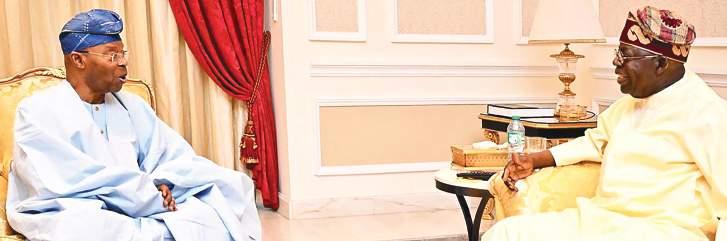
President Bola Tinubu (right) and Oba Otudeko during a courtesy visit to the president at his residence Ikoyi

For weeks now, the African Democratic Congress (ADC) has been embroiled in a leadership crisis that, on the surface, appears to be a routine internal dispute. With a (former) Deputy National Chairman, Nafiu Bala Gombe as agent provocateur, the Independent National Electoral Commission (INEC) has unwittingly entered the fray in a manner that has put the current most consequential opposition platform in the country in administrative limbo at the most critical phase of the electoral cycle. By alluding to the Zamfara State APC gubernatorial misadventure of 2019, INEC Chairman, Joash Amupitan, SAN, does not help himself.
Respected legal practitioner Femi Falana, SAN, has accused INEC of conniving with the courts and senior lawyers to plot a situation in which only the incumbent president could be eligible to contest next year. “The INEC, headed by a Senior Advocate of Nigeria, issued a statement that based on the intervention of the court, ‘ADC, we shall no longer recognise you.’ And if a political party is not recognised, its members are not contesting election.” In making that assertion, Falana also recognised that there is no difference between the politicians in power and those now out to ‘rescue Nigeria’ from them. So, he made an important caveat: “We are making these analyses not because APC, PDP, ADC are better (than one another); they are birds of the same feather. But the Nigerian people must be allowed to choose among their oppressors who would govern them.”
That precisely is the point. At the bottom of the current shenanigans is a regrettable failure to cultivate a truly democratic culture. That is in itself no surprise. Most of our political actors are a mixed bag of operatives who have hardly succeeded in any other meaningful venture. It is then expected that this inchoate army of desperados will stop at nothing to game elections, regardless of the platform they now tout. In the end, the transactional ethos of our society has been allowed to overrun the national political leadership selection process and the way we are governed. But for the health of our democracy, those who superintend critical institutions, including the judiciary and INEC, must be circumspect lest they throw the nation into a serious crisis.
Let me state upfront that on this matter, I hold no brief for any political party. I also believe that INEC has a duty to act within the boundaries of the law. If the electoral commission’s reading of the recent Court of Appeal’s directive was made in good faith, we cannot fault that. But here is where the matter becomes troubling. The timing of INEC’s action comes just days before the ADC’s congresses that had been scheduled to begin today. And with its national convention slated for 14
April, INEC position creates a political effect that transcends any legal technicality. It effectively freezes the organisational machinery of the main opposition party ahead of the 2027 general election. This must be concerning for every Nigerian, regardless of partisan affiliation. Even supporters of the All Progressives Congress (APC) ought to recognise that a governing party without serious opposition is one that is not accountable to the people. And without such accountability, the people are the real losers. Perhaps I should put it more bluntly: A ballot paper that offers only one serious option is not a choice. It is a formality. And when elections become formalities, the social contract between government and the people begins to unravel. Besides, when the game board is tilted
beyond a certain angle, even the winners eventually fall. Let us not pretend about what is going on. There can be no credible election in 2027 without a credible opposition platform that provides an alternative choice to the Nigerian electorate.
President Bola Tinubu has publicly denied any intention to turn Nigeria into a one-party state. I take the President at his word. But democracies are not judged solely by the declarations of their leaders. They are judged by the conditions that critical institutions create. By needlessly putting itself in the middle of the ADC crisis, INEC has created doubts about its neutrality. And when the most visible opposition coalition is immobilised at a decisive political moment, the burden of proof shifts. It is therefore no longer sufficient to say there is no plan to suppress opposition. What is required is demonstrable action to ensure that the political space remains open, that institutions act with strict neutrality, and that the courts resolve political disputes without the paralysing side effect of removing an opposition platform from the electoral conversation.
I have seen enough of Nigerian political history to know that the deliberate weakening of opposition is never a strategy that serves anyone in the long run. Those who orchestrated the destruction of the old Alliance for Democracy (AD) and the All-Nigeria People’s Party (ANPP) in the early 2000s imagined that a dominant Peoples Democratic Party (PDP) would serve their interests forever. That cold calculation has blown up in their faces. Some of those people are now carrying their pot bellies all over the streets of Abuja to do ‘Aluta’ at INEC headquarters. But here is the lesson: Nigerians will always seek a vehicle for dissent. If you destroy the one they have, they will build another, or they
will express their frustration through channels that no ballot box can contain.
Meanwhile, what we call opposition parties in Nigeria, as currently represented by the ADC and PDP, are not only weak and uncoordinated, but many of their leaders also seem highly compromised. But then, beyond occasional soundbites and empty slogans, there is nothing to differentiate between the existing political parties and that explains why members criss-cross from one to the other. Yet, the ability of the opposition to challenge the policies and programmes of the incumbent government is integral to representative democracy. However, we must also be honest about the opposition’s own failings. The big wigs who congregated in the ADC did not perform their due diligence before acquiring the platform from some smart political contractors.
When the coalition was announced in July 2025, many of us noted the inherent fragility of a platform built on the convergence of large egos and divergent ambitions. And the lack of seriousness is still very much evident. Many Nigerians are still waiting for the drama that is bound to come after the emergence of their presidential candidate whom some of us can easily predict. Therefore, the Nafiu Bala challenge, whatever its merits or motivations, has merely exploited vulnerabilities that are already present in the party’s hastily constructed architecture. If the ADC coalition is to survive, its principals must demonstrate that they can manage internal disagreement and work together after the predictable outcome of their primaries. But the greater challenge still lies with the current administration and the ruling APC.
Last Sunday, I received a rather curious prayerful message that is uniquely Nigerian: “On this Easter morning, may the ‘Strait of Hormuz’ in your life be declared open and remain permanently open.” I stared at my phone for a full minute, caught between amusement and admiration. Only in Nigeria can a geopolitical chokepoint between Iran and the Arabian Peninsula become a prayer point. We are, without question, the most creatively prayerful people on earth. Give us any crisis, a shipping lane blockade, currency float, fuel queue, and we will fashion from it an evening vigil declaration.
Meanwhile, the Strait of Hormuz should concern us beyond the comedy. The current tensions around
that narrow waterway are, in very large measure, a product of President Donald Trump’s own making. When you tear up a nuclear agreement, impose maximum pressure sanctions, and then act surprised when Iran threatens to shut down the channel through which roughly a fifth of the world’s oil transits daily, you have manufactured a crisis. Trump picked a fight, escalated it, and now wants sympathy because the consequences showed up on schedule. That, unfortunately, is a pattern we know all too well in Nigeria. We are world-class architects of our own misfortunes. And when anyone points out the obvious that we created the very problems we are crying about, the national reflex is not reflection. It is denial. Or deflection. Or, better still, another prayer
point. So, the next time someone sends you a prayer message built around the latest international crisis, laugh, because it genuinely is funny. But after you laugh, ask yourself pertinent questions: what are the ‘Straits of Hormuz’ that we, as a nation, have blocked with our own hands? And are we willing to do the difficult, unglamorous, entirely unspiritual work of unblocking them?
I do not mock prayers. I am a person of faith myself. But faith without works, as the scriptures remind us, is dead. You cannot block your own strait, through corruption, incompetence, and sheer refusal to plan, and then ask God to open it. Even the Almighty expects us to at least stop drilling holes in our own boat before we cry out for rescue.