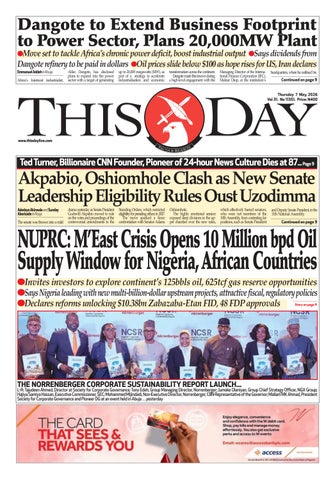
Move set to tackle Africa’s chronic power deficit, boost industrial output Says dividends from Dangote refinery to be paid in dollars Oil prices slide below $100 as hope rises for US, Iran declares
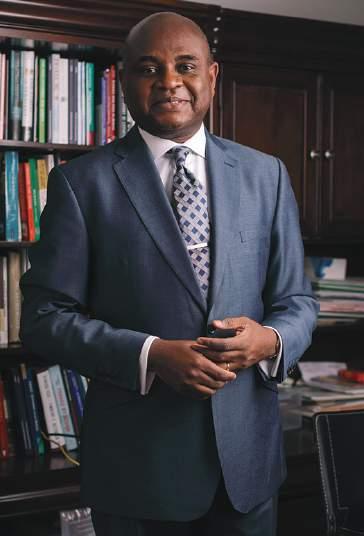
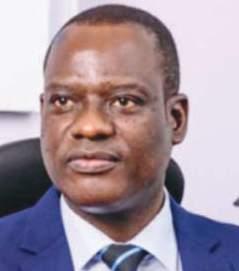
Emmanuel Addeh in Abuja Africa’s foremost industrialist, Aliko Dangote, has disclosed plans to expand into the power sector with a target of generating up to 20,000 megawatts (MW), as part of a strategy to accelerate industrialisation and economic transformation across the continent. Dangote made this known during a high-level engagement with the
Managing Director of the International Finance Corporation (IFC), Maktar Diop, at the institution’s
www.thisdaylive.com
The
drama yesterday as Senate President Godswill Akpabio moved to rule on the votes and proceedings of the controversial amendments to the
Standing Orders, which restricted eligibility for presiding offices in 2027. The move sparked a fierce confrontation with Senator Adams
Oshiomhole.
The highly emotional session exposed deep divisions in the upper chamber over the new rules,
NUPRC: M’East Crisis Opens
which effectively barred senators, who were not members of the 10th Assembly, from contesting for positions, such as Senate President
and Deputy Senate President, in the 11th National Assembly.
Supply Window for Nigeria, African Countries
Invites investors to explore continent’s 125bbls oil, 625tcf gas reserve opportunities Says Nigeria leading with new multi-billion-dollar upstream projects, attractive fiscal, regulatory policies Declares reforms unlocking $10.38bn Zabazaba-Etan FID, 48 FDP approvals
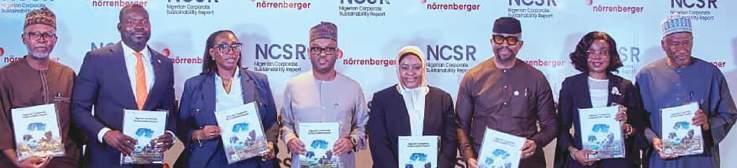
THE NORRENBERGER CORPORATE SUSTAINABILITY REPORT LAUNCH...
L-R: Tajudeen Ahmed, Director at Society for Corporate Governance; Tony Edeh, Group Managing Director, Norrenberger; Jumoke Olaniyan, Group Chief Strategy Officer, NGX Group; Hajiya Samiya Hassan, Executive Commissioner, SEC; Mohammed Mijindadi, Non-Executive Director, Norrenberger, CBN Representative of the Governor; Mallam MK Ahmad, President Society for Corporate Governance and Pioneer DG at an event held in Abuja …yesterday
Ted Turner, Billionaire CNN Founder, Pioneer of 24-hour News Culture
Adedayo Akinwale and Sunday Aborisade in Abuja
senate was thrown into a mild
MEETING IN SUPPORT OF TINUBU’S RE-ELECTION BID...
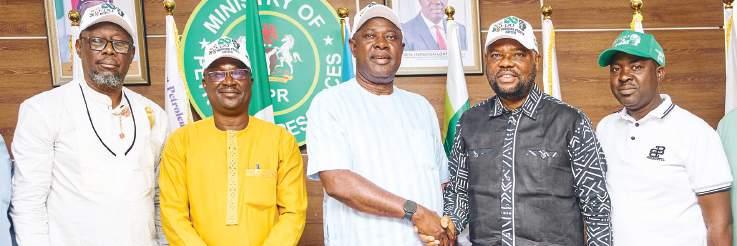
L-R: Operations, Organising and Programmes Director, Working Peoples United (WOPU), Dr. Billy Harry; Deputy National Chairman, WOPU, Dr. Adeyemo Ayodeji; Minister of state for Petroleum Resources (Oil), Sen. Heineken Lokpobiri Ph.D; National Chairman, WOPU, Comrade Williams Akporeha; and General Secretary, WOPU, Hon. Oladapo Sunday Moses, during a meeting in support of President Tinubu’s re-election bid in Abuja, yesterday
FG to Establish $500m Annual Research Fund to Boost Economy, Innovation
Okays national research, innovation development fund
Deji Elumoye in Abuja
The federal government yesterday expressed its readiness to establish a $500 million annual funding mechanism for research and innovation.
This, it said, formed part of efforts aimed at repositioning the nation’s economy through science, technology and homegrown solutions.
Education Minister, Dr. Tunji Alausa, who made this known while addressing newsmen at the State House, Abuja, on resolutions reached during last week’s Federal Executive Council (FEC) meeting, where approval was granted for the establishment of the National Research and Innovation Development Fund (NRIDF).
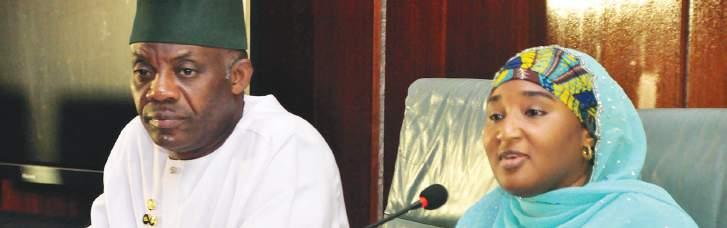
Alausa, who spoke in the company of the Minister of State for Education, Prof. Suwaiba Ahmed, described the initiative as a major milestone capable of unlocking Nigeria’s research potential and accelerating President Bola Tinubu’s ambition of building a $1 trillion economy.
According to him, the proposed fund would provide sustainable financing for research activities,
innovation and the commercialisation of discoveries across universities, research institutes and industries.
He stated that Tinubu has directed that the new agency should not depend solely on regular budgetary allocations.
He explained: “The President has directed that this agency will not rely solely on regular budgetary allocations. We are looking at top-line funding mechanisms that, by our estimates, could generate about $500 million annually for research and innovation in Nigeria.”
Alausa noted that the initiative was designed to address the longstanding fragmentation within Nigeria’s research ecosystem by fostering stronger collaboration among academia, government institutions and the private sector.
Comparing such initiatives with what was obtainable in other countries like South Korea and Singapore, the minister said both nations recorded rapid economic transformation after establishing coordinated national research funding systems tied directly to their development priorities.
The fund, according to Alausa, was expected to support competitive
research grants, strengthen laboratories and research infrastructure, promote the commercialisation of research findings and build a pipeline of scientific talent across theHecountry. added that the initiative would also improve Nigeria’s participation in global research partnerships while strengthening evidence-based policymaking through enhanced science and innovation data systems.
The Minister added that the
National Research and Innovation Development Fund would operate under the supervision of the Federal Ministry of Science, Innovation and Technology and would be structured to minimise bureaucracy.
According to him, the governing council of the fund would be chaired by Vice President Kashim Shettima, with members drawn from relevant ministries, academia, research institutions and the private sector. He further revealed that the
Attorney-General of the Federation and Minister of Justice had been directed to prepare an executive bill for transmission to the National Assembly to provide legal backing for the initiative.
Alausa lauded the Special Adviser to the President on Policy Coordination, Hadiza Bala Usman, for collaborating with him over the past two years in developing the framework for the fund.
He said the initiative would also
help address concerns repeatedly raised by academic unions over inadequate research funding, while supporting research outcomes capable of tackling critical national development challenges.
“Research and innovation are what drive development in every serious nation. Nigeria cannot continue to depend on fragmented and underfunded research systems if we want to compete globally,” Alausa further stated.
Access Holdings Prioritises Capital Retention Over Dividends as Earnings Surge
Nume Ekeghe
Access Holdings Plc has moved to reassure investors over its decision to pause dividends for the 2025 financial year, stating that the move reflects a deliberate strategy to reinforce capital buffers and sustain long-term growth, despite delivering one of its strongest earnings performances on record. The holdings gave the clarification
during its Full Year 2025 Investors and Earnings Call, where management addressed shareholder concerns regarding the absence of a dividend declaration, despite the group’s robust earnings growth and balance sheet expansion.
Access Holdings emphasised that the non-payment of dividend for the 2025 financial year was not performance driven, but reflected prudential regulatory alignment
AbdulRazaq Urges Kwara’s Intending Pilgrims to Be Good Ambassadors of Nigeria in Saudi Arabia
Hammed Shittu in Ilorin
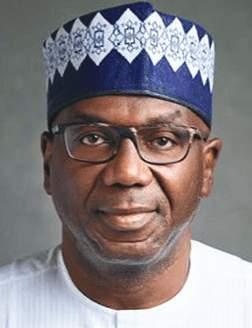
Governor AbdulRahman AbdulRazaq of Kwara State yesterday urged intending pilgrims to the Kingdom of Saudi Arabia for this year’s hajji to conduct themselves well in the holy land and represent the state and Nigeria honourably during their pilgrimage. AbdulRazaq stated this in Ilorin while flagging off the 2026 Hajj exercise, with the successful airlift of the first batch of 374 pilgrims with two NAHCON officials and one state official to Saudi Arabia.
A total of 1,714 pilgrims from the state will participate in the 2026 exercise.
The pilgrims departed the General
Tunde Idi-Agbon International Airport, Ilorin, aboard a Max Airline, which took off about 3pm en route to Madinah in the Kingdom of Saudi Arabia.
Represented at the event by the governor’s special adviser and senior counsellor, Alhaji Saadu Salaudeen, AbdulRazaq urged the intending pilgrims from the state to pray for the peace of the country and the state, in particular.
He said, “Our message to pilgrims from Kwara State this year centres on the need for them to behave as good representatives and ambassadors of Kwara State, in particular, and Nigeria, in general, and to make sure they comply with all the laws
and regulations of the host country, the Saudi Arabia.”
The governor stated, “We advise all of them to make sure they listen to the directives of Amirul Hajj our father, His Royal Highness the Etsu Tsaragi, who is the Amirul Hajj for this year, leading the delegation and all the officials of the Kwara State Pilgrims Board.”
AbdulRazaq prayed Allaah to grant all the pilgrims a hitch-free Hajj performance and looked forward to their safe return.
The State Amirul Hajj and Etsu Tsaragi, Alhaji Abdullahi Aliyu, promised to look into the well-being of the pilgrims in line with the commitment made with the state government.
He said, “I want to reiterate that when His Excellency announced my appointment as the leader of the delegation from the state, being Amirul Hajj, I made a pledge before him that we are not going to let him down and inshallah we are going to perform the role that we are assigned to perform.
“We will make sure that Kwara pilgrims have the best this year and inshallah we are going to take care of their well-being over there.”
Speaking with newsmen, Executive Secretary of the board, Abdulkadir Abdulsalam, applauded AbdulRazaq for approving all the requests of the board to ensure adequate care of the pilgrims in Saudi Arabia.
matters, which required resolution before dividend payments could be effected.
Group Managing Director/Chief Executive Officer, Access Holdings Plc, Innocent C. Ike said, “Access Holdings has a strong history of consistent dividend payments, and rewarding shareholders remains a core priority for the board and management.
“The non-payment of dividend for 2025 was not due to earnings weakness or cash flow constraints, but an alignment with regulatory and prudential guidelines.”
For the 2025 financial year, Access Holdings delivered a resilient and diversified performance, underscoring its capacity to generate sustainable shareholder returns.
Gross earnings grew by 13.3 per cent to N5.53 trillion, supported by strong growth in net interest income and a 40.9 per cent increase in fees and commissions to N585.07 billion. Profit before tax increased by 16.2 per cent to N1.01 trillion, crossing the N1 trillion mark for the first time in the group’s history. Total assets expanded by 24.2 per cent to N51.56 trillion, reflecting scale accretion and the successful integration of recently acquired subsidiaries. The group’s cost to income ratio improved significantly from 56.7 per cent to 51.7 per cent, driven by disciplined cost management and
operating leverage. Capital adequacy remained strong at 18.2 per cent at the holding company level, while the banking subsidiary ended the year with a capital adequacy ratio of 20.2 per cent.
Ike stated, “Our performance in 2025 demonstrates the strength of the franchise and its capacity to generate value for shareholders. Our focus is to ensure that shareholder distributions resume on a sustainable basis once all regulatory conditions are satisfied and the required approvals are obtained.”
Access Holdings explained that while dividends were recommended at both half year and full year in 2025, regulatory approvals were not obtained. At the half year stage, the constraint related to Section 7.1 of the CBN Guidelines for Financial Holding Companies, which had since been fully resolved following the successful completion of an approved private placement. At full year, an additional matter arose under Section 19(8) (c) of BOFIA, which placed limits on investments in foreign banking subsidiaries relative to shareholders’ funds. The group had been granted a 12-month window to fully remediate this position. The group stated that it will partially divest from some banking subsidiaries but still retain its super majority shareholding.
DEEPEN SYNERGY BETWEEN FCCPC AND NAFDAC TO STRENGTHEN CONSUMER PROTECTION...
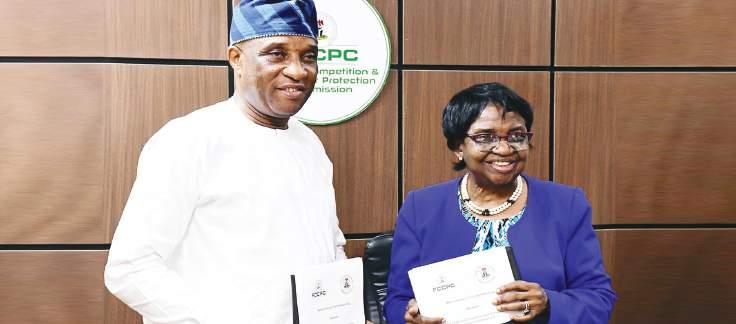
L-R: Executive Vice Chairman/CEO, FCCPC, Mr Tunji Bello, and Director General, NAFDAC, Prof. Mojisola Adeyeye, after signing an MoU to deepen synergy between both agencies in order to strengthen consumer protection in Nigeria.
Senate Confirms Tegbe as Power Minister, Demands Urgent End to Grid Collapse
Nominee pledges 100-day reforms, transparency dashboard Urges Nigerians to hold him accountable Vows crackdown on vandalism, protection for vulnerable consumers Lawmakers insist on timelines, liquidity fixes, rural electrification
Sunday Aborisade in Abuja
The Senate yesterday confirmed Mr. Olasunkanmi Tegbe as Minister of Power, charging him to immediately confront Nigeria’s deepening electricity crisis, particularly the persistent collapse of the national grid, liquidity constraints and weak transmission infrastructure that have continued to hamper economic growth.
The confirmation followed a rigorous screening exercise at plenary presided over by Senate President, Senator Godswill Akpabio, during which lawmakers extracted firm commitments from the nominee on timelines, transparency and concrete reforms aimed at stabilising the power sector.
Rising from the session, senators across party lines stressed that the time for rhetoric had passed, insisting on measurable outcomes that would reverse years of inefficiency in a sector widely regarded as the backbone of national development.
Leading the debate, Senator Mohammed Tahir Monguno (Borno North) described Tegbe’s nomination as “a square peg in a square hole,” but warned that the enormity of challenges in the sector required urgent and decisive action.
He lamented the recurring collapse of the national grid, describing it as a major impediment to Nigeria’s industrialisation drive.
“Grid collapse has become a recurring decimal, affecting our quest for
development. Transmission has also failed to effectively evacuate power generated by GENCOS,” Monguno said.
He further highlighted the security dimension of the crisis, noting that insurgent attacks in the North-east had crippled transmission infrastructure, forcing Maiduguri to rely on alternative power sources.
Responding, Tegbe acknowledged that the sector’s challenges were systemic and deeply rooted, attributing grid instability to poor coordination, weak enforcement of standards and inadequate gas supply.
“Grid collapse is not an accident; it is a symptom of a system problem,” he said, pledging to enforce strict operational discipline and improve
frequency management across the network.
In a bold commitment, the minister-designate promised visible improvements within his first 100 days in office, including stabilising the grid and introducing a public performance dashboard to enhance transparency and accountability.
“If you don’t see results in three months, you won’t see them in six months. Nigerians must hold us accountable,” he declared.
On the persistent vandalisation of power infrastructure, Tegbe described it as a grave national security threat and pledged close collaboration with security agencies to curb the menace.
“Vandalisation of critical national assets must be addressed decisively. I
Oando Foundation Opens Applications for Green Youth Upskilling Programme
N20m awarded to first cohort entrepreneurs
Oando Foundation has opened applications for the next cohort of its Green Youth Upskilling Programme (GYUP) to empower the next generation of green entrepreneurs. This follows the successful completion of the inaugural cohort, which trained 25 young Nigerians and awarded N20 million in seed funding to top-performing partici- pants to launch green enterprises, a statement from the company said.
Implemented in partnership with the Nigeria Climate Innova- tion Centre, the programme is a structured nine-month initiative designed to equip young Nigerians with practical, market-relevant skills across key sectors such as renewable energy, waste management, and sustainable mobility.
“Nigeria’s development trajectory will increasingly depend on how effectively we equip young people with skills that align with emerging sectors. The green economy presents a clear opportunity, but unlocking it requires deliberate investment in talent pipelines like this. Our focus is to scale access and ensure more young Nigerians are positioned to participate meaningfully in this transition,” said Tonia Uduimoh, Head, Oando Foundation.
The programme comes at a time of rising global demand for green skills. The transition to a low-carbon economy is projected to create up to 30 million jobs by 2030, according to the International Energy Agency (IEA), while the World Economic Forum (WEF) identifies green skills among the fastest-growing and most in-demand globally.
Building on the outcomes of the first cohort, the Foundation is expanding the programme to deepen its impact, with additional focus areas including electric vehicle (EV) maintenance and broader opportunities within Nigeria’s growing green economy.
According to Oando, the recently concluded cohort demonstrated the programme’s end-to-end model, with participants progressing from technical training to hands-on ap- prenticeship, and top performers accessing catalytic funding and equipment support to scale their business ideas.
Applicants for the new cohort will be selected through a structured, multi-stage process designed to identify individuals who demon- strate strong interest, foundational technical aptitude, and the potential
to translate skills into enterprise or employment.
Successful applicants will benefit from intensive technical training, mentorship, practical work experi- ence through internships, and the opportunity to access performance- basedOandofunding.Foundation noted that the programme is positioned not just as a training intervention, but as a pipeline for developing a skilled workforce capable of contributing to Nigeria’s transition to a low-carbon and climate-resilient economy.
Eligible applicants, it said, must be Nigerians between the ages of 18 and 35, with at least a secondary school education and a demonstrated interest in green or technical fields such as renewable energy, waste management, or sustainable mobility.
will work with the National Security Adviser and service chiefs to tackle this challenge,” he said.
The Senate Minority Leader, Senator Abba Moro (Benue South), raised concerns over the sector’s worsening liquidity crisis, estimated at about N6 trillion, warning that it had discouraged investment and weakened the entire value chain.
“How will you address the liquidity and debt crisis in the power sector?”
Moro asked.
In response, Tegbe admitted that the current financial model was unsustainable and pledged to implement market-reflective tariffs while ensuring protection for vulnerable consumers.
“Market-reflective tariffs are necessary, but electricity must remain affordable. We will strike a balance between sustainability and social protection,” he said.
Senator Tokunbo Abiru (Lagos East) and other lawmakers demanded clear timelines for achieving energy sufficiency, insisting that Nigerians deserved a predictable and reliable electricity supply.
Similarly, Senator Orji Uzor Kalu (Abia North) criticised the fragmentation of the power sector, arguing that the separation of generation, transmission and distribution had created inefficiencies and weakened coordination.
“It does not make business sense to have multiple entities operating without synergy,” Kalu said.
Tegbe, however, assured the Senate that his reform strategy would prioritise coordination across the value chain, with particular emphasis on improving gas supply to power generation companies.
He also promised to accelerate metering nationwide, noting that the rollout of one million meters in the past year marked a significant milestone that would be expanded to reduce estimated billing and improve revenue collection.
On rural electrification, Senator
Ekong Samson (Akwa Ibom South) expressed concern that over 70 per cent of rural dwellers lacked access to electricity.
Tegbe responded that the government would scale up mini-grid and renewable energy solutions, particularly solar power, to bridge the gap.
“Decentralised energy solutions will play a key role in ensuring that no community is left behind,” he said. Deputy Senate President Barau Jibrin underscored the urgency of reforms, describing the power sector as the single biggest constraint to Nigeria’s economic competitiveness.
“Our industries cannot compete globally because of inadequate electricity. We need results, not promises,” he said.
Despite the tough scrutiny, lawmakers expressed confidence in Tegbe’s competence, citing his professional background and clarity of vision during the screening.
He reiterated his commitment to delivering tangible results, acknowledging the scale of the challenge while expressing optimism that reforms would yield quick gains.
“This is a difficult assignment, but with discipline, transparency and collaboration, we will make progress. Nigerians will see improvements,” he said.
In his remarks, Akpabio hinted at an alleged entrenched interests undermining progress in the sector, including what he described as a “generator cabal” that benefits from the country’s unreliable electricity supply.
“There are elements not interested in power working efficiently because they profit from the inefficiencies. We will confront such interests,” he alleged.
The Senate subsequently confirmed his nomination unanimously, setting the stage for what many lawmakers described as a critical test of the administration’s resolve to fix Nigeria’s troubled power sector and end the cycle of grid collapses that has long plagued the nation.
Emmanuel Addeh in Abuja
WHEN OLUREMI TINUBU RECEIVED THE WOMEN’S CHARTER...
L-R: Minister of state for Education, Dr. Suwaiba Said Ahmad; Minister for Women Affairs and Social Development, Hajiya Imaan Suleiman Ibrahim; First Lady of Nigeria,
Tinubu; Minister of Industry, Trade and Investment, Dr. Jumoke Oduwole; Wife of the Senate President, Mrs. Ekaette Akpabio; APC Deputy National Woman Leader,
Abubakar Ibrahim; and others after the First Lady received the Women’s Charter at the National Women Mega Empowerment and Rally held in Abuja on Tuesday
Godwin Obaseki Appointed Visiting Researcher at Boston University, USA
The immediate past governor of Edo State, Mr. Godwin Obaseki, has been named as a Visiting Scholar/ Researcher at the African Studies Center, Boston University, in United States.
The Center, which is part of the Frederick S. Pardee School of Global Studies, Boston University brings together students and scholars from across the arts, humanities, social sciences, and natural sciences to develop Africa-focused expertise, drive multidisciplinary research, and lead public awareness initiatives.
Obaseki, who served as governor of Edo State from 2016 to 2024, is globally acclaimed for championing bold reforms in the public sector, digital governance, and education.
His administration’s EdoBEST programme, which focused on improving basic education through technology-driven methods, drew international attention and has been cited as a model for education reform in developing regions.
Obaseki will use the opportunity of his appointment to critically analyze the successes and challenges of the transformative projects and policies he pursued during his eight years as governor.
The goal is to produce a study that will guide public servants in Africa engaged in transformative leadership and economic reforms.
According to the Director of the African Studies Center, Nimi Wariboko, the Walter G. Muelder Professor of Social Ethics, Boston University is pleased to host Governor Obaseki as an active participant in the academic community of the prestigious Center.
“His affiliation with BU will enable him to interact with scholars here to refine his theoretical framework, hone his methodology for producing an empirical account of his tenure, and examine his policy framework against alternative models around the world.
“His affiliation with Boston University will also reflect positively on the ASC. His final output—in the form of book manuscript—will constitute a significant addition to the ASC’s scholarly contributions.
“His presence will also reactivate the historic practice of the ASC hosting prominent African public leaders who served with distinction and are willing to share their knowledge and experience with the Boston University community.”
Responding to the news of his appointment as Visiting Scholar, Obaseki said: “I am excited by this appointment and the privilege it affords me to be part of this worldclass university.
“As a Visiting Scholar/Researcher at the African Studies Center, I will have the opportunity to document, explain and review the strategies and frameworks that I adopted to
transform the economic and social development landscape of Edo State, which I had the privilege to lead as Governor from 2016 to 2024.
“The rich tradition of rigorous scholarship, global perspective and commitment to tackling the world’s most pressing challenges at Boston University presents the ideal environment for reflection, learning, collaboration, and exchange of ideas.”
In 1953, the African Studies Center was established at Boston University. It was only the second institution in the United States dedicated to the study of Africa.
More than seven decades later, the center is one of the largest and highly respected academic centers promoting African studies in the United States.
It has evolved into a global
model for the study of Africa and cutting-edge research on the challenges facing the continent. The US Department of Education designates the ASC as a Title VI National Resources Center, meaning it is important research and learning center for scholars and students in the United States for the study, understanding, and engagement with Africa and Africans.
Obi Condemns Xenophobic Attacks in South Africa, Urges Protection for Nigerians
Chuks Okocha in Abuja
Former presidential candidate Peter Obi has strongly condemned the resurgence of xenophobic attacks in South Africa, expressing concern over the safety of Nigerians and other Africans affected by the violence. In a statement shared on his official handle on X, Obi described the attacks as alarming and unacceptable, stressing that no African should feel unsafe within the continent.
“I have been observing with deep concern the alarming rise of xenophobic attacks in South Africa. I strongly condemn these acts. My thoughts are with all those affected—especially our Nigerian brothers and sisters, whose lives, businesses, and dignity are once again under threat. No African should feel unsafe on African soil, or anywhere else,” he said.
The former Anambra State governor also commended Nigeria’s Minister of Foreign Affairs, Bianca Ojukwu, and her ministry for what he described as a prompt response to the situation.
Reflecting on past incidents, Obi
recalled a previous visit to Nigerians affected by similar unrest, noting the experience underscored both the hardship endured and the resilience shown by victims.
“I recall my visit to our compatriots during a similar crisis. It was a painful experience that revealed both the suffering and resilience of our people. It also highlighted a fundamental truth: beyond borders, we share a common identity and destiny as Africans. Such experiences should have inspired lasting solutions, not recurring tragedy,” he added.
Obi further called on South African authorities to take decisive
action to curb the violence, ensure justice for victims, and rebuild public trust.
“In this regard, I urge the authorities in South Africa to act decisively – to protect lives and property, bring perpetrators to justice, and restore public confidence. Leadership must rise to the occasion, making it clear that violence and intolerance have no place in our societies,” he stated. Xenophobic attacks in South Africa have remained a recurring concern over the years, often straining diplomatic ties and raising questions about regional unity and the safety of foreign nationals on the continent.
Deji Elumoye in Abuja
Vice President Kashim Shettima has declared that the reforms of the administration of President Bola Tinubu in the mining sector is beginning to manifest, with over $2.6 billion in Foreign Direct Investment attracted to the sector in the last two and half years alone.
He explained through the de-risking of the mining environment in the country, the administration has made local value addition a non-negotiable principle of licensing as Nigeria was no longer content to be a warehouse of raw materials.
Shettima stated this on Wednesday in Abuja during the official inauguration of the Kursi Group Headquarters established by Ambassador Abdulfatai Yahaya Gambari. According to him: “We are becoming a global hub for mineral refinement, beneficiation, and value-driven industrial growth”.
On the prospect and contributions of the Kursi Group, the Vice President observed that “There is no doubt that any enterprise processing our lithium for the global green energy transition, and refining our gold to international standards right here on our soil, eases our industrial
ambition.
“Every nation that rises does so by mastering the value chain of its natural advantage. Every nation that commands respect in the world economy learns to convert resources into products, products into industries, and industries into national power.”
Shortly after the inauguration of the Kursi Group Corporate Headquarters, the Vice President, accompanied by Governor AbdulRahman AbdulRazaq of Kwara State and other dignitaries at the event, toured the facility housing a refining factory and a state-of-the-art minerals marketing and tracking platform.
Targets Global Markets, Pushes Port Access to Unlock Borno’s Export Potential
Michael Olugbode in Abuja
Borno State governor, Prof. Babagana Zulum, has intensified efforts to reposition Borno State as an export-driven economy, holding high-level talks with the management of the Nigerian Ports Authority (NPA) in Lagos to integrate the state’s producers into Nigeria’s maritime value chain.
At the strategic meeting on Tuesday, Zulum made a strong
case for expanding access to port infrastructure for businesses in Nigeria’s North-East, stressing that unlocking export pathways is critical to transforming Borno’s largely agrarian economy into a hub for trade, industry and investment.
The governor, who was received by NPA Managing Director, Abubakar Dantsoho, alongside Executive Director Ibrahim Abba Umar, said his administration is
focused on linking local producers—particularly in agriculture and small-scale manufacturing—to both regional and international markets.
The visit underscores a broader economic shift underway in Borno since 2019, as the Zulum administration moves to rebuild and diversify an economy long battered by insurgency, weak infrastructure and heavy dependence on federal allocations.
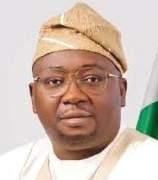
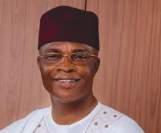
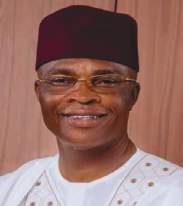
Senator Oluremi
Hajiya Zainab
Ted Turner, Billionaire CNN Founder, Pioneer of 24-hour News Culture Dies at 87
Emmanuel Addeh in Abuja
Ted Turner, the high-flying media tycoon, entrepreneur and philanthropist who founded CNN and revolutionised American cable television, died aged 87 years yesterday.
The Ohio-born Atlanta businessman built a media empire that encompassed cable’s first superstation and popular channels for movies and cartoons, plus professional sports teams like the Atlanta Braves.
Many things to many people, it was his audacious vision to deliver news from around the world in real time, at all hours, that really made him famous – once his idea finally took off. In 1991, Turner was named Time magazine’s Man of the
Year for “influencing the dynamic of events and turning viewers in 150 countries into instant witnesses of history.”
On June 1, 1980, Turner launched CNN, the first 24-hour, all-news cable network. Turner eventually sold his networks to Time Warner and later exited the business, but continued to express pride in CNN, calling it the “greatest achievement” of his life. Turner’s death was first reported by CNN, citing a Turner Enterprises news release.
“Ted was an intensely involved and committed leader, intrepid, fearless and always willing to back a hunch and trust his own judgment,” CNN chairman and CEO Mark Thompson said in a statement. “He was and always will be the presiding spirit of CNN,”
Thompson added. He was a staple of magazine covers and newspaper business sections, cultivating a reputation for keen instincts and a no-filter style. He sometimes ran into trouble for injudicious comments about world affairs or religion, earning the nickname “Captain Outrageous.”
“I don’t have any idea what I’m going to say. I say what comes to my mind,” he told The New Yorker for a profile published in 2001.
He was also a prolific philanthropist, environmentalist and self-described “do-gooder.” He famously gave $1 billion to the United Nations and co-founded the Nuclear Threat Initiative, a nonprofit advocacy organization.
The young Turner enrolled at Brown University in 1956, but he
was kicked out three years later, reportedly for having a woman in his dorm room. Turner then joined his father at the family business, headquartered in Atlanta, becoming general manager of a branch office in 1960, NBC reported.
The elder Turner, struggling with financial hardships and mental health issues, died by suicide in 1963; his son took over the advertising company, taking on the roles of president and CEO.
Turner Advertising was renamed Turner Communications with the acquisition of several radio stations. Turner branched out into other media, purchasing a beleaguered UHF television station in Atlanta, as well as the rights to old movies and sitcom reruns.
In the mid-1970s, Turner made
one of the most consequential decisions of his career. He was one of the first media company owners to use satellite technology to broadcast his station to a national cable television viewing audience, widening his reach and boosting revenues.
In the late 1970s, Turner came up with the idea for a 24-hour cable news channel — a significant shift in an era when the “Big Three” network news programmes still reigned supreme and many viewers did not conceive of news consumption as a minute-to-minute activity.
CNN aired its first broadcast on June 1, 1980, anchored by the husband-and-wife duo of David Walker and Lois Hart.
Turner married for a third and final time in 1991, partnering with
the Oscar-winning actor and activist Jane Fonda. The union between an avatar of American capitalism and an outspoken progressive who railed against the status quo raised eyebrows, but the two were smitten from the start and bonded over their shared curiosity about the world.
NUPRC: M’EAST CRISIS OPENS 10 MILLION BPD OIL SUPPLY WINDOW FOR NIGERIA, AFRICAN COUNTRIES
Peter Uzoho in Houston, Texas
As ongoing geopolitical tensions in the Middle East, driven by the US-Israel conflict with Iran, have removed an estimated 10 million barrels of oil per day from the global market, Africa, with Nigeria at the forefront, is emerging as the most viable region to help bridge the widening supply gap.
The Chief Executive Officer of the Nigerian Upstream Petroleum Regulatory Commission (NUPRC), Mrs. Oritsemeyiwa Eyesan, stated this while speaking during the Africa Energy Forum at the ongoing Offshore Technology Conference (OTC) in Houston, Texas, United States.
Eyesan declared that Africa
has become the new focal point of global energy discussions owing to its 125 billion barrels and 625 trillion cubic feet of natural gas reserves, respectively, representing 10 per cent of global reserves.
She noted that the sudden shortfall has shifted global attention to under-explored regions and that the only continent that promises to fill the supply gap is Africa.
“Today, we believe that about 10 million barrels have been taken off the market in a situation where you had a slight oversupply at one time. With 10 million off the market, there’s a huge deficit. The question on everybody’s lips is where this deficit will come from.
Or rather, who will fill the gap?
“Let’s x-ray the North Sea. The
North Sea was prolific in the past but is declining. North America, same story. And if you layer Asia on that, it’s all decline. However, the only continent that is showing promise today is no other than Africa”, she said.
Citing discoveries and huge oil and gas reserves across the continent, she pointed to Ghana, Mozambique, Tanzania, Senegal, and Namibia as examples.
However, with such abundant reserves in Africa, she said the challenge was how to convert those opportunities into value.
For Nigeria, the NUPRC boss said the answer has been regulatory reform credited to the Petroleum Industry Act (PIA), enacted in 2021, which she noted was triggering a
rebirth in the upstream, midstream, and downstream oil and gas sector.
“Nigeria has experienced a rebirth since 2021 and the rebirth was instrumental to the change and the opportunities that Nigeria has today.
“The PIA has provided fiscal clarity, regulatory efficiency, contract certainty, and transparency across the upstream, midstream, and downstream segments.
“The only way Africa, sitting on huge resources, can bridge that gap successfully is if we have the right regulatory systems to support the business terrain. And Nigeria is not alone in that march,” the NUPRC boss said.
In Nigeria, Eyesan said the results are already evident in
DANGOTE TO EXTEND BUSINESS FOOTPRINT TO POWER SECTOR, PLANS 20,000MW PLANT
vision for Africa and the next phase of growth for his conglomerate.
Speaking during the session, Dangote said the move into power reflects a deliberate focus on addressing Africa’s most critical development gaps, noting that inadequate electricity remains a major constraint to industrial growth and competitiveness.
He explained that the planned 20,000MW capacity would complement existing investments by the Dangote Group, including its refinery, fertiliser plants, and ongoing infrastructure projects, creating an integrated industrial ecosystem capable of driving self-sufficiency.
However, he did not mention where the plant will be located or the expected timeline for the completion of the project.
“We are opening up mines of potash and phosphate in Congo Brazzaville. We are now going into power, 20,000 megawatts. We are building the biggest deep-sea port of 18 meters depth.
We are doing LNG. So why? Because we are now actually free of assets, and we can actually raise more money. Our cash flow now is very strong,” he stated.
According to him, the group’s recently completed refinery, which has now stabilised at about 650,000 barrels per day, has already demonstrated the impact of large-scale local investment in reducing dependence on imports and strengthening domestic capacity.
Dangote noted that prior to the refinery, Nigeria exported crude oil but imported nearly all refined petroleum products, a situation he described as unsustainable. He said the success of the project has emboldened the group to take on even more ambitious ventures,
including power generation.
Beyond Nigeria, he stressed the need for a continent-wide approach to development, identifying structural barriers such as visa restrictions, weak transport systems, and high logistics costs as key obstacles to intra-African trade and investment.
“When you look at Africa today, somebody like myself, I need 38 visas to move around. How do I now invest if I’m not able to move around? 38 visas doesn’t make sense. Nobody has time to go and apply for a visa, take your passport and whatever.
“And most of them don’t do visa on arrival. So we look at that on free movement of people, free movement of goods and services. These are critical areas. Without this, there’s no way we are going to have a very prosperous Africa because with this, I cannot move my goods from Nigeria, from Lagos to the Republic of Benin.
“And when you try to cross the border, you can be there for a week if you are lucky. If you are not lucky, you don’t know anybody, you’re going to be there for two weeks. There’s no way you can trade with your neighbours like this. Then we look at the sector of transportation.
When you look at it, most of the people who own ships that move goods around, they are owned by other nationalities, not Africans.
“And it costs us, for example, to go from Lagos port to Accra more than coming from Spain to Lagos. Then you talk about aviation. When you talk about aviation from Lome to Accra, somebody will charge you $600. How do you move around? People cannot afford this,” he lamented.
He revealed that the group is also investing heavily in other sectors
critical to Africa’s growth, including fertiliser production, mining of key raw materials, liquefied natural gas, and the construction of a deep-sea port, all aimed at boosting value addition and reducing reliance on imports.
Dangote further disclosed plans to open up some of the group’s major assets to African investors through stock market listings, including the refinery, in a bid to deepen local participation and wealth creation.
He said the company intends to pay dividends in hard currency, allowing investors across the con-
The alteration to Senate Standing Orders is widely seen as a calculated move to shelve the ambitions of governors, ex-senators, and other high-profile politicians expected to enter the senate in 2027, especially Imo State Governor Hope Uzodimma who has already picked form for return to Senate after concluding two terms as Governor.
He is seen as a major threat to Akpabio retaining the position of President of the senate in the 11th senate. The new rule effectively rules out Uzodimma from any potential run for Senate President in the 11th Senate.
He previously served in the 7th and 8 senate before exiting to contest for governorship in 2019.
About 10 incumbent governors, whose second and final terms would be ending in 2027, are believed to be jostling for senatorial tickets ahead of the 2027 general election, where are in pole position to emerge both as candidates and winners, with their leverage over party structures.
Trouble began during plenary, when Akpabio called for the adop-
tinent to benefit directly from its operations, while also encouraging capital retention within Africa.
“If we keep waiting for foreign investors, foreign investors are very smart. They are not going to come. They will only come when they see our own commitment. So that’s why for us now, we have also changed. Because if you look at it, most of our companies, we own super majority, 89 per cent, 92 per cent, some 100 per cent.
“And we are saying that, for us to grow at scale, we need to make
Continued on page 36
tion of Votes and Proceedings from Tuesday’s session, where the contentious amendments were approved after a closed-door meeting.
As proceedings reached items relating to the rule changes, Oshiomhole (APC, Edo North) repeatedly shouted “point of order” in an attempt to halt their adoption.
Akpabio, however, ignore him, insisting that the stage of proceedings does not permit such intervention.
He cited Order 38 of the senate rules, which outlined the sequence of plenary activities, stressing that points of order cannot be raised during the adoption of Votes and Proceedings.Undeterred, Oshiomhole persisted, drawing the ire of the senate president and heightening tension in the chamber.
Efforts by some lawmakers, including Chief Whip, Senator Tahir Monguno, to calm the situation proved unsuccessful.
An evidently displeased Akpabio then invoked Order 20 of the senate rules to reassert his authority.
Akpabio said, “Let me be clear
investment trends compared to ten years before the PIA, when there was a steep decline in investment in the Nigerian oil and gas industry.
According to her, “About 15 years before the PIA, we were comfortably spending $15 billion annually on the upstream business. This declined to less than $7 billion at some point. Today, we see an upswing.”
She told the global audience in the room that several multi-billiondollar Final Investment Decisions (FIDs) have been secured or are on the verge of being committed, including the Shell Bonga Project, the Ubeita Non-Associated Gas Project, the HI Gas Project, and the Zabazaba-Etan Field, which was expected to unlock $10.38 billion.
“These are huge projects and a signal that the tide has turned”, Eyesan stated.
In 2024 alone, she said the NUPRC approved 48 Field Development Plans (FDPs), describing that as a major index of progress in the oil and gas industry.
She said the industry has witnessed the enablements from the PIA and that opportunities were just waiting to be unlocked.
She reiterated that the ongoing licensing round, where 50 blocks are offered, and 300 companies are competing, would be concluded by the third quarter of 2026.
Eyesan also announced that another bid round would commence before the end of the 2025
to you, my colleagues. The senate president is tasked with maintaining order during debates and giving rulings on points of constitutional order when they are raised.
“Most importantly, he has the authority to interpret the rules. This is clearly stated. Therefore, Senator Oshiomhole, I can use this rule to take you out of the chamber if you are not ready to comport yourself with Senate rules and procedures.”
Despite the warning, Oshiomhole continued his attempts to interject, forcing Akpabio to issue a stern final caution that any unruly member could be asked to leave the chamber.
The heated exchange followed Tuesday’s adoption of sweeping amendments to Senate Standing Orders, which had triggered political controversy within and outside the National Assembly.
The most contentious provision, contained in Order 5, stipulates that any senator seeking to contest for a presiding officer’s position must have served at least two terms, with one term immediately preceding the election.
bid round, saying that this was an indication that the opportunities were immense.
To support bidders, Eyesan said NUPRC was enhancing its National Data Repository with large-scale 2D and 3D seismic data acquisition through multi-client partnerships. She expressed confidence that bidders who finally acquire the assets will work them and bring them to market in the shortest possible time.
To enable this, she explained that the data repository was also being upgraded for advanced analytics, as they seek to embrace artificial intelligence to quicken the process. Underscoring the importance of capital investment in optimising Africa’s huge untapped oil and gas resources, Eyesan framed the continent’s energy challenge as one of infrastructure and capital rather than resources.
She recalled that Africa took the brunt during the start of the conversation on energy transition due to a lack of investment and infrastructure.
She urged investors to come and invest in the African oil and gas industry, assuring them of a quick return on their investments. She added that Nigeria’s experience under the PIA demonstrates what was possible, saying: “The PIA has enabled a turnaround in the oil and gas industry. The opportunities are immense. The regulatory environment is there.”
In effect, the rule confined eligibility for the senate presidency in 2027 to ranking lawmakers in the current 10th senate, who secured re-election into the 11th Assembly, shutting out new entrants and former senators attempting a comeback. The amendment, presented by Deputy Senate Leader, Oyelola Ashiru, on behalf of Senate Leader, Opeyemi Bamidele, was justified as a measure to strengthen legislative efficiency, entrench parliamentary best practices, and ensure procedural clarity.
Citing Section 60 of the 1999 Constitution, Ashiru stated that the senate possessed the constitutional authority to regulate its internal procedures, including leadership selection.
However, the timing and implications of the amendment fuelled speculation about its political undertones, particularly as permutations for the 2027 elections gathered momentum.
Continued on page 35
The late Ted Turner
SIGNING OF SYCAMORE’S OVERSUBSCRIBED COMMERCIAL PAPER OFFERING...
L-R: Chief Technical Officer, Sycamore Group, Daniel Anyaegbu; CEO, Sycamore Group, Babatunde Akin-Moses; COO, Sycamore Group, Onyinye Okonji; Managing Director, Sycamore Investment and Asset Management Ltd, Gbenga Magbagbeola; and Group Chief Executive Officer, BAS Capital, Abdulateef Hussein, at the signing of Sycamore’s oversubscribed commercial paper offering in Lagos ... yesterday
World Bank-assisted HOPE Governance Programme Partners States to Bridge Manpower Gaps in Basic Education, PHC
Determined to address critical manpower gaps in basic education and primary health care sectors in the country, the World Bank-backed HOPE Governance Programme of the Federal Ministry of Budget and Economic Planning has commenced collaboration with state governments on possible recruitment of more teachers and healthcare personnel.
National Coordinator of the
programme, Dr. Assad Hassan, made the disclosure on the sidelines of the HOPE Governance Programme Implementation Support Mission for the North East in Gombe, Tuesday. Communications Officer of the Programme, Joe Mutah, said Hassan disclosed that improved recruitment and equitable deployment of teachers and primary health care workers were essential to strengthening service delivery in the two sectors.
Hassan stated, “We are also trying to look at how we can improve the recruitment of teachers as well as primary health care workers. Not only recruitment but also equitable deployment of teachers and primary health care workers.
“There are challenges in deployment to areas that are hard to reach, so the HOPE Governance Program is another opportunity to complement already existing efforts of the Federal Government and
indeed the State Governments to address service delivery in basic education and primary health.”
According to him, filling the manpower gaps in the basic education and primary health care sectors forms part of the Disbursement Linked Results (DLRs) agreed upon between the World Bank and participating state governments under the $500 million intervention programme. He said under the Programmefor-Results model of the World
Bank, states that achieved the agreed Disbursement Linked Results (DLRs) targets will be rewarded with funding, enabling them to invest additional resources in both sectors.
Hassan stated that the programme was designed to work with the state governments to implement far-reaching reforms in the two sectors by promoting accountability, good governance, and ensuring that public expenditure delivered
Senate Confirms Enikanolaiye as Foreign Affairs Minister, Signals Tougher Stance on Attacks Against Nigerians Abroad
Nominee vows end to “mere condemnation,” pushes AU intervention Unveils plan for layered diplomacy, reciprocity in foreign relations Raises alarm over funding gaps crippling missions Discloses 500 underutilised properties, proposes PPP model
Senate on Wednesday confirmed Ambassador Sola Enikanolaiye as Minister of Foreign Affairs, with the nominee using his screening session to signal a decisive shift in Nigeria’s foreign policy.
Enikanolaiye said under his supervision the country would prioritise firmness, reciprocity, and concrete protection for citizens abroad in its foreign policy.
His confirmation followed a robust screening at plenary presided by Senate President Godswill Akpabio, during which Enikanolaiye outlined what lawmakers described as a long-overdue departure from passive diplomacy.
The career diplomat told senators that Nigeria would no longer rely on rhetoric in responding to xenophobic attacks and killings of its citizens abroad.
“The solution to any issue is not to kill people in barbarous attacks. We will move beyond condemnation,” he declared, setting the tone for what became the defining moment of the engagement.
His remarks came amid growing concerns over persistent attacks on Nigerians in countries, such as South Africa and Ghana, with lawmakers expressing frustration over what they called weak and ineffective responses from the Nigerian government.
Enikalnolaiye made it clear that under
his leadership, Nigeria’s foreign policy would move beyond symbolic gestures to more assertive engagement.
He said, “Diplomacy is not just words—body language and firmness matter. We must show that we have options.”
As part of a new strategic direction, he proposed escalating the issue of attacks on Nigerians to the continental level, stating that the pattern of violence had assumed a broader dimension.
“We need to take this to the African Union and adopt a wider response,” he stated. “What is happening is not just xenophobia; it is something more expansive,” he added.
Enikanolaiye explained that Nigeria
would adopt a multi-layered diplomatic approach, combining presidential engagement, parliamentary diplomacy, and multilateral pressure to compel accountability from offending nations.
Anchoring his vision on a citizencentred doctrine, the minister-designate stressed that foreign policy must deliver tangible benefits to Nigerians.
He said, “Foreign policy must impact the lives of Nigerians. Our responsibility is to harness opportunities globally for
their benefit.”
His position resonated strongly with senators, many of whom lamented that Nigeria’s long-standing Africa-focused diplomacy had not translated into adequate protection or fair treatment for its citizens across the continent.
Beyond policy direction, Enikalnolaiye used the opportunity to highlight structural challenges undermining Nigeria’s diplomatic effectiveness, particularly, chronic underfunding of foreign missions.
measurable improvements.
“The HOPE Governance Program provides us with an added opportunity to see us strengthen our systems in terms of accountability and also ensuring that public resources deliver real impact for citizens across service delivery for primary health care and basic education,” he said. He stressed the need for all implementing agencies and the state governments to institutionalise the reform template of the HOPE Governance Programme to ensure efficient and impactful service delivery across both sectors. He said, “We need to keep asking ourselves, how do we sustain the gains we have made? How do we institutionalise the reforms that we have made thus far because without this, we cannot really make impact on our citizens.”
Hassan commended the Gombe State government for hosting the Implementation Support Mission, and its commitment to developing the basic education and primary health care sectors in the state.
He described as highly commendable, the commitment of the Gombe State government to reducing the number of out-ofschool children by 50 per cent by 2030.
Coalition Cautions FG Against Fortifying Ultra-Processed
Adedayo Akinwale
The Coalition for Healthy Food Advocacy and National Sugar-Sweetened Beverages Tax Coalition (NSSBTC) has cautioned the federal government against fortifying ultra-processed food. They warned that the approach could deepen the country’s already troubling burden of diet-related diseases.
The public health advocates
made the call while addressing a press conference on Wednesday in Abuja with the theme; “Drawing Attention to Public Health Dangers of Fortifying Ultra-Processed Foods.”
To this end, the coalition urged the federal government to urgently review its fortification strategy and ensure that nutrition policies do not inadvertently promote unhealthy consumption patterns. The coalition pointed to mount-
Food
ing evidence that Nigeria’s changing food environment is driving a surge in non-communicable diseases, including Type 2 diabetes, hypertension, stroke and cardiovascular conditions.
Speaking, Lead Researcher, Cardiovascular Research Unit at the University of Abuja, Prof. Dike Ojji noted that cardiovascular diseases now account for about 10 to 11 per cent of all deaths in Nigeria.”
The Country Director of Nutrition International, Dr. Osita Okonkwo, has commended the Sokoto State Government for its demonstrated commitment to the well-being of its people, particularly women and children.
Dr. Okonkwo gave the commendation during a courtesy visit to the Sokoto State Commissioner for Health and the ministry’s management team at the ministry’s conference hall. He reiterated that Nutrition International and the Sokoto State Government can build a future where no child is limited
by malnutrition, where every adolescent can reach their full potential, and where every mother receives the nutrition she needs for a healthy life.
Outlining his mission to the state, Dr. Okonkwo said he was in Sokoto to hand over Zinc and ORS co-packs to the state government for statewide distribution, and to discuss ways to improve quality of care. He also emphasized the need to clarify Nutrition International’s investment alongside that of the state government.
“I am here to ensure the GiveWell project handed over to the state is effectively implemented; to sign a Memorandum
of Understanding with the state government on the project’s implementation; and to examine how Nutrition International and the state government can work together so that local communities, as end beneficiaries, can access quality health services,” he said.
“Since 2007, Nutrition International has had the honour of partnering with Sokoto State to improve nutrition outcomes for children, adolescents, and pregnant women. Over the years, this collaboration has continued to evolve, grounded in a shared vision of a healthier, more productive population,” Dr. Okonkwo stated.
in Abuja
Onuminya Innocent in Sokoto
Sunday Aborisade in Abuja
Ndubuisi Francis in Abuja
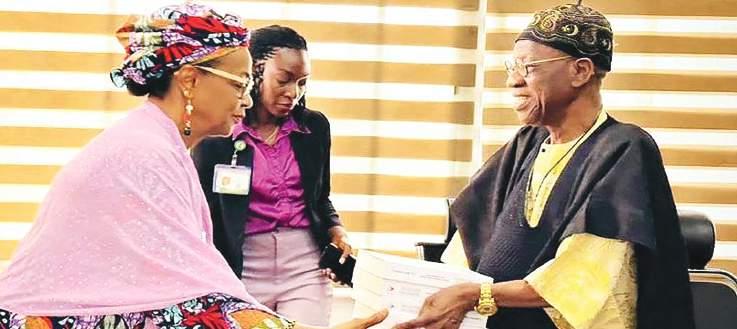
LAI MOHAMMED DONATES COPIES OF HIS BOOK TO NIPSS...
Acting Director of Studies, National Institute for Policy and Strategic Studies (NIPSS), Kuru, Jos, Barrister Nima Salman Mann (left), with former Minister of Information and Culture, Alhaji Lai Mohammed, during the donation of copies of his book, “Headlines and Soundbites: Media Moments That Defined an Administration”, to the library of NIPSS in Kuru, Jos, yesterday
Agbakoba: Nigeria Losing Up to N20
Trillion Annually to Revenue Leakages
Canvasses constitutional reform to mandate full remittance into Federation Account Warns rising revenue amid mounting debt signals “structural failure” Says many political leaders lack basic knowledge of the Constitution
Wale Igbintade
Nigeria may be losing as much as N20 trillion annually to systemic revenue leakages, according to a policy paper released by Olisa Agbakoba Legal (OAL), which has called for urgent constitutional reforms to enforce full remittance of government revenues into the Federation Account.
The report, unveiled in Lagos, attributed the country’s fiscal challenges to the persistent failure to implement Section 162(1) of the 1999 Constitution, which mandates that all revenues collected by the Federal Government be paid into the Federation Account.
Titled “The Federation Account of Nigeria and Infinite Possibilities: A Framework for Full Remittance and Fiscal Accountability,” the paper described Nigeria’s economic condition as a “revenue paradox,” where rising earnings have not translated into improved fiscal outcomes.
According to the report, federation revenues increased from N16.8 trillion in 2023 to N31.9 trillion in 2024 and are projected to continue rising.
Despite this growth, Nigeria’s total public debt climbed to N159.27 trillion
by the end of 2025.
The report noted that debt servicing consumed 78 per cent of federal revenue in 2023 and 69 per cent in 2024, far above the 30 to 40 per cent threshold considered sustainable for developing economies.
It argued that the disconnect between rising revenues and worsening debt is not due to inadequate earnings but to “structural leakage,” with a significant portion of revenue failing to reach the Federation Account.
Citing the World Bank’s 2025 Nigeria Development Update, the paper disclosed that over 39 per cent of gross federation revenues, estimated at more than N14 trillion was deducted before remittance in 2025 alone.
The report identified the Nigerian National Petroleum Company Limited (NNPCL) as a major contributor to the revenue gap, alleging under-remittance and institutional opacity.
It stated that in 2024, the company remitted about N600 billion out of N1.1 trillion due, retaining the balance to offset legacy obligations.
Beyond the figures, the paper highlighted a structural conflict
of interest, noting that NNPCL simultaneously acts as producer, seller, cost calculator, and remitter of oil revenues, an arrangement it said undermines accountability.
It recommended separating these roles among independent entities to enhance transparency.
The report also raised concerns over crude-for-loan arrangements, revealing that about 213,000 barrels per day of Nigeria’s oil production have been
committed to servicing external debts under various agreements, including the $3.3 billion Project Gazelle facility with Afreximbank, as well as Project Yield, Eagle Export Funding, and Project Leopard.
According to the paper, many of these agreements lack explicit approval from the National Assembly and effectively bypass the Federation Account, with revenues applied directly to offshore debt servicing.
It warned that such practices pre-empt the account before it is even constituted.
While acknowledging Executive Order No. 9 issued in February 2026 by President Bola Tinubu, which halted certain pre-remittance deductions under the Petroleum Industry Act, the report described the measure as a positive but limited intervention, noting that it remains reversible.
The paper also questioned the legal status of the Treasury Single Account (TSA), describing it as an executive initiative without constitutional backing and insisting that it cannot replace the Federation Account framework under Section 162. To address these issues, OAL proposed a constitutional amendment requiring that all revenues be paid into the Federation Account in gross, without any prior deductions.
Radda Unveils Free Model School for Indigent Students, Says Education State Priority
Minister hails project as education reform blueprint
Omolabake Fasogbon in Katsina
Governor Dikko Umaru Radda of Katsina State yesterday unveiled Radda Model Secondary School in Radda town, Charanchi Local Government Area, a fully funded smart boarding institution designed to deliver free, high-quality education to indigent but academically gifted children across the state.
The school was formally commissioned by Kwara State governor, AbdulRahman AbdulRazaq, at a ceremony attended by top government officials and stakeholders, including the Minister of Education, Dr. Maruf Olatunji Alausa
UNICEF Devt Expert: Over 40m Adolescent Nigerian Girls Face Limited Access to Education, Harmful Gender Norms
Further
Yinka Kolawole in Osogbo
UNICEF Adolescent Development Specialist, Ngozi Izuora-Songu yesterday made it clear that 40 million adolescents, nearly half of whom are girls are currently facing barriers, including limited access to education, harmful gender norms, early marriage, and inadequate access to accurate health information.
Speaking at this year Osun State
for the YES! GIRL Watch Session in Osogbo, an initiative designed to amplify the voices, experiences, and aspirations of adolescent girls across Nigeria she highlighted that the session brings girls together to watch selected episodes of the Yes! Girl podcast, engage in open dialogue, and reflect on issues that directly impact their lives.
According to the Development Expert, “The Yes! Girl podcast is a
girl-led platform created by adolescent girls for adolescent girls in an effort to address critical themes such as mental health, education, gender equality, menstrual health, online safety, child protection, and leadership.
While the podcast is distributed digitally, today’s watch session creates a physically safe space where girls can connect, speak freely, and learn from one another.”
Izuora-Songu stressed that
“Nigeria is home to over 40 million adolescents, nearly half of whom are girls. Yet, many girls continue to face barriers, including limited access to education, harmful gender norms, early marriage, and inadequate access to accurate health information.
“For example, millions of girls are still out of school, and many lack safe platforms to express themselves or seek guidance on issues affecting their wellbeing.”
Purpose-built to combine scale with quality, the school features two 500-capacity multipurpose conference halls, libraries, sports facilities, and residential hostels for both students and teachers.
Also are 42 classrooms with a maximum of 40 students each, and six specialised laboratories spanning agriculture, chemistry, biology, physics and vocational studies. It has already enrolled 998 students.
The school which is one of three of its type features special digital facilities including smart teaching aids and well-equipped laboratories for teaching and learning.
Speaking at the commissioning, Radda described the school as a deliberate policy response to longstanding inequality in access to quality education.
“This is not an act of charity; it is a commitment to making excellence accessible to every child, regardless of background. We are creating a system that searches for ability wherever it exists and gives it the opportunity to flourish.
Our goal is to produce innovators, problem-solvers, and future leaders who can compete effectively on the global stage,” he declared.
He added that the school’s academic direction would prioritise emerging technologies, including artificial intelligence to position students to compete in a rapidly evolving global economy.
The project forms part of a broader education reform agenda pursued by the administration since 2023, under which more than 75 new schools have been constructed and hundreds rehabilitated across underserved communities.
According to the governor, the model school initiative represents the peak of those interventions, with plans to replicate similar institutions across Katsina’s three senatorial zones.
He called on development partners and the private sector to support the initiative through scholarships, infrastructure partnerships, and teacher development programmes, stressing that education development is a shared responsibility.
Acting Group Politics Editor DEJI ELUMOYE
Email: deji.elumoye@thisdaylive.com
08033025611 sms only
Imposition Politics: As APC Govs Prepare Party for Defeat...
across several states, the all Progressives Congress is grappling with internal unease—one that reflects a deeper, nationwide concern about the integrity of party primaries. Many argue that state governors are setting the aPC up for defeat in their states by manipulating the process. Iyobosa Uwugiaren examines the issues.
Day after day, mounting complaints across several states are casting a shadow over the APC primaries, with party members alleging that governors are imposing preferred candidates and sidelining grassroots choices.
Nowhere is the tension more pronounced than in Edo South, where resistance to a push by powerful figures—including FCT Minister Nyesom Wike—has exposed deep cracks within the party and raised fresh concerns about the state of internal democracy in Nigeria.
In Benin City, conversations among party loyalists carry an unusual edge. In ward and local government meetings, private homes, and roadside gatherings, a familiar refrain keeps surfacing: the outcome of the coming APC primaries has already been decided.
The apprehension stems from a growing perception that influential actors are working to install their preferred candidate in Edo South. That belief has, in turn, triggered resistance from supporters of Osagie Ize-Iyamu, who is widely regarded within his base as the more popular option. Apparently to counter Ize-Iyamu’s popularity, Governor Monday Okpebholo is alleged to have threatened to sack any political appointee who supports Ize-Iyamu’s aspiration.
Whether these allegations are true, exaggerated, or politically motivated, their effect is already evident. Across Edo, the APC is grappling with internal unease—one that reflects a deeper, nationwide concern about the integrity of party primaries. Many argue that the Edo State governor appears to be preparing the APC for defeat in the state, judging by his conduct.
What is unfolding in Edo is not happening in isolation. Across several states, party members and aspirants have raised similar complaints about the conduct of APC primaries and the influence of governors in determining outcomes.
In Nasarawa State, aspirants have publicly expressed concern over what they describe as attempts to control delegate lists and tilt the process in favour of preferred candidates. In Gombe, murmurs within party ranks suggest dissatisfaction with the perceived dominance of the state leadership in shaping who emerges. Lagos, long considered a stronghold of structured party control, has not been an exemption. While discipline within the party has
often been cited by political analysts as a strength, critics argue that the same structure can limit open competition, particularly when influential actors signal clear preferences ahead of primaries.
In Rivers State, political tensions have been further complicated by the involvement of high-profile figures, including Wike, whose influence continues to generate debate across party lines.
Meanwhile, in Edo, the current dispute has become one of the most visible flashpoints in the broader conversation about internal democracy. Taken together, these instances point to a pattern: a growing perception that the space for competitive primaries within the APC is narrowing, and that APC governors are preparing the party for significant defeat in their states.
At the center of these concerns is a fundamental democratic principle— legitimacy. Primaries are intended to serve as the first test of a candidate’s acceptability within a party. They provide a platform for aspirants to engage with members, present their ideas, and build support. When that process is seen as compromised, the legitimacy of the eventual candidate comes into question.
In Edo, the dispute illustrates how quickly confidence can erode. Party members who feel excluded from decision-making processes are disengaging from the APC—some reportedly moving toward the Nigeria Democratic Congress (NDC). While some withdraw quietly, others are
challenging the process openly, creating divisions that could persist into the 2027 general election and the 2028 Edo State governorship election.
The legitimacy deficit does not remain confined within party walls. It spills into the public domain, shaping how voters perceive candidates and, by extension, the electoral process itself. Political parties depend heavily on grassroots structures. Ward leaders, youth mobilizers, and local coordinators form the backbone of campaign efforts, and their commitment often determines the reach and effectiveness of a party’s message. When candidates are perceived to be imposed, these structures weaken.
In several states where complaints have emerged, party insiders report declining enthusiasm among grassroots members. Meetings that once attracted large numbers now see reduced attendance. Volunteers who previously drove mobilization efforts are less willing to invest time and resources.
Edo reflects this trend. The perception of imposition has created a sense of detachment among some party faithful, raising concerns about the APC’s ability to sustain a strong grassroots campaign in the state, especially in Edo South, which accounts for about 60% of the voting population.
The most immediate consequence of the fear of imposed candidates is factionalization. Aggrieved aspirants and their supporters are defecting to opposition parties or choosing to remain within the APC while withholding support from the official candidate.
Nigerian political history since 1999 provides numerous examples of parties weakened by internal divisions. In tightly contested states, even minor fractures can prove decisive.
In Gombe and Nasarawa, for instance,
Beyond party structures, the controversy has implications for public trust. When political processes are perceived as predetermined, voter confidence declines. Citizens who believe their participation will not influence outcomes are less likely to engage in the electoral process.
reports of dissatisfaction have raised concerns about potential splits within party ranks. In Rivers, existing political tensions amplify the risk of fragmentation. In Lagos, where party cohesion has traditionally been strong, even subtle discontent could have ripple effects. Edo, however, stands out because of the intensity of the current dispute. If not managed effectively, the situation could evolve into a full-blown factional crisis.
A recurring theme across these states is the role of governors in shaping party outcomes. Within Nigeria’s political structure, governors wield considerable influence. They control resources, command loyalty, and often determine the composition of party leadership at the state level. This concentration of power can be both an asset and a liability.
On one hand, strong leadership can ensure party cohesion. On the other, excessive control can stifle competition and undermine democratic processes. Critics argue that the current wave of complaints reflects a shift toward the latter. The perception that governors are acting as kingmakers—deciding who emerges rather than allowing open contests—has intensified scrutiny of their role within party structures. In Edo, this perception is particularly pronounced, with allegations that decisions are being shaped by a combination of local and external influences.
Disputed primaries often lead to litigation, and Nigerian courts have become central to resolving intra-party conflicts. While the judiciary plays an essential role, frequent legal battles carry risks. Court cases can delay candidate confirmation, disrupt campaign planning, and create uncertainty among voters. In some instances, prolonged disputes have resulted in parties losing the opportunity to field candidates altogether.
With complaints emerging from multiple states, the APC faces the possibility of widespread legal challenges. The cumulative effect of such disputes could weaken the party’s overall electoral position.
Beyond party structures, the controversy has implications for public trust. When political processes are perceived as predetermined, voter confidence declines. Citizens who believe their participation will not influence outcomes are less likely to engage in the electoral process.
NOTE:
Abdulrazaq
okpebholo
sule
MMA2 at 19: Celebrating An Enduring Legacy FOCUS
By Steve Omolale
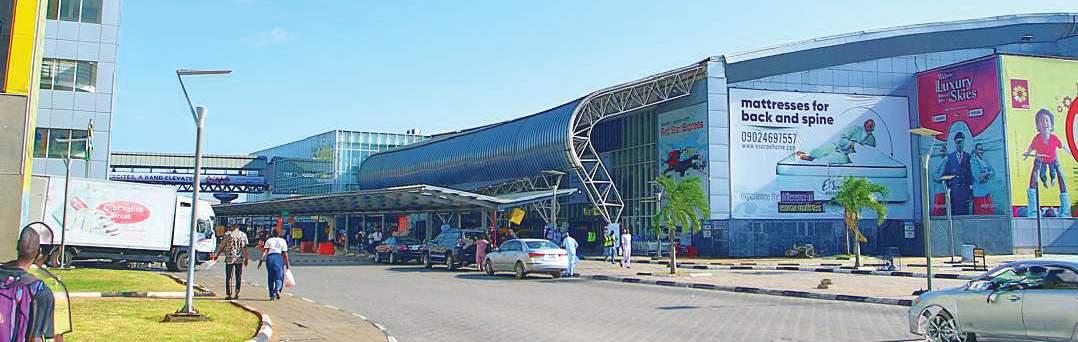
As MMA2 marks its 19th anniversary today, May 7, Bi-Courtney Aviation Services Limited (BASL), operators of the iconic Murtala Muhammed Airport Terminal Two (MMA2), will roll out the drums and blow the trumpets in celebration of the 19th anniversary of the landmark terminal.
While BASL deserves to celebrate itself with pomp and colours, MMA2 deserves to be celebrated in grandeur. Reason being that all the controversial issues surrounding the concession of the state-ofthe-art terminal have just been finally resolved. So, this year’s anniversary is quite unique in a way, as it coincides with the resolution of those lingering issues that had distracted the attention of Bi-Courtney for almost two decades.
Expectedly, not a few will agree that BASL has totally changed the face of aviation in the last 18 years of its operation of MMA2. It is a kind of revolution in the industry.
Despite the shenanigans of those who were up in arms with the aviation infrastructure firm over the concession of the multiple award-winning terminal, the unparalleled and patriotic commitment, the volume of zeal, the humongous amount of money and the losses incurred in an attempt to place Nigeria as an aviation hub, particularly in the West African sub-region, are the reasons MMA2 still stands solid till date.
The terminal is a personal sacrifice of one man: billionaire businessman and erudite lawyer, Dr. Wale Babalakin (SAN), who is the Group Chairman of The Resort Group, the parent company of BASL. He is the reason Nigerians and foreigners alike have been having seamless travelling experience through MMA2 in the last 18 years. He is the reason the terminal is being celebrated yearly. He is the reason all the issues plaguing the MMA2 concession have just been resolved.
The resolution was confirmed in Abuja by no other person than the Hon. Minister of Aviation and Aerospace Development, Mr. Festus Keyamo (SAN), when he said, “I can happily tell you that this government has resolved that issue (concession) once and for all. Council today (last Thursday) approved the terms of the agreement we reached with Babalakin to settle all the vexed issues surrounding that airport.”
Dr. Babalakin’s painful, but patriotic sacrifices are what is sustaining the edifice till date. The commitment and dedication of members of staff, who are well taken care of with prompt payment
of salaries and allowances, timely remittances of pension deductions and good general welfare, are also what is sustaining the terminal.
As BASL prepares to celebrate MMA2’s 19th anniversary and despite all the personal losses he had incurred in his spirited attempts to keep the facility running, Dr. Babalakin has just made another huge sacrifice to demonstrate his patriotism by writing off a N132 billion judgement debt owed him by the Federal Government for the past 18 years. Keyamo also confirmed this, when he told journalists, “... “He wrote it off”.
The businessman did not only write off the huge debt, he also agreed to hand back to the Federal Government the General Aviation Terminal (GAT) of the Murtala Muhammed Airport, which the original concession covered.
Former Aviation Minister, Princess Stella Oduah, had flagrantly taken over the GAT and renovated it years back, thereby denying BASL that part of the concession.
Babalakin also agreed to the removal of the exclusivity clause in the concession. This is to allow the development of other airport facilities in Lagos. These are enormous sacrifices. It is a deep demonstration of patriotism, selflessness and magnanimity.
And in return, the Federal Government, according to Keyamo, has agreed that BASL goes ahead with regional flight operations at MMA2, where the firm had invested over N600 million in facilities of international standard that had, sadly, been wasting
away over the years.
The government also gave the go-ahead to BASL to expand the aprons at MMA2 to accommodate more aircraft, as regional flight operations are billed to commence soon at the terminal.
Lastly, it returned the concession for a five-star hotel and conference centre opposite MMA2, which had been stalled for several years now despite the huge investment of Bi-Courtney in it, with a proviso that the projects must be completed in the next 24 months.
Keyamo also confirmed that other technical details of the agreement between Babalakin and the government are to be unveiled and inked in Lagos in the days ahead.
The Director-General of Infrastructure Concession Regulatory Commission (ICRC), Mr. Jacob Ewalefoh, described the resolution of the issues surrounding the concession as a “masterstroke”, saying President Bola Tinubu’s action demonstrated a commitment to the sanctity of contracts in the country.
The positive review of the concession issues is also a demonstration of the way the present government and all right-thinking Nigerians value and are proud of MMA2, which is the first and most successful Public-Private Partnership (PPP) projects in the country.
And over the years, despite suffering all manner of obstacles in litigations and outright attempts by vested interests to surreptitiously take over the terminal, BASL has remained undaunted and resolute in sustaining the facility.
Since when former President Olusegun Obasanjo inaugurated MMA2 on May 7, 2007 and the first flight operation took off from the terminal same day in a colourful ceremony with Chanchangi Airline’s Lagos-Kaduna flight, BASL has been
doing everything humanly possible to keep the terminal running, seamlessly.
Unlike other airport terminals in the country, passenger facilitation at MMA2 is top-notch. This is the reason it has won several laurels back to back for several years, such as the Best Domestic Terminal of the Year and the Best Airport Accessibility and Inclusivity awards, which it, again, won at last year’s 15th Nigerian Aviation (NIGAV) Awards and Ministerial Dinner in Lagos.
Besides, while Babalakin was conferred with the Outstanding Aviation Entrepreneur Award, the Chief Operating Officer, COO/Head of Aeronautical and Cargo Services of BASL, Mr. Remi Jibodu, clinged the Passenger Terminal Manager of the Year Award.
The awards were significant in several ways. They represented MMA2’s sustained excellence in terminal operations, cleanliness, customer services, orderliness and overall passenger experience, as well as underscore the strength of the terminal’s original design and its unwavering commitment to a comfortable, accessible and inclusive environment for all passengers.
MMA2, which is one of the enduring PPP experiments in infrastructure assets in Africa, was built by Babalakin, using entirely private capital, without government support, under a Design-BuildOperate-Transfer (DBOT) concession awarded in 2003 after fire engulfed and completely destroyed the old domestic terminal. Its design dwafted the initial design by government officials.
When it opened in 2007, it became the first airport terminal on the African continent to be successfully built wholly with private capital.
•Omolale, a seasoned journalist, sent this piece from Lagos.
Murtala Muhammed Airport Terminal Two (MMA2)
The interior view of MMA2
Dr. Wale Babalakin
FEaturEs
Kingsley Moghalu @63: Profile of a Visionary Architect of Governance and Economic Transformation
As Kingsley Chiedu Moghalu marks his 63rd birthday, his life’s journey stands as a compelling story of intellect, discipline, and transformative leadership. From the corridors of the United Nations to the boardrooms of global finance and the policy rooms of Nigeria’s Central Bank, Moghalu has built a reputation as one of Africa’s most influential voices on governance, economic reform, and institutional development. A former diplomat, lawyer, academic, and public policy strategist, he has consistently championed the idea that Africa’s future depends on visionary leadership, ethical governance, and strategic economic transformation. Through decades of global service, thought leadership, and institution building, Moghalu continues to shape conversations on Africa’s place in an increasingly complex world order. Precious Ugwuzor reports
For the past few years, Kingsley Chiedu Moghalu has lived and worked quietly in Washington DC, from where he runs his consultancy, academic and public engagements around the world, and away from the sound and fury of Nigerian politics.
In an era when Africa grapples with the twin challenges of governance deficits and the quest for meaningful agency in a fractured global order, he stands as a transformative leader whose life and work embody the rare fusion of intellectual rigor, diplomatic acumen, and institutional innovation.
As the founder and CEO of Sogato Strategies LLC and the IGET Academy (Institute for Governance and Economic Transformation), the 63-year-old Nigerian political economist, former United Nations diplomat, and Central Bank of Nigeria deputy governor has dedicated his career to redefining how nations, companies and institutions navigate complexity, build resilience, and claim their rightful place in the 21st-century world economy.
Awarded the Officer of the Order of the Niger (OON) in 2012 for distinguished national and global service, Moghalu is not merely a technocrat; he is a paradigm-shifting thinker who has challenged complacent narratives about Africa’s potential and engineered practical pathways for its prosperity. His journey illustrates how disciplined leadership, rooted in merit, can catalyze systemic change across borders, sectors, and generations.
Born on May 7, 1963, in Lagos, Nigeria, Moghalu entered the world at the dawn of the post-independence era, the eldest of five children. His father, Elder Isaac Chukwudum Moghalu, known to his contemporaries as “ICM” was among a pioneering cohort of Nigerians recruited into the Foreign Service shortly after independence in 1960.
This diplomatic heritage immersed young Kingsley in a global milieu: early childhood years in Switzerland and Washington, D.C., exposed him early to a wider horizon. The family’s experiences during the Nigerian Civil War (Biafra conflict) both rooted him culturally and further sharpened his awareness of fragility, justice, and the human cost of poor governance. While Pa Isaac passed on nearly 30 years ago, Kingsley’s mother, Lady Vidah Moghalu, is alive and well as a 90-year old evangelical Christian evangelist. Educated at elite institutions including Government College Umuahia and Federal Government College Enugu, Kingsley Moghalu earned an LL.B. (Honours) from the University of Nigeria, Nsukka, in 1986 and was called to the Nigerian Bar the following
year. But his ambitions extended far beyond Nigeria’s horizons.
After his National Youth Service Corps (NYSC) assignment as a Legal Officer in Shell Petroleum and a stint as General Counsel of Newswatch magazine and special correspondent in Nigeria for international newspapers and magazines such as the US-based Christian Science Monitor and Africa News Service (now All Africa Global Media), and the London based South magazine, Moghalu left Nigeria in 1991 for The Fletcher School of Law and Diplomacy at Tufts University in Boston, United States for postgraduate education in international affairs. Impressed with Moghalu’s admission to the elite graduate school that was jointly founded by Tufts University and Harvard University in 1933 as America’s first exclusively graduate school of international affairs, the United
States Embassy in Lagos waived a visa interview for Moghalu, simply advising him to send his passport to the embassy for a student visa. The embassy then went one up: it awarded Moghalu a U.S. Information Agency Travel Grant that covered the costs of his airline ticket to America.
In 1992, he obtained a Master of Arts from The Fletcher School as a Joan Gillespie Fellow, a fellowship awarded to deserving admitted students from India, Nigeria, and Algeria assessed as future leaders.
He immediately joined the United Nations Service, appointed on his personal merit by UN SecretaryGeneral Boutros Boutros-Ghali.
A decade later in January 2004, Moghalu enrolled for his Ph.D. in international relations at the London School of Economics, receiving his doctoral degree in 2005. Remarkably, he completed his 500-page doctoral dissertation in just 12 months as a part-time candidate while serving as
a senior UN official—an unprecedented record that underscored his extraordinary discipline and work ethic. The Senate of the University of London had to convene specially to grant a waiver of the minimum period for a doctoral candidate to obtain the degree.
He then studied risk management at the Institute of Risk Management (IRM) in London, and became a certified risk manager. Subsequent executive education at institutions such as the IMF Institute, Harvard Kennedy School, Harvard Business School, and Wharton equipped him with tools in macroeconomics, corporate governance, and strategic leadership. This background gave Moghalu a strong, multidisciplinary professional edge – a solid grounding in the interplay of law, risk management, economics, and politics.
Moghalu’s 17-year United Nations career (1992–2009) placed him at the epicenter of some of the organization’s most consequential post-Cold War efforts. He served in strategic planning, legal and external affairs roles first in Cambodia, then at the UN Secretariat’s headquarters in New York where he worked under UN Under-Secretary-General Kofi Annan (who became Secretary-General of the world body a few years later) as Political Affairs Officer, followed by an assignment in Croatia as political adviser to the Secretary-General’s Special Representative in Croatia amid the Yugoslav conflicts. His most defining assignment came at the UN International Tribunal for Rwanda, headquartered in Arusha, Tanzania, where he served as legal adviser and spokesman. There, Moghalu helped shape policy, strategy, and external relations for a tribunal that delivered the world’s first international court judgment on genocide.
Rising through the ranks to the highest career bracket of Director, he later joined the Global Fund in Geneva, Switzerland (at this time still under the umbrella of the UN system), as Head of Global Partnerships and Resource Mobilization. He created partnerships, drove fundraising, and managed risk management initiatives that mobilized billions of dollars for impact investments in global health in 140 countries. In 2006, Secretary-General Kofi Annan appointed Moghalu to the Redesign Panel on the UN Internal Justice System, a high-level, five-member panel of jurists — operating at Under-Secretary-General level — that overhauled the UN’s internal justice system, enhancing accountability, transparency and effective dispute resolution across the UN’s 60,000-strong global workforce based on the statutory mandate of a resolution by the UN General Assembly These experiences honed Moghalu’s expertise in international administrative law, compliance and
Kingsley Moghalu
regulatory frameworks, and institutional reform, while instilling a lifelong commitment to ethical governance as the bedrock of human progress.
In December 2008, Moghalu resigned from the UN system to pursue new frontiers in risk management and strategy in the private sector. He established Sogato Strategies S.A. in Geneva, Switzerland—a boutique global risk management and strategy advisory firm founded with personal capital of 100,000 Swiss francs. Sogato Strategies quickly secured mandates from major multinationals, including UBS and Syngenta, advising on African and Asian opportunities and demonstrating Moghalu’s ability to translate publicsector experience into private-sector value. In late 2009, Moghalu returned to Nigeria and assumed the role of Deputy Governor of the Central Bank of Nigeria (CBN) for Financial System Stability, appointed by President Umaru Musa Yar’Adua.
Over five years, he emerged as a pivotal architect of Nigeria’s economic resilience. Operating as the redoubtable CBN Governor Sanusi Lamido Sanusi’s alter ego, Moghalu led the Financial System Stability team that implemented the CBN’s far-reaching reforms after the 2008 global financial crisis – recapitalization of distressed banks, establishment of the Asset Management Corporation of Nigeria (AMCON) as a “bad bank” to cleanse balance sheets, and later helmed the Operations team that introduced the Bank Verification Number (BVN) system. These measures stabilized the financial architecture, prevented depositor losses, and modernized the payments system—laying the groundwork for Nigeria’s fintech revolution and greater financial inclusion. Initiatives such as the introduction of non-interest (Islamic) banking expanded access for underserved populations.
As a member of the CBN’s Board of Directors, Monetary Policy Committee (which brought inflation down to a single-digit 8%), and the President of Nigeria’s Economic Management Team and chairman of boards including the Nigerian Export-Import Bank (NEXIM) and the Financial Institutions Training Centre (FITC), Moghalu influenced monetary and economic policy and corporate governance at the highest levels. His tenure exemplified transformative leadership: pragmatic yet bold, data-driven yet visionary, turning systemic vulnerability into a platform for sustainable growth in Africa’s largest economy.
Beyond operational roles, Moghalu has distinguished himself as a prolific thought leader. His globally acclaimed 2014 book, Emerging Africa: How the Global Economy’s ‘Last Frontier’ Can Prosper and Matter , published by Penguin Books in London, dismantled the superficial “Africa Rising” narrative. Instead, it offered a paradigm-shifting analysis of the continent’s developmental dilemmas, advocating for strategic leadership, mindset change, and innovation and technology-driven structural economic transformation to secure genuine global relevance. Additional publications — including his 2019 presidential campaign manifesto as the reformist candidate of the Young Progressive Party (YPP), titled Build, Innovate, Grow (BIG) — articulated a bold vision for competent, values-driven governance in Nigeria.
Moghalu’s thought leadership extends powerfully into global platforms as a distinguished international keynote speaker at prestigious corporate, institutional, and academic forums. He has addressed audiences at Commerzbank
in Frankfurt, the Asset-Liability Management European Conference in London, the South African Reserve Bank, Afreximbank, the World Intellectual Property Organization (WIPO) Ministerial Conference, the World Affairs Councils of Washington DC, Philadelphia, and Hilton Head, the National Bar Association of the United States, the African Economics Scholars Program (AESP), as well as at Harvard, Wharton, and Oxford—where he served as an Oxford Martin Visiting Fellow. His global opinion commentary has appeared in leading outlets including the Financial Times, Project Syndicate, Semafor, the Washington Post, South China Morning Post, and USA Today, complemented by expert analysis on CNN TV, BBC World TV, and Bloomberg. His is one of the rare African voices in the spaces that shape global opinion and policy.
A significant milestone in Moghalu’s career trajectory came immediately after his CBN tenure, when he was recruited as Professor of Practice in International Business and Public Policy at his alma mater The Fletcher School of Law and Diplomacy at Tufts University. He was personally selected for this role by retired American four-star admiral Dr. James Stavridis, former Supreme Allied Commander of NATO and then-Dean of The Fletcher School. Moghalu taught courses on emerging markets in the world economy, and on central banks, sovereign wealth, and global capital flows, bridging theory and practice while
President Paul Kagame. Over the following one year, he established the graduate-school university from the ground up: building operational and academic systems, recruiting a worldclass faculty and the inaugural cohort for the Master of Public Administration program, conducting an extensive Africawide tour that engaged African leaders and stakeholders with the institution’s vision and mission, and successfully launching the first executive education program for senior African leaders. After the ASG assignment, Moghalu returned to his advisory firm Sogato Strategies, headquartered in Washington DC since 2015. The regulatory strategy and geopolitical risk advisory firm has guided billions of dollars of investments by some of the world’s largest global institutional investors and multinationals investing into emerging and frontier markets in Africa. He also continues to channel his accumulated wisdom into institution-building with greater focus on leadership development. Through the IGET Academy (which has partnered with luminaries including Nobel laureate economist James Robinson), he cultivates a new cadre of African policymakers equipped to manage complexity.
He also served as UNDP Special Envoy on Post-Covid Development Finance for Africa, advising on innovative financing mechanisms to accelerate recovery and resilience. Additional leadership positions, including membership on the Advisory Council of the Official Monetary and Financial Institutions Forum (OMFIF)—a London-headquartered independent network of global asset managers, pension funds, and sovereign wealth funds managing approximately $43 trillion in assets and chaired by Lord Lamont, former UK Chancellor of the Exchequer — extend Moghalu’s influence into the highest circles of international finance and monetary policy.
mentoring future global leaders. This level of recognition underscored his formidable global networks and intellectual stature, affirming his unique ability to operate at the highest levels of academia, policy, and diplomacy.
His standing resonates not only abroad but profoundly at home in Nigeria. On December 28, 2020, HRH Igwe Kenneth Onyeneke Orizu III, the revered traditional ruler of the ancient 600-year-old Nnewi Kingdom in Anambra State—Moghalu’s hometown—honored him with the prestigious chieftaincy title of Ifekaego of Nnewi Kingdom. The title, which translates roughly as “that which is greater than money” or “values (integrity) that outrank material wealth,” speaks volumes about the essence of Moghalu’s public life. In a commercial powerhouse like Nnewi, known for its entrepreneurial dynamism and industrial enterprise, the Igwe deliberately chose a title that was easily identifiable to Moghalu –one that elevates ethical principles, intellectual contribution, and selfless service above mere accumulation of riches. By inducting Moghalu into the prestigious Body of Titled Chiefs of Nnewi (BOTCON), the monarch recognized his meritorious contributions to the development of Nnewi, Nigeria, and the broader world.
In late 2024, Moghalu was appointed as the inaugural President and Vice-Chancellor of the African School of Governance (ASG) in Kigali, Rwanda, a bold new pan-African institution founded by Rwandan
At the personal level, Moghalu remains grounded by family and philanthropy. Married to lawyer Maryanne Moghalu, with whom he has five children, he credits God’s mercy and the values and worldview inculcated by his parents for his success, and his wife as an indispensable partner in his global journey. In 2005, he established the Isaac Moghalu Foundation to honor his late father, providing educational access, libraries, and infrastructure to underprivileged children in rural Nigeria. This work reflects a core philosophy: true leadership begins with investing in human capital and intergenerational equity. Moghalu also serves on the board of the San Francisco-based, globally operating non-profit Room to Read.
His legacy is that of a bridgebuilder—connecting international best practices with African realities, theory with implementation, and crisis with opportunity. In a world hungry for leaders who combine moral clarity with technical mastery, he offers a model of transformative global citizenship. As Africa confronts demographic booms, climate imperatives, and technological disruption, Moghalu’s enduring message remains urgent: governance is not a luxury but the decisive variable for the sustainable prosperity of nations and companies. Through his writings, reforms, and institutions, he continues to light the path toward a continent that does not merely rise, but leads—prospering, mattering, and reshaping the global order on its own terms. With more than three decades of distinguished service, Moghalu’s influence will be measured not only in policies enacted or students taught, but in the quiet revolutions of mindset and capability.
Vehicle Tax Controversy and Implications for Climate Action
Nigeria’s new tax regime has continued to roll from one controversy to another. Reports suggesting that a new “green tax” on vehicles will kick in in July this year are the latest stir in the hornet’s nest. Despite the intervention by the Nigeria Revenue Service (NRS) that the viral information is false and misleading, public commentary continues to mirror the distrust, scepticism, and cynicism with which vast segments of society receive government statements and conduct. If the entirety of the recently enacted tax laws has been enmeshed in unresolved allegations of alterations, insertions, and usurpation of lawmaking powers, then it is no surprise that a supposed section of the law would now come under this attack and counter-attack. The NRS rebuttal should have done more than just debunk the viral social media post by clarifying whether or not the so-called vehicle tax is in the law. If it is part of the law, then it surely will be implemented at some point. But there is a deeper issue of concern to this page: the reaction to the touted ‘green’ tax reveals something important.
The real fears of economic burdens Nigerians did not reject the tax simply because the post was unverified: many reacted because it felt believable. And that believability is rooted in context. Nigeria is already undergoing a wave of fiscal reforms, including new levies on fossil fuels and broader tax restructuring aimed at increasing government revenue and aligning with climate goals. So, news of a vehicle emission tax would not feel out of place. It would seem like the next logical step, signaling that the conditions for such a policy already exist. In many ways, this moment offers a chance to interrogate a policy before it is implemented; to ask the difficult questions early, rather than react after the fact. If Nigeria were to introduce a vehicle emission tax in the future, the concerns already raised would not disappear. They would become realities. Would such a tax disproportionately affect middle-class Nigerians who rely on private vehicles due to weak public transport systems? Would it unintentionally spare older, more polluting vehicles while penalizing newer ones, depending on how it is designed? Would it function as an authentic climate action tool or quietly become another revenue-boosting mechanism in an already strained economy? And perhaps most importantly: would Nigerians be given viable alternatives before being asked to change behaviour? The NRS may be right, but the conversation the viral post sparked is too important to ignore.
Between climate action and revenue drive
Globally, vehicle emissions tax is not new. It is a measure to price “externalities” by basically making people pay for the environmental damage they cause. It’s the same logic behind carbon taxes in Europe or fuel levies in parts of Asia. The goal is the same: to discourage high-emission vehicles and push people toward cleaner options. And there is a strong case for action in Nigeria as the country’s transport sector is a major contributor to emissions, driven by population growth, urban congestion, and heavy dependence on petrol and diesel. As incomes rise, more people buy cars, and emissions rise with them. Left unchecked, this trend locks the country into a high-carbon future.
Critics argue that any green tax in Nigeria would be less about climate action and more about revenue generation. This skepticism is not unfounded. The 2026 fiscal framework includes multiple measures affecting the automotive sector: reduced import tariffs, new recycling fees, etc. While tariffs were reduced from 70 to 40 percent, the cumulative effect of these policies, combined with exchange rate volatility, has meant that vehicle prices are unlikely to fall significantly. From a
macroeconomic perspective, Nigeria faces a delicate balancing act. On one hand, it must expand non-oil revenue sources; on the other, it must avoid stifling economic activity. Evidence from fiscal simulations suggests that tax reforms can increase government revenue significantly, but often at the cost of higher consumer prices and reduced citizen welfare if not carefully designed. Moreover, the transport sector is not just an emissions source; it is a driver of economic productivity. Higher vehicle costs can ripple through logistics, ride-hailing, and informal transport sectors, ultimately increasing the cost of goods and services. Thus, automotive taxes risk functioning as a cost-push inflationary instrument, particularly in an economy already grappling with high inflation.
Equity and distribution: Who really pays?
At the heart of the debate is the issue of equity. Carbon taxes globally are often criticised for being regressive, disproportionately affecting lower- and middle-income households. Evidence from global meta-analyses shows that without compensatory mechanisms, carbon
pricing tends to increase inequality by raising the cost of essential goods and services. In Nigeria, this risk is amplified by structural realities: first, the (fast-declining) middle class is already under pressure. With inflation, currency depreciation, and declining real incomes, vehicle ownership is not a luxury but often a necessity in cities with weak public transport systems. A tax on vehicles, especially imported used cars, will translate directly into higher acquisition costs. Second, the policy’s design assumes that consumers can shift to cleaner alternatives. But this assumption is flawed. Electric vehicles remain prohibitively expensive, and charging infrastructure is virtually nonexistent outside pilot programmes. Even the much-touted Compressed Natural Gas (CNG), though expanding, is still in early stages. Third, exemptions for vehicles under 2.0L may appear progressive, but they obscure a deeper issue: Nigeria’s vehicle market is dominated by older, second-hand cars, which often fall below this threshold but are significantly more polluting. In effect, the disincentive is on engine size rather
than actual emissions performance, thereby raising questions about environmental efficiency.
Taxing behaviour and the enforcement challenge
Vehicle tax policies tend to work when people have real choices. Can Nigerians easily switch to electric vehicles? Not really. They are expensive, and the charging infrastructure is almost nonexistent. Can they rely on clean public transport? In most cities, no. CNG-driven transportation, though promising, is still in its early stages and not widely accessible. So what exactly is the average Nigerian supposed to do? If they can’t switch, they simply absorb the cost, and when millions of people absorb higher transport costs, it doesn’t stop there; it spreads. Transport fares go up. Logistics costs increase. Prices of goods rise. What started as a climate policy quietly becomes an inflation driver.
The story continues online on www.thisdaylive.com
Spotlight Climate Summit as Investment Showcase for Nigeria’s States
Much of the conversations around climate finance and green investments tend to pivot around the federal government. But the real deal is actually the subnationals: Nigeria’s 36 states and regional development bodies in the six geo-political zones. From power to renewables and climate-smart agriculture, the list of investable climate-themed opportunities is legion.
Take the Electricity Act of 2023, for example. That singular legislation did something unprecedented: it shifted Nigeria’s electricity system from a rigid, centrally controlled structure to a decentralized, competitive market. States can now generate, transmit, and distribute electricity within their jurisdictions, create their own regulatory frameworks, and, most importantly, license private investors to build power projects. This is more than policy reform; it is an economic tool designed to unlock growth at the sub-national level. For state governments and regional development bodies, this changes everything. Energy is no longer just a public service; it is an investment platform. States that move quickly can design electricity markets tailored to their economic strengths, whether through industrial clusters, renewable mini-grids, or embedded generation. The early signals are already clear: where states take control, power improves, industries return, and investor confidence rises. Lagos, for instance, is positioning itself not just as a consumer of electricity, but as a structured market for
• Prof Chukwumerije Okereke
energy investment, an example others can replicate.
But ambition alone will not attract capital. Visibility, credibility, and structure are what investors demand. This is where the Nigeria Climate Investment Summit (NCIS) London becomes decisive. The Summit will convene select members of the UK investment community, Development Finance Institutions, multilateral agencies, institutional investors, business leaders, and diaspora capital networks to explore the central theme of “catalyzing Nigeria’s climate policy progress into financial flows for green projects.” However, in recognition of the vital place of subnationals, the Summit will convene a focused thematic session on Nigeria’s Subnationals as Untapped Goldmine for Green Investments. This special session will be facilitated by Prof. Chukwumerije Okereke, President, Society for Planet and
Prosperity, and globally respected foremost Climate Action curator. NCIS London is setting the stage for State Governments & Regional Development Commissions to showcase their climate credentials & attract high-stakes climate finance and investments
The Summit will be held during the London Climate Action Week, the leading and most consequential global climate platform, working with the Conference of the Parties (COP) Presidencies to build momentum and shape diplomacy and investment ahead of COP31 in Antalya, Turkey. NCIS London is being organised by SOStainability and GLOBE Legislators—Focal Point of the UNFCCC Parliamentary Group. NCIS is designed to convert policy into bankable opportunities. It places sub-national governments at the heart of global climate finance discussions, presenting them not as administrative units, but as viable investment destinations. The Summit creates a platform where states can showcase energy projects, engage institutional investors, and broker partnerships around renewables, energy access, and transition funding. Crucially, NCIS draws strength from global financial ecosystems. By leveraging models like the City of London Corporation’s Transition Finance Council, it aligns Nigeria’s opportunities with London’s position as a global hub for transition capital. This connection matters. It means that a solar project in a Nigerian state or a regional grid initiative can be structured, financed, and scaled through one of the world’s most sophisticated financial markets.
• Zacheus Adedeji, Executive Chairman Nigeria Revenue Service
• Lawal Balarabe, Minister of Environment
• Taiwo Oyedele, Minister of Finance and Coordinating Minister of the Economy
SOStainability Week ly
Edited by Oke Epia | e-mail: sostainability01@gmail.com |
Trends and Threads
Energy: Tackling the Gaps and Injustice of the Transition
There is something paradoxical about perceptions of the global energy transition. On one hand, the headlines are loud and optimistic: solar is booming; electric cars are becoming a thing; governments are announcing big climate targets with even bigger promises. But on the other hand, everyday reality tells a quieter, slower story. In many parts of the world, especially across Africa, the transition does not feel like a fast-moving revolution. It feels gradual, uneven, and in some places, almost invisible. So, what is really going on?
The International Energy Agency (IEA), which tracks global energy data, reported in 2023 that fossil fuels e.g., coal, oil, and natural gas, still account for about 80 percent of the world’s total energy supply. That figure has barely moved in two decades. Despite the climate summits, the investment announcements, and the falling costs of renewables, the world still runs overwhelmingly on the same fuels it did twenty years ago. The reason is simple but often overlooked: energy is not just about electricity. It is about how we heat our homes, how we power our factories, and how we fuel ships, planes, and trucks. Clean electricity has made genuine progress. But cleaning up the rest of the energy system, which experts call “hard-to-abate” sectors, is a far harder and more expensive challenge that has barely begun.
Headlines show the peak, not what’s on the ground
Most global energy stories focus on what is growing fastest: solar farms, wind projects, clean technology investments, etc. Those are real gains, but what headlines rarely show is scale. Energy is not just about electricity: it powers transport, industries, cooking, farming — the entire structure of modern life. Much of that system is still deeply tied to fossil fuels. While clean energy is growing quickly in some countries, it is not growing everywhere at the same pace. The IEA has established that transition is highly uneven, with most clean energy expansion concentrated in wealthier economies while developing regions struggle to keep up. The progress may be real, but it is not evenly shared.
To understand why the transition feels slow, one has to go to rural communities in Africa, Asia, or Latin America, and the picture changes completely. Globally, about 730 million people still live without electricity. That number alone explains a lot. For these communities, the conversation is not about switching from fossil fuels to renewables. It is about getting any electricity at all. And even when solutions exist, like solar home systems or mini-grids, scaling them is not simple. Population growth, funding gaps, and weak infrastructure continue to slow progress. In sub-Saharan Africa, the challenge is even sharper: population growth is often faster than electrification. So even when new connections are made, the total number of people without power barely changes. This is why the transition feels slow, because for millions, it has not yet truly begun.
Even when electricity reaches a home, the story does not end there. Energy must be affordable, reliable, and sufficient. Today, over 2 billion people still rely on traditional fuels like firewood and charcoal for cooking, according to the IEA. That means smoke-filled kitchens, health risks, and long hours spent gathering fuel, mostly by women and children. So, while a country may report progress in electrification, daily life may still depend on old, polluting energy sources.
Rural electrification requires acceleration
Perhaps the starkest way to understand the gap between the promise and reality of the energy transition is to look at the geographies and demographics of exclusion. According to the IEA and the World Bank’s Tracking SDG 7 report, which monitors progress on the global goal of universal clean energy access, approximately 675 million people had no access to electricity as of 2022. The majority of them live in sub-Saharan Africa. That number has actually come down significantly over the
Kashim Shettima, Vice President of Nigeria
past decade, and that is some good news. But the pace of progress has slowed. The report notes that at current rates, roughly 660 million people will still lack electricity access by 2030 — the year the world was supposed to achieve universal access under the UN’s Sustainable Development Goals (SDGs). The goal post keeps moving, not because the ambition has faded, but because the challenge keeps proving harder than expected.
But what does lack of electricity access actually mean in daily life? It means children doing homework by the light of a kerosene lamp, breathing fumes that damage their lungs. It means health clinics that cannot refrigerate vaccines or run basic diagnostic equipment. It means women and girls spend hours each day collecting firewood instead of going to school or building a business. It means entire communities are locked out of the digital economy, unable to charge a phone, run a small enterprise, or access the internet.
The solutions exist. Solar home systems, mini-grids powered by solar and battery storage, small-scale hydroelectric installations, etc. Some of the most innovative energy projects in the world are happening in rural Kenya, rural Bangladesh, and across Southeast Asia. Entrepreneurs and communities have shown remarkable ingenuity. But connecting the last mile, the most remote, the most dispersed, the
MD/CEO REA
least commercially attractive communities, remains brutally difficult and expensive. Grid extension, which means physically stringing power lines out to rural villages, is slow and costly. Off-grid solar solutions reach many more people faster, but they require ongoing maintenance, replacement parts, and financing mechanisms that are often unavailable in the communities that need them most. Many rural households that technically have a solar home system find themselves without power again within a few years because a battery has failed, and replacement is challenging. Connectivity on paper is not the same as reliable electricity in practice.
Changing a 100-year system is no walk in the park
The global energy system was not built overnight. It has taken over a century of infrastructure, investment, and human habits. Changing that system is like trying to rebuild a city while people are still living in it. Clean energy technologies may be growing fast, but replacing existing systems like power plants, fuel networks, and transport systems takes decades. And here is the deeper issue: as economies grow, energy demand grows too. Developing countries need more energy for industries, jobs, and development, and this demand does not pause just because the world wants to go green. So, the transition becomes a
• Adebayo Adelabu, recently resigned as Power Minister
balancing act, growing energy access while trying to clean it at the same time. The global energy system is, without exaggeration, the largest and most complex infrastructure humanity has ever built. Every power plant, every pipeline, every transmission line, every petrol station — it took more than a century to construct all of it. Replacing it, or even substantially transforming it, within a few decades is an engineering and financial challenge of almost incomprehensible size. The IEA has estimated that to reach net-zero emissions by 2050, the target that scientists say would limit warming to relatively manageable levels, annual clean energy investment globally needs to roughly triple from where it is today. We are currently investing about $1.8 trillion per year in clean energy. But the IEA says we need closer to $4.5 trillion per year by 2030. The gap is enormous. And investment is just one piece. Even when money is available, projects face a cascade of practical obstacles: supply chains that cannot keep up with demand, skilled workers who do not exist in sufficient numbers, permission processes that can take years, grid infrastructure that was never designed to carry power from wind and solar farms located far from cities. In the United States, for instance, the queue of clean energy projects waiting for grid connection runs to several years in many states, according to the Lawrence Berkeley National Laboratory. Projects are approved in principle but stuck in practice.
NCIS London: Converting conversations into capital
For a long time, Nigeria’s energy transition has not suffered from a lack of plans but a lack of funding that actually reaches real projects. This is where the upcoming inaugural Nigeria Climate Investment Summit (NCIS) London begins to change the conversation. Rather than focusing on promises, NCIS London is designed to connect projects directly to capital, bringing together policymakers, investors, development finance institutions, and, importantly, subnational leaders who are closer to where energy gaps truly exist. Its strength lies in pushing for investment uptake and partnerships around bankable projects in energy access, renewables, and transition funding. More importantly, it goes a step further, aiming to broker deals and create “twinning opportunities,” essentially matching Nigerian projects with the right global partners, funding, and expertise. This shift is critical because Nigeria’s challenge has never just been ambition, but the gap between policy and implementation. Projects exist, but many are not structured in ways that attract sustained investment. What NCIS London does is bring everything into one room: policy, projects, and capital, and align them in real time. And if that alignment holds, even gradually, it could begin to change the trajectory of Nigeria’s energy transition, moving it from scattered efforts to coordinated, investable, and scalable action. That is when the transition stops being something we talk about and starts becoming something people can actually feel.
•
• Abba Abubakar Aliyu,
HAIL TO THE RICE MAN
JOHN MAYAKI pays tribute to Kenneth Imasuagbon, an educationist and philanthropist at 60
See page 21
NSITF AND INCLUSIVE SOCIAL SECURITY
The ISSA contends that effective communication is vital to comprehensive coverage, writes EMMANUEL ULAYI
See page 21
EDITORIAL
PATRICK TOLANI urges Nigeria to reflect as the UK elects councillors to run their affairs
AS UK GOES TO THE POLLS
Today, the United Kingdom voters will be going to the polls again to select their leaders at the local council levels. It is an annual occurrence for selected Councillors to go back to secure their mandate to govern in the local councils. For starters, United Kingdom has a five-year electoral cycle when members of the House of Commons go through the electoral process under the well-established parliamentary system that ultimately produces the Prime Minister from the party that secures the majority number of parliamentarians to run the central government with the ceremonial appointment into that role by the King.
This write-up today is to invite us as we approach another election year in 2027 in Nigeria to start to think deeply about the foundations and imperatives that shape our political system. The Yorubas would say: "Amùnkùn-ún, ẹrù ẹ wó". This translates to: "Knockkneed fellow, your load is tilted". The proverb is used to warn against judging or blaming someone for a faulty outcome (the crooked load) when they are dealing with a natural, inherent, or foundational disadvantage (the crooked legs). It highlights that one should not blame a person for issues arising from their physical limitations or circumstances under which they operate. It is those circumstances under which our political system operates that create the outcome we find in our country. In this analysis, I would like to draw parallels between the electoral system in the United Kingdom and the objective reality in Nigeria to show that whoever is voted into any political office in Nigeria will produce the same outcome that we see play out every four years in the country.
The starting point is the umpire itself. The Independent National Electoral Commission (INEC) and the cost of running the establishment is scandalous. When the Chair of the Commission, a law professor, got into post, he proposed a budget of close to N1 trillion to run the next election that holds next year. That job, given the humongous amount of money available to whoever occupies the position opens the person to graft without further proof given our penchant for corruption in Nigeria. It is so interesting that in the United Kingdom where I have lived for over 20 years, I don’t even know the name of the electoral body let alone knowing the name of whoever is the chairman or whatever title the person is called. All I know, as is most people in the
country, is that every first Thursday of May, until the general election, we go the polling stations, we meet some old men and women providing us with the materials to vote and the next day, we get the results. No police or security presence, no party agents. No payment-for-votes anywhere. Most of the years when I have been in the country to vote, I have never seen any queue at the polling station. Every voter walks into the venue, present their Voter’s Card which are pre-posted to the individual’s addresses and voting happens in about two to three minutes. Just to mention quickly that the presentation of the Voter’s Card or ID is a recent phenomenon. In the years past, you just go the designated voting venue, mention your name and your address and you are provided with your material to vote. Simple and straight forward. Curiously, a pencil is used to tick the box for the person or the party you are voting for. I am sure if such a thing happens in my beloved Nigeria, all that would be needed are erasers!
After the elections, I have never heard of any situation where any contestant goes to the court to challenge the result. What is more, elections hold on Thursdays – working day. I think voting starts at about 7.00am in the morning and continues till 10.00am to allow everyone the opportunity to vote before or after going to work. No electronic transmission of results. Everything works smoothly and the system keeps running, delivering effective service to the people.
Prior to the day of the election, the candidates in the United Kingdom will go through the internal party selection. Such selections and processes are the internal prerogatives of the parties. Unlike Nigeria, it is an anathema to witness a scenario where politicians are doing transfers (as if our political parties are football clubs) or shopping around for platforms where they could pick the flag of the party that will allow them to be the Governor, President, or whatever position they are vying for.
One of the most outrageous parts of our electoral system is the amount that individuals pay to obtain “expression of interest form” and the “nomination form.” Take the post of President of Nigeria as an example, in one of the parties, the nomination form is about N100 million. The entire official salary of the President for the four years is less than N100 million. So, how do you accuse anyone of corruption when the system as analysed with the Amukunun scenario lends itself to unavoidable corruption?
The objective reality of the political system in Nigeria itself is an invitation to graft. From the expression of interest form to the nomination form, to the electoral umpire, every step of the way, each operator is invited to come and steal, and stealing they do. So how do we end up blaming them? I have always wondered: why is it that every person who has occupied one political position or another in Nigeria, at least since the creation of the Economic and Financial Crime Commission (EFCC) in 2003, has always been a guest of the commission after leaving office? The case of one of the earliest convicts who used to be a Traveling Secretary of a faith-based organisation called Scripture Union (SU) was my greatest bewilderment. To be called an “SU” in those days meant that the person was totally ‘righteous’ and to be a Travelling Secretary, the presumption of righteousness became elevated beyond reproach. When the Governor or the President has access to so much money that he is not supposed to account for in the name of “Security Votes,” we are only enthroning graft. The Senate and House of Representative Members have what is called Constituency Votes – huge amounts of money that they do not account for – we have simply given them the tickets for graft.
Dr Tolani, CEO of Community Energy Social Enterprise Limited (CESEL) lives in Oxford.
JOHN MAYAKI pays tribute to Kenneth Imasuagbon, an educationist and philanthropist at 60
HAIL TO THE RICE MAN
I have read the poet, Thomas Dylan, who wrote; “Good men, the last wave by, crying how bright their frail deeds might have danced in a green bay, rage, rage against the dying of the light,” and I am convinced that there are men who pass through the world without disturbing its surface, and there are men whose passage leaves the ground changed beneath their feet. I, John Mayaki, have seen a great tragedy under the sun; I have seen that no prints exist in the sands of time to record the magnitude of some men in this transient world and yet, some men fill the annals of history with valiant deeds of excellence. Kenneth Imasuagbon belongs emphatically to the second order.
As he marks the 6oth birthday, Nigeria and our ancient, storied land of Edo in particular, pauses to take account of one of its most singular sons: a man who has fed the hungry, schooled the ignorant, healed the sick, and raised his voice for those the powerful would prefer to keep silent. As a humble storyteller and admirer of the man, the myth and the legend that he is, shall I not write of his deeds, albeit concisely?
Now, it is a truism that a diamond is forged under immense pressure, in the hidden places of the earth, over time that most men cannot imagine enduring. And it is precisely this image that recommends itself most forcefully to any honest reckoning with the life of Kenneth Imasuagbon. He arrives at this sixth floor, having confronted the world's cruelties through poverty, hunger, the cold indifference of fate toward the bereaved and the helpless.
To understand Kenneth Imasuagbon, one must first understand Ewohimi, the community in Esan land, where there is a deep spirit of kinship. It was here he was born. It was there Imasuagbon absorbed what no school curriculum can teach: that the individual does not exist apart from the community, that a man's worth is measured not by what he accumulates but by what he gives back to the soil that bore him.
After his father’s death, things were hard for the family, but a woman in the community gifted the family some rice. It was not a grand gesture. It was rice. But to a hungry child, to a bereaved family standing at the edge of despair, it was everything. It was the proof that the world had not entirely turned its face away. Kenneth Imasuagbon, in that moment of reception, made the kind of vow that only a child can make with complete sincerity, which was that he would give rice to those who have none when he became wealthy. He has kept that vow with a faithfulness that would have moved even the most skeptical observer.
For more than two decades, through the machinery of an annual free rice distribution exercise that has become one of the most distinctive acts of private philanthropy in Edo State, Kenneth Imasuagbon has returned, year after year, to that original moment of grace,
extending it and broadcasting it outward to thousands of households that would not otherwise have known its warmth. It is for this he is known by the moniker; “the Rice Man”.
When the price of rice doubled, trebled, and climbed still further beyond the reach of ordinary families, people thought that his philanthropy would reduce or stop. That was the most business-like decision. Imasuagbon is, however, not a business man when it comes to philanthropy. He does it wholeheartedly, giving like there’s no tomorrow. Thus, he has continued, he has refused to let economic headwinds extinguish what a widow's act of grace lit in him decades ago and this is the quality of character that no balance sheet can adequately measure.
Kenneth Imasuagbon’s philanthropy is therefore famously defined by his two-decade tradition of distributing thousands of bags of rice to the underprivileged across Edo State every Christmas. He funds free medical outreaches and maintains a long-standing partnership with the University of Benin Teaching Hospital (UBTH), where he pledged ₦1 million annually to pay the bills of indigent patients.
In recognition of this altruism, the hospital named a male surgical ward in his honor. Imasuagbon has stated that his mission is to "put smiles on the faces of the poor" and he often says, "once you remove hunger from the list of wants of a man, poverty is half solved." His commitment to social welfare also extends to frequent donations of cash, clothing, and supplies to orphanages and Home for the Needy IDP Camp in Uhogua.
Beyond his feeding many families yearly, Kenneth Imasuagbon understands the value of education and the role it can play in preparing the next generation for leadership. As the Chairman of Pacesetters' Schools in Abuja, he has presided over the growth of an educational institution that has expanded, since its founding footprint in 2002, to encompass campuses across some of the Federal Capital Territory's most significant districts such as Wuse, Wuye, Gwarinpa, and Guzape among them.
Mayaki is a Journalist and Diplomat
The ISSA contends that effective communication is vital to comprehensive coverage, writes
EMMANUEL ULAYI
NSITF AND INCLUSIVE SOCIAL SECURITY
When delegates from across West Africa converged on the Abuja Continental Hotel April 22-23, 2026, the agenda was clear but ambitious: to rewire how social security services reach the people who need them most. For two days, the International Social Security Association (ISSA) 2026 West Africa Technical Seminar put one tool at the centre of that mission — effective communication. The seminar brought together key stakeholders to confront persistent gaps in reach and understanding — and to position communication as the bridge to truly inclusive coverage.
Under the theme, “Improving inclusiveness and accessibility of social security services through effective communication in West Africa”, policymakers and administrators brainstormed on a simple question: What good is a safety net if the people it’s meant to catch don’t know it exists, or can’t reach it? Of course, for millions across West Africa, social security remains a promise that feels out of reach — lost in complex forms, unfamiliar language, or simply never heard of. The gathering united social security institutions under a shared goal: to use better, clearer communication to tear down barriers and make services genuinely inclusive and accessible for all.
One of the discoveries at the ISSA 2026 was that social security in West Africa has a coverage problem. But NSITF has an answer. At the seminar, NSITF showcased how it moved from protecting office workers to enrolling market traders, artisans, and gig drivers — groups once written off as “too hard to reach.” The shift is technical, political, and deeply practical. And it’s forcing a new question across ECOWAS: if Nigeria can do it, why can’t everyone else?
Setting the tone for the seminar, the Managing Director/Chief Executive of the NSITF, Barrister Oluwaseun Faleye, in his welcome address, told delegates that the gathering represents an important moment of continuity within the ISSA West Africa family. “Many of us will recall that in 2025, our colleagues in the Republic of Guinea graciously hosted the annual Technical Session of the ISSA West Africa Region in Conakry. My team and I were privileged to attend that meeting, which brought together sister institutions from across the sub-region in a spirit of openness, peer learning, and regional solidarity. The discussions were open and deeply reflective of our common realities, coverage gaps, informality, financing pressures, and the accelerating pace of change in the world of work”.
He said the theme of the seminar speaks directly to the moment: accessibility, effectiveness, inclusiveness, and the strategic use of digitisation in social security administration. These, according to him, are not abstract ideals. They are practical measures of whether institutions can keep pace with the changing lives and livelihoods of the people they
exist to protect.
In his words, “Accessibility challenges us to rethink how services reach workers whose employment falls outside traditional structures. Effectiveness demands that benefits are delivered promptly, transparently, and predictably, because delays erode trust and inefficiency weakens credibility. Inclusiveness requires that women, persons with disabilities, migrant workers, and those in informal and non-standard forms of work are not treated as marginal, but as central to our mandate. Digitisation offers powerful tools in this regard, but only when guided by sound policy, institutional discipline, and a clear commitment to fairness”.
He emphasised that Nigeria, with a large and youthful population, a dynamic labour market, and one of the largest informal economies in Africa, required a responsive and strong social protection system, disclosing that the NSITF, under the Employees’ Compensation Act of 2010, carries a statutory responsibility to provide compensation for work-related injuries, occupational diseases, disabilities, and death.
“At NSITF, we have come to recognise that delivering on this mandate in today’s environment requires deliberate transformation. Over the years, we have embarked on a progressive digital journey, moving away from fragmented, paper-based processes toward more integrated systems that enhance integrity, improve service delivery, and strengthen public confidence. We are investing in platforms that support faster claims processing, improved data management, stronger actuarial planning, and more transparent engagement with employers and beneficiaries.
“At the same time, we remain cleareyed about the challenges. Digital transformation is not a one-off project; it is a continuous process that demands skills, governance, cybersecurity, and above all, institutional culture. This is why gatherings such as this Technical Session are invaluable. They allow us to learn from one another, to adapt tested solutions, and to avoid costly missteps”.
Ulayi, PhD, is of the Corporate Affairs Department of NSITF
Editor, Editorial Page PETER ISHAKA
Email peter.ishaka@thisdaylive.com
OF RAPE AND ‘PLEA BARGAIN’
Incidents of rape should invite full force of the law
The broader culture of impunity around sexual violence in Nigeria represents a multi-layered failure - familial, institutional, and moral. While victims rarely report the violence they endure for fear of being stigmatised, revelations by the Plateau State Police Commissioner, Bassey Ewah that traditional and religious leaders now openly make plea for the release of perpetrators of rape, including of minors, is quite disturbing. Parading dozens of suspects involved in rape, child molestation and sexual violence last Friday, Ewah highlighted no fewer than 10 cases within the last one month in Plateau State. “We are now recording cases where little boys and girls are being raped, often by persons entrusted with their care and protection as guardians,” said Ewah who added that more worrisome “is the emerging trend where some traditional and religious leaders approach the Police to plead that such matters be ‘settled at home’ in order to protect the image of families or communities involved.”
stability for their children as the excuse for their ‘fortitude’.
No society should condone rape which regrettably is fast becoming a social epidemic in Nigeria
EDITOR SHAKA MOMODU
DEPUTY EDITOR WALE OLALEYE
The patriarchal interpretations within our various faiths preach endurance hence victims and their abusers (where summoned) are usually advised to go home and find a way to settle their differences, rather than make public the injury or the violence within. But no society should treat such a heinous crime with levity. We therefore agree with Ewah on the danger of treating such a crime as a ‘family matter’. But with leaders of various faiths preaching forgiveness as a sure pathway to heaven, we understand what accounts for the growing perversion. Inevitably, the victim and the abuser (where summoned) are usually advised to go home and find a way to settle their differences, rather than make public the injury or the violence within. Again, most abused women who opt to remain in the most challenging of marriages claim
MANAGING DIRECTOR ENIOLA BELLO
DEPUTY MANAGING DIRECTOR ISRAEL IWEGBU
CHAIRMAN EDITORIAL BOARD OLUSEGUN ADENIYI
EDITOR NATION’S CAPITAL IYOBOSA UWUGIAREN THE OMBUDSMAN KAYODE KOMOLAFE
T H I S D AY N E W S PA P E R S L I M I T E D
EDITOR-IN-CHIEF/CHAIRMAN NDUKA OBAIGBENA
GROUP EXECUTIVE DIRECTORS ENIOLA BELLO, KAYODE KOMOLAFE, ISRAEL IWEGBU
DIVISIONAL DIRECTORS SHAKA MOMODU, PETER IWEGBU, ANTHONY OGEDENGBE
DIRECTOR, PRINTING PRODUCTION CHUKS ONWUDINJO TO SEND EMAIL: first name.surname@thisdaylive.com
Letters to the Editor
We cannot continue to ignore the societal upsurge in these occurrences, for the implications on our collective psyche, as citizenry, and our development as a nation, are ominous. A point of safe, protective and comforting recourse must exist for victims of sexual violence to address their immediate needs as well as to enable them muster the courage to pursue the ends of justice. Ewah’s charge that any person – regardless of status, title, or office – who approaches the Police to plead on behalf of a rape or defilement suspect should be arrested and charged as an accessory after the fact, is the right thing. “You cannot obstruct justice and claim to be a custodian of peace,” he argued. While rape—the act of sexual assault against a person (male or female)—comes in different forms, the most common in our country is against girls and women. But the number of victims is difficult to come by, essentially because in the country, insensitivity and the fear of stigma (or persecution) discourage targets of sexual violence from formalising the reports of incidents. This reluctance, however, has only contributed to the rise in a culture of impunity on the part of the perpetrators. This is why our society also needs to be alive to its responsibility
As we have repeatedly argued, rape is a violation of the most demeaning kind that scars many victims for life. But having created a society in which the seemingly strong are seeking ways to display their superiority over 'weaker' people, rape may be a more blatant manifestation of a deeper deviation in our social psychology. It goes without saying that when positive means of personal identification and legitimate expression are suppressed, the devil finds work. But no society should condone rape which regrettably is fast becoming a social epidemic in Nigeria today.
Letters in response to specific publications in THISDAY should be brief (150-300 words) and straight to the point. Interested readers may send such letters along with their contact details to opinion@thisdaylive.com. We also welcome comments and opinions on topical local, national and international issues provided they are well-written and should also not be longer than (750- 1000 words). They should be sent to opinion@thisdaylive. com along with photograph, email address and phone numbers of the writer.
SIGNIFICANCE OF THE 10 MILLION WOMEN RALLY
The National Women Mega Empowerment and Rally 2026, held on Tuesday May 5, 2026 at the iconic Moshood Abiola National Stadium, Abuja, was more than a gathering, it was a defining national moment.
With the powerful theme, “The Power of 10 Million,” the rally demonstrated not just numerical strength, but the rising influence, unity, and determination of Nigerian women to shape the country’s future.
At the heart of this historic convergence is the Nigeria Women’s Charter for National Development, a bold and strategic outcome of the rally, representing the collective voice and aspirations of women across the federation.
Significantly, the presence of Nigeria’s First Lady, Senator Oluremi Tinubu, added both national weight and moral resonance to the occasion. Her attendance was not merely ceremonial; it was a clear demonstration of solidarity with Nigerian women and a reaffirmation of her commitment to empowerment, social impact, and nation-building.
This landmark achievement did not happen by chance. It reflects the visionary leadership and unwavering commitment of the Minister of Women Affairs and Social Development, Hajiya Imaan Suleiman-Ibrahim, whose stewardship has once again placed women at the centre of national discourse. Her ability to galvanize stakeholders, coordinate diverse interests, and deliver a unifying platform for women is both commendable and timely.
Equally deserving of recognition is the Organising Committee, whose meticulous planning and dedication transformed a large-scale event into a purposeful movement. Bringing together women from all walks of life, across 774 Local Government Areas, is no small feat. It required strategic coordination, inclusive engagement, and a shared belief in a common cause.
What emerged from this effort is not just a document, but a national mandate.
The Charter captures the urgency of addressing
long-standing gaps in political representation, economic inclusion, and social protection. It moves beyond rhetoric to propose actionable pathways, affirmative action in governance, economic empowerment frameworks, investment in women-led enterprises, and strengthened legal protections. More importantly, the rally has redefined the narrative. Nigerian women are no longer speaking in fragmented voices; they are now organized, aligned, and ready to engage as a formidable force in national development.
In many ways, the First Lady’s broader interventions across the country mirror the spirit of this Charter. Senator Oluremi Tinubu has continued to demonstrate that the office of the First Lady can serve as a platform for meaningful impact.
Dr. Jumai Ahmadu, President, Helpline Social Support Initiative (HSSI), is Ag. Director, FCTA Reform Coordination and Service Improvement Department.
Microsoft: Digital Economy Will Drive Inclusive Growth, Boost Africa’s Global Competitiveness
Microsoft, a global software company has stated that the clamour for digital economy is no longer a standalone sector, but cuts across the foundation upon which Africa’s economic resilience, regional integration, and sustained prosperity will be built.
The company however said the gains of a digitised economy would not only depend on private-sector innovation, but critically on the effectiveness and efficiency of the public systems that underpin economic activity.
The Director, Government Affairs, Microsoft West Africa,
Nonye Ujam, who said this in a statement while analysing the state of digital economy across Africa, stressed the need for a digitised government across African countries, which according to her, is a necessary critical infrastructure need for the digital economy.
Addressing the analog bottleneck in a digital economy, Ujam said: “Across Africa, core economic and administrative processes, from business registration and tax administration to land transactions and licensing, are mediated through government systems. Yet in many countries in Africa, these systems remain manual, paper-based, or only
partially digitised, with new technologies layered onto legacy workflows that have not fundamentally evolved. Fragmented platforms, inconsistent data standards, and limited interoperability across agencies introduce friction across the economy, slowing business activity, increasing transaction costs, and undermining trust in public institutions. Where the foundation is constrained, digital programmes often produce ineffective outcomes.”
She therefore called on African countries to unlock every potential through digitisation.
Industry statistics showed
that Africa’s digital economy would reach $250 billion by 2030, up from $115 billion in 2020 and $180 billion in 2025, with a further projection to reach $500 billion by 2040 and $700 billion by 2050.
Making reference to Nigeria as a country with strong potential to emerge as a leading digital economy on the continent, underpinned by over 154 million internet users and a dynamic innovation ecosystem, Ujam said: “It has been reported that Artificial Intelligence alone is projected to deliver up to $136 billion in productivity gains across four major African markets
by 2030, with Nigeria accounting for approximately 43 per cent of this value.
The trajectory is reinforced by a resilient startup ecosystem that continues to attract significant capital, securing $410 million in 2024, representing 18.6 per cent of Africa’s total funding, and exceeding $555 million in 2025, most significantly in FinTech and digital service delivery.”
She however said sustaining the momentum would largely depend on the strength of public-sector infrastructure.
According to her, “Nigeria has taken a decisive step
forward with the introduction of the National Digital Economy and E-Governance Bill, 2024, establishing the foundation for a more coherent and futureready digital ecosystem. This legislation seeks to establish a unified legal and institutional framework for digital transformation, institutionalisation of electronic administrative processes, enhanced interoperability across government institutions, while establishing a secure foundation for public-sector data governance.”
Ebere Nwoji
As part of effort to settle its pension obligations from the old Defined Benefit Scheme (DBS), which existed before the introduction of the CPS in 2004, the federal government has intensified efforts to improve participation in the ongoing mandatory verification and enrolment exercise for civil servants with accrued pension rights.
The government’s efforts is as a result of low turnout
of concerned civil servants towards the required verification exercise despite the importance of the nationwide exercise being conducted by the National Pension Commission (PenCom).
PenCom had commenced a one-time nationwide Online Verification and Enrolment Exercise for all active employees of treasury-funded Ministries, Departments and Agencies (MDAs) who were employed before 30 June 2004.
The exercise, which
commenced on February 2, 2026 to end on July 31, 2026, according to PenCom, is aimed at capturing accurate and complete data on eligible workers. “This will support the timely payment of their accrued pension rights under the Contributory Pension Scheme (CPS)to address Legacy Pension Liabilities,” PenCom said.
According to the commission, under Section 15(1) of the Pension Reform Act 2014 (PRA 2014),
employees who moved to the CPS are entitled to accrued pension rights, representing benefits earned under the DBS. To fund these obligations, the law provides for the establishment of the Retirement Benefits Bond Redemption Fund, domiciled with the Central Bank of Nigeria (CBN).
In a circular issued on 27 April 2026, Head of the Civil Service of the Federation, Mrs. Didi Esther Walson-Jack had directed all treasury-funded
MDAs to support the exercise.
The circular emphasised that verification was essential for determining the federal government’s outstanding pension liabilities and making adequate budget provisions for their settlement.
Few years back, the exercise was carried out through manual processes that were often affected by incomplete records and delays.
PenCom said digital transformation drives its approach prior to the
automation a few years ago. It said the current exercise was fully digital and a significant technological improvement from the initial online enrolment platform.
“PenCom has now deployed the new contributions and bond redemption application (COBRA), a secure platform designed to support real-time data capture, validation and processing.”
Emma Okonji
Stakeholders Call for Policy Frameworks to Accelerate National Domain Adoption
Industry stakeholders have called for policy frameworks that would accelerate national domain name adoption in Nigeria.
They made the call during the 18th Annual General Meeting (AGM) of the Nigeria Internet Registration Association (NiRA), which was held at Radisson Blu Hotel Ikeja, Lagos.
Stakeholders called for stronger policy intervention to drive the adoption of .ng domains among Nigerian businesses. Participants emphasised that organic growth, while encouraging,
must be complemented by deliberate institutional frameworks that make .ng the default choice for new and existing businesses.
Stakeholders specifically called for enhanced collaboration between NiRA and the Corporate Affairs Commission (CAC), urging the integration of .ng domain registration into the business incorporation and renewal process.
In his opening remarks, NiRA’s President, Mr. Adesola Akinsanya, said: “.ng is more than a domain it is Nigeria’s digital identity. Our focus remains on strengthening
UBA, Others Expand Merchant Payment Access Across Nigeria
United Bank for Africa (UBA), Redtech, and MoMo PSB have launched a payment interoperability partnership that expands cardless payment access for consumers and merchants across Nigeria. Redtech is backed by Heirs Holdings; MoMo PSB is MTN Nigeria’s fintech subsidiary. With this development, MoMo PSB customers can now make payments directly from their MoMo wallets at
participating UBA merchant locations using the “Pay with MoMo” feature on RedPay POS terminals.
UBA’s Head, Digital Banking, Kayode Olubiyi, who spoke during the launch, noted that this partnership represents the solution to the gap identified in cash transactions and card access.
trust, driving adoption, and ensuring that Nigeria fully benefits from its internet ecosystem. Every organisation that registers under .ng is not just building a website;
they are investing in the sovereignty and credibility of Nigeria’s presence in the global digital economy.”
Chief Operating Officer (COO) at NiRA, Mrs. Oluwaseyi Onasanya;
said: “We have continued to build a resilient and secure registry that supports businesses, innovators, and institutions across Nigeria. Our priority is to deepen adoption, expand our
stakeholder base, and create greater value throughout the .ng ecosystem. The growth trajectory we are on reflects the hard work of our team and the trust our members continue to place in us.”
Practitioners Advocate Legal Awareness to Protect Creatives From Exploitation
Wale Igbintade
Legal practitioners and industry professionals have raised fresh concerns over the impact of poor legal awareness on the growth and sustainability of Nigeria’s creative sector, warning that many artists
and content creators remain vulnerable to exploitation, revenue losses, and avoidable disputes.
The concerns were expressed during a webinar themed, “The Legal Business of Entertainment: Building Sustainable Careers in a Changing Industry,” and
convened by Onu Oden Shammah through Ekenma Ebere & Co.
In his opening remarks, Shammah underscored the central role of copyright in the entertainment ecosystem, noting that a significant number of creatives lack a clear understanding of
ownership, authorship, and the economic and moral rights attached to their works.
According to him, this knowledge gap often results in creatives inadvertently relinquishing control over their content or missing out on rightful earnings.
ITU Rallies Women, Girls in AI-era Spectrum Management
Emma Okonji with Agency Report
As the importance of spectrum based technologies keeps growing across the globe, women remain underrepresented in radio-communications and spectrum-related decision
making processes.
At the most recent World Radio-communication Conference (WRC), organised by the International Telecommunication Union (ITU), women still accounted for less than a quarter of the delegates.
Worried about the
Group Business Editor
Eromosele Abiodun
Deputy Business Editor
Chinedu Eze
Comms/e-Business Editor
Emma Okonji
Asst. Editor, Energy
Emmanuel Addeh
Asst. Editor, Money Market
Nume Ekeghe
Correspondents
KayodeTokede(CapitalMarkets)
James Emejo (Finance)
Ebere Nwoji (Insurance)
Reporter
Peter Uzoho (Energy)
He said, “What this partnership represents is an honest and effective answer to the gap we identified in cash transactions and card access. Our merchants are already serving millions of customers every day through the UBA network. By bringing Pay with MoMo into that network, we are giving those merchants a direct connection to MoMo PSB’s customer base - and giving MoMo PSB customers more places to use their wallets when they shop. That is a clear win for both sides.”
Redtech’s Chief Executive Officer, Emmanuel Ojo, emphasised that the partnership aims to make payments work better together in a way that is practical for everyday commerce.
Sunday Ehigiator
Interswitch has inducted its largest-ever cohort of developer interns into its Developer Academy, following an overwhelming response that saw over 20,000 applications for the 2026 intake.
The company said the
new cohort, its third since the programme’s inception, emerged through a rigorous multi-stage selection process involving technical assessments and interviews, highlighting the growing demand for software engineering opportunities in Nigeria.
The nine-month
low statistics of women representation, the Coordinators, Network of Women for WRC-27 of the ITU Radio-communication Bureau, have decided to engage more women and girls in spectrum-based technologies in order to increase their participation in spectrum management and spectrum-related decision making processes.
“The empowerment of women, the development of leadership and technical skills required for high-impact roles, and the raising of awareness across the entire membership take time.”
Interswitch Inducts Largest Developer Academy Cohort
Developer Academy programme covers key areas such as backend development, DevOps, mobile development, frontend engineering, and quality assurance. It is structured to combine theoretical learning with hands-on experience, equipping participants with
skills required to compete in the global technology landscape.
Founder and Group Chief Executive Officer of Interswitch, Mitchell Elegbe, said the initiative reflects the company’s long-term commitment to building sustainable technology talent across Africa.
Firm Marks World Safety Day,Visits Safety Commission
In commemoration of World Day for Safety and Health at Work, held on April 28, 2026, Welbeck Electricity Limited paid a courtesy visit to the Lagos State Safety Commission, reaffirming its commitment to workplace safety and wellbeing across the state. Aligned with this year’s
theme: ‘Ensuring a Healthy Psychological Working Environment’, the visit also precedes the company’s upcoming safety summit, which will focus on advancing discussions around occupational safety, mental health, and psychological wellbeing.
The Managing Director,
Welbeck Electricity, Mr. Afolabi Aiyiela, represented by senior company officialsMr. Bunmi Marquis (Business Development Manager) and Mr. Julius Atake (Safety Coordinator), reiterated Welbeck Electricity’s dedication to fostering
strong partnerships with government agencies to promote a safer and more sustainable work environment. He emphasised the importance of collective responsibility and collaboration between the public and private sectors in achieving this goal.
L–R: Manager, Partnership & Ecosystem, MTN/MoMo PSB, Emmanuel Akhije; Head Human Resource,MTN/MoMo PSB, Rabi Adetoro; Managing Director/ CEO, Redtech Limited, Emmanuel Ojo; Chief Executive Officer, MTN MoMo, Omolara Michael Nwadu; Group Head, Digital Banking, United Bank for Africa(UBA), Olukayode Olubiyi; Head of Sales, MTN/ MoMo PSB, Lanre Raheem; Head, Business Development,MTN/MoMo PSB, Ahmad Turajo; and Group Head, Marketing and Corporate Communications, UBA, Alero Ladipo, during the launch of payment interoperability partnership in Lagos… recently
Emma Okonji
Aka-Bashorun: Nigerian Businesses Must Focus on Solving Challenges
Executive Director, CardForté, Tunde Aka-Bashorun, speaks on the company’s journey in the last five years of growing Nigeria’s digital economy, the realities of manufacturing locally, and why he believes Nigerian businesses must focus on solving real challenges. Emma Okonji presents the excerpts:
Over the past five years, how has Cardforté contributed to advancing digital identity systems and financial inclusion across Nigeria?
We as a company have made our own humble contribution to the growth of the country’s financial ecosystem. Since starting operations in April 2021, Cardforté Limited has produced over 27 million cards for over 150 customers with a significant number of them being Fintechs and first-time issuers. This underlines our core reason for going into business in the first place. This is one way we have made our impact.
Cardforté promotes ‘Made in Nigeria’ products. How has this influenced local job creation, skills development, and economic growth?
From inception, part of our strategy as founders was to incorporate our company culture in our people. And we believed the best way to do this was to work with younger people that we could equip, train, develop and then empower to drive our future growth. We are very proud of our graduate trainee programme that has seen us absorb some 45 per cent of our personnel from NYSC level to full staff. These represent some of our best people, so we got that right. In fact, Cardforté has 100 per cent local staff, rather than hire foreign talent, we send our people to acquire the knowledge, come back and pass it on. This is the Cardforté way, and we are very proud of it.
In what ways have your collaborations with banks and financial institutions improved access to secure and reliable payment solutions, especially for underserved populations?
We are privileged to have supported clients like Thrive Agric, Opay, Moniepoint, Mintyn, Visual ICT, Palmpay, Allawee, Kalabash, MFBs like Stellas, Abbey, Baobab, Alternative Bank, and Parallex Bank to mention a few. All these clients
Aka-Bashorun
have products particularly targeted at the underserved members of the population. So, by supporting their excellent and laudable work, we are playing our part in contributing to financial inclusion having reached some 20 millon Nigerians via such collaborations and counting.
What role do you believe the government should play in supporting companies like Cardforté, and what specific policies or interventions would help ensure stability for industry players?
Cardforté being a manufacturer of a
specialised product, incurs significant costs across our value chain, from foreign exchange for sourcing raw materials, freight and customs duty for importing these materials, to very high-energy costs associated with running our two facilities in Lagos, and to the sheer cost of our specialized equipment. The government can help us by giving some relief in customs duty and taxes for our raw materials, our equipment, and protect us from foreign actors who suddenly want to come in and compete with the local industry without having contributed nor invested in the local ecosystem.
Access to affordable finance is another excellent way the government can help us and other industries to grow and scale. The demand is there for Nigeria to become a regional hub for many different sectors, but the lack of critical infrastructure (Power supply), finance and regulatory bottlenecks, are the biggest obstacles to these achievable objectives.
Over these years in the industry, what can you say that you have learnt that has toughened you?
Having held senior management positions across several sectors in Media, Oil & Gas, Hospitality, Telecoms, Manufacturing, and being an angel investor, I have lost more times than I have won but, in each loss, lies valuable lessons and I have made it a habit to keep them as reference points for guidance and inflection as I progress. All these different experiences of profit and loss, problems and solutions, regulatory issues, being defrauded, etc. have given me the sort of composure I could never have developed by myself. The trick is to continue moving forward, no matter how slow that may seem sometimes.
Can you share how your healthcare card solutions have improved patient record management and service delivery in Nigerian medical institutions?
A simple medical card with a QR code that contains all necessary patient data and history will revolutionise our flailing healthcare system and quicken delivery to the public. It’s critical that the Ministry of Health investigates such a solution, adopts and ensures it onboards every service provider in the land. Just the medical data alone will be worth the effort. We will, for the first time in a long time be able to ascertain the general well-being of our people. This data will inform and influence health care policy moving forward.
The story continues online on www.thisdaylive.com
APM Terminals Reinforces Safety-first Culture at 2026 Global Safety Day
The Managing Director of APM Terminals Apapa Limited, Mr. Kamal Alhraishat, has reaffirmed the company’s unwavering commitment to safety describing it as the of all operations at the terminal and a deeply embedded culture rather than a regulatory obligation.
He made this assertion on Tuesday during the commemoration of the 2026 Global Safety Day, themed “We Are Safe
Together”. Addressing employees and stakeholders, Alhraishat stressed that safety goes beyond policies andl procedures, stressing that it is shared responsibility to be practiced daily by anyone within the terminal environment.
“Safety is not just a checklist or a system we follow; it is a way of life at the terminal,” he said. “It means working with genuine care for one another, ensuring that no one operates
in isolation and that every individual has the support of a colleague. We carry a collective responsibility for everyone within our environment — from our co-workers to contractors and customers — and that responsibility must guide every action we take.”
Also speaking at the event, the Chief Executive Officer of APM Terminals Nigeria, Mr. Frederik Klinke, underscored the role of collaboration in
sustaining safe operations.
“Our people are the driving force behind everything we achieve,” he said. “By treating one another with respect and working collaboratively, we not only enhance productivity but also create a safer and more resilient workplace”
The Chairman of the Board of APM Terminals Apapa Limited, Mr. David Skov, commended the initiative and encouraged
employees to lead by example by taking personal responsibility for the safety and well-being of others.
Similarly, the Port Manager, Lagos Port Complex, Mr. Adebowale Lawal, praised APM Terminals Apapa’s sustained commitment to safety, noting that its robust safety protocols have played a critical role in maintaining a secure operational environment.
He encouraged continuous improvement to further
strengthen these standards. In the same vein, Chairman of the Association of Maritime Truck Owners (AMATO), Chief Remi Ogungbemi, lauded the Terminal’s positive impact on port operations, stating that APM Terminal’s presence in Apapa has significantly improved safety awareness and helped curb the so-called “motor-boy syndrome”, thereby reducing fatal incidents along the port corridor.
Nigeria, Africa Drive Global Shipping Growth as MSMEs Scale Exports
Nigeria and the broader African continent are emerging as key drivers of global shipping growth, powered by a new wave of micro, small and medium-sized enterprises (MSMEs) scaling exports through digital platforms and improved logistics infrastructure.
This is according to the African Shipping Outlook 2025 released by Topship, which highlights a structural transformation in how African businesses access international markets, shifting from informal trade channels to more organised, technologyenabled logistics systems. The report projects that Nigeria’s air freight market will grow significantly from $3 billion in
2024 to $5.6 billion by 2029, representing one of the fastest growth rates globally with a compound annual growth rate of 13.54 per cent.
This expansion is being driven largely by small businesses leveraging social commerce and cross-border e-commerce to reach customers in major global cities such as London, New York and Houston.
Across the continent, Africa recorded a 15.6 per cent yearon-year increase in air cargo demand as of November 2025, the highest growth rate of any region globally.
Analysts attribute this surge to rising export activity among MSMEs, increasing diaspora demand, and improved access to digital tools that simplify international shipping.
The report notes that
what was once an informal system—where goods were transported through personal networks and unstructured channels—has evolved into a more sophisticated logistics ecosystem.
Today, businesses are able to access real-time shipping rates, automated documentation, and end-to-end tracking through integrated digital platforms.
Nigeria remains central to this shift. The country’s exports to other African nations rose to N4.82 trillion in the first half of 2025, marking a 14 per cent increase compared to the previous year. This growth reflects stronger intra-African trade ties and the gradual impact of frameworks such as the African Continental Free Trade Area (AfCFTA).
Oriarehu Bonny
AfDB, IFC, Others Back 2026 African CEO Leadership Forum
The 2026 African CEO Leadership Forum has received a major boost from the African Union (AU), the Economic Community of West African States (ECOWAS), the African Development Bank (AfDB), and the International Finance Corporation (IFC), which have expressed their support for the Lagos event.
In a statement signed by the convener and made available to the media, the convener said: “The 2026 edition, themed: Leading Africa Forward: Bold Vision, Lasting Impact, is convened by the African Leadership Business School (ALBS) with support from
leading institutions including the African Union, ECOWAS, the African Development Bank, and the International Finance Corporation. It reflects a shared commitment to advancing leadership that drives meaningful and measurable impact.”
The CEO of African Leadership Business School (ALBS), Mr. Desmond Esorougwe, said: “The African CEO Leadership Forum stands as one of the continent’s most influential annual gatherings, bringing together chief executives, boardroom leaders, policymakers, heads of state, and global partners
shaping Africa’s economic and governance future. More than a conference, it serves as a high-level platform for strategic alignment, bold thinking, and actionable leadership.”
At its core, he added, “The Forum seeks to unite Africa’s
most influential leaders to foster strategic partnerships, encourage honest dialogue.”
Firms to Unlock Instant Card Access for Nigerian Customers
Mastercard and BMONI, an AI-powered financial platform focused on simplifying access to money, have announced a collaboration to introduce a new generation of virtual and physical payment cards designed to enable seamless local and global transactions for consumers in Nigeria.
Country Manager, West Africa at Mastercard, Dr. Folasade Femi-
Lawal, said: “Nigeria’s digital economy is growing rapidly, and consumers need payment solutions that keep pace. Our collaboration with BMONI brings together Mastercard’s trusted global network with an innovative platform like BMONI to deliver real value consumers, instant card access, multi-currency flexibility and seamless transactions across borders.”
Head of Product at BMONI, Ashwin Ravichandran, said: “At BMONI, our focus has always been simple which is to remove the friction between people and their money. This collaboration with Mastercard allows us to deliver global access and a level of control that simply has not existed before.”
“Beyond enabling access,
the solution introduces greater control over how users manage their finances. By allowing the creation of multiple cards for different purposes, including everyday spending, subscriptions, travel, savings, cross-border payments and remote work, users can better organise and track their financial activity in real time,” Ravichandran further said.
L-R: Manager Director, APM Terminals Apapa, Kamal Alhraishat; Port Manager, Lagos Port Complex Apapa, Adebowale Lawal; Board Chairman of APM Terminals Apapa, David Skov; Chief Executive Officer, APM Terminals Nigeria, Frederik Klinke; Special Adviser, Intergovernmental Relations, Apapa Local Government, Ezeoghene Akugbe; Chairman, Association of Maritime Truck Owners, Remi Ogungbemi; Assistant Superintendent of Police, Apapa Port Division, Sunday Okirikpo and Head of Environment, Lagos Port Complex, Timothy Ojobo at the commemoration of the 2026 Global Safety Day at APM Terminals...recently
A Mutual fund (Unit Trust) is an investment vehicle managed by a SEC (Securities and Exchange Commission) registered Fund Manager. Investors with similar objectives buy units of the Fund so that the Fund Manager can buy securities that willl generate their desired return.
An ETF (Exchange Traded Fund) is a type of fund which owns the assets (shares of stock, bonds, oil futures, gold bars, foreign currency, etc.) and divides ownership of those assets into shares. Investors can buy these ‘shares’ on the
floor of the Nigerian Stock Exchange. A REIT (Real Estate Investment Trust) is an investment vehicle that allows both small and large investors to part-own real estate ventures (eg. Offices, Houses, Hospitals) in proportion to their investments. The assets are divided into shares that are traded on the Nigerian Stock Exchange.
GUIDE TO DATA:
Date: All fund prices are quoted in Naira as at 5th May 2026, unless otherwise stated.
Aliyu: DespiteVigilance against Smuggling, FOU Focused on Trade Facilitation
Eromosele Abiodun
Controller of Federal Operations Unit (FOU), Zone ‘A’ of the Nigeria Customs Service (NCS), Comptroller Gambo Aliyu has stated that the unit while maintaining vigilance against smuggling, fraud and criminalities, remains a strong partner in trade facilitation.
Aliyu stated this in Ikeja while showcasing seized items to journalists during a briefing on the unit’s recent operations.
He said FOU will continue to support legitimate trade through intelligence-driven operations that strike a balance between security enforcement and economic growth, ensuring that lawful traders are not unduly hindered in the process.
He announced that operatives of FOU recently arrested a 71-year-old man with 6.4kg of cocaine and Methamphetamine valued at N2.35 billion along the Lagos- Abidjan corridor.
The unit, he added, also intercepted 3,340 parcels of a synthetic strain of cannabis indica, popularly known as “Ghanaian loud,” weighing 1,540kg, alongside 15 trailer loads of smuggled rice and other contraband items as part
of intensified operations against smuggling and economic sabotage across the South-West.
Aliyu said the arrests and seizures were part of ongoing efforts to combat economic saboteurs and safeguard Nigeria’s borders, noting that the unit remained resolute in enforcing federal government fiscal policies and provisions of the NCS Act 2023.
According to him, within eight weeks, the unit thwarted 473 smuggling attempts through enhanced surveillance, intelligence sharing, and inter-agency collaboration. “Items seized during the period include 8,794 bags of 50kg foreign rice equivalent to 15 trailer loads, 22 used vehicles, 1,863 used refrigerator compressors, 328 bales of used clothing, 1,188 kegs of vegetable oil, and 31,705 litres of Premium Motor Spirit (PMS).
“Other seizures comprise 485 used tyres, 69 cartons of foreign spaghetti, 24 bags of foreign sugar, five cartons of St. Louis products, and 531 cartons of foreign poultry products. Speaking on drug-related operations, the controller said the unit launched a special operation code-named “Operation Hawk” to disrupt trafficking
networks.
“This is aimed at curbing illicit goods trafficking, safeguarding revenue and protecting our society and environment from incidences of crime, criminalities and pervasive societal vices that threaten national stability. Against this backdrop, the unit successfully took out 3,340 parcels of synthetic strain of cannabis indica, ‘Ghanaian loud’, weighing 1540kg from the society.
“This effort is an affirmation of our commitment in the fight against drugs smuggling syndicates in the Zone. Our analysis of the trend in recent times, indicate that the traffickers are devising different methods to perpetuate illicit trade, therefore, there is the need for critical security stakeholders to upscale their intelligence sharing mechanism to cut the supply chain completely.
“In addition to leveraging modern technologies for intelligence gathering, I have also constituted and effectively coordinated a specialised team responsible for integrating Human Intelligence (HUMINT) and Open Source Intelligence (OSINT) operations, which is already yielding positive and measurable results, ” he said.
Zero-interest Loans: SheVentures Opens Applications for Women Entrepreneurs
First City Monument Bank (FCMB) has opened a new round of applications for its SheVentures proposition, offering zero-interest loans of up to N10 million to women entrepreneurs to ease access to working capital and support business growth. The facility provides loans ranging from N500,000 to N5 million under a general category, and N5 million to N10 million for sectorspecific businesses, with funding capped at up to
50% of an applicant’s average monthly turnover.
Managing Director and Chief Executive of First City Monument Bank (FCMB), Yemisi Edun, said the initiative reflects a deliberate approach to inclusive growth.
“Inclusive growth requires access to capital and the right conditions for businesses to deploy that capital effectively. Women-led enterprises are critical to economic activity, yet they face
structural barriers. This intervention aims to help close that gap by providing financing that supports job creation, business expansion, and long-term sustainability for women entrepreneurs.”
Access to affordable finance remains a major constraint for women entrepreneurs,” said Nnenna Jacob-Ogogo, Group Head, SheVentures and Impact Segments at First City Monument Bank (FCMB).
ImpactHER Rallies 5000 Female Entrepreneurs for Green Global Market Share
ImpactHER Africa, Africa’s foremost non-governmental organisation dedicated to empowering female business owners has scaled up women-led economic transformation for entrepreneurs across Africa with a momentous gathering of over 5000 female business owners drawn from 58 countries who converged on Abuja to discuss how they can become major players in the 5 trillion global green economy.
The gathering was the 2nd edition of the Global African Women
Sustainability Conference with the theme: “Rethink, Reinvest, Regenerate: Women Entrepreneurs As Architects of Global Africa’s Sustainable Future.”
According to Founder, ImpactHER Africa, Efe Ukala, the global green economy is now worth more than 5 trillion dollars a year and is on track to reach 7 trillion by 2030 and it is growing twice as fast as conventional industries. The global African women who already farm regeneratively, build with waste, weave with eco-
dyes, and power villages with the sun should be part of the market, not outside it.
“Consumers around the world are now willing to pay nearly 10 percent for sustainably produced goods- 10% more. The premium is real and that tells us there is a market. Furthermore, an estimated 70% percent of informal cross-border trade in Africa is conducted by women. This brings us to the question- why are our women stuck in the informal economy?”, she mentioned.
following: Saharan Blend (Algeria), Djeno (Congo), Zafiro (Equatorial Guinea), Rabi Light (Gabon), Iran Heavy (Islamic Republic of Iran), Basrah Medium (Iraq), Kuwait Export (Kuwait), Es Sider (Libya), Bonny Light (Nigeria), Arab Light (Saudi Arabia), Murban (UAE) and Merey (Venezuela).
Beta Glass Plc has reported a profit after tax of N7.85 billion for the first quarter ended March 31, 2026, underscoring its resilience and strong financial position despite a challenging operating environment.
The company, in its unaudited financial results,
also maintained a solid balance sheet, with total equity rising significantly to N104.12 billion during the period under review. Revenue for the quarter stood at N37.54 billion, compared to N41.16 billion in the corresponding period of 2025, reflecting prevailing market conditions. Profit before tax came in at N11.89 billion, while earnings per share closed at N13.08.
Despite the dip in top-line performance, the company emphasised its operational strength and ability to sustain profitability amid economic headwinds.
Commenting on the results, Chief Executive Officer of Beta Glass Plc, Alex Gendis, said: “Our first quarter performance reflects the resilience of Beta Glass and the strength of our operating model.
Despite a challenging and unpredictable environment, we sustained profitability and maintained a strong balance sheet. Our Q1 2026 performance was in line with our expectations.”
He explained that the performance trend was influenced by evolving customer demand patterns, noting: “Our Q1 2026 performance versus Q1 2025 is primarily driven
by stabilisation in customer ordering patterns versus the same period last year, where there was significant stock build-up activity by a few key clients.”
Gendis added that the company remains focused on long-term growth, stating that “our focus remains on driving operational efficiency, deepening customer partnerships, and positioning the business for sustainable
long-term growth.”
He further highlighted efforts to strengthen supply chain resilience, saying the company “executed with discipline to secure a robust raw material and inventory pipeline, ensuring clear visibility and continuity of supply to our valued customers amid ongoing global supply chain uncertainty and cost pressures.”
NCCP: From Hospital-based Care to Whole-of-Society Cancer Response
The launch of Nigeria’s National Cancer Control Plan (NCCP) is more than a policy update; it signals a fundamental shift in how the country confronts cancer. For too long, cancer care in Nigeria has been largely hospital-based—often accessed only when the disease is already advanced, making treatment more difficult, more expensive, and less effective.
Unveiled on February 4, 2026 under the leadership of the Honorable Minister of State and facilitated by Dr Uchechukwu Nwokwu, National Coordinator, National Cancer Control Programme to mark World Cancer Day, the new NCCP 2026–2030 charts a different course: one that moves beyond hospitals to a whole-of-society response.
It is a timely intervention. Cancer remains a leading cause of death globally, with about 20 million new cases and over 10 million deaths recorded in 2025.
By 2050, annual cases could exceed 30 million, with countries like Nigeria bearing a disproportionate burden. Locally, late diagnosis, limited access to care, and high treatment costs continue to define the reality for many patients—most of whom present at stages III or IV, when survival chances are significantly reduced.
The NCCP confronts this reality with a comprehensive strategy built on seven pillars: prevention, diagnosis and treatment, survivorship and palliative care, digital innovation, advocacy and financing, research and surveillance, and coordination and partnerships. Yet, what truly distinguishes the plan is its deliberate expansion beyond clinical care to address the social, economic, and behavioral factors that shape health outcomes.
As Prof. Folakemi Odedina, Chair of
the NCCP Technical Working Group puts it: “Nigeria’s cancer response must move beyond hospitals into homes, communities, and systems that shape how people live, seek care, and survive.”
This vision is reflected in the plan’s integration of Social Determinants of Health—income, education, nutrition, transportation, and living conditions— recognizing that cancer outcomes are not determined by biology alone.
The shift is also evident in its call for broader participation. By engaging the diaspora and inviting public input through nationwide surveys, the NCCP moves away from a purely governmentled model toward a shared national responsibility. This aligns with global best practices, where effective cancer control depends on collaboration across government, private sector, civil society, and communities.
Encouragingly, implementation has
already begun. Preventive oncology clinics are being established in federal tertiary institutions, while nationwide free screening programmes now target major cancers, including breast, cervical, prostate, colorectal, and liver cancers. New policies, such as the National Nuclear Medicine Policy, are strengthening diagnostic and treatment capacity, alongside efforts to introduce patient navigation systems that simplify the care journey.
Prevention remains central. With over 40% of cancer deaths linked to modifiable risk factors—smoking, alcohol, diet, obesity, and pollution—the NCCP emphasizes sustained public health action. Nigeria’s ambition to eliminate cervical cancer by 2030 underscores this focus, with clear targets: vaccinate 90% of eligible girls against HPV and screen 70% of women.
Technology is another critical enabler. The integration of artificial intelligence,
precision oncology, and strengthened cancer registries promises better diagnosis, improved treatment planning, and data-driven decisionmaking.
Yet, the plan’s most transformative element may lie in its recognition that awareness and behavior change are as important as medical intervention. Cancer communication in Nigeria has long been inconsistent, urban-centered, and often disconnected from everyday realities. The NCCP calls for a different approach—continuous, culturally relevant, and people-centered—leveraging storytelling, survivor voices, community structures, and the media to drive action.
This is where success will ultimately be decided. Policies and infrastructure alone are not enough. Without public understanding and engagement, impact will remain limited. Awareness must evolve from occasional campaigns to sustained national consciousness—clear, relatable, and compelling across Nigeria’s diverse communities.
Partnerships will be critical. The NCCP brings together government agencies, institutions like NICRAT, civil society groups, and global partners such as the World Health Organization. This coordinated approach is essential to mobilize resources, scale interventions, and ensure inclusivity.
Nigeria’s move from hospital-centered care to a whole-of-society cancer response is both bold and necessary. It reflects a deeper understanding that defeating cancer requires more than doctors and hospitals—it demands informed citizens, supportive communities, responsive systems, and sustained political will.
The task a head is demanding. But for the first time in years, Nigeria has a clear roadmap—and a collective call to action—to ensure that cancer is detected early, treated effectively, and no longer viewed as a death sentence.
Oral Health and Need for Doctor’s Prescription
Praise Bickersteth and Seseyon Hosea
In the world of health and wellness, we often treat medications with the utmost care, carefully selecting the right drug to combat a specific ailment. Toothpastes deserve the same thoughtful consideration. They are unique formulations designed to address distinct oral health needs, much like prescriptions tailored to particular illnesses. Whether you see your teeth as a treasured asset or a potential threat to your well-being, caring for them is a universal priority. Yet our motivations differ: some people brush meticulously for a polished, elegant appearance, while others focus on health, actively seeking solutions to prevent or manage dental problems.
Unfortunately, many people unknowingly worsen their oral health by choosing the wrong toothpaste. It is not enough to simply grab any tube from the shelf. The key is selecting the right one, ideally with guidance from a dentist or through accurate knowledge, especially if you have conditions such as sensitivity or decay. The wide variety of toothpastes available today exists because of their diverse compositions, each formulated to target specific concerns. Even within the same brand, different products serve different purposes. Not every toothpaste is suitable for your teeth, and using the wrong one can lead to ongoing issues. To put the global scale of this problem into perspective, oral diseases affect nearly half the world’s population, about 3.5 billion people, largely due to inadequate fluoride exposure, high sugar consumption, and poor oral hygiene practices. The World Health Organisation (WHO) emphasises preventive
measures, including proper tooth brushing with appropriate toothpaste, to combat this widespread issue. Understanding the different types of toothpaste and their evidence-based benefits empowers you to prevent dental problems and maintain lasting oral health.
The history of toothpaste reflects humanity’s long-standing desire for better dental care. In ancient times, early formulations were simple mixtures of abrasives for cleaning, binding agents to create a paste-like consistency, and flavorings for better taste, often including mint for that refreshing sensation after brushing. Civilisations such as the Egyptians and Greeks used these basic mixtures. Today, scientific advancements have created a wide range of sophisticated options, incorporating active ingredients supported by research from organisations like the WHO and the American Dental Association (ADA). With this knowledge, let’s explore five key types of toothpaste, each offering proven benefits to help you make an informed choice.
Herbal toothpastes provide a natural alternative, made without synthetic chemicals and relying on ingredients such as aloe vera, neem, or tea tree oil. They are particularly helpful for managing common issues like gingivitis (a mild form of gum disease), plaque buildup, bleeding or swollen gums, bad breath, sensitive teeth, and early-stage cavities when used with proper brushing. Their gentle nature appeals to those who prefer natural products, and they are widely available. However, the WHO cautions that herbal toothpastes without fluoride may not offer full protection against tooth decay, as fluoride is essential for strengthening enamel.
If you choose a herbal option, check the label to ensure it contains fluoride to maximise its protective benefits.
Fluoride toothpastes remain the gold standard in preventive dentistry. Fluoride, the key ingredient, strengthens enamel, protects teeth from decay caused by acidic foods and bacteria, prevents cavities, and can even reverse early stages of tooth decay. The WHO strongly recommends brushing twice daily with a fluoride toothpaste containing 1000 to 1500 parts per million (ppm) for optimal cavity prevention, a guideline backed by global data showing reduced tooth loss in communities with adequate fluoride exposure. Clinical trials from the ADA confirm that fluoride remineralises teeth and effectively combats harmful plaque. This type is suitable for all ages, though children under three should use only a rice-grain-sized amount to prevent excessive swallowing, as advised by both the ADA and WHO.
Whitening toothpastes focus primarily on aesthetics. They use mild abrasives or agents like hydrogen peroxide to remove surface stains caused by coffee, tea, or smoking, helping teeth appear brighter. Research shows these toothpastes can effectively reduce extrinsic stains, but the ADA warns against overuse, as products with excessively high abrasiveness can damage enamel. Always choose ADA-approved whitening toothpastes with a safe Relative Dentin Abrasivity (RDA) value, typically under 250. While they are not a replacement for professional whitening treatments, regular use can help maintain a brighter, more confident smile. Sensitive toothpastes are specifically formulated to relieve discomfort caused
by hot, cold, or sweet stimuli, often due to exposed dentin or gum recession. They contain desensitising agents such as potassium nitrate or strontium chloride, which help block nerve signals and reduce pain. Studies referenced by the ADA show that consistent use over several weeks can significantly reduce sensitivity, greatly improving quality of life for those affected. This type is especially valuable for people with enamel erosion or sensitivity following dental procedures, offering relief without sacrificing cleaning effectiveness. Tartar control toothpastes target the buildup of calculus (hardened plaque) that can lead to gum disease if left unchecked. These formulas contain ingredients like pyrophosphates or zinc citrate to inhibit tartar formation, complementing regular professional cleanings. The ADA endorses tartar control toothpastes for reducing gingivitis risk, with clinical evidence showing decreased plaque accumulation and healthier gums. They are ideal for individuals prone to tartar buildup and help prevent progression to periodontitis, a serious condition affecting millions worldwide, according to WHO reports.
With this knowledge, you are now better equipped to choose toothpaste that matches your specific oral health needs. The WHO advocates a preventive approach that combines fluoride toothpaste with a balanced, lowsugar diet and regular dental check-ups. •Bickersteth and Hosea wrote from Lagos
Dennis Olise
Cancer treatment just got better with Nigeria’s National Cancer Control Plan (NCCP)
Gami NG W EE k
Edited by NsEObONG
Responsible Gaming Takes Centre Stage as Gamble Alert Hosts Landmark Symposium in Lagos
Against the backdrop of Africa’s fast-growing gaming industry and rising concerns over player welfare, Gamble Alert is set to host the Responsible Gaming Symposium 2026—an influential gathering designed to confront the realities of gambling-related harm while shaping a safer, more accountable future. Scheduled for June 11, 2026, at D’Podium International Event Centre, the symposium will convene regulators, industry leaders, mental health experts, and policymakers to drive urgent conversations around responsibility, regulation, and sustainability in Africa’s gaming landscape, writes Nseobong Okon-Ekong
As conversations around player safety and ethical gaming intensify across Africa, the leading advocacy group, Gamble Alert, championed by Mr Fisayo Oke, is set to convene a high-level stakeholder gathering at the Responsible Gaming Symposium 2026. The event, scheduled for June 11 at D’ Podium in Ikeja, Lagos, aims to chart a sustainable path for the continent’s rapidly expanding gaming industry.
The symposium, themed ‘Building Accountability: Strengthening Africa’s Model for Player Protection’, will bring together regulators, policymakers, industry operators, mental health professionals, and researchers to address pressing issues around responsible gaming and problem gambling.
In a formal request for partnership with GAMINGWEEK, the organisers emphasised the importance of media collaboration in shaping public discourse and amplifying responsible gaming narratives. According to the Chairman of the Board of Trustees of Gamble Alert, Prof. Peter Adepegba, the symposium represents a critical platform for advancing accountability and safeguarding players across African markets.
Gamble Alert, a non-profit organisation, has built a reputation for its work in awareness creation, research, treatment, and advocacy around gambling-related harm. Its initiatives span behavioural health interventions, training programmes, and community support systems aimed at prevention, recovery, and family support.
The 2026 symposium is designed as
a comprehensive engagement platform, featuring keynote speeches, panel discussions, breakout sessions, and interactive workshops. Discussions will explore emerging regulatory frameworks, ethical gaming practices, and innovative tools for mitigating gambling risks.
The highly anticipated Enugu Gaming Conference (EGC) 2026 has been officially announced, positioning itself as Nigeria’s premier platform for exploring the intersection of technology, regulation, and investment within the rapidly evolving iGaming sector. Scheduled to take place in Enugu State, this year’s conference is themed, “Code, Capital and Compliance: Unlocking Nigeria’s iGaming Tech Opportunity.”
As Nigeria’s gaming industry undergoes a structural transformation driven by decentralised regulation, digital innovation, and increased investor interest, EGC 2026 will serve as a critical convening point for stakeholders across the ecosystem. The conference will bring together regulators, gaming operators, technology providers, investors, fintech leaders, legal experts, and policymakers to engage in high-level discussions that will shape the future of gaming in Nigeria.
With a deliberate national outlook and a strategic regional focus, EGC 2026 is uniquely positioned as the gateway to the South East gaming market—one of the most dynamic and under-leveraged regions in Nigeria’s gaming landscape. The South East, led by Enugu State’s progressive regulatory approach, is fast emerging as a hub for gaming innovation, compliancedriven operations, and structured market expansion. The conference will spotlight this
regional opportunity, offering stakeholders direct access to market insights, regulatory frameworks, and partnership pipelines specific to the zone.
“EGC 2026 is not just a conference; it is a market entry platform,” said Prince Arinze Arum, the Executive Secretary / CEO, Enugu State Gaming and Lotteries Commission, co-organizers of the event. “For operators and technology companies looking to expand into Nigeria, particularly the South East, this event provides unmatched access to regulators, local partners, and actionable intelligence required to navigate
the ecosystem effectively.”
The 2026 edition will feature: Strategic keynote sessions addressing national policy direction, digital transformation, and regulatory decentralisation. High-impact panel discussions on compliance, data protection, fintech integration, and responsible gaming. Specialized sessions with regulatory bodies and enforcement agencies, providing clarity on licensing, taxation, and operational requirements across states.
keynote address by Mr Peter Emolemo Kestilwe, CEO of Africa Gaming Alliance, who will speak on strengthening Africa’s player protection models. The event will also feature contributions from industry leaders, alongside regional experts from South Africa, Ghana, and beyond.
Panel sessions will tackle critical issues, including regulatory oversight, the effectiveness of self-exclusion systems, and the risks posed by unregulated gaming markets. Speakers such as Veronique Des Reis, Jeremiah Maamgi, Jolade Adeoye, Akande Adewale and Dr Tolu Ajomale will contribute to debates on the limits of industry-led self-regulation. Other sessions featuring contributions from Bashir Are, Olajide Boladuro, Emmanuel Siisi Quainoo, and Dukwana Lungile will address gaps in fraud, addiction, and consumer protection.
The symposium will also host breakout sessions focused on regulatory expectations and ethical business practices, reflecting a growing recognition that sustainable growth in the gaming sector must be anchored on responsibility and compliance.
Target participants include gaming regulators, addiction specialists, academics, youth leaders, operators, and community advocates. By fostering cross-sector collaboration, the event aims to catalyse actionable commitments toward safer gaming environments and a unified African response to gambling-related harm.
Prince a rinze a rum
Fisayo
LAUNCH OF LASAA ONE APP AND DIGITAL DIRECTORY IN THE AGENCY...
L-R: Special Adviser to the Lagos State Governor on the Environment, represented by Mrs. Monsurat Banire; Vice President, Media Independent Practitioners Association of Nigeria (MIPAN), Mrs. Brenda Nwagwu; Permanent Secretary, Environmental Services, Ministry of the Environment and Water Resources, Mr. Mobolaji Gaji; MD/CEO, LASAA, Prince Fatiu Akiolu; Director of Regulation, ARCON, Mrs. Emme Akande; and President of OAAN, Dr. Sola Akinsiku, at the launch of LASAA One App and Digital Directory in the agency, on Monday
WEF Report: Cyber Attackers Increasingly Using AI to Boost Speed, Scale, Sophistication of Threats
Cautions against its over-reliance on cybersecurity
A new report has established that Artificial Intelligence (AI) is reshaping the cybersecurity landscape, with attackers increasingly resorting to its use to increase the speed, scale and sophistication of cyber threats.
This is contained in a justpublished white paper by the World Economic Forum’s (WEF)
Cyber Frontiers initiative in collaboration with KPMG.
The report themed, “Empowering Defenders: AI for Cybersecurity,” advised security teams to combine AI with human judgement, simulate AI failures and design fail-safes that keep security operations functional during AI outages.
It cautioned that heavy reliance on AI can undermine cyber
resilience, adding that excessive trust in automated decisions creates a false sense of security and over time, erodes the expertise needed to intervene when systems fail.
The report underscored the reality that rising complexity, volume and speed of cyberthreats is outpacing traditional defences, requiring new approaches to protect interconnected systems.
It said, “AI has emerged as
both a technical and strategic capability to address these challenges, enabling organisations to strengthen defensive operations and meet regulatory demands.
“Several factors underscore why AI has become essential for modern cyber defence. Attackers need only find one entry point while defenders must defend everything.
“With AI, attackers can identify
After Six Years, Court Frees Former HoS Oyo-Ita in N570m Fraud Charge
After six years of trial, a Federal High Court, Abuja, has discharged and acquitted a former Head of Service (HoS) of the Federation, Mrs. Winifred Oyo-Ita in the alleged money laundering offences brought against her by the federal government.
Justice James Omotosho, freed her from the charges while delivering ruling in the separate no-case submissions filed by Oyo-Ita and her co-defendants.
The former HoS, her Personal Assistant, Ubong Effiok, and seven others had been facing trial on alleged money laundering charge to the tune of N570 million.
The defendants pleaded not guilty to the charge and went to enter a no-case submissions, after the prosecution closed its case.
Ruling in the no-case submissions, the court stated that the case of the Economic and Financial Crimes Commission (EFCC) “was built on the quicksand of speculations, suspicions and shoddy investigation”, adding that the case presented by the prosecution has no weight whatsoever.
“Crucial elements of money laundering offences which are the establishment of a predicate offence were glaringly absent in this case presented by the prosecution,” Justice Omotosho said.
The judge held that Oyo-Ita,
who was the 1st defendant in the 18-count charge, was not a shareholder or director in the companies allegedly linked to her.
Justice Omotosho also held that the monies allegedly given to the ex-HoS by the 3rd prosecution witness (PW-3) and PW-5 had not been shown to be proceeds of illegal activity.
“Those contracts were duly approved and executed as confirmed by PW-7 and PW-8.
“Even the Estacodes, Duty Tour Allowances (DTAs) and air tickets paid by PW-4 to 7th defendant (Ubong Effiok) for the benefit of 1st defendant (Oyo-Ita) have also been shown to have been duly approved and that the 1st defendant was not an approving authority.”
According to the judge, her alleged failure to fully disclose her assets was also not thoroughly investigated and the result is a case that is doomed to fail.
“In final analysis, the no-case submissions filed by the 1st, 2nd and 3rd defendants on the one hand, the 4th - 6th defendants and the 7th to 9th defendants are meritorious.
“Consequently, these no-case submissions are hereby upheld.
“Accordingly, the 1st - 9th defendants are hereby discharged and acquitted of the 18-count charge,” Justice Omotosho ruled.
The EFCC had, on February 28, 2020, filed the 18-count
charge against Oyo-Ita, Frontline Ace Global Services Ltd and Asanaya Projects Ltd as 1st to 3rd defendants.
The commission, in the charge marked: FHC/ABJ/CR/20/2020, also named Garba Umar, Slopes International Ltd, Gooddeal Investments Ltd, Ubong Okon Effiok and U & U Global Services Ltd as 4th to 9th defendants respectfully.
The defendants were being prosecuted for alleged fraud in relation to DTAs, Estacodes,
conference fees fraud and receiving kick-backs on contracts to the tune of N570 million.
In count one, Oyo-Ita, while serving as a deputy director in the Federal Ministry of Power, and Frontline Ace Global Services Ltd, a company incorporated in Nigeria and of which she was alleged to be the sole signatory of its bank accounts at Zenith Bank, were alleged to have, sometime in April, 2010, committed the offence.
vulnerabilities faster. Defenders, however, can use AI to analyse and prioritise risks using internal proprietary data for contextual precision that attackers lack, thereby regaining strategic advantage.
“Modern digital ecosystems are highly interconnected, creating large attack surfaces and hidden vulnerabilities.
“Manual analysis is no longer sufficient. AI can operationalise and correlate data in real time, identifying configuration weaknesses and vulnerabilities at a scale and speed beyond human capability.”
The report established the fact that AI is reshaping the cybersecurity landscape, with attackers increasingly using it to increase the speed, scale and sophistication of threats.
To address these evolving risks, it observed that cybersecurity must keep pace with the growing speed and sophistication of modern attacks.
“AI-driven tools are becoming central across the cybersecurity life cycle, from detecting and preventing incidents to response and recovery, enabling organisa-
tions to secure their digital assets and sensitive information more effectively,” it said.
The report focused on the use of AI by defenders, thereby providing actionable guidance to organisations on how to deploy it to enhance defensive capabilities. It prescribed a number of measures executive and cyber leaders embarking on AI adoption journey for cyber defence must embrace.
These include aligning the adoption of AI in cybersecurity with organisational strategic priorities, as well as establishing organisational readiness across processes, data, infrastructure, skills and governance before deploying AI in cybersecurity. Also critical is to validate AI solutions through structured pilots prior to full deployment, scale and monitor the performance of AI in cybersecurity and optimise as needed.
The report said, “With the right approach in place, organisations can harness AI technologies to strengthen defences today, while building the agility to keep pace with evolving cyberthreats.”
Poverty Reduction: IsDB Group Chairman Launches Tadamon
Programme to Empower Communities, NGOs in Member States
Sunday Okobi
The Chairman of the Islamic Development Bank (IsDB) Group, Dr. Muhammad Al Jasser, has officially launched Tadamon 2.0-Seeds of Solidarity - the second phase of the Bank’s flagship homegrown initiative for poverty reduction, implemented in collaboration with several major global partners. Since its inception in 2019, the Banks disclosed that Tadamon has emerged as an innovative and impactful programme dedicated to reducing poverty and vulnerability among hard-to-reach and marginalized communities across IsDB member countries.
A statement issued by the Bank’s Communication Director, Ahmed Abu Ghazeleh, and made available
to THISDAY yesterday, stated that at the official launch of the programme recently, Al Jasser, in his keynote address, highlighted that more than 32 member countries are affected by fragility and conflict.
He emphasized that addressing risks and shocks, while strengthening resilience, lies at the heart of the IsDB Group’s 10-Year Strategic Framework 2026-2035.
The chairman further noted that Tadamon 2.0 represents a flagship initiative that marks a transition from fragmented efforts to scalable impact and from short-term responses to long-term resilience.
The launch ceremony brought together heads and representatives of partner organisations, including
United Nations agencies, international non-governmental organisations, and civil society organisations.
According to the statement, the event also featured the signing of cooperation agreements with six key development partners that have pledged their support to Tadamon 2.0 alongside IsDB.
“These partners are the International Institute of Tropical Agriculture, the International Islamic Charity Organisation, Sheikh Abdallah Al Nouri Charity Society, Islamic Relief USA, Glocalshift, and Qatar Charity.
“Over five years, Tadamon 1.0 recorded significant achievements.
A total of 442,000 individuals gained access to essential services, 8,600 children received support during the COVID-19 pandemic, and more than 245,000 people
benefited from food assistance.
“The programme also mapped 5,520 civil society organisations across 34 IsDB member countries, strengthened the capacities of 728 organizations through training, and mobilised US$155 million in co-financing and partner contributions.
“Looking ahead, and aligned with the IsDB Group 10-Year Strategic Framework, Tadamon 2.0 aims to further expand its impact by reaching 500,000 vulnerable individuals with essential services, improving food security and livelihoods for 16,000 low-income families, and training 1,500 civil society organisations through the Tadamon Development Academy, thereby building a strong network of local development leaders,” the statement noted.
Alex Enumah in Abuja
Ndubuisi Francis in Abuja
BIC NIGERIA’S 2026 DISTRIBUTOR GALA NIGHT AND AWARD CEREMONY...
L-R: Business Development Manager, BIC, Mr. Chinedu Obosi; General Manager, Africa, BIC, Mr. Abderahmane Fall; First Place Winner in the Overall Distributor of the Year category and Cristal Loyalty Tier 1 Winner, Mr. Hamza Ahmed Khalid; and General Manager, BIC Nigeria, Mr. Anthony Amahwe, at the BIC Nigeria’s 2026 Distributor Gala Night and Award Ceremony held to celebrate distributors and recognise outstanding performance across its network in Victoria Island, Lagos ... recently
Enugu Targets 660MW Coal-Fired Power
Plant, Sets July Ground-breaking Date
Rolls out plans for AI institute, incubation centre, others As Organised Private Sector endorses Mbah for a second term, lists achievements
Enugu State Government has unveiled plans to build a 660MW coal-fired power plant in the state, starting from July this year. The plan is part of the Governor Peter Mbah administration’s strategy to actualise its vision to grow the state’s economy from $4.4 billion to $30billion.
Mbah disclosed the project on Wednesday during a solidarity visit by Organised Private Sector Nigeria (OPSN), Enugu State, to him at Government House, Enugu. OPSN, during the visit, announced its endorsement of the governor for a second term.
OPSN is the umbrella body for Nigeria Employers’ Consultative Association (NECA), Manufacturers Association of Nigeria (MAN), Nigerian Association of Small-Scale Industrialists (NASSI), Nigerian Association of Small and Medium Enterprises (NASME), and Enugu Chamber of Commerce, Industry, Mines and Agriculture (ECCIMA).
According to OPSN, Mbah has made them proud, as a private sector player himself, by his outstanding leadership that “strengthened confidence in Enugu as an emerging destination for investment, commerce, enterprise development, and living”.
Addressing the OPSN delegation, Mbah recalled that Enugu State, under his leadership, was the first subnational to set up an electricity market. This followed amendments to
the constitution and Electricity Act that effectively transferred power from the Exclusive List to the Concurrent List.
The amendment paved the way for states to participate in all the power value chain, namely generation, transmission, and distribution.
Mbah stated, “But we have gone beyond just setting up the electricity market to now being interested in producing the electricity here.
“I am pleased to inform you that in July we are going to be breaking ground for a 660MW coal-fired power plant.
“The outlay in terms of time for building the plant is 24 months. So, our target is to commission that power plant 24 months after the ground-breaking in July.
“What that simply means is that post-2027, you will not have your power go off in Enugu, whether for businesses or for residential. You are also going to have affordable electricity because it is going to be by far the cheapest in the country.”
The governor allayed concerns normally associated with coal, citing the low sulphur content and high calorific value of Enugu coal, standing about 7,000 kilocalories per kilogramme.
He stated, “The interesting thing about our coal is that we have the best quality of coal in the world. Our sulphur content is less than 0.5 per cent. With one per cent you are
happy, but this one is 0.5 per cent. The only country that comes close is Japan.
“So, instead of just exporting our coal, we are going to be benefiting from it by adding value, generating electricity with it.”
He said the project was not a kneejerk decision, as his administration had taken about two years to undertake the necessary studies and also secure coal assets to guarantee unhindered supply to the plant.
Mbah equally listed investment in
security, establishment of a one-stop shop for prospective investors, the ongoing construction of a technology incubation centre, and partnership with the Nigerian Communications Commission (NCC) to build an Artificial Intelligence Institute as part of his administration’s strategy to improve the Enugu business environment and prepare for the future.
He stated, “In four years from now, AI will contribute $20trn to the global economy. We just do not
want Enugu State to miss out on such huge funds. We want to be at the epicentre, not just as consumers, but as producers.”
OPSN had earlier endorsed Mbah and called for improved power supply, expressing the need for the sustained implementation of harmonised taxes and levies, continuous improvement in access to land, affordable financing, and technical support for SMEs, among others.
Convener of OPSN in Enugu State, and Chairman, NECA, South
East Zone, Dr. Ugochukwu Chime, expressed the group’s satisfaction with the Mbah administration, citing security, improved infrastructure, transportation, hospitality, social services, and other enablers of business and investment.
Chime said, “We particularly commend your administration’s significant investments in security – because we all know that business only goes to secure and peaceful destinations – urban renewal, and city expansion developments.
Akume: Attacks on Schools Could
Worsen
Olawale Ajimotokan in Abuja
Secretary to the Government of the Federation (SGF), Senator George Akume, has expressed concern over insecurity in the education sector, warning that attacks on schools and prolonged closures in unsafe areas continue to worsen Nigeria’s education crisis.
Akume voiced the worry yesterday in Abuja at the first triannual meeting of Nigerian Inter-Religious Council (NIREC), held under the theme, “Religious Literacy for National Cohesion.”
St Raphael Hospital Expresses Grief, Orders Clinical Review over Patient’s Death
Sunday Ehigiator
The management of St Raphael Divine Mercy Specialist Hospital, Ikorodu, expressed sadness over the death of one of its patients, Mrs. Faith OdaoduKorode, announcing the commencement of a clinical review to determine the circumstances surrounding the incident. In a statement yesterday, the hospital said, “The management and staff of St Raphael Divine Mercy Specialist Hospital, Ikorodu, are deeply sad-
dened by the passing of Mrs. Faith Odaodu-Korode.
“We extend our profound condolences to her husband, children, family, and loved ones. We mourn with you in this moment of painful loss.”
The hospital disclosed that it had initiated a comprehensive internal review in line with established medical protocols.
The statement read, “Following her death, the hospital immediately commenced a comprehensive clinical
review of the incident. This review is being conducted in line with standard medical protocol to ensure it is thorough, objective, and fair to all parties.”
Reaffirming its commitment to patient care, the management stated, “St Raphael Hospital holds patient safety and quality of care as sacred duties. We remain committed to learning from every clinical outcome and to continuously strengthening our systems.”
Nigeria’s Educational Crisis
He advocated the strengthening of government policies on safe schools and violence-free learning environments, to protect children and ensure uninterrupted learning.
“A child cannot learn fraternity in fear; a nation cannot preach literacy while schools are under threat,” he said.
Akume, who referenced the recent launch of International Media and Information Literacy Institute by Nigeria and UNESCO, further stressed the need for religious literacy to go hand-in-
hand with media and information literacy, especially in an era of widespread misinformation and hate speech.
He said, “Religious literacy must, therefore, be accompanied by media and information literacy; the discipline to verify before sharing, to question before reacting, and to reject falsehood, hate speech and incendiary narratives.”
He charged schools, faith communities, universities, media organisations, and traditional institutions to work together
in raising a new generation of Nigerians, who would embrace faith, patriotism, humility and peaceful coexistence.
Akume said religious leaders were the conscience of society, and they must use their influence to resolve conflicts, minimise hatred, and promote truth.
He also urged the religious and traditional leaders to deepen tolerance, strengthen grassroots mobilisation, and promote peaceful coexistence as Nigeria prepared for the 2027 general election.
ASF France Condemns Last-minute Cancellation of RightsCon 2026 in Zambia
Amby Uneze in Owerri
Avocats Sans Frontières, France (ASF France) has expressed deep concern and condemnation over the sudden cancellation of Rights Conference (Rightscon) 2026 in Lusaka, Zambia, just days before the summit was scheduled to begin on May 5, 2026.
The Zambian Government’s decision to withdraw support, citing vague “administrative and security clearances,” effectively cancelled the
world’s largest summit on human rights in the digital age.
Access Now, the convening organization, has since confirmed that the cancellation followed diplomatic pressure from the People’s Republic of China related to the planned participation of Taiwanese civil society.
The cancellation constitutes a serious violation of fundamental rights protected under international law. The right to freedom of assembly and association, guaranteed
by Article 21 of the International Covenant on Civil and Political Rights and Article 11 of the African Charter on Human and Peoples’ Rights, was denied to more than 2,600 in-person and 1,100 online participants from over 150 countries.
The right to freedom of expression under Article 19 ICCPR was also undermined, as RightsCon serves as a critical forum for activists, journalists, and technologists confronting digital repression.
EMPOWERMENT PROGRAMME...
L-R: Iyaloja General of Ikorodu Division, Chief (Mrs.) Elizabeth Isikalu; Member Representing Ikorodu Constituency I, Lagos State House of Assembly, Hon. Gbolahan Ogunleye; Chairman, Ikorodu Bureau De Change Association, Alhaji Abdurahman Seriki; and Manager, Flutterwave, Mr. Uzochukwu Steven, during an empowerment programme sponsored by the lawmaker for market women, transport unions and business owners in Ikorodu, Lagos ... recently
APC NWC Waives Screening for Tinubu
Yilwatda
says party not worried by defection of 17 lawmakers to NDC There’ll be direct primaries where consensus can’t be built, Bago declares Party’s ex-national youth leader, Sadiq Abubakar, quits
Segun Awofadeji in Bauchi and Adedayo Akinwale in Abuja
National Working Committee (NWC) of All Progressives Congress (APC) has waived screening requirements for President Bola Tinubu.
A group, Citizens Network for Peace and Development in Nigeria, described the amendment of Senate Standing Rules as a courageous attempt to move forward legislative business.
APC National Publicity Secretary, Felix Morka, said, in a statement, that the decision was made pursuant to the powers conferred on NWC under Article 13.4 (xiii) and (xiv) of the party’s constitution to organise and supervise the party’s primaries and, in special
circumstances, grant waivers, in the best interest of the party.
Morka stated, “The National Working Committee (NWC) of the All Progressives Congress (APC), at its 188th Meeting, held today May 6, 2026, resolved to waive, and has waived,
screening requirements for President Bola Ahmed Tinubu, and deemed him as duly screened in accordance with the constitution of the party for the purpose of participation in the upcoming primary elections.
“The NWC noted that the president
has received overwhelming endorsement and vote of confidence from critical stakeholders of the party, including the Progressive Governors Forum (PGF), the leadership and members of the National Assembly, and other organs of the Party at the APC National Summit of May 22, 2025, and other major statutory events of the Party.
opposition, but check what they are doing. Just yesterday, I listened to the fight between opposition leaders—they are breaking into pieces, and I’m sure they will blame us for their internal crisis.
“They are insulting themselves. Nigerians are seeing that the fight is not APC versus opposition; it is opposition versus opposition.
National Coordinator of the group, Rapheal Okorie, in a statement, said the bold and forward-looking decision demonstrated that the Nigerian senate was firmly attuned to global parliamentary best practices.
present political moment and remain sustainable now and in the future.
Okorie stated, “The amended rules, in our considered opinion, rise above any individual ambition. They are designed to outlast the
“Crucially, this amendment is not about closing doors on any one person. It is about sending a clear message that the senate is looking beyond its present composition
toward the long-term integrity and effectiveness of Nigeria’s premier legislative chamber.
“Rules that reward experience and discourage impunity must be celebrated by every Nigerian who believes in the rule of law and the health of our democracy.”
New Eligibility Rules to Become Senate President in the 11th Assembly
To become Nigeria’s Senate President in the 11th Assembly (2027), you must now be a “ranking, returning” senator from the 10th Assembly — first-time senators are barred.
The Senate amended its Standing Orders on May 3, 2026 to tighten eligibility ahead of the 2027 elections.
Below are key qualifications under the new rule
1. Two Consecutive Terms
Minimum
*You must have served at least 8 years in the Senate — two full 4-year terms.
*One of those terms must be the immediate term preceding the nomination — meaning you have to be a sitting senator in the 10th Assembly and win re-election into the 11th Assembly.
2. Must Be a 10th Assembly Member
*Only senators currently serving in the 10th National Assembly who secure re-election in 2027 can contest.
*This effectively blocks fresh senators, ex-governors, and returning politicians, who weren’t in the 9th/10th Assembly.
3. Ranking Hierarchy Applies Nominations follow this order of seniority:
*(i) Former Senate President
*(ii) Former Deputy Senate President
*(iii) Former Principal Officers of the Senate
*(iv) Senators who served at least one 4-year term
*(v) Former House of Reps members
*(vi) First-time senators — only if (i)-(v) don’t exist.
Why the Change?
The amendment targets ex-governors and political heavyweights trying to jump straight into Senate leadership after leaving office in 2027. Imo State Governor, Hope Uzodimma’s rumored ambition has been specifically cited as a reason and prime target.
Constitutional Basis
The Senate says it has authority under Section 60 of the 1999 Constitution to regulate its internal procedures, including leadership selection.
Bottom line: You need to be a sitting 10th Assembly senator with 8 years continuous service who wins re-election in 2027. New senators, even if elected in 2027, cannot contest for Senate President.
Here are the current 10th Assembly senators who meet the
8-year requirement for Senate President in the 11th Assembly:
Who Qualifies Under the New Rule?
You need to have served consecutively in both the 9th and 10th Assembly = 8 years. That means senators elected in 2019 and re-elected in 2023.
Confirmed 8-year senators in the 10th Assembly
1. Presiding Officers
*Godswill Akpabio (APC, Akwa Ibom North West) - Senate President. Served 2015-2019, 2019-2023, now 2023-2027.
*Barau Jibrin (APC, Kano North) - Deputy Senate President. Same 8-year run from 2019.
Based on the 2019 election cycle, these senators also served in the 9th Assembly:
*Danjuma Goje (APC, Gombe Central) - Served 2011-2019, 2019-2023, 2023-2027.
*Gbenga Daniel (APC, Ogun East) - Served 2019-2023, 2023-2027.
*Osita Izunaso (APC, Imo West) - Served 2019-2023, 2023-2027.
Who’s Excluded Now?
*First-time 10th Assembly senators elected in 2023 — can’t run even if they win re-election in 2027.
*Ex-governors like Hope Uzodimma, Ben Ayade, Seyi Makinde — unless they served in the 9th Assembly before becoming governor, they’re blocked.
Important Caveat
This assumes they all win re-election in 2027. If a ranking senator loses in 2027, they’re out of the race. And with governors now pushing to displace incumbents, some of these 8-year senators may not even make it back.
Bottom line: The real contenders are Akpabio, Barau, Bamidele, Abba Moro, Monguno, and a handful of other 2019 returnees. Akpabio currently leads the ranking order.
“It noted further that, as the incumbent president, and leader of our great party, having been duly screened and cleared ahead of the 2022 presidential primaries, requiring his physical appearance before a screening committee, at this time, would be redundant and unnecessary.”
Yilwatda: No Cause for Alarm over Defection of 17 Lawmakers to NDC
National Chairman of APC, Professor Nentawe Yilwatda, said there was no cause for worry over the defection of 17 opposition lawmakers in the House of Representatives from African Democratic Congress (ADC) to Nigeria Democratic Congress (NDC).
Seventeen members of the House of Representa-tives had Tuesday defected to NDC during the plenary, while one member defected to APC.
Speaking with journalists in Abuja, during his visit to the venue where the party’s forms were being sold, Yilwatda said the lawmakers that defected would not affect the ruling party in any way.
He stated, “What do you call a shocker? You said 17 lawmakers out of over 400—about 459. Seventeen out of 459 is less than five per cent. Should I be worried about that? I am not worried.
“You talked about NDC. When people join APC, they say we paid them to come. But when people defect among themselves, they don’t say anything. None of those defecting is from our party. They are fishing from the same pond.
“If someone defects from ADC to another NDC — opposition party, how does that affect APC? It doesn’t. Let them sort out their problems. APC is still solid, still united, and we are moving forward with strong numbers.”
The chairman said the opposition parties in the country were breaking into pieces, adding that in the end, they would blame the ruling party for their misfortune.
He added, “We are not belittling the
“One group is calling another corrupt and refusing to be part of it, while another group says some people cannot withstand competition and want free tickets elsewhere.”
Yilwatda ruled out another extension for the sale and submission of forms. He stated, in response to a question as to whether there would be another extension, “No, we are not. We are time-bound. We would have loved to extend it, but we are time-bound. The Electoral Act also limits the timeline that we have to conduct our primaries and submit them. We also want to give ourselves some time so that we don’t fall into any trap in any form.” The APC national chairman stressed that the party would put measures in place to reduce the crowd during the screening to ensure a seamless exercise.
According to him, “While it is good to have a crowd around the party to show presence, dominance, and mobilisation, this in itself is mobilisation. Just imagine the thousands of people coming in here every day—it shows acceptance.
“If any Nigerian sees these numbers and compares them with other party secretariats, you won’t see one-tenth of this number anywhere else.
“It shows the level of preparation of our aspirants. It means they are deeprooted and acceptable to society. Our aspirants are also in large numbers, and when you aggregate these numbers, you can be sure that APC will win most of the seats in this country.”
Bago: We’ll Go for Direct Primaries Where Consensus Cannot Be Built
Niger State Governor, Mohammed Bago, said the party was trying to build consensus across the state, but said where that failed, they would go for primaries.
“We are trying to build consensus across the state, but where consensus cannot be built, then we’ll go for direct primaries,” he stated.
32ND ANNUAL THEA CONFERENCE 2026...
for Yoruba Culture and History, Lagos State, Mr Seun Oduwole, at 32nd Annual Thea Conference 2026 in Orlando, USA... recently
Mark: ADC Will Put Forward Candidates
That’ll Win Polls, Nigerians Can’t Eat GDP
National Chairman of the African Democratic Congress (ADC), Senator David Mark, has assured Nigerians that the party would sponsor candidates that could win elections.
Mark, who stated this while addressing members of the Forum of the African Democratic Congress (ADC), former federal lawmakers, at the party’s national secretariat in Abuja, said the challenges which the party had faced would spur it to victory at the polls.
According to Mark, “We must close our ranks and avoid issues of factionalisation. Our opponents are bringing renegades as one-man factions. We shall overcome all their shenanigans.
“Nigerians are already with us and we all need to be on board.
Dino Melaye Attacks Peter Obi, Says He Always Shops for Free Presidential Ticket
Babachir Lawal: His heart was never in ADC
Chuks Okocha in Abuja
Former Kogi West senator, Dino Melaye, has criticised former Anambra State governor, Peter Obi, saying he was accustomed to securing party tickets without participating in primary elections.
Also, a former Secretary to the Government of the Federation, Babachir Lawal has said Obi was never fully committed to the African Democratic Congress (ADC).
Melaye made the remarks in a post shared on his Facebook page yesterday, where he questioned Obi’s ability to manage the challenges of governing Nigeria if he could not withstand internal party crises.
According to the former lawmaker, Obi’s reported decision to leave the ADC showed an unwillingness to face political turbulence.
“Peter Obi excused himself from a tough situation. If he cannot face party tribulations and crisis, how does he intend to handle Nigeria?” Melaye wrote.
He added that the country’s challenges were far greater than the internal issues confronting political parties, insisting that leadership required resilience under pressure.
Melaye further alleged that Obi had never secured any of his previous political tickets through competitive primaries.
He claimed that Obi received the governorship ticket of the All Progressives Grand Alliance
(APGA) without a contest, was handed the vice-presidential ticket by former Vice President Atiku Abubakar, and also emerged as Labour Party’s presidential candidate without going through a primary process.
The former senator also alleged that Obi left the Peoples Democratic Party (PDP) and later the ADC in search of another “free ticket.”
Melaye went on to describe the National Democratic Congress (NDC), the platform Obi is reportedly linked with, as an agency of the ruling All Progressives Congress (APC).
On his part, Lawal insisted Obi was never fully committed to the ADC.
Lawal spoke during a Prime Time interview on Arise Television, where he addressed recent developments within the party.
“We never felt his heart was in it,” Lawal said, referring to Obi’s involvement in the party.
According to him, Obi joined the coalition after it had already taken shape and did not fully integrate into its structure.
Lawal disclosed that the party leadership made efforts to accommodate Obi by allowing him to nominate the organising secretary, a position he described as central to a party’s electoral process.
He said the move was intended to reassure Obi of transparency within the system, but concerns about his level of commitment persisted.
The former SGF further
suggested that Obi’s departure might be linked to his reluctance to participate in a competitive primary process.
Lawal maintained that the ADC remained committed to providing a level playing field for all aspirants, noting that the party comprised individuals with varying political ambitions.
sure that we have partnerships, we should also collectively get Africans to buy shares. Like now, the refinery, we are going to list. When we list, we are going to ask Africans to do, and we want to derisk, also their own capital.
“So when we are paying a dividend, all our dividends will be in dollars. And you can choose either you want Naira, or you want dollars, or you want South African Rand. Whatever that you need, we’ll pay. But it is going to be calculated and paid for in dollars,” he added.
The businessman emphasised that private sector leadership is essential to unlocking Africa’s potential, arguing that local investors must demonstrate commitment by deploying capital within the continent to attract foreign investment.
He also highlighted agriculture and water infrastructure as key priorities, noting that improved irrigation systems could significantly boost food production, reduce poverty, and address insecurity, particularly in vulnerable regions.
Dangote reiterated that his long-term goal is to contribute to a more self-reliant and prosperous Africa, driven by industrialisation,
That is why I urge us all to work together and succeed together,” he further said.
On the defection of the former governor of Anambra State and former Presidential candidate of the Labour Party, Mr Peter Obi as well as a former Kano State governor and presidential candidate of the NNPP in the 2023 election, Senator Rabiu Kwankwaso, the ADC National chairman said their exit will “spur us to work order.
“No doubt, the exit of Obi and Kwankwaso has its impact but that will spur us to work harder,
Mark
Meanwhile, the party has criticised the federal government’s celebration of Nigeria’s reported GDP growth, describing it as disconnected from the harsh economic realities facing ordinary citizens.
In a statement by its National Publicity Secretary, Mallam Bolaji
job creation, and strategic investments in critical sectors.
Meanwhile, oil prices fell sharply to two-week lows yesterday as optimism grew about a possible end to the war in the Middle East, with reports that the United States and Iran were nearing an initial peace deal.
Brent crude futures were more than $8.31, or 10.5 per cent lower at $98.56 a barrel, for the first time since April 22 while U.S. West Texas Intermediate (WTI) crude lost over $6.86, or 6.71 per cent, to $95.1. Brent later moved slightly to $100.1 per barrel.
A source from mediator Pakistan told Reuters that the United States and Iran were closing in on an agreement on a one-page memorandum of understanding.
Also, Iran said on Wednesday it was reviewing a new U.S. proposal.
An Iranian foreign ministry spokesperson, cited by Iran’s ISNA news agency, said Iran would convey its response soon via Pakistan. Iran had said earlier that it would only accept a fair and comprehensive agreement.
U.S. media outlet Axios reported that the U.S. expects Iranian re-
Abdullahi, the party argued that, “people do not eat GDP,” insisting that economic growth was meaningless if it did not translate into lower food prices, job creation, stronger purchasing power, and improved living conditions’’
The ADC stated that millions of Nigerians remained trapped in hunger, inflation, unemployment, and rising business costs despite government claims of economic progress.
The party added that, “growth that only exists in official reports while citizens descend deeper into hardship is not meaningful progress.”
The party urged the government to stop “celebrating statistics” and focus instead on policies that directly improve the lives of ordinary Nigerians.
It rejects the government’s attempt to use headline GDP figures to whitewash the deep economic suffering Nigerians
sponses on several key points in the next 48 hours, citing sources saying this was the closest the parties had come to an agreement since the war began.
Both crude contracts hit their lowest in two weeks, with Brent hitting an intra-session low of $96.75 before paring losses after U.S. President Donald Trump said it was “too soon” to consider face-to-face talks with Tehran, and as a senior Iranian parliament member said the U.S. proposal was more of a wish list than a reality.
The U.S. military said on Monday that it destroyed several Iranian small boats as part of efforts to help stranded ships exit the Strait of Hormuz.
“A deal announcement would move futures further immediately, in fact even the potential of a deal is already triggering a decline in oil prices,” said Rystad Energy chief oil analyst Paola Rodriguez-Masiu.
However, the global oil flow would take time to normalise even if the strait is restored. “The six-toeight-week lag between credible access conditions and real flow normalisations is not a conservative estimate, it is a structural feature
were currently enduring across the country.
‘’No government should be celebrating economic statistics while millions of its citizens are battling hunger, poverty, collapsing purchasing power, and rising hopelessness.
‘’The reality of the Nigerian economy is not what is written in government presentations. The reality is what Nigerians confront every day in markets, on farms, in factories, in shops, and in their homes.
‘’Food prices are unbearable. Transportation costs have become punitive. Small businesses are shutting down daily under the crushing weight of inflation, energy costs, and weak consumer demand. Salaries have lost value. Families who once lived modestly are now struggling to survive.
‘’Yet this government wants Nigerians to applaud GDP growth figures.’’
of how shipping markets work,” Rodriguez-Masiu added.
Crude oil supply losses from halted marine traffic through the strait since the war began in February have driven up prices, with Brent trading last week at its highest since March 2022.
The Strait of Hormuz closure has resulted in a drawdown in global oil and fuel inventories as refineries try to offset production shortfalls.
“A partial deal may be enough for Strait of Hormuz shipping to gradually normalise,” said Raymond James analyst Pavel Molchanov, adding that if the decline holds, prices at the pump could cool over the next one to two weeks for U.S. consumers.
Later on Wednesday morning, Trump expressed optimism in a brief telephone call with PBS about an Iran deal, while acknowledging it had previously proven elusive. “I felt that way before with them,” he said. “So we’ll see what happens.” Trump also told PBS it was “unlikely” he would send US envoys for a second round of Iran peace talks in the Pakistani capital Islamabad.
L-R: Lagos State Commissioner for Tourism, Arts and Culture, Mrs Toke Benson-Awoyinka; and Design Architect/Project Manager, J Randle Centre
Chuks Okocha in Abuja
RECEPTiON FOR THE COMMissiONER OF POLiCE...
L-R: Vice Chairman, Committee of e-Business Industry Heads (CeBIH)/Head e-Business, Premium Trust Bank,Abidemi Asunmo; Managing Director - Nigeria Inter-Bank Settlement System (NIBSS) Plc, Premium Oiwoh; Chairman, Committee of e-Business Industry Heads (CeBIH)/Chief Partnership Officer, Wema Bank Plc,Ajibade Laolu-Adewale; Chairperson, Association of Chief Audit Executives of Banks in Nigeria (ACAEBIN), Aina Amah; Commissioner of Police, Special Fraud Intelligence Unit, Lagos, CP Eloho Okpoziakpo; Deputy Director, Payments System Supervision, Central Bank of Nigeria, Benson Adegbulugbe, and President, Fintech Association of Nigeria, Dr. Stanley Jacob, at a reception hosted in honour of the Commissioner of Police in Lagos... recently.
Gunmen Strike again in Plateau, Attack Mourners during Mass Burial
Suspected bandits kill 1, injures 2 others in Kogi
yemi Kosoko in Jos ibrahim Oyewale in Lokoja
A fresh wave of violence has rocked Plateau State as gunmen launched an attack on mourners during a mass burial in Nding Sesut community, Barkin Ladi Local Government Area of the state, compounding the grief of residents already reeling from earlier killings.
The mourners had gathered yesterday to bury six victims of five members of the same family and another
resident killed in a late-night assault last Tuesday.
According to community sources, the attackers stormed the burial ground and opened fire sporadically, sending people fleeing in panic.
The latest incident follows a string of deadly attacks in the area. On Tuesday night, gunmen invaded Nding community around 9 p.m., killing an entire family of five and one other resident.
A community member, Weng Christopher, described the
House Moves to Enforce Gas Station Siting Rules after Apapa Explosion
The House of Representatives has raised the alarm over a gas explosion that rocked parts of Apapa Federal Constituency in Lagos State, calling for stricter enforcement of regulatory guidelines on the siting of gas filling stations and outlets.
The concern followed a motion of urgent national importance sponsored by Hon. Adesola Samuel Adedayo, drawing attention to the incident which occurred in the early hours of Tuesday,
May 5, 2026, along Adeleye Street in Apapa.
Lawmakers noted, with grave concern, that the explosion happened at a construction site located behind two shops, resulting in extensive damage to nearby structures.
Adebayo noted the incident led to significant financial and material losses, while five persons sustained varying degrees of injuries.
Among the victims was a student who was reportedly on his way to school at the time of the explosion.
Book on Youth-Driven Financial Crimes Unveiled
A new book confronting the surge in youth-led financial crime in Nigeria was unveiled in Lagos with stakeholders warning that rising economic pressures and social mediadriven expectations are fuelling a dangerous drift toward fraud among young people.
Author of “Clean Hands, Bright Future”, Adedayo Aluko, said the work was inspired by a pattern he observed across Nigeria’s financial ecosystem the growing involvement of
young people in illicit financial activities.
Drawing from his experience across correspondent banking, crypto, and payment systems, Aluko said the book seeks to explain both the drivers and consequences of financial crime, while offering alternatives rooted in skills and legitimate enterprise.
Aluko said: “Financial crime is not primarily being committed by older adults, but largely by young people, typically between the ages of 17 and 35, the rate at which this was happening was quite alarming.”
situation as “alarming,” lamenting that residents now live in constant fear.
The Berom Youth Moulders Association, through its
Publicity Secretary, Rwang Tengwong, confirmed both the killings and the attempted attack on Rim community in neighbouring Riyom
LGA. Tengwong said the Rim attack was repelled by local vigilantes and personnel of Operation Rainbow, the state-owned security outfit.
He condemned the repeated assaults and urged security agencies to intensify efforts to protect vulnerable communities.
Ogun Ministry Hosts Workshop on New Planning, Building Regulations
sunday Okobi
Professionals in the built environment have been charged to comply with the newly approved planning and building regulations in Ogun State for an orderly physical environment and the safety of lives and property.
In a statement made available yesterday by the Public Relations Officer of the state Ministry of Physical Planning and Urban Development, Kemi Oyeleye, the state Commissioner of the Ministry, Olatunji Odunlami, made this charge while declaring open a two-
day workshop organised for accredited consulting firms and all professionals in the built industry on compliance with the planning regulations.
Odunlami described the gathering as timely and necessary, noting that persistent lapses in compliance with existing regulations have contributed to delays in processing planning permits. He emphasised that such delays often lead to project setbacks and increased costs, underscoring the need for improved adherence to standards.
Oborevwori Flags Off Construction of N29.8bn Aboh-Akarai Road Project
Omon-Julius Onabu in asaba
In keeping with his vow to take meaningful and standard infrastructure development to all parts of Delta State, Governor Sheriff Oborevwori yesterday performed the groundbreaking ceremony for construction of the N29.8 billion Aboh-Akarai Road and Bridge
project in Ndokwa-East Local Government Area of the state.
He restated that his administration will not relent on its commitment to inclusive infrastructural development across coastal or riverside, rural as well as urban communities in the state.
Speaking during the groundbreaking ceremony,
Oborevwori noted that his administration has remained focused and organised in the execution of its infrastructure development under the M.O.R.E Agenda.
Accordingly, deliberate efforts aimed at connecting communities through reliable and resilient road networks capable of spreading growth, economic renewal and improved quality of life for the citizens.
The landmark projects are intended by his administration “to ensure that no part of Delta State was left behind in the delivery of democratic dividends regardless of the terrain or remoteness of the communities.”
Credit Direct Moves to Tackle SMEs Cash flow Mgt Challenge
Nume Ekeghe
Credit Direct has launched Money Talks, a financial literacy series aimed at tackling what it describes as a critical but often overlooked driver of small and medium enterprises (SMEs) failure in Africa—poor cash flow management.
The initiative, unveiled during Financial Literacy
Month, signals a shift in emphasis from access to capital to the more fundamental issue of how businesses manage liquidity. It comes at a time when many Nigerian SMEs, despite strong demand in some sectors, continue to struggle under the weight of rising input costs, currency volatility and tightening consumer spending.
The session featured Chief Executive Officer(CEO) of So Fresh, Olagoke Balogun, who drew on his experience scaling one of Nigeria’s fastest-growing consumer food brands to walk attendees through how money actually moves through a business and why getting it wrong is often what separates companies that grow from those that quietly
shut down. Nigeria’s SME sector is the backbone of the national economy. According to the National Bureau of Statistics (NBS), small and mediumsized businesses account for 96 per cent of all enterprises in the country and contribute approximately 48 per cent of Gross Domestic Product (GDP).
EMT Foundation Trains 41 on Various Vocational Skills
In a move aimed at boosting self-reliance and strengthening community resilience, 41 students have graduated with life-saving and vocational skills under the batch C skill acquisition programme of the Esther Matthew Tonlagha(EMT) Foundation,
The beneficiaries were trained in key income-generating areas including fashion design, culinary arts, baking, salon services, as well as makeup and gele styling, skills considered critical for entrepreneurship and job creation at the grassroots level.
Speaking at the graduation ceremony, in Effurun, Delta State, the Founder, EMT Foundation, Esther Tonlagha, said the programme was designed to equip women and vulnerable individuals with practical skills that can transform their lives and enable them to contribute
meaningfully to society. She noted that beyond certificates, the initiative provided participants with tools for economic independence and the capacity to respond to emergencies, thereby creating a ripple effect of impact across communities.
Juliet akoje in abuja
Nume Ekeghe
THE JUDICIAL ROUTE TO ANARCHY
reach we are witnessing. Yet barely months after the law’s passage, courts are already entertaining suits that plainly fall within the prohibition. Lawyers are filing them. Judges are granting them. And the Nigerian Bar Association (NBA), which should be the profession’s conscience, has been left to issue statements that carry moral authority but no enforcement power.
In a most recent decision, the Supreme Court attempted to draw a principled line: Courts should generally refrain from interfering in internal party affairs. But with a proviso: Intervention is justified where the dispute involves legal rights arising from statutory compliance. That is a reasonable distinction in theory. In practice, however, it has become a loophole through which every ambitious politician drives a convoy of suits. Any dispute, however, trivially internal, can be dressed up as a question of statutory compliance or constitutional interpretation. And once the suit is filed, the damage is done. Interim orders are sought, parallel proceedings are initiated, and the party in question is thrown into paralysis.
What we are witnessing in Nigeria today has been aptly described as a shift from “ballot democracy” to “bench democracy”—a situation in which political outcomes are increasingly determined not by the votes of citizens but by the rulings of judges, often procured
through dubious means. This is dangerous for reasons that go beyond the immediate chaos it produces. When elections can be overturned, party structures dismantled, and leadership installed through litigation rather than a democratic process, voters lose faith in the entire system. If your vote can be negated by a court order secured in a jurisdiction you have never heard of, by a litigant you have never met, why bother voting at all? This is how democracies die, through the slow, deliberate hollowing out of institutions by the very elites who swear to uphold them. Some of us have watched this movie before.
Considering that we live in a country where collective amnesia has become an ideology, let me offer a refresher here. Although Nigerians believed at the time (and rightly so) that General Ibrahim Babangida was only looking for a convenient excuse by blaming the judiciary for the presidential election annulment 33 years ago, many observers also knew he had a point. I once shared my experience of what happened on 16th June 1993 and its worth rehashing. On that day, I was at the defunct National Electoral Commission (NEC) headquarters in Abuja with Mr. Sam Omatseye—then at Concord Press but now Chairman of The Nation’s editorial Board. It was Omatseye’s birthday and we were in a very buoyant mood as the results of the
presidential election were coming in with our boss, the late Bashorun M.K.O. Abiola, leading by a comfortable margin. Then we got a shocker: The NEC Chairman, Professor Humphrey Nwosu announced the suspension of the results in difference to an injunction from an Abuja High Court.
With this development, I quickly rushed to the office to call the Social Democratic Party (SDP) Presidential running mate, Ambassador Babagana Kingibe, who had asked me to provide him updates regarding the official results. When I told him that NEC had just issued a statement suspending the result, he asked that I come to Transcorp (then NICON-NOGA) Hilton where I met him with a number of SDP Governors. Immediately I handed the statement to Kingibe, one of the governors put a call to an official in his state whom he directed to go and meet a particular Judge: “Tell him to give you an injunction compelling NEC to release the result. Once you have the paper, call me.”
Hardly had this particular governor concluded his ‘business’ when his colleagues took a cue as they also called officials in their states to secure court injunctions. Each had the name of a specific judge to meet. By nightfall, there were as many as four court injunctions from different states—all compelling NEC to continue to announce the presidential results. Even though I
was not a lawyer (I am still not one), I knew what was happening could not be right but as to be expected, the media celebrated the several injunctions compelling Nwosu’s NEC to release the results while excoriating the late Justice Bassey Ikpeme for her equally dubious injunction.
Whenever I reflect on what happened that day, I marvel at the way we find it convenient to rationalise, even justify, the wrongs that align with our expectations. There is a reason the courts are called “the temple of justice.” Temples are sacred spaces. They are not (or at least should not be) marketplaces where power is bartered. When Judges trade injunctions the way hungry lecturers trade ‘handouts’, as I once surmised, society is endangered. And when politicians turn the court of law into a commercial centre, it is profaned, and with it, the very idea of justice.
The judiciary exists to advance the public good, protect the rights of citizens, and uphold the rule of law. Not to provide cover for the ambitions of a political class that has largely exhausted its claim to public trust. If we cannot restore this understanding, and the courts continue to be weaponised by those who should be restrained by them, we are building a house on sand. And when the rains come, as they inevitably will, we shall have no shelter.
Turaki, Wike Trade Insults over PDP
He doesn’t deserve any response, says interim leadership FCT minister: committee is fraudulent
The Tanimu Turaki-led Interim National Working Committee (NWC) of Peoples Democratic Party (PDP) and Minister of the Federal Capital Territory (FCT), Nyesom Wike, yesterday, traded words over the state of the party.
While the minister dismissed the interim arrangement as fraudulent, Turaki said his comments deserved no response, urging Wike to wait till a certified true copy of the Supreme Court judgement is made public.
Dismissing the committee as fraudulent, Wike also warned
Nigerians against being misled by what he called an attempt to create confusion within the party. He insisted that there was only one PDP with its registered national secretariat at Wadata House, Wuse Zone 5, Abuja.
Wike maintained that the caretaker committee set up by Turaki and his loyalists was an attempt to deceive
the public.
According to him, there is no leadership vacuum in PDP, as suggested Turaki. Wike said the Supreme Court’s verdict did not create any leadership gap within the party, insisting that any attempt to sell nomination forms by Turaki’s group amounts to fraud.
NAFDAC DG Lauds Bello’s Responsive Leadership at FCCPC
Agencies renew agreement to boost consumer protection, coordinate response to complaints, others
James Emejo in Abuja
The Director General, National Agency for Food and Drug Administration and Control (NAFDAC), Prof. Mojosola Adeyeye, yesterday hailed the leadership of the Federal Competition and Consumer Protection Commission, under its Executive Vice Chairman/ Chief Executive, Mr. Tunji Bello, for being responsive and committed to consumer protection in the country.
Adeyeye’s remarks came on a day both agencies renewed their Memorandum of Understanding (MoU) to enhance consumer protection.
The NAFDAC boss said recent engagements with the FCCPC leadership had shown a level of urgency that reflected the seriousness required in consumer protection.
She noted that, on two occasions when she raised complaints with Bello, he responded almost immediately, adding that the affected business took corrective action.
“That is the way it is supposed to
Sunday Ehigiator
IMBIL Telecom Solutions Ltd has announced the conclusion of a strategic commercial agreement with Airtel Nigeria , a move set to accelerate the growth of Mobile Virtual Network Operators (MVNOs) and expand competition within Nigeria’s telecommunications sector. The company, regarded as Nigeria’s pioneer Mobile Virtual Network Enabler/Aggregator (MVNE/A), said the partnership
be,” she said, adding that Nigerians should receive the same level of protection available to consumers in other parts of the world.
She said the renewed MoU would strengthen collaboration between both agencies in safeguarding consumers and ensuring the safety, quality and efficacy of regulated products.
Although NAFDAC’s mandate focuses on products, she stressed that the ultimate concern rested on the people who use them.
She said, “It is people that use those products, and that is where the consumer comes in. Consumers have the right to complain so that NAFDAC’s work can be effective.”
Specifically, she praised Bello’s willingness to collaborate, stressing that partnerships must go beyond signed documents, stressing that an MoU has little value unless it is backed by practical action.
Adeyeye said, “About six weeks ago, when we met at the National Orientation Agency, I spoke about
has already yielded results with the successful onboarding of five MVNOs. Several additional operators are in advanced stages of integration and are expected to commence operations in the coming months.
Chairman and Chief Executive Officer of IMBIL Telecom, Akeem Ogunkoya, described the agreement as a significant milestone in the evolution of the industry, noting that it provides a strong foundation for new entrants to scale efficiently.
the importance of strong consumer protection, and I believe that message resonated with many of you.
“We are fortunate to have strong leadership at the FCCPC. I have personally lodged complaints on two occasions, and each time, the response was swift and effective. In both cases, the businesses involved quickly made amends.
“That is how the system is meant to work. Nigeria is not different from other countries, and our consumers should not be taken for granted. The work being done by FCCPC, in collaboration with NAFDAC and other institutions, is therefore extremely important.”
She said, “When violations occur, each agency has a role to play. NAFDAC ensures product safety and can enforce compliance through its regulatory powers. FCCPC protects consumer rights and ensures fairness in the marketplace. The National Orientation Agency helps amplify awareness by informing the public.
“As the pioneer MVNE/A in the Nigerian telecom market, our mission is to lower the barrier to entry for aspiring telecom operators. Our partnership with Airtel Nigeria provides a solid foundation for MVNOs to thrive, leveraging world-class infrastructure and scalable technology. We are proud to have onboarded five MVNOs already and are excited about the strong pipeline of operators preparing to enter the market,” Ogunkoya said. He also commended the
“Together, these roles reinforce one another. While NAFDAC focuses on the quality, safety, and efficacy of products, it is ultimately people who use those products. That is where FCCPC’s role becomes critical—protecting consumers and ensuring their voices are heard.
“Consumers have the right to complain, and those complaints help strengthen the regulatory system. This Memorandum of Understanding is a renewal of an existing framework, but with clearer provisions and stronger coordination mechanisms.”
She said, “However, beyond the document itself, what matters most is action. Agreements can be signed and left on the shelf, but without implementation, they remain theoretical.
“What we have seen instead is commitment in action—prompt responses to complaints, active engagement, and visible cooperation between agencies.That is the kind of leadership that makes a difference.
Nigerian Communications Commission for what he described as a forward-looking regulatory framework that has enabled the emergence and growth of MVNOs in the country. According to him, the Commission’s policies have been instrumental in promoting innovation, fair competition, and broader participation in the telecom ecosystem.
IMBIL Telecom noted that its MVNE/A platform provides end-to-end support for MVNOs, including core network services,
He stated, “You have refused to tell the public what is on ground, and you are coming out to say ‘we are setting up a caretaker committee’, how? And you are deceiving people that you want to sell forms.
“If they are truly in charge, they should be confident enough to open a PDP account where members can pay nomination fees and conduct official transactions.
“I dare them to open, let me see an office you will name PDP national secretariat. If you say you are a party, go and put a sign ‘PDP national secretariat’ just as we are occupying Wadata, that is where everybody knows as PDP national secretariat.
“If you are saying that you want to sell form, to whom? You will submit it where? Is that not fraud? You went to court, we didn’t go to court, and the court gave judgement against you.
“You have not set aside that judgement and you are now coming to deceive people by setting up a caretaker committee, and begin to sell forms. Is that not fraud? What is 419?
“You cannot continue to deceive Nigerians. If they are sure they are the authentic leadership of the PDP, let them open an official PDP account and tell party members to pay nomination fees into it.”
However, Turaki, in a statement by the committee’s National Publicity Secretary, Ini Ememobong, said Wike’s claims should at best to be ignored.
Ememobong stated, ‘’Today, Nigerians were treated to an unsolicited over dosage of political rascality, moral emptiness, crass opportunism, and post-loss trauma by Minister Nyesom Wike.
billing systems, provisioning, regulatory compliance, and value-added services. This allows operators to focus on customer acquisition, branding, and service delivery while relying on a scalable backend infrastructure.
The development comes amid rising demand for affordable and flexible telecom services in Nigeria, with industry stakeholders increasingly turning to MVNOs as a means of driving digital inclusion and improving service reach.
The collaboration between
‘’The Minister, a public figure, funded a media convergence where he threw decency to the wind and maligned distinguished Nigerians with reckless abandon. The session was ‘full of sound and fury, signifying nothing’.
‘’That show of shame deserves no response; hence, this statement is therefore not a response to his tirade, which is indeed his political swan song and the last kicks of a dying horse.”
PDP added, ‘’This statement is rather a profuse apology to Nigerians for offering a platform to a person whose conduct, speeches, and reasoning have become not just a national but an international disgrace.
“We must acknowledge that if we did not lend our platform to make him a Chairman, Minister of State, and Governor, the nation would have been saved the unmitigated damage done to the psyche of countless Nigerians. ‘’We admonish those he has defamed to seek legal redress, as no one is, and should be allowed to be, above the law.’’
Stop Distorting Facts, Group Warns Wike
Conference of Professionals in PDP (CP-PDP) berated Wike for attempting to suppress the fact of the Supreme Court judgement of April 30, 2026. The group, in a statement by its National Coordinator, Barrister Obinna Nwachukwu, said the Supreme Court conclusively voided the judgement of the Federal High Court, Ibadan. The group said the lower court’s judgement had attempted to foist the illegally constituted Abdulrahman Mohammed-led Caretaker Committee on PDP.
IMBIL Telecom and Airtel Nigeria is expected to deepen market penetration and support the next phase of telecom innovation, particularly by enabling startups and enterprises to enter the sector with reduced capital requirements. IMBIL Telecom reaffirmed its commitment to supporting new and existing players through technology-driven solutions and adaptable commercial frameworks aimed at expanding access and inclusivity across Nigeria’s digital economy.
Chuks Okocha and Olawale Ajimotokan in Abuja
It’s PSG, Arsenal Champions League Final in Budapest on May 30
Bayern’s 1-1 draw at Allianz Arena not enough as PSG gun for second star
Cup holders, Paris Saint-Germain defeated Bayern Munich 6-5 aggregate to set up a UEFA Champions League final with Arsenal on May 30 in Budapest, Hungary.
Luis Enrique’s men were forced to a 1-1 draw in the second leg of the semifinal played at the Allianz Arena on Wednesday night.
Coming into the crucial, decisive second leg in Germany last night, the cup holders extended their narrow one goal edge from the first leg when Ousmane Dembele blasted home a first-time finish to open the scoring.
Harry Kane however scored a late 94 minute equaliser, it was not enough to drag the game into extra time.
Before that goal came, Bayern were up in arms shortly after the 30-minute mark when the referee Joao Pedro Silva Pinheiro, neglected to call handball on Nuno Mendes, who was already on a yellow card, and then waved off shouts for another possible handball on João Neves-- this one coming in PSG’s own penalty area.
It did not appear the VAR was consulted on either decision, while replays showed that the referee had already blown his whistle for
Georgian international, Khvicha Kvaratskhelia, did a blistering run down the left flank and cutback before laying the pass to the Franceinternational to fire PSG into the lead.
a handball on Bayern’s Konrad Laimerbefore the perceived Mendes infraction.
With the assist, Kvaratskhelia became the first player to score or assist in seven consecutive Champions League knockout stage games in a single season and drew level with Kylian Mbappéfor the most goal contributions in the UCL season with 16 (10 goals, six assists).
Speaking on the Win last night, PSG president Nasser Al-Khelaifi, said: “It’s magnificent, two finals.
“Now we will go there (final) and try to fetch a second star. I said to the players we are warriors,” gushed the excited PSG chief.
RESULTS
CHAMPIONS LEAGUE
B’Munich 1-1 PSG (PSG aggregate 6-5)
EUROPA LEAGUE
Aston Villa v Nottingham Freiburg v Braga
Awoniyi Expected in Lineup, Aina Doubtful as Nottingham Battle Aston Villa for Final Ticket
After his brace helped Nottingham Forest to 3-1 defeat of Chelsea in the English Premier League at Stamford Bridge on Monday, Taiwo Awoniyi, has warned his teammates to put the victory behind them and focus on the Europa League semifinal second leg clash with Aston Villa tonight.
Nottingham have a slender 1-0 edge from the first leg last week at their City Ground and will be away tonight at Villa Park in an all-English semifinal decider.
Awoniyi’s goals against Chelsea have now returned him to reckoning in the Head Coach Vítor Pereira’s lineup and may get look in against Villa this evening. For a team that has chalked five consecutive wins across all competitions, and even secured their topflight status next season, this possibility of their first European final since 1980 will be the fire driving Forest tonight. It is a mission possible,
each game as it comes and going into it with a three-point mentality.
“I believe we’ll go there with that mentality against Villa, and we will see what comes next until the end of the season,” quipped the Super Eagles forward.
However, while the possibility of Awoniyi starting or coming on from the bench, his Super Eagles teammate, Ola Aina, is a major doubt tonight against Villa.
Ola Aina was absent from Forest’s final training on Wednesday for this return leg at Villa Park.
Sky Sports confirmed that the Nigeria international sustained an injury during the first leg at the City Ground, where Forest secured the narrow 1-0 advantage.
Simeone Admits Atletico Lost to a Better Arsenal
Diego Simeone saw his Atletico Madrid side knocked out of the Champions League on Tuesday night after losing 2-1 on aggregate to Arsenal.
Atletico managed to find a way past Barcelona in the quarter-finals of the tournament, going through 3-2 on aggregate, and Coach Diego Simeone insisted that the Gunners are the best team his side have faced this season.
“Well if we got knocked out it’s because our opponents deserved to get through,” he said afterwards.
“They took their big chance in the first-half and they deserved to get through. I feel calm, I feel peaceful.
“We weren’t clinical enough with the situations we were in. We improved in the second-half. There were things that could’ve gone our way but they didn’t.
“We gave it our all and now we have to accept the place that we are in. Thanks to our supporters and players I feel proud to be where we are right now. I said we wanted to compete and we have done that. Unfortunately we haven’t won anything but we have got to places that are hard to get to.
“Arsenal were the better team over these two legs, they are the best team we have faced this season. They play with a rhythm and a conviction that is very difficult to contain.”
Atletico knocked Barca out of the Copa del Rey and Champions League this season but also lost home and away to Hansi Flick’s side in La Liga and currently sit 25 points behind the Catalans in the table.
Meanwhile, Arsenal now go on to the Champions League final and will play either PSG or Bayern later this month in Budapest.
Okpekpe Race Appoints First World Athleticscertified Medical Director
Nigeria’s Okpekpe International 10km Road Race has appointed Dr. Sam Ogbondeminu, a World Athletics-certified medical director, to oversee medical operations at its 11th edition on May 30, 2026.
Race Director, Zack Amodu, confirmed that the move follows World Athletics’ directive that only certified medical personnel can operate at sanctioned road running events.
“We at Okpekpe race have built a reputation for compliance with regulatory authorities and being the first to clear the path for other road races in Nigeria,” he said in a statement.
Ogbondeminu, who is also medical director at Nigeria’s National Institute for Sports (NIS), completed his certification in Madrid in April
during the World Athletics Label Zurich Rock ’n’ Roll Running Series Half Marathon. He becomes the first Nigerian medical doctor to earn the qualification. Amodu said National Institute for Sports Director General, Comrade Philip Shaibu, recommended Ogbondeminu, citing his track record in Nigeria, Africa and globally.
“The NIS DG pulled all the stops to get Dr. Ogbondeminu to Madrid to complete the certification and the sporting community in Nigeria should be grateful to him,’ he said.
Ogbondeminu previously headed the medical and anti-doping subcommittee at the 2024 African Games in Accra, Ghana, and is expected to serve in a similar role at next year’s edition in Egypt.
NNL Super 4: Inter Lagos Bounce Back with Win over Ranchers Bees
Inter Lagos produced a composed and clinical performance last night to defeat Ranchers Bees 2-0 in their second game at the NNL Super Four, bouncing back strongly after a disappointing start to their campaign in Ikenne.
to put Inter Lagos ahead at 1-0. From that moment, they grew in confidence and began to take control of the game.
Qoyum could have added another shortly after, choosing to go alone instead of squaring to Bayo Oyedele, but narrowly missed the target. However, Inter Lagos didn’t have to wait long for a second.
going into the game with focus on winning all three points.
“Next up we have Villa, which is another important game. We’re taking
Taiwo Awoniyi...focused on getting the job done against Aston Villa tonight in the Europa League semifinal second leg that it is, if they are able to repeat their new form against Aston Villa under Unai Emery watch. According to Awoniyi, they are
His potential absence on Thursday is expected to be a significant setback for Coach Pereira.
Aina has enjoyed a standout campaign for Forest despite the club’s struggles for consistency in the Premier League, contributing a solid defensive presence alongside one assist in 28 appearances across all competitions.
They had opened the tournament with a narrow 0-1 defeat to Doma United, a result that left them needing a response, and they delivered it in style.
The first half against Ranchers Bees was tightly contested, with both sides cancelling each other out and heading into the break locked at 0-0.
The breakthrough came immediately after the restart in the 47th minute, when Qoyum Akinpelu unleashed a powerful strike from inside the box
In the 70th minute, Qoyum Akinpelu brought down inside the box to win a penalty. Captain Bayo Oyedele stepped up and calmly converted from the spot to make it 2-0, effectively sealing the contest. From there, Inter Lagos managed the game, limiting Ranchers Bees to very little as they saw out a comfortable victory.
EUROPA LEAGUE
Earlier on Tuesday, Bukayo Saka fired Arsenal to their first Champions League final in 20 years as his lone goal winner was enough to help the Gunners overcome Atletico Madrid 2-1 on aggregate.
Goal scorer, Ousmane Dembele (left) and Luis Enrique leading PSG celebration of another Champions League final ticket...last night in Munich, Germany PHOTO: AFP
Duro Ikhazuagbe
Minister of Education, Dr. Maruf Olatunji Alausa (L) and the Minister of state for Education, Prof. Suwaiba Said Ahmad addressing the State House correspondents on FEC approved memo on education issues at the Presidential Villa, Abuja... yesterday
OLUSEGUN ADENIYI
olusegun.adeniyi@thisdaylive.com
The Judicial Route to Anarchy
Iam not much into movies but there are some I can watch numerous times without being bored. Two stand out: ‘The Godfather’ and ‘Titanic’. In the latter, the scene I consider most memorable is where the captain informs the ship owner that they had hit an iceberg. “From this moment, no matter what we do, the Titanic will founder,” the captain said rather solemnly. But the message was lost on the ship owner. Having put so much faith in his own propaganda, he retorted: “But this ship cannot sink.” Without missing a beat, the captain responded: “She is made of iron, Sir. I assure you she can. And she will. It is a mathematical certainty.”
I recall the foregoing as a warning against the background of the shenanigans that daily emerge from our courts. If Nigerians come to regard the judiciary as an extension of the political arena and the institution loses its credibility in the process, then we shall have arrived at a destination from which there is no easy return. That destination is anarchy.
I have written several columns about the corrosive effects of this state of affairs and the danger posed by some Judges http://www.thisdaylive.com/index.
Chief Justice of Nigeria, Hon. Justice Kudirat Olatokunbo Kekere-Ekun
php/2018/01/04/when-judges-imperil-democracy/. But what is unfolding across our judiciary right now
deserves special attention, because it threatens the very foundation upon which our democracy rests. Ordinarily, the law court should stand as the ultimate guardian of the rule of law. But in Nigeria today, the law court is fast becoming a convenient tool in the hands of desperate politicians who are ever out to secure an advantage, however unjust.
When Nigerian politicians go to court these days, they do not file suits to seek justice. They file them to create confusion, buy time, destabilise opponents, and manufacture legitimacy through judicial pronouncement rather than popular mandate. Forum shopping, the practice of filing identical or related cases in different courts to secure a favourable ruling, has become so routine that it barely raises eyebrows. Yet when courts of coordinate jurisdiction issue contradictory orders on the same matter, as has happened repeatedly in the crises engulfing the African Democratic Congress (ADC), Peoples Democratic Party (PDP) and Labour Party (LP), citizens are left unsure as to which faction to recognize and what authority to respect. This is the raw material for anarchy.
In the past few weeks alone, many of our political parties have been reduced to courtroom exhibits. Their internal affairs have been litigated with such frequency and ferocity that politicians now spend more time before judges than before voters. For instance, the ADC has been trapped in a carousel of conflicting court orders over its leadership since the moment former Senate President David Mark assumed the party’s chairmanship. One court says Mark is in charge; another says he is not. The Independent National Electoral Commission (INEC) has swung like a pendulum, removing names from its portal one week and restoring them the next, all in obedience to whichever judicial directive happens to be most recent.
Section 83 of the Electoral Act 2026 was supposed to address at least part of this problem. It stipulates, in clear terms, that “no court in Nigeria shall entertain jurisdiction over any suit or matter pertaining to the internal affairs of a political party.” The provision was designed precisely to prevent the kind of judicial over-
Dangote and the Power Sector
Acrispy social media post is doing the rounds on WhatsApp. It begins with the story of Alhaji Aliko Dangote’s recent call for urgent investment in the power sector, stressing that Nigeria must design, fabricate and build what it consumes to achieve true economic independence. “We must build (the) power grids. I keep repeating, we must build it,” Dangote said at the induction ceremony of the Nigerian Academy of Engineering Fellows in Lagos, where he also confirmed that he elected to supply his own electricity rather than take from the national grid. “Together, let us engineer a Nigeria that works not just for some, but for everyone.”
One Misbahu Abubakar then added the line that sums up his post: “He is begging them now, but once Dangote builds the power grid, foolish people will start shouting Monopoly.”
The interesting thing is that such a proposition is actually not farfetched. A 17th June 2024 report in BUSINESSDAY newspaper highlighted how it took Nigeria 11 years to add just 760 megawatts of power to the national grid while Dangote was able to generate about 1,500 megawatts of electricity for his businesses in a shorter time. “The challenge of the power sector has not entirely been the scarcity of funds; several trillions of naira have been pumped into that industry,” Charles Akinbobola, a senior energy analyst at Sofidam Capital was quoted to have said in the report. “The sector has been plagued by the shortcomings of its managers”. Like he did with cement and then refineries, Dangote sees opportunities where others see challenges. And as
I have had to explain to those who accuse me of bias in his favour (which I do not deny), the challenge of entrepreneurship in Nigeria is because we have a very few risk takers like him. Most of the people who have also had Dangote’s opportunities have either wasted theirs or bartered them for cheap wealth with which they feed their vanity. Besides, I know many people who were so sure Dangote would not successfully complete his refinery and that it would sink him. But he took the big gamble and after more than a decade facing different odds, he is now reaping enormous rewards.
We must all recall that the licensing process for refineries was liberalised by the President Olusegun Obasanjo administration and to date, no fewer than 70 such licences have been issued but only few have bothered to put in any investment. In fact, on 17 February 2018 in Bayelsa State, at the foundation laying ceremony for the establishment of Azikel Refinery (one of the 22 licences given by the late President Muhammadu Buhari in 2015), Obasanjo publicly lamented that none of the 18 licenses he approved during his tenure performed. “During my tenure, I gave 18 licenses but none were actualized; Nigerians should follow the good step to move the nation forward,” he said.
Even the Nigerian National Petroleum Company Limited (NNPCL) management that has expended billions of dollars (trillions of Naira) on endless turn around maintenance (TAM) of the federal government-owned refineries is now only talking about signing a curious Memorandum of Understanding (MoU) on a potential Technical Equity Partnership (TEP) with Chinese companies. That precisely is why I aligned myself with the position of the Centre for the Promotion of Private Enterprise (CPPE) on a recent World Bank recommendation that Nigeria should sustain the importation of Premium Motor Spirit (PMS) to stabilise fuel supply.
Although a few people jumped at the idea (before the World Bank deleted the statement from its website), apparently thinking it would hurt the ‘monopolist’, the CPPE had described it as deeply troubling and fundamentally misaligned with Nigeria’s current economic realities and reform trajectory. “At a time when the country is mak-
ing measurable progress in restoring macroeconomic stability—evidenced by improving foreign reserves, moderating inflation, a more stable exchange rate regime, and growing capacity for the export of refined petroleum products—the policy priority should be to consolidate these gains, not undermine them,” according to the CPPE Director General, Muda Yusuf.
Let me also make something clear here. In the dogeat-dog business climate, especially in a country like ours, I cannot pretend that a man like Dangote would not rob some of his competitors the wrong way. But I remain firmly convinced that the creation of indigenous ‘monopolies is inevitable for any national economy that wants to achieve global competitiveness. For instance, no one can think of the growth and prosperity of the United States without DuPont, Rockefeller, Ford and others. Nor can we imagine the growth of South Korea without the conscious cultivation of Samsung, Goldster and Hyundai.
For me, Dangote has achieved the unusual. He has demonstrated the possibility of a productive Nigerian capitalism and its extension to the rest of Africa. With the Iranian closure of the strait of Hormuz, he has even made Nigeria part of the global conversation in the supply of Jet fuel from his refinery. And with the way he has boycotted the grid to provide electricity for all his mega projects, Dangote has also proved that power supply is not rocket science. I hope we don’t create a situation in which he dabbles into the sector and then we begin to shout ‘Monopoly’!