CBN: Foreign Exchange Inflows Rose 13.8%
Opposition Parties Knock Tinubu Over Worsening Insecurity, Poor Economy... Page 6
www.thisdaylive.com
Opposition Parties Knock Tinubu Over Worsening Insecurity, Poor Economy... Page 6
www.thisdaylive.com
Calls for protection of free speech to enhance accountability Cardoso: AI-ready workforce, others pillars of Africa’s growth
James Emejo in Abuja
Director General, World Trade Organisation (WTO), Dr. Ngozi
Okonjo-Iweala, yesterday declared that the country’s future economic success will be determined by the quality of its leadership rather
than its vast natural resources, stressing that economic reforms must translate to jobs and tangible benefits for the citizenry.
She spoke during a firechat with Governor of the Central Bank of Nigeria (CBN), Mr. Olayemi Cardoso, at the 7th Africa Emerging
Markets Forum (EMF) in Abuja. Okonjo-Iweala added that good governance alone could account for about three-quarters of the
country’s success. This is as Cardoso said the
Continued on page 8
Condemn attacks that left over 40 dead, demand justice for victims Ex-army chief: Creation of new divisions step in right direction
Sunday Aborisade and Emma Okonji in Abuja
The Northern Senators Forum (NSF) has thrown its weight behind President Bola Tinubu’s decision to expand the Nigerian Army with four additional divisions and recruit 28,000 personnel, describing the move as a timely response to Nigeria’s worsening security challenges following fresh killings in Benue and Kaduna states.
The forum also strongly con- demned the attacks in the two states, which claimed more than 40 lives, including women and children, and displaced several families, while urging the federal government to ensure the swift arrest and prosecution of those responsible.
In a statement issued yesterday
Continued on page 8
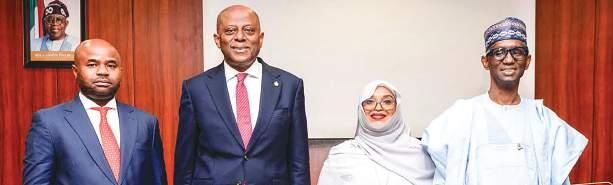
L–R: Dr. Zacch Adedeji, Executive Chairman, Nigeria Revenue Service (NRS); Mr. Olayemi Cardoso, Governor of the Central Bank of Nigeria (CBN); Mrs. Hafsat Abubakar Bakari, the Chief Executive Officer of the Nigerian Financial Intelligence Unit (NFIU) and Mallam Nuhu Ribadu, the National Security Adviser (NSA) at the maiden meeting of the Virtual Asset Council (VAC) at the CBN Head Office yesterday, following the Executive Order by the President




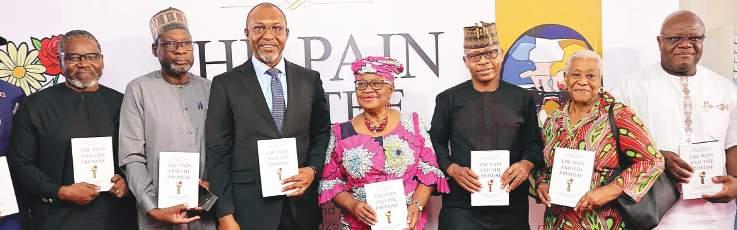
L-R: Former Country Director, Mercy Corps, Mr. Ndubisi Anyanwu; Country Director, CARE Nigeria, Dr. Hussaini Audu; former Aviation Minister and Chairman, Athena Centre, Mr. Osita Chidoka; DG, World Trade Organisation, Dr. Ngozi Okonjo-Iweala; author of the new collection, The Pain and the Promise, Mr. Paul C. Nwabuikwu; former Federal Permanent Secretary, Dr. Timiebi Koripamo-Agarry; Vice Chancellor, Baze University, Prof.
at
Minister describes facility as symbol of nation’s industrial renaissance Manufacturing is the fastest route to jobs, prosperity, says Africa’s richest man
Peter Uzoho
The federal government has described Dangote Petroleum Refinery and Petrochemicals as a cornerstone of Nigeria’s ambition to build a $1 trillion economy.
The government pledged deeper collaboration with the private sector to accelerate industrialisation, job creation, and economic transformation.
Minister of State for Industry, Senator John Enoh, made the declaration yesterday after leading a high-level delegation from the ministry on an extensive tour of the 700,000 barrelsper-day Dangote Petroleum Refinery, Dangote Petrochemicals complex, and Dangote Fertiliser Limited in Ibeju-Lekki, Lagos.
A statement by Dangote Group said the minister described the integrated industrial complex as one of the most significant investments in Africa and a model for the type of industrial development required to drive Nigeria’s economic growth aspirations.
Enoh said the visit further reinforced the central role of large-scale manufacturing in the successful implementation of the Nigeria Industrial Policy, unveiled earlier this year.
“You cannot be minister in charge of industry and not visit the Dangote
Refinery,” Enoh stated. “This facility matters because of what it represents for Nigerian industry, for our people and for the realisation of President Bola Tinubu’s vision of a one trillion-dollar economy,” Enoh added.
He said the refinery had emerged as a powerful symbol of value addition, industrial competitiveness, and Nigeria’s growing manufacturing capability.
He said, “The more a country adds value to its products, the more respect it earns globally. The Dangote Refinery stands today as one of the strongest demonstrations of that principle.”
The minister stated that the refinery had fundamentally changed global perceptions of Nigeria by helping to transform the country from a major
importer of refined petroleum products into an exporter serving international markets.
He said, “When global supply disruptions occurred, Nigeria was able to export petroleum products to markets in the Middle East and beyond. That is an extraordinary achievement and one that deserves recognition.”
Enoh, who was accompanied by directors, regulators, and heads of agencies under the ministry, said the delegation gained a deeper appreciation of the scale, technological sophistication, and strategic importance of the facilities.
He stated, “I brought members of my team here because I wanted them to see first-hand what this investment represents. It has been a humbling
and enlightening experience.
“We leave with greater knowledge and an even stronger commitment to supporting industrial development in Nigeria.”
Enoh also dismissed concerns over the refinery’s single-train configuration, stating that operations remain uninterrupted even during maintenance activities.
“The issues surrounding the single-train configuration are much clearer now. Even during scheduled maintenance, operations continued,” he said.
The minister pledged that the ministry and its agencies would remain strong advocates of the refinery and the broader industrialisation agenda.
He added that the government
would continue to engage Dangote Industries Limited through the Industrial Revolution Work Group and ministerial roundtables to address challenges facing manufacturers, particularly access to affordable long-term financing.
He further commended Aliko Dangote for supporting the launch of the Nigeria Industrial Policy, describing him as “Nigeria’s foremost industrialist”, whose contributions would be vital to achieving the country’s manufacturing targets.
The policy aims to increase manufacturing’s contribution to Nigeria’s Gross Domestic Product (GDP) to approximately 20 per cent by 2030 and 25 per cent by 2035.
Enoh stated, “We want to be judged by the extent to which we implement
this policy. Achieving these targets will require a strong partnership between government and industry leaders, like Aliko Dangote.”
Speaking during the visit, President and Chief Executive of Dangote Industries Limited, Aliko Dangote, urged the federal government to place industrialisation at the centre of its economic strategy, insisting that no nation has attained prosperity without a strong manufacturing base.
“There is no way to create jobs and prosperity without industrialisation,” Dangote said. “The greatest attraction for foreign investors is the success of domestic investors. When local investors thrive, they send a powerful signal that the environment is conducive for investment,” he added.
The National Pension Commission (PenCom) yesterday disclosed that as of March 2026, uncredited pension contributions stood at approximately N99.28 billion.
PenCom stated that, having made efforts to identify the true owners of the contributions without success, it would soon take a decision on the huge funds.
or paid into the accounts.
The figures represented deductions made by employers from their workers’ salaries as part of their pension contributions to be saved in their Retirement Savings Accounts (RSAs), but which were not credited
Wale Igbintade
The Federal High Court in Uyo has reaffirmed the governance framework established under the Petroleum Industry Act (PIA) 2021, striking out a suit challenging the administration of the NNPC/ Mobil Producing Nigeria Unlimited (MPN) Joint Venture Emoimee Host Community Development Trust (HCDT).
In a landmark judgment, Justice C. S. Onah dismissed the suit filed by the Incorporated Trustees of Esit Eket Youth Association against the Trust’s trustee, Seplat Energy Producing Nigeria Unlimited (SEPNU), and four
other defendants, holding that the association lacked the legal standing (locus standi) to institute the action.
The plaintiff had sought to be included in the Trust’s decisionmaking processes and requested access to detailed records of the statutory three per cent settlor’s remittances allocated to host communities in Esit Eket Local Government Area of Akwa Ibom State.
However, the court upheld the preliminary objection filed by SEPNU’s counsel, Dr. Jude T. U. Nnodum Jr. of KENNA LP, who led a legal team comprising Abasiemediong Etuk, MCArb, and
Olusegun Akeju.
Justice Onah ruled that the plaintiff was not among the entities recognised under Chapter III of the Petroleum Industry Act to administer or challenge the operations of a Host Community Development Trust and, therefore, lacked the requisite legal standing to maintain the suit.
The court also rejected the plaintiff’s contention that the matter was a public interest action, holding that merely describing a case as one filed in the public interest cannot substitute for a legally enforceable interest, particularly where the reliefs sought are intended solely for the benefit of the claimant.
The commission disclosed this at the one-year anniversary of the introduction of the Pension Contribution Remittance System (PCRS), organised by PenCom in collaboration with the Pension Operators Association of Nigeria (PenOp), the umbrella body of Pension Fund Administrators, and the Nigerian Employers’ Consultative Association (NECA) in Lagos.
Speaking on the topic, “Strengthening Trust Through PCRS: Safeguarding the Future of Pension Remittances,” Director, Surveillance Department of PenCom, Saleem Muhammad, said about 70 per cent of the uncredited pension contributions came from private sector employers, while the remaining 30 per cent came from public sector employers.
He traced the accumulation of the uncredited contributions to weaknesses in the manual remittance system previously employed by pension sector operators.
According to him, uncredited contributions mean that the funds have entered the pension system but cannot be allocated because of reasons such as invalid RSA PINs, missing schedules, incorrect PFA details, and data inconsistencies.
He described this as primarily a reconciliation and data issue.
“Key causes of uncredited contributions include missing contribution schedules, invalid or incorrect RSA PINs, mismatch between RSA PIN and PFA, database inconsistencies, unidentified payment sources, remittances from personal accounts, weak employer payroll controls, weak KYC and data remediation, and separation of payment from schedule submission,” he stated.
The PenCom director said these weaknesses increased reconciliation efforts and delayed the allocation of contributions.
He further explained that the owners of the accumulated pension deductions were mainly casual workers from some construction firms, such as Julius Berger Plc, who had left the services of their companies and could no longer be traced.
He said the commission, having made several efforts to trace the workers who own the money without success, would soon take a decision on the funds.
According to Muhammad, due to the series of problems associated with manual remittances, the commission instituted the PCRS on April 1, 2025, and enforced mandatory migration to it on June 1, 2025.
“The PCRS replaced a fragmented manual process with an automated,
validated, and digitally traceable remittance platform. The objective is to prevent errors before funds enter the pension system,” he stated. He highlighted the key objectives of the PCRS as automating contribution remittances, validating employee data before payment, linking schedules directly to payments, improving allocation accuracy, reducing uncredited contributions, enhancing transparency, improving regulatory oversight, and creating a complete audit trail. He identified the key stakeholders in the PCRS as PenCom, which provides regulatory oversight and maintains validation infrastructure, among other roles; employers, who deduct the correct contributions, upload accurate schedules, remit within statutory timelines, and resolve rejected transactions; pension fund custodians, which receive pension contributions and process them into contributors’ Retirement Savings Accounts, among other functions; contributors, who maintain accurate RSA information, complete KYC requirements, monitor RSA statements, and report missing contributions promptly; and Payment Solution Service Providers (PSSPs), which serve as the technology and payment interface between employers and the pension remittance infrastructure.
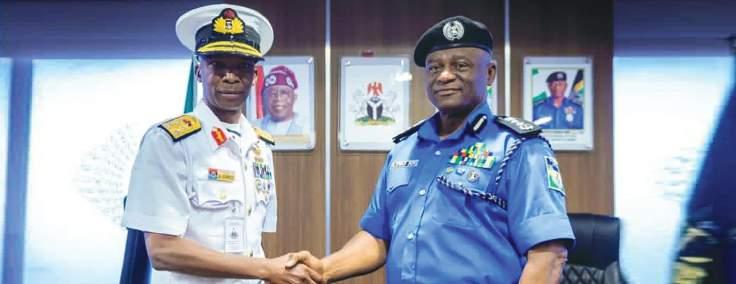
L-R: Commandant, National Defence College, Rear Admiral Abdullahi Ahmed, chatting with IGP Olatunji Disu at the police headquarters after a discussion centred on police reform, state policing, command and coordination protocols, and other emerging internal security concerns in Abuja, yesterday
ADC to President: fight terrorists, not opposition Tells president to quit over insecurity instead of seeking re-election Says it won’t leave its votes in INEC’s hands APM to FG: your claims of economic recovery illusory With N12.62trn alleged debt, Tinubu has lost control, Atiku declares Peter Obi’s media team accuses presidency of diverting attention from Nigeria’s economic crisis
backlash yesterday, with opposition parties challenging his claims and questioning the administration’s handling of pressing national
problems.
African Democratic Congress (ADC) criticised Tinubu for vowing to “fight to the finish” politically,
Says their cost of collection exceptionally high by global standards
A financial economist and President of the Capital Market Academics of Nigeria (CMAN), Prof. Uche Uwaleke, has urged the National Assembly to undertake a comprehensive review of the statutory funding framework governing the Nigerian Revenue Service (NRS), Nigerian Customs Service (NCS), and Nigerian Upstream Petroleum Regulatory Commission (NUPRC) in the light of the country operating one of the most generous cost-ofcollection regimes among developing and emerging economies.
Uwaleke said such a review should include a detailed examination of the actual operational costs of the agencies, their expenditure patterns, personnel costs, capital investments, technological infrastructure, and comparative international benchmarks.
His call was predicated on the fact that across developing and emerging economies, the average cost of collection is estimated at roughly one per cent while Nigeria’s current range of between 4 and 7 per cent stands out as exceptionally high by global standards.
In an article titled, “The National Assembly and the Imperative of Reforming the Funding of NRS, NCS
and NUPRC,” which he made available to THISDAY, Uwalake observed that Nigeria’s current fiscal realities demand not only an aggressive drive to increase government revenues but also a deliberate effort to reduce the cost of generating those revenues.
According to him, in recent months, public discourse had focused largely on expanding the tax base, improving tax compliance, and diversifying government revenue sources, adding that these are undoubtedly important objectives.
“However, far less attention has been paid to a fundamental question of public financial management: how much should government spend to collect its own revenue?
“This question has become increasingly significant because Nigeria currently operates one of the most generous cost-of-collection regimes among developing and emerging economies,” he said.
The one-time commissioner for finance in Imo State and current Director, Institute of Capital Market Studies, Nasarawa State University, called for legislative reforms that gradually reduce the current retention ratios by about 50 per cent.
He added that a reduction from 4 per cent to 2 per cent for both the NRS and the NUPRC and from 7 per cent to 3.5 per cent for the
NCS, would still leave Nigeria above international averages while releasing substantial additional revenues to the Federation Account.
He argued that reforming their funding framework would strike a more appropriate balance between ensuring adequate operational funding and protecting public finances.
Uwaleke explained that the three major revenue-generating agencies are statutorily permitted to retain fixed percentages of the revenues they collect to finance their operations.
The NRS retains 4 per cent of non-oil revenues, the NUPRC retains 4 per cent of royalties, rents and other revenues from the oil and gas sector, while the NCS retains as much as 7 per cent of customs duties and levies.
According to him, although this arrangement was originally intended to provide stable funding for critical revenue institutions, it has evolved into a funding model that raises serious concerns regarding efficiency, accountability, and value for money.
He stated that unlike most Ministries, Departments and Agencies (MDAs) that receive annual appropriations based on demonstrated operational needs and are subjected to rigorous budget scrutiny by the National Assembly, these agencies enjoy an automatic
funding mechanism tied directly to the volume of revenue collected.
He argued that as collections increase, their operating budgets also increase, regardless of whether their actual expenditure requirements have grown proportionately, adding that the implications of this funding structure are becoming increasingly difficult to ignore.
telling him to focus on fixing the country’s security crisis and defeating terrorists, rather than fighting the opposition.
National Publicity Secretary of ADC, Mallam Bolaji Abdullahi, who voiced the criticism, also said, at a different forum, that members of the party would not trust their votes with the Independent National Electoral Commission (INEC) during the coming elections.
That was as Allied People’s Movement (APM) described as illusory claims by the president to the Catholic Bishops that the economy and the security situation in the country had improved.
APM said such claims stood in sharp contrast to the harsh realities on the ground.
In a related development, former Vice President and presidential candidate of ADC, Alhaji Atiku
Abubakar, yesterday, described the latest revelation that the federal government exceeded its 2024 borrowing limit by N4.79 trillion, pushing fresh borrowing to N12.62 trillion, as further proof that the Tinubu administration had lost control of the country’s finances. Equally, yesterday, the media office of the presidential candidate of the Nigeria Democratic Congress (NDC), Peter Obi, accused the federal government and its political allies of deliberately diverting public attention from Nigeria’s worsening economic and security challenges by amplifying trivial controversies.
In a statement signed by Abdullahi, ADC slammed the president’s “fight to the finish” comments as a disturbing political obsession at a time when the country was grappling with worsening insecurity,
Continued on page 44
Emma Okonji
MTN Group President and CEO, Ralph Mupita, has said Africa’s long-term prosperity will depend less on how the continent responds to issues of migration and more on how it expands economic opportunity, strengthens regional integration, and enables more people to participate meaningfully.
Mupita said spoke during the Kgalema Motlanthe Foundation (KMF) Winter Seminar in Johannesburg, where leaders from government, business, the diplomatic corps, academia, and civil society gathered to examine the relationship between migration,
development, and Africa’s future.
Mupita stated, “The future of Africa will not be determined by the borders that separate us, but by the economic opportunities that connect us.
“Governments must set predictable policy and regulations. Businesses will follow and allocate resources and capital. Together, we can build a continent where opportunity is more evenly shared and prosperity is more widely created.”
As a sponsor of this year’s KMF seminar, MTN Group said it believed that platforms that brought together diverse perspectives were essential to
building practical solutions to some of the continent’s most complex challenges.
Speaking during a panel discussion, Mupita said migration should not be viewed in isolation from the broader economic conditions shaping people’s lives and economic progress.
He said, “If our discussion ends with the language of crisis around migration, we will have treated the symptom and missed the deeper challenge.
“People move because opportunity is unevenly distributed. The defining question is whether we can build economies in which mobility is matched by opportunity.”
consumer may cancel advance reservation, booking and receive a refund
Dike Onwuamaeze
The Federal Competition and Consumer Protection Commission (FCCPC) has tasked supermarkets and retail operators to adhere strictly to laws guiding price tagging, minimum labelling requirements, and return and refund obligations. This was delivered yesterday in Lagos by Executive Vice Chairman/CEO, FCCPC, Mr. Tunji Bello, during a stakeholders meeting, themed, “Price Tagging, Minimum Labelling Requirements and Return/Refund: The Implications on Non-Regulatory Compliance.”
The meeting put together by FCCPC and the Lagos State Consumer Protection Agency (LASCOPA), attracted the participation of Standard Organisation of Nigeria, National Orientation Agency, National Association of Supermarket Operators of Nigeria (NASON), etc.
Bello, represented by Zonal Coordinator, South-west Zonal Office, FCCPC, Mrs. Olubunmi Otti, emphasised that the “requirements relating to price display, product labelling, and consumer remedies are not optional standards or best practice guidelines”.
He stated, “They are legal obligations established under the FCCPC’s
Act, and businesses are expected to comply with them.
“Where businesses fail to meet these obligations, the Commission has a duty to act.”
According to him, consumers must be confident that the price they see on the shelf is the price they will pay and must be able to rely on the information provided about the products they buy.
He added that consumers must also know that where the law gave them the right to a refund, replacement or repair, and that right will be respected.
Bello said, “We are here to discuss three issues that affect consumers and businesses every single day: price tagging, minimum labelling requirements, and return and refund obligations.
“These may seem like ordinary aspects of doing business, but they play a vital role in building confidence in the marketplace.
“They help consumers make informed decisions, encourage fair competition and create a level playing field for businesses that choose to operate responsibly.”
Bello stated that displaying prices was not simply a good business practice but was also a basic requirement of fairness.
According to him, a consumer should know what an item costs before deciding whether to buy it and “no one should have to take a product to the checkout before learning its price”.
He said, “The law requires businesses to display the prices of goods and services clearly in the currency of the Federal Republic of Nigeria.
“That requirement promotes
transparency, allows consumers to compare prices, reduces disputes and strengthens confidence in the marketplace.”
He also said consumers had a right to know what they are buying, therefore, “product labels should clearly identify what a product is, who made it, where appropriate what it contains, when it expires and any important information needed for
its safe use.
“Businesses also have a responsibility to disclose when products are reconditioned or second-hand.
“Manufacturers, importers, distributors and suppliers all share that responsibility because accurate labelling protects consumers throughout the supply chain.
“This is especially important for food, medicines, cosmetics and
household chemicals.
“Proper labelling protects consumers. It also protects responsible businesses by making products easier to identify and trace.”
Bello emphasised that return and refund obligations were equally important because they gave consumers confidence that they would not be left without a remedy when something went wrong.
Says Tinubu deserves commendation for setting up regional devt commissions
Deji Elumoye in Abuja
Vice President Kashim Shettima has disclosed that the vision behind the creation of new regional development commissions is to further unlock and harness the unique strengths and opportunities in the various regions for Nigeria’s collective prosperity.
He thus stated that President Bola Tinubu deserves praise for such foresight and directional leadership.
According to him, the vision must however be backed by innovation,
N72.6bn
effective collaboration and integrity in the discharge of the mandate of the various regional development bodies, noting that the “Renewed Hope Agenda is about translating policy into tangible improvements in the lives of Nigerians.”
The Vice President stated this on Wednesday when he received the management of the South West Development Commission (SWDC) led by its board chairman, Senator Olubunmi Adetunmbi, on a courtesy visit to the State House, Abuja.
Wale Igbintade
A Federal High Court in Lagos has nullified a resolution of the House of Representatives directing Seplat Energy Producing Nigeria Unlimited to pay N72.624 billion as compensation to communities over alleged oil spill incidents.
Recalling the mandate of the commission, Shettima said, “The South West region, with its history of enterprise, innovation, education and industry, has a pivotal role to play in Nigeria’s development journey.
“Your commission must be known for delivery, not bureaucracy. Nigerians will measure your success by the quality of roads built, jobs created, businesses supported, and communities transformed.”
He noted that collaboration was also key in the realisation of the mandate of the South West Development Commission and the improvement of the livelihood of the people.
His words: “Across the world, successful regions are those that invest in innovation, human capital, technology and regional integration.
ideas that will transform the fortunes of our various regions.”
On the selection and execution of projects and programmes across communities in the region, the Vice President said “every project must be transparent, measurable and capable of attracting private investment, our job as government is to create the enabling environment for investments to thrive.”
Shettima urged the commission and other regional development bodies to be guided by integrity, innovation and results, reiterating the federal government’s support for every genuine effort that advances regional development and national prosperity.
The court held that the National Assembly exceeded its constitutional powers by assuming the judicial function of determining civil liability and awarding damages.
to pay compensation to alleged victims, declaring the resolution unconstitutional, null and void.
In a judgement delivered by Justice Allagoa in Suit No. FHC/ LAG/CS/862/2026, the court ruled that the House of Representatives acted outside the scope of its constitutional investigative powers when it directed the oil company
The suit, filed by Seplat Energy Producing Nigeria Unlimited against the House of Representatives, challenged the legality of the House’s report of November 14, 2025, which found the company liable for alleged oil spill-related claims and ordered it
to pay N72,624,000,000 to affected communities.
According to court documents, the dispute stemmed from a letter dated November 14, 2025, issued by Clerk to the National Assembly, conveying resolutions of the House directing Seplat to pay the compensation based on valuation reports relating to alleged oil spill incidents.
The South-West is well-positioned to lead Nigeria in these areas. I encourage you to work closely with the state governments across the south west, traditional institutions, the private sector and development partners.
“Development succeeds when institutions collaborate, not compete.
Peer review is very important. I urge you to reach out to the other regional development commissions and share
Earlier, chairman of the commission’s board, Senator Adetunmbi, commended the Tinubu administration, noting with admiration the government’s economic and structural reforms that culminated in the creation of the regional development commissions, among other benefits.
He also commended the Vice President for his leadership of the National Economic Council (NEC), which he said is transforming governance at the sub-nationals with tangible projects executed across the country.
Dike Onwuamaeze
The Nigerian Economic Summit Group (NESG) has called on the federal government to deliberately institutionalise ongoing economic reforms, deepen structural transformation and strengthen productive capacity in order to avoid reversing Nigeria’s current macroeconomic gains.
The NESG stated this in its “Economic and PolicyR eview Journal: H1’ 2026” titled “Consolidating Economic Stabilisation Gains: Medium-Term Policy Priorities,” which was released yesterday.
The publication also stated that rising debt service obligations have continued to heighten concerns over Nigeria’s medium-term public debt sustainability.
It pointed out that Nigeria’s public debt increased from N144.7 trillion in 2024 to N159.3 trillion in 2025, which reflected continued reliance on borrowing to finance fiscal deficits.
“This deterioration is further reflected in the NESG Debt Burden Index, which rose from 70.9 points in 2024 to 75.9 points in 2025, signalling elevated refinancing risks and increasing fiscal vulnerability.
NESG said: “Nigeria’s macroeconomic gains remain fragile and susceptible to reversal, underscoring an important reality: macroeconomic stabilisation is a necessary foundation for recovery, but it is not sufficient to deliver sustained and inclusive economic transformation.
“Without deliberate efforts to institutionalise reforms, deepen structural
transformation, strengthen productive capacity, and improve governance, the gains achieved thus far risk proving temporary.”
It stated further that the consolidation represents the medium-term phase of economic management that would follow macroeconomic stabilisation.
It pointed out that while the stabilisation phase focuses on restoring macroeconomic balance, correcting structural distortions, rebuilding policy credibility, and restoring investor confidence, the consolidation phase should be concerned with institutionalising these gains through sustained macroeconomic discipline, productivity-enhancing investments, stronger institutions, and structural transformation.
“Its primary objective is to convert
short-term macroeconomic improvements into durable economic resilience, higher productivity, and sustained, inclusive development over the medium term,” the NESG added.
It emphasised the importance of its “Economic Transformation Roadmap” that seek to translate emerging macroeconomic stability into sustained and inclusive economic growth by strengthening institutions, unlocking private investment, raising productivity, and delivering tangible improvements in citizens’ welfare.”
It noted that: “The optimal consolidation pathway represents the most desirable trajectory for Nigeria’s economic transformation, through which recent stabilisation gains are institutionalised, structural reforms are deepened, productive investments
are expanded, and economic growth becomes more resilient, inclusive, and sustainable.
“Achieving this transition requires coordinated and sustained implementation across four mutually reinforcing pillars: macroeconomic stability, strong institutions, structural transformation, and social inclusion.
“Each pillar is supported by a set of measurable policy targets that collectively define the optimal consolidation pathway.”
The NESG made policy recommendations that would strengthen the consolidation process, which included preserving macroeconomic stability by rebuilding external reserves, strengthening fiscal rules, broadening domestic revenue mobilisation, and implementing a credible medium-
term debt management strategy to safeguard fiscal sustainability.
It also recommended deepening institutional reforms by improving regulatory quality, strengthening fiscal governance, enhancing public sector effectiveness, and reducing policy uncertainty to improve the business environment and reinforce investor confidence.
by its Chairman, Senator Abdulaziz Yar’Adua, the forum expressed deep concern over the continued wave of violence in parts of the country and extended its condolences to the governments and people of Benue and Kaduna States, as well as families of the victims.
According to the statement, at least 13 persons were killed in an early morning attack on Efeyi Community in Ugboju, Otukpo Local Government Area of Benue State on July 28, while several others sustained injuries before security operatives were deployed to restore order.
The forum also recalled that about 30 persons, including women and children, lost their lives during a separate attack on Naridon Village in Kamaru Ward of Kauru Local Government Area of Kaduna State on July 26, with several homes
destroyed in the assault.
The senators described the attacks as tragic and unacceptable, stressing that innocent Nigerians should not continue to live under the threat of violent attacks.
While mourning the victims, the lawmakers commended the federal government’s renewed commitment to tackling insecurity through the planned expansion of the Nigerian Army.
They noted that Tinubu’s approval for the creation of four additional army divisions, increasing the number from eight to 12, alongside the recruitment of 28,000 additional military personnel, would significantly improve the country’s security architecture if effectively implemented.
According to the forum, the initiative is expected to decentralise military command, strengthen border
security and enhance the capacity of security forces to respond rapidly to emerging threats across the country.
The lawmakers said the military expansion would provide broader strategic coverage and operational support nationwide while helping to restore public confidence in the government’s ability to protect lives and property.
They, however, emphasised that increasing troop strength alone would not be sufficient unless accompanied by adequate funding, modern equipment, efficient logistics and improved welfare for military personnel.
The forum urged the federal government to ensure that the newly approved military formations are fully equipped and adequately supported to maximise their operational effectiveness.
The senators also called on
residents of affected communities and Nigerians generally to cooperate with security agencies by providing timely and credible intelligence capable of preventing future attacks. They further urged security agencies to intensify efforts to apprehend the perpetrators of the Benue and Kaduna attacks and bring them to justice without delay.
The forum also appealed to the federal government to provide adequate humanitarian assistance to victims of the attacks and families displaced by the violence.
According to the lawmakers, achieving lasting peace and security across the country will require sustained investment in Nigeria’s security architecture, stronger intelligence gathering and closer collaboration between security agencies and local communities.
The senators maintained that only
OKONJO-IWEALA: ECONOMIC REFORMS MUST TRANSLATE TO JOBS, TANGIBLE BENEFITS
continent must respond strategically to an increasingly fragmented global economy by strengthening macroeconomic stability, expanding regional integration, mobilising domestic investment and preparing its workforce for an AI-driven future.
He also noted that investors now place greater emphasis on institutional quality than ever before.
Okonjo-Iweala, a former Minister of Finance and Coordinating Minister for Economy during the administration of ex-President Goodluck Jonathan, said Nigeria’s leaders must move beyond policy pronouncements to delivering jobs, expanding opportunities and giving young Nigerians compelling reasons to build their future at home rather than abroad.
She said, “It’s all about leadership. We need leaders who have the interests of the country and the continent at heart—not themselves.
Leaders who ask the right questions, focus on implementation, create jobs for young people and remove the obstacles preventing economic growth.
“If we get leadership right, that alone takes us a very long way. I hope we will indeed have a continent and a country where young people are not seeking to leave, but are seeking to stay because opportunities exist for them here.” She explained that while leadership was critical, followership also matters as much.
She added, “Citizens must demand integrity, transparency and accountability from those who
govern them. Good governance cannot thrive without an active and engaged citizenry.
“People must be willing to raise their voices, participate in democratic processes and insist on doing the right thing. Equally important is the protection of free speech so that citizens can hold leaders accountable. This responsibility does not lie with the media alone. It belongs to everyone.”
While commending CBN’s reforms, Okonjo-Iweala cautioned that macroeconomic achievements would ultimately be judged by their impact on households and businesses.
She said, “I think what the central bank has done in trying to reposition itself and focus on its core mandate has been very commendable.
“But there are two challenges. One is how to translate these reforms into the everyday lives of Nigerians. Until people begin to feel the impact of these reforms in the real economy and see tangible benefits, there will continue to be criticism.
“It will not be easy to sustain public support unless people are convinced that they stand to benefit from the reforms.”
She called for stronger coordination among monetary, fiscal and trade institutions to ensure policy gains filtered into productive sectors of the economy.
The WTO boss said, “I would encourage the central bank to continue working with other economic institutions to ensure
these reforms are effectively transmitted throughout the economy.”
On US tariffs on Nigeria, Okonjo-Iweala said the latter should not become overly preoccupied with the measures, adding that many of Nigeria’s key exports to the United States, particularly oil, remained exempt from those tariffs.
Okonjo-Iweala added that Africa’s demographic trends should strengthen confidence rather than pessimism, pointing out that “By 2050, one in every four people in the world will be
from $38.37 billion recorded in the preceding year.
The figures, contained in the apex bank’s 2025 Annual Report and Statement of Accounts, also showed continued expansion in the country’s digital payments ecosystem, with the value of electronic payment transactions climbing to N3.46 quadrillion, while electronic fraud losses declined by more than half to N25.85 billion.
CBN stated that cross-border transactions settled through the Pan-African Payment and Settlement System (PAPSS) recorded significant growth, rising to $143.40 million during the year.
It said despite the higher outflows, the economy recorded a stronger net foreign exchange inflow of $60.81 billion, compared with $58.16 billion in 2024.
The report stated, “The economy recorded an increase in net foreign exchange inflow, driven by autonomous inflows in the review period.
African.”
In his remarks, the central bank governor, Cardoso, identified fragmentation in global trade, more selective international capital and rapid advances in artificial intelligence as the three defining shifts confronting African economies.
Speaking during the engagement, he said, “The question is no longer whether the global order is changing. The question is how we turn that change from a source of vulnerability into a source of
a coordinated and comprehensive security strategy would effectively address the persistent threats posed by armed criminal groups and restore stability in affected communities.
Meanwhile, former Chief of Defence Staff, Gen. Lucky Irabor (rtd), has said the recent announcement on the expansion of the Nigerian Army through the creation of four divisions, and the planned recruitment of additional 28,000 soldiers, were the clear outcome of the right policies in the right direction.
The retired general said this yesterday during the Morning Show of ARISE NEWS Channel.
According to him, the decision was in the right direction in a long road to ensuring that Nigeria has a very balanced security architecture in the country. He however said there were a good number of things that needed to be done in line with the expansion plan.
“Expanding from eight-division to 12-division has a lot of implications. First, the existing eight-division must be properly brought up to scale in terms of personnel, equipment, logistics, among others. I believe that the details of all that might not necessarily be for public consumption, but I want to believe that the president is well aware of the implications of all that.
“The president has indicated that 28,000 soldiers would be recruited, meaning that a lot has to go into accommodation, uniforms and other logistics for the troops,” he stated.
Addressing the issue of alleged infiltration, where military informa-
tion is leaked to bandits, as well as the situation, where soldiers get conflicting commands not to shoot at bandits during some raids carried out by the military, Irabor said every military would want to have a force that is capable, that is robust enough to be able to achieve the objectives within a given timeframe.
“Now, coming to the issue of infiltration, first and foremost, with the world over, you always have moves, but then the mechanisms that are put in place to be able to forestall such occurrences is what matters.
“And that’s why the recruitment into the armed forces demands that we do a lot of background checks to know those that are being recruited into the Army.
“We also go ahead to ensure that whilst in training, the behaviour, the attitude of those that are being recruited are being scrutinised, such that even whilst they are in training, some of them are also pulled out.
“But let me say this, the Nigerian soldier, or even the policeman, or anyone within the defence and security establishments, are not from outer space,” Irabor said.
Asked if the additional 28,000 recruits will meet the needs of the military in combating banditry and terrorism, more so that the Army has been involved in internal security of the country in recent times, Irabor said there was need for expansion and recruitment in order to handle threat assessment required to save lives.
Continued on page 38 transactions.
“Aggregate FX inflow into the economy at $109.86 billion in 2025, rose by 13.81 per cent, from $96.53 billion in 2024.
“The development was attributed, largely, to increase in inflow through autonomous sources. Aggregate FX outflow, at $49.05 billion, rose by 27.83 per cent, from $38.37 billion, mainly, due to increased outflow through autonomous sources.
“Overall, the economy recorded a higher net inflow of $60.81 billion, from $58.16 billion in 2024. FX inflow through the Bank decreased by 2.08 per cent to $39.32 billion and accounted for 35.8 per cent of total inflow. The decrease was mainly due to lower receipts from government debt and FX swaps.”
The report added, “Foreign exchange inflow through autonomous sources, which accounted for 64.21 per cent of total FX inflow, rose by 25.12 per cent to $70.54 billion in 2025, from $56.38 billion.
“The growth was primarily due to
increase in non-oil export receipts and over- the-counter (OTC) purchases, particularly capital importation. Outflow through the Bank constituted 66.86 per cent, while outflow through autonomous channels accounted for the balance.”
The CBN report stated, “A breakdown showed that, outflow through the Bank increased by 1.74 per cent to $32.79 billion, from $32.23 billion.
“Similarly, outflow through autonomous channels rose by 164.84 per cent to $16.26 billion, relative to the level in 2024. A net inflow of $54.28 billion was recorded through autonomous sources, compared with $50.24 billion in 2024.
“Similarly, the Bank recorded a net inflow of $6.52 billion.”
According to CBN, the value of electronic payment transactions increased by 26.07 per cent to N3,458.77 trillion (N3.46 quadrillion) in 2025, while transaction volume rose by 2.62 per cent to 47.88 billion
The bank attributed the growth to “user preferences, adoption of digital channels, growth in e-commerce, and infrastructure improvements”. A breakdown of transaction volumes showed that ATM transactions recorded the strongest growth, rising 61.94 per cent to 1.66 billion transactions.
USSD transactions increased by 20.89 per cent to 669.55 million, while Point-of-Sale (PoS) transactions grew by 19.78 per cent to 15.66 billion.
The report stated:, “Analysis of retail payments showed notable changes between 2024 and 2025. The volume of e-payments transactions increased by 2.62 per cent to 47,879.73 million in 2025, compared with 2024. The value of transactions also rose by 26.07 per cent to N3,458.77 trillion.
“The increases reflected user preferences, adoption of digital channels, growth in e-commerce,
Continued on page 43




Email: deji.elumoye@thisdaylive.com
08033025611 sms only
Presidential candidate of the accord Party, Gbenga Olawepo-Hashim, may now possess a strategic advantage in one important respect: he has become the opposition figure whose political trajectory is generating increasing curiosity, closer scrutiny and more intensive political calculations within the ruling establishment. Chuks o kocha writes.
With less than a month to the commencement of full-scale campaigns for Nigeria’s 2027 presidential election, political calculations are rapidly changing.
While much of the public discourse has focused on former Vice President Atiku Abubakar and the presidential candidate of the National Democratic Coalition (NDC), Mr. Peter Obi, a quieter but increasingly significant political development is unfolding around the presidential ambition of Mr Gbenga OlawepoHashim.
Across political circles in Abuja and beyond, there is a growing view that Olawepo-Hashim’s resurgence represents a different and potentially more complicated electoral challenge for the ruling All Progressives Congress (APC). Unlike Atiku and Obi, whose political strengths, weaknesses and voting blocs are already well understood, Olawepo-Hashim is gradually emerging as a political variable whose trajectory is still evolving.
Whether that momentum eventually translates into electoral success remains to be seen. However, the political attention surrounding his emergence suggests that he has become one of the personalities to watch in the unfolding contest for Aso Rock.
Revisiting the 2019 Experience
Olawepo-Hashim’s current political resurgence is rooted in his controversial experience during the 2019 presidential election.
In what many regarded as an audacious political gamble, the businessman and democracy activist rejected the comfort of established political parties and instead sought the presidency on the platform of the Alliance for New Nigeria (ANN), then considered one of Nigeria’s fastest-growing third-force movements.
According to his supporters, the party, which initially had visible structures in only a handful of states, witnessed remarkable expansion within a short period after Olawepo-Hashim invested significant political, financial and organisational resources into its development.
Party officials at the time claimed ANN established functional structures across most states of the federation within months, raising expectations that it could become a credible alternative to the dominant political parties. That rapid rise, supporters argue, unsettled powerful political interests.
Members of Olawepo-Hashim’s political camp have consistently allege that the party subsequently became the target of political interference designed to weaken its growing influence before the general election. Those allegations have never been independently substantiated, and neither the APC nor the individuals mentioned in those claims have publicly accepted responsibility for the internal crisis that later engulfed ANN.
What remains undisputed, however, is that the party became deeply factionalised shortly before the election.
The ensuing leadership crisis crippled ANN’s presidential project and forced OlawepoHashim to seek another platform barely weeks before Nigerians went to the polls. Eventually, he contested under the Peoples Trust Party. By then, much of the political momentum painstakingly built over several months had been lost.
The challenges confronting Hashim did not end with the election. His associates have often linked a number of subsequent political, business and personal developments to what they describe as sustained attempts to diminish his political influence.
Among the claims made by his supporters are allegations that business interests connected to him came under official scrutiny and that
he also became embroiled in a highly publicised international divorce dispute involving substantial financial claims.
While these claims remain matters of public debate and have not been judicially established as politically motivated, supporters insist they formed part of a broader pattern that significantly affected his political and economic standing after the 2019 elections.
Following those developments, Olawepo-Hashim gradually withdrew from the frontlines of partisan politics.
To many Nigerians, his disappearance from national political conversations suggested he had abandoned presidential ambition altogether.
Those close to him, however, offer a different narrative. Rather than retirement, they describe the period as one of strategic recalibration, during which he focused on business, policy engagement, political consultations and rebuilding networks across Nigeria.
That patient approach has now culminated in his return ahead of the 2027 elections.
Accord Party Platform
Olawepo-Hashim formally declared his presidential ambition in 2026 under the Accord Party. Within days, he emerged as the party’s presidential candidate after an affirmation primary in which he was the sole aspirant.
What appeared to be a straightforward nomination quickly developed into a major legal and political controversy.
National Chairman of the Accord Party, Maxwell Mgbulem, subsequently questioned the validity of the presidential primary.
However, several members of the party’s National Executive Committee and numerous state chairmen publicly rejected that position, insisting the primary was validly conducted and that Olawepo-Hashim remained the duly nominated presidential candidate.
The party’s NEC later reaffirmed his nomination through an official communiqué.
The disagreement has since been taken before the Federal High Court in Abuja, where judgment is being awaited.
More Than an Internal Party Dispute
Political observers believe the legal contest extends beyond internal party administration.
It has evolved into an important test of whether emerging political platforms can successfully produce credible presidential alternatives capable of altering Nigeria’s electoral landscape.
There is little doubt that o lawepo-Hashim is no longer on the margins of nigerian politics. He is increasingly becoming a central figure in the unfolding battle for Aso Rock, and one whose growing influence may compel both the ruling party and the wider opposition to rethink their electoral calculations.
For Olawepo-Hashim’s supporters, the court case represents an opportunity to validate not only his nomination but also the growing relevance of smaller political parties in Nigeria’s democratic process.
Why Political Analysts Believe OlawepoHashim Is Gaining an Edge
Although Atiku Abubakar and Peter Obi remain nationally recognised opposition leaders with substantial political structures and loyal followings, analysts increasingly argue that Hashim presents a different type of electoral challenge.
Several factors account for this assessment.
Cross-Regional
Unlike many Nigerian politicians whose identities are closely associated with particular geopolitical zones, Olawepo-Hashim possesses a unique personal background.
Born to a Hausa father and a Yoruba mother, his supporters believe he has the potential to build natural political bridges between Northern Nigeria and the South-West, two regions that have historically played decisive roles in determining presidential elections. Combined with years of political engagement across the country, that background could broaden his electoral appeal beyond traditional regional boundaries.
Professional Profile
Political analysts also point to OlawepoHashim’s personal credentials.
Beyond politics, he is widely known as a successful entrepreneur, investor and advocate of democratic governance.
Supporters argue that his intellectual disposition, private sector accomplishments, international exposure and longstanding participation in Nigeria’s democratic struggles distinguish him from many career politicians. At a time when many Nigerians are demanding competent and innovative leadership, these qualities may resonate with sections of the electorate searching for fresh alternatives.
Financial Independence Campaign financing remains one of the defining realities of Nigerian elections.
Unlike many presidential aspirants who depend heavily on political patrons and wealthy financiers, Olawepo-Hashim is widely perceived as possessing considerable personal resources capable of sustaining a nationwide campaign.
Analysts suggest this financial independence could provide him with greater flexibility in decision-making while reducing dependence on entrenched political interests.
A Candidate Yet to Reach His Political Ceiling
Perhaps the most compelling argument advanced by political observers is that OlawepoHashim remains politically underexplored.
Atiku and Obi have contested presidential elections before. Their electoral strengths, geographical support bases and political limitations have largely become predictable.
Olawepo-Hashim, on the other hand, enters the race with fewer political liabilities, less electoral baggage and greater room for expansion.
That uncertainty, analysts argue, makes him strategically more difficult to contain.
For any ruling party, a political opponent whose electoral ceiling remains unknown often represents a more complicated challenge than opponents whose support patterns have already been tested.
Momentum Is Growing
Recent political developments appear to support the argument that Olawepo-Hashim’s national profile is steadily rising.
NOTE:


Bashir Adeniyi’s bold initiatives have improved revenue generation, strengthened border security, and facilitated legitimate trade, writes ADEREMI APATIRA
page 21
PAT ONUKWULI argues that a nation cannot preach brotherhood while allowing prejudice to become an instinct

Olaniyonu narrates an intriguing incident 20 years ago while he was in Law School in Lagos
It is always my tradition to share certain past stories in my life during landmark birthdays. The stories come from my stocktaking about my experiences over the years, and the journey that has taken me to my present station.
As my 60th birthday approached today, I had been wondering whether I acted properly on an occasion that happened shortly after my 40th birthday. That was in 2006. The recent Call-toBar ceremonies for new lawyers in Abuja earlier this month also made the 20-year-old incident ceaselessly tug at my conscience.
It happened in August 2006 at the Nigerian Law School campus on Victoria Island, Lagos, the place where some old lawyers call ‘the original Law School’. This is because it is the oldest of the law school campuses. I was one of the about three or four thousand Bar aspirants writing that year’s examinations. I remember vividly that it was the night before we were to write the Civil Law Procedure paper. Those familiar with the Law School syllabus will agree with me that the most extensive of the courses then was the Civil Law Procedure.
It was already close to midnight and I was inside one of the reading rooms on the campus, ensconced in my books and notes, struggling to cover as much as possible before returning to my hotel room in Victoria Island. I did not get accommodation on campus. So, I lodged in a hotel opposite Bar Beach. My friend and brother, Senator Tokunbo Afikuyomi arranged the accommodation for me as his contribution to my success in the examinations. May Almighty Allah (SWT) bless him.
So, I was struggling with memorising the different rules and orders provided for every legal issue by the procedural laws of Lagos, Kano, and Abuja when this young man suddenly appeared beside me and greeted me. The gentle intruder asked politely if I was the owner and driver of the Hyundai Sonata vehicle parked outside the gate. After I answered in the affirmative, he said: “Sir, one of our mates is in labour and we need you to help us get her to the hospital”. I stared emptily at him. It was the only reaction I could give as I was just confused about what his demand was. It was when he added that it was an emergency that I got jolted out of my reverie. I quietly packed my books and papers and asked where the lady was. He told me to go and get the car ready while they brought the lady. As if I was hypnotised, I got behind the wheel and waited for the expectant mother and her handlers. They got in and I started
driving before asking which hospital was our destination. They said we should go to the Military Hospital at the beginning of Awolowo Road in Ikoyi. It was as if I was under a spell. I asked no further questions. I just drove on. It was already past midnight.
I did not even look at who my passengers were. Up till today, I have no name or face recognition of the lady who was in labour or who her colleagues were. On our way, I remembered that around the Falomo Flyover area, there was a suggestion to put a phone call through to the mother of the lady and the question of who had enough call credit on the phone came up. Again, as if on cue like a robot, I volunteered my phone. They put a call through to the mother who said she was far away in Ikorodu. The older woman informed them that it was too late for her to make any move and that in the morning, she would come over to where the expectant mother was.
We drove to the hospital and my other passengers managed to get the pregnant lady in labour out of the car and through the stairs to the first floor where the nurses' station was. I took time to park the vehicle in a way that would make our movement out of the car park easier for me.
When I joined the party upstairs, I was surprised by what I heard. As a father of three kids myself, I had some understanding of ante-natal preparations by an expectant mother. I had seen lists of prenatal items that the mother-to-be should get ready before the delivery date.
I also knew about the weekly ante-natal clinic appointments and checks that must be adhered to before the delivery date. I had not only paid for those items in my own case but also indirectly participated in the ante-natal clinic sessions as a consort. So, I knew that during labour, the pregnant mother would be taken to the hospital where she had been undergoing ante-natal clinic sessions. This is because only that clinic would
have her up-to-date medical record as a reference for consultation on the delivery date. She is also expected to report to the hospital with the items listed for use on her delivery date.
As I joined our colleagues who had taken the expectant mother to the first floor, I started hearing disturbing stories. The hospital staff, I was told, refused to attend to her. Why? She did not previously register for ante-natal care in that hospital. Also, she did not bring the items needed for her delivery. The lady probably miscalculated the Delivery Date and did not think it could meet her while she was still in school. So, what do we do?
The students started pleading that the medical team should disregard all protocol and place emphasis on the urgency of the situation. I obviously did not know how to intervene in this matter. I only managed to also add my voice that the hospital should just do whatever could best be done in the present circumstances.
After both sides remained unyielding and the medical staff started talking about the need for the lady to be removed from the premises by those who brought her, one of my passengers drew close to me. In very well-delivered whispers, she said the medical staff were insisting on not attending to the pregnant lady in labour because they could see that we, her colleagues, were also around to soak in the pressure. I asked them what their solution was. They replied that we should all gradually and without being noticed withdraw from the hospital premises. By their reasoning, if we all left without being noticed, the hospital would have no option but to attend to the lady in labour. In other words, if we ‘abandoned her at the hospital’, the medical staff would be compelled to attend to her. And diligently too.
This time again, I had no viewpoint. I simply bought into the plan. This could be because I was eager to get back to my study or because the entire scenario was becoming more confusing to me. By the details of the exit plan, I would be the first to leave the reception area and go downstairs to get the car ready for quick movement. I did and as I waited behind the wheels the other people came into the car. On instruction, I zoomed off. We had technically abandoned the lady. However, I convinced myself that she was not abandoned to her fate. She was left in good hands.
Olaniyonu is a journalist and lawyer based in Abuja
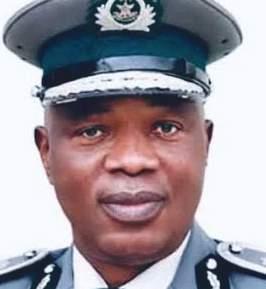
Bashir Adeniyi’s bold initiatives have improved revenue generation, strengthened border security, and facilitated legitimate trade, writes
The two events by the World Customs Organisation, (WCO) though barely three months apart and in two locations – Brussels, Belgium and Tin Can Island Port, Lagos, - clearly signposted the transformation that has taken place in the Nigeria Customs Service (NCS) in trade promotion for overall improvement of the country’s economy in the past three years. On Friday July 3, 2026, during the 147th and 148th sessions of the WCO Council held in Brussels, President Bola Ahmed Tinubu, showered encomiums on Mr. Bashir Adewale Adeniyi, the Comptroller-General of Customs (CGC) on his unanimous re-election as Chairperson of the global body. He said the overwhelming confidence reposed in Adeniyi by customs administrations across the world reflected the remarkable progress recorded under his leadership and the growing international recognition of the NCS as one of the world’s leading customs institutions.
“Adeniyi’s unanimous re-election is not only a personal honour to Adeniyi, but also a recognition of Nigeria’s growing influence in global customs administration. His leadership of the NCS has been marked by bold initiatives that have improved revenue generation, strengthened border security, facilitated legitimate trade, and modernised customs operations through homegrown innovations…. I am confident that his second term at the WCO will further deepen international collaboration, promote secure and efficient global trade, and bring even greater honour to our country,” President Tinubu said.
Three months earlier, on April 24, during the presentation of Nigeria’s Time Release Study (TRS) the WCO had hailed Nigeria Customs’ bold steps towards faster and safer trade in Africa. Secretary-General of the Organisation, Ian Saunders, described TRS as a practical and evidence-based reform capable of strengthening border efficiency, boosting trade competitiveness within trade corridors in Africa and enhancing national safety.
Taken together, the two testimonies confirmed Adeniyi’s three years of successfully strengthening institutional capacity, consolidating reforms, modernising Customs administration while sustaining Nigeria’s broader economic development aspirations.
As chairperson of WCO, Adeniyi never tires to extoll long-lasting partnerships and new alliances. Of critical importance to the NCS's trade facilitation agenda is the implementation of the Trade Facilitation Agreement (TFA), a landmark agreement under the World Trade Organization (WTO). Through proactive adoption
of the TFA's provisions, the NCS has embraced advanced ruling mechanisms, risk management techniques, and fasttrack clearance procedures designed to expedite trade processes and enhance predictability for businesses.
The NCS also embraced the Revised Kyoto Convention on Simplification and Harmonization of Customs Procedures - a comprehensive framework for modernizing procedures and aligning them with international best practices. Through it, the NCS has streamlined its operations, promoted transparency, and facilitated greater consistency in trade transactions.
Furthermore, the NCS is partnering with the African Continental Free Trade Area, AfCFTA, Secretariat for enhanced trade facilitation in the continent. Adeniyi expressed concerns about how the African trade system refuses to grow beyond 14 - 15 percent over the last three to four years. “We are not unmindful of the benefits that trade presents, economic growth, job creation, and poverty alleviation,“ he said. “There is a need for collaboration in the verification of goods origin at the port as NCS has been designated the appropriate authority and also collaborate with other government agencies.”
Secretary-General of AfCFTA, Wamkele Mene, expressed excitement to proffer solutions to the problems bedeviling trade in Africa and called for joint solutions to the issues affecting trade in Nigeria, emphasizing that AfCFTA is committed to collaborating with the NCS to enhance trade facilitation across the continent.
Thus, the NCS under Adeniyi has undertaken many modernization projects to streamline customs processes. Notably, it established a Single Window System - a comprehensive electronic one-stop shop for submitting trade documents, making payments, and obtaining approvals, streamlining customs clearance and facilitating faster cargo movement across borders.
Apatira writes from Lagos
PAT ONUKWULI argues that a nation cannot preach brotherhood while allowing prejudice to become an instinct

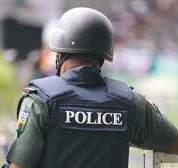
A police uniform should conceal tribe and reveal the Republic. It should transform the wearer from an indigene of a particular place into an officer for all. Yet in a video circulating online, a Nigerian policeman appears to tell a motorist that, had he been Igbo, he would have detained him. The statement is brief, but its implications are profound. If accurately understood, those words convert protection into prejudice and discretion into discrimination.
They suggest that liberty may depend not on conduct but on origin; that one Nigerian may comply with the law while another faces inherited suspicion. The Nigeria Police Force has reportedly commenced disciplinary proceedings. That is necessary but insufficient. Nigeria must investigate not only what the officer said but also what led him to believe he could say it. Was this merely personal bias, or a window into a deeper national culture?
A television anchor recently dismissed the incident as random and isolated. But an act can be individual without being accidental. One mouth may speak the words while society supplies the vocabulary. The officer did not invent “Igbo” at the checkpoint. He inherited it from a national narrative in which the Igbo are admired for enterprise yet distrusted in politics; welcomed as investors yet resented by some neighbours.
Igbos are Nigerian enough to build markets and pay taxes, yet sometimes not Nigerian enough to enjoy unquestioned belonging. This is Nigeria's contradiction: inclusion in rhetoric, exclusion in practice; unity in the anthem, suspicion at the checkpoint. A nation cannot endlessly preach brotherhood while allowing prejudice to become an operational instinct.
The policeman's words also did not emerge in a vacuum. Before the 2015 Lagos governorship election, the Oba of Lagos was widely reported to have warned Igbo leaders that those who opposed his preferred candidate would perish in the lagoon. However, his palace later described the remark as proverbial. Years later, during the 2019 election season, Oluremi Tinubu made remarks about summoning Lagos deities to drive away Igbos who did not understand Yoruba.
Fact-checkers described the exchange as banter rather than a formal threat, yet banter is not harmless merely because it wears a smile. Hatred sometimes comes laughing. Exclusion sometimes wears humour. A joke sometimes merely tests whether society will object. The powerful may call it banter; the powerless may experience it as permission. What begins as rhetoric can end as routine. What starts as metaphor can mature into misconduct.
History teaches that prejudice seldom arrives with a bang. Genocides do not begin with mass graves; they begin with grammar, and before the machete comes the metaphor. Before the blockade comes the label. Nigeria's refusal to confront its historical narratives has allowed old falsehoods to become modern weapons. For decades, the January 1966 coup was branded an "Igbo coup".
Yet General Ibrahim Babangida's memoir challenged that narrative, arguing that the coup was driven not by an Igbo agenda but by young officers responding to political and social failures. If that correction is accepted, the reprisals justified in its name require fresh moral scrutiny. A lie told about yesterday easily becomes a licence for discrimination today. Truth without consequence is merely information.
Against this background, Plateau State Governor Caleb Mutfwang's recent apology to Ndigbo deserves recognition. He admitted that Plateau people had been deceived into participating in the Civil War and expressed regret, despite criticism from some of his kinsmen. His apology should be welcomed not because it settles history, but because it begins to confront it. An apology is not a weakness but an act of courage; not surrender but responsibility.
What Mutfwang attempted, General Yakubu Gowon failed to do in his memoir. Gowon preserved Nigeria but did not heal it. He ended the war but not the wound. His famous "No Victor, No Vanquished" promised reconciliation, yet many returned to abandoned property, depleted savings, broken livelihoods, and enduring suspicion. His memoir remembered the war but stopped short of repentance. This brings us back to the policeman. What did he believe an Igbo identity justified: detention without cause, greater suspicion, or harsher treatment? More importantly, what goes through the minds of officers who harbour similar prejudices but never speak in front of a camera?
Dr. Onukwuli is a legal scholar and public affairs analyst. patonukwuli2003@yahoo.co.uk
Editor, Editorial Page PETER ISHAKA
Email peter.ishaka@thisdaylive.com
Segun Aina is the next Registrar of JAMB
The Joint Admissions and Matriculation Board (JAMB) will this weekend witness a change of leadership as Professor Segun Aina becomes its sixth substantive Registrar. He succeeds Professor Ishaq Oloyede, whose remarkable 10-year tenure comes to an end. But the transition is not merely a change of baton; it presents Aina with an opportunity to consolidate on existing achievements while charting a new course that responds to emerging realities in educational assessment, admissions management, and technological innovation.
Oloyede leaves office after a decade that fundamentally redefined the operations and public perception of JAMB. Through visionary reforms, Oloyede restored confidence in the Unified Tertiary Matriculation Examination (UTME), strengthened the credibility of the admissions process, and institutionalised technology-driven service delivery. His administration also introduced numerous innovations that have become reference points for examination administration in Nigeria, and earned the Board widespread local and international recognition.

more accessible, efficient, and responsive. Stakeholders will particularly be looking forward to an administration that places the needs of candidates at the heart of policy formulation and operational decisions.
There will also be expectations for a more robust deployment of emerging technologies to combat examination malpractice and related infractions. Rather than relying predominantly on detection and sanctions after offences have occurred, greater emphasis can be placed on preventive systems powered by artificial intelligence, data analytics, biometric authentication, predictive monitoring, and other digital innovations capable of eliminating opportunities for malpractice before they arise. Such proactive measures would further strengthen the integrity of JAMB examinations while maintaining public confidence.
Stakeholders will be looking forward to an administration that places the needs of candidates at the heart of policy formulation and operational decisions
Taking over from the accomplished administrator is Aina, a distinguished Professor of Computer Engineering and experienced administrator in his own right. Aina’s academic background and extensive expertise in information and communication technology, digital systems, and cybersecurity position him to lead JAMB into its next phase of growth. His appointment comes at a period when the Board is expected not only to preserve the gains of the past decade but also to respond to new challenges confronting candidates, tertiary institutions, and the entire education sector. With technology increasingly shaping every aspect of examination administration worldwide, Aina's professional background offers a unique opportunity to deepen JAMB's digital transformation and improve service delivery across the board.
Aina must also understand that every reform should ultimately translate into easier access to services, quicker resolution of challenges, greater convenience, and enhanced confidence in the examination and admission process. Technology should not simply automate existing procedures but should simplify them, reduce stress for candidates and parents, and make JAMB's services
T H I S
EDITOR SHAKA MOMODU
DEPUTY EDITOR WALE OLALEYE
MANAGING DIRECTOR ENIOLA BELLO
DEPUTY MANAGING DIRECTOR ISRAEL IWEGBU
CHAIRMAN EDITORIAL BOARD OLUSEGUN ADENIYI
EDITOR NATION’S CAPITAL IYOBOSA UWUGIAREN THE OMBUDSMAN KAYODE KOMOLAFE
EDITOR-IN-CHIEF/CHAIRMAN NDUKA OBAIGBENA
GROUP EXECUTIVE DIRECTORS ENIOLA BELLO, KAYODE KOMOLAFE, ISRAEL IWEGBU
DIVISIONAL DIRECTORS SHAKA MOMODU, PETER IWEGBU, ANTHONY OGEDENGBE
DEPUTY DIVISIONAL DIRECTOR OJOGUN VICTOR DANBOYI
SNR. ASSOCIATE DIRECTOR ERIC OJEH
ASSOCIATE DIRECTOR PATRICK EIMIUHI
CONTROLLERS ABIMBOLA TAIWO, UCHENNA DIBIAGWU, NDUKA MOSERI
DIRECTOR, PRINTING PRODUCTION CHUKS ONWUDINJO TO SEND EMAIL: first name.surname@thisdaylive.com
Equally important is the need to consolidate the institutional gains painstakingly built over the years by successive Registrars. Every administration has made unique contributions to the growth of JAMB, with Oloyede's tenure representing a particularly significant chapter. To the extent that institutional continuity remains one of the greatest strengths of enduring public organisations, Aina is expected to preserve these achievements while introducing fresh ideas and innovations that reflect the demands of a rapidly evolving educational landscape.
It is noteworthy that Aina also assumes office at a time when collaboration with critical stakeholders has become increasingly important. Sustaining these partnerships while introducing innovative approaches to service delivery will further position JAMB as a model public institution. But in welcoming Aina, expectations are naturally high. His youthfulness, technological expertise, and administrative experience inspire confidence that the Board's next chapter will be characterised by innovation, operational excellence, and continuous improvement. Management and staff are expected to offer him their full cooperation and unwavering support as he assumes the responsibility of leading one of Nigeria's most strategic educational institutions.
Ultimately, the success of this transition will not be measured by the ability of JAMB to remain faithful to its core mission of providing a fair, transparent, technology-driven, candidate-focused, and globally respected admissions system.
Letters in response to specific publications in THISDAY should be brief (150-300 words) and straight to the point. Interested readers may send such letters along with their contact details to opinion@thisdaylive.com. We also welcome comments and opinions on topical local, national and international issues provided they are well-written and should also not be longer than (750- 1000 words). They should be sent to opinion@thisdaylive. com along with photograph, email address and phone numbers of the writer.
While many politicians remain trapped in the exhausting rituals of horse trading, factional bargaining, and survival politics, Nigeria’s Minister of Environment, Balarabe Lawal Abbas is delivering something far rarer in Nigeria’s political environment.
In October 2023, President Bola Tinubu nominated Abbas as a ministerial replacement for the former Kaduna State Governor, Nasir El-Rufai. That began a remarkable journey characterized by steadfast dedication to public service, strategic communication, and nation-building.
The appointment of Balarabe Abbas thus marked an important milestone in Nigeria’s commitment to fulfilling its environmental obligations of strengthening national efforts towards addressing climate change, environmental degradation, and biodiversity loss.
The minister hit the ground running in accelerating Nigeria’s effort at combating desertification, land degra-
dation and drought, and also saw his appointment as an opportunity to showcase the country’s progress, achievements, challenges, and ongoing interventions in sustainable land management and ecosystem restoration.
Abbas, who hails from Kachia Local Government, Kaduna State, holds an M.Sc in Political Science from Ahmadu Bello University, Zaria. He was a lecturer at the College of Advanced Studies, Zaria, and worked as a Special Assistant to the then Federal Minister of Education in Abuja, and as a Special Assistant to the Minister of State (Army) at the Ministry of Defence. He also worked as a Special Assistant to the President in the Federal Capital Territory and as the Chief of Staff to the Minister of the Federal Capital Territory in Abuja, among other positions held from July 2003 until July 2007.
Between 2015 and 2023, Balarabe served as Secretary to the State Government of Kaduna under Nasir El-Ru-
fai’s administration.
It is therefore not surprising that this outstanding taciturn professional with patriotic vision is now counted among those reshaping Nigeria’s public sector. Balarabe Lawal Abbas is a bridge-builder who understands the delicate balance between tradition and progress, between loyalty and the larger interest of the people, and one who nurtures political relationships across divides.
At a time when the country faces mounting ecological pressures, Balarabe Abbas’s appointment played a critical role in shaping public understanding of environmental issues. The minister has said the environment is not an abstract concept. “It is the air we breathe, the land that feeds us, the rivers that sustain communities, and the climate that shapes the future,” he said.
Nasir Imam, a media practitioner, writes from Abuja

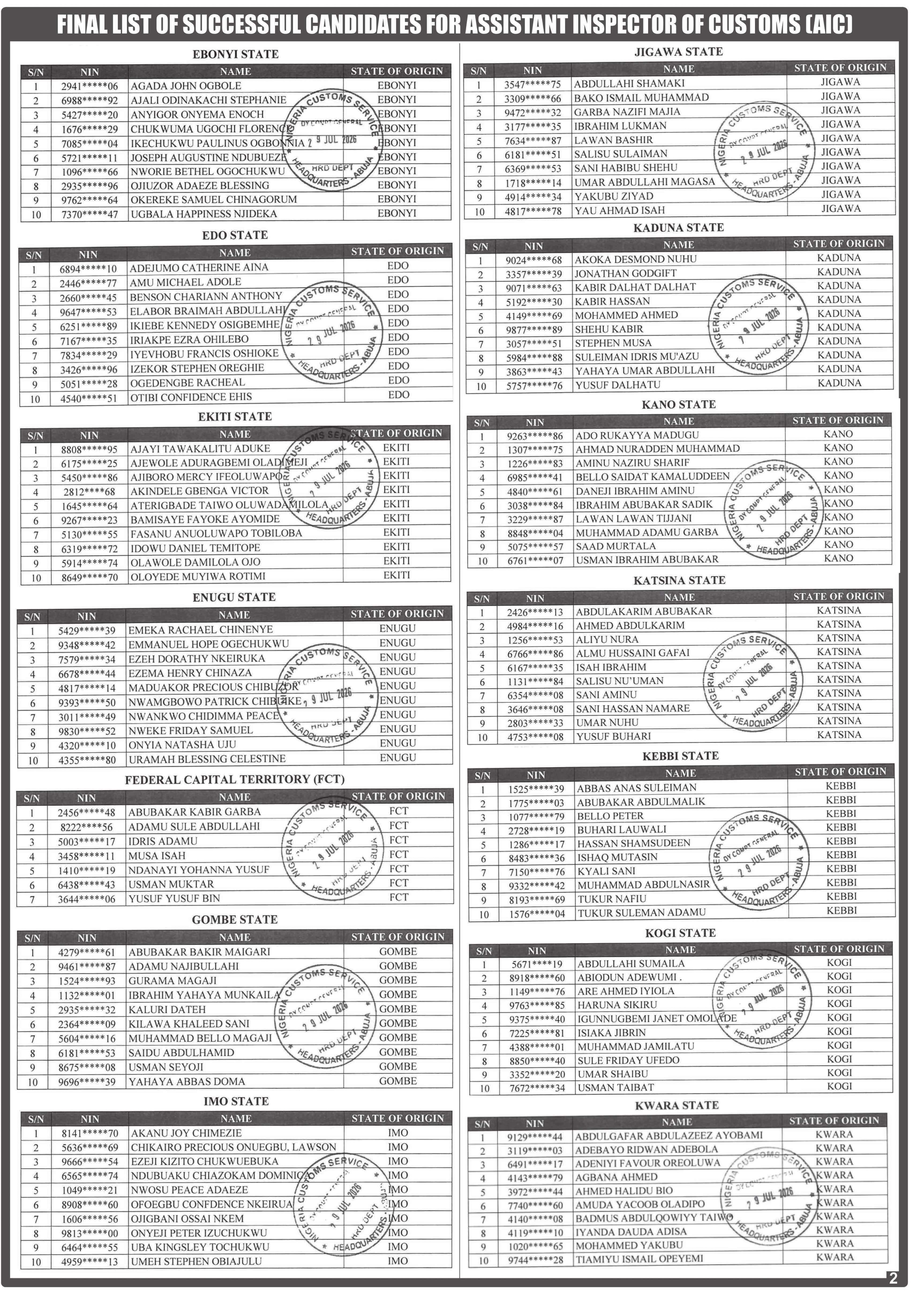
The 28-day project inauguration exercise by FCT Minister Nyesom Wike marked one of the most remarkable periods of infrastructure delivery in abuja's history. yet, despite the visible progress, many neglected communities continue to appeal for rehabilitation of their deteriorating roads. Olawale Ajimotokan reports
When Hajia Farida Jalal leaves her home in Kubwa before sunrise to buy foodstuffs at Sokale Market in Dutse, her biggest challenge is not the early hour—it is the road.
Deep potholes along NEPA Road and adjoining streets have turned what should be a short commute into a daily ordeal. Transport fares have climbed as commercial tricycle operators and taxi drivers pass the cost of damaged vehicles on to passengers. At night, the poor roads become even more frightening, with residents fearing criminals who exploit the darkness and slow-moving traffic.
Yet, only a few kilometres away, newly completed highways and dual carriageways are transforming travel across the Federal Capital Territory (FCT), illustrating both the remarkable progress achieved under the current administration and the work that still lies ahead.
The ongoing expansion and rehabilitation of Abuja's road network provide visible evidence of the capital city's steady physical growth over the past five decades.
In the last three years, FCT Minister Nyesom Wike has awarded contracts covering about 317 kilometres of roads, with approximately 221 kilometres already completed. The recently concluded 28-day project commissioning exercise, organised to commemorate President Bola Tinubu's third anniversary in office, showcased these achievements across the city centre, satellite towns and rural communities.
Even some of Wike's political critics have acknowledged the pace of infrastructure delivery, particularly the road projects that have improved connectivity while opening up economic opportunities for residents and indigenous communities across the FCT.
The inauguration, which began on June 9, featured 31 projects, including roads, water infrastructure, urban renewal initiatives and a judicial complex spread across the six Area Councils. Urban planners and residents alike agree that the projects will significantly improve mobility, ease traffic congestion, stimulate economic activities and further position Abuja as a modern capital city.
Perhaps nowhere is the impact more evident than in the rural communities. For decades, isolated farming settlements in Abuja Municipal Area Council (AMAC), Kwali, Abaji, Gwagwalada, Bwari and Kuje endured impassable roads that restricted access to healthcare, schools and markets. During the rainy season, many communities were effectively cut off, leaving farmers to watch helplessly as harvested crops spoiled before reaching buyers. That narrative is gradually changing.
The construction and rehabilitation of strategic roads across the Area Councils have opened new economic corridors linking remote communities with urban markets, reducing travel time and improving livelihoods for thousands of residents. Among the flagship projects is the 15-kilometre Apo-Wassa Road, also known as the Outer Southern Expressway, stretching from Ring Road I near Gudu Cemetery to Ring Road II at Kabusa-Junction.
Widely regarded as the crown jewel of the administration's road programme, the 10-lane highway was abandoned for years before construction resumed. Today, it has significantly improved connectivity while opening vast areas for commercial and residential development in communities such as Apo-Burum, Sheretti, Kabusa, Waru-Pozema and Lokogoma.
Kuje Area Council has also witnessed one of the most dramatic transformations.
The reconstructed 11-kilometre Kuje Road (FCT 105), linking the International Airport

Expressway to Kuje township, has replaced what was once a notoriously difficult route. Before its rehabilitation, the road was plagued by potholes and insecurity, with commuters regularly facing long travel times and security concerns.
The new six-lane highway has eased movement, strengthened agricultural and commercial activities, improved security and increased property values.
Complementing the project is the dualisation of the 17-kilometre Kuje-Gwagwalada Road, which now provides a direct link between the two Area Councils without forcing motorists onto the busy Airport Expressway before connecting to communities along the Abuja-Lokoja corridor.
The projects reflect Wike's vision of developing satellite towns into self-sustaining urban centres where residents can live, work and conduct business without depending entirely on the city centre.
Other strategic road projects include the extension of Obafemi Awolowo Way (Arterial Road N5) from Life Camp Junction to Ring Road III through Dape District, a project that has eased traffic around Dape, Idu, Kado, Karmo, Gwarimpa, Jabi and neighbouring communities.
Additional projects include the Bill Clinton Drive–Tungan Madaki Access Road; Collector Road CN2 linking Katampe and Mabushi; Arterial Road N16 to Ring Road II connecting Jahi and Gwarimpa; the Karu Interchange to Customs Clinic Junction; Collector Roads 01 and 02 in Mabushi; the Gomani–Dafa–Yangoji Road; access roads in Wassa District and Karsana; the rehabilitated Old Keffi Road; and roads in Gaduwa District.
For the Etsu Kwali, Luka Nizassan III, the completion of the Gomani–Dafa–Yangoji Road represents more than new asphalt. He described it as the fulfilment
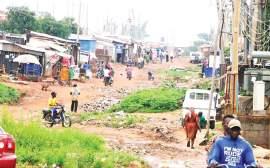
of a long-standing aspiration for his people. "We feel so delighted that this part of the Area Council is benefiting from government intervention. There is nothing happier than making demands and seeing those demands fulfilled", the traditional ruler stated.
According to him, the road is historically significant, having served as one of the oldest routes in the former Abuja Emirate during the colonial era when tax collectors travelled through the area.
Yet, despite these accomplishments, the FCT's road infrastructure story remains unfinished. Across many satellite communities, residents continue to navigate roads that have deteriorated beyond routine maintenance.
In Kubwa, roads such as NEPA Road, Aso Savings Bank Road and Shelter Farm Road remain riddled with potholes. Jalal says the poor roads have not only increased transport costs but also created security concerns, as criminals exploit the difficult terrain to attack commuters during the early morning and late evening.
Favour Aikhionbare, who commutes daily between Kubwa and Area 1 where she works as a hotel receptionist, says the roads become almost impassable during the rainy season. "We have complained countless times to the Bwari Area Council, but all we receive are promises that never materialise," she says.
For Seye Akindele, another resident, the financial burden is equally severe. The deteriorating roads, he says, have led to frequent vehicle repairs and rising maintenance costs.
The situation is hardly different in Nyanya, one of Abuja's largest gateway communities, where thousands of workers commute daily into the city.
Although strategically located along the Abuja-Keffi Expressway, most of Nyanya's internal roads remain in poor condition.
Roads linking the General Hospital, the Police Mobile Force Squadron, the Divisional Police Headquarters and the Vehicle Inspection Office are riddled with potholes and damaged surfaces.
Hospital Road, which connects to KashiNyanya Road, is particularly problematic.
Every Wednesday, market activities reduce the already narrow road to a near standstill, worsening traffic congestion. Sani Anka, a member of the local vigilance group, says residents have repeatedly appealed for intervention.
"I don't even know where to begin. The roads are so bad that one wonders whether anyone in government cares. Heavy rains make many of them impassable, while blocked drains flood homes. Unfortunately, we are remembered only during election campaigns," he says.
Another resident, Kunle Ayotola, recounts surviving a motorcycle accident after the rider struck a deep crater on Area B Last Road, throwing him into the path of an approaching vehicle.
Elsewhere, residents of Life Camp and Kafe District are appealing for repairs to the road stretching from Life Camp Roundabout through Stellamarris School to Kafe District, which house over 100 mass housing estates; while those in Pegi, Kuje Area Council, argue that poor roads are worsening insecurity.
For years, residents say kidnappers and armed robbers have taken advantage of the difficult terrain and abandoned road projects to target motorists. Morgan, who has lived in Pegi for over a decade, says the Kuje-Dafara Road remains incomplete, while several inner roads have collapsed because of poor construction.
As a result, many residents rely on a notorious bush track that has become synonymous with robbery and kidnapping. "We are appealing to the minister to remember Pegi. Bad roads are making insecurity worse, and many residents are afraid to return home after dark," he says.
The scale of road construction undertaken by the FCT Administration has undoubtedly altered Abuja's transportation landscape and accelerated development in many communities. But as the experiences of residents in Kubwa, Nyanya, Life Camp and Pegi demonstrate, the transformation remains a work in progress. For thousands of commuters and families still trapped by crumbling roads, the next phase of infrastructure development cannot come soon enough.
a ir Commodore e himen e jodame
In a strategic effort to deepen public understanding of ongoing counter-terrorism operations, the Nigerian Air Force (NAF) conducted a media familiarisation visit to the Air Component of Operation HADIN KAI in the North-East theatre.
The media delegation, led by the Director of Public Relations and Information, Air Commodore Ehimen Ejodame, comprised defence correspondents from various media organisations who were provided firsthand insight into the planning and execution of air operations, reaffirming the NAF's commitment to openness, accountability and effective strategic communication.
The Chief of the Air Staff (CAS), Air Marshal Sunday Kelvin Aneke, emphasised that transparency and credible communication are essential to sustaining public trust and ensuring balanced reporting of the sacrifices and achievements of military personnel.
The correspondents embarked on day and night air and ground patrols, interacted with air and ground support personnel and shared meals with frontline troops, providing a unique opportunity to gain firsthand insight into the realities, challenges and unwavering commitment of personnel serving in the theatre.
They also witnessed the exceptional professionalism, discipline and sacrifice of personnel working tirelessly round the clock to protect citizens, while operating in close synergy with the Nigerian Army and other security agencies to restore peace
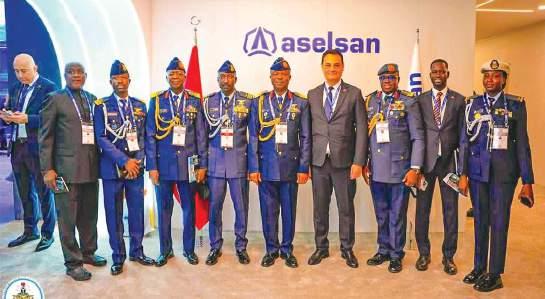
journalists a deeper appreciation of how precision air operations contribute to degrading terrorist capabilities and protecting civilian communities.
During the engagement, the Air Component Commander, Operation HADIN KAI, Air Commodore MB Ahmed, provided a vital brief on ongoing air operations and underscored the importance of accurate and responsible reporting in enhancing public confidence and countering misinformation.
Similarly, the Theatre Commander, Joint Task Force Operation HADIN KAI, Major General AE Abubakar, highlighted the pivotal contributions of the Air Component in Intelligence,
Surveillance and Reconnaissance (ISR), air interdiction and air mobility missions, which continue to enhance the flexibility, responsiveness and effectiveness of joint operations.
The initiative aligns with the CAS's command philosophy of building a highly motivated, professional and mission-ready force capable of delivering decisive air power effects in synergy with surface forces for the realisation of national security objectives, while reinforcing public trust and support for ongoing military operations.
•Air Commodore Ejodame is the Director of Public Relations and Information, Headquarters Nigerian Air Force.
In recognition of her humanitarian service and dedication to the welfare of police officers' families across Nigeria, the National President of the Police Officers' Wives Association (POWA), Chief Mrs. Mutiat Olufunmilola Disu, was weekend, conferred with the prestigious traditional title of Jauharar Minna Emirate (Precious Daughter of the Minna Emirate).
The honour was bestowed during a courtesy visit to the palace of the Emir of Minna on Saturday, July 25, 2026, where the traditional institution acknowledged her outstanding contributions to improving the lives of police families through various welfare initiatives
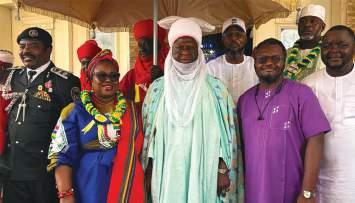
championed under her leadership of POWA.
While conferring the title,
the Emirate commended Mrs. Disu's compassion, visionary leadership and unwavering
commitment to empowering women, supporting widows, promoting healthcare, expanding educational opportunities and enhancing the well-being of police families.
The traditional council noted that her selfless service had positively impacted countless lives, making her deserving of one of the Emirate's distinguished honours.
Responding, Mrs. Disu expressed appreciation to the Emir of Minna and the entire Emirate for the recognition, describing it as a privilege she would always cherish.
She dedicated the title to police officers' families across the country and reaffirmed her commitment to advancing programmes that promote their welfare, dignity and economic empowerment.
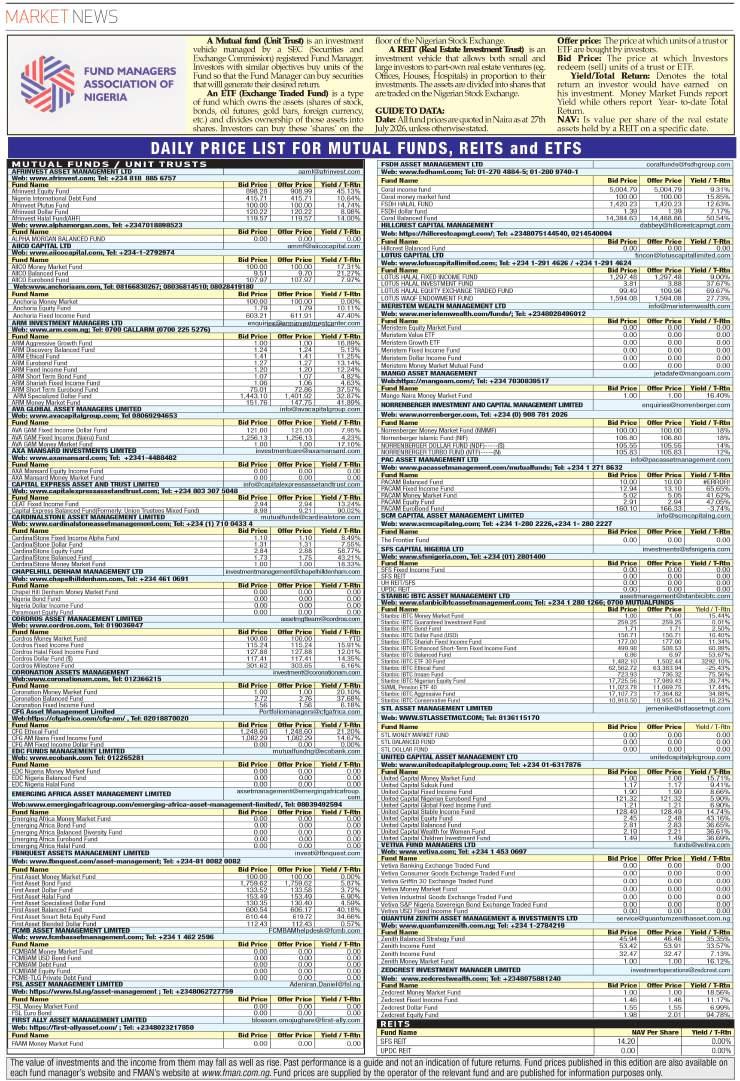
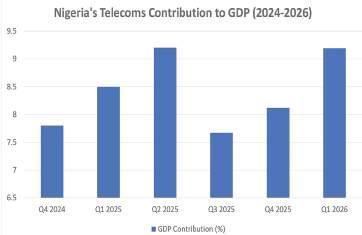
Stories by emma Okonji
The contribution of telecoms sector to Nigeria’s Gross Domestic Product (GDP) has continued to record steady growth after sliding to 7.67 per cent in the third quarter of 2025.
The latest statistics released by the Nigerian Communications Commission (NCC), which THISDAY obtained from its official website, showed that telecoms contribution to GDP reached 9.19 per cent in the first quarter of 2026, up from
8.12 per cent recorded in the fourth quarter of 2025 and 7.67 per cent recorded in third quarter of 2025.
The telecoms sector has been one of the highest contributing sectors to Nigeria’s GDP, contributing as much as 16.06 per cent in Q2, 2023, before sliding to 8.93 per cent in Q2, 2024, with a further drop in GDP contribution to 7.51 per cent in Q3, 2024, after the rebasing of telecoms sector in 2024 by the telecoms industry regulator, the Nigerian Communications
Commission.
The statistics showed that telecoms’ sector contribution to GDP has remained on a steady growth trajectory since 2024 after the sector was rebased.
From the statistics, telecoms contribution to GDP improved to reach 7.80 per cent in Q4, 2024, up from 7.51 per cent GDP contribution in Q3, 2024.
In Q1, 2025, the sector’s GDP contribution grew to reach 8.50 per cent, with a further growth to 9.20 per cent in Q2, 2025.
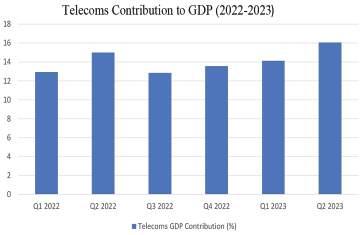
Telecoms’ contribution to GDP, however, dropped slightly to 7.67 per cent in Q3, 2025, but it increased again to reach 8.12 per cent in Q4, 2025, before reaching 9.19 per cent in Q1, 2026, according to NCC’s statistics.
Speaking about the current growth in the sector’s contribution to GDP, the Chairman, Association of Licensed Telecoms Operators of Nigeria, Gbenga Adebayo, who doubles as the spokesperson of telecoms operators in Nigeria, attributed the growth in
GDP contribution to the tariff price adjustment carried out in 2025, where NCC approved 50 per cent hike in telecoms tariff.
According to Adebayo, such tariff adjustment, raised investors’ confidence in the Nigerian telecoms sector, to invest more in network upgrade and expansion in order to improve service quality.
“The growth in telecoms’ sector contribution to Nigeria’s GDP, is as a result of the continuous investments in the telecoms sector, largely driven
by the right government policies and regulatory standards. We must commend the federal government for its right policies on food and economy that are impacting positively on the Nigerian economy, leading to stability in governance. So, part of what we are seeing today in terms of contribution to GDP growth, is the outcome of government policies that are now being implemented.
A new Boston Consulting Group (BCG) report has highlighted a critical challenge for Africa’s digital future, warning that Africa must bridge its existing Artificial Intelligence (AI) infrastructure gap by building digital infrastructure or risk deepening its dependence on foreign digital infrastructure.
The report said continued dependence on foreign digital infrastructure would be detrimental to
the continent’s growth.
The report, themed: ‘Advancing Africa’s AI and Digital Economy’, insisted that Africa must urgently focus on three priorities to become a creator rather than a consumer in the AI economy.
The report listed the three priority areas to include: Building digital infrastructure; Scaling shared investment models, and accelerating open-source innovation.
According to the report,
despite accounting for 18 per cent of the global population, the African continent holds less than one per cent of global data centre capacity and its digital economy contributes just five per cent of GDP, compared to the 15 per cent global average.
The report warned that the Africa risks falling into a familiar historical trap of continually exporting raw data to feed proprietary models built abroad, only
to buy the technology back under expensive licenses.
The report therefore highlighted a stark economic imbalance, waring that while AI development is set to inject $15.7 trillion into global GDP by 2030, Africa’s digital economy is expanding too slowly to keep pace.
Analysing the report, BCG Managing Director and Head of BCG Tech Hub in Africa, Hamid Maher,
who is a co-author of the report, said: “Africa’s core challenge is no longer about technology adoption; it is about tech production. We have the world’s youngest population and the fastestgrowing cloud market, but we lack the foundational infrastructure to own our digital future. Winning requires capturing value from the technology stack itself - building, governing, and retaining our data and
Market data a s at Wednesday, JuL y 29, 2026
talent locally.”
BCG Senior Partner, and co-author of the report, Patrick Dupoux, said: “As agentic AI and advanced robotics begin to disrupt traditional developing pathways like call centres and manufacturing, establishing strong domestic tech ecosystems is becoming an economic imperative for Africa.
The federal government’s reform agenda in the maritime sector led by the Minister of Marine and Blue Economy, Adegboyega Oyetola, is gathering momentum as the Nigerian Ports Authority (NPA) accelerates the modernisation of the nation’s seaports, deploys digital trade platforms, and introduces new measures to improve operational efficiency. With the National Single Window initiative taking shape, the Port Community System advancing implementation, and infrastructure upgrades planned for key ports, the government is seeking to reposition Nigeria as West Africa’s preferred maritime gateway. At the same time, efforts to tackle congestion, improve cargo evacuation, attract private investment and enhance competitiveness have become central to the Authority’s strategy. In this interview, the Managing Director of NPA, Dr Abubakar Dantsoho, discusses the progress of the port modernisation programme, funding arrangements, digital reforms, concession renewals, and the measures being implemented to sustain recent improvements in port efficiency and strengthen Nigeria’s position in regional and global maritime trade. Eromosele Abiodun presents the excerpts
The federal government has continued to push the Port Modernisation Programme. What progress has the NPA made so far, and when should Nigerians expect visible improvements in port infrastructure and operations?
The Nigerian Ports Authority (NPA) has made significant strides in the Federal Government’s Port Modernisation Programme, transitioning from planning to the pre-implementation phase for the reconstruction of major ports.
Funding Secured for Eastern Ports rehabilitation focuses on NPA finalizing pre-construction activities, including stakeholder and host community engagement. The modernisation is a long-term project the reconstruction phase is expected to be 48 months (4 years) for Apapa and Tin Can Island ports and project completion to be around late 2030 (based on a Q3 2026 start + 48 months). As innovation being the backbone of modern-day business our Digital Systems, The National Single Window (NSW) commenced operations in Q1 2026, and the Port Community System (PCS) was also targeted for launch by Q1 2026. Bear in mind the “Eto” electronic truck call-up system is being enforced, contributing to Apapa and Tin Can being ranked among the World Bank’s Top 20 Most Improved Ports. The programme aims to significantly boost cargo handling capacity, sharply reduce congestion and logistics costs, attract foreign investment, and position Nigeria as a leading regional maritime hub.
While the financial groundwork is laid, Nigerians should expect physical, on-site improvements to begin becoming visible from late 2026 onwards, with the full transformation taking about four years to complete.
Despite various interventions, congestion around the Lagos ports remains a concern. What new measures is the NPA implementing to improve cargo evacuation and reduce delays for port users?
To tackle the persistent congestion at Lagos ports, the NPA has introduced a series of new measures for 2025-2026. These focus on enhanced enforcement, smarter digital control, and a longterm strategy to redirect cargo to other ports. Multi-Agency Task Force (Launched July 2026) In response to a resurgence of gridlock, the NPA launched a multi-agency task force to tackle illegal extortion and overlapping security duties. Our members in this task force includes the NPA, Police, FRSC, freight forwarders, and truck owners. The operations are majorly to monitor roads, resolve disruptions immediately, and avoid checkpoints that cause bottlenecks. A dedicated WhatsApp platform enables real-time reporting. A Phased Truck Entry System - This system releases trucks in batches based on a terminal’s operational needs, rather than all at once. A joint task force has been clearing access roads daily since June 26, 2026, to prevent indiscriminate parking.
Integrated Electronic Barrier System (Operational since Sept 2025) - This system is integrated with the “Eto” electronic call-up platform. Controls only trucks with valid Eto-issued tickets can access terminals.
It eliminates unauthorized entry and reduces manual interference.Revitalising Eastern Ports (Long-Term Strategy). To reduce long-term dependence on Lagos, the NPA plans to fully revive Delta Ports. The goal is to redirect cargo to ports like Warri to lower logistics costs and ease pressure on Lagos.
Overall, the NPA is attacking congestion from multiple angles: enforcing order with a new task force, refining traffic flow with phased truck entry,
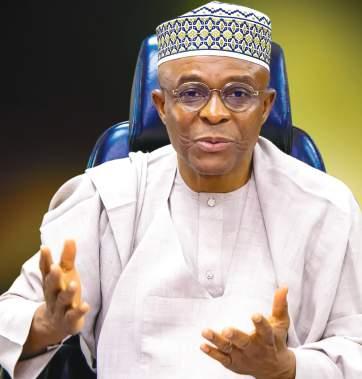
strengthening digital control with electronic barriers, and planning a long-term solution by revitalising alternative ports.
How is the NPA aligning its operations with the National Single Window initiative and other digital reforms to enhance trade facilitation and reduce the cost of doing business at Nigerian ports?
The NPA is aligning its operations with the National Single Window (NSW) and other digital reforms by serving as a primary architect and integrator of the initiative, rather than just a participant. This strategy combines the NSW as a unified digital frontend with the Port Community System (PCS) as its operational backbone. The NSW is an integrated electronic platform that allows traders to submit all import and export documentation through a single portal. This replaces the fragmented process of dealing with many different government agencies separately.
Technical Integration: NPA has integrated its Revenue Invoice Management System (RIMS 2.0) with the NSW architecture. To maximise the NSW’s potential, NPA is deploying the Port Community System (PCS), which will serve as the “digital backbone” enabling seamless information exchange among all port stakeholders.
Broader Ecosystem: The PCS acts as a digital bridge to the NSW and will eventually integrate aviation and rail logistics into a unified trade ecosystem.
Alongside the NSW and PCS, NPA is deploying targeted digital tools to optimize cargo processes, such as e-Tag verification and electronic send systems. These build on
previous successes like the “Eto” electronic truck call-up system and the Integrated Electronic Barrier System at the Lagos Port Complex.
These reforms are designed to lower costs and boost efficiency by:
• Lowering Business Costs: The NSW will minimize human contact, eliminate duplication, and reduce trade costs currently higher than regional peers.
• Reducing Delays: The NSW will significantly reduce cargo clearance delays enabling all agencies to work together in harmony eliminating further delays.
• Boosting Transparency: The digital systems minimize physical interaction to curb corruption and improve transparency.
• Driving Economic Growth: These reforms have already contributed to a growth in non-oil exports in the first half of 2025
By integrating its core systems with the NSW and building the digital PCS backbone, the NPA is working to create a unified, transparent, and efficient trade environment. This is projected to deliver billions in economic benefits, with the goal of positioning Nigerian ports among Africa’s top three most efficient trade gateways.
With neighbouring countries investing heavily in their ports, what strategies is the NPA pursuing to make Nigerian ports more competitive and attract greater cargo traffic and private investment?
To counter the competitive threat from neighbouring ports (such as Lomé, Cotonou, Abidjan, and Tema), NPA is implementing a multi-pronged strategy focused on aggressive infrastructure modernization, digitalization,
and policy reforms to attract cargo and private investment.
Major ports haven’t been significantly upgraded in decades. To close this gap, it is undertaking a reconstruction of the Lagos ports and a rehabilitation of the Eastern Ports. New deep seaports like Lekki (fully automated, 17m draught) and the Snake Island Port (a greenfield PPP project) are also being developed. To improve speed and transparency, NPA is deploying the Port Community System (PCS) (launched Q1 2026) alongside the National Single Window. This includes an integrated electronic barrier system with the “Eto” truck call-up system to manage congestion, plus tools like e-Tag verification and electronic send systems to reduce cargo dwell time.
To reduce pressure on Lagos, the NPA is actively repositioning ports like Port Harcourt, Onne, Warri, and Calabar. NPA is aggressively courting private capital through Public-Private Partnerships (PPPs).
· Snake Island Port: A green port with three terminals developed via a PPP.
· Investor Interest: Eastern port-focused tours have yielded expressions of interest from investors for Rivers, Calabar, and Burutu Ports.
Recognising that port efficiency depends on inland transport, NPA is improving intermodal connectivity by automating barge, truck, and railway applications to reduce road reliance, in partnership with agencies like the Nigeria Customs Service for 24-hour operations. Ultimately, this strategy aims to recast Nigeria as West Africa’s trade nerve centre, leveraging its geographical advantage to become the preferred maritime gateway and capture a dominant share. The expected impact includes faster operations, lower logistics costs, and improved export competitiveness.
The NPA has recorded improvements in revenue and operational performance in recent years. What are the Authority’s priorities for sustaining this growth, and what should stakeholders expect over the next 12 months?
To sustain its recent revenue growth, the NPA’s core priority for 2026 is a massive infrastructure overhaul, complemented by digital reforms and operational efficiency improvements. Stakeholders should expect visible progress on the ground, starting with the groundbreaking of the port modernisation projects.
· Massive Infrastructure Overhaul: The centerpiece is the modernisation of Apapa and Tin Can Island ports. The NPA notes both are outdated—Apapa is nearly 100 years old and Tin Can over 50. NPA is also supporting the Lekki and Badagry deep-sea projects to handle larger vessels and revitalising Eastern Ports to reduce Lagos congestion.
· Full Digital Transformation: NPA is prioritising the full implementation of the Port Community System (PCS) to streamline operations and reduce manual bottlenecks. This integrates with the National Single Window (NSW) (operational since Q1 2026) to create a unified digital trade ecosystem.
· Operational Efficiency & Security: The authority is enhancing technology-driven security for 24-hour operations and strengthening collaboration with customs agents to tackle congestion and improve cargo evacuation.
NPA is positioning Nigeria as West Africa’s trade nerve The expected impact includes faster operations, lower logistics costs, increased trade volumes, and improved export competitiveness.
What is the update on port modernisation
efforts?
The port modernisation programme has moved from planning into the active pre-construction and procurement phase, with significant progress on funding, site preparations, and new operational measures to tackle congestion.
The NPA has secured key financing and is now releasing funds. The Federal Government has begun paying counterpart funding required to access the £746 million UK-backed loan for the Apapa and Tin Can Island ports upgrade. This is part of the broader $1 billion reconstruction programme for five major seaports.
Preliminary on-the-ground activities are already complete. Critical site investigations, including borehole drilling, have been finished. Contractors are now expected to mobilise to site, with the NPA having held technical stakeholder meetings to assess progress and address gaps.
While physical construction has not yet begun, NPA has confirmed that the groundbreaking for the Apapa and Tin Can modernisation projects is imminent. To manage congestion ahead of construction, NPA has introduced a phased truck entry system. This demand-driven system releases trucks in batches to match terminal capacity. A joint task force has also been clearing access roads daily since June, 2026, to prevent indiscriminate parking. The NPA is also deepening collaboration with customs agents to improve cargo evacuation. In summary, NPA has secured the funding and completed the necessary site investigations. Contractors are mobilising, and the long-awaited groundbreaking for the reconstruction of Apapa and Tin Can ports is expected within the next few weeks.
Still on port modernisation, has NPA secured funding from international partners?
Yes, NPA has secured multiple major international funding agreements for its port modernisation programme.
Recently, the World Bank rated Apapa and Tin-Can Ports amongst worlds most improved ports. What is NPA doing to sustain this ranking?
To sustain the World Bank recognition, the NPA is moving beyond the reforms that earned the ranking and doubling down on infrastructure, digitalization, and stakeholder collaboration to cement long-term efficiency gains.
NPA acknowledges that aging infrastructure is the biggest threat to sustained performance.
· Lagos Ports Overhaul: A $1 billion reconstruction of Apapa and Tin Can Island ports, backed by a £746 million UK Export Finance agreement, is set to begin within weeks.
· Long-term Plan: This 48-month project includes reinforcing quay walls, deepening channels for larger vessels, and deploying modern, high-speed cargo-handling equipment.
Building on the success of the “Eto” electronic call-up system, which processed over 3.5 million truck movements and reduced average turnaround time to two days or less:
· Port Community System (PCS) & National Single Window: These platforms are being deployed to integrate stakeholders, streamline documentation, and enhance transparency. Paperless Environment: The NPA is pushing a digitalization agenda to eliminate manual inefficiencies and curb corruption. The NPA is prioritising efficiency-driven growth rather than imposing excessive charges that could drive shipping lines to competing West African ports. This is supported by Nigeria’s consistent trade surpluses since 2024.
In summary, NPA is treating the World Bank ranking not as a finish line, but as a springboard. By aggressively modernizing infrastructure, deepening digital reforms, and strengthening stakeholder partnerships, the Authority is working to ensure this global recognition becomes the new normal for Nigerian ports.
Recently, you set up a committee on Apapa Road griock/ extortion. How far has the task force gone with that directive?
The multi-agency task force has been operational since June, 2026. Its primary focus has been on clearing access roads, dismantling illegal checkpoints, and introducing new traffic management systems.
· Daily Road Clearance: The joint task force has been clearing the Apapa and Tin Can access roads daily (until about 8pm) to prevent indiscriminate parking.
· New “Phased Truck Entry” System: Instead of releasing all approved trucks at once, they are now released in scheduled batches based on terminal demand. For instance, if a terminal needs 100 trucks, they come in smaller groups to reduce pressure on access roads.
The task force is a broad coalition including NPA, Police, FRSC, Lagos State Government, ANLCA, NAGAFF, NARTO, AMATO, and MWUN.
· No Checkpoints: Members are instructed not to establish checkpoints, but to maintain a strategic presence to resolve disruptions quickly.
· Rapid Response: A dedicated WhatsApp platform has been created for members to instantly report infractions or emerging traffic issues. The task force is actively enforcing order and dismantling illegal points. While it has made significant progress, the emergence of new extortion hotspots show that sustaining these gains requires continuous effort and stakeholder cooperation.
Salesforce, a global Artificial Intelligence (AI) Customer Relationship Management (CRM) platform, and its Nigerian solution implementation partner, arravo, have assured Nigerian businesses of data security and business growth, through its Agentforce Marketing solution.
They gave the assurance in Lagos, during a breakfast meeting, themed: ‘Unlocking the Agentic Enterprise: Elevating Customer Experience in
the AI Era’.
Director, Sales at arravo, Oyinlola Okunfolami, said the breakfast meeting was organised to showcase Salesforce technology solutions that address internal data security and help grow customer businesses, using the Salesforce CRM platform.
“With the deployment of Salesforce CRM solution, organisations are rest assured of improved customer experience
that will impact on revenue generation for organisations,” Okunfolami said.
In her presentation, Salesforce Specialist, Martha Makokha, spoke about how organisations could use Agentforce Marketing in enhancing customer experience.
According to her, Salesforce is a full, comprehensive endto-end system, from customer acquisition to maintaining customers, and engaging the customers until they become loyal customers.
Interswitch, one of Africa’s leading integrated payments and digital commerce companies, has been named among the CNBC and Statista World’s Top Fintech Companies for the second consecutive year, earning recognition in the payments category of the 2026 global ranking.
Commenting on the recognition, Founder and Group Managing Director/ CEO, Interswitch Group, Mitchell Elegbe, said: “Being recognised once again among
the world’s leading fintech companies is an affirmation of the consistency of our vision and the resilience of the infrastructure we have built over the years. At Interswitch, we remain focused on developing payment and digital commerce solutions that solve real problems, create opportunities for businesses to grow, and expand access to financial services across Africa. This recognition belongs to every member of our team, our customers, partners, and
stakeholders who continue to believe in and contribute to that vision.”
Reflecting on what the recognition represents for Interswitch’s continued evolution and long-term commitment to Africa’s digital economy, Executive Vice President, Group Marketing and Communications, Interswitch Group, Cherry Eromosele, said: “The recognition is especially meaningful because it reflects sustained impact over time.
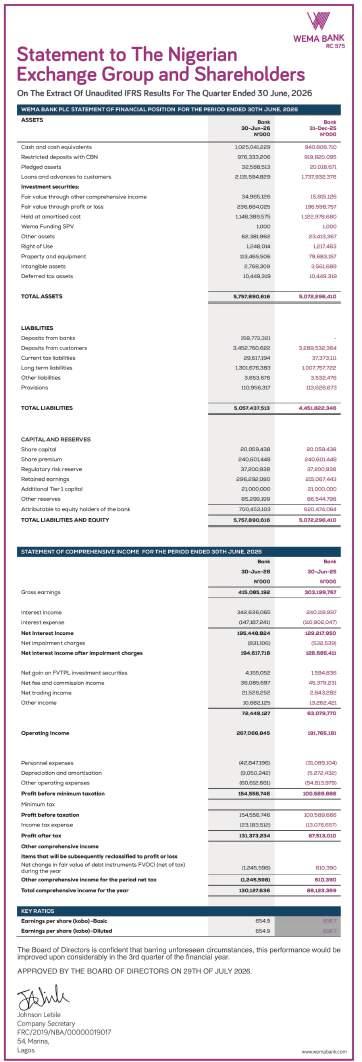
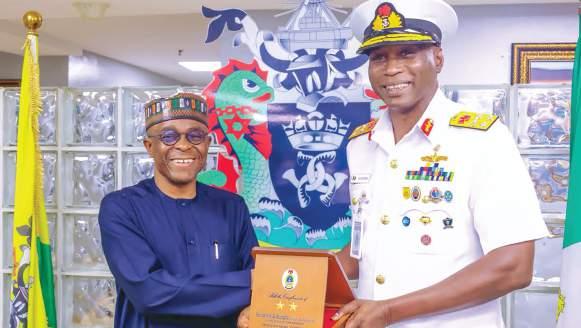
L-R: The Managing Director/ CEO of the Nigerian Ports Authority (NPA), Dr. Abubakar Dantsoho in handshake with The Flag Officer Commanding (FOC) Western Naval Command, Rear Admiral A.A Mustapha at the NPA Headquarters, Marina-Lagos… recently
Stakeholders in Nigeria’s business ecosystem have expressed concern over the absence of succession plans in more than 70 per cent of Nigerian businesses, warning that the trend continues to fuel the collapse of family-owned enterprises after the demise or exit of their founders.
The concern was raised ahead of the 2026 C-Suite
Exclusive Masterclass Succession Blueprint, an exclusive summit scheduled to hold in Lagos, in partnership with Pebble Hill University, Delaware, United States.
Speaking at a press conference in Lagos, the Convener of the summit, Prof. Ezekiel Isidahomen, described the succession crisis as one of the biggest threats to the sustainability of businesses in Nigeria
TikTok has released its Q1 2026 Community Guidelines Enforcement Report, highlighting the platform’s continued commitment to protecting its community and creating safer experience for users.
Between January and March 2026, TikTok said it removed more than 4.8 million violative videos in Nigeria. The number, it said, only represents 0.6 per cent of the total number of videos uploaded by the
Nigerian TikTok community in Q1, proving that only a small fraction of the content uploaded violates the platform’s rules.
According to the report, 99.8 per cent of the videos were proactively removed, meaning the violating content was detected and removed before it was reported by users, while 92.8 per cent of violating content was removed within 24 hours of being posted.
CEO and co-Founder of Yellow Card, Chris Maurice, has been named to the Stablecoins Most Influential 2026 list, in recognition of individuals shaping the global stablecoin ecosystem.
Stablecon is a leading global event and media platform for the stablecoin ecosystem. The Stablecoins Most Influential list is a premier industry recognition spanning six regions and multiple categories, from issuers and builders to policymakers. The list uses
a five-factor framework to evaluate influence, impact, innovation, momentum, and peer recognition, serving as a trusted marker of leadership.
Maurice joins a distinguished 2026 cohort that includes Coinbase President and COO, Emilie Choi; Stripe Co-founder and CEO, Patrick Collison; Paxos CEO and Co-Founder, Charles Cascarilla, and BlackRock Chairman and CEO, Larry Fink, among other leaders shaping the future of digital finance.
and across Africa.
According to him, only about 22.2 per cent of Nigerian business owners have formal succession plans in place, leaving the vast majority of enterprises
vulnerable to failure.
“We know, of course, that only 22.2 per cent of Nigerian businessmen have succession blueprints in place. Over 70 per cent do not have one. Those businesses are at
risk. We have seen many businesses fold up because of family disputes, board versus management conflicts, and management versus family disagreements,”
Isidahomen said.
He stressed that the absence of structured succession planning has led to the premature collapse of many thriving enterprises, despite years of investment and growth.
The Nasarawa State Governor, Abdullahi Sule has reaffirmed his administration’s commitment to attracting strategic investments that promote industrialization and sustainable economic growth.
He stated this at the
opening ceremony of the Jinlide•Qiangyu New Energy Plant in Nanchang City, Jiangxi Province, People’s Republic of China.
Governor Sule, who attended the event alongside the Governor of Zamfara State, Dauda Lawal, described the commissioning of the ultramodern facility as another
milestone in the growing partnership between Chinese investors and Nigerian states endowed with critical solid minerals.
Speaking during the ceremony, the governor commended the management of Jinlide•Qiangyu New Energy for its confidence in Nigeria and for its commitment to advancing the global clean energy value chain. He noted that Nasarawa State remains focused on creating an enabling environment for credible investors through transparent policies, infrastructure development and responsible mining practices.
Stories by Emma Okonji
The Federal Competition and Consumer Protection Commission (FCCPC), and the Lagos State Lottery and Gaming Authority (LSLGA), have assured the safety of the data of all consumers that participated in the iLOTBET 2026 FIFA World Cup Gaming Campaign.
The campaign awarded the grand prize winner with a four-bedroom duplex worth N150 million, located in a commercial area of Lagos, among other prizes like iPhone 17, Tablet Devices, Generators, Standing Fans, Smart Tvs, Microwave, Power-banks, among others, which were presented to winners in Lagos.
Speaking at the prize presentation, the FCCPC Zonal Coordinator, Southwest Zonal Office, Lagos, Dr. Olubunmi Otti, said being the apex competition and consumer protection agency of the Federal Government of Nigeria, FCCPC would
continue to promote the interest of Nigerian consumers.
“We monitored the process and it was seamless. It is the duty of the agency to ensure that the promises of iLOTBET are delivered accordingly and promptly.”
We will also ensure that all winners get their prizes,” Otti said.
The Principal Legal Officer, Lagos State Lottery and Gaming Authority, Kemi Adebiyi, said as a regulator that regulates all forms of gaming and lottery within Lagos State, it would ensure that consumers and their data are well protected, given the rise of cybercrime activities in the country.
“So far I am impressed with the process and conduct of iLOTBET FIFA World Cup Campaign because promotional activities, including the prize presentation, have been conducted in a free and fair manner,” Adebiyi said.
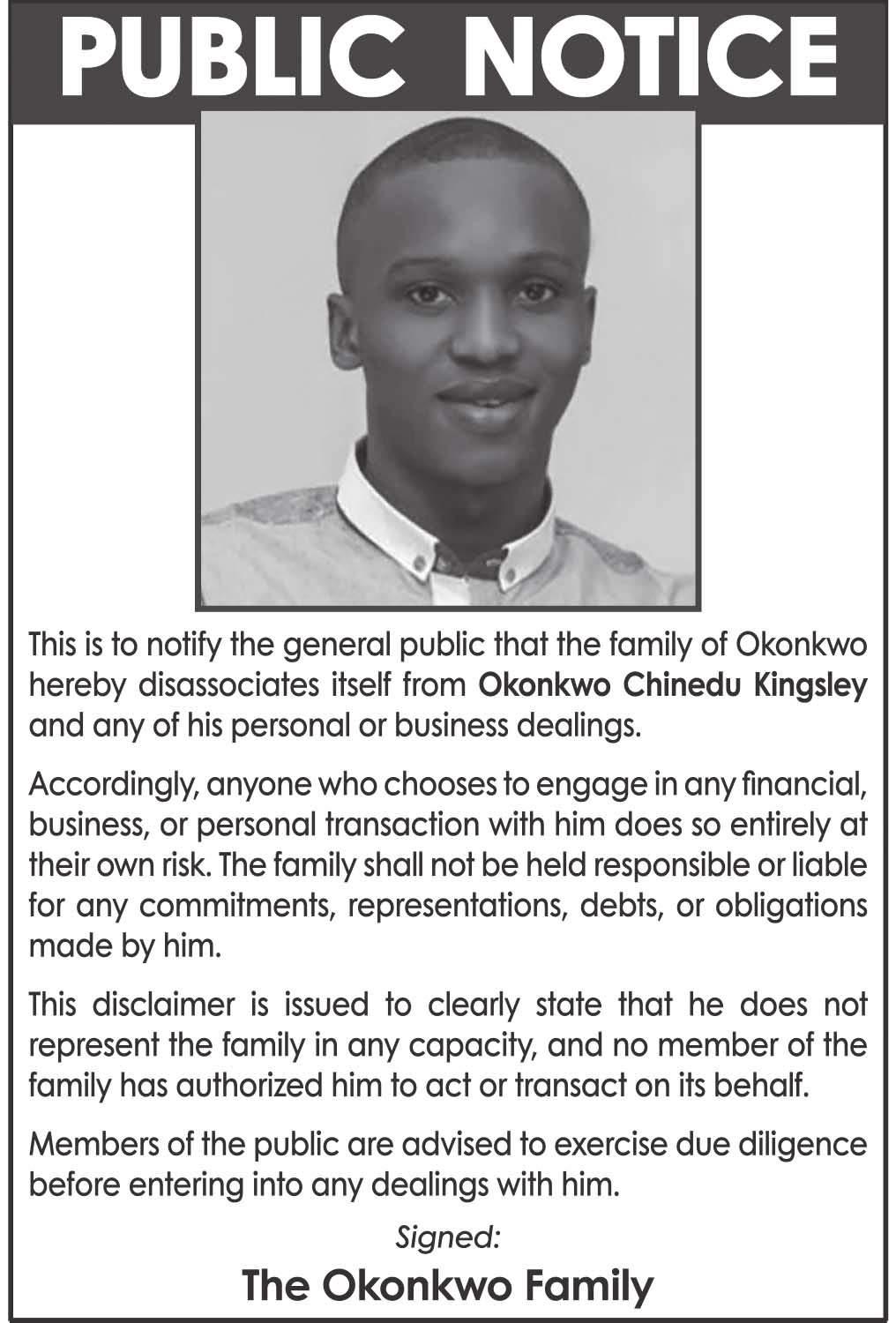
Dr. Olufunmilayo Oduniyi
When people hear the word cancer, they immediately think of hospitals, chemotherapy, surgery, radiotherapy and medicines. These are undoubtedly essential components of cancer care, but they tell only part of the story.
For thousands of Nigerians diagnosed with cancer every year, the greatest barriers to survival often lie far beyond the hospital walls.
How does a patient travel hundreds of kilometres for radiotherapy without money for transportation? Where does a caregiver sleep during weeks of treatment away from home? How does a family provide nutritious meals after exhausting their savings on surgery and chemotherapy? What happens when a patient abandons treatment because accommodation, food and transport have become unaffordable?
These questions lie at the heart of what public health experts describe as the Social Determinants of Health (SDOH), the social, economic and environmental conditions that influence whether people can access healthcare, complete treatment and ultimately survive.
For cancer patients, these determinants are not secondary issues; they are often the difference between hope and despair, treatment completion and abandonment, survival and premature death.
Recognising this reality, the National Cancer Control Plan (NCCP) Technical Working Group launched Nigeria’s Social Determinants of Health Initiative, a pioneering effort to ensure that cancer care extends beyond clinical treatment to include the practical support patients need throughout their journey.
That vision moved from policy to action on June 17, 2026, when the Honourable Minister of State for Health and Social Welfare, Dr. Iziaq Adekunle Salako, officially flagged off the initiative in Abuja and demonstrated government commitment with a N50 million donation to support its implementation. More importantly, the initiative immediately began translating compassion into action, with 228 carefully selected cancer patients and survivors approved to receive N100,000 each, amounting to N22.8 million in direct assistance.
Behind those figures lies a process built on transparency, accountability and equity. Applications were subjected to rigorous

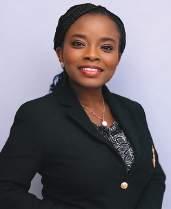
verification and quality review to ensure that support reached genuinely deserving beneficiaries across Nigeria’s six geopolitical zones and the Federal Capital Territory. In an environment where public trust is essential, the integrity of the selection process has become one of the initiative’s defining strengths.
The momentum has not stopped in Abuja. Following the national launch, the South-East geopolitical zone recently commenced regional implementation, bringing together stakeholders from Abia, Anambra, Ebonyi, Enugu and Imo States to localise the initiative and address the unique realities confronting cancer
patients in the region. Similar launches are now being planned across the remaining geopolitical zones, reflecting a growing national movement towards more equitable and patient-centred cancer care.
For many patients in the South-East and other parts of Nigeria, travelling long distances to treatment centres in Enugu, Abuja, Lagos or Ibadan often means leaving families behind, paying for accommodation, losing income and enduring months of emotional and financial uncertainty. These realities explain why many patients interrupt treatment—not because they lack the will to survive, but because the burden becomes unbearable.
As Professor Folakemi Odedina, Global Chair of the NCCP Technical Working Group, rightly observed, “Cancer control cannot succeed if we focus only on treatment. We must address the social realities that determine whether patients can access care, complete treatment and live productive lives.” That philosophy has become the foundation upon which the SDOH Initiative is being built.
Already, survivor testimonies are affirming the importance of this approach. Many recount that the most difficult aspect of their cancer journey was not the chemotherapy itself but the hidden costs - transportation, accommodation, feeding, loss of income, caregiving responsibilities and emotional distress. One beneficiary aptly described the initiative as “humanising cancer care” because it recognises that patients are people first, not merely diagnoses.
The initiative also seeks to create something Nigeria has never had before - a coordinated national cancer support ecosystem linking patients, caregivers, healthcare providers, survivor organisations, civil society groups, philanthropists, development partners and the private sector. Rather than isolated acts of charity, it aims to build sustainable pathways through which support can be mobilised, coordinated and delivered with dignity.
This is why the SDOH Initiative deserves national attention. It represents a shift from treating disease to supporting people. It acknowledges that health outcomes are shaped not only by what happens in the consulting room, but also by whether patients can afford to reach the hospital, feed themselves during treatment, care for their families and maintain hope throughout one of life’s most difficult journeys.
Encouragingly, plans are already underway for a high-level national fundraising and partnership dinner that will bring together government, corporate organisations, development partners, philanthropic foundations and distinguished Nigerians to expand the initiative’s reach. Such partnerships will be essential if support is to move beyond hundreds of beneficiaries to thousands of Nigerians living with cancer.
Government cannot do this alone. Neither can healthcare professionals nor survivor organisations. Sustainable cancer support requires collaboration across every sector of society. The media must continue to tell these stories. Corporate Nigeria must embrace cancer support as part of its social investment agenda. Development partners and philanthropists must see patient support as an investment in human dignity. Communities, faith-based organisations and individuals must also play their part.
The Ministerial Flag-Off was not the destination; it was the beginning of a national commitment to compassionate, equitable and people-centred cancer care. Because in the end, cancer treatment may save lives, but it is often support beyond treatment that enables patients to complete the journey.
•Dr. Olufunmilayo Oduniyi is Chair, Social Determinants of Health Initiative, National Cancer Control Plan (NCCP) Technical Working Group
dettol Nigeria is turning everyday hygiene into a national conversation. With its newly launched “dettol Original 12hrs Protection Challenge,” the brand is asking Nigerians to share 60-second stories about how dettol has protected their families — and rewarding 25 of them with exciting prizes. Writes Mary Nnah
Nigeria’s leading hygiene brand, Dettol, has opened entries for the “Dettol Original 12hrs Protection Challenge,” a nationwide consumer storytelling competition encouraging Nigerians to adopt consistent hygiene habits.
Running from 13 July to 15 August, the challenge invites Nigerians to create and share a 60-second video on Instagram, featuring a bar of Dettol Original Soap and telling their personal Dettol story.
The competition offers participants the chance to be among 25 consumers who win a range of exciting prizes. For those interested, more details can be found on the brand’s Instagram page. Through this initiative, Dettol aims to spotlight the real experiences
and memories that have connected generations of Nigerians with the brand, while encouraging meaningful conversations around everyday protection, hygiene, and family wellbeing.
Speaking on the challenge and the broader campaign, Boma Harrison, Marketing Director, Reckitt West Africa, said, “Every day, Nigerians are exposed to germs as they commute, work, attend school and carry out their daily activities.
The ‘12 Hour Protective Shield’ campaign is our way of reminding and encouraging people to make hygiene a consistent part of their everyday routines.
With regular use, Dettol Original supports the skin’s natural germ fighters for 12 hours. We want Nigerians to
go about their daily routines with confidence, knowing they are protected every step of the way.”
The challenge builds on the wider Dettol “12 Hour Protective Shield” campaign. It centers on Dettol Original Antibacterial Bar Soap, which provides a 12-hour protective shield.
According to the World Health Organization (WHO), proper hygiene can reduce diarrheal diseases by up to 30% and acute respiratory infections by up to 17%, underscoring the importance of consistent hygiene in preventing the spread of infectious diseases.
The campaign’s rollout also coincides with Nigeria’s current rainy season, which has already brought heavy flooding to Lagos and several other states.
Health experts have repeatedly
warned that contaminated floodwater raises the risk of cholera, typhoid and other waterborne illnesses in its aftermath.
Against this backdrop, Dettol Original Soap takes on added relevance for Nigerians navigating the season.
For decades, Dettol has championed hygiene education and encouraged behaviors that help prevent the spread of germs.
By inviting consumers to share personal stories of protection, care and everyday hygiene, the “12 Hour Protective Shield” campaign and its consumer challenge seek to celebrate the role Dettol has played in Nigerian households for generations while inspiring healthier habits for the future.
Kayode Tokede
Champion Breweries Plc has announced strong unaudited results for the half year ended June 30, 2026, driven by solid commercial performance, improved operational efficiencies, and the successful expansion of its business portfolio following the acquisition of EnjoyBev B.V.
The H1 2026 marked a transformational period for the company as it strengthened its growth platform through strategic investment, delivered resilient operating performance, and successfully transitioned to a new Group structure.
During the period, group revenue reached N35.73 billion, while second-quarter revenue amounted to N21.37 billion. Operating profit stood at N6.17 billion and profit after tax attributable to the Group was N2.65 billion, with second-quarter profit after tax of N1.76 billion.
The company also successfully completed the
acquisition of an 80 per cent equity interest in EnjoyBev B.V., strengthened its capital base through a successful capital raising programme that increased shareholders equity to N69.08 billion, and maintained full compliance with Nigerian Exchange free float requirements, with free float increasing to 25.72 per cent as at 30 June 2026.
Group revenue increased to N35.73 billion, while secondquarter revenue reached N21.37 billion, reflecting continued growth across the Company’s beverage portfolio and contributions from the Group’s expanded operations following the acquisition of EnjoyBev B.V. in the first quarter.
Profit after tax attributable to the Group amounted to N2.65 billion for the six-month period, while second-quarter profit after tax stood at N1.76 billion.
Commenting on the results, the Acting Managing
The Governor, Central Bank of Nigeria (CBN) Mr. Olayemi Cardos will speak as Special Guest of Honour at the 3rd Business Journal Fintech & Financial Inclusion Roundtable 2026 in Lagos.
The CBN confirmed the participation of Yemi Cardoso at the roundtable over the weekend.
The theme of the roundtable is: Fintech: Driving the Future of Digital Financial Ecosystem in Nigeria.
Other special guests of honour include
Director, Mr. Rasheed Adebiyi, said: “The first half of 2026 marks a defining chapter in Champion Breweries’ journey. We have not only delivered a strong operating performance but also successfully transformed our business into a broader beverage group with an expanded platform for sustainable growth.
While higher finance costs associated with our strategic investment programme impacted profitability during the period, our underlying business remains strong.
“The combination of disciplined commercial execution, continued investment in our brands and route-to-market capabilities and improving operational efficiency positions us well for future growth. We remain focused on creating long-term value for shareholders, strengthening our market position, and capturing the opportunities presented by our expanded business platform.”
the Executive ViceChairman/CEO, Nigerian Communications Commission (NCC), Dr Aminu Maida and the commissioner for insurance Mr. Olusegun Omosehin.
The statement said, Group Chairman, Nigerian Exchange Group (NGX), Dr. Umaru Kwairanga, will Chair the event.
The Keynote Speakers include the CEO, PufferPay Limited Mr. Emmanuel Ovaga, and Director-General/CEO, Lagos Chamber of
Commerce & Industry (LCCI). Dr. Chinyere Almona.
The statement said members of the public would be educated by Dr. Muda Yusuf, CEO, Centre for the Promotion of Private Enterprise (CPPE)While Group Managing Director/CEO, Royal Exchange Plc. Mrs. Idu Okeahialam, will grace the occasion. Also, President, Association of Mobile Money and Bank Agents in Nigeria (AMMBAN), Obioha Oti, will be there.
Nume Ekeghe
Co-founder and Managing Partner of Alitheia Capital, Tokunboh Ishmael, has been named the 2026 Impact Trailblazer of the Year at the Africa Impact Investment Awards, in recognition of her contributions to advancing impact investing and gender-lens private equity across the continent.
The award, presented at the Africa Impact Summit in Lusaka, Zambia, honours individuals who have made significant contributions to Africa’s impact investment ecosystem.
Ishmael received the recognition for cofounding and helping build Alitheia IDF, Africa’s first and largest dedicated gender-lens private equity fund,
alongside Polo Leteka of IDF Capital. Together, they have led the fund’s investment strategy, portfolio development and management, helping establish gender-smart investing as a commercially viable investment approach backed by measurable outcomes.
Commenting on the recognition, Ishmael said the award reflected the collective efforts of investors, founders and partners who shared the vision of proving that impact investing and commercial discipline could coexist.
“This recognition is a tribute to the founders, investors, partners and team members who believe that inclusive capital could be both disciplined and transformative. We set out to prove that genderlens investing is not a concessionary idea; it is
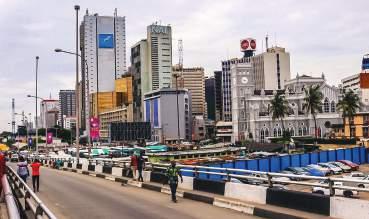
a rigorous investment strategy. The evidence is now stronger, and the opportunity ahead is even larger,” she said.
Alitheia Capital currently manages three investment funds, Alitheia IDF, uMunthu I and uMunthu II. Through the uMunthu funds, the firm has deployed more than $20.5 million across Nigeria and Ghana, supporting businesses operating in agribusiness, agri-tech, financial technology and mobility.
According to the firm, investments made through Alitheia IDF have contributed to the creation of more than 220,000 direct and indirect jobs, improved the livelihoods of over 104 million people and supported progress across 10 of the 17 United Nations Sustainable Development Goals.
Kayode Tokede
The Securities and Exchange Commission (SEC), yesterday said it has commenced the implementation of a fully electronic registration process for capital market operators, enabling designated regulatory services to be completed entirely online as part of efforts to modernise Nigeria’s capital market and improve
regulatory efficiency.
The Commission, in a statement said the new electronic registration (e-Registration) platform, deployed through its ePortal, marks another milestone in its digital transformation agenda and its drive to build a technology-driven regulatory environment. According to the SEC, the platform allows Capital
Market Operators (CMOs) to complete designated registration processes online, covering application submission, regulatory review, approvals and communication of decisions, thereby eliminating manual processing for the services included in the current phase.
The Commission said the initiative is expected to simplify regulatory interactions, reduce
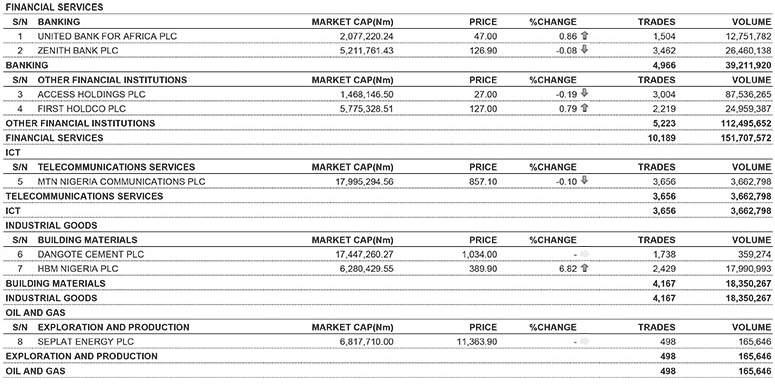
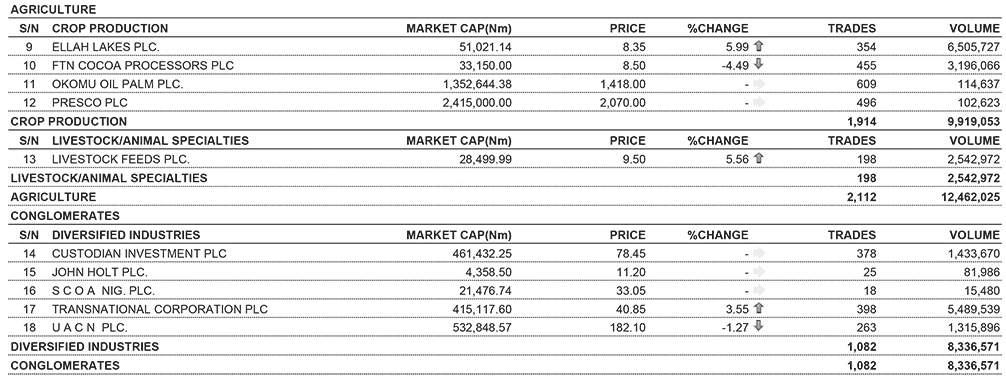
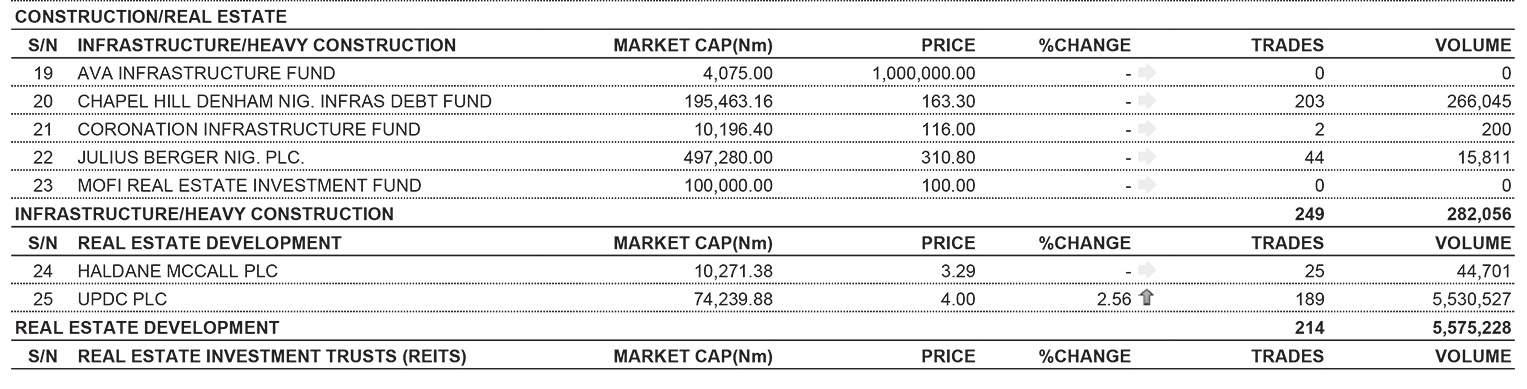
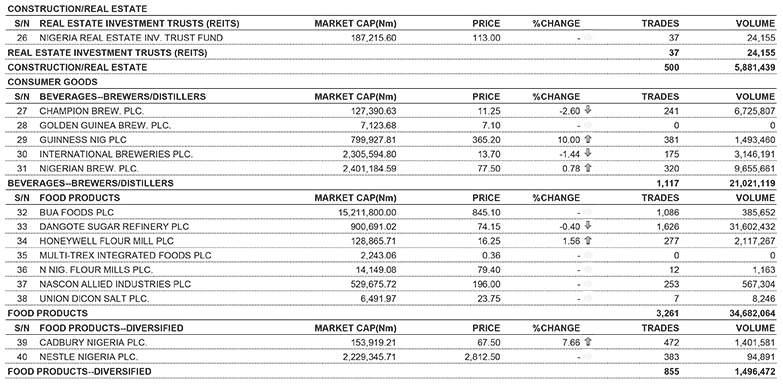
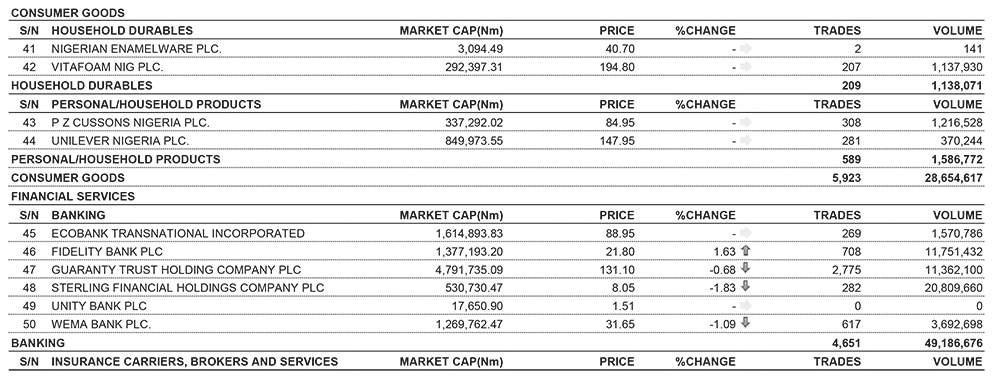
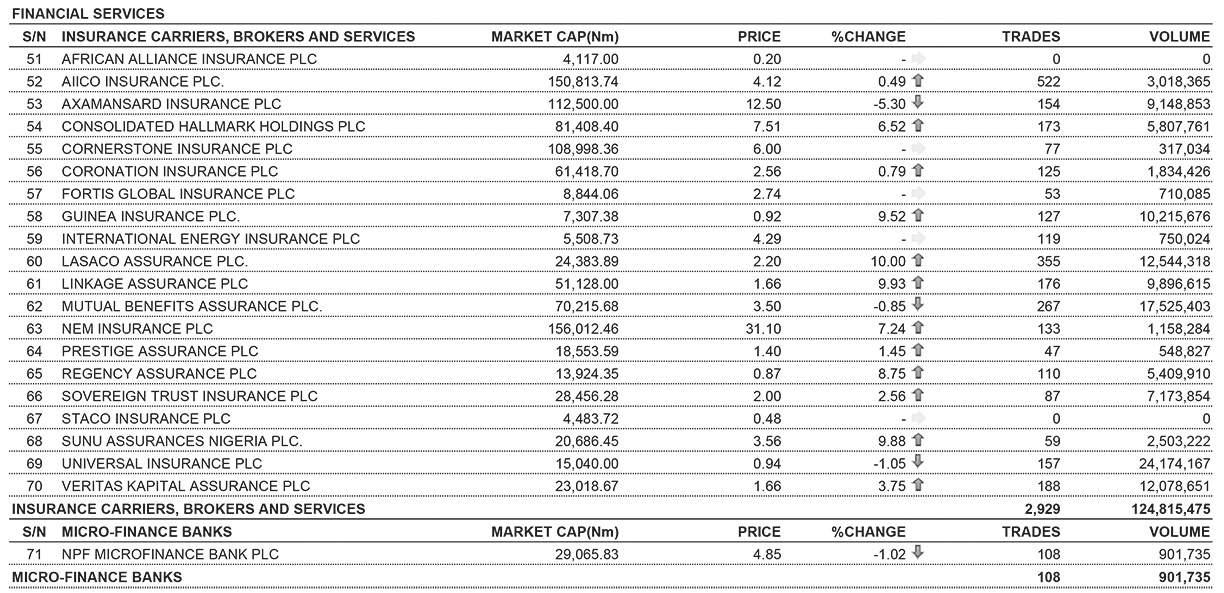
administrative bottlenecks, shorten processing timelines and provide applicants with greater visibility into the status of their applications.
It added that the migration to a fully digital registration system would improve operational efficiency while strengthening regulatory oversight through standardised workflows, electronic documentation, secure digital
record management and enhanced audit trails.
“The new platform represents a major step towards creating a seamless digital regulatory ecosystem that enhances operational efficiency while strengthening regulatory effectiveness,” the Commission said.
The SEC explained that the e-Registration platform aligns with its strategic objective of leveraging
technology to improve market efficiency, enhance the ease of doing business and deliver better services to stakeholders.
According to the regulator, beyond improving efficiency, the platform will enhance the integrity of regulatory processes by reducing delays associated with paper-based documentation and improving the quality of regulatory data for decisionmaking.

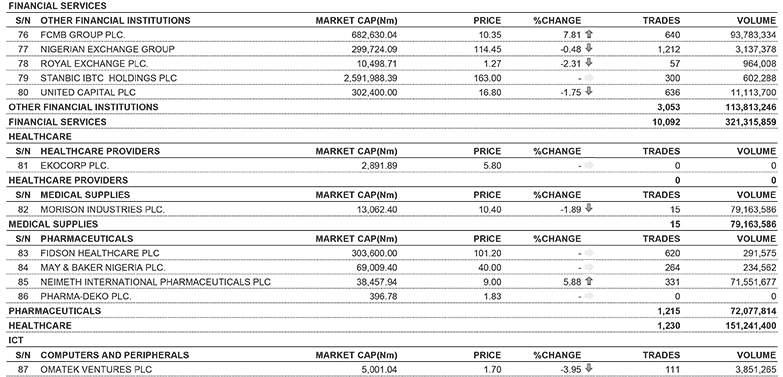
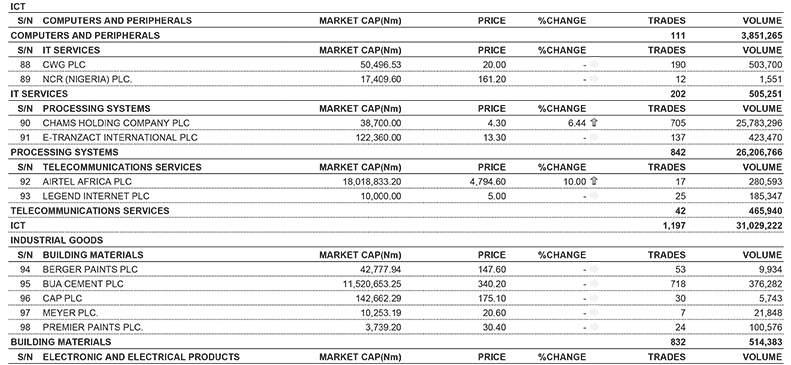
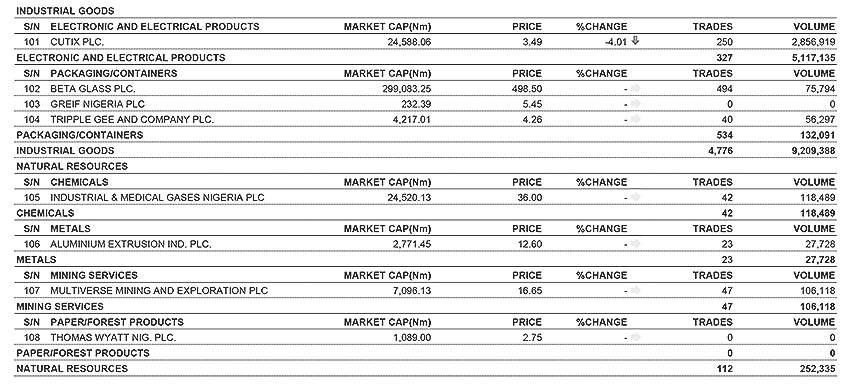
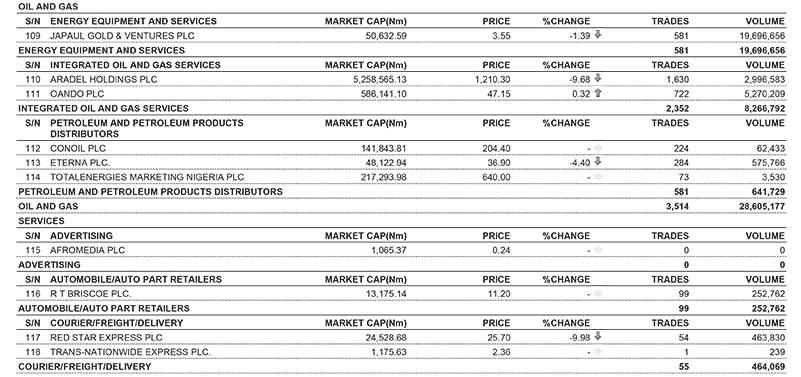
By Gboyega Akosile
The grand ballroom of Eko Hotels and Suites, Victoria Island, became a living canvas of Lagos’ story as Governor Babajide Sanwo-Olu unveiled Against All Odds, a photographic chronicle of his administration’s journey through some of the state’s defining moments in his first term and part of the second term. The atmosphere carried a symbolism that words could scarcely capture. White-cap chiefs and Lagos monarchs, resplendent in flowing white regalia, gave the evening the splendour of an Eyo procession, as though history, tradition and governance had converged to celebrate the enduring spirit of Africa’s largest city.
The occasion drew an impressive cross-section of Nigeria’s political, business and cultural leadership, once again reflecting Lagos’ place at the centre of the nation’s public life. Senate President Godswill Akpabio, represented by Deputy Senate President Barau Jibrin, joined Governors Hope Uzodinma of Imo State and Babagana Zulum of Borno State. Also in attendance were Deputy Speaker of the House of Representatives Benjamin Kalu; Deputy Governor of Lagos State, Dr. Obafemi Hamzat; Speaker of the Lagos State House of Assembly, Mudashiru Obasa, diplomats, captains of industry, traditional rulers and leading figures from across the country.
For Governor Sanwo-Olu, the evening was not simply about the unveiling of a book. It was about preserving the story of a city whose greatest strength lies in the resilience of its people.
“Books about leaders are usually written when the story has ended. This one is different,” he said. “The true subject is Lagos itself—the market woman rebuilding her store, the nurse who had not seen her family for weeks during the pandemic, the young person demanding to be heard, the engineer on a bridge project, the school child walking into a classroom that did not exist a year before.”
Authored by the Governor’s official photographer, Ademola Olaniran, Against All Odds traces some of the most defining chapters in Lagos’s recent history. Its pages revisit the uncertainty of the COVID-19 pandemic, the challenges of the EndSARS protests, the Abule-Ado explosion and tragic building collapses that tested the resolve of both government and citizens. They also celebrate milestones that have altered the state’s landscape, from the Blue and Red Rail Lines to the Lekki Deep Sea Port, alongside significant investments in housing, healthcare, education and food security.
That central message of resilience echoed through the goodwill messages delivered by guests.Representing Senate President Godswill Akpabio, Deputy Senate President Barau Jibrin described Against All Odds as far more than a collection of photographs. In his view, it is a visual record of governance under extraordinary circumstances and a lasting tribute to the determination of Lagos and its people.
He observed that while the photographs capture landmark projects and physical development, they also preserve the human stories behind them—stories of courage, sacrifice and hope. According to him, Governor Sanwo-Olu’s leadership had shown courage in moments of crisis and foresight when opportunities for transformation emerged.
“This book is more than photographs; it is a testimony of governance under pressure, of decisions taken at critical times, and of a city that continues to rise above challenges,” Barau said. He noted that future generations would find in its pages not merely a record of projects completed but a faithful account of how Lagos navigated one of the most demanding periods in its history.
Lagos State Deputy Governor, Dr Obafemi
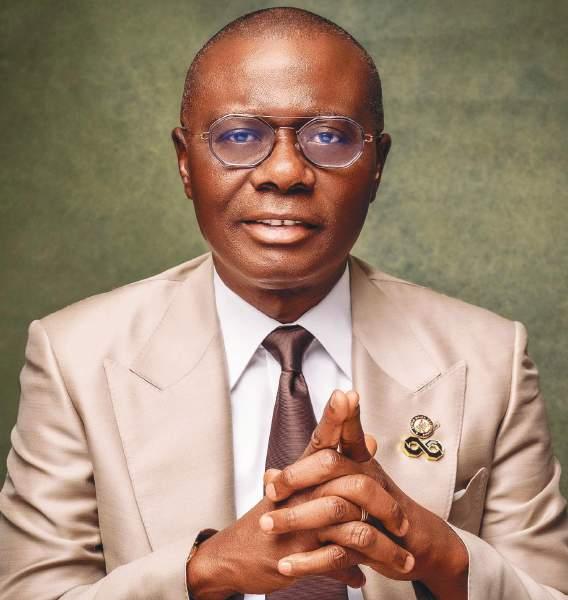
administration’s experience, reinforced that sentiment, reminding guests that photographs possess a unique ability to preserve history beyond words.
“History is not only written in words; it is also captured through the lens. This work reminds us that leadership is not merely about policies and projects but about the people whose lives are touched by those decisions,” he said.
Guests moved through an exhibition drawn from the book. The images required little explanation. Healthcare workers wrapped in protective equipment during the pandemic stood alongside young Nigerians demanding justice during the EndSARS protests. Engineers watched over the rise of new rail infrastructure, while communities scarred by tragedy reflected the resilience for which Lagos has become known.
One photograph, however, drew particular attention. It showed four Lagos governors jointly holding a model train, an image that captured the continuity of vision that has shaped the state’s development across successive administrations.
Reflecting on that journey, Sanwo-Olu said:
“Trial upon trial, grief upon grief, yet Lagos never stopped building. Lagos never stopped
moving forward.”
He paid tribute to President Bola Ahmed Tinubu and former Governors Babatunde Raji Fashola and Akinwunmi Ambode, describing them as architects of modern Lagos. Lasting progress, he said, depends on each administration building on the work of its predecessors rather than dismantling it.
“In this state, we do not tear down what our predecessors built; we build upon it. I inherited dreams, and I have laboured to hand over the foundations,” Governor Sanwo-Olu declared.
For Ademola Olaniran, whose camera has documented many of those defining moments, the publication represents the preservation of a shared history.
He said during his remarks that “some leaders are blessed with great stories, while others find great storytellers. This is a great story, and I believe it deserves to be preserved.”
The presence of Lagos’ traditional rulers lent another layer of meaning to the occasion. Their white regalia and quiet dignity reflected the enduring partnership between tradition and modern governance, reminding guests that while Lagos continues to evolve, it remains
firmly rooted in its heritage.
As photographs from the book illuminated giant screens across the ballroom, one message became unmistakably clear. Governance in Lagos is not an abstract exercise of policies and statistics. It is found in the determination of families rebuilding after loss, the dedication of healthcare workers, the ambition of young people and the daily enterprise of millions who keep the city moving.
Like many defining moments in Lagos’ public life, the unveiling of “Sanwo-Olu: Against All Odds” reached beyond ceremony. It brought together government, traditional institutions, business leaders, development partners and citizens in a collective reflection on where the state has been and where it is headed. By the close of the evening, the book had become more than a photographic record. It had emerged as Ademola “Demo” Olaniran and his team of photographers envisioned, a portrait of a city that has endured adversity, embraced change and continues to write its story with confidence and purpose.
•Akosile is Special Adviser, Media and Publicity, to Governor Babajide Sanwo-Olu
By Tanimu Yakubu
I.
Senator Mohammed Tahir Monguno has argued that the Executive’s failure to spend the budget as appropriated amounts to a breach of law suf- ficiently grave to justify impeachment. The concern is understandable. Citizens expect budgets to produce roads, hospitals, schools, security and other public services. Whenever appropriated funds appear not to translate into visible public benefits, suspicion naturally follows. In every democracy, Parliament is entitled to ask why money voted by the representatives of the people has not produced the results that those representatives intended. The concern rests on an incorrect assumption. The argument proceeds as though an Appropriation Act creates not merely the authority to spend but a legal obligation to spend every sum appropriated. Once that assumption is accepted, every departure from complete implementation appears to be evidence of executive disobedience. The Constitution, however, does not establish such a system. It never has.
An appropriation is one stage in the management of public finance. It is not the whole of public finance. Between legislative approval and the payment of public money stands an elaborate constitutional structure deliberately designed to ensure that public funds leave the Treasury only when every legal, financial and administrative condition has been satisfied. To collapse that entire structure into the single act of appropriation is to mistake the beginning of the process for its completion.
The issue goes to the structure of constitutional govern- ment. Legislatures authorise expenditure; they do not execute it. Treasuries manage cash; they do not legislate. Procurement authorities determine whether contracts have been lawfully awarded; they do not appropriate funds. Auditors determine whether expenditure complied with the law; they do not decide whether expenditure should occur. Every institution performs a separate constitutional function because public money belongs to the people and not to any one arm of government.
II. WHAT AN APPROPRIATION REALLY IS
Much of the present controversy arises because the word appropriation has gradually acquired a meaning that the Constitution does not give it. In ordinary conversation, people often speak as though Parliament, by appropriating money, has already caused that money to be spent. The law recognises no such equivalence. An appropriation is neither expenditure nor payment. It is the legal authority to incur expenditure if, and only if, every other constitutional and statutory condition governing the use of public funds has also been satisfied.
This allocation of responsibilities is deliberate and is not peculiar to Nigeria. It is one of the oldest principles of public finance. Legislatures determine the purposes for which public money may lawfully be used. They do not administer the Treasury, negotiate contracts, verify claims or release cash. Those responsibilities belong to other institutions established for precisely that purpose. The arrangement is deliberate: it protects both the public purse and the constitutional balance among the institutions of government.
It does not answer the equally important questions that follow. Until those questions are answered, the authority created by appropriation remains only that - authority. It does not become expenditure merely because Parliament hasTospoken. argue otherwise is to suggest that the Executive performs nothing more than a clerical function after the passage of the budget. Yet the Constitution assigns it a far more demanding responsibility. It must reconcile legislative intention with fiscal reality. It must decide not whether Parliament acted lawfully in making an appropriation, but whether every condition required for lawful expenditure has been fulfilled. That responsibility requires judgement, not mechanical obedience.
The ordinary affairs of government illustrate the principle. Parliament may appropriate funds for the construction of a highway. The appropriation confirms that the project is a lawful object of public expenditure. It does not follow that construction must begin the following morning. Surveys may still be incomplete. Designs may require revision. Environmental approvals may still be pending. Procurement may not yet have been concluded. Compensation for acquired land may remain unresolved. In some cases, the expected revenue upon which the budget was prepared may itself not have been realised. None of these circumstances nullifies the appropriation. They merely postpone the point at which expenditure may lawfully occur.
The principle applies across government. A hospital cannot lawfully purchase equipment before the procurement process has been completed. A ministry cannot recruit staff until the necessary establishment approvals have been obtained. A contractor cannot be paid before the
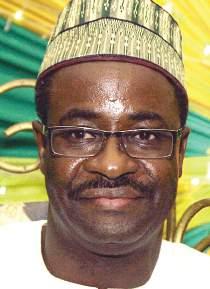
work performed has been certified in accordance with the contract. In each case, the appropriation remains valid, but the law insists that public money shall not move until the conditions governing its movement have been satisfied. These controls give administrative effect to constitutional safeguards. Every additional approval, every financial control and every independent verification exists because experience has taught governments that public funds are most vulnerable when authority to spend is mistaken for a licence to spend.
The consequences extend beyond accounting. If every appropriation created an immediate legal duty to spend, the Executive would become powerless to respond to falling revenues, unforeseen emergencies, procurement failures or legal impediments affecting particular projects. Fiscal discipline would yield to fiscal automatism. Govern- ment would cease to manage public finance and would instead become its passive instrument. No constitutional democracy has adopted such a model because none could sustain it for long.
The answer lies in the nature of public power itself. Every constitutional system proceeds upon the assumption that public money is most secure when no single institution possesses both the authority to approve expenditure and the power to execute it. The Legislature determines what may lawfully be financed. The Executive determines whether the legal and administrative conditions for expenditure have been fulfilled. The Treasury manages the availability of cash. Procurement authorities safeguard the integrity of contracting. Auditors examine whether public funds were ultimately applied in accordance with law. None of these institutions duplicates the work of another. Each performs a separate constitutional duty, and together they form a continuous chain of accountability extending from appropriation to audit.
This arrangement does not exist merely for administrative convenience. It reflects a principle that has guided durable systems of government for centuries. In the Muqaddimah, Ibn Khaldun observed that the strength of a state depends not merely upon the authority it possesses but upon the institutions through which that authority is exercised. Governments decline when they confuse power with capacity, or when they assume that a command is sufficient to produce its own execution. Enduring states recognise that authority must always be supported by organisation, discipline, competent administration and the resources necessary to sustain public obligations.
Modern public finance embodies that insight. Parlia- ment may authorise expenditure, but neither legislation nor political will can manufacture revenue, complete procurement, certify engineering works or satisfy statutory conditions. Those responsibilities belong to institutions established for those purposes. The Constitution therefore protects the public purse by ensuring that expenditure is not the consequence of a single decision but the product of successive and independent acts of verification.
The budget process illustrates this principle with particular
clarity. Once an Appropriation Act comes into force, the work of implementation has only begun. Revenue must first be realised or financing lawfully secured. Cash must then be managed so that obligations already imposed by law - such as salaries, pensions and debt service - are honoured as they fall due. Ministries and agencies must complete procurement in accordance with statutory require- ments. Contracts must be awarded lawfully, executed properly, inspected independently and certified before payment becomes due. At every stage, different officers discharge different legal responsibilities, each accountable for a separate part of the process.
The allocation of responsibility is often dismissed as bureaucracy. It is, in fact, one of the principal safeguards against arbitrariness. Every additional layer of review exists because experience has repeatedly demonstrated that public funds are most vulnerable where discretion is concentrated in too few hands. What appears to be administrative complexity is frequently the constitutional expression of prudence.
The history of public administration offers abundant examples of governments that regarded legislative approval as sufficient justification for immediate expenditure. Such systems rarely remained accountable for long. Procurement became an afterthought, financial discipline weakened, contractual obligations multiplied without corresponding resources and audit ceased to be an instrument of accountability because the essential decisions had already become irreversible. Constitutional democracies therefore insist that expenditure passes through successive institutional checkpoints before public money leaves the Treasury. Budget implementation cannot be measured solely by comparing appropriation with disbursement. Between those two figures lies an entire constitutional process. Each institution must perform its assigned duty before the next may lawfully proceed. If any legal requirement remains unsatisfied, expenditure is deferred, not because Parliament’s authority has been ignored, but because Parliament itself enacted a constitutional order that requires those conditions to be met.
The contrary proposition would produce consequences that no constitutional democracy could tolerate. If ap- propriation alone created an immediate obligation to spend, procurement law would become largely redundant. Treasury management would cease to serve any practi- cal purpose. Auditors would be left merely to record expenditure after the event rather than determine whether it occurred lawfully. Institutions established to protect public finance would become spectators to decisions already made elsewhere. That is precisely the concentration of authority the Constitution seeks to prevent.
Seen in this light, incomplete expenditure is not, without more, evidence of constitutional failure. It may reveal weaknesses in revenue performance, deficiencies in project preparation, delays in procurement, cash constraints or administrative shortcomings. Each deserves explanation. Some may warrant criticism. Others may call for legislative intervention or executive reform. None, however, can be understood correctly unless the constitutional architecture within which the budget operates is first understood.
Public discussion often proceeds as though a national budget were a single account capable of being measured by a single percentage of implementation. It is not. A national budget is a collection of distinct legal obliga- tions, each serving a different constitutional purpose, each governed by different rules of execution and each responding differently to changes in revenue and liquidity.
To speak of the budget as though it were one homogeneous programme is to overlook the very structure upon which public finance is organised.
Every Appropriation Act consists, in substance, of four principal components: personnel expenditure, debt service, overhead expenditure and capital expenditure. Although they appear together within the same statute, they are not of equal legal character. They neither arise from the same obligations nor compete on equal terms for public resources. Their execution follows different legal imperatives because they exist to satisfy different publicPersonnelresponsibilities.expenditure represents the continuing obligation of government to those lawfully employed in its service. Salaries, pensions and other approved emoluments are not discretionary payments to be made when circumstances permit. They sustain the machinery through which government performs its constitutional functions and preserve rights already accrued under law. A government that persistently fails to meet those obligations does not merely inconvenience its employees; it impairs the capacity of the state itself.
Debt service occupies a comparable priority. It is not simply another item within the budget. It is the fulfilment of obligations previously undertaken in the name of the Republic. Every sovereign depends, to some degree, upon
the confidence of those who lend to it. That confidence rests not upon political assurances but upon the certainty that obligations lawfully incurred will be honoured when they mature. Where liquidity becomes constrained, debt service assumes a priority that extends beyond the immediate payment itself. Failure to discharge those obligations punctually weakens sovereign creditworthiness, raises the premium demanded by future lenders, increases the cost of borrowing across the economy and ultimately diminishes the fiscal capacity available for development. The obligation therefore protects not only today’s creditors but tomorrow’s taxpayers.
Overhead expenditure performs another indispensable function. Ministries cannot administer programmes, hospitals cannot treat patients, schools cannot educate students and security agencies cannot maintain operations if the ordinary costs of government cease to be financed. Electricity, communications, transport, maintenance, fuel and countless other recurrent expenses sustain the daily functioning of public institutions. They rarely attract public attention because they do not produce new physical assets. Yet without them, even completed capital projects would soon become inoperative.
These three components - personnel expenditure, debt service and overhead expenditure - ordinarily account for the greater proportion of public expenditure. Taken together, they may constitute about four-fifths, or approximately 80 per cent, of aggregate expenditure. They are not optional claims upon the Treasury. They are continuing obligations imposed by law, contract and the ordinary operation of government. Their implementation is therefore usually both more regular and more complete than that of capital expenditure because the state cannot suspend them without impairing its own existence. It follows that the assertion that the budget has not been implemented is incomplete unless it identifies which part of the budget is being examined. If personnel obligations have been substantially discharged, debt service honoured as it falls due and overheads released sufficiently to sustain government operations, it is plainly inaccurate to describe the entire budget as unimplemented merely because capital expenditure has progressed more slowly. Such a statement may capture public frustration, but it does not accurately describe fiscal performance. Capital expenditure differs fundamentally from the other components because it is developmental rather than continuing. It finances assets yet to be created rather than obligations already incurred. Roads, bridges, schools, hospitals, irrigation systems, military infrastructure and other public works require planning, engineering design, environmental assessment, procurement, contract administration, supervision, certification and, in many cases, phased execution extending over several financial years. Their implementation is therefore governed not merely by the availability of funds but by technical readiness and legal compliance at every stage. For this reason, capital expenditure is naturally more sensitive to fluctuations in revenue, procurement delays and project preparedness than any other component of the budget. A project that has not completed procurement cannot lawfully proceed merely because Parliament has appropriated funds. A project whose engineering design remains incomplete cannot responsibly be accelerated by releasing money before the work is ready to commence. The law requires preparation before payment because public funds are intended to produce public value rather than the appearance of activity.
It is therefore analytically unsound to judge the implementation of an entire national budget solely by the percentage of capital releases. Such a measure tells the observer something important about capital execution, but almost nothing about the performance of the budget as a whole. It overlooks the discharge of salaries, pensions, debt obligations and recurrent services, all of which are themselves constitutional expressions of budget implementation.
This is more than a statistical observation; it changes the character of the public debate. Once the budget is understood as a portfolio of different legal obligations rather than a single expenditure programme, the proper questions become more precise. Those questions illuminate the condition of the public finances. A single implementation percentage does not.
The misunderstanding becomes most apparent when attention turns to capital projects. Public discussion frequently assumes that implementation begins when money leaves the Treasury and ends when payment has been completed. The practice of project management recognises a very different sequence. Payment is not the beginning of implementation. More often, it is one of its concluding stages.
VISIT BY MANUFACTURERS ASSOCIATION OF NIGERIA TO HBM
Oil prices climbed above $90 a barrel yesterday after Saudi Arabia joined the United States in launching airstrikes against Iran-backed groups in Iraq, heightening fears of a wider conflict in the Middle East and raising fresh concerns over global crude supply.
Brent crude, Nigeria’s benchmark, surged more than 7 per cent to trade at $90.25 per barrel, while the US
West Texas Intermediate (WTI) crude rose 6.8 per cent to $84.65 per barrel, extending gains as tensions escalated across the region.
The latest rally followed coordinated US-Saudi military strikes against Iranian-backed militias in Iraq after Washington accused the groups of carrying out drone attacks on Saudi oil facilities. The attacks came shortly after the US military said it had thwarted what it described
as a surprise Iranian missile attack targeting American troops in the Middle East.
The market reaction intensified after US President Donald Trump vowed a forceful response to Tehran’s latest actions.
“We’ll be hitting them hard. They’re going to get a beating,” the US president told Fox News as he responded to the latest attacks on American forces.
The US military announced on Tuesday night that it intercepted Iran’s latest “surprise attack” by the Islamic Revolutionary Guard Corps after Trump’s meeting with Israeli Prime Minister Benjamin Netanyahu. CENTCOM later disclosed that the Saudi Arabian Armed Forces assisted the US military in a separate operation after Iran-aligned groups launched more than 30 drone attacks in the previous 72 hours. Saudi Arabia also
Segun James
As land ownership in the Ibeju-Lekki area of Lagos State continues to generate controversy, the state governor, Mr Babajide Sanwo-Olu, yesterday morning presented land allocation letters to 98 existing communities in Ito-Omu and adjoining areas in Sangotedo.
Sanwo-Olu described the exercise as a major step towards ensuring inclusive and orderly development in one of the state’s fastest-growing corridors.
Speaking at the presentation ceremony at the Ito-Omu Link Bridge in Sangotedo, the governor said the initiative was not merely about allocating land but also about recognising long-established com-
munities and securing their place in the future physical development of the state.
Sanwo-Olu said the state government was determined to ensure that rapid urban expansion did not displace indigenous communities but instead integrated them into its development agenda.
He said, “As this part of Lagos continues to grow, development must not leave these communities behind.
“They must be carried along as partners in the transformation taking place around them.”
According to him, the beneficiary communities have, for generations, contributed to the social, cultural, and economic development of the Epe axis through farming, fishing, trading, and other productive activities.
The governor disclosed that the exercise followed years of consultations that began in 2021 with traditional rulers, Baales, chiefs, community leaders, and residents. The process also involved detailed site inventory surveys, mapping and the preparation of a comprehensive development plan by the Lagos State New Towns Development Authority.
He explained that the allocation letters represented official recognition of the communities and would provide them with greater certainty as the government implements its long-term development plans for the area.
Sanwo-Olu stated that the development blueprint would ensure the orderly integration of residential, commercial, industrial, institutional,
CANAL+ Africa has paid tribute to the Chief Executive Officer of MultiChoice Group Rest of Africa, Fhulu Badugela, as she prepares to exit the company at the end of this month after more than two decades of service.
The company, in a statement on Tuesday, described Badugela as one of its most respected leaders, noting that she played a key role in the growth and transformation of the business across the African continent.
It said that as CEO of MultiChoice Group Rest of Africa, Badugela led
operations across several African markets, championed local talent, strengthened strategic partnerships and positioned the business for sustained growth.
Commenting on her exit, the Chief Executive Officer of CANAL+ Africa, David Mignot, commended her outstanding contributions to the company.
He said, “Fhulu has made an outstanding contribution during her two decades with the business. Her leadership, dedication and commitment have left a lasting mark on our company and on the
many colleagues and partners who have had the privilege of working alongside her.
“On behalf of everyone at CANAL+ Africa, I would like to thank Fhulu for everything she has done for our business. We wish her every success as she begins her next chapter.”
The company added that it remains committed to serving customers, investing in local content and innovation and delivering sustainable, profitable growth across Africa as it continues to build on the strengths of its combined business.
and recreational land uses while providing a framework for efficient infrastructure delivery, increased investment and an improved quality of life for residents.
Addressing traditional rulers and community leaders, Sanwo-Olu assured them that the government had taken time to understand their concerns, document existing settlements, and incorporate their interests into the planning process.
He stated, “The letters being presented today are more than official documents. They are recognition of your place in the future we are building here and an assurance that your communities will not be forgotten.”
joined US strikes on Iran-backed groups in Iraq on Wednesday, with at least 20 fighters reported killed.
The renewed hostilities have again placed the Strait of Hormuz, through which roughly one-fifth of the world’s seaborne oil passes, at the centre of market concerns. Iran rejected Oman’s proposal for joint regional management of the strategic waterway, while maintaining its determination to exert greater control over shipping through the strait.
China has meanwhile held direct talks with Yemen’s Houthi movement to secure safe passage for its tankers through the southern Red Sea after the Iran-aligned militia declared a blockade of Saudi ports. According to sources, Beijing was among the first countries to engage the Houthis directly over transit through the Bab el-Mandeb Strait.
The US also announced another round of Iran-related sanctions targeting eight tankers and 10 entities.
Announcing the measures, US Treasury Secretary Scott Bessent said: “With its economy in freefall and inflation in the triple digits, the regime is desperate for cash.
“The United States will not allow Iran to hold global commerce hostage or use international shipping to finance the IRGC’s terrorism, aggression, and repression.”
UBS analyst Giovanni Staunovo said renewed military action, coupled with Iran’s insistence on tightening its grip over shipping through the Strait of Hormuz while oil flows remain depressed, had fuelled the
latest jump in prices.
Analysts at DBS Bank said Brent crude was likely to remain highly volatile, forecasting prices would swing between $80 and $100 per barrel as the conflict evolves. Shipping activity through the Strait of Hormuz remained significantly below normal levels, reflecting persistent security concerns. Although vessel traffic through the Bab el-Mandeb Strait, an alternative route for Saudi oil exports to Asia, has shown modest improvement, analysts said disruptions in Hormuz continue to pose a much greater threat to global energy supplies.
Energy analyst Scott Shelton of TP ICAP said the Houthis had been less successful in disrupting shipping through the Bab el-Mandeb than Iran had been in restricting movements through the Strait of Hormuz. Further supporting prices, fresh data from the US Energy Information Administration (EIA) showed that American crude inventories fell by 7.2 million barrels last week to 404.5 million barrels, their lowest level since 2018. The decline, far exceeding analysts’ expectations for a 1.3 million-barrel draw, pointed to robust exports and resilient domestic demand.
The bullish sentiment was reinforced by expectations that OPEC+ could suspend planned oil production increases for three months beginning in October after completing the current schedule for restoring previously withheld output.
growth and shared prosperity.
“The era of abundant liquidity chasing returns regardless of risk is over. Capital increasingly flows to countries that offer credibility, transparency, policy consistency and strong institutions.
“Credibility is no longer only a central bank concern; it is a national economic asset.”
Cardoso stated that Africa could no longer rely principally on foreign investment, stressing that “We must mobilise more of our own resources—our pension funds, insurance assets, domestic savings and diaspora capital—and channel them into productive investment.”
Cardoso said difficult reforms undertaken over the past three years were beginning to restore confidence in the economy.
He stated that “At the central bank, we returned firmly to our core mandate. We unified the exchange rate, restored price discovery, ended monetary financing of fiscal deficits and rebuilt the foreign exchange market around transparency and settlement integrity.”
He added that consistency had begun producing measurable outcomes, noting that “Inflation has moderated from high levels,
external buffers have strengthened and the financial system is safer and better capitalised.”
The CBN governor stressed that stability remained indispensable for attracting investment and expanding regional trade, emphasising Nigeria’s strategic importance to the continent and noting that the former accounts for about 60 to 70 per cent of West Africa’s GDP and about one-quarter of Africa’s economy.
“If Nigeria gets it right, the benefits will extend far beyond our borders. That is why we simply cannot afford to get it wrong,” he argued.
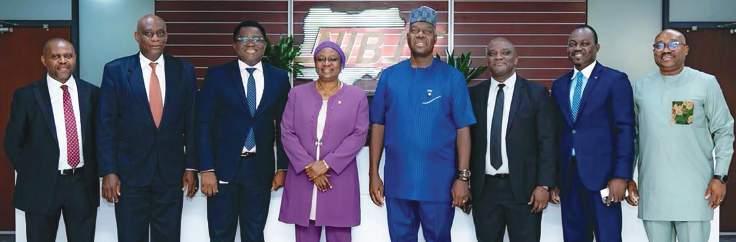
L-R: Mr. Lawson Sopakiriba, Assistant Director, Payments System Supervision Department (PaSSD) at the Central Bank of Nigeria (CBN); Mr. Peter Isimhanze, Deputy Director, PaSSD, CBN; Mr. Muyiwa Theophilus, Executive Director, Technology & Innovation, Nigeria Inter-Bank Settlement Bank (NIBSS) Plc; Dr. (Mrs.) Rakiya Opemi Yusuf, Director, PaSSD, CBN; Mr. Premier Oiwoh, Managing Director/ Chief Executive Officer, NIBSS; Mr. Ugwueze Chika, Assistant Director, PaSSD, CBN; Mr. Akinwunmi Omole, Assistant Director, PaSSD, CBN; Mr. Bolanle Enigbokan, Head, Enterprise Support Services, NIBSS during a courtesy visit of the Director of Payments System Supervision Department to NIBSS, Head Office, Lagos… Monday
Dike Onwuamaeze
Lagos Chamber of Commerce and Industry (LCCI) has stated that Nigeria needs regulatory coherence, consistent access to foreign exchange (FX), and accelerated implementation of Nigeria Start-up Act to regain its position as Africa’s leading digital investment destination.
That was declared yesterday by President of LCCI, Mr. Leye Kupoluyi, in his welcome address at the opening ceremony of the chamber’s “ICTEL Expo 2026”, with the theme, “Africa Next Tech Frontier: Building, Securing and Scaling Digital Process.”
Kupoluyi stated that Nigeria slipped from its position as Africa’s leading start-up-funding destination to the fourth place in 2025, even though the ICT sector contributed 10.07 per cent to Nigeria’s real GDP and closed April 2026 with 154.7 million active internet subscribers, 188 million mobile connections, and broadband penetration at 55.67 per cent, up from 48.81 per cent just a year earlier.
He added, “Nigeria’s digital economy is no longer an emerging story; it is now the fastest-growing engine of our non-oil economy, and the decisions we make this week will determine whether Africa’s next trillion dollars is built here (in Nigeria) or elsewhere.”
Kupoluyi acknowledged that
Nigeria’s connectivity gains were real, but pointed out that in 2025, “Nigeria slipped from Africa’s leading start-up-funding destination to fourth place, overtaken by Kenya ($879 million), South Africa ($848 million) and Egypt ($561 million).
“The lesson is unambiguous: infrastructure without capital, and capital without policy certainty, will not scale a single Nigerian tech champion into a continental one.”
According to him, “Nigeria must actively compete for capital, not merely wait for it.
“African tech funding rebounded 25 per cent year-on-year to $4.1 billion in 2025, and debt financing now 41 per cent of all capital deployed, up from just 17 per cent in 2019, showing investors increasingly reward proven revenue and governance over hype.
“Regulatory coherence, not regulatory volume, will determine who scales.
“Multiple, overlapping levies, inconsistent forex access for tech payments, and slow implementation of the Nigeria Startup Act have continued to raise the cost of scaling
relative to peer markets. Predictability is now as valuable to investors as incentives.”
Kupoluyi said the implications of these on business was that the cost of uncertainty was now higher than the cost of investment.
Therefore, he said, “Companies that once absorbed policy unpredictability as a Nigerian ‘tax’ are increasingly redirecting expansion capital to Nairobi, Cairo, and Johannesburg.
“Every month of regulatory ambiguity is a month of capital flight
we can no longer afford, particularly as the African Continental Free Trade Area digital trade protocol brings a 1.3-billion-person market within reach of any founder who can scale from a stable base.”
The president of LCCI emphasised that infrastructure must be treated as a public utility and not as a private luxury.
He stated that Nigeria’s broadband penetration was still short of the 70 per cent national target while fibre-to-the-home adoption was below the African average.
He identified closing the last-mile gap, especially in underserved states, as the single fastest lever available to expand the country’s digital contribution to the GDP above 10 per cent.
Kupoluyi said, “The LCCI’s call to action is firm: build together, or watch others scale faster.
“We ask the government to match our urgency with implementation speed, and we ask this room of investors, founders, and operators to reinvest conviction, not just capital, in Nigeria.
Kasim Sumaina in Abuja
Minister of Aviation and Aerospace Development, Festus Keyamo, on Tuesday officially inaugurated the newly remodelled and upgraded Muhammadu Adamu Dankabo Domestic Terminal at the Mallam Aminu Kano International Airport (MAKIA), Kano.
Reaffirming the federal government’s unwavering commitment
to transforming Nigeria’s aviation infrastructure under the Renewed Hope Agenda of President Bola Ahmed Tinubu, Keyamo stated that the event was another significant milestone in Nigeria’s ongoing drive to modernise aviation infrastructure across the country.
He disclosed that President Bola Tinubu had approved N46 billion for the resurfacing and reconstruction of the second runway at Mallam Aminu
Kano International Airport (MAKIA), Kano.
Speaking during the ceremony, Keyamo said the domestic terminal was named in honour of Mallam Muhammadu Adamu Dankabo, one of Kano State’s most illustrious sons and a renowned aviation pioneer, in recognition of his immense contributions to the growth and development of Nigeria’s aviation industry.
Keyamo stated, “Today, we are
Sunday Ehigiator
Healthcare professionals in Nigeria are seeking increased government funding and decentralised screening to support efforts by the World Health Organisation towards eliminating viral Hepatitis by 2030.
This was echoed at the Association of Medical Laboratory Scientists (AMLSCN) 2026 webinar to mark World Hepatitis Day themed “Elimination for Everyone, Everywhere, Right Now!”
The webinar which held on Tuesday, ran concurrently with a free hepatitis B and C screening
at Orile-Igamu, Lagos, where lab scientists provided free screening to members of the community.
According to professionals who spoke at the event, the asymptomatic nature of the disease pose great risk to the Nigerian population further exacerbated by disproportionate distribution of testing kits across healthcare facilities in the country.
In his remarks, a lecturer at the Department of Medical Laboratory Science, College of Medicine, University of Lagos, Oloruntoba Ayodele, explained that incorporating modern testing tools and cascading distribution of testing kits to secondary tertiary
institutions has the potential to expand access to testing, early diagnosis and early treatment intervention for patients.
Without early testing and treatment intervention, the larger population remain at risk.
“We need funding to ensure that the laboratories are well equipped with modern equipment and to ensure that new technologies are made available. We must move beyond the level of just serological testing. Molecular testing should be available in more centres. We should have more centres where further investigations can be carried out without delay.
According to Ayodele, presently, new technologies in testing can only be found in teaching hospitals. He therefore called on the federal government to expedite action towards making these tools available at secondary institution where a larger number of patients frequent.
“Some of these new technologies are only assessable in tertiary institutions. The burden of hepatitis virus in our society is huge and so if we can scale these testing tools and technologies down to secondary healthcare facilities, like the general hospitals, where more people actually patronise, it will be good,” he said.
gathered for the commissioning of the remodelled and upgraded Muhammadu Adamu Dankabo Domestic Terminal at the Mallam Aminu Kano International Airport.
“In aviation terms, we simply call it MAKIA.”
The minister, in a statement issued by his Special Adviser, Media, Tunde Moshood, emphasised the strategic importance of Kano to Nigeria’s economy and aviation sector, describing the city as the commercial nerve centre of northern Nigeria.
According to him, “The Mallam Aminu Kano International Airport remains the commercial heartbeat of Northern Nigeria. Kano, for us, remains the commercial heartbeat of Northern Nigeria. That is why we have earmarked Kano for major upgrades.”
He disclosed that Tinubu had approved several landmark projects aimed at repositioning the airport into one of Africa’s leading aviation hubs.
He stated, “The government of President Bola Ahmed Tinubu has earmarked Kano Airport for major upgrades because of the importance of this airport.
“That is why one of your great sons and one of our respected leaders, Dr. Abdullahi Umar Ganduje, was appointed by Mr. President to chair the Board of FAAN, because of the vision he has for aviation and for this great state.”
Highlighting further ongoing interventions, the minister announced that the president had approved N46 billion for the resurfacing and reconstruction of the airport’s second runway, a project expected to significantly enhance operational efficiency and position Kano among the world’s leading international airports. He further revealed that the upgrade of the airport’s Hajj Terminal had already commenced, with contractors currently on site.
Keyamo reiterated that the remodelling of the Muhammadu Adamu Dankabo Domestic Terminal was part of the federal government’s broader aviation modernisation agenda aimed at improving passenger comfort, operational efficiency, safety, and service delivery across Nigeria’s airports.
In her remarks, Managing Director/Chief Executive of FAAN, Mrs. Olubunmi Kuku, stated that the upgraded terminal reflected the authority’s commitment to providing world-class airport facilities while enhancing the travel experience for passengers using the airport.
Chairman of FAAN’s Governing Board, Dr. Abdullahi Ganduje, commended Tinubu and Keyamo for prioritising aviation development in Kano, stressing that the ongoing projects would further strengthen the state’s position as northern Nigeria’s foremost commercial and aviation hub.
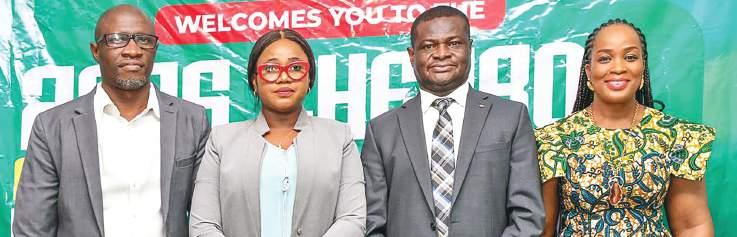
R-L: Joy Emeghara, Communications Team, Chevron Nigeria Limited; Victor Anyaegbudike, Manager, Communications, Chevron Nigeria Ltd.; Lady Grace Ike, Chairperson, NUJ FCT Council; and Leke Akinpelu, Communications, Chevron Nigeria Limited, during the 2026 Chevron Media Capacity Building for Energy Correspondents in Abuja on Tuesday
President Bola Tinubu yesterday reaffirmed the federal government’s commitment to preserving the unity
of Nigeria, saying the values of patriotism and discipline exemplified by the country’s first military Head of State, Gen. Umunnakwe Aguiyi-Ironsi, remain the bedrock
of nation building. Represented by the Minister of Defence, Gen. Christopher Musa, at the 60th memorial celebration of the late general in Umuahia, Tinubu said
the government remains resolute in its commitment to preserving the unity of Nigeria and strengthening the institutions that safeguard Nigeria’s democracy, security, and
Former Deputy Governor of the Central Bank of Nigeria (CBN), Prof. Kingsley Moghalu, has warned that the world is entering an era of unprecedented uncertainty marked by geopolitical rivalry, technological disruption, economic nationalism, and climate pressures, urging governments and business leaders to rethink their strategies for survival.
Speaking at a webinar hosted by the Stratus Global Alliance on the theme:
“Understanding the World We Live In,” Moghalu said the post-World War II international order has fundamentally changed, creating heightened risks for countries, investors, and businesses.
According to him, the world has become more interconnected than ever through trade, technology, finance and communication, yet it is also more divided than at any time in recent history.
“We live in a moment of profound paradox. Never has the world been so interconnected through trade, technology, capital flows and instant communication. Yet never has the world felt more fractured,” he said.
The political economist identified four major forces reshaping the global landscape: geopolitical shifts, technological disruption, economic recalibration, and demographic and climate change.
He noted that the return of multipolar global politics, driven largely by strategic competition between the United States and China, has significantly altered international relations.
“We’ve moved away from when America was the sole superpower after the Cold War. Today, we’re back to multipolarity, and this has created massively heightened geopolitical
risks for countries and businesses,” he stated.
Moghalu argued that President Donald Trump’s “America First” doctrine has accelerated the decline of multilateralism, weakened international institutions, and transformed the global trading system through tariffs and protectionist policies.
He explained that global conflicts, particularly the wars involving Ukraine, Russia, Iran, Israel and the United States, have shifted warfare closer to the centre of global power, with direct implications for inflation, supply chains and investment decisions worldwide.
On technology, Moghalu described artificial intelligence as both an opportunity and a disruptive force capable of reshaping labour markets and eliminating entire professions.
“Artificial intelligence is driving fundamental shifts in the job market. Many job losses now are due to AI doing functions people used to do. It also raises difficult questions around ethics, governance and even warfare.”
While acknowledging the fears surrounding AI, he advised organisations and workers to prepare strategically rather than panic.
He further warned that geopolitical events are increasingly becoming drivers of inflation, citing disruptions caused by conflicts in the Middle East and Eastern Europe.
“Geopolitics has become a direct pipeline transmitting inflation across countries. What happens in the Strait of Hormuz or Ukraine now affects the prices we all pay.”
The former presidential candidate also highlighted demographic trends as a critical but often overlooked factor in future economic growth. According to him, ageing populations across Europe, North America and Asia
contrast sharply with Africa’s rapidly expanding youthful population.
He projected that by 2050, Africa would account for one billion workingage people and nearly 40 per cent of the global workforce.
“If this workforce is properly skilled, Africa becomes the world’s next major market. But if not, it becomes a major risk. Governments and businesses must invest now in productivity and human capital,” he stressed.
Moghalu argued that many assumptions underpinning globalisation have proved unrealistic, saying sovereignty and national interests have returned as dominant forces in international affairs.
“Globalisation is real, but it is overrated. Sovereignty is back, and back with full force,” he declared.
Drawing from theories of international relations, he maintained that the world is witnessing a retreat from aspirations of a global community towards a system where states increasingly pursue national interests over collective action.
He questioned the notion of a universally rules-based international order, arguing that international law has often been applied selectively depending on the global balance of power.
“There was never a truly universal rules-based international order. Power has always been central to international relations.”
For business leaders, Moghalu recommended treating geopolitical risk as a core governance issue rather than an external factor.
development.
The President also used the occasion to appeal to the Abia State Governor, Dr. Alex Otti, to construct a “Unity Square” in honour of both Aguiyi-Ironsi and his host, Lt. Col. Adekunle Fajuyi, who died with him during the July 1966 counter-coup.
Tinubu commended Otti for his style of governance, saying: “You have set a standard of governance and it is a challenge for all others to follow... I am looking forward to coming to celebrate during your inauguration for the second time.”
Also speaking, former President Olusegun Obasanjo said Nigeria must learn from the “black days” of her history to strengthen the unity of the country.
“Occasions like this should strengthen Nigeria’s unity, Nigeria’s common security, Nigeria’s shared prosperity, Nigeria’s togetherness for the greatness of our country,” he said.
Also, Otti who commended the Ironsi family for putting the event together, said he agreed with AguiyiIronsi’s vision of a united country.
“Personally, I believe that we are better off as a country connected, bringing resources from left, right, and centre than divided. So, I agree with Aguiyi Ironsi. I agree with Decree 34,” he said.
Former first lady, Patience Jonathan, said the memorial was to celebrate a hero who stood for and died for Nigeria’s unity. “We believe in what he died for: That Nigeria will be one, that Nigeria will not separate and we stand for one Nigeria,” she said.
Former Chief of Army Staff, Gen. Azubuike Ihejirika, described Ironsi as “a patriotic Nigerian,” adding: “I am happy that Nigeria has recognised a man who believed in Nigeria’s unity.”
Welcoming guests, a member of the Aguiyi-Ironsi family, John Aguiyi-Ironsi, said the gathering was to honour, not mourn, the late leader. “He died for Nigeria’s unity and I hope we will achieve that unity,” he said.
At an earlier wreath-laying ceremony at the Aguiyi-Ironsi Conference Centre, the late general’s daughter, Louisa Aguiyi-Ironsi, said the exercise “represents honour for a life devoted to national service... and proclaims unity as the enduring aspiration of our national journey.”
The event drew traditional rulers, religious leaders, members of the Armed Forces and dignitaries from across the country to commemorate 60 years since the death of the former head of state.
FG Inaugurates ADAPT Forum to Cut Trade Costs, Boost Digital Commerce Under
Kuni Tyessi in Abuja
The federal government, through the Nigeria African Continental Free Trade Area, AfCFTA, coordination office, formally inaugurated the Africa Digital Access and Public Infrastructure for Trade (ADAPT), country implementation forum/ subcommittee in a move to position Nigeria at the centre of Africa’s digital trade transformation.
Nigeria was selected, alongside Kenya and Morocco, as one of three pilot countries for the ADAPT framework, a flagship initiative of the AfCFTA secretariat in partnership with the Tony Blair Institute for Global Change.
The inauguration, which held
yesterday in Abuja, signals Nigeria’s shift from policy design to practical implementation of the AfCFTA protocol on digital trade.
Speaking at the event, National Coordinator/CEO of Nigeria Af- CFTA Coordination Office, Mrs. Patience Okala, said the forum reflected Nigeria’s resolve “not only to participate in Africa’s digital economy, but to actively shape its future”.
Okala attributed this recognition to Nigeria’s robust digital ecosystem and its leadership in digital trade, as Nigeria currently served as cochampion of the AfCFTA digital trade protocol.
She revealed that driving the implementation was Minister of
Industry, Trade and Investment, Dr. Jumoke Oduwole, who also serves as Chairperson of the AfCFTA Council of Ministers.
Okala said ADAPT was designed to integrate Africa’s trade ecosystem into a single, interoperable and trusted digital infrastructure that covered digital identity, customs, payments, logistics, documentation, data exchange and trade services.
According to the national coordinator, as Africa transitions from negotiating the AfCFTA to implementing it, competitiveness will increasingly depend not only on what countries produce but also on how efficiently they trade.
Okala explained, “For Nigeria, the forum will focus on delivering
practical outcomes that directly impact businesses. These include simplifying trade documentation and border processes, enabling trusted digital identities for traders, facilitating faster cross-border payments, improving logistics, and reducing the cost of doing business.
“A key priority is to expand market access for MSMEs, womenowned enterprises, youth-led businesses and innovators across the continent.”
The initiative, Okala stated, aligned directly with President Bola Tinubu’s Renewed Hope Agenda, particularly on economic diversification, digital transformation, trade expansion, investment promotion, innovation, and job creation.

L-R: Chief Executive Officer, Zone 4 Energy Limited, Lara Olaniran; Creative Director, HNK Interiors, Madey Soyibo; Senior Pastor, Trinity House, Pastor Ituah Ighodalo; Founder/Chief Executive Officer, HNK Interiors and HNK Design Centre, Funke Soyibo; and mother of the Founder, HNK Interiors, Stella Olurakinyo, at the grand opening of The HNK Interiors Manufactory, held in Lagos... recently
As APC women leader predicts 60% votes for Tinubu, says ‘No Vacancy’ in Aso Rock You’re the strongest pillar in APC, Yilwatda tells LG chairmen
The 685 local government chairmen elected on the platform of All Progressives Congress (APC) have vowed to mobilise grassroots support for President Bola Tinubu ahead of the 2027 elections.
National Women Leader of APC, Mrs. Mary Idele, on Wednesday, also expressed confidence that Tinubu would secure more than 60 per cent of the total votes cast in the 2027 general election, declaring that there is “no vacancy” in Aso Rock ahead of the presidential poll. Idele made the declaration in Akure, the Ondo State capital, during a sensitisation and empowerment programme on gender equality and women’s participation in governance organised under the Project 774 Explode Initiative.
Chairman of Progressive Local Government Chairmen’s Forum, Mustafa Alheri, spoke on Wednesday in Abuja when he led a delegation to the national secretariat of APC where they met with the National Working Committee (NWC).
He stated, “Since 1999, no party has had the number of governors that we have. We have 31 states. Likewise, we have 685 local government chairmen now under the leadership of our great chairman.
“The Progressive Local Government Chairmen for President Tinubu
is a strategic grassroots organisation comprising executive chairmen of local government councils under the APC in Nigeria.
“This organisation is dedicated to mobilising grassroots support for the policies, programmes, and the re-election of President Bola Ahmed Tinubu, while promoting the ideals and vision of the All Progressives Congress.”
Alheri, who is the chairman, Chanchaga local government council in Niger State stressed that the local government chairmen have remained the closest tier of government to the people, saying the leadership has always played a decisive role in election outcomes.
According to him, the success of APC in past elections, and especially in the forthcoming elections is going to be anchored on the strength of local government actors and community influencers who will translate national messages into local realities.
He said, “We are the closest to the grassroots. We have our structures down to the grassroots. We have the community’s trust. We have our administrative structures.”
Alheri assured that through their platform, they would make the reelection of Tinubu easy.
He revealed that the forum would soon be inaugurated at a later date to be announced.
However, contrary to the reality on ground, Alheri claimed that a lot of
to
local governments controlled by APC are enjoying full autonomy.
Alheri stated, “The president has been pursuing this for a very long time, and a lot of our states, especially the progressive states, are enjoying full autonomy.
“A lot of states are enjoying full autonomy, and this is a gradual process. It’s a transition process. It’s something that has been going on for a very long time.
“The APC, as a party, has taken it upon itself, through the leadership of the President, to ensure that we get complete and full autonomy.
“In Niger State, we are having all the support that we need from our governor, and most of the states under the Progressive Local Government leadership are also having very good support from their governors. We are transitioning jointly, slowly but surely, towards complete and full autonomy.”
Responding, APC National Chairman, Professor Nentawe Yilwatda, described the local government chairmen as the strongest pillar of the party as they moved towards the 2027 elections.
He stated, “You are nearer to the people than us. You are nearer to the people in the communities than we are.
I don’t know all the stakeholders in your local government, but you know them. I know most of the federal government appointees here, but I don’t know the grassroots workers. You know them.
“You know the local governments where we have issues. You can advise us on how we can win those local governments. I don’t know, but you know.
“So, you are one of the strongest pillars that we have as we move towards the 2027 election. You are so critical to us that I know how important you will be.
“We are prepared for you. We will work with you. We will support you.
We will stand by you. We will ensure that we have a strong partnership that will give this party a strong victory in 2027.”
Meanwhile, the APC women leader, Mrs. Mary Idele, also applauded the First Lady, Senator Oluremi Tinubu, for the far-reaching impact of the Renewed Hope Initiative (RHI) in empowering women and vulnerable groups across the country.
According to her, APC remains committed to sustaining the reforms of the Tinubu administration and is already mobilising women nationwide to ensure the President’s re-election.
Adedayo Akinwale in Abuja
The Inspector General of Police, Olatunji Disu, has said that the police won’t be able to produce the embattled Director General of the Presidential Foreign Intervention Promotion Council (PFIPC), Adeyemi Adeniyi without a warrant from a competent court.
To this end, Disu yesterday in
Pentecostal Fellowship of Nigeria (PFN) has rejected the proposed Federal Road Safety Corps (Amendment) Bill, 2026, which seeks to prohibit preaching and hawking in commercial buses, describing the legislation as an infringement on citizens’ constitutional rights to freedom of expression and religion.
The Christian body also stated that the proposed ban unfairly targeted Christians, who were widely known to evangelise in public buses.
PFN urged President Bola
Tinubu to decline assent to the bill and return it for broader public consultation.
Speaking at a press conference after the PFN National Executive Meeting in Lagos, the Fellowship’s National Secretary, Bishop David Bakare, said although the organisation supported efforts by the Federal Road Safety Corps (FRSC) to improve road safety, the amendment bill appeared to single out Christians. Bakare said, “We do appreciate the work of the Federal Road Safety Corps in ensuring that our roads
are safe and secure and the need to strengthen road safety procedures to ensure that travel on our roads are safe, both for the public and for all road users.”
He questioned the rationale behind criminalising preaching in commercial vehicles, insisting that the legislation gives the impression of being directed at Christians.
he stated, “We are of the opinion that the bill gives us an impression that it is targeted against Christians because, come to think of it, who does preaching in vehicles, in buses? They’re Christians.”
Abuja told the House of Representatives Ad-hoc Committee investigating the controversial inclusion of the PFIPC in the 2026 Appropriation Act to obtain a reproduction warrant from a competent court before the police could produce him.
The police team led by Deputy Commissioner of Police (DCP), Olufemi Akinola, and Assistant Commissioner of Police (ACP), Bashir Abdullahi made the request during the resumed investigative hearing chaired by Hon. Yusuf Gagdi.
Akinola stated: “The IGP is committed to cooperating with the committee in the discharge of the mandate that the committee has. The IGP has been mandated to produce the suspect, Prince Adeyemi Mat-
thew, before the committee members today (Wednesday), but that is not being done due to the fact that he is at present being held in custody based on a subsisting warrant for his detention.
“And as it is, in order for us to continue to relate well, we are of the opinion that the honourable committee chairman and members could seek and avail us of a court reproduction warrant for us to be able to produce him.”
Gagdi, while responding to the police request clarified that the police had not refused to honour the committee’s invitation but were constrained by the existing court order.
According to him, the police did not refuse to produce him,
stressing that the challenge is that he is presently in custody based on a subsisting warrant. “We will continue to work within the law while carrying out this assignment,” he stated.
Also, the Head of the Civil Service of the Federation, Mrs. Didi Walson-Jack admitted that her office committed administrative errors in processing approvals connected to the purported Presidential Economic Advisory Council (PEAC). She acknowledged that due diligence ought to have been carried out before recognising it as an ad hoc office.
Walson-Jack described the incident as unprecedented in the history of the Office of the Head of the Civil Service of the Federation.
Onyebuchi Ezigbo in Abuja
The Catholic Archdiocese of Benin City has officially announced the funeral rites for the late Archbishop Augustine Obiora Akubeze, scheduling his burial for Thursday, August 13, 2026.
According to a circular dated July 28, 2026, issued by the Chancellor of the Archdiocese, Very Rev. Fr.
Michael Oyanoafoh, on the directive of the Apostolic Administrator, Most Rev. Donatus A. Ogun, OSA, the funeral arrangements will commence with a Vigil Mass.
According to the schedule of events, the circular said the Vigil Mass will hold on Wednesday, August 12, 2026, at Holy Cross Cathedral, Mission Road, Benin City, beginning at 5:00 PM, while
Funeral Mass will take place on Thursday, August 13, 2026, at St. Paul Catholic Church, Airport Road, Benin City, starting at 10:00 AM.
The Chancellor urged the Catholic faithful and the general public to continue to pray for the eternal repose of the late Archbishop’s soul as the archdiocese prepares for the funeral ceremonies.

PAINT YOUR DREAM CHALLENGE
L-R: Customer Experience Manager, CAP Plc, Mr. Eddy Ayikimi; Regional Sales Manager, CAP Plc, Lagos 2, Funmilayo Adeoti; Regional Sales Manager, CAP Plc, Lagos 1, Ijeoma BarnabyNsikak; Company Secretary and General Counsel, Mr. Olutola Bella; Brand Manager, Sandtex, CAP Plc, Mr. Ekom Akpan; and Senior Brand Manager, Dulux, CAP Plc, Mr. Habib Lawal, during the Sandtex Paint Your Dream Challenge Grand Finale held in Lagos... recently
Our Top officials under attack, state govt cries out APC, accord supporters disrupt INEC event, commission deploys 4,427 BVAS
Police: Official arrested for allegedly harbouring suspected criminal Tinubu congratulates Uzodimma as chair APC national campaign c’ttee SWAGA launches campaign, seeks support for Tinubu, Oyebamiji
A few weeks to the August 15 governorship election in Osun State, the Imole Campaign Council has accused the Police of arresting no fewer than 86 supporters of Governor Ademola Adeleke’s political camp.
These, it claimed, included a traditional chief, an Accord Party candidate for the Osun State House of Assembly, from Ilesa, popularly known as Alabama and other political associates.
The group alleged that the arrests were aimed at intimidating voters and undermining the credibility of the poll.
Speaking to journalists after leading a delegation to the IRT Office in Abuja, where a large number of the detainees were being kept, the spokesperson for the Imole Campaign Council and legal practitioner, Pelumi Olajengbesi, described the arrests as unlawful, politically motivated and a dangerous threat to democratic governance.
Olajengbesi alleged that the traditional chief was arrested around 1:30am during a midnight raid on his residence before being transferred from Osogbo to Abuja, while the Assembly candidate was also detained without any formal charge.
He further claimed that some of the detainees had been moved to correctional facilities in Keffi and Kuje despite not being arraigned before any court. “In the last two or three days, over 86 members of our political family have been arrested for no reason. They were brought by road from Osun State to Abuja and are being detained without any explanation.
“We have met with the leadership of the police, but they cannot provide any reason for these arrests. There is no petition against these people. They have committed no offence. There is no charge against them, no allegation whatsoever,” he said.
The lawyer alleged that the police had become partisan in the build-up to the election, accusing the Osun State Commissioner of Police of orchestrating indiscriminate arrests of perceived supporters of Governor Adeleke.
“The Commissioner of Police in Osun State wakes up every morning, moves from town to town arresting people simply because they are believed
to be members of our political family or supporters of Governor Ademola Adeleke.
“A chief in Esa-Oke, Chief Orija, was arrested at about 1:30 in the morning. His family was denied access to him before he was taken to Abuja. An Accord Party candidate contesting for the Osun State House of Assembly in Ilesa has also been detained. His only offence is that he is mobilising support ahead of the election,” he alleged.
The Osun state government, yesterday, raised the alarm over systematic invasion, attacks and bursting of homes of top officials of the state government by the state police command without proper search warrant.
It alleged that the latest was the invasion of the house of the Secretary to the State Government (SSG).
Speaking on the development, Commissioner for Information and Public Enlightenment, Kolapo Alimi, said the SSG’s residence was raided by a combined team of police officers led by the Deputy Commissioner for Operations with family members of the SSG taken to unknown destinations.
He said the gestapo operations on the SSG residence followed a similar raid and arrest at the residences of about six commissioners and other top functionaries of the government.
According to him, as at the time the SSG house was invaded, his ward officials were holding meetings within the compound while the SSG himself was attending the stakeholders’ forum organised by the electoral commission.
He contended that the police had yesterday raided the residence of the Commissioner for Energy at Ikire, ransacking the building and destroying several properties while five other commissioners had reported their houses being shadowed and others bursted even when nothing illegal happened in their abodes.
The information commissioner stressed that “Following several raids and arrests, reports at the disposal of the government indicated that several Accord members are languishing in CID cells at the State Command without being granted bail.
“These raids on the SSG and our commissioners are an aggravated assault on the government and people of Osun state. This campaign of repression constitutes grave danger to democracy. It is a reprehensible unprofessional conduct by the police in support of the state APC.
“By openly launching attacks on Osun government officials, the state police command has again confirmed its partiality, its partisanship and its becoming a direct tool in the hands of Osun APC. This is a law enforcement agency becoming lawless and acting against the spirit and letters of the constitution.
“These grave violations of the constitution and basic rights of the government and people of Osun state come as the national chairman of INEC is meeting stakeholders. The police have become a major threat to the conduct of free and fair elections in Osun state.
“We again call the attention of our traditional rulers, the Nigeria Police Service, the Inspector General of Police, the National Security Adviser and President Bola Ahmed Tinubu to this escalation of targeted violence against top government officials and Accord members in Osun state. This must be stopped before it escalates into a general breakdown of law and order.
“Our governor has consistently tasked the populace to calm down and not to take law into their own hands. The situation is reaching a boiling point. We must save our democracy from these lawless elements within the Nigerian police”, the statement noted.
The Commissioner for Police in Osun State, Ibrahim Gotan, has maintained that the Nigeria Police Force, as the lead agency in election security, is fully prepared to discharge its constitutional responsibility with professionalism, impartiality, and respect for the rule of law.
The police boss who stated this at the Osun State Governorship Election Stakeholders’ Forum organised by the Chairman Independent National Electoral Commission (INEC) Prof. Joash Amupitan, in Osogbo, noted that the meeting reflected a collective
commitment to ensuring that the governorship election is conducted in a peaceful, transparent, credible, and secure atmosphere.
He said, “In collaboration with INEC and other security agencies, we have developed comprehensive operational strategies to guarantee the safety of voters, election officials, observers, journalists, and electoral materials before, during, and after the election.”
“Our key strategies include: Comprehensive threat assessment and intelligence gathering across all local government areas.”
Also, reacting to the alleged intimidation and arrest of opposition members in the state, the police image maker, Biodun Ojelabi, said, “It is true, but based on intelligence the house of SSG was raided by police operatives and six persons were arrested with exhibits.
He claimed that four of those arrested had been screened and were discovered not to be involved, and would be released. “That is all I can say for now,” Ojelabi posited.
Supporters of the All Progressives Congress (APC) and the Accord Party yesterday disrupted the Osun State Governorship Election Stakeholders’ Forum organised by the Chairman of INEC, Amupitan, in Osogbo, creating a tense atmosphere that nearly stalled proceedings and prompted heightened security vigilance.
The forum witnessed repeated chants, counter-chants and political songs by supporters of the two major parties, APC and Accord, forcing security operatives on red alert over fears of a possible breakdown of law and order.
However, the tension was brought under control after Amupitan appealed to party supporters to embrace peace, reminding them that elections are democratic contests and not wars.
According to him: “Election is not about violence. It is about giving the people the opportunity to freely
choose leaders who will advance the development of Osun State and Nigeria.”
Despite the charged atmosphere, the INEC Chairman assured political parties, candidates and the electorate that the Commission was fully prepared to conduct a credible, transparent and peaceful governorship election on August 15, 2026.
Speaking at the stakeholders’ forum, Amupitan unveiled a comprehensive package of operational, technological and security measures designed to guarantee the credibility of the election, including the deployment of 4,427 Bimodal Voter Accreditation System (BVAS) machines, extension of Permanent Voter Card (PVC) collection, enhanced election security and stronger collaboration with anti-corruption agencies to combat vote-buying. He described the forum as an important accountability platform through which INEC demonstrated its operational readiness and reaffirms its neutrality before political parties and the electorate.
CBN: FOREIGN EXCHANGE INFLOWS ROSE 13.8% TO RECORD
and infrastructure improvements.”
The report said, “A breakdown of volume of transactions by channels showed that ATM recorded the highest rise of 61.94 per cent to 1,655.51 million. This was followed by 20.89 per cent rise in USSD to 669.55 million, and 19.78 per cent increase in PoS use to 15,661.61 million. Decreases were, however, recorded in the volume of transactions through the mobile app, internet/web, and direct debits.”
On payment security, the report showed that electronic fraud losses declined sharply to N25.85 billion in 2025, representing a 50.5 per cent reduction from N52.26 billion recorded in the previous year.
It stated, “Significant losses were incurred by PSPs with weak fraud monitoring systems. Digital payment fraud in Nigeria stood at N25.85 billion in 2025. Though this was lower than N52.26 billion in the preceding year, it represented a substantial loss for PSPs. The lower losses in 2025 reflected improvements
in monitoring, BVN-NIN integration, and tighter controls.”
CBN said, “The improvements coincided with continued growth in the Bank Verification Number (BVN) ecosystem. “BVN enrolment increased to 67.82 million, from 64.40 million in 2024, while the number of bank accounts linked to BVN rose sharply to 368.92 million, compared with 297.29 million a year earlier.”
The report said active bank accounts increased to 339.26 million from 311.60 million. The number of fraud-related BVNs placed on the watch-list also increased to 13,117, from 9,476 in 2024, which the apex bank said reflected improvements in fraud monitoring and resolution.
BVNs classified as belonging to deceased persons also rose to 28,754, from 21,118 recorded in the preceding year.
The report showed that crossborder payments through the Pan-African Payment and Settlement System (PAPSS) expanded significantly during the year.
According to the CBN, the value of transactions settled on PAPSS by Nigerian participants increased almost fivefold to $143.40 million, from $29.23 million in 2024, while transaction volume rose to 44,088 from 17,808. It stated, “The Pan-African Payment and Settlement System (PAPSS) continued to streamline cross-border transactions across African markets by reducing the cost and complexity of foreign-exchange conversions. It eased the pressure on current accounts, reduced the demand for foreign exchange liquidity, and supported financial inclusion and economic growth through intra- African trade.
“The number of Nigerian banks participating in PAPSS was 20, relative to 22 in 2024. The value and volume of transactions settled on PAPSS for Nigerian participants increased significantly to $143.40 million and 44,088 transactions, respectively, compared with $29.23 million and 17,808 transactions in 2024.”
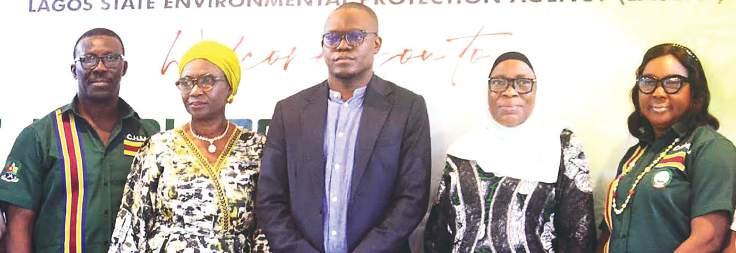
L-R: Director, Chemical Hazardous Material Management, Lagos State Environmental Protection Agency (LASEPA), Mr. Lewis Gregory; Representative of the Special Adviser on Environment to the Governor of Lagos State, Mrs. Mosurat Banire; General Manager, LASEPA, Dr. Babatunde Ajayi; Director, Research and Development on Environment, LASEPA, Mrs. Solanke Abdulwarees; and Director, Accounts and Finance, LASEPA, Mrs. Fatimoh Oyewale, during the Chemical Handlers Stakeholders Workshop 2026 with the theme, Strengthening Chemical Safety in Lagos State: From Risk Management to Self-Regulatory Compliance, held in Lagos on Wednesday
including the recent attack on Naridon village in Kaduna State that claimed at least 30 lives.
Describing Tinubu as Nigeria’s “Statement Maker-in-Chief,” ADC said the president had become “a commentator” on insecurity but “a combatant” against the opposition, accusing his administration of responding to attacks with condemnations rather than decisive action.
ADC said it was deeply concerned that Tinubu chose his meeting with members of Catholic Bishops’ Conference of Nigeria (CBCN) at the Presidential Villa, Abuja, to declare that he was prepared to “fight to the finish” politically, even as Nigerians continued to live under the shadow of terrorism, banditry and violent crime.
According to the ADC spokesman, ‘’This is our message: Mr President, the fight Nigerians elected you to lead is not against the opposition. It is against the terrorists, kidnappers, and armed criminals who continue to kill innocent citizens and destabilise communities across the country.’’
Abdullahi added, ‘’Only hours before the president’s remarks, at least 30 people were killed in a late-night attack on Naridon village in Kauru Local Government Area of Kaduna State. Homes were burnt. Families were displaced. Another community was left devastated by an attack that should never have happened.
‘’Yet, the president, whose primary duty is to protect and preserve Nigerian lives, has chosen, instead, to serve as Nigeria’s Statement Maker-in-Chief. After every attack comes another statement. After every massacre comes another condemnation.
‘’After every tragedy comes another expression of sympathy. Nigerians did not elect a Commander-in-Chief to become the nation’s chief issuer of condolence statements.”
ADC said, ‘’What is equally disturbing is that when it comes to insecurity, President Tinubu is a commentator. However, when it comes to the opposition, he is a combatant. Mr President should reserve decisive words and actions like ‘fight to the finish’ to defeat the terrorists, bandits, and kidnappers who continue to shed innocent Nigerian blood, not the opposition who want to save Nigerians from his misrule and failure.
‘’Instead of preparing for another political fight, President Tinubu should be leading the fight
against those who have turned communities across the country into killing fields and forced countless Nigerians from their homes. That is the battle the country expects him to win.”
The statement said, ‘’After more than three years in office, this administration cannot point to a security record that justifies political bravado.
“Given its catastrophic failure to secure lives and property, one would have expected the president to be reflecting on his record, not digging in politically.”
ADC said it believed elections were won by performance, not by declarations of political toughness.
Abdullahi added, ‘’The president’s real opponents are not the opposition. They are terrorism, banditry, kidnapping, and the growing insecurity that continues to claim innocent Nigerian lives.
“Those are the enemies he was elected to fight, and as things stand today, they remain undefeated.’’
We won’t leave its votes in INEC’s hands
Meanwhile, speaking in Ilorin yesterday, Abdullahi said in 2027, ADC would not trust its votes with INEC.
He stressed, “For ADC to win 2027 elections, the party would defend its votes wholeheartedly during the period.”
He told newsmen during an exercise to sensitise residents of the state on the presence of ADC in the state.
Abdullahi said, “With due respect, INEC still has people that are committed to doing the right thing but we are not going to run our election based on trust.
“We know what they are capable of doing, we trusted them in 2023 and we saw what happened, we are not going to trust them with our votes.
“That’s why we are saying whether in a free and fair election or not Tinubu will lose because we are going to protect our votes, we don’t trust them.”
On how they planned to protect their votes, Abdullahi said, “We are not going to tell you but that’s what we are going to do if we must win this election.
“When we were planning it, they thought that they would not be able to sensitise the people because we don’t have money unlike other parties who will rent a crowd.
“We were shocked that people walked from Adeita roundabout
in the heart of Ilorin to this place (Basin area of Ilorin) where the ADC state secretariat is located and that is unbelievable and this also shows that ADC is the alternative for Kwarans come 2027.”
Abdullahi urged Kwarans to join the new shift in the politics of the state to advance the socio-economic growth of the rural populace come 2027.
APM to FG: Your Claims of Economic Recovery Illusory
APM described claims by Tinubu at the Catholic Bishops’ Conference of Nigeria (CBCN) that the economic and security situation in the country had improved as illusory.
APM said such claims stood in stark contrast to the harsh realities on the ground.
In a statement by its National Publicity Secretary, Abubakar Yusuf, the opposition said the president made such false claims to spiritual leaders of the status of Catholic Bishops, at a time when millions of Nigerian families were sinking deeper into abject poverty and terrorists were having a field day killing, maiming, and kidnapping citizens across the country.
APM stated, ‘’It is unfortunate that instead of being candid about his failures and seeking help, President Tinubu is engaging in forum shopping to downplay and play cheap politics with the nation’s dire security and economic situation.
‘’Contrary to claims by President Tinubu that ‘the economy has recovered’ and that his administration has steered the nation from ‘bankruptcy and the dark tunnel of uncertainty,’ independent data from credible institutions show that the poverty rate has risen above 63 per cent in 2026.
‘’This indicates that over 140 million Nigerians have been plunged into poverty under the Tinubu administration.’’
Yusuf stated, ‘’How can President Tinubu make such claims when, in reality, his administration has mortgaged the future of our nation through reckless external borrowing, which has risen to a scary $51.86 billion under his misrule and is projected to hit $72.6 billion by 2027?
‘’How can President Tinubu think that any Nigerian, let alone clergymen who are in constant touch with the suffering masses, will believe his claims that the economy is improving, especially after he triggered an increase in fuel price to over N1,500 per litre; a development that set off an adverse
chain reaction that pushed transport fare, food prices, school fees, medical bills, house rents, electricity tariffs, and the prices of everyday goods and services far beyond the reach of ordinary citizens?’’
On security, APM invited Nigerians to note that the Tinubu administration had taken no decisive action beyond making promises and commitments in the fight against terrorism. Yusuf said, “Instead, some officials of the Tinubu administration and certain leaders of the ruling All Progressives Congress (APC) continue to make unguarded statements that embolden terrorists, including voicing antagonism against calls for an international probe into acts of terrorism in Nigeria.”
The APM spokesman stated, ‘’Since President Tinubu claims that Nigeria is better under his administration, the APM challenges him not to travel abroad for medical treatment, but rather to stay in the country for the remainder of his term and benefit from the ‘wonderful’ healthcare his administration has provided.’’
APM also challenged Tinubu to demonstrate his claimed achievements by leaving the comfort of the Presidential Villa to travel by road to any city of his choice in Nigeria or visit any local market, and attempt to tell Nigerians that their lives had improved over the last three years.
APM urged Tinubu’s handlers to stop exposing the president to public ridicule, as such forum shopping to peddle false performance claims will not save him from defeat in the 2027 general election.
The party stated, ‘’Indeed, such antics will not help President Tinubu against our presidential candidate, Oyo State Governor Engr. Seyi Makinde, who has demonstrated the requisite capacity, administrative skill, presence of mind and integrity to effectively lead our nation out of the woods where President Tinubu has plunged it.’’
Atiku yesterday described the revelation that the federal government exceeded its 2024 borrowing limit by N4.79 trillion, pushing fresh borrowing to N12.62 trillion, as another proof that Tinubu administration had lost control of the country’s finances.
In a statement issued by his Senior Special Assistant on Public Communication, Phrank Shaibu, Atiku
said Nigerians were promised that the painful removal of fuel subsidy, repeated tax hikes, and other harsh economic measures would reduce borrowing and restore fiscal stability.
Instead, the country was witnessing the exact opposite: endless borrowing, ballooning debt and unprecedented waste, the statement said.
According to the Budget Office, the federal government borrowed 61.2 per cent above what was approved by the National Assembly. Worse still, an additional N3.19 trillion classified as “budget support” was obtained, despite no such provision existing in the approved budget, with no clear disclosure of its source.
According to Atiku, ‘’This is not an isolated incident. It fits into a disturbing pattern that has become the defining signature of the Tinubu administration: duplication, opacity and reckless fiscal management.
‘’This is the same government that has been caught creating fake agencies, padding budgets with duplicated allocations, hiding trillions under the mysterious Service Wide Vote, allocating obscene sums for luxury SUVs while critical sectors gasp for survival, and now borrowing far beyond the limits approved by law.
‘’What exactly is all this borrowing funding? Certainly not education, where children continue to learn under deplorable conditions. Certainly not healthcare, where hospitals remain underfunded. Certainly not security, where innocent Nigerians are massacred while security agencies complain of inadequate funding.
‘’Certainly not infrastructure, because the roads remain death traps and electricity has become an expensive luxury.
“The tragedy is that Nigerians are being forced to service debts whose benefits they cannot see.”
Atiku said, ‘’Even more troubling is the contradiction that defines this administration. Only days ago, it emerged that high crude oil prices have handed the federal govern- ment an estimated N7.98 trillion oil windfall, yet instead of reducing borrowing, the government has continued to pile debt upon debt.
‘’A government earning windfalls while borrowing recklessly is not suffering from lack of revenue; it is suffering from lack of discipline.”
The former vice president added, ‘’The Budget Office report further reveals that debt servicing alone consumed N12.36 trillion, exceeding the budget by
more than 52 per cent. Nigeria is fast approaching the dangerous point where government exists primarily to borrow in order to repay previous borrowings.’’ He stated, ‘’This is not economic reform. It is fiscal vandalism. No responsible government mortgages the future of unborn generations while simultaneously presiding over duplicated budgets, wasteful expenditures, opaque financial practices and an ever-expanding bureaucracy. The question Nigerians must now ask is simple: where is all the money going?
‘’When revenues increase, borrowing also increases. When taxes increase, borrowing still increases. When subsidy is removed, borrowing accelerates. When budgets are padded and duplicated, borrowing becomes the answer once again.
“This is not governance. It is a debt addiction.’’
According to the former vice president, ‘’The ADC believes Nigeria deserves a government that lives within its means, eliminates waste, restores transparency, blocks leakages and channels public resources into productive investments rather than financing an endless cycle of borrowing.
‘’The Nigerian people cannot continue paying today’s taxes to service yesterday’s loans while tomorrow’s generations inherit only debt.’’
The media office of the presidential candidate of NDC, Peter Obi, yesterday, accused the federal government and its political allies of deliberately diverting public attention from Nigeria’s worsening economic and security challenges by amplifying trifling controversies.
In a statement signed by its spokesman, Idris Zekeri Jnr, the media office said the reactions trailing Obi’s recent television interview reflected a coordinated effort by the ruling establishment to shift national discourse away from the country’s deepening socio-economic crisis.
According to the statement, rather than responding to Obi’s proposals on governance reforms, economic recovery, and national development, political opponents had resorted to “weaponising minor slips” and promoting distractions aimed at avoiding accountability.
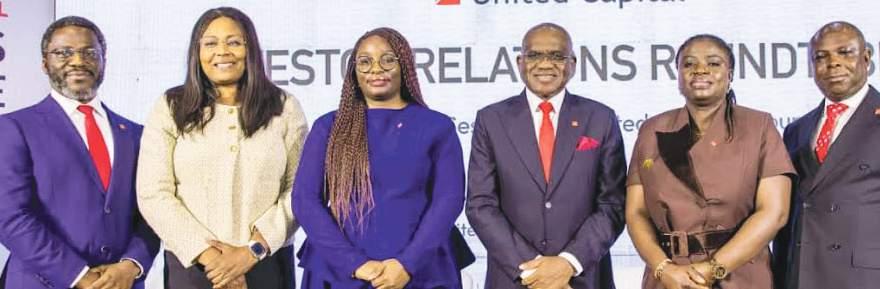
L-R: Managing Director, United Capital Investment Banking, Dr. Gbadebo Aderenle; Managing Director, United Capital Wealth Management, Adetola Fasuyi; Managing Director/Chief Executive Officer, United Capital Asset Management, Dr. Odiri Oginni; Group Chief Executive Officer, United Capital Plc, Peter Ashade; Managing Director/Chief Executive Officer, UCEE Microfinance Bank, Esther Adeola-Balogun, and Head, United Capital Consumer Finance, Adekunle Olugbile, at the maiden edition of the United Capital Investor Relations Roundtable held in Lagos…yesterday
Michael Olugbode in abuja
Nigeria has intensified its push for greater continental development support, calling on the African Union Development Agency-New Partnership for Africa’s Development (AUDANEPAD) to prioritise the country in the implementation of the African Demographic Dividend Programme and
other strategic initiatives aimed at expanding economic opportunities for young people and women.
The appeal came as the Minister of Foreign Affairs, Ambassador Bianca Odumegwu-Ojukwu, held talks with the Chief Executive Officer of AUDA-NEPAD, Ms. Nardos Bekele-Thomas, on the sidelines of the African Union Executive Council
Kemi Olaitan in Ibadan
A call has gone to government at all levels in the country to establish mini gym centres in communities across Nigeria as part of efforts to reduce the growing burden of hypertension and other lifestyle-related diseases.
A medical practitioner and public health advocate, Dr. Oluwatosin Ademola Ojo, made the call during a live health programme on The Africa Portal Radio/TV, where he spoke extensively on the importance of preventing high blood pressure through healthy living.
According to him, hypertension has become one of the leading health challenges affecting millions of Nigerians, stressing that greater investment in preventive healthcare would help reduce the number of people living with the condition.
He charged Nigerians, especially those with parents or relatives suffering from hypertension, to pay close attention to their health by adopting healthier lifestyles, urging the public to consume more fruits and vegetables, engage in regular physical exercise, limit alcohol consumption, and undergo routine medical check-ups.
The National Agency for Science and Engineering Infrastructure (NASENI), in partnership with AfriLabs and the Federal Ministry of Youth Development, has announced the top 15 finalists of the InnovateNaija Challenge, following a nationwide screening and assessment process that spanned all 36 states and the Federal Capital Territory (FCT).
The finalists were selected from a highly competitive field of grassroots innovators working in engineering, deep tech, agriculture, and renewable energy. Each brings a
homegrown solution to one of Nigeria’s most pressing structural challenges, and each now advances to the competition’s most critical phase, which is a live national pitch event.
Top on the list is Elizabeth Chioma Chiketarauba (Imo State), who scored 4,514.2. Her innovation is called Torquenova, which is an electric vehicle/main power generator, rechargeable via in-built solar-powered system or mains supply.
Caleb Iwuoha (Rivers State), followed with 4,126.2 and innovation -Acecore Powercell and Powercore App.
Meeting held in Addis Ababa, Ethiopia, where African leaders reviewed progress on the continent’s development agenda and preparations for
the upcoming African Union Summit.
Making Nigeria’s case, Odumegwu-Ojukwu stressed that with more than 70
per cent of the country’s population made up of young people, there was an urgent need for increased investment in programmes
that would harness the country’s demographic advantage and transform it into sustainable economic growth.
George Okoh inMakurdi
The Benue State Police Command yesterday confirmed the death of 13 people after an early Tuesday attack on Efeyi community in Ugboju, Otukpo Local Government Area of the state.
Confirming the incident, the state Police Public Relations Officer (PPRO), Edet Udeme,
said that the attack occurred in Efeyi community and that the police tactical teams and other security agencies had been deployed to the area to restore normalcy and prevent further attacks.
The Command also assured residents that efforts are underway to apprehend those responsible, adding that 13 bodies have been recovered
while several other residents sustained varying degrees of injuries during the attack.
The injured victims were receiving medical attention as at the time of this report, while residents and emergency responders continue the search and rescue efforts in the affected community. The incident has also forced many families to flee their homes for safety.
Local sources said the heavily armed attackers invaded the community before dawn, opening fire on residents and leaving behind trails of destruction.
Meanwhile, the state Governor, Hyacinth Alia, has expressed grief over the attack on the Efeyi community in Ugboju by suspected armed herders in the early hours of yesterday.
The United States(US) has announced that routine visa processing at its embassy in Abuja will be transferred to Lagos from August 1 as part of a broader restructuring of visa operations across Africa.
The move, unveiled by the US Department of State, will equally affect 24 other African cities, with routine immigrant and nonimmigrant visa services being consolidated into designated
regional processing hubs. This is aimed at strengthening national security, ensuring more uniform screening and vetting procedures, and improving operational efficiency.
According to the new arrangement, applicants seeking routine US visa services from Abuja will now process their applications through the US Consulate General in Lagos. The Department of
State said visa applicants in the affected locations must schedule appointments and pay visa application fees at their designated regional processing centres from August 1.
The new regional hubs include Lagos, Accra, Nairobi, Dakar, Johannesburg, Cape Town, Kigali, Kampala, Abidjan, Addis Ababa, Dar es Salaam, Lomé, Luanda, Kinshasa, Monrovia, Yaoundé, Praia, Djibouti, Malabo
and Port Louis. For instance, applicants in Benin Republic and Niger will now be processed in Lomé, Togo, while those in Mali will use the US mission in Dakar, Senegal.
According to the Department of State, the realignment follows a long-standing practice of consolidating visa operations into regional hubs and has already been implemented successfully in parts of Africa and Europe.
sunday Ehigiator
Samsung Electronics in partnership with Globacom has hosted another edition of its Masterclass series in Lagos, giving customers, business partners, and technology enthusiasts a first-hand experience of the newly launched Galaxy Z Fold 8 Ultra and Galaxy Z
Fold 8 foldable smartphones.
The interactive event, held at Gloworld, Opebi in Lagos, showcased the latest Galaxy AI capabilities, enhanced productivity tools, and multitasking features of Samsung’s newest foldable devices, while highlighting exclusive pre-order benefits available to customers nationwide.
The District Governor of Rotary International District 9111, Bukola Bakare, has congratulated the Senate Majority Leader, Senator Opeyemi Bamidele, on the occasion of his 63rd birthday.
In a congratulatory message, Bakare described
Powered by the Snapdragon 8 Elite Gen 5 for Galaxy processor, the smartphones offer faster performance, improved efficiency,y and advanced AIpowered functionality designed to enhance both productivity and entertainment.
Participants at the event expressed excitement over the initiative, commending Samsung and Globacom for
Senator Bamidele, who is Chairman of the South-West Caucus of the National Assembly, as an exceptional statesman, visionary leader, and dedicated public servant whose commitment to nation-building continues to inspire Nigerians.
creating an opportunity to experience the devices before they become widely available.
Speaking during the Masterclass, Samsung’s Product Manager, EIP & MNOs Business, Mr. Solomon Osibeluwo, praised Globacom for its continued partnership in bringing Samsung’s latest innovations closer to Nigerian consumers.
She commended the Senate leader for his unwavering dedication to democratic governance, legislative excellence, and the promotion of policies that advance national development and improve the lives of citizens.
According to the District Governor, Senator Bamidele has consistently demonstrated purposeful leadership, integrity, and a genuine passion for community development, making him a respected voice in public service.
Goodness Chiemerie Nwachukwu
added another gold medal and a world record to Team Nigeria’s total haul to seven last night after she threw 39.66m to win the Women’s Discuss F42-44/F61-64 category of the Para athletics event of the ongoing 2026 Commonwealth Games in Glasgow, Scotland.
In addition to the gold medal, 19-year-old Jessica Oji secured a historic silver medal for Team Nigeria with her best throw of 17.87m.
Nwachukwu’s gold was a welcome relief to Team Nigeria officials here who have been expecting a gold medal from the track and field after favourite Kanyinsola Ajayi was denied the precious medal by Cameroonian Emmanuel Eseme in the 100m final on Tuesday night.
The petite 27-year-old Nwachukwu successfully defended the Commonwealth Games discuss gold medal she won at Birmingham four years ago with another world record.
Interestingly, another athlete with Nigerian ancestry, Funmi Oduwaiye, won the silver medal for Wales with a 38.52m throw her Welsh compatriot, Bree Cronin, picked the bronze medal with 36.00m.
Team Nigeria’s second entry in the event, Destiny Agbo, finished outside the podium with a modest 33.79m to place fifth overall.
More Nigerian track & field athletes will be in hunt for more medals today when Chukwuebuka Enekwechi who delivered a commanding performance in the Men’s Shot Put topped Group B of the qualifying round with a throw of 20.03m to automatic secure qualification for the final today.
Enekwechi finished ahead of India’s Samardeep Singh Gill (19.95m), New Zealand’s Nick Palmer (19.92m), South Africa’s Aiden Smith (19.86m) and Mauritius’ Bernard Baptiste (15.00m).
However, the overall qualifying leader was New Zealand’s Tom Walsh,
who threw 21.03m in Group A, with India’s Tajinderpal Singh Toor (20.14m) and England’s Scott Lincoln (20.09m) also advancing automatically.
Team Nigeria will now look to build on Wednesday’s encouraging performances as Jennifer Chukwuka and Olayinka Olajide target places in the women’s 200m final.
In the men’s 200m, Udodi Onwuzurike produced one of the standout
performances of the morning session, powering to victory in Heat Five with an impressive 20.31 seconds despite a +2.4m/s tailwind. He finished comfortably ahead of Shamar Horatio, who clocked 20.83 seconds, while Lamin Camara was third in 21.19 seconds.
Alaba Akintola did not advance to the semifinals after placing third in Heat Two in 20.96 seconds. Akintola started strongly before finishing behind
Zambia’s Zablon Ekwam, who won the race in 20.42 seconds, and Wanyae Belle, who crossed in 20.79 seconds.
Other medals prospects today include, Nathaniel Ezekiel who clocked 48.67secs to qualify for the final of the Men’s 400m hurdles. Also in the race to contribute a medal to Team Nigeria is Samuel Ogazi who ran one of the leading times in the 400m flat to qualify for the final. Ogazi is a top
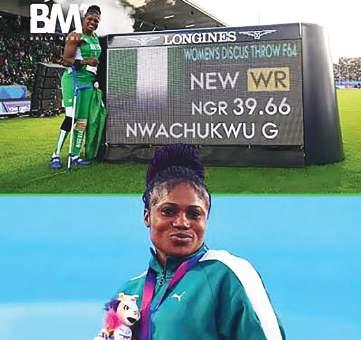
The transformation of the Okpekpe International 10km Road Race from a sporting event into a vehicle for community empowerment was celebrated this week after six indigenous athletes from the host community received a combined N8 million in prize money.
For Omokhagbor Sixtus, a prominent son of Okpekpe who has been involved with the race since its inception in 2013, the cash rewards represent more than financial incentives, they are proof that the annual event is delivering lasting benefits to the community that has hosted it for more than a decade.
“We sincerely appreciate Mike Itemuagbor, Idris Umar and Hon. Abubakar Momoh for this great initiative and for creating an opportunity that has lifted six Okpekpe athletes to millionaire status,” Sixtus said.
“This is not just a victory for the athletes but a moment of pride for the entire Okpekpe community. We celebrate their hard work, dedication and determination, and we commend everyone who contributed to making this remarkable achievement possible.”
The prize money, credited directly into the athletes’ bank accounts last
week, was presented under a special fund reserved exclusively for indigenous athletes from Okpekpe, the host community of the race.
The initiative, introduced to ensure the community shares directly in the success of the event, also seeks to inspire young people in Okpekpe to embrace athletics by demonstrating that excellence in sport can bring meaningful financial rewards.
The beneficiaries were James Raphael and Jessica Matthew, who claimed the men’s and women’s titles respectively to earn N1.5 million each.
This year’s Elective Congress of the Nigeria Football Federation, earlier scheduled for Saturday, 26th September in Lafia, capital city of Nasarawa State, has now been moved by 24 hours.
The Elective Congress, which will usher in members into the Executive Committee of the NFF for the next four years, will now take place in the same city on Sunday, 27th September.
At an extraordinary general assembly of the NFF held virtually
on Wednesday, President of NFF, Alhaji Ibrahim Musa Gusau, explained that the request for date-change was necessitated by the date given for the Super Eagles’ opening qualifying match for the 2027 Africa Cup of Nations, against Madagascar’s Barea.
Following interactions with the Confederation of African Football, the date agreed for the match is Friday, 25th September 2026. Obviously, it will be highly impossible for a number of
candidates in the election, who will be at the match, to make it to Lafia the following morning in time for the Elective Congress. Gusau added that it was on the need to consider this situation that the NFF Executive Committee called for the extraordinary general assembly, to put forward a proposal for the Elective Congress to now take place in Lafia, Nasarawa State on Sunday, 27th September 2026.

Ademola Lookman looks set for a more productive season with his Spanish club after he scored twice in Atletico Madrid first pre-season friendly.
The Super Eagles forward started for Atleti against Getafe last night. He started and opened scoring for his team, before he also doubled the advantage with a superbly-taken goal. Ademola Lookman moved to La Liga in January and so did not enjoy pre-season with his new team. It is widely reported that coach Diego Simeone will play him mainly as a second striker rather than on the wings in the new season.
Arokodare:
Tolu Arokodare has been a long time admirer of Ajax and even thought his agent was joking when he told him of the interest of the Dutch giants.
The Super Eagles striker opened up on his loan transfer to Ajax.
“I was very impatient because I already knew about the interest. I couldn’t wait to finalize the deal. I kept putting pressure on my agent and eventually it happened. I am very happy,” he said
Innocent Odamah and Loveth Joseph finished second in the men’s and women’s categories to receive N1.3 million apiece, while Abuke Nathaniel and Bose Etsekumhe placed third and collected N1.2 million each.
For all six athletes, it was the first time they had earned more than N1 million in prize money from athletics.
The community prize fund was sponsored by businessman and Chairman of Dan Oil, Idris Umar, and Nigeria’s Minister of Niger Delta Development, Hon. Abubakar Momoh in partnership with race promoter Mike Itemuagbor.
Itemuagbor said the initiative reflects the philosophy on which the race was founded.
“The Okpekpe Road Race has always been about more than elite competition,” he said. “From the beginning, our vision has been to use sport as a tool for development by creating opportunities for our people, discovering new talents and ensuring that the host community benefits directly from the global recognition the race has attracted. Seeing our indigenous athletes earn life-changing rewards is one of the most fulfilling achievements of this project.”
“At first, I thought my agent was joking. I even said: I never would have thought this. He told me, and I thought: okay, that’s great, I’m interested.
“Ajax is the biggest club in the Netherlands and one of the biggest clubs in Europe. I can’t wait to get started and help the team. Hopefully, we can be successful together.”

The official ‘Chaos in the Ring’ press conference delivered exactly what fans have come to expect from Africa’s fastest-growing boxing entertainment platform as tempers flared, rivalries intensified and anticipation reached fever pitch ahead of Friday’s highly anticipated fight night at the Balmoral Convention Centre, Federal Palace Hotel, Victoria Island, Lagos.
The event comes on the heels of ‘Chaos in the Ring’s remarkable rise as one of Africa’s premier sports entertainment properties. Previous editions have generated more than two billion video views and 4.2
billion digital impressions, while helping transform the profile of Nigerian boxing and creating new opportunities for professional fighters to compete on bigger stages. What began as a routine media briefing quickly transformed into a dramatic face-off as headline celebrities Portable, Charles Okocha, Mr Real and Idowest came together before members of the press for the first time.
The defining moment came when Portable, in the heat of a tense exchange, knocked over a table, briefly halting proceedings and sending the packed room into a frenzy.
Where do we go from here? I will not pretend to have an answer. For now, I don’t. But years of watching my wife run this project have taught me that Nigeria’s most vulnerable children are rarely failed by a shortage of good intentions. They are failed by the absence of infrastructure behind those intentions. While I may not know where these children go from here, I know where they came from and that too many of them had already known more abandonment than any child should. After everything we have watched them become, we cannot accept that this should be where their story turns back on itself. So, for the first time, I am not ashamed to ask for help on how to secure a structure that properly accommodates those children in a school they can call their own. I have for years been reluctant to go this route. And I probably wouldn’t, had the idea of quietly helping a few children not turned into what is now a rather huge project. However, I am certain that the education of the NFI School children will not be stopped as a result of this temporary setback. My confidence stems from the fact that we have too many hand-lifters for that to happen. Every Thursday without fail, the children are treated to delicacies from Metro Bakery and Restaurant courtesy of Mrs Sandra Adio. They have had executive (volunteer) teachers, among them Mrs Funke Abegunde who retired recently
from American International School. And childhood education specialists, Mrs Stella Uzu and Mrs Tosin Afolayan. The promoters and encouragers include former AIT Managing Director, Dr (Mrs) Oluwatosin Dokpesi, the Exective Director, Funtaj International School, Mrs Funke Ibrahim, Chairman of Phase3 Telecoms, Mr Stanley Jegede and wife, Mosunmola, the COO of the Shehu Musa Yar’Adua Centre, Mr Babatunde Ahmadu, my big sister, Mrs Maryam Uwais and my social media ‘English teacher’, Mrs Hadiza El-Rufai, as well as the FCCPC Executive Vice Chairman and Chief Executive Officer, Mr Tunji Bello. Gving.ng, Abuja Runs Club, Father George Ehusani, Mrs Fatima Wali-Abdurrahman, Mrs Fatima Modupe, Mr Tunde Adetoba, Mr Bolaji Adebiyi, Ms Chinelo Anohu, Mr Afolabi Ajimoti, Mrs Yoyinsola Makanjuola, Mr Edo Ukpong, Ms Ify Malo, Pastors Dayo Kayode and Lanre Oduola and their wives are among other numerous NFI School supporters. Indeed, the list of the people who have helped us, one way or another, on this journey is long. I highlighted a few in the 2021 column earlier referenced, including the role my friend Folorunsho (Foli) Coker played on the feeding idea. Our three children have also played tremendous roles while I cannot count the number of shipments of instructional materials from my US-based brother-in-law, Segun Salami.
But I must make this quick point here. I am
well aware that there are countless versions of the NFI schools scattered across Nigeria, sustained by people with far fewer resources than my wife and I have had. I suspect that many of them are only one notice away from finding themselves exactly where we are today. That something as essential as a school for vulnerable children should depend on chance rather than on any coherent framework says a lot about a country that has yet to decide whether educating its poorest children is a shared public obligation or a private act of charity. But if there is one thing eight years of watching my wife run this school has taught me, it is that Nigeria’s out-of-school children crisis has never really been a problem of resources.
With little more than an empty plot and an obstinate refusal to accept that these children were beyond saving, my wife has taken boys and girls who should have been hawking on the streets and put them behind school desks instead. She did not wait for a government programme or a donor intervention. Yes, my wife does all the purchases, including of foodstuff and runs the kitchen that feeds the children, to save cost. But if one woman, working with modest means, could prove that this is possible, then I find it difficult to accept that governments, with their budgets, institutions and constitutional responsibilities, cannot do the same
on a far greater scale.
My wife’s experience has also convinced me that we have fundamentally misunderstood where Nigeria’s education crisis began. We have become obsessed with the roof while neglecting the foundation. Our debates revolve around universities, ASUU strikes, graduate unemployment and global rankings, as though the deficiencies we see at the tertiary level somehow originate there. They do not. They begin in the primary school classroom, where too many children spend their formative years without qualified teachers, textbooks, classrooms or even the assurance that learning matters. By the time they reach our universities, for those who make it that far, the damage has already been done. We lament graduates who cannot communicate clearly, analyse problems or think critically, yet these are not failures of higher education alone. They are the accumulated consequences of years of neglect at the most important stage of learning. The Bible poses the question with characteristic economy: “If the foundations are destroyed, what can the righteous do?” (Psalm 11:3). That, to my mind, is the question before us. We can continue repairing the roof of our education system, introducing one reform after another at the tertiary level, but until we return to the foundation, we should not be surprised that the house refuses to stand.
A major international study has challenged decades of global health policy, concluding that economic inequality—not the strength of a country’s laboratories, emergency plans or healthcare infrastructure—is the strongest predictor of how severely nations suffer during pandemics.
The findings, published in the New England Journal of Medicine by a team led by Nobel Prize-winning economist Joseph Stiglitz and other leading global health experts, argue that governments must fundamentally rethink pandemic preparedness by placing inequality at the centre of health security strategies.
The research, conducted by the Global Council on Inequality, AIDS and Pandemics, found that countries traditionally ranked among the
world’s best prepared for pandemics, including the United States and the United Kingdom, recorded some of the highest COVID-19 infection and death rates despite their advanced medical systems.
By contrast, countries with lower conventional preparedness rankings but relatively lower levels of inequality, such as Vietnam and Ethiopia, performed significantly better in containing the pandemic.
The researchers found no meaningful link between traditional pandemic preparedness indicators and actual outcomes during COVID-19 or the AIDS pandemic. Instead, they identified income inequality as the clearest predictor of deaths and infections.
According to the analysis, every one-point increase in a country’s Gini coefficient—the standard measure of income inequality—was associated
with approximately 12.5 additional COVID-19 deaths per 100,000 people.
The same relationship was observed for AIDS-related deaths and new HIV infections, even after accounting for poverty levels and existing health infrastructure.
The report argues that inequality weakens public health responses by limiting people’s ability to comply with health measures, reducing trust in public institutions and creating unequal access to healthcare services.
It warns that over 90 per cent of the world’s population now lives in countries experiencing high levels of income inequality—the highest since the Industrial Revolution—making the global community increasingly vulnerable to future pandemics.
To reverse the trend, the researchers proposed an “InequalityInformed Pandemic Preparedness and Response” framework that
shifts attention beyond hospitals and laboratories to broader economic and social policies.
Among their recommendations are expanding paid sick leave, unemployment benefits and cash transfers during health emergencies; integrating finance, labour and education ministries into pandemic planning; reforming global financial systems through emergency debt relief and automatic international funding; and promoting open licensing of publicly funded medical research alongside expanded regional production of vaccines and medicines.
Joseph Stiglitz, Nobel Laureate in Economics and Co-Chair of the Global Council, said the findings expose fundamental weaknesses in the world’s current approach to pandemic preparedness.
“For decades the world judged how ready a country is for a pandemic by counting its laboratories,
stockpiles and response plans. This research shows that this is not enough. High economic inequality can leave even wealthy, well-equipped nations dangerously exposed,” he said.
UNAIDS Executive Director Winnie Byanyima described inequality as the underlying driver of pandemics, saying governments now have clear evidence on where action is needed.
“The research proves that inequality is the ground in which pandemics take root. By tackling inequality, we can end AIDS as a public health threat and make the world safer from future pandemics,” she said.
The publication comes ahead of discussions at the AIDS 2026 Conference in Rio de Janeiro, where global leaders will examine the findings and their implications for future international health policy.
The Global Council on Inequality, AIDS and Pandemics was convened
by UNAIDS to examine how social and economic inequality shapes responses to infectious disease outbreaks.
The Council’s latest study compares countries’ responses to both COVID-19 and HIV/AIDS and concludes that conventional preparedness indices—which primarily assess technical capacity such as surveillance systems, laboratories and emergency response mechanisms—fail to predict real-world performance.
The findings come as governments worldwide reassess pandemic preparedness following COVID-19, which claimed millions of lives globally, while HIV/AIDS has killed more than 44 million people since the early 1980s.
The researchers argue that reducing inequality should now be regarded as a core pillar of global health security rather than simply a social policy objective.
Bauchi State Government has secured a 91.6-million-dollar infrastructure financing agreement with the ECOWAS Bank for Investment and Development, EBID, after 18 months of negotiations, backed by a federal government guarantee.
The state governor, Senator Bala Abdukadir Mohammed, disclosed this Wednesday while speaking to journalists after returning from the headquarters of the ECOWAS Bank for Investment and Development in Lomé, the capital of Togo.
Governor Bala Mohammed explained that the facility, which has already been captured in the 2026 budget, is expected to be accessed in August, expressing confidence that all ongoing road projects will be completed before the expiration of his administration.
He said additional road projects covered by the financing include the Mararraban Liman KatagumBununu, Soro-Miya, Gumau-Kaduna
border and Bara-Wanka roads in Kirfi Local Government Area.
The governor also pledged to resume stalled urban renewal projects, including roads within the Government Reserved Area and bridges across Bauchi metropolis, noting that the projects now have full financial backing. According to him, the investments will reduce travel time, improve access to agricultural communities, address infrastructure deficits and strengthen Bauchi State’s position as a growing hub for economic development and connectivity.
Signs MoUs on Multi-sector Investment S’Arabia Group Meanwhile, The Bauchi state government and Golden Contractors Group of Saudi Arabia have signed two Memoranda of Understanding (MoU) aimed at strengthening cooperation and promoting sustainable development across multiple sectors.
The agreements were signed by the Secretary to the Bauchi
State Government (SSG), Aminu Hammayo, and the Commissioner for Justice and Attorney General, Hassan El-Yakub, on behalf of the Bauchi state government, and the Chief Executive Officer of Golden Contractors Group, Mr. Muhammad Faisal Al-Harbi, in the presence of Governor Bala Mohammed.
Hammayo while briefing journalists shortly after the signing of the MoU at the Government House Bauchi yesterday explained that the first agreement provides for Golden Contractors Group to deliver Hajj services to the state government annually, while supporting improved service delivery and strengthening the state’s institutional capacity during the spiritual exercise
The second agreement, according to him, is to establish a collaborative framework for partnerships in agriculture, mining, infrastructure, tourism and hospitality, sectors identified as significant investment opportunities and economic potentials within Bauchi State.
Michael Olugbode in Abuja
Just days before formally taking over the leadership of the Economic Community of West African States (ECOWAS), Senegalese President, Diomaye Faye, has embarked on a high-stakes diplomatic mission to Mali.
The move is widely seen as an attempt to rebuild fractured ties between the regional bloc and the Alliance of Sahel States (AES).
The visit to Bamako, coming against the backdrop of deepening divisions between ECOWAS and the military-led governments of Mali, Burkina Faso and Niger, has sparked fresh optimism that dialogue may replace confrontation in efforts to restore regional unity after months of political estrangement.
Faye, who was elected Chairman of the ECOWAS Authority of Heads of State and Government during the bloc’s 69th Ordinary Summit in Abuja, takes over at a time the organisation is grappling with one of the most serious crises in its 50-year history following the withdrawal of the three Sahel countries from the regional body.
His decision to make Mali one of his first diplomatic destinations has been interpreted by regional observers as a clear signal that reconciliation with the AES could become a defining priority of his tenure.
During discussions with Mali’s transitional authorities in Bamako, Faye reportedly emphasised the need for continued dialogue among West African nations despite political disagreements, stressing that regional peace, security and economic integration remain common aspirations that transcend ideological differences.
Although no formal announcement was made regarding a possible return of Mali to ECOWAS, diplomatic sources described the meeting as constructive and indicative of a willingness by both sides to keep communication channels open after months of strained relations.
The visit comes amid mounting security threats across the Sahel, where jihadist insurgencies continue to destabilise vast territories despite efforts by national governments and regional partners to contain violence.
The diplomatic outreach also reflects growing concerns that the continued separation between ECOWAS and the AES could undermine regional efforts to combat terrorism, facilitate trade, promote the free movement of persons and strengthen economic cooperation.
Since assuming office as Senegal’s president, Faye has consistently advocated dialogue rather than punitive measures in dealing with the military governments in Mali, Burkina Faso and Niger. He has repeatedly argued that sustainable peace in West Africa requires engagement instead of prolonged isolation.
The relationship between ECOWAS and the three countries deteriorated after a series of military coups prompted the regional bloc to impose sanctions and demand a return to constitutional rule. The juntas rejected what they described as external interference in their domestic affairs and subsequently announced their withdrawal from ECOWAS, establishing the Alliance of Sahel States as a new regional security and political alliance.
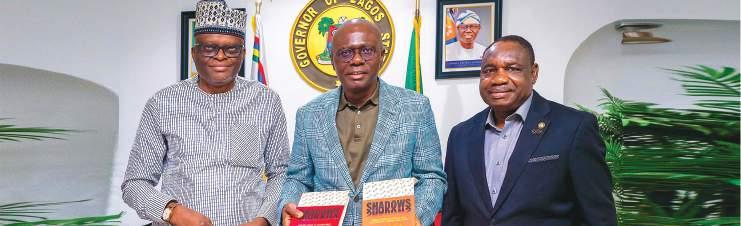
L-R: Managing Director, THISDAY Newspaper and Author of the book, “Shadows,” Eniola Bello; Governor of Lagos State, Babajide Sanwo-Olu; and Lagos State Commissioner for Information and Strategy, Gbenga Omotoso, during the presentation of the book to the governor in Lagos, yesterday

The Ambassador of Sweden to Nigeria, Her Excellency Anna Westerholm, was the special guest of honour at the graduation ceremony (Kindergarten 2 and Primary 5 pupils) of my wife’s Not Forgotten Initiative (NFI) School last Thursday in Abuja. “When I visited this school (last December), what stayed with me was not just the privilege of reading a book together with you. What stayed with me was the curiosity I saw in your eyes,” she told the pupils to whom she had shared the story of the fictional Swedish girl Pippi Longstocking in Nigerian Pidgin just a few months ago. “I remember your laughter, your confidence, and how eager you were to participate, ask questions, and share your thoughts…I want to encourage you to hold on to those qualities.” Sadly, holding on to those qualities is what is now at threat. Not because the children do not want to continue learning but because there is now a challenge beyond them. And here is the brief: Some years ago, as the NFI School began to outgrow its modest structures my wife approached a neighbour whose husband owned the adjoining plot, asking whether she could use part of it. A few days later, apparently having obtained the consent of her husband, the woman gave the permission. No paperwork or conditions. Just one mother looking at other people’s children and deciding they deserved more room than they had. We accepted the gesture with gratitude and built two classrooms, a library, computer room, ‘cinema room’, kitchen and store. Always conscious that we were beneficiaries of another family’s generosity.
Three years ago, her husband passed away. Out of respect for a family that has been generous, I will not put the name down in this column. But then, death has a way of rearranging property, understanding and, sometimes, old acts of kindness. The people that are now responsible for the man’s estate have asked that we return the portion of land onto which the NFI School expanded back to them today, 30th July 2026. I want to be fair to this family, because fairness is owed. Nothing in this column should be read as a grievance against people exercising their right to a property that belongs to them. And I will not in any way question the considerations behind their request. But the reality is simply that, after years of serving dozens of vulnerable children, those classrooms will now come down.
Currently, we have 128 pupils in NFI primary school, 14 students in Federal Government Girls Colleges (FGGC) Bwari, 12 students in Federal Technical College (FTC) Orozo and seven in some Abuja private secondary schools through a partnership arrangement. All these children are on free education. The NFI School also has 14 teachers and five support staff. As my wife said last Thursday at the graduation ceremony, the stories of these children have been rewritten because some people believe in

them. “Many of our children first arrived unable to read or write in English. Some spoke only Hausa. Many had never experienced structured learning,” my wife reminded the audience last Thursday. “Today they read confidently. They communicate effectively. They think critically. They dream boldly. Most importantly, they now have the confidence to compete successfully with other children anywhere in Nigeria.”
Incidentally, this is not the first time the NFI School’s hold on its own ground has felt uncertain. Five years ago, in this same column, I wrote about the very first classrooms my wife built on an empty plot. That plot, oddly, has never given us a moment’s trouble. The wider story of how we got here is one I have told before, https://www.thisdaylive. com/2021/04/01/amatala-and-other-unforgottenchildren/ and earlier in the year, that story was
amplified by my colleague, Simon Kolawole in his column, https://www.thisdaylive.com/2026/02/08/ left-behind-but-not-forgotten/ But for the benefit of readers meeting NFI for the first time, let me summarise the story.
In December 2018, my wife turned a plea from a struggling mother who wanted her son in school and had nowhere left to turn, into two classrooms on an empty land nobody appeared to be using. Fourteen children came. Then more arrived, the way need tends to multiply once word travels through a community that someone is finally listening. A second classroom followed, then a third, eventually seven, staffed by teachers we hired one at a time as the numbers made it unavoidable. What began as an act of neighbourliness became, almost without our noticing, an institution: free lessons, one-meala-day, free uniforms, and scholarships. With the total commitment of my wife, the education the children are given is also structured, rigorous and transformational. That is why they keep passing Common Entrance examinations to secure admissions into highly competitive secondary schools.
Yet these are children whose parents live at the margins of society. Some of them were, years ago, children nobody expected to ever sit before a blackboard. Children who, along with their siblings and parents, fought a daily war against hunger. The NFI School has taught these children to imagine a life larger than the one they were born into. Take that away, even partially, and picture what moves in to fill the space.
Over the years, these children have had more than classroom education. They have been exposed to the kind of opportunities some of us never even had while their age. They undertake regular excursions to important places in Abuja. Through Ms Ibilola (Otegbade) Essien, some of them attended UNICEF programmes and twice met and took photographs with former Vice President Yemi Osinbajo. To fire their imaginations, they have also received several
prominent people in their classrooms. From Seyi Adekunle (VODI) to Hollywood filmmaker, Ose Oyamendan to Senators (Bello Mandiya, Tolu Odebiyi et al) to Ambassador Lot Egopija to chartered accountant, Gbenga Badejo to former Sports Minister and current ADC National Publicity Secretary, Malam Bolaji Abdullahi, to (now retired) federal permanent secretary, Dr Yakubu Kofarmata to the former Federal Capital Development Authority (FCDA) acting Executive Secretary, Hajiya Zaliha’u Ahmed and many others. Former Education Minister, Mrs Oby Ezekwesili celebrated her 60th birthday with them. MacArthur Foundation Director, Dr Kole Shettima regularly buys for them (and their parents) clothes. And my wife’s biggest supporter, Ms Koyinsola Olukoya makes it a point of duty to take food and all kinds of goodies to those that are now in FGGC and FTC on their visiting days! Sadly, three people who have been with us on this journey right from the beginning are now of blessed memory: Mr Ferdinand Agu, Pastor Theo Martins and my cousin, Dr Olawale Banmore.
We allow prominent people into the classrooms to share their stories to encourage them that where they are coming from is not what matters but the future that is before them with education. At the ceremony last Thursday, we were joined by some of the people who frequent the school: the Executive Director, Pro-health International, Dr Iko Ibanga, publisher of Abuja Enquirer, Mr Dan Akpovwa, Baze University Vice Chancellor, Professor Biodun Adeniyi, Executive Commissioner (Operations), Federal Competition and Consumer Protection Commission (FCCPC), Mr Louis Odion, former ADC to the late President Umaru Musa Yar’Adua, Brigadier General Mustapha Onoyiveta (rtd) and wife, Hassana. Dr Ngozi Azodoh, Dr Kole Shettima, Mrs Dupe Ogundimu, Mr Yinka Medupin, Patrick and Amaka Uzoma and several others also joined us.
On Tuesday in Abuja, at the invitation of the Registrar and Chief Executive of the Medical and Dental Council of Nigeria (MDCN), Prof Fatima Kyari, I was the guest speaker at the induction ceremony for foreign-trained medical (238) and dental (12) graduates who were successful at the MDCN assessment, conducted at the University College Hospital (UCH) Ibadan last month. Asked to speak on the ‘Use and Abuse of Social Media in Medical and Dental Practice’, below is my presentation.
Let me begin by congratulating every man and woman before me today who has earned the right to be inducted into the
register of medical and dental practitioners in Nigeria. For me, this is a big deal. You trained far from home, in systems and cultures that are not your own. And you have returned to answer a call that many people your age is running away from. In a season when the standing conversation in every Nigerian household with a young doctor or dentist is about which direction the next flight out is headed, your presence here, seeking to be counted among practitioners licensed to serve Nigeria, deserves a national gratitude.
Having been asked to speak on the use and
abuse of social media in medical and dental practice, I want to begin by stating the obvious: social media is neither a friend nor an enemy of the medical/dental profession or of any profession for that matter. It is an instrument, and like every instrument in the history of medicine, from the scalpel to the syringe, its value depends entirely on the hand that holds it and the discipline that guides that hand. Used well, it is a stethoscope that extends beyond your consulting room. Used carelessly, it is a scalpel that cuts the wrong way... NOTE: Piece concluded online