SUNDAY, MARCH 1 2026

SUNDAY, MARCH 1 2026






Aa track record of taking on complex projects and delivering them with technical and financial rigour.




arch is here, and as usual, the women are already making noise, yup, the good kind. The kind that fills timelines, group chats, offices, and dinner tables with energy, pride, and a little necessary chaos. International Women’s Day is on March 8, and even though it technically lasts one day, the spirit always stretches across the month. This time, we want the men to join in the excitement too, not out of obligation, but because many of them genuinely support, uplift, and champion the women around them. Their voices matter in this conversation, and they’re welcome to make it loud with us.
Speaking of volume, social media has been very loud recently, sometimes unnecessarily so. Between hot takes, screenshots, and resurrected tweets, it’s starting to feel like the internet is a permanent archive waiting for you to slip. The whole Simi situation is just another reminder that the internet never forgets; it only waits for the right moment to remind you. Which is why one of our features, How to Do Social Media Without Oversharing, couldn’t be more timely. It’s not anti-sharing; it’s pro-sense. You don’t need to upload your entire existence to prove you’re living it. A little mystery is still attractive. A little privacy is still powerful.
But while online life feels chaotic, something far more interesting is happening offline. People are quietly reclaiming themselves, especially through style. After years of everyone dressing like they shared the same Pinterest board, individuality is finally creeping back. Fewer “must-haves,” fewer forced aesthetics, fewer panic-buys inspired by strangers. This issue’s feature, The Return of Personal Style: 10 Ways to Reclaim Yours, dives into that shift. Not as a trend report, but as a reminder that dressing up should feel like self-expression, not an assignment. Look around you, people are wearing what feels true again, not what feels viral. It’s nice to see.
So here we are, in a month that insists on being seen and heard. How are you doing? What’s your headspace like right now?
I’ll leave you to enjoy the rest of the issue, and since it’s Women’s Month, let me sign off with something simple: may the women shine extra loudly, and may the
even


who love them



By Funke Babs-Kufeji
ashion used to move in loud waves, big trends, bold statements, entire seasons dictated by whatever ruled the runway. But 2026 has quietly introduced a different kind of shift, one that’s less about what’s “in” and more about how women want to feel. The new style movement isn’t driven by reinvention or excess. It’s shaped by clarity. Intention. A desire to look like oneself again. Across wardrobes everywhere, the shift is subtle but unmistakable: women are dressing with more purpose, more thought, and far less noise.
The real flex this year? Knowing exactly what works for you and wearing it consistently.
One of the simplest, most elegant shifts is happening right inside our closets. Pieces that used to be “too nice” for everyday life, the favourite blazer, the silk blouse that never leaves the hanger, the structured dress meant for an imaginary future event, are finally stepping into the light.
The woman of 2026 is done saving her best for later.
She’s pairing tailored jackets with denim, wearing beautiful dresses to run errands, and giving her wardrobe permission to actually live. Clothes gain meaning through use. The more you wear the pieces you love, the more your style sharpens.
Trends may come and go, but proportion is eternal. This year’s best-dressed women aren’t chasing shapes; they’re mastering balance. A wide-leg pair of trousers with a clean, fitted top. A structured jacket over a soft, fluid dress. Shoulders that sit perfectly. Trousers that fall exactly where they should. The effect is instant: calm, collected, intentional. When the lines are right, the outfit doesn’t have to try. It already speaks.
Another shift: women aren’t abandoning neutrals, they’re elevating them. Instead of overwhelming palettes, we’re seeing considered colour, a deep burgundy skirt, a green tailored blazer, a cobalt blouse breaking through a sea of black.
Not shouting. Signalling.
Repeating that shade across different looks creates a subtle signature. And in a world saturated with trends, having a signature is the new luxury.
A stylish wardrobe in 2026 isn’t the one with the most clothes; it’s the one with the least confusion. Women are choosing better fabrics, cleaner construction, pieces that outlast moods and seasons. Linen that softens beautifully, cotton that holds shape, leather that ages with dignity.
The power is not in how much you own, but in how much you actually wear.
Here’s the part of the shift that feels the most grown: the embrace of a personal uniform. Not the boring, rigid kind, the intentional kind. A loose formula that takes the anxiety out of dressing and replaces it with ease.
For some women, it’s trousers and elevated tops. For others, it’s dresses layered with crisp jackets. For many, it’s a monochrome texture. Whatever the formula, it becomes a foundation that makes every outfit feel like a sure choice rather than a gamble.
A uniform doesn’t limit you; it liberates you. It gives your wardrobe coherence, your mornings peace, and your style a recognisable identity.
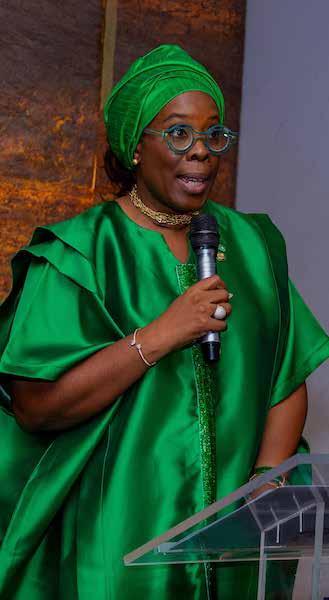
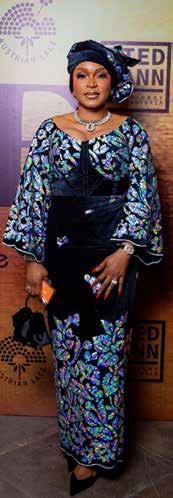
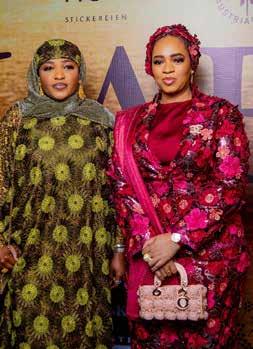
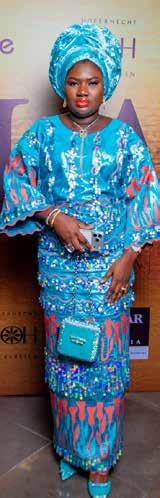
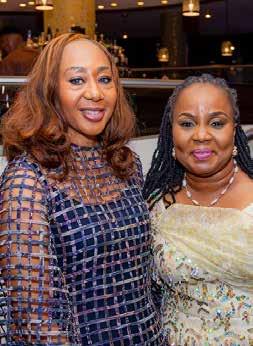
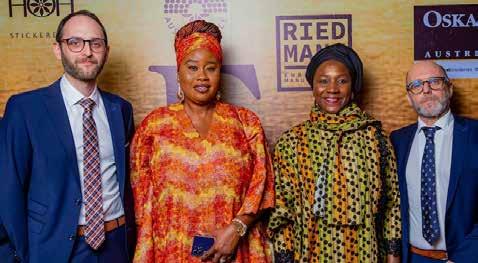
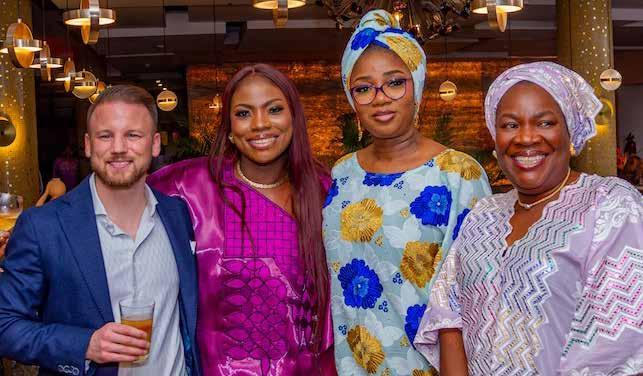
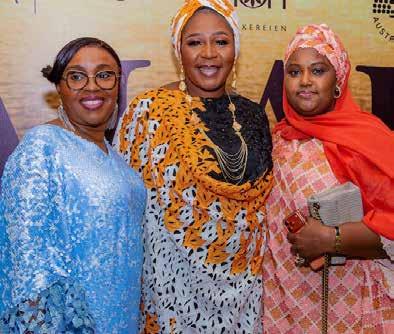
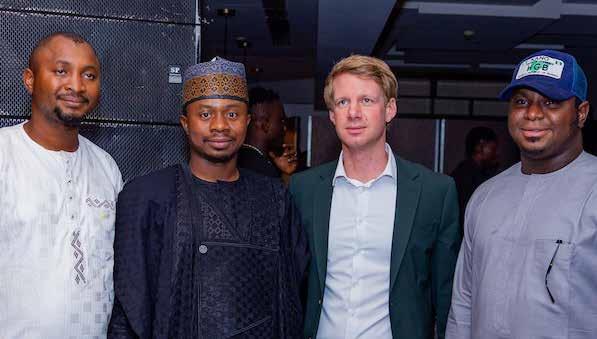
The second edition of the Austrian Lace Appreciation Event (ALAE) concluded in elegant fashion at the Sky Restaurant, Eko Hotel & Suites, Victoria Island, bringing together government officials, leading lace merchants, internationally acclaimed designers, manufacturers, cultural icons, and members of the diplomatic community for an evening celebrating craftsmanship, collaboration, and a trade relationship spanning over seven decades.
Hosted by the Austrian Embassy –Commercial Section Lagos through Advantage Austria, the event honoured Nigeria’s leading sellers of authentic Austrian lace, recognising their long-standing loyalty, expertise, and pivotal role in sustaining the prominence of Austrian lace within Nigeria’s ceremonial and high-fashion landscape.
At the heart of the evening was the recognition of the celebrated “Lace Ladies” — Nigerian lace sellers whose dedication has sustained decades of collaboration with Austrian manufacturers.
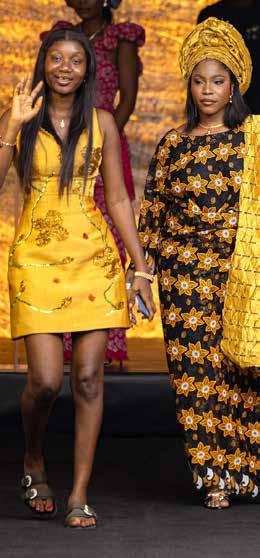
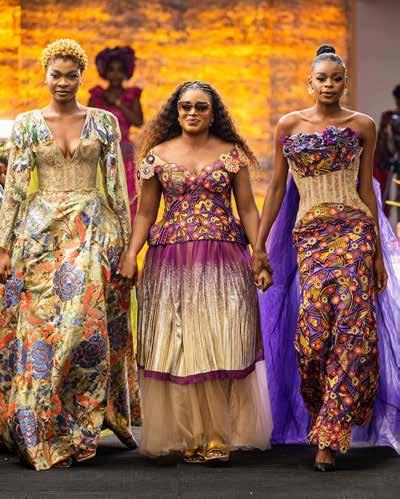
A total of 63 outstanding lace merchants were presented with certificates of excellence across three award segments, seamlessly woven into the evening’s programme. Complementing the awards was a refined couture presentation featuring 15 looks that showcased collaboration between leading Austrian manufacturers — Wilhelm Scheffknecht, OSKAR, Riedmann Embroidery, HOH, and GA Lace — and some of Nigeria’s most distinguished creative voices.
The runway was headlined by internationally acclaimed designer Lanre Da Silva Ajayi (LDA), whose work has earned global recognition for its romantic silhouettes and meticulous craftsmanship, alongside bespoke menswear designer Aramanda as well as emerging talents Pink Buttons, MDN, and Syndelstylings.
Now in its second year, the Austrian Lace Appreciation Event continues to stand as a best-practice example of a mutually beneficial international trade relationship built on trust, authenticity, and long-term cooperation.
Organised by the Commercial Section of the Austrian Embassy in Lagos on behalf of the Association of Austrian Lace Manufacturers in Vorarlberg, Austria, ALAE 2026 reaffirmed not only the enduring relevance of Austrian lace in Nigeria’s fashion ecosystem, but also the strength of a partnership that has evolved gracefully over seven decades
4
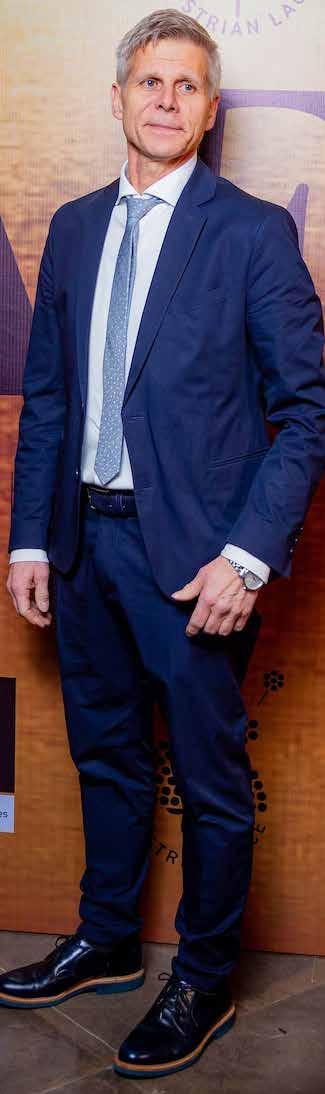












Masculine growth is not about dressing older. It is about dressing with clarity and self-respect. There comes a point when a man moves past careless experiments and impulse trends and settles into clothes that reflect discipline and awareness. Style becomes less about noise and more about quiet assurance. Well-fitted garments, polished shoes, and careful grooming speak before introductions are made. The aim is no longer to impress everyone but to present yourself with consistency and care. Appearance begins to support character, responsibility, and the life you are building.
If it does not fit, it does not work.
Clothes should follow the natural lines of your body without pulling, sagging, or overwhelming your frame. Whether it is a business suit, traditional wear, or simple jeans and a shirt, proportion is everything. A skilled tailor is not a luxury but a necessity. Adjust sleeves, taper trousers, and shape jackets properly. Good fit can elevate modest clothing, while poor fit can ruin even the most expensive pieces. Treat alterations as part of the purchase, not an afterthought.
A full wardrobe does not equal a strong wardrobe. Focus on durable fabrics, solid construction, and timeless cuts. A welltailored navy or charcoal suit, quality leather shoes, structured outerwear, and crisp shirts will serve you longer than trend-driven pieces. Inspect stitching, lining, and fabric weight before buying. If an item fades quickly, loses shape, or looks tired after minimal wear, it does not deserve space in your closet. Buy slowly and intentionally. Over time, you build reliability, not clutter.
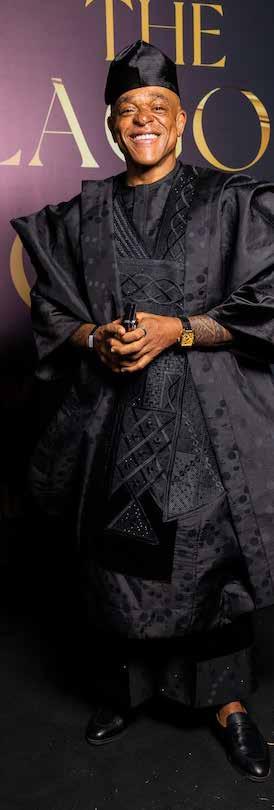
A grown man should own at least one traditional outfit that fits with precision. An agbada, kaftan, or senator set should rest cleanly on the shoulders and fall neatly along the body. Choose fabrics that hold structure and colours that complement your skin tone. Avoid excessive embellishment that distracts from the silhouette. Tradition carries dignity when worn with restraint and understanding.
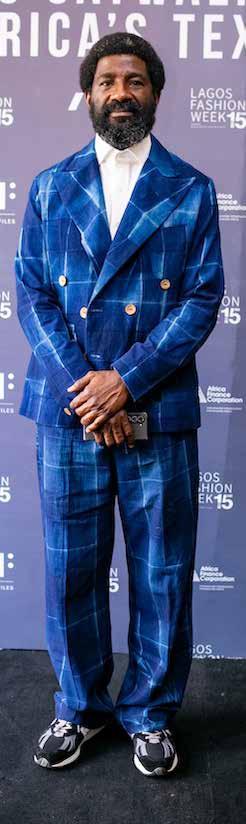

Properly tailored traditional clothing communicates cultural pride without theatrics. It should look considered and feel effortless at weddings, celebrations, and formal gatherings.
Footwear often determines the success of an outfit. Own essential pairs that cover formal and casual settings: classic black dress shoes for formal events, brown loafers for versatility, clean white sneakers for relaxed looks, and polished traditional slippers for cultural attire. Maintain them carefully. Clean, condition, and store them properly. Replace worn laces and repair soles when necessary. Scuffed or neglected shoes undermine even the best tailoring. Quality footwear, cared for consistently, reflects discipline in quiet ways.
Clothing alone does not complete your appearance. Hair, skin, and facial hair require equal care. Choose a haircut that suits your face shape and maintain it regularly. If you wear a beard, keep the lines defined and the length intentional. If clean-shaven, ensure your skin looks healthy and cared for. Develop a simple routine that includes cleansing and moisturising. Fragrance should be subtle and applied with restraint. The goal is to leave a pleasant impression, not to overwhelm a room. Consistent grooming communicates reliability without saying a word.
Large logos and loud branding distract from the man wearing them. Visible labels should not define your presence. Focus instead on texture, tailoring, and fabric quality. Let the cut of your jacket, the polish of your shoes, and the harmony of your colours speak for you. Clothing should frame your character rather than compete with it. Subtlety signals confidence. When garments are chosen for their craftsmanship rather than their labels, your appearance feels grounded and deliberate.
Clothing should suit the setting. A boardroom demands structure and polish. A wedding allows elegance with personality. A beach gathering calls for light fabrics and relaxed silhouettes. A gallery opening may invite quiet creativity. Learn to read the environment before choosing what to wear. Consider the formality of the event, the culture of the space, and the expectations of those present. Style, at this stage, is no longer performance. It is alignment. You are not dressing to compete or to chase applause. You are dressing to reflect who you are and where you are headed.

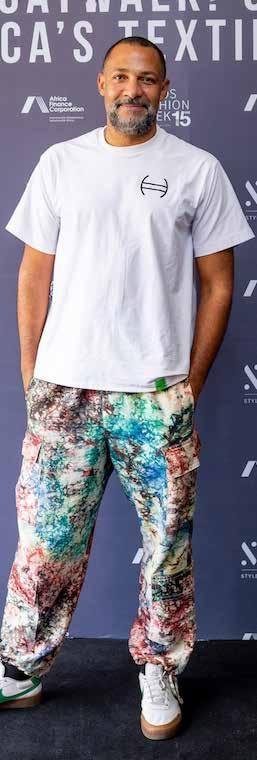

There’s a fine art to living out loud without handing the world a front-row seat to your entire life. Social media has blurred so many lines that sometimes even the most private people find themselves narrating moments they never intended to share. It starts innocently, a quick story here, a soft-launch there and suddenly, you realise your followers know the colour of your bedroom walls, your friend’s drama, your partner’s habits, and the exact café you visit every Saturday.
But here’s the thing: you can be present online without being exposed online. There’s a way to post, engage, and even build a personal brand while keeping the most important parts of your life for yourself. The trick is intentionality. Not secrecy, not performance, just thoughtful curation.
Before you hit “post,” ask yourself: Why am I sharing this?
Sometimes the answer is harmless, it’s pretty, it’s funny, it’s a memory. Other times, it’s because you’re bored, seeking validation, or responding emotionally to something that should never leave the group chat. Self-awareness is the first filter. If the reason behind the post doesn’t feel grounded, save it to your camera roll and move on.
You can tell people you had a beautiful weekend without announcing the exact venue, who you were with, and how much the cocktails cost. The magic of social media is that it allows for storytelling without full disclosure. Post the ambience, not the blueprint. Share your joy, not your location. Leave room for interpretation; there’s a certain elegance in being seen but not fully known.
the Timeline
Your friends’ lives are not content. Your relationships are not content. Your family is not content. Sometimes the fastest route

to oversharing is posting other people’s business alongside yours.
Protecting your inner circle is one of the easiest ways to protect yourself.
The less the world knows about the people closest to you, the less they can weaponise, romanticise, or misinterpret your connections.
There’s nothing wrong with showing your morning routine, your outfits, or the new restaurant you tried.
Lifestyle content isn’t oversharing; context is. The problem begins when every post becomes an emotional TED Talk. You don’t need to share every disappointment or cry on camera for “transparency.”
Curate moments, not crises. Keep your vulnerabilities for the people who can actually help you carry them.
Real-time posting is one of the easiest ways to give away too much. It reveals where you are, who you’re with, and what you’re doing in the moment, information that can
be misused or simply misread. Try posting after you’ve left a place, or even hours later. You’ll still share your life, just without opening the door wider than necessary.
Mystery is underrated. You don’t need to be constantly visible to stay relevant. Some of the most interesting people online are interesting because their silence is intentional. They appear, they share, they disappear, and those pauses make their presence feel more curated and less chaotic. Social media shouldn’t feel like a livestream of your existence.
People often confuse honesty with access. You can be authentic without being unedited. You can be relatable without being raw. Boundaries don’t make you fake; they make you balanced. Oversharing usually comes from
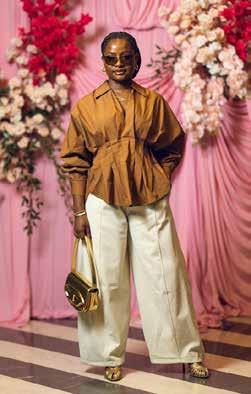
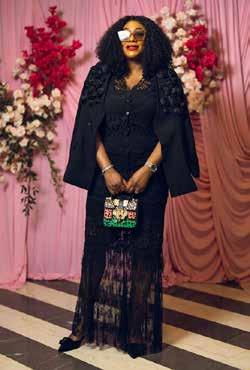
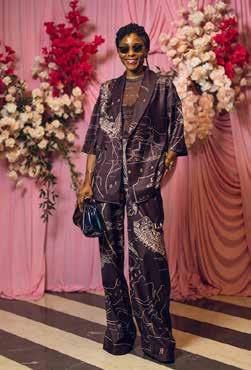
Outfit repetition has somehow developed an unnecessary stigma. We celebrate “new looks” and “fresh drops,” yet most genuinely stylish people are not dressing from an endless wardrobe. They are dressing from a thoughtful one. Repeating clothes is practical, sustainable, and often inevitable, especially during busy social seasons filled with weddings, launches, birthday dinners and the occasional “just because” outing. The real trick isn’t owning more. It’s knowing how to rework what you already have so it reads differently each time.
By Funke Babs-Kufeji
The simplest way to repeat an outfit is to change how it’s styled. A dress worn with pointed heels one weekend can feel completely different with flat sandals or minimal mules the next. Cinch it with a belt one time, leave it loose and fluid the next. Button a shirt all the way up for structure, then soften it slightly another day. Layer with a silk or organza shirt for texture or add a lightweight blazer for polish. These are small adjustments, but they shift the entire impression. You are not altering the garment; you are altering the perspective.
Strategically
trying to prove something: that you’re happy, that you’re loved, that you’re doing well. But the truth is, the less you explain, the more grounded you tend to feel.
It could be your relationship. It could be your family. It could be your financial wins or your spiritual life. Have one category that is sacred and untouched. That private anchor is what allows you to weather storms without public commentary. It gives you a sense of self that doesn’t require likes to survive.
Remember That Privacy Is Still Luxury
In a world where everyone is performing versions of themselves online, real privacy feels almost rebellious. You don’t have to disappear from the internet; you just need to reclaim control over the narrative. Post with intention. Share with purpose. Hold some things back, not out of fear, but out of respect for your own peace.
Accessories do most of the heavy lifting when it comes to disguise. Swap earrings, bags, or shoes and the mood changes instantly. Statement jewellery one day and delicate pieces the next can make the same outfit feel intentionally different. A structured mini bag creates sharpness; a slouchy shoulder bag softens the look. Metallic heels add drama, while simple black sandals create restraint. People often remember the finishing touches more than the base outfit, which quietly works in your favour. When the accessories shift, the memory of the look shifts with them.




Context matters more than we admit. Repeating an outfit at the same kind of event, in front of the same crowd, within a short window of time — that’s when it gets noticed. But restyle that look for a different setting, and it rarely registers as repetition. A lace dress worn to a wedding can reappear at a birthday dinner with different shoes and paredback jewellery. A tailored set worn to a work function can resurface at a cocktail event with sharper accessories and stronger makeup. When the environment changes, the outfit feels new again.
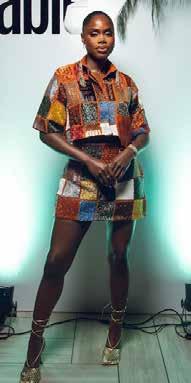
Confidence isn’t about pretending you didn’t repeat something. It’s about wearing it like you chose it deliberately. When you look comfortable and assured, people focus on how good you look, not whether they’ve seen it before. Most people are too occupied with their own outfits to catalogue yours. The anxiety around being “caught” repeating is usually imagined. What stands out is effort, the sense that you styled thoughtfully, even if the base piece is familiar. There’s also something powerful about becoming known for certain pieces. The woman who owns one impeccable blazer and rotates it constantly doesn’t look repetitive; she looks consistent. The person who rewears a beautifully tailored dress with different accents doesn’t seem limited; she seems intentional. Familiarity, when handled well, becomes personal style.
Hair and makeup are underrated styling tools. Wearing your hair sleek and straight one time, then curly or pulled into a bun the next, can completely change how an outfit reads. A bold lip transforms even the simplest dress into an evening statement. A softer, barely-there face makes the same outfit feel effortless and daytime-appropriate. These changes are subtle but powerful. Most people register the overall vibe, not the individual pieces, and hair and makeup play a major role in shaping that vibe.
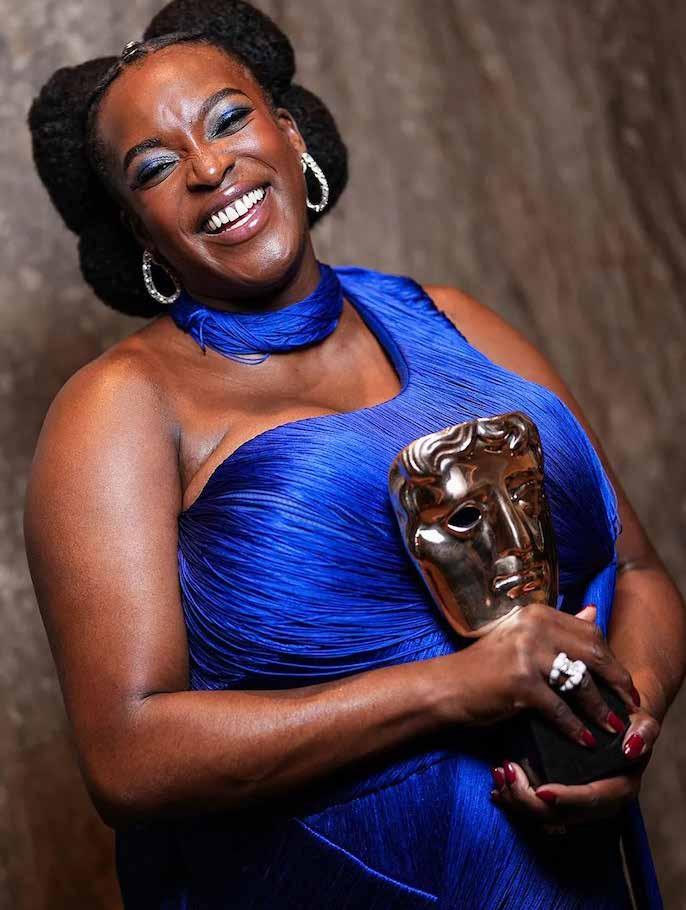
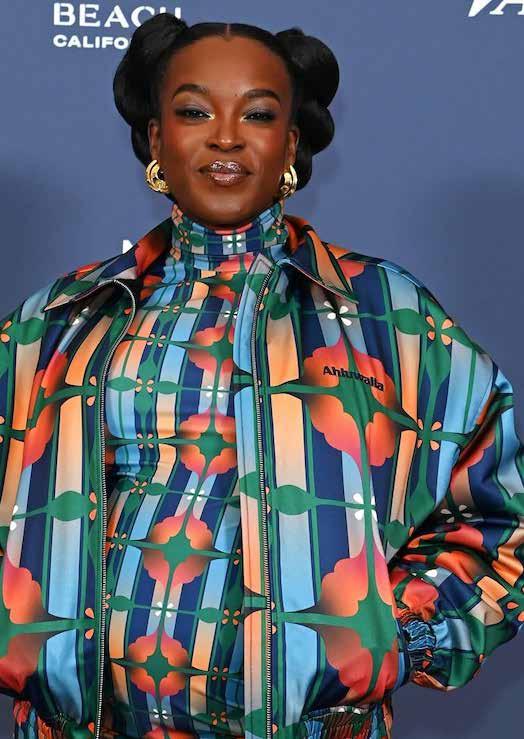
DEFINING YEAR HAS ONLY JUST BEGUN
By Dio Dorcas
Wunmi Mosaku has become the kind of actor whose work lingers long after the credits roll, not because she plays the loudest characters, but because she plays them with an emotional clarity that refuses to be forgotten. She works in a way that feels almost old-fashioned, rigorous, disciplined, uninterested in shortcuts and yet her presence feels unmistakably modern. Hollywood often rewards spectacle, but Mosaku has built a career on precision. She is one of the rare performers who can shift the entire temperature of a scene without raising her voice. Her latest chapter is what pushed her into global consciousness. Sinners, the film that dominated the season with seven Golden Globe nominations, became a showcase for everything Mosaku does extraordinarily well: depth without heaviness, vulnerability without sentimentality, tension without theatrics. As Annie, she delivered a performance that critics described as “surgical,” “unsettling,” and “emotionally unguarded.” It is the kind of work that comes from an actress who studies people, not tropes, someone who listens as much as she speaks on screen.
When she arrived at the Golden Globes in early 2026, visibly pregnant, glowing and calm, it became one of the most quietly talked-about moments of the night. Not because she styled it as a narrative, but precisely because she didn’t. There was no manufactured empowerment rhetoric, no PR packaging, just a woman showing up in her fullness. The industry, used to compartmentalising women’s identities, couldn’t help but take note. It was a reminder that ambition and motherhood do not exist in opposition, and Mosaku embodied that truth with an ease that felt radical in its simplicity.
Then came the night that anchored this season as hers: the 79th BAFTA Awards. Mosaku won Best Supporting Actress for Sinners, becoming the first Black British woman to ever win in that category. It was a historic milestone, yes, but also one that felt strangely inevitable to anyone who has followed her work with any seriousness. She accepted the award with the same grounded energy that defines her performances — no theatrics, no performative shock, just a steady acknowledgement of what the

moment meant. Her speech, which referenced her daughter, her ancestry, and the Black women who told her they felt seen through her character, spread widely not because it was designed for virality, but because it was honest.
Part of what makes this win resonant is the path that brought her here. Mosaku was born in Nigeria and raised in Manchester, a duality that shaped her long before she ever appeared on a screen. As a young performer, she trained at the Royal Academy of Dramatic Art, a place known for turning raw talent into disciplined craft. The precision she is now celebrated for was sharpened there, long before Hollywood paid attention. Her early work in theatre honed her ability to inhabit characters from the inside out, giving her a technical dexterity that would later anchor even her most emotionally expansive roles.
Her screen breakthrough came in 2016 with the BBC film Damilola, Our Loved Boy, where she played Gloria Taylor, the mother of murdered schoolboy Damilola Taylor. It was a performance so controlled and deeply felt that it earned her her first BAFTA — Best Supporting Actress — and announced her as an actor of exceptional range. From there, she moved through a series of roles that established her as someone uninterested in repetition. She was haunting and raw in His House, fiercely layered in Lovecraft Country, and unexpectedly tender in Loki, where she transformed what could have been a one-note character into one of the show’s emotional anchors. What ties these performances together is not genre or scale, but intention. Mosaku chooses roles that allow her to excavate something grief, identity, fear, and hope, and she approaches each with the same studied commitment.
Motherhood has introduced a new register to her work, one that audiences may not fully recognise yet but that critics are beginning to note. Mosaku has spoken about her daughter as grounding her, sharpening her priorities, and giving her a clearer sense of what deserves her time.
Rather than slowing her down, it has added dimension to her performances, a quiet knowing, a fuller emotional palette, a sense of interiority that feels lived rather than researched. It shows in Sinners, where her performance is marked by an astonishing restraint, the kind that comes from someone who understands the difference between acting emotions and understanding them. What fascinates people most, perhaps, is how steadfastly uninterested Mosaku seems in the machinery that often defines Hollywood success. She does not chase the algorithm of fame. She is not overly visible, not overly curated, not obsessed with spectacle. Her strategy — if one can even call it that — appears to be simple: do excellent work, choose roles with meaning, let performance speak louder than persona. And in an industry oversaturated with noise, that level of intentionality becomes its own form of magnetism.
Now, with a BAFTA win behind her and an Oscar nomination in view, Mosaku enters a phase of her career defined not by arrival but by possibility. She is not a newcomer waiting for validation; she is an artist whose discipline has finally met its moment on the world’s biggest stages. What she represents is not just talent, but the power of staying the course — of refusing shortcuts, of trusting that meaningful work finds its way to recognition even when the rise appears quiet.
Wunmi Mosaku is not the kind of actor Hollywood discovers; she is the kind it eventually realises it cannot ignore. And as she moves forward, calmly and intentionally, with that unmistakable stillness, it becomes clear that her career is not exploding but unfolding. Beautifully. Deliberately. And entirely on her own terms.






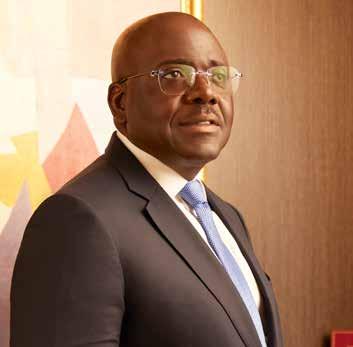
You were recently honoured at the Nigeria International Energy Summit for your leadership in the energy sector. What did that recognition mean to you personally?
This recognition at NIES 2026 represents far more than personal achievement. It is a validation of the indigenous capacity we have worked to build over three decades. When President Bola Ahmed Tinubu, GCFR, opened the Summit and the award was presented at the State House Banquet Hall, it affirmed that our commitment to domestic refining, energy security, and industrial development aligns with the nation’s strategic priorities. This honour belongs to every Nigerian who believes that our energy sector can be transformed by homegrown enterprise, innovation, and sustained investment in our people and institutions.
When you reflect on that award, which moments or decisions in your career do you feel it truly represents?
Several defining moments come to mind. First, the decision in 2004 to take on the Ibigwe Marginal Field as Operator when indigenous companies were still proving their technical capacity. Second, the commitment to build the Waltersmith modular refinery despite numerous challenges, completing it in 2020 and expanding it to 10,000 barrels per day. Third, achieving first oil from the Assa field in 2025, which strengthened our crude supply for domestic refining. Fourth, our strategic participation in major acquisitions, such as the $600 million OML 34 transaction and the $2.4 billion Renaissance Consortium deal. Each of these decisions required courage, capital, and conviction that indigenous operators could deliver at scale. The
BY AZUKA OGUJIUBA
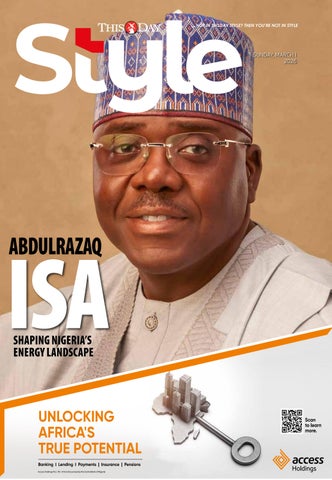
Abdulrazaq Isa, OFR, is one of the few figures in Nigeria’s energy sector whose career tells a clear story of institution building. With a background in banking and more than three decades in oil and gas, he has helped redefine what disciplined indigenous participation can look like—from early upstream operations to modular refining and now largescale industrial development. Under his leadership, Waltersmith has grown from a small investment company into a fully integrated energy business with a track record of taking on complex projects and delivering them with technical and financial rigour.
His recent recognition at the 2026 Nigeria International Energy Summit captured this trajectory. Presented at the State House Banquet Hall and acknowledged by the President, the award reflected not just longevity in the sector but a sustained commitment to domestic refining, energy security, and strengthening local capacity.
In this interview with Azuka Ogujiuba, he reflects on the decisions and turning points that shaped that journey—taking on the Ibigwe Marginal Field when few believed indigenous operators could deliver, building a modular refinery in an era dominated by imports, navigating multi-billion-dollar transactions, and championing policies that broadened opportunities for Nigerian companies.

award recognises not just the outcomes, but the willingness to take calculated risks for national development.
Looking back, what early experiences shaped your drive to build institutions and take on long-term projects in Nigeria?
My formative years at Ahmadu Bello University, Zaria, instilled in me a deep appreciation for rigorous thinking and national service. Growing up in Nigeria during periods of significant economic transformation, I witnessed both the potential and the gaps in our development trajectory. saw how institutional strength and long-term vision could create lasting impact. These early observations planted the seed that would later drive me to co- found Waltersmith in 1990, not as a short-term venture, but as a platform for building sustainable
Nigerian enterprises. My experience at the Lee Kuan Yew School of Public Policy in Singapore further broadened my worldview of the critical foundation a nation needs to transition from a developing to a modern country. It also gave insight into the importance of strategic thinking, policy frameworks, and the role of disciplined private sector leadership in national development.
You spent over 15 years in banking before becoming an entrepreneur. How did that period prepare you for leadership in a capital-intensive industry like energy?
Banking taught me three critical lessons that became foundational in the energy sector. First, understanding capital structure and financial risk management. Working at African International Bank
Nigeria Ltd and Chartered Bank Nigeria Plc exposed me to complex transactions, project finance, and the importance of balance sheet discipline. Second, relationship building and stakeholder management. Banking is fundamentally about trust, and that principle translates directly to energy ventures where credibility with partners, regulators, and financiers is essential. Third, patience and long-term perspective. Banking taught me that building institutions requires time, systems, and sustained commitment. When we entered the energy sector, these principles guided our approach to raising capital, structuring partnerships, and managing the extended timelines inherent in upstream development and refining projects.
What motivated you to co-found Safetrust Savings and Loan, and what did that experience teach you about building trust and scale?
Co-founding Safetrust was driven by a desire to create a financial institution that could serve underbanked segments while maintaining strong governance and operational excellence. The experience was invaluable. We learned that trust is earned through consistent delivery, transparency, and adherence to regulatory standards. Safetrust’s eventual success and integration into Sterling Bank Plc demonstrated that well-managed indigenous institutions can compete and thrive in competitive markets. The lessons on corporate governance, regulatory compliance, capital adequacy, and team building became a blueprint that carried into the energy sector. It reinforced my belief that Nigerian entrepreneurs can build world-class institutions if we commit to professionalism, ethical practices, and continuous improvement.
Waltersmith began as an investment company in 1990. At what point did energy become the central focus of the business?
Energy became our central focus as we studied Nigeria’s economic landscape in the late 1990s and early 2000s. We recognised that energy was foundational to national development and that there was a strategic opportunity for indigenous participation in upstream oil and gas. The turning point came in 2004 when Waltersmith Petroman Oil Limited was awarded the Ibigwe Marginal Field and designated as Operator. That award was both an opportunity and a responsibility. It required us to mobilise significant capital, build technical capability, and prove that an indigenous operator could take a field to commercial production. By 2008, when we commenced crude oil exports from Ibigwe, Waltersmith had firmly established energy as our core focus, and we have since built a fully integrated energy platform spanning upstream, midstream, and industrial development.
What were the key turning points that transformed Waltersmith into a major indigenous energy company?
Four key turning points stand out. First, achieving commercial production at Ibigwe in 2008 validated our technical and operational competence. Second, our participation in the ND Western Consortium’s $600 million acquisition of 45 per cent interest in OML 34 in 2012, which significantly expanded our upstream portfolio and demonstrated our capacity for large-scale transactions. Third, commissioning the Waltersmith modular refinery in 2020 and expanding it to 10,000 barrels per day, positioning us as a pioneer in domestic refining. Fourth, achieving first oil from the Assa Marginal Field in 2025, which enhanced our crude supply and operational footprint. Each of these milestones built on the previous one, creating momentum and credibility that attracted partners, financiers, and regulatory support.
The Ibigwe Marginal Field was a defining project. What were the biggest lessons from taking that field to commercial production?
Ibigwe taught us that technical competence, financial discipline, and stakeholder engagement are inseparable in oil and gas operations. We learned to manage complex interfaces with regulators, host communities, service providers, and financial institutions. The project underscored the importance of risk management in a sector where delays can be costly, and safety is paramount. We also learned the value of indigenous technical expertise. By investing in Nigerian engineers, geoscientists, and operations personnel, we built a team capable of delivering results in challenging environments. Perhaps the most important lesson was perseverance. The journey from award to first oil required sustained effort, problem-solving, and resilience. That experience prepared us for even larger challenges ahead.
How did the success of Ibigwe change how you viewed the role of indigenous operators in Nigeria’s upstream sector?
Ibigwe’s success fundamentally affirmed that indigenous operators are not just supplementary players, but essential drivers of Nigeria’s

energy future. It demonstrated that with proper planning, capitalisation, and technical rigour, Nigerian companies can operate complex upstream assets safely and profitably. This realisation shaped my leadership at the Independent Petroleum Producers Group of Nigeria, where I championed policies to improve access to financing, strengthen regulatory frameworks, and promote collaboration between indigenous and international operators. Ibigwe proved that local content is not merely a policy objective but an economic and technical reality. It inspired our subsequent investments and reinforced our belief that indigenous capacity development is central to long-term energy security and economic sovereignty.
Waltersmith’s acquisition of interests in OML 34 and later participation in the Renaissance Consortium marked a new phase. What guided those decisions? Those strategic acquisitions were guided by three principles: scale, capability building, and value creation. The $600 million OML 34 transaction in 2012, which we were a part of, represented a significant step up in asset size and production capacity. It demonstrated our ability to participate in major transactions and manage larger portfolios. Our involvement in the Renaissance Consortium’s $2.4 billion acquisition of Shell Petroleum Development Company further reinforced our position as a credible indigenous operator capable of partnering in transformational deals. These decisions were not opportunistic but strategic, aimed at building a diversified upstream portfolio, accessing larger reserves, and demonstrating that indigenous companies can anchor major energy transactions. They also created opportunities for knowledge transfer, technology adoption, and financial structuring that have since benefited other indigenous operators.
The modular refinery project has been widely recognised, including by the federal government. What kept you committed to domestic refining despite the obstacles?
The commitment to domestic refining was driven by a clear strategic imperative: Nigeria’s heavy dependence on imported petroleum products was unsustainable and economically damaging. We believed that modular refining offered a practical pathway to address this challenge while supporting domestic crude production. The obstacles were significant, from financing and logistics to regulatory approvals and market dynamics. What sustained us was the conviction that this project served a national purpose. When we commissioned the refinery in 2020 at 5,000 barrels per day and expanded it to 10,000 barrels per day, we saw tangible proof that domestic refining could work. The national significance of this achievement was recognised when former President Muhammadu Buhari conferred the Officer of the Order of the Federal Republic (OFR), acknowledging my contribution to Nigeria’s energy sector development. The award of the Assa Marginal Field in 2021 and achieving first oil in 2025 further validated our integrated approach. Now, as we plan expansion to 40,000 barrels per day, we remain focused on the original vision: enhancing energy security, reducing import dependency, and creating value-added industrial opportunities around refining operations.
The recent Energy Industry Leadership Award recognises vision and decisive leadership. How do you define leadership in a sector as complex as energy?
Leadership in the energy sector is about clarity of vision, resilience in execution, and responsibility to multiple stakeholders. It requires the ability to see beyond short-term volatility and position the organisation for long-term value creation. It means making difficult decisions with imperfect information, managing risks prudently, and inspiring teams to achieve ambitious goals. Effective leadership also demands ethical integrity, regulatory compliance, and a commitment to safety and environmental stewardship.
In Nigeria’s energy sector, leadership also means nationbuilding—recognising that our work contributes to energy security, employment, technology transfer, and industrial development. The Energy Industry Leadership Award reflects not just individual achievement but the collective effort of a team committed to these principles.
How do you balance long-term national impact with the day-today realities of running a mid-sized energy business?
Balancing long-term vision with operational realities requires strategic discipline and clear prioritisation. We maintain a dual focus: ensuring operational excellence and financial sustainability in the short term while investing in projects that deliver long-term strategic value. This means maintaining strong financial controls, optimising production, managing costs, and meeting daily regulatory requirements, while simultaneously advancing major initiatives such as refinery expansion and industrial park development. Our governance architecture serves as the primary control mechanism for sustainable growth. The Board of Directors provides strategic oversight and accountability, ensuring that management decisions align with shareholder interests and national development objectives. Board committees—including Audit, Risk Management, Finance, and Technical Committees— provide specialised scrutiny of critical business functions, from financial reporting integrity to operational safety and regulatory compliance. The Group Investment Committee evaluates capital allocation decisions, ensuring that near-term investments support long- term strategic objectives. These governance structures create the checks and balances necessary for disciplined execution while enabling ambitious growth. Regular strategic reviews, stakeholder engagement, and performance monitoring help us stay on course. Ultimately, the two are not in conflict. Operational excellence today creates the cash flow and credibility that enable long-term investments in energy security and national development. Strong corporate governance ensures we pursue growth responsibly, transparently, and sustainably.
What has been the most difficult moment in your journey, and how did it shape the leader you are today?
One of the most difficult periods was navigating the financial and operational complexities of developing the Ibigwe field and subsequently building the modular refinery. Both projects required significant capital in challenging economic environments, and there were moments when the path forward was uncertain. These experiences taught me the value of resilience, adaptability, and maintaining focus on the larger mission even when facing setbacks. They reinforced the importance of building strong teams, maintaining stakeholder confidence, and making decisions based on sound analysis rather than emotion. Adversity tests character and reveals priorities. Those difficult moments shaped my leadership style, emphasising humility, continuous learning, and the willingness to take responsibility for outcomes, whether favourable or challenging.
As former Chairman of the Independent Petroleum Producers Group of Nigeria, how do you see the future role of indigenous companies in the sector?
Indigenous companies will play an increasingly central role in Nigeria’s energy future. During my tenure as Chairman of IPPG, we championed policies to improve access to financing, strengthen regulatory frameworks, and promote collaboration between indigenous and international operators. The sector is at an inflection point. As international oil companies divest from onshore and shallow water assets, indigenous operators are stepping in, bringing local knowledge, agility, and commitment to domestic development. Our role extends beyond production to encompass refining, gas utilisation, industrial development, and technology adoption. The future belongs to indigenous companies that demonstrate technical competence, financial discipline, and a commitment to value addition and industrialisation, local content, environmental stewardship, and community engagement. With the right policy support and access to capital, indigenous operators can anchor Nigeria’s energy security and drive economic diversification.
When people look back on your career and the award you received at the Nigeria International Energy Summit, what do you hope they will say about your impact?
hope they will say that contributed to building indigenous capacity and institutions that served Nigeria’s long-term interests. That demonstrated that Nigerian entrepreneurs can compete globally while remaining rooted in national development. That I led with integrity, took calculated risks for the greater good, and inspired others to believe in the transformative potential of our energy sector. hope they will recognise that the Waltersmith story is not about individual success but about what can be achieved when vision, discipline, and commitment to national service come together. Ultimately, I hope my career and the recognition at NIES 2026 encourage a new generation of Nigerian leaders to pursue ambitious goals, build institutions that outlast them, and contribute to a more prosperous, energy-secure, and industrially competitive Nigeria.
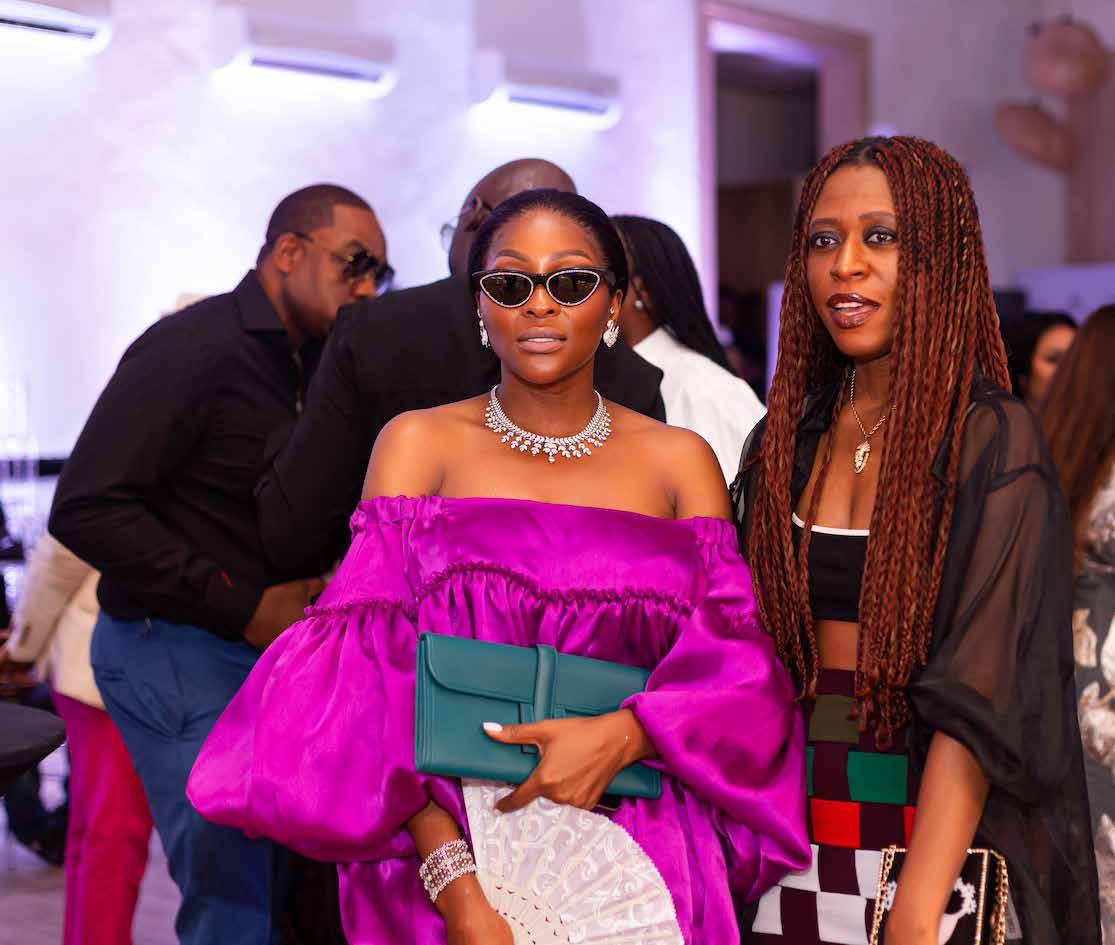
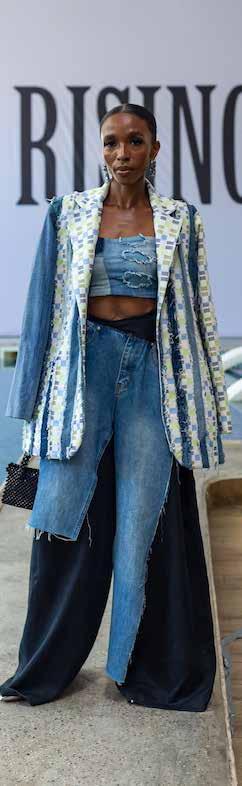
For a while, it seemed like our wardrobes were being edited by the same invisible hand. Scroll long enough, and you’d see it, the same trending colours, the same silhouettes, the same “must-have” pieces appearing on different bodies with almost identical styling. It wasn’t that fashion lost its magic; it just became a little too coordinated, a little too predictable. Lately, that’s changing. People are stepping away from the copy-and-paste formula and dressing with more intention again. Wardrobes are becoming personal archives shaped by memory, lifestyle, mood, and taste rather than whatever the algorithm declares essential. If you’ve been feeling the urge to look more like yourself and less like a curated feed, here are ten ways to reclaim your personal style.
1. Start With What You Already Own
Before thinking of buying anything new, go back to your wardrobe. Pull out the pieces you naturally gravitate toward, not the items you bought because they were trending, but the ones that feel right on you. These are the foundation of your real style. Study them: the cuts, colours, fabrics, and shapes. They’re already telling you who you are.
2. Dress for the Life You Actually Live
A major part of personal style is practicality. There’s no point building a wardrobe that fits the life you wish you had. Romanticising an imaginary lifestyle is how closets end up full yet unwearable. Think about your week: your routine, your workload, your errands, your social life. Your wardrobe should support your reality — not compete with it.
3. Identify Your Signature Elements
Every stylish person has a few recognisable elements that form the backbone of their look. It could be structured shirts, flowy dresses, strong jewellery, monochrome palettes, denim, or a specific silhouette. When you find your signatures, you create a visual language that feels cohesive and unmistakably yours. These elements bring continuity to your style without making it predictable.
4. Build a Wardrobe You Can Repeat Easily
Repetition is not a lack of creativity; it’s clarity. Rewearing outfits is one of the easiest ways to refine and reclaim personal style. When you repeat pieces, you begin to see what genuinely works for you. You also learn how to restyle the same items in new ways, making your wardrobe more versatile and less wasteful.
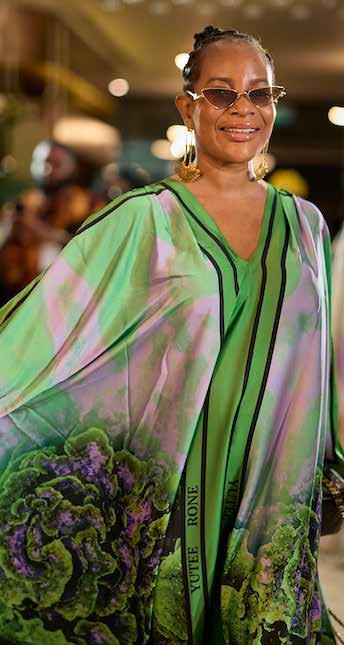

5. Slow Down Your Shopping
Impulse shopping is one of the biggest killers of personal style. Buying pieces simply because “they’re in” dilutes your identity. Slow, deliberate shopping keeps your wardrobe intentional. Before buying, ask yourself:
— Will wear this often?
— Does it fit into what already own?
— Does it reflect how want to dress every day?
Good style doesn’t require volume; it requires direction.
6. Rebuild Your Silhouette Vocabulary
Personal style becomes more defined when you understand which shapes work best on you. Spend time experimenting: wide-leg trousers versus tapered trousers, longline blazers versus cropped blazers, fitted dresses versus relaxed dresses. Once you find silhouettes that consistently flatter your proportions, dressing becomes faster, more instinctive, and more aligned with your natural preferences.
7. Lean Into the Colours That Feel Natural to You
Colour plays a big role in style identity. Some people thrive in earthy neutrals, others in jewel tones, and others in soft pastels or bold primaries. Look at your wardrobe and pick out the colours you never struggle to style. These are your anchor shades. Build around them. They help unify your style and prevent your wardrobe from feeling chaotic.
8. Mix Old Pieces With New Finds
A truly personal wardrobe feels layered, a mix of old favourites, new season pieces, vintage finds, sentimental items, and everyday staples. When everything in your closet is brand new, your style looks manufactured. When everything is old, it can feel dated. The balance creates depth and makes your wardrobe feel lived-in and real. One great new piece can refresh an entire rotation.
9. Edit Your Wardrobe Regularly
Editing is a crucial part of reclaiming personal style. Remove anything that doesn’t fit, doesn’t serve your lifestyle, or doesn’t feel like you anymore. A wardrobe full of “almost” pieces makes dressing harder. A well-edited closet, even if smaller, sharpens your eye and helps you make intentional choices. Think of it as curating your own visual identity.
10. Create a Style Reference Board (For Yourself Alone)
Instead of scrolling endlessly and getting overwhelmed by aesthetics you don’t even like, create a small personal reference board, digital or physical. Fill it with outfits that reflect your reality and taste. Include fabrics, silhouettes, colour palettes, and styling ideas that resonate with you. It becomes your compass, keeping you aligned with the style you’re reclaiming rather than the trends trying to distract you.
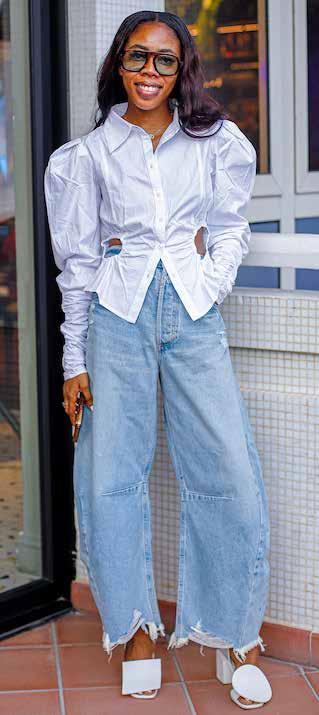
Fashion has a way of circling back to the things that make getting dressed feel exciting, and right now, that revival is happening from the ankles down. After a long stretch of practical footwear dominating wardrobes, statement shoes have slipped back into the spotlight. Not loudly, not desperately, just confidently. Almost like they knew we’d eventually remember how much joy a bold pair of shoes can bring. Here are eight reasons statement shoes are having their moment, again.
1. Because Quiet Luxury Got… Quiet
Minimalism had a long run.
We bought the beige flats, the understated loafers, the comfortable sneakers that went with everything. But fashion fatigue always comes. Statement shoes offer the antidote — colour, height, sculptural heels, silhouettes that add personality back into getting dressed. They’re the jolt the wardrobe needed.
2. Because Shoes Are Becoming the New Personality Piece
If accessories could speak, shoes would be the loudest in the room. Today, they’re not just finishing touches; they’re mood indicators. Metallic platforms, exaggerated bows, crystal-encrusted mules, boots that look like they came straight out of a fantasy storyboard. Your outfit tells the story, but your shoes deliver the punchline.
3. Because Designers Are Having Their Most Creative Footwear Moment in Years
This resurgence isn’t happening by accident. Designers are clearly hungry for play. The runways have been full of architectural heels, unexpected materials, whimsical details, and dramatic proportions. The artistry is unmistakable. Shoes are no longer just accessories; they’re tiny sculptures with straps.
4. Because the Easiest Way to Elevate an Outfit Is from the Ground Up Statement shoes have a way of transforming even the simplest look. Jeans and a white tee? Add a sculptural heel, and suddenly it looks editorial. A clean black dress? Pair it with bold shoes, and it becomes a moment.
Strong footwear doesn’t just complement an outfit; it elevates it effortlessly.
5. Because Women Are Dressing for Joy Again
Fashion became practical for a while, survival mode, convenience mode, neutral mode. But the mood has shifted. Dressing up is becoming emotional again. Women want pieces that spark excitement, that feel playful, that give a little thrill in the mirror. Statement shoes offer that without requiring a full wardrobe rethink.
6. Because Even Sneakers Have Entered Their Dramatic Era
Chunky silhouettes, bold colours, oversized soles, the sneaker world has embraced the maximalism wave. The once-dominant “quiet white sneaker” now shares space with sneakers that want to be seen. Statement dressing is no longer limited to heels; even comfort pieces are demanding their spotlight.
7. Because Photogenic Fashion Always Wins
Whether it’s a brunch outfit shot, a wedding look reveal, or a quick mirror selfie before stepping out, bold shoes always steal the frame. They catch the light, define the silhouette, and make any outfit look intentional. In a world where visual storytelling is everything, shoes that spark curiosity win every time.
8. Because Fashion Needed a Little Drama
Let’s be honest: style got too safe for a while. Too curated. Too predictable. Statement shoes restore the gasp factor, that delicious moment of seeing someone walk in and thinking, Oh, we’re doing fashion today. They’re not here to replace the staples; they’re here to wake them up.




By Funke Babs-Kufeji
Cleansing is not just splashing water on your face in the shower. Throughout the day, your skin collects sweat, oil, sunscreen, and environmental debris. If that buildup stays, pores clog and everything applied afterwards struggles to work.
Wash your face in the morning and at night with lukewarm water and a cleanser suited to your skin type. Oily skin benefits from a light foaming formula that clears excess oil without stripping. Dry skin responds better to cream or milk cleansers that leave a soft finish. Sensitive skin requires fragrance-free options that minimise irritation.
Good skin is not built in a week. It doesn’t come from panic-buying every new serum that shows up on your feed, and it certainly isn’t the result of a complicated ten-step routine you abandon after three days. Good skin is built quietly through simple habits repeated daily. When you decide to put your skin first, you move from covering problems to preventing them. Instead of constantly fighting breakouts, razor bumps, dullness, or uneven tone, you begin maintaining clarity. Shaving becomes smoother. Oil balances itself. Texture improves. Bare skin starts to look considered, not neglected. The formula is simple: cleanse properly. Treat intentionally. Moisturise consistently. Protect daily. That’s it. The power lies in doing it every day.

Massage the cleanser into your skin for about thirty seconds using your fingertips, not a rough sponge. Rinse thoroughly and pat dry with a clean towel — do not scrub. Proper cleansing leaves your skin balanced, not tight. Clean, not squeaky.
For many men, shaving is the silent disruptor.
A dull blade, dry shaving, or constantly going against the grain can weaken the skin barrier and trigger irritation or ingrown hairs.
Use a sharp razor. Always shave on hydrated skin, ideally after cleansing or a warm shower. Apply a shaving cream or gel, then shave in the direction of hair growth. Rinse with cool water and moisturise immediately after.

Treatment products should solve real problems, not create new ones. Choose one or two ingredients that match your needs and use them consistently.
If breakouts or clogged pores are your concern, salicylic acid helps dissolve excess oil and keep congestion under control. If dullness or uneven tone bothers you, vitamin C supports brightness and improves clarity over time.
Niacinamide is a reliable all-rounder — calming redness, balancing oil, and strengthening the skin barrier.


Apply the treatment to clean skin and allow it to fully absorb before layering anything else. More product does not mean faster results. Overuse leads to irritation, and irritation sets you back. Restraint is part of discipline.
Every skin type needs moisture — including oily skin. When skin lacks hydration, it compensates by producing more oil, which only worsens congestion. The difference lies in texture. Gel moisturisers work well for oily or combination skin because they hydrate without heaviness. Creams are better suited for dry or mature skin. Lotions offer a balanced middle ground. Apply moisturiser while your skin is slightly damp to lock in hydration. Cover the face and neck evenly. Properly moisturised skin feels comfortable throughout the day and is less prone to irritation or dry patches.
If there is one step men skip most and regret later, it is sunscreen. Daily sun exposure contributes to uneven tone, dark spots, fine lines, and loss of firmness. And most of it happens gradually.
A broad-spectrum SPF 30 or higher applied

every morning preserves everything your routine builds. Apply generously to the face and neck as the final step of your morning routine. If you spend extended time outdoors, reapply as needed. Without protection, progress fades faster.
Once or twice a week, add gentle exfoliation to remove built-up dead skin cells that can leave the surface looking dull. Mild chemical exfoliants are often more even and less abrasive than harsh scrubs.
You can also use a clay mask if your skin feels congested, or a hydrating mask if it feels tight. The goal is maintenance, not overload. Avoid stacking multiple strong active ingredients in one session.
The skincare industry thrives on urgency, new launches, miracle ingredients, dramatic promises. Good skin, however, thrives on repetition.






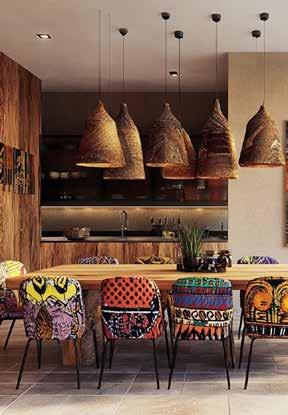
There’s something almost intimidating about interior design advice. Scroll long enough, and you’ll start to believe there’s a design tribunal somewhere issuing citations for mismatched finishes and incorrectly sized rugs. Never mix patterns. Always match your metals. Keep your ceilings white. Make sure everything lines up perfectly.
But here’s the quiet truth: the most memorable homes rarely follow the rulebook too closely. They feel layered, lived-in, slightly rebellious. They tell stories. They reflect the people inside them, not a Pinterest board curated by strangers. A home should feel like you exhaled into it, not like you assembled it under pressure. And sometimes, that means breaking a few “rules.”
Here are the ones worth ignoring.
By Funke Babs-Kufeji
We’ve all heard it: stick to one pattern family. Florals with florals. Stripes with stripes. Keep it cohesive. Keep it safe. But safe can be dull.
Pattern mixing, when done thoughtfully, brings energy into a room. It signals personality. A striped armchair paired with floral cushions. A geometric rug beneath a subtle botanical sofa. Even polka dots meeting plaid, yes, it can work.
The secret isn’t avoiding contrast; it’s managing it. Anchor stronger prints with neutrals so the room can breathe. Repeat at least one colour across different patterns to create visual continuity.
And don’t forget scale. Pair a large, dramatic pattern with something smaller and more delicate. Two loud prints competing at the same scale will argue. Different scales? They’ll converse.
“Never paint a ceiling dark.” That rule has been around for decades, usually followed by a warning that dark colours make spaces feel small and oppressive. But that’s only half the story. Dark colours, when used intentionally, create intimacy and depth. A navy or charcoal ceiling in a bedroom can feel cocooning. A deep olive or moody plum in a dining room can make candlelight glow richer, and conversations linger longer. Instead of shrinking a room, a dark ceiling can blur boundaries, especially at night. It can draw the eye upward and add architectural drama that a standard white ceiling simply cannot provide. If you’re hesitant, start with a smaller space — a study, a powder room, even a hallway. Pair dark walls or ceilings with warm lighting and textured materials like wood, linen, or brass. The combination feels grounded, not heavy.
Technically, this isn’t about breaking a rule; it’s about breaking a bad habit. Too many homes rely on a single overhead fixture to do all the work. One light source flattens a room. It casts harsh shadows and leaves corners forgotten. Layered lighting transforms a space. A chandelier or pendant can provide ambient light.
Floor lamps add warmth to corners. Table lamps bring intimacy to side tables and consoles. Wall sconces introduce softness at eye level.
Think of lighting like makeup for your

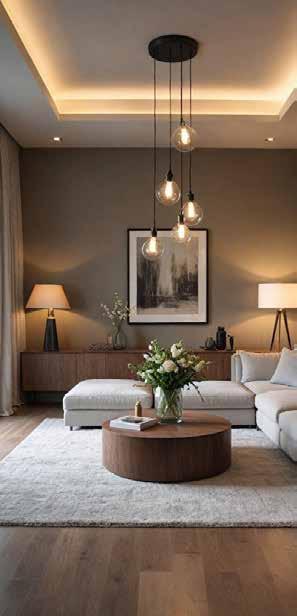
home. You wouldn’t rely on just one product. Why rely on one bulb? Mix warm bulbs with dimmers so you can control the mood. In the evenings, overhead lights can feel clinical. A combination of lamps at different heights makes a room feel relaxed, almost cinematic.
There was a time when matching metals was treated like gospel. If you chose brushed brass for your tapware, every handle, hinge, and light fixture had to comply. Thankfully, design has evolved. Brass can sit beautifully beside matte black. Chrome can coexist with copper. The trick is balance, not uniformity. Choose one dominant finish, then introduce a secondary metal sparingly through accessories or smaller details. The same applies to materials. Velvet beside leather. Marble against wood. Glass paired with woven textures. Contrast creates interest. When everything matches perfectly, a room can start to feel showroom-stiff — polished but lifeless. Layering materials adds dimension. A sleek glass coffee table feels warmer when grounded by a textured rug. A leather sofa softens with linen cushions. Wood tones break up metallic finishes.
Your home shouldn’t look like it was purchased in one afternoon from a single catalogue. It should feel collected — assembled over time, piece by piece.
We’re often told that large furniture will overwhelm a small room and that small pieces get swallowed up in large spaces. While scale absolutely matters, sometimes the bold move is the right one. A large piece of art in a small living room can anchor the entire space and make it feel intentional rather than cramped. A generously sized rug can unify furniture and visually expand a room. In larger spaces, scattering too many oversized pieces can feel imposing. Instead, layering