AKERELE
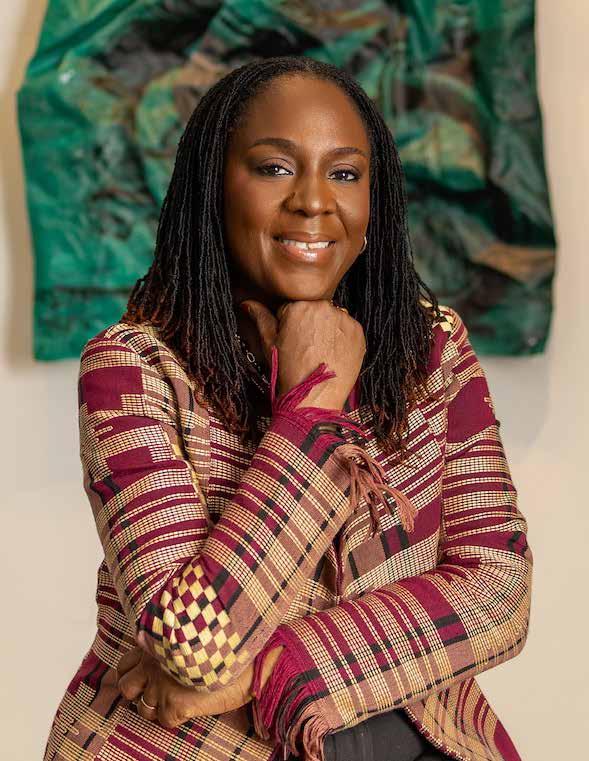






ome imbalances are created. Others simply exist.
By the time two people meet, life has already introduced differences neither of them had any control over. Money. Family. Career. Reputation. Influence. Opportunity. Sometimes one person’s world naturally carries more weight than the other’s, not because either intended it, but because that is the reality they bring into the relationship. What interests me isn’t the imbalance itself. It’s how couples learn to live with it. How decisions are made, how compromises happen and whether equality always has to mean both people carrying exactly the same weight. That’s the conversation at the heart of this week’s opinion piece, When Love Comes with a Power Imbalance. It isn’t about villains and victims. It is about the subtle, often unspoken negotiations that happen when two people begin a relationship from very different places, and why those differences deserve more honest conversation.
Relationships aren’t the only things that tell our stories. Books do too.
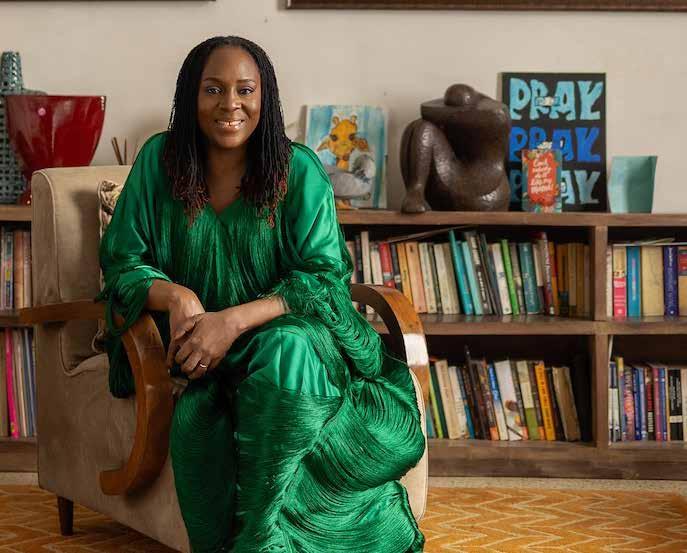
I’ve always loved being surrounded by books, although I’ve also been guilty of buying far more than I can realistically keep up with. Sometimes it’s an author’s reputation, a glowing recommendation or simply a beautiful cover. Before you know it, the pile beside the bed has become more ambitious than your reading schedule. If you’ve ever found yourself in that situation, you’re in good company. Building a Library
You’ll Actually Read is for anyone who wants to move beyond collecting books and start building a library that genuinely reflects their interests and reading habits. After all, the best libraries are not measured by how full the shelves are, but by how often the books leave them. And then there are the spaces we call home. Have you ever walked into a house and felt as though you already knew the person who lived there? Not because it was perfectly styled or filled with expensive furniture, but because every room revealed something about them. The artwork, lighting, books on the coffee table, souvenirs collected over the years and even the little imperfections came together to tell a story.
In Designing a Home That Feels Like You, we explore how to create a space that reflects your personality rather than simply following trends because the most memorable homes are the ones that couldn’t belong to anyone else.
Before I go, here’s my usual check-in. hope you’re doing okay. hope work has been kind, life hasn’t been too overwhelming, and you’ve found at least one thing this week that made you smile unexpectedly. Have a beautiful week, enjoy the issue and, as always, thank you for spending a little of your time with us.

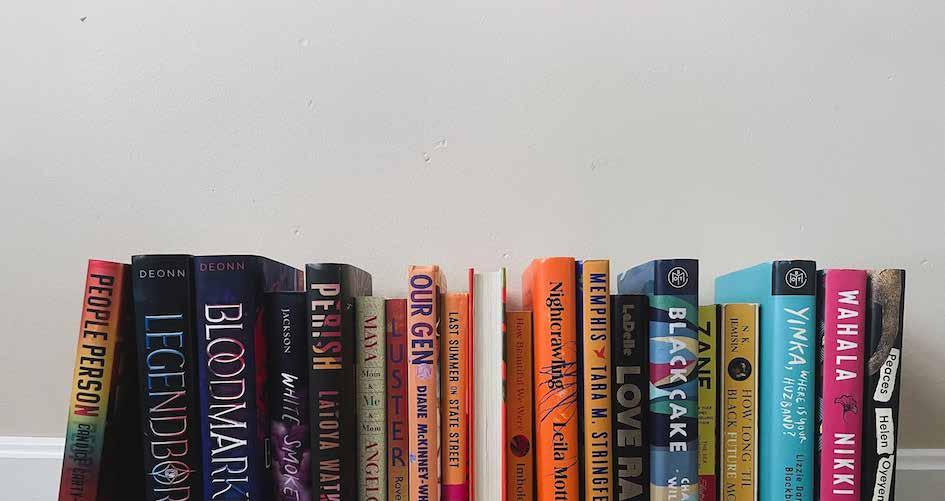
There is a particular kind of optimism that comes with buying a new book. You pick it up because everyone has been talking about it, because the cover is beautiful, or because you happened to wander into Roving Heights for “just five minutes” and somehow left with three books you absolutely didn’t plan to buy. You tell yourself you’ll start reading that evening, or over the weekend, or on your next flight. Then life happens. Work gets busy. Instagram steals another hour of your day. Netflix releases a new series. Your phone keeps buzzing. Weeks later, that brand-new book is still sitting on your shelf looking exactly the way it did when you brought it home. If this sounds familiar, you’re hardly alone.
We love the idea of reading. We admire people who always seem to have a novel tucked into their handbag or who casually mention the latest book they couldn’t put down. We save recommendations, screenshot celebrity reading lists and promise ourselves that this will finally be the year we become readers. Yet many of us own far more books than we’ve actually finished.
Perhaps that’s because we’ve been building libraries instead of reading lives.
A personal library should never be about filling shelves or impressing visitors. Beautiful books have become part of home décor, with perfectly styled bookshelves appearing everywhere from Pinterest to Instagram. Coffee-table books on fashion, architecture and photography are now as much a design accessory as they are something to read. There is nothing wrong with that. Books can absolutely make a home feel warmer and more interesting. But the best libraries are the ones that are actually lived in. The books are
dog-eared, underlined, borrowed by friends and occasionally impossible to find because someone in the house is halfway through reading them.
The biggest mistake many people make is buying books they think they should read rather than books they genuinely want to read.
If your first attempt at becoming a reader is a dense political biography or an intimidating classic that feels like an extension of secondary school English Literature, there’s a good chance you’ll give up before chapter three. Reading should never feel like punishment.
Instead, follow your curiosity.
If you’re obsessed with fashion, build a collection around designers, runway photography and fashion history. If interiors make you happy, invest in books on architecture and decorating. Love food? Collect cookbooks and culinary memoirs.
with contemporary African fiction, memoirs, essays and poetry sitting comfortably beside international bestsellers.
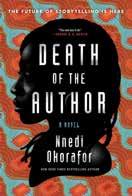
Of course, every library has room for Chinua Achebe, Chimamanda Ngozi Adichie and Wole Soyinka. But don’t stop there. Writers like Ayọ̀bámi Adébáyọ̀, Akwaeke Emezi, Abi Daré, Chigozie Obioma, Nnedi Okorafor, Jennifer Nansubuga Makumbi and Namwali Serpell are producing stories that are bold, funny, moving and impossible to forget.
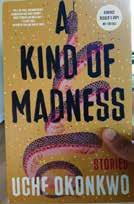
If you’re fascinated by business, technology, beauty or travel, let those interests shape your shelves. Once reading becomes something you genuinely look forward to, the habit begins to form almost without you noticing.
The good news is that there has never been a better time to build an African bookshelf.
For years, many readers instinctively reached for American and British authors while overlooking extraordinary stories much closer to home. That has changed dramatically. Nigerian publishing is enjoying an exciting moment, with houses like Masobe Books, Cassava Republic, Quramo Publishing and Narrative Landscape Press introducing readers to remarkable new voices every year.
Walk into Roving Heights today, and you’ll find shelves packed


Whether your taste leans towards romance, historical fiction, fantasy, thrillers or literary fiction, African writers are creating work that stands comfortably alongside the very best in the world. There is also something deeply satisfying about reading stories that feel familiar. The streets sound like places you’ve walked. The conversations remind you of people you’ve met. The humour lands differently because you’ve lived some version of it yourself. You don’t have to imagine what suya tastes like or what Lagos traffic feels like. The world already makes sense before you’ve turned the second page.
Of course, reading isn’t only about novels.
The most interesting personal libraries mix fiction with memoirs, biographies, art books, photography collections, essays and books that help you understand the things you care about. A fashion lover might own books on Yves Saint Laurent and Orange Culture alongside a biography of André Leon Talley. Someone interested in design might collect titles on African architecture next to books on Scandinavian interiors. A travel enthusiast might keep memoirs beside destination
guides. The best bookshelves rarely belong to people with just one interest.
Building the reading habit itself doesn’t require dramatic lifestyle changes. Most readers aren’t disappearing for five uninterrupted hours every weekend. They’re reading ten pages before bed. A chapter while waiting for a flight. Twenty minutes during lunch. A few pages before picking up their phone in the morning. Some listen to audiobooks on their commute through Third Mainland Bridge traffic instead of another podcast. Others join one of the growing number of book clubs across Lagos and Abuja, where conversations become just as enjoyable as the books themselves.
The secret isn’t finding more time. It’s giving reading a place in the time you already have.
And then there are the benefits that quietly arrive without announcing themselves.
The more you read, the easier it becomes to concentrate in a world that constantly demands your attention. Your vocabulary expands almost effortlessly. Your writing improves. Your conversations become richer because you have more ideas, more references and more perspectives to draw from. Reading introduces you to cultures you’ve never experienced, challenges opinions you didn’t realise you held, and occasionally gives you exactly the words you needed for a feeling you couldn’t quite explain.
Perhaps the greatest gift of a personal library is that it grows alongside you.
The books that fascinated you in your twenties may not be the ones you reach for in your forties. New interests appear. Old favourites are revisited. Some books are lent out and never returned. Others become annual companions, their pages worn from being read over and over again. Every shelf becomes a quiet record of the person you were and the person you’re still becoming.
By Yinka Olatunbosun
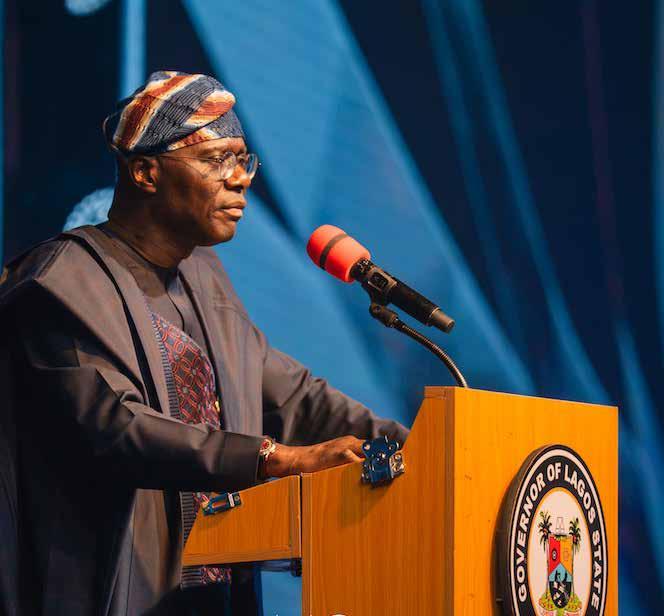
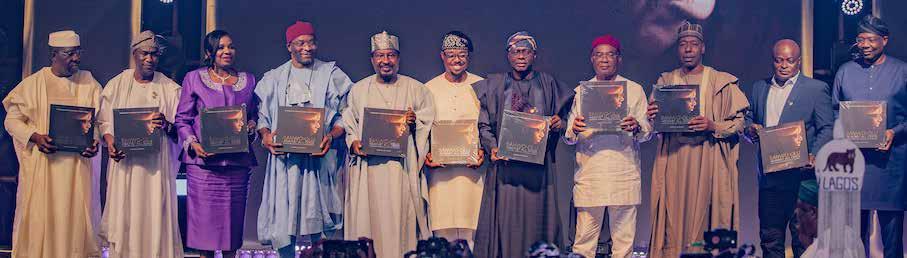
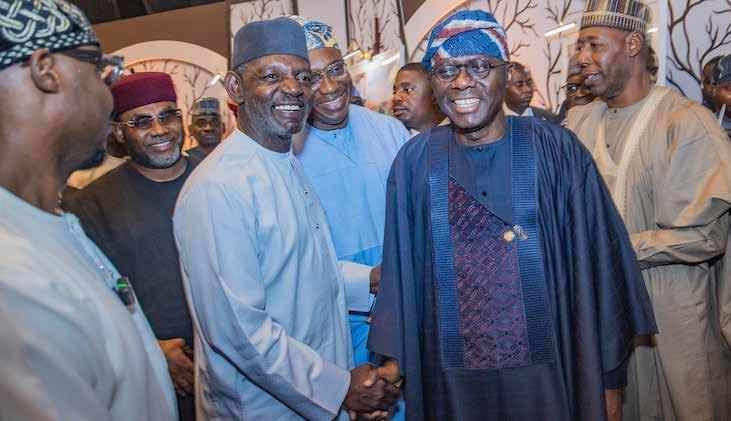
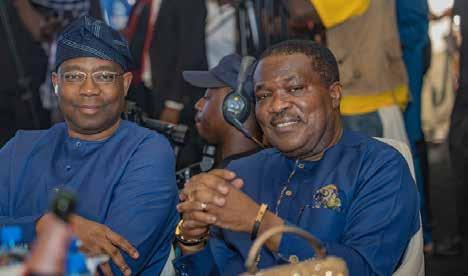
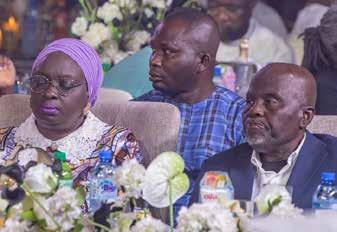
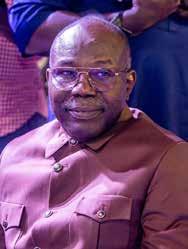
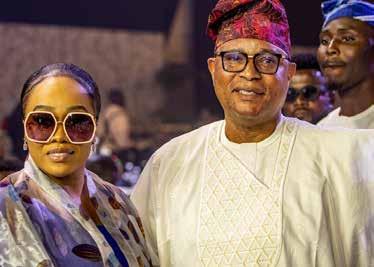
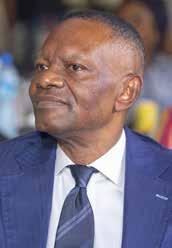
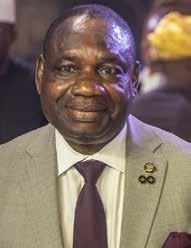
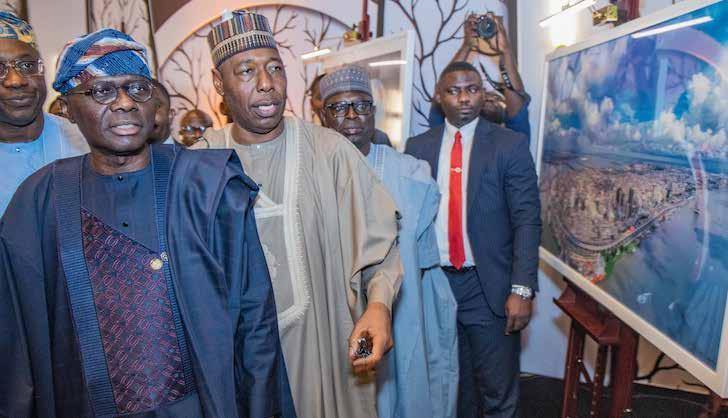
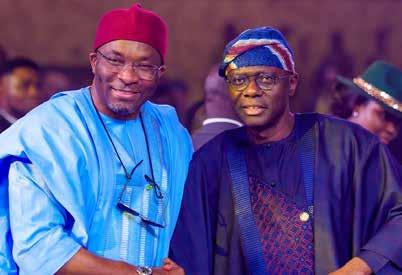
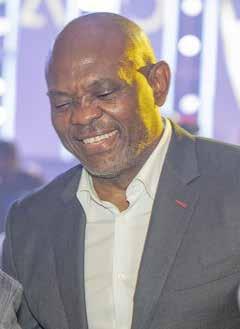
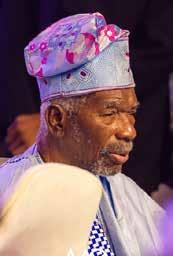
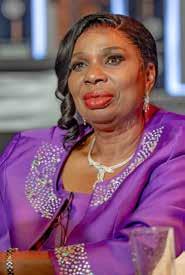
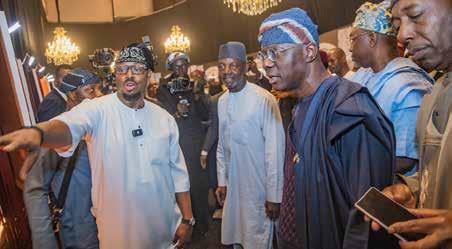
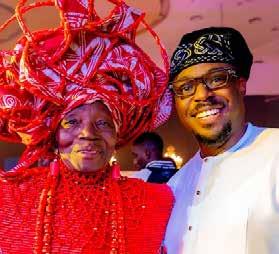
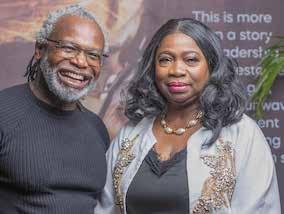
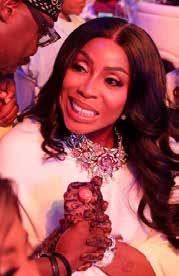
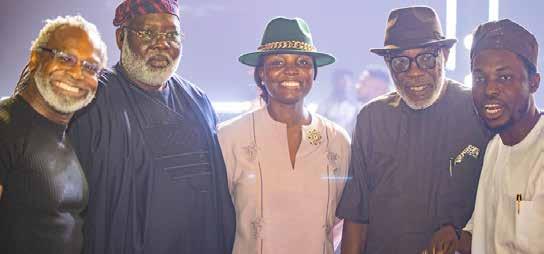
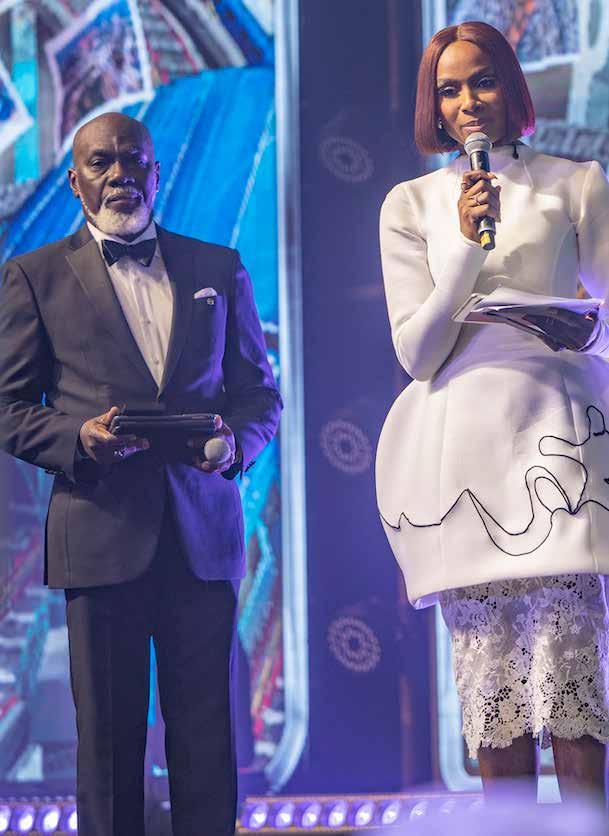
Political leaders, traditional rulers, business executives and media personalities gathered at the Eko Hotel & Suites, Lagos, for the public presentation of Sanwo-Olu: Against All Odds, A Photo Story of Resilience in the Face of Adversity, a coffee-table photobook featuring photographs by Governor Babajide Sanwo-Olu’s official photographer, Ademola Olaniran, and 11 photojournalists.
Speaking at the launch, Sanwo-Olu described the publication as unusual, noting that books about political leaders are typically written after they leave office. While his name appears on the cover, he said the real story is the resilience of Lagosians, recalling moments such as the COVID-19 pandemic, market fires and other challenges.
The governor identified as his favourite image a photograph of President Bola Ahmed Tinubu, Babatunde Raji Fashola, Akinwunmi Ambode and himself holding a model of the Lagos Rail Mass Transit project, describing it as a symbol of institutional continuity.
Reviewing the book, veteran journalist and Executive Director of TheNews/PMNEWS, Kunle Ajibade, described it as an important historical record rather than a public relations exercise. The volume chronicles defining moments of the Sanwo-Olu administration, including the COVID-19 pandemic, the Abule-Ado gas explosion, #EndSARS protests, recurring building collapses, the Blue and Red rail lines, the Lekki Deep Sea Port and other infrastructure and social interventions, while candid photographs offer an intimate portrait of leadership during one of Lagos’ most challenging and transformative periods.















@thisdaystyle

BY KONYE CHELSEA NWABOGOR
What does equality in a relationship look like when two people’s lives simply don’t carry the same weight of consequence?
Love has always liked to imagine itself as the great equaliser. It ignores surnames, age, wealth, influence and social standing, bringing together people who might otherwise never have crossed paths. It is one of romance’s most enduring promises: that once two people fall in love, everything else fades into the background. Life, however, has never worked that way.
No matter how genuine the connection, people arrive in relationships carrying the lives they built long before they met. One may come from a family where opportunity has always been within reach, while the other has spent years creating every opportunity from scratch. One is financially secure enough to take risks; the other calculates every major decision. One has travelled widely, built an influential network and established a successful career, while the other is only beginning to find their footing. There may be an age difference, different educational backgrounds, unequal levels of exposure or simply two people who have experienced the world in completely different ways.
Love can bridge those differences. However, it rarely erases them.
That is where many complicated relationships begin.
We spend plenty of time talking about compatibility.
We analyse communication styles, emotional intelligence, shared values and love languages. Yet one of the most powerful influences inside a relationship is surprisingly absent from the conversation: power.
Not power in the obvious sense of control or manipulation, but the quieter kind that comes with experience, financial security, influence, social capital, visibility, or simply occupying a different place in life.
face. Invitations arrive addressed to one name, with the other added almost as an afterthought. Even accomplished people are routinely introduced as “someone’s wife,” “someone’s husband”, or “someone’s partner,” as though their own identity deserves a footnote.
It becomes difficult to feel entirely equal when everyone around you keeps suggesting you are not.
Ironically, the person who appears to have the greater advantage is not always the one with the greater freedom. Success often comes attached to responsibilities invisible to everyone else. A founder cannot casually abandon a company built over decades. A politician lives with constant scrutiny. A surgeon cannot simply switch off their profession. A public figure loses the luxury of anonymity.
Influence opens doors, but it also narrows the margin for error. That creates an interesting paradox. One partner may seem to hold all the cards while privately feeling constrained by obligations they cannot escape. The other may enjoy greater personal freedom yet constantly find themselves adjusting to a life organised around commitments that are not their own.
Neither person necessarily has it easier. They are simply carrying different burdens.
Age adds another dimension that is often misunderstood. We tend to reduce age-gap relationships to clichés, overlooking the influence that experience naturally brings. Someone who has already navigated financial setbacks, parenthood, divorce, grief or public failure approaches life differently from someone encountering those milestones for the first time.

It is an uncomfortable word because it sounds transactional, as though acknowledging it somehow cheapens genuine affection. But ignoring it does not make it disappear. If anything, it becomes more influential because nobody is talking about it.
The imbalance rarely announces itself dramatically. It slips into ordinary moments. Plans are arranged around one person’s schedule because their commitments seem less negotiable. Decisions about where to live, when to move, how money is spent or whose career takes priority begin to tilt in one direction. Family expectations carry different weight. One partner makes adjustments because it seems practical, then makes another, until compromise quietly becomes routine.
Nobody intended for it to happen. It simply does.
The outside world often reinforces the imbalance without meaning to.
Friends instinctively seek the opinion of the older or more accomplished partner.
Families treat one person’s career as the priority while expecting the other to be more flexible. Restaurant staff direct conversations towards the recognisable
Experience can be reassuring. It can also become persuasive without intending to.
Advice slowly begins to sound like instruction. Confidence can feel indistinguishable from certainty. Before either person notices, admiration starts giving way to deference.
The healthiest relationships are not the ones where every difference disappears. They are the ones where neither partner mistakes experience for authority or admiration for surrender. Perhaps this is where conversations about equality have always missed the point. Equality has never required identical salaries, careers, family backgrounds, influence or life experience. Very few couples begin on perfectly level ground.
The more meaningful question is whether both people retain an equal claim to dignity. Can they disagree without fear of disappointing the more powerful partner? Can both influence the decisions that shape their future? Can each continue growing instead of one life expanding while the other quietly contracts? Can generosity exist without dependence? Can admiration exist without intimidation? Perhaps equality in love has never been about pretending differences do not exist. It is about refusing to let those differences determine whose dreams matter more, whose voice carries greater weight or whose future the relationship revolves around.
Because long after the world has finished assigning importance to one person over the other, the real test of equality begins behind closed doors, where titles, money, family names and public admiration should finally give way to something much simpler: two people whose lives may never look the same, but whose place in the relationship always does.
8
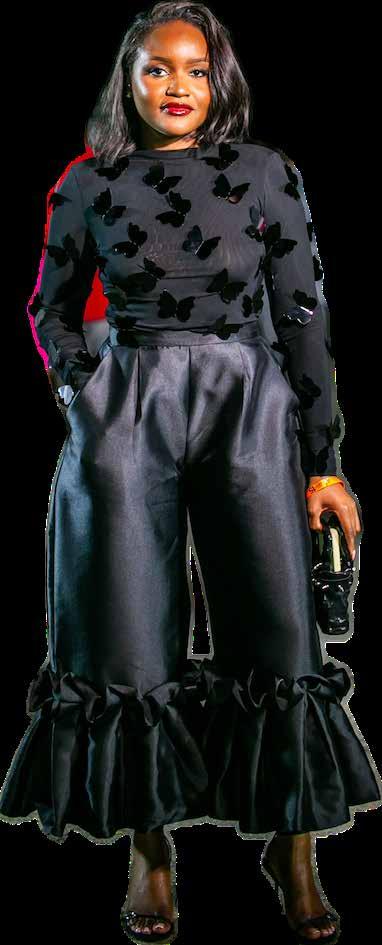
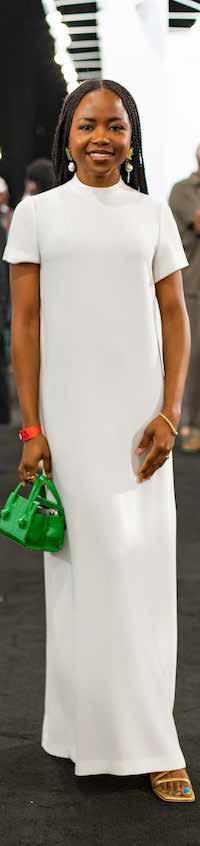
We’ve all heard the advice to “dress for the job you want.” But what if it isn’t just about work? The truth is, the life you want is made up of countless first impressions. The client you hope to land, the investor you finally meet, the creative collaborator you’ve admired for years, the invitation to an exclusive event, the introduction that turns into an opportunity. Whether we like it or not, people form opinions before we’ve had the chance to explain ourselves. What you’re wearing won’t replace talent or hard work, but it can shape the way your confidence is felt and your competence is received. The good news is that dressing for the life you want has very little to do with buying luxury labels or chasing every trend. It’s about building a wardrobe that reflects your ambitions, your personality and the direction you’re headed. Here are eight ways to do exactly that.
1. Define Your Personal Uniform
The most stylish people rarely have the biggest wardrobes.
What they do have is consistency.
Think of the people whose style you instantly recognise. They usually rely on a formula: perfectly tailored suits, oversized shirts and wide-leg trousers, monochrome dressing, crisp white shirts, sculptural jewellery or beautifully cut kaftans. Their clothes feel unmistakably theirs.
Developing a personal uniform makes getting dressed easier and creates a memorable image.
It doesn’t mean wearing the same outfit every day. It means understanding what silhouettes, colours and fabrics best represent you and building around them.
2. Prioritise Fit Over Labels
Nothing elevates an outfit faster than excellent tailoring.
An affordable blazer that fits beautifully will always look more expensive than a designer jacket hanging awkwardly from the
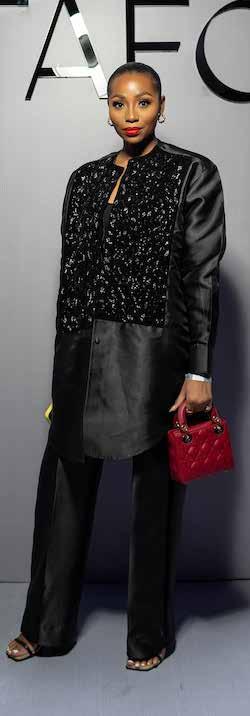
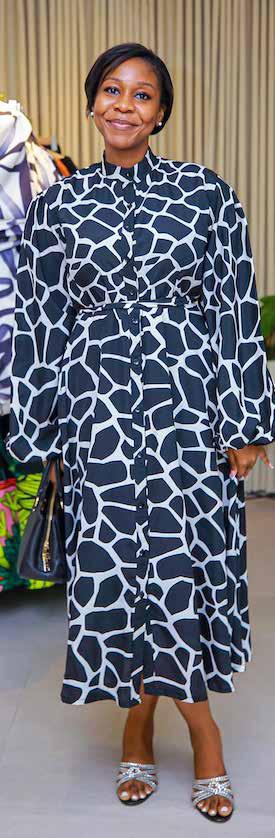
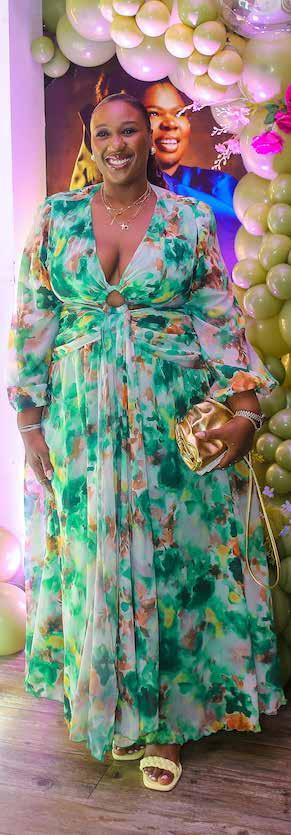
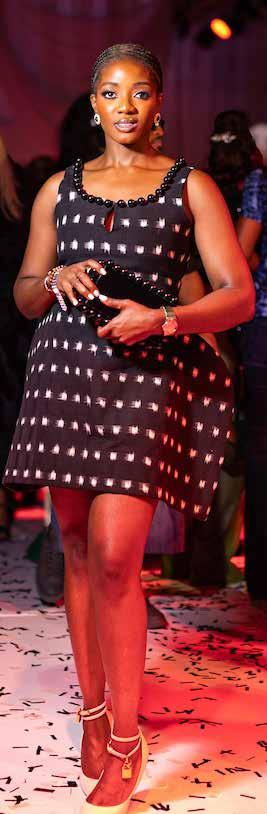
shoulders. The same goes for trousers that skim the ankle perfectly, dresses that flatter your frame and shirts that actually fit your neck and sleeves.
One of the smartest fashion investments you can make isn’t another shopping trip. It’s finding a great tailor.
3. Dress One Step Ahead
You don’t have to wait until you’ve become the CEO, creative director or founder before looking like one.
This doesn’t mean wearing a three-piece suit to brunch or overdressing for every occasion. It simply means thinking about the rooms you’re trying to enter and ensuring your wardrobe belongs there.
If your goal is to attract luxury clients, your presentation should reflect the level of service you hope to provide.
If you’re building a career in fashion, media or design, your clothes should demonstrate creativity and attention to detail. Your wardrobe should evolve alongside your ambitions.
4. Choose Quality Over Quantity
Fast fashion makes it tempting to buy more, but style usually benefits from buying better.
A well-made leather handbag you’ll carry for years is often a wiser investment than five trendy bags you’ll tire of by Christmas. The same principle applies to shoes, blazers, denim and outerwear.
Before buying something new, ask yourself a simple question: Will still enjoy wearing this three years from now? If the answer is no, it may not deserve a place in your wardrobe.
5. Stop Shopping for an Imaginary Version of Yourself
We’ve all done it.
The painfully high heels that looked amazing online but never left the wardrobe. The sequinned dress bought for a glamorous social life that never quite materialised. The viral trend that looked incredible on everyone else but never felt authentic.
Instead of shopping for fantasy, build a wardrobe around your actual lifestyle while leaving room for the future you’re creating. Buy clothes you’ll genuinely wear, not clothes you’re hoping someone else will inspire you to wear.
6. Never Ignore the Small Details
Style often lives in the finishing touches.
Wrinkled linen, scuffed shoes, chipped nails, tired handbags, loose buttons and lint-covered jackets can undermine even the most expensive outfit. On the other hand, polished shoes, neatly pressed clothing, fresh grooming and thoughtful accessories instantly communicate care and confidence.
People may not consciously notice these details, but they almost always notice the overall effect.
7. Dress Like Yourself, Not the Algorithm
Every week, social media declares a new “must-have” aesthetic. Quiet luxury. Mob wife. Office siren.Barbiecore etc. Before long, everyone starts looking like everyone else. Trends are fun, but they shouldn’t erase your identity.
The people with truly great style know how to borrow from trends without becoming consumed by them. Wear what complements your lifestyle, flatters your body and feels authentic to your personality. Fashion should amplify who you are, not disguise it.
8. Edit Your Wardrobe as Your Life Changes
Your wardrobe should grow with you.
The clothes that served you at 25 may no longer represent who you are at 35 or 45. Careers change. Bodies change. Priorities change. Style should evolve, too.
Every few months, take stock of your wardrobe. Donate pieces that no longer fit your life, repair the ones worth keeping and identify the gaps that genuinely need filling. Editing your wardrobe is just as important as adding to it.
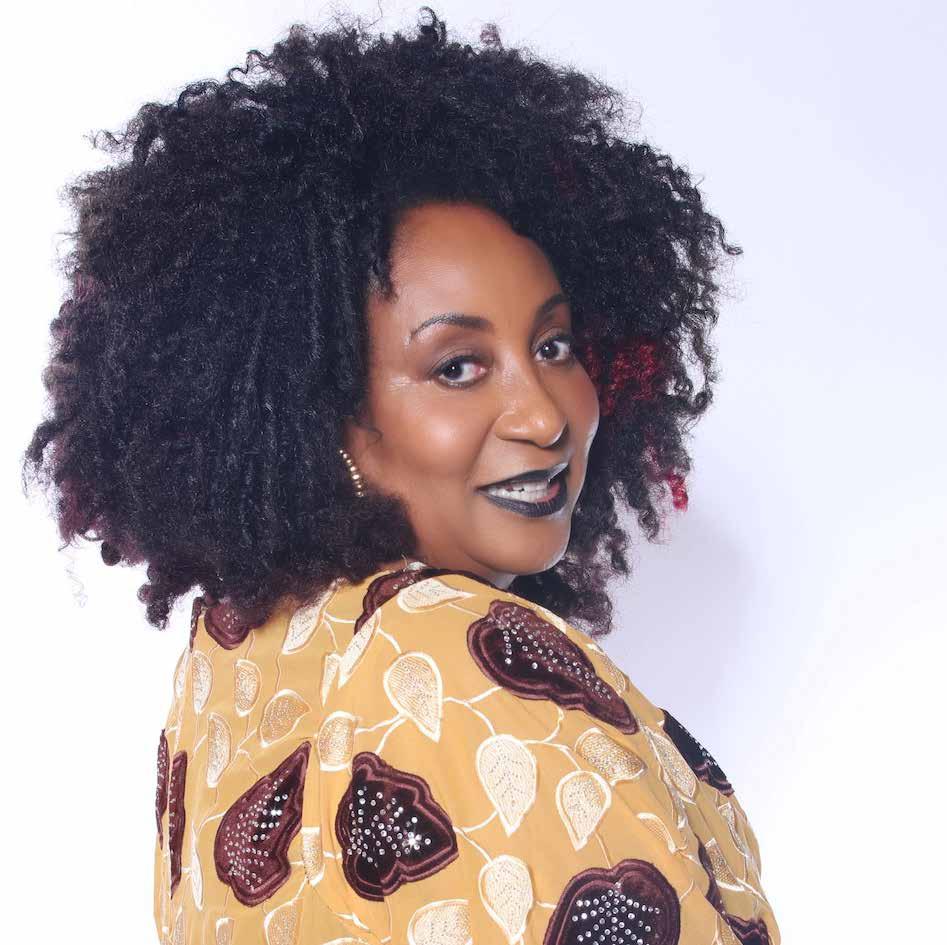
There’s no telling the story of the Afrobeat pioneer, Fela Anikulapo-Kuti, without mentioning his friend, music collaborator, and former partner, Sandra Izsadore. Born Sandra Smith in Los Angeles, USA, this singer and composer is famed for influencing the revolutionary genius Fela Anikulapo-Kuti. Izsadore, in her earlier years, was an Afro-sporting dancer and a Black Panther member who participated in the civil rights movement of the 60s. Upon meeting Fela, who only played Jazz and highlife at the time, Izsadore introduced him to political ideas that radically changed his music both in form and content. Thus, Afrobeat was born. Sandra is the only featured lead vocalist on Fela’s discography, with the song “Upside Down” -a 1977 hit. Today, Izsadore is known as The Mother of Afrobeat and is immortalised in Fela’s own biography, Fela: This Bitch of
a Life, written by Carlos Moore in 1982. Izsadore continues to fight for World Peace, Justice and Equality for all. As the world marks the 29th year after Fela’s demise on August 2, Izsadore opens up on her memories of Fela, their shared activism and how music has left conscience behind.
By Yinka Olatunbosun
You met Fela in 1969, before he created the Afrobeat genre, and you helped to infuse activism into his music. Why is music such a powerful tool for change?
He was God-sent. It was divine for us to meet and for that to happen. It was preordained in the heavens. It was something didn’t have control over.
You were hoping to learn about Africa from Fela. But Fela ended up learning from you. Was that expected?
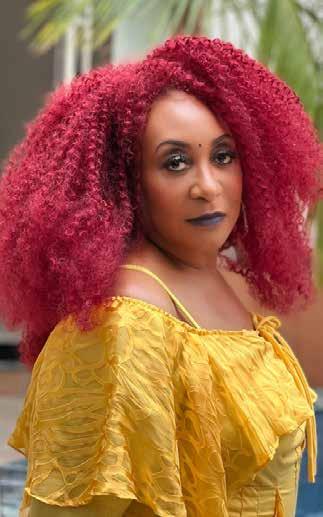
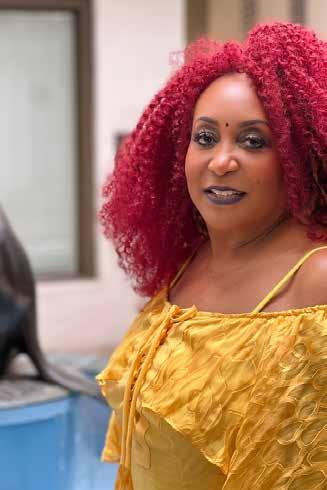
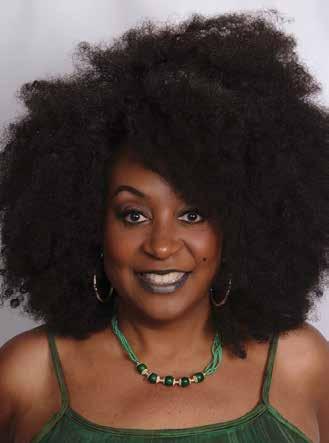
(Laughs)I thought he was going to teach me the truth about Africa and Africans, and in some way, he did. He taught me a lot, and even today, understand some things better. He used to laugh at churches and mosques in Nigeria. I looked at him strangely and wondered why. But today, don’t have to wonder anymore.
Do you remember what it was like when you first met him?
Carlos introduced me to Fela. I wasn’t going to leave home, but did. It is why I believe it is spiritual. didn’t know would help influence his journey in music and remove the scales from people’s eyes back in Nigeria, and to do it through music. I told him that, as musicians, we have a duty, and that we are sent here by the Most High. Our spiritual guide has sent the musicians here to help, lead, and teach the people. Not to tear them down. One of the things learnt about Africa was the respect for elders and respect for your fellow man. Today, it is all about money. Or my house is bigger than your house. The egos have become so out of control. They are ruled by the spirit of Ease-God-Out (EGO). It angers me.
What really motivated you to stick by Fela, and why did you follow him back to Nigeria?
Because I’m black, wanted to know about black people because I know that te-LIEvision had told me lies about myself and people who look like me. I wanted a real African man to teach me the truth.
Would you say that Fela’s fashion was influenced by that of the legendary King of Rock & Roll, Elvis Presley?
H*ll to the No! If anything, Elvis Presley was copying what the black people were doing. The black people then were being exploited left and right. The white folks called it the devil’s music. They didn’t want their children near us. We were the soul of the land. That’s what I like about us. Even in Africa, nobody can beat Nigeria in celebration. They put the ‘p’ in party. The only problem I see is that colonialism taught them to hate themselves. They don’t love themselves enough. They are wicked to each other. Where did they learn that type of behaviour? Why are some South Africans killing other Africans?
Upon arriving in Nigeria with Fela, you encountered the African polygamous system. Why was it difficult for you to navigate at first, and how did you get along with other co-wives?
(Pause) It wasn’t difficult to navigate. It was different. It was a different culture. I was there to learn and observe. Fela didn’t have wives then. They were just young women living in the commune. At first, his wife lived in his house at 14A Agege Motor Road, along with his three children, Yeni, Femi and Sola. It was during that period that I knew Iya Mary, Kunle’s mom. Those children knew to be Fela’s children.
Were you there when the ladies became wives?
No. had returned to America because it was in 1981 or 1982 when Fela thought should be a wife and didn’t think should be one. wanted to be no part of that harem. It took me too long to get over it because I was in love with Fela. I could not
accept that type of lifestyle. Polygamy is not for me. I don’t believe in sister-wives. If that’s what you like, am happy for you. Live your best life. Just not for me. But we remained friends. In fact, we went beyond friendship. We were above all of that. accepted him for who he was. He accepted the fact that I had moved on. There are many women in the world who do not mind being a sister-wife or being part of a circus. Believe it or not, there are plenty of American women who would want that. Those women usually only want your money and what you can do for them. A woman that wants to be a wife wouldn’t want that even if she is born into polygamy.
Do you remember the process that led to recording the iconic song with Fela, Upside Down?
Of course. When was at the shrine and on stage singing, I was like was talking about this people’s country. But you know what the sad part is? It is still upside down. I have always been a pan-Africanist. Africans are too busy trying to look like somebody else.
You wrote in your book, Fela and Me, that you began using African fabrics to create Western styles in an unprecedented way. What inspired that taste in fashion?
It was inspired by being black and conscious of who we are as a people, knowing that all races come from black, and we are the teachers of the world, and we continue to teach. Why should I not elevate the arts and crafts of Africa and the indigenous people of where I come from?
What did you find most exciting about Nigeria?
Everything: the colours, the smell, the food, the lifestyle, the culture and the fact that everyone was black like me. And was black like them. But a lot of them didn’t see me that way. I took my American culture with me, but the women in Fela’s house were different. found them to be subservient. Not equal but subservient to men. That was different. That’s why a lot of African men in America don’t like it when meet their wives. (chuckles). It is funny, but it’s true. Everybody doesn’t know everything. When you know something, you need to share it. A lot of women take in things they shouldn’t take in at all without recognising their own power. If women took back their power, we would have a better world.
Every year, we celebrate Felabration around October in Nigeria. Do you have parallel celebrations in the US for Fela?
We have smaller events in his honour, but nothing major like the one in Nigeria, because most people in the entertainment scene think only about making money. Everyone wants to get paid. Whatever venue you choose, they want to be paid. You have to advertise too. Everyone is trying to make a hustle. In Nigeria, it is different; it is about one week of giving. The sponsors in America don’t want the public to know the truth about Fela’s activism or how his mother and brothers fought. If you go behind the scenes, people are suffering more now than they were then. Back then, everyone lived together, and everyone was happy. witnessed Nigeria, and saw the power it could be. didn’t know that they had boots on the ground- of people coming in trying to exploit and get rich quickly. 10 people can get rich and think it is okay to let the 200 here suffer. Can you imagine? That’s what is happening. have some Nigerian friends here in America. Some had been successful in business, having their companies built in America. And because they live well, they don’t see anyone else. Forgive me if am wrong. I come from a different school: make sure everyone has a plate. didn’t see that in Nigeria. saw a few with plates and more without.
Global icons like Beyonce, Burna Boy and Wizkid have claimed to have drawn heavily from Fela’s legacy. Sadly, it is not Afrobeat that is gaining global attention right now. What does that say about conscious music? Conscious music has been suppressed because once you suppress conscious music, you can control the people. The record labels don’t want conscious music. They had a meeting about it in America in the 80s when rap music just came out. If you research rap music, you will find out that rap music was teaching consciousness and black people were empowering blacks. White executives became afraid and decided to stop it. They told TI that they don’t want him singing any kind of positive lyrics. Some people have sold their souls for fame and fortune. Fela said, “Let music be the weapon. “America heard him. They took the music, and they weaponised it, and that’s why you don’t get conscious music today. They sing all sorts of things that don’t make sense. Amapiano is ok but the lyrical content sucks. They don’t say anything. Music is to elevate and uplift, not pull down. And they are pulling down the frequency of it.
Even though you have married and you have moved on to new chapters in your life, will Fela continue to hold a special place in your heart? Always. He holds a special place in our hearts in this house. My entire family knows of Fela, knows about my relationship with Fela, and respects that. It will be unwise for me to hide or put a disclaimer on any part of my life. That will be a lie and incorrect. The day Fela and met was a gift from the Most High. We wanted to make some positive changes in the world. We thought we could help the government then. But here we are. But you have to keep living, stay positive, and raise your own vibration, because when you do, we can change the frequency on this planet. We need to have real leadership in Africa.



Enjoy elegance, convenience and confidence with the W debit card. Shop, pay bills and manage money effortlessly. You also get exclusive perks and access to W events









BY YINKA OLATUBOSUN
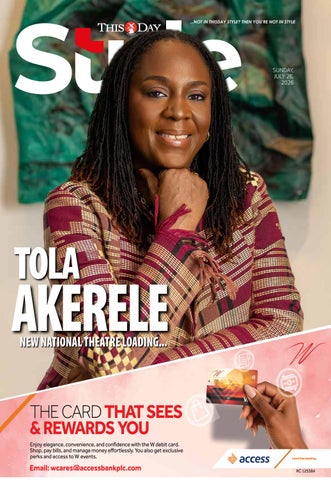
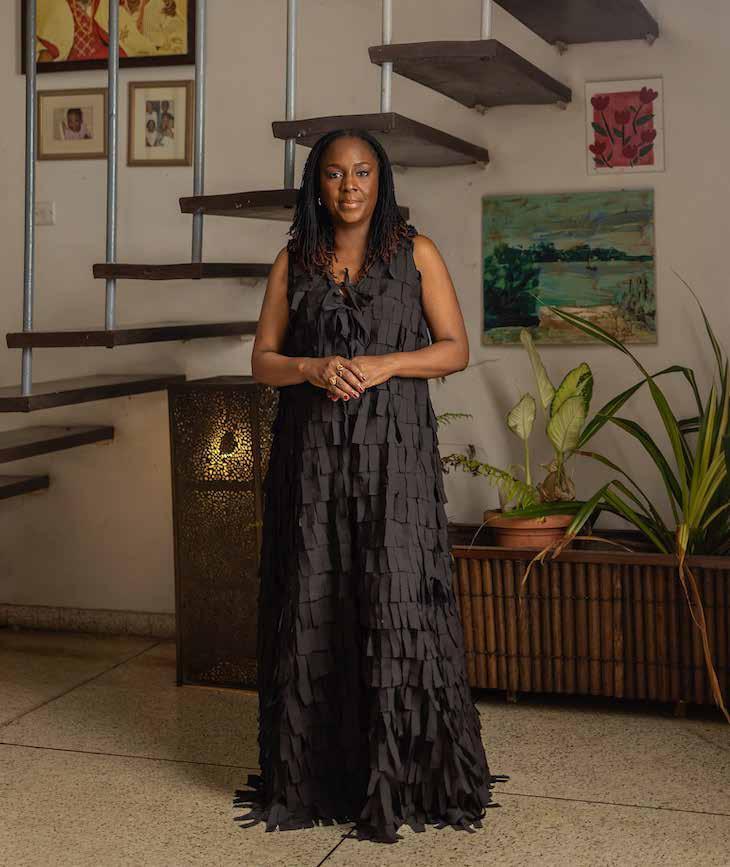
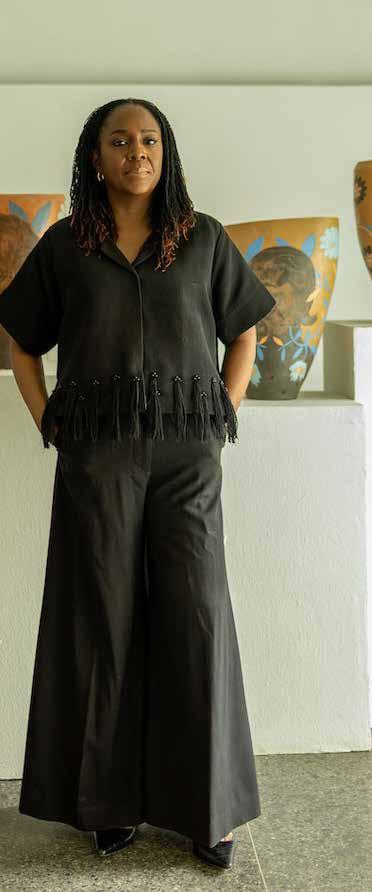
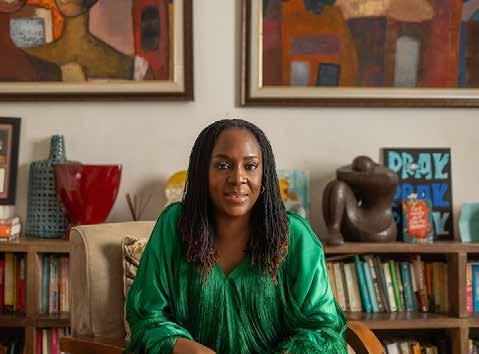
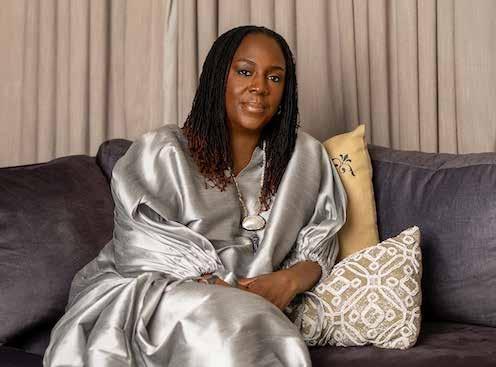
The General Manager and CEO of the National Theatre, Tola Akerele, is a visionary leader, award-winning interior designer, and cultural entrepreneur whose career has been defined by an ability to bridge business, design, and culture. Combining a meticulous corporate background with a deep passion for storytelling, she has emerged as one of the key architects shaping Nigeria’s creative economy. Interestingly, her journey did not begin in the worlds of art or design. At the age of eight, she left Nigeria for the United Kingdom to attend boarding school, first at a prep school in the seaside town of Burnham-on-Sea, before moving on to high school in Worcestershire in England’s West Midlands. She later earned a degree in Economics and Politics from the University of Bristol before launching her career in London with the global investment bank Credit Suisse as a chartered accountant.
Akerele went on to build a successful career in corporate finance, holding positions at other global financial institutions, including Deutsche Bank and BNP Paribas. Altogether, she spent more than 20 years living and working in the UK.
Following her relocation to Lagos, however, she answered a different calling. Determined to formalise her creative instincts, she studied at the Parsons School of Design in New York and the KLC School of Design in London before founding iDesign, a Lagos-based interior design firm celebrated for seamlessly blending modern functionality with rich Afrocentric themes and hand-carved furniture.
Her influence extends far beyond interiors into the wider cultural landscape. She co-founded Bogobiri House, the boutique hotel in Ikoyi that became an iconic cultural sanctuary where art, live music and Afro-fashion converged. Within it sits The Orishirishi Kitchen, an authentic farm-to-table restaurant celebrating regional Nigerian flavours, which eventually inspired her publication, The Orishirishi Cookbook.
Her commitment to nurturing the visual arts also led to the establishment of Soto Gallery and the creation of the highly anticipated +234 Art Fair, a platform designed to amplify the global visibility of emerging Nigerian artists. Her extensive contributions to design and advocacy further include serving as Vice President of the Interior Designers Association of Nigeria (IDAN). Today, Akerele is leading the grand renaissance of the country’s most iconic performance landmark, transforming the National Theatre into a world-class hub for multidisciplinary arts. She tells Yinka Olatunbosun the remarkable story behind her multifaceted career and how she is working to elevate the creative soul of a nation.
Congratulations on the reopening of the National Theatre. How does this renewed facility support the Nigerian creative economy?
The reopening of the National Theatre is a major milestone for Nigeria’s creative economy. Originally built as a cultural landmark for FESTAC, the theatre was designed to celebrate and showcase the richness of our arts and heritage. Restoring it to its former glory not only preserves
an important national asset but also creates new opportunities for creatives to express themselves across film, theatre, music, dance, and other artistic disciplines.
One of the Ministry’s key priorities is addressing the longstanding shortage of world-class infrastructure for showcasing Nigeria’s diverse artistic and cultural expressions. The National Theatre directly responds to that need. As a purpose-built, internationally competitive venue, it provides a platform for nurturing, celebrating, and presenting Nigerian talent to both local and global audiences. Its reopening is therefore more than the restoration of a building; it is an investment in the future of Nigeria’s creative economy and a catalyst for its continued growth.
How do you intend to make the National Theatre more accessible and relevant to Nigeria’s younger, tech-savvy, and digitally-native creative demographic?
While my role is primarily focused on cultural programming at the National Theatre, accessibility and relevance for Nigeria’s younger, tech-savvy, and digitally native creatives are central to how we are shaping our programmes. We’re already seeing a growing number of festivals, performances, conferences, and creative events attracting technology companies, innovators, and younger audiences to the Theatre. For many years, a generation of young Nigerians had limited opportunities to experience the National Theatre, but as it reopens as a premier, world-class creative hub, we’re seeing genuine excitement and renewed engagement.
From a programming perspective, we’re intentionally curating events that reflect the interests and aspirations of today’s creative ecosystem, while also working on policies that will encourage greater participation from the creative and digital sectors. Our goal is to ensure that the National Theatre is not only a venue for performance but also a vibrant, accessible platform where young creatives can create, collaborate, innovate, and showcase their work.
How do you maintain your creative energy and vision while navigating the bureaucratic nature of a government agency?
I’ve been fortunate to spend most of my career in the private sector, so that foundation has been very valuable. Since moving into the public sector, many of the skills and networks I’ve built have also been beneficial. Given the limited funding available, much of our work involves building partnerships and securing support for projects, and those relationships have been incredibly important.
Beyond that, being in Lagos makes it easy to stay creatively inspired. There’s always something exciting happening, whether within the Ministry and her agencies, or throughout the city’s creative ecosystem. We also have a dynamic group of agency heads, many of whom also came from the private sector, so we constantly exchange ideas and learn from one another.
Why are other government-owned theatres still not available for use by creatives who cannot afford the National Theatre?
think funding is one of the main challenges which has limited their ability to operate effectively and consistently serve the creative community. It is a challenge that requires sustained investment and attention.
The National Theatre, however, is now operating through a private sector-led initiative, and we also have to consider its long-term sustainability. At the same time, we recognise that affordability is a concern for many creatives.
That’s why we’re developing policies that will make it easier for people within the creative sector to access and use the venue. Ensuring that different creative communities can present their work there is essential, while advocating for greater investment in public cultural infrastructure across the country.
Right from the days of Bogobiri to Soto Gallery, you have deepened your appreciation for the Arts in visual art, food, music, and fashion. What expectations do you have for the arts and culture scene at large?
Nigeria is incredibly blessed with creativity and culture. We have so much to offer, and everything I’ve done from the gallery to my other projects has been about presenting our culture in ways that are exciting, authentic and compelling.
Whether through art forums, exhibitions or publishing, the goal has always been to create platforms where people can engage with Nigerian creativity. The Orishirishi cookbook, for example, was about documenting and celebrating Nigerian food because, although didn’t grow up here, I wanted to understand more about our culinary heritage. The more I explored it, the more
realised just how rich it is.
How do you view the role of the National Theatre in the broader tourism ecosystem of Lagos and Nigeria?
The National Theatre is one of Nigeria’s most iconic buildings, and it has an important role to play in cultural tourism. I believe cultural tourism is an area Nigeria and Lagos in particular should invest in because we already host so many major events, especially during the final quarter of the year, including Fashion Week, Design Week, Art Week and Theatre Week. People around the world are looking for authentic and original cultural experiences. Whenever I travel, I see tremendous interest in Nigerian creativity. We should use that interest to promote tourism and
showcase who we are as a people.
Your activation of +234 Art Fair is yet another blueprint for collaboration with the corporate institution. What are the benefits that such initiatives have on our creative economy?
Partnerships with private institutions such as Ecobank allow us to amplify our impact. Before Plus234 Art Fair, we had a smaller initiative called iDesign Arts, but this partnership enabled us to expand significantly, giving many more artists the opportunity to showcase their work. It also created space for workshops, presentations and professional
development. Most importantly, it gave artists from across Nigeria, not just Lagos, a platform to exhibit their work, connect with new audiences and access new markets.
These collaborations also expose artists to new ideas, best practices, and valuable public feedback, all of which contribute to their professional growth and the development of Nigeria’s creative economy.
Being a mother and wife in a high-stake public position must be demanding. How does your strength in multitasking help to deliver on your projects?
Balancing the demands of being a wife and mother with serving in a high-stakes public role is not always easy. There are days when it feels like I’m constantly switching between worlds. It’s a balancing act that requires intention, grace, and, sometimes, accepting that I won’t get everything perfectly right.
I’ve come to realise that while multitasking is one of my strengths, don’t do any of it alone. I’m incredibly fortunate to have a husband who believes in me, supports my ambitions, and encourages me to pursue the work I’m passionate about. That kind of partnership has made all the difference.
I’m equally grateful for the remarkable teams that support me, both in my businesses and in my public service. They’ve built systems that allow things to keep moving even when I’m focused elsewhere, and trust them completely. Surrounding yourself with capable, committed people isn’t just good leadership; it’s what makes it possible to show up fully in the different roles that matter most.
At the end of the day, my greatest motivation is knowing that I can contribute meaningfully to my country while still being present for the people I love. It’s not about achieving perfect balance; it’s about being intentional with the time, energy, and opportunities I’ve been given.
As an author of a cookbook titled ‘The Orishirishi Cookbook,’ what propelled you to write the book, and what gaps were you trying to fill with such literary as well as culinary effort?
The book was really about documenting Nigeria’s incredible recipes. Growing up, was familiar with only a few traditional soups, but as I travelled across the country, I discovered so many amazing regional dishes that completely broadened my appreciation of Nigerian cuisine.
Having grown up in the UK, there was also very little access to these recipes at the time. I wanted to create a book that people could share with friends and family, whether Nigerian or not, to tell the story of who we are through our food. The stories and proverbs included in the book also reflect our culture, making it much more than just a cookbook. I’d wanted to write it for a long time, and during COVID, finally gave myself a deadline and completed it. The response has been a wonderful surprise.
What do you do to relax after a cycle of international work, travel, meetings, and productions?
I enjoy spending time with my family. We entertain quite a bit, so I enjoy having good people around us. also love travelling for leisure, which allows me to rest, reconnect with my family, and recharge.
Many people see you as the epitome of ageless beauty. What habits have helped you maintain your natural glow?
I don’t know about that! (laughs)
One thing do consistently is drink a bottle of water every morning when I wake up. I also make exercise a priority, working out about three times a week, and try to get enough sleep whenever can. Those simple habits have been important for my overall well-being.
You had a successful career in investment banking before returning to Nigeria to pursue your passion. What does that journey say about the Nigerian dream?
My years in England were wonderful. I had a fulfilling career, travelled extensively and gained valuable experience. But returning home reignited my passion for Nigerian art and culture. I felt strongly that we needed to celebrate who we are as Nigerians and present our culture with pride. That vision led to the creation of Bogobiri alongside my partner Chike, which became a platform for showcasing Nigerian creativity through food, music and art. Everything we’ve done through Bogobiri has been about ensuring that Nigeria’s rich cultural heritage is experienced and appreciated by both Nigerians and visitors from around the world.
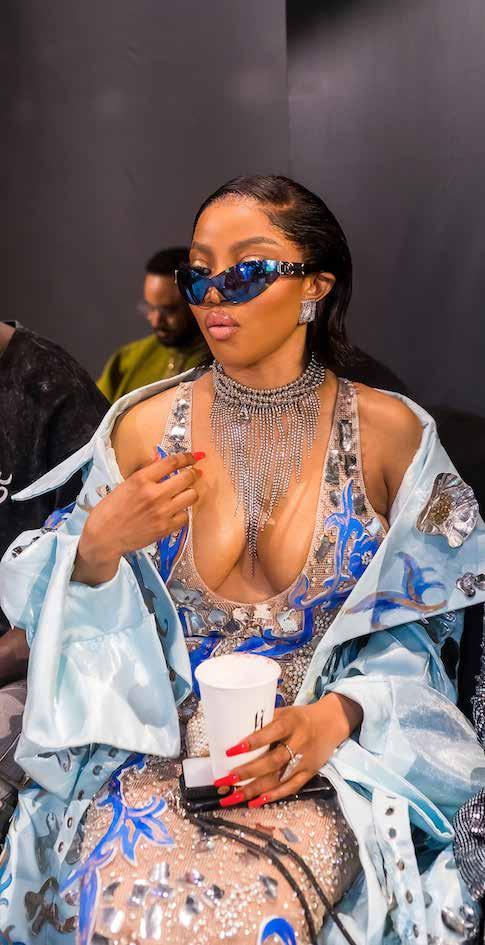
Before someone notices your handbag or your shoes, they notice your face. Sitting right at the centre of it is one accessory with the power to transform an entire outfit: your sunglasses. Once worn simply to shield the eyes from the sun, sunglasses have become one of fashion’s most influential accessories. The right pair can make a white T-shirt look expensive, sharpen relaxed tailoring or give a holiday outfit instant polish. More than a practical necessity, sunglasses have become a style signature. They don’t just finish a look; they help define it. From timeless aviators to oversized glamour frames and fashion’s latest retro revivals, every silhouette creates a different impression. Here’s what some of today’s most popular styles say about your approach to fashion.
By Yinka Olatunbosun
Some sunglasses don’t simply complete an outfit; they become the outfit. Oversized frames have long been associated with style icons who understood the power of effortless glamour. They add instant drama, create a touch of mystery and elevate even the simplest linen dress or tailored co-ord. If these are your go-tos, you appreciate fashion that feels luxurious without trying too hard.
Very few sunglasses have achieved icon status quite like the aviator. Originally designed for pilots, the style has remained relevant for decades because it never tries too hard. It is equally at home with denim, tailoring or resort wear, making it one of the most versatile accessories you can own. Choosing aviators suggests an appreciation for classics that always look current, regardless of what’s trending.
The cat-eye has gracefully evolved beyond its vintage roots. Today’s versions are sharper, sculptural and far more fashion-forward than their predecessors. Whether softly lifted or dramatically angular, they instantly bring elegance and confidence to an outfit. If your wardrobe leans towards polished femininity with a modern edge, this is likely your frame.
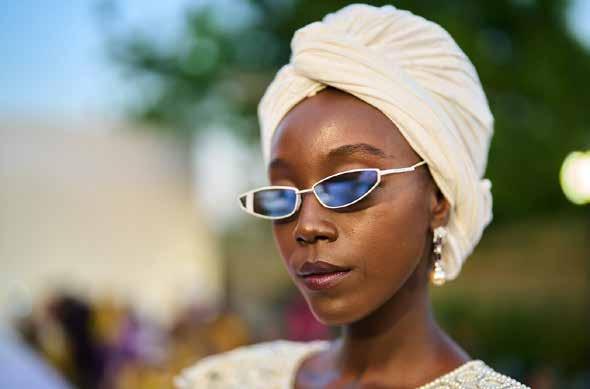


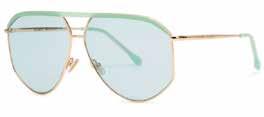
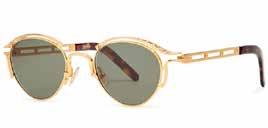
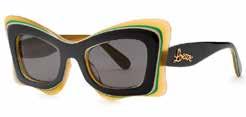
The Slim Rectangle Fashion’s obsession with the late ‘90s and early 2000s has firmly revived slim rectangular sunglasses. Frequently spotted on editors, models and offduty celebrities, they deliver an understated cool that works particularly well with monochrome dressing, oversized blazers and minimalist wardrobes. They’re proof that sometimes the smallest accessories create the biggest impact.
The Tortoiseshell Classic
If black frames are the little black dress of sunglasses, tortoiseshell is the perfectly tailored camel coat. Rich shades of amber, honey and chocolate flatter almost every skin tone while pairing effortlessly with virtually every colour palette. Sophisticated without feeling precious, tortoiseshell frames remain one of the smartest investments for anyone building a timeless accessories wardrobe.
The Retro Round Frame
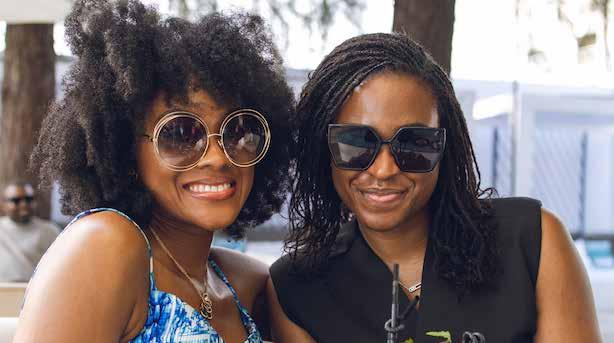
Round sunglasses have never completely disappeared, but every few years they find their way back into fashion. Drawing inspiration from the 1960s and ‘70s, they appeal to those who love vintage references without looking like they’re wearing costume. Worn with relaxed tailoring, crochet, linen or flowing silhouettes, they add an artistic, free-spirited quality that feels both nostalgic and modern.
Crystal Clear Frames
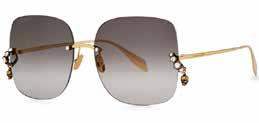

has fully embraced the shield silhouette with collaborations helping transform sports sunglasses into statement pieces. Futuristic, oversized and unapologetically bold, they work best with contemporary tailoring, coordinated athleisure and confident styling.
The Logo Lovers For some, sunglasses are as much about craftsmanship as they are about branding. Bold logo temples from popular fashion houses like Prada, Versace and Dolce & Gabbana remain popular among those who enjoy accessories that make a statement. While quiet luxury continues to influence fashion, there’s still room for pieces that announce themselves with confidence. Sometimes your sunglasses are meant to whisper. Sometimes they’re meant to steal the spotlight.
Transparent frames have quietly become favourites among lovers of modern minimalism. They add structure without overpowering the face and work effortlessly with almost every colour palette. Fresh, contemporary and endlessly versatile, they complement rather than compete with an outfit, making them ideal for those who believe the best style is often the least obvious.
The Coloured Lens Revival
Black lenses will always be classic, but fashion has embraced warmer alternatives. Amber, olive, rose, and smoke-tinted lenses soften the face while adding subtle personality to an outfit. They photograph beautifully, feel distinctly retro, and instantly give even the simplest look a fashion editor’s finish. They’re perfect for anyone who likes experimenting with accessories without stepping too far outside their comfort zone.
The Sport Shield Performance eyewear is no longer confined to the cycling track or ski slopes. Luxury fashion
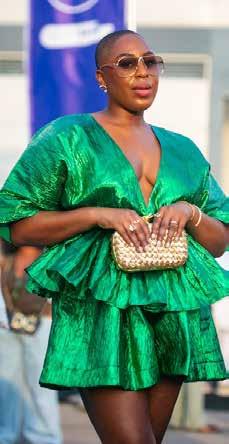
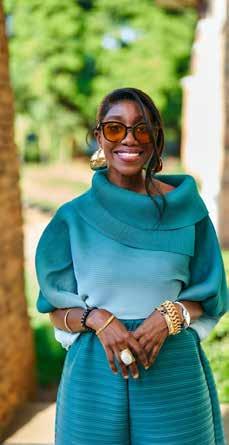

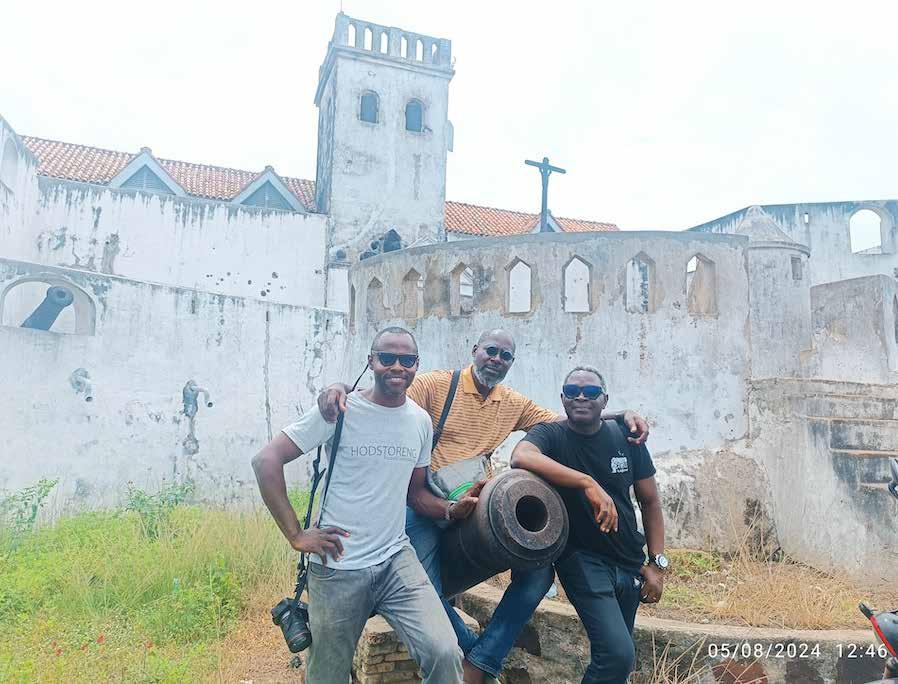
stood in the same places and returned with remarkably different stories.
All three share riverine roots.
Timipre Ama Willis is from Bayelsa, Emmanuel Zannou traces his heritage to both Lagos and the Benin Republic, while Kunle Ogunfuyi’s roots lie in Ondo, although he has spent much of his professional life in Lagos. Their shared familiarity with water gave them common ground, but their artistic instincts led them in very different directions.
For TIMIPRE AMA WILLIS, the river is a place of quiet reflection. A multidisciplinary artist, painter, printmaker and lecturer at Niger Delta University, Wilberforce Island, Bayelsa, Willis has built a practice around preserving African cultural narratives through contemporary visual language. His photographs rarely seek spectacle. Instead, they dwell on moments of stillness, where boats glide silently
disappear. That sensitivity has defined much of his artistic career. A Fellow of the Society of Nigerian Artists (SNA) and member of both the Pan African Circle of Artists (PACA) and the Art Council of the African Studies Association (ACASA), Willis has exhibited widely in Nigeria and internationally. He is also a recipient of the Boskel National Photo Contest prize and the Omooba Yemisi Adedoyin Art Foundation National Photography Competition, achievements that reflect years of quietly building one of Nigeria’s most thoughtful photographic practices.
For EMMANUEL ZANNOU, however, Relational Waters represents something different. After more than three decades behind the camera, the exhibition marks his first major documentary photography project. Widely known within the industry
Republic. Rather than directing his subjects, he found himself observing fishermen preparing their nets, children navigating narrow waterways with remarkable confidence and communities whose relationship with water has shaped everyday life for generations. His photographs examine identity through geography, revealing how rivers connect histories, families and cultures long before political borders attempt to divide them. Even after thirty years of professional photography, Relational Waters demonstrates that there are still new ways of seeing.
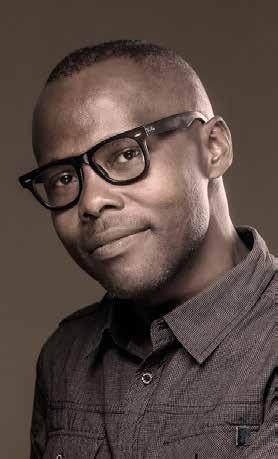
KUNLE OGUNFUYI arrived on the project with yet another perspective.
As an award-winning photojournalist and documentary photographer, Ogunfuyi has spent years documenting some of Nigeria’s defining civic moments.
places of remarkable resilience and constant activity. The waterways become thriving public spaces where commerce, transportation and social life unfold with an ease that challenges conventional ideas of what a functioning urban environment should look like.
A member of the Society of Nigerian Artists and recipient of the Pa J.D. Ojeikere Best in Photography Award, Ogunfuyi has consistently used photography to challenge narrow narratives about Africa. His selection by the United States Department of State to represent Nigeria in the Global Moment in Time project documenting the COVID-19 pandemic further affirmed his standing as one of the country’s leading documentary photographers. He currently serves as Digital Photo Editor at THISDAY.
By Yinka Olatunbosun
The first thing to learn on a journey like this is that water is never still. It shifts with the wind, changes with the light and refuses to be rushed. It leaves salt on camera lenses, dampness in equipment bags and demands a kind of patience that few forms of photography require. For six years, three documentary photographers embraced that uncertainty, travelling by water through riverine communities along the West African coastline, documenting lives that unfold between land and tide.
From the stilt-supported settlements of Benin to the fishing communities of Togo and the historic harbours of Ghana, theirs was not a sightseeing expedition. It was an attempt to understand how entire communities have built cultures, economies and identities around water. The resulting body of work now comes together in RELATIONAL WATERS, an exhibition supported by Art Audry Cognac and opening this August at Thought Pyramid Art Centre. What makes the exhibition compelling is not simply the landscapes it presents, but the fact that three photographers
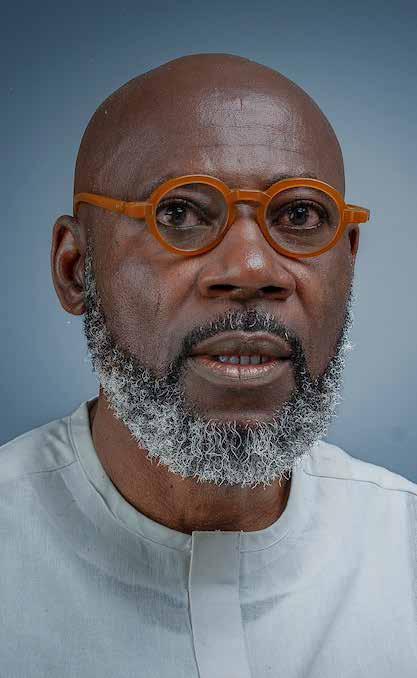
through narrow waterways, reflections dissolve the outlines of buildings and communities appear suspended between permanence and movement.
Working exclusively in black and white for this series, Willis turns attention to the relationship between architecture and water.
Houses balanced on stilts, wooden walkways and narrow channels become more than physical structures; they become evidence of generations adapting to an environment where water is road, livelihood, boundary and memory all at once. His images are restrained yet deeply evocative, inviting viewers to slow down long enough to notice details that might otherwise

as “Legend”, Zannou built his reputation through commercial portraiture, corporate photography and event documentation under his Lagos-based company, Photo Legend Limited. Studio photography rewards precision and control. Documentary work demands something else entirely. It asks photographers to surrender control, wait patiently and allow real life to unfold in front of the lens. That shift became one of the defining experiences of the journey.
Travelling through waterways that connect communities across West Africa also became a personal rediscovery of heritage for Zannou, whose family ties span Nigeria and the Benin
His camera has captured protests, public life and the changing rhythm of Nigerian society with an honesty that has earned him widespread respect. Yet along these waterways, his attention shifted away from headlinemaking events towards the quieter systems that keep communities alive.
Markets operating from wooden canoes. Conversations carried across narrow channels. Goods transported entirely by water. Families whose daily routines depend less on roads than on tides.
Rather than presenting these communities as isolated or vulnerable, Ogunfuyi’s photographs reveal them as
Although each photographer approached the journey differently, the exhibition succeeds because none attempts to overpower the others. Willis searches for poetry in stillness.
Zannou explores memory and belonging. Ogunfuyi documents the rhythms of everyday life. Together, their photographs become a conversation rather than a competition.
Curated by Adeolu Tahouf, Relational Waters ultimately asks viewers to reconsider landscapes that are often overlooked. These are not simply rivers or coastlines separating one country from another. They are living corridors of culture, commerce, migration and memory, sustaining communities whose stories are rarely told beyond their immediate shores.
By the time visitors step into Thought Pyramid this August, they will encounter more than beautifully composed documentary photographs. They will see the result of six years spent moving at the pace of the river itself—observing patiently, listening carefully and discovering that some of West Africa’s richest stories have always travelled by water.
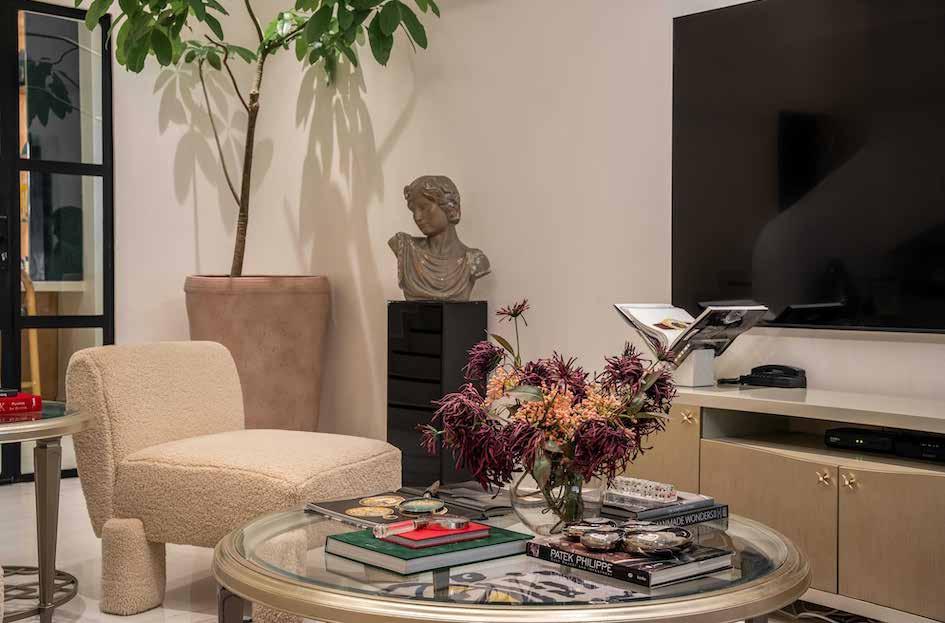
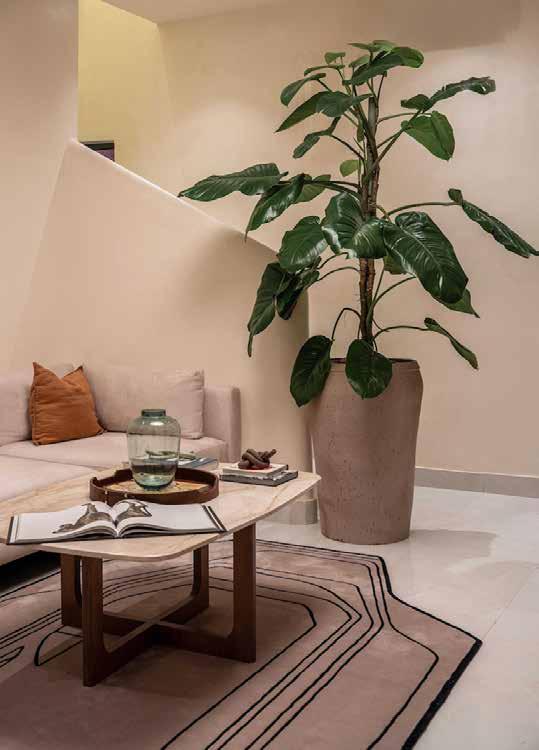
There is nothing wrong with wanting a beautiful home. In fact, we are living through one of the most exciting periods for interior design. Nigerian designers are creating stunning spaces, local furniture brands are flourishing, and social media has introduced us to decorating ideas from every corner of the world. Never before has it been easier to find inspiration. The downside? Our homes are beginning to look suspiciously alike. Scroll through Instagram or Pinterest, and you’ll notice the pattern. The cream sectional sofa. The boucle chair. The oversized vase with dried branches. The coffee-table books arranged just so. The neutral palette that looks effortlessly chic but could belong to almost anyone. There is nothing inherently wrong with any of those things. The problem starts when a home is designed to follow trends instead of reflecting the people who actually live there. The most memorable homes aren’t necessarily the biggest or the most expensive. They’re the ones that reveal something about their owners before a single word is spoken. They tell stories through books, art, colour, furniture and the little objects collected over a lifetime. They feel layered rather than staged. If you’re looking to create a home that feels less like a showroom and more like you, here are a few places to start.
Imagine someone walking into your home for the first time. What would they learn about you?
If the answer is “not much,” it might be time to rethink your décor. A fashion lover could display vintage magazines, framed runway sketches or designer coffee-table books. A music enthusiast might create a vinyl
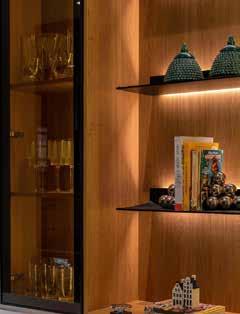
corner. Someone passionate about photography could frame favourite prints instead of generic wall art. If books are your thing, let them be seen instead of hiding them away because they don’t match the colour scheme. The most interesting homes give visitors little clues about the people who live in them.
Decorate With Memories,
Some of the most meaningful decorative pieces don’t come from luxury furniture stores. They come from family. A brass tray inherited from your grandmother. A carved stool picked up in Benin City. Your father’s old record player. A ceramic bowl bought during a holiday in Morocco. A handmade basket from Abuja. Even a framed handwritten family recipe can
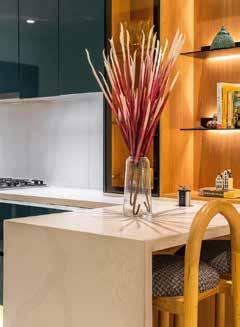
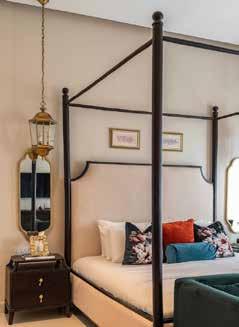
become part of your home’s story.
These are the pieces that spark conversations because they carry memories that no showroom can sell.
One mistake many people make is buying an entire room from one collection. It certainly makes decorating easier, but it can also make a space feel flat.
The most stylish interiors embrace contrast. A sleek contemporary sofa paired with a vintage wooden cabinet. Modern lighting hanging above an antique dining table. Adire cushions on minimalist furniture. An old Yoruba carving displayed alongside contemporary Nigerian art. It’s the unexpected combinations that give a home depth and personality.
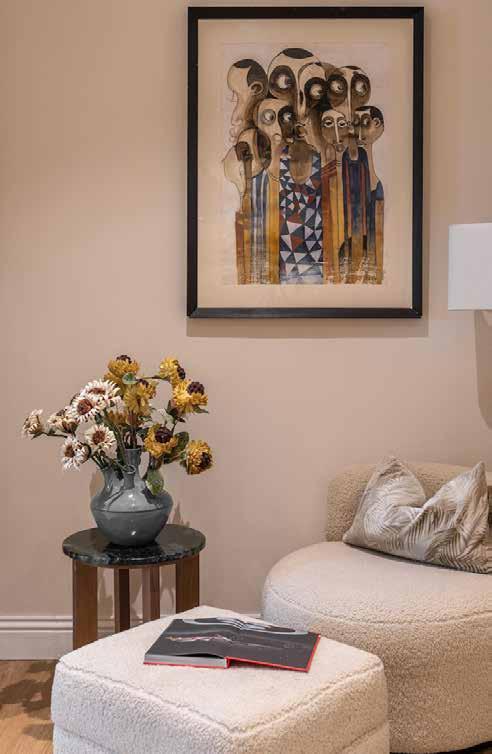
Art has an incredible ability to transform a room, but don’t choose it simply because it matches your curtains. Buy pieces that stop you in your tracks.
Support emerging Nigerian artists. Visit galleries.
Attend art fairs. Discover photographers, illustrators and ceramic artists whose work genuinely speaks to you. The right artwork doesn’t just fill an empty wall. It becomes part of your identity.
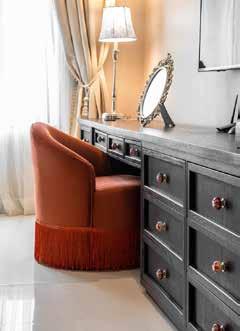
Not every corner of your home needs to look like a magazine spread. Think about your daily routines. If your mornings begin with coffee, create a beautiful coffee station. Love entertaining? Invest in a stylish drinks trolley. Read every evening? Design a cosy reading corner with comfortable lighting. Obsessed with skincare? Give your vanity the attention it deserves. When your home supports your lifestyle, it naturally feels more personal.
For some reason, we’ve convinced ourselves that sophistication only comes in shades of beige. It doesn’t.
Deep green, terracotta, navy blue, mustard yellow and rich burgundy can all add warmth and character when used thoughtfully. Even if you prefer a neutral home, colour can arrive through artwork, cushions, rugs, flowers or a single statement chair. Sometimes personality is simply having the confidence to choose what makes you happy rather than what everyone else is choosing.
The homes with the most character are rarely finished in a weekend. They evolve.
Instead of buying every decorative object at once, collect pieces over time. Pick up pottery while travelling. Bring home textiles from local markets. Invest in handmade ceramics. Buy something meaningful from every city you visit. Years later, your shelves won’t simply be filled with objects. They’ll be filled with stories.
Remember That a
Perhaps the greatest compliment anyone can pay your home is not that it looks expensive, but that it feels welcoming.A slightly worn leather chair. A stack of books waiting to be finished. Fresh flowers from the market. The scent of coffee in the morning or a pot of soup simmering in the kitchen. These details bring warmth that no designer accessory can replicate. Design By