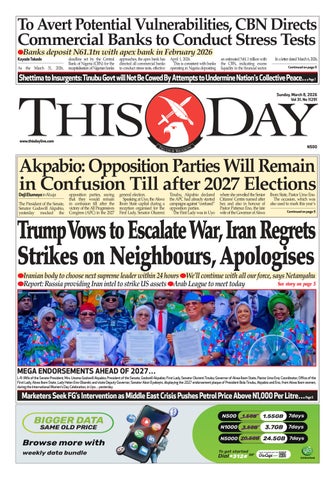
Banks deposit N61.1tn with apex bank in February 2026
Kayode Tokede
As the March 31, 2026, deadline set by the Central Bank of Nigeria (CBN) for the recapitalisation of Nigerian banks
approaches, the apex bank has directed all commercial banks to conduct stress tests, effective
April 1, 2026. This is consistent with banks operating in Nigeria depositing
Akpabio: Opposition Parties Will Remain in Confusion Till after 2027 Elections
Deji Elumoye in Abuja
The President of the Senate, Senator Godswill Akpabio, yesterday mocked the
opposition parties, saying that they would remain in confusion till after the victory of the All Progressives Congress (APC) in the 2027
general election.
Speaking at Uyo, the Akwa Ibom State capital during a reception organised for the First Lady, Senator Oluremi
Tinubu, Akpabio declared the APC had already started campaigns against “confused” opposition parties. The First Lady was in Uyo
where she unveiled the Senior Citizens’ Centre named after her, and also in honour of Pastor Patience Eno, the late wife of the Governor of Akwa
Continued on page 5
Trump Vows to Escalate War, Iran Regrets Strikes on Neighbours, Apologises
Iranian body to choose next supreme leader within 24 hours We’ll continue with all our force, says Netanyahu Report: Russia providing Iran intel to strike US assets Arab League to meet today
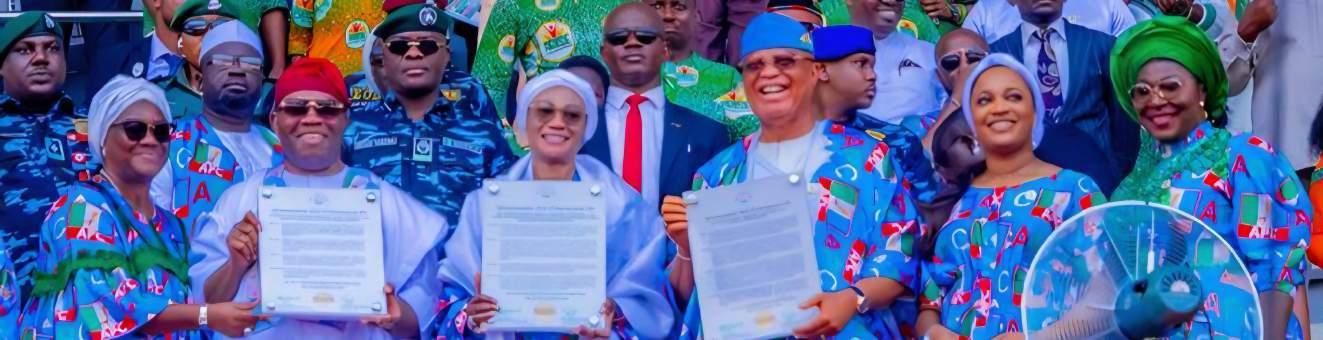
Wife of the Senate President, Mrs. Unoma Godswill Akpabio; President of the Senate, Godswill
Lady
First Lady, Senator
Governor
and state Deputy Governor, Senator Akon Eyakeyin, displaying the 2027 endorsement plaque of President Bola Tinubu, Akpabio and Eno, from Akwa Ibom women, during the International Women's Day Celebration, in Uyo…yesterday.
L-R:
Akpabio;
Oluremi Tinubu;
of Akwa Ibom State, Pastor Umo Eno; Coordinator, Office of the First Lady, Akwa Ibom State,
Helen Eno-Obareki;
Ibom State, Pastor Umo Eno. The occasion, which was also used to mark this year’s
Marketers Seek FG’s Intervention as Middle East Crisis Pushes Petrol Price Above N1,000 Per Litre
Festus Akanbi
The rising cost of petrol across the country has triggered fresh anxiety in the downstream sector, with the leadership of the Independent Marketers Association of Nigeria (IPMAN) urging the federal government to intervene and help moderate the trend. The rise in petrol prices is closely linked to rising
tensions in the Middle East, which have unsettled global energy markets.
Crude oil prices have surged in recent weeks amid escalating hostilities involving Iran, Israel, and the United States.
Missile attacks targeting energy infrastructure in the United Arab Emirates, Saudi Arabia, and Qatar have heightened fears of supply disruptions.
The National President of
the association, Abubakar Garima, was quoted by an online report as saying that the independent marketers were increasingly worried by the steady rise in the pump price of petrol, which had crossed the N1,000 per litre threshold in several parts of the country.
Garima, who spoke at the weekend, noted that petrol prices had risen sharply in parts of Lagos, Ogun, and
Oyo states, reflecting mounting pressure from developments in the international oil market.
“What is happening globally is part of the problem,” he said.
“We have contacted the Dangote Petroleum Refinery, but it is becoming difficult for them to obtain crude oil at a lower price because of the crisis in the Middle East,” he explained.
He explained that independent marketers source
their products from different depots but noted that the rising costs appear to be widespread across the supply chain.
“We buy from other depots as well, but the story is the same. Many of them are selling at higher rates. If Dangote sells at a lower rate, the market will naturally adjust, and prices could come down,” Garima added.
The IPMAN president, therefore, called for targeted
TRUMP VOWS TO ESCALATE WAR, IRAN REGRETS STRIKES ON NEIGHBOURS, APOLOGISES
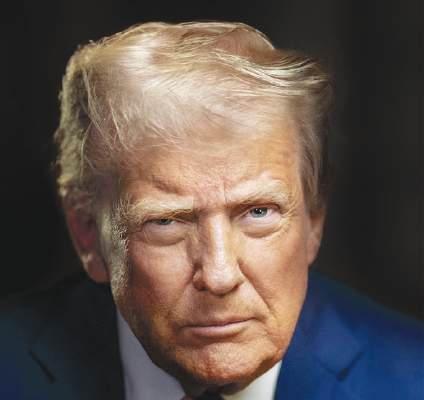
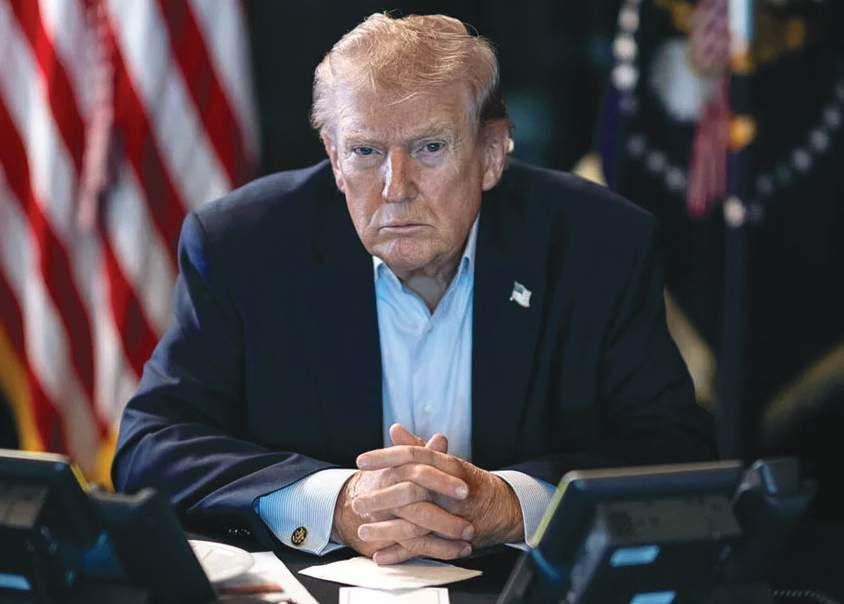
The United States has shown little sign of easing the pressure on Iran, with President Donald Trump warning yesterday that the Islamic Republic would be “hit very hard,” and suggesting that the conflict could expand further as the war between Tehran and the United States–Israel alliance enters its second week.
Meanwhile, Iran yesterday apologised over missile and drone strikes that hit neighbouring Gulf countries.
Iran’s President, Masoud Pezeshkian, however, said
Tehran had no intention of targeting friendly neighbouring countries, stressing that recent strikes were aimed at American military installations across the Gulf.
A member of Iran’s Assembly of Experts said yesterday that the body would meet within a day to choose the country’s next supreme leader, Iranian media reported.
“With divine assistance, this session will occur within the next twenty-four hours,” said Hossein Mozafari, one of the assembly’s 88 members, cited by the Fars news agency.
However, the Prime Minister
of Israel, Benjamin Netanyahu said yesterday that Israel would continue its war with Iran “with all our force.”
“We have a systematic plan to eradicate the Iranian regime and achieve many other objectives,” Netanyahu said in a televised address.
Trump warned in a social media post that more Iranian officials would become targets, writing: “Today Iran will be hit very hard!” Trump noted Pezeshkian’s apology.
“Under serious consideration for destruction and certain death, because of Iran’s bad behaviour, are areas and groups of people
that were not considered for targeting up until this moment in time,” Trump wrote, without elaborating.
The Trump administration approved a new $151 million arms sale to Israel after the US president said he would not negotiate with Iran without its “unconditional surrender,” and US officials warned of a bombing campaign they said would be the most intense yet.
Trump apparently referred to how Iran’s president apologised in an earlier address and claimed Pezeshkian “surrendered” to its neighbours in the Middle East and “promised that it will not
shoot at them anymore.”
“This promise was only made because of the relentless U.S. and Israeli attack,” he wrote.
“Iran is no longer the ‘Bully of the Middle East,’ they are, instead, ‘The Loser of the Middle East,’ and will be for many decades until they surrender or, more likely, completely collapse! Today Iran will be hit very hard!” Trump added.
Tehran Says It Will Only Attack Nations with Bases Actively Used
by US
Iran’s President, Pezeshkian,
AKPABIO: OPPOSITION PARTIES WILL REMAIN IN CONFUSION TILL AFTER 2027
World Women’s Day, turned out to be a mega rally, with the wives of the Governors of Lagos, Imo, Cross River, Delta, Ekiti, Jigawa, Kano, Nasarawa, Niger, Ogun and Ondo states, among others, in attendance.
Addressing the mammoth crowd at the International Stadium, Akpabio said: “Each time we make a law and the opposition frowns, I get excited that I’ve made the right law.
“While we are moving around Nigeria, consulting and campaigning, many of them are still trying to form their political party.
“They haven’t even finished registration and they will
and addressed to all banks, the CBN said the stress tests would determine the resilience of financial institutions.
According to an online medium that cited the letter, the apex bank added that the test would evaluate how a bank could handle extreme economic conditions, such as a severe recession or market crash.
In the letter, the CBN said the directive aligned with Sections 13 and 63 of the Bank and Other Financial Institutions Act (BOFIA) 2020, which require banks to maintain capital it considers adequate to cover the risks arising from each bank's activities.
According to the CBN, the stress test is “without prejudice to the contents of the CBN Guideline on Stress Testing for Nigerian Banks,” issued in March 2019.”
“Banks are expected to stress the resilience of their credit
continue in confusion till the 2027 election is over. Instead of putting their houses in order, they are breaking up.
“You see a man who formed the Labour Party; they had millions of votes; today, they can’t have 100 votes, because the Labour Party is distressed.
“They have different leaderships - some in the North; some in the South; some in the West, some in the East.
“See then PDP that used to be one now struggling to have five different offices in Abuja, with about four secretaries. Who would sign their forms?
“Yesterday, I saw one man
portfolio over 12 months by simulating deterioration in asset quality, governance risk and significant change in industry dynamics such as fall in commodity prices, foreign exchange rate movement, structural shift in obligor operating market dynamics (supply chain disruption, contracting demand, etc.), portfolio variables, among others,” the letter said.
According to the CBN, the stress testing will estimate the impact on banks’ non-performing loans (NPLs), loan loss provisions, and capital adequacy ratio (CAR).
The CBN asked banks to apply the credit exposures - on and off-balance sheet - including director/insider-related exposures and assume staged migration of credit exposure to the next risk classification in line with the provisions of the prudential guidelines (PG) issued in July
shouting on TV because of the amended Electoral Act, saying ‘we’re likely to boycott the elections.’
“My response was to tell the truth; ‘you’re boycotting the elections because you’re not ready. If you were ready you wouldn't boycott.”
Akpabio added: “If there is anything the First Lady will take away from this visit, it’s that there is unity in this state.
“It’s the love Akwa Ibom has for her husband, the love women of Akwa Ibom have for her. I joined the governor (Eno) to further endorse the President for a second term in office.
DIRECTS
2020, with additional stress for specific sector deterioration and insider-related credits.
The regulator said that, in conducting the stress test, banks are required to establish a baseline based on the last examiner’s communicated assessment of credit portfolios (risk asset assessment or riskbased supervision examination).
“However, where a bank’s financial account returns indicate a deterioration in specific exposures as at the stress testing date, these should be adopted as the baseline amount and performance status,” the CBN said.
“In addition to classification of credit portfolio across performing, watchlist (specialised loans), substandard, doubtful, and lost, baseline position shall include exposure at default, current provisioning level, collateral value, and risk weighted
“The bill we’re considering to give space to more women in the National Assembly is still on. I pray the 10th Assembly succeeds with the bill in bringing more women to the parliament,” Akpabio added.
Akpabio told the president’s wife that the huge reception she received was an indication of Akwa Ibom people’s endorsement of her husband for a second term in office.
He reflected, “On a day Akwa Ibom women waited from 8a.m. to see her, the thousands of women still waiting shows the love we have for the President of
position,”
ELECTIONS
Nigeria; it shows the love we have for the wife of the President.
“This shows we’re all ready to vote for the president to come for a second term. Today, the women of Akwa Ibom who do not lie have decided today, the World Women's Day, to endorse President Tinubu for a second term.”
Describing Eno as ‘Mr Unifier’, he said Akwa Ibom had never witnessed the unity the state enjoyed under the incumbent governor, adding that the state had endorsed him for a second term even before he defected from the PDP to the APC.
government support to help stabilise supply and moderate prices, particularly through policies that could ease the cost of crude oil for local refiners.
He argued that providing relief to the Dangote refinery could have a ripple effect across the market, ultimately lowering pump prices for consumers.
explained that Iran’s interim leadership council had approved a suspension of attacks on neighbouring states unless assaults on Iranian territory originate from those countries or from US facilities hosted within them.
He said Tehran would only attack nations with bases actively used by the US. Pezeshkian also dismissed Trump’s call for Iran to surrender unconditionally. “That’s a dream that they should take to their grave,” AP quoted him as saying.
Iran has reported heavy
“I thank President Tinubu in advance, for building a party, APC and being able to hold on to it with tenacity to become a formidable force that now has 31 governors and is still moving forward. If politics is a game of numbers, can you beat such a man?” he queried.
Acknowledging the people’s honour, Mrs. Tinubu told the people of the state: “This love is unforgettable. It’s indeed a mega rally.
“Thank you for the endorsement of Mr. President, the Senate President and the governor for the second term. On behalf of the president, we won’t take it for granted.”
BANKS TO CONDUCT STRESS TESTS
Meanwhile, the CBN also disclosed that the primary stress scenario should assume progressive deterioration of the credit portfolio over 12 months, aligned with the PG provisioning cycles.
The apex bank also said that each exposure category should migrate to the next stage and be appropriately provisioned in line with the provisions of the PG applied.
According to the CBN, where there are signs of potential deterioration in industry dynamics, the exposures shall be further stressed and deteriorated with at least an additional 10 per cent provisioning applied.
On the issue of director/ insider-related credits, the CBN noted that to address governance and insider-related risks appropriately, all insiderrelated exposures shall be treated
under a severe stress assumption and assumed to be in default.
“These shall be fully provided for in the banks’ stress scenarios,” the CBN said.
“Following the conclusion of stress testing, banks are expected to report pre-stress CAR, poststress CAR, and capital shortfall (if any).
“It is pertinent to note that banks shall be required to raise 100% of their reported stressed capital shortfall or 50% of the shortfall computed from CBN stress analysis of the banks (whichever is higher), within 18 months.
“Once communicated, this level of capital shall become the risk-based capital requirement of the bank until the next cycle of stress testing, which would take place 6 months after the end of the capital raise to close the shortfall in stressed CAR,” the CBN said.
Banks Deposit N61.1tn With Apex Bank in February 2026
Following excess liquidity in the financial sector, banks operating in Nigeria deposited an estimated N61.1 trillion with the apex bank in February 2026 to generate short-term overnight income.
The figure represents a 16.2 per cent month-on-month increase compared with N52.6 trillion placed with the central bank in January 2026, underscoring the continued reliance of deposit money banks on the CBN’s liquidity management facilities.
Banks typically lodge surplus funds with the CBN through the Standing Deposit Facility (SDF), which allows lenders to earn modest overnight returns on idle liquidity.
Emmanuel Addeh in Abuja
PERFORMING RELIGIOUS OBLIGATION…
Shettima to Insurgents: Tinubu Govt will Not Be Cowed By Attempts to Undermine Nation's Collective Peace
FG deploys additional tactical assets to Borno
Following the latest insurgency attacks in Borno State, Vice President Kashim Shettima has promised the government and people of the state that the administration of President Bola Tinubu will not be cowed by despicable acts of cowardice and a doomed attempt to undermine the collective peace of the nation.
Shettima has also disclosed
that the federal government had deployed additional tactical assets and intelligence-driven reinforcements to the areas affected by the recent insurgent attacks.
Deploring the attacks, including the abductions in Ngoshe and the coordinated assaults on military formations in Konduga, Marte, Jakana, and Mainok, the Vice President, according to a statement issued
yesterday by his media aide, Mr. Stanley Nkwocha, reaffirmed that Tinubu’s administration remained resolute in its duty to protect the lives and properties of all Nigerians.
Meanwhile, Shettima has disclosed that the federal government had deployed additional tactical assets and intelligence-driven reinforcements to Borno State.
In a statement yesterday,
Shettima assured that Tinubu’s administration would not be cowed by despicable acts of cowardice and a doomed attempt to undermine the nation's peace.
The vice-president reaffirmed that the administration remained resolute in its duty to protect the lives and properties of all Nigerians.
“The events of the past few days are a painful reminder of the shadow that persists, but let it
Army Captain, Two Soldiers Killed as Troops Neutralise 45 Bandits in Katsina
Francis Sardauna in Katsina Troops of the Nigerian Army have neutralised 45 suspected bandits during a fierce gun battle in Danmusa Local Government Area (LGA) of Katsina State.
However, despite the operational success, the military also lost Captain Paul Hassan and two other soldiers during the battle.
The clash occurred on March 6, 2026, when troops attached to the Forward Operating Base (FOB) in Dan Ali engaged “heavily armed bandits” who were moving towards Musawa LGA.
The Katsina State Commissioner for Internal Security and Home Affairs, Dr. Nasir Mua’zu, said in a statement yesterday that the bandits had earlier launched an attack on Alhazawa village in Musawa LGA on March 5, where they attempted to rustle cattle.
He disclosed that community members, alongside some repentant bandits in the area, resisted the attack, killing four of the assailants and recovering the stolen cattle.
He said the bandits later regrouped and returned in large numbers the following
day in what appeared to be a revenge mission.
Mua’zu, however, said while heading towards Musawa through Maidabino A ward, the marauding hoodlums ran into troops stationed at the Army’s Forward Operating Base in Dan Ali.
According to him, a fierce exchange of gunfire ensued, leading to the death of the 45 bandits.
“What followed was an intense and fierce battle. The Army successfully neutralized all 45 bandits. However, the victory came at a cost. Captain Paul Hassan and two other soldiers
lost their lives in the encounter”, he said.
He said Alti, a nephew and second-in-command to notorious bandit leader Adamu Alieru, and another senior bandit identified as Damale were among the 45 bandits killed during the fierce battle.
The commissioner commended the “bravery and sacrifice” of the troops involved in the operation.
He described the soldiers’ actions as heroic, noting that their efforts saved many lives and disrupted the operations of criminal groups operating in the area.
Peter Obi, Umeh, Ben Obi Officially Register for ADC
Former Labour Party (LP) presidential candidate, Mr. Peter Obi, the senator representing Anambra Central Senatorial Zone, Senator Victor Umeh, and a former lawmaker and presidential aide, Senator Ben Obi, yesterday officially registered with the African Democratic Congress (ADC).
The chieftains had earlier converged on Awka, where they flagged off the registration
exercise, calling on members to return to their wards to register and to go out to search for new members.
While Obi registered at Agulu ward 2 in Anaocha Local Government Area, Umeh was registered by his ward chairman in Aguluzigbo ward 1 in the same local government. In contrast, Ben Obi registered in Agulu Awka, Awka South Local Government Area, all in Anambra State.
The party chieftains vowed to challenge the newly passed 2026 Electoral Act in court, alleging that it was deliberately designed to manipulate the outcome of the 2027 general election.
Obi, who spoke at the flag-off exercise, said the provisions of the new law were skewed to facilitate electoral manipulation.
According to him, “all the laws being hurriedly churned out now are simply aimed at
enabling them to snatch the 2027 presidential election and run away with it.
“But this time, we will catch them. We have seen all the reviews of the electoral act, and INEC has no reason to dictate how parties should elect their candidates. Some of us will challenge it. INEC should focus on how to conduct an election. They now choose to abandon their work as referees and then want to teach a coach how to select their players.
be known: We choose light over shadow and hope over despair.
“Our difference as a nation is the distance between the ruin of anarchy and the promise of order.
“President Bola Tinubu has been briefed and has already directed a swift and total mobilisation of our security architecture
“The federal government will not tolerate any sanctuary for those who seek to displace our people or occupy an inch of Nigerian soil,” he said.
The vice-president also assured that the perpetrators of “these beastly crimes” would face the full wrath of the law.
According to him, we are
not just fighting a war. We are defending the very soul of our humanity against those who preach a toxic rhetoric of hate, and their gory acts will not cow us.
“Our hearts bleed for the families of the victims and the brave soldiers who paid the supreme price in the line of duty.
“This administration will not rest until abducted citizens safely reunite with their families.”
Shettima commended the resilience of the people and government of Borno under Governor Babagana Zulum and praised the gallantry of the troops on the frontlines.
NiMet Forecasts Three-day Hazy Weather Conditions across Nigeria
The Nigerian Meteorological Agency (NiMet) has predicted dust haze from yesterday to Monday across the country.
NiMet’s weather outlook released in Abuja, predicted moderate dust haze with horizontal visibility of between two and five kilometres over the northern region yesterday.
It envisaged localised visibility of less than or equal to 1,000 metres over parts of Katsina, Kano, and Jigawa States throughout the forecast period.
The agency also forecast moderate dust haze over the North-central region throughout the period.
It predicted sunny skies with a few patches of cloud over the southern region, with slim prospects of afternoon or evening thunderstorms accompanied by light rainfall over parts of Lagos, Bayelsa, Delta, Rivers, Cross River, and
Akwa Ibom states.
NiMet predicted moderate dust haze over the northern and North-central regions throughout the forecast period today.
It anticipated sunny skies with few patches of cloud over the southern region, with slim chances of isolated thunderstorms and light rainfall over Ondo, Bayelsa, Rivers, Delta, and Edo states later in the day.
According to NiMet, a slight dust haze is predicted over the northern region on Monday, with dust haze over the Northcentral region throughout the period.
It further predicted sunny skies with few patches of cloud over the southern region, with slim chances of isolated thunderstorms and light rainfall over Lagos, Edo, Delta, and Bayelsa states later in the day.
David-Chyddy Eleke in Awka
Deji Elumoye in Abuja
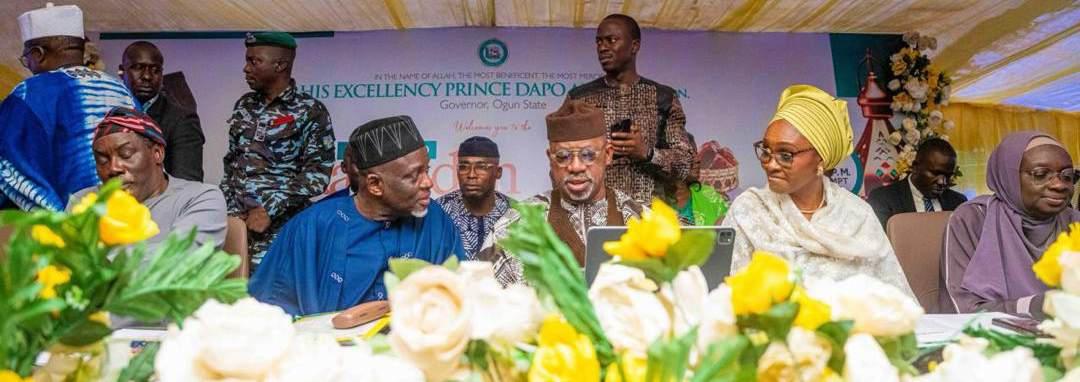
L-R: Speaker, Ogun State House of Assembly, Hon. Oludaisi Elemide, Guest lecturer/Registrar, JAMB; Prof. Is-haq Oloyede; Ogun State Governor, Prince Dapo Abiodun; his wife, Bamidele; and Deputy Governor, Mrs. Noimot Salako-Oyedele, during the Ramadan Special Iftar which held at the Arcade Ground of the Governor's Office, Oke-Mosan, Abeokuta…weekend
ACCOUNTABILITY ON THEIR MINDS…
Based on My Visible Achievements, Delta is No-go Area for Opposition Parties, Says Oborevwori
Delta State Governor, Sheriff Oborevwori, has boasted that the state has effectively become a no-go area for opposition political parties due to the visible achievements of his administration. This is because the Administrator of the Presidential Amnesty Programme (PAP), Dr. Dennis Otuaro, has declared that the ruling All Progressives Congress (APC) will have a straight win in the South-south in the next election.
Oborevwori asserted the inauguration of the 4.8-kilometre Oko–Amakom/Oko-Obiokpu/
Oko-Anala Road in Oko Kingdom and other road networks in Asaba, both in the Oshimili South Local Government Area of the state.
Speaking at the ceremony, Oborevwori said the extensive infrastructure development under his administration had strengthened public confidence in government and positioned the state for continued political dominance ahead of the 2027 general election.
He said: “When I contested the 2023 election, I won in 21 out of the 25 local government areas even when I was not yet
FG Releases Emergency Contacts for Nigerians in Middle
East Amid
Escalating Crisis
Michael Olugbode in Abuja
The federal government has released emergency contact numbers for Nigerian nationals residing in the Middle East as tensions continue to escalate across the region.
In a statement issued by the Ministry of Foreign Affairs in Abuja, the government urged Nigerians living in affected countries to immediately register with the nearest Nigerian diplomatic mission and maintain close communication with officials for guidance and assistance.
The ministry said the contact numbers have been activated to support Nigerians who may require urgent assistance due to the ongoing security situation in parts of the Middle East.
According to the statement, affected citizens are advised to remain calm, follow directives issued by local authorities, and keep in touch with Nigerian embassies and consulates for updates regarding safety measures and possible evacuation arrangements.
“The Ministry of Foreign Affairs wishes to inform Nigerian nationals in the Middle East that communication channels have been established through the various Nigerian missions in the region,” the statement said.
It added that Nigerians who require emergency support should reach out to the missions through the following phone numbers:
Emergency Contact Numbers for Nigerian Missions in the Middle East: Iran: +989393216872, +989024165493; Israel: +972543340414, +972503673175; Jordan: +962795669949, +962799430414; Lebanon: +96181669403, +96170848080; Qatar: +97466802029, +97450733786; Saudi Arabia: +966503862894, +966532198524 and United Arab Emirates: +971504252546, +971503761332.
The ministry stressed that the Nigerian missions are working closely with host governments and international partners to monitor developments and ensure the safety of Nigerian citizens.
a governor. With the level of development and projects we have delivered in almost three years, Delta State has become a no-go area for other political parties.”
The governor said his APCled administration remained committed to delivering impactful projects that would directly improve the lives of the people,
adding that the road projects commissioned were strategic in boosting economic activities and improving connectivity between communities.
Oborevwori explained that the Oko–Amakom/OkoObiokpu/Oko-Anala Road would significantly improve transportation for farmers in the area, enabling them to
move their produce to markets more efficiently while reducing poverty and enhancing rural livelihoods.
He recalled that in the past, the terrain around Oko was extremely difficult, especially during the rainy season, making it almost impossible for farmers to transport their produce to markets.
“Today, I am happy that we have completed this road. Farmers can now transport their fresh produce easily to markets, increasing their income and improving their standard of living,” the governor said. Oborevwori, however, expressed optimism that the contractor would complete the project ahead of schedule.
Kwankwaso’s Supporters Caution Kano House Assembly, State Government against Removing Deputy Governor
The supporters of the National Leader of the New Nigeria People’s Party (NNPP), Dr. Musa Kwankwaso, under the aegis of the Kwankwasiyya Movement, has cautioned the Kano State House of Assembly and the state government against their impeachment proceedings against the state’s Deputy Governor, Aminu Abdussalam Gwarzo, warning that such
action could deepen political divisions and undermine the mandate of the people.
In a statement issued yesterday, the group's spokesperson, Dr. Habibu Saleh, described the impeachment process as troubling and cautioned political actors in the state against actions that could be perceived as politically motivated.
“The people of Kano are closely watching the unfolding
events, and there is growing concern that the impeachment move may be driven more by political considerations than by genuine constitutional necessity,” Saleh said.
He noted that while the constitution provided mechanisms for legislative oversight, impeachment remained one of the most serious powers available to lawmakers and should not be deployed for political convenience.
“Impeachment must never be reduced to a tool for settling political disagreements or rearranging political alignments. It must be guided strictly by justice, fairness, and the interest of the people,” he said.
He reminded the state leadership that the mandate that brought the present administration to power was the result of the collective efforts of thousands of Kwankwasiyya supporters across Kano.
Eminent Sons, Daughters of Owa Kingdom to Be Honoured at Obi Efeizomor's 88th Birthday Celebration
Sunday Okobi in Lagos and Omon-Julius Onabu in Asaba
Eminent sons and daughters of the Owa Kingdom in Ika North-East Local Government Area (LGA) of Delta State, who have distinguished themselves in their various fields of human endeavour, will be honoured with royal awards as part of activities to mark the 88th birthday anniversary of the Obi of Owa, His Royal Majesty, Dr. Emmanuel Efeizomor II.
This was disclosed yesterday by the Ceremonial Planning
Committee for the week-long celebration honouring a widely acclaimed modernist and octogenarian monarch.
While briefing journalists at the palace in Owa-Oyibu, the Chairman of the committee and the Inneh of Owa Kingdom, Chief Nkenchor Okwuokenye, noted that the royal title of ‘Owa Grandmaster’ would form the zenith of the more than a dozen awards to be bestowed on the respective beneficiaries, whose identities would only be unveiled during the celebration. Okwuokenye, who is also
the Personal Assistant (PA) to the Obi of Owa, was flanked by Prince Victor Efeizomor, son of the Owa monarch and a Senior Special Assistant to the Delta State Governor on Media, and Prince Jegbefume Frank, a Prince of Owa.
He noted that Obi Efeizomor II was well-deserving of any honour that could be bestowed on him at this auspicious landmark of 88 years old, having been on the throne for nearly 66 years and representing the face of modern Owa Kingdom during those remarkable years.
Of particular significance on the list of events lined up for the royal celebration, which would span four days, is the Obi of Owa Unity Football Competition, scheduled to kick off the unity-fostering celebrations.
Okwuokenye disclosed that the grand finale of the novelty football competition would signal the commencement of the birthday anniversary on March 10, 2026, adding that the event would feature the eight clans that make up Owa Kingdom.
Ahmad Sorondinki in Kano
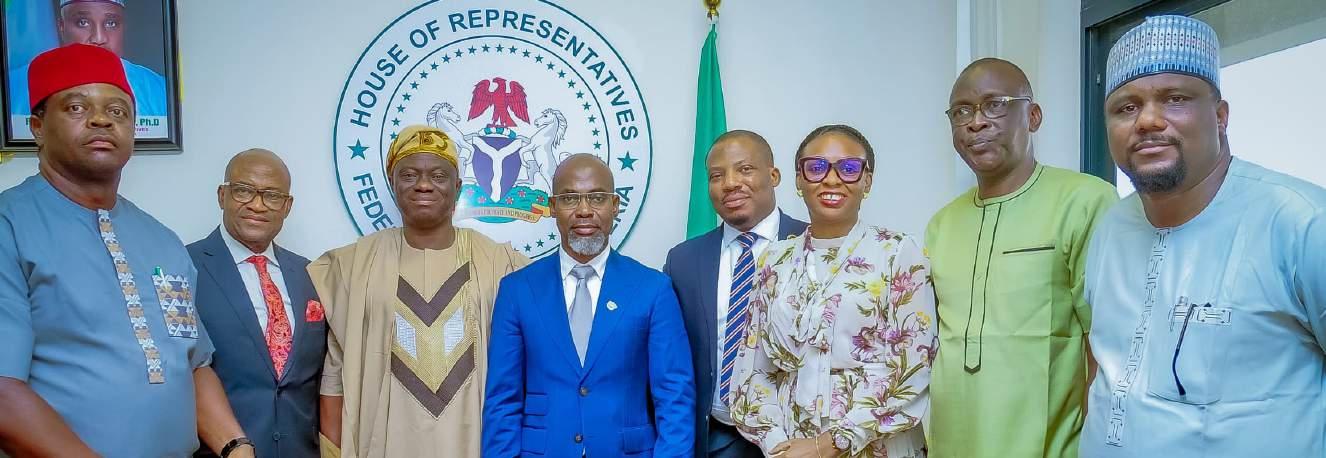
L-R: Member, House of Representatives, Hon. Obetta Mark Chidi; Chief Executive Officer, Institute of Internal Auditors Nigeria, Don Umeha; Chairman, House of Representatives’ Public Accounts Committee (PAC), Hon. Bamidele Salam; Board Chairman, Institute of Internal Auditors Nigeria, Simon-Jude Mmaiye; Member, IIA, Moses Shodipe; Director, IIA, Irene Nwankwo; Member, IIA, Patrick Okoro; and Director, IIA, Ibrahim Alkali, during the Institute’s meeting with the Chairman, House of Representatives’ Public Accounts Committee to discuss internal audit in Nigerian legislation framework in Abuja…recently
MORE QUESTIONS FOR NASIR EL-RUFAI
By Chief Femi Fani-Kayode
In my last contribution titled ‘Nasir El-Rufai as a Threat to National Security’, I asked a number of questions about the actions, utterances, public confessions and acts of sheer wickedness carried out by my old friend Mallam Nasir El-Rufai for which I am still waiting for answers.
The last thing I heard about him is that he is still in detention and that he suffered a nose-bleed whilst there after one week and for this he has my sympathies. I hope he gets out soon so that he can respond to me directly and take care of his nose.
What I forgot to mention in that piece was the large number of orphanages he knocked down in Abuja when he was Minister of FCT and the large number of orphans that he made homeless. Outside of that, he demolished 2,000 homes and buildings in Abuja and 12,000 shanties on its outskirts in which the poor had taken refuge often against court orders and without compensation!
I also forgot to mention the fact that he knocked down many orphanages in Kaduna when he was Governor and that one of the last things he did whilst in office, which he ruthlessly, chillingly and coldbloodedly carried out the day before handing over power to Governor Uba Sani, was knock down an orphanage at Fadama Badan Dodo in Zaria.
ever a Cesar Borgia in Nigerian politics his name was Mallam Nasir El-Rufai!
I also forgot to mention the fact that he sent men to abduct Mr. Jackson Ude, the publisher of Pointblank News, from his Abuja home and that when he managed escape their clutches he sent another group of men to the home of his close friend Mallam Jafaru Y. Sa’aad in Kaduna and locked him up for four gruelling months.
The worst aspect of this dastardly act was the fact that it took place at 1.00am in the morning and without a court order! Details of other demolition activities that he ordered in the days leading up to his exit as Governor on May 29, 2023 were as follows.
Gbagyi Villa Demolition: Roughly 72 hours before leaving office, the Kaduna State Urban Planning and Development Authority (KASUPDA) demolished numerous houses in the Gbagyi Villa community in Kaduna.
I also forgot to mention the fact that he displayed a high degree of toxicity, malevolence and egregious hatred for Governor Mai Mala Buni of Yobe state and that he attempted to humiliate and destroy him simply because he could not intimidate, manipulate, control or successfully threaten him when he was the Interim National Chairman of our great party and because he opened the door to many notable erstwhile opposition leaders to join us.
Residents claimed that these demolitions occurred despite existing court orders for him not to proceed and that many of the affected buildings were legitimate residences.
Shi’ite Buildings: On Monday, May 22, 2023—about a week before leaving office—KASUPDA demolished several structures belonging to the Islamic Movement of Nigeria (IMN), including schools, a hospital and private residences in various areas, including Kawo, Rigasa and Tudun Wada.
There is so much more and I could go on but permit me to get to the meat of the matter and address the purpose of this additional contribution. Despite the gravity of the matters raised in my earlier essay and the importance of the additional points that I have added today, this contribution raises an even more disturbing issue which gives many even greater concern.
Prior to these actions, El-Rufai had vowed to continue “demolishing structures” until his “last day in office”. While specific reports from May 2023 focused on the destruction of houses, schools and a hospital in Gbagyi Villa and Shi’ite-affiliated areas, some reports have mentioned that the affected sites included structures and orphanages where children resided, leading to allegations of destroying homes and communities.
Permit me to begin with a rhetorical question. Has it occurred to anyone that those tapping phones for Nasir El-Rufai may be operatives or assets of a foreign intelligence agency or terrorist elements from outside Nigeria?
The demolitions were described by critics and affected residents as “vindictive”. In my view the word “bestial” would have been far more appropriate than “vindictive”.
I say this because it is only a human being that can be vindictive and it is only a beast that can be bestial. Nasir El-Rufai was not just being vindictive here but was also being downright bestial. Even the homes and habitats of orphans were not spared from demolition and destruction!
This may all sound far-fetched to the uninformed, the naive and the shallow but history is replete with the execution and implementation of such ‘false flag’ and ‘black ops’ covert operations and any experienced and exposed intelligence officer will confirm this. These are the sort of sordid things specialised sections of some foreign intelligence agencies do in order to destabilise and destroy other countries and ultimately effect regime change through unconstitutional means.
They covertly and clandestinely create chaos, carnage and confusion, incite the people against the Government, fund and organise massive demonstrations and then move in for the kill. And they do this in collaboration and collusion with their local co-conspirators, collaborators and assets one of whom they will then put in power who will operate as their puppet, stooge and front.
Outside of that, if they don’t get their way, they resort to a campaign of mass murder, genocide and ethnic cleansing, target innocent and defenceless women and children and flatten entire communities and nations with cluster bombs.
I sincerely hope I am wrong but these are the sort of things that people like those I suspect are the associates of El-Rufai that have a hidden agenda and that are desperate for and obsessed with power often do. History proves that.
It is either that he knows more than he is prepared to say or that he has lost his sanity. The matter has now gone way beyond mere politics or allegations of corruption and is now a MAJOR security issue which could endanger the lives of millions of our people.
If you want to know what poisonous gas and chemical weapons can do to civilian populations when in the hands of a mentally-deranged megalomaniac who craves and is obsessed with grabbing power at any cost please find out what happened to the people of Halabja, Iraq in 1988 and the Shia Muslims of Iraq in 1991 when Saddam Hussein used it on them. The consequences were devastating.
Again if you want to know what such poisons can do to individuals that have been targetted for death, often without leaving any trace of foul play, find out what happened to the Russian dissident Alexei Navalny, the Ukranian President Viktor Yuschenko (though he survived it), the leader of the Popular Front for the Liberation of Palestine (PFLP) Wadie Haddad, a leader of Hamas Khaled Mashaal (though he survived it) and a senior official of Hamas Mahmoud Al-Mabhouh.
I sincerely hope that I am wrong but until he either confesses to us that he was lying when he said he and his associates bugged the NSA’s phone or he tells us who those that actually bugged that phone were, we will not know. What makes the matter even more serious is the fact that it was reported in the media that the ICPC alleged that they recovered phone-tapping equipment and other sensitive security documents in his house when they conducted a search.
Like the troublers of the world that take pleasure in bombing and slaughtering women and children without regret or remorse, his bowels of compassion ran dry, he lost his sense of decency and humanity, he forswore the milk of human kindness and he offered no mercy to the women, the children, the elderly or the poor.
To be clear I am not suggesting that El-Rufai himself may be inclined to do this but there is a distinct possibility that those that he may be associated with may have that inclination or disposition and may even harbour such evil plans without his knowledge.
on the Muslims and strictly enforced the one on the Christians. In other words he adopted a selective approach.
Terrorists, non state actors with evil intentions and foreign intelligence agencies usually only give information to their associates on a need to know basis and they may just be using Nasir as an unsuspecting patsy, an eager and excitable pawn, a ‘useful idiot’ (as they are commonly referred to in intelligence circles) or the quintessential fall guy despite his much touted brilliance.
Consequently the first time that the Christians of Kaduna state were permitted to go on state-sponsored pilgrimages in the last 11 years was when Governor Uba Sani formally lifted the ban in February 2026! I also forgot to mention the fact that he banned night vigils for Christians when he was Governor of Kaduna and that he directed Pastors to submit the script of their sermons before they were allowed to preach.
The El-Rufai family issued a formal statement claiming that this is false but whichever way you look at it this new development is disturbing and takes the matter to an entirely different level. The stakes are high and the drama is unfolding by the day. Yet the most frightening aspect of this issue is the allegation made by El-Rufai that the NSA has imported a large quantity of a lethal poison known as thalium sulphate into our shores which is banned in many countries in the world, which has been used for assassination purposes in some nations in the past and which is lethal to humans and animals even in small doses.
His pleasure was to break their hearts, shatter their dreams and aspirations and bring tears to their eyes, pain to their spirits and sorrow to their souls. His joy was to deprive them of not just where they had lived but also all that they had. Such callousness is unspeakable. Yet sadly it does not stop there.
Worse of all it is a colourless and odourless substance which cannot be detected when released. It is the perfect killing machine. I have no doubt that the NSA has NOT imported this substance and this begs the following question.
I also forgot to mention the fact that he ruthlessly persecuted the followers of the late Sheik Dahiru Bauchi in Kaduna, raided their homes, desecrated their properties and places of worship and committed the most despicable and hideous atrocities against them which led the Sheik to express his displeasure against him by pronouncing a curse on him.
Is this the sort of evil that Nasir El-Rufai’s associates have in store for some of our leaders? Are they planning to carry out such dastardly and wicked acts and then attempt to blame it on the state and our NSA? I am only asking and there is no harm or crime in that given the fact that he now keeps the company of those that are skilled in espionage and that have the skill, know-how and wherewithal to bug the National Security Advisors’ phone and share details of his supposed conversations.
Is this why he and those that are working with him take every opportunity to insult, undermine, disgrace and humiliate our President and Vice President in the international media and on social media?
Has his unquenchable envy for Senator Kashim Shettima, simply because he was elected as our nation’s Vice President (a position that Nasir himself coveted and lobbied for) and hatred for Mallam Nuhu Ribadu, simply because he was appointed as the NSA whilst he (Nasir) himself was rejected as a Minister, driven him to a point of such bitterness and madness that he is now associating with and relying on information from subversive elements and enemies of the state?
Is Nasir, a man that I once had so much affection and respect for, now a friend and associate of phone hackers, hardened criminals and terrorists and has he become a threat to national security? Is his sole objective to pull down our Government through any means possible and throw our nation into chaos and turmoil?
I have every confidence that the Nigerian Intelligence Agency (NIA), the Office of the National Security Advisor (ONSA), the Department of State Security (DSS), the Defence Intelligence Agency (DIA) and the Nigerian Police Force (NPF) will get to the bottom of this mess and find out all they need to know about who El-Rufai’s associates really are and what is really going on.
They are very good at what they do and they will unravel the knot. Permit me to end this contribution with the words and counsel of @ Ayekooto who posted the following words on X. He wrote,
“This man (Nasir El-Rufai) woke up in his house one morning. Brushed his teeth, had his bath and wore a fine babariga, entered straight into his waiting car and was driven to a live AriseTv programme. It was a conducive environment, no stress, no force, no intimidation. And he just looked at the cameras and said
‘we listen to telephone conversations of National Security Adviser. We know someone who tapped it. Yes, it is illegal but we are doing it.....’.Please my dear friends, don’t joke with curses whether you’re right or wrong. Use this Lent and Ramadan season to ask God for forgiveness of all sins you committed but more importantly, every curse placed on you that you’re treating trivially, ask God for cancellation especially if those curses are from Kaduna people, pray fervently against it!”. I concur.
(Sani) must “right all the wrongs” that he (El Rufai) had committed as Governor and that he had no intention of interfering in the affairs of the state once he was out.
He may well be swimming in a sea of shark-infested waters without knowing it. If that proves to be the case he has my sympathies and I hope he co- operates fully with the security agencies so that he can exonerate himself. I would advise him to hold nothing back if he has any useful information or else he may sink with them.
I also forgot to mention the fact that thousands of petitions from the Shia Muslims, the Tijaniya Muslims and the Christians of Kaduna whose rights were violated, whose women and children were killed and who were viciously and violently persecuted under his watch as Governor were presented to the DSS when he was nominated as a minister by President Bola Ahmed Tinubu. These petitions were so alarming that they could not be ignored and that is why his nomination as minister was rejected by the Senate.
Is it possible that it is actually El-Rufai’s associates that have secretly smuggled in that lethal poison and that they are planning to execute what is known as a ‘false flag’ operation in our country in which they will use it to eliminate large numbers of our people and then blame it on the security agencies and Federal Government? Is that why the letter was purposely and strategically leaked to the public?
And others cursed him too. For example the women of Kafanchan in Southern Kaduna went on a march, stripped themselves naked and cursed him at a roundabout in broad daylight in the middle of the town as a consequence of his wickedness towards their community.
He even said that he would hardly come to Kaduna and that if he did so he would not go anywhere near Government House. Sadly he lied. He did not honor his word and neither did he take kindly to Sani righting his wrongs which proved to be legion.
Again if local actors and opposition figures like the former Attorney General and Minister of Justice, Abubakar Malami, who is presently in the custody of the DSS as a consequence of serious allegations of terrorism-funding or the former Minister of State for Petroleum Resources Timipraye Silva who is on the run and has been declared wanted by the Defence Intelligence Agency to explain his role in the funding of a recent coup attempt are in any way involved he should come clean and confess all he knows to the security agencies.
Permit me to add that contrary to popular opinion his nomination was NOT rejected as a consequence of the implementation of some farfetched and illusionary conspiracy supposedly woven against him by the National Security Adviser, the Governor of Kaduna State, the Vice President and the President which is the baseless and absurd narrative that he and his supporters are so fond of peddling to the public.
Were those behind the smuggling in of the poison and the leaking of the letter putting us on notice, albeit falsely, that the Government has imported this chemical weapon and that when ‘they’ (meaning the conspirators and terrorists) unleash it with devastating consequences on our people the public will automatically assume it was the Federal Government and blame the Tinubu administration for it?
I doubt that any governor in the history of our nation has attracted as many curses from his own people as Nasir El-Rufai. I also forgot to mention the fact that he banned state-sponsored pilgrimages for Muslims who were going to Mecca and Christians who were going to Jerusalem which was, in my view, bad enough.
What made it worse was the fact that he surreptitiously lifted the one
His reaction to his successor in office’s efforts to right those wrongs was vicious, unrelenting and unrestrained and brought out his shapeshifting reptilian nature more than anything else. He turned on him with a vengeance and savagery that is rarely seen in politics anywhere in the world. This was best reflected not just by his sheer perfidy and malicious and malevolent actions but also by his words when he told all those that cared to listen that his sole reason and purpose for returning to active politics was to ensure that he destroys the career, future and life of Uba Sani.
I am reliably informed that BOTH Malami and Silva have access to vast resources and are totally committed to undermining, destabilising, discrediting and removing our Government so their involvement in such a reckless and godless venture cannot be ruled out. I have not made any categorical accusations or allegations here but I am simply thinking aloud and suggesting that we need to get answers to these questions and we need to consider all the points raised.
Only the naive and the gullible would believe such a fairy tale because if President Tinubu did not want him to be a Minister he would not have been nominated in the first place.
I ask these questions not to create panic or frighten anyone but only because these are not just my legitimate concerns but the legitimate concerns of millions of other patriotic Nigerians who love this country dearly and who want nothing but peace and security and for our people to thrive and flourish.
I also forgot to mention the fact that even though his successor in office, Governor Uba Sani, not only contributed millions of dollars of his own personal money to his legal fund between 2009 and 2014 when the EFCC prosecuted him but also stood by him through thick and thin, he repaid his good with evil by attempting to undermine and discredit his Government and destroy his future and career.
Is that the evil hand and malevolent card they are attempting to play or are they planning to use the poison to simply target and kill Government officials, public figures, members of the opposition or even to sell or donate to any or all of the 5 terrorist organisations that are waging war against our Armed Forces and people?
Permit me to add the following. Before he left office he told Uba Sani that he must ensure that once his tenure as Governor begins he
I also forgot to mention the fact that even though the Minister of Environment, Alhaji Balarabe Abbas Lawal, who was his Chief of Staff when he was Minister of FCT and the Secretary to the State Government of Kaduna State when he was Governor, sold his only house in Abuja and used the proceeds to help pay his lawyers when he was facing prosecution by the EFCC between 2009 and 2014, he repaid his commitment and dedication with evil by not only attempting to block his nomination as a Minister (after he himself had been rejected by the Senate) but also to destabilise and discredit the Government that he serves.
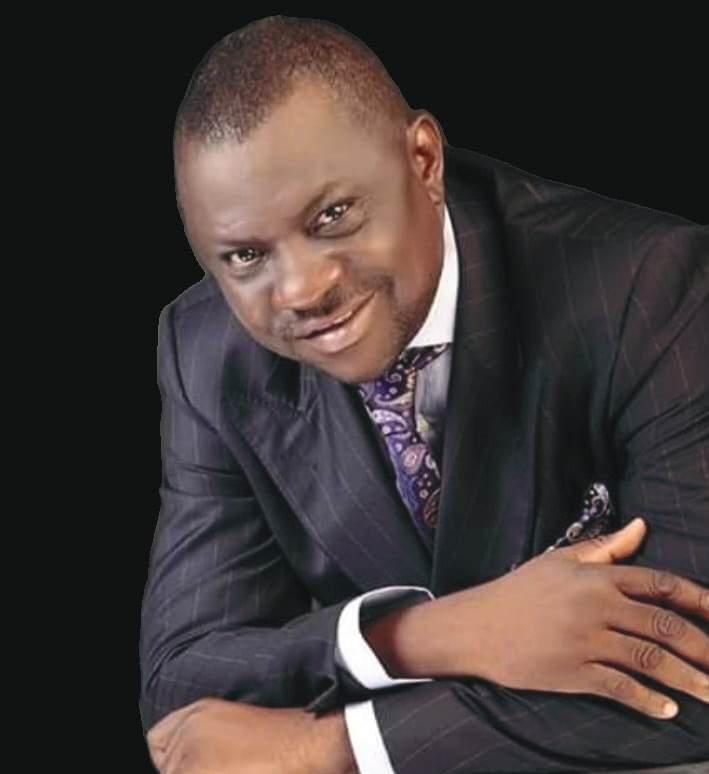
Chief Femi Fani-Kayode
Permit me to add the fact that not only did Balarabe serve him in these two capacities over the years and not only were they colleagues at school during their childhood but also that the latter attended every single court sitting as a mark of solidarity when he (Nasir) was being prosecuted by the EFCC.
If a well-educated, experienced and enlightened former public office holder like Nasir El-Rufai can say the things he said openly on national television before millions of viewers and if he can write such letters attempting to implicate the Office of the NSA in the importation of lethal substances which are used to kill people then he certainly has a lot of explaining to do and many questions to answer.
All that for his former boss and yet the latter did all he could to abort his nomination and stop him from becoming a minister. If there was
Chief David Oluwafemi Adewunmi Abdulateef Fani-Kayode, the author of this essay, is a former Minister of Aviation, a former Minister of Culture and Tourism, a former Senior Special Assistant to President Olusegun Obasanjo on Public Affairs, an Ambassador-Designate of the Federal Republic of Nigeria to Germany, the Sadaukin Shinkafi, the Wakilin Doka Potiskum, the Otunba of Joga Orile, the Aare Ajagunla of Otun Ekiti and a legal practitioner
Mallam Nasir El-Rufai
Nuhu Ribadu
Governor Uba Sani
MORE QUESTIONS
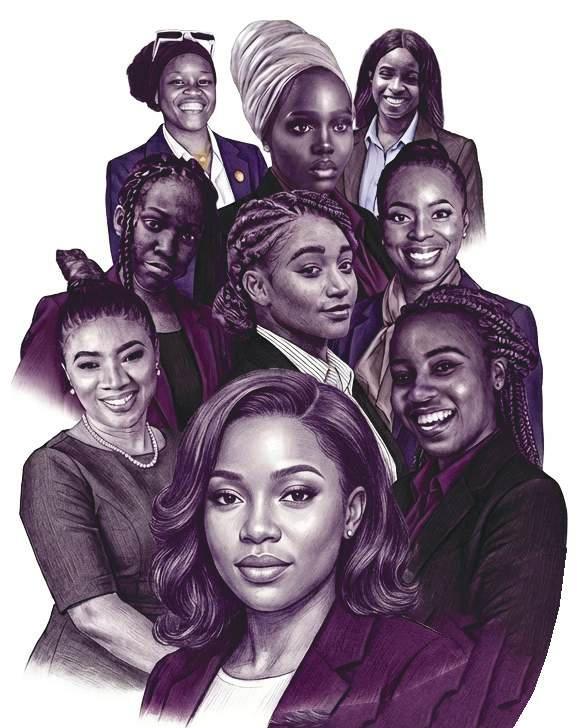
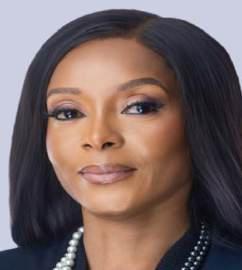
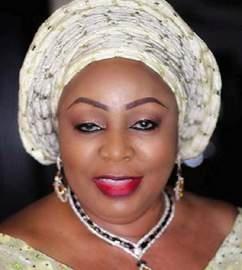
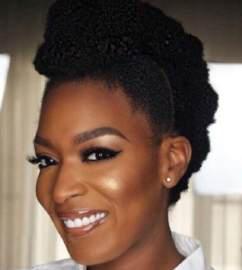
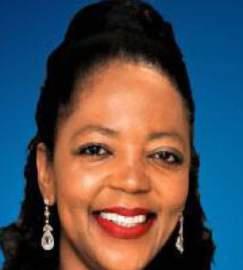
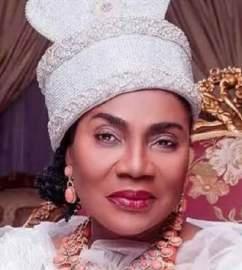
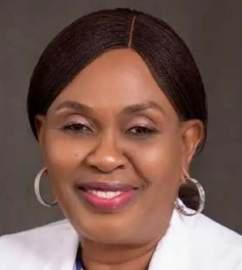
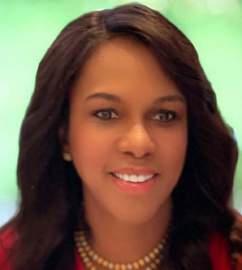
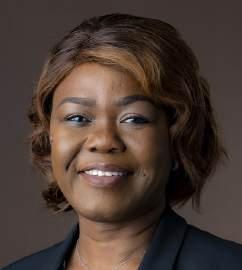
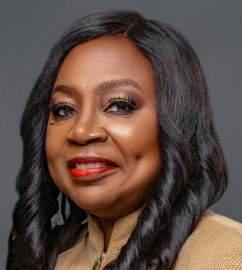
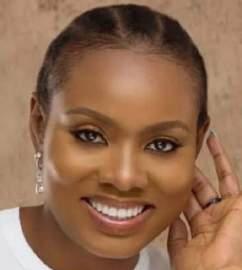
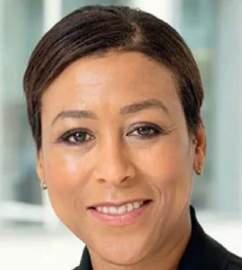
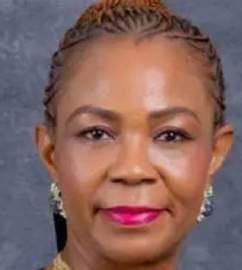
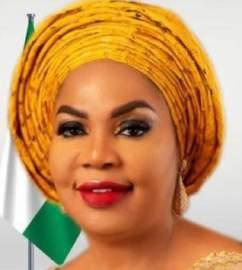
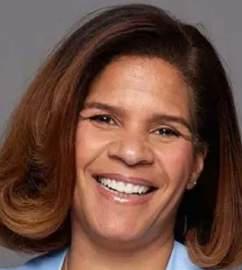
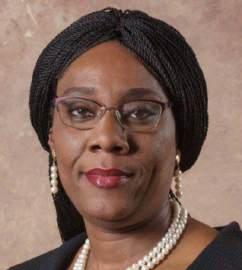
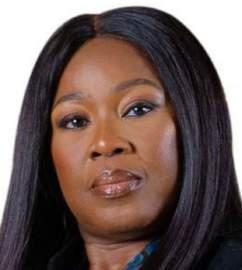
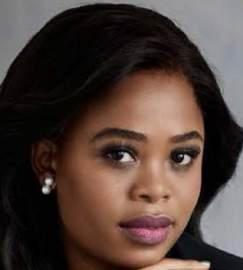
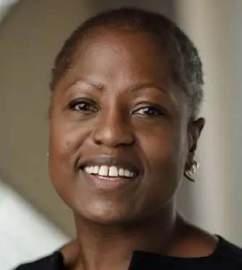
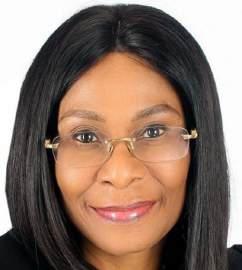
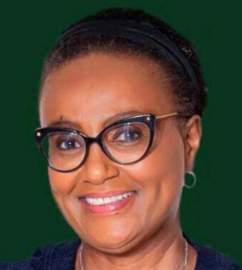
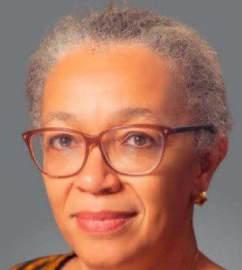
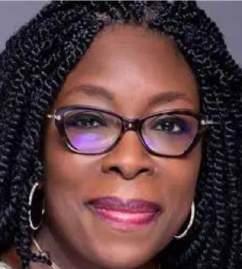
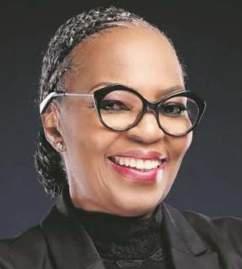
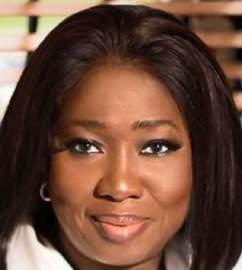
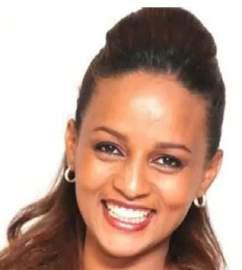
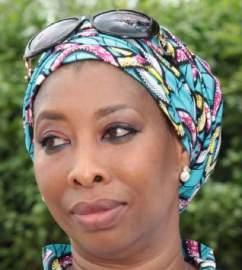
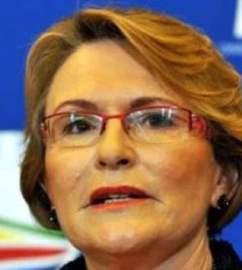
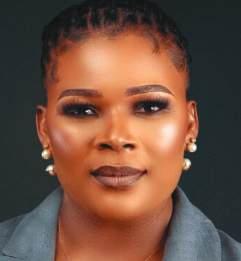
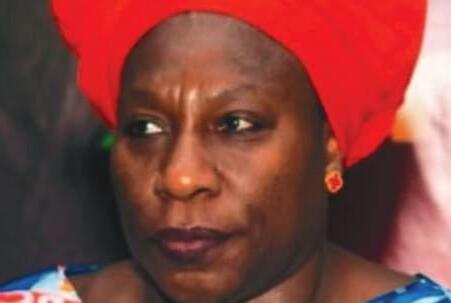
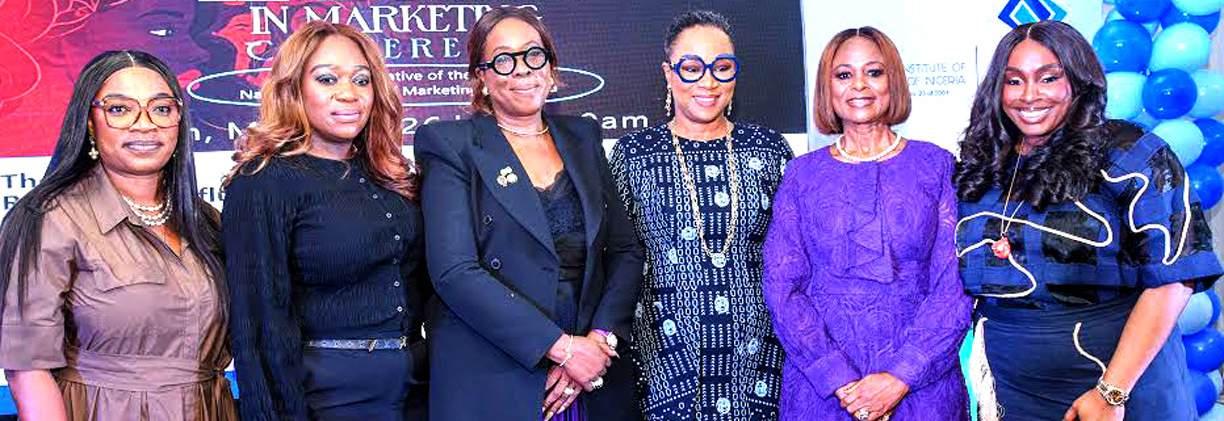
AFRICA WOMEN OF IMPACT AWARD 2026
ABOYADE FUNKE (SAN) Lawyer, Principal Partner, Aboyade & Co
UKEJE, NNENNA Politician, House of Representatives.
TILAHUN ALEMU, BETHLEHEM Entrepreneur, SoleRebels
ZILLE, HELEN Politician, Activist, Democratic Alliance (DA).
NIGERIA
SOUTH AFRICA NIGERIA
NIGERIA
NIGERIA
SOUTH AFRICA
NIGERIA
NIGERIA
NIGERIA NIGERIA
NIGERIA
SOUTH AFRICA
NIGERIA
NIGERIA
SOUTH AFRICA
ETHIOPIA
NIGERIA
SOUTH AFRICA
SOUTH
NIGERIA
NIGER
When we invest in women, we invest in our future. What we give in opportunity, we gain in progress. Group plc
The Economic Toll of Middle East War on Nigeria
As war rages in the Middle East, Nigeria feels the shockwaves. Fuel prices surge, the naira wavers, and oil revenues clash with rising living costs. What was once a distant conflict is now an urgent economic storm, testing markets, policy, and everyday life, writes
Festus Akanbi
The distant conflict in the Middle East is no longer distant for Nigerians. In Abuja and Lagos, the reverberations are clear at every petrol pump. “I used to pay N775 per litre last week,” said Adetola, a Lagos taxi driver. “Now it’s almost N1,040. How do I pass this to passengers without losing money?”
His frustration captures the everyday reality of a geopolitical crisis thousands of miles away.
The Trigger
The immediate trigger was the joint US–Israeli operation that killed Iran’s Supreme Leader, Ayatollah Ali Khamenei, sending Brent crude surging past $80 per barrel. Dangote Petroleum quickly raised its ex-depot petrol price from N774 to N875, while the NNPC implemented an N85-per-litre increase across major outlets. Private marketers followed, some already approaching N1,040 on Saturday.
CEO of PetroleumPrice.ng, Olatide Jeremiah, warns that “pump prices for petrol and diesel will hit N1,100 and N1,200 per litre respectively if crude prices continue their upward march. This is because replacement costs and volatility in the international market are driving the adjustments.”
In households, these jumps ripple through food, transport, and utility bills, intensifying the daily cost-of-living squeeze.
The Multiplier Effect
CEO of the Centre for the Promotion of Private Enterprise, Muda Yusuf, explains: “Energy costs have a strong multiplier effect. Rising pump prices feed directly into food distribution and manufacturing. Inflationary pressure intensifies, and households feel it immediately.”
Nigeria, as an oil exporter, might seem poised to gain from higher global prices. Crude exports account for over 85 per cent of export earnings and roughly half of government revenue. Yet the reality is more complicated. Theft, underinvestment, and vandalism keep production below potential, limiting the benefit of any global price rally. And despite being a major oil producer, Nigeria still imports refined petroleum products. That means global crude spikes hit domestic pump prices almost immediately, with households and businesses paying the price.
More Pressure on Naira
The war also threatens the naira and capital flows. “During geopolitical crises, investors seek safe havens,” says Yusuf. “Frontier markets like Nigeria risk capital outflows even as higher oil prices strengthen FX reserves. It’s a delicate balancing act.”
This tension is visible in markets. Observers say Oil and gas equities may see gains, but manufacturing and consumer sectors face margin compression. Transport costs rise, food distribution slows, and consumers feel the pinch. For households, the cost-of-living impact is immediate. For policymakers, the challenge is daunting: balancing fiscal inflows from higher oil prices against rising inflation and social pressure.
Threat to Trade
Beyond fuel, analysts say the conflict threatens trade. The Strait of Hormuz, through which nearly 20 per cent of global oil flows, is at risk. Any disruption translates into higher shipping costs and insurance premiums, which ripple through Nigeria’s import-dependent economy. Essential commodities, medical supplies, and manufacturing inputs could all become more expensive.
President of the Risk Managers
Society of Nigeria, Abbas Idriss, warns: “Disruptions abroad translate into higher domestic prices and logistical challenges. Households feel the impact directly, and businesses absorb increased costs.”
Remittances Face Decline
Financial experts warn that remittances, a lifeline for many Nigerian families, could also decline. Millions of Nigerians work abroad, including in the Middle East. They pointed out that geopolitical instability could reduce remittance flows due to currency volatility, bank disruptions, or slower transfer speeds. Lower remittances mean weaker household incomes and higher reliance on government support, precisely when fiscal pressure is rising due to fuel-driven inflation.
Security concerns loom as well. Analysts caution that escalations abroad could reverberate domestically, particularly in northern and central Nigeria. Previous crises saw protests, clashes, and property damage, diverting resources from development toward security spending.
War Worsens Economic Vulnerabilities
Economists explain that inflation could surge to 30–35 per cent if fuel and energy prices continue climbing. According to them, the naira, while buoyed by higher oil receipts, may face volatility as investors reassess risk. This, according to them, is because Nigeria’s heavy reliance on oil exports highlights the
fragility of its economy to global shocks, underscoring the need for structural reforms and diversification beyond hydrocarbons.
Opportunities
Amid this turmoil, some see opportunities. Elevated oil prices could temporarily boost government revenue and reserves. “If managed carefully, the windfall can support social programs, infrastructure, and local refining capacity,” Yusuf notes. Yet without careful planning, higher revenues risk being eaten up by inflation, higher living costs, and social tension.
Efforts to diversify energy options are emerging. NIPCO Gas Limited has rolled out additional Compressed Natural Gas (CNG) stations nationwide, offering gas at N380 per standard cubic metre. Nagendra Verma, Managing Director, says: “Natural gas is central to Nigeria’s energy security, industrial competitiveness, and macroeconomic stability in the post-subsidy era. Expanding CNG access reduces dependence on volatile petrol prices.”
For households like Adetola’s, however, immediate relief feels distant. “CNG is good, but I still need petrol every day. And every naira counts,” he says. Millions of Nigerians feel similarly: rising energy costs, higher food prices, and increased transportation costs tighten budgets in real time.
Magnifying Impact of Global Shocks
Nigeria’s experience illustrates a broader truth for Africa: distant conflicts carry immediate consequences. Oil-dependent economies, import-reliant sectors, and fragile financial systems magnify the impact of global shocks. The Israel–Iran war, while geographically far, is economically close. It is a test of resilience for policymakers, a trial for businesses, and a real burden for households. Fuel hikes, inflation, trade disruption, FX volatility, and social pressures all intersect, leaving the nation to navigate a complex web of risks.
Experts said the crisis underscores an urgent lesson: structural reform, local refining capacity, energy diversification, and robust social safety nets are not optional. They are the tools that can turn global volatility into a manageable challenge rather than a daily hardship. For now, Nigerians are caught between global oil volatility and domestic vulnerability, feeling the consequences of a war that unfolds thousands of miles away, one litre at a time.
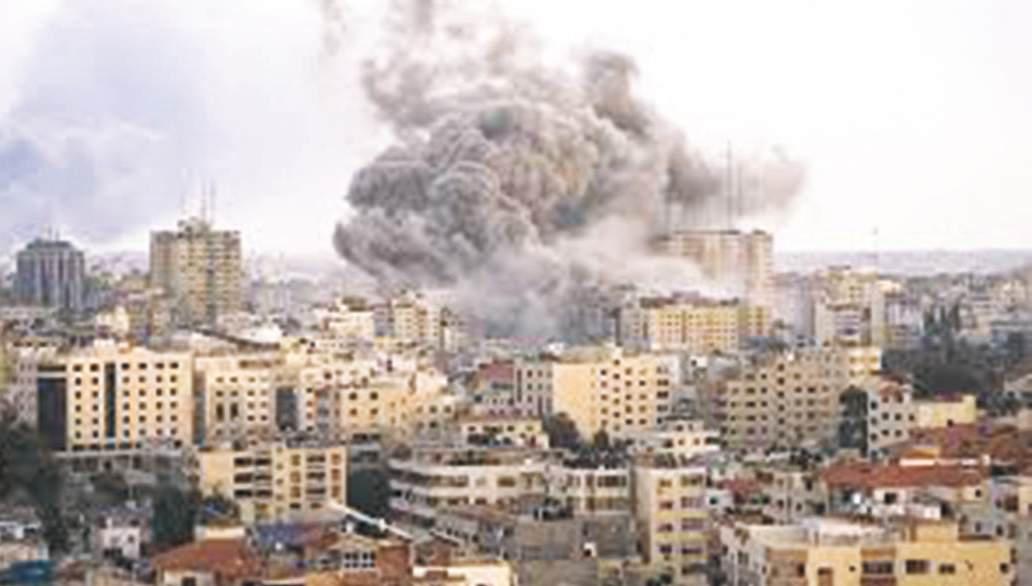
Ruins as a result of ceaseless bombings
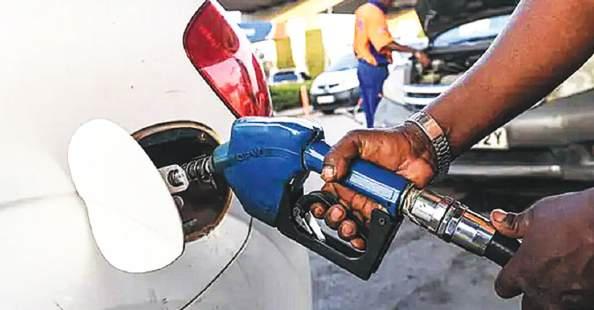
Fuel Stations...marketers announce higher pump price of petrol
Eurafric and Double Win for Dawes Island Oil Field
The reinstatement of a $109 million lending facility by a Toronto-based investment firm, REIN Capital, to Eurafric Energy Limited, a capable Nigerian independent oil firm, for the development of the Dawes Island Marginal field, and an earlier victory at the Federal High Court are major wins that bode well for the asset itself, the host communities, the country’s oil and gas industry, and the Nigerian economy, writes Peter Uzoho
Recently, a Nigerian oil and gas company, Eurafric Energy Limited, received a significant financial boost for the development of the Dawes Island marginal oil field with the confirmation of reinstatement of a $109 million lending facility by Toronto-based investment firm, REIN Capital.
The confirmation came just a month after the Federal High Court sitting in Lagos, in a judgment delivered just a month earlier, declared Eurafric Energy the rightful owner of Dawes Island and nullified the 2020 revocation of the license then held by Eurafric.
The latest financial boost signals a major step forward for the asset’s operator, Eurafric Energy, following the court ruling that restored the company’s ownership of the 19.5 million barrels reserve asset.
Prominent Bay Street financier Michael Wekerley, a co-founder of the well-known Canadian investment bank, GMP Securities, backs the financing initiative.
Eurafric Energy said the facility was originally processed for it before the federal government revoked the asset in 2020. It added that, following a Federal High Court decision reversing the revocation, the funding commitment has now been formally reactivated.
It noted that the reinstatement of the funding, after years of stalemate caused by the legal tussle, reflects continued investor confidence in the field’s underlying reserves and commercial viability following extensive technical due diligence conducted before the legal interruption.
Structured Plan Targets 20,000 BOPD
With the funding in place, Eurafric Energy has outlined a comprehensive development roadmap for Dawes Island Marginal Field. Project sources say the plan prioritizes scaled, sustained output over rapid-cycle early oil, supported by the newly secured structured financing.
The development strategy includes spudding five new development wells, a phased production ramp-up, the de- ployment of permanent production and evacuation facilities, and a medium-term production target of approximately 20,000 barrels per day.
The reinstated US$109 million facility is expected to cover drilling, completion, field facilities, and the working capital needed to transition the field to expanded production.
The Landmark Legal Victory
Early February, a Federal High Court sitting in Lagos nullified the federal government’s revocation of the Dawes Island Marginal Field licence, declaring the action unlawful, unjustified, and contrary to due process.
In a judgment delivered by Justice A. O. Awogboro, the court held that the Ministry of Petroleum Resources and the Minister of Petroleum Resources acted in breach of the Petroleum Act and the applicable guidelines governing marginal fields when they revoked the licence held by Eurafric Energy Limited.
Consequently, the court set aside the Notice of Revocation of the Dawes Island
Marginal Field dated April 6, 2020, which stripped Eurafric Energy of its rights and interests in the oil asset.
Eurafric Energy had approached the court to challenge the revocation, insisting that it had substantially developed the Dawes Island Marginal Field and brought it to production before the licence was withdrawn.
The company told the court that it had produced 62,039 barrels of crude oil from the field and had obtained regulatory approvals for crude evacuation shortly before the revocation notice was issued.
Despite these developments, the Ministry of Petroleum Resources revoked the licence and subsequently awarded the field to Petralon 64 Limited, a move Eurafric Energy described as arbitrary and unlawful.
But in her judgment, Justice Awogboro held that the federal government failed to justify the revocation, particularly in light of the plaintiff’s proven production activities.
The court declared that the defendants’ action in revoking the licence was not justified, having regard to Eurafric Energy’s efforts to bring the field to production.
Justice Awogboro further ruled that the ministry and the minister failed to follow the procedure prescribed under the First Schedule to the Petroleum Act and the Guidelines for Farm-Out and Operation of Marginal Fields, 2001, before issuing the revocation notice.
According to the court, the defendants also breached Eurafric Energy’s statutory right to a fair hearing by failing to inform the company of the grounds upon which the revocation was being contemplated or to allow it to respond.
Following the judgment in favor of Eurafric Energy, the company reapproached
the foreign lenders. It reinstated the multi- million-dollar facility, allowing it to move forward with the asset development in line with the strategic development programs.
Canadian Capital Markets Strategy
However, beyond the immediate development financing, REIN Capital has disclosed wider plans to position Eurafric Energy for a listing on the Canadian Securities Exchange (CSE).
Market watchers view the proposed listing as a signal of long-term ambition, a move that would provide enhanced trans- parency and access to deeper international capital pools. It comes at a time when global investors are increasingly seeking exposure to structured African upstream opportunities backed by reserves-based lending frameworks.
A Shift to Operational Execution
The Dawes Island asset has attracted industry attention due to regulatory disputes that interrupted earlier develop- ment efforts.
The court ruling in favour of Eurafric Energy, which reversed the 2020 licence revocation, has been met with criticism from some industry bodies.
The African Energy Chamber (AEC) and the current field developer, Petralon 54 Limited, which claimed it had invested in the asset after the revocation, have both condemned the decision.
However, Petralon has initiated an ap- peal, arguing that the ruling undermines Nigeria’s “drill or drop” policy and creates uncertainty for investors.
But with judicial clarity now established in its favour, Eurafric Energy appears to be entering a new phase focused squarely
on execution.
Analysts say the combination of court- affirmed title, reinstated international funding, and defined drilling plans puts the company among a select group of indigenous operators with demonstrable access to structured capital, a critical dif- ferentiator in Nigeria’s evolving upstream landscape.
Indigenous Operators Under the Spotlight
As Nigeria increasingly relies on indig- enous producers to meet national output targets amid divestments by international oil companies (IOCs), securing international financing and delivering scalable production are key Industrybenchmarks. observers note that not all marginal field awardees have success- fully transitioned from licence award to financed drilling programmes.
In this context, Eurafric Energy’s reinstated facility is seen as a notable development. However, the ongoing legal challenge from Petralon casts a shadow over the execution path, according to some industry experts.
With funding reinstated, drilling plans outlined, and capital markets engagement underway, Eurafric Energy appears poised to re-enter the operational stage at Dawes Island.
However, the coming quarters will be critical to determining the pace of execution, particularly given a pending appeal that could affect the asset’s final ownership.
For now, current indicators suggest the field is moving from litigation his- tory to active development, supported by international capital and a defined production strategy.
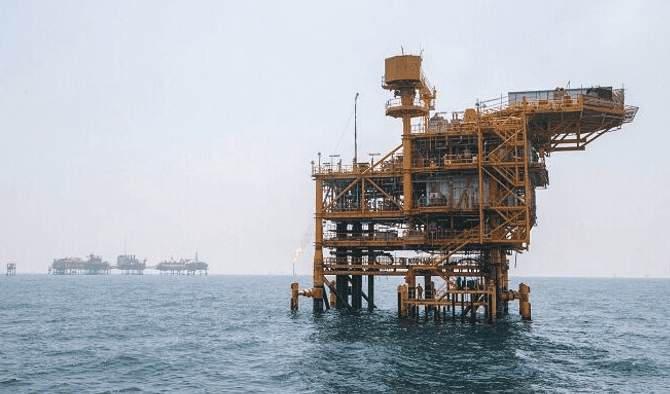
An oil well
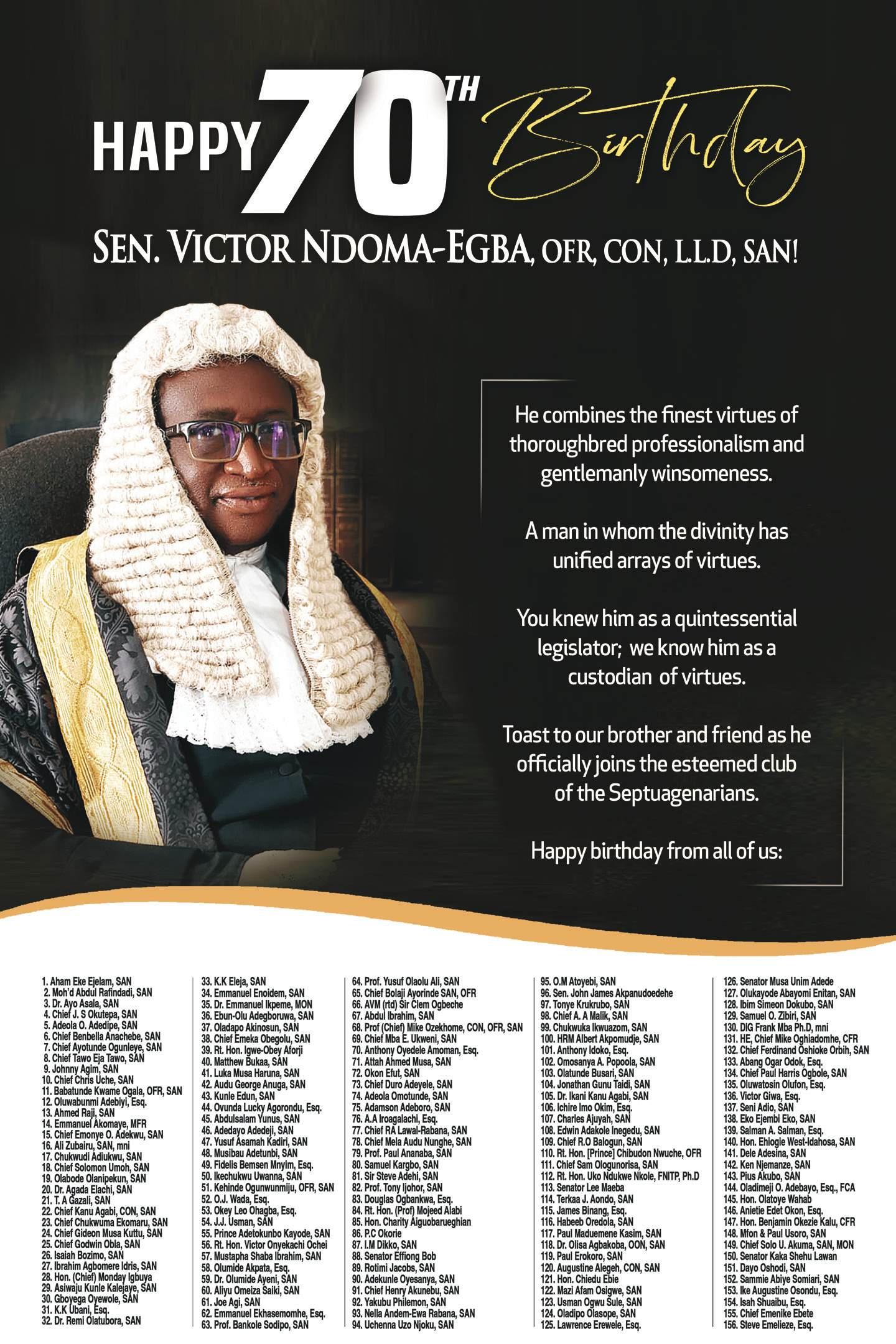
HAPPY
70 th Birthday Sir!
On behalf of myself, my family, and the good people of Cross River Central Senatorial District, I heartily felicitate with my big brother, the former Senate Majority leader, Represented Cross River Central Senatorial District, Sen. Victor Ndoma Egba as you celebrate your 70th remarkable years on earth today
As you mark this milestone, I pray for God’s continued grace upon your life, good health, greater wisdom, and divine favour to accomplish even more in the years ahead. May your new age be blessed.
Once again, Happy Birthday, Sir!
Signed: Distinguished Sen. Eteng Jonah Williams Chairman Senate Committee on Petroleum Upstream Representing Cross River Central Senatorial District.
www.thisdaylive.com
opinion@thisdaylive.com
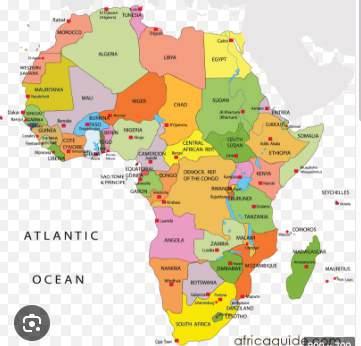
HOW AFRICA GROUNDS ITS OWN LEADERS
Visa walls and broken flight routes are choking AfCFTA, silencing women’s mobility, and costing the continent its most valuable deals, write HABIBAH A. WAZIRI AND OSWALD OSARETIN GUOBADIA
“Plans are nothing; planning is everything.” It is a clever line, often quoted in boardrooms and strategy retreats. But he was also a man who, almost certainly, never had to travel the continent with a Nigerian passport.
We speak the dialect of a “borderless” digital economy, yet we move across our own continent like unwelcome guests. The paradox is stark: Nigeria is projected to be the world’s third most populous nation by 2050, wielding a cultural soft power that dictates global charts. We are Africa’s largest nominal GDP engine and its venture funding magnet. Yet, we live inside aviation islands, internally disconnected, externally tethered.
Mobility is not a “travel issue”; it is infrastructure revealed in boarding passes. While ASEAN and EU professionals glide through open-air economies, 72% of intraAfrican travel still requires a visa. Now let’s consider the “Mobility Ratio”: A Singaporean passport holder accesses 4x more destinations bureaucracy-free than a Nigerian. This gap isn’t just an inconvenience, it’s a domesticonly penalty. Our data shows that a panAfrican consultant earns 5x more than a domestic-only practitioner. The difference isn’t the CV; it’s the passport.
Not long ago, I had to move between three African countries in five days. On a map, the route looked elegantly simple, a neat triangular loop within the continent. In my inbox, the itinerary told a different story. To make it work without losing entire days to layovers and visa queues, I had to fly into Europe three separate times, exiting the continent just to re-enter it. Lagos to Europe to Africa, then Africa to Europe to Africa. Each connection felt like a commentary. The skies above us were open, but our borders and systems were not.
This friction has a specific victim: The Woman in Leadership. We often attribute the attrition of women at the senior executive level to “culture” or “unpaid care.” While true, we overlook the infrastructure filter. When a 48-hour deal-closing trip morphs into a three-week logistical marathon
of consular backlogs and opaque rules, organizations default to the “path of least resistance.” They send the person for whom the path is smoother. The result is a persistent erosion of women’s visibility and influence in regional and global spaces. You do not publicly remove women from the table; you quietly make it harder for them to get to the table.
This isn’t just a “women’s issue.” It is an economic leak. If women represent up to 70% of informal cross-border trade but face the highest barriers to formal mobility, we are capping our GDP by design. Inclusion here then becomes a transport protocol, not a HR policy.
And yet this is the same continent that has launched one of the most ambitious economic projects in the world. The African Continental Free Trade Area promises a single market of over a billion people and trillions of dollars in combined GDP. Projections suggest that by 2035, if AfCFTA is fully implemented, income gains could reach hundreds of billions of dollars and millions could be lifted out of poverty. The agreement recognises not just the movement of goods, but also the movement of services, including what trade lawyers call Mode 4, the temporary movement of people to provide services across borders. On paper, we understand that ideas and expertise need legs, not just fibre optic cables. In reality our behaviour reveals a different fact. Tariffs are discussed, negotiated, and reduced, while non-tariff barriers like visas, fragmented regulations, and underdeveloped aviation routes continue to quietly choke the arteries of intra-African trade. We are, in effect, externally connected
but internally disconnected. It is easier for an African founder to meet a European investor in Paris than to meet an African customer in a neighbouring country. It is easier for foreign capital to move freely into African markets than for African professionals to move freely between those same markets. To make it worse, the perception of African travel is still questioned over Europe, a mindset engineering that only occurs when we view ourselves through a warped lens. Much less, working in Africa versus Europe/West. We proudly call ourselves global, but remain strangely constrained at home.
What might a serious solution look like?
It has to be a deliberate reframing of mobility as critical economic infrastructure, as fundamental as ports, power, or digital networks, not another slogan about free movement. It must start from a simple insight: states have legitimate security concerns about migration, but those concerns can be addressed with better tools, not just tighter gates.
Imagine a continental framework where businesspersons and value creators are not treated as strangers at every border, but as known, pre-vetted participants in a shared growth project. They register once, their identities and credentials are verified using modern digital systems, their histories are checked and cross-checked. Immigration authorities across participating states can view this information in advance, make independent decisions, and issue approvals in a structured and predictable way. Once cleared, these travellers carry a recognised digital credential, secure, revocable, but trusted, that allows them to move across a
network of African countries with far less friction.
In such a system, the entrepreneur from Lagos could fly to Kigali, then on to Nairobi and Addis Ababa, without re-entering the same bureaucratic maze at each leg. Airlines could design routes that reflect real demand rather than old hub patterns. Time would shift from visa queues to deal rooms and factory floors. Risk would be managed not by blanket suspicion, but by data and cooperation. States would not be asked to surrender sovereignty; they would be invited to exercise it more intelligently, together. We are not starting from zero. Across the continent, serious attempts are already under way to tackle the mobility question from different angles. AfCFTA has begun technical work on making the movement of trusted businesspersons real. Regional bodies are experimenting with visa-free regimes and common passports. Development partners and international organisations are funding programmes on labour migration, skills mobility, and digital identity. New innovation platforms are investing in African startups, betting on our ability to build globally relevant companies from African soil. The problem is not a lack of interest. Everyone is working on a piece of the puzzle, but too often in isolation. What is needed now is a ‘Big Tent’, under which continental institutions, national governments, development partners, DFIs, private investors, and the business community sit together and treat mobility as a shared industrial policy challenge, not a side issue for immigration desks. Under that tent, we can align standards, pool resources, and design a system that works in Lagos and Lusaka, in Abuja and Abidjan, not just in pilot reports and slide decks. In essence, it is a lack of convergence.
On March 8, as we honour women who are already leading across politics, business, and civil society, we must also speak for those who never made it onto the plane. Their absence from continental boardrooms, startup hubs, and multilateral negotiations is not a reflection of their capacity; it is a reflection of the systems we have chosen to tolerate. If we are serious about unlocking Africa’s growth, if we truly believe in the promise of AfCFTA, then we must stop grounding our value creators and start building the corridors they deserve.
Plans are nothing; planning is everything. It is time for Africa’s planning to include the simple, radical idea that its people, especially its women in leadership, should be able to move across their own continent with dignity, predictability, and purpose. Only then will our infrastructure finally match our ambitions.
Waziri is a human capital strategist, speaker working at the intersection of people, performance and purpose. Guobadia is a senior policy adviser and digital strategy leader with over 25 years building infrastructure and shaping transformative policy across Africa.
Editor, Editorial Page PETER ISHAKA
Email peter.ishaka@thisdaylive.com
GIVING NIGERIAN WOMEN THEIR DUE
Our women deserve more than what they are getting. It’s time to revise the trend
Women and girls constitute approximately 49.3 per cent of Nigeria’s population. They till its farms, run its markets, raise its children, bear its future. Therefore, what they deserve, what this nation owes them, is the ordinary dignity of equal citizenship. At this moment when we require the contribution of every citizen for the peace and prosperity of our country, we cannot continue with one hand tied behind our national back. The cost of excluding the women and girls is not paid by them alone, it is paid by all of us, in a development deficit that compounds with every election cycle we allow to pass without correction. As people all over the world mark the 2026 International Women’s Day with the theme, ‘Give to Gain’, Nigerians must come to terms with the fact that when they give generously, women and girls get a fairer deal.
On this International Women’s Day, we salute Nigerian women for their resilience. They have had to be extraordinary simply to remain in the room. According to the InterParliamentary Union, Nigeria currently ranks 180th out of 185 countries evaluated globally for women’s representation in parliament. In sub-Saharan Africa, a region not exactly renowned for its feminist governance traditions, Nigeria sits at the very bottom. The region’s average is 27.3 per cent. Rwanda, our continental exemplar, has achieved 61.3 per cent women in its legislature. Sierra Leone enacted a Gender Equality and Women’s Empowerment Act in 2023 and within months saw women win 30.4 per cent of parliamentary seats. And yet, in the 10th National Assembly, women occupy a grand total of 19 out of 469 available seats. That is 3.8 per cent. Four sit in the Senate; 15 in the House of Representatives. Expand the lens to include our 36 State Houses of Assembly, and the picture only darkens. Across all 1,460 legislative seats, federal and states combined, women hold 64 slots. As the Deputy Speaker of the House of Representatives, Benjamin Kalu, himself acknowledged recently, those 64 women are expected to represent the hopes, rights, and interests of over 100 million Nigerian women. No reasonable mind can defend
EADERSHIPROLE S L
this as democracy.
We must celebrate the social, economic, cultural and political achievements of our mothers, sisters and daughters. But we also need an institutional mechanism to strategically address all the impediments placed against them
SUNDAY NEWSPAPER
editor DAviDSoN iRiekpeN
deputy editors FeSTUS AkANBi eJioFoR ALike
Managing director eNioLA BeLLo
deputy Managing director iSRAeL iwegBU
chairMan editorial Board oLUSegUN ADeNiYi
editor nation s capital iYoBoSA UwUgiAReN the oMBudsMan kAYoDe koMoLAFe
THISDAY NEWSPAPERS LIMITED
editor-in-chief/chairMan NDUkA oBAigBeNA
group executive directors eNioLA BeLLo, kAYoDe koMoLAFe, iSRAeL iwegBU
divisional directors SHAkA MoMoDU, peTeR iwegBU ANTHoNY ogeDeNgBe
deputy divisional director oJogUN viCToR DANBoYi snr. associate director eRiC oJeH associate director pATRiCk eiMiUHi controllers ABiMBoLA TAiwo UCHeNNA DiBiAgwU, NDUkA MoSeRi director, printing production CHUkS oNwUDiNJo to send eMail: first name.surname@thisdaylive.com
The picture in the executive arm tells the same story. Across the country’s 36 states, women hold just nine per cent of political offices in total. Since the return to civilian rule in 1999, not a single woman has been elected governor of any of Nigeria’s 36 states. Not one. In 26 years of uninterrupted democracy, which is itself a feat we celebrate, not a single state in this federation of 250 ethnic groups, of lawyers and professors and technocrats and activists, has elected a woman to its highest executive office. When President Bola Tinubu constituted his cabinet, 18 per cent of ministers were women, a figure that gender advocates rightly noted fell short of the campaign trail commitments that preceded it. Our National Gender Policy, which this government, like every government before it, claims to honour, prescribes a minimum of 35 per cent representation for women in both elective and appointive positions. We are not halfway there. We are not a quarter of the way there. We are a fraction of a fraction, and we speak of it as though it were a minor administrative inconvenience rather than a structural failure of governance.
Critical stakeholders must come to terms with the fact that circumscribing access to opportunities that ultimately empowers women who make up about 50 per cent of the Nigerian population is counterproductive for the development of our society. Rebuilding Nigeria requires decisions, beginning this year, in party primaries, candidate screenings and legislative chambers. It requires men willing to share power because they understood, finally, what we all stand to gain from it.
As Nigeria therefore joins the rest of the world to mark the 2026 International Women’s Day, we must celebrate the social, economic, cultural and political achievements of our mothers, sisters and daughters. But we also need an institutional mechanism to strategically address all the impediments placed against them. That is the only way to assure our women that we care about their welfare and the prosperity of our country.
Letters in response to specific publications in THiSDAY should be brief(150-200 words) and straight to the point. interested readers may send such letters along with their contact details to opinion@thisdaylive.com. we also welcome comments and opinions on topical local, national and international issues provided they are well-written and should also not be longer than (950- 1000 words). They should be sent to opinion@thisdaylive. com along with the email address and phone numbers of the writer
LETTERS
PIPE-BORNE WATER: STILL A SCARCE COMMODITY
Water is undoubtedly one of the most essential commodities for human survival. It sustains life, supports agriculture and industry, and remains fundamental to public health. Yet in Nigeria, access to clean pipeborne water remains a major challenge. Sixty-six years after independence, millions of Nigerians still struggle daily to obtain safe water for drinking, cooking, and sanitation.
Pipe-borne water was introduced in Nigeria in the early twentieth century during the colonial era. The Iju Water Works in Lagos, established in 1910, was one of the earliest water supply systems in the country. The first official commissioning of a water supply project in Nigeria took place in 1915 at the same facility, primarily serving colonial residents on Lagos Island.
Over time, pipe-borne water spread to
other regions of the country and continued expanding up to the early 1970s. During this period, several urban centres benefited from government investments in water infrastructure as part of broader development efforts.
However, as urbanisation accelerated, rapid population growth and mass construction of houses and factories placed heavy pressure on existing water infrastructure. Instead of expanding to meet rising demand, many systems deteriorated due to poor maintenance, weak planning, and inadequate investment, leading to a steady decline in pipe-borne water availability.
Recent national surveys referenced by WashNigeria show that only about 11 percent of Nigerians currently have access to pipe-borne water. Even more troubling is
that only about 4 percent of the population has water piped directly into their homes or premises, leaving the vast majority without reliable access.
Despite huge financial resources reportedly committed every year by federal, state, and local governments to improve water supply, the reality remains discouraging. Many projects are poorly executed, abandoned, or unable to function effectively, while existing facilities often suffer from neglect.
As a result, many Nigerians have resorted to self-help solutions. Urban residents commonly dig boreholes or wells to secure water for their households, while many rural communities rely almost entirely on streams and other untreated sources for their daily needs.
The health consequences are severe.
Waterborne diseases such as cholera, typhoid fever, dysentery, and hepatitis A and E continue to claim lives across the country. It is estimated that between 117,000 and 150,000 deaths occur annually in Nigeria due to illnesses linked to unsafe water.
It is unfortunate that 66 years after independence, Nigeria is still unable to guarantee access to clean pipe-borne water for its citizens. This represents a serious failure of governance, particularly at the state and local government levels, which are closest to the people. The time to act is now, as the nation can no longer continue to grapple with avoidable deaths caused by poor water quality.
Tochukwu Jimo Obi, Obosi in Anambra State
Omolara Odediran: Exporting African Creativity to the Nordic Stage
Through the Afrikan Wedding Fair Finland (AWFF), fashion entrepreneur, Omolara Odediran, is positioning African designers, artists and entrepreneurs within the Nordic market, writes Vanessa Obioha
In Finland, Omolara Odediran is elevating Nigerian culture in unexpected ways. Through the Afrikan Wedding Fair Finland (AWFF) which she launched last year, she is showcasing not only the beauty of African weddings but also positioning the continent’s creativity, innovation and economic potential before a Nordic audience.
A fashion entrepreneur, Odediran moved to Finland a decade ago to further her studies after gaining a degree in History from Obafemi Awolowo University. There, she earned another degree in Business Administration, writing her thesis on the structure of a fashion business in Nigeria.
The idea came naturally. While waiting for her call-up to the National Youth Service Corps programme years earlier, she had learned fashion design alongside her sister. What began as a pastime gradually evolved into a passion. After her sister’s passing, Odediran continued, eventually founding F’Joy Couture in her memory.
In Finland, her style — infused with African fabrics and bold designs — quickly drew attention.
“I have a way of standing out with my fashion,” she said. “Even during winter, I can create something with Ankara patches or patterns. In summer, we are rocking our colours. People are always complimenting the style, the fabric and the colours.”
Those compliments convinced her that the region needed greater exposure to African culture. With Finland’s population at about 5.6 million and Nigerians numbering just over 5,000, she recognised a gap in African representation. “I started doing research, I went to business school, and took entrepreneurship classes because it’s a different game doing business in Finland.” Last winter, she launched AWFF. Despite the season — typically a challenging period for events — the inaugural fair drew about 350.
“For a first-time event held in Finland during winter, it was fully embraced. We had about 350 in attendance and got a lot of buzz in the media. We had designers from Angola, Congo, and Ghana showcasing different wedding styles.”
The ripple effect reached Nigeria, with five businesses travelling to Finland to participate.
“There was a partnership deal with the Women in Fashion Tech from Nigeria,” she added. “Also a fashion brand that came from Serbia, right at the fair they signed a networking deal.”
Her business too, she shared, has witnessed significant growth.
Beyond the event, Odediran said her broader vision is capacity-building. She observed that many Nigerian small and medium enterprises lack the technical knowledge to position their products internationally.
“We set up an academy that trains them in marketing techniques before their products are introduced into our creative hub. We also provide access to internship opportunities,” she explained. “That’s why we partnered with some government bodies to sponsor smallscale creatives. Nigeria cannot consume all the products it produces.”
Perhaps, the biggest outcome of AWFF last year was the partnership with the Finnish government which has now added the event as part of their annual activities.
One of the most significant milestones from the inaugural edition, she noted, was a partnership with the Finnish government, which has now incorporated the fair into its annual activities.
Preparations are underway for this year’s edition, scheduled for May 30, 2026. The four-
day event will open with a roundtable discussion between creatives and government agencies on tourism, the creative economy and Africa–Nordic partnerships. This will be followed by showcases in music, fashion and art. A mock Yoruba wedding ceremony will form one of the highlights before the exhibition closes at the Oodi Library in Helsinki.
For Odediran, AWFF is more than just a wedding event. It is a cultural diplomacy tool.
“The main goal is to take SMEs and their products beyond borders. We are promoting tourism and African creativity on an international platform.” Odediran believes that the African wedding scene is gaining a lot of international attention. For instance, she said, weddings in Finland now feature an elaborate reception. Even within Africa, some cultures now borrow Nigeria’s wedding traditions.
“Like the Congolese now do the aso-ebi thing.”
What resonates most, she explained, is the layered storytelling embedded in African fashion — the symbolism of fabrics, the boldness of colour, the narratives stitched into design.
“It’s a whole new world here. People are excited about the Nigerian wedding culture.”
Her biggest takeaway from the experience so far is: “Your root is important in everything you do. It is your identity. You don’t have to fit in because you are in another land. You can stand out.”
Odediran
Models at AwFF
Models at AwFF
PersPective
State Police: Why New IG, Disu, Needs Guidance from Gov Uba Sani
History is rarely altered by hesitation. It bends, instead, to moments of clarity: when leadership recognises that an old structure can no longer bear the weight of new realities. Nigeria appears to be standing in such a moment. And in the first decisive hours of his stewardship as the nation’s 23rd Inspector-General of Police, Tunji Disu, signalled that he understands the gravity of the hour.
Barely sworn in by President Bola Tinubu, the new IG inaugurated a seven-member committee to oversee the implementation of state police in Nigeria. It was an act both symbolic and substantive; symbolic because it announced a break from incrementalism; substantive because it set in motion the machinery required to translate aspiration into architecture.
The committee, chaired by Professor Olu Ogunsakin, has been entrusted with responsibilities that cut to the heart of Nigeria’s federal experiment: to review policing models within and outside the country; to assess the nation’s evolving security needs; to propose an operational framework for state police; and to design robust mechanisms for recruitment, training, resource allocation, accountability, and oversight. In short, it must craft a system that decentralises without destabilising, empowers without fragmenting, and innovates without eroding national cohesion.
IG Disu’s urgency is commendable. It reflects the deepening national consensus that Nigeria’s current security architecture; centralised, overstretched, and often distant from local realities, can no longer single-handedly guarantee safety across a federation of more than 230 million citizens. Yet, if speed is necessary, depth is indispensable. Structural reform of this magnitude demands not only administrative action but philosophical clarity and legislative memory.
It is here that the experience and insight of Senator Uba Sani, the Governor of Kaduna State, become profoundly relevant.
Long before the present crescendo of consensus, Uba Sani was a steady voice in the wilderness of reform. As a senator in the 9th National Assembly, he did not merely advocate rhetorically for state police; he engineered a comprehensive legislative blueprint to make it constitutionally viable. He sponsored a suite of bills aimed at altering the 1999 Constitution and recalibrating Nigeria’s policing framework to reflect federal realities.
The Constitution Alteration Bill (SB. 592) sought to establish state police forces across the federation, create State Police Service Commissions, and appropriately redefine federal supervisory structures. The Police Service Commission Act (Repeal and Re-Enactment) Bill (SB. 594) aimed to clarify disciplinary jurisdictions and institutional mandates. The Nigerian Police
Act (Amendment) Bill (SB. 593) proposed an operational structure for state police, while the State Police Service Commission (Establishment) Bill (SB. 595) detailed oversight and disciplinary mechanisms at the subnational level.
These were not isolated legislative curiosities; they formed a coherent ecosystem. They anticipated the anxieties of critics and addressed the practicalities of implementation. They recognised that decentralisation must be anchored in standards, regulation, and constitutional clarity. Though Senator Sani’s bills progressed significantly, they stalled at the Joint Committee on Constitutional Amendment; victims not of conceptual weakness but of insufficient political will at the time.
Today, the political climate has changed. President Bola Ahmed Tinubu has personally called upon the National Assembly to amend the Constitution to create a legal framework for state police. Both chambers have commenced the process. The National Economic Council has seen all 36 governors align in support. What was once controversial is now increasingly inevitable.
Yet inevitability does not guarantee coherence. To decentralise policing is to navigate delicate questions: How will standards be harmonised across states? How will officers be recruited and trained to ensure professionalism rather than parochialism? What safeguards will prevent abuse by overzealous subnational authorities? How will intelligence-sharing between federal and state commands be institutionalised? How will inter-state crimes be pursued without jurisdictional friction?
These are not abstract questions; they are structural fault lines. And it is precisely because Governor Sani has grappled with them legislatively and executively that his guidance could prove invaluable to the IG and his committee.
His advocacy rests on a simple but profound proposition: a federated republic demands federated security. The federal government alone cannot secure Nigeria.
A centralised police force numbering fewer than 400,000 officers cannot adequately police a vast and diverse federation. Proximity matters in law enforcement. Local knowledge matters. Community trust matters. To bring policing closer to the people is to deepen intelligence, accelerate response times, and cultivate legitimacy.
Governor Sani eloquently articulated this philosophy when he delivered a landmark
lecture at the Nigerian Institute of International Affairs (NIIA) in Lagos, titled “The Role of State Governments in Overcoming Insecurity in Nigeria.”
There, before an audience of diplomats, jurists, and policy scholars, he reframed the security debate. Insecurity, he argued, has too often been discussed as a purely federal burden. But states are not administrative appendages; they are constitutional partners. They must be architects of peace, not passive recipients of directives.
He insisted that properly legislated and regulated state police forces are not threats to unity but guarantors of it. Regulation, transparency, and oversight are the antidotes to abuse. Unity is not preserved by overcentralisation; it is strengthened by shared responsibility.
Importantly, Governor Sani’s vision is not theoretical. In Kaduna State, he has sought to embody the principles of decentralised security governance. Upon assuming office, he confronted banditry, kidnappings, and communal fractures. Rather than rely solely on distant command structures, he institutionalised regular State Security Council meetings, enhanced intelligence collaboration, and invested in community engagement; consulting traditional rulers, religious leaders, youth groups, and civil society actors.
This approach, often described as the “Kaduna Peace Model,” links security to development. More than 535 schools previously shut due to insecurity have reopened. Farming and rural trade have revived. Vigilante groups have been trained and equipped to work in coordination with formal security agencies. The emphasis has been on inclusion, dialogue, and empowerment; recognising that security is not merely the absence of violence but the presence of justice and opportunity.
Simultaneously, his administration has pursued infrastructure renewal and social investment with deliberate intensity: over 1,350 kilometres of roads constructed or rehabilitated; 1,700 classrooms built or renovated; 1,100 primary healthcare centres upgraded, 255 of them to Level Two status; and a 300-bed specialist hospital inaugurated as a statement of commitment to human security. Peace, he has argued, without development remains fragile.
Even Kaduna’s ethno-religious diversity, once combustible, has been recalibrated through inclusive governance. For over two and a half years, the state has not recorded ethno-religious crises. The United Kingdom’s revision of its travel advisory from “Red” to “Amber” stands as a quiet but significant international affirmation of stability.
Why does this matter for the new InspectorGeneral? Because state police cannot be successfully birthed in a vacuum. It must emerge from a framework that understands both constitutional design and lived governance. IG Disu’s committee must avoid the twin perils of haste and abstraction. It must ensure that decentralisation strengthens,
rather than fragments, national security.
Governor Sani’s legislative foresight offers a template for harmonising federal and state mandates. His executive record offers evidence that proximity-driven security can yield tangible results. At the North-West Zonal Public Hearing on constitutional review in Kaduna, he even offered to provide documentation and expert insight to the National Assembly’s Joint Review Committee free of charge, an act that underscores a commitment to national progress over personal acclaim. President Tinubu’s Renewed Hope Agenda provides the political canopy under which this reform can flourish. The president’s courage in reopening the constitutional question reflects an awareness that governance must evolve with circumstance. But political will must now be matched by institutional wisdom.
Nigeria’s security challenges are complex: banditry, terrorism, communal conflict, organised crime, cyber threats. A centralised system alone has struggled to respond with sufficient agility. Decentralisation is not a repudiation of federal authority; it is an adaptation to complexity. It is a recognition that effective policing requires nearness; cultural, geographic, and psychological.
IG Tunji Disu has demonstrated resolve. The president has demonstrated commitment. The governors have demonstrated consensus. What remains is the careful construction of a system that will endure beyond personalities and political cycles.
In this delicate and consequential undertaking, the guidance of Governor Sani could serve as both compass and anchor. His long-standing advocacy, legislative craftsmanship, and executive experimentation provide rare continuity in a reform that has too often been episodic.
Nigeria stands on the threshold of redefining its security architecture. If thoughtfully designed and effectively implemented, state policing holds immense promise: quicker responses to emerging threats, deeper community trust, enhanced accountability, and a reinvigorated federal compact.
The moment calls for collaboration among visionaries. It calls for humility before complexity. It calls for learning from those who have prepared for this hour long before it arrived.
The new Inspector-General has opened the chapter with commendable urgency. The president has turned the page with political courage. The nation now waits for a narrative of reform that will secure its towns, restore its villages, and reassure its cities. And as that narrative is written, it would be wise, indeed profoundly wise, for the architects of Nigeria’s new policing order to draw deeply from the experience, insight, and statesmanship of Governor Sani.
Dr. Muhammed, a sociology teacher, resides in Samaru, Zaria
Disu
Gov. Sani
Idris Ali Muhammed
Adeol A Azeez
AdvocAte of femAle in leAdership
Beneath her famous family name, Adeola Azeez is a woman who has carved out her own path in banking, mentorship, and public service. In this conversation with Vanessa Obioha, she reflects on building networks, mentoring the next generation of women and advocating greater female participation in leadership and politics.
Until her father’s passing last year, many within her corporate circle had no idea she was the daughter of the revered lawyer and politician, Ayo Adebanjo. To them, she was simply Adeola Azeez, the seasoned banker and advocate of gender and financial inclusion. Some suspected she came from a notable background but could not quite place it. It was only when she shared the news of her father’s death on social media that the pieces began to fall into place.
Soon, the comments followed. “No wonder she is like this,” some wrote. Others observed that “the apple doesn’t fall far from the tree.”
Pa Adebanjo, an elder statesman, was widely respected in Nigeria’s political landscape for his courage, bluntness and discipline. Azeez inherited much of that spirit — the fiery passion and conviction that defined her father. She, however, expresses herself differently. More strategic in approach and inclined to lead with empathy, she nonetheless remains unmistakably her father’s daughter.
More so, her aura is infectious. When we met at her home office, she greeted me with a warm, firm embrace, as though welcoming an old friend. Making people feel comfortable appears to come naturally to her. As she would later explain, networking is her “bank deposit.”
“It is second nature to me to network, to know people of value who could turn lives, change events or could be the answer to people’s problems. It is my money in the bank.”
Networking, she emphasised, is a fundamental skill to learn. Hardly a week passes without her adding a new contact to her phone. When saving these contacts, she also includes where she met them or who facilitated the introduction.
“Just to keep track of when I met them,” she explained.
Mrs. Azeez spent about 31 years in the banking industry before retiring in 2020, just as the COVID-19 pandemic was unfolding.
Her banking career began at Bankers Trust Company in 1989, where she worked as a customer service officer. She later joined the German financial institution Deutsche Bank, rising to the top echelon as Director and Deputy Country Representative. During her tenure there, she played a pioneering role in correspondent banking in Nigeria.
She studied Philosophy at the University of Lagos before going on to earn a law degree from the University of Warwick in the United Kingdom. Today, she is a partner at Sigma Risk, an international financial crime risk consultancy headquartered in the UK, where she represents the firm in West Africa.
She also has a knack for philanthropy. As she puts it, she likes to make people smile. Through the Adeola Azeez Community Care Foundation, she supports youths and other vulnerable groups. Earlier this year, through a partnership with TeachForNigeria, the foundation’s Tech Hub moved into a physical space to serve pupils in Italupe, Ijebu-Ode.
She is equally passionate about socioeconomic development, particularly concerning women. Mrs. Azeez is one of the cofounders of Women in Management, Business and Public Service (WIMBIZ) and previously served as its chairperson. It is not uncommon to find her mentoring women and encouraging them to push beyond perceived limits.
Guided by her mantra — “Keep moving, keep pushing; you only get out of life what you put into it” — she urges women to break barriers.
“When I see women thriving, making an impact, doing things that they say it’s uncommon to see a woman do, or say that because I was in a WIMBIZ room that I’m able to do this, or because I had a mentor at WIMBIZ, I was able to do it, it feels like there’s a party in my stomach.”
In her view, today’s generation of Nigerian women is more willing to challenge the status quo and venture into sectors that were once male-dominated.
“Did we have female managing directors before? Did we have female chairmen then? Maybe one or two. But by the time we formed WIMBIZ in 2002, those women among us were shattering ceilings and beginning to build ladders for other women to climb. But we needed to move faster.”
Although more women now occupy managerial and executive positions, Mrs. Azeez believes progress remains insufficient.
Advocate of Female in Leadership
“We need to build more women, give them more capacity, expose them more, and identify the quick ones that you put on a fast trajectory. There has to be intentionality from corporate organisations. When you have a balanced organisation where there are equal numbers of men and women, it becomes a natural phenomenon.”
According to her, the benefits of gender balance in the workplace are numerous. From improved profitability to stronger collaboration.
“Everybody plays to their strengths. There is teamwork,” she added.
She, however, acknowledged that women still face toxic environments that can impede their climb up the corporate ladder.
“You hear some women say it’s lonely at the top,” she noted. “But I also like to ask: while they were rising to the top, were they also ensuring that other women were rising too?”
She also encourages women to embrace constructive criticism and continuous learning.
For Mrs. Azeez, mentorship is not static but evolves with life’s stages.
need mentorship when you’re newly married and when you have challenges in marriage. You’d probably need mentorship when you’re going through menopause.”
Mentorship, she added, can mean different things but for her, it is an opportunity.
“You don’t want to have missed opportunities in life, because opportunity forces growth.”
Mentors too can be mentored by their mentee. As she pointed out, in this age of AI, she relies on younger people to teach her how to navigate the new digital world. Her relationship with her younger friends, she said, is mutual. She is not shy about conceding when their arguments are stronger.
“we need to build more women, give them more capacity, expose them more, and identify the quick ones that you put on a fast trajectory. There has to be intentionality from corporate organisations. when you have a balanced organisation where there are equal numbers of men and women, it becomes a natural phenomenon.”
“At every turn in your life, you need different mentors for different aspects,” she explained. “You need mentorship for your career journey and how you rise in life. You need mentorship as you plan to retire, during retirement, and even in post-retirement. You
mentored many political figures also shaped her outlook. Still, she was aware that her father’s reputation — admired by many but considered controversial by some — could invite scrutiny if she ventured into politics.
Nevertheless, her long-standing passion for greater female representation in politics continued to grow. She recalled how, as a young woman observing some of her father’s political gatherings, the number of women present was often minimal.
Determined to change that narrative, she enrolled in the School of Politics, Policy and Governance in 2021. The institution is an offshoot of Fix Politics, of which she is a founding member. She is also a co-founder of Women in Politics.
That same commitment led her to contest for a seat in the House of Representatives during the last general election, representing Ijebu Central Federal Constituency in Ogun State. Preparing for the race, she said, required a major personal adjustment.
“And I realised that in wanting to do that, I needed to move in a manner that I’ve never done before. One of the first things I needed to do was move. Politics is local. I can’t contest for the people and live in Lagos, so I relocated to Ogun State.”
Throughout the campaign period, she lived among the people, returning to Lagos only occasionally to change clothes.
“I thoroughly adapted and enjoyed it. It was like going back to school — relating, engaging and living with the people: the poor, the elderly, the illiterate, the women, the youth — many of whom felt they had no one to listen to their problems.”
The experience, she said, allowed her to better understand their realities and think more deeply about transformative solutions.
Although she did not win the election, her political aspirations remain alive. She is already considering another run in the 2027 elections.
Life after retirement can be daunting, if not confusing. Mrs Azeez found herself at an unexpected crossroads when she left banking.
“I was very restless and obviously wasn’t tired,” she recalled. The idea of simply settling into retirement — perhaps focusing solely on philanthropy or family life — did not appeal to her. Instead, she began to consider how she could channel her decades of experience in business governance, negotiation, risk management and financial crime compliance back into society.
Growing up in the household of a father who regularly hosted political meetings and
Her father’s death, however, temporarily slowed some of her plans. As the eldest daughter of her mother, she assumed significant responsibility for organising his burial and ensuring that his final wishes, particularly his desire that no one be excluded, were respected.
His death also delayed another project close to her heart: a book about her political journey. “I was supposed to have completed a book about my political experience,” she said. “The idea was to motivate more women to get into politics. For them to say, ‘If Adeola can do it, then I too can.’ I want it to be a resource book, something inspirational.”
But it’s not all about strategy sessions, mentoring circles and political conversations for the business leader. She finds joy on the dance floor and in her fitness routines. For someone whose mantra is to always be in constant motion, the rhythm of dance and exercise seems a fitting metaphor for a life that refuses to slow down.
Mrs Azeez
Hig H Life
Doris Uzoka-Anite: The Journey Woman
Dr. Doris Uzoka-Anite is a member of President Bola Tinubu’s cabinet, and as of March 2026, serves as Minister of State for Budget and National Planning. In less than three years, she has held three different federal roles.
Uzoka-Anite trained as a medical doctor at the University of Benin, graduating in 1999. Later, moving into finance, she earned a global executive MBA and qualified as a Chartered Financial Analyst. Before entering public office, she spent nearly two decades at Zenith Bank, rising to Group Treasurer and overseeing large asset portfolios.
Her federal appointment began in August 2023 as Minister of Industry, Trade and Investment. That was a substantive, senior cabinet role. During that period, she relaunched the national trade policy and was credited with helping to attract significant foreign investment commitments.
In October 2024, she was reassigned as Minister of State for Finance, a junior role under the coordinating minister, Wale Edun. There, she chaired meetings of the Federation Account Allocation Committee, which oversees the distribution of revenue to federal, state, and local governments.
On March 3, 2026, she was moved again, this time to the Budget and National Planning Ministry as Minister of State. The reshuffle came shortly after a tense budget defence session at the National Assembly, where questions were raised about over N1 trillion in undisbursed capital funds. She was replaced in Finance by tax reform specialist Taiwo Oyedele. Cabinet reshuffles are common in Nigerian politics, as presidents normally reassign ministers for political balance, performance concerns, or policy direction. However, three portfolio changes in under three years, including a shift from senior to junior roles, is unusual and has drawn attention.
Supporters say her movement shows flexibility across economic sectors. Critics argue it signals dissatisfaction with her performance in top fiscal positions. The presidency maintains that she remains a valued member of the economic team.
Whether this is a matter of strategic redeployment or declining influence is open to interpretation. What is clear is that Uzoka-Anite’s trajectory within the cabinet has not been stable.
As 2027 Beckons, is Hakeem Muri-Okunola the Man Lagos Awaits?
With 2027 around the corner, Lagos politics has entered its quiet calculation phase. More and more, conversations are moving from slogans into the domain of succession, with one name popping out time and again: Hakeem Muri-Okunola.
HMO, as he is known, currently serves as Principal Private Secretary to President Bola Tinubu, a role he assumed in September 2023 after retiring as Lagos State’s 21st Head of Service. Although he has not declared any intention to run, within the All Progressives Congress (APC), he is widely viewed as a leading contender to succeed Governor Babajide Sanwo-Olu.
HMO’s appeal primarily rests on proximity and pedigree. He worked closely with Tinubu during Tinubu’s years as Lagos governor and later rose through the state’s civil service, from the Lands Bureau to Permanent Secretary, then Head of Service. Supporters argue that few understand the internal machinery of Lagos governance as deeply as he does.
For many party loyalists, perceived presidential backing is decisive. Recent public appearances
alongside both Tinubu and Sanwo-Olu have only intensified speculation that he is a preferred successor.
But the path is not clear, especially with heavyweights like Femi Gbajabiamila, Senator
Enduring Influence of Enoch Adeboye at 84
On March 2, Pastor Enoch Adeboye turned 84. Because he has led one of the country’s most visible religious movements and shaped conversations about faith, leadership, and prosperity, that milestone was for many less about age and more about influence.
Pastor Adeboye was born in 1942 in Ifewara, Osun State, into a modest family, having his early life defined by limited means but strong ambition. He studied Mathematics, earning a degree from the University of Ife in 1967, a master’s in Hydrodynamics in 1969, and a PhD in Applied Mathematics from the University of Lagos in 1975.
His path into ministry was gradual. He joined the Redeemed Christian Church of God (RCCG) in 1973 as an interpreter for its founder, Josiah Akindayomi. He was ordained a pastor in 1975 and became General Overseer in 1981. For three years, he combined lecturing at the University of Ilorin with church leadership before moving fully into ministry.
Under his leadership, RCCG expanded from a relatively small Nigerian church to an international network with parishes in nearly 200 countries. In Nigeria alone, membership runs into millions. The church’s Redemption Camp along the Lagos–Ibadan Expressway has grown into a vast religious centre that attracts large monthly and annual gatherings.
Adeboye’s message normally emphasises practical faith, strongly asserting that true religion addresses present challenges along with eternal hope. Therefore, his impact on Pentecostal Christianity in Nigeria is difficult to dispute.
Beyond preaching, he has written dozens of books, including the widely read Open Heavens devotional. Not to mention his foundation that has supported hospitals and universities, including endowments at Obafemi Awolowo University and the University of Nigeria. Internationally, Pastor Adeboye has received recognition from the media and academic institutions.
At 84, Adeboye remains active in ministry.
Tokunbo Abiru, Akinwunmi Ambode, and Tunji Alausa representing different power blocs and regional interests. Furthermore, don’t Zonal expectations, especially from Ikorodu and Epe, complicate calculations for a candidate rooted in Lagos Island?
There is also the question of electoral experience. HMO has built his career within the civil service and executive offices, not through contested elections. In a state where political legitimacy typically requires ballot-tested resilience, this absence may become a campaign issue. The average voter tends to overlook Lagos’governance being as bureaucratic as it is political. Managing a megacity demands administrative continuity, so although HMO’s supporters see him as a technocrat who would maintain policy stability, critics argue that technocratic fluency does not necessarily translate into a broad-based political mandate.
For now, there is no formal campaign. But in Lagos, where succession rarely begins with posters, the conversation on HMO succeeding Sanwo-Olu is currently in progress.
For admirers, he represents discipline and consistency. For critics, he represents the scale and power of modern Pentecostalism. For many Nigerians, the man is simply a defining religious voice whose influence continues to shape public life.
Defying Old Rifts, Iyabo Obasanjo Steps Forward Under Tinubu’s Banner
Senator Iyabo Obasanjo-Bello has declared her intention to contest the 2027 governorship election in Ogun State. In March 2026, she formally joined the All Progressives Congress (APC), aligning herself with the ruling party at the national level.
Her move has drawn attention because of her family name. She is the daughter of former President Olusegun Obasanjo, whose relationship with President Bola Tinubu has often been described by commentators as distant and occasionally tense. It is this backdrop that gives her political choice added weight.
Madam Iyabo has made clear that her ambition is personal. She says her decision to run was not initiated by her father and that he is simply “another Nigerian” who will vote if she secures her party’s ticket. There has been no formal endorsement from the former president.
Her political résumé is not new. She served
as Ogun State Commissioner for Health from 2003 to 2007 and later represented Ogun Central in the Senate between 2007 and 2011. This time, she says she will not seek a return to the Senate but is focused solely on the governorship. Her choice of platform is also strategic. By
joining the APC, her goal seems to be to place herself under President Tinubu’s political structure. She has publicly praised his economic reforms, pointing to what she describes as currency stabilisation efforts and major infrastructure projects. She has specifically commended the Lagos-Calabar Coastal Road project, arguing that it could ease congestion and support development in Ogun State. These statements position her as supportive of the administration’s broader reform agenda.
Whether she secures the APC ticket is another matter. Party primaries are ordinarily competitive, and Ogun politics has its own internal dynamics. Presidential backing, if it comes, could influence the race, but no such endorsement has been announced.
For now, Madam Iyabo’s candidacy represents an unusual moment: the daughter of a former president, stepping forward under the banner of a party led by a man her father has not always agreed with. How that plays out will shape the road to 2027.
For Adebisi Adelabu, Competence Rewarded
plenary on March 2, 2026, presided over by Speaker Mudashiru Obasa.
Adelabu’s confirmation followed months of legislative review. Lawmakers had previously delayed and nullified her earlier appointment in November 2025, citing procedural breaches because she had been serving in the role since 2021 without mandatory screening by the Assembly.
After that setback, she underwent a formal and rigorous screening process. During the final plenary session, members of the House cited her professional credentials and competence as reasons for approving her nomination. The decision was adopted through a voice vote, and the Clerk was directed to convey the resolution to the executive arm of government.
Adelabu has led LASPA operationally since 2021. During that period, the authority expanded its presence, including the opening of additional area offices such as the Yaba office in May 2025.
Her work has focused on structured parking
management in high-traffic parts of Lagos. LASPA has implemented on-street parking pilot schemes in areas such as Ikoyi and Victoria Island, aimed at improving order and reducing traffic congestion.
In her policy engagements, she has advocated for what she describes as a proper parking culture. The emphasis has been on compliance, enforcement, and operational efficiency within the transport sector. Her confirmation aligns with Section 92 of the Lagos State Transport Sector Reform Law, 2018, which requires legislative approval for such appointments. Lawmakers stated that her roadmap for the authority includes strengthening regulation and improving coordination across the state.
Although Adelabu shares a surname with other public figures, the Assembly’s deliberations focused strictly on her professional record and performance. Her confirmation regularises her position and formally concludes the legislative process surrounding her appointment.
Muri-Okunola
Uzoka-Anite
Adelabu
The Lagos State House of Assembly has confirmed Mrs. Adebisi Adelabu as the General Manager of the Lagos State Parking Authority (LASPA). The confirmation took place during
Obasanjo
for court dates rather than campaign rallies. As of March 2026, he is standing trial in Abuja over major corruption and money laundering charges brought by the Economic and
The Trials of Brother Bello: Latest on Former Kogi Governor’s Court Case
Financial Crimes Commission (EFCC).
Bello faces two broad cases. One involves an alleged criminal breach of trust linked to over N110 billion. The other centres on an alleged N80.2 billion money laundering scheme. He has denied wrongdoing. If convicted, the offences carry potential prison terms running into several years per count under Nigerian law.
His current status is clear but constrained. In December 2024, a Federal Capital Territory High Court granted him bail set at N500 million with strict conditions. He surrendered his passport and is barred from leaving Nigeria without court approval. Earlier, he had spent time in EFCC custody and was briefly remanded in Kuje Correctional Centre.
The trial itself has moved in stages. On March 3, 2026, proceedings focused on whether certain property documents (linked to a N100 million Abuja land transaction) should be admitted as evidence. Prosecutors argue the documents help trace financial flows, whereas defence counsel insists they are improperly certified and therefore inadmissible. The
judge has reserved the ruling.
Bank officials have testified about large inflows into various company accounts, sometimes in hundreds of millions of naira. Most witnesses have clarified that they do not know the underlying business purposes of the transfers. The legal battle now turns on how such transactions are interpreted.
To understand how Bello arrived here, one must look back at his eight years in office from 2016 to 2024. His tenure was generally described as forceful. Supporters called him decisive (and still do), but critics usually point them to clashes with labour unions, disputes with the judiciary, and controversial civil service reforms that left salary arrears and public anger in their wake.
Even after leaving office, Bello’s political relevance has not vanished. Despite his legal troubles, he remains connected within the ruling APC and has reportedly been given party responsibilities. That dual reality of being a defendant in court and an insider in party structures defines his present moment.
Kola Aluko: From Champagne Nights to a Mysterious Disappearance
Kola Aluko was once a visible symbol of Nigeria’s oil wealth on the global stage. An energy and aviation businessman, he moved easily between oil blocks, racetracks, and luxury marinas. For many Nigerians, his name became known not through policy debates but through spectacle.
Aluko’s rise was tied to Atlantic Energy, a company he co-founded in 2011. The firm secured Strategic Alliance Agreements with the Nigerian Petroleum Development Company shortly after Diezani Alison-Madueke became petroleum minister. These deals allowed Atlantic Energy to lift and sell crude under terms that later drew scrutiny from investigators.
The money was evident. Aluko purchased the $80 million Galactica Star superyacht, a vessel later chartered by global celebrities. He acquired a $50.9 million penthouse at One57 in New York and maintained homes in Abuja, Lagos, and California. He also raced Ferraris with Switzerland’s Kessel Racing team. It was a lifestyle built for headlines.
The shift came after Nigeria’s 2015 change in government. With Alison-Madueke out of office, investigations intensified. The Economic and
When President Bola Tinubu appointed Dr. Tunji Alausa as Minister of Education in October 2024, the move surprised some observers. Alausa is a trained nephrologist, not a career education bureaucrat. Yet less than two years into the role, he has positioned himself at the centre of one of the most ambitious reform drives in Nigeria’s education sector.
A graduate of Medicine and Surgery from the University of Lagos, Alausa built his early career in the United States, completing residency at Cook County Hospital in Chicago and later founding kidney and dialysis centres. Before moving to the education ministry, he served as Minister of State for Health, where he focused on system reform and universal coverage.
He has carried that reform style into education. His approach is often described as diagnostic and data-driven. Instead of incremental adjustments, he has pursued structural change.
One major proposal seeks to replace Nigeria’s long-standing 6-3-3-4 system with a 12-year
Financial Crimes Commission (EFCC), the U.S. Department of Justice, and UK authorities alleged that oil contracts were secured through bribery and that proceeds were laundered through luxury assets. Aluko denied wrongdoing.
Asset seizures followed. The Galactica Star was detained in Mexico and later auctioned for about $42 million. His New York penthouse was foreclosed. Courts upheld forfeiture orders on properties, including an Abuja mansion reportedly valued at $18 million. The physical markers of wealth began to disappear.
By 2018, Aluko himself had largely vanished from public view. Reports placed him in Mexico, living quietly while legal proceedings continued in multiple jurisdictions. For several years, he avoided the spotlight that once defined him.
In February 2026, a London court played a 117-minute recording from 2014 involving Aluko and Alison-Madueke, entered as evidence in ongoing money laundering proceedings.
In late 2025, he appeared online promoting a premium tequila brand, Los 7 Ángeles. Even with the
Tunji Alausa: At the Forefront of Nigeria’s Education Transformation
uninterrupted basic education model. The aim is to reduce dropout rates and align with global standards. Supporters argue this could simplify progression and strengthen foundational learning. He has also pushed a sharp curriculum shift: 80 per cent practical training and 20 per cent theory in technical and vocational education. The logic is direct: youth unemployment remains high, and degrees without employable skills deepen frustration.
On access and literacy, Alausa is targeting scale. He has championed digital literacy for tens of millions of young Nigerians and secured approval to restore the National Commission for Mass Literacy as an independent body. The message is clear: basic education and adult education must move together.
Funding has been another front. He defended a N2.4 trillion education budget proposal for 2026 and unlocked $552 million under the HOPE-EDU program to strengthen basic education nationwide.
Gbenga Ashafa Stays the Course
At 70, Senator Gbenga Ashafa is no longer in elective office. But he remains a visible figure within the All Progressives Congress (APC), attending meetings, supporting party programs, and maintaining ties with his Lagos East base.
Ashafa represented Lagos East in the Senate from 2011 to 2019. As Chairman of the Senate Committee on Land Transport, he played a role in legislative efforts tied to railway revitalisation. Before that, he served in senior roles in Lagos State, including Permanent Secretary of the Lands Bureau.
After leaving the Senate in 2018, he did not defect but stayed within the APC fold. That decision cemented his reputation as a party loyalist, especially in a political culture where switching platforms is common.
His loyalty predates the APC itself. He was Treasurer of the Action Congress of Nigeria before it merged into the APC and has served on the party’s National Executive Committee. His alignment with President Bola Tinubu traces back to the late 1990s.
From 2020 to 2024, he served as Managing Director of the Federal Housing Authority (FHA). Since leaving that role, he has remained active in party affairs. In March 2026, he attended the Lagos State APC Congress, joining Governor Babajide SanwoOlu and other leaders at Mobolaji Johnson Arena.
Beyond party structures, Ashafa has continued community engagement in Lagos East, supporting local initiatives and maintaining a presence at constituency events. Supporters argue that public service should not end with office, and he appears to share that view.
In July 2025, he marked his 70th birthday with the launch of a memoir, Truly Distinguished. President Tinubu and Lagos APC leaders commended his consistency and bridge-building role within the party.
Rises as Vice Chairman of Botswana Power Corporation
A Nigerian energy executive is stepping into one of Southern Africa’s most sensitive boardrooms. Akinwole II Omoboriowo has been appointed Board Member and Vice Chairman of the Botswana Power Corporation (BPC), the state utility at the centre of the country’s electricity reforms.
Omoboriowo’s appointment comes at a delicate time. Botswana has faced recurring power supply instability, with generation at key coal plants fluctuating in recent years. Output at Morupule B, for example, declined significantly between 2022–23 and 2024–25, highlighting domestic capacity challenges.
BPC is currently implementing “Maduo 26,” a five-year transformation strategy launched in 2022. The plan aims to improve operational efficiency, strengthen financial performance, and reposition Botswana as a net electricity exporter within the Southern
African Power Pool. That ambition requires stronger governance and sharper execution.
Omoboriowo brings more than two decades of experience in energy infrastructure and finance. As Chairman and CEO of Genesis Energy Group, he has led utility-scale projects totalling over 780 megawatts in operation, construction, or advanced development across several African countries and the United Kingdom. His pipeline exceeds 4.5 gigawatts.
His expertise spans conventional power, renewable deployment, gas commercialisation, and cross-border energy structuring. Those skills align with Botswana’s Integrated Resource Plan, which prioritises energy mix diversification, grid resilience, and expanded renewable capacity.
Beyond corporate leadership, Omoboriowo has served in advisory
roles, including at Oxford University’s Saïd Business School Entrepreneurship Centre. He has also been recognised among influential figures in Africa’s power sector and holds degrees in economics, strategy, and business administration.
In a public statement, the clearly excited man described the new role as both an honour and a responsibility at a critical stage in BPC’s evolution. The appointment was confirmed by Botswana’s authorities, reflecting confidence at the highest level of government.
For Nigeria, the move is the latest evidence of a broader trend of intra-African professional mobility. For Botswana, it places a Lagos-trained energy strategist at the heart of its electricity transition—where policy goals, infrastructure realities, and regional trade ambitions must finally converge.
Bello
Former Kogi State Governor Yahaya Bello is becoming known
From Lagos to Gaborone: Akinwole II Omoboriowo
Omoboriowo
Ashafa
Aluko
London court debacle, Aluko seems to have pivoted from oil to spirits, from superyachts to social media. Whether this signals reinvention or survival remains an open question.
Razaq Okoya: His Rights, Our Say
There was a statement credited to the very much respected industrialist and elder, Razaq Okoya. He reportedly said that he would hand over his sprawling empire to his younger kids.
This statement reverberated not only in the business community where he bestrides with giant feet, but all through society.
Nigerians discussed this in hushed tones as there was no serious analysis of the statement in mainstream media or other such circles.
Truth is that Chief Okoya is so much respected and very well liked that a“not too clearly”
thought-out statement like this would not attract the usual kind of opprobrium for those who know better. If it was me that made that kind of statement now ehnnnn, Rufai Oseni will go on air and scatter me.
The boys at Nairametrics will call me near-sighted and all of that.
Despite this, Daddy retains the right to decide what happens to his dutiful hard work at any time of his life or after, but for such a huge contributor to our national economic development, he should be a little bit more strategic in making
ChImAmAndA AdIChIe: A Very sAd song
By now, we would have all been inundated with the very sad and terrible news of the passing of this very well-respected writer’s son at a Lagos hospital. Following that very unfortunate incident, she has insisted on a judicial enquiry into the matter and during the last week, it was announced that some medical personnel attached to the case, including the administrator of the hospital, have been suspended. This is a very unusual matter, I tell you. In talks with insiders and those knowledgeable with the case, both locally and internationally, some very critical information has emerged. What I have learnt is that the boy has been cremated. Now, what experts, both legal and medical, are saying is that with the cremation of the body, vital evidence that could help both sides of the case has been destroyed.
Experts that I have spoken to have confirmed to me that this is not the procedure, as you need an autopsy report before you cremate. Now, for me, the way I look at this thing is to strike out away from this very unfortunate and deeply painful situation and veer towards the system and its weakening procedures and institutions. Who gave the authority to cremate without an autopsy report? Who went ahead to carry out the act without following due process? And what is
a decision, knowing fully well that any wrong move would have implications not only for the Okoya family but also for the larger Nigerian economic space. This statement, credited to him, if true, does not really look like Daddy had Nigerians in mind. It looks to me like he must have made the statement after coming out of the Spa or after listening to Kwam I, one of his favourite musicians. Whatever the case may be, Daddy should sha try and be a little bit more strategic on this matter, if for nothing else, for his legacy. Kai, busybody will soon kill me.
the standard operating procedure on matters like this?
Let me lean on my own experience. When my wife, Mena Joseph Edgar, passed away in one Lagos hospital, I was totally left to my devices. Nobody’s hand held me; no official guided me through the process from deathbed to burial. In fact, I could have just taken her to the Lagoon, thrown her overboard, washed my hands, gone home and slept, and nobody would have asked me any question.
All I got from the hospital authorities was a pat on the shoulder and a “Sorry, we lost her.” The next time I saw the official was in the reception, drinking a cold beverage without a care in the world. I have heard stories of people throwing their loved ones into the Lagoon because of things like this. This case, no matter how it comes out, must be used as a unique opportunity to look into this area in a bid to strengthen and clarify procedures of handling patients, among others. Patients’ rights must also be looked into and strengthened. Professionals’ rights must also be looked into – I hear some of them are actually physically attacked despite working under very stringent conditions.
This story is truly a sad story for both sides – the medical entrepreneurs who looked at the sad state of our healthcare delivery and decided to do something about it, only to run into this
kind of turbulence, and the family of Chimamanda, who had to leave with the blight of losing such a wonderful son under these kinds of circumstances.
At this point, all I can offer are prayers for all concerned and stronger prayers for Nigerians who daily lose their lives to a corrupt and inefficient healthcare system.
AlIko dAngote: dIVIdend of hIstorIC ProPortIons
Somebody had better start making plans to either carve a statue of Aliko Dangote and put it in strategic locations all over the country, including at the entrance of every international airport in this country, or put his name on the Naira note, or rename that University in Daura after him.
The man’s Dangote Cement has just announced the biggest dividend payout of about N700 billion ever. Mbok, at N45 per share, forget that he himself will be taking home about N300 billion; shareholders in that Dangote Cement are now the real “City Boys.”
This Aliko Dangote is not a human being o. The way the man is moving ehn, one needs to be mapping it and doing a documentary on him because from what we are seeing ehn, it is not ordinary eyes o.
From cement to salt and sugar, through every other thing, and now we are preparing for the largest ever listing on any African bourse – the Dangote Refinery, there is nothing anybody can
tell me that this Baba is an “Egungun.” Please, permit me to be effusive in my praise of him. Kai. Well done, Baba, you are now an immortal. I tell you.
AmeenA And ZArA IndImIe: my ProPosAl of UnPArAlleled Joy And loyAlty
Please, let me label my marriage proposal the way that former Cross River State Governor used to label his high-faulting budgets. The bobo will give his budgets fantabulous names, and the thing will fall flat with a thud. But very unlike my brother, my proposal of unparalleled joy and loyalty will deliver critical penetrative dividends to any of these two sisters who decide to come with me. Immediately it was announced that they had won about $43 million from their father’s Oriental Oil company, I went into a strategic session with my advisers. My advisers included such huge eggheads like Yemi Shodimu, Alibaba, the famed comedian, and Mudi, the designer who is known to sew pants “wey no dey reach ground.” After hours of careful deliberations, we came out with this proposal of unparalleled joy and loyalty.
I was, however, advised to sit Duchess down in a room and explain to her the implications of this move and the utter benefits to her if I succeed. I was told to ask her very simply, “Of what use is an Ibibio man with superhero prowess in bed when he cannot even buy you the
Ameena and Zara Indimie
Adichie Dangote
latest ‘Tokunbo car’ from China?” While I was about to enter the meeting, I got a letter from my landlord, Mr Edgar. I have increased your rent from N4 million to N6 million. Please pay now. I never even get the N4 million, talkless of N6 million. It’s like this person wants to make me homeless in this Lagos. That strengthened my resolve as I went into execution mode.
So, my dear Ameena or Zara, whichever one of you would be interested, my name is Edgar, the Duke of Shomolu and a very popular figure in Lagos. I am hereby sending to either of you my proposal of unparalleled joy and loyalty, which would place me at your full service in whatever emotional capacity you want. I am ready to sign a pre-nuptial agreement, which will state categorically that I will be entitled to just 5% of your total wealth in the event of a dissolution. Please pity me and add the clause that I can cheat once a month, which is very critical for the health and growth of our relationship. I really do not mind which of the two of you agrees to my proposal and has the capacity to take both. With all due respect, and if granted this wish, you will not only be getting a husband but also a driver, bodyguard, chef, masseuse, choirmaster and any configuration you want from me. I swear, your only regret will be not meeting me earlier. Thank you.
Government tompolo: tryinG times
If you have seen the video of this Baba on the internet, you will be praying for me as I write this piece. In that video, he was in all white and with full paraphernalia of spiritual power. His eyes were red as he danced and did all sorts of things that show the man has the kind of power that can cause an earthquake and snow to fall in the Delta. Anyway, one of the perils of this my self-appointed “amebo” work is to take these risks so that you guys can come back from church or whatever you do on Sunday mornings to relax and read this column.
We are hearing stories that the federal government, led by master strategists, is looking at reviewing the pipeline protection contract given to this “ogbeni” worth about N45 billion. Reports we are seeing suggest that the government may be looking at either balkanising the contract and involving others, or even taking it away from “private” people. The report says no matter what happens, the issue would impact the power equation in the Niger Delta.
You see why nobody can tell me that President Tinubu does not have juju. Something that everybody is afraid of. Something that a whole General Buhari, who fought the civil war and Maitatsine, cannot try that this Baba will now wear a caftan and come out of a Kwam I party and just do.
I once asked one of his closest aides, “Baba get juju abi? Because all these things that he is doing cannot be ordinary eyes.” The person told me that “See, one Kabiyesi came one day and gave Baba juju to hold. When the Kabiyesi left, Baba just trash the juju and went to eat amala, he no get any juju o.” Well, I will believe when he goes ahead and cancels this contract and does not fall again in Turkey. Till then, na siddon look we are doing here in Shomolu. Thank you.
Alex ikwecheGh: swimminG AGAinst the tide
Nigerians were first introduced to this bobo when they said he unleashed mayhem on a poor deliveryman. The clip went viral, and he was forced to apologise and made restitution. Since then, he went into hibernation, and we did not seem to hear from him again until the Minister of State for Finance
oluseGun obAsAnjo: hAppy birthdAy, your excellency
During the week, I got an invite from Chief Obasanjo’s people for his birthday. President Obasanjo’s birthdays are always a spectacle as the whole Nigeria used to look like they descend on Abeokuta for such festivities.
Last year, I was there and had so much fun.
They even recognised me in the hall as the MC called my name, and I stood up to be recognised. After that, we went to the after-party where I unwrapped my afang that I had brought from Lagos – you know, Yoruba people no dey understand some of these things, all their own is stew and pepper. Well, this year, I will not be going because the person who used to carry me, Dr Austin Ebose, says he will not go because he is struggling with a headache.
Anyway, let me tell you guys one small story in honour of this legendary figure.
That was how we sat in his personal study at the sprawling Presidential Library in Abeokuta, going through the script of his play ‘Aremu.’ Professor Ahmed Yerima, Yemi Shodimu and Ibi Sofekun were there with me. As Chief Obasanjo was scrolling through the script, he kept staring at my hair.
went to look for his trouble. They said the questions that he asked the madam made her quiver and possibly lose her job. Then the rumour started. They said he went to see President Tinubu, who brought out a cow horn and started doing incantation the way they do in those Yoruba movies, and that by the time he finished
against the tide. Such principles have become extremely rare in our political climate. This guy has shown tremendous courage, but then again, maybe he is only just being politically smart.
You see, it seems like Governor Otti has had Abia on lockdown with his superb and excellent performance, so anybody trying anything that is not LP in Abia might just be facing a huge barrier. So “senseman” quickly decamped to LP to ride on the governor’s popularity. Whatever the case, this move is refreshing in the face of the boring “let my people go” migration to APC by all and sundry. Thank you.
stor c hris o kotie: here Forth Art t hou?
Please, where is our wonder Pastor o? We have really missed his jerry curls and big English. This season, where all we are hearing is Yoruba-laced English, Pastor Chris’s bombastic English would have really made a refreshing difference in the scheme of things.
Kai, where is the dandy boy of Nigerian politics and religion? The very charismatic pastor and fiery speaker has gone silent o. I am not sure that his church – I used to be a member - is still going on sef. What really happened? Why the disappearance from the public space? Hope everything is ok o? Kai.
le Adedeji: doinG thinGs with Ai
Let me seize the opportunity to celebrate one of Nigeria’s most respected techies. Wale Adedeji has leveraged the technology called AI to deliver to Nigeria tremendous respect globally. With imprints as far afield as Dubai, Saudi Arabia, Kenya, the US, UK and of course Nigeria, Wale at a very young age has attained global recognition in the business of AI.
He was kinda amused by it and kept glancing. I knew he wanted to say something, but fear catch him because he did not want me to risk cancelling the show. How many Nigerians have a whole Duke of Shomolu doing play on them while alive? Zik and Awo got theirs long after they had passed. So, Baba, being the very brilliant and crafty Owu man that he is, knew not to look for my trouble, but he kept staring.
After the very long session, as we signed off and when he was very sure that he had the gig in the bag, he looked straight into my eye and said: “Why do you keep your hair like this?” I smiled and said, “Sir, it is my own juju.” I wanted to also ask him, “Sir, why is your own hair like gorimapa?”
But I also knew that the koboko that would follow my backside that day would be the one that I would not be able to sit down on for days.
So, I just closed my mouth, smiled and walked away into the safety of Shodimu’s car that brought me there. Happy birthday to the greatest ever living Nigerian. Say whatever, they no longer build Nigerians like Chief Obasanjo again. The ones we dey get, na those kind ones wey full National Assembly.
pouring spit on the cow horn, the bobo decamped to APC.
Aghhhh, I was weak o but thankfully, the guy has come out to say that yes, he was decamping and leaving Soludo’s APGA, but instead of heading to everybody’s favourite destination, APC, he was going to LP.
Wow! That is what they call swimming
His Datamellon have built platforms that global companies have taken advantage of to further deepen their market share. Wale has not rested on his oars but has gone on a global soiree, sermonising the gospel of AI and what it can do for humanity.
It is no wonder that federal government parastatals have come to him to explore ways that this AI can be effectively deployed to their functions. Well done, Mr. Adedeji, we remain very proud of you. Thanks.
kAyode Adeleke: wonders oF immersive mAnuFActurinG
I think all serious-minded Nigerian businessmen, manufacturers and relevant government officials should pay a visit to his Victoria Island office and see the wonders of 21st century technology.
Kayode and his team at Russelsmith have perfected 3D printing, which allows them to print out very serious “parts” used in the defence, oil and gas and other such industries. This has reduced the delivery period, ramped up quality and impacted the bottom line of these companies.
From his office, he will just do something on his computer, and the next thing, he is printing a whole boat or spare parts for a warship from giant printers in his office, there in Victoria Island.
It is no wonder that the defence industry, not only in Nigeria but in Africa are queuing up for his attention and the oil sector is seeing him as the perfect bride. The other day, I saw a clip of him explaining the process to the Minister of State of Trade and Investment, and that one, like the rest of us, just opened mouth in wonder. Kai. Brainy people dey this Nigeria, I swear.
Onyema Soaring Beyond Limit
To say the Chairman of Air Peace, Allen Onyema, redefined Nigeria’s aviation industry is to speak in whispers about a thunderclap. Onyema did not merely enter the arena; he stormed it with audacity. Where others saw wreckage, he saw a runway. Where many counted risks, he calculated possibilities.
Aviation is a notoriously unforgiving enterprise — capitalintensive, technically exacting, brutally competitive. Yet Onyema approached it with near-defiant optimism.
In just over a decade, Air Peace has evolved from a bold startup into Nigeria’s dominant carrier, commanding key domestic corridors while stretching its wings across regional and long-haul international routes.
From London to the Caribbean, from South America to new continental gateways, Air Peace carried not just passengers but national symbolism. Routes to cities such as London, Jamaica, and beyond were not merely commercial ventures — they were statements that a Nigerian airline could compete on global turf. But beyond route maps and fleet numbers lies something less tangible and far more powerful: belief. Onyema sold more than tickets; he sold confidence — in indigenous capacity, in private enterprise, in Nigeria’s place in global aviation.
Ten years on, he occupies more than the industry’s front seat; he shapes its conversation. He has expanded the boundaries of what is considered possible for a homegrown airline and reframed ambition as duty.
In an industry where many merely struggle to stay airborne, Onyema chose to soar — and in soaring, he lifted a nation’s aviation pride with him.
As Tunji Disu’s Command Begins
TY Danjuma’s Billion Naira Benevolence
The unassuming former military chief, Lieutenant-General Theophilus Yakubu Danjuma (Rtd), surely understands that fabulous wealth and global fame are often triumphs of vanity rather than humanity.
Across decades of robust and hugely successful entrepreneurship, Danjuma has resisted the lure of flamboyance. Unlike many billionaires who distanced themselves from everyday realities, the Taraba-born former Defence Minister is not known to splurge on trifles or indulge in any form of ostentatious lifestyle.
At 88, the inimitable tycoon — with interests spanning telecoms, oil and gas, real estate, pharmaceuticals, hospitality, and maritime — has carved a quiet but formidable presence in Africa’s corporate landscape.
A Forbes-recognised philanthropist, he has discreetly committed hundreds of millions of dollars to charitable causes, positioning himself
among the continent’s most consequential givers. His philanthropy is defined less by spectacle and more by depth, strategy, and humanity.
True to his unobtrusive style, Danjuma has once again demonstrated that wealth, in the right hands, can be a stabilising force. Through his company, South Atlantic Petroleum (SAPETRO), he recently donated a remarkable N1 billion to the Lagos State Security Trust Fund (LSSTF) to strengthen the state’s security architecture.
The donation ranks among the most significant single private-sector donations to the Fund in recent years.
Danjuma’s gesture provides a substantial boost to security operations in Lagos, reinforcing the LSSTF’s mission to fund critical infrastructure, equipment, and community-based safety programmes across the state.
For Danjuma, security is not merely a public concern; it is a shared obligation. And in choosing to invest heavily in the protection of a city that has
amplified his enterprise, he once again affirms a principle that has quietly guided his legacy: true wealth is measured not by display, but by impact.
Royal Rumble in Ijebu-Ode as Awujale Succession Battle Deepens
and a reformist courage. His reign shaped not just tradition but modern governance in the region.
His passing in July 2025 marked the end of an era. What many expected to be a solemn but orderly transition has instead unfolded into a tense and complex succession battle — one steeped in royal lineage disputes, legal fireworks and political undertones.
By custom, the next Awujale is expected to emerge from the Fusengbuwa Ruling House. Yet the ruling house has been riddled with internal disagreements.
tradition.
It is, therefore, not surprising that even public figures with ancestral claims entered the fray, amplifying media attention and intensifying tensions.
The legal manoeuvring has seriously slowed down the wheel of progress. Each petition adds weeks — sometimes months — to an already delicate exercise.
As disagreements escalated, the Ogun State Government stepped in, citing procedural irregularities and security concerns. The selection process was subsequently suspended to prevent unrest.
Months after the death of the revered Awujale of Ijebuland, Oba Sikiru Adetona, the ancient throne remains conspicuously vacant — and the silence from the palace’s corridors is anything but peaceful.
For 65 remarkable years, Oba Adetona presided over Ijebuland with uncommon authority, influence Abiodun
It started, as these things often do in Ogun politics, as a whisper. Then it grew teeth. From Iperu to Abeokuta, from Sagamu to Ijebu-Ode, the quiet conversations have become firmer, more deliberate: Hon. Ladi Adebutu is preparing, once again, for the governorship race.
For those who know him well, this is no surprise.
To understand Adebutu is to understand a man long consumed by a singular ambition — to preside over the affairs of Ogun State. Over the years, the former lawmaker has invested time, energy, political capital and vast resources in pursuit of the Ogun top job. Yet, like a crown placed just beyond reach, the governorship has eluded him twice.
The question now reverberating across the state is simple but heavy: will the third attempt finally break the jinx? In 2019, Adebutu appeared poised for triumph. Many observers regarded him as one of the most prepared aspirants in the race. He had built networks, consolidated structures and positioned himself as a serious contender under the platform of the Peoples Democratic Party (PDP).
In a nation where security headlines rarely sleep, and public trust in law enforcement is constantly tested, one name has repeatedly surfaced at the centre of high-stakes operations — Tunji Disu. Calm under pressure, calculated in strategy and relentless in pursuit, Disu has carved out a reputation as one of Nigeria’s most visible crime fighters. From leading elite intelligence crackdowns to steering complex state commands, his career reads like a steady march through the frontlines of the country’s toughest security battles.
Often described as “the Super Cop,” Disu’s rise through the ranks of the Nigeria Police Force has been anything but accidental. It is the story of a field officer shaped by operations, tested by controversy
Accusations and counter-accusations have followed swiftly. Some family members challenged the legitimacy of certain procedures; others insisted the process was being manipulated.
Court filings, injunction attempts and petitions have added a new dimension to what was once governed solely by custom and
Insiders revealed to Society Watch that reconciliation efforts are ongoing within the Fusengbuwa Ruling House. Community leaders continue to advocate dialogue over litigation. The state government maintains that once due process is clarified and unity restored, the installation path will reopen.
But time is a delicate factor. The longer the throne remains vacant, the deeper the risks of fractures.
The late political warhorse Buruji Kashamu emerged as a formidable internal obstacle. What followed was a bruising struggle for control of the party machinery — a battle that fractured the PDP’s base and sowed seeds of deep division. The internal war weakened the party’s cohesion at a critical moment, diluting its electoral strength. While the opposition licked its wounds, Dapo Abiodun of the All Progressives Congress capitalised on the disarray and secured victory. If 2019 was painful, 2023 was devastating.
Having learned from his earlier missteps, Adebutu returned to the trenches with renewed vigour. He toured communities, reconnected with stakeholders and worked to reposition himself as the alternative voice for Ogun’s future. Many believed he had matured politically and strategically.
But once again, turbulence in the PDP surfaced again. Party infighting and factional grievances reportedly hampered his campaign momentum.
The result was another defeat at the polls — a loss that insiders say left him deeply shaken, especially
and defined by results. In an era where policing demands not just force but finesse, intelligence and public accountability, his journey reflects both the pressures and possibilities of modern law enforcement in Nigeria. Little wonder that his recent appointment as acting Inspector-General of Police by President Bola Tinubu has been widely applauded in many quarters as a bold and strategic move.
For those who have followed Disu’s career trajectory, the elevation appears not only timely but tactical. Disu approaches leadership with unmistakable intensity. His style blends operational sharpness with administrative discipline, reinforcing internal accountability while sustaining pressure on criminal networks.
considering the enormous financial and emotional investment poured into the campaign. Rather than retreat into silence, he has reportedly returned to strategic consultations, recalibrating alliances and reassessing what went wrong — twice. This is where the 2027 calculation becomes intriguing.
And as the whispers grow louder, one thing is clear: Hon. Adebutu is not done yet.
Awards and commendations have followed his record, but perhaps more significant is the gradual recalibration of public perception in areas once defined by tension and insecurity. To admirers, he embodies courage and resolve. To officers within the ranks, he represents structured command and professional clarity. To citizens weary of insecurity, he symbolises renewed hope that firm, focused leadership can indeed make a difference.
For now, many are content to describe him in simple terms: a super cop and a pride of the Force.
Danjuma
Onyema
Adebutu
With Paint, Pixels and Pulse,
+234 Art Fair Takes Over Lagos
Exploding with colour and ideas, Lagos’s +234
Art Fair turns Victoria Island into a buzzing arena where art, ambition, and curiosity collide.
Okechukwu Uwaezuoke reports
First impressions hit like a wave: colours explode, flashing and ricocheting off walls, almost defiantly proclaiming the fair’s vibrant tone. Curiosity and speculation vie for space as visitors navigate the sprawling, quasi-labyrinthine venue. Some lean in to inspect brushstrokes; others quietly weigh prices, lips pursed in calculation. It’s a choreography of attention – a game of glances and judgments where every corner holds potential for discovery or hesitation.
Against a serene blue wall, gold-framed paintings assert calm authority. Earthy pigments, supple figures, gestures caught mid-motion – these works don’t just hang; they respond, they observe. Intimate yet insistent. Elsewhere, larger canvases stake their claim: portraits brush against abstraction, surreal gestures punctuate figuration. A furious blur of red and white vibrates against the wall; another painting of formally dressed figures radiates austere dignity.
Then, dozens of miniature paintings line the white walls like meticulously arranged thought experiments. Photographs, mixed media, and miniature narratives—each a portal into another perspective—set the stage for last Wednesday’s VIP opening of the third edition of +234 Art Fair at the Ecobank Pan African Centre in Victoria Island, Lagos. Anticipation circulates like an undercurrent of electricity as aficionados, serenaded by a live band’s instrumental renditions (later accentuated by songstress Yinka Davies’ honeyed voice), saunter past installations. Collectors adopt the practised squint of professional discernment.
Everything moves with invisible choreography. The eyes are guided from work to work by the subtle promptings of curatorial vision. Together, they construct a narrative: intimate, expansive, seething with Lagos’s restless pulse. Eyimofe Ideh, as the lead, directs it all with steady, research-driven authority. Beside her, as her assistant, Faith Esene exerts a subtler influence, conjuring cohesion from potential chaos.
Within that structure, distinct zones emerge. The Digital Pavilion, curated by Jojo Dopamu with Ima Ekpo as co-curator, erupts with defiant experiments and media that eschew mere decorative subservience. Nearby, the Photography Pavilion, guided by Vetum Galadima, slows the tempo. Lensbased work demands attention, urging narrative over spectacle, patience over the hurried gaze.
Tola Akerele oversees it all with quiet authority – General Manager and CEO of the National Theatre, founder of +234 Art Fair and SOTO Gallery. Akerele occupies a curious dual vantage: institutional custodian and independent cultural entrepreneur. That duality is the fair’s invisible pulse. The fair is civic in instinct, nimble in execution – attentive to infrastructure, yet not impervious to the restless creative energies swirling just beyond its walls.
Ensuring smooth operation is project manager Joanna Oyefeso, whose logistical choreography keeps the machinery moving with clockwise precision. Five hundred and fifty-four emerging Nigerian artists participate across painting, sculpture, installation, photography, digital media, and performance—scale enough to unleash chaos anywhere else. Here, everything unfolds with effortless rhythm, each movement and encounter orchestrated with unobtrusive finesse, a quiet mastery that turns potential disorder into a seamless, kinetic experience.
Yet the story of +234 Art Fair 2026, which opened March 5 and concludes today, isn’t just the spectacle. Momentum here isn’t obvious – it gathers quietly, expands imperceptibly. Earlier editions tested patronage waters; this third outing ventures further, probing the depth of a word often said but rarely meant: inclusivity.
Lagos is no stranger to art fairs. They arrive with white walls, velvet-rope VIP lists—diplomats, financiers, real-estate barons, the city’s small, opinionated art cognoscenti—and soft promises of market buoyancy. +234 charts a different course, aiming not for volume but for greater breadth. The focus is on expanding reach rather than making noise, widening both participation and perspective.
The curatorial team didn’t just fly in. Long before crates landed in Victoria Island, they had been trawling Nigeria’s creative underbelly—Kaduna, Enugu, the places where art survives off-grid. They knocked on doors, visited studios, and sat with ears open, listening. This was analogue outreach: unfiltered, uncompromising, real.
The payoff is striking. The tonal range captivates. Some works present themselves with quiet restraint—charcoal sketches, tentative photographic studies—while others surge upward, seizing the space with assertive confidence. Moving through the fair feels less like navigating a corridor of transactions and more like stepping into a sequence of encounters, each work proposing its own conversation.
One installation proves difficult to ignore: “Structure of Memory” by Kaduna-based artist Bara. Stitched jute sacks—the coarse fabric that ferries grain along Northern trade routes—rise into provisional walls beneath a low-hanging canopy. Faces emerge, half-erased; names trail off unfinished; marks resemble interrupted testimonies. Visitors do not merely observe the work; they step into it. In a fair environment where movement is constant and glances are fleeting, Bara’s installation slows the pulse, insisting on pause and duration—reflective without sentimentality, political without slogans. Moments like this recalibrate the atmosphere of the fair. The emphasis shifts, if only briefly, from acquisition to contemplation, reminding visitors that beneath the choreography of prices, lists and negotiations lies the quieter, more enduring labour of meaning-making.
Inclusivity here extends beyond aesthetics.
Prices are pitched with first-time buyers in mind, sustaining last year’s emphasis on patronage as participation rather than performance. Questions about cost draw plain answers—no raised eyebrows, no coded intimidation. Ownership is framed as an invitation, not a privilege.
This recalibration may be the fair’s quietest—and most radical—gesture. In a city where reputation functions as currency and access often stratified, +234 cultivates approachability without surrendering rigour. School tours drift through the aisles beside seasoned collectors. A children’s gallery invites tactile exploration rather than polite observation. Panels and masterclasses unfold with conversational ease, replacing the usual hush of institutional reverence with something closer to dialogue.
The fair’s relationship with the wider city feels equally deliberate. Lagos Gallery Weekend maintains a dedicated stand, turning the event into a cultural nexus rather than a rival attraction. A collaboration with the Spanish Embassy, marking two decades of its art competition, introduces a note of cross-cultural exchange. Street culture, too, finds institutional oxygen through the Lagos Street Art Festival, where visitors are invited to paint,
experiment and leave their own marks in situ.
Meanwhile, Kunbi Oni, Senior Collection Specialist at MoMA, delivers the keynote, introducing an international cadence to the proceedings. Nigerian creativity, she suggests, does not petition for relevance abroad; it already participates.
A documentary, supported by The Osahon Okunbo Foundation, traces the curatorial journeys—studio visits, roadside conversations, trust slowly accrued. It reframes inclusivity not as branding but as process, labour made visible. And why does this matter? Because art fairs—even the glamorous ones—have a habit of calcifying into ritual: the same names, the same circuits, the same hierarchies quietly preserved. +234 Art Fair 2026 does not dismantle the model; it stretches it. Under Akerele’s stewardship, the +234 country code becomes connective tissue—linking regions, practices and audiences that rarely occupy the same room.
In Lagos, a city that seldom slows its pace, spaces like this matter more than they appear to. Visitors may arrive expecting a marketplace of art, but they often leave with something closer to a map.
Some of the exhibits at the art fair
Yinka Davies serenading guests at the art fair’s VIP opening
Thinking About Art
We are very fortunate in Nigeria to have so many artists with great talents. In studios in Lagos, Abuja, Nsukka or Benin City there are young artists who can draw and paint with precision or sculpt with real conviction and inventiveness. A few of them are also ambitious and technically strong, but sometimes I feel something is missing. Their works are attractive and impressive, but too often, they follow what is already fashionable rather than trying to create somewhere genuinely new. Some years ago, a main problem was isolation. It was very difficult for Nigeria-based artists to know about the history and current trends of art in other parts of the world. Nowadays, it is much easier for them to learn about other artists and see what is happening in Berlin or Sao Paulo. The deeper issue, it seems to me, is the absence of sustained intellectual formation, the lack of a habit of thinking seriously about what art is and has been, and what it might yet become. Many talented artists are working without that preparation, and in most cases it shows.
However talented the artist may be, if she is cut off from a much larger tradition and knowledge, from a whole world of discovery that others
DISCOURSE
have already made, then, she is tremendously handicapped. I think this is the situation of the visual artists who do not study the history and ideas of art. It does not matter how naturally talented they are. The problem is that they are working in isolation while, for centuries, others have been arguing about what art is and what it can do. The artists who changed the direction of art were not just skilled makers; they were also thinkers. When the Cubists fractured form, they were challenging how we perceive reality itself. When Duchamp placed a urinal in a gallery and called it art, he was raising questions about who defines art, whether it is the artist, the institution, or the viewer.
When talking with young artists in Nigeria, I always bring the example of the “Zaria Rebels”. In the late 1950s, they argued that Nigerian art could not simply copy European academic models. They had studied those models carefully, but they also looked seriously at indigenous traditions, working through the tension between European academic training and African identity. For them, technique was not the point. Uche Okeke and his colleagues proposed what they called “Natural Synthesis”: bringing together forms like uli, nsibidi and adire with modern approaches. What matters is that they had new ideas and were well prepared to articulate them. That position did not emerge
from ignorance, but from study, debate and a great deal of reflection and long discussion among themselves. They changed things, not just for their generation. It is difficult to push a boundary if you do not know where it lies. When I say that artists should study art, I do not mean only enrolling in a degree programme, though that can help. I mean becoming a student of the field in a broader sense: its history, its arguments, its failures and its breakthroughs. And remaining a student not just for a few years, but throughout their entire working life. The learning does not stop when the certificate arrives. Art history shows that the questions art asks change over time, sometimes dramatically. The Impressionists could challenge the academy because they understood it deeply; Conceptual artists could claim the idea was the artwork because they had questioned long-standing assumptions. Without some knowledge of this history, artists may find themselves presenting as new what has already been thoroughly explored and debated. Ignorance does not free us from influence; it simply makes that influence invisible, which is the worst possible way to be influenced. Philosophy also matters, even if approached lightly and without any pretence of being a scholar. It pushes artists to ask difficult questions about their own practice. What makes something art and not just an object? Who decides? What is the relationship between the work and the viewer? These are not remote academic debates. They
shape what happens in the studio, whether consciously or not. The difference is that artists who have thought about them, and who know what others thought about them, have a choice. The others are just carried along.
See concluded part on www. thisdaylive.com
Reinforcing Communal Spirit Through String Art
Communal spirit has long been central to African identity and culture. Across the continent, the individual is understood not as an isolated unit but as part of a larger web of relationships in which collective wellbeing takes precedence. Community is not merely social structure; it is philosophy.
For Africans in the diaspora, this interconnectedness often becomes even more pronounced when navigating unfamiliar cultural terrains. Such is the case with UK-based Nigerian string artist, sculptor and arts facilitator Omotoyosi Ogunlende, also known as theKraftzone. Through the tensile language of thread stretched across carefully plotted nails, he revisits African connectivity, capturing shared journeys through a lens of social consciousness.
Using thread woven meticulously through nails hammered into board surfaces, Ogunlende constructs striking visual metaphors. The process is labour-intensive and exacting: a grid of nails is methodically embedded before strands of coloured
VISUAL ARTS
thread are layered to build depth, shadow and movement. Years of experimentation across styles and media underpin this disciplined practice. By fusing elements of sculpture and painting, Ogunlende has positioned himself as something of a triple threat — adept in material experimentation, portraiture and socially engaged art.
A graduate of Fine Art and Sculpture from Yaba College of Technology, Lagos, Ogunlende refined his string technique following an art conference in South Africa in 2016. Since then, he has produced more than fifty works, including detailed portraits of figures such as Bob Marley, Bolanle AustenPeters and the late Herbert Wigwe. His selection as BE OPEN Art’s Artist of the Month in June 2025 once again directed attention to a practice that continues to evolve in ambition and scope.
Ogunlende is particularly drawn to culturally resonant icons. In Bob Marley (2019), he pays homage to the Jamaican reggae legend whose music became a vehicle for global unity. The portrait deploys Rastafarian red, gold and green
— symbolising ancestral sacrifice, the wealth of the land and its vegetation — while intricate black threading defines Marley’s unmistakable features. The tension and interweaving of strands mirror the connective power of Marley’s music, which transcended borders and forged solidarity across continents.
Similarly, Abami Eda (2019) honours the Afrobeat pioneer and Pan-Africanist Fela Anikulapo-Kuti, whose sobriquet translates as “the strange one” or “spirit”. Constructed on raw oriented strand board, the work embodies both disruption and cohesion. Rough wood grounds the piece in an earthy immediacy; black thread asserts presence; grey suggests complexity; red evokes fire and defiance. By weaving fractured visual elements into a unified whole, Ogunlende gestures towards Fela’s paradoxical legacy: a radical dissenter who nonetheless championed collective African consciousness. The reference to Kalakuta Republic — Fela’s communal enclave — underscores unity as lived philosophy rather than abstract ideal.
Mydrim Gallery, FEAAN Affirm Women’s Creativity with All-Female Show
In continuity of its annual tradition, the Female Artists Association of Nigeria (FEAAN) is set for an all female show titled, “Rights, Justice, Action: For All Women and Girls.” Hosted by Mydrim Gallery, Ikoyi, the exhibition which celebrates this year’s International Women’s Day will run from March 8th to 16th. The line up of a multi-generation of female artists, versatile and experienced include Mireille Boale, Aisha Idirisu, T. Khadijah Adeboye, Maryam Umar Maigida, Adedoyin Adelani, Khadijah Hanisu Idris, Tabitha Odigili, Zainab Magaji, Uloma Asiegbu, Rosemary Chukwulozia, Keturag Chinyio, Christiana Obaseemo, Helen Ogbonnaya, Onyinye Ezennia, Mary Ogochukwu Aronu, Rahma Abdul-Azeez, Precious Longret Samuel, C O kola-Lawal, Omon Sophia, Abiola Shehu, Sinda Kwairanga, Uchechi Gift Udochukwu, Edna Abugewu Ekenimoh, Damilola Shobowale, Eucharia Mbashall, Timah Dairo, Jane Ugah, Dr.
Ngozi Akande and Doofan Kwaghhool. At a recent press preview of the show, the Vice President, FEAAN, Chinyere Ibenye, said it’s important for this annual show to be showcased at a female-owned gallery.
“Every year, we come together to use our work to celebrate women and talk about gender equalities. We have over one thousand female artists as members of FEAAN.”
The curator for the show and South West Co-ordinator, FEAAN, Adedoyin Adelani Bello, said the show is a way to “tell the world that we represent voices that need to be heard.”
Edna Abugewu Ekenimoh, with a specialty in textiles and painting, presents a work that is rooted in womanhood titled “Transformation.”
“If you train a woman, you have educated the world,” she remarked as she used a variety of colours to depict the emotions of the women in the work. With the subject matters of resilience, persistence and growth, her work reflects the realities of women across generations.
For Aisha Idirisu, this show marks the first time showcasing her work in Islamic Calligraphy. The award-winning artist explained that her technique is rooted in the acknowledgement of God as the source of creativity. Her work titled “Allahu Akbar” meaning “God is Greater” blends gold and blues to capture the serenity of the sky.
Chinaso Anozie, a portrait artist and storyteller reflects positivity in her piece titled “Sunflower Girl” which shows a woman that is warm with nature.
Iya Gba, by Akinola Lasekan, 1958
• Dr Castellote is the director, Yemisi Shyllon Museum of Art. Pan-Atlantic University
Yinka Olatunbosun
Jess Castellote
Bob Marley (2019)
Yinka Olatunbosun
L-R: Vice President, FEAAN, Chinyere Ibenye, Fatimah Akindele Dairo and Aisha Idirisu at the press preview in Lagos.
IN THE ARENA
As Tinubu Rekindles Hope for State Police
With President Bola Tinubu’s renewal of his commitment to constitutional amendments for the creation of state police, Nigeria may finally be edging closer to finding solution to the worsening insecurity, Davidson Iriekpen writes
The various interfaith breakfast meetings President Bola Tinubu held recently with state governors, senior officials and members of the National Assembly at the Presidential Villa in Abuja centred on the need to establish state police.
At the meetings, which started with the governors, Tinubu pledged that his administration would establish state police as part of renewed efforts to confront the country’s escalating security challenges.
“We will establish state police to curb insecurity,” he said, adding that stronger security structures were essential for peace, economic growth and community stability.
To demonstrate his seriousness, Tinubu equally met with the leadership and members of the National Assembly, where he appealed to them to initiate constitutional amendments that would create a legal framework for the establishment of state police in view of Nigeria’s evolving security threats, stressing that a decentralised policing system would strengthen grassroots security and enable states to respond more swiftly to local challenges.
“We are facing terrorism, banditry and insurgency. But we will never fail to make the right response to these challenges,” the President said.
“What I will ask for tonight is for you (Senators) to start thinking about how best to amend the Constitution to incorporate state police for us to secure our country, take over our forests from marauders and free our children from fear.”
Since he assumed office in 2023, Tinubu has been insisting on the creation of state police to curb the security challenges confronting the country.
For over a decade, Nigeria has struggled with terrorism, banditry, kidnapping, and other forms of criminality.
The unending state of insecurity has eroded public confidence in the nation’s current federal security structure, prompting stakeholders to call for the establishment of state police.
The primary responsibility of the government is to protect lives and property. However, successive governments in Nigeria have failed in this regard as killings and kidnappings by terrorists have become the order of the day in some parts of the country, leading to the clamour for the establishment of state police.
With the recent rise in insecurity in all parts of the country, agitations for the decentralisation of the Nigeria Police Force have remained persistent. Proponents of state police have argued that the present centralised policing system cannot will not address the mounting insecurity challenges in the Nigerian federation.
They argued that for effective policing, police officers and men must be familiar with their environment, and understand the language and culture of the people.
They equally posited that the current policy of moving police personnel to unfamiliar environments across ethnic, linguistic, and religious boundaries has becomeHowever,counterproductive. those who are averse to the idea of state police, have raised concerns about the likelihood of abuse by overbearing governors who act like emperors in the states.
Opposing the creation of state police, the likes of the immediate past Inspector General of Police, Mr. Kayode Egbetokun argued that the Nigeria Police Force should be strengthened and properly funded. Security analysts believe successive administrations have done a lot in terms of instituting reforms and increasing budgetary allocations to the police but corruption and mismanagement have not allowed these efforts to enhance professionalism and competence of the force.
While the police have largely failed to provide internal security, forcing the military and other agencies to usurp their functions, the various leaderships, including the past IGs of the police also continued to oppose the creation of state police.
In fact, many believe Egbetokun’s opposition to the creation of state police was part of the reasons he was asked to resign.
It is heartwarming that the new IG, Tunji Disu, has thrown his weight behind the creation of state police.
Last Wednesday, he inaugurated a seven-man committee, which will be led by Professor Olu Ogunsakin, a professor of Police Studies, to propose an operational framework for the establishment and coordination of state police structures.
“State police have come to stay. From the angle of the Nigerian police, we don’t want it to seem as if others are making decisions, and we, the most important people concerned, didn’t do anything. We want to ensure that the best thing is done. The police should be able to contribute and do their own part in making it succeed. The police are not afraid. Our jobs are not being taken; it’s just an issue of partnership,” Disu told journalists shortly after the inauguration of the seven-man steering committee.
However, while the training of the personnel of the state police by the
POLITICAL NOTES
officers and men of the Nigeria Police will be welcomed, the federal government must not allow state police to be under the control or supervision of the federal police otherwise they become part and parcel of the federal police which will negate the spirit behind their creation.
The clamour for state police gained momentum in January 2025 after the 36 state governors endorsed its establishment.
The 19 northern states under the aegis of the Northern Governors’ Forum, and the Northern Traditional Rulers Council equally called for the establishment of state police.
Since every crime is localised, it is generally believed that the establishment of state police will curb insecurity, if well managed and adequately equipped. Being closer to the grassroots, personnel of the state police have the advantage of knowing the terrain and the people as well.
In advanced democracies, the state police system is the standard. Nigeria’s democracy is modelled after that of the United States, yet in practice, the country’s system lacks the fine points of that bastion of democracy.
The cause of this anomaly is Section 214 of the Nigerian Constitution, which stipulates that there can only be one Nigeria Police Force at the federal level. Under the current system, the Inspector General of Police is accountable only to the President and Commander-in-Chief.
Analysts argued that the current structure provided in the 1999 Constitution, is faulty and against the tenets of a federal system of government.
With the recent incidents, a centralised police force for a country with a population of over 200 million spread over 36 states, a federal capital territory, and 774 local government areas, cannot effectively tackle crimes and other forms ofSecurityinsecurity.experts and other stakeholders believe that if the governors who are the chief security officers of their states have direct control over the state police, several attacks would be avoidable. Under the current structure, the governors have little or no power over the police as they can be overruled by the higher police authorities in Abuja.
This is why the ongoing effort by President Tinubu is a right step in the right direction and many are calling on the National Assembly to write their names on the good side of history by responding positively to the rising clamour for state police.
Okpebholo Ridiculing Governance
Since the Edo State Governor, Monday Okpebholo, assumed office in 2024, he has unwittingly continued to make himself the subject of ridicule.
Last Monday, the governor joined protesters in Benin-City demonstrating over the persistent blackouts and the alleged arbitrary billing system of the Benin Electricity Distribution Company (BEDC) when he should lead in providing solutions for his people.
The protest, which drew scores of residents to the busy Ring Road corridor in the heart of Benin City, highlighted growing frustrations over estimated billing, prolonged blackouts and the rising cost of prepaid meters.
Addressing demonstrators, Okpebholo said electricity
challenges affected every segment of Edo society and declared solidarity with the protesters.
He noted that any form of short-changing residents in electricity supply reverberates across households and businesses alike.
The governor clarified that BEDC is a privately-owned electricity distribution company and not directly under the control of the Edo State Government.
Many residents of the state needed to ask the governor some questions: What plans did he enunciate to give the people of the state power in his manifesto? He cannot say that he didn’t know how epileptic power in the state was before he assumed office. Is he not aware that President Bola Tinubu assented to the electricity bill,
which authorises states, companies and individuals to generate, transmit and distribute electricity? How many companies has he wooed to the state in that regard? What has happened to the Ossiomo Power Plant he inherited from his predecessor but now abandoned. It is the responsibility of the government, whether federal or state, to provide good governance to the people. It is not for the government to protest but to provide solution to the challenges people are facing. By joining the mass protests against epileptic power supply in his state, the governor merely ridiculed himself and embarrassed his administration.He is giving the impression that he is not fit to be a governor by playing to the gallery.
Tinubu
Okpebholo
BRIEFINGNOTES
Umahi in the Eye of the Storm
Without prejudice to the outcome of the court cases involving the Minister of Works, Dave Umahi, Ejiofor Alike writes that the minister has courted controversies that have threatened his integrity, Ejiofor Alike reports
Despite shrugging off the allegations against him at recent official engagements, the Minister of Works, Dave Umahi, is facing the task of maintaining his integrity that is being threatened by these allegations hanging on his neck.
The minister is in court to clear his name, which has been trending negatively online following the weighty allegations levelled against him by many Nigerians.
The most embarrassing allegation was made by a businesswoman, Mrs. Tracyniter Nicholas Ohiri, who accused the minister of sexual harassment, intimidation, unlawful detention and refusal to pay for campaign promotional materials she claimed to have supplied.
Addressing journalists in Abuja, the woman claimed that she was contracted by Umahi to produce corporate gift items for campaign purposes.
She alleged that during one of her business trips to Ebonyi State, Umahi entered her hotel room inappropriately dressed and made advances towards her.
She claimed that the hotel belongs to Umahi.
“He tied a towel around his waist and came into my room, disturbing me,” she alleged.
She stated that she fled to a staff member’s room where she spent the night.
Ohiri alleged that the campaign items were delivered to the minister’s residence in the presence of his family members and staff.
However, she insisted that she was neither reimbursed for logistics nor paid for the goods supplied.
According to her, after waiting for one year and eight months following the election period, she began demanding payment of the initial N25.4million debt, which she said had accumulated to N304million with interest.
She stated that each time she demanded payment, the minister made repeated personal advances towards her, which she rejected.
“I told him to focus on paying me my money and stop asking me out,” she said, alleging that her refusal led to hostility and threatening messages.
Ohiri alleged that following a social media outcry over the matter, security operatives arrested her at her residence and transported her to Abuja where she was arraigned on a defamation charge
A magistrate in Wuse Zone 2, Abuja granted her bail to the tune of N1 million
with two sureties.
The allegation sparked viral videos and confrontations, including footage of ex-presidential candidate and activist, Mr. Omoyele Sowore publicly confronting Umahi after reports emerged that the police were planning to re-arrest Ohiri after she was granted bail.
The accusations and counter-accusations between the minister and Ohiri have taken a new dimension as Umahi’s media office has claimed that his accuser has deleted all the videos of the accusations.
The minister’s media office added that the materials, which had been shared across TikTok, Instagram and Facebook over the years, were no longer visible on her pages.
Umahi’s Senior Special Assistant, Mr. Francis Nwaeze, said in a statement that the deletions followed what he described as the public exposure of inconsistencies and discrepancies in Ohiri’s claims.
“Faced with contradictions in her own narratives, she appears to have chosen deletion over explanation. These actions raise serious questions about the intent behind the allegations she promoted for years,” he added.
Umahi had also dismissed Ohiri’s allegations, saying his record in public office should speak for him
The minister said he was not worried
about what was being said online
“So, what you read in social media, I’m not worried about it. It makes me stronger, and I have fought many battles, so this is nothing,” he said.
Umahi referenced Senator Natasha AkpotiUduaghan, while responding to insinuations that he made sexual advances at Ohiri.
As indecent as his comments were, the minister said: “There’s nothing wrong to say, ‘oh, you are chasing a woman,” he said.
“But if it is Natasha that is accusing me of chasing her, then my face will be bolder.
“But not any how person that will accuse this handsome man of chasing him for 12 years. That person must be the Queen of England,” he added.
In a video that has since gone viral, a man who identified himself as Chief Obinna has also accused Umahi of being indebted to him to the tune of N7million for a job he did for Umahi in the minister’s hotel at Abakaliki.
The man who claimed that he was Umahi’s classmate, gave the name of the hotel as Osborne La Palm.
He alleged that Umahi treated him poorly, despite the fact that they were classmates at Government Secondary School, Afikpo.
“Everybody was aware when I was engaged in that small contract job. But my experiences with Dave Umahi and his people left a very
NOTES FOR FILE
sad taste in my mouth.
“I don’t even want to drag him because if I drag him, my own will be different from this other woman he is having problem with.
“Dave Umahi is not a good person because, not minding the fact he was my classmate at Government Secondary School Afikpo, he treated me badly. I don’t want to expose him further. But let it be on record that he is still owing me N7million and I need that money. I will soon go for him; I will report myself to the police any moment from now,” the man claimed.
Neither the minister nor his media office has responded to the man’s allegation.
The Chief Executive Officer of Winhomes Global Services Limited, Dr. Stella Okengwu, who is based in the United States, had also accused the minister of abusing his position with unlawful demolitions, defamation and unlawful acquisition of her property along the Lagos-Calabar Coastal Highway.
Okengwu had petitioned President Tinubu over what she described as the “reckless and damaging conduct” of Umahi.
She alleged that the minister’s conduct and utterances with respect to the demolition of her estate were capable of scaring away genuine investors
In another petition dated October 14, 2024, and addressed to Chairman of the House of Representatives Committee on Works, Hon Akin Alabi, a group of aggrieved Nigerian expatriates accused Umahi of corruption, abuse of power, and deliberate actions intended to sabotage diaspora investments in the Nigerian economy.
In a video that went viral, Umahi was seen boasting that he ordered the acquisition of the woman’s land because she became “troublesome” and challenged him.
“Before, I didn’t want to take the woman’s remaining land, but when she started making trouble, I said they should go and acquire the land. Na me do am (I did it),” Umahi boasted, exonerating President Tinubu whose name was allegedly used in illegal seizure of people’s lands.
Umahi’s conduct has been widely condemned, with critics accusing him of using his position as works minister to engage in illegal land grabbing, and intimidation of his victims.
Though these allegations against Umahi have not been proved and are subjects of litigation in various courts, the minister should watch his conduct and utterances so as not to constitute an embarrassment to President Tinubu’s administration.
Ending Medical Negligence in Nigeria
It is good that the Medical and Dental Council of Nigeria (MDCN) has woken up to its responsibilities and acted fast to protect the integrity of the Nigerian medical profession.
Last week it established a case of medical negligence and professional misconduct against some doctors over the death of Master Nkanu Adichie-Esege, the 21-monthold son of the acclaimed author, Chimamanda Ngozi Adichie, and suspended the affected medical personnel.
After reviewing complaints lodged on January 16, 2026 against 21 doctors, examining counter-affidavits and hearing oral depositions under oath, the panel suspended Dr. Tosin Majekodunmi, Medical Director of Euracare; Dr. Titus Ogundare, Anaesthesiologist at Euracare; and Dr. Atinuke Uwajeh, Chief Medical
Director of Atlantis Paediatric Hospital.
The council issued interim suspension orders against the three pending the outcome of formal disciplinary proceedings. It also established a case of professional misconduct against 10 other practitioners from Atlantis Paediatric Hospital.
These cases have been referred to the Medical and Dental Practitioners’ Disciplinary Tribunal for formal hearing and determination in accordance with the council’s statutory mandate.
The MDCN emphasised that the findings are preliminary and do not amount to a final determination of liability.
MDCN should not allow the Nigerian leaders and wealthy Nigerians who run overseas to attend to every
health need because they do not trust the Nigerian medical system to be vindicated.
The regulator of Nigerian medical professionals should not allow what happened to Chimamanda’s son and many other victims of medical negligence to reoccur in Nigerian hospitals.
MDCN should not allow a few negligent and unscrupulous medical personnel to destroy the good image of Nigerian doctors that have performed world-class operations in many Nigerian hospitals and beyond. While the verdict of the MDCN is commendable, the Disciplinary Tribunal should ensure that those found culpable are not only be made to lose their licences, but should also be prosecuted to serve as a deterrent to others.
Umahi
Kyari
IntervIew
Ojukwu: Bridging Gender Gap Will Boost National Development, GDP
In commemoration of International Women’s Day (IWD) 2026, corporate lawyer and sustainability advocate
Onyinye Ojukwu speaks on the role of women in nation-building and the challenges women face in the corporate world, while calling for gender equality. Kingsley Aliamaka presents the excerpts:
What does International Women’s Day mean to you as a woman working in the corporate world?
International Women’s Day reminds me that I represent my gender in the corporate world. It also reminds me that I stand on the shoulders of the brilliant women who paved the way for people like me. I am also conscious that there is a long line of women coming behind me whose representation this generation will shape.
For this reason, it is important that in my leadership and engagement, I act in ways that make both my younger self and the women who will follow me proud. Some of the challenges I navigate today should not be the same challenges they have to face.
Progress is real and worth celebrating. In the Nigerian banking sector, the number of female CEOs has increased from 2 in some years ago to 11 in 2026, a testament to what is possible when barriers are deliberately dismantled. And yet, while it has become increasingly common to see women in leadership positions, it must become even more common to see women at the apex of large organisations. There is still much to do.
This is why organisations must move beyond aspiration to tangible change. The World Economic Forum estimates that at the current pace, it could take about 131 years to reach full gender parity globally. That is not a timeline we should accept. We must therefore ask ourselves one honest question: what will we do differently?
Based on your experience in corporate governance, what should organisations do to boost gender equity?
Organisations must first be honest about the factors affecting women’s progress. This includes clear performance metrics and policies that support growth without penalising women for realities such as childbirth, caregiving, and the invisible domestic labour that still falls largely on them.
Beyond policies, organizations must also be willing to give power. It is not enough to create opportunities for women; they must also provide access. Opportunity says the door is open. Access means giving the key, the map, and support to walk through it.
Research shows that closing the gender gap in economic participation could add $12 trillion to global GDP. This means organizations that embed gender equity into their ESG frameworks are also making a smart strategic decision. In that sense, Give to Gain becomes not just a slogan, but good governance.
Given your position at Tenece Holdings Limited, how will you advise organisations on supporting women for senior leadership positions?
Senior male executives should deliberately sponsor promising and high-performing women. Making this formal helps ensure it happens consistently and gives women the visibility and access they need at the levels where advancement decisions are made. It should also be part of how senior leaders are evaluated, because what gets measured gets done.
From a governance perspective, boards should reflect the diversity they expect from their organizations. A board without diverse perspectives is limited in its ability to assess equity outcomes. Research by McKinsey shows that companies in the top quartile for gender diversity on executive teams are 25% more likely to outperform on profitability. Diversity, therefore, is not just a preference; it is good governance.
Will you consider yourself one of the few women who have the opportunity to thrive in a versatile, dynamic space like yours, or do you consider it common?
It is still not very common to see many women in senior corporate positions, and I would certainly like to see more. But I also believe this: it is one thing to be given opportunities and another to recognize and take them when they come. Both matters.
I know my own journey has been shaped by hard work, deliberate choices, and access that not every woman has. I had mentors, and the Tennessee work environment, while challenging, allowed me to grow into increasingly complex roles. I also chose to invest in my own development, including pursuing an MBA in Sustainable Innovation, because I believe the future of business requires leaders who think beyond profit alone.
That said, I resist the narrative that presents women in leadership as anomalies. We are not anomalies. We are examples of what becomes possible when systems allow it. Formalising
In Africa, especially Nigeria, populist representation is mostly a sophisticated illusion. In this political sphere, leaders invoke ‘the people’ not to genuinely transfer power or wealth to them, but as a rhetorical shield to consolidate their own power. Nowhere is this phenomenon more visible today than in Osun State where we are witnessing a version of populism that lacks even the basic intellectual rigour of traditional populism. Osun, the land of the ‘Living Spring,’ is a place where the virtues of the Omoluabi character, integrity, and intellectual depth are more than buzzwords. They are the foundation of our society, the very fabric of our social contract. We are the descendants of a civilisation that values substance over shadow, and the ‘serious-mindedness’ of the Osun person is a trait recognized from the bustling markets of Osogbo to the academic corridors of Ife.
But as we move closer to the August 8, 2026 gubernatorial election in Osun, we find ourselves at a crossroads that tests our very identity. For nearly four years, we have seen governance that feels more like more like a traveling circus than a developmental mission. The ‘dance-and-deliver’ philosophy is more about optics than maths. Joy is fine, but governing a state is a somber, sacred duty that requires more than episodic handouts. Our foremost political patriarch, Chief Obafemi Awolowo, did not build the then Western Region on a diet of populist spectacles. He built
it on a foundation of fiscal discipline, human capital investment and rigorous planning. He understood that a leader’s job is not to entertain the people, but to empower them.
The current administration in Osun State has gotten a historic windfall from subsidy removal and floating of the naira. In the last few years, it got more money from the federal government than any previous government in Osun. But what do we see on the ground? A few flyovers in the capital just to distract the eye, while the real resources of the state are being managed in secrecy. Getting more allocations and doing less with them is not performance for a state with our level of poverty and infrastructure deficit. It is a breach of Omoluabi trust and Osun cannot afford to continue with this diet of crumbs.
It is for this reason that the candidacy of Asiwaju Munirudeen Bola Oyebamiji (AMBO) is not just a political alternative, but a moral one. Having navigated the complexities of both the private sector and high-level government offices, Oyebamiji speaks the language of the accountant, just like Bola Ahmed Tinubu. There must be a destination for every kobo and there must be a multiplier effect for every project. That is the AMBO philosophy. It is not fair to have our resources ‘vanish’ into vague administrative costs while our rural roads remain death traps. AMBO represents a return to the Awoist tradition of using the intellect to solve the problems of the belly. Rather than to dance for the Osun people, he is coming to work for them.
Aside from the local economy, we need to address the ‘Elephant in the Room’, which is Osun State current political isolation. In
advocacy for high-performing women will help ensure more women are positioned to take and sustain these opportunities.
Do you believe Nigerian companies have sufficiently invested in mentoring and sponsoring women, or is there still a gap between policy and practice?
The results already tell the story. There is still more work to be done, especially regarding sponsorship.
Sponsorship is often more powerful than mentorship because it provides access, which many women need to reach senior roles. Research by Herminia Ibarra at INSEAD shows that women are often over-mentored but under-sponsored. A mentor advises, but a sponsor actively advocates and uses their influence to open doors. That kind of support is still not happening consistently across many Nigerian organisations.
Many companies have gender policies or women’s networks on paper. While those are important, policies without accountability rarely produce real outcomes. Very few organizations report openly on gender pay equity or promotion rates. The gap between policy and practice is real, and closing it will require clear commitments backed by senior leadership.
In a highly structured organisation like yours, legal and governance roles require rigour and resilience. What would you personally say you have sacrificed to gain influence at the executive level?
Often, what is lacking is time for personal life: family, friendships, or hobbies. It is important to say, honestly, rather than dressing it up, that we are all still learning to navigate this better and create boundaries that allow us to give attention to the different areas of our lives. That balance requires deliberate effort.
I also think the question of what women have sacrificed should be seen as a diagnosis rather than a badge. Women in leadership are often asked what they have given up, while men are rarely asked the same question. That in itself says something about the system. The trade-offs are real, but they also reflect structures that were not designed with women in mind. Naming the sacrifice matters, but it is just as important to ensure that the next generation of women does not have to make the same trade-offs to reach the same rooms.
The current workplace dynamics reward visibility and assertiveness. How would you advise organisations not to overlook capable women who may lead differently but also deliver exceptional value?
Senior executives first need to understand that while women may lead differently, they still deliver exceptional value, often on the very metrics organizations claim to care about. Research by Zenger Folkman shows that women score higher on most leadership effectiveness measures, yet they are promoted less often. This is not a capability gap; it is an evaluation gap.
See concluded part on www. thisdaylive.com
2023, through a series of tactical errors, Osun found itself as an outlier in the South-west. With the incumbent’s recent shift to a fringe platform like the Accord Party, that isolation has only worsened. We cannot afford to be the ‘odd man out’ when we have President Bola Ahmed Tinubu, steering the ship of the nation toward 2027. Our state needs to be part of the mainstream. We need a Governor who can sit at the table of the Federal Executive Council not as an antagonist or an outsider, but as a strategic partner for Osun to thrive.
The August 15, 2026 election is, therefore, much more than a choice between two men; it is a referendum on the Yoruba voice. It is a test of whether we, the people of Osun, have the foresight to protect our regional interest. Yoruba nationalism is not about isolation, it is about collective , organised strength. With AMBO, we are not just voting for a governor; we are making a security deposit for 2027 presidential election. In other words, we are saying that the South-west is one, undivided, and focused on progress. It is time to end the era of ‘episodic handouts.’ There is no point having a governor who gives a ‘fish’ today, only to steal the net tomorrow. The governor we want will build the pond, stock it with fish, and give our youths the tools to catch them. Osun people are too brilliant to be bought with tokens. We are too dignified to be distracted by a dance. It is time to return to the path of the Omoluabi. It is time for accountability. It is time for AMBO.
•Dr. Abubakre, a member of the Professor Razaq Deremi Abubakre Development Initiative, writes from Iwo, Osun State
Ojukwu
Fatima I. Abubakre
PROMOTING MARKETING…
L-R: Registrar/Secretary to Council, National Institute of Marketing of Nigeria, Mrs. Thelma Okoh; Founder/ CEO, AT3 Resources, Tosin Adefeko; Commissioner for Commerce, Cooperatives, Trade and Investment, Lagos State, Mrs. Ambrose-Medebem; President/Chairman of Council, NIMN, Dr. Bolajoko Bayo-Ajayi; Managing Director/CEO, FITC, Dr. Chizor Malize; and Chief Executive Officer, Act Foundation/Keynote speaker, Osayi Alile, at the National Institute of Marketing of Nigeria’s conference in Lagos …recently
Police Expand Counter-terrorism Capacity, Approve New Bases Across Nigeria
Linus Aleke in Abuja
The Nigeria Police Force has expanded its counter-terrorism capacity with the approval of new Counter Terrorism Unit bases and the deployment of additional personnel to strategic locations across the country.
The development was disclosed in a statement yesterday signed by the Force Public Relations Officer, Benjamin Hundeyin.
According to the statement, the initiative forms part of ongoing efforts by the Inspector-General of Police, Olatunji Disu, to strengthen the Force’s capability to tackle terrorism, banditry, and other
LP
serious crimes threatening national security.
“The Nigeria Police Force has strengthened its counter-terrorism capacity through a specialised training programme designed to enhance the operational readiness of personnel of the Counter Terrorism Unit,” the statement said.
It added that the training programme was implemented in collaboration with the British High Commission in Nigeria through the Office of the Counter Terrorism Regional Coordinator for West Africa.
“The programme forms part of ongoing efforts to reinforce the Force’s capability
Dismisses INEC’s Letter, Says Commission’s Concerns over State Executives Resolved
Chuks Okocha
The Labour Party (LP) has stated that the concerns raised by the Independent National Electoral Commission (INEC) on the status of its state executives had been fully addressed in line with the party’s constitution and relevant electoral regulations.
In a statement signed by Ken Eluma Asogwa, the Senior Special Assistant on Media to the Interim National Chairman, Senator Nenadi Usman, the party leadership explained that its attention had been drawn to a letter currently circulating from INEC, which pointed out that an earlier notification sent by the party concerning its plan to dissolve Interim State Working Committees (SWCs) did not meet the statutory notice period required for such a meeting.
According to the party, the
interim state committees were initially appointed in December 2025 following internal conflicts and disputes involving parallel state executives allegedly elected by what it described as an illegitimate leadership of the party.
The statement noted that, after receiving INEC's communication, the party's leadership took all necessary corrective steps to address the electoral body's concerns in full compliance with the party’s constitution, the Electoral Act, and INEC guidelines.
The party said it would have ignored what it described as “beer-parlour gossip” being circulated by certain former members regarding the INEC letter.
However, it said the growing number of inquiries from party members and stakeholders across the country made it necessary to clarify the situation.
in combating terrorism, banditry and other serious crimes threatening national security,” the statement noted.
The police said a two-week Close Quarter Battle and Intelligence Analysis training programme was organised for 56 officers drawn from CTU formations across the country.
“The officers were exposed to contemporary
counter-terrorism tactics, intelligence analysis, and operational best practices aimed at strengthening coordinated responses to emerging security threats,” the statement said.
Speaking at the closing ceremony held at the Peacekeeping Conference Hall, Force Headquarters in Abuja, Lieutenant Colonel Ian Tyler of the Office of the
Counter Terrorism Regional Coordinator for West Africa commended the participants.
He urged the officers “to effectively deploy the knowledge acquired in the operational field”. He reaffirmed the British Government's commitment to sustaining collaboration with the Nigerian Police Force in strengthening counterterrorism operations across
the region. In his remarks, the Inspector-General of Police, represented by the Assistant Inspector-General of Police in charge of the Counter Terrorism Unit at Force Headquarters, Akoh Gabriel, said the training reflects the determination of the police leadership to enhance the operational capacity of officers continually.
Prioritise Funding for Armed Forces, UNDP, CSOs, Tell FG
The United Nations Development Programme (UNDP)and some Civil Society Organisations (CSOs) have called on the federal government to prioritise funding for the armed forces and other security agencies in the country.
Whilst commending the swift nature in which security agencies swing into action in resolving security challenges in the country, UNDP and the CSOs called on the Minister of Finance and Coordinating Minister of the Economy and Accountant
General of the Federation to ensure swift release of funding for the Nigerian Army and paramilitary sectors, with emphasis made on prioritising payment of backlog and future obligatory payments.
They further underpinned swift compliance and consideration as impetus for safeguarding the economy at large, via the security sector.
While commending the Minister of Finance and Coordinating Minister of the Economy, Mr. Wale Edun and his team for salvaging
the nation’s economic challenges, they called for critical attention to security operatives in the country.
UNDP through its Peace-building and Conflict Prevention and rule of law cluster under the North-east and North-west Prevention Facility also urged the Minister of Finance and the Account General of the Federation to see funding for armed forces as priority.
The organisation noted that aside the Boko Haram menace in the North-east region, the North-west
region of Nigeria have experienced a significant increase in conflicts, primarily driven by inter-communal clashes between the nomadic herders and farmers, resource disputes, ethnic tensions, armed and organised criminal activities – banditry. These conflicts, it added, have resulted in loss of lives, displacement of communities, and socioeconomic instability.
The organisation noted that security experts have attributed delays in funding of the armed forces.
Global Anglicans Quit Canterbury, Inaugurate Governing Council in Abuja
Global Orthodox Anglican leaders have officially announced a major restructuring of the Anglican Communion, marking a definitive split from the leadership of the Archbishop of Canterbury and the UK-based “Instruments of Communion”.
The move was the climax of long-standing disagreements over doctrinal issues, including same-sex relationships and the ordination of women to the episcopate.
Conservative churches across Africa, Asia, and South America were moving to reclaim what they described as the original structure and biblical doctrine of Anglicanism.
The decision is contained in a resolution issued on Friday in Abuja, at the conclusion of the Global Anglican Council meeting held from March 3 to March 6.
The historic gathering brought together 347 bishops along with 121 lay and
clerical leaders representing 27 provinces from around the globe.
According to the statement, the meeting marked the official inauguration of the Global Anglican Communion as a confessional body, separate from the institutional structures led by Canterbury.
The council, now led by the newly elected Chair, Archbishop Laurent Mbanda, declared that the “Canterbury Instruments” have failed to
uphold essential biblical discipline.
Specifically, the leaders noted that the Archbishop of Canterbury and the Lambeth Conference could no longer be viewed as the spiritual anchors of the global faith.
The statement further accused the Church of England’s leadership of “cultural capitulation” and of normalising teachings that contradict the authority of the Holy Scripture.
IT'S NICE TO MEET YOU…
Atiku's Camp Slams Bwala, Alleges Presidential Aide Claimed Tinubu’s Associates Threatened His Life
Chuks Okocha
in Abuja
The Media Office of former Vice President Atiku Abubakar has launched a scathing attack on Daniel Bwala, a spokesperson to President Bola Tinubu, describing his recent political posturing as “opportunistic merchandising of allegiance.”
In a statement issued yesterday by Atiku’s Senior Special Assistant on Public
Communication, Phrank Shaibu, the camp alleged that Bwala had previously approached them with a request to manufacture a false narrative against the current administration.
The Atiku camp further mocked Bwala’s role in the presidency, questioning the credibility of a government that “hires its former fiercest critic as its media dry cleaner.”
Shaibu contended that rather than cleaning the government’s image, Bwala’s public defences have only served to tear it further.
Taking a swipe at Bwala’s professional and linguistic precision, the statement also mocked the presidential aide for grammatical slips during his public appearances.
“It is always risky when a man who cannot count
water begins to count his arguments as facts,” Shaibu added, referencing a specific linguistic error made by the lawyer.
The Atiku team warned that Bwala cannot rewrite his political history through “rhetorical detours,” asserting that “history keeps receipts.”
He noted that the team deliberately declined the request, labelling it a “frivolous
Polaris Bank Celebrates 2026 Int’l Women’s Day, Reaffirms Commitment to Empowering Women
Polaris Bank has joined the global community in celebrating International Women’s Day 2026, reaffirming its commitment to promoting gender equality, empowering women, and supporting initiatives that foster inclusive growth across society.
International Women’s Day, celebrated annually on March 8, provides an opportunity to recognise the achievements of women across all sectors while highlighting the need to accelerate action towards gender equality.
Speaking in commemoration of the day, the Managing Director/ CEO of Polaris Bank, Kayode Lawal, emphasised the bank’s commitment to creating an enabling environment where women can thrive professionally and financially.
“Polaris Bank remains dedicated to fostering a culture of inclusion, opportunity, and empowerment for women. From supporting female entrepreneurs to ensuring equal opportunities within our workforce, we believe
empowering women is not only the right thing to do but also a key driver of sustainable development,” the CEO stated.
Over the years, the bank has implemented several initiatives to support women-led businesses, promote financial inclusion, and strengthen leadership opportunities for women within the organisation.
These efforts align with the bank’s broader commitment to sustainable development and inclusive economic growth.
As part of this year’s
celebration, the bank will spotlight inspiring stories of hope from women across the community, within its workforce and customer base, while encouraging meaningful conversations around leadership, financial empowerment, and gender equity.
Polaris Bank has continued to champion initiatives that create opportunities for women to succeed, recognising that empowering women ultimately leads to stronger families, thriving communities, and a more resilient economy.
and opportunistic attempt at political theatre.”
''We have read the latest statement issued by Daniel Bwala in the aftermath of his rather embarrassing interview with a mixture of suppressed disgust and embarrassment — not for ourselves, but for the sheer enthusiasm with which he parades falsehoods as though repetition could somehow elevate them into truth.
''Bwala’s sudden discovery of courage and rhetorical flourish is rather amusing, especially from someone whose political trajectory has been defined less by conviction and more by opportunistic merchandising of allegiance.
''Since he now appears eager to rewrite history, it is necessary to refresh his memory.
''We remain in possession of his message requesting that the Atiku Media Team issue a press statement claiming that President Tinubu and his associates were threatening his life. He was quite insistent that we amplify that narrative at the time. We declined deliberately because we recognised it for what it was: a frivolous and opportunistic attempt at political theatre, consistent with his
TRUMP VOWS TO ESCALATE WAR, IRAN REGRETS STRIKES ON NEIGHBOURS, APOLOGISES
civilian casualties since the outbreak of the war, with its envoy to the United Nations saying that at least 1,332 Iranian civilians have been killed during the fighting.
In the same vein, the escalating conflict has already begun rattling global energy markets, with observers warning that a prolonged war in the Gulf could disrupt oil supply routes and push prices sharply higher.
Missile attacks and military
activity around the Strait of Hormuz have raised fears of supply disruptions, as crude prices, specifically Brent, Nigeria's oil benchmark, remain elevated at close to $93 per barrel as of yesterday evening.
Report: Russia Providing Iran Intel to Strike US Assets
Meanwhile, reports have emerged suggesting that Russia may be quietly assisting Tehran by providing intelligence that could help Iranian forces target
US troops deployed across the Middle East.
Russia has allegedly provided Iran with information that could help it strike American warships, aircraft, and other assets in the region, two officials familiar with US intelligence said.
The officials, who were not authorised to comment publicly on the sensitive matter and spoke on the condition of anonymity, cautioned that US intelligence has not uncovered that Russia
is directing Iran on what to do with the information as the US, Israel, and Iran fire retaliatory salvos at American assets and allies in the Persian Gulf.
Still, it's the first indication that Moscow has sought to get involved in the war that the US and Israel launched on Iran a week ago, the report first made public by the Washington Post noted.
However, the White House downplayed reports that Russia
was sharing intelligence with Iran about US targets in the region.
White House Press Secretary Karoline Leavitt told reporters that "it clearly is not making any difference with respect to the military operations in Iran because we are completely decimating them."
Defence Secretary, Pete Hegseth, in a CBS "60 Minutes" interview at the weekend, said the US was "tracking everything"
long-established penchant for turning politics into a marketplace where loyalty is traded like a commodity.
''He should therefore spare Nigerians the moral lectures about courage and conviction. The record speaks for itself''.
Atiku's aide said Bwala attempted to recast the Mehdi Hassan interview as some heroic act of intellectual bravery is equally amusing.
''Anyone who watched that exchange objectively saw something quite different. The interviewer methodically dismantled the talking points he came armed with and exposed, one after the other, the contradictions between his past statements and his present posture.
''Bwala was confronted with his own words about President Tinubu — statements he once made with remarkable certainty — only to retreat into the tired refuge that “it was politics.” But it is both wicked and morally bankrupt to dismiss matters of grave national consequence as mere politics. The wastage of thousands of Nigerian lives to insecurity over the past two years cannot be brushed aside with that cynical refrain.
and factoring it into battle plans when asked about reports that Russia was aiding Iran.
"The American people can rest assured their commander in chief is well aware of who's talking to whom," he said.
"And anything that shouldn't be happening, whether it's in public or backchannelled, is being confronted and confronted strongly."
L-R: Visiting Professor at African Leadership Centre, Ambassador Manoah Esipisu; and Governor of Lagos State, Mr. Babajide Sanwo-Olu, during the closing ceremony of Africa Week 2026 organised by the African Leadership Centre, King's College London, United Kingdom…weekend
ISO CERTIFIED …
L-R: Safety, Health, Environment and Quality Manager, Orogo Oluwatomiwa; Director of Finance, Temitayo Olaniyi
Director of Corporate Affairs,
Director, Chairman’s Office, Ajibola Olayinka, during the ISO 14001, ISO 9001 and ISO 45001 Certification Award Ceremony of CITA Energies in Lagos…weekend
Sanwo-Olu: Poor Communication of Government Policy a Big Problem in Nigeria
Lagos State Governor, Mr. Babajide Sanwo-Olu, weekend, at the King’s College in London, said the government’s inability to properly communicate their policies was why people misunderstood and misread them.
Speaking during the “In Conversation Session” at the African Week 2026, Sanwo-Olu
said one of his instructive take-off points as the governor of Lagos State was because he knew that the state must be governed, not as a problem to be managed, but as a platform to be unlocked. Sanwo-Olu, who seized the platform to market the state and his administration of nearly eight years, said apart from Lagos being the most cosmopolitan urban city in the country, Nigeria
Retired Lagos Education Administrator,
Lady Abimbola Puddicombe, Dies
Lady Abimbola Patricio Puddicombe, a retired Director of Personnel with the Lagos State Government and a distinguished educationist, has passed away.
Lady Puddicombe, who also served as a Justice of the Peace (J.P.), dedicated several decades of service to the education sector in Lagos State, holding various leadership positions in public schools and within the state’s education administration.
During her career, she served as principal of several schools in Lagos, including Surulere Girls’ Secondary School.
She later became the pioneer Principal of Adebola Baptist High School, Surulere, where she played a key role in laying the foundation for the institution’s academic and administrative structures.
Beyond her role as a school administrator, Lady Puddicombe also held senior positions within the Lagos State education system.
She served as Zonal Director, Director of Personnel Matters, and at a time acted as Tutor General with the Lagos State Government, contributing significantly to personnel administration and the develop-
Puddicombe
ment of the state’s education workforce.
Family members announced that a series of funeral activities have been scheduled in her honour.
A Service of Songs and Commendation Service will hold on Sunday, March 8, 2026, at the Ereko Methodist Cathedral. The event is scheduled to begin at 1p.m.
This will be followed by a Christian Wake on Wednesday, March 11, 2026, at the City Mission Methodist Church, located at 1 Ade Thanni Street, off Tafawa Balewa Crescent, Surulere. The wake is slated for 5 p.m.
also derived its strength from the state.
Also, a former governor of Ekiti State, Dr. Kayode Fayemi, who delivered a keynote address a day earlier, said, although Nigeria was rich in minerals, it was however poor in natural resource governance and development.
Addressing the topic, “Exercising Agency Beyond the Nation-State” at the Bush House, Central Block, King’s College, Sanwo-Olu, said the theme was both timely and important, adding that, “For a long time, much of the conversation about power, development and influence has been framed almost exclusively around national governments.”
Answering questions on some of the policies of the government, especially the Makoko demolition, SanwoOlu said, “I must admit that governments generally are poor communicators. Our inability to properly communicate our policies is why people misread and misunderstand them.”
According to him, decisions and actions of the government were usually for the overall good of the people, but because the
government barely communicated them well, people misread the good intentions behind them and tagged them inimical to their interest.
Discussing why Lagos was relevant in the scheme of things, he said, “Lagos is not simply one state in a federation. Lagos is a living argument about African possibility. It occupies a very small fraction of Nigeria’s landmass, yet it has grown into one of the most economically consequential urban centres on the continent.
“By current estimates, Lagos is now Africa’s second-largest city economy, with GDP at roughly $259 billion on a purchasing power parity basis.
“It remains Nigeria’s principal commercial gateway, a major destination for capital, enterprise, talent and ideas, and one of the clearest examples anywhere in Africa of how a sub-national government can shape not only local outcomes, but wider regional and global conversations.
“But Lagos is not important only because of its size. It is important because of what it represents. It is youthful. It is restless. It is diverse. It is globally
connected. It is a city that absorbs people, ambition and pressure at extraordinary speed.
“We currently estimate a median age of just 23.5, a very large working-age youth population, strong female labour- force participation, and more than 2,000 new migrants arriving daily. Those numbers are not abstract.
“They mean that every day in Lagos, the demands on transport, housing, health systems, schools, security, the environment and jobs are renewed in real time. That is the context in which we govern.
Sanwo-Olu explained that, “Another reason Lagos is relevant to this conversation is that it demonstrates how policy and enterprise can reinforce each other. Lagos has emerged as the anchor of Nigeria’s startup landscape and one of the most dynamic technology ecosystems in the world.
“Lagos was recently ranked the world’s fastest-growing tech ecosystem, in that it hosts more than 2,000 startups, and has produced five unicorns across fintech and digital commerce.
“What this tells us is some-
thing profound: Agency in the 21st century is not exercised only through ministries and memoranda. It is also exercised through enabling platforms, regulation, talent formation, connectivity, payments infrastructure and the confidence to let innovation scale.
“In Lagos, we have tried to create an environment where the government does not suffocate enterprise, but rather clears a path for it. That same story is true in the creative economy. One of the great mistakes often made about African cities is to treat culture as an accessory rather than as economic infrastructure. Lagos teaches a different lesson.
“In Lagos, music is an industry. Film is an industry. Fashion is an industry. Design is an industry. Digital content is an industry. Identity itself becomes productive capital.
“Nollywood’s scale, the density of production companies in Lagos, the global reach of our musicians, the visibility of our fashion ecosystem, and even new frontiers such as technology- themed filmmaking all point to a city in which creativity is not merely expressive, but developmental.
Vento Furniture Bags Brand Excellence Award at Abuja Expo
Vento Furniture, one of Nigeria’s fast-rising furniture brands, has been recognised for its craftsmanship and design innovation with a Certificate of Brand Excellence at the Abuja Interior and Furniture Expo.
The award was presented at the industry gathering organised in collaboration with the Federal Ministry of Industry, Trade and Investment, where the brand stood out among exhibitors for the quality and appeal of its furniture collections.
Project Coordinator of the
expo, Faisal Jafaar Rafindadi, said the recognition was in acknowledgment of Vento Furniture’s growing reputation for premium quality, creative designs, and its contribution to the evolving interior and furniture landscape in Nigeria.
According to him, the brand distinguished itself at the exhibition with products that reflected both craftsmanship and innovation, qualities increasingly shaping the country’s interior décor market.
“Vento Furniture has dem-
onstrated remarkable brand excellence and premium quality,” Rafindadi noted, adding that the company’s presence at the expo underscored its role in advancing standards within Nigeria’s furniture and interior design industry.
The company was honoured with the “Addictive Quality” award in the Quality Furniture Brand category, which recognises brands whose products combine durability, aesthetics, and functionality.
In response to the honour,
Vento Furniture’s management expressed appreciation to the organisers of the Abuja Interior and Furniture Expo for the recognition and described the award as strong encouragement to continue pushing the boundaries of design and quality.
The company said the award reinforces its commitment to redefining Nigeria’s furniture space through innovative designs, contemporary aesthetics, and practical home solutions tailored to modern lifestyles.
CITA Energies Earns ISO Certification, Boosts Nigeria’s Aviation Support Services
Efforts to align Nigeria’s aviation support services with global operational standards received a boost at the weekend as CITA Energies Limited showcased its internationally recognised ISO certification at an event held at the NIGAV Centre, Murtala Muhammed International Airport, Ikeja, Lagos.
The company secured three globally-recognised management system certifications: ISO 14001:2015 for Environmental Management System, ISO 9001:2015 for Quality Management System, and ISO 45001:2018 for Occupational Health and Safety Management System.
Stakeholders in the aviation and energy sectors, regulators, and business leaders gathered at the ceremony to celebrate the milestone, which industry observers say reinforces the drive for higher standards in Nigeria’s aviation support ecosystem.
Speaking at the event, the Executive Director/Chief Operating Officer of CITA Energies, Titilayo Olaore, described the certification as a testament to discipline, institutional accountability and a deliberate shift towards operational excellence.
According to her, the journey to the certification required months of rigorous audits, documentation, verification, and internal reforms across the organisation.
“When you discipline yourself,
you set targets and go through milestones to achieve them. We had sleepless nights among auditors and ISO champions. There were follow-ups, assignments, cross-checking, and corrections, all while carrying out our daily responsibilities,” she said.
Olaore noted that, beyond displaying certificates, organisations must put the standards into practice and ensure that systems, accountability, and procedures are part of their day-to-day work.
“In many organisations, standards are written into manuals but not embedded into culture. The real question is whether you are accountable to the document on the wall and whether you follow the procedures required to uphold it,” she added.
She stressed that achieving the certification required the company to re-examine its internal processes, strengthen governance structures, and institutionalise consistency, transparency, and operational integrity.
“In an industry where credibility is everything, standards matter, integrity matters, and discipline matters. This certification signals to our regulators, partners, and stakeholders that our commitment to quality, safety, and environmental responsibility is institutional,” she said.
Olaore further emphasised that the certification marked the beginning of a continuous
journey rather than a final destination.
“ISO is not the destination; it is a continuous commitment to improvement, accountability, and operational excellence. What we celebrate today is not just compliance with international standards but the strengthening of an institution that has been in existence for 20 years,” she said.
Also speaking at the event, the Managing Consultant of Finsbury Heinz Limited, Engr. Jamiu Badmos commended CITA Energies for its successful placement under the International Accreditation Forum (IAF), the
global association of accreditation bodies that oversee conformity assessments for management systems, products and personnel.
In his goodwill message, Country Manager of ASKY Airlines, Mr. Olufisayo Alaba Awe attributed the company’s growth and reputation to strong customer relations, operational efficiency, and disciplined management.
Awe, whose airline has partnered with CITA Energies for several years, disclosed that the company currently supplies 50 per cent of ASKY Airlines’ fuel requirements in Nigeria.
“I have worked with Dr. Ogungbangbe, for about seven years since ASKY signed a contract with them. Initially, we gave them a quarter of our slots, later one-third, and today CITA supplies 50 per cent of our fuel in Nigeria. That is why we stick with them,” he said. He commended the leadership of Dr. Thomas Olaleye Ogungbangbe, Chief Executive Director of CITA Energies and pioneer Chairman of the Aviation Fuel Marketers Association of Nigeria (AFMAN), noting that the company’s customer focus and disciplined workforce have
strengthened its reputation in the aviation industry.
While appreciating stakeholders who supported the certification process, Director, Chairman’s Office at CITA Energies, Mr. Ajibola Olayinka described the company as a customer-centric organisation committed to aligning customer requirements with global quality standards and service excellence. One of the highlights of the ceremony was the presentation of awards and recognition to teams and individuals who played key roles in achieving the certification.
CBN Affirms Alpha Morgan Bank’s Capitalisation
Goddy Egene
The Central Bank of Nigeria (CBN) has affirmed the capitalisation of Alpha Morgan Bank, marking an important milestone in the bank’s growth journey and reinforcing its commitment to building a strong, resilient, and future-ready financial institution.
This affirmation reflects the bank’s adherence to regulatory requirements and its strategic focus on strengthening its capital base to support sustainable growth, innovation and improved service delivery to customers.
With this milestone, Alpha Morgan Bank is well positioned to continue expanding its footprint with its 14 approved branches across different states, while deepening inclusivity and enhancing the range of banking solutions available to individuals, businesses, and institutional clients nationwide.
Commenting on the development, the Managing Director of Alpha Morgan Bank, Mr. Ade Buraimo, expressed the readiness of the bank in ensuring compliance with regulatory requirement, good governance framework while delivering
satisfying banking along the long-term vision of the bank to become the best bank to work and strong financial institution to reckon with.
He said: “Capitalisation is more than a regulatory requirement; it is an opportunity to strengthen the institution for the future. The affirmation of Alpha Morgan Bank capitalisation reflects the work we have done to build a solid capital foundation that allows us to support businesses more effectively, expand financial access and continue delivering the level of service our customers expect.’’
According to him, Alpha
Morgan Bank remains committed to maintaining strong corporate governance standards, sound risk management practices, and prudent financial management as it continues to support economic development and create longterm value for stakeholders.
“As Alpha Morgan Bank enters the next phase of its journey, the institution will continue to scale its operation, invest in technology, expand its branch network and digital banking presence, whilst delivering reliable and satisfying banking experiences to its growing customer base,” Buraimo added.
Israelo-U.S. Conflict with Iran: Beyond the Diplomacy of Braggadocio and End of U.S. Global Hegemony
International politics is necessarily a conflict system because the international community comprises nation-states considered to be sovereign and equal. Sovereignty is about supreme power or supreme authority. When a nation-state is considered to have national sovereignty, it is not above or below any other nation-state. All sovereign states are at par. This equality does not extend to development capacity, economic or military strength. While the United States can pride itself as the leader of the world in various ramifications, Nigeria or Belgium cannot claim the same pride. There is no disputing the fact that the United States has the biggest defence budget in the world. The U.S. not only has the most advanced technology and the greatest global capacity outreach, but also has the most highly trained personnel. This is the first dynamic of the U.S. diplomacy of braggadocio and its foreign policy attitude. China and Russia are following the lead of the United States in that order.
However, the United States is increasingly becoming drunk under President Donald J. Trump, and therefore, less clairvoyant in its foreign policy dealings with the world. We have no qualms with anyone singing the songs of pride for his or her achievements. There cannot but be qualms when the manifestations of the pride engender the destruction of the pride of others. Besides, killing others for the exclusive purposes of self-preservation and self-interest in international relations is indecent and most unfortunate, but this is precisely what obtains in contemporary international relations. States often have very conflicting national interests and no state wants its own national interests to be subsumed under the interests of others. This is why there is a conflict of interest and why there are conflicts between the United States and Israel, on the one hand, and Iran, on the other. This is why Irano-Israeli relations began with a diplomacy of duplicity in 1948. And more importantly, this is why the quest for international peace and security remains far-fetched and pointing to an end to U.S. global hegemony.
Polemology of Israelo-U.S. Conflict with Iran
From a polemological approach, Israelo-American conflict with Iran has distant or remote causal factors, accidental causal factors, and immediate causal factors. In many, if not in most cases, the interests of political leaders are taken as national interest and are vigorously pursued as such. Consequently, the Israelo-US conflict with Iran cannot, stricto sensu, be really considered as a reflection of the American or Israeli national interests. The war against Iran is more of a resultant from the whims and caprices of President Donald Trump and Prime Minister Benjamin Netanyahu. The same is true of the Supreme Leader of Iran, the killed Ayatollah Khomeini. Leaders, who often engage more in self-projection than in nation-projection, are generally responsible for global insecurity that has come to characterise international relations.
In terms of remote causal factors, the genesis of the Israelo-United States conflict with Iran can be partly dated to the partitioning of Palestine by the United Nations into two in 1947 and partly to the Ayatollah Khomeini following the 1979 Iranian Revolution. As regards the partitioning of Palestine, the United Nations General Assembly adopted, on November 29, 1947 Resolution 181 which partitioned Palestine, which had been under the British Mandate since the end of World War I. The partitioning plan was quite interesting because of its unfairness and injustice. More important, the plan clearly showed how diplomacy is largely predicated on duplicity, insincerity.
Duplicity wise, the partitioning plan allotted 55-56% of the land to the Jews who only accounted for one-third of the total population, and the rest, 42-43%, to the Arabs. In the eyes of the Arabs, this was most unfair, even though the plan also provided for an economic union between Israel and the Arab State. The Union was to include a customs union and a joint management of infrastructure. Additionally, the plan provided for a corpus separatum, which made the city of Jerusalem and its surrounding areas, including Bethlehem, an international city to be placed under an international administration. The Arabs rejected the partition plan while Israel accepted it. As a result of the
controversy, the United Nations came up with the United Nations Special Committee on Palestine (UNSCOP) to investigate the situation.
What is noteworthy here is that Iran opposed the UN partition plan. Along with Yugoslavia and India, Iran offered an alternative plan according to which a federal state was the solution, as it would enable keeping Palestine as a single unit in which there would be a balanced relationship with the West, the Zionist movement, and neigbouring Arab States. As a result of the disagreement, the first Israelo-Arab war broke out in 1948. Iran was vehemently opposed to Israel but would not only gave a de facto recognition to the new state of Israel but would also serve as the transit point for Jewish refugees seeking to leave the Arab countries and go to the new State of Israel. It is against this background that a polemology of the conflict with Iran is much thought-provoking.
The conflict has raised, on the one hand, the question of existential threat, and therefore, the need for a pre-emptive attack at the level of Israel, and, on the other hand, the question of legitimate self-defence at both the levels of Israel and Iran, on the other. It is useful to note that the problem of existential threat exists because the Arabs wanted to push Israel to the sea or wanted ‘death for Israel. This compelled Israel to also adopt a policy of pre-emptive attack, which involves the taking battles directly to the door steps of the enemy before the enemy can even prepare for an attack.
In this regard, Israel has fought several wars, beginning with the 1948 war, started by 7 Members of the Arab League: Iraq, Syria, Lebanon, Transjordan, Egypt, Saudi Arabia, and Yemen. They were defeated by Israel. Then came the 1967 Six-Day War or the 1967 Arab-Israeli war, which was provoked primarily by Egypt, Syria, and Jordan in defence of the Palestinian Arabs. The war lasted from 5 June 1967 to
10 June 1967. Israel’s victory prompted the occupation of the Sinai Peninsula, Gaza strip, West Bank (including East Jerusalem), and the Golan Heights. This was the beginning of Israeli occupation of Palestinian Arab land to which the international community has been opposed. As part of an enduring solution to the Israelo-Arab conflict, Israel has been told to return to the pre-1967 war boundaries. As advised by Von Clausewitz, if you want peace, prepare for war. Israel appears to have actively imbibed this philosophy of Clausewitz by permanently preparing for war and engaging in excessive preemptive attacks on perceived enemies. 1973 not only witnessed the Yom Kippur war, but also the October war and the Ramadan war. It was the first Lebanon war in 1982 and second Lebanon war in 2006. The Israelo-Hamas war took place in 2023 while the year 2026 is currently playing host to the Israelo-American war against Iran. Why war against Iran?
The war began with Iranian support for the Palestinian Arabs, especially because of the unfairness in the allotment of the larger part of the Palestinian territory to Israel. Besides, Iran had an alternative proposal, federal system. Iran, which gave support to Israel, as well as gave a de facto recognition to the State of Israel from 1948 to 1979, changed its attitudinal disposition towards Israel after the revolution, contesting American hegemony and Israeli aggressions. In anticipation of possible nuclear attacks by both Israel and the United States, Iran began the development of nuclear capability for self-protection. The United States is vehemently opposed to it. This is the accidental and immediate causal factor of the war with Iran.
Without any whiff of doubt, all the nuclear powers acquired their nuclear capability through competitiveness and cooperation. On attainment of a nuclear power status, they do not want any other state to have the same nuclear status under the whims and caprices that new aspirants are not trust worthy, as it is the case with Iran, or that they may not have the capacity of control in the event of any nuclear disaster. And true, when the signing of the Nuclear Non-Proliferations Treaty (NPT) was to be done, France and China refused to sign it because they were still making efforts to perfect the intellection processes of their nuclear weapon development. It was after the perfection that they eventually acceded to the NPT. Since then, the so-called Nuclear Weapons States (NWS) are also the Five Permanent Members of the United Nations Security Council, P-5 (Britain, China, France, Russia, and United States). As NWS or P-5, proliferation of nuclear capability is not tolerated. North Korea is forcefully a nuclear power aspirant, but the United States is against.
In fact, it is in an attempt to permanently contain Iran from developing a nuclear capability that the Joint Comprehensive Plan of Action (JCPOA), or the so-called Iran Nuclear Deal, was done in 2015 by the P-5 and Germany. The Iran Nuclear Deal limited the enrichment of uranium by Iran to only 3.67%. It not only reduced Iran’s enriched uranium stockpile but also reduced the number of the operational centrifuges. Iran agreed and complied as rightly reported by the International Atomic Energy Agency and all the signatories to the nuclear deal. However, the United States did not believe the various official reports given and, therefore, opted to withdraw from the agreement in 2018, calling the deal a ‘horrible one-sided deal.’ With the withdrawal of the U.S and renewed sanctions, Iran continued with its uranium enrichment to the level of nuclear weapons grade level, especially that the JCPOA itself had its validity come to an end in October 2025, meaning that Iran does not have any treaty obligation to comply with anymore. This is why there are ongoing fresh negotiations.
Braggadocio and End of U.S. Global Hegemony
United States’ diplomacy of braggadocio has the potential to be very counter-productive in the foreseeable future: increased animosity towards the United States and decline, if not total loss, in global influence. First, Israel and the U.S. have the potential to win the battles against Iran, but winning the war appears to be more of a dream. Iranians are generally die-hards. It is well known that Iran is sponsoring the Hezbollah in Lebanon, the Hamas in Gaza, and the Houthis in Yemen and that all of them are opponents of both the Israelis and the Americans. As they are been pushed to the wall, their likely next strategy is turning the nature of the battle and war into jihad and terrorism in which there may not be any open theatre of war. Winning on the battlefield is easier than winning a battle or war that has no known battlefield or where every space is battle field.
Secondly, will Nigeria be supportive of Iran or Israel? As told by the Ambassador of Israel to Nigeria, Michael Freeman, on Friday, 6th March 2026 on Arise News Television, Iran was the country sponsoring terrorism in Nigeria. As he put it, ‘we know that there are certain movements, for example, the Islamic Movement of Nigeria, which is sponsored and backed by the Iranian regime. And this is not me saying this, we’ve seen that documented by the Iranian regime itself. Ayatollah Khomeini, the Supreme Leader, posted on X his support and his backing. So that’s very open.’ Some observers argued that Nigeria has a policy of non-alignment, and therefore, Nigeria has no business with the Iranian conflict. Some other commentators have it that the statement of the Israeli ambassador was nothing more than a propaganda. Whatever is the case, it is important to reiterate that Nigeria’s policy of non-alignment does not have any negative character but a national interest determinant.
Read full article online on www. thisdaylive.com
Trump
them to focus on the job at hand. There is no second term ahead. They know they will live only once. They have to put their best foot forward from the get-go. They can hit the ground running. They can take the toughest decisions that they would otherwise shy away from for fear of becoming unpopular and risking re-election. A governor once said he was trying to move fast with some far-reaching decisions — only for worried party leaders to warn him: “Slow down! These are things you do during a second term.”
One-term governors can also stand up to overbearing godfathers. In many states, sitting governors are at war with their godfathers whose first line of threat is often based on dashing their second term dreams. This always takes the focus away from governance. You also find governors insanely stealing public funds to build a war chest ahead of re-election, which is usually more expensive. There are downsides to my argument, I know. For one, godfathers can still make life
PUMP UP THE VOLUME
After wasting decades on real and imagined scandals, the federal government has finally decided to put OPL 245 to productive use, nearly 15 years after President Goodluck Jonathan resolved the dispute. President Bola Tinubu has given Eni and Shell the go-ahead to start production and this may eventually increase our daily output by about 150,000bpd. The Buhari administration spent eight years on litigation at a time our oil production badly needed to be ramped up. The damage this did to the economy is incalculable. Now, Mr Mohammed Bello Adoke, the former AGF who was made the global scapegoat of the OPL 245 saga, says he deserves an apology from the government. Absolutely.
unbearable for term-barred incumbents. But a performing governor will likely get some public sympathy. I also admit that a useless incumbent is a useless incumbent — but, at least, we won’t be stuck for two terms.
My second argument is that a quick turnaround time will help address the very explosive issue of power rotation. One of the hottest issues in Nigeria in the last 15 years is the north/south balance of power. A six-year single term will facilitate the alternation and maybe calm down some nerves. We need a peaceful political atmosphere to make meaningful progress as a people. There is always this impatience, even tension, over when power will move from one region to another. A major issue of concern in the African Democratic Congress (ADC) today is where the presidential ticket should go, and we can see hopefuls making promises to serve only one term. There is a reason why this is so.
I have never hidden my support for power rotation. It is very critical if we want to address perennial political
discontent in Nigeria, which often unsettles the nation-building project. And one way of fast-tracking rotation — in addition to the zoning formula — is a single-term tenure. Power goes to the south for six years, goes to the north for six years, etc. The divisive emotions that heat up the polity every election year can be better managed this way. If a northerner wins the presidential election in 2027, it will be interpreted as short-changing the south and we may be in for another turbulent ride for four years — as we saw with Jonathan after the 2011 elections. This is the real situation with us.
In sum, the single-term proposal is principally to manage the distractions that often hurt our progress: distractions by the second-term syndrome and distractions by political discontent over power rotation. I know this proposal is flawed — if the leaders are bad, they are bad, no matter how many terms they spend in office — but, as I have said, I am not suggesting a way to end poor leadership. I am
And Four Other Things…
MEMBERS ONLY
Vice-President Kashim Shettima poked fun at the African Democratic Congress (ADC) on Wednesday, wondering why a party that fought so hard for electronic transmission of results was unable to manage its own digital registration of members. Although he said it in jest, there is the bigger issue of the credibility of party membership registers which are required by the Electoral Act to be submitted to the Independent National Electoral Commission (INEC) before the primaries. It is not just about the ADC but other parties as well. How will INEC be able to verify the authenticity of these registers? Does the commission even have the capacity to verify millions of names within weeks? Dicey.
EPIC ERRORS
Are we closer to World War III than we imagined? There has been a lot of false alarms, from Operation Desert Storm of 1991 to Shock and Awe of 2003. Operation Epic Fury, launched by the US (and Israel) against Iran last week, may be a false alarm again, who knows? I am, nonetheless, disturbed that history seems to be repeating itself. When the US invaded Iraq in 2003, it said it was to stop Saddam Hussein’s chemical weapons programme. Not even one gallon of chemical weapon was found. The campaign was changed to Operation Iraqi Freedom. It has been nothing but tragic. They are bombing in Iran looking for nuclear weapons but are now talking about regime change. Farcical.
TUNJI DISU, OYEDELE: REVVING UP THE GOVERNANCE ENGINE
made this decision for you to assume this responsibility. I know your record. I saw the dedication you exhibited while you were in Lagos when I was governor.”
He also told the new IG to rebuild public confidence in the police’s capacity to do their job in collaboration with other security forces.
“Lead firmly but fairly, demand professionalism at every level and ensure that the safety of lives and property remains your highest priority. It’s a daunting challenge. I know you can do it. You have my word; you have my full support.”
By appointing an officer of high calibre, such as Disu, to lead the police force, the President has undoubtedly given greater impetus to the fight against crime. President Tinubu is resolutely committed to ensuring that state police is firmly established in Nigeria, creating a pathway for community policing. Disu’s appointment is a nod in that regard. Most crimes are committed at the local level, where state police can benefit from local intelligence. This is the strength of community policing.
Contrary to the rather lukewarm posture of the immediate past police boss, Kayode Egbetokun, towards state police (he even publicly opposed the move), Disu is a staunch advocate. Just a few days after he was named IG, he established an eight-member implementation committee for the state police.
However, unless the National Assembly amended the 1999 Constitution to provide for state police, little can be achieved. The federal parliament
must amend the constitution, specifically altering Section 214, which provides for a single police force for the country – the Nigerian Police Force – and put in place a framework for state police. Remarkably, Disu has already demonstrated his commitment to bringing about that necessary change. His initial steps are reassuring indicators of the future in terms of security and other related matters for the force and the nation under Disu’s leadership. The thread between security and economy is unmistakable. A secure environment is an enabler of investments and overall prosperity in the land.
Like Disu, what recommended Oyedele for the ministerial position is his record of service, integrity and competence, as particularly demonstrated in his handling of the tax reforms. Oyedele was not only passionate about the reforms but also truthful in their defence and lucid in communicating the changes.
Importantly, he has a solid background in economics and accounting. Oyedele brings over two decades of professional experience to the job. This includes 22 years at PwC, where he rose to become Fiscal Policy Partner and Africa Tax Leader. The new Minister of State is also a professor at Babcock
only trying to challenge us to begin to think of unusual political experiments to tackle some of these things that so easily drag us down as a nation. If conventional methods don’t work for us, let’s go unconventional. It is not as if two-term tenures have solved our problems.
I now need to insert this caveat before I shut down my laptop: by way of a transition clause, the single term should apply only to those elected for the first time under the proposed amendment. Those elected for a first term under the current constitution will still be entitled to run for another term, but that would be for four years. Let me say it again: until an amendment is effective, those who are serving (or have served) a first term will still be eligible to go for a second term. However, the second term will be for four years, not the proposed six years. This is in line with the well-established convention that an amendment does not take retroactive effect. I hope this helps.
NO COMMENT
We are gradually inching towards the establishment of what we fondly call “state police” in Nigeria — where the states will have their own police forces under the control of governors “in the spirit of true federalism”. The idea of state police has been sold to us as the ultimate solution to our security challenges. I hear its marketers say state police will end banditry and terrorism — something the military has not been able to end for decades such that we are now using some help from the US. If the army cannot end terrorism, the police should be able to do it, right? After state police, I won’t be surprised if we start demanding state NSCDC, state army, state navy and state air force. Hahahaha...
University and a visiting scholar at Lagos Business School. So, he brings a rare blend of private-sector expertise and public policy experience to the financial architecture of government.
Taken together, these appointments underscore a broader governance philosophy that prioritises merit, competence and strategic fit. By placing an experienced crime fighter at the helm of the police and an accomplished fiscal reformer in the finance ministry, President Tinubu is clearly aligning leadership capacity with national priorities.
But these expertise and reputation put an enormous weight of public expectation on both men. This means they should neither lower their guards nor the standards of excellence and good performance for which they are reputed. They must not lose steam in fulfilling their responsibilities. This is the time to gird their loins further and get energised to do even more.
The criminal elements on the prowl in some parts of the country must be totally subdued.
Also, it is expedient to demonstrate greater prudence and insight in the governance process, particularly in budget implementation and the allocation of financial resources. It’s only through a superlative performance in their new positions that they can justify the confidence reposed in them by President Tinubu and meet the expectations of Nigerians.
•Rahman is a Senior Assistant on Media & Special Duties to President Tinubu
Tunji Disu
Epstein and the Naked Gods
The occasional temptation to clandestinely steal a kiss here, stroke a breast there or pinch a drooping bum there can lead many healthy males into behaving like unguarded adventurous youngsters. Sexual sin is what happens when female attraction points are left carelessly loose and at the easy disposal of adventurous men with active libido. The occasional lure of deviant behaviours can tempt even the most powerful of men to transgress occasionally. But when male sexual deviance degenerates into a casual sport massively subscribed to by droves of highly placed citizens mostly leaders, national morality is in jeopardy. Sexual bad manners becomes a game played by the high and mighty in reckless disregard as to who is watching or is being influenced.
It gets worse when the club of deviants has a grand patron who provides the infrastructure, environment and liquid cash to fund the escapades. What begins as a trickle of well -heeled casual fun seekers could balloon into a “frequent flyers” club of select elite.
Men and women of stature and means get busy with the logistics and record keeping of the ‘club’ for other purposes. Profiles of key patrons are secretly documented. Copious files of mails, videos, photos and biometrics are accumulated by the ‘service providers’. Business and official government high value information could be exchanged and collected under the canopy of free fun and casual flicks. Reckless sexual indulgence becomes a highway that leads literally to nearly every high place.
The collective of practitioners becomes something of a club or cult of the privileged and powerful. The high and mighty go and come as in excursions of excited youngsters. Young women are reduced to sex objects and toys to be played with, abused and exploited by those who have power, money and recreational amenities and pleasures in abundance. Private jets and yachts, private islands replete with oceans of champagne, choice menu and other pricey creature comforts are abundantly on offer. The things that remain objects of dreams and fancy for most people are lavishly thrown at frequent patrons of these reverie sessions.
The poor victims, mostly young impressionable women, are of course carried away by the generosity of private jet trips to mid sea islands, huge cash gifts, lavish mouth-watering menus of varied exotica and other lavish perks provided by wealthy clients seeking unusual pleasure and fun. New victims are attracted to the club or are recruited just as more powerful sponsors and subscribers join in the bazaar. Young women, some grossly under age, become victims and playthings of the rich and powerful in return for unprintable perversions.
Then one day, the custodians of the gilded zones of public morality and power remind us that these exotic excursions were not unnoticed. Records actually were kept as sleuths and spooks begin to roll out the secret files, documents, photos and videos. Public curiosity and interest is aroused. Accountability in the public sphere is demanded by the media and public opinion. The identities of the naked gods become public. A scandal is born. Enter the raging blaze of the Epstein files scandal now burning like wild fire threatening to consume the apex of the political and business elite of the West. Most icons and demi gods of politics, business and entertainment are called for questioning for all the rough play they undertook behind closed doors.
There is something spectacularly ridiculous about the drama of sex abuses like the Epstein saga in the West. When the scandal breaks into a public relations mess, the young “victims” who previously trooped to enjoy the fun come out crying on camera as victims. The make unprintable claims and appear on every public forum to plead for sympathy. Some of them even plead for ‘compensation’ for emotional damage done to them in these frolic sessions that they willingly engaged in! Similarly, the male participants appeal some strange innocence of the criminal implications of the actions they willfully engaged in. People who paid handsomely to indulge in sexual deviance swear to oaths pleading innocence of their actions. Strange dramatics or deliberate content creation by a media culture that is now driven by the social media!
The Epstein scandal has remained alive since the man himself was tried and jailed for sex trafficking in July, 2019. He died in a New York prison cell on August 10, 2019. Some say he committed suicide. Others say he was killed to protect the numerous high and mighty clients now being revealed or hunted. But he died anyway as most such men are wont to die. He who must die so that others can keep living! And since after Epstein’s death, America’s Department of Justice has been wrestling with how to keep Epstein’s ghost quiet and its trail hidden
by hiding its associated huge files. Between the FBI and the Department of Justice, the restless ghost of a bad guy has remained restless and occasionally resurrected with shocking revelations. Officialdom has been in trouble as to what to reveal or keep secret about Epstein’s activities and his elaborate privileged clientele.
The emergence of Donald Trump in the White House has given the search new fuel. There is a deep and widespread indication that Mr. Trump was variously present at Epstein’s fun rendezvous. While emails and other documents have indicated that Trump had a relationship with Epstein, Mr. Trump is using every leverage in his powerful office to insulate himself from direct criminal involvement. When a restless ghost of scandals enters politics, many rules change. The past comes alive. Past sins become present concerns and things forgotten dance naked in the streets. Virtual deities are stripped naked and people shudder in shock and amazement.
Mr. Trump’s name and silhouettes have been sighted in files and photos around the Epstein epic. He has also routinely disappeared from the photos and videos that should merit trial and possible conviction. But he has vehemently been shielded from direct active criminal involvements through a series of suspicious deletions and redactions by both the Department of Justice and the FBI respectively. Both agencies charged with tinkering to expose these files are Trump administration outfits, manned by his minions and trusted political lap dogs.
Epstein’s ghost is not about to die. Nor is its association with Mr. Trump’s troublesome trail. One active theory is that many of Mr. Trump’s controversial escapades in office are carefully designed to divert attention from his expansive Epstein involvements. Even the raging air strikes against Venezuela and now Iran have been interpreted as diversionary manoeuvers from the rampage of the Epstein ghost.
Tomes of files with emails, photos and videos have so far been released. A lot more still remains urevealed. Most have been altered, erased, edited and redacted. No one is certain now about what is in the originals. But the investigations remain ongoing. In the process, Epstein’s ghost
continues to ravage the political landscape of the US and its key cultural allies and affiliates in the West. Huge names have been mentioned from among the American and European political pantheon. Bill and Hillary Clinton, Bill Gates, Elon Musk, numerous other political and business leaders have been mentioned. Some are still living in denial. Others have admitted friendship with the late sex offender. Hillary and Bill Clinton have had the courage to come forward to testify before the Congressional Committee on the matter. While Hillary denied ever knowing or visiting Epstein, Bill admitted knowing the man but denied doing anything illegal with him.
In the UK, the Royal Family has been badly scorched. Prince Andrew has been found to have been neck deep involved with Epstein. He has been stripped of his royal titles and privileges and even evicted from his luxurious royal abode. He has been arrested and questioned like a common felon. King Charles III has had to impose sanctions on his errant brother while distancing the monarchy from his shameful Epstein involvements. In the process, he has reiterated the equality of all citizens before the law.
Similarly, Peter Mendelian, a British political aristocrat and former UK Ambassador and Trade emissary to Washington has similarly lost his job, been arrested, questioned and humiliated. Even Prime Minister Kier Starmer has had to be viciously questioned on why he should keep his job given his close association with Epstein links like Mendelson.
In far away Norway, the former Prime Minister, Thorbjon Jaglan has been arrested and questioned for close links with Epstein. As things stand, no one knows how far afield the ravaging ghost of Mr. Epstein will travel in this epic drama of unbridled nakedness around a reckless sex merchant and his allies.
Yet, Jeffrey Epstein’s troublesome ghost is far from appeased. The whole Epstein drama is a sad ouvre on the hypocrisy of the Western elite. Most of those who have so far come to feature in the Epstein drama happen to be among the leading lights of the elite in the US and Europe.
Ordinarily, the Western elite has come to be associated with the moral high grounds of a leading world civilization. Yet the Epstein saga has seen them stripped naked and drenched in assorted lowly infamy. Trafficking in under age girls for sexual entertainment has been converted into a hobby by the high and mighty. To have been actively involved with a man who was convicted as a serial sex offender throws the moral stature of the Western elite to question.
The restless ghost of Epstein has been on the prowl in the corridors of power in the West without let. Those in a position to know insist that what has
come to light is only a tiny part of what took place. Perhaps, the bulk of the Epstein epic may remain dead and unknown. But for now, this restless ghost is alive and well. It may be one in a classic case of the dead standing in judgment over the living. It is ultimately a moral trial over the elite of a major cultural bloc of our universe.
Over time, sexual morality has come to assume a rhetorical prominence in the West to a doctrinal level. The moral universe of the West emerged from the outlines of an essentially Judaeo-Christian biblical moral code emphasizing a series of . “Thou shall not…” covet thy neighbour’s wife or his daughter or maiden!. To do so is to commit a moral transgression that the led should never associate with their leaders in politics, business or culture. . That limiting moral code abhors polygamy and its variants. It abhors sexual overtures and relationships between males and females who are not their wives or legitimized opposites.
In recent times, ‘consent ‘ has become the operational license to allow sexual deviance in the West. Female activists or those who prefer to be seen as activists have come up with an assortment of movements and epithets to brand their objections. The “Me ,too , Movement “, for instance, has emerged as a platform for advocacy in cases of sexual exploitation and abuse by men with money, power or influence. The Epstein case still remains an Albatross on the neck of a Western elite that would rather be seen as a deceptive near celibate showcase for other cultures- Muslim, traditional African and other indigenous etc.
There however remains an inherent hypocrisy about an elite that insists on a different appearance from its intrinsic natural impulses. The Western elite is the product of the surplus of capitalist prosperity. That prosperity and its superfluous material abundance comes with a ravenous appetite for pleasure and even deviant behavior. The copious deviations and excesses that have come out of the Epstein files are only testimonies to an abundance gone awry. Epstein may be dead. But his trail remains alive and well. His troubled ghost will not stop rampaging Western corridors of power and high streets of big money to claim casualties. Somehow, Epstein’s ghost seems to be on an endless quest for a prized target. Donald Trump would be lucky to escape the fixated gaze of this determined ghost. So far, the barrage of missiles and bombs rained on Venezuela and Iran have not so far distracted Epstein’s ghost from its fixation with the man in the White House.
What the Epstein files therefore tell the Western elite is simple: To thyself be true!
POLITY
Why Amupitan Must Divest INEC of Yakubu Era Meddling
The period spanning November 9, 2015 through October 7, 2025 stands out in the history of Nigeria’s electoral umpire, the Independent National Electoral Commission (INEC). It was not only spectacular on the account of public exasperation that defined it, rather it represented the mindboggling indifference to purpose and connivance that should not be associated with a truly impartial body.
When Professor Mahmood Yakubu assumed office as the new Chairman of INEC, Nigerians were torn between exultation and exasperation. The mixed feelings arose out of the outcome of the 2015 presidential election, which brought in retired General Muhammadu Buhari into office. On one hand there was relief that after so long a time the country appeared to be ready to right the wrongs on its democratic journey.
It was the first time in the history of Nigeria’s democracy that an incumbent President yielded power and actually conceded defeat to the opposing political party. President Goodluck Ebele Jonathan did not make history by showing that democracy can reinvent itself in Nigeria merely by calling and congratulating Buhari midway into the ballot collation process. He showed even before the election that faith in the electoral process should be undergirded by principled executive action.
By appointing Professor Attahiru Jega as INEC chairman despite concerns by stakeholders of his party, Jonathan laid the foundation for peaceful and credible transition of power in a democracy. Notwithstanding the antics of the electoral commission under Jega’s watch, particularly in the area of polling unit delineation and alleged ballot inflation during the presidential poll, Jega scored what many Nigerians considered as a pass mark.
At his appointment on September 21, 2015, Prof. Mahmood Yakubu was expected to raise the bar a notch higher than he met it, being like Jega, an academic. But, on his first trial during the Kogi State governorship election in November 2015, Prof. Yakubu squandered what was an opportunity to make a good first impression.
Unfortunately, that trail of uninspiring leadership and monumental lack of excellence continued all through the 10 years that the new Ambassador to Qatar held sway in INEC. That period was remarkable for the complaints of insider breaches and lethargy in taking determined decisions to ensure integrity of elections, but above all the fidelity to the rules and regulations of political parties.
Two specific happenstances impelled this this intervention. One was that judgment by Justice Joyce Abdulmalik of an Abuja Federal High Court, last Friday. Ruling on a matter brought to the court by a former presidential candidate of African Democratic Congress (ADC), Mr. Dumebi Kachikwu against the leadership of Senator David Mark and ADC, Justice Abdulmalik held that “the issue borders on the internal affairs of a political, which is not justiciable.”
It is on record that when a similar case involving claimants in the All Progressives Grand Alliance (APGA) happened during Prof Yakubu’s time as INEC Chairman, the commission not only vacillated in carrying out the informed legal opinion of the court, but also did all in his power to render the matter academic.
The second trigger was the letter addressed to Prof Amupitan by the Chairman of National Rescue Movement (NRM), Chief Edozie Njoku, asking INEC to put effect to the judgment of a court of competent jurisdiction, which ordered recognition of the National Working Committee of NRM.
In the letter, NRM leadership regretted that “one year after the Federal High Court order of January 16, 2025, to monitor the January 17, 2025 Emergency National Convention and the final judgment of March 5, 2025,” INEC was yet to comply.
It noted that the ruling in Suit No. FHC/ABJ/ CS/45/2025) referenced INEC on the need to comply and recognize the rightful and legitimate national executives of the National Rescue Movement (NRM).
By the wordings of the letter to the INEC chairman, particularly with the approach of the crucial 2027 general election, which has similar
ranking with the 2015 historic poll conducted by Prof Jega, one wonders whether Prof Amupitan truly recognizes the place of INEC under his watch in the unfolding national concerns for impartiality and surefootedness.
As someone who has been following Nigeria’s elections and democratic transitions since 1979, it bears repeating the fact that unless INEC conducts itself in such a way for Nigerians to perceive its transparency and feel its impartiality, the country’s democracy will remain an issue of particular concern.
One sure way that INEC would achieve that milestone is by heeding the words of Justice Abdulmalik, which echoes similar pronouncements by the country’s court of last instance, the Supreme Court, that the affairs of political parties are beyond the jurisdiction of court.
NRM’s letter did much to itemize the step by step journey in the attempt to get INEC to behave responsibly as an institution created by law. What is more, as a senior lawyer and law teacher, Professor Joash Amupitan can do better than allow INEC under his watch to engage in the pussyfooting over implementation of court orders that defined Yakubu’s era.
That expectation could explain the tenor of NRM’s letter, especially when the party referenced Amupitan’s experience as a scholar in the law profession. Part of the letter read: “Distinguished Professor, you are not only a respected scholar of law, but also a Senior Advocate of Nigeria (SAN) and a custodian of the noble traditions of justice and the rule of law.
“The issues surrounding the leadership of the National Rescue Movement are not as complex as they have been made to appear. Unfortunately, certain actions by some officials of the Commission have raised concerns within our party regarding the manner in which this matter has been handled.
“It is for this reason that we have deemed it necessary to address this open letter directly to you, as we fear that some of our previous correspondences to the commission may
not have reached your attention. The present situation within the NRM therefore presents a clear case study of how vested interests can undermine the authority of the courts and weaken respect for the rule of law.
“We respectfully urge you to kindly review the Order of the Federal High Court made on January 16, 2025 directing the commission to monitor our Emergency National Convention, as well as the judgment delivered on March 5, 2025 which affirmed the validity and legality of the convention held on January 17, 2025 and directed the commission to recognize the National Executives that emerged therefrom.
“We further request that the commission examine the date on which the purported NEC meeting was held and subsequently relied upon to recognize another individual as National Chairman, despite the fact that the suit was already pending before the court.”
Critics have pointed to Prof Amupitan’s ethnic affinity with President Bola Atinubu, who appointed him as INEC chair to express reservations that the former law professor may not have similar latitude as Prof Jega to ensure that all sides to the emerging multi-party electoral contest play on a level turf.
Although some misguided fanatics had called on the INEC chairman to resign for his very scholarly and insightful position on the vexed issue of whether the killings in Nigeria should be described as genocide or just merely blood-letting banditry by economically displaced urchins, one is convinced that Prof Amupitan knows his onions as far as law is involved.
Consequently, in the mixed facts and law that INEC has to grapple with in its dealings with political parties, the learned Chairman should adopt the stance of the lady justice armed with the balance and insisting that the law rules in all things.
However, going through the depositions of NRM, this writer is inclined to believe that Prof Amupitan does not seem to have been well acquainted with the salient points raised by the party, especially given that he just took over from Mrs. May Agbamuche-Mbu on October 16, 2025-barely four months.
NRM’s complaints, though long winding, deserve official attention, if nothing else, to demonstrate that the absence of ill will or disaffection and determination to be fair to all sides. The party explained that it decided to approach the Federal High Court, Abuja, when the commission declined to monitor its emergence national convention, stressing that the
court found merit in its depositions and ordered the commission to monitor the January 7, 2025 convention.
The matter of interest to the INEC chairman is to find out since the events took place before his appointment, whether the commission was properly joined in the Suit No. FHC/ABJ/ CS/45/2025, as well as whether the Certified True Copy (CTC) of the court order was duly served on INEC on January 16, 2025.
Based on the details of the MRN letter, it could be said that Prof Amupitan has been put on the public square to show how far INEC under his watch can go to ensure that no valid claim would be ignored by taking a decision.
Inviting the chairman to intervene, NRM stated: “The National Working Committee (NWC) of our great party, the National Rescue Movement (NRM), writes to respectfully bring to the attention of the Commission certain facts and developments that transpired before and after the said judgment.
“On December 18, 2024, the then National Chairman of our party, Ambassador Isaac Chigozie Udeh—whose name was duly recognized and published on the Commission’s website—wrote to the Commission giving the statutory 21-day notice of the party’s Emergency National Convention (ENC). The purpose of the convention was primarily to address the lopsidedness within the executive structure of the party.
“Subsequently, the party duly notified the Commission of the postponement of the Emergency National Convention from January 13, 2025, to January 17, 2025.
“The Commission, through its letters dated January 9 and January 10, 2025, responded to the party’s notification and took the position that the notice issued by the NRM did not constitute proper notice, and consequently declined to monitor the Emergency National Convention scheduled for January 17, 2025.”
Although INEC has conducted the Anambra State gubernatorial poll after Prof Amupitan’s ascension to the office as chairman, this matter of reconciliation of NRM leadership presents as the first acid test for his mental acuity for dispute resolution.
Like Prof Yakubu before him, Prof Amupitan took over from a female acting chairman. But, unlike his predecessor, it is not likely that INEC under the incumbent chairman would drop the ball in reputation management and public perception.
*Dr. Ogenna, a socio-political analyst, writes from Keffi, Nasarawa State.
First, a caveat: I do not pretend to know the magic solution to Nigeria’s assorted problems, so what you are about to read is not an attempt to say I have suddenly discovered our way out of poverty, disease, unemployment and insecurity. Rather, I have taken another look at our political trajectory since the independence era and I have observed that the quest for a second term in office by incumbents always comes at a heavy price that hurts our progress, even national integration. I have, hence, been seriously thinking of an experiment: amending the constitution to stipulate that no president or governor can do more than one term of a maximum six years in office. Please follow me. Why do I support the proposal for
a single term of maximum six years and why am I here to re-echo it? In an article I wrote nearly 15 years ago,
entitled ‘Jonathan Must Do Just One Term’ (THISDAY, May 1, 2011), I made three arguments: one, incumbents usually fill their first cabinets with barely credible appointees in an attempt to repay political IOUs — particularly to appease or compensate financiers, supporters and hangers-on; two, incumbents usually spend the first term accumulating resources to build a war chest for re-election; three, incumbents have the tendency to take their feet off the pedal during the first term since they could get another chance via a second term to redeem themselves.
Those were my takes in 2011 when President Goodluck Jonathan toyed with the idea of a single, six-year term. Have I changed my mind? Not really. I remain convinced that the second-term syndrome is a big
distraction to governance and a drain on the treasury with heavy expenditure on elections every four years. Many will argue that one term is too short for a president or governor to make an impact. I wouldn’t disagree, but evidence from Nigeria tends to show that even if some leaders spend 20 years in office, the problems will remain. We have also had governors who made an impact in their early years but petered out as re-election politicking kicks in. We need a new experiment. My first argument in favour of a single-term tenure is that if presidents and governors know that they have only one chance in the world to make an impression, there is an incentive for
Tunji Disu, Oyedele: Revving up the Governance Engine
Last week has been hugely significant in Nigeria’s contemporary history. The plaudits arising from the announcement of Executive Order 9, aimed at curbing opacity in the operations of the Nigerian National Petroleum Corporation and instilling transparency and accountability, had barely receded when President Bola Tinubu made two other important decisions in quick succession.
The President appointed Olatunji Disu, then an Assistant Inspector General of Police, as the new Inspector General of Police. On Monday, March 2, 2026, the Police Council formally ratified Disu’s appointment in line with the constitution. And just one day after the Council ratified Disu’s appointment, President Tinubu also elevated the Chairman of the Presidential Committee on Fiscal
Policy and Tax Reforms, Dr Taiwo Oyedele, to the position of Minister of State for Finance. He replaced Dr Doris Uzoka-Anite, whom President Tinubu deployed to the Ministry of Budget and Economic Planning in the same capacity.
Both appointments were generally well received by security and public finance stakeholders, indeed by many Nigerians. Disu’s choice is important because it would help reinvigorate the police force in the fight against crime. Oyedele’s appointment is just as crucial because it will further strengthen transparency and accountability in government.
In addition to being part of the ongoing moves to recalibrate and strengthen the machinery of government, the two appointments will help foster efficient service delivery.
To surmise that both men are round pegs in round holes is tantamount to an
understatement, given their pedigree. Both have distinguished themselves, as evidenced by their record of service over the years.
The choice of Disu signals a strong commitment to professional policing and operational effectiveness. Disu is an excellent operations officer who has held many critical positions within the police hierarchy. He shone brilliantly as Officer-in-Charge, Special Anti-Robbery Squad in Ondo and Oyo states from 2011 to 2014; Officer-in-Charge, AntiKidnapping in Rivers State, 2014- 2015; Assistant Commissioner of Police, Criminal Investigation Department, Rivers State, 2014 -2015; and Commander of the Rapid Response Squad (RRS) in Lagos from 2015 to 2021. He had been Commissioner of Police in Rivers State and the Federal Capital Territory, Abuja, at different
times. His last two postings before his appointment as IG were as Assistant Inspector General of Police in Charge of the Force Criminal Investigation Department (FCID) Annex, Alagbon, Lagos, and as AIG, Special Protection Unit (SPU), Force Headquarters, Abuja. All these were operational positions, and Disu discharged the responsibilities creditably. The roles imbued him with practical insights into modern policing and intelligence-led operations. With three Master’s degrees in Criminology and Security, Public Administration, and Entrepreneurship, Disu is well-equipped for the office.
So, the President’s charge to the new IG was unequivocal: restore peace and strengthen security nationwide. While decorating Disu, the President said, “I
Tinubu
Continued on page 69
L-R: The Chairman of Council of Legal Education, Chief Emeka Ngige (SAN); Life Bencher, Dr. Garba Tetengi, (SAN); Justice of the Supreme Court, Justice Moore Adumein; Vice Chancellor, UNILORIN/Guest lecturer, Prof. Wahab Egbewole (SAN); Life Bencher, Mrs. Gloria Umoren; Justice of the Supreme Court, Justice John Inyang Okoro; Bencher, Mrs. Miannaya Essien (SAN); Attorney General of Ekiti State, Dayo Apata, (SAN); Life Bencher, Chief Charles Edosomwan (SAN); and Life Bencher, Chief Joseph Odey-Agi (SAN), at the annual Benchers’ lecture at Abuja…recently