In Line With Tax Reform Acts, Oyedele Inaugurates Committee to Develop 2026 VAT Modification Order
Ndubuisi Francis in
The federal government has inaugurated an Inter-Ministerial Committee to develop the 2026 Value Added Tax (VAT)
Ndubuisi Francis in
The federal government has inaugurated an Inter-Ministerial Committee to develop the 2026 Value Added Tax (VAT)
The vice-presidential candidate of the Nigeria Democratic Congress (NDC), Senator Rabiu Musa Kwankwaso, has expressed confidence that the party’s presidential candidate, Mr Peter Obi, will honour his pledge to serve only one term if elected in the 2027 presidential election.
Kwankwaso stated this during an interview on News Central’s 60 Minutes with Mr. Kay, while responding to questions about Obi’s commitment to a single fouryear tenure and whether he would seek the presidency after the proposed arrangement.
According to him, Obi has publicly made the promise and should be trusted to keep his
Continued on page 5

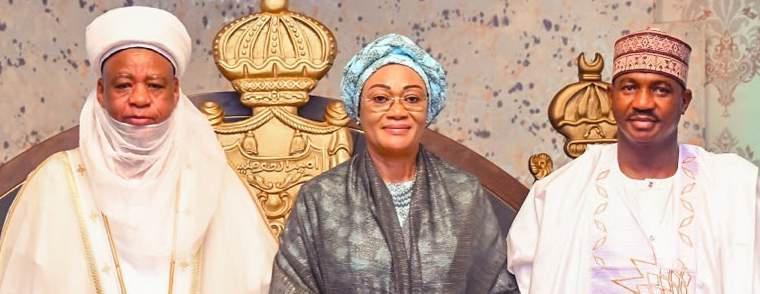
L-R: Sultan of Sokoto, Alhaji Muhammadu Sa’ad Abubakar III; First Lady, Senator Oluremi Tinubu; and Sokoto State Governor, Dr. Ahmad Aliyu Sokoto, during the First Lady’s visit to the Sultan in Sokoto…yesterday





Former Vice President Atiku Abubakar has criticised the Presidency for invoking China’s legal system in its defence of President Bola Tinubu, arguing that the comparison has instead drawn greater attention to allegations surrounding the president’s past.
Atiku, the presidential candidate of the African
Democratic Congress (ADC) in the 2027 election, said the Presidency had scored a “monumental own goal” by citing China, where he said the most serious drug trafficking offences attract the death penalty.
The Presidency had earlier fired back at Atiku over reports that his lobbying group in the United States had submitted petitions to President Donald
Trump and the US State Department regarding a 1993 civil forfeiture case against President Tinubu, among other issues raised.
But Atiku, in a statement issued by his Senior Special Assistant on Public Communication, Phrank Shaibu, said the Presidency’s attempt to use China as a reference point had backfired due to the Asian country’s stringent stance on
narcotics offences, corruption and public accountability.
The former vice president said the Presidency’s attempt to score political points had instead exposed Tinubu to deeper public scrutiny.
“It takes a peculiar kind of unintelligence for a spokesman to set out to drag an opponent before a hypothetical Chinese court, only to end up dragging his own principal into the dock.
“Perhaps, the spokesman did not realise that the maximum penalty under Chinese law for the most serious drug trafficking offences is death. Having chosen China as his benchmark, he unwittingly invited Nigerians to examine the very standard he thought would embarrass Atiku Abubakar,” the statement read in part.
Atiku maintained that he had never been indicted or
KWANKWASO: OBI WILL HONOUR HIS ONE-TERM PROMISE IF ELECTED IN 2027
word.
“I personally believe Peter Obi is a gentleman and I have every reason to trust him, especially that he said it to the hearing of everybody. Nobody should have any reason to doubt him,” Kwankwaso said.
He explained that the powersharing arrangement within
the NDC was built on mutual trust and a collective agreement among the coalition partners.
Kwankwaso also argued that allowing the South to complete an eight-year tenure aligns with the understanding reached by members of the alliance.
“We believe the southern part of the country should
complete its second term and with that, and to the hearing of everybody in this country, I don’t believe any gentleman would want to renege, would want to say no or change his or her mind,” he stated.
The former Kano State governor added that beyond individual ambitions, the
coalition had developed a shared roadmap for governance that would guide whoever eventually leads the country.
According to him, the NDC’s focus is on implementing its agreed agenda rather than advancing the interests of any particular political bloc.
“More importantly, we have
collectively gotten a short-term, medium-term and, of course, long-term plan for this country. It does not matter whether it is him from the Obidient side, or my humble self from the Kwankwasiyya side or another side, we believe we have an agenda,” he said.
Kwankwaso stressed that the
Chancellor of Ahmadu Bello University, Zaria, Prof. Ango Abdullahi, yesterday lamented the erosion of the values and leadership ideals that once defined Northern Nigeria.
He warned that the region’s worsening insecurity, poverty and underdevelopment stemmed from a departure from the principles of its founding leaders.
Meanwhile, the Sultan of Sokoto, His Eminence Muhammadu Sa'ad Abubakar, yesterday sought divine intervention for the true repentance of those perpetrating evil in the country.
The president made the remarks yesterday during the Third General Hassan Usman Katsina Memorial Lecture held at Arewa House, Kaduna, with the theme, “From Sacrifice to Strategy: Rekindling Gen. Hassan Usman Katsina’s Vision for a Prosperous Northern Nigeria.”
Tinubu, who was represented by his Special Adviser on Political and Other Matters, Ibrahim Masari, paid tribute to the late General Katsina, describing him as a symbol of humility, discipline, patriotism and selfless service.
He said the former military governor of the defunct Northern
zero-rated supplies, taking into account revenue implications, social impact, Nigeria's treaty obligations, and regional integration commitments.
The Minister of Finance and Coordinating Minister of the Economy, Mr. Taiwo Oyedele, inaugurated the committee in his office, charging members to deliver a modern and practical VAT framework that reflects the intent of the Tax Reform Acts and responds to the realities of today's economy.
He described the Tax Reform Acts, which came into effect on January 1, 2026, as the most
Region and later Chief of Army Staff played a significant role in promoting national unity and strengthening Nigeria during critical periods of its history.
According to the president, General Katsina’s commitment to the country’s unity helped lay the foundation for the democracy and freedoms Nigerians enjoy today.
Tinubu reaffirmed his administration’s commitment to securing the nation and preserving the legacies of past national heroes.
“While we continue to work day and night to secure our nation, by the grace of Allah, the challenges of insecurity confronting us, particularly in Northern Nigeria, will soon be behind us,” he said.
The president also outlined several initiatives undertaken by his administration to improve education, infrastructure, transportation and energy in the North and other parts of the country.
Meanwhile, Prof. Abdullahi and a political economist, Dr. Usman Bugaje, also spoke at the occasion.
Abdullahi said the North, once admired for its discipline, integrity and sense of purpose,
extensive changes to Nigeria's tax system in decades, noting that the reforms simplify tax administration, improve certainty, strengthen competitiveness, protect vulnerable Nigerians and create a stronger foundation for sustainable economic growth.
Oyedele explained that while the previous VAT Modification Order made under the repealed VAT Act had served its purpose, the new legal framework requires a fresh Order to provide clarity, update relevant schedules and support the effective implementation of the Nigeria Tax Act.
had lost the moral values that made it a respected region.
“The North has lost its values. You may not want to hear this, but that is the case today. If we have not lost the values we inherited from our parents and our pioneer leaders, the North will not be where it is today,” he said.
According to him, although many Northern cities have expanded physically, the virtues of honesty, sacrifice, patriotism and selfless leadership that shaped the region’s early leaders have steadily declined.
“The North is in a pathetic situation. For me, that is the only reason why the North has stagnated. Don’t worry about the buildings you see. The basic issue concerning where the North finds itself today is the loss of our values,” Abdullahi stated.
He urged Northerners to emulate the legacy of the late Gen. Katsina, describing him as one of a generation of leaders who embodied integrity, accountability and dedication to public service.
“If we can go back to those values, particularly by remembering those who inherited them and practised
"This is not about reproducing an old document," Oyedele said.
"It is about developing a VAT Modification Order that is clear, practical and responsive to the needs of a changing economy," the minister added, according to a statement issued by the Head, Information and Public Relations, Federal Ministry of Finance, Efe Ovuakporie.
them, there is no doubt in my mind that the North would have been different today,” he added.
Delivering the keynote address, Bugaje said Northern Nigeria had suffered decades of economic decline, insecurity and institutional decay because it had drifted away from the visionary leadership exemplified by Hassan Katsina and his contemporaries.
“The troubles of the North are many and varied. Food production is going down daily, hundreds of thousands are being displaced from their homes, the economy has been shrinking, poverty has nearly tripled, education and healthcare have collapsed, and our human capital has been depleted,” he said.
He added that insecurity had continued to undermine agriculture, commerce and livelihoods across the region.
“It is indeed time to ask how much of the North still remains. Or, better still, how much of the sanity of the elite, especially those in government, still remains? Today, who is there to go to?
Where are the General Hassans to complain to? Where exactly is the leadership? Where is the direction?” he asked.
Oyedele stated that the new Order should remove uncertainty, make compliance easier for taxpayers, support investment decisions and provide tax administrators with clearer guidance in implementing the law.
He directed the committee to undertake a thorough review of the legal framework, administrative practices, and policy directives governing VAT administration, particularly the VAT-exempt and zero-rated provisions contained in Part IV of the Nigeria Tax Act, 2025, while identifying areas that require further clarification.
The minister also charged members to engage extensively with stakeholders across government, the organised private sector, professional bodies and other interest
convicted of corruption, drugrelated offences or any criminal offence in Nigeria or abroad.
“The facts are neither complicated nor disputable. Atiku Abubakar has never been indicted or convicted by any court in Nigeria or anywhere else in the world for corruption, narcotics offences or, indeed, any criminal offence whatsoever. That is an incontrovertible matter of public record,” he said.
coalition would work to ensure continuity of its programmes regardless of who occupies the presidency in the future.
“That agenda, we will as much as possible ensure that whoever comes, maybe Peter, maybe me or any other person, would stick to that programme,” he added.
Bugaje criticised sections of the Northern elite for merely lamenting the region’s challenges without providing practical solutions.
“It has become the pastime of the elite to sit in the comfort of their homes and say that the North is in trouble. Some even scream that the North is finished. These comments only betray the complacency, or even the complicity, of the Northern elite,” he said.
In a related development, the Sultan of Sokoto, His Eminence Sa'ad Abubakar, has sought divine intervention for the true repentance of those perpetrating evil in the country.
Speaking while playing host to the wife of the President, Senator Oluremi Tinubu, in his palace in Sokoto, the monarch declared that leaders should continue to seek divine intervention, especially for those groups of people who have been perpetrating evil in the land.
According to him, his prayer was that the evildoers would
groups to validate classifications, address implementation concerns and ensure that the final recommendations are practical and balanced.
He further instructed the committee to recommend a comprehensive schedule of VAT-exempt and zero-rated supplies, taking into account revenue implications, social impact, Nigeria's treaty obligations, and regional integration commitments.
In addition, the committee is expected to prepare a clear and implementable VAT Modification Order that aligns with the
come to true repentance and live appropriately.
The Sultan commended the First Lady for her various interventions through the Renewed Hope Initiative (RHI), which has touched the lives of millions of Nigerians.
On her part, Mrs. Tinubu expressed appreciation to the Sultan for his continued support and constant guidance to the administration of President Bola Tinubu since inception.
The First Lady who went nostalgic about the long years of relationship between the two families noted that the Sultan is always pointing the administration in the right direction.
Mrs. Tinubu explained that the purpose of her visit was to thank the Sultan.
Earlier, the state Governor, Ahmad Aliyu, thanked the First Lady for the visit to the revered monarch, reechoing the impact of the RHI in the lives of Nigerians.
provisions of the Nigeria Tax Act and, where necessary, recommend amendments to the Tax Reform Acts and other enabling laws to strengthen implementation. The minister urged members to ensure that every recommendation remains faithful to both the letter and the spirit of the new tax laws, adding that the Order should encourage industrial growth, support investment, promote exports, strengthen food security, encourage innovation and facilitate Nigeria's energy transition without compromising the integrity of the VAT system.
More revelations have emerged from the dispute between former President Olusegun Obasanjo and former Ogun State Governor, Aremo Olusegun Osoba, over the circumstances that preceded the 2003 general election, one of the most controversial general elections of the Fourth Republic.
The old dispute was reopened by the republication of excerpts from Osoba’s autobiography, ‘Battlelines: Adventures in Journalism and Politics,’ under the title, ‘How Obasanjo Deceived Us in 2003.’
Both leaders are influential Egba sons in Ogun State and key figures in Nigeria’s democratic history.
In the excerpts, Osoba accused Obasanjo of persuading the leadership of Afenifere and the six governors of the defunct Alliance for Democracy (AD) to support his re-election in 2003 on the strength of promises that were allegedly abandoned once the former President secured a second term.
However, Obasanjo responded
to Osoba’s accusations with a strongly worded rebuttal entitled, “Reply to Your Inaccurate Posture: ‘How Obasanjo Deceived Us in 2003.’” He rejected Osoba’s account, denied misleading the AD governors and insisted that his fellow Egba politician lacked full knowledge of the discussions that took place at the time.
Former Chief Security Officer (CSO) to the late Head of State, General Sani Abacha, Major Hamza Al-Mustapha (rtd.), has dismissed claims made by a former Assistant Director of Department of State Services (DSS), Mr. Dennis Amachree, regarding the final moments of the late military ruler, describing the account as false.
Amachree gave his version of Abacha’s final moments in his new book titled: ‘DSS @40:
My journey behind the shield’. Amachree, who was assistant director of operations and intelligence at the Lagos DSS command at the time of Abacha’s demise, said the late military leader passed on in the presence of a lady during an intimate affair, around 4:05am, at the presidential villa in Abuja.
The retired DSS staffer said the lady and her older sister, who was Abacha’s girlfriend, had arrived at Aso Rock, the nation’s seat of power, on the day of the incident.
Amachree said Abacha’s girlfriend left her younger sister at the villa with the late general.
Speaking with journalists in Kaduna, Al-Mustapha said the claims contained in the former DSS official’s book were untrue, alleging that the author was influenced by others to write them.
“The boy was asked to write the lies by others. I have all the CCTV footage of what happened in my custody; so, what he said is not true,” Al-Mustapha said.
He maintained that the account presented in the publication did not reflect what transpired, insisting that he possessed evidence to contradict the assertions made about Abacha’s death.
Al-Mustapha further urged the public to disregard the claims, saying it was wrong to make what he described as false statements against someone who was no longer alive to respond.
“Just ignore his lies. It’s bad to say such things on someone that is dead,” he said.
Sunday Ehigiator
A retired Assistant Director of the Department of State Services (DSS), Dennis Amachree, has said the appointment of Isa Pantami as Minister of Communications and Digital Economy by former President Muhammadu Buhari raised national security concerns and exposed weaknesses in Nigeria’s security vetting process.
Amachree made the assertion
in his memoir: ‘DSS @40: My Journey Behind the Shield’, chronicling his four decades in Nigeria’s intelligence service.
The retired DSS officer revisited the controversy that erupted in 2021 after old sermons and public statements in which Pantami allegedly expressed support for extremist groups, including al-Qaeda, the Taliban and Boko Haram, resurfaced online.
Amachree said the controversy
raised questions about how someone entrusted with Nigeria’s telecommunications and digital infrastructure passed through the country’s security vetting process.
He noted that the DSS carries out extensive background checks on nominees for sensitive public offices by examining their past affiliations, public speeches, academic records, political leanings, associations and online activities before
forwarding intelligence reports to the president and, where necessary, the National Assembly. The retired intelligence officer noted, however, that the agency only provides advice.
Amachree said although he could not confirm the contents of Pantami’s security report, it was difficult to believe that his past public statements would have escaped the attention of intelligence officers conducting background checks.
The exchange has revived the longstanding argument over whether the AD governors were victims of a sophisticated political betrayal or whether their defeat was simply the result of poor political judgment, declining popularity and an inability to understand the changing electoral mood in the region.
But beyond the competing recollections of the two elder statesmen, the timing of the dispute is politically significant.
Many believe that the renewed hostility between the two Egba sons was connected with the failure of Obasanjo's daughter, former Senator Iyabo Obasanjo-Bello, to secure the All Progressives Congress (APC) gubernatorial ticket.
Earlier in the year, Iyabo reportedly joined the APC and indicated an interest in the governorship contest.
Following the emergence of Senator Solomon Olamilekan Adeola, popularly known as Yayi, as the party’s consensus candidate, she resigned from the APC, alleging exclusion and disrespect by its leadership.
THISDAY gathered that Obasanjo was angry that she was neither given the APC governorship ticket nor the deputy governorship ticket.
However, APC leaders in Ogun State were said to have argued that Obasanjo had no moral justification to promote his daughter’s gubernatorial ambition in the party, while he was supporting Mr. Peter Obi and Senator Rabiu Kwankwaso’s joint presidential ticket in the Nigeria Democratic Congress (NDC).
She subsequently returned to the Peoples Democratic Party (PDP) and secured the party’s Ogun Central senatorial ticket. Her departure from the APC generated a public disagreement
after Adeola accused her of demanding reimbursement for expenses incurred during her governorship campaign.
Iyabo denied making a straightforward demand for repayment and stated that her political team had only presented different proposals as part of efforts to resolve the fallout from the consensus arrangement. However, the feud died down with Iyabo moving to, and settling for the PDP.
But with Ogun State and Nigeria in general approaching another succession election in 2027, political interests are being activated, alliances negotiated and old loyalties tested.
Osoba claimed that Obasanjo had sought the cooperation of the AD governors and the Yoruba political establishment during the crisis-ridden first term of his presidency.
The period preceding the 2003 election was politically difficult for Obasanjo.
His relationship with the National Assembly had deteriorated, his administration faced an impeachment threat, and his relationship with the then Vice President Atiku Abubakar had become increasingly strained. According to Osoba, it was against this background that Obasanjo reached out to the six AD governors in the South-west.
The governors reportedly told the president that they could not independently negotiate on behalf of the party or the larger Yoruba political establishment.
They insisted that any understanding would have to involve Afenifere leaders, particularly the late Chief Abraham Adesanya.
Osoba revealed that at several meetings involving prominent Afenifere figures such as the
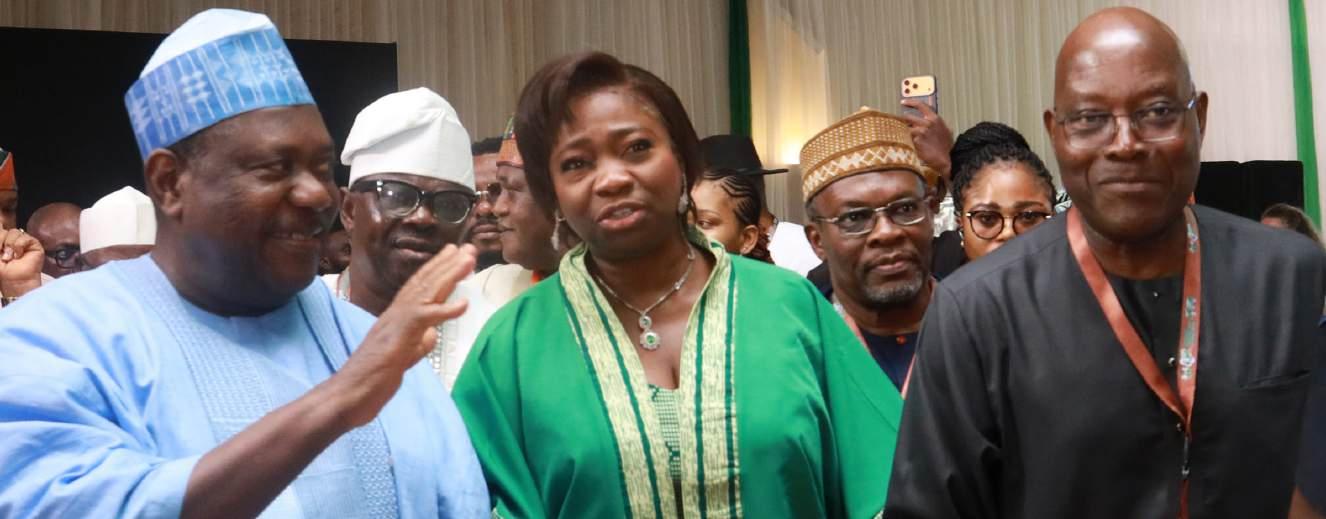
L-R: Representative of the President and Secretary to the Government of the Federation, Senator George Akume; Chairman/CEO, Nigerian in Diaspora Commission, Hon. Abike Dabiri-Erewa; and Group Managing Director, Arco Group Plc, Mr. Alfred Okoigun, during the opening of the two days National Diaspora Day 2026 celebrations at the Presidential Villa, Abuja...Friday
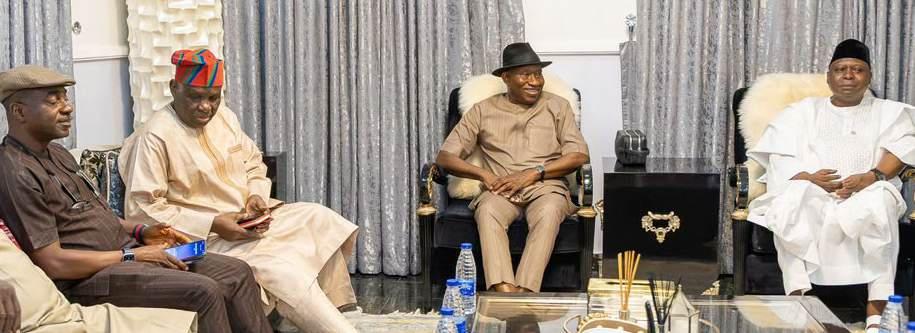
The Taminu Turaki-led faction of the Peoples Democratic Party (PDP) on Friday met with former President Goodluck Jonathan ahead of the 2027 general election.
The faction had announced the former president in absentia
as its presidential candidate in next year’s general election. Jonathan was not present at the event where his nomination was formally ratified. Still, his nomination papers were received on his behalf by a member of the House of Representatives from Bayelsa State, Job Fred Agbaje. Despite being announced
as the faction’s presidential candidate, Jonathan has not publicly accepted the nomination or declared interest in running for the presidency in 2027.
Details of the former president’s meeting with the Turaki-led Interim National Working Committee of the party were yet to be ascertained as
of the time of filing this report. However, there was anxiety that the meeting was not unconnected with the permutations over the 2027 general election. Turaki had last week said the opposition party had survived more severe internal crises in the past and would overcome
Wale Igbintade
The National Steel Raw Materials Exploration Agency (NSRMEA) has declared that Nigeria possesses an estimated three billion tonnes of iron ore reserves, enough to sustain operations at the Ajaokuta Steel Complex for decades, while assuring that raw material availability will not hinder the long-delayed steel plant once it begins production.
Director-General of NSRMEA,
Kolawole Ogunbiyi, disclosed this in Kaduna while outlining the agency's preparedness to support the revival of Nigeria's steel industry through the supply of critical raw materials.
He said extensive geological exploration carried out over the years had confirmed that Nigeria possesses abundant deposits of iron ore, limestone and coal, the three essential raw materials required for steel production—with iron ore accounting for about 95
per cent of steel-making inputs.
According to him, the country's estimated three billion tonnes of iron ore reserves represent a major strategic asset capable of driving industrialisation and reducing dependence on imported steel.
"The iron ore in Itakpe has no equal, both in quality and quantity. It has been subjected to laboratory tests to determine how viable and suitable it is for the steel rolling plant," Ogunbiyi said.
He identified the Itakpe iron ore deposit in Kogi State as the backbone of Nigeria's integrated steel development programme, noting that its high iron content and low impurity levels make it ideal for steel production.
Despite the abundant reserves, Ogunbiyi lamented that mining activities have remained below potential because the Ajaokuta Steel Complex—the principal off-taker for the ore—has yet to commence full commercial operations.
The last may have not been heard about the primary election of the All Progressives Congress (APC) in Kogi West Senatorial District as an aspirant, Mr Samuel Aro has filed a suit at the Federal High Court, Lokoja Division, challenging the party, Senator Sunday Karimi and the Independent National Electoral Commission (INEC) over the outcome of the election.
In the suit, Aro is questioning the validity of the party’s submission of Senator Sunday Karimi’s name to INEC.
According to the suit, Aro is seeking a declaration that the Kogi West APC primary held on May 18, 2026, produced him as the winner, and that the submission of Karimi’s name to INEC by the APC on July 11, 2026 is null, void and ineffective.
He is further asking the court to hold that since he has not
withdrawn his candidacy, the party is bound to recognise him as its lawful candidate.
Part of the reliefs the plaintiff is seeking also include an order directing INEC to accept and recognise his name as the APC candidate for the Kogi West Senatorial District in the 2027 general election.
The development is the latest twist in a dispute that has continued to generate tension within APC leaders and
supporters in Kogi West since the primary election was held.
Senator Karimi was officially declared the winner of the primary election held on May 18, 2026.
The Returning Officer, Isah Haruna, had disclosed that Karimi secured the party’s ticket after polling 51,665 votes.
There were reports that Aro and others withdrew from the race prior to the exercise, a claim he has denied.
its current leadership challenges.
Speaking at a stakeholders’ meeting over the weekend in Abuja, he said the current leadership crisis was not worse than previous disputes, particularly the one that led to the establishment of the Ahmed Makarfi-led caretaker committee.
“We have seen all seasons. We have seen the good times, and we have also seen the bad times. We have seen days of prosperity, just as we have also seen days of adversity,” Turaki said.
“The kind of challenge that the Peoples Democratic Party is facing today is not new to us.
People may recall a time when some charlatans made attempts to take the leadership of our party. Still, the party stood united and a caretaker committee was
set up under the leadership of Senator Ahmed Makarfi.
“Those who witnessed that period will appreciate that what we are witnessing now is even a child’s play. By the special grace of God, we shall overcome.” Turaki said the stakeholders’ meeting was convened to brief party leaders on recent developments, including the implications of a court judgment delivered in a suit instituted by the party’s board of trustees (BoT).
On July 17, a Federal High Court in Abuja dismissed a suit seeking to compel the Independent National Electoral Commission (INEC) to recognise the Turaki-led interim National Working Committee (NWC) of the PDP.
Emmanuel Addeh in Abuja
The National Boundary Commission (NBC) has reaffirmed its commitment to resolving the long-standing boundary dispute between Ekiti and Kwara states.
The NBC announced that it had intensified efforts to achieve the final definition of the ‘70 kilometre’ interstate boundary, in line with its constitutional mandate to promote peaceful coexistence, safeguard lives and property, as well as strengthen national unity.
Speaking at the Joint Meeting of Officials (JMO) on the Ekiti/ Kwara Interstate Boundary held in Ado-Ekiti, the Director General of the NBC, Adamu Adaji, described the meeting as another significant milestone
in the commission's sustained efforts to resolve all outstanding issues along the shared boundary.
He explained that the present Ekiti/Kwara boundary was inherited from the former Ondo/ Kwara interstate boundary and derives its legal foundation from ‘Legal Notice No. 126 of 1954’, which defined part of the boundary between the former Northern and Southern Nigeria. A statement by the NBC’s Head of Information, Press and Public Relations, Chinwe Udouwem, quoted the director general as saying that the commission's intervention became necessary due to recurring communal clashes in the affected border communities, leading to loss of lives, destruction of property, displacement of residents and prolonged tension.
L-R:
The presidency yesterday clarified that the federal government has no plans to increase electricity tariffs for any category of grid-connected customers, describing reports suggesting otherwise as a misrepresentation.
In a statement issued in
Abuja, the Special Adviser to President Bola Tinubu on Power Infrastructure in the Office of the Vice President, Sadiq Wanka, said there was no planned tariff increase across any service band, stressing that the government remained committed to protecting vulnerable households through continued tariff support.
The clarification, the statement said, followed comments made
by the presidential aide during a presentation at the Asharami Square 3.0 event held in Lagos on July 22, where he spoke on investment opportunities in Nigeria's power sector.
A statement he personally signed said that Wanka also spoke on the impact of the federal government's reform programme on attracting private sector investment across the
electricity value chain.
According to the statement, Wanka, in the course of his presentation, reaffirmed the tariff policy direction contained in the National Integrated Electricity Policy (NIEP), which was finalised in December 2024 and approved by the Federal Executive Council (FEC) in May 2025.
It explained that the
Arinze Gideon in Enugu
President Bola Ahmed Tinubu has challenged Nigerian universities to move beyond classroom teaching and become the nation’s foremost source of practical solutions to insecurity, food insecurity, climate change, technological lag and other pressing national challenges.
The president issued the charge yesterday at the 55th Convocation Ceremony of the University of Nigeria, Nsukka
(UNN), where the institution conferred honorary doctorates on Nigeria’s First Lady, Senator Oluremi Tinubu, and other distinguished Nigerians for their outstanding contributions to national development and humanity.
Represented by the ViceChancellor of the University of Benin (UNIBEN), Prof. Edoba B. Omoregie, the president said universities must produce research that addresses the country’s developmental needs
rather than allowing valuable academic findings to remain unused.
“We are looking up to the universities to provide evidencebased advice and innovative solutions to these problems. Research outputs from our universities should move from the shelves to industries where they are needed and translate into policies that shape our developmental priorities,” the President said.
He stressed that education
remained the most strategic investment any nation could make, saying: “Education is the foundation upon which our quest for sustainable economic growth, technological advancement, national security and social cohesion are built.”
Tinubu assured Nigerians that his administration would continue to strengthen higher education through investments in infrastructure, staff development, research and curriculum reforms.
Hammed Shittu in Ilorin
Residents of Kaiama in Kaiama Local Government Area (LGA) of Kwara State yesterday staged a peaceful protest over the non-rescue of 176 residents of Woro community who have remained in the captivity of suspected bandits for the past 172 days.
This is coming as the opposition, Peoples Democratic Party (PDP) in the state has called on the state government to
urgently engage security agencies for the rescue of the 176 victims.
Bandits had attacked the community on February 3, 2026, abducting 176 persons who have remained in the bandits’ den to date.
The non-rescue of the victims had led the residents of the community to embark on fervent prayers and fasting, urging the government to come to the aid of the victims, but their efforts yielded no positive results.
However, the residents of the LGA staged a peaceful protest in Kaiama, the headquarters of the local government, to seek urgent attention from the government to their plight.
The protesters, who turned out in large numbers, expressed dissatisfaction over what they described as the prolonged silence on efforts to secure the victims' release.
Speaking during the protest, the President of the Kaiama Development Association,
Alhaji Salihu Yakubu, said the abductees had remained in captivity since February 3 without any official update on their rescue efforts.
Yakubu alleged that more than 300 people lost their lives during the attack on the Woro community, while 176 others, including women, children and men, were abducted.
He lamented the absence of government presence in the area, saying residents had been neglected for too long.
policy envisages a gradual transition to cost-reflective tariffs, a framework already implemented for Band A electricity consumers.
However, the statement stressed that the presidential aide made it clear there were no plans to remove subsidies for consumers in other service bands, noting that the government was instead exploring more efficient ways of delivering support to electricity consumers.
"To this end, the Special Adviser highlighted the Power Consumer Assistance Fund (PCAF), enabled by the Electricity Act 2023, as a mechanism for delivering targeted subsidies directly to vulnerable consumers through consumer electricity accounts or other identity linked means, improving transparency
and strengthening investor confidence," the statement said.
The presidency added that the administration of President Tinubu recognised the critical role of the media in communicating government policies, noting that it supported initiatives such as Asharami Square, which seeks to deepen journalists' understanding of complex policy issues.
It urged journalists and media organisations to continue providing accurate and contextual reporting on government reforms, particularly in the power sector.
“There is no planned tariff hike for any grid consumer across any service band. The government remains committed to protecting vulnerable households through continued tariff support,” the statement added.
Linus Aleke in Abuja
The Nigeria Police Force has refuted reports claiming that the Inspector-General of Police (IG), Olatunji Disu, ordered officers to shoot anyone found with illegal firearms, insisting that the report was entirely false and a misrepresentation of the IG’s actual comments.
In a statement issued yesterday by the Force Public Relations Officer, CSP Ani Iniedu, the police high command said the report, which had since gone viral on social media, was taken out of context and twisted to mislead the public.
“In his address, the IG reminded officers that only security personnel who are legally authorised are allowed to carry firearms. He also spoke about the growing problem of illegal weapons, which are often used by criminals to carry
out kidnapping, armed robbery, banditry, cult violence, and other serious crimes.
“The Inspector-General further reminded police officers that the use of firearms is guided by Force Order 237, which clearly states when an officer may lawfully use a firearm while carrying out official duties. He stressed that officers must always act within the law and follow the approved rules for the use of force. At no time did he instruct officers to shoot anyone simply because they were found with an illegal firearm.
“The Nigeria Police Force remains committed to protecting the lives and rights of all Nigerians. The Force will continue to carry out its duties with professionalism, respect for the law, and respect for human rights. Officers are expected to perform their duties responsibly and in line with the Constitution and other relevant laws.
Deji Elumoye in Abuja
Six state governors have pledged to draw practical lessons from the Glo-Djigbé Industrial Zone (GDIZ) in the Republic of Benin as Nigeria intensifies efforts to establish agro-industrial processing hubs, revive domestic manufacturing and create large-scale employment for young people.
The governors spoke at the weekend after joining Vice President Kashim Shettima on an inspection of the integrated industrial zone near Cotonou, where cotton, cashew nuts, soybeans and other agricultural commodities are processed into
finished and semi-finished products.
The delegation comprised Governors Hope Uzodimma of Imo State; Dauda Lawal, Zamfara State; Caleb Mutfwang, Plateau State; AbdulRahman AbdulRazaq, Kwara State; Dikko Umar Radda, Katsina State; and Umar Namadi, Jigawa State.
Governor AbdulRazaq described the visit as an African peer-learning mission intended to help Nigerian states avoid costly mistakes and adopt tested industrial practices.
"Nigeria is on the verge of developing industrial processing zones across the federation. We
previously visited Ethiopia to study what they had done, and we are now in the Benin Republic to learn from both the challenges and the successes of this industrial zone.
"We have examined the cotton, cashew and soybean value chains. What we have seen has been a tremendous success, and we will take these lessons back to Nigeria as we implement our own projects", AbdulRasaq stated.
He said participating states were working with the federal government and development partners, including the African Development Bank (AfDB), Islamic Development Bank
and International Fund for Agricultural Development, to provide the infrastructure required for the zones. Nigeria's first SAPZ phase covers seven states and the Federal Capital Territory (FCT).
Also speaking, Jigawa State Governor, Namadi, said the industrial zone had provided useful lessons for his state's efforts to add value to agricultural production under Nigeria's Special Agro-Industrial Processing Zones Programme.
"With the adoption of this concept and the implementation of the SAPZ programme in Nigeria, Jigawa will be able
to add value to its agricultural products and create more opportunities for its people," he said.
On his part, Zamfara State Governor, Lawal, said the visit revived memories of the once-thriving textile industry in his state, where factories, cotton ginneries and oil mills previously employed thousands of people.
He said: "This takes me down memory lane because I grew up around this industry. My father was one of the owners of the Zamfara Textile Industry.
"At one point, the factory operated three shifts, with about 2,000 workers on each shift.
BATTLE OF THE EGBA TITANS: FRESH FACTS EMERGE ON OBASANJO, OSOBA FEUD
late Chief Ayo Adebanjo, Senator Femi Okurounmu and Chief Cornelius Adebayo, the discussions were not limited to Obasanjo’s re-election.
According to him, Afenifere presented what it considered a fundamental governance and constitutional agenda for Nigeria.
The demands reportedly included restructuring, devolution of powers, fiscal federalism, a more transparent census, meritbased appointments and broader constitutional reforms.
According to the former governor, Obasanjo responded positively to the proposals and gave the impression that his second term would address several of the structural grievances championed by Afenifere.
He recalled that Adebanjo, who had often been publicly critical of Obasanjo, was surprised by what appeared to be the president’s new disposition towards restructuring and constitutional reform.
On the strength of these assurances, Afenifere and the AD decided not to field a presidential candidate against Obasanjo in 2003.
While Obasanjo would receive support for his presidential re-
election in the South-west, it was expected that the AD governors would compete freely to retain control of their states.
But the outcome was disastrous for the AD.
Of the six governors elected on the party’s platform in 1999, only the then Lagos State Governor, Bola Tinubu, survived the 2003 elections as the PDP took control of Ogun, Oyo, Osun, Ondo and Ekiti states.
For Osoba, the AD governors’ agreement with Obasanjo had been used to weaken the AD and facilitate a PDP takeover of the region.
From his account, there appears to have been no publicly documented accord specifying what Obasanjo, the AD governors or Afenifere were required to do.
There was also no enforceable commitment compelling Obasanjo to implement restructuring or any of the constitutional reforms reportedly discussed.
The arrangement, to the extent that one existed, was built on political trust and personal assurances.
That left considerable room for conflicting interpretations.
Neither side has produced a document capable of conclusively
settling the question.
Osoba’s account also revealed the role allegedly played by influential Yoruba monarchs in the negotiations.
The former governor listed the late Ooni of Ife, Oba Okunade Sijuwade; the late Alake of Egbaland, Oba Oyebade Lipede; the late Oba of Lagos, Oba Adeyinka Oyekan; the late Ataoja of Osogbo; and the late Awujale of Ijebuland, Oba Sikiru Adetona, among those who intervened.
According to him, the Awujale was particularly concerned about the disagreement between two prominent Egba sons occupying strategic political positions.
Obasanjo was President, while Osoba was governor of their home state.
During the meeting, Obasanjo was said to have accused Osoba of keeping an unnecessary distance from the Presidency and thereby limiting the opportunities Ogun State could derive from the federal government.
Osoba maintained that their differences were ideological and claimed he deliberately avoided pursuing extra-budgetary federal assistance because of concerns about the practices associated with such interventions.
The Rigging Allegations
Osoba alleged that when Afenifere leaders received intelligence that the elections would be manipulated against the AD governors, Adesanya confronted Obasanjo with the allegations during one of their meetings.
The former governor also claimed that the late Anglican cleric, Bishop Emmanuel Gbonigi, informed the meeting that some individuals were being trained in Ondo State to wear fake police uniforms during the polls.
Obasanjo reportedly denied the allegations and assured the gathering that the elections would be credible.
Osoba, however, argued that the eventual outcome validated Afenifere’s fears.
He alleged that some National Assembly and governorship election results had been prepared before voting commenced.
However, the allegations of irregularities, however serious, did not automatically establish that every AD governor would have won a completely credible election.
Obasanjo’s Counternarrative
Obasanjo rejected Osoba’s description of him as a deceiver and argued that the former governor did not possess all the facts concerning the negotiations.
“I take strong and serious objection to your calling me a deceiver because I deceived nobody,” he stated.
He further told Osoba that there were issues he did not know or understand because they were “above” his head.
The remark suggested that Obasanjo believed Osoba had overstated his importance in the political negotiations of the period.
Obasanjo disputed the claim that he desperately needed the support of the six AD governors.
He argued that the PDP controlled 21 states, enjoyed the cooperation of some governors elected on the platform of the All People’s Party and had substantial influence within the National Assembly.
He argued that the AD governors overestimated their bargaining strength and later interpreted their electoral defeats as evidence of betrayal.
The former President also maintained that the results reflected voter sentiment rather
Zamfara State also had about 23 ginneries and an oil mill, where even cotton seeds were converted into oil," he added. Also, Governor Uzodimma of Imo State said African countries must deepen peer learning and develop industries around their respective comparative advantages to create employment and shared prosperity.
He commended President Bola Tinubu for directing Vice President Shettima to lead the delegation, describing the visit as a practical step towards implementing the administration's industrialisation agenda.
than a centrally coordinated attempt to destroy the AD. He accused Osoba of failing to campaign effectively and alleged that the former governor had become alienated from sections of the Ogun electorate.
According to Obasanjo, Osoba even apologised during a television appearance for what was perceived as an arrogant disposition.
The renewed dispute has attracted additional attention because Ogun State is moving towards another governorship transition.
Governor Dapo Abiodun is expected to complete his second term in 2027, and the contest over his successor is already reshaping political relationships within the state.
Obasanjo retains influence across party lines, despite his frequent insistence that he was no longer involved in partisan politics.
Osoba also remains an influential leader within the progressive bloc from which the APC emerged. Their disagreement could therefore indirectly influence political alignments.
Onuminya Innocent in Gusau
Residents of Bungudu Local Government Area (LGA) in Zamfara State were left in mourning on Friday night after suspected bandits killed four security personnel. They abducted the council chairman, Nura Abdullahi.
This is just as the Coalition of Northern Groups (CNG) has condemned the killing of 23 farmers by suspected armed bandits in Sauna District of Talata Mafara Local Government Area (LGA) of Zamfara State.
CNG urged the federal government to launch decisive security operations to end the wave of attacks on rural communities.
Residents of Bungudu LGA
said the killing of the security operatives and the abduction of the chairman and two others occurred around 11:40 p.m.
Jamilu Bungudu, a media aide to the federal lawmaker representing the Bungudu/ Maru Constituency, Abdulmalik Zubairu, stated that the assailants invaded the chairman’s official residence. They abducted Abdullahi alongside Halliru Soja, a staff member of the Federal Medical Centre, Gusau, and Hussaini Naira, a POS operator.
Bungudu said that during the attack, the gunmen killed four security personnel attached to the chairman before whisking him away.
The victims were identified as Inspector Basiru Lawal, police
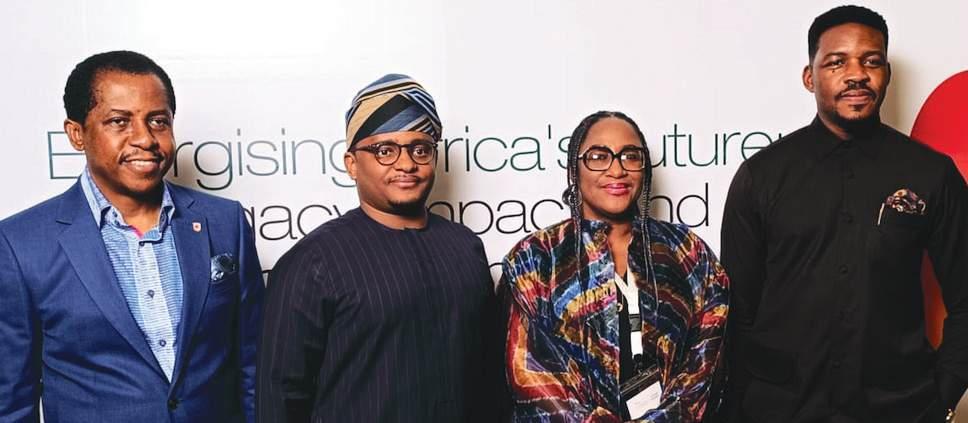
Sahara Group has called for a fundamental reform on energy transition, infrastructure financing and energy journalism, urging stakeholders to embrace solutions that reflect the continent’s realities while building the partnerships, institutions and investments required for longterm development.
The call formed the central thrust of discussions at the third edition of Asharami Square, a Sahara Group thought leadership initiative held under the theme “Energising Africa’s Future: Legacy, Impact and Transformation.”
Opening the discussions, the Director, Governance and Sustainability, Sahara Group, Ejiro Gray, stated that Africa’s energy future must be shaped by local realities and called for more balanced, evidence-based journalism capable of interrogating the complexities
of energy transition, development and sustainability.
The event also featured the unveiling of the Asharami Square Energy Reporting Fellowship Judging Panel, reinforcing Sahara Group’s commitment to strengthening energy journalism and fostering more informed reporting on Africa’s energy future.
Speaking on the initiative, Head, Corporate Communications, Sahara Group, Bethel Obioma, said the Fellowship was designed to deepen journalists’ understanding of the technical, commercial, environmental and policy issues shaping the energy sector.
Delivering the keynote address, Special Adviser to the President on Power Infrastructure in the Office of the Vice President, Sadiq Wanka, highlighted the opportunities emerging within Nigeria’s electricity sector as reforms continue to open new pathways for investment.
constable Hamza Muhammad, and two vigilantes, Nura ADC and Ibrahim Baare.
Additionally, Bello Abdullahi, a former treasurer in the state Ministry of Finance, sustained injuries during the raid.
Efforts to reach the Zamfara State Police spokesperson, Yazid Abubakar, for official comment were unsuccessful.
Meanwhile, a northern coalition described the massacre of 23 farm-
ers in the state as a grim reminder of the worsening insecurity in parts of Northern Nigeria, warning that persistent attacks on farmers could undermine the country’s food security and worsen economic hardship.
In a statement yesterday, its National Coordinator, Comrade Jamilu Charanchi, expressed condolences to the families of the victims, the people of Sauna District and the Zamfara State Government over
what he called the “unacceptable loss of innocent lives.”
According to the group, the victims were attacked while working on their farms, a development it said reflects the growing audacity of armed bandits operating across the region.
Charanchi said the attack was particularly disturbing because the victims were law-abiding farmers striving to provide food for their families and contribute to the
nation’s agricultural production. He noted that the incident came at a critical period of the farming season, when farmers are expected to cultivate crops that would sustain millions of Nigerians.
He warned that continued insecurity in farming communities could lead to reduced agricultural output, worsening food shortages, rising food prices, displacement of rural residents and deeper economic challenges.
Michael Olugbode in Lagos
The Chairman and Chief Executive Officer of the National Drug Law Enforcement Agency (NDLEA), Brig. Gen. Mohamed Buba Marwa (rtd.), has called on traditional institutions, parents and community leaders across Nigeria to join forces with the agency in tackling the menace of substance abuse and illicit drug trafficking.
The NDLEA boss made the call yesterday while speaking as Chairman of the 10th anniversary of Akinale Day and the 1st Coronation Anniversary
of Oba Oluseyi Ayodeji Adewole Adediran, Otileta I, Towulade of Owu Akinale, held at Baptist Primary School, Owu Akinale, Ogun State.
Marwa, who described his attendance as a pilgrimage of friendship, respect, and deepseated admiration, recalled his close relationship with the monarch spanning nearly two decades, dating back to Oba Adediran’s days as leader of the Lisabi Youths.
He commended the traditional ruler’s leadership qualities, noting that the same virtues he
displayed as a youth leader now guide his one-year-old reign on the throne of Owu Akinale.
Turning to his primary mandate as NDLEA Chairman, Marwa warned that drug abuse does not discriminate, adding that it affects the rich and poor, urban and rural communities alike.
He urged parents to return to core values of parenting by monitoring their children and watching for early behavioural changes.
He appealed directly to youths to reject illicit drugs, describing substance abuse as a false escape
that multiplies rather than solves problems.
The NDLEA boss further charged the Royal Council and community leaders in Owu Akinale to establish community-based advocacy networks to make the town a hostile environment for drug peddlers, while providing support for tho se struggling with substance use dependence.
He stressed that the agency cannot win the war against drugs without the partnership of traditional institutions and monarchs who understand youth dynamics.
Wale Igbintade
Uzoigwe Miracle and Aremu Goodness Adejare have emerged winners of the maiden edition of the 2026 Pius Oleghe Poetry Prize, distinguishing themselves from a field of talented entrants drawn from across Nigeria in a competition designed to celebrate emerging literary voices and promote national reflection through poetry. The winners were announced by the Organising Committee of
the Pius Oleghe Poetry and Literary Awards (POPALS) following a rigorous adjudication process conducted by an independent panel of distinguished judges.
In a joint statement signed by the Prize’s Literary Directors, Prof. Remi Raji and Nnamdi Okose, the organisers said the inaugural competition, themed “Nigeria of Our Dreams,” attracted outstanding entries from across the country, underscoring the richness of Nigeria’s literary talent and the enduring relevance of poetry as a
medium for social engagement, hope and creative expression.
According to the committee, Miracle emerged winner of Category A – Young Voices (12–17 years) after impressing the judges with exceptional creativity, originality and remarkable poetic craftsmanship.
In the Category B – Emerging Poets (18–35 years), Aremu Goodness Adejare was selected as the winner in recognition of a poem distinguished by artistic excellence and its thoughtful
engagement with the competition’s theme.
The organisers congratulated both winners, describing their success as a reflection of the immense creative potential among Nigeria’s younger generation of writers.
They also commended all participants, noting that the quality of submissions reaffirmed that Nigeria continues to produce gifted poets whose voices deserve recognition, encouragement and wider platforms.


Oborevwori’s administration is focused on developmental issues, argues DANIEL OSARO
By all objective standards, Senator Ovie Omo-Agege’s latest attack on Governor Sheriff Oborevwori over the declaration of the Udu State Constituency seat as vacant was misplaced. Omo-Agege appears determined to stir controversies where none exists. Unfortunately, his latest intervention exposes more political frustration than constitutional understanding.
The facts are simple.
The Delta State House of Assembly declared the seat of Hon. Collins Egbetamah vacant following his defection from the ruling All Progressives Congress (APC), to Nigeria Democratic Congress (NDC). Whether one agrees with the decision or not, it remains a legislative action taken by an independent arm of government acting pursuant to powers vested in it by the Constitution.
Yet, Omo-Agege would have Nigerians believe that Governor Oborevwori personally convened the House, dictated its proceedings and instructed lawmakers on how to vote. Nothing can be more ridiculous.
There comes a point in every political career when leaders must learn to accept the verdict of the electorate and move on. Since his loss of the APC Senatorial ticket, virtually every political conversation in the state has witnessed his unnecessary intervention.
Every routine governmental action becomes another excuse to attack Governor Oborevwori. The pattern is unmistakable. This is not constructive opposition.
Instead of rebuilding his fractured political base, Omo-Agege has chosen the easier route of issuing statements designed solely to attract headlines. Sadly, headlines cannot substitute for political relevance.
Beyond the political drama lies a constitutional issue that Omo-Agege deliberately chooses to misrepresent.
Section 109(1)(g) of the Constitution of the Federal Republic of Nigeria is neither ambiguous nor optional.
It provides that a member of a State House of Assembly shall vacate his seat if, having been elected on the platform of a political party, he defects to another political party before the expiration of the period for which that House was elected, except where there is a division in his political party or where two or more political parties merge.
That constitutional provision has been interpreted repeatedly by Nigerian courts over the years. It is not Governor Oborevwori’s invention. It is the law.
Whether Hon. Egbetamah falls within any constitutional exception is ultimately a legal question for the courts.
One of the most disturbing aspects of Omo-Agege’s argument is his deliberate distortion of the doctrine of separation of powers. The Delta State House of Assembly is not an extension of Government House. It is an independent constitutional institution.
Its Speaker presides over legislative proceedings. Its members debate. Its members vote. Its members determine their internal affairs subject to parliamentary rules and constitutional provisions.
Governor Oborevwori neither sits inside the chamber nor casts votes on behalf of lawmakers. To accuse him of personally removing a legislator simply because he heads the executive arm of government is to insult both the legislature and the Constitution.
Ironically, Omo-Agege himself argues that the Assembly is independent. Yet,
in the same statement, he blames the governor for every decision taken by that same Assembly. That contradiction exposes the weakness of his argument. Governor Sheriff Oborevwori, since assuming office, has deliberately avoided unnecessary confrontation. His administration has focused overwhelmingly on governance rather than political vendettas.
From infrastructure development to education, healthcare, rural roads, youth empowerment and economic expansion, the governor has remained focused on delivering the MORE Agenda.
While others issue daily press statements, Oborevwori commissions projects. While others chase political relevance, he pursues development. That difference explains why Delta people continue to rally behind him.
Nigeria remains governed by law. The judiciary exists precisely to resolve constitutional disputes. The courts will determine whether due process was followed. The courts will interpret Section 109. The courts, not political commentators, will pronounce on the legality of the Assembly’s action. That is how constitutional democracy functions.
Politics ultimately rewards performance. Noise rarely defeats results. The people have moved beyond endless political quarrels. They desire stability. They desire development. They desire leaders who solve problems rather than manufacture them. Governor Oborevwori has understood that expectation.
His calm disposition, inclusive leadership and development-oriented governance have steadily strengthened public confidence across the state. Attempts to distract him through politically motivated controversies would not succeed.
Ultimately, every democrat must respect constitutional institutions. If the legislature takes a decision, those dissatisfied have every right to challenge it in court. What they should not do is undermine public confidence by falsely portraying legislative decisions as executive conspiracies without proof.
Governor Sheriff Oborevwori neither declared Hon. Egbetamah’s seat vacant nor presided over the House proceedings. The Delta State House of Assembly acted within what it believes are its constitutional powers.
MOHAMMED KARI contends that Nigeria should make production more rewarding than importation

In the past few weeks, I have watched the debate over the Dangote Refinery and fuel import licences from the sidelines. Every other day, I see a different headline about ships arriving with imported petrol, fertilizer, and countless other products. And that has left me asking a simple but troubling question: what exactly do we still produce for ourselves? Besides, at a time when a Nigerian investor has committed about US$20 billion to solving a problem government failed to solve for decades, why are we still debating how to preserve an import-dependent system?
For me, the real issue is not about Dangote. It is about Nigeria. It is about whether we want to remain a nation that consumes what others produce or become a nation that produces what it consumes. Indeed, nothing illustrates Nigeria’s economic dilemma better than the story of its government-owned refineries. In recent decades, billions of dollars have been spent on refineries in Port Harcourt, Warri, and Kaduna. Yet they have consistently failed to meet domestic fuel demand. Available statistics indicate that more than N11.35 trillion has reportedly been spent on maintenance and rehabilitation, while refinery performance remained poor.
If we do a rough arithmetic for an exchange rate of about N500 to an American dollar, (the prevailing exchange rate before this government came to power in 2023), that amounts to about US$22.7 billion. That’s more than the estimated cost of the Dangote Refinery itself! In effect, Nigeria has spent more money trying to rehabilitate ageing refineries than to finance a brand-new world-scale refinery. The result is a painful contradiction: Nigeria is one of the world’s largest crude oil producers while importing much of the petrol it consumed. We were exporting crude, paying others to refine it, and then using scarce foreign exchange to buy it back. It was against this backdrop that the Dangote refinery emerged.
Meanwhile, Aliko Dangote’s significance lies not merely in his wealth but in his decision to invest in production rather than importation. His investments in cement, sugar and fertilizer have helped Nigeria move closer to self-sufficiency, created jobs, expanded industrial capacity, and opened export opportunities. These investments retain value within the Nigerian economy instead of exporting that value abroad. With a capacity of about 650,000 barrels per day, Dangote Refinery is the largest expression of this industrial philosophy.
For decades, foreign economies captured much of the value from refining Nigerian crude oil. The Dangote Refinery seeks to reverse that pattern by ensuring that more of the petroleum value chain remains in Nigeria. This is therefore about far more than fuel. It is about jobs, industrial capability, economic sovereignty, and national self-sufficiency. By refining the crude that we export locally, more value remains within the country, supporting
jobs, taxes, suppliers, and domestic businesses. Reduced import dependence also means less pressure on foreign exchange reserves and fewer dollars leaving the economy.
The Dangote Refinery is an example of import substitution: producing locally what was previously imported. It is trite to say that domestic production creates jobs, develops skills, strengthens supply chains, increases tax revenues, and expands economic output. Once local demand is met, surplus production can be exported to earn foreign exchange. This is how successful economies develop. They produce, add value, and export.
Critics argue that Dangote’s growing influence could reduce competition. Yes, competition is important. But the real question is what kind of competition Nigeria should encourage. There is a difference between investors competing by building refineries and competing by importing products made elsewhere. One expands productive capacity; the other largely distributes what others have produced.
The answer to industrial dominance should be more production, not more dependence. No country has industrialized by preferring imports to local production when it has the ability to produce for itself. If foreign interests oppose Nigerian self-sufficiency, their motives are understandable. They benefit from Nigeria remaining a market for their products. The more important question is why some Nigerian local interests appear comfortable defending an economic model that has left Nigeria dependent for decades.
The government, too, cannot afford to be indifferent. Every successful industrial nation deliberately supported domestic production, value addition, and strategic industries. If a Nigerian investor commits US$20 billion to solving a national problem that governments failed to solve for decades, the least one should expect is a policy environment that encourages production and rewards productive investment.
The real question is not whether Nigerians should compete with Dangote. It is how they should compete. Nigeria should make production more rewarding than importation. This requires a clear industrialization policy, incentives for manufacturers and productive investors, stable regulations and predictable policies, better infrastructure, power, transportation, and logistics and more refineries, factories, and processing plants. The solution to dependence is production, not more dependence.

Editor, Editorial Page PETER ISHAKA
Email peter.ishaka@thisdaylive.com
Despite the deployment of electronic verification system, the ubiquitous Nigerian ‘ghost workers’ have continued to divert billions of government money into their private pockets. The Independent Corrupt Practices and Other Related Offences Commission (ICPC) nationwide investigation has revealed widespread payroll fraud across federal ministries, departments and agencies (MDAs). The ICPC Chairman, Musa Adamu Aliyu, SAN, who made the disclosure, alleged that some senior public officials exploited the system by enrolling relatives and associates as government workers to receive salaries illegally. One suspect allegedly placed the names of his wife, son and mother-in-law on the government payroll while also collecting salaries for 12 other fictitious workers.
For decades Nigerians have been regaled with tales about how government, at the federal and states, have been able to ‘eliminate’ certain numbers of ‘ghost workers’ from the public payroll. What ordinarily ought to be an aberration in any proper self-accounting and self-auditing bureaucratic system is now a national scourge that appears insurmountable. But it is unacceptable that Nigerians should be periodically regaled with tales of discovery of ‘ghost workers’ while no visible attempts are made to get to the bottom of such fraud and bring the wrath of the law to bear on its perpetrators.
The syndicate that thrives on inflating the number of workers should be exposed It is time to unearth and interrogate the insider syndicates within MDAs who are effortlessly sabotaging the system
In the investigation launched since 2024, and still ongoing, the ICPC has named the Nigeria Police Force (NPF) as the worst culprit, recording the highest number of suspected fake workers. “For this operation,” said the anti-corruption agency, “we identified 570 people whom we suspect are among the fake workers collecting salaries without working.” They are by no means the only ones. Many others also inserted fictitious names into government payrolls to receive salaries fraudulently. But it is beyond scandalous that the NPF, an institution whose primary responsibility is crime detection, is enmeshed in this sort of scandal. That tells a compelling story about a lack of transparency and accountability that now defines public life in Nigeria.
The introduction of the Integrated Payroll and Personnel Information System (IPPIS) in the nation’s
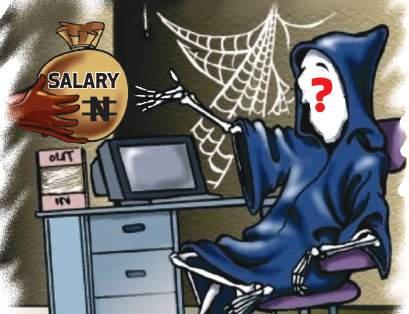
Public Finance Management (PFM) system was expected to insulate the federal government payroll from the ghost workers syndrome. Yet this has remained a recurring decimal under successive administrations. In the latest ICPC report, the National Water Resources Authority, Federal Ministry of Works, Ministry of Foreign Affairs, Ministry of Defence, Federal Ministry of Health, Federal Ministry of Interior, Office of the Head of the Civil Service of the Federation, are among many MDAs that are implicated. Even the Office of the AccountantGeneral of the Federation (OAGF) is said to be deeply involved in this fraud.
SUNDAY NEWSPAPER
editor DAviDSoN iriekpeN
deputy editors FeSTUS AkANBi eJioFor ALike
Managing director eNioLA BeLLo
deputy Managing director iSrAeL iwegBU
chairMan editorial Board oLUSegUN ADeNiYi
editor nation s capital iYoBoSA UwUgiAreN the oMBudsMan kAYoDe koMoLAFe
THISDAY NEWSPAPERS LIMITED
editor-in-chief/chairMan NDUkA oBAigBeNA
group executive directors eNioLA BeLLo, kAYoDe koMoLAFe, iSrAeL iwegBU divisional directors SHAkA MoMoDU, peTer iwegBU ANTHoNY ogeDeNgBe
deputy divisional director oJogUN viCTor DANBoYi snr. associate director eriC oJeH associate director pATriCk eiMiUHi controllers ABiMBoLA TAiwo UCHeNNA DiBiAgwU, NDUkA MoSeri director, printing production CHUkS oNwUDiNJo to send eMail: first name.surname@thisdaylive.com
Last year, amid reports that many of the civil servants who relocated abroad were still drawing salaries from the government the OAGF reportedly started a personnel audit aimed at identifying and removing ‘ghost workers’ from the civil service payroll. That evidently has not achieved any tangible result. As it is, there are perpetual loopholes to be exploited. Indeed, more recently, the criminal act has escalated beyond individual ‘ghost employees’ to the creation and funding of entirely fake, phantom government agencies captured in the national budget. Meanwhile, the regular announcements about uncovering some ‘ghost workers’ have become rather boring. What Nigerians would like to know are the steps being taken to deal with confirmed cases and prevent new ones. We ought to know, for instance, how and when some of these “ghost” names got on the payroll and for how long they have been there. We must also interrogate why it is so easy for the perpetrators of the crime to do what they do effortlessly and yet are not caught. This mindless plunder of scarce state resources has lasted long enough. It must be stopped forthwith.
Sincethisblatantfraudemanatesfromthemanipulation of payroll technology, the solution in plugging such pilfering will require blocking prospective technological loopholes. This is therefore time to interrogate and unearth the insider syndicates within MDAs who are effortlessly sabotaging the system. Unless there is a structured and serious institutional response to the ever-recurring problem of ‘ghost workers’ in most government establishments, the syndicate that thrives on inflating the actual number of workers and fleecing the nation will keep smiling to the banks.
Letters in response to specific publications in THiSDAY should be brief(150-200 words) and straight to the point. interested readers may send such letters along with their contact details to opinion@thisdaylive.com. we also welcome comments and opinions on topical local, national and international issues provided they are well-written and should also not be longer than (950- 1000 words). They should be sent to opinion@thisdaylive. com along with the email address and phone numbers of the writer
When Professor Edoba B. Omoregie (SAN) assumed office as Vice Chancellor of the University of Benin on December 2, 2024, he inherited an institution grappling with crumbling hostels, a threemonth electricity disconnection, and finances in a “shambolic state.” Yet rather than retreat into idealistic promises, he embodied the very essence of pragmatic leadership that delivers institutional progress-balancing a clear, actionable vision with relentless execution. As Simon Sinek reminds us: “Pure pragmatism can’t imagine a bold future. Pure idealism can’t get anything done. It’s when the two cooperate that magic happens.”
From day one, Professor Omoregie articulated an ambitious five-point agenda: strengthening academic programmes and positioning UNIBEN as a postgraduate hub; transforming the institution into a centre for capacity and skills acquisition; improving staff
and student welfare; upgrading infrastructure; and fostering harmonious relationships with host communities . Critics might have dismissed these as rhetorical flourish—but this Vice Chancellor matched every word with measurable action.
Within his first year, the pragmatic impact became undeniable. The purported federal embargo on staff recruitment was debunked by securing institutional approval to recuit fresh academic talents and non-teaching applicants into the university. Five new faculties were established, and seventeen new programmes received National Universities Commission approval. Postgraduate enrolment surged dramatically - from fewer than 300 graduates in previous convocations to an astonishing 1,790 at the last convocation in November 2025, representing over a 600% increase.
His integration of technical and vocational education into the academic framework
drew presidential commendation from Bola Tinubu, who praised the alignment with national skill-acquisition priorities . This was not abstract reform—it was pragmatic repositioning for economic relevance.
Perhaps the crowning achievement of this pragmatic leadership is the launch of the University of Benin Trust Development Fund—a visionary 100 billion initiative (not 10 billion) designed to secure the institution’s long-term sustainability . Inspired by Oxford University’s model from thirty years ago, Professor Omoregie recognised that government funding alone could no longer sustain Nigeria’s premier universities.
The fund, formally launched on July 4, 2026, has already garnered endorsement from the Minister of Education, Dr. Tunji Alausa, who described it as a model for sustainable university financing aligned with the Nigerian Education Sector Renewal Initiative . Governor Monday Okpebholo of
Edo State affirmed: “Sustainable universities are built through partnerships among government, the private sector, alumni, philanthropists, development partners, and friends of the institution.”
Professor Omoregie’s leadership teaches us that institutional progress requires both bold imagination and disciplined execution. He didn’t simply dream of a better UNIBEN-he dismantled barriers, mobilised stakeholders, secured recruitment waivers, rebuilt infrastructure, and created a funding mechanism that will outlast his tenure. As the Chairman of the Trust Development Fund, Pastor Osagie Ize-Iyamu, declared: “The hundred billion mega launch is more than a fund-raising exercise; it is a declaration of confidence in the university’s future and our collective determination to pursue excellence without compromise.”
Eghosa S. Igbinosa, Ph.D UNIBEN
Celebration of National Diaspora Day is a potent instrument of self-projection, self-reliance, and sustainable economic development in international relations. An act of celebration is a framework adopted in order to achieve some objectives. An act can be as important as the purpose of celebration. India celebrates its National Diaspora Day, Pravasi Bharatiya, every January 9. The day marks 9 January 1915 when Mahatma Ghandi returned to India from South Africa to lead the struggle for independence. The day is also to celebrate the Indian Diaspora’s contributions to national development.
Similarly, the United Nations set aside 11 November as Armistice Day to remember history and raise awareness. Every 8 March is celebrated as International Women’s Day to recall, remember and commemorate women’s struggle for equality and liberation. It is a global day to celebrate the social, economic, cultural, and political achievements of women. 19 November of every year was set aside as International Men’s Day in 1992 in Malta by Thomas Oaster. The objectives of the Day are as provided in ‘All the Six Pillars of International Men’s Day’: promotion of positive male role models, celebration of men’s positive contributions to society, focusing on men’s health and wellbeing, highlighting discrimination against men in the areas of social services, improving gender relations and promotion of gender equality, and creating a safe and better world for men to reach their full potential. Whatever men and boys stand for in the society are celebrated on this day. There are also the Fathers’ Day and Children Day. There is also the United Nations Day, every 24 October. The day reminds of the entry into force in 1945 of the UN Charter.
In Nigeria, strongly believing in the capacity and capability of Nigerians in the Diaspora to help advance national development, the NiDCOM (Nigerians in Diaspora Commission) set aside in 2019 every July 25 to celebrate and recognize the contributions of Nigerians living abroad to national development. The 2026 celebration was particularly noteworthy, because of its focus on equitable healthcare delivery which has been more of a challenge.
The situation of the local health systems in Nigeria is appalling and challenging. Healthcare delivery is characterized by disparities in the various regions of Nigeria. In response, the Federal Government set an agenda of achieving a Universal Health Coverage (UHC) by 2030, that is, in about three and a half years to come. However, there is nothing to suggest any nearness to achieving the objective.
In terms of challenges, rural areas are hardly given any priority attention when facilities are provided. It is the urban centres that are often given about 60% of the medical professionals and facilities. About 40% of the Nigerian communities reside in more than five kilometres from the nearest medical facility. There are more medical professionals in southern Nigeria than in Northern Nigeria. Unlike the Sub-Saharan African average of 35%, out-of-pocket expenses account for about 72% of household healthcare spending. And true enough, only 5% of the population is protected by health insurance.
And perhaps more disturbingly, while more than 70% of the population depend on Primary Health Care (PHC), not more than 20% of the facilities are functional for reasons of lack of medication and dilapidated infrastructure. According to the Federal Ministry of Health, there are an estimated 40,017 registered healthcare facilities in Nigeria. Analytically, 20% of the registered facilities that are functioning represent only 8,003.4. In other words, 70% of Nigeria’s estimated 250 million people (175,000,000) depend on the 40,017 facilities. If 175 million Nigerians rely on only 8,003.4 facilities in the whole country how can an efficient healthcare delivery system be possible? Apart from this, there is the issue of marginalization of people with disabilities for whom there are no physical accessibility. There are no ramps and language interpreters to make life easy for them.
These are some of the major healthcare challenges where the assistance of Nigerians in the Diaspora is expected and on which Honourable Abike Dabiri-Erewa has always focused greater attention. The Government of Nigeria promulgated the National Health Insurance Authority (NHIA) Act, which makes health insurance compulsory for all citizens and residents in the country. The NHIA guarantees health insurance for all, ensures access to healthcare through the Basic Health Care Provision Fund (BHCPF) and the Vulnerable Fund, and compels all healthcare providers to deliver quality services by enforcing

excellence and expanding the variety of available services. In addition, for the purposes of equity, health professionals have suggested that the Government should accept to fund the premium coverage for the 83 million poorest Nigerians who are incapable of self-payment. Government is also making strenuous efforts to revitalize the whole primary healthcare. The target is to begin with the revitalization of 10,000 PHC centres.
Government is particularly leveraging on technology to improve healthcare delivery, especially by providing low-bandwidth options, SMS alerts, and USSD codes in local languages in the rural areas. Not only is the Community Health Influencers, Promoters, and Services (CHIPS) program provided to build bridges between formal public systems and informal care providers, institutional reform for inclusion of persons with disability is also carried out.
With all these efforts, can the Government efficiently and promptly carry the funding of healthcare burden alone? Have the non-governmental organisations no role to play? What about the Nigerians in Diaspora and the Nigerians in Diaspora Commission? These questions largely explain the raison d’être for the organization of annual celebration of the National Diaspora Day in Nigeria. The Government cannot do it alone and several speakers pointed out this inability clearly during the discussions. Many critical issues were raised but four of them were noteworthy: issue of brain drain, need for unity of all the Diaspora associations, greater commitment by way of adequate funding and provision of equipment and healthcare facilities, and the disconnecting relationship between home-based, and the Diaspora, physicians.
In his goodwill message to the 2026 National Diaspora Day Youth Empowerment Summit yesterday, Engineer Alfred Irabor Okoigun, Director of Argo Group Plc, noted that ‘the greatest investment any nation can make is not in its infrastructure, its natural resources or even its technology. It is in its people.’ The reason he gave is not far-fetched: ‘buildings can be constructed. Machines can be purchased. Technology can be imported. But the knowledge, character and creativity of a generation must be intentionally developed.’ And perhaps more importantly, he said ‘across the world today, Nigerian doctors, nurses,
Inessence,24and25Julywerecolourfulandhistoric.Everyonesalutedthecommitmentand doggednessofHonourableAbikeDabiri-Erewa,aliasMamaDiaspora,inthepromotionofNigerians inDiasporaasapotenttoolinnationaldevelopment,andparticularlyinstrengtheninghealthcare servicedelivery.TheNiDCOMisundoubtedlymostcommittedtonationalunity,wellbeingof Nigerians,andnationaldevelopment.WhateverHonourableDabiri-Erewahasdonesofarcannot beasurprise.WhenshewasajournalistwiththeNigerianTelevisionAuthority,sheanchoredthe Newslineprogrammeforfiveyears(until2003).Theprogrammewaspromotingfairness,justice, andsocietalwellbeing,particularlyofthepoor.Thecaseofachild,Mary,calledamiraclebaby, wasclaimedbythreedifferentmothers.TheclaimwasinvestigatedbyMamaDiaspora.Marywas returnedtothelegitimatemother.Itcannotbesurprisingthereforetolearnthat,asChairmanand ChiefExecutiveoftheNiDCOM,shestillstronglybelievesthatnothingisimpossiblewithdeterminationandresilience,thateveryoneshouldlearnhowtoovercomechallengesanddevelopskills. Andtrueenough,sheshowsunflinchingcommitmenttotheunificationofalltheNigerianDiaspora associations.ItiswiththisframeofmindthattheNiDCOMcanboastofhavingputinplacethe DiasporaHealthcareImpactInitiative(DHII),theNationalDiasporaMeritAwardsince2023,the NigeriaDiasporaInvestmentSummit(NDIS),theDiasporaDataMappingScheme,NiDCOMYouth EmpowermentSummit,theBadagryDoorofReturn,etc.Andagainwithoutdoubt,theNiDCOM has‘movedfrompolicytoimpact.’EnablingDabiri-Erewatosay‘weareonenation,onepeople.The journeycontinuesandthebestisyettocome

pharmacists, researchers and other healthcare professionals continue to distinguish themselves through excellence, innovation and leadership.’ Consequently, in his eyes, the challenge is to ensure that ‘this global expertise is not admired from a distance but connected to the aspirations and potential of young Nigerians here at home. Brain drain must increasingly become brain circulation, where knowledge, innovation, mentorship and investment flow back to strengthen our nation.’ Career Ambassador Sola Enikanolaiye, Minister of State for Foreign Affairs, not only advised on the need not to see ‘brain drain’ as a ‘brain loss’, but as a ‘brain circulation,’ requiring special management into ‘brain gain.’ He insisted on the need to have a united Nigerian Diaspora especially in light of Government’s position that considers the Diaspora as a strategic asset and not as a burden. The Minister reminded of the re-ordering of the doctrine of the 4-Ds which now makes the Nigerian people the epicenter of Nigeria’s foreign policy. In other words, Nigeria’s foreign policy thrust of ‘Africa as Cornerstone’ from 1960 to 1976 has been thrown into the dustbin history. In the same vein, ‘Africa as Centerpiece’ of Nigeria’s foreign policy from 1976 to June 2026 now also belongs to the garbage of history. The doctrine of 4-Ds (Democracy, Development, Demography, and Diaspora) has been re-ordered to give primacy to demography as centerpiece of foreign policy. More important, migration is not a crime and should not be criminalized, Ambassador Enikanolaiye explained and commended the impressive turn out of the Nigerians in Diaspora. He expressed the commitment of the Ministry of Foreign Affairs to strengthening efforts of the NiDCOM in achieving its mandate.
Senator Aniekan Bassey, Chairman of the Senate Committee on Diaspora and non-governmental Organisations advised on the need for a stronger partnership with the Nigerian Diaspora in the areas of research, mentorship, telemedicine and healthcare investment. In the same vein, NiDCOME’s Head of Media, Public Relations and Protocol Unit, Mr. Abdur-Rahman Balogun, reporting, has it that the global expertise of Nigerians in Diaspora ‘could strengthen the country’s healthcare system and (therefore) called for policies that encourage greater diaspora participation.’
More importantly, President Bola Ahmed Tinubu (PBAT), represented by Senator George Akume, the Secretary to the Government of the Federation, said ‘our Diaspora is a source of national pride. Across the world, Nigerian doctors, nurses and public health leaders are saving lives, advancing science, and shaping global healthcare. Beyond their personal success, they remain deeply connected to Nigeria. Their expertise, their commitment are invaluable resources for our national development.’ PBAT could not have been more correct. Nigerians in Diaspora are truly a source of pride. This is why celebration is enough a reason to justify a dedicated day for them.
The 2026 National Diaspora Day took place on Friday 24th and Saturday 25th July, 2026. It was organized by the NiDCOM in collaboration with the Federal Ministry of Health and Social Welfare, Nigeria Diaspora Medical Associations across the World, the Medical and Dental Council of Nigeria (MDCN), Federal Ministry of Education, the Nigerian Medical Association, and some other stakeholders.
The 2026 National Diaspora Day is particularly significant when compared with previous celebrations. Without any whiff of doubt, every new Diaspora celebration is given a new dimension. On 24 July, 2019, every 25 July was declared as National Diaspora Day henceforth. The first celebration day was on Saturday, 25 July, 2020. The theme was “Leveraging Diaspora Resources for National Development in a #Covid_19 Era.” In 2021, the theme was “Diaspora Integration for National Peace and Development.” While the 2020 Diaspora Day focused attention on leveraging Diaspora Resources, the 2021 Diaspora Day underscored the unity of the various Nigerian Diaspora associations. And true enough, the special interest of Honourable Dabiri-Erewa in national unity and development prompted her to set up a committee, comprising some leaders of some Diaspora associations under the chairmanship of Professor Bola A. Akinterinwa. The mandate of the Committee included the identification of all the existing associations of Nigerians in Diaspora in the world, identification of their challenges as associations, identification of the obstacles militating against their unity, as well as recommendations for possible solutions, especially in the area of the need for one Diaspora organisation.
Some associations are ethnic and cultural background-driven while some others are profession-defined. Honourable Dabiri-Erewa sees all of them as one, and therefore, began to provide institutional frameworks for their unity.
The need for patriotism also caught her attention and “Building a Culture of National Patriotism” was adopted as the theme of the 2022 National Diaspora Day. If the culture of patriotism is promoted, forging ahead with unification cannot but be helped. In 2023, the theme was “Consolidating Diaspora Engagement for National Development.” The theme was most appropriate because of the need to sustain the efforts at building the culture of patriotism which is still lacking in Nigeria of today. In 2024, the theme was “Japa Phenomena, Its Implications for National Development,” while the 2025 theme was “Optimising Formidable Diaspora Potentials for National Development.”
What is mind boggling is the frequent interest shown in national development. Every theme was designed to bear in mind the need for national development. It is therefore not a surprise that the 2026 celebration also has a very challenging theme: ‘Harnessing Global Diaspora Medical Expertise to Strengthen Local Health Systems for National Development.’ This theme has three layers of objective:
Read full article online on www. thisdaylive.com
As Nigeria's budgets grow bigger, so do allegations of padding, raising fresh doubts about implementation and accountability, writes Festus Akanbi
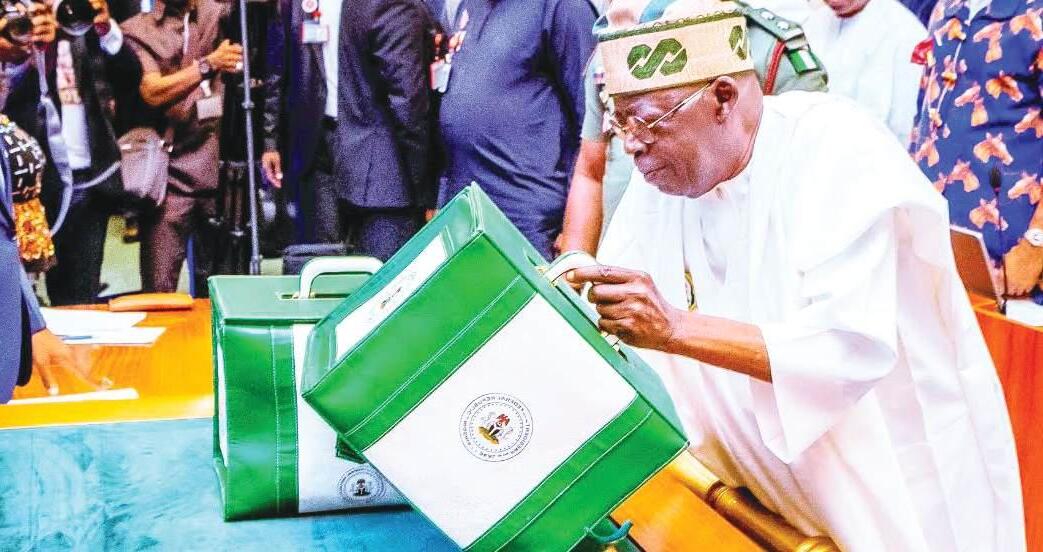
The annual budget is the most important economic policy document of any government. It translates policy priorities into roads, schools, hospitals, security, power projects and other public services. Yet, in Nigeria, the budget has increasingly become a source of controversy rather than confidence. Instead of serving as a development blueprint, successive appropriation exercises have been dogged by allegations of budget padding, opaque project insertions, duplication of expenditures and questionable constituency allocations.
Those concerns have resurfaced as the National Assembly scrutinises the proposed N58.47 trillion 2026 budget, raising fresh questions about whether Nigeria's budgeting framework promotes development or merely accommodates political interests.
Nothing has illustrated these concerns more dramatically than the controversy surrounding the Presidential Foreign Investment Promotion Council (PFIPC), an agency the Presidency later disowned as fictitious despite having been allocated about N1.3 billion in the 2026 Appropriation Act. The arrest and prosecution of its self-acclaimed Director-General, Adeniyi Adeyemi Matthew, on allegations of forgery, impersonation and fraud have shifted public attention from the individual to the budgeting system itself. The obvious question is how a non-existent agency secured a budgetary allocation in the nation's most important fiscal document. Although investigations have been ordered, the episode has exposed glaring weaknesses in budget preparation, verification and legislative scrutiny, reinforcing fears that fictitious agencies and unauthorised expenditures can slip through existing institutional safeguards.
At the heart of the debate is Nigeria's envelope budgeting system. Under the arrangement, Ministries, Departments and Agencies (MDAs) receive expenditure ceilings before preparing detailed proposals. Designed to enforce fiscal discipline, critics argue that it has instead encouraged routine spending rather than strategic planning. Chairman of the Senate Committee on Finance, Senator Sani Musa, recently declared that the model had failed and should give way to a priority-based budgeting framework aligned with measurable national outcomes. The Senate also faulted the centralised contractor payment system for delaying payments on contracts executed in 2024 and 2025. Fiscal experts insist the challenge extends beyond the budgeting model. BudgIT Country Director, Vahyala Kwaga, argues that envelope budgeting succeeds only where governments rely on rigorous planning, credible data and evidence-based policymaking. According to him, Nigeria lacks these institutional foundations,
while legislative oversight has failed to adequately interrogate budget proposals or implementation records. He also accuses the government of increasing opacity in fiscal reporting.
Nigeria's implementation record reinforces the criticism. Although annual budgets have risen from below N10 trillion a decade ago to N54.99 trillion in 2025 and N58.47 trillion proposed for 2026, implementation has consistently lagged due to revenue shortfalls, rising debt-service obligations, foreign exchange pressures and extensive legislative alterations.
BudgIT's review of the 2025 Appropriation Act illustrates the scale of the distortions. The organisation reported that lawmakers inserted 11,122 projects worth N6.93 trillion, representing 12.5 per cent of the national budget. It identified 238 projects valued above N5 billion each, alongside hundreds of other allocations it considered poorly justified or inconsistent with national priorities.
The report also highlighted 1,477 streetlight projects costing N393.29 billion, 538 boreholes worth N114.53 billion, 2,122 ICT projects valued at N505.79 billion and N6.74 billion for the empowerment of traditional rulers. It further revealed that the Ministry of Agriculture's capital allocation expanded from N242.5 billion to N1.95 trillion after the insertion of 4,371 projects worth N1.72 trillion. In contrast, numerous projects were assigned to agencies outside their statutory mandates.
Further fuelling concerns, Senate Chief Whip, Senator Tahir Monguno, warned that the federal government's repeated failure to implement duly enacted Appropriation Acts despite improved revenue could amount to a breach of the law and even constitute an impeachable offence.
Public disquiet has also grown over the N780 million allocation for church outreach in Bende Federal Constituency, with critics describing Deputy Speaker Benjamin Kalu's defence as symptomatic of misplaced priorities at a time of severe fiscal constraints.
Similar concerns have emerged in the proposed 2026 budget, where agencies with mandates unrelated to infrastructure reportedly received allocations for roads, classrooms, hospitals, solar streetlights, motorcycles and electricity projects. They include the Institute of Peace and Conflict Resolution, the Nigerian Press Council, the National Root Crops Research Institute, the New Partnership for Africa's Development Office and the Oil and Gas Free Zones Authority. Critics argue that assigning projects to agencies without implementation capacity weakens accountability and increases the likelihood of abandoned projects.
Budget padding itself is hardly new. Former President Olusegun Obasanjo rejected the 2000 Appropriation Bill after accusing lawmakers of inflating expenditure. President Goodluck Jonathan
also resisted increases to the National Assembly's allocation in 2011 before a compromise was reached. During Muhammadu Buhari's administration, allegations ranged from N90 billion in 2019 to N770.72 billion in questionable insertions between 2020 and 2023. In 2024, Senator Abdul Ningi alleged that N3.7 trillion had been inserted into the budget, a claim rejected by the Senate but which nevertheless intensified public debate.
The consequences are evident. Projects approved in successive budgets remain abandoned, contractors accumulate unpaid certificates, hospitals and schools deteriorate, while infrastructure deficits continue to widen. For ordinary Nigerians battling inflation, unemployment and declining purchasing power, the recurring cycle of ambitious budgets and poor implementation explains why public spending rarely translates into improved living standards. Questions also persist over constituency projects. Although lawmakers are constitutionally empowered to appropriate funds and provide oversight, legal analysts argue that their growing involvement in project nomination and execution undermines the doctrine of separation of powers. Previous investigations by the Independent Corrupt Practices and Other Related Offences Commission uncovered duplicated projects worth over N20 billion, including projects allegedly sited on private properties or repeatedly budgeted.
Former APC National Publicity Secretary, Timi Frank, believes repeated allegations of inflated appropriations, fictitious agencies and weak accountability have further eroded public confidence. While the Senate has dismissed recent allegations as politically motivated, the recurrence of similar controversies across successive administrations suggests that Nigeria's budgeting process requires structural reform rather than partisan exchanges.
Analysts broadly agree on the way forward: replace envelope budgeting with a priority-based model; strengthen evidence-based planning; subject legislative insertions to transparent scrutiny; assign projects strictly within MDAs' statutory mandates; publish timely implementation reports; strengthen citizen participation; enforce the Fiscal Responsibility Act; and independently verify project costs and constituency allocations.
Ultimately, the credibility of Nigeria's budget matters more than its size. The PFIPC scandal has demonstrated that the real challenge is not merely how much government spends but whether public funds are allocated through a transparent, credible and accountable process.
Until those standards become the defining features of Nigeria's budgeting system, annual budgets will continue to inspire lofty expectations on paper while delivering disappointing outcomes for millions of Nigerians.
There is a point at which an investigation, however legitimate its original purpose, begins to raise troubling questions about proportionality, institutional temperament and the possible personalisation of state power. The continuing pursuit of businesswoman, Aisha Achimugu, by the Economic and Financial Crimes Commission (EFCC) appears to have reached that uncomfortable point.
This is not an argument that the EFCC should abandon any credible investigation. Nor is it a suggestion that wealth, influence, social standing or private-sector success should confer immunity from scrutiny.
No citizen should be above the law, and every person whose financial activities raise legitimate questions must be prepared to provide lawful explanations. But the converse is equally important: no Nigerian should be placed beneath the law.
No individual should be subjected to a standard of treatment harsher than the law permits simply because a powerful public official has developed an unusual interest in her affairs. The coercive machinery of the state must never be converted into an instrument of intimidation, reputational destruction or personal conquest.
The central question in the Aisha Achimugu matter is therefore no longer merely whether the EFCC has allegations to investigate.
The more unsettling question is whether the commission, under its chairman, Ola Olukoyede, has maintained the level of detachment, restraint, fairness and emotional intelligence expected of an institution exercising enormous powers over the liberty, property, reputation and livelihood of citizens.
Achimugu has publicly alleged that the commission’s actions have endangered her life, her children, her businesses and her investments. She has accused the agency of unlawful seizures, prolonged detention, reputational persecution and disregard for judicial processes.
These remain allegations from her side and must be tested against the EFCC’s account and the decisions of the courts. But they are serious enough that they cannot responsibly be dismissed as the lamentations of a wealthy woman resisting accountability.
Indeed, the facts already in the public domain demand sober institutional reflection.
In March 2025, the EFCC declared Achimugu wanted over allegations including criminal conspiracy and money laundering. She was subsequently arrested at the Nnamdi Azikiwe International Airport in Abuja.
On April 30, 2025, the Federal High Court directed the commission to release her on bail within 24 hours. Achimugu has since alleged that her release was delayed for several days despite the court’s directive and despite her efforts to satisfy the bail conditions imposed upon her.
That sequence alone should concern anyone who believes that law enforcement agencies must obey the law they enforce.
A court order is not an advisory note. It is not an invitation to negotiation, administrative improvisation or bureaucratic defiance. When a judge directs an agency of the state to release a citizen within a specified period, obedience should be immediate unless the order is lawfully overturned or suspended by another court.
A law enforcement institution cannot credibly claim to protect the rule of law while appearing casual about judicial commands.
The EFCC unquestionably possesses wide statutory responsibilities. Nigeria’s struggle against financial crime demands a strong, independent and professionally led commission.
But strength is not the same as aggression. Independence is not synonymous with institutional impunity. And prosecutorial zeal must not be confused with the destruction of the constitutional protections available to an accused person.
Section 36(5) of the 1999 Constitution expressly provides that every person charged with a criminal offence shall be presumed innocent until proved guilty. That presumption is not ornamental language inserted into the Constitution for ceremonial purposes. It is a binding limitation on the conduct of the state. The EFCC is entitled to investigate Achimugu. It is entitled to interrogate suspicious transactions. It is entitled to place admissible evidence before a competent court. It may seek interim or final
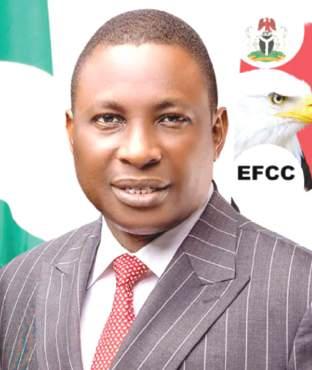
forfeiture orders where the law permits. But it is not entitled to manufacture a public atmosphere in which allegation is treated as guilt, wealth is presented as proof of criminality and an investigated person is systematically reduced to a public trophy of enforcement. That distinction is critical.
The investigation of financial transactions is a technical legal process. It requires tracing, documentation, witness testimony, banking records and judicial determination.
It should not become a morality play in which expensive jewellery, luxury vehicles, foreign currency or an extravagant lifestyle are deployed to excite public anger before the underlying legal questions have been conclusively resolved.
There have admittedly been major judicial developments adverse to Achimugu.
In March 2026, a Federal High Court affirmed the final forfeiture of $13 million linked to her company, Oceangate Engineering Oil & Gas Limited. The court reportedly rejected the explanation that the funds represented gifts, noting that the persons said to have made the gifts were not called to substantiate the claim.
On July 16, 2026, a Federal High Court, Abuja, also ordered the final forfeiture of assets valued at approximately N8.9 billion, including jewellery, vehicles and cash. The court held that the evidence presented in opposition did not sufficiently dislodge the EFCC case regarding the origin of the assets.
These are significant rulings and should not be concealed, trivialised or written out of any serious assessment of the controversy.
Nevertheless, forfeiture proceedings do not give a law enforcement agency a licence to disregard human dignity, fair hearing or judicial restraint. Nor do adverse rulings automatically validate every investigative method, media trial, detention decision or administrative action employed by the commission.
A citizen can lose an application in court and still have been mistreated by an agency. An agency can obtain a forfeiture order and still have exceeded the bounds of proportionality.
A court can accept the EFCC evidence concerning particular assets without endorsing every aspect of its broader conduct towards the person concerned.
These distinctions matter because a democracy is judged not only by whether it punishes wrongdoing, but also by how it treats those accused of wrongdoing.
Where is the Public Money?
One element that makes the fixation on Achimugu particularly curious is that she has not been presented as a former minister, governor, permanent secretary, legislator, agency head or public accounting officer, who directly controlled government funds. She is a private businesswoman.
That does not exempt her from the moneylaundering laws. Private citizens can commit serious financial offences, receive unlawful funds, facilitate prohibited transactions or possess assets reasonably suspected to represent proceeds of crime. EFCC’s mandate plainly extends beyond public-office corruption.
Yet the distinction remains politically and morally relevant. Nigeria is a country where allegations involving the diversion of public funds routinely emerge from ministries, state governments, public
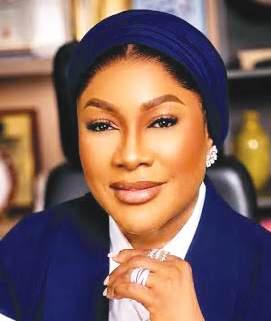
procurement systems, intervention programmes and government-owned enterprises.
Many politically exposed persons have remained socially influential, electorally active and institutionally protected despite unresolved allegations running into billions of naira.
Against that background, the intensity of the campaign against one private businesswoman naturally invites questions about enforcement priorities.
Why has this particular case attracted such sustained institutional energy? Why does the matter sometimes appear to have transcended a conventional financial investigation? Why has the pursuit acquired the quality of an official obsession?
Why does the commission seem so invested not merely in prosecuting allegations, but in dominating the public narrative surrounding Achimugu? These questions do not prove persecution. But persecution is rarely announced through a formal memorandum. It is often inferred from patterns: excessive attention, disproportionate force, repeated public exposure, punitive administrative choices and a refusal to allow ordinary legal processes to proceed without institutional dramatics.
Achimugu herself has denied reports that $13 million was recovered from her residence, maintaining that only $50,000 and ₦13 million were found there. That denial does not determine the wider case, but it underscores the danger of imprecise media narratives being attached to a person already facing extensive public suspicion.
A commission committed to justice should be especially careful about such distinctions, more so one whose head feigns to be a man of God. The difference between money recovered from a residence and funds traced through corporate accounts is not semantic. It can shape public perception, prejudice proceedings and irreversibly damage a person’s standing.
Once an institution allows exaggeration, ambiguity or sensationalism to surround its work, it risks becoming an active participant in trial by media.
The chairman of the EFCC is not merely an investigator. He is the public face and moral custodian of one of Nigeria’s most powerful enforcement agencies.
That role requires more than knowledge of statutes and financial-crime procedures. It requires judgment, self-restraint, emotional balance and an acute awareness of the difference between institutional determination and personal animosity.
Public power is dangerous when it is exercised by people who cannot separate criticism of their methods from opposition to the state. It becomes even more dangerous when a public official begins to appear emotionally invested in the defeat, humiliation or destruction of a particular citizen.
Olukoyede must therefore examine the optics and substance of the commission’s conduct. He must ask himself whether the agency is still dispassionately investigating Achimugu or has allowed the matter to become a test of institutional ego.
Has the commission become too personally invested to tolerate competing explanations? Has it permitted the case to acquire an emotional momentum beyond the evidence? Has the desire to demonstrate strength eclipsed the duty to
demonstrate fairness?
Has the EFCC begun to confuse the destruction of a suspect’s reputation with the successful prosecution of a criminal case? These are not idle questions. They go to the heart of emotional intelligence in public leadership.
An emotionally intelligent chairman understands that the powers of arrest, detention, seizure, publicity and prosecution must be exercised with moderation. He knows that every suspect has a family, a livelihood, employees, contractual obligations and a reputation that may never be fully restored, even after an acquittal or successful appeal.
He also understands that disagreement is not insubordination and that criticism of an investigation is not evidence of guilt. The most secure public officials do not need to crush everyone who challenges their methods. They allow the law to speak for them.
Indeed, a confident EFCC chairman should not need a citizen to be publicly disgraced before he can demonstrate that the commission is working. The evidence should be enough. The charges should be enough. The courtroom should be enough.
When the enforcement spectacle begins to overshadow the evidence, questions about motive become inevitable.
Danger of Converting Enforcement into Punishment
Under constitutional government, investigation and punishment are two separate stages. The EFCC investigates and prosecutes. The court determines guilt and imposes punishment.
A suspect must not be made to serve an informal sentence before conviction through prolonged detention, reputational demolition, commercial paralysis, repeated seizures and media stigmatisation. This principle is especially important in financialcrime cases, where the process itself can become economically terminal. A business can collapse before its owner has a chance to establish a defence. Employees can lose their livelihoods. Banks can terminate relationships. International partners can withdraw. Investors can panic. Contracts can fail. Children and relatives can become targets of abuse. By the time the courts eventually determine the substantive questions as the Appeal Court, Port Hacourt, Rivers Statee, has just done in the case of Aisha’s seized assets by vacating the order sought by the EFCC, there might be nothing left to restore. That is why prosecutorial discretion is not a licence to be vindictive. It is a public trust. The state must not use the cost, duration and intensity of investigation as a substitute for conviction.
Otherwise, the constitutional presumption of innocence becomes meaningless, because the accused person would already have suffered the practical consequences of guilt.
Achimugu’s public appeal should therefore be read beyond the immediate emotions surrounding her case. It is a warning about what happens when an institution with extensive coercive powers appears unable—or unwilling—to recognise the human consequences of its choices.
Her claim that her life and investments are endangered may ultimately be challenged by the EFCC. But no serious public institution should be comfortable when a citizen credibly expresses fear that the machinery of government has become existentially threatening to her.
The proper response is not ridicule. It is accountability. The commission should calmly disclose the legal foundation for each of its actions, demonstrate strict compliance with every court order, avoid prejudicial publicity and allow all pending appeals or substantive proceedings to run their course.
That is how institutions answer allegations of persecution: not through louder assertions of power, but through transparent obedience to law.
Power is Temporary
Perhaps the most important lesson for Ola Olukoyede, the tempestuous EFCC boss, is that the office he occupies is tenured.
The EFCC Act provides that the chairman holds office for four years and may be reappointed for one further term. The same law also allows removal under specified circumstances, including misconduct or where continued tenure is considered contrary to the interest of the commission or the public.
Abia State Governor, Dr. Alex Chioma Otti, is one state governor that is wholeheart- edly celebrated not just in his state and Nigeria but globally.
From what I observed here in the United Kingdom when the governor came here to deliver a public lecture at the University of Northampton, during the University’s Annual Conference on Racial Justice, I can say, without any doubt in my mind, that this unique Nigerian political leader is actually being celebrated today, not only within God’s Own State, where he has reportedly offered good governance, but also beyond his direct area of relevance as a state governor.
The theme of his lecture is “Of Walls And Bridges: Finding Common Ground, Rising Above’ Divisions”. As usual, the erudite Governor of Abia State delivered his message with so much mastery and understanding that his guests could not hide their awe.
Considering the responses of his audience, I observed that beyond the critical issues Dr Otti raised in his address, it has become obvious that as at today, other Africans and even Europeans, who have monitored him closely, have come to acknowledge the good things Dr. Otti has done in Abia State as theThegovernor. public lecture at the University of Northampton, turned out to be, not only a beautiful avenue to display the innovative ideas that are behind the immediate past and envisaged future governance experience in Abia State from the governor, but also an opportunity to openly celebrate a political leader in Nigeria with innovative ideas and bold approaches.
It was amazing to watch people, who are not direct beneficiaries of the governance in Abia State proudly joining millions of beneficiaries in the state to openly acknowledge the leadership milestones so graciously delivered by Otti.
On that fateful day, I woke up earlier than the normal time I usually wake up. Perhaps, the recollection that Governor Otti was billed to deliver a public lecture at the University of Northampton that day may have been the reason. Without any hesitation, my wife and I agreed to cancel all our other engagements that day in order to attend the lecture. Considering what happened at the lecture, I am glad today that we did.
To start with, I was overwhelmed by the sheer number of people that attended the lecture, their incredible mix and their passion.
Ordinarily, one would have expected the audience to be made up of mainly Abia State indigenes in the United Kingdom. That was not the case. Instead of that, I noticed that people from different parts of Nigeria, West Africa, other Africans and non-Africans in the United Kingdom filled the venue of the lecture.
Considering the attitude of average residents of the UK, who do not joke with their time, the large turn out was the first eye opener to me that Abia State Governor Otti is currently appreciated by people from beyond Abia State and Nigeria. For example, there was one group of attendees I interacted with inside the lecture hall. They are Zimbabweans resident in the United Kingdom.
I was surprised to find out that they know so much about Governor Alex Chioma Otti. They know about the challenges he inherited when he emerged as Abia State Governor and what he has been able to achieve in just over three years as governor. They discussed so freely and so knowledgeably with so much admiration, repeatedly harping on what they described as “Otti’s courageous deliverance of good governance in spite of all odds.”
Besides knowing and listing out for me some of Otti’s legacy projects, they also enthusiasti- cally alluded to what they described as “his intellectual depth.” I was specially thrilled
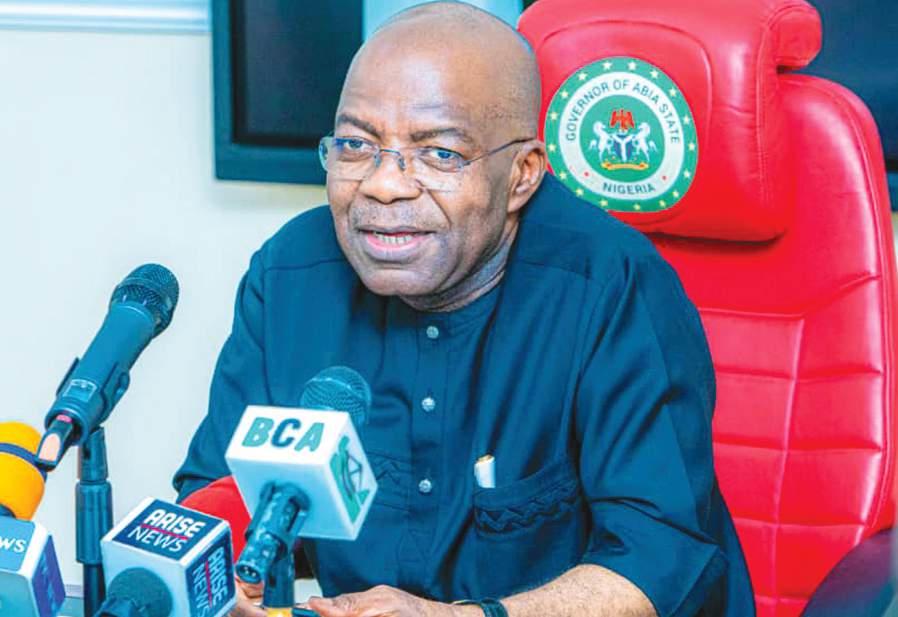
as they try to expand and explain what they identified as the future benefits of Otti’s current economic policies and development direction, especially “his drive to fully develop three metropolitan cities of Aba, Umuahia and Ohafia in Abia State.”
I could not believe my ears, know- ing that these are not Nigerians and because they are not even in Nigeria, it would be odd to suspect they were bought over to praise the government and economic policies of Governor Alex Otti.
Aside the Zimbabweans, who I honestly consider as Otti’s huge fans, I also noted some white guests whose level of interest and appreciation of the governor only left me quite proud as a son of Abia State. As they listened to his presentations and the testimonies of some participants, they intermittently exploded with wild mixture of excitement, exhibiting totalBeyondagreement. these humbling acknowl- edgement and open demonstration of approval of a Nigerian leader, our dear Governor of Abia State, one other thing that really moved me at the lecture was the way the powerful guests, including the university’s Vice Chancellor and the ordinary attendees warmly welcomed and openly appreciated the governor. They talked of the way Otti has redefined political leadership in Abia State, thereby raising the stakes for the rest of Nigeria and Africa, etc. This open approval aptly defined the passionate contributions that specially marked out the question and answer session. It was simply overwhelming.
For me, I was specially humbled by the contribution of a Nigerian who said he hails from Etche Local Government Area of Rivers State. In a voice laden with deep emotions, the contributor, whose name I failed
to get, said simply that he cancelled other engagements he had during the period so as to attend the seminar because he cannot afford to miss the opportunity of personally thanking Governor Otti of Abia State for making it possible for his rural community in the neighboring Rivers State to get electricity.
As he explained, his rural community in the oil-rich Rivers State has remained for centuries without electricity until the neighbouring Abia State was blessed with Dr Alex Otti as it’s Governor. According to him, Abia State Governor Otti, through an innovative collaboration with his Local Government Chairman and other officials and stakeholders, provided electricity to his rural community in Rivers State. His testimony was understandably followed by unique silence, as guests individually assimilated the import of the testimony in sobered and enlightened mood.
For me, this confirms, amongst others, that what Governor Alex Otti has done and is still doing in Abia State, have made meaningful impact in the lives of many Nigerians, not only in Abia State but beyond the areas he currently serve as governor. This is why I wholeheartedly agree with analysts who contend that Governor Otti’s Public Lecture at the University of Northampton “left some vital lessons in leadership and credibility.”
First, he resonated well with the multiracial audience he held spell bound with his “engaging insights and thoughts on building a more-balanced human society - a world where individuals are recognised as God’s special creatures, worthy of dignity, respect and the opportunity to live out the fullest expressions of their dreams.”
I also agree with those who contend that Otti, chosing not to be bias, “spoke as a citizen of the world - one who understands the importance of accommodating everyone, engaging the power players and seeking equal opportunity for everyone, whatever their skin colour.”
As an analyst puts it, “he looked beyond the regular stereotype that only seeks to cast aspersions on politicians but made demands of pastors, journalists and activists who appear
to have made an enterprise of race conflicts.”
After listening to Otti’s lecture firsthand and following the robust conversations, including the emotion packed question and answer session, I totally agree with analysts that parts of the takeaways any informed observer must get from this international outing by Governor Otti include: The ennobling message that today, “the world sees a sincere leader in Governor Otti.”
I posit that many, including some of his political rivals, have come to acknowledge that “Dr Alex Otti is not your regular political leader; that he belongs to a different order, the order of philosopher-kings.”
Directly following this lesson is the fact that he again demonstrated convincingly that he understood his subject and is therefore not one of the so-called political leaders who do not even know what their handlers push them to project as the intellectual anchor of their public policy direction. Otti knows what he intends to do in Abia State and in Nigeria and he has the courage to do them.
Also, the testimonies and the interests of participants show that “Nigerians, wherever they live, still have this country at heart; that they are praying that one day, things would get better so that they may either come home to continue with their lives, or at least earn the respect they deserve amongst their peers from other parts of the world.”
More importantly, Governor Otti used the opportunity offered by the public lecture to invite his compatriots and all other Nigerians to, as an analyst puts it, “look past the tragedy of the hour and recommit themselves to working for a better, prosperous future,” whether they currently live in Nigeria or abroad.
By so doing, I am of the view that Governor Alex Chioma Otti has prudently used the simple opportunity of delivering a public lecture at the University of Northampton to demonstrate to the world and to share the encouraging message that a better Nigeria is achievable with good governance.
•Onwuneme, a youth activist, writes in from the United Kingdom.
Every Monday morning, the reception lounge of Lagos Airport Hotel takes on a familiar warmth. The spacious lobby welcomes a steady flow of professionals, travellers and members of the Rotary Club, many of whom have made the hotel a regular meeting point for fellowship, conversation and service.
Among the regulars is Dr. Sola Akinsiku. He arrives without ceremony, acknowledging people around him with the same humility that has become a defining feature of his public persona, despite the weight of the office he occupies. Before the interview begins, he exchanges greetings, shares a laugh and settles into the familiar environment of a place where relationships matter.
It is a setting that offers a fitting introduction to a man whose leadership philosophy has always been built around service.
The President of the Out of Home Advertising Association of Nigeria (OAAN) is also the Managing Director of KOK Visibility Edge, an out-of-home advertising company he co-founded in 2001, and founder of Landmark Media Limited, a large format printing and outdoor advertising firm. He is a Fellow of the Registered Practitioners in Advertising and has spent decades helping shape Nigeria’s advertising landscape.
Yet, when he speaks about leadership, he does not begin with achievements. He begins with values.
“My personal principle is that the Golden Rule must apply at all times,” he says. “If it is not good enough, then it is not good at all. If I will not accept it, then I will not try it on anyone. I believe it is better to be offended than to be the one on the offensive. I would rather be cheated than be the one cheating.”
That philosophy, he explains, has guided his professional journey and his approach to public service.
“Wherever I find myself, I see it as an opportunity to do my best, not to serve as an acknowledgement that you are a superstar,” he says with a smile. “I am just privileged to be one among so many people that can do better.”
As a Rotarian, he is deeply connected to the principle of “Service Above Self,” and that mindset shapes how he views his presidency of OAAN.
“Once you are called to serve, it is service to the organisation, service to humanity and service to professionalism.”
His route to the industry’s top office was not a straight line. It began with a degree in English Language with Education from the University of Ife, now Obafemi Awolowo University, Ile Ife, in 1987, followed by postgraduate studies in Mass Communication at the University of Lagos, where he earned a Postgraduate Diploma in 1989 before completing a Master’s degree and a PhD in the same discipline.
He entered advertising in 1992 at Rock Forte Advertising Limited as a Client Service Executive, rising to Senior Client Service Executive before joining the Advertising Practitioners Council of Nigeria, APCON, in 1994. At the regulatory body, now the Advertising Regulatory Council of Nigeria (ARCON), he worked across Research and Public Relations before moving to the Vetting and Inspectorate Department, where he served as Secretary to the Advertising Standards Panel.
His time at APCON placed him close to the issues of ethics, standards and professional conduct within advertising. Alongside his regulatory responsibilities, he taught on APCON’s Certificate and Diploma in Advertising programme, serving as a lecturer, examiner and project supervisor. He also authored teaching materials on Introduction to Mass Communication and Advertising
Research Methodology.
In 1998, he moved to Optimum Exposures Limited as Customer Service Manager, deepening his experience in Nigeria’s growing out of home advertising sector. Five years later, he cofounded KOK Visibility Edge Limited, where he continues to serve as Executive Vice Chairman.
His journey into industry leadership began long before he became president.
Alongside other practitioners, he was passionate about building a more organised and respected profession. They regularly engaged the late OAAN President, Kole Ademulegun, sharing ideas and advocating for higher standards.
“We were passionate about running a professional industry,” he recalls. “We were passionate about excellence, professionalism and fairness.”
Those efforts eventually led to his being co-opted into OAAN’s council on special duties during the emergence of the Lagos State Signage and Advertisement Agency (LASAA).
“Life has a way of being funny sometimes,” he says, laughing. “Before we knew it, we found ourselves as coopted members of council.”
For him, that moment was not about personal advancement. It was the beginning of a longer journey of service.
Today, as president, he sees his role as representing a wider community of practitioners and businesses.
“We have 12 people on council representing almost 200 firms,” he
explains. “When you look at each of those firms being responsible for the wellbeing of families, you see that you have a huge responsibility.”
That responsibility is also why he resists taking individual credit for OAAN’s progress.
“If I have an idea, I put it out to the Executive Council. Once the Executive Council buys into it, we seek concurrence from members. Once members say run, I do not look back until they say come.”
One of the biggest priorities of his administration has been restoring professionalism and confidence in the out-of-home sector. While he acknowledges the creativity and potential within the industry, he is concerned about practices that undermine standards.
“We are not happy with the current situation of the practice in our country,” he says. “There is so much charlatanism in the industry.”
His concern is not about competition. It is about protecting the integrity of a profession he believes has evolved significantly.
“The practice of out-of-home is no longer for people who could not do anything,” he says firmly. “Today, you have people with two or three degrees. You have PhD holders. You have barristers at law. You have engineers.”
He is passionate about changing perceptions. “We are not operators. We are practitioners. We are professionals.”
For Akinsiku, Nigeria’s outdoor advertising industry has travelled a long way from its early beginnings.
He recalls the era of West Africa Publicity and other pioneers who established the foundations of the sector before changes in ownership and regulation created gaps that later allowed less professional practices to emerge.
Today, he believes the industry has the talent and expertise to compete globally, but stronger structures are required.
“The issue is that there is no law entrenched to guide the practice of out-ofhome,” he says.
He argues that regulation should not be viewed as a barrier to entry, but as a means of ensuring fairness and quality.
“Nobody is restricting entry into this profession. What we are saying is, let us practise with decorum, decency, excellence in mind and professionalism.”
He believes compliance is essential, particularly because outdoor advertising involves significant investment.
“A unipole can cost close to N35 million to erect, while an LED can cost between N50 million and N100 million or more. No reasonable entrepreneur will put up what tomorrow the government can pull down.”
The challenge, he says, is not with serious practitioners who follow regulatory processes, but with individuals who operate outside professional structures.
As Nigeria approaches the 2027 general elections, Akinsiku expects increased activity in political advertising, but believes the sector needs clearer guidelines.
Currently, he says, political advertising remains slow due to economic pressures and uncertainty among political parties.
“It is still on the dull side,” he explains. “The economic situation is affecting all areas of our existence.”
He expects more movement after party primaries and candidates emerge.
“When the real campaigns begin, I expect they will do more advertising.”
However, he wants campaign advertising to operate within a stronger regulatory framework. He suggests that political materials should require proper approval before being displayed publicly.
“I want to suggest very strongly that INEC should find a way to respect ARCON and make this mandatory,” he says. “Any advertisement exposed without approval should attract serious sanction.”
For him, the goal is simple: fairness, accountability and professionalism.
Despite the challenges, Akinsiku remains optimistic about Nigeria’s capacity to deliver world-class outdoor advertising. “There is no campaign or creative that you find anywhere in the world that is not available in Nigeria,” he says.
The issue, he believes, is willingness to invest. “Innovation costs money. It is a function of the political class being ready to pay for it.”
Having travelled across Africa and beyond, he believes Nigerian practitioners have the creativity and expertise to compete anywhere.
“We have the idea. We have the resources. We have the will.”
But he insists innovation must have purpose. “You do not just bring innovation to show off that you have money.”
For him, leadership is not about titles or recognition. It is about leaving systems stronger, professions more respected and institutions more prepared for the future.
As the Rotary meeting begins and the familiar rhythm of fellowship returns to the lounge, Akinsiku remains grounded in the belief that leadership is a responsibility, not a reward. His journey reflects a simple conviction: that the strongest impact is often created not through grand declarations, but through the courage to challenge the present and prepare the future. Long after the conversations end and the office is handed over, the true measure will be the industry’s ability to move forward on the foundation he helped build.
“I believe the impact of our leadership may only be seen after we have left office,” he says. That may be the clearest expression of his philosophy.
...Amazing lifestyles of Nigeria’s rich and famous
Dr. Taiwo Fasoranti is back as Secretary to the Ondo State Government (SSG), months after stepping away from the role to chase a Senate seat that, by some accounts, should have been his in the first place.
Governor Lucky Aiyedatiwa announced the reappointment through his Chief Press Secretary, Prince Ebenezer Adeniyan, confirming it took immediate effect. Fasoranti had resigned as SSG on March 30, 2026, to contest the APC senatorial primary for Ondo Central.
Officially, he lost that primary to incumbent Senator Adeniyi Adegbonmire. But his camp tells a different story. Reports and court filings allege he actually won the contest, only to be substituted by the APC’s National Working Committee in Abuja. This claim is now at the centre of a lawsuit filed by Aiyedatiwa loyalists against the party’s national leadership.
That backdrop makes this reappointment less an act of routine mercy and more a deliberate statement. For nearly four months, the SSG position remained effectively unfilled, which some observers interpret to mean that the governor always intended for Fasoranti to return if the senatorial bid fell through.
There is also a name behind the name. Fasoranti is the son of the late Pa Reuben Fasoranti, longtime National Leader of Afenifere, one of the South-west’s most influential socio-political groups. Sidelining him after what his camp calls a stolen mandate risked friction with a politically sensitive family and legacy.
This is not new territory for Ondo’s politics.
Aiyedatiwa’s predecessor, the late Rotimi Akeredolu, kept a similar open door for loyalists who resigned to contest elections, as seen with Donald Ojogo in 2022. Aiyedatiwa himself has followed the pattern before, retaining key allies during his 2025 cabinet dissolution.
Announcing the reappointment, the governor described Fasoranti as bringing “a wealth of experience in public administration, policy formulation, and governance,” and charged him to serve with dedication and integrity under the state’s Our Ease agenda.
For Fasoranti, it is a return to a familiar office. For Ondo watchers, it is further evidence that in the politics of the Sunshine State, even if a resignation means 10,000 things, a permanent goodbye is not one of them.
Some appearances need no announcement. When former First Lady Aisha Buhari walked into Folorunso Alakija’s birthday celebration, she did not seek attention, but the room noticed anyway.
Her outfit was culturally rooted and understated, the kind of styling that speaks more to comfort in one’s identity than a need to impress. Guests described her demeanour as composed, warm and entirely unbothered by spectacle.
The event itself honoured Alakija, a businesswoman and philanthropist whose decades of enterprise and giving have made her one of Nigeria’s most respected public figures. The gathering drew industry leaders, family and friends eager to celebrate her legacy.
The former First Lady’s presence added its own layer to the evening. She moved through the crowd exchanging warm greetings, carrying herself with the ease of a woman who has long stopped performing for cameras.
What makes her stand out, though, goes beyond fashion. Unlike most Nigerian First Ladies who maintained
a quietly supportive public image, Aisha broke that mould while in office. She openly spoke of a “cabal” hijacking governance and declared she would not support her husband’s re-election without a cabinet reshuffle.
She also criticised the poor state of the Aso Rock clinic, questioning why it lacked basic equipment despite generous budget allocations, a rare instance of a sitting First Lady publicly challenging her own administration’s management.
During the tense 2023 political transition, she stepped away from her husband’s camp to align with and campaign for nowPresident Bola Tinubu, an independent political move few in her position would attempt.
Her advocacy work carried the same conviction. Through her Future Assured Foundation, she pushed community-level health programs rather than ceremonial galas, and consistently campaigned against child marriage, insisting no girl should marry before 17.
That history is what made her appearance at Alakija’s celebration more than a fashion moment. More than anything else, it televises her as having grace always paired with a spine, a rare combination among women who have worn that title.
Some lives announce themselves in whispers rather than trumpets, and Mrs. Bamidele Abiodun’s has always been one of them. As the First Lady of Ogun State turns 60, Nigeria pauses to celebrate a woman whose quiet compassion has quietly reshaped lives across her state.
Sixty is no small number, not with how it carries the weight of wisdom earned, faith tested and grace refined by decades of purposeful living. For others, it might have arrived as a slowing down; but for Mrs Abiodun, its coming is as a fuller flowering of everything she has built.
Beside Governor Dapo Abiodun, she has stood as both partner and pillar, but her own legacy stretches far beyond the title of First Lady. Through the Ajose Foundation, she has built a body of work rooted in dignity, empowerment and healing.
Her SHEVENTURES partnership with FCMB has placed interest-free loans in the hands of female entrepreneurs across Ogun State, while her agricultural support programmes have given female farmers and persons with disabilities a real economic lifeline.
On public health, her impact has been
recognised internationally. She was named a Global Hepatitis Zero Ambassador, and she chairs Ogun’s committee against violence towards women, giving structure
Birthdays in Nigeria often come wrapped in champagne and confetti. Senator Gbenga Ashafa chose a different wrapping paper this year, one made of stethoscopes, eye charts and free prescription glasses.
To mark his 71st birthday, the former Lagos East senator organised a Free Mega Medical and Eye Outreach at F’s Club in Yaba, Lagos. By the end of the day, 534 people had received consultations, medications and eye care they might otherwise have gone without.
The eye services alone were extensive, covering vision assessments, glaucoma and cataract screening, and eye pressure checks. Eligible beneficiaries walked away with free prescription eyeglasses, a small object that, for many, restored both sight and daily independence.
This kind of gesture is consistent with a career built on infrastructure and administration rather than showmanship. As Executive Secretary of Lagos’s Land Use and Allocation Committee, and later Permanent
Secretary of the Lands Bureau, Ashafa digitised the state’s land allocation system, credited with significantly reducing violent land disputes.
In the National Assembly, representing Lagos East from 2011 to 2019, he chaired the Senate Committee on Land Transport and pushed so hard for railway modernisation that colleagues nicknamed him “The Rail Man.” He also sponsored the National Transport Commission Bill and tougher penalties for drug trafficking.
Between 2020 and 2024, he ran the Federal Housing Authority, fast-tracking affordable housing projects across all six geopolitical zones, proof that his interest in shelter extends well beyond policy papers.
He has since documented his career in a memoir, “Truly Distinguished: A Life of Service to God, Country, and Humanity,” and continues empowering young Nigerians through the Gbenga Ashafa Trust Endowment, which funds scholarships, training and seed capital.
His birthday did not end at the outreach.
and urgency to a cause too often spoken of in whispers.Education has not been forgotten either. Her partnership with Learn Africa Plc placed 42,000 books into school libraries across the state, while her advocacy has strengthened the School for Special Needs in Abeokuta.
Even the environment bears her fingerprints. Her “Plastic for Cash” and “Blue Box” initiatives have turned recycling into both an ecological and economic opportunity, earning her recognition as a UN Sustainable Development Champion.
Those who know her speak first of her humility, only later of her influence. She listens before she speaks, and comforts before she commands, the quiet hallmark of a woman who understands that true leadership is measured in lives touched, not titles held.
At 60, the good First Lady Bamidele steps into a new season adorned not in extravagance, but in the enduring elegance of service. Within her story, one sees that grace, when genuine, needs no announcement at all.
Death has a way of reminding even royalty that beneath the glitter of crowns and the splendour of palaces lies the fragile thread of humanity. Such was the sombre reality that enveloped the ancient Kingdom of Ife following the passing of Prince Adeyemi Ogunwusi, the Sooko of Ife Kingdom and younger brother of the Ooni of Ife, Oba Adeyeye Ogunwusi, Ojaja II. For many within the kingdom, the news was particularly heartbreaking, not only because of the stature of the deceased but also because of the remarkable journey he shared with the revered monarch. Long before destiny placed the beaded crown on the head of Oba Adeyeye Ogunwusi in 2015, Prince Adeyemi had been regarded in several quarters as one of the princes with the pedigree, influence and social standing to ascend the throne following the demise of the late Ooni, Oba Okunade Sijuwade. Back then, his growing profile and extensive network fuelled widespread speculation that he would inherit one of Yoruba’s most revered stools. Fate, however, had written a different script.
The kingmakers eventually settled on his elder brother, a decision that reportedly created a period of strained relations between the siblings. Like many royal families, the House of Ogunwusi was not immune to moments of internal discord. Yet, time proved to be the greatest healer. Through the intervention of respected elders and eminent sons of Ile-Ife, the family found reconciliation.
In a powerful demonstration of forgiveness and unity, the Ooni later installed Prince Adeyemi as the Sooko of Ife Kingdom, restoring not only honour but also reaffirming the enduring bond between the brothers.
Beyond royalty, Prince Adeyemi carved his own impressive path in business. As Chairman of Primewatersview Limited, he built an enviable reputation in Nigeria’s real estate sector, combining entrepreneurial excellence with a deep commitment to philanthropy and community development.
Announcing his passing, the Ooni paid an emotional tribute, describing him as “a trusted confidant, a dependable pillar of our family and a man whose life reflected honour, dignity and uncommon compassion.” The monarch praised his brother’s entrepreneurial vision, unwavering family values and dedication to humanity, noting that his legacy would continue to inspire generations. For the royal household, it is the end of an extraordinary chapter.
Politics has never been a sanctuary for permanent friendships. It is a theatre where alliances are forged in daylight and quietly dismantled behind closed doors. In Ogun State, that timeless reality is finding fresh expression in the increasingly frosty relationship between Senator Solomon Adeola, popularly known as Yayi, and former Senator Iyabo Obasanjo.
What once appeared to be a partnership anchored on shared political aspirations has now degenerated into one of the state’s most intriguing power struggles, with both camps locked in an unrelenting war of narratives as the race for the 2027 governorship steadily gathers steam.
Only months ago, both political heavyweights stood on the same side of the All Progressives Congress (APC) divide. Obasanjo had openly pursued the party’s governorship ticket before eventually stepping aside when influential stakeholders rallied behind Yayi as the preferred consensus choice. The decision was celebrated in many quarters as a
It is a known fact that in global diplomacy, power is exercised with measured words
There are birthdays, and then there are celebrations that become defining moments on the social calendar. Such was the atmosphere as business magnate, philanthropist and Iyalaje Oodua, Chief (Mrs.) Toyin Kolade marked another milestone, reminding everyone why she remains one of Nigeria’s most admired women of substance.
She has never been one to court the limelight. Rather, the spotlight naturally gravitates towards her, drawn by a life defined by enterprise, generosity and an unwavering commitment to excellence. Every milestone in her journey reflects years of resilience, vision and an enviable ability to transform opportunities into enduring legacies.
Her birthday was more than a personal celebration; it was a gathering of influence, elegance and gratitude. Friends, captains of industry, traditional rulers, political leaders and members of the business elite joined the family to celebrate a woman whose name has become synonymous with integrity, hard work and compassion. The outpouring of goodwill across social and business circles spoke volumes about the respect she commands both at home and abroad.
Away from the glamour and glitter, those closest to the Iyalaje Oodua know her as a compassionate benefactor whose philanthropic footprints stretch across education, healthcare, youth empowerment and community development. For countless individuals and families, she has remained a silent pillar of
triumph of party unity and strategic compromise. Political insiders now say unresolved grievances quietly lingered.
The calm finally shattered when she publicly accused Yayi of failing to honour understandings allegedly reached during the consensus negotiations. Yayi has, however, responded with equal firmness, insisting that no such commitments were made and dismissing the allegations as entirely without foundation.
Those familiar with the state’s intricate power architecture say the disagreement reflects the inevitable collision of competing ambitions within a party preparing for one of its most defining succession battles.
For Yayi, whose political machinery has steadily expanded beyond Ogun West into virtually every corner of the state, the controversy represents an early test of his ability to preserve party cohesion while strengthening his credentials as the APC’s leading governorship hopeful.
For the veterinary doctor and daughter of
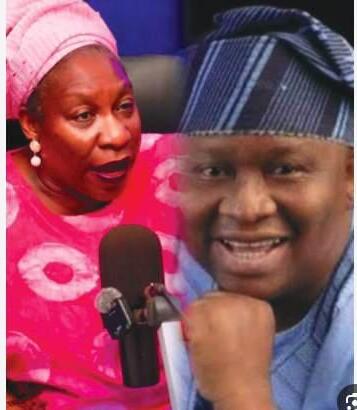
former President Olusegun Obasanjo and an accomplished politician with an independent political identity, the confrontation signals her determination not to fade quietly into the background of Ogun politics.
rather than loud declarations; conversations often begin long before ambitions are publicly acknowledged. It is within those discreet corridors of influence, from New York to Geneva, Addis Ababa to Abuja, that the name of Nigeria’s Amina Mohammed continues to command attention whenever the succession to the United Nations’ highest office is discussed.
Though the accomplished diplomat has publicly maintained that she is not seeking the coveted position of Secretary-General, diplomatic circles remain fascinated by the possibility. In international politics, after all, denials rarely silence speculation. Instead, they often deepen the intrigue.
As Deputy Secretary-General since 2017, Mohammed has become one of the most recognisable faces of the United Nations, navigating complex global conversations on climate change, sustainable development, humanitarian crises and institutional reform with remarkable poise. Her calm authority, intellectual depth and ability to build consensus have earned her the admiration of presidents, monarchs, global financiers and multilateral institutions alike.
Among Africa’s diplomatic elite, there is
little debate about her stature. To many, she represents the continent’s finest export to international governance, a woman whose influence extends far beyond conference halls into the architecture of policies shaping the future of billions. Her journey from Nigeria’s public service to the commanding heights of global diplomacy has become a compelling narrative of excellence, resilience and quiet determination. The timing has only intensified the whispers. With António Guterres approaching the end of his tenure, the diplomatic grapevine has become increasingly animated. Whether the brilliant diplomat ultimately joins the race remains known only to her closest confidants. Yet one fact is undeniable: few names inspire as much confidence, curiosity and respect across diplomatic capitals. Should history eventually beckon, she would not merely be seeking an office. She would be carrying the aspirations of a continent eager to see one of its most accomplished women occupy the most influential diplomatic seat in the world.
support, choosing impact over publicity and service over self-promotion. For Kolade, age is merely another chapter in an extraordinary story still being written. Her remarkable journey stands as proof that true success is measured not only by wealth accumulated but by lives touched, opportunities created and legacies built.
preSIDeNT BolA TINUBU: A TrUmp BUmp
President Donald Trump of America has written to our President o and President Tinubu’s public rating has received a huge bump from this. Coming from a declaration of Nigeria as a Country of Particular Concern by this same Donald Trump to this one that our president was being praised for his decisive leadership in fighting terrorism is a real and very powerful bump in his public rating. The release of the Oyo teachers and students, no matter what Seyi Makinde thinks, was really a major victory in the battle against insecurity. The passionate and professional engagement by a coordinated security team leading to the release, despite the loss of some lives on their side, received wide acclaim and, among others, gave a boost to the whole security apparatus in the continued fight to salvage our country from the malaise of insecurity.
Although, as we speak, there are still bouts of insecurity here and there, the government must continually be encouraged as they push, and these words of encouragement from no less a person than Trump are exactly the elixir that is needed in the fight. Well done, President Tinubu and his
One thing about writing for a reputable newspaper like THISDAY is the decorum that comes with the writing. This story came with so many ingredients for a salacious, humourdriven drivel. “He died on me, I didn’t kill him” – that is the quote that has caught Nigerians’ fancy since Mr. Amachree’s book came out.
Amachree, who is said to be a retired DSS Deputy Director in his recently released book, asserted that our late strong man actually died between the legs of
team. Well done so far. Thank you.
NDUKA oBAIgBeNA: A BeFITTINg
BIrTHDAY For THe DUKe
Prince Nduka Obaigbena is the original Duke, and last week he celebrated his birthday at the iconic Civic Centre. As usual, he sent me an invite by WhatsApp an hour before the event, and luckily I was well dressed, and I jumped into the venue.
It was expectedly resplendent, as it was cakes and pastries that you first met as you entered the hall. I have not seen that kind of arrangement in my partying life. Well, he also used the opportunity to herald his mind-breaking News Magazine – THISWEEK, when it came out, burned the trail of extant journalism, and some of the stars that made it happen were there at the Civic Centre to celebrate with The Duke.
I saw so many iconic figures o that my mouth was permanently open in amazement. Oya, let me list some that I can remember – Segun Osoba, the former Governor of Ogun State and legendary journalist, Ray Ekpu of Newswatch, Sam Amuka of Vanguard, Otunba Bimbo Ashiru of Odu’a Group, Rasaq Ali, the oil merchant, Dr. Rueben Abati and fiery Rufai Oseni and their sister Ojy, Ruth
a pharmacist. This runs counter to what we were told earlier. What Nigerians were made to believe was that the hard man passed after eating apples from some Indians. Whatever the case is, the dark-goggled “menace” passed through sex.
In his book, Amachree narrated the incident and told us how the man, after buying a car for his girlfriend, decided to spend the night with her sister after seeing her when they both came to thank him
Osime my bestie, Chike Ogeah, my Oga and many more to mention. I even saw Davidson, my Editor, wearing new jeans.
Obiagbena is a human institution in Nigeria. He bestrides media and business and has achieved longevity in such a glamorous way, leaving his admirers wondering just what his secret is. Anyway, let me congratulate him one more time for all he is and continues to be for Nigerians and wish him well.
Thank you.
lIoNel meSSI: loST AND ForlorN
I am very proud to say that I did not watch one single match at the recently concluded World Cup. This is because I have now found the sport very boring. Anyway, that is how I came downstairs to raid the kitchen and found Duchess and Zara watching the match. It was around the 70th minute, and I decided to sit down and even see what exactly the whole world was going mad for. It was the final, and it was between Argentina with their Messi and Spain with the little Ethiopian. I was looking for Messi because of all the hype and could not find the little Argentine on the field. He was lost. He looked so dejected, and anytime the ball came to
for the car – shey you see the benefit of a maximum ruler - he just pointed at his girlfriend’s sister and pronto things were happening.
Anyway, the point here is that it was not a coup, it was not international sanctions, it was not protests, but the lovely smooth thighs of a beautiful lass that saved Nigerians from the grip of a really gruesome ruler. Should we now give the lady national honours for her heroics? Na wa. Good riddance though.
him, he would lose it. The whole thing reminded me of how Kanu used to be playing with our destiny. Nigeria will be losing, and just about when the match is about to end, everybody in the beer parlour will be shouting, “Give Kanu the ball, give Kanu the ball,” and when the ball gets to Kanu, he will fall and do like someone that needs Lucozade Boost. My brother, Messi was just so ordinary, slow and convoluted. Me that has never really watched him, began to question the sanity of the footballing world for making him such a giant.
Anyway, they expectedly lost the match, and the man started crying as his teammates, who played like jellyfish, started eating grass and looking for who to beat like “agberos.”
The Spaniards enjoyed their well-won victory and ran all over the place in excitement and merriment, and I went into the kitchen to take my “zobo” and go back upstairs to more important things. Thank you.
AYo FAYoSe: A FUNNY KIND oF plAce
This former governor, who for all intents and purposes is a national waste of time, has just been rewarded with the chairmanship of one non-descript federal government agency. In celebration, his
brother Isaac took to the airwaves to mock him and rightly so. Isaac said that the position is too junior for him, being a former governor and given his stature; that less prominent individuals are being given ministerial appointments and even ambassadorial roles, he is being given a small agency that does not really register on the national radar.
Well, I can only join the mocking as he remains quite inconsequential in the grand scheme of things. His appointment is well deserved, and he should use it for what it was meant to achieve – a distraction. At least, Seyi Makinde will now rest from his taunts and noise as he should be better positioned to look at our rural electrification challenges
UmAr NAmADI: A SHockINg DevelopmeNT
A lot of you don’t know this man; even me, I didn’t know him until I saw the shocking video clip circulating. He is the Governor of little-known Jigawa State, and he recently received the shock of his career.
He went to visit his state secretariat at about 11a.m. the other day and found, to his chagrin, the place totally empty. Kai, His Excellency went from one office to the other, opening doors and meeting empty spaces. From the perm secs to the lowest of officers, all had better things to do than to come to work.
Mbok, Governor stood there with mouth open, wondering just how he had even been running his government with absentee civil servants. If the state was “wired,” one would have thought that maybe the people were doing virtual work – you know how we used to work during COVID. But with the poorest of telecoms infrastructure, you could safely say they were at home most likely doing what Amachree said killed Abacha, among other such inanities which did not include going to work.
The clip did not show what His Excellency had to say, and I scoured through the internet to see if the governor released any statement on the issue and found nothing; I guess as usual, his hands would have been tied, or he himself, after the shocker, must have gone to take “Alabukun” to relieve himself of the huge headache and had gone back to sleep. Na wa.
DISUN HollowAY: IN THe ceNTre of A cUlTUrAl STorm
Veteran banker and cultural exponent Disun Holloway is a man who likes his peace. He does not like the spotlight, and I hear he will do anything in this world to avoid it.
But his latest appointment as Chairman of the Board of the revamped National Theatre, now renamed the Wole Soyinka Centre for Culture and something makes his burning desire to remain out of public glare virtually impossible.
The decaying National Theatre had just gone through a massive N68 billion renovation funded by the Bankers Committee with the support of the Central Bank of Nigeria. The money is to be paid back interest-free over 21 years. So the Board’s terms of reference are now dual and very, very clear. They are to make sure the edifice does not go back to a dour state and also run it efficiently to pay back the loan, and here lies the problem. To meet this task, the rental fee must be reflective, so they put it at about N35 million for the main bowl, which sits about 5,000 people.
Theatre people have been screaming o. Where will they get that kind of money?
Makinde Adeniran, the President of the thespians, has been very vocal in his
I did not even know what had gone down at the Nigerian Bar Association elections last week. I was distracted by other things – you know I am doing so many things and was elated that my oga’s madam had just been declared the winner. I was so happy because I was rooting for her, being that she was also a sister to my favourite minister, Jumoke Oduwole.
So when I saw reels of her victory, I quickly sent out my congratulatory message on WhatsApp. You know that my WhatsApp can catch fire, and immediately, Nigerians started pouring the dirt associated with the elections on me.
Aghhhhh, I screamed o. I did not know all of that had gone under. One former NBA president called out and gave me data. Thirty-one per cent of eligible voters voted; mass disenfranchisement, alleged “wuru wuru” elections, my
people I ran to go and hide o. NBA? This NBA that has turned to “yama yama” in our eyes cannot now even organise a little thing as a credible election? Even as I write, I hear that some lawyers have gone to court to stop the swearing-in and all hell seems to have been let loose. Na wa o. What can the rest of us do at this point but sit down and fold our hands and watch as the so-called learned people continue to disgrace themselves in the full glare of Nigerians?
Anyway, all I will say to my sister is that if you eventually get sworn in, which I hope and pray that you would, then your job is clearly spelt out. You must bring back the respect of your profession. You must push for professional responsibility among other such initiatives because as it is now, the NURTW has a far better public rating than this your NBA, and this is very, very sad. Kai.
opposition, and the Board seems to have found themselves in-between the wall and a hard place.
Anyway, there will be a meeting today between the Board, management of the National Theatre and Makinde, convened by my humble self – me, wey dem no like o - to find a middle ground. No worry, I will gist you people. Thanks.
YIbo koko: THe cArDINAl SpeAkS Last Friday, Yibo invited media people, thespians and very beautiful people to view his latest stage play ‘The Cardinal.’ It was a potpourri of very influential and beautiful people that assembled at the Tera Kulture venue of the show. I even saw Ruth Benamisia and Sienne All-Well Brown, those golden era newscasters. Mudi, the great designer, ran to me to beg to take his picture with the two just before the show started.
The show was a beautiful rendition of Port Harcourt in the 60s. The highlife scene heralded by the late Rex Williams and other such great highlife stars of the era threw the hall into a huge nostalgic hue. When they even played my father’s favourite, Inyang Henshaw, I literally died.
Yibo did magic with that play. Come and see the colours, the costumes, the choreography, the renditions and most of all the music. Oh my God, the music was killing, as we say on the streets. The horns from the trumpets, the singing, the vocals kai, Yibo just killed it.
One snag, though, is that we did not get to see any real details or biography of Rex Lawson or any of the highlife stars depicted, but Yibo explained to me later that it was deliberate because the story was about the young visionary, Odili, who followed his dream of leveraging highlife to stardom and not really about the life of the legends. Premier Music gave him the rights to the songs, and the huge Zenith Bank was his main sponsor. That was a brilliant show, Yibo, well done.
TImI DAkolo: I STAND bY YoU
Nothing can be more annoying than blackmail. If it is not a criminal offence by now, someone should make it so. So the news making the rounds on social media is that one worm in a trade dispute with great singer Timi Dakolo is threatening to tell his wife about his side affairs. This is very, very low and cowardly. This is all the more sad if you consider the fact that Timi’s family is based abroad and Timi, with all of his handsomeness and fame, is here alone inside Lekki, Nigeria’s Sodom and Gomorrah. This felon wants to feed into Timi’s wife’s perceived insecurity with this gambit. A more unserious and cowardly move I have never seen in my life. Wait, so I am owing you money or better still, we are fighting over money as the case is because Timi, in his own submission through his lawyers, does not accept the charge and has even asserted his own, and the next thing to do is to threaten to “expose my shenanigans,” if any. This is why I always advise my fellow men - if you know you have done “kuru kere”, don’t push a wholesome image because you will be a target for blackmail. This is not to say that Timi has been doing “kuru kere”, but seriously, will anyone come to me, Duke of Shomolu, an avowed polygamist and lover of women and threaten to expose me? Laugh will nearly kill me, me that I am already exposed. Na me go even help you send out the message. Rubbish. Mbok, I stand with Timi, my brother. Rubbish.

Long before today’s flourishing Nigerian art scene, a generation of artists chose uncertainty over security, and Oji Onoko’s The Artpreneurs chronicles how they turned the full-time studio into a viable profession.
Okechukwu Uwaezuoke writes
Who among the local art scene’s cognoscenti still remembers Olu Ajayi’s Living Legends Project, the late artist’s ambitious attempt to preserve Nigeria’s collective memory through portraiture at a time when official history had too often fallen silent? Or Kehinde Sanwo’s painstaking documentation of Lagos’ Brazilian-style architecture, preserving the memory of a built heritage yielding to the pressures of urban development?
Ajayi and Sanwo belong to a rare generation of artists who rejected the security of salaried employment and committed themselves entirely to the studio. Some turned down appointments. Others never sought them. They regarded art not as a vocation subsidised by another profession, but as a profession in its own right.
It is this remarkable community that Oji Onoko chronicles in The Artpreneurs: The Untold Story of Nigerian Full-Time Studio Artists. More than a compendium of artists' profiles, the book records an overlooked chapter in Nigerian art history: the emergence of practitioners who proved that full-time studio practice was not an act of romantic idealism but a workable way of life.
For decades, the path for most art-school graduates followed a familiar pattern. They taught, joined the civil service, worked in advertising or accepted government appointments, returning to the studio after office hours simply to keep working. Few believed that painting, sculpture or ceramics alone could pay the bills.
A handful thought otherwise. The artists gathered in The Artpreneurs, spanning three generations—from the pioneers of the 1980s to those who came of age over the past decade—share one defining decision. They chose the uncertainty of full-time studio practice over the security of a monthly salary.
Seen from today’s thriving Nigerian art market, the decision to become a full-time studio artist can seem almost self-evident. At the time, it was anything but. Structural adjustment, inflation, poor infrastructure and an underdeveloped collector base made it difficult to earn a living from art. Galleries were scarce, serious collectors scarcer and institutional support uncertain. Remaining in the studio demanded conviction, without the slightest assurance of either recognition or a decent livelihood.
This is where Onoko’s book makes its strongest contribution. Rather than dwelling on celebrated careers, it returns to the years before recognition came, when tenacity counted for more than reputation.
The title itself makes the point. Long before "artpreneur" entered the contemporary art lexicon, these artists had already learnt to combine creative
practice with commercial survival. They cultivated collectors, organised exhibitions, promoted their work and built careers because they could not afford to wait for the system to do it for them.
The book makes a convincing case that the strength of today’s Nigerian art scene did not appear overnight. It was built by artists who discovered, often through necessity, that earning a living from art and remaining true to it were not mutually exclusive. If entrepreneurship became part of their practice, it was because survival demanded it.
The pioneers illustrate that reality in strikingly different ways. Bunmi Babatunde has devoted decades to sculpture, working with bronze, wood and fibreglass in a career marked by steady discipline rather than spectacle. Levi Yakubu’s ceramics draw deeply from indigenous traditions while remaining unmistakably contemporary. Abraham Uyovbisere’s figurative paintings, Zinno Orara’s meditations on labour and ageing through the eloquence of hands, and Gerry Nnubia’s painstaking collages fashioned from discarded aluminium cans all bear the imprint of artists who stayed the course when doing so offered few guarantees.
Those who came after widened both the scope and possibilities of full-time studio practice. Angela Amami Isiuwe demonstrates how much can be achieved through understatement. Sam Ebohon’s portraits are less concerned with likeness than with the emotional lives of his sitters, while Hamid Ibrahim addresses alienation and social anxiety with unsparing honesty.
George Edozie works with equal ease across painting, sculpture and installation. Juliet Ezenwa Pearce brings artistic practice and advocacy into the same conversation, particularly around gender and identity. Toni Oshiame reimagines Christian iconography through an African sensibility, while Millicent Osumuo-Onuegbu’s luminous paintings celebrate the strength and dignity of African women. The work of Kainebi Osahenye, Obi Nwaegbe, Fatima Masaya, Tyna Adebowale and Ato Arinze further reflects the range of approaches that now characterise Nigerian studio practice.
By the time the youngest artists came onto the scene, the terrain had changed. International art fairs, digital platforms and a growing network of collectors had created fresh opportunities, even if making a living from art remained uncertain. Sor Sen’s energetic abstractions, Jacqueline Suowari’s monumental ballpoint drawings and Helen Nzete’s mixed-media sculptures, alongside the work of Maryam Umar Maigida, Cliff Agba and Elizabeth Ekpeterson, show a tradition still growing without forgetting how it got here.
One of the book’s real strengths lies in its refusal to treat these artists as isolated success stories. Instead, it presents them as chapters in the same story, with each generation building on what its predecessors achieved while confronting the economic realities
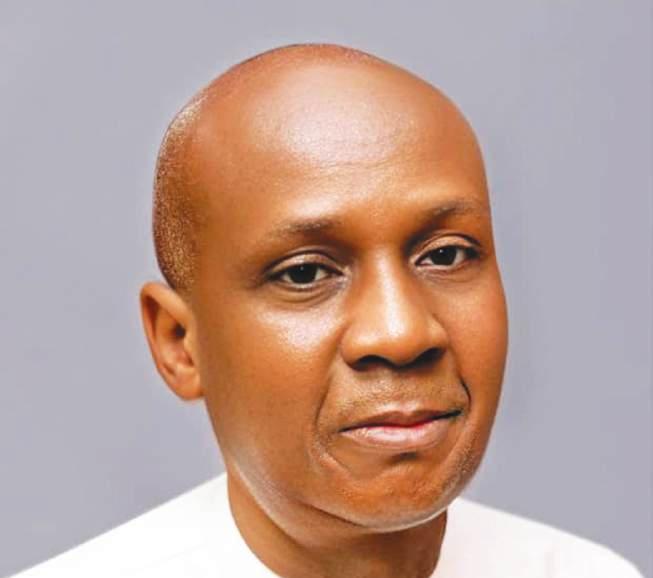
Onoko
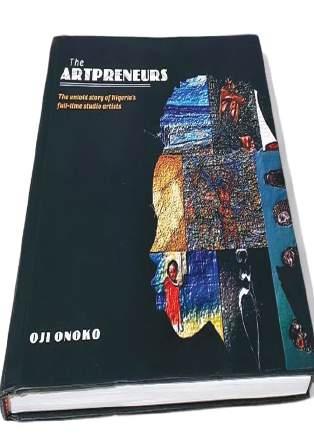
of its own time.
The selection criteria underline that commitment. Every artist in the book is a graduate of a university or polytechnic who entered full-time studio practice after national service, has never relied on salaried employment or political appointment, and has remained in professional practice for at least seven years. The emphasis is on endurance rather than celebrity.
That distinction is worth making because the recent rise of Nigerian contemporary art can easily obscure the years when little came easily. Auction prices have climbed, museums are acquiring Nigerian artists with greater regularity and biennales now
feature their work as a matter of course. But long before the international attention came the slow business of building a career—finding collectors, mounting exhibitions and returning to the studio day after day.
Franklyn Chu Egwali’s introductory essay, Aesthetics and Agency: The Rise of the Full-Time Studio Artist in Contemporary Nigeria, provides the wider context for the book. He argues that these artists did more than build successful careers for themselves. By proving that a full-time studio practice could also provide a living, they changed how many people thought about the artist’s place in Nigerian society.
Appropriately, the publication will be accompanied by an exhibition of works by the featured artists. Seen together, the book and exhibition trace four decades of Nigerian full-time studio practice through the careers of those who helped give it shape.
Onoko is well placed to tell this story. A University of Benin-trained theatre practitioner, former Deputy Editor of THISDAY, Editorial Board member of The Sun and former Deputy Director of Public Relations at the National Gallery of Art, he has spent more than three decades writing about Nigeria’s cultural life. The book grew out of two years of interviews and research conducted between 2022 and 2024, with the Advance Reader Copy completed in 2025. The result is a timely account of a chapter in Nigerian art history that has received far less attention than it deserves.
At its heart, The Artpreneurs is about conviction. The artists in its pages wagered their livelihoods on the belief that the studio could be more than a place to make art—it could also provide a living. By doing so, they expanded what later generations could imagine for themselves. They showed that, in Nigeria, the studio need not be a sideline to another career. It could be the career.
Okey Ikechukwu
Overview of Volume 1
TProtestEssaysonAfrica'sMostConsequentialCountry(1999–2023),Volumes1 and2byEniolaBello,CableBooks,Lagos,2026
his book is the first of a 928-page twin volume work, which is a collection of 25 years of Eniola Bello's opinion articles, presented here as seventy essays and arranged according to publication date. It tracks five successive administrations of Obasanjo, Yar'Adua, Jonathan, Buhari, and the early Tinubu period, showcasing the recurring crises of Nigerian governance under these respective regimes. Electoral fraud, executive-legislature feuds, corruption scandals, insecurity, fuel-price shenanigans, and the severe and persistent gap between constitutional promise, leadership claims about delivery and the lived experiences of Nigerians are all serially captured as they occurred in real time.
The author brings the entire collection together here as "Protest Essays” in two volumes which, indeed, they are. In going further to say that the collection is about “Africa's Most Consequential Country", he is telling us two things. The first is that he deems everything he has written in this book a protest against what is unacceptable in leadership and governance, even where it is purely descriptive of symptoms and consequences. The second is that the country under reference here is Nigeria which, with its huge population and profile as Africa’s most notable nation, remains a matter of concern to the world.
But, before we go into his reasons for such a venturesome claim, let us me put it on record that Eniola Bello, or Eni-B should henceforth be declared, and addressed as, a Protestant by Self-proclamation. And this first volume of the Protestant’s work opens with a Prologue, wherein we hear about the blood curdling 1998 encounter with the Abacha-era military intelligence chief, Col. Frank Omenka. Even those who never knew, or had any encounter with, Omenka trembled on behalf of those who did, whenever they heard either the man’s name, or about his “exploits”. Bishop Matthew Hassan Kukah’s Foreword situates the book in a tradition of African protest writing. The author’s own Introduction frames the collection through the recurring image of a boy chasing his own shadow. This image was, for the writer, an emblem of Nigeria's unfinished, self-eluding search for a workable political order; and a realistic and sustainable identity.
From here the book moves into a into a rather the section titled "Governance", which runs chronologically from June 1999, that is immediately after Nigeria's return to civil, through 2022, to the eve of the Tinubu presidency.
Thus, we have in the book a substantial front matter, namely a Foreword, Introduction and Prologue, followed by a back matter in the form of Acknowledgement and name index. It is important to note here that the writer’s career, as well as the context of our national politics at the times covered in his writings explain how the book reads.
He was in the Media Theatre of War through much of the period he wrote about; and this fact alone gives the essays an insider's access and immediacy which no outsider can successfully simulate. Omenka anecdotal episode, as part of behind-the-scenes details is outstanding. His pieces on Anambra's godfather politics and the political undulations associated with could only have come from a participant observer with a volition for factual, narration garnished with personal interest in promoting specific societal values.
So, I stand before you with the first Volume of Shadows, which is a 468-page book organized around some dated newspaper columns of national and historical significance. on which I shall make some observations, look at the Voice and Craft, touch on Recurring Themes Across Administrations. I will also, in the course of that, point out some details for reconsideration, by way of conclusion.
I shall say nothing about why The Protestant chose me as his victim here, by imposing on me
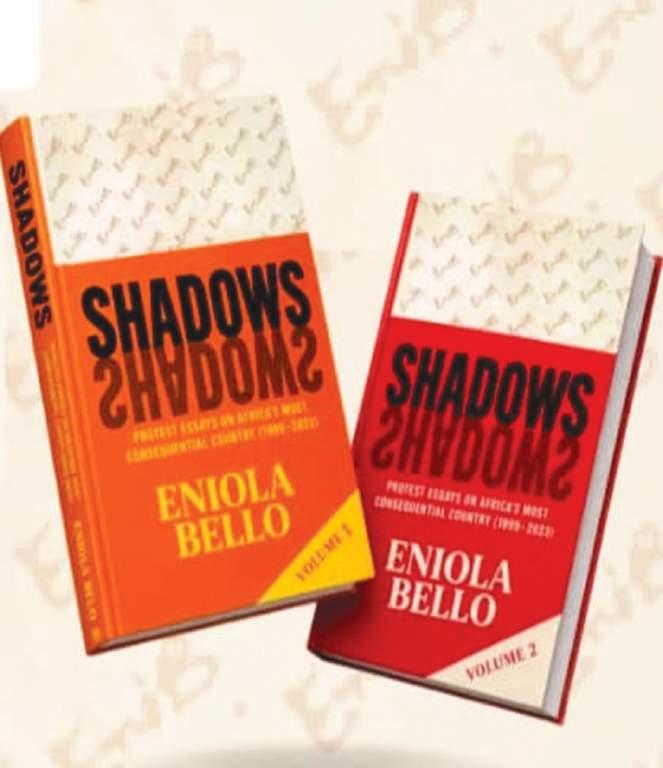
the task of reading and reviewing a work of nearly one thousand pages at very short notice.
Now, to my observations.
Observations
A first-person archive of the Fourth Republic
The real value of this work lies in the fact that it is a dated, column-by-column record of actual events as they happened, rather than a reconstruction of experiences afterwards; in an Ali Mazrui fashion. Every single essay here is anchored to a specific week's news, or set of national events. The real-time immediacy of a governor's convoy ambushed, a Senate probe convened, a fuel subsidy withdrawn, etc., gave this book the appeal that makes it less of a memoir function and more of a serial, eyewitness’s lived diary of Nigerian public life.
When read consecutively, the essays in this Volume show the reader that the same pathologies recur under presidents of very different temperaments and pretensions to leadership excellence. For instance, we find the contested census-style ethnic balancing of political positions, godfatherism, executive high-handedness and more across board. It is probably this that effectively thematizes the book’s strongest underlying message, namely, that Nigeria's problems have outlived every single administration and still subsist.
Voice and craft
The author’s style has the unmistakable imprint of a seasoned newsroom editorialist. Short and punchy paragraphs, frequent rhetorical questions, anaphora, like "What matters is... What matters is..."), and a commendable fondness for subtly exhilarating and extended metaphors abound. Take this for instance: Tinubu's troubles "multiplying in a spiral" like smoke from a magician's pipe; Nigeria's political order as an ever-elusive shadow.
His prose is perhaps at its strongest in narrative
set pieces, like the genuinely griping and unsettling Prologue's account of the Omenka reality and in the essays where the author builds an argument through accumulated, concrete details. In his dismantling of Rep. Ado Doguwa's public boasting about fathering 28 children he moved from an anecdotal on the man’s curious boast to a much wider argument about population control, issues of policy, entitlement mentality and the almajiri crisis in northern Nigeria.
Recurring themes across administrations
This volume builds a cumulative case, starting with essays on Obasanjo's early years and ethnoreligious balancing in appointments, to the friction between the presidency and the National Assembly. It moves through Yar'Adua’s crisis of legitimacy and his prolonged medical condition to Jonathan’s partially sleepwalking presidency, circling back repeatedly to fuel subsidy removal, corruption scandals, and a weakening security response to Boko Haram.
The section on Buhari is the most sustained in its criticism of a government’s many missteps. It returns, again and again, to shameless nepotism, appointments skewed in favour of the president's home region/ state. In a comparison captured in the essay "Buhari: As He Was in 1984…", the author x-rayed the latter’s conduct as elected president and as the military head of state and saw him as still the same man in his negative proclivities three decades later.
The structure of this volume makes it easy for a patient reader to see this collection's core theses demonstrated live, rather than merely claimed; namely, that Nigeria's governance challenges and failures are systemic and can be seen to outlast any single leader's promises of lasting change.
Sequence and General Impression
Reading 400-plus pages on one theme, as a chronological, single-category, also demands a lot of reading strength. But the arrangement gives the book coherence, as themes that would have otherwise blocked a “flow of understanding” were reserved
for the second volume of the work.
The production of this volume is professional. The back-of-book index of names is a welcome convenience in a book this dense with Nigerian political figures across two decades.
Points to Note, Going Forward
As I conclude this review of a book that, itself, is the editorialized testament of a seasoned media executive, I would like to draw attention to the fact that the author leans hard on the same small set of rhetorical devices — anaphoric repetition, rhetoricalquestion cascades, the extended metaphor as an essay's organizing device. The reader encountering these as standalone weekly columns will enjoy the undulations more than a reader going through dozens of essays read in sequence at one.
But that is the point of the book being a collection otherwise autonomous media interventions, deploying the very tools that give each piece the flavour that makes it appealing on its own. It is like looking at, and admiring, a church member’s jewellery during major celebrations, and then seeing the assembled pictures of the same church member for all occasions, from which you then notice that it reveals a limited number worn at different times and within decent intervals.
The author may wish to consider the fact that the average reader lacks a working knowledge of Nigerian political history, as seen in the acronyms, party names, and second-tier officials mentioned in the work. A short biographical or explanatory footnote apparatus (even minimal) could be added, to widen the book's impressions on readers may not have lived through this period.
Because protest journalism, to which the author has confessed himself committed, is usually tendentious, the book sometimes reads as advocacy rather than analysis; wherein government defences are often summarized and then rebutted in the same paragraph. But, again, the issue is whether what is in the book is what the author wanted to achieve. It is. A patriot confronted with the unrestrained plunder of his country, and armed with a pen and a platform, used both to make his interventions as an unapologetic advocate.
The chronological sequencing stands defended from the standpoint of historical record keeping. It captures the same recurring issues like fuel subsidy, misgovernment and nepotism across two decades. Perhaps a subsequent edition of the book would need a thematic cross-index, or brief interstitial framing notes, explaining how an older essay connects to a later one on the same subject. This will strengthen author’s subsisting thesis that our problems are not merely episodic and regime-determined.
Finally, a short retrospective postscript on a handful of the most consequential essays is needed for them to double as a history and not just archival material of past commentary.
This volume of Shadows is a compelling primarysource document of Nigeria's Fourth Republic, as written by someone who had a genuine front-row seat, who is competent to comment authoritatively on the issues raised and who showed great courage in presenting them without apologies.
Part of the book’s strengths lie in its narrative vividness, its moral clarity and the cumulative weight instances of the same failures and challenges across five presidencies. It also exists in the author’s insight and his ability to capture the issues without extenuation.
As a reference work on a great columnist’s piece of journalism history, it offers much to a reader would take it in smaller doses, essay by essay, the way it was originally written and published. Any weaknesses perceived in this regard are largely the weaknesses of the anthology form of presentation: the repetition of stylistic devices when essays are read back-to-back. This volume of Shadows is a time-driven advocacy for true nationhood. It is honest about what it set out to achieve and should be so acknowledged.
• Cont’d next week
With Oyinkansola Badejo-Okusanya's victory in the recent presidential election of the Nigerian Bar Association, aggrieved members should sheath their swords and help restore the association's voice on the rule of law and good governance, Davidson Iriekpen writes
The Nigerian Bar Association (NBA) last weekend elected Oyinkansola Badejo-Okusanya, a Senior Advocate of Nigeria (SAN), as its next president after she polled the highest number of votes when voting officially ended last Sunday.
Badejo-Okusanya, the only female among the three presidential candidates, polled 12,317 votes to emerge as the winner of the election, which was held through electronic voting.
She defeated her two male challengers, receiving 47.18 per cent of the 26,106 ballots cast in the presidential election.
Lateef Omoyemi Akangbe, also a SAN, secured 7,934 votes (30.39 per cent) to come second while Olumuyiwa Akinboro, another SAN, polled 5,855 votes (22.43 per cent) to take the third position.
The final results showed that the total votes cast across 13 national officers’ elections stood at 26,184, representing 31.86 per cent voter turnout of the total 82,172 registered voters.
When inaugurated at the Annual General Conference scheduled for August 21 to 28 in Port Harcourt, Mrs. Badejo-Okusanya will be the 33rd president of the NBA and first elected female president of the association.
The outgoing president, Afam Osigwe, and his co-executives are expected to hand over to the new leadership during the conference.
When Badejo-Okusanya assumes office, she would be the second woman to lead the Nigerian Bar in its 66-year history, following Priscilla Kuye, who became the first president of the association in 1991 and held the position until 1992.
She is taking over when public confidence in the judiciary and the legal profession is abysmally low, fuelled by a series of perverse court decisions, crashing professional and ethical standards, and frustrating delay of cases in courts.
Badejo-Okusanya is expected to revive the dwindling NBA’s traditional role of holding public officers accountable and take leadership on other issues of public interest.
The president-elect, who already knows that she would assume the leadership of the association at a time when its rating is very low, has, however, described her victory as a mandate to build a stronger and more inclusive association. She promised that under her watch, the association would promote the rule of law and protect human rights in the country.
Before voting ended on Sunday, Akangbe, who placed second in the presidential race, alleged that the election was marred by a series of irregularities.
In a protest letter to the Electoral Committee of the NBA (ECNBA), Akangbe described the election as a “catastrophic structural and technical collapse” of the
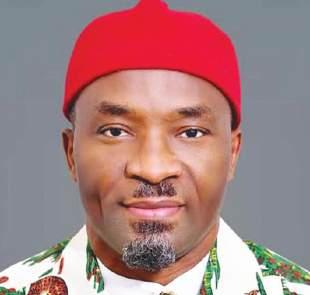
electoral process and demanded its immediate suspension. He alleged that the electronic voting portal became inaccessible to many of the association’s more than 82,000 accredited voters, with users reporting authentication failures, error messages and repeated timeouts.
Like the previous election, the latest did not come without controversies.
Egbe Amofin O’odua, an association of lawyers of Yoruba extraction, sought to have the NBA endorse Olumuyiwa Akinboro as the sole consensus candidate for the western zone. But it was vehemently resisted.
When the group was unsuccessful in its demand, it pursued its position through litigation at the Oyo State High Court. It was the Court of Appeal judgment that gave way for the election to proceed. This dovetailed to the ill-feelings and divisions that characterised the election.
Badejo-Okusanya is not a small fry in the legal profession. She was called to the Nigerian Bar in 2002 after obtaining her Law degree from the
University of Lagos, where she previously earned a Bachelor of Arts degree in English. Her legal career began at Olaniwun Ajayi LP, and she became a Senior Advocate of Nigeria (SAN), the highest honour in the Nigerian legal profession, on 29 September 2025.
In the course of her legal practice, she was appointed in 2007 as the Senior Special Assistant on Justice Sector Reform to the then-Governor of Lagos State, Babatunde Fashola. At the time, she worked in the office of the then Attorney-General and Commissioner for Justice, Olasupo Shasore (SAN).
In 2011, she was appointed general counsel to the governor of Lagos State, a position she held until 2015.
Many Nigerians still remember with nostalgia the era when the likes of Alao Aka-Bashorun and other activists were the President of the NBA and the vibrancy they brought to the association. That vibrancy has, however, been elusive in recent years.
This is why many are calling on aggrieved members to sheath their swords and help Badejo-Okusanya to restore the
association's voice on the rule of law and goodTheygovernance. look forward to seeing an association that would not only speak truth to power and promote the rule of law and protect human rights in the country, but make the government of the day and people be held responsible for their actions.
In recent years, so many unimaginable things have happened both in the judiciary and society that have made Nigerians wonder if the NBA is still in existence. The government has not only trampled on human rights continuously but has also ridiculed court judgments and the constitution.
The last time the kind of vibrancy of Aka-Bashorun was seen in the NBA was during the tenure of Wole Olanipekun (SAN), Olisa Agbakoba (SAN) and Rotimi Akeredolu (SAN).
“In recent times, the performances of the NBA officials we have had in recent times were very disappointing. They have turned an association that used to be a serious organ and a major weapon in the fight for the protection of the common man into a lame duck,” said a lawyer who spoke to THISDAY on account of anonymity.
With the elections over, Badejo-Okusanya needs to make reconciliation and unity the defining priorities of her administration as she prepares to assume leadership of Africa’s largest association of lawyers.
It is face that the Bar is polarised along several lines—generational, ideological and, at times, personal.
Healing these divisions and building a truly cohesive, inclusive and purpose-driven Bar must be at the heart of her agenda.
A divided Bar cannot effectively champion the rule of law, protect the welfare of lawyers or speak with the moral authority required to promote justice, accountability and good governance.
The strength of the NBA has always rested on its ability to speak with one voice. Internal divisions could diminish its capacity to influence public policy and hold institutions accountable.
Interestingly, while congratulating Badejo- Okusanya on her election, President Bola Tinubu, in a statement, emphasised the need for her to foster unity within the association and reach out to the other contestants, unify the Bar and make efforts to correct issues that arose during her election.
“I urge you to reach out to the other contestants, unify the Bar and make efforts to correct issues that arose during your election,” he said.
One lesson to learn from the just concluded election is that the association must strengthen the transparency of its electoral processes, guide its institutional independence jealously, and ensure that future contests are remembered more on ideas than intrigues.
Nigerian leaders will never stop their comedy, which has made governance an unserious business and a huge joke in the country.
Constitutionally, Nigeria is supposed to be a secular state. Unfortunately, governments at various levels have continued to sponsor and fund religious activities, promoting one religion above others.
This is why there was public outrage recently following revelations that the federal government earmarked a staggering ₦8.05 billion for the construction, renovation, and equipping of places of worship across the country in the 2026 budget.
The allocation was uncovered and made public by Tracka, a public accountability organisation under BudgIT.
According to the budget breakdown, the government
allocated ₦1.91billion for projects tied to seven churches, while ₦6.14billion was earmarked for 52 mosque projects.
In a failed attempt to defend part of the money allocated to his constituency, the Office of the Deputy Speaker of the House of Representatives, Benjamin Kalu, faulted the reports that N1billion was allocated for the procurement of musical instruments for churches in the Bende Federal Constituency of Abia State, which he represents.
In a statement by his Chief Press Secretary, Levinus Nwabughiogu, Kalu claimed that the proposed allocation was not N1billion but N780 million after VAT and other statutory deductions. He said that the programme was designed to support over 130 churches across Bende Federal Constituency, with each church expected to receive between N5million and N6million during the first phase
of implementation.
According to him, the intervention is intended to strengthen churches' capacity to engage young people through programmes focused on character development, moral instruction and community outreach.
The questions to pose to him are: Are government resources supposed to be allocated to churches and Mosques? Why can't the adherents of the different religions conduct their sensitization at their own expense? Is Nigeria no longer a secular state? How much was allocated to traditional religion for the fortification of their shrines and engagement of young traditional religion's worshippers?
This is how officials of the Nigerian government divert and mismanage monies that are supposed to be used for the development of basic infrastructure.
For Kano State to retain its enviable status as one of the most peaceful states in the North-west geopolitical zone ahead of the 2027 general election, Ejiofor Alike writes that the political actors in the state should withdraw support for rival thuggery groups and other criminal gangs currently threatening peace in the state
Despite its huge population and status as a politically volatile state, Kano State has retained its enviable position as one of the few states in the North-west that have not been severely hit by insurgency and armed banditry.
Even at the peak of the emirship tussle between the state government-recognised Emir of Kano, Khalifa Muhammad Sanusi II, and the dethroned HRH Aminu Ado Bayero, who is also laying claim to the throne, the political leadership in the state has continued to keep the state safe.
Among the North-west states of Kano, Katsina, Kebbi, Jigawa, Sokoto, Zamfara, and Kaduna, the state and Jigawa have not been hit by the mass killings, abductions and other acts of banditry witnessed in other five states in the zone.
Though the Ansaru terrorist group announced its formation in the state in January 2012, the state has remained relatively insulated from the group's violence.
But in Zamfara, armed bandits, as well as terrorist groups such as Ansaru, Lakurawa and Mahmuda are wreaking havoc.
Sokoto State is also hit by Lakurawa, ISWAP and Ansaru terrorist groups while armed bandits also operate in communities along the state's border with Zamfara. Lakurawa and Mamudawa groups are terrorising Kebbi State.
Mamudawa operates from neighbouring Kwara and Niger states.
Armed bandits, who operate from Zamfara, are also terrorising Kebbi, while Sai Mallam Sect has been identified as a new insurgent group that emerged in the state.
Ansaru, ISWAP, and Boko Haram factions, as well as armed bandits locally known as ‘Yan Bindiga’ are operating in parts of Kaduna State.
In Katsina, Boko Haram, ISWAP, Ansaru, Lakurawa and ‘Yan Bindiga’ have held the residents of the state hostage.
Kano State is a mini-Nigeria and any breakdown of law and order in the state is a threat to the stability of the country.
Therefore, the attempts by politicians and other agents of violence to create another terrorist group in the state as they created Boko Haram in Borno State should be a cause of concern to all Nigerians, irrespective of religious, ethnic or political affiliations.
Reacting to the emerging threat, the Kano Civil Society Alliance for Peaceful Politics had in a recent press statement, signed by its Convener, Ambassador Abdullahi D. Mohammed, expressed deep concern over the dramatic rise in political violence and the activities of armed youth gangs,
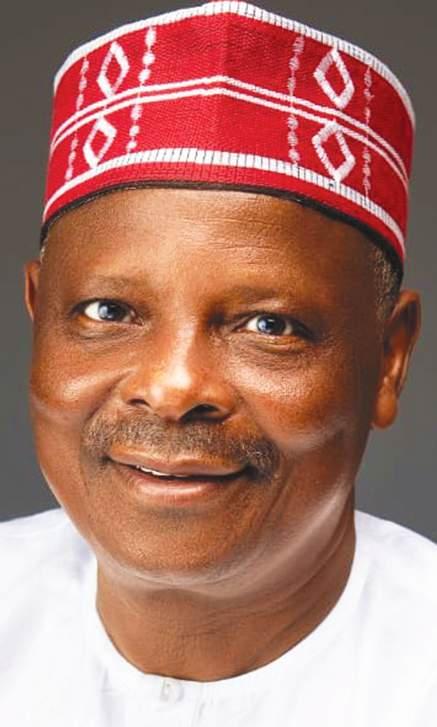
locally known as Yan’Daba. Mohammed blamed the surge directly on politicians who allegedly funded and weaponised these violent groups for political leverage.
To address this threat, the state government had in 2025, granted amnesty and rehabilitation opportunities to over 1,300 repentant thugs. However, the coalition argued that the gesture had failed to deter the perpetrators, as the state’s democratic stability remained under severe threat.
In order to avert a total breakdown of law and order, the group urged politicians and the authorities to suspend political activities exactly the way they previously suspended the historic Sallah Durbar festival to prevent clashes.
It also demanded a stronger law enforcement action against the political patrons who funded, armed, and promoted violent youth groups.
Indeed, Kano's position as one of the safest states in the North-west is increasingly coming under threat with the spillover of banditry from neighbouring Katsina State. Last year, attacks by armed gangs
forced several residents to desert their homes in Tsanyawa Local Government Area (LGA) of the state, due to the area's proximity to the Rimaye community in Kankia LGA in the neighbouring Katsina State.
In late last year, two soldiers and 19 bandits were reported killed when troops foiled an abduction in Shanono LGA of Kano State.
In reprisals, bandits later attacked Faruruwa and Dabawa communities in Shanono LGA, and abducted residents. They also launched attacks on communities in Tsanyawa and Gwarzo LGAs, which are close to Matazu and Kankia LGAs of Katsina State.
While the main Kano City is being threatened by criminal gangs known as 'Yan Daba or ‘Yan Ta’adda,'’ the rural areas in the state are grappling with banditry from neighbouring states.
Members of ‘Yan Daba' are sponsored by politicians during elections to intimidate political opponents and perpetrate electoral violence, while ‘Yan Ta’adda’ operates like non-state actors under a warlord.
It is feared that these gangs can transform to terrorist groups like Boko Haram if politicians continue to sponsor and support their activities.
However, the state government has put
measures in place to curb the increasing violence in the state.
It enforced the Motorcycling and Related Matters (Regulations) Law of 2013, which prohibits motocyclists from carrying passengers within the eight metropolitan LGAs.
In other parts of the state, motorcycle riders were required to register with their Ward Head, the Works Department of the LGA, and the Divisional Police Officer (DPO) in the area.
Governor Abba Yusuf had also launched Neighbourhood Watch Corps, and commissioned a fleet of 88 Hilux patrol vehicles and 440 motorcycles for the corps in all 44 LGAs.
As part of the efforts to sustain peace in the state, the Arewa Youth Merger Group (APC) last week reconciled rival thuggery groups, better known as “Yan'Daba”.
During the reconciliation parley, the national coordinator of the APC group, Hon. Musa Mujahid Zaitawa, flagged off the distribution of registration forms to unemployed youths involved in thuggery and drug abuse in the state. He explained that the forms would be forwarded to the state government to facilitate vocational training and the provision of start-up capital to beneficiaries.
Zaitawa appealed to prominent northern business moguls, including Africa's richest man and President of Dangote Group, Aliko Dangote; Abdussamad Isyaku Rabiu; A.A. Rano; A.Y. Maikifi; Bashir Dankullu; Sabiu Bako; Danlami Alasan; Hamisu Dankaka and Yahaya Lawan, among others, to partner with the group in supporting the rehabilitation of the affected youths. While urging parents to monitor their children more closely, he also cautioned politicians against recruiting youths for violence during the 2027 general election campaigns.
Zaitawa further appealed to the Emir of Kano, Khalifa Muhammad Sanusi II, to direct district, ward and village heads to monitor the movement of newcomers into the state as part of measures to strengthen community-based security.
He also called on the Minister of Defence, General Christopher Musa (rtd.), and the National Security Adviser (NSA), Mallam Nuhu Ribadu, to deploy additional security personnel to the state to prevent the infiltration of bandits from neighbouring Katsina State.
Zaitawa warned that the emerging security threats could worsen as political activities ahead of the 2027 elections gather momentum.
As the 2027 general election approaches, all stakeholders should guard the current peace in Kano jealously to insulate the state from the insurgency and banditry that plagued other North-west states.
The judgment of Justice Salim Ibrahim of the Federal High Court in Abuja awarding a whopping N140 million against the Adolphus Wabara-led Board of Trustees (BoT) of the Peoples Democratic Party (PDP) and an additional N10 million personal cost against their counsel, Chief Chris Uche (SAN), is still eliciting reactions about three weeks after it was delivered.
The fine against the plaintiff was for filing a frivolous suit against the Independent National Electoral Commission (INEC) and others.
The judge awarded the fine after dismissing the leadership tussle suit for being “an abuse of court process, unmeritorious and lacking in merit.”
The Wabara-led BoT had sought an order of the court compelling INEC to recognise the PDP interim
National Working Committee (NWC) faction led by its National Chairman, Kabiru Turaki, on its official website, among others.
Many feel that if the Supreme Court judgment had resolved the crisis in the party, the suit would not have been filed. They posited that it was vague and incongruous by the apex court that necessitated the suit for proper clarity.
They expressed profound alarm and strong condemnation over the High Court’s decision to impose a whopping N150 million costs against the faction.
The frightening magnitude of these financial penalties raises fundamental constitutional questions about whether access to justice is gradually becoming a privilege reserved only for the wealthy and politically connected. While courts have the authority to award costs in deserving cases, such powers must never be transformed into instruments of intimidation capable of frightening Nigerians away from the temple of justice. The action of the court risks creating a dangerous precedent capable of discouraging citizens, civil society organisations, political parties and public interest litigants from approaching the courts whenever they perceive that their constitutional or legal rights have been violated.
If litigants must now fear that an unsuccessful action could expose them to crippling financial liabilities running into hundreds of millions of naira, then the constitutional guarantee of access to justice stands gravely imperilled.
Iyobosa Uwugiaren examines the decision by the Department of State Services to appeal the sentences handed to commanders of Ansaru terrorist group, and whether the judiciary is imposing punishments severe enough to match the devastating impact of terrorism in the country
The life sentences handed to two deadly senior commanders of the Ansaru terrorist group may have sealed one chapter in one of Nigeria's most significant terrorism prosecutions, but they have opened another - one that could shape how the country's judiciary deals with terrorism for years to come.
The Department of State Services (DSS) last Tuesday announced plans to appeal the judgement of the Federal High Court in Abuja, insisting that life imprisonment does not reflect the gravity of the offences committed by Mahmud Usman, popularly known as Abu Bara'a, and Abubakar Abba, alias Mahmud al-Nigeri. Both men pleaded guilty to all 32-count filed against them before Justice Emeka Nwite, who subsequently sentenced them to life imprisonment.
For the Toyin Ajayi-led DSS, however, the punishment falls short of justice. And the agency's decision to challenge the sentence has revived a longstanding debate: Is Nigeria's judiciary imposing punishments severe enough to match the devastating impact of terrorism in the country?
The controversy, especially the DSS’s current position, cannot be understood without scrutinising the terrorist group the two men were leading.
Security experts are of the view that Ansaru is one of Nigeria's most notorious and deadly terrorist groups, with ideological links to al-Qaeda. Over the years, security agencies, especially the DSS, have associated the group with some of the country's most daring and deadly attacks. Among them was the July 2022 assault on the Kuje Medium Security Custodial Centre, where hundreds of inmates—including terrorism suspects—escaped after heavily armed gunmen overran the facility.
The group was also linked to the Abuja–Kaduna train attack, which left several passengers dead and dozens kidnapped and held in captivity for months. It has also been implicated in repeated kidnappings, attacks on security personnel and violent assaults on communities across northern Nigeria. To the DSS, therefore, the convicted men were not ordinary offenders.
Counterterrorism experts have argued consistently that leaders of terrorist organisations rarely carry out attacks personally. Their role is to recruit fighters, coordinate operations, raise funds, provide logistics, formulate strategy and authorise attacks carried out by subordinates.
They do this in pursuit of a political, religious, racial or ideological cause. From that perspective, they are regarded as the architects of terrorist violence rather than mere participants.
Ajayi
Although life imprisonment is among the strictest punishments under Nigerian law, the DSS has argued that this case demanded stiffer penalties Its strongest argument is rooted not only in the facts of the case but also in the law itself.
Nigeria's Terrorism (Prevention and Prohibition) 2020 Act prescribes the death penalty for certain terrorism offences, particularly where terrorist acts result in loss of life. Since the two defendants pleaded guilty to all 32 charges, many legal minds believe the appellate court would have to determine whether the trial court properly applied the sentencing provisions of the Act. Viewed from this perspective, the DSS appeal is more than an emotional reaction to public outrage.
It is fundamentally a legal question: Did the trial court correctly apply the punishment prescribed by the anti-terrorism law? If the offences admitted by the defendants legally attract the death penalty, then the appeal will focus not on whether life imprisonment is severe—it incontestably is—but whether it was the sentence required by law.
The DSS also pointed to events that unfolded while the two men were still standing trial. According to the agency, members of Ansaru kidnapped pupils and teachers in Oriire, Oyo State, and demanded the unconditional release of these same commanders. During the nearly two-month hostage crisis, the defendants reportedly abandoned their initial plea of not guilty, told the court they were undecided and, shortly after security forces rescued the victims, pleaded guilty to all charges.
The DSS believed the sequence was
anything but coincidental. Even more disturbing is the fact that two teachers were beheaded because the government refused to exchange the commanders for the hostages. These are facts, which have reinforced the DSS's contention that the defendants remained influential figures within the terrorist network even while in custody. And for the families of those murdered, beheaded and slaughtered the DSS has argued and rightly so - that life imprisonment does not adequately reflect the enormity of the loss.
From global records, Nigeria is not the only country prescribing severe punishment for terrorism. In the United States, terrorist attacks resulting in death attract the federal death penalty or life imprisonment without parole--conditional release. Saudi Arabia and China both permit capital punishment for the gravest terrorism offences; while the United Kingdom, having abolished the death penalty, imposes ‘’Whole Life Orders’’ that ensure convicted terrorists die in prison. Israel, despite decades of battling terrorism, generally sentences convicted terrorists to one or multiple life terms.
Against this international frameworks, the DSS has argued that Nigeria's Terrorism (Prevention and Prohibition) Act—which also prescribes the death penalty for certain terrorism offences involving loss of life—was intended by the makers of the laws to ensure that those responsible for the country's worst acts of terror receive the severest punishment permitted by law.
However, legal minds said that there is “judiciary's dilemma’’--the debate is not as straightforward as it appears. Nigeria's courts may not be permitted to punish individuals simply because they belong to a notorious organisation. Judges sentence defendants for offences proved before the court—not for every crime attributed to the group.
In other words, unless prosecutors specifically establish the defendants' criminal responsibility for
attacks such as the Kuje prison assault, the Abuja–Kaduna train attack or the killing of the Oriire teachers, Justice Emeka Nwite was legally bound to sentence only on the offences contained in the charge sheet. That distinction lies at the heart of judicial independence. Security agencies often rely on intelligence accumulated over many years. However, courts, rely only on admissible evidences place before them and the law. It is this difference that frequently produces tension between investigators and the judiciary in terrorism cases.
Nonetheless, the appeal has become more than a disagreement over punishment. It is now a test of how Nigeria's anti-terrorism laws should be interpreted. The Court of Appeal will have to determine whether the trial judge exercised his sentencing discretion correctly or whether the Terrorism (Prevention and Prohibition) Act requires a harsher penalty. Its decision will almost certainly become an important judicial precedent for future terrorism prosecutions.
But beyond the courtroom, the case has also highlighted the broader challenge confronting every democracy battling terrorism. On one hand is the need to protect society through firm punishment of those responsible for coordinating mass violence. On the other is the equally important obligation to uphold due process, judicial independence and the rule of law.
For many Nigerians—especially victims of the Kuje prison attack, the Abuja–Kaduna train attack, the Oriire kidnappings and numerous other terrorist atrocities—the expectation is simple: Justice must be proportionate to the injuries inflicted on victims. Whether life imprisonment satisfies that expectation is now a question that the appellate courts will answer. Whatever the outcome, the judgement is likely to define not only the fate of two convicted Ansaru commanders but also the future direction of Nigeria's judicial response to terrorism.
services, told the committee that the bank indeed opened two domiciliary accounts for the supposedly fake agency on the directive of the office of the accountant-general of the federation (OAGF). He said the bank carried out its standard account-opening procedures before doing so.
This is where it gets more interesting. A week earlier, the OAGF had categorically denied issuing any directive for the accounts to be opened. This directly contradicted a press statement from the presidency which accused Prince Adeyemi Adeniyi, the supposedly fake director-general (DG) of the supposedly fake agency, of presenting fake documents to the OAGF to secure the mandate to open the accounts. Two people cannot both miss a lie — if the recipient does, the liar definitely can’t. Along with the testimony of the budget office, it is becoming very clear that the OAGF was trying to cover up something. The PFIPC evidently secured approval from the OAGF to open the accounts.
But that is not even my worry. The OAGF handles federal government’s finances — covering income and expenditure. The office manages public funds and prepares financial statements. Its core responsibilities are financial reporting, revenue and expenditure control, payroll management, formulating accounting
TRUMP AND TINUBU
Some people were excited over US President Donald Trump’s intervention in Nigeria’s anti-terrorism war for a different reason: they thought there was going to be a regime change. They imagined it and started celebrating. They were sad when the bombings started and key figures in the terror groups were being eliminated. They are even sadder that Trump recently wrote to President Bola Tinubu to commend him on the progress of the war. My hope is that one day, we would be able to separate politics from the national interest. There are other things to play politics with. No matter how much we dislike the president, Nigeria is bigger than him. If Nigeria is secure, it is to the benefit of all. Fact.
policies, and inspecting accounting systems and standards across all federal ministries, departments, and agencies. Now, if the OAGF does not know that it issued a directive to the CBN to open domiciliary accounts for a “fake” agency, then we are in serious trouble as a country. We are forced to wonder how many “unknown” things might be going on in the office. It would even be worse if the OAGF actually knew and was only trying to pull the wool over our eyes. If there can be concerted efforts to deny concrete evidence that a directive was issued, what else is going on in the office of the accountantgeneral that we do not know yet? How do we begin to believe its reports on federal government’s receipts and payments? In any society aspiring to be taken seriously in the comity of nations, there will be consequences for senior officials of the OAGF. But remember that Nigeria is a society where there is crime but — as it were — there is no punishment. Do not be surprised if those officials are nominated for national honours sooner or later.
In my previous article, I pleaded with President Bola Tinubu not to sweep the matter under the carpet. I knew what I was saying. Immediately the PFIPC scandal broke, all I could see were concerted efforts to throw Adeniyi under the bus, as if he
acted alone. Press statements from the presidency already judged the matter and concluded that Adeniyi was the sole culprit, even though we were told a probe panel was going to be set up. Why set up a panel when you already knew the outcome? Adeniyi could not have allocated an office to himself at the Federal Secretariat. He could not have inserted a budget line by himself. He could not have happened accounts at the CBN just like that.
I am not a great fan of the National Assembly — with due respect, I think there are just too many misfits and comedians in those hallowed chambers making laws for our country — but I must necessarily commend the house of reps for setting up an ad hoc committee to investigate the scandal. That is actually a major function of the legislature: holding the executive arm of government accountable. I am sorry to say I am not too sure the house probe is going anywhere, but I will keep hope alive all the same. I owe my country that. Even if it ends up being a public show as we have seen many times in our lives, at least we have had the benefit of hearing from more of the actors.
Does anybody still remember the budget scandal under President Muhammadu Buhari? What he submitted to the National
PLAYING WITH FIRE
Sunday Igboho fled Nigeria in 2021 at the height of his divisive campaign for Yoruba “naysan” under President Muhammadu Buhari. Many of his supporters, some of them professors, were probably disappointed that he could not use his famed spiritual powers to escape from Beninese prisons after his capture. Igboho is now back in full force, launching a security outfit called “Iru Ekun” (“tiger’s tail”) to flush out “Fulani terrorists” from the south-west as well as Kwara and Kogi states. Forget that we have a military and other security forces — or that Amotekun was set up for the same purpose. We all know where this militia thing will end, if the IPOB experience would be a guide. Dangerous.
Tracka, a public accountability initiative of the BudgIT Foundation, has ferreted the 2026 federal budget and discovered a whopping sum of N22.15 billion earmarked for renovation and furnishing of 106 palaces and N8 billion for the construction, renovation or equipping of churches and mosques. That these mundane lines even got into the budget at all is yet another indication of how unserious we are as a people. Imagine what we would find out if we were to use the same fine toothcomb to peruse the budgets of states and LGAs. We cannot fund education, we cannot fund healthcare, but we can fund saxophones and guitars for churches. And we keep asking why Nigeria is like this. Sad.
HOW PRESIDENT TINUBU IS REDRAWING THE SOUTH-EAST POLITICAL MAP
processed gas to offtakers like Indorama Petrochemical Company.
The road and rail projects that crisscross the South-east landscape are not campaign promises. They are budget lines with contractors on site.
In politics, delivery takes slogans for lunch. Inclusion in government and important appointments for Southeasterners also matter. The 2023 figures showed APC’s vote deficit. However, the 2023-2026 appointments show a deliberate effort to correct the representation deficit.
Key South-Easterners now hold strategic positions in foreign affairs, defence, works, science & tech, and security agencies. The Minister of Foreign Affairs, Mrs Bianca Odumegwu-Ojukwu, from Anambra State (although Enugu-born), for instance, is today the biggest female political appointee in the Federal Executive Council.
Beyond the titles, the message is clear: the South-East is being brought to the centre of decision-making, not kept at the margins. This has started shifting the conversation from “exclusion” to “what more can we get done together.”
The President’s economic reforms, such as unification of foreign exchange rates, removal of fuel subsidy, and recalibration of tax, may be tough. Still, the South-East is positioned to benefit most from the
pivot to production and exports.
Aba’s Made-in-Nigeria campaign, Onitsha’s trading network, and Nnewi’s manufacturing base are being linked directly to federal grants, CBN intervention funds, and export support. And with the recent formal handover of the Akanu Ibiam International Airport, Enugu, to the concessionaire, the region’s logistics and commercial hub dream has received a massive boost.
The Tinubu administration is treating the South-east not just as a voting bloc, but as Nigeria’s industrial engine.
In terms of political realignment, the numbers are also moving up. Elections are about addition. In 2023, APC polled 127,370 votes in the South-east. The goal of the Tinubu administration for 2027 is not to win every state on day one, but to grow that base state by state, LGA by LGA.
That growth is already visible: from not a single state in 2019, two states in 2023, APC has now moved to three. The other two states in the zone are not opposed to President Tinubu. Anambra State Governor Chukwuma Soludo of the All Progressives Grand Alliance and his Abia State counterpart, Governor Alex Otti of the Labour Party, are strong supporters of President Tinubu, his reforms and
Assembly as his first appropriation bill in 2016 was different from what the federal lawmakers ended up deliberating upon. The rumour then was that as soon as he left the National Assembly complex, some civil servants replaced what he submitted with their own version of the budget. Buhari was shocked to his bones — he never witnessed anything like that during his time as a governor, minister and chairman of a governmental body. How can civil servants have the audacity to tamper with the budget submitted by the president? Please, what kind of country is this?
To Buhari’s credit, he fired the DG of the budget office, Mr Yahaya Gusau, and replaced him with Mr Tijani Mohammed Abdullahi. At least, Buhari acted. He sacked the sackable. He could not sack the civil servants, so they were punished with transfers to less “lucrative” agencies. As I said, civil servants made their own regulations to protect themselves from accountability under the guise of institutional independence. We need to tighten these rules. In fact, we need wholesale civil service reforms. Otherwise, we should not expect responsible behaviour from the civil servants. If there is crime, there should be punishment — except our future ambition is to remain a lawless society.
That the National Drug Law Enforcement Agency (NDLEA), under the leadership of Brig-Gen Mohamed Marwa (rtd), has been recording remarkable success in its war on illicit drugs is not in question. But it seems the NDLEA is still scratching the surface. A meth lab, estimated at $380 million, was recently discovered in a forest in Ijebu Ode, Ogun state. In all, 10 suspects were arrested and subjected to a special court hearing. They were paraded before the media by the Nigerian Correctional Service (NCoS). It is amusing, isn’t it, that four of them are foreigners. When we said we were looking for foreign investors, they thought it was to produce methamphetamine. Hahahaha…
reelection plans.
All the governors, not only South-East governors, acknowledge and say President Tinubu’s reforms have freed resources to the subnationals, which have, in turn, enabled them to engage in infrastructure projects.
Governor Hope Uzodimma, who is also the Chairman of the Progressive Governors, has remained vocal in his support for the President and loud campaign for his second term. Uzodimma is the Director-General of the Renewed Hope Ambassadors, the main campaign group for Tinubu’s reelection.
Speaking at a state dinner for the National Media Team comprising over 50 journalists, editors and members of the Presidential Communications Team in Owerri, Imo State capital, two weeks ago, Uzodimma described President Tinubu as the Lee Kuan Yew of Nigeria.
“In President Tinubu, I have seen another Lee Kuan Yew,” he said, praising the President’s bold economic reforms and expressing confidence that his performance would secure him a second term in 2027.
“The old order is gone and there is now a new order. President Tinubu knew exactly what he came to do. He started implementing the reforms immediately because he understood the task before
him,” he said.
Importantly, governors and stakeholders in the South-east zone are now in regular dialogue with the Presidency. Federal projects are being inaugurated with bipartisan presence. Youth and business groups who sat out in 2023 are now engaging with APC structures because they see tangible projects in their communities.
Politics in the South-East has always been pragmatic. Where federal presence is felt, political alignment follows. The 2023 electoral map showed where President Tinubu and APC were. Now, President Tinubu’s governance story in the South-east is showing where things are headed.
By linking infrastructure delivery with political inclusion and economic empowerment, the administration is redrawing the South-East political map from one defined only by electionday figures, to one defined by roads constructed, factories powered, and people included in governance.
The South-east deserves to be at the centre of Nigeria’s growth story. Under President Tinubu, I dare say that repositioning has begun.
•Rahman is Senior Special Assistant to the President on Media & Special Duties.
Mathew Ogelenya Ogwezhi
After more than two decades in Nigeria’s insurance industry, I have seen first-hand the persistent challenge we face: despite a population of over 200 million and a vibrant economy, insurance penetration remains stubbornly low. Many Nigerians distrust the industry, find current products unaffordable, or do not see their value.
This reality demands decisive action from those of us who understand both the roots and opportunities of our market. It is this context that shapes how I interpret the Nigerian Insurance Industry Reform Act (NIIRA) 2025
This legislation is the most comprehensive reform I have witnessed in my career. It addresses capital adequacy, governance frameworks, consumer protection mechanisms, and digital transformation requirements in a way no previous regulatory intervention has attempted. But I will be direct: legislation of this kind has appeared on our horizon before, and what determined its impact was never the quality of the drafting. It was always the seriousness with which practitioners chose to implement it. That calculus has not changed.
The capital requirements in NIIRA 2025 have generated the most noise in boardrooms across the industry. I understand why. Recapitalisation is painful and disruptive, forcing difficult conversations about ownership, mergers, and viability. But I have never once regretted strengthening our capital position at Capital Express Life Assurance. Capital is not a regulatory burden to be satisfied and filed away. It is the foundation of credibility. It is what allows you to look a policyholder in the eye and say, without hesitation, that you will be there when they need you. Insurers who treat the new capital thresholds as a minimum to meet will miss the real lesson. Those who treat them as an opportunity to build genuine financial strength will find that investors, regulators, and customers notice.
On consumer protection, NIIRA 2025 asks us to do something that should never have required legislation: treat policyholders fairly. In my experience, the single greatest source of reputational damage in this industry is not fraud, poor product design, or inadequate marketing. It is the failure to pay claims promptly and transparently. Every time a legitimate claim is delayed, unnecessarily contested, or paid in a way that humiliates the beneficiary, we lose ten potential customers in that community, and they will never be recovered.
The mathematics of poor claims handling
is devastating, and the industry has been slow to confront them honestly. NIIRA 2025 pushes us towards faster, simpler, and more transparent claims processes. This is not a compliance exercise. It is a business transformation that will determine which companies are still standing and growing a decade from now.
The push towards digital transformation is one I welcome, but with a word of caution that comes from experience. Many insurers in this market have confused having a digital presence with having a digital strategy.
A website is not a digital strategy.
A mobile payment option is not a digital strategy. A genuine digital strategy means reimagining the entire customer journey, from awareness through policy issuance to claims settlement, and using technology at each stage to reduce friction, lower costs, and improve the quality of service. It means investing in data analytics that allow us to understand customer behaviour, anticipate lapses, and respond with relevant interventions before the relationship breaks down.
It means meeting Nigerians on the platforms they already use daily, rather than asking them to find us. That work is deeper and more expensive than many boards are currently prepared to authorise, but NIIRA 2025 is right to push it forward.
The market opportunity this reform
helps unlock is one I have spent years thinking about. Nigeria has millions of people in the informal economy, working in trades, driving vehicles for hire, running small retail operations, and raising families on incomes that are real but irregular. These are not uninsurable people. They are underserved people, and there is a meaningful difference. When we have gone to meet them with products designed for their actual lives, rather than for salaried workers in formal employment, the response has been encouraging.
Micro-life insurance products with small, flexible premiums and clear, simple benefit structures can work in this market. The distribution channels are there, through mobile platforms, cooperatives, market associations, and faith communities. What has often been missing is the organisational will to invest in reaching people who do not fit the traditional customer profile.
NIIRA 2025, through its broadened inclusion mandate, gives us both the regulatory framework and the business case to make that investment.
Governance sits at the centre of everything NIIRA 2025 aims to accomplish, and rightly so. A wellcapitalised insurer with poor governance is an accident waiting to happen. I have seen this pattern too often.
Strong boards that exercise genuine independent oversight, ask hard questions about risk concentration, take
cybersecurity seriously as an operational threat rather than an IT department issue, and hold management accountable for results are not a luxury.
They are a survival mechanism. The companies that will thrive under this new regulatory environment are those whose leadership structures were already moving in this direction before the Act was signed.
None of what NIIRA 2025 envisions is achievable without the people to execute it. Actuarial talent, technology professionals, compliance specialists, customer experience designers, and frontline staff who understand and believe in what insurance is supposed to do for families: these are the assets that translate a reform agenda into real outcomes. Training must be a continuous investment, not a budget line that disappears when margins are under pressure.
I have been in this industry long enough to know that reform cycles come and go. What determines their legacy is practitioners’ response. NIIRA 2025 is a serious piece of legislation from a regulator clearly prepared to enforce it. The question for every life insurer operating in Nigeria today is not whether to comply, but how boldly to use this moment to build something better. The industry our policyholders deserve is within reach. The only thing required to get there is the will to act.
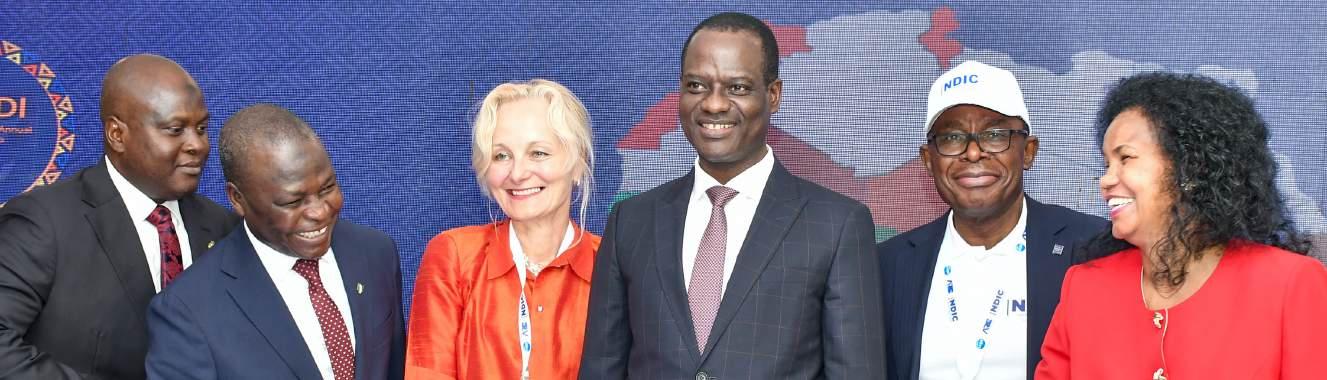
L-R: Representative of the Governor of the Central Bank of Nigeria, Dr. Olayemi Solaja; Chairman, House of Representatives’ Committee on Insurance and Actuarial Matters, Hon. Ahmed Jaha; Secretary General of the International Association of Deposit Insurers (IADI), Eva Hüpkes; Minister of Finance and Coordinating Minister of the Economy, Mr. Taiwo Oyedele; Chief Executive Officer, Nigeria Deposit Insurance Corporation, Mr. Thompson
Sunday; and Chairperson of IADI Africa Regional Committee (ARC), Dr. Julia Clare Olima Oyet, during the opening ceremony of the 2026 IADI –ARC annual meeting and workshop in Abuja…yesterday
SIMONKOLAWOLELIVE!
simon.kolawole@thisdaylive.com, sms: 0805 500 1961
Two things happened in the last seven days that motivated me to write this article. The first, which happened on Monday, was when Governor Umar Namadi of Jigawa state went on a surprise visit to the state secretariat. As at 11am, the offices of several top civil servants were still under lock and key. They were not “on seat”. For all you care, they could be holidaying in Cairo or doing lesser hajj in Saudi Arabia. Namadi met only a handful of low-level civil servants at their duty posts — messengers, cleaners and security personnel. You will have a vital document to process in government and they will always tell you “oga is not on seat”. That is the way we roll in our dearly beloved country.
The civil service, I repeat, is the heartbeat of government. That is the machinery that
services of countries that know what they are doing, but in Nigeria, it is mostly to do political favours. Many find themselves in the civil service as the last option after a fruitless job search. It was once reported that many civil servants have relocated abroad but are still drawing salaries. We are, thus, losing on all fronts: the civil service is mostly over-bloated, ineptly peopled, grossly inefficient, chronically truant, and endemically corrupt. And we want to make progress.
That means the Jigawa civil servants that were absent from work — or came late (would they even report for duty after 11am?) — may get only a flimsy query, if any at all. How on earth do we think we can get away with a grossly inefficient civil service and expect the Federal Republic of Nigeria to join the comity of developed nations? How?
I was still trying to recover from this when the Central Bank of Nigeria (CBN) testified before the house of representatives ad hoc committee investigating the legal basis, operations, and budgetary inclusion of the Presidential Foreign Investment Promotion Council (PFIPC) as well as the N1.3 billion allocated to the council in the 2026 Appropriation Act. Mr Abdullahi Hamisu, the CBN director of banking formulates and implements policies as well as executes the laws and regulations of the land. The best brains populate the public
But you know what? We run a country where there is crime but there is no punishment, so to speak. The civil servants themselves made the rules that regulate their own conduct. Under the guise of “institutional independence”, it is easier for Cabo Verde to win the FIFA World Cup than to sack a civil servant. The processes are so long and cumbersome.
When the 2023 presidential election results were announced, many analysts and commentators gave a largely unanimous verdict regarding the voting pattern in the South-east. The region had voted almost entirely along the ethnic line. The figures told part of the story: Mr Peter Obi of the Labour Party swept the zone with over 1.8 million votes. In comparison, Asiwaju Bola Tinubu of the All Progressives Congress recorded just about 127,000 votes across the five South-east states.
Three years into the President Tinubu administration, that electoral map is already being redrawn - not by rhetoric, but by landmark projects, appointments in
strategic positions and deliberate political engagement. The South-east has historically complained of federal neglect, specifically in relation to federal presence. President Tinubu has moved to close that gap with visible infrastructure projects.
The federal projects, completed or ongoing in the zone, are now too numerous and one could easily lose count. They include the renewed federal push on the Enugu-Onitsha Expressway, Calabar-Ebonyi-Benue Trans-Saharan Superhighway, Enugu-Port Harcourt Road, and the Second Niger Bridge access roads.
For a region whose economy runs on trade, fixing these arteries will directly impact businesses in Onitsha, Aba, Nnewi, and other commercial hubs in the region. I saw some of these iconic roads and the
high quality of work being done during a recent National Media inspection tour of the federal and state government projects in the South-east organised by the Renewed Hope Ambassadors in collaboration with the Presidential Media Team.
President Tinubu has also committed to the Eastern Rail Corridor from Port Harcourt to Maiduguri, under which the South-east segment is prioritised. This revives a transport mode that collapsed decades ago. The import becomes even more significant when some facts are considered. Some of the projects now being brought to life under President Tinubu, according to the Minister of Works, Engineer Dave Umahi, were conceived during the colonial era but left unrealised for decades.
Such renaissance is not limited to road
infrastructure. On energy, the inclusion of South-east states in the Siemens Power project and renewed attention to gas infrastructure to power industrial clusters in Aba and Nnewi is important. During the inspection tour, we visited the ANOH gas project (Assa North-Ohaji South Gas project), one of Nigeria’s largest natural gas development projects and a cornerstone of the Federal Government’s decade-long gas initiative.
The processing plant, operated by ANOH Gas Company as a 50-50 joint venture between Seplat Energy Plc and Nigerian Gas Infrastructure Company, a subsidiary of NNPC Limited, was inaugurated by President Tinubu on May 15, 2024. It is already supplying