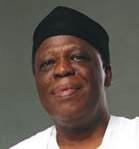
The mandatory reserves of Stanbic IBTC Holdings Plc, First City Monument
Bank (FCMB), and three other Nigerian banks with the Central Bank of Nigeria (CBN) rose to N6.9 trillion in 2025, underscoring the
continued squeeze from the apex bank’s tight monetary stance.
The reserves, according to the lenders’ unaudited results
for the year ended December 31, 2025, represent a 6.5 per cent increase from the N6.5 trillion reported in 2024. Some other banks include
Wema Bank Plc and Sterling Financial Holdings Company Plc.
At the heart of the surge is the Cash Reserve Ratio (CRR)
policy, a monetary tool the CBN has leaned on heavily in its bid to rein in inflation
Holds LG Congresses in Lagos, Ondo, Gombe, Enugu, Katsina, Others
After Tinubu's Executive Order on Direct Remittance, FG Moves to Probe Past Revenue Collections
Demands full compliance from NNPC, NUPRC, others NNPC, Dangote refinery renew strategic alliance
Emmanuel Addeh in Abuja and Peter Uzoho in Lagos
Following President Bola Tinubu’s Executive Order mandating the direct remittance of all oil and gas revenues into the Federation Account without
direct deductions, the federal government has commenced moves to investigate past revenue collections and recover
any outstanding sums, THISDAY has learnt. THISDAY gathered that the federal government had directed agencies, including the Nigerian National Petroleum Company Limited (NNPC Limited), the Nigerian Upstream Petroleum Regulatory Commission (NUPRC), the Nigerian
APC in Early Lead as INEC Collates
Results of FCT Polls Amid Low Turnout
Amupitan, Wike commend peaceful, orderly elections I imposed curfew with Tinubu’s approval, FCT minister replies Kingibe, decries low turnout ADC slams Wike over alleged interference in FCT polls IREV not displaying results, Obidient movement alleges
RENEWAL OF STRATEGIC ALLIANCE…
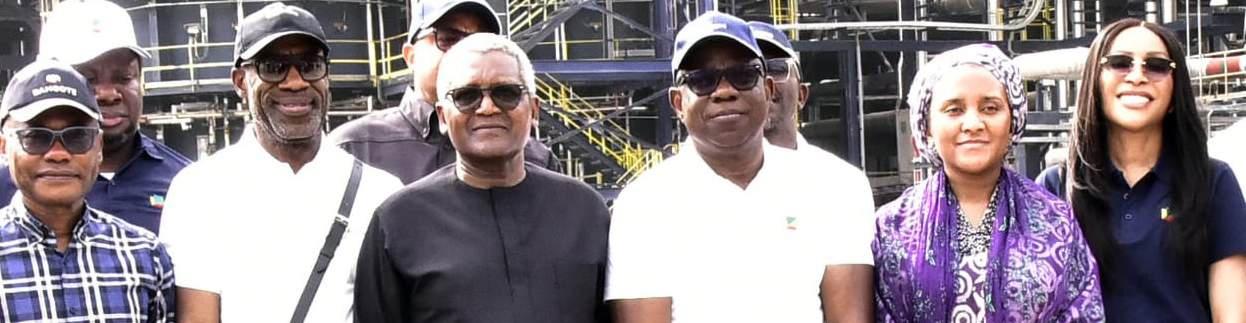
L-R: Vice President, Dangote Industries Limited, Olakunle Alake; Group Chief Operating Officer, Nigerian National Petroleum Company Limited, Mr. Roland Ewubare; President/CE, Dangote Industries Limited, Aliko Dangote; Group Chief Executive Officer of the NNPC Limited, Mr. Bayo Bashir Ojulari; Group Executive Director, Commercial, Dangote Refinery and Petrochemicals, Fatima Aliko Dangote; and General Counsel/Secretary to the NNPC, Adesua Dozie, during the visit by NNPC leadership to Dangote Petroleum Refinery and Fertiliser Plant in Lekki, Lagos…yesterday
Trump Raises US Global Tariff Rate to 15% Despite Supreme Court Verdict
United States President, Mr. Donald Trump, yesterday raised the global duty on imports into his country to 15 per cent, doubling down on his promise to maintain his aggressive tariff policy a day after the Supreme Court ruled much of it illegal.
Trump said on his Truth Social platform that after a thorough review of Friday’s “extraordinarily anti-American decision” by the court to rein in his tariff program, the administration was hiking the import levies “to the fully
allowed, and legally tested, 15% level.”
Shortly after the court’s 6-3 ruling that rejected the president’s authority to impose tariffs under a 1977 economic emergency powers act, Trump had initially announced a new 10 percent global levy by invoking a different legal avenue.
At the same time, the Republican launched an extraordinary personal attack on the conservative justices who had sided with the majority,
slamming their “disloyalty” and calling them “fools and lap dogs.”
The ruling was a stunning rebuke by the high court, which has largely sided with the president since he returned to office, and marked a major political setback in striking down Trump’s signature economic policy that has roiled the global trade order.
Saturday’s announcement is sure to provoke further uncertainty as Trump carries on with a trade war that he
has used to cajole and punish countries, both friend and foe.
It is the latest move in a process that has seen a multitude of tariff levels for countries sending goods into the United States set and then altered or revoked by Trump’s team over the past year.
The new duty by law is only temporary — allowable for 150 days. According to a White House fact sheet, exemptions remain for sectors that are under separate probes, including
pharma, and goods entering the US under the US-Mexico-Canada agreement.
On Friday, the White House said US trading partners that reached separate tariff deals with Trump’s administration would also face the new global tariff.
Friday’s court ruling did not impact sector-specific duties
Trump separately imposed on steel, aluminum and various other goods. Government probes still under way could lead to additional sectoral tariffs.
APC IN EARLY LEAD AS INEC COLLATES RESULTS OF FCT POLLS AMID LOW TURNOUT
Deji Elumoye, Chuks Okocha, Wale Ajimotokan, Onyebuchi Ezigbo, Adedayo Akinwale, Emmanuel Addeh, Linus Aleke in Abuja and Sunday Ehigiator in Lagos
Early results from the Federal Capital Territory (FCT) Area Council elections held yesterday indicated that the ruling All Progressives Congress (APC) was leading other political parties in several parts of the capital territory amid very low turnout of voters and allegations of vote-buying.
The exercise was a highly spirited contest between the APC and the African Democratic Congress (ADC), with the opposition party also leading in some of the polling units. Amid the allegations of vote-buying and logistical challenges, the Chairman of the Independent National Electoral Commission (INEC), Prof. Joash Amupitan, and the Minister of the Federal Capital Territory (FCT),
AFTER
Mr. Nyesom Wike, expressed satisfaction with the conduct of the elections, describing the process as orderly, efficient, and peaceful.
Wike also clarified that he didn’t impose curfew on the FCT for yesterday’s elections without the approval of President Bola Tinubu.
Elections into the chairmanship and councillorship positions in the six area councils of Abuja, namely Bwari, Kuje, Gwagwalada, Abuja Municipal Area Council (AMAC), Abaji, and Kwali, were held yesterday.
The polls, which were characterised by low turnout of voters and incidents of vote-buying, were contested by no fewer than 10 political parties, including the ADC, Zenith Labour Party (ZLP), Labour Party (LP), APC, All Progressive Grand Alliance (APGA), and Young Peoples Party (YPP).
In Nyanya Ward of the AMAC, preliminary polling unit
TINUBU'S EXECUTIVE
Midstream and Downstream Petroleum Regulatory Authority (NMDPRA), among others, to provide full financial records and cooperate with the upcoming review.
This comes as NNPC Limited and Dangote Refinery have renewed their strategic alliance to enhance Nigeria’s energy security.
According to a document signed by the Minister of State for Finance and Chairman of the Federation Account Allocation Committee (FAAC), Dr. Doris Uzoka-Anite, which THISDAY sighted yesterday, the minister reminded the agencies of the federal government’s directive to cease deductions and off-budget retentions from petroleum
and mop up excess liquidity from the banking system.
Mandatory reserves are portions of customers’ deposits that banks are required to keep with the CBN. These funds are sterilised, unavailable for daily operations, and excluded from cash and cash equivalents in financial statements.
A breakdown of the figures
results showed the APC ahead of rivals in both chairmanship and councillorship races, despite low voter turnout in parts of the territory.
Similarly, in another early declaration at Polling Unit 109 in Alaiyta, the APC was formally announced the winner, over the ADC and other contenders.
APC’s chairmanship candidate, Christopher Maikalangu, won decisively at his polling unit in Garki Village 2, AMAC, defeating the ADC candidate by a wide margin.
However, in Wuse Zone 4 (AMAC), the ADC claimed victory at Polling Unit 076, in both the chairmanship and councillorship tallies.
Observers say pockets of strong ADC performance, particularly in parts of Kubwa and Bwari, signal a closer race than some had predicted, raising hopes among opposition supporters of broader gains as INEC continued to upload last night.
Election officials and on-the-
ground observers have noted low voter turnout in many wards, delays in uploading the results, and early logistical delays.
INEC collated only a few results last night, but the commission has yet to declare any official overall leads or winners.
Before the election, the commission said its target was to have the election commence by 8 a.m.
However, while INEC officials arrived at voting centres in the city centre on time, the same could not be said of those at the outskirts.
Speaking after monitoring the elections in some polling units, the Chairman of INEC, Amupitan, expressed satisfaction over the peaceful and orderly conduct of the elections.
Amupitan, who visited several polling centres across the FCT,
told journalists that accreditation and voting commenced as scheduled in many polling units.
At the same time, only minor logistical delays were recorded in isolated areas.
The INEC boss stressed that the commission had recorded encouraging reports, adding that the deployment of the Bimodal Voter Accreditation System (BVAS) significantly improved the accreditation process.
He said: “You can see for yourself that the election is orderly, efficient, and peaceful. So far, regarding the efficiency of the BVAS, I am very satisfied.
“Feedback from Assistant Presiding Officers across the FCT indicated that voter accreditation took less than five seconds in many polling units,” a development he said strengthened the credibility of the process.
“We are encouraged by the level of compliance with electoral guidelines and the peaceful atmosphere in the centres we
But it nevertheless marked Trump’s biggest defeat at the Supreme Court since returning to the White House 13 months ago. The court has generally expanded his power. Trump heaped praise on the conservative justices who voted to uphold his authority to levy tariffs — Clarence Thomas, Samuel Alito and Brett Kavanaugh, a Trump nominee — thanking them “for their strength and wisdom, and love of our country.”
have visited. Our officials were on the ground early, and sensitive materials arrived on time.”
The INEC chairman pointed out that about 99 per cent of polling units were operational as of 10:30 am, expressing confidence that the exercise would end successfully.
On his part, Wike, who also described the polls as peaceful, deplored the low voter turnout.
The Minister, who monitored the voting exercise in Wassa, Ketti, Karshi, and Karu, noted that while voter apathy was evident in the city centre, the turnout was quite impressive in some satellite towns.
“First of all, we thank God that everywhere is peaceful. The only issue we have observed is low voter turnout, particularly within the city, and that has always been the case. However, in some satellite towns, the turnout is quite impressive.
“At this polling unit (Ketti), you can see some protests, just
ORDER ON DIRECT REMITTANCE, FG MOVES TO PROBE PAST REVENUE COLLECTIONS
revenues immediately.
Uzoka-Anite’s letter to the concerned agencies was titled:
“Implementation of Presidential Executive Order on Safeguarding Federation Oil and Gas Revenues and Providing Regulatory ClarityImmediate Remittance Directive and Retrospective Audit.”
The executive order reinforced Section 162 of the Constitution, requiring that all revenues accruing to the Federation be paid into the Federation Account without deduction.
“I write to request that all revenues accruing to the Federation must be paid into the Federation Account without deduction. Accordingly, the following directives take
reveals divergent trends among the lenders.
First Holdco posted N4.1 trillion in mandatory reserve deposits in 2025, up 9.5 per cent from N3.7 trillion in 2024, reflecting the scale of its deposit base and the tightening liquidity environment.
Stanbic IBTC’s reserves rose sharply by 48 per cent to N1.06 trillion from N717.04
immediate effect:
“Immediate cessation of deductions and retention. All institutions and operators are hereby directed to: Cease collection and management of the 30 per cent allocation to the Frontier Exploration Fund (FEF); suspend payment and retention of the 30 per cent management fee on profit oil and profit gas revenues previously payable to NNPC Limited.
“(And) Cease payment of gas flare penalties into the Midstream and Downstream Gas Infrastructure Fund (MDGIF); discontinue all forms of off-budget allocations and administrative deductions inconsistent with the Executive
billion in the previous year, signalling a significant expansion in deposits and regulatory requirements.
In contrast, FCMB Group reported N1.02 trillion in mandatory reserves, a 17 per cent decline from N1.24 trillion in 2024.
Sterling Financial Holdings closed the year with N718.6 billion in restricted deposits, down 7.5 per cent from
Order,” the minister directed in the letter.
According to the minister, all profit oil, profit gas, royalty oil, tax oil, gas flare penalties, and any other petroleum-related revenue streams due to the Federation shall be remitted directly into a designated Sub-Federation Account to be managed by the Office of the Accountant-General of the Federation pending FAAC distribution.
“No institution shall retain, net off, or deduct funds before remittance. Transfer all outstanding balances relating to the above available in any commercial bank or Central Bank Account into the Sub-Federation
N777.09 billion.
Wema Bank recorded N19.67 billion in mandatory reserves in 2025, representing a 28.9 per cent drop from N27.67 billion in 2024.
In its unaudited statement, Wema clarified that the figure was reported net of N19.67 billion under the Differentiated Cash Reserve Requirement (DCRR) Scheme, compared to N27.67 billion
Account (when provided).
Detailed remittance guidelines shall be issued separately by the Office of the AccountantGeneral,” she explained.
Beyond the immediate remittance requirement, most critically, the federal government also commissioned a retrospective audit covering three major areas.
First, the Frontier Exploration Fund was established under the Petroleum Industry Act (PIA).
The audit will examine total collections since inception, expenditures and commitments undertaken, and current balances and investment placements.
Second is the Midstream and Downstream Gas Infrastructure Fund, where the review will focus
in 2024.
Under the DCRR framework, Deposit Money Banks can apply to release part of their CRR balances to fund new (greenfield) or expansion (brownfield) projects in key real-sector segments, such as agriculture and manufacturing. The initiative is designed to channel credit into productive sectors even within a
on gas flare penalties collected, transfers and utilisation, and compliance with procurement regulations.
Also in focus is the 30 per cent management fee previously deducted by NNPC from profit oil and gas revenues.
The audit will assess total deductions made, utilisation of retained funds, and outstanding balances that may be due to the Federation.
Besides, all concerned entities, including NNPC, NUPRC, NMDPRA, the Revenue Mobilisation Allocation and Fiscal Commission (RMAFC), the Nigeria Revenue Service (NRS),
restrictive monetary regime. The CBN’s Monetary Policy Committee (MPC) has adjusted the CRR multiple times in the past two years as it sought to contain inflation and stabilise the foreign exchange market. In 2025, the MPC reduced the CRR for Deposit Money Banks to 45 per cent from
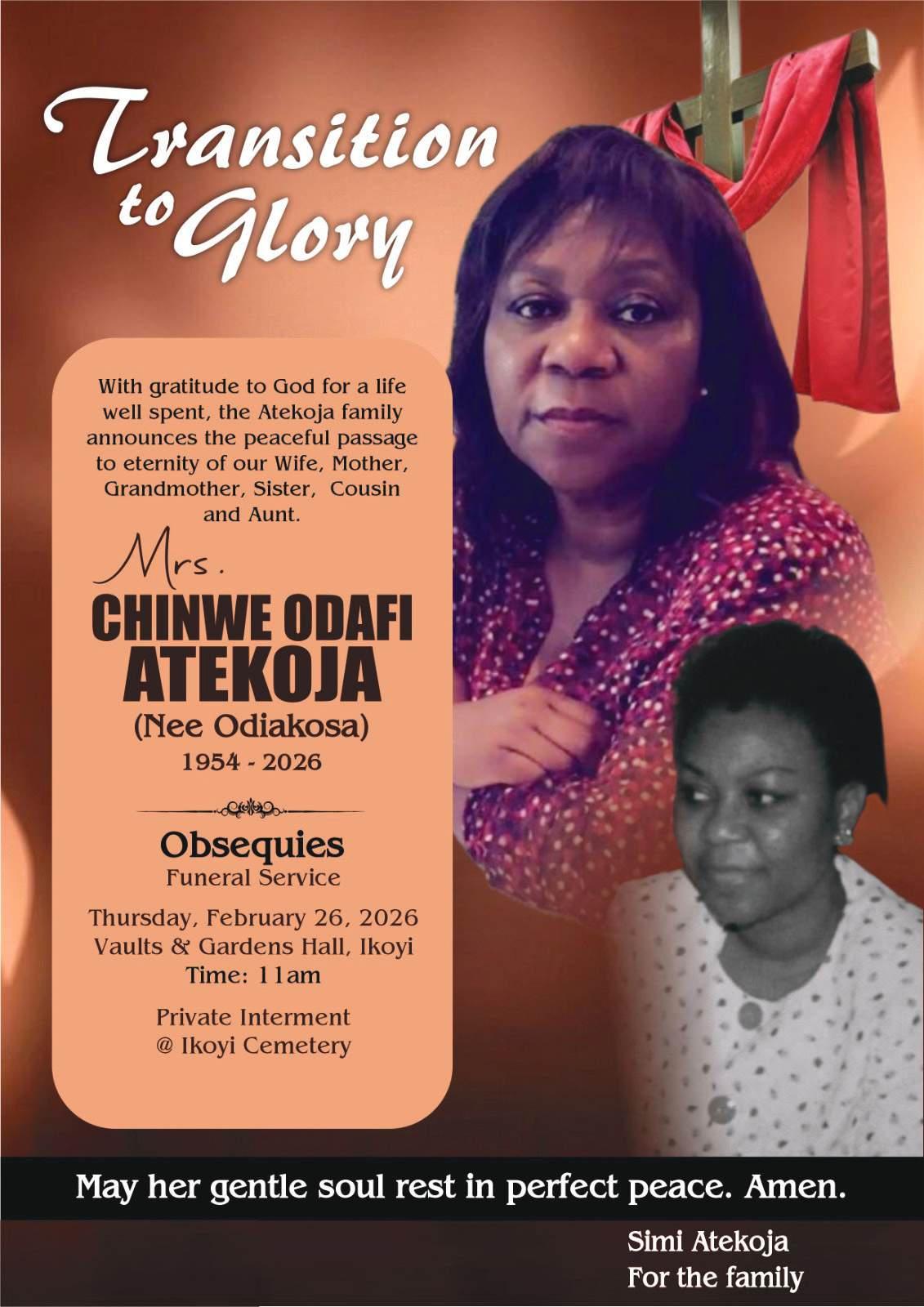
WE SHARE IN YOUR GRIEF…
APC Holds LG Congresses in Lagos, Ondo, Gombe, Enugu, Katsina, Others
Scores injured as Ibori’s daughter escapes attack in Delta
out of the venue.
The All Progressives Congress (APC) yesterday held local government congresses in Lagos, Delta, Katsina, Ondo, Gombe, Kwara, Edo, and Enugu states, which were largely peaceful.
However, in Delta State, the
member representing Ethiope Federal Constituency in the House of Representatives, Hon. Erhiatake Ibori-Suenu, escaped an attack during the party's Ethiope West Local Government Congress.
Ibori-Suenu, daughter of the former Governor of the State, Chief James Onanefe Ibori, was heralded into the venue of the congress at Ovade community with several bullets by suspected
thugs loyal to a prominent rival politician in the council area. Indications that the exercise might be violent emerged when the original venue was changed from the Oghara Township Stadium to Ovade.
Ibori-Suenu, who won her seat in the House of Representatives on the platform of the Peoples Democratic Party (PDP), had defected to the APC two years ago.
It was gathered that on arrival at the new venue of the congress, Ibori-Suenu and her supporters were attacked by gun-wielding thugs, who were repelled by security operatives attached to the federal lawmaker.
However, security sources said some of her supporters sustained gunshot wounds and were rushed to undisclosed hospitals while she was escorted
BPP Records N1.1tn Savings, Seeks Increased Allocation in 2026 Budget
The Bureau of Public Procurement (BPP) has presented its 2026 budget proposal to the National Assembly, highlighting achievements in procurement reforms and savings.
The Director-General of BPP, Dr. Adebowale Adedokun, said this in a statement signed by the Head of Press and Public Relations, Zira Nagga, in Abuja yesterday.
Adedokun said the reforms saved the nation N1.1 trillion in 2025.
He said the savings were realised through initiatives such as the Debarment Policy, Nigeria First Policy, and the
E-Government Procurement (e-GP) System.
He attributed the bureau's successes to the support of President Bola Tinubu and the backing of the National Assembly.
The DG listed key reforms undertaken by the bureau, including the proposed amendment of the Public Procurement Act, 2007; the development of the e-GP System; the Nigeria e-Market; and sector-based procurement frameworks.
Others are upgrading the contractors/consultants/ service providers (CCSP)
database, establishing a national repository of procurement experts and agents, and building procurement capacity for stakeholders.
According to him, the bureau has undertaken a comprehensive overhaul of its procurement processes since November 2024, resulting in substantial improvements in efficiency and cost-effectiveness.
“These reforms have led to a notable reduction in the processing time for government contracts, yielding significant cost savings and enhanced value for money.”
Adedokun also said that the
president had approved the deployment of communitybased procurement, which would promote local content and provide a legal framework for constituency projects to deliver value.
He said that transparency and value for money would be further enhanced through the deployment of digital tracking tools for monitoring and evaluation.
The DG said that the bureau was seeking increased budgetary allocation in 2026 to improve service delivery, support job creation, and strengthen its oversight capacity.
APC Candidates Win Khana, Ahoada East Constituencies’ By-elections in Rivers
The candidates of the All Progressives Congress (APC), Ukalikpe Napoleon and Loolo Bulabari Henrietta, have won the two state continuencies where the Independent National Electoral Commission (INEC)
conducted by-elections yesterday.
While Ukalikpe won the Ahoada East State Constituency, Loolo won Khana State Constitueny II. For Ahoada East, the Returning Officer, Prof. Rosemary Ogbo, announced the results and certified that the poll was duly conducted and contested.
She said Ukalipe polled 3,980 votes to defeat Ego Marvelous of the Action Alliance (AA), who scored 33 votes.
Others are Godstime Egor of Action Party of Nigeria (APN) 38 votes; Oseja Clifford of Boot Party (BP), 11 votes; Ephraim Raphael Ede of New Nigeria Peoples Party (NNPP), seven votes;
Ogide Samson Greatman of Young Progressives Party (YPP) seven votes; and Kwodu Saturday Prosper of Zenith Labour Party (ZLP) six votes.
Prof. Ogbo averred that Ukalipe having satisfied the requirements of the law and scored the highest number of valid votes was duly returned elected.
However, APC successfully conducted its LGA Congress across the 25 council areas of the state, with party executives elected by consensus in a peaceful, well-coordinated exercise.
The Minister of Aviation, Festus Keyamo, commended members of the party in the state for the successful congress and urged them to work towards the reelection of President Bola Tinubu and Governor Sheriff Oborevwori in 2027.
APC delegates across Lagos State also participated in the party’s local government congresses held in the state’s 20 constitutionally recognised
local government areas, under tight security.
The congress produced 27 executives in each local government, bringing the total number of newly elected party officials to 540.
The state chairman of the APC, Pastor Cornelius Ojelabi, underscored the importance of the congress, describing it as a crucial step in strengthening the party’s grassroots structure.
In Enugu State, Governor Peter Mbah commended the state chapter of the APC for what he described as a peaceful and democratic local government congress.
DHQ Rallies West African Forces on Combat Strategies against Terrorism, Other Regional Threats
Linus Aleke in Abuja
The Defence Headquarters (DHQ) has concluded a four-day Capacity Building and Regional Doctrine Workshop aimed at harmonising operational concepts and strengthening joint preparedness across West African Armed Forces.
This was contained in a statement by the Director of Defence Information, Maj. Gen. Samaila Uba, at the weekend in Abuja.
Organised by the Joint Doctrine and Warfare Centre, the workshop brought together military personnel from Nigeria, Ghana, Gambia, Senegal, and Sierra Leone.
It also brought together ECOWAS representatives and international resource persons from the British Defence Staff (West Africa).
In his remarks, the Chief
of Defence Staff, Gen. Olufemi Oluyede, said the workshop was driven by the need to close doctrinal gaps and prepare forces for evolving security challenges, including asymmetric threats, transnational crimes, and multidomain operations.
Oluyede, who was represented by the Chief of Defence Policy and Plans, Air Vice Marshal Francis Edosa, said the establishment of the JDWC was a strategic step to institutionalise doctrine development.
According to him, it serves as the intellectual foundation for military operations and enhances operational effectiveness across the services. He also emphasised the importance of regional collaboration, noting that shared doctrinal frameworks are critical to boosting interoperability and collective security.
Blessing Ibunge in Port Harcourt
Francis Sardauna in Katsina, Segun Awofadeji in Gombe, Hammed Shittu in Ilorin, Sylvester Idowu in Warri, and Fidelis David in Akure
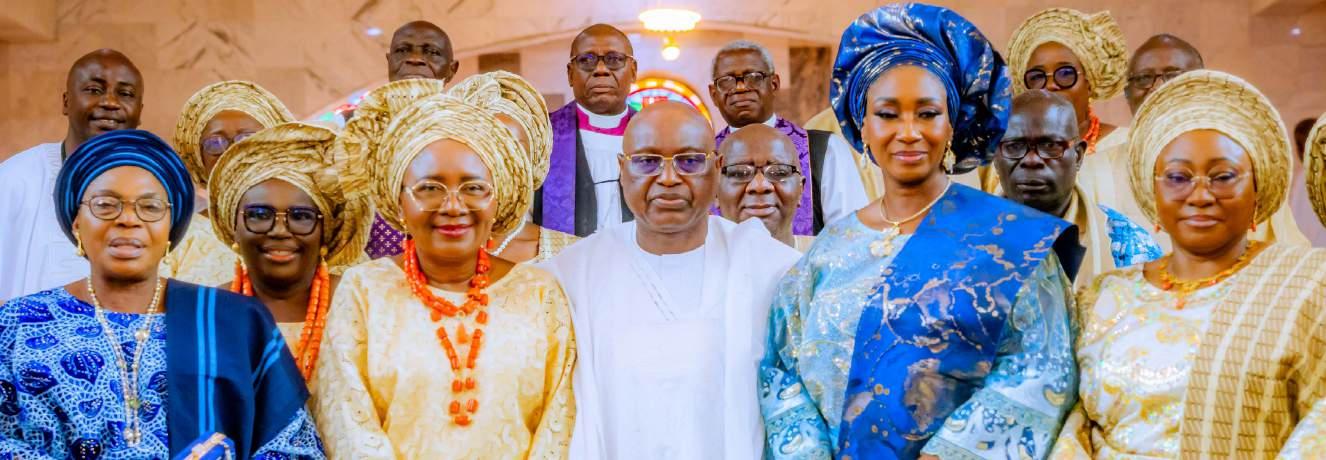
L-R: Deputy Governor, Ekiti State, Mrs. Monisade Afuye; Daughter of the deceased/former Nigerian Ambassador to Netherlands, Ambassador Eniola Ajayi; Ekiti State Governor, Mr. Biodun Oyebanji; Ondo State First Lady, Mrs Oluwaseun Ayedatiwa; and former Ekiti State First Lady, Erelu Bisi Fayemi, during the burial of the Mrs. Elizabeth Anike Ajayi, at All Saints' Anglican Church, Iyin-Ekiti...Friday
STRENGTHENING PARTNERSHIPS…
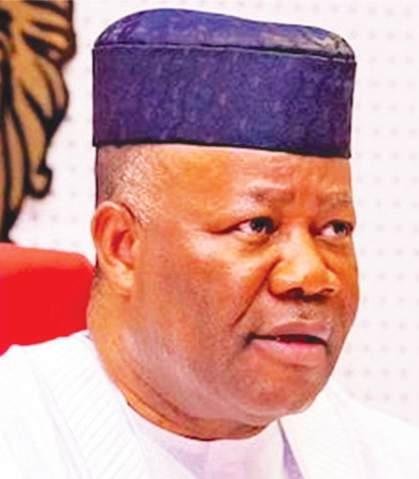
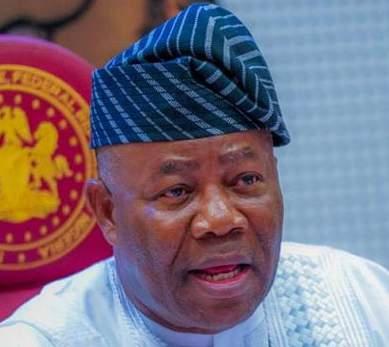
Akpabio: Nigeria Has Recorded Tremendous Gains in Economy, Security Since 2023
Sunday Aborisade in Abuja
President of the Senate, Senator Godswill Akpabio, yesterday declared that Nigeria recorded significant improvements in the economy, security, and infrastructure since 2023, and commended President Bola Ahmed Tinubu and Vice President Kashim Shettima for what he described as transformative leadership.
Akpabio, according to a statement by his Media Office, also praised members of the National Assembly and the Federal Executive Council (FEC) for standing firmly behind the administration to stabilise the country and deliver what he termed tangible democracy
dividends to Nigerians.
The Senate President, the statement added, spoke at the funeral service of his late in-law, Essien Pius Ubeng, held at the Methodist Church, Nigeria, Ukanna Diocese in Essien Udim Local Government Area of Akwa Ibom State.
Addressing the congregation, Akpabio said that despite prevailing challenges, the country had made measurable progress in critical sectors over the past three years.
“Let me use this opportunity, on behalf of the people of Akwa Ibom State, to thank President Bola Tinubu; his vice, Kashim Shettima; members of the National Assembly and the Federal Executive Council
By-elections: Era of Killing, Disenfranchising Voters is over, Gov Yusuf
Governor Abba Yusuf of Kano State has said the era of killing, maiming and disenfranchising voters during electioneering is over.
The governor also commended the Independent National Electoral Commission (INEC) and security agencies for ensuring the peaceful and orderly conduct of the by-elections yesterday.
In a statement by the governor’s spokesperson, Sanusi Bature, Governor Yusuf described the election as a milestone in the democratic journey of the state, noting that the calm atmosphere recorded across polling units reflected the growing political maturity of the people and the effectiveness of security arrangements put in place.
for the development and transformation witnessed across the length and breadth of this country since 2023,” he said.
According to him, the administration has recorded “tremendous and positive changes” in the economy, security, and infrastructure development, stressing that while the nation has not yet attained its full potential, it has moved beyond its former
difficulties.
“In the last three years, we have witnessed tremendous and positive changes in the economy, security, and infrastructural development of this great country. We are not yet there, but we have since left where we used to be. With the support and prayers of Nigerians, we will be there,” Akpabio stated.
He particularly lauded the
synergy between the executive and legislative arms, noting that such collaboration was essential to sustaining reforms and deepening democratic governance.
The Senate President thanked the Vice President, his colleagues in the National Assembly, and members of the Federal Executive Council for what he described as their unwavering support for the
president.
“I thank our vice president, my colleagues in the National Assembly and the Federal Executive Council for standing by our president to ensure that Nigerians sleep with their two eyes closed and to deliver real democracy dividends to Nigerians without political, religious or ethnic considerations,” he added.
UTME Candidates Not Required to Remove Hijab During Registration, JAMB Clarifies
Kuni Tyessi in Abuja
The Joint Admissions and Matriculation Board (JAMB) has clarified that candidates were not required to remove their hijabs during registration.
The clarification was in reaction to a video that raised concerns about alleged discrimination against Muslim candidates at Afe Babalola University.
man lamented that his sister had been told to remove her hijab before being photographed, saying, “I followed my sister to the JAMB centre to collect her form. She was told to remove her hijab before she could be captured.
Governor Yusuf also lauded the conduct of political parties and stakeholders, particularly members of the All Progressives Congress (APC), for obeying electoral rules and regulations and avoiding actions capable of disrupting the process.
“For the first time in recent history, we witnessed an election free of crisis, use of weapons and any form of manipulation in Kano. This development aligns with our Kano First Agenda. The era of killing, maiming and disenfranchising voters is over,” the governor affirmed.
He added that the peaceful conduct of the election demonstrates that Kano State is ready to embrace issue-based politics anchored on dialogue, tolerance and respect for democratic values.
He specifically commended the people of Kano Municipal and Ungogo State Assembly Constituencies, where the by-elections were conducted, for their cooperation, discipline and commitment to peaceful participation in the exercise.
In a video shared by social media user, AsakyGRN, a
“After the capture, they asked her to sign an undertaking to wear a hijab. Are Muslims now being discriminated against for wearing hijabs?”
In a statement issued
yesterday via its verified account, JAMB said, “Thank you for your concern. However, it is important to state clearly that the Joint Admissions and Matriculation Board, whether in the past or present, has never issued any directive prohibiting candidates from wearing the hijab.”
The board explained that the procedure at ABUAD was a standard biometric requirement.
“When his sister presented herself for registration, she was informed of the Board’s standard guideline, which is a global practice in capturing candidates for both an international passport and a visa, which requires that both ears must be visible during biometric photo capture,” the statement read.
“This requirement is purely technical and is intended to ensure that proper facial recognition and identification do not require the candidate to remove her hijab.”
Aiyedatiwa Denies Plan to Remove Deputy Governor
Governor Lucky Aiyedatiwa of Ondo State has denied an alleged plan to remove his deputy, Dr. Olayide Adelami.
Adelami was picked as deputy governor after Aiyedatiwa was sworn in on December 27, 2023, following the death of Governor Rotimi Akeredolu.
However, a pastor, in a video that went viral, predicted the removal of Adelami as the deputy governor of the state.
But Governor Aiyedatiwa, speaking at the inauguration of the Ayegunle-Iwaro Oka Akoko Expressway in Akoko South-West Local Government Area of the
state, said the viral video was the handiwork of those seeking attention.
Aiyedatiwa said, “Mr Deputy Governor, Dr. Olayide Adelami, I acknowledge your presence here. Thank you for holding forth for me yesterday, when I had to travel.
“My worthy, amiable deputy governor, some people are spreading one fake video. Those people want to hear words.
“They claimed they wanted to remove the deputy governor. For where? Where did they want to remove him (deputy governor) from? Don’t answer them,
please; they are only looking for relevance.
“That can’t happen because I’m also a Prophet of God.”
Meanwhile, while inaugurating the new road, Aiyedatiwa declared that road construction and rehabilitation remained at the heart of his administration’s development blueprint as it marked one year in office.
The governor described the inauguration of the road projects as a major milestone in the activities marking his first anniversary, thanking God for what he called a remarkable achievement within a short
period.
He said: “Since assuming office, our administration has embarked on and completed numerous projects that have positively impacted our people, and this commissioning underscores our government’s resolve to deliver infrastructure that enhances the well-being of citizens.
“The approximately sixkilometre Aiyegunle–Iwaro Oka Road is a multi-millionnaira project, designed and executed with quality materials to withstand daily traffic, including heavy-duty vehicles.”
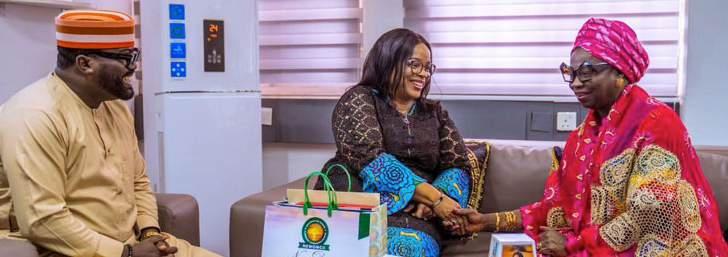
L-R: Member of House of Representatives, Hon. Akin Rotimi; National President of USGEAAN, Dr. Nosayaba Tukura; and Chairman/CEO of NIDCOM, Hon. Abike Dabiri-Erewa, exchanging pleasantries during Tukura’s courtesy visit to the commission's headquarters as part of her strategic engagements to strengthen partnerships in Abuja…recently
PROMOTING TECHNOLOGIES…
318 Cases of Lassa Fever Confirmed, 70 Deaths Recorded in Seven Weeks
The Nigeria Centre for Disease Control and Prevention (NCDC) yesterday confirmed that the country recorded 70 deaths from Lassa fever in the first seven weeks of 2026, with 318 confirmed cases out of the 1,469 suspected infections reported nationwide.
The figures for its Epidemiological Weeks 1–7 (December 29, 2025 – February 15, 2026) showed a Case Fatality Rate (CFR) of 22 per cent, while 15 healthcare workers have also been infected.
At a press briefing, the NCDC’s Director-General, Dr Jide Idris, said the outbreak remained geographically concentrated, with five states accounting for
91 per cent of confirmed cases and 10 local government areas (LGAs) accounting for 68 per cent of infections.
“Lassa fever remains endemic in Nigeria and typically peaks during the dry season between November and May. The current trend aligns with established seasonal patterns. While the numbers are concerning, there is no cause for panic. Early diagnosis and prompt treatment significantly improve survival.”
Idris disclosed that the Incident Management System had been activated to coordinate the national response, with weekly meetings of the National Lassa Fever Emergency Operations Centre ongoing.
National Rapid Response
Nigeria Records Highest Number of Grenada Citizenship Applications in Q4 2025
Nigeria has recorded the highest number of Grenada citizenship applications for the fourth quarter (Q4) of 2025, according to a report by Investment Migration Agency (IMA).
The statistics showed that Nigerians accounted for up to 16per cent of all applications received year-to-date, the largest share among applicant countries.
China trailed behind Nigeria with 12per cent, while Iraq followed at nine per cent, the United States - seven per cent, and Pakistan, five per cent. Egypt, India, Lebanon, Vietnam and Turkey each accounted for three per cent of applications.
The report stated that the period under review started from October to December 2025.
Teams have been deployed to eight affected states, including Bauchi, Ondo, Taraba, Edo, Plateau, Benue, and Jigawa, with further deployments planned as required.
He said laboratory testing commodities had been distributed across the national laboratory network, while treatment medicines, personal protective equipment (PPE), sanitisers, and other infection prevention
materials were supplied nationwide.
“Protecting healthcare workers remains a top priority. We are actively investigating the drivers of healthcare worker infections to understand contributing factors better,” Idris said.
He added, “Formal communications have been issued to Commissioners of Health, outlining key actions required to strengthen infection
prevention and control in health facilities.”
The agency also addressed misinformation, citing a recent rumour of Lassa fever at the NYSC camp in Kwara State.
“Our risk communication and infodemic management team worked closely with state authorities to investigate and address the concern. The state led timely communication, and at the national level, we amplified
accurate information to maintain public confidence,” he explained. Idris stressed that the response is being implemented through a One Health approach in collaboration with the Federal Ministry of Health and Social Welfare, the Federal Ministry of Environment, the Federal Ministry of Food Security, the Federal Ministry of Livestock Development, and the National Veterinary Research Institute.
FAAN Warns against Video Recording of Other Passengers Without Consent
appreciate the conversation around this incident.
In Q4 alone, the agency revealed that Grenada received 128 citizenship applications and processed 161. Of these, 154 were approved and seven were denied.
The agency said 99 new citizens were granted citizenship in Q4, bringing the year-to-date total to 1,124.
One of the most compelling CBI programmes for Nigerians is the Caribbean Island of Grenada, which is the only CBI jurisdiction with access to the E-2 investor’s visa – a visa that can allow access to invest and reside in the United States.
The Caribbean country operates a citizenship-byinvestment programme that allows foreign nationals to obtain citizenship through approved investments, including contributions to the National Transformation Fund or real estate projects.
Other countries collectively represented 19per cent of total applications. The countries in this category include, but are not limited to Libya, Kenya, Sudan, Iran, Saudi Arabia, Morocco, New Zealand, Ghana and others.
The Federal Airports Authority of Nigeria (FAAN) has clarified that personal selfie videos are permitted at Murtala Muhammed International Airport (MMIA). At the same time, airport officers intervened only when filming involved other passengers without consent or captured sensitive security areas.
The clarification was in reaction to an incident at MMIA involving a passenger
who recorded video in a restricted security screening area.
In a statement issued yesterday, FAAN said that while it understood the concerns raised and appreciated the conversation around the incident, the passenger was recording video in a restricted security screening area, where signage clearly indicated that filming was not permitted.
FAAN said, “We understand the concerns raised and
“The passenger was recording video within a restricted Security Screening area where signage clearly indicates that filming is not permitted.”
The statement added that airport officers “politely advised the passenger to stop, especially as other travellers have the right not to be recorded without consent and such complaints are frequently raised.”
When the passenger declined to comply, he was “invited to the Crime Investigation & Intelligence Unit office for further clarification, not detained, and the interaction focused on guidance around acceptable camera use within the airport environment.”
FAAN further noted that the passenger later “acknowledged the issue, deleted the recording, provided a written undertaking, and continued his journey.”
Air Power is Force Multiplier in Maritime Security Operations, Says Chief of Air Staff, Aneke
Linus Aleke in Abuja
The Chief of the Air Staff (CAS), Air Marshal Sunday Kelvin Aneke, has stated that air power remained a decisive force multiplier in maritime security operations, offering speed, flexibility, and reach that significantly enhanced deterrence and enforcement capabilities in support of the Deep Blue Project.
The CAS made the statement while receiving in audience the Director-General/
Chief Executive Officer of the Nigerian Maritime Administration and Safety Agency (NIMASA), Dr Dayo Mobereola, and his management team at the Headquarters of the Nigerian Air Force (NAF) in Abuja during a courtesy visit.
In a statement issued yesterday, the Director of Public Relations and Information of the NAF, Air Commodore Ehimen Ejodame, highlighted the NAF’s robust air capabilities tailored to
maritime roles.
These include: Longrange surveillance aircraft, maritime patrol-configured platforms, Unmanned Aerial Vehicles (UAVs) for persistent intelligence, surveillance, and reconnaissance missions, and rapid-response air assets capable of swift deployment across coastal corridors.
Aneke emphasised that these platforms provided real-time situational awareness, precision tracking, and coordinated response options essential
for securing sea lines of communication and protecting critical offshore infrastructure.
He further stressed that integrating advanced sensors, data-link systems, and interagency communication frameworks enabled seamless information flow and operational coordination.
Speaking earlier, Mobereola reaffirmed that maritime security was fundamental to economic stability, international trade, and sustained investor confidence.
Onyebuchi Ezigbo in Abuja
Chinedu Eze
L-R: Business Operations Manager, Cavista Tech, Mr. Adedayo Adenipekun; General Manager, Cavista Tech, Oyebola Morakinyo; Senior People Manager, Cavista Holdings, Alex Ohai, and Engineering Manager, Cavista Tech, Ifeanyi Okagbue, at the opening ceremony of the fourth Cavista Hackathon in Lagos...yesterday
HAPPY 52ND BIRTHDAY, FARMER GOVERNOR
On behalf of my family and the good people of Bida/Katcha/Gbako Federal Constituency, I join millions of well-wishers to express my hear tfelt congratulations to the amiable Farmer Governor, His Excellency, Hon. Mohammed Umar Bago, the Executive Governor of Niger State, on the special occasion of his 52nd birthday today.
Your Excellency, you have demonstrated purposeful leadership, vision, and exceptional commitment to the development of our Dear State, the Power State, through your transformative initiatives which have been impacting positively on the lives of our people.
Your uncommon dedication to the development of agriculture, inf rastructure and empowerment of our youth have continued to position Niger State as a model of grow th and prosperity
As you mark this special moment , I celebrate your passion for good governance and exceptional ser vice to humanity, which reflect the true spirit of your purposeful leadership of Niger State.
I pray for your sustained good health and greater wisdom to continue to steer Niger State toward greater progress.
Once again, happy 52nd birthday and many happy returns, Farmer Governor
NASIR EL-RUFAI AS A THREAT TO NATIONAL SECURITY
NASIR EL-RUFAI AS A THREAT TO NATIONAL SECURITY
if you can call the Senate President, Senator Godswill Akpabio, a “scumbag” on national television, if you can publicly call Senator Makarfi a former Governor of your state “a thief” with no evidence, if you can treat the former Governor of your state Governor Yero with disdain and contempt, if you can call President Buhari, President Obasanjo, President Jonathan, President Yar’Adua, President Tinubu, Vice President Atiku Abubakar all manner of names in the past when it suited your purpose in an attempt to discredit and destroy them and their legacy, if you can say “anyone who fights me ends up dead” and that “even President Umaru Yar’Adua who fought me is now in the grave”, if you can say “when you engage me in a battle, it is either I am dead or you are dead and if you doubt that go and ask Yar’Adua”, if you can demolish Justice Bashir Sambo and Alhaji Inuwa Abdulkadri’s homes together with that of countless others simply to satisfy your insatiable appetite for sadism and your pathological inclination for vindictiveness, if you can demolish markets and shops without court orders, if you can sack civil servants and teachers against court orders, if you can consistently treat our President with contempt and disdain and constantly disrespect and pour venom on the person of our Vice President Kashim Shettima whilst you were STILL in the ranks of the ruling party, if you can publicly threaten to send foreign election observers “back to their country in body bags”, if you can say the Northern elders are “paperweights” and that there are “no Northern elders” except for the likes of yourself, if you can publicly ask Governor Mai Mala Buni of Yobe State why yours truly should have been allowed to join the APC when he was the Interim National Chairman of the party in 2021 simply because I lambasted you for failing to protect Christians from the mass murder, genocide and ethnic cleansing that they were being subjected to under your watch in your state, if you can publicly say that every terrorist and insurgent that is killed by the Nigerian military is “a debt that shall be repaid” and if you can say and do so much more than all these atrocities I have listed then I say that you are not only a security risk and threat to the stability of our nation and welfare of our people but also that you have no right to complain about being investigated or being invited and detained for questioning by the security and intelligence agencies.
I went through it for 18 years and was locked up for a total of 9 months over that period of time.
Instead of going on television to say that I had bugged the NSA’s phone and allege a grand conspiracy that the Government of the day had imported chemical weapons to gas their opponents to death I presented my defence and stated my case calmly and coolly in court and in the end I won all four cases and was totally vindicated.
Regardless of that our friendship and strong sense of brotherhood endured and remained intact even if we may have publicly disagreed from time to time.
The latest development in the saga of our respective lives are the comments made by Nasir in his interview with Charles Aniagolu of ARISE Television on Friday about both Nuhu and Uba which I believe goes beyond the pale and sadly represents a permanent burning of bridges in terms of our brotherhood and collective friendship.
Senator Ahmed Sani, both former Governors of Zamfara State, of deserving to be listed as terrorists by the American Congress, if you can turn on your former best friend who is now the NSA and your most loyal supporter who is now the Governor of your state and seek to malign and destroy them for no just cause, if you can turn around and blame the abduction and possible murder of Dadiyata on the former Governor of Kano State instead of accepting responsibility for his disappearance yourself, if you can claim not to have targetted and viciously persecuted Senator Shehu Sani, Audu Maikori, John Danfulani, Luka Biniyat, Steven Kefas, Nasiru Jagaban and countless others violating court orders and without due process simply for criticising your Government, if you can pick up over 100 Islamic clerics in Zaria whilst they were praying after you sacked them and denied them their entitlements and lock them up in prison, if you can pick up and send hundreds of Christians in Kajuru together with their Pastors to prison simply because they were protesting after their traditional ruler was murdered by terrorists, if you can accuse Nigerian Christians of being the ones behind Boko Haram, if you can say that President Goodluck Jonathan had an assassination squad and was planning to kill you, if you can accuse the NSA of importing what is essentially a lethal chemical and biological weapon and what you described as large quantities of “toxic, odourless and colourless poison from Poland” known as thalium sulphate into our country and imply that he has done so for an evil, sinister, nefarious and possibly homicidal purpose,
If you know you have done no wrong why can’t you calm down, pray to God, behave in a dignified manner, carry your cross, stop claiming that there is some kind of imaginary and nonsensical conspiracy against you emanating from Kaduna state and the NSA’s office and hope for the same?
If you know you are innocent why all the hot air, nauseating noise, goatlike bleating, delusionary assertions and wild accusations?
One of the things he said in that interview is that he bugged the phone of the NSA and to this, and much else, I am constrained to offer the following comments as an old friend and a concerned observer.
Why are you behaving like a snake or a chicken whose head has been cut off? Do you consider yourself as being above the law?
Permit me to begin by saying that it is likely that it is the same people that tapped the late Brigadier General Uba’s phone and gave the coordinates of his location to the terrorists that led to his execution that bugged the NSA’s phone.
It is likely that it is the same people that have enabled the terrorists to kill, abduct, terrorise and abduct our people and brought misery, suffering, tears and carnage to our land that bugged the NSA’s phone.
You are not the first person that the security agencies attempted to arrest at the airport without a warrant or elsewhere and you will not be the first to be invited, arrested or detained and neither will you be the last. These things have happened to most of us that chose the path of politics for our lives and it has been so since independence. All great leaders worth their salt have been detained, arrested, harassed, investigated, prosecuted and some even jailed at some point in their careers and those that have a clean spirit, whose innocence spoke for them and who are right before God have always prevailed and won back their freedom.
It is likely that it is the same people whose foot-soldiers are creating havoc and bringing chaos to Niger, Kaduna, Kwara, Borno, Kogi, Katsina and other parts of our nation that bugged the NSA’s phone.
It is likely that it is the same people who wish to destabilise our nation, divide our people along ethnic and religious lines and instigate a violent, unconstitutional and bloody regime change that bugged the NSA’s phone.
These non-state actors, agents of destabilisation and terror-enablers are listening to ALL our conversations including those on WhatsApp.
It happened to Sir Ahmadu Bello who was jailed for three months, Chief Obafemi Awolowo who was jailed for three years, President Olusegun Obasanjo who was jailed for three years, President Muhammadu Buhari who was under house arrest for three years, Vice President Alex Ekwueme who was in detention for three years, virtually all the major players in the First and Second Republic (many of whom even lost their lives) and so many others yet they took their plight with grace and an exemplary submission to
the will of God like the great men they were and never accused the entire world of conspiring against them.
Neither did they give infantile, puerile and nonsensical interviews implying that the security organs of the state were importing chemical weapons to commit mass murder against opposition figures.
Only guilty men and hardened, unrepentant criminals talk like that and indulge in such rhetoric and it is usually driven by their dark hearts, their uninhibited lust for power, their refusal to accept that they no longer have it, their compulsive and pathological need to continue to display the wickedness and cruelty that they displayed whilst in power and the unintended consequences the innocent blood that they may have either shed themselves or that their agents and associates have shed.
It is a form of madness that trails wicked and cruel men and confirms the words of the Bible which says “there is no peace for the wicked”.
Simply put it is a graphic and unmistakable display of God’s judgement.
I understand your anger and I feel your pain but understand one thing: that divine retribution is real and at this point the best you can do is display a little humility, seek the forgiveness of those you have hurt and beg God for His grace and mercy.
Your case is like that of the Epstein files: the more you look the more horror you see. Is it any wonder that Ambassador Reno Omokri calls you“the Epstein of Nigeria?”
Permit me to end by reiterating a few of the points I made earlier. I repeat, you oversaw the massive and unprecedented killing of over 800 Christians in Southern Kaduna in one day in December 2016 and not only refused to go after the perpetrators but also punished the communities that the victims came from.
You treated the people of Southern Kaduna like animals and denied them their allocations and dues for 8 years simply because they were Christians.
You insulted our Lord and Saviour Jesus Christ and the Virgin Mary on several occasions, treated your Christian Deputy Governor with contempt and referred to Christians in the most derogatory terms after you became Governor.
His father, Alhaji Ahmadu Ribadu OON MBE, a pure and full-blooded Fulani man was a Nigerian politician and a diplomat.
During the First Republic, he represented Adamawa East constituency in the Federal Parliament from 1959 to 1966 and held the position of Minister of State of Economic Development in the Government of Sir Abubakar Tafawa Balewa.
He replaced the erstwhile Minister of Defence, Alhaji Mohammadu Ribadu as the representative of their constituency in the cabinet after the latter passed on earlier that year.
Consequently, Nuhu was not only born into the corridors of power and is a ranking member of Nigeria’s ultra elite ruling class, though I suspect he is reluctant to admit it, but he also understands and fully appreciates limits of that power and it’s complex nuances.
As a consequence of the circumstances of his birth he was well educated from infancy, familiar with the rudiments and ways of the ruling classes, exposed, civilised, loyal to his friends, cosmopolitan, enlightened, careful with his words, reserved, disciplined, taciturn, tactical, wise, totally detribalised and prefers to operate more behind the scenes than in the open.
These are qualities and virtues that money cannot buy and they make him extremely effective and very dangerous to his enemies who are mainly criminals many of whom he jailed when he was Chairman of the EFCC.
He is a formidable adversary because unlike Nasir you cannot see him coming and he is far more interested in facing his work and getting his job done than in involving himself in some kind of public press war, bitter vendetta or public controversy. Such things are an anathema to him.
He is a believer in the eventual victory of good over evil which is why he could remain out of Government for 16 years without complaining for one day or expressing any form of bitterness or angst believing that one day his time would once again come.
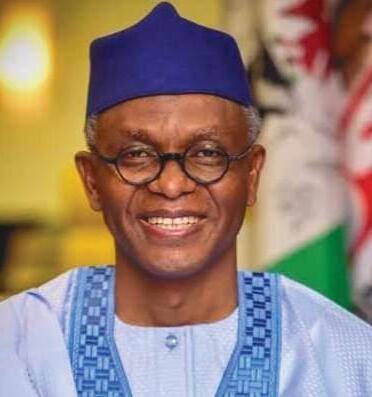
hree very serious allegations were made last week by the former Minister of the FCT and former Governor of Kaduna State, Mallam Nasir El-Rufai.
TYou oversaw the killing of over 1,000 Shia Muslims in one day in Zaria and not only oversaw the blinding of their leader in one eye but also the killing of his son, the wounding and arrest of his wife and the dumping of him in a wheelbarrow after which he was detained for 4 years and denied his civil liberties and human rights.
The truth is that until they are brought to justice for their unconscionable crimes no-one is safe.
The truth is that until they are brought to justice for their unconscionable crimes no-one is safe.
You betrayed your successor in office and sought to destroy him simply because he refused to continue the persecution of Christians and insisted on building bridges between Christians and Muslims and because he gave all the land that you illegally confiscated from your political enemies as a way of punishing them.
Sadly, Nasir El-Rufai’s public admission of having a relationship with them and even confessing publicly that he exchanges information with them even though he acknowledged the fact that such a course of action is illegal makes him complicit to their crimes and an accessory after the fact.
Sadly, Nasir El-Rufai’s public admission of having a relationship with them and even confessing publicly that he exchanges information with them even though he acknowledged the fact that such a course of action is illegal makes him complicit to their crimes and an accessory after the fact.
Outside of that you indebted the state, borrowed against future revenues, paid massive consultancy fees and indulged in all manner of sordid things that resulted in the state being broke and penniless when your successor took over.
If you can boast of bugging the NSA’s phone on national television it makes you a security threat to our nation.
If you can boast of bugging the NSA’s phone on national television it makes you a security threat to our nation.
You were accused by the State House of Assembly in Kaduna of stealing billions yet you treated the allegation with disdain and refused to make yourself available for questioning and investigation.
Again if you can preside over a state as Governor where 800 Christians in Southern Kaduna IN ONE DAY during the Christmas season in 2016 were killed and do nothing to bring the perpetrators to book, if you can punish the Christians of Southern Kaduna and deny them their allocations and rights for 8 years, if you can preside over the slaughter of 1,000 Shia Muslims IN ONE DAY in Zaria without consequence, if you can insult our Lord and Saviour Jesus Christ and theVirgin Mary, if you can call Southern femaleYouth Corpers
And in 2023 when he was appointed NSA by President Tinubu that time came.
Since he got there as far as I am aware he has not used that position to intimidate or threaten anyone but instead has focused his attention on solving our security problems and building bridges with our American allies which people like yours truly, at the initial stage, were very uncomfortable with yet he pulled it off!
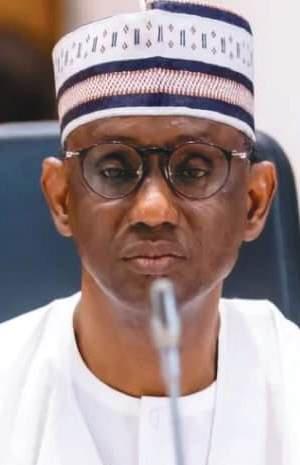
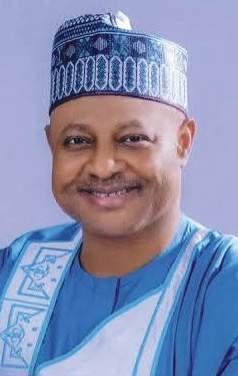
Firstly, that he bugged Mallam Nuhu Ribadu, the President’s National Security Adviser’s phone and is privy to his most sensitive conversations, Secondly, that the National Security Adviser’s office has imported large sums of dangerous chemical weapons into the country for unspecified purposes and thirdly, that there is a conspiracy between the NSA and Governor Uba Sani of Kaduna State, his successor in office, to “destroy andhim” “jail him for life”.
That is Nuhu: he flees from controversy, he is focused, he is reliable, he is responsible, he is fiercly loyal to his principal the President (some would say to a fault) and he is clear-thinking.
I have tried to stay away from the raging debate that followed these comments due to my longstanding friendship and respect for all three parties and their respective families but in view of the latest developments and in the light of these grave allegations I can no longer sit on the sidelines and maintain my silence.
By way of contrast, Nasir’s lineage and heritage is not known to me and neither have any of his forefathers, as far as I am aware, been saddled with the responsibility of high public office.
I am told that he hails from a railway compound in Zaria and frankly there is nothing wrong with that because at least he is well educated and well read.
Let me begin by saying that Mallam Nuhu Ribadu, Mallam Nasir ElRufai, Governor Uba Sani and my goodself were closer than brothers during President Olusegun Obasanjo’s government and we worked closely as a tag team.
What is evident in his behaviour though is that this unknown lineage and questionable heritage which often comes with those of that ilk manifests in him fully and rather than accept the fact that power is a trust that ought to be wielded with restraint, compassion, decency and decorum he uses it as a tool of vindictiveness and vengeance regardless of consequence.
Uba Sani took over my old job as Special Assistant to the President on Public Affairs when I was appointed as a Minister, Nasir was my colleague in cabinet and Nuhu headed the EFCC. WE all attended Federal Executive Council meetings and more often than not we were on the same page on most national issues and we presented our cases with candour and vigour without any fear or favour at such cabinet meetings which President Obasanjo graciously allowed us to do. This was as far back as over 20 years ago!
It is precisely for this reason that people are wary of granting power to such people and instead are more comfortable with those from the ruling class who, more often than not, exercise far more restraint and are mindful of the fact that such power is not only transient but also ephemeral.
They know, from experience, that it never lasts and that there is always a day of reckoning.
We were also all very close to President Obasanjo, whom we revered, and had many private and closed door meetings with him together with a handful of other close associates about how to move his government and the country forward and how to confront and contain his political enemies and detractors.
They know that It comes one day and it is gone the next and the lesson that one should learn from this, which Nasir has failed to do, is that whilst you enjoy it you had better wield it with equity, fairness, compassion and the fear of God seeking to better the lives of others rather than destroying them.
With this aside I close and conclude my contribution.
May God bless Nigeria.
We were loyal to a fault, tough, young, hard-working, fearless and filled with zeal and we gave our very best to Obasanjo and his government in our respective roles.
After we left office we all suffered severe persecution at the hands of President Yar’Adua’s administration simply for “Obasanjobeing andboys” we literally had to fight for our liberty and lives.
Nuhu and Nasir were compelled to leave Nigeria for fear for their lives whilst Uba and I stayed behind and weathered the very difficult storm.
Those were the most difficult, trying and testing days of our respective lives but thankfully we all pulled through, overcame all the obstacles placed before us and eventually won the day. We came out of it all alive, healthy and
Since those early years much has transpired and there were many
Regardless of that our friendship and strong sense of brotherhood endured and remained intact even if we may have publicly disagreed from
The latest development in the saga of our respective lives are the comments made by Nasir in his interview with Charles Aniagolu of ARISE Television on Friday about both Nuhu and Uba which I believe goes beyond the pale and sadly represents a permanent burning of bridges in terms of our
One of the things he said in that interview is that he bugged the phone of the NSA and to this, and much else, I am constrained to offer the following
Kindly ponder on all this and make your peace with God before He unleashes the full force of His wrath on your head. I have been restrained and gentle in this contribution for old times sake. I may not be so charitable next time round.
Kindly behave and respect yourself and stop behaving like an unrepentant and unrelenting ingrate and pest. The NSA does not have your time and neither does the Governor of your state.
“whores”, if you can lock up critics of your Government and preside over the disappearance and murder of traditional rulers like the Agom Adara III who you denigrated and humiliated and other critics without consequence for 8 years, if you can seize people’s land, revoke their certificates of occupancy and knock down their homes out of spite and without due process, if you can publicly admit to offering and paying foreign terrorists money and them“compensating” for their losses, if you can accuse Senator Abdul’aziz or
Again if you can preside over a state as Governor where 800 Christians in Southern Kaduna IN ONE DAY during the Christmas season in 2016 were killed and do nothing to bring the perpetrators to book, if you can punish the Christians of Southern Kaduna and deny them their allocations and rights for 8 years, if you can preside over the slaughter of 1,000 Shia Muslims IN ONE DAY in Zaria without consequence, if you can insult our Lord and Saviour Jesus Christ and theVirgin Mary, if you can call Southern femaleYouth Corpers “whores”, if you can lock up critics of your Government and preside over the disappearance and murder of traditional rulers like the Agom Adara III who you denigrated and humiliated and other critics without consequence for 8 years, if you can seize people’s land, revoke their certificates of occupancy and knock down their homes out of spite and without due process, if you can publicly admit to offering and paying foreign terrorists money and “compensating”them for their losses, if you can accuse Senator Abdul’aziz or
There is one thing I ought to add which is relevant and which explains the contrasting disposition and styles of Ribadu and El-Rufai. It may also go a long way to explain the deep-seated hate and envy that the latter has always secretly harboured for the former.
Like yours truly, Nuhu Ribadu comes from a long line of distinguished public servants and enlightened and educated people.
Permit me to begin by saying that it is likely that it is the same people that tapped the late Brigadier General Uba’s phone and gave the coordinates of his location to the terrorists that led to his execution that bugged the NSA’s phone.
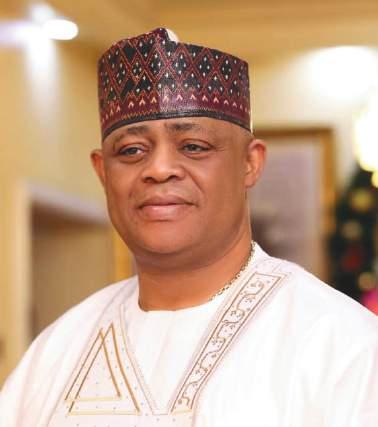
Chief Femi Fani-Kayode
It is likely that it is the same people that have enabled the terrorists to kill, abduct, terrorise and abduct our people and brought misery, suffering, tears and carnage to our land that bugged the NSA’s phone.
It is likely that it is the same people whose foot-soldiers are creating havoc and bringing chaos to Niger, Kaduna, Kwara, Borno, Kogi, Katsina and other parts of our nation that bugged the NSA’s phone.
It is likely that it is the same people who wish to destabilise our nation, divide our people along ethnic and religious lines and instigate a violent, unconstitutional and bloody regime change that bugged the NSA’s phone.
These non-state actors, agents of destabilisation and terror-enablers are listening to ALL our conversations including those on WhatsApp.
Senator Ahmed Sani, both former Governors of Zamfara State, of deserving to be listed as terrorists by the American Congress, if you can turn on your former best friend who is now the NSA and your most loyal supporter who is now the Governor of your state and seek to malign and destroy them for no just cause, if you can turn around and blame the abduction and possible murder of Dadiyata on the former Governor of Kano State instead of accepting responsibility for his disappearance yourself, if you can claim not to have targetted and viciously persecuted Senator Shehu Sani, Audu Maikori, John Danfulani, Luka Biniyat, Steven Kefas, Nasiru Jagaban and countless others violating court orders and without due process simply for criticising your Government, if you can pick up over 100 Islamic clerics in Zaria whilst they were praying after you sacked them and denied them their entitlements and lock them up in prison, if you can pick up and send hundreds of Christians in Kajuru together with their Pastors to prison simply because they were protesting after their traditional ruler was murdered by terrorists, if you can accuse Nigerian Christians of being the ones behind Boko Haram, if you can say that President Goodluck Jonathan had an assassination squad and was planning to kill you, if you can accuse the NSA of importing what is essentially a lethal chemical and biological weapon and what you described as large quantities of “toxic, odourless and colourless poison from Poland” known as thalium sulphate into our country and imply that he has done so for an evil, sinister, nefarious and possibly homicidal purpose,
Chief Oluwafemi Adewunmi Abdulateef Fani-Kayode, the author of this essay, is a former Minister of Culture and Tourism, a former Minister of Aviation, a former Senior Special Assistant to President Olusegun Obasanjo on Public Affairs, An AmbassadorDesignate of the Federal Republic of Nigeria, the Sadaukin Shinkafi, the Wakilin Doka Potiskum, the Otunba of Joga Orile, the Aare Ajagunla of Otun Ekiti and a legal practitioner.
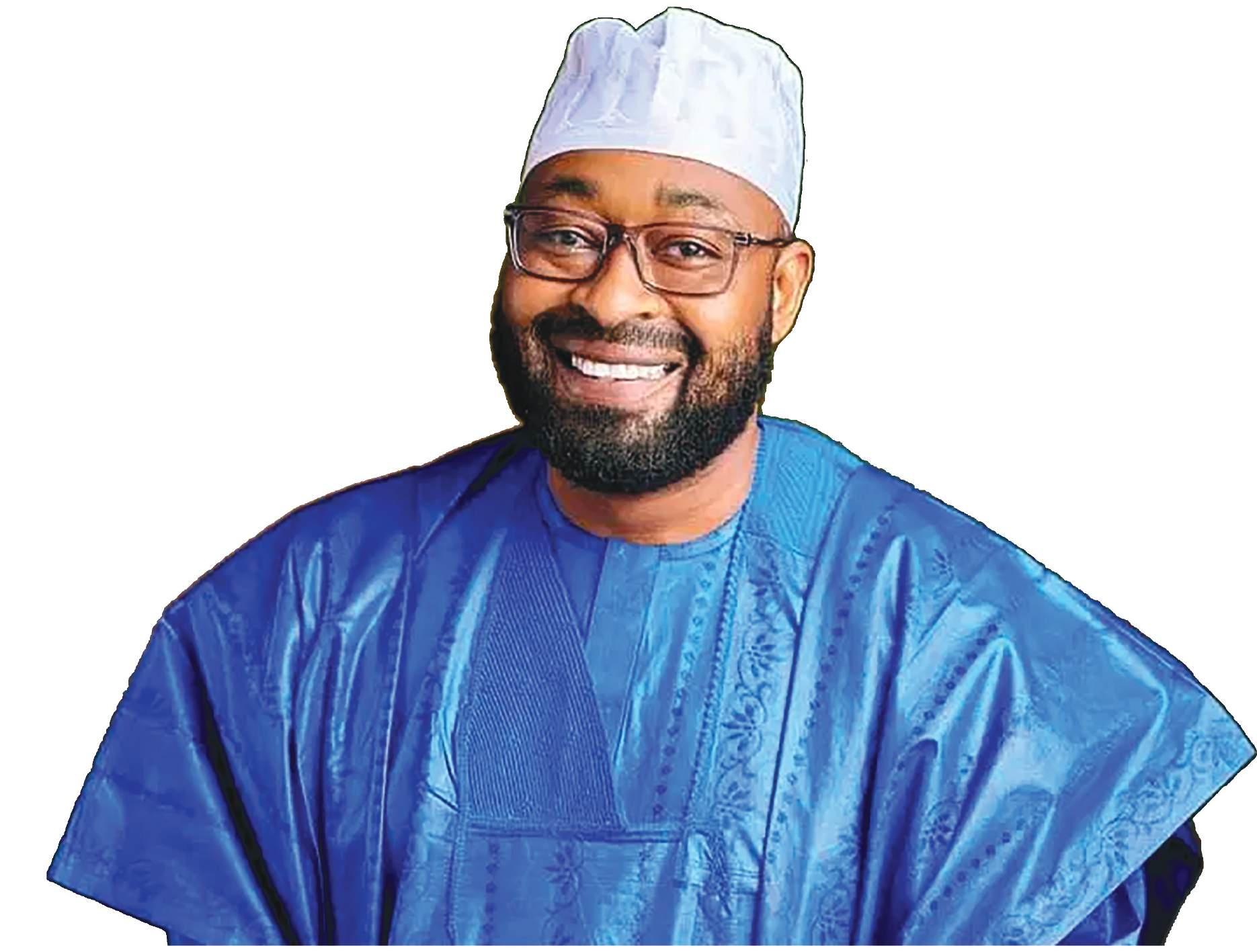
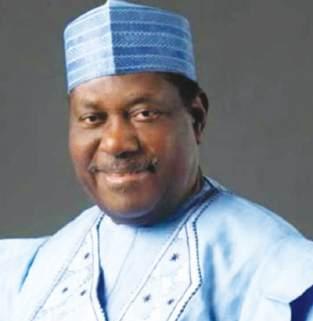
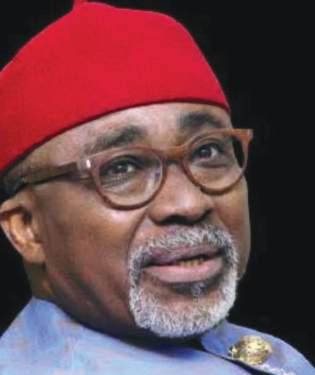
Mallam Nasir El-Rufai
Mallam Nasir El-Rufai
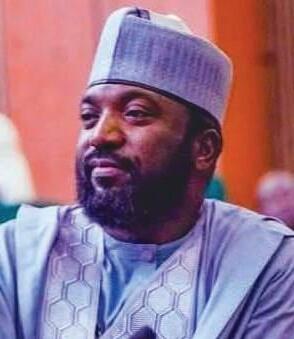
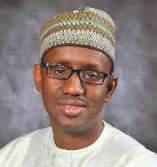
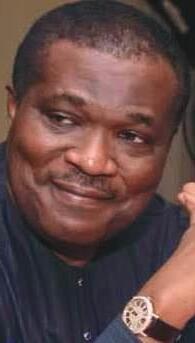
Nuhu Ribadu
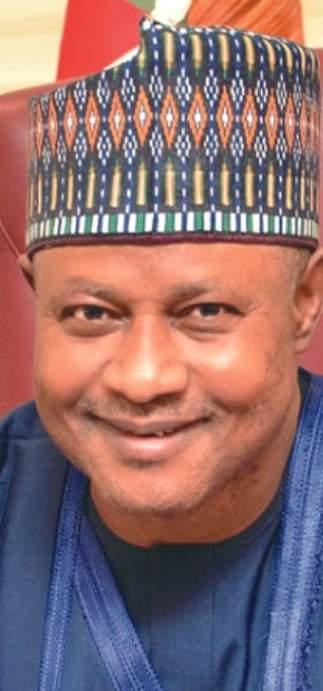
Governor Uba Sani
FIFTY HEARTY CHEERS...
L-R: President, Lagos East Baptist Conference, Dr. Matthew Awujoola; Celebrant, Rev. Dr. Paul Temitope Adebayo; his wife, Mary; President, Lagos Central Baptist Conference, Rev. Dr. Victor Akerele; and President, Lagos West Baptist Conference, Rev. Dr Samuel Oladiran, at the 50th birthday celebration and book launch of Rev. Adebayo in Lagos…recently
APC
EARLY LEAD AS INEC COLLATES RESULTS OF FCT POLLS AMID LOW TURNOUT
as I was coming in. But what is important is that the election is peaceful — no violence, no destruction of ballot papers or ballot boxes,” Wike added.
The Minister also responded to the accusation by the Senator representing the FCT, Ireti Kingibe, who claimed that Wike's restriction of movement in the FCT from 8 pm on Friday to 6 pm yesterday amounted to a curfew.
But Wike said: “It is unfortunate. I never imposed a curfew. In my statement, I said — with the approval of Mr. President — that there would be a restriction of movement from 8 p.m. to 6 p.m. This is not the first time such a measure has been taken during elections.
"I clearly stated that it was with
the approval of the President. People should take time to read statements properly and understand what was said before reacting. I do not want to join issues. At the end of the election, when the results come out, we will all know.”
ADC Slams Wike over Alleged Interference in FCT Polls
On its part, the ADC has criticised Wike over his movement across polling centres in Abuja during the elections, describing it as undue interference disguised as “monitoring.”
The ADC said Wike’s “monitoring” exercise, after unilaterally imposing a curfew
on potential voters, was a direct interference in the election.
The party, in a statement issued by its National Publicity Secretary, Mallam Bolaji Abdullahi, said: ''He is not a registered voter in the FCT, and as a known partisan and cabinet minister, Wike has no constitutional role in the election exercise.
"His presence during active voting is therefore not only vexatious and meddlesome, but also risks intimidating voters and officials.''
ADC claimed it also received reports of voter suppression and intimidation in parts of the FCT, including alleged collaboration between APC agents and some security personnel.
Abdullahi said, ''We also note disruptions to the INEC Result
Viewing Portal (IReV), which has remained inaccessible even as results are being collated. We find this a curious coincidence and call on INEC to urgently restore full IReV functionality, with a clear public explanation of the disruption.
''We urge all our party agents and voters to remain calm but vigilant, and to document all incidents.
IREV Not Displaying Results, Obidient Movement Alleges
Similarly, supporters of the ADC chieftain, Mr. Peter Obi, have raised the alarm that the IREV was not displaying the election results.
In a statement issued by the
Coordinator of the Obedient Movement, Tanko Yunusa, the group said, ''Information reaching us indicates that the IREV server is active but not displaying results that were reportedly uploaded successfully from various polling units.
All Obidients and Nigerians are therefore encouraged to remain alert. If necessary, we urge everyone to peacefully proceed to the Area 10 INEC office and Karu for the collation process and observe developments closely.
''Ensure that you have the accurate results from your respective polling units for proper verification. Let us remain calm, law-abiding, and committed to protecting the integrity of the electoral process through peaceful and lawful means.''
Meanwhile, Yiaga Africa has raised concerns about logistical lapses, voter redistribution without adequate notice, and incidents of vote-buying during yesterday’s elections, even as it described the overall exercise as largely peaceful.
The Nigerian Civil Society Situation Room also alleged incidents of open vote-buying in some Polling Units during the elections.
The group also said that most polling units lacked assistive materials to help citizens with disabilities vote.
AFTER TINUBU'S EXECUTIVE ORDER ON DIRECT REMITTANCE, FG MOVES TO PROBE PAST REVENUE COLLECTIONS
oil contractors, as well as oil and gas operators, have been directed to provide full financial records, documentation, and unrestricted access to audit teams.
“A comprehensive retrospective audit is hereby commissioned covering: Frontier Exploration Fund, (including) total collections since inception under the Petroleum Industry Act; expenditures and commitments; current balances and investment placements.
“Midstream and Downstream Gas Infrastructure Fund, (including) gas flare penalties collected; transfers and utilisation; compliance with procurement regulations. NNPC 30 per cent management fees; total deductions made; utilisation of retained funds; outstanding balances due to the Federation.”
According to the document, where audit findings reveal outstanding sums due to the Federation, the federal government insisted that immediate restitution into the proposed Sub-Federation Account will be required.
The ministry further mandated that weekly remittance reports be submitted to the office of the Minister of State for Finance, warning that any breach of the directive would constitute a violation of a lawful executive order and of constitutional fiscal provisions.
“All affected entities are required to provide full financial records, documentation, and access to audit teams. Where audit findings reveal outstanding sums due to the Federation, immediate restitution into the
Sub-Federation Account shall be required.
Weekly remittance reports must be submitted to the office of the Minister for State, Finance. Any breach of this directive shall be treated as a violation of a lawful executive order and constitutional fiscal provisions,” the document noted.
NNPC, Dangote Refinery Renew Strategic Alliance
Meanwhile, the Group Chief Executive Officer of NNPC Limited, Bayo Ojulari, yesterday led a delegation of the company's management to the Dangote Refinery and Petrochemical Complex in IbejuLekki, Lagos State, for high-level
discussions that culminated in a renewed commitment to strategic collaboration between the two companies.
The visit, which included a facility tour, focused on strengthening operational and commercial relationships between NNPC Limited and the Dangote Refinery, with both organisations reaffirming their shared vision for Nigeria's energy future.
In a statement signed by NNPC's Chief Corporate Communications Officer, Andy Odeh, Ojulari commended the President of the Dangote Group, Alhaji Aliko Dangote, for his vision and perseverance in delivering the 650,000 barrels per day refinery, a project that positions Nigeria as a major downstream hub in Africa.
Speaking on the partnership,
Ojulari described the strategic alliance as one that will "unlock synergies across assets, infrastructure, capital, and markets. It will also provide visibility of all NNPC-Dangote business relations."
He further revealed the collaboration's expansive potential, noting a significant opportunity for both companies to expand upstream and into trading, shipping, and gas supplies, among other areas.
Ojulari expressed profound appreciation to President Bola Ahmed Tinubu for his visionary leadership in the oil and gas sector.
He noted that the President's policy clarity, investor-friendly reforms, and commitment to sectoral transformation had signalled seriousness to both
domestic and international investors, creating an enabling environment for partnerships of this scale to flourish.
The statement quoted the Chairman of Dangote Group, Aliko Dangote, as saying, "Nigerians will be the beneficiaries of the synergy between Dangote Group and NNPC Limited, because our collaboration will achieve economies of scale and unlock value across markets."
The visit concluded with both parties reaffirming their commitment to deepening cooperation to pursue shared objectives, ensure energy security, drive industrial growth, and deliver value to Nigerians.
NNPC currently holds a 7.25 per cent stake in the Dangote Refinery.
AMIDST TIGHT MONETARY POLICY, STANBIC IBTC, FCMB, THREE OTHER BANKS’ RESERVES WITH CBN RISE TO
50 per cent, the level it had closed at in 2024, while retaining the Merchant Banks’ ratio at 16 per cent.
It also introduced a 75 per cent CRR on non-Treasury Single Account (non-TSA) public sector deposits.
The aggressive use of the CRR marks a shift from September 2022, when the ratio stood at 27.5 per cent. It was first raised to 32.5 per cent under the previous CBN
leadership. However, the sharpest increases came under the current administration. At the February 2024 MPC meeting, the first under Governor Olayemi Cardoso, the CRR was hiked to 45 per cent, before climbing further to 50 per cent in August 2024. Merchant Banks’ CRR was also raised from 10 per cent to 14 per cent in March 2024. These measures were
introduced amid rising inflation and pressure on the naira. Although inflation moderated to 15.15 per cent in December 2025 following the National Bureau of Statistics’ rebasing exercise, policymakers remain cautious about underlying price pressures.
While the CBN views the CRR as a necessary brake on inflation, banks and shareholders see it as
a mounting cost.
With the CRR at 45 per cent, nearly half of customer deposits are locked with the CBN, earning no interest. Yet banks continue to pay interest on the full deposit base.
The result is a structural squeeze on margins.
“As it stands, we are paying interest on 100 per cent of deposits but only have access to 55 per cent to lend out,” an executive
director at a Tier-2 bank told THISDAY, capturing the industry’s frustration.
Chairman of the Progressive Shareholders Association of Nigeria, Boniface Okezie, echoed similar concerns. He noted that shareholders had repeatedly urged the CBN to consider paying interest on mandatory reserves to ease the pressure on earnings and dividend payouts.
“The funds deposited by
banks with the CBN are not used. If these funds are with banks, it will certainly enhance their earnings and returns to shareholders. It will create more banking expansion,” he said. Okezie suggested that even a modest three per cent interest rate on mandatory reserves could support lending to the real sector and strengthen banks’ capacity to reward investors.
Rising Allocations, Rising Hardship in States
On paper, Nigeria’s states are earning more than ever. In reality, many citizens are living with less.
This contradiction characterises the current state of Nigeria’s subnational economy. Allocations from the Federation Account Allocation Committee (FAAC) have surged to historic highs, yet poverty, debt pressures, and strained public services persist. The books suggest abundance. The streets tell a different story.
Following the removal of fuel subsidy, exchange rate reforms, and improved oil remittances, FAAC disbursements rose from N8.21 trillion in 2022 to N10.14 trillion in 2023. In 2024, they jumped to N15.26 trillion. By 2025, allocations reportedly approached N33.27 trillion, an extraordinary expansion in nominal terms.
Ordinarily, such a windfall should herald visible development across states: functioning hospitals, modern schools, improved rural roads, and strengthened social services. Instead, rising allocations have coincided with mounting debt, unpaid arrears, and deepening hardship. The paradox is stark.
Debt Amid Abundance
According to BudgIT’s 2025 State of States report, Nigeria’s 36 states spent N2.11 trillion on debt servicing in 2024, 26.45 per cent of total expenditure. More than one in every four naira spent went to creditors.
Total debt stock for 35 states increased from N10.01 trillion in 2023 to N10.57 trillion in 2024. While domestic debt declined, foreign-denominated obligations edged up to $4.58 billion. Twenty-four states now hold more than half of their debt denominated in US dollars, exposing them to exchange-rate volatility.
In states such as Kaduna, Jigawa, and Ondo, over 90 per cent of the debt is denominated in foreign currency. Each time the naira weakens, repayment costs rise in local-currency terms. What appears manageable on paper becomes heavier in practice.
A finance official in one northern state admitted privately: “By the time deductions are made for foreign loans, what reaches us is already reduced. We are surviving on what is left.”
Beyond formal borrowing are legacy
State revenues are swelling to unprecedented levels, with trillions of naira streaming into government coffers. Yet for millions of Nigerians, hardship is intensifying, and relief remains distant, prompting an unsettling question: Where is the money truly going? Festus Akanbi asks
burdens: pension arrears, contractor debts, unpaid salaries, and judgment liabilities running into hundreds of billions of naira. These do not always dominate headlines, but they restrict fiscal flexibility.
Mrs. Abiola, a retired teacher in the South-west, put it plainly: “They say the state is receiving more money. My gratuity is still unpaid after two years. So where is the money?”Her question echoes across the federation.
Spending Priorities and Politi- cal Cycles
The challenge is not only how much states earn, but how they spend.
BudgIT’s data show that average per capita healthcare spending by states in 2024 was just N3,483. No state reached N10,000 per person. In a country battling fragile primary health systems and high maternal mortality, the figure is sobering.
Education spending reveals similar pressures. While some states prioritise infrastructure projects, flyovers, government complexes, and major roads, investments in teacher training, rural clinics, and social protection often lag.
A public health worker in Kwara State described the reality: “We have new roads in town, but in my clinic, we sometimes ask patients to buy basic supplies. There is no steady funding.”
The political incentive structure partly explains this pattern. Large infrastructure projects are visible and offer ribbon-cutting opportunities within a governor’s tenure. Human capital investments, teacher quality, preventive healthcare, nutrition, yield results over longer horizons, often beyond political cycles.
Budgets, therefore, often reflect electoral timelines as much as development strategy.
Poverty and Purchasing Power
Despite expanding revenues, poverty has worsened. The World Bank estimates that 61 per cent of Nigerians were living
on less than $3 per day in 2025, roughly 139 million people. Projections suggest the rate may rise further.
This divergence highlights a central issue: fiscal expansion does not automatically translate into inclusive growth. When increased revenues are absorbed by debt servicing, overheads, and politically visible projects, their impact on household welfare diminishes.
Inflation trends further complicate the picture. Data from the National Bureau of Statistics (NBS) show headline inflation moderating to 15.10 per cent in January 2026, down sharply from 27.61 per cent a year earlier.
On paper, this represents significant disinflation. In reality, many households continue to struggle.
Years of cumulative price increases have reset cost structures. Food inflation may have eased, but transport fares, electricity tariffs, and school fees remain high. The depreciation of the naira has eroded purchasing power, making everyday transactions more burdensome.
A trader in Lagos observed, “They say inflation is coming down. Maybe it is. But what I buy is still expensive, and customers don’t have money.”
The Centre for the Promotion of Private Enterprise (CPPE) describes the inflation trend as real disinflation, especially in food prices. Lower food costs could improve purchasing power. Yet CPPE also warns that falling farm-gate prices may hurt farmers’ incomes, weakening rural livelihoods.
The economy is stabilising statistically, but the social recovery remains fragile.
Broader Fiscal Fragility
At the macro level, Nigeria’s foreign reserves have climbed to about $49 billion, according to the Central Bank of Nigeria (CBN). Exchange rate gaps have narrowed, and investor sentiment has improved.
But reserves are buffers, not substitutes for production. Sustainable fiscal strength requires export diversification, industrial growth, and productivity gains. Similarly, at the federal level, deficit financing has become entrenched. A projected N25.91 trillion deficit in the 2026 budget underscores how borrowing has become routine. Debt service is expected to consume nearly half of projected revenue.
States mirror this pattern on a smaller scale: rising inflows, rising debt, persistent arrears, and incomplete projects.
A development economist in Abuja summarised the tension: “We are seeing revenue growth without structural transformation. Money is coming in, but it is not compounding into productivity.”
The Development Question
The paradox of rising allocations and rising hardship reflects a deeper misalignment between revenue, risk, and results.
Fuel subsidy removal and exchange rate reforms were designed to free fiscal space for investment in health, education, and infrastructure. For many citizens, however, the costs are visible while the benefits remain distant.
The core question is not whether revenue is increasing. It is whether revenue is being converted into durable assets, healthier populations, skilled workers, competitive industries, and resilient infrastructure.
Nigeria’s states are not entirely constrained by scarcity. They are constrained by debt exposure, legacy liabilities, and spending patterns that prioritise visibility over longterm impact.
Until fiscal windfalls are consistently channelled into human capital and productivityenhancing investment, the paradox will persist. Allocations will rise. Debt will expand. Statistical improvements will be announced.
And across markets, clinics, and households, citizens will continue to ask: if revenues are growing, why is life still getting harder?
A growing population
Poverty is still biting hard
AWARD FOR LONG AND MERITORIOUS SERVICE …
PIA Faces Fresh Scrutiny as Expert Demands Alignment with 1999 Constitution
Sunday Ehigiator
The Petroleum Industry Act (PIA) has come under fresh scrutiny as an Abuja-based accountant, Queen Amina Mohammed, called for urgent amendments to align the law with the 1999 Constitution and prevent potential legal conflicts in Nigeria’s petroleum governance framework.
In her policy review, Mohammed argued that although the PIA represents a landmark
reform of the oil and gas sector, some of its provisions may not fully comply with constitutional requirements.
Regarding revenue remittance, she raised concerns about provisions that allow the Nigerian National Petroleum Company Limited (NNPC Limited) to retain petroleum revenues before remitting them.
“The PIA allows NNPC Limited to retain petroleum revenues before remittance, and this potentially conflicts
Group Urges Deputy Speaker, Benjamin Kalu, to Address Petition Before LPDC
A socio-political group, the Real Mandate Initiative (RMI), has called on the Deputy Speaker of Nigeria’s House of Representatives, Rt. Hon. Benjamin Kalu, to address a petition reportedly filed against him before the Legal Practitioners Disciplinary Committee (LPDC).
The group’s reaction follows reports that a former First Vice President of the Nigerian Bar Association (NBA), Mr. John Aikpokpo-Martins, submitted a petition raising concerns about aspects of Kalu’s academic and professional record, including his National Youth Service Corps (NYSC) service and attendance at the Nigerian Law School. According to publicly circulated details of the petition, the LPDC and relevant authorities were urged to review the issues raised and determine their merit in line with existing laws and regulations. No determination has been announced by the disciplinary body at this time.
In a statement signed by its leader, Chief Obasi Nnabuike, the Real Mandate Initiative
emphasised the importance of transparency and accountability in public office.
He argued that it is “statutorily impossible” to lawfully complete a full-time national service while simultaneously undergoing Law School training, which prohibits students from engaging in employment or other full-time commitments.
The group said that public officials facing formal complaints should cooperate fully with relevant institutions to ensure due process and maintain public confidence.
RMI further noted that the matter is now before the appropriate professional and statutory bodies, including the Supreme Court of Nigeria, which oversees the enrolment of legal practitioners, and urged that the process be allowed to run its course without interference.
The group added that, as the 2027 general elections approach, political actors should strive to uphold high ethical standards and promptly address any concerns raised about their qualifications or professional history.
with Section 162 of the Constitution, which mandates that all federal revenues be paid into the Federation Account.”
According to her, while executive directives can address the issue in the short term, they do not replace legislative action.
“An executive order can direct NNPC and related entities to remit all petroleum revenues directly to the Federation Account, ensuring temporary alignment with Section 162. However, the PIA itself still needs amendment or clarification for permanent compliance,” she stated.
On host community funds, Mohammed warned that the
allocation structure may sidestep constitutionally recognised revenue-sharing mechanisms.
“Although the PIA mandates contributions to host communities, the allocation mechanisms may bypass state or local authorities. This raises potential constitutional issues regarding federalism and revenue sharing,” she explained.
She added: “An executive order can clarify the flow of funds and ensure allocations respect constitutional federal-state revenue distribution principles, but the Act requires legislative alignment for permanence.”
Addressing regulatory
oversight, Mohammed pointed to the structure of agencies such as the Nigerian Upstream Petroleum Regulatory Commission (NUPRC).
“Agencies like NUPRC currently have both regulatory oversight and quasi-commercial roles. This arrangement could undermine the principle of the separation of powers by blurring the line between regulation and commercial interests.
“An executive directive may compel agencies to focus strictly on regulatory oversight and separate commercial activities from regulation. But without statutory amendment, the
structural concerns remain.”
On land and compensation oversight, Mohammed noted possible overlaps with the Land Use Act and judicial authority.
“Granting regulatory agencies authority over land-related disputes may conflict with the Land Use Act and established judicial processes. Courts will always uphold the Constitution in the event of conflict. Only an amendment can permanently clarify this authority,” she said.
Summarising her position, Mohammed described executive orders as “immediate enforcement tools” but emphasised that they are inherently temporary.
UNIOSUN Demands Apology, Threatens Lawsuit over Audit Report on Alleged 250 Ghost-workers
Yinka
Kolawole in Osogbo
The Osun State University (UNIOSUN) has demanded a formal apology from Sally Tibbot Ltd after a payroll audit report allegedly listed 250 university workers as “ghost workers.”
The Vice Chancellor, Prof. Clement Adebooye, told journalists in Osogbo yesterday that the university would institute legal action if the audit firm failed to
issue a formal apology.
Adebooye said he was personally verified during the audit exercise but was still listed as a ghost worker in the report released afterward.
He said 249 other staff members were also classified as ghost workers, describing the outcome as an attempt to damage the institution’s reputation.
“The Governing Council and Management of Osun
State University view the consultant’s report as being precariously subjective, in bad faith, unprofessional, and a deliberate attempt to smear the image and reputation of the University with falsehood and malice,” he said.
The vice chancellor alleged that the consultant lacked understanding of university employment structures, including sabbatical leave, study leave,
visiting lecturer arrangements, and research leave.
He said legitimate staff members on approved leave were wrongly categorised as ghost workers.
“The listing of 250 members of staff (on ground) as ghost workers laid credence to the suspicion that Sally Tibbot focused on her returns rather than the accountability objective of the exercise.
UBTH Clarifies Service Price Adjustments
The University of Benin Teaching Hospital (UBTH) has dismissed as false and malicious allegations circulating against its Chief Medical Director (CMD), while clarifying recent decisions on service price adjustments and its partnership with a private laboratory.
In a statement issued by its management, the hospital said it was compelled to address what
it described as “misleading, false and malicious claims” aimed at tarnishing the institution’s reputation and the character of its CMD.
UBTH confirmed that it recently reviewed the prices of some of its hospital services, citing prevailing economic realities as the reason for the adjustment.
According to the statement,
rising costs of medical consumables, laboratory reagents, energy, utilities, equipment maintenance and other operational expenses necessitated the review.
Management stressed that the price adjustment was carried out in line with due process and relevant government guidelines.
It added that the review was aimed at sustaining quality
healthcare delivery without compromising patient safety or standards.
“No price review is undertaken arbitrarily,” the statement noted, explaining that decisions were made after careful consideration of affordability, institutional sustainability and the hospital’s mandate as a tertiary healthcare provider.
Wale Igbintade
L-R: Dr. Ogochukwu Ngige; Chairman of Council of Legal Education, Chief Emeka Ngige (SAN); and Vice Chairman of Body of Benchers, His Royal Majesty, Olorogun Albert Akpomudje (SAN), during the presentation of meritorious award to Ngige in appreciation of his service to the Body of Senior Advocates of Nigeria as its Assistant General Secretary for 20 years at a dinner to commemorate its 50 years of the organisation in Lagos…recently
PersPective
Beyond the Noise: Why Akume and Alia are Not Political Adversaries
In the often overheated arena of Nigerian politics—where speculation frequently substitutes for substance—a curious narrative has been circulating: that Senator Dr. George Akume, Secretary to the Government of the Federation (SGF) and a towering figure in Benue politics, is locked in a political duel with Benue state Governor, Hyacinth Alia.
It is a narrative that thrives more on conjecture than on evidence; more on political gossip than on any verifiable fault line.
A closer, more disciplined reading of Benue’s political history—and indeed its present configuration—reveals a different, far more nuanced reality.
Weight of Political History
To properly situate the discussion, one must begin with the enduring political architecture built by George Akume over nearly three decades. Since his entry into partisan politics in 1998, Akume has not merely participated in the system; he has shaped it.
From serving as a two-term Governor of Benue State to his tenure as a three-term Senator of the Federal Republic—where he rose to become Senate Minority Leader—and subsequently as a Minister of the Federal Republic, Akume’s trajectory reflects a rare continuity of influence.
His current role as SGF under the administration of President Bola Ahmed Tinubu further underscores his centrality in Nigeria’s governance matrix.
This is not a career built on happenstance. It is the product of sustained grassroots engagement, strategic coalition-building, and an ability to navigate Nigeria’s complex political terrain with unusual dexterity.]
Benue Political Equation
Within Benue State, Akume’s influence is neither abstract nor exaggerated; it is demonstrable. The succession of governors in the state—Gabriel Suswam, Samuel Ortom, and now Hyacinth Alia—speaks to a continuity of political structure that has, at critical moments, intersected with Akume’s strategic direction. This is not to diminish the agency or legitimacy of these leaders. Rather, it is to acknowledge the underlying political ecosystem in which their emergence was made possible. Politics, particularly at the subnational level in Nigeria, is rarely an accident; it is often the outcome of layered alliances, institutional memory, and established networks.
2023: Strategy Over Sentiment
The 2023 governorship election in Benue offers
perhaps the most illustrative example. The field was crowded with experienced contenders—figures of national relevance and deep political capital. Yet, in a contest where pedigree alone could not guarantee victory, it was the alignment of structure, timing, and strategic mobilisation that proved decisive.
Governor Alia’s emergence must therefore be understood within this broader context—not as an isolated political miracle, but as the culmination of a coordinated effort in which multiple actors, including Akume’s formidable political machinery, played defining roles.
Structure, Capacity and the Politics of Mobilisation
Equally telling is the recent All Progressives Congress (APC) membership registration and revalidation exercise in Benue State. Initial efforts yielded modest numbers, raising concerns about grassroots penetration. However, once the broader party structure—energised by Akume’s network—was activated, the turnaround was swift and dramatic.
Within days, participation surged significantly, underscoring a critical point often overlooked in political analysis: that beyond rhetoric, power in Nigerian politics still resides in organisation, reach, and the ability to mobilise at scale.
Debunking the ‘Battle’ Narrative
Against this backdrop, the suggestion of a political battle between Akume and Alia appears increasingly untenable. It is a narrative that ignores hierarchy, context, and the dynamics of political mentorship that often define relationships within party systems.
To frame the interaction between the two men as a contest is to misunderstand both the nature of Akume’s political stature and the evolving role of Governor Alia within that structure. The latter,
relatively new to the intricacies of partisan politics, is still consolidating his footing in a system long shaped by established actors.
This does not imply subservience; rather, it reflects a continuum—one in which experience and incumbency coexist, sometimes uneasily, but not necessarily antagonistically.
The Imperative of Party Stability
At a time when Nigeria faces multifaceted governance challenges—from economic reform to national security—the internal cohesion of the ruling party structures remains critical. As SGF, Akume’s responsibilities transcend state-level politics; they are national in scope, demanding coordination, stability, and administrative focus.
It would therefore be a misreading of priorities to suggest that he is preoccupied with subnational rivalries. His political capital, at this stage, is more profitably invested in sustaining governance outcomes and reinforcing party unity.
Politics Beyond Speculation
Ultimately, the claim that Akume is engaged in a political battle with Alia reveals more about the nature of contemporary political discourse than it does about the reality on ground. In an environment where perception is often weaponised, narratives can take on a life of their own—detached from facts, yet potent in influence.
But serious analysis demands restraint. It requires that we separate noise from nuance, speculation from structure.
Senator George Akume’s political journey is one of depth, continuity, and enduring relevance. Governor Hyacinth Alia’s administration represents a new phase within that evolving landscape. To cast their relationship as adversarial is not only simplistic—it is analytically flawed.
In politics, as in governance, not every difference is a conflict—and not every silence is a war. Akume’s focus, it must be repeated, remains that of quality service to the nation while cementing the needed stability within the ruling party as he continues to energise support for President Bola Ahmed Tinubu not just in Benue State but throughout the North-central region and the entire country. His political stature speaks for itself.
•IkyuenwritesfromMakurdi
Why Aviation Must Be Enabled to Grow Nigeria’s Revenue Base
Aviation is not a luxury. It is a critical enabler of commerce, investment, tourism, and national integration. When aviation works, the economy moves faster.
Nigeria therefore faces an important policy choice. Do we treat aviation mainly as a source of immediate tax revenue, or do we position it to grow into a stronger and more reliable contributor to government finances over time?
The distinction matters because one simple truth applies. One cannot tax what does not survive.
This is not an argument for special concessions. It is a case for getting the sequencing right. Growth must come before aggressive taxation.
A Sector Falling Behind Its Potential
Nigeria’s domestic passenger traffic declined by about 3 percent between 2022 and 2024, while comparable markets such as Egypt, Kenya, and South Africa recorded growth of between 10 and 15%.
In a country of over 200 million people with strong mobility needs, this should concern us. Demand for air travel has not disappeared. If anything, it continues to rise. Distances between our major cities are significant, road travel can be unpredictable, and businesses increasingly depend on speed and reliability.
However, when operating costs climb and multiple fiscal charges are layered onto tickets, fares inevitably rise. At some point, passengers begin to defer travel or look for alternatives. A sector that should be expanding then starts operating below its capacity.
When aviation slows, the effects reach far beyond the airlines. Tourism weakens, trade becomes less efficient, investment flows are affected, and job creation suffers.
Strong Demand, But Growing Value Leaving the Country
One of the more striking trends in West African aviation today is that Nigerian demand remains strong, yet an increasing share of the economic value tied to that demand is being captured by
foreign carriers.
Regional airlines have successfully built networks around Nigerian traffic, benefiting from the associated jobs, maintenance activity, training spend, and foreign exchange flows.
Competition is healthy and should be encouraged. But policy must ensure that Nigerian operators are not structurally disadvantaged in their own market. Otherwise, we risk creating a situation where the demand is local but the economic benefits increasingly sit elsewhere.
The Cost Environment Matters
Airlines in Nigeria operate under a heavy stack of charges that include ticket sales charges, passenger service charges, VAT exposure, customs duties, navigational fees, and various regulatory levies.
Individually, each may appear manageable. Together, they create significant pressure on margins.
Airlines cannot pass all these costs to passengers without weakening demand, yet absorbing them is equally unsustainable. Over time, networks shrink, aircraft utilization drops, and access to capital becomes more difficult.
Competitiveness is rarely lost overnight. More often, it is gradually eroded by an operating environment that becomes harder each year.
Policy Clarity Drives Investor Confidence
Aviation is a long-term business. Aircraft acquisitions, maintenance programs, and route development all require patient capital.
For investors, clarity and consistency in policy are not optional. They are fundamental.
Recent fiscal changes, including the reversal of VAT exemptions and uncertainty around what qualifies as taxable aviation inputs, have introduced avoidable risk into airline planning. Continued enforcement actions even where waivers exist further increase unpredictability.
When the policy environment feels uncertain, capital naturally becomes more cautious.
Structural Pressure on Nigerian Airlines
Most airline revenues are earned in naira, while a large portion of costs such as aircraft leases, heavy maintenance, insurance, and spare parts are denominated in foreign currency.
Add high domestic interest rates and constrained foreign exchange access, and the
pressure becomes clear.
Even the most disciplined management teams cannot fully offset this imbalance through efficiency alone. Eventually, capacity tightens.
What travellers experience operationally often begins as an economic constraint.
Revenue Illusion
There is a natural assumption that higher taxes automatically translate into higher government revenue. Aviation often proves otherwise.
Global estimates show that while aviation taxes generate roughly 90 billion dollars each year, they suppress about 183 billion dollars in wider economic activity.
As connectivity falls, fewer tickets are sold, less fuel is purchased, and the surrounding ecosystem that supports hospitality, logistics, and employment also contracts.
Growth expands the tax base. Contraction narrows it.
True Cost of Airline Failure
When an airline shuts down, the consequences extend well beyond shareholders. Each grounded aircraft can represent about 100 direct jobs and up to 300 indirect roles across the value chain. Connectivity declines, suppliers lose business, skilled workers migrate, and rebuilding that capacity later becomes significantly more expensive than sustaining it in the first place. Aviation capability, once lost, is not easily restored.
What Successful Aviation Economies Understand Countries that have made aviation a priority tend to treat it as economic infrastructure rather than a luxury.
Strategic support in markets such as Ethiopia and Rwanda has helped expand connectivity, attract investment, and create employment. Research indicates that a 10 percent increase in air connectivity can raise foreign direct investment by 4.7 percent and lift GDP by about 0.5 percent.
This is not about protectionism. It is about enabling competitivenes.
A Practical Path Forward
The objective is not to eliminate taxation. It is to create the conditions for sustainable revenue growth.
Restoring clarity around aviation input exemptions, enforcing customs waivers consistently, removing duplicative tax layers, harmonising charges across agencies, and establishing a coordinated national aviation growth framework would materially strengthen the sector. These steps are not simply industry requests. They are economic competitiveness measures.
Fiscal Win for Nigeria
Lower structural costs support network expansion. Expanded networks stimulate passenger traffic. Increased traffic strengthens the tax base while supporting tourism, trade, logistics, and employment.
Countries that have followed this path did not lose revenue. They expanded it by unlocking economic activity at scale.
Nigeria has the market size, geographic position, and entrepreneurial depth required to become a leading aviation hub on the continent. Achieving that potential requires a deliberate shift from short-term revenue focus toward long-term sector growth.
The question is not whether aviation should contribute to public finances. It is how best to position the sector so that its contribution becomes larger, more stable, and more durable. Enable aviation to survive today, and it will help finance Nigeria’s growth tomorrow.
•Grant is Chief Financial Officer of Aero Contractors and a finance executive specialisinginairlineeconomics,restructuring, and aviation policy.
Akume
Keyamo
Thomas Ikyuen
Charles Grant
RECLAIMING NIGERIA’S UNGOVERNED FORESTS
The forest guards initiative is vital to turning the corner on insecurity, argues RONALD K. DANJUMA
In the long and often frustrating search for lasting solutions to Nigeria’s lingering insecurity, moments arise when policy finally aligns with reality.
The recent deployment of over 7,000 forest guards across seven vulnerable states reflects such a moment, portraying a clear official understanding of where Nigeria’s insecurity lives, how it mutates, and what it feeds on.
The move, which is aimed at reclaiming Nigeria’s forests from an age-long criminal exploitation, bears the hallmark of a national security consciousness where strategy and structure are favoured over sentiment and improvisation.
From intelligence coordination to diplomatic engagement and now to the reclamation of forest spaces, the initiative is guided by a simple but often ignored truth that Nigeria’s insecurity is forest-centric.
Sambisa Nigeria’s most infamous conflict forest has long served as the symbolic and operational heartland of Boko Haram and ISWAP factions, just as the Kamuku forest on the Kaduna–Niger–Zamfara Axis has evolved into a major banditry and kidnapping corridor where armed groups use it as a launchpad for attacks on highways, rail lines, and rural communities, especially along the Abuja–Kaduna axis. Similarly, the Falgore Forest, which sits strategically between Kano and the troubled North-West belt has increasingly been used as a transit and hideout zone for bandits, facilitating cattle rustling, arms movement, and cross-border criminal logistics.
Others include the Rugu Forest along Katsina–Zamfara Axis, one of the most active bandit strongholds in the NorthWest, which hosts multiple armed groups involved in mass kidnappings, village raids, and extortion; the Kuyanbana forest, widely regarded as the epicentre of high-value kidnapping operations in Zamfara and neighbouring states and the Alawa Forest in Niger state, which emerged as a safe haven for bandits and terror-linked groups fleeing pressure from military operations in other zones. It connects Niger State to Kaduna and the FCT hinterlands, making it strategically dangerous.
Attacks on farming communities and threats to Abuja’s outskirts have elevated Alawa’s security significance. Thus, to confront insecurity without confronting these forests is to fight shadows.
It is therefore no coincidence that the forest guards initiative has emerged under the National Security Adviser Nuhu Ribadu’s watch, clearly, as the logical extension of a worldview shaped by experience and dedicated service.
Long before he became NSA, Ribadu demonstrated an uncommon ability to read his brief without ambiguity and pursue it to its logical end. As the pioneer chairman of the Economic and Financial Crimes Commission (EFCC), he demonstrated exemplary grit by understanding the system that sustains criminal enterprises. From following money trails to disrupting entrenched networks, Ribadu emerged as Nigeria’s finest anti-corruption czar to date. That same instinct is now evident in how he is approaching national security lately.
Ribadu’s emergence as Nigeria’s first nonmilitary National Security Adviser since the 4th Republic signalled a symbolic nod to the diversity of background as much as it conveyed that his choice by President Bola Ahmed Tinubu was a strategic decision that continues to justify itself daily.
Ribadu brought with him a systems thinker’s mindset, one that recognises that beyond firepower, insurgency must also be fought by denying space, finance, legitimacy, and movement.
The forest guards initiative - a brainchild
of the NSA - fits squarely within this logic. Globally, counterinsurgency has taught a hard lesson: ungoverned spaces are not neutral. Where the state retreats, armed groups advance. In India, forest rangers were integrated into counterinsurgency operations against Maoist rebels, providing terrain intelligence that conventional forces lacked and helping to dismantle long-standing insurgent sanctuaries. In Kenya, wildlife and forest rangers became critical assets in denying Al-Shabaab access to forested border corridors, significantly disrupting logistics and movement. Colombia’s long war with FARC only began to turn decisively when jungles and forests were systematically understood, occupied, and controlled. Even in Indonesia, forest police units played a quiet but critical role in tracking and neutralising extremist cells hiding in dense terrain.
Reclaiming Nigeria’s forests is not an optional add-on to counterterrorism; it is a foundational and non-negotiable pattern that is consistent in every country where insurgency was defeated or significantly degraded.
Ribadu understands this. He also understands that simply deploying men into forests without structure would only reproduce Nigeria’s long list of security failures. That is why the forest guards concept, as it has emerged, is not that of a loosely armed auxiliary or a politicised militia. It is conceived as a federally coordinated, intelligence-led, professionally trained force, clearly subordinated to the national security command structure. This distinction matters. Without it, forest guards would be symbolic at best and dangerous at worst.
Early indications suggest that this framework is being taken seriously. Intelligence integration is central. Training is prioritised. Command and control are clearly defined. The aim is not to create a parallel security structure, but to close a long-standing operational gap by inserting terrain specialists into a broader national strategy. Forest guards are not meant to replace the military or the police; they are meant to complement them by denying criminals the natural cover they have exploited for years.
Critics, as expected, have raised concerns, some genuine, others reflexive. Nigeria’s history with security outfits makes scepticism understandable. But to conflate this initiative with past failures without examining its design is to miss the point. What distinguishes this effort is not merely the uniforms or the deployment, but the thinking behind it which is clearly rooted in intelligence, informed by global best practices, and anchored in federal coordination through the office of the National Security Adviser.
This is where Ribadu’s leadership becomes central as he shapes responses and squarely addresses structural blind spots. His understanding that insecurity must be nipped in the bud, before it metastasises across communities and generations, informs this proactive approach.
RED HERRINGS AND POLITICAL DEFLECTION
ADEDAYO OLORUNTOBI contends that defending allies should not come at the expense of institutional credibility
Public debate in Nigeria often thrives on strong opinions, but it also demands intellectual honesty. Recent remarks by former Minister of Transportation Rotimi Amaechi in defence of embattled former Kaduna governor Nasir El-Rufai raise important questions about political responsibility, narrative framing, and the danger of deflecting from substantive issues. His intervention, widely circulated across social media, appears less a reasoned defence than a classic political red herring, diverting attention from serious allegations toward speculative claims and conspiratorial narratives.
At the heart of the controversy are allegations involving intercepted communications linked to the National Security Adviser, Nuhu Ribadu. El-Rufai himself made public remarks admitting surveillance activity of Ribadu, comments that have since attracted legal and political scrutiny. Rather than engaging the gravity of those statements, Amaechi’s defence pivots sharply toward claims of political vendetta, presidential ambitions, and alleged manipulation of opposition politics. The shift is arguably problematic.
The essence of a red herring in political discourse is distraction. When serious allegations arise, public figures are expected to address evidence, clarify positions, and engage with facts. Instead, Amaechi questioned whether El-Rufai even possessed the technical capacity for phone interception and suggested that the real issue might be Ribadu’s supposed political ambitions. This line of reasoning does little to clarify the original issue. Capacity is a technical matter for investigators and courts; speculation about future elections neither confirms nor disproves the allegations.
More troubling is the insinuation that the National Security Adviser is orchestrating political manoeuvres ahead of future elections, including alleged plans connected to President Bola Tinubu. Such claims, when unsupported by verifiable evidence, risk inflaming political tensions and undermining public trust in the nation’s leadership. Political competition is inevitable in any democracy, but casting security institutions as partisan actors without substantiation can weaken confidence in governance structures.
Amaechi’s defence also invokes the African Democratic Congress, portraying it as a potential victim of political engineering. While opposition parties must remain vigilant about fairness in democratic processes, sweeping claims of systemic sabotage require credible proof. Without such evidence, they can appear less like principled advocacy and more like preemptive political positioning.
There is a broader pattern worth noting. Nigerian politics has long featured cycles of accusations and counter-accusations, where substantive policy debate is often overshadowed by personality clashes and speculative intrigue. Amaechi’s comments fit squarely within that tradition of provocative, and also lacking in analytical depth necessary for serious national discourse.
Critics describe his defence as puerile not merely for its tone but for its logical structure. The argument appears to rest on two tenuous pillars: first, that El-Rufai lacked technical capacity for wrongdoing; second, that allegations against him are part of a grand political scheme. Neither assertion directly addresses the substance of the claims. Logical coherence demands evidence, not conjecture. Furthermore, invoking hypothetical presidential ambitions for 2031 as a central explanatory factor seems particularly speculative. Nigerian political timelines are notoriously fluid; projecting intentions that far ahead without concrete evidence risks turning political analysis into conjectural storytelling.
Such speculation may energise partisan audiences, but it does little to elevate public understanding.
Another dimension of this debate concerns political accountability. Public office holders, past and present, are expected to submit to scrutiny. That expectation is not persecution; it is a cornerstone of democratic governance. By framing scrutiny as vendetta without substantiating evidence, political actors risk normalising a culture where accountability is reflexively dismissed as political hostility. This pattern has implications beyond the individuals involved. When highprofile politicians deflect serious allegations through counter-accusations, it encourages a political environment where truth becomes secondary to narrative control. Citizens are left navigating competing claims rather than clear facts, which can deepen cynicism about the political class as a whole.
The tone of Amaechi’s defence also raises questions about political strategy. Effective advocacy typically combines factual rebuttal with measured rhetoric. Highly charged accusations may mobilise supporters but can alienate neutral observers who seek clarity rather than confrontation. In this case, the combative posture arguably shifts attention away from El-Rufai’s need for a clear, evidence-based defence.
It is equally important to recognise that allegations alone do not constitute guilt. Legal processes exist precisely to determine facts impartially. However, acknowledging due process is different from dismissing allegations outright or constructing alternative narratives without evidence. Responsible political engagement requires distinguishing between defending due process and deflecting accountability.
Nigeria’s democracy, like many evolving democracies, faces ongoing challenges related to institutional trust. Security agencies, anti-corruption bodies, and political parties all operate under intense public scrutiny. When influential figures suggest, without substantiation, that these institutions are instruments of political conspiracy, the long-term cost can be erosion of public confidence.
There is also a lesson here about political loyalty. Loyalty among political allies is expected, but it need not translate into uncritical defence. Constructive loyalty sometimes involves urging caution, encouraging accountability, or allowing legal processes to unfold without inflammatory commentary. Blanket defence, especially when built on speculation, may ultimately harm both the individual defended and the defender’s credibility.
Oloruntobi writes from Abuja
Danjuma is a security analyst based in Abuja
Editor, Editorial Page PETER ISHAKA
Email peter.ishaka@thisdaylive.com
US BOOTS ON NIGERIAN GROUND
The Defence Headquarters has since confirmed the arrival of about 200 troops from the United States military on Nigerian soil. The statement also defined the purpose and roles of the American soldiers in their mission to our country. These troops are not a fighting contingent, nor will they be directly engaged in active internal security operations. Their role is primarily to provide training, intelligence and backup technological input for members of the Nigerian armed forces that are engaged in counter terrorism operations.
The specific backdrop to the arrival of the US soldiers is the continuing menace of Jihadistoriented terrorism, especially in some northern states. And these soldiers have so far been deployed only to formations in Borno and Bauchi States as an extension of a long-standing US engagement in the global efforts to curb and ultimately eradicate the menace of Jihadist terrorism and insurgency in the Sahelian region. As the military authorities have explained, the American troops are here basically for capacity building, in terms of surveillance and intelligence as well as in air operations either in the deployment of drones or aircraft.
Nigeria’s security authorities should make good use of the opportunity The security of the nation and citizens must be placed above political and sectarian considerations
While we understand the concerns of those who are bothered by the presence of the US troops in the country, they miss the point when they cite the rejection of the 1963 Anglo-Nigerian pact as a justification for opposing this deal. Not only are the issues not the same, but the times are also different. Rehashing some nationalistic arguments to thwart the current military collaboration is also unhelpful given the international dimension to the security challenge confronting our country.
Besides, there is nothing new in this collaboration. Since 1999, our armed forces have enjoyed support from the British, Germans, French and even the Americans. The American soldiers on our soil are therefore not going to deploy fighting troops. Neither are they in Nigeria to establish a base.
The 2011 killing of Muammar Ghadaffi which led to the collapse of his regime and Libya as
SUNDAY NEWSPAPER
editor DAviDSoN iRiEkpEN
deputy editors FESTUS AkANBi, EJioFoR ALikE
Managing director ENioLA BELLo
deputy Managing director iSRAEL iwEgBU
chairMan editorial Board oLUSEgUN ADENiYi
editor nation s capital iYoBoSA UwUgiAREN the oMBudsMan kAYoDE koMoLAFE
THISDAY NEWSPAPERS LIMITED
editor-in-chief/chairMan NDUkA oBAigBENA
group executive directors ENioLA BELLo, kAYoDE koMoLAFE iSRAEL iwEgBU
divisional directors SHAkA MoMoDU, pETER iwEgBU ANTHoNY ogEDENgBE
deputy divisional director oJogUN viCToR DANBoYi snr. associate director ERiC oJEH
associate director pATRiCk EiMiUHi controllers ABiMBoLA TAiwo UCHENNA DiBiAgwU, NDUkA MoSERi director, printing production CHUkS oNwUDiNJo to send eMail: first name.surname@thisdaylive.com
a country instigated proliferation of weapons that ultimately created opportunities for violent religious extremists to thrive, especially in the Sahel. That was how Boko Haram and the Islamic State West Africa Province (ISWAP) were able to get a foothold in the northeastern part of the country. Now, some of their affiliates are in the North central states of Niger and Kwara with all its implications for the entire country. Under such situation, it is expedient for the Nigerian authorities to seek help, especially in a fight against a terror network that operates across borders.
With the southward drift of ISIS after being routed from parts of the Middle East and Europe, the escalation of terrorist violence in Nigeria has already led to large scale killings of citizens of all faiths. The most recent was in Kwara State where residents of some Muslim communities were gruesomely massacred for refusing the strange doctrine of the insurgents. The US and Nigerian governments have shared concerns about these killings. After a series of healthy exchanges between both countries, a template of military and strategic cooperation was agreed.
The recent deployment of the US troops to Nigeria must therefore be understood as an outcome of this strategic cooperation. But the challenge before Nigeria’s defence and security authorities is to maximise the benefits of this cooperation. Our armed forces must improve their capabilities in the areas of intelligence, logistics, use of technology, and general operational efficiency as benefits of this strategic alliance.
However, while we support whatever initiatives that will restore security of lives and property in the country, we must not play politics with genuine efforts to solve the embarrassing and lingering insecurity. This is especially important for the current administration and those in opposition as we inch towards a consequential general election in 2027. The security of the nation and citizens must be placed above political and sectarian considerations. Clearly then, the perception of the presence of US soldiers on our soil must rise above faith, clan, region and partisanship.
Letters in response to specific publications in THiSDAY should be brief(150-200 words) and straight to the point. interested readers may send such letters along with their contact details to opinion@thisdaylive.com. we also welcome comments and opinions on topical local, national and international issues provided they are well-written and should also not be longer than (950- 1000 words). They should be sent to opinion@thisdaylive. com along with the email address and phone numbers of the writer
LETTERS THE IMPORTANCE OF ELECTRICITY SUPPLY FOR THE ECONOMY
Developed economies of the world use persistent power supply to tackle income inequality if not entirely reducing poverty. There is nothing that gives joy to the eyes like the presence of light. Aside household benefits like heating, cooking, washing, drying, refrigerating, power supply improves the standard of living through sectoral, health and educational reforms. God’s first recorded intervention in creation was a command for light. Not merely illumination, but order, direction, and the beginning of productivity. Light separates, clarifies, and empowers. Darkness, by contrast, blurs vision and breeds fear. In Nigeria, darkness has become more than a physical condition; it is a metaphor for a long national affliction that stretches from the era of military rule through privatization, reforms, and repeated promises of renewal.
From the years of centralized military control to the privatization experiments under President Olusegun Obasanjo and Vice-President Atiku Abubakar, electricity has remained Nigeria’s
most stubborn paradox. Policies have changed, ownership has shifted, and institutions have been renamed, yet the nation still gropes daily for light. The assassination of figures such as Chief Bola Ige—who once bore responsibility in the power sector—stands as a grim reminder of how fraught and contested electricity reform has been, entangled with politics, vested interests, and dangerous opacity.
This national condition echoes the atmosphere of Night, the classic poem by Nobel Laureate Prof. Wole Soyinka written in the 1980s. In that poem, night is not passive; it is a force that presses upon the human spirit, breeds unease, and gives birth to unseen powers. The poet’s darkness is heavy, fertile, and menacing. Nigeria’s darkness functions in much the same way—an environment that does not merely withhold light but actively shapes behavior, ethics, and destiny. Today, electricity is rationed into bands—A, B, C, D, and E—an alphabet of inequality that reflects both scarcity and frustration. In urban
centers, many middle-class Nigerians openly contemplate how to bypass meters, manipulate bills, or enjoy power without payment. This moral compromise is not born purely of greed but of exhaustion: erratic supply that bears no resemblance to the charges demanded. In rural communities, communal billing often becomes inflated and opaque, deepening distrust between citizens and distributors. Thus, darkness corrupts not only infrastructure but civic virtue. The persistence of blackout culture is inseparable from political will. Nigeria does not lack experts, ideas, or even pilot successes. What is lacking is sustained commitment beyond rhetoric. Many Nigerian Christians entered politics proclaiming a mandate to change the narrative. Figures such as Senate President Godswill Akpabio and FCT Minister Nyesom Wike rose with promises of transformation. Yet for millions, poverty deepened, and the cost of living rose under their watch. The light they promised did not reach the homes of the poor;
instead, generators multiplied, fuel costs soared, and noise replaced stability.
The removal of electricity from the Exclusive Legislative List to the Concurrent List was hailed as a breakthrough. In practice, it has delivered limited results. Electricity infrastructure demands colossal investment, technical depth, and long-term planning—resources many states simply do not possess. Abia State Governor Alex Otti’s foray into power reform reflects vision, especially through the contributions of Prof. Barth Nnaji, an engineer and former minister of power. The lesson is sobering: ideas of greatness associated with nature – the sunrises and the sunsets, with the moon and the stars or the changing season can never blossom without the presence of ‘Light’ to power creativity.
Obiotika Wilfred Toochukwu, Living Grace Restoration Assembly Inc. Nkono-Ekwulobia, Anambra State
ECOWAS, Youth and the Future of Work in West Africa
With
digital skills increasingly determining
competes globally, West Africa’s
who gets hired and who
future will largely depend on how effectively its youth are prepared today, Vanessa Obioha reports
Just before 2026 rolled in, the World Economic Forum, in collaboration with Cognizant released a report highlighting the challenges of the future of work. The report showed that the demand for digital skills is rising far faster than the world’s ability to supply them. Competencies in artificial intelligence, big data, and technological literacy, the report noted, are becoming indispensable, but remain scarce. The result is a widening digital skills gap, one that leaves only a fraction of business leaders confident in their ability to find the talent needed to compete and survive.
For West Africa, this global shortfall presents both a warning and an opportunity. With an estimated population of over 420 million people— more than half of them young—the subregion sits at the centre of the world’s next labour frontier. If equipped with the right skills, its youth could help fill a growing global talent deficit. If left unprepared, they risk being locked out of the very economy that is reshaping the future of work.
It is against this backdrop that the Economic Community of West African States (ECOWAS) finds itself under increasing pressure to act. As the region’s main integration bloc, ECOWAS is being called upon not only to facilitate cross-border trade and movement, but also to ensure that young people are not excluded from the rapidly changing digital economy.
That responsibility was evident in its three-day gathering in Lagos in January 2026. Rallying stakeholders, the gathering served as a roadmap for its next half-century. Innovation, digital infrastructure, and technology-driven integration dominated discussions as officials tried to outline the Commission’s vision.
A key objective of the dialogue was to commit to embedding artificial intelligence, digital transformation, and digital communication into ECOWAS’ longterm development agenda, as reflected in the theme: ‘ECOWAS Vision 2050 and New Technologies, Artificial Intelligence, Digital Transformation, Communication and Social Media.’
Convened under the directives of the Authority of Heads of State and Government, the dialogue positioned digital readiness as a key pillar of regional integration.
This shift, the Commission said, is essential to unlocking growth, deepening economic cooperation, and improving livelihoods for more than 400 million people across the sub-region. More importantly, it signals an attempt to redefine regional integration for an era in which data, platforms, and digital skills increasingly determine economic
relevance.
Despite these intentions and policy declarations, the real test lies in its implementations. For many young people spread across the region, ECOWAS is not the first institution that comes to mind when thinking about how to build digital capacity or scale technical skills. The reason for this is not far-fetched. Unstable electricity, expensive data plans and limited access to formal training continue to pose a problem to many young people, even those living in cities such as Lagos, Accra, and Dakar. The situation is worse outside urban areas where poor connectivity and scarce learning facilities shut many out of the digital economy. West Africa still boasts many underserved and unserved areas in the digital revolution.
It is this widening gap between institutional vision and lived experience that must now be urgently addressed.
Speaking at the dialogue, the President of the Commission, Omar Touray, noted that global systems are being reshaped at unprecedented speed by artificial intelligence, data-driven governance, cybersecurity architectures, and emerging digital trade regimes.
“West Africa must move beyond simply adapting to global trends and begin to exercise leadership,” he said.
“Digital transformation must no longer be viewed as an optional add-on. It must become a catalyst for inclusive development, institutional efficiency and regional solidarity as ECOWAS charts its future under Vision 2050.”
His remarks reflect growing concern within the bloc that without deliberate, large-scale investment in youth skills, the region risks falling behind in a technologydriven global economy. While pockets
of innovation continue to emerge, they remain largely disconnected from regional policy structures, limiting their broader impact.
The region generally boasts young innovators who are already demonstrating what is possible when talent meets opportunity. In Lagos’ Yaba district— often described as Nigeria’s technology hub—developers work from crowded coworking spaces, cafés, and shared offices, building platforms and applications for clients across Africa and beyond. Lagos itself has earned the nickname “Silicon Lagoon,” having produced tech unicorns such as Moniepoint, Flutterwave, and Interswitch and is ranked among the top 100 startup ecosystems in the world.
Accra, Ghana, is also gaining momentum, particularly in fintech, agritech, and e-commerce where it keeps attracting investments, while Dakar and Abidjan are gradually emerging as innovation centres.
These success stories, however, represent only a fraction of the region’s youth population and are mostly concentrated in urban enclaves. What of the young person stuck in a remote village where unemployment, poor broadband access, and limited digital literacy remain daily realities?
Without targeted intervention, the risk is that West Africa will become a consumer of digital products rather than a co-creator of technological solutions.
This, among other fears, was expressed at the dialogue as the Commission reaffirmed plans to establish a Regional Digital Single Market aimed at harmonising digital regulations, data protection laws, and cybersecurity frameworks across member states. By expanding broadband access, developing
interoperable fintech systems, and introducing unified digital identity systems, ECOWAS hopes to dismantle barriers and unlock cross-border opportunities.
To be sure, there have been practical steps by the Commission to address these gaps. In 2025, the ECOWAS Small Business Coalition partnered with InnoPower Africa Foundation to launch a Capacity Building and Training programme for micro, small, and medium enterprises across the subregion. A key outcome was the ECOWAS Business AI Studio, which was designed to provide indigenous entrepreneurs with access to AI-powered tools for automation, market analysis, and business formalisation.
Also complementing these efforts is the ECOWAS Youth Policy and Strategic Action Plan, which addresses education, employment, health, peace, and civic participation. Through digital learning initiatives, the Commission has expanded e-learning platforms and promoted ICT skills, particularly in underserved communities.
Beyond economic growth, officials also view youth empowerment as a stabilising force in a region grappling with insecurity and social unrest. Expanding access to education and digital livelihoods, they argue, could help reduce vulnerability to extremism and displacement. Nevertheless, ambition alone will not bridge the skills divide. The success of ECOWAS’ digital agenda will depend on sustained investment, transparent implementation, and the ability to translate regional frameworks into accessible opportunities at the community level.
For now, the hope is that this vision will deliver affordable training, reliable infrastructure, and meaningful employment for millions of young West Africans.
InternatIonal Nduka Obaigbena’s Lekeelekee and Tuggar’s Strategic Autonomy: Sustaining the Umbilical Cords
There are three different Nigerian institutions currently showing special concern about the future of Nigeria, in particular, and Africa, in general. They are Achievers University, Owo (AUO) in Ondo State; Ministry of Foreign Affairs, in Abuja; and ThisDay Media Group in Lagos. The AUO recently established an Institute of Diplomatic Practice, Culture, and Language Development (IDPCLD), of which I have also been appointed the Director. Besides, the AUO is also playing host to a newly established French Digital Resource Centre where the teaching and learning of applied French Language to diplomacy will be digitised.
One main objective of the IDPCLD is to underscore the understanding of negotiating skills, acquisition of know-how in food diplomacy, cultural and dress diplomacy, protocol and etiquette, rapporteuring and speech writing, especially ministerial and presidential speeches, and general diplomatic practice. The ultimate objective is to equip students of international relations, diplomatic correspondents, public relations officers, senior public and civil servants, and all those having official dealings with the international community, with the relevant knowledge in the management of international problems. It is all about building capacity for self-reliance.
In this regard, at the level of the Ministry of Foreign Affairs, the IDPCLD has extended invitation to Nigeria’s Minister of Foreign Affairs, Ambassador Yusuf Maitama Tuggar, OON, to give its Inauguration Lecture on March 30, 2026 at the University’s Professor Abubakar Adamu Rasheed Auditorium. One purpose and essence of the lecture is to explain Nigeria’s new foreign policy direction, which is the quest for strategic autonomy, to the general public. The pursuit of strategic autonomy is not only in reaction to global developments of politicoeconomic insecurity, unhealthy leadership struggles, and undermining of African interests in international politics, but particularly to also put Nigeria on the path of self-reliance.
And perhaps more importantly, ThisDay Media Group (TMG) is also showing a new direction for Africa in how not to be too dependent on the United States and China in the business of media communications. The TMG has introduced LekeeLekee social media channel, and has also been leading the new campaigns for a strengthened democracy, political stability, and a stronger Nigeria. This is quite interesting.
Lekee Lekee Media Channel and Strategic Autonomy
There is no conscious formal relationship between and among the IDPCLD, Ministry of Foreign Affairs, and the ThisDay Media Group but there are umbilical cords tying together the three in the area of their long-term objectives. The leaders and founder of the TMG, Prince Nduka Obaigbena, naturally has a blood in which leadership styles, quality services, and efficiency flow in the veins. The Achievers University, Owo (AUO) not only wants to be the best in Africa but also wants to provide constructive leadership for Africa in the business of intellection.
In the same vein, Foreign Minister Tuggar wants a self-confident, self-reliant Nigeria, a greater Nigeria that will be completely free from dependency on foreign countries at the external level and a Nigeria that will be completely free from political chicanery, toga of irrationalities, and remissness at the domestic level. This commonality of interest in a better Nigeria cannot but be a source of sweet inspirations. But how do we explain and understand the dynamics of the commonality of the interest? How do we explain the coincidence of the pursuit of the same objectives at this material time? What is the objective of the LekeeLekee media platform as distinct from the objective of strategic autonomy?
Beginning with strategic autonomy, it is a new foreign policy objective being pursued under the President Bola Ahmed Tinubu (PBAT) administration. Until now, academic observers, diplomatists and policy makers are guided in their methodological analyses by the existing foreign policy doctrines and principles: non-alignment, peaceful coexistence or good neighbourly policies, non-intervention, foreign policy concentricism, constructive and beneficial concentricism, citizen diplomacy, economic diplomacy, non-use of force, no territorial expansion, indivisibility and indissolubility of Nigeria, etc.
Without discountenancing these doctrines and principles, Nigeria’s foreign policy direction is being re-defined under PBAT governmentally
and non-governmentally. Governmentally, Ambassador Tuggar is talking about the Doctrine of 4-Ds (Democracy, Development, Demography, and Diaspora) as definienda for Nigeria’s foreign policy grand strategy, which is about the quest for a greater Nigeria. A greater Nigeria is about a freer and self-reliant people. A self-reliant people is about being free, truly sovereign, and having the capacity to enter into international relations without let or hindrance. People cannot be truly sovereign if they are not self-governing and having the power to govern with the necessary freedom and authority to act without foreign interference. And true enough, great countries owe their greatness and pride to leaders that have eyes that can see, leaders that have ears that can hear, and leaders that have minds that can discern. It is against this background that Nduka Obaigbena’s Lekee Lekee social media
platform and Ambassador Yusuf Tuggar’s quest for strategic autonomy in international relations should be explained and understood, not only for the good of the public but also within the framework of the agenda of the Achievers University long term strategy.
First, ears that hear and eyes that see are generally a divine gift. They are not commodities that are marketed on the business shelves. They are not like chieftaincy or honorary titles or gifts that can be negotiated for. In the context of Prince Obaigbena and Ambassador Tuggar, family background, educational exposure, as well as environmental conditionings largely explain their capacity of hearing and seeing clearly.
Johnny Nash, a musician, once told the world that ‘I (Johnny Nash) can see clearly now, the rain is gone.’ In other words, he could not see clearly when there was rain. The cases of Obaigbena and Tuggar have nothing to do with any falling rain. Naturally, they are visionaries in their own right. They have bias for self-reliance. And without any jot of gainsaying, Prince Nduka Obaigbena and Ambassador Yusuf Maitama Tuggar are Nigerians by ius sanguinis. They are two far-sighted professionals operating in different fields.
While Prince Obaigbena was born a Prince on 14 July, 1959, in Ibadan, the capital city of Oyo State, Ambassador Tuggar was born on March 12, 1967 in Udubo, Gamawa Local Government Area of Bauchi State in the North-eastern part of Nigeria. Prince Obaigbena, even though he does not want to be addressed as a prince, was truly born into the royal family of Owa Kingdom in Delta State. It should not be surprising therefore that he often behaves royally, underscoring fashion and aesthetic look. He does not do anything ordinarily. Whatever he engages in is generally done at the highest level of possible quality. In fact, failure does not exist in his own dictionary. Failure is a new challenge for him. He is particularly not only interested in original and critical thinking, but also setting precedence for others to follow. It is interesting to note that Prince Obaigbena has turned his business into a school of thought, an ideological school that now has the luxury of an Alumni currently headed by Dr Tony Onyima. From my very little knowledge, no media organisation has an alumni of former employees. ThisDay alumni are not students, speaking stricto sensu, but there is no disputing the fact that ThisDay Newspapers are another terra cognita for learning where there is zero tolerance for remissness, incompetence, revolt against delayed payment of entitlements, and activities incompatible with business growth. ThisDay is a place for opportunities for self-thriving people. Editors have larger operational freedom considering my own little experience.
For instance, I was on sabbatical leave to ThisDay in early 1996 and I served as Editorial Page Editor and Managing Editor in my eighteen months there. Sabbatical leave was meant to be for only one year, but Prince Obaigbena passionately pleaded with my then Director General, Professor George Obiozor, to allow me to stay for additional six months to assist him. Professor Obiozor, very easy going and understanding patriot, accepted. During my sabbatical stay, I took note of Prince Obaigbena’s emphasis on quality of whoever is to be recruited into ThisDay. For the editors, writers, reporters to have been recruited into the services of ThisDay, it was because they were worth their salt. The likes of Eniola Bello, Ibe Eguabor, Aduba Okagbue, Kayode Komolafe, Victor Ifijeh, Tony Onyima, Segun Adeniyi, Simon Kolawole, Emmanuel Efeni and Amanze Obi , who were part of the foundational pillars of ThisDay newspapers, clearly illustrate my point of observation.
Without shadow of doubt, the experience I acquired as Editorial Page Editor and Managing Editor prompted my writing a non-partisan weekly column in ThisDay since March 1996 to date. My column has been missed four time since 1966 for reasons of force majeure. As such, I can affirm authoritatively that Prince Obaigbena is a quiet strategist and a relentless master planner who allows every writer freedom of though. His three operational words are leadership, quality, and freedom. His company, which publishes the ThisDay newspapers, was and still is the Leaders and Company Ltd. He makes himself always distinct: the dimensions of his newspaper are larger than others. Colour print began with ThisDay newspaper in 1997. The same is true of colourful fashion news magazine that is always inserted in ThisDay on Sunday. Even though MKO Abiola’s National Concord started awards for excellence in journalism, it was Obaigbena that internationalised the recognition of excellence in journalism. Like anything American always has American specification, Obaigbena does not use a small man’s car. Living big without arrogance. Serving the nation patriotically. This is partly because he trained in University of Benin, University of Cape Town, and in Wits Business School.
Sustaining the Umbilical Cords: Self- Reliant Leaders
The personality of Ambassador Tuggar is equally interesting. Ambassador Tuggar is both a diplomatist and politician. He has trained in the United States International University, University of Cambridge, and University of Bath in the United Kingdom. He has served as Nigeria’s Extraordinary and Plenipotentiary Ambassador of Nigeria to Germany. He has demonstrated commitment to leadership, quality, and freedom in various diplomatic undertakings. His adoption of the doctrine of 4-Ds as a tactical guide to Nigeria’s foreign policy calculations is innovative and complementary to Chief Ojo Maduekwe’s citizen diplomacy, Professor Ibrahim Agboola Gambari’s foreign policy concentricism, Ambassador Oluyemi Adeniji’s constructive and beneficial concentricism, as well as Professor Akinwande Bolaji Akinyemi’s Concert of Medium Powers and Technical Aid Corps.
Obaigbena
Tuggar
The Man Who Refuses to Let Nigeria Fade
For more than three decades, Dayo Adedayo has documented Nigeria through his lens, capturing and preserving its memory. As CEO of Dayo Adedayo Photography, he presents the country not as noise or crisis, but as a complex, enduring nation that refuses to disappear. Adedayo Adejobi writes
The Man Who Refuses to Let Nigeria Fade
High above Victoria Island’s skyline, where Lagos rises in glass, steel and restless ambition, Dayo Adedayo sits in an office suspended between memory and motion. Beyond the wide panes, the Atlantic glints with familiar arrogance. Eko Atlantic pushes defiantly into the sea. Traffic coils below like a living organism. Lagos is in perpetual rehearsal for tomorrow.
Inside, however, time slows.
The room is brightened just enough to quiet distraction. Professional cameras line one wall, not as ornaments but as instruments of duty. Adedayo himself is calm, observant, almost monastic in bearing. He speaks with the quiet certainty of a man who has already made peace with time.
“I have never been interested in noise,” he says evenly. “What matters to me is what lasts.”
For more than three decades, his camera has served as a witness. While trends rise and collapse under their own spectacle, Adedayo has been doing something far less fashionable and far more enduring: remembering a nation.
To call him simply a photographer feels reductive. He is an archivist of the Nigerian experience. A cultural anthropologist by instinct. A custodian of continuity in a country that reinvents itself at an alarming speed. Through his lens, Nigeria is not reduced to crisis or caricature. It is rendered whole, complex, layered and stubbornly alive.
“The ordinary is where truth lives,” he says. “If you lose that, you lose everything.”
Adedayo’s journey into photography was deliberate. In 2003, he formalised his training at Westminster College and later the University of Westminster in the United Kingdom. There, photography ceased to be a hobby or instinct; it became language, record, and evidence.
“Without training, I would not have survived this work,” he reflects. “Passion is not enough. You need discipline. You need context.”
When he returned home, what confronted him was not merely opportunity but absence. Nigeria, vast and culturally intricate, was poorly documented by its own people. Its images were often outsourced and narratives were framed externally.
“If you do not document yourself,” he says, “someone else will do it for you, and they will get it wrong.”
That realisation altered the trajectory of his life.
His first deliberate act as a national
chronicler was photographing the National Assembly in Abuja.
“I wanted to start from the centre,” he explains. “Not because power is everything, but because history demands reference points.”
From there, he embarked on what can only be described as a monumental undertaking. Over the years, Adedayo has photographed all 774 local government areas in Nigeria. Landscapes and skylines. Rituals and routines. Markets, mosques, cathedrals, festivals, highways, forests, plateaus and forgotten villages.
“Nigeria is changing faster than we realise,” he says. “I am racing time, not chasing fame.”
His archive now runs into more than four million images — fragments of a present that is already slipping into memory.
Nowhere is his vision more transformative than in Lagos in Motion, his acclaimed visual study of Nigeria’s most misunderstood city.
Lagos is frequently described as chaotic, overwhelming, and unruly. Seen from the air through Adedayo’s lens, it becomes something else entirely — an organism of astonishing intelligence. Waterways thread through dense neighbourhoods with organic precision. Informal systems overlap inherited colonial grids. Vegetation asserts itself between concrete ambition.
“Lagos is not a disorder,” he insists. “It is intelligence without permission.”
What others call chaos, he sees as rhythm. A city that functions through instinct long before policy catches up. A metropolis governed by survival,
ingenuity and invisible choreography.
The irony is impossible to ignore. As he speaks, the Lagos skyline continues its relentless transformation. Bar Beach has given way to Eko Atlantic’s audacity. Lekki, now shorthand for aspiration, barely registered on the city’s map a generation ago.
“In another decade, this will look completely different,” he says quietly. “People forget very quickly. Photographs do not.”
His images have already become evidence of what once was. Recognition, inevitably, followed devotion.
Today, Adedayo’s photographs appear on Nigerian passports and currency. They travel across borders, tucked into wallets and handbags, carried unknowingly by millions.
For him, this remains the highest honour. “It means the country has looked at itself and said yes,” he says. “That matters.”
Yet the applause does not animate him. His satisfaction lies elsewhere, in posterity. “I am working for people I will never meet,” he says. “That is the purest kind of responsibility.”
He imagines future generations asking what Nigeria looked like before shorelines shifted, before highways swallowed villages, before traditions thinned into performance. His archive exists for them.
“You cannot re-photograph yesterday,” he adds. “Once it is gone, it is gone forever.”
Such devotion is neither glamorous nor effortless. Financing nationwide documentation is a formidable undertaking. Logistics alone require vast
resources — equipment, travel, time. Since 2003, he has driven across Nigeria’s terrain without a single accident, often sleeping on highways, trusting instinct and providence.
“I have been protected,” he says simply.
When he lists the places he has documented — Sungbo Eredo, Obudu, Mambilla, Yankari, Awhum, Ogbunike — the inventory feels less like conquest and more like gratitude. He has witnessed Nigeria in extremes: deserts and rainstorms, caves and waterfalls, cold plateaus and sunburnt plains.
“Nature is innocent,” he says. “It is people who complicate things.”
Despite the scale of his work, he insists he has never “worked” a day in his life. Photography, he maintains, has been a joy. Sunrises that spill gold over forgotten hills. Villages waking before dawn. Rivers folding into mist.
For a man who has archived millions of images, he speaks often of peace.
“If you have peace,” he says, “you are already rich.”
Adedayo’s optimism about Nigeria’s potential is tempered by realism. Tourism, he argues, remains underfunded. Cultural institutions lack resources. A country overflowing with festivals, architecture, fashion, cuisine and oral histories has yet to fully curate its own magnificence.
“We are sitting on gold and arguing about dust,” he says.
Until Nigerians recognise their own beauty, he believes, economic transformation will remain partial.
Education is his recurring refrain. Photography, like nation-building, requires ethics, context and structure. He is increasingly committed to knowledge transfer, determined that the next generation of visual storytellers should be better equipped and more protected.
“If I keep this knowledge to myself,” he says, “then I have failed.”
Beyond the public figure is a private man guided by conviction rather than spectacle. He speaks of marriage as friendship anchored in communication and shared values. Of faith as conscience more than performance. Of visibility as distraction.
“I prefer substance,” he says. “The rest is noise.”
In an era obsessed with virality, he remains intentionally off the radar.
As afternoon light tilts across Victoria Island, the skyline outside his window glows briefly before softening. Lagos continues its ceaseless becoming. Cranes swing. Traffic thickens. The Atlantic breathes against engineered shorelines.
Inside, Dayo Adedayo remains composed, reflective, precise, and unhurried.
Through his lens, Nigeria is not a headline. Not a crisis. Not a fleeting trend. It is a living archive — fragile, profound and worth preserving. And he is refusing to let it disappear.
photographs by Adedayo
Hig H Life
The Quiet Birthday of Aisha Buhari
Power has a sound. It hums with convoys, cameras, and careful choreography. Silence, by contrast, can feel almost radical. On February 17, Aisha Buhari turned 55 far from Abuja’s ceremonial rhythm.
This year, the former First Lady reportedly marked her birthday in Saudi Arabia. She was there for Umrah, accompanied by her daughter Hanan. During the visit, she and her family were hosted by former Vice President Atiku Abubakar, a fellow Adamawa native.
The contrast with earlier years is striking. In 2022, her birthday drew national attention, complete with the much discussed Dubai cake presentation organised by governors’ wives. That spectacle carried its own political subtext and its own backlash.
Now, the register is different. Since leaving office in 2023, Aisha has retreated into a more private cadence: close family, select friends, fewer orchestrated gestures. The performative layer has thinned.
This seems more like recalibration than irrelevance. As First Lady, she cultivated an outspoken persona, usually diverging from official scripts. Her Future Assured initiative focused on women and children, building a constituency that extended beyond Aso Rock’s protocols. Yet public life in Nigeria can be merciless. The same way visibility invites scrutiny, candour invites friction. Stepping back, in that sense, reads less like withdrawal and more like prudence for Aisha.
Therefore, during this birthday month, it was devotion that replaced display. Nevertheless, recognition persisted. As media houses aired tributes, associates, including Florence Ajimobi, posted public messages wishing her peace and longevity, all showing that the machinery of acknowledgement remains, even without the apparatus of office.
What emerges is a portrait of transition handled without rancour. At 55, former First Lady Aisha’s birthday did not dominate headlines but unfolded in prayer, in private company, in a city millions visit seeking absolution. The spotlight may have dimmed, but the stage, it turns out, was never the point.
with Kayode aLFRed 08116759807, E-mail:
...Amazing lifestyles of Nigeria’s rich and famous
Dauda Lawal Alleges Party Bias in Federal Intervention
In February 2026, Zamfara State governor Dauda Lawal told Radio DW Hausa that since taking office in 2023, his administration has received no federal intervention funds beyond statutory allocations. The way he understood it, the reason for this is that he belongs to the opposition Peoples Democratic Party.
It is a big allegation. According to the governor, some states have secured over N500 billion in federal support, but Zamfara has been excluded from palliatives tied to fuel subsidy removal and other interventions. For a state grappling with banditry and economic fragility, that omission feels less procedural than existential.
Viewing it all as a political cartography, Lawal is the only opposition governor in the North West, a zone otherwise controlled by the ruling All Progressives Congress.
In Nigeria’s federal ecosystem, being aligned with the centre normally means sharing in the quiet dividends. Whereas misalignment can feel like austerity by other means.
Still, the governor insists he has
managed without new borrowing. Each month, he says, N1.2 billion is deducted to service inherited debts before funds reach the state. Clearly, he means to signal probity while still emphasising fiscal precarity.
Hovering over this dispute is a longrunning rivalry with his predecessor, Bello Matawalle, now Minister of State for Defence. Accusations have ricocheted between camps: alleged talks with bandits, disputed budgets, and claims of maladministration. The atmosphere is febrile; the facts are fiercely contested.
Meanwhile, rumours of defection persist. Kano’s governor reportedly crossed over and soon secured federal relief for fire victims. Lawal resists that script. Consultation first, he says; principle second. In other news, the divine character of power remains.
The irony is at first quiet but ultimately sharp: a governor arguing that loyalty to a party should not determine access to national funds must now prove that independence carries no fiscal penalty.
Inside Tunji-Ojo’s Ministry Overhaul
When senators begin praising airport immigration desks, something has shifted.
On February 17, 2026, during the Interior Ministry’s budget defence, the joint committees of the Senate and House commended Minister
Olubunmi Tunji-Ojo for reforms they described as far-reaching. And even though the session was routine on paper, the tone was not.
Senator Adams Oshiomhole spoke of visible improvements at airports and within the Nigeria Immigration Service. Lawmakers acknowledged that more work remains, yet they pointed to measurable progress across key agencies.
In early February, the ministry completed the transition to a Single Centralised Passport Personalisation Centre in Abuja. Fragmented production that lasted 62 years ended quietly. Daily capacity rose from roughly 300 passports to about 5,000. Digital layers followed. A new tracking update now marks passports as “produced, ready for collection.” Expatriate quota applications moved onto a platform that allows companies to monitor submissions without travelling to Abuja. Contactless services are expanding across the South East and selected European missions.
These changes build on earlier groundwork. In 2023, Tunji-Ojo inherited a backlog of more than 200,000 passports. Clearance became urgent. By late 2024, over 50,000 paramilitary
officers had received delayed promotions, stabilising agencies often strained by morale and attrition.
But February also exposed strain. During the same budget appearance, the minister disclosed that none of the capital allocations approved for 2024 and 2025 had been released. Surveillance upgrades and correctional infrastructure projects now sit in limbo.
Lawmakers expressed dissatisfaction with the Treasury, describing the funding gap as a risk to national security. The applause, then, coexists with fiscal constraint.
Additional responsibilities are accumulating. The Nigeria Security and Civil Defence Corps has been directed to assume expanded VIP protection duties. After fire incidents in Kano, the Federal Fire Service was tasked with leading a specialised response assessment.The ministry’s evolution has been incremental rather than theatrical, with backlogs reduced, systems consolidated, data centralised, officers promoted, and budget battles publicised. For a department once associated with queues and paper files, legislative praise now hinges on processing speed, digital architecture, and interagency coordination.
Ondo APC Crisis: Why Governor Aiyedatiwa is Facing Serious Accusations
Politics in Ondo State has entered another tense moment. Governor Lucky Aiyedatiwa is being accused of ordering thugs to attack the state secretariat of the All Progressives Congress (APC) in Akure.
On February 17, 2026, suspected hoodlums stormed the APC state secretariat during a stakeholders’ meeting. During the attack, the APC caretaker chairman in Ondo, Ade Adetimehin, was reportedly assaulted. Witnesses said he was beaten, and his phone was seized. Other party members fled as the attackers allegedly carried sticks and machetes.
After the incident, Adetimehin publicly accused Governor Aiyedatiwa of sponsoring the attack. He claimed members of the National Union of Road Transport Workers (NURTW), led by their state
chairman Ademola Odudu, carried it out on the governor’s orders.
Some witnesses also claimed the attackers shouted that “the governor owns the party” and threatened anyone who questioned his authority.
Governor Aiyedatiwa has denied any involvement. According to him, he was attending a 50th birthday ceremony of a cabinet member when the incident occurred. He said he had advised party leaders to shift the meeting to 2pm so he could attend.
He also argued that stakeholders’ meetings are usually held with him present, alongside the Speaker and deputy governor, suggesting it would make little sense for him to disrupt a meeting he normally attends.
The conflict did not start this week.
In late 2023, when Aiyedatiwa was deputy
governor under the late Governor Rotimi Akeredolu, he faced an impeachment attempt by the Ondo State House of Assembly. He was accused of misconduct and betrayal while Akeredolu was on medical leave.
Although he survived the impeachment, the episode created deep divisions within the APC. Since then, there have been ongoing accusations that the governor is trying to consolidate control of the party structure.
At its core, this is a fight over control, not just of a building in Akure, but of the APC structure in Ondo ahead of future elections. Governor Aiyedatiwa says he is not responsible. His opponents say he is. What is clear is that Ondo’s ruling party remains deeply divided, and the struggle for control is far from over.
Lawal
Buhari
Tunji-Ojo
Aiyedatiwa
Aliko Dangote has begun the handover. At 68, Africa’s richest man is placing his three daughters in stronger executive roles across the Dangote Group. The move is part of a broader plan to grow the conglomerate into a $100 billion business within the next four years. Each daughter now oversees defined commercial and strategic responsibilities inside core businesses.
Mariya Dangote, already appointed to the board of Dangote Cement after her father stepped down as chairman in 2025, now leads commercial strategy for the cement business. She also oversees strategy for the group’s food operations across markets. With a background in law and an MBA, she is known within the company for a structured, analytical approach.
Halima Dangote, who manages the family office in Dubai, has expanded her responsibilities to include London operations and broader international activities. She previously led the turnaround of Dangote Flour Mills before its sale, building a reputation for execution and restructuring. Her training includes global business education, which aligns with her crossborder role.
Fatima Dangote has taken on a commercial leadership role within the energy division, which includes the Lagos refinery. She will continue overseeing corporate communications and administration for the group. With legal training and entrepreneurial experience, she operates in the highly regulated oil and petrochemical space where coordination and public positioning matter.
The Dangote Group spans cement,
A Dynasty’s Next Chapter: Dangote’s Daughters Carry the Torch Forward
sugar, salt, fertiliser, food processing and oil refining. The refinery alone processes 650,000 barrels per day, with plans to scale further. The fertiliser and refinery units are expected to be listed on the Nigerian Exchange.
For years, Dangote maintained tight personal control over operations. This shift marks a clear transition from founderled management to second-generation leadership, while he retains overall strategic influence.
Globally, many billionaire founders are formalising succession plans while still active. Dangote’s approach follows that pattern.
Therefore, it is not as if authority is moving abruptly; everything is happening according to plan.
As the Dangote empire prepares for continuity, the next chapter will be written by his daughters, inside the same factories and boardrooms their father built.
$37 Million: Solomon Onafowokan’s New Target
Most Nigerians know Coleman cables only when there is a power fault. Few know the man behind them is now raising fresh billions to expand further.
Solomon Onafowokan, founder of Coleman Technical Industries, is offering up to N50 billion, about $37 million, in short-term commercial paper. The offer sits under a wider N100 billion program and is arranged by Afrinvest.
In simple terms, the company is borrowing from investors for 182 and 270 days. The funds will support working capital, raw materials, inventory, and expansion. Minimum entry is N5 million, placing it within reach of institutional and high-net-worth investors.
The timing links directly to fibre optics. Coleman recently launched what it describes as Africa’s largest fibre optic cable plant in Sagamu, Ogun State. The factory is projected to produce about nine million kilometres of fibre annually, aimed at Nigeria’s growing broadband demand.
For context, Coleman is already the largest manufacturer of electrical
wires and cables in West Africa.
Founded in 1975, the company built its reputation supplying power utilities, housing projects, factories, and major construction sites. It positioned itself as a serious local alternative to imported cable.
Onafowokan has long argued that Nigeria must produce more at home, even if margins are tighter at the start. The company has invested in copper and aluminium processing in Sagamu to reduce exposure to exchange rate swings and foreign suppliers.
At 83, and a former president of the Lagos Chamber of Commerce and Industry, Onafowokan represents an older generation of industrialists who stayed in manufacturing when others pivoted to trading. His son, George Onafowokan, now runs daily operations as managing director.
The new fundraising means that there is confidence. Therefore, by tapping the debt market, Coleman is betting that demand for power cables and fibre will justify the expansion.
For ordinary Nigerians, the impact may not be visible now, but it will eventually show in stable power lines and faster internet speeds.
Senate Showdown: How ‘Social
Media
Senator’ Became the Week’s Political Phrase
It started as a technical debate. It ended as a personal drama.
On Tuesday, tension rose in the Senate during discussions on the Electoral Act (Repeal and Reenactment) Bill 2026. The issue on the table was Clause 60, which deals with how election results are transmitted.
Senator Enyinnaya Abaribe, representing Abia South, pushed for electronic transmission of results to be the only method used. He argued there should be no manual backup. His position was simple: remove room for manipulation.
Senate President Godswill Akpabio presided over the session. When the debate opened, the chamber quickly split along party lines. Abaribe demanded a division, meaning senators would vote physically so everyone could see where each person stood.
That was when the exchange turned sharp.
Akpabio reminded Abaribe that he had withdrawn a similar motion in the past and suggested he did so after facing criticism online.
Uba
Sani on the Rise
Kaduna’s governor has just been handed a bigger microphone.
On February 17, 2026, President Bola Tinubu appointed Uba Sani as Renewed Hope Ambassador and Deputy DirectorGeneral for Party Outreach, Engagement and Mobilisation for the APC. The role takes effect immediately and places him at the centre of the party’s national strategy.
In simple terms, Sani’s new job is about selling the government’s message. He is expected to explain the “Renewed Hope” agenda, coordinate mobilisation across states, and work closely with the APC National Chairman to keep party structures aligned ahead of 2027.
For many Nigerians, that may sound like party grammar. What it means practically is this: Sani will travel, consult, persuade and organise. He becomes one of the faces voters will see more often as the next general election approaches.
The appointment also signals trust. Tinubu cited Sani’s leadership and organisational ability as the reason for the choice. In politics, such endorsements are rarely casual but suggestive of confidence in loyalty and delivery.
Then came the line that drew laughter and noise: he called Abaribe a “social media senator,” implying he was speaking to impress online audiences.
Abaribe objected immediately. He said he was speaking for Nigerians, not for social media. He described the remark as unparliamentary and unbecoming of the Senate President.
After several minutes of tension, order was restored. A division vote was conducted. In the end, 55 senators voted to retain a manual backup alongside electronic transmission. Fifteen voted against it. The clause passed, and the bill was approved with the fallback provision intact.
For many Nigerians, the drama may seem like theatre. But the underlying issue matters. Electronic transmission is seen by some as a way to improve transparency in elections. Others argue that a manual backup protects against network failures.
The clash is only the latest in a long queue of rivalry episodes. Akpabio, now Senate President under the APC, and Abaribe, a former Minority Leader now in the ADC, once served in the same party but now sit on opposing sides.
In the end, the phrase “social media senator” may trend for a few days. The bigger takeaway is that decisions about how votes are counted are still deeply contested, even inside the red chamber.
Sani’s profile has been building steadily. He has received Governor of the Year awards from major newspapers and recognition from NTA Kaduna as Best Performing Governor of 2025. Supporters point to infrastructure projects and efforts at inclusive governance in Kaduna.
Within the state, he has also overseen high-profile defections into the APC. That consolidation strengthens his standing within the party and positions Kaduna as a strategic base heading into 2027.
For the average citizen, the question is not titles but impact. Will this national role distract from governance at home, or amplify Kaduna’s voice in Abuja? That balance will matter.
What is clear is that Sani is no longer operating only as a state governor. With this appointment, he steps into the party’s national engine room, where narratives are shaped, and elections are planned long before voters queue at polling units.
Dangote’s Daughters
Onafowokan
Abaribe
Sani
Nasir El-Rufai: A Buffalo Soldier
Mallam El-Rufai is today the most popular Nigerian. On arriving from a trip to Egypt, there was an attempt to arrest him. He repelled it and then went straight to ARISE NEWS to boast – we can also tap their lines. The next Monday, he walked into the EFCC custody, and as I write, I am seeing reports that the DSS have“carried”him. This is a season of anomie for him, and I am very sure that he would have prepared for it long ago. For me, his courage stands him out in a forest of withering trees. In an environment where second-term governors are decamping, and the political space has been turned into a dimwitted plumage of cowards and hypocrites, an El-Rufai, despite his characterisation as a not-tobe-trusted fellow, standing tall and taking the hit like a man is something that I am personally celebrating.
BimBo Ashiru: FActs Behind the Figures
On the eve of his arrest, I wrote an article celebrating his courage under fire and was pelted by some misguided people. Their arguments remain lame as they continued to rehash the oft-quoted from Obasanjo’s book and the tepid talk that he is still“vexing because dem no give am minister.”
No matter the cause of his actions, the man is showing uncanny courage and a very strange stance against the ruling party when he could have easily“cut a deal”like most people would have done and ended up positioning himself as another kingmaker with clay feet. Knowing fully well what was going to happen to him, he would have either stayed back or begun to “work the phones”, but true to his conscience, he boldly rushed back and straight into the arms of his traducers and with a smile.
My only lesson in all of these is the way I look at“life, people
This often-well-dressed gentleman in October will be hosting an International Masterclass on Crisis Management. He is leading a team that would pull in top international speakers to come and teach our people on how to manage themselves when crises hit. But this is not the reason that I am talking about him today o, I just said I should just drop that one first.
The Odu’a Investment Company Limited, of which he is chairman, has just revealed an ambitious growth plan. They are targeting an asset base of N1 trillion — N50 billion in Group Revenue and N30 billion in Profits after tax by the year 2030, God keeping us all alive.
Now, if there is one thing going for the South-west Governors, it is this OPICL.
The legacy indigenous conglomerate has, over the years, been left alone to run like a true independent conglomerate, and that is strange if you look at some of the “characters” who run the states that coown the place.
The steady growth of this giant economic vehicle shows his brinkmanship in handling the very sensitive relations between its powerful but sometimes
and happenings.”This was the same El-Rufai who rushed to the Supreme Court to kick out the naira redesign policy that had spelt doom for Candidate Tinubu. He took the bold step when the vultures around Tinubu today were wringing their arms in cowardly helplessness to salvage that train, and today, that same El-Rufai, no matter his stance in the opposition, is being dragged on the floor just because some people have a personal animosity towards him. Well, we all know the “kurukere” of it all, it’s to either distract him or put him out of circulation as the campaign period heats up. It’s ok, everyone has their strategy, but what will be, will be, abi no be que sera, sera – I am sure I didn’t spell it well, but at least you guys get the drift. Nobody should tap my phone o, na beg oooo.
“funny” shareholders.
OPIC has, since its emergence, expanded in its scope, revitalised more of its initially dying subsidiaries and has run a very strong corporate governance structure that has impacted significantly on its bottom line, giving it the “temerity” to project this kind of growth target. Let me just say kudos and well done to Otunba and his team, and to also say that barring any innocuous interference, I do not see them not meeting that target. Well done, my egbon and team, but shouldn’t you be looking at a stock exchange listing by this time?
AmAju Pinnick: A Fish in A Bowl
You know I am curating a Power list. I am writing a coffee table book that I got 50 powerful scholars from all walks of life to nominate 100 Nigerians that they feel have parlayed charismatic power into impactful societal benefit. That was how four of them nominated the iconic international football administrator, Amaju.
So as part of the book, I am to use my power of sarcasm to write light-hearted profiles of the nominees. That is how
I went to write Amaju, and his village people started to fight me. Ohhhh Edgar, you have scattered the list, one of them railed. How can you put Amaju on the same list as Fola Adeola? Another called in, and in a very strict and angry tone said, “Edgar, Amaju was a disaster…”
Me that I don’t like wahala, quickly called Amaju and said – ahghhh no go try local government elections o, your people no like you o. Amaju, who does not back down from a fight, started sending me videos upon videos upon videos of his “achievements” in football, both local and international. As he was sending, he was calling. I started to ask myself, “Why do I go call Amaju for this matter?” At some point during the numerous calls, he said, “Hold, make I call you back, someone dey call me.” He called back: “That was FIFA Secretary General dey call me. Those people wey dey yab me, dem get that kind access or privilege?”
Well, as for me, the day I started reckoning with Amaju’s power and influence was during the World Cup final in Qatar. You guys know that
I don’t watch football. As the whole world was stuck on the match, I was doing something better with my time, watching – you know what – when his call came. Edgar, u no go know who dey beside me, I screamed, Ogiame, his king, and he said no, David Beckham.
Amaju knows that I have a mad love for Beckham, hence his teasing me. I screamed, “Amaju oya put am for video make I greet am,” and he switched to video. Lo and behold, it was not only Beckham ooo, the whole nine yards of football royalty. FIFA president, Beckham, one Qatari royalty kai. I told Amaju to give Beckham phone na, and he replied, “Edgar, I no fit do that one o,” then Beckham turned, looked at the screen and smiled, sweat catch me.
If for nothing else, that simple moment in my books shows that Amaju is the most powerful football person on the continent, no matter what his village people think. Village people must get bad bele na. But seriously, if a man is the Vice Chairman of the committee that oversees all male competitions, including the World Cup at FIFA, what does that tell you? Kai, I just tire.
Akpoti-Uduaghan
Obi Cubana
El-Rufai
Ashiru Pinnick
Natasha akpoti-UdUaghaN still the Fighter
The way they are doing this my princess is not fair at all. I have seen clips where one ugly chairman did not allow her to speak. She was just shouting – Chairman, don’t hit the gavel, and that one carried his “okpolo” eyes and just “nack” the gavel, signifying the end of the session and robbing her of her rights and authority to speak.
As if that was not enough, they did not tell her about the timing and venue of another committee meeting, and she got to find out at the bus stop when she saw the people who had come to testify waiting for Keke Marwa to go back to their offices.
Why all of these na? These people should be ashamed of themselves for bullying such a pretty but fiery princess. So, you mean you cannot neutralise her with logic and principles that you now resort to all of these “jankara” methods to “chance” her? Just know that the more you do these things, the more she gets stronger and bolder, and the more we, her supporters, love her.
Meanwhile, let me even say that I am very happy to note that her name was number one out of the 15 senators who stood ground and voted for electronic transmission. Well done, my sister.
obi CUbaNa as seyi’s ‘Wise MeN’ FroM the east Let’s give it to Seyi Tinubu; he is a darn good political strategist. Recruiting very wealthy individuals with a lot of followership and clout into the City Boy movement is a masterstroke. He not only recruited them but went ahead as an advertising man and branded them City Boys and did beautiful posters and unleashed them on the East.
They have gone to work, doing what they know how best to do – flashing wealth and boasting all over the place. This is a very brilliant strategy in an environment where depth has given way to fluff. What a beauty getting the kings of fluff to do their things and hypnotise the people with the razmatazz. Those ones too have not disappointed as they have been showing videos of themselves at work. The other day, the one they call Chief Priest showed a video of over 100 buses that have been bought and donated to the cause. As he was counting, the team led by the pro tem leader, Obi, was jubilating, and that clip alone garnered over one million views on social media. For these ones, the issues are of no concern to them. Marginalisation, health, infrastructural development and all of that jargon is not their business; their own is to “pop champagne and love the life and obey their leader,” and for me, if you ask, remains one of the most brilliant political strategies to evolve in recent times.
bola tiNUbU: i Will Not Forgive yoU
The president has asked for forgiveness in one of his speeches heralding Ramadan. It is very queer to note that both Muslims and Christians are observing the Fast at the same time this year, making Baba’s request a little bit more robust and allencompassing.
aliko daNgote: a prophet arises
It appears Alhaji now has a new vocation – prophesying. At a recent event, he was quoted to have foresee the immediate future. He is reported to have prophesied that the naira will strengthen to about N1,100 this year.
I don’t think for this variant of prophesying, he needed to use candles like the other one told the aspiring candidate who wants to be governor. He just counted his bags of cement, stood on the balcony of his refinery to see the trucks loading, took his calculator and then called his “mallam” cousins who sell dollars at Eko Hotel, and after all the research, made his forecast. Well, what can we do other than listen and adhere to his voice? He had placed a bet on Nigeria and risked it all when the economic climate was inclement and hazy. And he won, thereby winning for himself a podium positioning.
So, when Prophet Aliko speaks, we all
Well, before we grant the request, we would have to look very well at its merit or demerit. Daddy, when someone makes a request of this nature, he must first show some sign of remorse. Yes, you are doing very well at the macroeconomic level, inflation has gone down to 15% down from 21% YOY, food prices have been going down, Naira is stronger than it has been in years and the insecurity is being tackled with firm resolve, especially with the partnership of the Americans, you still have a lot to do at the political side of things. You still refuse to be a statesman, meaning that you rise above all shallow prisms and see the country as your oyster and not just an APC enclave. A statesman would not encourage this drift to a one-party state; a statesman would be father
go on our knees and shout hallelujah because he has spoken. Mbok let the thing get stronger than the N1,100 predicted by the prophet. We would not mind if it gets back to the N300 level so that we can truly breathe. Thanks for all you do, but help do spiritual cleansing for your people who are ruling us so that they can do more. Thank you.
our Nigeria. Army and police fights are usually consigned to bus stops and such other places. But that will be the day when a battalion moves into the IG’s house or office to arrest him. Kai, it will be fun o, as policemen will start jumping up and down. Some will run away; IG will lock himself in his secretary’s office, and the MOPOL will start forming. They will regret disbanding “EndSARS,” and the military will also bring in Lt Yerima for enforcement.
It will be a shouting match as both sides, afraid to use weapons, will be shouting – oya come out, and the other side will shout, na lie, he no go come out. IG will not call NSA for fear of El-Rufai before they go and tap the line. The Chief of Army Staff will send helicopters that will be hovering around, and one soldier will hold a megaphone and shout from the helicopter – Egbetokun, you are surrounded. Come out with your hands in the air, or we come in. Kai, the rest of us will be watching on our TV sets, while some will be very far in the gutters and watching live. President Tinubu would have been in France and incommunicado, and the Vice President would be at his tailor’s, trying to get a new suit. After six hours of the stand off, the IG will come out and address a press conference, still surrounded by the army who would have borrowed like six of the 100 American soldiers and say – fellow Nigerians as a true believer in the sanctity of the law, I will hand myself over to the President of the Senate who is the most senior democratic official available. Akpabio, who would have been swallowing morsels of Eba and afang while watching the standoff on TV, will, in shock, drop the Eba and shout “Abasi!!!” Kai. Laugh wan kill me.
e bele C h U k WU
N Wa C h U k WU : aN iN s U red a sset
to all, a statesman would see things in a robust and engaging eye. You are lacking in that, as I see you still politicking with all that comes with that, instead of taking a Mandela-type approach towards your role in Nigeria. So, for me, the forgiveness will come when you start behaving like a statesman and aspire to immortality, but as long as you remain within the confines of a very influential and powerful politician, you will not get my forgiveness. I will still be yabbing you in my dreams and be pursuing you up and down in those dreams that have come to be my staple since you came into government. Mbok, go and read about Nkrumah, Kenyatta, Zik of Africa, Awo, Nyerere and even Obasanjo and see how they transmuted from street politicians to immortal icons of the African struggle. That is what you should be aspiring to after all your sacrifices for Nigeria, and not to just remain as a clever politician who won elections. When you are ready, call me, and I will show you the way. For now, leave that forgiveness matter. Thank you.
JUstiCe biNta Nyako: let’s do this
This very strict Judge has been reported to have said that if need be, she would get the Chief of Army Staff to arrest the Inspector General of Police for not obeying court orders. I was already getting excited when I came to the realisation that it can never happen in
I met this brilliant insurance guru last week, and she has a story to tell. She is the Managing Director of one of Nigeria’s oldest insurance underwriters, Rex Insurance. Rex Insurance is an offshoot of the Royal Exchange Group, which has an over 100-year-old pedigree, making it the first bank of the insurance industry. However, Rex under Ebelechukwu is beating a well-defined pathway of growth, leveraging technology and seamless relationship-building initiatives to turn profits. They recorded a huge profit in excess of N5 billion, and if you know me very well, you will understand my joy at things like this. We cannot rebuild this nation if economic players are not doing well because there would be no jobs for our people. But there is much more to Ebelechuckwu than just her job at Rex. She has an emotional story of seeming childlessness. She looked very closely at me and, with a shy smile, said, “Edgar, it took me 11 years to have children and to support myself. I started sponsoring others for fertility treatment. So I have many children, but didn’t have mine for 11 years. I want to tell this story to inspire others.”
I agreed with her because my sister went through the same and just had her twins after eight years, and there are millions of women still going through the same. Her boldness enthuses me. I encouraged her to tell her story, and she would speak through a mini documentary that would soon be released detailing her journey. Meanwhile, let me be the first to congratulate her as she will soon be announced as the Chairman of the Nigeria Insurance Association, the first ever woman to hold that position. Well done, my sister, we are waiting for the documentary.
South Africa: Tale of a ‘Dangerous’ Beauty
There is something undeniably magnetic about South Africa. It is a country of sweeping contrasts — where mountains meet oceans, vineyards stretch beneath dramatic skies, and cities shimmer with global ambition.
In Pretoria, jacaranda-lined streets bloom purple in season, offering a serene administrative capital with quiet elegance.
Cape Town, with the iconic Table Mountain standing guard, is frequently ranked among the most beautiful cities in the world.
Then there is Durban, warm and vibrant, famous for its Golden Mile beachfront, its rich cultural fusion, and a surf culture that draws enthusiasts from across continents.
At a glance, South Africa feels like a window into African glamour — a blend of cosmopolitan sophistication and natural splendour. It evokes, in different corners, the polish of London, the orderliness of Zurich, the ambition of New York City, and the romance of Paris.
It is no surprise that the country became the first on the continent to host the FIFA World Cup, a historic moment that showcased its infrastructure, hospitality, and global appeal. Universities attract students from across Africa and beyond, while international institutions continue to expand their presence within their borders.
But beneath the glittering skyline and postcard beaches lies a more troubling narrative. Crime remains a persistent shadow over the nation’s image. Violent attacks, robberies, and targeted assaults have increasingly raised concerns, particularly among foreign nationals. For members of the Nigerian community living in South Africa, this fear is becoming a daily reality.
Memories of past xenophobic violence, notably in 2008, 2015 and 2019, during which Nigerians were attacked, businesses looted, and properties destroyed, still linger. These ugly incidents strained relations between Nigeria and South Africa diplomatically.
Today, renewed incidents have again cast a spotlight on the safety of Nigerians in the country.
The recent killings of Emeka Uzor in Windsor East, Randburg, Johannesburg, and 22-year-old e-hailing driver Isaac Satlat in Pretoria West have intensified grief and anxiety within the Nigerian community in South Africa.
Reports surrounding these attacks have stirred fresh debates about security, xenophobia, and the urgent need for stronger protections.
Leo Stan Ekeh at 70: Success Built on Patience, Powered by Purpose
Long before technology became the language of modern life, Leo Stan Ekeh, founder and Chairman of Zinox Group, had envisioned its potential to transform Africa. The Imo Stateborn Ekeh imagined systems that could empower people, economies, and futures— and then set about building them deliberately, step by step.
As the years rolled by, his career unfolded with a quiet resolve: creating institutions, mentoring talents, and demonstrating that true leadership is measured, not by titles, but by the doors opened for others.
For the Chairman of Konga.com, success has never been only about numbers; rather, it has been about the expansion of minds, the cultivation of ideas, and the nurturing of ecosystems that outlast a single individual.
Over the years, his influence has grown with the same careful attention. He has successfully balanced ambition with reflection, growth with sustainability, and global relevance with rootedness at home.
Nasiru Danu has cultivated a reputation that rests not merely on business success, but on a philosophy of giving that is deliberate, discreet and deeply transformative. In a world
Having attained this height, one might expect him to begin to slow down. But while time gently urges many to ease their pace, Ekeh, a graduate of Economics from the University of Punjab, India, continues to move with undiminished purpose.
Even at 70, the highly respected entrepreneur remains unbowed by age.
A quarter-century after founding Zinox Technologies Limited to manufacture computers, he still stands at the crossroads of vision and possibility, with eyes fixed firmly on horizons yet to be claimed.
His journey reads like a masterclass in intentional living. From modest beginnings to global recognition, his legacy is one of discipline, resilience, and enduring commitment.
At 70, Ekeh is not just a technocrat or entrepreneur; he is a beacon for future generations— a symbol of what vision, dedication, and worldclass ambition can achieve.
Today, as he celebrates seven decades of life and legacy, the continent pauses to honour a man whose journey continues to inspire.
Nasiru Danu: Redefining Philanthropy Through Quiet Impact
where philanthropy is often amplified by publicity, Danu has chosen a different path— one where impact matters more than attention.
For him, generosity is not a performance; it is a responsibility. His sustained support for the lessprivileged, religious institutions, educational initiatives and vulnerable families reflects a conviction that wealth is a trust bestowed by God—and that such trust must ultimately serve humanity.
What distinguishes Danu’s approach is its quiet precision. Beneficiaries frequently recount interventions that arrive at critical moments, without cameras or ceremony, yet leave enduring change. From empowering youths with resources to build sustainable livelihoods, to supporting widows, addressing urgent healthcare needs and strengthening community
structures, his philanthropy focuses on restoring dignity as much as providing relief.
Danu understands a fundamental truth: charity that solves today’s challenge is commendable; charity that creates opportunity for tomorrow is transformative. His giving consistently leans toward empowerment—helping individuals regain independence and rebuild their futures with confidence.
In his ever-benevolent spirit, the Sardauna of Dutse has once again brought relief and hope to many, particularly in Abuja and Dutse, Jigawa State.
During this holy month of Ramadan, he donated food items and financial support to families in need, easing their burdens and ensuring that the season of fasting and reflection was met with comfort rather than hardship.
Following the complaint regarding the publication of January 11, 2026, I wish to clarify that the article was not intended to attack, denigrate, or undermine the integrity and reputation of Mrs. Seinye Lulu-Briggs. It was written based on information available at the time.
I recognise that aspects of the publication may have caused distress to Mrs. Lulu-Briggs and her family, and I regret any such unintended impact. There was no deliberate attempt to malign her or to initiate a campaign of
calumny.
I did not intend to brazenly attack, denigrate, and assault the personality, integrity, credibility, and reputation of Mrs. Seinye Lulu-Briggs. To the extent that the report may have been perceived otherwise, I express my sincere regrets and unreserved apology. I am committed to upholding the highest standards of responsible journalism and regret any inconvenience or embarrassment the publication may have occasioned.
Ekeh
Lulu-Briggs
Danu
Beyond Boardrooms, Kareem Tejumola Pursues the Flawless Shot
From the high-stakes calculus of international market research, octogenarian corporate pioneer Kareem Tejumola now pursues a different margin—the sliver of light that makes an image worth the risk. Okechukwu Uwaezuoke writes
Among the array of coloursaturated landscapes on the walls of corporate mogul Kareem Tejumola’s Maryland office—sun-drenched Atlantic horizons, floating communities built on stilts, escarpments folding into mist, waterfalls caught mid-psalm—a few photographs refuse to blend. One of them, a black-and-white study in brawn and shadow, broods. It shows a mountain—most likely Tula Yiri—muscling up out of Gombe’s Kaltungo district: dark, rounded, wind-scoured. Rising somewhere between 300 and 700 metres—depending on which surveyor one believes—this mass of rock and scrub thrusts into a hazy sky, ringed by trees that look less ornamental than ominous.
Sometime in 2024, Tejumola had arrived at its base at dusk in a convoy of rented motorcycles, engines clanking and backfiring as though the spectre of gridlocked traffic had blundered into this desolate place. A local guide—every one of his many expeditions has one—issued the warning with oracular clarity: between 6 and 7 p.m. for the best shots of the peak; by 8 p.m., one lingers at one’s own peril. That was when the nocturnal beasts resumed dominion. The riders took their money up front—naturally—then buzzed downhill with promises to return within the hour, vanishing in a snarl of fumes.
Trust the octogenarian founder of Research
and Marketing Services—constitutionally averse to the obvious vantage point—to orbit the ridge in search of a truer angle. Soon the light dimmed, and the mountain loomed in silhouette. By the time he lowered the camera, satisfied, the hour had edged toward 8 p.m. The motorcycles had not returned. Eventually—after a stretch of taut silence—a mechanical murmur clawed up the slope. One headlight. Not three. One motorcycle for six men
and a darkness that offered no comfort. The guide improvised: Tejumola and one assistant would ride ahead; the others would follow. Somewhere mid-descent, the machine coughed, shuddered, and sputtered into silence. An assistant dropped to his knees, forced into mechanical work by necessity.
The rest, meanwhile, kept moving—walking, then jogging—through a landscape that had withdrawn its welcome… That sunny Tuesday afternoon, February 17, in Tejumola’s office, the photograph hangs on the wall, testimony to an adventure that still carries the chill of the shadowed ridge.
Long before he was scaling ridges in northeastern Nigeria or visiting communities seemingly frozen in time, Tejumola was tackling something steeper: corporate terrain. Markets instead of mountains. Balance sheets instead of horizons.
In those days he travelled with what he called “small compact cameras,” slipped into carryons on research trips to Cyprus, Ethiopia, the Congo—wherever duty beckoned. Photography was incidental. The numbers, never.
“When I started RMS—Research and Marketing Services—we were going to many countries,” he narrates. “Some dangerous. Some safe.” He says it the way a man might describe weather systems.
With the calm certainty of someone who understands markets as living organisms—temperamental, hungry, capable of surprise—he travelled
relentlessly, sometimes with younger colleagues and a relative, Razaaque Animashaun, collecting data that could tilt competitive advantage by a degree or two. They were there for numbers. Percentages. Margins.
But the world does not let itself be confined to a spreadsheet. Congo offered streets layered with tension and resilience. Ethiopia—codes and courtesies that would not yield to easy charm. France, he discovered in his younger days, opened doors to foreigners like him with ritual warmth, while England perfected the art of distance, summed up in the legendary words: “Mind your business.” He returned home with stories that only shrank in the retelling.
“You tell people what you have seen,” he explains, “but they cannot figure it out unless they can see.” Over the years, his compact cameras became inadequate. He upgraded. Then upgraded again. Among his latest acquisitions: a Nikon Zseries with a 24–120mm f/4 lens, and a Nikon Zf paired with a Viltrox 35mm f/1.2.
Unlike his friends, his interest drifted toward the landscapes he had visited. Mountains. Waterfalls. Coastlines. Not trophies—testimonies. If a landmark had been photographed a thousand times, that was no deterrent. It was a challenge. “My ambition is that I don’t want to be like the others.” He studied where most photographers planted their tripods—the safe, consensus spot—then walked away, sometimes toward a precarious edge. Yet he knows all too well, from a friend’s misstep, what precarious truly means. Aiming his lens at a mountain peak in Wales, the man was distracted by a bird sweeping across the face. He stepped back for alignment—spot-on composition, sublime symmetry—and stepped off the edge. A helicopter rescued him. Six months in hospital; a limp remains. Still, he never gave up the cameras.
“That is the passion,” Tejumola sums it up. “He still goes out.”
Passion intensified as retirement approached with time’s blunt punctuality. “I could feel it—I was getting tired. I could not do research as effectively as before.” Younger executives ran RMS with speed and fluency. His hours loosened. The man who once chased contracts began pursuing the scenes—the landscapes, the ridges, the rivers, the coastlines he had long studied from spreadsheets and reports.
“I said to myself, I want to do photography—really.” He enrolled at the London School of Photography. Three months. Then another session. Aperture. Shutter speed. Composition. The grammar of light. But he realised manuals were merely scaffolding. “In the field, you must think. What was happening when I took this? What was I thinking?”
Fifteen years on, he muses about audience feedback: professionals dissect his work, friends are favourably disposed, and his son dispenses unsentimental verdicts: “Too much saturation. You are over-editing.”
“Editing is not supposed to change what you saw,” Tejumola insists. “If it changes it completely, it doesn’t make sense.” Some of his favourite images are unannounced moments—a woman on a motorbike near Zuma Rock, unaware of the lens. “I just wanted them to be moving,” he says. “Not noticing me at all.”
The man, director of Kantar Africa Insight Limited since 2004, does not pretend this is inexpensive. Expeditions—like his recent trip to Benin—require assistants, guides, sometimes even security escorts. “If you need good service, you must pay.” Out of 300 photographs, perhaps one or two survive. “That is how it is.”
Now he is assembling a book—Nigeria and Ghana, mountains and waterfalls, coastlines and escarpments. An exhibition will follow. “I want to show that anyone can take a photograph if they pay attention and are interested,” he adds.
Tula Yiri in Kaltungo Local Government Area, Gombe State
Kareem Tejumola
NFVCB Champions Responsible Filmmaking as MultiChoice Talent Factory Acting Academy Visits Lagos
Stories by Yinka Olatunbosun
The Executive Director and CEO of the National Film and Video Censors Board (NFVCB), Dr. Shaibu Husseini, has reaffirmed the Federal Government’s commitment to fostering a regulatory environment that balances creative freedom with cultural sensitivity. The statement came as he hosted students of the MultiChoice Talent Factory (MTF) Acting Academy at the Board’s Lagos office recently.
Led by Academy Director Ms. Akaoma Onyeonoru, the visit formed part of an industry excursion designed to expose the next generation of Nollywood actors to the workings of film regulation, governance, and ethical compliance.
Welcoming the delegation, Dr. Husseini described the engagement as timely, emphasising that Nollywood’s future relies not only on creative excellence but also on regulatory discipline and cultural responsibility. He reiterated that no film should be distributed or exhibited in Nigeria without proper classification, noting that the Board plans to intensify enforcement, particularly across digital platforms.
He added that the NFVCB is working to remove unclassified Nigerian films from online platforms, in line with its mandate and Memorandum of
FILMS
Understanding with these services. Filmmakers were urged to comply with classification requirements, as is standard practice in developed film industries, and were reassured that registration and approvals are now processed swiftly online.
Dr. Husseini also announced the reintroduction of online classification mechanisms and the deployment of the Magpie verification system to enhance transparency, tracking, and industry compliance.
Addressing critical industry concerns, he highlighted the importance of clear disclaimers in fiction films and ongoing efforts to regulate the depiction and glamorisation of tobacco, narcotics, and ritual practices on screen. He clarified that money rituals have never been banned in films, but any such depiction must carry appropriate disclaimers and consequences.
He further explained that while festival films not intended for public distribution may not require classification, any work released to the general public must undergo statutory review. Documentary filmmakers were reminded to maintain factual accuracy and may require classification depending on distribution scope. On emerging trends, Dr. Husseini stated that the use of Artificial Intelligence (AI) in film production
must be transparently disclosed, with indemnities executed prior to release.
Beyond regulation, he outlined plans to deepen industry development through stakeholder workshops, monetisation training, and legal compliance sessions. The Board is also exploring lower-cost licensing options for smaller cinema operators, with safeguards to prevent misuse.
Looking ahead, Dr. Husseini expressed a vision to establish a film and video library to preserve Nigeria’s cinematic heritage. He hopes
to be remembered for fostering a regulatory framework that balances creative freedom with cultural sensitivity while strengthening institutional capacity and staff welfare.
The students toured the NFVCB archives and preview facilities, where classification exercises are conducted. Mrs. Chioma Obasi, Head of Media Literacy, briefed them on nationwide school outreach programmes aimed at educating young audiences on film ratings and the distinction between fiction and reality.
Fela-Inspired Painting Goes Missing, Artist Sounds Alarm
In October 2020, while Lagos throbbed with the chants, sirens, and defiance of the #EndSARS protests, visual artist Mitchelle James Innocent was staging a quieter, yet no less radical, act of resistance in his studio.
On a 36 x 36-inch canvas, he resurrected the spirit of Fela Anikulapo Kuti — not merely as a musician, but as an “Emperor of Music.” The resulting work, “Passion for All; Fela’s Call (2020),” is an equestrian oil painting that positions the Afrobeat pioneer in a heroic visual dialogue with history. Drawing inspiration from Jacques-Louis David’s Napoleon Crossing the Alps (1805), Mitchelle substitutes conquest for consciousness.
Fela rides a rearing white horse, not wielding a sword, but brandishing his orange saxophone. His weapon is sound; his command, rhythm; his battlefield, injustice. Carved into the rocky terrain beneath the horse are layered inscriptions — “FELA KUTI,” “BONAPARTE,” “KWARANTINE,” and “PALLIATHIEVES.” Where Napoleon symbolised empire, Fela embodies defiance. Where steel enforced power, lyrics mobilised it.
VISUAL ARTS
The words “Kwarantine” and “Palliathieves” add a satirical, pandemic-era commentary, imagining what Fela might have sung about COVID-19’s political absurdities.
For Mitchelle, the painting was deeply personal. Born just four days after Fela, the artist describes their shared birth month as a symbolic echo. “Sharing a birth month with Fela made this tribute deeply personal,” he says. “His fire shaped my understanding of art as a weapon.” Created as a posthumous birthday honour, the work bridges generations, linking classical European art, Afrobeat resistance, pandemic satire, and youth protest culture.
The painting brims with symbolism: the horse’s upward strain mirrors a nation in motion; Nigeria’s yellow trumpet flowers and the horse’s green-white-green and Pan-African colours boldly declare identity. It was publicly exhibited at the New Afrika Shrine during Felabration 2024 and at Art Hotel Lagos, valued at N500,000 at its last showing.
In January 2025, Mitchelle relocated from
Lagos, leaving part of his collection behind in his former Satellite Town studio. While most pieces were documented and sent elsewhere, one remained — until October 2025, when “Passion for All; Fela’s Call” was confirmed missing. Despite efforts to recover it, the disappearance was formally reported to the Satellite Town police.
The painting remains the intellectual property of Mitchelle James Innocent. Any attempt to reproduce, digitise, mint, or exploit it commercially without written permission is a violation of copyright law and will be prosecuted.
Mitchelle frames the loss as both personal and symbolic: “This was not just a painting. It was created in the spirit of protest, in honour of the Emperor of Music who shaped my understanding of courage. Losing it feels like losing a chapter of my own creative identity.”
He appeals to collectors, curators, galleries, and the public: report any sighting or attempted sale. Recovering the artwork, for Mitchelle, is about more than reclaiming a canvas — it’s about restoring a voice.
Restoring the Reading Culture
In an era when screens dominate the attention of young minds, Ten Tall Tales comes as a refreshing and delightful storybook that is sure to revamp the reading culture among children. This 10-chapter collection of 10 engaging stories rooted in African oral tradition, evokes a world of wonder, magic, and subterfuge, transporting the reader to a locale seething with life, adventure, and valuable lessons.
The book begins with the story of a girl, an only child, Samari, who was brought up by her parents to be humble, friendly, and respectful. The chapter, “Samari and the Old Man,” tells of how the girl’s excellent home training earned her a reward that turned around the fortunes of the family, teaching the importance of good family values.
The second chapter, “Why the Cat Lives
Among Men,” teaches obedience to parents; and chapter three, “The Wicked Pretender,” exposes the folly of deceit, with the story of Ado, a poseur, who only pretended to care about a people he was just out to fleece.
With each chapter dealing with a particular subject, the book seamlessly weaves themes teaching the repercussion of laziness, danger of stubbornness, merits of the saving culture, conjugal faithfulness, destructive nature of subterfuge, and the deceitful colours of greener fields. The messages are both timely and timeless.
The stories are told in simple English, fine flowing prose, and accessible language, combining emotional connection with local, human-centric examples. This makes the book a compelling and delightful read for a broad audience of children, especially Africans, aged 7-10, or senior primary school pupils.
The book includes a set of questions at the end of each chapter, making it a brilliant workbook and educational resource for children.
One of the distinctive features of Ten Tall Tales is its beautiful illustrations. The lively, hand-painted artwork brings the characters to life, creating an engrossing experience for young readers.
The book’s print quality is also superb, with font sizes that make reading a delight. Although, a few typos could be spotted on the pages. But they are too minimal to be of any discomfort to the reader.
In trying to revamp the reading culture among children, Ten Tall Tales is a shining example of what traditional storybooks should be.
Thus, governments, parents, guardians, get copies of Ten Tall Tales for your children and wards. You’ll be glad you did. And generations will thank you for it.
The missing painting
Students of the MultiChoice Talent Factory Acting Academy pose for a group photograph with the Executive Director/CEO of the NFVCB, Dr. Shaibu Husseini (middle), at the end of their courtesy visit
Vincent Obia
IN THE ARENA
As Kwankwaso Exposes Rot in Judiciary
The recent claim by the national leader of the New Nigeria People’s Party, Rabiu Kwankwaso, that he took Kano State Governor, Abba Yusuf, to the homes of Supreme Court judges in 2019 to induce them must not be ignored if the war against corruption in the judiciary is not a mere lip service, Davidson Iriekpen writes
Four weeks after the former presidential candidate of the New Nigeria People’s Party (NNPP), Rabiu Musa Kwankwaso, claimed that he took Kano State Governor, Abba Yusuf, to the homes of Supreme Court judges in 2019, neither the Supreme Court of Nigeria nor the National Judicial Council (NJC) has launched an investigation into the claim.
Kwankwaso made his remarks amid political tension following Governor Yusuf’s defection from the NNPP to the All Progressives Congress (APC)—a move he described as the greatest political betrayal of his life. He said it would have been preferable for Yusuf to join a new political platform rather than defect to what he called political adversaries.
Revisiting the 2019 elections, which Yusuf lost to former Governor Abdullahi Ganduje, Kwankwaso described the process as unjust. That election, in which Yusuf was the Peoples Democratic Party (PDP) candidate, was declared inconclusive after Yusuf led with 1,014,353 votes against 953,522 votes scored by then-Governor Ganduje of the APC, with over 100,000 votes cancelled.
Following a supplementary poll across 28 local government areas, Ganduje was declared the winner. The Supreme Court later dismissed Yusuf’s appeal in January 2020, affirming Ganduje’s victory.
Kwankwaso and Yusuf subsequently defected from the PDP to the NNPP, on whose platform Yusuf won the 2023 Kano governorship election, backed by the Kwankwasiyya political movement.
Although Yusuf’s victory was initially overturned by the election tribunal and the Court of Appeal, the Supreme Court reinstated him in January 2024, faulting the lower courts and restoring the cancelled votes.
That judgment remains one of the most consequential electoral rulings in Nigeria’s recent democratic history.
Governor Yusuf formally resigned from the NNPP recently, citing internal crises and prolonged leadership disputes within the party - a development that has intensified political tensions in Kano.
While addressing supporters after Yusuf defected to the APC, a betrayed Kwankwaso claimed that during the 2019 Kano governorship election dispute, he took Governor Yusuf to see judges of the apex court after the Independent National Electoral Commission (INEC) declared the election inconclusive.
“He had forgotten that in 2019, I took him to the homes of all the Supreme
Justice Kekere-Ekun
Court judges in Nigeria to beg them. I and the governor met them in their villages and towns,” he declared.
Though the NNPP leader did not name any of the justices he allegedly visited or provide details of the meetings, neither the Supreme Court nor any of the serving justices has uttered a single word to debunk the grievously odious allegations against the sanctity of the court.
Till date, it is only a retired Justice of the court, Justice Musa Muhammad Dattijo, that firmly denied the claim. He said at no point during his tenure on the Supreme Court did he meet Kwankwaso or Governor Yusuf, either in relation to the election case or any other matter. He challenged Kwankwaso to tell the world when and where he and Yusuf visited him.
In a statement, Justice Dattijo, who retired from the apex court on October 27, 2023, emphasised that he was a serving justice at the time of the alleged visits and never held such a meeting with Kwankwaso or Governor Yusuf.
The retired judge asked the NNPP leader to substantiate his claims with specifics, while cautioning that his response should not be taken as a collective denial on behalf of the judiciary. He warned that sweeping statements risk tarnishing the reputation of judicial officers who may have had no connection to the matter.
Justice Dattijo cautioned politicians against dragging judges into partisan controversies, noting that unverified
allegations further deepen public distrust in the judiciary.
Globally, litigants with or without pending cases before the courts are not expected to pay discreet, nocturnal or daytime visits to respected judges on the Bench. Such a visit is considered an ethical taboo.
Another scenario played out recently when social media platforms were abuzz after a delegation of judges of the Federal High Court led by their Chief Judge, Justice John Tsoho, visited the Minister of the Federal Capital Territory (FCT), Chief Nyesom Wike.
In the video, the chief judge was openly heard soliciting in a patronising manner for Abuja land favours from the minister. To many, the visit was really repulsive as it has the potential of making the custodians of the country’s temple of justice an object of avoidable scoffing in the public domain.
In 2024, human rights lawyer, Mr. Femi Falana (SAN), had strongly criticised the gifting of houses to judges by Wike over the construction of 40 houses for judges in Abuja, arguing it was unconstitutional, improper, and creates a conflict of interest. Falana contends that as the FCT minister has many cases before these courts, such “gifts” compromise judicial independence, noting that the judiciary should manage its own budget.
The judiciary, once revered as the last hope of the common man, is increasingly perceived as a marketplace where justice is auctioned to the highest bidder.
POLITICAL NOTES
Widespread disillusionment has emerged as citizens now viewed courtrooms as arenas where rulings are influenced by bribes rather than evidence.
A few years ago, a senator from Bauchi, Muhammad Bulkachuwa, on the floor of the Senate, openly revealed how he abused his position as the husband of the then President of the Court of Appeal, Justice Zainab Bulkachuwa, to help his colleagues who had election cases at the Court of Appeal. After the initial threats, nothing happened. He got away with the damning allegation.
In the past, judges were not only reclusive but also widely revered as a special breed, carefully selected to discharge critical judicial responsibilities. They were regarded by the public as men and women of unimpeachable character, entrusted with the sacred duty of dispensing justice. Today, however, that reverence has significantly eroded.
The effects of this misconduct are the growing list of vague, incongruous, incoherent and controversial judgments, fuelling loss of confidence in the judiciary.
While many argue that the decadence currently evident in the judiciary mirrors the rot in the society that produces its judges, others maintain that overwhelming political and social pressures have compromised judicial independence. This is why the allegation by Kwankwaso is not only grave, but must not be swept under the carpet. The Supreme Court justices who were in service in 2019 should speak up. He should be challenged to provide proof. The NJC and the Nigerian Bar Association (NBA) should show interest in this disgraceful allegation.
The former Kano governor cannot drag the justices of the Supreme Court into the mud with such a weighty allegation and behave as if nothing happened. He cannot make the court a laughing stock and move on with his business. All the justices in 2019, still serving or retired, should collectively challenge him. If it was a slip of the tongue, he should clarify and publicly apologise. Otherwise, they should sue him for defamation.
There is no doubt that Kwankwaso’s sweeping statements are capable of denigrating the credibility of our apex court’s justices and by extension, the entire judicial system. This is why it should be condemned. Though Nigeria’s grundnorm explicitly guarantees freedom of speech and expression, there is however, a proviso curtailing such right where uttered words risk harming the reputation of others or that of public institutions.
Why is APC Afraid of e-Transmission of Election Results?
The rejection of the real-time electronic transmission of election results by the National Assembly dominated by the All Progressives Congress (APC) in the Electoral Amendment Bill 2026 is an indication that the same party that demanded e-voting in the 2015 elections is afraid of the possible outcome of 2027 general election. Since the rejection, posts have been resurfacing online on how the then opposition party in 2013, the Action Congress of Nigeria (ACN) led by the incumbent President Bola Tinubu, demanded that Nigeria should embrace electronic voting in order to ensure the integrity of its elections. Recall that The ACN later metamorphosed into the APC.
In one of the statements issued by the then National
Publicity Secretary, Alhaji Lai Mohammed, the ACN declared that with electronic voting, the overall cost of elections will be less and there will be stability in the polity.
Referring to the overwhelming deployment of security operatives during elections, the party added that the atmosphere of war usually associated with elections would disappear and the involvement of the security agencies will be de-emphasised.
Admitting that Section 52 (2) of the Electoral Act bans the use of electronic voting for the time being, the ACN urged the National Assembly to move quickly to amend that part of the law while it called on the federal government to provide INEC with all the resources
needed to make electronic voting a reality.
The party demanded that elections be handed over to Nigerians to decide instead of the judiciary.
It is unfortunate that about 13 years after, the APC and President Tinubu do not support electronic transmission of results, an innovative system meant to enhance credible elections.
Despite all the agitations, APC-dominated National Assembly did not accede to the yearnings of the people.
It is surprising that the same APC that recently conducted e-Registration for its members, and has 31 state governors and highest number of lawmakers in the National Assembly is afraid of electronic transmission of election results.
Akpabio
BRIEFINGNOTES
INEC as Last Hope on E-Transmission of Results
The refusal of the National Assembly to make electronic transmission of election results compulsory, and the hasty endorsement of the controversial legislation by President Bola Tinubu, have made the Professor Joash Amupitan-led Independent National Electoral Commission the last hope of Nigerians, Ejiofor Alike reports
Can the officials of the Independent National Electoral Commission (INEC) resist the pressure from election riggers who will hide under the cover of network failure to rig the 2027 elections, by insisting on electronic transmission of the election results of 2027 general election?
This is the question agitating the minds of Nigerians as the National Assembly refused to make electronic transmission of election results compulsory, citing possible network failure.
Despite sustained public protests, the National Assembly last week refused to remove the proviso in the Electoral Act (Repeal and Re-Enactment) Bill 2026, permitting presiding officers to rely on manually completed Form EC8A for collation where internet connectivity fails to allow immediate upload to INEC’s Result Viewing Portal (IReV).
Without inviting the telecommunication companies and the Nigerian Communications Commission (NCC) to make their expert opinion known publicly to Nigerians, the federal lawmakers concluded that network failure could occur in remote areas and refused to make electronic results transmission mandatory.
They practically ignored the fears by opposition parties, civil society organisations (CSOs) and local and international election monitoring groups that manual collation could weaken the integrity of the 2027 general election, and insisted that their unpopular decision was rather a practical safeguard against technical failures in remote areas.
While the Senate rejected the compulsory transmission of election results right from the beginning of the amendment process, the House of Representatives had endorsed the mandatory transmission of results electronically when they concluded the amendment process.
The green chamber had voted for real-time and mandatory electronic transmission of election results during the electoral amendment.
Many had thought that public pressure would force the joint committee of both chambers to align with the position of the House on the mandatory transmission of results electronically.
But the House, at the emergency plenary, made a U-turn with most APC lawmakers voting against making electronic transmission compulsory, while the opposition lawmakers voted in favour of it.
At the peak of the rowdy session, some members started chanting “APC ole”, meaning
“APC is a thief”.
Despite the groundswell of opposition, President Bola Tinubu swiftly signed into law the controversial bill.
Before Tinubu assented to the bill, a former Resident Electoral Commissioner (REC) of INEC, Mike Igini, had called on him to withhold assent, describing the bill as “a recipe for chaos” that could undermine Nigeria’s democracy.
Igini made the call last Wednesday during an interview on ARISE NEWS Channel after the Senate’s passage of the bill.
“It is indeed my humble recommendation to Mr. President that you are a man of history. You were a senior man to many of us in the struggle at the time when the journey of Nigeria and the prospect of democracy was less certain,” he said.
“You should be a man of history; what is put before you take it back; don’t sign it,” Igini added.
Reacting to the claims made by the Senate on network failure, the Chair-
man of the Association of Licensed Telecom Operators in Nigeria (ALTON), the umbrella body of the telecommunication companies (telcos), Mr. Gbenga Adebayo, was quoted in media report as saying that any information about the telecom infrastructure and country coverage not emanating from the NCC could not be relied upon.
“Upon which survey or statistics is the Senate coming up with its position of inadequate telecom infrastructure?” he queried.
“As we speak today, over 70per cent of the country is covered with 3G and 4G, and 5G has about 11 per cent coverage and the rest is 2G.
“Even in reality, 2G is strong enough to transmit results electronically. I do not know where the Senate is getting its information but we can’t take that blanket ban on electronic transmission based on a half-truth about our infrastructure and investments.
“We agree that there are just maybe about two states that, due to insurgency, that our members cannot risk going to maintain facilities. But that is what all stakeholders can sit together and decide how to cover those places. It’s not enough to say the country is not ready for electronic
NOTES FOR FILE
transmission,” he explained.
The immediate past Chairman of INEC, Prof. Mahmood Yakubu had in 2022 dismissed the fears of network failures, saying that where there were network challenges, results uploaded to iREV would transmit electronically once the machines were within areas with network coverage.
Reacting to the hasty signing of the bill by Tinubu, the African Democratic Congress (ADC) last Thursday vowed to mobilise Nigerians nationwide to protect the integrity of future elections, accusing the president of weakening democratic credibility by signing the amended Electoral Act into law.
The opposition party, in a statement by its National Publicity Secretary, Bolaji Abdullahi, questioned what it described as the undue haste with which the president approved the bill despite widespread public objections.
“With the alarmingly speedy assent to the Electoral Act Amendment Bill, President Bola Ahmed Tinubu has signed the death warrant on credible elections and, by so doing, set Nigeria’s democracy back by several decades,” Abdullahi explained.
On its part, the Peoples Democratic Party (PDP) described the amendment of the electoral act as a huge betrayal of Nigerians.
In a statement by National Publicity Secretary of PDP, Ini Ememobong, the party said the antidemocratic stance of the Senate and the sudden somersault by House of Representatives on the amendment of the Electoral Act 2022, specifically on the mandatory electronic transmission of election results from the polling units, was an act of treachery against the Nigerian electorate.
Without compulsory transmission of election results electronically, INEC officials and the commission’s adhoc staff can adopt manual collation in areas experiencing network failures.
With this provision in the Act, these electoral officers have become the last hope of the Nigerian voters on the issue of electronic transmission of results of elections.
Many Nigerians believe that election riggers will put pressure on these officers to claim that the network has failed in some areas to enable them to manipulate election results.
Can INEC officials resist this pressure and write their names as men of history by insisting on compulsory transmission of the results?
As the 2027 elections are approaching, the hopes of the Nigerian voters will rest on Professor Joash Amupitan-led electoral body.
When Interstate Collaboration is Key to challenges of Insecurity
Inter-state collaboration to confront rising insecurity in Kwara and Niger states as initiated by the Kwara State Governor, Abdulrahman Abdulrazaq, is a welcome development.
Abdulrazaq, last Monday, led a delegation to Niger State to commiserate with Governor Mohammed Umaru Bago over the recent terrorist attacks that rocked communities in the Borgu Emirate area.
The meeting between the two governors is expected to open discussions on joint security strategies, intelligence sharing and coordinated actions aimed at curbing crossborder criminal activities and restoring confidence among residents in the affected areas.
Governor Abdulrazaq, who is also the Chairman of the
Nigeria Governors Forum (NGF), described the attacks as tragic and devastating, sadly noting that that several lives were lost while many residents were displaced and stripped of their means of livelihood.
Abdulrazaq stressed the need for sustained cooperation among subnational governments and security agencies to tackle the growing threats confronting communities, especially those located around forested and border areas.
Kwara and Niger states share boundaries. Most of the terrorists terrorising Kwara State come from Niger State.
When there is too much pressure on them from security agencies in Kwara State, they run back to Niger State and vice-versa.
This is why there is the need for the two governors to
come together to tackle insecurity in their states.
The insecurity in two states in recent times is alarming with terrorists running amok in different directions. If they are not killing, they are kidnapping for ransom. Recent figures released have put the number of those killed in the two states at over 600.
Also, huge ransoms have been paid to secure the release of many of those abducted, while others are still in the dens of the terrorists.
State governors do not need to always wait or rely on the federal government alone. It is equally their responsibility to protect lives. They need to act fast. So they need to deploy the huge resources at their disposal to protect lives and property.
Amupitan
Abdulrazaq
CiCero/issues
With FG-ASUU Agreement, Stability Looms in Universities’ Calendar
After 16 years of stalled negotiations and repeated industrial disputes, it is believed that if the recently signed renegotiated agreement between the federal government and the Academic Staff Union of Universities is implemented with sincerity, it will stabilise the country’s university system and end incessant ASUU strikes, Wale Igbintade writes
In a move expected to stabilise Nigeria’s tertiary education system, the federal government and the Academic Staff Union of Universities (ASUU) recently signed a landmark, long-awaited agreement that ends a 16-year impasse and industrial disputes. The agreement aims to improve lecturers’ welfare, ensure industrial harmony, and end decades of disruptions in public universities. It follows more than 16 years of recurring strikes, beginning with a four-month stoppage in 2009 that produced the original pact.
Repeated failures to implement that agreement had triggered major shutdowns in 2010 and 2011, a six-month strike in 2013, followed by prolonged disruptions in 2017 and 2018, a nine-month strike in 2020, and an eight-month strike in 2022. A two-week warning strike in October 2025 over unresolved demands reopened talks, culminating in the new agreement.
Strikes have long been a nightmare for students in tertiary institutions. Although the government has repeatedly cited limited funds as the reason it cannot meet ASUU’s demands, the union insists that available information contradicts this claim and instead attributes the impasse to a lack of political will.
Each time there is a strike at the university, students suffer because it prolongs their stay in school. For instance, on many occasions, students end up spending six years in university for a four-year course.
This is what the new agreement, which replaces the 2009 FGN–ASUU pact, due for renegotiation in 2012 but left unresolved across several administrations, is meant to eliminate.
Those familiar with the details of the agreement are already commending President Bola Tinubu and the Minister of Education, Dr. Tunji Alausa, for their efforts in stabilizing the university system and putting an end to the incessant strikes that have set the universities back for many years.
The agreement marks the first time a sitting Nigerian president has prioritised resolving the prolonged dispute between ASUU and the federal government.
When President Tinubu, during his 2022 campaign, promised to end university strikes and restore stability to the academic calendar, many did not believe him. This he has achieved with the ASUU agreement.
After the agreement was reached and signed, Minister Alausa said the aim was to restore trust, guarantee uninter- rupted academic calendars, and end the cycle of strikes in public Unveilinguniversities. the agreement in Abuja, an elated Alausa described it as a historic turning point that would restore trust and confidence in the nation’s university system after years of strikes and instability.
On its part, ASUU said the agreement was the outcome of a renegotiation process that began in 2017 and passed through multiple failed committees before the current administration inaugurated the Yayale Ahmed-led renegotiation committee in October 2024.
Under the new framework, academic remuneration will comprise the Consolidated University Academic Staff Salary (CONUASS) and an enhanced Consolidated Academic Tools Allowance (CATA). The improved CATA is designed to support research activities, journal publica- tions, conference participation, internet access, professional memberships, and book development, in a bid to enhance global competitiveness and curb brain drain.
The agreement also restructures nine Earned Academic Allowances, which are now clearly defined, transparently earned, and directly tied to specific academic responsibilities, such as postgraduate supervision, fieldwork, clinical duties, examinations, and leadership roles.
In another first for Nigeria’s university system, the federal government approved a Professorial Cadre Allowance for full-time Professors and Readers, recognizing their academic, administrative, and research responsibilities.
A major highlight of the agreement is a 40 per cent increase in university lecturers’ salaries, alongside improved conditions of service. Professors now earn an annual additional remuneration of N1.74 million, while readers on CONUAS 07 and 06 get N840,000 per year.
All lecturers qualify for Earned Academic Allowances, now divided into 9 types, including postgraduate supervision, teaching practice, industrial supervision, and field trip allowances, unlike before.
Full professors will retire at 70, with pensions calculated at 100 per cent of their annual salaries. This provision, however, remains contentious, as it revives the defined benefit scheme the govern- ment once failed to fund, leading to defaults and pension queu
For sustainability, it demands review to avoid a repeat of sordid episodes of the past and a future crisis of unpaid pensions.
Female academic staff will now benefit from six months’ maternity leave, while male counterparts receive two weeks’ paternity leave.
The federal government will continue to bear the full costs of primary schools for university staff, as well as capital costs for university secondary schools, as per the 2009 FGN/ASUU Agreement. It will also provide a N30 billion Stabilisation and Restoration Fund, disbursed in three N10 billion instalments annually from 2026 to 2028. Yet this fund amounts to peanuts: the federal government alone owns 74 universities, and N10 billion yearly translates to just N135 million per institution, a mere drop in the ocean.
Despite the excitement from government and lecturers alike, cautious optimism is essential. The two sides have trodden this thorny path before, and history shows that the true test of such agreements lies in Fromimplementation. 2009 onward, the university system became a theatre of strikes with dire consequences for staff, students, the Ivory Tower, and the country. The federal government then signed an MoU to fund it at N1.2 trillion over seven years, but serviced it mostly in Nigeria’sbreach.education budget over the past decade has pitifully oscillated between five and 10.8 per cent, with recurrent expenditure devouring the lion’s share and starving institutions of new capital projects.
Funding shortfalls continue to cripple Nigerian universities. On many occasions, universities have not been able to provide power; laboratories remain ill-equipped; libraries lack modern books; research stalls; hostels are deplorable; and classrooms overflow.
The situation also led to massive brain drain, as professors and lecturers left the university system in droves in search of better opportunities abroad or in other sectors.
However, one major drawback of the agreement was the exclusion of non-teaching staff. This, to many, smacks of discrimination, risks fresh strikes, and undermines stability efforts. It must be swiftly addressed, as non-academic staff are equally important in the university community as academic staff. They are the lifeblood of institutions.
Stakeholders believe the deal ushers in a new era of stability and excellence in Nigerian universities, restoring predictability to academic calendars and renewed hope to students and parents nationwide.
Though the FG-ASUU agreement is exclusively applicable to federal universities, it demands a buy-in from state and private universities. With 67 institutions, states are pivotal; they cannot dodge reforms with excuses like inability to pay the N70,000 minimum wage. They must slash costs, prune institutions, plug leakages, and innovate to generate wealth.
Beyond welfare improvements, the agreement addressed broader systemic issues, including university funding, autonomy, academic freedom, and research development.
Now that the government has largely met lecturers’ demands, ASUU must return to classrooms with renewed vigour to render universities globally relevant.
This reform should spark competitiveness, creativity, innovation, and hard work in teaching, research,
and community service, the bare minimum Nigerians demand.
THISDAY gathered that since the federal government started implementing the agreement on January 1, 2026, peace has returned to academia across the country. Both sides must vigilantly ensure these reforms succeed. Reliable sources close to the Ministry of Education have confirmed that as ASUU members jubilate, agreements are also being drawn up for the Academic Staff Union of Polytechnics (ASUP) and the Colleges of Education Academic Staff Union (COEASU) to join the jubilation. Once this is achieved, disruptions of academic activities in higher institutions in the country will come to an end.
Tinubu
Alausa
Piwuna
EngagEmEnts People Don’t Matter Anymore
Let’s Dissolve Them Instead
It was the German playwright Bertolt Brecht who first made this satanic suggestion in his satirical poem, Die Losung. He suggested that since the dictatorial regime in East Germany could not put up with the libertarian noise of the masses, it might be better to dissolve the people so that the regime could stand unchallenged. This was an off hand novel political theory in which democracy could exist irrespective of the people to feed the power hunger of the rulers. No voters. No civil society. No public opinion. The people would just be a mass of entities who exist but do not matter to those who came to power on the strength of their votes. The democratic state would just be the executive, the legislature, a consenting judiciary and the apparatus of state.
The untidy passage of the Electoral Amendment Bill by the National Assembly and its microwave endorsement by President Tinubu, tempts no better conclusion than the road to a ‘democratic’ republic without the people. For the apprentice autocrats in Aso Villa and the National Assembly, the majoritarian hegemony of the ruling APC means that Nigeria’s democracy can do away with the people since they no longer matter in the decisions presumably made on their behalf. From the handling of this Electoral Act amendment issue, we are ruled by people who hardly listen to us. They hardly care about us. They make laws without listening to us. They live beyond and outside our pains. If we scream, they put on ear plugs. Our protests annoy them just as our expressed wishes irritate them.
In what is likely to go into the record books as unprecedented in the time between a legislation and its signature into law by the executive, President Tinubu has set new records. It took less than 24 hours after the amendment’s rowdy passage by a riotous conclave of the National Assembly for the President to append his signature. The ink had hardly dried on the draft bill. It is doubtful whether the majority of legislators had even seen the printed copy of what they passed.
Let us grant all the generous concessions that democracy dictates. In a multiparty democracy, the party with an overwhelming majority in parliament has the right to enact laws as quickly as possible. In turn, the executive in that setting also retains the prerogative to sign such legislations into law for the orderly conduct of state affairs and the welfare of the general populace. But in granting these technical democratic concessions, it must be understood that laws are made for men and not the other way round. Legislations and executive powers are about people irrespective of their partisan preferences and affiliations. Irrespective of which party is in power or controls the parliamentary majority, neither the parliament nor the executive can ride rough shod on the will of the people without whom political power is a sham. Executives and legislatures must feel the pulse of the people, listen to their voices and heart beats in making laws for the governance of the nation.
The series of events that culminated in this microwave endorsement suggest a preconceived executive decision on the matter. The parliamentary rituals suggest a well rehearsed theatre with a preconceived outcome.
Deliberately, the precise Senate decision on the matter was shrouded in confusing diction. The staged confusion created room for Senate President Mr. Godswill Akpabio, to quickly misinform the public that the Senate had struck down the real time electronic transmission of election results. In Akpabio’s self-serving mischievous rationalization, nine states of the federation suffer frequent network troubles, making effective real time electronic transmission of election results difficult.
Conflicting voices on the matter issued from the same Senate. It took a courageous collective of senators led by Enyinnaya Abaribe (Abia South) to correctly inform the public on the correct decision. But trouble was already raging in the market of public opinion. Unusual, rowdy and unhappy guests were gathering at the gate of the Assembly. The people were gathered in a popular protest.
There is no gainsaying that the Nigerian public has scant regard or respect for the nation’s political crowd, worse still the National Assembly. For a public that has little or no confidence in the integrity of our political class, that lazy and partisan decision was all that was required to ignite a smouldering tinder
akpabio
of trouble. The crowds gathered. The mobs bared their fangs. People were reminded of the serial nonsense of INEC tinkering with election results in 2023 under guise of failure to universalize electronic transmission of results. The voting public was alerted to what they saw as the beginnings of a plan to rig the 2027 elections through tinkering with INEC’s electronic vote transmission protocol.
Something more fundamental was wrong at the National Assembly sessions. It was the reckless lack of seriousness in the Senate’s approach to a matter of severe national importance. Both the Senate and the House of Representatives each had a Committee to debate and consider the matter. Both sets of committees met a total of 27 times on the subject and eventually submitted their reports for consideration by the respective plenary sessions. That took the whole of the last two years only for the Senate to convene for less than one rowdy plenary session to hurriedly endorse the amendment, killing real time electronic transmission of election results.
It was just a typical ‘yes’ or ‘no’ crowd yell. Of course “The AYES have it!!” Just typical business as usual lackadaisical Nigerian approach that betrays a trade mark lack of seriousness on critical national issues. But at the bottom of it all was the overriding APC determination to overrun the nation in an electoral landslide already presaged by the mass migration of governors and major political animals into the APC.
The act of striking down or casting doubts on the clause on electronic transmission of results fits into a growing national culture of legislative terrorism on many matters. An action in the public square assumes terrorist dimensions if it is designed to shock and destabilize the public into accepting a fait accompli but unpopular decision.
For the worried public, this act of legislative
lawlessness and terrorism is reminiscent of the typical behaviour of the APC dominated National Assembly and Tinubu’s administration of “Renewed Hope” sloganeering and grand standing. This is a National Assembly that spent less than an hour to pass a proposal from the executive to revert Nigeria to a colonialist National Anthem without any editorial revisions or reflection. Thereafter, every public gathering of APC mobs is now preceded by an incoherent chant of either Tinubu’s trade mark “On your mandate, we shall stand…” or the Lugardian “Nigeria we hail thee…” colonial national anthem. In unguarded moments, some senators have been found singing the words of the “Arise O Compatriots…” anthem while the band was playing the new-old anthem!
But this time around, the National Assembly was not as lucky. From across the country, public anger was ignited. Predictably, the fledgling political opposition led initially by Peter Obi and later joined by some other leading elements. Mr. Rotimi Amaechi, former Rivers State governor. Beyond the opportunism of opposition politicians, the anger of the voting public was raw and hard to ignore.
With each passing day, the protesting crowd kept growing at the doorstep of the National Assembly. Some came with their mats and mattresses, prepared to sleep over and lay siege at the doorway of the National Assembly until the nefarious bill was reversed. The protesters came from all backgrounds and all geography. They were unanimous in their demand that the next elections must be free and fair and that every vote must count. The message was beyond the immediate legislative rascality. It was an expression of anger against the habitual rigging of elections through deliberate sabotaging of the electronic voting procedures.
The Senate did not need any prolonged reminder that it had strayed inti the cobra’s nest. Clearly the venom expressed in the posters, placards ands utterances went beyond the immediate travesty of sabotaging the electronic transmission of election results.
This protest was about anger in the land. It was about the ineffectuality of the APC administration from Buhari to Tinubu. It was abuot the regime of hardship unleashed on the people in the last three
years of the Tinubu especially. Above all, it is about the habit of serial rigging of elections and of INEC returning and announcing election results that have no relationship with the will of the people as expressed in their actual votes.
In a sense then, the Electoral Bill protests that we have just seen are a dress rehearsal of the fire in the hearts of the people that will burn if the outcome of the 2027 elections do not reflect the true will of the people.
Over and above the shenanigans of the Senate and the entire National Assembly, the general matter at stake is the place of technology in solving national problems and overcoming human deficiencies in contentious situations. By their nature, political contests through elections are contentious all over the world. Every politician that contests an election sees himself as the winner unless an infallible proof exists to convince them otherwise. The deployment of electronic voting systems have been adopting by different democracies to resolve electoral disputes that should have risen if manual voting systems remained the norm. Democracies like India, the United States, the United Kingdom and Indonesia have since adopted electronic ballot systems to ensure that their elections are credible, reliable and rigging proof. These systems from the ballot box to the counting system and on to the transmission method have become mostly electronic in order to ensure minimal human interference in election outcomes.
It remains a failure of the Nigerian election system that we inject doubts and distrust into the very technological devises and processes that we have adopted to solve credibility issues in our election system. Sometimes, our biometric identifications and recognitions are sabotaged. At other times, fictitious results are fed into vote counting systems. At other times, transmission networks do not work. Sometimes, fictitious figures and results are fed into the system to inflate polls figures in favour of some candidates. In the end, technology is made to serve the nefarious interests of dubious politicians. In the end, technology is discredited while vested interests begin an advocacy for a return to manual systems. Yet, the way to credible and free and fair elections in Nigeria remains the technological option.
It is interesting that the same politicians who are casting doubts on the reliability of our national internet networks for transmitting election results have never doubted the reliability of technology to deliver their creature comforts. They wire huge sums of money across the length and breadth of the country to fund their nefarious activities.
These same legislators regale themselves with indulgence in all manner of state -of- the- art technology tools such as cell phones, automobiles, smart homes, private jets etc. When it comes to these gadgets, the technology works for our political overlords and there are no glitches. But when it comes to transmission of election results, they begin to hedge, slur and stammer.
A year to the 2027 general elections, the people have been reminded that there is an intention to rig the next election. But they insist this time that their votes must be counted and must count in determining who runs this nation going forwards.
President Tinubu and his APC majority may have technically put an end to the arguments and protestations over real time electronic transmission of future election results. When an executive and its enabling legislature make laws that transgress the wishes of the people, it amounts to a coup by the government against the very people whose mandate empowers government. Such travesty is the origin of the authoritarian state and the emergence of autocratic rulers despite the appearance of a democratic republic. A popularly elected president transforms into a power oligarch or royal majesty. A parliament becomes a conclave of infamy. The entire machinery of government degenerates into a criminal cartel or cabal. Governance becomes organized criminality and its key players hide from the people behind armored vehicles and residential barricades. Government becomes cocooned and insulated from the realities of the lives of the people.
On this contentious Electoral Act Amendment Bill, President Tinubu and the APC-dominated National Assembly have just staged a coup against the majority of Nigerians. The road ahead is full of the political booby traps that trail a coup against the people. Somehow, dispensations and dominions come and go. The people always endure and persist.
THE OVERDUE CORRECTIVE MEASURES ON THE PIA
the Federation received its full share of the profit oil and gas from PSCs. Post-PIA, the Federation’s share of PSC profit oil diminished to 40%. Pre-PIA, the Federation used to pay for its share of the costs of the Joint Ventures (JVs) through annual cash calls in return for a commensurate share of oil and gas produced from the JVs. This was called Federation oil and gas from JVs, which would then be divided into Federation Export and Domestic Crude Allocation(DCA). Even with all the games that the previous NNPC used to play with covering its costs and deductions for sundry purposes, the net revenue from the sale of crude oil and gas used to be the highest revenue stream to the Federation from the oil and gas sector. Post-PIA, revenue to the Federation from the sale of crude oil and gas virtually disappeared. It was meant to be replaced with dividend paid by NNPC Limited to the Federation.
There is a strong suspicion that NNPC sponsored the final version of the Petroleum Industry Bill (PIB) that was passed and that gave it the cover to take good care of its interests. It is also possible the dividend model was sold as a better alternative for the Federation. It could have been argued that the national oil company would save the Federation the stress of looking for how to pay cash calls and would still make much more money for the Federation. It is possible that the examples of Saudi ARAMCO and other well-run national oil companies were thrown in to make the argument more persuasive. But the logical thing would have been to ask for them to run the numbers to be sure and to also try to find out if there would be an initial shortfall and if so, for how long. I am not sure such questions were asked or that even any arguments were made. If that were the case, this would be another reason to stop making policies on a whim. It is possible though that everyone was just fatigued and just wanted the jinx around the PIB to be broken, and some smart people managed to cash in on the occasion. But the combined effect of the dividend arrangement and the management fee is the gouging of Federation revenue from the sector. NNPC Limited and others would like to point to oil theft and diminished oil production as the sole reasons why oil revenue practically dried up post-2021, even with the boon of high oil prices from the Russia-Ukraine War. Oil theft and low oil production definitely have played a part. But the real culprit is the PIA-authorised expropriation of Federation’s oil and gas revenue by the national oil company. That dividend arrangement, which even many senior government officials are yet to catch up on, is the main vehicle for expropriation and is deeply implicated in the historic underperformance of the oil and
deserve commendation.
One, the new law has now provided the legal backing for IReV. Results transmitted to IReV can now be cited in court during election litigation.
Two, the lawmakers also amended the clause regarding the period within which INEC must publish the notice of election, reducing the 360 days in the original law to 300 days before the election date. This may effectively move the 2027 election from February to January 2027. The National Assembly passed the amendment to accommodate the Muslim Ummah’s complaint that the initial election dates of February 20 and March 6, 2027, clashed with next year’s Ramadan period.
Some may argue that election dates have got nothing to do with Ramadan. But the truth is religion has yet to be fully insulated from our politics and elections.
Thirdly, the recognition of only two modes of choosing party candidates for election –direct primaries and consensus – is also worth mentioning. In the new amendment, the lawmakers jettisoned the Delegate System, which allows manipulation and encourages heavy injections of money.
In most cases, the problem concerns the modality for selecting delegates and their actual number, which creates avenues for manipulation. There is this dichotomy between automatic and elected delegates. All a governor desperate to influence the choice of a candidate needs to do is appoint more aides who automatically become delegates to the congress or convention.
gas sector in terms of share of government revenue and forex inflow. Anyone with scant familiarity with the DNA of the national oil corporation/company would know that such an arrangement could only end in tears and for only one party—the Federation. It did not take long before this anomaly started becoming evident. In October 2024, Agora Policy called for a review of the dividend policy in a Policy Memo titled “Urgent Need to Amend the PIA to Boost Federation’s Petroleum Revenue” (the paper can be accessed here: https://agorapolicy.org/ research/policy-note/193-urgent-need-to-amendthe-pia-to-boost-federations-petroleum-revenue. html). Written by Babajide Fowowe, a professor of economics who was my technical adviser when I was the head of NEITI, the paper showed that the Federation received about 85% less revenue from the sale of crude oil and gas in 2023 than in 2021. It should be noted that the Federation revenue for 2023 included dividend that replaced revenue from sale of oil and gas and that the drastic fall in Federation revenue was despite a marginal increase in overall oil and gas revenue in 2023 over 2021. What happened was a direct transfer of value from the Federation to the national oil company. It is also worth noting that the years 2021 and 2023 were used for the analysis because they represent the full years before and after the PIA. It could not have been otherwise. As a corporation, NNPC was bloated, and the group was dominated by loss-making subsidiaries, including refineries that could not boast of any activity in the past decade. This bloated structure was carried intact into the post-PIA era. One of the compromises written into the PIA was that no single worker would lose their job. Even with change in logos and names, the organisation is still the same, the addition of limited to its name notwithstanding. While NNPC the corporation could cover its hollowness with cleverly-disguised costs, dodgy divestments to NPDC (its upstream arm) and questionable deductions from the allocation for domestic consumption, the net revenue from Federation Export was protected from its machinations, which would hit the Federation Account, and additionally boost forex inflow. The net revenue from domestic crude allocation (after deductions for security, pipeline repairs and maintenance, oil theft and petrol subsidy) also managed to make it to the Federation Account. Basically, the corporation had a limited even if not-wellpoliced room for its magic. But NNPC the company (the successor the corporation) was practically handed a carte blanche through the dividend policy of the PIA. It boggles the mind that anyone could agree to a dividend policy with an organisation with the history
Direct primaries, on the other hand, allow all registered and active party members to participate in picking their candidates. This will help broaden party-member participation in the process. It will also return the ownership of the political parties to members instead of moneybags who wheel and deal. This is akin to an open ballot system, which has been used a few times previously in the electoral process in some parts of the country.
For instance, Asiwaju Bola Tinubu, now President, emerged as defunct Social Democratic Party candidate for the Lagos West Senatorial District election in 1991 through the open ballot system. The party members kept chanting, “open ballot, open ballot,” which swayed the hands of some mischievous party leaders in
of NNPC without having iron-cast guardrails in place.
Recent data underscores the wrongheadedness of that policy. In 2025, NNPC Limited pledged to pay N271 billion monthly as interim dividend to the Federation, amounting to N3.25 trillion for the year. I doubt this is commensurate with what the Federation would have received as net revenue from the sale of crude oil and gas. But that is not the point. The point is that NNPC Limited did not pay a shining shishi to the Federation as dividend in 2025. Let me restate that: out of the expected N3.25 trillion, no amount was paid, and no explanation was made by the national oil company. The Federation bartered revenue from the sale of crude oil and gas, its highest revenue source from the sector in many years, for the promise of something presumably better and got absolutely nothing in 2025. Is that not amazing?
Post-PIA, two revenue streams are recorded for NNPC Limited in the documents of the Federation Account Allocation Committee (FAAC): dividend and 40% of PSC profit oil and gas. This point needs to be stressed because NNPC Limited amuses itself with a monthly report of humongous contributions it is making, a publication that is a sorry shadow of the comprehensive and disaggregated monthly operational and financial report that the organisation used to publish when it was a corporation. You already know that dividend came in as a fat zero in 2025. The total for PSC profit oil in 2025 was N1.51 trillion. Out of this, only N604 billion or 40% hit the Federation Account while NNPC Limited retained N453 billion as its 30% management fee and another N453 billion was kept for FEF. This means that a total of N907 billion or 60% did not make it to the Federation Account. There are many things wrong here. One, there is absolutely no justification for giving the oil company any management fee after allowing it to cover its full costs and retain 20% of its profits. Two is the outrageousness of 30% as a fee for overseeing the PSC contractors. NNPCL received a cool N453 billion in one year just for doing that. And three is the constitutional breach of not remitting revenue accruing to the Federation first to the Federation Account. This is a clear contravention of sections 44 and 162 of the 1999 Constitution of the Federal Republic of Nigeria (as amended). Assuming that NNPC Limited were entitled to any fee or commission, the full revenue should have been remitted first to the Federation Account from where the deduction can be made at FAAC as done for revenue-collection agencies and other funds. Also, request for frontier exploration should be made to FAAC where the allocation can be made as for other expenses to be borne by the Federation. For me, it is a
Lagos to approve the model. It is on record that in that open ballot primary election, Asiwaju Tinubu polled the highest number of votes ever recorded by any candidate in a Senatorial primary election to date.
The good thing about the consensus option, too, is that it returns supremacy to party leaders and aspirants in determining who flies the party’s flag in an election. In addition to knowing all the party aspirants, it is the party that sponsors candidates, after all. The involvement of the aspirants themselves adds more credibility to the process.
However, I need to restate that the unspoken dismay about the controversy that greeted the new electoral law stems from the hypocrisy of some of our political elite. Some of the opposition politicians and lawmakers at the forefront of the new amendments, particularly the agitation for real-time transmission of election results, were the same politicians who opposed the introduction of more technology into our electoral system during the immediate-past regime.
They were the same people who advised the late President Buhari against signing the same electoral amendments until one year before the end of his second term in office, when he would no longer be standing for any election. President Buhari signed the Electoral Act 2022 into law on June 25, 2022. That law, which amended the previous Electoral Act 2010, introduced significant changes, including the electronic transmission of results from polling stations.
surprise that the states did not challenge the legality of these practices all this while. Maybe they are bidding their time or they are just picking their battles. But it is a no-brainer that these breaches could be successfully challenged at the Supreme Court.
Remarkably, the president has also ordered that all in-kind payments from PSCs and related production arrangements should be made directly by the operators to the Federation. Taxes and royalties from PSCs are paid with oil. So, tax oil should be due to the National Revenue Service (NRS, former FIRS) and royalty oil to the Nigerian Upstream Petroleum Regulatory Commission (NUPRC). But both NRS and NUPRC have no business with converting oil to money. So, NNPC Limited used to lift and sell the oil on their behalf, for a fee, and should remit the amounts due to their designated sub-accounts with the Central Bank of Nigeria (CBN). But as with everything else with the national oil company, there were always stories, including claims of using the oil for other purposes such as paying for petrol subsidy. This practice predated the PIA, and it is problematic. So, the president’s directive has to go beyond directing the payment of tax oil, royalty oil and profit oil directly to the Federation. This takes you back to keeping your yam with the NNPC goat. The Federation cannot sell oil by itself. The neat way to deal with this is to stop all in-kind payments. Taxes and royalties for JVs are paid in dollars. The president should direct the same for PSCs and similar arrangements. In-kind payment for PSCs is not a universal thing. There are many other things to do, including ensuring that NNPC Limited does not devise a smart way of re-routing the untenable management fee as part of its costs. It is gratifying that the president has promised a comprehensive review of the PIA as well as restricting the national oil company to its commercial mandate. Allowing the company to posture as Nigeria’s saviour and the go-to source for off-budget expenditures enables all sorts of malfeasance. Anyone who understands the political economy of oil revenue in Nigeria and the place of the national oil company in it would not but marvel that Tinubu would take this necessary but bold step a year to a general election. On this issue, he and his technical team have my commendation. I think it is also strategic that he went for an executive order as the first step. With the amount at play, no one should be under any illusion of what would have become of a straight move to amend the PIA even in the most pliant of parliaments. Now that the president has shown his hand and made his case and used the safest option available to him, the rest is likely to be easier. He should not stop at half measures.
There should be no debate about the need for credible and transparent elections. No stone should be left unturned in seeking to cement the integrity of our electoral system through technology and to engender transparent and credible polls. But some guardrails are still necessary. Besides, why should the push for electoral amendments seemingly be predicated on the colour and provenance of the leader in power at any given time? What is sauce for the goose should be sauce for the gander.
Instructively, President Tinubu made important statements while signing the new electoral proposals into law. He spoke about the storm that preceded the passage of the law, calling it democracy in action. He also commended the National Assembly leadership for managing the process well.
“The essence of democracy is to have very solid brainstorming discussions committed to national development, nation-building, and the stability of the nation.”
According to the President, humans still have a significant role to play in finalising election results, as computers can’t do everything, given that many aspects of the voting process are still largely manual. “It is time that we have confidence in our system. No matter how good the system is, it’s managed by the people, promoted by the people, and the people finalise the results,” President Tinubu added. Nothing can be more succinct.
•Rahman is Senior Assistant to President Tinubu on Media and Special Duties.
Akpabio
FOcUs
Jollof at the Orchestra
The fear isn’t irrational. Culture has been borrowed, repackaged, and sold back to us before. But that history cannot be the reason we stop telling our own stories outward.
For years, I believed authenticity was the greatest strength culturally rooted businesses had. Now I’m starting to question whether authenticity, in the way we market it, can also be our greatest limitation.
As someone building an African fusion food company in the diaspora, authenticity has always been our compass. Even in fusion, there are lines I refuse to cross. Because culture is not a prop. It is identity. But here is the uncomfortable truth I am confronting: Sometimes, we don’t just preserve authenticity. We preserve isolation.
Walk into most African restaurants in England and you will notice something quickly. The rooms are full. The food is exceptional. But the audience is mostly African. Not because others wouldn’t enjoy it. But because they were never fully invited into it.
Our marketing speaks our internal language. Our humour, our references, our norms, and while that builds cultural intimacy, it can also limit global accessibility.
Whilst writing this article, I had just returned from a performance by the National Symphony Orchestra in London, guided by the precise and intentional hand of distinguished conductor Rimma Sushanskaya. It was distinct. Elegant. Unforgettable. I found myself thinking: Imagine an advert where, after their final bow, the orchestra sits backstage eating jollof rice together. The reactions would be priceless. Some Africans would love it. Some would question it. Some would debate whether it was necessary. Whether it represented us correctly. But many outside the culture would simply see it as beautiful. Interesting. Different.
And that’s when it struck me.
When other cultures invite themselves into our world, it creates curiosity, but when we invite others into ours, it sometimes creates resistance. Not because the culture isn’t powerful, but because we are still protective of how it travels.
One of my favourite ads last year was by Rimowa in collaboration with Nigerian visual artist Daniel Obasi titled ‘NDEWO’ . Whilst Nigerians are not the largest consumers of
NeWs
Rimowa products, seeing our culture reflected so intentionally sparked aspiration, curiosity, and conversation within a new segment of Nigerians. The product didn’t change, the cultural bridge did. It reinforced something I am continuously learning, i.e businesses that scale globally don’t just export products. They translate culture, and translation requires cultural curiosity. Not just expecting the world to understand you, but being willing to understand how the world understands. Some of the most globally dominant brands actively study cultures outside their own and adapt their storytelling accordingly. Sometimes imperfectly. Sometimes controversially. But intentionally. Yet in many of our communities, there is an unspoken fear that too much external influence risks cultural dilution or disconnection from our roots. So we stay within ourselves.
There’s a real anxiety in many African business communities that translation means surrender. That if you make it too accessible, you lose ownership of the narrative. That outsiders will take the entry point you created and eventually cut you out of your own story. That fear is rational and it has a historical basis.
But staying within ourselves also keeps our businesses within ourselves. This is where I believe technology becomes critical. Not as a replacement for cultural instinct, but as an amplifier of it. Technology, especially AI, data, and digital platforms, now gives culturally rooted businesses something that previously required decades of market presence and enormous budgets. The ability to listen before you speak. To understand how a story lands before you commit to telling it. To test whether your cultural reference translates or gets lost entirely before it reaches the wrong audience in the wrong way.
A small African food brand can now use data to understand that their packaging resonates deeply with second generation diaspora in Birmingham but barely registers with curious non-African consumers in Manchester who might love the food but don’t yet have the cultural context to feel invited by the branding. That insight used to require expensive consultants and years of trial and error. Now it is accessible.
But technology doesn’t just help us understand other audiences. It helps us understand ourselves more clearly. It shows us which parts
of our story are universal and which parts we have been assuming people understand without explanation. That gap between assumption and reality is often where culturally rooted businesses quietly lose potential customers they never even knew were interested. The opportunity is not to use technology to water down the culture. It is to use it to build better bridges. To translate with precision rather than guessing. To scale authenticity without surrendering it.
The future of culturally rooted businesses will not belong to those who abandon authenticity, It will belong to those who learn how to translate it. Authenticity should be our foundation, not our ceiling.
Whilst watching Chef’s Table: Legends, the story of Chef José Andrés stood out to me. He was deeply devoted to Spanish cuisine, shaped by his time at El Bulli, but when he moved to New York to work at El Dorado Petit, he encountered a new reality: authenticity alone was not enough. It needed translation. To truly connect, he had to understand the American audience. Their references. Their nostalgia. Their expectations. Years later, his reinterpretations, like his take on the Philly cheesesteak at The Bazaar and his deconstructed Caesar salad at Minibar, became cultural bridges. He didn’t abandon Spanish cuisine. He made it accessible. He didn’t dilute his culture. He designed entry points into it. And in doing so, he didn’t just cook Spanish food in America. He made America curious about Spain.
The conversation about whether to translate is often framed as a question of integrity. But I wonder if it is actually a question of confidence. Whether we truly believe our culture is compelling enough that others will value it on its own terms, even when reframed for a new audience. Translation is not simplification. A good translator doesn’t remove complexity. They find the equivalent complexity in another language. The goal is not to make African culture easier. It is to make it legible without making it less.
The brands that will define how African culture is seen globally in the next decade are being built right now. The question is whether they will be built by us, on our terms, or whether we will cede that ground by staying too comfortable within ourselves.
• Dakuku-Peterside can be reached on fspeterside@gmaill.com
Four Suspected Kidnappers Arrested as Three Toddlers, 18 Adults Rescued in Katsina
The Katsina State Government has announced the successful rescue of 21 kidnap victims during a joint security operation conducted in Dargaza Hills, Danmusa Local Government Area (LGA) of the state. The state government said the intelligencedriven operation was spearheaded by the Department of State Services (DSS) in collaboration with the Nigerian Army, Nigeria
Police Force, and the state-owned Community Watch Corps.
In a statement issued last night by the state Commissioner for Internal Security and Home Affairs, Dr. Nasir Mua’zu, the state government said the coordinated effort led to the rescue of 16 women, two men, and three babies.
Mua’zu, in the statement, explained that the kidnapped victims were abducted from Gidan Sarkin Bayero Village in Musawa LGA and other locations.
He added that the operation targeted the enclave of notorious bandit leader, Kamilu
The National President of the United States Government Exchange Alumni Association of Nigeria (USGEAAN), Dr. Nosayaba Tukura, has paid a courtesy visit to Hon. Abike Dabiri-Erewa, Chairman/CEO of the Nigerians in Diaspora Commission (NIDCOM), as part of strategic engagements to strengthen institutional partnerships and advance national development
She was accompanied by the Spokesperson of the House of Representatives and Coordinator of the USGEAAN Abuja Chapter, Rep. Akin Rotimi, Jr.
USGEAAN is a network of over 14,000 Nigerian
alumni drawn from more than 20 U.S. Governmentsponsored exchange programmes, including the International Visitor Leadership Program (IVLP), the Fulbright Program, the Mandela Washington Fellowship, the Young African Leaders Initiative (YALI), the Hubert H. Humphrey Fellowship, TechWomen, and the Academy of Women Entrepreneurs, among others. Welcoming the delegation, Hon. Dabiri-Erewa, herself an IVLP alumna (2000) under a U.S. State Department initiative on media, public policy, and international engagement, noted that insights and networks gained through the programme continue to shape her approach to public service and diaspora advocacy.
also
the
He noted that 20 of the rescued victims are Christians, while two are Muslims, underscoring what he described as the indiscriminate nature of banditry and the government’s resolve to protect all residents regardless of religious affiliation.
He described the rescue as a testament to the effectiveness of intelligence-led security operations and the growing synergy among security agencies operating in the state.
The commissioner said the operation also resulted in the arrest of four suspects, who are
currently undergoing investigation, adding that: “The suspects will face the full weight of the law upon completion of investigations.”
He reaffirmed Governor Dikko Umaru Radda’s unwavering commitment to ending banditry and restoring lasting peace across Katsina State while commending the DSS, Nigerian Army, Police, and Community Watch Corps for their professionalism and courage during the operation.
He urged residents of the state to continue providing credible information to security agencies to sustain ongoing efforts to rid the state of criminal elements.
She underscored the importance of exchange alumni in advancing “people-to-people diplomacy,” describing alumni networks as vital bridges that sustain international cooperation beyond formal state engagements. She commended USGEAAN for building a credible alumni platform capable of contributing meaningfully to Nigeria’s development and diaspora engagement objectives.
Dr. Tukura expressed appreciation for Hon. Dabiri-Erewa’s longstanding commitment to diaspora engagement and affirmed USGEAAN’s readiness to collaborate with NIDCOM in harnessing the expertise and global networks of exchange alumni.
She stated that the Association remains commit-
ted to positioning its network as a strategic partner in driving governance reforms, innovation, youth empowerment, and sustainable development. Dr. Tukura also visited the National Assembly, where she met with exchange alumni serving in the legislature, including Senator Adams Oshiomhole and Hon. Jonathan Gaza Gbefwi. Discussions centred on the role of exchange alumni in supporting legislative initiatives, fostering civic leadership, and deepening collaboration between alumni in government and the broader USGEAAN network. The warm reception underscored the growing influence of exchange alumni within Nigeria’s governance and policy landscape.
Dakuku-Peterside
Soba Dakuku-Peterside
Francis Sardauna in Katsina
Chiroma,
known as Buzaru, located in
rugged Dargaza Hills.
RALLYING SUPPORT FOR EDUCATION...
WAZIRI ADIO
GUEST COLUMNIST
The Overdue Corrective Measures on the PIA
President Bola Tinubu deserves all the accolades he is getting for starting the process of curing some of the defects of the Petroleum Industry Act (PIA) of 2021. The omnibus petroleum law remains a landmark piece of legislation and a major legacy of the President Muhammadu Buhari administration. But the PIA has gaps which should not be unexpected for a law that took more than 20 years to get over the line and for a bulky legislation with 319 sections and eight schedules. However, some of these gaps are too significant to be glossed over. The president has earned his stripes for having the stomach to go ahead with the corrective measures outlined in the executive order unveiled last week. He should stay the course and even go farther.
It is a miracle that some of the defects of the PIA were allowed to stand for this long: they are at odds with the constitution, the highest law of the land, and they unduly favour the national oil company, NNPC Limited, at the expense of its owner, the Federation. Pre-PIA, the relationship between the Federation and its
oil corporation was bedevilled by a pronounced principal-agent problem. The agent could easily be mistaken for the principal. For all its strengths, the PIA did little to address this
agent-principal problem. Rather, the law further complicated the challenge by handing massive material advantage to the agent. Post-PIA, the agent effectively upstaged the principal.
NNPC Limited was envisioned as a business that would run on purely commercial principles and make money for the Federation, which currently owns 100% of the company. Among others, two critical measures were put in place to facilitate the transition of the corporation to a viable commercial entity. One, the joint venture assets belonging to the Federation were transferred to the company for it to use as its working capital and, in return, pay 80% of its profit as dividend to the Federation while retaining 20%. This means that the company would have covered all its costs (as profit is total revenue minus total cost), and it would still be allowed to keep a fifth of the profit.
A second provision was layered unto the first. NNPC Limited was granted 30% of the profit oil from the Production Sharing Contracts (PSCs) as its management fee. This 30% is just for serving as the concessionaire, a fancy name for overseeing the contractors operating the
TUNDE RAHMAN
PSCs. This should not be confused for the fee for operating the PSCs. This 30% management fee is the most egregious thing ever, without parallel or antecedent, and totally untenable. But it is important that we do not get ahead of ourselves. Another 30% of the PSC profit oil would be set aside for the Frontier Exploration Fund (FEF) to be managed by the upstream industry regulator but available for NNPC Limited to use for exploration in frontier basins. Shortly, we will look at the actual numbers for 2025 and the constitutionality of the combined 60% for management fee and frontier exploration. But suffice to say that by this curious arrangement only 40% of PSC profit oil gets to the Federation Account, the holding account to which all revenue belonging to the Federation should, according to the constitution, be paid into.
These two provisions introduced by the PIA fundamentally altered the fiscal relationship between the Federation and the entity overseeing its interests in the oil and gas sector. Pre-PIA,
Continued on page 61
New Electoral Act: Tempering Ebullience with Reason
Afew days ago, the National Assembly completed the review of the 2022 Electoral Act, harmonising differences in the amendments passed by the two chambers. In a move highlighting the importance of the new electoral law that will guide the 2027 election process, President Bola Tinubu quickly followed up on Wednesday, February 18, 2026, by signing the amendments into law. Indeed, a key feature of good leadership is acting decisively when the occasion demands it.
Cited as the Electoral Act 2026, the new amendment is the fifth time the National Assembly has reviewed the country’s electoral law since 1999, when the military restored democracy after almost 16 years of military dictatorship. The National Assembly previously revised the Electoral Act in 2003, 2006, 2010, and 2022. The 1999 Constitution itself has already undergone five alterations, and efforts to introduce fresh amendments are ongoing. In 2010 alone, the 1999 Constitution
underwent three alterations by the NASS, and it also received amendments in 2017 and 2023.
Those amendments may be expedient, yet some nagging questions remain: why are we reworking the Constitution now and then?
Why is the country amending its electoral laws whenever a new election cycle beckons?
Plugging the loopholes or bridging the gaps that may arise from the application of the law is an understandable imperative. The incessant review, however, is indicative of the level of our political culture and the mutual distrust among the political elite, such that everything has to be spelt out in writing.
Review of the constitution is not an exercise carried on a whim. When our democracy fully matures and the political elite fully imbibe democratic culture, the need for continuous review of the constitution and the electoral law will be foreclosed, as it is in more advanced democracies.
In the new electoral amendments, the issue of real-time electronic transmission of results versus manual transmission or transfer
of results had emerged contentious. In the end, the House of Representatives, after a rancorous session, concurred with the Senate to approve electronic transmission of results, with manual transmission or transfer as a fallback in the event of difficulty in achieving electronic transmission. This seems a prudent measure in a climate where internet connectivity cannot be guaranteed at all times.
The fear of some opposition lawmakers, civil society activists, and other commentators opposed to the inclusion of manual transfer is that the option could leave a window for manipulation. They argue that when presented with that alternative, the propensity for a mischievous election official to adopt the vulnerable option that offers the least resistance to manipulation is always very high. This may be a plausible argument.
However, in applying the two methods, the primacy lies with Form EC8A. It is the key electoral document, the important document, into which the results obtained from the polling units are first entered, signed by the electoral
officer, and countersigned by party agents before they are transmitted, either electronically or manually, in real time or otherwise. What is of utmost importance now is for the Independent National Electoral Commission to exercise greater diligence in the recruitment of officers to man the poll, ensure proper electoral training for them, and deploy only those found sufficiently competent, honest, and trustworthy for the task. That way, the roguish ones who may be out to exploit the system are weeded out. More importantly, the people must be vigilant to ensure that only the authentic results entered into Form EC8A, signed and countersigned are transmitted either electronically or manually. The import of this old saying comes to mind here: eternal vigilance is the ultimate price of liberty. Notwithstanding the heated controversy that attended the new amendments, other salient parts of the new Electoral Act also
Tinubu
L-R: Pro-Chancellor and Chairman of Council, University of Delta, Agbor, Emeritus Prof. Emmanuel Nwanze; Delta State Commissioner for Higher Education, Prof. Tonukari Nyerhovwo; Governor Sheriff Oborevwori; immediate past Governor of the state, Senator Ifeanyi Okowa; and Speaker, state House of Assembly, Hon. Emomotimi Guwor, during the first convocation ceremony of the University of Delta, Agbor…yesterday