Tehran accuses Washington of 'bad faith', failure to enforce ceasefire commitments Iranian officials head to Switzerland for critical talks with US but signal little progress expected
Ehigiator Iran yesterday dramatically raised the stakes in the Middle East crisis by once again announcing the closure of the
of Hormuz, one of the world’s most vital oil shipping routes, while simultaneously dispatching a highlevel delegation to Switzerland for talks with the United States. Tehran has, however, warned that the talks could collapse unless Washington fulfils its commitments under a recently signed peace agreement. Continued on page 5
Anxiety over Political Parties' Non-release of Candidates' Lists for 2027 Elections
APC candidates' lists to be out soon, says Morka NEC to ratify outcome of our primary elections, PDP explains
Chuks Okocha, Adedayo
and Sunday
Several weeks after the All Progressives Congress (APC), Peoples Democratic Party (PDP), African Democratic Congress
(ADC), Nigeria Democratic Congress (NDC), and the Labour Party (LP) concluded their primary elections, the parties
have yet to publish final lists of candidates, causing anxiety about the political future of the candidates, THISDAY has learnt.
THISDAY gathered that despite the Independent National Electoral Commission (INEC) 's recent announcement that it would issue official access codes to all political parties to use the
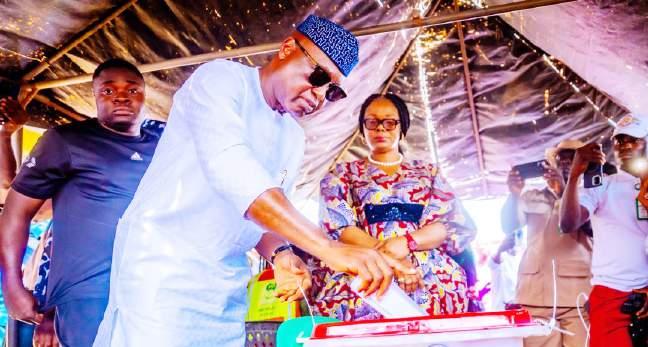
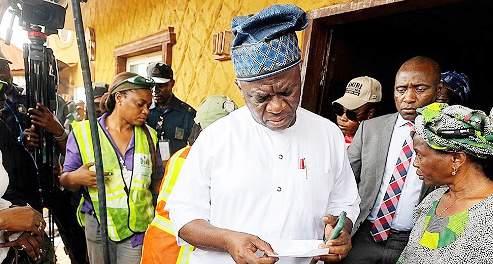
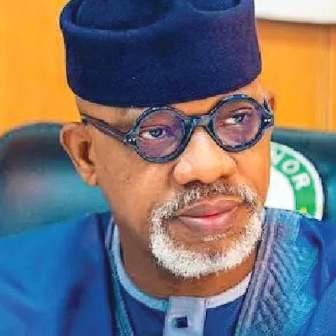
SEEKING A FRESH MANDATE FROM EKITI PEOPLE… Ekiti State Governor,
casting his vote at his Unit 03, Ward 6,
on page 5
319,224 40,543
Akinwale
Aborisade in Abuja
Mr. Biodun Oyebanji,
Ikogosi
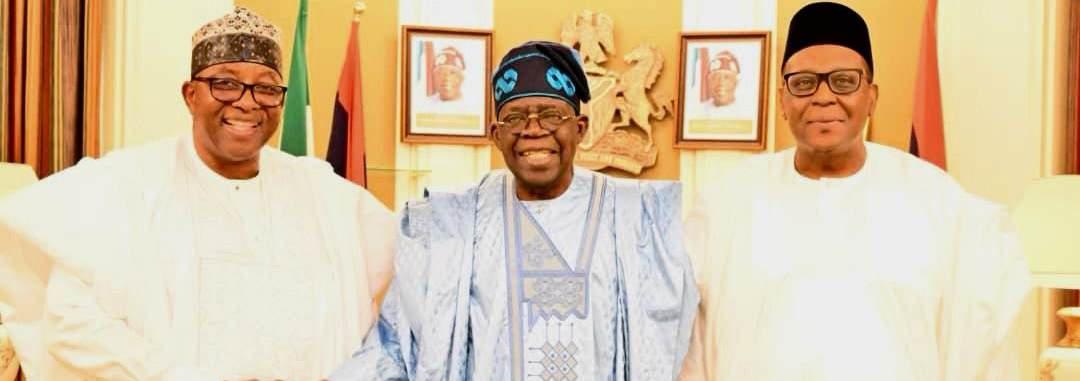
BAUCHI ALL FOR PBAT…
L-R: Bauchi State All Progressives Congress governorship candidate and former state Governor, Mohammed Abubakar; President Bola Ahmed Tinubu; and Coordinating Minister of Health and Social Welfare, Prof. Muhammad Ali Pate, when they paid a courtesy visit on the president at the Presidential Villa in Abuja…Friday
Dike Onwuamaeze in Lagos and Gbenga Sodeinde in Ado-Ekiti
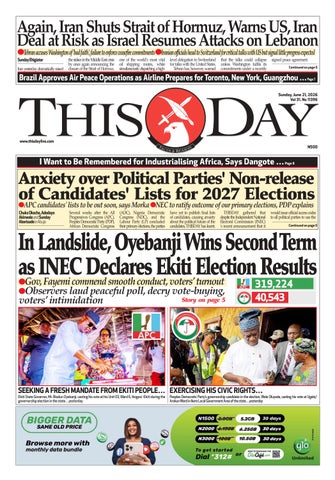
The Independent National Electoral Commission (INEC) has declared the candidate of the All Progressives Congress (APC) and incumbent Governor Biodun Oyebanji of Ekiti State winner of yesterday’s governorship election in the state.
Oyebanji, whose first term mandate will expire in October, recorded a landslide victory in the results of all the 2,445 polling units in the state, which were uploaded by the Independent National Electoral Commission (INEC) on its Result Viewing Portal (IREV).
The incumbent governor also won overwhelmingly in all the 16 local government areas (LGAs), recording 319,224 votes to defeat his closest rival and governorship candidate of the People’s Democratic Party
Candidate Nomination Portal on Friday, June 26, 2026, the fate of contestants in the parties' recent primaries remains uncertain.
While the political parties concluded their primary elections weeks ago, they have refused to publish definitive lists of governorship, National Assembly, and State Assembly candidates for the 2027 general election.
The uncertainty triggered widespread political aftershocks, fuelling allegations of deep cracks in the parties.
THISDAY gathered that the political parties are deliberately withholding the lists of the candidates to ensure that by the
The move came amid renewed bloodshed in Lebanon, where Israeli airstrikes killed at least 16 people, including two children, only hours after reports emerged of a ceasefire agreement between Israel and Hezbollah.
In a statement broadcast on Iranian state television, Tehran’s joint military command accused the United States of failing to uphold the first clause of the Memorandum of Understanding (MoU) signed earlier last week,
(PDP), Oluwole Oluyede, who scored 40, 543 votes, according to the results announced by the Returning Officer, Professor Adenike Oladiji, who is the Vice-Chancellor of the Federal University of Technology, Akure.
While Governor Oyebanji and his predecessor, Dr. Kayode Fayemi lauded the smooth conduct of the election and the voters’ turnout, civil society organisations also commended the peaceful conduct of the poll, even as they raised concerns over incidents of vote-buying and voter intimidation in some local government areas.
INEC, in the early morning hours of today, concluded the uploading and collation of all the results of the governorship election held in the 2,445 polling units in the 16 local government areas (LGAs) in the state.
Fourteen candidates contested the off-cycle governorship
time the names are released, it would be too late for aggrieved aspirants to court and challenge the process.
However, while the APC has explained in an interview with THISDAY that the list would be out soon, the faction of the PDP backed by the Minister of the Federal Capital Territory (FCT), Mr. Nyesom Wike, also told THISDAY that it was awaiting the meeting of its National Executive Committee (NEC) to ratify the various lists of its candidates before their publication.
But in defending its decision not to release the names of successful candidates from its
which called for an end to hostilities across the region, including Lebanon.
“It should be noted that this is the first step in responding to the enemy’s breach of its commitments,” the military command declared.
“Should the aggression continue, further measures would be planned and implemented to compel the enemy to abide by its obligations,” the statement added.
Iran specifically cited Israel’s
election, with Oyebanji seeking a second term.
His main challengers include: Oluyede of the PDP, Oluwadare Bejide of the African Democratic Congress (ADC), Oyebanji Olajuyin of the Labour Party (LP), and Blessing Abegunde of the New Nigeria Peoples Party (NNPP).
Other contenders included Samuel Akande of AAC, Ayodeji Ojo of ADP, Opeyemi Felegan of Accord, Joseph Anifowose of APM, Bidemi Awogbemi of APP, Olaniyi Ayodele of PRP and Victor Adetunji of ZLP.
After casting their votes, Governor Oyebanji and former Governor Fayemi have lauded the smooth conduct of the
primaries publicly, the NDC has insisted that there is no law compelling political parties to do so.
On its part, the ADC said it was still within the INEC's timetable and guidelines to submit the names of nominated candidates. In contrast, the LP said that it had ratified the list and would commence uploading to the INEC nomination portal on June 28.
In the APC, the President of the Senate, Senator Godswill Akpabio, recently acknowledged the growing anxiety among lawmakers affected by the primaries.
continued military operations and refusal to withdraw from southern Lebanon as evidence that Washington had failed to honour the agreement.
The announcement effectively reversed the reopening of the strategic waterway earlier in the week following the signing of the interim accord.
Moments later, the Islamic Revolutionary Guard Corps (IRGC) issued an even stronger warning to global shipping
election and the voters’ turnout. Oyebanji described the large turnout as a demonstration of the people’s commitment to democracy and good governance.
Speaking with journalists shortly after casting his vote at Ward 006, Unit 003, Oyebanji’s Compound, Okelele Area of Ikogosi-Ekiti, the governor addressed minor challenges reported in some areas, assuring the public that the hitches would not lead to disenfranchisement.
“There may be glitches in any process, but I am satisfied with the assurances I have received that such issues will be addressed. I appeal to our people to remain patient with INEC and allow the process to be completed,” he said.
He noted that reports reaching him from various parts of the state indicated that many polling
Continued on
Akpabio, while speaking at the inauguration of the APC National Campaign Council for the Ekiti governorship election, urged the party leadership to handle the final nomination list with sensitivity.
He said some of his colleagues in the National Assembly had developed high blood pressure.
"The party is supreme. I'm only pleading with the party to ensure that when they release their final list, they include all of us. Some of my people have hypertension," he said.
However, the party's National Publicity Secretary, Felix Morka, told THISDAY that the list of
operators.
“It is emphasised that the Strait of Hormuz is closed and vessels should not approach the Strait of Hormuz; otherwise, their security will be at risk,” the IRGC said in a statement carried by Fars News Agency.
The warning rattled global energy markets because nearly a fifth of the world’s oil supply passes through the narrow maritime corridor connecting the Persian Gulf to international
successful candidates would "soon" be released.
When asked when the party would publish the list of candidates, Morka, in a very short WhatsApp message, said "soon".
A senior party official, who preferred anonymity, revealed that the appeal committees were still sitting and expressed doubt that the party would ever publish the list.
"As we are talking, the appeal committees are still sitting. I doubt if the party will publish any list because it would create a lot of problems. Maybe the list would be published on INEC's website, where everyone will check for
waters.
Despite Iran’s declaration, the United States military insisted commercial traffic continued through the waterway.
The US Central Command (CENTCOM) announced that 55 merchant vessels had successfully transited the strait yesterday, transporting more than 17 million barrels of oil and other cargo to international markets.
“U.S. forces remain present and vigilant to ensure all aspects of the
their name," he said.
Another chieftain of the party, who also preferred anonymity, believed that the party leadership was deliberately delaying the release of the candidate lists to prevent possible fallout. According to him, as resentment from affected aspirants grows over alleged impositions, the party leadership is acting quickly to manage tensions before they escalate into organised internal sabotage or protest votes.
On its part, the NDC has argued that no law compels political parties to publish the lists.
agreement with Iran are adhered to, obeyed, and in full force and effect,” CENTCOM said.
Talks Proceed Despite Deepening Distrust
Even as Tehran escalated pressure on Washington, Iranian authorities confirmed that their delegation would travel to
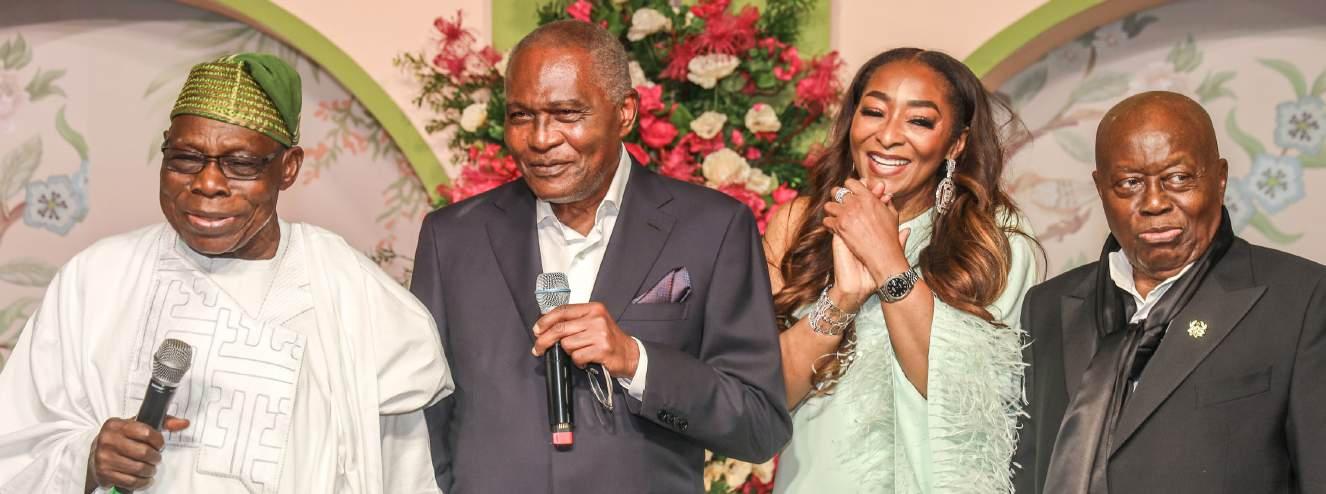
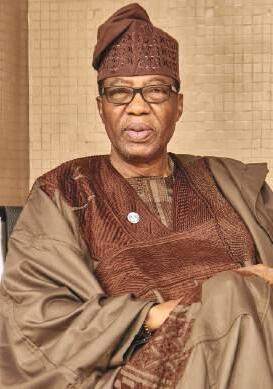
LATEST OCTOGENARIAN IN TOWN…
Brazil Approves Air Peace Operations as Airline
Prepares for Toronto, New York, Guangzhou
West Africa’s largest airline, Air Peace, has secured approval from Brazil’s National Civil Aviation Agency (ANAC) to operate scheduled international air services to and from the South American country, marking another milestone in its drive to become a global carrier.
The airline disclosed this in a statement signed by its management, stating that the
flight would slash travel time from West Africa to seven hours.
The Nigerian carrier, which currently operates the highest number of domestic, regional, and international routes, said it would also prepare to provide flight service to Toronto, Canada, New York, US, and China.
The airline has, since last year, applied to Canadian and United States’ authorities for landing permits to commence scheduled operations into Toronto and
New York respectively, while also finalising plans to resume services to Jeddah, Saudi Arabia, and Guangzhou, China.
Air Peace has also concluded plans to commence three weekly flights to Manchester in the United Kingdom as it continues to expand its footprint across Africa, Europe, North America, the Middle East, the Caribbean and South America.
The airline recently announced the launch of services to
Gabon; Conakry, Guinea; Bamako, Mali; and Douala, Cameroon, with operations scheduled to begin on August 1, further strengthening its position as Nigeria’s leading international carrier.
The Brazilian approval, contained in ANAC Ordinance No. 19.449/2026, authorises Air Peace to operate regular passenger, cargo and mail services between Brazil and destinations across its network,
FG Approves N21.2m for Each State to Support Ebola Outbreak Preparedness, Response Activities
Onyebuchi Ezigbo in Abuja
The federal government has approved the release of State Outbreak Investigation and Response Funds (S-OIRF) to support outbreak preparedness and response activities nationwide, as part of measures to strengthen Nigeria’s readiness against Ebola Virus Disease (EVD) and other emerging public health threats.
The Coordinating Minister of Health and Social Welfare, Prof. Muhammad Ali Pate, directed the Nigeria Centre for Disease Control and Prevention (NCDC), one of
the Gateways of the Basic Health Care Provision Fund (BHCPF), to immediately disburse 50 per cent of the S-OIRF allocation, amounting to N21.2 million per state.
Pate also directed states to endeavour to retire outbreakresponse funds within six months.
A statement signed by the Assistant Director, Information and Public Relations in the ministry, Ado Bako, said the intervention was meant to complement other efforts to strengthen national preparedness and response capacities, including the work of the multi-sectoral
Presidential Task Force on Ebola Preparedness and Other Health Threats, chaired by the Chief of Staff to the President, Hon. Femi Gbajabiamila.
It said: "While Nigeria has no confirmed case of Ebola Virus Disease, the federal government is taking proactive measures to ensure states have the resources required to strengthen surveillance, preparedness, and rapid response capacities in the event of any public health emergency.
"The approval provides a one-time special dispensation to enable states to access
critical preparedness funding in view of current public health concerns, while reinforcing the government’s commitment to accountability and prudent management of public resources," it said.
Pate, who is also the Chairman of the BHCPF Ministerial Oversight Committee, further directed all beneficiary states to retire both current and previously disbursed outbreak-response funds within six months and to ensure full compliance with established financial management, reporting, and accountability requirements.
Atiku’s Aide Explains Delay in Unveiling Amaechi as ADC’s Vice-Presidential Candidate
Chuks Okocha in Abuja
The camp of the presidential candidate of the African Democratic Congress (ADC), Atiku Abubakar, has explained the delay in the unveiling of the former Minister of Transportation, Rotimi Amaechi, as the former
Vice President’s running mate in the 2027 general election.
In a post on X yesterday, one of Atiku’s media aides, Abdulrasheed Shehu, attributed the delay to the presidential candidate’s current travel schedule.
Shehu, however, did not reveal the country his principal
travelled to.
The clarification came against the backdrop of a post on X asserting that all was not well within the ADC and that Amaechi was yet to accept the party’s offer.
In a swift response, Atiku’s aide wrote: “Atiku/Amaechi is settled. His Excellency is on
a short business trip. Once he returns, Amaechi will be officially unveiled in a few days as the VP candidate. Stop posting fake news.”
The update came following a wave of initial uncertainty and conflicting reports after the ADC produced its choice for the 2027 presidential election.
paving the way for direct air connectivity between Nigeria and Brazil by a Nigerian airline.
Air Peace’s growing international network currently includes London in the United Kingdom, Barbados in the Caribbean, and major West African destinations such as Accra, Ghana; Freetown, Sierra Leone; Dakar, Senegal; Banjul, The Gambia; Monrovia, Liberia; and Abidjan, Côte d’Ivoire.
A direct Nigeria-Brazil service is expected to significantly improve travel, trade and cultural exchanges between both countries.
Similar to the airline’s Barbados route, the Brazil service is projected to reduce travel time from nearly two days, often involving multiple stopovers, to about seven hours on a direct flight.
The route is expected to create new opportunities for tourism, investment, business and people-to-people engagement between Nigeria and Brazil, while also strengthening cargo operations and broader economic cooperation between both countries and the South American region.
Given the longstanding historical, cultural and commercial ties between Nigeria and Brazil, direct air connectivity has long been viewed as a missing link in bilateral relations.
With Brazil added to its growing portfolio of international destinations and additional strategic routes in the pipeline, Air Peace says it is taking another major step towards its ambition of becoming Africa’s preferred airline and a respected global aviation brand.
“Air Peace has achieved another significant milestone in its transformation into a global carrier, following approval by Brazil’s National Civil Aviation
Agency (ANAC) to operate scheduled international air services to and from the South American nation.
“The Brazilian approval comes as Air Peace accelerates its international expansion drive. The airline has, since last year, applied to the Canadian and United States authorities for landing permits for scheduled operations into Toronto and New York, respectively, while almost concluding plans to resume its operations into Jeddah, Saudi Arabia, and Guangzhou, in China,” the statement said.
“The airline’s expanding international network already includes London, United Kingdom; Barbados in the Caribbean; and major West African destinations such as Accra, Ghana; Freetown, Sierra Leone; Dakar, Senegal; Banjul, The Gambia; Monrovia, Liberia; and Abidjan, Côte d’Ivoire,” the airline also said.
It added that a direct NigeriaBrazil service would transform travel, trade, and cultural exchanges between the two countries.
“Like the airline’s Barbados route, the Brazil service is expected to reduce travel time from nearly two days, often involving multiple stopovers, to about seven hours on a direct flight, creating fresh opportunities for tourism, investment, business and people-to-people connections.
“Beyond passenger transportation, the authorisation is expected to boost cargo operations and deepen economic cooperation between Nigeria, Brazil, and the wider South American region. Given the longstanding historical, cultural, and commercial ties between the two countries, direct air connectivity has long been regarded as a missing link in bilateral relations,” Air Peace added.
Chinedu Eze
Libreville,
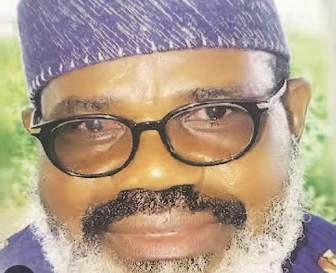
L-R: Former President, Chief Olusegun Obasanjo; Celebrant, Mr. Yomi Edu; his wife, Maureen; and Former President of Ghana, Mr. Nana Akufo-Addo, during Yomi Edu's 80th birthday reception held at Harbour Point, Victoria Island, Lagos...yesterday
PHOTO: KUNLE OGUNFUYI
CELEBRATING A LIFETIME AWARD…
L-R: Representative of the Chief of Naval Staff and Flag Officer Commanding Western Naval Command, Rear Admiral A.A Mustapha; the Hydrographer of the Federation and National Chief Executive Officer, National Hydrographic Agency, Rear Admiral Olumide Fadahunsi; Representative of the Minister of State for Defence and Director Navy, Ministry of Defence, Mr. Joel Adeoye Christopher; and the recipient of Lifetime Award of the Naval 21st Indigenous Chief of Naval Staff, Vice Admiral Anwal Gambo (rtd.), at the 2026 World Hydrography Day, held in Lagos…yesterday
Minority Caucus Slams House Spokesman, Insists Legislature Not Executive’s ‘Lapdog’
Demands public apology within 72 hours over alleged misrepresentation
The Minority Caucus of the House of Representatives has launched a scathing attack on the Chairman of the House Committee on Media and Public Affairs, Hon. Akin Rotimi, accusing him of improperly speaking on behalf of the entire House in response
to the caucus’ recent criticism of the worsening insecurity and economic hardship across Nigeria. In a statement issued yesterday and signed by Hon. Afam Victor Ogene on behalf of the caucus, the opposition lawmakers declared that the National Assembly must never become a “lapdog of
the Executive,” insisting that its constitutional responsibility is to hold the government accountable to the people.
The caucus argued that the House spokesman overstepped his authority by purporting to represent the House's collective position on matters raised by the Minority Caucus, stressing that no resolution, sitting, or
meeting of the House had authorised such a position.
According to the lawmakers, it remains Parliament's constitutional duty to scrutinise and hold the Executive accountable, particularly at a time when the nation is grappling with mounting security challenges and economic hardship.
I Want to Be Remembered for Industrialising Africa, Says Dangote
Hints at being richer than reported $38bn
Emmanuel Addeh in Abuja
Africa's richest man and President of the Dangote Group, Aliko Dangote, has said that he would rather be remembered for helping to industrialise Africa than for the size of his fortune, suggesting that his actual wealth may be significantly higher than estimates by global wealth trackers.
Dangote made the remarks during a street interview with James Dumoulin, founder of the School of Hard Knocks platform,
where he posts his interactions with dollar millionaires and billionaires.
During the brief interaction, Dangote reflected on his business legacy, wealth and the future of some of the group's biggest investments.
In the interview, he also appeared to dismiss estimates placing his fortune at about $38 billion, arguing that some of his most valuable assets remain privately held and are yet to be fully reflected in public valuations.
Asked how he would like to
be remembered, the Nigerian billionaire said: "I have actually passed the state of just doing business to make money, I want to leave a legacy. I want to be remembered as somebody who has industrialised Africa," he stated.
Dangote, whose business empire spans cement, sugar, salt, fertiliser and petroleum refining, stressed that building industries capable of transforming African economies was more important to him than rankings on global rich lists.
The industrialist expressed doubts about the current estimates of his net worth when asked how much he was worth, hinting that although he does not wake up to calculate how much his financial value is, it could be more than current estimates.
"What are they saying? I don't really look at those things. They say I'm worth $38 billion, but most of our businesses are not listed yet," Dangote said, adding that the full value of his holdings would become clearer in the future.
Telcos Back CBN’s Data Localisation Directive to Banks, Fintechs, Say Nigeria Has Capacity
The Association of Licensed Telecommunications Operators of Nigeria (ALTON) has backed the Central Bank of Nigeria’s (CBN) directive requiring banks and fintechs to host payment transaction data locally.
ALTON Chairman, Mr. Gbenga Adebayo, said this in an interview with the News Agency of Nigeria (NAN) in Lagos yesterday.
His position follows a recent
CBN directive mandating that banks, fintechs, and other payment service providers store payment transaction data generated in Nigeria on local servers from January 1, 2027.
The directive forms part of measures aimed at strengthening oversight of the country’s rapidly growing digital payments ecosystem.
Adebayo said data sovereignty required countries to take responsibility for their
entire data value chain.
According to him, this covers data collection, management, storage, and integrity assurance.
“We cannot continue to outsource that to other jurisdictions.
“The more we host our data locally, the better for us,” he said.
Adebayo said local hosting would enable Nigeria to manage data end-to-end and guarantee the integrity
of critical information.
He noted that hosting payment data outside the country increased communication requirements, latency, and retrieval costs.
“For every transaction involving data hosted outside our shores, communication has to take place from your location to the host and back.
“It increases latency and also increases the cost of data retrieval,” he said.
The Minority Caucus recalled that President Bola Tinubu himself, while in opposition, had maintained that “the buck stops at the President’s table,” arguing that the principle remains valid and that lawmakers must not remain silent while Nigerians continue to suffer.
They further accused the Executive arm of government of repeatedly failing to fulfill commitments made to Nigerians through Parliament, alleging that rather than demand accountability, the House spokesman had chosen to defend the administration.
“Parliament is not, and will never be, a lapdog of the Executive,” the caucus declared, vowing to continue speaking on behalf of Nigerians regardless of what it described as the
Majority Caucus’ willingness to “capitulate at the altar of blind partisanship.”
The caucus warned that any attempt by lawmakers to abandon the constitutional doctrine of checks and balances would undermine democratic governance and weaken public confidence in the legislature.
The Minority Caucus expressed what it described as “grave concern” over what it called the procedural impropriety displayed by the House spokesman, warning that such conduct could establish a dangerous precedent for parliamentary practice.
The caucus faulted the spokesman’s use of the phrase “House Notes” in his statement, describing it as misleading and a violation of the collective privileges of members.
FCT CP Gives DPOs Two Weeks’ Ultimatum to End Robbery in Abuja or Face Sanctions
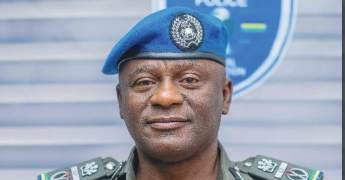
The Commissioner of Police (CP), in the Federal Capital Territory (FCT), Mr. Ahmed Mohammed Sanusi, has given a matching order to the Divisional Police Officers (DPOs) under the metro area command to ensure they end robbery activities within the city centre of Abuja within two weeks.
Sanusi gave the matching order during a meeting with 17 DPOs under the metro area command in Abuja over the weekend.
He said the order was intended to review the prevailing security situation and strengthen operational strategies to address emerging security threats within the area command.
He said the order became necessary after rising security challenges across the various
Area Commands, including traffic robbery, vehicle snatching, the onechance “robbery” menace, and motorists driving on “one-way”. According to him, the command also noted the activities of commercial motorcyclists operating on major roads within the city center, vandalism of public and private property, motorists parking on highways, and traffic congestion. He therefore ordered the DPOs to end such crimes within two weeks or face sanctions.
The police commissioner, however, directed all the DPOs and Area Commanders in the metro to focus on the city centre, and informed them that he would personally handle security challenges in the Abuja suburbs.
Juliet Akoje in Abuja
PHOTO: SUNDAY ADIGUN
EYEING N100BN FOR UNIBEN DEVELOPMENT…
NAF Intensifies Air Offensive Against Terrorists in North-west, Neutralises Criminal Elements
COAS charges new soldiers to confront terrorists with courage
Linus Aleke in Abuja
The Nigerian Air Force (NAF) has intensified its air offensive against terrorists and bandits operating in the North-west, carrying out precision strikes on identified criminal hideouts while expanding intelligence, surveillance and armed reconnaissance missions in support of ongoing joint military operations.
units witnessed impressive voter participation, with citizens patiently waiting to exercise their civic responsibility.
The governor also commended INEC and security agencies for their conduct, adding that the peaceful atmosphere witnessed in many communities was highly encouraging.
On his part, former Governor Fayemi described the accreditation and voting process as smooth and seamless across his polling unit.
Fayemi cast his vote at Ward 11, Unit 9, Ogilolo, Isan-Ekiti, Isan-Ekiti LGA, where he praised officials of the INEC for what he described as improved efficiency.
“It was a smooth experience. Everything went reasonably well. The accreditation process was fast and seamless,” he said.
He added that the process was consistent with voters in his polling unit, including his wife, and commended INEC personnel for their performance.
Fayemi noted that although there was a reported incident in the community the previous night, the election itself remained peaceful, clarifying that the altercation was unrelated to the electoral process.
The operations were conducted by the Air Component of Operation Fansan Yamma Sector 1 on 18 and 19 June 2026, demonstrating the NAF's determination to deny criminal elements freedom of movement and strengthen security across the theatre of operations.
This is just as the Chief of
monitored the governorship election have commended the peaceful conduct of the poll across the state, even as they raised concerns over incidents of vote-buying and voter intimidation in some local government areas.
The EU-SDGN Election Observation Hub, alongside another monitoring group, the Kimpact Development Initiative (KDI), said while the election environment was generally calm and orderly, operational gaps and electoral offences, including vote-buying, remained issues of concern.
The EU-SDGN Election Observation Hub, comprising the Kukah Centre, Yiaga Africa, TAF Africa, Nigerian Women Trust Fund, International Press Centre and the Centre for Media and Society, said it deployed 598 observers across polling units in the 16 local government areas of the state.
In its joint statement issued yesterday in Ado-Ekiti, the group said voting commenced early in most areas, with improved performance of election materials and personnel and a largely peaceful atmosphere recorded across polling units.
The group, however, disclosed that it recorded 24 incidents of electoral offences across nine local government areas, with vote-buying and
Army Staff (COAS), Lieutenant General Waidi Shaibu, has urged newly-trained soldiers of the 90 Regular Recruit Intake to confront terrorists and other criminal elements with courage and determination while upholding the highest standards of professionalism and respect for human rights.
According to a statement by the Director of Public Relations
voter intimidation emerging as key concerns.
According to the observers, the incidents were most prominent in Irepodun/Ifelodun and Ado-Ekiti Local Government Areas, where attempts were allegedly made to influence voters and compromise the secrecy of the ballot.
It warned that the persistence of vote-buying and voter inducement schemes could undermine public confidence in the electoral process if not urgently addressed.
Similarly, the KDI, in its preliminary assessment of the election, said findings from its Election Day Data Room suggested that the poll had so far demonstrated a generally orderly and functional electoral process.
The group Executive Director, Bukola Idowu, said the election also exposed persistent operational vulnerabilities, particularly in logistics, timely arrival of election officials, polling unit commencement, and performance of election technology.
Fayose’s Brother Seeks Cancellation of Afao-Ekiti Results, Alleges Vote Manipulation
Meanwhile, the younger brother of former Ekiti State Governor Ayodele Fayose,
and Information, NAF, Air Commodore Ehimen Ejodame, the sustained air missions formed part of ongoing efforts to disrupt terrorist activities and degrade the operational capabilities of armed groups threatening peace and stability in the region.
"Acting on credible intelligence, NAF aircraft successfully engaged a
confirmed terrorist stronghold within the Joint Operations Area, delivering precision strikes that disrupted the activities of criminal elements and significantly weakened their operational capacity," Ejodame said.
In a separate intelligence-led operation around Kidandan, NAF aircraft successfully neutralised terrorists after
ELECTION RESULTS
Emmanuel Fayose, has called for the cancellation of the governorship election results in Afao-Ekiti, alleging widespread irregularities and deliberate invalidation of votes cast for the ADC.
Fayose, the ADC candidate for the House of Representatives in Ekiti Central, made the demand while speaking with journalists at the Iketun-Agba Ibera polling unit during yesterday’s governorship election.
He alleged that supporters of the APC were deliberately voiding ballots cast for the ADC and other opposition parties, describing the process as undemocratic and compromised.
PDP Candidate Alleges BVAS Glitches, Others
Also speaking with journalists yesterday, the PDP governorship candidate, Oluyede, expressed dissatisfaction with the conduct of the election at Ugele/ Arokun Ward in Ikere Local Government Area.
He said many voters at his polling unit had yet to vote due to challenges with the Bimodal Voter Accreditation System (BVAS). He also alleged voter harassment and intimidation in the ward.
Similarly, the governorship candidate of the Accord Party, Opeyemi Falegan, alleged widespread vote-buying and operational lapses, describing the process as falling short of democratic standards.
Falegan made the allegations in a series of posts on his Facebook page shortly after casting his vote at his polling unit in Idofin, Ado-Ekiti.
He listed incidents of voter inducement at his polling unit, claiming that some individuals were allegedly offering voters money in exchange for support for one of the candidates in the election.
Falegan alleged that voters were being offered as much as N20,000 to influence their choices at the ballot box, a development he said undermined the credibility of the electoral process.
Yiaga Alleges Inconsistencies in Ballot Papers, Result Sheets, INEC Candidates List
Similarly, Yiaga Africa alleged discrepancies between the ballot papers, result sheets, and the list of candidates published
positively identifying their movement within the area.
According to NAF, subsequent reconnaissance missions over Fatika and Sabuwa confirmed the absence of further terrorist activity. At the same time, continuous aerial surveillance was maintained in support of friendly ground forces and ongoing operations throughout the theatre.
by INEC.
In a statement signed by Dr. Aisha Abdullahi, Chair, 2026 Ekiti Election Observation Mission Yiaga Africa, and Samson Itodo, Executive Director, Yiaga Africa, the duo drew attention specifically to the Form EC8A polling unit result sheets, which provided spaces for 15 political parties, as against 19 parties carried by the ballot papers in circulation.
Yiaga noted that INEC’s final list of candidates, as updated and available on the INEC website as of 18th June 2026, reflected 14 parties that fielded candidates.
“Yiaga Africa is observing the Ekiti State governorship election, and our preliminary findings raise serious concerns about the consistency of the materials INEC has deployed.
“As of 8:30 am, 96% of the observers from our 250 randomly sampled polling units were at the polling unit to observe the election.
“Yiaga Africa recognizes the context. After INEC published its initial list of 12 candidates in January 2026, subsequent court rulings (notably on the PDP’s candidacy) and late administrative changes altered party and candidate participation.”
Minister of Education, Dr. Tunji Alausa (left); and Chairman, Board of Trustees, University of Benin Trust Development Fund (UNIBEN-TDF), Pastor Osagie Ize-Iyamu, during a visit to intimate the minister of the formal launch of the ₦100billion, and to formally invite him to the event, in the minister’s office, Abuja…recently
CONGRATULATIONS ON DOUBLE CELEBRATION…
10 APC Governorship Aspirants Raise the Alarm over Party’s Leadership Crisis in Kwara, Write Tinubu
Hammed Shittu in Ilorin
Ten governorship aspirants of the All Progressives Congress (APC) in Kwara State have raised concerns over what they described as a deepening crisis within the party, alleging that Governor AbdulRahman AbdulRazaq has “lost moral and political authority” to shape the party's future ahead of the 2027 general election.
The aspirants, in a joint petition issued at the weekend and addressed to President Bola
Tinubu, warned that the ruling party in the state risks further fragmentation unless urgent intervention is made at the national level.
The signatories include Dr. Oluwatoyin Tajudeen Alabi; Capt. Ahmad Mahmud; Alhaji Tajudeen Audu; Dr. Azeez Salako Muideen Olaniyi; Ambassador Yahaya Seriki Gambari; Senator Saliu Mustapha; Dr Bashir Omolaja Bolarinwa; Hon Omar Muhammed Bio; Mr. Dele Belgore (SAN); and Senator
Yahaya Ibrahim Oloriegbe.
In the petition, the aspirants expressed continued loyalty to President Tinubu and his administration while urging him to intervene in what they described as a worsening political crisis that could weaken the APC’s electoral chances in Kwara State.
They also faulted the state's governorship selection process, describing it as lacking inclusiveness and driven by exclusionary arrangements that had heightened tensions among
stakeholders.
The aspirants said, “We, the undersigned governorship aspirants of the All Progressives Congress in Kwara State, write to convey our warm felicitations to Your Excellency on the occasion of the third anniversary of your administration.
“As committed members of our great party, we remain steadfast in our support for your leadership and resolute in our loyalty to your administration.”
Reaffirming their support
for the President’s re-election bid, the aspirants said they remained committed to the Renewed Hope Agenda, which they described as central to Nigeria’s development trajectory.
“We reaffirm our total allegiance to Your Excellency and our unreserved support for your re-election in 2027. We are convinced that the Renewed Hope Agenda remains the surest path to unlocking Nigeria’s vast potential, and we stand prepared to
ANXIETY OVER POLITICAL PARTIES' NON-RELEASE OF CANDIDATES' LISTS FOR 2027 ELECTIONS
Speaking to THISDAY yesterday, the National Publicity Secretary of the party, Mr. Osa Director, dismissed criticisms trailing the party's handling of its nomination process, arguing that the protocol governing party primaries does not mandate public publication of the names of successful aspirants.
He maintained that candidates who participated in the exercises had already been informed of the outcomes, while those dissatisfied with the results were free to seek legal redress.
"The protocol does not involve compulsory public publication of results," he added.
He disclosed that the NDC had complied with all statutory requirements, adding that the INEC was already in possession of the relevant records from the primaries.
"Therefore, as it is, INEC already has a list of candidates," he added.
The NDC spokesperson further clarified that the June 26 deadline for submitting candidates' particulars to the electoral
commission was intended to allow political parties to upload and authenticate their final lists.
Also reacting to the issue, the Wike-backed PDP said it was awaiting its NEC meeting to ratify the lists of all candidates.
According to the National Publicity Secretary of the PDP, Haruna Jungudo, "we have conducted all nomination exercises, including the appeals by those aggrieved in the conduct of the exercise.
"Our exercise in this regard, both the primary nomination
exercise and subsequent appeals, was monitored by INEC.
"We are now awaiting the NEC meeting that is expected to take place sooner for ratification of the exercise. It is only after the ratification by the NEC that we as a political party will upload the outcome of the exercise to INEC", Jungudo added.
Similarly, the ADC said it had completed all nomination exercises but insisted that it was still within INEC's timetable and guidelines to submit the names of nominated candidates.
Speaking to THISDAY, the National Publicity Secretary of the ADC, Mallam Bolaji Abdullahi, said the party had completed all exercises, including the nomination of candidates for the 2027 general election, but is "merely biding its time."
According to the spokesman of the ADC, "we have conducted the primaries of all categories of the elections and the processes monitored by INEC. We are within INEC's approved timetable, so I can say we
contribute meaningfully to its full realisation,” they stated.
However, the group warned that despite their loyalty to the President, the APC in Kwara State was sliding into a dangerous internal crisis that required urgent attention.
“While we join in celebrating the milestones of your administration, we consider it imperative to draw your urgent attention to the grave and worsening situation within our party in Kwara State,” they wrote.
are merely biding our time. ADC will upload the names of nominated candidates at the appropriate time". In the same vein, the Nenadi Usman-led LP said that it had formally ratified 1,211 candidates for various elective positions ahead of the 2027 elections. The National Publicity Secretary of the party, Ken Asogwa, said that the party's NEC had ratified all nominated candidates and that the party would commence uploading them to INEC on June 28.
AGAIN, IRAN SHUTS STRAIT OF HORMUZ, WARNS US, IRAN DEAL AT RISK AS ISRAEL RESUMES ATTACKS ON LEBANON
Bürgenstock, Switzerland, for long-awaited technical talks aimed at implementing the broader peace agreement and negotiating the future of Iran’s nuclear programme.
The Iranian team is expected to include Parliament Speaker Mohammad Bagher Qalibaf; Foreign Minister Abbas Araghchi; senior central bank officials; and energy sector representatives.
However, Iranian Foreign Ministry spokesman Esmail Bagahei made clear that Tehran sees the talks as an opportunity to demand compliance rather than negotiate concessions.
“This trip is therefore about demanding that the other side fulfill its obligations,” Bagahei said.
“If part of the other side’s
commitments is not implemented, the entire memorandum of understanding will be jeopardized.”
He stressed that negotiations toward a final and comprehensive agreement would only begin once Iran was satisfied that the US had ensured implementation of the existing commitments.
Iranian state media echoed the warning, saying the delegation’s mission was to “follow up on and demand the implementation of the other side’s commitments.”
Pakistan, Qatar Push for Breakthrough
Pakistan, which played a leading role in brokering the agreement, confirmed that
negotiations would commence today (Sunday) with support from Qatari mediators.
In a statement, Pakistan’s Foreign Ministry said: “Representatives of the United States and Iran, along with mediators from Pakistan and Qatar, will participate in the discussions.
“Pakistan will continue to facilitate the process in its role as mediator, with a view to advancing the understandings reached under the Islamabad Memorandum of Understanding.”
As part of efforts to salvage momentum, Pakistani Interior Minister Mohsin Naqvi met Iranian Foreign Minister Araghchi in Tehran yesterday.
On the US side, senior
envoys, Jared Kushner and Steve Witkoff, have already arrived in Switzerland to prepare for negotiations.
Vice President JD Vance confirmed the development during an interview with Fox News.
“Jared and Steve have been on the ground now for a few hours dealing with some of the technical elements of this negotiation,” Vance said.
“We’ll plan the talks when the principals from the Iranian government, the Qatari government, and the Pakistani government arrive.”
He added: “That may happen as soon as tomorrow, but these things are always a little bit in flux.”
Vance also indicated that he expected to travel to Switzerland personally “sometime in the next couple of days.”
Lebanon Fighting Threatens Fragile Peace Effort
Despite the ceasefire between Israel and Hezbollah, Lebanon’s National News Agency reported that Israeli strikes on Nabatiyeh and nearby villages killed at least 16 people and left several others trapped beneath collapsed buildings.
Lebanon’s Health Ministry later announced that the death toll from the latest Israel-Hezbollah war had surpassed 4,000.
The Israeli military accused Hezbollah of firing more than
50 rockets and projectiles at Israeli forces operating in southern Lebanon overnight.
“These attacks constitute repeated and ongoing violations of the ceasefire agreement by the Hezbollah terrorist organisation,” the Israeli military said.
“The IDF will not tolerate attacks against Israeli civilians or IDF soldiers and will respond with determination to any act of aggression directed against them.”
Israeli forces subsequently launched strikes against what they described as Hezbollah command centres and militant positions.
Hezbollah, however, rejected Israel’s accusations and insisted it remained committed to the ceasefire.
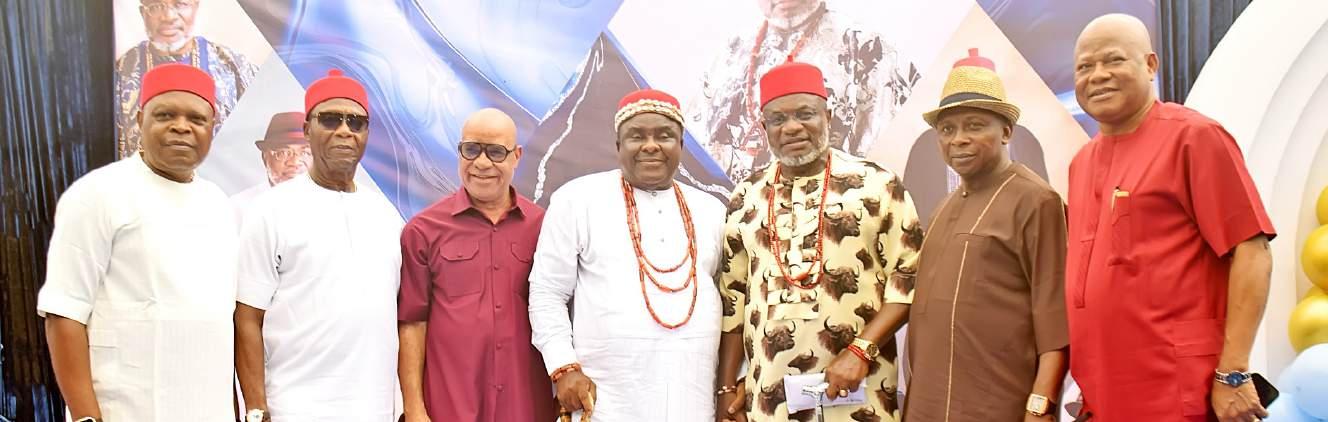
L-R: Chief Executive Officer, Delta-Flow Bathrooms Limited, Sir Sunny Okoli; Chairman, Zentec Investment Nigeria Limited, Chief Charles Ezenduka; Chief Executive Officer, Koil Nigeria Limited, Chief Luke Okeke; Principal Partner, Orizu & Co (Estate Surveyors & Valuers), Chief A J C Orizu; Celebrant and Chief Executive Officer, BENNEKS Industries Limited, Chief Ben Amuta; Chief Executive Officer, Achutex Ventures Limited, Mr. Chike Okonkwo; and Chief Executive Officer, Neros Pharmaceutical Limited, Prof. Paully Emenike, at the 65th birthday ceremony of Chief Amuta and grand opening of BRITEMOON Homes & Apartments at Festac Town, Lagos …weekend
Senate Leader Rules Out Electoral Act Amendment Before 2027 General Election
Raheem Akingbolu in Ado-Ekiti
The Senate Leader, Senator Opeyemi Bamidele, has ruled out any amendment to the Electoral Act before the 2027 general election, saying the National Assembly would allow the current law to operate fully before considering further reforms.
Bamidele made the declaration yesterday after casting his vote in Iyin-Ekiti during the Ekiti State governorship election.
The Senate Leader commended the Independent
National Electoral Commission (INEC) and voters for the smooth conduct of the election and the impressive turnout recorded across the state.
While acknowledging that Nigeria’s electoral system remained a work in progress, he maintained that no changes would be made to the Electoral Act ahead of the 2027 polls.
“There is no doubt that our electoral system is evolving and improving. This is one of the first major elections being conducted under the amended Electoral Act, and I have observed a high level of
US Backs Expansion of CNG Infrastructure, Urges
Nigeria to Embrace Alternative Energy
ejiofor Alike
The California Secretary of Transportation, Toks Omishakin, yesterday commended the efforts to expand Compressed Natural Gas (CNG) infrastructure in Nigeria, describing it as a practical and timely solution to rising fuel costs and global energy challenges.
This is coming as the Chief Executive Officer and Founder of Portland Gas Limited, Folajimi Lai Mohammed, has called for maximum utilisation of the country’s natural gas resources.
Speaking during a visit to Portland Gas’ newly established CNG facility in Lagos, Omishakin said Nigeria must continue to explore alternative energy sources capable of making transportation and energy more affordable for citizens.
The California transportation chief, who toured the facility alongside the former Lagos State lawmaker and Portland Gas founder, Mohammed, said the project was the kind of innovation needed to address current economic and
environmental realities.
According to him, the increasing cost of conventional fuels, coupled with ongoing geopolitical tensions across the world, made the search for cleaner and more affordable energy alternatives imperative.
He said, “I think this is exactly what Nigeria needs at this time and moment. With all the geopolitical conflicts going around the world and fuel costs at record high levels, especially for diesel, gas and petroleum, people need alternatives. They need options to be able to power and energise their vehicles,” he said.
Earlier, Portland CEO, Mohammed, noted that while countries such as the United States have progressed to electric vehicles after years of adopting natural gas, Nigeria is currently at a stage where it must fully harness its vast natural gas reserves.
“We have an abundance of gas in Nigeria. We have about three times more gas than oil. The true measure of having gas is not what is beneath the ground, but what we are actually using,” he said.
compliance not only by INEC but also by political parties and voters themselves,” he said.
“Today, people are more aware of what constitutes electoral offences and the consequences such violations carry for both political parties and individuals. That growing awareness is a positive development for our democracy.”
Bamidele also expressed satisfaction with reports from across Ekiti State on voter participation and the election’s conduct.
“I made several calls across the state to obtain first-hand information on how the process was progressing in different local government areas. The reports I received regarding voter turnout have been encouraging,” he said.
“I am equally impressed by INEC’s performance, particularly the prompt deployment of officials to polling units and the timely arrival of voting materials. This represents a significant improvement on previous elections.”
The Senate Leader noted that Ekiti State has about 1.059 million registered voters, with more than one million having collected their Permanent Voter Cards (PVCs), a development he said could result in one of the highest voter participation rates in the state’s history.
He added that a comprehensive review of the electoral process would be undertaken after the election, taking into account reports from observers and the outcomes of
by-elections being conducted across the country.
Explaining the National Assembly’s position on electoral reforms, Bamidele said lawmakers had deliberately decided against altering the legal framework ahead of the 2027 elections.
“The law is like a human being — it grows and evolves. As people grow, they often need to change their clothing to suit new realities. That is the purpose of amending existing laws,” he said.
Igbo Youth Leaders Back SEDC, Call for More Federal Appointments for South-east Youths
Igbo youth leaders and stakeholders from across the seven Igbo-speaking states have thrown their weight behind the leadership of the South East Development Commission (SEDC), while calling on President Bola Ahmed Tinubu to give more opportunities to young people from the South-East in federal appointments.
The position was contained in a communiqué issued at the
end of the Igbo Youth Leaders and Stakeholders Convention held on June 18 and 19 in Awka, Anambra State.
The delegates commended President Tinubu for establishing the SEDC, describing it as a major step towards addressing the developmental needs of the region and they also praised the federal government for ongoing road construction and
other infrastructure projects in the South-east.
Speaking after the convention, the Convener, Mazi Chukwuma Okpalaezeukwu, said the region appreciates the administration’s efforts but believes more can be done to integrate young Igbo professionals into national governance.
“We commend President Bola Ahmed Tinubu for creating the
South East Development Commission and for the infrastructure projects currently being executed across Ala-Igbo.
“At the same time, we appeal for greater inclusion of Igbo youths in federal agencies and parastatals.
“Our young people possess the talent, innovation and entrepreneurial spirit needed to contribute meaningfully to national development, he said.”
UNIBEN Gets NUC’s Approval for Six New Undergraduate, Postgraduate Courses
The National Universities Commission (NUC) has approved six new full-time undergraduate programmes and additional postgraduate courses for the University of Benin (UNIBEN), effective from the 2026/2027 academic session.
The Public Relations Officer of the university, Dr Benedicta Ehanire, announced this in a statement yesterday in Benin-City.
The university’s spokesperson said the approval followed the successful resource assessment of the proposed programmes by the commission.
Ehanire said the development would further strengthen UNIBEN’s position as a centre of excellence in manpower development.
Two of the newly approved undergraduate programmes, he said, were Bachelor of Science degrees in Speech Language Therapy and Occupational Therapy.
The programmes align with the policy initiative of the Minister of Education, Dr Tunji Alausa, aimed at training skilled manpower to address the shortage of professionals in both fields within Nigeria’s healthcare sector,” she said.
She noted that other undergraduate programmes approved by the NUC were Bachelor of Science degrees in International Relations; Intelligence and Security Studies; Bachelor of Education in Primary Education, and Bachelor of Nursing Science.
The nursing science programme, she said, would be offered in collaboration with the University of Benin Teaching Hospital.
She explained that the university’s Centre of Excellence in Space Science Technology
and Application had also received approval to offer Master’s and Doctor of Philosophy (Ph.D) degrees in Remote Sensing and Aeronautics Engineering.
The university’s spokesperson noted that the Vice-Chancellor of UNIBEN, Prof. Edoba Omoregie, expressed appreciation to the NUC for the approval.
She said the vice-chancellor reiterated the institution’s commitment to sustaining its position as a leading hub for manpower training and development through diverse and extensive academic programmes.
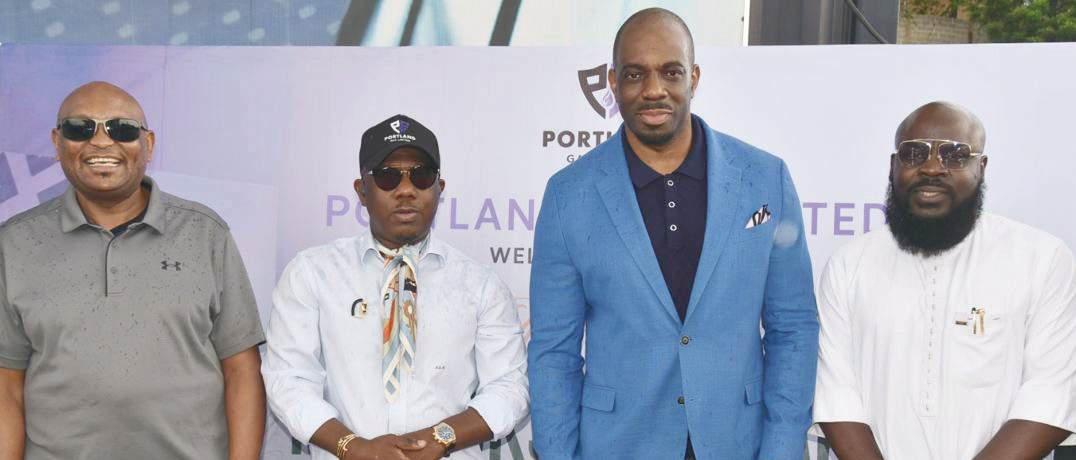
L-R: Business Consultant, Mr Akin Olaoye; Chief Executive Officer, Portland Gas Limited, Hon. Folajimi Lai Mohammed; State Secretary of Transportation, California State, Mr Toks Omishakin; and International Policy Advisor, State of California Transportation Agency, Mr. Bonny Ntaga, during the official visit of the California State Secretary of Transportation to Portland Gas Limited, Interstate Bus Terminal, Ojota, Lagos…recently
As CBN Moves to Rein in Payment Giants
From hidden ownership to data sovereignty, the Central Bank of Nigeria is confronting risks lurking beneath Nigeria’s fintech boom, writes Festus Akanbi
The Central Bank of Nigeria’s (CBN) latest directive to banks, fintechs and payment service providers marks a significant shift in the regulation of Nigeria’s financial system. By requiring the disclosure of Ultimate Beneficial Owners (UBOs), the localisation of payment transaction data by January 1, 2027, and compliance with new market concentration limits, the apex bank is seeking to prevent innovation from becoming a channel for hidden ownership, weak governance, and systemic risk.
The directive comes at a critical moment. Nigeria’s payments industry has expanded rapidly, transforming electronic payments into the engine of daily commerce. NIBSS data showed that electronic payment transactions rose to N284.99 trillion in the first quarter of 2025, up from N234.49 trillion a year earlier. The CBN also reported that nearly 11 billion transactions passed through the NIBSS Instant Payments platform in 2024, up from about five billion in 2022. The system has become too large and interconnected to be governed by loose ownership disclosure and offshore data dependence.
As digital finance grows, the identity of those who ultimately control banks, fintechs and payment platforms becomes a matter of national financial security. Hidden ownership is not merely a legal issue; it can determine who controls customer data, influence credit flows, benefit from market dominance, and potentially exploit the financial system for illicit purposes.
This explains the directive’s emphasis on Ultimate Beneficial Ownership. According to the Executive Director, Operations at DataPro Limited, Mr. Oladele Adeoye, the requirement aligns with FATF Recommendations 10 and 25 by enabling the CBN to identify the natural persons behind financial institutions and prevent sanctioned persons or disguised interests from controlling the ecosystem.
Similarly, the Head of ERM Advisory Services at DataPro, Mr. Shittu Idris, described the disclosure requirement as a critical safeguard for sustaining Nigeria’s anti-money laundering progress. He noted that the directive aligns with FATF Recommendations 24 and 25, which place strong emphasis on beneficial ownership transparency to prevent criminals, tax evaders and shell companies from concealing illicit financial flows through opaque corporate structures. According to him, the measure will also reduce “proxy risks” in which cross-border criminal actors exploit local fintech platforms as intermediaries for financial crimes.
Nigeria’s experience with the Financial Action Task Force (FATF) lends additional significance to the reform. In February 2023, Nigeria was placed on the FATF grey list due to weaknesses in its anti-money laundering and counter-terrorist financing framework. FATF required improvements in areas such as risk-based supervision,
beneficial ownership transparency, enforcement, and financial intelligence. Although Nigeria exited the grey list in October 2025 after completing its action plan, the episode demonstrated how weaknesses in financial integrity can damage a country’s international reputation.
The banking industry has already witnessed the consequences of governance failures. In January 2024, the CBN dissolved the boards and management of Union Bank, Keystone Bank and Polaris Bank over governance concerns and regulatory non-compliance. The controversy surrounding Titan Trust Bank’s acquisition of Union Bank also highlighted how questions about ownership, funding sources and control can create uncertainty around major financial transactions.
Heritage Bank provided another warning. In June 2024, the CBN revoked its operating licence after the bank failed to recover from persistent financial weakness. Although the case was not solely about ownership disclosure, it illustrated how weak governance, poor risk management, and ineffective supervision can ultimately threaten financial stability.
The fintech sector presents a different but equally important challenge. Many leading fintechs are privately held, rapidly expanding, and backed by multiple layers of local and foreign investors. While this does not imply improper ownership, it can make ultimate control less visible than in publicly listed banks.
Companies such as Moniepoint, OPay, PalmPay, Flutterwave, Paga and Kuda have become central to payments, transfers, merchant services and digital banking. Reuters reported in 2024 that Moniepoint raised $110 million from investors including Google, DPI, Lightrock and Verod Capital, lifting its valuation above $1 billion. The Financial Times reported that PalmPay, launched in 2019, had grown to 35 million registered users. Such a scale makes regulatory clarity over ownership, governance, and data management essential.
The CBN has consequently designated several leading fintechs as systemically relevant participants. That designation means these firms are no longer peripheral technology start-ups but part of the country’s critical financial infrastructure. A major failure, cyberattack, or compliance breach affecting any of them could have consequences for millions of consumers and businesses.
This concern explains the second pillar of the directive: data localisation. From January 1, 2027, payment transaction data generated in Nigeria must be stored and managed within the country. While the concept may seem technical, it is central to financial sovereignty. Payment data reveals how money moves across the economy, how businesses operate, and how consumers transact. If such information is held offshore, regulators may encounter delays, legal hurdles or jurisdictional constraints during investigations.
Data localisation could also stimulate investment in local data centres, cybersecurity infrastructure and cloud services, creating opportunities for domestic technology providers and skilled professionals. However, it will increase compliance costs, particularly for smaller fintechs that depend heavily on foreign cloud infrastructure. Some of these costs may eventually be passed on to customers.
The third element of the reform addresses concentration risk. Under the new framework, an institution controlling more than 25 per cent of the card-issuing market cannot hold more than 15 per cent of the merchant-acquiring market, and vice versa. The objective is to prevent excessive dominance across critical segments of the payment chain.
In a market where digital payments have become indispensable, excessive concentration can weaken competition, discourage innovation, and create institutions that are effectively too important to fail. The new limits are therefore designed to preserve competitive balance while reducing systemic vulnerability.
The benefits of the directive are evident. Greater ownership transparency can reduce illicit financial flows, strengthen investor confidence, and support international banking relationships. Data localisation can improve regulatory oversight and cybersecurity control, while market-share restrictions can promote competition and reduce systemic risk.
The challenges are equally clear. Compliance costs will increase, smaller operators may struggle to adapt, and some institutions may be forced to restructure ownership or technology arrangements. Nevertheless, the long-term direction is difficult to fault. Nigeria’s digital payments ecosystem has outgrown the light-touch assumptions that characterised its early years and now requires rules that reflect its size, influence and importance.
The CBN’s directive is therefore more than a routine regulatory circular. It is an attempt to strengthen the foundations of digital finance by making ownership more transparent, data more secure, and competition more balanced. If implemented effectively, it could help Nigeria build a payments system that is not only innovative but also resilient, transparent, and trusted.
Broad Street, Lagos
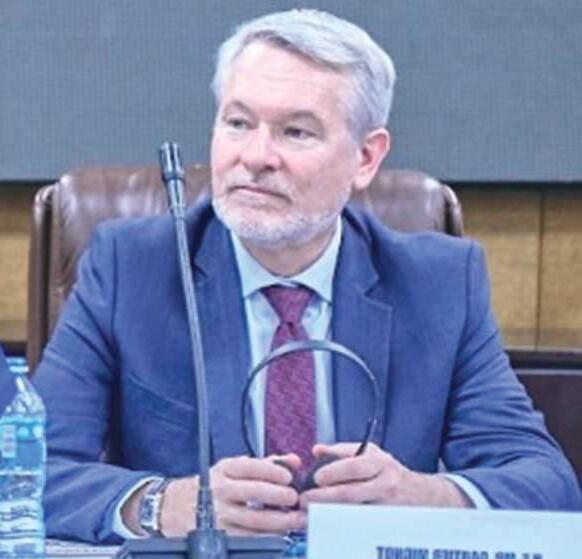
Be Where Europe and Nigeria Do Business, Says EU Envoy, Mignot
The European Union and the Federal Government of Nigeria will convene the 10th Nigeria–EU Business Forum on June 25, 2026 in Lagos, bringing together policymakers, investors, development finance institutions, and business leaders from Nigeria and Europe. Ahead of the forum, the Ambassador of the European Union Delegation to Nigeria and ECOWAS, Gautier Mignot, speaks with THISDAY on investment, economic cooperation, private sector participation, and why the Forum matters for Nigeria’s long-term economic growth
Why does the Nigeria–EU Business Forum matter at this moment?
The global economy is changing rapidly, and countries are increasingly looking for stronger partnerships capable of supporting investment, growth, and long-term economic stability.
Nigeria remains one of Africa’s most important economies with strong potential across energy, infrastructure, agriculture, manufacturing, technology, and services.
The EU is Nigeria’s first trade and investment partner. Nigeria historically maintains a strong trade surplus with the EU, exporting significantly more (mostly fuels, cocoa, and agricultural products) than it imports. The EU also acts as Nigeria's biggest foreign investor, with over €38 billion in foreign direct investment (FDI) stock in the country.
For the European Union, the Forum creates an opportunity to deepen engagement with the government, investors, businesses, and financial institutions for a long-term economic cooperation.
It is also an opportunity to move discussions beyond general interest towards practical partnerships and investment opportunities. This is where Europe meets Nigeria at scale.
What is the European Union hoping to achieve through this year’s Forum?
The objective is straightforward. We want to strengthen cooperation between Nigeria and Europe through economic engagement between our private sectors.
The forum brings together policymakers, investors, entrepreneurs, regulators, and business leaders in one platform focused on opportunity, partnership, and growth.
Businesses want access to markets and investment opportunities. Governments want investment capable of supporting jobs, infrastructure, and economic expansion. Investors want confidence and long-term potential.
The forum creates a space where those conversations can happen directly and constructively. This is where investment conversations become commitments.
What sectors do you believe offer the strongest opportunities for Nigeria and Europe?
Energy remains one of the most important. Reliable energy supports industrialisation, productivity, healthcare, education, manufacturing, and economic growth. Nigeria’s renewable energy sector, particularly off-grid and distributed energy solutions, continues to attract strong interest from investors and development partners. The EU has supported the Nigerian renewable energy sector since 2008, significantly contributing to the emergence of this nascent market.
Agriculture and agribusiness also present major opportunities because of their importance to food systems, processing, exports, and employment. Increasingly, the EU and Nigeria view this sector as one with significant economic diversification
potential and growth of businesses.
Nigeria’s digital economy is another major area of opportunity. The country has a growing technology ecosystem driven by innovation, entrepreneurship, fintech, and digital services. Our digital partnership with Nigeria, ranges through support to infrastructure (BRIDGE/90Kkm of fibre-optic cable rollout across the country) and digital governance, to digital businesses and skills for youth.
We are also seeing increasing opportunities across transport infrastructure (for instance the Omi Eko lagune waterways project in Lagos), logistics, healthcare, manufacturing, and the creative economy.
Why is there such strong emphasis on private sector participation at the Forum?
Because sustainable economic growth is driven by enterprise, investment, productivity, and innovation. Governments create enabling environments, but businesses create industries, technologies, jobs, and scalable economic activity.
One of the realities of today’s development cooperation is that no international donor funding is enough to meet the Sustainable Development Goals on schedule. Their achievement is also limited by the fiscal space of our
partner countries. Bringing in the private sector into this equation is the only way to reach our common objectives.
The Nigeria–EU Business Forum is designed to bring together the people capable of shaping investment outcomes, including governments, investors, development finance institutions, entrepreneurs, and business leaders.
Most importantly, the forum focuses on practical engagement and long-term partnerships.
How important is Nigeria to Europe’s long-term economic engagement in Africa?
Nigeria is extremely important. The country is one of Africa’s largest economies and one of the continent’s most influential markets. It also has a young population, a growing entrepreneurial culture, and strong potential across multiple sectors.
European companies have maintained a long-standing presence in Nigeria because they recognise both the scale of opportunity and the long-term value of the market.
At the same time, Nigeria continues to play an important role in regional trade, investment, innovation, and economic activity across West Africa, a region, geographically and historically very close to Europ.
For the European Union, Nigeria remains an important partner for long-term economic cooperation and investment.
How does the forum connect with the
European Union’s Global Gateway strategy?
Global Gateway reflects the European Union’s investment approach to infrastructure, clean energy, transport, digital connectivity, healthcare, education for inclusive and sustainable growth.
The strategy focuses on quality investment, trusted partnerships, and long-term economic resilience.
In Nigeria, this already includes support across renewable energy, digital infrastructure, healthcare, education, and connectivity.
The forum provides an opportunity to connect businesses, investors, and institutions with some of those broader priorities while encouraging practical economic partnerships.
What message would you like Nigerian businesses and entrepreneurs to take away from this year’s forum?
Nigeria has strong economic potential, and there are significant opportunities for businesses prepared to think long term.
Nigerian entrepreneurs continue to demonstrate innovation, resilience, ambition, and creativity across sectors ranging from technology and agriculture to manufacturing and services.
The European Union remains committed to partnerships that support investment, growth, enterprise, and economic opportunity.
The forum is therefore not simply an event. It is a platform for engagement, collaboration, and business development. This is where partnerships are formed, not discussed.
What should participants expect during the forum?
Participants should expect serious conversations focused on investment, competitiveness, infrastructure, growth, and business opportunities.
The forum will bring together senior government officials, investors, financial institutions, entrepreneurs, private sector leaders, and international partners for discussions centred on practical outcomes.
But it will not be all talk. There will also be opportunities for business-to-business engagement, networking, investment discussions, and direct interaction with institutions shaping economic cooperation between Nigeria and Europe.
Ultimately, this is a platform defined by European Union and Nigeria partnership.
Finally, why should stakeholders prioritise attending the forum?
Because economic growth depends increasingly on partnerships, confidence, and direct engagement between institutions and businesses.
The global economy is evolving rapidly. Markets are changing. Technology is transforming industries. Investment is a tool for geopolitics.
In that environment, trusted partnerships and platforms capable of bringing together governments, investors, businesses, and development finance institutions become increasingly valuable.
Ultimately, growth is driven by investment, commitment, and relationships built over time.
• Mignot
www.thisdaylive.com
opinion@thisdaylive.com
TINUBU’S TAX REFORMS
Nigeria’s future lies in building a diversified revenue base anchored on productive economic activity, contends ARÁBÌNRIN ADÉRÓNKE
See Page 20
THE URGENCY TO RESTRUCTURE NIGERIA
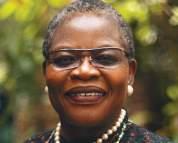
Obiageli “Oby” Ezekwesili argues why a single‑issue constitutional amendment can no longer wait
See Page 20
Who is in charge? asks ABIODUN OLUWADARE
Nigeria is approaching a moment of truth.
WHEN CRIMINALS NEGOTIATE WITH THE STATE
Not because the country lacks soldiers. Not because it lacks weapons. Not because it lacks laws. Nigeria is approaching a moment of truth because millions of citizens are beginning to ask a question that strikes at the very foundation of statehood: Who is truly in charge?
The question sounds provocative, but recent events make it unavoidable. A serving Major General, a senior officer of the Nigerian Army who dedicated his life to defending the nation, was kidnapped and subsequently murdered by criminals. Across the country, schoolchildren are abducted from classrooms, teachers are seized from their places of duty, travelers disappear on highways, and traditional rulers live under the shadow of violent threats.
These are not isolated incidents. They are symptoms of a deeper national ailment.
For years, Nigerians have been told that insecurity is being contained. Yet every week seems to produce fresh evidence that armed groups continue to expand their reach, improve their capabilities, and challenge the authority of the state.
The most troubling aspect of this crisis is not the violence itself. Violence has always existed in human societies. The real danger lies in the gradual transfer of authority from lawful institutions to unlawful actors.
In many parts of Nigeria, armed groups now influence where people travel, where farmers cultivate, where businesses operate, and in some cases, whether communities survive. They impose levies, dictate conditions, negotiate from positions of strength, and compel governments to respond to them.
This should concern every citizen. The modern state was created to ensure that no private individual or group exercises coercive authority over society. Yet Nigeria increasingly finds itself in the uncomfortable position of negotiating with those who openly challenge that principle.
The growing culture of dialogue with bandits may be motivated by practical considerations. Governments are desperate to save lives and restore peace. But every negotiation carries strategic consequences. Every concession sends a message. Every amnesty creates perceptions. Every rehabilitation programme raises questions.
The ordinary citizen asks a simple question: What lesson is the state teaching?
That law-abiding citizens should remain patient while criminals receive attention?
That violence is a faster route to relevance than obedience to the law?
That those who terrorize communities can eventually secure negotiations, incentives, and reintegration?
These questions may be uncomfortable, but they cannot be ignored.
Even more troubling are reports that some individuals who surrendered under various reconciliation initiatives later returned to criminal activities. Whether these cases represent the majority or a minority is not the central issue. What matters is the damage done to public confidence. A state that repeatedly forgives without demonstrating accountability risks creating a cycle in which violence becomes a rational economic choice.
The reality is that insecurity in Nigeria is no longer merely a security problem. It has become an economic system.
Entire criminal ecosystems have emerged around insecurity.
This is why military operations, no matter how courageous, often appear unable to produce lasting solutions. Soldiers can destroy camps, eliminate commanders, and recover weapons. But unless the economic and political structures that sustain criminality are dismantled, new groups inevitably emerge.
Nigeria’s armed forces deserve recognition for the sacrifices they continue to make. Thousands of officers and men operate under difficult and dangerous conditions. Yet patriotism demands honesty. The military is being asked to perform functions that extend far beyond its traditional role. It is fighting insurgents, bandits, kidnappers, oil thieves, separatist agitators, and organized criminal networks simultaneously.
It is supporting election security, protecting infrastructure, and filling gaps created by weaknesses in other institutions.
No military can permanently solve problems that originate in failures of governance.
The uncomfortable truth is that insecurity is often a mirror reflecting broader institutional weaknesses. Where justice is slow, insecurity grows. Where corruption thrives, insecurity grows. Where unemployment rises, insecurity grows. Where political leaders prioritize power over governance, insecurity grows.
Weapons do not create insecurity. Conditions create insecurity.
As another election season gradually approaches, Nigerians must remain vigilant. Security challenges often intensify during periods of political competition. Political actors seek advantage. Narratives become weaponized. Public trust declines. While accusations and counter-accusations should be treated with caution, history teaches that insecurity and politics frequently intersect in dangerous ways.
The nation must therefore resist the temptation to politicize security while simultaneously demanding transparency and accountability
from all actors.
Questions have also been raised about foreign military cooperation, particularly with the United States and other partners. Yet Nigerians must understand a fundamental principle of international relations: no foreign country will secure Nigeria more passionately than Nigerians themselves.
Foreign partners act primarily in pursuit of their own national interests. They may provide intelligence, technology, training, and support. But they cannot substitute for effective domestic institutions. The responsibility remains ours. Perhaps the most alarming development is the normalization of fear.
A society enters dangerous territory when citizens begin to adapt to abnormal conditions. Parents now calculate the risk of sending children to school. Travelers routinely inform relatives before embarking on journeys in case they disappear. Communities organize self-defence arrangements because they are uncertain whether help will arrive when needed. This is not how a normal society functions.
History offers a sobering lesson. States rarely lose authority overnight. They lose it gradually. First, citizens lose confidence. Then communities seek alternative protectors. Eventually, the legitimacy of state institutions begins to erode.
Nigeria is not a failed state. It remains a strong and resilient nation with capable institutions and enormous human potential. But resilience should not be mistaken for invulnerability.
The warning signs are becoming increasingly difficult to ignore.
The country therefore faces a strategic choice. We can continue treating insecurity as a series of isolated incidents, responding to each tragedy with temporary outrage before moving to the next crisis. Or we can recognize the deeper challenge confronting the nation: the gradual contest over authority between the Nigerian state and non-state actors.
This is no longer simply a battle against bandits, kidnappers, or terrorists.
It is a struggle to preserve the very idea of the Nigerian state. And unless that struggle is approached with urgency, honesty, and strategic clarity, future generations may look back on this period and ask a painful question:
Oluwadare is a Professor of Political Science at the Nigerian Defence Academy
Obiageli “Oby” Ezekwesili argues why a single‑issue constitutional amendment can no longer wait
Nigeria’s future lies in building a diversified revenue base anchored on productive economic activity, contends ARÁBÌNRIN ADÉRÓNKE
TINUBU’S TAX REFORMS THE URGENCY TO RESTRUCTURE NIGERIA
NWhen Nigeria is approaching a dangerous precipice. The insecurity that now defines daily life across vast stretches of our country is not merely a law‑and‑order problem; it is evidence of a Nation state whose foundational architecture is no longer fit for purpose. Terrorists, bandits, and armed criminal networks have entrenched themselves so deeply that they now exercise a form of rival governance, openly contesting the sovereignty of the Nigerian state.
In a recent public memo on state police, I challenged the increasingly fashionable belief that decentralizing policing alone would resolve this crisis. State police is necessary, overdue, and ultimately unavoidable. But it is not sufficient. Our national dysfunction is structural, not episodic. No amount of administrative tinkering can repair a constitutional foundation that was defective from inception.
The 1999 Constitution a document imposed on Nigerians without debate or consent has trapped the country in a cycle of paralysis. It provides a pathway for amending itself, but none for replacing itself. Section 9 empowers the National Assembly to alter the Constitution, yet nowhere does it empower citizens to design a new one. For more than two decades, this contradiction has frozen Nigeria’s restructuring debate in place.
This is why Nigeria must now pursue a single, urgent reform: a Single‑Issue Constitutional Amendment that creates a lawful, binding, and time‑bound pathway for a Citizens‑Led Sovereign National Conference whose final draft Constitution will be submitted to Nigerians in a referendum. Kenya escaped the abyss of ethnic conflict by using its 2010 referendum to give citizens the power to remake the State a lesson Nigeria can no longer afford to ignore. Such an amendment would not be an act of rebellion against the existing order; it would be an act of fidelity to it. By using the Constitution’s own amendment mechanism to authorize a new constitutional process, Nigeria would avoid the chaos of extra‑legal improvisation while finally giving citizens the authority they have long been denied. It is strategic because it avoids scattering national energy across dozens of contested amendment items. It is legitimate because it grounds the birth of a new Constitution in the authority of the old.
This idea is not new. In 2021, FixPolitics, the research‑anchored advocacy organization I
chaired, proposed this exact amendment to the Senate Committee on the Review of the 1999 Constitution. The logic remains compelling. Nigeria’s problem is not one broken clause but a broken constitutional architecture. A house built on a faulty foundation cannot be repaired by rearranging the furniture.
A Citizens‑Led Sovereign National Conference, properly constituted, would negotiate the federal structure, fiscal arrangements, security architecture, human rights protections, and national identity that a modern Nigerian state requires. Its composition must be broad enough to prevent political class capture and inclusive enough to reflect the country’s true diversity ethnic nationalities, women, youth, labour, civil society, persons with disabilities, traditional institutions, faith communities, the private sector, diaspora Nigerians, and elected representatives. Its proceedings must be transparent, participatory, and accessible to the public. And its final draft must be ratified through a national referendum.
Some have argued that the Tinubu administration has already “achieved” restructuring through scattered policy reforms. But piecemeal adjustments are not restructuring. They are, at best, administrative conveniences. At worst, they are distractions that obscure the deeper crisis. True restructuring requires a collectively owned, citizen‑driven constitutional process not executive‑led policy tweaks that leave the underlying power imbalances intact.
Nigeria cannot continue outsourcing its future to elite bargains. A country of more than 200 million people cannot be remade through backroom negotiations. The National Assembly and State Houses of Assembly must therefore be called upon through collective civic action to pass one urgent amendment: the amendment that returns constitution‑making authority to the people.
Not many amendments. Not cosmetic amendments. Not amendments that pretend to restructure Nigeria on behalf of the people.
Just one: the amendment that empowers Nigerians to restructure Nigeria for themselves.
Our condition is dire. Our window is narrowing. The insecurity that now engulfs the country is not merely a failure of policing; it is the predictable outcome of a constitutional order that concentrates power without accountability, centralizes authority without capacity, and imposes unity without consent. Nigeria cannot survive the next decade on the foundation of the last one.
The latest Value Added Tax (VAT) report released by the National Bureau of Statistics (NBS) provides strong evidence that Nigeria’s tax and economic reforms are beginning to produce measurable results.
According to the NBS, VAT collections reached N2.42 trillion in the first quarter of 2026, representing a 17.06 per cent increase from the N2.07 trillion recorded in the same period of 2025. The figure also reflects a 9.98 per cent increase compared to the N2.20 trillion generated in the fourth quarter of 2025.
These numbers are significant because they indicate growing economic activity, improved tax compliance and stronger revenue administration. More importantly, they demonstrate that Nigeria is making progress in its long standing effort to reduce dependence on oil revenue.
A closer look at the data reveals where the growth is coming from. Of the N2.42 trillion collected in the first quarter, local VAT payments contributed N1.11 trillion, foreign VAT payments accounted for N830.47 billion, while import VAT generated N477.55 billion. The strong performance of foreign VAT highlights the increasing contribution of the digital economy and cross border transactions to government revenue.
The sectoral breakdown is equally revealing. The manufacturing sector remained the largest contributor, accounting for 29.75 per cent of total VAT collections. This was followed by the information and communication sector at 20.61 per cent, while mining and quarrying contributed 12.32 per cent.
These figures show that productive sectors of the economy are expanding and contributing more to national revenue. Manufacturing growth is particularly important because it supports industrialisation, job creation and value addition within the economy. Similarly, the strong performance of the information and communication sector reflects the growing importance of technology, telecommunications and digital services in Nigeria’s economic transformation.
The VAT growth reported by the NBS did not happen by accident. It reflects the impact of ongoing economic reforms introduced by the administration of President Bola Ahmed Tinubu. Since assuming office, the administration has prioritised fiscal reforms aimed at strengthening government revenue, improving
tax efficiency and creating a more sustainable economic framework.
An important part of this effort has been the drive to modernise tax administration and improve compliance. In this regard, the leadership of the Nigeria Revenue Service (NRS) deserves recognition for its commitment to enforcing tax laws, reducing leakages, expanding the tax net and leveraging technology to improve collection processes.
The increase in VAT revenue demonstrates that effective tax administration can boost government income without necessarily increasing tax rates. Instead, better compliance, improved monitoring and stronger enforcement can generate substantial gains while supporting economic growth.
For policymakers, the message from the NBS report is clear. Nigeria’s future lies in building a diversified revenue base anchored on productive economic activity rather than relying heavily on crude oil earnings. Stronger non oil revenue provides government with more resources to invest in infrastructure, education, healthcare, security and other development priorities.
While challenges remain, the first quarter VAT figures provide reasons for optimism. A 17.06 per cent year on year increase in VAT revenue, combined with strong contributions from manufacturing, telecommunications and mining, suggests that the foundations for sustainable economic growth are gradually being strengthened.
The NBS report is therefore more than a revenue update. It is an indication that tax reforms are taking effect, economic activity is expanding and Nigeria is moving closer to a more resilient and diversified economy. If current reforms are sustained, the country’s fiscal outlook will continue to improve, creating greater opportunities for growth, investment and national development.
The message from the latest NBS data is straightforward. Nigeria’s tax reforms are beginning to work, revenue generation is improving and the country is building a stronger foundation for long term economic prosperity.
Editor, Editorial Page PETER ISHAKA
Email peter.ishaka@thisdaylive.com
MUCH ADO ABOUT ELECTRICITY ACT, 2023
The Amendment Bill will undermine the vision of a decentralised electricity market
Electricity regulators under the aegis of State Electricity Regulatory Commissions (SERCs) have warned that the proposed Electricity Act 2023 Amendment Bill 2026, could reverse hard-won reforms in the sector and defeat the idea of a federal structure. In a memorandum submitted to the Senate Committee on Power, these regulators argued that the amendment bill “threatens the constitutional and regulatory foundations” that enabled states to begin building their own electricity markets and the constitutional amendments that expanded subnational powers in the sector.
We recall that on 17 March 2023, late President Muhammadu Buhari assented to the 5th Alteration Bills, 2023, thus devolving power from the Exclusive Legislative List to Concurrent Legislative List. Combined with the consequential Electricity Act enacted same year, that presidential assent fully decentralised electricity supply industry in Nigeria, making it possible for states to participate in its generation, transmission, and distribution. Since then, no fewer than 16 states have passed laws to establish their state electricity markets, with Enugu taking the lead.
Despite the huge resources poured into the sector by successive administrations over many decades, a nation of well over 200 million people is still struggling to break the 4,000MW jinx. Not even the privatisation of the sector has helped matters. Meanwhile, many businesses have been forced to fold, while some have relocated to neighbouring and rival African countries to produce and ship back to Nigeria’s large market. The Electricity Act 2023 therefore represents the much-touted restructuring in action and a very welcome development for the Nigerian power sector, especially for a country that is writhing in the pains of power poverty.
frameworks to address the challenge of electricity supply in Nigeria.
Indeed, a critical review of the Electricity Act (Amendment) Bill would reveal clear attempts to erode or dilute the regulatory independence and/or powers of the SERCs as well as undermine the vision of a fully decentralised, contract-based electricity market as envisaged under the Electricity Act 2023. For instance, Section 63 of the proposed Amendment Bill erodes the authority of SERCs by removing their explicit power to license mini-grid operators and allied institutions. Worse still, the Bill seeks to return NERC as the exclusive authority over activities on the national grid system and interstate electricity operations.
The Amendment Bill will recentralise control under NERC and stall the growth of truly subnational electricity markets
SUNDAY NEWSPAPER
editor DAviDSoN iriEkpEN
deputy editors FESTUS AkANBi, EJioFor ALikE
Managing director ENioLA BELLo
deputy Managing director iSrAEL iwEgBU
chairMan editorial Board oLUSEgUN ADENiYi
editor nation s capital iYoBoSA UwUgiArEN the oMBudsMan kAYoDE koMoLAFE
THISDAY NEWSPAPERS LIMITED
However, this glimmer of hope in the power sector appears to be dimming with the Electricity Act (Amendment) Bill, 2026, which has already passed a Second Reading in the Senate and awaiting a public hearing. The regulators, representing electricity commissions and bureaux from Abia, Anambra, Bayelsa, Edo, Ekiti, Enugu, Gombe, Imo, Kogi, Lagos, Nasarawa, Niger, Ogun, Ondo, Oyo and Plateau States, contend that the proposed amendments amount to a return to centralised control when many of the states were already attracting investments and establishing independent
editor-in-chief/chairMan NDUkA oBAigBENA
group executive directors ENioLA BELLo, kAYoDE koMoLAFE iSrAEL iwEgBU
divisional directors SHAkA MoMoDU, pETEr iwEgBU ANTHoNY ogEDENgBE
deputy divisional director oJogUN viCTor DANBoYi snr. associate director EriC oJEH
associate director pATriCk EiMiUHi controllers ABiMBoLA TAiwo UCHENNA DiBiAgwU, NDUkA MoSEri director, printing production CHUkS oNwUDiNJo to send eMail: first name.surname@thisdaylive.com
Section 230C (1) (a) provides that states may regulate electricity fully within their borders only if the supply is not linked to the national grid. Section 230(c) (2) of the Amendment Bill equally restores to NERC the sole authority in critical areas like tariffs, consumer rights, technical codes, and anti-trust issues. Besides, the safety role of the National Electricity Management Services Agency (NEMSA) will become national and override state efforts as can be inferred from Section 230(c) (3) of the Amendment Bill.
Other concerns are the implied supremacy of NERC in dispute resolution, ambiguity and uncertainty in existing licenses and contracts in Section 230C (4–6), and the potential erosion of investor confidence arising from a rollback of state powers and the re-centralisation tendencies that would naturally signal regulatory instability and policy reversals. This is especially so for investors that have already committed resources based on the decentralised framework of the Electricity Act 2023.
We agree with the concerns being expressed by the states. The Amendment Bill has indeed arrogated more powers and control to the NERC by way of approval, making rules, setting out guidelines and participating in the distribution and trading of electricity space that is strictly for the SERCs.
The Amendment Bill will recentralise control under NERC and stall the growth of truly subnational electricity markets. We note that the law is still very young and has done so well so far. Why the hurry to fix what is not broken?
Letters in response to specific publications in THiSDAY should be brief(150-200 words) and straight to the point. interested readers may send such letters along with their contact details to opinion@thisdaylive.com. we also welcome comments and opinions on topical local, national and international issues provided they are well-written and should also not be longer than (950- 1000 words). They should be sent to opinion@thisdaylive. com along with the email address and phone numbers of the writer
LETTERS GROWING INCIDENCE OF CONFLICTING COURT JUDGEMENTS
The judiciary remains one of the most critical pillars of democracy, serving as the last hope of the common man and the ultimate arbiter in disputes. Its credibility, independence and integrity are therefore indispensable to the stability of any democratic society. Unfortunately, recent developments within Nigeria’s judicial system have continued to raise serious concerns about the consistency of judicial pronouncements and the growing incidence of conflicting court judgements, a trend that threatens public confidence in the administration of justice.
The recent judgement delivered by a Federal High Court in Abuja ordering the Independent National Electoral Commission (INEC) to deregister the African Democratic Congress (ADC), Accord Party (AP), Action Peoples Party (APP), Action Alliance (AA) and Zenith Labour Party (ZLP) has once again brought this issue to the forefront. What makes the judgement particularly troubling is the fact
that there was already a subsisting order of the Court of Appeal directing the trial judge to stay action on the matter pending the determination of the appeal. Such developments naturally raise questions about judicial discipline and adherence to established legal procedures.
Despite repeated warnings and interventions by the Chief Justice of Nigeria (CJN) and the National Judicial Council (NJC), Nigerians continue to witness conflicting pronouncements from courts of coordinate jurisdiction. Even more disturbing are instances where lower courts appear to disregard or act contrary to orders issued by superior courts. These occurrences not only create confusion among litigants but also undermine the hierarchy upon which the judicial system is built.
Another worrying trend is the increasing tendency of some judges to make pronouncements on issues that were neither sought nor canvassed by parties before the court. The role of the court is to determine matters
placed before it by litigants and not to venture into areas outside the reliefs sought. Whenever courts make orders on matters not properly before them, they expose their decisions to controversy and diminish public trust in the judicial process.
Equally concerning is the manner in which parties to court disputes often interpret judgements to suit their individual interests. Rather than complying with the spirit and entirety of judicial pronouncements, many litigants and stakeholders selectively rely on portions that favour their positions while ignoring other aspects of the same judgement. This practice has become increasingly common and contributes significantly to the confusion surrounding many high profile legal disputes.
A recent example can be found in the Supreme Court’s judgement concerning the Peoples Democratic Party (PDP). Since the judgement was delivered, various parties, including INEC, have continued to advance differing
interpretations of the court’s decision. Even after the Certified True Copy of the judgement became available, stakeholders have largely focused on isolated sections that support their respective arguments instead of examining the judgement as a whole. Such selective interpretation of judicial decisions is unhealthy for the legal system and for democratic governance. These developments are setting a dangerous precedent for Nigeria’s democracy. When courts issue seemingly conflicting orders, when lower courts fail to respect decisions of higher courts, and when litigants cherry pick portions of judgements to advance their interests, the result is uncertainty and institutional distrust. If left unchecked, these practices have the potential to trigger serious political and constitutional crises capable of threatening national stability.
Tochukwu Jimo Obi, Obosi, Anambra
Fathers’ Day: The Fathers Who Show Up
For many children, the fathers they remember are often not the ones who simply paid the bills, but those who were always physically and emotionally present, Vanessa Obioha writes.
One of the most common excuses for an absent father is that he provides for his family. In many homes, paying the bills is seen as the ultimate measure of fatherhood, and a man who keeps food on the table is readily described as a good father.
But is provision enough?
If that were the case, fathers who leave this earthly plane before seeing their children grow up would hardly be missed, especially if they left behind a sizeable inheritance.
For accountant Ifeoma Emeliuwa, who lost her father at the age of eight, the memories they shared during those few years remain some of her most treasured possessions.
“I wish he were alive to have walked me down the aisle,” she said, recalling not only her wedding day three years ago but also the uncertainty that came with choosing a life partner.
“Even though my friends and family assured me that he was the right person for me, I felt that if my father had been alive, he would have helped clear anyCopingdoubts.”with the grief of losing her father has not been easy, but the presence of other men who stepped into fatherly roles has helped ease the pain.
Lawyer Olayinka Jeremiah never truly understood what he had missed until he reunited with his father at the age of 15. His parents had separated when he was two, and he grew up without his father’s presence.
“There were uncles, but none could be called Daddy. I always felt bad when my peers talked about their fathers and what they did for them. In my case, it was always one uncle or another. Uncle and Daddy are not the same.”
Their reunion was far from smooth. There was anger and rejection at first, but over time, they built a relationship. “He is the first person I talk to every day,” he said with a smile. “I’m glad we were able to make amends.”
But for Dupe Coker, whose parents remained married, having a father at home did not necessarily mean having a present father.
“He was never there for us.”
By “there,” she meant emotionally and physically available.
“Once he provided our daily meals and managed to pay our school fees, that was it. He would leave home for days, and often return broke.”
Their experiences mirror the findings of researchers: a father’s presence plays a critical role more than financial support.
According to findings by the Fatherhood Project, engaged fathers help reduce behavioural problems in boys as well as delinquency and economic disadvantage in low-income families. For girls, active father involvement has been linked to lower rates of depression and psychological problems.
Psychology Today also reported that fatherless children are more likely to struggle with social adjustment, experience difficulties with friendships and display behavioural problems. Some develop intimidating personalities to mask fears, anxiety and unhappiness.
A child first encounters the world through the eyes of their parents. Through a father, they often learn whether the world is something to fear or to embrace.
If he greets strangers with kindness, the child learns that people can be trusted. If he treats workers, neighbours and those with less privilege with respect, the child learns that everyone deserves dignity. If he approaches challenges with courage, the child learns that difficulties are meant to be faced rather than feared. If he lives honestly and teaches his children to value truth, they learn that integrity is not negotiable. In countless small ways, a father’s conduct helps a child make sense
of the world around them.
A father’s protection also goes beyond shielding a child from physical harm. It is the reassurance that someone will stand in their corner when life becomes overwhelming. Have you noticed how instinctively many children run to their fathers when they are frightened? That simple act speaks volumes about the security a father can provide.
A child who knows that a father is in their corner often approaches life with greater confidence because they know they are not facing the world alone.
More so, a father’s presence does not end in childhood either. You can get children expensive gifts, but that can be quickly forgotten. They, however, rarely forget who showed up. The school play, the graduation, the football match, the wedding and countless ordinary moments become extraordinary simply because a father was there.
One of my favourite things to do on TikTok is watch videos of fathers and their children. Whether it is a father surprising his child during a lunch
break at school, cheering on a daughter during a presentation or spending quality time with his son learning a new skill, the joy on the children’s faces is unmistakable.
Those videos are a reminder that involved fatherhood is neither old-fashioned nor extraordinary. It is happening every day, and its impact is evident.
These moments of bonding, learning and trust accumulate into indelible memories. They prove that a child needs a father who witnesses their becoming, someone they can rely on, someone who steadies them when they falter and cheers them on when they succeed. More importantly, they need someone who makes them feel deeply loved.
A child first encounters the world through the eyes of their parents. through a father, they often learn whether the world is something to fear or to embrace
The good news is that fatherhood is a choice made every day. Men can choose to be present. They can choose to listen, to guide, to encourage and to love. Parents, too, can raise boys to understand that fatherhood is not measured solely by the money they earn but by the lives they shape.
A father bonding with his children
Photo: Google
Polity
Of Nasir El-Rufai and His Travails
Ibrahim Soba
There is a recurring tendency in Nigerian politics that reveals itself whenever a powerful figure finds himself confronting institutions he once wielded with ease.
The moment accountability approaches, the language changes. The vocabulary of law suddenly gives way to the vocabulary of victimhood. Allegations become persecution; legal processes become vendettas; scrutiny becomes conspiracy. And perhaps most remarkably, those who once celebrated the hard edges of power begin to discover the soft poetry of civil liberties.
It is a familiar script. One has seen it before, and one is seeing it again in the recent arguments surrounding former Kaduna State Governor, Mallam Nasir El-Rufai.
The attempt by some supporters to cast El-Rufai as a victim of political persecution deserves closer examination, not because political persecution is impossible in Nigeria; history teaches otherwise, but because not every encounter with the law automatically transforms a public figure into a political martyr.
There is a difference between prosecution and persecution. The distinction matters.
No democratic society can endure if public office becomes a permanent insurance policy against scrutiny. The rule of law loses its meaning if the mere mention of investigations involving influential personalities immediately triggers allegations of witch-hunting. Public service cannot be reduced to a system in which accountability applies only to the obscure and the powerless while the prominent and politically connected become untouchable.
El-Rufai is not above the law. That simple statement should not be controversial. It should be self-evident. Yet in recent weeks, some voices have spoken as though asking questions of a former governor constitutes an assault on democracy itself. Nothing could be further from the truth.
Democracy is not endangered when institutions examine the conduct of former office holders. Democracy is endangered when such examination becomes impossible.
The proposition being advanced in some circles is that the administration of President Bola Ahmed Tinubu sees El-Rufai as a politi- cal threat and is therefore determined to neutralise him. The argument is dramatic, but drama is not evidence. One searches for the logic and struggles to find it.
Political systems generally do not expend enormous energy suppressing individuals they regard as electorally overwhelming. More importantly, there is little objective basis for the suggestion that either President Tinubu or Governor Uba Sani spends sleepless nights worrying about Nasir El-Rufai’s political shadow.
Politics, after all, is ultimately measured not by social media noise or television appearances but by actual influence among actual voters.
And nowhere should that influence matter more than Kaduna State itself. The reality of Kaduna since May 2023 presents a different picture from the one painted by those eager to construct a narrative of political fear. When Senator Uba Sani assumed office as governor, he inherited a state burdened by significant challenges. Security anxieties, social fragmentation, fiscal pressures and deep public mistrust had become defining features of the environment.
Kaduna’s difficulties were not inventions. They were visible realities confronting ordinary citizens. Banditry and kidnapping had affected communities. Agricultural activities had suffered disruptions in several areas. Economic pressures were evident. Social divisions carried long histories and deep emotional consequences.
Rather than devote his tenure to perpetual explanations of inherited constraints, Uba Sani chose another route. He focused his political energy on rebuilding confidence. Across the state, efforts have increasingly centred on inclusion, reconciliation and institutional stability. Public conversations have shifted toward restoring trust between
communities and reducing longstanding fault lines that had too often shaped political life.
Equally significant has been the emphasis on fiscal prudence and economic restructuring. Governance eventually reveals itself not in speeches but in outcomes. Governments inherit problems; history remembers how they respond to them.
The political mood in Kaduna today increasingly appears less concerned with yesterday’s quarrels and more interested in tomorrow’s possibilities.
That reality makes the sugges- tion that El-Rufai constitutes an overwhelming political threat rather difficult to sustain. If anything, the argument sometimes resembles wishful mythology more than political analysis.
Even more curious is the recent attempt by the so-called El-Rufai Support Group Association to internationalise the matter by reportedly engaging a Washingtonbased advocacy organisation to draw global attention to what it describes as concerns regarding due process and democratic standards. One struggles to avoid a smile.
The implication appears to be that international institutions should now be mobilised because a former governor faces legal scrutiny within his own country. But advocacy abroad does not automatically strengthen arguments at home.
No amount of lobbying in Washington can substitute for judicial proceedings in Abuja or Kaduna. Courts determine legal questions; public relations campaigns do not. The suggestion that Nigeria’s democratic future somehow hangs on the legal circumstances surrounding one individual appears rather exaggerated. Nigeria is bigger than any governor, former governor or political personality.
Its institutions must be bigger too. If there are legitimate concerns regarding procedure, those concerns should be ad- dressed within the framework of the law. If there are questions regarding fairness, courts exist precisely to examine such questions.
But elevating every legal difficulty involving a politically exposed individual into evidence of democratic collapse risks trivialising genuine cases of institutional abuse.
The language of persecution should be used carefully because history contains examples of people who truly suffered persecution.
There were individuals imprisoned merely for opposing military governments. There were journalists detained for publishing uncomfortable truths. There were activists harassed because they challenged power itself. Words matter. To use the language of persecution casually risks emptying it of meaning.
Perhaps the most interesting aspect of this entire debate is that it reveals something larger about Nigerian political culture. Too often, we personalise institutions. We interpret legal processes through friendships and rivalries. We assume that every development must conceal hidden
political calculations. We search endlessly for puppeteers behind every curtain. Sometimes conspiracies exist. Sometimes they do not. Sometimes a legal process is simply a legal process.
The measure of democratic maturity is not whether powerful people face scrutiny. The measure is whether institutions function fairly while they do so. If allegations exist, they should be tested. If evidence exists, it should be examined. If innocence exists, it should emerge. That is how law works. Or at least that is how it ought to work.
None of this requires hatred toward El-Rufai. None of it requires denial of his contributions to public life or refusal to acknowledge his significance in Nigeria’s political history. But political prominence certainly does not confer sainthood.
Nigeria cannot simultaneously demand accountability and reject it whenever accountability approaches the powerful. The tears presently being shed in some quarters would perhaps carry greater moral force if they were less selective.
For what democracy ultimately requires is not protection for individuals from institutions. It requires protection for institutions from individuals. That distinction, inconvenient as it may be for some, makes all the difference. The incontrovertible fact is that Mallam Nasir El-Rufai is being given the opportunity in the law court to account for his actions while he served as the Governor of Kaduna State; that I dare say is not political persecution. No one is above the law. Certainly not Mallam Nasir El Rufai.
Dr. Soba, a university teacher, writes from Zaria, Kaduna State.
El-rufai
Abiodun
igital Future
Hailed as Nigeria’s answer to Bill Gates, Abiodun Sowemimo, a celebrated programmer is driving a bold digital revolution, spearheading Silicon Africa’s rise and positioning the continent as a formidable force in technological innovation, digital sovereignty, and global cyber power. Adedayo Adejobi writes
The boisterous Lagos sun seems to have politely filtered into a soft, ambient glow within this extraordinary Lekki office reception through its glass door. It is an almost immaculate space, where everything whispers of formality, authority, and prestige. The air, scented with a faint, pleasing aroma of something expensive and clean, feels crisp, a stark contrast to the usual Lagos hustle outside. Here, white reigns supreme, coating the executive desks, the plush chairs, and the soaring walls in a brilliant hue that speaks not just of purity, but of a deliberate, calculated clarity. Amidst this blinding elegance, you cannot help but be captivated by the innumerable local, regional, and global award plaques, each one a testament to battles won in the digital arena.
Behind a wide, imposing white desk sits Abiodun Sowemimo, often described with the lofty title of Nigeria’s tech mogul, dressed in an all-black Kaftan. Relaxed yet intensely attentive, he is framed by the official seals of Lagos State, Federal Republic of Nigeria and Cyberpedia Internet Governance, emblems that instantly reinforce the gravitas of his position. This is a man who deals in data, sovereignty, and the future of a continent, and his surroundings are a manifesto of his ambition.
The recent accolade as one of Forbes’ Top 100 most influential innovators of 2025 is, for Sowemimo, less a personal achievement and more a spiritual anomaly.
“I always say to people that my journey in life is a miracle,” he begins, his voice carrying the calm conviction of someone who genuinely believes in forces larger than quarterly reports. “As a matter of fact, it transcends my reasoning.”
He eschews the notion of accidental success. He sees himself as a man with a singular, divine brief: “a purpose which is not limited to preparing generations for total greatness, changing the African narratives, disrupting the African technology ecosystem in a positive light, and inspiring a total generation.”
This profound sense of mission is what propels his ventures across fintech, AI, telecommunications, and aviation. It is a portfolio reminiscent of his late mentor, the iconic Chief M.K.O. Abiola, only Sowemimo’s empire is built upon the shifting, boundless sands of technology.
“The biggest thing you can do for yourself, your nation, and the people around you, is to create jobs,” he asserts, cutting through any suggestion of simple diversification. “That is the reason why we set up different institutions which are interconnected to create jobs, support the government, support private citizens, and inspire the younger generation that they can do something better, if we can do it.”
When questioned about the inevitable hurdles along the way, Sowemimo dismisses the notion with characteristic confidence. “Well, challenges for me are a layman’s excuse for their misfortune,” he says. “It’s just like going to school and saying you don’t want to be tested.”
This philosophy of constant examination is evident in his most audacious creation: the world’s first Internet Identity Number (IIN) and the accompanying Cyberpedia search engine, Africa’s preeminent artificial intelligence, data, and cybersecurity corporation.
“Do you know that there’s no real-time centralised data system in the whole of this continent?” he asks rhetorically. This systemic void, he explains, is the reason “a lot of people get away with a lot of crime.”
The IIN, therefore, is not a whimsical invention, but a tool of digital justice. “We invented this first world internet identity number to make people accountable for whatever they do on the internet,” he emphasises. Through this system, and the Cyberpedia engine, individuals’ work histories and conduct can be tracked, effectively preventing a criminal from simply moving from Lagos to Port Harcourt to start a new, unsullied life. “We are presently the largest real-time centralised data system in Africa,” he
Building Nigeria’s Digital Future
states proudly. Sowemimo is quick to address the delicate widespread Nigerian concern for privacy infringement, a hallmark of our digital age. “No, it’s not an infringement of digital rights,” he assures, explaining that the IIN is for accountability, an essential profile for accessing labour and formal employment platforms, “to protect both the employee and the employer.”
Furthermore, Cyberpedia’s work in combating misinformation and disinformation, a significant threat to global stability, is what has earned them a seat at the table with the World Economic Forum, where they are the only Nigerian firm on the New Champion list for 2025. “We will combat fake news and misinformation,”
he pledges. “For us, impossibility doesn’t exist. All glory to God, we are happy that this innovation came out of Nigeria, Africa.”
As a venture capitalist, Sowemimo’s investment philosophy is territorial and pragmatic. “I look at the problems in that particular community and the solutions that work best for the territory,” he notes.
“Most solutions built in Africa may not even work in the United States of America, because most times the problems differ.” The greatest deficiency remains the lack of centralised data, which he argues contributes even to the broader issue of insecurity.
The conversation naturally progresses to the vision for a Silicon Africa.
Sowemimo’s response is a blueprint for national and continental development, driven by the Sowemimo Foundation’s Power Africa project.
“Part of my life goals is to build a knowledge and skill-based society for our people.”
This involves building research centres across Nigeria, training young people in cutting-edge skills like software engineering, AI, and advanced cybersecurity. The goal is simple, yet audacious: to conquer the world.
And why this relentless drive for global conquest? The answer, inferred from his tireless advocacy for African technological empowerment, is one of parity and purposeful influence. Sowemimo is not interested in mere profit, but in parity of power. The conquest he seeks is one of the mind, ensuring that when the world decides its digital future, Africa is not a passive consumer, but an indigenous custodian of its own technology and data.
He stresses the need for practical intelligence over mere paper qualifications, training the best of Nigerian youth and expanding the programme across all 54 African countries.
This push for practical skills aligns perfectly with his thesis presented at CloudFest 2025 in Germany: the Convergence of Artificial Intelligence, Data, and Cybersecurity. “If we can bring these three together, we will be empowering the next generation with the right skills,” he says.
He believes his own success, building “the first indigenous search engine in Africa,” is the greatest inspiration. “The best way to inspire people is to live by example.”
This ambition extends to the crucial concept of digital sovereignty. “Our data should not be housed elsewhere,” he states emphatically. This belief led to the creation of the Cyberpedia Internet Governance to ensure Africa is not sidelined in the global conversation on Internet governance policy.
When pressed on Nigeria’s and Africa’s readiness for cyberspace security, his professional assessment is stark.
“I don’t think Africa is prepared,” he says.
He points out the absurdity of government defence and law enforcement using insecure foreign applications like WhatsApp for critical communications. As a corporate patriotic citizen, his response is to build CyberTalk, a secure indigenous messaging application he plans to gift to the government.
Sowemimo’s parting thought, after advising global leaders from Emmanuel Macron to the African Union, circles back to self-respect. “Nations are built by exemplary men and women. I can only disrespect you the day you start disrespecting yourself.”
He criticises the failure of indigenous telecommunication giants to invest in homegrown communication applications, lamenting, “Why must everything be done by the West?”
His vision is one where the government invests in its young people, and where patriotism is inspired by enabling intelligence, not by force.
“I am proud to be a Nigerian citizen, and God does not make mistakes. There’s a reason why you and I were born in this country. There’s a reason why you and I are black.”
Deputy prime Minister of poland, Mr. Krzysztof Gawkoski (left) and Sowemimo at the 2024 Internet Governance Forum
Sowemimo (left), and former president of Ghana, Nana Akufo-Addo
egyptian president & Chairperson of the African Union, el-Sisi (left), honours Sowemimo with the Most promising Youth Award
HighLife
Mele Kyari: Where Have His Allies Gone?
Mele Kyari spent six years as the most powerful oil executive in Nigeria. Today, he is reportedly in Germany receiving medical treatment, facing a Senate arrest warrant over an unverified N210 trillion audit query, and largely alone in how he is handling it.
Kyari’s response, issued from abroad, was measured. He said he was shocked by the warrant, that his lawyers in Abuja are representing him, and that he intends to return once his health permits. It was the statement of a man managing a crisis from a distance, without the chorus of support that once surrounded his office.
That chorus has gone quiet. After Kyari’s removal, NNPCL sacked more than 200 staff in a restructuring that specifically targeted executives built around him.
Bala Wunti, the former NAPIMS head, was summoned alongside Kyari and is still working through the Senate probe in Nigeria. Ibrahim Onoja, former MD of Kaduna Refinery, and Lawal Sade, former Chief Compliance Officer and MD of NNPC Trading, were dismissed in the same sweep. Only Umar Ajiya Isa, the former CFO, has stayed publicly loyal, insisting before legislative panels that no funds are actually missing.
Beyond NNPCL’s walls, private oil players who grew close to Kyari, including Matrix Energy’s Abdulkabir Aliu, Levene Energy’s Ogbe, and former Delta State Governor James Ibori, have said nothing publicly since his removal. The political cover that once shielded him has thinned too. Femi Gbajabiamila, now President Bola Tinubu’s Chief of Staff, was an early protector, but the man who built Kyari’s path to NNPCL in the first place, the late Abba Kyari, is no longer alive to make calls on his behalf.
Not that any of this proves abandonment. Nigerian political loyalty can survive away from the cameras. Still, the gap between the crowd that once surrounded Kyari’s
with KAYoDe ALFreD 08116759807, E-mail:
...Amazing lifestyles of
Nigeria’s rich and famous Two Sons of Ondo, One Table in Manhattan
There is a particular kind of meeting that means more than the meal it is built around, and the breakfast shared recently in New York City between Dr. Jimoh Ibrahim and Dr. Kayode Ajulo falls squarely into that category. Both men trace their roots to Ondo State, and both have spent decades building reputations that now extend well past it.
Ibrahim’s path has taken him from the boardrooms of Nigerian enterprise to the chambers of the National Assembly and now to the diplomatic floor of the United Nations. A lawyer with a doctorate from Cambridge, he built Global Fleet Group into a sprawling business empire before representing Ondo South in the Senate between 2023 and 2025. In April 2026, he presented his letter of credence to UN SecretaryGeneral António Guterres as Nigeria’s Permanent Representative, a posting that places him at the centre of the country’s engagement with the rest of the world.
Ajulo’s rise has been no less deliberate. Conferred with the rank of Senior Advocate of Nigeria in 2023, he now serves as Attorney General and Commissioner for Justice under Governor Lucky Aiyedatiwa, where he has pushed through the state’s Anti-Land Grabbing Law and secured full financial autonomy for the judiciary. Before that, he built a name as a civil rights advocate and constitutional lawyer, and served as National Secretary of the Labour Party, a record that runs alongside his legal practice at Castle of Law.
Their breakfast meeting, set against the towers of Manhattan and the proximity of UN Headquarters, was less a chance encounter than a reunion of two figures whose careers have, in different ways, carried the name of their home state into rooms it might never otherwise have entered. Ibrahim, the elder statesman, and Ajulo, the younger reformer, sat as representatives of a place that continues to produce people determined to matter well beyond its borders.
Not Guilty? The Curious Case of Diezani Alison-Madueke
A jury at Southwark Crown Court cleared Diezani Alison-Madueke of all six charges against her on June 17, effectively ending a case that had run for 11 years. But what exactly does it mean, and, as some commentators have asked, what does it translate to in real life?
The counts at the London court included five charges of accepting bribes and one charge of conspiracy to commit bribery. After more than 46 hours of deliberation, the jury found her not guilty on every count, along with her brother Doye Agama and oil executive Olatimbo Ayinde, who stood trial alongside her.
To recapitulate, the UK’s National Crime Agency had accused Alison-Madueke of accepting cash, private jet flights, luxury properties, and high-end shopping trips from oil executives, all in exchange for steering multi-million-pound state contracts their way. Her defence answered each point directly.
Nigerian ministers are barred by law from holding foreign bank accounts, so third parties handled certain transactions on her behalf. Her team also showed that personal expenses tied to those arrangements were fully reimbursed. The
jury accepted that account. For Alison-Madueke, the relief was immediate and personal. In a statement after the verdict, she described the 11 years as a nightmare of unjust vilification, now finally over.
But the British courtroom is only one part of a much larger legal picture, and it would be a mistake to read this verdict as a complete exoneration. The Economic and Financial Crimes Commission (EFCC) in Nigeria still has active corruption and money laundering cases pending against her, built on different evidence under different statutes
Plus, Nigerian courts have also already ordered the permanent forfeiture of several highvalue assets and properties connected to her, rulings that remain in force regardless of what happened in London.
So the honest answer to the question many are asking is neither a clean yes nor a clean no. A UK jury found insufficient proof to convict Alison-Madueke of bribery under British law. Whether Nigeria’s own courts reach the same conclusion is a separate matter still working its way through a separate system.
Between Tinubu and Kagame, a Friendship Older Than the Headlines
When President Bola Tinubu and President Paul Kagame sat down at the Urugwiro Presidential Villa in Kigali this past May, the cameras captured a moment that looked, on the surface, like routine diplomacy.
The two leaders, meeting on the sidelines of the Africa CEO Forum, agreed to revive the Joint Permanent Ministerial Commission, first signed in 2021, with Nigeria set to host the next session. Tinubu also floated the idea of a 30-day visa-free entry policy for Rwandans, matching the open-door arrangement Rwanda has long extended to Nigerians, while both sides pushed forward on AfCFTA integration and explored a new RwandAir cargo corridor to widen export routes for Nigerian businesses.
What the footage did not show was how far back the relationship actually runs.
Long before either man held office, Rwandan officials were studying Lagos. During Tinubu’s years as governor between 1999 and 2007, Rwandan delegations travelled to the city specifically to examine how he handled waste management, tax
collection, and urban cleanliness. That blueprint might have fed directly into the strategies Kigali later used to become one of the continent’s cleanest and most orderly capitals.
The military relationship goes back even further. Rwandan officers have trained at the Nigerian Defence Academy in Kaduna since the 1980s, a pipeline that produced General Patrick Nyamvumba, who in 2009 succeeded Nigeria’s General Martin Luther Agwai as Force Commander of the UN-AU peacekeeping mission in Darfur. Formal embassies did not open until 2011 and 2012, following a state visit by President Goodluck Jonathan, but Nigeria has since run a Technical Aids Corps program sending doctors and teachers into Rwanda, while Access Bank and GTBank built profitable subsidiaries there.
By the time the cameras found Tinubu and Kagame in Kigali, the two countries had already been writing this story for forty years.
Alison-Maduke
Tinubu
Kagame
Dr. Jimoh Ibrahim and Dr. Kayode Ajulo
Kyari
Baroness Jennifer Chapman, UK’s Top Envoy, is Coming to Abuja
Baroness Jennifer Chapman is coming to Abuja. The UK’s Minister of State for Africa, and a close ally of Prime Minister Keir Starmer, will hold talks with Nigeria’s Foreign Minister Bianca Odumegwu-Ojukwu. The trip builds on President Bola Tinubu’s state visit to Britain in March, the first by a Nigerian leader in 37 years, since Ibrahim Babangida in 1989.
To the informed, that gap was more than just historical drift. In 2023, Tinubu recalled nearly all of Nigeria’s ambassadors abroad, and the London post sat empty for over two years. It was only filled in May, when Aminu Dalhatu finally took up the role.
Observers believe that what changed the temperature was money.
The two countries are now executing a £746 million deal to modernise the Lagos Port Complex and Tin Can Island, financed by UK Export Finance and arranged by Citibank. It is the first serious
overhaul of those ports in close to 50 years.
Together, both ports handle more than 70 per cent of Nigeria’s maritime trade. Years of shallow channels and clogged terminals have slowed cargo movement across the region.
The plan now is to dredge the berths to a 16-meter draft over 48 months, deep enough for the larger vessels that currently bypass Lagos for other African ports.
Both sides stand to gain. Nigeria gets infrastructure upgrades without draining its treasury. Britain secures supply contracts for its own companies, including a £70 million order already awarded to British Steel.
Britain is watching other Western powers lose ground across West Africa, and Chapman’s trip looks like an attempt to get ahead of that drift before Nigeria looks elsewhere. Optimists on both sides hope for deeper, longer commitments.
A Woman Who Built More Than a School
As Mrs. Bolajoko Falore marks her 70th birthday and celebrates 50 years of distinguished service in the teaching profession, family, friends, education stakeholders, and wellwishers gathered yesterday for the first Annual Symposium of the Mind Builders Education Trust in her honour.
The landmark event was held at the Mind Builders School Hall, Ikeja, Lagos, where they celebrated a woman whose life has been devoted to building minds, nurturing leaders, and advancing educational excellence.
The symposium featured two plenary sessions. The first, themed “Education for Excellence: Transformative Impact of Visionary Leaders in Nigeria,” was delivered by Mr. Oliver Alawuba, Group Managing Director/CEO of UBA Plc, with Prof. Idowu Olayinka, former Vice-Chancellor of the University of Ibadan, serving as Guest Speaker. Discussants include Mrs. Folashade Adefisayo,
On June 12, Nigeria and Ethiopia signed an agreement to transfer more than 100 Nigerian prisoners home to finish their sentences. Attorney General of the Federation, Lateef Fagbemi, signed for Nigeria, Hanna Arayaselassie for Ethiopia. Foreign Minister Bianca OdumegwuOjukwu called it a deal rooted in humanity and justice.
It took seven years to get here.
The push began in 2019, after Odemu Efe died in Addis Ababa’s Kaliti Prison from what was alleged to be medical negligence. More deaths followed: Chizoba Favour Eze in 2023, after reported brutalisation by prison officials; Uchenna Nwanneneme, from tuberculosis that went largely untreated; Basil Lawrence Ilobi died in custody too.
Each death pushed the same person further into the fight. Abike DabiriErewa, chair of the Nigerians in Diaspora Commission (NiDCOM) since 2018, proposed the transfer of the MoU through Nigeria’s mission in Ethiopia and kept
former Lagos State Commissioner for Education; Dr. Femi Ogunsanya, Founder of Oxbridge Tutorial College; and Prof. Joseph Ola Awoyinfa of the University of Lagos.
The second plenary session examined “How Banks Can Assist Schools to Survive in the Current Economic Climate,” moderated by Prof. Clement Fasan, former Dean, Faculty of Education, Lagos State University, while Dr. Oladimeji Alo, MD/ CEO of Excel Professional Services Ltd., served as Chairman of the Day.
From founding Mind Builders School in 1998 with just 18 pupils and six teachers to building one of Lagos’ most respected educational institutions, Mrs. Falore’s journey embodies vision, resilience, innovation, and service. Today, her legacy extends beyond classrooms, touching thousands of students, educators, and families whose lives have been transformed through her unwavering commitment to quality education.
The Abike DabiriErewa Effect
Iyabo Obasanjo and the
Slip
That Wasn’t Really a Slip
At a PDP rally in Abeokuta this month, Senator Iyabo Obasanjo stood before a crowd that had gathered to watch Ladi Adebutu unveil his running mate, and called him “our incoming governor.”
The line landed exactly as these things tend to land, which is to say it spread far beyond the rally itself.
Madam Obasanjo had just returned to the PDP after a brief, turbulent run in the APC, a stint that lasted barely four months before she walked out complaining of disrespect. Her grievance was specific: the APC had picked Senator Solomon Adeola, known widely as Yayi, as its consensus candidate for 2027 without consulting her, despite her own governorship ambitions.
Her full quote at the PDP event did more work than the soundbite suggested. She thanked Adebutu for trying to become
governor “for the first, second and third time,” before adding that this time would finally be his, now that she had joined the party. It was meant as an endorsement. It read, almost immediately, as something else.
People noticed the layers. The compliment doubled as a reminder of Adebutu’s history of losing, while the framing suggested his fortunes had been waiting on her arrival, as though her presence alone tipped fate in his favour. And the timing was its own punchline, since only months earlier she had told reporters plainly that she wanted the top job and had no interest in being anyone’s deputy. None of this makes the moment a scandal. It makes it the kind of unscripted line that political rallies occasionally produce, equal parts honest and unintentionally revealing. Adebutu’s camp will take the endorsement. Everyone else will keep the quote.
pressing even as progress stalled. An earlier amnesty in 2019 had backfired when freed inmates returned to the same crimes that had jailed them. Senators Victor Umeh and Simon Mwadkwon raised the matter on the floor in 2023, and an Abuja court ordered government action in 2024.
People have started calling it the Dabiri Effect, the mix of public visibility, legal pressure, and quiet bilateral negotiation her office uses to bring Nigerians home, from Togo to Mozambique to a death row reversal in Indonesia secured alongside lawyer Emmanuel Ogebe.
It is not, of course, without critics. HURIWA has demanded evidence after NiDCOM claimed mass releases in Tanzania. And the approach still runs into walls, particularly with nations that refuse to budge on drug-related capital offences.
For the Ethiopia deal, none of that diminishes what is coming. More than 100 Nigerians are finally heading home.
Let Yari Breathe?
Senator Abdulaziz Yari has denied any connection to gold bars worth roughly N4 billion seized by the EFCC at Mallam Aminu Kano International Airport, and based on the facts available so far, the denial deserves to be taken at face value.
The seizure happened on June 11. The EFCC arrested a NAMA security officer, Anas Baffa, accused of concealing the gold in his trousers before handing it to outbound passengers. The agency has not named Yari as a suspect in the case or in any related investigation.
The allegation tying him to the seizure came two days later, on June 14, from a civil society group called the Coalition for Accountability and National Development. Yari’s office responded on June 16 through his Chief of Staff, Abdullahi Tsafe, who called the claim a politically motivated attempt to damage Yari ahead of 2027 and threatened legal action against those spreading it.
The Arewa Christian Youth Leadership Forum echoed that defence, noting the reports relied on anonymous sources rather than anything the EFCC has confirmed.
As experts have noted, none of this happens in a vacuum.
The fact is that Yari has spent years under scrutiny, from the N84 billion fraud case tied to former AccountantGeneral Ahmed Idris, to ICPC forfeiture orders on properties linked to him, to court injunctions his legal team has sought to keep the EFCC, ICPC, and DSS from detaining him. His tenure as Zamfara governor is remembered for the banditry crisis that engulfed the state, and his political career has weathered a bruising feud with Senator Kabiru Marafa and a defeat to Godswill Akpabio in the race for Senate President.
That record is real, and it has earned him sustained attention. But a record of scrutiny is not evidence in a specific case, and the EFCC’s silence on his name in the gold matter is not nothing. Until the agency says otherwise, the appropriate response might just be to let the claim stand on what is actually known rather than what is convenient to assume.
Falore
Yari
Obasanjo
Dabiri-Arewa
cyril ramaphosa: A blight of a Statesman
FUNNY SIDe oF AbDUlSAlAmI
AbUbAkAr’S book
These are the kinds of accidental leaders we have been blessed with in this country. If you take a quick look at all of our leaders, you will see that apart from IBB and Obasanjo, in his second coming as civilian president and Bola Tinubu, the rest have been “sa re wa gba” leaders. “Sa re wa gba” is a Yoruba slang that denotes “I just waka come,” and none of them epitomises this scenario more than General Abdulsalami. If you go back to history, you will see that Baba was just “wakaing” on his own when Abacha suddenly died, and the mantle fell on him. I even heard it was his juniors who made the decision. Daddy just collect baton with no plans, no vision and nothing. It is with this opaque view towards leadership and nationhood that the reinvigorated Chief Obasanjo went to him for advice after being released from prison.
According to Gen Abdulsalami’s own admission in excerpts from his book, a book that I will never read, he mentioned that he had advised Chief Obasanjo to forget the presidency but instead push for compensation for his business that collapsed during his incarceration. You see advice? Which kind of advice is this one? And he is still proud enough to put it in a book? This is the kind of “tumbo
I have refrained from commenting on the ongoing attacks on fellow Africans by South African citizens with the hope that his government would step in and do something.
It however appears that waiting for that is like waiting for the proverbial “Godot.”
I don’t even know why they have branded what is happening in South Africa “xenophobia.”
That big name does not even begin to describe what is happening in that land. What is happening there is a full blown crime against humanity – stealing, slaughtering, pillage, rape, all directed at a certain
tumbo” advice that used to change destiny.
Thankfully, OBJ, who is very stubborn, did not take that kind of “kuru kere” advice and today, we now have a historic leader whose reign remains unbeaten. My prediction for that book is that it will soon surface at the CMS bus stop, where they will be using the pages to sell akara. Kai.
geNerAl rAbe AbUbAkAr: A HeroIc reTUrN?
What else can we call it? This retired General was recently kidnapped with his wife, and as usual, we failed him. Despite his status and his painful video, we failed him.
He passed. They said it was because of complications from his blood pressure and diabetes. Whatever the reasons for his passing, he sha passed, joining the growing list of Nigerians and military generals that have passed through the process.
But tarry, why his own has now taken another dimension is that the “bandits” have been reported to have returned his body, and a few days later, our gallant soldiers were also reported to have “rescued” his widow.
My people, the only thing I will say at this point is that, when we are serious about resolving this problem, we will. For now, make we dey play “ten ten”. Thank you.
population within their enclave.
These are the same people who, a few years ago, were cowardly running all over Africa begging for alms, shamelessly being bullied, harassed and dehumanised by the white minority, only to turn around after “messing” up what was handed over to them on the plate of struggle and support by us to turn the country into a hellhole.
I am so happy that Tinubu has started the fight back. His move at his economic power is the first step; the next one should be a major imposition of full and comprehensive sanctions. Thank you.
SeYI mAkINDe: oYo IS cHIbok
If you ask me, Governor Seyi Makinde was starstruck and almost fearful when he made this statement. The Baba was standing beside the popular VDM, who looked as usual like he hadn’t taken a bath and could possibly be struggling with challenges in personal hygiene when he made this empty and obviously frivolous statement.
“Let me assure you that Oyo is not Chibok,” he rang free as he held on to the microphone, looking like he had just stood up from a hot bowl of Amala and Gbegiri.
After that statement, has there been any change in tactics, approach or even update? Nothing. How a man who is the chief security officer of a state only by name and with no legal platform of violence under his direct control will stand boldly and make that kind of statement continues to be the “efulefu” of our politics.
My Oga Seyi, Oyo is worse than Chibok. They have beheaded a teacher, they are still holding these children even as I write, and all you guys have done is to “rescue” the minister’s people – if we can call that a rescue – and you are here carrying microphone, wearing “okrika” shirt and proclaiming like you are in a Nollywood movie.
What we should be hearing from you is that if those children are not released or rescued in 30 days, you will resign. That is the kind of statement and boldness that true leaders make, but as we are in this Nigeria, there is not one, not even our president that will make this kind of statement under this kind of intense pressure. Instead, they will still be running around and sending their son on errand, and that one will be shouting “My father is…” Crap.
reNo omokrI: TrYINg Too HArD
Our ambassador-designate to Mexico is trying too hard, abeg. Simple question as to why he has not resumed, and he regales us with “fabu” - that’s because Mexico is hosting the World Cup. They have not had the time to receive him. Na wa. This one must really think that we are a country of “fufu heads.”
So, because the country is hosting the World Cup, everything has come to a standstill in the country. Mexican children have stopped going to school, traffic has stopped, the president has stopped having sex, and everything has come to a standstill abi?
This Baba should use this opportunity to go to the school of diplomacy and learn the etiquette of the profession, so he can have a small hope of being a fairly average
Abubakar
makinde
Abubakar
omokri
ramaphosa
diplomat.
I never see this kind of diplomat who is permanently on social media, exchanging barbs and the rest. Which other diplomat have you seen doing this anywhere in the world?
I don’t want to go heavy on Reno again before he goes and starts reporting me to the whole world, but let me just say this at this juncture – leave social media. Oga, you are now an ambassador designate, and that positioning comes with a desired carriage and comportment. All these roforofo on social media should end, please. Mbok, in that Ministry of Foreign Affairs,shebi they have protocols and hierarchy. Can someone please just give this one, a query so that he can go and concentrate and do what is expected of him? Mbok, I tire for him.
SoNI IrAbor: oN MY KNeeS
Please, everybody, come and help me beg Uncle Soni Irabor, the veteran broadcaster and elder statesman, to put me back on his influential WhatsApp group. Uncle Soni runs one of the most powerful WhatsApp groups in the country. Its members, over 200 of them, are drawn from academia, media, diplomacy, religion, entertainment and governance. See, it was Area Fada that annoyed me, and in anger, I left with the hope that they would come and beg me. This is three months later, and nobody has come to beg me. Imagine! I know that all that my talks about masturbation, nudity and marrying too many wives have been making them uncomfortable. You know the average age in the group is 70, so when I am talking about my virility, they will be envying me. Now the opportunity came, and they seized it. They have refused to come and beg me.
Please, Nigerians, and especially those of you who know Uncle Soni, use style to go to him and beg on my behalf that he should put me back. Don’t let him know that I am the one who sent you o, you know that I have small pride. Thank you, and God bless.
olANrewAJU oMIYINKA: ANoTHer KIND of prISoN reforMS
This gentleman is Baba Ijesha, the Nollywood actor who was sent to prison for sexual crimes. Well, he dutifully served his term and was released, and seven months later, a beautiful fashion designer gave him a baby.
Agh, Nigerians who mostly failed mathematics in GCE have carried calculators o. Those of us who also got an F9 in Biology have also joined the frenzy. Simple Biology states that you must carry to term, and to term means nine months, and mathematics also says that from the date Baba Ijesha was released to when this baby dropped is seven months. Nigerians have remained confused, seeking answers to this very obvious question.
Well, my only possible answer after giving this whole scenario careful thought is the prison reforms that our dear Bobrisky was talking about.
You know he was the one that told us that you can go to prison without going to prison. He even took us through the process and showed us very clearly how you can go to prison with a smile. It is looking like this Baba Ijesha was a member of that Prison Reform Committee, and as such, was granted express permission to be the first beneficiary of the reforms. In Nigeria, nothing is impossible, I tell you.
ADebAYo oSINowo: THe ‘pepper’ we Never KNew Pepper was an APC strongman when he was alive. Sadly, I never got to meet him, but you could not be interested in Lagos politics without reckoning with him. He was so influential and a key pillar in
wAl roSe NAT eSHIeTT: power AND INflUeNce eMbeDDeD
Rose was, until recently, Group General Manager at the NNPC -not sure of that their name again o - in charge of crude. What that means is that she was one of the most influential Nigerians at that time because every barrel of crude that was sold passed through her table, and we all know the role that crude plays in our economy.
From reports, she ran that portfolio with so much class that, unlike many of our office holders, no EFCC was banging the door after she left, and she didn’t have to disguise herself as a man to escape.
It is no wonder that Nigeria came out for her recent Investiture as Chairman of the Abuja Chapter of the Institute of Directors at the iconic Congress Hall of the Transcorp Hilton in Abuja.
Even me, I carried myself to the Hall to witness the historic
female-to-female transition of leadership.
Mbok, Nma Rose was resplendent in a green gown, simple in accoutrement and elegant in carriage. Her speech after the investiture was grand and purposeful, and she remained very regal throughout the ceremony.
From what we saw at the ceremony, it is very clear that the golden era of the institution has just begun, and by extension, its impact on Nigeria would be more than felt.
The only issue here is that of all the plenty food, the afang finished on time. By the time I had finished hugging and greeting all the dignitaries at the event, the afang was cleared. I screamed and looked towards the huge contingent from Akwa Ibom and pointed a finger. Kai. E pain me o.
happening.
there was one aspect of him that was not well known to the public. Recently, I stumbled on a report that suggests that as a taxi driver, he was the one who spirited some of MKO Abiola’s children to safety during the heat unleashed by the dreaded Abacha regime.
If you lived in that era in Nigeria and were unfortunately labelled pro-June 12 or a NADECO enthusiast, you were certainly living on very slippery soil. But this Pepper’s story was somewhat more remarkable.
From the story I read, he didn’t seem to be tied to any organisation or platform; he was just a cab driver moved by undying love for the Abiolas and what they stood for, hence his decision to take that kind of risk.
No wonder when he came back from that journey, he was picked up and forgotten in jail. When a new regime came and those ones released all political detainees, they forgot him.
Thankfully, he was fished out after some years and was released. From there, he built a remarkable political career that saw him rise till he passed.
I can see this story as a Nollywood movie, and I would suggest Desmond Elliot to be the lead character. It will be explosive, I tell you.
Tope SADIq: GoNe wITH THe wIND
If you are a frequent attendee of the literati circuit in Lagos, you would have met Tope or seen him. He was that tall, big-bellied, bearded guy who would just saunter in and head straight to the Master of the Ceremony and beg for just five minutes to recite a poem. If you refuse, he will grab the mic and go into a beautiful soliloquy, which used to eventually “catch” the audience, making them beg for more. Tope was present at almost all events, invited or not. He would come to my plays and do the same. Then one day he said, “Edgar, I want to act,” and I told him to come for an audition. Like play, like play, he did so well and got a role in my play ‘Gowon.’
He was a beautiful soul, a clever wanderer and a loner. He slept where he got tired and woke up the next morning to continue with his wandering, and then last week it ended. He didn’t wake up. He was said to have slept and not woken up. As at the time of writing, I have not been able to confirm the cause of death, but what is painfully true is that the wanderer-in-chief of Nigeria is no more. Sad.
effIoNG AKAN-UrUAN: A DIffereNTKIND of people
It was Larry Ettah, that very influential former Managing Director at UACN, who extended the invitation. Edgar, my mentor, Effiong Akan, is presenting his book on Uruan, and I would like you to come. Who will not go ooo? Uruan is a huge and very pivotal tribe within the Akwa Ibom and Cross River axis. Their culture is so strong and pervasive that it influences all other tribes very powerfully.
It is said that they originated from the fearful and colourful “Ekpe” masquerade. The rest of Nigeria defines the Akwa Ibom/Calabar axis with the “Ojuju Calabar” prefix, and this is because of the popularity of the Ekpe masquerade.
Every December, Larry and others would do a huge carnival where all of these masquerades come out in their glory. Kai, if you see the colours, the beauty is super mesmerising. I pray he brings it to Lagos one day.
Anyways, that was how I dropped by the NIIA venue. The event was already in full swing. I saw some dignitaries like the SO&U head honcho Udeme Ufot, and retired Admiral Francis Akpan with Larry Ettah in the hall. What opened my eyes was the preview of the book by Mr. Okon of the ADC Airline. Wow! I opened my mouth o, these were the aviation pioneers in the country o.
Sadly, I had to rush out before the author, who was a principal mover at the NNPC, where he delivered a sterling performance and was well regarded, came on the dais. I have, however, sent for the book, as the reviews I have read shows that it is a must read for anyone interested in culture and history. Well done, sir.
The Other Side of Kayode Ajulo
He is widely admired as one of the brightest legal minds of his generation, an exceptional advocate whose deep understanding of the law earned him the prestigious title of Senior Advocate of Nigeria (SAN). Today, Dr. Kayode Ajulo, Officer of the Order of the Niger (OON), holds the influential office of Commissioner for Justice and Attorney General of Ondo State.
In both legal and political circles, Dr. Ajulo is seen as a force to be reckoned with and respected for his sharp intellect, fearless courage, and an unshakable commitment to justice.
But there’s a side of him that most people rarely get to see.
While the public encounters him in courtrooms, strategy rooms, and government corridors, Ajulo’s life is equally shaped by something quieter, deeper and undeniably spiritual. Those who know him well often describe a man whose faith goes beyond public displays. He is not the kind of person who treats worship with casualness; rather, he is deeply devoted to the things of God, with a reverence that shows in how seriously he takes his spiritual responsibilities.
And then there’s another interesting detail: beyond the legal mind, Ajulo is also said to have a genuine love for hymn music, a softer, more reflective side that finds joy in worship, Christian fellowship, and hymn renditions. For him, faith is not a public performance; it is a life lived with devotion.
That lesser-known side of his personality was on full display last weekend when he honoured the Women Fellowship Day of the Cherubim and Seraphim Church, Abuja District Headquarters, as Special Guest of Honour and Father of the Day.
Witnesses described the outing as touching and unforgettable. Ajulo reportedly delivered inspiring messages filled with conviction, sprinkled with soul-lifting songs that resonated strongly with the congregation. His words moved the audience so deeply that many gave him a standing ovation, accompanied by thunderous applause.
In addition, the Ondo Attorney General further demonstrated his commitment to the work of the gospel through generous financial support for the church’s activities.
To Ajulo, life is clearly not defined by title alone, nor by legal brilliance or political influence. Behind the formidable advocate is a man driven by faith, service, and a steady devotion to God, proving that even with a tough legal mind, his heart still beats for humanity and for the work of the Kingdom.
Oshiomhole, Akpabio and the Cold War Roiling the Red Chamber
There is perhaps no saying that captures the fluid nature of politics better than the timeless expression that there are no permanent friends, only permanent interests. In Nigeria’s political settings, alliances are built with fanfare and dissolved with equal intensity, sometimes leaving even the closest associates standing on opposite ends of the battlefield.
This reality appears to be playing out dramatically in the relationship between Senate President Godswill Akpabio and former Edo State governor and Senator Adams Oshiomhole, two influential figures whose political camaraderie once appeared too solid to fracture.
If anyone had predicted, years ago, that Oshiomhole and Akpabio would one day be locked in a fierce political confrontation capable of unsettling the peace of the Red Chamber, many would have laughed off such speculation. After all, both men belong to the same political family and have, at different times, stood shoulder-to-
shoulder in support of shared causes. Yet, politics, as always, has a way of rewriting scripts without prior notice.
Today, what many initially dismissed as routine legislative disagreements has spiralled into an intense political cold war, with both men openly at odds in a manner that has sent tongues wagging across political circles in Abuja.
From sharp exchanges to subtle political jabs, the feud has steadily escalated, threatening to create deeper cracks within the leadership structure of the Senate. While many had expected intervention from party elders and political associates to calm frayed nerves and encourage reconciliation, insiders insist that the situation has instead worsened, with neither side willing to retreat.
The conflict assumed an even more dramatic dimension when Oshiomhole reportedly accused the Senate President of shielding the former Managing Director of the Nigerian National
Petroleum Company Limited (NNPCL), alleging that Akpabio’s position may not be entirely disconnected from the influence of family interests, particularly as his daughter is said to occupy a strategic managerial position within the national oil company.
The Crown in waiting: Ijebu Ode’s Moment of Uncertainty
For a town renowned for its rich history, deep cultural heritage and enduring
the
At a time when Nigeria’s energy industry continues to grapple with structural inefficiencies, shifting regulations and global pressure toward cleaner energy systems, Julius Rone has chosen expansion over hesitation. Through his company, UTM Offshore Limited, he has sought to position himself at the intersection of traditional energy production and the future of industrial transformation, making strategic bets that increasingly place him within conversations extending far beyond Nigeria’s borders.
The man fondly called King of Gas has steadily emerged as one of Nigeria’s most compelling industrial figures. Over the years, the businessman has transformed himself from a relatively small entrepreneur into a formidable force in the country’s gas sector, drawing attention not only for his commercial instincts but also for the scale of his ambition.
Indeed, he represents a new generation of African entrepreneurs willing to embrace long-term risk in sectors often avoided because of complexity and capital intensity. Admirers
in Ijebu-Ode has become a subject of growing concern and endless speculation. Since the transition of the revered Awujale of Ijebuland, Oba Sikiru Adetona, many sons and daughters of the ancient kingdom have eagerly awaited the emergence of a new royal father. Yet, months after the throne became vacant, the ancient city remains without a king.
In the weeks leading to this year’s celebrated Ojude Oba Festival, one of Nigeria’s most colourful cultural gatherings, expectations were high that the much-anticipated announcement of a new Awujale would finally be made. The rumours were rife. Political observers, traditional enthusiasts and residents alike spoke confidently about an imminent coronation. Some even suggested that the festival would provide the perfect stage for unveiling the new custodian of Ijebu heritage.
However, as the drums faded, the horseriding regberegbe groups returned home, and the glamour of the festival receded into memory, the throne remained vacant. No announcement came. No official declaration was made. The
Julius rone: An evolving Gas Man with
silence has since fuelled fresh rounds of speculation across the kingdom. For a kingdom as influential as Ijebuland, the absence of a monarch for an extended period inevitably raises questions about succession, consultations and the delicate balancing of interests among the various ruling houses. Yet, those familiar with the history of traditional institutions know that haste has never been a defining feature of royal succession. The emergence of a king is often the culmination of painstaking consultations, background checks, family deliberations and adherence to centuriesold traditions. In many cases, the process unfolds behind closed doors, away from public scrutiny and media speculation. For now, Ijebu-Ode remains in a period of transition. The ancient kingdom continues to function, its cultural institutions remain intact, and its people remain hopeful that the process will eventually produce a monarch capable of sustaining the remarkable legacy left behind by his predecessor.
describe him as meticulous and quietly determined, a businessman who understands that influence in today’s economy requires not only wealth creation but also the ability to anticipate change before it becomes obvious.
His rise has coincided with a broader shift in how African business leaders view opportunity. Rather than limiting aspirations to domestic dominance, a growing number are seeking global relevance through infrastructure, technology and industrial investment. In that context, Rone’s growing profile appears less accidental than strategic.
Yet his ambitions have not come without scrutiny. Large-scale energy investments require patience, regulatory navigation and sustained financial confidence, particularly in emerging markets where economic uncertainty can derail even the best-laid plans. For entrepreneurs operating in such an environment, success often depends as much on endurance as vision.
OGD’s resilience Amid political Headwinds
Stylish, urbane and politically astute, Senator Gbenga Daniel has long occupied a distinctive space where enterprise meets governance. The former Ogun State governor remains one of the few politicians whose influence continues to resonate years after leaving executive office.
Daniel’s transition from the corporate world into politics remains one of the more compelling journeys in Nigeria’s democratic evolution. As governor of Ogun State between 2003 and 2011, he brought private sector discipline into governance, championing ambitious infrastructural projects and institutional reforms that still dominate conversations about development in the Gateway State.
Yet, like many enduring political figures, the road has not been entirely smooth.
Recently, the senator representing Ogun East Senatorial District has reportedly faced what many of his supporters describe as undeserved political persecution. During the last primary election, the businessmanturned-politician sought to secure the ticket of his party,
the All Progressives Congress (APC), but political insiders alleged that the process worked against him. Ordinarily, such political disappointment might have forced many into withdrawal or resentment. But the man fondly called OGD appears cut from a different cloth. Rather than retreat or turn his back on his political base, he has remained steadfast, demonstrating uncommon sportsmanship in a political environment often defined by bitterness and shifting loyalties. Those close to him insist that Daniel has never subscribed to politics of vendetta. Instead, he has continued to focus on service and constituency engagement, a quality that has kept him relevant in Ogun East despite political turbulence.
His latest intervention in healthcare appears to reinforce this commitment.
Daniel recently facilitated the installation of a stateof-the-art solar-powered mini grid at Atan General Hospital, a move expected to improve healthcare delivery for thousands of residents across Ogun East Senatorial District.
Akpabio-Oshiomhole
Ajulo
reverence for tradition,
prolonged absence of a monarch
Abiodun
Daniel
Njideka Akunyili Crosby Brings the Obamas Closer to Home
The unveiling of her portrait of Barack and Michelle Obama at the Obama Presidential Center marks another significant milestone in the ascent of Njideka Akunyili Crosby, one of the most acclaimed artists of her generation. Okechukwu Uwaezuoke writes
Before her “Bush Babies” drew global attention with its near$3.4 million sale at Christie’s in 2018, Njideka Akunyili Crosby was scarcely known outside specialist art circles. Born in Enugu, she moved to the US at 16 with her sister, Ijeoma, after her family secured a visa through the lottery programme, and was still working in relative obscurity. The sale marked a turning point. Almost overnight, she emerged from the anonymity of the studio onto the global stage, her name among a new generation of boundary-pushing Nigerian diaspora artists.
Eight years on, the Yale University School of Art MFA graduate returned to international attention. In April, she was announced as one of the artists commissioned by the Obama Foundation to produce a site-specific work for the Obama Presidential Center in Chicago, which opened on June 19. Her contribution is a portrait of former US President Barack Obama and former First Lady Michelle Obama, prominently displayed in the museum’s main lobby.
Located on Chicago’s South Side, the Obama Presidential Center is intended to be much more than a museum or library. Designed as a civic and educational space, it chronicles the legacy of America’s first Black president while encouraging public engagement with the ideals and aspirations that animated his rise to office.
For Akunyili Crosby, the commission marks another milestone in a career defined by steady ascent and critical acclaim. Yet there is something especially resonant for followers of the Nigerian art scene about the choice. That a Nigerian-born artist raised in Enugu was entrusted with portraying one of the most recognisable couples of the 21st century for an institution dedicated to preserving a chapter of American history is no small achievement.
The assignment also plays to her strengths. Throughout her career, Akunyili Crosby has demonstrated a rare ability to combine the personal and the political, weaving memory, identity and cultural history into works that feel both intimate and expansive. Her portrait of the Obamas reflects that sensibility. Rather than presenting them as distant historical figures, it captures them with a warmth and humanity that cut through the layers of symbolism that have accumulated around them over the years.
The result is a work that feels less concerned with mythmaking than with presence. The Obamas may have become global icons, but in Akunyili Crosby’s hands they remain recognisably human—two people whose story continues to resonate far beyond the political moment that first brought them to prominence. Surely, the Obama commission ranks among the many milestones that have punctuated
Akunyili Crosby’s remarkable career. In 2016, she was named among the Financial Times Women of the Year. A year later came the MacArthur Fellowship—popularly known as the “Genius Grant”—one of the most prestigious fellowships in the United States. There followed a major mural for the Museum of Contemporary Art in Los Angeles in 2018 and, in 2023, an exhibition at David Zwirner’s Los Angeles gallery that revisited and reimagined aspects of Nigerian life and culture.
Yet this commission carries a significance beyond the usual hallmarks of professional success. It brings together trajectories that began far apart—Enugu and Chicago: a Nigerian family that seized an opportunity offered by a visa lottery programme, and a political family that came to embody the aspirations of many Americans. The parallel is striking, even if its meaning is not easily pinned down.
This achievement inevitably calls to mind the artist’s late mother, Dora Akunyili. As Director-General of NAFDAC, she led a sustained campaign against counterfeit drugs that made her one of the most widely respected public servants in Nigeria’s recent history. Her work became associated with a form of public service defined by visibility and resolve in the face of entrenched interests. Even after her death, her name still carries a strong sense of public trust.
But it would be simplistic to attribute Akunyili Crosby’s accomplishments solely to parental influence. Her success is the result of talent, discipline, and years of sustained artistic work. Still, it is difficult to overlook the example set by her parents. Dora and Chike Akunyili, in different ways, embodied a seriousness of purpose that appears to have shaped the lives of their children.
For many Nigerians, there is something deeply gratifying about seeing Akunyili Crosby’s work occupy such a prominent place in an institution of global significance. Not because it satisfies some narrow appetite for national validation, but because it serves as another reminder that Nigerian stories, experiences and perspectives continue to find expression on the world’s biggest stages.
The unveiling of the portrait adds another chapter to a career that has steadily expanded its reach without losing sight of its origins. From Enugu to Chicago, Akunyili Crosby has built a body of work that moves comfortably between personal memory and public history. The Obama portrait is the latest reminder that those worlds are often closer than they appear.
Akunyili Crosby
Akunyili Crosby posing with the Obamas before the portrait
The Obamas admiring the portrait
Mr & Mrs Falana
If the title triggered Mr & Mrs Smith, the 2005 action-comedy starring Brad Pitt and Angelina Jolie as married assassins who are contracted to kill one another, that’s not where I’m going. Last week Friday was June 12, Nigeria’s Democracy Day. It started as a public holiday in Lagos in 2000, under thenGovernor Bola Tinubu, to honour MKO Abiola, the winner of the June 12, 1993 presidential election. States in the south-west soon followed. The 1993 elections were annulled by Ibrahim Babangida (alive), who stepped down in August and handed power to Ernest Shonekan’s (dead) Interim National Government (ING). Sani Abacha overthrew the ING in November. On June 11, 1994, almost a year to the anniversary of the election, Abiola declared himself president. He was arrested on June 23rd by Abacha and charged with treason. Abacha died on June 8, 1998, and Abiola followed on July 7th of the same year. The 1993 election and the 1998 deaths led to the 1999 elections, which brought Olusegun Obasanjo (alive) to power. He was sworn in on May 29th, which served as the national “Democracy Day” to honour Nigeria’s return to democratic rule.
Unfortunately, President Obasanjo failed to honour MKO Abiola during his eight years in office. Listening to counsel from different people, including Pastor Tunde Bakare (who is from Ogun like Abiola, Shonekan & Obasanjo), President Buhari posthumously awarded MKO Abiola the Grand Commander of the Federal Republic (GCFR) on June 6, 2018. He was also to be given all the benefits of a former head of state, in effect acknowledging that Abiola had won the 1993 elections. In addition, June 12 became the official national “Democracy Day”.
Between 1993 when the election was annulled, 1998 when MKO Abiola was killed and 1999 when President Obasanjo was sworn in, the current president, Bola Tinubu (Osun/Lagos), was a funder and active member of the most prominent pro-democracy organisation - National Democratic Coalition (NADECO). NADECO was a coalition of Nigerian activists, former politicians (most from the southwest), and professionals fighting for the validation of the June 12 election and an end to military dictatorship.
During that period, Femi Falana was a known human rights activist and lawyer who worked closely with the leading figures in NADECO, but was not formally a part of the Coalition. He was more affiliated with the Campaign for Democracy (CD) and the Committee for the Defence of Human Rights (CDHR). NADECO was for a season, but Femi Falana’s work fighting for good governance, regardless of who is in power, has transcended the military.
In a sense, Femi Falana’s standing as a pro-democracy figure comes less from belonging to a single organisation like NADECO, but more from his consistent activism across multiple fronts: defending detained activists and journalists in court, challenging military decrees through litigation, working with labour movements, enduring repeated arrests and harassment by military governments, and continuing public-interest litigation. Representing Fela Anikulapo-Kuti also brought him popular acclaim. He has represented Omoyele Sowore, and he’s currently representing the Makoko community to challenge the illegal actions of the Lagos State government.
Mrs Funmi Falana is the Executive Director of Women Empowerment & Legal Aid, a non-profit that “provides legal aid, advocacy, and support for underprivileged women and children in Nigeria, while it
Even with the passage of time since the staggering news broke, the shock refuses to go, the trauma persists, disbelief lingers. How do we get to grips with the irreversible reality that our own dear Dr. Emman, the charismatic Chairman of the Alor Dinma Initiative, is no more? Our solace lies only in the fact that the grave is man’s inescapable destination. The mystery is the timing for each individual. Dr. Emman’s time came a wee bit too early.
To us in ADI, this loss is one too many, given that we have still been reeling in the agony inflicted by two earlier closely spaced passings from among us. And now this!! Just what has invaded our fullness? Enough, Oh Lord, enough, no more.
Emman hailed from a cerebral ancestry, being a scion of Maazi Richard Oyeka, a very prominent intellectual dignitary of the olden Alor. It is no surprise, therefore, that at a relatively tender age, Emman effortlessly glided through the primary and secondary schooling stages and took on medical studies at the University of Nigeria. Even with the rigours of clinical courses, he had time for medical students’ politics and went on to serve as the President of the African Association of Medical Students.
On qualifying as a medical doctor, he proceeded to specialise in the sphere of Public Health. Never really working for any organisation, he invoked his remarkable management aptitude to establish a private medical facility (Ceo Clinic) at Onitsha, in partnership with a professional colleague. Their success is there for all to see. It has been such a pleasure to count Dr. Emman as one of the public health experts from Alor, a town commonly relegated by detractors to the discreditable occupation characterised by hussleful mercantilism.
Dr. Emman was among those who set sail in the freshly launched ADI schooner in early 2003. Thus, he ardently helped guide its voyage in its nearly quarter century life. His dedication to the Association as a consistently physically present member right from inception was a pivotal credential when, some two years ago, he was considered roundly fit to lead ADI as its next Chairman. With an enthusiastic Executive, he took on the leadership mantle that brought his charm to the fore. He enunciated a set of directional canons configured to rejuvenate ADI for a more impactful performance of tasks all along set out in
raises awareness on issues that affect their rights, well-being and socio-economic status.” The duo run Falana & Falana Chambers, and both are Senior Advocates of Nigeria (SAN).
On Friday, June 12th, it was an honour to be led by Mr & Mrs Falana in a protest demanding that the government act on the insecurity in the country. They were joined by their son, Folarin (Falz), a socially conscious artist who uses popular culture to engage civic and social issues. He leverages his legal training to translate civic issues into language that’s accessible to millions of people who don’t follow policy debates and will never read a court judgment. His songs include: This is Nigeria (poor governance & social decay), Johnny (police brutality & extrajudicial violence), Yakubu (electoral integrity), Hypocrite (religious & societal hypocrisy), and two days ago - Ole (insecurity & poor leadership).
We had a peaceful protest from Ikeja Underbridge to where Kudirat Abiola Way meets Ikorodu Road
(Ojota Pedestrian Bridge) - about 6.5km. Some of us joked that if the Falanas could do it, none of the younger people dared complain! We were headed to the Gani Fawehinmi Park in Ojota, but those who thought the day called for dancing & celebration were already there. In Abuja, peaceful protesters had to contend with tear gas from the police. On Democracy Day o!!!!
When there is so much going wrong that one can point to in Nigeria and the world, I salute this family of public advocates - Femi through the courts, Funmi through the courts & social justice advocacy and Folarin through culture - who continue to lend their time, talent and treasure to reminding us that Nigeria is worth fighting for! Aluta continua! Victoria ascerta!
ps As an aside for those who like connecting dots, it was in Ogun on June 2, 2022, that President Tinubu said “Emi lo kan”. Make of that what you will.
• Adamolekun is an active citizen.
furtherance of Alor developmental momentum. This rejuvenation drive speaks to the original mission and vision of the founding members of the Association, all with emphasis on the shared intent of making Alor the ultimate model of pastoral liveability.
Now, with Dr. Emman’s irreversible absence, a large puncture has appeared in the ADI apex leadership hierarchy. We fervently pray that the team he has been malevolently snatched from will vigorously drive his reinvigoration agenda to desirable fruition. That would be the worthiest parting gift to him.
Dr. Emman was a family man per excellence. He had been duly betrothed to, and fully fulfilled with, a consummate jurist, Honourable Justice Ngozi, as his devoted consort. It is to this nuclear unit, along with the larger Oyeka dynasty, that we deliver our profoundest commiserations. We, as the ADI collective, are no less hurtfully deprived by this grievous loss.
Our own dearest Emman, we are sorely missing your allure, suavity, and debonair personality. Fare thee well to our Lord’s bosom. Adieu
• Chief Chijioke Uzokwe is the Vice Chairman of ADI, while Prof. Anthonia Umezulike is Secretary.
The Falanas
Oyeka
08066066268
IN THE ARENA
Enough of Justice Lifu's 'Rascality'
While the swift intervention of the Court of Appeal may have saved five political parties from deregistration and the judiciary a huge embarrassment, the conduct of Justice Peter Lifu, which the appellate court described as judicial rascality, and the conduct of some high court judges need to be checked before they derail Nigeria's democracy, Davidson Iriekpen writes
Aday after Justice Peter Lifu of the Federal High Court in Abuja ordered the Independent National Electoral Commission (INEC) to de-register the African Democratic Congress (ADC), Accord Party, Action Peoples Party (APP), Action Alliance (AA) and Zenith Labour Party (ZLP), the Court of Appeal suspended the execution of the judgment.
The appellate court, which did not mince words in conveying its dissatisfaction with the judge, described his decision as the highest form of judicial impertinence, stating that he brazenly disregarded its earlier order. The panel of justices held that Justice Lifu exhibited judicial rascality by going ahead to hear and make the order despite its order, and the pendency of the matter before the court.
The court ordered a stay of the execution of the judgment, and held that Justice Lifu’s action amounted to an affront to the hierarchy of courts.
The appellate court said the lower court’s action was “the highest form of judicial impertinence,” stressing that the Supreme Court had previously held that a judge who acted in such a manner “is unfit for the bench as it amounts to judicial rascality.”
To the embarrassment of the judiciary, Justice Lifu had ordered INEC to deregister five political parties – ADC, APP, AA, AP and ZLP. According to him, the five political parties failed to meet the constitutional requirements to warrant their continued existence and participation in future elections.
The judgment stemmed from a suit filed by the Incorporated Trustees of the National Forum of Former Legislators (NFFL), which asked the court to determine whether INEC has a constitutional duty to deregister political parties that fail to meet the electoral performance thresholds stipulated in Section 225A of the 1999.
According to the group, the political parties persistently failed to meet the constitutional benchmarks required to retain their registration, such as 25 per cent of votes required in a state during a presidential election or securing at least one elective seat at the national, state, or local government level.
But the respondents, through their lawyers, challenged the jurisdiction of the court on the grounds that the plaintiff lacked the necessary locus standi to initiate the suit in the first place.
After listening to all the parties in the suit, Justice Lifu who had earlier, on May 22, fixed June 5 for judgment, was unavailable. The judgment was later adjourned to a
Justice Kekere-Eku
date communicated to the parties.
Barely a few minutes to the delivery of the judgment on June 16, without prior notification, counsel to the parties were served a notice, indicating that the judge had agreed to deliver the judgment.
Pronto, the judge in his judgment ruled that INEC ought to deregister the affected parties for breaching Section 225 of the 1999 Constitution.
He consequently made an order directing the commission to forthwith, deregister the five political parties, adding that they should not be fielded in subsequent elections.
The ruling immediately raised concerns with analysts asking if the judge was not aware that the Court of Appeal ordered him to stay further proceedings on the matter pending the hearing and determination of an appeal filed by the Accord Party.
Was the judge doing the bidding of anyone?
The first suspicion arose when the Attorney General of the Federation and Minister of Justice, Mr. Lateef Fagbemi (SAN), threw his weight behind the suit and filed a notice before the court, insisting that he had a duty to support actions aimed at enforcing constitutional provisions.
To many observers, what made the judgment particularly perplexing was the apparent disregard of the uncontested facts contained in the record before the
court itself. They argued that the ADC demonstrably satisfied the constitutional thresholds prescribed under Section 225A of the Constitution.
For instance, in the 2023 general election, the party secured two seats in the House of Representatives, including the election of Hon. Leke Abejide, and also won six seats in various State Houses of Assembly across the federation, including the election of Hon. Cephas Dyako representing Konshisha State Constituency in Benue State. So were other parties.
Besides, between March and April this year, nine senators and six members of the House of Representatives defected to the ADC.
They were expressly acknowledged and corroborated by INEC and the regulator of political parties in its counter-affidavit before the court. Once the electoral body constitutionally charged with maintaining electoral records confirmed that ADC and others had attained the relevant constitutional benchmarks, one is left perplexed as to what legal or evidential basis informed the conclusion that the party failed to meet the constitutional thresholds required for continued registration.
Even more depressing to many analysts is the preliminary issue of standing. The plaintiffs themselves appeared not to
POLITICAL NOTES
have possessed the requisite locus standi to maintain the action. Who is the NFFL? How does the existence of the parties affect them?
The Nigerian constitutional jurisprudence has consistently required a claimant to demonstrate a sufficient legal interest before invoking the jurisdiction of the court. Where such standing is absent, the proper judicial response is ordinarily to decline jurisdiction rather than proceed to determine substantive constitutional questions.
What is most disturbing to them about the judgment was not really the substantive error allegedly contained in the judgment, but the apparent disregard of a subsisting order of the Court of Appeal.
While the case was pending, the Court of Appeal ordered a stay of further proceedings on the matter pending the hearing and determination of an appeal filed by the Accord Party, a platform of Governor Ademola Adeleke of Osun State who is the governorship candidate of the party will contest election in August.
More importantly, judicial system is built upon immutable hierarchy where the decisions of lower courts remain subject to the supervisory authority of superior courts. Once the Court of Appeal assumes jurisdiction over a matter, lower courts are required to hand off the case.
Available records indicate that in an appeal arising from the suit, a panel of the Court of Appeal comprising Justices Mohammed A. Danjuma, Adebunkunola A. Banjoko and Oyejoju O. Oyewumi on May 22, 2026, granted a stay of further proceedings and directed that no further action be taken pending the hearing and determination of the appeal.
The appeal had already been scheduled for hearing on October 27, 2026. This made Justice Lifu to adjourn indefinitely.
But in a manner that smacks of pressure and under duress from above, he made a U-turn and issued a hearing notice where he delivered judgment.
Legal pundits are wondering on what constitutional or legal authority a trial court could proceed to deliver a judgment on a matter that was already the subject of a subsisting appellate order restraining further action.
This is why they are calling on the National Judicial Council (NJC) to come down on judges who are fond of dancing to the tune of politicians to tarnish the image of the judiciary. The council needs to move against the likes of Justice Lifu who have continued to embarrass and ridicule the judiciary. Otherwise, their actions will continue to hurt the judiciary
Amaechi’s Volte-face over Vice Presidential Ticket
After much braggadocio that he would not accept a vice presidential ticket, former Rivers State governor and ex-Minister of Transportation, Mr. Rotimi Amaechi, last week accepted to be running mate to the presidential candidate of the African Democratic Congress (ADC), Atiku Abubakar, in the 2027 general election.
Announcing the decision, ADC National Publicity Secretary, Bolaji Abdullahi, said Amaechi’s emergence followed broad consultations within the party and reflected his strong performance as runner-up in the party’s presidential primaries.
This development brings to mind a particular incident that occurred before the ADC presidential primary.
In a live interview, Amaechi was asked whether he would embrace a consensus arrangement and subsequently accept the role of vice-presidential candidate. At the time, he was
contesting the ADC presidential primary alongside Atiku and Mohammed Hayatu-Deen, former managing director of the defunct FSB International Bank.
Amaechi, who was visibly incensed by the question, admonished the interviewer, saying: “Would you stop that nonsense? Stop that. I didn’t buy a form to be vice-president. Don’t you ever say it.
“This interview is about the presidency. If you want to interview a vice-president, can I step down so I can get vice-presidential aspirants?” he shouted.
About a week later, when Atiku clinched the ADC presidential ticket, Amaechi swiftly rejected the outcome of the primary, alleging widespread voter disenfranchisement and electoral malpractice during the exercise.
But last Monday, the former Rivers governor made a
volte-face when the ADC named him as Atiku’s running mate for the forthcoming general election.
Given his strong opposition to the idea during the interview, many expected him to reject the offer.
By accepting the offer, Amaechi has endorsed the result of the presidential primary of ADC, which he described as being characterized by widespread voter disenfranchisement and electoral malpractice. According to the former Rivers State governor, the results, which produced Atiku as the party’s presidential candidate, were “concocted”.
His U-turn brings to mind one of the enduring traits of politicians in the Fourth Republic: A penchant for doublespeak. The words of politicians, it seems, are seldom a reliable guide to their convictions, revealing a troubling deficit of character and integrity.
Amaechi
BRIEFINGNOTES
Troops' Belated Rescue of Rabe's Wife
With the gallantry and professionalism displayed by Nigerian troops in the successful but belated rescue of Mrs. Amina Abubakar after her husband, retired Major General Rabe Abubakar, died in captivity, the Nigerian security forces should carry out rescue operation as soon as an abduction incident is reported, instead of watching Nigerians die helplessly in the hands of terrorists, Ejiofor Alike writes
Despite the efforts of the gallant men of the Armed Forces of Nigeria (AFN) and other security agencies in the fight against terrorism, kidnapping for ransom has not only intensified, but has become a lucrative business in Nigeria.
This organised crime has continued to thrive, largely due to lack of focus on rescue operations by the government and security forces.
The major driver of kidnapping in Nigeria is the huge ransom being paid by the victims, which terrorists use to sustain their acts of terrorism.
Rather than deploying a high level of professionalism and gallantry to rescue hostages from armed bandits, security forces have, on several occasions, allegedly aided the payment of ransom by the government and families of victims of terrorists.
Other countries discourage kidnapping by rescuing hostages from gunmen without the payment of ransom to their captors.
In October 2020, an American hostage kidnapped in Niger Republic was successfully rescued in a raid by US special forces in Nigeria.
The victim, Philip Walton, was abducted from a village close to the border with Nigeria.
Walton was abducted from the village of Massalata, where he had been living with his wife and child for two years.
Locals said six men armed with AK-47s arrived in the village on motorbikes.
He was taken across the border into Nigeria before he was successfully rescued, six days later.
"This American citizen is safe and is now in the care of the US Department of State," the then Assistant to the Secretary of State for Public Affairs, Jonathan Hoffman, had said in a statement.
Hoffman added that no American security personnel were harmed in the operation to rescue Walton from the "armed men".
US President Donald Trump, who was serving his first term in office, had sent a tweet praising the elite special forces.
Earlier, this month, the operatives of the Oyo State Police Command also successfully rescued Mrs. Olaide Busayo Adegoke John-Paul, a 43-year-old younger sister of former Minister of Power, Mr. Adebayo Adelabu, along with her twin sons in Ibadan, the Oyo State capital, within three days of their abduction.
Two kidnappers were neutralised in a gun duel with police operatives, and two firearms recovered from the members of the gang, while their victims were unhurt.
But in the same Nigeria, where the US special forces rescued an American within six days, the security agencies watched helplessly for 14 days as terrorists tortured the former spokesman of the Defence Headquarters (DHQ), Major General Rabe Abubakar (rtd), until he died in the hands of his captors.
Terrorists record videos of their Nigerian victims as they are being tortured and subjected to inhuman and barbaric treatment.
In several incidents, retired and serving security personnel were tortured and shot to death by bandits while their serving colleagues watched helplessly, claiming that any rescue operation could harm the victims and lead to collateral damage.
This unprofessional stand of the security agencies has emboldened terrorists to keep their victims for several months until their families pay huge ransom.
This apparent nonchalant posturing of security agencies has fueled allegations of their complicity in the thriving business of kidnapfor-ransom.
The latest incident, which many
believe, embarrassed Nigeria as a sovereign nation and reduced her status among the comity of nations, was the case of the former defence spokesman, retired Major General Abubakar, who was abducted in Katsina State, alongside his wife, Mrs Amina Abubakar.
Many Nigerians felt sad that the retired general was abandoned in the hands of terrorists by the government and his serving colleagues who watched him undergo torture and humiliation until he died.
On more than one occasion, the terrorists released videos of the retired senior officer and his wife, with the retired general showing signs of critical health conditions largely attributed to snake bite, torture and inhuman conditions under which he was kept, yet the military did not act at the nick of time.
It was not until the general had died in the hands of his captors that the military displayed gallantry and carried out an operation that successfully rescued his wife.
The retired general, who was abducted alongside his wife around the Matazu area of Katsina while travelling to a wedding, died in the custody of bandits exactly two weeks after his abduction.
Following his embarrassing death, troops of the Nigerian Army, supported by the Nigerian Air Force (NAF), quickly carried out a rescue operation that freed his wife from captivity, an operation security analysts
NOTES FOR FILE
describe as belated.
A statement signed by the Director Defence Information, Major General Samaila Uba, said troops made contact with the kidnappers at Tunga village during sustained offensive operations against criminal elements in the area.
According to the military, the bandits shot Mrs. Abubakar before abandoning her and fleeing in the face of advancing troops.
The military said the rescued victim was immediately evacuated to a military medical facility for treatment.
Reacting, President Bola Tinubu, in a statement issued by his Special Adviser on Information and Strategy, Bayo Onanuga, described the rescue operation as a demonstration of professionalism, courage and determination by the armed forces in confronting criminal elements across the country.
“I commend the intelligence coordination and bravery of the officers and men who executed the rescue operation. We owe a debt of gratitude to our troops who risk their lives daily to keep us safe," Tinubu added. In its belated reaction to the abduction of the retired senior officer, the DHQ had claimed after his death that the military withheld public comments on his abduction to avoid jeopardising ongoing rescue efforts mounted by the armed forces and other security agencies.
According to a statement by the defence spokesman, Major General Uba, every available operational resource was deployed in the bid to secure the safe release of the former military spokesperson before his death. But the statement did not explain why the military waited for more than 14 days until the retired officer died before carrying out the rescue operation.
However, as belated as the rescue operation was, it has changed the narrative in the fight against terrorism and banditry and sent signals to terrorists that it is no longer business-as-usual.
Terrorists should not be given the privilege of keeping, and torturing their victims and negotiating ransom payment.
To minimise collateral damage, the military and other security forces should carry out rescue operations in a very professional manner as soon as any incident of abduction is reported.
It is a shame for the Nigerian government and her security apparatus to continue to abandon hostages in the hands of their captors under the guise of avoiding collateral damage.
These incessant embarrassments have made mockery of Nigeria as an unserious nation. This must stop.
The Unjustifiable Fine Imposed on ADC, Aregbesola
As if the judgment he delivered ordering the Independent National Electoral Commission (INEC) to deregister five political parties, including the African Democratic Congress (ADC), is not enough, Justice Peter Lifu of the Federal High Court in Abuja last Tuesday fined the party and its National Secretary, Rauf Aregbesola, ₦500,000 each over the application for him withdrawal from a suit.
ADC and Aregbesola had, in separate motions, asked Justice Lifu to recuse himself from the suit filed by an aggrieved party member, Nafiu-Bala Gombe, citing alleged bias.
Delivering a ruling on Tuesday, Justice Lifu held that the motions lacked merit and were devoid of credible evidence aimed at frustrating the order of the Supreme Court for accelerated
hearing of the case.
The judge argued that the motions for recusal were filed even when the court had yet to assume jurisdiction on the case. He did not only describe the applications as “an abuse of court process”, but said they were fundamentally defective.
Justice Lifu added that it was a cheap attempt to blackmail and intimidate the court, and that nobody can intimidate the court. He then proceeded to slamming the sum of N500,000 cost each against the applicants and in favour of the plaintiff.
Like his previous controversial judgment, legal pundits have faulted the verdict, arguing that if the judge could ask INEC to deregister the ADC, it means that he was sitting to hear a suit
against a political party that is not in existence. They wondered why a judge with integrity and honour would force himself to hear a case where a party has said they don’t have confidence in him due to his bias.
Besides, what justice would Justice Lifu give to the David Mark-led leadership when he has already delivered judgment against them? From his conduct and body language, he portrays himself as a judge who is under pressure to satisfy a particular group or persons.
If Justice Lifu truly has integrity and honour, it would be good for him to stay away from all ADC cases. After all it's not compulsory that he must hear the cases, neither are they the only cases in the court's docket.
General Oluyede
Justice Lifu
Matawalle: The Question That Can Define Tinubu’s Presidency
Suleiman Bello
Every presidency eventually encounters a defining moment — a controversy that crystallizes larger questions about leadership, credibility and the sincerity of its reform agenda. Such moments become political litmus tests. They reveal whether a government is prepared to live by the standards it proclaims or whether those standards apply only when politically convenient.
For President Bola Ahmed Tinubu, the continued controversy surrounding Bello Matawalle may become one of those defining moments.
The issue is no longer merely about one minister. It is no longer simply about the rivalry between political actors in Zamfara State. Nor is it solely about allegations, denials and partisan exchanges.
The controversy has evolved into something much larger: a test of whether the Tinubu administration is genuinely committed to accountability and institutional integrity, even when difficult questions involve members of its own inner circle.
At the centre of the debate stands Bello Matawalle, former governor of Zamfara State and current Minister of State for Defence.
Since leaving office, Matawalle has remained the subject of public controversy, particularly in relation to allegations raised by anti-corruption authorities and accusations made by political opponents, most notably Governor Dauda Lawal.
It is important to state clearly from the outset that allegations are not convictions. Matawalle has denied wrongdoing and has not been convicted in relation to the matters that have generated public attention. That distinction matters in any democratic society governed by the rule of law.
Yet it is equally important to understand that public accountability is not dependent upon criminal conviction.
The standard for occupying high public office should not be limited to avoiding criminal liability. It should also include maintaining public confidence, demonstrating transparency and ensuring that institutions are protected from persistent controversy.
This is where the Tinubu administration faces its challenge.
For months, public discussion surrounding Matawalle has been shaped not by defence policy, military reform or strategic security achievements, but by allegations, investigations and political disputes.
The result is that one of the country’s most sensitive ministerial portfolios remains associated in the public mind with controversy rather than confidence.
That reality should concern the presidency. The anti-corruption dimension of the controversy is particularly significant.
Following the end of Matawalle’s tenure as governor, the Economic and Financial Crimes Commission publicly discussed investigations relating to alleged financial misconduct involving the Zamfara State government during his administration.
Reports indicated that the commission intended to revisit allegations involving substantial public funds. Matawalle rejected the allegations and maintained his innocence.
Again, the issue is not whether these allegations have been proven. The issue is what message is sent when a government that claims commitment to accountability appears reluctant to address controversies involving powerful insiders.
For decades, one of the greatest frustrations of Nigerians has been the perception that anticorruption efforts are often selective.
Successive governments have promised transparency. Successive governments have promised accountability. Successive governments have promised that nobody would be above the law. Yet many citizens remain unconvinced.
The reason is simple. The public has repeatedly observed a pattern in which accountability appears vigorous when directed at opponents but cautious when it involves allies.
This perception may not always be fair. But perception has political consequences. Trust in government depends heavily on the belief that institutions operate according to consistent rules.
Once citizens conclude that different standards apply to different individuals, confidence begins to erode.
The Tinubu administration came to office at a
particularly difficult moment. Economic hardship was worsening. Public debt was rising. Insecurity remained widespread. Trust in political institutions was fragile.
To his credit, the President quickly embarked on major economic reforms that previous administrations had avoided.
Supporters described these measures as evidence of courage and political will.
However, reform is not limited to economic policy. A government’s credibility depends just as much on its ethical standards as on its fiscal policies. Economic reform without institutional reform rarely produces lasting trust.
Citizens may endure sacrifice when they believe government is acting fairly. They become less willing to make sacrifices when they suspect that accountability is selective.
This is why the Matawalle controversy carries implications far beyond one individual. The issue touches the very credibility of the administration’s reform narrative.
Can a government claim to be building a new political culture while appearing reluctant to scrutinize controversial figures within its own ranks? Can it demand transparency from public institutions while avoiding difficult questions about members of the cabinet?
Can it ask citizens to trust anti-corruption agencies while seeming uncomfortable when those agencies focus attention on politically connected individuals?
These questions matter because they shape public perceptions of sincerity. Politics is ultimately about credibility. Citizens do not merely evaluate what governments say. They evaluate what governments do.
And what governments do during moments of controversy often reveals more than official speeches ever can.
The Matawalle issue therefore presents President Tinubu with a significant leadership opportunity.
Rather than viewing scrutiny as a threat, the presidency could embrace transparency as a demonstration of confidence. An administration secure in its integrity should not fear investigation.
An administration committed to accountability should welcome opportunities
to demonstrate consistency.
Indeed, if Matawalle is innocent of the allegations surrounding him, a transparent process would ultimately strengthen both his reputation and that of the government.
It would show that scrutiny is not something to be avoided. It would show that accountability is not reserved for political opponents. And it would show that public office holders are prepared to answer difficult questions.
Unfortunately, the current approach has produced a different impression. The absence of a clear and comprehensive response has allowed speculation to flourish. Questions remain unanswered. Public concern remains unresolved.
And the controversy continues to cast a shadow over broader government messaging. The challenge is amplified by the nature of Matawalle’s current position. He is not a junior political appointee occupying an obscure office.
He serves within the Ministry of Defence, one of the most strategically important institutions in the country. Nigeria continues to confront terrorism, banditry, kidnapping and other security threats.
The defence establishment therefore requires maximum public confidence. Citizens need to believe that those directing national security efforts embody the highest standards of integrity.
Even the appearance of unresolved controversy can undermine that confidence. This is not unique to Nigeria.
Across democratic societies, public officials frequently step aside when significant controversies emerge. Such decisions are not necessarily admissions of guilt.
Rather, they reflect recognition that institutions are larger than individuals. They acknowledge that public trust is too important to be jeopardized by avoidable distractions.
Nigeria has historically struggled to cultivate this culture. Public office is often viewed as a position to be defended at all costs. Resignation is frequently interpreted as weakness.
Accountability is often treated as a political concession. The consequence is that controversies linger for years, damaging institutions and deepening public cynicism.
President Tinubu has an opportunity to chart a different course. He can demonstrate that accountability strengthens government rather than weakens it. He can show that transparency is compatible with political leadership. He can reinforce the principle that no official is above scrutiny.
Most importantly, he can send a message that
institutional credibility matters more than personal loyalty. That message would resonate far beyond the Matawalle controversy. It would influence how Nigerians view the government’s broader reform agenda.
It would shape perceptions of anti-corruption efforts. It would strengthen confidence in public institutions. And it would reinforce the idea that democratic governance depends upon accountability. Some supporters of the administration may argue that such an approach risks creating instability or encouraging politically motivated allegations. That concern deserves consideration. However, the answer to politically motivated allegations is not silence. The answer is investigation. Facts remain the most effective antidote to speculation.
Transparency remains the strongest defence against misinformation. And accountability remains the most reliable foundation for public trust. The real danger lies not in scrutiny but in the perception that scrutiny can be avoided. That perception weakens institutions. It weakens confidence. And ultimately, it weakens government itself.
The Matawalle controversy is therefore not simply a question about one minister. It is a question about standards. It is a question about consistency. It is a question about whether anti-corruption principles apply universally or selectively. And it is a question about the legacy President Tinubu wishes to build.
History often judges leaders not by the controversies they face but by how they respond to them. Some choose expediency. Others choose principle. Some prioritise political comfort. Others prioritize institutional credibility. The choice confronting the president today is not fundamentally about Bello Matawalle.
It is about whether Nigeria’s reform agenda will be guided by convenience or conviction. If the administration truly seeks to build stronger institutions, restore public trust and establish a lasting culture of accountability, then the path forward is clear.
Transparency must prevail over silence. Investigation must prevail over speculation. And institutional integrity must prevail over political loyalty. That is the standard Nigerians deserve. And that is the standard by which this controversy—and ultimately this presidency—will be judged.
•Bello, a businessman with interest in politics and leadership, lives in Abuja
Matawalle
InternatIonal Political Party De-registration or De-recognition:
The Case of Benin Republic and Guinea Bissau
Deregistration is one of the sanctions often meted out to political parties when they breach any critical provision of the electoral code. Some electoral laws require that political parties secure a number of seats in the parliament to qualify to exist as a political party. Parties can also be required to meet certain constitutional performance benchmarks without which an infracting political party may be deregistered. When political parties are considered inactive, they can also be sanctioned. It was because of inactivity, in early 2025, that 53 inactive political parties were deregistered by the Electoral Commission in South Africa. The parties failed to renew their registrations, field candidates, respond to official enquiries, etc. Similarly, the Electoral Commission of Zambia (ECZ), and the Registrar of Societies are on record to have deregistered non-compliant parties for various reasons of not holding conventions, updating office bearers, and not providing officially required information.
More importantly, deregistration cannot take place if a political party had not initially been registered and recognized. Registration of political parties is the legal process enabling the electoral management bodies to guide the parties in the sponsoring of candidates, during elections, and when engaging in governance. In this regard, qualifications for registration vary from one country to another. However, some common requirements include the provision of a list of verifiable membership or sponsorship of the party; evidence of geographical spread of the party, a party constitution that must not only promote democratic culture and national unity, but that must also be consistent with the National Constitution of the country may be required. Payment of a non-refundable processing fee may also be required.
Generally, the conditions required for registration are hardly the reasons for deregistration or de-recognition of a political party. Often, reasons for deregistration result from strategico-political calculations of a country’s leader or from parties’ infractions. But, most disturbingly, when political parties are deregistered, disorderliness and uncontrollable insecurity is often generated. This was the case in Guinea Bissau and Benin Republic in 2025.
De-registration in International Relations
In Nigeria, there are six major requirements for the registration of an association to be recognized as a political party. First, a would-be political party must get and fill the INEC’s designated forms. Second is the payment of N50 million required as administrative processing costs. Third is the provision of evidence of reflection of Federal Character to show that there is no regional or ethnic dominance at the level of the party’s National and State Executive Committees. Fourth is that the party’s name and symbols must not be in conflict with an already registered and recognized political party. Besides, the names and symbols must not have any religious, professional, and ethnic connotation. Fifthly, the political association must show evidence of location of its national headquarters in the Federal Capital Territory. And sixthly, the association must show a membership list clearly reflecting openness to all Nigerians regardless of origin, ethnic, gender, and religion background.
Apart from these main requirements, a political association must submit about fifty copies of application for registration as political party. The submission must include the names of all the National and State Executive Committee members, the minutes and proceedings of the meetings during which the executive members were elected. A copy of the association’s constitution must not only be provided, the minutes of the National Executive Committee that approved the wanted proposed name of the party, the constitution, the manifesto, and the logo, must also be provided. It is after the registration process has gone through the name search, that the association has also paid the application fee and submitted its forms, that the INEC has completed its 60-day verification process, and that the INEC is not left with any jot of doubt about the veracity of the information provided that an association can be officially registered as a political party. In this regard, a formal Certificate of Registration is issued. However, when such a Certificate is issued, it does not have a permanent character as it can always be withdrawn in the event of any identified infraction by the party.
It should be recalled that it was the National Forum of Former Legislators (NFFL) that filed a case against the INEC, asking the court to make the INEC deregister five political parties on the consideration
that the five parties had failed to meet the constitutional requirements of Section 225(a). On June 15, 2026 Justice Peter Lifu of the Federal High Court in Abuja gave an order to the Independent Electoral Commission to deregister five opposition political parties: African Democratic Congress (ADC), Accord (A), Action Alliance (AA), Action Peoples Party (APP), and Zenith Labour Party (ZLP). INEC is on record to have been against the case filed by the NFFL as a co-defendant in the matter. The same INEC agreed with the ruling of the appellate court that there should be a stay of execution of Justice Lifu’s judgment.
Court rulings and judgments are always very interesting in Nigeria, especially when concerning registration and recognition of political parties and qualifications to contest elections. As reported by the European Union election observers, the 21 April 2007 presidential elections were ‘the worst they had ever seen anywhere in the world.’ The elections were reportedly fraught with ‘rampant vote rigging, violence, theft of ballot boxes and intimidation. In fact, the INEC reportedly declared Alhaji Atiku Abubakar ineligible to contest in the presidential elections, considering that Nigeria’s Constitution barred any indicted candidate from running for any election.
A High Court over-ruled that the INEC had no legal capacity to disqualify any candidate from contesting. The position of the Appeal Court was different: the INEC had the necessary powers to disqualify any indicted candidate. The overall thinking and decision of the Supreme Court on the matter was that the INEC has no constitutional powers to disqualify any candidate, a judgment that enabled the candidature and participation of Alhaji Abubakar. This means that there is nothing to suggest any legal wrong doing by Justice Lifu. He was legally correct in his judgment. We believe that the dynamic of the court decision to de-register the five political parties is essentially political, but only using the factor of illegality or breach of Section 225(a) of the Constitution as
At a distance, I see Justice Lifu as a very God-fearing man who makes all efforts to imbibe Godliness, fairness, and justice in various human or inter-personal relationships. I had this impression when he was the trial judge for many years of the case brought against Pastor Mobiyina Oshoffa of the Celestial Church of Christ by the registered Board of Trustees of the Celestial Church of Christ of which I was the Secretary. Justice Lifu made strenuous efforts to prevail on the Board that the dispute be settled out of Court as Christians. Unfortunately, he was transferred from Lagos to Abuja and the case had to be re-assigned. My thinking in the context of this issue of de-registration of political parties is that Justice Lifu might have considered how political parties behave and how they make life difficult for people in applying the law as it is just for the purposes of sanity. Let us look at the specific case of the ADC.
The ADC, founded by Chief Ralph Okey Nwosu, was officially registered as a political party in 2006, that is, about 20 years ago. Before then, in 2005, the ADC answered the name ‘Alliance for Democratic Change’ when it was first formed. This meant that the word ‘Change’ was replaced with ‘Congress’ for the purposes of INEC registration and election in 2007. The ADC had Professor Pat Utomi, a vibrant scholar with vision, as its candidate, but the ADC only scored 50,849 votes representing only 0.14%. In the 16 April 2011 elections, Peter Nwangwu was the ADC’s presidential candidate. He scored 51,682, again representing about 0.14% of the total votes cast. In 2015, ADC’s standard bearer was Mani Ahmad. His performance was worse with only 29,666 votes, representing 0.10%. In 2019, ADC chose Obadiah Mailafia as its candidate. The percentage score increased from 0.10% to 0.36% with 97,874 votes. This is still very far from the minimum 25%s constitutionally required. In 2023, the most relevant year of consideration, the ADC had Dumebi Kachiku as its candidate. His votes were too insignificant to the extent of not being recognised for official documentation. Based on this example, the extent to which Justice Lifu’s judgment can be faulted factually, is, at best, limited. What may be controversial is Justice Lifu’s non-compliance with the order of the Appeal Court.
In our thinking, the reasons for the deregistration of the five political parties are, a priori, legal, but there is no ruling out the possibility of political intendment, simply because of Justice Lifu’s blunt refusal to comply with the higher order of the Appeal Court which directed a stay of execution of all court proceedings before the ruling of Justice Lifu. And true again, many political observers may consider Justice Lifu’s judgment as political, considering the insinuation that President Bola Ahmed Tinubu (PBAT) is often seen as a master strategist. As such, he might have influenced the court judgment in instructing the Independent Electoral Commission (INEC) to deregister the five political parties. The ultimate objective cannot but be to destabilize and weaken the opposition parties in the preparations for the 2027 general elections. True enough, Justice Lifu has apparently and reportedly considered that the deregistered parties failed in 2023 to score the constitutionally required 25% of votes, as provided in Section 225(a) of the Constitution of Nigeria. More important, Justice Lifu has reportedly also considered that there was no valid stay of order that had been served on his court by the time of delivery of the judgment and that the case was fit for determination. Put differently, if the Court of Appeal had, on May 22nd 2026, ordered the Federal High Court to stop its court proceedings and delivering any judgment, why was there no valid stay of action before Justice Lifu by the scheduled time of judgment on June 15, 2026? Whatever is the case, how do we explain the position of the 3-man Court of Appeal that unanimously set aside the ruling of Justice Lifu? The Appellate Court’s ruling appears to have been largely influenced by Justice Lifu’s non-compliance with the higher Appeal Court order, rather than by the public presumption of illegality of the judgment of Justice Lifu. This presumption is sustained by the appellate court: in the eyes of the Appeal Court, Justice Lifu had not only engaged in judicial impertinence and judicial rascality for acting contrarily to the order of a superior court, but has also brazenly disregarded a higher judicial authority.
The Cases of Guinea Bissau and Benin Republic
In the mania Bissau Guineans insinuated that their President, Umaro Sissoco Emballo, had personally organized a coup against himself in order to prevent concession of electoral defeat to the opposition contender, the insinuation that PBAT also wants to weaken democratic competitiveness in Nigeria by using the pretext of court judgment to deregister political parties cannot but deepen the already intolerable situation of insecurity in Nigeria. Consequently, lessons must be learnt from the experiences of Guinea Bissau and Benin Republic. This is necessary because the ADC that has been unable to have the minimum 25% of the electoral votes is now the platform choice of all the opposition parties to challenge PBAT in the 2027 elections. Deductively therefore, it is believed that seeking to deregister the ADC is a good battle and war to destabilize the opposition before the 2027 election.
And true, before the general elections of 26 November 2025 in Guinea Bissau, President Embaló dissolved the legislature in 2023 and in controversial circumstances. The dusts of the controversies were yet to settle before the Supreme Court came with its own order, shortly before the November 2025 election, which barring the biggest political party in the country, the African Party for the Independence of Guinea and Cape Verde (PAIGC), from participating in the general elections. This made the environmental conditionings of the election very fragile and the political environment very autocratic. The popular view was that President Embaló would lose the election.
Embalo
to the bombing of oil installations and mainstreamed kidnapping for ransom; Boko Haram terrorism in the north-east, accentuated by the Maiduguri uprising of July 2009; and cattle rustling in the north-west that probably gave birth to banditry, or maybe the other way round.
What we are dealing with today is beyond imagination. While Boko Haram has been largely contained to Borno state and the insurgents have been unable to seize the state capital since they launched their quest nearly 20 years ago, we now have various terrorist franchises: the Islamic State West African Province (ISWAP), an affiliate of the Islamic State, and the Jama’atu Ansarul Muslimina fi Biladis Sudan, a branch of Al Qaeda. Both of them broke away from Boko Haram. While ISWAP operates in the Lake Chad Basin and the Alagarno Forest in Borno state, Ansaru dominates the north-west and north-central zones and is apparently responsible for the Ogbomoso kidnappings.
As things stand now, I am not sure the security agencies know the extent of what they are dealing with. Or maybe they know but are simply overwhelmed. These groups mutate so rapidly that their evil machinations can be daunting. Whether they are bandits or insurgents, their mode of operation is similar. Whereas terrorists often
DIEZANI THE PASTOR
After spending 11 years on “lockdown” in the UK, Mrs Diezani Alison-Madueke, former minister of petroleum resources, has been found not guilty of bribery charges by an English court. In the court of public opinion, she was guilty as charged; in the eyes of the jury, there was no conclusive evidence. It was difficult for the UK National Crime Agency (NCA) to prove the five counts of accepting bribes and a charge of conspiracy to commit bribery before London’s Southwark Crown Court. Suspicion may be very heavy, but it — unfortunately — does not replace evidence. The former minister waxed lyrical and spiritual after the acquittal, quoting Numbers 23:19: “God is not a man that he should lie…” Life.
make a political demand and insurgents seek to control territory, bandits are thought to be just after the loot: steal the cattle and collect the cash. But when bandits establish links with terrorists, they become deadlier. They kidnap for ransom to raise funds for their partners in crime. It is getting increasingly hard to distinguish between regular bandits and terrorists.
Not forgetting, of course, that there are low-grade kidnappers operating in the neighbourhood. Most recently, the younger sister of Chief Bayo Adelabu, former minister of power, and her two sons were kidnapped on the streets of Ibadan. The kidnappers were immediately classified as “Fulani jihadists” and “Fulani terrorists”. As it turned out, they were Yoruba criminals. However, there has been a deliberate campaign by some commentators and opinion leaders — noticeably since 2015 — to attribute every crime and every ethno-religious crisis to “Fulani jihadists” and “Fulani terrorists”. While we were busy debating this, the bandits and terrorists continued to grow bigger and stronger.
We politicised insecurity to score political points. When President Goodluck Jonathan was in office, he accused his opponents of fuelling insecurity and they, in turn, accused him of being “shoeless” and “clueless”. The All Progressives Congress
(APC) promised to end Boko Haram just like that, saying the insurgency festered because Jonathan was “incompetent”. The truth is that everybody was playing politics with insecurity. That is why, as we approach 2027 elections, I shake my head anytime I see politicians grandstanding and claiming they have some secret formula to end insecurity in the land. Or when President Bola Tinubu’s followers blame the opposition for insecurity. Déjà vu. Truly, some security experts believe Jonathan was close to crushing Boko Haram in his last days in office reportedly by using mercenaries. However, when the cash payment for their services was flown by private aircraft to South Africa, a prominent Nigerian politician with connections to President Jacob Zuma allegedly leaked the information and the money was seized. The deal ended. When President Muhammadu Buhari assumed power, he was persuaded that we did not need mercenaries, that the military could do the job. They did their best, but terrorism soon mutated beyond the Sambisa forest and insecurity spread on a new scale to other parts of the country.
Whatever progress we recorded in the early years of Buhari disappeared over time as we continued to politicise insecurity,
And Four Other Things…
ETHIOPIA EXCHANGE
Hon Abike Dabiri-Erewa was in a jubilant mood a few weeks ago when the governments of Nigeria and Ethiopia finally agreed to sign an MoU for the transfer of Nigerian prisoners in the Horn of Africa to their motherland. Since 2022, the chair of the Nigerians in Diaspora Commission (NIDCOM) had been drawing attention to their plight. Senator Victor Umeh, as chair of the senate committee on the diaspora, twice raised the issue on the floor of the senate. It is good news that President Bola Ahmed Tinubu has seen it through. Our prisons might not be better than Ethiopia’s, but home is home. Most importantly, Nigerians living abroad need to come to their senses and stop disgracing us. Enough.
FAKE NEWS FIESTA
Last week, I asked Ms Ebunoluwa Olafusi, Fact Check editor of TheCable: “How do you guys manage to fact-check misinformation at this dizzying pace? Me, I have given up.” She laughed, but I meant it. I am so tired. It is one piece of fake news every second. AI has sadly worsened matters. Someone got AI to create an image of bandits handing over General Rabe Abubakar’s body to Katsina state officials. Just one look and I realised the small coffin was being held at unnatural angles. It would have dropped, given that the deceased had a bulky frame. Yet some people believed it and started sharing and commenting. Fake news thrives best when it feeds into people’s mindsets. Pathetic.
THE CENTRE AND STATES’ PARTNERSHIP AND ALIGNMENT MATTER
Government and has opened up four rural communities.
In Abia State, a slightly different but no less remarkable story of alignment abounds. The 50-kilometre Umuahia-Ohafia road cutting through Bende is a Federal Government Road. While the Tinubu administration was constructing the road, Abia State Governor Alex Otti decisively intervened by providing an imposing bridge across the Asaga area in Ohafia to strengthen the road further. The new bridge replaces the old Omenuko Bridge, where, in 1985, popular Reverend Uma Ukpai (who passed away on October 6, 2025, at age 80) lost two of his children and a cousin. They were travelling to attend a Christian crusade but accidentally drove into the river abutting the bridge. It also emerged during the tour that President Tinubu has graciously approved the concessioning of the Akanu Ibiam International Airport, the first of its kind to be so concessioned. Incidentally, the concessioning documents were signed in Abuja by the Minister of Aviation, Mr Festus Keyamo, and the concessionaire on the day we went round the already-abandoned international wing of the Enugu airport. The presidential gesture is aimed at reviving the international wing of the airport built by former Minister of Aviation Stella Oduah during the regime of President Goodluck Jonathan. The imposing edifice has literally
been moribund since then.
We inspected many projects in the three states mentioned earlier. Governor Peter Mbah of Enugu has been very intentional with the projects he is putting in place under a broad vision, where one project logically connects to another to create a modern, efficient and prosperous Enugu.
The team inspected the 40-kilometre Owo-Ubahu-Amankanu-Umualor-Ikem dual carriageway, a virgin road created by cutting through forested areas; the New Enugu City, a 10,000-hectare smart city conceived to decongest Enugu metropolis with a dual carriage road infrastructure already in place; the modern Enugu International Hospital; tractor assembly and service plant; Smart Green School GTC Campus I; and the Command and Control Centre where movement and security within the entire Enugu city and its forests are monitored via AI-embedded cameras to nip crime in the bud.
Governor Nwifuru has turned the entire Ebonyi State into a huge construction yard with ongoing projects like the iconic Vanco Junction Flyover/Tunnel Bridge, ICT University, Oferekpe in Izzi LGA, the Aeronautic and Aerospace University in Ezza South LGA, Amanze Housing Estate, the 24-kilometre Umuogudu Oshia-NIGERCEM road, and the International Trade Centre that has been redeveloped into a 182-bed international hotel, among others.
framing everything with ethnic coloration. Even with all the facts before us today, some are still twisting the story and ignoring the reality that these bandits, terrorists and insurgents are a threat to all Nigerians, no matter their religious affiliations or the tribal marks on their faces. We are dealing with a bunch of lunatics, drug addicts and degenerates who shoot and loot for fun. They take pleasure in unleashing horror and terror on their victims while claiming to be doing some good for God. When you mix religion with psychosis, that is usually the end product.
“When do you think this madness will end?” Lasisi asked me. I had no answer, but I repeated what a friend told me: that the insecurity will, like a flu virus, run its full course before things normalise. But Lasisi reminded me that it is not just one virus we are dealing with. For 20 years, we’ve been saying “12 million children are out of school”. They have graduated from “no school”. Many are doing their post-graduate in terrorism. The factory producing the miscreants remains open, oiled by poverty and unemployment. By all means, we must launch a full-scale war on insecurity. We must overhaul our security architecture and strategy. But until this factory is ultimately closed down, we will not be free.
NO COMMENT
Senator Adams Oshiomhole has been talking a lot recently but he seemed to have gone too far in a TV interview where he quoted some senators as saying they neither signed nor endorsed the report recommending Senator Natasha Akpoti-Uduaghan for suspension last year. “There are one or two or three senators who said they didn’t sign, but our names were there, how? Some said they may have attached an attendance register, which is inappropriate,” he said on camera. For whatever reason, he later issued a statement to say he had been misquoted. This may be the first time someone is denying his own words that are on video. At least, he didn’t blame it on AI this time. Hahahaha.
Abia State is no different in terms of the infrastructure and legacy projects. Among the projects inspected in the State were the strategic 67.6-kilometre Umuahia–Uzuakoli–Akara–Ohafia Road, a major transportation corridor linking several communities across the state; Ohafia–Umuahia Federal Road; the newly-commissioned Nnenna Oti Bus Terminal in Umuahia, a modern transportation hub designed to transform public transportation in Abia State; and the Renewed Hope Housing Estate in Umuahia, a flagship Federal Housing Authority project comprising 1,200 housing units. That initiative represents one of the largest housing development schemes under President Tinubu’s Renewed Hope Housing Programme. The Abia State Government provided the land and paid compensation to affected landowners, while the Federal Housing Authority is undertaking the construction.
What all the highlighted projects have shown is the fact that Nigerians do not experience “federalism.” They experience roads, hospitals, schools and markets. A federal highway that stops at a state border, or a Primary Health Centre without drugs, helps no one. The Universal Basic Education Act requires states to provide counterpart funding. Where states align or provide matching funds, classrooms appear. Where they don’t, federal allocations lie unused.
Terrorism, banditry, kidnapping and
climate displacement do not respect state boundaries. The Nigerian Armed Forces can degrade terrorist command centres, but sustainable peace requires state intelligence, community policing and local reintegration programmes like Operation Safe Corridor. No one level of government can secure Nigeria alone.
Even on the economy, the investors will see “Nigeria,” not “Rivers or Lagos State.” Conflicting taxes, permits and regulations raise the cost of doing business. That is why the Tinubu government has reformed the tax system, collapsing the multiple taxes and eliminating several outdated ones.
That is why alignment through PEBEC and state Ease of Doing Business reforms has helped push non-oil exports to $12.8 billion, a 21% increase.
Misalignment produces duplication, abandoned projects, court battles and “usversus-them” politics. It turns policy into confusion and budgets into waste.
In a federal system, the distance between policy and people is closed by coordination –or widened by its absence.
Federalism does not ask Abuja to do everything, nor does it ask states to do nothing. It asks each tier to do what it does best – together.
*Rahman is Senior Special Assistant to President Tinubu on Media & Special Duties.
EngagEmEnts
Who is Afraid of Uniforms These Days?
The raging insecurity all over Nigeria has altered our reality. We now count our lives in days, weeks and months. At the begin- ning of each month these days, most of us receive these silly “Happy New month” greet- ings and prayers. We now celebrate our lives in bits and pieces, not knowing what the future holds. Those who set out from home to work or to the next destination never arrive till they really get there in one piece. Some arrive in unplanned destinations like forests and other ungoverned spaces while total strangers randomly phone relations and friends asking for impossible ransoms. Those caught in the hideouts of bandits and transactional bad people have lost every sense of belonging to a nation.
In our search for a more secure reality and some freedom, some- thing more fundamental has tragi- cally changed. The bulging com- munity of criminals, terrorists and bandits have overcome an ancient limitation. They have conquered the fear of the uniform as a symbol of the authority and supreme power of the state. The uniform of the soldier, the policeman and the other armed forces used to frighten the civil populace and deter bad people because they represented the supreme coercion and licensed ferocity of the state. Not anymore. The presence of uniformed govern- ment security agents has become a joke, more or less. The defeat of the uniform is what lies at the core of the hopeless insecurity we are now facing.
It was late Afrobeat musician, Fela Ransome-Kuti, who innocently heralded the demystification of uniforms in the public mind. He had this famous song which stripped the uniform of the mys- tique of fear and aura of authorized violence: “Uniform na cloth, Na tailor dey sow am…”. Thereafter, common street urchins began to reduce their fear of uniforms and perhaps developed the courage to confront people in government uniforms. That was perhaps the unconscious beginning of the reign of defiance of the state and its uniformed messengers and agents. But demystification of the uniform was only a sign of the defiance of the authoritarian state. Present disregard of the uniform of govern- ment force is a sign of something more dangerous. It is the face to face affront of the Nigerian state as an overriding sovereign authority.
In the multiple recent encounters between our security forces and the growing army of criminals and outlaws, people in uniform have become targets of choice. In fact, soldiers and security forces are not just targets of forces arrayed against the state. They have become prime targets. In recent times, even army generals have fallen on the swords of terrorists, insurgents, bandits and other armed rascals.
The logic is of course simple: when you humiliate the most decorated and trained armed and uniformed emissaries of the state, you have cowed the state and the civil populace is a sitting duck. Men, women and children become soft targets for abductions, kidnap- pings and senseless killings. When you have frightened the soldiers and policemen, you casually invade schools, churches and other public places and take hostages.
In the last two years, countless
military contingents have been ambushed and liqui- dated. Military formations have been besieged, attacked and overrun by bandit and terrorist squads who have killed people in uniform and looted their weapons to reinforce an ever burgeoning army of non-state trouble makers. The situation is worse. An increasing num- ber of senior military officers have been targeted and ei- ther killed or captured in the battle fields of insurgency or abducted by bandits on patrol on highways or urban neighbourhoods. There are hardly any reliable statistics of ‘active duty casualties’ in our encounter with insecurity. Recent assessments reveal that between 2016 and 2026, a total of 16 senior military officers have been killed by terrorists: 3 Brigadier Generals, 2 colonels, 10 lieutenant colonels and one major. A few of these made major headlines like the case of General Ubah who was captured by jihadist ter- rorists and executed in full camera view by Boko Ha- ram/ISWAP. Just last week, former Defense spokesman General Rabe Abubakar who was abducted by terrorists in Katsina state along with his wife was reported dead in captivity before his injured wife was released by their captors. In my view, what is emerging is a conscious strategy by terrorists and bandits to target the
military in order to demonstrate their match -up with the state. In a number of the operations, terrorists have attacked strategic security institutions to further drive home their strategic focus and increasing advantage. Clearly, we are dealing with an adversary with a clear strategic compass and well defined geo strategic aim.
A rough head count of casual- ties that have been inflicted by the adversarial forces as against those that have been sustained by government’s security forces is an unsettling equation that shows the state in very unflattering light. Gov- ernment seems to be playing ping -pong with the non-state actors and criminals. Clearly, it seems that the Nigerian state is increasingly being outgunned by forces audacious enough to challenge the authority of the state. The state’s presumed monopoly of violence and coercion has long been punctured. What is now being contested in various theatres across the national space is the control of the state over the territory of the nation. Sovereign authority without absolute ter- ritorial control and integrity is a caricature.
An incremental loss of territorial control seems to be in progress and is following a disturbing strategic pattern. What began in the North Eastern zone and fringe border states of Borno, Yobe and Zamfara has stridently spread to the mid section states of Niger, Kwara, Kogi, Plateau, Benue and Nasarawa states. The previously impenetrable forests of the South West have witnessed terrorist attacks in Ondo and now Oyo States with attacks targeted at Churches and schools. The recent terror attacks especially in the South West have tended to
be sectarian and doctrinal (religious and educational).
There have of course been sporadic attacks on individuals and residential locations in the Abuja capital area. These are red flag attacks possibly designed to send the message that as parts of the federation totter under instability and insecurity, the power base in Abuja cannot afford to sleep easy.
It is therefore, naïve and simplis- tic for the Nigerian government to continue feeding on the foolish narrative that what we are witnessing is just a wave of insecurity that will go away with increased budget spending on security. Even more foolish is the thinking that, after all, ‘every nation faces differ- ent forms of insecurity at one point or the other’.
What confronts Nigeria is a real existential threat. Our unity is in jeopardy. Jihadists are waging a sectarian onslaught on what unites us. Our prospects of development are threatened as educational institutions are being invaded. Our survival as a secular republic is at stake as pressures are mounting to introduce theocratic elements into our judicial systems. Our future as a democracy is at stake. Democracy without freedom is a farce. Rhetorical freedom without security of lives and property is a joke. Democracy in a state where violence restricts the freedom of individuals to move about is the enthronement of a state of nature.
Those politicians who are ignor- ing the security of the nation and fixating on the ritual of elections need urgent attention. When na- tional security comes into neck-to- neck competition with democratic ritual, statecraft is challenged to make a wise choice.
general musa
SundaySPORTS
2026 WORLD CUP... 2026 WORLD CUP... 2026 WORLD CUP...
Netherlands Hit Five Goals Past Sweden to Move Within Reach of Round 32
Netherlands took a huge step towards the World Cup knockout stages with a commanding 5-1 victory over Sweden in Group F, inspired by brilliant doubles from Brian Brobbey and Cody Gakpo. Ronald Koeman’s side, held to a draw by Japan in their opening fixture, produced a ruthless attacking display to move on to four points and put qualification firmly within their grasp. Sweden, who had thrashed Tunisia in their opener, were unable to cope with the Dutch firepower and were left with only a late consolation from Anthony Elanga.
Brobbey seized his opportunity on the biggest stage, announcing himself with two close-range finishes to put the
Oranje in complete control. The Sunderland striker’s movement and physical presence caused Sweden constant problems.
Any hopes of a Swedish comeback were extinguished shortly after the break when Gakpo took centre stage.
The Liverpool forward struck twice in quick succession to turn an already comfortable lead into a rout, continuing his outstanding World Cup record. His double took him to five World Cup group-stage goals for Netherlands, drawing level with Robin van Persie as the country’s most prolific scorer in the competition’s group phase. Elanga eventually pulled one back for Sweden, but it proved nothing more than a consolation as Crysencio Summerville, who came on at half-time, wrapped things up for the Dutch.
Co-hosts’ Group Stages’ Success Improving their Ratings in FIFA Ranking
Canada, Mexico and USA have all pushed up the FIFA Men’s World Ranking after a brilliant start to the global finals.
Whether through the weight of expectation, some patchy warm-up form or injury issues, pretournament questions were being asked about how the FIFA World Cup 2026 co-hosts may fare when things got underway.
Through the first week-and-a-half of action, the answer has been emphatically positive
Saka
as Canada, Mexico and USA have dazzled at their home finals.
That brilliant start, with a combined 16 points from a possible 18, has also seen the co-hosts surge up the FIFA Men’s World Ranking. Based off the live ranking after the conclusion of their second group stage fixtures, the trio all now sit inside the top 30, with Mexico and USA on the verge of cracking the top 10.
Heading into the World Cup, Canada were sitting 30th on the latest official FIFA Men’s
World Ranking, published on 11 June. Having collected their maiden tournament point with a 1-1 draw against Bosnia and Herzegovina in Toronto, the Canucks then dazzled in a 6-0 win over Qatar in Vancouver. That has seen Jesse Marsch’s side move up to 27 on the live table.
Mexico are the only one of the co-hosts yet to concede through their first two matches, having seen off South Africa 2-0 in the tournament opener and then edged past Korea Republic 1-0. That has seen Javier Aguirre’s
Trains Alone Ahead of England Versus Ghana Clash
Bukayo Saka was the only player not involved in group training as England continued preparations for their second match of the World Cup against Ghana.
TheArsenal winger spent Saturday’s session indoors working on an individual programme as he continues to deal with an Achilles issue he has been managing since March.
England meet Ghana in Boston on Tuesday with both sides having started Group L with a victory.
Head coach Thomas Tuchel was on the training pitch at Swope Soccer Village in Kansas City with 25 of his 26 players as baseball team the KC Royals watched on alongside opponents St Louis Cardinals after the two had played on Friday night.
Saka came off the bench in the 4-2 win over Croatia on Wednesday, and provided an assist to fellow substitute Marcus Rashford for England’s fourth.
Before the tournament, Tuchel said Saka would require managing through the opening stages because of what is understood to be an Achilles tendinitis issue.
Saka has insisted he was ready to play and was prepared to “gamble” on his fitness to help the team during the World Cup. However, Tuchel said the 24-year-old is unlikely to start until the final Group L game against Panama in New Jersey on Saturday, 27 June.
“Bukayo is ready and will get more and more ready,” Tuchel said. “I think once we go to the last game of this group he will be ready.”
Saka has been carrying the issue for some time, and while there was concern behind the scenes at Arsenal, they deemed the forward fit enough to start regularly during their triumphant title run-in.
Arsenal boss Mikel Arteta is often very guarded with regards to his players’ injury concerns and has generally kept information about Saka’s condition in-house.
men jump up three spots to 11th. If results fall their way over the next week, it’s possible that Mexico could end the group stage inside the top 10.
USA beat Paraguay 4-1 in Los Angeles and then sunk the Socceroos 2-0 in Seattle to make a superb start to the tournament. Those results have seen the Stars and Stripes pocket plenty of positive ranking points, including +20.8 in the Australia victory, to move up to 13th. That puts them just 11 points adrift of Mexico as both battle to push into the top 10. .
Undav Late Strike Gives Germany Win Over Cote d’Ivoire
Deniz Undav’s 94th-minute goal clinched a comefrom-behind 2-1 victory for Germany against Ivory Coast in Group E to send them into the World Cup knockout stages.
Substitute Undav clinically dispatched the winner from Felix Nmecha’s pass having earlier cancelled out Ivory Coast captain Franck Kessie’s opener by volleying in a Nadiem Amiri cross.
Germany appeared to be heading for a shock defeat before the former Brighton striker’s 60th-minute introduction but his goals, which put him on nine in 11 games for his country,
Trabzonspor Desperate to Ward off Saudi Interest in Super Lig Goal King Onuachu
Trabzonspor have reportedly rejected offers for Paul Onuachu, with the Nigerian striker emerging as one of the most sought-after players in the transfer market.
According to Sabah, the Black Sea giants are determined to keep Onuachu at the club as they prepare for the new season, viewing him as a key figure in their plans to challenge for the league title.
Trabzonspor president, Ertugrul Dogan
has reportedly closed the door on a possible departure for the forward, whose name has been repeatedly linked with clubs in Saudi Arabia.
The club considers the 32-year-old striker a vital part of the squad they are building for a championship push and are said to be rejecting all approaches and expressions of interest.
There have also been no indications that Onuachu has requested a move away from the club.
mean they join USA and Mexico in reaching the knockouts with a game to spare.
Ivory Coast, winners against Ecuador in their opener, were the better side in the first half, inspired by Liverpool target Yan Diomande, who helped set up Kessie’s goal with a burst of pace and low cross, but the defeat means they still have work to do to qualify.
“Germany put on a show in their opener as they delivered a thrashing of Curacao for the biggest win of the opening round.
But an exciting Ivory Coast side, brimming with the confidence from a late victory against Ecuador in their opener, posed an altogether different challenge.
Diomande, linked with a move to Liverpool, showcased his pace and raw ability on the left flank for the Ivorians, while Manchester United winger Amad, Kessie and 20-yearold Oulai all caused problems for the German defence that has now kept just one clean sheet in its past six matches.
Ultimately though, Germany were rescued by the quality of their substitutes.
Brian Brobbey, right, celebrates scoring the opening goal against Sweden in Netherlands 5-1 crushing of the Swedish yesterday
Saka
HONOURING
THE LEADERS OF TOMORROW…
L-R: Deputy Speaker, Lagos State House of Assembly, Hon. Mojisola Lasbat Meranda; Senator representing Lagos West Senatorial District, Dr. Idiat Adebule;
Kadri Obafemi Hamzat; and Commissioner for Youth and Social Development, Mr. Mobolaji Ogunlende, at a symposium organised by the National Youth
and the unveiling of NYCN Lagos Wards Champions, at the University of Lagos, Akoka, Lagos…weekend
SIMO N KOLAWOLE
Pray, Is Insecurity Insurmountable?
Aphone chat with Dr Lasisi Lagunju, editor of Saturday Tribune and ace columnist, on Friday morning sent me into melancholy. He had joked that he hoped I was not in “Okunland” as he did not have N135 million to pay if I was kidnapped by bandits. Kogi West has been experiencing bandit attacks for a while. An in-law, Pastor Ranti Ige, 67, was murdered in November 2023 on his way from Lagos to Isanlu, Kogi state, for the funeral of his friend. The bandits shot at the car, killing him instantly. They kidnapped the other occupants and demanded ransom. The information sent to us was that “Fulani herdsmen” had killed the man we adoringly called “Boda Ranti” as kids. He was such a lovely soul. Just a decade ago, if anybody had told me a time would come when road travels
would come with anxiety and hypertension, I would have filed it under “exaggeration”. I used to travel by road a lot in my years
as a student and as a reporter on the field. There were only two things we feared in those days: armed robbery and accidents. Robbers did not usually kill: they would just ask the passengers to declare their assets and collect whatever they considered valuable. Road accidents were common, mostly because of insane speeding and other forms of reckless driving, but the good work of the Federal Road Safety Corps (FRSC) on the highways helped in no little way to reduce the incidence. No, I am not talking about 1914. I drove with my younger brother and childhood friend all the way from Lagos to bury my grandfather in 2012. I had no fears. Although Boko Haram was in full swing, it was limited to the north-east and frequent bombings in Kano and the FCT. Even though we heard that the terrorists had cells in Okene, Kogi Central, which shares
TUNDE RAHMAN
GUEST COLUMNIST
a boundary with Kogi West, we did not experience any attacks. Ten years ago, I went to bury my grandmother, this time driving from the Abuja axis and passing through lonely and bad stretches of roads between Okene and Kabba. There were no serious fears of being ambushed by bandits or terrorists. The story has changed completely.
I have watched Nigeria move from one level of insecurity to the other in the last 25 years: the Oodua Peoples Congress (OPC) uprising in the fight for “restructuring” and Yoruba secession; religious riots in the north, particularly in Kaduna, Kano and Plateau states, in the early 2000s in which tens of thousands died; unrest by Biafra campaigners in the south-east; Niger Delta militancy in the mid-2000s that led
Why the Centre and States’ Partnership and Alignment
Twenty-seven years into unbroken democracy, Nigeria’s federal structure remains our best tool for managing diversity and delivering development. But federalism is neither a contest between Abuja and the sub-nationals, nor is it a zero-sum competition for relevance. It is a covenant, an agreement to work together - keep some powers and grant some others to the central government for proper coordination. The principle of federalism, as articulated by constitutional scholars like A.V. Dicey and K.C. Wheare, rests on three pillars: devolution of powers, supremacy of the constitution, and non-centralisation.
In Nigeria, this division of power plays out through the Exclusive, Concurrent and Residual Lists. Defence, immigration, currency and foreign policy, among others,
reside with the centre while education, health, land and local roads lie with states and Local Government Councils.
Many will argue that Nigeria is overcentralised, that the centre in Abuja has excessive powers. This may be difficult to disprove. Yet, devolution of power is not division of purpose. When the centre and sub-nationals work at cross-purposes, citizens pay the price. When they collaborate and align, real development can occur. Alignment does not mean surrender of autonomy. It is the exercise of joint responsibility so that the roads can be well paved, schools can be built and stocked with learning materials, and society generally can be better.
The days when a state government would not touch a project by the central government because of different party affiliation – as was the case in some states during the Second
Republic – should be gone for good.
The significance of collaboration, strategic partnership and alignment between the centre and states came into sharp focus last week during the Renewed Hope Ambassadors’ National Media Tour of Legacy Projects undertaken by the Federal and State Governments in the South East. The tour, which took the team to Ebonyi, Enugu and Abia States, was instructive, particularly with respect to the gains of centre-states collaboration and alignment.
Three of the many landmark projects the team inspected during the South East tour illustrate the importance of strategic partnership between the centre and the sub-nationals.
In Enugu State, for instance, the President Bola Tinubu administration, under the Renewed Hope Agenda on road infrastructure, embarked on a 23-span flyover bridge project
Matter
at Eke Obinagu Junction along the ever-busy Enugu-Abakaliki Expressway to eliminate traffic gridlock at the junction. That ongoing project with a 345-metre bridge length and 1.05 kilometres (dual service road) cost N25.3billion. To complement and align with the Tinubu government on the project, Enugu State is dualising the 21.5-kilometre part of the Enugu-Abakaliki Highway and constructing five bridges. It is also instructive to note that the flyover bridge project by the Tinubu administration and the dualization of the same AbakalikiEnugu highway were the triggers for Ebonyi State Governor Francis Nwifuru’s decision to construct the Ezillo-Ezzaegu road. This construction takes off from the AbakalikiEnugu dual carriageway in Ishielu Local