Nigeria’s equities market extended its bullish run in the first two months of 2026,
adding N24.4 trillion in value as investors rotated out of low-yield federal government bonds into stocks, buoyed by improving macroeconomic
fundamentals and strong corporate earnings.
At the close of trading on Friday, total market capitalisation on the Nigerian Exchange stood
at N123.76 trillion, up 24.5 per cent from the N99.38 trillion recorded at the beginning of the year. The market had earlier climbed to a peak of
N125 trillion on February 20 before moderating slightly. Analysis showed that January accounted for N6.8 trillion of the increase, lifting capitalisation to
N106.15 trillion, while February delivered a more pronounced gain of N17.61 trillion, pushing
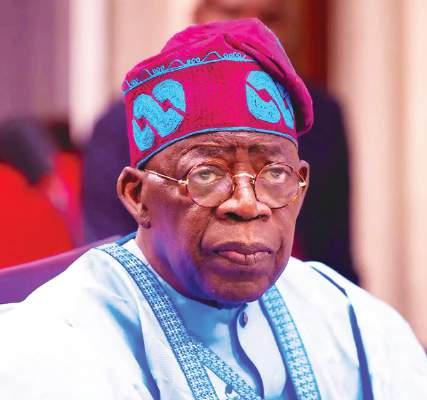
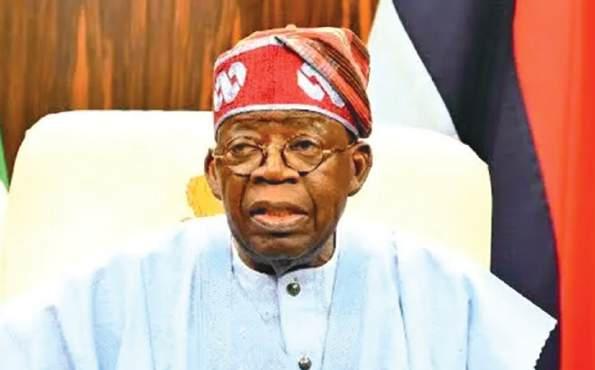
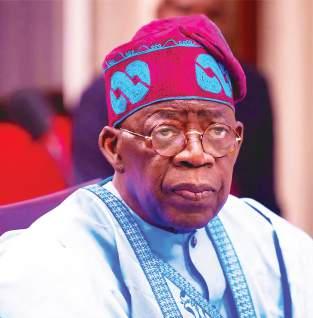
Tinubu: Tension over Subsidy Removal Has Reduced, Says Better Days Lie Ahead…
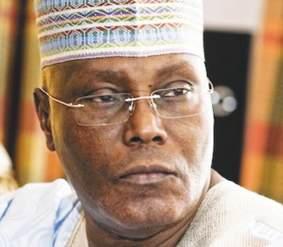
Atiku Breaks Silence on Fintiri’s Defection, Says It’s Evidence of Pressure, Intimidation
Chuks Okocha in Abuja
Former Vice President of Nigeria and chieftain of the African Democratic Congress (ADC), Atiku Abubakar, has described the wave of defections by governors from the opposition parties to the All Progressives Congress (APC) as evidence of pressure and intimidation
and not a sign of strength of the ruling party.
Reacting to the defection of Adamawa State Governor, Ahmadu Fintiri from the Peoples Democratic Party
(PDP) to the APC, Atiku said political realignments were not new.
Fintiri defected from the PDP on Friday, in a political move that altered the balance
of power in the North-east state and carried implications for Atiku.
“I have taken this decision after wide consultations and in the best interest of the
development of our dear state,” the governor said, adding that members of his cabinet and other PDP
Continued on page 5
Iranian Ayatollah Khamenei, 40 Leaders Dead in US, Israel Airstrikes, Says Trump
Iran hits Saudi Arabia, Jordan, Qatar, UAE, Kuwait, Bahrain, Iraq, Syria, others in retaliatory attacks
Airspace closed, airlines halt flights
FG issues advisory to Nigerians in Iran, Gulf states
UN Security Council begins emergency meeting
Crude oil prices expected to skyrocket
United States President, Mr.
confirmed that the Iranian Supreme Leader,
Ali
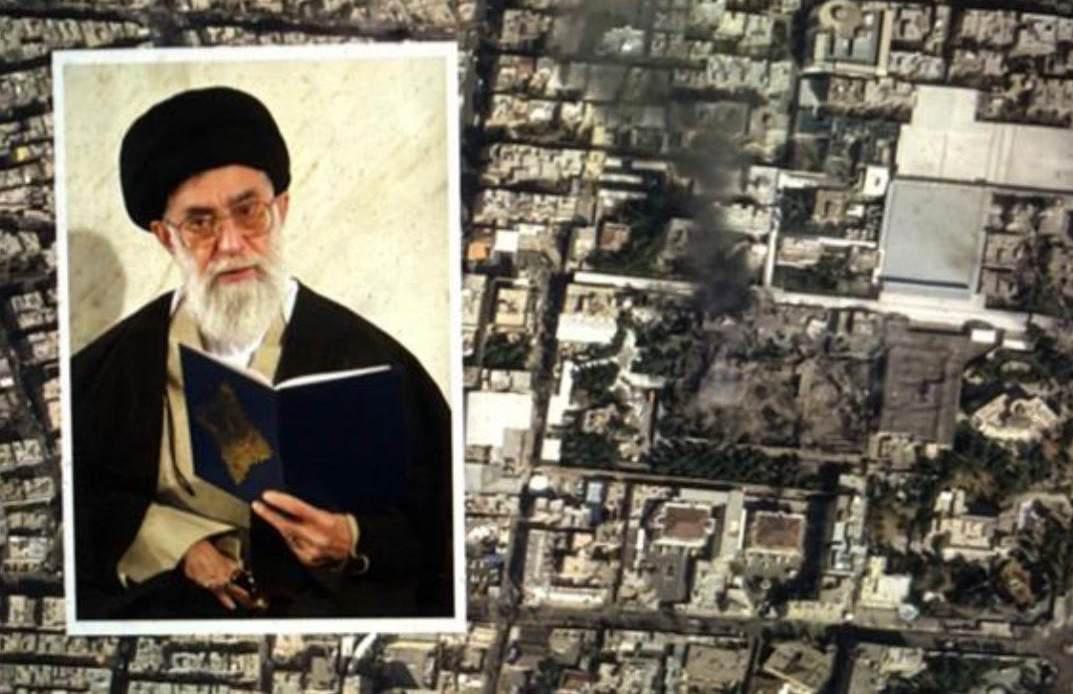
and civilian leaders were killed in the airstrikes launched by the US and Israel against Iran. Trump also announced that the members of the Iran’s Islamic •The 86-year-old Iranian Supreme Leader, Ayatollah Ali Khamenei, killed in his compound
Emmanuel Addeh in Abuja
Donald Trump, yesterday
Ayatollah
Khamenei, and 40 top military
Tinubu: Tension over Subsidy Removal Has Reduced, Says Better Days Lie Ahead
Promises to support efforts to improve return of House members
President Bola Tinubu has said the tension occasioned by subsidy removal has subsided, noting that at one time many Nigerians had thought his administration could reverse the subsidy removal.
President Tinubu expressed
optimism about Nigeria’s economy, stating that better days lie ahead.
Tinubu stated these on Friday night when he hosted an interfaith breaking of fast with members of the House of Representatives at the presidential Villa, Abuja.
“It was initially very difficult
for many to understand the direction of my thinking, but I am glad we are out of the dark tunnel. Many even thought we could reverse the subsidy removal. The tension has subsided,” the President said.
The president reiterated the need to establish a State Police
to enhance security across the country.
He also pledged to support efforts to reduce the high turnover of House members in the upcoming elections.
President Tinubu commended the Speaker, Tajudeen Abbas, for his exemplary leadership qualities and dedication to nation-building.
“I appreciate the impressive turnout, and this shows the spirit of unity. You spoke very well as a team leader; you are a very good leader.
IRANIAN AYATOLLAH KHAMENEI, 40 LEADERS DEAD IN US, ISRAEL AIRSTRIKES, SAYS TRUMP
Revolutionary Guard Corps (IRGC) were seeking immunity from the United States.
The US and Israel had earlier yesterday launched a major attack on Iran, with President Trump urging the Iranian public to “seize control of your destiny” by rising against the Islamic leadership that has ruled the nation since 1979.
In retaliation, Iran also launched attacks on Saudi Arabia, Jordan, Qatar, the United Arab Emirates (UAE), Kuwait, Bahrain, Syria, and other countries with the US’ military bases or that are allies of the US, in response to the strikes across its territory.
The US reportedly has about 13 military bases across the Middle East, with 30,000 to 40,000 troops usually deployed between them.
While the US and Israel were
demanding regime change in Iran, Tehran had also retaliated with airstrikes on US allies in the Middle East.
Reuters reported that the attacks forced much of the Middle East’s airspace to shut down, with reverberations across the globe.
At least eight countries, including Iran, Israel, Iraq, Jordan, Qatar, Bahrain, Kuwait, and the United Arab Emirates, closed their airspace.
Syria also announced it had closed part of its airspace in the south along its border with Israel for 12 hours.
The attack on Iran had prompted Tehran to call for an emergency meeting of the UN nuclear watchdog, while the European Union foreign ministers would hold “extraordinary” talks today. Meanwhile, oil prices will
likely rise sharply when trading opens on Monday morning, as Tehran has repeatedly threatened to blockade the Strait of Hormuz, a key oil export channel and a critical maritime corridor connecting oil-producing countries in the Middle East to the rest of the world.
Trump confirmed yesterday afternoon that Khamenei was killed in the airstrikes.
"Khamenei, one of the most evil people in history, is dead," Trump wrote in a Truth Social post. "This is not only Justice for the people of Iran, but for all Great Americans, and those people from many Countries throughout the World, that have been killed or mutilated by Khamenei and his gang of bloodthirsty THUGS."
The US President said the supreme leader was "unable
to avoid our Intelligence and Highly Sophisticated Tracking Systems and, working closely with Israel, there was not a thing he, or the other leaders that have been killed along with him, could do."
"This is the single greatest chance for the Iranian people to take back their country," the president wrote.
"We are hearing that many of their IRGC, military, and other security and police forces, no longer want to fight, and are looking for immunity from us. As I said last night, 'Now they can have Immunity, later they only get Death!'"
Trump said he hopes the IRGC and police will "peacefully merge" with Iranian patriots to stabilize the country.
"That process should soon be starting in that, not only the death of Khamenei but
“I am very happy with the representation I see here tonight, which reflects your consciousness and the richness of your leadership. I thank you for speaking so well.
the Country has been, in only one day, very much destroyed and, even, obliterated," he wrote. "The heavy and pinpoint bombing, however, will continue, uninterrupted throughout the week or, as long as necessary to achieve our objective of peace throughout the Middle East and indeed, the world”.
Israel said its opening strikes decimated the chain of command — killing seven senior defence and intelligence officials and targeting 30 top military and civilian leaders overall.
Others confirmed killed include: Khamenei's top security adviser, Ali Shamkhani; IRGC Commander, Mohammad Pakpour; Defence Minister Aziz Nasirzadeh; Khamenei's Chief Military Secretary, Mohammad Shirazi and Head of Iranian Military Intelligence, Saleh Asadi.
“I will do everything within our party’s power. In several constituencies, there are rotational arrangements. I wish that everyone would return.”
Similarly, Israeli Prime Minister Netanyahu had also called on Iranians to 'take to the streets en masse' to topple the country’s regime.
Netanyahu had also said there were strong indications that Iran’s Supreme Leader had been killed in an attack on his compound as part of US-Israeli strikes.
“This morning, in a powerful surprise strike, the compound of the tyrant Ali Khamenei was destroyed in the heart of Tehran… and there are many signs that this tyrant is no longer alive,” Netanyahu said in a televised statement.
The Chairman of the SPND (Iran's nuclear weapons research organisation), Hossein Jabal Amelian and former SPND Chairman, Reza Mozaffari-Nia,
ATIKU BREAKS SILENCE ON FINTIRI’S DEFECTION, SAYS IT’S EVIDENCE OF PRESSURE, INTIMIDATION officials in the state were joining him in the APC.
The defection followed the resignation earlier on Wednesday of the Speaker of the Adamawa State House of Assembly, Bathiya Wesley, and 15 lawmakers from the PDP.
The lawmakers cited the lingering crisis at the party’s national level as the reason for their exit.
Atiku was the PDP presidential candidate in the 2019 and 2023 elections and hails from Adamawa State, which has been his political base where he has
the figure to N123.76 trillion.
The sharp February rally followed a policy shift by the National Pension Commission (PenCom), which raised equity investment limits for pension funds, triggering renewed demand for listed equities, particularly fundamentally strong counters. Within one week of the announcement, the market advanced by N6.79 trillion as fresh liquidity flowed into stocks.
On February 9, PenCom revised investment thresholds for ordinary shares in RSA Funds I, II, III, and VI-Active, expanding pension funds’ capacity to increase equity
maintained considerable influence over the years.
He won Adamawa’s inaugural Fourth Republic governorship election in 1998 before accepting nomination as Olusegun Obasanjo’s running mate in that year’s presidential election. .
Fintiri’s defection effectively seems to transfer the state’s executive structure to the APC, including commissioners and party officials who followed him.
After Governor Fintiri’s defection, the Presidency had reacted to the development through the Special Adviser
exposure.
Consequently, the Nigerian Exchange Limited All-Share Index (NGX ASI) closed February at 192,826.78 basis points, representing a year-todate growth of 23.9 per cent, or 37,213.75 basis points, from its opening level of 155,613.03 basis points.
In January, the index rose 6.3 per cent to 165,370.40 basis points, then surged 16.6 per cent in February to settle at 192,826.78 basis points, underscoring the strength of the rally.
Analysts attributed the market’s resilience to a combination of factors, including elevated liquidity ahead of the 2027 general election,
to the President on Information and Strategy, Bayo Onanuga, who mocked Atiku, suggesting that the governor’s action has weakened his political base ahead of the 2027 general election.
In a statement, Onanuga described the governor’s move as further proof of the growing acceptance of the APC across the country, including in states previously considered opposition strongholds.
But in his reaction, Atiku declared that every politician was free to choose a path,
strategic portfolio rebalancing, the ongoing banking-sector recapitalisation drive by the Central Bank of Nigeria (CBN), improved foreign-exchange stability, moderation of inflationary trends, and ongoing fiscal and tax reforms.
Market operators also noted the 2026 performance of the robust reforms implemented in 2025 by the federal government and regulators.
The NGX ASI recorded a remarkable 51.2 per cent annual return in 2025, despite double-digit inflation.
The CBN’s decision to reduce the Monetary Policy Rate (MPR) to 27 per cent was aimed at strengthening the naira and
adding that he respected that right.
The former vice president added that even his children were free to take independent political positions.
He added however, that anyone — including his son — who chose to stand with Nigerians rather than the APC was standing on the side of patriotism.
He declared that the 2027 election would be a straight contest between President Bola Tinubu and the APC on one side, and the Nigerian people on the other.
Atiku accused Tinubu's
attracting foreign portfolio inflows, further supporting equity market momentum.
That performance marked a decisive departure from the subdued 2015–2019 era, when the market struggled in the aftermath of the 2015 oil price crash and the 2016 recession. The 2020s, however, witnessed a sustained recovery, with equities emerging as a preferred asset class amid structural reforms.
Analysts maintained that the current rally was fundamentally driven.
Vice President of Highcap Securities, David Adnori, described the January–February surge as evidence of improving
administration of weaponizing state institutions to bully political opponents in a desperate bid to turn Nigeria into a one-party state.
“This government fears accountability. It fears credible elections. It fears the people,” he said.
According to him, no amount of coercion can erase the daily hardship Nigerians face — rising hunger, crushing poverty, worsening insecurity, and mass unemployment caused by failed economic policies.
“Governors may defect for personal survival. Nigerians
economic stability and rising foreign investor participation.
He noted that investors were responding positively to the release of full-year 2025 results by listed companies, particularly dividend-paying stocks, which had continued to attract strong demand.
Similarly, the Managing Director/Chief Executive of Globalview Capital Limited, Aruna Kebira, attributed the N24.4 trillion expansion to expectations of impressive 2025 earnings and improving macroeconomic indicators.
According to him, foreign exchange stability and competitive returns on equities relative to fixed-income
are defecting in their millions because they want survival.” Atiku urged citizens not to confuse political crosscarpeting with popularity.
“What will the APC campaign on in 2027 — hunger? Hardship? Hopelessness?” he queried. He reminded Nigerians that power ultimately belongs to them and warned against vote-selling.
“Do not trade your future. Do not mortgage your children’s tomorrow. In 2027, the people will have their say — and their will shall prevail,” Atiku added.
instruments had continued to support participation, a trend he expected to persist through the first quarter.
“The technical rally began in December 2025,” Kebira said. “Most of the results released so far are impressive, even where some fall slightly below expectations. As more earnings are announced, the positive momentum is likely to be sustained.”
For now, the shift from low-yield bonds to equities, supported by policy adjustments and earnings strength, has reinforced investor confidence, positioning the Nigerian stock market for a potentially strong first quarter in 2026.
Deji Elumoye in Abuja
STRATEGIC CONSULTATION…
Seyi Tinubu Breaks Silence on King Mitchy,
VDM Controversy, Says He Will Not Be Bullied
Seyi Tinubu, son of President Bola Tinubu, has debunked the allegations linking him to a feud between social media personalities, Martins Vincent Otse, popularly called VeryDarkMan, and Mitchell Mukoro, widely known as King Mitchy.
He vowed that he would not be intimidated by “fictional” narratives, and refused not to be bullied.
The controversy followed alleged claims suggesting
an improper relationship or secret arrangements between Seyi Tinubu and King Mitchy, which VeryDarkMan had reportedly used to intensify his online narrative.
Philanthropist and content creator, King Mitchy, recently announced that she renovated a dilapidated school in six days, suggesting that the project was proof that meaningful change could happen swiftly when there was genuine intent.
However, she reportedly made comments widely interpreted as subtle jabs at VeryDarkMan, who, in turn, accused her of being used as a political pawn to launder the image of President Bola Tinubu’s administration.
Tagging the president’s son, VeryDarkMan was said to have alleged in another video that both Seyi Tinubu and King Mitchy were threatening his life.
Reacting to the comments
in a statement shared on Instagram yesterday, Seyi Tinubu described the allegations and insinuations as false.
He clarified the nature of his interaction with King Mitchy, framing it strictly within the bounds of his long-standing philanthropic work.
Tinubu wrote, “I met Mitchy once, in a public setting, alongside others. On that occasion, I provided financial support toward
US Military Support Not Threat to Nigeria’s Sovereignty, DHQ Clarifies
Linus Aleke in Abuja
The Defence Headquarters (DHQ) has stated that military support from the United States was not a threat to Nigeria’s sovereignty, maintaining that the collaboration between the two countries was lawful, routine and beneficial to Nigeria’s security operations.
Addressing journalists yesterday in Abuja at a press conference, the Director of Defence Media Operations, Major General Michael Onoja, explained that the assistance came at no financial cost to the federal government.
He emphasised that the arrangement was designed to strengthen Nigeria’s efforts to tackle insecurity.
Responding to questions about the number of US troops currently in Nigeria, General Onoja said the figure was not material, provided their presence contributed to dismantling terrorist networks within the country.
He clarified that the role of the US military was limited to advisory support, intelligence sharing and capacity building.
Onoja cautioned against misinterpreting the partnership, describing it as a routine military-
to-military engagement consistent with international cooperation in the fight against terrorism.
According to him, such collaborations were common among nations confronting security challenges and were intended to enhance operational effectiveness, not undermine national independence.
He said: “We must appreciate the assistance that the United States Government is providing to the Nigerian military to ensure that the issue of insecurity comes to an end. The ultimate objective of that assistance is to ensure that Nigeria has an environment that is conducive for all citizens
to live in peace, free from the threat of terrorists.
“As you know, the American Government has a policy that enables it to pursue terrorists anywhere in the world in order to safeguard its own national interests and national security. Therefore, what they are doing in coming to our aid to assist us should not be considered unusual.”
Earlier, the DHQ had issued a statement underscoring that the collaboration was primarily focused on training Nigerian troops and strengthening counter-terrorism operations nationwide.
Tinubu Receives Ex-Defence Minister, TY Danjuma, at Aso Rock
President Bola Tinubu yesterday received a former Defence Minister, Lt. Gen. Theophilus Danjuma (rtd.), at the State House in Abuja.
The Presidency revealed this in a terse statement yesterday. However, the details of the meeting were not immediately disclosed.
He served as Defence
Minister in the first term of former President Olusegun Obasanjo from 1999 to 2003. Danjuma, 87, is one of Nigeria’s most influential military and political figures.
He served as Chief of Army Staff from 1976 to 1979 under the military government of General Olusegun Obasanjo (rtd.)
and later as Minister of Defence from 1999 to 2003 during Obasanjo’s civilian administration.
The Taraba State-born former military chief played a pivotal role in Nigeria’s political history, including the July 1966 counter-coup that brought General Yakubu Gowon to power.
Beyond his military
career, Danjuma is a billionaire businessman with interests in the oil and gas sector through his company, South Atlantic Petroleum, and is known for his philanthropic activities through the TY Danjuma Foundation.
The elder statesman has been vocal on security matters in the past.
her NGO activities, just as I have supported many young Nigerians and organisations working to empower our people.
“A follow-up meeting had been scheduled for me to receive an update on the impact of her NGO’s work following the donation. That meeting did not take place because I have been unwell,” Seyi Tinubu explained.
He categorically denied any private encounters, saying, “There has never been a private encounter; no secret arrangement, and no impropriety of any kind.”
Tinubu accused VeryDarkMan of using a feud he had no part in to attack his reputation.
He wrote, “What is deeply concerning is that a feud I did not start, and in which I have played no part, has been used as a vehicle to insert my name into a narrative without basis in truth.
“For reasons best known to him, VDM appears to have been looking for a trigger, an opportunity to attack and attempt to harm my reputation and seized upon this situation to do so. I will not accept that. “If my name generates attention, let us at least deal in facts. Supporting charitable causes is not a crime. Meeting someone publicly to support their NGO is not a scandal. Repeating falsehoods loudly does not transform them into truth.”
The Tanimu Turaki (SAN)-led Peoples Democratic Party (PDP) has announced plans to commence a nationwide membership drive on Monday as part of its preparations for the 2027 elections.
In a statement by its National Publicity Secretary, Ini Ememobong, yesterday said the exercise is aimed at expanding its support base, strengthening grassroots structures, and mobilising new members across the country ahead of the polls.
In response to the concerns, the Nigerian Senate amended Clause 28 of the Electoral Act Amendment Bill, shortening the mandatory election notice period from 360 days to 300 days, thereby enabling INEC to revise the timetable.
Subsequently, INEC issued an updated schedule on Thursday, signed by its Chairman, Professor Joash Amupitan, shifting the Presidential and National Assembly elections to January 16, 2027, and the Governorship and State Houses of Assembly elections to February 6, 2027.
On February 13, the Independent National Electoral Commission (INEC) initially fixed the 2027 presidential and National Assembly elections for Saturday, February 20, 2027, while the governorship and state Houses of Assembly polls were slated for Saturday, March 6, 2027. The schedule, however, drew criticism from some Muslim stakeholders who observed that the dates coincided with the 2027 Ramadan period.
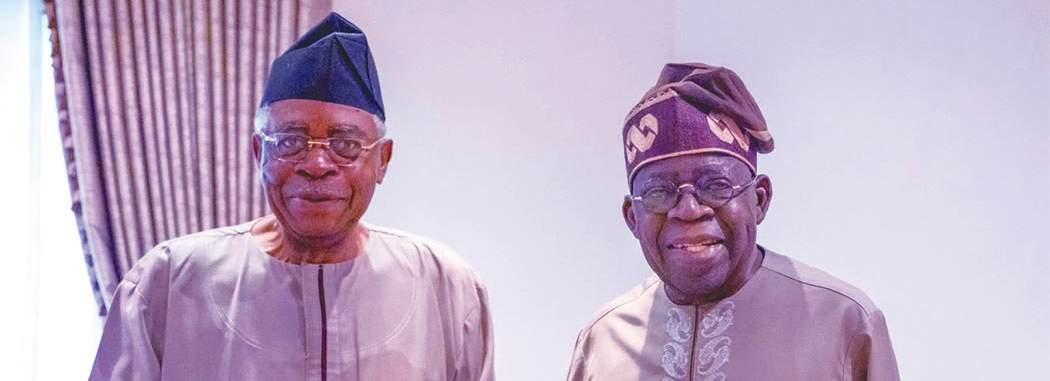
President Bola Tinubu (right), and former Minister of Defence, Lt. General Theophilus Danjuma (rtd.), when the president received ex- Chief of Army Staff at the State House in Abuja…yesterday
COLLABORATING FOR MARITIME SAFETY…
Insecurity: Zamfara Gov Holds Emergency Meeting, Urges Action against Attacks
In his resolve to end the insecurity affecting Zamfara State, Governor Dauda Lawal at the weekend convened an emergency security meeting with all heads of security agencies and relevant stakeholders in the state.
The emergency meeting followed reports of bandit attacks in Zamfara, including the February 19 attack on Dutsin Dan Ajiya village in Anka Local Government Area (LGA) of the state, where no fewer than 50 residents were killed.
Lawal tasked the security chiefs to urgently review the
current security framework and implement coordinated measures to counter the threats.
In a statement issued yesterday by the governor’s spokesperson, Sulaiman Idris, Governor Lawal convened and presided over an emergency security meeting at the Government House conference room in Gusau to address rising insecurity.
Idris added that the meeting demonstrated the shared commitment and collective responsibility of the state government and heads of security agencies to protect lives and property in the state.
The statement said, “In his administration’s resolve to end the insecurity affecting Zamfara
At Ramadan Lecture, Information Minister Says Fake News is a Major Threat to Nigeria’s Stability
The Minister of Information and National Orientation, Mohammed Idris, yesterday warned that fake news and digital disinformation posed a grave threat to Nigeria’s moral foundation and long-term stability, urging citizens, especially the youth, to embrace verification and responsibility in the digital space.
Idris spoke in Kaduna at the 20th Joint Ramadan Lecture organised by the Nigerian Television Authority (NTA), Federal Radio Corporation of Nigeria (FRCN), and the Voice of Nigeria, describing the digital age as a defining moment for Nigeria’s unity and moral direction.
The lecture, held at Lumana Hall, Zamani College, Kaduna, had as its theme: ‘Digital Technology and the Moral Future:
Navigating the Fitna of Our Time with Faith and Purpose.’
According to the minister, while digital technology had unlocked unprecedented opportunities for learning, enterprise, and innovation, it had also “unleashed forces that threaten our moral fabric,” with misinformation spreading faster than truth.
“We live in an age where a single smartphone can broadcast lies before truth can respond,” Idris said, warning that algorithms often amplify divisive content because “anger spreads faster than reflection.”
He noted that disinformation had evolved into a subtle tool of political warfare capable of eroding public trust in institutions, deepening suspicion among citizens, and undermining national cohesion.
State, Governor Dauda Lawal convened an emergency security meeting with all heads of security agencies and relevant stakeholders in Zamfara State.
“The meeting demonstrates the shared commitment and collective responsibility of the state government and heads of security agencies to protect
lives and properties in Zamfara State.
“During the meeting, Governor Lawal urged the heads of the security agencies in Zamfara to heightened vigilance, strengthened intelligence, and immediate, coordinated countermeasures.
“He charged the security to put more effort into ensuring
that these elements did not gain further ground by staying ahead of them, denying them freedom of action, and decisively neutralising the threat,” the statement added.
The governor also commiserated with security personnel who lost their lives or sustained injuries in the line of duty and assured support
for affected communities.
“He sympathised with the victims’ communities and families, assuring his administration’s support for affected communities and security agencies, with logistical, operational, and institutional backing to improve their effectiveness,”
Idris said.
FAAN Announces Middle East Flight Disruptions after US-Israel Strikes on Iran
The Federal Airports Authority of Nigeria (FAAN) has announced flight disruptions to several Middle East destinations following airspace closures triggered by the United States–Israeli strikes on Iran.
In a statement issued yesterday via its official social media handle and signed by management, FAAN said the closures were already affecting flight operations to and from the region.
“The Federal Airports
Authority of Nigeria wishes to inform the travelling public that ongoing airspace closures in parts of the Middle East are currently impacting flight operations to and from the region.
“As a result of these developments, flights scheduled to Middle East destinations from Nigerian airports, including Emirates and Qatar Airways, have been cancelled or delayed.
“Passengers affected by these disruptions are strongly
advised to contact their respective airlines directly for up-to-date information on flight status, rebooking options, and further guidance.
“FAAN continues to monitor the situation in collaboration with relevant aviation authorities and airline operators and will provide updates as necessary. We regret the inconvenience and appreciate the understanding and cooperation of the travelling public.”
The development follows
a wave of military strikes yesterday by the United States and Israel against targets in Iranian cities, which reportedly led to explosions and plumes of smoke over Tehran. In the aftermath, Iran, Iraq, Israel, Syria, Kuwait and the United Arab Emirates announced partial or full airspace closures.
Major international carriers, including Air France, Lufthansa, Turkish Airlines and Air India, also suspended or cancelled flights across parts of the region.
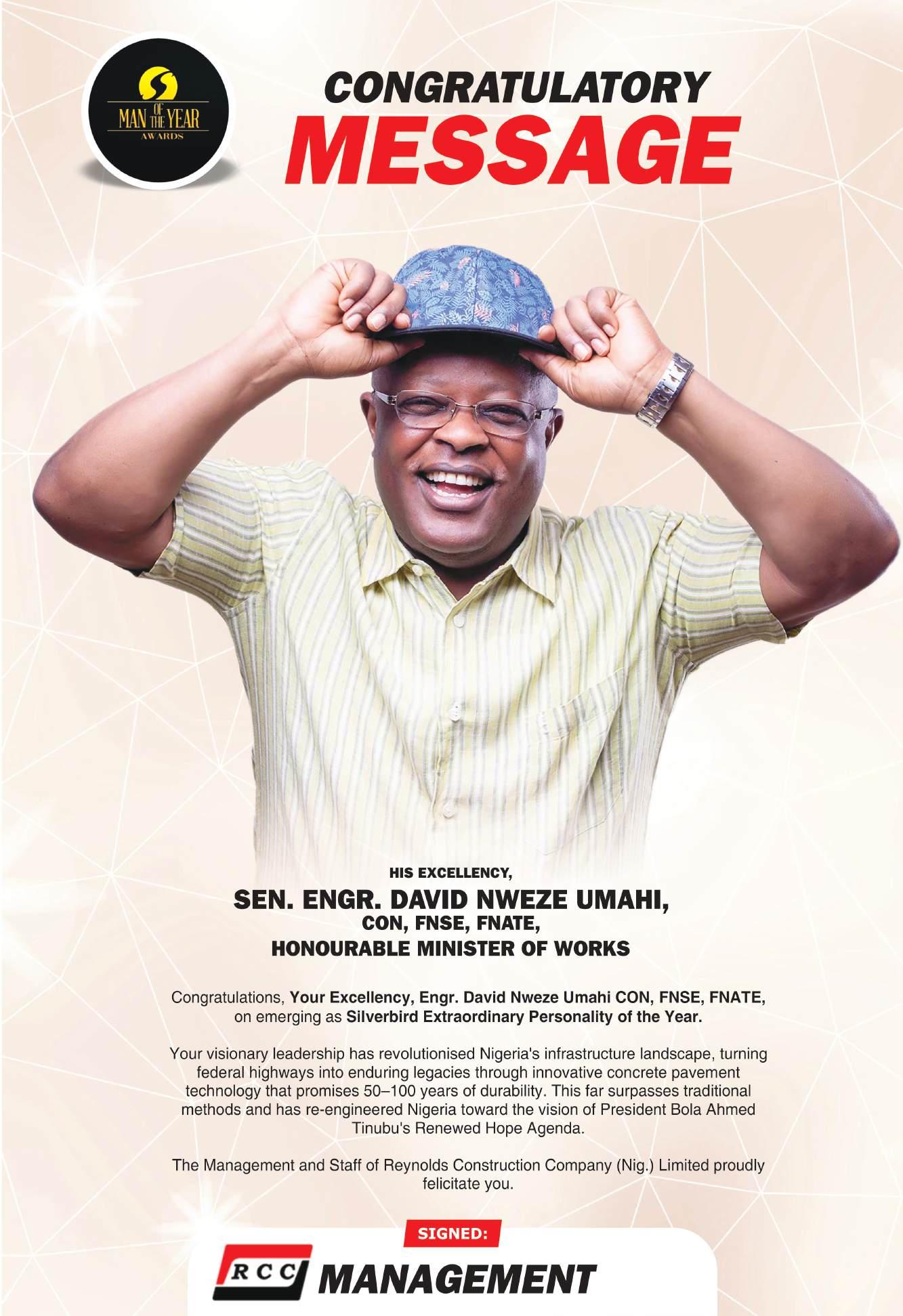
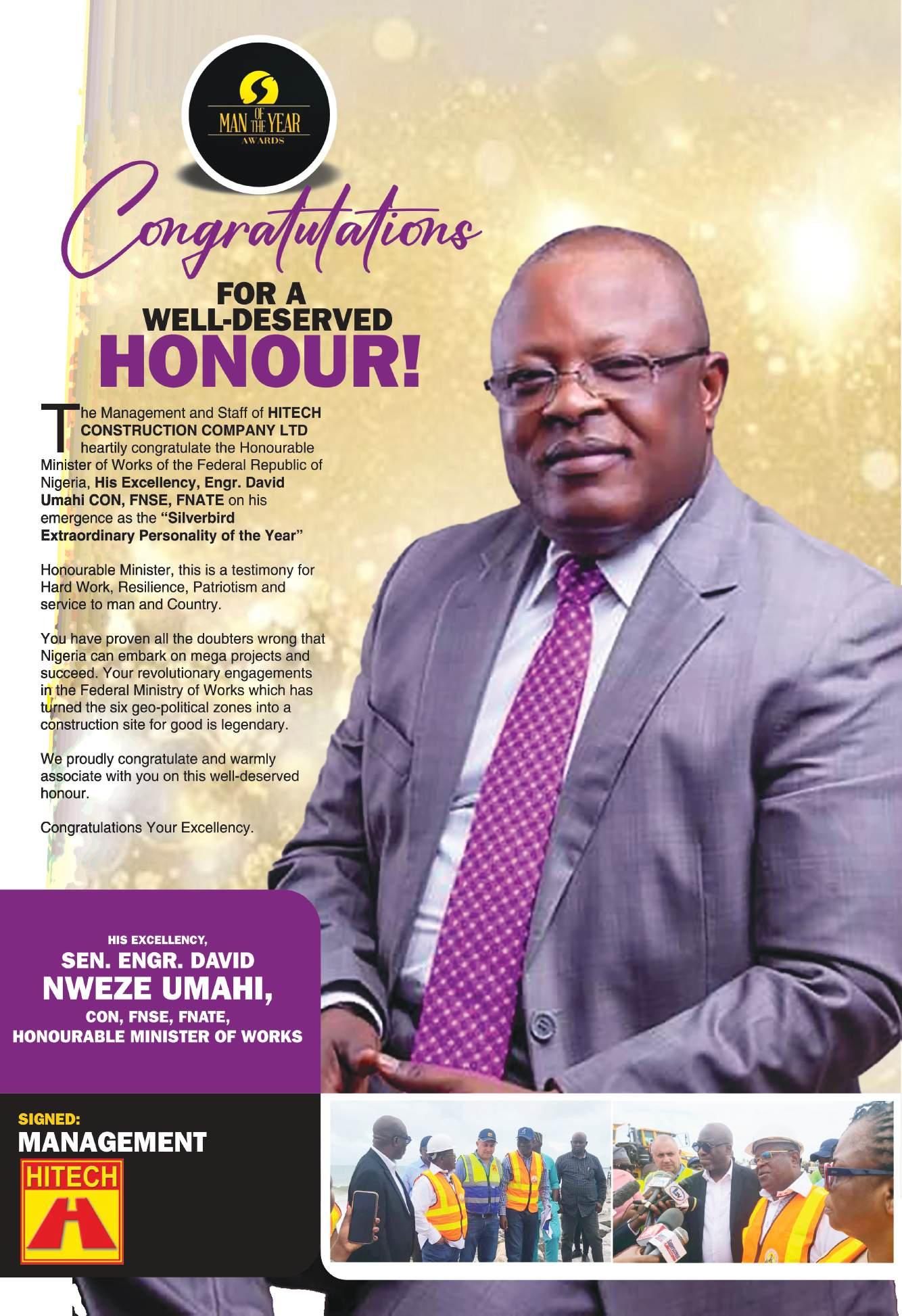
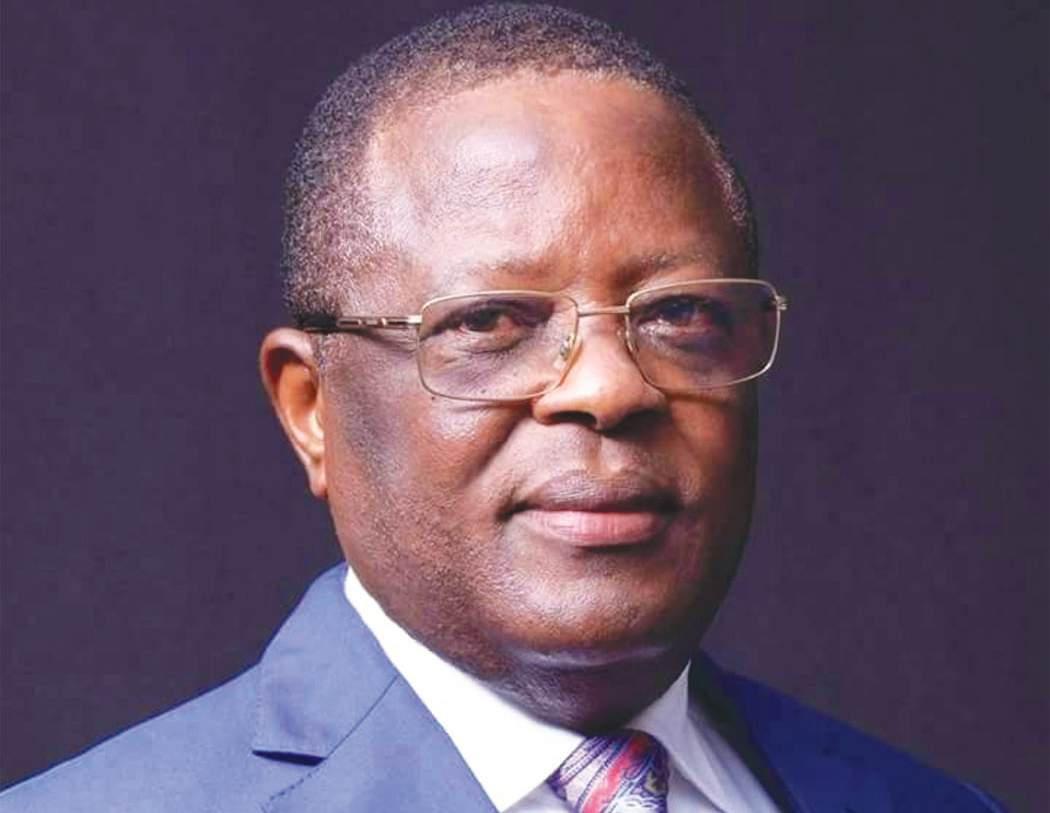
Umahi: Nobody Can Distract Me from Fulfilling Mandate of Serving God, Tinubu, Nigerians
The Minister of Works, Senator David Umahi, has vowed that no distractions would stop him from fulfilling the mandate of serving God, President Bola Tinubu and Nigerians.
The minister made the declaration yesterday at the Enugu/Anambra boarder while inspecting the level of progress of work along the Enugu-Awka-Onitsha Expressway.
Umahi was reacting to the recent allegations against him by a woman who claimed that he was owing him.
He said the matter was already in court, challenging those behind the allegations to be ready to prove their allegations in court
Umahi said, “If you’re paid to insult me in social media, it won’t shut my mouth. I’m not at all distracted. Everyone that knows me knows that I’m David and not afraid of anything.
“Some people have asked me… 'okay let’s settle,' what are we settling? You don’t play something on nothing. If you want to woo me you have
to do that properly. This is a very handsome man, with a very good brain. You don’t go by the side looking for me.
“Meanwhile, the matter is in court, whether you insult or praise me, I don’t want to know. All I know, if you allege, you must prove it in court.
“We’re not distracted from our work. We know we’re engaged in a series of wars because contracts are no longer business as usual. We’re not unaware of that.
“So, wherever the fight is coming from, we’re ready. But
we won’t bend the standard. We’ll fulfil the callings of God almighty, the people and Mr President.
While expressing satisfaction with the level of progress of work by both contractors handling the project, Umahi urged them to expedite the process to beat the deadline.
“I’m very impressed with the work so far for the quality of work being done here. The first 20km is completed. We just have only 13km, all of concrete that will last the next 100 years.
Onuminya Innocent in Zamfara
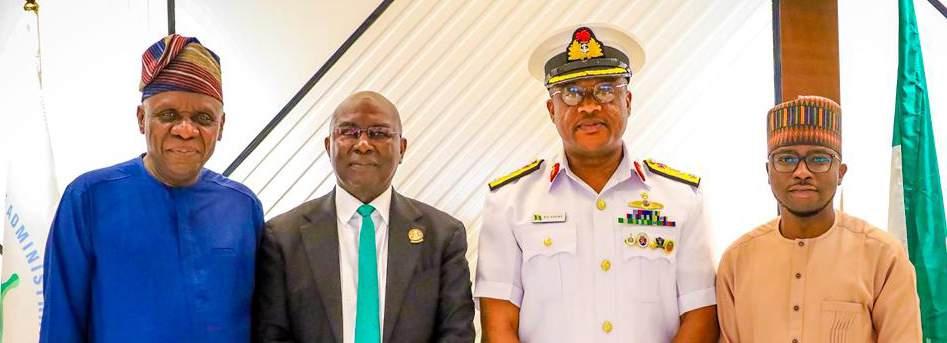
L-R: Executive Director, Operations, Nigerian Maritime Administration and Safety Agency, Mr. Fatai Taiye Adeyemi; Director General, NIMASA, Dr. Dayo Mobereola; newly appointed Commander of the Maritime Guard Command at NIMASA, Commodore Reginald Odeodi Adoki; and Executive Director, Maritime Labour and Cabotage Services, NIMASA at the NIMASA headquarters in Lagos…recently
STRATEGISING AHEAD OF 2027…
Tinubu Hails Lebara Nigeria’s Launch, Says Entry Strong Vote of Confidence in Digital Economy
Deji Elumoye in Abuja
President Bola Ahmed Tinubu has welcomed the official launch of Lebara Nigeria, describing the development as a strong vote of confidence in Nigeria’s digital economy and its growing status as a leading technology and investment destination in Africa.
In a statement issued yesterday by his Special Adviser on Information and Strategy, Mr. Bayo Onanuga, the President said Nigeria’s telecommunications sector remained one of the country’s most vibrant economic drivers, recording 5.78 per cent yearon-year growth in the third quarter of 2025 and contributing
over 14 per cent to the nation’s Gross Domestic Product (GDP).
President Tinubu congratulated the leadership and partners of Lebara Nigeria, particularly its Chief Executive, Mrs. Teniola Stuffman, for their commitment to expanding telecommunications access, creating employment opportunities, and strengthening Nigeria’s digital infrastructure.
According to the president, investments of this nature are critical to deepening financial inclusion, enabling innovation, and accelerating sustainable economic growth.
He noted that the launch of Lebara Nigeria signals growing investor confidence in the reforms being implemented by
EFCC is Probing Alleged N10bn Non-existent Abia Airport by Ikpeazu’s Administration, Says Otti
Abia State Governor, Alex Otti, has said that the Economic and Financial Crimes Commission (EFCC) is investigating the alleged misappropriation of N10 billion purportedly spent for a non-existent Abia Airport by the former Governor Okezie Ikpeazu’s administration.
Otti disclosed this at, during February media chat, saying that the commission was still inviting individuals who received the funds into their accounts.
He explained that his administration had petitioned EFCC regarding the alleged looted funds meant for the project.
He expressed the confidence that the money would be recovered, saying that the people involved would return the funds “at the appropriate time”.
A forensic audit had revealed that the N10 billion allocated
for the airport project by Ikpeazu’s government was misappropriated.
The audit report further disclosed that the funds were transferred to 32 different accounts.
Otti said his administration was focused on recovering the looted funds to ensure good governance and development in Abia State.
He said, “We are still on it and I’m sure that at the appropriate time they will bring back the money.”
The governor also announced subsidised fares for the recently launched Electric Bus Services on two major routes in the state.
According to him, commuters will henceforth pay N800 from Umuahia to Aba, while from Umuahia to Ohafia will cost N1,000.
“It is going to be cheap and organised in such a way that cash will not be accepted.
his administration to stabilise the economy and promote private sector-led development.
President Tinubu also acknowledged the presence and support of the British High Commission, represented at the launch by the Deputy High Commissioner, Mr. Johny Baxter, saying the participation underscores the enduring economic and diplomatic ties between Nigeria and the
United Kingdom. He stated that such collaborations reflect Nigeria’s openness to responsible foreign investment and strategic global partnerships that deliver tangible benefits to citizens.
The president further recognised the contributions of the Chairman of the Advisory Board, Bimbo Ashiru, and other advisory board members for their leadership, expertise, and
belief in Nigeria’s growth potential.
He stressed that initiatives like Lebara Nigeria will contribute significantly to job creation, youth empowerment, enterprise development, and broader economic diversification, particularly in the fast-evolving digital space.
Reiterating his administration’s commitment to fostering a stable, transparent,
and investment-friendly environment, President Tinubu assured investors of continued support for innovation and private enterprise.
He wished Lebara Nigeria success as it commenced commercial operations and encouraged sustained collaboration between the public and private sectors to advance Nigeria’s digital transformation agenda.
Iyabo Obasanjo Unveils Ogun Governorship Ambition, Hails Tinubu’s Economic Reforms
The first child of former President Olusegun Obasanjo, Prof. Iyabo Obasanjo-Bello, yesterday formally declared to contest for governorship of Ogun State, hailing the economic reforms under President Bola Tinubu.
She said Tinubu’s economic reforms had helped a lot to stabilise the economy and strengthened the purchasing power of Nigerians.
Obasanjo-Bello equally
saluted the foresight of President Tinubu in embarking on the Lagos-Calabar Coastal Road.
She added that the massive road construction would not only help in deepening economic activities along that corridor but would also help to decongest the ever-busy Lagos-Ibadan Expressway.
The epidemiology specialist equally said that her governorship aspiration was not a fluke, neither was she out to clear the path for
any other candidate.
She stated that she would put in every effort and commitment to succeed Governor Dapo Abiodun come 2027.
Prof. Obasanjo disclosed this during a media parley with journalists held yesterday at the penthouse inside her father’s sprawling Olusegun Obasanjo Presidential Library, Abeokuta.
Answering questions from journalists on her view on the state of the economy under
President Tinubu, the senator who represented Ogun Central between 2007 and 2011 affirmed that there have been a lot of positive developments with the economy in the last two and a half years.
She explained: “I think there’s a lot going on, positively. One is the stabilisation of the Naira. What that does is that people can predict how much money they will spend on imports and how much income they will get. So, stabilisation of the Naira is a big one.
Edun Hails 4.07% GDP Growth in Q4 2025
James Emejo in Abuja
The Minister of Finance and Coordinating Minister of the Economy, Wale Edun, has welcomed the latest data from the National Bureau of Statistics (NBS) showing that Nigeria’s real Gross Domestic Product (GDP) grew by 4.07per cent in the fourth quarter of 2025.
In a statement issued yesterday by Assistant Director, Information and Public Relations in the ministry, Mrs. Uloma Amadi, the minister described
the growth as a sign of broad-based economic expansion and strengthening macroeconomic stability under the leadership of President Bola Tinubu.
“This marks the second time in a decade—excluding the immediate post-pandemic rebound—that quarterly growth has exceeded four per cent. It follows the 4.23per cent growth recorded in Q2 2025 and represents a clear improvement from 3.76per cent in Q3 2024,” the minister said.
Edun noted that growth
in the fourth quarter was supported by the three major sectors of the economy.
“Agriculture expanded by four per cent, up from 2.54per cent in Q4 2024, supported by improved security in food-producing areas and better access to inputs. Industry grew by 3.88per cent, compared to 2.49per cent in the corresponding period of 2024, driven by improved foreign exchange liquidity, energy sector reforms, and stronger investor confidence. Services recorded 4.15per cent growth, reflecting
continued expansion in finance, telecommunications, trade, and technology-driven activities,” he said.
The minister highlighted that approximately 30 subsectors recorded growth above 3%, showing the breadth and increasing diversification of the expansion.
He also noted that for the full year, Nigeria’s real GDP grew by 3.87per cent, up from 3.38per cent in 2024, with the size of the economy increasing to N441.5 trillion, compared with N372.8 trillion in 2024.
James Sowole in Abeokuta
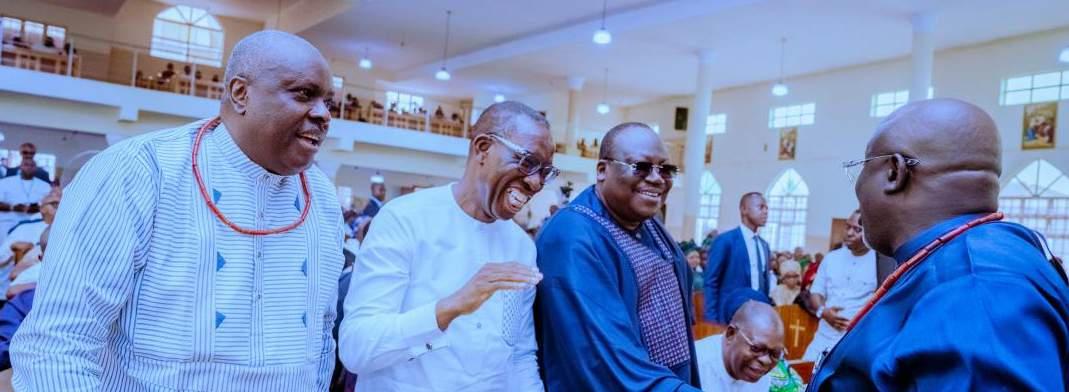
L-R: Chairman, House of Representatives’ Committee on Health Institutions, Patrick Umoh; Akwa Ibom State Governor, Pastor Umo Eno; President of the Senate, Senator Godswill Akpabio; Secretary to the Akwa Ibom State Government, Enobong Uwah; President General, Arise Renewed Hope Initiative, Mr. Uwem Okoko; FCT Mandate Secretary, Mr. Ubokutom Nyah; and Chieftain of the APC, Envoy
Nsentip Akpabio, when Eno paid a courtesy visit to the Senate President after the Local Government Congresses in Uyo…recently
INTRODUCING MORE INNOVATIONS…
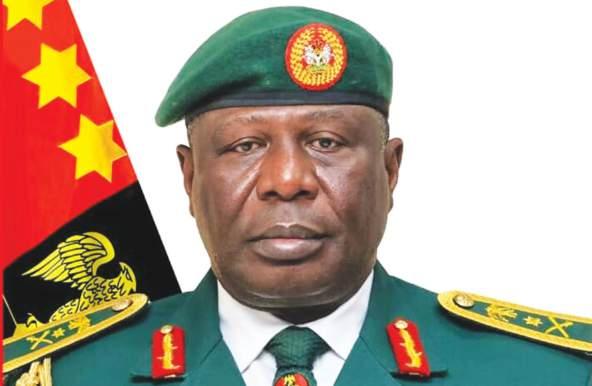
Defence Minister Vows FG Will Overcome Forces against Nigeria
The Minister of Defence, General Christopher Musa (rtd), has assured Nigerians that the administration of President Bola Tinubu will overcome forces working against the nation.
Speaking on Friday night at the 2026 edition of the “Special Abuja Power Touch” programme hosted by Matthew Morakinyo and Pastor Mary Morakinyo of God’s City International Church (GCIC), Musa said
although Nigeria is facing significant challenges, the country’s journey “through the wilderness” would ultimately lead to a glorious end.
The event, themed: ‘AllRound Settlement,’ was held at the Velodrome of the National Stadium, Abuja, and drew a large congregation.
Declaring that no one would be allowed to destroy Nigeria, the Defence minister
urged unity among citizens.
“We must unite against all enemies of Nigeria. We have a President who is doing his best to keep Nigeria united and great. Let us remain steadfast in prayer for the unity and survival of our dear country, Nigeria,” he said.
“So many evil people do not mean well for Nigeria, but one thing is sure; the Almighty God will put them all to shame.”
Musa, who served as the 18th Chief of Defence Staff from June 23, 2023, to October 30, 2025, before appointment as Defence Minister on December 4, 2025, said God’s grace had sustained him throughout his career.
“This is the first time that I have come to this wonderful congregation. I never knew this programme was going to hold today until Pastor Israel came to my office
today and insisted that I should be here,” he said.
The Minister also described himself as “a child of God not just by mouth but by deed,” adding that his current position was possible only by divine mercy.
During the programme, Pastor Morakinyo prayed for Nigeria and President Tinubu, declaring that insurgency in the country was over and that stability
IRANIAN AYATOLLAH KHAMENEI, 40 LEADERS DEAD IN US, ISRAEL AIRSTRIKES, SAYS TRUMP
were also eliminated.
However, a report said one senior official who survived is Ali Larijani —Secretary of Iran's Supreme National Security Council, former parliament speaker and one of Khamenei's closest confidants.
More than 250 people were reportedly killed across Iran.
An Iranian official was quoted as saying that 85 people were killed after a strike hit a girls' school.
Iran's IRGC said in a statement it was targeting US bases and assets as part of operation "Truthful Promise 4", in retaliation for the attack on Iran.
The BBC reported that at least four people were injured in an incident at a luxury hotel in Dubai, and a civilian was killed by falling debris in Abu Dhabi after a strike "involving Iranian ballistic missiles."
Dubai airport was also reportedly hit in the attack by Iran.
However, the United Arab Emirates’ Defence Ministry has said it destroyed 132 missiles and intercepted 195 drones launched from Iran.
Saudi Arabia has strongly condemned Iran’s latest military actions across the Gulf, confirming that Iranian forces directly targeted Riyadh and the kingdom’s eastern region in a significant escalation of hostilities.
According to a statement issued by the Saudi Foreign Ministry, the attacks were successfully repelled by the kingdom’s air defence systems.
Qatar's Ministry of Foreign Affairs issued a statement yesterday strongly condemning "the targeting of Qatari territory with Iranian ballistic missiles". It said it considered it "a flagrant violation of its national sovereignty, a direct infringement on its security and territorial integrity" and an "unacceptable escalation."
The Head of Public Relations at the Ministry of Interior in Qatar, Abdullah Khalifa Al-Muftah, said eight people were injured by falling missile
shrapnel, one of them seriously.
In a televised address, he said 66 missiles were fired on Qatar.
He said there were 114 reports of shrapnel falling across the country.
The Head of Public Relations at the Ministry of Foreign Affairs, Ibrahim Sultan Al-Hashemi, said Iran’s repeated targeting of Qatar was a reckless and irresponsible act that contradicted the principle of good neighbourliness.
Similarly, Bahrain has decried Iranian attacks on countries across the Gulf.
Jamal Fares Al-Ruwaie said Bahrain condemned the “unprecedented escalation,” saying it would deal with it “firmly”.
Al-Ruwaie also condemned strikes in Saudi Arabia, the UAE, Qatar, Kuwait, Jordan, and Syria.
“These grave developments reflect an escalatory pattern targeting our collective security,” he said.
FG Issues Advisory to Nigerians in Iran, Gulf States
Meanwhile, the federal government has issued a travel
advisory to Nigerians residing in or visiting Iran and neighbouring Gulf countries.
In a statement signed by the Ministry of Foreign Affairs spokesperson, Kimiebi Ebienfa, the government said it was closely monitoring the “evolving and volatile situation” in the Middle East.
“All Nigerians in Iran and affected Gulf countries are advised to remain extremely vigilant and conscious of their surroundings at all times,” the statement reads.
“Avoid areas known to be strategic, military, or government installations, as these could be potential flashpoints.”
The advisory urged citizens to avoid large gatherings and public demonstrations.
The statement added that the Nigerian embassy in Tehran and missions in neighbouring Gulf countries, including Qatar, Bahrain, Kuwait, the United Arab Emirates, and Saudi Arabia, are on high alert to provide consular assistance and facilitate communication.
The government also called on parties involved in the conflict to de-escalate tensions.
UN Security Council Begins Emergency Meeting
Meanwhile, the UN panel has begun its emergency meeting in the wake of US-Israel attacks on Iran.
“Military action carries the risk of igniting a chain of events that no one can control in the most volatile region of the world,”
UN Secretary General Guterres said, adding that about 20 cities had been hit in Iran.
He noted reports of Iranian leaders being killed but said he could not independently confirm.
European Union Foreign Policy Chief, Kaja Kalla, has said that the bloc’s foreign ministers would hold “extraordinary” talks on Iran today.
“The Iranian regime’s indiscriminate attacks against its neighbours carry the risk of dragging the region into a broader war, and we condemn this.”
Iran has also called for an emergency meeting of the UN nuclear watchdog to discuss what it described as “baseless” US and Israeli claims that
would take root nationwide. He also prayed for peace and tranquility before, during, and after the 2027 general elections.
The event featured song ministrations by gospel artistes including Steve Crown and Leke Gospel, alongside congregational praise and worship, testimonies, special choir ministrations, and a special song presentation by Pastor Mary Morakinyo.
Tehran’s atomic programme partly justified their military action against it.
Crude Oil Prices
Expected to Skyrocket
Meanwhile, oil prices will likely rise when trading opens on Monday morning, as Tehran has repeatedly threatened to blockade the Strait of Hormuz, a key oil export channel and a critical maritime corridor.
Other things being equal, the rising international price of crude is a plus for Nigeria, whose 2026 budget rests on a projected oil production benchmark of 1.84 million barrels per day (bpd), and a price benchmark of between $60 to $64.85 per barrel.
Beyond being a major oil producer, Tehran has repeatedly threatened a blockade of the Strait of Hormuz.
In 2024, approximately 20 million barrels of crude oil passed through it daily, which is equivalent to nearly 20 per cent of global liquid oil consumption, according to a report by the US Energy Information Administration (EIA).
L-R: Chief Executive Officer, Samsung Electronics West Africa, Mr. Lucas Lee; Group Head, Mobile Experience, Samsung Electronics West Africa, Joy Tim-Ayoola; and Mobile Experience, Business Manager, Samsung Electronics West Africa, Mr. Shanahan Tim Park, during the 2026 Galaxy Unpacked in Lagos...recently
ENCOURAGING YOUNG TALENTS…
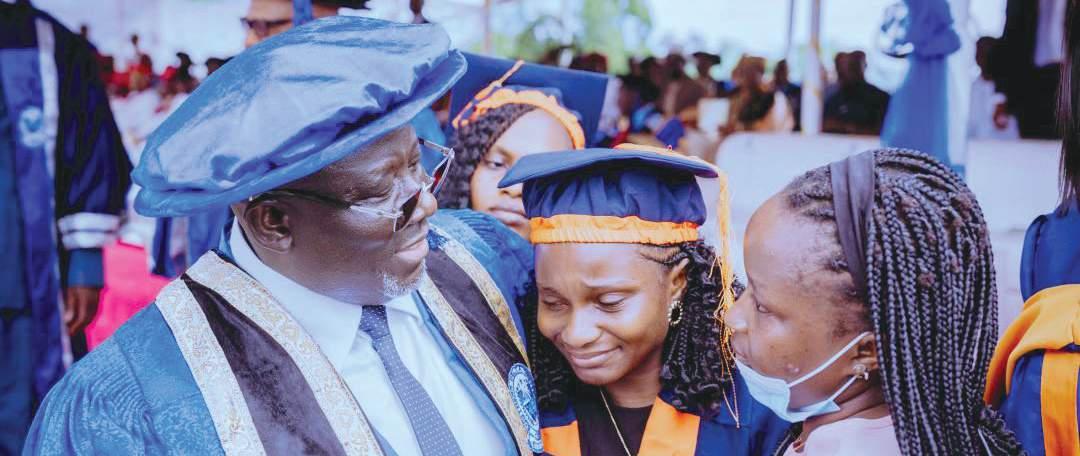
Governor Sheriff Oborevwori, consoling one of the First- Class students who narrowly missed being the best graduating student of the Southern Delta University, Ozoro, while one other student
on during the institution’s maiden convocation…yesterday
Lassa Fever Kills 10 Health Workers in Benue
The Benue State Government has confirmed the death of 10 health workers following an outbreak of Lassa fever, with 45 cases testing positive out of 250 suspected infections recorded across the state.
The state’s Epidemiologist, Dr Msuega Asema, disclosed this at the weekend during an assessment visit by the Commissioner for Health and Human Services, Dr. Paul EjehOgwuche, to isolation centres at the Benue State University Teaching Hospital and the Federal Medical Centre (FMC) in Makurdi.
Asema said the outbreak had severely affected frontline
workers, including five medical doctors, four nurses, two community health extension workers and one hospital porter.
He described the rising infections among health personnel as alarming.
He stated that out of the 250 suspected cases reported so far, 45 have been confirmed, with 10 cumulative deaths among health workers.
Speaking during the visit, Ejeh-Ogwuche urged residents not to panic, noting that the government had declared a Lassa fever outbreak on February 3 and activated containment measures.
He attributed the high
Umahi Says Banditry Not Hindering Projects
The Minister of Works, David Umahi, has said banditry in parts of the country has not disrupted work on federal roads.
Umahi spoke yesterday in Enugu while inspecting the Enugu–Onitsha highway and the Eke Obinagu mega flyover, among other projects along the corridor.
He said projects remained unhindered because President Bola Tinubu directed security agencies to provide adequate protection for contractors handling federal road works.
“The president directed the National Security Adviser, service chiefs, and related authorities to support us with adequate security on project sites. “There are no security issues at various project sites, as most security agents stay inside bushes and are not seen.
“Work is therefore going on at various sites in accordance with the President’s directives,” he said.
To demonstrate progress, Umahi said concrete was being applied on many roads at night, especially in northern states experiencing extreme heat.
infection rate among health workers to human-to-human transmission and lapses in infection prevention protocols.
“We are here to assess the situation on the ground. The figures may look disturbing, but the government, under Governor Hyacinth Alia, is fully committed to containing the outbreak. Necessary resources are being mobilised to ensure swift containment,” he said.
The commissioner added that surveillance officers had been deployed across the 23 local government areas (LGAs) in the state to strengthen monitoring,
contact tracing and community engagement.
He appealed to residents to promptly report symptoms at designated health facilities to reduce fatalities.
At the Benue State University Teaching Hospital, the Chief Medical Director (CMD), Dr. Stephen Hwande, said the hospital had intensified infection prevention measures.
He, however, called for urgent intervention to upgrade isolation centres with patient monitors, improved waste management systems and a functional emergency laboratory
for on-site testing.
The Chairman of the Medical Advisory Committee, Prof. Michael Agbir, described the situation as unusual compared to previous years.
He revealed that between January and February 2026 alone, the hospital recorded 28 admissions, 17 confirmed cases and three deaths.
At the FMC, the Chief Medical Director, Prof. Joseph Kontor, represented by Dr. Uche Augustine Azuka, said inadequate power supply was affecting laboratory services and delaying test results.
Kontor appealed to the state government for support with power supply, consumables and Personal Protective Equipment (PPE), stressing that patients were being treated and discharged free of charge, placing financial pressure on the facility.
The coordinator of the isolation centre and Head of Clinical Services at FMC Apir, Dr. Michael Odoh, disclosed that 10 patients were on admission, comprising eight confirmed and two suspected cases, including four health workers who were responding to treatment.
JAMB Probes Syndicate Using AI to Sabotage 2026 UTME Registration
found to have collaborated in sabotaging the system.
“Applying concrete at night shows there is adequate security on our sites and anyone who tries anything funny will have himself to blame,” he said.
The minister expressed satisfaction with the pace of work, urging the South-East to appreciate the President’s infrastructural drive in the zone.
“The Eke Obinagu flyover has attained 99 per cent completion, while sections of the Enugu–Onitsha Road are nearing completion.
He said, “They will all be inaugurated by the President in May.
“This is the time for Igbos to appreciate President Tinubu, and we will secure over 80 per cent of votes for him from the zone.
“It will take someone like myself from the South-East to replicate President Tinubu’s unprecedented strides in the zone’s annals.”
Mrs. Chioma Nweze, Senior Special Assistant to the President on Community Engagement (South-East), thanked the president for the projects and said the region owed him a debt of gratitude.
“The weather in the northern part of the country is presently above 45 degrees Celsius, and you cannot apply concrete under such conditions.
The Joint Admissions and Matriculation Board (JAMB) has opened an investigation into members of a syndicate allegedly using artificial intelligence to subvert the registration process for this year’s Unified Tertiary Matriculation Examination (UTME).
Registrar of JAMB, Is-haq Oloyede broke the news at a press conference yesterday in Abuja.
The JAMB registrar said three top officials of the board have also been recommended for dismissal have been
He added that two other officials and a member of staff of Ahmadu Bello University, Zaria, are currently undergoing criminal prosecution for involvement in activities inimical to the integrity of the examination body.
Oloyede said many of the candidates who patronised the syndicate are underaged, who, according to him, have been pushed by their parents beyond their academic capacity.
Oloyede said about 38,000 underage candidates have
registered for the 2026 UTME, adding that about 100 of them have been detected to have been assisted by the syndicate during the registration.
He said the board has recommended the affected candidates to the Minister of Education, Dr Tunji Alausa, for cancellation of their registration.
He said members of the syndicate are being investigated and will soon face necessary criminal prosecution.
Oloyede said: “Parents and their children are willing collaborators and cannot be said to be innocent.
“We have made recommendations to the minister of education to cancel their registration; there are about 100 of them.
“This incident cuts across the country, in at least 25 states. We also have three proprietors of schools who are in custody for aiding and abetting examination malpractices.”
Oloyede commended security agencies for their cooperation, adding that JAMB has the capability to deal with all those sabotaging its system.
“We are ahead of them. The only problem we have is public opinion.”
Group Demands Prosecution of Deputy Speaker Benjamin Kalu Over Alleged NYSC,
Wale Igbintade
A socio-political group, Real Mandate Initiative (RMI), has urged relevant authorities to investigate the Deputy Speaker of the House of Representatives, Benjamin Kalu, over allegations relating to his period at the Nigerian Law School and his participation in the National Youth Service Corps (NYSC).
In a statement signed by its National Publicity Secretary, Destiny Uko, the group questioned whether Kalu undertook his
Law School Irregularities
mandatory one-year NYSC service in compliance with statutory requirements while also enrolled as a full-time student at the Nigerian Law School.
RMI called on appropriate authorities to clarify whether there was any overlap between his legal studies and national service, and whether due process was followed in the payment of any salaries or allowances during the period in question.
The group cited provisions of
the Fifth Schedule, Part I, Section 2(a) of the 1999 Constitution (as amended), which restrict public officers from receiving the emoluments of more than one public office simultaneously.
It also referenced the mandate of the Independent Corrupt Practices and Other Related Offences Commission (ICPC) to investigate cases involving alleged financial or ethical breaches in public service.
RMI maintained that transparency and accountability are essential in public office and
urged authorities to determine whether all legal and regulatory requirements were met.
The group further recalled that a petition concerning the Deputy Speaker is pending before the Legal Practitioners Disciplinary Committee (LPDC). The petition was filed by Mr. John Aikpokpo-Martins, a former First Vice President of the Nigerian Bar Association (NBA), who raised questions about compliance with provisions of the Legal Practitioners Act and the NYSC Act.
looks
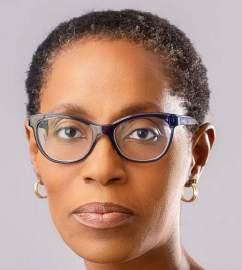
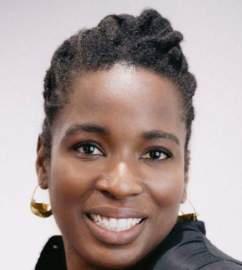
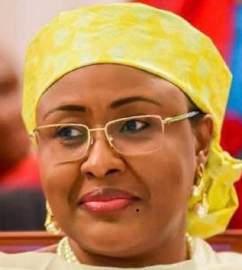
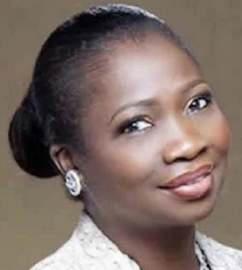
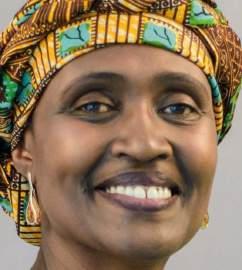
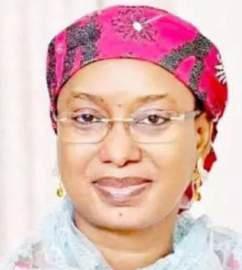
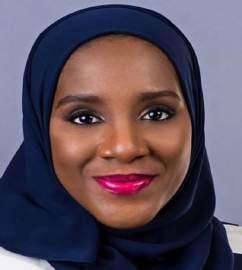
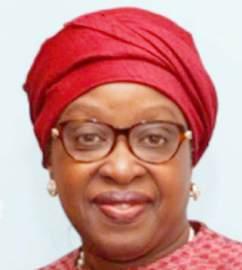
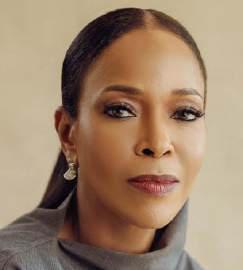
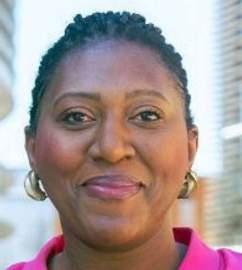
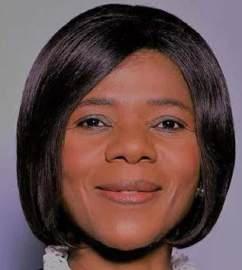
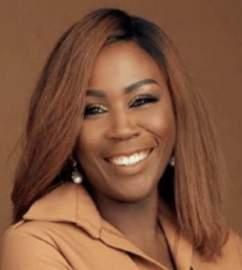
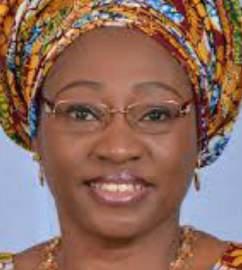
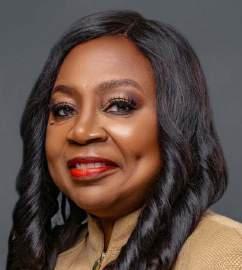
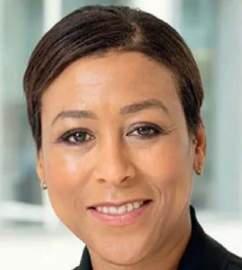
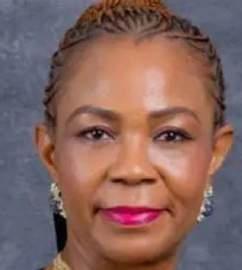
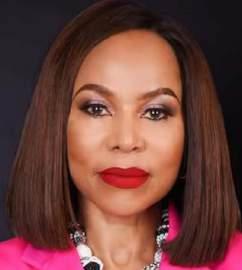
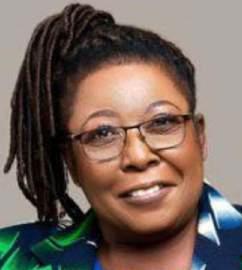
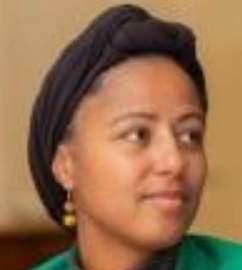
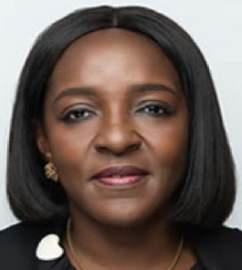
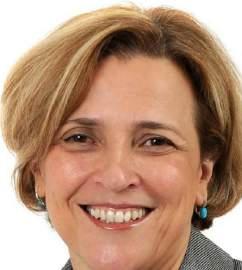
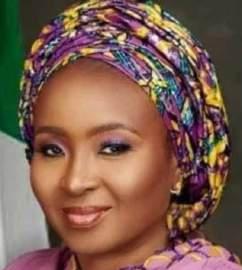
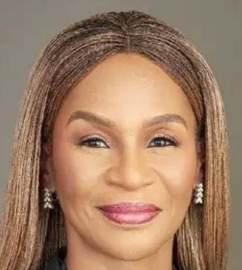
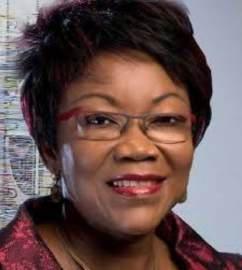
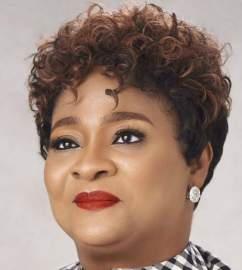
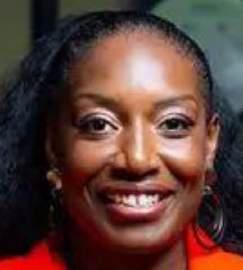
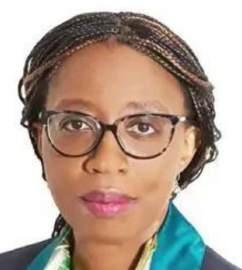
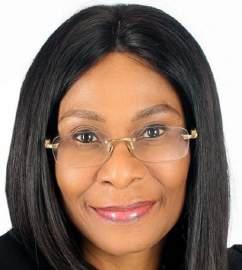
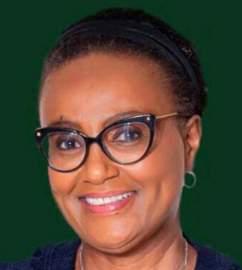
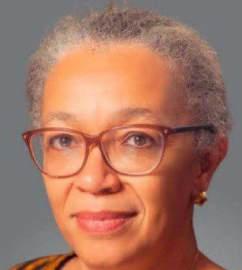
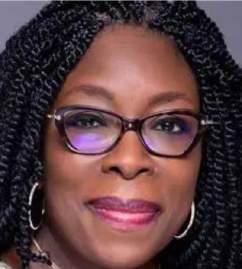
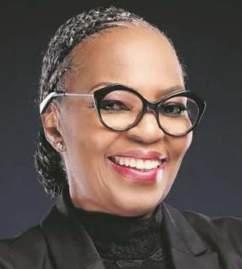
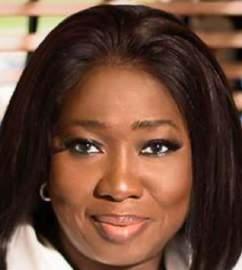
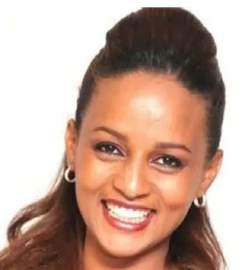
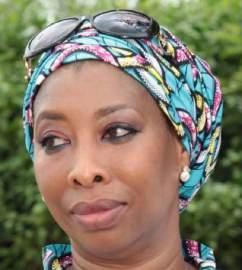
AFRICA WOMEN OF IMPACT AWARD 2026
ABOYADE FUNKE (SAN) Lawyer, Principal Partner, Aboyade & Co
UKEJE, NNENNA Politician, House of Representatives.
TILAHUN ALEMU, BETHLEHEM Entrepreneur, SoleRebels
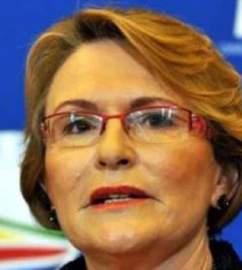
ZILLE, HELEN Politician, Activist, Democratic Alliance (DA).
NIGERIA
SOUTH AFRICA NIGERIA
NIGERIA
NIGERIA
SOUTH AFRICA
NIGERIA
NIGERIA
NIGERIA NIGERIA
NIGERIA
SOUTH AFRICA
NIGERIA
NIGERIA
SOUTH AFRICA
ETHIOPIA
NIGERIA
SOUTH AFRICA
SOUTH
NIGERIA
NIGER
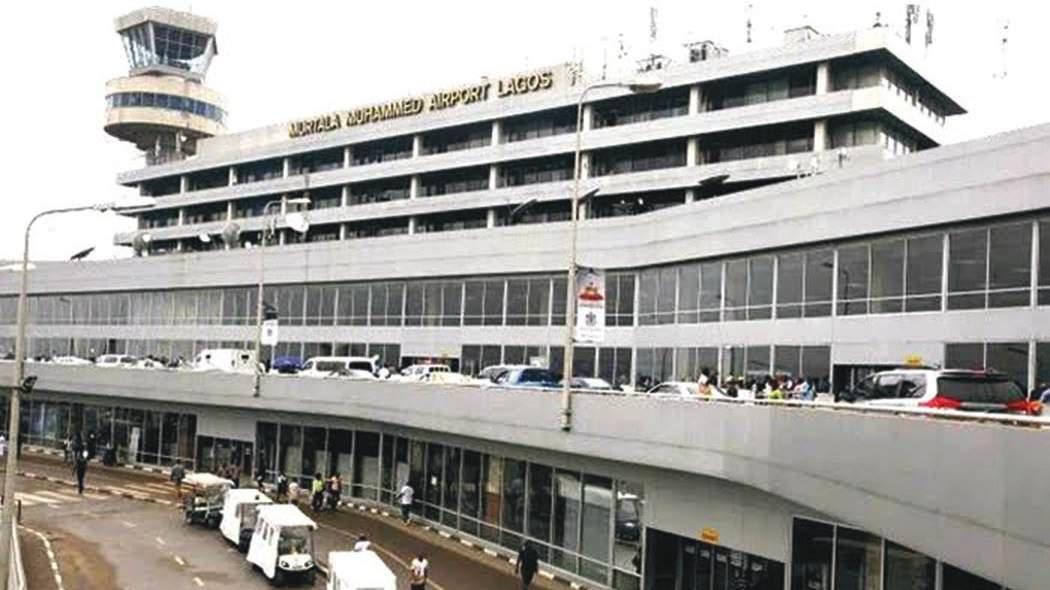
Airport Fire and the Burden of Neglect
The fire that engulfed the old terminal of the Murtala Muhammed International Airport, Lagos, last week, has reaffirmed the poor maintenance culture of public infrastructure in Nigeria, writes
Chinedu Eze
The fire incident was more than a disruptive incident at Nigeria’s busiest gateway; it was a stark reminder of a lingering national weakness, the failure to sustain and modernise public infrastructure. For hours, thick smoke curled into the Lagos skyline as emergency responders battled flames that had taken hold within a facility that has served the country since 1979. By the time the fire was contained, it had consumed critical installations and reignited debate about maintenance culture in Nigeria.
Initial reports indicated that the blaze originated from the server room on the ground floor of the five-storey structure. The suggestion of sabotage surfaced briefly in public discourse. Still, it was firmly dismissed by the Minister of Aviation and Aerospace Development, Festus Keyamo, who described the incident as unfortunate but not criminal. The minister’s position sought to calm speculation, yet the deeper concern remained the condition of the facility itself, an ageing terminal long overdue for comprehensive rehabilitation.
The extent of the damage was sobering. All check-in counters were destroyed. Departure hall computers were burnt beyond repair. Equipment belonging to the Nigeria Meteorological Agency (NiMet), including weather monitoring systems critical for flight safety, was wiped out. Communication and navigation systems installed by the Nigerian Airspace Management Agency (NAMA) were also affected. In aviation, where precision and real-time data are non-negotiable, the loss of such equipment carries immediate operational consequences.
By Wednesday, air traffic controllers were grappling with limited access to timely meteorological reports, which forced adjustments to coordination procedures. NAMA had to activate contingency plans, relocating operations from the affected control tower to the Fire Service office operated by the Federal Airports Authority of Nigeria (FAAN) along Runway 18L. From that improvised location, controllers collaborated with their counterparts at the Total Radar Coverage of Nigeria (TRACON) facility to maintain flight operations. Though operations continued, the arrangement underscored the fragility of systems heavily dependent on ageing infrastructure. The smaller tower at the fire station offered limited visibility of certain sections of the
airport, particularly the international runway, Runway 18R. Controllers relied on coordination and layered oversight to manage take-offs, landings, and aircraft ground movements. It was an emergency response that demonstrated resilience but also revealed structural vulnerabilities.
The old terminal has, over the years, developed a troubling history of fire outbreaks. A similar incident in September 2023, which affected the baggage handling area, had prompted authorities to accelerate the partial relocation of airlines to the newer Terminal 2. That terminal, constructed by China Civil Engineering Construction Company (CCECC), initially faced technical deficiencies that had to be corrected before it became fully functional. Even then, the old terminal remained active, carrying traffic far beyond its original design capacity.
When the facility commenced operations in 1979, it was projected to handle approximately 250,000 passengers annually. Decades later, passenger traffic has multiplied exponentially, reflecting Nigeria’s population growth and increased air travel demand. Yet expansion and systematic upgrades did not keep pace with usage. What followed was a gradual overstretching of systems — electrical wiring, plumbing networks, air conditioning units, and rooftop installations — all operating beyond their intended lifespan.
FAAN’s Director of Airport Operations, Captain Abdullahi Zubeir Mahmood, pointed directly to age and deferred maintenance as root causes of the recurring crises. According to him, the building has never undergone a fullscale rehabilitation since it was commissioned nearly five decades ago. Underground pipes have rusted extensively, leading to persistent plumbing issues. Electrical cables, some laid decades ago, have deteriorated and become overstressed. Over time, temporary fixes replaced long-term solutions.
The condition of the roof illustrates the cumulative neglect. Layers of antennas and equipment, installed over successive years to meet evolving communication needs, have crowded the structure. Each addition responded to immediate necessity, but collectively they burdened a building not designed for such weight and complexity. In an environment where routine upgrades are replaced by
piecemeal improvisation, vulnerabilities accumulate quietly until they erupt visibly.
Recognising the gravity of the situation, the federal government earmarked N712 billion last year for the comprehensive reconstruction of the old terminal. The intention was not cosmetic refurbishment but total stripping and rebuilding — from electrical and plumbing systems to air conditioning and structural components. Monday’s fire, though tragic, has accelerated that timetable. Debris clearance and reconstruction preparations are expected to proceed swiftly.
Minister Keyamo acknowledged the irony that the affected structure was already slated for demolition and rebuilding. While he refrained from describing the incident as fortunate, he noted that the fire did not impact the newer terminal. He also confirmed that temporary arrangements had been made to relocate airlines and agencies operating from the old building. The incident, he said, would hasten the transition process.
One of the more dramatic aspects of the incident was the rescue of air traffic controllers trapped on the upper floors during the fire. Many were evacuated using cranes as smoke thickened within the building. That no life was lost remains the most relieving outcome of an otherwise damaging episode. Equipment can be replaced; human lives cannot.
Still, the broader implications extend beyond the airport. The Lagos fire is emblematic of a systemic issue affecting public infrastructure nationwide. Roads deteriorate long before scheduled rehabilitation. Power installations operate beyond safe limits. Water systems leak for years without an overhaul. The airport incident unfolded in a high-visibility environment, drawing national attention to a culture where maintenance is often reactive rather than preventive.
Infrastructure development does not end at commissioning. It demands sustained investment, regular auditing, and timely replacement of ageing components. In the absence of these practices, facilities built with significant public funds gradually decline into liabilities. The old terminal’s history illustrates this pattern. What began as a proud symbol of Nigeria’s aviation ambition gradually became a patchwork of repairs layered upon outdated systems.
There is also a governance dimension. Budgetary allocations for maintenance frequently compete with demands for new projects. Politically, ribbon-cutting ceremonies attract more visibility than routine servicing. Yet the long-term cost of neglect far exceeds the price of preventive care. Fires, shutdowns, and emergency relocations disrupt operations and erode public confidence.
As reconstruction plans advance, the opportunity now exists to reset standards. Modern materials, energy-efficient systems, advanced fire detection technologies, and streamlined installations can transform the site into a safer, more durable facility. However, physical rebuilding alone will not solve the deeper problem. What must accompany it is a cultural shift — an institutional commitment to regular inspection, timely upgrades, and transparent accountability.
Nigeria’s aviation sector has made progress in safety oversight and regulatory reforms. The resilience displayed by controllers and emergency responders during the fire reflects professionalism within the system. But resilience should not become a substitute for reliability. The goal of infrastructure management is not merely to respond effectively to crises but to minimise their occurrence.
The smoke that rose above the old Lagos terminal has now cleared, but its message lingers. A nation aspiring to regional leadership cannot afford to allow its critical assets to decay through inattention. The airport fire stands as a warning not only about ageing cables and rusted pipes, but also about the consequences of delaying necessary action.
In the coming months, as demolition and reconstruction proceed, attention will turn to timelines, contractor performance, and funding flows. Yet beyond those metrics lies a larger question: will this moment trigger a sustained change in maintenance philosophy across public institutions? If it does, the fire may yet yield a constructive legacy. If not, it risks becoming another episode in a recurring cycle of damage and repair.
For now, flight operations continue under temporary arrangements, passengers adjust to new terminals, and authorities promise a modern replacement. The challenge is to ensure that when the new structure rises, it does not inherit the old habits.
Murtala Muhammed International Airport, Lagos
What would Nigeria sell to the world? asks SEUN AWOGBENLE
GOLD BAR DIPLOMACY
The story was once told of how President Donald Trump agreed to lower tariffs on Switzerland after receiving a delegation of Swiss industry leaders, who went to the Oval Office bearing Rolex and gold. Following a 39 percent tariff that was imposed on Switzerland, efforts by former Swiss President Karin Keller-Sutter to get the US to reverse the tariffs were unsuccessful. Switzerland came up with a plan; they dispatched a delegation of top Swiss industry leaders to President Trump, who went to him with a special Rolex desktop clock and a specially engraved gold bar. About a week after the meeting, President Trump announced that he had considered lowering tariffs on Switzerland to 15 percent.
Switzerland is one of the world’s leading producers of luxury watches and boasts significant gold exports. Although the Rolex and gold also came with some investment commitments to the tune of $200bn into the US economy. There are at least two reflections from that experience which provide some nuance beyond the gold bar diplomacy. The first is how the world order is now down to cold calculations and transactions, and secondly, how the rules-based international order which has guided foreign relations for several years is now effectively in gradual retreat.
For more than 40 years, foreign relations were conducted under a system that appeared to favour global cooperation, multilateralism and regional integration in the areas of trade, technology, security, defense and intelligence. Although far from fair, the system created some level of predictability and financial system stability. It could also be argued that it made smaller powers, notably lowincome countries, dependent on the might and benevolence of middle and superpowers.
From higher tariffs, trade tensions, supply chain disruptions, protectionist and hardline antiimmigration policies, America, which was once the champion of globalisation, appears to be retreating. One of the few things that has been clear since the first day of the second coming of President Trump is that old assumptions that guided international finance, trade and security cooperation have now been discarded. At the World Economic Forum in January, President Emmanuel Macron and Prime Minister Mark Carney, who both took turns to speak, did not mince their words; they both predicted a likely end to multilateralism and said the world must now adjust to new realities.
Despite the United States Supreme Court ruling, declaring President Trump’s liberation day tariffs as illegal, the US government has gone ahead to implement a global tariff of 10 percent for all countries and may soon raise it to 15 percent in a separate order. Amidst the trade tensions and supply chain disruptions, countries have begun exploring alternatives as a way to build resilience. In the last couple of months, we have seen a rise in bilateral trade deals and defense partnerships.
Prime Ministers of Canada and the United Kingdom have already visited China to seek trade deals and
explore partnerships. The UK has also secured a trade deal with India; Europe and the UK are considering setting up their own version of Mastercard and VisaCard to reduce their dependence on America-dominated financial systems. From technology, trade, finance and defence, countries are exploring crucial alternatives. More countries are conscious that they are unlikely to enjoy the blanket protection of a common system and that how far each country can go would be determined by each country’s ability to increase their own prosperity on the merit of their capabilities.
The change would certainly test the resilience of small and middle powers, including Nigeria. Although the situation may present a challenge at the outset, it also provides an opportunity to look inward and build strength at home in the areas of export, trade and investment. The question we must ask ourselves is what Nigeria would sell to the world amidst the current shifting world order and what would attract any country or investor to want to do business with Nigeria?
The current reforms are already a step in the right direction, as they provide an opportunity to reset the economy and get the fundamentals right. But beyond reforms, we must think in terms of value and competitive advantage in any of agriculture, manufacturing, services or tourism. The world should identify with Nigeria for much more than our oil. When you say ‘United Kingdom’, you think ‘financial services’, the same way Switzerland is famous for their luxury watches and gold, China for their manufacturing, Morocco for their tourism, Italy for their wine and Germany for their cars.
Nigeria must work to identify its competitive edge and determine to be a world leader in that export. And that cannot be in the export of raw materials; we must think in terms of value addition that ensures we can add value to our exports before they are taken out of the country.
The current global uncertainties provide an opportunity to interrogate what we must anchor the economy on in the long term and accept the reality that to increase our own prosperity, we must build strength at home by finding our competitive edge that can deliver long-term value in export and trade.
IN PRAISE OF MADUEBIBISI IWE
The outgoing Vice Chancellor of Michael Okpara University made a difference, argues UBADIRE AGUA
Professor Maduebibisi Ofo Iwe is set to bow out of office as the 6th Vice Chancellor of Michael Okpara University of Agriculture (MOUA) Umudike, Abia State, after five years at the helm of affairs of the University. Iwe, a thorough-bred academic and a renowned Professor of Food Science and Extrusion Technology for nearly 25 years, assumed office as Vice-Chancellor of the University on March 1, 2021, after a highly competitive selection process by the 7th Governing Council of the University led by Mohammed Lawal Zayyana, a crown Prince of the Sokoto Sultanate.
As one who was born and bred in Umudike, I have had ‘more than a passing interest” in the University since it was established nearly 34 years ago. I have followed events in the University and can tell the contributions of all former Vice-Chancellors either to the growth and development of the University or to its challenges.
I closely followed the trajectory of the University since the beginning of the five-year tenure of Prof. Iwe in 2021. I remember vividly that at the time of his assumption of office; the world was gradually recovering from the cataclysmic socio-economic impact of the COVID-19 pandemic that prompted a global shutdown.
I also know, as a matter of fact, that there was no harmonious working relationship between the University Management and many staff, given the issue of promotions, demotions, appointments, and proper placement, loss of programmes, etc., that characterized two administrations before his. I also know there were more than one hundred court cases against the University, instituted by aggrieved staff.
The worse, perhaps, was that some critical stakeholders had lost interest and confidence in the University and its reputation has taken the left curve.Prof. Iwe, was however, determined to serve the University in the best possible way. So, he did not allow the difficult situation he met on ground to deter him from pursuing his vision, which was to mobilise the University to positive thinking, positive action, productivity, and progressive programmes; make it an “agripreneurial” university, that is capable of self-sustenance; and to open it up to the world through productively collaborations and linkages.
He took things in stride, confronting the problems of the University systematically and trusting God to help him achieve his vision and the mission of the University, which is to reduce hunger by providing the knowledgebase to tackle food insecurity. Being a seasoned university teacher, researcher and administrator for forty-one years so far in his career, Prof. Iwe understood the importance of peace in a university system and that without peace, the University cannot make progress.
Hence, he took steps to reconcile the University and its aggrieved staff. In appreciation and reciprocation of his goodwill and gesture, the litigants withdrew their cases from the courts, and today, one can say with careful confidence, that the University is peaceful and a harmonious working relationship has been fully restored.
Besides restoring peace in MOUAU, Prof. Iwe also diligently and dexterously restored harmonious working relationship between the University Management and the Management of its Microfinance Bank, which was elusive for five years. He also restored the operating licence of the Institution’s consultancy limited liability company, MOUAU Nigerian Ltd, which had been moribund for 15 years. He reset both the MOUAU Microfinance Bank and MOUAU Nigeria Ltd. and strengthened them for business and generation of funds for the University’s good.
It is to the credit of Prof. Iwe’s administration that these enterprises worked together to retrofit the old University Guest House and expand it from 16 to 21 rooms and built a brand new 51-room University Guest House, described by visitors from other universities as
the best in the country. The Guest House has saved the University a lot of funds that could have been spent on hotel accommodation for both Governing Council Members and other guests outside the University.
Prof. Iwe also operationalized the bread and biscuit factory and a water-treatment plant built by a former Vice-Chancellor. Today, Umudike bread, biscuit and bottled water are sold all over Abia State, giving the University a good name and positive reputation. It is worthy to note that these revived enterprises have also provided a practical training ground for students of the University, especially those in Food Sciences, Nutrition and Dietetics, Hospitality Management, Engineering and so on, who require industrial training experience as part of their studies.
The principled, focused and egalitarian leadership style of the 6th Vice-Chancellor, has yielded tangible and intangible results, including infrastructural development, landmark energy and smart agriculture projects, and digitalization of key departments in MOUAU, to mention but a few. Under Professor Iwe’s watch, for instance, the University started the development of a Permanent Site in 2023, which coincided with the 30th anniversary of the University.
Prior to the commencement of work at the Permanent Site at Olori, Oboro in Ikwuano LGA, Abia State, Prof. Iwe resolved almost all cases relating to land encroachment and ownership and secured the Certificate of Occupancy (C-of-O) of the University from the Abia State Government. Work has progressed at the Permanent Site with a three-billion-naira Special Intervention Fund from the Federal Government. The full-take off of the Olori Campus would see MOUAU running a two-campus structure like the University of Nigeria Nsukka (UNN) and other first-generation universities.
Another major achievement of the Prof. Iwe-led administration is the completion of the three megawatt Solar Plant by the Rural Electrification Agency of the Federal Government through the Energizing Education Project. Today, MOUAU enjoys steady and stable 24 hours electricity supply from the Solar Plant, that has also impacted administration, research and social life on campus. The Vice-Chancellor equally focused on equipping and upgrading all University laboratories, to bring them to international standard. In fact, the Council for Regulation of Engineering in Nigeria (COREN) applauded the efforts of the Prof. Iwe during a visit to MOUAU recently, and noted that some of the equipment in Umudike, such as the amino acid analyzer, among other pieces of equipment, cannot be found in any other university in Nigeria.
Dr Agua writes from Umudike, Abia State
Editor, Editorial Page PETER ISHAKA
Email peter.ishaka@thisdaylive.com
THE UNSETTLING SAGA OF CITIZEN WALIDA
Last Tuesday, commonsense prevailed in the drama surrounding a young woman, Ms Walida Abdulhadi Ibrahim, who was reportedly abducted from Jigawa State. She was handed to the Governor of Jigawa State, Umar Namadi by the Department of State Services (DSS) Director General, Oluwatosin Ajayi at a public ceremony. Representatives from the Nigerian Supreme Council of Islamic Affairs (NSCIA), International Federation of Women Lawyers (FIDA) and other civil society organisations were also present at the occasion. But while Walida may have regained ‘freedom’, several pertinent questions remain.
At the centre of the controversy is a DSS officer identified as Ifeanyi Onyewuenyi. A magistrate court in Jigawa reportedly issued directives for his arrest and investigation over allegations that he abducted Walida and unlawfully kept her in Abuja for nearly two years. It was a story with striking similarity with that of Ese Oruru, abducted at age 13 in Bayelsa State, forced into marriage and Islam. In this case, what started as the mysterious disappearance of a teenage girl from her hometown of Hadejia, Jigawa State soon evolved into a matter that tested the integrity of our institutions and ethno-religious divides. It also drew scrutiny from both local and international civil society advocates who demanded clarity, transparency, and accountability.
misrepresented. Such conflicting accounts raise difficult questions. Is this the tragic story of a vulnerable minor removed from her family and exploited under the protection of institutional power? Or could it be, as some suggest, the story of a young woman whose personal choices have been interpreted through the lens of family and community expectations? The answer remains unclear, and it is precisely this uncertainty that underscores the necessity for a thorough and impartial investigation.
powerful security agencies, public confidence depends heavily on the willingness of those institutions to subject themselves to scrutiny and due process
According to petitions filed on behalf of her parents, Walida was said to have been 16 years old at the time of her disappearance in 2023. She was reportedly transported to Abuja, allegedly detained, compelled to renounce her Muslim faith, and subjected to sexual exploitation that ultimately resulted in the birth of a child. All of these by an official of the DSS. If proven true, these accusations represent not only a gross violation of human rights but also a disturbing abuse of authority by a member of an agency entrusted with safeguarding citizens.
However, unlike Ms Oruru, who recently graduated from University of Ilorin, the Walida saga has elicited conflicting accounts that challenge elements of the original allegations. Statements attributed to Walida in an exclusive interview appear to dispute the narrative presented by her parents. In those accounts, Walida reportedly maintained that she was not abducted while also suggesting that her age may have been
SUNDAY NEWSPAPER
editor DAviDSoN iRiekpeN
deputy editors FeSTUS AkANBi eJioFoR ALike
Managing director eNioLA BeLLo
deputy Managing director iSRAeL iwegBU
chairMan editorial Board oLUSegUN ADeNiYi
editor nation s capital iYoBoSA UwUgiAReN the oMBudsMan kAYoDe koMoLAFe
THISDAY NEWSPAPERS LIMITED
editor-in-chief/chairMan NDUkA oBAigBeNA
group executive directors eNioLA BeLLo, kAYoDe koMoLAFe, iSRAeL iwegBU
divisional directors SHAkA MoMoDU, peTeR iwegBU ANTHoNY ogeDeNgBe deputy divisional director oJogUN viCToR DANBoYi snr. associate director eRiC oJeH
associate director pATRiCk eiMiUHi controllers ABiMBoLA TAiwo UCHeNNA DiBiAgwU, NDUkA MoSeRi
director, printing production CHUkS oNwUDiNJo to send eMail: first name.surname@thisdaylive.com
Defending the DSS, the Minister of Women Affairs, Imaan Sulaiman-Ibrahim, disclosed that her ministry was aware of the threats to Walida’s life hence “her safety remains the overriding priority in all decisions concerning her.” On the issue of age, the Minister said, “Let me reaffirm that Walida’s age has been officially verified by the National Population Commission; she is 22 years old. By the provisions of the Child Rights Act and the Constitution of the Federal Republic of Nigeria, a child is defined as anyone under 18 years.” This suggests that Walida was already an adult by the time she was purportedly abducted from home. Whatever may be the case regarding whether Walida left home by her choice or she was indeed abducted, what is beyond dispute is the gravity of the allegations and the responsibility of state institutions to address them with transparency and urgency. When accusations involve officials of powerful security agencies, public confidence depends heavily on the willingness of those institutions to subject themselves to scrutiny and due process. In this instance, the involvement of the DSS raises legitimate concerns about potential conflicts of interest even when the truth remains entangled in competing narratives, legal proceedings and public speculation. Meanwhile, what started as the disappearance of a girl from a quiet community in Jigawa State has grown into a national conversation about religion, accountability and the limits of institutional power. What is therefore required is a careful and impartial determination of the facts. And if wrongdoing is established on the part of anybody, such a person must face the full weight of the law. It is only through such measures that justice can be served and confidence in the institutions tasked with protecting Nigerians restored.
Letters in response to specific publications in THiSDAY should be brief(150-200 words) and straight to the point. interested readers may send such letters along with their contact details to opinion@thisdaylive.com. we also welcome comments and opinions on topical local, national and international issues provided they are well-written and should also not be longer than (950- 1000 words). They should be sent to opinion@thisdaylive. com along with the email address and phone numbers of the writer
LETTERS GOVERNORS
Nigeria’s Fourth Republic, which commenced in 1999, introduced a distinctive political culture that has since become entrenched in the nation’s democratic practice: governors automatically emerge as leaders of their political parties in their respective states. Although this arrangement is not expressly written into the 1999 Constitution or party constitutions as a rigid rule, it has evolved into an accepted political convention. In practical terms, once a governor belongs to a political party, he becomes the undisputed leader of that party in the state.
This “default” leadership status flows from the enormous constitutional powers, financial control, and political influence vested in state governors. Under the 1999 Constitution, governors are the chief executives of their states, control significant public resources, influence appointments, and play central roles in policy direction. These powers naturally position them as dominant actors within the political structure of their states. Political parties, being vehicles for acquiring and exercising power, inevitably
AS LEADERS OF PARTIES IN THE STATES
gravitate toward the governor as their rallying point.
Critics often argue that this arrangement departs from earlier republican experiences. During Nigeria’s First, Second, and even Third Republics, governors and presidents were not automatically regarded as the formal leaders of their parties at state or national levels. Party structures were often more independent, with clearer institutional separation between party leadership and executive office holders. However, Nigeria’s political system has evolved significantly since then. The current democratic framework places far greater burden, administrative authority, fiscal control, and political leverage in the hands of governors than was previously the case. It’s about the position!
The emergence of governors as de facto party leaders is not accidental but a result of political evolution shaped by key realities. The 1999 Constitution centralizes executive authority in governors, making them the most powerful figures in their states. They also control critical political resources, finances, networks, appointments, and
patronage , which are essential for party survival and electoral success. In a competitive electoral environment, incumbency provides structure, visibility, and mobilization strength that few others can match.
Above all, political parties require unified command; without clear leadership at the state level, factionalism and instability can easily arise.
Imagine the chaos and unhealthy rivalry that could engulf a political party if a sitting governor chose to remain indifferent to party affairs. Competing factions would struggle for supremacy. Conflicting directives could weaken party cohesion. Such fragmentation could easily cost the party elections and governance effectiveness.
Furthermore, when it comes to interfacing between the executive arm at the federal level and party structures within the states, particularly in matters relating to appointments, political negotiations, federal-state collaboration, and reward systems, the governor’s role becomes indispensable. Governors serve as the bridge
between national party leadership and grassroots political actors. In fact, Presidents often rely on Governors to win a state
Just as the President functions as the leader of his party at the national level, governors serving as party leaders in their states creates symmetry within the political order. This structure promotes stability, clarity of authority, strategic coordination, and internal discipline.
It is therefore not surprising that across Nigeria’s 21 registered political parties, this practice is widely accepted. Once a governor joins a party, he naturally assumes leadership of that party in the state, not necessarily by proclamation, but by political reality.
While debates may continue about whether this system strengthens internal party democracy or concentrates excessive influence in one individual, its practical utility in maintaining order, direction, and electoral viability cannot be ignored.
Zayyad I. Muhammad, Abuja
a Peaceful Public Servant
At 73, the former Speaker of the Lagos State House of Assembly and two-time senator and former minister, Senator Adeleke Olorunnimbe Mamora, speaks with the composure of a man at peace with his journey. He looks back on his decades of public service, personal loss and quiet victories in a recent encounter with Vanessa Obioha
A Peaceful Public Servant
Aweek after his birthday, I found myself in the private office of Senator Adeleke Olorunnimbe Mamora.
A miscommunication had cancelled our earlier appointment and we had to reschedule. Before setting out, I called and texted to reconfirm our meeting. When he didn’t respond, I wondered if I had been given an alternative line, as most influential people usually have more than one number.
When I mentioned my efforts to reach him later, he sounded genuinely surprised and apologised that he may have missed it, and that he only answers calls from stored contacts. Unknown contacts usually go through a sort of verification.
“I only have one line.”
That was unusual.
“I don’t think I can handle having two lines.”
Order, it seems, matters to him.
“If I put something here, I don’t want anyone to shift it from there. If it’s moved, I will easily notice,” he said, gesturing around. His office seems to obey the rule too. His awards are neatly arranged on a shelf. Artworks and portraits are strategically placed to draw one’s attention. Even his desk is not clustered. Every notepad, pen and other writing memorabilia are meticulously aligned.
parents themselves.
In his political career, he acknowledged the God factor, right from his days as a medical student at the University of Ife (now Obafemi Awolowo University). Having witnessed his father’s role in politics, it was only natural that he would follow a similar path.
Even though he left the university in 1981, it was only in 1999 that he really contested for a political office. Other involvement in politics was more of membership in political groups like when he joined the National Republic Convention (NRC) as a national delegate in the lead up to the annulled June 12, 1993 election. However, it was during Nigeria’s transition from military to the present democratic dispensation that he contested for the Speaker of Lagos State Assembly under the Alliance for Democracy (AD) party.
“The good thing then is that we were elected five months before we were sworn in.”
Recalling that period, he described it as a very tough one.
“The amount of work that one had to do to become a speaker is even more than what I did to be elected in the House of Assembly,” he joked.
During the turbulent period leading to his emergence as Speaker in 1999, following internal party divisions in the AD, the atmosphere was chaotic.
describes as the erosion of values in society — respect, honesty, integrity — virtues, he said, were once foundational.
“We have virtually destroyed our values,” he said. “It’s a collective responsibility because the values didn’t erode in just one day. The question is what do you do to correct that in your own little space?”
Mamora believes that it is a systemic issue, “where we have left those things that we ought to have done undone and have done those things we ought not to have done, and it now becomes a norm.”
“Everything has been corrupted. Love of money, the get-rich-quick attitude, people want to get rich without working, all of these things have messed up society.”
What bothers him most is that “it doesn’t seem to me that we are making adequate efforts to reverse the situation.”
But he remains optimistic that the decline is reversible.
“There is nothing learned that cannot be unlearned. It’s just a matter of determination and there has to be, call it a national consensus, that we must do things differently. And then you start from leadership because for me, it’s leadership that has the duty to chart a course for the people. And that leadership starts from home.” If there is disorder in the home, he argues, the larger society inevitably reflects it.
At 73, the former Speaker of the Lagos State House of Assembly and two-time senator speaks with the composure of a man at peace with his journey. He believes he has lived a fulfilled life.
That conviction comes from his faith. Like his name, Olorunnimbe — which acknowledges the reality of God — he believes his life’s trajectory has been divinely guided.
He recalled seeing God’s hand in the early years of his marriage.
“I have always wanted two children,” he recounted. “We had our first child, a son. I was feeling good,” he smiled. “And in quick succession, we had our second child, a female.”
For a moment, it seemed God had answered his prayers but tragedy struck when 13 months later he lost his daughter.
“I felt so bad about it,” he said, his voice tinged with sadness. To overcome his grief, he gave in to the thought that things without remedy should be without regard.
For the next eight years, Mamora and his wife waited for another child, undergoing medical tests while holding on to hope. Eventually, she conceived and gave birth to twin girls.
In retrospect, Mamora sees it as divine compensation.
“He gave me two for the price of one.”
Today, the girls are married and
“The crisis divided the party, the leaders, everybody. The whole thing snowballed into the election of the speaker,” he said.
On the day of the inauguration, Mamora recalled with gentle laughter, “Chairs and tables were missiles.”
But in all of that drama, Mamora just sat in his seat calmly.
“I had peace with myself,” he said calmly.
“My belief in God is that He has a purpose even in that experience. People were coming to check on me but I told them that I’m okay. My wife was seated in the gallery. I was more concerned about her safety than mine.”
“I’m a calm person,” he explained further. “I’m peaceful by nature.”
Those who mistake that calmness for weakness, he implied, do so at their own peril.
Those who know him, he insisted, know who he is and respect him for that.
“I know who I am. I don’t need anybody to define me. I have no apology for who I am. Those who know me can speak of me and know what to expect.”
His comportment and other values passed on to him by his parents have always distinguished him from the crowd.
He worried about what he
Mamora’s public life extended beyond the Lagos State House of Assembly. He served in the Senate for two terms, representing Lagos East Senatorial District from 2003 to 2011. He was a Minister of State for Health from 2019 to 2022, and then Minister of Science, Technology and Innovation from 2022 to 2023.
Legislature, he admitted, remains closest to his heart. According to him, it is the fulcrum around which democracy revolves.
“If I had my way, all my public life would be in the legislature,” he said, describing it as the institution where democracy finds its clearest meaning through representation. Legislature has its perks for Mamora. They include no tenure limit and the only place, as he puts it, where he can air his views or opinions without being guarded.
“If you don’t have good governance, it’s because the legislature is bad,” he added, stating that the legislature should be more meticulous in passing laws, particularly the budget.
“If the legislature knows what it is doing, that budget will be properly scrutinised, and it won’t just be a question of fulfilling all righteousness.”
But it’s not all about politics for Mamora. He occasionally sings in the choir and sometimes puts on his apron and whips something up in the kitchen. He wouldn’t call himself an artist or an art collector but he appreciates beautiful works of art and nature.
Even at 73, Mamora is conscious of the ephemeral nature of life.
“Tomorrow is not guaranteed, that’s why every day should be celebrated. I thank God that I’m still standing today. It’s by His grace.”
Mamora and wife
Hig H Life
Tunji Disu: The Right Fit at the Right Time
Nigeria has a new police chief, and the timing has raised eyebrows.
On February 24, 2026, President Bola Tinubu appointed Tunji Disu as Acting Inspector-General of Police (IGP). He replaced Kayode Egbetokun, who resigned the same day, officially citing pressing family concerns. There was, however, more context.
Egbetokun’s tenure had attracted criticism. Kidnappings and violent crimes remained high. There was also controversy over the amendment to the Police Act that allowed an IGP to serve a fixed four-year term, even after reaching retirement age. His resignation ended that debate abruptly.
Disu steps in with more than 30 years of service. He joined the Nigeria Police Force in 1992. Over time, he built a reputation in operational and intelligence roles.
Many Nigerians first heard his name when he led the Intelligence Response Team in 2021. He replaced Abba Kyari after Kyari’s suspension. His assignment then was clear: stabilise a unit damaged by scandal and restore credibility.
Before that, he commanded the Lagos Rapid Response Squad from 2015 to 2021. Under his leadership, the unit was rebranded as “The Good Guys.” Officers were encouraged to assist accident victims and stranded motorists, not just make arrests, so they can build public trust.
Disu has also served as Commissioner of Police in Rivers State and the Federal Capital Territory. Until this latest appointment, he was an Assistant Inspector-General overseeing the Force Criminal Investigation Department Annex in Lagos.
His academic record is notable. He holds degrees in English Education, Public Administration, and Criminology, Security, and Legal Psychology. He is also a member of international policing bodies, including the International Association of Chiefs of Police.
One detail stands out: before this appointment, he was just 48 days away from mandatory retirement at 60. Under the amended law, an appointed IGP serves a four-year term regardless of age.
Supporters describe Disu as a blend of discipline and reform. Critics will likely judge him by one metric alone: whether security improves. For now, he takes office at a moment when public patience is thin, and expectations are high.
Mike Adenuga Group’s Legacy of Quiet Philanthropy
On Valentine’s morning, while Lagos argued with traffic and florists haggled over roses, a cheque quietly changed hands: N1 billion sent to the Lagos State Security Trust Fund (LSSTF), the public-private vehicle that buys patrol vans, communication gear, and surveillance tools for security agencies in Lagos.
The donor was Mike Adenuga, through his group.The announcement came in February.
Many residents barely register the Trust Fund’s existence. Yet since 2007, it has functioned as a fiscal buffer for policing in a city of more than 20 million people. Where government allocations are not enough, private donations close the gap.
Adenuga’s gift matters because of its scale. N1 billion is capital expenditure, a sum so large that it can strengthen logistics and response capacity at the same time, especially now that urban security costs keep rising.
Adenuga is famously reticent. Interviews are scarce; public appearances are even scarcer. His giving often surfaces through beneficiaries rather than press conferences. That discretion has
Ogun 2027: New Power Brokers Declare Interest in Governorship Race
The 2027 governorship race in Ogun State has started earlier than many expected. With declarations coming in and endorsements flying around, one argument keeps resurfacing: should Ogun West finally produce the next governor?
For decades, power has rotated mainly between Ogun East and Ogun Central. Groups in Ogun West now say it is time to correct that imbalance, breaking (in their own words) a political jinx that has lasted about 50 years. Within the ruling All Progressives Congress
Timehin
become part of his mystique. This is not his first large intervention. During the
(APC), several aspirants have stepped forward. Dr. Tunde Lemo, a former deputy governor of the Central Bank, declared his ambition in Abeokuta and speaks often about agriculture and grassroots development.
Hon. Gboyega Nasir Isiaka, a serving member of the House of Representatives and three-time governorship candidate, has also declared. He says he will rely on party due process this time.
Hon. Abiodun Isiaq Akinlade, another federal lawmaker, announced his bid late last year. Dr. Biodun Ogundipe is building a platform around education, digital skills, and girl-child empowerment.
Then there is Iyabo Obasanjo-Bello, daughter of former President Olusegun Obasanjo. She has ruled out a return to the Senate and says she is focused solely on the governorship. Some traditional rulers are reportedly backing her.
One name often mentioned, even without a formal declaration, is Solomon Adeola, widely known as Yayi. He has strong support in Ogun West and is said to enjoy Obasanjo’s endorsement. That matters in Ogun politics.
Outside the APC, the main opposition force is the Peoples Democratic Party (PDP). Its leading figure is Ladi Adebutu, who remains a serious contender if he secures his party’s ticket.
Speculation also surrounds federal figures such as Wale Edun, Bosun Tijani, and former
Effect in the Green Chamber
In a House of Representatives frequently criticised for noise over results, some lawmakers prefer to point to projects on the ground.
One of them is Oluwatimehin Adelegbe, who represents Owo/Ose Federal Constituency of Ondo State in the 10th National Assembly. A member of the All Progressives Congress, he is serving his second term in the Green Chamber. Locally known as “Otunba,” Adelegbe has built his reputation around visible constituency interventions.
In agriculture, the man has distributed more than 100,000 improved cocoa seedlings to farmers. In an area where cocoa remains a major source of income, supporters see this as a long-term investment rather than short-term relief. On infrastructure, he committed about N300 million to restore electricity in Ose Local Government Area after years of vandalised transformers
and damaged lines. He has also facilitated the repair of over 250 boreholes and supported rural road projects.
from 2015 to 2019, was the first sitting governor in the state to lose his party’s primary election. In 2018, he was defeated by Babajide Sanwo-Olu in the primaries of the All Progressives Congress (APC).
The loss followed a breakdown in his relationship with key party leaders, including then APC national figure Bola Tinubu.
At the time, reports pointed to tensions over control of projects, contracts and grassroots structures. His decision to replace private waste contractors with a new operator led to a refuse crisis that hurt public perception. He also faced accusations of distancing himself from party power blocs. Despite the setback, Ambode did not defect to another party. He conceded defeat and completed his term quietly in 2019.
Now, signs of reconciliation between him and President Tinubu have sparked speculation about a possible return in 2027.
pandemic, his group committed billions to federal and state efforts. Flood relief in Bayelsa and the Niger Delta drew substantial support years earlier. Scholarship funding through his foundation runs annually into millions of dollars.
Sports fans know the Globacom logo from league sponsorships and national teams. Cultural observers recall the Alliance Française centre in Lagos that bears his name.
Philanthropy at this altitude is uncommon in Nigeria’s private sector. Many wealthy individuals give; few do so at this magnitude and with such consistency, which makes Adenuga’s generosity all the more awesome.
Normally, security funding lacks glamour, sitting far from ribbon cuttings and photo ops. Still, without it, commerce falls into stagnation, insurance premiums climb, and investor confidence wavers. This Adenuga donation to the LSSTF is therefore more about urban stability than any sentiment, at least from practical eyes. But it is his Valentine gift to the people, a most thoughtful gift indeed.
Speaker Dimeji Bankole, though none has formally declared.
Another variable is the current governor, Dapo Abiodun. Some stakeholders want him to pursue a Senate seat in 2027. His decision could shape alliances and influence who emerges.
For voters, the early noise is useful. It reveals who is serious, who has structure, and who is relying mainly on name recognition. The zoning debate, party primaries, and endorsements will likely decide more than campaign slogans.
His empowerment programmes are perhaps the most talked about. Instead of smaller periodic distributions, Adelegbe organises large, centralised events where cars, motorcycles, sewing machines, deep freezers, and grinding machines are handed out at once. In recent years, he reportedly disbursed around N100 million in grants to market women and small traders.
To beneficiaries, the scale creates an immediate impact. To critics, large public events can also serve political optics. Both views exist. Beyond material support, Adelegbe has used his platform to raise concerns about kidnappings and insecurity in parts of his constituency, calling for stronger federal intervention. In the National Assembly, he has participated in committee work and legislative reviews, including on public health regulations such as tobacco control.
Whether these efforts amount to exceptional performance depends on the standard one applies. What is clear is that in Owo and Ose, his name is closely tied to projects that residents can see and measure.
Why does this matter?
Lagos politics is normally shaped by internal party agreements as much as public elections. If Ambode were to return for a single term, some analysts believe it could serve as a stabilising bridge before another transition in 2031. Others see the rumours as routine political positioning that may not materialise. There is no formal declaration from Ambode about contesting. There is also no official party endorsement. At this stage, much of the discussion remains within political circles.
For voters, the more relevant question may be performance. During his tenure, Ambode focused on road construction, environmental reforms and civil service reforms. Supporters describe him as a technocrat. Critics argue that politics, not just policy, determines survival in Lagos.
As 2027 approaches, the real test will not be rumours but alliances, party primaries and voters’ mood.
Adenuga
Lemo
Disu
Adelegbe
Seven years after leaving office, Akinwunmi Ambode is back in political conversations. The former Lagos governor, who served
Ambode
What an Incontinent Truth from Simi
This sultry songstress has run into a very wild turbulence on social media, and as I write, I heard that one government agency has entered the matter. Apparently, she had lent a voice to the movement against rape. One thing led to another, and before you know it, her tweets of 10 years ago resurfaced.
The tweets were “sick” to say the least, as she was seen describing how she felt like “locking lips” with a four-yearold and describing how her “legs were shaking” after an apparent sexual encounter with a 16-year-old.
As expected, she was ravaged on social media, and her response was ill-advised.
“I was not famous then…… and people can misconstrue what they like.”
ASue ighOdAlO: the BeSt gOvernOr edO Will SOOn hAve?
Dr. Abati is a delight to watch on ARISE News. His quips, usually laced with humour, make for pleasurable viewing. The other day, trying to explain the Governor of Edo State’s inability to pronounce GCFR, he said – Edo people ‘chose…’ over Asue Ighodalo. Immediately I heard that, I paused my laughter and reminded myself that I do not really think Edo people “chose” this one o. It is looking like the man and his “ogas” just woke up one morning and said “take,” and before you blinked, Edo State now has a Governor that is linguistically challenged. The man also seems to be sleeping through his tenure, as we are not really seeing any signs of “work” as my egbon Shina Peters once said, “grammar no be am.” If there was work, we would not care if the man cannot even spell his complex surname but as it is…..
Well, the truth is that Asue remains a strong vertical in the politics of the state. Edo truly deserves much more than they are getting right now, especially with their rich pedigree and positioning within the Nigerian context. I am not in any way in doubt that one day, they will certainly get what they truly deserve – Asue Ighodalo.
You people know that I “no dey hide my mouth” and when it comes to Edo, I am involved. One of my wives na Edo, my pikin na half-Edo and as such, we must find a governor that can spell and pronounce ‘schizophrenia’ among other things. No be only GCFR. Come and beat me.
Well, it is totally wrong to slap a woman, but I crave a waiver to say this: if she had given me such a lame excuse, I would have slapped her the way I slapped my driver for getting drunk and smashing my car.
Now, the issue for me is the fact that by her own admission, she was in charge of her mother’s Day Care Centre. With her latest response, only God knows just how exposed and exploited the little children must have been.
Another thing is the very quiet approach that the usually raging feminists have gone with this particular one. If it were a man now, we would have to collapse the country, but since it’s a female icon, openly confessing to exploiting and
sexually doing things with young ones, they seem to have gone into hibernation.
What this has brought out is the fact that most men have been sexually abused in their childhood and teens – including me, but the difference, at 16, I wouldn’t say I was abused, but that I thoroughly enjoyed myself and used to look forward to those nightly expeditions. This still doesn’t remove the fact that exploitation happened, the power equation was violated, and all the negativity of the act occurred and is still occurring. Mbok, let the feminists allow us to see road and begin to look closer at the abuse which is going on within the population of our little boys in the hands of these “mad adult women”. Thank you.
tOny iBeziAkOr: A gOOd MAn StAndS up Tony Ibeziakor was, until recently, an Executive Director at the NGX. He achieved a few feats during his tenure.
He was directly involved in all the major listings - MTN, Airtel, Aradel, and Geregu that lifted listings and market capitalisation. He is known to have eagle eyes for revenue and revenue optimisation at the NGX, where he led recent enterprise efforts to review enterprise annuity income to its current standards and listings fees structure for all transactions on the NGX.
He pushed all investor roadshows in Asia, London, NYC and Singapore.
He was primarily responsible for the launch of the successful NGX Premium Board and the Growth Board, respectively, the MOU and dual listings framework between Lagos and London, Lagos, Nasdaq Dubai and Bank of Industry (BOI).
He was also said to be responsible for the proposed dollar listings on NGX.
Despite all of these and more, the market woke up to a huge blow - he was asked to resign. Aghhhhh!!! People like me protested, worked my phones, but despite that, the decision had been taken, and all I was hearing was – Edgar, let’s look for a soft landing for your friend. Nigeria had just happened to one of the best market brains since Subomi Balogun and me. Well, you see that Aliko Dangote did not emerge the richest black man since King Solomon by not being strategic. While the turbulence was going on, Baba just silently tapped Tony. He has now resumed as GM Corporate Finance at the Dangote Group.
Dangote Group is one of the most capitalised shares on the NGX; its shares make “market”, and now Baba is thinking of listing his humongous Dangote Refinery, and the market is expected to be seriously strengthened by it.
Now, judging by the impact of this move on markets, the economy and the world, the need for Alhaji to strengthen his team to ensure fluidity in the process and maximum impact, he just tapped Tony as NGX were busy playing Ludo with one of their best hands. Well, let me end my masterclass for now and just say congrats Dangote, congrats Dangote Group and Congrats Ibeziakor. Exciting days ahead.
Jk rAndle: let Me BreAthe The elder statesman who introduced me to satire will not let me rest since they appointed Ogbeni Disu as acting IGP. Now I am not sure again which of these two great schools he attended – St Gregory’s or King’s College. Apparently, there seems to be a rivalry between the alumni of the two schools, as the St. Gregory’s people have been mocking the King’s College people on the appointment.
All day, Baba has been pelting me with feedback from St Gregory’s people, gloating and shimmering at the King’s College people.
I cannot ask Baba wetin concern me for all these gloating over acting position. You know these our elder statesmen; you have to be very careful how you talk to them before they go and use kolanut and yab you. That was how Dr Biodun Shobanjo,
the advertising legend, would be yabbing me daily on WhatsApp.
Even when I threatened to yab him too, he didn’t stop and threatened to send skinny Mudi to come and beat me.
All these our national icons must continually be preserved and honoured with laughter, respect and joy. JK Randle is much more than an icon; his grandfather was a medical doctor who did a lot for our people and was the head of the first-ever delegation to the Olympic Games in 1936. But seriously, if they continue pelting me with yabis and the rest, I will retaliate by sending one hot female nude picture to them o. Make nobody call ambulance o.
Mike OzekhOMe: A SurpriSingly And COnfuSing event
They say the federal government wants to lay 12 charges bordering on all sorts against this bobo. When I first heard of this case, I quickly googled the man to make sure that it is the same Ozekhome they are talking about o. When I saw his picture, complete with that side pattern on his head, I screamed o. Mbok, wetin happen? How did this very erudite legal scholar and barometer of integrity find himself in such a mess? This is really bad o. Forgery, money laundering, property theft? Am I missing something? Is something going wrong?
Well, as they say, na suspect. He will certainly have his day in court, and I sincerely hope that, for his sake, he can argue himself out of this matter, because if not, this would really be a sad chapter. Kai, Oga, why na?
Ibeziakor
Ozekhome
Ighodalo
Tony Elumelu, Wife, in Solemn Mood
Even at 99, the passing of a pillar leaves an ache that age cannot soften.
The death of Chief Israel Ogbue has cast a solemn shadow over the household of Tony Elumelu and his wife, Awele. For the Elumelus, this is not merely the loss of an elder statesman; it is the departure of a man whose guidance and influence helped reshape the trajectory of their lives.
Those close to the family say the couple have been in a reflective and subdued mood, quietly honouring the memory of a mentor and patriarch whose counsel, wisdom, and steadfast presence meant the world to them.
At 99, Chief Ogbue lived a full and remarkable life, but grief is rarely measured in years lived. It is measured in impact — and by that standard, his void is deeply felt.
In mourning him, the Elumelus are not just grieving a life well spent; they are paying tribute to a legacy that helped shape their own journey.
A revered boardroom statesman and distinguished administrator, Chief Ogbue devoted over six decades of his life to
service in Nigeria’s public and private sectors, leaving behind an enduring legacy of integrity, discipline and institutional excellence.
He built an accomplished career that saw him rise through senior management ranks at the National Insurance Corporation of Nigeria (NICON), where he served with distinction until his retirement in 1988. His reputation for governance expertise subsequently earned him appointments to the boards of several leading institutions, including UBA.
He joined the UBA Board in 2005 as a Non-Executive Director and was later appointed Chairman in 2011, a role he held with dignity and strategic foresight until his retirement in 2013.
During his tenure, he provided steady and principled leadership at a defining period in the Bank’s transformation, reinforcing a culture of strong corporate governance, accountability and long-term sustainability that continues to guide the institution today.
In an era where philanthropy is sometimes reduced to photo opportunities, (Dr) Aisha Achimugu has consistently demonstrated that true humanitarianism is rooted in empathy, structure, and sustained impact.
As Group Chief Executive Officer of Felak Concept Group, she has built a formidable reputation in business. Yet beyond the boardroom, Achimugu’s defining signature remains her deep commitment to humanity. Through her foundation and personal interventions, she has reached underserved communities with food support, educational scholarships, empowerment grants, and healthcare assistance—often quietly, without fanfare.
Her Ramadan outreach programmes have become particularly symbolic of her compassion. Rather than limiting support to symbolic gestures, she has implemented structured feeding initiatives and financial relief schemes targeted at orphans, vulnerable children, persons with disabilities, and low-income families. These interventions are not seasonal charity; they reflect a philosophy that giving must be deliberate and impactful.
But her dedication goes beyond periodic campaigns. Achimugu understands that sustainable humanitarian work requires continuity.
By investing in education and youth development, she addresses the root causes of poverty, not just its symptoms. Scholarships awarded to deserving students and empowerment grants extended to struggling families illustrate a belief that dignity and opportunity are fundamental human rights.
What makes her approach compelling is its balance. She merges corporate precision with heartfelt compassion—ensuring that resources are efficiently deployed while preserving the human touch that defines genuine care. Colleagues often describe her as a leader who listens first, acts thoughtfully, and measures success not only in profits but in transformed lives.
When Nasir El-Rufai Unwittingly Stirred the Hornet’s Nest
Former Kaduna State governor Nasir El-Rufai is no Lilliputian in Nigeria’s political system. What he may lack in physical appearance, he compensates for in political sagacity, audacity, and enduring influence.
In conversations about sharp, strategic actors in contemporary Nigerian politics, his name surfaces almost instinctively. Love him or loathe him, he is rarely ignored when the discussion revolves around Nigerian politics.
From his early prominence as DirectorGeneral of the Bureau of Public Enterprises under President Olusegun Obasanjo to his controversial tenure as Minister of the Federal Capital Territory, and later as Governor of Kaduna State, El-Rufai has shown a deliberate instinct for positioning himself at the epicentre of power rather than its fringes. He understands where influence resides — and how to insert himself into the equation.
As FCT Minister, his tenure became one of the most debated in Nigeria’s democratic era.
Determined to enforce Abuja’s master plan, he ordered widespread demolitions of properties deemed to have violated urban planning
From Lagos to Beverly Hills: Eni K Wins Voiceover’s Biggest Prize
Nigeria’s creative industry continues to command global attention, and at the forefront of this momentum is Nigerian voice actor and international voice-over artist Eniola Keshinro, professionally known as Eni K.
She recently clinched the Outstanding Commercial – Radio or Web, Best African Voiceover award at the 2026 Society of Voice Arts & Sciences (SOVAS) Voice Arts Awards for her performance in the commercial “Showmax – Bring Your Own Internet.”The ceremony was held in Beverly Hills, Los Angeles.
Widely regarded as the “Oscars of Voiceovers,” the annual Voice Arts Awards celebrate excellence across commercial, narration, animation, audiobooks, and branded storytelling. Organised by SOVAS, the awards spotlight voice actors from around the world, with dedicated categories spanning African, Spanish, Japanese, Arabic and other global voice
performance divisions.
regulations. Entire districts felt the impact.
To supporters, he was restoring order to a capital city drifting into chaos. To critics, the demolitions were harsh, displacing residents with insufficient humanitarian cushioning.
That period cemented his national profile, not merely as an administrator, but as a fearless political actor.
Within the All Progressives Congress (APC), El-Rufai has demonstrated an ability to navigate internal party arithmetic. He forged alliances across regional and ideological divides when it suited broader strategic objectives.
Yet, caution has never been his defining trait. His blunt communication style — sometimes sharp, sometimes provocative — keeps him perpetually in the headlines. Admirers call it courage; critics call it recklessness.
Now, the chieftain of the African Democratic Congress (ADC) has once again stirred controversy. In a recent television interview, he claimed to have hacked the telephone of the National Security Adviser, Nuhu Ribadu.
The fallout was swift. The federal government has initiated legal action against him, including charges related to cybercrime and other alleged offences. The development has thrust him back into the centre of a legal and political storm.
The 2026 ceremony further underscored its prestige with the presentation of the James Earl Jones Lifetime Achievement Prize to acclaimed actor Laurence Fishburne, presented by American actress Angela Bassett.
Eni K’s victory marks a significant moment for African voice actors gaining international visibility on one of the industry’s most respected stages. The award-winning commercial was produced for Showmax by Studio Zoo Agency in South Africa, with production led by Daniella Andreucci. The work was secured through voice talent agent Mandy Chalmers of Intertalent Pty, South Africa.
Beyond her win, Eni K earned four additional nominations across three categories at the 2026 awards. The award was accepted on her behalf in Beverly Hills by her first voiceover coach, Oluwaseun Shobo, founder of Voiceover Academy Nigeria.
Eumelu
Achimugu
Eni K
El-Rufai
A Lagos Gallery and Timely Unmasking of Audacious Art Fraud
A brazen impersonation scam targeting a renowned Lagos-based art gallery escalates the growing trend of art fraud to an unprecedented level, Okechukwu Uwaezuoke reports
By now, the alarm should be impossible to ignore across Nigeria’s creative economy. The red flags have been there all along—whispers of art theft, veiled tales of deception, the occasional collector left nursing regret, unwilling to admit the loss. But the recent impersonation of Iwalewa Art Gallery, one of Lagos’s most formidable cultural institutions, has raised the stakes dramatically. This was no petty fraud. It was an audacious assault on credibility—calculated, brazen, and chilling in its orchestration.
Somewhere behind flickering phone and computer screens, an unseen hand—or perhaps a shadowy, coordinated syndicate—struck, seizing a name that carries serious clout in Lagos’s art world: “Iwalewa,” sometimes styled “IWALEWA ArtGallery.” They did not merely borrow it; they weaponised it, transforming a trusted name into the bait for a meticulously crafted deception.
Their boldest gambit was sheer audacity. They fabricated a fictitious affiliation with Caterpillar Inc.—none other than the global industrial titan—claiming a spurious partnership under the guise of an “Art Acquisition & Exhibition Program (2024–2029).” It exuded corporate authority, dangling promises of instant payments, international exposure, and institutional endorsement. For artists accustomed to scrambling for visibility and waiting months—or even years—for recognition, it must have felt like an answer from above.
There was, of course, a price: sensitive personal information, banking details—the lifeblood digital predators crave. The messages slithered into the WhatsApp channels of Lagos’s tightly knit art community, unsolicited, polished, and deceptively courteous. The numbers—+2348165541569 and +2347064150843—posed as emissaries of opportunity. In truth, they were Trojan horses, conduits of financial predation. Once alerted, the gallery moved swiftly, reporting them to the authorities before any damage could spread.
Yet the real shock lay not in the machinations of the scam, but in the choice of target. What made this episode especially unsettling was that Iwalewa is no obscure storefront. Founded by Femi Williams and nestled in a tranquil corner of Lekki Phase I, the gallery has grown into something closer to a cultural ecosystem than a conventional exhibition space. Its holdings—reportedly over 10,000 works—span modern and contemporary
Access to one of the gallery’s upper floors
African art in all its vibrant diversity. Paintings and sculptures jostle for attention alongside terracotta and textiles; collages seethe with meaning on canvas; tradition leaves its imprints on innovation without apology. Stepping into Iwalewa is like entering another world. Multiple floors thrum with creative energy, each space telling its own story. Paintings, sculptures,
terracotta, textiles, and collages mingle in a rich mosaic of human expression—intimate yet monumental. African music drifts through the air, guiding the eye and spirit, while a curated bar and restaurant serving local delicacies roots the senses firmly in Lagos life. Here, art is not merely seen; it is felt. And behind every curated corner and immersive experience lies a vision that
reaches far beyond the gallery’s walls. History, contemporary commentary, and aesthetic delight converge in an atmosphere that is at once welcoming and intoxicating.
Williams’ vision extends well beyond the gallery’s physical spaces. Iwalewa is not just a space for displaying art; it is a dynamic hub for innovation, sustainability, and social impact. Take Rethinking Rubbish, for instance, an ambitious initiative that transforms waste into eco-sculptures, turning discarded materials into striking statements of creativity and environmental consciousness. During lean economic times, the gallery diversified into functional art and furniture-making, supporting artists while keeping Lagos’ creative economy vibrant. Collaborations with organisations such as The VolunteerNG weave the gallery into the social fabric, offering mentorship, capacity-building, and opportunities for young creatives to imagine new futures.
The gallery also serves as a vital platform for both Nigerian masters and emerging talent. Its walls proudly display works by artists like Bruce Onobrakpeya, Nike Okundaye, Duke Asidere, Sam Oviariti, Josiah C. Josiah, and Donald Onuoha. Landmark exhibitions—such as the 20th series of the Araism movement and contemporary reinterpretations of the ancient Nsibidi script—revive historical narratives while sparking dialogue about identity, creativity, and cultural continuity.
Recently, the gallery’s influence has expanded across continents. With the appointment of Kemi Owo as artistic director and chief curator for Iwalewa Gallery, North America, Lagos now speaks confidently to the global art scene. Owo’s curatorial vision bridges local traditions with international platforms, championing contemporary African art that honours heritage while envisioning new possibilities. Under her guidance, Iwalewa transforms culture into a catalyst for collective change, proving that African art is not merely regional—it is a conversation with the world.
Amidst this vibrant ecosystem, the fraud attempt struck like a rupture in an otherwise seamless web. Artists who received the unsolicited messages must have felt a mix of disbelief and unease. In Lagos’ tightly interwoven art world, reputation is currency and authenticity is sacred. To see a name like Iwalewa—trusted, established, and meticulously cultivated—exploited by distant strangers sent shockwaves through the community.
The gallery’s response was swift and uncompromising. Artists and partners were urged to verify identities through official channels, treat unexpected corporate offers with scepticism, and report any suspicious activity immediately. The message was clear: while fraudsters may try to exploit trust, the integrity of the community remains unshakable. In an era where digital deception travels faster than any exhibition catalogue, vigilance is the price of participation—but so too is resilience. Even as the investigation continues, Iwalewa remains steadfast. Exhibitions go on, talent is nurtured, and cultural integrity is upheld. What could have been a destabilising strike instead became a reaffirmation of mission: to support artists, engage audiences, and position African art on the global stage. The scam, audacious as it was, could not overshadow the gallery’s authenticity, creativity, or the resilience of its community. In the end, Iwalewa does more than weather the storm—it emerges stronger, a living beacon of the enduring power of vision, trust, and cultural stewardship.
A view of the gallery’s exterior
One of the gallery’s exhibition halls
InternatIonal President Bola Ahmed Tinubu and Nigeria’s Recidivist Societal Indiscipline: What Future?
Political governance in Nigeria does not appear to have been rooted in historical lessons. Whenever a government comes to power, by election or by unconstitutional means, there is hardly any linkage of continuity between the immediate past government and the succeeding government. What is more interesting to note is when a military junta ousts an elected government on the basis of allegations of corruption, nepotism and poor governance, one would have expected that the military would truly come to serve as a corrective regime. Most unfortunately, they continue with the same poor governance in a new form. Consequently, Nigeria’s problems have always been faced with change and continuity, that is, change of government but continuity of bad governance. As a result, political governance has always been fraught with threats of insecurity and actual insecurity at the domestic level, and attempts to deepen the domestic situation at the international level. Put differently, Multinational Corporations (MNCs) have no problems aiding and abetting corruption and societal indiscipline if the situation will enhance business profit. If Government that is required to protect societal discipline is condoning indiscipline, why should foreigners be expected to respect same? The administration of President Bola Ahmed Tinubu (PBAT) appears to be gradually addressing corruption and societal indiscipline in a quiet and different manner. Most recently, for instance, PBAT reportedly ordered the direct remittance of oil and gas revenues to the Federation Account, an order which Keem Abdul described as a ‘seismic shift’ (The Punch, February 27, 2026, p.13). Can the direct remittance of oil and gas revenues into the Federation Account prevent the revenues from being ‘swallowed by snake’? We ask this question because in Nigeria, whenever there are cases of inferno in government buildings, it is always the accounts departments that are first gutted or only burnt? Destroying financial documents in order to cover up shady deals is an expression of societal indiscipline that has become recidivist in Nigeria. The recidivist character largely explains why insecurity is also recidivist without any good future of coming to an end.
Manifestations of Nigeria’s Societal Indiscipline
Three points are noteworthy about societal indiscipline in Nigeria. First, there is no manifestation of indiscipline that is not well known and to which attention has not been publicly drawn. Yet, it is treated with kid gloves. Secondly, societal indiscipline is consciously and freely engaged in by leading political elite. Those who are precisely required to ensure societal discipline are the first law breakers, and yet they are celebrated and given undeserved national honours. Thirdly, societal indiscipline has become the norm. People do not see it any longer as a big deal. This is why the polity is now fraught with insecurity in various ramifications.
Before the outbreak of Nigeria’s civil war, soldiers were not generally known, they were hardly seen on the roads. They were well respected. With the advent of the war, corruption was given birth to. Professor J.S. Cookey told all Nigerians two things: that the bane of the Nigerian society was corruption and indiscipline and that this bane began in 1967. This observation is contained in his 1987 Political Bureau Report submitted to the Military President, General Ibrahim Badamasi Babangida.
In this regard, if Nigerians and their government did not know that there was a bane or corruption before 1987 when the truth was revealed, how do we explain the fact that, since 1987, Nigeria has become ‘fantastically corrupt’? Perhaps more concernedly, when General Muhammadu Buhari came to power, his regime came up with the policy of War Against Indiscipline (WAI). Nigerians stopped urinating anyhow on the roads. They began queuing up decently in public spaces, etc. As at today, what has happened to the societal discipline that was introduced under General Buhari? Why was the culture of discipline not sustained? Was the issue of societal indiscipline not in the presidential handover notes to successors?
In the National Assembly, theatrical drama is the style often adopted by public officials accused of fraudulent practices. By the time people were questioned on allegations of theft, embezzlement, etc., it is then they would slump, or suffer from cerebral thrombosis, or
have uncontrollable high blood pressure. They suddenly became living deadand would not only prompt the interruption of interrogations, but also the temporary suspension, if not ad infinitum of the matter. We talk about ad infinitum because we always know the time of the rushing of people to hospital for emergency treatment but not about the continuity of the interrogation. Billions of Naira would be purportedly stolen and the accused would have the effrontery to say the money had been swallowed by a snake. This is nothing more than a mockery of the whole nation. Can a snake swallow hundreds of the Nigerian naira? Acquiescing to this is evil.
While the embezzlement by citizens is not pardonable, what do we then say about governmental aiding and abetting of embezzlement? What do we say about the Government being the real thief, the embezzler and being the pillar of societal indiscipline? Several times I have drawn attention to how the Federal Government collected financial deposits for buildings that would not be built. Recall that, in early 1994, Alhaji Lateef Kayode Jakande, who was Minister of Works and Housing under General Sani Abacha from November 1998 through March 1995, placed an advertorial in several newspapers. The adverts asked interested Nigerians to make deposits for small, medium, and higher grades of detached or semi-detached houses. The prices vary according to type of house and location. The houses were to be built in various parts of the country and allocated not later than December 1994.
Applicants were to make a deposit of 20%. A medium bungalow for which I applied was to cost N200,000 only in the FESTAC area. The deposit required was therefore N40,000. I paid this deposit believing that the Government meant well. And true enough, Alhaji Jakande meant well as he adopted the direct labour method to save costs. When he was replaced by Major-General Abdulkareem Adisa in March 1995,
there was a change in situation. His successor said it was not possible to build any medium, semi-detached bungalow with only N200,000. Major-General Adisa therefore jacked the building cost up to N800,000. The cash deposit required was still 20%. I, and several others, still paid. My place of choice was FESTAC. Then came December 1994. No news. No allocation, No refund. The direct labour approach was rejected. The military non-direct labour approach had neither head nor tail. As of today. March 1, 2026, no allocation, no refund, no information. The question is what to do to a government that collects monies from the public but is not held accountable.When a government steals people’s monies, who will arrest the government? How can the Government be preaching the sermon of patriotism when the government itself is not leading by patriotic example?
The situation in Lagos is not fraudulent as it is with the Federal Government of General Sani Abacha. There was the Isheri North land and housing project started under Brigadier Buba Marwa. General Marwa had a policy of soliciting the support of media houses in identifying the location of societal problems, especially streets with serious potholes. ThisDay newspaper was then operating off Toyin Street, in Ikeja. The street on which the office of ThisDay newspaper was located was not at all roadworthy. When General Marwa came on a visit to ThisDay, he was told about the bad road. He responded very amicably: ‘consider it done.’
I also raised the issue of possible accommodation for ThisDay journalists. General Marwa advised them to apply for land allocation under the Isheri North land project. And true to his words, not less than 10 members of staff of ThisDay applied. Not only was the street on which ThisDay was located tarred, land was also duly allocated. A man of his words, Buba Marwa was and still is.
When Senator Bola Tinubu succeeded Marwa, the size of plot initially approved for allocation to people was reduced from 800m2to 700m2. Even though Governor Tinubu might have the power to do and undo, we strongly believe that his action was unfair and a breach of the covenant done by the Marwa government with the depositors. Letters were already given to allocatees to the effect of eight hundred meters square per plot of land. Land was truly allocated and letters given to the effect.However, effective acquisition and occupation of the allocated land could not take place because of flooding of the area. Government may not be faulted in this case but administrative due diligence was lacking. No information is given to allocatees on possible replacement. No refund.
The virus of ‘don’t care attitude’ is also a major dynamic of insecurity in Nigeria. If you apply for anything from Government, you need to go and lobby and bribe before you are given. You can imagine President Olusegun Obasanjo’s Monetisation Policy under which government houses were sold to occupants who had been living there for at least six months. I paid fully for my own accommodation in 2004. In 2026, the Certificate of Occupancy has not been given. Various excuses are given: it has not been signed, misplacement as a result of change of office, etc. Yet the FCT Minister is threatening confiscation, using force to cover up remissness of government. This is the Nigeria we all live in. One is threatened for being honest, punished for dint of hard patriotism. Why should anyone want me to believe in the indissolubility and indivisibility of Nigeria?
Today, there is an attempt to rebuild Nigeria under PBAT. People openly known as people of integrity, and therefore put in public position of trust are currently facing the music.Will there removal solve the problem of societal indiscipline?
Unending Corruption and Insecurity
Apparently, and probably, in an attempt to partly nip corruption in the bud, promote fiscal discipline and transparency in the management of Nigeria’s oil wealth, as well as contain wasteful spending, PBAT has ordered all operators and contractors of oil and gas assets to pay their royalty oil, tax oil, profit oil, profit gas and any other interest directly to the Federation Account. It is a truism to say that Nigeria’s oil sector operations have generally been shrouded in unnecessary secrecy. They are not devoid of corruption. Can PBAT’s order curb the corrupt attitudinal disposition of public officials? Can it curb insecurity which is more critical?
The more problematic issue is knowing that a problem exists but refusing to attend to it meaningfully. For instance, Dr Goodluck Jonathan made it clear and loud to all Nigerians that there were boko haramists in his government. If he knew this and he told Nigerians when he was in power, what is it that has been done to contain the Boko Haram terrorists in government? Who are the financiers of terror? Many countries have similarly forwarded the names of known funders. Why are they untouchable or inviolable in the mania of diplomatic agents? The essence of these questions is to show that boko haramism is well known. When the Nigerian military sets out to go and fight, their agents in government promptly inform the terrorists and they easily ambush the Nigerian military. If the enemy is not only without, but also particularly within, when will there be peace in Nigeria?
The terrorists have made it crystal clear that their objective is to neutralise Nigeria as it is. They do not want Western education even though they use Western-education-produced weapons to terrorise the world. They want to introduce Sharia law by manu militari and Nigerians are vehemently opposed to it. The killed Libyan leader, Colonel Muammar Gaddafi, has told the Government and people of Nigeria that Nigeria would never have peace until Nigeria is divided into Muslim North and Christian South. What does this mean?
Tinubu
IN THE ARENA
Emboldening Terrorism with Ransom Payments
Though the federal government last week denied paying ransom to terrorists for the rescue of schoolchildren, security analysts believe that those who pay ransom are unwittingly sponsoring terrorism and banditry in Nigeria, Davidson Iriekpen writes
The federal government last week vehemently rejected the reports that it paid ransom or released militant commanders to secure the freedom of pupils and staff abducted from St Mary’s Catholic School, Papiri, NigerAboutState.300 students and 12 teachers were kidnapped by gunmen in the attack on November 21, 2025. While about 50 of them were said to have later escaped, others remained in the kidnappers’ den.
But on December 22, 2025, Nigerian officials celebrated what they described as rescue efforts that led to the return of the pupils and staff of the school.
However, last week, news circulating on social media alleged that the government paid N2billion to Boko Haram terrorists in exchange for the 230 pupils and staff of St Mary’s Catholic School.
But in a statement last Tuesday, the Minister of Information and National Orientation, Mohammed Idris, described as “false and baseless” claims circulating in sections of the international media that the government paid a huge ransom and freed two senior Boko Haram commanders to secure the release.
According to him, no ransom was paid, and no detainees were released. He said the allegations attributed to unnamed intelligence sources undermined the professionalism and sacrifices of Nigeria’s security forces. He noted that the Office of the National Security Adviser (ONSA), the Department of State Services (DSS), and the leadership of the National Assembly had all publicly refuted the claims.
Idris also dismissed reports alleging that ransom was delivered by helicopter to insurgents, describing the narrative as fictitious and inconsistent. He maintained that the pupils’ rescue was achieved through coordinated intelligence and operational efforts, stressing that the government remains committed to tackling what he described as a structured, profit-driven criminal enterprise.
The reports had claimed that the terrorists demanded $7 million as ransom before they would release the victims, but that the federal government paid N2 billion. It also claimed that the government agreed to release Boko Haram commanders as part of the deal.
According to the report, the federal government flew the money on a helicopter to Boko Haram’s stronghold in Gwoza, Borno State. It delivered it to a militant commander, Ali Ngulde, who is in charge of the area.
The reports added that due to
communication issues in the area, Ngulde had to travel to Cameroon, which shares a border with the area, to confirm receipt of the money. It was after the confirmation that the terrorists released the children.
Sources that claimed to be privy to the negotiation said the negotiations took two weeks and that the terrorists demanded N40 million per victim, amounting to $7 million.
It was also alleged that the federal government paid a huge ransom to secure the release of the 24 students abducted from Government Girls Comprehensive Secondary School, Maga, Kebbi State, who spent seven days in captivity on November 25, 2025. Though no details were provided on how the students were released, neither the military nor the federal government confirmed whether any of those involved in their abductions were killed.
While the federal government has consistently maintained that it would not negotiate with terrorists or pay ransom to terrorists, security analysts believe rescue operations cannot succeed without a financial exchange or neutralizing the kidnappers by security agents.
They wonder how security agencies can rescue kidnapped victims without arresting or killing the terrorists.
Terrorists now rely heavily on kidnappings for quick cash to fund logistics, procure weapons, and take care of the welfare of fighters.
Ransom payments by individuals and those facilitated by agents of governments, as well as cattle rustling, have become the major sources of funding for terrorists’ operations.
Security experts have warned that the payment of ransom has turned abduction into a structured criminal industry. Recent assessments revealed hundreds of mass kidnappings recorded within a year, making Nigeria one of the most affected countries globally.
In a kidnapping in Kaduna, where scores of Christian worshippers were abducted last month, the state government ruled out paying a ransom.
The victims were later freed, but no details of the negotiations were made public.There was no record of combat with or arrests of the terrorists. These have fuelled the belief that the government is paying ransom to save itself from the international embarrassment caused by these terrorists.
Authorities had also allegedly paid ransoms to rescue other victims of mass abductions and high-profile hostages. In December 2020, authorities in Katsina State reportedly paid N30 million (the equivalent of $78,000 at the time) to secure the release of 340 schoolchildren who had been seized from a boarding school in Kankara town.
Bandits’ leader Awwalun Daudawa, who masterminded the attack, confirmed the payment in a leaked recording of a
POLITICAL NOTES
phone conversation with a go-between.
Despite the 2022 law outlawing ransom payments, families and communities often raise funds secretly to rescue loved ones. In many cases, security personnel reportedly acted as intermediaries between victims’ relatives and the kidnappers.
In an interview with BBC Hausa recently, the Minister of Defence, General Christopher Musa (rtd).
Amid persistent speculations that ransom payments were often made, particularly in cases involving schoolchildren, the Minister of Defence, General Christopher Musa (rtd.), insisted in a BBC interview that sustained military pressure and intelligence-led operations remained the government’s primary strategy against abduction, banditry, and ransom payment.
Musa, who is also the immediate past Chief of Defence Staff, explained that many rescued victims regained their freedom after security forces intensified operations against criminal hideouts, forcing kidnappers to flee and abandon their captives. He maintained that intelligence gathering and coordinated military action remained central to the government’s response to kidnapping across the country.
“The federal government does not pay ransom. Even if others do, the federal government does not,” he insisted.
The former CDS explained that paying ransoms simply encouraged the criminals and perpetuated the problem of kidnapping for financial gain. He appealed to families and communities affected by kidnapping incidents to involve security agencies and not deal directly with kidnappers quickly.
In a country where security agencies were notorious for arriving at crime scenes far after the bandits would have successfully operated and vanished, the people have resorted to self-help by paying ransom to save their loved ones.
A northern security analyst who preferred anonymity told THISDAY that the federal government’s warning to people not to pay ransom was deceptive.
“Armed groups cannot release large numbers of hostages without getting something in return, especially when the government cannot provide any evidence showing that any of the criminals were killed or arrested during the rescue operation. If federal and state governments can pay ransom, why won’t we pay? Do you know many people have lost their lives because their families and friends were not able to raise funds to save them?” he stated.
Opposition Leaders’ Belated Agitation against Electoral Act
It was not surprising that the Presidency described the gathering and resolutions of leaders of major opposition political parties in the country who gathered in Abuja last Thursday as reckless.
The leaders demanded that the National Assembly should immediately commence a fresh amendment of the Electoral Act 2026 to reflect Nigerians’ yearnings, describing the amended Act as “anti-democratic.”
President Bola Tinubu signed the Electoral Act Amendment Bill into law on February 18. It was until the bill had been signed that many knew its implications to the 2027 general election.
The National Chairman of the New Nigeria People’s Party (NNPP), Ahmed Ajuji, who read the
speech on behalf of all the opposition parties, said the new Act will undermine electoral transparency and the sanctity of the ballot. He said the opposition parties were concerned over Section 60(3), which grants “undefined discretionary powers” to presiding officers regarding the electronic transmission of results.
Ajuji cited data from the Nigerian Communications Commission (NCC) that indicates that over 95 per cent 2G coverage across the country. He added that the immediate past INEC Chairman, Mahmood Yakubu, had once said that the Bimodal Voter Accreditation System (BVAS), which operates offline, had achieved an over 90 per cent success
rate nationwide.
The logical questions to ask the opposition leaders are: Where were they when the bill was still at the National Assembly? Where were they when the some civil society organisations were protesting?
Their participation in the protest would helped a great deal in giving it a strong voice.
Each time the federal government comes up with any obnoxious policy, they are usually silent or inactive. Some times, their resistance ends with issuing empty statements.
Their docility has many Nigerians to conclude that there are no opposition political parties in the country.
Tinubu
BRIEFINGNOTES
Presidency’s No Confidence Vote on National Grid
The plan by the Aso Rock Villa to exit the National Electricity Grid this month following the completion of its solar power project is viewed as a betrayal of the masses who have been abandoned to bear the brunt of persistent grid collapses and epileptic power supply, Ejiofor Alike reports
Amajor campaign promise of President Bola Tinubu was the supply of adequate electricity to Nigerians. In many of his presidential campaign rallies, Tinubu had urged Nigerians not to re-elect him for a second term in office if he failed to provide adequate power supply.
When Tinubu assumed office in May 2023, power supply hovered around 4,000 –5,000megawatts.
As part of his efforts to fulfill his campaign promises, President Tinubu, had within less than one month in office, assented to the electricity bill, which authorises states, companies and individuals to generate, transmit and distribute electricity.
With the new law, state governments have been issuing licenses to private investors to operate mini-grids and power plants.
Tinubu’s administration has made other landmark interventions in the power sector to boost generation, transmission and distribution.
Despite the efforts of his administration to improve the performance of the sector, electricity supply to Nigerians have remained epileptic, still hovering below 5,000MW with frequent collapses of the national grid.
In its January 2026 Operational Performance Factsheet, detailing the performance of gridconnected power plants across the country, the Nigerian Electricity Regulatory Commission (NERC) had reported that Nigeria’s power plants recorded a Plant Availability Factor (PAF) of 36 per cent during the month under review.
This performance was an indication that an average of 4,901 megawatts (MW) was available for dispatch out of the nation’s total installed capacity of 13,625 MW during the month under review.
NERC’s factsheet also showed a strong Average Load Factor of 90 per cent, which implied that about 4,421 megawatt-hours per hour (MWh/h) of the available generation capacity was effectively utilised on the national grid.
It would be recalled that power supply, which was still hovering below 5,000MW in January 2026 had hit an all-time high of 4,502MW on December 21, 2012.
A previous peak of 4,237MW was first recorded on August 8, 2012, followed by the 4,454 recorded on December 19, 2012, before the new peak of December 21, 2012.
In February 2016, the all-time peak exceeded 5,000MW on two occasions.
Under Tinubu’s administration, an unprec-
Tinubu
edented peak generation of 6,003MW was achieved on March 4, 2025, while 5,801.8MW was transmitted, a record feat by the Transmission Company of Nigeria (TCN).
Previously, a peak of 5,543.2 was recorded on February 14, 2025.
It is therefore frustrating that power supply that had attained a peak of over 4,500MW in 2012, and exceeded 5,000MW in February 2016, is still performing below 5,000MW in 2026.
Though installed capacity has continued to increase over the years, currently averaging over 13,500MW, what matters to Nigerians is the quantity of electricity dispatched to their homes and businesses, and not the idle capacity in power stations that cannot be wheeled to the grid and distributed to the users.
Many argue that the poor performance of the power sector since it was privatized and handed over to the private sector on November 1, 2013, may have vindicated the electricity workers under the aegis of the National Union of Electricity Employees (NUEE), who had opposed the sale of the assets of the defunct Power Holding Company of Nigeria (PHCN).
The workers had argued that the private sector should rather be licensed to build power generation and distribution assets that would compete with the PHCN facilities.
However, rather than improve the capacity of the transmission infrastructure, which is still government-owned, the Presidency seems to have abandoned other Nigerians to their fate with its ongoing plan to disconnect from the
national grid by this month.
Defending the 2026 budget of the State House before the Senate Committee on Special Duties, the State House Permanent Secretary, Temitope Fashedemi, had disclosed that the disconnection followed the completion of its solar power project.
He told the committee, chaired by Senator Kaka Lawan (Borno Central), that the solar installation was completed towards the end of 2025 and had been undergoing testing since December 2025.
The federal government had budgeted N10billion for the “Solarisation of the Villa with Solar Mini Grid” project in 2025.
The 2026 Appropriation Bill contains an additional N7billion allocation for the project.
These allocations had provoked widespread criticisms from Nigerians who argued that the decision to install solar panels at Aso Rock amounted to an admission that the Tinubu’s administration could not fix Nigeria’s epileptic power supply.
However, the Director-General of the Energy Commission of Nigeria, Mustapha Abdullahi, had defended the project in April 2025, insisting that it was unsustainable for the Villa to continue paying an estimated N47billion annual electricity bill.
In February 2024, the Abuja Electricity Distribution Company (AEDC) had listed the Presidential Villa among the top government debtors with an outstanding bill of N923.87million, which was later reconciled to N342.35 million.
NOTES FOR FILE
Also, the Special Adviser to the President on Information and Strategy, Bayo Onanuga, had also cited the White House’s use of solar energy to justify the initiative.
Indeed, the White House uses solar energy as claimed by the presidency but Americans enjoy steady and uninterrupted electricity supply, unlike Nigerians who pay for darkness as the country’s erratic power supply is compounded by outrageous estimated billing of customers.
The adoption of renewable energy by Tinubu’s administration is commendable and will boost power supply in Nigeria.
Exiting the national grid by major towns, cities and other entities will reduce pressure on the grid and enhance its transmission capacity for the benefit of other electricity customers.
However, the Nigeria’s seat of power in Abuja should not exit the national grid but rather facilitate the adoption of renewable energy by major towns and cities in Nigeria to free the grid.
By exiting the national grid, the presidency tends to isolate itself from the problems facing other Nigerians.
This does not show leadership by example; it shows loss of confidence by the government in the power sector and also discourages potential investors.
Many believe it will be difficult to convince investors to invest in a sector that the government has exhibited a lack of confidence.
Reacting, the presidential candidate of the Labour Party (LP) in the 2023 general election, Mr. Peter Obi, recalled a campaign promise attributed to Tinubu, who pledged that Nigerians should not re-elect him if he failed to provide steady electricity within four years.
“Those were the powerful words then that inspired hope among Nigerians who longed for light in their homes, stability for their businesses, and growth for their nation,” Obi said.
According to him, the decision to disconnect the seat of power from the national grid raises concerns about the government’s commitment to improving the electricity supply nationwide.
“One would expect government institutions to lead efforts to strengthen and expand the grid so that other establishments, and ultimately, citizens can benefit,” he said.
“You cannot tell the people to fast while feasting yourself, securing yourself while Nigerians remain unsecured,” he reportedly stated.
In addition to its current support to the adoption of renewable energy, Tinubu’s administration should also review the terms and conditions of the power sector privatisation.
Ado Doguwa Shades FG over Persistent Insecurity
For the first time in recent times, Hon. Alhassan Ado Doguwa of the House of Representatives spoke truth to power last week when called for the temporary shutdown of the National Assembly, declaring that lawmakers must confront the country’s deepening insecurity crisis with urgent and extraordinary measures.
Speaking on the floor of the House, Doguwa expressed frustration over what he described as the horrific scale of killings, kidnappings, and banditry ravaging communities across Nigeria.
The outspoken lawmaker, who represents a constituency in Kano State and prominent member of the ruling All Progressives Congress (APC), stressed that his remarks were not politically-motivated but
driven by a deep sense of responsibility as a member of the governing party. He questioned the relevance of legislative business when widespread violence is ravaging the country.
Doguwa suggested that his intervention was intended as constructive criticism rather than dissent, and cautioned against framing insecurity along political, religious, or ethnic lines.
While acknowledging efforts by the federal government and security agencies, he insisted that the current response to insecurity was far short of what the situation demanded.
The lawmaker’s comments reflected the growing unease within political circles about the persistent wave of violence affecting both rural and urban communities.
From bandit attacks and mass abductions to communal clashes and insurgency, large swathes of the country have continued to grapple with instability.
The prevailing climate is one dominated by fear, with ordinary citizens unable to carry out their daily activities safely.
The fundamental responsibility of any government is the security of lives and property. Unfortunately, what Nigerians see these days is like a failed security system and a country operating under what looks like a war against humanity.
Though the government and security agencies claimed they were doing their best, the evidence on ground shows that their best is not good enough.
General Musa (rtd)
Focus
AMNI’S Okoro Drilling Campaign Reinforces Confidence in Nigeria’s Indigenous Energy Sector
The arrival of a drilling rig at the Okoro Field marks more than the start of another offshore campaign for AMNI International Petroleum Development Company. It represents a defining operational milestone for the Company, and a broader statement about the growing capability, capital strength and ambition of Nigeria’s indigenous oil and gas operators.
The Okoro Field, a core producing asset within AMNI’s portfolio, is undergoing a development programme designed to optimise production performance, enhance reservoir management, sustain base output from the offshore asset, and increase peak production to over 12,000 b/d.
The three-well campaign forms part of AMNI’s broader five-year Strategic Development Plan, which prioritises production optimisation across established fields, accelerated oil development, and expanded gas commercialisation initiatives. Beyond Okoro, AMNI, alongside its partners, maintains a forward asset development portfolio representing an investment pipeline of over US$2.5 billion across oil and gas projects, with expected peak production exceeding 150,000 boe/d.
This capital commitment underscores AMNI’s continued focus on disciplined capital deployment within Nigeria’s upstream sector and reinforces Okoro’s role in sustaining stable production while enabling the next stage of portfolio expansion.
For AMNI, this is not a fly by night business; it is a disciplined development backed by over three decades of offshore operating experience. Established in 1993, the Company has played a pioneering role in indigenous offshore exploration and production. Over time, AMNI has built strong
technical capabilities, maintained operational control of offshore infrastructure, and developed a track record of responsible asset management.
AMNI’s Chairman/CEO Chief (Dr.) Tunde J Afolabi (MFR) has consistently emphasised that sustainable growth for indigenous operators must be grounded in operational excellence, prudent capital allocation, and long-term value creation. The mobilisation of the rig to Okoro therefore represents
a tangible execution against strategy rather than symbolic expansion.
AMNI’s continued investment underscores its commitment to value creation for shareholder and partners, while reflecting confidence in the asset’s long-term potential and Nigeria’s upstream future. It also reinforces the Company’s contribution to the Federal Government of Nigeria’s aspiration to increase national production toward 3 million
barrels per day, with indigenous operators playing an increasingly central role in sustaining and expanding output.
The implications extend beyond AMNI itself. Nigeria’s indigenous oil and gas industry has evolved significantly over the past two decades, moving from marginal field participation to full offshore development and operatorship. Indigenous companies are now critical to maintaining production levels, extending field life, and ensuring reinvestment within the domestic economy.
AMNI’s three-well campaign at Okoro demonstrates that indigenous operators are not only capable of acquiring assets, but of managing complex offshore drilling programmes, deploying substantial capital, and executing multi-year development strategies that integrate both oil and gas growth.
As Nigeria navigates a changing global energy landscape, the role of experienced local operators becomes even more important. Indigenous companies provide continuity, local employment, knowledge transfer, and long-term reinvestment in the domestic sector. The mobilisation at Okoro stands as a signal of resilience, confidence, and forward planning within Nigeria’s upstream industry.
Looking ahead, the Okoro campaign forms part of a wider corporate trajectory that includes advancement of the Tubu oil field and accelerated gas development initiatives.
AMNI’s long-term strategy envisions a more integrated oil and gas portfolio, strengthening its contribution to national energy supply while positioning the Company for sustainable growth into the next decade.
As final pre-spud preparations are completed offshore, the arrival of the rig is both a practical operational step and a strategic statement. It affirms AMNI’s continued commitment to disciplined development, reinforces confidence in indigenous.
Tinubu Targets Revenue Leakages, Orders Direct Remittance of Oil and Gas Proceeds
President Bola Ahmed Tinubu has intensified efforts to plug longstanding leakages in Nigeria’s oil and gas revenue system with a sweeping executive order mandating direct remittance of key petroleum proceeds into the Federation Account.
Presidency and Aso Rock sources describe the move as a “decisive intervention” aimed at dismantling complex retention layers that weakened inflows to the Federation Account and constrained national development.
At the heart of the directive is a requirement that royalty oil, tax oil, profit oil, profit gas and all other government entitlements under Production Sharing Contracts (PSCs), profit-sharing and risk service contracts be paid directly into the Federation Account — without intermediary retention.
“This reform is about transparency and fiscal justice,” a senior presidency official said. “Oil and gas revenues must first reach the Federation before any allocation mechanism is applied. That principle is now restored.”
Breaking the Retention Chain
Under the implementation framework of the Petroleum Industry Act (PIA), only 40 percent of PSC profit oil flowed into the Federation Account. The remaining 60 percent was retained by the Nigerian National Petroleum Company Limited (NNPC), divided between a 30 percent management fee and a 30 percent Frontier Exploration Fund.
Financial submissions to the Federation Account Allocation Committee (FAAC) in 2025 show that the affected revenue streams amount to approximately N14.57 trillion.
Presidency insiders argue that while the PIA aimed to modernise the sector, aspects of its implementation introduced structural distortions that allowed revenue diversion before remittance.
“When revenue is sliced before reaching the Federation Account, transparency suffers,” an
Aso Rock adviser said. “The President has simplified the pipeline — direct remittance, full visibility, constitutional compliance.”
Restoring Revenue Stability
Officials say the previous structure contributed to volatility in Federation inflows. Because significant sums were retained as management fees and frontier allocations, the Federation increasingly relied on dividend declarations from NNPC rather than direct oil sale proceeds.
“Dividend substitution introduced uncertainty,” a presidency source explained. “National budgeting cannot rest on projected dividends. Direct remittance is more reliable.”
By restoring first-line remittance into the Federation Account, the executive order reestablishes a stable revenue base for federal, state and local governments.
Gas Flare Penalties and Infrastructure Oversight
The directive also mandates that gas flare penalties collected by the Nigerian Upstream Petroleum Regulatory Commission be paid directly into the Federation Account.
Previously, portions of these revenues flowed into designated infrastructure funds, including the Midstream and Downstream Gas Infrastructure Fund.
Presidency sources confirm that while infrastructure development remains a priority, expenditure from such funds must now comply strictly with public procurement laws and standard budgetary oversight.
“This ensures transparency and eliminates fragmented oversight,” an official said. “Public funds must be subject to public accountability.”
Protecting Constitutional Revenue Rights
Legal advisers within government circles maintain that Sections 44(3) and 162 of the Constitution provide clear guidance on revenue administration. Section 44(3) vests ownership and control of mineral resources in the Government of the Federation, while Section 162 requires all revenues accruing to the Federation to be paid into the Federation Account.
“The executive order restores constitutional
sequencing,” a presidency official noted. “Revenue first, allocation second.”
According to Aso Rock sources, the President invoked Section 5 of the Constitution, which vests executive authority in his office, to implement the reform pending broader legislative review.
Ending Automatic Frontier Deductions
The removal of the 30 percent Frontier Exploration Fund deduction is one of the most consequential aspects of the order. Although frontier exploration was intended to expand Nigeria’s reserve base, presidency officials argue that funding mechanisms must not undermine Federation entitlements.
“Exploration remains important,” a source said. “But automatic deductions before remittance are inconsistent with fiscal discipline.”
Officials indicate that future exploration initiatives will be funded transparently through appropriations subject to oversight.
Reasserting NNPC’s Commercial Mandate
The executive order also eliminates the automatic 30 percent management fee previously retained by NNPC on profit oil and profit gas.
Presidency insiders say this reinforces NNPC’s
transition into a purely commercial enterprise.
“NNPC must operate like any other commercial company,” an adviser said. “It earns revenue, declares profits, and pays dividends. It does not retain sovereign revenue before remittance.”
FAAC records indicate that management fees and frontier deductions each accounted for roughly N453 billion in 2025, highlighting the scale of the adjustment.
Gains for Subnational Governments
State and local governments, heavily dependent on FAAC allocations, are expected to benefit from fuller remittance flows.
“With direct remittance, allocations become more predictable,” an official familiar with FAAC processes said. “That stability is crucial for infrastructure, healthcare, education and security spending.”
Presidency officials argue that the directive strengthens fiscal federalism by ensuring equitable distribution of national resources.
A Defining Reform Moment
Stakeholders, including transparency advocates and legislative committees, have long raised concerns about opaque deductions and delayed remittances in the oil and gas sector. Presidency sources say the executive order directly addresses those concerns.
“This is about closing loopholes,” one official said. “The Federation must have clear line-of-sight over every barrel and every naira.”
An implementation committee has been approved to oversee coordinated execution, with officials expecting the effects to reflect in upcoming FAAC allocations.
“This reform will not remain theoretical,” an Aso Rock insider stated. “Its impact will be visible in revenue distribution.”
For the Tinubu administration, the directive signals a governance approach anchored in accountability and constitutional order.
“Nigeria can no longer afford revenue leakages in its primary income sector,” a senior presidency official concluded. “The President has acted to protect national wealth and strengthen our fiscal foundation.”
An oil platform
Tinubu
Bayo Adeoye
Sunday Ehigiator
EngagEmEnts Democracy as ‘Minority’ Rule
In the recent Abuja Municipal Area Council elections, the limping elephant of Nigeria’s democracy gave birth once again to a miserable mouse. This is not about who won or lost what seats in the muchchoreographed election. It is about how many people came out to vote for who runs the FCT local councils going forwards. The officially confirmed voter turnout was at an abysmal low of between 7% and 9%.
Even FCT Minister, Nyesom Wike, himself no stranger to dodgy elections, expressed open astonishment at such an abysmal voter turnout. It does not matter much now that his regimental shut down of the FCT and flooding of the streets with soldiers and policemen partly led to the miserable voter turnout. But the election is over. INEC has since declared results even after delaying the uploading of results from polling boots by over four hours in some places. The outcome is a typically Nigerian and INEC flawed election.
The Abuja outcome is only a more depressing confirmation of a trend that started since the 2023 general elections. In that still controverted election, Mr. Tinubu became president on a voter turnout of 26.7% out of a registered voter base of 93.4 million nationwide.
Thereafter, stand -alone state governorship elections followed the same low voter turnout trend. In Edo state in 202, the voter turnout was about 28.5%. In Ondo state, it was also less than 30%. In Anambra state 2025, voter turnout was 24.4 %. Therefore, the ABUJA AMAC result, though not a statewide election, continues the downhill trend of voter turnouts in our recent elections. Low voter turnout has therefore emerged as a major feature of Nigeria’s democratic experience in recent times. The larger question now has to do with the prospects of democracy in the country when its popularity seems to be declining, going by voter turnout as an indicator.
We are dealing with a trend that touches on the very foundation of our aspiration as a democratic republic. The sustenance of every democracy depends on the populace coming out to cast their votes at periodic elections. This ritual is the most universal indicator of the health of every democracy. Politicians come to power on the basis of the quantum of votes they secure at elections. If only a minority of eligible voters show up at polling stations, something is obviously wrong with democracy in the nation in question.
Many reasons can be adduced by theorists. By far the most consequential cause of low voter turnout is the serial betrayal of successive governments. Over time, successive governments have failed to deliver good governance. efficient social services or much needed beneficial infrastructure. Every four years, squads of politicians campaign for the same things but disappear soon after being elected, leaving the people worse often than ever before.
Schools remain without roofs in states. Hospitals remain so in name only as there are no essential drugs in store. More and more people enroll in the growing poverty republic. Dilapidated roads remain in places where highways were promised. Hell persists where paradise was repeatedly promised at campaign time. This constant betrayal has bred alienation and apathy among the people. People see no reason to troop out seasonally to vote to empower fraudsters.
In that case, public apathy becomes a form of protest against governments that habitually fail to meet the expectations of the people. People become apathetic and come to see future elections as a waste of time. The majority of people stay home, go to the farms, markets or look the other way.
Low voter turnout may also be a form of protest against elections that lack credibility or fairness. If people vote but the umpire returns or declares results that are at variance with the common drift of the popular will as expressed in perceptible voting trends, they are not likely to keep voting at future elections. When on repeated occasions result sheets are tendered by INEC that indicate figures that run contrary to what election observers and party agents who observed the actual elections recorded, the credibility
amupitan
of the electoral process is undermined. In that case the voting public come to see elections as hollow pointless rituals.
Added to the sense of futility is the widespread unreliability of INEC as an election umpire. Over time, results announced or issued by INEC have proved unreliable. In a number of cases, courts have voided results announced by INEC thereby diminishing the authority of the agency as the final arbiter in election matters. A combination of an unreliable INEC and the collusion of compromised security officials has decreased the overall integrity of our elections and deepening the alienation and indifference of voters.
There is the added sporadic deployment of violence and intimidation by political actors to frighten off their opponents. Thugs bearing dangerous weapons have been reported to invade polling centres in past elections. Where a state has a reputation for serial insecurity, voters tend to be frightened away from voting centres. In some states, the number of security agents sometimes overwhelms and intimidates registered voters. To the public, such overwhelming security presence instead of inspiring greater confidence among the people frightens people into thinking that trouble is imminent. People enjoy democracy if they can votes and hope for a better life, not when going out to vote could lead to unplanned death. Fear depresses voter turnout more than anything else. Not to talk of the impact of voter monetization. Vote buying has become a rampant sector of the economy at election time. During successive elections, rich candidates tend to literally
set up vote bazaars at polling stations to buy and sell votes. Voters who support candidates other than those with purchasing power tend to be discouraged from participating since there is no financial or material rewards for their effort.
The degree of fraud in our elections is so high that whatever dubious results are announced, the “winners” will in any case be sworn in with Bibles and Korans by delinquent Priests, Imams and thieving judges. Thereafter, the business of endless festivities in the name of government will proceed in the name of “the people”.
We have arrived at a juncture where democracy has been redefined as a system of government that makes people more miserable, poorer and incrementally more alienated. Nigerian democracy has created a society in which individual success is now defined as the ability to provide your own power, security, medicare, security. In Nigeria, you must either be able to afford to pay the Alibaba hospital bills or die prematurely. This is a democracy in which over 90% of the urban population are tenants at the mercy of blood sucking landlords. Ours is a democracy in name and external format that feeds only a thieving officialdom and their elaborate rituals and perks.
Yet in all considerations of a viable and credible democracy, voter turnout remains a cardinal barometer of democratic viability. Democracy remains the rule of the majority, not the minority. The fact that the majority stays away from the polling booths does not alter the majoritarian essence of democracy. While democracy empowers leaders through voter participation, the right not to vote is also a democratic right. Refusal to vote is in itself a vote. It can be a vote against previous governments that deliver little or no benefits. Even then, refusal to vote does not exclude a citizen from the privileges and rights of belonging to a democratic republic. The
obligation to vote is one that is extracted from citizens by the political class through appeals, campaigns, responsible governance and a reliable and credible electoral system. Huge voter turnouts cannot be enforced by legislation nor is it a punishable offence under any jurisdiction. It is instead a delicate litmus test of political acceptability of a ruling class by the people without whom democracy cannot exist.
While every democracy presupposes the rule of the majority, minority rule is implied when leaders come to power through elections that are largely boycotted by the majority of voters. A democracy that derives legitimacy from only a minority of the registered voting population is inherently defective and badly needs to re- examine its priorities and conduct of state affairs. “Minority” in a democracy is in itself a direct threat to majoritarian democracy. It is even worse. “Minority” rule so defined breeds a dangerous indifference to the popular will on the part of the rulers in a true democracy. To that extent, “minority” rule by low voter participation becomes the foundation stone for the gradual emergence of authoritarianism. A “minority” rule that grows out of a continuously depressed voter turnout is the emblematic precursor of authoritarianism. The most odious authoritarian regimes are those that emerged under the guise of ‘democracy’. Check: Adolf Hitler. Check: Benito Musolini. Check: Donald Trump?
To counter this dangerous slide. We need more openly accountable political parties, not the present secret cults and ‘brotherhoods’. We need a new breed of politicians who are out to serve the people and improve the nation by emphasising the improvement of the lives of the people.
In short, to rescue democracy in Nigeria, we need a democratic ‘revolution’. In the final analysis, only democracy can rescue itself in Nigeria. Nigeria must rescue democracy to save the nation. Otherwise, bad democracy may kill Nigeria.
PERsPEcTIVE
Of Umahi, Tracy’s Deja vu Unpaid Contract Claims
In the age of internet, there is nothing that the social media could not concoct.
The outbursts in a recent viral video of what was later confirmed as a scheduled meeting between the Hon. Minister of Works, Senator David Umahi and a lady, one Mrs. Tracy Ohiri, is one. Mrs. Ohiri claimed to have been arrested by the police at the instance of the minister over alleged unpaid contractual debts has since lit the social media space, just as Human Rights Activist, Omoyele Sowore’s interface during the altercation almost blurred what could have been deemed the real issues.
It is trite to note however that follow-up videos, which later surfaced hours after, showing Mrs. Ohiri giving further details in a press interview just before and after her arraignment before an Abuja Magistrate Court, raised even more curious questions about the desperate negative publicity and the pathetic inconsistencies in her claims of being indebted to the tune of over N300 million by the workaholic Minister of Works.
Though the matter is now properly before a court of competent jurisdiction, same having been adjourned till a later date in April 2026, the salient points that could have perhaps been deduced from her interviews was again beclouded by the lots of posers. Most of which her largely eccentric claims raised before critical and right-minded thinkers.
Watching and listening to her rather weird claims, the logic and clear thought aroused by the lawyer in me simply shoved emotions aside for some real critical posers:
•Transparency/Due Process: It is intriguing that all through Umahi’s years on the saddle as Governor of Ebonyi State, Mrs Ohiri did not bother to send a petition to the state House of Assembly detailing these old wives’ fables of injury to her business and person. But, assuming without conceding that Minister Umahi as a 2015 gubernatorial candidate of the then ruling People’s Democratic Party indeed engaged Mrs. Ohiri as a contractor for the supply of certain campaign materials as claimed, exactly on what capacity was the said engagement done?
The answer to this question is truly important, because it is to public knowledge that Umahi had a solid campaign council headed by Chief Frank Ogbuewu and had the overwhelming support of the top hierarchy of the likes of former Governor, Senator Sam Egwu, then Secretary to the Government of the Federation, Senator Anyim Pius and others including those in Wadata Plaza, hence he was able to waltz his way to power despite stiff opposition from the state establishment.
Were these ones aware of these mysterious campaign materials and services that cannot be named in the open? Did they receive such or at least, have passing knowledge of such materials and services? If, however, she was engaged to make her supplies on not too formal grounds, at least, such supplies to a politician, contesting against the will of a then sitting governor, should be made with minimal caution, caveat and reservation, from the dictates of common sense, it is possible to lose an election and breach contracts tied to the success of such elections.
This naturally sets off the alarm for urgency and due diligence for recovery of the money. Even in an informal setting, one may not be fair to insist on the production of written contract agreements. However, there must be some correspondence, while such contract was being carried out. There must be communication in relation to nature of goods and services, quantity and quality, date and place of delivery, time for payments, mention of delivery and completion of tasks, receipts, way-bills, informal witnesses, communication in texts reminders and demand for payment etc.
•Description of goods: Exactly what ‘campaign material’ was actually supplied and what particular amount is the claimant owed? She appeared clever by half when she first claimed that the amount owed her was N24.5M, but quickly made a U-turn that it was N350million.
Is Mrs. Ohiri insinuating on the latter value as the actual current value of the nearly a decade and two years’ debt allegedly owed her? We
need to be carried along on how the value of the alleged contract has been changing like the weather.
Where are the multiple zeros coming from?
Why can’t the madam show us some relevant shred of proofs no matter how scanty or, is she hiding anything? “He who goes to equity must go with clean hands.” A business of the magnitude she describes in 2014 could not have been carried out so casually that she will rely solely on her memory.
•Timing: A further stretch of one’s imagination into her claims would ultimately make a logical and philosophical thinker to demand if and why there was no demand evidence immediately after the said election and why she waited for a decade and two years before going public.
At least, there must be a gradual build up to her “anger and frustration” not the sudden intermittent theatrics and vulgar outbursts on social media, which began just after the appointment of Engr. Umahi as Minister.
The witch cried last night and the child dies today, could there be some actors behind the scene, latching onto the episode, recreating it, surgicalising the facts, circumstances and figures and above all, deploying same to generate maximum negative publicity for Umahi, one of the top-rated ministers of the renewed hope administration?
This is not impossible given that power and fame bring with them jealousy, rivalry and bitter opposition from within and without, especially in a pre-election year. By delving into the Ebonyi State politics to argue the propriety of Engr. Osborne Umahi’s participation in the forthcoming Local Government Election, Madam Tracy’s theatrics becomes very revealing.
Was the proviso that Umahi’s children should be apolitical part of the terms of her alleged =N=350M contract? Or is she arguing that Engr. Osborne Umahi is not qualified by age or education to engage in partisan political participation?
Pondering on these facts really make Madam Tracy’s claims at best, ring de javu and that the
claimant presents her story only close to election circles as an “Abiku” child, that comes back to life, whenever the political atmosphere revs up tells on the motif. What is more, she cleverly engages in quiet obfuscation by refusing to mention her company’s name, at least, for discerning minds to run a random check on her business profile, vis-a-vis her obviously fictional allegations.
That this pattern leaves much to be desired is not in doubt and also exposes the hand of Esau and the voice of Jacob in one breadth. Although the claim wears the toga of disputed economic activity, it masks clandestine political machinations.
•Adjudication: Although the matter is now properly instituted before a Court of law, where she perhaps would be forced to prove her claims with the facts she has never availed the public, one thing is clear: the issue has become more political than business activity, as many rightly suspect and affirm.
The tint of sexual harassment allegation, coming after over 12 years, seems to be the appropriate seasoning intended to excite emotions and pander to public sympathy by fraud. History shows that many a hag had deployed this tool repeatedly to bring gifted men down.
One imagines the trolling and tarbrushing such carefully orchestrated choreograph could have brought upon the biblical Joseph, if the attempted rape allegation by Potiphar’s wife was made available to the social media audience of this generation, especially with an Angel Sowore on hand to play the hype- man.
•Calumny campaign: For many sensible Nigerians, these may seem a perfect script by traducers to distract a very diligent subset and architect of the bold infrastructure vision of the Renewed Hope Administra-
tion of President Bola Ahmed Tinubu, especially considering the timing.
But, the Umahi we know is an unbending fellow. Unperturbed, undistracted and deeply focused on his national assignments as the first Minister of Works with hands-on experience and engineering training.
If the police investigation of an alleged cyberbullying by Madam Tracy Ohiri unearths sufficient grounds to charge her, that should not heat up the polity. The onus lies on the police to prove her guilt, not on her to prove her innocence, it is a state burden, not Ohiri’s.
On the other hand, the allegations of breach of contract against the minister is at best a civil matter, unless Ohiri decides to add the towel aspect of her story or any other aspects her fertile imagination may conjure in the days to come. Madam Ohiri should have her day in court to establish her case, because as we lawyers say: “He who asserts must prove.”
•Caution: Nigerians and the world should not grovel over the serious issues of crime, law and punishments on the basis of social media trials influenced by unsubstantiated and nebulous allegations served amid emotive dramas.
Those chanting that the minister has money and should just pay his accuser off to have his peace are helping in setting a dangerous precedence, where blackmail of the privileged is enthroned as a silent public policy to massage the ego of the mobs. Pontius Pilate exonerated himself on the liability which comes with the tyranny of the headless mob, the undiscerning masses.
Like the former United Kingdom Prime Minister, Margaret Thatcher, stated before the Falkland war: “You don’t turn the other cheek to a bully.” Not even to a social media herd.
•Hon. Chima Ph.D, is a former two-term member of Ebonyi State House of Assembly, former Chairman, Edda Local Government Area of Ebonyi State and current Chairman, Board, Ebonyi Fertilizer and Chemical Company Ltd.
Umahi
Eni Uduma Chima
SIMO N KOLAWOLE
Reflections on FCT Polls and Voter Apathy
The February 21 elections into the six councils in the Federal Capital Territory (FCT) left me scratching my head on many counts. The All Progressives Congress (APC) won five of the chairmanship positions, leaving the Peoples Democratic Party (PDP) with one. In 2022, the PDP and APC won three apiece. The African Democratic Congress (ADC), positioned as the main opposition party ahead of the 2027 general election, did not win any council, and the resultant “dragging” on social media has been out of this world. It is understandable if they were expected to perform better than they did. The trolling should not surprise anyone: that is consistent with the way politics is played in Nigeria.
My first comment is that ADC’s performance should not be taken as an indication of how the 2027 elections will go. Council elections are the least attractive to Nigerians. I can conveniently guess that many Nigerians do not know the names of their councillors and council chairpersons. I know the name of my council chair in Lagos state only because I see her posters everywhere. She puts her image on every signpost and everything else. There is no way I can miss that. But I don’t think I can point her out in a crowd if she is not surrounded by security agents and praise singers. And maybe I would only be able to identify her on the road based on the number of mighty SUVs in her convoy.
My mind goes back to the first major election that was held after the APC was formed by a coalition of opposition parties in 2013. That was the Ekiti governorship in June 2014. It was hyped as the test-run for the 2015 elections. PDP’s Ayo Fayose defeated APC’s Kayode Fayemi, and many analysts announced that APC was brought in dead (BID). Not so fast. The Ekiti result did not shape future elections. Two months later, APC’s Rauf Aregbesola defeated PDP’s Iyiola Omisore to win the Osun governorship. Of course, APC went on to win the presidential election. No, I am not suggesting ADC is about to repeat the feat. I am just saying that the FCT polls cannot be used to finalise ADC’s fate.
Still, the FCT council polls confirmed that nothing has really changed in our electoral culture. There were allegations of active and passive rigging. There was the issue of voter suppression. Some voters could not find their names at their polling units as they had been moved kilometres away from their usual stations without their knowing. This could have discouraged many from casting their votes, given the elimination of the ease of voting near home and the discomfort of voting
INEC Chairman, Amupitan in an unfamiliar territory. This can negatively affect turnout. Also, there were allegations of vote trading. The Economic and Financial Crimes Commission (EFCC) later said that suspects had been arrested.
Although there were reports of thugs operating in some isolated areas, it appeared insignificant compared to the shooting and ballot-snatching that characterise elections in Nigeria. My guess would be that Abuja has not yet been fully sucked into the electoral violence culture. The thugs are still operating on the periphery. But, by and large, almost everything that is associated with elections in Nigeria was present in the FCT polls, particularly allegations of rigging, mutilation of results, voter intimidation, and logistical lapses. ADC even did something on the day of the election that might have violated electoral laws by posting “alternative” results on social media to claim victory.
How did INEC perform? I would say we still can’t judge Prof Joash Amupitan, the new helmsman, yet. Conducting polls in six councils pales into nothingness when you look at the bigger picture of umpiring elections in 774 councils, 36 states and the FCT. Results were uploaded to IReV, the INEC portal, but it was not until the following day that it was completed. In the Anambra governorship election last November, virtually all the results were uploaded same day. On that count, I would say Amupitan’s INEC performed better in Anambra. Some said the lack of “real time” transmission favoured APC in the FCT polls, but I’m not sure those saying such things took themselves seriously.
That said, my biggest worry concerning the FCT polls was the voter turnout. It was awful. And yet, local government areas impact more on the daily lives of millions of ordinary Nigerians. It remains disheartening that it is the election
they take less seriously. In the scheme of things, a council chairperson — compared to the president in Abuja — should have more meaningful impact on the lives of the masses. It is the councils that are constitutionally mandated to handle several aspects of governance that shape the quality of life: primary education, adult education, vocational education, primary healthcare, disease control, safe water, sanitation, local roads, streetlights, and markets.
If the 774 local councils were to deliver on these functions excellently, the living standards at the grassroots would be far better. Multidimensional poverty would diminish. Nigerians would be healthier and happier. But for reasons I cannot fathom, there is more excitement about presidential and governorship elections than council polls. Some commentators claim to know the reason: they blame “low trust in the electoral system” and “fear of violence”. I do not know and I cannot say. Perhaps, there should be research into the issue. I cannot lie down in my bedroom in Lagos and conclude that people did not vote in Gwagwalada because of “low trust” and “fear of violence”.
Alhaji Atiku Abubakar said the turnout was a “damning verdict” on the health of our democracy “under the current administration”.
The former vice-president, who is eyeing the ADC presidential ticket, said such “abysmal” civic participation in the nation’s capital (“the symbolic heartbeat of the federation”) is not accidental. He said: “It is the predictable outcome of a political environment poisoned by intolerance, intimidation, and the systematic weakening of opposition voices. When citizens lose faith that their votes matter, democracy begins to die. What we are witnessing is not mere voter apathy. Democracy in Nigeria is being suffocated slowly, steadily, and dangerously.”
The irony of it, though, is that the turnout in 2026 is better than that of 2022. INEC, in its response to concerns, said while turnout was 9.4 percent (goodness!) in the 2022 polls, it rose to 14 percent this time around. In raw data, 1.68 million voters were registered for the 2026 polls, up from 1.58 million in 2022 — an increase of 100,000 voters, or 6.3 percent growth in the register.
Mr Wilfred Ifogah, the INEC acting director of voter education and publicity, said while 148,685 voters participated in 2022, the figure rose to 239,210 in 2026. I would not conclude that the low turnout in 2026 is completely attributable to the “systematic weakening of opposition voices” as Atiku authoritatively declared. For sure, we cannot dismiss Atiku’s claims with a wave of the hand — even if we know he was playing politics. We cannot run away from the fact
that there is a chronic problem of voter apathy in Nigeria. The 2023 presidential poll recorded only 26.71 percent — meaning just about three out of every 10 registered voters turned up at their polling units. Why do people register and fail to vote? Is it just to get the permanent voter’s card to use as ID? Is it just to meet government requirements? Rather than politicise the disturbing data, I believe we should genuinely seek to find out why we are here. Without evidence, we will continue to make sweeping statements and offer the wrong answers.
In my own case, I have failed to vote on many occasions for mostly good reasons. There were times I was on reportorial duties. In the December 1998 council elections, I was on duty in Imo state, where I also covered the January 1999 governorship poll. I was on ground in Niger state for the February 1999 presidential election. I was in a similar situation in 2003 when I travelled to Plateau, and 2007 when I was in Delta state. In other words, there are those who are being disenfranchised because of the nature of their jobs. Emergency workers fall into this category. INEC officials and ad hoc staff are also affected by this. Members of the security agencies, particularly the police, are affected as well.
But the number of those of us in this “duty” category may not be substantial enough for researchers to reach a conclusion. So, I offer another reason: I have failed to vote at times because I do not believe we can elect the best candidate through the ballot. My theory has always been that it is the strongest — not necessarily the best — candidates that win elections. If the strongest is also the best, praise the Lord. But candidates win elections because they have the strongest muscle: the fan base, the war chest, the network and the ground game. So, I tell myself once in a while: if not that I am performing a civic duty, why should I go and queue in the sun and the rain to waste my vote?
Reforms to minimise rigging have also inadvertently made the voting process tedious. The stress of accreditation and voting takes half of your day away. In many countries with decent turnout, the processes are simpler and faster. Movement restriction is also an issue. If your polling unit is miles away, why take the risk of walking there? Also, maybe voter register needs a clean-up to get rid of duplicated, underage and dead voters. A good study should help us pin-point the drivers of low turnout. We should not resort to guesswork. As I said, I do not know the answers. But I do know one thing: the FCT polls are not a definitive indication of what is to come in 2027. The day is still young.