Nigeria's Petrol Import Rises 207% to 543m Litres in One Month, Puts Pressure on Naira
Emmanuel Addeh in Abuja Nigeria's petrol import increased significantly from 5.9 million litres per day in May to 18.1 million litres per day in June, representing a 207 per cent rise, compared to the
previous month, according to the latest industry data from the Nigerian Midstream and Downstream Petroleum
Regulatory Authority (NMDPRA). This development has effectively put pressure on the naira as the demand for foreign exchange by marketers increased correspondingly.
An analysis of the NMDPRA
fact sheet indicated that the country's petrol import rose Continued on page 5
US Declares Global Crackdown on Left-Wing Extremism, Conflicts with Iran Deepen
Sunday Ehigiator
The United States has announced a global campaign against what it described as transnational left-wing extremism, even as its military confrontation with Iran intensified across the Gulf, with fresh attacks on critical infrastructure in Kuwait and Bahrain by Tehran. This is just as Iranian Supreme Leader, Mojtaba Khamenei, vowed
to teach the US “unforgettable lessons” as renewed hostilities flared, saying Washington’s attacks, despite a framework deal to end
war, showed President Donald Trump’s signature to be worthless. Meanwhile, two US service members were killed, and one
Badejo-Okusanya Takes Early Lead in NBA Presidential Election Race
Inching closer to becoming association's first elected female President Afam Okeke leads in general secretary race
WE SHARE IN YOUR GRIEF…
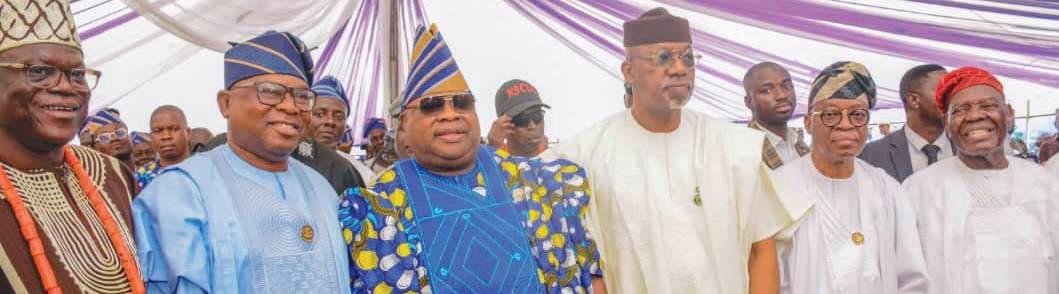
L-R: Son of the deceased and National Secretary of the All Progressives Congress, Senator Ajibola Basiru; Osun State APC governorship candidate, Munirudeen Oyebamiji; Osun State Governor, Senator Ademola Adeleke; Ogun State Governor, Prince Dapo Abiodun; Minister of Marine and Blue Economy, Alhaji Adegboyega Oyetola; and former Governor of Osun State, Chief Bisi Akande, during the final prayer and reception for the mother of APC National Secretary, late Alhaja Sidikatu Abake Basiru…in Osun State yesterday.
Atiku Alleges N210bn Budget Duplication, Accuses Tinubu of Fiscal Recklessness
Chuks Okocha in Abuja
A former Vice President and presidential candidate of the African Democratic Congress (ADC) in the 2027 general election, Atiku Abubakar, has accused the administration of President Bola Tinubu of gross fiscal recklessness, citing reports of over N210 billion in alleged duplication of allocations in the 2026 Federal Budget.
In a statement issued
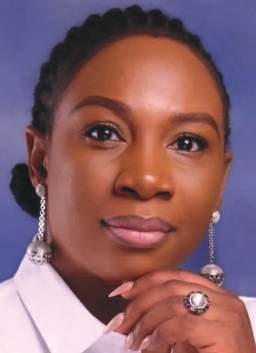
A Senior Advocate of Nigeria (SAN) and only female candidate, Mrs Oyinkansola Badejo-Okusanya, last night tightened her grip on the lead in the presidential election of the Nigerian Bar Association (NBA), inching closer to becoming the association's first elected female President.
Early figures also showed that Mr. Afam Okeke was leading five other candidates in the race for the position of General Secretary of the association.
Voting in the 2026 NBA National Elections resumed at 7:35 am yesterday after the Electoral Committee of the Nigerian Bar Association (ECNBA) said it had migrated the election portal to a new, secured domain following the technical failures that grounded the original portal in the early hours of the morning.
ECNBA 2026's Chairman,
yesterday by his Senior Special Assistant on Public Communication, Phrank Shaibu, Atiku said the reported budget irregularities, coupled with Nigeria’s poor performance on global prosperity indicators, reflected what he described as a failure of leadership rather than a shortage of national resources.
According to him, the alleged duplication in the budget undermined the credibility of the government’s
Aham Ejelam (SAN) and Secretary, Ibrahim Aliyu Nassarawa, said in a statement that the platform came under a "deliberate, coordinated and sustained cyberattack" aimed at disrupting, sabotaging and undermining the election.
The ECNBA added that its cybersecurity team and Election Voting Service Provider, EVSP, immediately activated emergency security protocols to contain the threat and restore full functionality of the system.
It promised members that no votes were accepted during the disruption and that voting only commenced after the platform had been secured.
The committee maintained that despite the disruption, the election remained under its supervision, while candidates, agents and observers continued to monitor the process from the designated election centre.
ECNBA told NBA members
US DECLARES GLOBAL CRACKDOWN
and drone strikes from Iran, the Pentagon said yesterday.
Washington yesterday carried out a seventh consecutive night of strikes inside Iran.
At the same time, Tehran responded by attacking critical infrastructure in Kuwait and targeting facilities linked to the US military in Bahrain.
Speaking at an international counterterrorism summit in Washington attended by representatives from more than 60 countries across Europe, Asia and Latin America, the US Secretary of State, Marco Rubio argued that Western governments had failed to recognise the threat posed by violent left-wing movements.
“Our counterterrorism doctrine has had a blind spot when it comes
sharply from a total of 182.9 million in May 2026 to 543 million litres in June.
This represented a dramatic shift in the nation's fuel supply dynamics, as the Dangote Refinery has consistently maintained that allowing continued imports undermines local refining efforts.
According to downstream data, Nigeria's total daily petrol receipt reached 50.6 million liters in June, up from 47.4 million liters in May.
The management of the Dangote Refinery has
economic reforms, which have required Nigerians to endure hardships following the removal of fuel subsidy, exchange rate unification, tax increases and higher tariffs.
“For more than three years, Nigerians have been subjected to relentless hardship. They were told that the removal of fuel subsidies, exchange rate unification, higher taxes, and rising tariffs were bitter pills that would eventually restore economic stability. Yet today,
that voting on the new portal would run for 24 hours from commencement, implying it would end by 7.35 am this morning.
In a statement released yesterday on its official X handle, NBA said voting, which commenced at 7:35 am, would run for 24 hours.
"Voting in the 2026 Nigerian Bar Association National Elections commenced at 7:35 am today, Saturday, 18 July 2026, and will remain open until 7:35 am tomorrow, Sunday, 19 July 2026," the statement read.
Badejo-Okusanya and two others - Lateef Omoyemi Akangbe (SAN), and Aare Olumuyiwa Akinboro (SAN) - were seeking to succeed the incumbent President of NBA, Afam Osigwe (SAN).
The total number of registered voters stood at 82164. According to the results on the "real-time voters' dashboard for the 2026 NBA national elections," as of
to extremist violence from the political left. Even today, the very idea that far-left terrorism could be a serious threat is treated as a right-wing fever dream,” Rubio declared.
According to him, the United States intends to work closely with international partners to identify, disrupt and dismantle organisations involved in politically motivated violence regardless of where they operate.
White House Homeland
Security Adviser Stephen Miller, delivered one of the administration’s strongest criticisms yet of left-wing political movements, accusing violent extremists of manipulating democratic values to shield themselves from prosecution.
consistently argued that its massive capacity, operating at an average utilisation rate of 101.36 per cent is more than sufficient to meet the nation's domestic consumption needs.
In response, oil marketers and the sector regulator, the NMDPRA, have pushed back, citing the need to ensure supply security and maintain price stability for consumers, particularly when domestic production fluctuates.
Besides, they argue that relying solely on a single source creates a monopoly.
the same government cannot explain how more than N210 billion found its way into duplicated and overlapping budget provisions,” Atiku said.
He argued that any government demanding sacrifices from citizens must first demonstrate fiscal discipline, adding that the reported duplications and questionable budget insertions violated the principles of transparency and accountability.
11 pm, Badejo-Okusanya was leading the other two presidential candidates with 11,352 votes, representing 46.69 percent of the 24,314 votes cast in the presidential election.
Akangbe was following with 7,415 votes (30.50 per cent), while Akinboro polled 5,547 votes (22.81 per cent).
For the position of General Secretary, early figures also showed that Okeke was leading five other candidates.
Okeke was leading with 4,054 votes, while his closest challenger, Dr. Rapulu Ernest Nduka, had 3,452 votes.
Chidi Ezenwafor occupied the third position with 2,553 votes, followed by Okey Leo Ohagba on 2,317; while Nnaebuka Onyebuchi Nwaeze and Barth Okoye-Aniche trailed significantly with 544 and 396 votes, respectively.
In the absence of any technical hitches, the final results would be declared this morning.
The former vice president further alleged that the latest revelations were part of a recurring pattern of questionable budget practices, including allocations for projects outside the statutory mandates of government agencies and controversial insertions worth billions of naira.
He said such practices point to a systemic breakdown in budget discipline rather than isolated administrative errors.
If Badejo-Okusanya emerges winner, she will become the association's first elected female President.
The first female President of the NBA, Mrs Priscilla Kuye, stepped into the position of First Vice President when the elected President, Chief Clement Akpamgbo, was appointed the Attorney General of the Federation (AGF) and Minister of Justice by the then Military President, Gen. Ibrahim Babangida (rtd.).
NBA President Osigwe had earlier dismissed allegations that he was attempting to rig or interfere with the election.
Addressing journalists in Abuja on Friday, Osigwe insisted that the ECNBA operated independently and took no instructions from him.
He also denied claims that he was backing a preferred candidate, describing the allegations as politically motivated and unsupported by evidence.
“The national budget is the single most important economic policy document of any government. It should reflect national priorities, inspire investor confidence and assure citizens that every naira borrowed or earned will be spent wisely. When that document itself becomes contaminated by duplication and overlapping allocations, confidence in the entire machinery of government is undermined,” he said.
The election was held after weeks of controversy over the scheduled date, with some presidential candidates and stakeholders questioning the integrity of the process, calling for the poll to be postponed, demanding mandatory National Identification Number (NIN) verification for voters, and accusing the NBA leadership of attempting to influence the outcome.
Osigwe denied the allegations, maintaining that only the Electoral Committee was constitutionally empowered to conduct the election.
According to Osigwe, allegations that NBA elections had always been manipulated had never been substantiated in court.
The NBA president also dismissed suggestions that his personal voting preference could influence the election's outcome.
ON LEFT-WING EXTREMISM, CONFLICTS WITH IRAN DEEPEN
“One of the hallmarks of leftwing violence and terrorism is its completely pretextual and disingenuous appeal to civil liberties in an effort to shield its own violence,” Miller said.
“When the leftist, who does not believe in freedom, who does not believe in civil rights, who does not believe in any ordinary notion of justice, protests that we are violating his rights, understand that he is lying to try to persuade people who are not closely following the political scene that some injustice has been perpetrated against him,” Miller said.
In the Gulf, the US military confirmed that it had conducted strikes inside Iran for a seventh consecutive night, targeting
However, the NMDPRA figures showed that the dispute is continuing despite a 10 per cent surge in crude oil receipts by local refineries from 578,000 barrels per day to 632,000 bpd between May and June.
Last week, Dangote began selling products in dollars as the naira-for-crude policy falters.
Besides, during the period under consideration, Nigeria's total stock sufficiency of petrol increased from 16.2 days to 19.7 days, a 22 per cent uptick in June compared with the
areas near the Persian Gulf and the strategic Strait of Hormuz as well as transportation infrastructure further inland.
Iranian authorities accused Washington of expanding its campaign beyond military objectives to include airports, railway stations, bridges, telecommunications infrastructure and energy facilities.
Iranian supreme leader Khamenei vowed to teach the US “unforgettable lessons”.
“Now that the American enemy seeks to incite war and bear its most serious consequences, it should know that the dear Iranian nation and the axis of resistance have unforgettable lessons to offer it,” he said, in a statement carried by state TV, adding that
previous month, May.
Statistics for June also showed that Automotive Gas Oil (AGO) or diesel supply recorded a total daily receipt of 16.2 million litres as against 18.8 million litres per day in May, all of which was sourced domestically, marking a 14 per cent decline compared to the previous month.
Also, kerosene receipts declined by 31 percent to 2.5 million liters per day, down from 3.6 million liters per day in May.
In the meantime, the natural gas data revealed that for the
US violations of the deal “once again demonstrated to everyone the worthlessness of the American president’s signature.”
Authorities said 116 communications towers had been knocked out, leaving landline, mobile phone and internet services unavailable in several communities.
In neighbouring Khuzestan province, Iranian officials claimed that US forces had attacked 95 locations across 12 cities during the past 10 days.
Tehran responded by expanding its own military operations beyond direct attacks on US-linked assets.
Kuwait announced yesterday (Saturday) that Iranian missiles and drones had struck another electricity generation and water desalination plant, triggering a fire
first six months of the year, total utilisation fluctuated between 4.888 Bscf/d and 5.142 Bscf/d.
The month of January recorded 5.015 Bscf/d; February, 4.907 Bscf/d; March, 4.888 Bscf/d; April, 5.142 Bscf/d; May, 4.984 Bscf/d and June, 5.116 Bscf/d.
But sectoral utilisation revealed mixed performance across the economy.
Gas supplied to power generation stood at 0.509 Bscf/d in June, indicating lower consumption by electricity producers despite the increase
that forced several generating units to shut down.
In a statement, Kuwait’s Ministry of Electricity and Water said, “Another electricity and water distillation plant was targeted by a hostile attack that led to a fire erupting in one of the plant’s components.”
Kuwait Petroleum Corporation also confirmed that a strategic oil facility suffered significant damage following repeated Iranian attacks, although authorities said workers had been safely evacuated. Elsewhere in Kuwait, authorities temporarily suspended operations at Kuwait International Airport after rocket and drone attacks forced air traffic controllers to
Continued on page 9
in overall gas supply, while gas-to-commercial and gasto-industries rose to 0.643 Bscf/day and 0.554 Bscf/day, respectively. On the infrastructure, the Ajaokuta-Kaduna-Kano (AKK) gas pipeline project, a critical component of the national energy infrastructure, reached a 94.3 per cent completion rate as of June 2026, while the OB3 gas pipeline project achieved a 96 per cent completion rate, signaling some progress in the country's efforts to expand its gas utilisation capabilities.
Ejiofor Alike
ANNUAL GENERAL MEETING…
Citing World Bank Report, ADC Accuses Tinubu of Ruining Lives with Economic Policies
The African Democratic Congress (ADC) yesterday expressed its deep concern over the recent report by the World Bank indicating that 139 million Nigerians now live below the national poverty line.
The report, the party said, was consistent with a similar report
by the World Food Program (WFP), which found that 17 million Nigerians were living with acute hunger, the country's worst food security crisis in nearly a decade.
In a statement signed by its National Publicity Secretary, Mallam Bolaji Abdullahi, the opposition party said these reports were stark evidence that
the economic policies of President Bola Tinubu’s administration failed.
ADC argued that Tinubu’s economic policies were likely to deliver even more catastrophic consequences if he continued in office beyond 2027, with a reported 79 percent, or nearly 200 million, of the population nearing poverty.
The party then called on President Tinubu to abandon his neoliberal economic policies that ruined the lives of almost the entire country, or quit, as Nigerians cannot continue on this ruinous path.
Abdullahi said the party was seriously disturbed by recent World Bank reports indicating that 139 million Nigerians, or about 60
Uzodimma: Tinubu is Nigeria's Lee Kuan Yew, His Performance Will Earn Him Second Term in 2027
Imo State Governor, Senator Hope Uzodimma, has likened President Bola Tinubu to Singapore's late founding leader, Lee Kuan Yew.
Speaking at a dinner in Owerri at the weekend to mark the end of the three-day Renewed Hope Ambassadors/Presidential Communications Team National Media inspection of landmark federal and state government projects in Imo State, Uzodimma declared, "In President Bola Tinubu, we have another Lee Kuan Yew."
The governor praised the
President's bold economic reforms, and expressed confidence that his performance would give him a second term in 2027.
Uzodimma said President Tinubu assumed office on May 29, 2023, fully prepared to tackle Nigeria's economic challenges through far-reaching reforms, stressing that the country had entered a new phase of development.
He said: "The old order is gone and there is now a new order. President Tinubu knew exactly what he came to do. He started implementing the reforms immediately because
he understood the task before him."
Drawing a biblical analogy, the governor compared Nigeria's pre-reform economic situation to the Israelites' bondage in Egypt, saying that just as God delivered the Israelites through difficult circumstances, the President's bold decisions were necessary to free Nigeria from years of economic stagnation.
He acknowledged that the reforms came with initial hardship, but insisted they were already producing positive results, particularly through increased revenues available
to states for infrastructure and human capital development.
According to him, the ongoing transformation across Imo State is a direct product of President Tinubu's Renewed Hope Agenda.
"Everything we are doing in Imo today is made possible because of the Renewed Hope Agenda. We are pursuing sustainable development, investing in infrastructure, healthcare, education and technology because the reforms have created an enabling environment for development," he said.
percent of the population, now live below the national poverty line.
He said: “This is hardly surprising as this catastrophic situation is the inevitable consequence of economic policies that have favored money over people and statistics over survival.
''The ADC has repeatedly warned that the economic growth, increased revenue, and rising foreign reserves that the Tinubuled APC government continues to celebrate are meaningless if they do not translate into better lives for the people or protect their livelihoods.
''Instead of changin"course, the government has stubbornly stuck with its ruinous economic policies and even continues to market recklessness as courage and wickedness as ‘necessary pains,” A'C explained.
However, the party spokesman said that three years down the line, the chickens have come home to roost.
''The evidence of 13"million people living in poverty and 17 million at the risk of starvation is President Tinubu’s scorecard. Tinubu's absence from this catastrophic failure alone, President Tinubu should be
contemplating resigning from office rather than seeking reelection.
''What Nigeria desperately needs is a President and a government that truly understands how the people feel and genuinely cares about them. A government that understands that the true measure of any economic policy is whether it improves the lives of the people, not compounds their misery. A president whose government is not openly feasting while asking the people to continue fasting. A government that does not wallow in profligacy while handing out palliatives to the people.
''This is why the AD"rejects the cycle of temporary interventions and emergency responses that have come to define the APC’s economic policAPC'sn the name of social intervention programmes. Poverty cannot be defeated through palliatives. It can only be defeated by building an economy that enables Nigerians to produce more food, earn decent incomes, and live with dignity,'' he stressed. He stated that an ADC government would pursue structural reforms that address the causes of Hunger.
NEMA Urges Flood-prone Residents to Relocate as Rains Intensify Nationwide
Kasim Sumaina in Abuja
The Director-General of the National Emergency Management Agency (NEMA), Zubaida Umar, has urged residents of flood-prone communities across the country to heed early warning alerts and relocate to safer locations as the rainy season intensifies.
Umar advised in a statement issued by the agency’s Press Unit yesterday, warning that the current period of heightened rainfall requires communities at risk to take proactive steps
to protect lives and property.
According to the statement, the NEMA boss said the period of increased rainfall calls for the activation of community-level flood mitigation measures to reduce the impact of flooding.
She urged residents to heed early warning information issued by relevant government agencies and relocate to higher ground whenever there is a threat of flooding.
The statement read, “The current period of heightened rainfall calls for the activation of
community-level flood mitigation measures to minimise the impact of flooding.”
Umar also cautioned members of the public against driving or walking through floodwaters, while urging them to refrain from dumping refuse into drainage channels.
She further advised residents to promptly report emergency situations to the appropriate authorities to enable a timely response.
The NEMA DG stressed that “preparedness and early
evacuation remain the most effective ways of preventing avoidable loss of lives and reducing the impact of floods during the peak of the rainy season.”
She disclosed that the agency’s Zonal Directors and Heads of Operations Offices had been directed to intensify communitybased awareness campaigns on flood preparedness nationwide. According to her, the officials have also been mandated to strengthen collaboration with State Emergency Management
Agencies, Local Emergency Management Committees, traditional institutions and other relevant stakeholders, as well as coordinate timely search and rescue operations where necessary.
Umar reaffirmed NEMA’s commitment to continuous monitoring of the flood situation nationwide. He pledged that the agency would continue working closely with relevant stakeholders to ensure timely response and the provision of humanitarian assistance to affected persons.
The latest advisory comes days after the Nigeria Hydrological Services Agency warned that 14 states could experience medium flood risk between July 14 and July 20, following its latest hydrological forecast.
The agency identified Adamawa, Akwa Ibom, Anambra, Bauchi, Benue, Borno, Cross River, Edo, Enugu, Imo, Kaduna, Lagos, Niger and Plateau as states likely to experience localised flooding, urging residents in vulnerable communities to take precautionary measures.
Deji Elumoye in Abuja
Chuks Okocha in Abuja
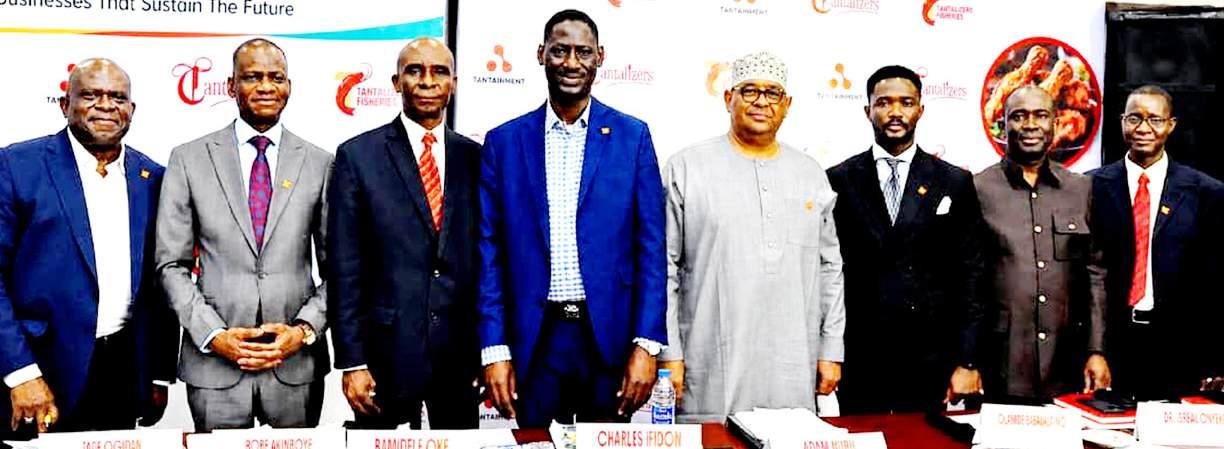
L-R: Director, Tantalizers Plc, Mr. Akintade Ogidan; Director, Bode Akinboye; Executive Director, Finance, Mr. Bamidele Oke; Group Deputy Managing Director, Mr. Charles Ifidon; Chairman, Mr. Adam Nuru, Company Secretary, Mr. Olamide Babawale-Mo; Director, Dr. Israel Ovirih; and Executive Director, Operations, Mr. Olusegun Ekundayo, at the 28th Annual General Meeting of the company in Lagos… recently
CAMPAIGN AGAINST DRUG ABUSE…
Listed Insurance Companies Move to Boost Capital
Base, Eight Seek N78.66bn in Recapitalisation Drive
Listed insurance companies have stepped up efforts to strengthen their capital base ahead of the implementation of the Nigerian Insurance Industry Reform Act (NIIRA) 2025, with eight insurers on the Nigerian Exchange Limited (NGX) seeking to raise an estimated
Nigeria,
N78.66 billion through various capital-raising programmes.
The companies include: Lasaco Assurance Plc, International Energy Insurance Plc, Linkage Assurance Plc, Guinea Insurance Plc, Universal Insurance Plc, Sunu Assurances Nigeria Plc, Sovereign Trust Insurance Plc and Regency Alliance Insurance Plc.
Industry sources told
THISDAY that while some of the insurers had successfully concluded their capital raising programmes, others had secured shareholders' approval and regulatory clearances to proceed with their respective exercises.
THISDAY also gathered that the firms are deploying different funding options, including rights issues, public offers, private
placements, special placements and fresh equity injections by existing shareholders, as they position themselves to meet the new statutory capital requirements introduced under the industry reform law.
Investigations have shown that Lasaco Assurance has so far emerged as the largest fundraiser among the listed insurers.
Ghana Condemn Xenophobic Attacks in South Africa
Michael Olugbode in Abuja
Nigeria and Ghana have condemned the ongoing antiimmigrant violence in South Africa and want the issue of “Afrophobia” discussed at the next African Union summit.
South Africa has been swept by weeks of protests and unrest targeting undocumented immigrants, causing tens of thousands to flee the country.
Nearly 150,000 people have left in recent weeks, according
to an AFP tally based on figures provided by African countries that have repatriated their nationals.
On Friday, the foreign ministers of Ghana and Nigeria discussed the “recent Afrophobic protests and incidents targeting African nationals in South Africa”, the Nigerian government said.
“(They) condemned all forms of xenophobia, Afrophobia, intolerance and violence against fellow Africans,” it said.
The two ministers from West
Africa’s largest economies were meeting on the sidelines of a gathering of the West African economic bloc ECOWAS in Liberia.
Nigeria has evacuated 1,490 nationals from South Africa, while Ghana has repatriated at least 926.
South Africa, the continent’s wealthiest nation, has long been a magnet for migrants.
The ministers stressed the need for “urgent, coordinated regional and continental responses” to address the
causes behind the antiimmigrant tensions.
Ghana’s Samuel Okudzeto Ablakwa and Nigeria’s Sola Enikanolaiye said Afrophobia should be raised at the next AU summit early next year.
In May, Ghana requested an AU debate on “xenophobic attacks” in South Africa. It was not clear if it materialised.
Earlier this month, Ghana said a visit to Accra by South African President Cyril Ramaphosa had been postponed.
The company recently concluded a rights issue that recorded an impressive subscription level, raising N19.30 billion, and exceeding its target of N18.47 billion by about 4.5 per cent.
The successful exercise followed approval by the Nigerian Exchange for the listing of 9.24 billion ordinary shares of 50 kobo each at N2.00 per share, offered on a five-for-six basis, with five new ordinary shares for every six existing ordinary shares held by shareholders.
Commenting on the outcome, the Managing Director and Chief Executive Officer of Lasaco Assurance, Mr. Ademoye Shobo, described the successful capital raising as a strong vote of confidence in the company's long-term strategy.
He said: "Our recapitalisation journey reflects our unwavering commitment to transparency, accountability and responsible corporate governance.
"The overwhelming support from our shareholders and the successful completion of key regulatory milestones further validate the confidence reposed in our company.
three existing shares held by shareholders.
Guinea Insurance Plc has also commenced its recapitalisation programme, targeting N5.82 billion through a rights issue to strengthen its capital base and enhance its underwriting capacity.
The company is offering 5.30 billion ordinary shares of 50 kobo each at N1.10 per share, pre-allotted to shareholders in the ratio of two new shares for every three shares held as of the qualification date.
Similarly, Universal Insurance Plc, which had earlier secured shareholders' approval to raise to N15 billion, has commenced the first phase of the exercise with a N3.20 billion rights issue.
The company plans to issue 2.67 billion ordinary shares of 50 kobo each at N1.20 per share, with shareholders entitled to one new share for every six shares held as of the qualification date.
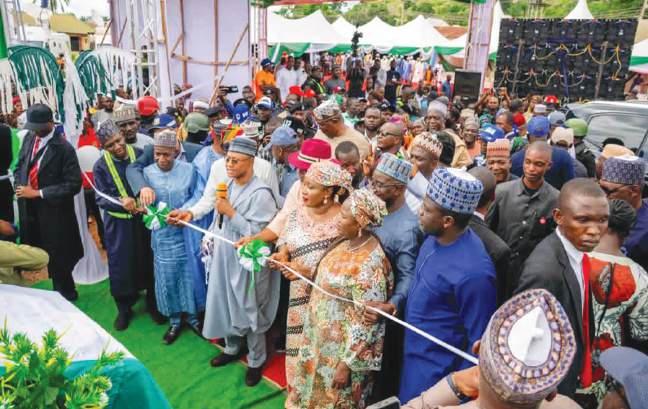
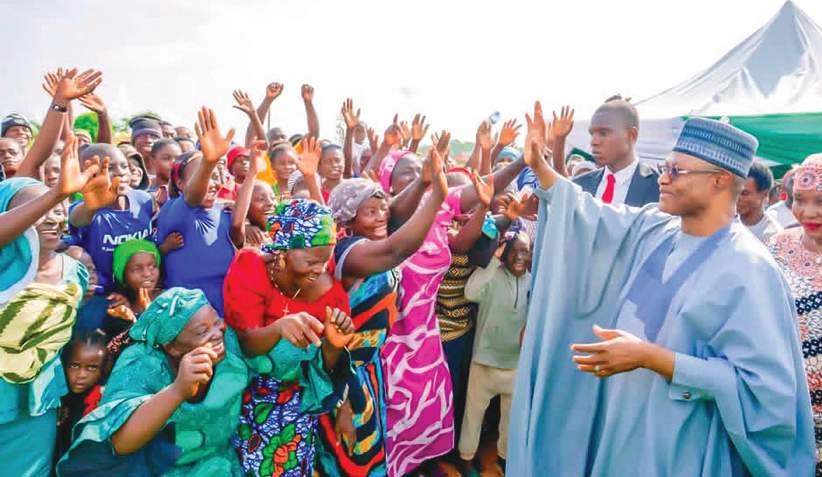
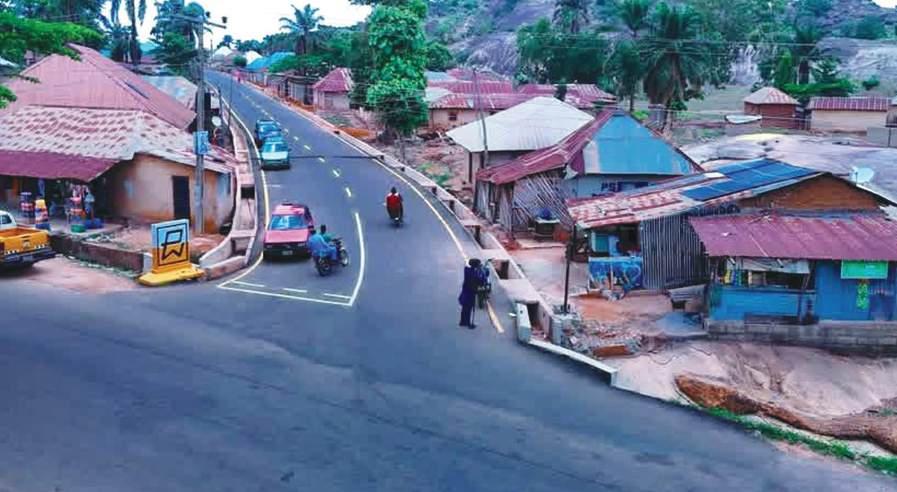
Governor Ademola Adeleke of Osun State has described the state chapter of the All Progressives Congress (APC) as a party suffering from acute political depression, declaring that his administration's infrastructure projects complied with the best engineering and project implementation standards under its local content policy.
touring nine local government areas (LGAs), Governor Adeleke expressed appreciation to the people of the state for their massive show of support as he commissioned projects across the state and sought re-election next month.
administration performed, and our people are testifying.
"Osun APC tried to stop our state from developing. The opposition diverted over N350 billion of Osun local government money in its bid to stop execution of major projects. Today, we completed the projects, and we are commissioning them to the glory of God and humanity.
Reviewing the state of his re-election campaign after
"I have toured nine local government areas. The massive show of support is astounding. Osun people appreciate our various projects from Osogbo to Iwo to Ila to Ilesa to Ile Ife.
Where Osun APC failed, my
"We adopted the best engineering practices. Our procurement process was compliant with the law and due
process, and our local engineers, suppliers, and technicians did fantastic work across the state. We deliver quality projects and include a maintenance package for long-term use.
"Ever since the Osun APC failed to stop our developmental agenda, the party has fallen into disarray. It suffers from acute political depression. Its leaders are quitting daily and defecting to Accord. But the people of Osun are taking to the streets to welcome us wherever we go in the state. Adeleke: Osun APC in
"We remain focused on concluding the remaining phases of the exercise and positioning Lasaco Assurance for sustained growth, enhanced competitiveness and greater value creation for all our stakeholders."
Trailing Lasaco Assurance is International Energy Insurance Plc, which is raising about N17.50 billion through a public offer, while Linkage Assurance Plc is seeking N16.26 billion via a rights issue.
Linkage Assurance's offer comprises 12.32 billion ordinary shares of 50 kobo each at N1.32 per share, based on two new ordinary shares for every
Apart from the rights issue, Universal Insurance also received shareholders' approval to raise additional capital through public offers and private placements where necessary.
Meanwhile, Sunu Assurances Nigeria Plc, Sovereign Trust Insurance Plc and Regency Alliance Insurance Plc are seeking to raise N9.34 billion, N5.02 billion and N3.04 billion, respectively, through a combination of equity and debt instruments.
The capital raising programmes may involve ordinary shares, preference shares, bonds, debentures, subordinated instruments, convertible securities, mezzanine financing, rights issues, private placements, public offers or other financing structures permitted under existing laws and regulations.
Kayode Tokede
Yinka Kolawole in Osogbo
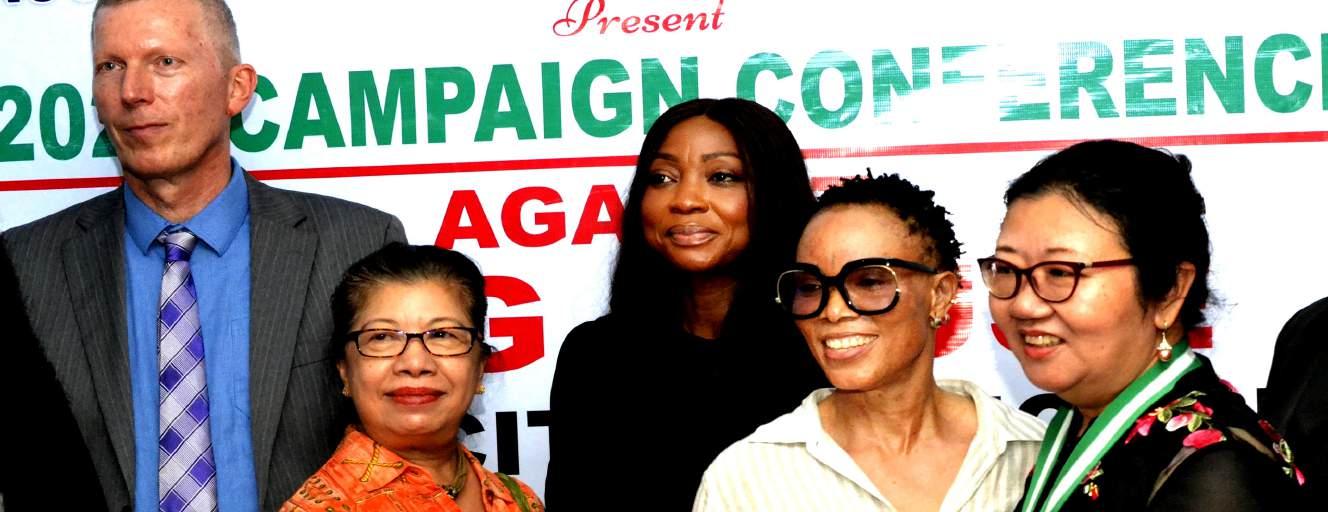
L- R: Vice Consul, German Consulate, Lagos, Mr. Jochen Schindelarz; Adviser, Association of Chinese Women in Nigeria, Loi Eng-koon; Guest Speaker and Managing Director/CEO, Lifelink Fertility Clinic, Dr. Kemi Ailoje; Nigeria’s first Olympic gold medalist and President of Chioma Ajunwa Foundation, Dr. Chioma Ajunwa-Oparah; and the Chinese Consulate General, Lagos, Yan Yuqing, during the 2026 campaign conference against drug abuse and illicit trafficking in Lagos…recently
CONGRATULATIONS TO YOUNG INNOVATOR…
Daniel Bwala: Foreign Interests May
Be Fuelling Nigeria’s Security Crisis
Alleges Army, NAF rivalry under Buhari weakened counterterrorism operations
The Special Adviser to the President on Policy Communications, Daniel Bwala has suggested that Nigeria’s lingering security crisis may have been influenced by external forces, citing international claims and developments it said indicate that foreign interests could be playing a role in the country’s
Nwobodo,
terrorism challenge. Bwala made the assertion while speaking on The Link Up Podcast, a panel discussion hosted by EchoRoom and published on Friday.
He also alleged that a rivalry between the Nigerian Army and the Nigerian Air Force (NAF) during former President Muhammadu
Buhari’s administration weakened counterterrorism operations, with troops allegedly denied critical air support during some military missions.
Bwala recalled demonstrations in parts of northern Nigeria, during which protesters reportedly displayed Russian flags,
describing the development as one of the indicators that Nigeria’s security challenge may have dimensions beyond its borders.
“If you remember, there was a decision the federal government of Nigeria made at that time, immediately we started seeing these people in Nigeria lifting Russian flags”,
Wife Enmeshed in N5.8bn Suit over Alleged Demolition of Lagos Businessman’s Properties
Emmanuel Ugwu-Nwogo in Enugu
A Lagos-based businessman and investor, Dr Basil Ogbuanu has dragged the former Governor of old Anambra State, Chief Jim Nwobodo and his wife, Patricia to court, claiming N5.8 billion damages over the alleged destruction of his buildings on a disputed land.
The legal dispute arose five years after Ogbuanu had allegedly purchased the four plots of land at Nwobodo's Patson Estate Independent
Layout in Enugu.
In the suit filed by his counsel, Chukwudi Obieze (SAN), the investor averred that he had paid for plots R/18, R/19, R/20, and R/20 "in good faith, honesty, and upon furnished consideration to the vendor".
However, the plaintiff alleged that while building construction was ongoing on the plots of land, Mrs. Nwobodo "invaded" the site on January 16 and 17, 2026 and carried out "illegal, malicious destruction" of his
nearly completed buildings.
However, at the hearing of the case at an Enugu State High Court, on Thursday, Counsel to Nwobodo, Chief Chuma Oguejiofor, hinted that the defendants were not opposed to activating the Alternative Dispute Resolution(ADR) mechanism.
Addressing journalists after the Court session, Oguejiofor stated that his clients would not spurn any opportunity of using the ADR if made available.
He however, added that his clients would not initiate the
move, adding that the plaintiff should be the one to make the move.
Three companies owned by the Nwobodos that were used in the N235 million land deal were also joined in the suit, as well as three public officers in the Enugu State Ministry of Lands.
At the commencement of the hearing of the case marked E/328/2026, the defendants formally notified the presiding judge, Justice C.C Ani of the change in their legal representation.
Bauchi, Gombe, Adamawa to Experience Darkness as TCN Upgrades 330KV Transmission Line
Emmanuel Addeh in Abuja
The Nigerian Independent System Operator (NISO) has announced a planned two-day power outage affecting Bauchi, Gombe, and Adamawa states and surrounding areas to facilitate critical transmission infrastructure upgrades.
In a statement issued yesterday in Abuja, NISO said the outage would commence at 9:00 a.m. on Saturday, July
25, 2026, and would end at 5:00 p.m. on Sunday, July 26, 2026.
According to the system operator, the outage is to enable the Transmission Company of Nigeria (TCN) to connect the Optical Ground Wire (OPGW) on the Jos–Bauchi–Gombe 330kV transmission line.
It explained that electricity supply to Bauchi; Gombe; Yola in Adamawa State and neighbouring communities would be interrupted during
the maintenance period.
In addition, NISO explained that the Jos–Bauchi–Gombe 132kV transmission line will also be taken out of service to ensure a safe working environment for the exercise.
NISO stated that the OPGW installation formed part of ongoing efforts to strengthen the country's transmission infrastructure, improve grid reliability and enhance monitoring and communication
capabilities across the national electricity network.
"During the outage period, the Bauchi, Gombe, Yola and surrounding areas are expected to experience an interruption in electricity supply at the Jos–Bauchi–Gombe 132kV transmission line, which will also be taken out of service to ensure a safe working environment for the maintenance activity.
he said.
The presidential aide also referenced allegations made by United States Congressman Scott Perry during a congressional hearing, in which the lawmaker claimed that the Central Intelligence Agency (CIA) funded Boko Haram and the Islamic State.
Although he stressed that he was neither confirming nor endorsing the allegations, Bwala said they demonstrated that discussions about possible external influence on terrorism in Nigeria had been held at the international level.
“I wouldn’t say that, but I will tell you what I saw. When they were having the congressional hearing, I don’t know whether it is true or not, because he’s not a Nigerian,
but I’m just providing facts to tell you that conversations like that have gone on.
“Scott Perry was interrogating the CIA director, and he was telling him that their congressional finding suggests that the CIA was funding Boko Haram and ISIS.”
“So, me, I’m not saying he’s right or he’s wrong. But what I’m saying is that an event like that has occurred, and as a country, we cannot hear that and say you are a liar”, he said.
Bwala also alleged that a rivalry between the Nigerian Army and the Nigerian Air Force during former President Buhari’s administration weakened counterterrorism operations.
Nigerian Navy: Our Operational Successes Raised Crude Oil Production to 1.7m bpd
Linus Aleke in Abuja
The operational successes of the Nigerian Navy’s sustained offensive against oil theft, illegal refining, pipeline vandalism, and militancy in the second quarter of 2026 have aided Nigeria’s crude oil production to reach 1,735 million barrels per day in June.
The Nigerian Upstream Petroleum Regulatory Commission (NUPRC) announced that the 1.735 million barrels per day represented 104 per cent of Nigeria’s Organisation of Petroleum Exporting Countries (OPEC) quota.
The Director of Naval Information, Capt. Abiodun Folorunsho, in a statement issued yesterday in Abuja, said that the feat was the highest crude oil output recorded since April 2020.
According to Folorunsho, the offensive against crude oil theft, illegal refining, pipeline vandalism, militancy, and other forms of economic sabotage in the Niger Delta under Operation DELTA SENTINEL was intensified to consolidate first-quarter gains.
“Since April 2026, the Nigerian Navy has conducted over 580 intelligence-driven operations across Rivers, Bayelsa, Delta, Cross River, and Lagos State.
“These operations have resulted in the recovery of over 4.7 million litres of stolen crude oil and illegally refined petroleum products, as well as the arrest of over 91 suspects involved in crude oil theft, pipeline vandalism, militancy and related crimes.
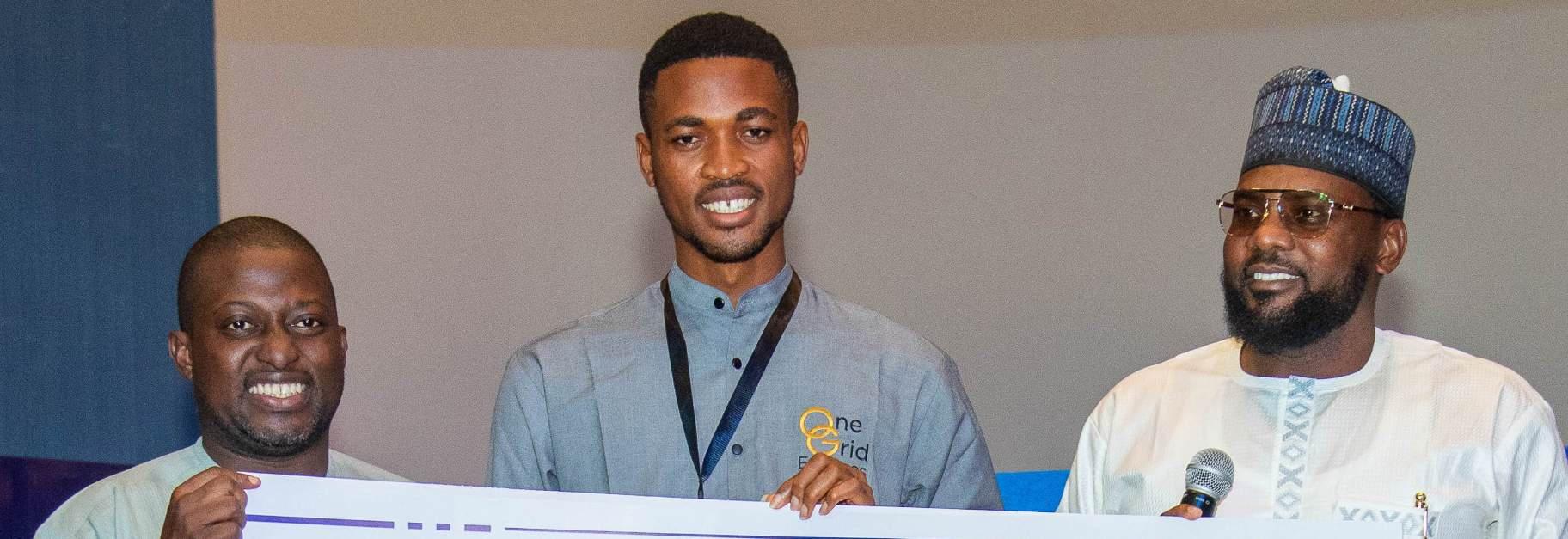
L-R: National Youth Leader of All Progressives Congress, Dr. Dayo Israel; Overall Winner of Mustapha Abdullahi Energy Leadership Fellowship (MAELF) 2026, organised by the APC National Youth Wing in collaboration with the DAM Foundation, Emmanuel Chinecherem Ezea, and Director-General of the Energy Commission of Nigeria/Founder of MAELF, Dr. Mustapha Abdullahi, during the presentation of the awards in Abuja... weekend
VESSEL FINANCING ON THEIR MINDS…
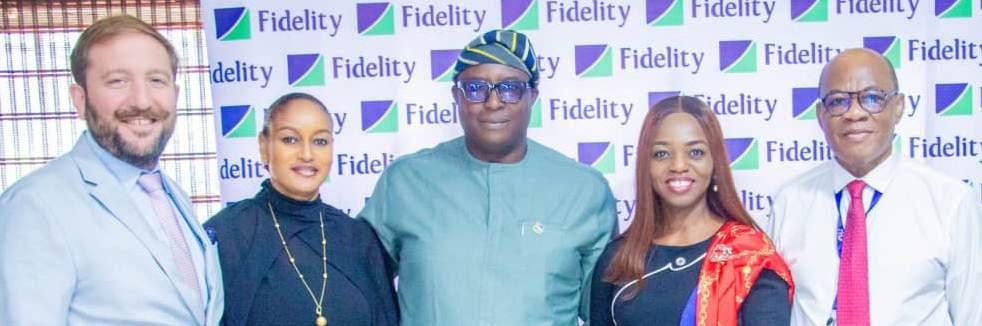
L–R: Managing Director, NBC Maritime Limited, Capt. Nicolas Bernard; Managing Partner, Olisa Agbakoba Legal, Yvonne Ezekiel; President of African Shipowners Association in Nigeria, Capt. Ladi Olubowale; Representative of Fidelity Bank Plc, Vera Odu; and Senior Partner, Olisa Agbakoba Legal, Dr. Olisa Agbakoba (SAN), at the
Financing Fund Lending in Lagos…recently
Oyo APC Crisis Deepens as Six Governorship
Aspirants Reject Sharafadeen Alli’s Candidacy
A fresh crisis has emerged within the Oyo State chapter of the All Progressives Congress (APC) after six of the party’s 11 governorship aspirants rejected the emergence of Senator
Sharafadeen Alli as the party’s gubernatorial candidate for the 2027 general election.
The aggrieved aspirants insisted that the APC has not lawfully produced a
governorship candidate, arguing that the process leading to Alli’s emergence failed to comply with the provisions of the Electoral Act and the party’s internal procedures.
The dissenting aspirants are Hakeem Alao, Rauf Olaniyan, Dr Ayobami Lam-Adesina, Akeem Agbaje, Ololade Bakare and Musibau Asanike. They made their position
Christian Group Urges Tinubu to Reject Bill Criminalising Preaching in Commercial Vehicles
A Christian group under the aegis of the Organisation of African Instituted Churches (OAIC), Nigeria region, has called on President Bola Tinubu to withhold assent to the proposed amendment to the Federal Road Safety Commission (FRSC) Bill, saying provisions that reportedly criminalise preaching in commercial vehicles pose a threat to Nigerians’ constitutional rights.
The group, in a statement issued yesterday by its President, Dr Israel Akinadewo, expressed concern that the proposed legislation allegedly places preaching in commercial vehicles in the
same category as hawking and other prohibited activities.
According to the association, equating the peaceful proclamation of the Gospel with commercial hawking is insensitive and inconsistent with the constitutional guarantees of freedom of religion and freedom of expression.
“OAIC considers it insensitive and inappropriate to equate the peaceful proclamation of the Gospel with commercial hawking. While recognising the need to ensure safety and order on Nigerian roads, the Association maintains that preaching is a constitutionally protected
exercise of the rights to freedom of religion and freedom of expression, and should not be treated as a criminal or commercial activity,” Akinadewo said.
The association argued that preaching in commercial buses has, over the years, remained a legitimate means of spreading messages of faith, hope, morality, repentance and peaceful coexistence across the country.
It warned that any law with the effect of criminalising peaceful religious expression could constitute an unnecessary restriction on the constitutional rights of Nigerians.
Consequently, OAIC appealed to Tinubu not to sign the bill into law in its current form.
“The Association therefore respectfully calls on President Bola Ahmed Tinubu not to assent to the Bill in its present form. We also urge the National Assembly to review the relevant provisions through broad consultations with religious bodies, civil society organisations and other stakeholders to ensure that public safety is promoted without undermining the constitutional guarantees of freedom of religion and expression,” the statement added.
known after meeting with the party’s reconciliation committee, chaired by Senator Olufemi Lanlehin and Professor Taoheed Adedoja, which was constituted to address grievances arising from the governorship selection process.
Speaking on behalf of the group, Hakeem Alao maintained that, contrary to claims that the APC has settled on a candidate, the party has yet to complete the legal and procedural requirements necessary to produce a valid flagbearer.
“We have presented our grievances to the reconciliation committee and made our position clear. As far as we are are concerned, the APC does not have a governorship candidate at this moment because the provisions of the Electoral Act have not been fulfilled.”
“The committee will carefully consider our submissions. We remain members of the same political family, and we believe the party will eventually produce a candidate.
“Whoever emerges through a lawful and transparent process
will have our support. However, as things stand today, the APC has no governorship candidate in Oyo State,” Alao said.
The latest development highlights growing divisions within the opposition party ahead of the 2027 governorship election and raises fresh questions over internal consensus and compliance with electoral guidelines.
A total of 11 aspirants participated in the APC governorship contest. They include Chief Adebayo Adelabu, Dr. Adewale Kareem, Dr. Muyiwa Gbadegesin, Akeem Agbaje, Hakeem Alao, Rauf Olaniyan, Dr. Ayobami LamAdesina, Prince Musibau Asanike, Senator Abdulfatai Buhari, Mr. Ololade Bakare and Senator Sharafadeen Alli.
Although the APC recently announced Alli as its preferred governorship candidate, the objections raised by six aspirants are expected to intensify internal consultations as the party seeks to reconcile aggrieved stakeholders and present a united front ahead of the 2027 elections.
US DECLARES GLOBAL CRACKDOWN ON LEFT-WING EXTREMISM, CONFLICTS WITH IRAN DEEPEN
halt flights.
Kuwait’s Foreign Ministry said the government reserved the right “to take all necessary measures” to defend the country against further attacks.
The conflict also spread into Bahrain, where the kingdom’s military said its air defence systems intercepted and destroyed multiple Iranian drones and missiles.
According to Bahrain’s Interior Ministry, air raid sirens sounded five times after dawn as residents were instructed to seek shelter.
Jordan also reported intercepting multiple missiles allegedly aimed at military facilities, with officials saying no casualties or significant damage had been recorded.
Escalating Tehran’s rhetoric further, senior military adviser to Supreme Leader Ayatollah Ali Khamenei, Major General
Mohsen Rezaei, warned that Iran would abandon its policy of proportionate retaliation if US attacks continued.
“Iran will no longer limit itself to retaliatory, like-for-like responses… and no political border will be safe,” Rezaei said. He added that Tehran would resume “full-scale offensive operations” should American military operations continue for another two or three days.
The diplomatic situation also deteriorated sharply after Iran formally suspended its commitments under the memorandum of understanding reached with Washington barely one month ago. The agreement had temporarily halted weeks of fighting and opened the door to negotiations mediated by Qatar and Pakistan.
However, Iranian Deputy Foreign Minister Khazem Gharibabadi accused Washington of violating the agreement through continued military action. “We were in negotiations. Unfortunately, it was the Americans themselves who, in fact, took these aggressive actions, in violation of their own commitments,” Gharibabadi said.
“As a result, we have suspended all of our commitments and are, in fact, no longer implementing them.
“What we are now faced with is defending our country. We will do so firmly and decisively, and I think the Americans have once again received their response, that these aggressive actions by them will get them nowhere.”
Iranian Foreign Ministry spokesman Esmaeil Baghaei similarly ruled out an immediate
return to diplomacy.
“We currently have no plans for negotiations and remain focused on defending the country,” he said earlier in the week.
In a separate development, Lebanese President Joseph Aoun left Beirut for Washington yesterday, where he was expected to meet President Donald Trump, the Lebanese presidency said, after talks between Lebanon and Israel wrapped up in Italy.
It will be the first trip to Washington by a Lebanese head of state since Michel Sleiman was received by Barack Obama in 2009.
Aoun will hold discussions “with several American officials on the situation in Lebanon and ways to strengthen the ceasefire”, particularly in Lebanon’s south, as well as on “the withdrawal of Israel from the Lebanese regions
it occupies”, the presidency said.
Israel and Lebanon began US-sponsored negotiations in April aimed at reaching a peace deal and permanently ending the Israel-Hezbollah war.
On June 26, they reached a framework agreement in Washington under which the Israeli military is to withdraw from southern Lebanon and the Lebanese army is to deploy, starting with two “pilot zones”.
The agreement is contingent on the disarmament of Iran-backed militant group Hezbollah, which has flatly rejected the deal and the Israel-Lebanon negotiations.
Yesterday, Lebanon’s state-run National News Agency reported fresh airstrikes against two towns located on the edge of the so-called security zone, in the Tyre and Nabatieh regions. The US embassy
meanwhile warned Americans not to travel to Lebanon, citing “high tensions in the Middle East”.
Two US Soldiers Killed, One Missing after Iran Strikes on Jordan
Two US service members were killed, and one went missing in action in Jordan following a barrage of missile and drone strikes from Iran.
US Central Command (CENTCOM) said the soldiers were killed Friday when US and partner forces “defended against Iranian ballistic missile and drone attacks.”
One US service member is missing in action, while four others have been evacuated to Jordanian hospitals, CENTCOM said in a post on X.
maiden edition of the OAL Maritime Policy Roundtable on De-Risking Cabotage Vessel
news
GRADuATION CEREMONY…
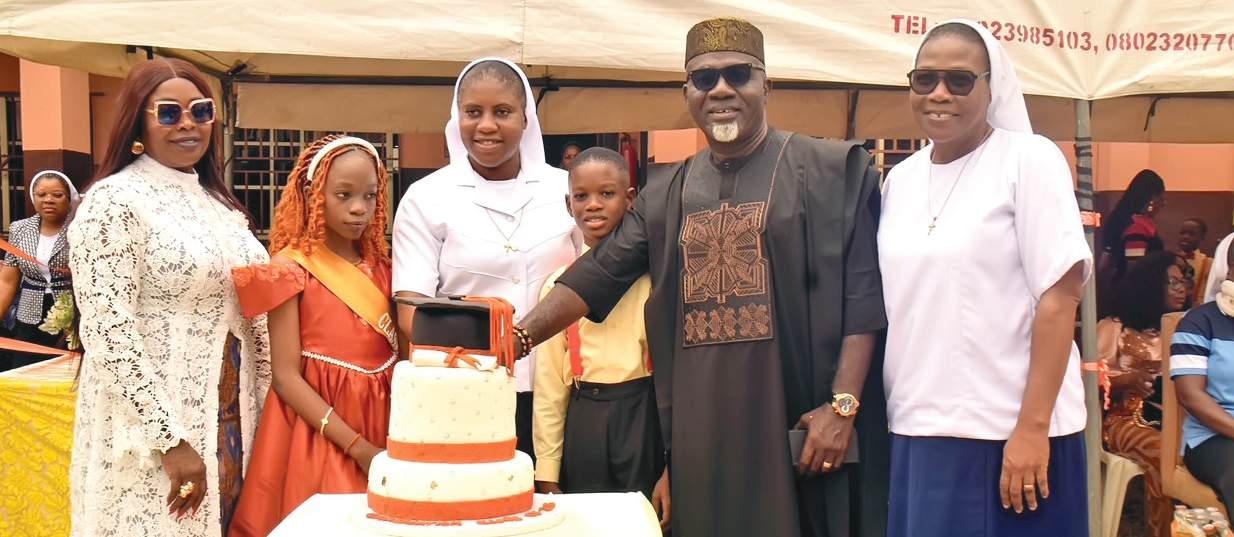
L-R: Chairperson of the ceremony and CEO, C & C Ferdinands Divine Ltd, Lolo Paula Chinyere Obi Nwabuikwu; Head Girl, Miss
Ifeanyijekwu; Supervisor, Nazereth School Festac Town,
Ugwoegbu (RSC); Head Boy and Best Graduating Student, Master Somtochi Arnold Okechukwu Irozuru; Chairman of the ceremony and CEO, Full Page Communications Ltd, Chief Ingram Osigwe; and Sister in Charge of Saint Anne’s Centre for Women and Youth Development, Satellite Town, Lagos, Rev Sis, Freda Ehimuan, at the 2026 graduation ceremony of Nazareth School in Festac Town, Lagos…Friday
Court Orders Final Forfeiture of 52 Lekki Housing Units to FG, Says Properties Proceeds of Unlawful Activities
Wale Igbintade
A Federal High Court in Lagos has ordered the final forfeiture of 52 terrace and maisonette housing units in the Lekki area of Lagos State to the federal government after ruling that the properties were reasonably suspected to be proceeds of unlawful activities.
The Economic and Financial Crimes Commission (EFCC) disclosed this in a statement published on its verified Facebook page yesterday.
Justice Alexandra Owoeye delivered the judgment on Wednesday, July 15, 2026, in a case brought by the Lagos Zonal Directorate 2 of the EFCC.
The properties, located at
Mercyville Estate, Covenant Way, off New Road, Ilasan, Lekki, were recovered from Fielddreams Limited, Ifeanyi Nweke and Amex Savings and Loans Limited.
The EFCC, through its counsel, Franklin Ofoma, had filed a Motion on Notice seeking the final forfeiture of the properties, following an interim forfeiture order secured on August 14, 2024, before Justice Akintayo Aluko.
As part of the earlier ruling, Justice Aluko directed the anti-graft agency to publish the interim forfeiture order in a national newspaper to allow any interested parties to show cause why the properties should not be permanently forfeited to
Nigeria Education Leaders Call for Private Investment as Schools Face Rising Costs and Digital Shift
Nigerian education leaders, policymakers and private sector executives have called for stronger public-private partnerships to help schools cope with rising operating costs, teacher shortages and the growing demand for digital learning.
Speaking at the Nigeria Educational Supplies Summit (NESS) 2026 in Lagos, stakeholders said building a resilient education system will require sustained investment, practical innovation and longterm collaboration rather than relying solely on government funding.
The discussions reflected mounting concerns over the financial pressures facing schools as they invest in technology, improve infrastructure and retain qualified teachers while keeping education affordable.
Jamiu Tolani Alli-Balogun, Lagos State Commissioner for Basic and Secondary Educa-
tion, described education as a capital-intensive sector that cannot achieve lasting transformation without greater private sector participation.
“We need assistance majorly from private investors,” he said. “Whatever we do must factor in sustainability. It is not about introducing programmes that disappear after two or three years, but policies that align with global best practices and stand the test of time.”
His remarks set the tone for the summit, where speakers repeatedly stressed that sustainable financing is becoming as important as curriculum reform in preparing students for a rapidly changing economy.
Delivering the keynote address, Enugu State Commissioner for Education, Ndubueze Mbah, urged education stakeholders to move beyond policy discussions and focus on practical reforms that improve learning outcomes.
the federal government.
Following the publication, the respondents filed an affidavit opposing the application.
According to the EFCC, the respondents initially stated in their affidavit that the funds used to develop the 52 housing units came from the sale of a portion of land acquired through the sale of 29 terrace and maisonette units valued at N1.9 billion.
However, the commission argued that the respondents later contradicted themselves
by claiming that the 3rd to 19th applicants had failed to complete the housing units.
The anti-graft agency maintained that this conflicted with their earlier deposition, in which they stated that construction had been completed in 2020 and that proceeds from the sales were used to complete furnishing and interior decoration of the remaining units.
While moving the application for final forfeiture, Ofoma informed the court that the EFCC had fully complied with the
publication requirement ordered by the court.
He also told the court that the application was supported by a 31-paragraph affidavit deposed to by Afolabi Seyi Oladele, a litigation officer in the EFCC’s Legal Department.
According to him, the commission had established reasonable grounds to suspect that the properties were proceeds of unlawful activities and urged the court to grant the application.
The EFCC counsel further alleged that the second respon-
dent, Ifeanyi Nweke, was a fugitive facing criminal charges. He told the court that Nweke had refused to appear before Justice R.A. Oshodi and Justice Okunuga in separate criminal cases.
“He has refused to appear before Justice R.A. Oshodi and Justice Okunuga in Charge No. ID/25771C/2025 and Charge No. ID/25769C/2025 for his arraignment and to defend the charges if he believes that he did not commit any of the offences contained in the charges against
Ezea Emerges Overall Winner as MAELF 2026 Awards Over N20m to Young Energy Innovators
The inaugural Mustapha Abdullahi Energy Leadership Fellowship (MAELF) 2026, organised by the National Youth Wing of the All Progressives Congress (APC), in collaboration with the DAM Foundation, concluded in Abuja with over 20 million in grants and prizes awarded to outstanding young innovators driving Nigeria’s energy transition.
After six days of intensive leadership training, policy engagement, mentorship, and innovation pitches,
Emmanuel Chinecherem Ezea of OneGrid Energies emerged as the Overall Best Fellow, winning the Governor Babajide Sanwo-Olu Prize of 5 million for his community-based electricity solution. Other top winners included Samuel Uzodinma Muoleeh of Archpace Technologies Ltd (Second Overall, 3 million); Audu Precious Adayi of Solar Switch (Third Overall, 2 million); Taiwo Oladunjoye of Beautwealt Electronics (Biodun Ogunleye Grant, 2 million); the Climate Technology Solutions Team (Best Group Pitch, 5 million); Ovurevu Nafisat of First Sun Solar
Energy Nig. Ltd. (Best Interview Applicant, 2 million;, Emmanuel Arikpo (Best Behaved Fellow, 500,000), and Samuel Imanche Gabriel (Excellent Leadership Award, 500,000).
Speaking at the closing ceremony, APC National Youth Leader, Dr. Dayo Israel, described MAELF as a strategic investment in Nigeria’s future.
“MAELF is more than a fellowship; it is a movement to raise visionary leaders who will drive Nigeria’s energy transition through innovation, excellence, and purposeful leadership. Today’s graduates represent the future of our nation’s energy sector,” he said.
Also speaking, the DirectorGeneral of the Energy Commission of Nigeria and Founder of MAELF, Dr. Mustapha Abdullahi urged the graduating fellows to lead with integrity and transform knowledge into impact.
“You are no longer just Fellows; you are ambassadors of innovation and hope. Let this fellowship inspire you to create solutions, serve with integrity, and lead Nigeria’s energy transformation.”
Responding after receiving the top prize, Emmanuel Chinecherem Ezea described the award as a call to greater service.
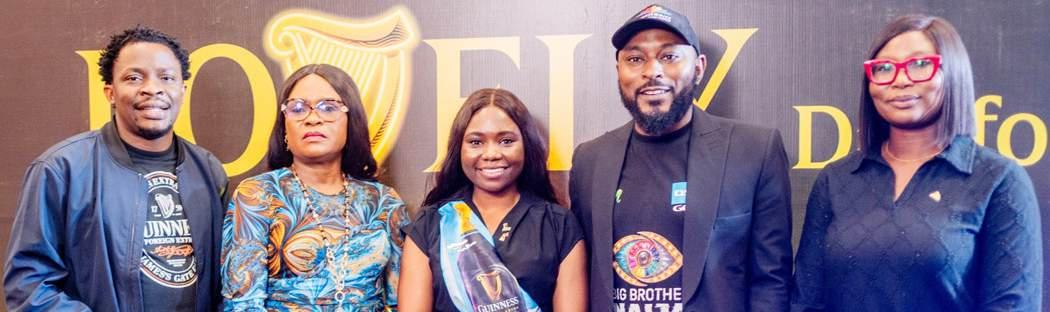
Former BBNaija Housemates Credit the Show for Launching Their Careers
Big Brother Naija’s evolution from a reality show into a platform for creativity, entrepreneurship and career growth took centre stage at the Media Launch for season 11 on Wednesday, 15 July 2026. Former housemates Uriel, Doyin, Kola and DJ Flo reflected on how the show helped shape their careers while sharing the lessons they have learnt navigating life after reality television. During the conversation, the former housemates agreed that while Big Brother Naija gave
them visibility and opened doors, building successful careers after the show has required intentionality, consistency and a willingness to evolve beyond their reality television personas.
Doyin David from Season 7 Level Up and Season 8 All Stars shared one of the day’s most personal reflections, revealing that her biggest lesson began while she was still in the house.
“One of my biggest lessons actually started in the House.
Watching myself back made me realize I did not know myself as much as I thought I did.”
She explained that finding a balance between her personal life and her public brand was a gradual process.
“As for balancing my personal life and my brand, it did not happen immediately after the show. I had to learn along the way, make mistakes, grow from them and eventually find that balance.”
Uriel Oputa from Season 2
See Gobbe and Season 8 All
Stars spoke about building a career around wellness, explaining that her passion for healthy living did not begin after the show but became more visible because of the platform Big Brother Naija provided.
“I did not have to find a balance because healthy living is already my lifestyle. It is what I do every day. It is not something I switch on or off because of the entertainment industry; it is simply who I am.”
Peter uzoho
Mmesoma
Rev.Sis Irene
The Dollarisation of Petrol
The era of naira-priced petrol may be ending, as the federal government's policy on naira for crude oil flops. What follows could reshape inflation, transport costs and the value of the naira, writes Festus Akanbi
The decision by Dangote Petroleum Refinery to abandon nairadenominated sales of petroleum products is arguably the biggest policy setback for Nigeria's downstream oil sector since the removal of fuel subsidy. It is not merely a commercial decision by a private refinery; it is a vote of no confidence in the federal government's ability to sustain the much-publicised naira-for-crude initiative.
More importantly, it underscores a painful reality: despite Nigeria's emergence as Africa's largest refining hub, domestic fuel prices remain hostage to the foreign exchange market.
Effective July 13, 2026, the refinery fixed the ex-depot price of Premium Motor Spirit (PMS) at $0.779 per litre, diesel at $1.087 and aviation fuel at $0.942, while cancelling all previously issued naira-denominated invoices. The decision followed the refinery's increasing reliance on crude oil purchased in dollars after supplies under the government's naira-for-crude arrangement became inadequate.
The timing could hardly have been worse. Dangote Refinery, a $20 billion investment and the world's largest singletrain refinery, has a refining capacity of 650,000 barrels of crude oil per day, sufficient to meet Nigeria's domestic fuel demand and export surplus products across Africa.
Yet, industry reports indicate that the refinery received only seven domestic crude cargoes in May, against a monthly requirement of 13-15 cargoes, compelling it to import a substantial portion of its crude feedstock in dollars. This inevitably exposed the refinery to exchange-rate risks that no private investor could absorb indefinitely.
At the prevailing official exchange rate of about N1,380 per US dollar, the refinery's new dollar price translates to roughly N1,075 per liter before transportation costs, depot margins, regulatory charges, and marketers' profits are added. While the immediate increase may appear modest, the real danger lies elsewhere: petrol prices are now directly tied to the fortunes of the naira.
Should the exchange rate weaken to N1,500/$, the same litre of petrol
would cost about N1,169 before additional charges. At N1,600/$, the cost rises to approximately N1,246.
In effect, Nigerians may now pay more for fuel without any increase in global crude prices or refining costs. Exchange-rate depreciation alone becomes sufficient to raise domestic pump prices.
Ironically, this is precisely what the naira-for-crude initiative was designed to prevent. Introduced in 2024, the policy sought to supply local refiners with crude oil in naira to reduce dollar demand, strengthen local refining, ease pressure on foreign reserves, and stabilise fuel prices. That objective has now been substantially undermined by inconsistent implementation.
Professor Emeritus of Petroleum Economics, Wumi Iledare, rightly argues that Dangote Refinery has merely announced the price at which it is prepared to sell its products in a deregulated market. According to him, aligning revenues with the currency in which crude is procured is a legitimate commercial response to foreign exchange exposure rather than price-fixing. His position reflects established principles of petroleum economics. However, commercial logic does not erase economic consequences. Nigeria's downstream petroleum market remains far from perfectly competitive. The
country's state-owned refineries have yet to operate at optimal capacity, imported products remain expensive, and Dangote Refinery has become the dominant domestic supplier. Consequently, a commercial decision made by a single refinery can quickly become a national economic issue.
Industry stakeholders have already sounded the alarm. The Petroleum Products Retail Outlets Owners Association of Nigeria (PETROAN) warned that dollar-denominated fuel transactions could gradually encourage the dollarisation of the Nigerian economy.
At the same time, the Independent Petroleum Marketers Association of Nigeria (IPMAN) argued that marketers would now compete for scarce foreign exchange, placing fresh pressure on the naira and increasing pump price volatility. Depot operators have reportedly already raised loading prices by up to N113 per litre at some locations in anticipation of higher replacement costs.
The wider economy is unlikely to escape the consequences. According to the National Bureau of Statistics, Nigeria's headline inflation stood at 15.93 per cent in May 2026, while food inflation was 16.96 per cent. Fuel remains one of the country's biggest drivers of inflation because road transport accounts for the overwhelming movement of goods and passengers.
At the same time, thousands of manufacturers, hospitals, schools and small businesses still rely heavily on petrol and diesel generators due to an unreliable electricity supply. Any sustained increase in fuel prices inevitably feeds into transportation costs,
food prices, industrial production and household living expenses.
The uncomfortable truth is that this development exposes a policy contradiction. The government promoted the naira-for-crude initiative as the cornerstone of its energy reforms, promising lower foreign exchange demand, greater energy security, and more stable fuel prices.
Yet it failed to guarantee the one condition necessary for the policy's success: an adequate supply of crude to domestic refiners in naira. Once crude procurement gradually reverted to dollars, Dangote's decision became less a matter of choice than commercial necessity.
Ultimately, Dangote Refinery has done what every rational private investor would do—align its revenues with the currency in which most of its obligations are incurred. The real issue is not Dangote's decision but the policy inconsistency that made it inevitable. Nigeria established the naira-for-crude initiative to shield consumers from exchange-rate volatility. Allowing that framework to unravel has effectively transferred foreign exchange risk from the refinery to motorists, manufacturers and millions of households.
Unless the federal government urgently restores a transparent and enforceable domestic crude supply framework, Nigerians may discover that local refining alone is no guarantee of cheaper fuel.
In today's Nigeria, the price displayed at filling stations may increasingly depend less on refining costs in Lekki than on the value of the naira in the foreign exchange market.
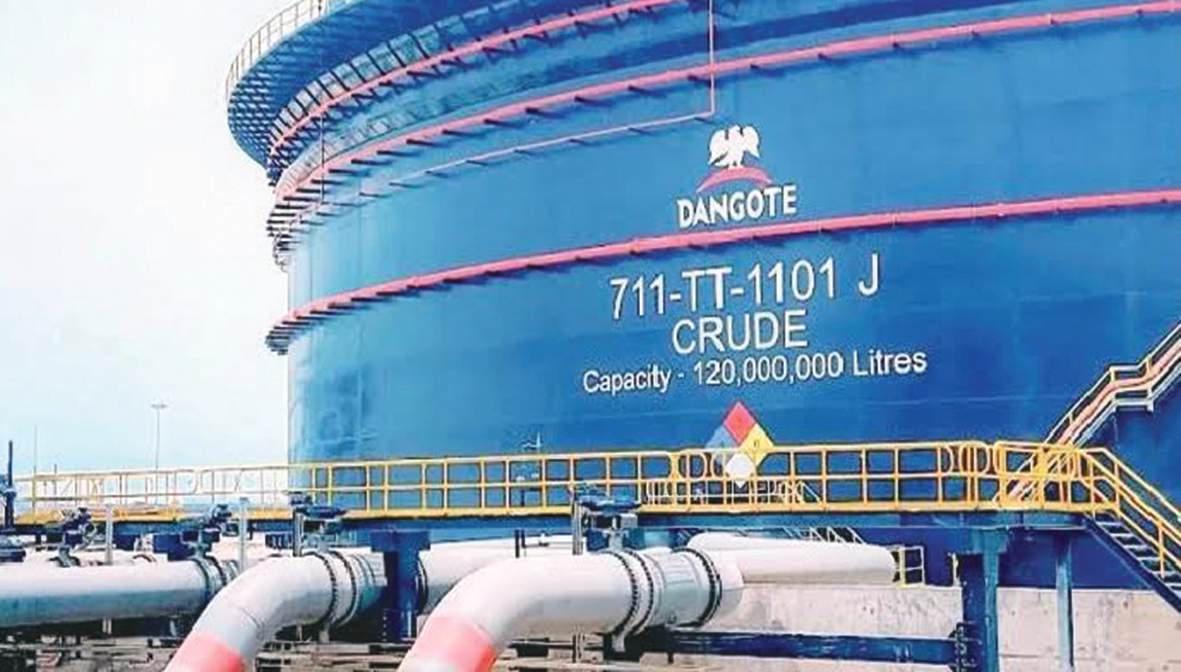
A facility of Dangote Refinery
OLUSEGUN ADENIYI pays tribute to Jacob Olupona, scholar and Professor of African Religious Traditions at Harvard Divinity School
OLUPONA AT 75: THE IFE HOMECOMING
When I wrote in this column back in February that Professor Jacob Kehinde Olupona, my mentor of two decades, had turned 75, the words had to travel to reach him. He was already back in Boston by the time the piece was published, receiving from that distance an outpouring that included a congratulatory message from President Bola Ahmed Tinubu, who called him a beacon of excellence for the entire African continent. This Saturday, the 18th of July, in Ife, that distance finally closes. Family, former students, colleagues and a lifetime of admirers gather to do what a newspaper column cannot: look the man in the eye and say thank you.
For those who may not know him, a brief accounting may be necessary here. Olupona holds a joint appointment at Harvard as the Hugh K. Foster Professor of African and African American Studies, a department he now chairs, and Professor of African Religious Traditions at Harvard Divinity School, where he has taught since arriving from the University of California, Davis, in 2006. In 2023, he was elected to the American Academy of Arts and Sciences. He carries the Nigerian National Order of Merit (NNOM), honorary doctorates from the University of Edinburgh, the University of Abuja and his beloved Obafemi Awolowo University, as well as the 2018 Martin E. Marty Award for the Public Understanding of Religion. Three separate festschrifts, volumes of scholarship assembled by former students in his honour, the most recent edited by Professor
David Ogungbile, exist because the people Olupona trained wanted a permanent record of what he gave them. But that is not why many people are travelling to Ife this weekend.
For two decades, Olupona has been the one of the few persons I go to whenever I need to think something through properly, about Nigeria, faith, and the peculiar work of holding on to what is true about ourselves while the world keeps insisting we explain it in someone else’s terms. Every time I am in Boston, I am a guest in his home, and what opens as the usual Nigerian lamentation tends to close somewhere richer, on the memoir he is still writing, and why a scholar’s first duty is to take seriously what everyone else has already decided isn’t worth studying.
That instinct has shaped Olupona’s entire career. He left the University of Nigeria, Nsukka, in 1975 with a degree in Religious Studies, did his National Youth Service Corps (NYSC) primary assignment at the then Kwara State College of Technology, Ilorin, and returned the following year to the old University of Ife (now Obafemi Awolowo University) as a young lecturer. An ‘Nsukka Boy,’ as some of his colleagues privately called him, not
entirely as a compliment. He spent 16 years at the University of California, Davis before Harvard came calling in 2006 at age 50. Two decades on, he remains on the campus. Along the way, Olupona helped found the African Association for the Study of Religion, developed what he calls an ‘indigenous hermeneutics’ for reading African religious life on its own terms rather than through borrowed categories, and produced, in 2011, the book that remains his defining statement, ‘City of 201 Gods: Ile-Ife in Time, Space and the Imagination.’
But ask the people converging on Ife this weekend what Olupona means to them, and most will not start with the books. They will tell you about the Ife Institute of Advanced Studies, which he built to give early-career and doctoral scholars from across Africa two weeks each year of mentoring, workshops and the kind of unhurried scholarly conversation our universities too rarely make room for. They will tell you that when Harvard once awarded him a substantial prize with his name on it, he redirected the funds toward a semester-long postdoctoral position for a junior scholar in West African religious traditions. They will tell you that when Harvard’s own graduate students wanted to honour a teacher, it was his name
they wrote down for the Everett Mendelsohn Excellence in Mentoring Award
In a recent interview reflecting on his own schooling, Olupona spoke fondly of teachers he half-joked Nigeria may no longer deserve, men and women whose calibre he says he still measures his Harvard students against. It is not hard to see the throughline: the son of an Anglican Church Bishop formed by a parish’s insistence on serious teaching grew into a scholar who has spent the back half of his career rebuilding one mentee at a time, the very culture of serious teaching he worries the rest of us let slip.
I have told before, in this column, of the afternoon in 2020 when a passing remark reconnected Olupona and his wife, Dupe, with a woman I knew as Mummy Awa, widow of the late Professor Eme Awa, who was briefly chairman of the National Electoral Commission (NEC) under the military regime of General Ibrahim Babangida. Mummy Awa (now of blessed memory) had shown the Oluponas extraordinary kindness when they were students in Nsukka fifty years earlier, and they had spent several years trying to trace her. I will not retell the whole story here. I mention it only because a man who remembers a kindness done to him half a century ago, and grieves over losing touch with the woman who did it, is exactly the kind of man who ends up with an institute, three festschrifts and a city full of people wanting to celebrate him in person.
My family owed the Oluponas a great deal of debt, especially regarding the role they played in the education of my second daughter, Ifeoluwa and son, Oluwakorede, but those are stories for another day. Meanwhile, I have learnt a lot from Professor Olupona over the years and even as a Pentecostal Christian I share his conviction that Africa’s indigenous religious traditions are not primitive curiosities awaiting Western validation, but living systems of meaning that deserve study on their own terms. He carried that conviction from Ife to Davis to Cambridge MA, and made Harvard listen. That is why celebrating him at Ife on Saturday cannot be more apt. Professor Olupona, the friends and family around you this weekend in Ife will not need me to remind them what the Venerable Michael and Mrs. Henrietta Olupona raised you to know: that a life is measured less by the honours it collects than by the doors it leaves open for the people coming after. Yours has stayed open for decades, and still counting. For me and more people than either of us could name in one sitting. E o pe fun wa!
Adeniyi is Chairman, THISDAY Editorial Board
Editor, Editorial Page PETER ISHAKA
Email peter.ishaka@thisdaylive.com
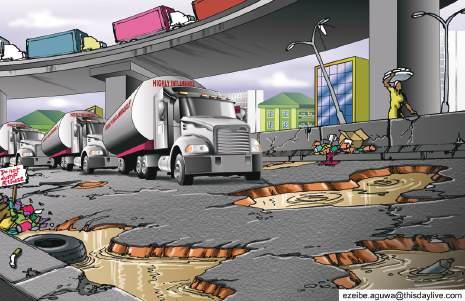
APAPA’S EXTORTION POINTS AND TRAFFIC LOGJAM
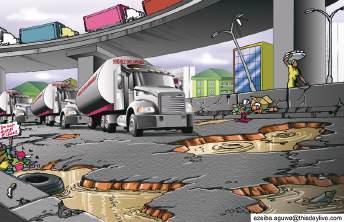
For almost two decades, the access roads to the nation’s seaports—Tincan and Apapa—have been paralysed by container-bearing trucks, trailers and petroleum tankers’ drivers who pay scant attention to any regulations. With no holding bay for trucks and tankers, the drivers park and queue not only on the access roads but any available space. In the process what has become a daily gridlock has defied solutions. The impossible traffic condition is not only crippling commercial and industrial activities in Apapa and environs but also increasing the cost of goods from the ports as a result of the difficulties in getting them out. Besides, the hours spent on traffic on a daily basis impacted negatively on health, and productivity of many commuters.
Over the years, all the Ad hoc measures occasionally conjured up have failed to resolve the debacle. For instance, under the last administration of the late President Muhammadu Buhari, a taskforce was set up and headed by then Vice President Yemi Osinbajo. It was to develop an efficient and effective management plan for the entire port area traffic including cargo, fuel distribution, and business district traffic. It was also meant to ensure the permanent removal of all stationary trucks on the highway, and develop a manual truck callup system, pending the introduction of the electronic truck call-up system. If anything came out of that effort, it doesn’t reflect the reality of Apapa that remains an environmental nightmare.
The
The unending traffic snarl is provoked by the sheer volume of articulated vehicles and tankers traversing the road that connects the two ports to lift containers and offload petroleum products, for onward transportation to other parts of the country. While some efforts have been made in the last two years to remedy the situation, illegal extortion points are now fuelling the logjam, making a free flow of traffic practically impossible. On a daily basis, commuters groan in the traffic as a journey of 30 minutes could extend for hours because trucks and tankers indiscriminately parked or abandoned on both sides of the road. Many people whose businesses are located on the axis shut them down or relocated because of the difficulties in accessing their offices.
In the past few years, we have used this platform to draw the attention of relevant authorities to the
SUNDAY NEWSPAPER
editor DAviDSoN iriekpeN
deputy editors FeSTUS AkANBi eJioFor ALike
Managing director eNioLA BeLLo
deputy Managing director iSrAeL iwegBU
chairMan editorial Board oLUSegUN ADeNiYi
editor nation s capital iYoBoSA UwUgiAreN the oMBudsMan kAYoDe koMoLAFe
THISDAY NEWSPAPERS LIMITED
editor-in-chief/chairMan NDUkA oBAigBeNA
group executive directors eNioLA BeLLo, kAYoDe koMoLAFe, iSrAeL iwegBU divisional directors SHAkA MoMoDU, peTer iwegBU ANTHoNY ogeDeNgBe deputy divisional director oJogUN viCTor DANBoYi snr. associate director eriC oJeH associate director pATriCk eiMiUHi controllers ABiMBoLA TAiwo UCHeNNA DiBiAgwU, NDUkA MoSeri director, printing production CHUkS oNwUDiNJo to send eMail: first name.surname@thisdaylive.com
imminence of what has now become a reality: access to the nation’s major port is difficult. Motorists using the two main access roads to the town spend unbearable long hours on the traffic before they could get to their various destinations. Besides the daily dreadfulness, the loss of productive man hours is emphasised by craters and potholes on the roads, particularly during the raining season, and the raining season is here again. What is happening in Apapa is anathema to decency in road usage. Unfortunately, years of toeing the path of impropriety and poor infrastructure development and maintenance in the energy and other sectors are having their toll on other forms of business. That explains why we have tankers of all sorts on the roads every day with all the risks they pose to other motorists. Besides, the blocking of the inland roads has caused a disruption to the urban landscape and forced many affluent citizens to abandon their properties in Apapa and relocate to other parts of the city.
Last week, the Nigerian Ports Authority (NPA) launched a multi-agency task force to tackle the renewed traffic congestion along the Lagos port access road, in a fresh effort to restore seamless cargo movement and sustain recent gains. The intervention followed a stakeholders’ meeting convened by the managing director of the NPA, Dr Abubakar Dantsoho, where security agencies, freight forwarders, truck operators and representatives of the Lagos State Government agreed on coordinated measures to eliminate operational bottlenecks disrupting cargo evacuation. Stakeholders at the meeting identified illegal extortion points, overlapping responsibilities among security agencies and other operational distortions as major causes of the resurgence of gridlock along the port corridor.
While we have consistently called on the federal government to crack down on tanker drivers packing indiscriminately on the road while waiting to offload petroleum products in Apapa, the long-term solution is to introduce a policy that will enable patronage of ports in other parts of the country by importers. It is a scandal that Apapa, which used to command prime value for properties, considering its strategic location and primacy as a commercial and industrial hub, is now notoriously reputed for its unrelenting traffic.
Letters in response to specific publications in THiSDAY should be brief(150-200 words) and straight to the point. interested readers may send such letters along with their contact details to opinion@thisdaylive.com. we also welcome comments and opinions on topical local, national and international issues provided they are well-written and should also not be longer than (950- 1000 words). They should be sent to opinion@thisdaylive. com along with the email address and phone numbers of the writer
LETTERS
· NUMBER PLATES SCARCITY IN NIGERIA
The persistent scarcity of vehicle number plates in Nigeria has become one of those recurring administrative failures that appears to have defied every known solution. At a time when governments at both federal and state levels continually lament inadequate funds to execute critical infrastructure and social development projects, the continued inability to effectively manage a revenue generating service such as vehicle registration raises serious concerns. Rather than serving as a dependable source of internally generated revenue, the number plate system has become synonymous with delays, frustration and inefficiency.
Across the federation, thousands of motorists complete payment for their vehicle number plates every day, only to be informed that they must wait between one and three months before the plates become available. For many Nigerians who have already paid the prescribed fees, such delays are difficult to justify. A process
that ought to be completed within days has gradually become an endless waiting game, leaving vehicle owners stranded and uncertain about when they will receive what they have already paid for.
The consequences extend beyond mere inconvenience. Many motorists who cannot afford to keep their newly acquired vehicles off the road while waiting for number plates often resort to driving without proper registration. This situation poses a significant security challenge because vehicles without identifiable registration plates are more difficult for security agencies to trace and monitor. At a time when the country continues to battle insecurity, every loophole that makes criminal activities easier should attract urgent government attention.
The prolonged delays have also created an unintended migration of revenue from one state to another. Faced with endless waiting in their respective states, many vehicle owners now prefer to obtain Lagos State number
plates because they are generally available much faster. While this may provide relief for motorists, it deprives other states of the revenue that should ordinarily accrue to them. Instead of strengthening internally generated revenue across the federation, the present arrangement is encouraging an unhealthy imbalance.
Perhaps nowhere is this challenge more pronounced than in the Federal Capital Territory.
For well over a decade, the Directorate of Road Traffic Services (VIO), Abuja, has consistently delayed the issuance of number plates to applicants, citing various reasons ranging from production shortages to logistical constraints. Yet these explanations have persisted year after year without any lasting solution. Such a prolonged administrative failure cannot continue to be explained away by routine excuses. Ironically, the production process itself is not shrouded in mystery. Vehicle number plates are designed and printed by the Federal Road Safety Corps before being supplied to the
various states, with Lagos State remaining the notable exception because it produces its own number plates. Reports indicate that while many state authorities collect full payments from applicants, they often fail to promptly remit the corresponding funds to the FRSC. Consequently, fresh supplies of number plates are delayed because production and distribution cannot proceed efficiently without the required financial settlements. This raises troubling questions about transparency and accountability. Thousands of Nigerians faithfully pay the approved fees every year, yet number plates remain perpetually scarce. If applicants have already fulfilled their financial obligations, where exactly are these funds being held? Why should citizens continue to bear the burden of administrative inefficiency after making full payment?
Tochukwu Jimo Obi, Abuja
InternatIonal
The Summer Graduation 2026 of the University of Essex: PersonaeNonGrataas Great Achievers
The Summer Graduation 2026 of the University of Essex provided a unique opportunity to show that there is truly Nigerian unity, not necessarily within the sovereign State of Nigeria, but outside of Nigeria itself. In many places of the world, Nigerians are portrayed among people from shithole countries, apology to President Donald Trump. They are seen as agents of fraud and as yahoo boys. Even in Africa, Nigerians are seen as those tainting the South African civilization: they are held responsible for South Africa’s economic non-performance. They are accused of taking the wives of South Africans and for doing the work earmarked for South Africans. They are accused of engagement in drug peddling and trafficking. The crescendo of the accusations against Nigerians is their declaration as personae non grata in South Africa.
However, the beauty of the Essex University’s 2026 Summer Graduation ceremonies from Monday, 13 July through Friday, 17 July, 2026, clearly suggests that Nigerians that are unwanted at home are not only wanted in more developed societies, but are also more than great in intellectual capacity and capability, determination and seriousness of purpose. They may come from shithole countries, but they also compete well with countries with Water Closet toilets. This is why Nigerians are always wrapped up in the glory of their dint of hard work and courage to the admiration of serious-minded peoples of the world.
The Summer Graduation 2026 of the University of Essex therefore greatly helped to change some of the negative perceptions of Nigerians because of their impressive graduation results. Besides, the mere fact that Nigerians could gain admission into very good tertiary institutions like the Essex University in the UK is a manifestation of the goodness of most Nigerians. I attended the Summer Graduation 2026 with much interest and witnessed the goodness. My grandson, Oluwademiladeola Ugunna Opara, read robotic engineering, came out with First Class honours, and won prizes. This cannot but be much of happiness for me.
Highlights of the Summer Graduation 2026
A first major highlight is the factor of inspiration and happiness about the university. The Summer Graduation ceremonies cannot but be always interesting because it is both an ending and a new beginning point. It ends a four-year course and opens a new door to the world. Consequently, the Summer Graduation is not simply taken with a pinch of salt. It is taken with every seriousness of purpose. Besides, not less than 89% of the graduates of the University always secure employment or continued with post graduate studies within 15 months of leaving the college.
Graduation at the University is particularly interesting because graduates are considered as integral members of the Essex Community after leaving school. Such membership confers rights to assistance, comraderies, and social relationship derivable from the University as a Feeling and as a Spirit. Graduating students have access to alumni card which enables their return to the campus. They can visit the library whenever they want. As a member of the alumni community, they have access to career support. And perhaps most interestingly, they can get funding and guidance on business start-ups for five years. Thus, the alumni card is a welcoming permit to the university after graduation.
The University cannot but be most interesting from the perspective of having produced two Nobel Laureates, as well as successful filmmakers and prominent entrepreneurs. This makes the Alumni of the University very notable in international relations. The notability of the University is further strengthened when the Social Work program of the University was ranked 1st in the UK by The Times and The Sunday Times, when the Department of Government was awarded a rare Regius Professorship by Queen Elisabeth II for research quality, and when the Politics and International Studies and Sociology programme of the university was ranked among the first 100 in the QS World University Rankings. It is against this background that the Summer Graduation 2026 should be understood and appreciated.
A second major highlight of the Essex University is the factor of robotics. The University is not only a robotics research university, but also a robotics engineering education provider. The undergraduate programme in Robotic Engineering was introduced during the 2022/2023 session under Professor. Klaus McDonald-Maier as Head of Department School of Computer Science and Electronic Engineering (CSEE). He oversaw the department when the Robotics Engineering degree was established. This meant that the University had its first set
of graduates in 2025, while my grandson, Oluwademiladeola Ugunna Opara, was part of the second set of Robotic Engineers produced in 2026 by the University.
A third major highlight is the organisational sophistication of the 2026 Summer Graduation Viewing Centre. It truly enabled the portrayal of the seriousness and goodness of Nigerian students at the University. There is the factor of convenience, no problem of power outage or internet disruption. One can also comfortably sit down at the coffee/ tea centres, take snacks and watch the live streaming of the ceremonies. Fourthly, every graduating ceremony was scheduled for two hours, and two hours meant two hours. When names of graduating students are called, the Nigerianess in the names was quickly recognized by Nigerians in the viewing centres. And what happens when Nigerian names are called? Spontaneous screaming and expression of joy always filled the viewing centres and this took place regardless of the ethnic
origin of the graduating students. In other words, the burden of Nigerian disunity was unconsciously jettisoned. This is one beauty of opportunity provided by the 2026 Summer Graduation of the University held in Colchester, the First City in the United Kingdom.
Fifthly, as it is the common practice in many countries of Western Europe, graduation ceremonies at the University of Essex are conducted departmentally or by faculty. It was a five-working day of delivery of certificates, diploma, and degrees. Every graduation ceremony was scheduled for two hours and it did not last for more than two hours. Promptness of scheduled action was the rule and the rule was duly kept. Sixthly, at the Achievers University, Owo, Nigeria, mention is always made of the graduating First Class students during convocations. Several universities in Nigeria adopt the same tradition. At the Colchester Campus of the University of Essex, there was no mentioning of first class performing students at the second graduation ceremony for the robotic engineers. Mentions were made of different recipients of awards or prizes given during their course programmes, but there was silence on the First Class graduates at the time of passing out.
When I raised this observation with one Ghanaian lecturer and parent, Dr Ama Amfo-Brobbey, on whose son, Nana Yaw Amfo-Brobbey, the Bachelor of Science with Honours Class I in Computer Science was conferred on the 10th day of July, 2026, she similarly wondered and asked why the First Class graduates were not specifically mentioned because her son was also a recipient of First Class with honours.
Seventhly, I made some enquiries on whether there had been other cultural activities organized by parents of graduates to celebrate their children before July 14 and on July 16 and 17 when all the ceremonies were finally concluded. My findings showed that July 14, also French National Day, was the liveliest day during the graduation week because of the Nigerian cultural dimension introduced by the parents of Oluwademiladeola Opara, Mr. Chris Uju and Mrs. Gbemisola Olatokunbo Opara. Special traditional choruses and Christian songs were rendered by Engineer Temitope Olaghibeye Akinterinwa, Olufunto Akinterinwa-Dodo Williams and Ayopos Fawole. In fact, the singing and dancing of the parents and their invitees right from the frontage of the Wivenhoe Hotel down to the University’s Campus Square, which is the point of first reception before movement of the graduands to the venue of the ceremonies, Ivore Crewe Lecture Hall, made them the cynosure of all eyes. Several guests and relations came from Canada, United States, United Kingdom, and Nigeria to witness and congratulate Oluwademiladeola’s graduation. Their photographs and videoing were freely done. And true enough, several graduates came to join the dancing and singing. The frequently asked question was ‘where do you come from?’ The already-made answer was always Nigeria. This was how the whole world was united with Nigerians simply with the show of home culture.
Eighthly, invitation to graduation ceremonies at the Essex University is not pro bono. Two invitation cards are normally given to every graduating student to invite whoever he or she wants, but at a cost of £56 per invitation card. At the Achievers University in Nigeria, comparatively, invitations are free of charge. Canopy extension are specially created as viewing centres and they are also for free. The viewing centres at the Essex University are similarly free of charge, but it is not free for those who wanted to be at the Ivor Lecture Hall. I observed that there was not, stricto sensu, much difference between being at the Lecture Hall used for the ceremonies and the hall or theatre used as viewing centre, which is even more interesting than the main Lecture Hall because murmurings, supporting laughter, screaming, etc. were condoned in the viewing centres.
Personae Non Grata as Great Achievers
There can be no disputing the fact that Nigerians and Africans are personae grata in the University of Essex. Nigeria and many African countries are among the 176 nationalities that the university has on record. In the words of Dr. Sarah Perry, the Chancellor of the University, ‘Essex is not just a place, it’s a feeling and spirit.’ And true, without any whiff of doubt, the Essex environment is serene like the Achievers University in Owo, Ondo State, Nigeria. The environment of Achievers University is not only serene, it is also quite oxygenated. The serenity of Essex University is enough a reason to justify that it is really a feeling and a spirit. Trees providing shade during summer were planted equidistantly. The music centre of the University, located before entering the Faculty of Law, plays several Gen-Z music and people freely listened and danced.
Can you imagine having the University’s music without also having the Nigerian music to complement it? Unimaginable. Several Nigerian parents did organize different commemorating activities in honour of their graduating children. One that was particularly noteworthy, specially organized, and well-coordinated at the event was the Yoruba-talking drum musical group, comprising Fèrèh Jesu (trumpeter), Dayo Fawole (alias Àlùjó California, talking drummer), and Ade Akuba (conga drums). The group attracted greater attention than the award of degrees, diplomas, and certificates. The Farrati Event Planners, Mrs. Folasayo Bolanle Akinterinwa-Akinwotu, a Nurse Practitioner in California and Dr. Tolulope Abby Akinterinwa-Olowu, Doctor of Nursing Practice and Mental Health Provider, entertained the on-lookers.
One on-looker remarked that I was too happy. Yes, I quickly responded and noted that there was no reason why I should not be very, very happy. I told him that I had a grandson graduating. I knew, in his mind, he must be wondering whether there was really any big deal with taking a first degree. I simply told him if he really wanted to understand what celebrating academic success is all about, he should ask any French graduate in France, where the notion of convocation in the Anglo-Saxon sense is quite different.
Read full article online on www. thisdaylive.com
Professor Frances Bowen, Vice Chancellor, University of Essex, UK
Oluwademiladeola Ugunna Opara, Robotic Engineer
Polity
Decades After, Uba Sani Restores the Historical Dignity of Kwoi and Ham Kingdom
Peter Achi
For generations, Kwoi has occupied a unique place in the historical and cultural geography of Kaduna State. Nestled in Jaba Local Government Area, the town is far more than an administrative headquarters. It is the ancestral heartland of the Ham people, custodians of one of Nigeria’s oldest indigenous cultures, and the traditional seat of the Kpop Ham, whose institution remains a powerful symbol of identity, continuity and communal cohesion.
A short distance from Kwoi lies Nok, the archaeological site that introduced the world to the celebrated Nok terracotta sculptures; among the earliest known examples of figurative art in sub-Saharan Africa. Although scholars distinguish the ancient Nok civilisation from the present-day Ham people, the discovery forever linked the area to one of Africa’s greatest archaeological legacies. For centuries, therefore, Kwoi has stood at the intersection of history, culture and agriculture, its fertile lands producing some of Nigeria’s finest ginger while its people continue to preserve traditions that have enriched the country’s diverse cultural mosaic.
Yet, for all its historical importance and economic promise, many residents believed Kwoi had remained on the margins of public investment for decades. Road infrastructure deteriorated, movement became increasingly difficult, especially during the rainy season, and communities often struggled to connect efficiently with markets, healthcare facilities and educational institutions.
It was against this backdrop that the commissioning of the Kwoi Township Roads and the strategic Kwoi–Gora Road assumed significance beyond the inauguration of physical infrastructure. For many residents, the occasion represented an important milestone in the town’s development and an opportunity to reconnect a historically significant community to wider economic and social networks.
Speaking during the inauguration ceremony, Kaduna State Governor, Senator Uba Sani, described the projects as “far more than completed infrastructure,” characterising them as “enduring symbols of our resolve to ensure that no community is excluded from the dividends of democratic governance.”
The projects include: the Audu Tilo Road, Sabon Gari Road, Doctor Sani Road, Hospital Road, Kpop Ham Palace Road and the Kwoi–Gora Road, all designed to improve mobility within Kwoi and strengthen connectivity across Jaba Local Government Area.
The governor recalled that when he visited Kwoi for the groundbreaking ceremony, he had publicly committed to completing the roads.
“When I stood before you at the groundbreaking ceremony,” he said, “I assured you that our intervention would not be another promise deferred but a solemn commitment that would be honoured. Today, by the grace of God and
through the dedication of our team, we have returned to redeem that pledge. Nothing strengthens the bond between a government and its people more than promises fulfilled.”
That statement resonated with many residents who viewed the completion of the roads as the fulfilment of a commitment rather than merely another government project.
Beyond symbolism, the roads address practical challenges that had constrained development for years. The Hospital Road improves access to healthcare facilities and emergency services. The township roads facilitate movement within Kwoi’s commercial districts, while the Kpop Ham Palace Road enhances access to one of Southern Kaduna’s most respected traditional institutions. The Kwoi–Gora Road reconnects communities that had long endured difficult travel conditions, particularly during the rainy season.
The governor noted that the corridor had become synonymous with hardship, explaining that erosion and poor road conditions had isolated communities, increased transportation costs and limited access to essential public services.
According to him, “Today, that difficult chapter has been replaced by new opportunities. This road will strengthen social and economic interactions, improve emergency response, facilitate agricultural transportation and open wider prospects for investment across Jaba Local Government Area.”
Agriculture is expected to be among the principal beneficiaries of the improved infrastructure. Kaduna State remains Nigeria’s leading producer of ginger, and Jaba Local Government Area occupies
an important place within that agricultural economy. Efficient transportation is critical to moving produce from farms to processing centres, storage facilities and export corridors.
Governor Sani observed that roads are indispensable to agricultural prosperity because they reduce transport costs, minimise post-harvest losses and improve market access. Better connectivity, he argued, ultimately translates into higher incomes for farmers and stronger competitiveness for Kaduna’s agricultural products.
The emphasis on agriculture reflects the broader economic significance of Kwoi. While the town is celebrated for its cultural heritage, it is equally recognised as an important agricultural hub whose productivity contributes substantially to Kaduna State’s economy.
The Ham people themselves have long been associated with enterprise, education and community leadership. They speak the Hyam language and trace their ancestral homeland principally to Jaba Local Government Area, while maintaining cultural links across neighbouring communities in Southern Kaduna. Their annual Tuk-Ham Festival remains one of the region’s most colourful cultural events, bringing together sons and daughters of the Ham nation from across Nigeria and the diaspora to celebrate their history, traditions and shared identity.
For many observers, the commissioning ceremony therefore represented an intersection of development and cultural recognition. The inclusion of the road leading to the Palace of the Kpop Ham underscored the continuing relevance of traditional institutions in community development and reflected the close relationship between infrastructure, cultural heritage and local identity.
Addressing the broader philosophy underpinning the projects, Governor Sani argued that infrastructure should be viewed not merely as physical construction but as an instrument of social inclusion.
“Development,” he remarked, “is not measured simply by kilometres of asphalt but by the lives transformed because those roads exist.”
He further described infrastructure as “an instrument of social justice,” explaining that improved connectivity expands educational opportunities, strengthens healthcare delivery, encourages investment and enables businesses to flourish.
The governor also situated the projects within his administration’s wider infrastructure programme. According to him, since assuming office in May 2023, the Kaduna State Government has initiated 150 road projects covering more than 1,355 kilometres across the state’s twenty-three local government areas, with the majority already completed.
“Our philosophy is simple,” he said. “Government must not be defined by geography, politics or identity, but by fairness in the allocation of opportunities and public investment.”
That philosophy formed a recurring theme throughout the ceremony. The Governor emphasised that development should reach every community and that public resources should be distributed equitably across Kaduna State. He also reminded residents that sustaining public infrastructure requires shared responsibility. While government builds, communities must preserve. He therefore appealed to traditional institutions, local government authorities, youth organisations and community associations to protect the roads by preventing vandalism, safeguarding drainage systems and promptly reporting damage.
The commissioning concluded with an optimistic message about the future of Jaba Local Government Area.
“The story unfolding in Jaba,” Governor Sani observed, “is the story of the Kaduna State we are building: a State where no community is forgotten; where public resources are distributed with fairness; where every citizen, regardless of location or background, enjoys an equal stake in our collective progress.”
Whether viewed through the lens of infrastructure, agriculture or cultural preservation, the developments in Kwoi highlight the enduring relationship between public investment and community renewal. In a town whose history stretches from the globally renowned Nok archaeological landscape to the living traditions of the Ham Kingdom, the newly commissioned roads represent more than improved transportation. They reconnect communities, strengthen local enterprise and reinforce the place of Kwoi within the wider historical, economic and cultural story of Kaduna State.
As vehicles begin to traverse these new corridors and farmers move their produce more efficiently to markets, the significance of the projects will ultimately be measured not only by the kilometres constructed but by the opportunities created for the people whose lives they are intended to serve.
•Achi, an architect, resides in Barnawa, Kaduna.
Governor Sani inaugurating a road project
Governor Sani being appreciated by crowd of women in the community
There are many layers to Dr Iyadunni Gbadebo, and each one reveals a fascinating facet of her personality.
One is the tourism promoter who recently stood before a motley audience in the Grand Ballroom of Eko Hotels and Suites to unveil her latest report, the Lagos Smart Tourism Index. It was a rigorous piece of research that not only highlighted the city’s challenges and potential but also presented data-driven solutions for positioning Lagos as a leading tourist destination in the future.
But it was not only the figures that captivated her audience. It was the passion she exuded and the stories she told throughout her presentation. Whether she was recounting her visit to Mexico’s famous Hell’s Gate or describing how Lagos could tap into its rich heritage to market itself as a tourism destination, Gbadebo spoke with infectious enthusiasm and admirable confidence. As I would later realise, that passion is genuine and runs through everything she pours her heart into.
Another is the thespian in her. She turned down Mass Communication in favour of Theatre Arts at the University of Lagos. Theatre, according to her, is innate. Although it did not pay off in those early years due to limited sponsorship, which led her to pursue careers in aviation, advertising, and hospitality, she has now found a way to bring that first love into her work at Eko Hotels and Suites, where she creates unforgettable experiences for the hotel’s well-heeled guests during the Christmas holidays and summer.
Then there is Gbadebo, the administrator, currently the Director of Sales and Marketing at Eko Hotels and Suites. I met this side of her when I visited her office one recent morning. It was one of those pleasant mornings when the air was cool, the sun gentle, and the relentless rains had finally taken a break.
Dressed in a pinkand-white ensemble, with her signature curls neatly packed up and bold bangles adorning her wrists, she projected the image of a corporate executive with the soul of an artist. Art portraits of varying sizes lined the white walls while decorative artworks shared shelf space with books and awards tucked neatly into one corner.
When I arrived, a few members of her team were already seated in her office. She had hoped to finish a quick meeting before I got there, she admitted with a smile, but time had other plans. Instead of asking them to leave, she carried on, issuing instructions at intervals, with brisk confidence softened by bursts of humour that drew easy smiles from the team.
For over a decade, Gbadebo has occupied the sales and marketing director role in Eko Hotels and Suites, transforming the hospitality business into an experience that blends theatre and tourism.
Making Storytelling Great Again
Lagos, it appeared, is very dear to Gbadebo’s heart.
“I grew up in Lagos, actually in Ozumba Mbadiwe. I have a large family, the Cole family, and we were all raised in my grandfather’s house,” she began.
Her grandfather, an immigrant from Freetown, Sierra Leone, settled in Lagos many decades ago after leaving his homeland. A businessman in shipping and ship repairs, he established roots in what would become one of Nigeria’s most important commercial cities.
Gbadebo’s earliest memories are of Lagos that is very different from today’s sprawling metropolis.
“It was Maroko and Victoria Island. We didn’t really have Oniru and all of the expansion of Lekki that we now have. That was the heart of the city. The closest thing to a beachfront was the Bar Beach, and the Oniru Palace was on Ahmadu Bello.”
More importantly, she remembers a city where dignity cut across professions.
“It was a decent city that had so many people, but people had dignity in labour. A mechanic didn’t need to look like a scruffy man. Even though we had the elites, middle class and the lower class, there was a sense of dignity in any trade. The barber was a proud barber. The vulcaniser did his work very passionately.”
That imagery contrasts sharply with the Lagos of today.
“There is a more distinctive difference between the elite and the lower class. The poor people are really poor, and the rich people are extremely rich. Even in terms of the
difference between the numbers of rich people versus the number of really poor people, you find that your rich people are still in all of your 10 fingers, and the poor people are in truckloads.”
For a city that is so rich, economically powerful and potentially ambitious with its diverse people, it is interesting to Gbadebo that Lagos has been unable to tap into these to scale.
“The vibe that Lagos has today is not because Lagos is a waterfront vibe. It is the people. It is the resilience of the people. It is the diverse nature and diversity in the experiences that the people of Lagos have, whether in Lagos or outside Lagos, that have given Lagos that almost natural aura of vibe.”
themselves, plan deliberately and build systems that outlive individual administrations. Lagos, she believes, already possesses commerce, talent, culture and ambition. What it lacks is coordination.
“Right now, we are moving by chance. We have the vibe. We have the people. We have the exposure of the elite. We have the money. We have commerce. We have the aspiration that people who don’t have in other states aspire to and come to Lagos, and they achieve it. They make it in Lagos. But we are not a coordinated city. You lack the intentionality to put structure into everything.”
She points to the financial technology sector, where companies such as Opay and Moniepoint have successfully introduced structure into previously informal systems, as an example of what deliberate planning can achieve.
“You have everything, so you don’t appreciate that in having everything, you can actually multiply the effect of everything that you have. You can make it better if you are more structured and coordinated. If you understand how to measure where you are, if you remember where you’re coming from, and you measure where you are at, you’ll be able to gauge and plan for where you are going.”
That same philosophy extends to how Lagos tells its stories. Gbadebo is careful to distinguish between criminality and talent. In her view, many young Nigerians possess remarkable digital abilities that, if identified early and channelled through education and innovation, could become assets rather than instruments of crime.
“Children, like Yahoo Yahoo boys, are special kids. They are very talented. A structured economy like America would have identified them as whiz kids, put them in magnet schools where they are engaged and help them become useful citizens.
“So my point is, take these boys and use them to transform your digital economy. These boys are an asset and not a liability. They are a brand that needs to be advertised, that needs to be positively retold to the world and presented to the world, not as Yahoo Yahoo, because Yahoo Yahoo has a negative connotation. You have branded them as the devil, scammers, and people without a heart.”
“Likewise, places often dismissed by outsiders— from
Where Lagos falls short, she argued, is in its lack of intentional planning. According to her, cities do not become global destinations by accident. They measure
To solve the problem of Lagos tourism, Gbadebo believes that every policymaker and government official in the sector must be highly qualified for the role and present actionable planning to make it work. Beyond that, she believes in the power of storytelling. As she outlined in her upcoming book, ‘Destination Africa,’ authentic storytelling plays a role in helping make a city like Lagos a tourist attraction.
“Nigeria is a land buzzing with stories. The challenge is to tell these stories authentically and consistently to the global audience.”
She believes the country needs a coordinated storytelling agenda in which government, businesses and ordinary citizens project the same authentic narrative.
“The story I’m telling about Lagos needs to be the story that the policeman on the street is telling. We need to synchronise and put structure in that story. Lagos is too important to Africa, and that’s why the story of Lagos cannot be mediocre.”
At Eko Hotels and Suites, she is already putting that philosophy into
Her annual theatre productions form part of the hotel’s Tropical Christmas Wonderland, drawing guests from within and outside Nigeria. For Gbadebo, these productions are far more than entertainment.
“When I bring theatre to Eko Hotels, it’s not a theatre like commercial producers bring. It’s art. It’s the art of theatre. That’s why in our plays you see music, you see costumes, you see sets, and you see it in a way that you haven’t seen before,” she said.
“The audiences that come here — Americans, British, Taiwanese, people like Auntie Joke Silva — review our plays, and it’s phenomenal. It’s on different levels. And today people are paying me a fortune to stay the weekend in Eko Hotels just to watch our shows.”
This year’s production, part of the hotel’s golden jubilee celebrations, is titled The Golden North.
“This year’s Christmas is the Golden North,” she explained. “For the last three years, we have sold an African tale of Christmas. We’re tired of Western stories of Christmas, so we want to tell you what Christmas looks like in Africa.”
The production begins a four-year journey across the continent’s regions—North, East, West and South— celebrating African culture through music, costume, royalty and storytelling. Through all of these layers, a distinctive thread runs through Gbadebo. Storytelling. She captured it succinctly.
“I’m a natural-born creative, and I know I have a gift of building anything I believe in.”
Gbadebo
Computer Village to Makoko—can become tourism assets if their stories are told honestly and imaginatively.”
The Billionaire Behind Gas Revolution: Inside Okwuosa’s Oilserv Empire
What does it actually take to move gas from a swamp in the Niger Delta into a stove in someone’s kitchen in Kano? The answer, in large part, is steel pipeline, engineering precision, and one man who has spent over three decades building both
That man is Emeka Okwuosa, founder, Chairman and Group Chief Executive of Oilserv Limited. Unlike many of Nigeria’s wealthiest businessmen, he did not build his fortune trading crude but in laying pipe.
Oilserv started in 1992 as a contractor for Shell. Today, it stands as West Africa’s leading indigenous gas pipeline builder, employing close to 2,000 people and handling some of the most technically demanding infrastructure projects in the country.
Its biggest undertaking yet is the Ajaokuta-Kaduna-Kano pipeline, a $2.8 billion national project. Oilserv is constructing the first 614-kilometre stretch, the single largest contract ever awarded to a domestic engineering firm in Nigeria’s history.
The company also built the OB3 pipeline, West Africa’s largest gas pipeline at 48 inches in diameter, entirely developed by local engineers, and later commissioned the connection linking the Assa North-Ohaji South gas project to that same network.
Beyond pipelines, Okwuosa’s empire spans engineering design through Frazimex, upstream exploration through Frazoil, which now holds offshore assets in the Benin Republic, and gas-to-power infrastructure through FrazEnergy. He has also diversified into agriculture with Ekcel Farms and mining through Crown Energy Resources.
His philanthropy runs just as deep. Through the Sir Emeka Okwuosa Foundation, he built the Dame Irene Okwuosa Memorial Specialist Hospital in Oraifite, Anambra State, along with a girls’ convent, and has trained over 250 young Nigerian engineers through a graduate programme.
Industry insiders describe him as reserved, letting infrastructure speak louder than interviews. Despite running in a sector normally associated with noise and speculation, Okwuosa has built something quieter and arguably more lasting, the actual arteries of Nigeria’s energy future.
Okewale’s Extraordinary Journey as St. Ives Hospital Turns 30
In 1996, a young doctor converted a three-bedroom flat on Aromire Avenue in Ikeja into a clinic. Three decades later, that clinic, St. Ives Specialist Hospital, is one of Nigeria’s most trusted names in women’s health and fertility care.
The man behind it all is Dr. Babatunde Okewale, a Fellow of the Royal College of Obstetricians and Gynaecologists trained in the UK, who returned home determined that Nigerians should not have to fly abroad for quality health care.
St. Ives marked its 30th anniversary on July 10, under the theme “Celebrating 30 Years of Care, Compassion and Innovation.” The hospital is now a Safecareaccredited 4-star facility with branches spanning Lagos and Abeokuta. Its specialty is IVF, alongside women’s health, family medicine and paediatrics. In the last ten years alone, St. Ives has delivered over 3,000 IVF babies, a staggering number in a country where infertility still carries heavy stigma.
That stigma is something Okewale set out to dismantle early. Beyond the
hospital, he founded WFM 91.7, Nigeria’s first radio station dedicated to women and families, turning airwaves into a classroom for reproductive health. He also introduced subsidised IVF windows so cost wouldn’t lock out families who needed help most.
What sets St. Ives apart, though, is structure. Okewale built an institution that does not depend on his presence alone, a rarity in private Nigerian healthcare, where many hospitals rise and fall with their founders.
The anniversary celebrations reflected that scale: a media briefing, a community football match, discounts of up to 50 per cent for the public, and a gala night at CGI Events honouring three decades of impact.
Looking ahead, St. Ives is not slowing down. Three new branches are in the works, alongside urgent care clinics and an expanded telehealth service to reach patients beyond its physical walls.
Thirty years on, Okewale’s real legacy isn’t the buildings or the accreditations. Rather, it is the thousands of families who now have children, and hope, because of what started in a small flat in Ikeja.
Astounding Womanhood of Damilola James
Princess Damilola James is marking another birthday, and it comes at a defining moment in her career. At 42, she is the APC’s deputy governorship candidate in Lagos State, running alongside Dr. Obafemi Hamzat ahead of the 2027 election.
The princess’s nomination is historic on two counts. She is the youngest person ever picked for that office in Lagos, and she could become the first person from the Badagry axis to serve as deputy governor since Lagos State was created in 1967.
Born into the royal Kweme Kingdom lineage, the princess chose grassroots work over palace comfort. She served as Supervisory Councillor for Agriculture and Social Services in Badagry West LCDA, where she pushed through solar-powered street lighting for communities long overlooked.
Outside politics, she built a career as a certified ESG and risk expert, consulting for
major corporate names including Bolt Nigeria. In 2020, she sat on the technical committee that reworked the Lagos State Youth Policy to match United Nations inclusion standards. Her path was not always smooth. Princess Damilola was once passed over for key local government appointments, yet she stayed loyal to the party rather than walk away. That patience earned her the nickname “Sisi Eko of APC” and eventually the backing of the Governance Advisory Committee and President Bola Tinubu himself.
In 2026, her dual expertise in governance and sustainability was recognised nationally when she won an award at the Nigerian Risk Awards.
As she turns a new age, Princess Damilola represents something Lagos politics rarely produces: a young woman from a longignored region, armed with both royal heritage and technocratic credibility, standing one election away from making history.
How Olubunmi Tunji-Ojo Emerged as Ondo’s Most Influential Political Force
Olubunmi Tunji-Ojo, popularly known as “BTO,” is the Minister of Interior under President Bola Tinubu. Though his official mandate is federal, his political weight has grown into one of the strongest in Ondo State, arguably rivalling the governor’s own influence. The numbers explain why.
In the 2024 Ondo governorship election, Tunji-Ojo delivered his home base of Akoko North West with 81.2 per cent of the vote for the APC, the highest bloc recorded by any political actor across all 18 local government areas in the state.
His influence was not built overnight. He first proved his strategic instincts nationally as Director General of Tajudeen Abbas’s successful campaign to become Speaker of the House of Representatives, a role that placed him firmly among the party’s key power brokers.
At home, Tunji-Ojo has run what looks less like the agenda of a federal minister and more like that of a governor. He personally funded digital technology hubs in all 18 LGAs and supplied
Femi Gbajabiamila is Chief of Staff to President Bola Tinubu, a role that sits at the very centre of the Presidency. Before this, he served as Speaker of the House of Representatives, one of Nigeria’s most powerful legislative offices.
It is not as if the position of Chief of Staff is always getting applause. From time immemorial, its success was measured in coordination, policy follow-through and administrative discipline, work that mostly happens away from cameras. When things go wrong elsewhere in government, the office often absorbs the blame regardless.
That reality is playing out now in the controversy around the Presidential Foreign Intervention Promotion Council (PFIPC). A
learning materials to over 120,000 primary school pupils across the state.
His outreach has also touched all 203 political wards, with medical and aid interventions reaching communities often bypassed by state politics. He donated 14 ambulances to health centres and gave buses to the Council of Traditional Rulers, cementing ties with both grassroots and traditional power structures.
Nationally, Tunji-Ojo’s reforms at the Ministry of Interior, especially the automation of passport applications, have strengthened his reputation as an effective administrator, further boosting his standing back home.
Governor Lucky Aiyedatiwa remains constitutionally in charge of Ondo. But TunjiOjo’s blend of federal access, electoral numbers and grassroots investment has made him the man many now see as the state’s true political bridge to Abuja, and quite possibly its most influential figure heading into the next election cycle.
Why Femi Gbajabiamila Should Be Allowed to Work
self-styled Director-General, Adeniyi Adeyemi, accused Gbajabiamila of demanding bribes tied to the agency.
The facts undercut the accusation. For starters, it was Gbajabiamila’s own office that first flagged Adeyemi’s suspicious activity to security agencies, effectively acting as the whistleblower in the case.
His legal team responded by issuing a 72-hour cease-and-desist notice, followed by a N10 billion defamation suit filed through senior lawyer Kemi Pinheiro, challenging Adeyemi to produce actual evidence or face the
consequences. Adeyemi’s credibility is already in question elsewhere. He is standing trial at the Federal High Court in Abuja, accused of forging presidential letterheads and faking an appointment letter bearing a counterfeited signature.
The Presidency has also issued a clear disclaimer: PFIPC was never established by any law, executive order, or official instrument. Legally, it does not exist, which makes hollow claims that a public official demanded money tied to it.
No transaction receipts, documents, audio or video have surfaced to support the bribery allegations. A coalition of civil society groups has since dismissed the claims as unsubstantiated.
james
okewale
okwuosa
Tunji-ojo
Taiwo oyedele: jobs for the Boys
I suddenly saw a list of Lagos bankers submitted to the BGL Group by a former commissioner. According to her, these are people who make up an advisory committee set up
If you are a fan of the British Detective series James Bond, you will be familiar with this line of introduction. Whenever the dashing detective wants to introduce himself, he would say: “I am Bond, James Bond,” and then proceed to do some fantastic things. These days, anytime I see this fantastic minister and the many things ascribed to him, that introduction will just comes to my head – Umahi, Dave Umahi.
This oga is nothing but a James Bond as he jumps from one issue to another. He will just float above it all, placating, ducking and dicing, saying everything and saying nothing. Juxtaposing his submissions with anecdotes, pidgin English and a mastery of the slippery elusiveness of Chinua Achebe’s Unoka. A lot is happening around him, both officially and personally, and all you get are very slippery responses – nothing you can hold on to and in some cases, like the LagosCalabar road and excess flooding, aggressive retorts that come across like – who the hell are you to query me, the deputy Emperor and my beloved Emperor?
Some very funny stories are coming out of his village mansion. Main media has not been bold enough to carry it because he has blackmailed them with legal action, leaving the whole stench within the unconfirmed ambits of anonymous speculations by shadowy social media blogs, thereby firmly leaving the sordid tale within the bowels of the escapists, “allegedly.”
Whatever the case is, I just want to say Idi Amin Dada of Uganda had an end. Emperor Bokassa had an end; this and others like this will surely have an end, so enjoy the ride
for the Honourable Minister of Finance and Coordinator of the Economy. I have not seen the news report on the main newsfeeds, but I have seen a picture of the minister handshaking these
while it lasts.
This man just makes us feel like we are not worthy of him, despite the fact that power nestles with the people. Quite annoying. Thanks.
ABUBAkAr MAlAMI: 48 lAwS of power
I know a lot of you will scream now o. So Edgar can read. So this very popular book, 48 Laws of Power, gets quoted by people who want to pretend that they are intellectuals. Anyway, the book has nothing to do with what I want to write about this bobo. It is, however, the number of houses the court has asked to be frozen and seized from him as having been acquired from the proceeds of illegal activity. My people, I hear the EFCC even asked for 51, but the court found it in their good stead to take only 48 and leave the rest for him as a retirement reward for such a glowing career.
So this one, as Attorney General, wanted to join Aliko and Elumelu on the Forbes list? How can someone who was Attorney General, the country’s chief law officer, now find himself in this kind of mess? So while he was in office and prosecuting people, he was also doing the very same thing he was pretending to be fighting. Nothing amazes us anymore in this country, but then again, the grand scale of these crimes really is shocking. Did he even think that he could get away with it? He and his “fake agency” purveyor are really poor students of history because there is no way that history will not come back to bite them. No way. This is always the people’s consolation: history gets the last laugh. This was just plain greed on show. Kai.
oYINkANSolA BADejo-okUSANYA: Hope rISINg AT THe NBA
You know the NURTW, WWE and other such professional bodies now have more
brilliant bankers.
From my quick rundown of the list, it looks like the Oga just packed all those who have been associated with him in his long career into the said committee. From his account officers, to the credit officer, to his relationship manager, to his auditor and even the receptionist in one of those offices he used to frequent on the job. From this list, it was very clear that this would form another framework for another ego-boosting, high-faulting waste of time and resources.
Under his ministry, I am very sure that he has access to enough resources, both human and otherwise, has access to parastatals and even has access to international agencies who will be more than willing to support, so why go and drag these ones from their offices in Lagos to further complicate the already existing red tape in the system?
You even have Dr Fasua out there at the Presidency and so many other eggheads within and around you, na until you go and pick the person that helped you manage your account at the bank before you will do your work as a minister?
All this rigmarole is due to our faltered and failed democracy. There are no checks anymore and no real monitoring. This is why ministers like these are on a free train ride to “Paramaribo,” just a wild goose chase. We just start for this country. Kai.
respect than this Bar association. The thing has dropped from such huge heights when Aka Bashorun was the President to the very low rungs of societal reckoning.
The NBA used to be a strong bastion for the protection of human rights, the common man’s hope for protection and the wedge we used to push for good governance.
Today, the whole structure is a caricature of its former self. It is now a laughing stock whose annual conventions have become a sordid theatre for the absurd, where struggles for food packs and corporate gifts remain the main activity in what is now seen as a meaningless jamboree.
People like us have since pushed the association to the background, with its members strutting around in torn and dirtylooking gowns. The profession has really turned a full circle, with society turning the wheels of respect away from it and focusing on other things.
But wait, the candidacy of this lady, who happens to be the wife of PR giant Yomi, seems to be injecting some much-needed energy into the space. I hear that she is being seen as an “outsider”, and this is exactly why people like us are beginning to root for her.
What have the so-called “insiders” done to better the profession? They are sitting there doing insiders when judges are asking lawyers to kneel down and raise their hands in court. They are doing insiders when their members are being bullied and beaten up left, right and centre all over the country.
Mbok, if the system has some sense and modicum of respect, they should look very closely at this Oyinkan candidacy with clear eyes because from what I am seeing as a far outsider, it is the need for the association to regain its respect and to do this, the first thing is to get respectable leadership, and
this is where this madam comes to play. Make I just shut up ooo.
MUHAMMADU BUHArI: THe MAN wHo SAw YeSTerDAY
Just like that, it’s been one year since we lost our former military Head of State, President and elder statesman, Muhammadu Buhari. The event just came and went like that o. If not for NTA, the thing would have passed through with no real mention.
In fact, the news of the death of one mobster in Fadeyi, Lagos, overshadowed the anniversary of the passing of the strong man. Buhari missed a chance at history. He was the luckiest of the luckiest. A simple, averagely intelligent fellow with no charisma, no presence and no real personality and in a country as complex and brimming with stronger personalities, God decided to choose him to give – GOC, Member Supreme Military Council, military Head of State, twotime civilian President and yet, he just strolled through like one journeyman in Shomolu. It is very hard to stick by the maxim of not saying negative things about the dead when it comes to Buhari, because we are still wondering how he squandered so much good luck and goodwill that God reposed on him.
He was so detached that he made the maxim “I am not aware,” a driving motor of his regime.
Please, let his family celebrate him, for we as a nation, there is nothing to celebrate. This country ehn, we will see well-qualified people to lead, and it is this kind that will not only lead but hold on to power. Na wa. I am sorry for this diatribe on a man who is no longer around to defend himself; it is what it is. Finish.
DAve UMAHI: MY NAMe IS UMAHI, DAve UMAHI
Umahi Malami
Badejo-okusanya
Buhari
oyedele
Spotlight on How THISWEEK Changed the Rules of Nigerian Journalism
In an era shaped by military rule, fierce newsroom rivalry and constant threats to press freedom, THISWEEK was more than a news magazine; it became a defining force in the evolution of Nigerian journalism. The publication distinguished itself through fearless reporting, editorial innovation and an uncompromising commitment to excellence. As it marks its 40th anniversary, media veterans have examined how the magazine, founded by Prince Nduka Obaigbena, reshaped journalism and built a legacy that continues to influence Nigeria’s media landscape. Sunday Ehigiator reports
Forty years ago, when a new weekly magazine - THISWEEK - was unveiled before an audience at the Nigerian Institute of International Affairs (NIIA), its founders made what many considered an audacious declaration. They said their benchmark was not another Nigerian publication but the globally respected Time Magazine.
To many within the media establishment of the day, it sounded overly ambitious, perhaps even unrealistic. Nigeria already had established newspapers and magazines with loyal readerships and formidable editorial teams. Yet, the young journalists behind THISWEEK were convinced that Nigerian journalism could compete with the very best in the world.
Four decades later, that declaration appears less like youthful bravado and more like a mission statement fulfilled.
The magazine itself would eventually evolve into THISDAY Newspapers. At the same time, its founder, Prince Nduka Obaigbena, would go on to establish ARISE News, creating one of Africa’s most influential media brands, and consistently redefining how journalism is produced, packaged and consumed.
As THISWEEK marked its 40th anniversary alongside Obaigbena’s 67th birthday, some of Nigeria’s most accomplished journalists, editors, publishers and other public figures gathered in Lagos to celebrate not merely the anniversary of a publication, but the evolution of an institution that altered the trajectory of Nigerian journalism.
Their reflections offered more than nostalgic recollections. They provided a historical account of an era when journalism demanded courage; innovation, often came at great personal risk, and media organisations survived only through unwavering conviction.
A Vision Beyond the Ordinary
Every successful media organisation begins with an editorial vision. For THISWEEK, that vision was never simply about publishing another magazine. It sought to redefine standards.
From design to storytelling, from investigative reporting to editorial presentation, the publication challenged conventions at a time when Nigerian journalism was already vibrant but largely traditional in outlook.
That willingness to be different became one of the recurring themes at the anniversary celebration.
Former Ogun State Governor and former Daily Times Editor, Chief Olusegun Osoba, summed up the journey most emotionally.
“We have come a long way together,” Osoba recalled. He remembered encouraging the young Obaigbena during his early years and expressed satisfaction that the younger journalist had surpassed expectations.
“I am happy I gave him all the encouragement because I was in Daily Times then. I supported him, and I am happy that he is bigger than me today. The prayer we always pray is that our younger ones should be bigger than us. I am happy to see you grow. You have done what so many media houses have not done, and I pray you keep growing bigger.”
For Osoba, the celebration represented something larger than individual achievement. It symbolised continuity among different
generations of journalists committed to strengthening Nigerian media.
Betting on an Impossible Dream
Among the many stories shared during the celebration, perhaps none captured the uncertainty surrounding THISWEEK’s birth better than the recollections of Chief Lawson Omokhodion, former Chief Executive of Liberty Bank and former Business Editor of THISWEEK.
His decision to resign from the influential NEWSWATCH magazine to join a publication that had not yet established itself surprised many of his colleagues. NEWSWATCH was then one of Nigeria’s most respected magazines. Leaving such an institution for an untested venture required enormous confidence.
Omokhodion said his confidence came from one person: His friendship with Obaigbena dated back to their school days in the early 1970s. He further stated that over the years he had come to trust both his judgment and his ambition.
Despite colleagues’ concerns, he resigned because he believed in the vision behind THISWEEK. The decision immediately became one of the biggest talking points within Nigeria’s media community.
His name appeared simultaneously in NEWSWATCH as Business Editor and in the debut edition of THISWEEK as Business and Economy Editor. That unusual occurrence generated enormous curiosity.
Journalists wanted to know why an established editor had left one of the country’s leading publications for an unknown magazine. The answer, Omokhodion suggested, was simple. He believed the future belonged to bold ideas.
Journalism Under Military Rule.
The 1980s were not merely competitive years for journalism. They were dangerous years. Military governments exercised extensive control over public information, and investigative journalism often attracted harassment, intimidation, and arrests.
Within that atmosphere, publishing sensitive reports demanded more than editorial excellence. It demanded courage.
Omokhodion recounted how THISWEEK journalists frequently had to go into hiding after publishing explosive investigative stories. Whenever particularly sensitive editions went to press, reporters were secretly moved at night and lodged in hotels for their own safety.
The organisation reportedly maintained accommodation specifically to shield journalists whose investigations had attracted the attention of security agencies.
Those were not isolated incidents. Raids, interrogations and surveillance formed part of newsroom reality. Yet, according to Omokhodion, Obaigbena refused to compromise editorial independence.
He insisted that stories deserving publication would be published, regardless of pressure.
Comparing Obaigbena’s approach with Barack Obama’s famous campaign slogan, Omokhodion remarked that while Obama popularised “Yes, we can,” Obaigbena’s philosophy had always been, “Yes, we will.”
For him, ideas were never merely discussed; they were executed.
When Competition Elevated Journalism
Veteran journalist and NEWSWATCH co-founder, Ray Ekpu, offered a fascinating perspective from what many considered THISWEEK’s fiercest competitor.
Rather than portraying the rivalry negatively, Ekpu described it as one of the healthiest periods in Nigerian journalism. Each week, NEWSWATCH and THISWEEK monitored each other’s editions.
Editors scrutinised headlines. Reporters studied exclusive stories. Design teams evaluated layouts. Every publication wanted to outperform the other. That relentless competition, according to Ekpu, raised professional standards across the industry. Instead of lowering quality, rivalry inspired excellence. Newsrooms invested more heavily in investigations. Editors became more
meticulous. Journalists pursued stronger exclusives. Readers ultimately benefited. Ekpu observed that such healthy competition appears less visible today, especially as economic pressures have continued to reshape the newspaper industry. Nevertheless, he acknowledged that Obaigbena successfully transformed THISWEEK into THISDAY, creating one of Nigeria’s most recognisable newspaper brands.
He praised both the newspaper’s editorial quality and visual presentation. Several innovations introduced by Obaigbena later became industry standards. Among them was the relocation of opinion columns to the newspaper’s back page, a decision copied by numerous publications across Nigeria. Innovation, Ekpu suggested, had become Obaigbena’s defining characteristic.
Building Institutions, Not Just Publications
Media organisations often disappear when founders lose interest or economic conditions change. Few successfully reinvent themselves. THISWEEK did. Rather than ending with the decline of weekly magazine publishing, it evolved into THISDAY Newspapers in 1995.
According to THISDAY Managing Director, Eniola Bello, that transition reflected continuity rather than reinvention. The culture established within THISWEEK naturally flowed into the newspaper. Innovation remained central. THISDAY introduced full-colour printing on a scale previously uncommon in Nigerian newspaper publishing.
It pioneered premium advertising concepts. Its distinctive editorial design differentiated it from competitors. The newspaper also expanded commercial opportunities through innovative page segmentation and advertising formats. Over time, those innovations influenced industry practices. Today, many newspaper design conventions first popularised by THISDAY have become commonplace across Nigeria. Yet Bello argued that innovation did not stop with print. Recognising changing audience behaviour,
The Celebrant/Chairman, THISDAY and ARISE Media Group, Prince Nduka Obaigbena (middle), with his children and some of his staff during the cutting of the cake at his 67th birthday celebration PHOTO: ETOP UKUTT
Seyi Tinubu: A New Generation Voice for Youth Empowerment
Bankole K. Ajonibadi
Acaveat: I’m not a lawyer, so I am not voting in the upcoming Nigeria Bar Association (NBA) Elections. I understand that a while ago, a senior lawyer at the bar and a junior lawyer were contesting for the NBA presidency. They belonged to an association, and the association intervened. In a closed-door meeting, they decided who would run, and the other would step down and ru
Spotlight on How THISWEEK Changed the Rules of Nigerian Journalism
the organisation expanded into television broadcasting through ARISE NEWS before eventually embracing digital platforms and social media initiatives, including Lekeleke. The willingness to adapt has arguably become one of the organisation’s greatest strengths.
The Foundation Before THISDAY
For Lanre Idowu, one of THISWEEK’s founding editors, the anniversary held profound symbolic significance. Many younger journalists know THISDAY—fewer experienced THISWEEK. Yet, without the latter, the former would not exist.
Idowu recalled the excitement surrounding the publication’s launch at the Nigerian Institute of International Affairs four decades ago. The declaration that THISWEEK considered Time magazine its closest competitor startled many within the industry. Some dismissed it. Others questioned whether such confidence bordered on arrogance.
The founders remained undeterred. Their ambition was not to imitate existing Nigerian publications. Their goal was to build a worldclass magazine.
Looking back after 40 years, Idowu described THISWEEK as the foundation upon which THISDAY was eventually built.
“So long as THISDAY exists,” he observed, “the memory and legacy of THISWEEK will never be forgotten.”
Mentoring Generations
Great editors publish memorable stories. Exceptional editors produce outstanding journalists. And throughout the anniversary celebration, one recurring observation emerged repeatedly.
Obaigbena’s influence extends beyond publications. It resides within people. President of the Nigerian Guild of Editors (NGE), Eze Anaba, noted that discussing contemporary Nigerian journalism without mentioning Obaigbena would leave history incomplete. According to him, countless journalists working across newspapers, television stations, digital platforms and corporate communications either trained directly under Obaigbena or benefited from newsroom systems he established.
The Guild, he said, regarded him not merely as one of its distinguished members but as an enduring media icon. Congratulating him on both milestones, Anaba praised his creativity, brilliance and commitment to excellence. More importantly, he highlighted Obaigbena’s role in mentoring generations of journalists who continue shaping public discourse across Nigeria.
For Anaba, institutional legacy is measured not simply by publications produced but by professionals developed. By that standard, Obaigbena’s contribution remains extraordinary.
Journalism in the Digital Age
The anniversary celebrations were not entirely retrospective. Speakers also reflected on journalism’s future.
Ray Ekpu expressed concern over the growing influence of social media, arguing that the distinction between verified information
and personal opinion has become increasingly blurred.
He urged Nigerian newspapers to emulate respected international publications such as The New York Times by clearly separating factual reporting from commentary.
Such clarity, he argued, would strengthen public confidence at a time when misinformation spreads rapidly across digital platforms. His comments resonated within an industry confronting unprecedented disruption.
Traditional newspapers now compete not only with fellow publications but also with influencers, bloggers, citizen journalists and artificial intelligence.
In such an environment, credibility has become journalism’s greatest competitive advantage. Many attendees suggested that organisations capable of maintaining editorial standards while embracing technological innovation would remain relevant.
It is perhaps within that context that Obaigbena’s transition from print to television and digital media attracted renewed admiration.
The Legacy of Reinvention
Perhaps the defining lesson emerging from THISWEEK’s forty-year journey is that longevity alone does not create legacy; relevance does. Many publications founded during the same era have disappeared. Others survived but gradually lost influence.
THISWEEK chose a different path. It reinvented itself. It became THISDAY. It expanded into broadcasting through ARISE News. It embraced digital transformation. It continued investing in journalism even as media economics evolved dramatically.
Those qualities, attendees agreed, distinguish enduring media organisations from temporary successes.
Looking Ahead
Forty years after a group of ambitious journalists declared that Time magazine - not local competitors - represented their benchmark, Nigerian journalism occupies an entirely different landscape. Technology has transformed publishing. Audience behaviour has shifted.
News cycles have accelerated beyond imagination, but certain principles remain constant.
Editorial Independence. Credibility. Innovation. Professional Excellence.
These were the ideals celebrated throughout the anniversary. They also explain why THISWEEK continues to occupy a unique place within Nigeria’s media history. For younger journalists, the publication may exist primarily through archives and institutional memory.
For those who witnessed its rise, however, it represents a defining chapter in the evolution of Nigerian journalism. As guests departed the celebration, the tributes reflected not merely admiration for an individual but recognition of an institution that altered industry standards.
In contemporary Nigeria, influence is increasingly measured not merely by public office but by the ability to create opportunities, inspire hope, and mobilise people toward meaningful causes. Among the younger generation of public figures shaping conversations around empowerment and development, Seyi Tinubu has emerged as a prominent and increasingly influential voice.
As Nigeria continues to navigate economic and social challenges, young people are searching for leaders and role models who understand their realities and can connect aspiration with opportunity. While opinions about public figures will always differ in a vibrant democracy, there is little doubt that Seyi Tinubu has distinguished himself through a sustained commitment to youth engagement, entrepreneurship, philanthropy, and community development.
As an entrepreneur and business executive, Seyi Tinubu has built a reputation for innovation and strategic thinking. He is the founder of Loatsad Promomedia Limited, a company that has grown into a recognized name within Nigeria’s outdoor advertising and marketing communications industry. Through his entrepreneurial vision and professional endeavours, he has cultivated relationships across the corporate, technology, and development sectors, creating platforms that encourage collaboration and economic participation. His experience in business has provided him with valuable insight into the challenges confronting young entrepreneurs and the importance of creating enabling environments for growth.
Through his professional endeavours, he has cultivated relationships across the corporate, technology, and development sectors, creating platforms that encourage collaboration and economic participation. His experience in business has provided him with valuable insight into the challenges confronting young entrepreneurs and the importance of creating enabling environments for growth.
Beyond business, however, it is his engagement with young Nigerians that has increasingly defined his public image. Across the country, he has consistently participated in youth-centred initiatives, empowerment programs, educational interventions, and community outreach efforts aimed at expanding opportunities for the next generation. In many communities, these efforts have translated into practical support ranging from educational assistance and entrepreneurship initiatives to healthcare interventions and humanitarian relief.
A significant aspect of his philanthropic work is his role as co-founder of the Noella Foundation, an organization dedicated to improving lives through education, healthcare, youth empowerment, and social welfare initiatives. Through the foundation, numerous interventions have been implemented to support vulnerable individuals and communities across Nigeria. The Noella Foundation has been associated with scholarship support, medical outreach programs, food distribution initiatives, assistance for underserved families, and empowerment projects designed to equip young people with skills and opportunities for sustainable livelihoods. These efforts have helped expand access to essential services while fostering hope and self-reliance among beneficiaries. Through philanthropic platforms and partnerships, support has been extended to students, small business owners, vulnerable families, and underserved communities. Programs focused on skills acquisition, digital literacy, entrepreneurship, and economic inclusion have provided many beneficiaries with tools that can improve their prospects in an increasingly competitive world. Such interventions may not solve every challenge facing Nigeria’s youth, but they represent meaningful contributions toward creating pathways for self-reliance and personal advancement. His advocacy for youth inclusion has resonated particularly with younger Nigerians who desire greater participation in national development. At a time when many young people feel disconnected from institutions and decision-making processes, Seyi Tinubu’s accessibility and willingness to engage directly with communities have helped foster a sense of belonging and possibility. His message has often emphasized resilience, innovation, hard work, and active citizenship; values that remain critical to national progress.
As the son of President Bola Ahmed Tinubu, public scrutiny naturally accompanies his activities. In a democracy, such scrutiny is both inevitable and healthy. Critics have occasionally questioned his visibility and influence, often interpreting his growing profile solely through the prism of his family background. Yet such assessments frequently overlook the substance of his engagements and the tangible impact of many of the initiatives associated with his outreach efforts.
No public figure is beyond criticism, and Seyi Tinubu is no exception. He is not infallible, nor does he claim to be. Like every individual operating in the public space, he is capable of mistakes and subject to differing interpretations of his actions. However, it is important that public discourse remains balanced and fair. Judging an individual solely by lineage rather than by contribution risks ignoring the value of initiatives that have positively affected lives across communities.
Indeed, many of the young people who interact with him see not merely the son of a President but a relatable figure who has consistently used his platform to encourage ambition, enterprise, and community service. For them, his appeal lies less in political pedigree and more in his ability to connect with their aspirations and offer practical support where possible.
Perhaps the most compelling aspect of Seyi Tinubu’s public engagement is the hope it represents. In a nation where millions of young people confront uncertainty, unemployment, and economic hardship, examples of philanthropy, mentorship, and empowerment carry significant value. Hope alone may not solve problems, but it can inspire action, build confidence, and motivate individuals to pursue opportunities that might otherwise seem unattainable.
As Nigeria continues its journey toward greater prosperity and inclusion, the country will need more individuals willing to leverage influence, resources, and networks for the common good. Whether through entrepreneurship, philanthropy, advocacy, or community engagement, Seyi Tinubu has demonstrated a commitment to contributing to that objective. His story remains a work in progress, and history will ultimately judge the full impact of his efforts. Yet, based on his entrepreneurial accomplishments as the founder of Loatsad, his co-founding of the Noella Foundation, youth engagement, empowerment initiatives, and social interventions, he has established himself as one of the notable young voices working to inspire, uplift, and create opportunities for others. In doing so, he continues to offer many young Nigerians something they desperately need: a reason to believe that a better future is possible.
Ajonibadi writes from Lagos koleajones@gmail.com
L-R: Former Director General, Nigerian Tourism Develompmrnt Corporation, Mrs. Omotayo Omotosho; Deputy National Organising Secretary, APC, Mr. Emeka Okafor; Chairman, Odu’a Investment Company Limited, Otunba Bimbo Ashiru; former Governor of Ogun State, Aremo Olusegun Osoba; and the Celebrant/Chairman, THISDAY and ARISE Media Group, Prince Nduka Obaigbena, at the event PHOTO: ETOP UKUTT
Tinubu
When Deaconess Olabode Celebrated Diamond Age in Grand Style
For Deaconess Grace Olabode, life has never been about noise or needless display. Rather, it has been a journey defined by industry, compassion, integrity and an unwavering commitment to uplifting others. Over the years, the accomplished businesswoman and philanthropist has quietly earned admiration for her refined character, entrepreneurial excellence and selfless service to humanity, making her one of the most respected women within and beyond Ogun State.
As Chairman and Chief Executive Officer of Shopifytots Global, a thriving retail chain with outlets across Abeokuta, Olabode has successfully transformed the enterprise into a household name. Beyond the boardroom, she is celebrated for her generous heart, consistently extending helping hands to the less privileged through numerous humanitarian interventions. To many who have crossed her path, she remains a beacon of hope, inspiration and purpose.
Little wonder that when she recently attained the diamond milestone of 60, heartfelt tributes poured in from family, friends, associates and admirers whose lives she has touched over the years. While the actual birthday was marked quietly, the grand celebration was deliberately reserved for Saturday, July 11, when Abeokuta stood still in honour of one of its most distinguished daughters. The elegant marquee at the Olusegun Obasanjo Presidential Library (OOPL), Abeokuta, became the epicentre of glamour and celebration as Olabode and her husband, Chief Suleiman Olabode, welcomed an impressive gathering of dignitaries, captains of industry, business associates, religious leaders and members of high society to an unforgettable evening of elegance and gratitude.
Everything about the occasion reflected class and impeccable taste. Beautifully dressed guests were treated to an array of sumptuous local and continental delicacies, complemented by premium wines, exotic beverages and first-class entertainment that kept the atmosphere vibrant throughout the night.
Expectedly, the celebrant radiated grace in her dazzling ensembles, while her husband played the perfect host, warmly receiving guests who had travelled from different parts of the country to honour the remarkable woman.
Family insiders disclosed that no expense was spared in creating an occasion befitting a woman whose life has been synonymous with excellence, humility and generosity. Indeed, the lavish celebration was less about opulence than it was about paying tribute to six decades of purposeful living, impactful leadership and enduring service.
The Trial of Adeniyi Adeyemi
Adeniyi Adeyemi once glided effortlessly through the nation’s most exclusive corridors, introducing himself as the Director-General of the Presidential Foreign Intervention Promotion Council (PFIPC).
For months, he cut the image of a well-connected government insider. He reportedly attended high-level engagements, courted diplomats, held strategic meetings and carried himself with the unmistakable swagger of someone whose influence was beyond question.
But every carefully choreographed performance eventually reaches its final act. Adeyemi has now exchanged the allure of officialdom for the sobering atmosphere of the Federal High Court.
His trial, which has now commenced in Abuja, marks the dramatic collapse of what investigators describe as an elaborate web of alleged forgery, impersonation and deception. Prosecutors contend that the agency he purportedly headed existed only on paper, while the documents that opened doors and commanded respect were nothing more than sophisticated
fabrications.
Perhaps even more astonishing is the institutional puzzle the saga has exposed. That an alleged phantom agency reportedly secured office space within the Federal Secretariat and found mention in the 2026 Appropriation Act has left many of Abuja’s political elite asking uncomfortable questions. The episode has become a cautionary tale about the dangerous intersection of prestige, perception and administrative complacency.
Those who once posed for photographs, exchanged pleasantries, or shared conference tables with the embattled figure are now quietly distancing themselves from a saga that has become one of the capital’s most talked-about scandals.
As the courtroom doors swing open and witnesses prepare to testify, the proceedings promise to offer more than legal fireworks. They are expected to illuminate how ambition, carefully packaged with officiallooking symbols and cultivated access, allegedly succeeded in navigating the labyrinth of government before colliding with the unforgiving machinery of justice.
Zacch Adedeji: The Silent General Shaping Oyo’s political Chessboard
There is an enduring saying that true wealth is measured not by the size of one’s fortune but by the number of lives transformed through it. If that maxim holds true, then Dr. Olatunji Olowolafe has long secured his place among Nigeria’s most purposeful billionaires. Endowed with immense wealth, an expansive heart and an abiding passion for humanity, the urbane businessman has consistently demonstrated that philanthropy is far more than an occasional act of charity; it is a lifelong commitment.
As Chairman of Deux Projects Limited, Olowolafe occupies an enviable position within Nigeria’s corporate elite. His influence cuts across the country’s political and economic landscape, yet he remains one of those rare billionaires who deliberately shun the spotlight. His name hardly trends on social media or dominates newspaper headlines— except when another remarkable act of generosity reminds Nigerians that quiet philanthropy often leaves the deepest footprints.
Those familiar with his journey say philanthropy is not an obligation for the Are Ekiti-born magnate but a way of life. Guided by the belief that education remains the most powerful instrument for social mobility, he has, over the years, sponsored the education of numerous young Nigerians, many of whom have gone on to distinguish themselves across diverse professions.
His unwavering commitment to learning has not gone unnoticed. In January 2024,
In politics, there are those who command attention from the podium, and there are those whose whispers travel farther than the loudest speeches. Dr. Zacch Adedeji undoubtedly belongs to the latter class. While many Nigerians know him as the cerebral Executive Chairman of the Nigeria Revenue Service, NRS and one of President Bola Tinubu’s most trusted technocrats, those who truly understand the intricate power dynamics of Oyo State know that his influence stretches far beyond the walls of his Abuja office.
Within the corridors of Oyo politics, Adedeji’s name resonates with unusual reverence. He is widely regarded as one of the quiet architects of the All Progressives Congress (APC) in the state, a man whose political capital is measured not by the number of public rallies he addresses, but by the calibre of leaders who seek his counsel behind closed doors.
Party insiders often describe him as one of the APC’s most dependable pillars
in Oyo, a bridge between Abuja’s power elite and the grassroots political machinery at home. His ability to inspire confidence, mobilise support and nurture consensus has elevated him into a central figure in the party’s evolving calculations as the battle for Agodi Government House gathers momentum.
It is against this backdrop that political watchers have linked his growing influence to the emergence of his younger brother, Michael Adedeji, as the running mate to the APC governorship candidate, Senator Sharafadeen Alli. Officially, the party has presented the choice as one rooted in merit, competence and electoral strategy. Yet, in Oyo’s political climate, few doubt that Adedeji’s expanding stature within the APC has reinforced perceptions of his role as one of the state’s most influential political figures.
he was appointed Chancellor of Ekiti State University, a recognition that acknowledged not only his business accomplishments but also his enduring investment in human capital. Since then, he has deployed his influence and network to attract goodwill and strategic support for the institution.
That passion has found even greater expression in his role as the pioneer Pro-Chancellor and Chairman of the Governing Council of MIVA Open University. At the institution’s maiden convocation in Lagos, his investiture underscored a growing legacy built on expanding access to quality education through innovation and technology.
Earlier this year, Olowolafe deepened that commitment with the launch of the N1 billion Gbemisola Olowolafe Scholarship Fund, a five-year initiative set to support more than 1,000 MIVA students. It is yet another chapter in a remarkable journey that proves his greatest investment has never been in industries alone, but in people.
Adeyemi
Olabode
Adedeji
Olowolafe
When Desperation Rewrites the Rules
More than a psychological drama, The Offer turns the audience into jurors, forcing them to confront the uneasy compromises that desperation can make seem reasonable. Okechukwu Uwaezuoke writes
Never intended to flatter contemporary sensibilities, The Offer throws down a moral gauntlet from the outset. That was certainly the impression it left on those gathered at the Terra Kulture Lawn in Victoria Island for one of its Saturday evening performances.
Once the performance settled into its stride, however, neither the 45-minute delay to the advertised 5 p.m. starting time nor the threat of rain seemed to matter. Written by Bolanle Austen-Peters and Kanyinsola Kongi, directed by Luwamide Femi-Isedowo and produced by Abayomi Alvin, The Offer continues its debut run throughout July with performances twice every Saturday and Sunday. What distinguishes the production is its interactive format, which invites spectators to move beyond passive observation and declare where they stand on the moral choices confronting the characters.
The first to stamp his authority on the stage was the narrator, Kola, played by Ajayi Akorede, better known as The Korexx. Appearing first in a black waistcoat, top hat and silver-grey bow tie before changing into a tailored grey suit, he kept slipping between the story and the audience, explaining motives, questioning assumptions and, when the mood needed lifting, cracking jokes. The device inevitably recalls Bertolt Brecht’s Epic Theatre, although Akorede is no detached commentator. He is too animated, too eager to draw the audience into the action. Occasionally, he lingers a shade too long and interrupts scenes just as they begin to gather emotional weight. He keeps reminding everyone that The Offer is not asking them simply to watch events unfold; it expects them to weigh the choices being made and, ultimately, to pass judgement on them.
At the centre of the play are Tobi Akinwale (Abayomi Alvin) and Amara (Maryann Ivy Amakor), a young middle-class couple whose hopes of owning a home and starting a family are shattered when an investment scheme swallows their life savings. In his stage debut, Alvin makes Tobi an easy man to sympathise with, capturing the mounting anxiety of someone watching both his finances and his sense of self slip away. Amakor delivers a measured performance that avoids easy sentiment, allowing Amara’s uncertainty, resilience and inner conflict to emerge naturally, making each difficult decision feel earned rather than imposed.
Standing between the couple and any hope of escape is Chief Cole, played by GQ Novo (Novo Imonieroh). Disarmingly courteous and impeccably composed, he never needs to raise his voice to command attention. His proposition is deceptively simple, but its price is staggering: Amara must spend a week with him in Abuja in exchange for ₦200 million.
The production’s interactive element takes centre stage when Amara turns to the audience and asks, “Would you turn down ₦200 million?” Answers come almost immediately from different corners of the lawn. Some voices are emphatic in their refusal to walk away from the money; others respond with uneasy laughter, reluctant to commit themselves.
It is one of the evening’s most effective moments because the moral dilemma suddenly belongs as
much to the audience as to the characters. From there, the play resists the temptation to inflate its premise into melodrama. Instead, Austen-Peters and Kongi show how convictions wear away under sustained pressure. People rarely abandon their convictions all at once. They surrender them by degrees. Debt helps. So does disappointment. And the promise of an easy escape has a way of making yesterday’s impossibility look like today’s common sense.
Chief Cole is the play’s most intriguing figure. Courteous almost to a fault, observant, and possessed of the easy self-confidence that wealth often confers, he carries himself like a man who has rarely heard the word “no”. He neither threatens nor cajoles. He simply understands that hope can be a far more persuasive weapon than fear.
One exchange says almost everything about him.
“You enjoy this, don’t you?” Amara asks.
“Enjoy what?”
“Power.”
“Everyone enjoys power.”
Later comes an observation that cuts to the heart of the play.
“Desperation is a powerful thing. And greed even more so.”
The Abuja scenes are especially effective. Removed from the pressures of Lagos, Amara enters a world where every discomfort seems to have been anticipated. Chief Cole notices small things, listens without interruption and offers the kind of attentiveness that has all but disappeared from her marriage. Whether he is genuinely drawn to her or merely refining his strategy remains deliberately unresolved. Wisely, the play leaves the question hanging.
The supporting cast strengthens the production without distracting from its central conflict. Luwamide Femi-Isedowo makes Mr Okafor believable without overplaying him, while Samuel Nnamdi’s Waiter helps shape the emotional atmosphere of the Abuja scenes. Throughout, The Emperor’s live guitar accompaniment does more than underscore the action; it lends warmth, suspense and melancholy where required.
As Tobi, Abayomi Alvin keeps his performance firmly grounded. His growing insecurity shows itself in small, telling moments rather than theatrical outbursts. Jealousy, bruised pride and helplessness slowly crowd out the optimism with which he began, until he is forced to confront a painful truth: even if the money comes, it cannot restore what has already begun to slip away.
Then comes the suggestion that Chief Cole may have engineered the collapse of the couple’s investment. If so, the generosity that seemed almost magnanimous begins to look like the last move in a carefully calculated design.
“You set a trap and called it a choice?”
The accusation hangs heavily over everything that follows, reinforced by another memorable line: “Everyone is someone’s experiment.” It is a line that resonates in a society where wealth and influence often blur the line between benevolence and control.
Femi-Isedowo directs with welcome restraint, trusting dialogue and performance rather than theatrical embellishment to generate tension. The open-air setting at Terra Kulture works to the production’s advantage, drawing the audience into the action and collapsing
the distance between actors and audience until every direct address feels disarmingly immediate.
In the end, The Offer is about far more than adultery or money. The ₦200 million does not suddenly create greed or distrust. Those impulses are already there. The money merely exposes them.
What Austen-Peters and Kongi understand is that the most effective forms of power seldom rely on force. They work through temptation, presenting surrender as common sense and compromise as
the only practical option.
Austen-Peters and Kongi wisely resist the temptation to pronounce judgement. Tobi and Amara are neither heroes nor villains. They are ordinary people confronted with circumstances they once imagined they could judge from a safe distance. By the time the audience leaves, the question is no longer what Tobi and Amara should have done. It is whether anyone sitting in the audience can honestly be certain they would have acted differently.
L-R: Abayomi Alvin as Tobi Akinwale, Gq Novo as Chief Cole and Maryann Ivy Amakor as Amara
Ajayi Akorede, aka The Korexx, as the narrator and Abayomi Alvin as Tobi Akinwale (in the background)
The curtain call
With Threads of Heritage, Olumide Oresegun Returns to Lagos EXHIBITION
Stories by Yinka Olatunbosun
Adecade after captivating the global art world with his mesmerising hyperrealist portraits of Nigerian youth glistening under cascading water, Olumide Oresegun is returning to the Lagos exhibition circuit with his fourth solo exhibition. Threads of Heritage – Cultural Weaving opens at Mydrim Gallery, Ikoyi, on July 18 and runs until August 8, marking a significant new chapter for an artist whose practice has evolved beyond the celebrated water series that first brought him international acclaim.
A graduate of Yaba College of Technology, Oresegun shot to global prominence in 2016 when his oil paintings of children playing in the rain and intimate family scenes went viral on social media. So convincing was his rendering of water, skin and light that many viewers initially mistook the paintings for high-resolution photographs.
His technical mastery quickly attracted international attention. What distinguished Oresegun from many
of his contemporaries was not merely his command of hyperrealism but his remarkable ability to capture the weight, transparency and movement of water. Every droplet seemed suspended in time, reflecting light with extraordinary precision while revealing the emotional life of his subjects. International media profiled his work, and his virtuoso draughtsmanship drew comparisons with the great masters of the Renaissance.
Despite this meteoric rise, including an American gallery debut, Oresegun largely withdrew from the Nigerian solo exhibition scene, choosing instead to concentrate on developing his practice in the quiet of his Ikorodu studio. Rather than repeating the formula that had made him famous, he spent the intervening years refining both his technique and artistic concerns.
Visitors to Threads of Heritage – Cultural Weaving will encounter an artist whose realism remains as meticulous as ever but whose focus has shifted. The spectacle of water gives way to a more reflective exploration of memory, identity and cultural continuity. Traditional textiles, symbolic
threads and carefully observed facial expressions replace cascading water as the principal vehicles of meaning, suggesting that heritage is woven through both visible traditions and private histories.
The exhibition explores resilience, family and intergenerational bonds, presenting cultural identity as something continually shaped and preserved across time. Here, hyperrealism serves not simply as a demonstration of technical skill but as a means of inviting sustained contemplation of the human experience.
"The 'thread' is both a symbolic bridge and a structural foundation," Oresegun explained during a recent virtual preview. "It links the high-contrast energy of my portraiture to the tactile history found within my still-life compositions. Together, the works demonstrate that cultural identity is a composite of what we project to the world and the domestic artefacts we preserve in silence."
Reflecting on the evolution of his practice, the artist noted that many collectors associate him with his celebrated water paintings. "Most of my collectors have acquired works featuring water scenes and figures," he said. "Before that, I painted market scenes and children at play. This time, I decided to focus on nature. When you enjoy nature, you are
outside. The thread I use in the works is symbolic; it links the idea to the forms."
The new body of work also introduces a more urban sensibility while tracing the maturation of the models who have appeared throughout his career. Beneath the paintings' visual elegance lies a meditation on contemporary living, personal transformation and the delicate balance between work, nature and everyday life.
Insights from a Stimulating Daily Nugget Book
Every day arrives with its own emotional weather. Some days brim with enthusiasm and optimism; others are weighed down by doubt, fatigue or disappointment. The determination to persevere and succeed often requires constant renewal. Writers in the motivational genre recognise this enduring human need, dedicating their work to replenishing the spirit and strengthening the resolve to move forward.
In Feathers of Hope: 365 Insightful Nuggets for Self-Improvement, Akin Oluwadare Junior offers a year-long companion for personal growth, presenting his ideas in the form of a daily devotional-style guide. Structured around 365 concise reflections, the book encourages readers to cultivate meaningful change through small, consistent steps rather than dramatic overnight transformations.
The premise is straightforward. Personal development rarely unfolds without obstacles, as life’s social and emotional realities frequently interrupt even the best intentions. This daily nugget format seeks to lower the barriers to self-improvement by distilling complex psychological and motivational ideas into accessible, actionable reflections. The book’s central metaphor—feathers—symbolises lightness, elevation and the gradual cultivation of a resilient mindset capable of weathering life’s inevitable challenges.
rooted in practical realities, touching on emotional intelligence, financial discipline, time management, resilience and purposeful living.
to absorb just one practical insight each day, he suggests that lasting personal transformation is the cumulative result of countless small adjustments. Over time, the metaphorical feathers accumulate until they become wings capable of lifting the individual to greater heights.
Each entry takes no more than three to five minutes to read, making the book especially suitable for busy professionals, students and anyone seeking a manageable daily practice. Written in a conversational yet confident peer-to-peer voice, the reflections are firmly
Running through Feathers of Hope is the philosophy of Kaizen, the Japanese principle of continuous, incremental improvement. Oluwadare’s approach closely reflects this philosophy. By inviting readers
Hope, as the author presents it, is neither passive optimism nor wishful thinking. Rather, it is an intentional, strategic choice. While the nuggets acknowledge failure, grief, burnout and frustration, they encourage readers to reinterpret setbacks as opportunities for growth. Instead of promoting the often unrealistic optimism associated with contemporary self-help literature, the book offers practical mental frameworks that help prevent temporary difficulties from becoming permanent psychological burdens. Equally refreshing is its rejection of the relentless “hustle culture” that dominates much of today’s motivational writing. Throughout the year-long journey, readers are reminded of the importance of setting healthy boundaries, learning when to say “no”, evaluating the quality of their relationships and protecting their mental energy. Self-improvement, Oluwadare argues, is sustained not only through disciplined action but also through rest, reflection and emotional balance.
An Expedition in Street Photography PHOTOGRAPHY
In the heart of Obalende, Lagos, an unusual act of visual storytelling unfolded, focusing on a group whose public reputation has long eclipsed the realities of its everyday existence: the National Union of Road Transport Workers (NURTW).
Titled As We See Am, the public space installation was conceived by documentary photographer Andrew Esiebo, political scientist Laurent Fourchard of Sciences Po, Paris, and curator Miora Ranaivoarinosy. The project draws on eight years of ethnographic research by Fourchard and two years of Esiebo's photographic documentation of Lagos motor parks.
Comprising photographs and recorded testimonies gathered directly from NURTW members and those who interact with them, the installation offers an intimate glimpse into the rhythms of street life. Through attentive listening and close observation of lived experiences, it invites viewers to look beyond familiar assumptions and reconsider spaces they often overlook.
The research takes a panoramic view of the union's place within Lagos. Since 1978, the NURTW has regulated much of the city's public road transport.
When structural adjustment policies of the 1980s led to the withdrawal of the state from bus parks, municipal transport systems collapsed and local governments stopped collecting levies. The union stepped into the vacuum, assigning routes, collecting fees, resolving disputes and negotiating with law enforcement agencies.
Esiebo's photographs capture men engaged in the ordinary exercise of that authority. Many began as drivers before becoming park attendants—popularly known as agberos—and later rising through the ranks as treasurers, unit chairmen and branch chairmen. Their lives have unfolded within the same motor parks, where they know every driver by name, every route by its peak hours and every police officer by habit.
"What you see in these images is not only a uniform, a gesture, a posture of power—it is also a life built in the margins of what the city has made possible," the curatorial statement notes.
The exhibition opening followed the Lagos Stud-
ies Association Conference at Trinity University, Sabo-Yaba, on June 20, where academics, artists and transport union members gathered to discuss the research. A guided tour of the Obalende installation underscored a central insight: the street is a place of labour, negotiation, recognition and, at times,
punishment. Between every departure and arrival lies a daily accumulation of tickets issued, passengers marshalled and journeys coordinated. Behind this routine is the story of drivers constantly adapting to fluctuating fuel prices, union dues and the uncertainties of urban life.
A painting by the artist
A view of the exhibition site in Obalende, Lagos
IN THE ARENA
Time to Reform Nigeria's Criminal Justice System
With the plethora of legal, procedural and institutional challenges that have long impeded the effective administration of criminal justice in Nigeria, it is hoped that the move by President Bola Tinubu to repeal and replace the Administration of Criminal Justice Act, 2015, will address the challenges, Davidson Iriekpen writes
It is with high hopes and great expectations that Nigerians look forward to the recent bill President Bola Tinubu transmitted to the National Assembly seeking to repeal the Administration of Criminal Justice Act (ACJA) 2015 and re-enact it as the Administration of Criminal Justice Act 2026.
The proposed legislation is intended to provide a legal framework for the administration of criminal justice in the courts within the Federal Capital Territory (FCT) and other federal courts across Nigeria. It also seeks to establish the Administration of Criminal Justice Monitoring Council to promote effective and efficient administration of criminal justice in the country.
The Senate President, Senator Godswill Akpabio, who read the president's letter on the floor of the Senate, said Tinubu’s proposal seems to ensure that Nigeria’s criminal justice system promotes the efficient management of criminal justice institutions and guarantees the speedy dispensation of justice.
Among the key reforms proposed are the abolition of trial-within-trial proceedings for confessional statements through new admissibility procedures, the establishment of a National Sex Offenders Register to be maintained by the Office of the AttorneyGeneral of the Federation, the creation of a Witness Support Fund for the prompt payment of witness expenses and the introduction of plea forms to simplify arraignment procedures.
Other proposed reforms include mandatory timelines for courts to determine no-case submissions, wider use of written witness depositions to accelerate trials, enhanced judicial case management, restructuring of the Administration of Criminal Justice Monitoring Council to broaden stakeholder representation, the appointment of an Executive Secretary for the council, granting of powers to the Attorney-General to issue implementation regulations and measures to prevent retrials resulting from the death, retirement or transfer of judges.
Nigeria’s criminal justice system has long been criticised for delays in investigations, prolonged pre-trial detention, congested correctional centres, and slow prosecution of criminal cases.
Before the enactment of the Administration of Criminal Justice Act (ACJA) in 2015, criminal procedures in the country were governed by separate laws, including the Criminal Procedure Act in southern Nigeria and the Criminal Procedure Code in the northern states, resulting in inconsistencies in the administration of justice.
The ACJA 2015 was signed into law by former President Goodluck Jonathan to harmonise criminal procedure across federal courts and introduce reforms aimed at speeding
AGF, Lateef Fagbemi
up criminal trials and protecting the rights of suspects, defendants and victims.
Before the law was enacted, the prosecution of high-profile persons had lingered in the courts for close to a decade without making any progress. But the beauty of the ACJA 2015 was the elimination of frivolous interlocutory applications to ensure the quick conclusion of criminal trials.
Among its notable provisions are restrictions on unnecessary adjournments, mandatory recording of confessional statements, monthly inspections of detention facilities by chief magistrates, and provisions designed to reduce the use of prolonged detention without trial.
When the landmark law was signed, many hailed it as legislation that would revolutionise the Nigerian criminal justice system, but as time went on, lawyers and judges started circumventing it.
As laudable as the ACJA 2015 is, it is still characterised by delays in investigations and prosecution, inadequate deployment of technology in criminal proceedings, inefficient coordination among criminal justice institutions, ineffective case management mechanisms, and limitations in the monitoring and evaluation of compliance with the provisions of the Act.
The delays in the Nigerian justice system have made many Nigerians to lose confidence in the judiciary and resort to self-help and seek vengeance for any act of injustice.
It was not until the Supreme Court voided Orji Uzor Kalu's conviction and ordered his release by declaring that Section 396(7) of the ACJA 2015 was unconstitutional, that many knew deficiency in the Act.
The apex court ruled that the trial judge, who had been elevated to the Court of Appeal, lacked the jurisdiction to return to the lower court to conclude the trial, rendering his conviction null and void.
Meanwhile, the section was to ensure speedy trail of criminal matters and curb the delay tactics used by defendants to frustrate prosecution when the initial trial judge is either transferred or elevated.
Also, compared to developed countries, the courts in Nigeria are still too slow. While it usually takes six to eight months to conclude trials in the UK, the United States, Canada and many parts of the world, it usually takes three to six years to conclude similar cases in Nigeria. From the Court of Appeal to the Supreme Court, it is usually another six or seven years altogether.
For example, since Chidinma Ojukwu was arraigned in October 2021 over the murder of Super TV CEO, Usifo Ataga, about five years on, there is no indication that the conclusion of the case is at sight.
It took about six years for the Lagos High Court to convict the killers of Cynthia Osokogu, his Facebook friends, who had
POLITICAL NOTES
raped her in a hotel at Amuwo Odofin, Lagos, before killing her.
In September 2024, the Economic and Financial Crimes Commission (EFCC) arraigned a former Taraba State governor, Darius Ishaku, on charges of diversion of about N27 billion from the state’s treasury, but two years after, the case is not close to a conclusion.
While the Osokogu’s case was going on, five men who committed a similar offence in Britain were tried and convicted by the Warwick Crown Court within six weeks.
The gang - Waqaar Khan, Marcus Woolcock, Kadeem Bourne, Keenan Kelly and Zahid Chaudhary - who groomed teenage girls on Facebook before raping them in attacks carried out in 2015 and 2016 in Coventry, were jailed for a total of 44-and-a-half years.
In the case of former Deputy President of the Senate, Senator Ike Ekweremadu, it took the UK court just six months to convict and sentence him for organ trafficking offences. If it were in Nigeria, the case would still be in court.
In the United States, after thorough investigations, it took only six months for the federal courts in New York to convict and sentence two heavyweight musiciansR.Kelly and Sean Diddy Combs - for sex trafficking, racketeering, child sexual abuse and prostitution-related counts, respectively. Only recently, it took the Southwark Crown Court in London six months to hear the six-count charge of bribery and conspiracy to commit bribery levelled against Nigeria's former Minister of Petroleum Resources, Diezani Alison-Madueke.
In January 2026, the trial proceeded without significant interruptions, and on June 17, 2026, the jury returned unanimous not-guilty verdicts for all defendants, bringing to an end the UK National Crime Agency’s lengthy investigation. One lesson from the judgment in the UK for the Nigerian judiciary was the speed and consistency with which the proceedings were conducted. Once the trial commenced after a lengthy investigation, it progressed without the frequent adjournments that often characterise high-profile cases in Nigeria.
What Nigerians want to see is an administration of the criminal justice system that promotes efficient management of criminal justice institutions and guarantees the speedy dispensation of justice, protection of society from crime, and protection of the rights and interests of the suspects.
President Tinubu should do everything possible to ensure the proposed Act brings innovation to the system. An efficient criminal justice system is crucial for protecting the rights of Nigerians, reducing court backlogs, restoring confidence in the judiciary and decongesting correctional facilities.
Is Danladi Umar Suffering from Karma?
If anyone had told the former Chairman of the Code of Conduct Tribunal (CCT), Danladi Umar, that he would pay for his sins a few years after removing the then Chief Justice of Nigeria (CJN), Justice Walter Onnoghen, he would not have believed it.
Penultimate week, Justice Peter Kekemeke of an Abuja High Court sitting in Maitama, ordered his remand in Kuje Correctional Centre after the federal government formally docked him over allegations that he abused his office by receiving illicit payments from contractors while serving as head of the tribunal.
According to the prosecution, investigations revealed that Umar used his wife's bank account to receive N5.5 million from a contractor that was awarded the contract to paint the headquarters of the CCT in Abuja in 2021.
The federal government further alleged that on January 25, 2024, the former tribunal chairman again used his wife's account to collect N6 million from another contractor handling the digitisation of the CCT's records.
In another count, the prosecution accused Umar of directing a contractor to pay N2.43 million for his daughter's tuition at Baze University, Abuja.
When the charges were read, Umar pleaded not guilty to all four counts and was remanded for about a week. It was last Wednesday he was granted a N100million bail.
Umar's arraignment came seven years after he presided over one of Nigeria's most controversial and shameful judicial proceedings involving the removal
of then CJN, Justice Onnoghen.
On January 23, 2019, while serving as Chairman of CCT, Umar issued an ex parte order that paved the way for the suspension of Onnoghen from office. Two days later, the then-President Muhammadu Buhari swore in the next most senior Justice of the Supreme Court, Justice Tanko Muhammad, as Acting CJN. Although Onnoghen later resigned from office on April 4, 2019, Umar proceeded to convicting him on April 18, 2019, over allegations of false asset declaration. That was how Umar truncated Onnoghen’s illustrious career which would have seen him stay in office as CJN for six years.
The time of reckoning has come and many believe Umar is paying for his sins.
BRIEFINGNOTES
Who’s Afraid of UN Probe of Oriire Abduction?
With Nigeria's membership of the United Nations, Ejiofor Alike reports that Governor Seyi Makinde of Oyo State's suggestion for the global body to probe the abduction of the recently released pupils and teachers in his state should not be dismissed as such action could bring solutions to the unending incidents of school abductions, which have ridiculed Nigeria
The agents of the Nigerian state’s growing penchant for rejecting any suggestion of foreign intervention in the insecurity plaguing the country is becoming increasingly worrisome. No country in Africa that is not fighting civil war is experiencing the level of insecurity being experienced by Nigerians.
Many foreign countries and agencies of the United Nations (UN) have committed millions of dollars in aid to ameliorate the sufferings of victims of insecurity in Nigeria.
The Nigerian government welcomes this support and has been asking for more financial aid and humanitarian services.
However, whenever suggestions are made by well-meaning Nigerians for these foreign powers and agencies to intervene directly to unravel and tackle the causes of this widespread violence that has defied home-made solutions, the agents of the Nigerian state will rise in opposition.
These agents will claim that foreign intervention in the country's domestic affairs violates the country's sovereignty.
Foreign countries and international agencies that fund the foreign aid workers who are being killed in the North-east while providing aid to the victims of Boko Haram and other terrorist groups are not accused of interfering in Nigeria's internal affairs.
But, when foreign agencies and countries are called upon to probe into the insecurity that is costing them millions of dollars, government agents will argue that their involvement amounts to interference in Nigeria's domestic affairs.
A recent case was when the United States President Donald Trump sent soldiers to fight Boko Haram and other terrorist groups in the country, claiming that Christians were being killed by Islamic terrorists.
These agents of the Nigerian state had argued that the Nigerian military has the capacity to fight these terrorists.
It is on record that Nigeria became the greatest beneficiary of the US intervention as the joint military operation between the two countries eliminated Abu-Bilal alMinuki, who was described by US President Trump as the "second-in-command of ISIS globally" and "the most active terrorist in the world".
The joint operation also neutralised other leaders of ISWAP and killed hundreds of other fighters.
A senior US counterterrorism official also claimed that American forces recovered the largest cache of terrorist electronic materials since the September 11, 2001 attacks during the counterterrorism operation against Islamic State West Africa Province (ISWAP) in Nigeria.
The US Deputy Assistant to the President and Senior Director for Counterterrorism at the National Security Council, Sebastian Gorka, made the disclosure, while highlighting what he described as major successes in the Trump administration’s counterterrorism campaign.
According to Gorka, the operation resulted in the killing of 199 jihadists and the seizure of an unprecedented volume of intelligence materials.
Those who had opposed the direct involvement of the US soldiers in the fight against terrorism, citing Nigeria’s sovereignty, did not contest these claims.
Last week, all hell was let loose again when the Governor of Oyo State, Seyi Makinde suggested that the UN should probe into the abduction of pupils and teachers in his state.
Investigation is not an indictment and many Nigerians would welcome such independent investigation if it would help in finding solutions to school abductions, which have ridiculed the country.
But the Presidency quickly criticised the governor, describing the demand as unnecessary and
politically-motivated.
The Special Adviser to the President on Information and Strategy, Bayo Onanuga, said the governor’s request suggested a lack of confidence in Nigeria’s security institutions, insisting that the military and other security agencies had already provided explanations on the rescue operation.
Reacting in a manner suggesting that Makinde accused anyone of being responsible for the abduction, Onanuga, according to media reports, questioned the basis for the governor’s demand, arguing that security agencies had no reason to deliberately subject Nigerians, especially children, to prolonged captivity.
Onanuga said it was “unthinkable” that anyone would deliberately conspire to expose the victims to the 56-day ordeal, including the killing of a mathematics teacher during captivity, and accused Makinde, who is a presidential aspirant, of allowing political considerations to influence his call for an international probe.
According to Onanuga, the military and the Department of State Services (DSS) had already disclosed what they knew about the incident, describing the governor’s demand as “unwarranted” and “absolutely unnecessary.”
The Senate also passed a resolution the following day warning that Makinde’s call
NOTES FOR FILE
As governor of Ebonyi State and currently the Minister of Works, Mr. David Umahi's name has been associated with so many controversies and alleged scandals.
The families of the five NELAN engineers who allegedly disappeared in the state in November 2021 while supervising an African Development Bank-funded Road project, are still crying for justice.
Just a few months after the minister survived the allegations levelled against him by a lady who claimed he refused to pay her for a project she executed for him because she rejected his sexual advances, he is facing intense public scrutiny regarding the sudden death of Mary Habila.
The victim was a 26-year-old nurse, who was found dead in the minister's Uburu, Ebonyi State residence.
Though the minister confirmed the death, he denied
any foul play and called for a full investigation.
could undermine the government’s efforts in tackling insecurity.
Condemning the governor’s call, Senator Adams Oshiomhole said the call was not only “unsportsmanlike” but also stretched partisan politics, reiterating the rhetoric that “Nigeria is a sovereign nation,” and adding that a foreign body should not investigate any domestic matter.
It is surprising that a governor, who is recognised by the Nigerian Constitution as the Chief Security Officer (CSO) of his state, called for an independent probe of a major security breach in his state but external forces that are unaffected by the insecurity vehemently opposed him.
However, many have cited several instances of UN involvement in the internal crises in member states by way of deploying troops, conducting an investigation and sending aid workers that provide humanitarian services in conflict areas.
For instance, after the abduction of more than 300 students from the Government Science Secondary School, Kankara, Katsina State, on December 11, 2020, and the series of attacks on schools in Zamfara and Niger states by terrorist groups, UN human rights experts issued a statement on March 11, 2021 condemning the failure of the Nigerian government to conduct an impartial, and independent investigation.
Again, after the abduction of 276 schoolgirls from Chibok in Borno State on April 14, 2014, the UN Committee on the Elimination of Discrimination against Women (CEDAW), probed into Nigeria’s handling of incessant abductions of women and girls.
The Office of the United Nations High Commissioner for Human Rights (OHCHR) had on March 6, 2025, announced the Committee’s findings.
In its report, the Committee indicted the Nigerian government, accusing it of failing to prevent abductions, and failing to rescue victims, and prosecute perpetrators.
Many Nigerians have thrown their weights behind Makinde, insisting that Nigerians deserve to know the circumstances surrounding the Oriire abduction.
The various probes by the federal government-controlled agencies have failed to provide solutions to these abductions as these investigations only amounted to the government probing itself.
The outcome of an independent and neutral probe of the Oriire incident by the UN can help provide the solutions to the incessant abductions in other parts of the country.
The agents of the Nigerian government should not hide under the cover of the country’s sovereignty to cover up the government's embarrassing failure to stop abductions or shield the perpetrators of violence against schoolchildren.
Residence
He initially disclosed that he suggested autopsy but the family of the deceased rejected it.
The minister threatened legal action against those he accused of spreading false reports.
However, the suspicious nature of the death has sparked public outrage.
Reacting to the incident, the Nigerian Women International Alliance (NWIA) has called on President Bola Tinubu to ensure an independent, transparent and credible investigation into the death.
In an open letter signed by its President, Mrs Omolara Abike; Vice President, Mrs. Ogonna Chiedum, and Secretary, Dr. Mariam Adeosun, the organisation said that its concerns were also informed by other complaints and public allegations that had, over time, been associated
with the minister.
Similarly, the African Democratic Congress (ADC), in a statement by its National Publicity Secretary, Mallam Bolaji Abdullahi, has also called for an independent investigation, insisting that the circumstances surrounding her death raised legitimate questions that must be answered transparently.
Investigators in developed countries resolve this kind of issue through autopsy and forensics.
It is heartwarming to note that both the minister and the Ebonyi State Police Command have insisted on an autopsy to clear all suspicions.
Following this development, the initial plan to bury her last Friday, July 17, was put on hold.
However, for the outcome of the autopsy to be credible, her family must be involved at every stage of the investigation.
Tinubu
Makinde
Mary Habila's Death in Umahi’s
day. To my friend’s shock, it happened as they told her. This was what convinced her that those guys were not playing games. What she did not know was that there are scammers who trade in information — and it is such accuracy that gives them the “legitimacy” to scam desperate Nigerians. This is not to make light of legitimate allegations that people actually pay to get appointments, but the point here is that these scammers may also have access to inside information.
One case even went to court. In October 2023, Senator Andy Uba was charged to court by the police over allegations that he collected N400 million (that figure again) from Mr George Uboh in 2022 with a promise to make him the managing director of the extremely juicy Niger Delta Development Commission (NDDC). Uba was charged to a federal high court alongside Mr Benjamin Etu and Hajiya Fatima. In November 2025, the police suddenly terminated the case, informing the court that the parties “have resolved and settled all disputes, claims, and liabilities arising from or connected with the transaction”. In other words, bribery is “dispute” and extortion is “transaction”. Well
FORFEITURE FESTIVAL
On Wednesday, a federal high court, Abuja, granted a final forfeiture order on properties valued at N212 billion traced to Mr Abubakar Malami, former attorney-general of the federation and minister of justice. On Thursday, an FCT high court granted a final forfeiture of properties linked to Ms Aisha Achimugu, a businesswoman and founder of Oceangate Engineering Oil & Gas Ltd. And on Friday, the Supreme Court affirmed the final forfeiture of properties and $2.045 million linked to Mr Godwin Emefiele, former governor of Central Bank of Nigeria (CBN). We cannot accuse the EFCC and judiciary of not doing their job but I have one question: hope these assets will not be re-looted? Pondering.
done, guys.
Many moons ago, I was told of a presidential aide who was privileged to see the list of ministerial nominees in advance. He immediately developed a plan. He called some of the nominees to inform them that their names were on the list but that they were about to be dropped because of intrigues. He told them he would do his best to persuade the president to ignore the “powerful interests” and go ahead to appoint them. It goes without saying that this would require them to “shake body” for the favour to be granted. When those ones eventually became ministers, they became beholden to him and treated him “very well”. People started calling him the most influential presidential aide.
I am genuinely not bothered about those who have been scammed into paying bribes to secure appointments. Why? If you truly want to serve Nigeria, why should you bribe? Is it that you love Nigeria so much that you are ready to take a debt of N400 million to serve your motherland? That is the kind of story you tell the marines and they would fall for it without let or hindrance. If you pay N400 million to serve your country, you will
certainly hope to get handsome returns. You cannot love Nigeria so much that you will not mind going bankrupt in order to serve her. God forgive me, but if you are scammed N400 million in a desperate attempt to serve Nigeria, I think it serves you right.
What I genuinely worry about is a situation where someone pays a bribe to get an appointment and actually gets it. That is the bit that should worry us, all of us. I am aware of stories of how vacancies in federal agencies are sold. It is called “job racketeering”. These are entry-level appointments. If parents truly bribe to get slots for their children — or applicants themselves do so — what kind of public service do we think we are building? A meritocratic and efficient public service that will be a cog in the wheel of governance? Or an inept and corrupt public service that will be a clog in the wheel of progress? And we keep on lamenting and asking why our public service is like this?
Let us imagine an agency populated by those who paid a bribe to be employed. Add to that the fact that the executive chairman, MD, DG or ES paid a N400 million bribe to get there. What kind of public service are we
And Four Other Things…
PDP PALAVER
Friday’s ruling by a federal high court in Abuja recognising the Chief Nyesom Wike-backed faction of the Peoples Democratic Party (PDP) effectively puts to rest the judicial confusion over the crisis in the party. I am aware that it is subject to appeal, but at least we now know the legally recognised faction until a higher court rules otherwise. That means the faction that gave its presidential ticket to ex-President Goodluck Jonathan is not known to law and the presidential candidate of the PDP is Prof Sandy Onor, whom I am sure most Nigerians had never heard of until now. Of course, we all know the farce going on. Two people cannot miss a lie. If the hearer does, the liar does not. Comedy.
END OF THE ROAD
For years, I have been asking myself why officers of the Federal Road Safety Corps (FRSC) operate on township roads. From the name, “federal road”, I would have sworn that their duty was ensuring safety on only federal roads, but I see them all the time operating at strategic corners on local roads. A federal high court sitting in Kano has now determined that FRSC’s activities should not extend to state and local government roads. M.S. Shuaibu, the presiding judge, ruled that FRSC officers act outside their statutory powers by stopping, questioning and delaying motorists on township roads. I believe this is a sound judgment. I won’t be surprised if superior courts uphold it. Commonsensical.
PERMUTATIONS, HURDLES AND 2027 PRESIDENTIAL POLL
33%). Remarkably, he got the highest votes in Lagos (the political base of Mr. Bola Tinubu, the eventual winner of the election) and Obi blew everyone else out of the water with 61% of the votes in FCT. He was also the only presidential candidate in the 2023 electoral cycle to go above the 80% mark in four states (Ebonyi, 80%; Abia, 88%; Enugu, 94%; and Anambra, 95%).
Only Chief Obafemi Awolowo of the United Party of Nigeria (UPN) and Dr. Azikiwe posted such percentages in their home base back in 1979 (Zik got 83% in old Anambra and 85% in old Imo while Awo polled 82% in Lagos, 86% in old Oyo, 92% in Ogun and 95% in Ondo). (Interesting to note that President Olusegun Obasanjo got above 80% in five states in 1999, but the states—Akwa Ibom, Katsina, Niger, Rivers and Taraba— were not from his home base and he went on to win the election unlike Azikiwe and Awolowo). Obi’s 2023 performance is clearly historic but he fell short in the core north, just as Awo and Zik before him. Obi had almost a no-show in the vote-rich North West (where he got only 5% of 6.5 million votes) and was still non-competitive in the North East (where he received 10% of 3.1 million votes), and met the spread requirement in only FCT and 15 of the 36 states (which is nine states below the 24 required).
In 2027, Obi hopes to turn the electoral arithmetic in his favour by maintaining or surpassing his record in the South (where he got 45% of 9 million votes) and by making better inroads into the North (where he got just 15% of 13.7 million votes). To start with, a lot too will depend on what has happened to the stellar support that Obi garnered in 2023. Has it remained intact, grown or fallen? Whatever has happened, he still needs a better showing in the North. This is where his current running-mate Dr. Rabiu Kwankwaso looks like an inspired signing. Kwankwaso, another politician with near-cultic following, came fourth in the 2023 presidential
elections with 6% of the total votes, another record in this republic (the candidate that came last in 1979, Alhaji Waziri Ibrahim of GNPP, scored 10% of the total votes) The NDC ticket looks tasty as a combination of two movements with real electoral value, the Obidient Movement and the Kwankwasiyya Movement, now fused into the equally appealing OK Movement.
Kwankwaso is clearly a major upgrade on Obi’s running mate in 2023, Senator Datti Baba-Ahmed. Kwankwaso has a proper political structure that is expected to bring votes beyond his Kano base. It is also expected that the ticket will be greater than the sum of its parts, as a combination of the 7.5 million votes or 31% polled by Obi and Kwankwaso in 2023 when both of them were presidential candidates would still have fallen short of the binding requirements for electoral victory. It is conceivable that the votes for Kwankwaso as a candidate might not all be transferable to the ticket on which he is a running mate.
Another likely hurdle for the OK ticket is the political consensus about power rotation between the North and the South. In response to this consensus, Obi has pledged to do only one term if elected president. It is doubtful many northern voters believe him, precisely because everyone knows it would be difficult to stop an incumbent president from availing himself of a constitutional right. So, that northern bridgehead may or may not materialise for Obi.
Atiku will also confront this consensus that supports power being in the South for another four years. He tested that consensus in 2023 after President Muhammadu Buhari, a fellow Northerner, had just completed two terms of eight years, and he almost succeeded. He came second with 6.9 million votes or 29% of total votes cast. He achieved this by scoring the highest votes in the North East (56%) and coming second in the North West (34%) and the South West (22%). Interestingly, Atiku also came second overall in
going to end up with? What kind of country are we going to end up with? Bureaucracies are the brainbox of government. They formulate and execute policies. They implement laws made by the National Assembly. They run the government day by day. A country like the UK harvests first-class products from its best universities to run its public service. In Nigeria, we sell slots or drag in the dregs of society as political favours. And we still wonder why Nigeria is like this!
That is why, as an advocate of “don’t let a good crisis go to waste”, I am pleading with President Bola Tinubu, by the mercies of God, not to sweep this Adeniyi scandal under the carpet. This is an opportunity to address the bribe-for-appointment menace. I am not liking the vibes I am getting already. It is looking like the enablers of the scandal will not be touched and only Adeniyi will carry the can. There are some steps I would have loved to be taken only after the presidential probe is concluded, but it seems the cart is being put before the horse. I am quietly praying that many heads will roll eventually and we will lay down the marker, going forward. Can I get a good amen to that?
NO COMMENT
I was not expecting the 2026 World Cup finals to be exciting after all the scandals around ticket pricing, weather warnings and President Donald Trump-inspired dramas around Iran and denial of visas. But I thoroughly enjoyed the World Cup. It kept me awake at night. There was a match I watched till 4am without blinking. I was looking forward to a World Cup final between France and England for sentimental reasons (I have favourite players in both teams), but I will now have to make do with unexciting Spain and badly-behaved Argentina. For once, I will be watching a World Cup final without supporting either team. I wish both of them could lose this evening. Hahahaha.
the North where he polled 35% of 13.7 million votes but fell short in the South where he scored 19% of 9 million votes.
Atiku’s strong showing in 2023 when the sentiment (even among prominent Northern politicians) was for the presidency to move to the South seems to suggest that power rotation might not be as important to the voters as the politicians think or that there are instances when voters are ready to waive it or when they are more motivated by other factors such as identity and things going on in their lives. Atiku tested this assumption before and will test it again. Ordinarily, the fracturing of the opposition should have deterred Atiku or dampened his interest. He came short in 2023 precisely because Obi took away the South East and the South South which had been steady strongholds of his then party, the Peoples Democratic Party (PDP), for six electoral cycles. In 2023, Atiku got 26% in the South South and 4% in the South East, compared to Obi’s 44% and 90% respectively. All things being equal, getting Atiku and Obi to join forces would have burnished Atiku’s chances at the head of the ticket in 2027.
But Atiku still sees a viable pathway. A major pillar of his strategy appears to be to lock down the vote-rich North as the main presidential contender from a region that is feeling marginalised by the sectional nature of Tinubu’s political appointments, that is affected the most by the harsh effects of economic reforms, and that is in search of a new leader after the passing of Buhari. If “your own is your own” worked wonders in 2023, there is a chance it will be more than handy in 2027.
The second major strand of Atiku’s permutation appears to build on the first: a field of strong candidates from the South advantages the dominant candidate from the North. His hope is that while he wins handsomely in the North, southern votes will be split by Tinubu and Obi (and maybe Mr. Seyi Makinde, the governor of Oyo State running for president on the platform of the
Allied Peoples Movement, APM). A combination of these two factors is expected to grant Atiku the highest number of votes. The third strand of Atiku’s strategy is for him to meet the spread requirement by getting at least 25% in some southern states through his allies and networks in the south, his national name recognition and the standing of his running mate, Mr. Rotimi Amaechi. Plan A appears to be to win on the first ballot while Plan B is to be on the ballot in case of a run-off.
This appears like a solid permutation. But Atiku also has his hurdles. The consensus on power rotation is one. Also, the electoral value of his running mate is doubtful. It is also not clear the extent to which he has the North on a lockdown even with all the things going on or whether anyone has yet or will ever inherit Buhari’s following. The three zones in North have hardly voted in one direction whether in this republic or in previous ones. The candidates running for down ballot in the other parties and Atiku do not have a unified interest. There is also a possibility that northern voters and leaders would rather negotiate for better terms and wait for 2031 when they will be certain power can stay in their region for two terms.
In this same category may fall younger politicians from the North who fancy their chances to be president in four years when they would be competing against their peers or would have good reasons not to defer to an 84-year-old. Also, it is doubtful that Atiku’s current party, the African Democratic Congress (ADC), has the nationwide structure to successfully prosecute a presidential election. Without a doubt, ADC boasts of prominent politicians, but it is not as structurally rooted as the All Progressives Congress (APC) was when it took on and successfully upstaged an incumbent party and candidate in 2015.
NOTE:
EngagEmEnts
Democracy and Its Outcasts
In the feverish race towards the 2027 elections, no one is concerned that many Nigerians may be left out of the democratic process. Yet democracy by its definition and nature ought to be a majoritarian enterprise. The originators of democracy designed it to be inclusive; a unifying platform that aimed to bring aspiring rulers and the populace together in a commonwealth. The state under democracy was conceived as an inclusive polity, not a riotous exclusionary battle ground of dissonant factions. Nigerian democracy after 1999 has hardly been anything near inclusive. It has been 25 years of degeneration into an alienating and excluding growing political tradition.
To the dismay of many Nigerians, our democracy has become a clashing theatre of acrimonious factions, warring parties and warlords. A select body of citizens have christened themselves “politicians”, a vicious brood of unskilled power mongers. No intellect. Hardly any knowledge of the nation over which they politick or the people they squabble to rule.
Frightened and betrayed constantly by clashing political juggernauts, a significant percentage of our populace have ended up as outcasts of democracy. People are now alienated, disenfranchised, frightened off and generally disgusted with the repetitive periodic rituals of democratic elections. There are now far too many outcasts and alienated citizens from our democracy in the process. From the trend in our recent elections, we are fast becoming a nation of outcasts and outsiders.
Among those who have cultivated a habit of politicking, there is uncertainty about the nation’s party architecture. Many citizens still see party membership as a preserve of a tribe called ‘politicians’. The elite still see politics as beneath them, something that should be for those with unsuccessful careers, dodgy certificates and failed enterprises. Even those in government service would rather stay away from political meddling and just render public service and move on.
Even within the political fold itself, party membership is now a fluid business. Parties are not held together by any ideals or beliefs. They are clubs of convenience. People converge only where there is something being shared, usually patronage, positions and privileges. Outside the ruling APC, everything about political parties today is in a flux. People wake up in one party and return home in the evening not knowing in which party to hang their coats. Meanwhile, State governors are busy conscripting, buying off and blackmailing citizens into parties of their own choosing irrespective of popular consent.
Popular opinion is in disarray as to whether the entire democracy chorus has anything to do with their welfare. Over a quarter of a century after the military retreated from politics in stampede, very few Nigerians can vouch as to what dividends democracy has brought us all. Out 25-year olds attained voting age over 7 years ago. They are now in a position to decide on their options in life. Yet, very few 25 year old Nigerians today feel a sense of ownership of their country. Nor do they feel owned by the Nigerian state. The nation has failed them in many ways. They can hardly find jobs to justify the certificates they have acquired.
The sustenance of every democracy depends on the populace coming out to cast their votes at periodic elections and seeing those votes count towards improving their lives. This ritual is the most universal indicator of the health of every democracy. Politicians come to power on the basis of the quantum of votes they secure at elections. If only a minority of eligible voters show up at polling stations repeatedly, something is obviously wrong with democracy in the nation in question.
Many reasons can be adduced by theorists for our receding vote counts. By far the most consequential cause of low voter turnout is the serial betrayal of successive governments. Over time, successive governments have failed to deliver good governance. efficient social services or much needed beneficial infrastructure. Every four years, squads of politicians campaign for the same things but disappear soon after being elected, leaving the people worse often than ever before.
Schools remain without roofs in states. Hospitals remain so in name only as there are no essential drugs in store. More and more people enter the ever growing poverty republic. Dilapidated roads remain in places where highways were promised. Hell persists where paradise was repeatedly promised at campaign time. This constant betrayal has bred alienation and apathy among the people.
People see no reason to troop out seasonally to vote to empower fraudsters.
In that case, public apathy becomes a form of protest against governments that habitually fail to meet the expectations of the people. People become apathetic and come to see future elections as a waste of time. The majority of people stay home, go to the farms, markets or look the other way. Democracy becomes another name for systemic fraud.
Low voter turnout as we have recently seen in Edo, Anambra, Ekiti, Ondo and the FCT may also be a form of protest against elections that lack credibility or fairness. If people vote but the umpire returns or declares results that are at variance with the common drift of the popular will as expressed in perceptible voting trends, they are not likely to keep voting at future elections.
When on repeated occasions result sheets are tendered by INEC that indicate figures that run contrary to what election observers and party agents who observed the actual elections recorded, the credibility of the electoral process is undermined. In that case the voting public come to see elections as hollow pointless rituals.
Added to this sense of futility is the widespread unreliability of INEC as an election umpire. Over time, results announced or issued by INEC have proved unreliable. In a number of cases, courts have voided results announced by INEC thereby diminishing the authority of the agency as the final arbiter in election matters. A combination of an unreliable INEC and the collusion of compromised security officials has decreased the overall integrity of our elections thereby deepening the alienation and indifference of voters.
There is the added sporadic deployment of violence and intimidation by political actors to frighten off their opponents. Thugs bearing dangerous weapons have been reported to invade polling centres in past elections. Where
a state has a reputation for serial insecurity, voters tend to be frightened away from vot- ing centres. In some states, the number of security agents sometimes overwhelms and intimidates registered voters. To the public, such overwhelming security presence instead of inspiring greater confidence among the people frightens people into thinking that trouble is imminent. People enjoy democracy if they can votes and hope for a better life, not when going out to vote could lead to unplanned death. Fear depresses voter turnout more than anything else.
Not to talk of the impact of voter monetization. Vote buying has become a rampant sector of the economy at election time. During successive elections, rich candidates tend to literally set up vote bazaars at polling stations to buy and sell votes. Voters who support candidates other than those with purchasing power tend to be discouraged from participating since there is no financial or material rewards for their effort.
The degree of fraud in our elections is so high that whatever dubious results are announced, the “winners” will in any case be sworn in with Bibles and Korans by delinquent Priests, Imams and thieving judges. Thereafter, the business of endless festivities in the name of government will proceed in the name of “the people”.
We have arrived at a juncture where democracy has been redefined as a system of government that makes people more miserable, poorer and incrementally more alienated. Nigerian democracy has created a society in which individual success is now defined as the ability to provide your own power, security, medicare, security. In Nigeria, you must either be able to afford to pay the Alibaba hospital bills or die prematurely. Ours is a democracy in name and external format that feeds only a thieving officialdom and their elaborate rituals and perks.
Yet in all considerations of a viable and credible democracy, voter turnout remains a cardinal barometer of democratic viability. Democracy remains the rule of the majority, not the minority. The fact that the majority stays away from the polling booths does not alter the majoritarian essence of democracy. While democracy empowers leaders through voter participation, the right not to vote is also a democratic right. Refusal to vote is in itself a vote. It can be a vote against previous governments that deliver little or no benefits. Even then, refusal to vote does not exclude a citizen from the privileges and rights of belonging to a democratic republic. The obligation to vote is one that is extracted from citizens by
the political class through appeals, campaigns, responsible governance and a reliable and credible electoral system. Huge voter turnouts cannot be enforced by legislation nor is it a punishable offence under any jurisdiction. It is instead a delicate litmus test of political acceptability of a ruling class by the people without whom democracy cannot exist. While every democracy presupposes the rule of the majority, minority rule is implied when leaders come to power through elections that are largely boycotted by the majority of voters. A democracy that derives legitimacy from only a minority of the registered voting population is inherently defective and badly needs to re- examine its priorities and conduct of state affairs. “Minority” in a democracy is in itself a direct threat to majoritarian democracy. It is even worse. “Minority” rule so defined breeds a dangerous indifference to the popular will on the part of the rulers in a true democracy. In 2023, less than 35 million Nigerians out of over 82 million registered voters elected the incumbent president!
To that extent, “minority” rule by low voter participation becomes the foundation stone for the gradual emergence of authoritarianism. A “minority” rule that grows out of a continuously depressed voter turnout is the emblematic precursor of authoritarianism. The most odious authoritarian regimes are those that emerged under the guise of ‘democracy’. Check: Adolf Hitler. Check: Benito Musolini. Check: Donald Trump?
To counter this dangerous slide. We need more openly accountable political parties, not the present secret cults and ‘brotherhoods’. We need a new breed of politicians who are out to serve the people and improve the nation by emphasizing the improvement of the lives of the Whenpeople. a democracy consistently returns a low voter turnout, the democracy that was intended to be the rule of the majority over the republic degenerates into a rule by the minority. That minority that votes consists of die hard party faithful, advocates and beneficiaries of the prevailing order, those bribed and bought by the prevailing power order and scattered factions of a dysfunctional political order. By its very nature, however, democracy by its nature is bound to leave outcasts. There will be a sizeable segment of the populace that will opt not to vote. The right not to vote is in itself a democratic choice. Once conducted, the democratic outcome of elections emplaces a government that presides over a holistic commonwealth of those who voted or did not vote for the prevailing order. In that sense , those who voluntarily refused to vote or belong to any party are not necessarily outcasts of democracy. The system did not deliberately alienate of subtract them from the democratic polity.
The real outcasts are those whom the system alienated, frustrated or physically dissuaded from participation in the democratic process. When people cannot access the polling stations for fear of violence, when some people cannot are segregated from the electoral process on grounds of religion, ethnicity or partisan discrimination, then the failings of the state in question will have sabotaged the aim of democracy and therefore created outcasts. Clearly, we are placing the fate and future of Nigeria on the fortunes of a democracy where the majority are ‘outcasts’. For the avoidance of doubts, the demographics of the outcasts is overwhelming: the alienated, the disappointed, the betrayed, the frightened, the disenfranchised, the abused, the party less, the short changed, those rigged out of elections and those who are insulted by the crass conduct of those elected. Taken together, these groups come to no less than over 100 million Nigerians. Take out about 100 million registered voters. Allow for only 35% voter turnout from that number of those registered to vote. We still have roughly another 130 million Nigerians assuming an estimated population of 230 million. Assume that 30 million Nigerians are under aged. We still have a population of nearly 160 million ‘outcasts’ from our much trumpeted democracy.
Any democracy in which the population of “outcasts” constantly overwhelms that of adherents is doomed to fail in the long run. And over time, the state presided over by products of this outcast democracy will falter and collapse as well. In effect, the present brazen and reckless abuse and mismanagement of our democracy will take two ultimate casualties. Democracy itself and eventually the Nigerian nation state as we have come to know it. In the quest for alternative forms of order, we may stumble towards a regress to undemocratic order. History, they say, has a curious way of repeating itself.
amupitan
England Edge France for Bronze in Ten-goal Epic
England nearly blew a four-goal lead against France as Bukayo Saka’s hattrick gave the Three Lions a remarkable 6-4 bronze medal win in Miami to achieve their best World Cup finish since 1966.
England were incredibly 4-0 up at half-time through Declan Rice’s opener, Ezri Konsa’s header and Saka’s double as Thomas Tuchel’s side took advantage of a disinterested France.
But the two-time World Cup winners woke up in the second half to threaten a sensational comeback through Kylian Mbappe’s double - which saw him become the World Cup’s all-time leading scorer (22 goals) - and substitute Bradley Barcola’s strike.
Michael Olise missed two glorious chances to equalise before Djed Spence won a late penalty from Malo Gusto’s challenge, allowing Saka to score from the spot.
Yet there was still more drama to come as substitute Ousmane Dembele scored a 96th-minute goal to give France hope of avoiding defeat in Didier Deschamps’ last game in charge.
But two minutes later, substitute Jude Bellingham struck with the 10th goal of the game to set the record for the most goals by an England player at a World Cup with seven.
England’s goal-laden display and Saka’s performance will only
add further frustration and regret over Wednesday’s semi-final loss to Argentina, where the Arsenal winger was an unused substitute.
England Manager, Thomas Tuchel’s name was booed by England fans before kick-off, but England’s smiles at full-time will give the German hope he can lead them to glory at their home Euros in 2028, where France are set to be led by Zinedine Zidane.
Speaking after the match, Tuchel said: “It was like four matches - what happened here. Crazy first half and a turbulent second half. You could see the difference what one day makes.
“We were so, so tired and drained from the last few weeks. Massive compliment and respect for the mentality we showed with all the adversity. Absolutely brilliant.
“I was afraid of the physical demand of the match due to the threat of France. They have far less of a schedule for them, it was less demanding. They had one day more after after the semi-final and had less travel distances than us.
“This sums it up for us. We played in the heat in extra-time, altitude and whatever. I was worried physically. You can see it in the second half, all the cramps and tiredness.
“But I was never worried about the tiredness. This team has created something special. They showed it again.”
England hat-trick goalscorer, Bu-
Fencing Has
kayo Saka, speaking on BBC One said: “It was a crazy, crazy game. We’re both still quite disappointed to not be in the final but it was about finishing strong and for us giving the country the best finish in the World Cup in 60 years,
so we’re happy with the final result. “I think the first half went for us. We won the first half, they won the second half and in the end we got the two goals to win the game, so I’d say that’s how the game went.”
On Jude Bellingham giving him the penalty: “No, Jude was never taking it. He was the first one to say go and get your hat-trick, so none of them came to distract me. I was always going to take it.”
Ahead of Tomorrow’s Final, Messi Says It’s ‘Crazy’ Confronting Yamal
Argentina captain Lionel Messi says it is “crazy” to be facing Spain’s Lamine Yamal in Sunday’s World Cup final after being photographed with him as a baby. In 2007 Lamine Yamal’s parents won a charity photoshoot at Bar- celona in which 20-year-old Messi held their five-month-old baby.
Vastly Improved in Nigeria, Says Patricia Aiyenuro
Speaking to Messi during a news conference in New York, NFL legend Tom Brady called the photos “very prophetic”. Messi said: “That photo is incredible. The fact that we’re both playing in the World Cup now is crazy.”“Lamine Yamal made his Barcelona debut at 15 and has inherited the number 10 shirt from Messi.
Patricia Aiyenuro is the President of British Fencing and an Executive Committee Member of the Fédération Internationale d’Escrime (FIE). She made history as the first black woman to head a national sports association in Europe, she spoke about the forthcoming Commonwealth Championships taking place in Lagos cum the gains of staging the tournament for Nigeria Fencing Federation
How excited are you about the staging of this year’s Commonwealth Fencing Championships in Lagos?
I am genuinely excited to see the Commonwealth Fencing Championships taking place in Lagos. It’s an important milestone, not just for Nigeria but for fencing across the Commonwealth. Hosting major championships in different regions helps broaden the sport’s reach, creates new opportunities for athletes, and demonstrates that world-class events can be successfully delivered beyond the traditional hosting nations.
The Championships are always about more than medals—they are an opportunity to celebrate the di-
Having participated in previous tournaments hosted in Nigeria, do you believe the Nigeria Fencing
Federation has now acquired the experience needed to successfully stage an event of this magnitude?
Absolutely. Every international event provides valuable experience, and the Nigeria Fencing Federation has consistently demonstrated a willingness to learn and improve. Over recent years they have hosted international competitions that have strengthened both their organisational capability and their technical expertise.
Hosting a Commonwealth Championships is undoubtedly a significant undertaking, but I believe the Federation has shown the commitment, professionalism and ambition required. They have also benefited from growing collaboration with international partners and the wider fencing community.
He helped Spain win Euro 2024 and, now aged 19, could become the youngest player to win the European Championships and the World“He’sCup. one of the best in the world right now,” said 39-year-old Messi. “I wish him luck because his success will be Barcelona’s success.
Alvarez’s Strike for Argentina Against Switzerland Named Goal of the Tournament
Julian Alvarez’s stunning strike for Argentina against Switzerland named best goal of the quarter-finals and semifinals for the Hyundai Goal of the Tournament.
Alvarez has more than played his part in Argentina’s run to consecutive finals at the FIFA World Cup with the striker’s superb effort against Switzerland voted the best goal from the quarter-finals and semi-finals in the Hyundai Goal of the Tournament award.
With his side being held by the 10-man Swiss in extra-time and only a few minutes away from facing a penalty shootout, Alvarez conjured an incredible curling finish from outside of the area to give La Albiceleste the lead in an eventual 3-1 victory, propelling his side into the last four.
Alvarez’s wonder goal claimed 37.2 per cent of the vote, comfortably beating a
number of impressive strikes in the last eight and last four. Andreas Schjelderup’s powerful finish from a seemingly impossible angle against England finished second with 22.3 per cent, while Enzo Ferna ndez’s long-range thunderbolt equaliser against the Three Lions in the semi-finals took 18.2 per cent in third.
Kylian Mbappe’s opening goal against Morocco left him in fourth with 9.7 per cent, ahead of Jude Bellingham’s first strike against Norway and Pedro Porro’s effort against France, on 8.6 per cent and 3.9 per cent respectively. This is the penultimate step in the process towards deciding the Hyundai Goal of the Tournament following the naming of winners after the Group Stage, Round of 32 and Round of 16. A final vote will be held at the end of the tournament.
England players pose on the podium with their bronze medals
Lionel Messi giving Lamine Yamal a bath in 2007
Aiyenuro, President, British Fencing and an Executive Committee Member of FIE versity of our fencing community and strengthen relationships between member nations.
The Bribe-for-Appointment Phenomenon
Prince Matthew Adeniyi Adeyemi, the “director-general” of the Presidential Foreign Intervention Promotion Council (PFIPC), said something mouth-watering shortly before he was arrested and flown to Abuja: that he took a loan of N400 million to pay a bribe to secure the appointment and that his creditors have reported him to the EFCC. The briber did not name the bribee — presumably for legal reasons — but this claim adds yet another layer to the storm surrounding the PFIPC, which was assigned an office at the Federal Secretariat, got an allocation of N1.3 billion in the 2026 federal budget, and received a waiver from the office of the head of service to recruit 300 members of staff.
The PFIPC has now been officially described by the federal government as “fake” (what a grievous self-indictment and international embarrassment). Adeniyi is now known as “self-styled DG” of a “fake agency”. I am very much aware that this case is now in
saga. All I can say is that Adeniyi and his entire packaging never inspired me at any point in time. A simple glance at him from head to toe sets off alarm bells in my head. But, if the truth be told, that is also how I feel about many of our legislators. Adeniyi would fit perfectly into the National Assembly. What I would like to comment on today is the bribe-for-appointment saga. I have been hearing rumours that appointments are sold and bought in Abuja. I was once told that many aspiring appointees bribe to get on the lucky list and may also have to pay another bribe to be made chairman, DG or executive secretary (ES). While I do not dispute the rumours because I know anything is possible in my dearly beloved country, I have hardly heard anyone come out to openly declare that they paid a bribe to be appointed. Likewise, nobody has ever confessed to me in private that they paid a bribe to get a position. So, I file everything under “juicy but unconfirmed rumours”.
However, sometime in 2021, a friend came to me for advice. She is a Nigerian patriot and someone I respect for her intellect and diligence. She was interested in heading a federal agency which she believes would allow her to contribute her quota to national development. She was nominated by her governor. But there was a problem: someone took her to a “committee” sitting somewhere in Abuja for “vetting” and she was asked to pay N25 million for her name to make the final list to be sent to President Muhammadu Buhari. She said the committee seemed to be genuine, so she asked for my opinion on what to do. I told her bribing to serve her country was “anathema” and improper.
Although she took my advice, she was still convinced that those guys were not scammers. They told her they had just finalised a set of appointments for an agency and that announcements would be made the following
Permutations, Hurdles and 2027 Presidential Poll
Nigeria’s next presidential election is now less than six months away. The campaigns, according to the timetable set by the election management body, will not start officially until exactly a month from today. But how the 2027 presidential campaigns will be prosecuted is already visible. Also becoming visible are the assumptions and the calculations that the leading presidential candidates hope will grant them victory. However, there can be only one winner. Here, I will explore and interrogate what I sense are the current strategies of the top three presidential candidates.
Before we go into that, I want to address three points. The first is that the fact that we have ended up again with the same cast of frontrunners as we did in the last electoral cycle does not necessarily mean the outcomes for 2023 and 2027 will be the same. They may or may not be. The 2027 presidential contest may or may not be as keen as that of 2023, which is on record for being our most competitive presidential election since 1999 but had a parallel in our
first presidential election of 1979.
To start with, the contexts for 2023 and 2027 are slightly different. The 2023 poll was an open election because there was no incumbent candidate on the ballot (though there was an incumbent party, which did not wholeheartedly support its own candidate). In 2027, there will be an incumbent candidate, which is both an advantage and a burden, but still a difference worth highlighting, a point we will explore further shortly. There are also other shifts in the political and larger societal environment which may shape how voters decide, with implications for the electoral fortunes of the different candidates. It is thus a non-sequitur that we are necessarily back at 2023 simply because of a similarity in line-ups.
The second point is that the failure of the opposition to present a united front against an incumbent is not necessarily fatal. Yes, a major lesson from 2015 is that a united and formidable opposition is the surest path to upstaging an incumbent president in Nigeria. But the predictable fracturing of the opposition does not mean that 2027 is a foregone conclusion. This is the same
way that having a united opposition does not automatically mean the incumbent is gone. Either way, there is still a lot to play for, as a lot can still be determined on the margins.
The third point is that all the leading candidates are united on the point of strategy. Even if they don’t acknowledge it, they are all trying to do the same thing: assemble a winning coalition that can meet the two conditions for victory in our electoral system—scoring the highest number of valid votes and meeting the spread requirement. There are different paths (either directly to the voters or indirectly through the political brokers), but the tactics appear the same. At the end of the day, it is this ability to wangle that winning coalition in a country with different blocs and types of voters that will separate the eventual winner from the pack.
Let’s start the review of the 2027 permutations with Mr. Peter Obi, the revelation of the 2023 electoral cycle and currently the presidential candidate of the Nigeria Democratic Congress (NDC). Flying the flag of the Labour Party (LP), Mr. Obi came third with 6.1 million votes, representing
25% of total votes cast in 2023. This was a record for a third-party presidential candidate in Nigeria in terms of a combination of the absolute number and percentage of votes polled. In the current republic, that record previously belonged to Alhaji Atiku Abubabakar, then of the Action Congress of Nigeria (ACN), who came third with 2.64 million votes and 7.5% of votes cast in the controversial 2007 election. In the 1979 election, our most competitive presidential poll till date, Dr. Nnamdi Azikiwe of the Nigerian People’s Party (NPP) scored 2.8 million votes and 17% of the votes (though he actually got higher votes but a lower proportion in the controversial election of 1983—3.6 million votes amounting to 14% of the total votes).
As brilliant infographics from The Cable show, Obi in 2023 broke the record set by Azikiwe and Atiku with a stunning performance that saw him come first in two geo-political zones (South East, 90% and South South, 44%) and a close second in another zone (North Central,