Executive Order 09 Takes Effect
Presidency counters Obi on petrol price hike, says strategic reserve not a solution Uzodimma: Tinubu saved Nigeria from the global fuel crisis
Emmanuel Addeh in Abuja The Nigerian
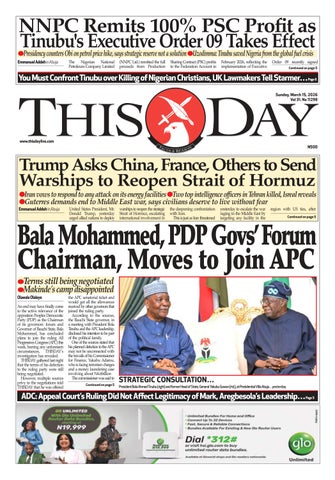
Presidency counters Obi on petrol price hike, says strategic reserve not a solution Uzodimma: Tinubu saved Nigeria from the global fuel crisis
Emmanuel Addeh in Abuja The Nigerian
Iran vows to respond to any attack on its energy facilities
Two top intelligence officers in Tehran killed, Isreal reveals Guterres demands end to Middle East war, says civilians deserve to live without fear
Emmanuel Addeh in Abuja United States President, Mr. Donald Trump, yesterday urged allied nations to deploy warships to reopen the strategic Strait of Hormuz, escalating international involvement
Olawale Olaleye
An end may have finally come to the active relevance of the opposition Peoples Democratic Party (PDP) as the Chairman of its governors' forum and Governor of Bauchi State, Bala Mohammed, has concluded plans to join the ruling All Progressives Congress (APC) this week, barring any unforeseen circumstances, THISDAY’s investigation has revealed.
THISDAY gathered last night that the terms of his defection to the ruling party were still being negotiated.
However, multiple sources privy to the negotiations told THISDAY that he was offered
the APC senatorial ticket and would get all the allowances received by other governors that joined the ruling party.
According to the sources, the Bauchi State governor, in a meeting with President Bola Tinubu and the APC leadership, disclosed his intention to be part of the political family.
One of the sources stated that his planned defection to the APC may not be unconnected with the travails of his Commissioner for Finance, Yakubu Adamu, who is facing terrorism charges and a money laundering case involving about N4.6billion
The commissioner was said to



The African Democratic Congress (ADC) has said the recent decision of the Court of Appeal did not affect the positions of Senator David Mark as National Chairman and Rauf Aregbesola as National Secretary of the party. This is as the party yesterday
released the timetable for its nationwide congresses ahead of the party’s National Convention scheduled to hold on April 14.
The National Publicity Secretary of ADC, Mallam Bolaji Abdullahi, in a statement issued yesterday, explained that Mark filed the appeal in connection with the ongoing suit instituted against the party’s leadership
at the Federal High Court.
Abdullahi stated that the Court of Appeal did not determine the substantive dispute regarding the leadership of the ADC.
“The case challenging the emergence of Senator David Mark as National Chairman and Ogbeni Rauf Aregbesola as National Secretary is still
pending before the Federal High Court and has not yet been heard or decided on its merits,” the statement further explained.
It also added that the Court of Appeal did not grant any relief in favour of the plaintiff, nor did it issue any order affecting the leadership structure of
have threatened to implicate the governor if he was not released from custody.
It was learnt that the ruling party handed stringent conditions to Mohammed, different from the agreements the ruling party reached with other governors.
Sources close to the Governor Seyi Makinde’s camp in the party have, however, expressed shock and disappointment with the development.
Members of Makinde’s camp are said to be wondering how a governor who led the flock of PDP governors could capitulate at the expense of the party, whose misery he was believed to have contributed to through his hardline posturing over the years.
Sources privy to the defection plot hinted that
when Mohammed met with the president to conclude his defection plans, the president was said to have pointedly told him that it would be difficult to hand him the structure of the party as they did to other governors.
Tinubu, it was learnt, also explained to him the reasons why the APC structure in the state would not be handed over to him.
According to one of the sources, the president allegedly said the best he could do at the instance was to hand him his ticket back to the Senate, but that he won’t be allowed to nominate his successor.
"Unlike the privileges extended to the early detectors, Bala Mohammed can't get the full APC structure in Bauchi. They told him the best he
could get is his ticket to the Senate since he is nursing the ambition, but he can't nominate his successor. He was told in clear terms. He is stuck, from all indications," the source explained.
THISDAY also gathered that the governor was allegedly mandated to apologise to the son of the president, Seyi Tinubu, who was embarrassed last year by Mohammed's son for sharing palliatives with the people of Bauchi State during last year’s Ramadan.
The source stated: "I'm not sure if you read sometime last year when Seyi Tinubu distributed some palliatives to people in Bauchi and Bala's son lashed him thoroughly? They didn't forget the embarrassment it caused them, and they have asked him to go and apologise
to Seyi Tinubu. In fact, this particular condition is taken seriously."
Shamsudeen Bala Mohammed, the son of Bauchi State Governor, had reportedly lashed out at Seyi in mid-March 2025.
He criticised Seyi for distributing food items in Bauchi State during Ramadan, calling on him instead to focus on sustainable empowerment, such as job training and business resources, rather than handouts.
However, in a show of his seriousness about joining the APC, Mohammed has allegedly apologised to the president’s son. Still, the governor is said to be uncomfortable with the other condition.
According to the source, he wanted to have a say in his succession plans because of
the party.
“On the contrary, the court ordered that parties should maintain the status quo, meaning that the current state of affairs within the party should remain unchanged pending the determination of the substantive suit,” ADC noted.
It urged party members
his legacy.
To this end, the source explained that the governor went back to the National Chairman of the APC, Professor Nentawe Yilwatda, to help speak with the president about considering a 60/40 structure-sharing arrangement in the state.
Although none of the sources could confirm whether the APC chairman had completed his assignment, Mohammed was said to have taken further steps in his defection plot by convening a stakeholders’ meeting in the state this week, in the expectation that the president would concede to his request.
This development has angered other members of the party in Governor Makinde's camp, who considered Mohammed's lastminute decision a betrayal of all the efforts to reconcile and
Washington bombed its main energy hub at Kharg Island, which handles 90 per cent of the country's crude oil exports.
Also, as the war entered its third week, the US embassy in Baghdad, Iraq, was struck by a missile, in the latest sign that the escalating tensions between Washington and Tehran were spilling across the wider Middle East.
The Israeli military said yesterday that it had killed two senior Iranian intelligence officials in a strike in Tehran, just days after they replaced the former head of the directorate who was assassinated on February 28.
by President Bola Tinubu, THISDAY has learnt.
This is just as the Presidency has dismissed claims by former Anambra State governor and presidential candidate of the Labour Party (LP) in the 2023 general election, Mr. Peter Obi, that Nigeria’s rising petrol prices were largely due to the absence of a strategic petroleum reserve, describing the argument as inaccurate and based on a misunderstanding of global energy market dynamics.
Meanwhile, the Imo State Governor, Senator Hope Uzodimma, has said that President Tinubu has shielded Nigeria from the global fuel crisis resulting from the conflict
Meanwhile, the UN Secretary-General, António Guterres, yesterday called on the international community to end the war and intensify support for the Government and people of Lebanon, warning that the south of the country “risks being turned into a wasteland.”
Reports indicated that the projectile landed within or near the heavily fortified diplomatic zone, raising concerns about the safety of diplomatic personnel and the potential for further retaliatory strikes.
In the same vein, global financial markets have continued to retreat sharply
in the Middle East.
Figures contained in a document presented at the March meeting of the Federation Account Allocation Committee (FAAC) showed that the government received 100 per cent of PSC profit generated during the month, amounting to N121.343 billion, bringing the total remittance for January and February to N137.409 billion.
The document sighted by THISDAY indicated that in January 2026, before the executive order took effect, 40 per cent of the PSC profit hitherto remitted to the Federation stood at just N16.066 billion. The difference between January and February
as crude oil prices remain above the $ 100-per-barrel mark, reflecting growing investor anxiety over the escalating crisis in the region.
Trump said that many countries would send warships to keep the Strait of Hormuz open for shipping, but did not provide details on which countries would do so.
"Many Countries, especially those that are affected by Iran’s attempted closure of the Hormuz Strait, will be sending warships, in conjunction with the United States of America, to keep the Strait open and safe," Trump wrote in a post on Truth Social.
remittance was about N105.33 billion.
Titled: 'February 2026
NNPC Oil & Gas Revenue and Distribution to FAAC,' the NNPC presentation to the FAAC meeting held this March showed that the remittance represented the entire federation’s share of PSC profits, marking a change in distribution following the enforcement of the presidential order.
Besides, the annual budget estimate for PSC profit was N2.368 trillion, translating to a monthly budget target of N197.367 billion and a yearto-date budget projection of N394.733 billion for the first
Trump said he hoped that China, France, Japan, South Korea, Britain, and others would send ships to the area, a Reuters report said.
"In the meantime, the United States will be bombing the hell out of the shoreline and continually shooting Iranian boats and ships out of the water," he wrote.
The White House did not immediately respond to a request for comment on whether any countries had agreed to send ships.
Western nations have bolstered their military presence in the eastern Mediterranean during the conflict in Iran,
two months of the year.
However, actual receipts fell significantly short of projections, according to a THISDAY analysis. Compared to the yearto-date budget benchmark of N394.733 billion, the federation recorded a shortfall of N257.324 billion, representing a 65.2 per cent variance below target.
Despite the shortfall, the February remittance reflected the new policy framework under Executive Order 09, which directed that PSC profits be transferred fully to the federation account.
A note that followed the presentation said: “The budget estimates for 2025 were retained pending publication of 2026
not to panic or be misled by misinterpretations of the judgment.
“The ruling of the Court of Appeal is purely procedural and does not affect the legitimacy or tenure of the current national leadership of the party.
rearrange the PDP’s fortune. Some of the PDP members, who got wind of the development, said if the chairman of the PDP Governors' Forum could not stay back to fight for his party, despite all that he and Makinde had put into the efforts to rescue the party, then the hope for democracy has dimmed further.
Meanwhile, if Mohammed joins the APC, the number of governors in the party will rise to 32. While the PDP has Governor Seyi Makinde of Oyo State, and the Labour Party (LP) has Alex Otti of Abia State, the All Progressives Grand Alliance (APGA) and Accord Party have Prof. Chukwuma Soludo of Anambra State and Ademola Adeleke of Osun State, respectively.
focusing on the security of Cyprus after an Iranian-made drone hit a British military base on the island on March 2.
Britain was also exploring additional options for deployments to the Gulf after Iran stepped up attacks on vessels, defence minister John Healey said on Thursday.
The British government was talking to allies and partners about "a range of options to ensure the security of shipping in the region," a Ministry of Defence spokesperson said yesterday.
The French Navy was deploying about a dozen naval vessels, including its aircraft
budget estimates. For January 2026, PSC distribution was carried out in line with the PIA (Petroleum Industry Act)prescribed 30:30:40 distribution ratio. However, from February 2026, PSC distribution complies with Executive Order 9, 2026.”
Issued by Tinubu in February 2026, Executive Order 9 mandates direct remittance of all oil and gas revenues (royalties, taxes, profit oil/gas) into the Federation Account. Meanwhile, another key line in the FAAC presentation concerned the calendarised interim dividend expected from the NNPC.
The document showed that the annual budget estimate for
carrier strike group, to the Mediterranean, the Red Sea, and potentially the Strait of Hormuz as part of defensive support for allies threatened by the conflict.
France had been consulting with European, Asian, and Gulf Arab states over the past week with a view to putting together a plan to eventually escort tankers through the strait, French officials said.
Energy Facilities
Meanwhile, the Iranian
on page 8
interim dividends from the national oil company was N3.254 trillion, equivalent to a monthly target of N271.184 billion and a two-month budget projection of N542.368 billion. But the NNPC did not record an interim dividend for either January or February, leaving the year-to-date actual figure at zero.
In fact, this resulted in a negative variance of N542.368 billion, meaning the federation received none of the dividend income anticipated in the budget during the first two months of the year. In the same vein, the large
The United Kingdom’s lawmakers have urged their Prime Minister, Sir Keir Starmer, to confront President Bola Tinubu over the killing of Nigerian Christians while the Nigerian president is in the UK for a state visit.
President Tinubu, who will be accompanied by his wife,
Oluremi, will be hosted by the King and Queen at Windsor Castle on Wednesday, where they will attend a state banquet as guests of honour.
Tinubu will then travel to Downing Street to meet with Prime Minister Starmer on Thursday, marking the first state visit by a Nigerian president in 37 years.
However, the Daily Mail UK
reported that MPs from the AllParty Parliamentary Group for Freedom of Religion or Belief (APPG FoRB) have written to the Development Minister, Baroness Jenny Chapman, calling on the government to pressure Tinubu to protect human rights in his country. Nigeria ranks as one of the most dangerous countries in the world for Christians,
following prolific coordinated attacks by terrorist groups, such as Boko Haram and Islamic State West Africa Province.
According to Daily Mail UK, Democratic Unionist Party (DUP) MP Jim Shannon, who is the group’s chairman, said Nigeria must “take concrete steps to prevent the harassment, persecution and killing of Christians, while
Adedayo Akinwale in Abuja
The All Progressives Congress (APC) has said that the attacks on it by the African Democratic Congress (ADC) would not endear the main opposition party to Nigerians.
The ruling APC also stated that the ADC did not recognise itself as a political party and had not articulated a single alternative policy position.
APC added that condemning the APC and its policies has
become ADC’s operating manifesto, with absolutely nothing to offer by its powermongering leaders.
The National Publicity Secretary of the APC, Felix Morka, stated this in a statement issued yesterday, reacting to the ADC's claims that the ruling party had impoverished Nigerians.
The ruling party stressed that ADC continued to wallow in the idea that its empty attacks would endear the party to
Nigerians.
Morka noted that ADC’s attempt to spin a recent report presented at the Agora Policy dialogue indicating a rise of poverty rate of 63 per cent from 49 per cent as a "damning verdict on this administration's economic policies”, speaks either to its shocking ignorance of economic policy or its wilful blindness to the justification for, and transformative impacts of, ongoing economic reforms.
He noted that the report that
the ADC sought to politicise cheaply was categorical about the imperative of the reforms meant to correct age-long and crippling structural distortions in the economy.
The ruling party’s spokesperson said it was a matter of national consensus that the fuel subsidy and foreign exchange regimes, as they were operated before May 29, 2023, had become an existential threat to the country’s economic survival.
No fewer than 20 security operatives and vigilantes were reportedly killed when heavily armed bandits ambushed a joint patrol team in Wanka and the surrounding communities of the Garga area in Kanam Local Government Area (LGA) of Plateau State. The Kanam Development Association (KADA) disclosed this in a statement issued yesterday in Dengi, Kanam
Local Government Area of the state by its Secretary, ND Shehu Kanam, and Chairman, Garba G. Aliyu.
The association said the victims included 12 security personnel, among them two senior military officers, and eight vigilante members who were assisting security forces to protect the communities.
According to the statement, the patrol team—made up of military personnel and local vigilantes—was travelling
in two vehicles on routine security operations across the communities of Garga, Kyaram, and Gyambau when they were suddenly ambushed by hundreds of heavily armed bandits on their way to Wanka at about 2:00 p.m. on Friday.
“In the unfortunate exchange of gunfire that followed the ambush, our nation lost brave defenders who paid the ultimate price in the line of duty,” the statement read.
KADA described the deaths
of the security personnel and vigilantes as “deeply painful and unacceptable,” noting that the fallen operatives died while defending rural communities that have long faced repeated attacks.
The association added that after the ambush, the bandits reportedly stormed the Kyaram community, where they looted properties worth millions of naira and rustled a large number of cattle belonging to residents.
ensuring that perpetrators are investigated and prosecuted”.
The group of 209 MPs and peers expressed concern that the Nigerian state had failed to treat the attacks with the required seriousness.
They demanded the government shed light on the case of Leah Sharibu, who was one of the 110 schoolgirls kidnapped in 2018.
APPG FoRB also urged Starmer to ensure that human rights obligations become fundamental to all future diplomatic, security, and trade discussions.
It requested a response from Baroness Chapman before the
state visit.
The new Archbishop of Canterbury, Dame Sarah Mullally, may also pressure Mrs. Tinubu on human rights as she hosts the Nigerian First Lady at Lambeth Palace on Thursday.
Mrs. Tinubu, a Christian pastor, will attend a prayer service and be invited to preach, while her husband is Muslim.
She will also join representatives from the Church of England and faith charities that have provided support in Nigeria, such as Christian Aid, at a reception at Lambeth Palace.
James Emejo in Abuja
The Central Bank of Nigeria (CBN) has introduced stricter Bank Verification Number (BVN) enrolment and data access rules to prevent suspected fraudulent transactions, effective May 1, 2026.
This was disclosed in a statement issued over the weekend and titled “Addendum to the Revised Regulatory Framework for Bank Verification Number (BVN) Operations and Watchlist for the Nigerian Banking Industry 2021.”
The statement was signed by the Director of the Payment System Policy Department, Musa Jimoh.
The CBN said it introduced the ‘Revised Regulatory Framework for Bank Verification (BVN) and Watchlist for the Nigerian Banking Industry 2021’, to promote a stable financial system.
The apex bank reiterated that enrollment for the BVN be limited to individuals aged 18 and above, while amendments to phone numbers linked to a BVN will be restricted to a one-time change only.
Financial Institutions are mandated to establish and maintain a temporary watchlist for BVNs implicated in suspected fraudulent transactions reported by a financial institution.
“A BVN may remain on this temporary Watchlist for a maximum period of twenty-four (24) hours. During this period, the BVN owner shall be contacted to clarify the identified transaction(s).
Enrolment for BVN is restricted to individuals who have attained the age of eighteen (18) years and above. Amendments to phone numbers linked to a BVN shall be allowed only once,” the statement read.
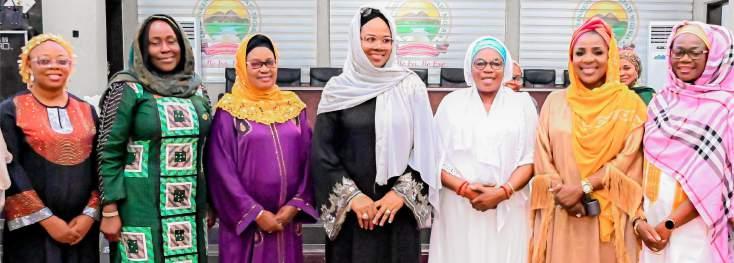
Ado-Ekiti...yesterday
The escalation of hostilities in the Middle East involving the United States, Israel, and Iran is beginning to ripple through Nigeria’s air cargo market, leading to uneven freight pricing among logistics operators who rely on global aviation networks for shipments.
For some Nigerian freight handlers, outbound cargo rates have risen sharply since the
crisis intensified on February 28, forcing them to review their pricing structures. Others, however, insist their charges remain largely unchanged, particularly for shipments routed to Western destinations such as the United States, the United Kingdom, and Canada. An online medium over the weekend reported that interviews with several
operators indicate the conflict's impact has been shaped largely by the routes they serve and the logistics networks they rely on to move cargo abroad.
While the Middle East is not a major destination for many Nigerian shipments, its role as a critical aviation transit hub means disruptions there can affect cargo flows across multiple global routes.
For some logistics firms, the conflict has triggered a noticeable increase in operational costs.
Nairametrics quoted a logistics professional at Mayckles Cargo Logistics, Peace Azagba, as saying that the situation compelled his firm to adjust outbound cargo rates in line with tariff revisions by international courier companies
Former Vice President of Nigeria, Atiku Abubakar, has commended Senator Binos Yaroe and eight other senators who recently aligned with the African Democratic Congress (ADC), describing their decision as a courageous step in defence of Nigeria’s democracy.
Atiku made the remark in a post shared on his official Facebook page, where he
commended the lawmakers for prioritising national interest over political pressure.
“I commend Senator Binos Yaroe and the eight distinguished senators who boldly aligned with the ADC yesterday, not for personal gain, but in the interest of Nigeria’s democracy,” Atiku wrote.
He noted that their decision to stand with the opposition at a time when, according to him, many politicians were being pressured to join the ruling
party was a demonstration of courage and conviction.
“At a time when many are being coerced into the ruling party, their decision to stand with the opposition is a powerful statement of courage, conviction, and commitment to national interest,” he stated.
The former vice president stressed that a functional democracy would depend on a credible opposition capable of holding those in power accountable.
“Democracy without credible opposition is democracy in name only,” Atiku said.
According to him, the senators’ move strengthens the collective voice pushing for accountability, good governance, and a better future for Nigerians.
“Their presence strengthens our collective voice for accountability, good governance, and the future Nigerians deserve,” he added.
No passenger was abandoned or left stranded at any point, says airline
Kasim Sumaina in Abuja
Air Peace has been summoned to the Nigeria Civil Aviation Authority (NCAA) headquarters for an urgent meeting over the unexplained disruptions, including complaints received yesterday from passengers on the Heathrow-Abuja flight who were rerouted via Gatwick-Lagos-Abuja and left
stranded in Lagos because of a reported cracked windshield.
However, in a swift response, Air Peace has clarified that no passenger was abandoned or left stranded at any point during its handling of the situation under reference.
The Director of Public Affairs and Consumer Protection at NCAA, Michael Achimugu, in a post on his X handle
yesterday, noted: "We will not tolerate any abandonment of paying passengers. While the authority continues to support domestic carriers, we hold all operators to the strictest standards.
"An investigation into these disruptions will be conducted and appropriate action taken as usual based on the facts of the incident as enshrined in Part 19 of the NCAA
regulations 2023."
Achimugu added that the NCAA, as Nigeria's sole regulatory agency for civil aviation, remained committed to protecting the rights of all stakeholders.
Reacting to the allegations, Air Peace has clarified that no passenger was abandoned or left stranded at any point during its handling of the situation under reference.
and airlines. According to him, the adjustments followed operational disruptions caused by the crisis, which forced the company to pass part of the higher costs on to customers.
“We usually ship at reasonable rates depending on the volume of shipment, but since the crisis started, courier services have increased their tariffs,” Azagba explained.
“As a result, our company had to increase our outbound cargo rates by about 30 per cent.”
The situation has been particularly difficult for shipments to the Middle East, where several airlines
and courier networks have suspended services amid intensifying security concerns. Azagba noted that the disruption had already forced his company to withdraw shipments to the region on multiple occasions.
He recalled two instances in which cargo bound for Qatar had to be recalled because demurrage charges began to accumulate amid uncertainty over flight availability.
The experience underscores how rapidly changing aviation conditions can disrupt cargo logistics, even when the shipments originate thousands of kilometres away from the conflict zone.
Says president doing his best to tackle security challenges
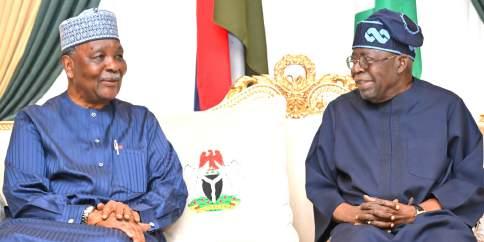
Former Head of State, General Yakubu Gowon yesterday gave President Bola Ahmed Tinubu a pass mark on his performance in office, saying the Nigerian leader is doing his best across key sectors of governance.
Gowon spoke with journalists after paying a courtesy visit to the President at the State House, Abuja, where he said he came primarily to appreciate the efforts of the administration and to encourage the President in his leadership of the country.
“I came to see him and to thank him for all the good works that he’s doing for the country. We had to look at all the good work that the President is doing and the progress that Nigeria is making economically and otherwise”, the elder statesman said.
The former military leader, who governed Nigeria from
1966 to 1975, noted that the country is witnessing progress under Tinubu’s leadership and expressed satisfaction with the direction of governance.
When asked by journalists what areas the President should improve upon as his administration progresses, Gowon declined to single out any particular sector, stressing that Tinubu appears to be addressing national challenges across the board.
“Isn’t he doing the best he can all round?” he asked rhetorically, adding “so there is no particular place, every other area; political, economic, social, etc.”
Gowon also acknowledged the complexity of Nigeria’s security challenges but maintained that the President is taking necessary steps to confront the situation in the interest of the country.
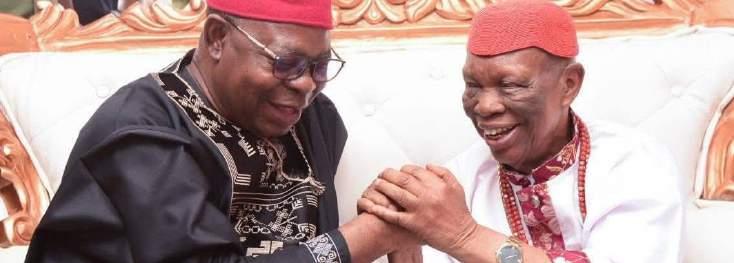
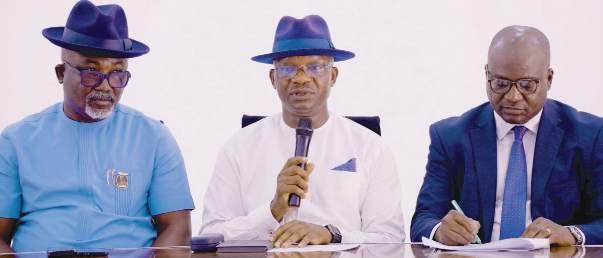
Ahead of the implementation of the federal government’s policy on state policing, the Delta State Government has approved the construction of state-of-the-art Divisional Police Headquarters across the 25 local government areas (LGAs) of the state to support state policing, as part of its efforts to strengthen security in the state further.
The state’s Commissioner for Works (Rural Roads), Mr. Charles Aniagwu, who disclosed this while briefing journalists at the end of the
State Executive Council meeting presided over by Governor Sheriff Oborevwori, said EXCO also approved the building of the Special Police Protection Unit (SPU) in the state.
Aniagwu said the decision was in line with Governor Oborevwori’s MORE Agenda and the administration’s commitment to protecting the lives and property of the state's residents.
According to him, the state executive council approved the construction of 25 modern divisional police headquarters, one in each local government area.
He explained that the projects, which are expected to cost over N34 billion, are aimed at strengthening the state's security architecture, particularly as the federal government moves towards implementing state policing across the country.
Aniagwu said: “The Executive Council meeting today, as usual, was led by the governor in line with the MORE Agenda, and several projects that touched the lives of our people across the 25 local government areas and across different sectors were approved.
“However, principal among the decisions reached hinges today on the number one responsibility of the government, which is the security of lives and property.”
He added that the approval of the security projects demonstrates the state government’s proactive approach to safeguarding residents.
He said: “Flowing from that, and ahead of the federal government’s policy on state policing, the state government today approved the construction of stateof-the-art divisional police
headquarters in the 25 local government areas of the state.
That means we will have 25 such facilities.
“In addition, the executive council also approved the establishment of a Special Police Protection Unit. These two projects together will gulp over N34 billion.
“Even though Delta today ranks as one of the most secure and safest states to live in Nigeria, our government believes that we need to take it a notch higher.
“With the federal government favourably disposed to allowing state policing across the country,
Foreign Minister Abbas
Araghchi has said his country will attack the facilities of US companies in the Middle East if its energy infrastructure is targeted.
“If Iranian facilities are targeted, our forces will target facilities of American companies in the region or companies in which the United States has shares,” he said.
Araghchi also said that while “the Strait of Hormuz is open”, Iran will not allow “the oil tankers and vessels of enemies and their allies” to pass.
US: Kharg Island, Iran's Oil Hub Obliterated
US forces have carried out “large-scale” strikes on Kharg Island, a critical hub of Iran’s Gulf oil operations. US Central Command said that naval mine storage facilities and missile storage bunkers were among targets destroyed in the “precision strike” on the island, hitting “90 Iranian military targets” while “preserving the oil infrastructure.”
Kharg Island, a tiny but strategic island 15 miles off
the coast of Iran in the Persian Gulf, is home to an oil terminal that ships 90 per cent of the country’s oil exports.
There are also military capabilities there, including air defences and mines buried underground.
The Israeli military yesterday said it had killed two senior Iranian intelligence officials in a strike in Tehran, just days after they replaced the former head of the directorate who was assassinated on February 28.
Israel said the two men, identified as Abdollah JalaliNasab and Amir Shariat, were senior officials in the intelligence directorate of the Khatam al-Anbiya, the Iranian military’s central operations command.
The pair, it added, were killed on Friday, the Israeli military said.
They had replaced Saleh Asadi, who served as head of the intelligence department at the Khatam al-Anbiya, after he was killed on the first day of
the war, the military said.
“Following the elimination of the head of the Intelligence Directorate, Saleh Asadi, during the opening blow of Operation Roaring Lion, Jalali and Shariat were appointed to replace them,” the military said.
“Both were close to the leadership of the Iranian terrorist regime,” it said, adding that the intelligence branch of the Khatam al-Anbiya Emergency Command is responsible for analysing intelligence.
“The intelligence is presented to senior officials in Iran’s security system during frequent situational assessments, on the basis of which the war against the State of Israel is conducted,” the military added.
The military says several top Iranian officials were killed in an initial wave of strikes launched alongside the United States on February 28, including supreme leader Ali Khamenei.
Similarly, global markets fell sharply as oil prices held above $100 a barrel amid the ongoing US-Israeli conflict with
Iran, which has closed the Strait of Hormuz and triggered the largest oil supply disruption in history.
Navy Commander of the Islamic Revolutionary Guard Corps, Alireza Tangsiri, yesterday said Iran has not yet closed the Strait of Hormuz, and the vital waterway is “only being controlled”.
Tangsiri accused the United States of spreading false claims about destroying Iranian vessels and escorting oil tankers.
“The Americans falsely claimed to have destroyed our ships and escorted oil tankers, and now they are asking for support from others,” said Tangsiri in a post on X.
The US has rebuffed efforts by Middle Eastern allies to start diplomatic negotiations aimed at ending the US-Israel war, Reuters cited three sources familiar with the efforts as saying.
Iran, on its part, has rejected the possibility of any ceasefire until US and Israeli strikes end, two senior Iranian sources told the news agency, adding that several countries had been trying to mediate an end to the conflict.
A senior White House official confirmed Trump has rebuffed efforts to start ceasefire talks and is focused on pressing ahead with the war to further weaken Tehran’s military capabilities, according to Reuters.
A third source reportedly said Iran’s top security official, Ali Larijani, and Foreign Minister Abbas Araghchi had also sought to use Oman as a conduit for ceasefire discussions that would have involved US Vice President JD Vance. However, those discussions have not materialised.
Iran’s Foreign Minister, Araghchi, has appealed to Gulf neighbours and other Middle East nations to “expel foreign aggressors” as tit-for-tat attacks reverberate throughout the region.
“Touted US security umbrella has proven to be full of holes and inviting rather than
there is a need for us to move ahead of others, and that is why the approval has been given.”
He added that the Commissioner for Housing had been directed to commence necessary processes to ensure the projects are executed without delay.
Aniagwu further disclosed that the council also approved several other projects across different sectors, including road infrastructure in riverine communities, aimed at improving connectivity and boosting socio-economic development across the state.
deterring trouble,” wrote Araghchi.
“The US is now begging others, even China, to help it make Hormuz safe. Iran calls on brotherly neighbors to expel foreign aggressors, especially as their only concern is Israel,” he added.
Speaking to reporters in the Lebanese capital, Beirut, following two weeks of widespread destruction triggered by the US and Israeli bombing of Iran, Guterres noted that Hezbollah rocket fire into Israel in support of Tehran had been followed by a “devastating” Israeli bombing campaign, which is “rendering large portions of Lebanon uninhabitable.”
“The Lebanese people did not choose this war. They were dragged into it,” he continued.
“The war must stop,” the UN chief said, underscoring that there is no military solution to the conflict continuing across the Middle East, only a diplomatic one in line with the UN Charter.

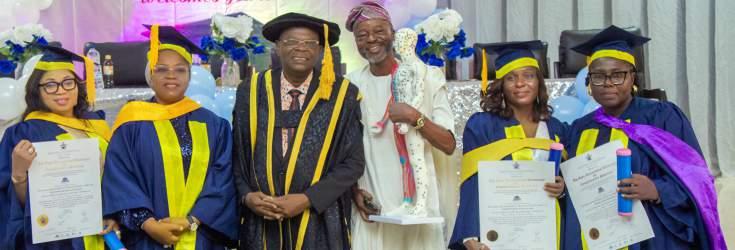
The removal of certificate forgery as a valid ground for challenging election results in the amended Electoral Act has sparked widespread outrage among legal experts, political analysts, and other stakeholders. THISDAY’s investigation has revealed.
Critics, who spoke on the development, warned that the removal could weaken democratic accountability and allow individuals accused of presenting fake academic credentials to remain in office without legal challenge.
Under previous laws, including the Electoral Act 2022, petitioners could contest the outcome of elections on grounds such as a candidate’s lack of qualification, for example, presenting forged educational certificates to the Independent National Electoral Commission (INEC).
This aligned with Sections 137(1)(j), 182(1)(j), 66(1)(i), and 107(1)(i) of the 1999 Constitution (as amended), which disqualify individuals from offices like President, Governor, or legislator if they submit forged certificates.
However, under the 2026
amended electoral law, this provision was deleted, implying that even if a candidate’s certificate is forged, it can no longer be used to challenge an election in court.
However, a Senior Advocate of Nigeria (SAN), Prof. Koyinsola Ajayi, said the concerns being raised in some quarters over the removal of certificate forgery as a valid ground for challenging election results may have been exaggerated.
According to him, the existing legal provisions were broad enough to accommodate such claims.
“I think a mountain is being made out of a molehill,” Ajayi said.
“The grounds that exist are wide enough to allow this as ground. At all events, nothing can be built on a crime,” he added.
Similarly, Dr. Abiodun Layonu (SAN) maintained that the constitutional framework governing eligibility for elective offices remains intact, regardless of changes in the Electoral Act.
Layonu pointed out that the 1999 Constitution clearly disqualifies candidates who present forged certificates in support of their qualifications.
“Forged certificate presentation is still a ground
for disqualification of a governor under Section 182(1)(j), for a President under Section 137(1)(j), for a member of the National Assembly under Section 66(1)(i), and for a member of the House of Assembly under Section 107(1)(i) of the Constitution,” he said.
According to him, even if the Electoral Act appears to omit the issue as a ground for election petitions, the constitutional provisions would prevail.
In contrast, Jibrin Okutepa (SAN) strongly criticised the amendment, describing it as a dangerous departure from Nigeria’s electoral jurisprudence.
Okutepa argued that the National Assembly had effectively removed qualification issues, including certificate forgery, from the grounds upon which election petitions can be filed.
“I think the National Assembly has effectively outlawed the presentation of forged certificates as part of the grounds for election petitions from the jurisprudence of election petition cases in Nigeria,” he said.
He further questioned the amendment's legality, arguing that the National Assembly cannot override constitutional provisions governing eligibility for elective office.
“The qualification to run for elective offices in Nigeria is a fundamental constitutional requirement that cannot be outlawed just like that by the National Assembly,” he said.
However, Reverend John Baiyeshea (SAN) also argued that the normal courts can make orders against anyone found to have forged the certificate with which they entered office.
"Well, I don't think that certificate forgery on its own or alone has ever really been a ground for presenting a petition to challenge an election under the various electoral Acts that we've been having.
"What I know we've always had is that a person elected was not qualified to stand for the election if he did not have the minimum educational requirements set by the Constitution and Electoral Act.
Also speaking, another senior lawyer, Mr. Dayo Akinlaja (SAN), observed that the removal of the ground from the Electoral Act amounts to little or nothing because the Constitution, which supersedes any other Acts, has ensured that certificate forgers are not elected into public offices.
According to Akinlaja, "Any person who presents a forged certificate is still eligible for disqualification pursuant to
the various provisions of the Constitution."
Also, the Peoples Democratic Party (PDP), through its National Publicity Secretary, Ini Emeombong, stated that the new amendment shows the level of Nigeria's moral decadence.
“How could it be said that a hitherto criminal offence is now legitimized. Yet under the country's criminal code, forgery remains a criminal offence. In contrast, prospective lawmakers are permitted by the Electoral law to present questionable and forged certificates as part of their credentials to enable them to make laws for us,” he said.
On his part, the presidential candidate of the Labour Party (LP) in the 2023 general election, Mr. Peter Obi, in his X account said, “The same lawmakers who have proposed a fine of ₦10 million and up to two years in prison for dual political party membership have simultaneously removed certificate forgery, age falsification, and false declarations as grounds for challenging an election in a tribunal. This is in direct contradiction to the provisions of the Constitution of Nigeria (1999, as amended).”
Similarly, the pan-Yoruba socio-political organisation,
variance in the revenue profile highlights ongoing challenges in Nigeria’s oil sector, especially production constraints, which have led the country to produce significantly below its Organisation of Petroleum Exporting Countries (OPEC) quota of 1.5 million barrels per day.
Presidency Counters Obi on Petrol Price Hike, Says Strategic Reserve Not
Responding to Obi’s remarks, the Special Assistant to the President on social media, Mr. Olusegun Dada, said the recent increase in petrol prices was primarily the result of market forces following the deregulation of the petroleum sector by Tinubu’s administration.
In a statement posted on his X (formerly Twitter) handle, Dada explained that,
in a deregulated market, fuel prices were influenced by several global factors, including crude oil prices, exchange rates, shipping costs, and supply risks.
According to him, the removal of fuel subsidy had allowed market realities to determine pump prices, meaning developments in the international oil market now directly affect domestic fuel costs.
“In a deregulated system, petrol prices respond directly
to global oil prices, exchange rates, shipping costs and supply risks,” Dada said.
He noted that geopolitical tensions involving Iran have recently contributed to an increase in global oil prices, adding that such developments inevitably affect countries like Nigeria that rely heavily on imported refined petroleum products.
The presidential aide also rejected suggestions that establishing a strategic
petroleum reserve would automatically stabilise or control everyday pump prices.
According to him, even countries with large strategic petroleum reserves maintain them primarily for emergencies such as wars, embargoes, or major supply disruptions, rather than for routine price management.
In another development, Imo State Governor, Uzodimma, has said President Tinubu has shielded Nigeria from
Afenifere, in a statement by its leader and National Publicity Secretary, Oba Oladipo Olaitan and Mr Justice Faloye, described the legislative change as a retrogressive move that protects individuals with dubious academic backgrounds.
Afenifere pointed out that this omission contradicted the 1999 Constitution, which explicitly disqualifies any candidate who presents a forged certificate for public office. The organisation expressed further alarm over new punitive financial penalties introduced in the law.
“These fines target petitioners and their lawyers who attempt to present cases based on grounds not specifically named in the Act, a move that is designed to discourage legal scrutiny of elected officials.
“We, therefore, call for an immediate withdrawal and re-enactment of the legislation to restore the forged certificate provision and strengthen the integrity of the voting process”, the statement added.
On its part, the Northern Elders Forum (NEF) lamented that the removal had raised significant concerns regarding electoral integrity.
the global fuel crisis.
Speaking when the members of the City Boy Movement visited him at the Government House, Owerri, at the weekend, Uzodimma said Tinubu’s reforms prevented scarcity and domestic fuel price hikes despite the Middle East crisis. He said that despite the ongoing war in the Middle East, the naira remained stable at N1,240, while other African currencies faced significant volatility.


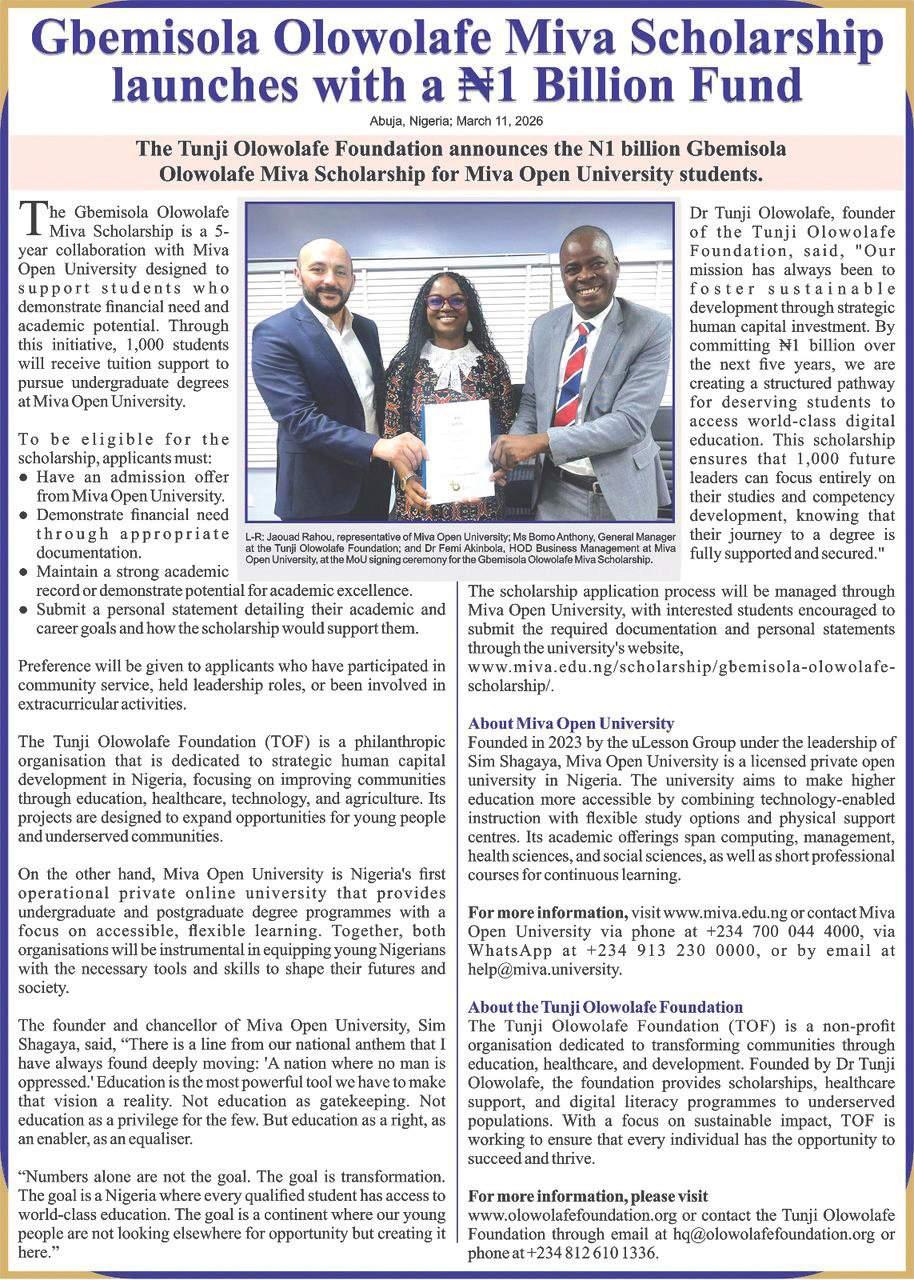
Segun James
The Lagos State Governor, Mr Babajide Sanwo-Olu, has formally approved the reintroduction of the monthly environmental sanitation exercise, which he said will kick off in April.
The reintroduced sanitation will take place on the last Saturday of each month from 6.30 a.m. to 8.30 a.m.
The governor said this yesterday at a stakeholders’ engagement on environmental sanitation.
He said the initiative was not a political contest, but a serious public health and civic responsibility exercise aimed at
building a cleaner, healthier Lagos.
Sanwo-Olu lamented that despite all efforts by the government to sanitise Mushin, it has remained very dirty.
He said the reintroduced sanitation exercise was designed to reach all parts of the state and deepen environmental consciousness among residents.
The governor added that the government alone could not achieve a clean city without active public participation.
“This morning’s exercise is a very serious one and a defining moment for all of us as Lagosians.
“It is not about politics, it is not about rivalry; it is about our
Keyamo to Cancel Free VIP Access at Airport Gates, Laments Revenue Loss
The Minister of Aviation and Aerospace Development, Mr. Festus Keyamo, has said about half of airport revenue is lost to VIPs who pass through airport gates without paying.
Keyamo spoke at the weekend during a visit to the access gates at Nnamdi Azikiwe International Airport in Abuja to assess the operational performance of the newly introduced hybrid payment system.
The minister said the practice, which involves ministers, lawmakers and other government officials, has persisted for years and must stop.
“We must not do VIP here again because half of our revenue goes to VIPs that are just passing without paying,” he said.
“Ministers like us, national assembly members, members of all kinds of agencies, everybody is a big man in Abuja, in Nigeria. That’s the problem.
“There is hardly anybody you see in Abuja that does not
have a federal government logo printed on their business card. Whether SSA, SSSSA, TTTTA, and they will all want to come and pass free at the airports.
“Everybody is a big man in Abuja and I say no, we can’t do that.”
According to the minister, President Bola Tinubu has given him a deadline to ensure the aviation sector fully adopts a cashless payment system.
Keyamo said he had previously left the implementation of the payment system to the Federal Airports Authority of Nigeria (FAAN), but has now taken direct responsibility.
“That is why I am here today to take my own fate into my hands to see how they are implementing the hybrid system,” he said.
He, however, said the hybrid system is only a temporary measure, stressing that the aviation sector would eventually move to a fully cashless payment structure.
collective responsibility to keep our environment clean, healthy, and safe for everyone,” he said.
Sanwo-Olu said the cleanliness of streets, markets, drainage channels, and public spaces reflected residents’ daily habits.
He noted that sustainable environmental management must be driven by shared responsibility, not by enforce-
ment alone.
“A clean city is not achieved by the government alone. It is built every day by the actions of citizens, by what we do in our homes, in our markets, in our communities, and on our streets,” he said.
Monthly environmental sanitation in Lagos was officially suspended in November 2016,
following a March 2015 Federal High Court ruling.
The court held that the restriction on human movement from 7 a.m. to 10 a.m. was unconstitutional, violating citizens’ right to freedom of movement.
Eventually, former Governor Akinwunmi Ambode formally announced the cancellation of
the monthly, mandatory cleanup exercise in November 2016. Sanwo-Olu recalled that the monthly environmental sanitation was once a national civic culture observed on the last Saturday of every month, when residents voluntarily cleaned their surroundings as part of a broader commitment to public health.
Emmanuel Addeh in Abuja
The Minister of Works, Senator David Umahi, at the weekend undertook an inspection of federal road projects across the South-east, highlighting that key road projects being executed by President Bola Tinubu would last 100 years even without maintenance.
Speaking during a road inspection in Afikpo, the minister described Tinubu’s flagship road programmes as historic investments, designed not just to connect cities but to reshape Nigeria’s economic
future for generations to come.
Umahi said the administration’s four major legacy road projects were carefully designed to interlink across the country and serve as enduring national assets.
All four of the president’s legacy projects are interconnected. They will last a hundred years. No maintenance,” a statement in Abuja by the minister’s Senior Special Assistant on Media, Francis Nwaze, quoted him as declaring.
Umahi explained that the projects represented a bold shift in infrastructure philosophy,
moving away from temporary road solutions to durable concrete highways that would stand the test of time.
“Don’t forget that sections one and two of the Lagos–Calabar Coastal Highway, where our people are running over themselves bidding to be given the right to toll the road and then pay back the federal government the entire money.
“That’s why I continue to say that Mr. President is a very strategic personality and that these legacy projects are not just road construction. They are investments,” the minister added.
The minister called for constructive engagement from critics, stressing that national development required a level of patriotism and responsible public discourse.
“Those criticising us should criticise constructively. We have a duty to continue to offer explanations. There should be some elements of patriotism. Opposition does not mean that we talk without knowledge,” he said.
Umahi further challenged political critics to reflect on their records before questioning the current administration.
Onyebuchi Ezigbo in Abuja
Ahead of the next presidential election in 2027, a grassroots campaign support group, the African Democratic Congress Independent Campaign Council (ADCICC), has formally commenced operations nationwide.
THISDAY learnt that the campaign group is made up of loyalists of one of the leading contenders for the African Democratic Congress (ADC) presidential ticket, and the presidential candidate of the Labour Party (LP) during the 2023 presidential election, Mr. Peter Obi.
In his speech at a brief ceremony to inaugurate executive committee members of the support group for the Federal Capital Territory (FCT) Abuja yesterday, the National Coordinator of ADCICC, Chief Jaja Ibiam, said the organisation was out to form a formidable movement that would work to legitimately unseat the current administration and enthrone a new order that would create opportunities for all.
Ibiam said, “Today is a very remarkable day in the life of the ADC Independent Campaign Council. As a movement and as a party support group, it is a
day we have gathered in all the 36 states of the Federation and the FCT, Abuja, to inaugurate state chapters in the journey of both this uncommon national movement, ADCICC, and our party, ADC.
“It is important to let us know that the state executive committees we are about to inaugurate today are not just administrative bodies, but the engines of change, the torchbearers of our party’s vision, and the custodians of our collective aspiration.
“Today marks a new beginning of a positive, social, political journey of patriotism in this nation-state, Nigeria. As I declare
the programme open, I charge you always to remember that we all must rise and shine if the new Nigeria of our dreams is to become a reality.
“As we embark on this journey, we recognise the immense responsibility that rests on our shoulders. We are not just building a support group for the African Democratic Congress (ADC).
“We are carefully constructing a formidable movement that shall present a formidable front in the case to legitimately depose this current clueless and hardship- inflating leadership in our country.”

Lagoon-front Metro Smart City project site in Lekki, Lagos…recently
•CommanderwholedonslaughtagainstShekaureportedlykilled
Troops of the Nigerian Army have, in the last 24 hours, eliminated 10 terrorists, apprehended suspects and rescued kidnapped victims in coordinated operations across multiple theatres.
It was gathered that the battle led to the death of a senior commander of the Islamic State West Africa Province (ISWAP), Bako Gorgore, who led onslaught against Shekau.
A credible Army Headquarters’ source said the successes were recorded during ongoing operations, including Operation Hadin Kai, Operation Fansan Yamma, Operation UDO KA and Operation OPEP.
In the North-east, he said the troops of Operation Hadin Kai thwarted an infiltration attempt by fighters of the ISWAP at Bitta in Borno.
According to him, the insurgents were forced to retreat after encountering coordinated spoiling attacks and superior firepower
from the troops.
He said the failed infiltration came shortly after terrorists launched attacks on troops’ positions at Banki and Azir Bridge, which were also successfully repelled.
In a statement by the Military Information of OPHK, Lt Col Sani Uba yesterday, the repeated failed assaults represented another significant setback for the insurgents within 24 hours and highlighted sustained pressure by troops across the theatre.
The source said the troops, while conducting an ambush along the Kirawa–Gakara axis in Gwoza Local Government Area (LGA), engaged suspected terrorist logistics suppliers, forcing them to abandon supplies and flee with possible gunshot wounds.
“Items recovered at the scene included four bicycles and seven bags of groundnuts believed to
Wale Igbintade
A youth leader and chieftain of the Labour Party in Abia State, Engr. Nwabueze Onwuneme, has cautioned leaders of the All Progressives Congress (APC) to desist from what he described as “unending threats and boasting” about the political future of the state.
According to him, the electorate in the state, having experienced what he termed good governance under Governor Alex Chioma Otti, have become strongly committed to supporting his re-election in 2027.
Onwuneme said the people of Abia would not be intimidated by political rhetoric or pressure from opposition figures.
“As a good governance advocate and youth leader, I
want to tell the boastful APC leaders in Abia State and their few praise singers that Abia youths have seen a new direction under Governor Alex Otti. They can neither be bought nor cajoled into taking the state backwards,” he said.
“Our state is moving forward, and for many of us, the choice in 2027 is clear. It is Alex Chioma Otti or nobody.”
The youth leader further warned politicians allegedly planning to manipulate the 2027 elections in the state to reconsider their actions.
“On behalf of the youths of Abia State and millions of progressive Abians, I want to sound a note of warning to politicians who are threatening to rig Governor Otti out in 2027. We are ready to defend the mandate of the people,” he said.
be meant for insurgents.
“In the Yunusari Local Government Area of Yobe, troops working with members of the Civilian Joint Task Force arrested a suspected ISWAP/JAS spy during patrol operations.
“In the North-west, troops under Operation Fansan Yamma conducted an offensive on terrorist camps in Shinkafi
LGA of Zamfara, where one terrorist was neutralised while troops recovered an AK-47 rifle, ammunition and a motorcycle.
“Similarly, troops operating under Operation UDO KA in Obubra LGA of Cross River engaged armed criminals and neutralised nine terrorists.
“During the operation, troops also uncovered a local
gun-making factory, recovering three AK-47 magazines, 10 locally made double-barrel guns and weapon fabrication tools, while the facility was destroyed on site,” he said.
The source confirmed that troops also apprehended two suspected ammunition couriers transporting 192 rounds of ammunition, while additional searches led to the recovery of locally fabricated weapons and mortar tubes.
He said the troops rescued five civilians from terrorist captivity during separate operations, while four victims who escaped from a terrorist enclave were intercepted and assisted by troops in the Faskari LGA of Katsina State.
A newly appointed Special Adviser to the President on Political Economy, Bala Bello, has expressed gratitude to President Bola Ahmed Tinubu for the opportunity to serve, pledging loyalty and professionalism in supporting the administration’s renewed hope agenda.
Mr. Bello, who until this week served as a Deputy Governor of the Central Bank of Nigeria (CBN), was appointed to the strategic presidential advisory role as
part of a restructuring within the government’s economic management team.
In a message following his appointment, Mr. Bello thanked President Tinubu for first appointing him to the CBN and allowing him to serve in the role since 2023.
He said he was particularly grateful that the president had again found him worthy to serve him and the nation more closely in the new capacity.
“I am grateful to President
Tinubu for appointing me to the Central Bank of Nigeria and giving me the privilege to serve for the past 30 months,” he said.
“I am even more grateful that he has now found me worthy to serve as Special Adviser on Political Economy.”
Mr. Bello noted that the new role would allow him to work more directly with the president and contribute more significantly to the administration’s reform agenda.
According to him, the position
places him in a vantage position to support the government’s ongoing political and economic reforms.
“It places me in a position to work even more closely with the President and to contribute more meaningfully to the ongoing bold political and economic reforms being undertaken by the administration,” he said.
He assured the president that he would bring professionalism and loyalty to the assignment.
Sunday Okobi
Delta State Governor Sheriff Oborevwori has lauded traditional rulers in Nigeria as pillars of peace, harmony, and development.
The governor, who his deputy, Sir Monday Onyeme, represented, made the commendation at the 88th birthday anniversary celebration of the Obi of Owa Kingdom, HRM Dr. Emmanuel Efeizomor II, held at the Owa-Oyibu palace ground, Ika North East Local Government Area (LGA) of the state, at the weekend.
While speaking at the event, Governor Oborevwori described the revered Owa monarch as a symbol of wisdom and a stabilising force in the Nigerian society, “whose leadership has
been instrumental to the progress of the Ika North East LGA and the state at large.”
According to the governor, “As a government, we deeply value the counsel and partnership of our traditional rulers, who remain closest to the grassroots and serve as vital bridges between the government and the people.
“Their wisdom, guidance, and stabilising influence have continued to support our collective efforts to sustain peace, strengthen communities, and advance development across Delta State. “My administration remains committed to working with royal fathers like Your Majesty to advance peace, infrastructure, and inclusive growth across Delta State, including the Ika North East axis, so that the MORE Agenda continues to
deliver meaningful dividends to every community.”
He emphasised further that: “It is with profound joy, deep respect, and gratitude to Almighty God that I join the good people of Owa Kingdom, the Ika nation, and indeed all Deltans in celebrating this remarkable milestone, the 88th birthday of our revered monarch, His Royal Majesty, Obi Emmanuel Efeizomor II.
“On behalf of the government and the good people of Delta State, I warmly congratulate Your Royal Majesty on this occasion and celebrate your enduring legacy of leadership and service.
“Your Majesty, for almost 66 years on the throne, you have remained a towering symbol of wisdom, peace, unity, and
progressive leadership.
“As a modern-minded traditional ruler, you have successfully blended cherished customs with forward-looking vision, making Owa Kingdom a model of cultural pride, harmony, and development in Delta State.
“Your role as a peacemaker, father to all, and former Chairman of the Delta State Council of Traditional Rulers, continues to strengthen the bond between tradition and good governance.
“This auspicious occasion, also marked by the conferment of royal honours on deserving sons and daughters of the kingdom, celebrates not only longevity but a life of selfless service, integrity, and unwavering commitment to the progress of your people and our dear state,” the governor explained.
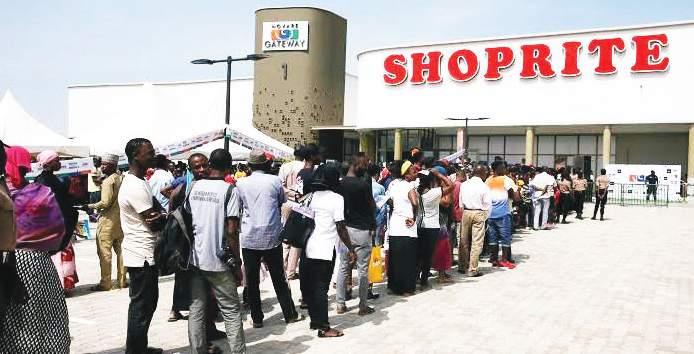
Shoprite’s exit from Nigeria has emptied malls and disrupted an entire retail ecosystem, hitting workers, suppliers, and smaller businesses alike, writes Festus Akanbi
There is a peculiar stillness in a supermarket that once knew crowds. In malls across Nigeria, escalators still hum, and fluorescent lights remain on, but the aisles they illuminate stand empty. Where customers once pushed trolleys through busy walkways, locked doors and deserted corridors now dominate. This silence stretches far beyond grocery shelves.
The
Shoprite’s final shutdown in March 2026 ended a two-decade presence that was deeply woven into the country’s modern consumer culture. Yet, the real story lies in the economic vacuum left behind, affecting workers, suppliers, small retailers, and the fragile viability of Nigeria’s mall economy.
Analysts estimate Nigeria’s organised mall sector at roughly N2.5 trillion, with Shoprite’s collapse potentially affecting economic activity approaching N1.4 trillion within that ecosystem. These figures illustrate scale, but only partly capture the human consequences unfolding from Lagos to Kano.
When Shoprite entered Nigeria in 2005, it represented a turning point in urban consumer experience. The model was straightforward but transformative: supermarkets integrated into modern malls, offering fixed prices, a wide variety, and environments far more orderly than traditional open markets.
Over two decades, the company expanded to more than two dozen outlets across major cities. For many Nigerians, visiting became routine, families bought groceries, children visited nearby cinemas, and restaurants and boutiques thrived on steady customer flow.
In retail economics, such supermarkets function as anchor tenants, large businesses that attract foot traffic and sustain entire mall ecosystems. Around them cluster dozens of smaller enterprises: fashion stores, electronics outlets, pharmacies, salons, and entertainment venues. For years, this arrangement worked. Once the anchor disappears, the structure built around it weakens.
The first visible consequence has been a sharp decline in customer traffic across shopping complexes. In malls where Shoprite operated, smaller retailers report steep declines in sales.
A shoe vendor at the Ikeja Mall, Lagos, told THISDAY that his weekly revenue, which once exceeded N2.5 million, now barely reaches N1 million. Other retailers tell similar stories: fewer walk-in customers, slower inventory turnover, growing dependence on loyal clients who already know their stores.
They claimed that some shop owners now operate only a few days weekly to reduce electricity and staffing costs. Others have downsized staff or shifted marketing online, searching for customers outside mall environments.
Real estate developers face parallel challenges, and anchor tenants occupy thousands of square meters and contribute significantly to rental income. Once they leave, landlords must quickly find replacements or risk declining occupancy and falling property values.
Behind commercial disruption lies labour market impact, harder to measure but impossible to ignore. Supermarkets like Shoprite employ cashiers, warehouse staff, supervisors, cleaners, and security personnel, directly employing thousands, with contractors and service providers creating another layer of indirect employment. When closures began, many workers suddenly lost stable income. Some former employees moved into informal activities, such as small kiosks or mobile payment services.
Others remain searching for work in a labour market already struggling to absorb new entrants annually. This transition reflects a broader pattern: when formal businesses contract, workers are pushed into the informal sector, where earnings are lower and less predictable.
The shutdown has also disrupted supply chains depending on the supermarket’s purchasing power. Shoprite served as a reliable buyer for Nigerian farmers and food producers, purchasing agricultural goods, packaged foods, and household items in large quantities.
For many suppliers, such contracts provided stable demand and predictable payment schedules. Without that outlet, producers must now distribute through smaller retailers or open markets, purchasing far smaller volumes.
For small and medium-scale producers, this fragmentation proves costly, moves more slowly, and increases logistics expenses, while competition among suppliers intensifies. One food supplier described the change bluntly: although owed no outstanding payments, the disappearance of his biggest customer has made sustaining his business difficult. Consumers are also affected, particularly when inflation has already strained household finances. Supermarkets rely on bulk purchasing to negotiate competitive prices with suppliers. Their presence helps stabilise prices for certain products and creates competition for traditional markets and smaller retailers.
Nigeria’s inflation rate rose above 30 per cent in 2024, driven by food and energy costs.
Even as rates have fluctuated since, the cumulative impact has significantly reduced purchasing power for many households. In such conditions, losing a major retailer reduces competition and may contribute to higher prices for some goods. Consumers who once relied on supermarkets for bulk purchases must now navigate a more fragmented retail landscape.
The factors leading to Shoprite’s shutdown reflect broader economic pressures affecting businesses across Nigeria. Operating supermarket chains requires predictable supply chains, relatively stable currency conditions, and reliable energy, each of which is increasingly difficult to guarantee.
Analysts noted that Naira depreciation has raised the costs of imported goods and packaging materials. Inflation has eroded consumer purchasing power, reducing sales volumes. Unreliable electricity forces malls to depend heavily on diesel generators, dramatically increasing operating costs. For large retail outlets operating on thin profit margins, these pressures create challenging environments.
Despite disruption, Nigeria’s mall infrastructure remains intact. Studies show that in several cities, other supermarket operators are already exploring opportunities to occupy vacated spaces. But the transition may reshape the structure of organised retail. New operators will likely adopt leaner business models, smaller inventories, stronger reliance on local sourcing, and tighter cost controls.
Some may operate with fewer employees or adjust pricing strategies to reflect current economic realities. Whether these changes will restore the customer traffic levels that once defined Nigeria’s mall culture remains uncertain.
The disappearance of Shoprite is not simply one retailer leaving a market. It reflects deeper strains within an economy where rising costs, currency volatility, and declining purchasing power reshape how businesses operate and how consumers spend. For workers searching for new jobs, suppliers scrambling to find new buyers, and retailers struggling to keep doors open, the shutdown represents more than changing brand names on storefronts. It marks the end of a chapter in Nigeria’s retail evolution, one in which supermarkets symbolised the promise of a growing middle-class consumer market.
Today, the quiet corridors of former supermarkets across the country serve as reminders of how quickly that promise fades when economic pressures begin to outweigh commercial optimism.
Last week in Cape Town, the Access Bank Africa Trade Conference confronted an uncomfortable truth—Africa’s global trade share remains small despite its vast workforce and mineral wealth. The question is, why has vision not become velocity, writes Festus Akanbi
When policymakers, financiers, entrepreneurs, and development institutions gathered in Cape Town on Wednesday for the 2026 edition of the Access Bank Africa Trade Conference (ATC), the tone of the conversation reflected a subtle but important shift in Africa’s economic discourse. Rather than revisiting familiar diagnoses of the continent’s trade challenges, participants focused on a more practical question: how can Africa accelerate trade within its own borders while strengthening its role in global commerce?
Convened by Access Bank Plc, the conference returned for its second edition under the theme ‘Turning Vision into Velocity: Building Africa’s Trade Ecosystem for Real-World Impact.’ The theme captured the central premise of the gathering: Africa already possesses the vision for economic integration, but must now generate the institutional momentum to translate that vision into measurable trade flows.
At the opening of the conference, the Managing Director and Chief Executive Officer of Access Bank, Roosevelt Ogbonna, returned to a familiar yet uncomfortable reality: Africa still accounts for only a small share of global trade despite its vast population, resource wealth, and expanding consumer markets.
For decades, economists have pointed out that Africa trades less with itself than almost any other region of the world. Fragmented transport corridors, inconsistent regulatory regimes, and limited access to trade finance continue to slow the movement of goods and services across national borders. Small and medium-sized enterprises, in particular, often struggle with the high costs and administrative barriers associated with cross-border commerce.
Yet the purpose of the conference, Ogbonna emphasised, was not simply to repeat those observations. The 2026 gathering was designed as a continuation of the inaugural ATC held in 2025, at which participants agreed on a set of priorities to reshape Africa’s trade ecosystem.
Those priorities included breaking down long-standing silos among policymakers, financial institutions, and businesses; building trade systems supported by reliable data and analytics; and creating platforms that serve both large corporations and smaller enterprises seeking to operate across multiple African markets.
The central message, Ogbonna suggested, was that progress would depend on sustained collaboration among institutions that have historically operated in isolation.
Despite the well-known obstacles, speakers at the conference noted that the landscape of African trade is slowly evolving.
Across sectors such as agriculture, manufacturing, and services, regional value chains are gradually emerging. Food processing industries are expanding in several countries, consumer goods manufacturers are increasingly supplying markets beyond
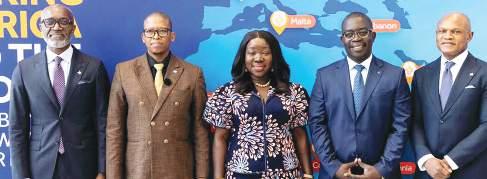
L - R: CEO/GMD, Access Bank Plc, Roosevelt Ogbonna; Minister of Trade and Entrepreneurship, Republic of Botswana, Tiroeaone Ntsima; Minister for Trade, Agricbusiness and Industry, Ghana, Hon. Elizabeth Ofosu-Adjare; Minister of
and Industry, Republic of Zambia, Hon. Chipoka
African markets.
and Executive Director, Access Bank Plc African Subsidiaries,
Kumapayi at the 2nd edition of the Africa Trade Conference held on Wednesday, in Cape Town, South Africa their national borders, and service exports, particularly in digital and business process sectors, are beginning to rise.
African brands are also establishing a stronger presence across the continent, building regional recognition and, in some cases, expanding into global markets. These developments signal a modest shift away from the continent’s historical dependence on exporting raw commodities toward a more diversified economic structure.
Technology is playing an important role in this transformation. Digital platforms are reducing friction in payments, logistics coordination, and market access, enabling businesses to navigate cross-border trade more efficiently. For smaller enterprises, especially, such platforms provide opportunities that were previously difficult to access.
Nevertheless, these gains remain uneven. Policy reforms, infrastructure improvements, and technological adoption have advanced more rapidly in some markets than in others, leaving many trade corridors across the continent underdeveloped.
Providing a broader overview of Africa’s trade environment, Tolu Oyekan of Boston Consulting Group highlighted the contrast between the continent’s economic potential and its current trade performance.
Africa, he noted, possesses several structural advantages that could support deeper economic integration. The continent has the youngest population in the world, with a median age of under 20, creating an expanding workforce and a rapidly growing consumer base.
In addition, Africa holds large reserves of critical minerals required for the global energy transition. These resources, used in technologies such as batteries, renewable energy systems, and electric vehicles, are becoming increasingly central to global industrial supply chains.
Perhaps most significantly, the continent now operates under the policy framework of the African Continental Free Trade Area (AfCFTA), the largest free trade area in the world by the number of participating countries. The agreement is designed to reduce tariffs, harmonise trade regulations, and facilitate the movement of goods across
Together, these elements provide the foundation for stronger intra-African commerce. The challenge lies in translating these structural advantages into consistent trade flows and productive regional value chains.
A recurring theme at the conference was the structure of Africa’s exports. Many economies across the continent remain heavily dependent on primary commodities such as crude oil, minerals, and unprocessed agricultural products.
While these exports generate foreign exchange, they often capture limited value within Africa itself. Processing, industrial learning, and technological development frequently occur elsewhere, where raw materials are transformed into finished products.
However, participants pointed to emerging pockets of diversification. Light manufacturing is expanding in selected industrial corridors, regional food processing industries are gaining momentum, and pharmaceutical production capacity is gradually developing across several African markets.
These trends remain modest in scale, but they indicate the early stages of a broader industrial transition, one that could gradually anchor more value creation within African economies.
Infrastructure deficits continue to present a major constraint on African trade. According to Kennedy Mbekeani of the African Development Bank, limited transport networks, energy supply gaps, and inefficient logistics systems raise the cost of moving goods across the continent.
Many governments face fiscal constraints that limit their ability to finance large infrastructure projects through public expenditure alone. As a result, mobilising private capital has become increasingly important for closing Africa’s infrastructure gap.
Yet some participants argued that the relationship between infrastructure and trade is more dynamic than often assumed.
Rather than waiting for perfect infrastructure before expanding commerce, rising trade volumes can themselves attract investment by demonstrating the commercial viability of transport corridors and logistics hubs.
Against a backdrop of geopolitical tensions, supply chain disruptions, and shifting global trade patterns, the conference emphasised the strategic importance of strengthening commerce within Africa itself.
Greater intra-African trade could enable firms to scale production, deepen supply networks, and build regional competitiveness before entering global markets. Economic projections suggest that full implementation of the AfCFTA could significantly increase exports across the continent, raise incomes, and reduce poverty over the coming decades.
Yet speakers repeatedly stressed that trade agreements alone cannot deliver these outcomes. Implementation, through financing platforms, payment systems, logistics corridors, and regulatory coordination, is what ultimately transforms policy frameworks into commercial activity.
By the close of the conference, one conclusion had become clear: Africa’s trade transformation will depend less on new declarations and more on coordinated execution.
Platforms like the Access Bank Africa Trade Conference are intended to bring together the institutions capable of driving that execution, from policymakers and financiers to manufacturers and entrepreneurs.
For Ogbonna, the task ahead is straightforward but demanding. Africa must move beyond discussions and begin translating its economic potential into tangible trade flows.
“This conference must not end as another talking shop,” he told participants.
If the deliberations in Cape Town are any indication, the continent’s trade debate is gradually moving from aspiration toward implementation. The vision for African economic integration has long existed. The challenge now lies in generating the velocity required to make it real.

opinion@thisdaylive.com
Abig milestone is afoot in Bayelsa State. It is coming at a time when a fresh but fierce urgency about solid governance and development is being forced upon Africa, if we read the tea leaves. It is worth anticipating, if only to defeat the notion that, beyond extravaganza, marking history as a collective springboard unto greater heights is hardly a Nigerian thing.
No average Nigerian remembers any meaningful way in which the country utilized its centennial anniversary in 2014 to reimagine itself or instigate some lofty national ambition. The year before, the centenary of Port Harcourt’s founding by Lord Lugard, who supervised the joining of Northern and Southern Nigeria, also missed a chance to use history as a spur to explore new horizons. There was some pageantry in PH, to be fairbesides which, zilch!
Roughly 30 weeks from now, Bayelsa State will be 30 years since it was birthed by the goggled General, Sani Abacha. At its creation on Tuesday 1st October 1996 to wild jubilation by its long-yearning people, there were barely two or three petrol filling stations in the capital town, Yenagoa. The disheveled head office buildings of the then Yenagoa Local Government Council became a makeshift Governor’s office quicker than a mum fixes her famished kids a hotplate.
On the day the first Governor, Navy Captain Phillip Ayeni, arrived, indigenes trooped in from all over the state and especially from Port Harcourt, their former State’s capital, to receive him. Many volunteered time, money, and materials to make things manageable for the moment. The patriotism was palpable, the excitement could be sliced.
It is just as well that in a weeks’ time, on Saturday, 21st March, one of the State’s first two cabinet commissioners (Engineer Numoipre Will), both of whom transited from the same offices in the dear old Rivers State, will be unveiling a book he authored on the origin story of Bayelsa. The most distinguished personage yet from the State, former President Goodluck Jonathan, is billed to chair the event, fittingly.
The emergence of Jonathan as President is perhaps the sharpest symbol of the most
poignant dividends so far of the State’s creation: identity, political recognition, and a certain sense of endearment from fellow countrymen across the country. There’s something indefinable about Bayelsa that Nigerians can’t hide their affection for.
Far more than 30 other things have been gotten right or nearly. The “three senatorial roads”, a recurrent promise by every successive civilian administration in the State to link major sea-bounded towns in the three senatorial zones, are finally taking form, for example, the Ekeremor Road.
The Senator Douye Diri administration is on its way to installing a 60-megawatt Gas Turbine. Starting with the Niger Delta University inaugurated by the first civilian governor, Chief D S P Alamieyeseigha, the state currently hosts five universities, including a medical university converted from an abandoned hospital project, the University of Africa which stemmed from controversial ownership origins, and a private university. A befitting secretariat for the civil service is finally under construction.
When armed militancy pulverized oil production and threatened to paralyze Nigeria’s public treasury, it was largely thanks to three sons of Bayelsa State at top echelons of federal and state leadershipamong them then Governor Timipre Sylva and Timi Alaibe, MD of NDDC at the time - that an armistice was brokered, resulting in the Amnesty Programme for the Niger Delta.
A nationally impactful institution for building Nigerian content in the petroleum industry has been headquartered in Yenagoa since its inception 16 years ago, though its impact is still too little felt in host communities. Though the law enacting it was anchored by actors like Temi Harriman in the National Assembly, Goodluck Jonathan cannot escape credit for catalyzing it in his time as Vice President and later President.
What history can be complete without vanity and prestige projects? Bayelsa has a fair share already into the future. From the high-rise carcass of an uncompleted hotel standing as a Tower of Reproach, to an attempted recreation of the Acropolis in Bayelsa’s Government House, and a highcost but low-use airport (now followed by a reported state-owned airline), the list goes on.
However, there are simple initiatives that have touched populations more valuably than their modest costs foretold, such as Governor Diri’s ongoing flood mitigation works in Yenagoa through the reopening of natural watercourses and building of pilot flood shelters. Still, Bayelsans are earnestly yearning for more, much more indeed.
A clash of buzzwords is causing global and local shocks. Ongoing geopolitical explosions brought live to us onscreen. Chaos in supply chains. Disruptions imposed by climate change, despite powerful forces disrupting the energy transition. Spiralling national security emergencies resulting in daily mass mortalities. Ultra-nationalism in the Western world. Great power flexing (Trump, Xi, Putin and Europe) and the sudden probability of brazen recolonization in whatever guise (beyond benign neocolonialism) of weak polities – read Africa. Except that these are realities, not mere buzzwords. With stark collateral consequences for the innocent.
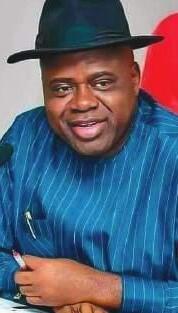
Piling these on top of pre-existing pressures for aggressive development adds to the weight of history on the shoulders of Governor Douye Diri, in a setting where every serious subnational must look beyond worsening national failures to work out its own salvation. Prosperity being the theme he freely chose to christen his tenure, it falls on Governor Diri, aided by his mint-fresh Deputy Governor Peter Akpe, to urgently accelerate the foundations for building the required resilience and desired prosperity in Bayelsa State. Thus will he seal his legacy in gold.
The inescapable starting point is to commission the production of an integrated socioeconomic masterplan, perhaps a Bayelsa 2026–2056 Masterplan projecting into the next 30 years. That blueprint has to be designed and driven with laser clarity of vision, bold ambition, unmistakable executive will and fiscal discipline, in deliberate synergy with development partners.
It’s all down to initiative and orchestration. Partners abound for the right visions: planning institutions, a whole breed of Bayelsa eggheads scattered around the world, often unseen on the State’s radar, and development finance institutions like AfDB, AFC, and Afreximbank.
Other platforms include impact funds and investors, sector-specific provisions such as the Nigerian Content Intervention Fund, Bank of Industry schemes for creatives (Nollyfund, etc), the NIMASA cabotage vessel finance facility, and the new African Energy Bank, facilitated in no small measure by Petroleum Minister Heineken Lokpobiri, a Bayelsan for that matter.
The capital market, currently superintended by another Bayelsan, Dr Emomotimi Agama, as head of the sector regulatory body, offers possibilities too, and turbo-charged industrialists like Dangote and Elumelu are steadily scouting
for conducive climates to enact economic history from. Governance champions like the Mo Ibrahim Foundation and Aigboje’s African Initiative for Governance (AIG) are also plausible partners, depending on the social value proposition.
The Niger Delta Development Commission (NDDC) is a potential prime partner, exactly because it is designed as an anchor for coplanning and co-development. Poetically, the agency is led by a fairly young Bayelsan, Dr Sam Ogbuku, who is leading it to light up the Niger Delta with solar power. Until recently, NDDC seemed poised to progress a regional development Masterplan, into which any serious member state can plug. That opportunity may be lost to Bayelsa under Diri if NDDC doesn’t revive and complete the process this year. Pending NDDC’s readiness, the State needs to press on regardless. Additionally, the BRACED Commission, a repository of planning data, must be incentivized as a partner.
Besides producing a proper roadmap, there are more than 30 other initiatives the Bayelsa State Government and partners can implement before the State turns 30. Tops is the long-overdue implementation of the Bayelsa State Oil and Environmental Commission (BSOEC) Report, to resolve and redress the well-documented environmental degradation inflicted by the petroleum industry.
Long-term sustainability and human security for communities depend on this. The Governor can appoint a Special Counsel on Environmental and Climate Justice to coordinate proposals and position Bayelsa as a continental hub for climate action. Suitable heads include Anthony George-Ikoli (SAN), Boma Alabi (SAN, OON), Professor Engobo Emeseh, Tonbofa Ashimi, and Tengi Ikoli.
One of Senator Seriake Dickson’s best inventions during his tenure as Governor (2012–2020) was the Bayelsa Development and Investment Corporation (BDIC). It could have been a shining sub-sovereign wealth fund but it was quickly derailed.
Repositioning and recapitalizing BDIC under competent, transparent leadership with the stable support of the Governor could help build a robustly diversified public-private economy. Examples of a wider pool of entrepreneurs and professionals to lead and constitute its Board include Gesi Asamaowei, Amagbe Kentebe, Timi Alaibe, Omeremu Omuso, Pattison Boleigha, Thelma Ekiyor, Prof Steve Azaiki, Dr Oton Efebo, Dr Ginah O. Ginah, Dr Azibapu Eruani, Elaye Otrofanowei, Eugene Abels, Dr Youpele Banigo, Warmate Idikio, Ms Timi Wolo, and Dr Edward Agbai.
Yenagoa has an earmarked Commercial and Industrial Layout, but no industries. It should be BDIC’s remit to get that layout productive with factories and warehouses.
As the new Secretariat Complex gets underway, there is a crying need to reprofessionalize and retool the Bayelsa Public Service, including introducing living wages by all legitimate means possible. Fortuitously, two Bayelsa women stand out as possible mentors or honorary advisors for the purpose: Dr (Mrs) Timi Koripamo-Agary and the present Head of Service of the Federation, Mrs Didi Walson-Jack.

Editor, Editorial Page PETER ISHAKA
Email peter.ishaka@thisdaylive.com
Following last November’s attacks by Boko Haram and the Islamic State West Africa Province (ISWAP) which led to the killing of the commander of 25 Brigade in Damboa, Brigadier General Musa Uba, we raised some pertinent concerns. While we acknowledged a noticeable upscale in operational activities of the military that has led to the killings of many insurgents and the destruction of their camps, we drew the attention of military authorities to the growing threats posed by these terror affiliates. As things stand today, the insurgents seem to be becoming increasingly more audacious. Authorities in the country must respond to these renewed threats.
In the last two weeks, Boko Haram and ISWAP members have attacked communities and military locations in Ngoshe, Kukawa, Marte, Gwoza, and Konduga, all in Borno State. In these attacks, the military has lost some highranking personnel, including three commanding officers, several arms and ammunition as well as operational vehicles. Indications from some of the attacks point to the issue of sabotage. There are unconfirmed reports that some people within the communities deliberately pass information on troops’ movement to the insurgents. Such an act is not only unpatriotic, but it also amounts to undermining national security and putting innocent people in harm’s way.
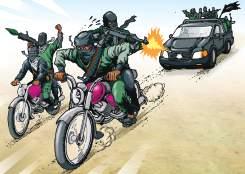
area or geographical zone instead of the present piecemeal approach that is becoming increasingly ineffectual.
Human intelligence remains a fundamental and reliable source of information that provides context, nuance and local insight which would help to identify in time the intention of the insurgents, their movements and networks. But the military must also invest more on their intelligence gathering capability to aid situation awareness. With the right intelligence, the military would be able to strike deep into insurgents known abode and prevent them from attacks on their locations as it happened recently.
Government must support the military in the acquisition of modern and advanced weapon systems that could be deployed to destroy the insurgents far in their locations
SUNDAY NEWSPAPER
editor DAviDSoN iRiekpeN
deputy editors FeSTUS AkANBi eJioFoR ALike
Managing director eNioLA BeLLo
deputy Managing director iSRAeL iwegBU
chairMan editorial Board oLUSegUN ADeNiYi
With recent losses, questions are being asked about whether the Nigerian armed forces have the right capabilities to drive their strategies for force protection. In the war between the United States/Israel and Iran, for instance, the world is seeing the use of military technologies that keep their personnel away from direct contact with the adversary. We therefore call on the federal government to support the military in the acquisition of modern and advanced weapon systems that could be deployed to destroy the insurgents far in their locations, making it easy for ground troops to exploit and mop up while ensuring force protection.
For a military whose personnel make huge sacrifices in offering protection to these communities, the least the people could offer in return is to provide information to the troops. The federal government, working with the authorities in the affected states, must act quickly on this and warn that those involved in such acts would be treated as traitors who must be made to face the full wrath of the law.
We join the military and the nation in mourning the loss of these gallant officers. But the sinusoidal nature and pace of operational activities to defeat insurgency in that part of the country suggests an urgent need to re-strategise. It’s time the reactionary mode of operation gave away to proactive one, and more importantly, done in a massive manner in an
editor nation s capital iYoBoSA UwUgiAReN the oMBudsMan kAYoDe koMoLAFe
THISDAY NEWSPAPERS LIMITED
editor-in-chief/chairMan NDUkA oBAigBeNA
group executive directors eNioLA BeLLo, kAYoDe koMoLAFe, iSRAeL iwegBU divisional directors SHAkA MoMoDU, peTeR iwegBU ANTHoNY ogeDeNgBe
deputy divisional director oJogUN viCToR DANBoYi snr. associate director eRiC oJeH
associate director pATRiCk eiMiUHi controllers ABiMBoLA TAiwo UCHeNNA DiBiAgwU, NDUkA MoSeRi director, printing production CHUkS oNwUDiNJo to send eMail: first name.surname@thisdaylive.com
But there is also the fierce urgency of the moment. The loyalty of the populace at the grassroots is now in contention. Many of them see the contest as one between the insurgents and the government. With that, they are challenged to choose between instant benefits offered by the insurgents and the lasting benefits of patriotism offered by the government. With that also, human intelligence to combat the insurgency becomes a matter of beneficial choice. Government in the susceptible areas need to do more to power the patriotic spirit of the people so that they can identify with and provide human intelligence to security forces to enhance operations. We also need to invest more in the welfare of those whose intelligence and cooperation our military will need to defeat insurgency. We cannot separate good governance from national security.
Letters in response to specific publications in THiSDAY should be brief(150-200 words) and straight to the point. interested readers may send such letters along with their contact details to opinion@thisdaylive.com. we also welcome comments and opinions on topical local, national and international issues provided they are well-written and should also not be longer than (950- 1000 words). They should be sent to opinion@thisdaylive. com along with the email address and phone numbers of the writer
In the complex architecture of nationbuilding, there is a structural layer often overshadowed by the binary tug-of-war between the State and the Private Sector. This is the realm of civic engagement, a space where the moral and intellectual soul of a developing society is forged. In the Nigerian context, particularly across the subnational landscapes of the North, we have reached a critical saturation point. The traditional models of patronage and ad-hoc philanthropy, while historically significant, are no longer sufficient to carry the weight of our 21stcentury aspirations. We are currently facing a leadership deficit that cannot be solved by elections alone; it must be addressed through institutionalised
mentorship.
The primary role of a civic organisation is not merely support; it is social engineering. When we talk about leadership development, we are talking about the creation of a strategic succession pipeline. For too long, leadership in our climes has been a product of accident rather than design. By establishing organisations dedicated to capacity building and value-based engagement, we are essentially building a laboratory for the next generation of administrators, thinkers, and patriots.
Sustainable development is, after all, a bottom-up endeavour, built by people, for people. This philosophy is precisely what drives the Bala Wunti Support
Organisation (BWSO) in Bauchi State, serving as a blueprint for how we must shift the psychology of the youth from dependency to responsibility. We must move from a culture of asking what can be done for us, to a culture of defining what can be built by us. This transition requires a deliberate infrastructure, one that provides the tools for civic responsibility and community cohesion.
The ultimate measure of these organisations is not found in the frequency of their activities, but in the values they embed within the fabric of society. Trust, integrity, and innovation are not merely corporate buzzwords; they are the tectonic plates upon which a stable society rests. When a civic
organisation unifies young people under a single umbrella of purpose, it creates a formidable shield against social fragmentation and political apathy.
As we look toward the horizon, the message remains clear: the strength of our democracy will be determined by the resilience of our civic institutions. We must prioritize the building of people, for when a generation is empowered with the right values and leadership capacity, the future of the nation becomes not just a hope, but an inevitable certainty.
Mukhtar Jarmajo is the CEO, Bala Wunti Support Organisation
Vanessa Obioha
Hollywood’s biggest night is here, and many eyes are on the top prizes, particularly Best Picture. The category features several strong contenders, including ‘Sinners,’ the Ryan Coogler horror flick with a racial subtext, which earned the highest number of nominations — 16. It is followed by ‘One Battle After Another,’ which secured 13 nominations.
‘Sinners’ has been widely praised not only for its bold message but also for the performance of Michael B. Jordan, who is nominated for Best Actor. Jordan recently won his first major prize at the Actor Awards for his dual performance in the vampire film, where he plays twins Smoke and Stack.
The film has also enjoyed a strong run this awards season. It took home three awards at the 2026 British Academy Film Awards, becoming the most decorated film by a Black director
in BAFTA history.
Among the Best Picture nominees, the race appears to be largely between ‘Sinners’ and ‘One Battle After Another,’ with early odds favouring the former. However, the Oscars are known for their unpredictable choices that do not always follow the expected script. Tonight may well prove to be another such moment.
The 98th Academy Awards will take place at the iconic Dolby Theatre in Hollywood, Los Angeles, with comedian Conan O’Brien hosting for the second consecutive year.
This year’s ceremony will also introduce a new category — Achievement in Casting — marking the first time the art of assembling film ensembles will be formally recognised on the Oscars stage. With star presenters including Robert Downey Jr., Anne Hathaway, Priyanka Chopra Jonas, and past winners Adrien Brody and Zoe Saldaña, the night promises no shortage of memorable moments.
Viewers in Nigeria can catch all the glamour and highlights of the ceremony on DStv via M-Net Channel 101.
Vanessa Obioha
The iREPRESENT International Documentary Festival (iREP) will kick off its 15th edition on Wednesday, March 18, 2026, at the Ecobank Pan-African Centre in Lagos. Unlike previous editions that spotlight new works, organisers say this year’s programme will look back at the festival’s journey and the films that have defined it.
The anniversary edition, themed ‘Transformation,’ will examine the transformative power of documentary filmmaking in Africa over the past 15 years.
Through conversations, screenings, workshops and training sessions, the programme will highlight the role of documentary films in shaping public discourse, influencing policy, preserving cultural memory and amplifying African voices on global platforms.
Co-founder and Executive Director of iREP, Femi Odugbemi, described the milestone edition as a special one, noting that the festival has “played a critical role in advancing documentary storytelling, discourse and skills development across the continent.”
Activities begin ahead of the main event with the festival’s Mobile Phone Filmmaking Workshop, scheduled for March 16 to 18. Organised in partnership with Ecobank, the workshop is designed for emerging storytellers between the ages of 18 and 25.
During the main festival, more than 35 documentaries previously showcased at iREP will be screened. Panels and paper presentations will also reflect on the broader theme, ‘Africa in Self-Conversation,’ while networking opportunities will bring filmmakers, scholars and enthusiasts together.
In celebration of International Women’s Day, former Miss Nigeria and lifestyle influencer Beauty Tukura partnered with luxury single-malt whisky brand The Macallan to host an intimate gathering dedicated to celebrating the achievements, resilience, and influence of Nigerian women.
The intimate event, held at The Macallan Lounge, Kaly Restaurant, Lagos, on Saturday, March 7, 2026, brought together notable personalities and cultural tastemakers, including media executives Toyosi Etim-Effiong, Denise Eseimokumoh, and Vanessa Obioha; beauty queen Doris Ogah; and reality TV star Modella Apet, among others. Their presence reflected the vibrant network of influential women and allies championing empowerment across industries.
Speaking during the event, Beauty Tukura highlighted the importance of creating intentional spaces where women can support, inspire, and uplift one another.
“International Women’s Day is a reminder of the power of community. Community is powerful. The people you surround yourself with shape how you think, how you grow, and even the decisions you make in life.”
The evening featured a curated whisky tasting session led by The Macallan brand ambassador and educator Daniel Atteh, offering the women a refined experience that celebrates craftsmanship, heritage, and timeless excellence.
Known globally for its commitment to mastery and quality, The Macallan continues to build meaningful cultural connections through collaborations that celebrate creativity and influence.
Guests enjoyed an atmosphere of elegance and camaraderie, with engaging conversations around the 2026 IWD theme “Give to Gain”, emphasising that true empowerment comes from when we pour into each other.

The Federal Ministry of Women Affairs and Social Development of the Federal Republic of Nigeria convened the second edition of the Nigerian Women’s Day celebration during the 70th Session of the United Nations Commission on the Status of Women (CSW70) in New York City, last week.
Organised under the leadership of the Minister of Women Affairs and Social Development, Imaan SulaimanIbrahim, the event brought together global leaders including In attendance was the United Nations Deputy Secretary General (UN DSG), Amina Mohammed. Also in attendance are ministers, diplomats, civil society leaders, gender advocates, entrepreneurs, artists, and members of the Nigerian diaspora for a full day of dialogue, culture, and high-level action.
The event, themed ‘31 Years of Progress, Resilience, Impact and Renewed Hope,’ marked Nigeria’s commitment to advancing gender equality on the world stage, asserting the leadership role of President Bola Ahmed Tinubu’s mandate
on women’s rights, family resilience, and inclusive development.
Chair of the Board of Directors of Women Radio WFM 91.7, Toun Okewale Sonaiya, delivered a compelling welcome address, framing the day’s agenda around women’s leadership, innovation, and global collaboration. A specially commissioned Opening Film followed, offering a visual portrait of women’s leadership across institutions and borders.
In her address, Sulaiman-Ibrahim made a call to action, drawing on Nigeria’s nine-pillar Renewed Hope Social Impact Interventions 774 (RH-SII-774) framework. She outlined the Ministry’s ambition to reach women across all 774 Local
Government Areas of Nigeria through targeted interventions in energy access, agriculture, digital inclusion, health and protection, creativity and innovation, leadership, education, child development, and family resilience.
She set out a six-point call to action for governments, development partners, and civil society, demanding greater investment, stronger coordination, and an end to the era of declarations without delivery. She explained, “Transforming women’s lives at scale requires sustained investment, strong partnerships, and coordinated action. There is an urgent need for greater investment in women and girls, both domestically and globally. Women’s empowerment is not a social programme; it is an economic strategy, a security strategy, and a development imperative.”
The highlight of the day was a high-level fireside conversation between Sulaiman-Ibrahim and Amina Mohammed, which wove together Nigeria’s national ambitions with the global gender equality agenda. Participants engaged both leaders on the most pressing challenges and opportunities facing women and
girls across Africa and the world.
Three panel sessions were held: Global Leadership, Peace & Security for Social Impact; Women, Institutions & The Economy; and Positive Masculinity. The conversations centred around women leading at the intersection of governance, peace, and global institutions, charting pathways for women’s economic leadership, and transformative dialogues exploring how men can move beyond words to become active architects of gender justice.
Speakers and participants at the second edition of Nigerian Women’s Day included the Honourable Minister of State, Labour & Productivity, Nkeiruka Onyejeocha; the National Population Commission Chairman, Dr Aminu Yusuf; the Permanent Secretary of the Ministry of Water Resources, Dr Emanso Emabong; AIG Aisha Abubakar Baju; Presidents of Officers’ Wives Associations; senior female officers from paramilitary establishments; Her Regal Majesty Olori Temitope Ogunwusi; and Andrew Mamedu, Country Director of ActionAid Nigeria. Others included Dame Pauline K. Tallen, Abosede GeorgeOgan of WILAN, Enene Ejembi, Executive Director of Verbatim
OlabiyiShittu of the Bank of Industry; Dr Anino Emuwa of 100 Women@ Davos, Mary Jandora Sinjen, Commissioner for Women Affairs and Child Development, Taraba State, Amb. Bolaji Akinremi, Dr Tony Ojukwu, Executive Secretary of the National Human Rights Commission of Nigeria, and Nigerians in the diaspora.
Internationally celebrated artist and human rights activist Laolu Senbanjo delivered a short presentation on how his art challenges stereotypes and leads social conversations. The artist performed his signature body painting, with intricate, spiritual black-and-white patterns flowing across the skin in real time. The event was equally a cultural celebration and a policy forum. Vibrant African cultural performance troupes brought the spirit of the continent to life in the centre of New York City, delivering electrifying song and dance that inspired the audience to their feet. The second edition of the Nigerian Women’s Day affirms a national understanding that the strength of any nation is rooted in the stability of its families, and that women, children, and households must be placed firmly at the centre of economic policy, social investment, and national development planning.
President Donald Trump’s policy of ‘America First’ and ‘Make America Great Again’ are manifestations of strategic autonomy per excellence. The design of ‘America First’ is preventive: that America must never be allowed to be second to any state or people in the world. In the eyes of President Trump, there was the time America was the primus inter pares (first among equals) or when America was second to none. In the contemporary world of pluripolarity, President Trump, rightly or wrongly, believes that America is no longer great and the leader of leaders, and therefore, efforts should be made, by hook or by crook, to make America return to the status quo ante of glory. This largely explains the current belligerent and interventionist attitudes of the United States under President Trump in international relations.
Most unfortunately, however, President Trump has not limited his belligerency and interventionist disposition to his immediate neighbourhood of influence. He is unnecessarily projecting U.S. influence forcefully in Africa, and particularly in Nigeria, and thus raising new critical questions on Nigeria’s bilateral cooperation with the United States. The issues and questions involved do not bother, strictly speaking, on Nigeria-U.S. bilateral common interests, but essentially on the implications of the increasing influence of China in Nigeria, particularly in terms of land acquisition and exploitation of resources in the northern part of Nigeria. Without any shadow of doubt, Northern Nigeria has been found to be playing host to strategic mineral resources, prompting the multinational companies to bring fresh investments to the region. In this regard, the United States of Donald Trump wants to partner with Nigeria in resisting the advancement of the Chinese. Making Nigeria an ally to fight China is consistent with the policy of MAGA but it directly conflicts with Nigeria’s current quest for strategic autonomy or self-reliance. Put interrogatively, under what conditions can Nigeria initiate any form of Chinese disinvestment at the instance of the U.S.?
U.S. policy attitude towards Nigeria appears to be largely driven by threats of conditionality which underlie MAGA. President Trump’s foreign policy attitude is largely driven by how to ‘Make America Great Again.’ In this regard, how should a country be made great? Should the approach be by use of force? Why is a competitive method not endorsed in making America great? There have been several reports of how critiques of the big powers were killed by poison, assassination, sponsored coups d’état, direct bombing, etc. Why should anyone be preaching the sermons of human rights and at the same time engaging in inhuman killings and kidnapping of opponents? These questions point to why there is an emerging problem that will make any NigeriaU.S. cooperation very problematic in the near future. The method of achieving the objective of MAGA is by manu militari, and therefore, illegal in technique. It involves disregard for international rule of law by fiat. It is a manifestation of braggadocio. It promotes the diplomacy of issuance of military conditionality that has the potential to threaten Nigeria’s national sovereignty.
And true enough, the second coming of President Trump has clearly demonstrated the forcefulness in the implementation of MAGA as a foreign policy. For example, hundreds of Venezuelans were killed when the U.S. launched an aggression on the Bolivarian Republic of Venezuela in an attempt to kidnap President Nicolás Maduro. The arrest of President Maduro and wife, coupled with their court trial, has not in any way eased U.S. pressure on Venezuela, or solve the unrest in Venezuela, in spite of the re-direction of the aggression to Iran.
Additionally, President Trump renamed the Gulf of Mexico and calls it Gulf of America. The renaming directly confronts the sovereignty of Mexico and poses a major confrontational challenge to the U.S. allies in Western Europe. It should be recalled that the Gulf of Mexico has existed for over 150 million years. Gulf of Mexico, which is oval in shape and over 900 miles wide, is a 1.5 million km2 miles marginal sea of the Atlantic Ocean. It is bordered by the United States (Texas to Florida), Mexico, and Cuba. More important, it is linked to the Atlantic Ocean via the Straight of Florida and to the Caribbean Sea via the Yucatan Channel. What is noteworthy about the Gulf of Mexico, is not only that it was named after Mexico by the Europeans, meaning the Land of Mexico, ‘because mariners needed to cross the Gulf of Mexico to reach that


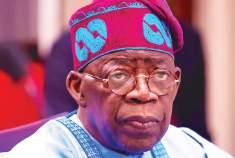
destination,’ in the words of Google, but also that the name has been the most common name since the mid-17th Century, when it was accepted as the Spanish Sea. Historically therefore, it is difficult to see where the US has acquired sovereignty over the gulf beyond the factor of its geographical nearness or contiguity to the U.S.
Whatever is the case, in 2025, the U.S. Department of Interior was directed to rename the gulf. Even if the gulf were to belong to the U.S., there is no need for renaming of the gulf by fiat. The U.S. would have done better by explaining to the world why the renaming is a necessity. The U.S. should lead the world by education and attitudinal decency. However, to show U.S. readiness for belligerency, the Department of Defence was also renamed Department of War in 2025. It is against this background that Nigeria’s bilateral cooperation with the U.S. should be explained and understood.
Before discussing the question of Chinese disinvestments in Nigeria, there are many critical issues and areas of collaboration in Nigeria-U.S. bilateral cooperation. First is the issue of how to foster national security
Thus,NigeriaisatthemiddleoftheChina-U.S.dog-fightwhichnowrequirestheapplicationoftheprincipleofstrategicautonomy.Strategicautonomyisaredefinitionoftheprinciple ofnon-alignmentwhichdoesnotmeanthatNigeriacannotorshouldnotalign.Asdefinedin 1960byPrimeMinisterAbubakarTafawaBalewa,itisNigeria’snationalinterestthatwould determinewhetherornottoalign.Thenatureofthenationalinterestcarriesalongthefreedomofchoice,freedomtoidentifywhotoalignwithandwhonottoalignwith.Inthesame vein,strategicautonomyisaboutself-preservationandself-reliance.Itisalsoaboutfreedom ofchoice.AsNigeria-U.S.bilateralcooperationhasnowbeensubjectedtoanewrequirement bytheUnitedStatesthatNigeriamustfirstrevisithertieswithChinatotheadvantageofU.S. interests,theinstantobservationhereisthattheU.S.appearstobelookingforhowtoengineeraregimechangeandremovePresidentBolaAhmedTinubu.Askingfordevaluationof thepresenceofChinacannotbutbeamountainoustask.NigeriahasaComprehensiveStrategicPartnership’withChina.Thepartnershipisdesignedtodeepeneconomicintegration, infrastructuredevelopment,andindustrialcapacity-building.Thepartnershipemphasises technologytransfer,digitaleconomygrowth,agriculturalmodernisation,economicgrowth andindustrialisation.ShouldNigeriaprefertheU.S.thatwillnottransfertechnologyor know-how?JimmyCliffoncesaid,timewilltell.Fornow,itisnotonlytime,nationalinterestandstrategicautonomywillalsotell
and bring terrorists to their knees. For various reasons, the collaboration has not achieved the objective of sustainable security. To foster national and regional security, the United States tried to convince Nigeria about the need to host the US Africa Command (AFRICOM) in the mid-2000s. The efforts failed because the politico-intellectual elite was against any foreign military base in Nigeria. By that time, the U.S. was contemplating relocating the AFRICOM from Stuttgatt, in Germany, to Africa. Some smaller countries wanted the AFRICOM but the choice of the U.S. was, and still is, Nigeria. Since there was stiff opposition to AFRICOM in Nigeria, the U.S. simply suspended the idea of relocation for ten years. Ten years of delay have come and gone again. The way forward is not yet clear.
It is on record that the U.S. has provided a lot of equipment, such as the A-29 Super Tucano aircraft to fight the Boko Haramists and the ISIS West Africa. The U.S. has also been training Nigerian military, as well as providing maritime security, but this has also been affected by the Leahy Law concerns about human rights abuse by the Nigerian security forces. To what extent can there really be any meaningful management of intelligence sharing? What about the question of humanitarian crises? Without iota of doubt, there are many areas of diplomatic and political differences between Nigeria and the U.S. Nigeria’s foreign policy is generally hostile to the use of Africa as a source of raw materials for the development of Europe but to the detriment of Africa’s survival. Nigeria’s is hostile to the establishment of foreign military bases in Africa. As the U.S. is talking about MAGA, so is Nigeria similarly talking about her own strategic autonomy in all its ramifications.
Even though the two countries operate a presidential system of government, there is no disputing the fact that they have different approaches to political governance. Their approaches to the management of migration and visa issues are also different. The U.S. often complains about the behaviour of the Nigerian military but the same Nigerian military officers are rated superbly well at the level of the United Nations. If Nigerian military is good in the eyes of the U.S. why are they not good in the eyes of the U.S. of Donald Trump? Perhaps one should also state that, in spite of the negative perception of the Nigerian military, it is important to also note that the U.S. has been providing assistance to Nigeria in the area of health and social infrastructure. The two countries have signed an MoU on a 5-year $5.1 billion health partnership. Will the current situation of the relationship be good enough to make the Chinese accept disinvestment in Nigeria? And perhaps most importantly, what is the conditionality given to Nigeria before she can truly accept the U.S. as a helper?
In understanding the relationship between strategic autonomy and Chinese disinvestment, it is useful to first understand the agreement between Nigeria and the U.S. on bilateral cooperation. First, as told in a press release by the Special Adviser to the President (Information and Strategy, Bayo Onanuga, on November 24, 2025 a high-level delegation of Nigeria, led by the National Security Adviser, Mallam Nuhu Ribadu, ‘met with senior officials across the US Congress, the White House Faith Office, the State Department, the National Security Council, and the Department of War.’
At the end of the discussions, the Washingtonian authorities showed readiness to deepen security cooperation with Nigeria, especially in terms of ‘enhanced intelligence support, expedited processing of defence equipment requests, and the potential provision of excess defence articles – subject to availability – to reinforce ongoing operations against terrorists and violent extremist groups.’ More important, Bayo Onanuga also had it that ‘both countries agreed to implement immediately a non-binding cooperation framework and to establish a Joint Working Group to ensure a unified and coordinated approach to the agreed areas of cooperation.’
As good as the understanding reached with the U.S. may be, there are many reasons explaining why Nigerians are opposed to U.S. intervention in Nigeria. First, it is on record that Nigeria and the U.S. have a Status of Forces Agreement which establishes a legal framework for cooperation since 2000. And true enough, Nigeria has been engaged in, and benefitted from, several U.S. security frameworks and financial allocations to fight terror. For instance Nigeria received about $5m from FY 2019-2023 within the framework of the International Military Education and Training (IMET); and about $500,000 to support instructor and curriculum development in various Nigerian military schools since FY 2016 within the framework of the Africa Military Education Programme (AMEP).
The unanswered question in this case is that, with the many forms of assistance to Nigeria, and with Nigeria’s membership of the TransSahara Counterterrorism Partnership (TSCTP), under which Nigeria got over $8 million worth of training, equipment, and advisory support for counter-terrorism efforts between FY 2019-2023, why is terrorism on the rise? How do we explain the fact that Nigeria purchased in 2017 twelve A-29 Super Tucano aircraft worth $497 million for the purpose of fighting Boko Haram and ISIS West Africa and there is yet to be a definite end to terrorism? Additionally, Nigeria paid in August 2025 for 12 AH-1Z Attack Helicopters at a cost of about $997 million, and yet, there is no solution to the problem of terror.
Secondly, it is observed that there has never been peace in all the countries the U.S. had intervened in, even though such cases are those of civil war while the current U.S. cooperation framework is about joint action against terror. In other words, should the U.S. be allowed to put its boots on the Nigerian soil? Allowing the U.S. in Nigeria means preparedness to condone instability as a legacy to be left behind.
Read full article online on www. thisdaylive.com
15.3.2026
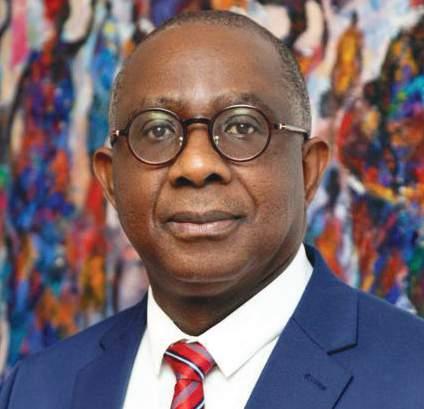
Professor Oyebanji Oyelaran-Oyeyinka is a renowned Development Economist, the first Nigerian Professor of Industrialisation, Innovation, and Technology Policy, and immediate Senior Special Adviser on Industrialisation at the African Development Bank. He was recently appointed Chairman, Ladoke Akintola University of Technology (LAUTECH) Teaching Hospital, Osun State just around the celebrations of his 71st birthday. Yinka Olatunbosun reports.
Africa’s Pioneer Development Economist in Industrialisation, Innovation, and Technology Policy, Prof. Oyebanji Oyelaran-Oyeyinka may have experienced a series of exciting moments in his lifetime but nothing truly compares with the gift of life as he turns the calendar each year. A gratifying feeling that he would only compare with when he graduated from the University of Ife and that day when he defended his PhD thesis.
“The external examiner told me: ‘Banji, this is a great thesis, it deserves to be read by a larger audience, get it published.”
He recalled as the imagery of recollections played in space between us. His mind shifted to the present, reflecting on the celebrations that often come with gifts and best wishes from family and friends.
“Reaching 71 feels both humbling and enlightening,” he continued. “Being alive is by God’s amazing grace. Personally, I am so grateful to God. Also, watching the continent’s youth confidently design, build, and export knowledge-based solutions is deeply gratifying—it represents the culmination of what many of us only dreamed of decades ago. Despite all our troubles, we have several unicorns, mostly fintech, doing remarkably well.”
As a seasoned professional in the fields of economics, innovation, and technology management, his commitment has always been to situate Africa’s transformation in a form that is knowledge-led, innovationdriven, and institutionally grounded. To be sure, his scholarship and advisory roles are geared towards helping to bridge the gap between theory and practice—between policy documents and tangible factories, startups, and research networks. That is a legacy worth leaving.
His journey towards this has been well-paved with outstanding academic performance as he would explain.
“I had First Class in Chemical Engineering as the best graduating student from the best department of Chemical Engineering at the time, I dare say, in Africa. I completed my Master’s in the same subject at the University of Toronto, which Chemical Engineering Department was ranked number three in all of North America. My switch to Development Economist was, I believe, a divinely guided move not out of an inability to continue in engineering. My professional life is a journey of periodic changes and learning new things in leadership but most satisfying. “ He was quick to recognise some of the obstacles to the nation’s development as far back as the 1980s. That period was marked by the collapse of early industrial experiments in Nigeria. He came to a realisation: national autonomous technology capacity—not raw investment dollars—was the missing piece.
“At the Ajaokuta Steel plant where I started my career, the moment the foreign contractors withdrew, construction ceased and ultimately that was the end of the project. Second, my doctoral research, which connected industrial policy to institutional learning, convinced me of the importance of adaptive governance. My thesis looked at technology acquisition in Nigeria and that working through the different factors that shape the trajectory of nations, leadership stood out as an indispensable ingredient for nation building and economic development. And third, working at the United Nations and the African Development Bank (AfDB) revealed how fragile progress can be when finance is unavailable to build infrastructure and innovation capacity; and when these are not aligned with high-skill human capital.”
It was not enough to be discerning and easily spot the challenges in the system. It was crucial to rectify them. But could he have done it alone? He figured out the two major hurdles which include justifying why a nation needs experts with strong roots in engineering and economics and addressing the problem of institutional
inertia.
“Many colleagues could not initially see how technological capability building relates to economic structure or how innovation policy differs from industrial policy. Over time, I learned to build coalitions, translate academic frameworks into actionable strategies, and show results that spoke louder than theory. Persistence and patience were indispensable.
“In the early days, a friend asked me: “You are a brilliant fellow, how will you even get a job dabbling into this thing nobody understands.” It was his way of saying that I was wasting my talent. I was fully persuaded of my mission. I ended up encouraging several young people to follow this discipline and I am glad we have several master’s and doctorate level people trained both while I was at NISER and at the United Nations UniversityInstitute for New Technologies (UNU_ INTECH), Maastricht, Netherlands.”
Those years of study eventually paid off. He would later take on advisory roles at the African Development Bank and African Continental Free Trade Area (AfCFTA).
“Academia taught me to look for patterns behind problems,” he quipped.
In policy work, that translates into identifying structural constraints rather than chasing symptomatic fixes. His background in research guided him to base recommendations on evidence and comparative learning. He sought to understand why South Korea or Malaysia succeeded and why Africa must chart its own path rather than imitate.
“Industrialisation is the engine of inclusive growth—it creates jobs, diversifies exports, and builds productive capacity. The AfCFTA provides the continental platform to scale industries beyond narrow national markets. By harmonising standards, reducing intraAfrican tariffs, and aligning infrastructure, AfCFTA can transform Africa’s 1.4 billion people into a coherent industrial market capable of attracting investment and nurturing regional value chains.”
To overcome the barriers to industrialisation in Africa, he prescribed a simple yet complex solution: building an industrial ecosystem. This means coordinated investment in power, transport, skills, and finance around specific sectors.
“No country industrialises by accident; it happens through concerted design. It happens through strong leadership,” he argued. “I will give you an example. Many people erroneously believe that countries like South Korea’s conglomerates like Samsung just evolved as a matter of accident. No. Korea’s industrialisation was built on domestically owned chaebols (small family businesses) that have become global juggernauts. A chaebol often consists of multiple diversified affiliates, controlled by a person or group. Several dozen large South Korean familycontrolled corporate groups.”
His expert view is that technology is Africa’s great equaliser—if mastered strategically. Nations must invest in infrastructure, nurture their own companies while attracting FDIs and once they have acquired sufficient technological capacities, invest in applied research that solves national challenges, deepen digital infrastructure, and industrial clusters that connect companies with investors. Equally crucial is rethinking intellectual property regimes to encourage African-created technologies while still drawing on global knowledge.
“The strategic opportunity that Africa missed is to rely almost exclusively on foreign multinationals. This dependency inadvertently supplanted national firms, and the “Technological Learning” process was lost. This is why today, roads, bridges and basic engineering projects are contracted to foreign firms,” he remarked.
For Africa to foster a culture of innovation to drive sustainable economic growth, there must be support for
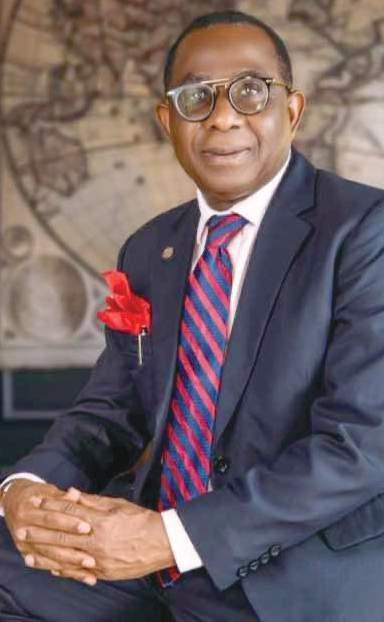
innovation. Oyelaran-Oyeyinka thinks that democratising research will open doors of opportunities as universities would become laboratories for problemsolving, not just degree factories.
Governments, in turn, must de-risk experimentation through innovation funds, startup grants, and public-private partnerships. He identified four other enablers to the nation’s economy: affordable and reliable electricity, broadband connectivity, coordinated research funding and commercialisation programmes with urban innovation clusters co-located with universities and manufacturing zones.
“Policies must shift from rhetoric to predictable funding mechanisms, so hubs don’t vanish when donor projects end. By modernising rather than abandoning traditional sectors. Agriculture, for instance, can absorb digital technologies—drones, analytics, and agro-processing—to create new value chains. The Fourth Industrial Revolution does not replace the old economy; it reprograms it. The future will be hybrid—a fusion of digital and physical production. Africa’s competitive strength will lie in agribusiness and resource-based industrialisation, powered by green technology, regional integration, and digital platforms. Innovation will define who moves from consumer to creator. We need to reflect on our past and how we ended up a failed industrial state. A future shaped by Artificial Intelligence (AI) is going to make industrial catching up very difficult.”
Away from the blue-chip
conversations, he reflected on how he balances his personal life with professional demands while staying motivated.
“Balance is never perfect, but purpose helps. Family, faith, and the mentorship of young scholars give me strength. Seeing progress—even incremental—reminds me why I began this journey: to prove that Africa’s development narrative can be re-written through intelligence, diligence, and audacity. My faith and family are very central. A strong family foundation rooted in scriptural principles helps steer the journey.”
A man of wit like him has a rich collection of books that have inspired him. Books by Joseph Schumpeter, Albert Hirschman, Chris Freeman, Dr. Pius Okigbo, a great Nigerian economist shaped his understanding of innovation and development while John Kenneth Galbraith influenced his attitude as a public intellectual. He revealed too that his lecturers and supervisors at the Science Policy Research Unit (SPRU), University of Sussex and Prof. Adedotun Philips, NISER, Ibadan taught him to think critically but act pragmatically.
“Philosophically, I’m guided by the idea that nations fail or succeed not because of resources, but because of choices, and leadership. I intend to devote more time to mentorship, public advocacy and writing— perhaps establishing a Pan-African Centre for Innovation Policy, Industrialisation, Technological Change and Development. I also plan to document Africa’s overlooked industrial experiments—less as nostalgia, more as instruction. And of course, I hope to spend more time with family, reminding myself that legacy lives not only in institutions, but in people.”
with KAYODE ALFRED 08116759807, E-mail: kayflex2@yahoo.com
...Amazing lifestyles of Nigeria’s rich and famous
Former Ogun State Governor and current Senator representing Ogun East, Otunba Gbenga Daniel, will mark his 70th birthday on April 6, 2026. The milestone is being celebrated with a series of events, including a book presentation scheduled for April 1 in Abuja.
The Abuja gathering is expected to attract several prominent Nigerian figures. Among those listed as special guests are President Bola Tinubu, Senate President Godswill Akpabio, former President Olusegun Obasanjo, and the Ooni of Ife. The event will also feature the unveiling of books reflecting on Daniel’s life and years in public service.
Daniel’s political journey spans decades and multiple roles. Born in 1956, he first gained national prominence as Governor of Ogun State, serving from 2003 to 2011. Today, he sits in the Senate representing Ogun East, where he currently chairs the Senate Committee on Navy.
Many of the tributes marking his 70th birthday point the light to the years he spent governing Ogun. During his administration, the state witnessed significant industrial expansion, including the establishment of major free trade zones that attracted international companies.
Infrastructure development was another focus of his tenure. Roads were rehabilitated across several parts of the state through a direct labour approach, while projects such as the Gateway AgroCargo Airport and the modernisation of Olumo Rock were launched to support tourism and economic growth.
\Education also featured strongly in his policies. His government established the Tai Solarin University of Education, widely recognised as Nigeria’s first university dedicated solely to teacher education. He also founded several ICT-focused polytechnics aimed at strengthening digital and technical skills.
Before entering politics, Daniel built a career in engineering and business, founding Kresta Laurel, a company known for elevator and lift systems in Nigeria. That background helped shape his reputation as a technocrat before he stepped into public office.
Now at 70, Daniel remains active in national politics. For many observers, the celebrations provide a moment not only to mark his age, but also to reflect on a long career that has moved from engineering to governance and now to legislative service.
President Bola Tinubu is scheduled to visit the United Kingdom from March 18–19, 2026, in what officials describe as a historic diplomatic engagement. The trip stands out because it is not just another official visit. It has been classified as a State Visit, the highest level of diplomatic reception offered by the British government and monarchy.
The last time a Nigerian leader received such an invitation was in 1989, when then–Head of State Ibrahim Babangida visited the UK. Since then, Nigerian presidents have travelled to Britain for working meetings or private engagements, but none have been given the full ceremonial status of a State Visit.
State Visits are rare events. Only a small number of world leaders are invited each year. During such visits, the guest leader is hosted by the British monarch and takes part in formal ceremonies, including a state banquet. President Tinubu is expected to stay at Windsor Castle, one of the official royal residences.
Beyond ceremony, the trip also carries practical goals. Nigeria and the United
Ondo State politics has entered a tense phase after a recent court decision involving Governor Lucky Aiyedatiwa. On March 9, 2026, the Court of Appeal in Abuja dismissed his challenge to a lower court ruling connected to a lawsuit questioning his future eligibility for the governorship.
The appeal court’s decision does not remove Aiyedatiwa from office, nor does it yet bar him from contesting future elections. Instead, it clears the way for the main case to proceed at the Federal High Court in Akure. The appellate court also ordered the governor to pay N2 million in costs.
The case centres on a constitutional debate.
Critics argue that Aiyedatiwa may already have reached the limit of how many times he can occupy the office. He first became governor
Kingdom already maintain strong trade relations worth more than £8 billion annually. Talks during the visit are expected to focus on
in 2023 after the death of Governor Rotimi Akeredolu, completing the remainder of that term before winning the 2024 election.
Some legal analysts say that if he seeks the 2028 ticket, it could amount to a third term in practical terms. They rely on Section 182(3) of the constitution, a provision designed to stop extended tenure by officials who first enter office through succession. Aiyedatiwa’s team dismisses the argument, saying the lawsuit is premature.
This legal dispute has fed a wider political narrative in the state. Critics describe the governor’s approach as “Oliver Twist politics,” suggesting an attempt to hold on to power beyond what the constitution intends.
At the same time, the administration faces pressure on governance issues. Farmers in parts of Akure North have protested rising kidnapping incidents, arguing that insecurity is affecting their livelihoods. Civil society groups have also questioned certain spending priorities, including new political appointments and proposed infrastructure projects.
Within the ruling APC, some observers say internal tensions are growing. They point to complaints that political influence is being concentrated around the governor, raising concerns about party unity.
For many Ondo residents, the issue is now larger than one court case. The coming months
investment, infrastructure development, and the future of Nigerian financial institutions operating in Britain.
Other discussions will address security cooperation and migration. Both countries are looking to strengthen collaboration on intelligence sharing and tackling organised immigration crime. Cultural ties are also on the agenda, with plans for agreements that could expand cooperation in music, film, and the creative industries.
Economic matters closer to home will also appear in the talks. British and Nigerian officials are expected to discuss infrastructure projects, including the renovation and modernisation of Lagos ports, which play a key role in the country’s trade.
The visit has drawn mixed reactions among Nigerians. Supporters see it as evidence that Nigeria remains an important global partner and that Tinubu’s reforms are attracting international attention. Critics, however, question the timing, pointing to economic hardship and high inflation at home.
Tinubu is also expected to meet members of the Nigerian diaspora in London. For many observers, the visit represents a reminder of Nigeria’s long ties with Britain and a chance to shape new economic and political cooperation.
will determine whether the legal challenge fades away or evolves into a defining political battle over the future leadership of the state.
Each year, Forbes releases a list of the world’s billionaires. In 2026, the list includes 3,428 people whose combined wealth exceeds $20 trillion. Yet fewer than 30 of those names are Black. Among them are three Nigerians whose businesses continue to shape Africa’s economy: Aliko Dangote, Abdulsamad Rabiu, and Femi Otedola.
At the top of that group stands Aliko Dangote. With an estimated fortune of about $28.5 billion, he remains the richest Black person in the world for the fifteenth straight year. Much of his wealth comes from Dangote Cement, the largest cement producer in Africa. His massive oil refinery in Lagos, one of the largest in the world, has also strengthened his global standing.
Abdulsamad Rabiu is another Nigerian whose fortune grew rapidly in the past year. His net worth rose sharply to about $11.2 billion, largely driven by strong performance in BUA Cement and BUA Foods. The companies benefited from a surge in share prices on the Nigerian Exchange, making Rabiu one of
the biggest gainers on the 2026 billionaire rankings.
Femi Otedola completes the Nigerian trio on the list, with an estimated fortune of about $1.3 billion. Known for his investments in energy and finance, Otedola built his early wealth through petroleum trading. Today, he controls a major stake in Geregu Power, one of Nigeria’s key electricity generation companies, and serves as chairman of First Bank’s parent company.
Beyond personal wealth, these billionaires represent industries that play a major role in Nigeria’s economy. Cement supports construction and infrastructure. Food production helps meet the country’s growing demand. Energy investments are essential for electricity and industrial growth.
Globally, Black billionaires remain a very small share of the world’s wealthiest individuals. But the continued presence of Nigerians on that list shows how large-scale African businesses are beginning to compete on a global stage.
When I saw the clip, my first response was: Who is this one again? Yes, I have heard of the name Daniel Bwala and have listened to him speak so many times, but he never resonates. He sounds crass, unlettered and incoherently brutish.
So as I watched the series of annoying denials intently, I shook my head in disgust. All he should have just
PRESIDENT BOLA TINUBU: A BUILDER OF MEN?
said was:“Oh, I had made those statements from the outside, and now that I am part of the government, I have availed myself of sufficient evidence and documentation that seems to have proven my earlier assertions wrong.”
Finish. But he decided to bluff his way through, even in the face of significant evidence and concluded with“on my honour.”
Mbok, before anybody comes to beat me, let me explain. So, this debate has been going on for a bit. People have listed “all of the president’s men” who have followed him from when he was still looking for “work” in Isale Eko till date. They have proudly shown how these men have progressed from personal aides to ministers, Inspectors General of Police, senators and even vice presidents.
The president’s most voracious supporters have thrown this up as one of the critical positives of a leader like Tinubu, often ending it with the sobriquet that he builds people
Now this debate has been reignited with the president’s appointment of Tunji Disu, who happens to have been his ADC - if I am correct – when he was governor as the IGP.
In fact, there is a picture of Mr. Disu, Egbetokun, who was Tinubu’s CSO and made Inspector General of Police, and Tayo Ayinde, who they say was his DSS orderly and now Governor Sanwo-Olu’s Chief of Staff, as further evidence. By the time you add Fashola, you have a strong argument, abi?
Well, another school of thought would have none of that. That school says that what is actually happening is banditry in another sense. That it is the coming together of “men” with shared interest and an undying need to protect the interest, which builds loyalty, hence the urgent need to stick together, since they are all on the same journey.
This argument continues: leadership is the ability to find talent at every point, groom it and empower it. That statesmanship is the willingness to be open, offer equal opportunity and be expansive in seeking broad-based skills
Which yeye honour? You had just thrashed what little home training your parents gave you on an international platform.
As if that was not enough, he came back with more spurious claims – oh, they didn’t tell me they were going to go to my past, oh, they edited out some portions… mbok, the fact that this person has not been sacked baffles me. Na wa!
as you build leadership across board. That what we are seeing is not building anybody but an incestuous conclave of sworn interest, leading to an extremely closely monitored loyalty all geared towards a purpose which may not have anything to do with the common good. Mbok, where do you all stand on this matter? You can send a text. I assure you of confidentiality. Just tell me which side of the debate you stand on. Thank you.
ALI NDUME: A LONE VOICE CRYING IN THE WILDERNESS
It is looking like this gentleman is becoming like the Bible character that was said to be “crying alone in the wilderness”. In a recent interview, he was quoted as saying that the oversight function of the National Assembly was dead.
That in my mind’s eye is nothing more than stating the very obvious, and it is not today that the thing died. It had started dying from Chief Obasanjo’s time, when that one was changing Senate Presidents the way a drunk changes whores.
The fabric of the National Assembly from that time started withering and only got a certain amount of reprieve during the Bukola Saraki era, but since Buhari forced him out, the whole thing has turned into something we cannot even tell.
Don’t sha let me talk too much before they come for my head – you know these days, any small thing you say, they will use cybercrime law to come at you. Even if you say that Akpabio walks as if he has a huge boil in his bum, which is the obvious truth, you just might find yourself fighting for your freedom in a faraway gulag, and since I am not ready for that
kind of treatment, let me sha just keep quiet and be hailing the likes of Senator Ndume from the sidelines.
Senator Ndume is a man and a very courageous one at that. Speaking truth to power. Well done, sir. We are in real big trouble, na monarchy we dey look so, I tell you.
AKINWUNMI AMBODE IS OUR MAN
Do you guys remember that MKO Abiola radio jingle? “MKO is our man o!!!”
That is how we have been shouting all over Shomolu and beyond that, Ambo is our man. I just saw a very weak analysis, obviously written by someone who does not have the degrees that I have in political science, about the Lagos gubernatorial landscape. In that write-up, he gave a watery analysis of the contest, picking each potential and dissecting them. He mentioned Hamzat, the present deputy governor, called him an outsider, mentioned Abiru and also said that one too is not on ground. He then jumped to Alausa, the present Education Minister and called him wet behind the ears, and then proceeded to Gbaja and said that he was an Abuja politician. He also talked about Muri-Okunola, saying that he has yet to show interest.
He finally berthed on roughhewed Obasa and concluded that oh, he has been speaker for aeons, he delivered more votes for Tinubu, he is grassroots and all of that shakara.
I just laughed. Lagos is not a backwater state. Lagos is the fifth largest economy in Africa, Lagos is a cosmopolitan and global state, and no matter what the Oba of Lagos thinks, Lagos truly belongs to all.
This state needs experience, exposure and a leader who truly understands the smoking cauldron that is the fast pace of its economy and infrastructural needs. One thing Tinubu has done well is in getting the brightest of minds within his “cabal” to run Lagos. From Fashola, down to Sanwo-Olu, Lagos has had very credible and sophisticated hands at the level of leadership, and the results are very clear for all to see.
Ambode comes with a lot of pluses, too many to state here, but let me just say one thing – if Ambode does not emerge and win, I will go into exile. Not the Bode George type o, real exile, I tell you. Kai.
SUBOMI BALOGUN: PROUD IN PASSING
I just saw the list of banks that have met their recapitalisation targets and saw FCMB. Let me first say that I am a proud alumnus. I worked at the FCMB Group for about 16 years and fell in love with two female staff members in the course of my journey there. Anyway, that is not the story. It is the beauty of Otunba’s succession planning. In sitting down with him on the two occasions that I had the opportunity to, he talked very passionately about his vision and the succession plan that he had built into the vision.
Today, with a shareholding base in excess of 100,000, the bank is still firmly under the control of his successors even though it has admirably achieved a seamless transmission from biological leadership to a non-biological one.
The news that it has raised N500billion in new capital is a full justification of Otunba’s vision. He was truly a great man, I tell you.
In his heyday, few names resonated within Nigeria’s high society like that of Fred Ajudua. In the 1990s, Ajudua was widely regarded as one of the biggest spenders on the social circuit.
The Lagos socialite was seen as a man whose presence at any gathering instantly elevated the event’s status. His flamboyant lifestyle, generosity, and larger-than-life persona made him a familiar figure in elite social circles across Lagos and beyond.
Musicians, especially well-known stars from the Fuji and Juju genres, adored him and sang his praise to the high heavens. In an era when live performances were the heartbeat of Lagos nightlife, many artistes competed for the opportunity to perform at events where Ajudua was present.
It was common for musicians to compose spontaneous praise-songs in his honour, celebrating his generosity and influence. In return, they were often lavishly rewarded, sometimes receiving generous cash gifts that further cemented his reputation as a free-spending patron
of the arts.
But the story of Ajudua would later take a dramatic turn. For nearly two decades, the ‘once-celebrated big boy’ in Nigeria’s social circle has been entangled in a protracted legal battle. He has been standing trial over allegations of fraud brought against him by the Economic and Financial Crimes Commission (EFCC).
Prosecutors allege that he defrauded a Palestinian businessman, Zad Abu Zalaf, of $1,043,000 under false pretences.
The case has since become one of the most prolonged legal battles in Nigeria’s judicial history. Over the years, it has been marked by multiple appeals, changes in judges, and repeated legal arguments that have slowed the trial’s pace. Each time it appears that the matter may be nearing its conclusion, another legal twist emerges.
In the latest development, Mojisola Dada, a judge of the Lagos High Court, adjourned the case indefinitely, adding yet another chapter to a legal drama that has stretched across more than twenty years.
For many observers, the lingering question remains the same: when will the
long-running court battle of Fred Ajudua finally come to an end?
In the fiercely competitive arena of oil and gas, authority is not bestowed— it is earned. And over the years, Chief Tunde Afolabi has earned his place at the commanding heights of his chosen field.
With a career shaped by strategic precision and operational mastery, Afolabi has distinguished himself as more than a mere participant in the industry. He is a tactician who understands the intricate mechanics of exploration, production, asset management, and market dynamics.
The oil titan has consistently demonstrated the ability to anticipate market shifts, align with regulatory realities, and position his enterprise for sustained competitiveness.
What makes Afolabi’s influence particularly compelling is the balance he strikes between ambition and prudence. He is bold in expansion yet meticulous in execution, ensuring that growth is sustainable rather than speculative. Such calculated leadership has solidified his reputation as a formidable force in the sector. In commanding his chosen field, the legendary oil player embodies a broader story— the rise of indigenous expertise asserting itself confidently on the global stage.
It was gathered that AMNI recently took delivery of a drilling rig at the Okoro Field. This marks more than the start of another offshore campaign for the oil company. It represents a defining operational milestone and a broader statement about the growing capability, capital strength and ambition of Nigeria’s indigenous oil and gas operators.
As revealed, the Okoro Field, located in OML 112 offshore Nigeria, has long been a cornerstone asset in AMNI’s portfolio. With a plan to produce approximately 12,000 barrels of oil per day, the company will further strengthen its contribution to the national energy supply while positioning itself for sustainable growth into the next decade.
Though he was born with a silver spoon tightly fitted in his mouth, Dumo Lulu-Briggs has never allowed privilege to become a comfortable excuse for complacency. Instead, he has spent much of his life demonstrating that true relevance is earned not merely through inheritance but through intellect, discipline, and a relentless drive to make meaningful contributions.
As the son of the late business magnate and philanthropist, O.B. LuluBriggs, Dumo grew up within the aura of immense wealth, influence, and prestige.
The Lulu-Briggs name is synonymous with enterprise and philanthropy in Nigeria, particularly in the oil and gas sector, where the family built a formidable legacy through the Moni Pulo Group. For many in such circumstances, the temptation might be to live comfortably on the foundations laid by a successful parent. But for Dumo, that path was never appealing.
From an early stage, Dumo showed a keen intellect and a curiosity that set him apart. Those who have followed his Lulu-Briggs
For Prince Samuel Adedoyin, fondly known as the Prince of Commerce, the journey has never been about noise — it has always been about vision, discipline and quiet determination.
The Kwara State-born entrepreneur is not only celebrated for his business acumen but also for his enduring love for humanity — a trait reflected in his philanthropy, support for education and commitment to job creation. His impact extends beyond balance sheets; it is etched in communities and in the lives of those empowered by opportunity.
In his 90 years, the business titan has empowered individuals, communities and institutions alike.
Prince Adedoyin donated a multimillionnaira, state-of-the-art Information and Communication Technology building to Lagos State University (LASU). The facility, often referred to as the “Town-to-Gown” building, is designed to enhance digital literacy, expand access to technology, and strengthen academic capacity, equipping students with the skills required in today’s digital economy.
journey often remark that his brilliance is matched by a deep sense of responsibility— an understanding that legacy must be nurtured, protected, and expanded.
Rather than relying solely on inherited structures, he has sought to strengthen and modernise them, bringing fresh perspectives to business leadership while at the same time maintaining the values that built the family empire.
His career has reflected a deliberate effort to combine business acumen with a broader vision for society. As a businessman, he has been actively involved in sustaining and advancing the family’s corporate interests, ensuring that his father’s enterprises continue to thrive in an increasingly competitive and complex economic environment.
But beyond the boardroom, he has also shown interest in public affairs and governance, believing that those privileged by society must contribute to its progress.
Today, his story serves as a reminder that while privilege may open doors, it is character and hard work that keep them perpetually open.
Over the years, he has funded scholarships for indigent students, particularly in his home state of Kwara, enabling countless young people to access education that would otherwise have remained out of reach.
He also initiated the development of a College of Nursing Sciences in Agbamu, Kwara State — situated beside a general hospital he previously donated — a strategic investment aimed at improving healthcare training and expanding medical services in the region.
Adedoyin also built 16 kilometres of road from Agbamu to Iludun to ease movement and assist motorists who had long groaned over the bad road. Not done, he also built a modern police station for his community in Agbamu, Kwara State.
In recognition of his remarkable contributions to commerce, industry and national development, Prince Adedoyin will, in a few days, receive a prestigious Lifetime Achievement Award from Vanguard Newspaper — a fitting tribute to a man whose legacy has been built quietly, steadily and enduringly.
Time bends differently around some lives, and Princess Oyin Adeyemi moves through it with a rhythm uniquely her own. Each year she completes is not merely a passage on the calendar, but a chapter written in triumph, ambition realised, and visions transformed into reality. As she marks another year of life, Lanre Alfred writes that it is an acknowledgement of a life that builds empires, nurtures potential, and shapes the very landscape of Nigerian enterprise and society
The woman at the centre of this unfolding narrative, Princess Oyindamola Lami Adeyemi, , the Executive Chairperson of StillEarth Holdings and Tirex Petroleum and Energy, did not arrive at prominence by accident or spectacle. A steady progression defines her story—one that began quietly in the banking halls of Nigeria before flowering into the commanding entrepreneurial arc that produced Still Earth Holdings. The poetry of her ascent radiates her glory through splendid enterprise and dedication. Interestingly, for a woman who built her straggling empire in silence, she commands the buzz of an aweinspiring titan. Unlike her billionaire peers, her emergence hadn’t the thunderclap of applause; she did not emerge with the preening of a woman eager for the spotlight. She arrived like dusk—quiet, deliberate, and majestic. Yes, just fire in her bones, vision in her soul, and the patience of a thousand storms.
In a world overrun by loud men chasing borrowed crowns, she built her own throne in silence and the world, recognizing true majesty, crowned her without being asked.
She has built, not for the applause, but for posterity. She neither preens for cameras nor courts crowds. Interviews with her are rare as eclipses. Public appearances, even rarer. Her silence is not retreat but command. She is the keeper of old codes—the British monarchy’s quiet wisdom: “Never complain. Never explain.” And yet, even in this reticence, she is omnipresent. Her works speak. Her legacy echoes.
She has shown us that influence does not require noise. That dignity can wear the crown of wealth without losing its soul. That a woman can rule boardrooms and bend markets without selling her humanity on the altar of excess.
While every anniversary often begins with candles and cake, the story of Adeyemi resists such small containers. Time has fashioned her life into a wide narrative of discipline, and imagination. Years gather around her like loyal sentinels, each bearing witness to another phase in the evolution of a woman who turned still ground into fertile territory for ideas.
Adeyemi’s entrepreneurial narrative also reflects a personal commitment to mentorship and inspiration. Young professionals entering the workforce frequently encounter her advice through speeches, interviews, and corporate initiatives. She speaks with candour about the habits required to build meaningful careers.
“Nothing comes easily or by chance,” she said, echoing the words of American author Robert Collier that success arises from “small efforts repeated day in and day out.” Discipline, resilience, and consistency therefore form the backbone of professional growth.
Those values have shaped the broader mission guiding Still Earth Holdings. Adeyemi defines the company’s purpose in language that emphasises national development as strongly as corporate profit. “We create impactful solutions that drive economic empowerment,” she explained in her features with Forbes Africa.
Observers often interpret her work as a form of modern nation-building conducted through private enterprise. Roads connect communities. Energy projects sustain industrial growth. Financial institutions empower entrepreneurs. Each initiative contributes to a larger narrative about Africa’s capacity to shape its own economic destiny.
Adeyemi herself remains cautious about grand declarations. She prefers to focus on the practical work required to transform ideas into functioning systems. Projects must begin with feasibility studies, funding arrangements, engineering plans, and regulatory compliance. Vision thrives only when supported by rigorous execution.
Leadership in her case unfolds without theatrical flourish, expressed instead through methodical action and disciplined strategy. Few entrepreneurs manage to leave meaningful
imprints across disparate landscapes, yet Adeyemi appears to treat each domain as another canvas awaiting transformation.
Her corporate brainchild, Still Earth Holdings, for instance, spreads its influence through a series of specialised subsidiaries. Still Earth Construction undertakes complex infrastructure projects across the country. Still Earth Capital Finance expands financial access to small and medium enterprises. Tirex Petroleum and Energy drills into the deep currents of Nigeria’s offshore resources. Amber Properties extends the group’s reach into real estate and hospitality. Together they form a network of enterprises that mirrors Adeyemi’s central philosophy: development must be holistic, inclusive, and enduring.
Her journey toward this commanding vantage point began in quieter circumstances. Banking halls offered her first exposure to the rhythms of finance and corporate discipline. Numbers moved through ledgers while ambition moved quietly through her imagination. Capital posed the earliest challenge, as it does for countless entrepreneurs. Yet persistence gradually assembled the modest resources required to begin.The company started with a modest portfolio yet carried within it a grand aspiration: to participate in the remaking of Nigeria’s infrastructure.
That aspiration soon matured into a robust engineering enterprise executing projects that stretch across the nation’s geography. Commercial buildings rose from their drawing boards. Civil engineering initiatives reshaped neglected urban corridors. Bridges, drainage networks, and highways gradually formed a catalogue of tangible achievement.
Each kilometre of asphalt manifests a story of logistics, negotiation, labour, and perseverance.
Such accomplishments invite admiration, yet they also reveal something deeper about the philosophy guiding her enterprise. Infrastructure, in Adeyemi’s view, constitutes a form of national conversation, a dialogue between citizens and the terrain they inhabit. Roads shorten distance; bridges convert isolation into opportunity; buildings create spaces where commerce and imagination converge.
To understand Adeyemi fully is to embrace mystery. She is not a woman of excess words, yet her actions are epics. Her life is a manuscript still unfolding—its lines etched in silence, its chapters turning with thunderous grace.
She is a master of perception, a seer of economic currents before they emerge. While others are guided by maps, she crafts her own compass. Where others see risk, she smells opportunity. Her success is not accidental—it is alchemical.
Where others write lines, she writes epochs. Where others chased success with spectacle, she summoned it with structure. Where others sought to be seen, she chose a quiet detour from the spotlight.
Interestingly, another frontier awaited beyond the coastline, where Nigeria’s offshore oil industry presents both immense opportunity and formidable technical challenges. Adeyemi entered that arena with the launch of Tirex Petroleum and Energy in 2019.
Observers initially regarded the move with cautious curiosity. Oil and gas remained among the most male-dominated sectors in Nigeria’s corporate ecosystem. International giants dominated exploration, while local companies often struggled to match their technical capacity. Adeyemi approached the field with the calm determination that had defined her earlier ventures.
The result proved transformative. Tirex soon emerged as one of the most active drilling contractors in the country, securing a substantial share of the offshore drilling market. Engineers, technicians, and support personnel assembled around rigs that now punctuate Nigeria’s maritime horizon.
Offshore drilling operations demand precision measured in millimetres and seconds. Equipment worth millions of dollars operates under immense pressure thousands of feet beneath the ocean surface. Adeyemi’s leadership has steered Tirex through these complexities with remarkable discipline, establishing a reputation for
reliability and operational excellence.
“The oil and gas and construction sectors in Nigeria are truly male-dominated,” she acknowledged, reflecting on the environment in which she operates. “Navigating stereotypes about women’s leadership capabilities requires determination and resilience.”
Resilience has indeed become a defining characteristic of her professional journey. Each sector she enters eventually bends to her vision. Still Earth Holdings continues to expand its portfolio while aligning its activities with national development priorities.
Infrastructure delivery remains a central pillar of that strategy. “Accelerating infrastructure delivery is a priority for us,” she explained. “Our projects focus on roads and affordable housing that benefit underserved communities.”
Her leadership style reflects a similar balance between ambition and discipline. Strategic thinking anchors every major decision. Integrity guides the corporate culture she cultivates across her companies.
“I strongly believe the keys to effective leadership are having a strong vision and strategic thinking,” she said.
Staff participation forms another cornerstone of her management philosophy. Decision-making processes within the organisation incorporate diverse perspectives, ensuring that employees at various levels contribute ideas and insights. Such inclusivity fosters a corporate environment where innovation thrives.
Success, she believes, emerges through sustained effort rather than sudden inspiration. Young professionals listening to her advice often encounter a blueprint forged through lived experience. Clear vision, disciplined work ethic, resilience in the face of obstacles; these qualities form the bedrock of achievement.
The message resonates especially strongly for young women aspiring to leadership within sectors traditionally closed to them. Adeyemi’s career demonstrates that perseverance and competence can dismantle barriers once assumed to be permanent.
Her ambition extends beyond personal success. She speaks often of legacy, an enduring structure reflecting both values and aspirations.
“My vision is of building something enduring,” she stated, summarising the philosophy that drives her entrepreneurial pursuits.
Such reflections illuminate the deeper meaning behind the celebration of her birthday.
The occasion commemorates far more than chronological progression. It marks the continuing evolution of a life dedicated to creation.
Her influence radiates beyond balance sheets and boardrooms. Adeyemi invests in minds, hearts, and futures. Through scholarships, CSR initiatives, and empowerment programs for women and youth, she nurtures the raw material of possibility itself. The heartbeat of her philanthropy echoes across sectors, blending education with advocacy, art with social transformation. Each intervention is deliberate, measured, and transformative, reinforcing that leadership is not merely the exercise of power, but the cultivation of potential. In celebrating another year of life, the world acknowledges not only the extension of her years but the exponential growth of her impact.
Her story is interwoven with the fabric of Nigeria itself. Born of Hausa-Fulani and Yoruba parentage, she embodies the nation’s multiplicity. Her education—from Federal Government Girls College, Bauchi, to the University of Abuja, and further honed at Harvard Business School—has furnished her intellect with breadth and depth, her vision with both local grounding and global perspective.
There is a stillness in Adeyemi that commands attention without demanding it. She does not perform her power; she inhabits it. Yet behind that elegance lies formidable resolve. Nigerian industries seldom yield easily to new entrants, particularly women determined to rewrite the terms of engagement. Adeyemi’s ascent therefore carries the quiet thrill of a cultural shift. She navigates spaces where men long defined the rules, introducing a leadership style that blends intellectual precision with emotional intelligence.
For admirers and observers alike, the meaning of her birthday becomes clear. Time has granted another cycle to a woman who treats creation as a calling and excellence as a habit. Yet the most enduring tribute arises from the evidence of lives touched by her work. A young engineer who discovered confidence on a Tirex platform. A market trader whose enterprise expanded through a modest loan. A student whose scholarship unlocked the doors of higher education. Their collective gratitude forms a chorus echoing beyond formal celebrations. The earth sings Oyin again. Another year answers the call.
Banks, mobile money operators, international money transfer operators and other financial institutions in Nigeria are required to deploy automated anti-money laundering (AML) systems under new baseline standards issued by the Central Bank of Nigeria (CBN). The CBN under its Governor, Olayemi Cardoso has strengthened financial crime detection and compliance mechanisms across the sector. The move is expected to boost investors’ confidence and foreign capital inflows to the domestic economy.
Automation is at the centre of sustainable and thriving business systems across the world. And when it comes to financial crimes prevention and controls, automation makes it seamless and builds stakeholders’ confidence in the financial system.
That explains the new move by the CBN under the leadership of its Governor, Olayemi Cardoso to firm-up anti-money laundering (AML) controls around banks, Fintechs and other financial institutions.
The CBN’s new guidelines strengthens framework for implementing automated AML, Combating the Financing of Terrorism (CFT) and Countering Proliferation Financing (CPF) solutions.
The overall purpose is to improve the ability of financial institutions to detect and report suspicious transactions in real time.
In a circular, co-signed by CBN Director, Banking Supervision Department, Akinwunmi, Olubukola and Olubunmi Ayodele-Oni of the CBN Compliance Department, said the new standards are designed to enhance compliance with existing AML, CFT and CPF regulations while encouraging the adoption of emerging technologies to strengthen financial crime risk management.
Likewise, the implementation of the guidelines takes effect immediately from the date of issuance, with financial institutions expected to begin deploying automated systems to support transaction monitoring and regulatory reporting.
Under the new framework, deposit money banks have been given an 18-month deadline to fully comply with the requirements, while other financial institutions, including fintech companies and payment service providers, have 24 months to complete implementation.
The CBN also directed all affected institutions to submit detailed implementation roadmaps to its Compliance Department within three months of the issuance of the circular, outlining how they intend to transition to the new automated AML systems.
Experts said the move is intended to improve the speed and accuracy of detecting suspicious financial activities and reduce the risks of money laundering, terrorism financing and proliferation financing within the Nigerian financial system.
The Automated AML systems typically use advanced analytics, data monitoring tools and artificial intelligence to track large volumes of transactions, flag unusual patterns and generate alerts that can be investigated by compliance teams.
The baseline standards will support financial institutions in deploying such technologies in a structured manner while ensuring that their systems align with regulatory expectations.
The CBN disclosed that it will continue to monitor developments within the financial system and may issue additional guidance where necessary to ensure effective implementation of the new framework.
“All stakeholders are required to ensure strict compliance with the guidelines and all other regulations,” the circular stated, noting that the measure forms part of the CBN’s broader efforts to promote financial system stability and integrity,” it said.
Nigeria’s Milestones in Strength- ening AML/CFT
The Financial Action Task Force (FATF) recently removed Nigeria from its grey list of countries with money laundering and terrorist financing risks.
Commenting on the announcement, Cardoso, said: “The FATF’s decision to remove Nigeria from the grey list is a strong affirmation of our reform trajectory and the growing integrity of our financial system it reflects a clear policy direction and the coordinated efforts of key national institutions working together to deliver sustainable, standardsbased reforms. Our priority now is to consolidate these gains, ensuring that compliance, innovation, and trust continue to advance hand in hand to reinforce financial stability and strengthen Nigeria’s global credibility.”
The FATF Leads Global Action to Tackle Money Laundering, Terrorist and Proliferation Financing
The 40-member body, which has the backings of the World Bank Group and International Monetary Fund (IMF) sets international standards to ensure national authorities can effectively go after illicit funds linked to drugs trafficking, the illicit arms trade, cyber fraud and other serious crimes.
For Nigeria, exiting FATF grey list,
opened her potential in the global financial markets. The FATF leads global action to tackle money laundering, terrorist and proliferation financing.
The 40-member body, which has the backings of the World Bank Group and International Monetary Fund (IMF) sets international standards to ensure national authorities can effectively go after illicit funds linked to drugs trafficking, the illicit arms trade, cyber fraud and other serious crimes.
The Paris-based watchdog’s decision represents a huge progress for Nigeria financial system as it works to restore investor confidence, reduce the cost of capital and strengthen financial system credibility.
Other countries removed from the list include, South Africa, Mozambique and Burkina Faso.
“As of February 2025, the FATF has reviewed 139 countries and jurisdictions and publicly identified 114 of them. Of these, 86 have since made the necessary reforms to address their AML/CFT weaknesses and have been removed from the process,” the report said.
FATF identifies countries or jurisdictions with serious strategic deficiencies to counter money laundering, terrorist financing, and financing of proliferation.
“For all countries identified as high-risk, the FATF calls on all members and urges all jurisdictions to apply enhanced due diligence, and in the most serious cases, countries are called upon to apply counter-measures to protect the international financial system
from the ongoing money laundering, terrorist financing, and proliferation financing risks emanating from the country,” it said. By closing gaps in regulatory oversight and enhancing enforcement against illicit financial flows, the four nations have now met the FATF’s requirements for delisting, boosting their standing among global financial institutions and capital markets.
Nigeria and South Africa were added to the list in February 2023 while Mozambique was included in October 2022 and Burkina Faso initially in February 2021.
President, Association of Bureaux De Change Operators of Nigeria (ABCON), Dr. Aminu Gwadabe, said: “The recently announcement of the Financial Action Task Force on the Exist of Nigeria from its Grey list known as Dirty money list shows Nigeria commitment in achieving the 40 FATF recommendations. The move has tremendously induced confidence, and removed tension in the financial market”.
The rapid expansion of Nigeria’s fintech ecosystem presents a strategic opportunity to drive inclusive economic growth, deepen financial resilience, and strengthen the country’s position within the evolving global digital economy.
Fintech offers a powerful mechanism for extending access to underserved and excluded populations. With mobile phone penetration far outpacing access to traditional financial services, there is a compelling opportunity to bridge the gap between digital reach and financial access.
The CBN Fintech Report themed: “Shaping the Future of Fintech in Nigeria: Innovation, Inclusion and Integrity” released recently, highlighted several persistent barriers, including limited identity verification systems, affordability, and infrastructure gaps, that constrain broader inclusion. Addressing these barriers is central to unlocking inclusive financial sector growth.
This report, developed through extensive stakeholder consultation and supported by a nationwide ecosystem survey, assesses the current state of Nigeria’s fintech environment, identifies strategic priorities, and outlines policy pathways to guide the next phase of development. The research points to a compelling opportunity: Nigeria can lead not just in adoption but in the design of the global fintech future, provided it enhances collaboration between regulators and innovators, strengthens infrastructure and policy reforms, and communicates progress with clarity.
It explained that strengthening Nigeria’s role in shaping continental standards and promoting mutual recognition frameworks could help consolidate regional leadership in Africa’s digital economy. Beyond regional integration, Nigeria is also increasingly positioned to contribute to the shaping of global digital finance corridors.
These objectives, it said, underscore not only ecosystem priorities but also Nigeria’s opportunity to enhance its international standing by demonstrating regulatory leadership, particularly in areas like Anti-Money Laundering (AML) enforcement, consumer protection, and real-time payments infrastructure.
Cardoso said he witnessed first-hand the transformative power of digital finance to broaden economic participation, create meaningful employment, and improve the lives of millions of Nigerians. It is for this reason that the CBN is intent on seizing our nation’s unique opportunity to harness fintech innovation for national development.
“Nigeria is undergoing a rapid and significant financial evolution. Over the past decade, our nation’s fintech landscape has grown from a handful of startups into one of Africa’s most vibrant innovation ecosystems. Even amid global economic headwinds, Nigerian fintech firms continued to attract investment and drive change,” he said.
He explained that with improved stability of Nigeria’s currency and domestic economy, it is clearer than ever that financial innovation can advance inclusion at scale.
•Finidi writes from Abuja.

In her ongoing Los Angeles solo, Tonia Nneji transforms the dim, watchful evenings of Goriola Street in Lagos’s underprivileged Ajegunle into a canvas of shadow, resilience, and human presence.
Okechukwu Uwaezuoke writes
On Goriola Street in Ajegunle—long one of Lagos’s most underserved quarters—twilight creeps in with a gentle shift of rhythm. Book vendors pack away dog-eared textbooks, schoolchildren drift home, and the dusty shuffle of petty trade fades beneath corrugated awnings. By evening, another group of regulars emerges. Women gather in small, watchful clusters under the amber wash of streetlights, their movements careful and practised, shaped by long familiarity with the street’s unspoken codes. Residents know this transformation well enough to have rechristened the stretch Good Evening Street, a name tinged with Lagos irony, familiarity, and quiet judgement.
It is this shifting human landscape—part memory, part reflection—that resonates through Tonia Nneji’s solo exhibition Saints of Good Evening Street, on view at Rele Gallery, Los Angeles, USA, from February 21 to March 21. Nneji grew up in the Ajegunle/Apapa corridor of Lagos, where strict conservatism often doubles as communal scrutiny. Respectability is measured by dress, posture, the company one keeps; women inevitably carry the heavier burden. In such an environment, the phrase “girls for Good Evening Street” is less casual remark than verdict delivered in absentia—swift, final, indifferent to circumstance.
Yet the exhibition quietly challenges that reflex of judgement. Its title is a provocation: Saints. Sainthood in ordinary speech suggests spotless virtue, a life untouched by survival’s compromises. Nneji overturns that expectation. The women of Good Evening Street appear as figures navigating hardship, lives shaped by poverty, exclusion, and the relentless arithmetic of survival. Beneath this gesture runs a spiritual intuition: human worth is not measured by outward reputation but by the stirrings of the spirit, by the sincerity with which one moves through the larger laws of life. Viewed in this light, society’s quick judgements read less like moral clarity than a failure of perception.
This motif finds a literary echo in Chika Unigwe’s On Black Sisters’ Street, first published in Dutch in 2007 as Fata Morgana before appearing in English in 2009. Unigwe traces African women navigating the precarious margins of prostitution in Belgium, resisting voyeuristic scrutiny and revealing instead the chain of circumstances—economic desperation, migration dreams, strained responsibilities—that deliver her characters to Europe’s neon-lit backstreets. The novel’s unsentimental empathy earned it
the 2012 Nigeria Prize for Literature, yet its more lasting achievement is in dismantling the moral shorthand through which society judges women. Nneji’s paintings operate with a similar instinct: not to absolve or condemn, but simply—and courageously—to see.
Painted in oil on canvas, Nneji’s works do not recount the street so much as conjure its psychic atmosphere. Shadow reigns, engulfing faces until individuality flickers only in posture or gesture. In one crowded nocturne, figures cluster around a table heaped with melted candles, bottles, and plates—an uneasy banquet rendered in thick, tactile strokes that make the objects almost as alive as the bodies surrounding them. Behind, architecture rises like a cathedral stripped of ceremony, amplifying the tension between sacred and profane. Appetite and fatigue, indulgence and quiet decay hover together in the same air. The painting offers no neat moral resolution—only the uneasy, compelling sensation of human beings sharing a fragile, fleeting moment of presence.
Elsewhere, the mood softens. In “Moment of Ecstasy”, three figures drift in the cool embrace of a swimming pool, their bodies half-dissolved into water and shadow. The central figure, seen from behind, anchors the composition with sculptural calm; a red garment tied at her waist flickers against the surrounding blues like a pulse beneath the painting’s skin. Limbs blur into ripples. The tiled rim introduces quiet geometry, separating the liquid foreground from the cavernous darkness beyond. Ecstasy here is neither spectacle nor climax—it arrives as release, a slowing of time, a moment when bodies lean inward and the world recedes to the rhythm of water.
“Nosamu”, another painting, deepens this nocturnal sensibility. Figures emerge from a smoky haze, their features indistinct yet emotionally present, as if the painter were less concerned with portraiture than the atmosphere of the gathering. Thick brushstrokes carry the weight of late-night conversation and the residue of untold stories. The palette broods in shadow until sudden notes of colour—a bright yellow garment, a flare of electric blue—slice through the darkness like fragments of melody. What remains is not narrative but mood: the quiet hum of existence, rendered with tactile immediacy that pulls the viewer into its orbit.
Across the exhibition, Nneji is less concerned with the street’s moral drama than with the fragile interior worlds that endure within it.
Bodies drift between shadow and illumination, visibility and erasure. Fabrics—blue, orange, patterned, emblazoned with saints—declare
and faith, while gestures hint at lives lived, moments half-told. One
senses faint echoes of Expressionist urgency in the distorted forms, the Chaim Soutinelike swirl of brushwork, even the shadowy, isolated figures that whisper a distant kinship with Francis Bacon’s unsettling introspection. Vulnerability and power coexist: a figure in lingerie, a saintly textile, classical ghosts in the background, negotiating the tension between inner life and outward display. Humour, ritual, melancholy, and resilience pulse in the brushwork; a nocturne of bodies, desire, and identity that feels immediate and eternal.
To a viewer standing before these works in Los Angeles, Good Evening Street begins to feel less like a particular Lagos location and more like a symbolic threshold. On one side stands the crowd with its swift verdicts, eager to sort virtue from vice. On the other lies a quieter, more patient recognition—that each life unfolds within Creation under laws far deeper than social approval. Nneji’s saints inhabit that threshold. Not saints in the polished, hagiographic sense, but in a gentler, non-judgemental way: human beings who continue their arduous journey through shadow, carrying within them the stubborn, flickering possibility of light.
EDITOR: Okechukwu Uwaezuoke/ Okechukwu.Uwaezuoke@thisdaylive.com
Stories by Yinka Olatunbosun
At an exclusive evening gathering held recently at The Delborough, Lagos, Afrobeats icon Tiwa Savage unveiled the Tiwa Savage Music Foundation, announcing a landmark partnership with her alma mater, the Berklee College of Music.
The collaboration—titled “Berklee in Nigeria: Tiwa Savage Intensive Music Program”—will mark the first time the prestigious Boston-based institution brings its official Berklee on the Road initiative to West Africa.
Designed to bridge what Savage describes as the “access gap” for African creatives, the programme will deliver world-class music education directly in Lagos.
Scheduled to run from April 23 to 26, the four-day intensive programme will host 100 emerging music creators. While the programme itself is fully funded, participants will be responsible for their own travel and accommodation.
The curriculum spans a wide spectrum of the music industry, including performance and songwriting, music production and sound engineering, music business, publishing and entertainment law, as well as music therapy and film scoring.
The programme will culminate in a live showcase and closing ceremony, where outstanding participants may receive scholarship awards for further study at Berklee’s Boston campus or through
Berklee Online.
Reflecting on the motivation behind the initiative, Savage noted that although African music now commands global attention, the industry still requires stronger infrastructure. The programme, she explained, seeks to nurture the “architects” of the industry—not only performers but also the producers, lawyers, and engineers who sustain creative ecosystems and safeguard artistic ownership.
She also underscored the importance of education in an era shaped increasingly by artificial intelligence, stressing that African creatives must become “educated leaders” in the space rather than passive observers.
Applications are currently open to emerging musicians, producers, and songwriters aged 18 and above who have at least one year of experience with their instrument or voice. With the application deadline set for March 20, prospective participants are required to complete an online form and submit a two- to three-minute video showcasing their abilities.
Selected participants will take part in a series of lectures, workshops, and ensemble sessions led by Berklee’s globally acclaimed faculty—world-renowned artists and educators—within a supportive, non-critical learning environment designed to elevate their professional musicianship.
Curator and cultural strategist Oliver Enwonwu has inaugurated a new international lecture series with a two-city tour across the United States, carrying his longstanding scholarship on modern African art and postcolonial artistic identity to Stanford University and Florida International University.
The initiative opens what is intended to be an ongoing programme of researchdriven public lectures and institutional collaborations—one that approaches modern art in Africa not as a marginal footnote to 20th century art history, but as a decisive intellectual and philosophical current within global modernity.
The tour began at Stanford University through a set of engagements jointly organised by the Department of Art & Art History and the Department of African and African American Studies. Enwonwu first addressed students in the morning session of Modern Africa: Art & Decolonization, a course taught by Dr Joshua I. Cohen, Associate Professor of Art History. Later that evening, he delivered the public lecture, Art as Resistance: Ben
Enwonwu’s Vision for the Postcolonial African Artist, held at the DAAAS Event Stadium in Building 80 of the Main Quad.
Measured yet quietly provocative, the lecture revisited Ben Enwonwu’s place as a foundational figure in the emergence of modern art in Africa. Enwonwu explored
how his father’s practice negotiated the fraught cultural terrain of the colonial and early post-independence periods, while advancing a vision of the African artist as both cultural worker and intellectual agent. In doing so, the lecture questioned the durability of inherited Western art-historical frameworks that have often struggled to accommodate African modernist thought on its own philosophical terms.
A public conversation followed, with Dr Cohen serving as interlocutor. For Kennii Ekundayo, a doctoral student in Stanford’s Department of Art & Art History, the encounter carried particular resonance. Ekundayo—who is also the teaching assistant for the Modern Africa course and facilitator of the event—reflected on the significance of the visit:
“Oliver’s presence and his lectures here at Stanford were necessary because his work sits precisely at the intersection of many of the questions I care about as both a scholar and curator. Beyond his own artistic practice, he has been deeply committed to sustaining and clarifying the legacy of Ben Enwonwu — a figure who remains foundational to any serious conversation about modernism in Africa. By tracing both his and his father’s artistic footprints back to his grandfather, he also brings renewed visibility to histories whose documentation was eroded by the wiles of colonial invasion. That kind of intergenerational stewardship feels especially urgent now, as contemporary African art enjoys unprecedented global visibility while the historical scaffolding that made this moment possible is often underacknowledged.”
Amaze of portraits celebrating iconic Nigerian women greeted guests at the Ikoyi residence of the British Deputy High Commission, setting the stage for the formal launch of a landmark educational and historical legacy project. The initiative aims to create a living digital archive dedicated to documenting and celebrating the history of women in Nigeria. In commemoration of International Women’s Day (IWD) and Commonwealth Day, ASIRI Magazine, in partnership with the British Deputy High Commission, unveiled “HerStory of Nigeria: Women, Power and Protest in Lagos (1910–1950)” on March 9. The project seeks to highlight the contributions of Nigerian women to the nation’s socio-political history, reclaiming their place within the broader Commonwealth narrative of agency and social change.
Welcoming attendees, Simon Field, Deputy Head of Mission at the British Deputy High
Commission in Lagos, described the project as a valuable opportunity to deepen cooperation across priorities such as security, migration, and shared economic growth, while showcasing a modern, ambitious Commonwealth partnership.
“As we celebrate International Women’s Day, I must emphasise that women and girls are and continue to be a true priority for the UK, Commonwealth, and government partners,” Field added.
The formal launch coincides with a 15-day digital campaign across ASIRI Magazine’s platforms, sharing archival highlights and educational content to reach a global audience.
Project Director Dr. Oludamola Adebowale reflected on how his personal journey—from familial influences to national interest—sparked the initiative to document Nigerian women’s histories. Addressing a predominantly young audience, he emphasised the importance of structured,

well-researched storytelling: “There’s so much in current history we need to structure properly. It’s not just about telling the story, but telling it with proper research and adequate information.”
Drawing from his work on films such as
Funmilayo Ransome-Kuti and The Man Died, Adebowale highlighted his long-standing commitment to restoring unsung female heroes to the centre of Nigeria’s historical framework.
“We started 13 years ago promoting Nigerian history on social media. Six years ago, we began focusing on the narratives of Nigerian women who have been historically overlooked. Social media has become a vital platform for ensuring women’s voices are heard—not just about the past, but also in the present.”
The HerStory of Nigeria project aims to preserve and foreground women’s contributions, struggles, leadership, and cultural impact from the 18th century to today. Through rigorous research, documentation, and storytelling, the initiative will create an accessible platform housing photographs, documents, oral histories, and archival materials that illuminate the central role of women in shaping Nigeria’s past and present.
The recent killings of three commanding officers of the Nigerian Army by Boko Haram and ISWAP at different locations in Borno State have again exposed the increasing vulnerability of the Nigerian military, Davidson Iriekpen writes
The last three weeks have been challenging to the Nigerian military as it reportedly lost at least three commanding officers in charge of forward operations bases following coordinated assaults by Boko Haram and the Islamic State West Africa Province (ISWAP) at different locations within seven days in Borno State.
With the latest casualties, the number of senior officers reportedly killed within the last three months has risen to seven.
During the same period, over 40 soldiers were said to have been killed by the two terrorist groups who are not relenting in their blood-sucking mission to overthrow the Nigerian government, eradicate Western-influenced education, and establish a strict Islamic caliphate under Sharia law in northern Nigeria.
Security analysts said the recent attacks exposed the persistent threat posed by the insurgents in Borno State despite the ongoing military operations aimed at degrading their capabilities.
In recent months, the military has intensified operations in high-risk locations, including the Sambisa Forest, the Timbuktu Triangle, the Mandara Mountains and the Lake Chad Basin. Though its recent statements claimed that scores of the insurgents’ commanders and fighters were killed during operations conducted across multiple fronts, with several major terrorist camps also destroyed, the number of officers and their soldiers lost during retaliatory attacks has blighted their gallantry.
According to media reports, the three commanding officers recently killed were Lt. Col. Umar Faruq, Commander of the Kukawa base and the 101 Brigade; Lt. Col. S.I. Iliyasu, who served in Konduga; and Major Umar Ibrahim Mairiga, who headed the Mayenti base.
Within the last three months, the commanding officers stationed in Damasak, Kukawa and Bama have also reportedly been killed while defending their bases.
Findings showed that most of the deaths occurred during attacks on military bases or ambushes carried out by insurgents during clearance operations.
The most recent incident occurred on March 9, when insurgents overran a military camp in Kukawa Local Government Area of Borno, killing the commanding officer, Lt. Col. Faruq, alongside several soldiers. Local and security sources said the insurgents attacked the base around 12am.
Insurgents also attacked the military base last month but were repelled by troops under the command of the late Faruq, with many terrorists reportedly
General Musa (rtd)
killed. His response during the earlier attack was widely commended by residents of the community and celebrated on social media. But due to the persistence of the terrorist groups, he lost his life.
On March 1, another commanding officer, Major Mairiga, was killed when Boko Haram terrorists attacked his base in Mayenti, Bama LGA.
A security source said the officer resisted the attack fiercely but was eventually overwhelmed by the terrorists’ superior firepower.
The attack occurred weeks after several soldiers were killed during another assault on a military base in Jakana, Kaga LGA, where terrorists reportedly burned armoured vehicles and carted away large quantities of ammunition.
On March 6, the Commanding Officer of the 222 Battalion in Konduga, Lt. Col. Iliyasu, was also killed along with several soldiers during another attack by Boko Haram insurgents.
Other personnel attached to the 21 Special Armoured Brigade were reportedly killed during the ambush, including a lieutenant.
Earlier, on January 28, Boko Haram fighters attacked a military formation in Damasak, killing seven soldiers, including the commanding officer, during an ambush near the town. The terrorists reportedly ambushed a patrol team, capturing the officer before executing him alongside other personnel.
Soldiers were also reportedly killed during a coordinated attack on a military base in Ngoshe, Gwoza LGA where a senior military officer was also killed, while more than 100 people were
abducted.
Last November, in what could have been considered a sacrilege, the commander with the Nigerian Army’s 25 Task Force Brigade, Brigadier General Musa Uba, was killed by ISWAP fighters who then taunted Nigerian authorities by releasing footage about his death after he was captured.
Many security experts are worried over the frequent ambush attacks and raiding of military bases particularly in the North-east, North-west, and Northcentral, where the military is battling insurgency and banditry. This, they feel, shows a worrying trend.
More worrisome is the frequent loss of soldiers when Nigeria is not officially at war, and the fact that non-state actors are allowed to become increasingly daring in their operations to the extent of killing a huge number of security officials.
While many Nigerians appreciate the risks security personnel take in the course of carrying out their lawful duties, it has become increasingly important for security operatives to be more proactive in carrying out their professional duties so as not to become vulnerable to attacks.
Analysts have argued that Nigeria’s security challenges and emerging threats have made it imperative for the country’s military and other relevant stakeholders to be several steps ahead of these enemies ofTheysociety.emphasised the need to increase the resources and training available to security agents. This, they added, could include providing better equipment and weapons, as well as training in the latest tactics and techniques for dealing with terrorist groups and other
emerging threats. Additionally, increased intelligence and surveillance capabilities would be essential in tracking down those responsible for the killings and bringing them to justice.
Those who spoke with THISDAY on account of anonymity, equally argued that the circumstances surrounding the attacks on military formations in Borno and Niger states usually expose the weaknesses in Nigeria’s counter- terrorism efforts.
First, they pointed to ISWAP’s increased capability in rapid intelligence, surveillance and reconnaissance. Second, it underscored poor coordination between Nigeria’s military authorities and counter-terrorism units, as well as poor technological improvements despite increased defence spending.
No doubt technology may have aided ISWAP in quickly detecting hideouts. This is based on evidence that shows ISWAP’s growing use of technology to enhance its activities in recent years. For example, it is now using drones for intelligence, surveillance, reconnaissance and attacks.
In 2022 it released a video of military camps and vehicles, which it filmed using drones to spy on the Nigerian Army and the Multinational Joint Task Force inThisWajiroko.raises the question of whether Nigeria’s military has been investing enough in its technological capabilities. The country invests heavily in the military. In the 2025 budget, N6.57 trillion – about 12.45 per cent of the total budget was approved for security and defence. In the 2026 budget, N5.41 trillion was proposed.
With the gradual shift in terrorism and counter-terrorism towards a technology war, the Nigerian military authorities must understand that investing in technological capabilities, including tracking technology, is not a luxury. It is a Thisnecessity. is why they must improve their capacity by strengthening intelligence gathering, surveillance and operational capabilities and react professionally to intelligence reports to forestall attacks from ambushes by ragtag non-state actors. It hoped that vital and strategic lessons were learnt from the emergency high-level meeting convened last Tuesday by the Minister of Defence, General Christopher Musa (rtd), with the country’s top military leadership where a comprehensive review of the ongoing counter-insurgency operations and the need to strengthen operational strategies against terrorist groups were again enunciated and articulated.
Over a week after the Special Adviser to President Bola Tinubu on Media and Policy Communication, Daniel Bwala, appeared on Al Jazeera’s ‘Head to Head’ programme anchored by Mehdi Hasan, the issue has continued to elicit a flurry of reactions in the polity.
No doubt Bwala who is always fond of attacking TV hosts in Nigeria, was thoroughly humbled and embarrassed by Hasan.
In the episode examining Tinubu’s administration under the theme “Nigeria: ‘Renewed Hope’ or ‘Hopelessness’?”, Hasan confronted Bwala with old quotes, clips, and statements from his time as an opposition figure aligned with former Vice-President
Atiku Abubakar’s campaign.
The president’s aide explained his shift, noting he was in opposition at the time, where “the job of opposition was to oppose.”
Bwala’s appearance on the programme exposed a deeper governance challenge in Nigeria: A dissonance between rhetoric and results, and the prioritisation of loyalty over competence.
For many, the outcome went beyond a poor media performance; it became a spectacle. For a global audience, Nigeria’s governance was on display, and not in a flattering light. Instead of articulating strategy or defending policy with evidence, viewers saw deflection, political rhetoric, and attempts to recast
past statements as “fake.” Confidence was mistaken for competence, and rhetoric substituted for accountability. This episode also reflected a broader pattern: Avoidance of substantive engagement. On questions of security, for instance, worsening conditions were framed as not “deteriorating” or as part of a global trend, sidestepping tangible challenges faced by citizens. Excuses replaced explanation, and spectacle overshadowed strategy. For many who watched the interview, it was good that Bwala embarrassed himself in a foreign medium and not local media where he is fond of gaslighting hosts and bamboozling them with rhetoric after accusing them of being sponsored by the opposition.
The recent nullification of the Ibadan convention of the Kabiru Tanimu Turaki-led faction of the Peoples Democratic Party by the Court of Appeal may have ended the party’s dominance as the main opposition party in Nigeria since the court-recognised faction is widely perceived by political analysts as a mere appendage of the ruling All Progressives Congress, Ejiofor Alike reports
When two judges of the Federal High Court – James Omotosho and Peter Lifu, in their separate decisions, handed down rulings stopping the National Convention of the majority faction of the Peoples Democratic Party (PDP) scheduled at Ibadan, the Oyo State capital on November 15-16, 2025, many analysts had expected the party to suspend the convention and seek the vacation of the order.
But unfortunately, that singular act of disobedience is now haunting the Kabiru Tanimu Turaki-led faction of the party.
Delivering judgment in a suit marked: FHC/ABJ/CS/2120/2025, Justice Omotosho, in October 2025, ordered that the convention be halted until the party complied with the statutory requirements of its own constitution, the Nigerian Constitution, and the Electoral Act.
The suit was instituted by three aggrieved members of the party — Austin Nwachukwu (Imo State PDP chairman), Amah Abraham Nnanna (Abia State PDP chairman), and Turnah Alabh George (PDP Secretary, South-South).
The plaintiffs, who were believed to be members of the rival faction of the party being promoted by the Minister of the Federal Capital Territory (FCT), Mr. Nyesom Wike, had asked the court to stop the PDP’s scheduled national convention in Ibadan.
Justice Omotosho, in the judgment, held that the evidence before the court established that the party failed to comply with the provisions of the 1999 Constitution (as amended), the guidelines of the Independent National Electoral Commission (INEC), and the PDP’s own constitution.
In a similar ruling, Justice Lifu of a Federal High Court in Abuja, also ordered the PDP to put on hold the said national convention.
The judge predicated his decision on the grounds that the convention would violate the party’s Constitution and guidelines as well as the right of the plaintiff, a former Jigawa State governor, Mr. Sule Lamido.
Lamido had dragged the party to Justice Lifu’s court, for refusing to sell nomination forms to him, as the party had claimed that it had closed its sales of nomination forms.
Justice Lifu, in his judgment, held that the PDP was wrong in excluding Lamido because the former governor was qualified to contest
for an elective position at the convention.
Lifu, in addition, made an order prohibiting the INEC from supervising, monitoring or giving effect to the outcome of the convention, until the plaintiff was given the opportunity to purchase nomination form that would enable him contest elective position at the convention.
Legal analysts who argued that court order must be obeyed first before being challenged in a higher court, had expected the party to abide by the rulings of the two judges.
However, rather than returning to the judges to seek the vacation of the order or approaching a higher court to nullify the rulings, the faction relied on the counter-decisions from the Oyo State High Court and organised the convention that produced Turaki as the national chairman of the main opposition party.
Though the Turaki-led faction had approached the appellate court seeking an order nullifying Justice Lifu’s judgement, it went ahead with the convention, in flagrant disobedience of two court orders.
In what was described as judicial rascality, an Oyo State High Court presided over by Justice AL Akintola, on November 4, 2025, ordered the PDP to proceed with the convention following an ex parte application filed by Folahan Malomo Adelabi.
Also, in what was perceived as selective
obedience of court order, the PDP obeyed the decision of the Oyo State High Court.
However, the Court of Appeal in Abuja last week declared as unlawful the said convention.
Delivering judgement in the appeal brought by the Turaki’s camp against Justice Lifu’s order, a three-member panel of the appellate court, in the judgement, held that the convention was done in flagrant disobedience to an order of court.
The appellate court stated that it was wrong of the party to have proceeded with the convention, in disregard of a subsisting order restraining it.
Though the Turaki’s camp had approached the appellate court seeking an order nullifying Justice Lifu’s judgement, it proceeded with the convention without waiting for Justice Lifu’s restraining order to be nullified
Consequently, Justice Uchechukwu Onyemenam, who delivered the unanimous judgement of the Court of Appeal, observed that PDP, instead of appealing against the Federal High Court’s decision, opted for a court of coordinate jurisdiction, where it got a favourable judgement that was obeyed.
The court held that the denial of Lamido the opportunity to exercise his right by purchasing a nomination form for the position of national chairman could not be an internal affair of PDP, adding that internal affairs are not absolute.
Onyemenam took a swipe at the Turaki’s
faction for disobeying a lawful order and resorting to self-help by running around a court of coordinate jurisdiction to get favourable judgement.
The court held that resorting to selective obedience of court judgments cannot be helpful to the party.
Following the judgement of the appeal court, the PDP leadership immediately headed to the Supreme Court, according to a statement by its national publicity secretary, Ini Ememobong. Also, speaking shortly after the appellate court nullified the party’s convention that produced him as national chairman, Turaki also hinted that the party would appeal the judgement.
But reacting to the judgement, a former acting National Secretary of PDP, and one of the leaders of Wike’s faction, Senator Samuel Anyanwu, described the appeal court verdict as victory to all PDP members.
Similarly, Wike, who is the promoter of the court-recognised faction, described the appellate court’s verdict as a “vital reminder” that political parties must operate strictly within the boundaries of the Nigerian Constitution, the Electoral Act, and internal party guidelines.
The FCT minister revealed that the party’s National Caretaker Committee had secured a venue near the National Stadium in Abuja to host a fresh National Convention on March 29 and 30, 2026.
Wike, who holds a strategic position in the APC-led government, has thrown his weight behind the re-election of President Bola Tinubu in 2027.
With Wike’s pro-Tinubu campaigns since the 2023 general election, coupled with the support his faction of the PDP gave to APC in Rivers and Edo states, it is not surprising that political analysts perceive his faction as a mere appendage of the APC.
Indeed, many believe the mission of Wike’s group is to weaken the PDP and facilitate Tinubu’s victory in 2027, exactly the same way the defunct G-5 governors Wike had led facilitated the defeat of the party and its presidential candidate, Atiku Abubakar, in the 2023 presidential election.
Therefore, many watchers of the PDP crisis also believe that unless the Supreme Court delivers judgement in favour of the Turaki-led faction, the PDP may become so weak that it won’t be able to provide viable opposition to the ruling party.
Last week, the Lagos State Commissioner of Police, Mr. Olohundare Jimoh, announced the ban on the use of covered vehicle number plates in the state.
He also warned against the use of tinted glasses that obscure the front and right side of vehicles as well as the use of unregistered vehicles on Lagos roads.
Jimoh, who spoke during a press briefing after addressing officers and men of the command, explained that the briefing became necessary following directives issued by the new InspectorGeneral of Police (IG), Olatunji Disu.
There is no better time for the police to enforce the ban on covered vehicle number plates, tinted
glasses and use of unregistered vehicles than now that Nigeria is suffering from massive insecurity.
But will they genuinely enforce the ban with the seriousness it deserves?
Those who are familiar with the police culture know that as soon as a new IG is appointed, the first thing they do is to give directives which the officers and men of the Force will hardly comply with.
The directives always end up as an opportunity for them to harass and extort motorists.
In the past, previous IGs had on many occasions ordered the withdrawal of personnel attached to VIPs.
They also ordered the disbandment of roadblocks on major roads. But the more these directives
were given, the more Nigerians saw policemen themselves sabotage them.
In February 2025, following complaints by Nigerians that heavily armed police personnel in mufti used to harass innocent people in gestapostyle, the immediate past IG, Kayode Egbetokun directed police officers not to bear assault rifles when dressed in mufti.
He also banned them from using commercial buses and other unmarked vehicles that hide their identities.
But despite the ban and warning, personnel of the force have refused to comply with it.
This is why many Nigerians believe that the latest directive is another empty rhetoric.
The Independent National Electoral Commission may have assured Nigerians that the 2027 election would be the best in the country’s history, but can it be trusted?
Davidson Iriekpen asks
The Chairman of the Independent National Electoral Commission (INEC), Professor Joash Amupitan, penultimate week conceded that the commission would not guarantee a 100 per cent flawless general election in 2027, especially in the electronic transmission of results. He, however, maintained that the polls would be the best Nigeria has ever conducted.
Speaking in Abuja at the Citizens’ Townhall on the Electoral Act 2026, tagged, ‘Electoral Act 2026: What it means for your votes and the 2027 elections,’ Amupitan said the commission had the capacity to transmit election results in 2027 electronically, but cautioned that it may not be able to guarantee a “100 per cent” perfection.
While he added that the commission was working to deliver significant improvements, the INEC chair said the technical glitches experienced during the 2023 presidential election would not recur in 2027.
Amupitan, who described elections as central to democratic governance, emphasised the importance of voter education and institutional transparency. He identified logistics and result management as critical operational challenges facing the commission.
He also explained that network availability — rather than the concept of electronic transmission itself — remained the major hurdle. He equally appealed to Nigerians to manage expectations, saying the commission would strive for excellence but could not promise perfection.
“We will try to give Nigerians a near-perfect election,” he said.
To many Nigerians, three issues may have necessitated Amupitan’s assurances. First was the commission’s poor outing in the Federal Capital Territory (FCT) area council elections.
His second motive was to address the despondency of many Nigerians following the National Assembly’s refusal to make electronic transmission compulsory in the Electoral Act.
Third, the electoral body had announced on penultimate Friday that the presidential and National Assembly elections would take place on Saturday, January 16, 2027, while the governorship and state Houses of Assembly Elections would now hold on Saturday, February 6, 2027.
It would be recalled that the commission had earlier fixed the presidential and National Assembly elections for February 20, 2027, and the governorship and state Houses of Assembly elections for March 6, 2027, before it changed the dates in line with the 2026 Electoral Act.
The change in the timetable and schedule of activities for the 2027 general election became imperative following President Bola Tinubu’s assent to the Electoral Act amendment bill recently passed by the National Assembly.
Section 60(3), which guarantees the electronic transmission of results, has been the bone of contention since the 2026 Electoral Act came into effect.
It was against this background that opposition parties called for an immediate amendment to the Electoral Act 2026, describing it as anti-democratic and skewed ahead of the 2027 elections.
But speaking at the town hall meeting, Amupitan revealed that as part of efforts to test its result-
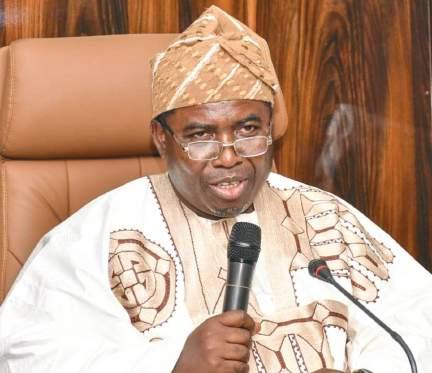
transmission infrastructure and prevent a repeat of past technical setbacks, the commission would conduct a mock presidential exercise ahead of the 2027 general election.
He stated, “Election anywhere in the world is now about technology, but before deploying any technology, it is important to test it thoroughly. So, my own audit of the 2023 election, while the BVAS was tested within the states for the Osun election and the Ekiti election. However, when it came to the federal election, especially the presidential election, which became inter-state, it was not properly tested.”
Before the FCT area council elections, analysts had said that though they seem small, in reality, they carry many unique stakes. The way the elections are conducted and decided would touch on national questions of electoral reform, test the ruling party’s strength one year out from a general vote, and perhaps even highlight the gulf between the capital’s urban newcomers and its rural indigenes.
But in its characteristic manner, the commission failed to live up to the expectations of many Nigerians. Coming on the heels of the amended Electoral Act 2026, they were more than a routine democratic exercise. As a test-run of the Act, and a litmus test for Amupitan, they were, indeed, questionable.
A human rights activist and lawyer, Chidi Odinkalu, took a swipe at Amupitan, saying he doubts his ability to conduct free and fair elections in 2027.
Odinkalu, who is also a former Chairman of the National Human Rights Commission (NHRC), cited the issue of election logistics in the nation’s capital, describing it as poorly coordinated. He noted that Nigerians were not asking for perfection but evidence of commitment to improvements by the electoral body.
The criticisms stem from the big scandal reminiscent of what happened in the 2023 election, where in a polling unit, the All Progressives Congress (APC) recorded a whopping 1,219 votes whereas the total accredited voters
were 213.
According to information and pictures of a mutilated form EC8A circulating online, the polling unit in AMAC had 345 total registered voters; total accredited voters were 213, total ballots issued were also 213 while total valid votes were 211.
Surprisingly, APC’s recorded score (in figures) was 1,212 (alternatively cited as 1,219 in secondary tallies). In words, Form EC8A was written as one hundred and twenty-one. Also from the form, the 1,219 was mutilated to show that the figure initially entered into the space was one figure.
The mismatch between the figures and the written words suggests a desperate attempt to inflate the ruling party’s numbers. If the figure of 1,219 is taken as the official record, it means the APC somehow manufactured 1,006 votes out of thin air — nearly six times the total number of people who actually showed up to vote, the same development that marred the last election, particularly in most states that were considered strongholds of the People’s Democratic Party (PDP) and the Labour Party (LP).
Also, the issue of vote buying was recorded in some places, reminiscent of past elections in Nigeria. This is also true of the 2023 election where INEC failed to live above board.
What perhaps Amupitan does not realise is that if the National Assembly is not making real-time electronic transmission of results to the IReV, the burden of conducting free, fair and credible elections squarely rests on him.
By conceding that it may not be able to guarantee a “100 per cent perfect”, there is no doubt that the commission will not be able to stand up to the ruling APC when it begins to manipulate the process.
This is why while it is good that it has continued to assure Nigerians that the 2027 general election would be credible, it must ensure that it does not encourage voter apathy and civic disenchantment. At all times, Amupitan must ensure that he holds on tenaciously to his much-touted integrity and credibility to address the credibility deficit that followed the elections in the country. He must also strive to present himself as a trustworthy man committed to the sanctity of the ballot, not a servant of political interests.
In politics, timing is everything. In diplomacy, character is everything. And in moments of national importance, leadership must be entrusted to individuals who possess not only experience but courage, intellect and an unshakable commitment to the nation they represent.
It is for this reason that the appointment of Chief Femi Fani-Kayode as Nigeria’s Ambassador to a foreign nation stands out as one of the most consequential diplomatic decisions in recent years.
Chief Femi Fani-Kayode, better known in the South as “FFK” and in the North as “Sadauki”, is one of the most brilliant, experienced, accomplished, vocal, respected, educated, profound, intellectual, patriotic, disciplined, well-read, historically literate, versatile, forceful, persuasive, sophisticated, cosmopolitan, charming, eloquent, courageous and resilient men in Nigerian politics and he has paid his dues and proved his worth over the last 35 years in politics and political discourse.
In each role he has played he has excelled and succeeded even when he was in opposition.
His friends value him as a great and loyal defender and his traducers and political adversaries fear and respect him because when he goes to war he is utterly relentless, takes no prisoners and literally spits fire.
How I wish it was him that was interviewed by Mehdi Hassan of Al Jazeera and not the young and inexperienced Daniel Bwala because he would have not only humbled Hassan but also done Nigeria proud.
He played Bwala’s present role in the Presidential Villa 23 years ago as President Olusegun Obasanjo’s spokesman and not only brought the then president’s domestic enemies to their knees but also had a series of very hot exchanges with foreign government officials like America’s Under-Secretary of State for Africa Jendaye Fraser and the White House over the Charles Taylor issue and Liberia.
Tinubu decision to appoint him as an Ambassador for our nation was a wise one because he will fight for and protect the interests of Nigeria and the Nigerian community whatever he goes and will never sell his soul or bow to foreign imperialist interests.
His appointment is not about just rewarding loyalty for the key role he played in Tinubu’s presidential campaign organisation as Director of New Media and Special Operations in 2023 and the staunch support he has given the president over the last three years but also about putting a square peg in a square hole.
If you want to put Nigeria first, Sadauki is the one to do it.
If he runs the Nigerian Mission in the country that he is sent to in the same way he ran the Ministry of Culture and Tourism and the Ministry of Aviation when he was minister to each of them one after the other 20 years ago he will do very well and both our nation and whichever nation he is posted to itself will benefit from his efforts.
History teaches that diplomacy is most effective when nations deploy individuals who possess both intellect and courage. As the American statesman Henry Kissinger once noted, “Diplomacy is the art of restraining power.”
To do so successfully requires deep historical awareness and strategic clarity—qualities that have long defined Fani-Kayode’s political career.
Sending a politically seasoned voice like FFK to any nation that is a key partner to Nigeria signals that Bola Ahmed Tinubu intends to strengthen Nigeria’s diplomatic posture with confidence.
Throughout more than three decades in the political arena, Fani-Kayode has remained one of the most resilient and outspoken figures in Nigerian public life despite numerous challenges which would have broken and destroyed lesser men.
Regardless of all that was thrown at him he continues to pull through and come out victorious which is why many refer to him as the “Akanda Eledumare” and the “Ayanfe Oluwa” which mean “the strange one of God” and “the beloved of the Lord”.
There appears to be a divine dimension to his life that makes him unstoppable and irrepressible even though his enemies are legion. One wonders what sets him apart and makes him so different. There is no doubt that his education played a part in it and this set him apart from most.
He never went to school in Nigeria but was educated from the age of eight in England starting off at Holmewood House School in Kent, one of the UK’s best and most famous preparatory schools, after which he attended the famous Harrow School just outside London which is, together with Eton College, an institution that is the exclusive preserve of high society in the UK, one of the two best private schools in that country where only the ruling elite, the rich, the well-to-do, the famous and only a tiny proportion of those in British high society can afford or even qualify to attend.
No less than eight British Prime Ministers, including the great Sir Winston Churchill, and countless British cabinet ministers attended Harrow and so did many leaders, diplomats and top politicians from many foreign countries.
After finishing at Harrow he attended some of the top universities in the world, including London University (SOAS) and Cambridge University (Pembroke College) where he did so well.
As a matter of fact his great grandfather, Rev. Emmanuel Adelabi Kayode, attended Furrough Bay College which at that time was part of Durham University and graduated with an MA (Hons.) in Theology in 1893. His grandfather Justice Adedapo Kayode attended Cambridge University (Selwyn College) where he studied law and graduated in 1922. His father Chief Remilekun Fani-Kayode attended Cambridge University (Downing College) where he studied law and graduated in 1943. Sadauki himself graduated in law at Cambridge University (Pembroke College) in 1984 whilst his daughter Folake Fani-Kayode graduated from Durham University in 2009.
No African family has an uninterrupted streak of 116 years of Oxbridge-level university graduates except for the Fani-Kayode’s which is something that both his family and every patriotic Nigerian should be proud of.
It therefore makes perfect sense that a man from such a distinguished pedigree and intimidating lineage and that has such an extraordinary intellectual heritage should represent Nigeria on the international stage. There is also his role in the debate on Gaza which made him a hero in the eyes of millions of people in the Global South both amongst Christians and Muslims.
He spoke out consistently about what he described as the genocide being committed against the Palestinians and he was prepared to put his life and career on the line for this cause even though most Nigerian leaders and politicians refused to say what he was saying publicly out of fear of the Zionist lobby and the
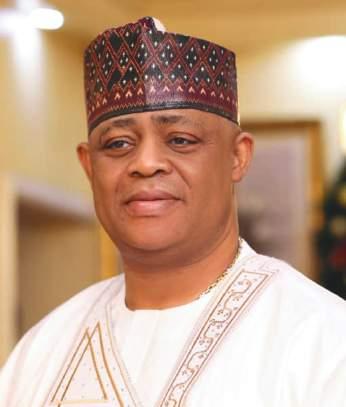
Jewish state.
His sense of patriotism is unquestionable and nothing reflects this better than his series of essays written against Kemi Badenoch, the leader of the British Opposition Conservative Party and his write up against one Ben Llewelyn-Jones, who at that time was the Deputy British High Commissioner to Nigeria, when the former consistently sought to insult and denigrate Nigeria and the Nigerian people and the latter attempted to interfere in our internal affairs by making statements in support of Peter Obi and his Obidients in the 2023 presidential elections.
Sadauki successfully put them both in their place and when American Senator Ted Cruz, President Donald Trump, Congressman Tim Riley and other American politicians began to peddle the false narrative and fake gospel of Christian genocide and persecution in Nigeria Sadauki, a devout Christian himself, rose to the challenge and more than any other Nigerian wrote about the issue in a series of essays pointing out the fact that as many Muslims were being killed as Christians by the terrorists in our country and that Christians were not being persecuted by our Government and are in fact faring better when it comes to positions in the security apparatus and governance under Tinubu than they did in the previous administration.
He also spoke out boldly against President Trump and his administration when they accused the Government of South Africa of indulging in genocide against the white minority population in their country and pointed out the fact that South Africa, like Brazil, was a shining example of a successful multi-ethnic, multi-religious and multi-cultural nation that was treating its white minority population with the greatest respect. Few Africans said a word to defend South Africa at the time even though they knew that Trump was wrong but Sadauki did so without thinking twice.
He is clearly a strong Pan-Africanist and a believer in the importance of the African
This is commendable and it reflects his courage and disdain for those that display ignorance, disdain and contempt for our nation and people and that seek to denigrate and misrepresent us.
Sadauki is not the type that bows and quivers before Westerners like so many other Nigerian leaders and politicians but rather takes pride in his Nigerian culture, race, heritage and identity and is prepared to defend us and speak for us no matter whose ox is gored and who is involved.
In an increasingly competitive global environment, Nigeria requires diplomats capable not only of negotiation but also of defending national interests with conviction. If the energy, eloquence and intellectual fire that have defined Fani-Kayode’s political life accompany him to the country to which he has been posted, his tenure may well become one of the most consequential chapters in Nigeria’s modern diplomatic engagements. I wish him well and I thank God that he is back in the saddle of public office after so many years. What more could any of us ask of this great and noble son of Nigeria?
This is undoubtedly the quality of personnel and leaders that we need on the international stage.
I hope and pray that in his endeavours and during the course of his work he meets with Mehdi Hassan in a debate and prove to him and the rest of the world that Nigeria still has men that can not only match them but that can also remove their trousers in any verbal encounter. Bwala put us to shame but FFK can redeem us before the eyes of the world.
* Doka is the publisher of Abuja Network News and can be reached via bellodoka82@gmail.com
Commission (INEC) has refused to recognise the nominees of some parties, including the PDP. On Monday, the appeal court in Abuja stopped INEC from recognising the Kabiru Turaki faction of the PDP. On Thursday, the appeal court in Akure recognised the PDP governorship candidate in Ekiti based on the primary conducted by the same Turaki faction. What else is the meaning of confusion?
But if incumbent governors who want to seek re-election — such as Governor Dauda Lawal of Zamfara — are flocking to the APC, what about those who have no other term to seek — like Governor Adamu Fintiri of Adamawa? At least, they have nothing to lose.
US President Donald Trump’s war on Iran has predictably thrown the global economy into turmoil. Nigerians are being badly affected at a time we are still struggling to get ourselves together. The disruption in the oil market has impacted everybody, with high fuel costs hitting motorists. Nigeria cannot even enjoy much benefit from high oil prices because our production has fallen. The saddest thing is that it is not a war the US and Israel can win. Long after the bombing has gone quiet, the consequences usually shimmer and linger. Fifteen years after NATO pummelled Libya to pieces, Malians, Nigerians, Nigeriens and Burkinabés are still suffering from the terrorism aftermath. Sad.
Well, that would be a naïve reading. Every governor wants to install a successor, so the Zamfara treatment can still apply. Also, not many governors want to sleep in “German cell” after leaving office in 2027. Therefore, many governors and their associates are flocking to the APC not because they love the ruling party so much or believe that the party is better than theirs. It is simply a flight to safety. The way we play politics in Nigeria, especially in the last few years, it is much safer to be on the good side of the incumbency. Meanwhile, having 31 governors does not automatically translate to winning 31 states in the presidential or governorship election. That is not how it works. We have seen states
vote differently in local and national elections at the same time. We have seen states where sitting governors lose their own elections or fail to deliver to their parties in the presidential poll. It is said that all politics is local. That is the why I am not really worried about the one-party state fears. It will never work in Nigeria. After all, the PDP once controlled about 30 states. Nigeria is too diverse to be compressed into a single party. As Waziri Adio once argued, what we have is a dominant party system not a one-party state. In that case, we should expect some recalibrations during and after the 2027 elections.
As I have said, I cannot begrudge the APC for enlarging its coast. This is politics, isn’t
Mr Daniel Bwala’s encounter with Mr Mehdi Hassan on Al Jazeera’s Head to Head interview has been dominating political discourse. The special adviser to President Bola Tinubu on policy communication did not have a great outing as he could not provide convincing answers to the hard questions on insecurity. That Bwala has spent time trying to deodorise his outing is an indication that he knew it was a disaster. I have read many post-mortem analyses. Let me now add my own: he was talking as a politician and lawyer, whereas it was a communication job he needed to do. Denying the obvious is the job of politicians, but providing context and nuances is what a communicator does. Authenticity.
If you want to understand why Nigeria is like this, you don’t need to go too far — just take a look at the quality of policy making. How do you just impose a new toll payment system at the airports without trialling it, doing a dry run or providing a fail-safe option? The Federal Airports Authority of Nigeria (FAAN) — by far the worst airport managers of all the countries I have visited — simply threw a spanner in the wheel and created chaos for travellers. It took a presidential order for them to come back to their senses. Our policymakers hardly think about the pain they inflict on Nigerians with their ill thought-out policies — as if we are animals. Is this the best this country has to offer? Disastrous.
reducing. National productivity is growing slightly higher than population. The volatility of the exchange rate has reduced. Trade surplus, investment flows and external reserves are growing. Some stability has returned, and this is just some statistical sleight of hands. However, it is also true that most Nigerians are still going through it. Yes, some Nigerians and others are making a killing from stock and money markets. But that is not a luxury available to most Nigerians. It is important to take a rounded view of things and take regular stock of progress and challenges of reforms.
One of such reflections took place in Abuja last week, organised by Agora Policy in partnership with NESG, with the support of the Nigeria Economic Stability and Transformation (NEST) programme, an initiative of the UK government’s Foreign, Commonwealth and Development Office (FCDO). The event brought together senior officials of government, private sector, civil society, academia, media and development institutions to deliberate on how to sustain, deepen and improve the current economic reforms in Nigeria and lay a firm foundation for future ones.
The event was hinged on two poles. The first was the presentation of the highlight of a study on the impact of the current economic reforms in the country, produced by Agora Policy also with support from NEST. The study deployed mix-methods (modelling and focus group discussions) to assess the impact of petrol subsidy removal and adjustment of electricity tariff.
The second pole was a panel session, which was the heart of the event. On the panel were: Dr. Muhammad Sani Abdullahi, Deputy Governor Economic Policy, CBN; Mrs. Sanyade Okoli, Special Adviser to the President on Finance and the Economy; Dr. Chinyere Almona, Director General of the Lagos Chamber of Commerce and Industry; Dr. Hussaini Abdu, Country Director of CARE International; and Dr. Samer Matta, Senior Economist at the World Bank. The discussion was frank, robust and illuminating. Contributions from the audience were equally engaging and insightful.
Drawing from insights from the study and the dialogue as well as my other engagements with key stakeholders on the reforms and my reflections over time, I will suggest five ways of putting current and future reforms on a
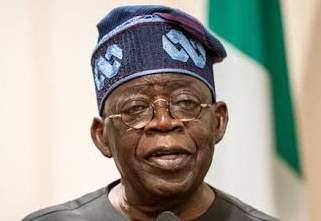
stronger footing.
My first suggestion is the need for adequate preparation before rolling out contentious reforms. To be sure, you can’t be fully prepared but that is not the reason to just jump in headlong with the blind faith that things would turn out just fine. They might not. The fact that the country survived the very difficult phase of these reforms does not guarantee anything. You never know where the spark will come from, and what will come become of the spark. Adequate preparation will include carrying out empirical studies about the likely negative impact and frontloading measures to address the downsides. This will also mean having a clear plan about what different tiers of government will do and for whom, and a framework for proper coordination within and across different tiers. This approach shows more thoughtfulness and more empathy than just the usual “we feel your pain” rhetoric.
The second suggestion is related: for something with far-reaching consequences and to which many citizens feel wedded like petrol subsidy, it may be necessary to provide a clear visibility on what will replace it or how the money will be repurposed. We have a precedent on this, especially with the case of
it? In the end, I blame the politicians who do not have the stomach for the long haul. Many cannot lift a finger to fight for what they believe in. They are not ready to be in the political wilderness for one minute. They always want the easy way out. When President Bola Tinubu was in the opposition, he was ready to face the federal fire. He indeed faced the federal fire. He was the only survivor when the PDP swept the south-west in 2003. He gathered the remnants, rebuilt his machinery, and held on through thick and thin until the APC was born in 2013. It is ironic that the same APC is now cornering the political space. It is tragic that there seems to be no new Tinubu on the other side. It is what it is.
Section 182(3) of the 1999 Constitution (as amended) clearly states: “A person who was sworn in as governor to complete the term for which another person was elected as governor shall not be elected to such office for more than a single term.” In 2023, Chief Lucky Aiyedatiwa was sworn in to complete the tenure of the late Rotimi Akeredolu and was elected for his own term in 2025. Some people still went court seeking interpretation. Maybe judges should start jailing people for wasting precious their time (jokes). The court ruled that he cannot run again, but Aiyedatiwa said he would consult with his lawyers on his next move. Just when you thought you had seen it all. Hahahaha…
allows for local flexibility, for citizens to be part of decision-making and for accountability. This is not how it is now. All tiers of government are getting more money as a result of the reforms and they are also spending much more but most citizens struggle to see the benefits of improved government revenue. This is a challenge that traceability could have addressed.
The third is the value of regular and continuous consultation. Difficult reforms bring pains and call for adjustments. Either directly or through trusted brokers, government needs to have structured ways of engaging with critical stakeholders to explain the rationale and the end goal of the reforms and to receive vital feedback. John Dewey, the American political philosopher, memorably said: we need shoe makers to make shoes but we need the wearer to say where it pinches. Regular and structured consultations will help with generating evidence on how different constituencies are impacted, improving the design and implementation of reforms, and in building trust and understanding.
the Petroleum Trust Fund (PTF) and to some extent SURE-P. A portion of the subsidy that government would have paid was put in funds dedicated to specific projects. Up till today, PTF projects can still be seen in some parts of the country. But PTF had its controversies, which might have informed the current approach of allowing each tier of government the latitude to decide what to do with the extra revenue.
My sense is that the Federal Government and some state governments are actually providing reliefs but Nigerians are not seeing such as the exchange for what they have given up or as mitigation for the unceasing pains they are enduring. I think the president should have invested his political capital in putting in place a national framework on reliefs and building commitment and consensus around such. Also, government should have devised a way of calculating what the Federation would have incurred on petrol subsidy on a monthly basis and how much of such would go to the FG, each state and each LGA monthly. This will not be in violation of the constitution and should not be difficult to calculate.
Each unit of government can (in consultation with its people) decide what to spend the savings on within the national framework. This
The fourth is that we need to pay special attention to the extra burden placed on the vulnerable. While it is true that the rich benefit more from petrol subsidy, the poor suffer more from petrol subsidy removal. Low-income earners bear a disproportionate burden of the resultant increase in costs of food, energy and transportation as they spend almost all their income on these items. Those in the middle- and upper-income brackets cope better. Most low-income earners have no business with foreign exchange and were not the ones benefiting from the arbitrage of multiple exchange rates. But they will be affected the most by floating the Naira and it is conceivable, without even a study, that more people will live below poverty line with dollar at N1400 than at N460. This is not a reason to put off the reforms but a case for competent and thoughtful implementation of cash transfer and other forms of social protection.
The last suggestion is the imperative of pacing difficult reforms. While shock therapy may be needed, inflicting multiple shocks may be reckless. The human and societal ability to tolerate pain is not infinitely elastic. So, while courage is desirable, wisdom is also profitable.

The solution is an urgent subversive engagement. There is no time left. The general election is barely nine months away. And there is as yet no credible opposition in sight. The proposed rival ADC remains a pipe dream weighed down by the gigantic ambitions of its dreamers and proponents. To found an opposition party less than a year to a general election and expect to snatch victory from the claws of a vicious ruling party is the height of political comedy.
Even if the opposition coalition were serious, its founding uncles are all open presidential candidates each mostly without organic followership of their own. The ambitions of the key patrons has been placed ahead of the formation of an opposition platform. Our fledgling opposition party is very Nigerian; a non-existent party with numerous presidential candidates.
The anticipation of an opposition ascendancy in 2027 is hoisted on the naïve hope that a groundswell of popular disdain for the APC and the misery of present living conditions will drive voters to oust the APC and its mascot, President Tinubu at the 2027 elections. How foolish! Granted, most street side Nigerians and the urban elite are no fans of the lack lustre President Tinubu. But political followership is not a love affair. As at now, only Mr. Tinubu possesses the major indices of power as outlined by Bertrand Russel: Religion, Traditional authority, Coercion, Cash and Legacy Media.
Obviously, the ruling APC is rapaciously swallowing other parties and allegiances and in the process dominating the political landscape. Meanwhile, the opposition and the broad informed public continue to grumble at the spread of the APC. It is pointless sulking and grumbling. You do not challenge or topple a ruling party by crying in the market, no matter how loudly. You get engaged somehow. You either join the party of your conviction or gate -crash into the ruling party and drive change from inside.
In a democracy, every political party is a commonwealth asset. It belongs to all citizens. Membership for entry is open. Exit is also open. In places like Nigeria, parties believe in nothing. So, y do not need to know or subscribe to whatever the party stands for. Just enter the “danfo’ before you know where it is headed.
Just as governors, legislators and other political animals are trooping into the APC from other creaking parties, Nigerians are free to join the ruling party or form new ones. Nor is a political party the exclusive domain of any cult or group. Internal democracy requires that power and control of a party be wielded by elected leaders. So, instead of standing afar and casting stones at the APC, the broad masses and the grumbling elite should join the party.
As matters stand at this moment and given the proximity of the 2027 elections, the most effective antidote to the rampaging expansion of the APC is for Nigerians to troop into the party. As many conscious Nigerians as possible should join and occupy the APC. That way, the present membership of the party will be overwhelmed by hordes of new members with a broad range of new ideas, tendencies and inclinations to challenge the present Tinubu-led oligarchy and mafia.
The aim of such an invasion would be to subvert, destabilize and disrupt the APC’s present hegemonic slumber. Droves of new members will come with their ambitions, tendencies and agenda. In the process, factions and tendencies will emerge in the party and make the management of the party a challenging task. The new popular majority will disorganize the existing order in the party. The hegemony of the Akpabios, Umahis and part time political entrepreneurs like Wike will be neutralized. The current reckless nattering of these nabobs of negativism will be swallowed by the yell of popular membership.
The grand strategy of invading the APC would be to infuse the party with a truly diverse Nigerian character and liberate it from the stranglehold of the present political oligarchs. A populist broad based membership will hopefully compel the party to develop a body of beliefs and an agenda that addresses the urgent concerns of the masses.
Most importantly, the underlying assumption that the APC is Tinubu’s personal political machinery oiled by a financial armada of undisclosed source needs to be challenged by an expanded membership base. At least the resources of the party will be spread over the demands of a wider
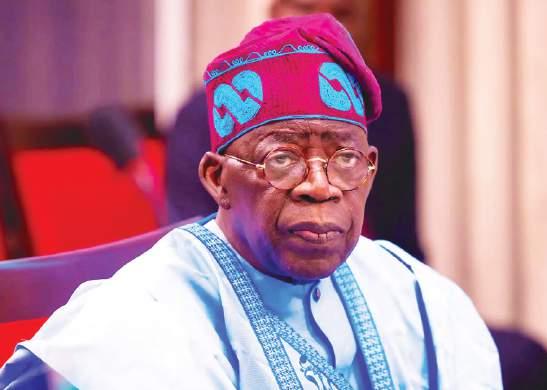
tinubu
membership spread.
By their nature, political parties are the cornerstone of a democratic political space. The larger and more inclusive they are, the stronger they tend to be as aggregations of the popular will. Therefore, it ought to be good news that the APC is absorbing more Nigerians into its fold. Nigeria is a big country. The bigger the parties, the more stable, inclusive and diverse the political architecture of the nation. An inclusive party membership can become an instrument of national cohesion and an additional national security guarantee.
A dysfunctional political party controlled by a political cult or mafia is a danger to democracy. In its present format, the APC is one such danger. If left alone as is, it could grow into a dangerous one- party dictatorship. It is already behaving like one. It is baby-sitting the National Assembly. It is gobbling up as many state governors as it can find. But no one in its bulging membership is challenging the Tinubu oligarchy. We cannot afford to leave the APC to Tinubu and his personal recruits and cohorts.
We should all join the APC as a national political infrastructure and use it to rescue and revamp Nigeria. True, the party is a bad assemblage of politicians with a surfeit of bad manners. Buhari used it to capture power by frightening off the clueless Jonathan. Through an openly transactional succession arrangement, Buhari handed over Nigeria to Tinubu and his inchoate cabal of ethnicists and religious merchants.
In power and in office, the party has literally run the nation aground in the last 11 years. The economy has tanked just as living conditions have worsened. Hunger is everywhere just as all costs- medicare, power, school fees, rents, grocery- have jumped to the skies. National security has been eroded as security of life and property has evaporated in most places. The nation is perennially in the dark as power supply and distribution are at their lowest ebb in the last 12 months.
The presidential complex is about to migrate itself to an ultra -modern solar system, leaving the people in the grips of a Medieval power infrastructure that
delivers mostly darkness.
As a party, the APC has laid no claims to a guiding ideology or programme. It just exists as a machinery for power grabbing and organised criminal monopoly of state control. These negatives make the APC a prime candidate for internal change and reform. Such change cannot come from the present crop pf members and leadership. They are mostly devotees and apostles of the Tinubu gospel of “carry go” politics. A wider quantum of members is what the party needs. The party needs ‘unbelievers’, radical masses of members who will challenge the status quo and advocate for change from within.
The opposition faction and the popular masses are understandably lamenting the mass exodus of governors into the ruling APC. People cannot understand the logic. A non- performing ruling party full of negatives has kidnapped over 31 of out of 36 states. Droves of politicians across the country are trooping into the party from others by the day. Observers see this as negative. People even fear that we are drifting into a one party state.
I am not party to this fear. Nor do I see the mass migration into the APC as a negative development. Quite the contrary. It is true the APC under Buhari and Tinubu has ruined and wrecked the country. They have presided over a systematic erosion of the nation. They have devalued the Nigerian state by outsourcing its governance to political contractors and assorted cranks. But the future of a genuine multi -party democracy in Nigeria may in fact lie in an APC that is so large that it bulges and implodes under pressure from a diversity of tendencies and factions.
A creative invasion of the APC is a long term strategic necessity. Allowing the party to further enlarge in its present rudderlessness is a danger. But increased popular and more enlightened membership will enhance the party’s internal democracy and improve the quality of its membership. A more diverse membership will raise more questions about the programme and manifesto of the party as it concerns the wider concerns of the national constituency.
The leaders and elements of the fledgling opposition should equally join the APC if they wish. There is after all no real difference between the leadership of the opposition and those leading the APC. In fact, they all belong to the same political family. They all used to be in the PDP, APC and other parties together before they fell out of power and favour. Atiku, Amaechi, Obi,
El-Rufai, David Mark and the other purported leaders of the ADC were bred in the PDP, mostly flirted with the APC and other parties before they found themselves out in the cold political wilderness of the present. It will not cost them anything to rejoin their kith and kin in the ruling party to struggle for power. Those looking up to the leadership of the proposed opposition as messiahs need pity. These people are the same as the bunch of rascals in the APC!
That way, they do not need to scout for new money to fund a futile opposition project. Tinubu and the APC already have a war chest funded mostly from ‘surplus value’ from our commonwealth. It is easier for them to scramble over these resources from within the APC as they scramble for pre-eminence in the commanding heights of a common party bulging piggy bank.
Struggling for power from within the ruling party will perhaps lead to a real power struggle among the present breed of the political elite. Perhaps a real balance and distribution of power among the leading political leaders may result since there are no real ideological or policy differences between the APC leaders and their opposition challengers.
Unless the present insularity of the APC is challenged, dismantled and subjected to a more rigorous interrogation, the party seems poised to win the 2027 elections to the exclusion of the opposition and the broad majority of Nigerians. Discord and political instability will follow.
An unpopular president presiding over a party with a track record of incompetence and betrayal will return to power for another four years. Sixteen years of Buhari plus Tinubu will literally bury the Nigerian ideal under the rubble of incompetence and mass misery.
The election will have no credibility. Voter apathy will increase, leading to low voter turnout. Our democracy will not be majority rule but ‘minority rule’ to the exclusion of the majority. Alienation will persist while a subtle autocracy and eventual authoritarianism will grow from what was intended as a popular democracy. The privatization of the institutions of state- armed and security services, the civil service, the deep state etc- will become total.
If allowed to persist, the present exclusionary party hegemony could kill the prospects of democratic evolution in Nigeria. A nation that managed to survive the ravages of military dictatorship may end up as a casualty of democracy of bad manners.
President Bola Tinubu has extended his condolences to the family of Henry Onyemanze Nwosu, a legendary Super Eagles midfielder who passed away yesterday at the age of 62.
The president, in a statement issued by his Adviser on Information and Strategy, Bayo Onanuga, joined the Nigerian football community in mourning the exceptionally skilled Nwosu, whose football artistry remains the stuff of legends.
Tinubu recalled Nwosu’s brilliance on the field of play as a 17-year-old in the then-Green Eagles squad that won the 1980 Africa Cup of Nations.
He acknowledged Nwosu’s over a decade of service to the nation as a member of the national football team, his role in subsequent AFCON tournaments in 1982, 1984, and 1988, and his contributions to sports development in the country.
The president stated that Nigerians will always remember the late playmaker for the pride and joy he brought to the nation and for inspiring many compatriots to greater accomplishments.
Tinubu prayed for the repose of Nwosu’s soul and comfort for his family.
Just as Nigerians are still grappling with the death of former Super Eagles coach, Adegboye Onigbinde, who died on Monday evening, Nigeria’s football community has again been thrown into deep mourning following the death of former Super Eagles midfielder, Nwosu.
Nwosu was one of the most memorable figures from Nigeria’s historic victory at the 1980 Africa Cup of Nations.
The former international died in the early hours of yesterday at the Lagos State University Teaching Hospital, LASUTH, after spending several days in intensive care. He was 62 years old.
The sad news was confirmed by former Nigerian football star, Segun Odegbami, who shared an emotional message announcing the passing of his former national teammate.
“It is with deep pain in my heart that I have to be the conveyor of the news of the death of Henry Nwosu MON, the youngest of the victorious 1980 AFCON squad,” Odegbami wrote.
According to him, the former midfielder passed away around 4:00 a.m. after battling for his life for five days in hospital.
Nwosu was widely admired for his creativity, calmness on the ball and intelligent reading of the game. During the 1980s, a period often described as the first golden era of Nigerian football, he became one of the most gifted midfielders in the national team.
Viktor Gyokeres and 16-year-old Max Dowman scored late on as Arsenal edged past Everton to move 10 points clear at the top of the Premier League table.
It looked as though Everton were going to frustrate the Gunners and battle to a well-earned draw before Gyokeres tapped home in the 89th minute after Jordan Pickford completely misjudged a cross into the box.
The visitors then threw everyone forward as they hunted an equaliser with a late corner.
However, with Pickford stranded upfield, Dowman beat two defenders before racing away to roll the ball into an empty net and spark wild scenes inside Emirates Stadium.
Dowman becomes the youngest goalscorer in Premier League history, breaking the record set by Everton’s James Vaughan in 2005.
The Toffees played well and twice went close to opening the scoring in the first half, with Dwight McNeil denied by an acrobatic block by Riccardo Calafiori before the winger hit the post with a curling effort
from the edge of the area.
Arsenal are now 10 points clear of second-placed Manchester City having played two games more. With yesterday’s victory Arsenal remain in good stead to win the quadruple at the end of the season.
His death marks the loss of a player whose name remains closely tied to Nigeria’s first continental triumph. That famous moment came in Lagos in 1980 when the national team defeated Algeria national football team 3-0 in the final to win the country’s maiden Africa Cup of Nations title.
At the time, Nwosu was only 17 years old, making him the youngest player in the squad, and remains Nigeria’s youngest winner of the AFCON trophy.
In recent years, the former midfielder had battled health challenges, including a stroke that required long-term medical care.
Born on June 14, 1963, in Imo State, Henry Onyemanze Nwosu grew into one of the most technically gifted midfielders of his generation.
His football journey began at club level with New Nigeria Bank FC in Benin City in 1979. Even as a teenager, his talent stood out. Coaches and fans quickly noticed his excellent ball control, clever passing and ability to organise attacks from
midfield.
These qualities helped him break into the national team while still very young. His inclusion in Nigeria’s squad for the 1980 Africa Cup of Nations became the turning point of his career. Although he was the youngest player in the team, he showed confidence and maturity on the pitch. Nigeria went on to win the tournament on home soil, creating one of the greatest moments in the country’s football history.
Over the next decade, Nwosu became a regular figure in the national team. He played about 60 matches for Nigeria between 1980 and 1991 and scored eight goals during that time. He represented the country in several major tournaments, including the Africa Cup of Nations in 1980, 1982, 1984 and 1988. Nigeria reached the final twice more during that period, finishing runners-up in both 1984 and 1988.
Nwosu also represented Nigeria at the 1980 Summer Olympics, where he scored the country’s only goal in the tournament.
Sevilla coach, Matias Almeyda has urged Super Eagles striker, Akor Adams to be on top of his game in their league showdown against Barcelona tomorrow evening.
The 25-year-old has scored the most goals for the club in the La Liga this season (7), and was on the scoresheet when Sevilla secured a 4-1 win over Hansi
Flick’s side earlier in the season.
Akor has gone on to score five more goals since then, but his manager has urged him to do more, especially against big teams.
Los Rojiblancos are currently 15th on the La Liga table, six points above the relegation spots; hence, their need for a big win against Barca.
Given he’s the club’s top scorer,
African champions, Nigeria’s D’Tigress staged an impressive second-half comeback to defeat the Philippines 101–84 in their third 2026 FIBA Women’s Basketball World Cup qualifying match in Lyon, France. After trailing 51–42 at halftime, Nigeria exploded in the second half, scoring 34 and 25 points in the third and fourth quarters to secure their second win of the tournament, bouncing back from a defeat to South Korea in their previous outing.
Coach Rena Wakama made one change to the starting lineup, bringing Victoria Macaulay in for Amy Okonkwo. The D’Tigress opened the scoring through Ezinne Kalu, but early shooting struggles and turnovers allowed the Philippines to lead 26–21 after the first quarter.
Nigeria trailed 51–42 at half-time, with Nicole Enabosi leading the scoring on 13 points, followed by Ezinne Kalu (9 points) and Ifunanya Okoro (4 points). In the second half, Nigeria gradually regained
control, tightening their defense and capitalizing on fast-break opportunities. Murjanatu Musa was pivotal, narrowly missing a triple-double with 10 points, 12 rebounds, 8 assists, 1 block, and 1 steal. In the paint, Ifunanya Okoro and Pallas KunaiyiAkpanah dominated, while Victoria Macaulay and Elizabeth Balogun provided crucial outside shooting. By the end of the third quarter, Nigeria led 77–72 and extended their advantage in the final period thanks to contributions from Elizabeth Balogun, Victoria Macaulay, and Sarah Ogoke.
Victoria Macaulay topped Nigeria’s scoring for the third consecutive game with 16 points, while Nicole Enabosi added 15 points and 12 rebounds. Elizabeth Balogun scored 14 points, Ezinne Kalu contributed 13 points and seven assists, and Ifunanya Okoro and Murjanatu Musa also reached double figures.
coach Almeyda has made him aware of his responsibilities and lauded him for his hard work in training.
“Well, what I can tell is that he [Akor Adams] is doing well,” the Argentine coach said in quotes revealed by Futbol Fantasy.
“So I’d say that after scoring a goal, he must be very motivated. Especially with the opponent we’re going to face,” Almeyda concluded.
Barcelona will be looking to secure all three points in a bid to maintain their position on the La Liga table.
“Like all his teammates, he’s motivated, aware of what’s at stake. Everything we’re playing for is very close, and everyone is important. And whenever the strikers score, that’s what we need.

D’Tigress in action against Philippines during the FIBA World Cup qualifiers yesterday
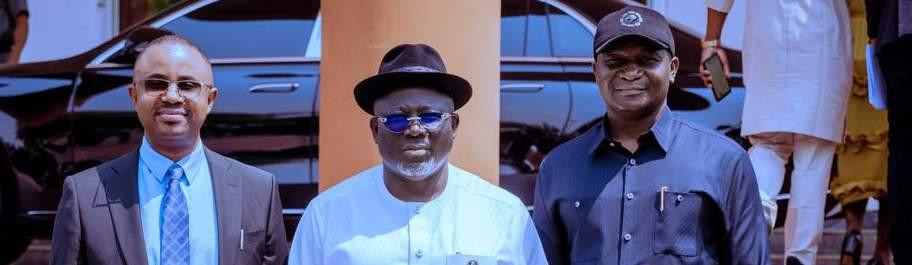
Chief Operating
simon.kolawole@thisdaylive.com, sms: 0805 500 1961
Is the All Progressives Congress (APC) the new MTN? Everywhere you go, it is APC. This would have been funny if not that we are discussing the state of party politics in Nigeria, where 31 out of 36 governors are now fully nestled in the ruling party. Although Senator Bala Mohammed, governor of Bauchi state, is still in the Peoples Democratic Party (PDP), it may be a matter of time for him to join the APC train if he is able to resolve his differences with his bitter rivals in the state chapter of the party. As things stand, all northern states, minus Bauchi, are governed by the APC. In the south, the PDP controls only Oyo, while the Labour Party and the All Progressives Grand Alliance (APGA) are in charge of Abia and Anambra respectively. The Accord Party governs Osun. The rest is under the APC. I have a hunch of where the sympathies of Governor Chukwuma Soludo of Anambra
to 189,452. Senator Kabir Marafa’s faction in the APC approached the courts to argue that Idris was not properly nominated. The Supreme Court then declared all primaries conducted by Idris’ faction null and void and cancelled the results of all APC candidates in the state, from the house of assembly to the national assembly. That was how all PDP candidates were declared winners, and Matawalle became the state governor. Today, with the help of Chief Nyesom Wike, the PDP has been extensively cannibalised and it is becoming glaring to most governors who the courts will eventually support. What any governor does not want is to be nominated as PDP’s flag bearer and go on to win the election only to get the Zamfara treatment. It is already happening. In many states, the Independent National Electoral and Alex Otti of Abia lie — which may not make good reading for the African Democratic Congress (ADC), the “opposition coalition
party” as we call it. If not that Governor Ademola Adeleke of Osun has some diehard enemies in the state chapter of the APC, he too would probably have been in the party today instead of the Accord that he chose. Effectively, almost every state of the federation will be under the control of — or aligned to — the ruling party by the time we hold the 2027 general election. You cannot blame the APC for becoming so big. Politics is, after all, a game of numbers. As the Yoruba would say, you cannot be angry that your blessings are multiplying. The APC is really having a ball. I have a fair idea of why PDP governors are trooping to the APC. They are not defecting for the same reason, but the judicial decimation of the PDP is a major factor. I do not know if we recollect that in 2019, Alhaji Mukhtar Shehu Idris of the APC won the governorship election in Zamfara state, defeating PDP’s Alhaji Bello Matawalle by a score of 534,541

Nigeria is not new to economic reforms. Since 1984, the country has gone through at least four episodes of consequential economic reforms. The Muhammadu Buhari/Tunde Idiagbon regime opted for austerity measures, currency redesign, import restrictions, countertrade and rationing of essential commodities. The Ibrahim Babangida regime, through the Structural Adjustment Programme (SAP), shrank some subsidies, devalued the Naira, and reduced the footprints of the state in manufacturing, oil and gas, banking and the media. The Olusegun Obasanjo government layered further privatisation (especially telecoms) with pension reforms, banking consolidation, and a slew of public financial management and anti-graft measures. The President Bola Tinubu administration, in a quickfire approach, removed petrol subsidy, floated the Naira and adjusted electricity tariffs.
Difficult reforms are not vote-winners or people-pleasers. Most governments, including military administrations, just prefer to kick the can down the road to preserve public order and regime security. The Buhari/Idiagbon regime lasted only 18 months and its tough measures were part of the reasons cited for the well-received palace coup in August 1985. Under Babangida, the country was literally set on fire by the SAP riots of 1989. Though Obasanjo’s reforms were mostly institutional, the country convulsed for days over attempts at removing petrol subsidies. Reforms that inflict pains on a broad spectrum of the populace are never popular, and are thus delayed until the government has little or no room for manoeuvre. But there is also a cost to delayed adjustments. By the time President Tinubu took over in May 2023, the cost of delayed adjustment was already compounding. Nigeria was just inches away from falling off the cliff, though
this was not apparent to most citizens. The country was expending almost all its oil income on petrol subsidies alone, more than 90% of Federal Government’s revenue was going to debt service, and the hole in government finances was being masked by close to N30 trillion in overdraft from the central bank. Investment and forex inflows had dried up and net external reserves could barely cover one month of imports. What happened about forty years earlier was about repeating itself: citizens queuing up to buy basic items like soap and milk.
In a way, Tinubu had little or no choice. He had to confront the consequences of the bad policy choices taken over time by leaders of a country who mistake resource abundance for actual wealth and do not do enough to insulate their country from oil price volatility. While there can be (and indeed there exist) differences of opinion about Tinubu’s approach, there should not be any doubt that
Nigeria needed to make difficult and painful adjustments by the time he took over. Of course, there is a problem: the enormity of the approaching crisis was not visible to all, and a disaster averted does not carry the same weight as a disaster experienced. The additional challenge for Tinubu is that his reforms, unlike the institutional reforms of the preceding two decades, went straight to the veins of most Nigerians. They came with direct and concentrated pains. Within a short period, some gains are becoming visible, even if they are mostly at the macro level and even if they are still fragile. The fiscal headspace has expanded. Gross FAAC revenue has significantly increased, more than doubling within two years. Debt service as a portion of revenue is still high, but is much lower. Non-oil revenue is rising; same with non-oil export. Inflation rate is