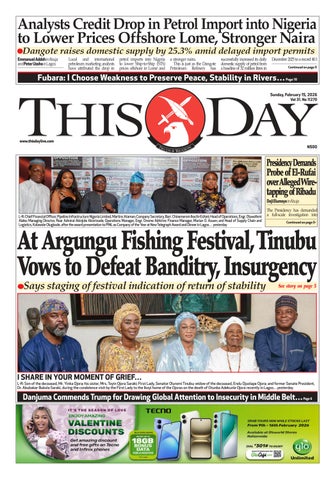
At Argungu Fishing Festival, Tinubu Vows to Defeat Banditry, Insurgency
I SHARE IN YOUR MOMENT OF GRIEF…

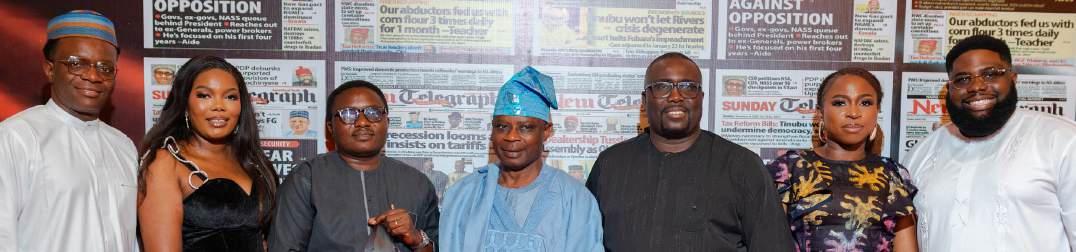
L-R: Chief Financial Officer, Pipeline Infrastructure Nigeria Limited, Martins Ataman; Company Secretary, Barr. Chinemerem Ikechi-Eshiet; Head of Operations, Engr. Oluwafemi Alake; Managing Director, Rear Admiral Akinjide Akinrinade; Operations Manager, Engr. Onome Abhirire: Finance Manager, Marian O. Asuen; and Head of Supply Chain and Logistics, Kolawole Olugbode, after the award presentation to PINL as Company of the Year at New Telegraph Award and Dinner in Lagos… yesterday
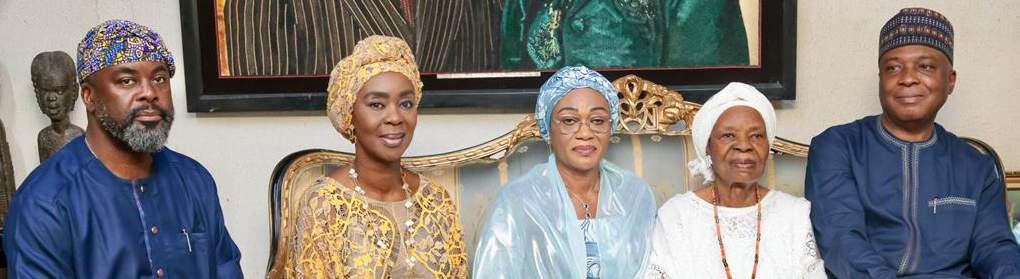
L-R: Son of the deceased, Mr. Yinka Ojora; his sister, Mrs. Toyin Ojora Saraki; First Lady, Senator Oluremi Tinubu; widow of the deceased, Erelu Ojuolape Ojora; and former Senate President, Dr. Abubakar Bukola Saraki, during the condolence visit by the First Lady to the Ikoyi home of the Ojoras on the death of Otunba Adekunle Ojora recently in Lagos…yesterday




Lagos State Bond, Others Raise New Listings on Nigerian Exchange to N754.82 Billion
Kayode Tokede
The listing of Lagos State’s N244.8 billion bond, among other issuances, lifted total new listings on the Nigerian Exchange Limited (NGX) to N754.82 billion in the first weeks of 2026, a report has revealed.
The NGX X-Compliance report revealed that on February 9, 2026, the Lagos State Government listed N230 billion Series IV 10-Year 16.25
per cent Fixed Rate Bond due 2035 under its N1 trillion Debt and Hybrid Instruments Issuance Programme. It also listed N14.815 billion Series III 5-Year 16 per cent Fixed Rate Green Bond due 2030 under the same programme.
In addition, the federal government recorded two listings valued at N4.18 billion in January 2026.
Among corporate issuers, United Bank for Africa Plc (UBA), First HoldCo Plc,
and Guaranty Trust Holding Company Plc (GTCO) accounted for N251.6 billion in new listings during the period, driven largely by the recapitalisation directive of the Central Bank of Nigeria (CBN), which mandates banks to raise fresh equity to meet new paid-up capital thresholds.
GTCO listed N10 billion following a successful private placement of 125 million ordinary shares at
N80 per share. The NGX also admitted UBA’s N157.8 billion Rights Issue in early January 2026. Similarly, Presco Plc listed N236.7 billion in shares arising from a Rights Issue priced at N1,420 per share, with one new ordinary share for every six held.
LFZC Funding SPV Plc listed N16.1 billion 7-Year 20.50 per cent Series I Senior Fixed Rate Infrastructure Bonds due 2032 under its
N100 billion Bond Issuance Programme.
Also admitted to the Exchange were Zichis Agro-Allied Industries Plc by introduction valued at N1.09 billion, and Morison Industries Plc, which listed N400.3 million through a private placement of 266.84 million ordinary shares at N1.50 per share.
Data obtained from the NGX indicated that in 2025 alone, Nigerian banks listed
AT ARGUNGU FISHING FESTIVAL, TINUBU VOWS TO DEFEAT BANDITRY, INSURGENCY
Deji Elumoye in Abuja
President Bola Tinubu has again vowed to defeat all forms of banditry and insurgency across the country.
The president, who reiterated his government's commitment to fight insecurity, spoke yesterday at the International Fishing and Cultural Festival in Argungu, Kebbi State.
"I assure you that the fight against insecurity of any kind, including banditry and insurgency, will be won," he said.
Tinubu described the 61st Argungu International Fishing and Cultural Festival as a testament to the return of stability and normalcy in Kebbi State and across the country.
The president also pledged the federal government's sustained support for tourism, agriculture, food security, and rural development.
He commended the state government for successfully organising the historic cultural event, which attracted over 50,000 fishermen from across Nigeria and neighbouring countries.
The four-day festival featured cultural displays, water competitions, traditional boxing,
and dancing.
Tinubu said: “Congratulations. Well done; very good show; remarkable history. This festival has endured for 83 years and stands as a powerful symbol of unity, resilience, and peaceful coexistence among our people".
He lauded the security arrangements that enabled the festival to be hosted safely and successfully.
The organisation, security arrangement, and internal outlook of the event demonstrate what is possible when leadership is purposeful and inclusive. Thank you, Mr. Governor of Kebbi State. You are a team leader, and you are demonstrating it.
''A socio-cultural event like this can only thrive and become a tourism attraction where the security atmosphere is conducive," Tinubu added.
The president further stated:
"I am pleased to note that significant progress has been made in combating insecurity across Kebbi and other parts of our nation. We are still working very hard through coordinated efforts between the federal government, state government, and security agencies. We have men and women in uniform
PRESIDENCY DEMANDS
comments made by former Kaduna State Governor, Mallam Nasir El-Rufai, over an alleged wire-tapping of the National Security Adviser (NSA), Mallam Nuhu Ribadu.
The Special Adviser to the President on Information and Strategy, Mr. Bayo Onanuga, made the call in a post on his verified X handle, @ aonanuga1956.
Onanuga said El-Rufai’s televised remarks suggested that he and unnamed collaborators
million litres in February 2026, the latest data from the Nigerian Midstream and Downstream Petroleum Regulatory Authority (NMDPRA) has shown.
In its latest assessment, Platts, a part of S&P Global Energy, said market prices for petrol traded in the Offshore Lome hub have weakened so far in 2026, while a strengthening naira improved incentives for buyers in Nigeria.
may have access to wire-tapping facilities, warning that such capacity in private hands posed serious national security implications.
The controversy erupted after El-Rufai, during an interview on the ARISE NEWS Channel, claimed that he and unnamed associates had access to Ribadu's private telephone conversations.
In an interview with ARISE News Channel’s anchor, Mr. Charles Aniagolu, the former governor alleged that the
Its data, however, showed that a lack of Nigerian import permits has kept some volumes trapped offshore.
Platts assessed the daily STS Lome price at $669 per metric tonne (mt) as of February 12, 2026, adding that the average Platts STS Lome price from January 1 to February 12 was $647.75/mt.
This compares with $688.50/ mt for the average of November
who are putting their lives on the line to safeguard our sovereignty and maintain our peace.
''The relative peace we are witnessing today in this region is not accidental. It is the result of sustained investment in security, intelligence gathering, and community engagement.
Our farmers, including the fishermen, traders, and families, will be able to go about their lives without fear or injury. This festival is a testament to the return of stability and normalcy.
We will continue to support it and encourage it. Our traditional leaders, particularly the custodians of this festival, remain at the heart of our national agenda. We are deliberately investing in programs that empower youth, women, and rural communities."
Highlighting the federal government’s commitment to agriculture, Tinubu reaffirmed support for farmers, fishermen, and rural communities.
''Working jointly with the state government, we will continue to give our farmers the necessary support. Kebbi State is recognized for its commitment to food security and agricultural production. We will work together to make it
Independent Corrupt Practices and Other Related Offences Commission (ICPC) had “procured” the Department of State Services (DSS) to “abduct” him.
El-Rufai claimed the ICPC had become “a personal tool” of the NSA, insisting that Ribadu “made the call and ordered” that he must be arrested.
When asked how he knew Ribadu made such a call, ElRufai replied: “He made the call because we listen to their
to December 2025.
"Assuming a product density of 0.745 kg/l and using the Central Bank of Nigeria’s February 12 Naira/US dollar settlement, the market price in Lome on February 12 was Naira 675/litre.
"Factoring in costs from Lome into Lagos using costs for freight and discharge, the into-tank price in Lagos for gasoline (petrol) has averaged
a great economic success,” he added.
The president also emphasised the unifying power of culture, noting: “The Argungu International Fishing Festival brings together people of different backgrounds, nations, and beliefs in the spirit of friendship and healthy competition. It showcases our heritage and projects Nigeria in a positive light to the rest of the world. I commend the organisers, and I reaffirm my commitment to peace, empowerment, food security, and infrastructural development of the Federation.”
Earlier in his speech, Emir of Argungu, Sama’ila Muhammad Mera, expressed delight that the ancient waters of Matan Fada, the grand fishing arena, once again witnessed the traditional gunshot after nearly six years of a hiatus.
''For 61 editions this festival has endured not merely as a competition but as a testament to the capacity of our people to choose courage over conflict and friendship over feud,” the Emir said.
''Your presence here, Mr. President, is not an ordinary honour. It is a profound identification with these core
calls. The government believes it is the only one listening to calls, but we have our ways. He made the call; he gave the order.”
The anchor had pressed the former governor further, asking him: “So you tapped his phone calls…?”, and El-Rufai answered: “Someone tapped his phone.”
When reminded that wiretapping was technically illegal, El-Rufai said, “I know, but the government does it all the time… they tap our calls all
Naira 722.08/litre over the 30 days ending February 10, according to calculations by the Major Energy Marketers Association of Nigeria, using Platts Lome prices," Platts explained.
Chief Executive Officer of Petroleumprice.ng, Jeremiah Olatide, who concurred with Platts' assessment, said a stronger naira brought parity to Dangote Refinery and depot
an estimated N2.25 trillion in fresh capital ahead of the CBN’s March 2026 recapitalisation deadline. Further findings by THISDAY showed that 10 banks seeking to meet the new capital threshold by 2026, alongside other companies raising fresh capital, accounted for N2.55 trillion, or 40.3 per cent, of the N6.34 trillion in total listings recorded during the review period.
values: Courage, reconciliation, peace, and friendship. These are the values that guide national cohesion, good governance, and progress, which are pillars of Mr. President’s Renewed Hope agenda.''
He praised the president’s initiatives, saying: ''We see this agenda made manifest in the student loan fund programme, provision of primary healthcare, and expanding access to lifesaving vaccines for our children.
We note with immense pride your leadership in retraining health workers, efforts that have rightly earned you the position of African Union Champion in Community Health.
''In public works, your vision is unmistakable. The coastal highway and Ilela-Badagry highway, which Kebbi State stands as a single largest beneficiary, are not mere roads; they are arteries of prosperity connecting our rural farmers with the outside world.''
Announcing the results of the fishing competition, the Deputy Governor of Kebbi State, Senator Umar Abubakar Tafida, said that Abubakar Usman from Maiyama Local Government Area emerged overall winner with a 59kg catch and received N1million and two
the time without a court order.”
He explained that an unnamed individual tapped the NSA’s phone and relayed information to them.
Reacting shortly after the interview was aired, Presidential Spokesperson Onanuga described El-Rufai’s remarks as a “confession” that must be treated with the seriousness it deserves.
“El-Rufai has confessed to wire-tapping Nigeria’s NSA on TV. Does it mean that he and his
owners' prices.
He explained that most private depots sourced their products from Lomé through the STS transaction model, which helped lower prices compared with direct imports from Europe and other international markets.
"So, when those vessels come to Lome, they go with their ships, and they do those transactions. And because of a
brand-new cars. Abdullahi Garba from Argungu placed second with a 40kg fish.
The state government awarded him N750,000, a brand-new car, and a Hajj seat.
The third position was jointly claimed by two contestants from Jigawa and Kogi states with a 33kg catch.
They got N1 million and a motorcycle each.
All four winning fish were presented to President Tinubu as a souvenir.
Before attending the Argungu festival, the President inaugurated key infrastructure projects in Birnin Kebbi, including the Bola Tinubu Secretariat Complex, New Modern Motor Park, a three-lane dual carriageway, Kauran Gwandu College of Nursing and Midwifery Sciences, Ambursa, and the new dualised Old Argungu By-Pass Road.
Earlier in his remarks, Governor Nasir Idris thanked the President for honouring the state with his presence. He reaffirmed the state government’s commitment to sustaining the festival as a platform for cultural preservation, tourism development, and economic empowerment.
collaborators have wire-tapping facilities?” Onanuga queried in a strongly worded statement. He raised concerns over how a private individual or group could possess the capacity to intercept the communication of the country’s chief security adviser, describing it as a direct threat to national security.
“This should be thoroughly investigated, and punishment meted out,” Onanuga said. “ElRufai is not too big to face the wrath of the law.”
NAIRA
stronger Naira lately, importers have been able to compete with Dangote Refinery.
"If you look at last week, before Dangote Refinery dropped its diesel price from N910 to N880, the private depot was selling at a much lower price than Dangote Refinery. They were selling the N900, but Dangote decided to lower the
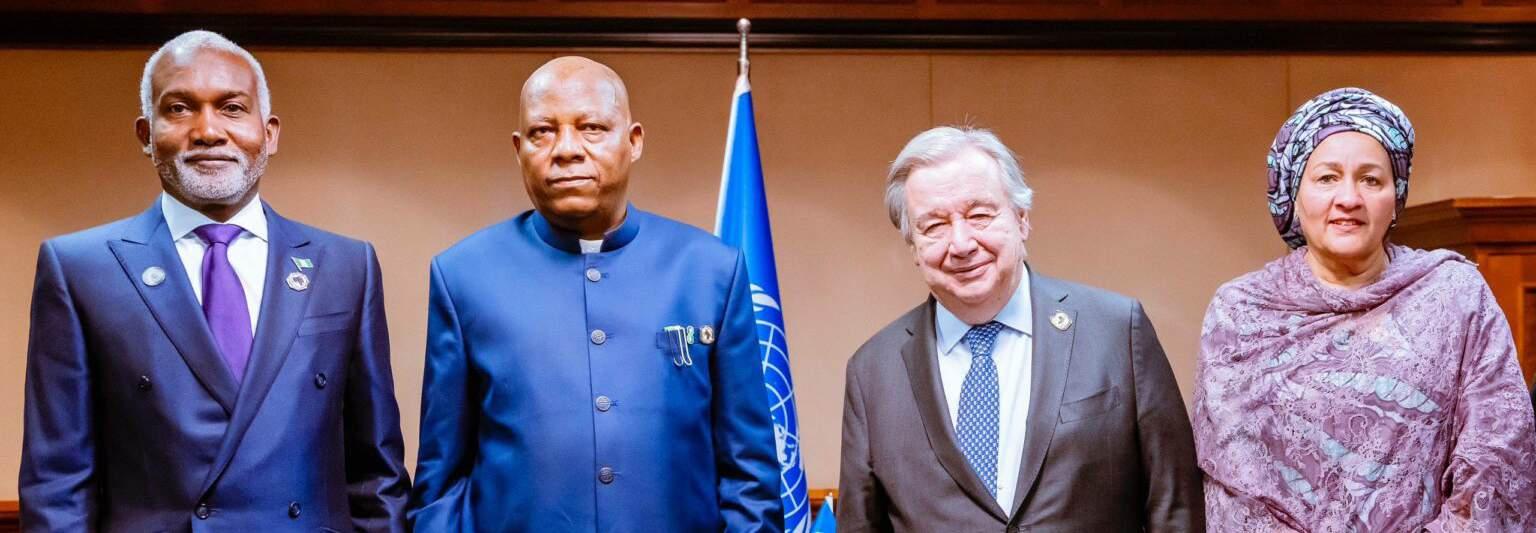
AT THE 39TH AFRICAN UNION SUMMIT…
INEC May Seek Legislative Intervention over Clash of 2027 Elections’ Timetable with Ramadan Period
House to hold emergency session Tuesday over election
The Independent National Electoral Commission (INEC) has said it is currently undertaking consultations and may, where necessary, seek appropriate legislative intervention to address concerns about the clash between the 2027 elections and Ramadan fasting, while ensuring any adjustment remains consistent
with constitutional and statutory requirements.
This is just as the House of Representatives will reconvene for an emergency sitting on Tuesday, February 17, to deliberate on issues arising from the timetable for the 2027 general election.
The Chairman of INEC, Prof. Joash Amupitan, on Friday announced at a press conference that the presidential
and National Assembly elections would be held on Saturday, February 20, 2027, while the governorship and state Assembly elections were scheduled for Saturday, March 6, 2027.
Amupitan said the timetable was issued in compliance with the 1999 Constitution and Section 28(1) of the Electoral Act 2022, which mandates the commission to publish a notice
of election not later than 360 days before the date appointed for the poll.
But former Vice President Atiku Abubakar and others called on the commission to urgently reconsider the February 20, 2027 date, noting that it falls squarely within the Ramadan period, February 7 – March 8, 2027.
In a swift response, INEC National Commissioner,
Bloodbath as Bandits Kill 32 Farmers, Abduct Others, Set Houses Ablaze in Niger
No fewer than 32 farmers were feared dead yesterday in a series of attacks by bandits on Tugan-Makeri, Konsoko, and Pissa communities in Borgu Local Government Area (LGA) of Niger State.
Residents told journalists that the first attack occurred at Tunga-Makeri in Konkoso Ward around 3:00 a.m., during which six people were killed.
They said the bandits later invaded Konsoko and Pissa at about 6:00 a.m. yesterday, shooting sporadically.
In the attacks, 26 people were reportedly killed and several buildings, including a police
outpost, were set ablaze.
Sources added that the exact number of casualties from the attack on Pissa community in Kabe/Pissa has yet to be ascertained.
Hassan Abdullahi, a resident of the area, told journalists that the attackers, numbering over 200, operated for several hours.
He said yesterday’s attack began around 6:00 a.m. and lasted until about 10:00 a.m., adding that the affected communities are located about 200 kilometres from the Nigerian Air Force Base in New Bussa, the headquarters of Borgu LGA.
When contacted, the spokesperson for the Niger State Police Command, SP Wasiu Abiodun, said the attack on Tugan-Makeri village occurred around 3:00 a.m. on Saturday.
He confirmed that six people were killed in the community, while some houses were set ablaze, and an unspecified number of people were kidnapped.
Abiodun also confirmed that the bandits later moved to Konsoko but said details of the attack there were still sketchy.
He said: “On 14/2/2026 at about 6:00 a.m., a report
was received indicating that at about 3:00 a.m., suspected bandits invaded Tunga-Makeri village via Shafachi District in Borgu LGA.
During the attack, six persons lost their lives, some houses were set ablaze, and a yetto-be-ascertained number of persons were abducted. The terrorists were also reported to have moved to Konkoso village, while other details remain sketchy.
“Meanwhile, joint security teams have been mobilised to the scene for assessment, and efforts to rescue the victims are ongoing.”
China to Scrap Tariffs for Nigeria, Other African Countries from May, Says Xi Jinping
China has promised that from May 1, it will scrap tariffs for all African countries, including Nigeria, Chinese President Xi Jinping said yesterday, according to state media. It, however, said one African country, Eswatini, will not enjoy the gesture.
China already has a zero-tariff policy for imports
from 33 African countries. Still, Beijing said last year it would extend the policy to all 53 of its diplomatic partners on the continent.
China is Africa’s largest trading partner and a key backer of major infrastructure projects in the region through its vast “Belt and Road” initiative. From May 1, zero levies
will apply to all African countries except Eswatini, which maintains diplomatic relations with Taiwan.
China claims the democratic island as its own and does not rule out using force to take it.
Many African countries are increasingly looking to China and other trading partners following US
President Donald Trump's imposition of steep tariffs worldwide last year.
Xi said the zero-tariff deal “will undoubtedly provide new opportunities for African development”, announcing the date as leaders across the continent gathered in Ethiopia for the annual African Union summit.
Chairman, Information and Voter Education Committee, Mohammed Haruna, in a statement explained that the timetable was developed in strict compliance with the timelines contained in the Constitution of the Federal Republic of Nigeria, 1999 (as amended), the Electoral Act, 2022, and the INEC Guidelines and Regulations for the Conduct of Elections, 2022.
He maintained that the commission’s Regulations and Guidelines for the Conduct of Elections, made since 2019, fixed the dates of elections.
Haruna noted that Paragraph 2 of the Regulation provides:
timetable
“Election to the office of president and vice president, as well as National Assembly, shall hold on the Third Saturday of February of any general election year, while election to the office of governor and deputy governor and the state Houses of Assembly shall hold two weeks thereafter.”
“Accordingly, and in faithful observance of these extant legal and regulatory provisions, the commission fixed Saturday, 20th February 2027, for the presidential and National Assembly elections and Saturday, 6th March 2027, for the governorship and state Houses of Assembly elections.”
Danjuma Commends Trump for Drawing Global Attention to Insecurity in Middle Belt
Yemi
Kosoko in Jos
A former Minister of Defence, Lt. Gen. Theopilus Danjuma (rtd.), has commended United States President, Mr. Donald Trump for drawing global attention to the persistent security challenges in Nigeria’s Middle Belt region.
Danjuma made the remarks at the combined eighth and ninth convocation ceremonies of Plateau State University (PLASU), Bokkos, shortly after he was conferred with an honorary doctorate (Honoris Causa).
He noted that Trump’s public comments on Nigeria’s security situation helped elevate the Middle Belt crisis into international discourse.
“The international media took notice. Many were surprised; some puzzled, yet the conversation persisted. Today, the world is listening
more closely to the realities of our region. For that awareness, we are grateful,” he said.
The elder statesman described the heightened global scrutiny as a welcome development, saying it has helped spotlight years of violence, including farmer–herder clashes, killings, and mass displacement across the region.
Danjuma, who hails from Taraba State in the Middle Belt, also used the occasion to celebrate fellow honoree, Iyinoluwa Samuel Aboyeji, describing him as a shining example of Nigeria’s emerging generation of innovators.
Aboyeji, born in 1991, is a tech entrepreneur, who co-founded Andela and now leads Future Africa, a venture capital firm backing African start-ups.
Adedayo Akinwale in Abuja
L-R: Minister of Foreign Affairs, Mr. Yusuf Tuggar; Vice President Kashim; Shettima, UN Secretary-General, Antonio Guterres; and Deputy UN Secretary-General, Amina Mohammed, during the UN scribe’s high-level bilateral meeting with the vice president on the sidelines of the 39th African Union Summit in Addis Ababa, Ethiopia…Friday
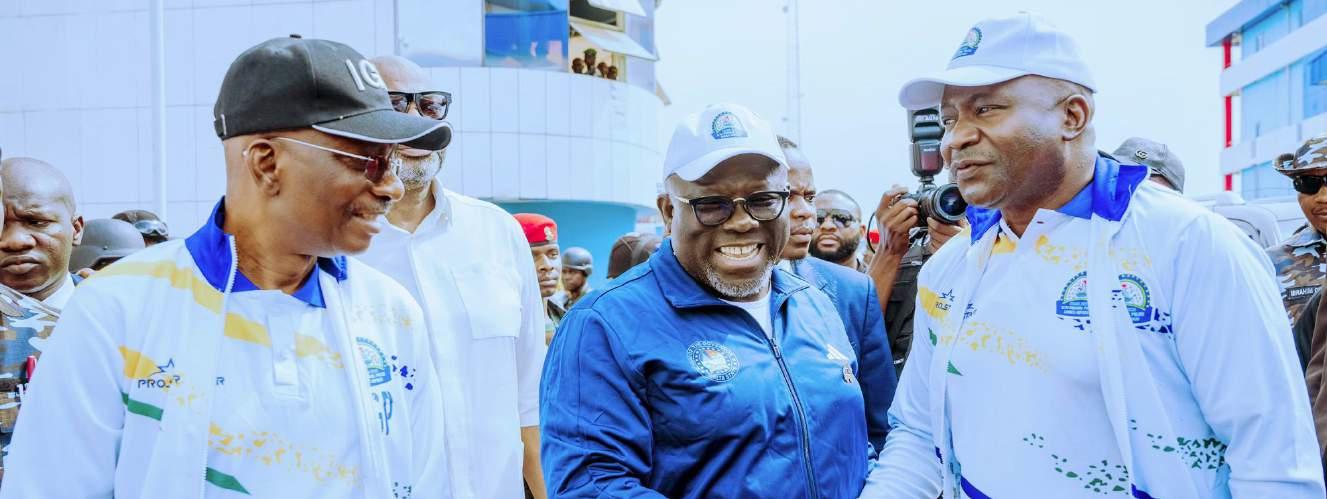
GETTING SET FOR POLICE GAMES…
L-R: Inspector General of Police, Kayode Egbetokun; Delta State Governor, Hon. Sheriff Oborevwori; and Minister of Defence, General Christopher Musa (rtd.), at the Stephen Keshi Stadium for the opening ceremony of the 15th Biennial Police Games/Asaba 2026 in Asaba …yesterday
Nigeria Must Lead Africa’s Charge for New Global Order, Says Guterres
Lauds Tinubu’s reforms, regional security role
Deji Elumoye in Abuja
United Nations SecretaryGeneral António Guterres has charged Nigeria with spearheading Africa's quest for a restructured global order, describing the country as uniquely positioned to lead the continent toward superpower status.
Guterres, who backed Nigeria’s bid for the world body’s security council seat, also praised the economic reforms of the President Bola Tinubu-led administration as well as Nigeria's leadership in stabilising the Sahel and ECOWAS regions, despite facing its own security
challenges.
The UN scribe made the remarks Friday night during a high-level bilateral meeting with Vice President Kashim Shettima on the sidelines of the 39th African Union (AU) Summit in Addis Ababa, Ethiopia.
Speaking during the meeting, Guterres said Nigeria’s large population, sustained democratic governance, vast natural and human resources, and longstanding commitment to multilateralism placed it in a unique position to lead Africa in the evolving global order.
“Given Nigeria’s demographic strength,
democratic continuity and deep resource base, the country stands a real chance of leading Africa to becoming the next superpower in the evolving global architecture,” he said.
The UN Secretary-General and the vice president discussed key developments in Nigeria and the country’s expanding leadership role in promoting regional stability across West Africa and the Sahel.
Guterres commended the remarkable and outstanding reforms of the administration of President Tinubu, noting that Nigeria’s bold economic restructuring and security
commitments have strengthened its continental standing.
The meeting focused on strengthening Nigeria–UN collaboration to advance global economic growth, peace and security, sustainable development, and a coordinated humanitarian response across Africa.
In his remarks, Shettima thanked the UN SecretaryGeneral for his leadership in advancing global peace, noting that Africa has benefited immensely from his tenure, even as the United Nations undergoes internal restructuring.
“We remain committed
Claim in New Video
Suspected members of Boko Haram, formerly known as Jama’atu Ahlissunnah Lidda’awati wal-Jihad, in a recent video they released have claimed that they are holding 176 individuals from Kwara State hostage, a development that has heightened concerns about the security situation in the region.
Following the release of the disturbing video, the Kwara State Government yesterday said it was deeply working with security agencies and other stakeholders to secure their release.
The footage shows dozens of women and children
allegedly taken from the Woro community in Kaiama Local Government Area (LGA) of Kwara State seated in rows in an open area, surrounded by armed men.
The captives include a nursing mother and several minors, with some children appearing half-clothed and many of the abductees visibly distressed, hinting at the dire conditions of their captivity.
In the video, an armed man questions the captives, asking where they were abducted.
Three women, including a nursing mother, responded in Hausa, stating they were kidnapped from the Woro community in Kaiama Local Government Area.
The terrorist alleged during the recording that the Kwara State Government had understated the magnitude of the abduction, asserting that whereas officials had reportedly indicated that between 20 and 30 individuals had been kidnapped, the group maintained that it was holding 176 captives.
“The Kwara State government lied to Nigeria and to the whole world,” the gunman alleged in the footage.
The video emerged weeks after a deadly attack on Woro community on February 4, 2026, when suspected terrorists stormed the area in a coordinated assault. Local sources reported that several residents were killed during
the invasion, including family members of the Emir of Woro, the Chief Imam, and education officials.
The traditional ruler, Alhaji Saliu Bio Umar, was reported missing following the attack, fuelling concerns that he may have been abducted during the raid.
Reacting to the abductions in a statement issued and signed by the state Commissioner for Communications, Bolanle Olukoju, the state government said it was deeply concerned by the disturbing video.
"As always, our thoughts are with all the families affected, and we reaffirm our commitment to securing the safe return of all those impacted".
to multilateralism and to deepening our partnerships with the United Nations and other global institutions,” the vice president said.
Shettima also reiterated Nigeria’s longstanding call for comprehensive reform of the United Nations system to reflect evolving global realities.
He emphasised that Africa must have stronger representation in global
decision-making structures and declared that Nigeria deserves a permanent seat on the United Nations Security Council. Both leaders pledged to deepen cooperation, with Guterres reaffirming the UN’s support for Nigeria’s reform agenda and its growing leadership role in advancing peace, security, and development across Africa.
Afenifere Raises the Alarm over Escalating Terror in South-west, Neighbouring States
Adedayo Akinwale in Abuja
The pan-Yoruba socio-political organisation, Afenifere, has expressed grave concern over persistent terrorist attacks in the South-west and the neighbouring states, warning that the development heightened fears of a full-scale incursion into Yorubaland.
In a statement issued by its National Publicity Secretary, Comrade Jare Ajayi, the organisation said repeated attacks in Kwara, Kogi, and Niger states, alongside recent kidnappings in Ondo, Ekiti, and Oyo states, presented a deeply troubling security trajectory.
Afenifere recalled that heavily armed bandits who invaded Woro and Nuku communities in Kaiama Local Government Area (LGA) of Kwara State, the penultimate week, reportedly killed nearly 200 people and abducted several others.
In the same week, the organisation recalled that bandits launched further attacks in neighbouring Kogi
and Edo states, as well as in Niger, Benue, Plateau, Kaduna, and Katsina states.
It recalled that last Thursday, bandits struck again in Edo and Oyo states, abducting several innocent citizens, including a junior secondary school girl at the Challenge area of Ibadan, Oyo State capital.
Describing the trend as alarming, Afenifere stated:
“This is a very disturbing development as cases of abduction seem to be on the increase in Yorubaland. Incidents in Ondo, Ibadan, and Kaduna occurred in the metropolis. Meaning that terror acts are no longer confined to rustic settings where government presence is thin, if at all.”
The organisation noted that the abduction of the schoolgirl in Ibadan occurred in broad daylight, as her mother was dropping her off at school in the bustling Challenge area, situated at the upper end of Ring Road on the Lagos-bound axis of the city.
Hammed Shittu in Ilorin
IN HONOUR OF DISTINGUISHED JURIST…
Gov Fubara: I Choose Weakness to Preserve Peace, Stability in Rivers
Blessing Ibunge in Port Harcourt Rivers State Governor, Siminalayi Fubara, said he deliberately chose what many perceive as “weakness” to preserve peace and stability in the state amid protracted political tension.
He described his decision to pursue peace as a deliberate strategy for survival and to protect what he holds dear, both personally and nationally.
Speaking in Lagos yesterday at the New Telegraph Newspaper Awards, where he was named ‘2025 Man of the Year’, the governor said the decision to appear “weak” was a conscious sacrifice made in the overall interest of the people
and the nation.
Fubara dedicated the award to God, the people of Rivers State, and the Minister of the Federal Capital Territory (FCT), Nyesom Wike, whom he described as the political leader who discovered and elevated him despite the prevailing circumstances.
“Today is a very special day for me and for everyone who believed in me. For believing in me, you have also shared in the pain. Some people call it weakness; others see it as strength. But for many reasons, I chose to be weak - weak because I want peace; weak, because we need to survive, and weak because I want to protect what is dear not just to me, but to our nation."
Kwara LG Chairman Summons Security Meeting After Bandits Issued Threat Letter to Communities
Hammed Shittu in Ilorin
The Chairman of Oyun Local Government Area (LGA) of Kwara State, Hon. Akanbi Kamar Olarewaju, yesterday said he had convened an emergency security meeting on the recent threat letter issued by some suspected bandits under the aegis of Nigeria Terrorists Association (NTA) to the people of Irra town and other towns in the local government area.
The meeting, according to him, was held at the council secretariat in Ilemona.
This is just as bandits that abducted the wife of the slain forest guard in Oba-Isin in Isin LGA of the state, Mrs. Funke Ogunrinde, have reduced the ransom placed for her release from N100million to N40million.
Olarenwaju, speaking in an interview with THISDAY in Ilorin, stated that the meeting
was well attended by security agencies, traditional rulers, and key stakeholders.
He said, "The council received reports of a letter purportedly written by unknown individuals, claiming they had relocated from Kaiama Local Government Area and were planning attacks on the Irra and Aho/ Inaja axis of Oyun Local Government Area."
He noted that although the council was still working with security agencies to verify the letter's authenticity and credibility, his administration considered it necessary to act proactively in the interest of public safety.
He said: "We urge our people to remain calm, vigilant, and to promptly report any strange movement or unfamiliar faces, not only in Irra and Aho/Inaja, but across the entire Oyun Local Government".
He added that "Weakness is a virtue; it pays at the right time.”
While dedicating the award, Governor Fubara said that although interpretations may vary, he felt compelled to acknowledge Wike’s role in his political journey publicly.
“Interpret it or misrepresent it, I must also dedicate this award to my ‘Oga,’ the Honourable Minister of the FCT, Chief
Nyesom Wike, who discovered me, not minding the situation. It was that discovery that gave me this loudness,” he stated.
The governor also dedicated the award to God Almighty, his family, and the people of Rivers State, commending them for their patience, maturity, and calm disposition amid political challenges.
He thanked the newspaper for the honour, noting that, out
of over 200 million Nigerians, the organisation had identified him and others as worthy of recognition.
Also speaking at the event, former Ogun State governor Olusegun Osoba commended Governor Fubara and other award recipients for their contributions to national development.
Earlier, the Chairman and Publisher of the New Telegraph,
Senator Orji Uzor Kalu, said the awards were conferred strictly on merit, stressing that recipients were selected for their tangible contributions to national development rather than partisan considerations. Kalu noted that the recognition was intended to encourage awardees to deepen their service to humanity and continue contributing to Nigeria's advancement.
Shettima Attends 39th AU Summit as Burundi’s President Takes Over as New Chairman
Deji Elumoye in Abuja
Vice President Kashim Shettima yesterday joined other African leaders and beyond at the opening of the 39th Ordinary Session of the Assembly of Heads of State and Government of the African Union (AU) in Addis Ababa, Ethiopia.
This is just as the President of the Republic of Burundi, Evariste Ndayishimiye, has assumed the role of Chairman of the African Union for 2026,
succeeding President João Manuel Gonçalves Lourenço of Angola.
No fewer than 49 heads of state and government, leaders of global and regional bodies, and development partners attended the opening session, including the United Nations Secretary General, António Guterres; Heads of State and Government of member states, and the Prime Minister of Italy, Giorgia Meloni, among others.
In his welcome address at the summit, which had the
theme "Assuring Sustainable Water Availability and Safe Sanitation Systems to Achieve the Goals of Agenda 2063," Ethiopian Prime Minister Abiy Ahmed Ali emphasized the need for African leaders to be unanimous in their resolve to champion the continent's socio-economic transformation.
According to him, Ethiopia, under his leadership, is making significant strides through investments in smart agriculture and climate-friendly energy projects and is on
track to deliver a sustainable future for its rapidly growing population, currently over 130 million.
On his part, UN SecretaryGeneral Guterres expressed the African Union's support and solidarity with the global body, describing the partnership with Africa as "always the unwavering, decisive support of the African Group in the UN on issue after issue, initiative after initiative, in the shared struggle for justice and equality."
Italian PM Meloni Announces Debt-to-Investment Plan for ‘Vulnerable’ African Countries
Italy has launched a programme to suspend debts of African nations and convert them into investments.
The country’s Prime Minister, Giorgia Meloni, spoke yesterday at the 39th African Union (AU) summit in Addis Ababa, Ethiopia.
The prime minister’s announcement forms part of the ‘Mattei Plan’ - a set of economic and diplomatic projects to strengthen Italy’s presence in Africa through combining investment, cooperation and
anti-migration efforts.
Speaking during the opening session, Meloni said she believed debt cancellation is crucial for building a “truly free Africa capable of determining its own destiny”.
“We wanted to chart a course on this issue as well. Therefore, Italy has decided to launch a vast program to convert the debt of African nations, which includes, among its main points, the complete transformation of the debt of the most fragile and vulnerable
countries into investments, and the strengthening of the contribution to the World Bank’s IDA funds,” she said.
Towing the line of the summit’s theme on water sustainability, the Italian prime minister added that the concessions would also be in forms of climate reliefs.
“Similarly, we have introduced specific debt suspension clauses into our bilateral loans, allowing African nations affected by extreme weather events to free up fiscal space to help
their populations and rebuild essential infrastructure,” she said.
“These are choices based on justice and responsibility, which are crucial for freeing up resources that are vital for development and for ensuring peace and prosperity, including in those areas of the continent that are currently more affected than others by instability, insecurity, and serious humanitarian crises, such as neighbouring Sudan and eastern Democratic Republic of the Congo.”
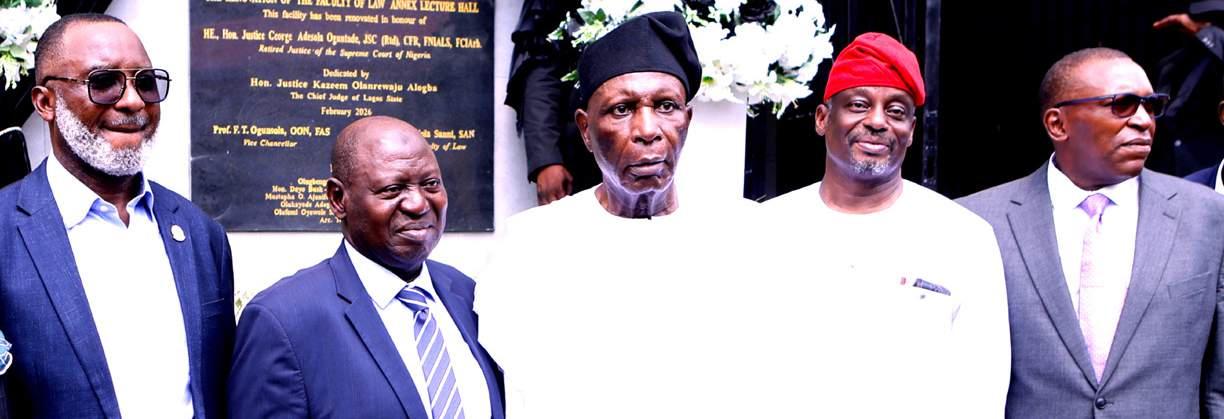
L-R: Dean, Faculty of Law, University of Lagos, Prof. Abiola Sanni (SAN); Chief Judge of Lagos State, Justice Kazeem Olanrewaju Alogba; Retired Justice of Supreme Court of Nigeria, Justice George A. Oguntade; Deputy Vice Chancellor, Development Services, UNILAG, Prof. Afolabi Lesi; and Chief George M. Oguntade Jnr (SAN), at the unveiling ceremony of the newly renovated Law Annex Lecture Hall of the Faculty of Law, University of Lagos, in honour of Justice Oguntade at University of Lagos…recently

A GREAT STATESMAN HONOURED...
2027: Nigerians will Re-elect Tinubu to Secure Brighter Future, Says Oyetola
Five National Assembly members defect to APC
Yinka Kolawole in Osogbo
The Minister of Marine and Blue Economy, Mr. Adegboyega Oyetola, has stated that Nigerians will re-elect President Bola Tinubu
in 2027 to secure a brighter future for the citizens. He equally reaffirmed that Osun State would be reclaimed on August 8 from what he described as the bad administration of the present
government in the state.
Oyetola spoke yesterday, when the All Progressives Congress (APC) in Osun State endorsed President Tinubu for a second term in office and welcomed the defection of
National Assembly members from the Peoples Democratic Party (PDP) to the APC. "Victory will come only through unity, hard work, and grassroots mobilisation. So, I charge you: Return to
NDIC Reaffirms Commitment to Prompt Payouts, Strengthens Claims Process
Nume Ekeghe
The Nigeria Deposit Insurance Corporation (NDIC) has reiterated its commitment to ensuring prompt access to depositors' funds in the event of a bank failure, following significant improvements to its claims settlement process.
Speaking at a Depositors’ Town Hall Meeting in Lagos yesterday, the Managing Director/Chief Executive Officer of the Corporation, Thompson Oludare, said the NDIC had enhanced its payout framework to eliminate delays and bolster public confidence in the banking system.
According to him, the Corporation has refined its reimbursement procedures to
price to N880. So, they've been competing lately. One major factor is the strong Naira we've seen lately. And that is why they have been able to compete with Dangote," Olatide said. He also attributed the drop in imports to fewer licenses granted by the regulator, NMDPRA, noting that import licenses have been a recurring issue in the first quarter of this year.
He said the regulatory agency was trying to support local refineries, Dangote Refinery, and other modular refineries by limiting the number of
ensure that insured depositors are paid as quickly as possible after the closure of any financial institution.
He noted that the strengthened system was demonstrated in the recent payment of insured sums to depositors of the defunct Heritage Bank Limited, Union Homes Savings and Loans Plc, and other closed institutions.
“In those cases, we utilised the Bank Verification Number (BVN) as a unique identifier to trace depositors’ alternate accounts into which their insured sums were transferred. This enabled payments to be made within days of the banks’ closure,” he said.
Oludare explained that the use of the BVN has significantly reduced verification bottlenecks,
import licenses. He commended the regulator for taking that position, noting that as Dangote and others continued to produce and sell locally, it would help boost the economy.
NMDPRA disclosed that Dangote supplied about 40 million litres of petrol in January, higher than its December supply. According to Olatide, production output has also helped stabilise the naira.
He said that with the delay of the import license for this year, importation will continue
accelerating the claims process and ensuring quicker access to funds. He urged depositors to ensure their accounts are properly linked to their BVN to facilitate seamless reimbursement in the event of bank failure.
He stressed that the NDIC’s mandate extends beyond supervision and liquidation, noting that safeguarding depositors’ funds remains its core responsibility.
“Protecting your bank deposits is more than a slogan for us; it is a firm commitment to ensuring that depositors have access to their savings when it matters most,” he said.
The town hall meeting was attended by representatives of the Central Bank of Nigeria (CBN), deposit money banks, civil society
to drop for the benefit of the naira and the larger economy, adding that it will help Dangote Refinery to continue to stabilise.
Olatide noted that 60-70 per cent of the product used locally in December and January was sourced from Dangote.
He further said, "If you look at it, the naira has performed better in the last one or two months. And it means that importers are not chasing FX. So, it has helped the naira. It has contributed to the naira's strength.
"So, what the regulator is looking at is how to keep
organisations, academia, the National Insurance Commission (NAICOM), and the Securities and Exchange Commission (SEC).
Papers were presented on deposit protection, financial literacy, and consumer rights, followed by interactive sessions where participants shared experiences and discussed best practices for safeguarding depositor funds.
As part of reforms aimed at strengthening public confidence, the NDIC in 2024 raised the maximum deposit insurance coverage. The insured limit for depositors of deposit money banks was increased to N5 million, while coverage for microfinance banks, primary mortgage banks, and payment service banks was raised to N2 million.
encouraging Dangote Refinery to continue at that pace, at that 60-70 per cent local supply. If it continues at that level, the naira will continue to strengthen. But if they allow import permits, grant them as much as possible, and keep importing, there will be pressure on the naira because they want to source FX to get those products from Lomé.
Meanwhile, Dangote Petroleum Refinery has successfully increased its daily domestic supply of petrol from a baseline of 32 million litres in December 2025 to a record
your communities, wards, and polling units. Tell our people that the light of progress has returned to Osun. Tell them the APC is stronger, united, and determined," Oyetola said.
Members of the PDP who defected to APC were Senators Francis Fadahunsi (Osun East), Senator Olubiyi Fadeyi (Osun Central), Hon. Wole Oke (Ijesa North Federal Constituency), Hon. Omirin Olusanya (Ijesa South Federal Constituency and Hon. Taofeek Ajilesoro (Ife Central Federal Constituency).
According to Oyetola, "We are gathered not just to receive our new members, but to affirm a shared conviction — that the sure path to prosperity, stability, and visionary leadership lies in the All Progressives Congress.”
Addressing the defecting lawmakers, Oyetola said: “Your decision reflects courage, foresight, and commitment to the progress of our dear state. You have chosen results over rhetoric and service over stagnation."
40.1 million litres in February 2026.
This 25.3 per cent growth in production marked a critical milestone for the facility, as it scales up to meet the energy needs of over 200 million Nigerians and raises hopes for long-term price stability and national energy security.
The addition of an extra 8.1 million litres of petrol to the daily market in just one month came amid delays by the midstream and downstream regulator in the issuance of import permits for oil marketers.
Oyetola added: “In the APC, there are no strangers — we are one united family. Your arrival strengthens our resolve to reclaim Osun and restore dignity to governance. "The difference between rhetoric and results is evident at the federal level under President Bola Tinubu. When he assumed office, Nigeria’s economy stood at the brink. Bold decisions were required, and bold decisions were made. Today, those reforms are yielding results."
He noted that President Tinubu appointed many indigenes of the state to key federal government positions, ensuring the state has a strong and respected voice at the centre of national decisionmaking, with measurable achievements.
“The Renewed Hope Agenda is laying a solid foundation for Nigeria’s rebirth, and that is why we proudly and confidently endorse President Bola Ahmed Tinubu for a second term in 2027 — to consolidate these gains and secure lasting prosperity."
An analysis of the NMDPRA report indicated that the Dangote Refinery has significantly narrowed the gap between what the country produces and what it consumes, with current data suggesting Nigeria’s average daily petrol consumption is approximately 60.2 million litres.
With the refinery now pumping out over 40.1 million litres every single day, the facility, the only functional petrol refinery in Nigeria, now supplies about two-thirds of the country's fuel requirements locally.
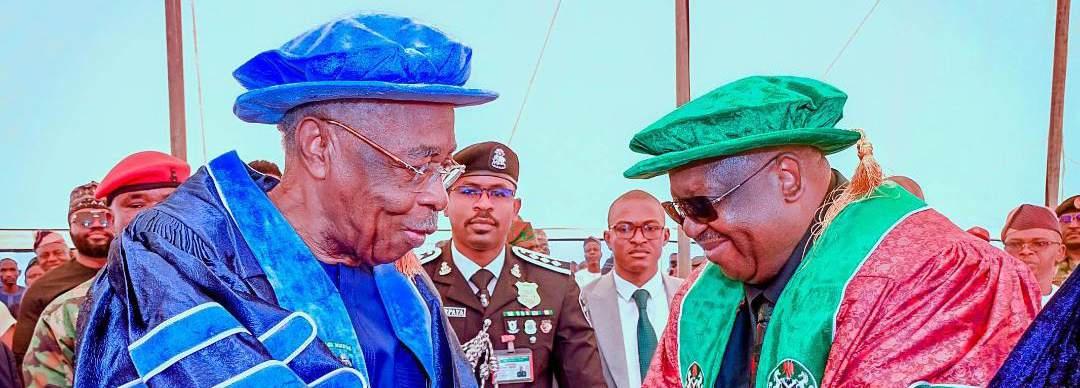
L-R: Former Minister of Defence, Lt.-Gen. Theophilus Yakubu Danjuma (rtd), and Plateau State Governor, Mr. Caleb Mutfwang, during the conferment of honorary Doctorate (Honoris Causa) on Danjuma at the eighth and ninth convocation ceremony of the Plateau State University, Bokkos, Plateau State…yesterday
GREAT PARLIAMENTARIANS …
Report: Jeffrey Epstein Showed Interest in Nigeria’s Oil Sector But Backed out over Fraud Fears
The late American financier, Jeffrey Epstein, once explored opportunities in Nigeria’s crude oil trade but ultimately withdrew over concerns about potential fraud, according to a report by OilPrice.com, an energy news platform.
The report cited a 2010 email exchange between Epstein and a contact identified as David Stern.
Epstein’s interest in Nigeria’s oil and gas sector may come across as a plot twist in his child abuse and sex trafficking saga, which has garnered global interest under the ‘Epstein files’ probe in the United States (US).
In the correspondence, OilPrice said the two individuals discussed the mechanics of lifting Nigerian crude oil, including the complexities of dealing with Nigeria’s national oil company, now known as the Nigerian National Petroleum Company (NNPC) Limited.
According to the report, Epstein developed reservations about the risks associated with the transaction structure and feared being defrauded.
While there is no indication that any transaction was concluded, the emails reportedly show that the American financier
UNILAG Honours Justice Oguntade with Ultra-Modern Lecture Hall
The Faculty of Law, University of Lagos (UNILAG), has unveiled a fully renovated and state-of-the-art annex lecture hall in honour of retired Supreme Court Justice George Adesola Oguntade, celebrating his enduring legacy as one of Nigeria’s most respected jurists.
The upgraded facility, now equipped with air conditioning and modern infrastructure, has been transformed into a conducive and dignified learning environment for both students and lecturers.
Representing the Vice-Chancellor, Professor Folasade Ogunsola, the Deputy Vice-Chancellor (Development Services), Professor Afolabi Lesi, described the Faculty of Law as one of UNILAG’s flagship faculties, renowned for academic excellence and strong alumni engagement.
He noted that the faculty has one of the highest numbers of Senior Advocates of Nigeria (SANs) serving as lecturers in any law faculty nationwide, a distinction reflected in the outstanding performance of its graduates.
According to him, UNILAG produced the highest number of first-class graduates at the most recent Nigerian Bar examinations.
Professor Lesi commended the donors for choosing to honour Justice Oguntade during his lifetime.
“We have not gathered to celebrate him in death, but in life. The reward of an eminent jurist such as Justice Oguntade is not only in heaven, but also here on earth. He will continue to enjoy the fruits of the seeds he has sown,” he said.
The Dean of the Faculty of Law, Professor Abiola Sanni, SAN, said the annex hall plays a central role in the faculty’s academic life, hosting several core and compulsory courses.
He revealed that the facility had suffered prolonged neglect, including persistent roof leakages and structural defects that created difficult learning conditions.
“The renovation has been comprehensive and professionally executed. It has restored dignity to this space and significantly enhanced our teaching and learning environment,” he said.
took a keen interest in Nigeria’s oil market, Africa’s largest crudeproducing sector.
Epstein, who died in 2019 while awaiting trial on federal sex trafficking charges in the US, was a financier who cultivated relationships with high-profile business executives, politicians, and academics.
Though he presented himself as a wealth manager to billionaires, the precise source of his fortune remained unclear for
years. He first faced investigation in 2005 over allegations of sexually abusing minors, and, in 2008, pleaded guilty to procuring a minor for prostitution under a controversial plea agreement in Florida.
Epstein was arrested again in 2019 on federal charges of sex trafficking minors, but died in a Manhattan jail cell before trial.
Following his death, thousands of court filings, emails, and related documents — often referred
to as the ‘Epstein files’ — have continued to surface, shedding light on his global network of financial and political contacts.
The Oilprice’s report suggests that Nigeria’s oil market was among the commercial interests Epstein explored during his years of international financial dealings.
Nigeria’s oil industry has faced longstanding scrutiny over transparency and revenue management.
Many cases of malfeasance have also been reported in the industry, including the Malabu oil deal scandal, one of the most controversial corruption cases in Nigeria’s oil and gas sector.
The former Nigerian National Petroleum Corporation (NNPC) was restructured in 2022 under the Petroleum Industry Act (PIA) 2021, transitioning into the NNPC Limited with a mandate to operate as a commercially driven entity.
US Proposed Bill against Kwankwaso, Politicallymotivated, Kwankwaso-Obi Support Group Insists
Ahmad Sorondinki in Kano
The Kwankwaso-Obi support group has condemned the proposed bill presented by some US legislators against the national leader of the New Nigeria People’s Party (NNPP), Dr. Rabiu Musa Kwankwaso, describing the bill as a blatant attempt to undermine Kwankwaso’s political career.
In a statement issued yesterday by the group’s leader, Abba Sadauki Gwale, the group insisted that the move to impose
a visa ban on Kwankwaso was politically motivated and aimed at silencing the political landscape and stopping Kwankwaso’s growing influence ahead of the 2027 general election.
According to the group, the US legislators’ actions constituted clear external interference in Nigeria’s internal affairs, urging Nigerians to stand against this attempt to dictate who leads the country.
Sadauki emphasised that “Kwankwaso, a prominent Nigerian politician, has been a
vocal critic of the current administration’s policies, particularly on issues related to insecurity, lack of good governance, and economic development.
“We view Kwankwaso’s vocal stance as what likely ruffled some feathers, making him a target for political opponents, especially at a time when his popularity is gaining momentum.
“The timing of this bill is suspicious, coming at a time when Kwankwaso is gaining popularity in Nigeria. It’s hard not to see this as a move to
undermine his reputation and limit his influence,” the statement observed.
Gwale added: “If the bill passes, it would set a dangerous precedent, allowing external forces to dictate who can and cannot participate in Nigerian politics. This could lead to a slippery slope where politicians are targeted for their views.” The statement lamented that the proposed bill lacked concrete evidence against Kwankwaso, raising questions about its motivations.
Nwokedi: Africa’s Resource Sovereignty Hinges on Regional Integration
Emmanuel Addeh in Abuja
The President of the Nigerian Gas Association (NGA) and Regional Coordinator for Africa, International Gas Union (IGU), Akachukwu Nwokedi, has urged Africa to embrace a coordinated policy, shared infrastructure, and collective diplomacy to transform its vast natural resources into broad-based prosperity.
Nwokedi, a statement in Abuja at the weekend said, highlighted the critical role that geopolitics played in the energy sector, arguing that regional alignment would give
Africa the scale, resilience, and credibility required to attract capital, manage volatility.
Delivering a goodwill address in Abuja at the just concluded Nigeria International Energy Summit (NIES) 2026, Nwokedi declared that regional energy cooperation was no longer optional but a strategic necessity in an increasingly volatile global energy order.
“In a world where energy increasingly shapes geopolitics, fragmentation is a liability. Regional alignment gives Africa the scale, resilience, and credibility required to attract capital, manage volatility, and negotiate
from a position of strength,” Nwokedi said.
Speaking to a high-level audience of government officials, industry executives, investors, and diplomats during the session on “Regional Oil and Gas Cooperation,” Nwokedi warned that without deliberate integration, Africa risks remaining fragmented and marginalised.
He stated that if this fragmentation continued, the continent would remain resource-rich yet energy-poor, with millions still lacking reliable and affordable access to power and the economic mobility it enables.
He argued that the continent’s
abundant oil and gas reserves were gaining geopolitical significance amid supply chain disruptions, shifting alliances, and the weaponisation of energy in global diplomacy. He stressed that no single nation could effectively navigate market volatility, capital constraints, or external pressure in isolation.
“Africa’s energy future will not be secured through isolated national strategies. Only through integration; coordinated policy, shared infrastructure, and unified diplomacy can the continent convert resource abundance into economic power and energy access,” Nwokedi said.
Wale Igbintade
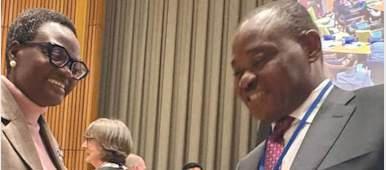
President of the Inter-Parliamentary Union, Dr. Tulia Ackson of Tanzania (left), with Senator Jimoh Ibrahim at the Global parliamentary sitting at the United Nations in New York…Friday
A NEW JUSTICE OF THE PEACE…
2027: Over 20,000 Members of
APC Group in Kwara Join ADC
Hammed
Shittu in Ilorin
A new chapter may be unfolding in Kwara State’s political landscape ahead of the 2027 elections as over 20,000 members of Kwara Redemption Movement (KRM), a group in the ruling All Progressives Congress (APC) yesterday dumped the ruling party and formally defected to the African Democratic Congress (ADC).
The group said the move was a decisive step to reshape governance ahead of the 2027 elections.
Addressing mammoth supporters of the group in Ilorin, the Chairman of the KRM, Akogun Iyiola Oyedepo, said KRM had over 20,000 registered members across the state and directed them
to immediately register with the ADC to strengthen the party’s grassroots base.
Describing the ADC as a credible third force in Kwara State’s politics, Oyedepo maintained that the coalition would focus on issues directly affecting residents, including governance transparency and people-centred alternatives.
He described the development as “a turning point and defining moment in the politics of Kwara State,” insisting that the era of what he called recycled leadership under different guises must give way to a fresh alternative.
Oyedepo explained that KRM was established in February 2024 with the initial intention of operating within the APC, alleging that the
Aid Council Moves to Decongest Prison, Interviews Suleja Awaiting Trial Inmates
Alex Enumah in Abuja
The Legal Aid Council of Nigeria (LACON) has interviewed some inmates at the Suleja Correctional Centre who are awaiting trial without legal representation.
Recall that LACON’s Director General, Aliu Bagudu Abubakar, despite the lean resources of the Council, has constantly maintained the quarterly visit to correction centres across the Country.
The latest visit was led by Assistant Director Ogechukwu Ibenegbu, who represented the Council’s Director, Decongestion Unit, Mr. Oliver Chukwuma.
According to a statement by the Assistant Director, Press, Amaka Agbaih, the delegation interviewed awaiting trial inmates with
the goal of “taking up the cases of those without lawyers”.
The statement added that, “all those without lawyers were documented for representation in courts within FCT and Niger State. Counselling and advice were also given to some of the inmates whose cases were pending in various courts”.
Meanwhile, the Assistant Controller of Correction, Sunday Ejeh, informed the Council about some of the major challenges at the Centre, which, according to him, included a lack of operational vehicles.
Ejeh noted that the four vehicles on the ground are insufficient given the number of courts the center must transport inmates to daily.
ruling party in Kwara State had become dominated by a single individual and family interest, leaving no room for internal dissent or corrective mechanisms.
“At inception, it was to operate mainly within the APC. But as APC became a
one-person/family-dominated party in Kwara State, there was the need to look for another platform to accommodate alternative views and stand on Kwara State’s politics,” he said.
He further argued that the ideals of the Otooge struggle,
which swept the ruling party to power in 2019, had been betrayed by those who benefited from it.
According to him, the current administration had failed to uphold the values of accountability and inclusiveness that formed the backbone of that movement.
“The inheritors of the Otooge struggle have made nonsense of what we fought for,” Oyedepo added.
He stated that “virtually all the evils we fought against are manifested in the present system.”
Etsako Club ’81 Elects New National Executive at 44th AGM
Wale Igbintade
Etsako Club ’81 Worldwide has elected a new National Executive Committee following the conclusion of its 44th Annual General Meeting (AGM), which drew members from across Nigeria and the diaspora for deliberations on the association’s activities and future direction.
The AGM, held alongside the Club’s Annual Award
and Gala Night, provided a platform for members to review past programmes, assess ongoing initiatives, and consider strategies aimed at strengthening unity and advancing development efforts in Etsako land.
A key outcome of the meeting was the conduct of elections into national offices.
Mr. Momoh Abdurrahman Odamah emerged as president, alongside other members of the newly constituted
executive.
The new leadership is scheduled to formally assumed office on January 1, 2026.
Other elected officials include Barrister Patrick Inobemhe as Vice President I; Hajia Aminah Muhammad as Vice President II; Mr. Yahya Suleiman as General Secretary; Mr. Amanozi Abdulai as Assistant General Secretary; Mr. Haliru Momodu as Financial Secretary; Mr. Abdul-Rafeeq Abubakar as Treasurer; Barrister Sadiq
Ilegieuno as Legal Adviser; Mr. Alfred Akokhia as Publicity Secretary; Mr. Ibrahim Sule as Social Secretary; and Mr. Patrick Eshesimua as Chief Whip.
Founded over four decades ago, Etsako Club ’81 Worldwide describes itself as a sociocultural and developmentoriented association committed to service, fellowship, and the collective advancement of Etsako people at home and abroad.
CDS, COAS, Soun, Others Grace 50th Remembrance of Ibrahim Taiwo in Ogbomoso
Kemi Olaitan in Ibadan
Top military officers, traditional rulers and government representatives on Friday converged on Ogbomoso, Oyo State, to honour the memory of former military governor of Kwara State, Col. Ibrahim Taiwo, 50 years after his assassination.
Dignitaries at the remembrance ceremony include the Soun of Ogbomosoland, Oba Ghandi Afolabi Olaoye; representatives of the Kwara State Government; the Chief of Defence Staff, General Olufemi Oluyede; and the Chief of Army Staff, Lt. Gen. Waidi Shaibu, alongside several senior military officers.
The late Col. Taiwo served as Military Governor of Kwara State from July 1975 to February 1976 and was assassinated on
February 13, 1976, during the abortive coup that also claimed the life of then Head of State, Murtala Muhammed.
The remembrance activities began at his tomb located at Community Cemetery in Ogbomoso, where his children, family members and dignitaries laid wreaths in his honour.
Prayers were offered for the repose of his soul, while tributes were delivered to celebrate his life of service, discipline and sacrifice.
Representing the Chief of Defence Staff, Major General Akinniyi Oladapo Oyelade described the late Taiwo as a courageous and disciplined officer whose legacy continues to inspire generations of soldiers.
He said, “He was a brave and noble man. Fifty years after his
passing, his legacy still speaks volumes. He left behind a good name, a shining example and a standard of discipline for the Nigerian Army and the nation at large. We are celebrating a life well lived.”
He added that many officers, including himself, consider themselves beneficiaries of Taiwo’s legacy. “We are forever brothersin-arms. His name and sacrifice continue to encourage younger generations to join the Army and serve with honour.”
In a similar tribute, the Chief of Army Staff, Lt. Gen. Shaibu, represented by Major General Nansak Shagaya, described the late Colonel as a gallant soldier, a visionary administrator and a patriot whose loyalty to Nigeria was unquestionable.
According to him, Taiwo’s
assassination marked a painful chapter in the nation’s history but underscored the price some have paid in defence of national unity and constitutional order.
“Colonel Taiwo stood for discipline, order and purposeful governance. His courage was not loud, but it was firm; his leadership was not flamboyant, but it was effective. He served with honour and fell in the line of duty at a defining moment in our country’s history,” he said. He stressed that remembering fallen heroes like Taiwo is not merely ceremonial but a moral obligation. “We owe it to history and to future generations to keep alive the memory of those who gave their all in service to this nation. Their stories are pillars upon which the Armed Forces stand,” he added.
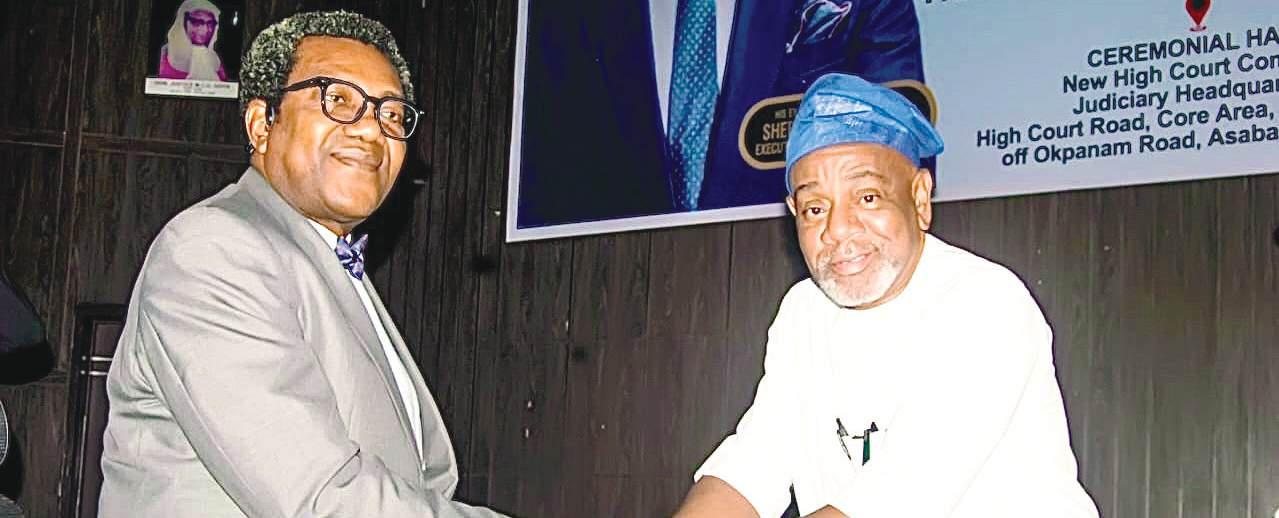
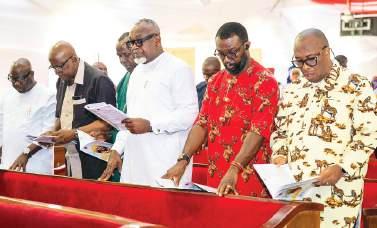
Representative of the first female Chief Judge of Delta State, Justice Theresa Obiajulu Ogochukwu Diai, Justice Godwin Brikins-Okolosi (left), in a warm handshake with newly sworn in Justice of Peace, Ogbueshi Augustine Odiachi, in Asaba…recently
A Farewell Still Echoing in Memory: Umuahia Bids Dame Peace Igbokwe Goodbye
Days after the burial of Dame Peace Onyekwulechi Igbokwe, conversations across Umuahia, Abia State, and beyond continue to reflect on a farewell many have described as deeply moving and unforgettable. The solemn yet grand ceremonies drew family, friends, traditional leaders, and prominent public figures who gathered to honour a life defined by faith, compassion, and service to community
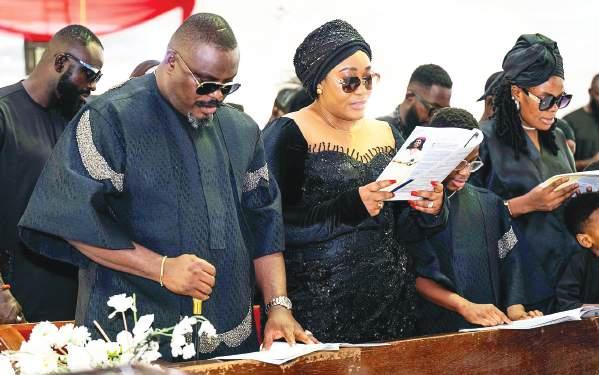
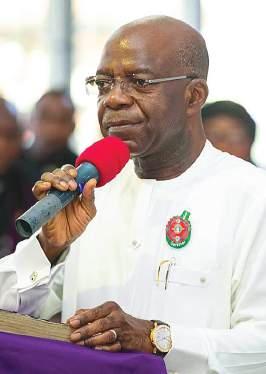
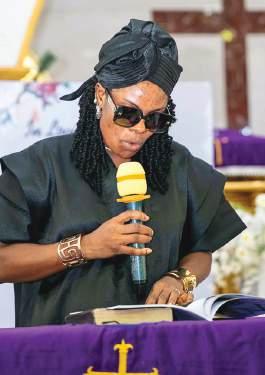
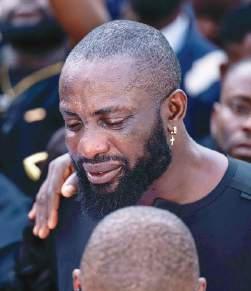
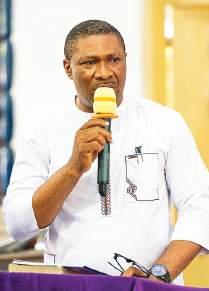
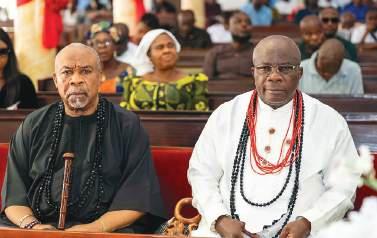
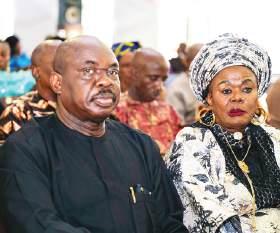
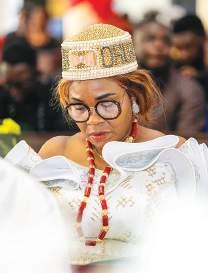
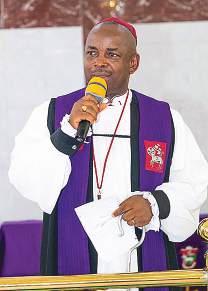
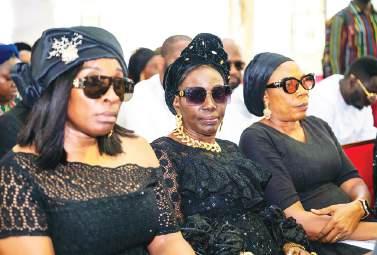
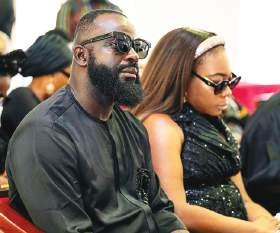
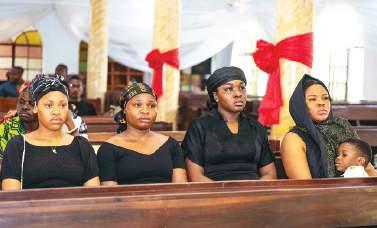
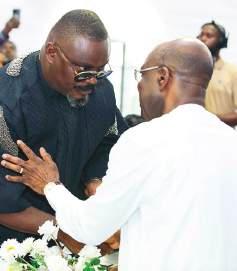
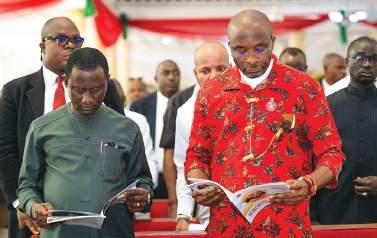
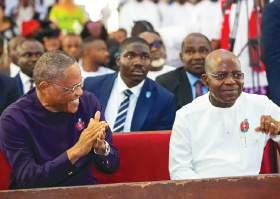
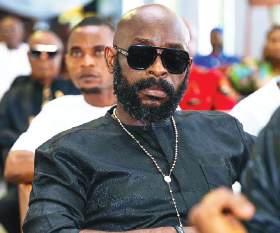
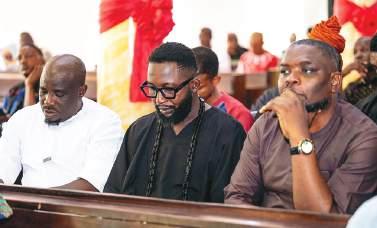
L-R: First son, Mayor Lucky Igbokwe; wife, Divine; son, Rain; and first daughter, Queen Orajuika
L-R: Paramount Chief, Dr Charles Onwuneme and HRH Eze Sir Chikwekwem
L-R: Austin Idemevie, Ikechukwu Ikegbunam; and John Jebose
Son-, Uche Igbokwe
Mr Peter Eledu and wife, Mary
High Chief Gloria Onwuneme, Sodieme Odiukonamba Ohuhu Gburugburu
L-R: Hon Obi Aguocha, Member Representing Umuahia, Ikwuano Constituency with HE Dr. Alex Otti, Governor of Abia State
Abia State Governor, Dr. Alex Otti Daughter- Queen Igbokwe-Orajiuka
L-R: Miss Ugoch Kanu; Lady Ngozi Aneleh; and Mrs Sarah
L-R: Amarachi Goodness Marcus; Chisom Grace Ikemba; Vivian Onyinyechi Marcus; and Mariam Idris
L-R: Former Minister of State for Mines and Steel Dev., Uchechukwu Samson Ogah; and Rt. Hon. Benjamin Okezie Kalu
R-L: Chief Ncheta Omerekpe, Dr Uzodimma Okpara, Prince Tony Eze, Hon. Obilo Ogbonna and Prof. Onyebuchi Azubuike
Barrister Ugochukwu Ndubuka
Kingsley Igbokwe and wife, Naya
Rt. Rev. Dennis Mark
L-R: Mayor Lucky Igbokwe with Governor Alex Otti
Rt. Hon Kelechi Onuzurike
Editor: Festus Akanbi
08038588469 Email: festus.akanbi@thisdaylive.com
Electricity by Subscription, Infrastructure by Donation
Nigeria, consumers pay for electricity yet still fund the transformers, poles and cables that deliver it, turning darkness into a public burden and accountability into a private luxury, writes Festus Akanbi
The video that swept across Nigerian social media last week did not shock because it was dramatic; it shocked because it was precise. In less than two minutes, a Nigerian man distilled a contradiction millions live with daily but have long normalised. He placed two privatised sectors side by side: telecommunications and electricity. He asked a simple question: why does one take responsibility for its infrastructure while the other bills customers for failure?
The question lingered because it had no defensive answer.
In the video, a telecom base station hums in the background, powered by generators that are serviced, refuelled, and replaced without public debate.
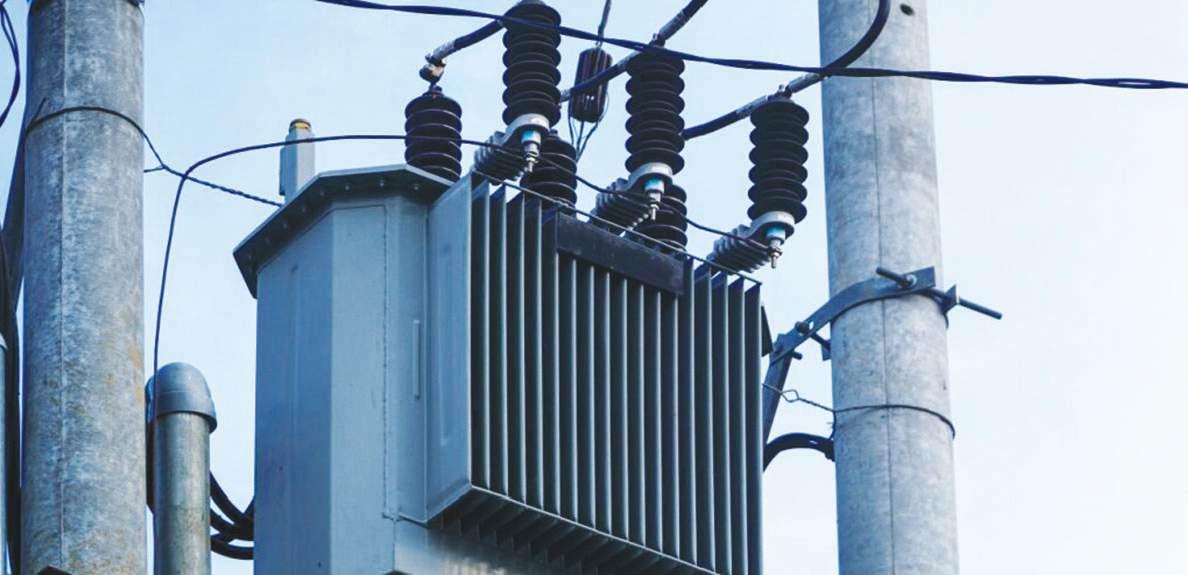
In contrast, electricity distribution infrastructure, including transformers, poles, cables, and even transformer oil, has quietly become a community project.
Nigerians pay monthly bills for power they barely receive, then receive informal instructions to “contribute” when the equipment fails. The video went viral because it named what has been treated as fate: the electricity sector sells energy but disowns delivery.
Resigning to Fate
“I have stopped complaining,” says Mr. Sola Ajayi (not his real name), a resident of Akeredolu, Lambe, Ogun State. “Complaints don’t pump water.”
Ajayi’s experience is unremarkable precisely because it is common. Low voltage prevents him from using his pumping machine. He reported the issue repeatedly to Ikeja Electric. Engineers came, nodded sympathetically, blamed a fuse, promised action, and disappeared. Weeks later, nothing changed. Eventually, he did what millions of Nigerians do: he bought petrol and powered his pump with a generator.
“It’s ironic,” he says. “I generate my own electricity in a country that has an electricity market.”
Warped Incentive Culture
This is the everyday reality behind the viral clip. What Nigerians are confronting is not merely poor service but a warped incentive structure. Telecom operators understand a basic business principle: infrastructure is their problem. If a mast fails, customers are not asked to levy themselves. If a generator breaks down, subscribers are not billed per SIM card. Service delivery and revenue are inseparable.
DISCOS: High on Revenue
Low on Delivery
Electricity Distribution Companies (DisCos) operate differently. Revenue collection is aggressive and relentless. Service delivery, however, is negotiable and often outsourced to consumers. The result is a business model in which private investors receive public payments while communities bear capital expenditures.
A former senior official at the Nigerian Electricity Regulatory Commission (NERC), who asked not to be named, puts it bluntly: “We privatised collection, not responsibility.”
This inversion has roots. When Nigeria privatised its power sector in 2013, the promise was efficiency, investment, and improved service. The government sold controlling stakes in 11 DisCos for about $1.3 billion. In return, the buyers signed performance agreements: reduce losses, meter customers, invest in networks, and improve supply. More than a decade later, the evidence across the country tells a different story.
When Communities Fund Poles, Transformers
In Lagos, Abuja, Kaduna, Enugu, Benin, Yola, Kano, Jos, and Port Harcourt, consumers routinely buy transformers. Communities fund poles. Residents repair cables. Billing, often estimated and opaque, never stops. “We paid 6.5 million for a transformer,” says a community leader in Sagbagyi, Abuja. “When it failed again, they asked us to contribute again.”
What makes this practice particularly troubling is that it is illegal. The Electric Power Sector Reform Act (EPSRA) 2005 and NERC’s Consumer Rights and Obligations Regulation clearly state that distribution infrastructure is the responsibility of DisCos. The Federal
Competition and Consumer Protection Commission (FCCPC) has repeatedly warned that faulty transformers should be replaced within 48 hours of a formal complaint.
Weak Enforcement
Yet enforcement is weak. An investigative survey across more than 30 communities found that these rules are treated as suggestions rather than binding obligations. In some cases, DisCo officials openly endorse community levies, effectively formalising the transfer of private investment costs to households already under economic strain.
A power sector analyst, Mr. Dayo Oladipo, argues that the telecom comparison exposes the underlying problem. “It’s incentives and consequences,” he explains. “Telecoms face competition. If service is poor, customers switch. Regulators fine them. Investors lose money. DisCos operate monopolies. You can’t switch your electricity provider.”
NERC: Strong on Statements, Weak on Sanctions
This monopoly dulls accountability. NERC periodically threatens licence cancellations, but such threats are rarely executed. As a
result, the regulator is often described, even within policy circles, as “strong on statements, weak on sanctions.”
Nowhere is this failure clearer than in the metering crisis. More than half of Nigeria’s electricity customers remain unmetered over a decade after privatisation. Estimated billing, now euphemistically described as “billing based on consumption,” allows DisCos to charge customers without explaining how usage is calculated.
A Lagos resident recounts how his prepaid bill averaged N7,000 monthly until his meter was removed during a network “upgrade.” The next bill arrived: N38,000. “No explanation,” he says. “The outages were not deducted. Complaints went unanswered.”
Why does this persist? Because estimated billing is profitable. Prepaid meters cap revenue. Transparency limits discretion. Accurate data exposes inefficiency. As long as estimated billing remains legal in practice, DisCos have little incentive to accelerate metering.
DisCos defend themselves by citing vandalism, energy theft, unpaid government bills, and tariff shortfalls. These challenges are real. But they are not unique. Telecom operators also deal with vandalism, diesel costs, and theft. They do not ask subscribers to replace antennas.
“The difference is accountability,” Oladipo says. “Electricity has privatised profit and socialised cost.”
The viral video resonated because it posed a question Nigerians have long absorbed in silence but rarely voiced: why must citizens purchase tools that private companies were paid billions to manage? Until this question is answered with enforcement rather than press releases, the paradox will persist. Electricity is not a luxury. It is infrastructure. And infrastructure cannot be indefinitely crowd-funded by people already paying for its absence. Nigeria’s power crisis is no longer a technical problem; it is a governance failure, laid bare, painfully, by a short video that told the truth faster than years of official reports ever did.
A transformer
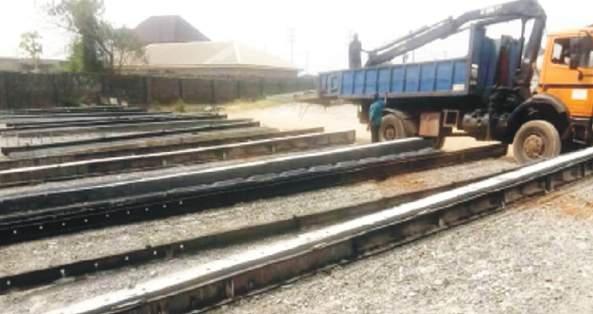
Electric poles
Between Grassroots Promise and Development Drainpipe
Conceived as a bridge between Abuja and the grassroots, constituency projects were expected to deliver visible dividends of democracy. Today, that bridge is riddled with leaks, funds flow, contracts are awarded, but impact is scarce, writes Festus Akanbi
Conceived as a mechanism to localise development and give citizens a tangible sense of representation, constituency projects were meant to bridge the distance between Abuja’s budgets and grassroots needs.
Two decades on, the evidence suggests a troubling inversion of that promise. Rather than serving as conduits for development, constituency projects have increasingly functioned as fiscal drains, absorbing public funds with limited, uneven, or absent outcomes.
The 2024/2025 Tracka report by BudgIT offers a data-driven lens on this paradox, revealing how allocations, disbursements, and delivery have diverged across Nigeria’s federal landscape. What emerges is not an anecdotal tale of failure but a systemic pattern in which public spending expands while public benefit thins out.
Numbers That Refuse to Translate into Impact
Tracka monitored 2,760 capital projects across 28 to 30 states within a 13-month cycle, just over 11 per cent of the 24,553 projects captured in national budgets. Yet even this limited sample tells a sobering story. Only 1,438 projects were completed. The rest were scattered across varying stages of dysfunction: 660 ongoing at a slow pace, 99 abandoned, 471 not executed at all, and 92 categorised as fraudulently delivered.
The financial implications are stark. N15.07 billion was disbursed for the 92 fraudulent projects alone, with N8.61 billion (57.1 per cent) concentrated in five states: Imo, Lagos, Kwara, Abia, and Ogun. In these cases, Tracka documented patterns ranging from the diversion of funds and the relocation of projects to double payments for projects completed in previous budget cycles, partial execution, and visibly substandard delivery.
“What the report confirms,” said Tracka’s Head, Joshua Osiyemi, “is what we have long known: allocation of funds does not guarantee delivery. Citizen oversight is not optional; it is essential.”
Where the Money Went, and What Didn’t Get Built
Beyond aggregate figures, Tracka’s sectoral tracking exposes how the drainpipe operates in practice. Following repeated national grid collapses in 2024, the platform examined dam-related projects across 13 states, with a total value of N432 million. Dams are strategic assets, directly linked to water management, irrigation, power generation, and food security. Yet none of the 16 tracked projects was completed. Four were abandoned, six crawled forward at a minimal pace, and six never commenced despite prior funding.
In primary healthcare, often cited as the closest interface between the state and the citizen, outcomes were similarly mixed. Of 47 revitalised PHCs tracked across 25 states, only 26 showed visible improvements. Twelve were under renovation, eight showed no evidence of intervention despite being listed as funded, and one was completely abandoned. In many communities, residents continued to travel long distances for basic care, navigating facilities plagued by inadequate staffing, weak sanitation, and obsolete equipment.
Tracka noted that limited disclosure of disbursement data made it difficult to determine whether delays stemmed from funding gaps, contractor inefficiency, or weak supervision, an opacity that, in itself, sustains failure.
The Niger Delta Exception, With Caveats
In the Niger Delta, federally funded projects fared marginally better. Of 48 projects tracked across Akwa Ibom, Cross River, Delta, and Rivers States, 29 were completed and delivered measurable benefits. Yet even here, 13 projects had not commenced, four were ongoing, and two were untraceable despite confirmed funding. The region’s relatively stronger performance did not negate the underlying pattern: completion was the exception rather than the norm
Budgets are Not Numbers; They are Lives
For Oluseun Onigbinde, Executive Director of BudgIT, the problem lies in how budgets are treated, abstract figures divorced from lived realities.
“Budgets are not about numbers,” he said at the report’s launch in Abuja. “They are about roads, schools, hospitals, and people. Citizens need to understand that just because a project is in the budget does not mean it will happen.”
Onigbinde pointed to what he described as a paradox in state finances. Despite increased fiscal inflows in recent years, many states continue to struggle to provide basic infrastructure. A key reason, he argued, is the growing dependence on constituency projects, which often weaken accountability and allow state governments to abandon their core responsibilities.
“The real problem we see in most of our reports is the constituency project,” he said. “Somehow, it allows state governments to walk away from what they are
supposed to do.”
Oversight Gaps and the Cost of Opacity
Anti-corruption data reinforces Tracka’s findings. In 2024, the Independent Corrupt Practices and Other Related Offences Commission (ICPC) reported recovering N5.6 billion from fraudulent constituency projects linked to the 2019–2021 budget cycles. More than 50 contractors, consultants, and public officials were investigated, and approximately 200 bank accounts were frozen.
ICPC identified “soft” and empowerment projects, nearly half of those tracked, as major conduits for siphoning funds through truncated trainings, hoarded items, and outright non-delivery. While recoveries demonstrate the value of oversight, civil society groups argue that inconsistent prosecutions blunt deterrence.
“The ZIPs are all about corruption,” said Emmanuel Onwubiko, National Coordinator of the Human Rights Writers Association of Nigeria. “It is shameful that lawmakers saddled with oversight can be implicated in the same illicit deals.”
Structural Fault Lines, Not Isolated Failures
What emerges from the data is not merely slow execution but a deeper breakdown in planning, transparency, and evaluation. Constituency projects are often fragmented, poorly integrated into national or state development plans, and weakly supervised. Disbursements occur without real-time public disclosure, while supervision relies on paperwork rather than physical verification.
Tracka warns that unless project locations, timelines, contractor details, and disbursement data are fully transparent, Nigeria risks repeating a cycle in which budgets expand but public benefit remains elusive.
When Citizens Step in, Outcomes Improve
Yet the report also documents a counter-narrative. Fifteen success stories, ranging from the revitalisation of Kaida Sabo PHC to erosion control in Rivers State and borehole projects in Akwa Ibom, were directly linked to citizen engagement. Communities that visited project sites, documented progress, and escalated discrepancies recorded better outcomes.
“If just five per cent of Nigerians engage in oversight,” Osiyemi noted, “monitoring could reach 50 per cent of projects nationwide, significantly reducing opportunities for corruption.”
A Warning, and an Invitation
Tracka’s 2024/2025 report ultimately frames constituency projects as a test of Nigeria’s governance architecture. Without accountability, they will continue to function as drainpipes—absorbing billions while delivering fragments. With transparency, planning, and citizen oversight, they could yet be reclaimed as tools of inclusive development.
As the report concludes, the choice is stark: public resources will either continue to leak quietly through the cracks of weak institutions or be forced, by data, scrutiny, and civic pressure, to translate into real, measurable impact for the communities they were meant to serve.
Independent Corrupt Practice Service, building, Abuja
CHUKA EZE :
Oilserv is Committed to Building Gas Infrastructure to Power Nigerian Economy
As Nigeria grapples with the challenges of accessing her abundant gas reserves, the Managing Director of Frazimex Engineering Limited, a subsidiary of Oilserv Group of Companies, Mr. Chuka Eze speaks on the progress of the company in the execution of the Ajaokuta-KadunaKano (AKK) gas pipeline project and how to catalyse investments for harnessing the nation’s gas resources to feed the power sector and industries. Ejiofor Alike presents the excerpts:
Nigeria has gas reserves in the hundreds of trillions of cubic feet. Still, a shortage of gas to power the sector remains a major challenge due to difficulties in extracting and processing these resources.
What is Oilserv’s contribution in addressing this deficiency in the coming few years?
Alright, thank you very much. What needs to change in the gas industry to utilise the proven gas reserves that you have mentioned? According to data from the Nigerian Midstream and Downstream Regulatory Authority (NMDPRA) and the Nigerian Upstream Petroleum Regulatory Commission (NUPRC), Nigeria’s proven gas reserves stand at over 210 trillion cubic feet (Tcf).At the Nigeria International Energy Summit 2026, with the theme “Energy for Peace and Prosperity,” securing a shared future was the top priority.
Nigeria has gas in abundance, and what it takes to move it
It is a catalyst that will drive industrialisation - bringing power to people and making life easier. However, the gas that will drive this economic impact is not the gas that remains underground.
It is the gas that has been extracted, processed, and transported to its destination.
The ‘Decade of Gas’ covers demand, supply, and the infrastructure required. And that’s where Oilserv plays a key role in engineering and building this gas infrastructure to bridge the gap between where the gas is sourced and where it is needed.
So, we have had a lot of policies in place - very good policies in place.
It requires significant action right now. Action from the upstream, because the upstream has to invest in extracting this gas that is under the ground.
The transportation system is already there. We have credible EPC service contractors who will build the required gas infrastructure. And we have the market.
We have a growing population and increasing demand. There is a market, and the capacity and capability to design and install this infrastructure exist. We have the gas.
Aweekly decision must be made on how to secure funding and bring this project to life.
Regarding the AKK project, what is the percentage of completion?
You may be aware that, in December last year, the main pipeline welding was completed. As I mentioned in a session, the gas from the OB3 project will be routed to the AKK.
So, the pipeline ofAKK, the main welding line, has been completed. What remains is
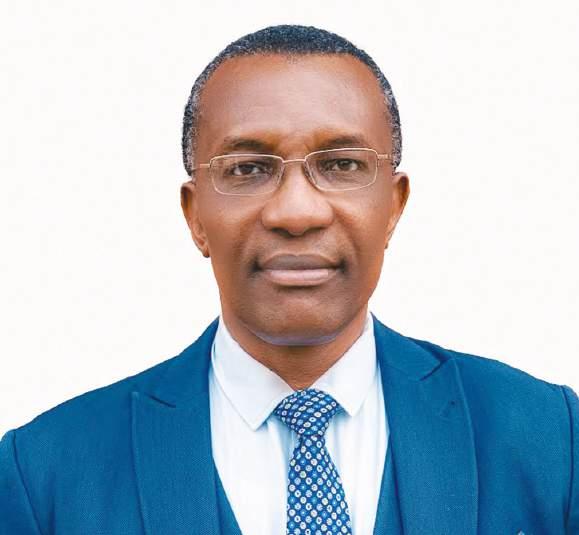
the back-end work.
Gas pricing remains a major issue in the gas space, and this has discouraged investments despite the willing buyer, willing seller policy.What can you say on issues around pricing?
Yes, it is a key factor because every investor wants to know their return on investment and whether they are making money from developing these infrastructure projects or exploring these opportunities.
For me, it is a key element being managed internally by the authorities responsible for gas pricing. During the Gas Master Plan session, it was noted that work is underway, and we expect to see a new pricing regime in the coming weeks.
Having said that, can you take us through some of your major interventions within the domestic gas sector?
Oilserv is a group of companies strategically positioned to provide Engineering, Procurement, and Construction (EPC) services in the oil and gas industry.
As a company, we play a major role in the country’s critical gas pipelines and projects. Notably, we have mentioned the OB3. OB3 is the Obiafu-Obrikom-Oben gas pipeline, 48 inches in diameter and 127 km long.
It also includes a gas treatment plant with
a capacity of 2 billion scf (standard cubic feet) per day. It has four trains. Each train processes 500 million scf per day.
Oilserv has been instrumental in designing the facility and the pipeline. They have built it, and the section constructed by Oilserv has been commissioned. It is currently flowing 300 million scf of gas in the pipeline.
As an industry, we provide engineering, procurement, and construction services for major critical gas pipelines in Nigeria. In the recent gas master plan, several projects are listed.
Oilserv has been instrumental in those projects. Projects which included the AKK pipeline, the Obiafu-Obrikom-Oben (OB3), Assa North-Ohaji South (ANOH) gas project, and, as we speak, there are two Assa North-Ohaji South (ANOH) gas projects. There is one for NNPC that has a manifold and a 36-inch pipeline, 23 kilometres long, feeding into the Construction Tracking Management System (CTMS).
That line has a manifold designed to receive gas from Renaissance (formerly SPDC) and Seplat. It is one of the critical gas infrastructure projects commissioned by the President in May last year. Right now, it is flowing gas to Seplat.
AKK is a mega project. How do you
manage the detailed engineering designs that reduce construction risks?
Your question centers on the detailed engineering for AKK segment 1. That segment comprises the main pipeline, which is 40 inches in diameter and 304 kilometres long. It has 12 block gas stations. It has one intermediate biking station.
It has two terminal gas stations - one at Ajaokuta and another at Abuja. It has a capacity to handle 700 million scf of gas. Nigerians completed the detailed engineering, and it has been delivered.
That is one of the testaments to Nigeria’s talent. We have the talent to execute these credible and critical projects in Nigeria. Frazimex also did this project.
In doing so, we have in-house capacity to deliver engineering for any project in this space, whether facilities or pipeline. We have the capacity in Nigeria. All we need is the opportunity and the projects. We have Nigerians who are credible, experienced, and capable of delivering these projects.All, we have about 200 disciplinary engineers on the AKK project, delivering detailed engineering that is complete and being constructed. The Assa North we talked about - the engineering was done by Nigeria, by Frazimex, and it has been commissioned and constructed.
We are doing a lot in that space. Currently, at Frazimex, we have been providing engineering services to NLNG, Seplat, and Aradel for the past four years.
So, do we have the capacity and capability in Nigeria? Yes. Are we able, as a nation, to undertake the engineering of these critical projects in Nigeria? The answer is emphatically yes.
What is lacking? What is lacking is that we should do more of them to build incountry capacity. Currently, at Oilserv, we have been running a programme for the past three years. Every year, we engage 20 fresh graduates and enrol them in a two-year programme.
Over the past two years, we have taken them around the business and projects and provided on-the-ground training to build capacity in Nigeria. It is a commitment that Oilserv, as a group and as a business, is intentionally making. We started with 20, the first set.
The second set, we had another 20. The 2026 set finished their session last Friday and have started now. Next year, we will engage another set of 20.
So, when you ask, “What are we doing?” We believe that Nigerians - even Africansshould be trained and should be able to have the capacity to handle some of these critical projects and export them.
Eze
www.thisdaylive.com

opinion@thisdaylive.com
FORGED IN THE CREEKS OF NIGER DELTA
JUDE OBIOHA pays tribute to Matthew Tonlagha, a bridge builder, quietly shaping conversations on development, security and national cohesion
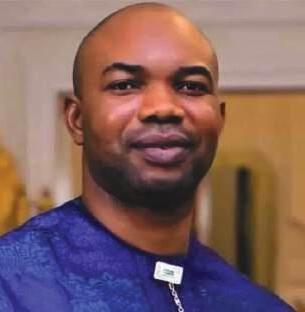
See Page 20
NIGERIA AND THREATS OF GENDER APARTHEID KATHLEEN OKAFOR argues that while women have made strides in education, entrepreneurship, and activism, systemic barriers continue to hinder their full participation in other areas
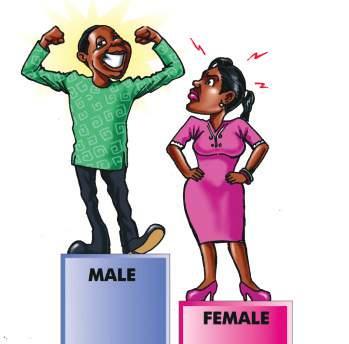
See Page 20
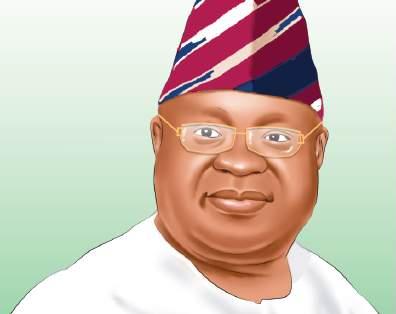
K BOLANLE ATI-JOHN urges corporate organisations to treat the present moment as a window to strengthen execution discipline
EXECUTION, NOT OPTIMISM, IS THE NEW SCARCE RESOURCE
Nigeria’s corporate leaders are entering 2026 with a level of confidence not seen in recent years. After a prolonged period of inflationary strain, exchange rate volatility, and policy uncertainty, a measure of macroeconomic stability appears to be taking hold. According to the latest PwC Global CEO Survey Nigerian perspective, 91 percent of Nigerian CEOs expect the economy to improve over the next twelve months. More than half express strong confidence in their companies’ short term revenue growth
Optimism, it seems, has returned.
Yet beneath this renewed confidence lies a more sobering reality. When asked what concerns them most, half of Nigerian CEOs say their primary worry is whether their organisations are transforming fast enough to keep pace with technological change, including artificial intelligence. Forty four percent are anxious about their companies’ long term viability. This anxiety is reflected in operational deficits. Only a quarter report that they test new ideas rapidly with customers, and even fewer have routine processes for stopping underperforming initiatives
These numbers tell a deeper story. Nigeria does not suffer from a shortage of optimism. It suffers from a shortage of execution.
The distinction matters. Optimism is a sentiment. Execution is a capability. Optimism reflects belief in improving conditions. Execution determines whether those conditions are converted into sustained performance. The present moment therefore presents both opportunity and risk. If confidence translates into disciplined reinvention, Nigeria’s corporate sector can lock in gains from stabilisation. If confidence becomes complacency, the economy may once again discover that stability without capability produces only fragile growth.
The easing of macroeconomic pressures explains part of the renewed confidence. The share of CEOs reporting high exposure to inflation has declined sharply, and concerns about macroeconomic volatility have moderated . For business leaders long buffeted by unpredictable price signals and currency instability, this shift alone is significant. Clearer pricing, improved monetary effectiveness, and a more predictable operating environment create space for strategic planning.
But macroeconomic calm is only the beginning of the story. As inflation and volatility recede, firm level risks have moved to the foreground. Cyber risk and the availability of key skills now rank among the most pressing threats. Technological disruption, geopolitical uncertainty, and trade related pressures continue to shape executive thinking . The centre of gravity has shifted from external turbulence to internal capability.
This is where the execution gap becomes visible. Take innovation. Nearly half of Nigerian CEOs describe innovation as a critical component of their overall strategy . That is encouraging. Strategy statements
matter. Yet only 25 percent say they test new ideas rapidly with customers, and just 22 percent report routine processes for discontinuing underperforming research and development initiatives . A mere 13 percent indicate a high tolerance for risk in innovation projects
What does this mean in practice? It means that while innovation is rhetorically embraced, it is not structurally embedded. Organisations may declare transformation as a priority, but their operating rhythms remain cautious, bureaucratic, and slow. Experimentation cycles are long. Failure is penalised rather than harvested for learning. Capital is allocated conservatively. Underperforming projects linger rather than being decisively exited.
This cautious tempo may be a legacy of surviving past economic shocks, where preservation trumped experimentation. In a system shaped by volatility, leaders learned to defend margins before pursuing reinvention. That instinct once protected firms. It may now constrain them. A culture forged in survival is not automatically suited for scale.
The digital imperative sharpens this dilemma. Fifty percent of CEOs say their most pressing question is whether they are transforming quickly enough to keep pace with technological change, including artificial intelligence . AI adoption appears strongest in customer facing functions and selected operational areas, while far fewer report extensive application in direction setting or strategic planning
However, if these tools are merely layered atop legacy processes, automating inefficiencies rather than eliminating them, their impact will be marginal. Digital transformation does not occur when software is installed. It occurs when decision rights, workflows, accountability structures, and performance metrics are redesigned. Without that structural redesign, artificial intelligence becomes a feature, not a force multiplier.
Cybersecurity underscores the same theme. Thirty eight percent of CEOs report high exposure to cyber risks, and three quarters expect to strengthen enterprise wide cybersecurity over the next three years . This is prudent. As businesses digitise, their attack
surface expands. Yet cybersecurity is not simply a technology investment. It is an execution discipline. It requires training, testing, incident simulation, board oversight, and embedded governance. Without operational rigour, cybersecurity spending can generate comfort without resilience.
The talent question may prove even more decisive. Thirty eight percent of CEOs cite the availability of key skills as a major threat . In an economy experiencing migration pressures, rising demand for digital expertise, and global competition for high end capabilities, talent strategy cannot remain a support function. It must become a growth engine. Firms that fail to align skills development with strategic priorities will discover that optimism about revenue growth is not matched by the internal capacity to deliver it.
Even in capital allocation, caution coexists with opportunity. While a significant share of CEOs plan major acquisitions over the next three years, many are either not planning such moves or remain uncertain . Geographic expansion beyond Nigeria remains limited, with more than half not planning international investments in the near term . Prudence is understandable in a volatile global environment. Yet strategic hesitation, if prolonged, can cede ground to more decisive competitors, particularly as regional integration under the African Continental Free Trade Area framework gathers momentum.
What emerges is a paradox. Nigerian CEOs are more confident about macroeconomic conditions than they have been in years. They are aware of technological disruption, cyber threats, and skills shortages. They articulate innovation as a strategic priority. Yet the mechanisms of execution, rapid experimentation, disciplined exit of weak initiatives, enterprise wide digital integration, proactive talent investment, remain uneven.
This is the new scarcity. Capital is not the primary constraint. Optimism is not in short supply. Even strategic intent appears robust. What is scarce is the institutional discipline to convert these into durable performance.
Rear Admiral Ati-John (rtd) writes from Lagos

KATHLEEN OKAFOR argues that while women have made strides in education, entrepreneurship, and activism, systemic barriers continue to hinder their full participation in other areas
NIGERIA AND THREATS OF GENDER APARTHEID FORGED IN THE CREEKS OF NIGER DELTA
JUDE OBIOHA pays tribute to Matthew Tonlagha, a bridge builder, quietly shaping conversations on development, security and national cohesion
In a country where activism often clashes with national cohesion and where loud voices frequently overshadow steady hands, Matthew Tonlagha represents a rare Nigerian archetype. This bridge builder fights fiercely for his people while working tirelessly for the peace, stability and economic future of Nigeria. His journey from the creeks of the Niger Delta to global engagement is not merely a personal success story. It is a powerful narrative of resilience, citizen diplomacy and quiet nation-building.
Tonlagha’s story begins not with privilege but with adversity. Born into a disciplined military family in Delta State, his early life was marked by profound physical challenges after complications from an illadministered polio vaccine impaired his mobility. For nearly a decade, he depended on his mother’s strength to attend school and navigate daily life. Social stigma, financial hardship and the early loss of his father could have silenced his ambitions. Instead, these experiences forged in him a deep empathy for the vulnerable and an unyielding commitment to service. His eventual recovery and rise stand today as a testament to resilience; a personal struggle transformed into a lifelong mission for collective empowerment.
From his earliest activism in the Benikrukru community in the Gbaramatu Kingdom of Delta State, Tonlagha distinguished himself not only as a protester but also as an intellectual force behind the Niger Delta emancipation struggle. He confronted exploitation and neglect with courage, yet consistently advocated peaceful engagement, negotiation and constructive dialogue. Like many iconic leaders who understood that lasting change requires both firmness and foresight, he pursued justice for the Niger Delta without undermining Nigeria’s unity. This duality—fighting for regional equity while championing national stability—has defined his leadership philosophy.
His grassroots activism evolved into entrepreneurship and indigenous industrial growth through MATON Engineering Nigeria Limited, a company that has become a major employer and a driver of local capacity development. But Tonlagha’s influence extends far beyond boardrooms. As Vice Chairman of Tantita Security Services Nigeria Limited, he emerged as a critical private-sector partner in Nigeria’s oil security architecture. The success of efforts to curb oil theft, protect pipelines and restore production levels has had direct implications for national revenue, economic recovery and investor confidence. In a sector long plagued by instability, his role has been central to fostering sustained economic growth.
Yet perhaps the most compelling aspect of Tonlagha’s legacy is his understated philanthropy.Heisaquiethumanitarianwho has been funding scholarships, supporting widows and orphans, empowering youth through vocational training, and sustaining free feeding programmes without fanfare. His giving is not performative; it is rooted in lived experience and a belief that dignity must accompany assistance. This approach reflects a leader who remembers the pain of exclusion and seeks to build systems that offer opportunity rather than dependence.
Beyond Nigeria’s borders, Tonlagha has emerged as an informal yet effective citizen diplomat. Through international engagements and policy advocacy, he contributes to shaping Nigeria’s global image, strengthening bilateral conversations and promoting economic diplomacy. In an era when official channels alone cannot capture the full spectrum of global
influence, individuals like Tonlagha help bridge gaps by advancing national interests while fostering international goodwill. His work underscores a new model of diplomacy in which private citizens complement formal statecraft, thereby reinforcing Nigeria’s strategic standing on the global stage. What sets Tonlagha apart is not only the breadth of his engagements but the philosophy underpinning them. He embodies a generation of Nigerian leaders who believe that peace in the Niger Delta is complementary to Nigeria’s prosperity and that local development should align with national progress. His early activism against exploitation, including dramatic acts of defiance that drew attention to neglected communities, gradually evolved into a more nuanced strategy; one that combines dialogue, economic empowerment and security collaboration.
As he marked his golden jubilee in 2026, the outpouring of recognition from community leaders, national figures and global stakeholders revealed a man whose impact has long been felt but rarely publicised. Friends and admirers describe him as a peacemaker, a unifier and a patriot whose influence transcends ethnic and political boundaries. Indeed, his ability to convene diverse actors—from grassroots leaders to international partners—demonstrates a rare gift for consensus-building in a nation often divided by competing interests.
Nigeria’s future will depend not only on official institutions but also on citizens willing to shoulder responsibility beyond personal ambition. Tonlagha’s life offers a compelling blueprint: resilience forged through hardship, advocacy grounded in intellect and peace, economic empowerment anchored in indigenous enterprise, and diplomacy driven by patriotism rather than self-promotion. From the creeks of the Niger Delta to the corridors of international engagement, he has quietly shaped conversations on development, security and national cohesion. In an age hungry for loud heroes, Tonlagha reminds us that the most enduring influence often operates in silence; building bridges where others see barriers, lifting communities where others see divisions, and proving that one individual, driven by empathy and vision, can help align regional emancipation with national unity. His story is not only a tribute to personal triumph but a reflection of the Nigeria that is possible when courage meets compassion and service meets strategy.
Women inclusion and empowerment are critical indicators of a nation’s development, essentially mirrors the nation’s commitment to equity, justice, and sustainable progress. Nigeria, as a country, is rich in cultural diversity, economic and humongous national resources. Expectedly, the status of women has evolved through complex historical, political, and socio-economic dynamics.
Despite constitutional guarantees and international commitments, Nigerian women continue to face systemic barriers to reasonable participation in governance, economic activities, and social leadership. The rule of law is usually affected by the rule of man which is the current bedrock of politics and generates ethno-reigious confllicts.
The adoption of the 1999 Constitution guarantees multidimensional equality in all facets of endeavour. However, several provisions remain gender-biased. For instance, Section 26(2)(a) of the constitution allows a Nigerian man to confer citizenship on a foreign wife, but denies the same right to Nigerian women. S55 (1)(D) of the Penal Code allows a man to physically discipline his wife, etc. Yet, over the years, Nigeria has ratified international instruments such as the Convention on the Elimination of All Forms of Discrimination Against Women (CEDAW) and the African Union’s Protocol on Women’s Rights.
The National Gender Policy (NGP) was first introduced in 2006 and revised in 2021. The aim was to promote gender equality in all sectors. It sets a benchmark of 35% affirmative action for women in political appointments and decisionmaking roles. However, actual representation remains far below this target.
Women’s political participation in Nigeria is among the lowest in Africa. By 2023, women held only 4.7% of seats in the National Assembly—far below the African average of 24% viz: South-West Nigeria has seen relatively higher female representation, with states like Lagos and Ekiti promoting gender-inclusive policies and appointing women to key cabinet positions. Women led businesses are also major growth drivers.
Northern Nigeria, particularly the NorthWest and North-East, lags significantly due to cultural and religious norms that restrict women’s public engagement. In some states, women are not represented in the legislature. South-East Nigeria has a strong tradition of female leadership at the community level (e.g. the “Omu” institution), but formal political and financial inclusions remain limited. Town unions, market women associations are strong contributors to national development.
Efforts such as the Gender and Equal Opportunities Bill have faced repeated setbacks in the National Assembly, reflecting entrenched patriarchal resistance.
Economic empowerment is a cornerstone of gender inclusion. According to the 2020 Access to Financial Services in Nigeria survey, only 35% of Nigerian women had access to formal financial services compared to 51% of men. Key barriers include: Limited access to credit and land ownership, low financial literacy, discriminatory inheritance laws, informal sector dominance.
Regional initiatives have shown promise: In Rivers and Akwa Ibom, there is remarkable growth in women-led cooperatives and agribusiness ventures.
North-Central states like Plateau and Benue have benefited from donor-funded programs targeting rural women’s access to microfinance.
Urban centers such as Abuja and Lagos have witnessed a surge in female entrepreneurship, supported by creative arts, fashion digital platforms and fintech innovations.
Despite these enhancements, women remain underrepresented in formal employment,
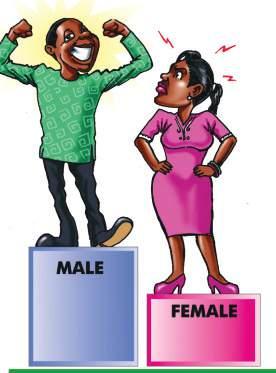
especially in STEM fields and executive roles. Economic empowerment of women is critical to gender inclusion and societal egalitarianism.
Education and Health as Pillars of Empowerment: Education is a critical enabler of empowerment. While Nigeria has made progress in female enrollment at the primary level, dropout rates remain high, due to negative cultural practices, early marriage, poverty, and insecurity, particularly in conflict zones which contribute to low enrolment rates.
South-West and South-East regions record higher female literacy rates and school completion levels.
North-East Nigeria, affected by insurgency and displacement, has the lowest female education indicators.
These factors necessitate a re-think of learning to achieve more inclusivity of women. In health, maternal mortality remains quite high, with Nigeria accounting for nearly 20% of global maternal deaths. Access to reproductive health services is more pronounced. However, basic needs of sanitary towels for menstrual hygiene should be guaranteed in all government hospitals and educational institutions.
Social and Media Representation: Cultural norms play a dual role, both enabling and constraining women’s empowerment. In some communities, women hold influential roles in religious and traditional institutions. However, patriarchal values often limit women’s autonomy and reinforce gender stereotypes.
Media representation of women has improved, with more female voices in journalism, entertainment, and activism. Social activism like #BringBackOurGirls and #EndSARS have spotlighted women’s leadership in civic engagement.
Yet, gender-based violence remains profound. The Violence Against Persons Prohibition (VAPP) Act, passed in 2015, has not been domesticated, leaving gaps in legal protection.
Women journalists should draw attention to women’s success stories, the landmarks and excellence. In real terms, the African Development Bank (ADB) estimates that whilst 10-12 million young people enter the African work force every year, only about three million jobs are created. Learning rethink is urgent as only 60%of African population is under 25 and skills can be integrated in their learning so they can start entrepreneurial activities whilst in school aiding in moving from corporate sphere to leadership.
Okafor, SAN AIIN is a Professor of Property and Commercial Law
Obioha is the Director of Strategy at the Hope Alive Initiative (HAI), a group dedicated to good governance in Nigeria

Editor, Editorial Page PETER ISHAKA
Email peter.ishaka@thisdaylive.com
THE OSUN LOCAL GOVERNMENT CRISIS
The crisis should be resolved in the interest of the people
The lingering crisis over leadership and governance at the local government level in Osun state is taking its toll on workers and pensioners. Many of the communities are also sinking deeper into poverty and neglect. Since March 2025, more than N130 billion statutory allocations due to the 30 local government areas in the state have been held back, trapped in bank vaults, due to political power play. Even worse, the crisis is increasingly deepening political tension, and degenerating into violence and loss of lives.
The leadership crisis stemmed from the dissolution of the local government structures which Governor Ademola Adeleke inherited in 2022 from the administration of his predecessor, Adegboyega Oyetola, who is currently the Minster for Blue Economy. Oyetola had conducted a controversial local council election shortly after losing his re-election bid, in an act of political brinksmanship. And all the elected officials were of the All Progressives Congress (APC). A few days after Adeleke was sworn in as governor on the platform of the Peoples Democratic Party (PDP), a Federal High Court sitting in Osogbo nullified the local government election.
services ranging from education, healthcare, issuance of marriage certificates, and others.
While we do not condone lawlessness in any form, we urge the federal government to release the withheld funds to the local government areas in Osun State and work for an amicable resolution of the crisis
While Adeleke immediately appointed caretaker committees to run the councils, the ruling was challenged by the sacked chairmen and councillors. The Court of Appeal in Akure, Ondo State heeded their prayers by declaring their removal illegal. But in total disregard for the judgment, Adeleke conducted a fresh local government election in February 2025. With the election declared illegal by the Attorney General of the Federation (AGF) and Justice Minister, Lateef Fagbemi, SAN, the APC boycotted the exercise.
Expectedly, the PDP won all the seats in the councils and were promptly sworn in by the governor. But these officials were directed to stay away from council secretariats to avoid further clashes. The Nigeria Labour Congress (NLC) had earlier directed local government workers to withdraw their services for safety reasons. While the 30 local government secretariats are lying idle, locked away and unoccupied, many ordinary citizens of the state are denied services often rendered by the councils -
SUNDAY NEWSPAPER
editor DAviDSoN iRiEkpEN
deputy editors FESTUS AkANBi, EJioFoR ALikE
Managing director ENioLA BELLo
deputy Managing director iSRAEL iwEgBU
chairMan editorial Board oLUSEgUN ADENiYi
editor nation s capital iYoBoSA UwUgiAREN the oMBudsMan kAYoDE koMoLAFE
THISDAY NEWSPAPERS LIMITED
editor-in-chief/chairMan NDUkA oBAigBENA
group executive directors ENioLA BELLo, kAYoDE koMoLAFE iSRAEL iwEgBU
divisional directors SHAkA MoMoDU, pETER iwEgBU ANTHoNY ogEDENgBE
deputy divisional director oJogUN viCToR DANBoYi snr. associate director ERiC oJEH
associate director pATRiCk EiMiUHi
controllers ABiMBoLA TAiwo UCHENNA DiBiAgwU, NDUkA MoSERi director, printing production CHUkS oNwUDiNJo to send eMail: first name.surname@thisdaylive.com
Letters
to the Editor
With the federal government insisting that the local government allocations would only be released to APC officials elected under the Oyetola administration in its last days, the Adeleke-led government went to the Supreme Court to challenge the “unconstitutional and arbitrary seizure” of local government revenues. Adeleke won and lost. The Supreme Court struck out the Osun State government’s suit. But it also held that the federal government was wrong to seize the funds belonging to the local government areas of the state. “Refusal to release the funds is a clear misuse of power by the defendant,” declared Justice Mohammed Baba-Idris, “and it is a clear disobedience to the court’s order that funds should be paid only to a democratically elected government.” He counseled that the funds be released to the local governments’ accounts. Indeed, the apex court had ruled in the past to affirm the financial autonomy of the 774 local government areas of the country. But the 30 local government areas in Osun State are caught in the crossfire of partisan politics. For a rural state where internally generated revenue is a little more than a handful, the impact of the seizure on the people is palpable. Many small businesses are reportedly gasping for breath. Reports indicate that residents in towns like Ede, Ilobu, Ejigbo, Osogbo, Ife and Ilesa are being adversely affected by the prevailing condition while markets are shrinking because of low purchasing power. Farmers are illmotivated. In addition, basic services are collapsing.
Tragically, the prolonged crisis has not only created a climate of fear and confusion; it has also claimed innocent lives. It has led to the gruesome murder of the Chairman of Irewole Local Government, Remi Abass, and five others.
It is unfortunate that the rule of law does not seem to matter, and court rulings are being interpreted to suit partisan interests. While we do not condone lawlessness in any form, we urge the federal government to release the withheld funds to the local government areas in Osun State and work for an amicable resolution of the crisis.
Letters in response to specific publications in THiSDAY should be brief(150-200 words) and straight to the point. interested readers may send such letters along with their contact details to opinion@thisdaylive.com. we also welcome comments and opinions on topical local, national and international issues provided they are well-written and should also not be longer than (950- 1000 words). They should be sent to opinion@thisdaylive. com along with the email address and phone numbers of the writer
LETTERS
KWANKWASO, AMERICA, AND THE RISKS OF POLITICAL LABELLING
Recent signals from Washington suggest a growing impatience with Nigeria’s internal complexities, especially as they relate to religion, security, and political leadership. At the centre of this emerging posture is a troubling tendency to compress Nigeria’s layered crises into externally convenient labels—labels that risk doing more harm than good.
One of the clearest flashpoints in this evolving narrative is the renewed attention being directed at former Kano State governor Rabiu Musa Kwankwaso. His name, along with those of Fulani-affiliated organisations and, by implication, Nigeria’s Muslim political class, has begun to feature in American policy conversations framed around religious freedom and accountability. What appears, at first glance, as principled concern deserves closer scrutiny. Nigeria’s security breakdown is undeniable. Insurgency, banditry, farmer–herder violence, and organised criminal networks have torn through communities across the country. But
these tragedies have never respected religious boundaries. Muslims and Christians, northerners and southerners, rural farmers and urban traders have all paid the price. To reframe this national trauma primarily as a story of religious persecution is to flatten reality into something politically useful but analytically false.
This framing did not emerge organically. It has been cultivated through persistent lobbying, selective reporting, and advocacy-driven briefs circulated within Western policy and faithbased circles. Many of these narratives rely on contested data sets and ideologically motivated interpretations that have been challenged by journalists and security analysts familiar with Nigeria’s terrain. Yet repetition has given them traction.
Under Donald Trump, the United States has shown a greater willingness to convert these narratives into policy instruments. Nigeria’s earlier designation as a “Country of Particular Concern” over alleged religious persecution, and
the signals accompanying its reconsideration, reinforced the impression that Washington had settled on a moral script that leaves little room for nuance.
What is especially alarming is how this posture now intersects with Nigeria’s domestic political timeline. The proposal of punitive measures against figures like Kwankwaso—who has no public record of religious extremism—raises uncomfortable questions about motive and timing. Sanctions, visa restrictions, or terror designations do not occur in a vacuum; they shape reputations, constrain political options, and influence electoral perceptions.
Even more dangerous is the elastic use of terms such as “Fulani militia.” The Fulani are not a monolith, nor are they a security organisation. They are a vast, diverse population spread across West and Central Africa, encompassing professionals, farmers, scholars, politicians, and pastoralists. To collapse this diversity into a security label is not accountability—it is ethnic
profiling with far-reaching consequences.
Those who defend this approach often argue that allowing clerics or religiously identified politicians into democratic space risks sanctifying power. That concern is not without merit. In plural societies, when political authority borrows the language of divine legitimacy, dissent can be recast as moral deviance. But that argument cuts both ways. External actors who cloak geopolitical interests in moral absolutism risk exporting the very instability they claim to oppose.
Nigeria’s democracy, imperfect as it is, rests on pluralism, negotiation, and the acceptance of politics as a human—rather than sacred— enterprise. When foreign policy instruments treat Nigerian political actors as symbols in a global religious drama, they undermine this fragile equilibrium. Worse still, they embolden local extremists who thrive on polarisation and grievance.
Abdulhamid Abdullahi Aliyu,Abuja
Hit FM @ 10: Beyond the Airwaves
When Hit FM launched a decade ago, social media was reshaping how young people consumed content. Rather than resist change, Patrick Ugbe and his team embraced it. Today, the station stands as a cultural hub, bridging music, civic engagement and creative enterprise across Cross River State. Vanessa Obioha writes
Ten years ago, Patrick Ugbe, Chief Executive Officer of Hit FM Calabar, embarked on a journey to transform the radio landscape in Cross River State. It was a period when digital disruption was just taking hold. Facebook, Twitter, and Instagram were beginning to reshape how people accessed and consumed news and entertainment.
Radio, once largely grassroots in appeal, was becoming more cosmopolitan. Lifestyle and culture-driven programming was increasingly attracting young audiences.
For Ugbe and his team, the task was more than launching another station.
“What we tried to do 10 years ago with Hit FM, was to set up a radio station that would fill a void,” he said. “A brand that will provide an alternative platform for the people, giving them an opportunity to be heard.”
At the time, Calabar—known for its culture, nightlife and tourism—had only two operational stations: the state-owned CRBC and the federal government-owned Canaan FM. There was no privately-owned broadcast outfit. “This didn’t sit well at all for a state like Cross River,” Ugbe noted, “which prides itself on a number of firsts in the country, so we felt the need to correct that as well.”
Yet, the biggest challenge lay ahead: fragmented audience attention. Digital platforms were giving users full control over what they consumed. How could a traditional radio station compete?
“To survive, we chose to adapt rather than resist. This shaped our strategy to move ‘Beyond the Airwaves.’ We realised Hit FM couldn’t just be a sound on a dial; it had to be a movement.”
On February 1, 2016, Hit FM 95.9 went on air, quickly becoming the sound of the city. With programmes such as The Hit Breakfast Show with Duke Emmanuel and The Otwetwe Show with Becky Ugbe, the station positioned itself as the voice of the people.
But Ugbe’s dream was not just about a dial. As he stated, it was more about having several touchpoints that would reach each fragment of its audience.
That same year, Hit FM launched a Carnival Band at Carnival Calabar and became an official media partner of Africa’s biggest street party. The station has since played a key role in amplifying the carnival’s energy beyond city limits.
It also introduced The Clean Calabar Project, a civic initiative that mobilised listeners for environmental campaigns, including clean-up exercises at Watt Market and other public spaces.
In 2017, on its first anniversary, Hit FM launched the Baller Alert Concert, a platform for emerging artists. The concert has helped nurture local talents while hosting established stars such as Seyi Shay, Sunny Neji and Ruggedman.
That year, the station also attempted to break the Guinness World Record for the longest nonstop club party, hosting a 120-hour event. The initiative spotlighted Calabar as a destination for music, culture and celebration.
By August 2017, Hit FM introduced the Tell Your Story: Mind Rubbing Session, hosted by Quinesta Ekom. The programme created a safe space for discussions around mental health, resilience and community development.
Later that year came the Calabar Entertainment Conference (CEC), which brought together creatives, media professionals and entrepreneurs. What began as a one-day event has evolved into a three-day festival featuring speakers and performers such as 2Baba, DJ Jimmy Jatt, Edi Lawani, John Ugbe and Magnito.
Over the years, the station has hosted
together for wholesome entertainment.
“By becoming a multi-platform brand that lives on social media, at live events, and in community initiatives, we’ve turned digital disruption into a tool for greater engagement,” said Ugbe.
Still, challenges persist. One major constraint is dependence on imported broadcast equipment.
“Since broadcast equipment is not manufactured in Nigeria, we are constantly at the mercy of exchange rates when upgrading or replacing infrastructure,” explained Ugbe.
“However, another defining ‘risk,’” he continued, “was our early decision to invest heavily in the local ecosystem without immediate returns—such as providing free jingles and promotion for local event organisers to strengthen the city’s creative economy. This operational choice cemented our reputation as a ‘community-first’ brand, ensuring our long-term sustainability through loyalty rather than just transactional revenue.”
Today, Hit FM is widely recognised as a cultural force in Cross River.
“We have moved from being a broadcaster to a cultural catalyst. Subtly, we’ve reshaped discourse through programs like The Public View and our live University Debates, which have fostered democratic engagement and youth leadership.”
He added that the station’s influence is most visible through the CEC, which has repositioned Calabar as a hub for creative thought leadership.
Mentorship remains central to Hit FM’s mission. In partnership with Edi Lawani, the patrick ugbe
figures in music, film and media, including Don Jazzy, Kanayo O. Kanayo, Mr Eazi, Omoni Oboli, Ini Edo, Efa Iwara, Phyno, Daniel Etim Effiong, IK Osakioduwa, Ebuka Obi-Uchendu, Mr Macaroni, Johnny Drille, Ayra Starr and American gospel artist Jonathan McReynolds.
station established a summer tech school that later evolved into the Calabar Creative Academy, with support from the U.S. Consulate in Lagos. The academy serves as a creative incubator, equipping young talents with industry-relevant skills.
The station also organises the annual Easter Family Funfair, bringing families
“We didn’t just play the music of the city,” he said, “we helped build the stage it stands on.” As the station marks its 10th anniversary Ugbe reaffirmed that Hit FM will always remain the ‘sound of Calabar.’
“The fact that we are a premium lifestyle brand, built to serve the community. A brand that continues to provide that alternative voice and a sense of belonging to the people of Cross River. We will always be the ‘sound of Calabar’ committed to the aspirations of our listeners and the growth of the creative sector.”
Flutterwave Hosts Obasanjo, Maduka, Business Leaders in Star-Studded Gala
Flutterwave has reaffirmed its commitment to Nigeria’s business ecosystem following a high-profile gala night held in Lagos, which drew leading figures from government, industry, and the creative sector.
The payments technology company, Flutterwave, in partnership with luxury hospitality brand The Delborough Lagos, hosted the blacktie event at the hotel in Lagos, bringing together stakeholders from technology, aviation, hospitality, FMCG, insurance, and the public sector.
The gathering featured a keynote address by former President Olusegun Obasanjo, who spoke on innovation, leadership, and the role of private enterprise in national development. He urged business leaders to deepen their contribution to economic growth and global competitiveness.
Founder and Chief Executive Officer of Flutterwave, Olugbenga Agboola, reflected on the company’s journey and its evolving role as a financial infrastructure partner for Nigerian businesses.
“Nigeria is home, and it remains one of our most important markets. Our goal is to build deeper relationships with the businesses and leaders driving the economy,” he said.
Also in attendance was Lagos State Governor Babajide Sanwo-Olu, who praised Flutterwave’s leadership and encouraged the company to continue building globally competitive financial platforms from Nigeria.
Other prominent guests included former Sierra Leonean President Ernest Bai Koroma; clerics Paul Adefarasin and Flourish Peters; businessman Cosmas Maduka of Coscharis
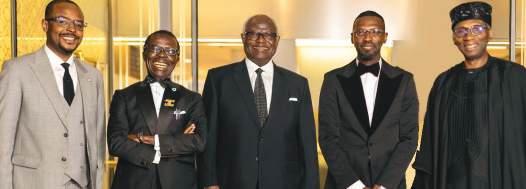
left:
Group; construction executive Olu Okeowo of Gibraltar Construction Nigeria Limited; and telecoms veteran Ernest Ndukwe of MTN Nigeria.
The entertainment and creative industries were also represented by Erica Nlewedim, Omotola Jalade Ekeinde, Tiwa Savage, and Dorathy Bachor.
Also speaking at the event, Maduka commended Flutterwave’s leadership and described innovation and resilience as critical to building sustainable Nigerian enterprises.
Chairman and Founder of The Delborough, Dr. Stanley Uzochukwu,
said the partnership aimed to create an environment for meaningful collaboration.
“Our vision is to provide world-class hospitality for leaders shaping the future of the country,” he said. “Hosting this Gala with Flutterwave enables us to do what we are best at – creating a space where meaningful business relationships can be built, ideas can flow, and excellence is experienced at every touchpoint.”
The evening concluded with live music, dining, and networking, underscoring Flutterwave’s intention to strengthen ties with key sectors and position Nigeria as a hub for globally competitive financial and business solutions.
leading
from
Dr. stanley uzochukwu, chairman and founder of the Delborough; Dr. cosmas Maduka (coN), president and ceo of coscharis Group; His excellency, Dr. ernest bai Koroma, former president of sierra leone; Mr. olugbenga ‘Gb’ Agboola, founder and ceo, flutterwave, and Dr. ernest Ndukwe (ofr), chairman of the board of Directors, MtN Nigeria at a recent innovation night, hosted by flutterwave at the Delborough lagos.
InternatIonal Murtala Muhammed’s ‘Africa Has Come of Age’ and PBAT’s ‘Strategic Autonomy’: QuoVadis?
Africa has been object and subject of concern in international politics. It is the most critical region of the world in terms of exploitation and insults. It is also the continent for which musicians have complained to God almighty, asking why Africa is not on the good books of God. True, Africa was partitioned at the 1884 Berlin Conference with a stroke of the pen, a partitioning that divided the same ethnic people. For example, the Yoruba people were divided between Dahomey, now Benin Republic, and Nigeria. The Hausa and Fulani people were similarly divided, some living in Nigeria and some in Niger Republic.
As a result, when law enforcement agents in Nigeria and in the immediate neighbouring countries want to collect taxes, people in the border areas simply shift to the other side to avoid payment or arrest as their compounds fall on both sides. If it is the Beninois gendarmes or tax officers that are coming, the people will move to the other part of their house on the Nigerian side. Imagine a compound in which the lounge is on the Beninois side and the bedrooms are on the Nigerian side. Most unfortunately, the African leaders have continued to enslave Africans the more, warranting several pan-Africanists to cry aloud.
‘Nakomitunaka’ is the title of a 1972 Congolese Rumba song by Versckys Kiamuangana Mateta, meaning ‘I ask myself’ or ‘I wonder.’ Asking or wondering about what? Why religious iconography and figures are portrayed as white while demons are always depicted as black. Yet, this same black Africa is a terra cognita for rich mineral resources which the developed countries want to protect and exploit to the detriment of their arch enemies. It is against this background that the birth, life and times of General Murtala Muhammad, in relationship with that of President Bola Ahmed Tinubu, are hereby compared and contrasted in the context of the defence of Africa, its dignity, and future.
Africa Has Come of Age
Nakotumitunaka, undoubtedly, was a rallying cry for black consciousness. Even though Africans are either referred to as black or dark, people of shitholes, poverty, and development setbacks, etc., the African soul brother number 1, James Brown, made it clear to the whole world that he was black and proud before he died. In his own words: ‘Say it Loud, I am Black and Proud.’ What about Nigeria’s Fela Ransome Kuti who changed his name to Fela Anikulapo Kuti? He had several revolutionary songs condemning Africa’s exploitation, bad governance, and societal indiscipline driven by the political chicanery of African leaders. Murtala Muhammad was not different in his perception of the political rottenness in the political governance of Africa during his own life time. He felt the need to address the rottenness.
He was Nigeria’s fourth Head of State, coming after Dr Nnamdi Azikiwe, General Aguiyi Ironsi, and General Yakubu Gowon. He was born into a world of unrest and instability on 8th November, 1938, that is, just a day before the Kristallnatch or before the Night of Broken Glass when Jewish synagogues and businesses were wilfully destroyed, when their vitrines, glasses and property were broken. It was a bad day for the Jews but a joyous day for some Americans. 8th November, 1938 was a day of happiness for the Democratic Party in the United States, and also a major day of special joy for the family of Murtala Mohammed. The Democratic Party lost 72 House Seats and 7 Senate Seats in the mid-term elections that took place on that day. The Murtala Muhammad family gave birth to a future leader and bearer of a torch of better days to come.
Without jot of doubt, Murtala Muhammed was not only born at a time of a disorderly world in the making, but also at a time of global inability to prevent the increasing display of psychology of human differences and making of World War II. Murtala Mohammed therefore had no choice than to grow up in a world of unrest, colonialism, injustice, foreign exploitation and indignity, etc., all of which were incompatible with his make-up and personality. This would be clearly reflected when he took over power from General Yakubu Gowon. First, how do we reconcile his personality with his governance objective? In the eyes of the people of Africa, and particularly Nigerians, he is a good and correct man. In the eyes of outsiders, the Euro-Americans in particular, he is not a good man. But who is correct? A good man is one that defends patriotism, cleanliness of hearts and altruism in the fear of God. A good person always defends objectivity of purpose

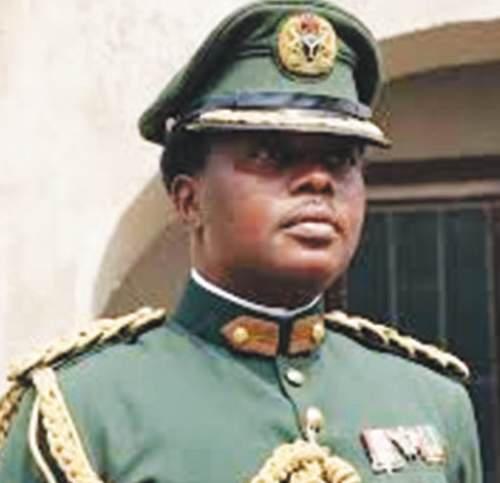
and refrains from giving untrue testimony. Anyone who bears false witnesses or who swears on oath knowing fully well that his oath is far from the truth is satanic in all ramifications. A good person may not be 100% holy, 100% correct attitudinally. Any person who tries to live honestly to the tune of more than 50% is good enough because God himself knows that all the people he created on the 6th day before he rested on the seventh day are terrible. Murtala cannot therefore be an exception.
Consequently, when General Murtala Muhammad was portrayed negatively in the United States, the general impression was that Murtala Mohammad was, at best, a bad leader without vision. For example, it is useful to put the understanding of the portrayal of Murtala Muhammad in its appropriate context. On August 18, 1975, a diplomatic memorandum with reference no. PA/HO Department of State, E.O. 12958, by John E. Reinhardt, was declassified. The memo, which was titled ‘Nigeria after the coup of July 28,’ was in response to the request by government on August 14, 1975. The government probably wanted to know how to relate with the new Murtala Muhammad regime in Nigeria. The Reinhardt memorandum reported that ‘the leader of the coup against General Yakubu Gowon is an erratic, vainglorious, impetuous, corrupt, vindictive, intelligent, articulate, daring Hausa.’
Additionally, Reinhardt also wrote that ‘Brigadier Murtala Muhammad was a prime force in the Nigerian coup of July 1966, which brought Gowon to power and is one of the two principal plotters against Gowon for the past two years. For some reasons, the memorandum by Reinhardt is of interest for further reflection on the personality of General Muhammad. General Murtala Muhammad was not only reported to have been an active participant in the coup that brought Lt-Colonel Yakubu Gowon to power in July 1966, but also to have
killedOnecanonlyhopethatPresidentBolaAhmedTinubuwouldnotbe assassinationinthemaniaofthe1963styleofSylvanusOlympioorthe1976 ofMurtalaMuhammad.HistoryhasGrossomodoshown thatallthosewhodaredthebigpowersdirectlyandindirectlyhave policybeeneitherremovedfrompowerorneutralised.Thisneutralization materialscannotbutcontinueasAfricastillremainsagoodsourceofraw fordevelopmentofEurope.AllthebigpowerswanttocontinuetobefriendAfricabyhookorbycrookbecauseofitswantedreofsources.Thequestforaforeignpolicygrandeurseekingthegreatness Nigeria,oragreatNigeriadifferentfromtheDonaldTrump’sMAGA policy,cannotbutbeseenasunfriendly.Bigpowerswanttosurvive people.byallmeansandwithoutgivingdueregardtothesurvivalofother Thequestforstrategicautonomycannotbeanotherstruggle forwhichNigeriansmustbefullyprepared.Thisiswhatfiftyyearsof remembranceofthekillingofMurtalaMuhammadisraisingasa question:WhatfutureforAfrica?WhenwillAfricareallycomeof sovereignty?age?WhenwillAfricabeabletodefendpowerfullyitsown ‘TimewillTell,’toborrowthewordsofJimmyCliff

been very critical to the removal of the same Yakubu Gowon, now a military General in 1975. Put differently, why did he support the coming of Yakubu Gowon to power in July 1966? Are the reasons for the support no longer sustainable as of 1975 when he reportedly came out in support of his removal? Does this not lend support to the hypothesis that whenever there is the need to support goodness, Murtala Muhammad would always do and condemn what was wrong whenever there was the need to do so? As much as Reinhardt’s memo can have a negative impact, the goodness of General Muhammad’s behaviour cannot be set aside with a mere stroke of the pen. Our position here is predicated on the consideration that the Government of Nigeria had reportedly exonerated General Murtala Mujammad from being involved in the July 1975 coup that ousted General Gowon in a bloodless coup. Even though coup making was and is still condemnable, the mere fact that it was a change of government free from blood letting is goodness in itself. Additionally, here was also the accusation of the involvement of the Nigerian army in genocide against the secessionist Biafrans, which General Murtala Muhamad again denied. Whatever is the case, nothing can be more beautiful than another side of the memorandum by Reinhardt according to which the same General Murtala Muhammad was ‘intelligent, articulate, daring Hausa.’
Admittedly, General Muhammad might have been vindictive, erratic, vainglorious, impetuous and corrupt, there is still no disputing the fact of his being intelligent and articulate and daring. But daring to who? Probably to the United States. This evaluation was in itself serious enough to warrant the placing of Murtala Muhammad’s on the list of people of concern in the list of foreign policy strategic concerns of the United States. Reinhardt was simply telling the Washingtonian authorities that Murtala Muhammad could be daring to the US foreign policy interests. And who says that Reinhardt’s evaluation is not correct in this regard? Murtala Muhammad was fearless, very daring, and very patriotic. He showed a character that has gone beyond that of timber and calibre to that of iron and steel and his message of ‘Africa has come of age’ to African leaders at the OAU headquarters in Addis Ababa was quite reflective of his iron and steel personality.
Murtala said that Africa was no longer under the orbit of any foreign power. You can imagine this statement in the eyes of a superpower like the United States. Who was Murtala Muhammad to have the effrontery of condemning the exploitation of Africa and rejecting the idea that Africans needed foreign experts to identify their friends? In the words of Murtala Muhammad, ‘the fortunes of Africa are in our (Africans) hands to make or mar.’ This statement was daring and this might have partly or fully informed the coup that took his life. General Yakubu Gowon was very friendly with the West. His removal could not but be antagonising to the West. And perhaps more importantly, for hobnobbing with the communist Soviet Union and Chinese, considered as arch enemies of the United States and its allies, was enough reason to seek to neutralise the life of Murtala Muhammad.
What Future for ‘Strategic Autonomy?
Murtala Muhammad, for many, has died. For many others, he has not died. His message of Africa has come of age has prevented him from being on the list of the dead. Every year he was remembered. President Muhammadu Buhari noted at the 40th memorial lecture of the late General Murtala Muhammadu that he ‘was on his way to putting Nigeria back to the path of order and discipline before his assassination in a military coup on February 13, 1975. Most unfortunate. The longer the time he is remembered, the more thought-provoking he becomes a living dead and that more questions are raised about the future of Nigeria, and particularly in the context of PBAT’s quest for strategic autonomy.
Gerard Ford was US President in 1975 when Angola acceded to national sovereignty. Angola got its independence from Portugal in 1975. It was also in 1975 that General Muhammad put a stop to GOWON or the idea of ‘Go on With One Nigeria.’ Murtala Muhammad was not against keeping Nigeria united. However, he was much concerned about President Gerard Ford’s letter of opposition to the Soviet-backed Popular Movement for the Liberation of Angola (MPLA), a left-wing political party, which was formed in 1956 but only succeeded to come to power in 1975 following independence. The opposition party to the MPLA was the UNITA (National Union for the Total Independence of Angola) which was led by Dr Jonas Savimbi. Nigeria, until this time, was supporting the UNITA. On the very day that Nigeria discovered that the UNITA was hobnobbing with apartheid South Africa, Nigeria changed support from UNITA to the MPLA which was Marxist-Leninist and anti-America. It is against this very background that the attitudinal dispensation of General Muhammad should be better explained and understood. It is also within this context that the linkage between the message of Africa has Come of Age and PBAT’s quest for strategic autonomy should be understood. To begin with, has Africa truly come of age? What is the meaning of the message of ‘Africa has Come of Age?’ The meaning can be multifaceted, and therefore ambiguous. Essentially, it was a call for political self-determination, that Africa should be able to articulate its development pathways without the mainmise of foreigners. It meant rejection of neo-colonialism and determination to assume responsibility for resolving Africa’s problems by African people. More importantly, the message was a call for independent decision-making and no more control of foreign powers in the conduct and management of African affairs.
Muhammed
Beneath her calm demeanor, Olatowun Candide-Johnson
Vanessa Obioha writes
It’s Important that Women Build Connections
Everyone knows that Olatowun Candide-Johnson is an introvert. She has said so herself in interviews, even as life and leadership have required her to step beyond her natural reserve.
Soft-spoken and reflective, she prefers quiet spaces to crowded rooms. Yet, from this calm disposition has emerged one of Africa’s most influential platforms for women. As the founder of GAIA Africa, Candide-Johnson has built a thriving community of female founders, C-suite executives, senior-level professionals, and trailblazers redefining leadership on their own terms. More than a network, GAIA is a sisterhood, one where powerful women find belonging, connection, and the rare privilege of being truly supported by those who understand their journey.
Founded nearly eight years ago, GAIA Africa opened applications for its 2025/2026 season last December with the Unbowed series, an intimate storytelling project that spotlights members who have found not just belonging, but also meaningful social and business connections within the community. For Candide-Johnson, these connections remain the club’s most powerful currency.
During a virtual conversation, she recalled the observation that first sparked the idea.
“One of the things I noticed before I started the club was that we, as women, naturally bonded. We met, talked, and chatted about all kinds of things—social or otherwise—but we were not really talking about business,” she said. “I realised we were leaving a lot of money on the table.”
GAIA Africa became her response to the business-connection gap experienced by many leading women. The platform, she explained, helps members expand their networks, strengthen their enterprises, and ultimately improve their bottom lines.
“I find that when women are in an environment that’s warm, that’s welcoming, that’s encouraging and genuinely invested in their growth, they will give it a shot.”
Her words echo the experiences of women featured in the Unbowed series.
Omon Odike, CEO of U-Connect Human Resources Limited, admitted that she never imagined herself joining a women’s group until she became part of GAIA Africa. From her first encounter, she discovered a shared vision and an uncommon sense of solidarity.
“That sisterhood is what I recognise,” she said. “GAIA gives you that conscious sense that you are not alone in this leadership journey, that there are other women who are doing the same and are doing extremely well.”
It’s the same for the Senior Advocate of Nigeria, Miannaya Essien, who described GAIA as a community built on mutual support. And for the Special Advisor on Climate Change Circular Economy to the Governor of Lagos State, Titilayo Oshodi, it’s an environment where women are empowered to define themselves.
At the heart of this ecosystem, CandideJohnson insisted, is trust.
“I always talk about the fact that we live in a trust deficit environment, and because of that, it’s important that women build relationships. So it’s a two-way street. It’s not that you see somebody, and the only thing you do is ask,” she explained. “You connect, you build that relationship, you give, and then begin to build trust. Once trust is there, that’s when the magic happens.”
Many members, like Candide-Johnson herself, are introverts who initially resisted joining the club. Some feared time constraints; others were wary of the stereotypes surrounding women’s spaces. But rather than reinforcing isolation, she positioned GAIA Africa as a warm, inclusive environment where members could thrive at their own pace.
“We encourage members to speak up about what they want and what they’re looking for,” she said. “Somebody in the room might be able to help immediately. Nobody can read your mind.”
She recalled being warned against sharing her idea openly when she was starting out, for fear it would be copied.
“What I found was that the more I shared, the more the world opened up to me, the more people wanted me to meet or talk to somebody,” she said.
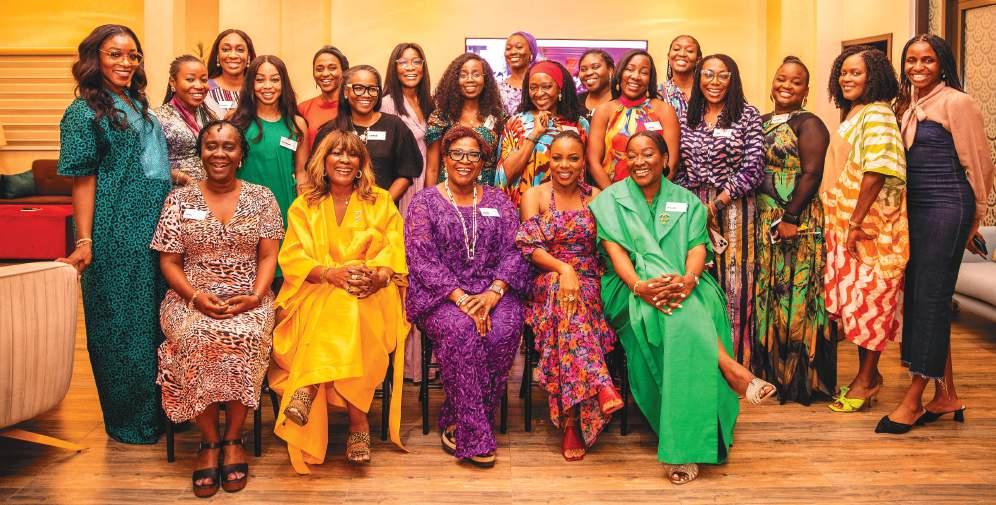
“The point is that,” she continued, “if you don’t say what you’re doing, then nobody can help you at all.”
“If you want help,” she added softly, “then you’re better off talking about it to as many people as possible. And honestly, I used to say then that I would take a meeting with a cow if I had to, because you just never know where those conversations are going to go. You never know whether it’s going to be that person that can help you, or whether there’s somebody that they know, or whether they’ll come up with some sort of bright idea that you haven’t thought of.”
With members drawn from diverse industries, she believes it is almost
impossible for anyone within GAIA Africa to lack access to opportunity.
“That, for me, is the power of connection.”
Beyond networking, the Club empowers women through digital workshops and sponsorships. To date, member collaborations have generated nearly $10 million in business deals. She believes that conversations about sponsorships should be amplified.
“We talk a lot about mentorship all the time, which is great, but honestly it’s sponsorship that makes the difference. That’s what can change a life. And it’s not limited by gender.”
If she were to name the woman who shaped her most, Candide-Johnson did not hesitate: her mother.
“My mother never accepted no for an answer,” she said. “If she wanted something, she pursued it. Her work ethic was exemplary.” She recalled her mother’s generosity with fondness.
“She had a heart of gold. My mother was the type of person who would literally find somebody in the market and decide that she was going to bring them home to live with us.”
Both her parents, she added, were humble and hardworking, values they passed on early.
“From the age of 15, I always had a job, whether as a salesperson or some sort. Every summer and every long holiday, I worked. The discipline that comes from that is that you understand what it means to earn and manage your own money.”
Following her father’s footsteps, Candide-Johnson built a distinguished career in corporate and commercial law, spanning over three decades across industries including shipping, oil and gas, and business development. Her tenure at Total Group’s headquarters in Paris marked a turning point, exposing her to the strategic and financial dimensions of corporate leadership.
“I was surprised, to be honest, that I could even understand the concepts,” she admitted with a smile.
While it wasn’t easy stepping out of her comfort zone, it proved transformative. It is a lesson she now shares with other women.
“Take a risk,” she advised. “You cannot remain in the same place doing the same thing forever.”
In 2016, she earned a TRIUM Global Executive MBA jointly awarded by LSE, NYU Stern, and HEC Paris—a demanding programme she completed while maintaining a high-pressure career.
“I will not lie. It is one of the most difficult things I’ve ever had to do, because I still had my very, very demanding job but I managed to get it done.”
Today, she sits on the boards of several organisations, including the NigerianNorwegian Chamber of Commerce, and runs multiple businesses.
Away from work, Candide-Johnson is an avid lover of books, films, music, art, and wine—a passion she traces to her heritage. She is WSET Level 2 certified and a Dame Chevalier de l’Ordre des Coteaux de Champagne.
As GAIA Africa approaches its eighth anniversary in March, she is focused on expansion across the continent. The membership at the time of this report is 250. She hopes that more African female leaders will join the Club.
Currently headquartered in Lagos, the Club operates a GAIA House offering services such as wellness, lounge, and collaborative spaces. More locations are planned for other African cities.
The anniversary, however, represents more than longevity for Candide-Johnson. It is validation.
“It’s seeing members become friends. It’s seeing businesses thrive,” she reflected. “Honestly, what’s not to like about GAIA?”
Mrs Candide Johnson
emerald and ruby members of the Club connect
Hig H Life
Senate Leader Bamidele: Championing Public Interests Within Nigeria’s Legislature
Rarely is a man’s office empty of petitions. But in the corridors of the National Assembly, time and again, Opeyemi Bamidele’s door sees a steady flow of students, entrepreneurs, and civic groups. And with each visitor’s arrival is a question, a concern, a hope that legislation might translate into tangible improvement.
As of early 2026, Bamidele serves as Senate Leader, representing Ekiti Central, and is widely recognised for driving a public-interest agenda through the 10th National Assembly. His focus spans economic reform, electoral credibility, human capital development, and national security, positioning him as a central figure in legislative advocacy.
Education has been a signature battleground. Spearheading the 2024 Student Loan (Access to Higher Education) Act, he helped over 500,000 students gain funding for tuition and upkeep. Concurrently, his work on Tax Reform Bills seeks to modernise fiscal structures, eliminate duplicative levies, and contribute to the nation’s projected $1 trillion GDP target by 2030. These moves demonstrate a methodical approach to linking policy frameworks with measurable outcomes.
Electoral integrity is another focal point. The 2025 Electoral Act (Amendment) Bill, championed by Bamidele, is designed to tighten transparency and enhance public confidence ahead of pivotal elections. Alongside this, he has convened preparatory efforts for a National Security Summit, addressing persistent unrest in regions including Benue, Borno, and Plateau. His legislative footprint (134 actions between mid-2023 and mid-2025) marks him as one of the Senate’s most active operators.
Of course, there are points of criticism. Opposition voices describe the Senate under Bamidele’s leadership as overly aligned with the executive, a “rubberstamp” chamber. The main counters that pragmatic, non-adversarial engagement ensures stability and progress. Oversight initiatives, such as investigations into petroleum sector mismanagement and the Port Harcourt Refinery’s $1.5 billion expenditure, reinforce his intent to couple collaboration with accountability.
In practice, with Bamidele’s tenure is a subtle paradox: influence emerges less from spectacle than from persistent, sometimes unheralded work. From his leadership, it becomes clear that in legislative politics, the architecture of public interest can advance quietly, in actions rather than headlines, shaping the state while most eyes remain elsewhere.
with Kayode aLFRed 08116759807, E-mail: kayflex2@yahoo.com
...Amazing lifestyles of Nigeria’s rich and famous
Can the Wike–Fubara Feud Finally Be Laid to Rest?
In Rivers’ politics, when peace arrives, it is normally quietly summoned to Abuja, ushered into a closed room, and announced in careful sentences that say less than they imply.
On February 9, 2026, President Bola Tinubu met Governor Siminalayi Fubara and FCT Minister, Nyesom Wike at the Presidential Villa. It was his third intervention since Fubara assumed office with the same aim as the previous two: to cool a feud that has unsettled Rivers State.
The clash began as a struggle for influence, then metastasised into allies defecting and lawsuits multiplying. When the State House of Assembly entered into the fray, it was to become a theatre of brinkmanship, issuing impeachment notices that sharpened the crisis. By March 2025, the breakdown had culminated in a six-month state of emergency.
President Tinubu first stepped in October 2023. That ceasefire lasted weeks. A second attempt in December produced an eight-point accord; partial compliance followed, then recrimination. Each effort promised détente, and each dissolved into fresh acrimony.
Somehow, this time feels different. After the latest meeting, both men reportedly pledged allegiance to the rule of law. Wike publicly urged lawmakers to halt the third impeachment push, voicing optimism that the President would not need to intervene again.
But peace in Rivers has always carried a cost, especially now that reports suggest that Fubara may forgo a 2027 re-election bid while allowing Wike to retain sway over local government
Inside the Quiet Race of Lagos Governorship
Hopefuls
It is becoming a saying that in Lagos, the tortoise does not announce its journey. Politicians understand that the race may be long, but the first to shout seldom arrives.
With 2027 in view, the contest to succeed Governor Babajide Sanwo-Olu has begun to crystallise. Across parties, familiar figures hover around the idea of succession. The APC field alone
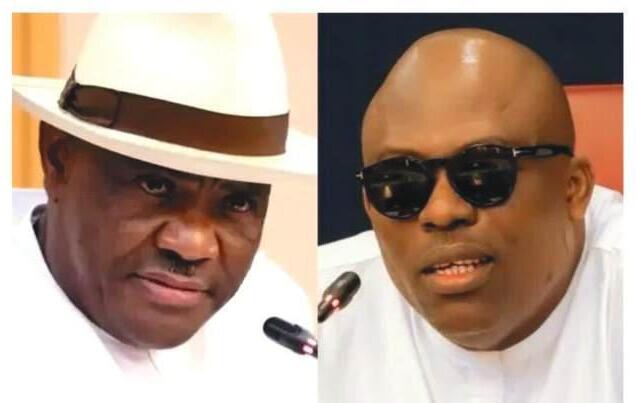
structures. If accurate, that is a significant gambit: stability purchased through concession.
Meanwhile, political realignment is complicating matters. Because Fubara’s move into the APC places him formally within Tinubu’s orbit, the presidency is now mediating between a serving minister and a governor in its own party. Truly, it is a dynamic, at once pragmatic and delicate.
is expansive. Names with federal heft, technocratic polish, legislative experience, and dynastic resonance circulate in discreet conversations: Femi Gbajabiamila, Dr. Kadri Obafemi Hamzat, Senator Tokunbo Abiru, Dr. Maruf Tunji Alausa, Hon. Babajimi Benson, Akinwunmi Ambode, and even Seyi Tinubu.
The opposition is steadier, led by figures who contested in 2023 and remain visibly committed. Among these are Dr. Abdul-Azeez Olajide Adediran (Jandor) and Gbadebo Rhodes-Vivour (GRV).
However, this kind of visibility can be a liability in Lagos.
History supplies the subtext. In 2007, Babatunde Fashola emerged from relative obscurity while more voluble aspirants receded. In 2015, Akinwunmi Ambode, a technocrat without a flamboyant campaign, secured the nod. In 2019, Babajide SanwoOlu surfaced after an abrupt recalibration within party ranks. The pattern is not accidental. Lagos politics operates through a tight coterie where loyalty is currency, and discretion is strategy. Because early lobbying invites scrutiny, which breeds resistance, a tacit aspirant can appear more amenable to consensus than one who builds an independent apparatus.
Not to forget that Wike has warned that a Fubara second term would mean his political burial. Fubara says the hatchet is buried. For now, impeachment is paused, and tempers have been lowered. The question is not whether peace was declared in Abuja. It is whether Rivers’ politics, built on patronage and personal loyalty, can sustain it without another summons to theVilla.
Consequently, denial has become performative. Leading figures publicly insist they are focused on current assignments. Support groups test the waters, then retreat. Speculation persists, yet declarations remain sparse. When silence is applied, it is found to have acquired strategic value.
Woro Weeps as Politics Resumes: Ashiru Announces 2027 Governorship
In Woro, they are still counting the dead. In Offa, a microphone was switched on.
On February 9, 2026, Senator Lola Ashiru, Deputy Majority Leader of the Senate and representative of Kwara South, announced his intention to contest the 2027 governorship election. He spoke in his hometown while addressing members of the NUJ Correspondents’ Chapel.
The declaration came days after coordinated attacks tore through parts of Kwara. In Koro community, Ekiti Local Government Area, a forest guard named Samuel was killed during an ambush. Motorcycles were burnt; operatives had moved on intelligence, then walked into gunfire.
In Woro, Kaiama Local Government Area, the toll was staggering. More than 170 residents were reportedly killed in what officials described as a terrorist assault with Sahelian overtones. Among the victims were members of the Emir’s family, the Chief Imam, a principal, a headmistress, and returning students.
Against that backdrop, Ashiru said he had
Aspiration
reflected on the state’s condition and concluded that he possessed the requisite exposure and credentials to govern from 2027. According to him, his bid is a considered decision, rooted in long familiarity with Kwara’s terrain.
Timing, however, has shaped the reception.
Public grief remains raw. Communities along Kwara’s porous borders speak of insecurity in quotidian terms: farms abandoned, roads avoided, nightfall dreaded. The state’s political conversation now sits beside its security crisis, not after it.
For Ashiru, the announcement signals a pivot from legislative prominence to executive ambition. As Deputy Majority Leader, he occupies a national perch; as an aspirant, he steps into local contestation. The move recalibrates his political trajectory two years ahead of the ballot.
For residents of Woro and Koro, politics has resumed even as mourning continues. The campaign calendar advances with bureaucratic certainty. In Kaiama and Ekiti LGAs, burial rites are still underway.
Fubara
Sanwo-Olu
Bamidele
Ashiru
On Oregun Road, the gates still open on Sundays and the choir still sings. But the man who once filled television screens now keeps a quieter pulpit.
Pastor Chris Okotie remains Senior Pastor of the Household of God Church in Ikeja, Lagos. At 67,
Curious Silence of Pastor Chris Okotie, a
Once Unmissable Voice
approaching 68, he continues to lead services and marked the church’s 38th anniversary in February 2025. His ministry endures, even if the megaphone has softened.
There was a time when silence did not suit him. Former pop star, trained lawyer, author, political aspirant, he inhabited the public square with operatic confidence. His diction was florid, his presence immaculately curated, his certainty absolute.
Politics, in particular, became his secondary altar. Under the Fresh Democratic Party, he pursued the presidency more than once, insisting divine instruction anchored his ambition. His proposals typically blended theology with a bespoke democratic vision, equal parts sermon and statecraft.
Today, the posture has shifted.
Rather than contest elections, Okotie speaks of an interim arrangement as Nigeria’s corrective path. It is a heterodox stance that distances him from conventional politicking while preserving his reformist cadence.
However, compared to his earlier ubiquity, the contrast is stark. No frequent television appearances. No
cascading press statements dissecting fiscal policy or moral drift. The once constant commentary has yielded to deliberative restraint.
Online, Okotie remains present. His “Apokalupsis” teaching series continues on digital platforms, a sustained theological exegesis for devoted followers. The audience is narrower, the tone more cloistered, the spectacle subdued.
This recalibration feels intentional, somehow. After decades of flamboyance, perhaps the instinct now is toward introspection. Public life can be unforgiving, and repeated electoral rebuffs carry their own quiet lessons.
Age may play a role, as may fatigue. Or perhaps influence, once projected outward toward the nation, has been redirected inward toward a congregation that still listens.
In a media ecosystem addicted to volume, withdrawal reads like absence. But on any given Sunday in Ikeja, the microphone still works, the scriptures are still opened, and the man once convinced he would govern Nigeria now confines his prophecy to the sanctuary walls.
How Adegbite Falade is Powering Aradel’s $250m Expansion Drive
In oil and gas, where confidence is often measured in barrels, for Adegbite Falade, it is also measured in balance sheets.
Aradel Holdings Plc has secured a $250 million financing facility from South Africa’s Standard Bank Group. The deal, arranged with Stanbic IBTC entities, will fund the purchase of an additional 40 per cent stake in ND Western, refinance existing debt, and support higher output across its fields.
With that acquisition, Aradel’s stake in ND Western rises to a little over 81 per cent from 41.67 per cent. The increase gives the company effective control of assets once operated by Shell and strengthens its upstream exposure at a time when indigenous firms are recalibrating Nigeria’s energy landscape.
Falade, who became chief executive in 2021, has overseen Aradel’s transformation from Niger Delta Exploration & Production into a publicly listed, integrated energy group. Since its Nigerian Exchange debut in October 2024, revenue has climbed sharply, rising 43 per cent in the first nine months of 2025.
Growth, however, has not been confined to crude. Gas sits at the centre of Aradel’s strategy. The company commissioned a 100 million standard cubic feet-per-day
processing plant in 2012 and ended routine flaring at Ogbele. It also became the first non-joint venture producer to supply Nigeria LNG.
The new financing deepens that trajectory. Standard Bank acted as global coordinator and bookrunner, underscoring cross-border confidence in Aradel’s expansion. For Falade, who also chairs the Independent Petroleum Producers Group, the transaction reinforces his advocacy for indigenous capital formation and policy stability.
Further afield, Aradel has taken a 6.01 per cent stake in Chappal Energies, which holds an interest in the Chevron-operated Agbami deepwater field. It also controls a majority position in Renaissance Africa Energy Consortium. These moves extend influence across upstream and offshore assets.
Colleagues describe Falade’s style as methodical, almost preternatural in its focus on execution. An engineer by training with an MBA from Warwick, he blends technical fluency with corporate pragmatism.
The $250 million facility is, at one level, a financing line. At another, it marks a shift in ownership gravity, as assets once steered by multinationals settle firmly under Nigerian control.
Ademola Adeleke’s Make-or-Break
At a recent rally in Osogbo, the music was loud, the crowd animated, yet the governor’s smile carried an unmistakable tautness.
Governor Ademola Adeleke is seeking reelection in the August 8, 2026, governorship poll in Osun State. This time, however, he is contesting under the Accord Party (AP) after leaving the Peoples Democratic Party (PDP) that brought him to office in 2022.
That switch is no small footnote but something that alters the electoral arithmetic. The PDP’s internal tumult left him politically exposed, but it also provided structure across the state’s 30 local government areas. By stepping away, he has chosen a leaner platform with less entrenched machinery.
Guwor: A Man on a Mission
“Dialogue is fine,”he would say quietly,“but action is better.”
In such moments, Hon. Emomotimi Guwor sounds less like a ceremonial head and more like a man measuring time against ambition.
On February 9, 2026, in Abuja, the Speaker of the Delta State House of Assembly was elected Chairman of the Conference of Speakers of State Legislatures of Nigeria. He ran unopposed. A day later, he turned 46. That same week, he and 21 lawmakers defected from the PDP to the APC, citing unresolved party fissures.
The speed of his ascent is striking. Since entering politics in 2019, Guwor has moved from first-term legislator to Speaker, and now to the head of a national legislative bloc. It is a trajectory that suggests calculation rather than happenstance, the kind observers would describe as purposeful and colleagues would call relentless.
But position alone does not define the mission. In his acceptance remarks, Guwor pledged to pursue full legislative autonomy for all 36 state assemblies. The emphasis is clear: autonomy as doctrine, independence as practice. For a system long shadowed by executive dominance, that promise carries institutional weight.
Back home in Delta, Guwor’s agenda leans toward quotidian concerns. A proposed Rent Regulation Bill aims to temper soaring housing costs in Asaba and Warri. Under his watch, the Assembly has prioritised security and economic bills over ceremonial motions.
Outside the chamber, Guwor’s GED Foundation has funded over 1,000 scholarships and free UTME preparatory classes. That philanthropic footprint reinforces a youthcentric narrative. At 46, he stands as part of a cohort seeking to prove that generational shift can coexist with stability.
Still, the timing of his national elevation and partisan realignment is notable. Chairmanship secured; party switched; birthday marked. Within 48 hours, Guwor redrew his political map, anchoring himself simultaneously in Abuja’s legislative calculus and Delta’s local arithmetic.
Second Term Quest
In political terms, this is a high-stakes gambit. Personal popularity must now compensate for organisational thinness. The question is whether charisma can substitute for ward-level agents, polling day logistics, and the quotidian grind of mobilisation.
Meanwhile, the APC has rediscovered its cohesion. Backed by federal influence and a renewed sense of purpose, it has fielded a candidate determined to reclaim the governorship. The contest, already febrile, is sharpening into a referendum on Adeleke’s incumbency.
Complicating matters further, the African Democratic Congress (ADC) under former governor Rauf Aregbesola looms as a potential spoiler. His grassroots network retains residual loyalty in key constituencies.
A three-way race would splinter votes in
ways that defy easy prediction.
Voter sentiment is also evolving. In 2022, the campaign rode on personality and protest, and the Dancing Senator won the day. Today, discourse has shifted toward infrastructure, security and fiscal stewardship. Performance metrics, once peripheral, now sit at the centre of debate.
To his credit, Adeleke still commands fervent support in many communities. Religious leaders and local influencers have publicly aligned with him, lending a moral cadence to his bid. Yet elections are won by numbers, not noise.
Four years ago, fractured opponents cleared his path. In 2026, a more consolidated field stands before Adeleke, and the man once buoyed by division must now survive unity.
Okotie
Falade
Adeleke
Guwor
Bosun Tijani: Dodging a Stray Bullet
As all of you were fighting the Senate on the electoral bill, I was looking at the Minister of Communications and Digital Economy with one eye.
As far as I am concerned, that declaration by the Senate on their lack of confidence in the electronic transmission of results was a direct slap at the minister. For me, the minister should have been immediately summoned to explain why that was the case, despite the billions voted to his ministry on these things.
Tarry, I am not a mumu o, because I, like millions of Nigerians, know just the game that the Senate was trying to play with that position. Nigeria’s tele-density is one of the best in the world. We have a digital penetration that dwarfs all of the people who voted for all of that Senate. Look at the math, the
lowest telco has more subscribers than every voter that voted for those people who call themselves senators.
Daily, we transact trillions on the same digital backbone (have you seen the Moniepoint report?) We spend N45billion daily on GYM, over N1 trillion on bread, and all of these and more are done by electronic transfer, and the Senate is saying they don’t trust that system?
Na wa, a backbone that whole sectors from aviation, health, education, marine and the rest sit on. How many people do JAMB and WAEC electronically and get results electronically transmitted compared to the number of people who voted Sanwo-Olu as Governor of Lagos?
With the huge voter apathy occasioned by all these“mumu”
Rotimi AmAechi: SonS of theiR fAtheRS
Some people know how to use style to pose sha. Rotimi Amaechi, seeing that Wike has been parading his stone-faced sons on the circuit, and the big fish’s son has also been parading about with a face cap and beard like Gaddafi’s son, also decided to throw his own son into the equation.
“This is my son. He is a doctor, and I brought him to treat any protester who needs immediate medical attention.” This turned the tide of the protest and made him central. The fact that the boy came empty-handed and was only prepared to give possibly the female protesters mouth-to-mouth resuscitation did not matter. He has a son. Not only Wike would be parading his own boys, he too will show us that he not only has a son but a very brilliant one.
Immediately I saw that one, I called my own son to get him ready for active duty come 2027. He did not pick.
I kept calling him, and when he finally picked up, he said, “Oh, so sorry, Dad, I missed your call. I was getting my latest tattoo. What were you calling for?”
I just gave up, this one is getting a tattoo
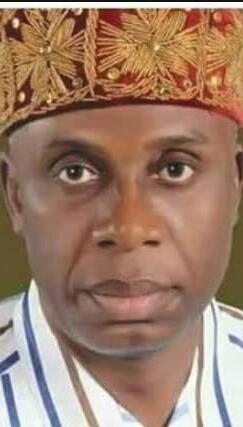
behaviour of our politicians, voter numbers are so low that one small Fintech can handle on their portal very easily. These ones who know what they are about to do with the election results come 2027 are now trying to pull the wool over our eyes. This is why I am dragging Bosun into the matter. He should have come out to say – aghhhh, I don’t know what backbone you are talking about o, because the one I superintend can do that and more.
But will the bobo talk? He will not, for obvious reasons, and you kuku trust me, I had already asked for his resignation a few minutes before the Senate shamefully pulled back and passed the right law, even with a“kurukere”caveat tied to it. Well, na here we all dey, we are watching. Thank you.
when Tinubu, Wike and Amaechi’s sons are in the thick of things. Na so my own dey be. I just told him not to bother. I will adopt a more prepared son by the time I launch my senatorial campaign, before I go and bring a boy who will be distracted by Oshiomhole’s “AI” girlfriend and scatter my campaign. Thank you.
Ali PAte: thiS iS SAd
We have just learnt that only N36 million was released last year of the billions that were budgeted for capital projects in the health sector, and this obviously impacted the ministry’s ability to improve infrastructure, secure much-needed health care equipment and, worst of all, secure counterpart funding since they could not come up with their own part. Reasons given for this include budget shortfalls due to reduced revenue, among others.
So, when there is a budget shortfall, it is health that suffers while others are building monumental event halls in Abuja or pouring much-needed funds into moribund refineries, refurbishing the Vice President’s House, among all such inanities that we see the government do.
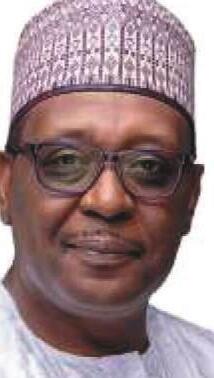
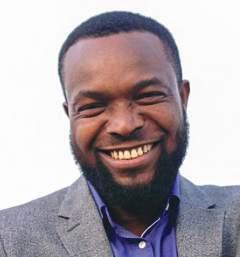
It is no wonder they rush abroad in the event of any small health challenge, from consistent headaches, through erectile dysfunction, to foot massages. Our leaders rush abroad because they see the reports and know that there is nothing like healthcare delivery in this country. What will N36 million do in a country with over 200 million people and a doctor-to-patient ratio that is disgraceful? Can N36 million even buy a syringe in one federal health institution? God has to really punish some of these people. He should move away from making them fall on international parade grounds and start working with throwing in epilepsy and “craw craw”, so that as they are being feted by international monarchs, they will just be scratching their “yansh” in the full glare of the world. This is wicked, I swear. For Prof Ali Pate, all I have for you is pity. Kai.
Reno omokRi: tuRning fActS on itS heAd
One would have thought that with his recent appointment, this bobo would rest. But na lie, instead he has been everywhere, dressed like a Green Eagle
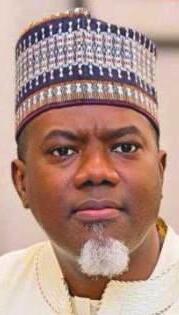
fan and making more noise than ever before. His recent clip in which he dressed like a Super Eagle football fan and made a face like those ones do when we lose a match was more comedic than harrowing This bobo always thinks that he is talking to illiterates in his Delta home state. That Obi’s bank had tens of thousands of failed transactions, and that if his bank could not handle that, why then would he expect INEC to rely on electronic transmission?
First and foremost, the bank is not Obi’s bank. Obi has left the bank and does not serve in any capacity for aeons now. Secondly, glitches are part of the process and banks, in most cases, resolve them in less than 24 hours. The digitally-sound Reno for some reason expects us to be relying on paper and a biro when we have seen some ballot papers so defaced that we cannot recognise them. His careless talk, if not careful, could have led to a run on the bank and possibly risked the whole system. But thankfully, Nigerians don’t really take him that seriously, so that clip just passed through like a badly run skit.
Investigations have, however, shown that paddy has enough time on his hands
Omokri
Owoade
Tijani
Amaechi Pate
because some of the countries he and his colleagues are to be posted to, like India, are refusing because, according to international diplomatic ethics, Ambassadors must not come when the sending Government has less than one or two years to go. So, what that means is that we now have “audio Ambassadors” on our hands. So to keep buzz, they will sew cloth, set cameras and talk crap to us. Na wa.
Oba akeem OwOade: back t SchOOl fOr alaafin
As Alaafin no wan listen na, some of his princes have decided to go to court to enforce his upholding of the highly revered tradition of the Oyo people. Me sef, I don’t understand this Alaafin again o. One “wahala” after the other, the whole thing is beginning to look one kind. So, to safeguard the prestige of the stool, these very patriotic princes have resorted to begging the courts to help them before their King turns the stool into another thing.
This is what they have asked from the court – restrain the Alaafin either by himself, his servants, privies or any other person… from appearing at, attending, or continuing to attend occasions and functions which they claim are not befitting the status of a symbolic traditional head of the Yoruba race. They asked for so many things, like stating that the court should declare that only the Alaafin can give titles in Oyo North and South, among other very obvious things that the Alaafin should have been told during his orientation. If the Alaafin had been reading his handbook or “employment” letter and abided by that, we would not have got to this stage.
Now it seems, according to these princes, that only the courts can help redeem whatever the situation is. Me, I like this move, but also interested in how they will enforce this one if they win in court. Will they now send the judgment through an Ifa priest, or how?
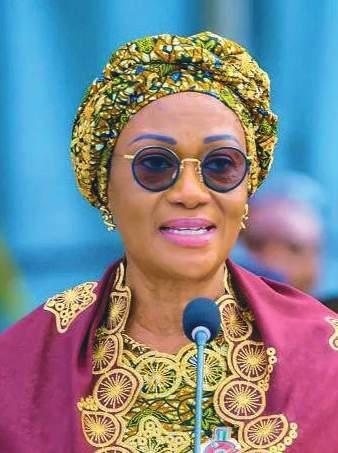
My own is that the princes in Ife should also consider this kind of move because “e be like say their own serious pass this one.” Kai, I don run o before they come and beat me. Na wa.
ali ndume: lOnely in the hOuSe
Ali Ndume is beginning to look like that one person that Lot was asking God in the Bible to save Sodom and Gomorrah for. Wait, I am not sure if it was Lot that was the one asking the question. You know I have retired as a Sunday school teacher for over 30 years now. Whatever or whoever, the idea is very clear. Ali Ndume is beginning to look like that lone figure in the Senate. We used to have Abaribe as another no-nonsense and strictly principled partner, but that one is now very, very quiet. Natasha is rabble rousing and just making noise for the sake of noise, while Ned is busy with his kindergarten wife and other troubles, so we don’t get to hear anything from him. I saw a clip of Ali kicking against the removal of a House Chairman on something, and the supposed Chairman just sat down there. Ali stood tall, queried why he was being removed when what he had worked on was being deliberated upon.
Ali has been very strict and unyielding in his position since this particular Senate was inaugurated. I respect him because it takes a lot for someone to stand aside, especially in this season of anomie and with all the risks involved. Well done, sir, truly well done. Nigeria will one day reward you. Just be careful and continue to stand for the poor man. God bless you, sir.
rObert Orya: GOOd fOr yOu
This one has been jailed for a combined 490 years, and I don’t pity him at all. He is the former Managing Director of the
remi tinubu:
a trump card
She is a respected Christian leaderthat was Trump to our delectable First Lady, Senator Remi Tinubu. As he spoke at the Christian breakfast meeting, he put his hands on his forehead like you do when you are trying to see but blinded by lights, looking for her. I am surprised he didn’t see her, because she would have been putting on a “gele” which should have stood her out. She should have rushed forward to hug the rampaging Trump, and all of our problems would have been solved.
Since that acknowledgement, mummy has not let the talk circuits
NEXIM Bank, and he ran a cartel in that place, which got me. I once had a client who wanted to set up terrestrial television in Nigeria. The old man was in retirement after spending the best of his life in the US. He decided to come back home to set up the project that would have created jobs and deepened all other indices o.
South Africa called him, offered him all sorts of incentives, but Baba from Bayelsa decided to come home instead. He landed at Orya’s NEXIM and got himself robbed silly by these people. All sorts of levies, back payments, etc, the man’s money finished. They gave him an offer letter for
The next thing I see na EFCC and me inside cell o. Me o. Luckily for EFCC that time, I was not yet Duke of Shomolu with powers to disappear. They just put me inside cell for three days, and I cried like Ned wey him Regina don run away o. I cried for three days non-stop, even the man who arrested me come dey pity me: “Oga, stop crying na.” He would say, and I would reply, “Mbok, leave me ooo, is it your cry?”
Today, justice has been served. 490 years for the man who led that cabal of thieves. I don’t pity him at all because he almost made that poor old man commit suicide, ruined the man. The man lost his whole pension and has run back to America to live on alms. And me? Put me inside cell for the very first time in my life. Let this case be a good example for people who find themselves in positions of public trust, because no matter how long it takes, the law can still catch you. Thank you.
aac fayOSe: truth tO bar en
The City Boy Movement have carried some Igbo barmen into their cabal, and Isaac Fayose, the enfant terrible, is having none of it. He declared very succinctly that at $13 million, he was richer than most of these “Igbo barmen” who have sold out. He was very caustic that “Igbo people no like themselves.” He said so many things that “their brother Nnamdi was still in jail, and his brothers are wallowing with the oppressors,” then he added the clincher: “All these people, we don’t know their source of income, unlike me that you can trace mine from end to end. These ones are parading around with no trace to their source of income and betraying their people.” He ended by saying that “the Igbo man is his own worst enemy.”
One of the barmen has replied, and if not because of journalistic ethics of balance reporting, I no for bother put am here because my fingers dey pain me as I type. One of the porky barmen replied that he cannot fight for his brother in the opposition and that he knows what he is doing. He concluded that as for him and his family, na City Boy movement he stands.
in America “hear word.” He called my name oooo, you see why it is good to “wear less makeup”. He called my name o, so you people should consider me for the next Nobel. Kai.
Mummy is my favourite person in this government. In my books, na she “get sense pass”, not carried away by power, still herself, still mature and still slow to engage and imbued with a deep sense of responsibility. But that notwithstanding, any discerning mind will understand why that accolade was sent in. Remi is the best-looking First Lady Nigeria has ever had.
$10 million and asked him to go and bring counterpart funding after fleecing him dry. That is how someone mentioned one very “sharp investment banker that can raise money”.
That time, I never get dreadlocks and was still fire in the business. That is how I went to raise N150 million for Oga to take to these people o. The money vanished. Aghhh, they made Baba take them on a trip to America ostensibly to inspect equipment inside this my money. They so dribbled this Baba, made him change some to hard currency for bribes within the system. Finally, money finish, no $10 million.
Well, for the very discerning, we know that one of the basic tenets of survival in this kind of system is to play along, otherwise… So Bro Isaac, make we dey look. Thank you.
alaba OwOyemi: a different kind Of inveStOr Alaba is not like the kind of big-time entrepreneurs that we are used to. For him, it’s not the klieg lights and the fanfare of giving and setting up audio industries. For a huge power expert who has worked in some of the biggest power concerns globally and in very exotic countries – America, Saudi Arabia, among others- he berths in Nigeria and at the huge Century Group, from where he was part of the team that berths one out of three FPSOs in Africa. An FPSO is a floating oil rig, to say it in layman’s terms.
He did not stop at that but went straight to his Ekiti homeland to set up the biggest agro-based industry that the state has seen. The company, A-Bamisil, plays the entire oil palm value chain, creating much-needed jobs and impacting not only Ekiti but states as far afield as Akwa Ibom.
What is making me hail them today is the fact that they just paid for JAMB/ UMTE for so many intending candidates as part of their CSR.
This is more remarkable because, in less than two years since its inception and still battling with OPEX and inclement macroeconomic vagaries, it is not yet stable financially, but it can pull out scarce funds to do this?
All I can say at this point is well done. We remain very proud.
Two Years On, the World Continues to Celebrate Herbert Wigwe
Two years after his passing, Herbert Wigwe remains unmistakably present. In the institutions he built, the lives he lifted, and in the bold ideas he sold to a continent, he remains indelible.
Wigwe did not merely run a bank; he reimagined what African enterprise could look like. As Group Chief Executive Officer of Access Holdings, he helped transform a modest Nigerian bank into a pan-African and global financial powerhouse, operating across continents and speaking confidently in rooms where Africa was once only spoken about, never from. His leadership was fearless, his ambition unapologetic, his pace relentless.
But the world does not celebrate the brilliant banker only for balance sheets and expansion maps. It celebrates him for intent. For believing that entrepreneurship could wear a human face. For insisting that profit and purpose were not rivals, but partners.
Through the Herbert Wigwe Foundation, education became his loudest legacy. Thousands of young Africans, brilliant, ambitious, under-resourced, found opportunity through scholarships, mentorship and access. Even in death, classrooms still echo with his vision.
In times of crisis, his empathy becomes even more visible. During periods of economic hardship, including national emergencies, he provided direct financial and material support to vulnerable individuals and families, offering immediate relief where it was most urgently needed.
Colleagues remember a leader who demanded excellence but invested deeply in people. Young professionals saw in him proof that one could be thoroughly African and unmistakably global. Entrepreneurs saw courage. Students saw possibilities. The corporate world saw discipline and scale. The nation saw hope.
The internationally recognised banker tragically passed away on February 9, 2024, in a helicopter crash in California, US, alongside his wife, Doreen Chizoba and son, Chizzy.
His sudden death shocked Nigeria and reverberated far beyond its borders. Tributes poured in from presidents, bankers, academics, and everyday Nigerians whose lives he had touched quietly, without headlines. Yet, two years on, grief has evolved into gratitude.
Wigwe belongs now to that rare category of Africans whose stories outlive them, not as myths, but as manuals. Manuals on
Successful people, they say, have two things on their lips: Silence and a smile. A smile to solve problems and silence to avoid problems. These two vital moods are what the Chief Executive Officer of Shoreline International, Kola Karim, has chosen for scoring points on the business front.
Quiet but dynamic, the highflier, who stops at nothing to fulfil his dreams, is an accomplished serial entrepreneur. Karim’s innovative spirit and strategic mindset mark him as one of the continent’s most audacious entrepreneurs. Therefore, any time he is mentioned in the news, it is a sign that he is on to the next big thing.
In a bold move that signals the rising global ambition of the energy entrepreneur, Karim has completed the acquisition of producing oil assets in the US. It is a strategic move aimed at exporting African expertise to the global market while simultaneously targeting a production increase to 100,000 barrels per day in Nigeria.
The Polo-loving tycoon announced the next big move on the sidelines of the Nigeria International Energy Summit (NIES) 2026 in Abuja. The deal marks a rare instance of a Nigerian independent operator exporting its homegrown operational knowhow to the American market.
Karim framed the acquisition as a symbiotic exchange between two very different energy environments — from Nigeria to the United States, with his Shoreline bringing the operational discipline and resilience learned in the high-stakes, high-cost environment of the Niger Delta, while the US partner plans to bring the dataheavy culture and advanced monitoring standards of the U.S. fields back to its Nigerian operations to sharpen reporting and staff training.
The acquisition will also provide a revenue hedge as Nigeria navigates shifting fiscal terms and the ongoing divestment by oil majors.
As the accomplished entrepreneur and philanthropist crosses the Atlantic, his remarkable ascent in wealth and status has not dulled his sense of responsibility; instead, it has inspired him to invest generously in charitable causes, improving the lives of many.
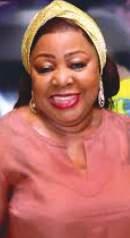
One of the defining attributes of great leadership is courage—the discipline to uphold the law, the will to enforce it fairly, and the strength to stand by principle without fear or favour.
In Anambra State, Governor Charles Soludo has consistently demonstrated this rare quality. A born leader by every measure, Soludo has distinguished himself as a man who speaks plainly, acts decisively, and follows through on his words, regardless of whose ox is gored. His leadership reflects conviction over convenience, order over compromise, and a steadfast commitment to doing what is right, not merely what is popular.
What sets Soludo apart is his clarity of purpose. He says what he means and means what he says, a trait that has brought a renewed sense of order and accountability to Anambra State.
He showcased his disciplinarian side recently when he engaged members of the Indigenous People of Biafra, IPOB. He
courage. On preparation. On service. On building institutions that endure. The world celebrates him today, not because he is gone, but because what he stood for is still upright while his memories linger.
At 80, Florence Ita-Giwa Marches On…
Ageless Senator Florence Ita-Giwa remains the epitome of resilience, grace, and leadership. Known fondly as Mama Bakassi, she has spent decades shaping politics, championing women’s rights, and advocating for human dignity, leaving an indelible mark on Nigerian public life.
Her life story is a blueprint for a woman of substance: courage in the face of adversity, commitment to service, and unwavering dedication to causes greater than herself. From the Senate chambers to humanitarian initiatives, Ita-Giwa’s influence has transcended generations, inspiring countless women to lead with conviction, compassion, and integrity.
Widely celebrated for her grace and elegance, Ita-Giwa’s most enduring legacy lies in her consistent commitment to the welfare of women, children, and the vulnerable, especially in Cross River State and beyond. Long after public office, she has remained firmly rooted in service — giving, advocating, and intervening where the
need is greatest.
Her humanitarian gestures include support for widows and indigent families, educational assistance for underprivileged children, and empowerment initiatives for women, particularly market women and rural dwellers striving for economic independence. She has also been known to step in during moments of crisis, offering relief materials, financial support, and moral encouragement to communities facing hardship.
The former Senior Adviser to former President Olusegun Obasanjo is currently in a happy mood. The cause of her palpable joy is not unconnected with her forthcoming 80th birthday celebrations scheduled to hold next Thursday, February 19, 2026.
As gathered by Society Watch, she has decided to stay low-key for this milestone, except for a dinner that would be hosted on her behalf by her former boss, Obasanjo.
As she celebrates her 80th birthday, it is clear that age is no barrier to impact. Ita-Giwa marches on — a trailblazer, a mentor, and a living testament to the power of purposeful leadership.
warned the group to put an end to its Monday sit-at-home that has eaten deep into the economy of Anambra State and other parts of the Southeast States of Nigeria.
When the declaration was taken with a pinch of salt, the governor took a very firm stand against it. He physically visited Onitsha Main Market on a Monday and ordered traders to open for business, insisting government and regular people had a right to go about their lawful activities.
After traders, out of fear, refused to open, Soludo temporarily shut the market to punish compliance with the sit-at-home order. But he reopened the popular market when traders started to return to work.
His actions were framed by many as challenging the authority of the sit-athome practice and signalling that the state government would not tolerate unlawful acts. IPOB fought back, claiming the governor cannot change the order while observers watched with keen interest, asking who would be the first to blink. At last, IPOB had
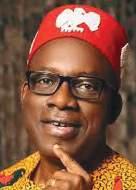
Wigwe
Karim
Soludo
no choice but to announce the end of the sit-at-home order that has been in operation for years.
Ita-Giwa

Through the Gallery, Memory Walks with the Artist
UK-based Jessica Ajuyah’s Lagos solo exhibition sidesteps the city’s hubbub, urging visitors to linger and discover how memory sneaks between the colours. Okechukwu Uwaezuoke writes
Terra Kulture, arguably Lagos’s most renowned cultural hub, nestled in the upmarket Victoria Island neighbourhood, slips into a different ambience today at 4pm (February 15). Should its habitués expect glitzy spectacle—camera flashes and networking disguised as delight—they are likely to find little or none of it. The evening event, an exhibition titled The Shape of Memory, offers something quieter and more demanding: introspection.
Though rarely calm, even on a Sunday, Lagos tempers its weekday crescendo of horn, heat, and heroic impatience. Somewhere, a church service spills past its allotted hour. A tone-deaf DJ revels in unleashing a percussive assault on an otherwise serene neighbourhood. Against that restless city, Jessica Ajuyah’s exhibition feels almost countercultural. It does not compete. It lingers, quietly claiming its space.
On until February 21, the show holds court in the gallery like a quietly resonant chord, resisting the contemporary appetite for instant intelligibility. Meaning emerges gradually—through colour, posture, and recurrence.
Ajuyah, a UK-based artist and art director working between Sheffield and Nigeria, treats memory not as nostalgia but as structure. The project began with a question: how do lived and inherited experiences embed themselves within identity? Her answer unfolds across 14 paintings, mapping remembrance as something layered, formative, and quietly insistent.
The works, she notes, were conceived as companions. From the very beginning, they were conscious of one another: surfaces echo, temper, and converse across the room. Yet each canvas asserts its own presence. Some arrived fully formed, their existence undeniable; others resisted, demanding return, reflection, and restraint. She speaks of revisiting a painting, adjusting a tone, paring away the superfluous until only what is essential remains. That quiet discipline knits the exhibition together. Its coherence arises not from uniformity but from shared attentiveness to nuance.
The gallery feels less like a sequence than a constellation. The paintings do not advance linearly;
they drift through emotional states—withdrawal, openness, assertion, pause. Warm pigments find their counterpoint in cooler restraint. Gestures recur, subtly altered. There is rhythm without choreography.
At its centre are women—not as symbols, but as presences. Youth surfaces in one posture; endurance settles into another. Growth and doubt are suggested rather than explained. Ajuyah trusts silence. Meaning deepens through looking and through returning. A motif glimpsed early reappears, altered and deepened, inviting recognition rather than declaration.
The Lagos setting sharpens the work’s resonance. Ajuyah’s childhood and adolescence in Nigeria underpin much of the series. These memories, reconsidered from abroad, carry both intimacy and distance. Returning them to Lagos does not resolve that tension; it intensifies it. The city hums just beyond the frame—its rhythms, textures, and restless cadence seeping in. Recognition becomes layered, provisional, and never immediate.
The exhibition reflects on return—not as sentimental homecoming but as an encounter between past and present selves. The paintings hold that friction, allowing it to breathe. In a city defined by immediacy, they insist on interiority. There is a quiet suggestion here: what forms

inwardly will, in time, find its outer shape.
Ajuyah’s attentiveness extends beyond the canvases to the installation itself. Framing, spacing, and light are deliberate. Each work is granted room to assert itself. The intervals between them function as pauses, letting the eye reset and the mind register nuance. Subtle contrasts are staged: introspection beside assertion, bloom beside restraint. The gallery becomes a score, each painting a note, each pause as eloquent as the brushwork.
Sound threads through the space with understated insistence. A playlist dominated by female artists shapes the atmosphere without narrating the work. Music does not explain; it steadies, guides, and suspends. Lyrics are chosen for tonal affinity rather than literal message, while instrumentals open intervals of reflection. The result is cohesion without prescription, a rhythm that complements rather than competes.
Colour operates as the exhibition’s primary language. Warm tones—pinks, reds, burnished orange—speak of intimacy, comfort, and belonging. Cooler blues and greens recede into contemplation. At previous showings, viewers spoke of these hues stirring personal recollections: a room once inhabited, a garment once worn, a season remembered. The paintings do not dictate
memory; they activate it.
Recurring motifs anchor the series. Flowers signal growth, transition, and fragility; domestic details tether abstraction to the familiar. Some compositions open outward, expansive; others turn inward, concentrated. Together they mirror memory’s oscillation—sharp in places, blurred in others; always layered.
Two works crystallise the exhibition’s emotional spectrum. “Raspberry” vibrates with vivid confidence, its bright pinks reflecting the courage of self-acceptance and the messiness of becoming. In counterpoint, “Muted Bloom” retreats into muted tones, its figure shaped by external expectation, softened by the pressure of others’ voices. Assertion stands beside constraint; bloom beside reticence.
Exhibition texts are judicious in their density. Some contextualise; others deliberately withhold. This restraint is strategic: immediate explanation can foreclose the intimate, meandering associations viewers bring. In earlier showings, audiences shared family histories, private reckonings, recollections triggered by a gesture or shade. The Lagos iteration preserves this openness, allowing the paintings to remain porous and suggestive.
The exhibition’s visual identity reinforces its focus on Black women—not as subjects seeking validation but as presences that command it. Typography is disciplined; black is used decisively. Scale and materiality are handled with precision, ensuring nothing detracts from the work’s quiet authority.
Movement through the gallery is deliberately non-linear. There is no prescribed beginning or end. Visitors circle back, linger, or drift ahead. The arrangement mirrors memory itself: recursive, selective, occasionally surprising. Some impressions insist; others reveal themselves only in time. What lingers after leaving Terra Kulture is not a conclusion but a recalibration of attention. The exhibition refines perception, suggesting that memory is not a passive archive but a living force—shaping, pressing, seeking expression. In a city defined by velocity, The Shape of Memory quietly argues for stillness, for the slow, inevitable unfolding of inner life, and for the subtle power of remembering well.
L-R: Some of the artist’s paintings featuring at the exhibition
Ajuyah
Reconstructing History, Reclaiming Heritage in Olanrewaju Atanda’s Ambitious Oeuvre
Stories by Yinka Olatunbosun
History has long recorded the 1897 British Punitive Expedition, which resulted in the looting of numerous priceless Benin Bronzes. Since then, socially committed artists have created replicas of some of these iconic works, paying homage to a lost heritage. The desire to crystallise this cultural history still burns brightly in the creative world. For multidisciplinary artist Olanrewaju Atanda, revisiting Nigeria’s colonial past through visual arts is not merely an artistic choice—it is a deliberate engagement with memory, identity, and cultural reclamation.
Since relocating to the UK, Lagos-born Atanda’s practice has evolved to reflect both his Nigerian roots and the cultural influences of his new environment, drawing viewers into spaces of reflection, emotion, and dialogue. From starting as a comic artist at the age of ten, Atanda has matured into a multidisciplinary practitioner specialising in drawing, painting, mixed media, and calligraphy.
Atanda’s oeuvre is driven by curiosity, storytelling, and a sense of responsibility to heritage. Through his intricate pencil works on black paper, he revisits historical narratives, confronting the
VISUAL ARTS
absence left by looted cultural artifacts.
The choice of black paper is itself symbolic, evoking the cultural bereavement experienced by many immigrants and reflecting the broader gaps in Nigeria’s artistic memory. While some Benin Bronzes have recently been repatriated, the majority remain in museums abroad. By recreating these bronzes on paper, Atanda engages with themes of identity, displacement, and belonging, translating material loss into a medium of reflection and dialogue.
In works such as “Bini Bronze Head” (2025), Atanda revisits the legendary bronzes of the Bini people, capturing their elegance, detail, and symbolic power. His single-colour white gradient technique demonstrates how profound beauty can emerge from minimal materials, allowing viewers to explore layered narratives of heritage, loss, and resilience.
To further reinforce cultural identity, Atanda incorporates charcoal alongside oil, acrylic, ink, watercolour, and pencil, transforming paper and canvas into spaces where intuition and discipline intersect, and memory meets imagination.
Atanda’s work also celebrates rhythm, identity, and quiet reflection, inviting viewers into visual dialogues that engage texture, colour, and line—not simply for aesthetic pleasure, but for resonance
and connection.
His “Ife Bronze Head” (2025) reimagines Yoruba Ife bronze heads, tracing pre-colonial history through careful layering of white gradients on black paper. The work radiates quiet elegance and reverence, honoring the sophistication of Ife artisans while prompting reflection on cultural pride and the enduring legacy of African art.
Beyond historical reconstructions, Atanda explores the human form and emotion. In “Seduction: Enchantment” (2025) and “Seduction: Charming” (2025), part of his Seduction series, he captures the subtleties of the feminine form through light, shadow, and negative space. His minimalist, monochromatic approach evokes vulnerability, strength, and mystery, inviting viewers to complete the narrative with their imagination.
Atanda also reflects his eco-conscious and spiritual sensibilities. “Gazing Upon the Lord” (2025), an oil painting of an American bald eagle inspired by the Bible, portrays resilience, hope, and spiritual renewal. Similarly, “Chaotic Beauty” (2025) interrogates the complexity of Black identity and celebrates cultural vibrancy despite struggle, while “Veronika” (2025) tells the story of a woman far from home navigating loneliness and service in healthcare. Through layered charcoal, graphite, and watercolor, Atanda elevates her quiet strength, highlighting the emotional labor and resilience
of immigrants.
Across his oeuvre, Atanda breathes new life into historical forms while challenging conventional representation. By reinterpreting classical themes in contemporary contexts, he bridges the gap between two-dimensional and three-dimensional art, creating works that honor the past while asserting a modern, reflective voice.
Through his art, Atanda reconstructs history and reclaims heritage, inviting audiences to engage with memory, identity, and cultural continuity in ways that are both visually compelling and deeply resonant.
Alexis Galleries and The Macallan Unite for Sustainable Art Project
Unfurling leaves greeted distinguished guests at Alexis Galleries in Victoria Island, Lagos, last Saturday during a preview of the Recycling Matter II exhibition. This show, an offshoot of a month-long residency, is a collaborative initiative between The Macallan, the world-renowned single-malt Scotch whisky, and Alexis Galleries. Reflecting its commitment to craftsmanship, creativity, and sustainability, The Macallan first partnered with the gallery in 2025 to bring together talented young artists whose projects explore environmental themes.
Hosted at Alexis Galleries, the exhibition opened with a private viewing on February 7th, 2026, welcoming artists, collectors, cultural enthusiasts, media representatives, and stakeholders to celebrate art that reimagines waste, sustainability, and contemporary African expression.
Recycling Matter II featured new works developed during the residency by four contemporary Nigerian artists—Konboye Ebipade Eugene, Seye Morakinyo, Aliya Diseotu Victor, and Ibrahim Afegbua—whose practices revolve around reclaiming discarded materials and redefining their value. Through sculpture, assemblage, and mixed media, the artists transformed rubber,
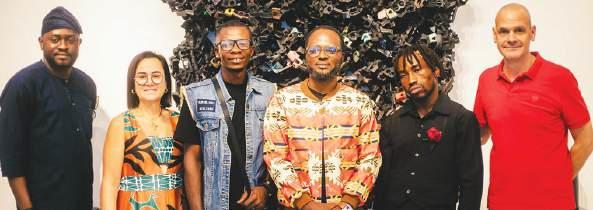
scrap metal, fabric remnants, footwear, binding wires, and paper into expressive works that reflect Nigeria’s patterns of consumption, survival, and reinvention.
A walk through the exhibition was nothing short of inspiring. Amid the subtle nods to Macallan’s oak-inspired products, the repurposed materials came alive, pulsating with the creative energy of the artists.
Curated by Uche Obasi, Recycling Matters II serves as a powerful social intervention, exploring themes of waste, utility, and the extended meaning of materials within contemporary Nigerian society. The interdisciplinary works on display challenge audiences to rethink the potential of discarded objects and the stories they can tell.
The collaboration between Alexis Galleries and The Macallan is a natural alignment of two institutions committed to excellence and creative innovation. Just as The Macallan’s whiskies are
Star Girl Who Writes Her Own Future
In an era when the art of reading and writing seems to be slipping from the grasp of many young Nigerians, one remarkable girl is rewriting the story—literally. Chisimdi Zion Acho, a prodigious literary talent, is not just reviving the culture of books but also championing the cause of equal opportunity for the girl-child.
Zion’s love affair with words began as soon as she learned the alphabet. What started as playful scribbles on scraps of paper soon transformed into carefully crafted stories, eventually finding life on printed pages. By her early teens, she had penned over 50 manuscripts—many unpublished—and at just 14, before finishing secondary school, she published her debut novel, Sullivan’s Heir, a thriller now available on international platforms like Amazon and Lulu. Her early success marks her as one of the brightest voices in contemporary youth literature.
BOOKS
Zion’s brilliance is not confined to the literary world. Academically gifted, she was among the underaged candidates granted special consideration by the Joint Admissions and Matriculation Board (JAMB). With an extraordinary UTME aggregate score of 321—excelling in English, physics, biology, and chemistry—she demonstrated a rare combination of intelligence, discipline, and perseverance, despite systemic hurdles that limited full recognition of her achievement.
Born to Chief Acho Ansel Osueke and Chief (Barr.) Constance Ngozi Osueke, a respected legal practitioner and human rights advocate in Abuja, Zion was nurtured in an environment that values excellence, integrity, and quiet philanthropy. Her literary spark also traces back to her maternal grandfather, the late Chief Nwangwu Oji, a renowned chartered decretary celebrated for
his exceptional writing skills.
Zion’s educational journey began almost before her first birthday, when her mother successfully enrolled her in nursery school—a move that foreshadowed the academic feats to come. Beyond the written word, she is artistically gifted, with talents in drawing and painting. Creativity runs deep in her family: her elder sister is a poet and spoken-word artist, while her younger brother—an aspiring lawyer—is also a gifted writer and visual artist.
Despite her extraordinary achievements, Zion remains grounded. Focused, self-aware, and deeply driven, she balances her literary ambitions with her lifelong dream of becoming a medical doctor specialising in corrective surgery. “I want to be a medical doctor,” she says simply, yet with unwavering conviction.
Chisimdi Zion Acho is more than a young author; she is a shining example of youthful brilliance, creative depth, and determined focus.
crafted through a meticulous process of selection and refinement, Alexis Galleries champions artists who employ innovative techniques and narrative depth in their work.
Hammed Adebiyi, Senior Brand Manager for West and Central Africa (WACA) at Edrington, highlighted the partnership’s significance:
“Our collaboration with Alexis Galleries aligns perfectly with The Macallan’s commitment to supporting creative communities and celebrating exceptional craftsmanship. Recycling Matters II embodies innovation, sustainability, and cultural pride—values that are integral to our brand.”
Patty Chidiac-Mastrogiannis, CEO of Alexis Galleries, added:
“We are delighted to partner with The Macallan for a second time for Recycling Matter II. The exhibition invites viewers to reconsider waste as a resource for creative renewal and to reflect on the role of art in promoting environmental awareness and responsible material culture in Nigeria.”
The Recycling Matter II exhibition runs at Alexis Galleries until February 21st, 2026. Through the transformation of overlooked materials into compelling visual narratives, the show encourages audiences to reflect on environmental responsibility and the vital role of art in shaping a more sustainable future.

Chisimdi Zion Acho
L-R : Senior Brand Manager, West and Central Africa (WACA), Edrington, Hammed Adebiyi; CEO of Alexis Galleries, Patty Chidiac-Mastrogiannis; Exhibiting Artists, Aliya Diseotu Victor, Ibrahim Afegbua, Konboye Ebipade Eugene and Co-founder Alexis Galleries, Minas Mastrogiannis at the Recycling Matters II Exhibition at the Alexis Galleries in partnership with The Macallan
Ife Bronze head
08066066268
IN THE ARENA
Rising Bloodletting Shadows Tinubu’s Security Pledge
With the increasing attention to the politics of 2027 by the agents of the federal government, there is renewed escalation of insecurity in the country despite the declaration of national security emergency by President Bola Tinubu in November 2025, Davidson Iriekpen reports
Recent bloodbaths in Kwara, Katsina, Plateau and Benue and other parts of the country may have again shown that despite the efforts of the security agencies, the insecurity ravaging the country is not in any way abating.
In Kaiama Local Government Area of Kwara State, while reports indicated that 162 people were killed, local officials and survivors believe the death toll exceeded 200 as more bodies were recovered from surrounding bushes days after the attack.
Before Nigerians could recover from the shock of the deaths in Kwara, at least 21 people were murdered in Doma A and Doma B communities, Tafoki ward, Faskari LGA of Katsina State by gunmen who moved from house to house.
According to locals, some days before the attack, youths in the area had killed a repentant bandit said to be a close associate of Kwashen Garwa and seized his AK-47 rifle.
They said when the incident was reported to him, he demanded that the rifle be returned to prevent a breakdown of the peace agreement.
When the weapon was returned, his group moved into the communities and massacred the people.
In Benue State, gunmen attacked Anwase market in Kwande LGA, killing 13 persons and destroying several properties.
The attack came two days after a similar one occurred in the Abande community, also in the Kwande LGA, where at least 16 people, including a mobile police officer, were killed.
Sources said the attackers came from a nearby mountain and unleashed mayhem on the market, shooting sporadically and causing traders and buyers to flee in panic.
One noticeable thing that came out of the above killings was that they were no security agencies in sight to help neither were there any arrest made.
There are reports that between January 1 and February 10, 2026, no fewer than1,258 lives were snuffed out
Nigeria’s bloodletting in the first 41 days of 2026 has once again cast a harsh spotlight on the country’s fragile security architecture. The grim tally translates to an average of 27 deaths daily. If the trend continues unchecked, the country may lose an estimated 9,712 persons before December 31.
Though security forces claimed they neutralised 419 terrorists within the period, the country has also lost 14 soldiers and 10 police officers in the line of duty.
On November 26, 2025, President Bola
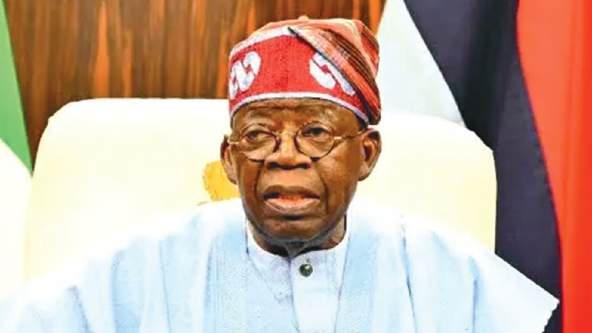
Tinubu
Tinubu had declared a national security emergency in the country. The president’s decision was in reaction to the terrorist attacks on a church in Kwara and schools in Kebbi and Niger states that led to the abduction of over 350 people within a couple of days.
Tinubu ordered additional recruitment into the military and directed that all police officers attached to Very Important People (VIP) be withdrawn to boost the fight against insecurity in the most affected regions.
He also said forest guards would be deployed to “flush out the terrorists and bandits lurking in our forests,” adding that “there will be no more hiding places for agents of evil”.
Barely over two months after the president’s bold speech, the agents of evil, as he called them, have not relented in their bloodletting.
The Kwara massacre, which is the single largest number in recent times, sparked global outrage with the United States, Turkish government and others condemning it.
Pope Leo XIV also condemned the wave of violent attacks across the country, expressing sorrow over the loss of lives and calling on authorities to act decisively to protect citizens.
Sources said that in a letter dated January 8, the terrorists had demanded that the villagers embrace their ideology and were infuriated when community leaders declined.
They added that the attack maybe intended to cow the area’s population into submission.
Whatever may be the case, Kwara and Kogi have become a new battleground in Nigeria’s north-central zone, joining Benue, Niger and Plateau states – all of which have seen long-running violence.
As Kwara and Kogi states form a geographic bridge between Nigeria’s northern and south-western zones, this surge in violence increases the risk of insecurity spreading South.
These attacks have once again placed President Tinubu’s administration and the military under domestic and international scrutiny.
When President Tinubu declared a nationwide security emergency, he pledged that he would marshal extraordinary efforts to meet the challenge. The recent massacres suggest that those efforts have been insufficient – especially considering that the Woro residents gave early warning that they were under threat but the assault on them continued for hoursLateunchallenged. December 2025, United States struck what they described as “terrorist” targets in Nigeria, and last Tuesday, it said it sent a small team of officers to the country to assist in the response to the security crisis.
What these efforts will achieve, Nigerians are anxiously waiting to see.
Since President Tinubu reconstituted and reconfigured the nation’s military architecture - a move widely seen as a sign of his seriousness in combating insecurity, little progress has been made to tackle the monster.
Despite the president’s repeated orders for troops to pursue suspected terrorists
POLITICAL NOTES
responsible for these mass killings of people across the country, Nigerians have yet to see any significant improvement in the security situation.
Many feel that it is high time the federal government took decisive actions to address the menace. The herdsmen and others perpetrating the killings cannot remain untouchable. It is no longer enough for the president to merely express sadness and order actions to bring the perpetrators to justice; he must hold security agents to account.
Across the country, schools and markets have been shut and reopened, and no difference has been noticed. Currently, nowhere is safe; citizens fear on the roads when they are travelling and even in their homes.
Observers believe that the persistent and evolving security crises ranging from banditry and terrorism in the North to kidnapping and cult violence in the South are thriving because the attention of the government is on the 2027 general election while insecurity takes back stage.
Despite constitutional duties to protect lives, many feel the government is giving more attention to politics and paying less attention to insecurity.
President Tinubu, while delivering his address at the second edition of the National Economic Council (NEC) conference last week, pledged decisive action against insecurity in the country, saying the menace has continued to affect Nigerians and undermine economic progress.
“I believe we are here again to further find means to strengthen our security forces, to defeat terrorism and combat banditry. That, I promise you, is what affects all of us; sleepless nights. But I assure you that we will win with determination and resilience,”he reportedly said.
The president must take the responsibility for securing the lives and property of Nigerians seriously. For too long the country has demonstrated lack of political will to deal with the terrorists and their sponsors tormenting the country.
Tinubu and state governors should prioritise the fight against insecurity; it is more important than getting a second term in office. It is their job to ensure that Nigerians are safe, and they need to address it more decisively.
Nigeria is on fire and Nigerians are panicking; they don’t feel safe anywhere they find themselves. This is a national emergency. The terrorists and bandits are becoming bolder by the day.
Insecurity: Who Will Save Indigenes, Travellers in Kogi?
That Kogi State is among the North-central states currently experiencing a surge in insecurity is no longer news.
The state is an important entry point to the Federal Capital Territory (FCT) from the South-south, South-east and South-west regions.
In recent months, the people of the state and travellers from these three geopolitical zones have been killed and abducted by bandits terrorising the state. There is practically nowhere that is safe in the state.
So bad is the situation that the state government recently announced the temporary closure of schools across the state, citing preventive measures based on credible intelligence to safeguard pupils, students, and
teachers. The state Commissioner for Information and Communications, Mr. Kingsley Fanwo, said the decision was made out of responsibility, not panic, emphasising that the government chose to act proactively rather than wait for avoidable incidents.
He reassured the public that the state government was fully on top of the situation, with security agencies working round the clock to identify, locate, and decisively deal with criminal hideouts.
Commendably, the state government has vowed not to negotiate with criminals. However, the situation has continued to worsen.
Amid rising insecurity, Fanwo, while speaking during a television interview recently, announced
that he would make a revelation that will “shake the country” within the next 24 hours, adding that the state government would address the nation to highlight the efforts of Governor Usman Ododo in tackling insecurity.
“In the next 24 hours, a revelation that will shake this country will come. We are closing in, and I am very sure that within the next 24 hours, we are going to address the nation and they will see the great effort of His Excellency in ensuring security in Kogi State and Nigeria,” Fanwo reportedly said.
The 24 hours have passed many weeks back, and Nigerians have not seen or heard anything other than frequent stories of abductions.
BRIEFINGNOTES
Dangers in Electoral Act’s ‘Network Failure’ Clause
By empowering electoral officers to use manually completed and duly signed Form EC8A as the primary source for collation and declaration of results in areas experiencing network failures, the Senate has created a loophole in the Electoral Act for election riggers to manipulate election results and truncate the will of Nigerians, Ejiofor Alike reports
Despite public outcry, the Senate last Tuesday refused to make real-time electronic transmission of election results mandatory in Nigeria’s electoral law.
The federal lawmakers had earlier come under fire for the grave betrayal of public trust by passing an amended Electoral Act that rejected mandatory real-time electronic upload of election results from polling units.
The Supreme Court had in October 2023 ruled that the electronic transmission of election results was not mandatory under the Electoral Act 2022.
The apex court affirmed that the Independent National Electoral Commission (INEC) had the legal authority and discretion to determine the specific mode for transmitting and collating election results.
The court clarified that the INEC Result Viewing (IReV) portal was not a collation system and was intended only for public viewing because the 2022 Electoral Act did not recognise it as a collation instrument.
It further ruled that failure or unavailability of results on IReV did not invalidate an election outcome or halt the manual collation process.
It was therefore shocking to many Nigerians that during the passage of the Electoral Act (Repeal and Enactment) Bill, 2026, the Senate still retained the contentious provisions of the 2022 law, which empowers INEC to prescribe the mode of results transmission.
This development had triggered outrage from opposition parties, civil society and pro-democracy advocates, who warned that the move undermined democratic consolidation.
Following the backlash that trailed the amendment, the Senate President, Senator Godswill Akpabio, summoned an emergency session last Tuesday.
However, at the emergency session, the lawmakers still failed to make real-time electronic transmission of election results mandatory, opting instead for a controversial amendment that still gives INEC the discretion to determine the mode of transmission.
Though the lawmakers approved electronic transmission of results from polling units, they retained the provisions for manual collation where network failure makes electronic transmission impossible.
Senate President, Akpabio, claimed that real-time transmission of election results may fail in nine states due to poor internet.
He said “real-time means that in over nine states where networks are not working because of insecurity, there will be no election results. “Nationally, if the national grid collapses and no network is working,
no election results will be valid”.
The immediate past Chairman of INEC, Prof. Mahmood Yakubu had told the BBC in an interview shortly before the 2023 general election that the commission had the capacity to transmit the results electronically.
According to him, the commission conducted a pilot transmission of election results in a by-election held in Nasarawa State in August 2020 and had since transmitted results electronically in 105 constituencies nationwide, including major governorship elections in Anambra, Ekiti and Osun states, as well as the Federal Capital Territory (FCT).
Many analysts have also reminded the APCdominated Senate that before the Action Congress of Nigeria (ACN) transformed into APC, it had agitated for electronic voting.
In one of the press statements issued by the then National Publicity Secretary of ACN, Alhaji Lai Mohammed, the ACN declared that with electronic voting, the overall cost of elections would be less and there would be stability in the polity.
Meanwhile, the version of the Electoral Act passed by the House of Representatives mandates electronic transmission of results, irrespective of internet challenges.
The Senate has constituted a nine-member harmonisation committee to reconcile differences between its version of the bill and the one earlier passed by the House of Representatives.
By recommending that if electronic transmission of election results fails, each polling officer could send results by manual transmission to the collation centre, the lawmakers have created a loophole for desperate politicians to collude with electoral officers to manipulate results on the ground that the network has failed.
Electoral officers in many of the country’s 176,974 polling units can claim network failure and resort to manual transmission.
With this provision, election results can easily be manipulated.
In his reaction, former Vice President Atiku Abubakar also challenged opposition parties to unite and oppose the amended Electoral Act Bill, warning that the Senate’s decision would worsen electoral chaos.
Speaking to journalists after a visit to former military President, Gen. Ibrahim Badamasi Babangida (rtd.), in Minna, Niger State, Atiku said Nigerians expected real-time electronic transmission, not a hybrid system.
“Nigerians were expecting real-time electronic transfer of election results but what we got is a mixture of electronic and manual transmission, which is going to cause more confusion and chaos than if we had a single tier of election transmission system,” Atiku added.
Also reacting, the presidential candidate of the Labour Party (LP) in the 2023 presidential election,
NOTES FOR FILE
Mr. Peter Obi also dismissed Akpabio’s claim that real-time transmission of election results may fail in some parts of Nigeria due to poor internet.
Obi had last Monday, led a group of protesters to the National Assembly Complex in Abuja over the senate’s rejection of real-time electronic transmission.
In a statement shared via X on Tuesday, Obi said Akpabio’s claim that certain states lack network coverage is no longer acceptable.
“Financial institutions operate nationwide through secure digital networks to conduct transactions and collect taxes on a daily basis,” he said.
“If banking systems function seamlessly, our electoral system can and should do the same.” Obi insisted that election results must be transmitted electronically and in real-time to protect the people’s mandate and eliminate manipulation. It was also not surprising that Civil Society Organisations (CSOs) involved in election observation and civic advocacy rejected the Senate’s decision.
In a joint statement issued last Wednesday, Yiaga Africa, Centre for Media and Society (CEMESO), The Kukah Centre, International Press Centre (IPC), ElectHER, Nigerian Women Trust Fund, and TAF Africa, argued that the ‘network failure’ clause creates loopholes that could undermine electoral integrity.
The CSOs urged the Senate’s harmonisation committee to adopt the House of Representatives’ version of the amendment, which mandates electronic transmission of results, irrespective of internet challenges.
On its part, the Peoples Democratic Party (PDP) accused the Senate of being “clever by half”, describing the amendment as a backdoor attempt to undermine electronic transmission.
In a statement by its National Publicity Secretary, Ini Ememobong, the party urged members of the conference committee to adopt the House of Representatives’ version of the bill in the interest of credible elections.
In its reaction, the African Democratic Congress (ADC) argued that real-time electronic transmission of results is a long-standing safeguard needed to protect votes and preserve electoral integrity.
The party maintained that the bill, as passed, contains a controversial provision that introduces discretionary clauses.
The ADC noted that these clauses are capable of weakening the guarantee of real-time electronic transmission and could open the door to the manipulation of election results.
It is expected that the harmonisation committee will reject this controversial clause and adopt the version passed by the House of Representatives.
Damning Corruption Report on Nigeria
Despite Nigeria’s renewed battle against corruption, the country slipped two places to 142nd out of 182 nations in the 2025 Transparency International (TI) Corruption Perceptions Index.
Though the country maintained its score of 26 out of 100, the drop in Nigeria’s ranking on corruption underscores the slow progress in tackling public sector menace, even as President Bola Tinubu continues to pledge decisive action against graft.
The CPI measures perceived levels of public-sector corruption on a scale where zero is highly corrupt and 100 is very clean.
In 2022, the country scored 24 and ranked 150th, while in 2021, it held the same score but was placed
154th, its worst performance under former President Muhammadu Buhari.
The country’s best ranking in the past decade was in 2016, when it was 136th with a score of 28.
It is an embarrassment that the country scored 26 out of 100, below the global average of 43, and trailed 33 other African nations in the ranking.
It clearly shows that corruption is still very high and not abating in any way. The level of corruption going on in various public institutions is worrisome.
Corruption continues to affect governance and public service delivery across sectors, including security, health, power, and the judiciary.
Though the situation could have been worse without
the EFCC and ICPC, many still feel that they are not doing enough. The agencies need to be independent in order to do their jobs thoroughly.
A situation where they work for the federal government of the day by always going after members of the opposition is unacceptable. This gives incumbent officials the opportunity to steal and loot public funds.
Most importantly, special attention should be focused on the judiciary. A corrupt judiciary is a threat to the efforts to eradicate corruption in the country.
It is due to corruption in the judiciary that Nigerians are losing hope and confidence in the judicial system and resorting to self help, because people believe that justice has become for sale.
Akpabio
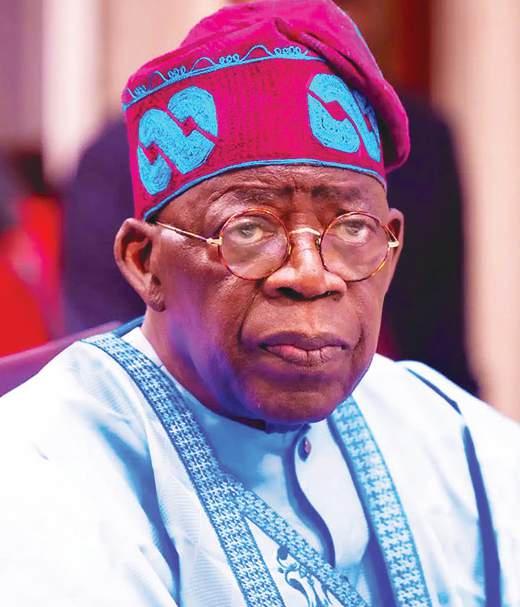
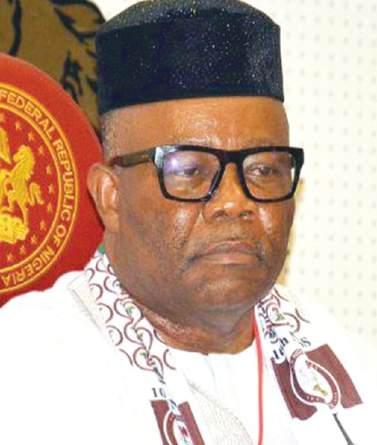
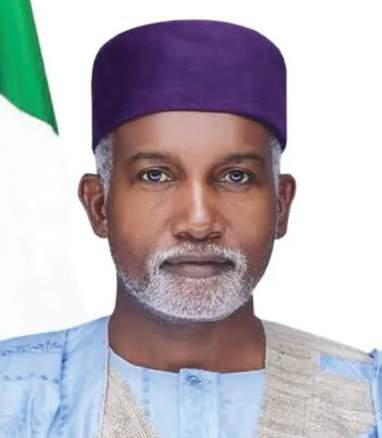
As Short Tenure Puts Confirmed Ambassadors in Limbo
Indications have emerged that the ambassadors nominated by President Bola Tinubu and confirmed by the Senate may face rejection by host countries, given the limited time they are likely to serve before the next general election, Wale Igbintade writes
Recent investigations have shown that quite a number of President Bola Tinubu’s newly nominated ambassadors may encounter difficulties securing acceptance from host countries, as concerns grow over the short period they are likely to serve before the next general election.
Multiple sources revealed that the Ministry of Foreign Affairs is contend- ing with challenges around obtaining agrément— the official consent required from receiving countries, for a number of the nominees.
The officials explained that some countries are known to prefer ambas- sadors whose tenure aligns with the tenure of the sending administration, raising concerns over the practicality of approving envoys so close to Nigeria’s next election cycle.
With the 2027 presidential poll scheduled for February and President Tinubu’s first term ending in May of the same year, insiders said several receiving governments could delay or decline approval for nominees whose tenure would be significantly limited.
A senior foreign service official, who requested anonymity due to the sensitive nature of the issue, said, “the problem we have, which we are trying at the moment to see what we can do about, is that most countries, like India, will tell you that if an ambassador has less than one year or two, they may have issues. Usually, one year counts to the end of any current administration.
“That is where there might be a chal- lenge. By the time they get the agrément, some of these ambassadors will have just a few months left. We are trying to see how we can deal with that.”
Under normal diplomatic practice, career foreign service officers serve an average posting of about three years perThemission.
1961 Vienna Convention on Diplomatic Relations, specifically Article 4, requires that host countries formally approve any ambassadorial nominee before accreditation.
The convention, however, does not compel receiving states to justify a
refusal, meaning nominees may be declined without explanation, including on grounds related to tenure considerations.
Recall that in September 2023, barely four months after assuming office, President Tinubu ordered a broad review of Nige- ria’s foreign policy architecture and recalled both career and non-career ambassadors from 109 missions - 76 embassies, 22 high commissions and 11 consulates - leaving the missions without substantive heads for more than two years.
At the time, the federal gov- ernment justified the mass recall based on its drive for “worldclass efficiency and quality” in the delivery of foreign service operations.
Only Nigeria’s Permanent Representatives to the United Nations in New York and Geneva were retained, owing to the approaching UN General Assembly. Nigeria’s envoy to the Republic of Niger was also exempted due to the unconsti- tutional change of government in the neighbouring country.
However, it was not until November 2025, over 26 months later, that the President transmitted the names of ambassadorial nominees to the Senate for confirmation.
The first batch of three nominees, Ayodele Oke, Amin Dalhatu and Colonel Kayode Are (rtd.), was forwarded to the National Assembly on November 26, 2025. Three days later, on November 29, an additional list of 32 nominees was submitted, consisting of 17 non-career diplomats and 15 career officers. No fewer than 67 individuals have been nominated to fill ambassadorial and high com- mission roles.
On January 22, 2026, the president approved the postings of Oke as ambassador-designate to France, Are as ambassador-
designate to the United States, and Dalhatu as high commissioner-designate to the United Kingdom.
Other nominees are expected to be posted to key destinations such as China, India, the United Arab Emirates, Qatar and South Africa, as well as multilateral organisations including the United Nations, UNESCO and the African Union.
Nevertheless, officials warned that the delayed nomination and confirmation process could make it difficult for several confirmed envoys to obtain host-country approval in time, particularly given the limited remaining lifespan of the current administration.
While reacting to a report indicating many of the ambassador-designates faced the prospect of being rejected by host countries due to time constraints on their tenure, former Deputy Governor of the Central Bank of Nigeria (CBN), Dr. Kingsley Moghalu, said the timing of ambassadorial appointments by the President Tinubu administration does not portray serious or responsible governance.
Moghalu, a former senior United Nations official, in a Facebook post, said for Nigeria to be in such a situation is bad for the image of the nation “once regarded as a medium power in world politics and the undisputed numero uno in Africa.” He queried the rationale behind recalling the ambassadors ap- pointed by the Buhari administration without timely replacements.
“If the Nigerian leader did not consider the appointment of Ambassadors in a timely manner important, as obvi- ously was the case, then he should have allowed those appointed by his predecessor to remain at post for his first term of office.
“By recalling the ambassadors in 2023, Tinubu left a dangerous lacuna that no leader conversant in statecraft should expose his or her country to. We have all now seen that there are limits to the prioritisation of political buccaneering over hands-on governance and statecraft.”
He also criticised the quality of some of the nominees, saying that their inclusion signals a dearth of merit in
the governance of Nigeria.
Also speaking on the issue on ARISE NEWS, a leading political scientist, Dr. Kunle Fagbemi, warned that Nigeria’s foreign relations are under severe strain due to the crisis to the delays in ambassadorial appointments and the systemic mismanagement in the presidency.
Fagbemi said the Tinubu administra- tion’s handling of foreign affairs threatens Nigeria’s global reputation, adding that a dysfunctional presidency creates real consequences for international relations.
“This delay reflects a lack of insti- tutional memory and continuity in governance. Diplomatic appointments are not mere formalities, they are essential for upholding international agreements and relationships,” Fagbemi stressed.
The expert also criticised recent public misstatements, including claims about Nigeria-UK relations that erroneously suggested 37 years had passed since the last state visit. Such errors, he argued, expose Nigeria to international embar- rassment and undermine confidence in its diplomatic corps.
To address the crisis, he recommended the immediate appointment of special envoys with expertise in key global regions—North America, Europe, and Asia to ensure effective diplomatic engagement. He also emphasised the need for a shared vision among political elites, noting that cross-party consensus is crucial to prevent uncertainty in foreign relations.
“If there is consensus, designated ambassadors can serve a definitive period, typically 24 to 30 months, which ensures stability even amid changes in administration,” he added.
Fagbemi further stressed that ambas- sadorial appointments must prioritise national interest over personal or political considerations. He said career diplomats, many approaching retire- ment, are best positioned to navigate the complex demands of international diplomacy.
Fagbemi warned that failure to act could weaken Nigeria’s influence globally, noting that countries hesitate to engage fully with administrations perceived as unstable or poorly managed.
Tinubu
Akpabio
Tuggar
Focus
Our Disdain for the Lagos Urban Poor
Dear Lagos Elite,
Iget it. Makoko, Oworonshoki, Bariga, etc., assault your senses. They are slums. They are dirty. They are not pretty. We’d prefer high-rises overlooking the waterfront. They’ll be nicer, have higher commercial value, and the Lagos State Govern- ment will get more taxes. Hopefully, to be used to improve social services for more citizens. Honestly, I get it!
However, we can’t build a megacity on the blood and bones of the poor. People live in these places. HUMAN BEINGS. And your disgust with their living environment is not their fault. It is a stark reminder of governance failure. It’s not complicated. Venice (Italy), Amsterdam (Netherlands) & Ganvié in neighbouring Benin are cities on water that we pay to visit.
That said, all we ask Lagos State to do is relocate and compensate residents when the spaces they call home or their businesses are needed for other uses. After all, the state owns the land. In addition, the government must ensure that they can earn a living. If I fish for a living and you move me to a place without water in sight, what exactly are you expecting me to do?
Makoko is the community currently in the spotlight. Demolitions started November last year, and continued into January of this year, with the governor and the House of Assembly feigning ignorance of the happenings. As the rains have returned and we sleep soundly with the gentle patter of raindrops on our roofs, Makoko residents, including children & the elderly, are in their canoes in pools of water because Governor Sanwo-Olu demolished their homes. This is despite several court orders restraining the state, and a Supreme Court judgment stating that inland waterways belong to the federal government. That the federal government has said nothing in this matter speaks
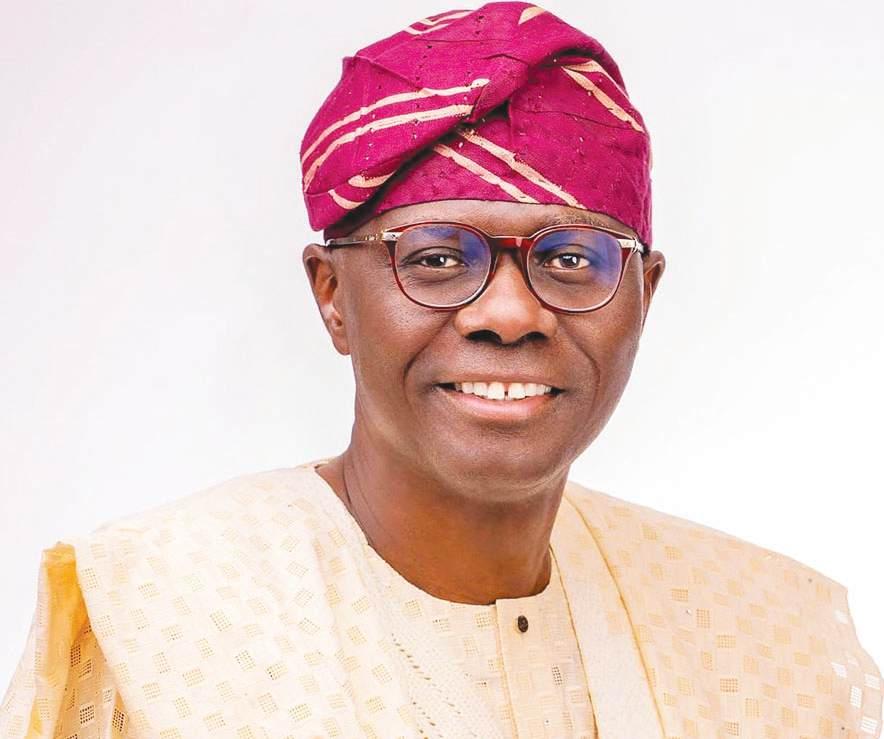
volumes.
Concerned Citizens and members of affected communities protested to the Lagos State House of Assembly on Wednesday, January 28th, which allowed local and international media to continue the coverage of the destruction and death authorised by Lagos State. The peaceful protest upset the state enough to result in illegal arrests, assault and beatings by the Nigeria Police Force that led to hospitalisation
for several However,protesters. some good news followed: a public hearing by the House of Assembly, a brief visit to Makoko, and a follow-up meeting to discuss the terms of engagement for a Committee to determine compensation and relocation. Might I remind us that Lagos State had previously stated that it planned to compensate Makoko residents. How do you compensate people you haven’t enumerated? The enumeration process has just started AFTER the destruction of homes, and there is no clear plan to provide temporary accommodation and
support while a permanent solution is designed.
In 2011, the Makoko Floating School was designed by Kunle Adeyemi as a pilot under the larger African Water Cities Project, which focused on adapting coastal cities to climate change. The project was shelved. In 2020, facilitated by JEI, the community engaged the Lagos State government to discuss alternatives for an inclusive redesign of the space, involving the state government and development partners. This was meant to be an alternative to FBT Coral, which had gotten a concession to reclaim land (you can see it from Third Mainland Bridge) near the community.
The government is now loudly speaking about “Water Cities” and its commitment to invest $2 million. This was not a planned announcement. It was a forced response to questions about the destruction of people’s homes and the deaths that have followed. However, the apparent absence of international donor agencies in the current plan (according to an SA’s remarks during the public hearing) makes accountability to the original vision unlikely.
A popular unattributed quote states, “The only thing necessary for the triumph of evil is for good men to do nothing.” This is not just about Makoko. It’s about our daily choices to “unlook” the slow dehumanising of ourselves as we delude ourselves into thinking we’re building a society that makes sense. This level of assault on people’s minds and well-being is unsustainable. When the dam breaks, it is the elite who have the most to lose, and we will pay heavily for this level of wickedness & callousness.
Governor Babajide Sanwo-Olu - what exactly is the plan? A lot of mistakes have been made. I pray that your inaction does not lead to more deaths.
Yours AdamolekunSincerely, is a concerned active citizen.
MRI, Priorities, and Cost of Negligence in Kwara’s Health Sector
Afew weeks ago, I wrote an article to draw attention to what I described as an alarming and unacceptable reality: the absence of a single functional Magnetic Resonance Imaging (MRI) machine in any public hospital in Kwara State.
That article was prompted by the grief of a lady, who had taken to X (formerly Twitter) to mourn her uncle, whose death she attributed to the unavailability of MRI services within Kwara. Her pain exposed what many residents already knew but had come to normalise — that for certain critical diagnostic services, Kwarans are largely on their own. In today’s world, how can an entire state with a population of over three million people operate without one functional MRI machine in its public hospitals? This is the heartbreaking reality Kwarans have had to endure for about seven years of the present administration in the state.
In that piece, I concluded that this was not merely a funding issue but a question of priority. This is because Kwara has received substantial federal allocations and internally generated revenue over the past seven years. While the administration of Governor Abdulrahman Abdulrazaq has repeatedly claimed to have invested billions of naira in the state’s health sector, no state-owned hospital could boast of an MRI machine, a critical diagnostic equipment.
Shortly after my article was published, the state government responded through the Commissioner for Health, Dr. Amina Ahmed El-Imam. In the state, the government announced that it had procured a “state-of-the-art 160-slice CT scan and a modern 1.5 Tesla MRI machine,” which would “soon be commissioned.” That claim, as of the time of writing this piece, remains unconfirmed, and the equipment has not yet been made operational for public use.
Even more revealing was a comment made by the Governor’s Chief Press Secretary, Rafiu Ajakaye, who disclosed on a Kwara-focused WhatsApp platform that the state government had placed an order for an MRI machine since July 2025. When asked why it took the government over six years to make that purchase, he said the government did not consider the MRI machine a priority for Kwarans. According to him, it was not even among the state’s first 10 priorities. That statement, as troubling as it is, confirmed what I had previously said that the issue is not lack of funds; it is lack of priority.
In modern healthcare delivery, an MRI machine is not a luxury item. It is a critical diagnostic tool used in detecting strokes, brain injuries, spinal cord damage, tumors, cancers, internal bleeding, and complex neurological conditions. In an emergency situation, timely imaging can be the difference between life and death. Yet, patients in need of MRI services in Kwara have for years been forced to travel outside the state, often at enormous financial and emotional cost. For critically ill patients, that delay can be catastrophic.
To now describe such equipment as “not a priority” for a state raises serious concerns about how healthcare priorities are determined by the Abdulrazaq administration. Is it not absurd that a government that considered an essential diagnostic tool a non-priority could afford to spend billions of taxpayers’ funds on white elephant projects whose value or impact to the average Kwaran remains questionable? When critical medical infrastructure is absent, human lives are put at risk.
I earlier mentioned the story of the lady who lost her uncle due to the unavailability of an MRI machine in Kwara. Tragically, only on Monday, another young life was lost under similar circumstances. Lucky Elohor, a promising 30-year-old woman, required
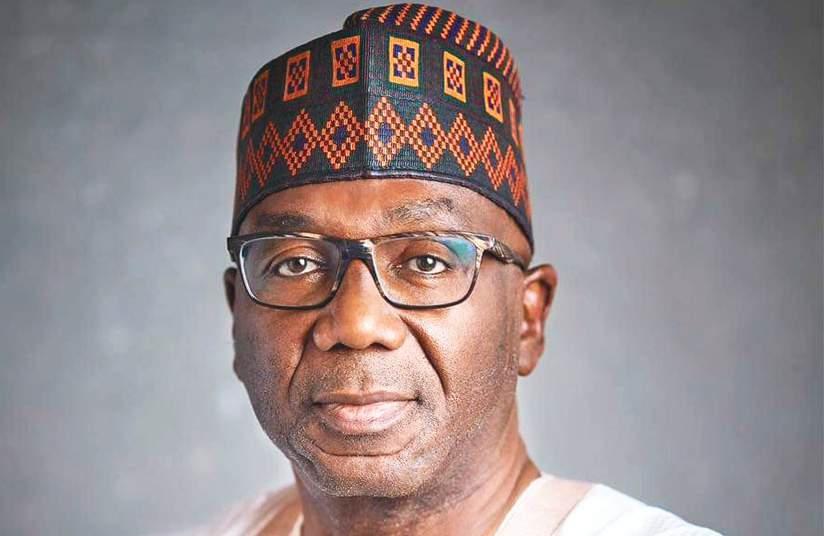
urgent MRI screening. Because the service was not available anywhere in Kwara, she had to be transferred out of the state to Ogbomosho. She did not survive. These are just the two cases we heard about. There are likely many others whose stories never reached social media. Families quietly bore their losses without public outrage. Governor Abdulrazaq must take responsibility for these deaths and many others that must have occurred due to the negligence and failure of his administration to provide this important diagnostic equipment. Perhaps the lives of the young Elohor and the other man could have been saved if there was a functioning MRI machine in the state.
The governor and his team should know
that no amount of bureaucratic explanation can justify their failure. They should also know that equipment procured after years of silence and only in response to public pressure cannot be presented as evidence of “clear and measurable strides.” If anything, it underscores the government’s negligence and failure. Lucky Elohor’s story should not fade into another social media trend. It should force a serious conversation about healthcare infrastructure, emergency preparedness, and the true meaning of investment in the health sector, not only in Kwara but across Nigeria.
•Ishola writes from Ilorin
Governor Sanwu-olu
Governor Abdulrazaq
Opeyemi Adamolekun
Adeniyi Ìṣhọlá
PERsPEcTIVE
Of El-Rufai, Drama and Subterfuge
When I wrote “Nasir El-Rufai: Judging Others, Judgment,”Evading I expected disagree- ment. What I did not anticipate was the near-theological fervour with which some of his admirers rejected its central claim: that the former governor’s long season of moral grandstanding had finally encountered institutional scrutiny, and that the arc of accountability he so confidently invoked against others was, however gradually, bending toward him.
My argument was straightforward. Mallam Nasir Ahmad El-Rufai, once the stern accuser in Nigeria’s moral courtroom, had become, at the very least, a subject of inquiry. The Kaduna State House of Assembly had concluded a probe into his eight-year administration, raising grave questions about financial management, debt accumulation, and procurement procedures. The House recommended further investigation by anti-corruption agencies. I noted that such referrals were neither trivial nor symbolic. His defenders dismissed this as fabrication. There was, they insisted, no formal process, no summons, no institutional development requiring his presence. Events have overtaken that denial.
The episode at the Nnamdi Azikiwe International Airport on Thursday, Febru- ary 12, has now joined the catalogue of Nigerian political theatre. The former governor returned from Cairo. Almost immediately, his media aides announced that security operatives had “attempted to arrest” him. According to their account, he declined to accompany them in the absence of a formal invitation, and his international passport was seized from an aide. El-Rufai’s counsel characterised the incident as executive overreach, a constitutional violation, even an act of “stealing.”
The language was indignant, urgent, theatrical. Yet within that same defence lay a quieter admission: the Economic and Financial Crimes Commission (EFCC) had delivered an invitation to his residence in December 2025. Assurances of compliance had been conveyed. The commission had been informed that he would present himself voluntarily on February 16, 2026. There was, therefore, by his own camp’s acknowledgment, a subsisting invitation. That fact is not incidental. In constitutional democracies, invitations from investigative agencies are not extraordinary. When a legislative body refers findings for further examination, agencies such as the EFCC or ICPC are obliged to seek clarification. It is equally routine, indeed prudent, for investigative bodies to coordinate with im- migration authorities where there is concern that a person of interest may remain outside jurisdiction. Such administrative steps are not persecution; they are procedural safeguards.
Viewed in this light, the airport episode appeared less like ambush and more like choreography. If one has been formally invited to answer questions concerning public funds and public trust, and if compliance has already been promised, the dignified course is uncomplicated: present oneself andInstead,respond.what unfolded bore the unmistakable imprint of spectacle. Before the ink of his passport stamp could dry, statements were circulating. Allegations of political persecution surfaced. A narrative of victimhood was activated with notable efficiency. In preceding weeks, the former governor had publicly suggested he might face politically motivated arrest upon his return. When operatives approached him at the airport, the groundwork for interpretation had already been laid.
It is this pre-emptive scripting that war- rants reflection. For much of his public life, Nasir El-Rufai cultivated the image of the unyielding reformer. As minister and later as governor, he spoke with prosecutorial certainty about corruption and incompetence. He dismissed critics with clipped impatience. He governed with unmistakable firmness. Admirers called it resolve; detractors called
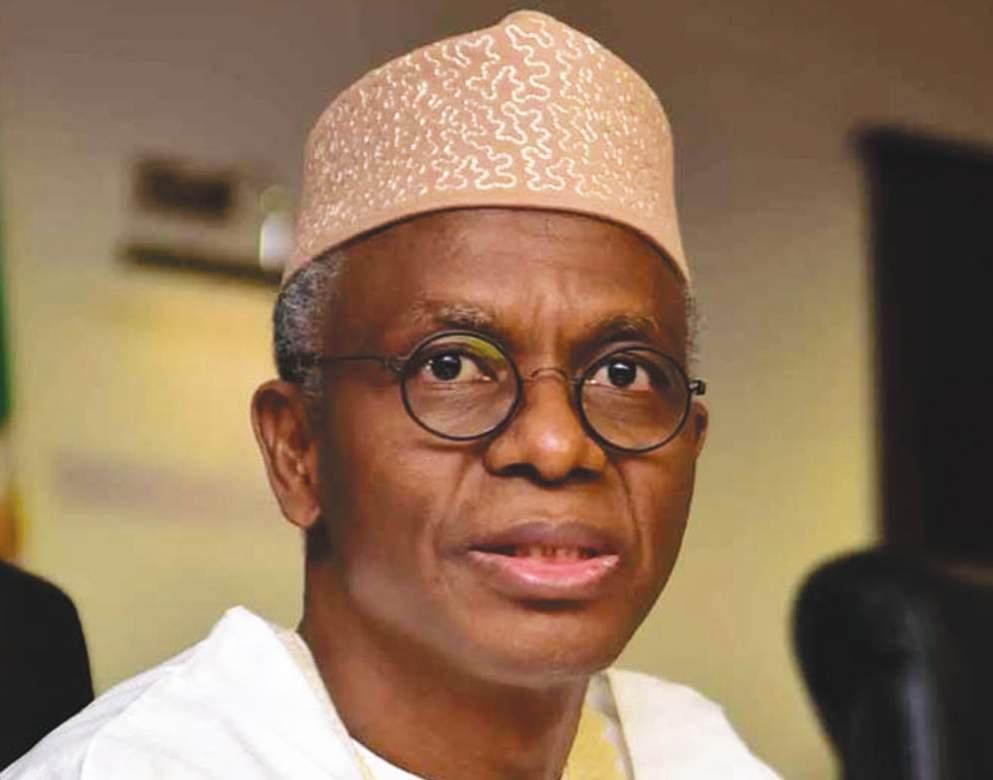
it severity. His tenure was marked by contentious episodes that remain deeply debated in Nigeria’s public memory: security crises, clashes with activists and journalists, property demolitions defended as enforcement but criticised as vindictive. To his supporters, he was bold. To his opponents, he was abrasive and intolerant of dissent.
The purpose here is not to relitigate those chapters. It is to acknowledge the irony. A leader who once embod- ied an iron conception of executive authority now seeks refuge in the delicate language of procedural fragil- ity. The man who rarely entertained pleas of victimhood now invokes constitutional vulnerability. History, one must concede, possesses a quiet sense of symmetry.
When the Kaduna State House of Assembly commenced its probe shortly after his exit from office, many observers were struck by the breadth and depth of its inquiry. The findings were detailed and sobering in tone. They recommended further investigation by anti-corruption agencies. Predictably, interpretations diverged. Supporters saw vendetta. Critics saw overdue reckoning. Between these polarities stands a simpler democratic principle: no public official is immune from scrutiny.
As investigative processes report- edly advanced and former aides were questioned, the former governor’s prolonged absence from Nigeria drew attention. Absence, of course, is not guilt. Yet optics matter in public life. When questions arise about steward- ship, presence conveys confidence. If, as his counsel confirms, he had been formally invited months earlier, a discreet return followed by voluntary appearance before investigators would have demonstrated composure and respect for process. Instead, the na- tion witnessed a confrontation at an airport terminal, swiftly reframed as Onepersecution. must therefore ask: was this about safeguarding due process, or about shaping narrative? Nigerian
political culture is familiar with this pattern. When influential figures face institutional scrutiny, two strategies often emerge. The first is legal: contest the process in court, challenge jurisdiction, demand documenta- tion. That is legitimate and foundational to the rule of law. The second is theatrical: mobilise supporters, cast oneself as victim, suggest conspiracy. That is political. The former governor appears to be navigating both terrains.
It bears recalling that during his tenure, mercy was not a defining characteristic of his administrative style. Policies were enforced with vigour; urban renewal initiatives proceeded with little sentimental hesitation; opponents seldom encountered rhetorical indulgence. Many interpreted this as strength; others as rigidity. Whatever one’s view, it established a public persona of severity rather than suppleness. That context renders the present appeals to restraint particularly striking.
Let it be stated plainly: no citizen should suffer persecution. The rule of law protects even those who once wielded power without hesitation. But reciprocity is intrinsic to justice. If investigative agencies have is- sued invitations predicated on legislative findings, cooperation is not concession; it is civic duty.
The argument that he is being targeted for political dissent may animate partisan sympathies. Yet such claims do not answer the substantive questions raised by the legislative probe. Were public loans prudently contracted? Were procurement procedures faithfully observed? Were expenditures transparently accounted for? These are technical matters requiring documents, not declarations.
If the investigations are flawed, courts are available to adjudicate. If the legisla- tive findings are inaccurate, they can be challenged through lawful channels. What does not advance clarity is public drama at points of Meanwhile,entry.Kaduna State has moved into a new phase under different leader- ship. The current administration under a gentle achiever, Governor Uba Sani, has emphasised reconciliation, fiscal recalibra- tion, and social cohesion. Under Senator Sani, Kaduna is enjoying a calmer political climate, less dominated by combative rhetoric. Whether this new direction achieves lasting
transformation will be judged by time. Yet the shift underscores a perennial truth of governance: institutions outlive individuals. Perhaps the most difficult transition for any former officeholder is from centrality to periphery. Power persuades its holder of indispensability. It fosters the illusion that history pauses in one’s absence. But democratic systems, however imperfect, continue. Governments change. Narratives evolve. Those who once commanded the stage must, eventually, answer questions from the wings.
Nasir El-Rufai remains entitled to the presumption of innocence. He is entitled to due process, legal counsel, and fair hearing. What he is not entitled to is exemption from scrutiny. The law, in its noblest conception, does not recognise hierarchy of accountability. If he emerges from investigation vindicated, that outcome will strengthen institutional credibility. If administrative lapses are estab- lished, they must be addressed in accordance with law. Either way, the process, not the performance, should determine the verdict. Nigeria’s democratic maturation depends less on personalities and more on procedures. It depends on whether public officials, past and present, submit to inquiry without recourse to spectacle. It depends on whether we can distinguish between persecution and prosecution, between grievance and accountability.
In my earlier article on El Rufai, I observed that the self-appointed judge had become subject to judgment. I repeat that observation now, not in triumph but in sober recognition of democratic symmetry. Public life is cyclical. Rhetoric meets record. Posture meets proof. Subterfuge, however skilfully staged, ultimately yields to institutional process. The former governor stands at such a juncture. He may choose to confront inquiry with the same stern resolve he once demanded of others. Or he may continue to frame each procedural step as persecution. The choice will shape not only his legacy, but also the public’s confidence in our collective commitment to accountability. History, patient and unsentimental, is watching.
• Jubril, a developmental economist livesinZaria,canbereachedonibroj63@ gmail.com
El-Rufai
Ibrahim Jubril
Biodun Jeyifo: Revolutionary Humanist Bows Out
At the grand intellectual festival to celebrate him at 80, on the 5th January, his birthday, I was conspicuously absent. I was billed to be a discussant on the anti- colonial aspects of his writings following a public lecture on the subject. But an unavoidable personal emergency took me out of the country. On the 4th of January, I sent BJ a text to excuse myself but informed him I had written a tribute to him: “I regret my inability to join others at the tribute event in your honour tomorrow… Once again, happy birthday in advance and thanks for all you mean to us your friends and former students…”
He called me in the evening of the 5th of January to express his appreciation for the tribute. He particularly inquired about my memoirs which I had mentioned to him. I assured him he would soon get a copy since the manuscript had gone to the publishers for production.
Barely a month after, specifically this last Wednesday, the 11th of February, a phone call from a mutual friend stunned me to the inevitable news that affirms our common mortality: “BJ passed on some hours ago…!” Silence. Grief. Loss. The cruel Finality of death!
What follows is the main body of my tribute to Professor Biodun Jeyifo, distinguished Emeritus Professor of African Literature and Black Studies at Harvard and Cornell Universities and world- renowned scholar of the humanities on the occasion of his 80th birthday.
This tribute has now become also a fitting farewell to a teacher, mentor and close friend. He had promised to stop by the house to see me and Jane before returning to Boston in a few weeks time. Not anymore!
Here then is the final good bye I could not say to BJ.
On the 5th of January in Lagos, scholars and intellectual expeditioners gathered to honour and celebrate a most unique and outstanding Nigerian intellectual. Prof. Biodun Jeyifo, easily one of Nigeria’s finest and most outstanding humanities intellectuals, turned 80. Jeyifo, fondly called BJ by his colleagues and students alike was concurrently Emeritus professor of English and African literature at Cornell University and African and African American Studies at Harvard University. The roll call of his former students both in Nigeria and in the best universities in virtually every continent reads like a telephone book, an A -list of successful people in diverse fields in Nigeria and around the world.
But by far the most important landmarks in BJ’s career are the early stages of his career as a teacher, intellectual gadfly, trade unionist and socio political catalyst at the University of Ife (now Obafemi Awolowo University).
With a First Class Honours degree in the literary arts from the University of Ibadan and later a Ph.D from New York University under the supervision of Richard Schechner, BJ came to lead an intellectual and ideological revolution at the University of Ife (now Obafemi Awolowo University) in the late 1970s and 1980s. From his station in the Department of Literature in English, BJ’s radical sociological approach to the study and teaching of literature marked a decisive shift in a literature curriculum that was originally informed by the bourgeois liberal formalist tradition of the Ibadan British classical school. In that school, literature was a self- justifying enterprise that could be created, consumed and taught independent of the society that informs it and gives both the writer and his art life. Literary criticism in turn was literally a closed cult of scholarly devotees.
In contrast, BJ came to Ife with a fierce advocacy of a manifestly radical Marxist approach to the study and teaching of literature. The key axioms of this new catechism included the recognition of literature as social practice, the need for social commitment in the work of the writer and the imperative of ideological commitment in the literary enterprise. These were the canons of a new pedagogy in literary studies and BJ led the charge with full chest .
This radical departure endeared him to the students and frightened older faculty whose careers had been built on decades of idealistic intellection and cultic cocoon. BJ’s radical departure was founded on an existing ferment of political division based on the existing capitalism versus communism divide of the Cold War era. Throughout Africa and parts of the Third World,
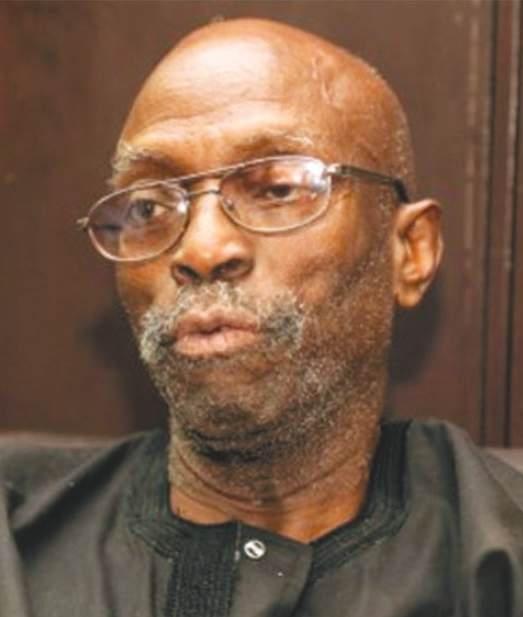
a certain anti imperialist sentiment was the hallmark of a growing opposition to capitalism and its ideological domination of the economic and intellectual realities of the contemporary world.
I joined the Department of Literature in English in this environment of an ideological ferment and turning point.
As an apprentice academic, I was also a graduate student. For my MA thesis on the works of the Ghanaian novelist, Ayi Kwei Armah, BJ was a natural choice of supervisor. His classes were thorough and learned. His sense of work was arduous. He tasked his graduate students not to consider any literary works taxing. He got us to read and analyze texts like James Joyce’s Ulysses and Tolstoy’s War and Peace which are some of the largest creative tomes in world literature. You completed any of BJ’s graduate courses not only informed but better educated and more learned. After course work with BJ, you conquered the fear of hard work. For me as an apprentice scholar and teacher, BJ’s rigorous teaching and research method had an indirect impact on me in my lectures and tutorials. In the process, the constituency of younger Marxist scholars and radical students continued to expand. The sociological thrust of the new pedagogy resonated directly with our immediate socio economic conditions. Literature and literary criticism were reconnected to our social experience. When I later enrolled for a Ph.D, again BJ was my supervisor. The course work was grueling, often consisting of marathon 3-hour lectures at a time on Theory of Literature or Research Methods. Through it all, he was a trusted guardian as I ploughed through the vast body of literature inspired by the Nigerian civil war to produce a thesis which both Professors Emmanuel Obiechina and AbIola Irele (now both late) as my External Examiners agreed was an original contribution to African literary scholarship especially a then emerging Nigerian national literature.
I must confess that the theoretical foundations for my book, The Theory of African Literature, were laid as a result of my tutelage under BJ. I owe him a good deal of my knowledge and grounding in radical sociological literary theory. This is partly why it was a privilege to ask BJ, then at Havard, to write an updated foreword for a new reprint of the book after it had been in circulation and on the reading lists of graduate programs around the world for over three decades.
As a scholar, BJ was naturally combative in defending his intellectual and ideological turf. At a point, Wole Soyinka came to see BJ’s ideological revolt and growing followership as a threat to his gigantic reputation. In his Inaugural Lecture “The Critic and Society: Barthes, Leftocracy and Other Mythologies” ,Soyinka took a consistent hostile swipe at BJ and the devotees of the new Marxist school of literary scholars and critics. BJ was subsequently to enter several rebuttals in articles and books especially his seminal book, The Truthful Lie.
One major product of BJ’s sociological approach to literature was the unusual insight which he provided to certain axiomatic features of Nigerian and African literature. For instance, in his essay entitled “Igbo Novelists and Yoruba Dramatists”, he provided a sociological explanation of the ecology of genres in Nigerian literature.
The Igbos tend to be natural itinerant traders. Travel breeds stories about strange places and cultural encounters, hence the preference for prose among Igbo writers. On the other hand, Yorubas have kings. Kingship goes with courts and elaborate rituals. The ritual of court life comes with drama and spectacle, hence the flowering of drama among modern Yoruba writers and performers.
As a member of the Ife campus community, BJ was engaged in the affairs of the university. He led many protests for accountability in the administration of the university. He once led an opposition to a frivolous foreign trip by an Ife delegation under then Vice Chancellor, Professor Cyril Onwumechili.
He complemented his deep academic work of research and teaching at Ife with an active hands-on role as an executive of in the ASUU, the perennial national union of university teachers. In the course of this commitment, BJ traversed
the length and breadth of the country in his trade mark weather beaten Volkswagen Beetle car , doubling often as driver and sometimes a minor faults mechanic.
He was actively involved in all the struggles of ASUU against the military despotisms of the time. It is crucial to point out that he was engaged in these struggles not for personal gains but in the national interest defined as the greatest good of the greatest majority. For BJ, the common good was the egalitarian aspirations of the masses whom he saw as the victims of colonial plunder and post colonial betrayal.
A man of simple taste and unpretentious manners, BJ has remained the quintessential man of honest ways and means and epitome of a disciplined lifestyle. He was content with his old VW Beetle. Not for him the garish materialism and ostentation of the Nigerian elite. Not for him the lavish indulgence in wasteful manners and tastes. Instead, he has always made do with a simple adire outfit or a pair of jeans and green combat khaki top perhaps as tributes to Fidel Castro and Che Guevara. It was from BJ and my experience of harsh adversity during the civil war that I learnt that the most durable pair of sandals you could use for years is made of slices roughly cut from disused motor tyres and thick slices of rubber straps!
There was a certain aesthetic sensibility about BJ’s sense of fashion. It lay in the perception of class struggle as a total war in which the vanguard were persons whose external presentation did not suggest any resemblance of bourgeois opulence. There was an inherent beauty in the profound scholar who was also an embodiment of the simplicity of the masses. It was the beauty of Fidel Castro’s perennial green khaki battle fatigue or Yassir Arafat’s perpetual khaki combat gear. Some Nigerian class rebels and labour union ‘combatants’ like the late Tai Solarin and Adams Oshiomhole were to adopt the simple khaki gear as a perennial sign of revolt against the values of the oppressors of the masses.
Beneath the ruggedly strict and disciplined socialist academic persona lies hidden what I consider BJ’s enduring virtue. Beyond being my most impactful teacher, I have over the years found BJ an abiding friend and unfailing personal advocate. Underneath his rugged mien lies a very intensely humanistic core. His empathy is spontaneous just as his solidarity is abiding and longstanding.
BJ’s strength as a person is his embodiment of the attributes of humanism in a broadly Renaissance sense by avoiding extremes. He is ideological without being an ideologue, assertive without being a demagogue and a devotee of known political schools while avoiding being doctrinaire. Yet he remained a highly accomplished scholar while remaining modest and unassuming. Neither arrogant nor pompous, BJ never sought to frighten nor intimidate let alone deliberately impress. And coming from a national culture that thrives on empty noise making and bluster by ignorant people, BJ stood out as a humanist in the finest tradition. He retained the essence of humanism even in his scholarship -profound knowledge and self-evident mastery of his discipline with an unfailing commitment to the elevation of the human spirit.
Above all, BJ remained intensely human. Observing his enviable relationship with his family, one was moved to see a certain admirable duality in his personality.
When in the midst of my graduate studies I fell in love and decided to get married, I sought BJ’s counsel. He gave his nod and lent his support. On an epic journey from Ife to Osogbo to seek the consent of my future father in law. BJ volunteered to accompany me along with another colleague from the department. We rode in BJ’s battle -tested VW Beetle. After a difficult meeting we were seen off by our host who, on seeing our mode of transport, cursed us lavishly for bringing him the bad news of future poverty. Many people attain distinction in their chosen careers. But few are the men and women of distinction who become institutions in their chosen fields by dint of sheer grit and hard work. BJ belongs in that select formation of self -made virtual geniuses.
The world of scholarship in his chosen fields will forever be animated by his trail blazing and forthright intellectual leadership and deeply humanistic essence. Indeed, BJ passed by here and deeply touched all of us who encountered him as a teacher, mentor and friend.
jeyifo
Chelle Will be Making a Mistake Dumping Nigeria for Marseille Ikpeba:
Former African Player of the Year, Victor Nosa Ikpeba, has warned Coach Eric Chelle, not to consider dumping the Super Eagles job to go and accept the vacant manager role at French club Olympique Marseille.
The Mali-born coach who last month led the Super Eagles to bronze finish at the 2025 Africa Cup of Nations in Morocco is widely tipped to replace Roberto De Zerbi who left Marseille last week.
But Ikpeba, who featured for another Ligue 1 clubAS Monaco in his hey days, warned that Marseille have been an unstable club, who quickly run out of patience with any coach when
the results are not favourable.
“If I were to personally advise Eric Chelle, I will tell him not to consider the Olympique Marseille job because they quickly lose patience with the coach when things are not going well,” Ikpeba told SCORENigeria.
“They are no doubt a very big club, but they don’t take kindly to any excuses when things are not going well.
“It’s the same with their fans. They can’t stand a defeat.”
He continued: “My advice to Eric Chelle would be for him to get a new contract with the Super Eagles and continue to build his profile, which has been enhanced since the AFCON in Morocco, where Nigeria played some beautiful attacking football resulting in the team emerging highest scoring side with 14 goals in the African
Niger Delta Games Torch Arrives in Port Harcourt with Fanfare
There was a carnival atmosphere in Port Harcourt on Friday as the Torch for the Niger Delta Games (Edo 2026) made its grand entry into the Garden City.
The Torch which arrived from Owerri, the Imo State capital was received in Port Harcourt by Team Rivers athletes, coaches, officials of the Rivers State Sports council and top Government functionaries.
On a bright and sunny Friday in Port Harcourt, the Torch was received from the Imo State delegation by the Niger Delta Games Project Director, Fred Edoreh, was then presented to the Permanent Secretary of the Rivers State Ministry of Sports, Comrade Emmanuel Ndah.
The crescendo was a colorful ceremony at the Sharks Football Club Stadium which also had top journalists in attendance.
The event, which signals the final countdown to the regional showpiece, turned into a carnival of sorts as the athletes toured major parts of the city, including Station Road and Niger Street. Residents cheered the procession, which was spiced up by electrifying performances from Aka Drums and the Alfonso Dance troupe, creating a vibrant atmosphere of cultural display and sporting optimism.
Speaking at the event, the Permanent Secretary of the Ministry of Sports, Rivers State, Comrade Ndah described the Niger Delta Games as a crucial platform for development that requires total commitment.
“We are very proud of this.
In fact, the NDDC games is one that everyone has to belong to, to key in because it’s a very good thing,” the Permanent Secretary stated upon receiving the torch.
“We have done the needful, and I am sure our athletes will perform,” he assured.
Also speaking at the event, the Rivers State Liaison Officer for Dunamis Icon, Mrs. Awele Salubi, emphasized that the state’s preparation has been thorough and strategic.
“Our expectations are quite good, very high, you know, commendable,” Salubi said.
“We’ve put in a lot of effort in preparing our athletes. We’ve gone through the trials, the exercises, we’ve made the best competent selections”.
Salubi also commended the organizers, Dunamis Icon, for raising the standard of the competition.
“I know that they’ve put in so much effort and a lot much more this time to improve from what we had last year,” she noted. “So we are expecting that we will do well, we will have a good outing—better than we did during the maiden edition. We are looking forward to storming Benin City very soon”.
The 2026 Niger Delta Games (Edo 2026), sponsored by the Niger Delta Development Commission (NDDC), will take place in Benin City, Edo State, from February 20th to 27th, 2026.
The games will feature 17 different sports held at the Dr. Samuel Ogbemudia Stadium, Benin City and other locations.
showpiece.
Apart from Marseille, Tunisia, Guinea and Angola are believed to be after the gaffer with Tunisia FAready to double his salary in Nigeria if he accepts their off. Chelle is currently on $55,000 monthly wage with the Super Eagles. It is likely to be reviewed upward when his contract runs out in the next one year.
Although Chelle is yet to make any statement on the speculations, President of the Nigeria Football Federation, Ibrahim Musa Gusau however insisted midweek that the Super Eagles supremo is going no where.
“We (Nigeria) still have a oneyear contract with Eric (Chelle) and anyone who has an interest on him would have to wait until his contract expires.”
The NFF chief stressed
further that “the dream of any coach is to achieve success, especially at higher tournaments. So it is not about money but would he achieve something greater out there? Will the teams have the materials for him to work with in order for him to achieve what he wants to achieve? These are the keys ingredients for a coach to think about,” observed Gusau.
He revealed that Chelle has so much belief in the senior Nigerian team and has bonded well with the players .
“Coach Eric has so much belief in the Super Eagles and he has the confidence that he can achieve all his dreams with the team which is the key thing for any coach before accepting offers from any team or country,” observed the NFF President in reaction to the speculations last week.
East Africans Dominate Access Bank /Lagos City Marathon as Kering Emerges Fastest Runner
The 11th edition of the Access Bank/Lagos City Marathon held yesterday with Kenyan Ezra Kering Kipchumba Kering emerging winner of the 2026 Valentine’s Day race.
He crossed the finish line at the Eko Atlantic City in a time of 2:11:55 to win the $50,000 top prize in one of Africa’s biggest road races.
The 40-year-old Kering, a gold medallist at the 2025 Borobudur Marathon in Indonesia with a time of 2:17:27, improved on his previous timing by six seconds.
Other East Africans however stopped the Kenyans as the duo of
Ugandan road runners, Lomoi Samuel (2:11:59) and Namutala Kephar Lumbasi (2:12:25), placed second and third respectively
In the women’s category, Ethiopian Dinke Meleka breasted the tape in 2:37:36 to emerge champion for the second time in her career, having previously won the Sanlam Cape Town Marathon in 2022 with a time of 2:24:04.
Speaking at the prize presentation ceremony,
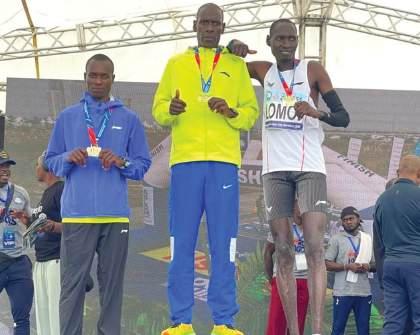
LAGOS CITY MARATHON WINNERS....
Kenya’s Ezra Kering Kipchumba Kering (centre) won the Access Bank Lagos City Marathon in 2:11:55 yesterday while the duo of Ugandan road runners, Lomoi Samuel (right) clocking 2:11:59 with Namutala Kephar Lumbasi (left) hitting the finish line in 2:12:25 to place second and third respectively
represented Governor Babajide Sanwo-Olu, commended the organisers, adding that the state government would not relent in supporting the race. He said, “This is our competition and our race. We are happy to host one of the biggest marathons in the world. Probably there are not more than seven marathon races bigger than the Access Bank Lagos City Marathon, which is on the Gold Label.
“By the grace of God, we will also achieve the Platinum Label, which is the highest. We will do everything in our power to continue to support sports in Lagos and be at the forefront of youth engagement.
“Governor Babajide SanwoOlu is doing everything possible to ensure that the youth get the right attention, and we are open about it. Our phone numbers are in the public domain for any support.”
The 2026 event took place on a new course as the LagosCalabar Coastal Road was the only road used from start to finish.
Falconets Overwhelm Senegal 2-1 to Qualify to Face Malawi
Two-time FIFA World Cup silver medallists Nigeria have reached the final round of the African qualification round for this year’s global tournament, following a 2-1 defeat of Senegal in Diamniadio on Saturday evening.
Goals by Kindness Ifeanyi – who scored the only goal in the first leg in Abeokuta a week ago – and Precious
U20 WORLD CUP
Oscar earned Nigeria a 3-1 aggregate win, springing them to the final round of the series where they will clash with the U20 girls of Malawi.
The Falconets’ first goal at the Annexe Stade Abdoulaye Wade arrived in the 19th minute, when Ifeanyi headed the ball into the home team’s
net off a corner kick. It was a simulacrum of her goal at the MKO Abiola Stadium in Abeokuta, when she powered home a header off a corner kick by defender Tumininu Adeshina.
Oscar imitated her teammate well in the second half, when she also scored from a corner kick by Adeshina.
The Senegalese pulled a goal back with a quarter of an hour left, but it was mere consolation as the Falconets made sure of the ticket to the final round with a dominant display.
Malawi edged out Guinea Bissau in their fixture and will now face the Falconets in the final round of the series, with Africa to present four teams at the final tournament scheduled for Poland in September.
Eric Chelle...warned to think well before dumping Nigeria for the vacant Olympic Marseille job
Duro Ikhazuagbe with agency report
Kenyan Cheyech Daniel finished second in 2:37:43, while another Ethiopian, Zewdalem Getaw, placed third in 2:38:59.
the Deputy Governor of Lagos State, Obafemi Hamzat, who
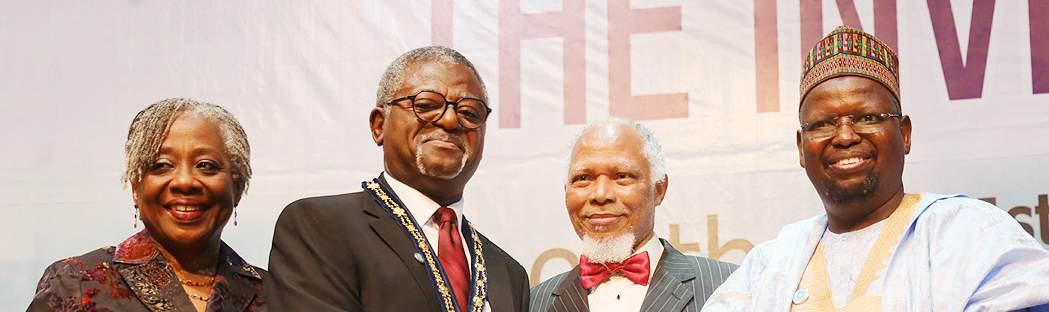
WELCOMING THE 21ST PRESIDENT OF ACEN…
L-R:
SIMO N KOLAWOLE
simon.kolawole@thisdaylive.com,
A Vote for Electronic Transmission
Let me say it upfront: I am 100 percent in support of anything that will improve the quality and credibility of elections in Nigeria. Therefore, I am in support of electronic transmission of election results. It can be of great help in the evolution of our democracy, particularly in the quest for credible elections. For whatever it is worth, voters should leave the polling unit assured that their votes will count. I am of the opinion that e-transmission of election results will not hurt our desire to get better. As soon as voting is concluded and scores are recorded in the world-famous Form EC8A (the result sheet), the document should be scanned and transmitted to a server, viewable by the public.
Now you may not believe it: that is exactly what the Independent National Electoral Commission (INEC) has been doing since the 2022 Ekiti governorship election. Save for the 2023 presidential election, result sheets are always uploaded to the INEC result viewing (IReV) portal after voting closes. It is something I have been monitoring since it was introduced. In the evening of an election, virtually all the results are viewable on IReV. The only exception, as I have already pointed out, was the 2023 presidential election when INEC failed to upload the results to IReV until a week later. The results were eventually uploaded but controversy had completely engulfed the outcome by then. If INEC had been e-transmitting election results since 2022, why then is there this almighty uproar? Well, it is alleged that the senate has removed “electronic transmission of results” from the Electoral Act. The media space has become very hot in the last two weeks over the issue. For days, I have been listening to commentator after commentator and reading press statement after press statement condemning the “removal of electronic transmission of results” and how this is a “coup against democracy” that will “destroy the future of Nigeria”. If not that I have some understanding of the nature and politics of public debate in Nigeria, I too would have fallen victim to the hysteria.
What happened, apparently, is that some campaigners want an amendment to the 2022 Electoral Act to make e-transmission mandatory. Put simply, it should no longer be optional for INEC to upload completed Form EC8A to IReV. Henceforth, it should be compulsory. The senate makes it optional in its own version while the house of reps makes it mandatory. Normally, when there is a divergence, the two chambers set up a conference committee where things will be ironed out. There is nothing mandating the two houses to pass the same version of a bill. That is why a conference committee is there to sort out the differences and harmonise the bill. It happens all the time. But this is Nigeria.
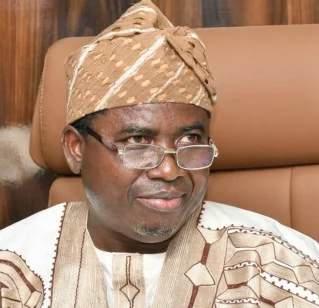
INEC Chairman, Amupitan
INEC has been doing the same thing — that is, electronically transmitting results — since 2022 without any legal backing, without any amendment to the Electoral Act. I want to believe that the campaign to make it mandatory is to avoid a repeat of what happened in 2023 when INEC said its servers failed and the presidential results were not uploaded same day. The campaigners want e-transmission written in black and white so that there will be no escape for INEC. There are people, plenty of them, who insist that their candidate won the presidential election in 2023. They still point to INEC’s failure to upload to IReV “real time” as the reason someone else was declared winner.
I totally support the proposed mandatory e-transmission, but are we prepared for eventualities, such as tech failures? If the system breaks down, what is the contingency plan? Anyone who is familiar with technology knows that outages are predictable. Why do we have more than one mobile phone? Mighty tech companies such as Amazon, Meta and X suffer glitches on occasion, and big companies like Yahoo and Facebook have been successfully hacked in recent years. It is one thing to campaign for what we think provides a “perfect solution” to our problems, but it is another not to suggest back-up or fail-safe options. This dogma of “my way or the highway” may come back to bite us.
For the record, there is nothing strange in introducing innovations to the electoral system. For decades, I have seen our electoral process evolve. If those who died after the 1979 elections were to rise from the dead, they would not recognise what we are doing today. Voter registration was manual in those days — your details were captured with pen and paper and your voter card was written in long hand. The ballot box was made of metal. Before voting commenced, the presiding officer would lift the box up and turn it upside down for everybody to confirm that there were
no previously thumb-printed ballots inside. Ballot boxes were hidden inside a booth for total secrecy.
When Prof Humphrey Nwosu, now of blessed memory, was appointed chairman of the National Electoral Commission (NEC) by Gen Ibrahim Babangida in 1989, he did a number of experiments, including returning to the open ballot system where voters queued behind the posters of their candidates. Many Nigerians celebrated this as the “ultimate solution” to rigging. They did not reckon that it could undermine freedom of choice — or that it could tear families apart. They did not even reckon with the fact that the major problem with our elections is not usually at the polling unit but at the collation centre. Somehow, we always want super solutions. We are simply in love with Utopia.
The 1992 presidential primaries were conducted using the open ballot system. We watched in horror as candidates stuffed the bellies of loaves of bread with N50 notes (the highest denomination at the time) and distributed to voters. In the Social Democratic Party (SDP) primary, Alhaji Lateef Jakande, former governor of Lagos state, lost his state to Maj Gen Shehu Musa Yar’Adua. He alleged that Yar’Adua paid his way through and challenged the country’s former No 2 citizen to a popularity walk on the streets of Lagos state. In short, the open ballot system did not end the campaign for credible elections. After much complaints, the electoral commission ditched the archaic voting system.
NEC came up with another format: this time, the ballot box would be placed in the open and the voter would thumb-print secretly in a booth before dropping ballot into the box in the presence of everybody. It was called the modified open ballot system (MOBS, what an acronym!) You would be accredited and given the ballot paper, and you would vote immediately. You could decide to go home and return to witness the counting after voting had closed. There were no serious objections to MOBS and it was considered safer than open ballot, but people still complained that elections were rigged, that voters were induced, that thugs intimidated voters, and that figures were manipulated.
In 1994, Gen Sani Abacha appointed Chief Sumner Karibi Dagogo-Jack as the chairman of the National Electoral Commission (NECON), and he did away with the metal ballot box, introducing in its stead the transparent ballot box, which was built with glass, similar to the showcase used to sell buns and akara. I recall cynically saying that what we needed was “transparent honesty” not transparent ballot boxes. Interestingly, they are still in use, but they are now made of rigid plastic. We also still use the MOBS voting format, even though we have further modified the process in some other ways, such as finishing with accrediting
all voters before the commencement of voting. Evolution, that is.
In the fourth republic, we have introduced more methods and procedures to make the process more transparent and credible. We digitised voter registration and captured biometrics between 2003 and 2007, thereby doing away with the long hand. In 2015, we introduced the permanent voter cards (PVCs) and the card reader (partly to curtail multiple voting) by authenticating biometrics. In 2023, we upgraded to the bimodal voter accreditation system (BVAS) which can authenticate the biometrics and scan the EC8A result sheets — and then transfer them to the server, viewable on the IReV portal. Whether we know it or not, we have done a lot to clean up the system since 1999.
And there are results. Since the introduction of biometrics and card readers in 2015, voting figures have been dropping. I would think this means, among other things, that multiple voting is being curtailed. Valid votes plunged from 38.2 million in 2011 to 28.6 million in 2015. Read that again. The figure for 2023 was 24 million. States that used to churn out millions of votes are now returning just hundreds of thousands. In 2003, for instance, 17 states returned one million and above. In 2011, 16 states repeated the feat. This dropped to nine in 2015 and seven in 2019. Only five states returned more than one million votes in 2023. I think we are now getting closer to the real voter turnout data.
What then? It means we are gradually overcoming certain aspects of rigging with the help of technology. That is some progress. However, as you solve one problem, others surface. That is why the notion that e-transmission is the ultimate solution is, at best, hyperbolic. For one, governorship and legislative results that were uploaded to IReV in 2023 were still challenged in court. Therefore, e-transmission is not an almighty formula. In the end, e-transmission cannot stop politicians from buying votes or suppressing voters. Winning will only become more expensive. Meanwhile, is it not what is imputed into Form EC8A that will be e-transmitted? So why the deafening brouhaha?
In sum, I support e-transmission. I believe we should take advantage of technology. But let it be on record that I am not one of those who say it is the magic bullet for perfect elections. Let it also be on record that I support having a contingency plan if technology fails. Finally, let it be on record too that even if we adopt mandatory e-transmission, those who lose elections will still complain. Meanwhile, we keep reforming the electoral system without reforming ourselves. Elections don’t rig themselves; people rig elections. In UK elections, there are no PVCs, no e-transmission, no IReV. You can even vote with a pencil. Still, you leave the polling unit confident that your vote will count. Credibility.
Wife of the elected President, Dr. Sylvia Adebajo; the 21is President, Association for Consulting Engineering in Nigeria (ASEN), Mr. Kunle Adebajo; former President, Association for Consulting Engineering in Nigeria, Mr. Bayo Adeola; and the immediate Past President, Mr. Kam-Salem Alhaji Bukar, at the investiture of Mr. Adebajo as the 21st President of ACEN in Lagos…yesterday